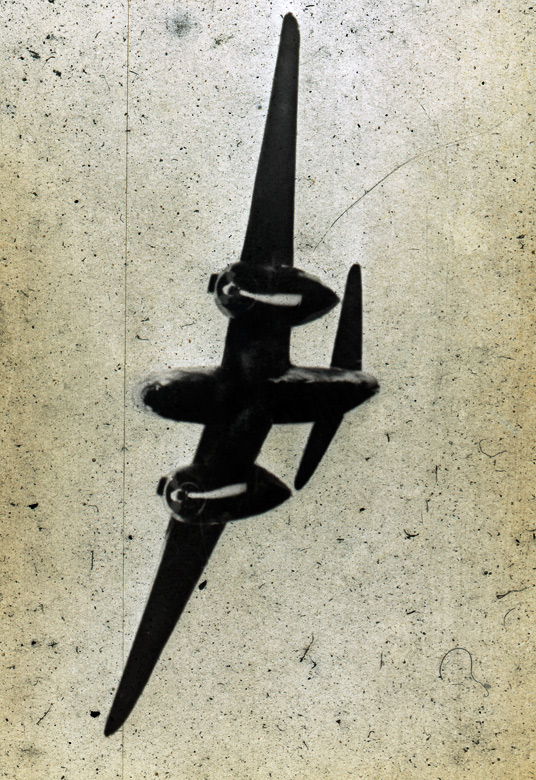
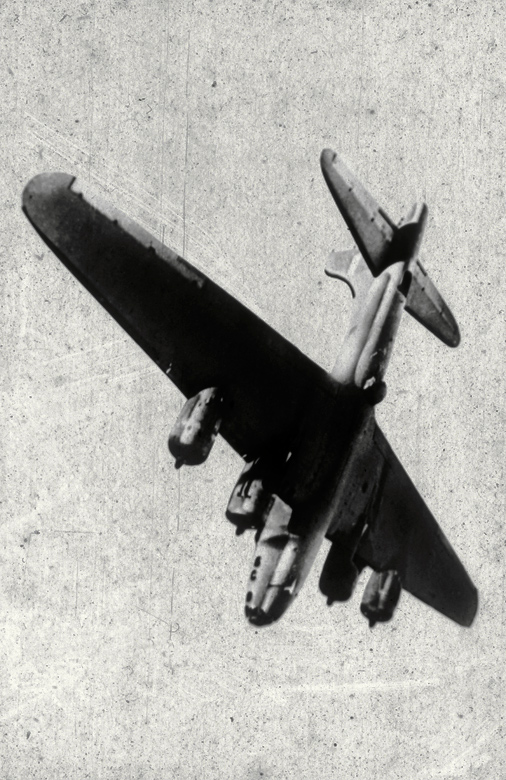
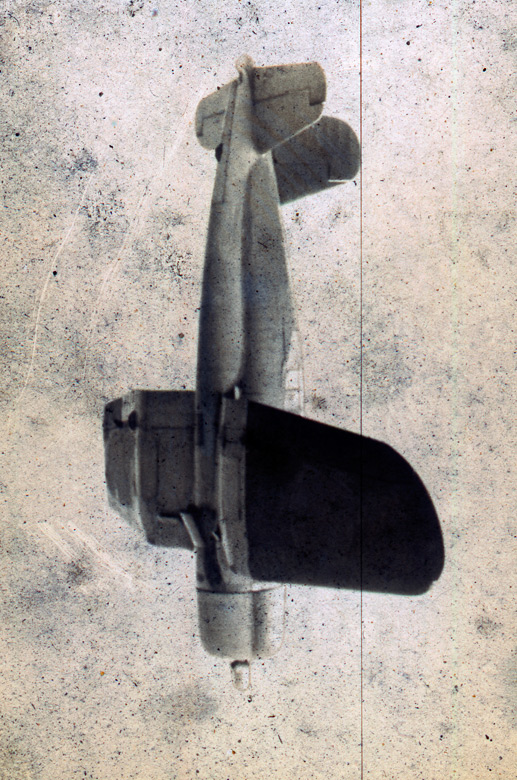
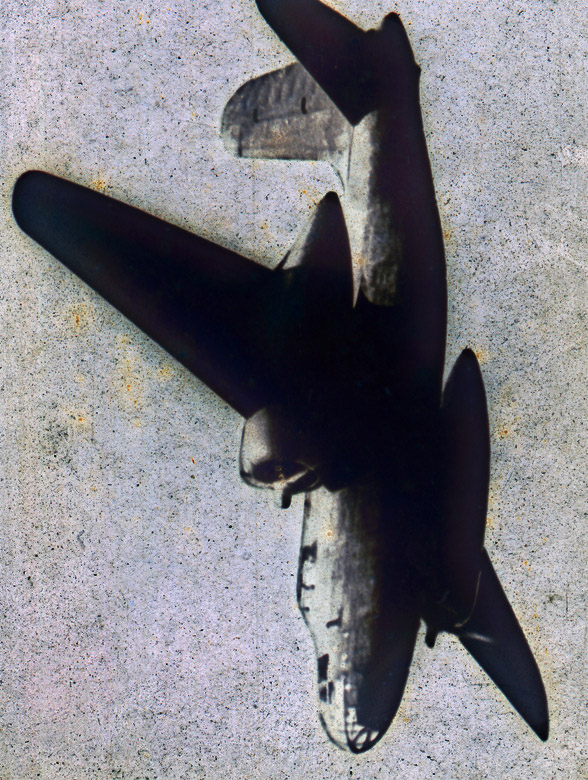
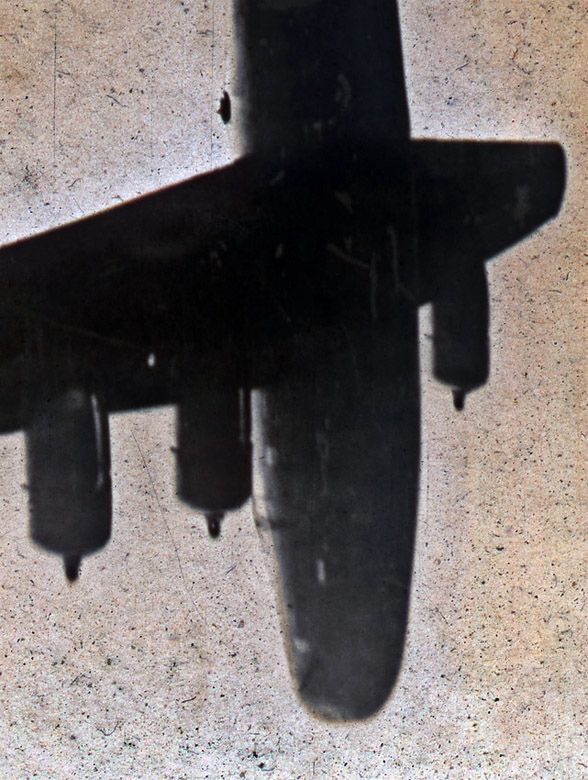
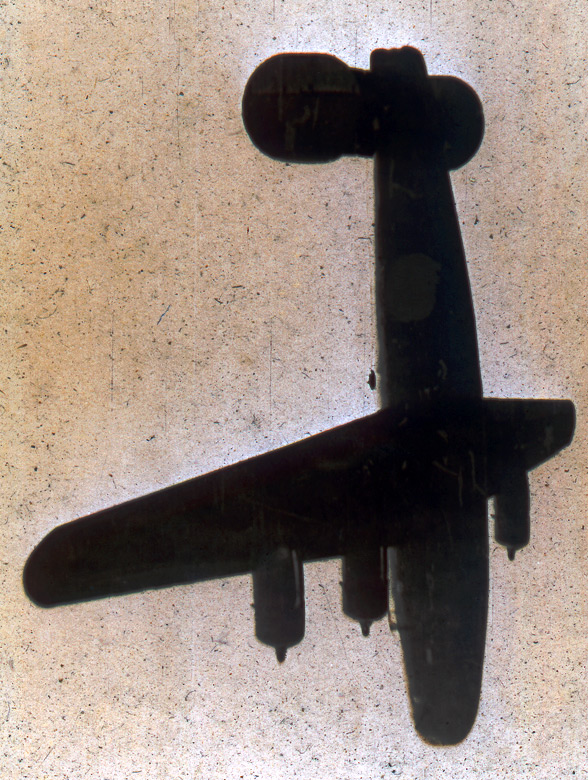
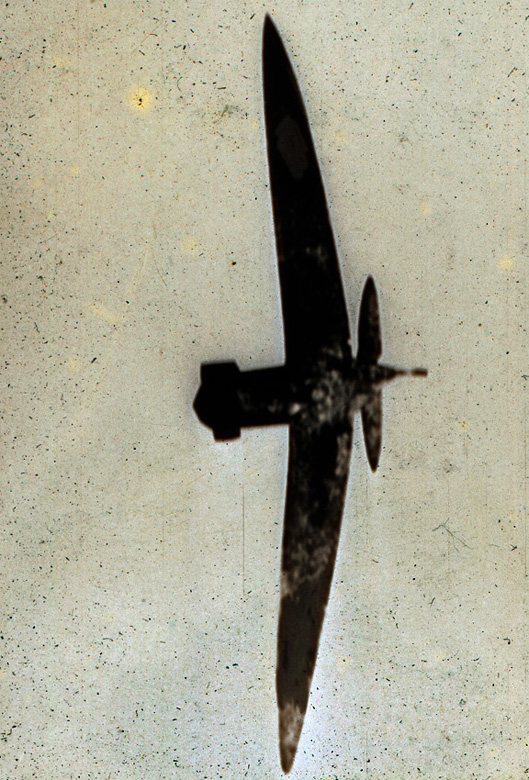
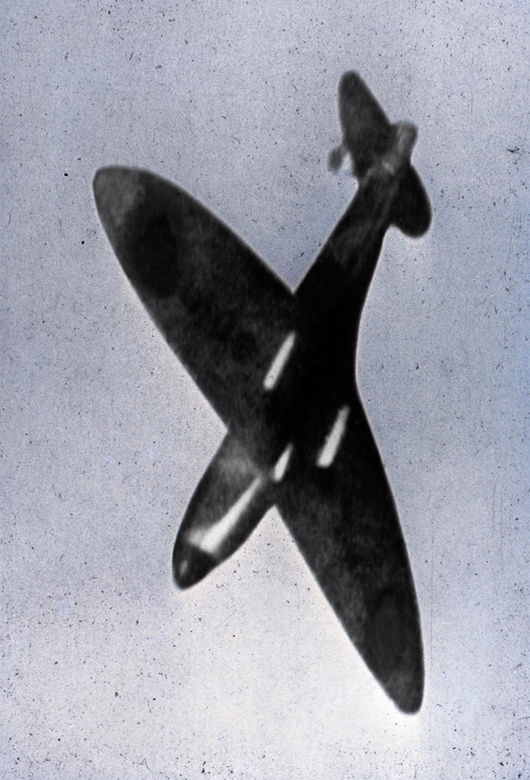
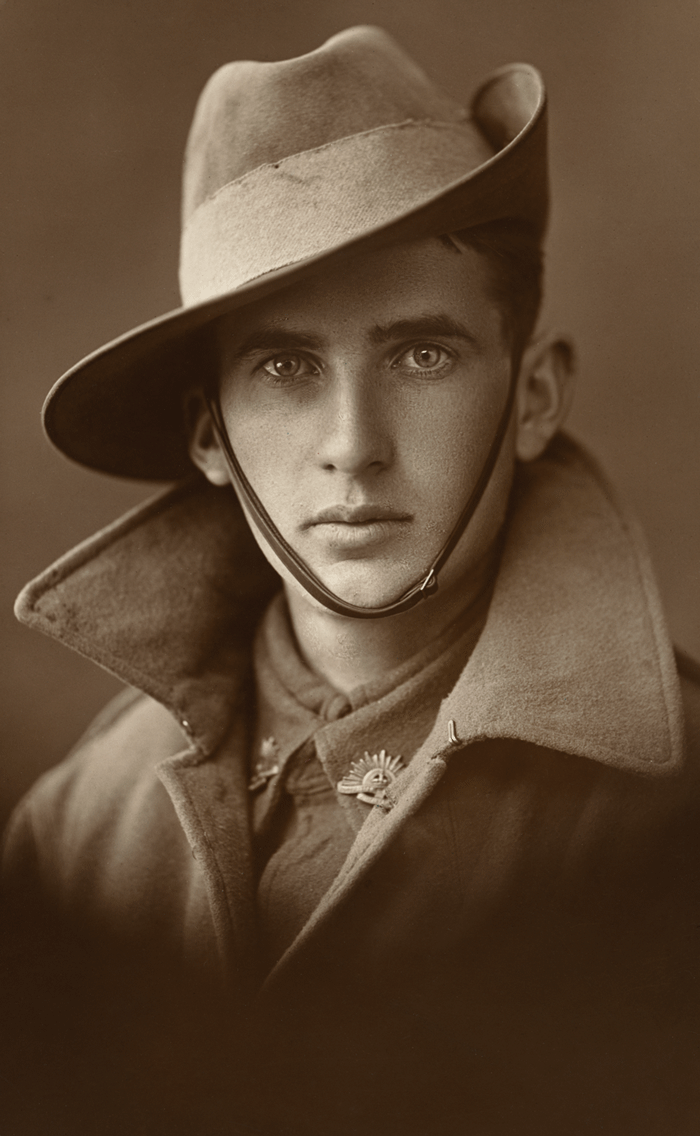
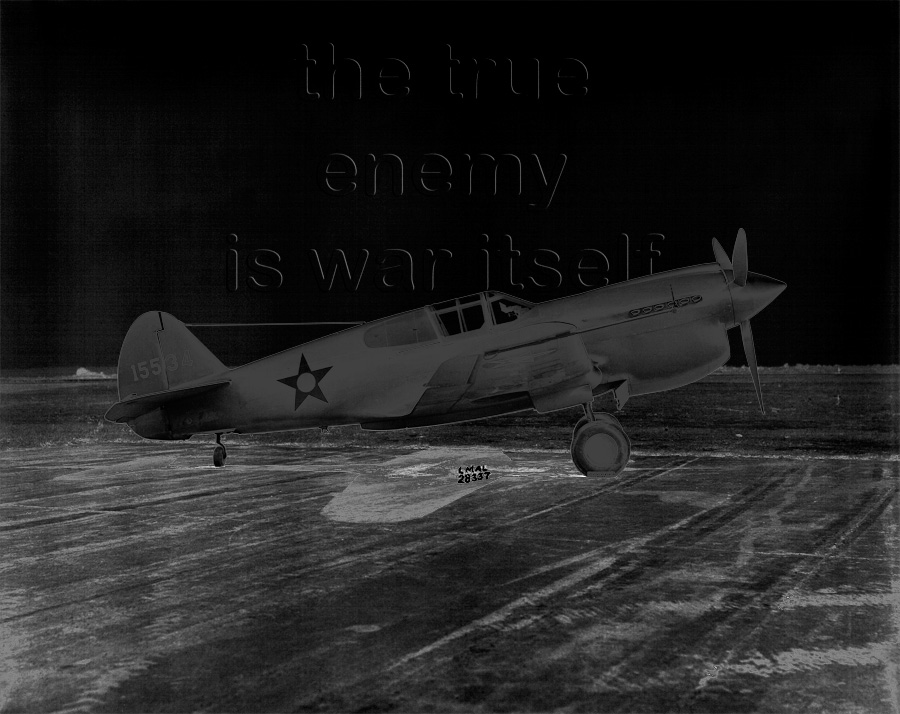
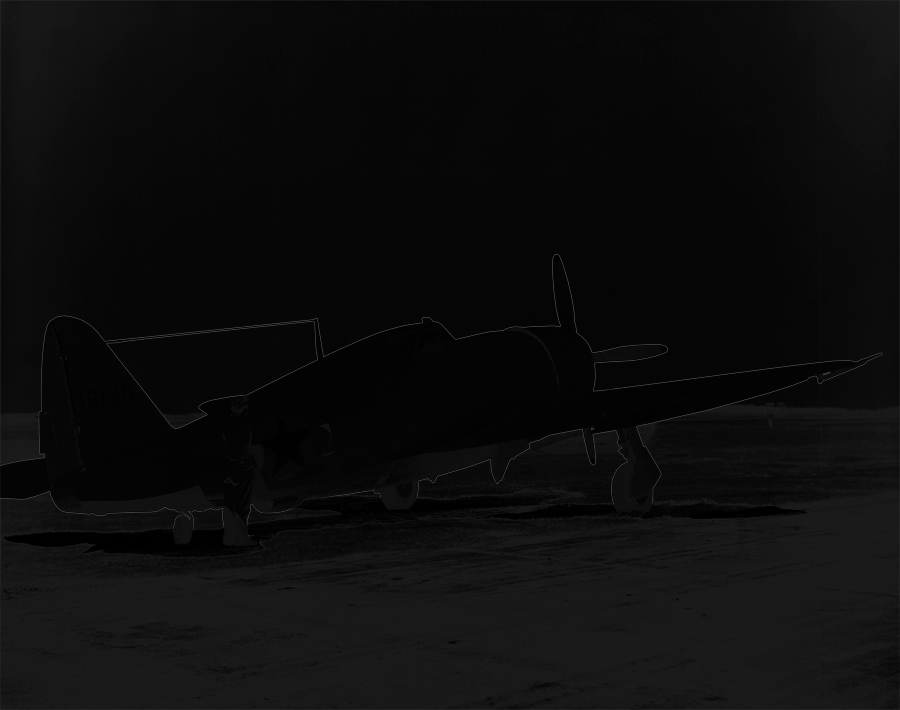
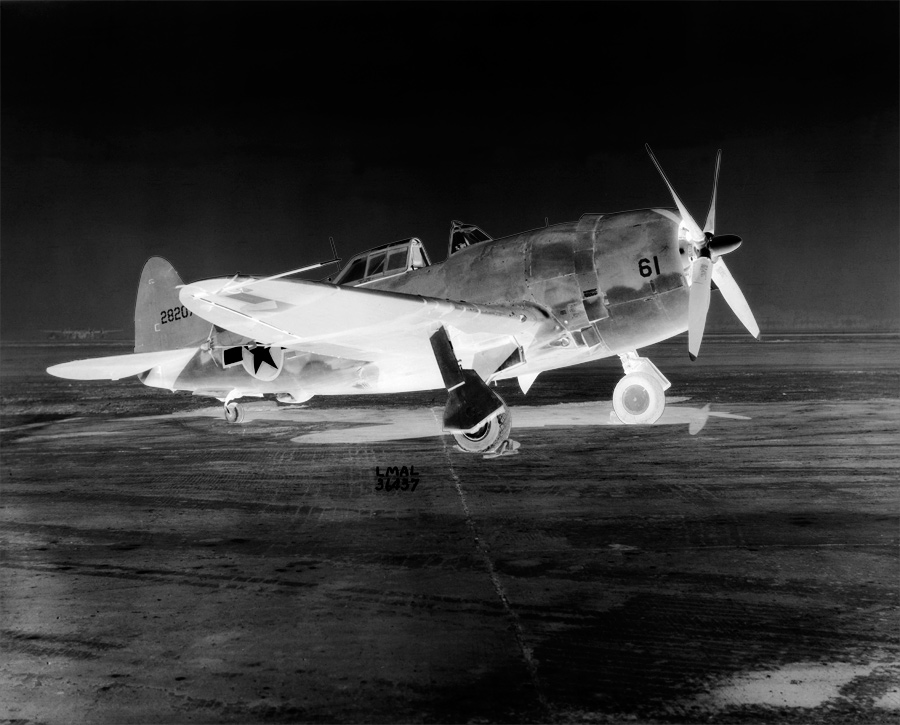
Photographs: Marcus Bunyan. ‘Vertical’ 2011

December 2011


This slideshow requires JavaScript.


Vertical

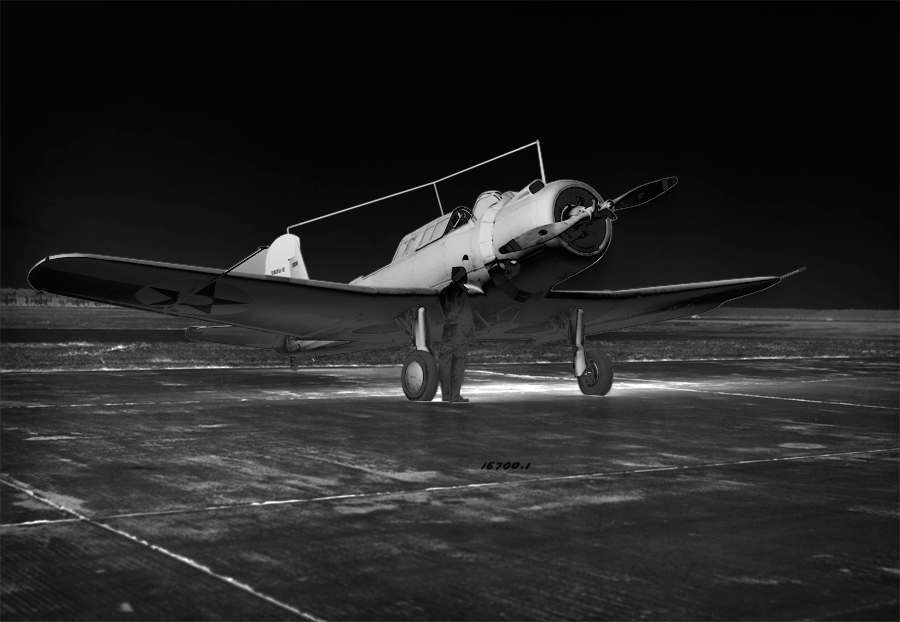
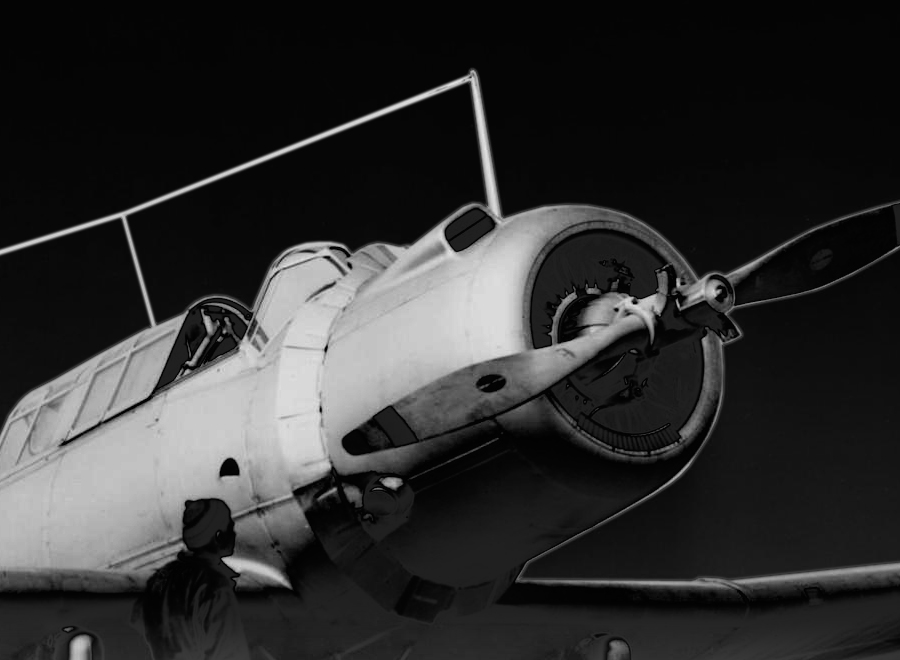
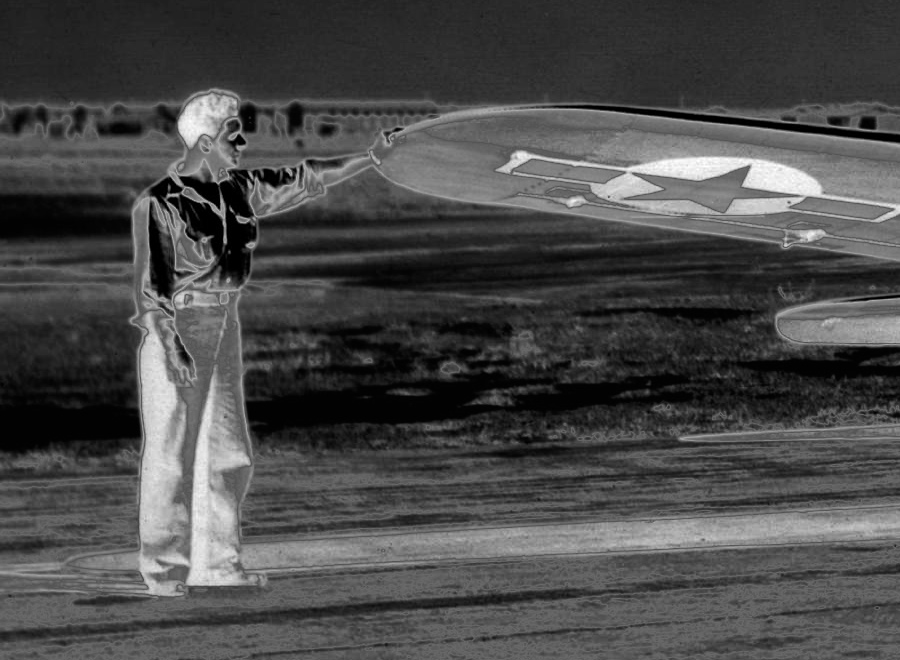
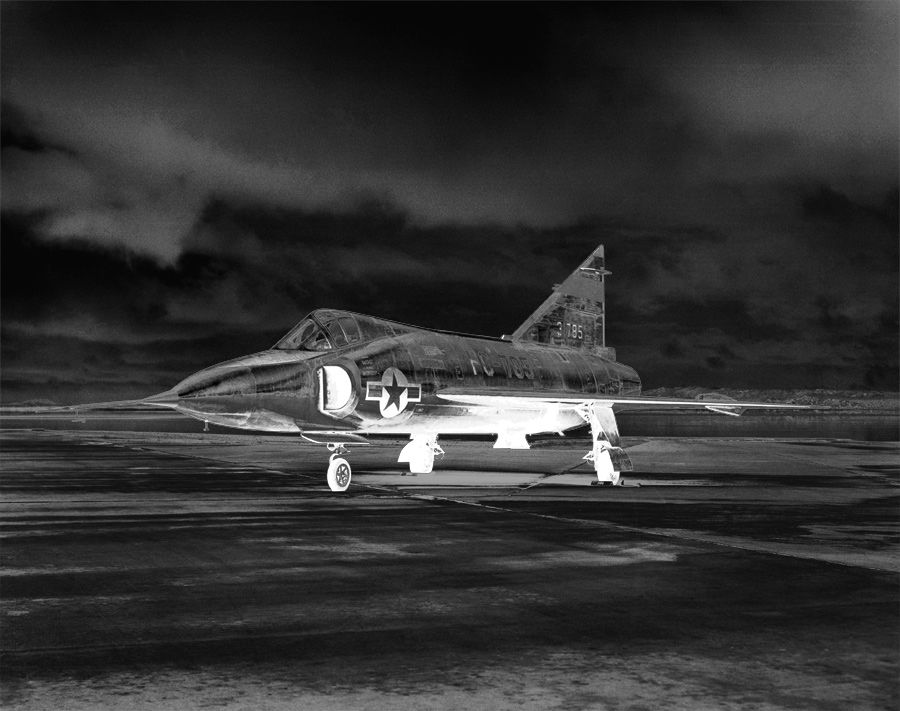
More planes, this time a series of work titled Vertical (2011). The series is now online on my website.

There are 22 images in the series formed as a sequence. Below is a selection of images from the series. I hope you like the work!

Marcus


Please click on the photographs for a larger version of the image.

Photographs are available from this series for purchase. As a guide, a digital colour 16″ x 20″ costs $1000 plus tracked and insured shipping. For more information please see my Store web page.


Marcus Bunyan (Australian, b. 1958) 'Untitled' from the series 'Vertical' 2011


Marcus Bunyan (Australian, b. 1958) 'Untitled' from the series 'Vertical' 2011


Marcus Bunyan (Australian, b. 1958) 'Untitled' from the series 'Vertical' 2011


Marcus Bunyan (Australian, b. 1958) 'Untitled' from the series 'Vertical' 2011


Marcus Bunyan (Australian, b. 1958) 'Untitled' from the series 'Vertical' 2011


Marcus Bunyan (Australian, b. 1958) 'Untitled' from the series 'Vertical' 2011


Marcus Bunyan (Australian, b. 1958) 'Untitled' from the series 'Vertical' 2011


Marcus Bunyan (Australian, b. 1958) 'Untitled' from the series 'Vertical' 2011


Marcus Bunyan (Australian, b. 1958)
Untitled
2011
From the series Vertical
Digital prints


Marcus Bunyan website

LIKE ART BLART ON FACEBOOK

Back to top

Exhibition: ‘Raphaël Dallaporta: Observation’ at Foam, Amsterdam

Exhibition dates: 2nd September – 26th October 2011

Foam Paul Huf Award 2011
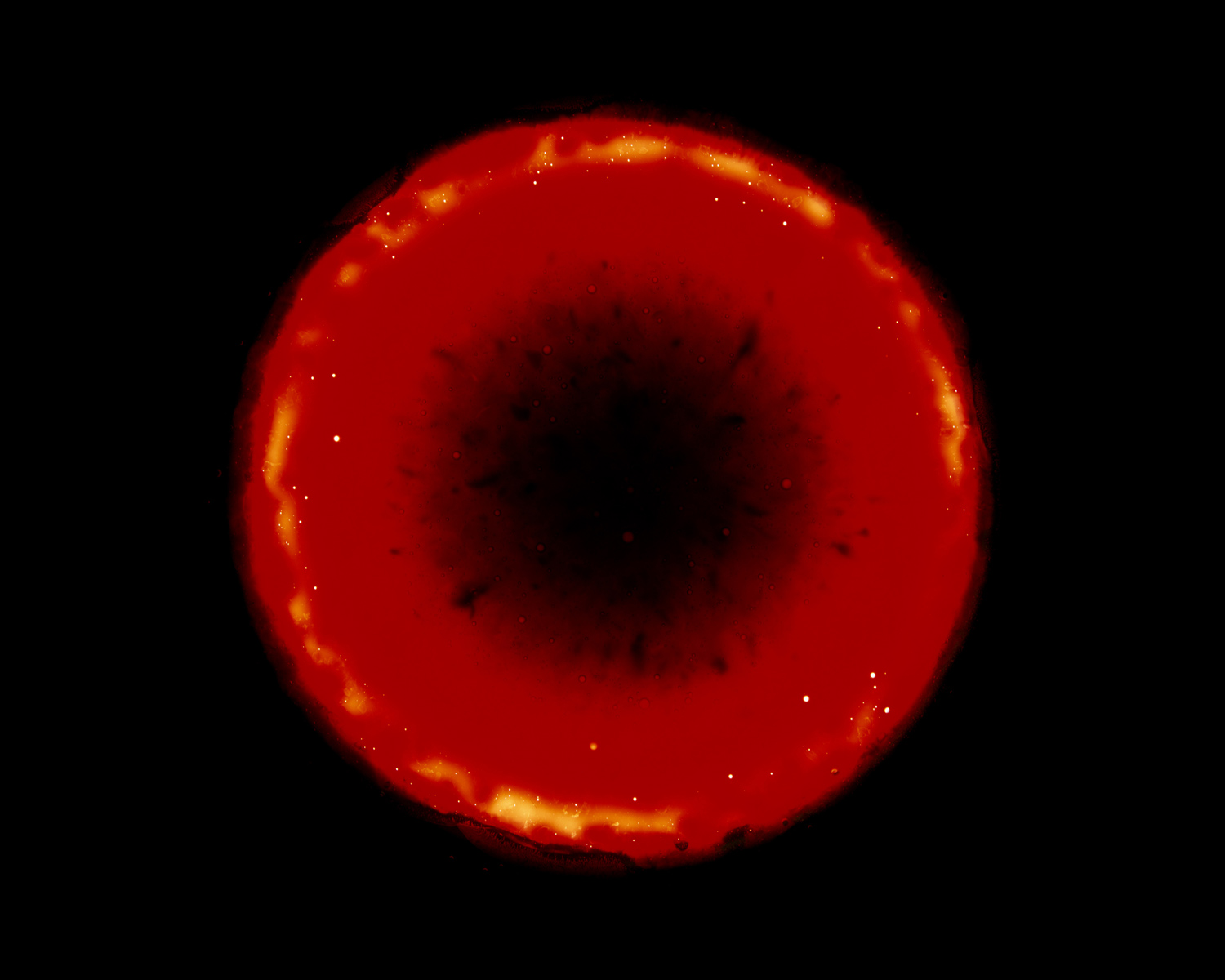
 

Raphaël Dallaporta (French, b. 1980) 'Fragile, Blood 1' 2010


Raphaël Dallaporta (French, b. 1980)
Fragile, Blood 1
2010
© Raphaël Dallaporta


Antipersonnel. The positive pleasure of inflicting cruelty at an ambiguous physical and ethical distance. Use limited only by the imagination of the user. Detonated remotely using a laptop computer. 10 million times. US$3 each.

Dr Marcus Bunyan


Many thankx to Foam for allowing me to publish the photographs in the posting. Please click on the photographs for a larger version of the image.
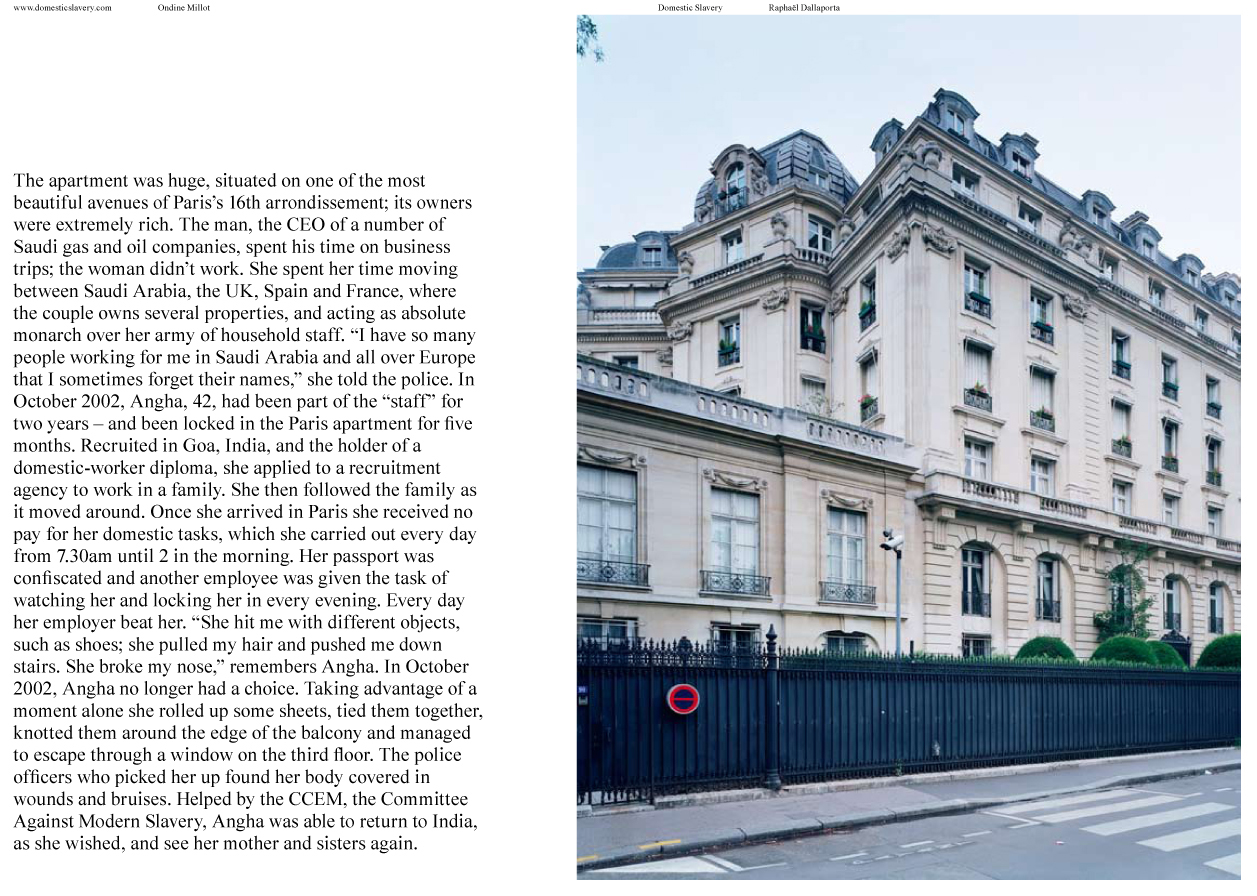


Raphaël Dallaporta (French, b. 1980) 'Domestic Slavery, Angha' 2006


Raphaël Dallaporta (French, b. 1980)
Domestic Slavery, Angha
2006
© Raphaël Dallaporta


Domestic Slavery, 2006

Cold, distant images of building facades are associated with text. The narratives are written by Ondine Millot to describe the events that took place at the exact address of the buildings in the photographs. The spectator comes to understand that the series deals with an often undocumented consequence of human trafficking: modern slavery.

The images force us to come to terms with the upsetting reality that is hidden behind the ordinary facades. Raphaël Dallaporta denounces unbearable situations where one human being reduces another to the status of thing, and gives it depth through the distance of the photographs and his refusal to sensationalise.

Text from the Musée Nicéphore Niépce website [Online] Cited 29/03/2020
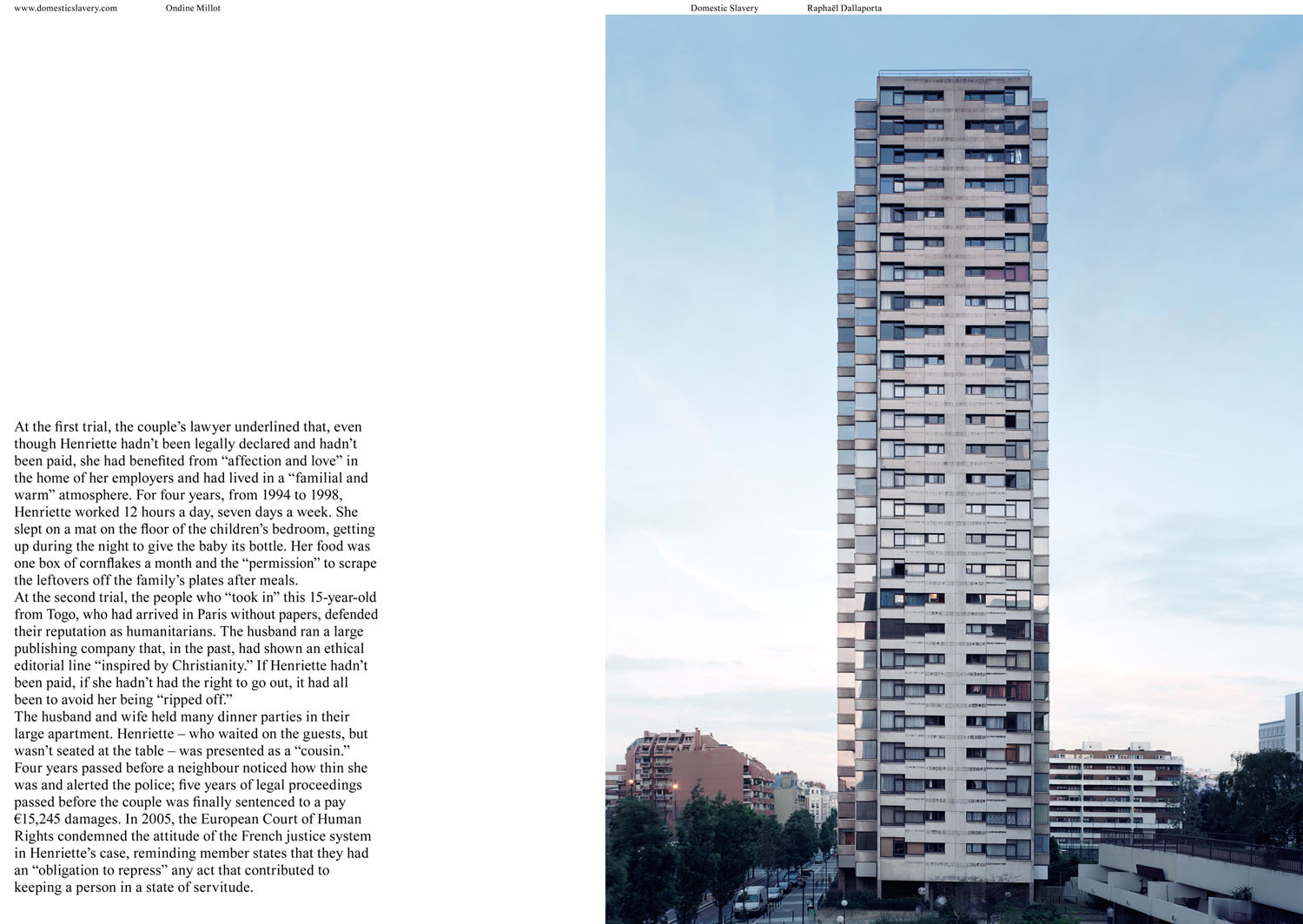
 

Raphaël Dallaporta (French, b. 1980) 'Domestic Slavery, Henriette' 2006


Raphaël Dallaporta (French, b. 1980)
Domestic Slavery, Henriette
2006
© Raphaël Dallaporta
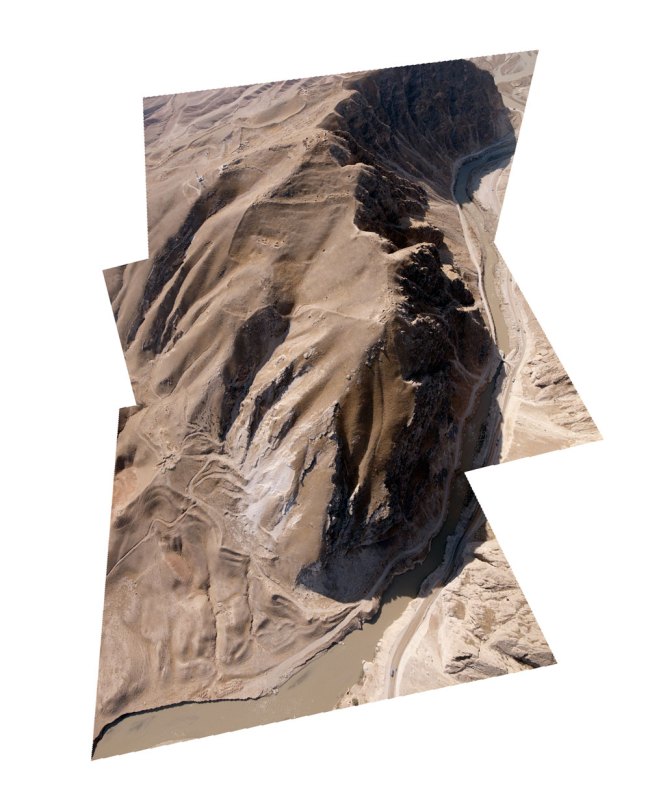
 

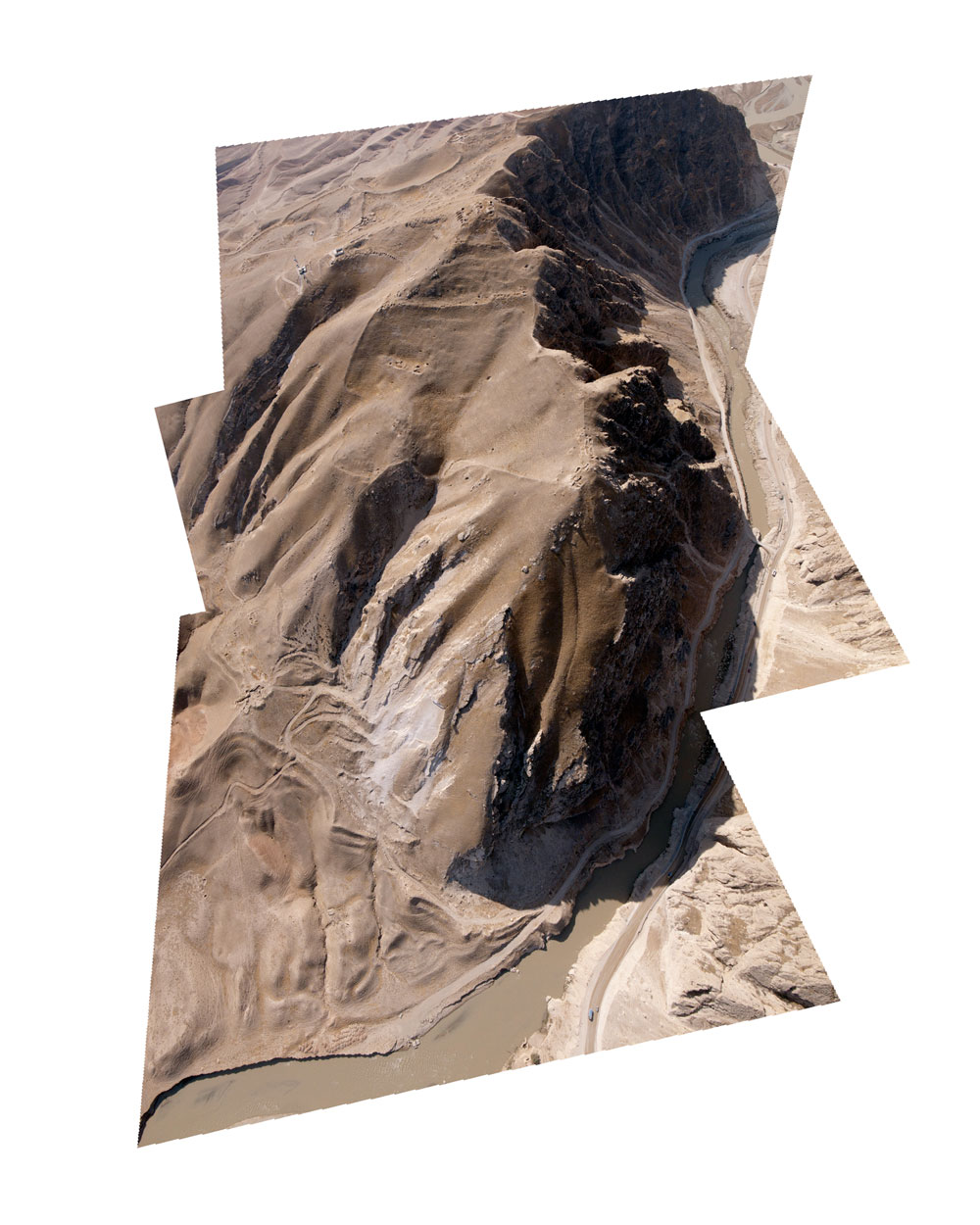
Raphaël Dallaporta (French, b. 1980) 'Ruins (Season 1), The Balkh-AB gorges, Afghanistan' 2011


Raphaël Dallaporta (French, b. 1980)
Ruins (Season 1), The Balkh-AB gorges, Afghanistan
2011
© Raphaël Dallaporta


Ruin, Season 1, 2011

In the autumn of 2010, Raphaël Dallaporta took part in an archaeological mission in the Bactriane region in Afghanistan, scene of Alexander the Great’s mythical conquest. Using a drone he designed himself, he took aerial photographs of endangered or heretofore unknown archaeological sites in a country at war. The remote controlled device was timed to take photos of unrivalled precision every five seconds. The way the images are put together with their voluntarily asymmetrical contours depict these inaccessible monuments and places at their best. The most cutting-edge technology reveals the artist’s themes – destruction, the precariousness of things. It brings to light that which was and is no longer. Is this not the very definition of all photography?

Text from the Musée Nicéphore Niépce website [Online] Cited 29/03/2020

 

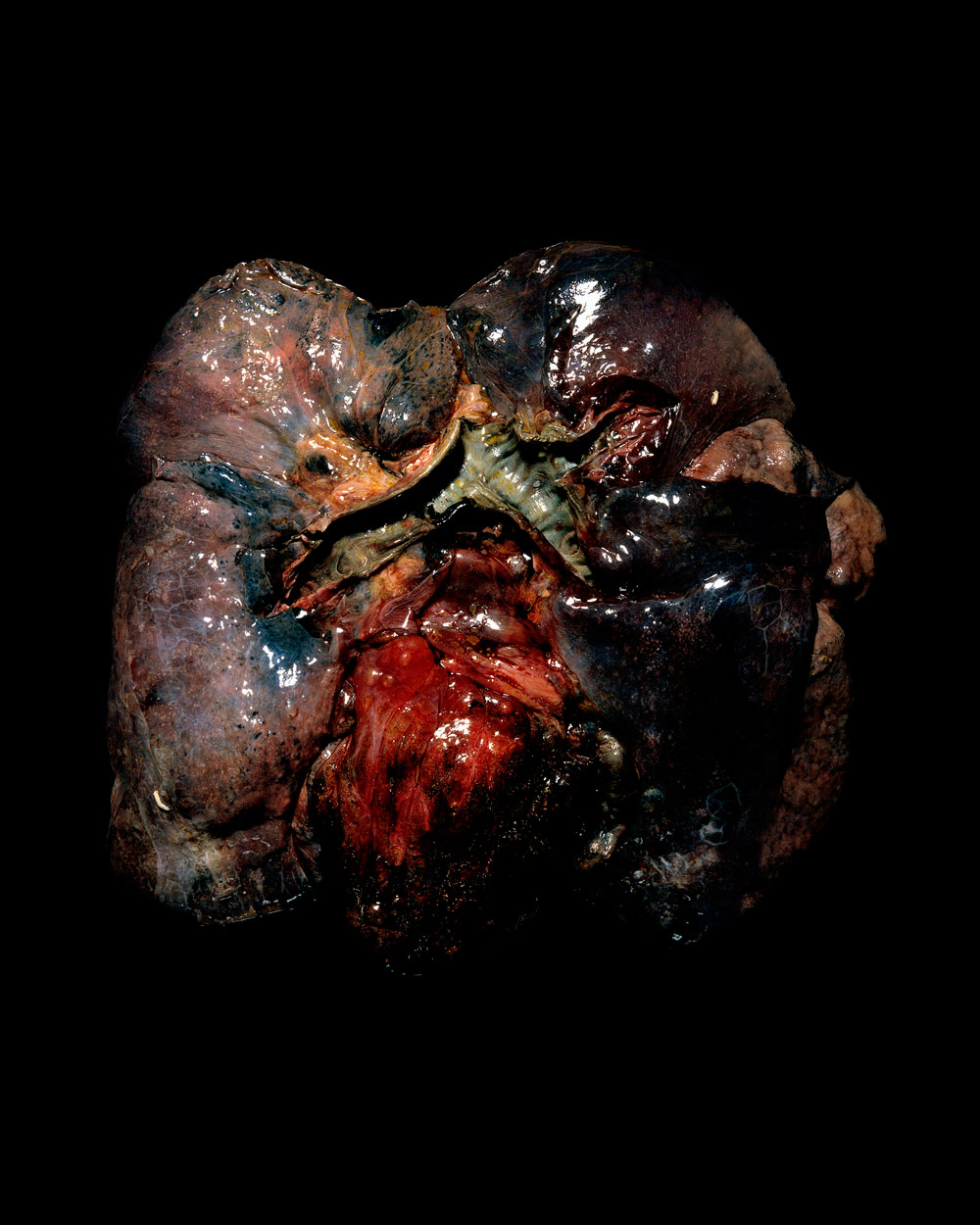
Raphaël Dallaporta (French, b. 1980) 'Fragile, "Four Moods", Black Bile'  2010


Raphaël Dallaporta (French, b. 1980)
Fragile, “Four Moods”, Black Bile 
2010
© Raphaël Dallaporta


Fragile, 2010

Raphaël Dallaporta photographs organs, like the encyclopaedic colour plates for an anatomy class. The legend, again, explains the origins of these silent images. The organ represented is not the issue; the reason for its presence on the slab is the issue. The apparent neutrality of the shot, according to a strict protocol (frontal shot, on a black background enabling the strong lighting of the “subject”), isolates each fragment of the body as a clue that enables to determine the cause of death. These relics of flesh and bone have a real role to play. But the way they are shot lends them a metaphysical and philosophical dimension that reminds us of life’s ephemeral nature and human vulnerability.

Text from the Musée Nicéphore Niépce website [Online] Cited 29/03/2020
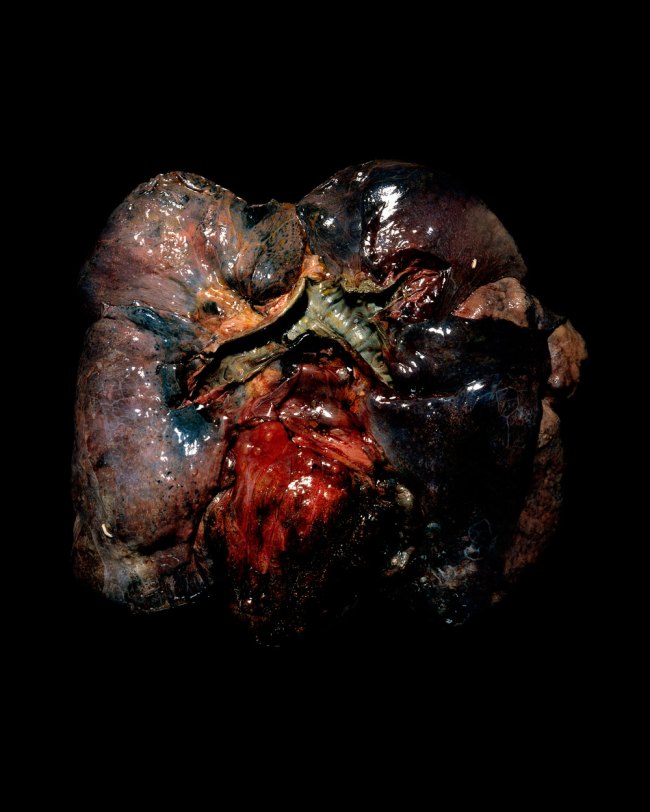
 

Raphaël Dallaporta (French, b. 1980) 'Fragile, Cardiopulmonary system' 2010


Raphaël Dallaporta (French, b. 1980)
Fragile, Cardiopulmonary system
2010
© Raphaël Dallaporta


Undetermined circumstances

The body of the subject whose presumed identity is …, aged 92, was found in a ditch around 10.05am by a walker whose attention had been attracted by his dog.

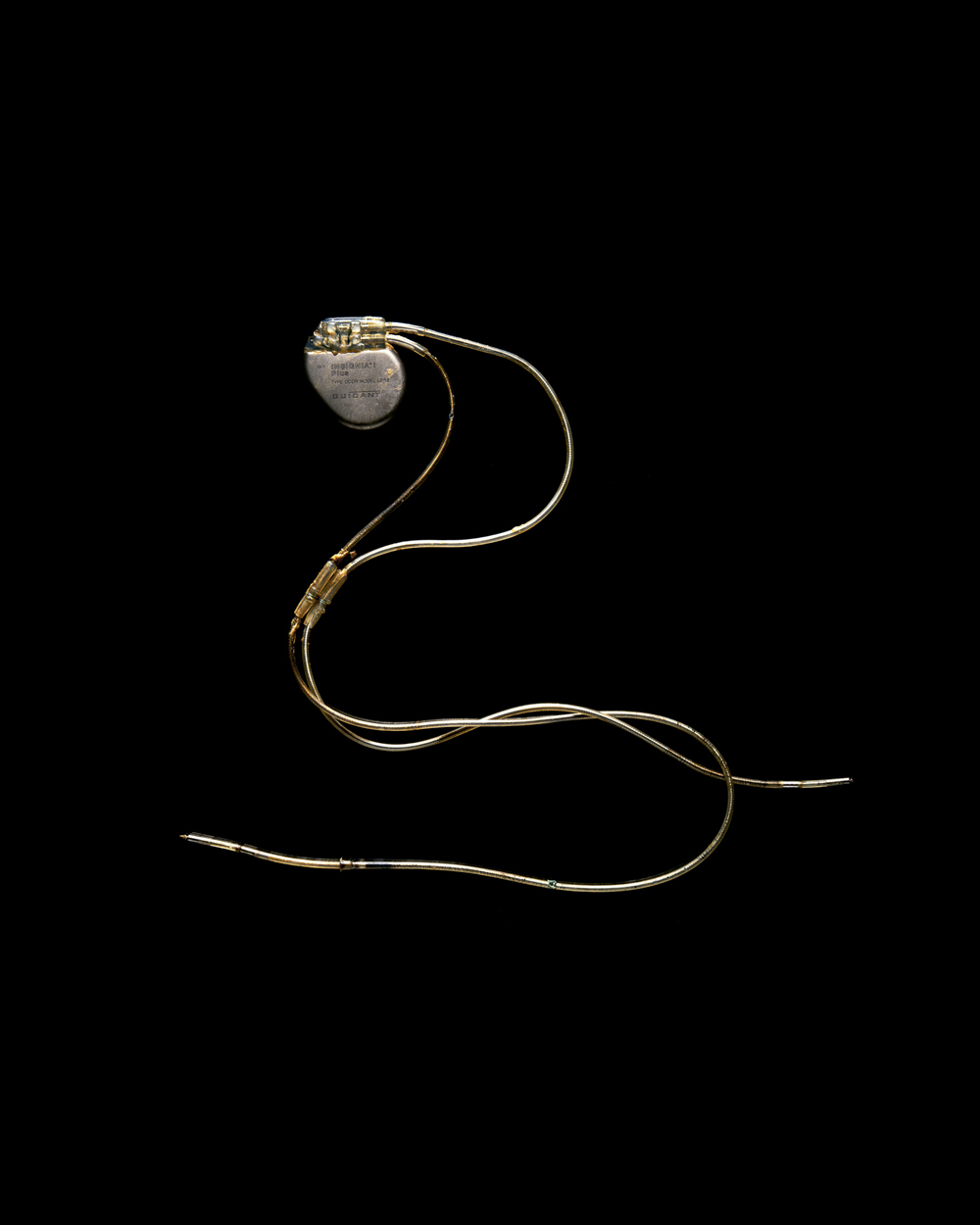
The autopsy that we carried out on the body showed the presence of a state of extremely advanced putrefaction with partial skeletonisation, consistent with a death dating back one month in an outdoor environment; it is not possible to be more precise. There is no immediately detectable cause of death. No lesions suggesting recent detectable violence were observed. As for identification, the deceased is an adult male, wearing a pacemaker and an old surgical scar on the abdominal wall.
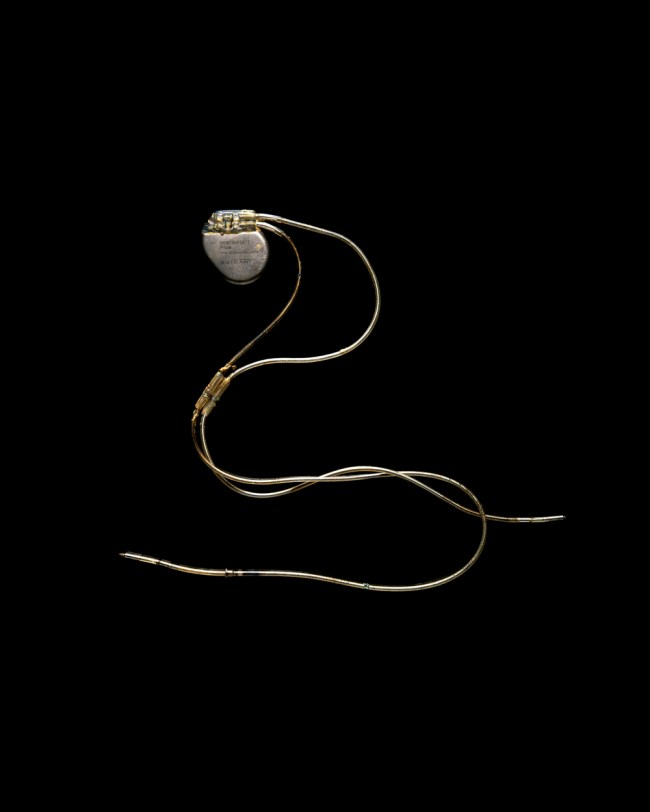
 

Raphaël Dallaporta (French, b. 1980) 'Fragile, Pacemaker' 2010


Raphaël Dallaporta (French, b. 1980)
Fragile, Pacemaker
2010
© Raphaël Dallaporta


French photographer Raphaël Dallaporta (b. 1980) received the Foam Paul Huf Award earlier this year from an international jury. The prize is organised by Foam and is awarded annually to up and coming international photographers below the age of 35. A major aspect of the award is an exhibition. Observation appears at Foam from 2 September to 26 October. Characteristic of the show’s four series is the clinical, perceptive style of photography. Dallaporta’s photos possess an inner tension that stems from the beauty of the object and the serious tone of the subject. The photographer works intensively with specialists in fields relating to his series. Jury chair François Hébel (director of Les Rencontres d’Arles international photography festival) comments on Dallaporta’s work that ‘He combines involvement with a highly analytical approach to social perversities. His uncompromising, conceptual and extremely creative approach mark him as an authentic artist who stands out in the young generation of photographers.’

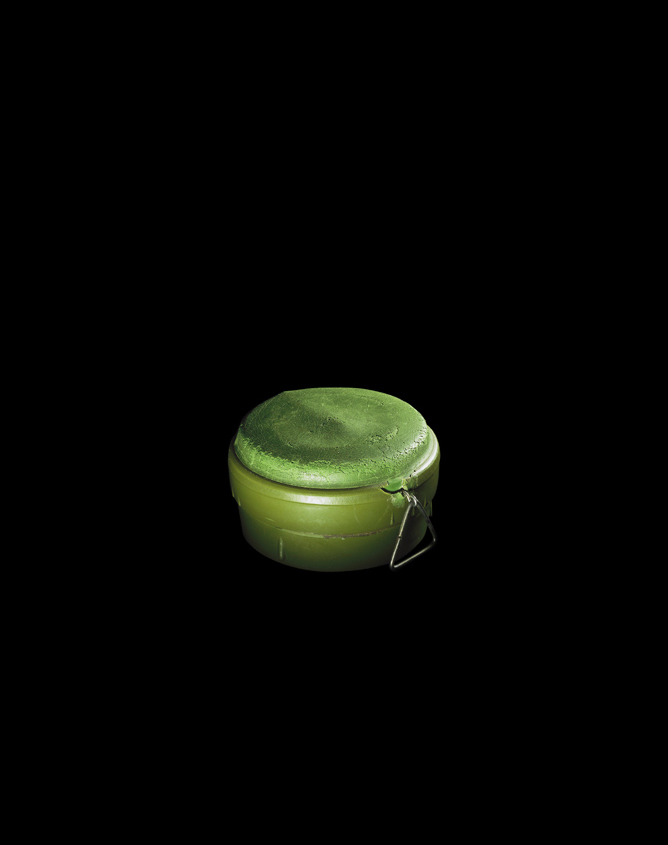
The landmines in the Antipersonnel series have an exquisite beauty: small, with pleasant colours and an attractive form. Elegantly photographed, simply framed and persuasively presented, their aesthetic quality is what first attracts attention. Until we realise the full purpose of their existence: pure cruelty.

Fragile features frontal and objective shots of organs and limbs taken from corpses. Dallaporta worked with a team of forensic surgeons for this series. While the physicians were looking for causes of death, Dallaporta recorded the body parts they examined and the instruments they used. The power of this work comes from the combination of apparently neutral images and texts relating to human pain.

Dallaporta also worked with experts when making Ruins. He travelled with a team of French archaeologists to Afghanistan. Using a drone – a small remote-controlled helicopter – he took numerous photos of the war-ravaged landscape. In combination, these form a single large aerial picture that also shows traces of ancient civilisations. Past and present come together in this series of almost scientific photos.

In Domestic Slavery, Dallaporta (pictures) and Ondine Millot (text) tackle the tragic reality of this phenomenon: people, many unregistered migrants, held against their will in places where their voice cannot be heard. While their names have been altered, the stories are true. Dallaporta’s clinical, unsentimental pictures of the buildings in which these modern-day slaves are kept testify to the banality of day-to-day inhumanity.

Text from the Foam website


Antipersonnel, 2004

Unknown objects seem to emerge from the darkness. The legend quickly informs us that they are anti-personnel mines. Raphaël Dallaporta deals with the object reproduced to scale and lets us imagine the consequences of its existence. There are no bloody reportage images to illustrate the mutilations caused by these devices. The photographer presents us with contemporary still life that appear inoffensive but that tend to be aestheticised by photographic techniques all the better to erase the actual use of the object.

Text from the Musée Nicéphore Niépce website [Online] Cited 29/03/2020
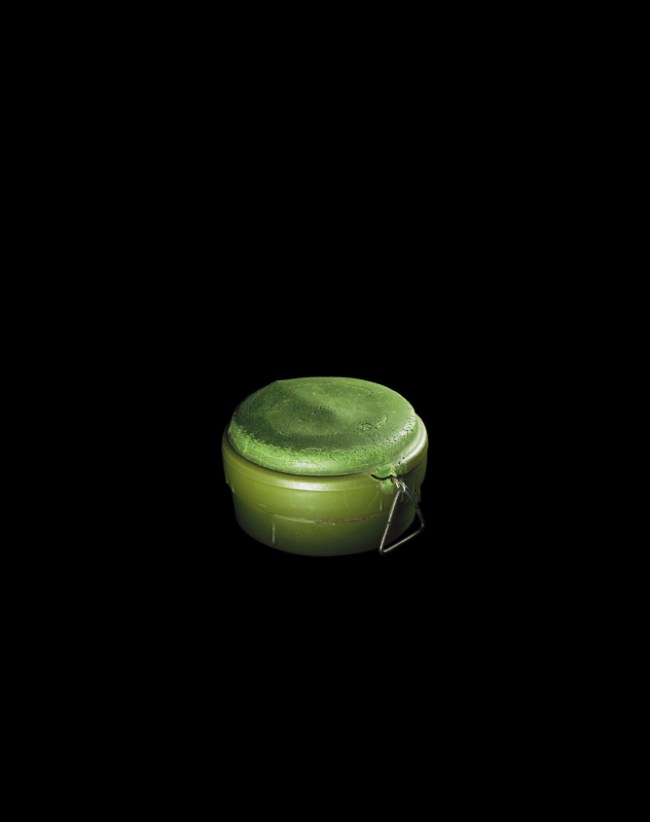
 

Raphaël Dallaporta (French, b. 1980) 'Antipersonnel, Blast Mine Type 72B China' 2004


Raphaël Dallaporta (French, b. 1980)
Antipersonnel, Blast Mine Type 72B China
2004
© Raphaël Dallaporta


Type 72 blast mines are said to make up 100 million of China’s 110 million antipersonnel landmine stockpiles (Chinese officials claim this figure is exaggerated). Manufactured by China North Industries Corporation (NORINCO), Type-72s are reportedly priced at US$3 each. The Type-72B includes an anti-handling mechanism that makes it impossible to neutralise – if the mine is moved more than 8º from the horizontal, it will explode, amputating the limb that activated it.


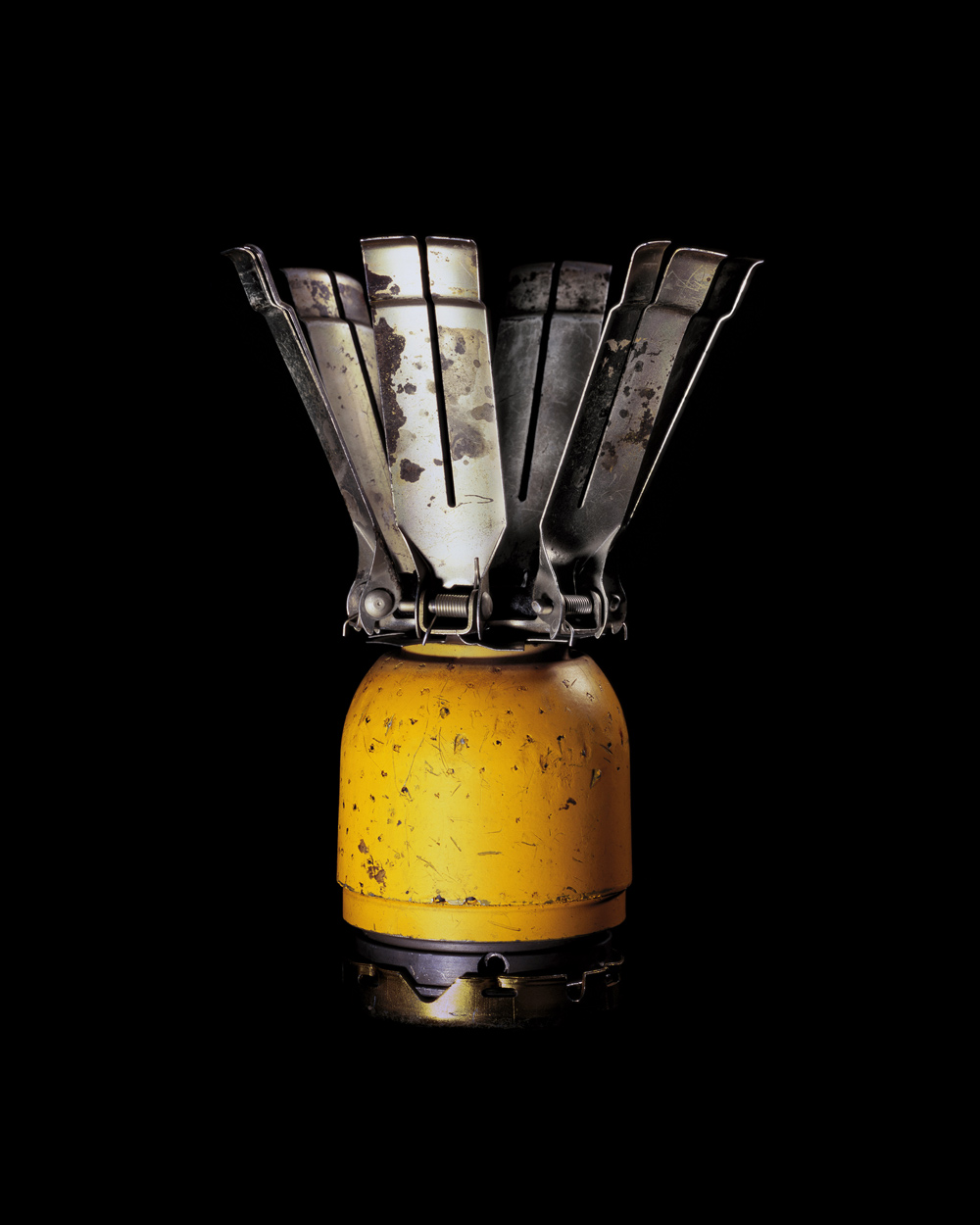
Raphaël Dallaporta (French, b. 1980) 'Antipersonnel, Submunition BLU-­3/B USA' 2004


Raphaël Dallaporta (French, b. 1980)
Antipersonnel, Submunition BLU-­3/B USA
2004
© Raphaël Dallaporta


On release from a CBU-2C.A bomb this 785 g submunition – known as the “Pineapple” – is stabilised and slowed in its descent by six fins. Each CBU-2C/A contains 409 BLU-3/Bs, of which nearly 25 percent do not explode on impact. d: 73mm W: 785g
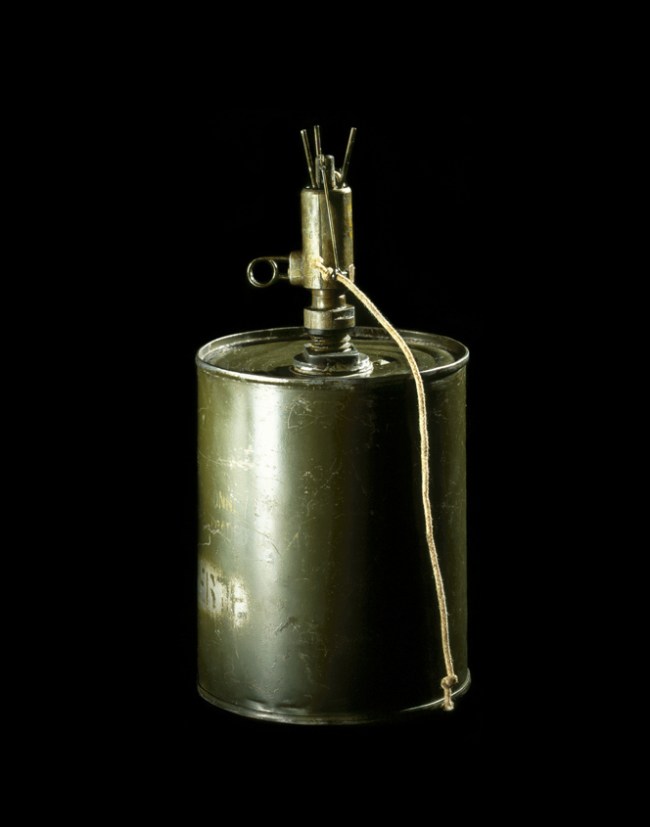
 

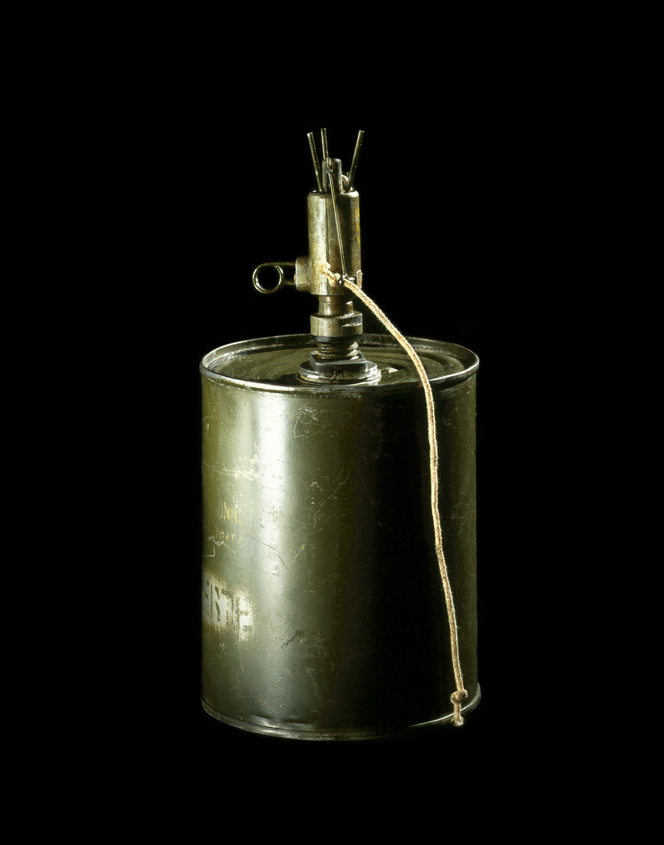
Raphaël Dallaporta (French, b. 1980) 'Antipersonnel, Bounding Fragmentation Mine M-16, USA' 2004


Raphaël Dallaporta (French, b. 1980)
Antipersonnel, Bounding Fragmentation Mine M-16, USA
2004
© Raphaël Dallaporta


When detonated the M-16 antipersonnel bounding fragmentation mine is shot up approximately 1.5m in the air and explodes within 0.5 seconds, creating a lethal radius of 10m. Nicknamed the “Bouncing Betty,” each mine is supplied with four tripwires (two olive-green, two sand-coloured) and a wrench. In September 2002 (the most recent statistics available) the USA had 465,330 M16s in stock.
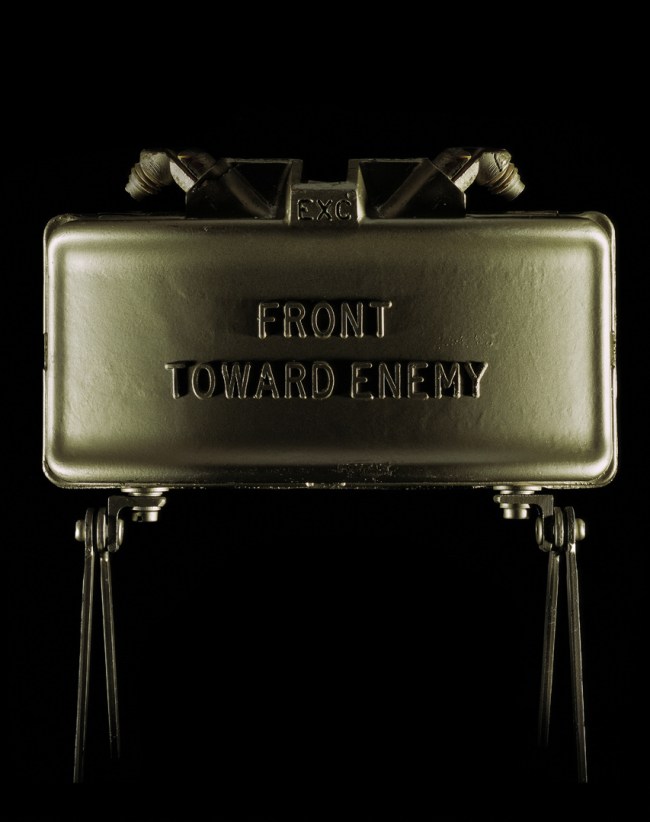
 

Raphaël Dallaporta (French, b. 1980) 'Antipersonnel, Directional Fragmentation Mine M-18/A1, USA' 2004


Raphaël Dallaporta (French, b. 1980)
Antipersonnel, Directional Fragmentation Mine M-18/A1, USA
2004
© Raphaël Dallaporta


A “Claymore” directional fragmentation mine releases 700 steel balls when detonated by a hand-turned dynamo, a tripwire or, when used with the “Matrix” system, remotely using a laptop computer. (Multiple Claymores can also be linked together using a detonator cord.) A 1996 Department of the Army filed manual states that, “the number of ways in which the Claymore may be employed is limited only by the imagination of the user.” In September 2002 (the most recent available statistics), Claymores made up 403,096 of the 10,404,148 landmines stockpiled by the USA.
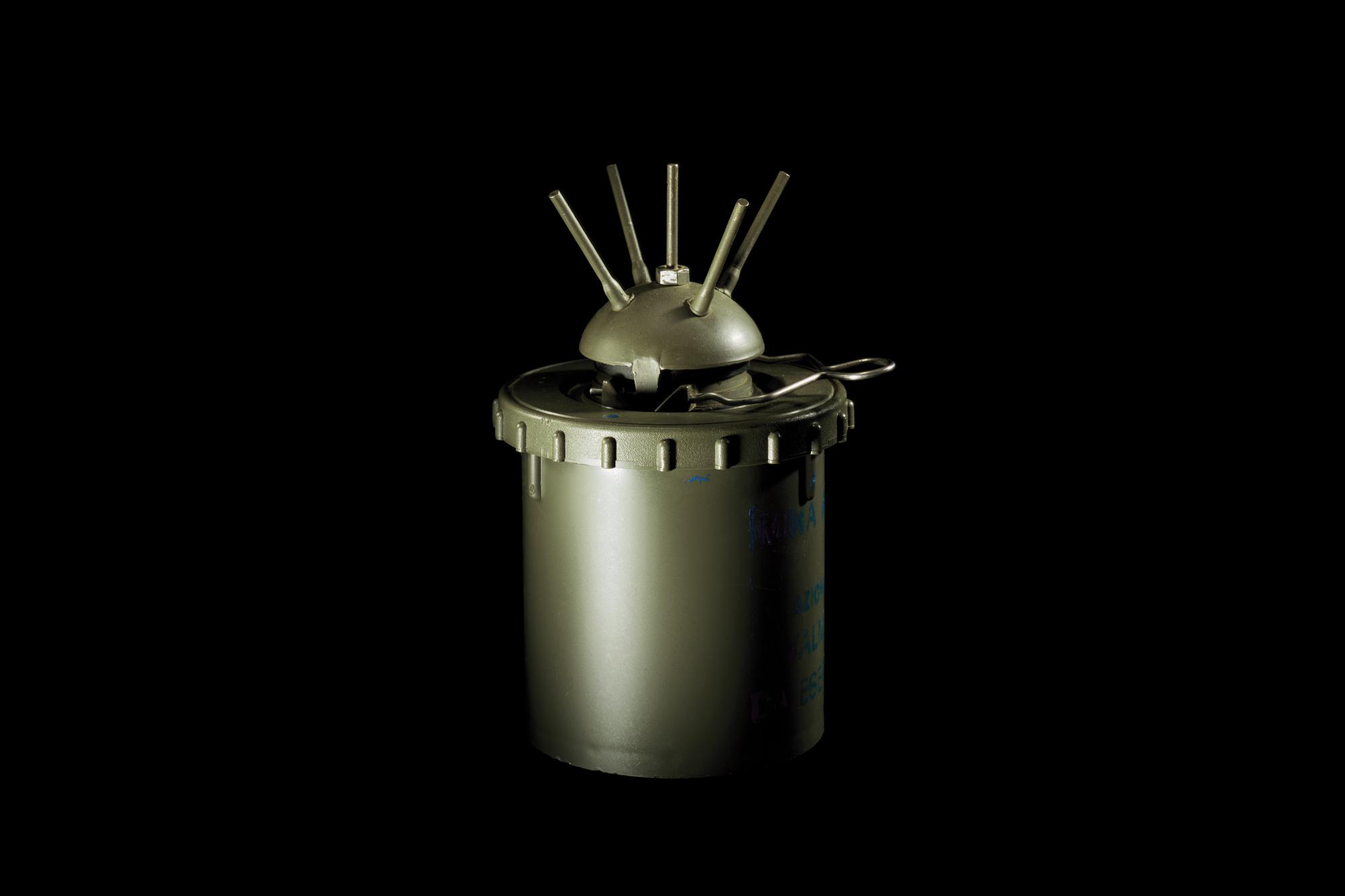
 

Raphaël Dallaporta (French, b. 1980) 'Antipersonnel Bounding Fragmentation Mine, V-69, Italy' 2004


Raphaël Dallaporta (French, b. 1980)
Antipersonnel Bounding Fragmentation Mine, V-69, Italy
2004
© Raphaël Dallaporta


Antipersonnel Bounding Fragmentation Mine, V-69, Italy. The V-69 can be set off by footfall pressure or through a tripwire. When detonated the fuse sets off propellant gases that fire the mine’s inner body 45cm above the ground. This explodes sending out more than 1,000 pieces of chopped steel. Between 1982 and 1985, its manufacturer Valsella sold around 9 million V-69s to Iraq. The mine was given a nickname by Iraqi minelayers: the “Broom”. 120mm, 3.2kg.


Foam
Keizersgracht 609
1017 DS Amsterdam
The Netherlands
Phone: + 31 20 5516500

Opening hours:
Mon – Wed 10am – 6pm
Thu & Fri 10am – 9pm
Sat & Sun 10am – 6pm

Foam website

LIKE ART BLACK ON FACEBOOK

Back to top

Michael Leunig. ‘Commemoration’ 2011

September 2011


Michael Leunig (Australian, 1945-2024) 'Commemoration' 2011


Michael Leunig (Australian, 1945-2024)
Commemoration
2011


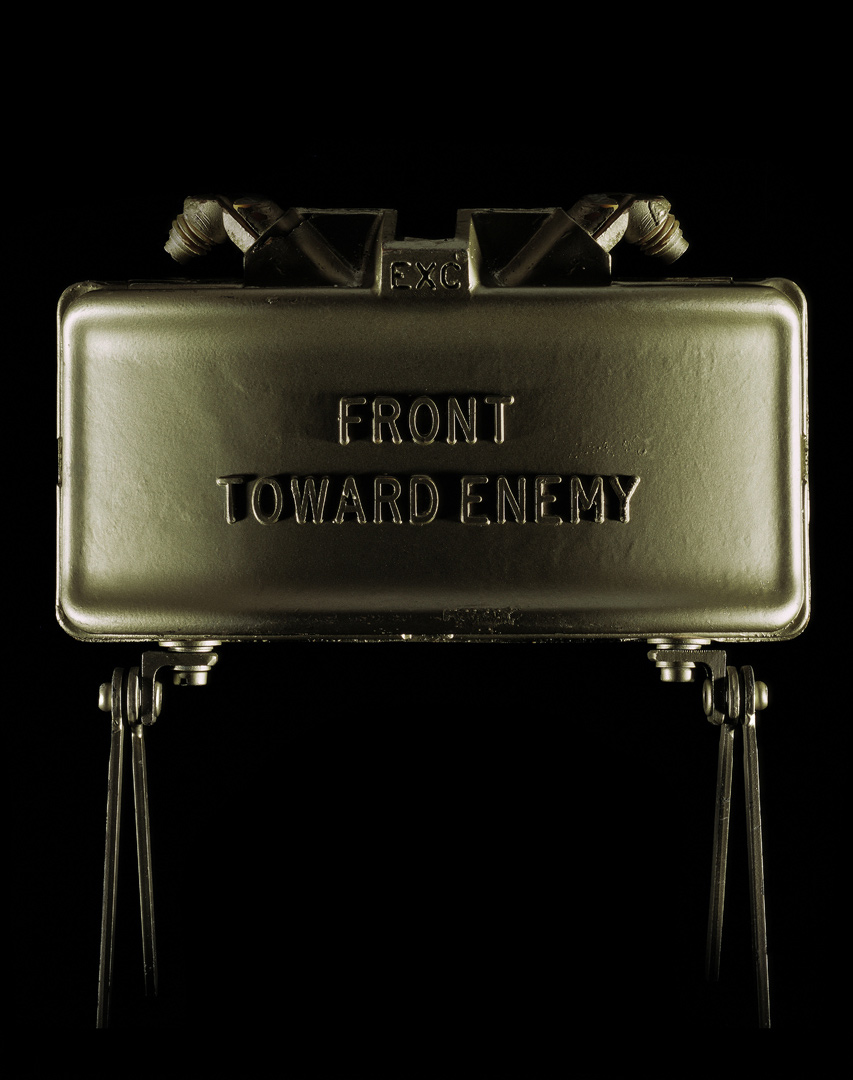
“It begins with ideas. Something like September 11 demands a narrative to explain it. But narratives are tricky, and frequently self-serving. They can obscure as much as they explain. And so it was. For Western political elites, September 11 quickly became a story about our own virtue. You will be familiar with the lines: it was an attack on the very idea of freedom; we were attacked, not for anything we did, but for nothing more than who we are; because we’re – in President George Bush’s phrase “the brightest beacon for freedom and opportunity in the world.” The consequences of this are profound. If the attack has nothing to do with us, then there is nothing to be done in response except bomb the problem out of existence. It cannot be managed, contained, or in any other way ameliorated.”


Waleed Aly writing in The Sunday Age newspaper, September 11, 2011, p. 13


Michael Leunig on Wikipedia

LIKE ART BLART ON FACEBOOK

Back to top
Exhibition: ‘Gilbert & George: Jack Freak Pictures’ at Deichtorhallen Hamburg

Exhibition dates: 25th February – 22nd May 2011


Gilbert & George standing in front of ‘Metal Jack’ (2008) from the series ‘Jack Freak Pictures’ on show at Deichtorhallen Hamburg


Gilbert & George standing in front of Metal Jack (2008) from the series Jack Freak Pictures on show at Deichtorhallen Hamburg
Photo: Fred Dott © Deichtorhallen Hamburg/Fred Dott


“We are unhealthy, middle-aged, dirty-minded, depressed, cynical, empty, tired-brained, seedy, rotten, dreaming, badly-behaved, ill-mannered, arrogant, intellectual, self-pitying, honest, successful, hard-working, thoughtful, artistic, religious, fascistic, blood-thirsty, teasing, destructive, ambitious, colourful, damned, stubborn, perverted and good. We are artists.”


Gilbert & George, 1980


More from the Jack Freak picture show!

Marcus


Many thankx to Deichtorhallen Hamburg for allowing me to publish the photographs in the posting. Please click on the photographs for a larger version of the image.


Installation view of ‘Jack Freak Pictures’ by Gilbert & George at Deichtorhallen Hamburg

Installation view of ‘Jack Freak Pictures’ by Gilbert & George at Deichtorhallen Hamburg


Installation views of Jack Freak Pictures by Gilbert & George at Deichtorhallen Hamburg
Photos: Fred Dott © Deichtorhallen Hamburg/Fred Dott


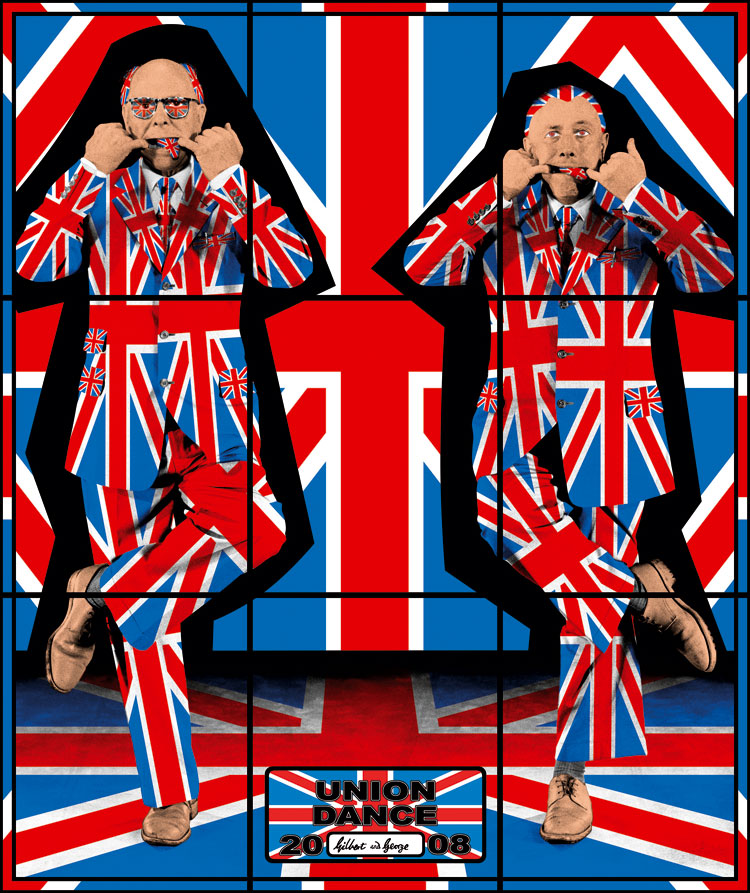
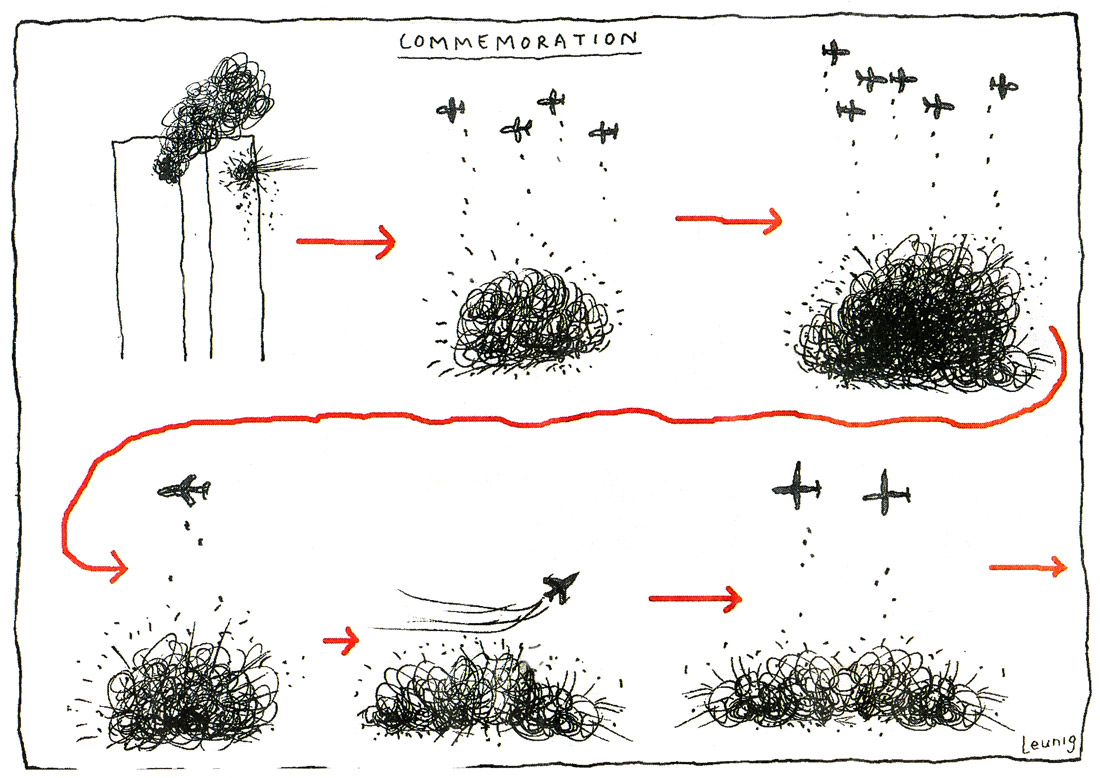
According to the writer Michael Bracewell, “the Jack Freak Pictures are among the most iconic, philosophically astute and visually violent works that Gilbert & George have ever created.” The dominant pictorial element is the Union Jack, itself an internationally familiar, abstract, geometric pattern and a socially and politically charged symbol whose significance spans the cultural spectrum from contemporary fashion to aggressive national pride. Equally prominent, and linking the Jack Freak Pictures to almost every work previously created by the artists, are Gilbert & George themselves in a variety of guises: dancing, gurning, howling, watching, waiting. Sometimes their bodies seem complete; other times they have been fragmented or contorted. Invariably they feature as both subject and object, artwork and artist; they are players in the epic and complex pictorial drama they have created.

Set in the East End of London where Gilbert & George have lived and worked for over forty years, the Jack Freak Pictures bring numerous aspects of the modern world to life. Medals, flags, maps, street-signs, graffiti and other less immediately obvious motifs jostle for attention with the brickwork, buildings and even foliage of the contemporary urban environment in works that are densely layered and complexly nuanced to evoke (and sometimes conflate) a sense of past, present and future. They raise fundamental and rudimentary questions about religion, identity, politics, economics, sexuality and death. The Jack Freak Pictures reaffirm Gilbert & George’s status as pre-eminent Modernists and underline Robert Rosenblum’s observation that “of the singularity of their duality in life as art, there is little doubt.” Michael Bracewell’s view that they are “visionary artists in the lineage of William Blake” rings truer now than ever before.

Text from the White Cube website [Online] Cited 12/05/2011 no longer available online


Gilbert & George. ‘Christian England’ from the series ‘Jack Freak Pictures’ 2008


Gilbert & George
Christian England from the series Jack Freak Pictures
2008
254 x 528 cm
© Gilbert & George


Gilbert & George. ‘Frigidarium’ from the series ‘Jack Freak Pictures’ 2008


Gilbert & George (British)
Frigidarium from the series Jack Freak Pictures
2008
381 x 604cm
© Gilbert & George


Gilbert & George. ‘Street Party’ from the series ‘Jack Freak Pictures’ 2008


Gilbert & George (British)
Street Party from the series Jack Freak Pictures
2008
381 x 604cm
© Gilbert & George


With its major spring show, Deichtorhallen Hamburg is once again bringing stars of the international art world to Hamburg. Gilbert & George (born 1943 and 1942) have long since been acknowledged icons of contemporary art.

The exhibition will present the latest, wide-ranging group of pictures they have ever created. Called the “Jack Freak Pictures”. They will be on display in the cathedral-like setting of the large Deichtorhalle from February 25 to May 22, 2011 for the first time more or less in its entirety – some 120 pictures will be on view.

Gilbert & George’s large-format pictures present decidedly sacred and secular themes. In this case, Gilbert & George have created a group around the British national symbol, the Union Jack, with all its different connotations, from symbol of national pride through to the cult symbol of the British Pop Music world and countercultures. Surrounded by medals and amulets, the streets of London and the red, blue and white design of the British flag, as in their previous art here Gilbert & George are not only the creators of their own world of images, but also act as protagonists in it.

The “Jack Freak Pictures” are among the most symbolic, philosophically most elaborate and visually striking art Gilbert & George have ever created. Within Gilbert & George’s oeuvre as a whole they constitute the powerful concentration of the themes and emotions that the artists have now been exploring in their art for more than 40 years. In these pictures, the artists play the roles of both victim and monster, puppets of a cosmic revue, sleepless guardians of empty big-city streets and crazy-looking talking heads, as Michael Bracewell outlines in his essay in the exhibition catalog. The large pictures, do not address the individual constitution of the two artists but instead point up states of human existence and can be read as a description of the modern world from the artists’ point of view.

The exhibition is being organised by Deichtorhallen Hamburg and the British Council and will move on from Hamburg, albeit it on a smaller scale, to Lentos Kunstmuseum, Linz, Austria. Hatje Cantz Verlag has brought out a catalog with an essay by Michael Bracewell and colour illustrations of all 153 works in the series.

Text from the Deichtorhallen Hamburg website


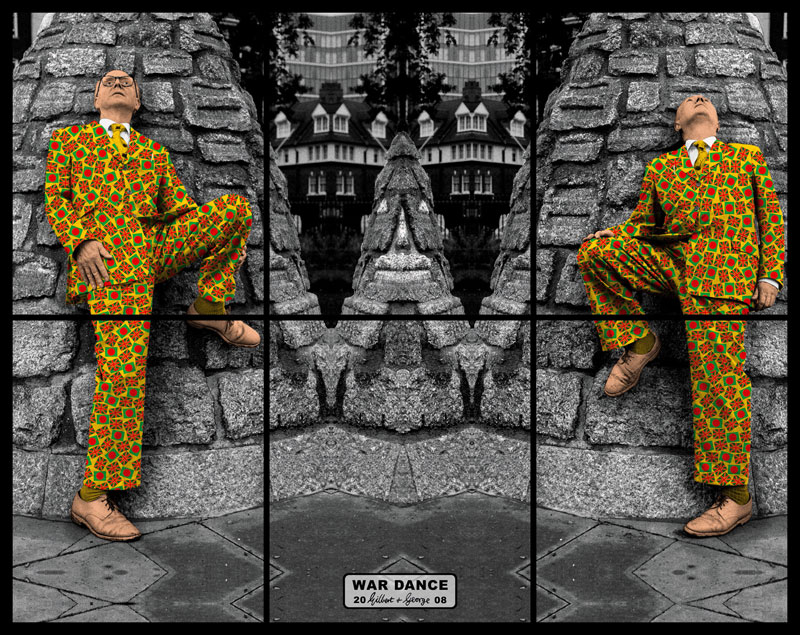
Gilbert & George. ‘War Dance’ from the series ‘Jack Freak Pictures’ 2008


Gilbert & George (British)
War Dance from the series Jack Freak Pictures
2008
151 x 190cm
© Gilbert & George


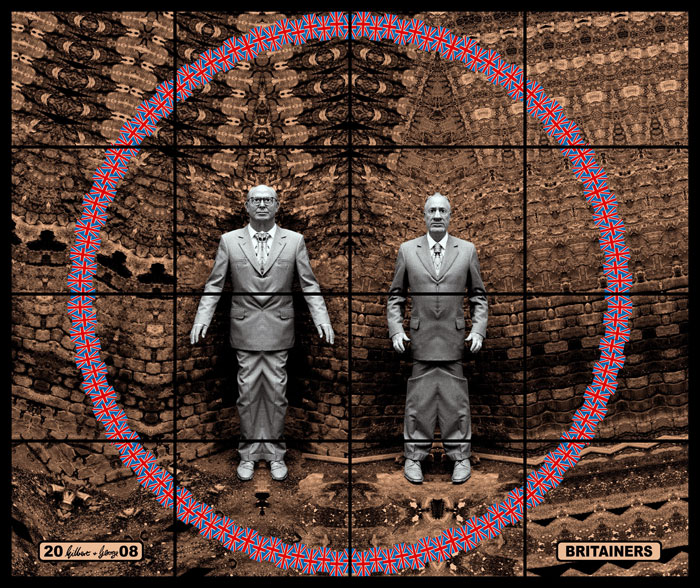
Gilbert & George. ‘Britainers’ from the series ‘Jack Freak Pictures’ 2008


Gilbert & George (British)
Britainers from the series Jack Freak Pictures
2008
254 x 302cm
© Gilbert & George


Gilbert & George. ‘Stuff Religion’ from the series ‘Jack Freak Pictures’ 2008


Gilbert & George (British)
Stuff Religion from the series Jack Freak Pictures
2008
317 x 302cm
© Gilbert & George


Gilbert & George. ‘Union Dance’ from the series ‘Jack Freak Pictures’ 2008


Gilbert & George (British)
Union Dance from the series Jack Freak Pictures
2008
© Gilbert & George


Gilbert & George. ‘Brits’ from the series ‘Jack Freak Pictures’ 2008


Gilbert & George (British)
Brits from the series Jack Freak Pictures
2008
226 x 190cm
© Gilbert & George


Deichtorhallen Hamburg
Deichtorstrasse 1-2
20095 HAMBURG
Phone: +49 (0)40 32103-0

Opening hours:
Tuesday – Sunday 11am – 6pm
Closed on Mondays

Deichtorhallen Hamburg website

LIKE ART BLART ON FACEBOOK

Back to top
Galleries this week and ‘The Lost Diggers’

March 2011


It has been a busy week!

On Tuesday I visited Australian Galleries in Smith Street to view the Drought Photographs by Sidney Nolan. A wonderful experience. Thursday night was the opening of Manstyle at NGV Australia, Federation Square, the new exhibition that “explores the extremes of masculine style and some of the most influential ideas that have pervaded menswear over the past three centuries.” A lively opening with lots of milliners, designers and fashionistas but only a modicum of style from many of the men in attendance.

Friday saw a trip up Flinders Lane to visit Arc One Gallery (review of Navigating Widely by Vanila Netto), Craft Victoria and drop in and say hello to Mary Lou Jelbart, director of fortyfivedownstairs and view the extensive renovations to the office and storage areas. Always good to catch up with Mary Lou. Then onward, battling terrible traffic, to the opening of New11 at the Australian Centre for Contemporary Art (ACCA) where the work was a bit ‘thin’ with a couple of notable exceptions.

Saturday saw a drive to Albert Street, Richmond to catch up with the galleries there – mostly stable exhibitions. Wade Marynowsky’s The Hosts: A Masquerade Of Improvising Automatons at John Buckley Gallery were interesting for 10 minutes or so reminding me of evil, corseted, twirling, marionette Daleks. I then had a chat with the delightful Edwin at Sophie Gannon Gallery and saw the first stages of installation of the upcoming Daniela Federici exhibition that is part of L’Oréal Melbourne Fashion Festival. Looks to be an interesting show.

Dr Marcus Bunyan


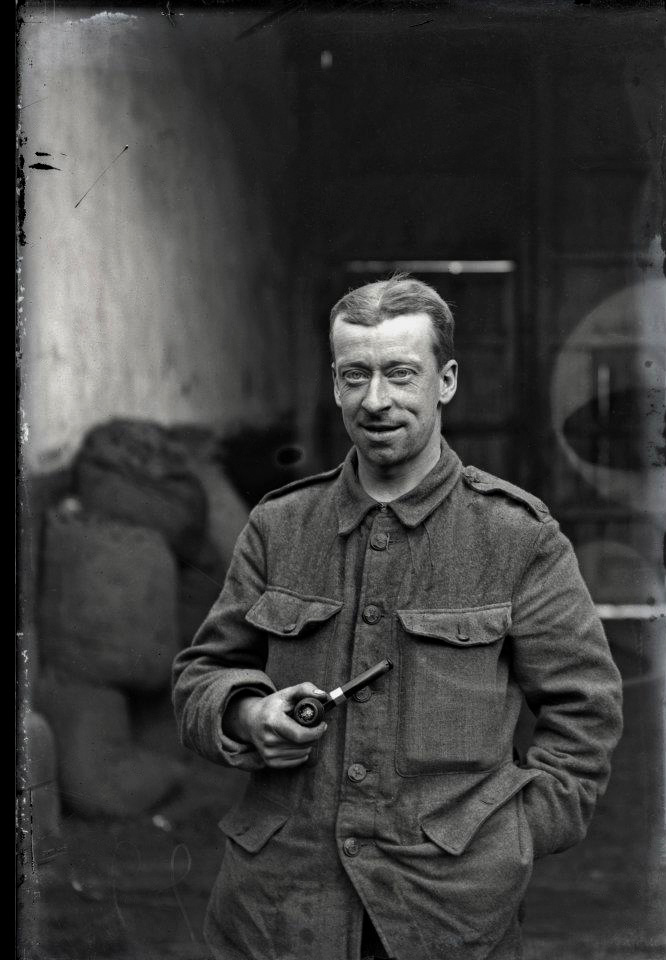
Antoinette or Louis Thuillier. 'No title (unknown Australian soldier wearing sheepskin jerkin)' c. 1916/17


Antoinette or Louis Thuillier
No title (unknown Australian soldier wearing sheepskin jerkin)
c. 1916/17
Glass negative
France

This image is published under fair dealing for the purposes of criticism or review (Commonwealth of Australia Consolidated Acts: Copyright Act 1968 – Sect 41)


This is a truly amazing story – finding these large format glass slides of First World War soldiers in an attic!

The original farmhouse has so much atmosphere. The photographs themselves are funny, poignant, informal, beautifully shot (the photographer, either Antoinette or Louis Thuillier, had a generous eye) and exhibit wonderful camaraderie

To actually find the original backdrop and be standing in the very place where these photographs were taken sends goose bumps up the spine just looking at the video. Imagine actually being there.

Look at the details – the hands, wedding rings, muddied boots, the children clasped by diggers with smokes in their hands, the props (chairs, motorbikes, guns, plant stands), sheepskin jerkins and the signs – We will soon, be, home, All that is left of them, France, 1916-1918.

They were so young, stoic, handsome. They stare out at you across time.

As Barthes and Sontag would say, these photographs haunt you.


View the video of the remarkable story from the link The Lost Diggers.

Look at hundreds of wonderful photographs from the links below:

    The Lost Diggers Facebook page
    Australian and international soldiers – Part 1
    Australian and international soldiers – Part 2
    Australian and international soldiers – Part 3


    Antoinette or Louis Thuillier. 'No title (unknown Australian soldier smoking a pipe)' c. 1916/17


    Antoinette or Louis Thuillier
    No title (unknown Australian soldier smoking a pipe)
    c. 1916/17
    Glass negative
    France


    LIKE ART BLART ON FACEBOOK

    Back to top

    Text: quotation from ‘frames of war: when is life grievable?’ by Judith Butler (2010)

    October 2010


    The quotation below is a follow up to the posting of my new body of work Missing in Action (red kenosis) 2010. It is a wonderful meditation on the link between image, frame, war, the senses and the successful conscription of the public into a complicit view of the world or, in opposition, resistance to that view. This is especially relevant at the moment with the current debate about Australian troops in Afghanistan. Butler is never less than a fascinating and insightful writer. This book is no exception; Butler’s ideas continue to inform my work.

    Dr Marcus Bunyan


    Efforts to control the visual and narrative dimensions of war delimit public discourse by establishing and disposing the sensuous parameters of reality itself – including what can be seen and what can be heard. As a result, it makes sense to ask, does regulating the limits of what is visible or audible serve as a precondition of war waging, one facilitated by cameras and other technologies of communication? Of course, persons use technological instruments, but instruments surely also use persons (position them, endow them with perspective, and establish the trajectory of their action); they frame and form anyone who enters into the visual or audible field, and, accordingly, those who do not. But further, under conditions of war waging, personhood is itself cast as a kind of instrumentality, by turns useful or dispensable. How is the public sphere constituted by the visual technologies of war? And what counter-public emerges over and against the ideal postulate? We think of persons as reacting to war in various ways, but communicable reactions to war also variably constitute and de-constitute personhood within the field of war. Is there some way to register war in a way that transforms the senses? And what role do transformed senses have in the demands for the cessation of war? If those of us who watch the wars our governments conduct at a distance are visually solicited and recruited into the war by embedded reporting and publicly approved media reports, under what conditions can we refuse that recruitment effort? What restructuring of the senses does that require and enable?

    To approach this question, we have to understand how the senses are part of any recruitment effort. Specifically, there is a question of the epistemological position to which we are recruited when we watch or listen to war reports. Further, a certain reality is being built through our very act of passive reception, since what we are being recruited into is a certain framing of reality, both its constriction and interpretation. When the state issues directives on how war is to be reported, indeed on whether war is to be reported at all, it seems to be trying to regulate the understanding of violence, or the appearance of violence within a public sphere which has become decisively transformed by the internet and other forms of digital media. But if we are to ask whether this regulation of violence is itself also violent in some way, part of violence, then we need a more careful vocabulary to distinguish between the destruction of the bomb and the framing of its reality, even though, as we know, both happen at the same time, and the one cannot happen without the other. In the same way that Althusser (drawing on Spinoza) once argued that there can be different modalities of materiality, there can surely be, and are, different modalities of violence and of the material instrumentalities of violence. How do we understand the frame as itself part of the materiality of war and the efficacy of its violence?

    The frame does not simply exhibit reality, but actively participates in a strategy of containment, selectively producing and enforcing what will count as reality. It tries to do this, and its efforts are a powerful wager. Although framing cannot always contain what it seeks to make visible or readable, it remains structured by the aim of instrumentalizing certain versions of reality. This means that the frame is always throwing something away, always keeping something out, always de-realizing and de-legitimating alternative versions of reality, discarded negatives of the official version. And so, when the frame jettisons certain version of war, it is busily making a rubbish heap whose animated debris provides the potential resources for resistance. When versions of reality are excluded or jettisoned to a domain of unreality, the specters are produced that haunt the ratified version of reality, animated and de-ratifying traces. In this sense frame seeks to institute an interdiction on mourning; there is no destruction, and there is no loss. Even as the frames are actively engaged in redoubling the destruction of war, they are only polishing the surface of a melancholia whose rage must be contained, and often cannot. Although the frame initiates (as part of weaponry) or finishes off (as part of reporting) a whole set of murderous deeds, and seeks to subordinate the visual field to the task of war waging, its success depends upon a successful conscription of the public. Our responsibility to resist war depends in part on how well we resist that daily effort at conscription.

    Butler, Judith. Frames of War: When Is Life Grievable? London: Verso, 2010, Introduction pp. xi – xiv.


    LIKE ART BLART ON FACEBOOK

    Back to top

    Exhibition: ‘Icon & archive: photography & the World Wars’ at the Monash Gallery of Art, Melbourne

    Exhibition dates: 16th April – 11th July, 2010


    Many thankx to Mark Hislop and the Monash Gallery of Art for allowing me to reproduce the photographs in the posting. Please click on the photos for a larger version of the image.


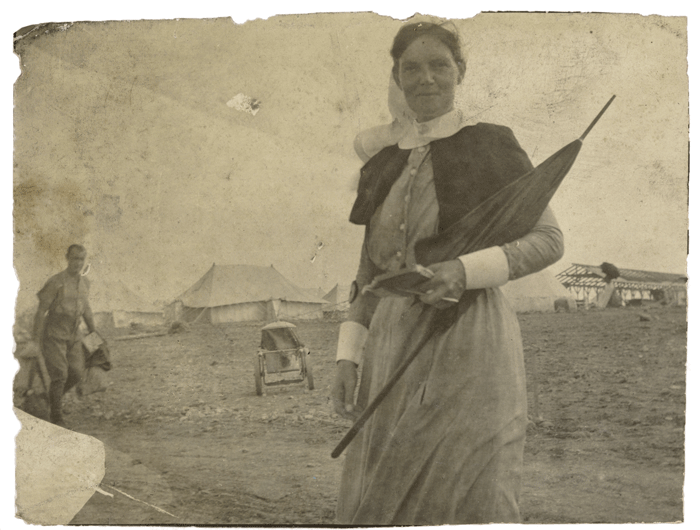
    Photographer unknown. 'Matron Grace Wilson doing a round, Mudros' 1915 from the exhibition 'Icon & archive: photography & the World Wars' at the Monash Gallery of Art, Melbourne, April - July, 2010


    Photographer unknown
    Matron Grace Wilson doing a round, Mudros
    1915
    Gelatin silver print
    Australian War Memorial


    NOTHING could have prepared Grace Wilson for her first day at Turks Head Point on the drought-stricken island of Lemnos, where she was to run a field hospital for injured soldiers being shipped out from Gallipoli, 65km away.

    “Things are just too awful for words… we found only a bare piece of ground with wounded men in pain, still in filthy, bloodstained clothes, lying amid stones and thistles,” she wrote in her diary.

    Matron Wilson and her 40 nurses had arrived in the island’s Mudros harbour aboard the Dunluce Castle on August 2, 1915, to discover to their dismay there was no sign of the supply ship Ascot, which had been due there a week earlier with the tents, medical equipment, crates of tinned food and other essentials.

    In a bizarre display of military pomp, a regimental piper led the women – wearing heavy, ankle-length dresses and petticoats – on a long march in searing summer heat to what would be their home for the most harrowing five months of their lives…”

    Read the full article: Daryl Passmore. “Brisbane snubs unsung war heroine Matron Grace Wilson,” on The Sunday Mail (Qld) on The Courier Mail website April 21, 2013 [Online] Cited 15/10/2019


    Norman Stuckey (Australian, 1914-1983) 'The Pimple, Shaggy Ridge, New Guinea' 1943 from the exhibition 'Icon & archive: photography & the World Wars' at the Monash Gallery of Art, Melbourne, April - July, 2010


    Norman Bradford Stuckey (Australian, 1914-1983)
    The Pimple, Shaggy Ridge, New Guinea
    1943
    Toned silver gelatin print
    Australian War Memorial


    The Battle of the Shaggy Ridge was part of the Markham and Ramu Valley – Finisterre Range campaign, consisting of a number of actions fought by Australian and Japanese troops in Papua New Guinea in World War II. Following the Allied capture of Lae and Nadzab, the Australian 9th Division had been committed to a quick follow up action on the Huon Peninsula in an effort to cut off the withdrawing Japanese. Once the situation on the Huon Peninsula stabilised in late 1943, the 7th Division had pushed into the Markham and Ramu Valleys towards the Finisterre Range with a view to pushing north towards the coast around Bogadjim, where they would meet up with Allied forces advancing around the coast from the Huon Peninsula, before advancing towards Madang.

    A series of minor engagements followed in the foothills of the Finisterre Range before the Australians came up against strong resistance centred around the Kankiryo Saddle and Shaggy Ridge, which consisted of several steep features, dotted with heavily defended rocky outcrops. After a preliminary assault on a forward position dubbed The Pimple in late December 1943, the Australians renewed their assault in mid-January 1944 and over the course of a fortnight eventually captured the Japanese positions on Shaggy Ridge and the Kankiryo Saddle, after launching a brigade-sized attack up three avenues of advance. In the aftermath, the Australians pursued the Japanese to the coast and subsequently took Madang, linking up with US and Australian forces.

    Text from the Wikipedia website [Online] Cited 25/10/2019


    Barbara Joan Isaacson (Australian, 1923-2017) 'Journalist Iris Dexter standing under the starboard engine of a Douglas C-47 aircraft' February - March 1943 from the exhibition 'Icon & archive: photography & the World Wars' at the Monash Gallery of Art, Melbourne, April - July, 2010


    Barbara Joan Isaacson (Australian, 1923-2017)
    Journalist Iris Dexter standing under the starboard engine of a Douglas C-47 aircraft
    February-March 1943
    Gelatin silver print 2008
    Image courtesy of the AMW


    Joan Barbara Isaacson was born into a dynamic and family. Her mother, Lynka Isaacson (also known as Caroline Isaacson), was the first female journalist to be employed by a metropolitan newspaper in Australia, and was a strong role model for her daughter. After the war Isaacson’s mother and brother set up the Southern Cross publishing business.

    Isaacson attended the Melbourne Technical College, where she studied photography. When she was 18 years old she joined the Australian Women’s Army Service (AWAS). Working in the Army Public Relations section, she travelled the east coast taking documentary and recruitment propaganda photographs and meeting press journalists and photographers.

    In 1943 Isaacson married Richard L. Beck, a graphic designer and photographer. During the period from 1946-1948 they set up their own photographic business in Melbourne, specialising in child portraiture. Isaacson took over the business c.1950 when her husband went back to working as a graphic designer, and continued to manage the studio until the birth of her third baby. After her departure from the photography business Isaacson was involved in a variety of other ventures and gave up her photography.

    Text from the Australian Women’s Register website [Online] Cited 24/10/2019


    Max Dupain (Australian, 1911-1992) 'The dozing soldier' 1943


    Max Dupain (Australian, 1911-1992)
    The dozing soldier (Tired Soldier in Train North Queensland)
    1943
    Gelatin silver print
    Australian War Memorial


    Photographs are an inseparable part of our memory of the First and Second World Wars. They help us remember events which many of us have no direct experience.

    Monash Gallery of Art’s new special exhibition Icon & archive: photography and the World Wars draws on the Australian War Memorial’s vast photographic collection to consider the relationship of photography and war. This extraordinary exhibition opens to the public on Friday 16 April.

    Direct from the Australian War Memorial, Icon & archive demonstrates the powerful role played by photography in the efforts of Australians to make sense of and remember the terrible events of the First and the Second World Wars.

    “Visitors to MGA will see many ‘iconic’ photographs that have become lodged in our national memory,” said MGA Director and curator of the exhibition, Dr Shaune Lakin.

    Icon & archive also presents previously unseen photographs to showcase the experiences of both service personnel and the families left behind during the wars. These photographs provide contemporary audiences with a remarkable picture of the effects of the World Wars on private, family and social life in Australia. In doing this, the exhibition will help members of our community better understand that experience and its relevance to contemporary Australia,” said Dr Lakin.

    Icon & archive will play a significant role in the City of Monash’s Anzac Day commemorations, in this the 95th anniversary of the landing at Gallipoli. Icon & archive includes some of the most historically significant pictures from Gallipoli, as well as other important sites involving Australians during both the First and the Second World Wars.”

    Press release from the Monash Gallery of Art website [Online] Cited 09/07/2022. No longer available online


    Algemon Darge (Australian, 1878-1941) 'Private George Beamish Swanton with his wife Nellie and their young baby Joan' 1915


    Algemon Darge (Australian, 1878-1941)
    Private George Beamish Swanton with his wife Nellie and their young baby Joan
    1915
    Gelatin silver print
    Australian War Memorial


    Studio portrait of 1159 Private (Pte) George Beamish Swanton, Australian 24th Battalion, of Werribee, Victoria, with his wife Nellie and young baby, Joan Helen. Pte Swanton enlisted on 28 April 1915 and embarked on board HMAT Euripides on 8 May 1915. He died of wounds on 28 July 1916 at Pozieres, France. Pte Swanton had two brothers who were also killed in action; 222 Pte John (Jack) Swanton, 2nd Battalion, enlisted on 27 August 1914 and was killed in action at Gallipoli Peninsula on 2 May 1915; and 2760 Pte Henry Swanton, 29th Battalion, enlisted on 5 March 1916 and was killed in action at Pozieres, France on 2 November 1916.

    This is one of a series of photographs taken by the Darge Photographic Company which had the concession to take photographs at the Broadmeadows and Seymour army camps during the First World War. In the 1930’s, the Australian War Memorial purchased the original glass negatives from Algernon Darge, along with the photographers’ notebooks. The notebooks contain brief details, usually a surname or unit name, for each negative. The names are transcribed as they appear in the notebooks.

    Text from the Australian War Memorial website [Online] Cited 25/10/2019


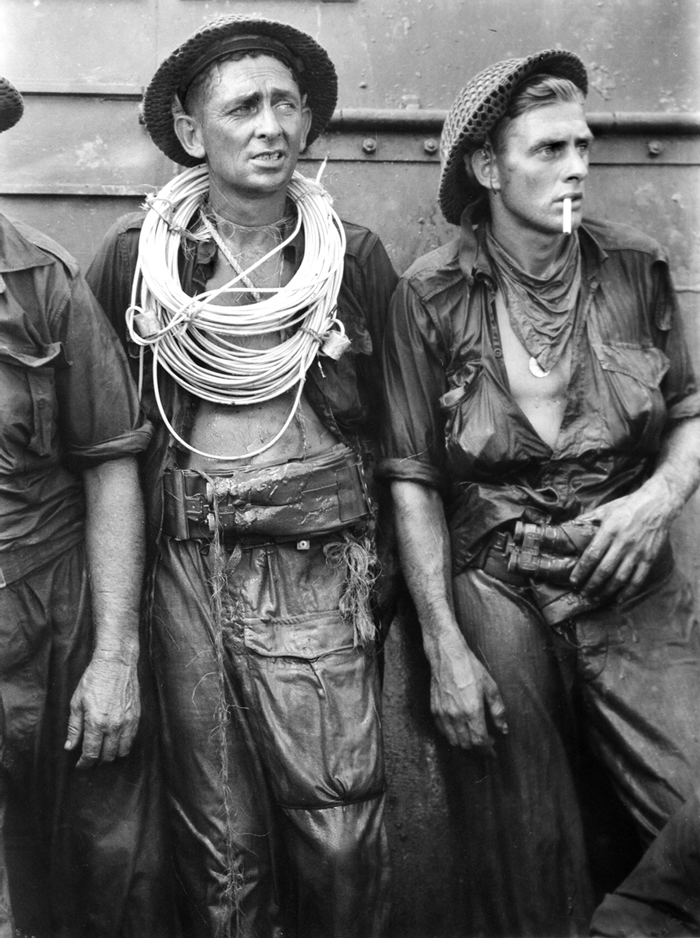
    Norman Bradford Stuckey (Australian, 1914-1983) 'Engineers exhausted after destroying obstacles, Tarakan' 1945


    Norman Bradford Stuckey (Australian, 1914-1983)
    Engineers exhausted after destroying obstacles, Tarakan
    1945
    Gelatin silver print
    Australian War Memorial


    The Battle of Tarakan was the first stage in the Borneo campaign of 1945. It began with an amphibious landing by Allied forces on 1 May, code-named Operation Oboe One; the Allied ground forces were drawn mainly from the Australian 26th Brigade, but included a small element of Netherlands East Indies personnel. The main objective of the landing was capture of the island’s airfield. While the battle ended with success for the Allied forces over the Japanese defenders, this victory is generally regarded as having not justified its costs. The airfield was so heavily damaged that it ultimately could not be repaired in time to make it operational for other phases of the Allied campaign in Borneo.

    Text from the Wikipedia website [Online] Cited 25/10/2019


    Asti Studios. 'Studio portrait of an unidentified First World War soldier in Australian service uniform' 1914-1918


    Asti Studios
    Studio portrait of an unidentified First World War soldier in Australian service uniform, including greatcoat and slouch hat
    c. 1914-1918
    New South Wales, Sydney
    Toned silver gelatin print
    Australian War Memorial


    Monash Gallery of Art
    860 Ferntree Gully Road, Wheelers Hill
    Victoria 3150 Australia
    Phone: + 61 3 8544 0500

    Opening hours:
    Tue – Fri: 10am – 5pm
    Sat – Sun: 10am – 4pm
    Mon/public holidays: closed

    Monash Gallery of Art website

    LIKE ART BLART ON FACEBOOK

    Back to top

    Text: Marcus Bunyan. ‘Missing in Action (dark kenosis)’ 2010

    June 2010


    Marcus Bunyan (Australian, b. 1958) 'Missing in Action (dark kenosis) No.16' 2010


    Marcus Bunyan (Australian, b. 1958)
    Missing in Action (dark kenosis) No.16
    2010
    Digital photograph


    Missing in Action (dark kenosis)

    Several people have asked me for some text to help describe the themes that my work investigates.

    My work has always investigated the spaces and environments that people inhabit. Over the last few years the work has come to focus on fighter aircraft and the people (usually men) who fly them – the reason to fly such war machines, to fight for freedom, democracy, to bomb, to kill – the moral and ethical choices that human beings make, to undertake one action over another.

    I have returned to childhood influences: I remember as a kid making toy models by Airfix and Tamiya of tanks and fighter planes and flying the planes from my bedroom ceiling. The work is strongly anti-war. Most of the work features shifts in texture, of light and dark and the occasional use of text to illuminate personal feelings. Text that is hidden among this particular body of work includes:

    ~ “The true enemy is war itself” from the anti-war movie Crimson Tide (1995)
    ~ “The destiny of man is in his own soul” Herodotus (484-420BC)
    ~ “We are all of us children of earth” Franklin D. Roosevelt: Flag Day Address June 13, 1942


    Conceptually the work is based upon an investigation into Foucault’s ‘technologies of the self’ and the paradoxes of such (self) determination:

    Technologies of the self (also called care of the self or practices of the self) are what Michel Foucault calls the methods and techniques (“tools”) through which human beings constitute themselves. Foucault argued that we as subjects are perpetually engaged in processes whereby we define and produce our own ethical self-understanding. According to Foucault, technologies of the self are the forms of knowledge and strategies that “permit individuals to effect by their own means or with the help of others a certain number of operations on their own bodies and souls, thoughts, conduct, and way of being, so as to transform themselves in order to attain a certain state of happiness, purity, wisdom, perfection, or immortality.””1


    The next series are the same planes with a red colour (red kenosis) and after that I have some silhouette aircraft recognition cards – just the black shapes of the jet fighters – with colours behind, should be a good series!

    Dr Marcus Bunyan


    1/ Foucault, M. (1988) “Technologies of the self,” in L. H. Martin, H. Gutman and P. H. Hutton (eds.,). Technologies of the self. Amherst: University of Massachusetts Press, page 18 quoted on Wikipedia. “Technologies of the Self.” [Online] Cited 23/06/2010.


      SEE THE FULL SERIES ON MY WEBSITE

      Photographs are available from this series for purchase. As a guide, a digital colour 16″ x 20″ costs $1000 plus tracked and insured shipping. For more information please see my Store web page.


      Marcus Bunyan website

      LIKE ART BLART ON FACEBOOK

      Back to top
      Photographs: Marcus Bunyan. ‘Missing in action (dark kenosis)’ 2010

      May 2010


      Marcus Bunyan (Australian, b. 1958) 'Missing in Action (dark kenosis) No.11' 2010


      Marcus Bunyan (Australian, b. 1958)
      Missing in Action (dark kenosis) No.11
      2010
      Digital photograph


      Missing in action (dark kenosis)

      A new body of work Missing in Action (dark kenosis) 2010 is now online on my website.

      There are eighty-two images in the series which are like a series of variations in music with small shifts in tone and colour. Below are a selection of images from the series. Please click on the photographs for a larger version of the image.

      Many thankx to the people who have emailed me saying how much they like the new series of work.

      Dr Marcus Bunyan


      Photographs are available from this series for purchase. As a guide, a digital colour 16″ x 20″ costs $1000 plus tracked and insured shipping. For more information please see my Store web page.


      Kenosis

      “In Christian theology, Kenosis is the concept of the ‘self-emptying’ of one’s own will and becoming entirely receptive to God and his perfect will.”


      Marcus Bunyan (Australian, b. 1958) 'Missing in Action (dark kenosis) No.19' 2010


      Marcus Bunyan (Australian, b. 1958)
      Missing in Action (dark kenosis) No.19
      2010
      Digital photograph


      Marcus Bunyan (Australian, b. 1958) 'Missing in Action (dark kenosis) No.35' 2010


      Marcus Bunyan (Australian, b. 1958)
      Missing in Action (dark kenosis) No.35
      2010
      Digital photograph


      Marcus Bunyan (Australian, b. 1958) 'Missing in Action (dark kenosis) No.46' 2010


      Marcus Bunyan (Australian, b. 1958)
      Missing in Action (dark kenosis) No.46
      2010
      Digital photograph


      Marcus Bunyan (Australian, b. 1958) 'Missing in Action (dark kenosis) No.49' 2010


      Marcus Bunyan (Australian, b. 1958)
      Missing in Action (dark kenosis) No.49
      2010
      Digital photograph


      Marcus Bunyan (Australian, b. 1958) 'Missing in Action (dark kenosis) No.67' 2010


      Marcus Bunyan (Australian, b. 1958)
      Missing in Action (dark kenosis) No.67
      2010
      Digital photograph


      Marcus Bunyan (Australian, b. 1958) 'Missing in Action (dark kenosis) No.71' 2010


      Marcus Bunyan (Australian, b. 1958)
      Missing in Action (dark kenosis) No.71
      2010
      Digital photograph


      Marcus Bunyan (Australian, b. 1958) 'Missing in Action (dark kenosis) No.76' 2010


      Marcus Bunyan (Australian, b. 1958)
      Missing in Action (dark kenosis) No.76
      2010
      Digital photograph


      Detail of images


      Marcus Bunyan (Australian, b. 1958) 'Missing in Action (dark kenosis) No.76' 2010 (detail)

      Marcus Bunyan (Australian, b. 1958) 'Missing in Action (dark kenosis) No.78' 2010 (detail)

      Marcus Bunyan (Australian, b. 1958) 'Missing in Action (dark kenosis) No.6' 2010 (detail)

      Marcus Bunyan (Australian, b. 1958) 'Missing in Action (dark kenosis) No.9' 2010 (detail)


      Detail of images 76, 78, 6 and 9


      Marcus Bunyan website

      LIKE ART BLART ON FACEBOOK

      Back to top

      Michael Leunig, President Obama and the “just war” (God with us)

      December 2009


      Michael Leunig (Australian, b. 1945) 'Carbon Footprints, War Footprints' December 2009


      Michael Leunig (Australian, b. 1945)
      Carbon Footprints, War Footprints
      in The Age Newspaper, Friday 11th December 2009


      Still, we are at war, and I’m responsible for the deployment of thousands of young Americans to battle in a distant land. Some will kill, and some will be killed. And so I come here with an acute sense of the costs of armed conflict – filled with difficult questions about the relationship between war and peace, and our effort to replace one with the other…
      The concept of a “just war” emerged, suggesting that war is justified only when certain conditions were met: if it is waged as a last resort or in self-defense; if the force used is proportional; and if, whenever possible, civilians are spared from violence.

      Of course, we know that for most of history, this concept of “just war” was rarely observed. The capacity of human beings to think up new ways to kill one another proved inexhaustible, as did our capacity to exempt from mercy those who look different or pray to a different God. Wars between armies gave way to wars between nations – total wars in which the distinction between combatant and civilian became blurred. In the span of 30 years, such carnage would twice engulf this continent. And while it’s hard to conceive of a cause more just than the defeat of the Third Reich and the Axis powers, World War II was a conflict in which the total number of civilians who died exceeded the number of soldiers who perished…

      We must begin by acknowledging the hard truth: We will not eradicate violent conflict in our lifetimes. There will be times when nations – acting individually or in concert – will find the use of force not only necessary but morally justified.

      I make this statement mindful of what Martin Luther King Jr. said in this same ceremony years ago: “Violence never brings permanent peace. It solves no social problem: it merely creates new and more complicated ones.” As someone who stands here as a direct consequence of Dr. King’s life work, I am living testimony to the moral force of non-violence. I know there’s nothing weak – nothing passive – nothing naïve – in the creed and lives of Gandhi and King.

      But as a head of state sworn to protect and defend my nation, I cannot be guided by their examples alone. I face the world as it is, and cannot stand idle in the face of threats to the American people. For make no mistake: Evil does exist in the world…

      I raise this point, I begin with this point because in many countries there is a deep ambivalence about military action today, no matter what the cause. And at times, this is joined by a reflexive suspicion of America, the world’s sole military superpower.

      But the world must remember that it was not simply international institutions – not just treaties and declarations – that brought stability to a post-World War II world. Whatever mistakes we have made, the plain fact is this: The United States of America has helped underwrite global security for more than six decades with the blood of our citizens and the strength of our arms…

      So yes, the instruments of war do have a role to play in preserving the peace. And yet this truth must coexist with another – that no matter how justified, war promises human tragedy. The soldier’s courage and sacrifice is full of glory, expressing devotion to country, to cause, to comrades in arms. But war itself is never glorious, and we must never trumpet it as such.


      Part of the Nobel Peace Prize acceptance speech by President Barack Obama


      Michael Leunig on Wikipedia

      LIKE ART BLART ON FACEBOOK

      Back to top