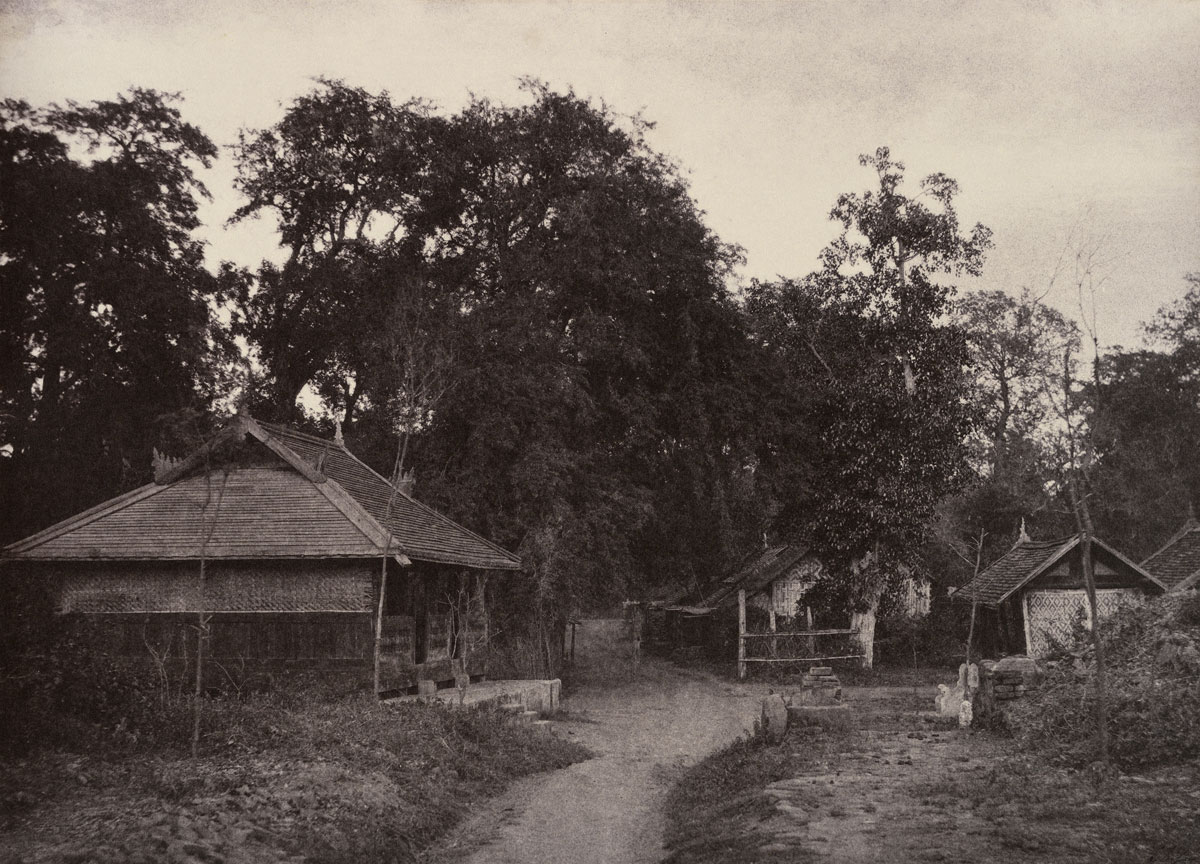
Exhibition: ‘Captain Linnaeus Tripe: Photographer of India and Burma, 1852-1860’ at the National Gallery of Art, Washington Part 2

Exhibition dates: 21st September 2014 – 4th January 2015


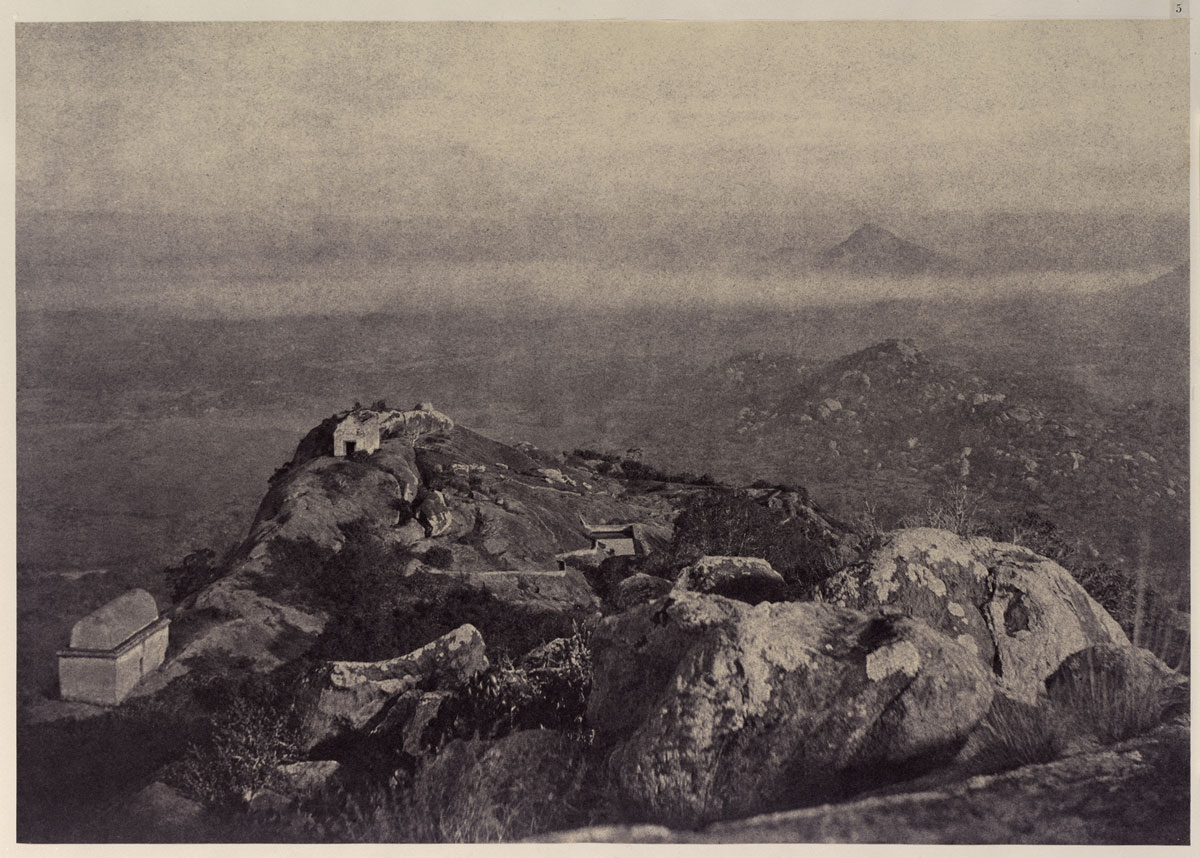
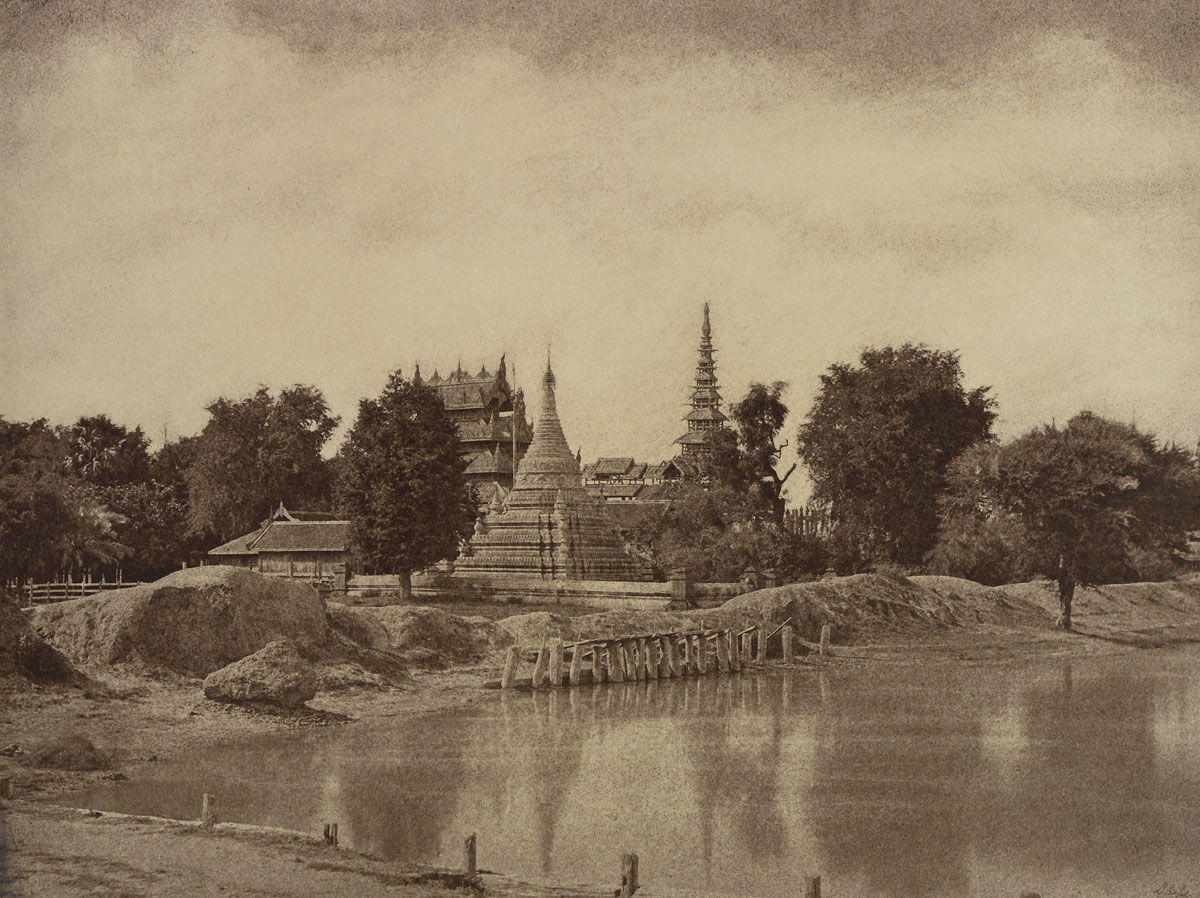
Linnaeus Tripe (British, 1822-1902) 'Royacottah: View from the Top of the Hill, Looking North-Northwest and by North, December 1857 - January 1858'


Linnaeus Tripe (British, 1822-1902)
Royacottah: View from the Top of the Hill, Looking North-Northwest and by North, December 1857 – January 1858
c. 1857-1858
26 x 35.6cm (10 1/4 x 14 in.)
Collection of Charles Isaacs and Carol Nigro


Part two of this wonderful posting, including Tripe’s most famous photograph: Elephant Rock, End View, January – February 1858 (below).

Marcus


Many thankx to the National Gallery of Art for allowing me to publish the photographs in the posting. Please click on the photographs for a larger version of the image. Most of the text underneath the images is from the British Library website.


Captain Linnaeus Tripe (1822-1902)

From an upper-middle-class family in Devonport, England, Tripe joined the British East India Company in 1839 and was assigned to the 12th Madras Native Infantry. After several years of deployment in India, he returned to England in 1851 and began to explore an interest in photography. In 1853 he joined the Photographic Society of London.

Reflecting his military training as an officer in the British army, Tripe had great technical success in India and Burma, even though the tropical heat and humidity affected photographic chemistry. Yet Tripe’s destiny as a photographer was linked to the fate of the British Empire in India. Despite his professional achievements and technical innovations, rebellions in the late 1850s prompted a new era of oversight and regulations for the recently nationalized East India Company, and the British government took over the administration and rule of India, making it a crown colony. Tripe was forced to close his studio in 1860 because of cost-cutting measures, and he almost completely abandoned photography as a result.
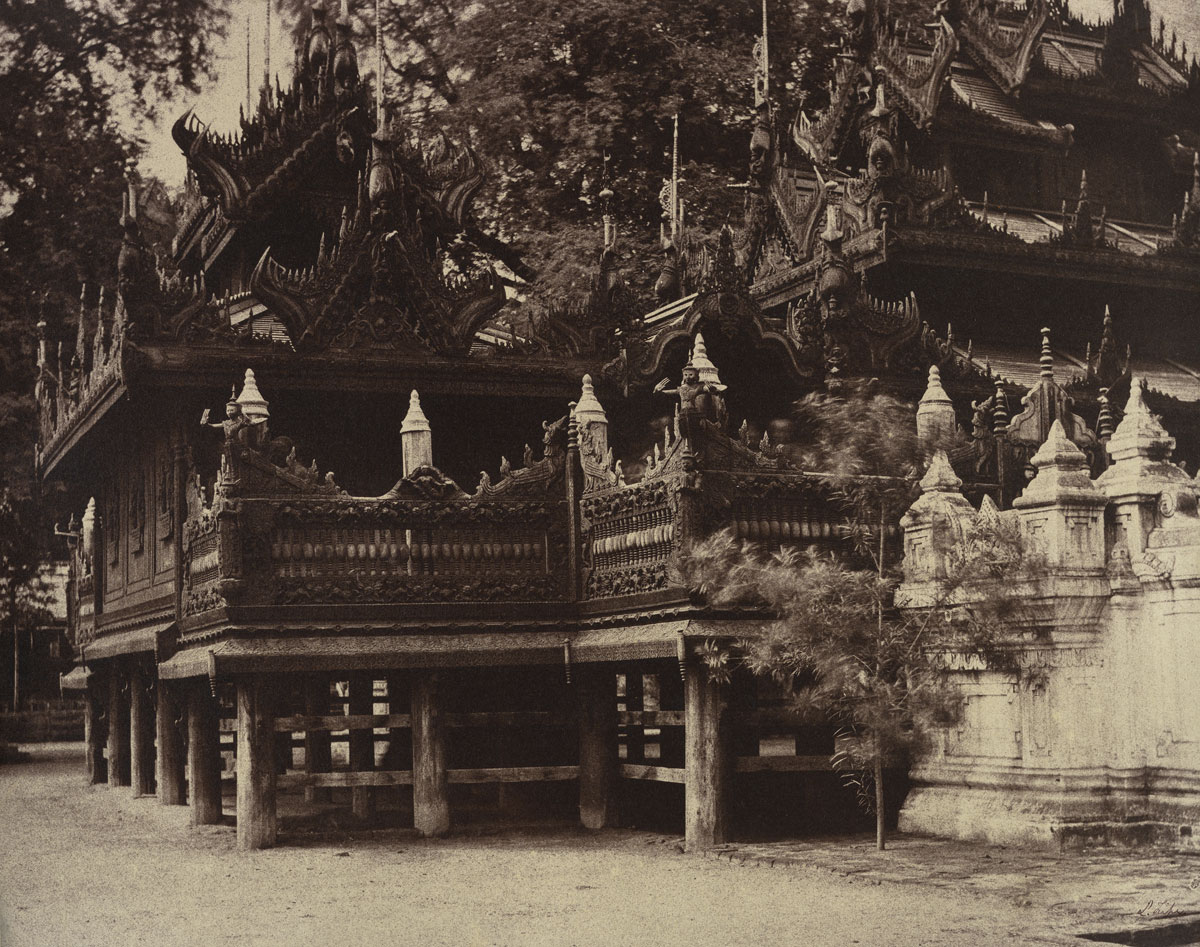
 

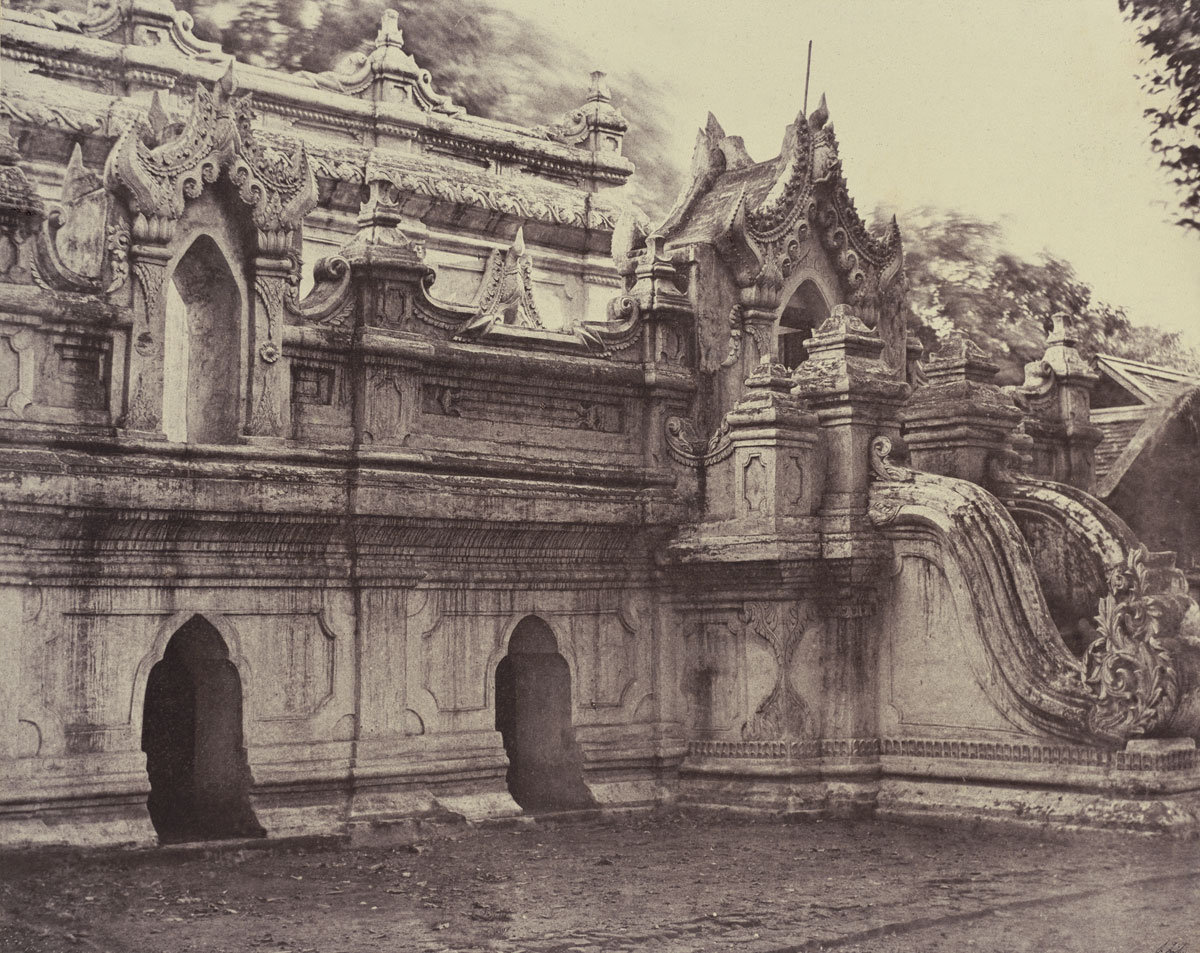
Linnaeus Tripe (British, 1822-1902) 'Amerapoora: Corner of Mygabhoodee-tee Kyoung, September 1 - October 21, 1855' 1855


Linnaeus Tripe (British, 1822-1902)
Amerapoora: Corner of Mygabhoodee-tee Kyoung, September 1 – October 21, 1855
1855
27.3 × 34.4cm (10 3/4 × 13 1/2 in.)
Lent by The Metropolitan Museum of Art
Purchase, The Buddy Taub Foundation, Dennis A. Roach and Jill Roach, Directors, and Alfred Stieglitz Society Gifts, 2012
© The Metropolitan Museum of Art


Photograph by Linnaeus Tripe, from a portfolio of 120 prints, with a close view of the wood-carving at the corner of a kyaung (monastery) near where the British delegation was housed at Amarapura in Burma (Myanmar). Tripe wrote of this kyaung, ‘This small monastery, near the Residency, attracted much attention from the richness of its carving and the beauty of its situation’. The Burmese are highly skilled at wood-carving, creating designs of great beauty, intricacy and fluidity.
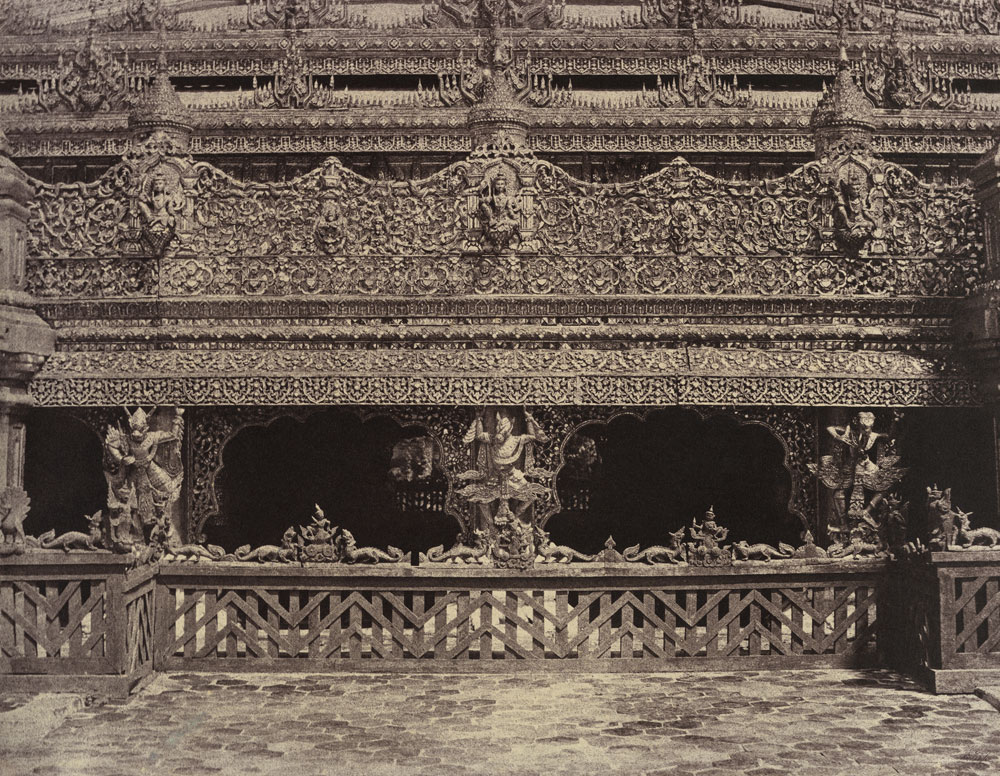
 

Linnaeus Tripe (British, 1822-1902) 'Amerapoora: Part of Balcony on the South Side of Maha-oung-meeay-liy-mhan Kyoung, September 1-October 21, 1855' 1855


Linnaeus Tripe (British, 1822-1902)
Amerapoora: Part of Balcony on the South Side of Maha-oung-meeay-liy-mhan Kyoung, September 1 – October 21, 1855
1855
26.9 × 34.7cm (10 5/8 × 13 5/8 in.)
Lent by The Metropolitan Museum of Art
Purchase, The Buddy Taub Foundation, Dennis A. Roach and Jill Roach, Directors, and Alfred Stieglitz Society Gifts, 2012
© The Metropolitan Museum of Art


Photograph by Linnaeus Tripe, from a portfolio of 120 prints, with a close-up detail of the wood-carved balcony of a kyaung (monastery) at Amarapura in Burma (Myanmar). Wood-carving is a living tradition in Burma, its artisans are supremely skilled in carving a rich repertoire of motifs from myths and legends and floral patterns into different types of woods. Tripe wrote of this scene, ‘This is open scroll-work, and very beautiful’.
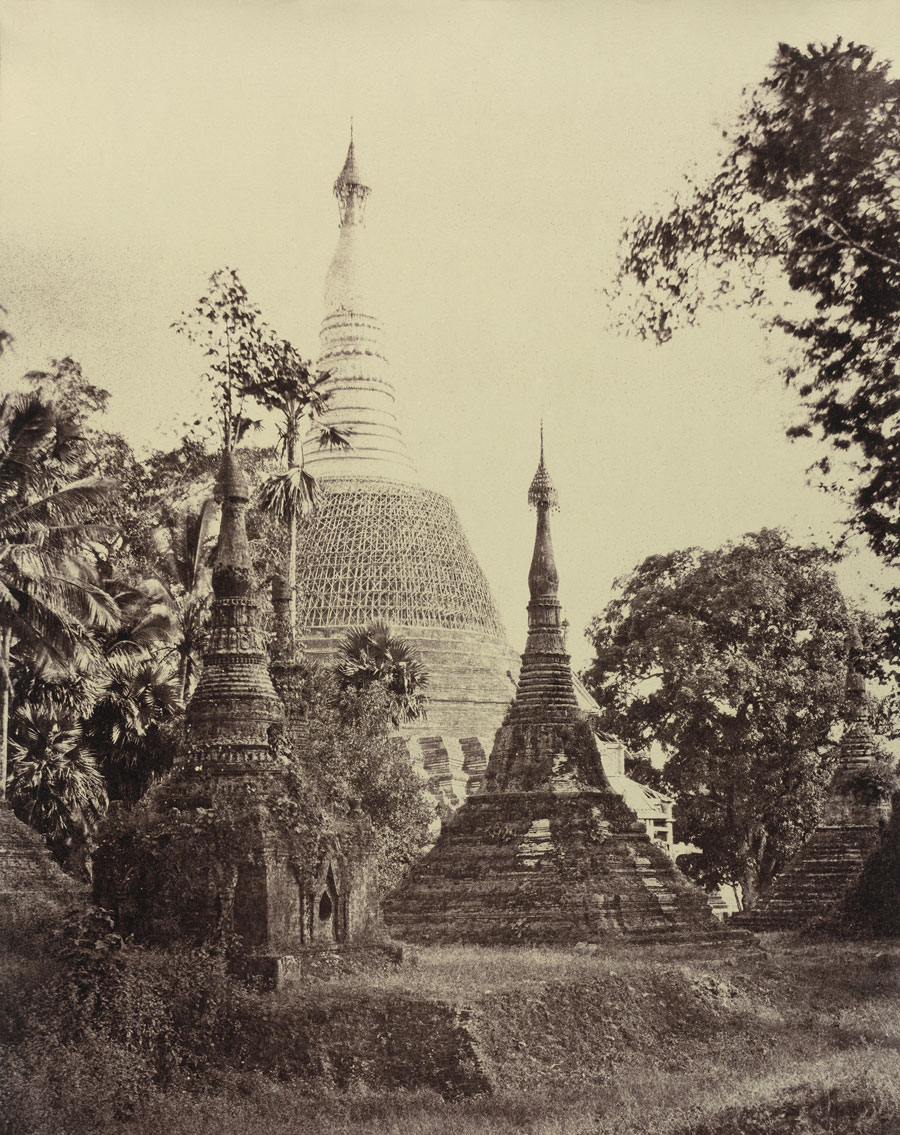
 

Linnaeus Tripe (British, 1822-1902) 'Rangoon: Near View of the Shwe Dagon Pagoda, November 1855' 1855


Linnaeus Tripe (British, 1822-1902)
Rangoon: Near View of the Shwe Dagon Pagoda, November 1855
1855
34.5 × 27.2cm (13 5/8 × 10 3/4 in.)
National Gallery of Art, Washington, Edward J. Lenkin Fund


The Shwedagon Pagoda, officially named Shwedagon Zedi Daw and also known in English as the Great Dagon Pagoda and the Golden Pagoda, is a gilded pagoda and stupa 99 metres (325 ft) in height[citation needed] that is located in Yangon, Burma. The pagoda lies to the west of Kandawgyi Lake, on Singuttara Hill, thus dominating the skyline of the city. It is the most sacred Buddhist pagoda for the Burmese people. According to legend, the Shwedagon Pagoda has existed for more than 2,600 years, making it the oldest historical pagoda in Burma and the world. According to some historians and archaeologists, however, the pagoda was built by the Mon people between the 6th and 10th centuries AD.
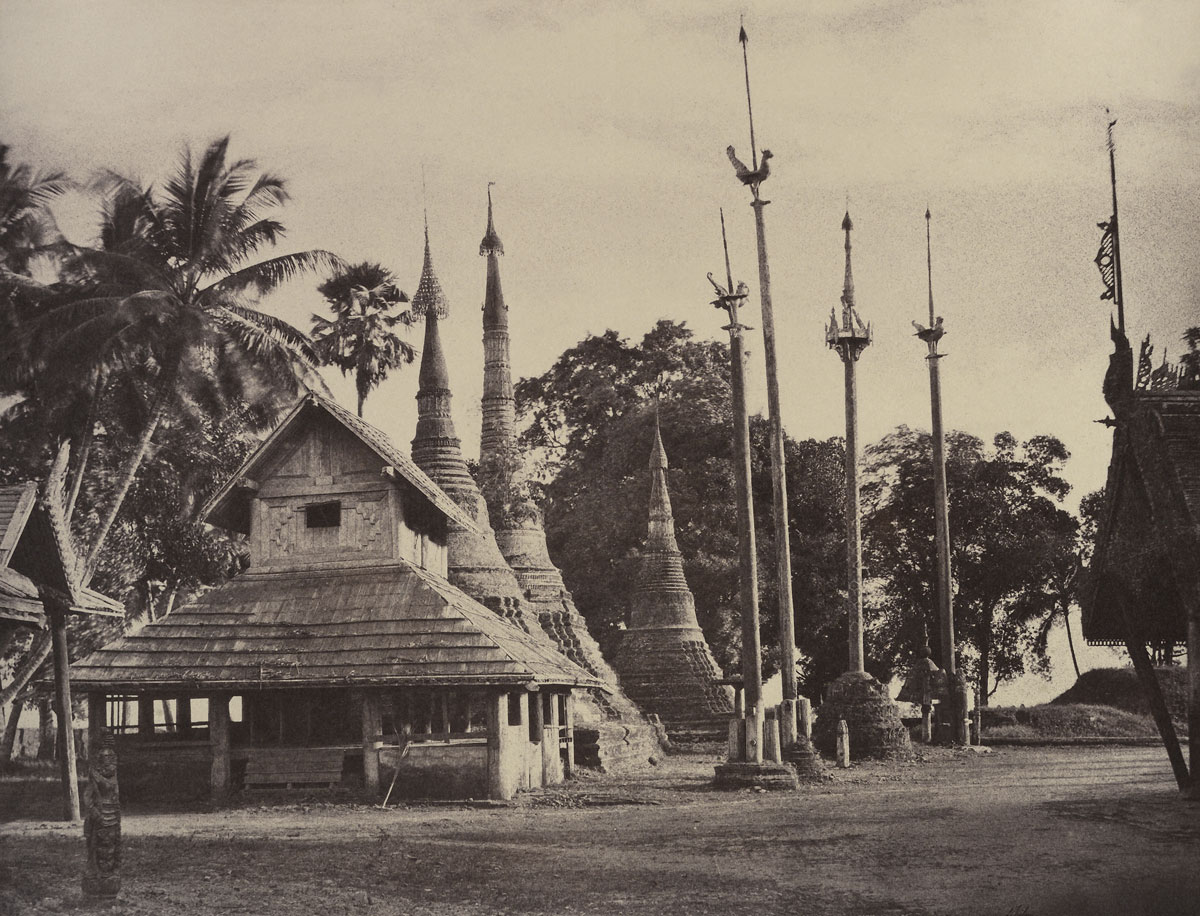
 

Linnaeus Tripe (British, 1822-1902) 'Rangoon: Henzas on the East Side of the Shwe Dagon Pagoda, November 1855' 1855


Linnaeus Tripe (British, 1822-1902)
Rangoon: Henzas on the East Side of the Shwe Dagon Pagoda, November 1855
1855
26.1 × 34.3cm (10 1/4 × 13 1/2 in.)
Lent by The Metropolitan Museum of Art
Purchase, The Buddy Taub Foundation, Dennis A. Roach and Jill Roach, Directors, and Alfred Stieglitz Society Gifts, 2012
© The Metropolitan Museum of Art


Photograph by Linnaeus Tripe, from a portfolio of 120 prints, with a view of the hinthas or hamsas (mythical birds) atop sacred flagstaffs or dagun-daings of the Shwe Dagon Pagoda at Rangoon (Yangon) in Burma (Myanmar). Linnaeus Tripe wrote, ‘These, painted in bright colours diapered with gold and silver (traces of which still remain) must have had a very gay appearance. Henza [hintha] staves are attached to all pagodas’. The hintha bird (or hamsa in Sanskrit) features in many Jataka tales: the stories which narrate details of the Buddha’s previous lives.
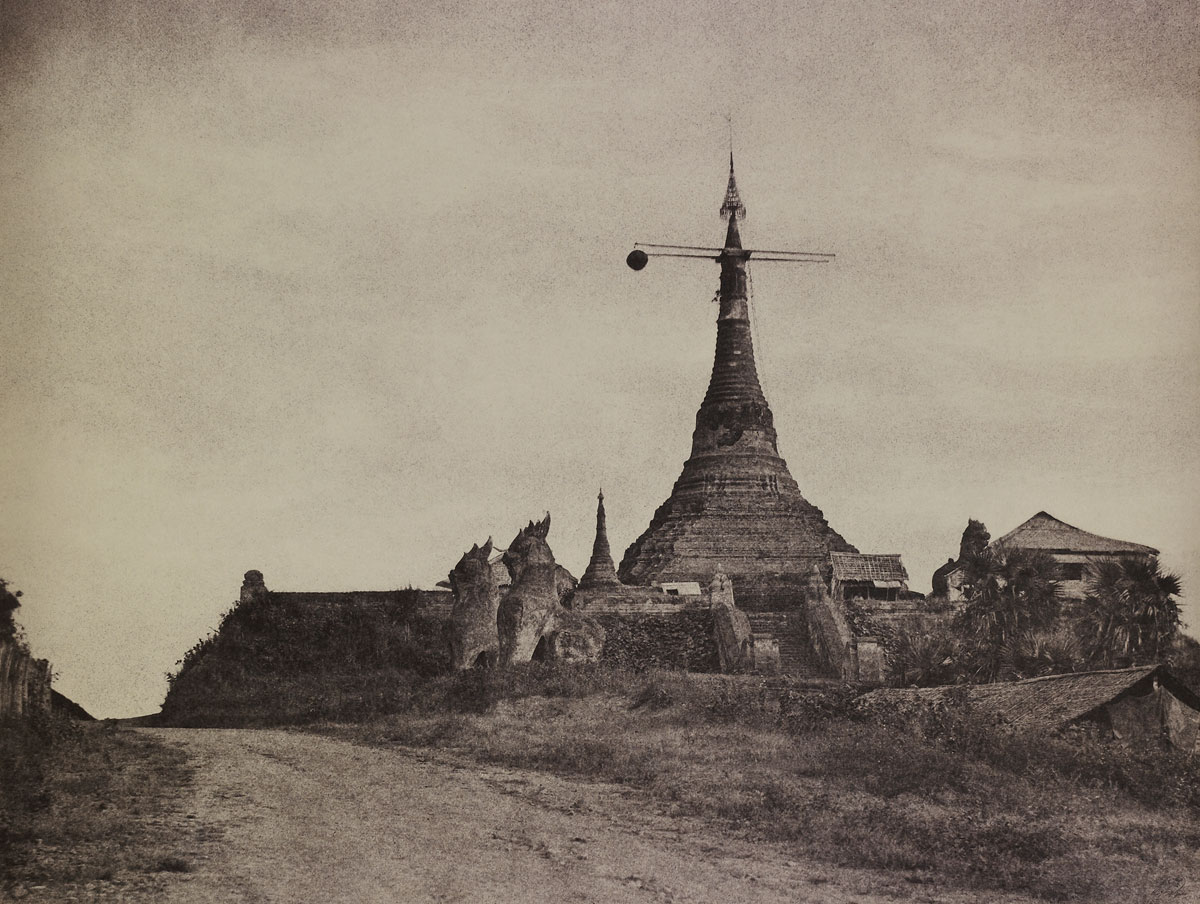
 

Linnaeus Tripe (British, 1822-1902) 'Rangoon: Signal Pagoda, November 1855' 1855


Linnaeus Tripe (British, 1822-1902)
Rangoon: Signal Pagoda, November 1855
1855
26 × 34.6cm (10 1/4 × 13 5/8 in.)
Private Collection, Courtesy Hans P. Kraus Jr.


Photograph by Linnaeus Tripe, from a portfolio of 120 prints, showing the Signal Pagoda at Rangoon (Yangon) in Burma (Myanmar). In this view of the pagoda the chinthes or leogryphs (Burmese temple guardian figures) can be glimpsed facing the roadway at the entrance. The circular object hanging from a yard at the top of the pagoda is presumably a time ball. Tripe wrote, ‘From this a very extended view of the town and river can be had. It is used as a signal station because of the distance at which a ship coming up the river can be descried. It is also known as Sale’s Pagoda’. The Sale referred to is Sir Robert Henry Sale, who was stationed on the site with a picket during the First Anglo-Burmese War (1824-1826). Sale (1782-1845) was an army officer who had served in India, and then played an active role in the capture of Rangoon as commander of the 13th. At the time of the mission’s visit the administration of the rapidly growing port was not well-developed. The pilot system did not work well, there was no pilot service and pilotage was left to private initiative, there were rival bands of pilots with their own pilot-brigs. They later combined to form the Pilot Club and this club fixed the rate of pilotage by agreement with the owners and captains of the vessels. The signalling station was at the Sale Barracks where the pagoda known as Sale’s Pagoda was used for the purpose and thenceforth began to be called the Signal Pagoda of Rangoon.
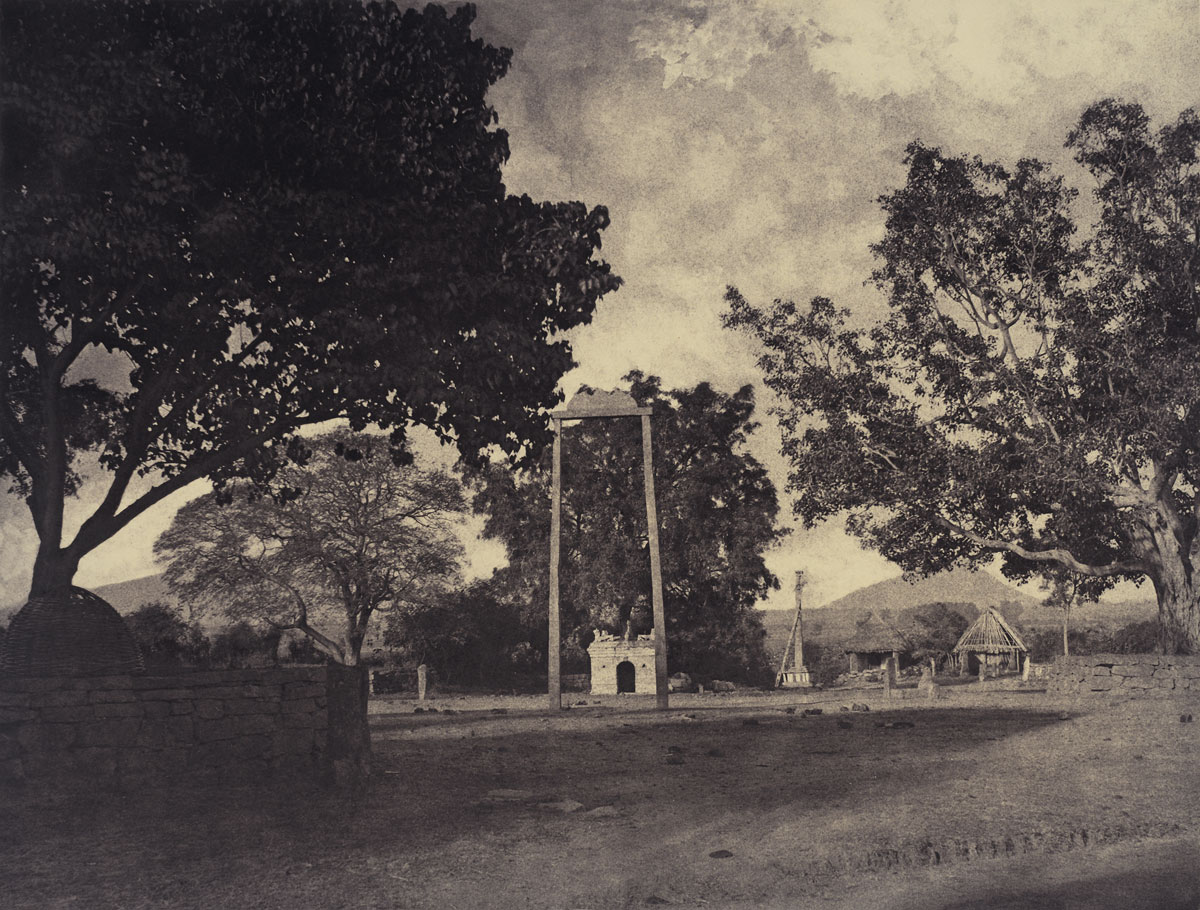
 

Linnaeus Tripe (British, 1822-1902) 'Beekinpully: Permaul's Swing at Mariammah Covil, December 1857 - January 1858'


Linnaeus Tripe (British, 1822-1902)
Beekinpully: Permaul’s Swing at Mariammah Covil, December 1857 – January 1858
c. 1857-1858
26 × 35.6cm (10 1/4 × 14 in.)
Collection of Charles Isaacs and Carol Nigro
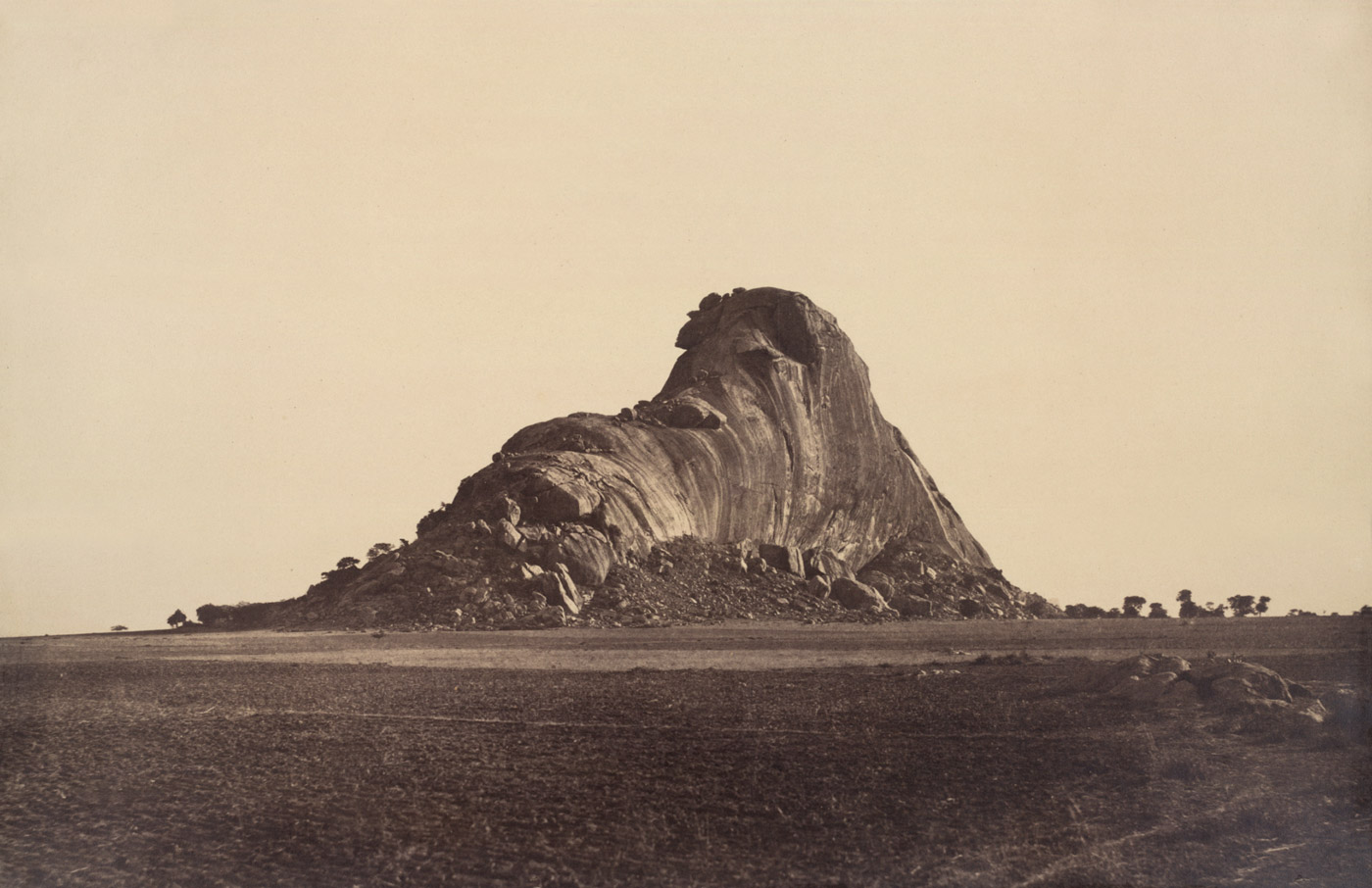
 

Linnaeus Tripe (British, 1822-1902) 'Between Chittumputty and Teramboor: Elephant Rock, End View, January-February 1858' 1858


Linnaeus Tripe (British, 1822-1902)
Between Chittumputty and Teramboor: Elephant Rock, End View, January – February 1858
1858
23.8 × 36.8cm (9 3/8 × 14 1/2 in.)
The British Library, London


This photograph of the Elephant Rock near Madurai in Tamilnadu, is part of a collection entitled Photographic Views in Madurai (Madras, 1858) and was taken by Linnaeus Tripe in 1858. It shows a general view of ‘an enormous mass of granite or sienite situated to the north of the town of Madura, altogether isolated from the neighbouring hills, and when viewed from the S.E. or S.W. bearing a strong resemblance to a couchant elephant, with its trunk extended in front… The rock is about 11/4 miles long; and 250 feet high, measuring to the top of the elephant’s head.’
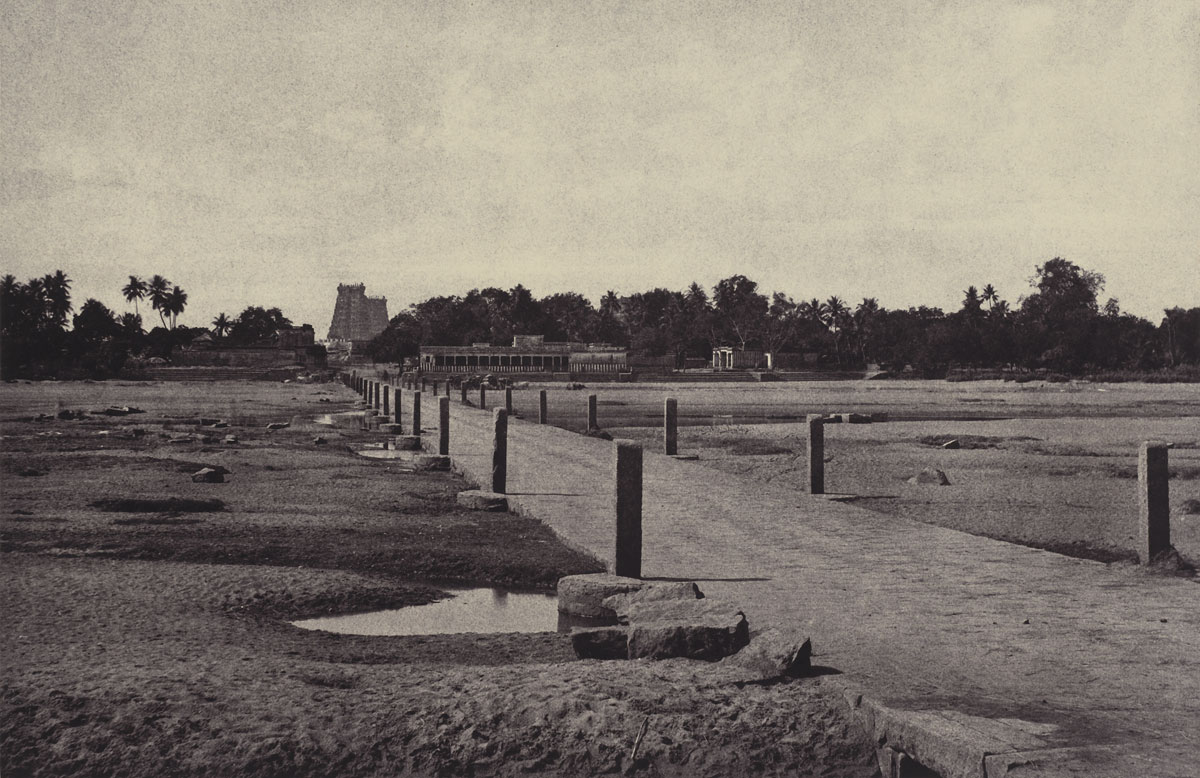
 

Linnaeus Tripe (British, 1822-1902) 'Madura: The Vygay River, with Causeway, across to Madura, January – February 1858' 1858


Linnaeus Tripe (British, 1822-1902)
Madura: The Vygay River, with Causeway, across to Madura, January – February 1858
1858
23.1 x 35.4cm (9 1/8 x 14 in.)
National Gallery of Art, Washington
The Carolyn Brody Fund and Horace W. Goldsmith Foundation through Robert and Joyce Menschel
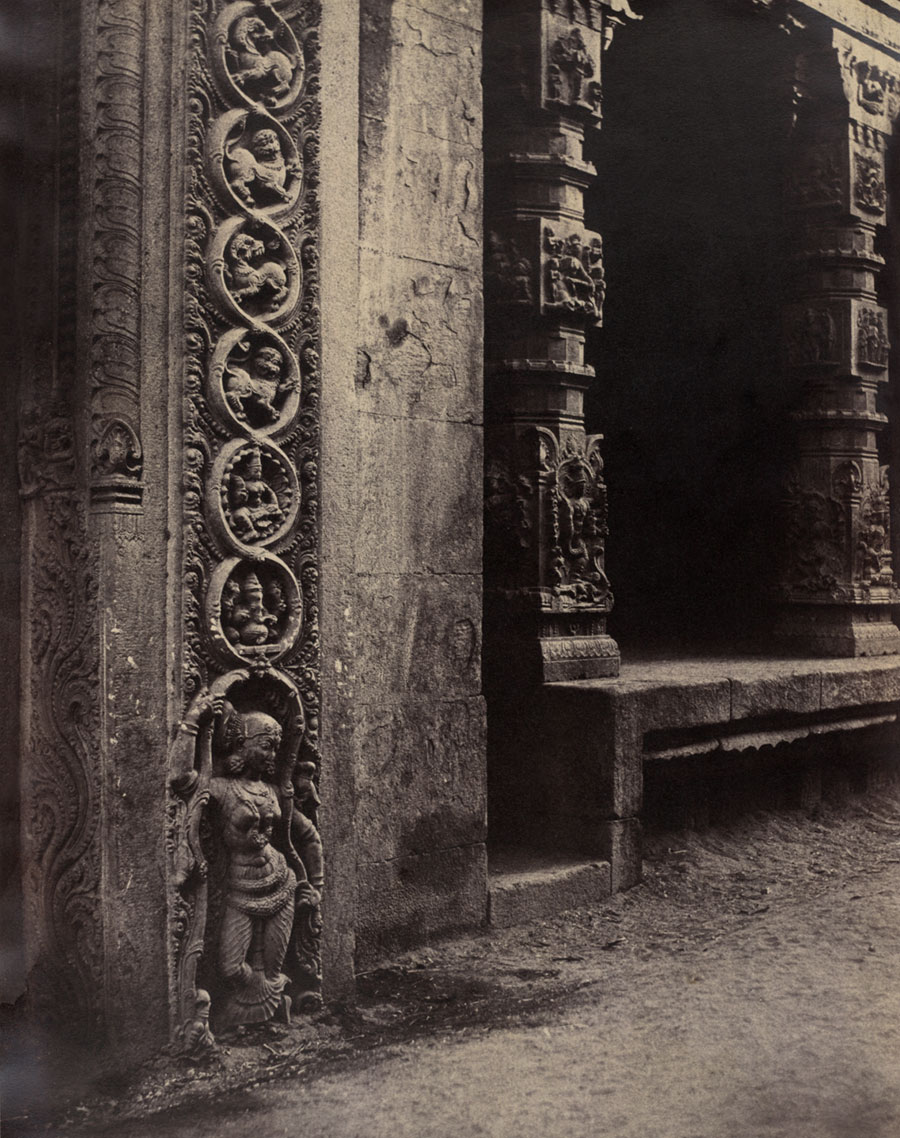
 

Linnaeus Tripe (British, 1822-1902) 'Madura: Pillars in the Recessed Portico in the Raya Gopurum, with the Base of One of the Four Sculpted Monoliths, January - February 1858' 1858


Linnaeus Tripe (British, 1822-1902)
Madura: Pillars in the Recessed Portico in the Raya Gopurum, with the Base of One of the Four Sculpted Monoliths, January – February 1858
1858
35.6 × 28.1cm (14 × 11 in.)
The British Library, London


This photograph of an architectural detail from the Meenakshi Sundareshvara temple, Madurai, Tamilnadu, is part of a collection entitled ‘Photographic Views in Madurai’ (Madras, 1858) and was taken by Linnaeus Tripe in 1858. The Meenakshi Sundareshvara Temple is dedicated to Shiva and his consort Meenakshi, an ancient local divinity. The construction of this imposing temple-town was made possible by the magnificence of Tirumala Nayak (1623-1659). The rectangular precinct covers 6 hectares and has 11 huge towers and 4 entrance gopurams. Inside this enclosure there are columned mandapas, tanks, shrines and the two temples of Shiva and Meenakshi. East of the temple Tirumala Nayak began the construction of a new gopuram which was never completed. The most remarkable feature are 4 monolithic pillars. This view shows the base of one of the monoliths together with the elaborately carved pillars in the recessed north portico of the Raja Gopuram.
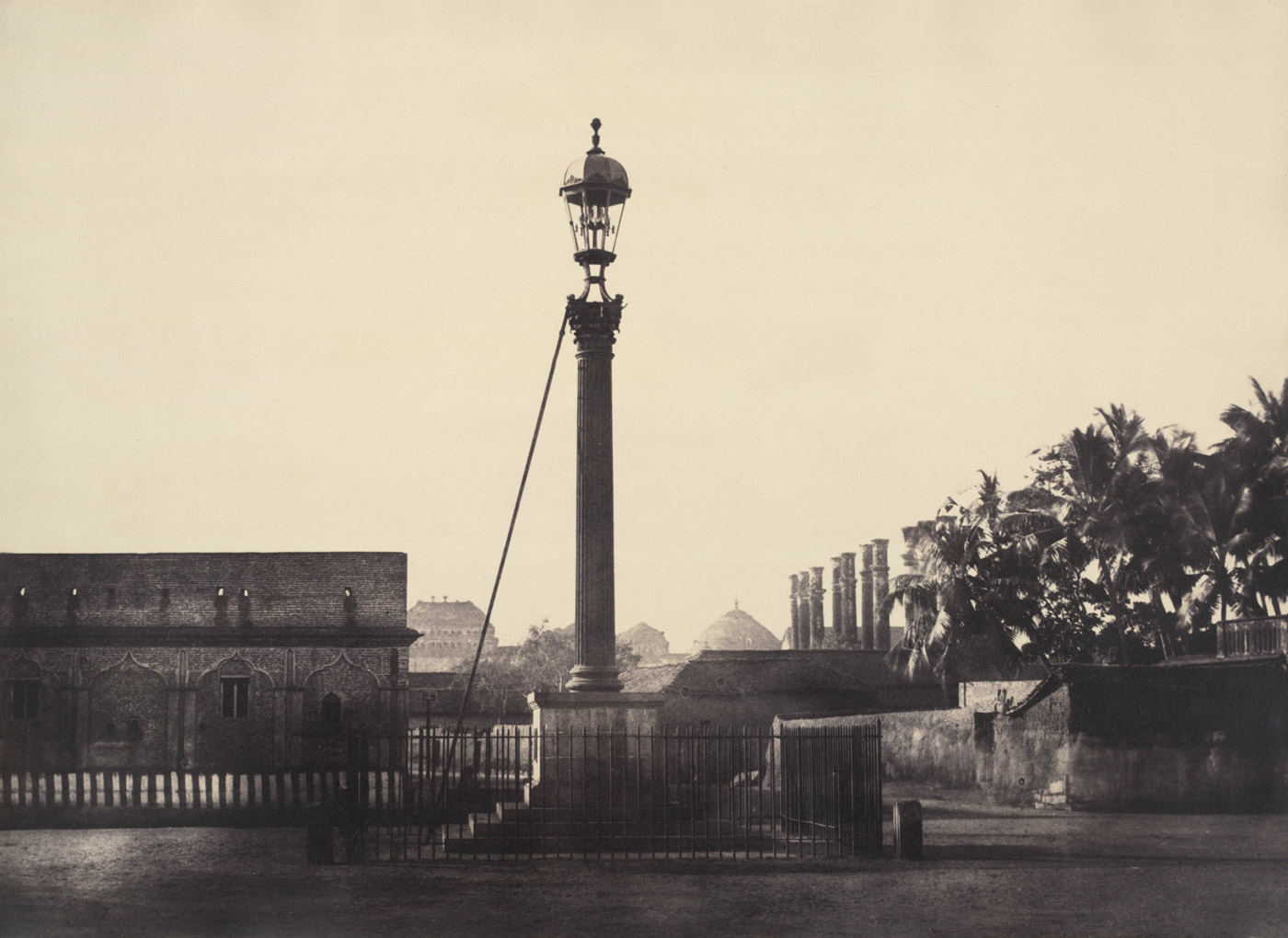
 

Linnaeus Tripe (British, 1822-1902) 'Madura: The Blackburn Testimonial, January - February 1858' 1858


Linnaeus Tripe (British, 1822-1902)
Madura: The Blackburn Testimonial, January – February 1858
1858
25.3 × 35.1cm (10 × 13 7/8 in.)
The British Library, London
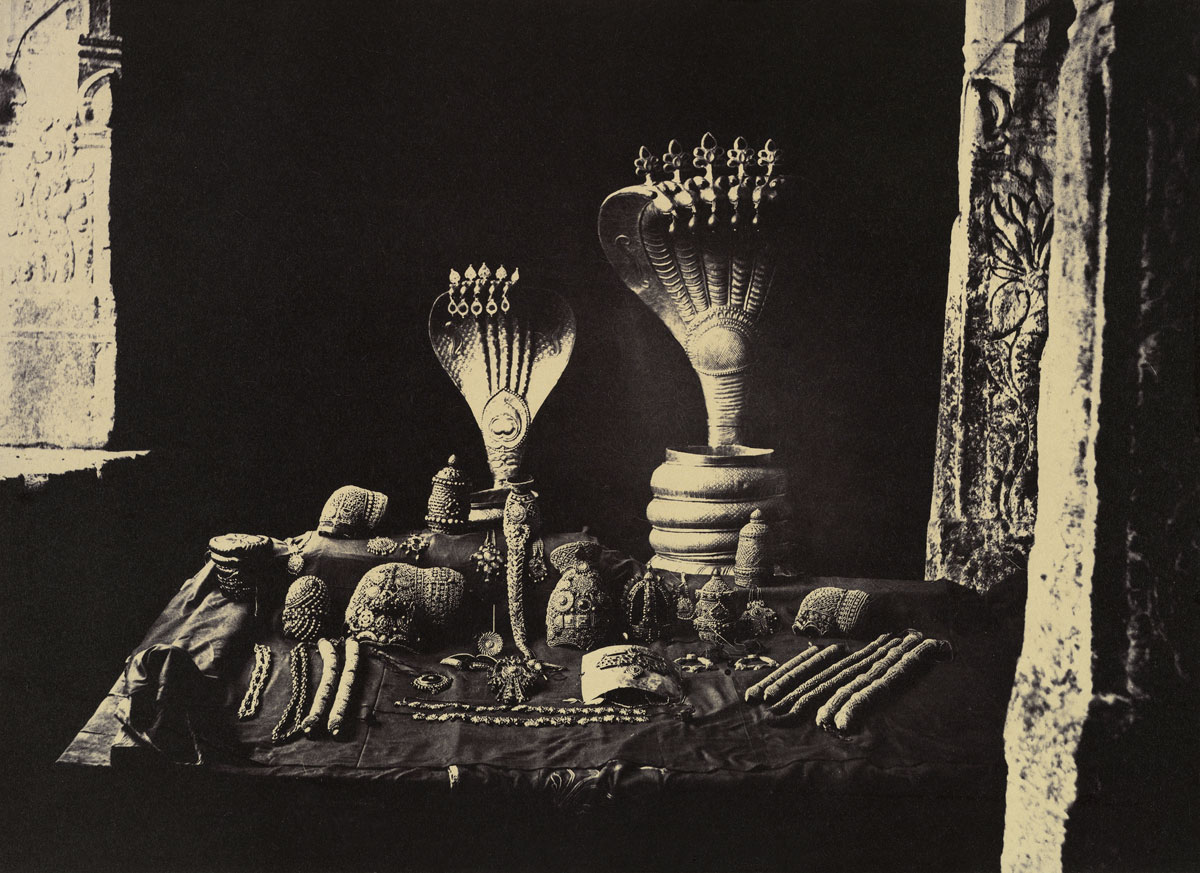
 

Linnaeus Tripe (British, 1822-1902) 'Madura: The Great Pagoda Jewels, January - February 1858' 1858


Linnaeus Tripe (British, 1822-1902)
Madura: The Great Pagoda Jewels, January – February 1858
1858
21.9 × 30.1cm (8 5/8 × 11 7/8 in.)
Lent by The Metropolitan Museum of Art, Gilman Collection
Purchase, Cynthia Hazen Polsky Gift, 2005
© The Metropolitan Museum of Art


This photograph of the temple jewels of the Meenakshi Sundareshvara temple, Madurai, Tamilnadu, is part of a collection entitled Photographic Views in Madurai (Madras, 1858) and was taken by Linnaeus Tripe in 1858. The Meenakshi Sundareshvara Temple is dedicated to Shiva and his consort Meenakshi, the fish-eyed goddess Parvati. The construction of this imposing temple-town was made possible by the magnificence of Tirumala Nayak (1623-1659). The rectangular precinct covers 6 hectares and has 11 huge towers and 4 entrance gopurams. Inside this enclosure there are columned mandapas, tanks, shrines and the two temples of Shiva and Meenakshi. This is a collection of jewels and ornaments for use on festival occasions, including crowns, necklaces, gold and pearl pieces and naga images.
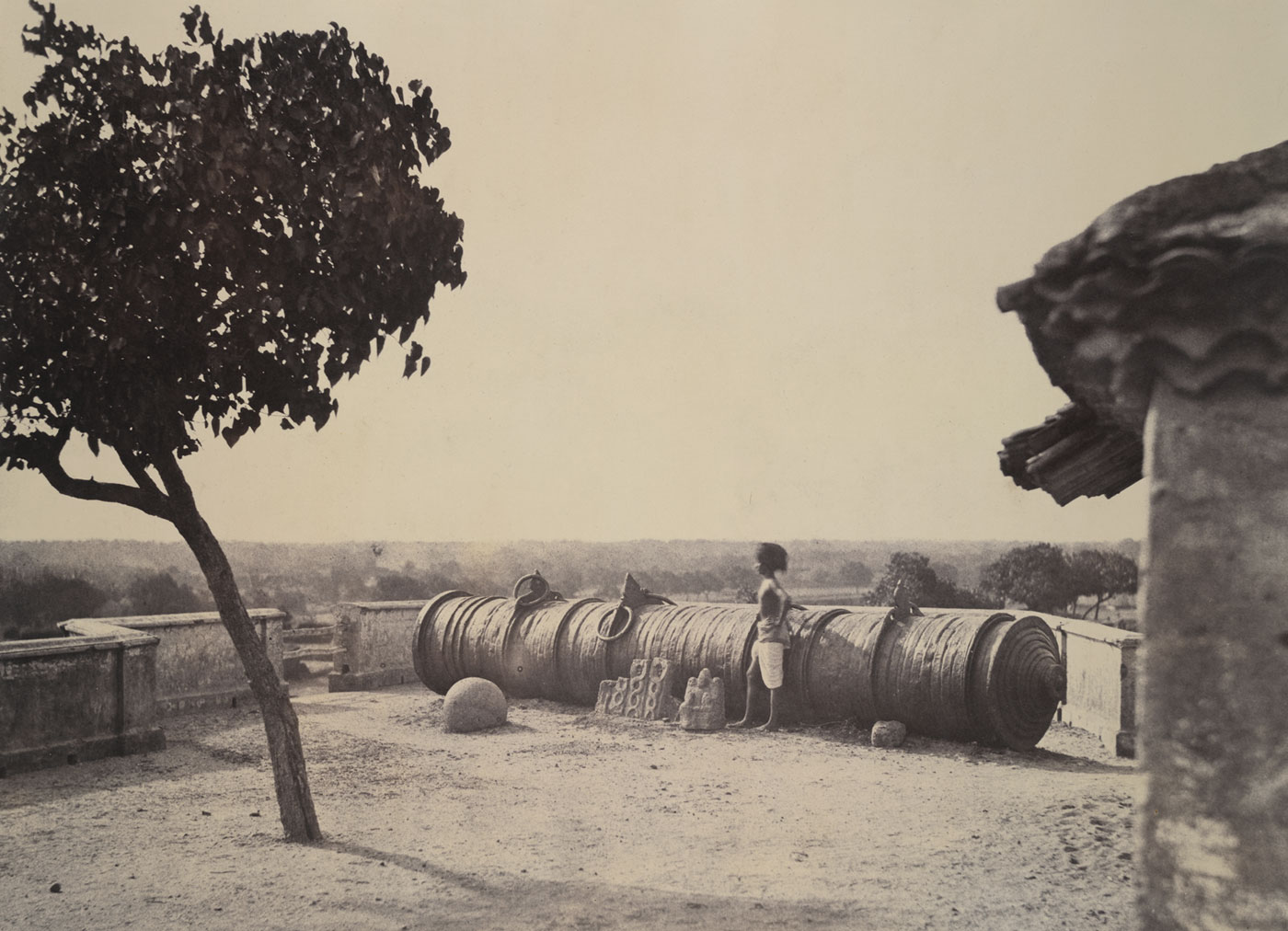
 

Linnaeus Tripe (British, 1822-1902) 'Tanjore: Wrought-Iron Gun on a Cavalier in the Fort, March - April 1858' 1858


Linnaeus Tripe (British, 1822-1902)
Tanjore: Wrought-Iron Gun on a Cavalier in the Fort, March – April 1858
1858
26.1 × 36.1 cm (10 1/4 × 14 1/4 in.)
The British Library, London


The term Cavalier has been adopted from the French as a term in fortification for a work of great height constructed in the interior of a fort, bastion or other defence, so as to fire over the main parapet without interfering with the fire of the latter. A greater volume of fire can thus be obtained, but the great height of the cavalier makes it an easy target for a besieger’s guns.
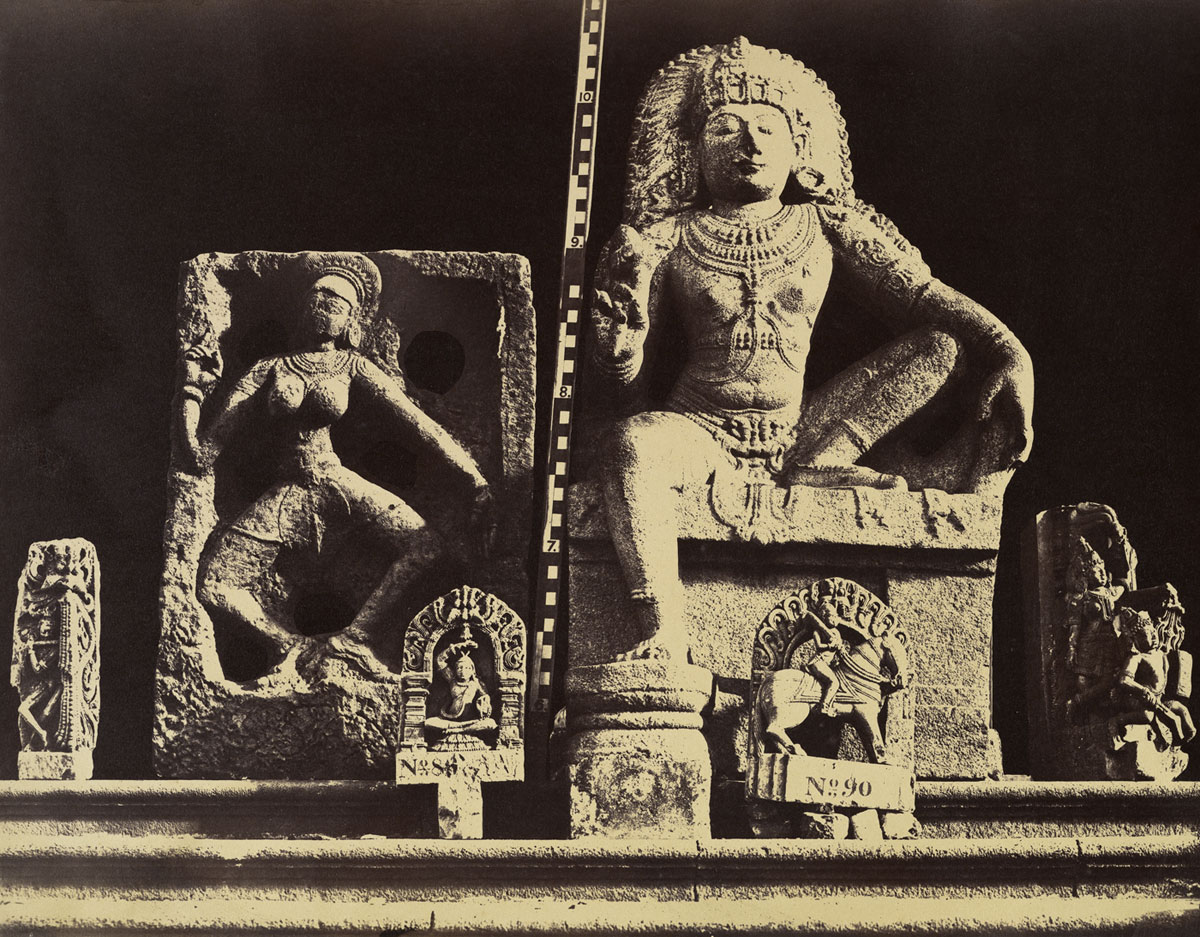
 

Linnaeus Tripe (British, 1822-1902) 'Central Museum Madras: Group 27, May - June 1858' 1858


Linnaeus Tripe (British, 1822-1902)
Central Museum Madras: Group 27, May – June 1858
1858
23.4 × 29.9cm (9 1/4 × 11 3/4 in.)
Lent by The Metropolitan Museum of Art
Purchase, Cynthia Hazen Polsky Gift and The Horace W. Goldsmith Foundation Gift, through Joyce and Robert Menschel, 1991
© The Metropolitan Museum of Art
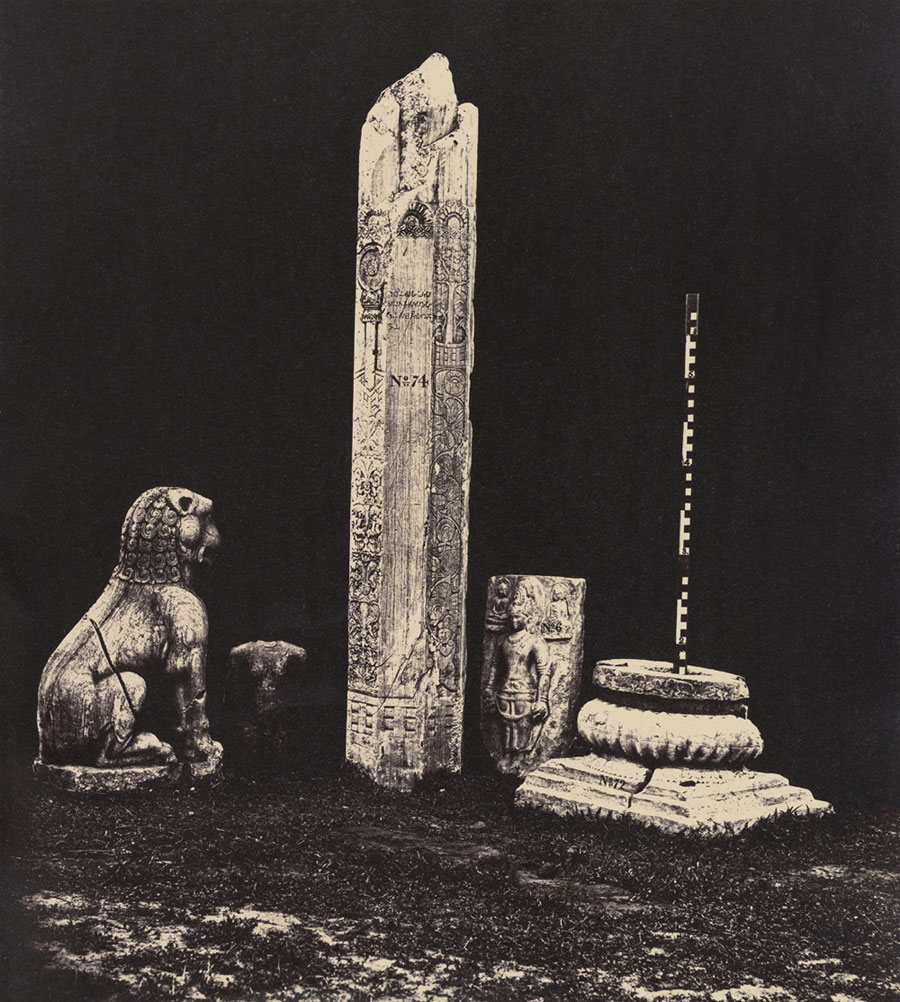
 

Linnaeus Tripe (British, 1822-1902) 'Elliot Marbles and Other Sculpture from the Central Museum Madras: Group 26, May - June 1858' 1858


Linnaeus Tripe (British, 1822-1902)
Elliot Marbles and Other Sculpture from the Central Museum Madras: Group 26, May – June 1858
1858
25.8 × 23.2cm (10 1/8 × 9 1/8 in.)
Lent by The Metropolitan Museum of Art, The Rubel Collection
Purchase, Lila Acheson Wallace and Richard and Ronay Menschel Gifts, 1997
© The Metropolitan Museum of Art


Amaravati Marbles

The Amaravati Sculptures, Amaravati Marbles or the Elliot Marbles are a series of monumental sculptures and inscriptions that once furnished the religious mound known as the Great Stupa at Amaravati. While some artefacts remain in situ, many are scattered in various museums across the world, with the two principal collections held at the Government Museum in Chennai and the British Museum in London.

The figurative sculptures are nearly all in relief, with many of the most crowded scenes illustrating some of the Jataka tales, a large body of literature with complicated and fanciful accounts of the previous lives of the Buddha. The collection in the museum in Chennai (formerly Madras) has a large number of sculptures in relief, which they have classified by four periods of activity starting in the second century BC and stretching to the second century AD. The first period covers the 100 years between 200 and 100 BC, the second period covers 200 years from 100 BC to AD 100, the third covers AD 100 to 150, and the fourth covers 150 to 200. Early interest in the stupa and its sculptures was in part because it was wrongly thought to contain early evidence of Christianity in India.

In 1845, Sir Walter Elliot of the Madras Civil Service explored the area around the stupa and excavated near the west gate of the railing, removing many sculptures to Madras (now Chennai). They were kept outside the local college before being transported to the Madras Museum. At this time India was run by the East India Company and it was to that company that the curator of the museum appealed. The curator Dr Edward Balfour was concerned that the artefacts were deteriorating so in 1853 he started to raise a case for them to be moved. By 1855 he had arranged for both photographs and drawings to be made of the artefacts now called the Elliot Marbles. 75 photographs taken by Captain Linnaeus Tripe are now in the British Library.

Text from the Wikipedia website


The photographs are of variable quality, and the volume contains a short preface explaining the reasons for this: ‘These photographs were taken by Captain tripe in the months of May and June, after a wearying tour through the Trichinopoly, Madura, and Tanjore Districts, during the preceding four months and a half. Many of the subjects being heavy masses, and therefore not easily to be transported into the open air, were taken as they were lying, in the rooms of the Museum. To enable him to attempt them at all he was obliged to use a dry collodion process, with which he had only recently made acquaintance. He would point to both these circumstances to account for the unsatisfactory pictures he has made of some of the Sculptures. In printing from the above mentioned negatives, their density, though apparently in their favor, increased the liability to yellowness in the lights, so much complained of in toning a print on albumenised paper with gold…'”

Linnaeus Tripe, Photographs of the Elliot Marbles; and other subjects; in the Central Museum Madras (Madras, 1858-59)


National Gallery of Art
National Mall between 3rd and 7th Streets
Constitution Avenue NW, Washington

Opening hours:
Daily 10.00am – 5.00pm
National Gallery of Art website

LIKE ART BLART ON FACEBOOK

Back to top

Exhibition: ‘Captain Linnaeus Tripe: Photographer of India and Burma, 1852-1860’ at the National Gallery of Art, Washington Part 1

Exhibition dates: 21 September 2014 – 4th January 2015


Linnaeus Tripe (British, 1822-1902) 'Gun Wharf – Devonport' 1852-1854


Linnaeus Tripe (British, 1822-1902)
Gun Wharf – Devonport
1852-1854
23.1 × 33cm (9 1/8 × 13 in.)
Wilson Centre for Photography, London


To my mind, Captain Linnaeus Tripe is one of the best of the Victorian photographers.

So early on in the history of photography, for such a short period of time (much like Julia Margaret Cameron in this regard), Tripe’s photographs are so much more than just his foresight in recognising that photography could be an effective tool for conveying information about unknown cultures and regions. As noted, “Tripe’s schooling as a surveyor, where the choice of viewpoint and careful attention to visual details were essential, gave his photographs their distinctive aesthetic rigour.” But it is more than just tools and trade. There is that indefinable magic of a master artist.

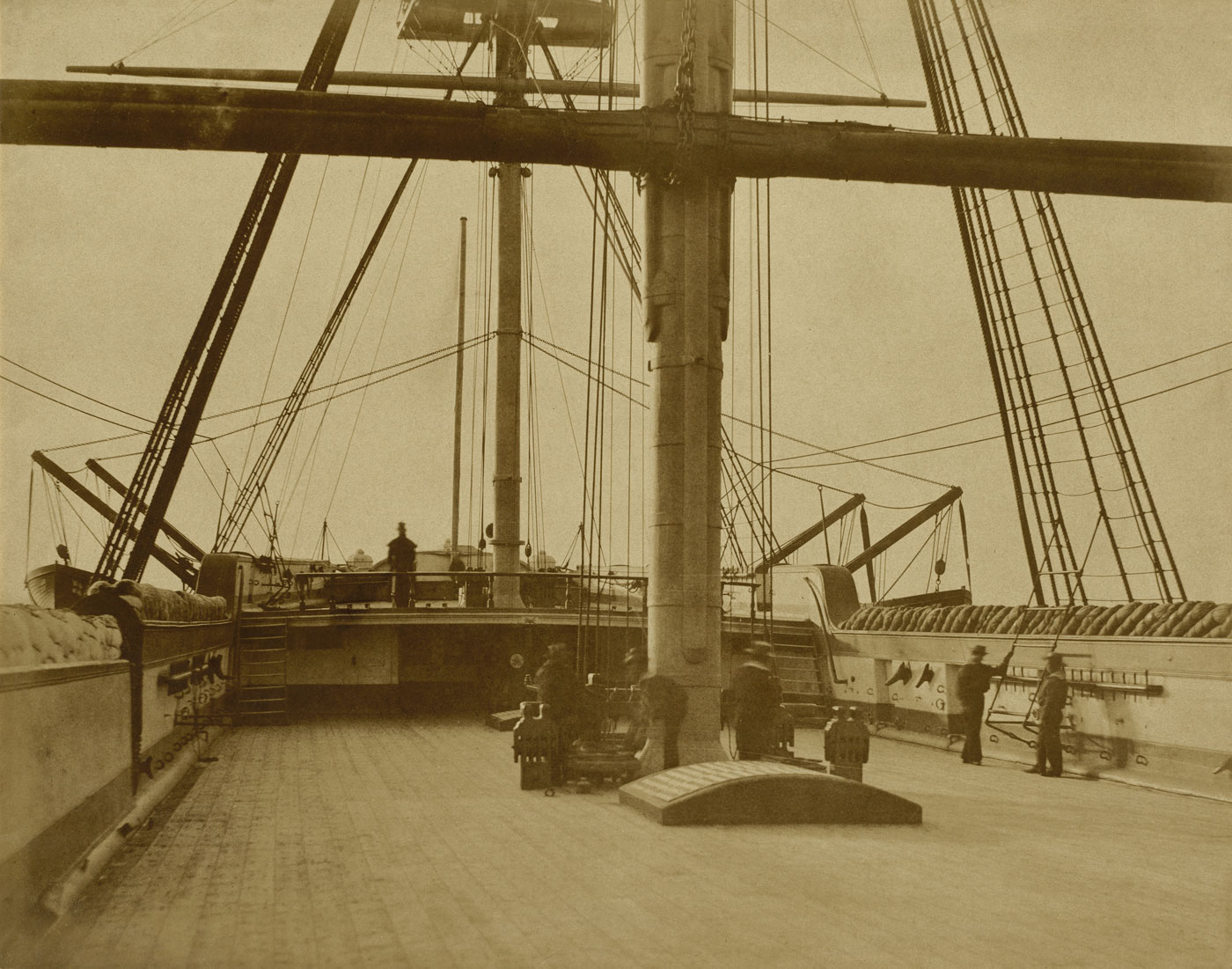
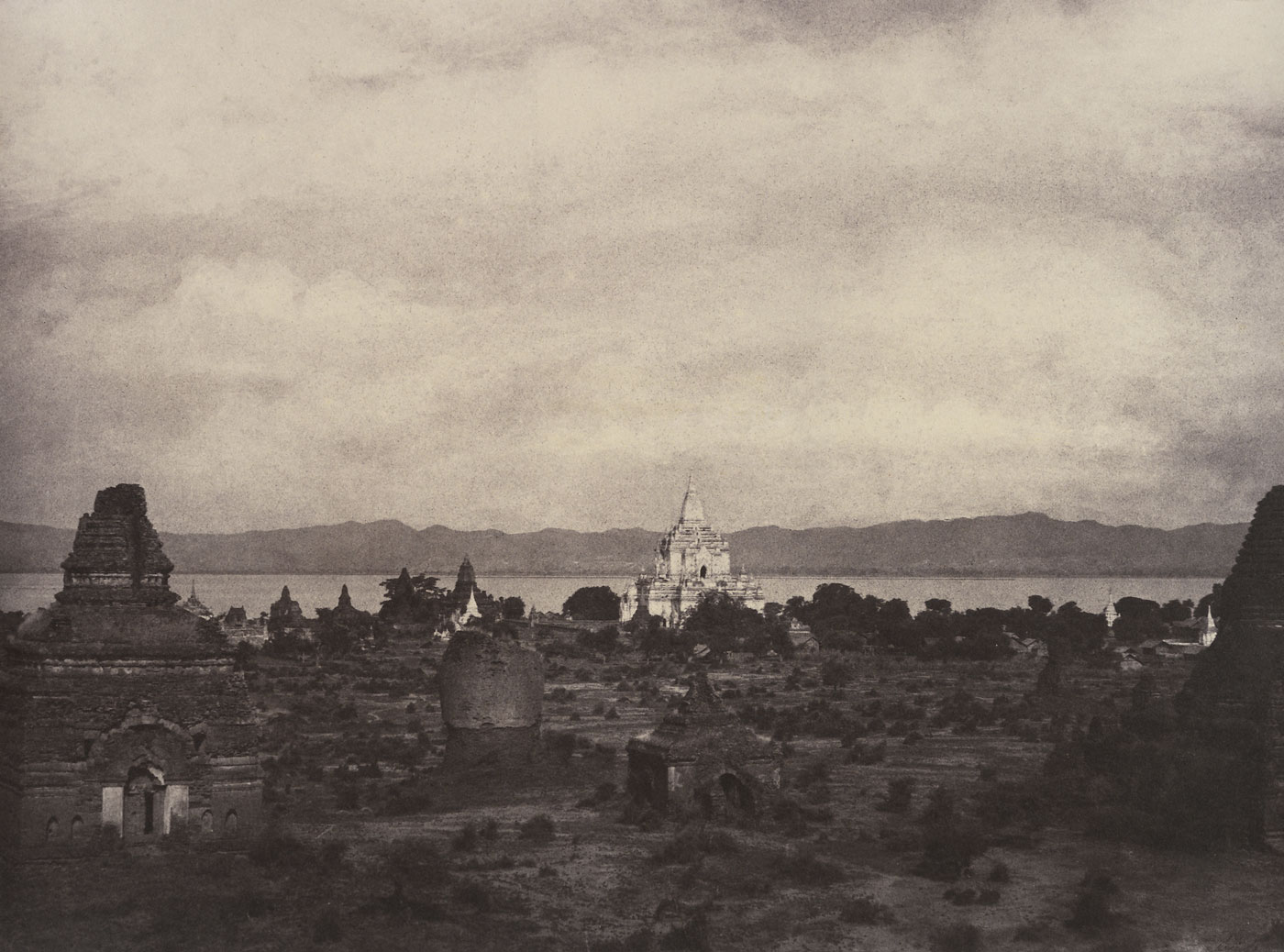
You only have to feel the impressive space of the open deck of Quarterdeck of HMS “Impregnable” (1852-1854, below) with that pendulous cross-beam pressing down from on high or understand the light in Pugahm Myo: Distant View of Gauda-palen Pagoda, August 20-24, 1855 (below) – how gorgeous is that image – and observe the subtleties of composition in seemingly unprepossessing vistas like Tsagain Myo: View near the Irrawadi River, August 29-30, 1855 and Tsagain Myo: A Roadway, August 29-30, 1855 (below) to understand what inspiration and insight this man had.

I could look at these images every day of my life and never get bored with them.

Dr Marcus Bunyan


Many thankx to the National Gallery of Art for allowing me to publish the photographs in the posting. Please click on the photographs for a larger version of the image. Most of the text underneath the images is from the British Library website


“The dynamic vision Tripe brought to these large, technically complex photographs and the lavish attention he paid to their execution indicate that his aims were artistic as well.”


Linnaeus Tripe (British, 1822-1902) 'Quarterdeck of HMS "Impregnable",' 1852-1854


Linnaeus Tripe (British, 1822-1902)
Quarterdeck of HMS “Impregnable”
1852-1854
27 x 34.8cm (10 5/8 x 13 3/4 in.)
National Gallery of Art, Washington
The Sarah and William L Walton Fund, Diana and Mallory Walker Fund, and The Horace W. Goldsmith Foundation through Robert and Joyce Menschel


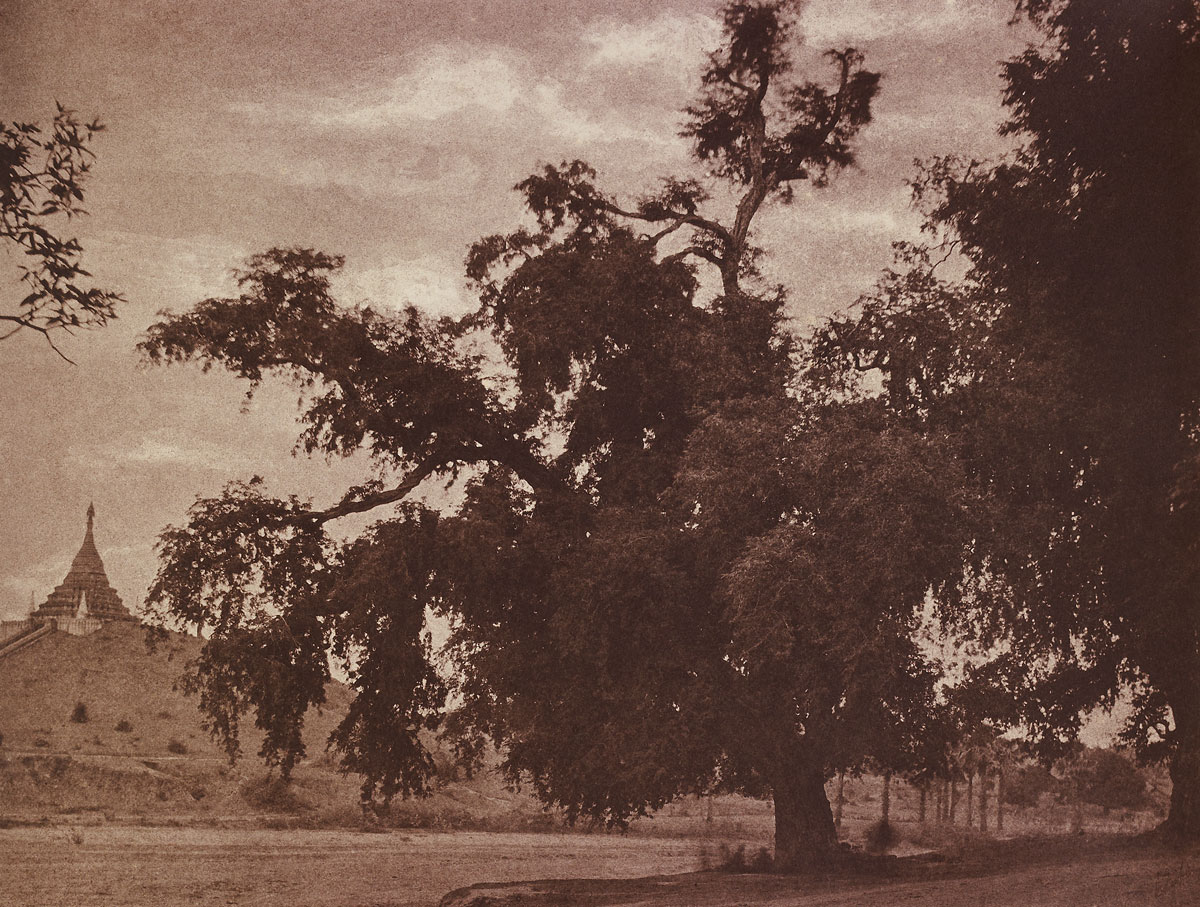
Linnaeus Tripe (British, 1822-1902) 'Ye-nan-gyoung: Tamarind Tree, August 14-16, 1855' 1855


Linnaeus Tripe (British, 1822-1902)
Ye-nan-gyoung: Tamarind Tree, August 14-16, 1855
1855
26.3 × 34.7cm (10 3/8 × 13 5/8 in.)
Courtesy Robert Hershkowitz, Charles Isaacs, Hans P. Kraus Jr.


Photograph by Linnaeus Tripe of a tamarind tree, with a pagoda on the hillside in the background, at Yenangyaung in Burma (Myanmar), from a portfolio of 120 prints. Tripe was the official photographer attached to a British diplomatic mission to King Mindon Min of Burma in 1855. This followed the British annexation of Pegu after the Second Anglo-Burmese War in 1852. Aside from official duties, the mission was instructed to gather information regarding the country and its people. Tripe’s architectural and topographical views are of great documentary importance as they are among the earliest surviving photographs of Burma. Yenangyaung was a town in west-central Myanmar on the Ayeyarwady (Irrawaddy), the centre of the most productive oil-fields in the country. Tamarind is commonly used in Burmese cuisine and the tamarind tree is widespread in Burma. It is also used as raw material in joss-stick production.


Linnaeus Tripe (British, 1822-1902) 'Pugahm Myo: Distant View of Gauda-palen Pagoda, August 20-24, 1855' 1855


Linnaeus Tripe (British, 1822-1902)
Pugahm Myo: Distant View of Gauda-palen Pagoda, August 20-24, 1855
1855
25.3 × 34.1cm (10 × 13 3/8 in.)
Lent by The Metropolitan Museum of Art
Purchase, The Buddy Taub Foundation, Dennis A. Roach and Jill Roach, Directors, and Alfred Stieglitz Society Gifts, 2012
© The Metropolitan Museum of Art


Photograph by Linnaeus Tripe with a distant view of the Gawdawpalin temple in the Pagan (Bagan) region of Burma (Myanmar), from a portfolio of 120 prints. With this portfolio of architectural and topographical views, Tripe, an officer from the Madras Infantry, created an early photographic record of Burma. The 1855 British Mission to Burma was instructed to persuade the Burmese king Mindon Min to accept the annexation of Pegu (Lower Burma) following the Anglo-Burmese War of 1852. ICapital of the first kingdom of Burma from the 11th to the 14th century, Pagan is one of the most important archaeological sites in South East Asia, with the remains of over 2000 stupas, temples and monasteries scattered over a 30 km radius. One of the most beautiful and graceful of Pagan’s temples, the Late Period Gawdawpalin or Throne of Obeisance was begun in the reign of Narapatisithu (1174-1211) and completed by Nadaungmya (ruled 1211-1234). Tripe wrote, “Taken from the top of Thapinyu. [That-byin-nu]. The ruins of all shapes and sizes seen in this view, give an idea of the manner in which they are scattered for about eight miles along the river [the Irrawaddy], to a depth of sometimes three miles.”


Linnaeus Tripe (British, 1822-1902) 'Pugahm Myo: Thapinyu Pagoda, August 20-24, 1855' 1855


Linnaeus Tripe (British, 1822-1902)
Pugahm Myo: Thapinyu Pagoda, August 20-24, 1855
1855
25.1 × 34.5cm (9 7/8 × 13 5/8 in.)
Lent by The Metropolitan Museum of Art
Purchase, The Buddy Taub Foundation, Dennis A. Roach and Jill Roach, Directors, and Alfred Stieglitz Society Gifts, 2012
© The Metropolitan Museum of Art


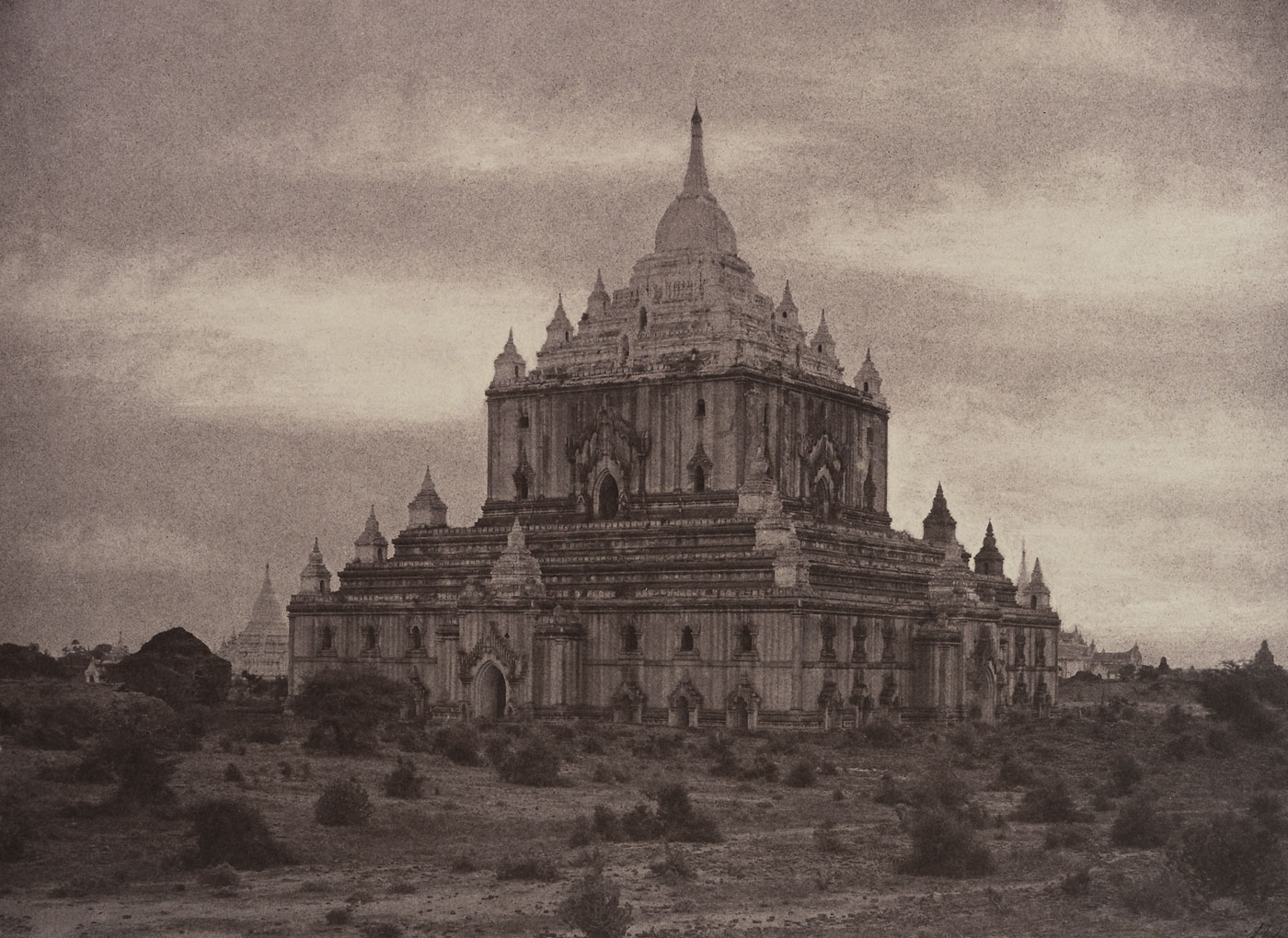
Photograph by Linnaeus Tripe of the That-byin-nu temple in the Pagan (Bagan) region of Burma (Myanmar), from a portfolio of 120 prints. With this portfolio of architectural and topographical views, Tripe, an officer from the Madras Infantry, created an early photographic record of Burma. The 1855 British Mission to Burma was instructed to persuade the Burmese king Mindon Min to accept the annexation of Pegu (Lower Burma) following the Anglo-Burmese War of 1852. It was also the intention of the British to collect information about the country. They travelled in Burma from August to early November 1855, stopping at various places to allow Linnaeus Tripe, the official photographer, and the mission’s artist, Colesworthy Grant, to perform their duties. Capital of the first kingdom of Burma from the 11th to the 14th century, Pagan is one of the most important archaeological sites in South East Asia, with the remains of over 2000 stupas, temples and monasteries scattered over a 30 km radius. Tripe wrote of the That-byin-nu, “Or ‘the Omniscient’. It is about 230 feet square, and 200 feet high; divided into two stages, each stage into two stories. An arched corridor passes round each stage, with arched doorways opening outwards; opposite those on the ground story are sitting figures of Gautama. In the centre of each side of the lower stage, is a projecting wing with a lofty doorway, opening into a vestibule: this forms a centre porch to the corridor, a colossal seated figure of Gautama facing it. The centre of the building is a solid mass of masonry terminated by a bulging pyramidal spire crowned by a tee. Its date is about 1100 A.D.” The temple is the tallest construction in Pagan, towering to 61 ms. Built by King Alaungsitthu in the middle of the 12th century, its square plan is the most elaborate of the middle period of building in Pagan (c.1120-1170).


Linnaeus Tripe (British, 1822-1902) 'Tsagain Myo: View near the Irrawadi River, August 29-30, 1855' 1855


Linnaeus Tripe (British, 1822-1902)
Tsagain Myo: View near the Irrawadi River, August 29-30, 1855
1855
26.2 × 34.2cm (10 1/4 × 13 1/2 in.)
National Gallery of Art, Washington, Stephen G. Stein Fund


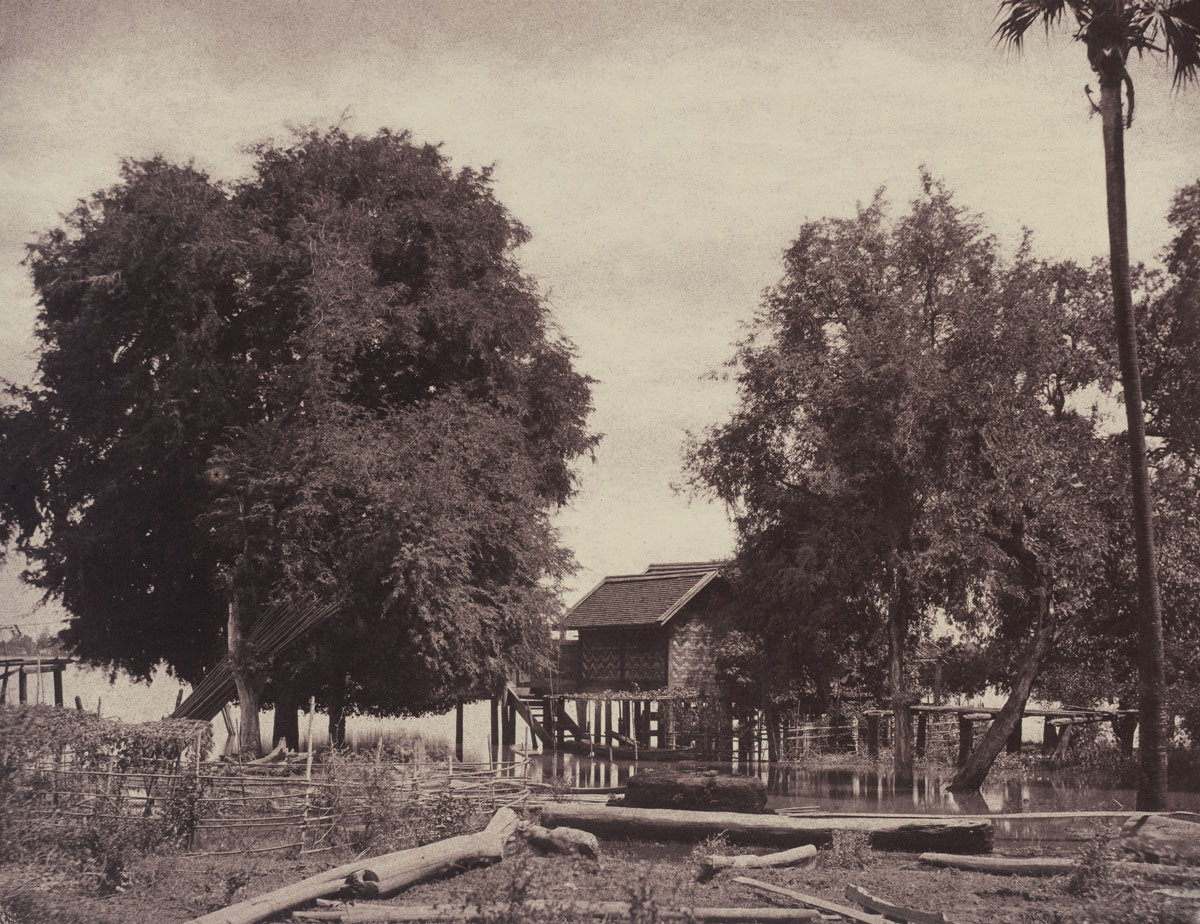
Photograph by Linnaeus Tripe of a view at Sagaing in Burma (Myanmar), from a portfolio of 120 prints. The view is on the bank of the Irrawaddy (Ayeyarwady), looking towards a building raised on piles over the water. Tripe wrote in the accompanying letterpress, “The Irrawadi at the time of the freshes, inundates the country from some distance from its banks; the necessity therefore of building on piles, as above seen is very evident.”


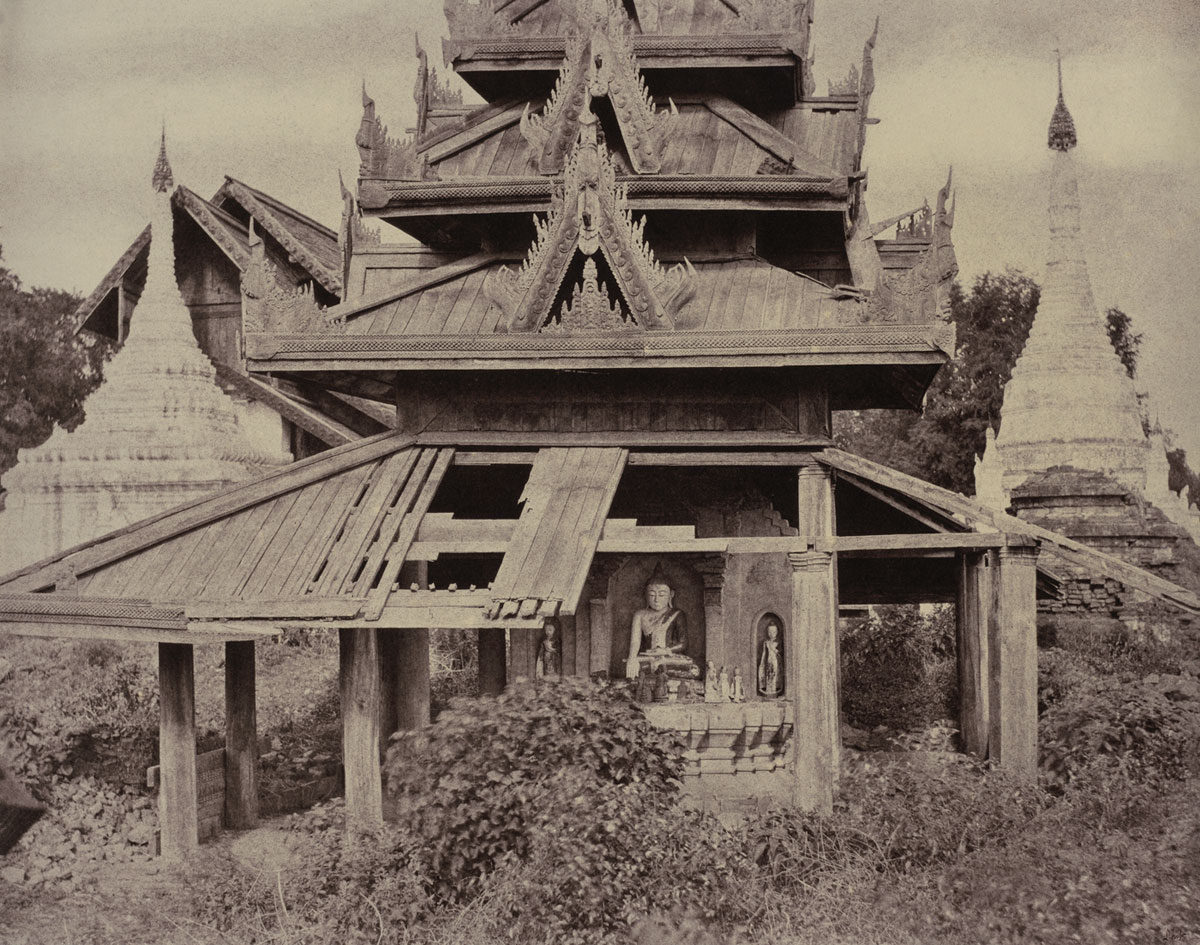
Linnaeus Tripe (British, 1822-1902) 'Tsagain Myo: Ruined Tazoung, August 29-30, 1855' 1855


Linnaeus Tripe (British, 1822-1902)
Tsagain Myo: Ruined Tazoung, August 29-30, 1855
1855
27 × 34.2cm (10 5/8 × 13 1/2 in.)
National Gallery of Art, Washington, Stephen G. Stein Fund


Innovative British photographer Captain Linnaeus Tripe (1822-1902) captured some of the earliest photographs of India and Burma (now Myanmar). In the first major traveling exhibition of his work, Captain Linnaeus Tripe: Photographer of India and Burma, 1852-1860 – on view at the National Gallery of Art, Washington, from September 21, 2014, through January 4, 2015 – approximately 60 photographs taken between 1854 and 1860 document the dramatic landscapes and the architecture of celebrated religious and secular sites in India and Burma, several of which are now destroyed.

“Tripe occupies a special place in the history of 19th-century photography for his foresight in recognising that photography could be an effective tool for conveying information about unknown cultures and regions,” said Earl A. Powell III, director, National Gallery of Art. “We are delighted to premiere this exhibition for visitors interested in photography, architecture, and history, and we hope that these captivating images provide inspiration to all.”

The exhibition is organised by the National Gallery of Art and The Metropolitan Museum of Art in association with the Victoria and Albert Museum. After Washington, the exhibition will be on view at The Metropolitan Museum of Art, New York, from February 24 through May 25, 2015, and the Victoria and Albert Museum, London, from June 24 through October 11, 2015.

Exhibition highlights

Arranged chronologically, the exhibition traces Tripe’s work from his earliest photographs made in England (1852-1854) during an extended leave from his first deployment in India, to those created on expeditions to the south Indian kingdom of Mysore (1854), to Burma (1855), and again to south India (1857-1858). His primary subjects range from archaeological sites and monuments, ancient and contemporary religious and secular buildings, to geological formations and landscape vistas.

Tripe first took photographs of English dockyards, ships undergoing repairs, and breakwaters – subjects of importance to the military. Photographs such as Quarterdeck of HMS “Impregnable” (1852-1854) distinguish his work from fellow amateurs, who preferred picturesque landscapes and genre scenes.

Tripe returned to India to work for the East India Company during a transitional time in the history of Great Britain, India, and Burma. By 1854 the company was the world’s largest and most powerful commercial enterprise as well as the virtual ruler of India and Burma. Administration of this vast area generated a need for collecting data, maps, surveys, drawings, and eventually photographs. Inspired by his employer’s interests, Tripe made a privately funded expedition to Mysore in south India, where he used his newly mastered photographic skills to document ancient sites and produced such images as Hullabede: Suli Munduppum from the Northeast (1854).

“Tripe’s training as a surveyor, where the choice of viewpoint and careful attention to visual details were essential, was key to the artistic success of his photographs,” said Sarah Greenough, senior curator and head, department of photographs, National Gallery of Art.

In 1855, Tripe and a topographic watercolour artist traveled along with a mission to Burma that sought to secure a peace treaty. During the expedition to Upper Burma, Tripe made more than 200 negatives, which he selected, retouched, printed, and compiled into portfolios, each with 120 original photographs, including Ye-nan-gyoung: Tamarind Tree (1855) and Pugahm Myo: Distant View of Gauda-palen Pagoda (1855).

The mission’s ultimate destination was the royal Burmese city of Amerapoora, where Tripe made nearly 100 negatives. For the presentation portfolio of this expedition, he arranged his photographs as if giving a tour of the city: from the residency compound, past a monumental Gautama – the most popular Burmese representation of the historical Buddha – to the western suburbs. Twenty-six original photographs from his Burma expedition will be on view.

Tripe was appointed photographer to the Madras Presidency in 1856, a British administrative subdivision covering much of southern India. He considered this a great honour and proposed that his work should be the “first attempt at illustrating in a complete and systematic manner the state of a country by means of photography.”

This project secured his status as the first to photograph extensively in south India – documenting the country’s holiest temples to the Hindu gods Shiva and Vishnu as well as efforts at modernisation by the British and the widespread influence of the East India Company. His work in south India generated more than 290 large-format negatives, which he made into nine portfolios, a total of 17,745 prints, 30 of which will be on display.

The exhibition will also showcase Tripe’s 19-foot-long panorama, Tanjore: Great Pagoda, Inscriptions around Bimanum (1858) – the first of its kind in photography – recording the ancient Tamil inscriptions that run around the base of the Brihadishvara Temple at Tanjore in south India. To accomplish this technical marvel, Tripe circled the temple taking 21 separate exposures, which he joined and retouched to create the final composition.

To help visitors appreciate Tripe’s technical achievements, the installation features a final gallery with photographs by a number of Tripe’s contemporaries, explaining the photographic printing and retouching practices that distinguish his work.

Captain Linnaeus Tripe (1822-1902)

From an upper-middle-class family in Devonport, England, Tripe joined the British East India Company in 1839 and was assigned to the 12th Madras Native Infantry. After several years of deployment in India, he returned to England in 1851 and began to explore an interest in photography. In 1853 he joined the Photographic Society of London.

Reflecting his military training as an officer in the British army, Tripe had great technical success in India and Burma, even though the tropical heat and humidity affected photographic chemistry. Yet Tripe’s destiny as a photographer was linked to the fate of the British Empire in India. Despite his professional achievements and technical innovations, rebellions in the late 1850s prompted a new era of oversight and regulations for the recently nationalised East India Company, and the British government took over the administration and rule of India, making it a crown colony. Tripe was forced to close his studio in 1860 because of cost-cutting measures, and he almost completely abandoned photography as a result.

Curators

The exhibition curators are Sarah Greenough, senior curator and head, department of photographs, National Gallery of Art; Malcolm Daniel, curator in charge, department of photography, Museum of Fine Arts, Houston; and Roger Taylor, professor emeritus of photographic history, De Montfort University, Leicester.

Press release from the National Gallery of Art


Linnaeus Tripe (British, 1822-1902) 'Pugahm Myo: Carved Doorway in Courtyard of Shwe Zeegong Pagoda, August 20-24 or October 23, 1855' 1855


Linnaeus Tripe (British, 1822-1902)
Pugahm Myo: Carved Doorway in Courtyard of Shwe Zeegong Pagoda, August 20-24 or October 23, 1855
1855
32.5 × 26.9cm (12 3/4 × 10 5/8 in.)
National Gallery of Art, Washington, Diana and Mallory Walker Fund


Photograph by Linnaeus Tripe of a carved doorway of the Shwezigon temple in the Pagan (Bagan) region of Burma (Myanmar), from a portfolio of 120 prints. Capital of the first kingdom of Burma from the 11th to the 14th century, Pagan is one of the most important archaeological sites in South East Asia, with the remains of over 2000 stupas, temples and monasteries scattered over a 30 km radius. An important place of pilgrimage in Pagan, the Shwezigon’s lower terraces were apparently built by Anawrahta (ruled 1044-1077) and the rest of the edifice was built by Kyanzittha (ruled 1084-1113). Tripe wrote of this picture, “This is in the Court of Shwe Zeegong. It is ruinous and out of the perpendicular, but very interesting, and, being one of many in the same court and all differing, shows how fertile in design the Burmese are.”


Linnaeus Tripe (British, 1822-1902) 'Tsagain Myo: A Roadway, August 29-30, 1855' 1855


Linnaeus Tripe (British, 1822-1902)
Tsagain Myo: A Roadway, August 29-30, 1855
1855
24.5 × 34.1cm (9 5/8 × 13 3/8 in.)
Lent by The Metropolitan Museum of Art
Purchase, The Buddy Taub Foundation, Dennis A. Roach and Jill Roach, Directors, and Alfred Stieglitz Society Gifts, 2012
© The Metropolitan Museum of Art


Photograph by Linnaeus Tripe of a road at Sagaing in Burma (Myanmar), from a portfolio of 120 prints. Tripe, an officer from the Madras Infantry, was the official photographer attached to a British diplomatic mission to King Mindon Min of Burma in 1855. This followed the British annexation of Pegu after the Second Anglo-Burmese War in 1852. Mandalay in central Burma was the capital of the last Burmese kingdom. Clustered around it on the banks of the Irrawaddy (Ayeyarwady) river are other earlier capitals, such as Ava (Inwa), Amarapura and Sagaing. The latter, 21 kms south-west of Mandalay, is on the opposite bank of the river from Ava and has long been revered as the religious centre of Burma. People come from all over the country to meditate at Sagaing, popularly described as ‘Little Pagan’ since there are hundreds of stupas and monasteries at this site. Founded in 1315 by a Shan chieftain, it was capital for only a few decades before the kings shifted to Ava.


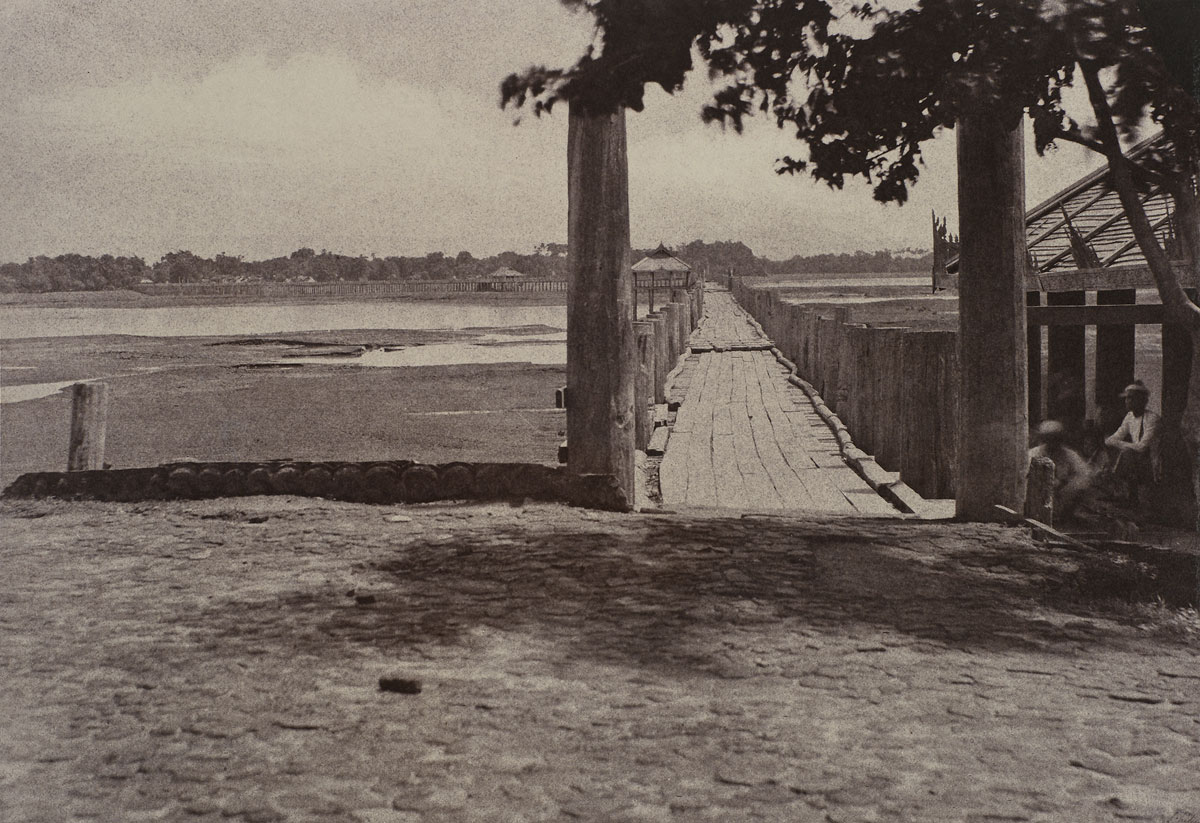
Linnaeus Tripe (British, 1822-1902) 'Amerapoora: Wooden Bridge, September 1–October 21, 1855' 1855


Linnaeus Tripe (British, 1822-1902)
Amerapoora: Wooden Bridge, September 1 – October 21, 1855
1855
22.3 × 32.4cm (8 3/4 × 12 3/4 in.)
Lent by The Metropolitan Museum of Art
Purchase, The Buddy Taub Foundation, Dennis A. Roach and Jill Roach, Directors, and Alfred Stieglitz Society Gifts, 2012
© The Metropolitan Museum of Art


Photograph by Linnaeus Tripe, from a portfolio of 120 prints, showing a view of the wooden bridge at Amarapura in Burma (Myanmar). The bridge spans the seasonal Taungthaman Lake to the south of Amarapura and is 1.5 kms long. Built by a mayor, U Bein, in 1784, it was constructed from teak posts salvaged from the ruined former capital city of Ava (Inwa). Tripe wrote of this view, “Carried over the west limb of the Lake on piles about 7 feet apart with some openings (bridged with loose planks) for the passage through of large boats.”


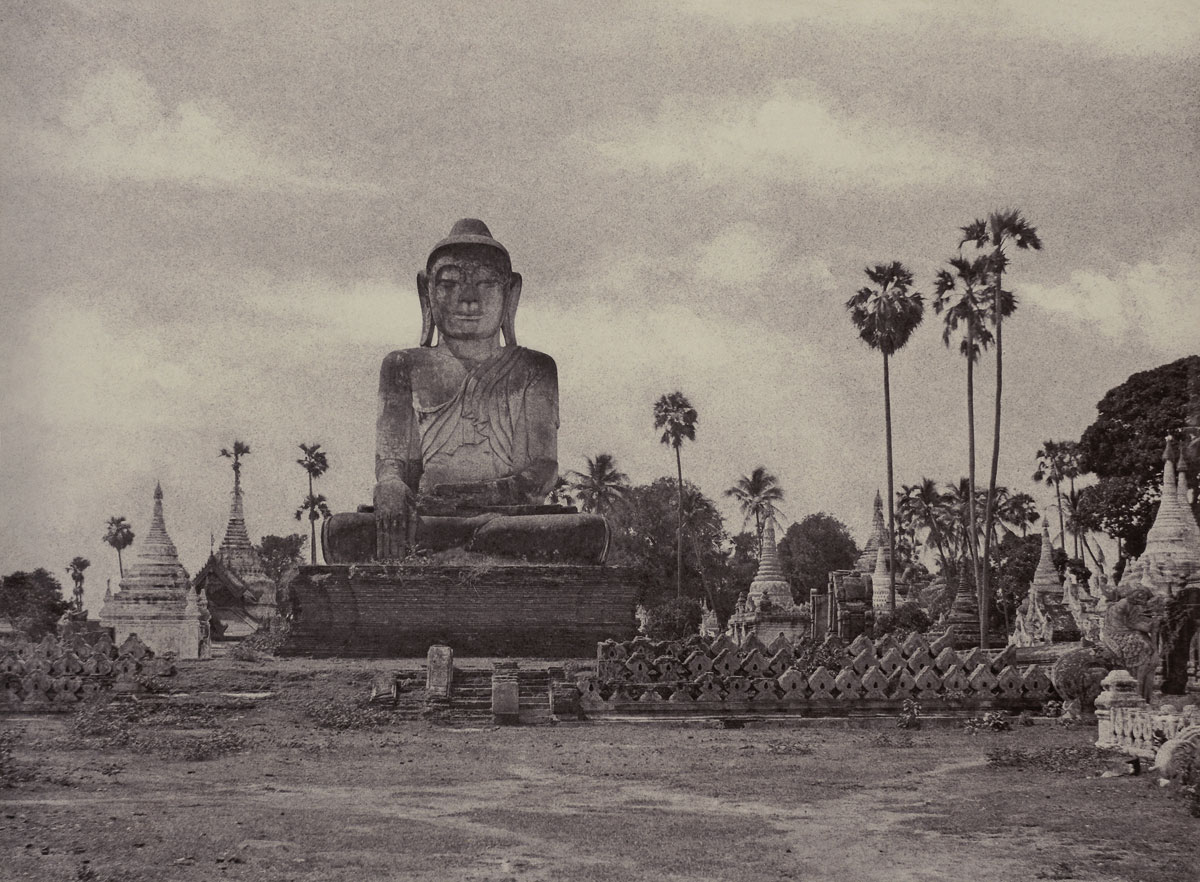
Linnaeus Tripe (British, 1822-1902) 'Amerapoora: Colossal Statue of Gautama Close to the North End of the Wooden Bridge, September 1 - October 21, 1855' 1855


Linnaeus Tripe (British, 1822-1902)
Amerapoora: Colossal Statue of Gautama Close to the North End of the Wooden Bridge, September 1 – October 21, 1855
1855
24.7 x 33.3cm (9 3/4 x 13 1/8 in.)
Collection of Charles Isaacs and Carol Nigro


Photograph by Linnaeus Tripe of a statue of the seated Buddha, near the U Bein bridge at Amarapura in Burma (Myanmar). Amarapura was the site of the first British Embassy to Burma in 1795, and played host again to Tripe’s Mission. Tripe wrote of this Buddha surrounded by small pagodas, ‘Its height is about 37 and a half feet above the throne’.


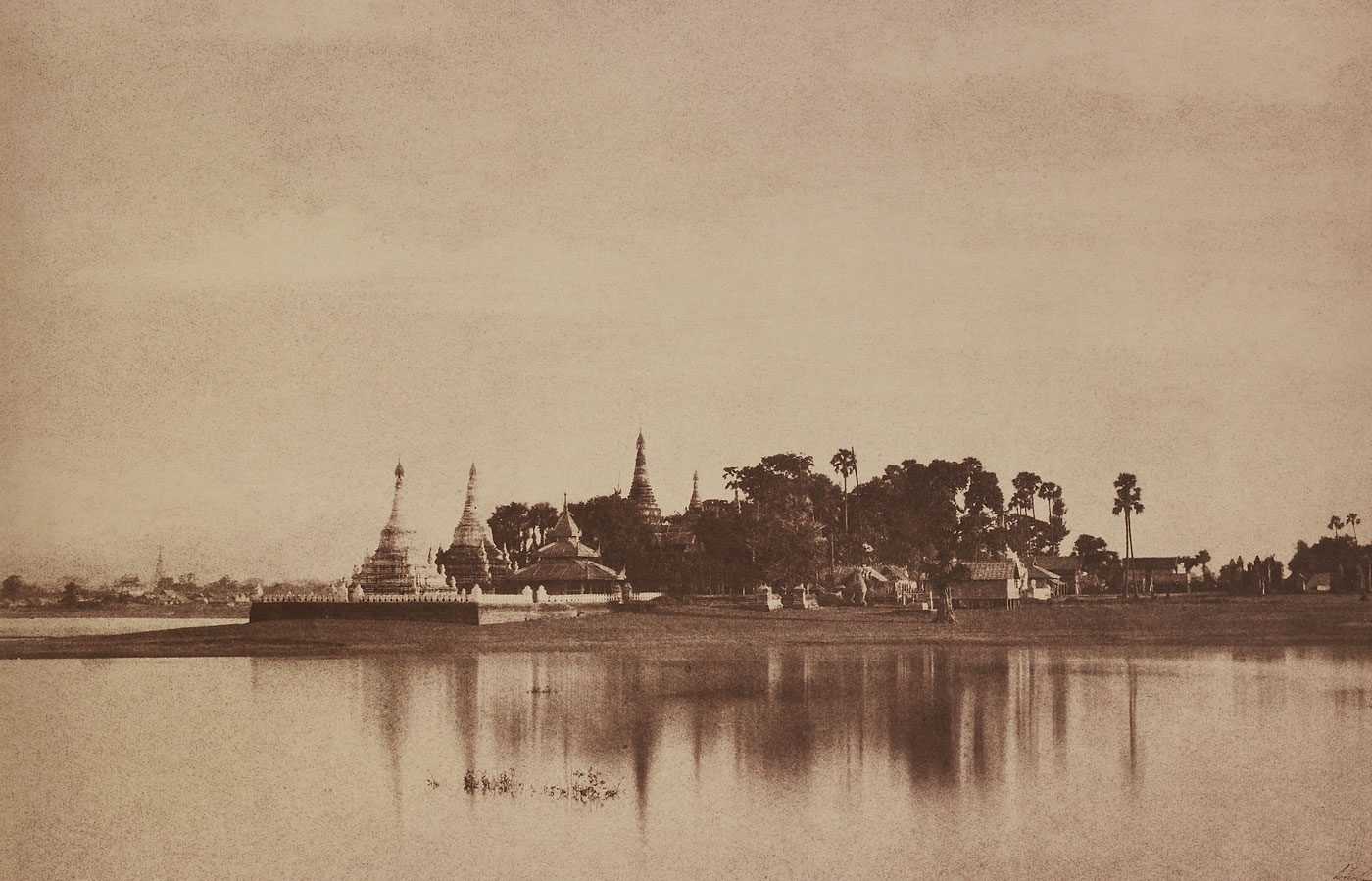
Linnaeus Tripe (British, 1822-1902) 'Amerapoora: View on the Lake, September 1 - October 21, 1855' 1855


Linnaeus Tripe (British, 1822-1902)
Amerapoora: View on the Lake, September 1 – October 21, 1855
1855
22.4 × 34.8cm (8 7/8 × 13 3/4 in.)
Courtesy Robert Hershkowitz, Charles Isaacs, Hans P. Kraus Jr.


Photograph by Linnaeus Tripe with a general view looking across Taungthaman Lake to the city of Amarapura in Burma (Myanmar). Amarapura was designed upon a square mandala, or diagram illustrating cosmological ideas. Each of the twelve city gates, three along each wall, was surmounted by a Burmese style pavilion known as a pyat-that. The city was encircled by a moat, inside which the streets were built upon a grid pattern. The photographer wrote of this view, “Taken from the causeway crossing the Toung-deman lake at its eastern extremity. A glimpse of the city is caught on the left.”


Linnaeus Tripe (British, 1822-1902) 'Amerapoora: Shwe-doung-dyk Pagoda, September 1-October 21, 1855' 1855


Linnaeus Tripe (British, 1822-1902)
Amerapoora: Shwe-doung-dyk Pagoda, September 1 – October 21, 1855
1855
25.8 × 34.6cm (10 1/8 × 13 5/8 in.)
Lent by The Metropolitan Museum of Art
Purchase, The Buddy Taub Foundation, Dennis A. Roach and Jill Roach, Directors, and Alfred Stieglitz Society Gifts, 2012
© The Metropolitan Museum of Art


Linnaeus Tripe (British, 1822-1902) 'Amerapoora: Toung-lay-lou-tiy Kyoung, September 1-October 21, 1855' 1855


Linnaeus Tripe (British, 1822-1902)
Amerapoora: Toung-lay-lou-tiy Kyoung, September 1 – October 21, 1855
1855
26.6 × 33.5cm (10 1/2 × 13 1/4 in.)
National Gallery of Art, Washington, Stephen G. Stein Fund


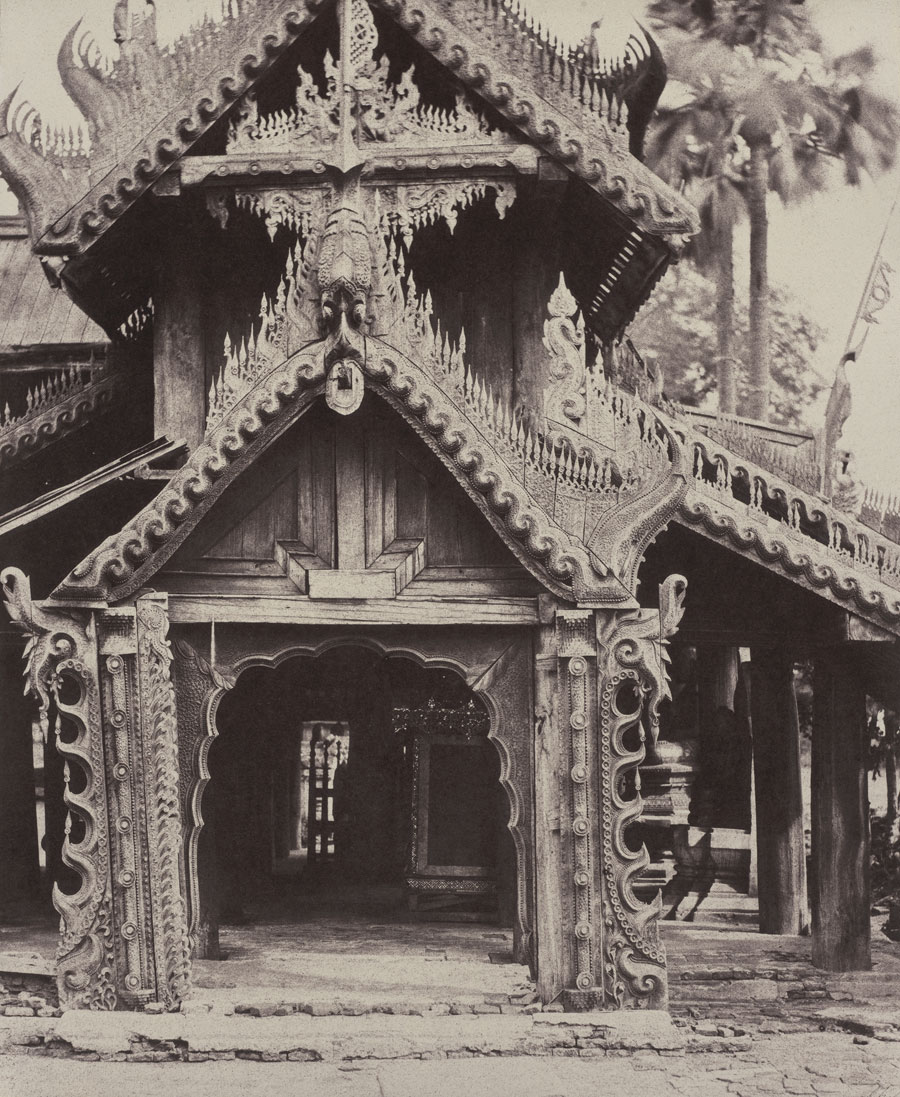
Photograph by Linnaeus Tripe of a kyaung (monastery) at Amarapura in Burma (Myanmar). This view shows close-up detail of carved stonework at the entrance to the kyaung. Tripe wrote, “Monasteries are usually built of wood, this is of brick, its style too is uncommon in many of its details.”


National Gallery of Art
National Mall between 3rd and 7th Streets
Constitution Avenue NW, Washington

Opening hours:
Open daily 10.00am – 5.00pm

National Gallery of Art website

LIKE ART BLART ON FACEBOOK

Back to top

Review: ‘Long Distance Vision: Three Australian Photographers’ at The Ian Potter Centre NGV Australia, Federation Square, Melbourne

Exhibition dates: 28th August, 2009 – 21st February, 2010


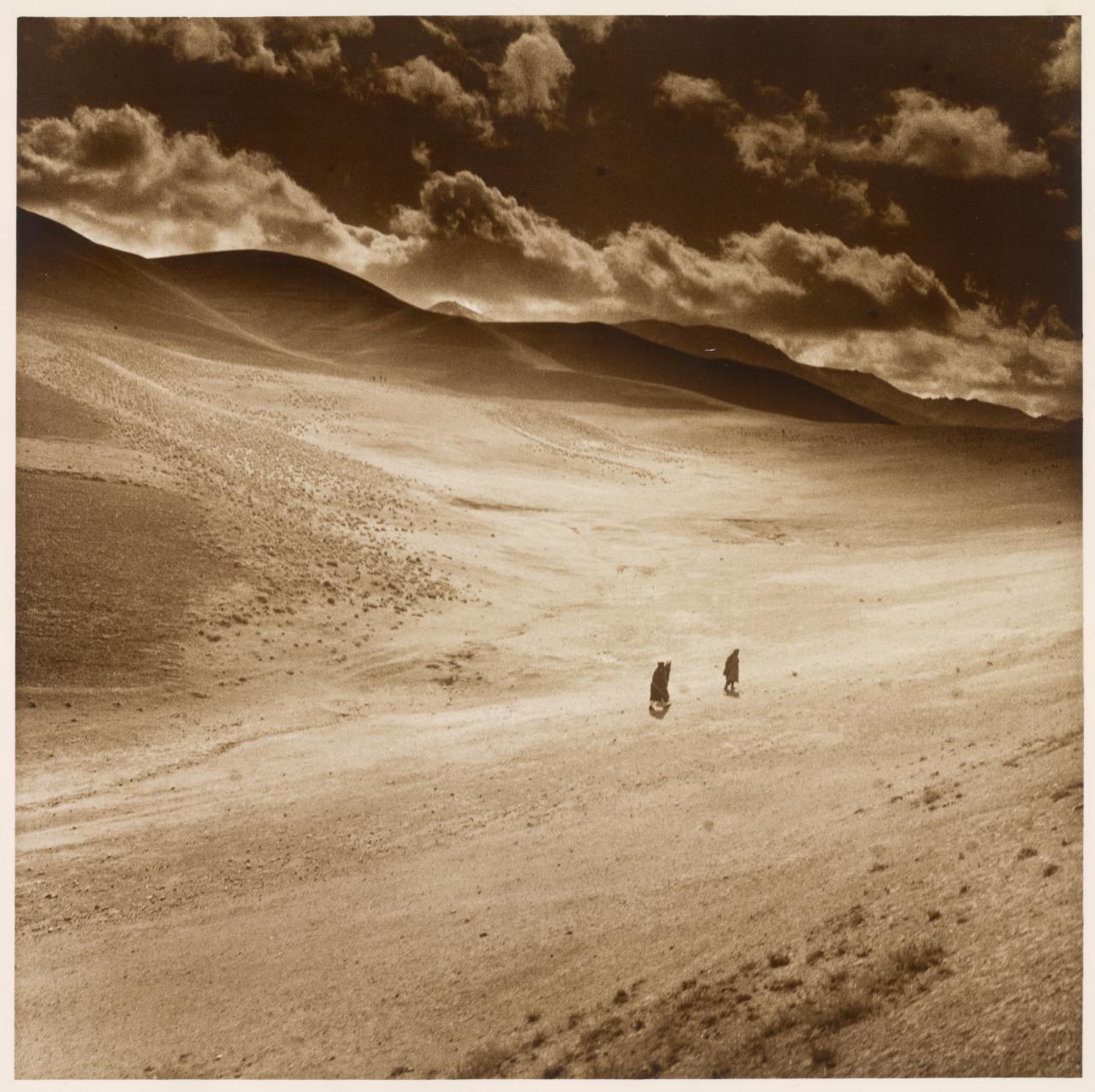
Max Pam (born Australia 1949, lived in Brunei 1980-1983) 'Road from Bamiyan' 1971 from the exhibition 'Long Distance Vision: Three Australian Photographers' at The Ian Potter Centre NGV Australia, Federation Square, Melbourne, Aug 2009 - Feb 2010


Max Pam (born Australia 1949, lived in Brunei 1980-1983)
Road from Bamiyan
1971
Gelatin silver photograph
20.1 x 20.1cm
National Gallery of Victoria, Melbourne
Purchased, 1979


Long Distance Vision is a disappointingly wane exploration of travel photography at NGV Australia. With the exception of the work of Max Pam the exhibition lacks insight into the phenomena that the curators want the work to philosophically investigate: namely how photographs shape our expectations of a place (even before we arrive) and how photographs also serve to confirm our experience – the picture as powerful mnemonic tool.

Firstly a quick story: when travelling in America to study at the Kinsey Institute I boarded a train from Chicago to what I thought was Bloomington, Indiana only to arrive many hours later at Bloomington, Illinois. Unbeknownst to me this Bloomington also had a motel of the same name as I was staying at in Indiana! After much confusion I ended up at the local airport trying to catch a single seater aircraft to Bloomington, Indiana with no luck – at the end of my tether, fearful in a foreign country, in tears because I just had to be at this appointment the next morning. Riding to my rescue was a nineteen year old kid with no shoes, driving an ex-cop car, who drove me across the Mid-West states stopping at petrol stops in the dead of night. It was a surreal experience, one that I will never forget for the rest of my life … fear, apprehension, alienation, happiness, joy and the sublime all rolled into one.

I tell this story to illustrate a point about travel – that you never know what is going to happen, what experiences you will have, even your final destination. To me, photographs of these adventures not only document this dislocation but step beyond pure representation to become art that re-presents the nature of our existence.

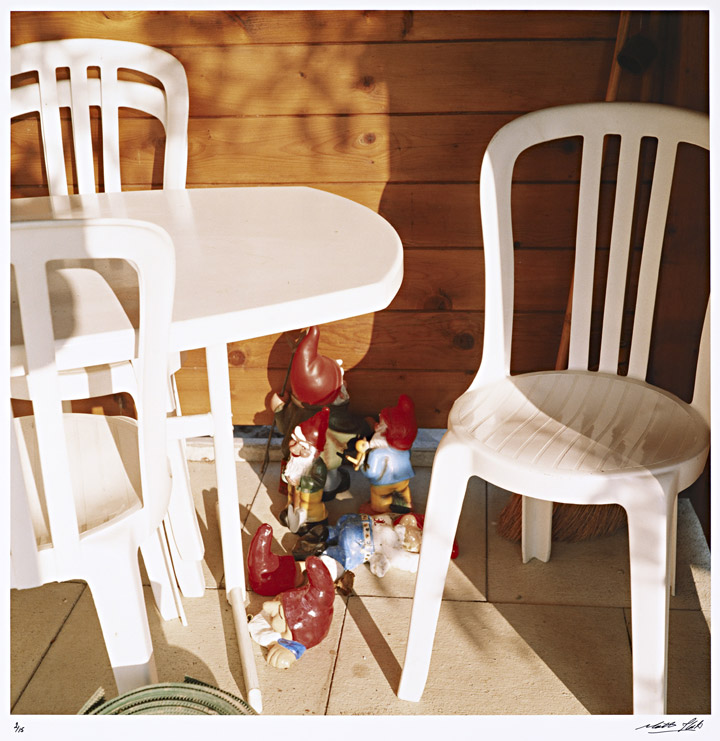
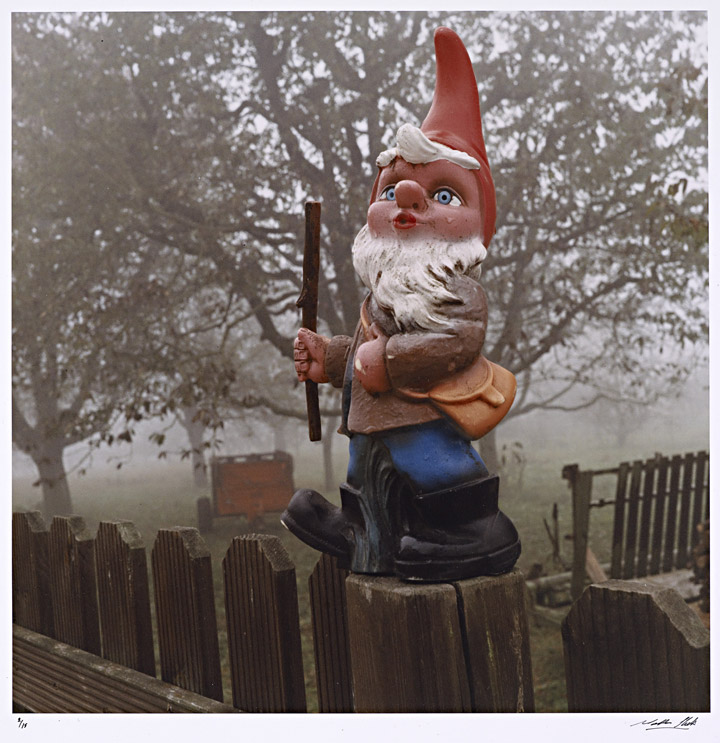
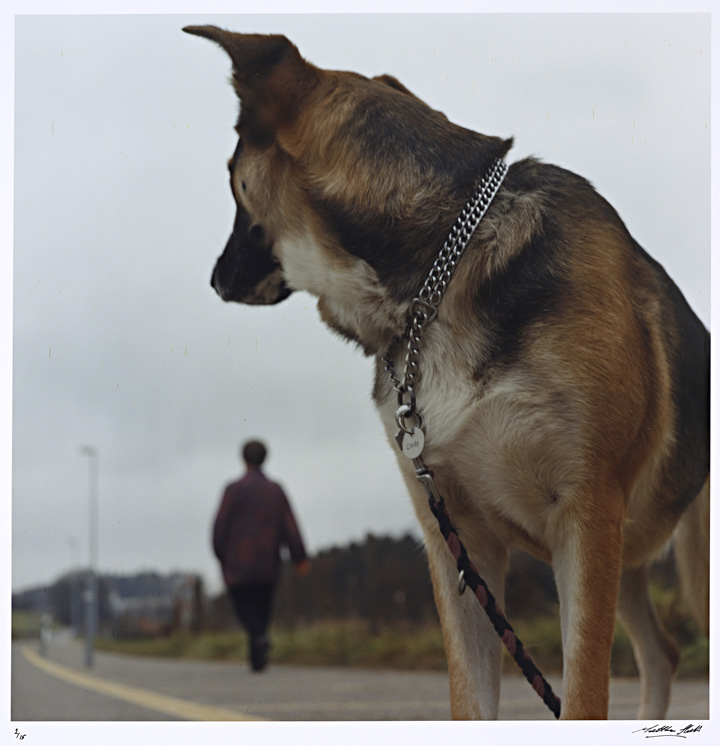
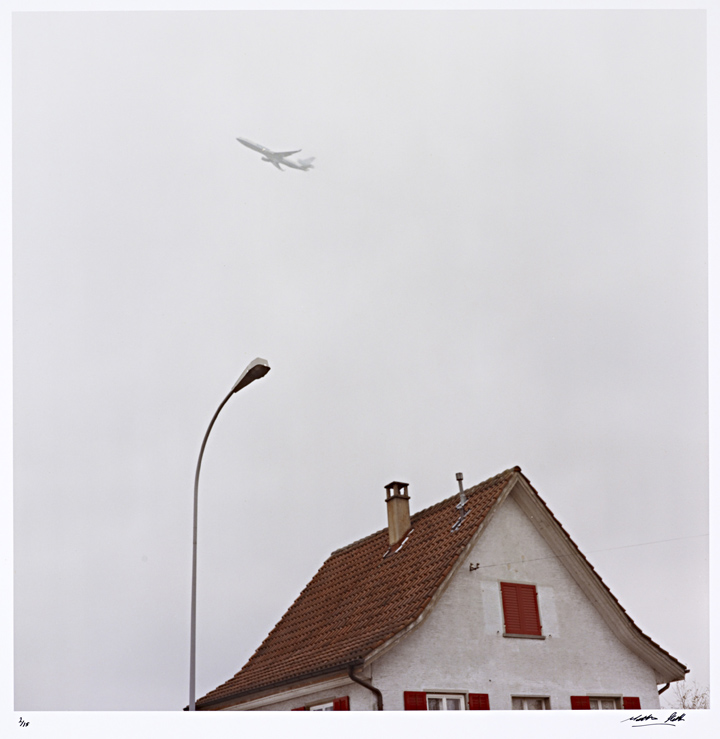
Matthew Sleeth‘s street photographs could be taken almost anywhere in the world (if it were not for a building with German writing on it). His snapshot aesthetic of caught moments, blinded people and dissected bodies in the observed landscape are evinced (to show in a clear manner; to prove beyond any reasonable doubt; to manifest; to make evident; to bring to light; to evidence – yes to bring to light, to evidence as photography does!) in mundane, dull, almost lifeless prints – ‘heavy’ photographs with a lack of shadow detail combined with a shallow depth of field. His remains, the people walking down the street and their shadow, are odd but as as The Age art critic Robert Nelson succinctly notes in his review of this exhibition, To become art, the odd cannot remain merely quaint but has to signify an existential anomaly by implication.”1

If we look at the seminal photographs from the book The Americans by Robert Frank we see in their dislocated view of America a foreigners view of the country the artist was travelling across – a subjective view of America that reveals as much about the state of mind of the artist as the country he was exposing. No such exposition happens in the works of Matthew Sleeth.

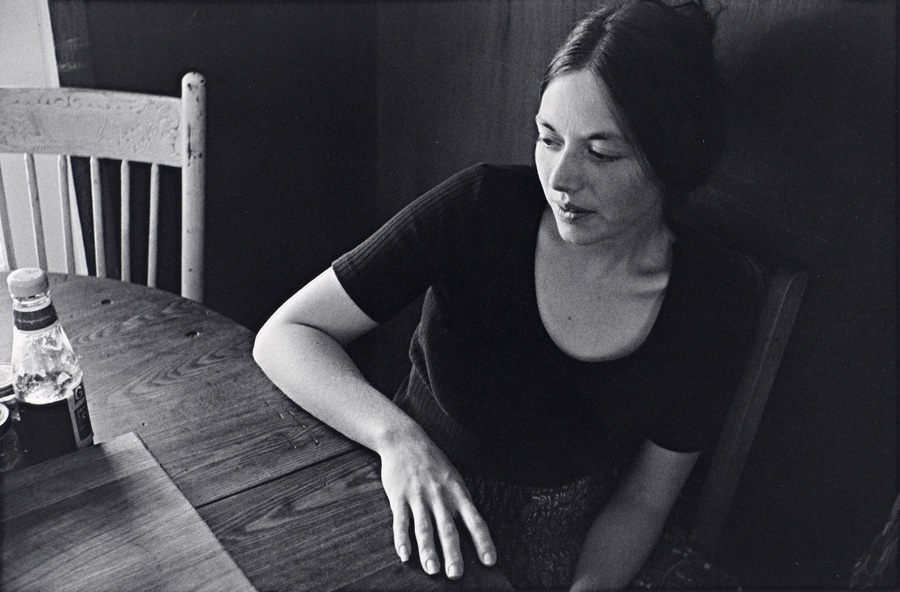
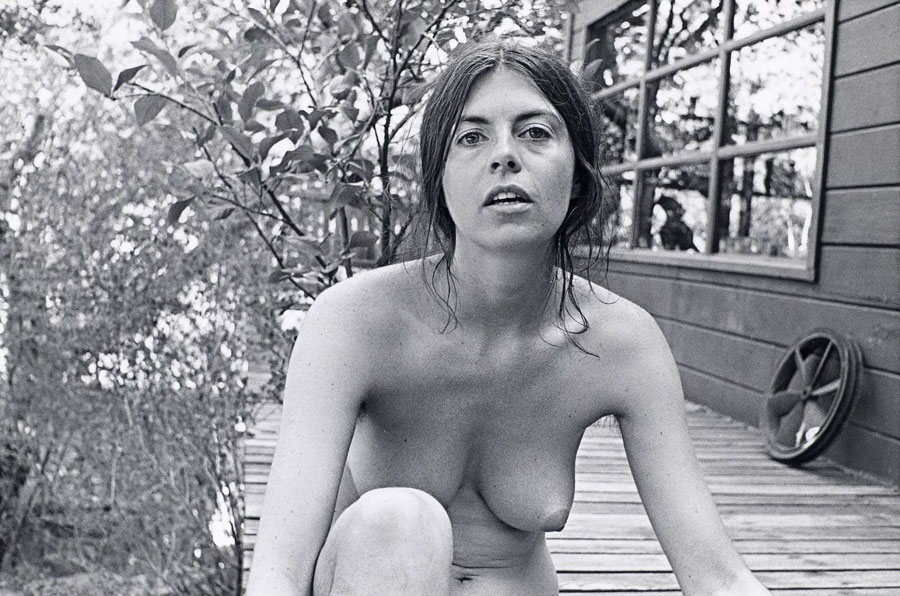
Christine Godden‘s photographs of family and friends have little to do with travel photography and I struggle to understand their inclusion in this exhibition. Though they are reasonable enough photographs in their own right – small black and white photographs of small intimacies (at the beach, in the garden, at the kitchen table, on the phone, on the porch, on the float, etc…) Godden’s anthropomorphist bodies have nothing to do with a vision of a new land as she had been living in San Francisco, New York and Rochester for six years over the period that these photographs were taken. Enough said.

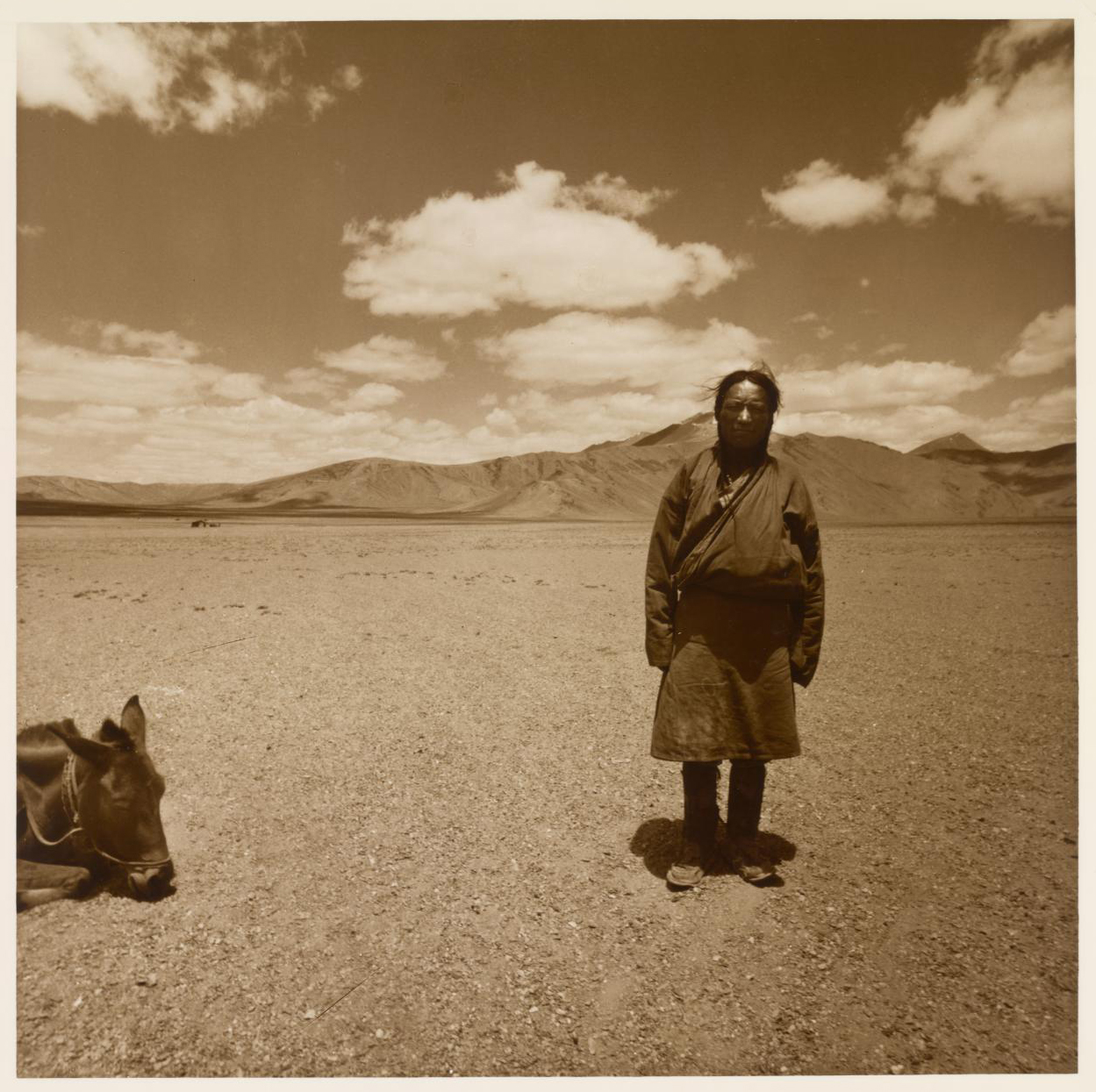
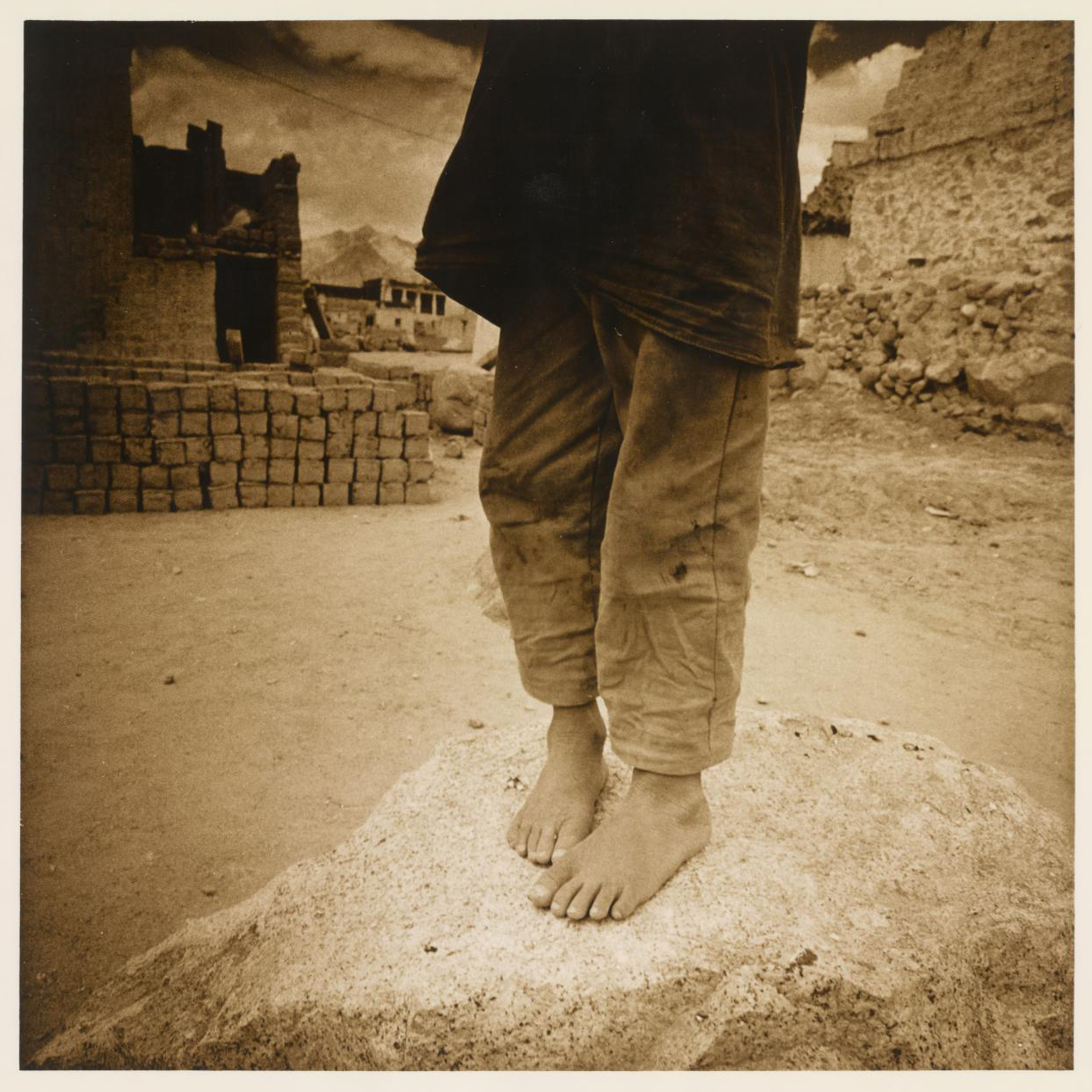
The highlight of the exhibition is the work of Max Pam. I remember going the National Gallery of Victoria in the late 1980s to view this series of work in the collection – and what a revelation they were then and remain so today. The square formatted, dark sepia toned silver gelatin prints of the people and landscapes of Tibet are both monumental and personal at one and the same time. You are drawn into their intimacies: the punctum of a boys feet; the gathering of families; camels running before a windstorm; human beings as specks in a vast landscape.

“If the world is unfair or beyond our understanding, sublime places suggest it is not surprising things should be thus. We are the playthings of the forces that laid out the oceans and chiselled the mountains. Sublime places acknowledge limitations that we might otherwise encounter with anxiety or anger in the ordinary flow of events. It is not just nature that defies us. Human life is as overwhelming, but it is the vast spaces of nature that perhaps provide us with the finest, the most respectful reminder of all that exceeds us. If we spend time with them, they may help us to accept more graciously the great unfathomable events that molest our lives and will inevitably return us to dust.”2

The meditation on place and space that the artist has undertaken gives true insight into the connection of man and earth, coming closest to Alain de Botton’s understanding of the significance of sublime places. Through a vision of a distant land the photographs transport us in an emotional journey that furthers our understanding of the fragility of life both of the planet and of ourselves.

While the National Gallery of Victoria holds some excellent photography exhibitions (such as Andreas Gursky and Rennie Ellis for example) this was a missed opportunity. The interesting concept of the exhibition required a more rigorous investigation instead of such a cursory analysis (which can be evidenced by the catalogue ‘essay’: one page the size of a quarter of an A4 piece of paper that glosses over the whole history of travel photography in a few blithe sentences).

Inspiration could have easily been found in Alain de Botton’s excellent book The Art of Travel. Here we find chapters titled “On Anticipation”, “On Travelling Places”, “On the Exotic”, “On Curiosity”, “On the Country and the City” and “On the Sublime” to name but a few, with places and art work to illustrate the journey: what more is needed to excite the mind!

Take Charles Baudelaire for example. He travelled outside his native France only once and never ventured abroad again. Baudelaire still dreamt of going to Lisbon, or Java or to the Netherlands but “the destination was not really the point. The true desire was to get away, to go, as he concluded, ‘Anywhere! Anywhere! So long as it is out of the world!'”3

Heavens, we don’t even have to leave home to create travel photography that is out of the world! Our far-sighted vision (like that of photographer Gregory Crewdson) can create psychological narratives of imaginative journeys played out for the camera.

Perhaps what was needed was a longer gestation period, further research into the theoretical nuances of travel photography (one a little death, a remembrance; both a dislocation in the non-linearity of time and space), a gathering of photographs from collections around Australia to better evidence the conceptual basis for the exhibition and a greater understanding of the irregular possibilities of travel photography – so that the work and words could truly reflect the title of the exhibition Long Distance Vision.

Dr Marcus Bunyan


1/ Nelson, Robert. “In blurred focus: le freak c’est chic,” in The Age newspaper. Friday, October 23rd 2009, p. 18

2/ de Botton, Alain. The Art of Travel. London: Penguin, 2002, p. 178-179

3/ Ibid., p. 34


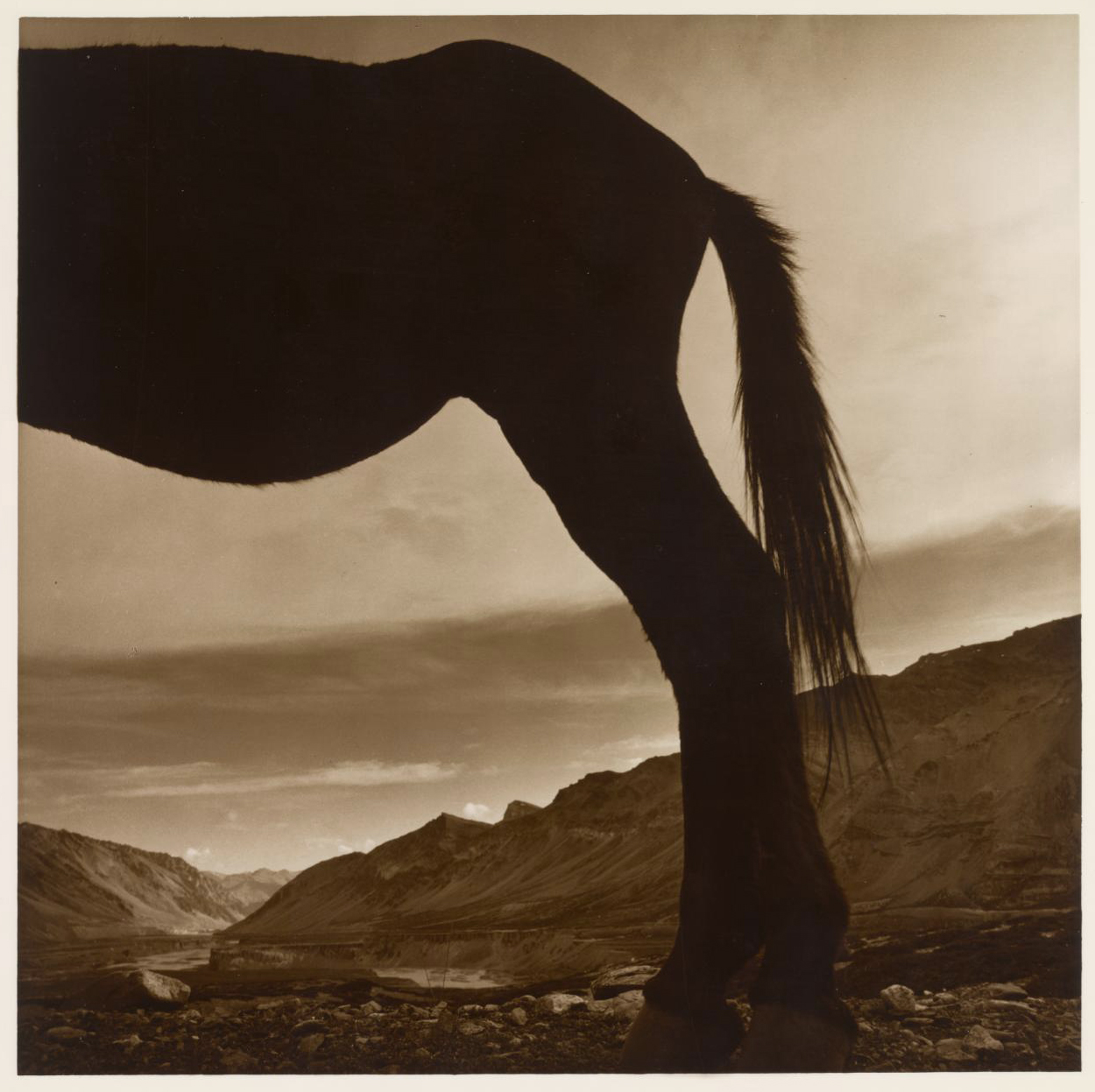
Max Pam (born Australia 1949, lived in Brunei 1980-83) 'My donkey, our valley, Sarchu' 1977 from the exhibition 'Long Distance Vision: Three Australian Photographers' at The Ian Potter Centre NGV Australia, Federation Square, Melbourne, Aug 2009 - Feb 2010


Max Pam (born Australia 1949, lived in Brunei 1980-1983)
My donkey, our valley, Sarchu
1977
Gelatin silver photograph
20.1 x 20.1cm
National Gallery of Victoria, Melbourne
Purchased, 1979
© Max Pam


Max Pam (Australian, b. 1949) 'Sisters' 1977 from the exhibition 'Long Distance Vision: Three Australian Photographers' at The Ian Potter Centre NGV Australia, Federation Square, Melbourne, Aug 2009 - Feb 2010


Max Pam (born Australia 1949, lived in Brunei 1980-1983)
Sisters
1977
Gelatin silver photograph
20.1 x 20.1cm
National Gallery of Victoria, Melbourne
Purchased, 1979
© Max Pam


Max Pam (Australian, b. 1949) 'Tibetan nomads' 1977


Max Pam (born Australia 1949, lived in Brunei 1980-1983)
Tibetan nomads
1977
Gelatin silver photograph
20.1 x 20.2cm
National Gallery of Victoria, Melbourne
Purchased, 1979
© Max Pam


Christine Godden (Australian, b. 1947) 'Bobbie and Amitabha at the beach' c. 1972


Christine Godden (Australian, b. 1947)
Bobbie and Amitabha at the beach
c. 1972
Gelatin silver photograph
13.2 x 20.1cm
National Gallery of Victoria, Melbourne
Purchased from Admission Funds, 1991
© Christine Godden


Christine Godden (Australian, b. 1947) 'Elliot holding a ring' 1973


Christine Godden (Australian, b. 1947)
Elliot holding a ring
1973
Gelatin silver photograph
15.0 x 22.8cm
National Gallery of Victoria, Melbourne
Purchased from Admission Funds, 1991
© Christine Godden


Christine Godden.Christine Godden (Australian, b. 1947)kitchen table' 1973


Christine Godden (Australian, b. 1947)
Joanie at the kitchen table
1973, printed 1986
Gelatin silver photograph
20.1 x 30.6cm
National Gallery of Victoria, Melbourne
Purchased from Admission Funds, 1991
© Christine Godden


Christine Godden (Australian, b. 1947) 'With Leigh on the porch' 1972


Christine Godden (Australian, b. 1947)
With Leigh on the porch
1972, printed 1986
Gelatin silver photograph
20.2 x 30.5cm
National Gallery of Victoria, Melbourne
Purchased from Admission Funds, 1991
© Christine Godden


“The National Gallery of Victoria will celebrate the work of Christine Godden, Max Pam and Matthew Sleeth in a new exhibition, Long Distance Vision: Three Australian Photographers opening 28 August.

Long Distance Vision will include over 60 photographs from the NGV Collection exploring the concept of the ‘tourist gaze’ and its relationship with the three artists.

Susan van Wyk, Curator Photography, NGV said the exhibition provides a fascinating insight into the unusual perspective brought by the three photographers to their varied world travel destinations.

“There’s a sense in the works in the exhibition that the photographers are not from the places they choose to photograph, and that each is a visitor delighting in the scenes they encounter.

“What is notable about the photographs in Long Distance Vision is that rather than focussing on the well known scenes that each artist encountered, they have turned their attention to the ‘little things’, the details of the everyday,” said Ms van Wyk.

From the nineteenth century, photography has been a means by which people could discover the world, initially through personal collection and albums, and later via postcards, magazines, books and the internet.

Dr Gerard Vaughan, Director, NGV said that both contemporary photographers and tourists use the camera as a means to explore and capture the world.

“Through their photographs, the three artists featured in Long Distance Vision show us highly individual ways of seeing the world. This exhibition will surprise and delight visitors as our attention is drawn to not only what is different but what remains the same as we travel the world,” said Dr Vaughan.

Born in Melbourne in 1949, Max Pam began his career in various commercial photography studios in the 1960s. After responding to a university notice for assistance to drive a Volkswagen from Calcutta to London in 1969, Pam got his first taste of being a traveller. The body of Pam’s work in this exhibition is from the series The Himalayas, which was photographed over a number of early visits to India.

Christine Godden also travelled the popular overland route between Europe and India in the early 1970s, returning to Sydney in 1978. In 1972, after a period of travelling, Godden found her home in the US where she remained for six years. Godden’s photographs in this exhibition were taken between 1972 and 1974 during her stay in the US.

Born in Melbourne in 1972, Matthew Sleeth is another seasoned traveller. During the late 1990s, Sleeth settled in Opfikon, an outer suburb of Zurich, Switzerland. The series of photographs in Long Distance Vision were taken during this time, showing Sleeth’s interest not only in street photography, but also in the narrative possibilities in everyday scenes. Dotted with garishly coloured playhouses, naive sculptures and whimsical arrangements of garden gnomes Sleeth’s photographs go beyond the ‘picture-perfect’ scenes of typical tourist photography.

Long Distance Vision: Three Australian Photographers is on display at The Ian Potter Centre: NGV Australia, Federation Square from 28 August 2009 to 21 February 2010.”

Text from the National Gallery of Victoria press release


Matthew Sleeth (Australian, b. 1972) From the series 'Opfikon' 1997

Matthew Sleeth (Australian, b. 1972) From the series 'Opfikon' 1997

Matthew Sleeth (Australian, b. 1972) From the series 'Opfikon' 1997

Matthew Sleeth (Australian, b. 1972) From the series 'Opfikon' 1997

Matthew Sleeth (Australian, b. 1972) From the series 'Opfikon' 1997


Matthew Sleeth (Australian, b. 1972)
Photographs from the series Opfikon
1997, printed 2004
Type C photograph
43.2 x 43.0cm
National Gallery of Victoria, Melbourne
Presented through the NGV Foundation by Patrick Corrigan, Governor, 2005
© Matthew Sleeth courtesy of Sophie Gannon Gallery, Melbourne


The Ian Potter Centre: NGV Australia Federation Square
Corner of Russell and 
Flinders Streets, Melbourne

Opening hours:
Every day 10am – 5pm
National Gallery of Victoria website

LIKE ART BLART ON FACEBOOK

Back to top

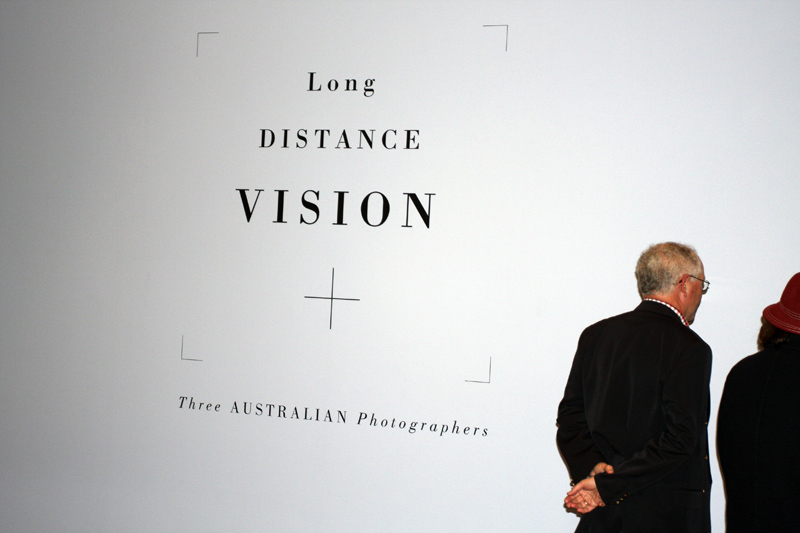
Opening: ‘Long Distance Vision: Three Australian Photographers’ at The Ian Potter Centre, NGV Australia, Federation Square, Melbourne

Exhibition dates: 28th August 2009 – 21st February 2010

Opening: Thursday 27th August 2009
Artists: Christine Godden, Max Pam and Matthew Sleeth
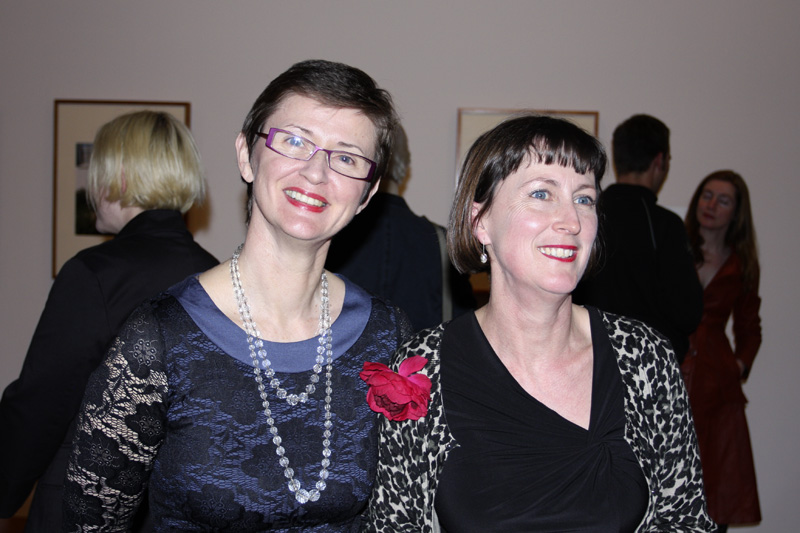
 

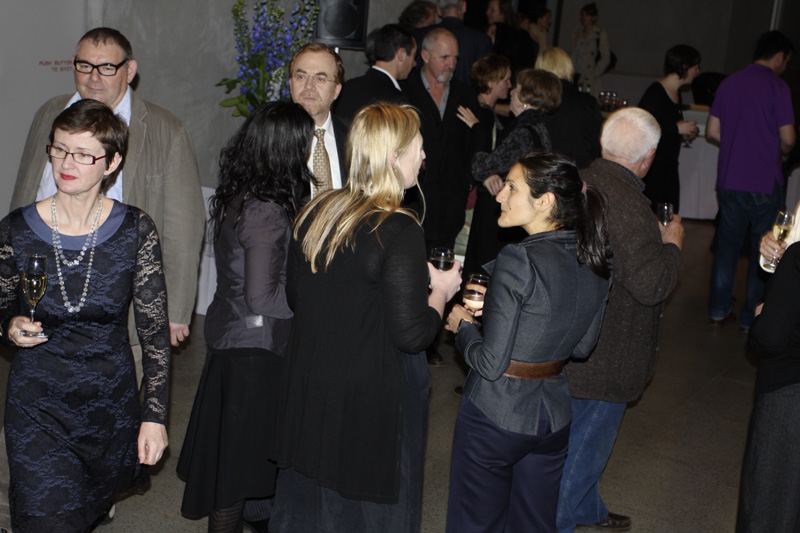
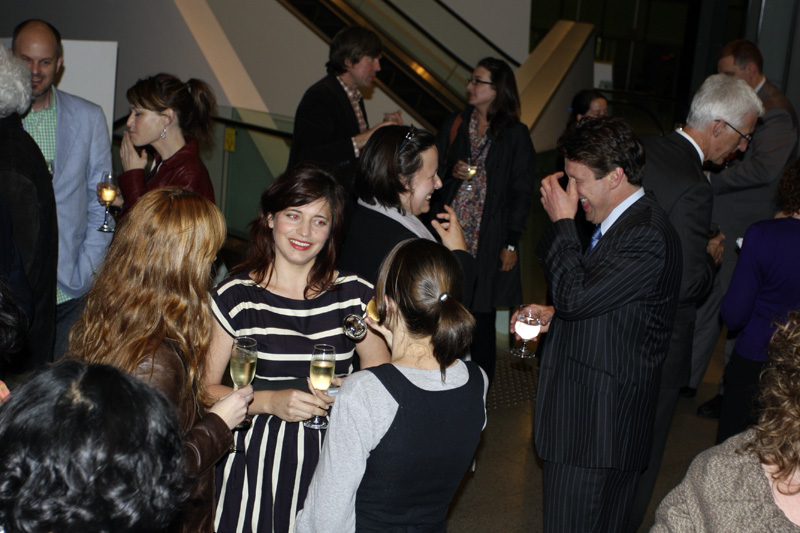
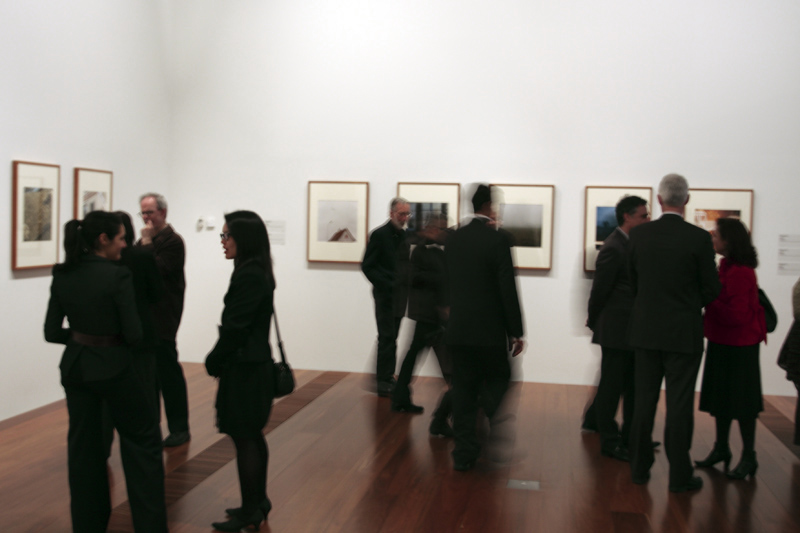
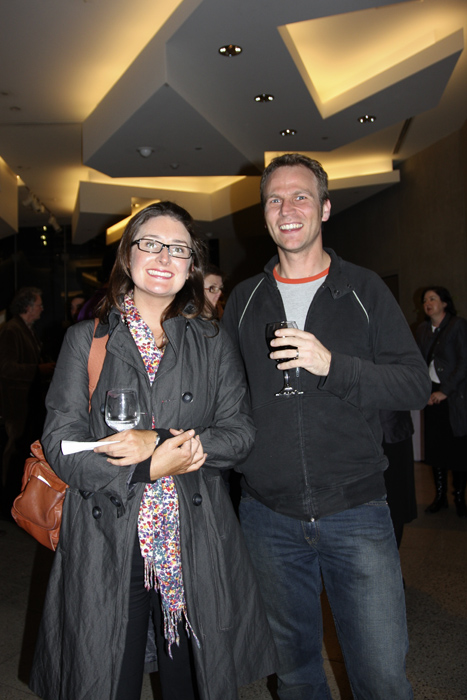
Opening night crowd for 'Long Distance Vision' at NGV Australia, Melbourne


Opening night crowd for Long Distance Vision at NGV Australia, Melbourne with Senior Curator of Photography, Dr Isobel Crombie, at left of photograph
Photo: Marcus Bunyan


A small but social opening of the latest photography exhibition at NGV Australia. Wonderful to see Edwin Nicholls and Sophie Gannon from Sophie Gannon Gallery, Richmond in attendance along with Dr Isobel Crombie, Senior Curator of Photography at the NGV and Susan van Wyk, curator of this exhibition and Curator of Photography at the NGV. Also in attendance were the NGV Director, Gerard Vaughan and Frances Lindsay, Deputy Director of the NGV. The exhibition was opened by Associate Professor Christopher Stewart from RMIT University.

Dr Marcus Bunyan


Many thankx to Alison Murray and Sue Coffey for allowing me to take photographs of the opening, and for allowing me to publish the photographs in the posting. Please click on the photographs for a larger version of the image.


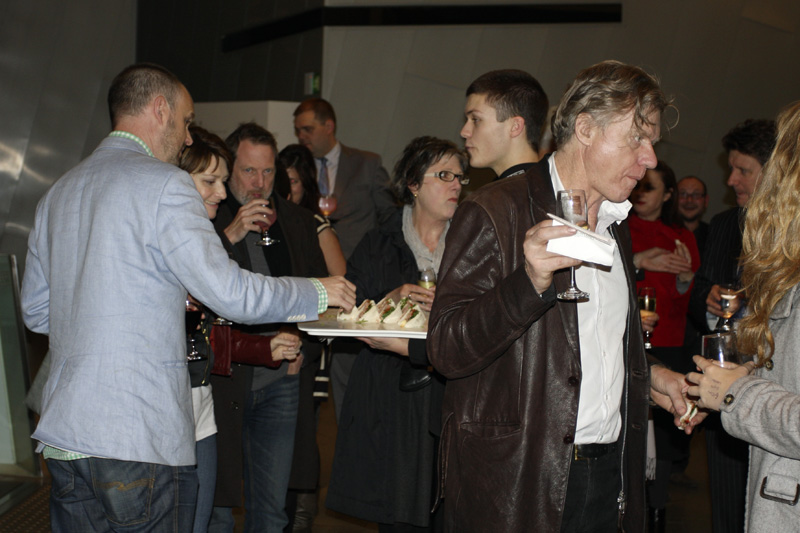
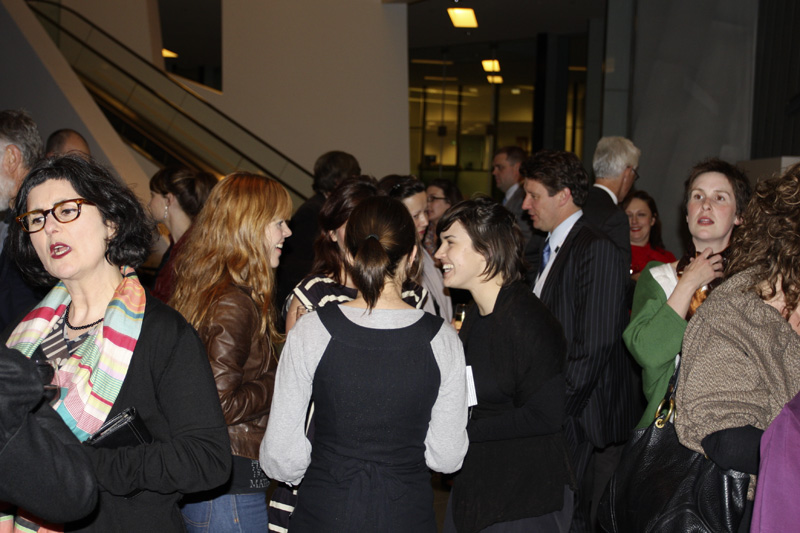
Opening night crowd for 'Long Distance Vision' at NGV Australia, Melbourne

Opening night crowd for 'Long Distance Vision' at NGV Australia, Melbourne

Opening night crowd for 'Long Distance Vision' at NGV Australia, Melbourne


Opening night crowd for Long Distance Vision at NGV Australia, Melbourne
Photos: Marcus Bunyan


Long Distance Vision will include over 60 photographs from the NGV Collection exploring the concept of the ‘tourist gaze’ and its relationship with the three artists.

Susan van Wyk, Curator Photography, NGV said the exhibition provides a fascinating insight into the unusual perspective brought by the three photographers to their varied world travel destinations.

“There’s a sense in the works in the exhibition that the photographers are not from the places they choose to photograph, and that each is a visitor delighting in the scenes they encounter.

What is notable about the photographs in Long Distance Vision is that rather than focussing on the well known scenes that each artist encountered, they have turned their attention to the ‘little things’, the details of the everyday,” said Ms van Wyk.

From the nineteenth century, photography has been a means by which people could discover the world, initially through personal collection and albums, and later via postcards, magazines, books and the internet.

Dr Gerard Vaughan, Director, NGV said that both contemporary photographers and tourists use the camera as a means to explore and capture the world.

“Through their photographs, the three artists featured in Long Distance Vision show us highly individual ways of seeing the world. This exhibition will surprise and delight visitors as our attention is drawn to not only what is different but what remains the same as we travel the world,” said Dr Vaughan.

Long Distance Vision: Three Australian Photographers is on display at The Ian Potter Centre: NGV Australia, Federation Square from 28 August 2009 to 21 February 2010. The Ian Potter Centre: NGV Australia is open every day 10am-5pm. Entry to this exhibition is free.”

Press release from the NGV


Opening of 'Long Distance Vision' at NGV Australia, Melbourne

Opening of 'Long Distance Vision' at NGV Australia, Melbourne


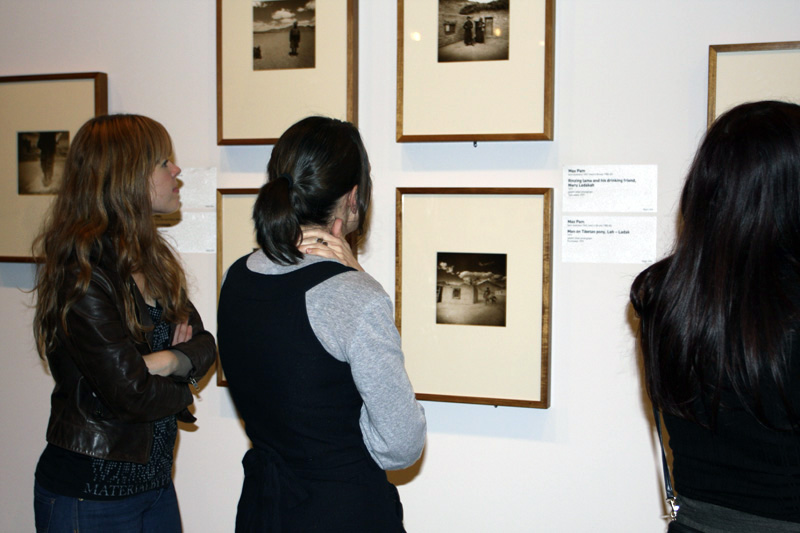
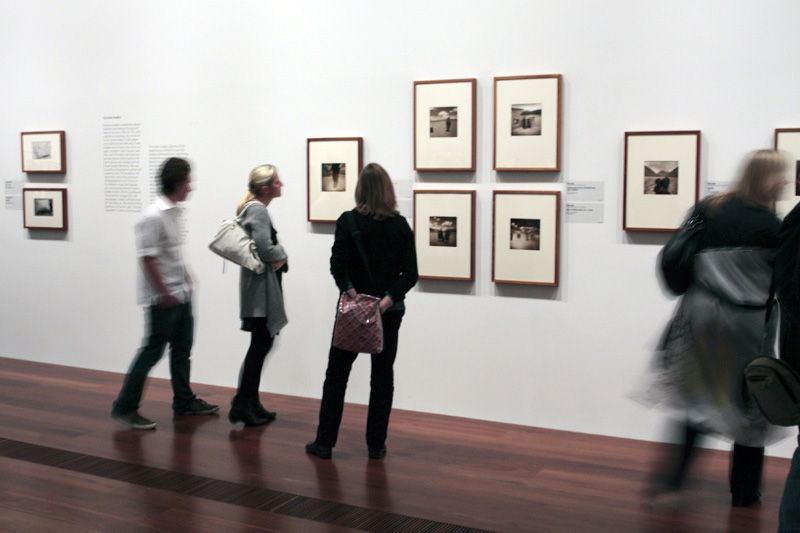
Opening night crowd for Long Distance Vision at NGV Australia, Melbourne looking at the work of Max Pam from his Tibet series (see the four images below)
Photos: Marcus Bunyan


Max Pam (Australian, b. 1949) 'Tibetan man' 1977


Max Pam (Australian, b. 1949)
Tibetan man
1977
Gelatin silver photograph
20.1 × 20.1cm
National Gallery of Victoria, Melbourne
Purchased, 1979
© Max Pam


Max Pam (Australian, b. 1949) 'Feet, Thiksè, Ladakh' 1977


Max Pam (Australian, b. 1949)
Feet, Thiksè, Ladakh
1977
Gelatin silver photograph
20.1 × 20.1cm
National Gallery of Victoria, Melbourne
Purchased, 1979
© Max Pam


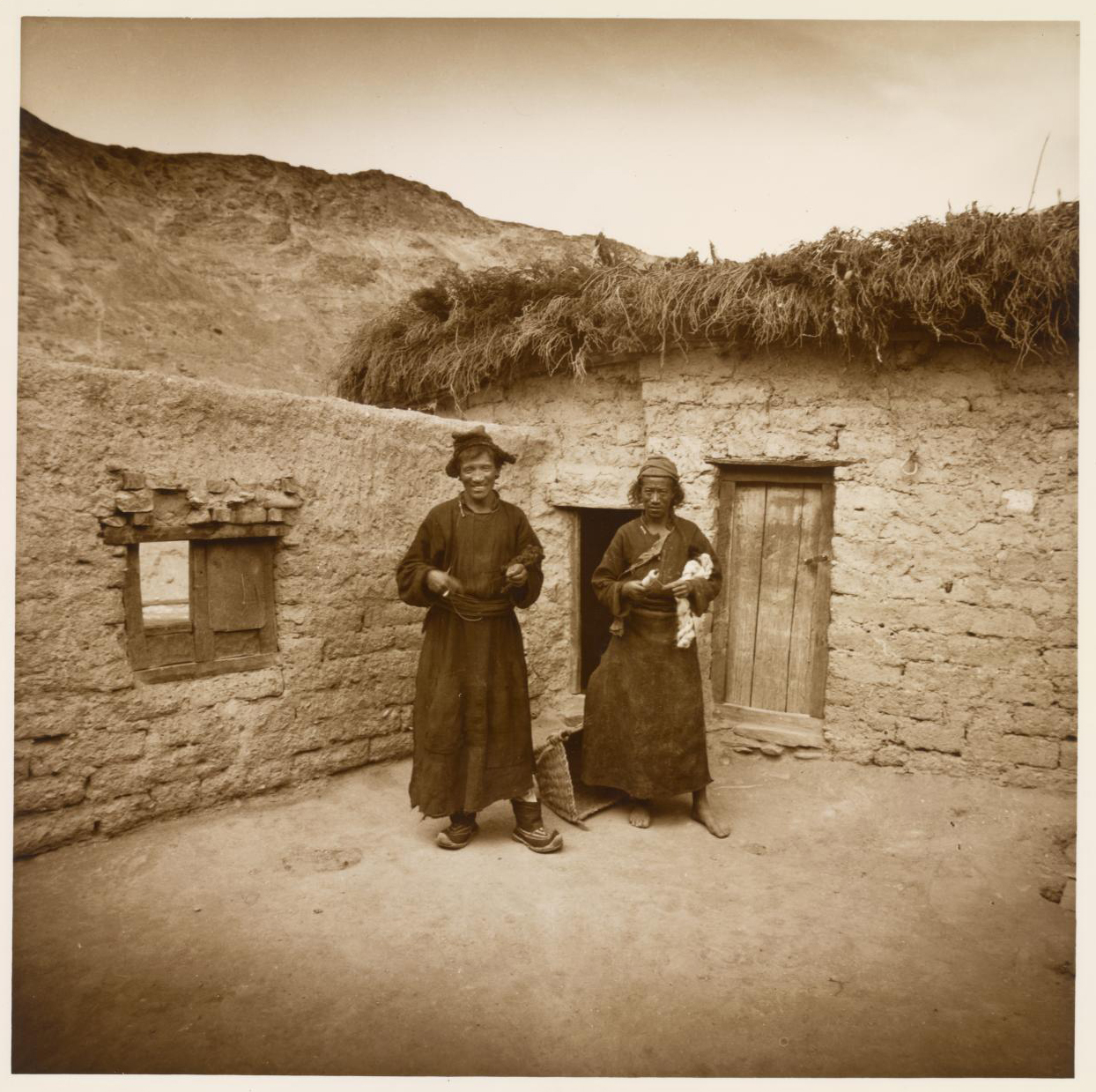
Max Pam (Australian, b. 1949) 'Rinzing lama and his drinking friend, Meru Ladakh' 1977


Max Pam (Australian, b. 1949)
Rinzing lama and his drinking friend, Meru Ladakh
1977
Gelatin silver photograph
20.1 × 20.1cm
National Gallery of Victoria, Melbourne
Purchased, 1979
© Max Pam


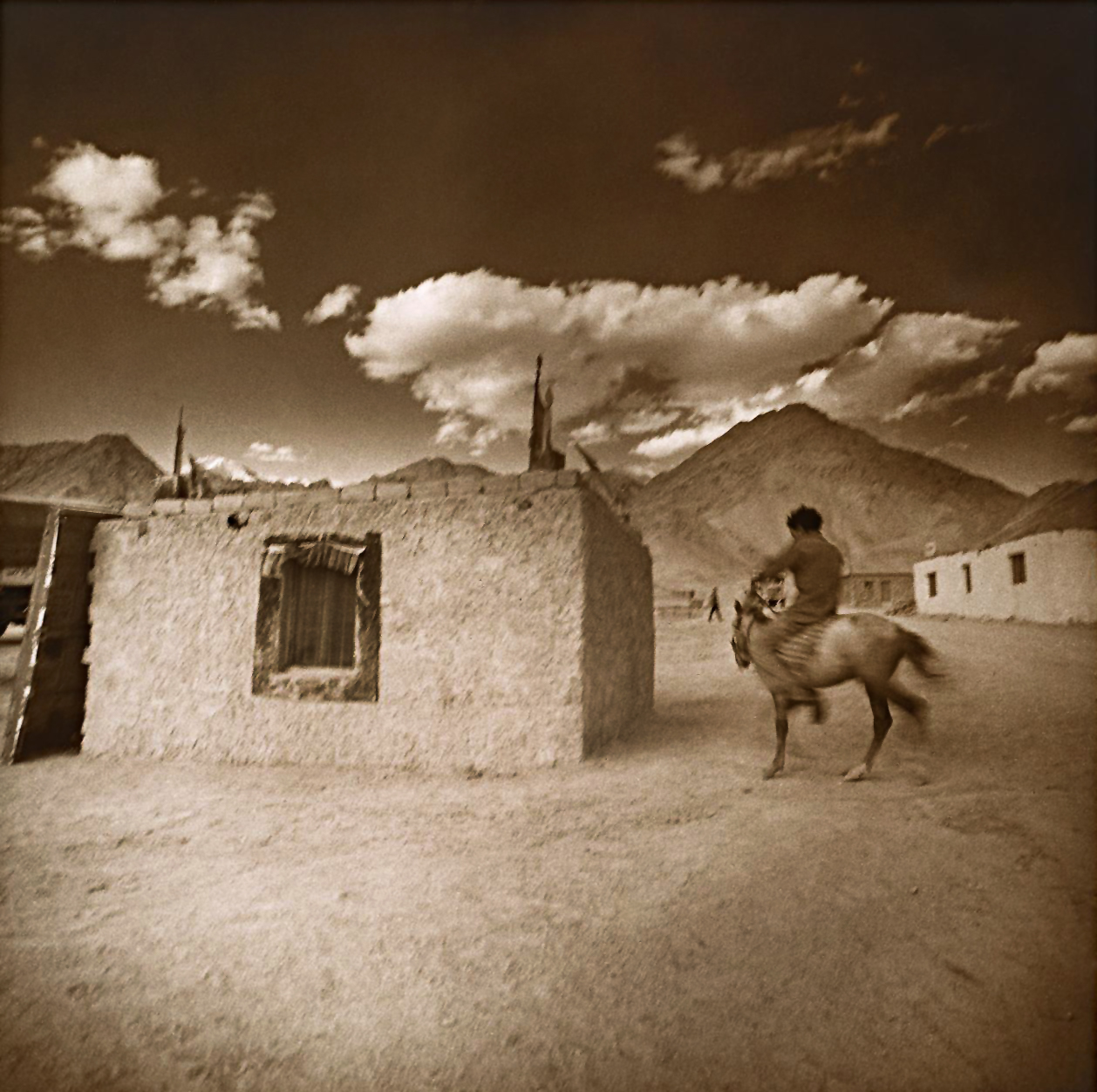
Max Pam (Australian, b. 1949) 'Man on Tibetan pony, Leh Ladakh' 1977


Max Pam (Australian, b. 1949)
Man on Tibetan pony, Leh Ladakh
1977
Gelatin silver photograph
20.1 × 20.1cm
National Gallery of Victoria, Melbourne
Purchased, 1979
© Max Pam


Edwin Nicholls and Sophie Gannon at the opening of 'Long Distance Vision' at NGV Australia, Melbourne


Sophie Gannon and Edwin Nicholls at the opening of Long Distance Vision at NGV Australia, Melbourne
Photo: Marcus Bunyan


Dr Isobel Crombie, Senior Curator of Photography at the NGV (left) with Susan can Wyk, Curator of Photography at the NGV and curator of the exhibition (right) at the opening of 'Long Distance Vision'


Dr Isobel Crombie, Senior Curator of Photography at the NGV (left) with Susan van Wyk, Curator of Photography at the NGV and curator of the exhibition (right) at the opening of Long Distance Vision
Photo: Marcus Bunyan


Opening night crowd for 'Long Distance Vision' at NGV Australia, Melbourne

Opening of 'Long Distance Vision' at NGV Australia, Melbourne.


Opening night crowd for Long Distance Vision at NGV Australia, Melbourne looking at the work of Max Pam from his Tibet series (see two images below)
Photos: Marcus Bunyan


Max Pam (Australian, b. 1949) 'Sisters' 1977


Max Pam (Australian, b. 1949)
Sisters
1977
Gelatin silver photograph
20.1 × 20.1cm
National Gallery of Victoria, Melbourne
Purchased, 1979
© Max Pam


Max Pam (Australian, b. 1949) 'Tibetan nomads' 1977


Max Pam (Australian, b. 1949)
Tibetan nomads
1977
Gelatin silver photograph
20.1 × 20.1cm
National Gallery of Victoria, Melbourne
Purchased, 1979
© Max Pam


The Ian Potter Centre: NGV Australia Federation Square
Corner of Russell and 
Flinders Streets, Melbourne

Opening hours:
Daily 10am – 5pm

National Gallery of Victoria website

LIKE ART BLART ON FACEBOOK

Back to top