
Exhibition dates: 26th March – 13th July, 2014
Curator: Jérôme Neutres
Many thankx to the Grand Palais for allowing me to publish the photographs in the posting. Please click on the photographs for a larger version of the image.
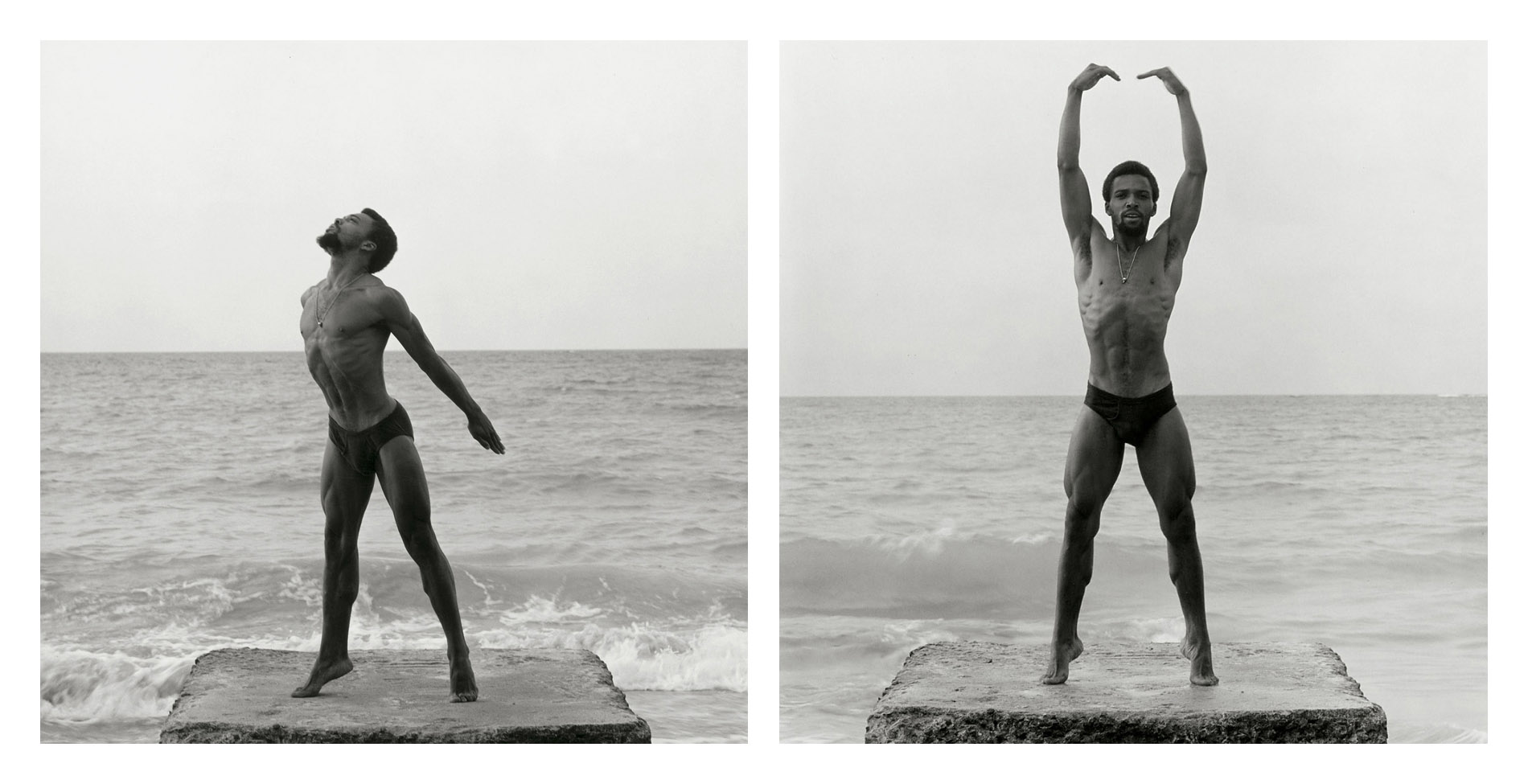
Robert Mapplethorpe (American, 1946-1989)
Milton Moore
1981
50.8 x 40.6cm / 50.8 x 40.6cm
Silver gelatin prints
New York, Fondation Robert Mapplethorpe
© Robert Mapplethorpe Foundation. Used by permission
“I have boundless admiration for the naked body. I worship it.”
“I was a Catholic boy, I went to church every Sunday. A church has a certain magic and mystery for a child. It still shows in how I arrange things. It’s always little altars.”
“I am looking for perfection in form. I do that with portraits. I do it with cocks. I do it with flowers.”
Robert Mapplethorpe
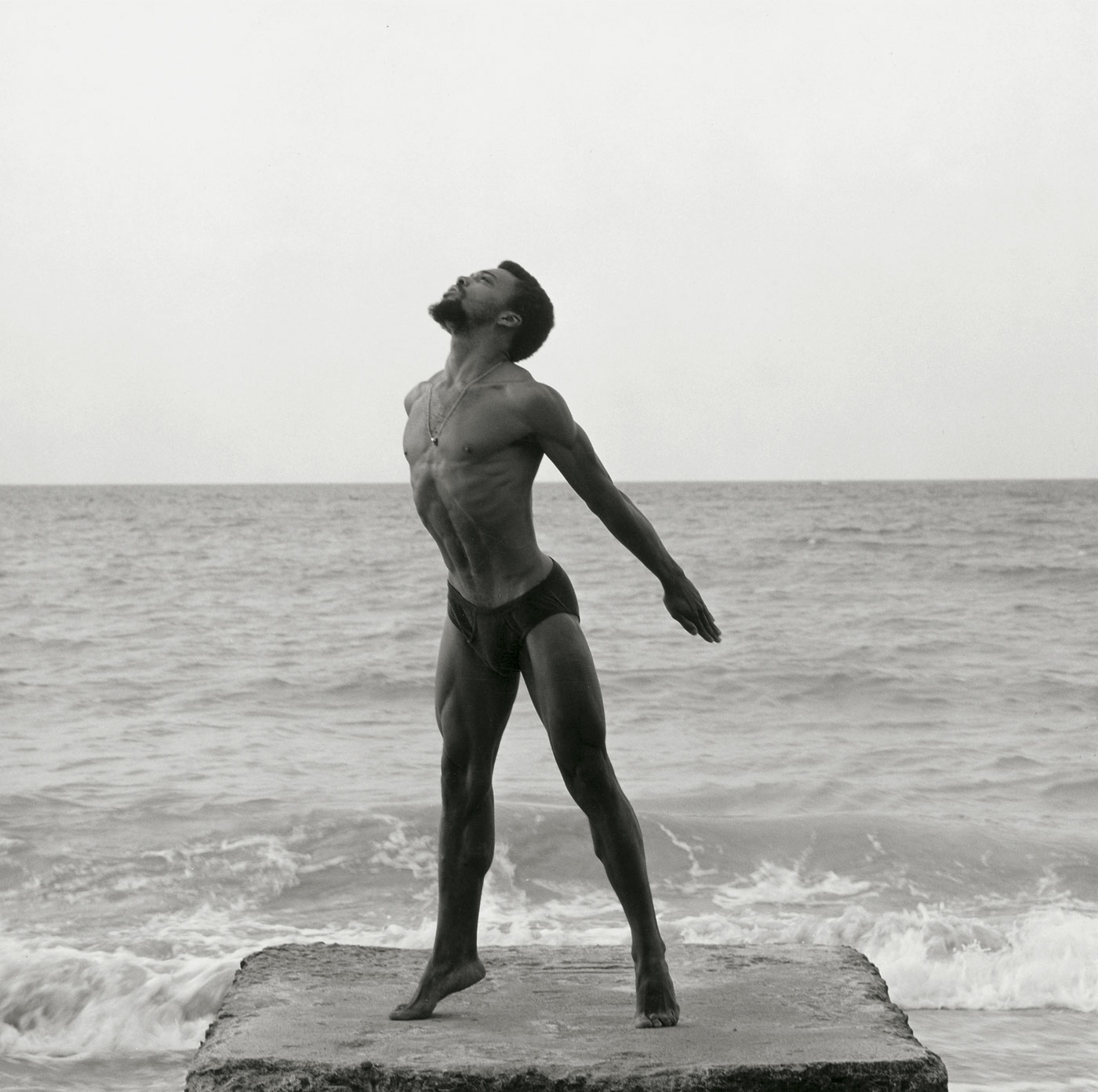
Robert Mapplethorpe (American, 1946-1989)
Milton Moore (detail)
1981
50.8 x 40.6cm
Silver gelatin print
New York, Fondation Robert Mapplethorpe
© Robert Mapplethorpe Foundation. Used by permission


Installation views of the exhibition Robert Mapplethorpe at the Grand Palais, Paris 2014
© Didier Plowy pour la Réunion des musées nationaux-Grand Palais, Paris 2014
The exhibition will present over 250 works making it one of the largest retrospective shows for this artist ever held in a museum. It will cover Mapplethorpe’s entire career as a photographer, from the Polaroids of the early 1970s to the portraits from the late 1980s, touching on his sculptural nudes and still lifes, and sadomasochism.
The focus on his two muses Patti Smith and Lisa Lyon explores the theme of women and femininity and reveals a less known aspect of the photographer’s work. The challenge of this exhibition is to show that Mapplethorpe is a great classical artist, who addressed issues in art using photography as he might have used sculpture. It also puts Mapplethorpe’s art into the context of the New York art scene in the 1970-1980s.
In his interview with Janet Kardon in 1987, Mapplethorpe explained that photography in the 1970s was the perfect medium for a fast-paced time. He did not really choose photography; in a way it was photography that chose him. Later in the same interview, he said “If I had been born one hundred or two hundred years ago, I might have been a sculptor, but photography is a very quick way to see, to make a sculpture. Lisa Lyon reminded me of Michelangelo’s subjects, because he did muscular women.”
Mapplethorpe positioned himself from the outset as an Artist, with a capital A. Unlike Helmut Newton, who as a teenager already wanted to be a fashion photographer, and imposed his vision of the world and photography, making it an art in its own right, Robert Mapplethorpe is a sculptor at heart, a plastic artist driven by the question of the body and its sexuality and obsessed by the search for perfect form.
Like Man Ray, Mapplethorpe wanted to be “a creator of images” rather than a photographer, “a poet” rather than a documentarist. In the catalogue for the Milan exhibition which compared the two artists, Bruno Cora recalls the parallels in their lives and works: “Before becoming masterly photographers, Man Ray and Mapplethorpe had both been painters and sculptors, creators of objects; they both lived in Brooklyn in New York; they both made portraits of the intellectuals of their time; and they were both incisive explorers of the nude form, its sculptural qualities and the energy emanating from it.”
Mapplethorpe was an artist before being a photographer. His images come from a pictorial culture in which we find Titian (The Flaying of Marsyas / Dominick and Elliot), David, Dali, and even the great artists of the Italian Renaissance, Michelangelo, Piero della Francesca, Bernini …
As in Huysmans’s novel, the exhibition is a countdown for this other dandy from the end of another world, Robert Mapplethorpe. It starts with his self-portrait with a skull-headed cane, the image of a young man already old, the tragedy of a life cut down in full flight by AIDS. But his almost royal final posture, as if beyond death, still (just) alive but already in the posterity of his oeuvre, seems to beckon us with a gesture of his pastoral cane to follow him into the world that he constructed in twenty years of photography. The exhibition continues with statuary, a dominant theme in Mapplethorpe’s last years, photos of statues of the gods in his personal pantheon: Eros, of course, and Hermes … The artist always said he used photography to make sculptures, and he ended his oeuvre with photographs of sculptures. His nudes were already photographic sculptures.
Works are not created just anywhere. To be fully appreciated, Mapplethorpe’s art must be put into the socio-cultural context of arty New York in the 1970s and 80s, and the underground gay culture there at that time. Two permeable and equally radical worlds. To take the measure of the libertarian explosion of the time, we need to watch Flesh, Warhol’s film with Joe Dalessandro, which narrates 24 hours in the life of a young New York male prostitute. To understand the violence and passion of gay sexuality for young New Yorkers fighting for freedom in a repressive period, we must read Edmund White’s The Beautiful Room is Empty, the story of a young gay in the years of riots and demonstrations and extreme emancipation; and Andrew Holleran’s Dancer from the Dance (1978), to plunge into the sexual experiments of Fire Island in the 1970s.
Mapplethorpe is hailed as one of the world’s greatest photographers and the exhibition aims to give a broad view of his work.
Press release from the Grand Palais website
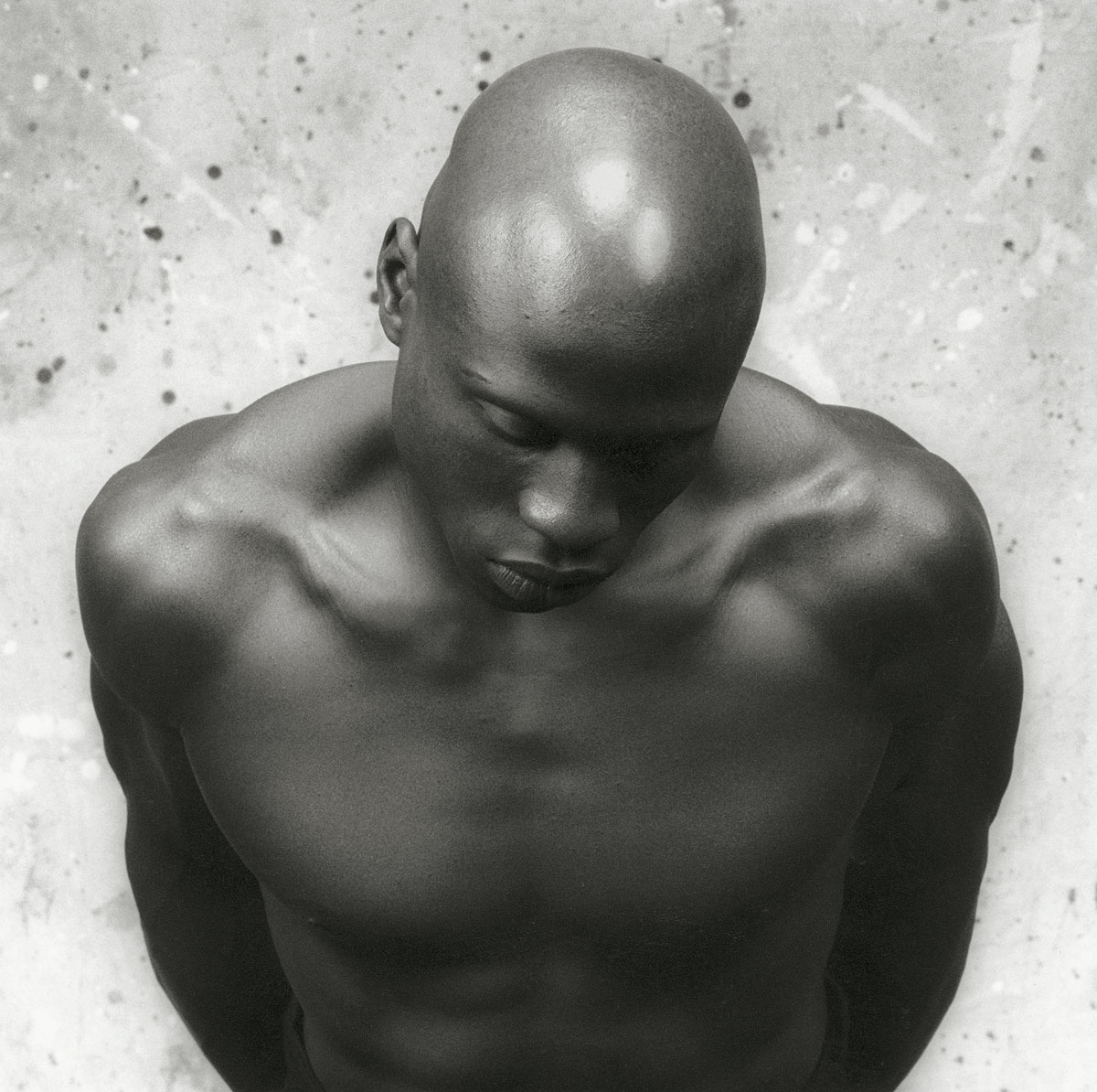
Robert Mapplethorpe (American, 1946-1989)
Ken Moody
1983
50.8 x 40.6cm
Silver gelatin print
New York, Fondation Robert Mapplethorpe
© Robert Mapplethorpe Foundation. Used with permission
Introductory text
Robert Mapplethorpe was an artist with an obsessive quest for aesthetic perfection.
A sculptor at heart, and in his imagination, he wanted “people to see [his] works first as art and second as photography.”1 An admirer of Michelangelo, Mapplethorpe championed the classical ideal – revised and reworked for the libertarian New York of the 1970s – and explored sophisticated printing techniques to create unique works and mixed compositions, which he framed in unusual ways.
Like the novel by Joris-Karl Huysmans, this exhibition has been organised “À rebours” [against the nap] and examines the work of another dandy, living at the end of another world. It opens with Mapplethorpe’s self-portrait with the skull-head cane: the image of a young man, already old, tragically cut down in the prime of life by AIDS, it also reveals how the master of the realm of shadows – photography – gave free rein to his imagination. Like a modern day Orpheus, beyond death, he seems alive – although only just – yet already in the afterlife of his work, beckoning us with his satanic cane to follow him into the underworld of his life, in search of his desire.
“Photography and sexuality have a lot in common,” explains Mapplethorpe. “Both are question marks, and that’s precisely what excites me most in life.”2 Exploring the photography of the body, he pushed it to the limits of pornography, perhaps like no other artist before him. The desire we see in these images – often the photographer’s own desire – also reflects life in New York, as lived by some, in the 1970s and 80s, at the height of the sexual liberation movement. “I’m trying to record the moment I’m living in and where I’m living, which happens to be in New York. I am trying to pick up on the madness and give it some order.”3
This retrospective of Mapplethorpe’s work – the first in France since he passed away – features some two hundred and fifty images exploring a range of themes. They cover every aspect of Mapplethorpe’s art – bronze bodies and flesh sculptures, geometric and choreographic, still lives and anatomical details, bodies as flowers and flowers as bodies, court portraiture, night photography, and eroticism, soft and hard – interspersed with self-portraiture in all its forms. The works from the photographer’s early career, which close the exhibition, reveal how the path taken by his art was already mapped out in his first Polaroids. The sign of a great artist.
1/ Inge Biondi, “The Yin and the Yang of Robert Mapplethorpe,” in The Print Collector’s Newsletter, New York, January 1979, p. 11
2/ Mark Thompson, “Mapplethorpe,” in The Advocate, Atlanta, 24 July 1980
3/ Sarah Kent, “Mapplethorpe,” in Time Out, London, 3-9 November 1983
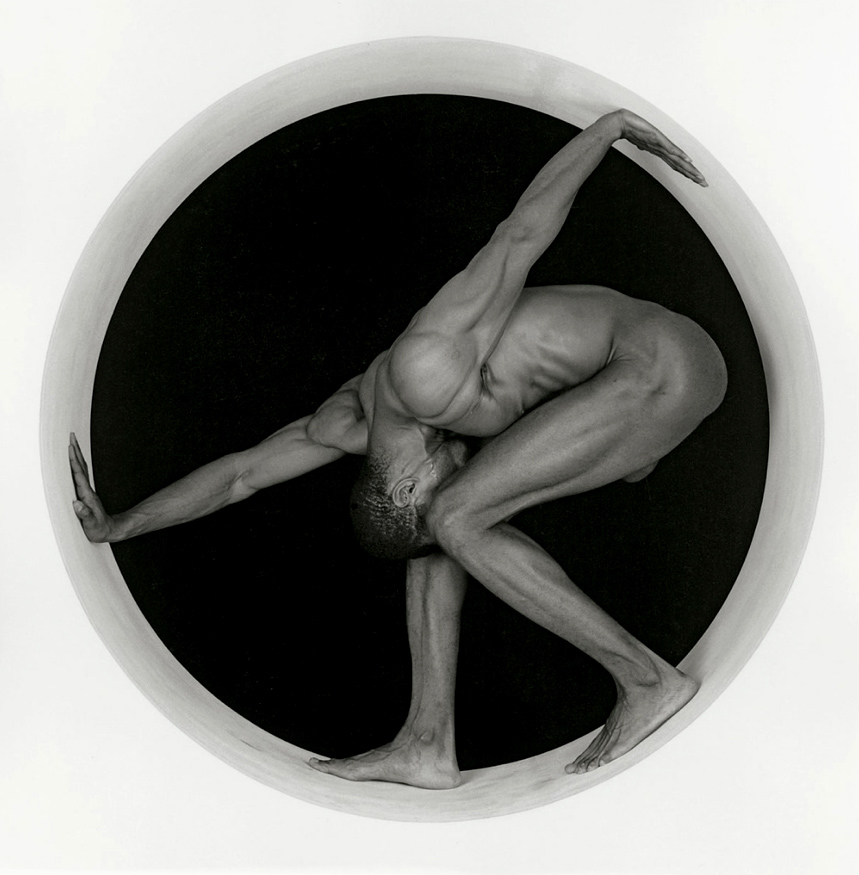
Robert Mapplethorpe (American, 1946-1989)
Thomas
1987
61 x 50.8cm
Silver gelatin print
New York, Fondation Robert Mapplethorpe
© Robert Mapplethorpe Foundation. Used with permission

Robert Mapplethorpe (American, 1946-1989)
Calla Lily
1986
92.7 x 92.7cm
Silver gelatin print
© Robert Mapplethorpe Foundation. Used with permission
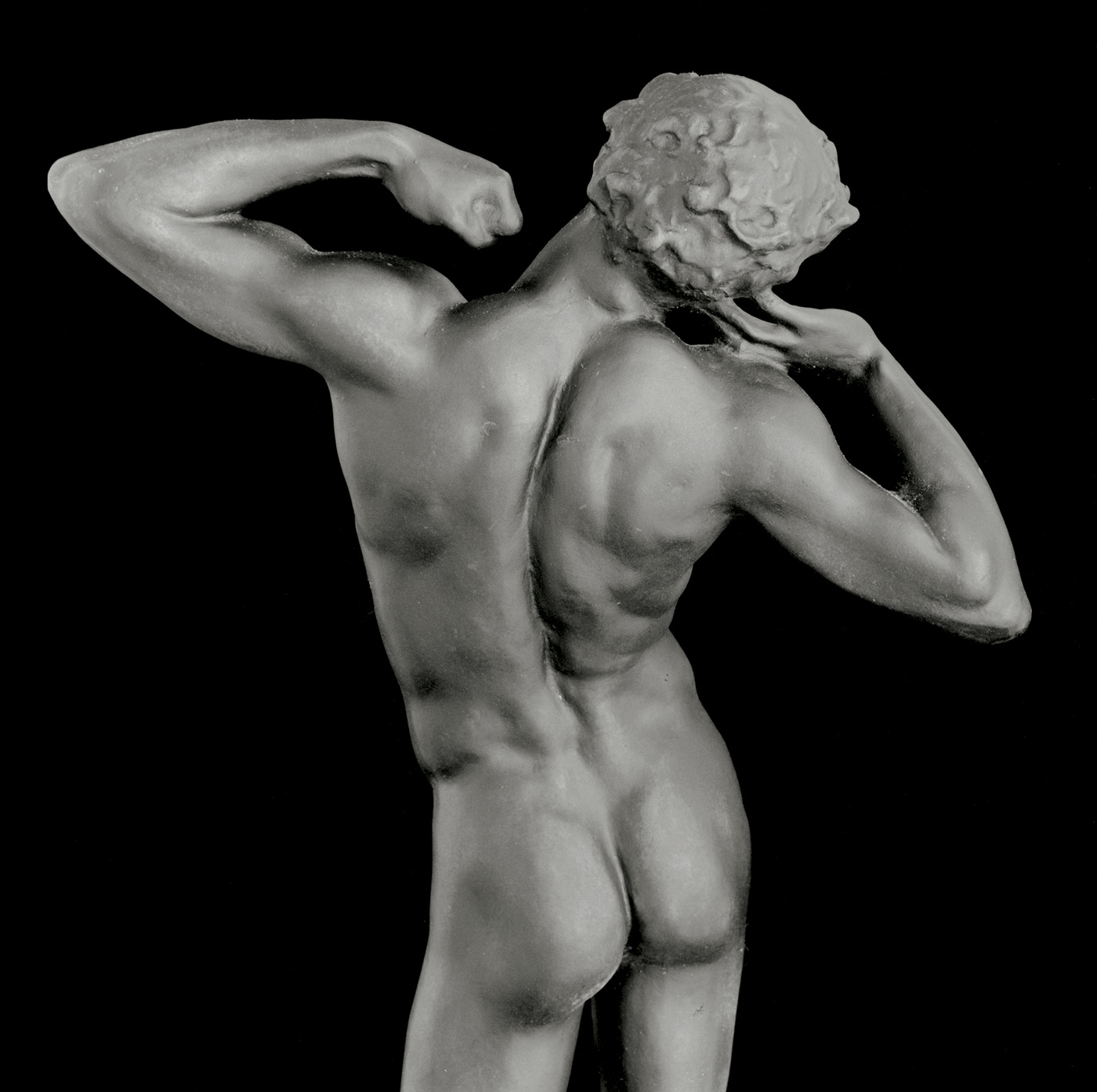
Robert Mapplethorpe (American, 1946-1989)
The Sluggard (Le Paresseux)
1988
61 x 50.8cm
Silver gelatin print
New York, Fondation Robert Mapplethorpe
© Robert Mapplethorpe Foundation. Used with permission

Robert Mapplethorpe (American, 1946-1989)
Self-portrait (Autoportrait)
1988
61 x 50.8cm
Platinum print
© Robert Mapplethorpe Foundation. Used with permission
Grand Palais, Galeries Nationales
3, Avenue du Général Eisenhower
75008 Paris
Opening hours:
Wednesday – Saturday 10am – 10pm
Monday and Sunday 10am – 8pm
Closed every Tuesday




 Art Blart _ art and cultural memory archive
You must be logged in to post a comment.