Exhibition: ‘Photography – A Victorian Sensation’ at the National Museum of Scotland, Edinburgh

Exhibition dates: 19th June – 22nd November 2015


William Henry Fox Talbot (English, 1800-1877) 'The Open Door' 1844-1846


William Henry Fox Talbot (English, 1800-1877)
The Open Door
1844-1846
Salt print from a calotype negative
Plate VI from the Pencil of Nature, the first book to be illustrated with photographs
© National Museums Scotland


In our contemporary image-saturated, comprehensively mediated way of life it is difficult for us to understand how “sensational” photography would have been in the Victorian era. Imagine never having seen a photograph of a landscape, city or person before. To then be suddenly presented with a image written in light, fixed before the eye of the beholder, would have been a profoundly magical experience for the viewer. Here was a new, progressive reality imaged for all to see. The society of the spectacle as photograph had arrived.

Here was the expansion of scopophilic society, our desire to derive pleasure from looking. That fetishistic desire can never be completely fulfilled, so we have to keep looking again and again, constantly reinforcing the ocular gratification of images. Photographs became shrines to memory. They also became shrines to the memory of desire itself.

Dr Marcus Bunyan


Many thankx to the National Museum of Scotland for allowing me to publish the photographs in the posting. Please click on the photographs for a larger version of the image.


Hill and Adamson


Dr Sara Stevenson, photo historian, talks about the origins of Hill and Adamson’s partnership and their photography skills.


Scottish daguerreotypes


Dr Alison Morrison Low, Principal Curator of Science, National Museums Scotland, talks about daguerreotype portraits in Scotland and the work of Thomas Davidson.


Amateur photographers: Julia Margaret Cameron


Anne Lyden, International Photography Curator, National Galleries of Scotland, talks about photographer Julia Margaret Cameron.


George Washington Wilson


Emeritus Professor Roger Taylor talks about George Washington Wilson’s life and work.


TR Williams


Dr Brian May, CBE, musician and collector of stereo-photography talks about the photography of TR Williams.


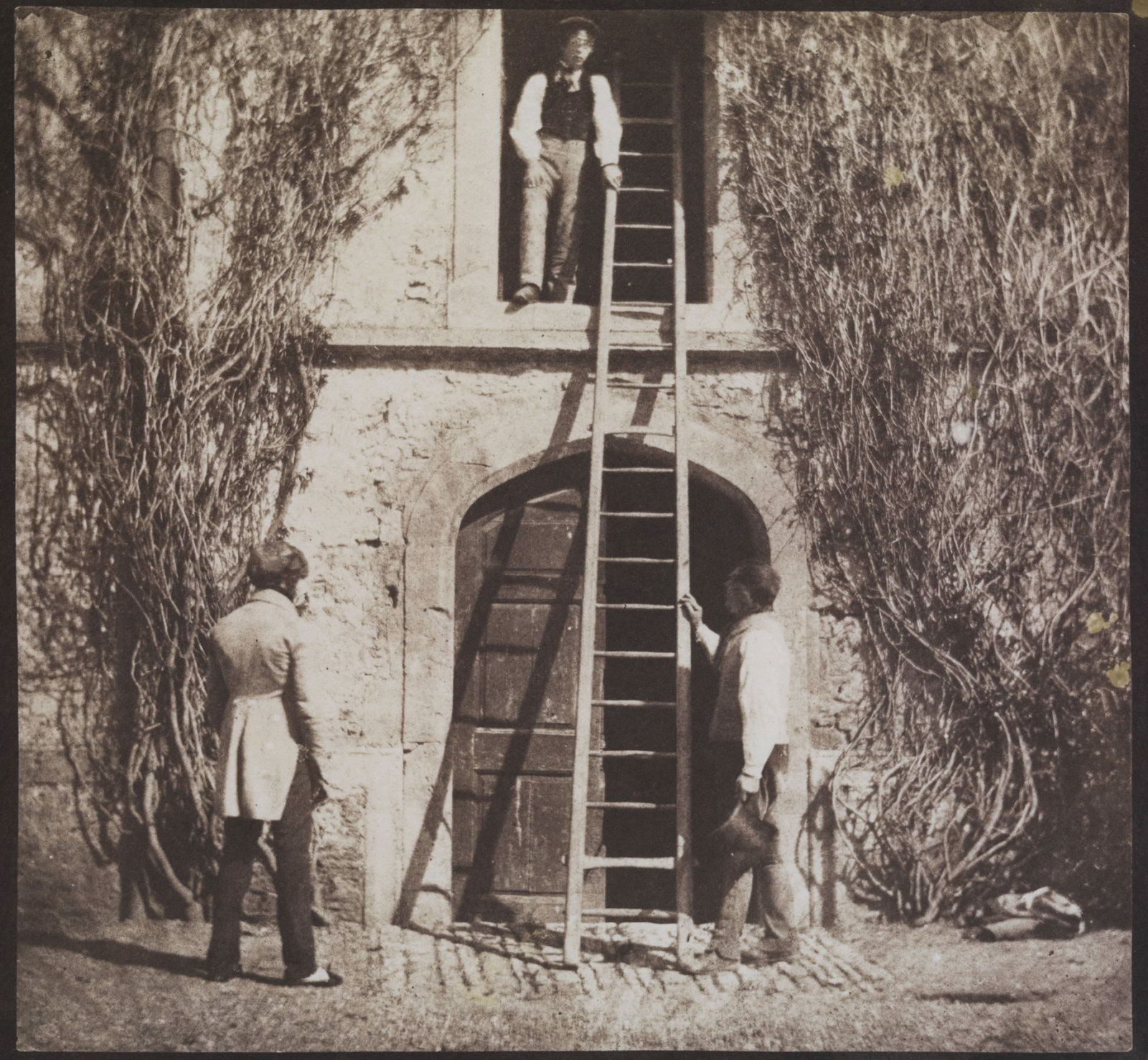
William Henry Fox Talbot (English, 1800-1877) 'The Ladder' 1844-1846


William Henry Fox Talbot (English, 1800-1877)
The Ladder
1844-1846
Salt print from a calotype negative
Plate XIV from the Pencil of Nature, the first book to be illustrated with photographs
© National Museums Scotland


Calotype images are not as pin-sharp as daguerreotypes, but they had one great advantage: more than one image could be produced from a single negative. Yet both processes were cumbersome and very expensive. What was needed was a faster, cheaper method to really fuel the fire of Victorian photomania.


Daguerreotype camera, made by A Giroux et Cie, 1839


Giroux et Cie
Daguerreotype camera
1839
© National Museums Scotland


This camera was bought by WHF Talbot in October 1839.


William Henry Fox Talbot (English, 1800-1877) 'Talbot's home-made camera' 1840s


William Henry Fox Talbot (English, 1800-1877)
Talbot’s home-made camera
1840s
© National Museums Scotland


Some of his early equipment appears to have been constructed to his design by the estate carpenter.
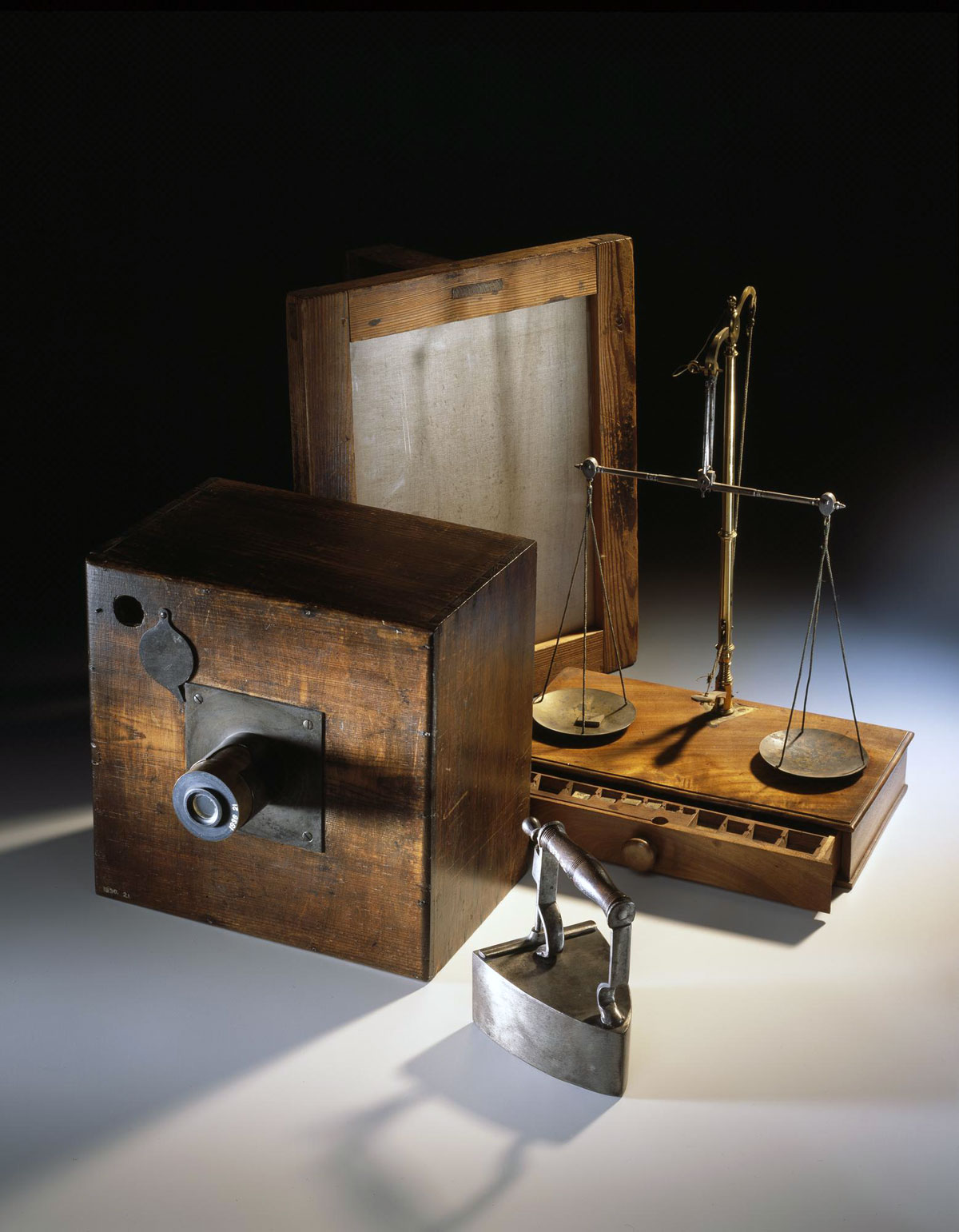
 

William Henry Fox Talbot (English, 1800-1877) 'Talbot's calotype photography equipment' c. 1840


William Henry Fox Talbot (English, 1800-1877)
Talbot’s calotype photography equipment
c. 1840
© National Museums Scotland


Camera, printing frame, small domestic iron and chemical balance.


Platt D Babbitt (American, 1822-1879) 'Niagara Falls from the American side' whole plate daguerreotype c.1855


Platt D Babbitt (American, 1822-1879)
Niagara Falls from the American side
c. 1855
Whole plate daguerreotype
Platt D Babbitt ensconced himself at a leading tourist spot beside Niagara Falls, from 1853
© Howarth-Loomes Collection at National Museums Scotland


Platt D Babbitt (American, 1822-1879) 'Niagara Falls from the American side' c. 1855 (detail)


Platt D Babbitt (American, 1822-1879)
Niagara Falls from the American side (detail)
c. 1855
Whole plate daguerreotype
© Howarth-Loomes Collection at National Museums Scotland


Platt D Babbitt ensconced himself at a leading tourist spot beside Niagara Falls, from 1853.
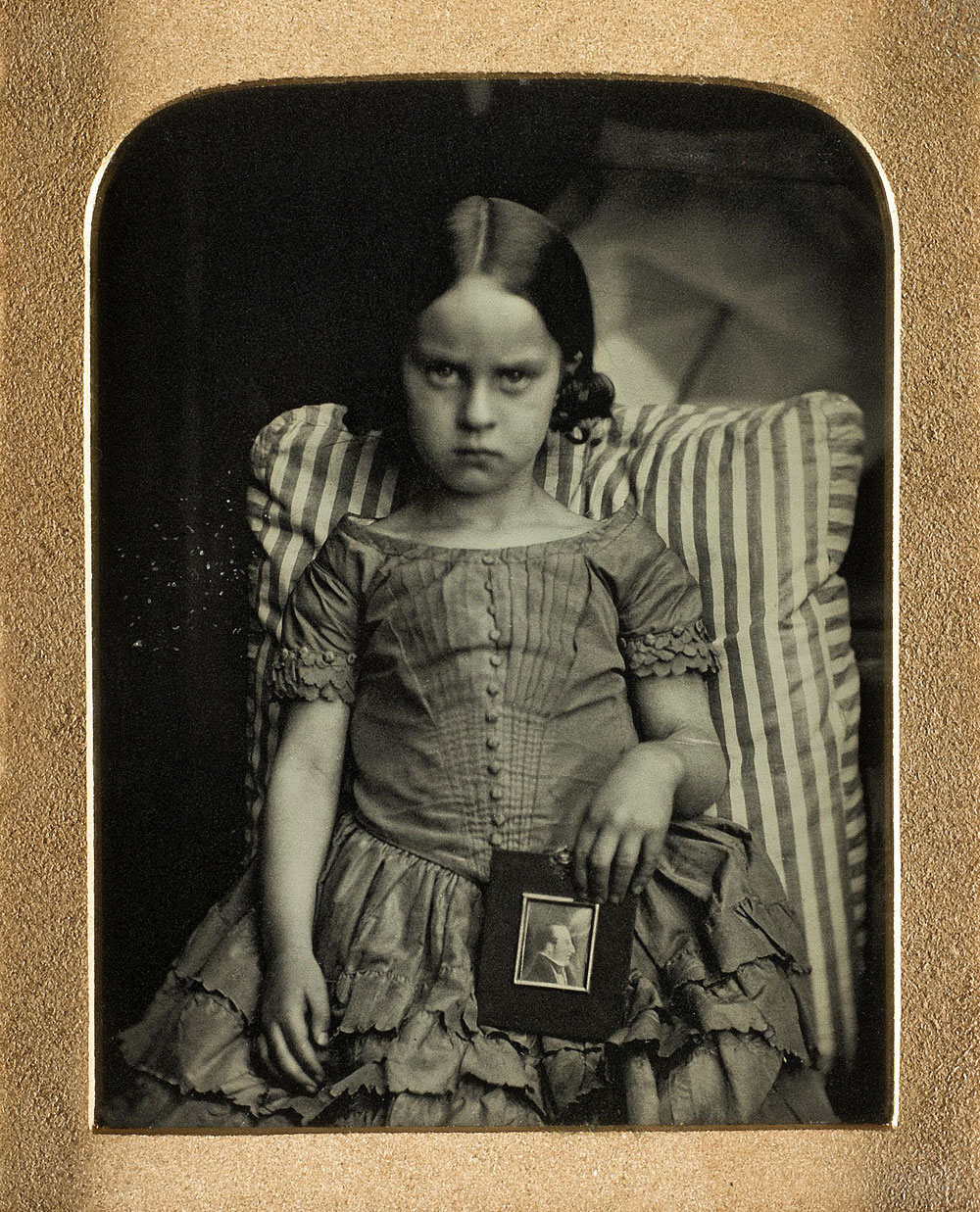
 

Ross and Thomson of Edinburgh. 'Unknown little girl sitting on a striped cushion holding a framed portrait of a man, possibly her dead father' 1847-1860


Ross and Thomson of Edinburgh
Unknown little girl sitting on a striped cushion holding a framed portrait of a man, possibly her dead father
1847-1860
Ninth-plate daguerreotype
© Howarth-Loomes Collection at National Museums Scotland
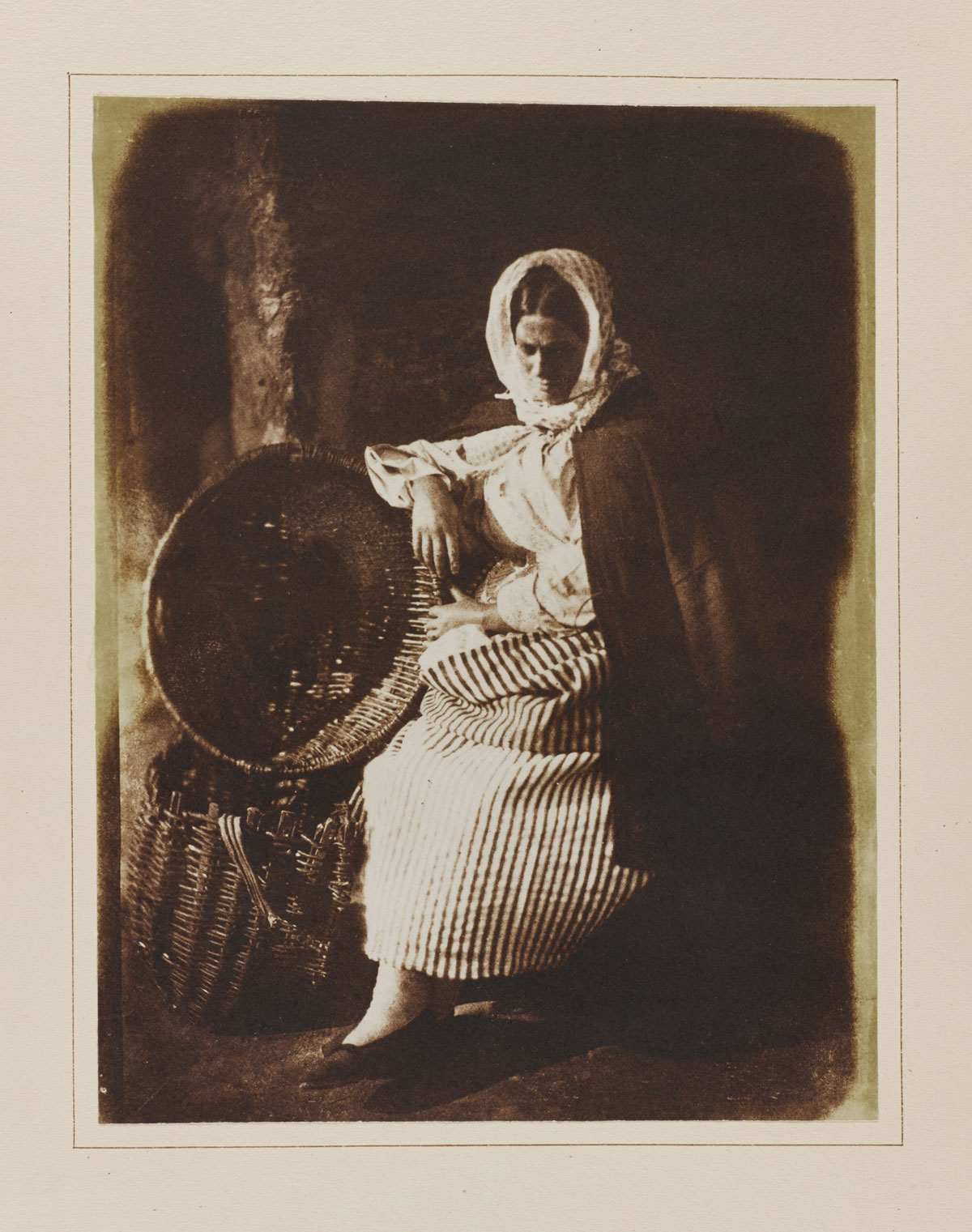
 

D.O. Hill (Scottish, 1802-1870) and Robert Adamson (Scottish, 1821-1848) 'Mrs Elizabeth (Johnstone) Hall, a Newhaven fishwife, famous for her beauty and self-confidence' 1843-1848


D.O. Hill (Scottish, 1802-1870) and Robert Adamson (Scottish, 1821-1848)
Mrs Elizabeth (Johnstone) Hall, a Newhaven fishwife, famous for her beauty and self-confidence
1843-1848
From an album presented by Hill to the Society of Antiquaries of Scotland in 1850
Salt print from a calotype negative,
© National Museums Scotland


Robert Howlett (British, 1831-1858) 'Isambard Kingdom Brunel Standing Before the Launching Chains of the Great Eastern' November 1857


Robert Howlett (British, 1831-1858)
Isambard Kingdom Brunel Standing Before the Launching Chains of the Great Eastern]
November 1857
Carte-de-visite
Sold by the London Stereoscopic Company
© Howarth-Loomes Collection at National Museums Scotland


Calotype photographs from an album compiled by Dr John Adamson, among the earliest in Scotland


Calotype photographs from an album compiled by Dr John Adamson, among the earliest in Scotland


Photograph burnt in on glass, a group of workmen, Paris 1858


Photograph burnt in on glass, a group of workmen, Paris 1858


A major exhibition at the National Museum of Scotland explores the Victorian craze for photography and examine how it has influenced the way we capture and share images today, when more photographs are taken in two minutes than were taken in the whole of the 19th century. Photography: A Victorian Sensation takes visitors back to the very beginnings of photography in 1839, tracing its evolution from a scientific art practised by a few wealthy individuals to a widely available global phenomenon, practised on an industrial scale.

The exhibition showcases National Museums Scotland’s extensive early photographic collections, including Hill and Adamson’s iconic images of Victorian Edinburgh, and the Howarth-Loomes collection, much of which has never been publicly displayed. Highlights include an early daguerreotype camera once owned by William Henry Fox Talbot; an 1869 photograph of Alfred, Lord Tennyson by Julia Margaret Cameron; a carte-de-visite depicting Queen Victoria and Prince Albert as a middle-class couple and an early daguerreotype of the Niagara Falls. The exhibition covers the period from 1839 to 1900, by which point photography had permeated the whole of society, becoming a global sensation. Images and apparatus illustrate the changing techniques used by photographers and studios during the 19th century, and the ways in which photography became an increasingly accessible part of everyday life.

From the pin-sharp daguerreotype and the more textured calotype process of the early years, to the wet collodion method pioneered in 1851, photography developed as both a science and an art form. Visitors can follow the cross-channel competition between photographic trailblazers Louis Daguerre and William Henry Fox Talbot, enter the world of the 1851 Great Exhibition and snap their own pictures inside the photographer’s studio. They can also discover the fascinating stories of some of the people behind hundreds of Victorian photographs. These range from poignant mementos of loved ones to comical shots and early attempts at image manipulation. Photographs of family members were important mementos for Victorians and on display is jewellery incorporating both images of deceased loved ones and elaborately woven locks of their hair.

Sharing images of loved ones drove the craze for collecting cartes-de-visite. The average middle class Victorian home would have had an album full of images of friends and family members as well as never-before-seen famous faces ranging from royalty to well-known authors and infamous criminals. Such images sold in their hundreds of thousands. Also hugely popular were stereoscopes, relatively affordable devices which allowed people to view 3D photographs of scenes from around the world from the comfort of their own homes. On display are a range of ornate stereoscopes as well as early photographs showing views from countries ranging from Egypt to Australia. The increasing affordability of photographs fuelled the demand for the services of photographic studios, and visitors have the opportunity to get a taste of a Victorian studio by posing for their own pictures. They also have the chance to see typical objects from the photographer’s studio, including a cast iron head rest, used to keep subjects still for a sufficient period of time to capture their image.

Alison Morrison Low, Principal Curator of Science at National Museums Scotland commented: “Just as today we love to document the world around us photographically, so too were the Victorians obsessed with taking and sharing photographs. Photography: A Victorian Sensation will transport visitors back to the 19th century, linking the Victorian craze for photography with the role it plays in everyday life today. The period we’re examining may be beyond living memory, but the people featured in these early images are not so different from us.”

A book, Scottish Photography: The First 30 Years by Sara Stevenson and Alison Morrison-Low has been published by NMSEnterprises Publishing to accompany Photography: A Victorian Sensation.

Text from the National Museum of Scotland website
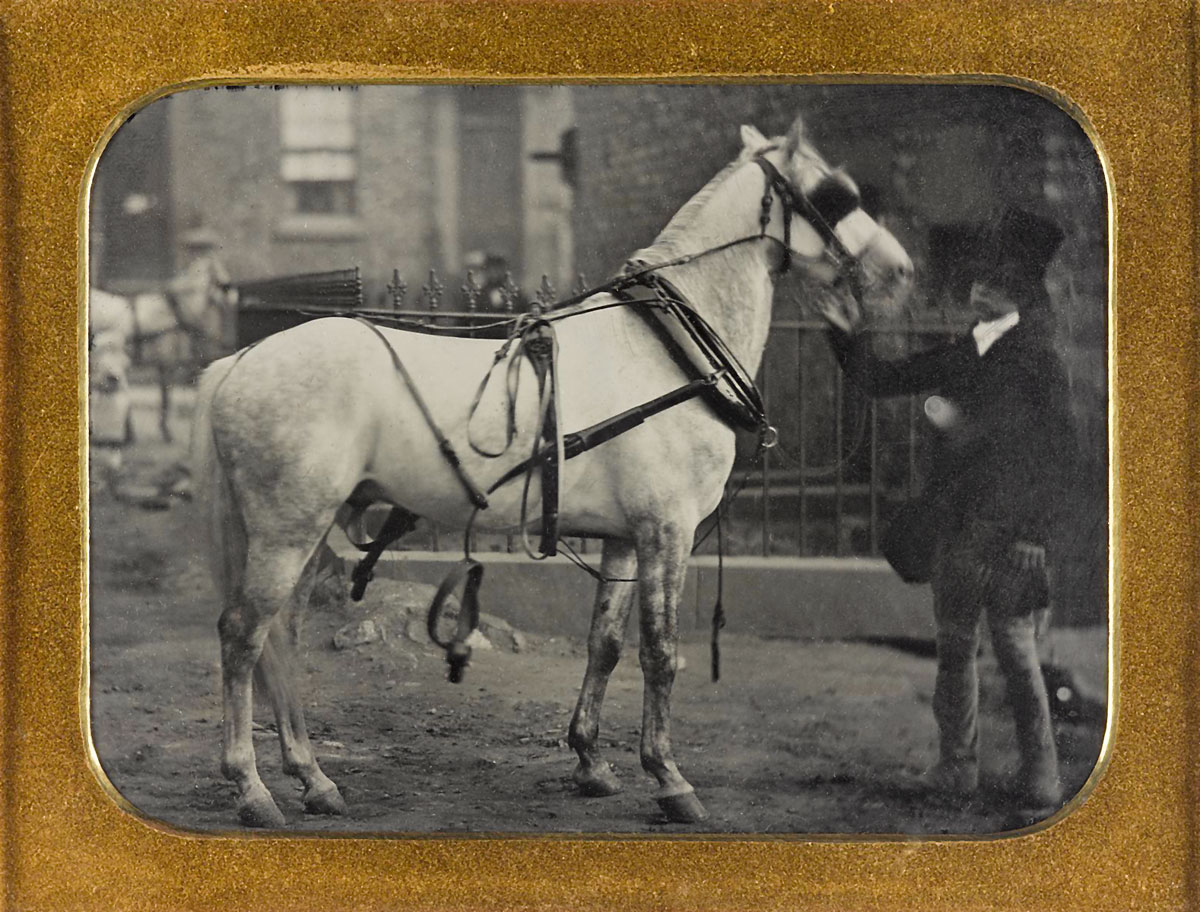
 

Taken by a photographer of the London School of Photography, based at Newgate Street and Regent Circus, London. 'Portrait of a horse held by a groom' 1858-1860


Taken by a photographer of the London School of Photography, based at Newgate Street and Regent Circus, London
Portrait of a horse held by a groom
1858-1860
Quarter- plate ambrotype
© Howarth-Loomes Collection at National Museums Scotland


George Washington Wilson (Scottish, 1823-1893) 'Balmoral Castle from the N.W.' 1863


George Washington Wilson (Scottish, 1823-1893)
Balmoral Castle from the N.W.
1863
Stereo albumen prints from a wet collodion negative
© Howarth-Loomes Collection at National Museums Scotland


Staff photographer of the London Stereoscopic and Photographic Company (probably William England). 'The Armstrong Trophy and Naval Court' 1862


Staff photographer of the London Stereoscopic and Photographic Company (probably William England)
The Armstrong Trophy and Naval Court
1862
Stereo albumen prints from a wet collodion negative
From the series of International Exhibition of 1862, No. 133
© Howarth-Loomes Collection at National Museums Scotland


It shows material lent to the exhibition by the Northern Lighthouse Board, Edinburgh, now in the collections of National Museums Scotland.


Mayall, London & Brighton. 'The Queen, gazing at a bust of Prince Albert, together with the Prince and Princess of Wales, married 10 March 1863' 1863


Mayall, London & Brighton
The Queen, gazing at a bust of Prince Albert, together with the Prince and  Princess of Wales, married 10 March 1863
1863
Carte-de-visite
© Howarth-Loomes Collection at National Museums Scotland
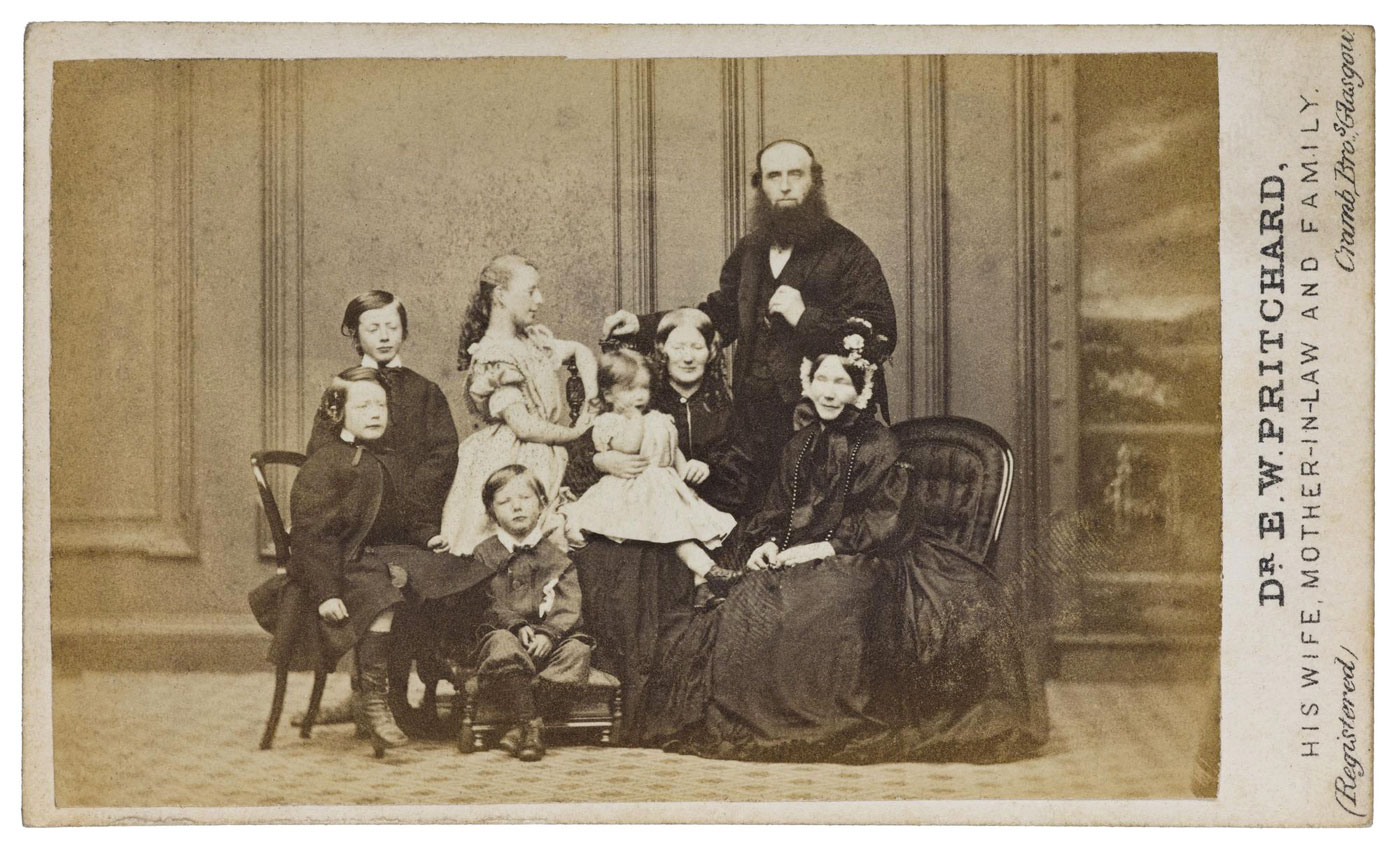
 

Cramb Brothers, of Glasgow. 'Dr E W Pritchard, His Wife, Mother-in-Law and Family' 1865


Cramb Brothers, of Glasgow
Dr E W Pritchard, His Wife, Mother-in-Law and Family
1865
Carte-de-visite
© Howarth-Loomes Collection at National Museums Scotland


Edward William Pritchard (1825-1865) was notorious for poisoning with antimony his wife and mother-in-law, both seen in this family portrait in happier days. He was the last person to be publicly executed in Glasgow.
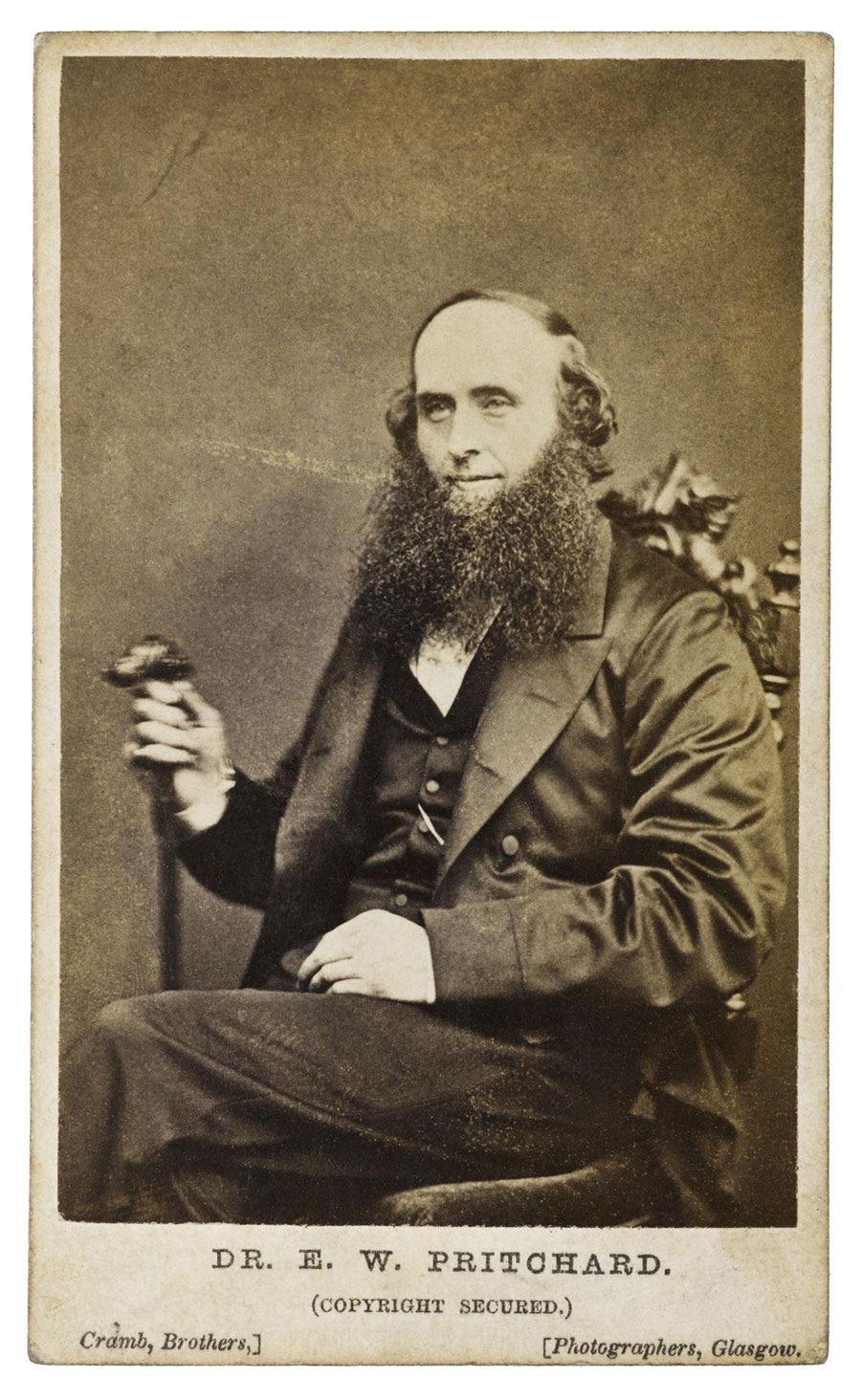
 

Cramb Brothers, of Glasgow. 'Dr E W Pritchard' 1865


Cramb Brothers, of Glasgow
Dr E W Pritchard
1865
Carte-de-visite
© Howarth-Loomes Collection at National Museums Scotland


Cramb Brothers advertised this image, Price 1 shilling each. They stated: These Portraits are all Copyright, and bear the Publishers’ Names. Legal Proceedings will be taken against any one offering Pirated Copies for Sale.


Marcus Guttenberg (British born Poland, 1828-1891) 'Portrait group of four unidentified children' 1860s-1870s


Marcus Guttenberg (British born Poland, 1828-1891)
Portrait group of four unidentified children
1860s-1870s
Carte-de-visite
© Howarth-Loomes Collection at National Museums Scotland


Elliot & Fry, 55 Baker Street, Portman Square, London. 'Alfred, Lord Tennyson' 1865-1886


Elliot & Fry, 55 Baker Street, Portman Square, London
Alfred, Lord Tennyson
1865-1886
Carte-de-visite
© Howarth-Loomes Collection at National Museums Scotland


Tennyson (1809-1892) became Poet Laureate in 1850, after the death of William Wordsworth; his poems In Memoriam (1850) and Idylls of the King (1859) were hugely popular during Victorian times, but less so today.


Julia Margaret Cameron (British born India, 1815-1879) 'Alfred Tennyson' 3 June 1870


Julia Margaret Cameron (British born India, 1815-1879)
Alfred Tennyson
3 June 1870
Albumen print from a wet collodion negative
© Howarth-Loomes Collection at National Museums Scotland


Henry Frederick Van Der Weyde, 182 Regent Street, London (English born Holland, 1838-1924) 'Richard Mansfield as Dr Jekyll and Mr Hyde' c. 1888


Henry Frederick Van Der Weyde, 182 Regent Street, London (English born Holland, 1838-1924)
Richard Mansfield as Dr Jekyll and Mr Hyde
c. 1888
© Howarth-Loomes Collection at National Museums Scotland


Mansfield made his name in the title role of R.L. Stevenson’s novella, made into a play and shown in London in 1888.


Henry Frederick Van Der Weyde, 182 Regent Street, London (English born Holland, 1838-1924) 'Richard Mansfield as Dr Jekyll and Mr Hyde' c. 1888 (detail)


Henry Frederick Van Der Weyde, 182 Regent Street, London (English born Holland, 1838-1924)
Richard Mansfield as Dr Jekyll and Mr Hyde (detail)
c. 1888
© Howarth-Loomes Collection at National Museums Scotland


Francis Bedford (English, 1815-1894) 'Lydstep – the Natural Arch' 1860s


Francis Bedford (English, 1815-1894)
Lydstep – the Natural Arch
1860s
Half of a stereoscopic albumen print
From his series South Wales Illustrated
© Howarth-Loomes Collection at National Museums Scotland
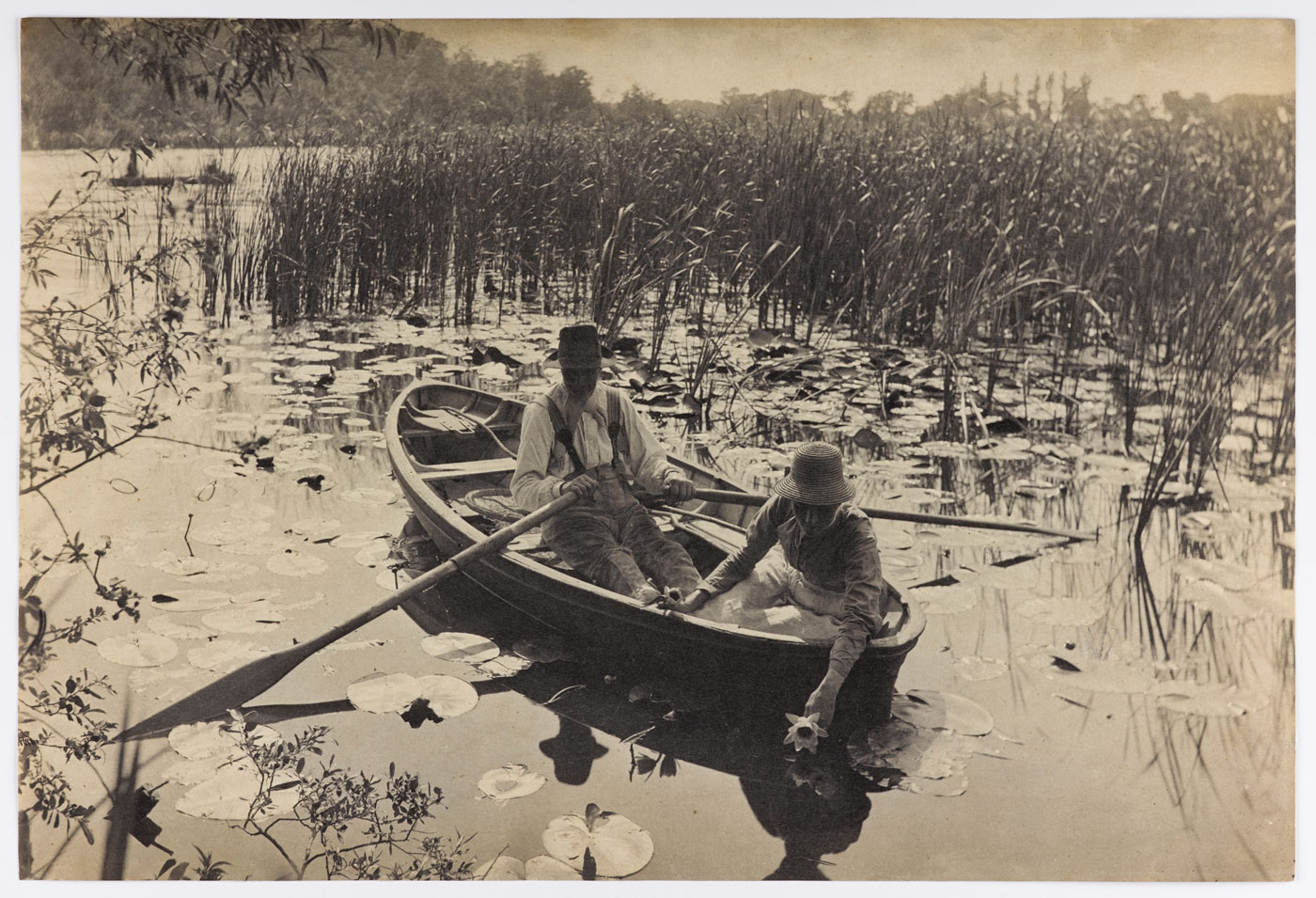
 

Peter Henry Emerson (British, 1856-1936) 'Gathering Water Lilies' 1886


Peter Henry Emerson (British, 1856-1936)
Gathering Water Lilies
1886
Platinum print
© Howarth-Loomes Collection at National Museums Scotland


Peter Henry Emerson (British, 1856-1936) 'Gathering Water Lilies' 1886 (detail)


Peter Henry Emerson (British, 1856-1936)
Gathering Water Lilies (detail)
1886
Platinum print
© Howarth-Loomes Collection at National Museums Scotland


National Museum of Scotland
Chambers Street,
Edinburgh,
EH1 1JF
Phone: 0300 123 6789

Opening hours:
Daily: 10.00 – 17.00
Christmas Day: Closed
Boxing Day: 12.00 – 17.00
New Year’s Day: 12.00 – 17.00

National Museum of Scotland website

LIKE ART BLART ON FACEBOOK

Back to top

Exhibition: ‘The Lives of Great Photographers’ at The National Media Museum, Bradford

Exhibition dates: 15th April – 4th September 2011


Many thankx to The National Media Museum for allowing me to publish the photographs in the posting. Please click on the photographs for a larger version of the image.


Lady Clementina Hawarden (British, 1822-1865) 'Self Portrait' c. 1864


Lady Clementina Hawarden (British, 1822-1865)
Self Portrait
c. 1864
Albumen print
Courtesy of the National Media Museum/SSPL


Clementina, Lady Hawarden, is a poetic, if elusive, presence among nineteenth-century photographers. As a devoted mother, her life revolved around her eight children. She took up photography in 1857; using her daughters as models, she created a body of work remarkable for its technical brilliance and its original depiction of nascent womanhood.
Lady Hawarden showed her work in the 1863 and 1864 exhibitions of the Photographic Society. With the exception of a few rare examples, her photographs remained in the possession of her family until 1939, when the more than eight hundred images were donated to the Victoria and Albert Museum. Only recently have they been the objects of research, publication, and exhibition.

Text from The Metropolitan Museum of Art website


John Moffat (Scottish, 1819-1894) 'William Henry Fox Talbot with camera and lens' 1864


John Moffat (Scottish, 1819-1894)
William Henry Fox Talbot with camera and lens
1864


Julia Margaret Cameron (British born India, 1815-1879) 'Carlyle like a rough block of Michael Angelo's sculpture' 1867


Julia Margaret Cameron (British born India, 1815-1879)
Carlyle like a rough block of Michael Angelo’s sculpture
1867
Albumen print
Courtesy The Royal Photographic Society Collection at the National Media Museum/SSPL


Henry Herschel Hay Cameron (British born India, 1852-1911) 'Mrs Julia Margaret Cameron' 1870


Henry Herschel Hay Cameron (British born India, 1852-1911)
Mrs Julia Margaret Cameron
1870
Albument print
Courtesy of the National Media Museum/SSPL


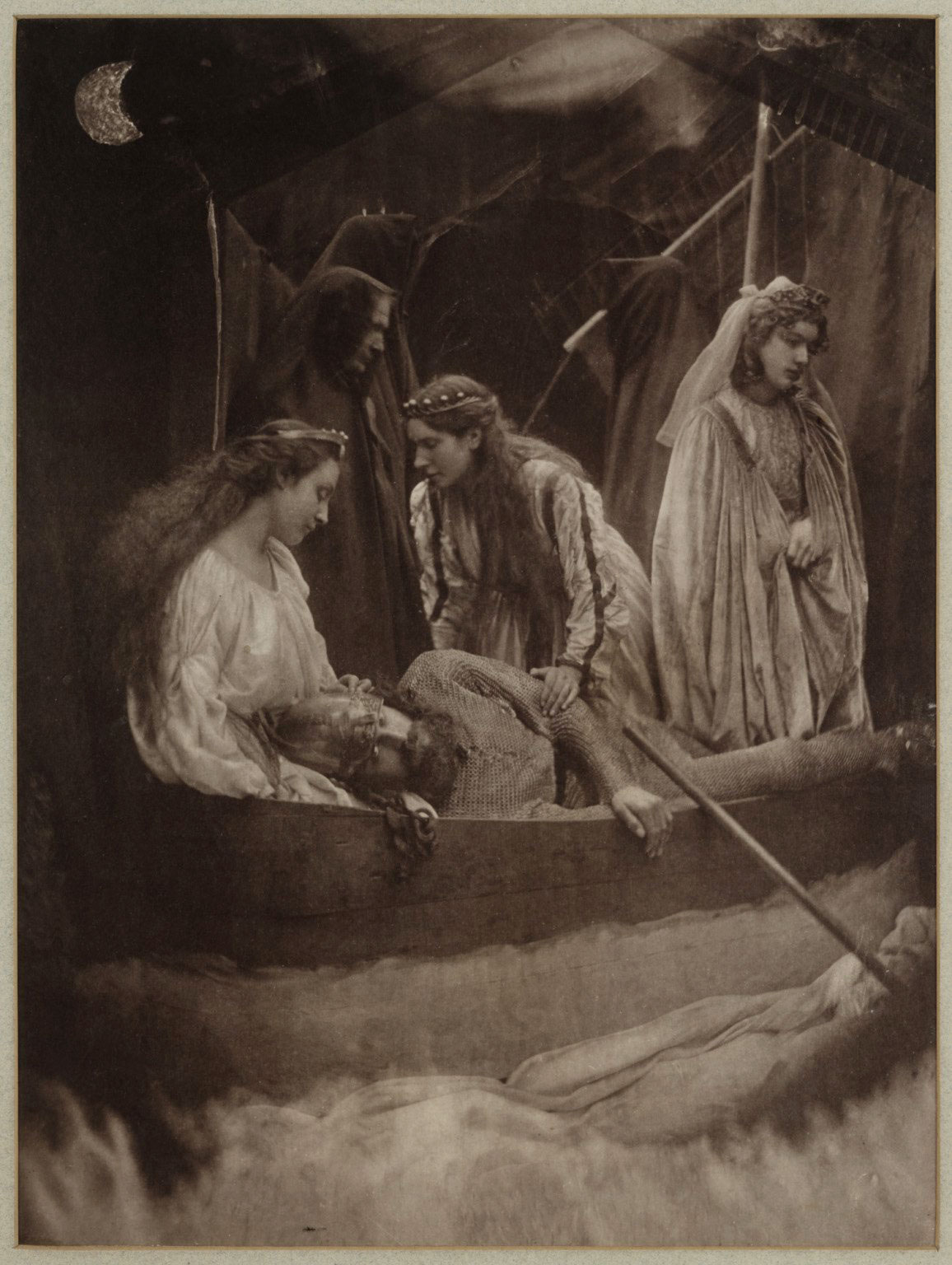
Julia Margaret Cameron (British born India, 1815-1879) 'So Like a Shatter'd Column Lay the King' 1875


Julia Margaret Cameron (British born India, 1815-1879)
So Like a Shatter’d Column Lay the King
1875
Albumen print
Courtesy of The Royal Photographic Society Collection at the National Media Museum


Photographers have created some of the most famous and memorable images ever produced, combining science and art since 1839. The Lives of Great Photographers, a free to enter exhibition at the National Media Museum in Bradford, draws on the Museum’s renowned collection to focus on the pioneers behind the camera, exploring the extraordinary stories surrounding some of photography’s most important innovators and artists.

Featuring Henri Cartier-Bresson, Julia Margaret Cameron, Robert Capa, William Henry Fox Talbot, Weegee, Tony Ray-Jones, Fay Godwin and Eadweard Muybridge, the exhibition will display iconic images and artefacts from these and other great names, selected exclusively from the National Collection of Photography.

Exhibition curator Brian Liddy said: “Photography has been with us for more than 170 years, and in that time countless famous photographs have been taken by many famous photographers. Often we may think we know these men and women because we know their work so well, but over time so many photographers’ personal stories have become overshadowed by their most famous pictures. This major exhibition aims to redress the balance.”

The show begins with an investigation into the rivalry between two of the medium’s earliest pioneers. Without Louis Jacques Mandé Daguerre and William Henry Fox Talbot, photography as it known today would not exist. Daguerre, a former theatrical designer, presented the photographic process to France and the world in 1839. Working in parallel and in competition, Talbot, who became an MP for Chippenham, went on to create the first negative from which multiple copy photographs could be produced.

As technology evolved, the breadth and range of photography increased, and the methods by which it could provide a source of income, or artistic expression, became more diverse. Julia Margaret Cameron, although primarily considered an artist, copyrighted her work and attempted to make a living by selling copies. Her personal connections gave her the opportunity to produce some of the first celebrity photographs in existence. Olive Edis employed photography as a serving war artist during the First World War and Edward Steichen’s career was remarkable for its variety as he moved effortlessly from art, to fashion, to advertising.

Photography also proved an ideal medium when it came to documenting world events. Lewis Hine and Dorothea Lange were both driven by their social consciences to record the Great Depression in America. Photojournalism, the cousin of documentary photography, is represented in the exhibition by names such as Henri Cartier-Bresson and Robert Capa, founding members of the world’s first photographic agency, Magnum. Both served in the Second World War and produced images that helped define an era.

One of the most notorious life stories is that of the English photographer Eadweard Muybridge. His pioneering work in chronophotography, whereby movement is captured by a sequence of photographic exposures, famously demonstrated that all four legs of a horse left the ground as it galloped. Until then the motion of a horse’s hooves were too quick for the human eye to determine. Perhaps less well known is the fact that Muybridge murdered his wife’s lover in cold blood but was later acquitted with a verdict of ‘justifiable homicide’.

The exhibition also includes Roger Fenton, Lady Clementina Hawarden, Alfred Stieglitz, André Kertész, and Larry Burrows. Each photographer is represented by their photographic portrait and a selection of their images. None is living, as only those whose lives and work can be evaluated in their entirety have been selected.

Brian Liddy added: “This exhibition shows just how rich the museum’s collections are. The work of some of the best-known photographers in history will be shown alongside the kinds of cameras they would have had to carry and use in the course of their work. We’ve also taken the opportunity to show rarely seen material, such as pages from the notebooks of Tony Ray-Jones detailing what was going through his mind when he was thinking about how to get the pictures he wanted.”

“By recounting the lives of these great photographers, we hope to provide an insight into what led them to produce some of the greatest photographs ever taken.”

Press release from The National Media Museum


Henry Fox Talbot (British, 1800-1877) 'The Ladder' 1844


Henry Fox Talbot (British, 1800-1877)
The Ladder
1844
Salted paper print from paper negative
Courtesy of the National Media Museum/SSPL


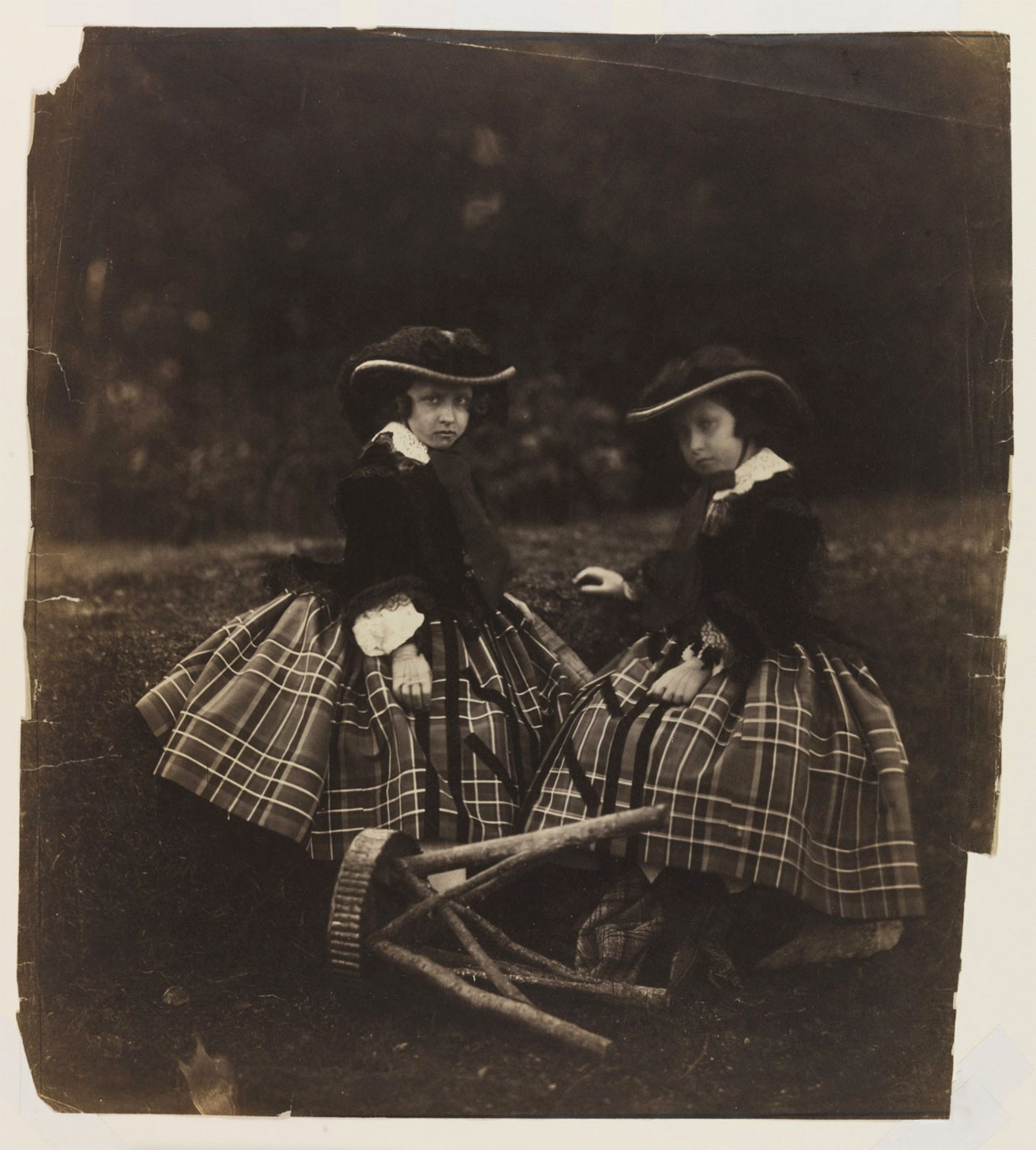
Roger Fenton (British, 1819-1869) 'Princesses Helena and Louise' 1856


Roger Fenton (British, 1819-1869)
Princesses Helena and Louise
1856
Albumen print
Courtesy of The Royal Photographic Society Collection at the National Media Museum


Photograph of Princess Helena and Princess Louise, seated outside together wearing identical outfits, including hats. Both look to front. Upturned stool in foreground.

The two princesses look straight at the camera in what is an unusually direct pose. Princess Helena (1846-1923) and Princess Louise (1848-1939) were the fifth and six children of Queen Victoria and Prince Albert. Princess Helena was herself a keen collector of photographs and compiled a number of albums commemorating her many visits to Balmoral

Text adapted from Roger Fenton – Julia Margaret Cameron: Early British photographs from the Royal Collection, London, 2010 on the Royal Collection Trust website


Eadweard Muybridge (English, 1830-1904) Man (Muybridge) throwing discus walking up steps walking Plate 519 Animal Locomotion


Eadweard Muybridge (English, 1830-1904)
Man (Muybridge) throwing discus walking up steps walking
Plate 519 Animal Locomotion
1887
Collotype
Courtesy of the National Media Museum/SSPL


Unknown photographer. 'Eadweard Muybridge' date unknown


Unknown photographer
Eadweard Muybridge
Date unknown
Courtesy of The Royal Photographic Society Collection at the National Media Museum


Alvin Langdon Coburn (American, 1882-1966) 'Alfred Stieglitz' 1905


Alvin Langdon Coburn (American, 1882-1966)
Alfred Stieglitz
1905
Courtesy of the National Media Museum/SSPL


Lewis Hine (American, 1874-1940) 'Albanian woman Ellis Island' 1905


Lewis Hine (American, 1874-1940)
Albanian woman Ellis Island
1905
Gelatin silver print
Courtesy of the National Media Museum/SSPL


At the Ethical Culture School in New York Lewis Hine taught photography to teenagers, encouraging them to observe others. He took his classes to Ellis Island to see arriving immigrants. “At times it looked like a costume ball,” he wrote, “with the multicoloured, many-styled national costumes,” This is one of over 200 photographs that Hine made himself at Ellis Island, representing an Albanian immigrant, wearing her best clothes, cleaned and immaculately pressed. Hine’s empathy with the neglected him led to a job with the National Child Labor Committee. He traveled the country photographing children at work in factories in New England, at coal mines in Pennsylvania, and canneries on the Gulf Coast. Hine’s photographs helped secure child labor laws in this country.

From Touchstones of the Twentieth Century: A History of Photography at the University of Notre Dame (exhibition, 2020-21)


Unknown photographer. 'Lewis Hine photographing children in a slum' c. 1910


Unknown photographer
Lewis Hine photographing children in a slum
c. 1910
Gelatin silver print
Courtesy of the National Media Museum/SSPL


Alvin Langdon Coburn (American, 1882-1966) 'George Davison' 1918


Alvin Langdon Coburn (American, 1882-1966)
George Davison
1918
Gelatin silver print
Courtesy of the National Media Museum/SSPL


George Davison (19 September 1854 – 26 December 1930) was an English photographer, a proponent of impressionistic photography, a co-founder of the Linked Ring Brotherhood of British artists and a managing director of Kodak UK. He was also a millionaire, thanks to an early investment in Eastman Kodak.


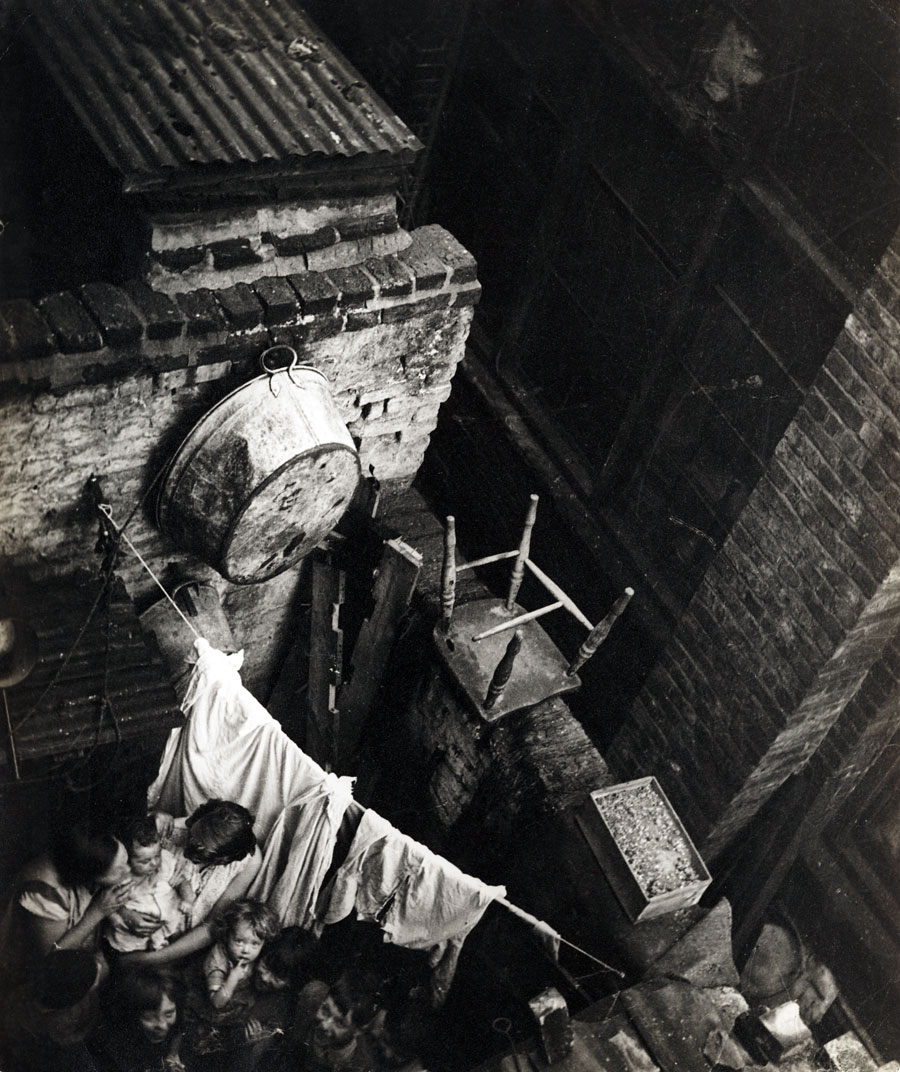
Edith Tudor Hart (Austrian-British, 1908-1973) 'Gee Street, Finsbury' 1936


Edith Tudor Hart (Austrian-British, 1908-1973)
Gee Street, Finsbury
1936
Courtesy of the National Media Museum/SSPL
© Wolfgang Suschitzky


This photograph was published alongside Poodle Parlour, London (PGP 279.33B) in the satirical magazine Lilliput in 1939, offering a comparison between the living conditions of the urban poor and the care lavished on pets by their wealthy owners. The juxtaposition made a simple political point and encouraged the viewer to think about the unequal organisation of society. This was a rhetorical technique common in left-wing illustrated journals on the Continent. The Austrian magazine, Der Kuckuck, had published a similar story in 1931 comparing the living conditions of the Berlin poor with the more salubrious accommodation of the city’s dog home.

Text from the National Galleries of Scotland website


Henri Cartier-Bresson (French, 1908-2004) 'Dessau, Germany' 1945


Henri Cartier-Bresson (French, 1908-2004)
Dessau, Germany
1945
Gelatin silver print
Courtesy of the National Media Museum/SSPL
© Henri Cartier-Bresson, Magnum, HCB Fondation


Cartier-Bresson had been a prisoner of war in Germany for nearly three years. He tried to escape two times, and then on the third time was successful. And partly because of that experience he was commissioned by the US Office of War Information to make a film about the return of displaced persons and prisoners of war.

And this incident appears in the film. The cameraman is filming this scene, and Cartier-Bresson, is right next to him making his own pictures. This is at a displaced person’s camp. And the woman in the black dress had been denounced to the Gestapo by the woman she’s about to hit. And here they’re both telling their stories to the man on the right who’s obviously the man in authority.

And what’s typical in this picture of Cartier-Bresson’s best work after the war, is that it’s all boiled down to these three protagonists. The anger of the woman who had been betrayed totally saturates her body, just the way the shame and the guilt of the woman who had done the betraying occupies her body, right down to where she’s got her thumb inside her fist.

Peter Galassi on the Museum of Modern Art website


Richard Sadler (British, 1927-2020) Weegee in Coventry, "Weegee the Famous" 1963


Richard Sadler (British, 1927-2020)
Weegee in Coventry, “Weegee the Famous”
1963
Gelatin silver print
Courtesy of the National Media Museum/SSPL


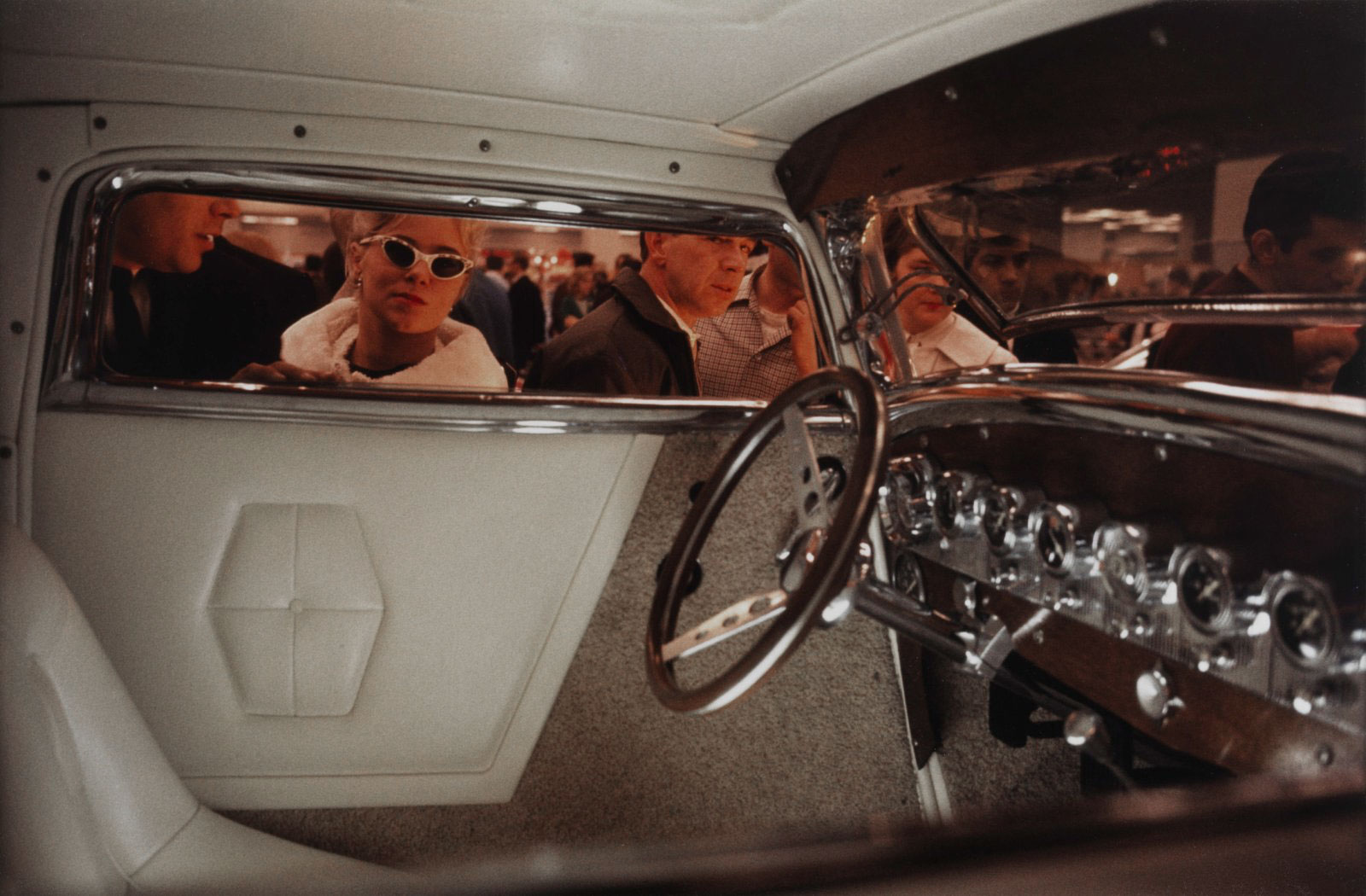
Tony Ray-Jones (English, 1941-1972) 'Auto Show, Daytona' 1965


Tony Ray-Jones (English, 1941-1972)
Auto Show, Daytona
1965
Gelatin silver print
Courtesy of the National Media Museum/SSPL


Unknown photographer. 'Portrait of Bill Brandt' c. 1979


Unknown photographer
Portrait of Bill Brandt
c. 1979
Gelatin silver print
Courtesy of the National Media Museum/SSPL


National Media Museum
Bradford,
West Yorkshire,
BD1 1NQ

Opening hours:
Wednesday – Sunday 10.00 – 17.00

National Media Museum website

LIKE ART BLACK ON FACEBOOK

Back to top