Exhibition: ‘On Her Own. The photographer Elfriede Mejchar’ at Wien Museum MUSA, Vienna

Exhibition dates: 18th April – 1st September, 2024

Curators: Anton Holzer, Frauke Kreutler


Elfriede Mejchar (Austrian, 1924-2020) 'Light and Shade' 1958 from the exhibition 'On Her Own. The photographer Elfriede Mejchar' at Wien Museum MUSA, Vienna, April - Sept 2024


Elfriede Mejchar (Austrian, 1924-2020)
Light and Shade
1958
Wien Museum
© Bildrecht, Vienna 2023


Comment on this magnificent Austrian photographer unknown to me until now will be forthcoming in the future posting on the simultaneous exhibition The Poetry of the Everyday. Photographs by Elfriede Mejchar at Museum der Moderne Salzburg.

Marcus


Many thankx to the Wien Museum for allowing me to publish the photographs in the posting. Please click on the photographs for a larger version of the image.


“I am not an artist, I am a photographer.”


Elfriede Mejchar
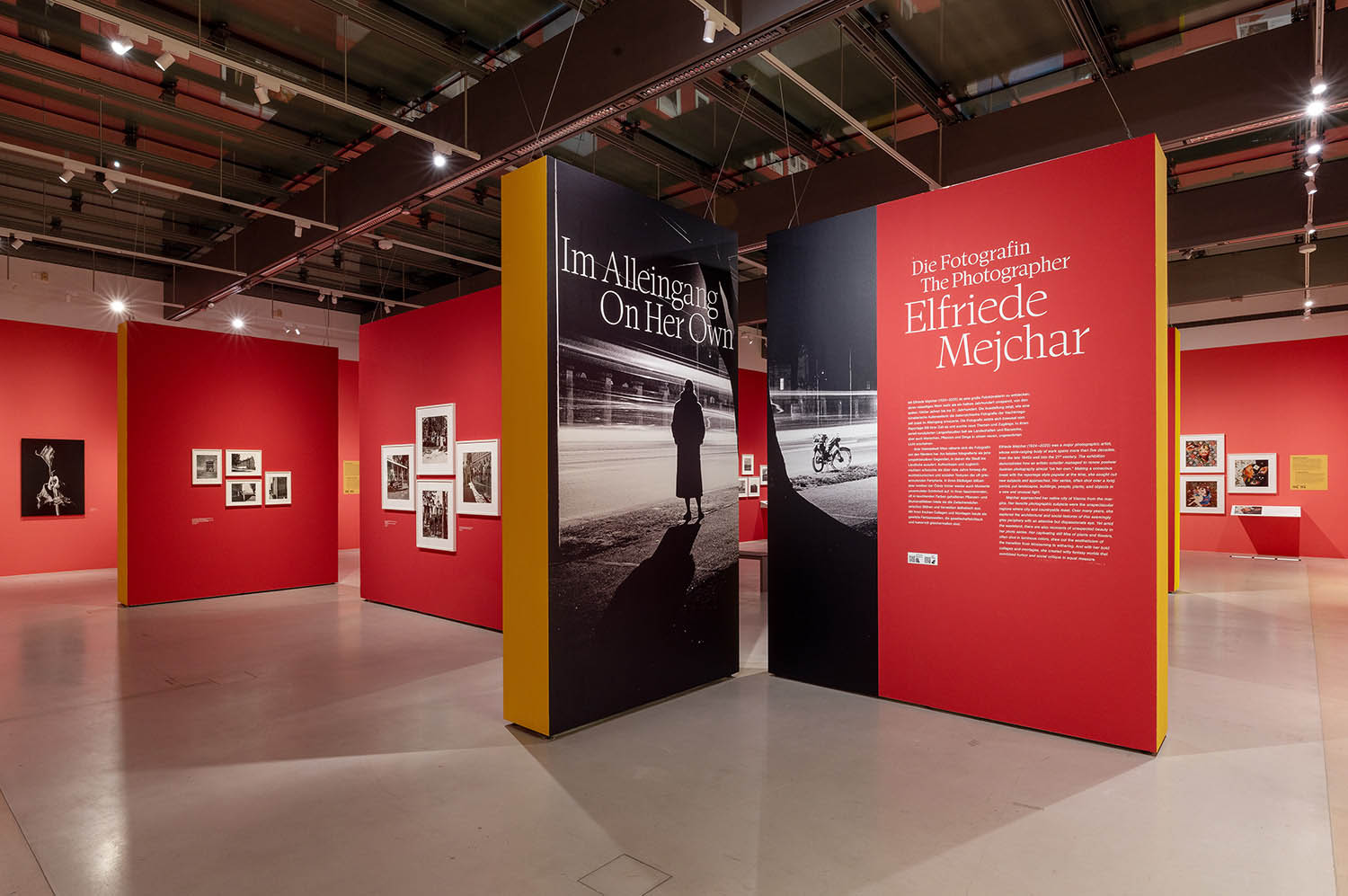


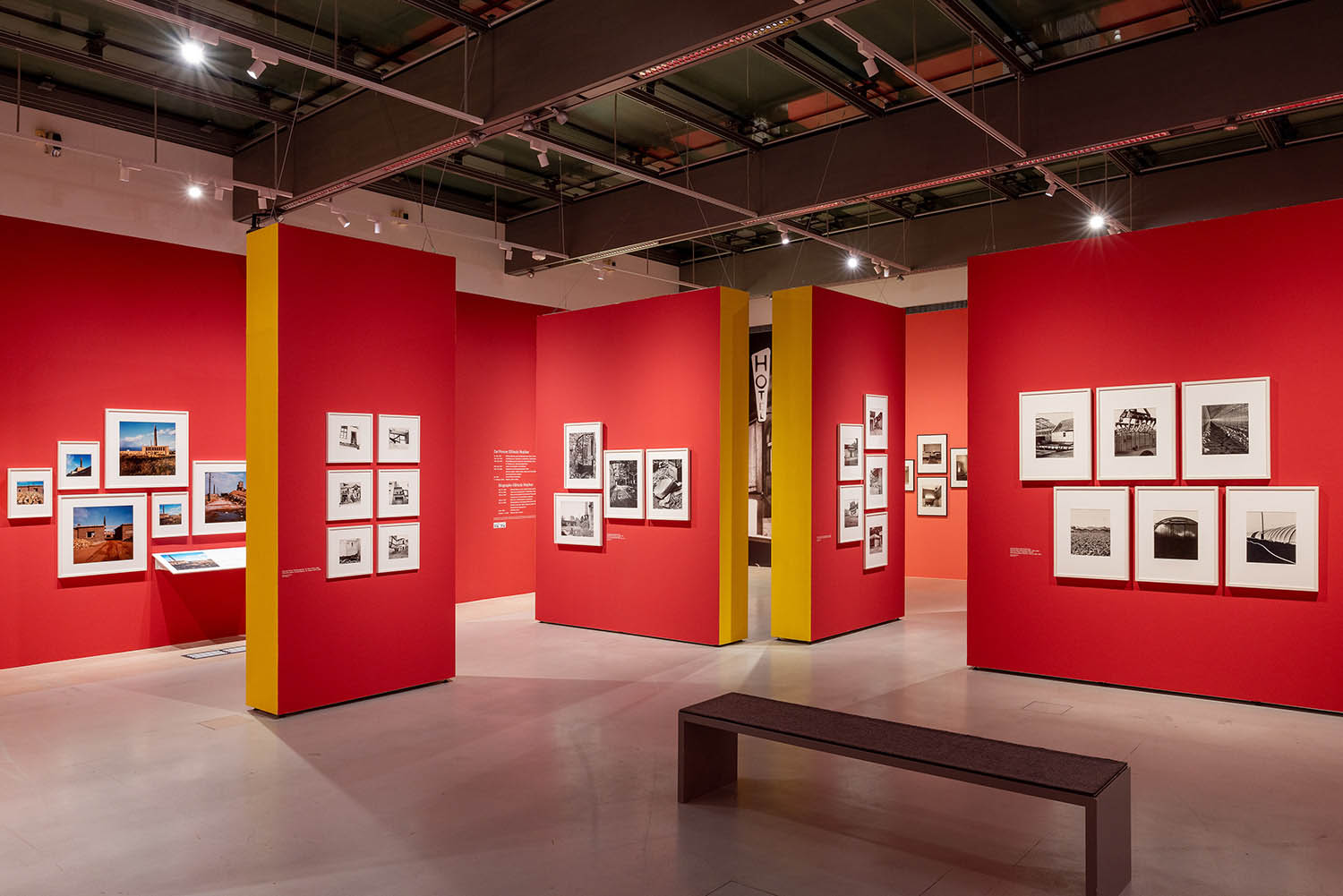
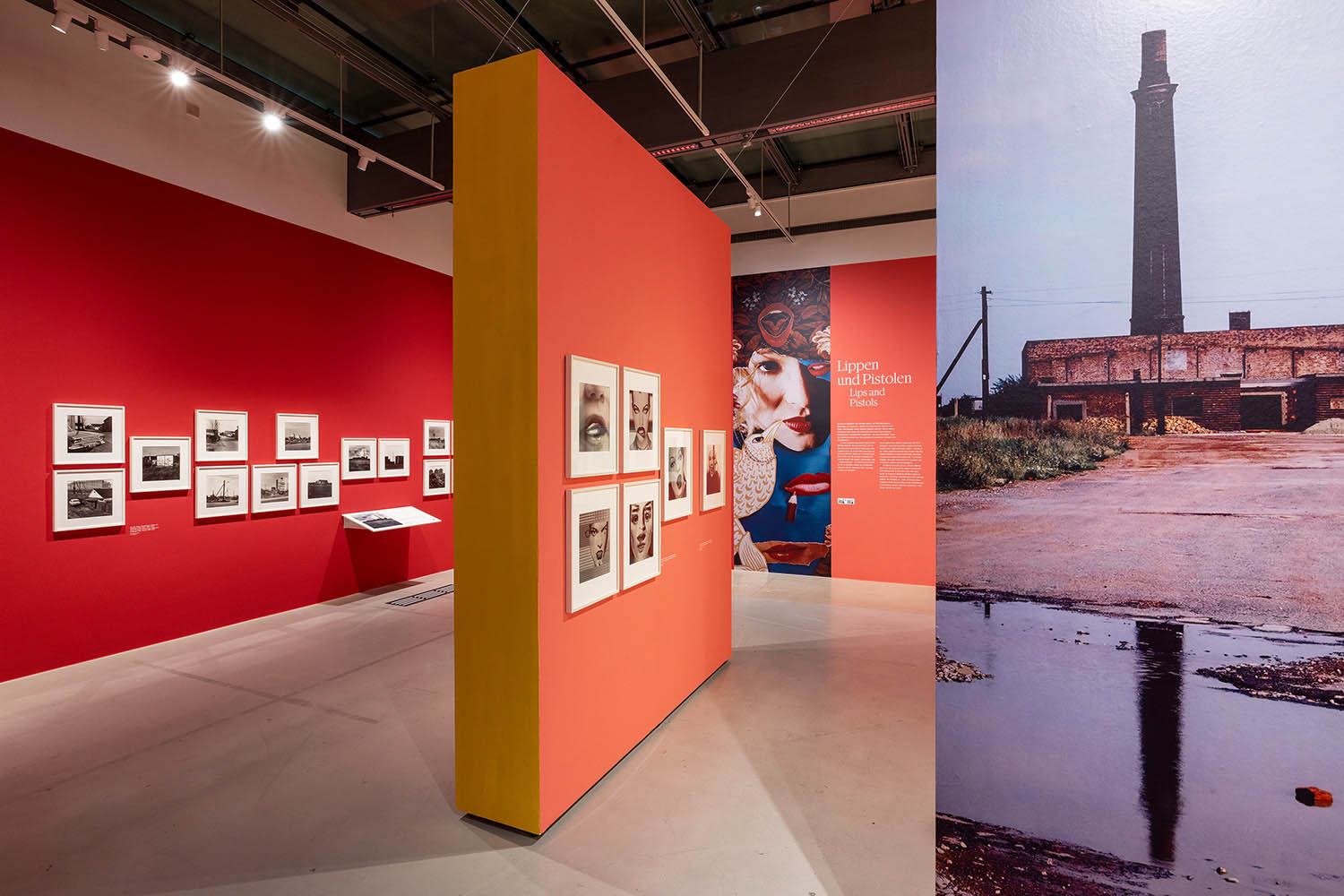
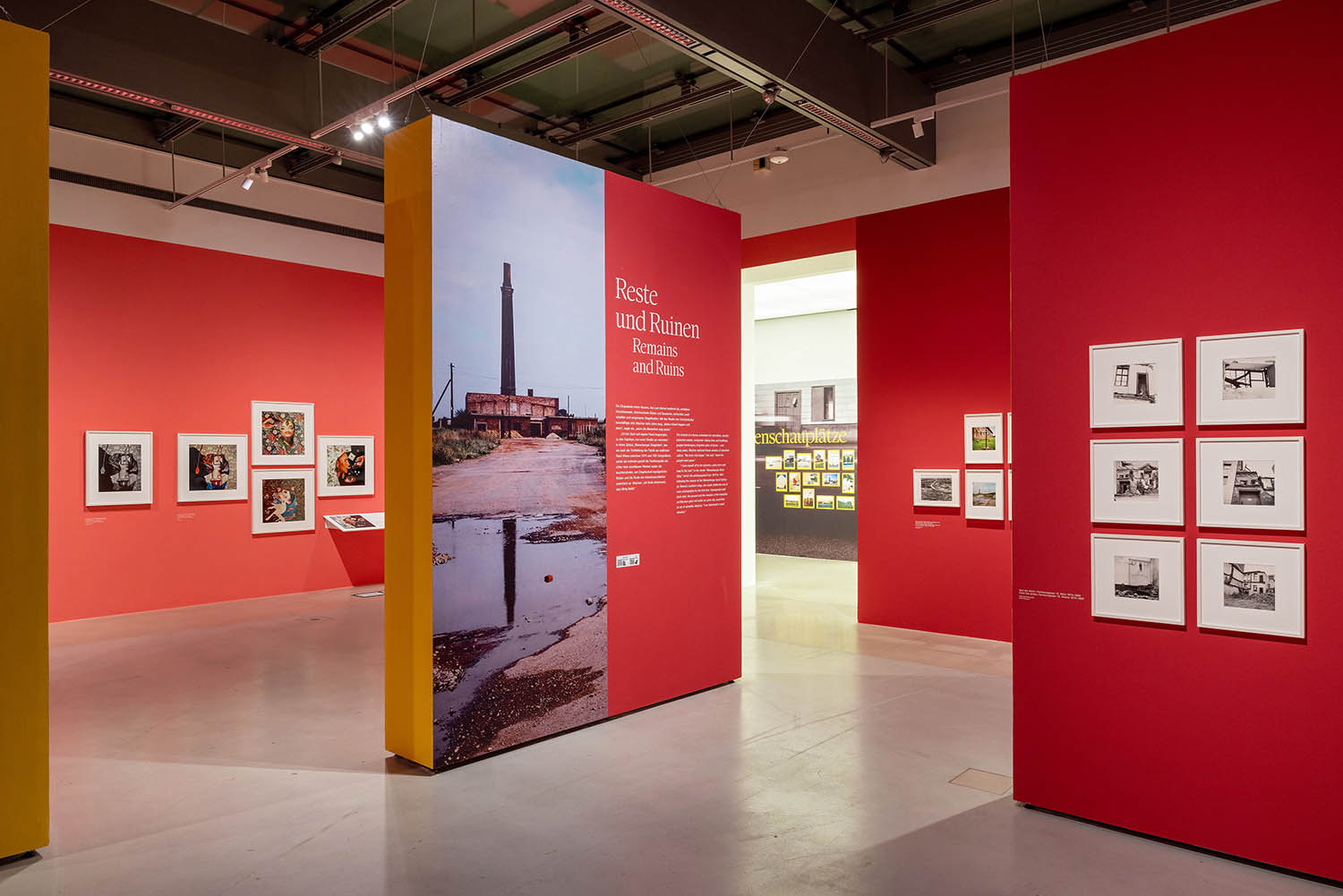
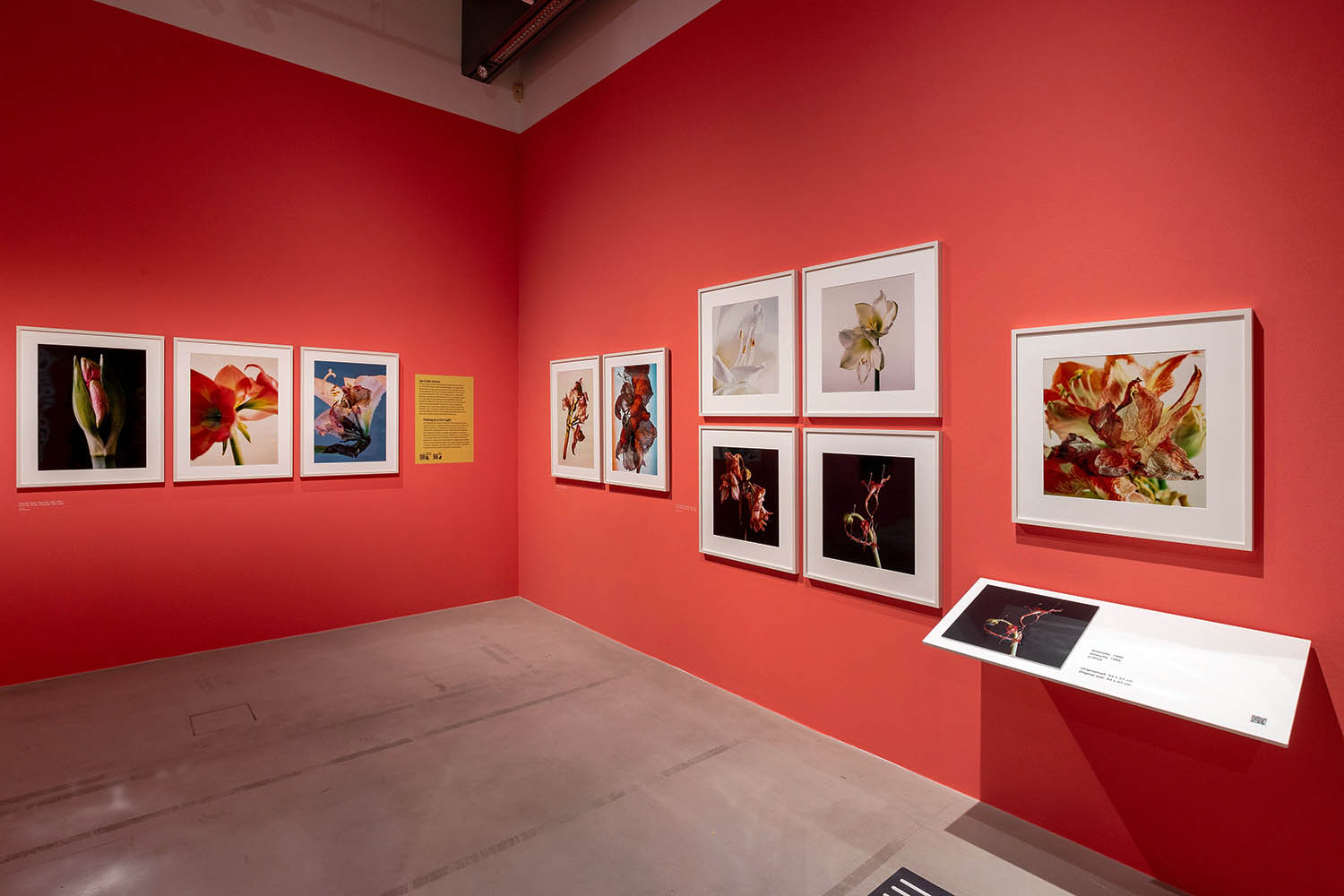
Installation view of the exhibition 'On Her Own. The photographer Elfriede Mejchar' at Wien Museum musa, Vienna

Installation view of the exhibition 'On Her Own. The photographer Elfriede Mejchar' at Wien Museum musa, Vienna

Installation view of the exhibition 'On Her Own. The photographer Elfriede Mejchar' at Wien Museum musa, Vienna

Installation view of the exhibition 'On Her Own. The photographer Elfriede Mejchar' at Wien Museum musa, Vienna

Installation view of the exhibition 'On Her Own. The photographer Elfriede Mejchar' at Wien Museum musa, Vienna

Installation view of the exhibition 'On Her Own. The photographer Elfriede Mejchar' at Wien Museum musa, Vienna

Installation view of the exhibition 'On Her Own. The photographer Elfriede Mejchar' at Wien Museum musa, Vienna


Installation views of the exhibition On Her Own. The photographer Elfriede Mejchar at Wien Museum musa, Vienna


Elfriede Mejchar (1924-2020) was a major photographic artist, whose richly-varied oeuvre spans more than five decades, from the late 1940s well into the 21st century. The Viennese photographer, who only achieved recognition as an artist towards the end of her career, is now regarded as one of the most important representatives of the Austrian and the international photography scenes. May 10, 2024 marks the hundredth anniversary of her birth.

The exhibition at the Wien Museum presents a broad cross-section of the work of this artistic outsider, and demonstrates how the renewal of postwar Austrian photography was almost “all her own work.” Elfriede Mejchar consciously broke away from the photographic mainstream and the reportage style that was popular at the time. Rather than searching for the so-called “decisive moment,” she approached her subjects in a strongly conceptual and serial manner. She focused not on the extraordinary but on the unspectacular and the commonplace, the everyday and the banal, repeatedly addressing these in new ways in her photographic series.

In an Austria-wide cooperation between the Wien Museum, the State Gallery of Lower Austria, and the Museum der Moderne Salzburg, Elfriede Mejchar’s extensive oeuvre is being presented in 2024 for the first time, simultaneously, in three locations across the country. The exhibitions in Vienna, Krems, and Salzburg approach the work of Mejchar from different perspectives. And the three presentations are accompanied by a jointly conceived catalog published by Hirmer Verlag.

A cooperation between the State Gallery of Lower Austria, the Wien Museum and the Museum der Moderne Salzburg.

Text from the Wien Museum website
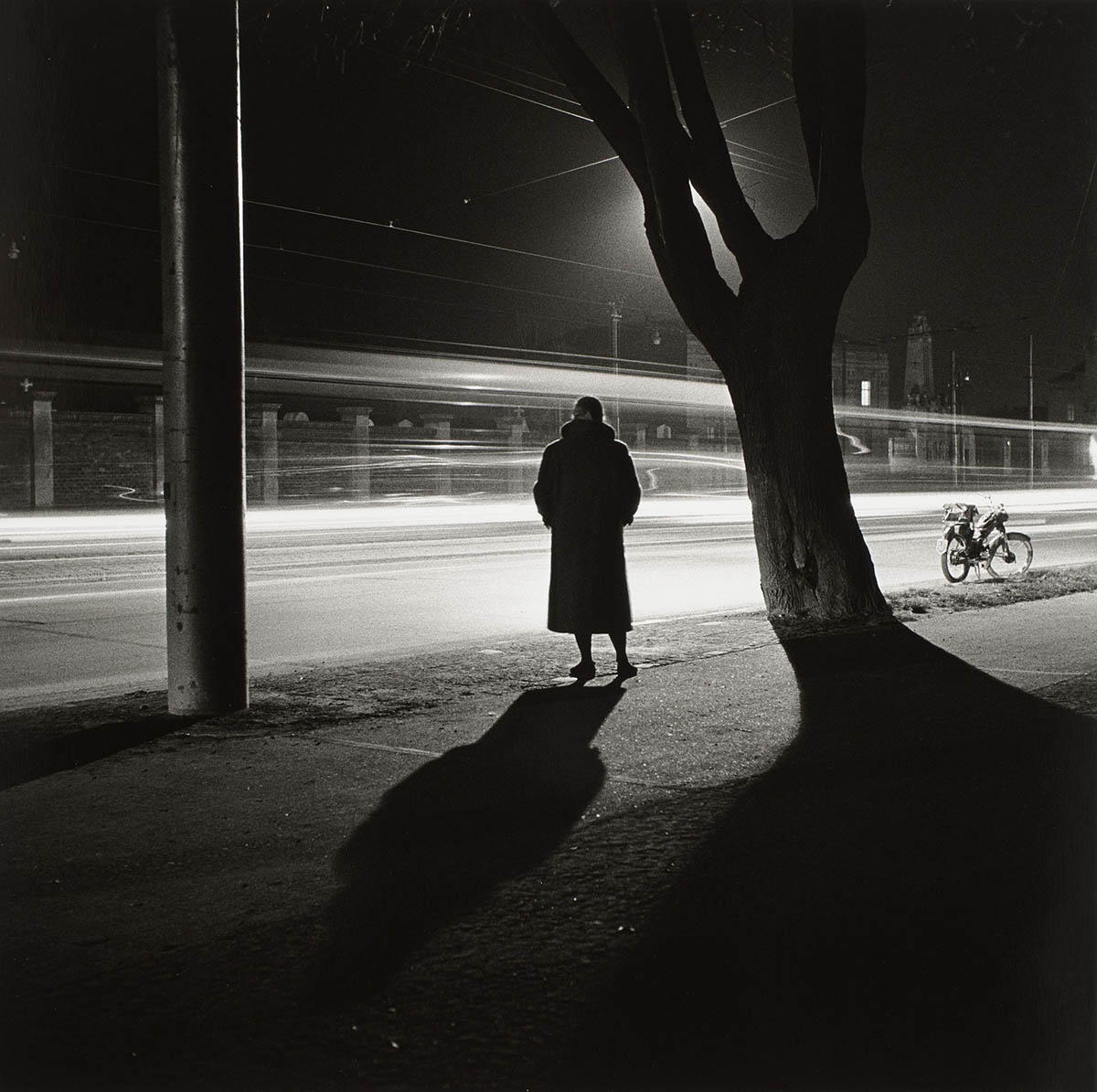
 

Elfriede Mejchar (Austrian, 1924-2020) 'Light and Shade' 1958 from the exhibition 'On Her Own. The photographer Elfriede Mejchar' at Wien Museum MUSA, Vienna, April - Sept 2024


Elfriede Mejchar (Austrian, 1924-2020)
Light and Shade
1958
Wien Museum
© Bildrecht, Vienna 2023
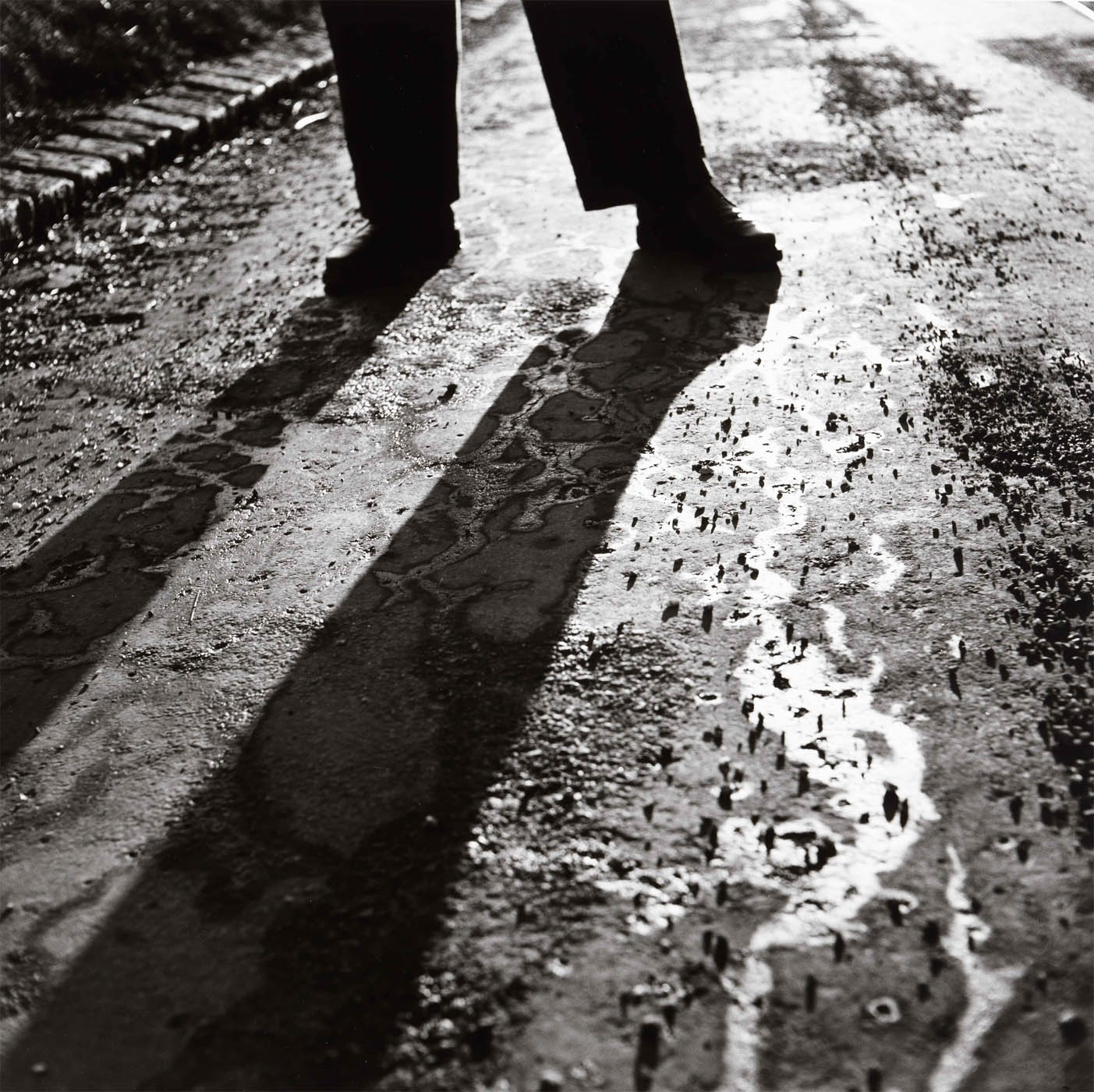
 

Elfriede Mejchar (Austrian, 1924-2020) 'Untitled' 1950-1960  From the series 'Light and Shade' from the exhibition 'On Her Own. The photographer Elfriede Mejchar' at Wien Museum MUSA, Vienna, April - Sept 2024


Elfriede Mejchar (Austrian, 1924-2020)
Untitled
1950-1960
From the series Light and Shade
Wien Museum
© Bildrecht, Vienna 2023


Elfriede Mejchar (Austrian, 1924-2020) 'Untitled (Waiting for the Tram)' 1950-1960


Elfriede Mejchar (Austrian, 1924-2020)
Untitled (Waiting for the Tram)
1950-1960
From the series Light and Shade
Wien Museum
© Bildrecht, Vienna 2023


Elfriede Mejchar (Austrian, 1924-2020) 'Vienna 10, Hasengasse 53' 1950-1960


Elfriede Mejchar (Austrian, 1924-2020)
Vienna 10, Hasengasse 53
1950-1960
Wien Museum
© Bildrecht, Vienna 2023
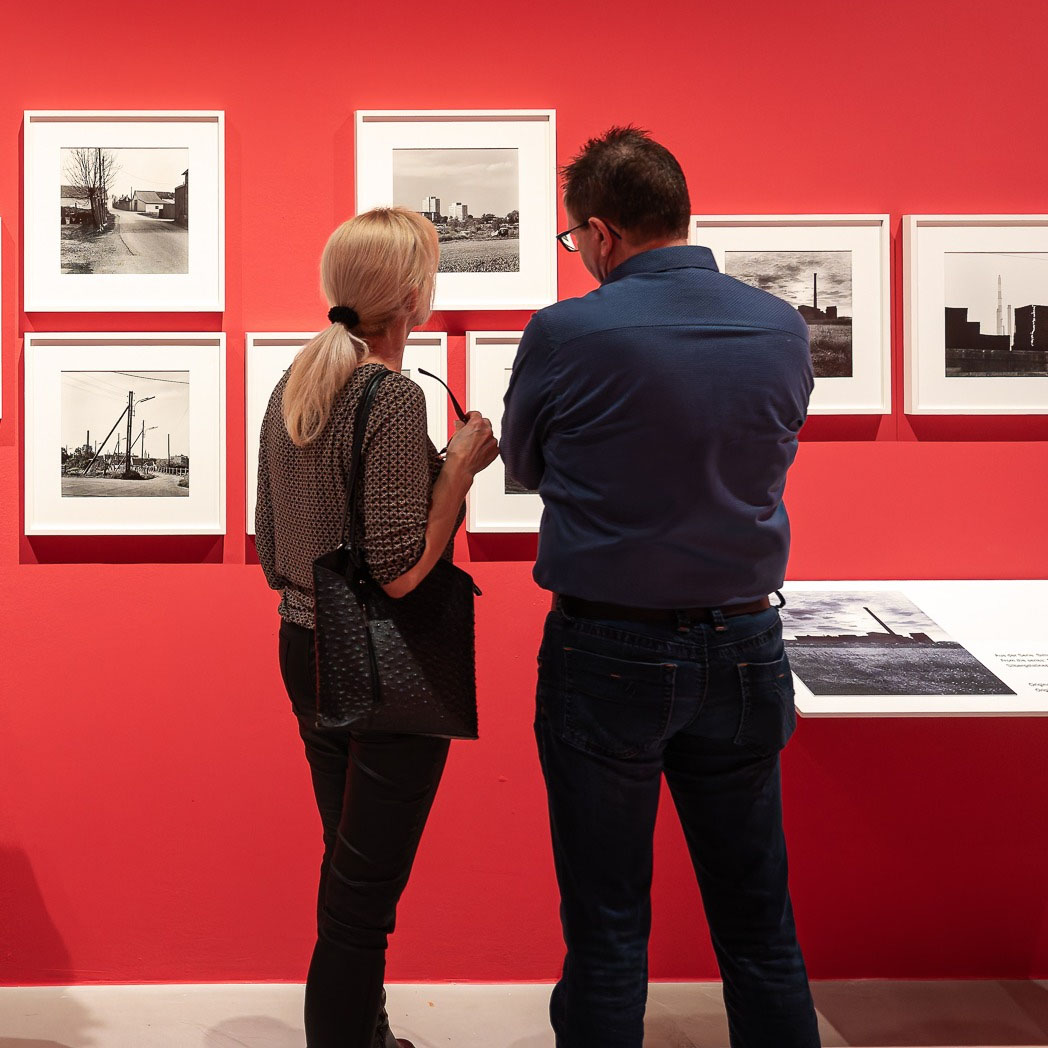
 

Installation view of the exhibition 'On Her Own. The photographer Elfriede Mejchar' at Wien Museum musa, Vienna Installation view of the exhibition On Her Own. The photographer Elfriede Mejchar at Wien Museum musa, Vienna showing photographs from Mejchar's series 'Simmering Heide and Erdberg Mais' (1967-1976)


Installation view of the exhibition On Her Own. The photographer Elfriede Mejchar at Wien Museum musa, Vienna showing photographs from Mejchar’s series Simmering Heide and Erdberg Mais (1967-1976, below)
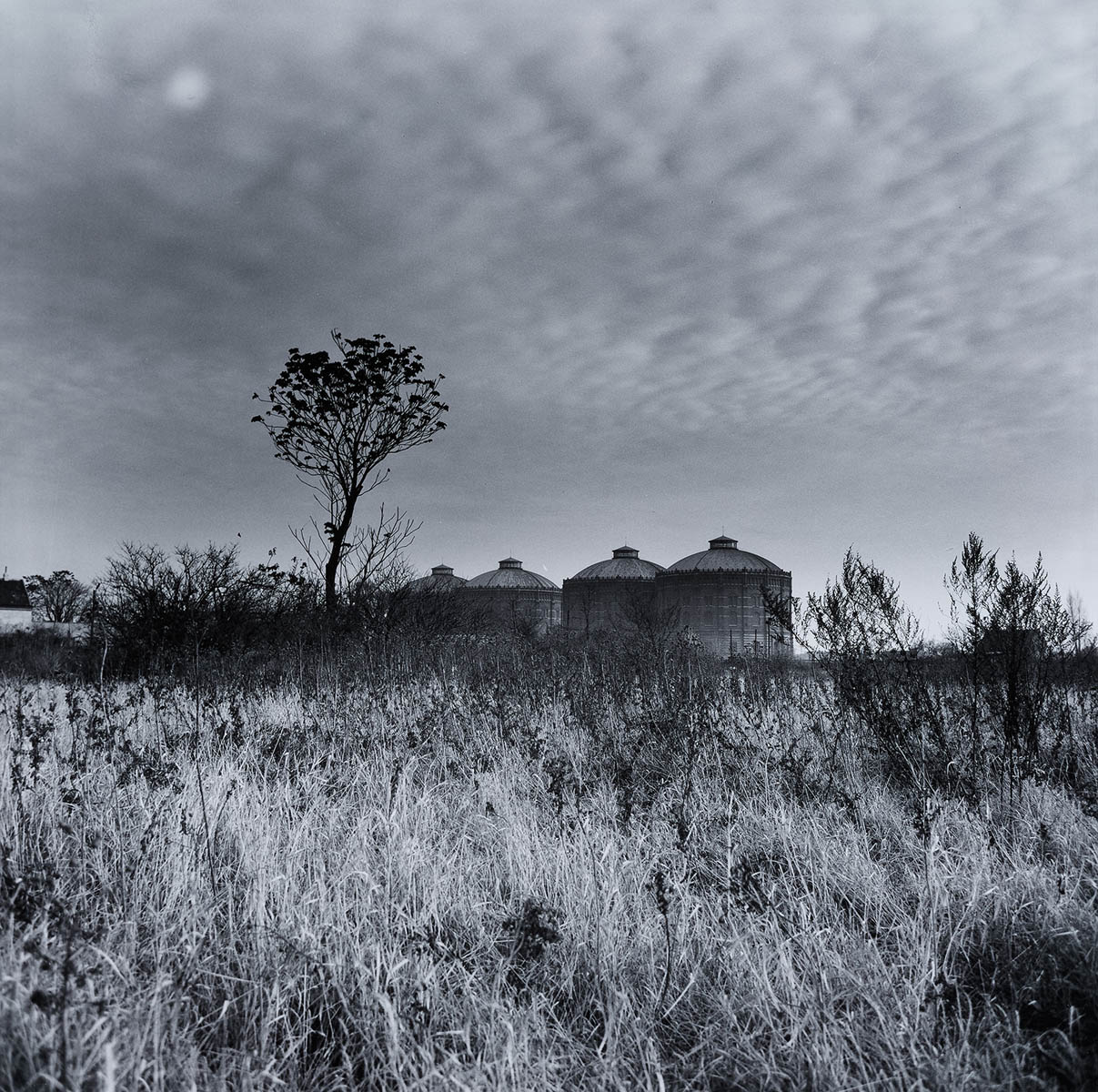
 

Elfriede Mejchar (Austrian, 1924-2020) 'Simmering Heide and Erdberg Mais' 1967-1976


Elfriede Mejchar (Austrian, 1924-2020)
Simmering Heide and Erdberg Mais
1967-1976
Wien Museum
© Bildrecht, Vienna 2023
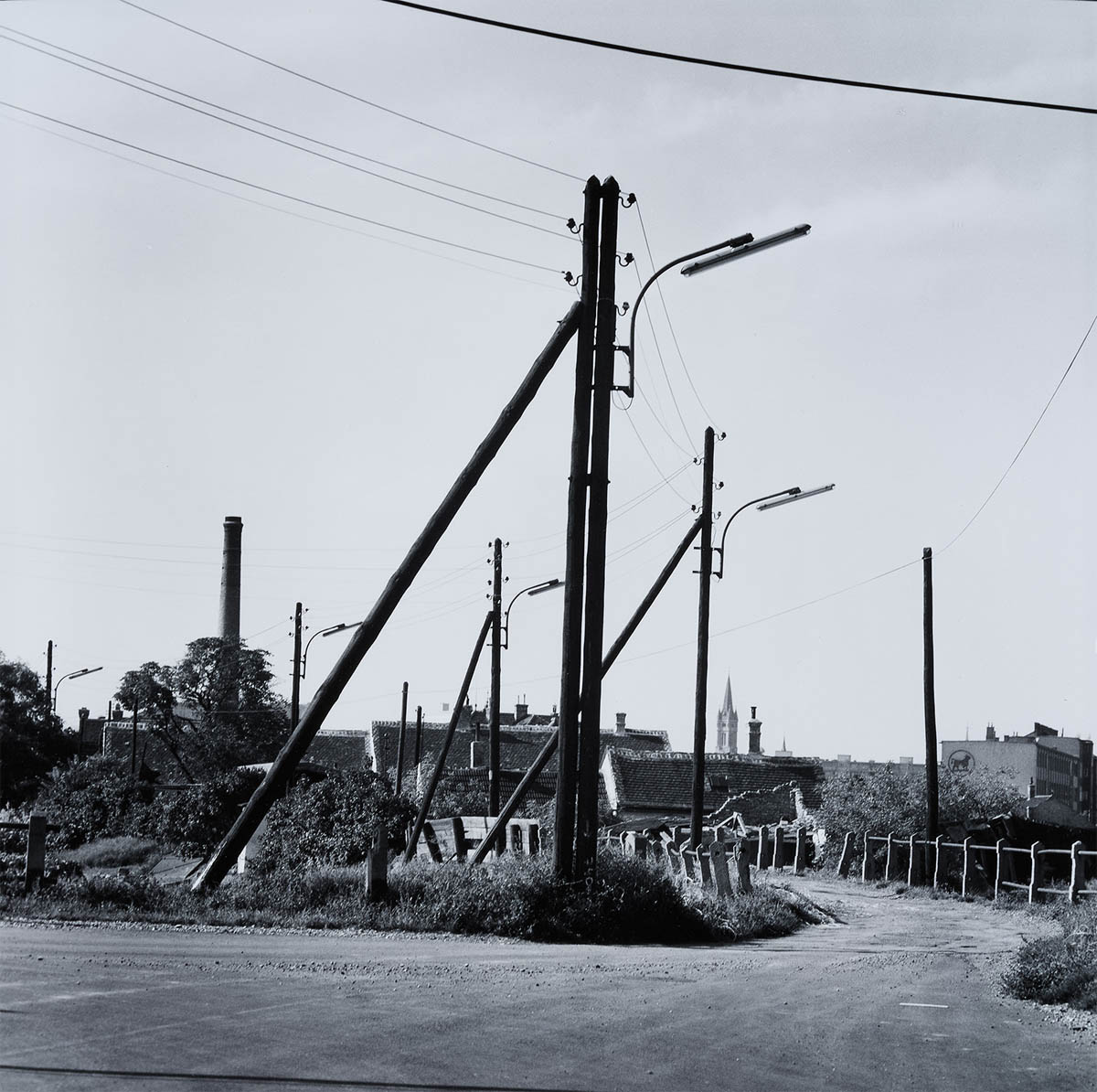
 

Elfriede Mejchar (Austrian, 1924-2020) 'Simmering Heide and Erdberg Mais' 1967-1976


Elfriede Mejchar (Austrian, 1924-2020)
Simmeringer Heide and Erdberger Mais
1967-1976
Wien Museum
© Bildrecht, Vienna 2023
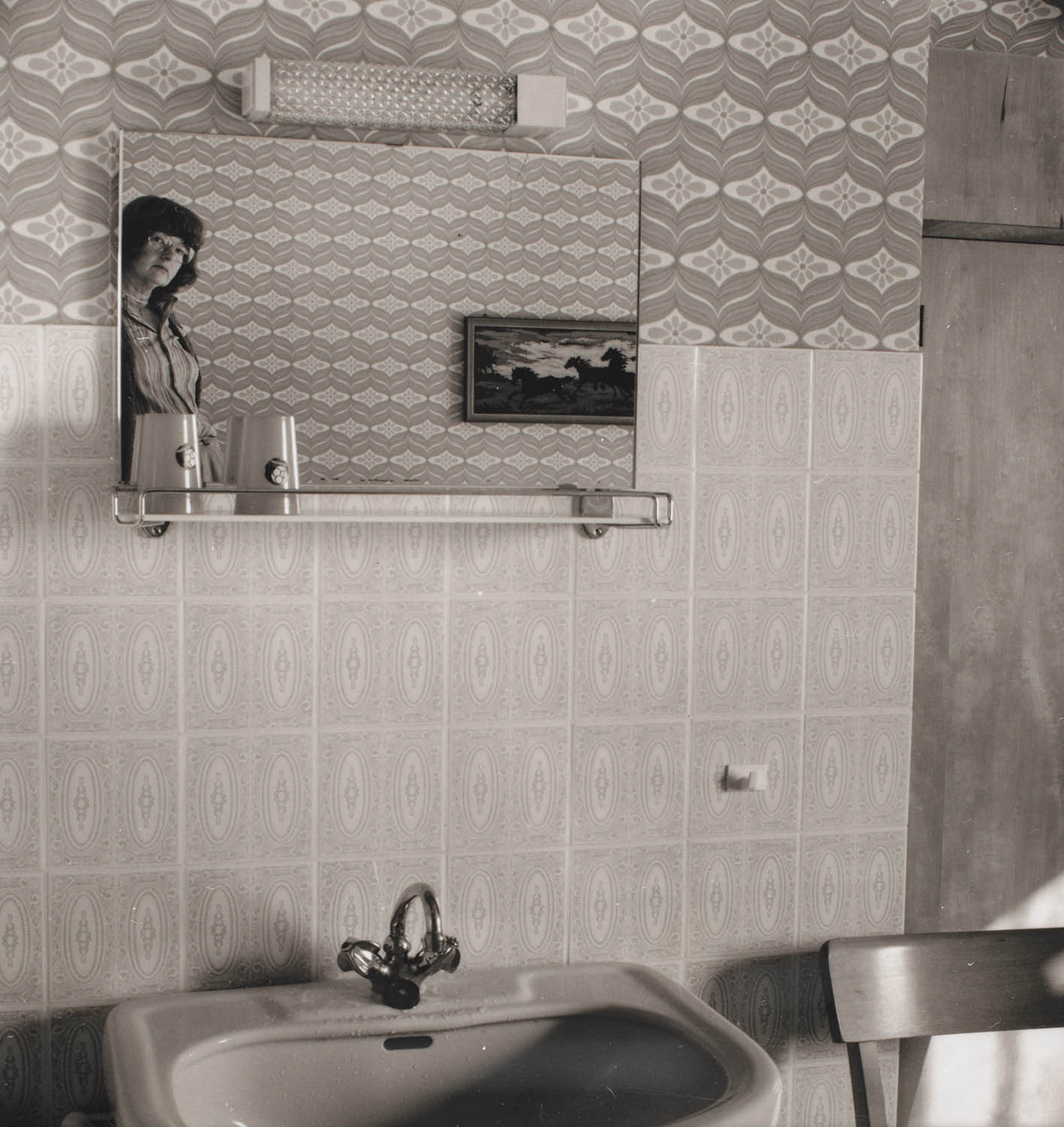
 

Elfriede Mejchar (Austrian, 1924-2020) 'At the Hotel' Around 1980


Elfriede Mejchar (Austrian, 1924-2020)
At the Hotel
Around 1980
Wien Museum
© Bildrecht, Vienna 2023
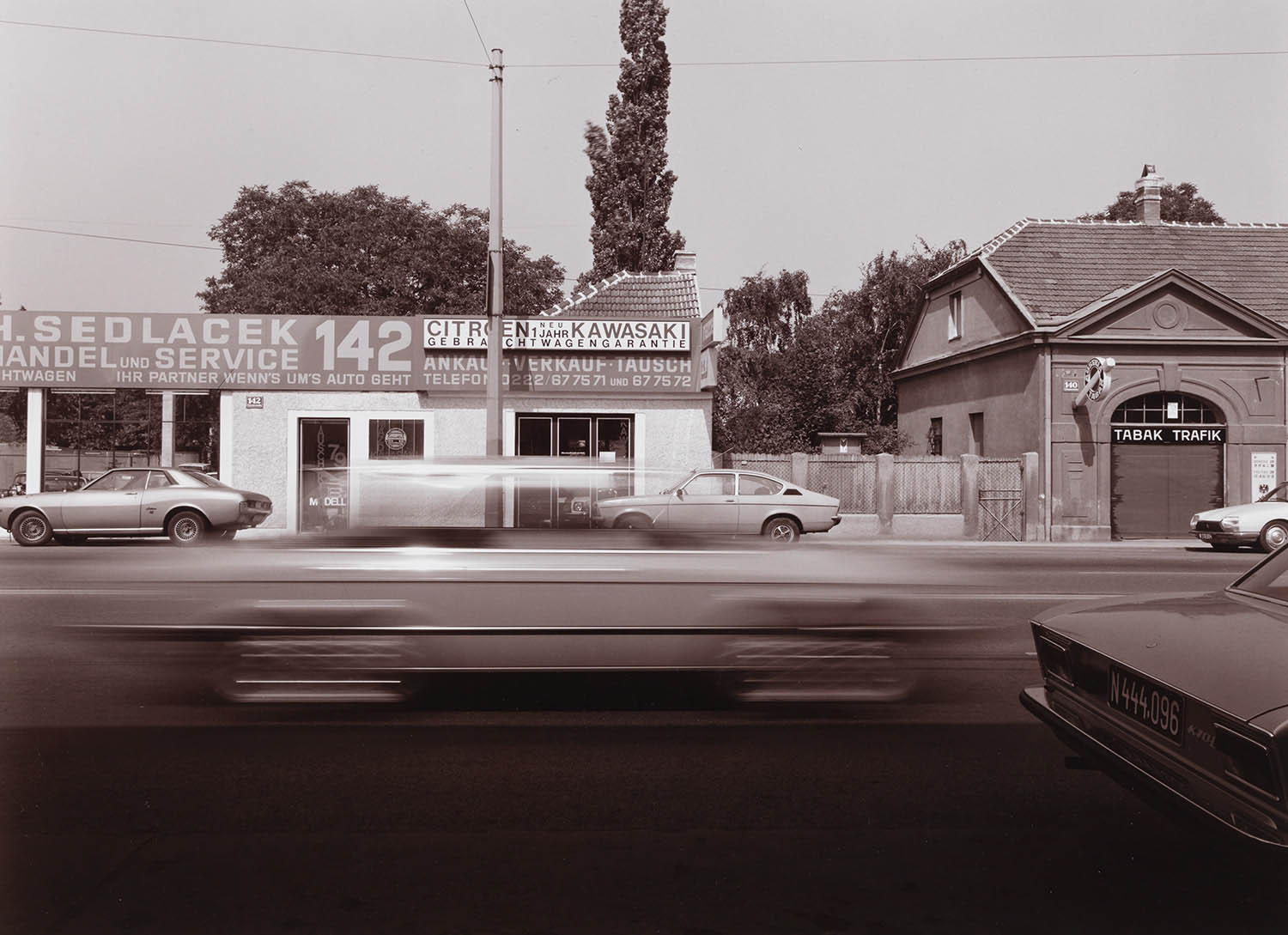
 

Elfriede Mejchar (Austrian, 1924-2020) 'Triester Strasse' 1982-1983


Elfriede Mejchar (Austrian, 1924-2020)
Triester Strasse
1982-1983
Wien Museum
© Bildrecht, Vienna 2023


Elfriede Mejchar (1924-2020) was a major photographic artist, whose richly-varied oeuvre spans more than five decades, from the late 1940s well into the 21st century. The Viennese photographer, who only achieved recognition as an artist towards the end of her career, is now regarded as one of the most important representatives of the Austrian and the international photography scenes. May 10, 2024 marks the hundredth anniversary of her birth.

The exhibition in musa presents a broad cross-section of the work of this artistic outsider, and demonstrates how the renewal of postwar Austrian photography was almost “all her own work.” Elfriede Mejchar consciously broke away from the photographic mainstream and the reportage style that was popular at the time. Rather than searching for the so-called “decisive moment,” she approached her subjects in a strongly conceptual and serial manner. She focused not on the extraordinary but on the unspectacular and the commonplace, the everyday and the banal, repeatedly addressing these in new ways in her photographic series.

Elfriede Mejchar revealed her hometown Vienna from the periphery and had little interest in its iconic center, which was already the subject of countless thousands of photographs. As a photographer, she was at home where the city became rural, at the meeting point between urban development zones, derelict sites, green spaces, and post-industrial decay. In her long-term studies she documented the architectural and social textures of Vienna’s suburbs in a way that was both attentive and sober: new buildings advancing ever further onto green land, the monotony of endless arterial roads, derelict industrial complexes, market gardens and ageing gasometers, run-down housing and forgotten areas of landfill and decay. For Mejchar, however, the image of the urban periphery is not grey and the wasteland and its dereliction are repeatedly brightened by moments of unsuspected beauty.

Even if the urban and architectural photography of Vienna plays a major role in Elfriede Mejchar’s oeuvre, the range of subjects addressed in her work is far broader. Just as the photographer sheds a new photographic light on forgotten landscapes and buildings, she also approaches people and plants, places and things, in unexpected and surprising ways. In her incomparable series “Hotels,” she studies the interiors and typologies of Austrian accommodation in great detail, producing fascinating and often brightly coloured still lifes of plants and flowers as a means of aesthetically investigating the intermediate stages between blooming and withering. And in her bold collages and montages, a complex of work that continued to occupy her into her latter years, she created clever fantasy worlds, whose social criticism is only matched by their humour.

In an Austria-wide cooperation between the Wien Museum, the State Gallery of Lower Austria, and the Museum der Moderne Salzburg, Elfriede Mejchar’s extensive oeuvre is being presented in 2024 for the first time, simultaneously, in three locations across the country. The exhibitions in Vienna, Krems, and Salzburg approach the work of Mejchar from different perspectives:

Landesgalerie Niederösterreich. Elfriede Mejchar. Pushing the Boundaries of Photography April 13, 2024 to February 16, 2025 Tuesday – Sunday, 10am-6pm

musa. On her own. The photographer Elfriede Mejchar April 18 to September 1, 2024 Tuesday – Sunday, 10am-6pm

Museum der Moderne Salzburg. The Poetry of Everyday. Photographs by Elfriede Mejchar April 26 to September 15, 2024 Tuesday – Sunday, 10am-6pm

Biography of Elfriede Mejchar

Elfriede Mejchar (1924-2020) is undisputedly one of the most important personalities in Austrian photography. It was only at an advanced age that she received the public recognition she deserved, and in 2002 she was awarded the Federal Chancellery Prize for Artistic Photography and in 2004 the Lower Austrian Prize for Artistic Photography and the City of Vienna Prize for Fine Arts. In 2013, Elfriede Mejchar donated her entire oeuvre to the Province of Lower Austria. The Provincial Collections of Lower Austria have taken on the task of safeguarding this unique oeuvre for future generations and gradually making it accessible to the public. Her work is also prominently represented in the art collection of the Wien Museum, in the Federal Photography Collection and in the SpallArt Collection.

Press release from Wien Museum, Vienna


Elfriede Mejchar (Austrian, 1924-2020) 'Wienerberger Brick Kilns and Housing Estates' 1979-1981


Elfriede Mejchar (Austrian, 1924-2020)
Wienerberger Brick Kilns and Housing Estates
1979-1981
Wien Museum
© Bildrecht, Vienna 2023
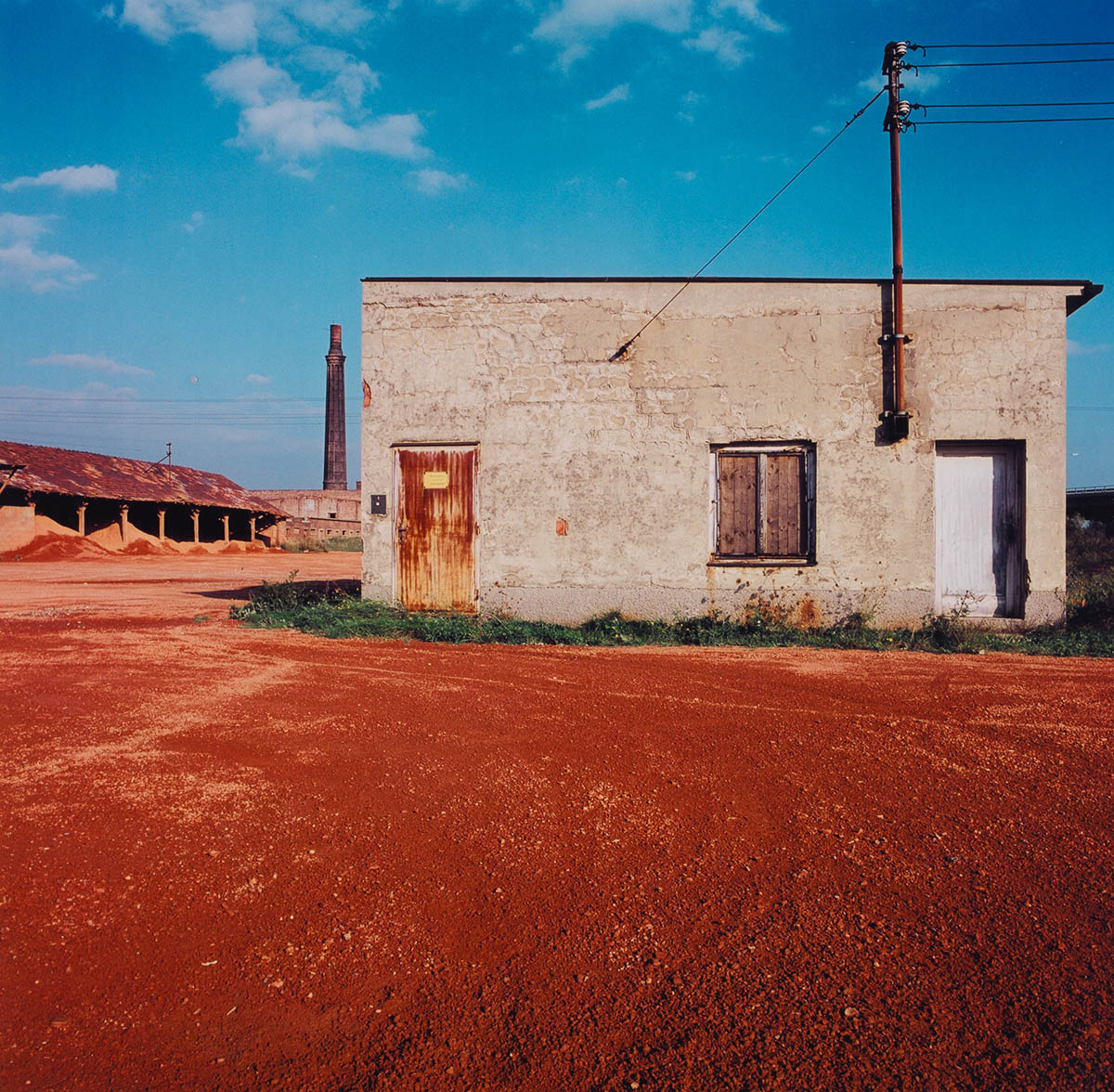
 

Elfriede Mejchar (Austrian, 1924-2020) 'Wienerberger Brick Kilns and Housing Estates' 1979-1981


Elfriede Mejchar (Austrian, 1924-2020)
Wienerberger Brick Kilns and Housing Estates
1979-1981
Wien Museum
© Bildrecht, Vienna 2023


Installation view of the exhibition 'On Her Own. The photographer Elfriede Mejchar' at Wien Museum musa, Vienna showing text and photographs from the section 'Allure of the Everyday'


Installation view of the exhibition On Her Own. The photographer Elfriede Mejchar at Wien Museum musa, Vienna showing text and photographs from the section ‘Allure of the Everyday’


Exhibition texts

“I always marvelled at the wallpaper” (Prologue)

Elfriede Mejchar had two faces as a photographer: one in her day job, and one as an artist. Working for the Federal Monuments Office, she spent many years touring Austria, extensively documenting buildings and artworks in the provinces. On the side, she was a freelance photographic artist. When “at work,” she was bound by the strict criteria of art documentation. As an artist, she forged her own, very different paths.

While in her day job she photographed “great art,” in her free time she focused on the banality of everyday life, for example by taking interior shots of her accommodation over the years. The expenses covered by “the office,” she explained, “were not very generous, and I was always looking for lower-end lodgings. They could be very odd, anything was possible. In particular, I always marvelled at the wallpaper.”

1. Allure of the Everyday

A backlit trash can or advertising column, people waiting on the street, youths in the Bohemian Prater, the geometry of washing lines – even in her early series dating from the 1950s and 1960s, Mejchar’s fascination with scenes from everyday life is clear. She used her camera to record what she saw in the city in a matter-of-fact style, without judgment: the buildings and streets, cars and advertisements, traffic lights and posters. Only occasionally do people feature in her images. Often they seem a little lost. In contrast to many other photographers of her era, Mejchar was not looking for a quick snapshot or the “decisive moment.” “Speed doesn’t suit me,” she once said. Frequently she worked in series, often created over several years. Her focus was not on the extraordinary but on the unspectacular and the commonplace.

Working in Series

“I don’t like single photos very much,” said Elfriede Mejchar, thus describing one of the fundamental features of her photography. For almost 30 years, she explored Vienna’s peripheral zones on the southeast edge of the city. Again and again she returned to these uninviting places on the outskirts, where few people spent much time. In the main she photographed the landscapes, roads, and neighbourhoods in series, usually in parallel, but sometimes as a chronological sequence. For Mejchar as a photographer, the single image could not capture the complexity of this desolate and yet, in her eyes, beautiful landscape. It was the series that allowed her to show the different facets of a subject from ever new perspectives. Through her artistic and conceptual practice, Mejchar forged a completely new path in Austrian photography.

2. Evil Blooms

Throughout her working life, Mejchar photographed art, in other words, things created to last. Her images of flowers were a late counter-project. In these plant studies, some shot in luminous colour, the photographer brought transience and decay into focus, drawing out the fascinating transitions between blooming and withering. “I am not afraid of pathos, nor of kitsch,” Mejchar once said.

Elfriede Mejchar paid no heed to photographic conventions in her freelance work. Unabashed, she took delight in arranging and staging the plants and objects for her photographs in ways that opened up a range of associations. Some of her objects seem almost to come to life under her lens, while others wither away. Yet others invoke images of sexuality and desire.

Putting in a New Light

As a photographic subject, flowers are often dismissed as being romantic, kitsch, or unserious. Mejchar was not afraid of kitsch, but neither was she ever interested in the sweetness of the tulips or amaryllis she photographed. For her, flowers were like sculptures that needed to be shown in a proper light. Mejchar’s “merciless” gaze extended beneath the surface. It drilled into the very substance of the petals, laying bare the skeleton that emerged as the flower withered and capturing the bizarre forms of the dying plant. Yet the artist could not break free entirely of the strong metaphorical imagery of flowers. Sometimes, her shots of them in full bloom or with their inner parts exposed carried a sensual or sexual charge.

3. Measuring the Periphery

New builds encroaching ever further on the countryside, abandoned factories, fields of vegetables, ageing gasometers, the monotony of interminable highways, makeshift housing, wastelands – as a photographer, Elfriede Mejchar was especially keen on these forgotten landscapes on the margins of the Viennese metropolis. “It was the changes that I was concerned with.”

Starting in the 1960s, Mejchar roamed the city’s peripheral zones with her camera. “These were the sites that interested me the most. Where countryside and city collide.” Her long-term series “Simmeringer Heide and Erdberger Mais,” begun in the 1960s and first shown in 1976 in a solo exhibition at the Museum of the 20th Century, established Mejchar’s reputation as leading photo artist.

Constructing Space

Row upon row of plants, damp soil blanketed by the early morning mist, distant greenhouses, lettuces covering the ground, interspaced with sprinklers – Elfriede Mejchar documented every facet of Vienna’s market gardens at the edge of the city, from detached general views to shots that capture the smallest detail. Her images use a deep depth of field, making it seem almost as if the viewer could reach out and touch the clumps of soil or individual leaves in the foreground. But she also regularly translated landscapes, buildings, and spaces into abstract forms by setting up contrasting oppositions between individual motifs, or by reducing an image to monochrome surfaces.

4. Lips and Pistols

Faces ripped from fashion magazines and floral wallpaper, cogs and cigarettes, spools and dressmaking pins, small chains and cables – starting in the 1980s, Mejchar jumbled these found, everyday objects together to create small-scale, theatrical arrangements laced with acerbic wit. “I construct images,” the artist once said of her sarcastic and subversive collages and assemblages. In these composite scenes, Elfriede Mejchar gave free rein to an anarchic desire to assemble and disassemble. At the same time, she used humour and irony to lampoon society’s ideals of perfection, “adorning” beautiful faces with everyday objects, for example, or – with a knowing wink – targeting James Bond’s pistol on the eroticised lips of the beauty industry. Mejchar’s summary: “I like things colourful and crazy.”

Arranging Objects

After retiring from paid employment, Mejchar increasingly concentrated on her work in the studio, which now became a stage for herself and her camera. Here she created ironic, acerbic, and frequently bizarre object combinations, often as an exploration of gender stereotypes. In her collages, she dismantled and critiqued the fashion industry’s preformed ideals of beauty with zest and humour. She took pleasure in experimenting with a whole range of props, rearranging them into new scenes again and again. Fragmented faces from fashion magazines were combined with torn and cut wallpaper, then garnished with cogs, feathers, and cables. She literally nailed the beauty industry to the wall.

5. Remains and Ruins

The innards of a house scheduled for demolition, derelict industrial estates, overgrown railway lines and buildings, gouged landscapes, forgotten piles of bricks – over many years, Mejchar explored these remains of industrial culture. “My work only began,” she said, “when the people were gone.”

“I took myself off to the factories, going from one road to the next.” In her series “Wienerberger Brick Kilns,” which she photographed from 1979 to 1981 following the closure of the Wienerberger brick factory on Vienna’s southern edge, she made deliberate use of colour photography for the first time. Impregnated with brick dust, the ground and the remains of the industrial architecture glow red under an azure sky, assuming an air of unreality. Mejchar: “I am interested in what remains.”

Seeing in Color

During the first decades of her career as a photographer, Elfriede Mejchar worked in black and white because colour photography was too expensive. All the more astonishing, therefore, is the confidence and precision with which she employed colour as an aesthetic element in the photo series “Wienerberger Brick Kilns” in the late 1970s and early 1980s. Similar to the New Color Photography movement in the USA, Mejchar’s photographic explorations focused primarily on the borders between urban and rural spaces. Her main interest was in landscapes subjected to human interventions. She documented these run-down locations using vivid lighting and brilliant colours, producing unsentimental photographs of high aesthetic quality. In doing so, she opened up an entirely new approach to documentary photography in Austria.
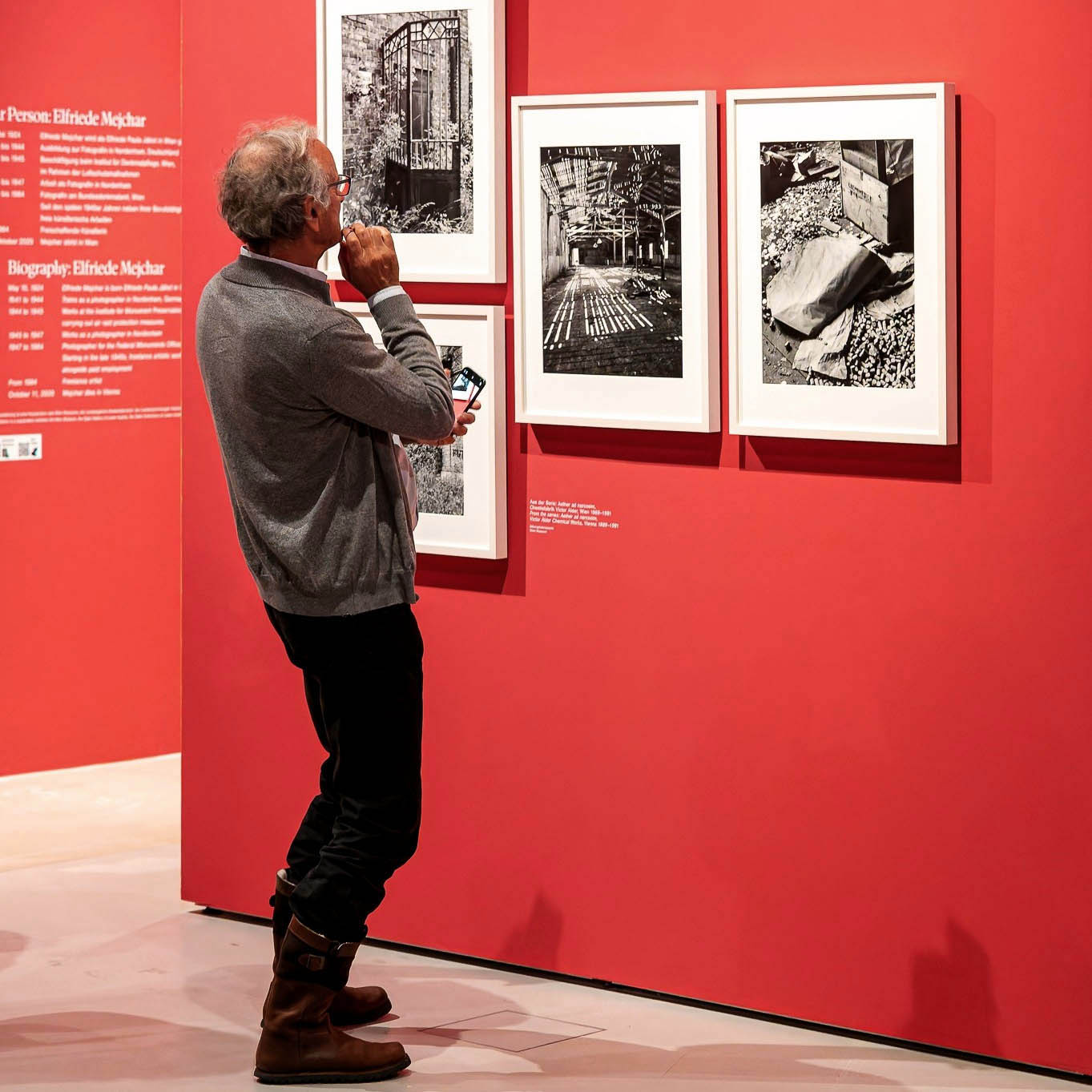
 

Installation view of the exhibition 'On Her Own. The photographer Elfriede Mejchar' at Wien Museum musa, Vienna showing at second right, Mejchar's 'Aether and narcosim' (1989-1991)


Installation view of the exhibition On Her Own. The photographer Elfriede Mejchar at Wien Museum musa, Vienna showing at second right, Mejchar’s Aether and narcosim (1989-1991, below)
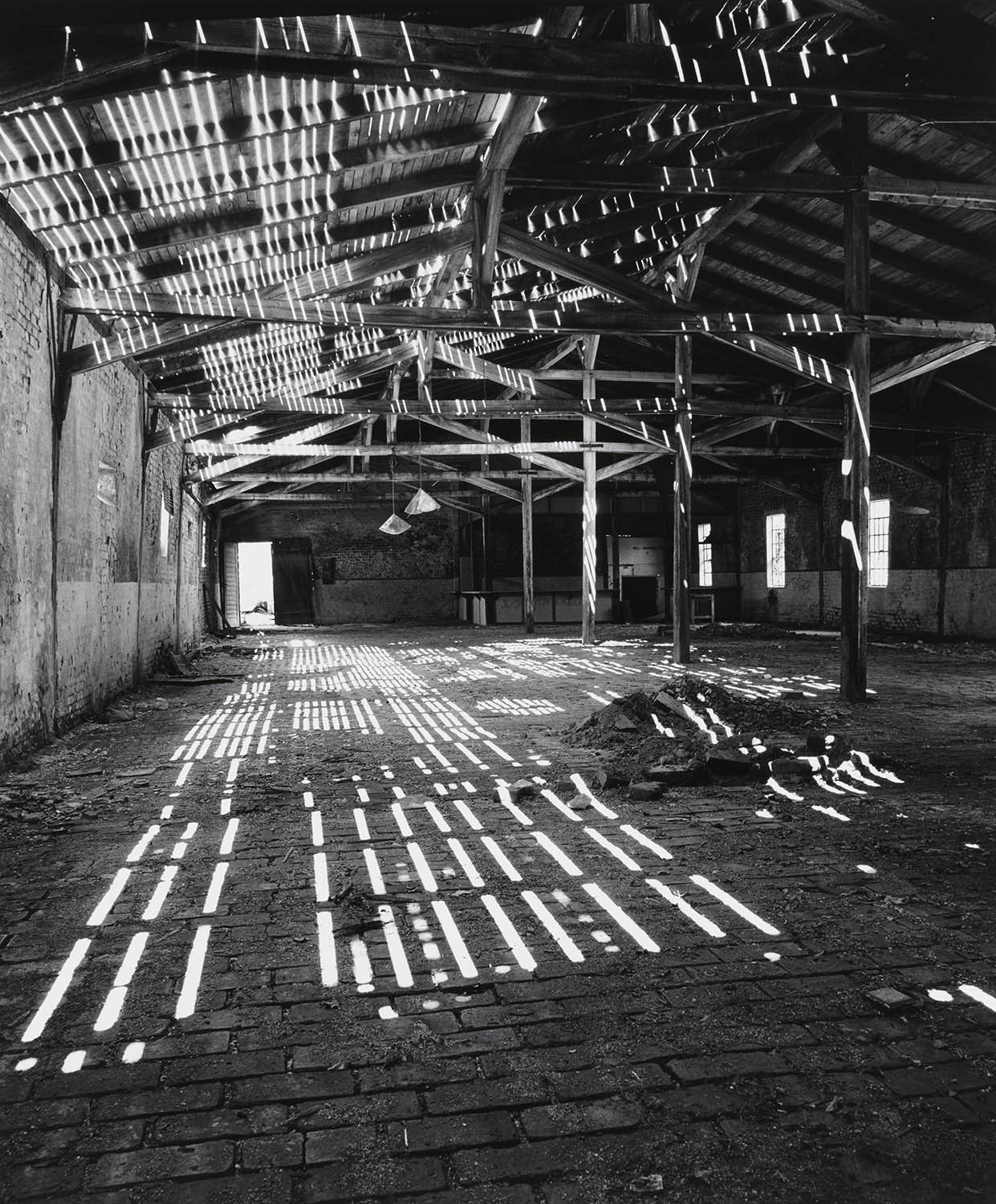
 

Elfriede Mejchar (Austrian, 1924-2020) 'Aether and narcosim' 1989-1991


Elfriede Mejchar (Austrian, 1924-2020)
Aether and narcosim
1989-1991
Wien Museum
© Bildrecht, Vienna 2023
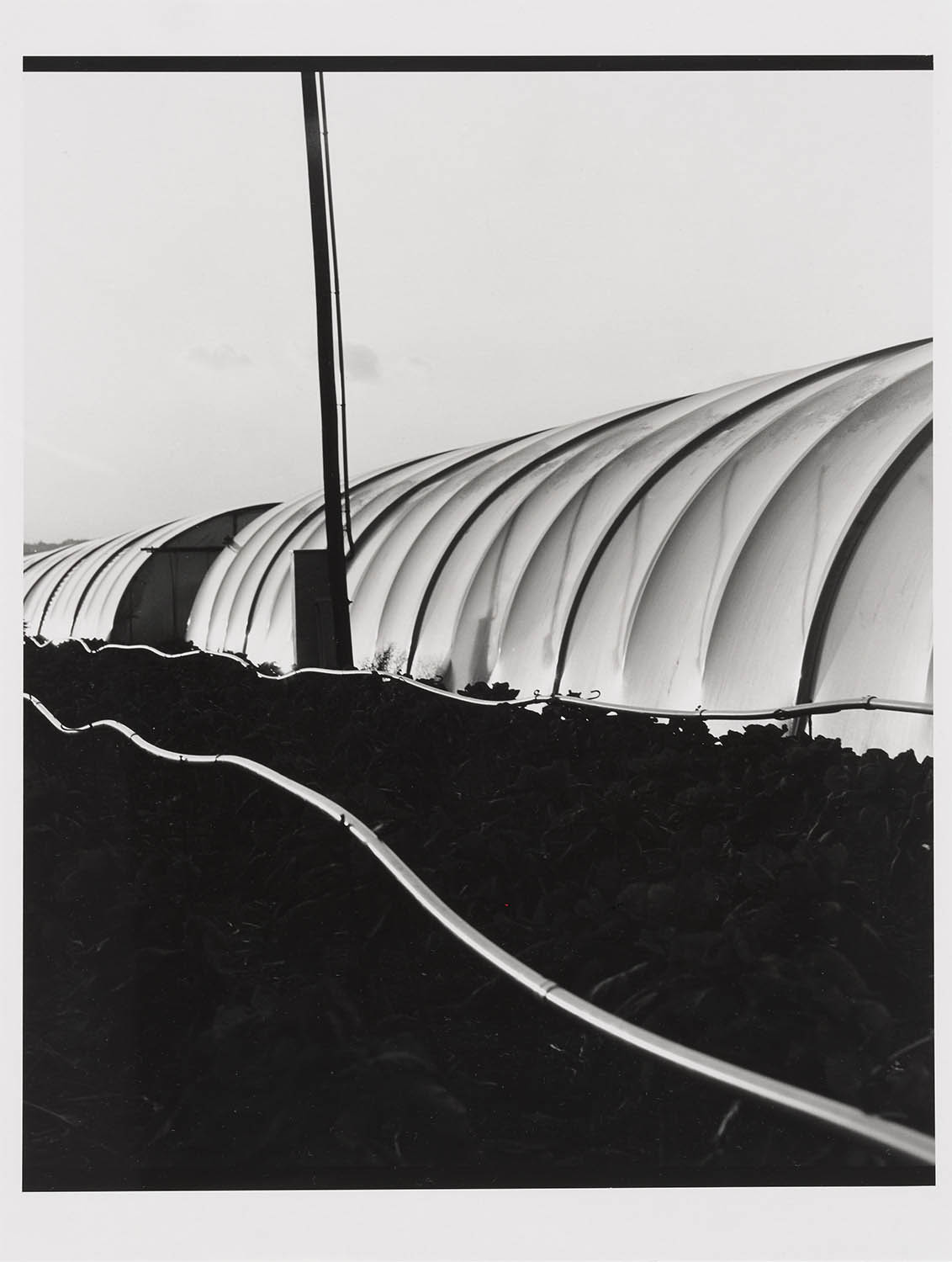
 

Elfriede Mejchar (Austrian, 1924-2020) 'Vegetable Tunnels. Simmering Market Gardens' 1990-1994


Elfriede Mejchar (Austrian, 1924-2020)
Vegetable Tunnels. Simmering Market Gardens
1990-1994
Wien Museum
© Bildrecht, Vienna 2023
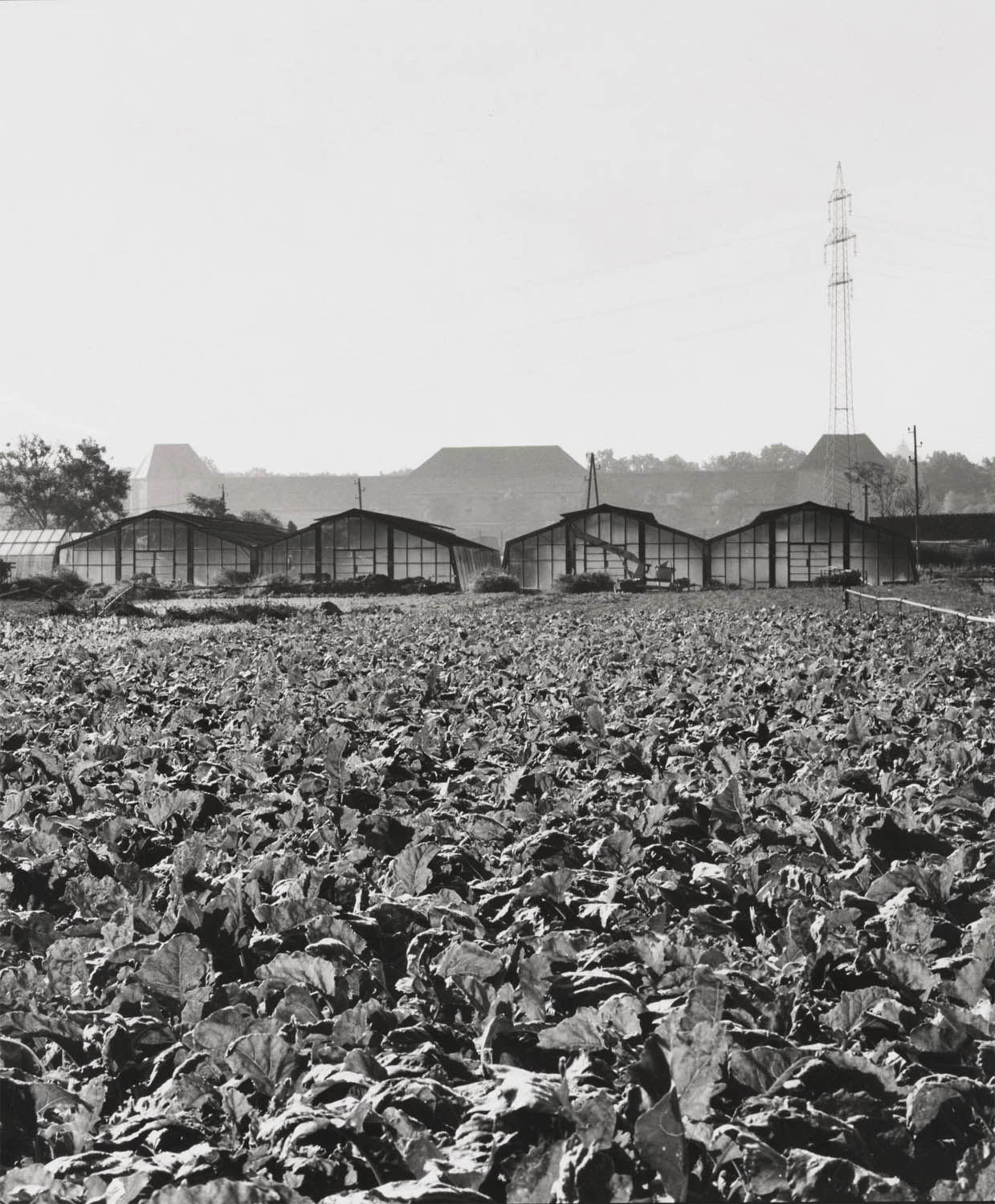
 

Elfriede Mejchar (Austrian, 1924-2020) 'Vegetable Tunnels. Simmering Market Gardens' 1990-1994


Elfriede Mejchar (Austrian, 1924-2020)
Vegetable Tunnels. Simmering Market Gardens
1990-1994
Wien Museum
© Bildrecht, Vienna 2023


Elfriede Mejchar (Austrian, 1924-2020) 'A Costume of Borrowed Identity' 1990-1991


Elfriede Mejchar (Austrian, 1924-2020)
A Costume of Borrowed Identity
1990-1991
Wien Museum
© Bildrecht, Vienna 2023
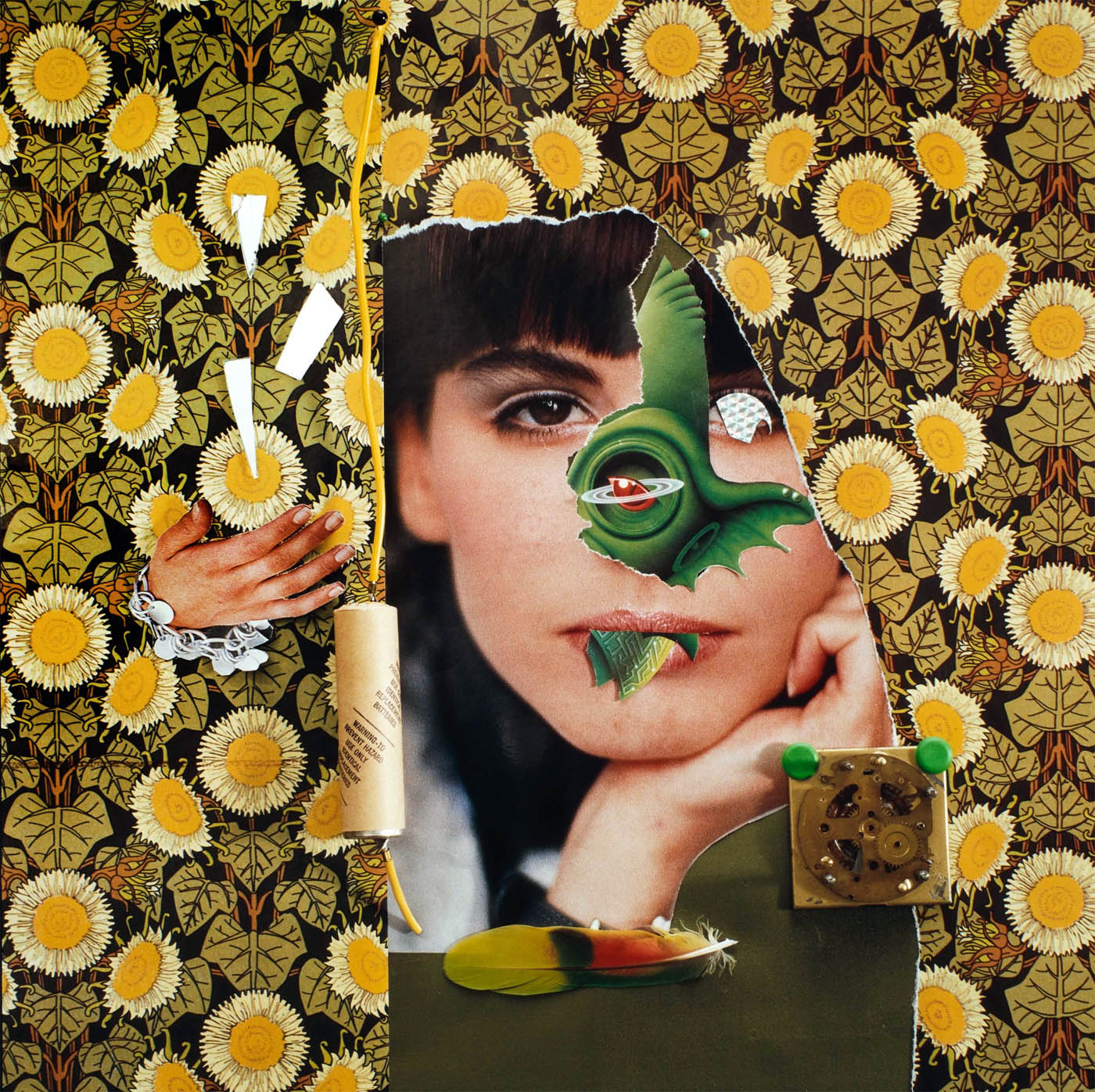
 

Elfriede Mejchar (Austrian, 1924-2020) 'A Costume of Borrowed Identity' 1990-1991


Elfriede Mejchar (Austrian, 1924-2020)
A Costume of Borrowed Identity
1990-1991
Wien Museum
© Bildrecht, Vienna 2023
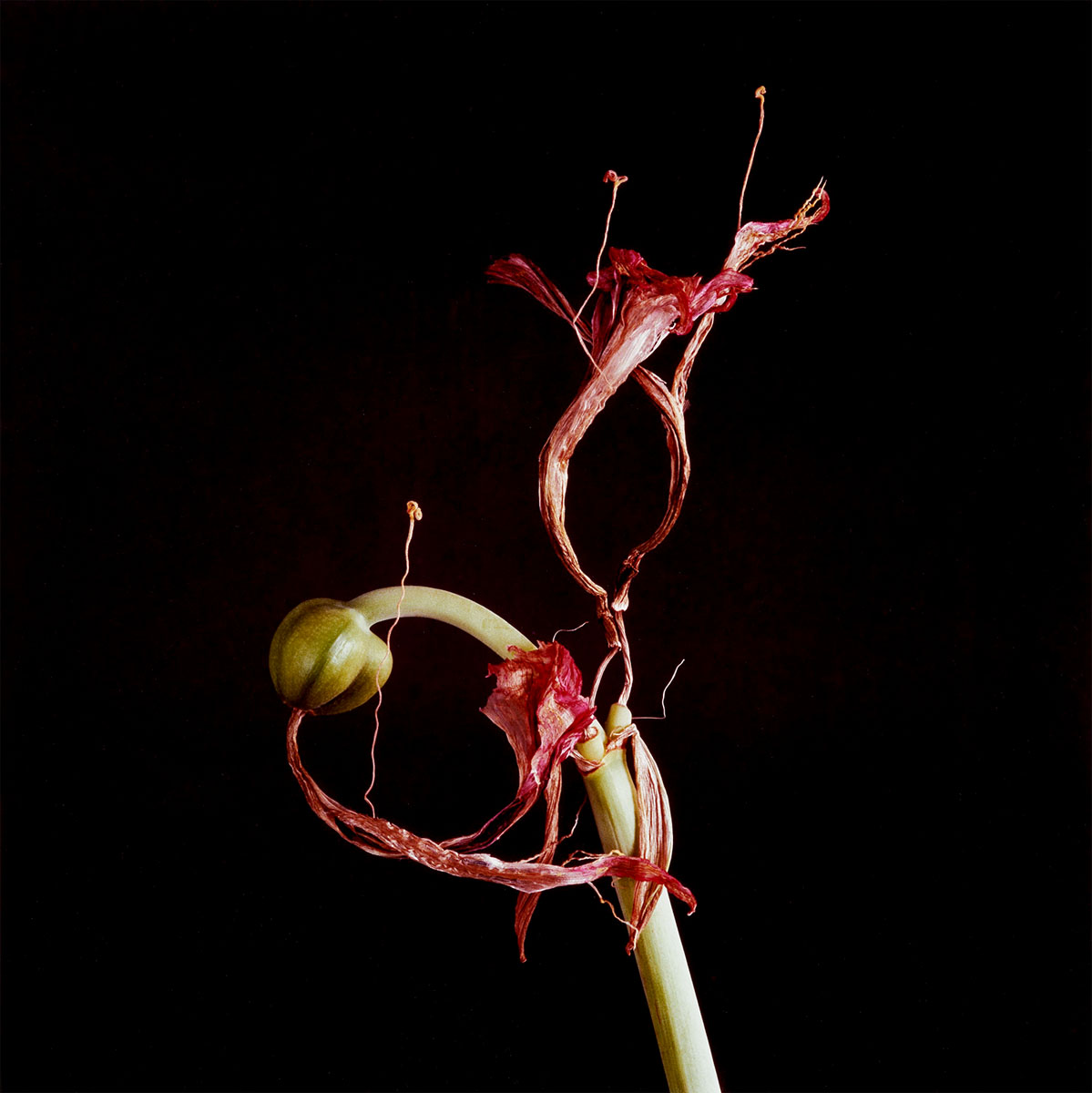
 

Elfriede Mejchar (Austrian, 1924-2020) 'Amaryllis' 1996


Elfriede Mejchar (Austrian, 1924-2020)
Amaryllis
1996
Wien Museum
© Bildrecht, Vienna 2023
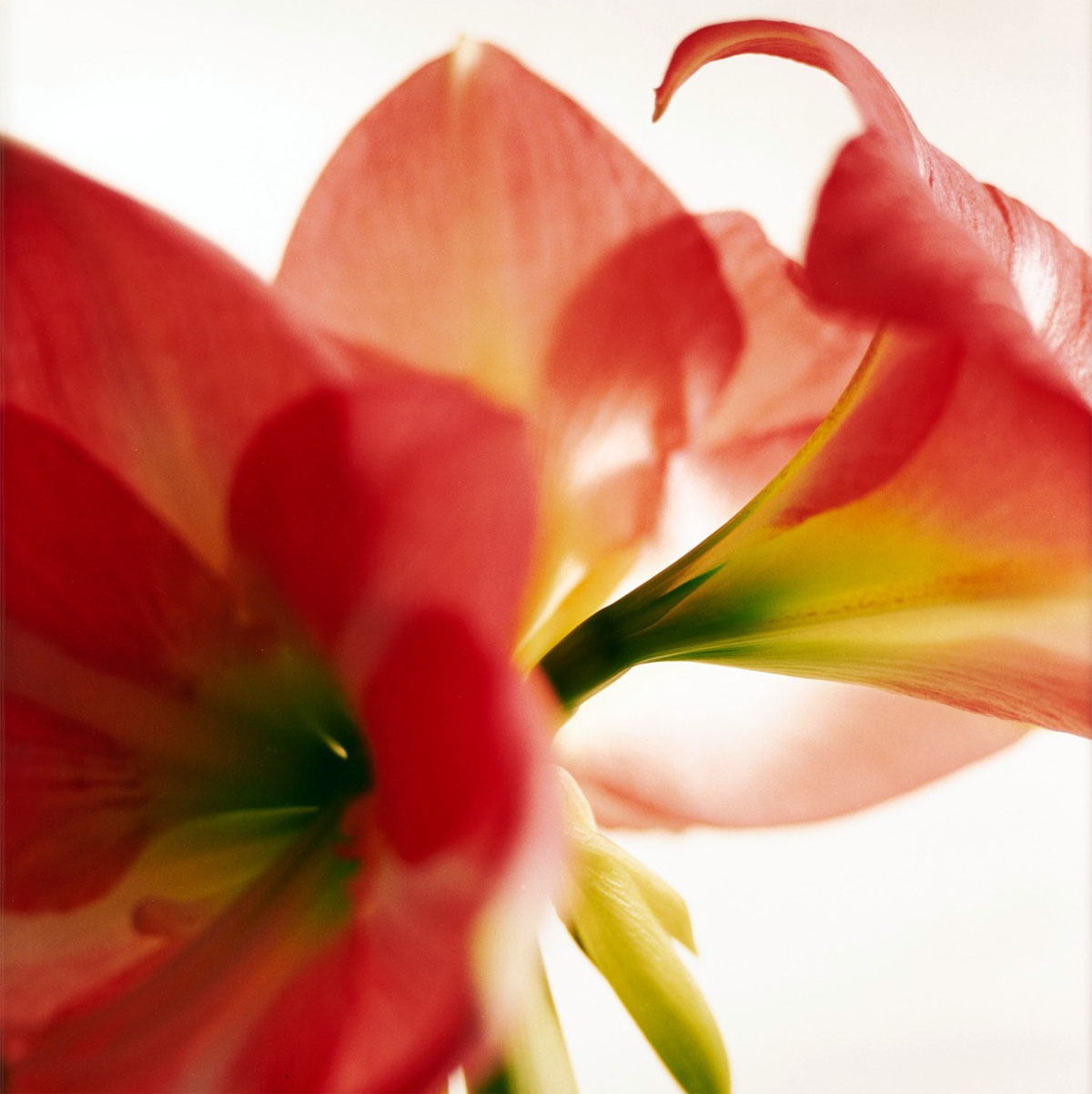
 

Elfriede Mejchar (Austrian, 1924-2020) 'Amaryllis' 2001


Elfriede Mejchar (Austrian, 1924-2020)
Amaryllis
2001
Wien Museum
© Bildrecht, Vienna 2023
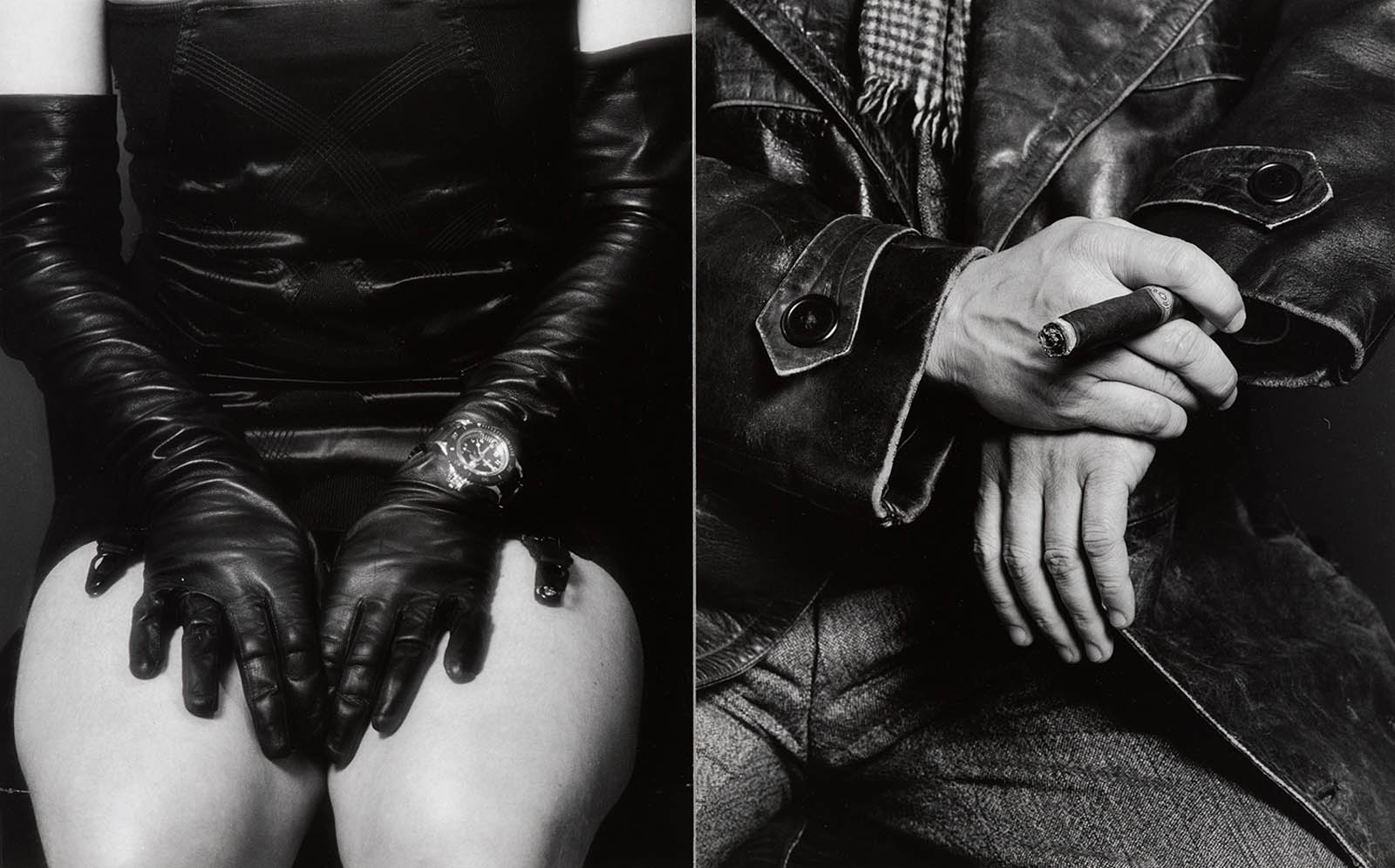
 

Elfriede Mejchar (Austrian, 1924-2020) 'Hands in Lap' 2002


Elfriede Mejchar (Austrian, 1924-2020)
Hands in Lap
2002
Wien Museum
© Bildrecht, Vienna 2023
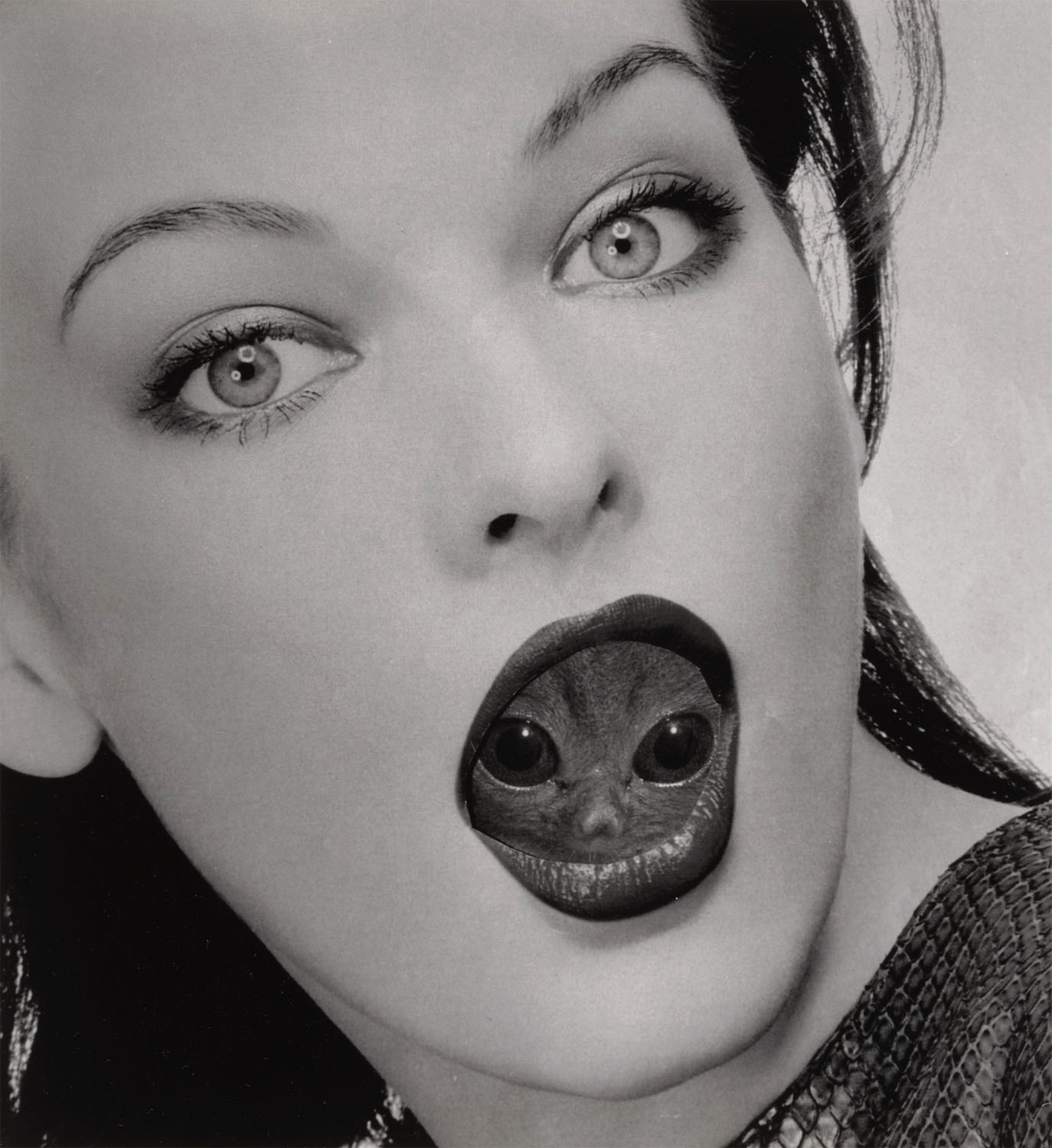
 

Elfriede Mejchar (Austrian, 1924-2020) From the series 'Nobody is Perfect' 1989-2007


Elfriede Mejchar (Austrian, 1924-2020)
From the series Nobody is Perfect
1989-2007
© Bildrecht, Vienna 2024
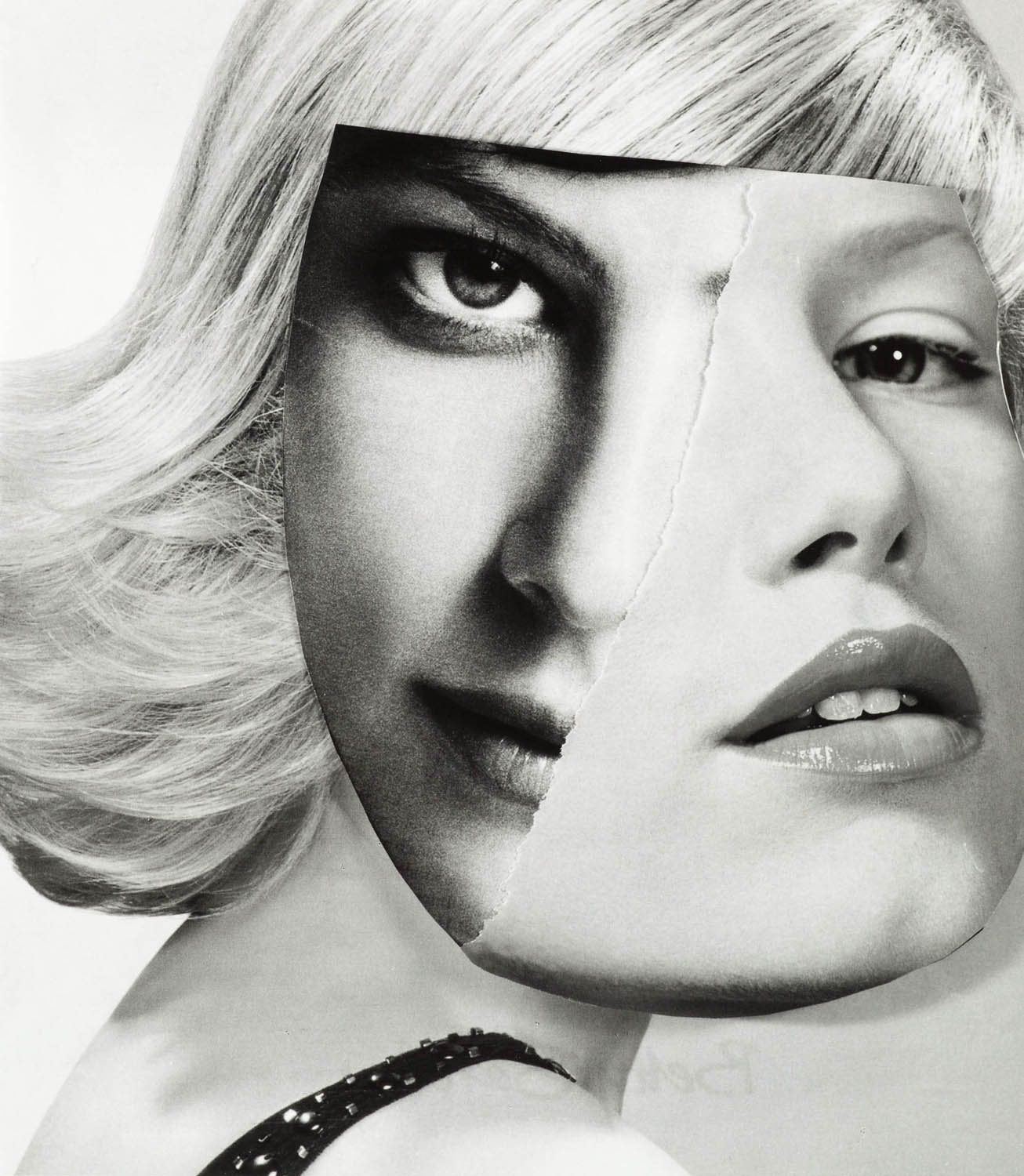
 

Elfriede Mejchar (Austrian, 1924-2020) From the series 'Nobody is Perfect' 1989-2007


Elfriede Mejchar (Austrian, 1924-2020)
From the series Nobody is Perfect
1989-2007
© Bildrecht, Vienna 2024
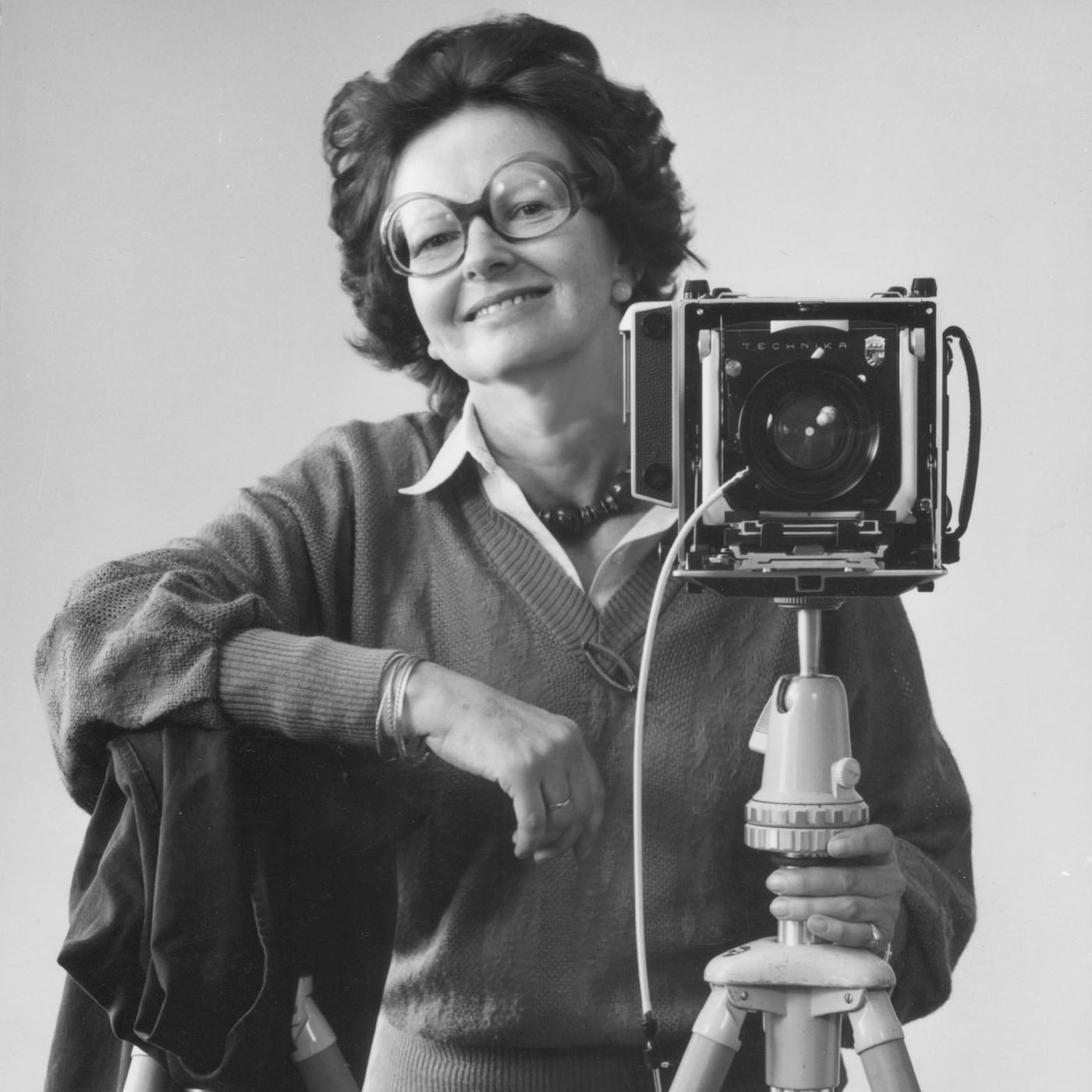
 

Unknown photographer. 'Elfriede Mejchar with Linhof camera and tripod in the Federal Monuments Office' Late 1970s


Unknown photographer
Elfriede Mejchar with Linhof camera and tripod in the Federal Monuments Office
Late 1970s
State Collections of Lower Austria
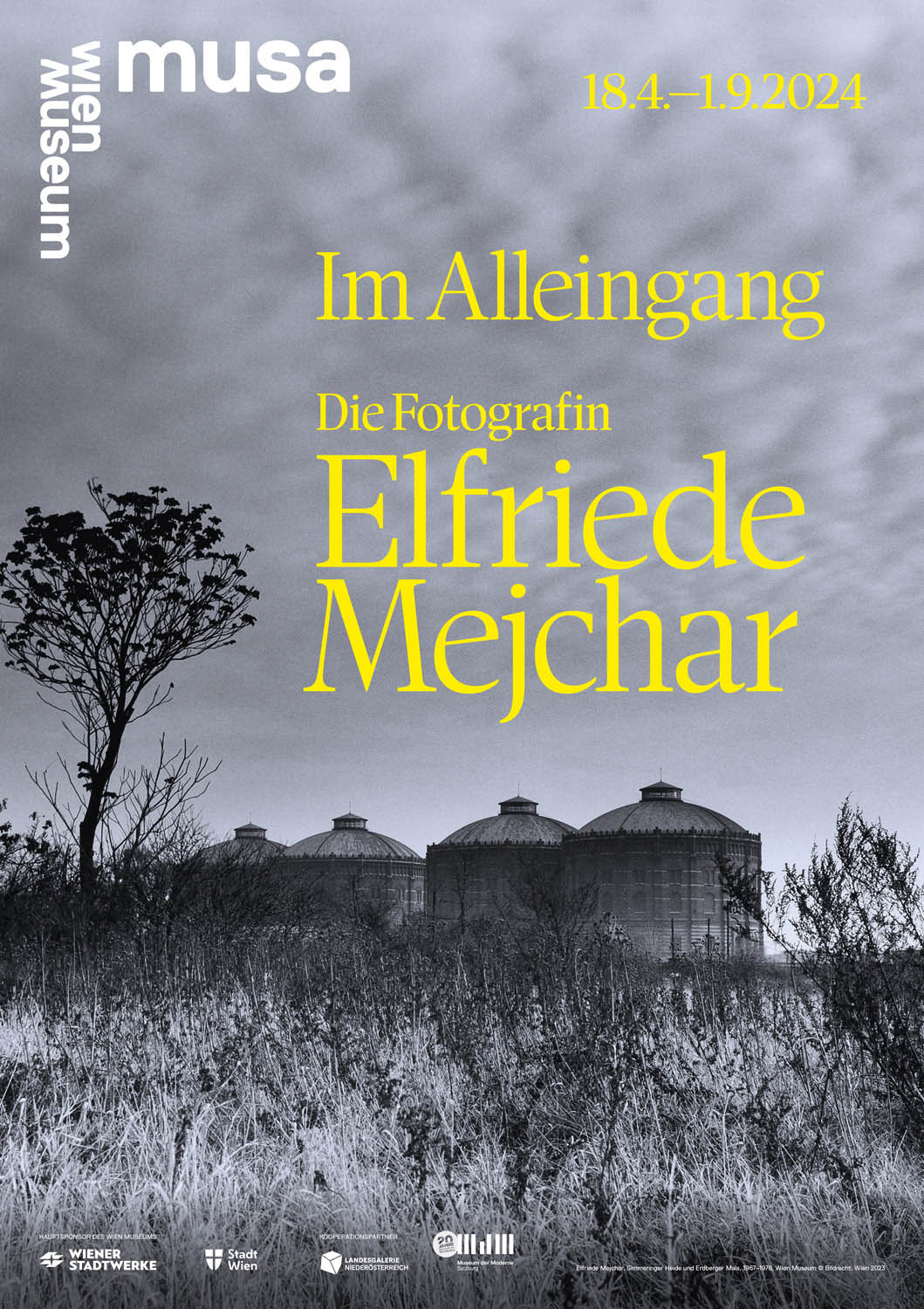
 

Poster for the exhibition 'On Her Own. The Photographer Elfriede Mejchar'


Poster for the exhibition On Her Own. The Photographer Elfriede Mejchar
Graphic: Studio Kehrer


Wien Museum MUSA
1010 Vienna, Felderstraße 6-8

Opening hours:
Tuesday to Sunday 10am – 6pm

Wien Museum website

LIKE ART BLART ON FACEBOOK

Back to top

Exhibition: ‘The Serial Portrait: Photography and Identity in the Last One Hundred Years’ at the National Gallery of Art, Washington

Exhibition dates: 30th September 2012 – 31st December 2012


Emmet Gowin (American, b. 1941) 'Edith, Danville, Virginia' 1971


Figure 5. Emmet Gowin (American, b. 1941)
Edith, Danville, Virginia
1971
Gelatin silver print
20.2 x 25.2cm (7 15/16 x 9 15/16 in.)
National Gallery of Art, Washington
Patrons’ Permanent Fund
© Emmet and Edith Gowin, Courtesy Pace/MacGill Gallery, New York


~ Alfred Stieglitz / Georgia O’Keeffe
~ Paul Strand / Rebecca Strand
~ Emmet Gowin / Edith Gowin
~ Harry Callahan / Eleanor and Barbara Callahan
~ Robert Mapplethorpe / Patti Smith
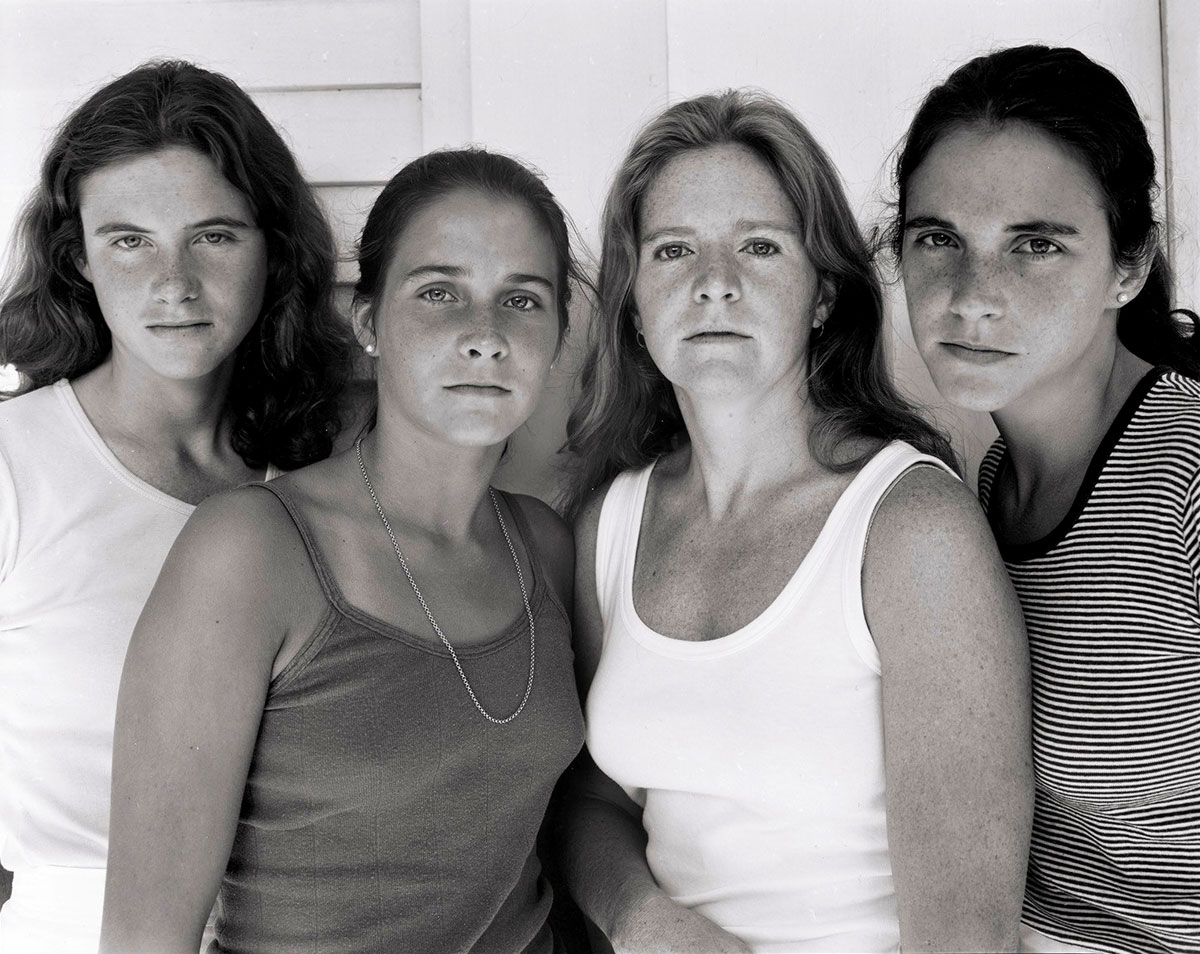
~ Nicholas Nixon / The Brown Sisters
~ Andy Warhol / Serial Photography / Photo Booth Portraits
~ Mario Testino / Kate Moss
~ Baron Adolf de Meyer / Baroness Olga de Meyer
~ Edward Weston / Charis Weston
~ Lee Friedlander / Maria Friedlander
~ Paul Caponigro / The woods of Connecticut
~ Bernd and Hilla Becher / grids
~ Gerhard Richter / Overpainted Photographs
~ Masahisa Fukase / wife and family
~ Seiichi Furuya / Christine Furuya-Gößler
~ Sally Mann / children and husband
~ William Wegman / dogs


Australia?
Nobody that I can think of except Sue Ford.

Notice how all the artists are men except two: Sally Mann and Hilla Becher.

Dr Marcus Bunyan


Many thankx to the National Gallery of Art for allowing me to publish the photographs in the posting. Please click on the photographs for a larger version of the image.


Introduction

Alfred Stieglitz, one of the most influential photographers of the twentieth century, argued that “to demand the [single] portrait… be a complete portrait of any person is as futile as to demand that a motion picture be condensed into a single still.” Stieglitz’s conviction that a person’s character could not be adequately conveyed in one image is consistent with a modern understanding of identity as constantly changing. For Stieglitz, who frequently made numerous portraits of the same sitters – including
striking photographs of his wife, the painter Georgia O’Keeffe – using the camera in a serial manner allowed him to transcend the limits of a single image.

Drawn primarily from the National Gallery of Art’s collection, the
Serial Portrait exhibition features twenty artists who photographed the same subjects – primarily friends, family, or themselves – multiple times over the course of days, months, or years. This brochure presents a selection of works by seven of these artists. Like Stieglitz’s extended portrait of O’Keeffe, Emmet Gowin’s ongoing photographic study of his wife, Edith, explores her character and reveals the bonds of love and affection between the couple. Milton Rogovin’s photographs of working-class residents of Buffalo, New York, record shifts in the appearance and situation of individuals in the context of their community over several decades.

A number of photographers in the exhibition have made serial self-portraits that investigate the malleability of personal identity. Photographing themselves as shadows, blurs, or partial reflections, Lee Friedlander and Francesca Woodman have made disorienting images that hint at the instability of self-representation. Ann Hamilton has employed unusual props and materials to transform herself into a series of hybrid objects. Finally, work by Nikki S. Lee takes the idea of mutable identity to its logical conclusion as the artist photographs herself masquerading as members of different social and ethnic groups.

Text from the NGA website


Emmet Gowin (American, b. 1941) 'Edith, Danville, Virginia' 1963


Figure 4. Emmet Gowin (American, b. 1941)
Edith, Danville, Virginia
1963
Gelatin silver print, printed 1980s
19.7 x 12.7cm (7 3/4 x 5 in.)
National Gallery of Art, Washington
Charina Endowment Fund
© Emmet and Edith Gowin, Courtesy Pace/MacGill Gallery, New York


Emmet Gowin

Emmet Gowin (born 1941) met Edith Morris in 1961 in their hometown of Danville, Virginia, just as he had decided to abandon business school to study art. Several years later at the Rhode Island School of Design, his teacher Harry Callahan, who made numerous photographs of his wife, Eleanor, encouraged Gowin to photograph the subject he knew most intimately – his family and in particular Edith, whom he married in 1964.

The Gowins’ artistic and marital collaboration has endured for half a century, yielding an extraordinary series of quiet, attentive portraits. In some photographs, such as Edith, Danville, Virginia, 1963 (fig. 4, above), Edith appears contemplative, even reserved. The somber beauty of this work stems in part from Gowin’s use of a tripod-mounted, large-format camera, which requires a lengthy exposure but produces photographs with exquisite details, such as the delicate shadow of a twig that falls across Edith’s face. To make the dramatic circular shadow that surrounds her in Edith, Danville, Virginia, 1971 (fig. 5, above), Gowin attached a lens meant for a 4 × 5 camera to a large 8 × 10 camera. This focus draws our attention to her figure, but the screen door simultaneously frames and obscures her form, resulting in a play between presence and elusiveness. While Gowin’s photographs are born of a deep intimacy, they refuse to lay bare his wife’s soul or expose the couple’s private passions.

The same delicate balance between revelation and reserve marks a group of portraits made during the couple’s travels in Central and South America. Edith and Moth Flight, 2002 (fig. 6, below), made at night using a ten-second exposure, combines Gowin’s enchantment with natural beauty and his interest in the nuances of his wife’s gestures and moods. Placing a pulsing ultraviolet light behind Edith’s head, Gowin recorded the luminous traces left by moths as they danced around her blurred face, transforming her into a ghostly and even otherworldly presence, visible yet just out of our reach.

Text from the NGA website


Emmet Gowin (American, b. 1941) 'Edith and Moth Flight' 2002


Figure 6. Emmet Gowin (American, b. 1941)
Edith and Moth Flight
2002
Digital ink jet print
19 x 19cm (7 1/2 x 7 1/2 in.)
National Gallery of Art, Washington
Charina Endowment Fund
© Emmet and Edith Gowin, Courtesy Pace/MacGill Gallery, New York


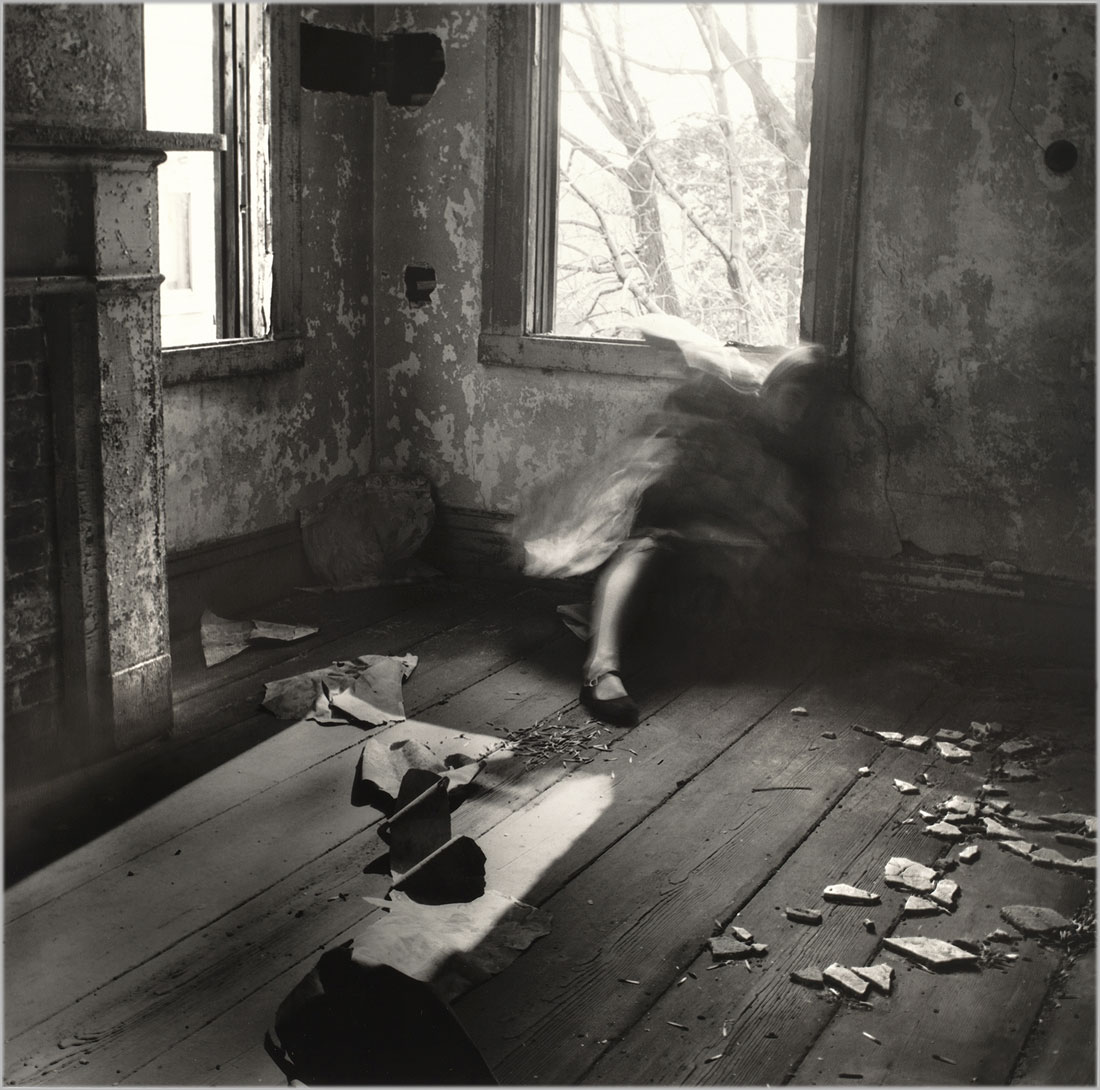
Francesca Woodman (American, 1958-1981) 'House #3, Providence, Rhode Island' 1976


Francesca Woodman (American, 1958-1981)
House #3, Providence, Rhode Island
1976
Gelatin silver print
16.1 x 16.3cm (6 5/16 x 6 7/16 in.)
National Gallery of Art, Washington
Gift of the Heather and Tony Podesta Collection


Francesca Woodman

Francesca Woodman (1958-1981) began making photographs at age thirteen, and by the time she entered the Rhode Island School of Design in 1975, she was already a skilled photographer. Using herself as the subject of nearly all her work, Woodman put her body in the service of exploring such themes as feminine identity, sexuality, mythology, and the relationship of the body to its surroundings. Conjuring visions of a complex inner world, Woodman’s photographs are powerful for their ability to suggest psychic turmoil within images of serene, ethereal beauty.

Woodman’s interest in the emotional affect of space can be seen in House #3, Providence, Rhode Island, 1976 (fig. 14, above). Using an abandoned house as a makeshift studio, Woodman often photographed herself merging with her surroundings, including doors, walls, and windows, dissolving physical or psychic boundaries. She also frequently moved during long exposures or allowed the camera to record only part of her body in order to obscure her figure. By invoking a ghostly presence, Woodman’s photographs often present her as someone who refuses to commit to a solid image of herself.

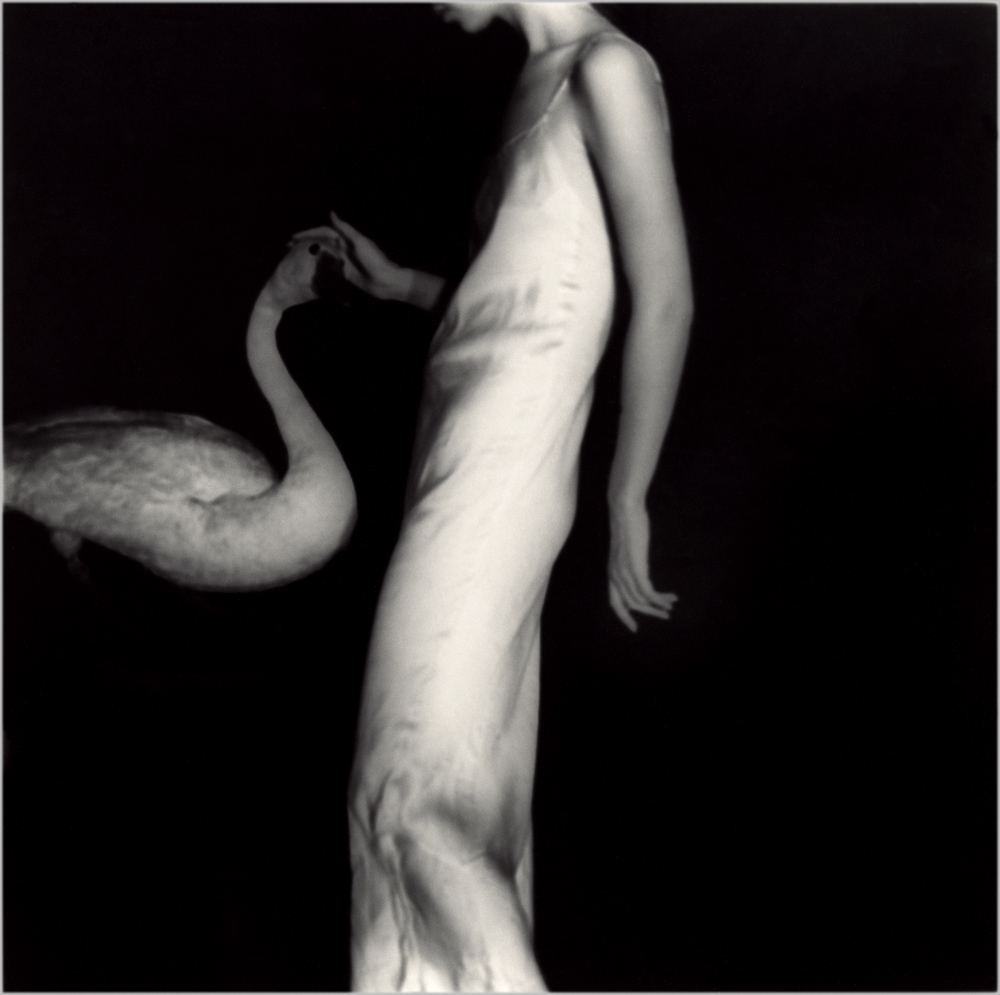
Woodman’s lush and intimate photographs thus offer a tantalising glimpse of a mysterious, private world. Yet they are more than romantic expressions of a young woman’s subjective experience. Notes in Woodman’s diary suggest, for instance, that Untitled, Providence, Rhode Island, 1975-1978 (fig. 15, below), alludes to the Greek mythological story of Leda, who was seduced by the god Zeus in the form of a swan.

Toward the end of her brief but prolific career (Woodman committed suicide when she was twenty-two) the artist began working on a much larger scale, using her body more as a structural element. Caryatid, New York, 1980 (fig. 16, below), made as part of a monumental photo-installation called Temple Project, draws both its title and inspiration from the columns carved in the shape of women that were used in ancient Greek and Roman architecture. Although Woodman displays her figure in a more expansive and direct manner than in her earlier work, the gesture that obscures her face and leaves her partial and unknowable is typical for the artist, who always preferred suggestion over declaration.

Text from the NGA website


Francesca Woodman (American, 1958-1981) 'Untitled, Providence, Rhode Island' 1975-1978


Francesca Woodman (American, 1958-1981)
Untitled, Providence, Rhode Island
1975-1978
Gelatin silver print
10.5 x 10.5cm (4 1/8 x 4 1/8 in.)
National Gallery of Art, Washington
Gift of the Collectors
Committee and R. K. Mellon Family Foundation


Francesca Woodman (American, 1958-1981) 'Caryatid, New York' 1980


Francesca Woodman (American, 1958-1981)
Caryatid, New York
1980
National Gallery of Art, Washington
William and Sarah Walton Fund and Gift of the Collectors Committee


Ann Hamilton (American, b. 1956) 'body object series #13, toothpick suit/chair' 1984


Figure 17. Ann Hamilton (American, b. 1956)
body object series #13, toothpick suit/chair
1984
Gelatin silver print, printed 1993
11 x 11cm (4 5/16 x 4 5/16 in.)
National Gallery of Art, Washington
Gift of Heather and Tony Podesta Collection


Ann Hamilton

An artist known for multimedia environments, performances, and videos, Ann Hamilton (born 1956) made the first photographs in the body object series in 1984 with objects left over from an installation she had presented as an MFA student at Yale. Later images from the series were based on subsequent performances and installations, documenting both the objects used and the actions performed with them. Hamilton appears in each photograph with objects attached to or touching her body, her face only rarely visible. The results are striking, unsettling, and often witty.

Despite emerging from Hamilton’s installation and performance practice, the photographs in the series stand on their own as works of art. Paying close attention to the material qualities of familiar objects, Hamilton models creative new uses for them, changing their function and meaning. In body object series #13, toothpick suit/chair, 1984 (fig. 17, above), for example, thousands of toothpicks transform Hamilton’s clothes into a porcupine-like hide while a chair becomes a burdensome instrument of torture. The image elicits visceral emotions – alienation, hostility, fear – though it does so with a dose of absurdist humour.

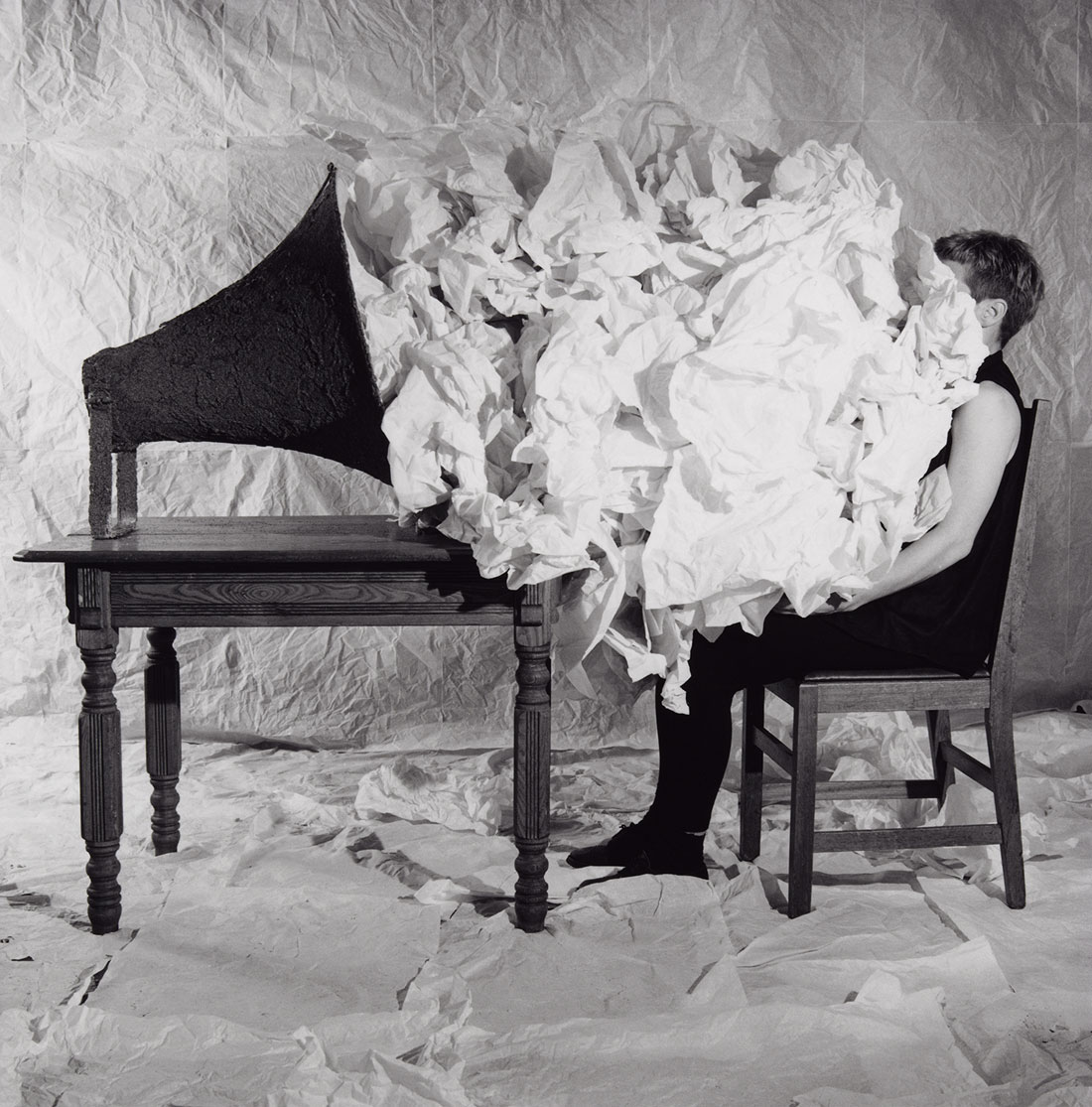
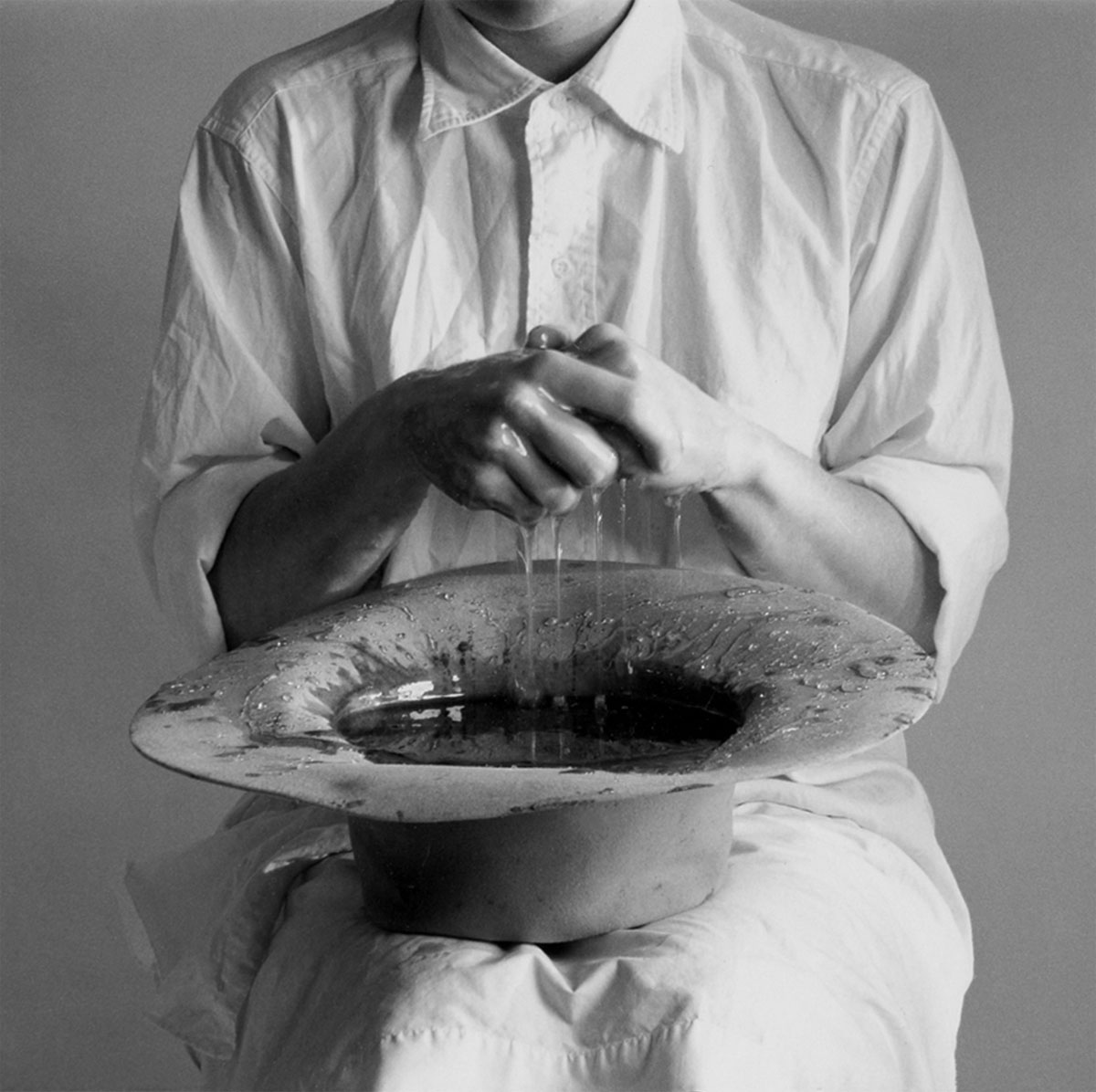
As self-representations, the photographs in the body object series depart radically from any traditional notion of portraiture. Instead of insisting on Hamilton’s uniqueness as an individual, these images present her body almost as an object on a par with other objects. Some of the photographs are linked directly to her biography: Hamilton had studied textile design before getting her MFA, and the toothpick suit refers to her love of fabrics. In other photographs she makes abstract concepts more graspable through the senses. Sound is given tactile and visual form as tissue paper in body object series #14, megaphone, 1986 (fig. 18, below), while in body object series #15, honey hat, 1989 (fig. 19, below), Hamilton wrings her hands in honey to suggest the idea of washing one’s hands of guilt. Based on an installation in which the artist embedded money – 750,000 pennies – in a layer of honey, this image also gives new meaning to the phrase “sticky fingers” and highlights the connections between language, images, and objects that Hamilton explores in both her photographs and installations.

Text from the NGA website


Ann Hamilton (American, b. 1956) 'body object series #14, megaphone' 1986


Figure 18. Ann Hamilton (American, b. 1956)
body object series #14, megaphone
1986
Gelatin silver print, printed 1993
11 x 11cm (4 5/16 x 4 5/16 in.)
National Gallery of Art, Washington
Gift of Heather and Tony Podesta Collection


Ann Hamilton (American, b. 1956) 'body object series #15, honey hat' 1989


Figure 19. Ann Hamilton (American, b. 1956)
body object series #15, honey hat
1989
Gelatin silver print, printed 1993
11 x 11cm (4 5/16 x 4 5/16 in.)
National Gallery of Art, Washington
Gift of Heather and Tony Podesta Collection


The National Gallery of Art explores how the practice of making multiple portraits of the same subjects produced some of the most revealing and provocative photographs of our time in The Serial Portrait: Photography and Identity in the Last One Hundred Years, on view in the West Building’s Ground Floor photography galleries from September 30 through December 31, 2012. Arranged both chronologically and thematically, the exhibition features 153 works by 20 artists who photographed the same subjects – friends, family, and themselves – numerous times over days, months, or years to create compelling portrait studies that investigate the many facets of personal and social identity.

“The Gallery’s photography collection essentially began with the donation of Alfred Stieglitz’s ‘key set,’ so it is fitting that this exhibition opens with portraits by Stieglitz, who understood that a person’s character was best captured through a series of photographs taken over time,” said Earl A. Powell III, director, National Gallery of Art. “Although the exhibition is drawn largely from the Gallery’s significant collection of photographs, we are grateful to the lenders who have allowed us to present more fully the serial form of portraiture that Stieglitz championed.”

Since the introduction of photography in 1839, portraiture has been one of the most widely practiced forms of the medium. Starting in the early 20th century, however, some photographers began to question whether one image alone could adequately capture the complexity of an individual. As Alfred Stieglitz, the era’s leading champion of American fine art photography, argued: “to demand the [single] portrait that will be a complete portrait of any person is as futile as to demand that a motion picture will be condensed into a single still.”

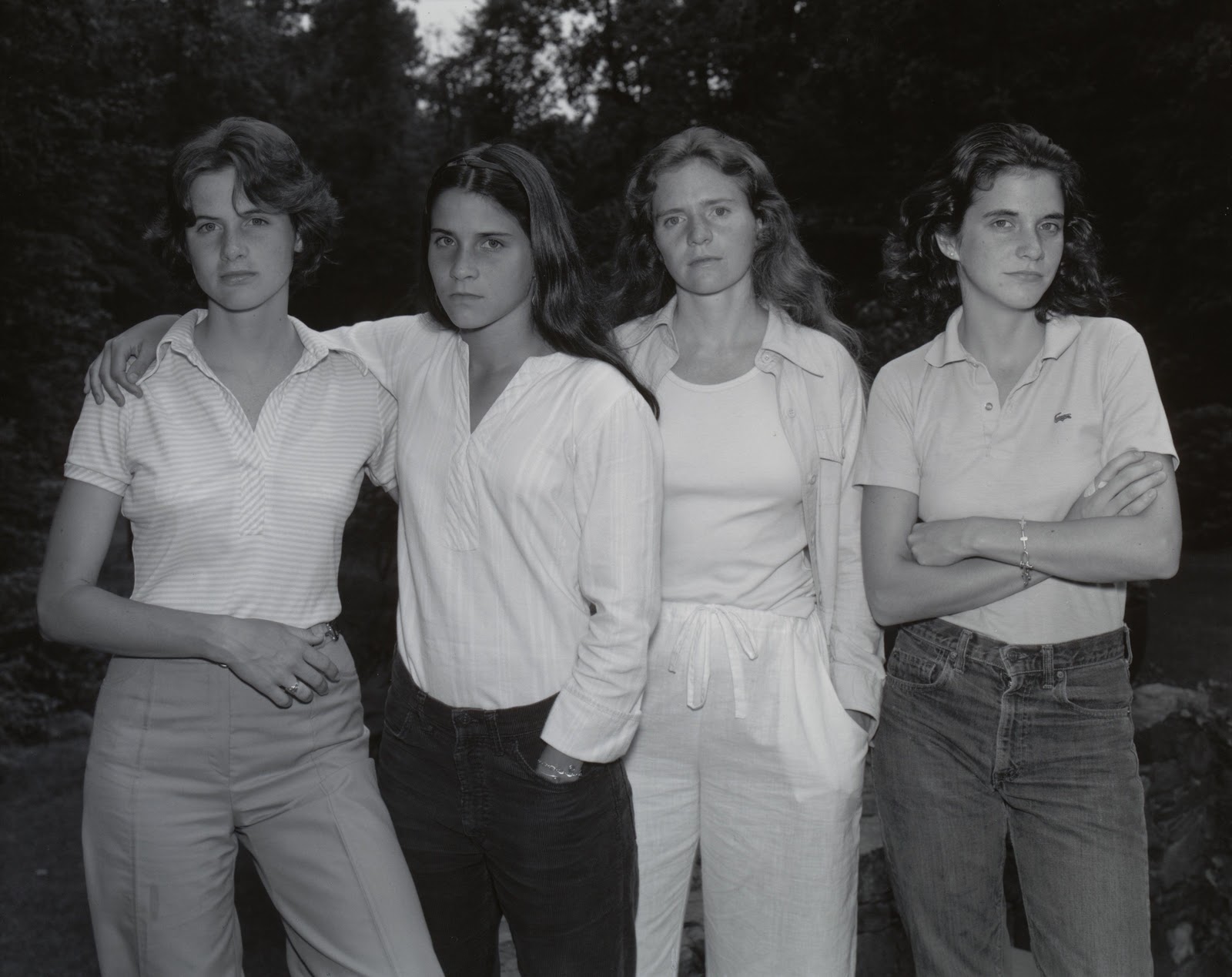
Along with Stieglitz, some of the 20th century’s most prominent photographers – Paul Strand, Harry Callahan, and Emmet Gowin – used the camera serially to transcend the limits of a single image. Each of these photographers made numerous studies of their lovers that sought to redefine the expressive possibilities of portraiture while probing the affective bonds of love and desire. By employing the camera’s capacity to record fluctuating states of being and mark the passage of time, other photographers such as Nicholas Nixon and Milton Rogovin have documented individuals – in families or communities – over four decades. Capturing subtle and dramatic shifts in appearance, demeanour, and situation, these series are poignant and elegiac memorials that remind us of our own mortality.

Other photographers have made serial self-portraits that explore the malleability of personal identity and the possibility of reinvention afforded by the camera. By photographing themselves as shadows, blurs, or partial reflections, Ilse Bing, Lee Friedlander, and Francesca Woodman have created inventive but elusive images that hint at the instability of self-representation. Conceptual artists of the 1970s and 1980s such as Vito Acconci, Blythe Bohnen, and Ann Hamilton have explicitly combined performance and self-portraiture to stage continual self-transformations. The exhibition concludes with work from the last 15 years by artists such as Nikki S. Lee and Gillian Wearing, who take the performance of self to its limits by adopting masquerades to delve into the ways identity is inferred from external appearance.

Press release from the National Gallery of Art website


Lee Friedlander (American, b. 1934) 'Westport, Connecticut' 1968


Figure 11. Lee Friedlander (American, b. 1934)
Westport, Connecticut
1968
Gelatin silver print
19.8 x 12.3cm (7 13/16 x 4 13/16 in.)
National Gallery of Art, Washington, Trellis Fund
© Lee Friedlander, courtesy Fraenkel Gallery


Lee Friedlander

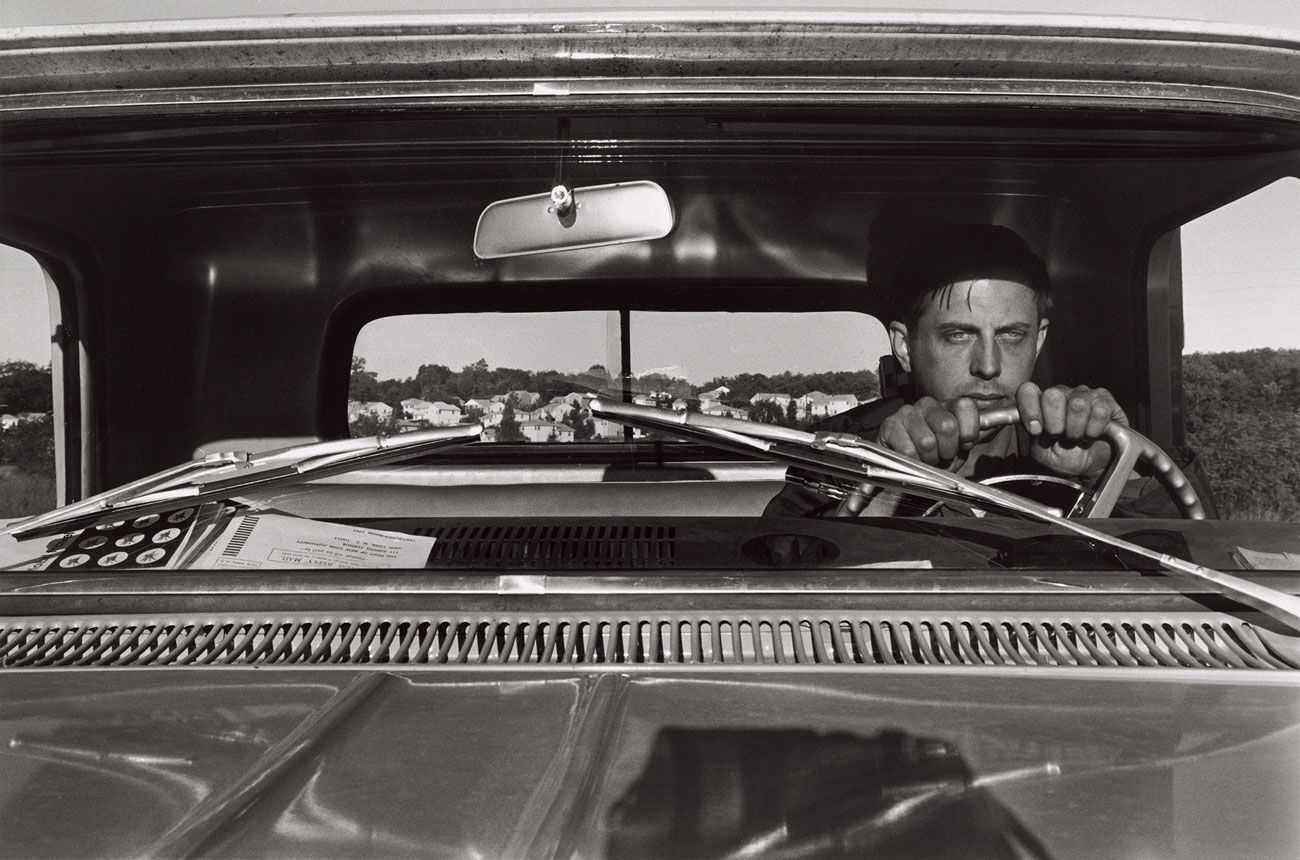
In the 1960s Lee Friedlander (born 1934) sought, by his own account, to create images of “the American social landscape and its conditions.” Other photographers in his New York circle, including Diane Arbus and Garry Winogrand, also explored the chaotic beauty and contradictions of modern life. Friedlander, however, was the only member of this group to turn repeatedly to self-portraiture in order to understand the world around him. He stalked city streets with camera in hand, recording not only the haphazard incidents of daily life but also his own presence, often as a shadow or a reflection.

In the shop window of Westport, Connecticut, 1968 (fig. 11, above), for example, a reflection of Friedlander’s legs appears to merge with the shapely limbs of a woman in a bathing suit who points a camera at the viewer. The woman is an illusion, a cutout advertisement – but she is also a stand-in for the camera-wielding Friedlander, whose torso and head also appear faintly, as a shadow cast against her legs.

By letting the reflection in a window obscure what is inside, or allowing his shadow to intrude into the frame, Friedlander violates many of the rules of “good” photography. Works such as New York City, 1966 (fig. 12, below) testify to Friedlander’s ability to transform such “mistakes” into witty, ironic juxtapositions. In this case, the startling intrusion of Friedlander’s shadow onto the back of a fellow pedestrian is visually confusing, simultaneously threatening and humorous, as Friedlander’s spiky hair merges with the woman’s fur collar. A sly commentary on the predatory nature of such street photography, the looming shadow that engulfs the subject is also an effect of Friedlander’s equipment, a 35mm Leica with a wide-angle lens. In order to fill the picture frame with his chosen subject, Friedlander had to make the picture at close range, resulting in the inclusion of his own shadow.

Even in self-portraits in which Friedlander makes himself fully visible to the camera, the artist often makes humorously self-deprecating deadpan images, appearing, for example, as a disheveled driver on a manic mission in Haverstraw, New York, 1966 (fig. 13, below). Edgy but unpretentious, brimming with pictorial detail, Friedlander’s self-portraits are visual puzzles that explore the place of the self in the chaos of contemporary urban life.

Text from the NGA website


Lee Friedlander (American, b. 1934) 'New York City' 1966


Figure 12. Lee Friedlander (American, b. 1934)
New York City
1966
Gelatin silver print
21.7 x 32.7cm (8 9/16 x 12 7/8 in.)
National Gallery of Art, Washington
Trellis Fund
© Lee Friedlander, courtesy Fraenkel Gallery


Lee Friedlander (American, b. 1934) 'Haverstraw, New York' 1966


Figure 13. Lee Friedlander (American, b. 1934)
Haverstraw, New York
1966
Gelatin silver print
21.7 x 32.7cm (8 9/16 x 12 7/8 in.)
National Gallery of Art, Washington
Trellis Fund
© Lee Friedlander, courtesy Fraenkel Gallery


Ilse Bing (German, 1899-1998) 'Self-Portrait with Leica' 1931


Ilse Bing (German, 1899-1998)
Self-Portrait with Leica
1931
Gelatin silver print, printed c. 1988
26.7 x 29.7cm (10 1/2 x 11 11/16 in.)
National Gallery of Art, Washington
Gift of Ilse Bing Wolff


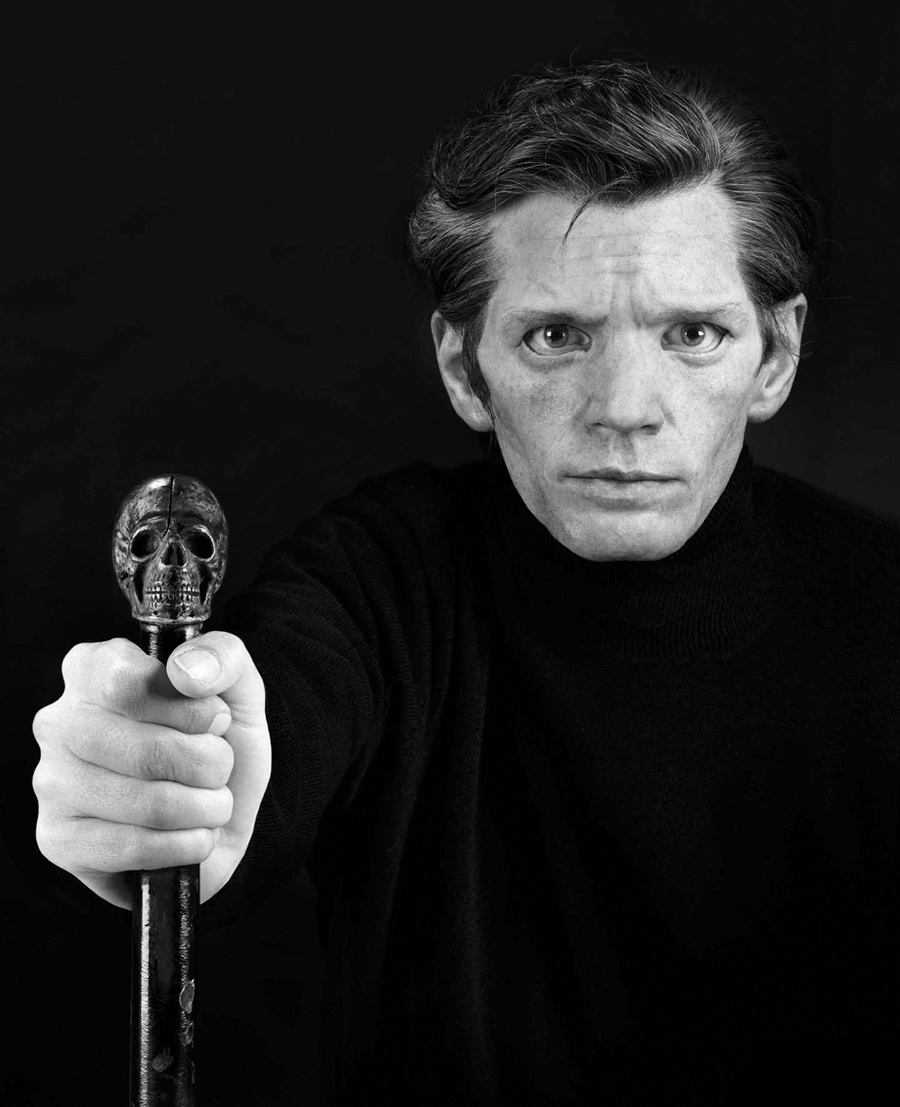
Gillian Wearing (English, b. 1963) 'Me as Mapplethorpe' 2009


Gillian Wearing (English, b. 1963)
Me as Mapplethorpe
2009
Gelatin silver print (based upon Robert Mapplethorpe work: Self Portrait, 1988. © Robert Mapplethorpe Foundation)
149.86 x 121.92cm (59 x 48 in.)
Private Collection
Courtesy the artist; Tanya Bonakdar Gallery, New York; Maureen Paley, London, Regen Projects, Los Angeles


Paul Strand (American, 1890-1976) 'Rebecca' 1922


Paul Strand (American, 1890-1976)
Rebecca
1922
Platinum print
24.4 x 19.4cm (9 5/8 x 7 5/8 in.)
National Gallery of Art, Washington
Southwestern Bell Corporation Paul Strand Collection
© Aperture Foundation Inc., Paul Strand Archive


Paul Strand (American, 1890-1976) 'Rebecca, New Mexico' 1932


Paul Strand (American, 1890-1976)
Rebecca, New Mexico
1932
Platinum print
14.9 x 11.8cm (5 7/8 x 4 5/8 in.)
National Gallery of Art, Washington
Southwestern Bell Corporation Paul Strand Collection
© Aperture Foundation Inc., Paul Strand Archive


Alfred Stieglitz (American, 1864-1946) 'Georgia O'Keeffe' probably 1918


Figure 1. Alfred Stieglitz (American, 1864-1946)
Georgia O’Keeffe
probably 1918
Platinum print
18.4 x 23.1cm (7 1/4 x 9 1/8 in.)
National Gallery of Art, Washington
Alfred Stieglitz Collection


Alfred Stieglitz

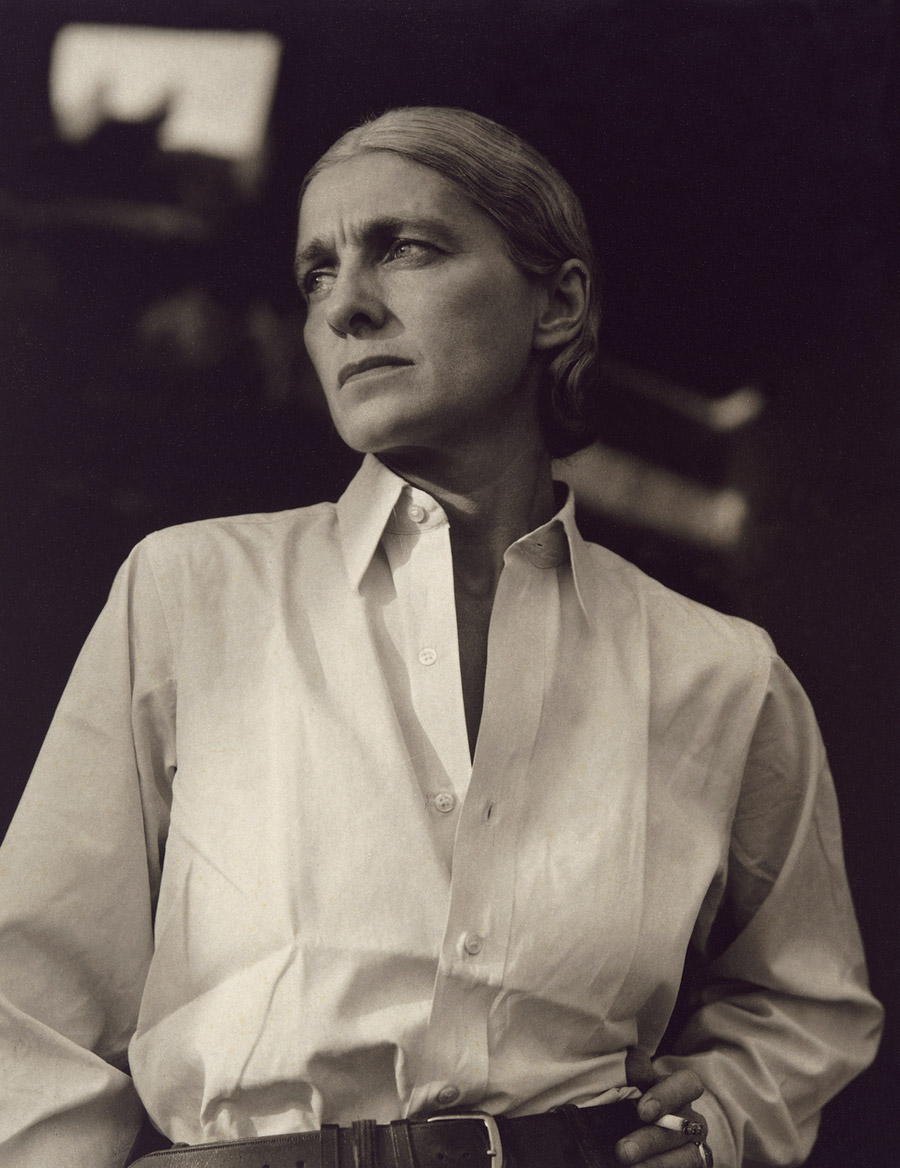
Alfred Stieglitz (1864-1946) was already an accomplished photographer, publisher, and champion of modern art when he the first encountered the work of Georgia O’Keeffe in 1916. He made his first photographs of her in 1917 and sent them to her with the note, “I think I could do thousands
of things of you – a life work to express you.” Over the next two decades Stieglitz made more than three hundred photographs of O’Keeffe, whom he married in 1924, creating what he called a “composite portrait.” This extraordinary body of work charts the couple’s relationship and
expresses Stieglitz’s conviction that portraiture should function as a kind of “photographic diary.”

Many of the photographs Stieglitz made of O’Keeffe in the early years of their relationship, including Georgia O’Keeffe, c. 1918 (fig. 1, above), are palpably erotic, reflecting the intense passion they shared. Revealing herself to the lens with a bewitching vulnerability, O’Keeffe exudes a tenderness and seductiveness that belie the strain of holding the pose during the long exposures required by Stieglitz’s large-format camera. Often, his photographs express both his desire and admiration for O’Keeffe, at times verging on idealisation of the person he called “Nature’s child – a Woman.” Yet his portraits also look beyond her face to find eloquence in all
parts of her body, as in the print Georgia O’Keeffe – Hands and Thimble (fig. 2, below), where her hands display an almost tactile physicality. Here, Stieglitz used a printing technique that resulted in tonal reversal, causing deep shadows to print as bronze tones and creating the dark outlines that dramatise O’Keeffe’s graceful fingers and emphasise the metallic gleam of the thimble.

After Stieglitz exhibited more than forty portraits of O’Keeffe, including some provocative nudes, in 1921, the painter was dismayed to find that her own art began to be interpreted in a sexualised way, and she rarely posed unclothed after 1923. O’Keeffe’s desire to control her image, along with the increasingly attenuated nature of their relationship after 1929, when
she began spending several months a year working in New Mexico while he stayed in New York, further strained their partnership. In Georgia O’Keeffe, 1930 (fig. 3, below), the artist stands before one of the paintings she had made in New Mexico. Gazing steadily at the camera, she appears as a monumental force at one with her art, confident yet untouchable.

Text from the NGA website


Alfred Stieglitz (American, 1864-1946) 'Georgia O'Keeffe - Hands and Thimble' 1919


Figure 2. Alfred Stieglitz (American, 1864-1946)
Georgia O’Keeffe – Hands and Thimble
1919
Palladium print
24 x 19.4cm (9 7/16 x 7 5/8 in.)
National Gallery of Art, Washington
Alfred Stieglitz Collection


Alfred Stieglitz (American, 1864-1946) 'Georgia O'Keeffe' 1930


Figure 3. Alfred Stieglitz (American, 1864-1946)
Georgia O’Keeffe
1930
Gelatin silver print
23.9 x 19.1cm (9 7/16 x 7 1/2 in.)
National Gallery of Art, Washington
Alfred Stieglitz Collection


Nicholas Nixon (American, b. 1947) 'The Brown Sisters' 1975


Nicholas Nixon (American, b. 1947)
The Brown Sisters
1975
Gelatin silver print
20.2 x 25.2cm (7 15/16 x 9 15/16 in.)
National Gallery of Art, Washington
Patrons’ Permanent Fund
© Nicholas Nixon, courtesy Fraenkel Gallery, San Francisco and Pace/MacGill Gallery, New York


Nicholas Nixon (American, b. 1947) 'The Brown Sisters' 1978


Nicholas Nixon (American, b. 1947)
The Brown Sisters
1978
Gelatin silver print
Promised gift of James and Margie Krebs
© Nicholas Nixon, courtesy Museum of Fine Arts, Boston


For more images from this series please see my posting Nicholas Nixon: Family Album


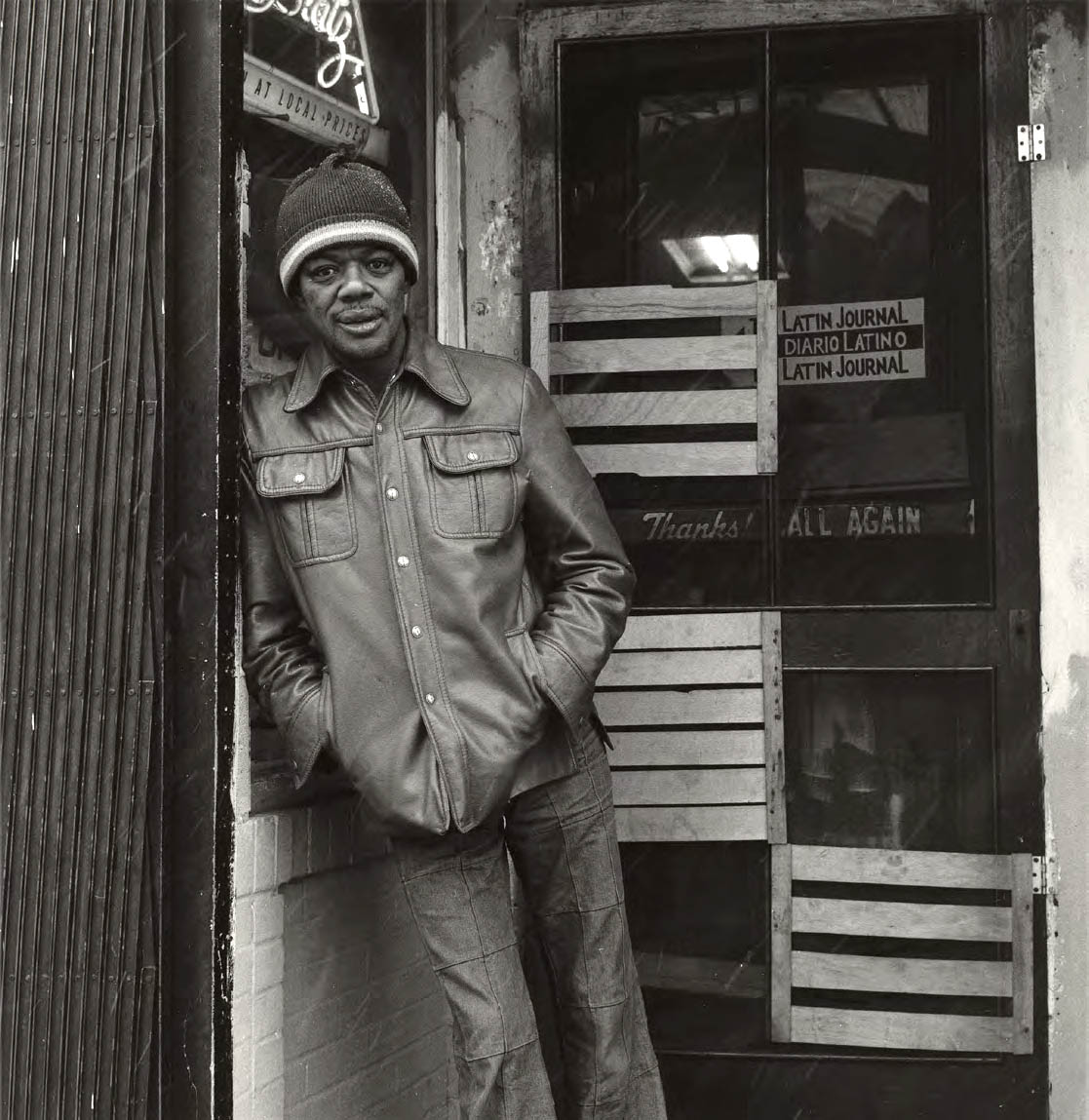
Milton Rogovin (American, 1909-2011) 'Samuel P. "Pee Wee" West (Lower West Side series)' 1974


Figure 7. Milton Rogovin (American, 1909-2011)
Samuel P. “Pee Wee” West (Lower West Side series)
1974
Gelatin silver print
National Gallery of Art, Washington
Gift of Dr. J. Patrick and Patricia A. Kennedy


Milton Rogovin

Milton Rogovin (1909-2011) belongs to a rich photographic tradition of documenting the social and personal histories of people who would otherwise be forgotten. He did so serially, returning over many years to encapsulate not just single moments but entire lifetimes. Rogovin started his career as an optometrist in Buffalo, New York. In 1957, after he refused to testify before the House Committee on Un-American Activities about his association with the Communist Party, the local paper labeled him the “Top Red in Buffalo.” His optometry practice folded as a result, leaving his family of five to survive on the salary of his wife, Anne. With free time suddenly available, Rogovin turned to photography with a strong sense of purpose. “My voice was essentially silenced,” he recalled, “so I decided to speak out through photographs.”

Rogovin’s candid, powerfully direct pictures gave voice to those who traditionally had none: immigrants, minorities, and working-class people. Even though he traveled around the world making photographs of workers, his best-known work was made closer to home. In 1972 he began photographing residents of Buffalo’s Lower West Side, the city’s poorest
and most ethnically diverse neighbourhood. With his bulky twin-lens Rolleiflex camera, the photographer was sometimes suspected of working for the police or the FBI. Over time, however, Rogovin gained the trust of his sitters by visiting regularly and by giving them prints of their portraits. Dignified and occasionally tender, these photographs depict the circumstances of each subject with sober honesty.

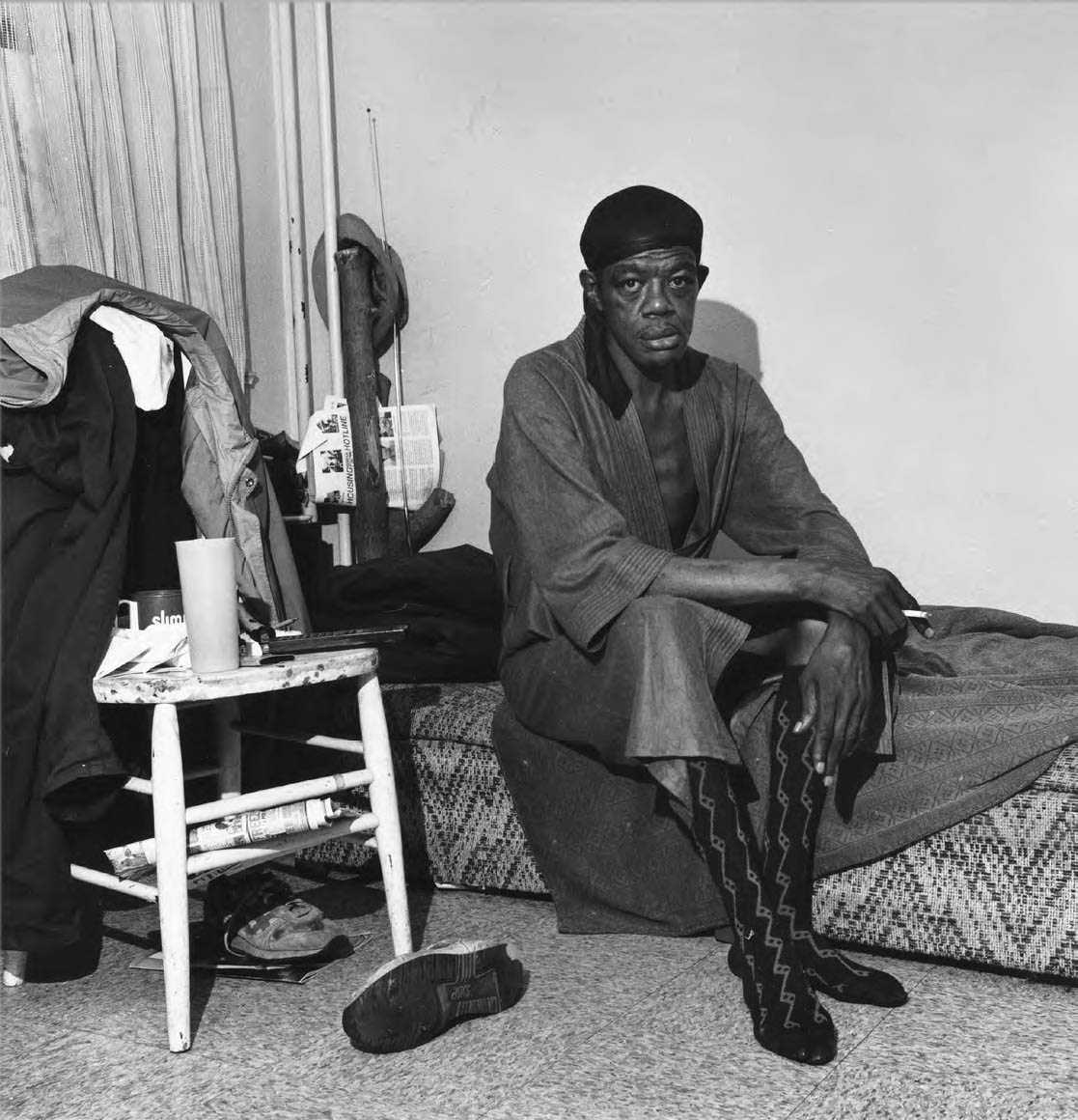
Several times over the next three decades, Rogovin sought out and re-photographed many of his original subjects, capturing the changes wrought by time and circumstance. The series Samuel P. “Pee Wee” West (figs. 7-10) registers changes in the sitter’s situation over the course of twenty-eight years, from 1974 to 2002. In 2003 the oral historian Dave Isay, working
alongside Rogovin, interviewed West, who related the story of his decades of heavy drinking. Reflecting on a photograph Rogovin had made of him in 1985 (fig. 8), West said, “That… picture actually changed my life”; it prompted him to stop drinking for six months before relapsing. A later brush with death led to permanent recovery and the founding of a program to help local youth reject drugs and alcohol. In this and other serial portraits, Rogovin honoured the everyday lives of his subjects, offering a powerful visual legacy of a community he respected and loved.

Text from the NGA website


Milton Rogovin (American, 1909-2011) 'Samuel P. "Pee Wee" West (Lower West Side series)' 1985


Figure 8. Milton Rogovin (American, 1909-2011)
Samuel P. “Pee Wee” West (Lower West Side series)
1985
Gelatin silver print
National Gallery of Art, Washington
Gft of Dr. J. Patrick and Patricia A. Kennedy


Milton Rogovin (American, 1909-2011) 'Samuel P. "Pee Wee" West (Lower West Side series)' 1992


Figure 9. Milton Rogovin (American, 1909-2011)
Samuel P. “Pee Wee” West (Lower West Side series)
1992
Gelatin silver print
National Gallery of Art, Washington
Gft of Dr. J. Patrick and Patricia A. Kennedy


Milton Rogovin (American, 1909-2011) 'Samuel P. "Pee Wee" West (Lower West Side series)' 2002


Figure 10. Milton Rogovin (American, 1909-2011)
Samuel P. “Pee Wee” West (Lower West Side series)
2002
Gelatin silver print
National Gallery of Art, Washington
Gift of Dr. J. Patrick and Patricia A. Kennedy


National Gallery of Art
National Mall between 3rd and 7th Streets
Constitution Avenue NW, Washington

Opening hours:
Daily 11.00am – 4.00pm

National Gallery of Art website

LIKE ART BLART ON FACEBOOK

Back to top