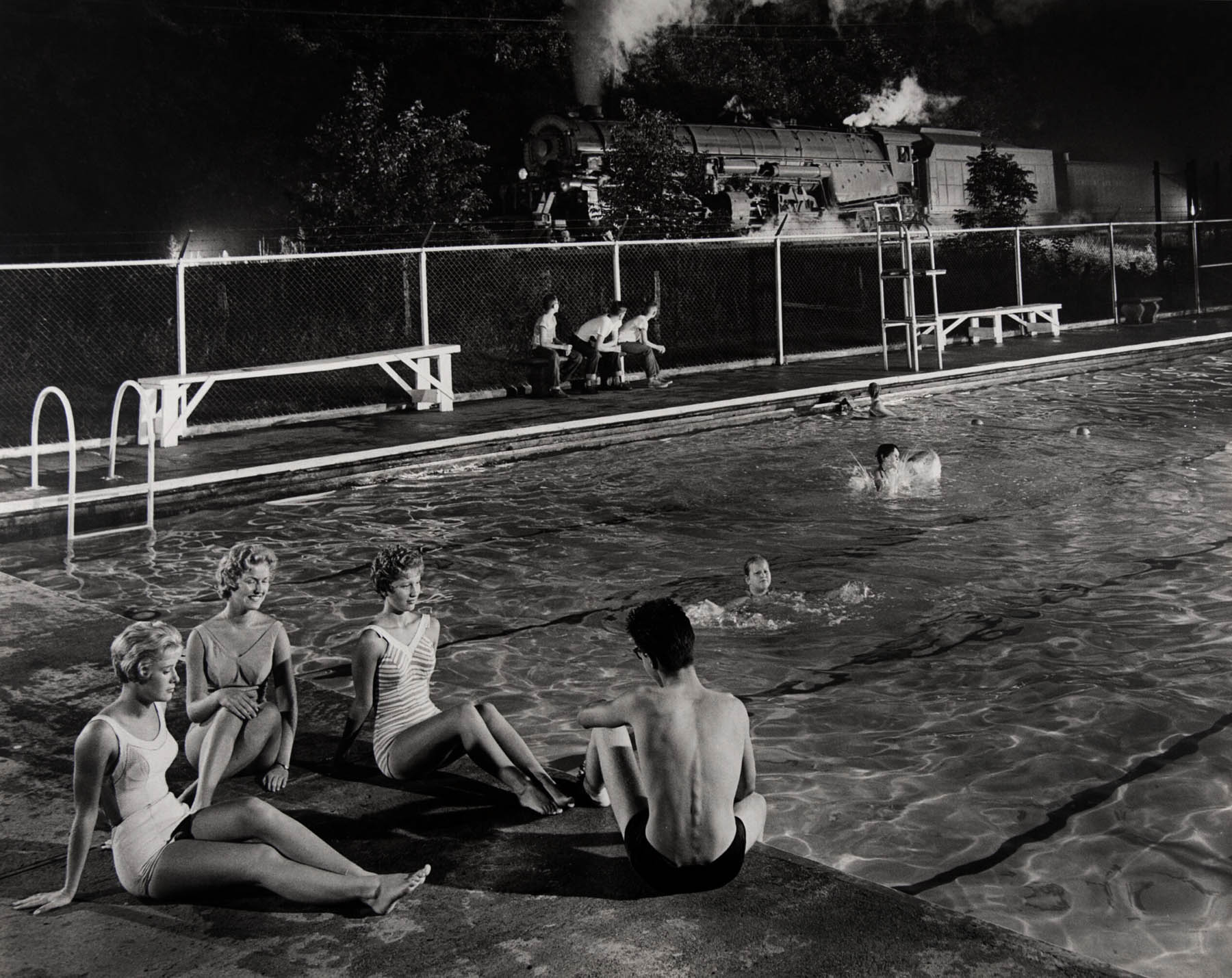
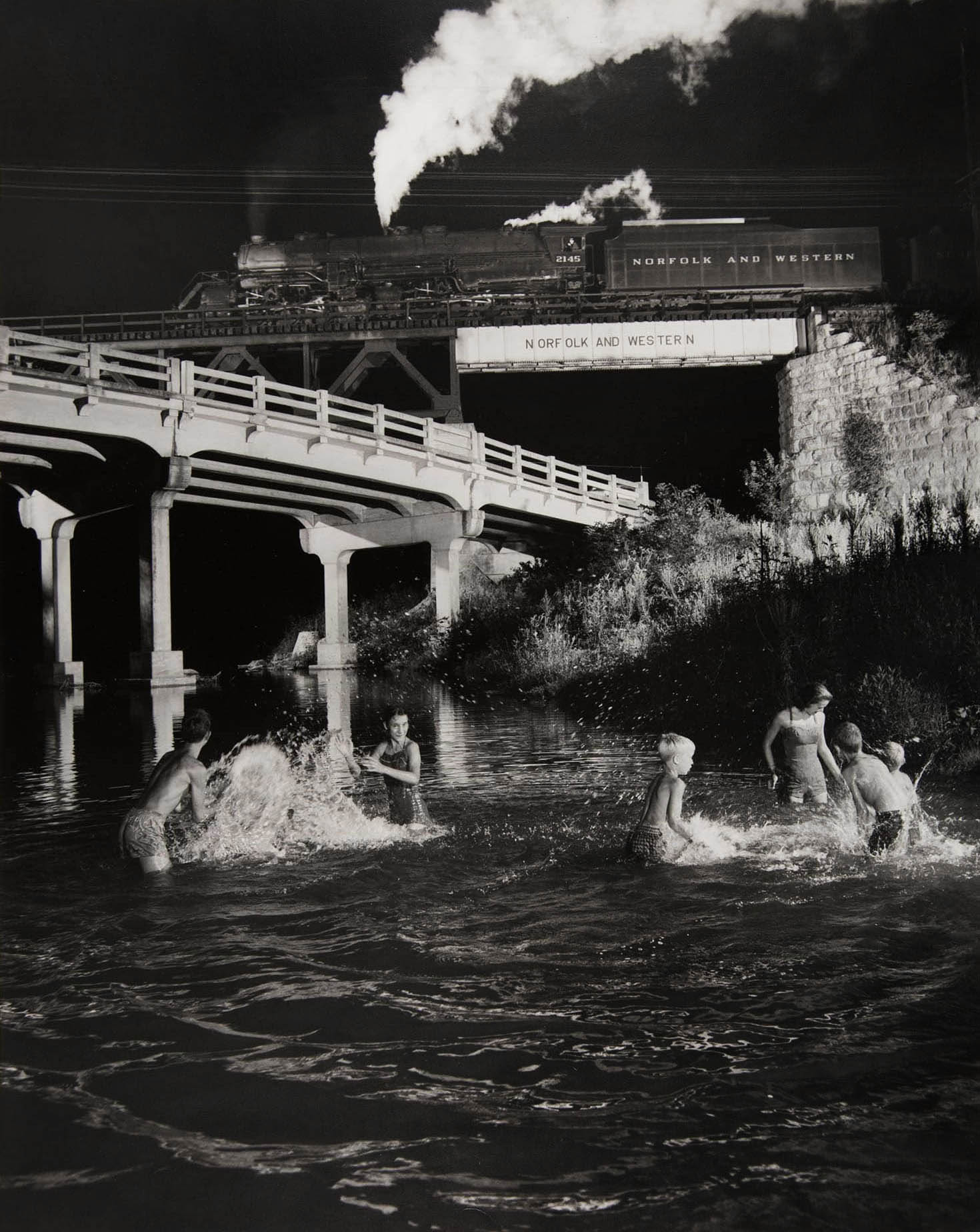
O. Winston Link (American, 1914-2001) Swimming pool, Welch, West Virginia 1958, printed c. 1987 Gelatin silver print
What a pleasure it is to present the work of the renowned American photographer O. Winston Link (1914-2001) on this archive. I’ve only ever posted on one exhibition of his work before, way back in 2009.
I’ve always loved steam trains ever since I was denied a Hornby train set as a kid. I love their scale, design, colour, noise, smell … and their muscularity. As a machine emerging from the early days of the Industrial Revolution there is something so essential and raw about them.
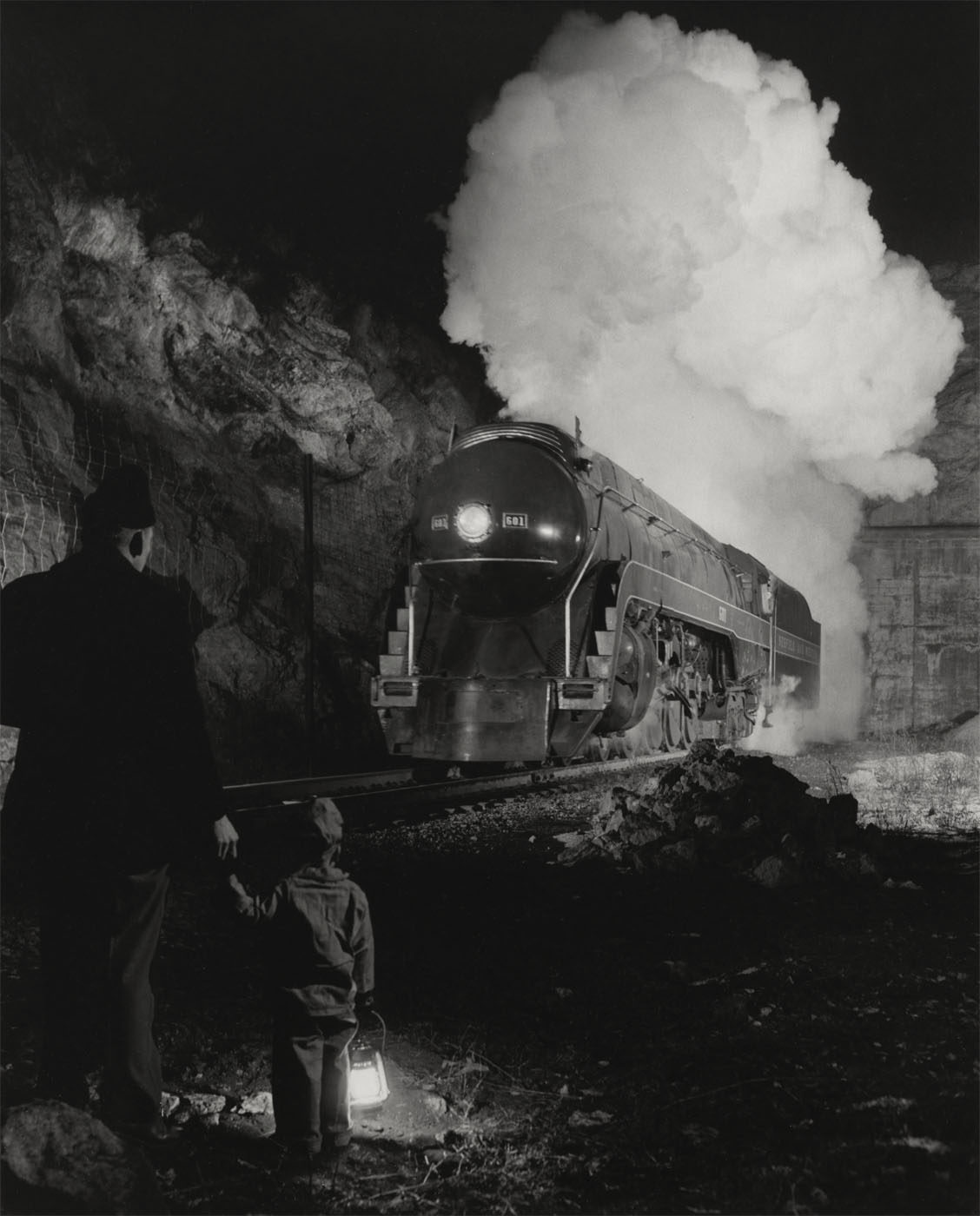
Link’s elaborately staged, choreographed even, large format photographs in which he employs large banks of synchronised flash lights to capture the locomotives in action, mainly at night – have a visceral effect on me, stirring up deep passions for this primordial machine.
Link’s previsualisation was strong. As Tom Garver observes, “Winston Link innately possessed what has been called photographic vision, the ability to visualise photographs before they are created and to recognise in the process that what one sees, no matter how interesting, does not necessarily translate into an interesting photograph.”
It was Link’s ability to capture the spirit and essence of the tableaux vivants, the “living picture”, that brings these static scenes alive. You can almost reach out and touch these Jurassic trains, these workhorses trundling through small American communities. Again, Tom Garver insightfully notes that “there was this great intense spirit to really document and record this, to capture it. I think what I didn’t realise is how much we were capturing a whole way of life that was disappearing. Not only steam locomotives versus diesel locomotives but this isolated small town individualised kind of America that was vanishing.”
The spirit of the thing itself.
As Minor White says in one of his ‘Three Canons’:
Be still with yourself Until the object of your attention Affirms your presence
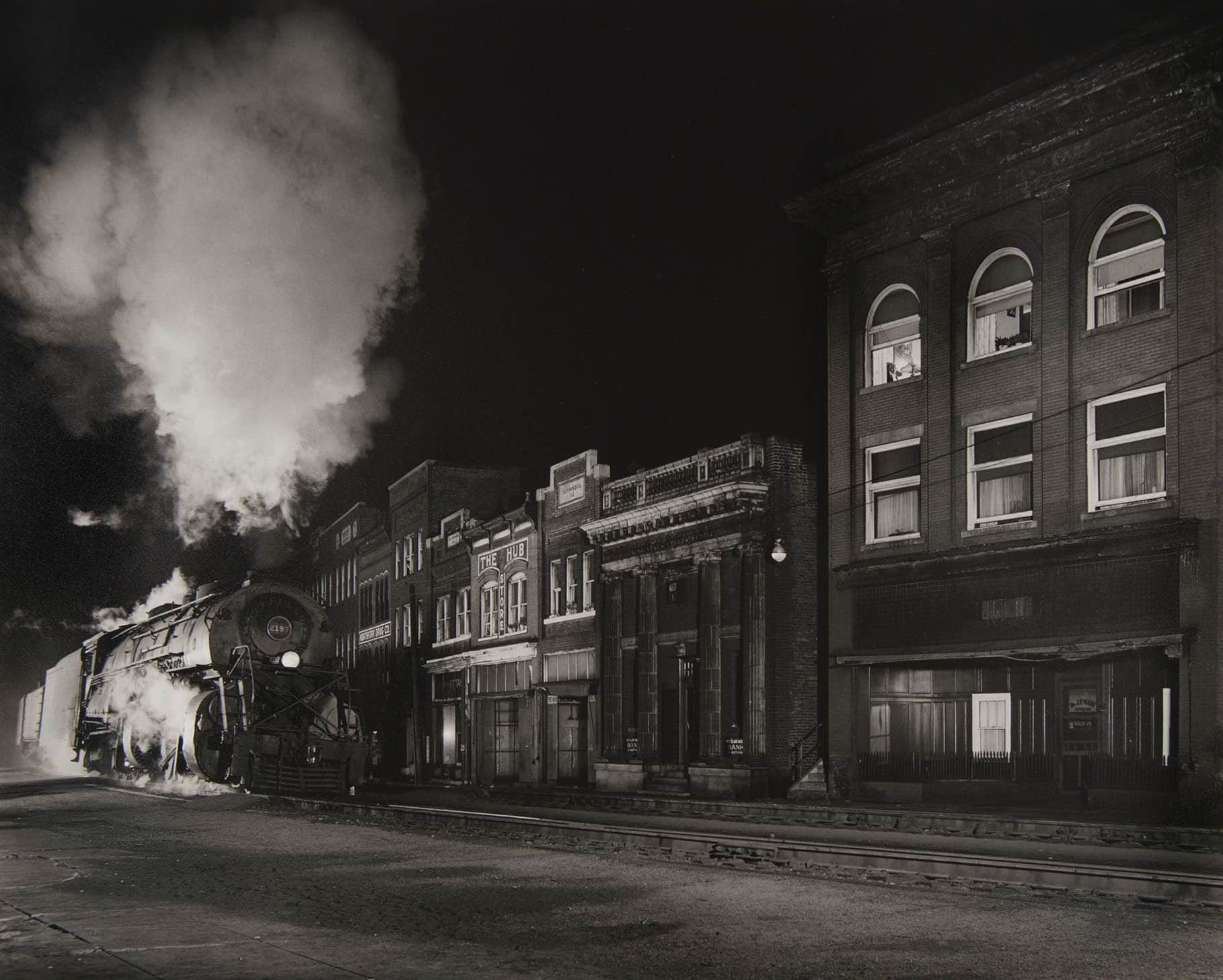
Then you look at magnificent photographs such as Locomotive Driving Wheels (1955, printed 1993?, below) with its low perspective of the enormous wheels and the light falling on the metal; the dark, disturbing creatures in Coaling Locomotives, (Puff of Steam) Shaffers Crossing Yards, Roanoke, Virginia (1955, below) like fire breathing dragons; or the incongruous sight of the train as big as the buildings and running right next to them in Main Line on Main Street, North Fork, West Virginia, August 29, 1958 (1958, printed 1997, below) – and you go… YES!
This artist gets it. He gets he gets it he gets it. And he has the skill and this really great intense spirit and the dedication to apply that skill and spirit… in order to capture the presence of these vanishing machines and worlds.
O. Winston Link … thank you.
Dr Marcus Bunyan
Many thankx to the Jane Lutnick Fine Arts Center, Haverford College for allowing me to publish the photographs in the posting. Please click on the photographs for a larger version of the image.
“I can’t move the sun – and it’s always in the wrong place – and I can’t even move the tracks, so I had to create my own environment through lighting.”
O. Winston Link
“Winston’s spirit so imbued the project that it was never really work. It was such a pleasure, there was also that kind of tingle that this was high adventure. You know, you had to get it. There were times when we would be absolutely exhausted, I remember once, we arrived at a place to tape record in this case, we got there at six and discovered that the train had left at five, we got there the next day at five and discovered it had left at four, we got there at four and that time it didn’t come until midnight. So, we sat there and waited and talked about what we were doing and about life and how it was changing and the many varieties of architecture and construction and the quality of things, how they were disappearing. So, there was this great intense spirit to really document and record this, to capture it. I think what I didn’t realise is how much we were capturing a whole way of life that was disappearing. Not only steam locomotives versus diesel locomotives but this isolated small town individualised kind of America that was vanishing.”
Tom Garver, Curator and Museum Director, a former assistant for Link’s photo projects.
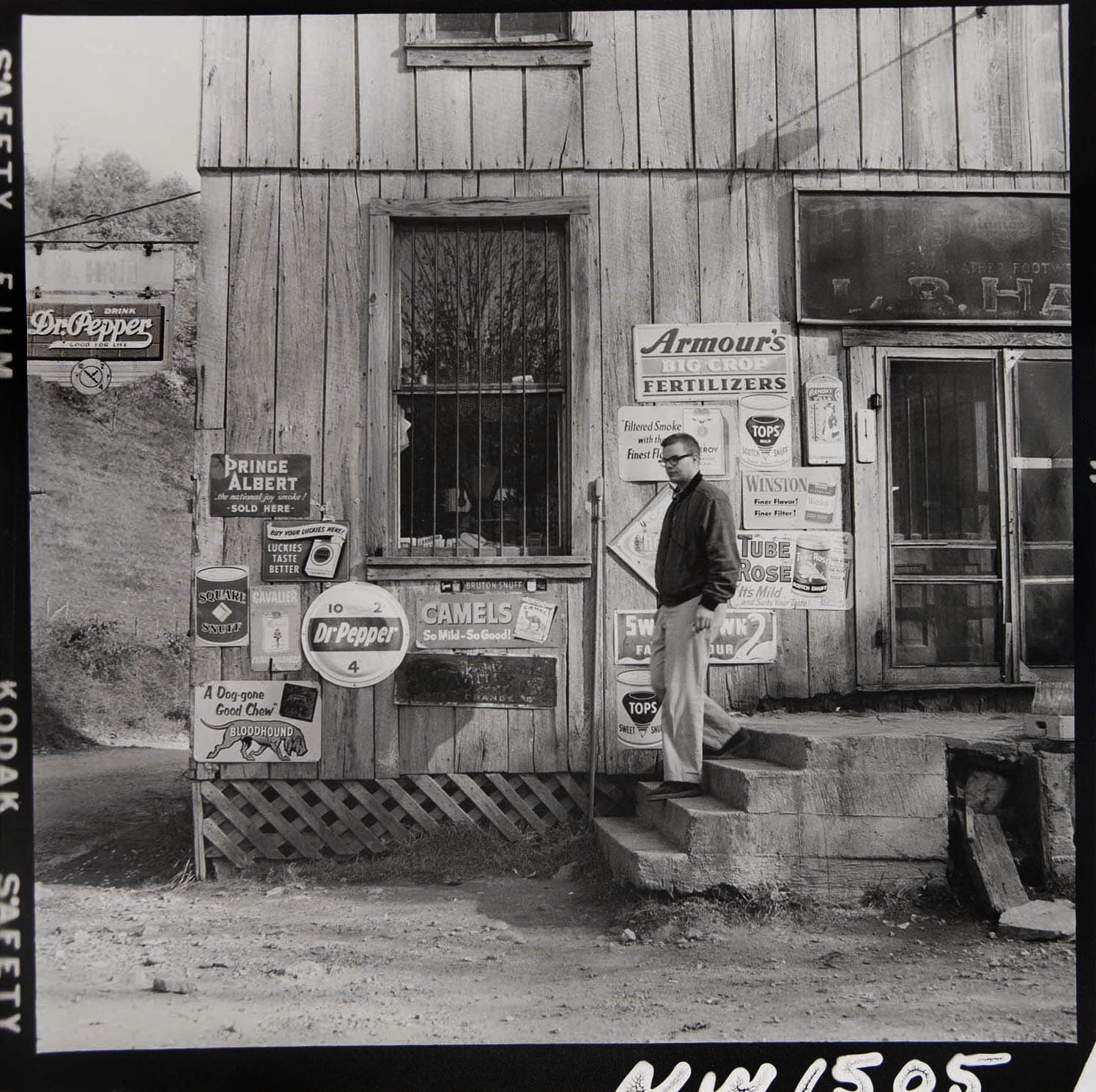
O. Winston Link (American, 1914-2001) Tom Garver at the General Store, Husk (Nella), North Carolina, 1957 1957 Gelatin silver print
O. Winston Link (American, 1914-2001) Haverford Chemistry Lecture 1952 Gelatin silver print
O. Winston Link (American, 1914-2001) Locomotive Driving Wheels 1955, printed 1993? Gelatin silver print
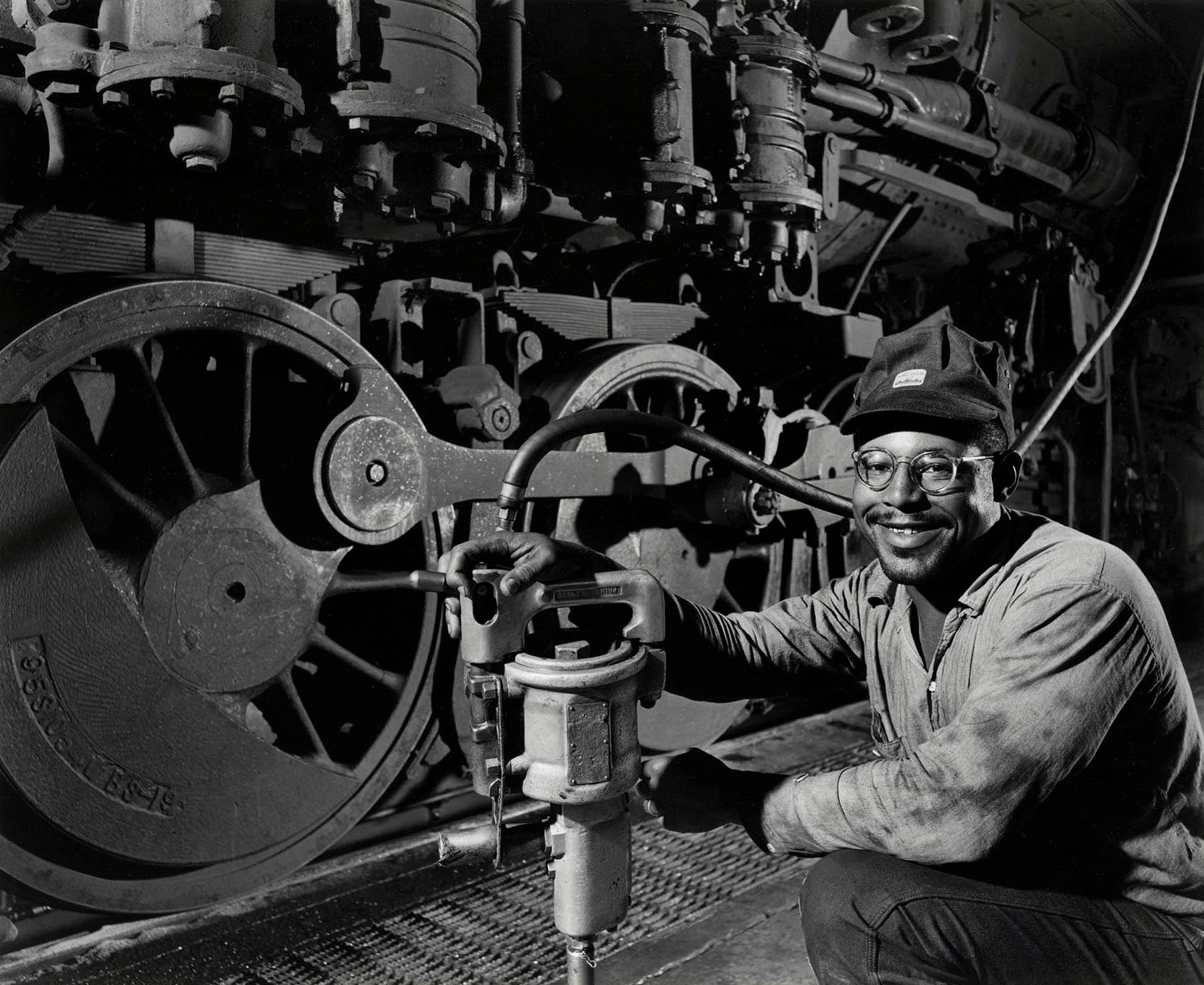
O. Winston Link (American, 1914-2001) J. O. Hayden with His Grease Gun, Bluefield Lubritorium 1955 Gelatin silver print
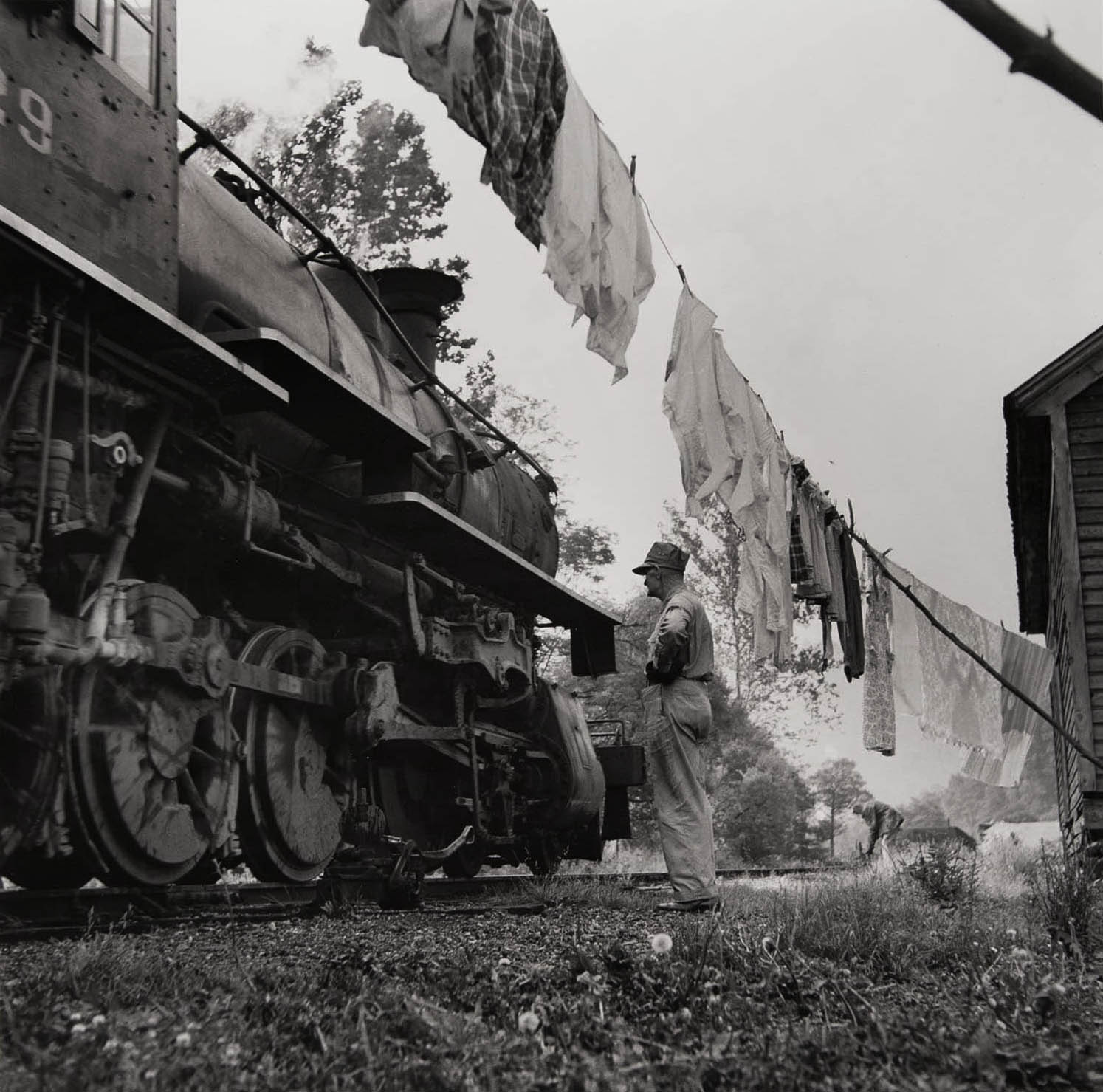
O. Winston Link (American, 1914-2001) Ralph White, Abingdon Branch Train Conductor, and Laundry on the Line, Damascus 1955 Gelatin silver print
O. Winston Link (American, 1914-2001) Coaling Locomotives, (Puff of Steam) Shaffers Crossing Yards, Roanoke, Virginia 1955 Gelatin silver print
The exhibition consists of photographs by O. Winston Link (1914-2001) of steam locomotion on the Norfolk and Western Railroad from 1955 to 1960 and photographs taken by Link in 1952 of Haverford College for publicity purposes. Thomas “Tom” Haskell Garver (1934-2023) Haverford class of 1956 first met Link in 1952. Garver recalled that first meeting like this. “Link, a New York photographer, created admissions brochure photos at Haverford in 1952. After graduation, I was studying in New York City and worked part time for him for about a year. This included three trips with Winston to work on his documentation of the last years of steam powered railroading.”
Garver, an accomplished museum administrator and curator, stepped in when Link needed a friend and supporter. Forty years after Garver first met Link his life was marred by tragedy. Conchita Mendoza Link, his second wife, who also was her husband’s agent, fabricated a story that Link suffered from Alzheimer’s Disease in an attempt to steal from Link payments for his work. Mrs. Link was also found to have stolen many of Link’s negatives and prints from which she pocketed the money from their sale. Mrs. Link was criminally charged, found guilty, and sentenced to prison in 1996. Garver began to assist again Link by becoming his business agent. After Link’s death Garver became the organising curator of the O. Winston Link Museum in Roanoke, Virginia. The Last Steam Railroad in North America, published in 1995 by Harry N. Abrams, Inc. and authored by Garver is the definitive publication on Link and his photography.
Garver wrote in the book: “These photographs are, in every way, works of art,” … “Winston Link innately possessed what has been called photographic vision, the ability to visualise photographs before they are created and to recognise in the process that what one sees, no matter how interesting, does not necessarily translate into an interesting photograph. The thing photographed and a photograph of it are coequal neither in interest, nor in appearance.” Garver’s efforts were instrumental on so many levels in gaining recognition for Link’s photographs as they are now recognised as some of the greatest photographs of the 20th century.
Tom Garver was a great supporter of Haverford College in all manner of ways. As an active member of the class of 1956 with each reunion cycle he compiled Class of 1956 Collective Biography. Furthermore, in his case, that also meant contributing hundreds of art photographs to the Fine Art Photography Collection. Manuscripts including letters from Paul Strand and George Segal and documentary photographs of American scenes by Charles Currier, who was the subject of Garver’s Master’s thesis to further support Special Collections at Haverford. Among this bounty of collections of photographs are a choice selection of O. Winston Link’s black and white, and colour photographs. This exhibition is a fitting memorial to a loyal and generous alumnus.
Text from the Jane Lutnick Fine Arts Center, Haverford College website
O. Winston Link (American, 1914-2001) Hotshot Eastbound, Iaeger, West Virginia, 1956 1956, printed 2001 Gelatin silver print
O. Winston Link (American, 1914-2001) Archie Stover, Crossing Watchman 1956 Gelatin silver print
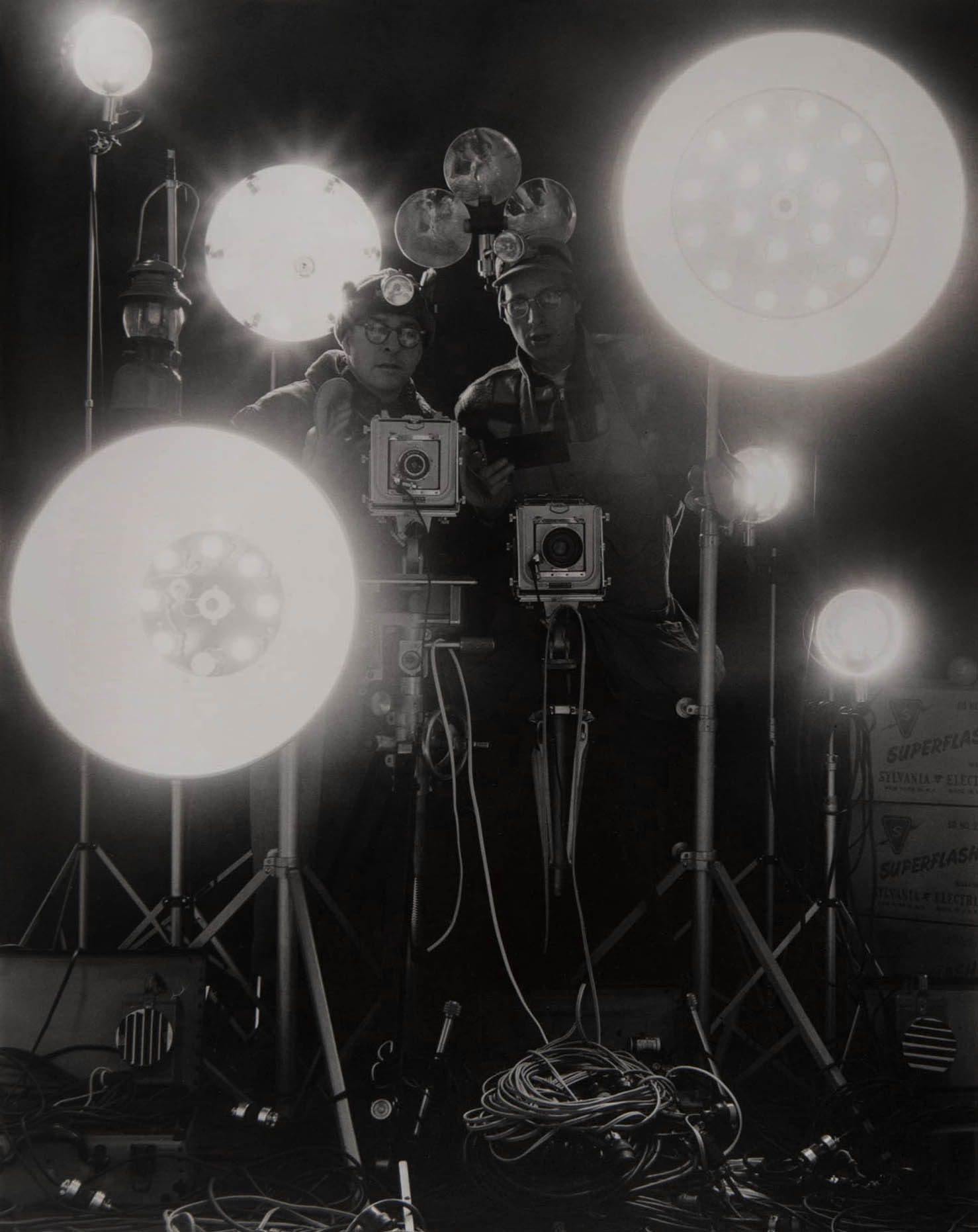
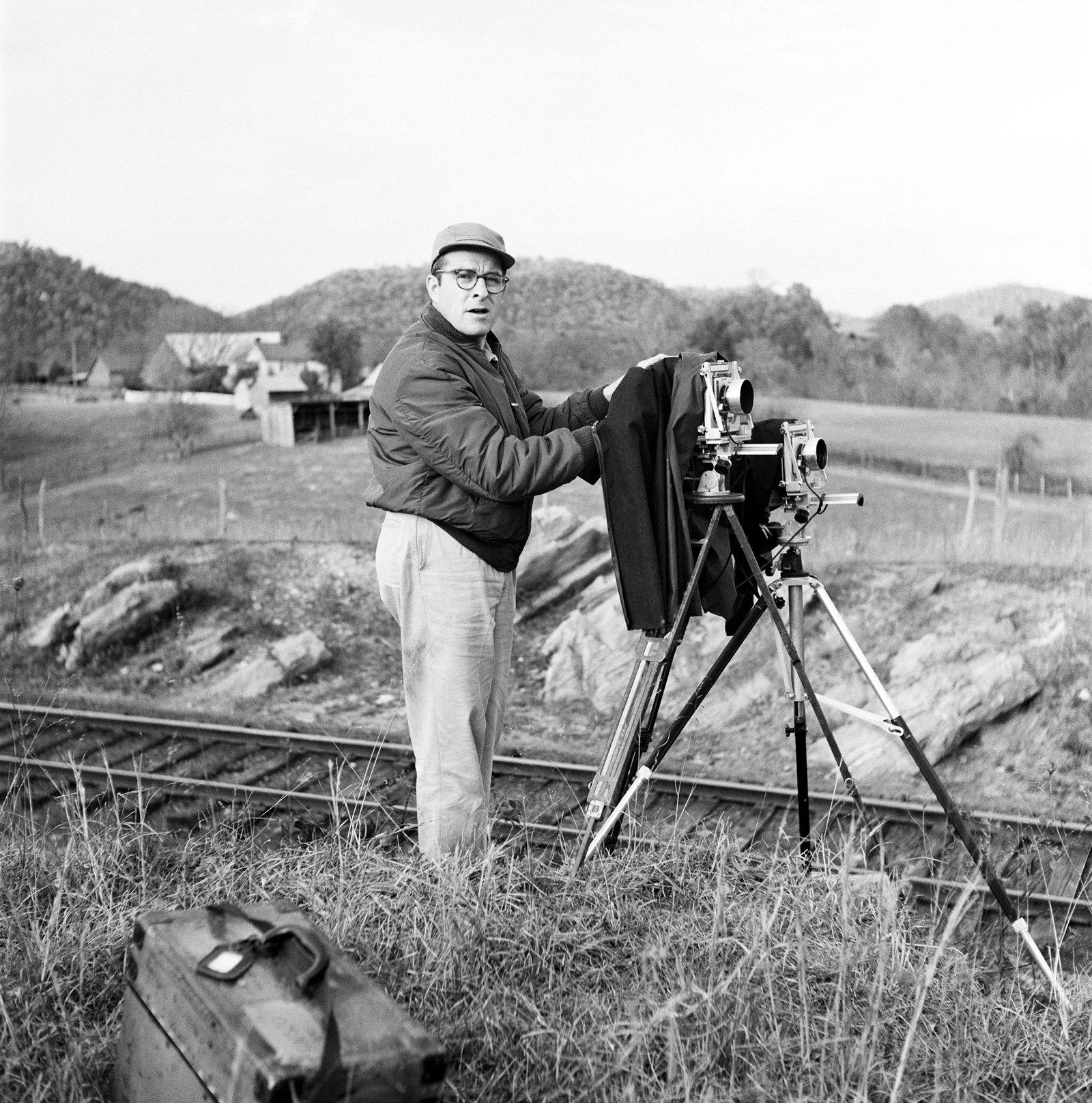
O. Winston Link (American, 1914-2001) Winston Link, George Thom and Night Flash Equipment: All Flashbulbs Firing 1956 Gelatin silver print
Preserving the Golden Age of Railroads
In the 1950s, O. Winston Link, a photographer with an astute affinity for technical photography and a fond fascination with trains, set out to record the last steam locomotives operating in the country. After contacting the Norfolk and Western Railway and gaining access to the company’s premises, Link would begin recording the last surviving fleet of locomotives against the night sky, preserving the golden age of railroads and the remaining vestiges of American 20th-century industry. …
Staunton, Virginia
In 1955, O. Winston Link would begin exploring a series of photographs that would have a lasting impact on the medium’s history. After accepting a job that would take him to Staunton, Virginia, Link noticed the Norfolk and Western Railway, the last major steam railroad in the country. The company was ceasing operations as an industry-wide change from steam to diesel was in effect. Link was further impressed by the human connection to the railroad, a thread of sparsely spread communities that lived near the tracks. The photographer noticed not only the facilities and locomotives but the trackside communities that were profoundly immersed with the steam locomotives and rail transportation.
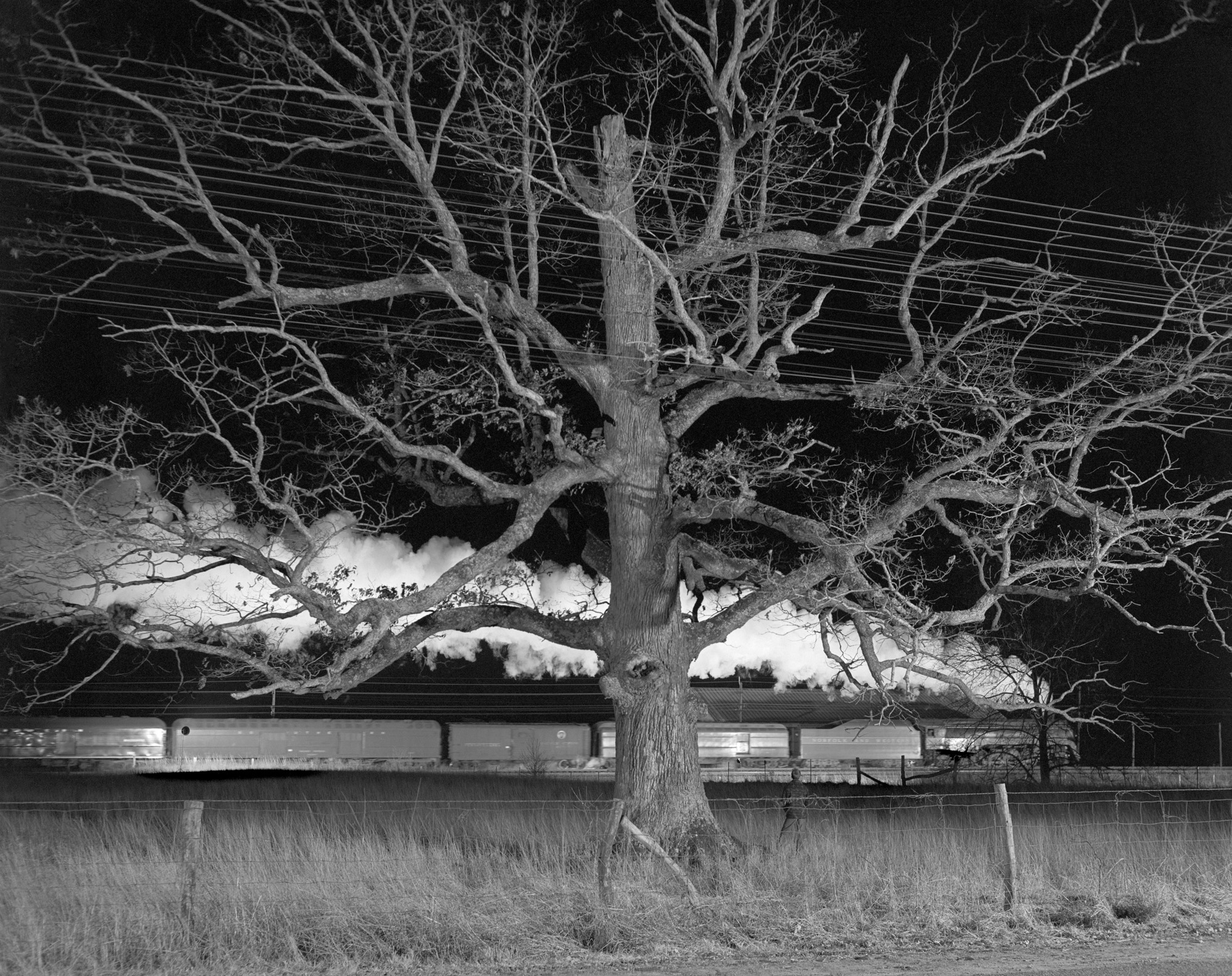
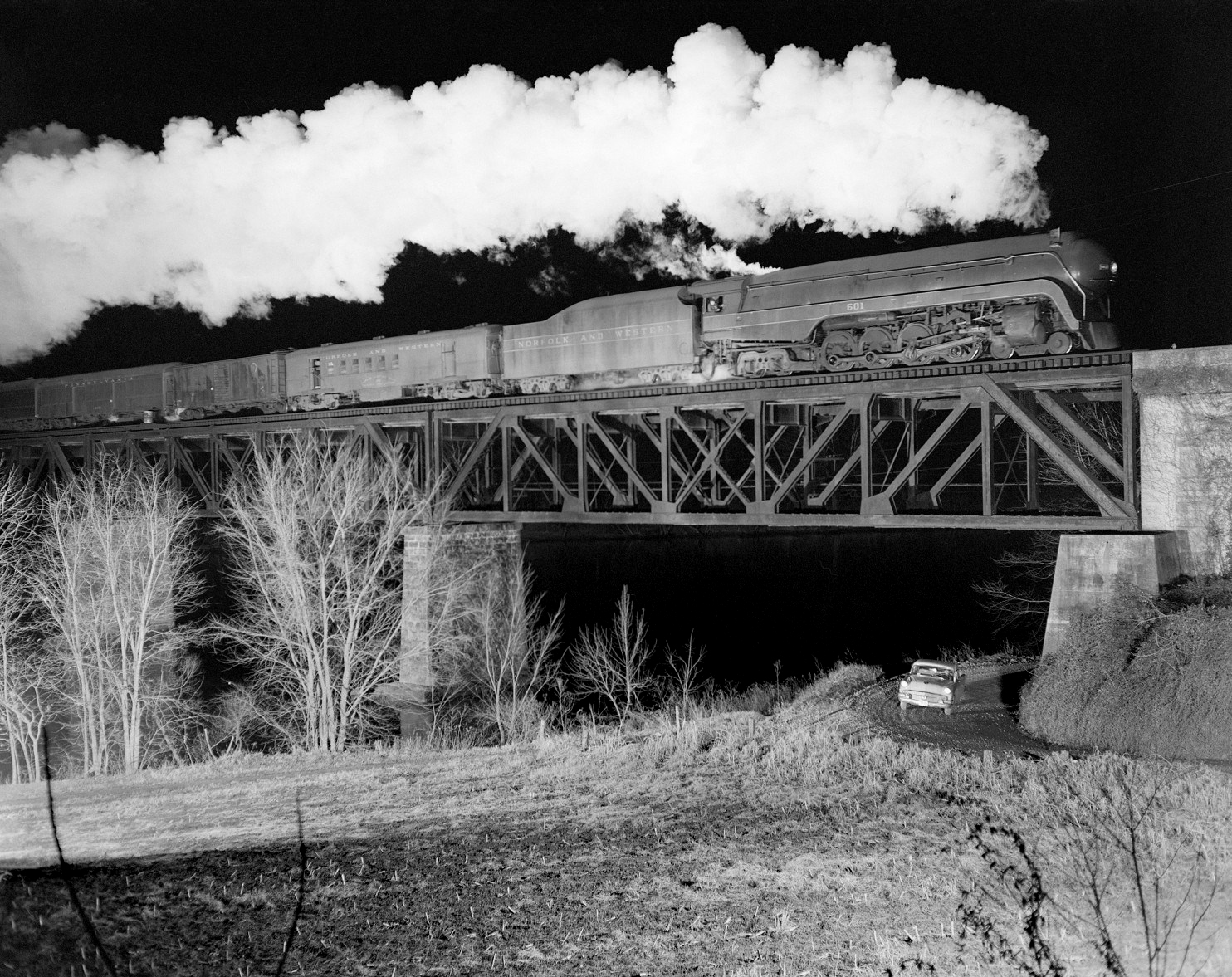
From 1955 to 1960, Winston Link returned to Virginia around 20 times. He photographed the clouds of steam and massive steel bodies of the locomotives passing through the Virginian and Appalachian communities, documenting some of the last days of the steam engine. In this unique quest, Link traveled by night covering a large swath of area, from Virginia and North Carolina to Maryland. With his preference for capturing the locomotives at night and prior experience with highly technical photographs for corporate clients, Link had the aptitude to develop a unique flash photography system. His unique system rigged flashbulbs, sometimes up to 80 of them, to fire simultaneously and allow the camera to capture the high-speed trains moving past his frame at night. As to why he chose to take his pictures at night, the photographer notedly said:
“I can’t move the sun – and it’s always in the wrong place – and I can’t even move the tracks, so I had to create my own environment through lighting.” ~ O. Winston Link
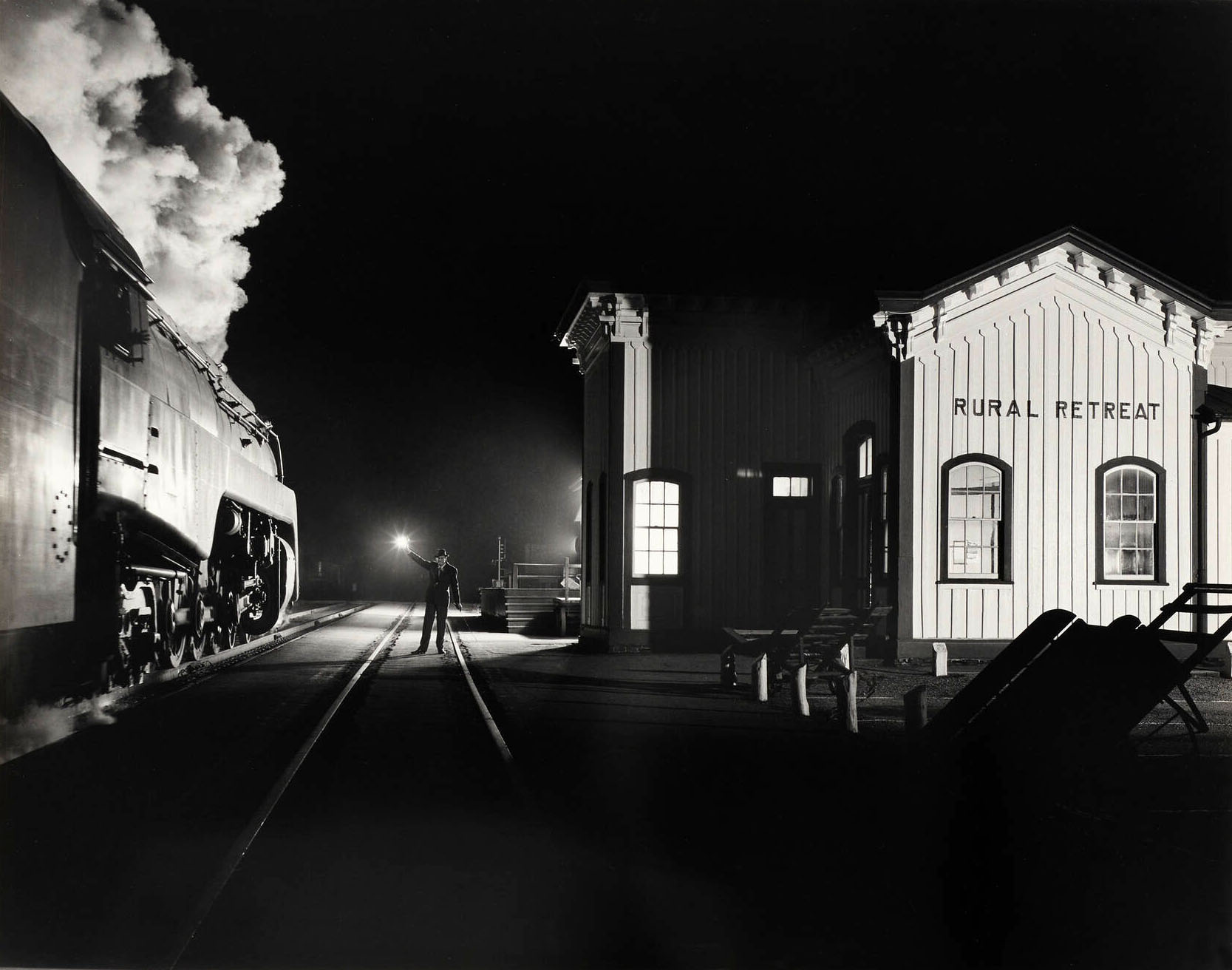
O. Winston Link’s perseverance in recording the nightly locomotives that passed Appalachia made him a pioneer not only for his subject matter but also as a trailblazer in night photography. Most likely inspired by his legendary predecessor, the Hungarian-French photographer Brassai, who captured the underbelly of Paris by night, Winston Link’s contributions to the preservation of American history helped chronicle these once, one-of-a-kind towns. Whether at the drive-in, splashing in the river below a railway bridge, pumping gas trackside by a passing locomotive, or directing a train through the quiet night of the rural countryside, Link’s pictures conserve small towns, whose lives revolved around the coming and going of steam engines. Through the rising pillars of steam, the sounds of bells and whistles announcing the arrival of the steam engines, and the camaraderie of community members in his pictures, Winston Link preserves a romantic, golden age of American railroads. When asked what about steam engines he found so appealing, Link said:
“I guess it’s because of the places they go. They’re always going through some mountains, through the valleys, and through the rivers, and forests, it’s always country. And I’ve lived in New York City, in Manhattan and Brooklyn, where you didn’t have anything like that. So, it’s always great to get on a train and take a long trip. I suppose that’s part of it. And the sounds that it makes, the smells that it has. It has a bell in it, it has air pumps, and it has valves that are releasing shots of steam every now and then. It has a turbo, which has a whine to it. It has a beautiful whistle, the old steam engines had different whistles, all had different characteristics and different sounds. And they had smells from hot grease and oil, the smell of coal smoked, the soft coal, has a nice smell to it as long as you don’t get it blasted in the face, as long as you’re far away from it, its Ok. It’s things like that. The sound of the wheels, the sound of the drivers, you can tell exactly what’s happening to the engine, and how fast its going, if the rods are lose, it makes different sounds. So, it has all these characteristics. The diesel engine is great, it’s very efficient, there’s nothing like them but, it’ll never replace a steam engine.” ~ O. Winston Link, 1980s
O. Winston Link (American, 1914-2001) Main Line on Main Street, North Fork, West Virginia, August 29, 1958 1958, printed 1997 Gelatin silver print
O. Winston Link (American, 1914-2001) Hawksbill Creek Swimming Hole, Luray, Virginia, 1956 1956 Gelatin silver print
Further O. Winston Link photographs from the Norfolk and Western Railroad
O. Winston Link (American, 1914-2001) Y-6 Locomotive on the Turntable, Shaffers Crossing Yards, Roanoke, Virginia 1955, printed 1994 Gelatin silver print
O. Winston Link (American, 1914-2001) Norfolk and Western Railway 1955 Gelatin silver print
O. Winston Link (American, 1914-2001) Locomotive 261 1955 Gelatin silver print
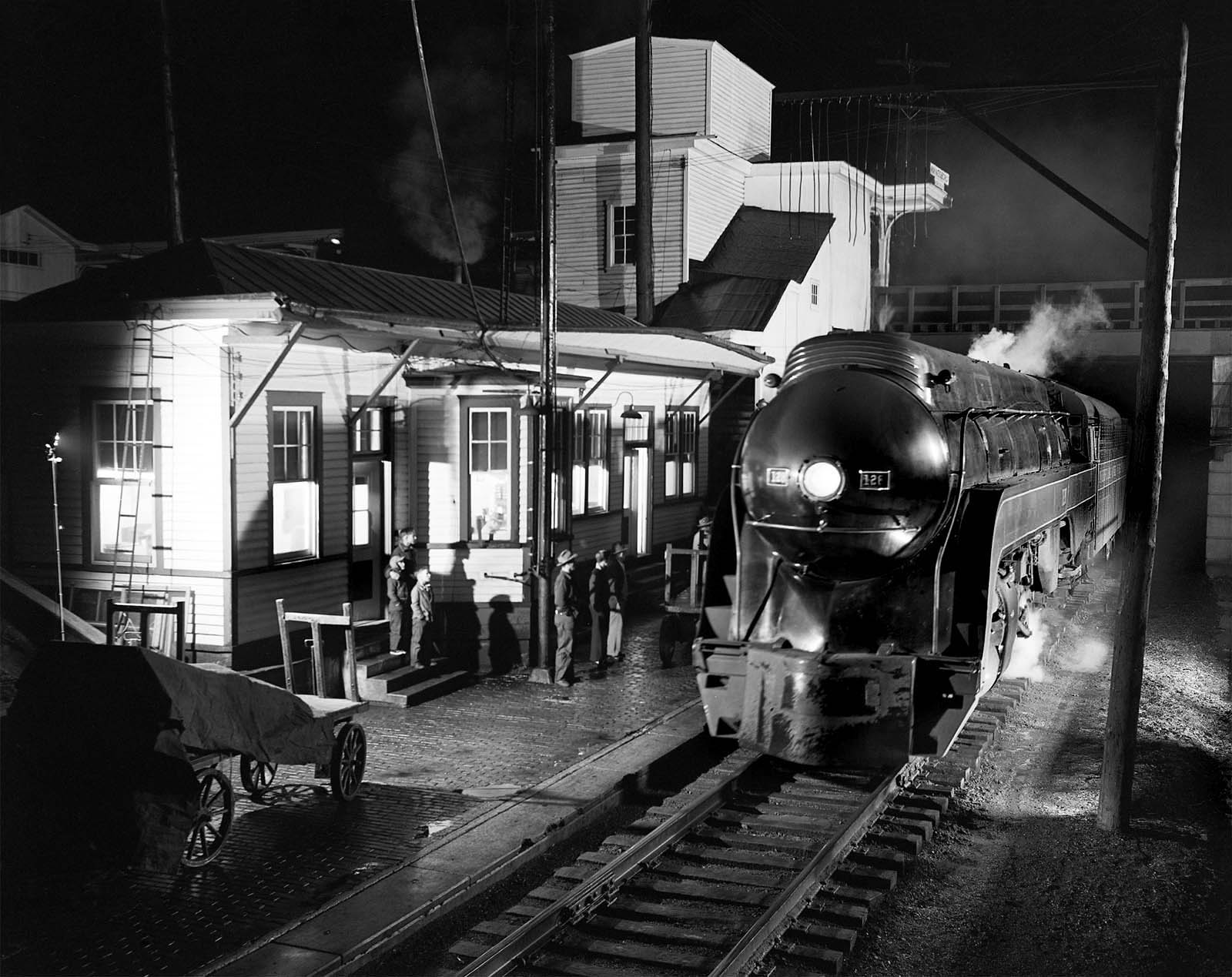
O. Winston Link (American, 1914-2001) Train #2 arrives at the Waynesboro Station, Waynesboro, Virgnia, April 14, 1955 1955, printed 1996 Gelatin silver print
O. Winston Link (American, 1914-2001) Sometimes the Electricity Fails, Vesuvius, Virginia, 1956 1956, printed 1988 Gelatin silver print
O. Winston Link (American, 1914-2001) Maud Bows to the Virginia Creeper 1956 Gelatin silver print
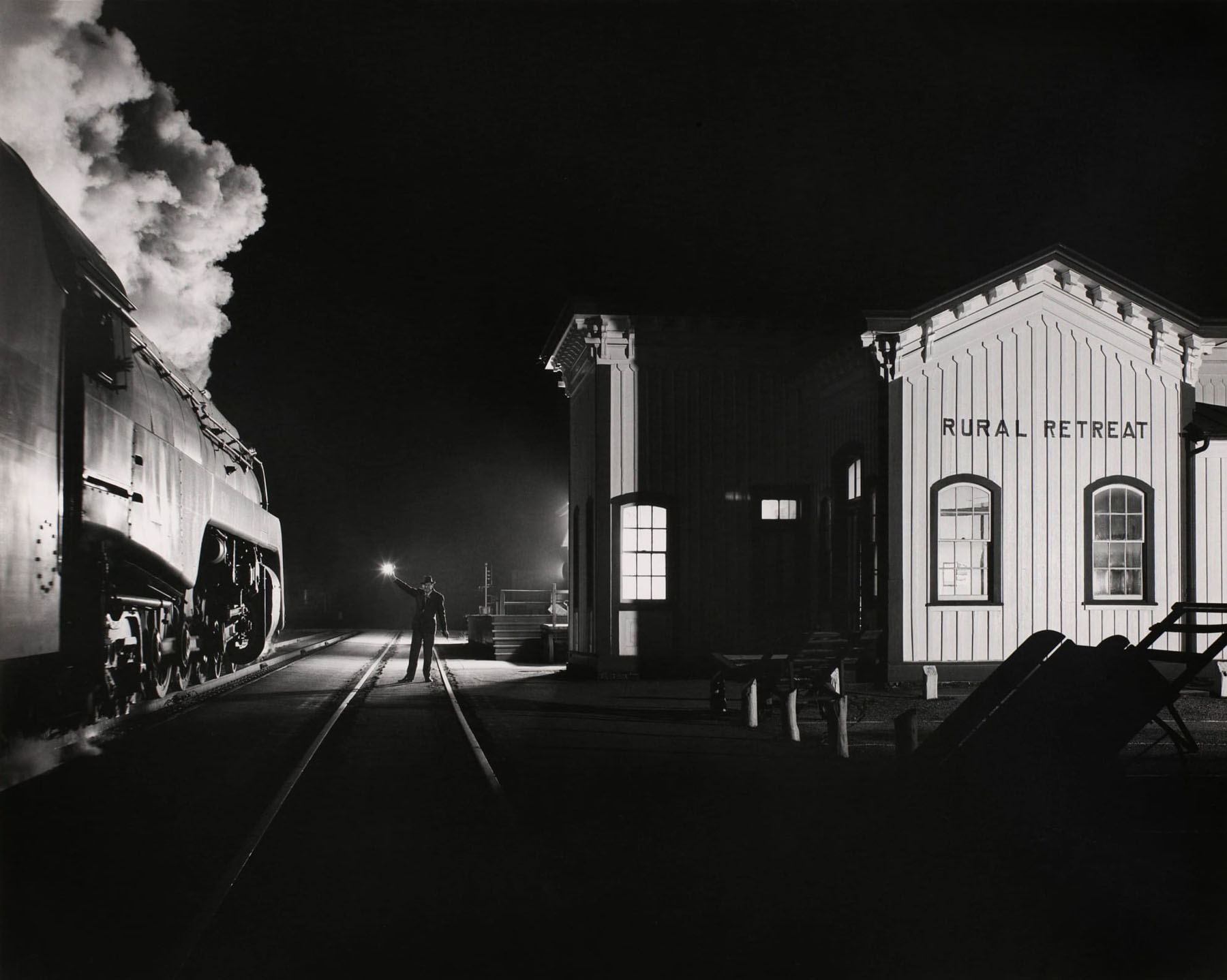
O. Winston Link (American, 1914-2001) Birmingham Special, Rural Retreat, Virginia, 1957 1957, printed 1986 Gelatin silver print
1948 Norfolk and Western Railway – Land of Plenty Norfolk and Western magazine ad with system map 1948 Duke University Libraries Public domain
Haverford College 370 Lancaster Avenue, Haverford, PA 19041
Exhibition dates: 20th April – 24th September, 2017
Artists: Robert Adams • Eve Arnold • Bernard Asset • Éric Aupol • Theo Baart Et Cary Markerink • Sue Barr • Valérie Belin • Martin Bogren • Nicolas Bouvier • David Bradford • Brassaï • Alain Bublex • Edward Burtynsky • Andrew Bush • Ronni Campana • Gilles Caron • Alejandro Cartagena • Kurt Caviezel • Philippe Chancel • Larry Clark • Langdon Clay • Stéphane Couturier • Bruce Davidson • Jean Depara • Raymond Depardon • John Divola • Robert Doisneau • William Eggleston • Elliott Erwitt • Walker Evans • Barry Feinstein • Pierre De Fenoÿl • Alain Fleischer • Robert Frank • Lee Friedlander • Bernhard Fuchs • Paolo Gasparini • Óscar Fernando Gómez • Jeff Guess • Andreas Gursky • Fernando Gutiérrez • Jacqueline Hassink • Anthony Hernandez • Yasuhiro Ishimoto • Peter Keetman • Seydou Keïta • Germaine Krull • Seiji Kurata • Justine Kurland • Jacques Henri Lartigue • O. Winston Link • Peter Lippmann • Marcos López • Alex Maclean • Ella Maillart • Man Ray • Mary Ellen Mark • Arwed Messmer • Ray K. Metzker • Sylvie Meunier Et Patrick Tourneboeuf • Joel Meyerowitz • Kay Michalak et Sven Völker • Óscar Monzón • Basile Mookherjee • Daido Moriyama • Patrick Nagatani • Arnold Odermatt • Catherine Opie • Trent Parke • Martin Parr • Mateo Pérez • Jean Pigozzi • Bernard Plossu • Matthew Porter • Edward Quinn • Bill Rauhauser • Rosângela Rennó • Luciano Rigolini • Miguel Rio Branco • Ed Ruscha • Sory Sanlé • Hans-christian Schink • Antoine Schnek • Stephen Shore • Malick Sidibé • Guido Sigriste • Raghubir Singh • Melle Smets Et Joost Van Onna • Jules Spinatsch • Dennis Stock • Hiroshi Sugimoto • Juergen Teller • Tendance Floue • Thierry Vernet • Weegee • Henry Wessel • Alain Willaume
I missed this exhibition when I was in Paris recently. A great pity, I would have liked to have seen it. Some rare photographs that I have never laid eyes on before. I especially love Ray K. Metzker’sWashington, DC. The photography in both Paris and London was disappointing during my month overseas. Other than a large exhibition of Gregory Crewdson’s photographs at the Photographers’ Gallery London, there was not much of interest on offer.
Dr Marcus Bunyan
PS. So many more horizontal photographs than vertical, the automobile obviously lending itself to this orientation. I love this observation: “Photography, a tool of immobility, benefited from the automobile, a mobility tool.” And this from Jean Baudrillard: “Riding is a form spectacular amnesia. Everything to discover, everything to be erased.”
Many thankx to Fondation Cartier pour l’art contemporain for allowing me to publish the photographs in the posting. Please click on the photographs for a larger version of the image.
“Photographing is a profession. Craftsmanship. A job that one learns, that one makes more or less well, like all trades. The photographer is a witness. The witness of his time. The true photographer is the witness of every day, they are the reporter. “
Germaine Krull
“I think that cars today are almost the exact equivalent of the great Gothic cathedrals; I mean the supreme creation of an era, conceived with passion by unknown artists, and consumed in image if not in usage by a whole population which appropriates them as a purely magical object.”
Roland Barthes, Mythologies, Le Seuil, Paris, 1970, p. 150
Thirty years after the exhibition Hommage à Ferrari, the Fondation Cartier pour l’art contemporain will once again focus its attention on the world of cars with the exhibition Autophoto, dedicated to photography’s relationship to the automobile. Since its invention, the automobile has reshaped our landscape, extended our geographic horizons, and radically altered our conception of space and time. The car has also influenced the approach and practice of photographers, providing them not only with a new subject but also a new way of exploring the world and a new means of expression. Based on an idea by Xavier Barral and Philippe Séclier, Autophoto will present over 500 works from the beginning of the 20th century to the present. It will invite us to discover the many facets of automotive culture – aesthetic, social, environmental, and industrial – through the eyes of photographers from around the world. The exhibition will bring together over 90 photographers including both famous and lesser-known figures such as Jacques Henri Lartigue, William Eggleston, Justine Kurland and Jacqueline Hassink, who have shown a fascination for the automobile as a subject or have used it as a tool to take their pictures.
Visite de l’exposition – Autophoto – 2017
Thirty years after the Hommage à Ferrari exhibition which put the spotlight on these legendary cars, the Fondation Cartier pour l’art contemporain presents, on a proposal by Xavier Barral and Philippe Séclier, the Autophoto exhibition devoted to the relationship between photography and the automobile. Since its creation, the automobile has shaped the landscape, allowed the discovery of new horizons and upset our conception of time and space.
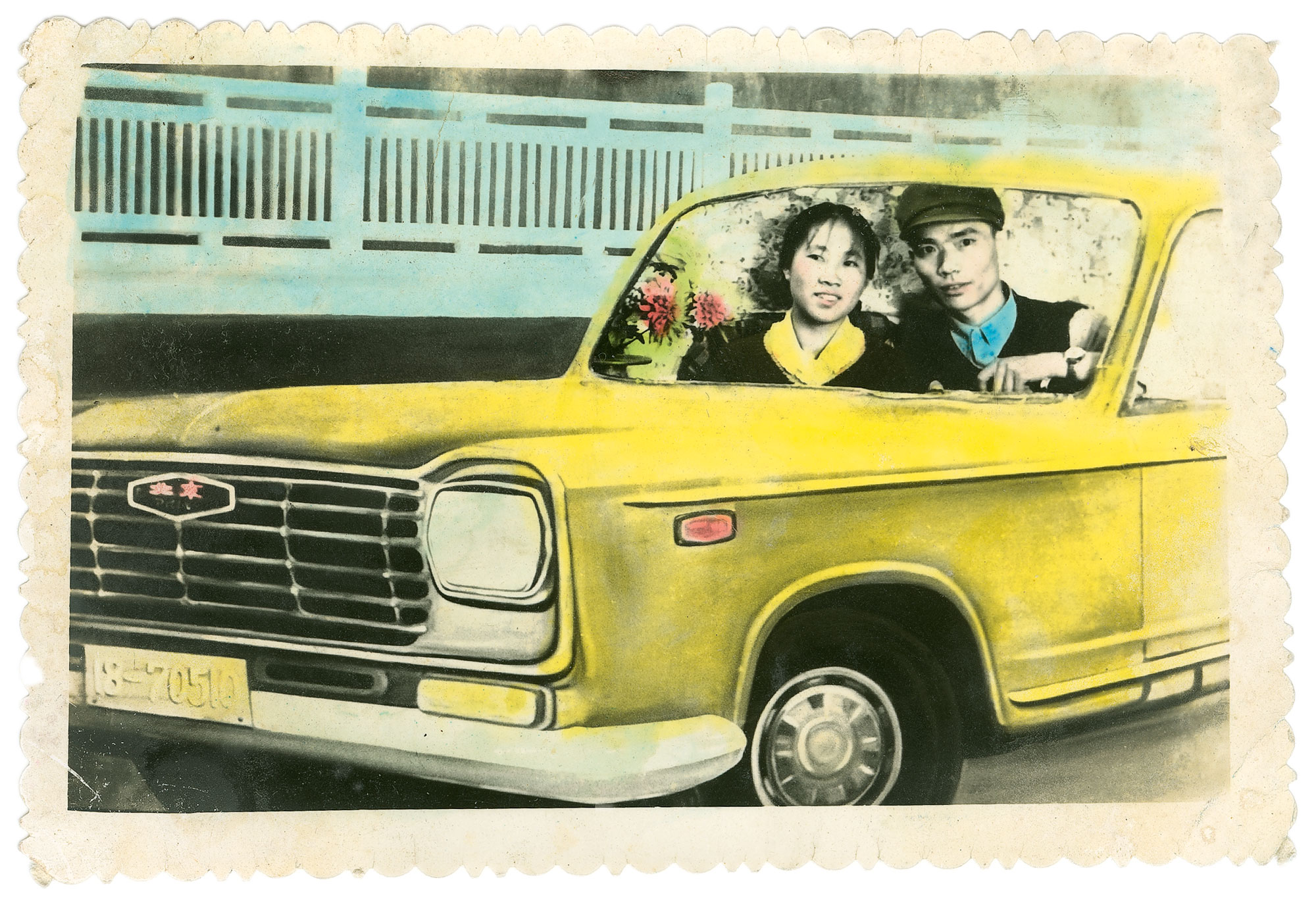
Studio portraits China c. 1950 Collected by Thomas Sauvin Colourised gelatin silver print 7.5 x 11.5cm Collection Beijing Silvermine/Thomas Sauvin, Paris Photo all rights reserved
“A panorama framed by the rectangle of the windshield. A long ribbon of asphalt, a line of flight that stretches towards the horizon. For more than a century, we can capture this image and travel the world by car, this photographic “box”. Automotive and photography, two tools to model the landscape, two mechanics of the traction and attraction, have emerged at the end of the nineteenth century, through new rhythms and new rites, the society of modern times. If the photograph allows multiple views and list them, to memorise the movement and leave a trace, the automobile makes it possible to move in space. Photography, a tool of immobility, benefited from the automobile, a mobility tool. And if the automobile like photography is constantly evolving, these two inventions have parallel paths in order to better, to master space-time. “Riding is a form spectacular amnesia. Everything to discover, everything to be erased,”1 writes Jean Baudrillard.”
From the foreword by commissioners of the exhibition Xavier Barral and Philippe Séclier
1/ Jean Baudrillard, Amérique, Grasset, Paris, 1986, p. 15
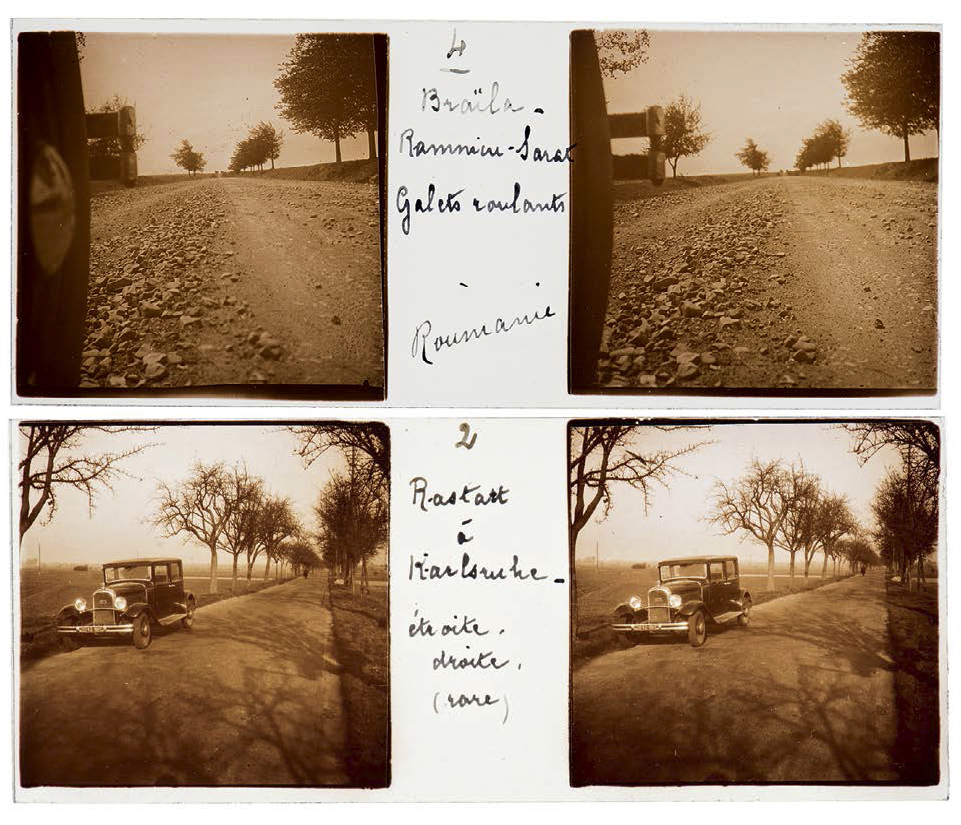
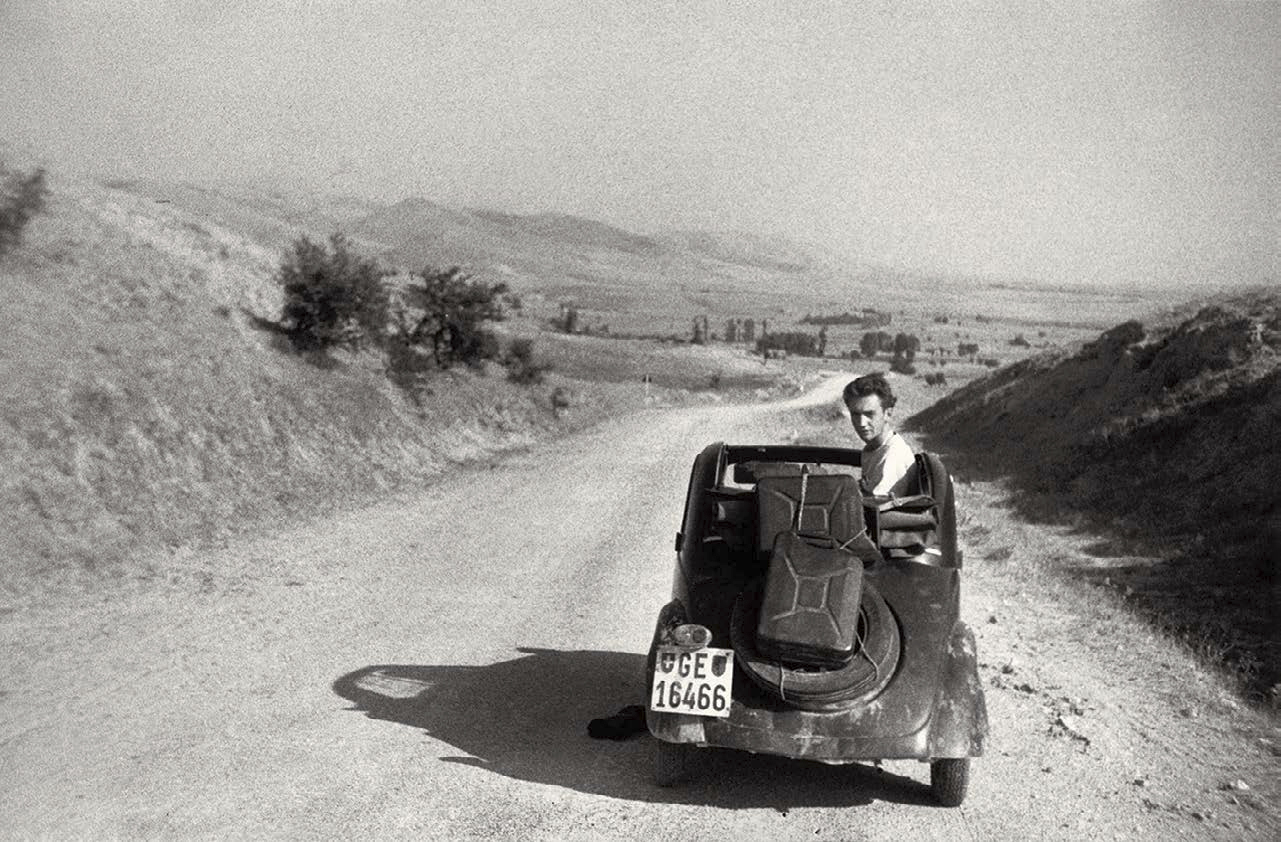
In the early 20th century, the automobile and its impact on the landscape had already become a subject of predilection for many photographers, influencing both the form and content of their work. The exhibition will begin by focusing on early photographers like Jacques Henri Lartigue, Germaine Krull, and Brassaï, who used the automobile to varying degrees in their work. They registered the thrill of speed, the chaos of Parisian traffic or the city’s dramatic car-illuminated nocturnal landscape to represent a society in transition at the birth of the modern age. Other photographers of the time were attracted by the promise of freedom and mobility offered by the automobile. Anticipating the modern road trip, Swiss writers and photographers Ella Maillart and Nicolas Bouvier, travelled throughout Asia in the 1930s and 1950s respectively, using their cars and cameras to record their adventures along the way.
Auto Portraits
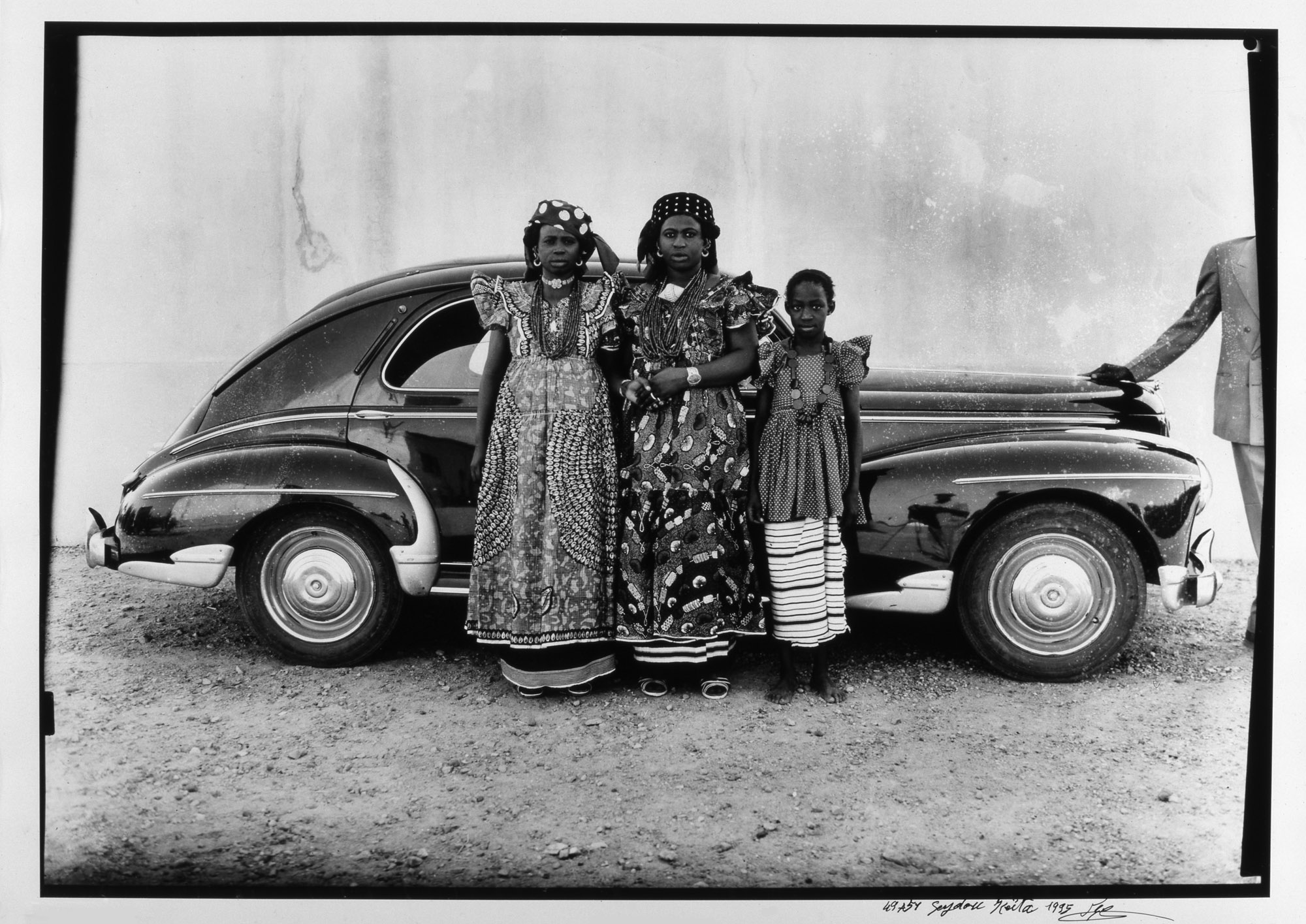
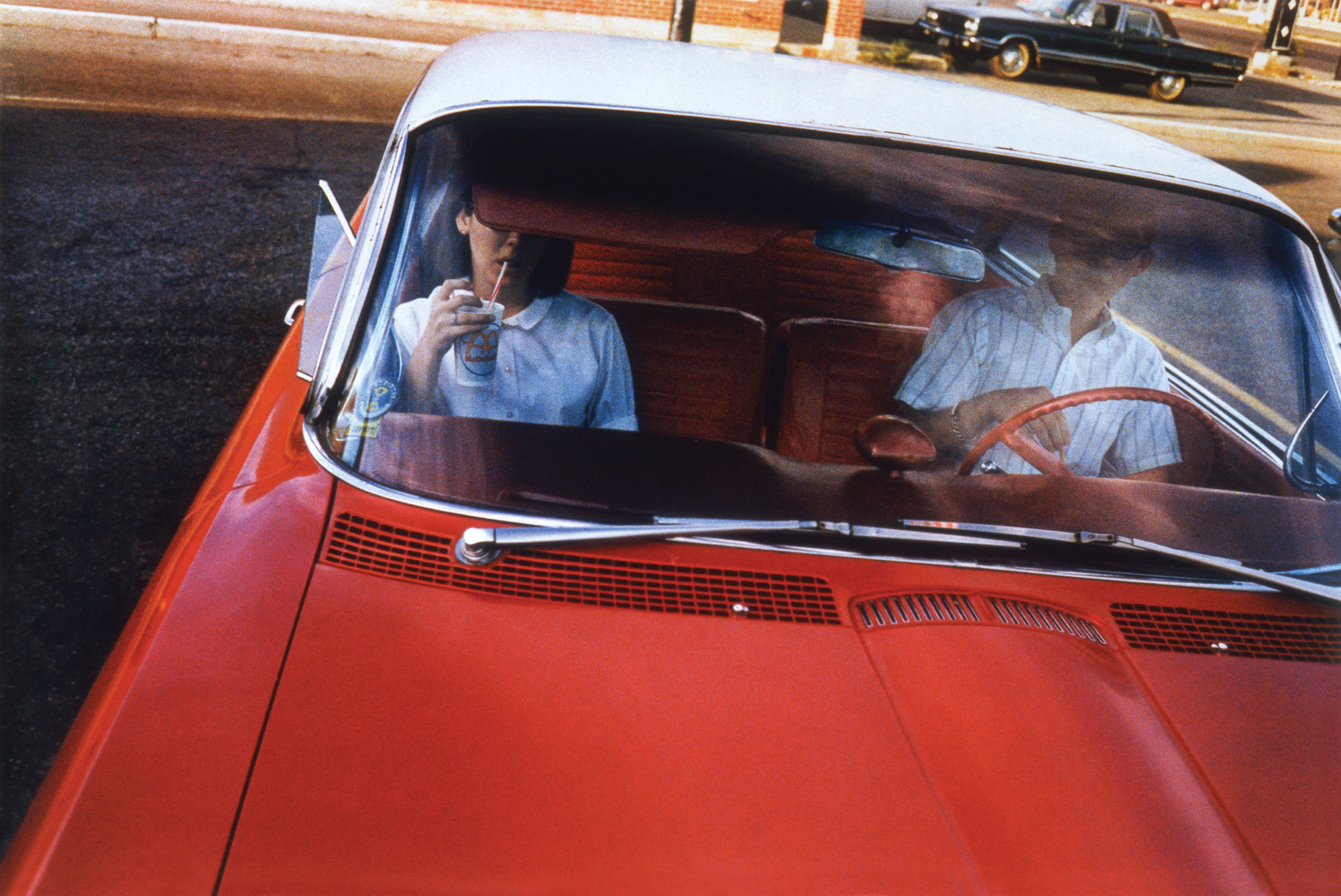
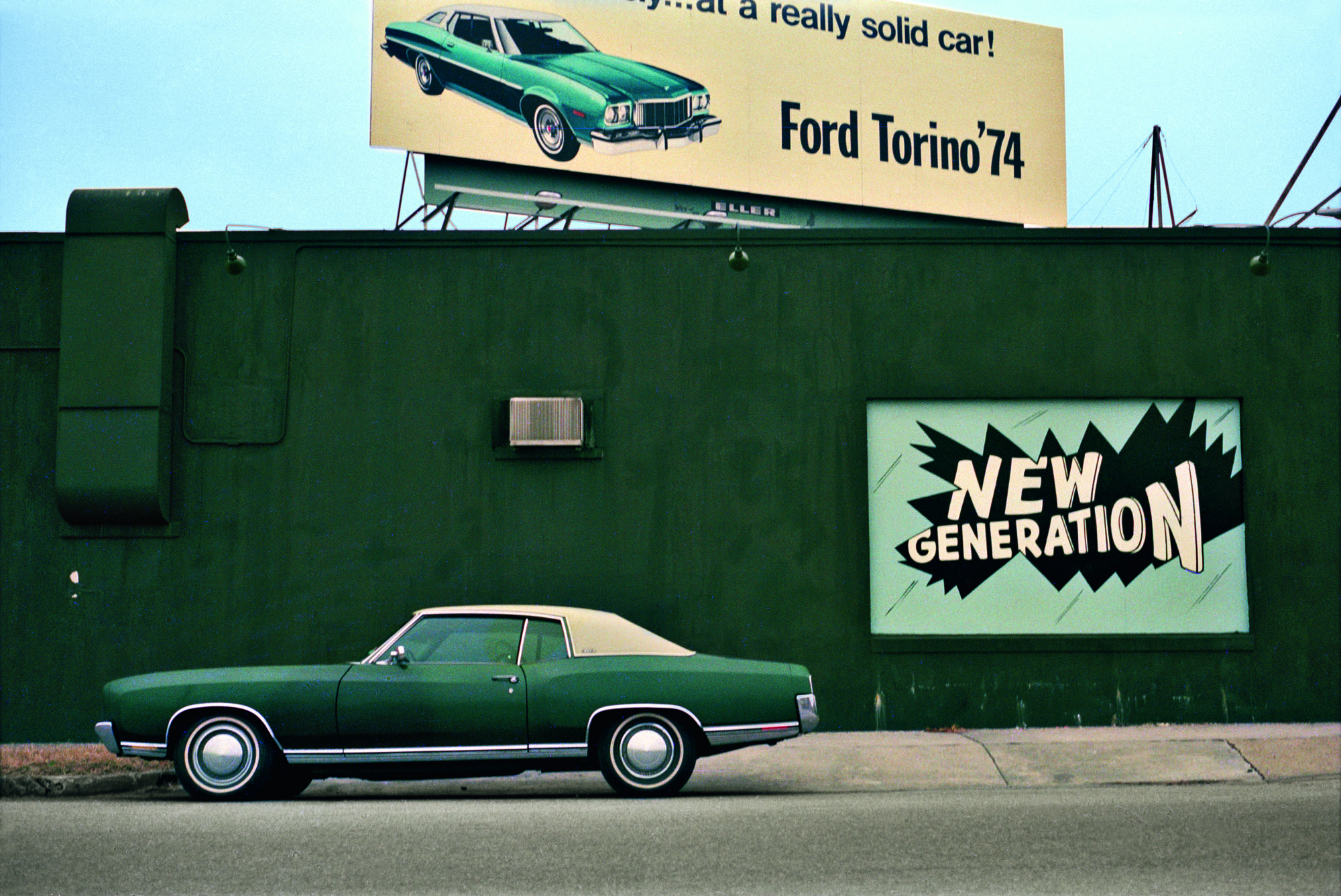
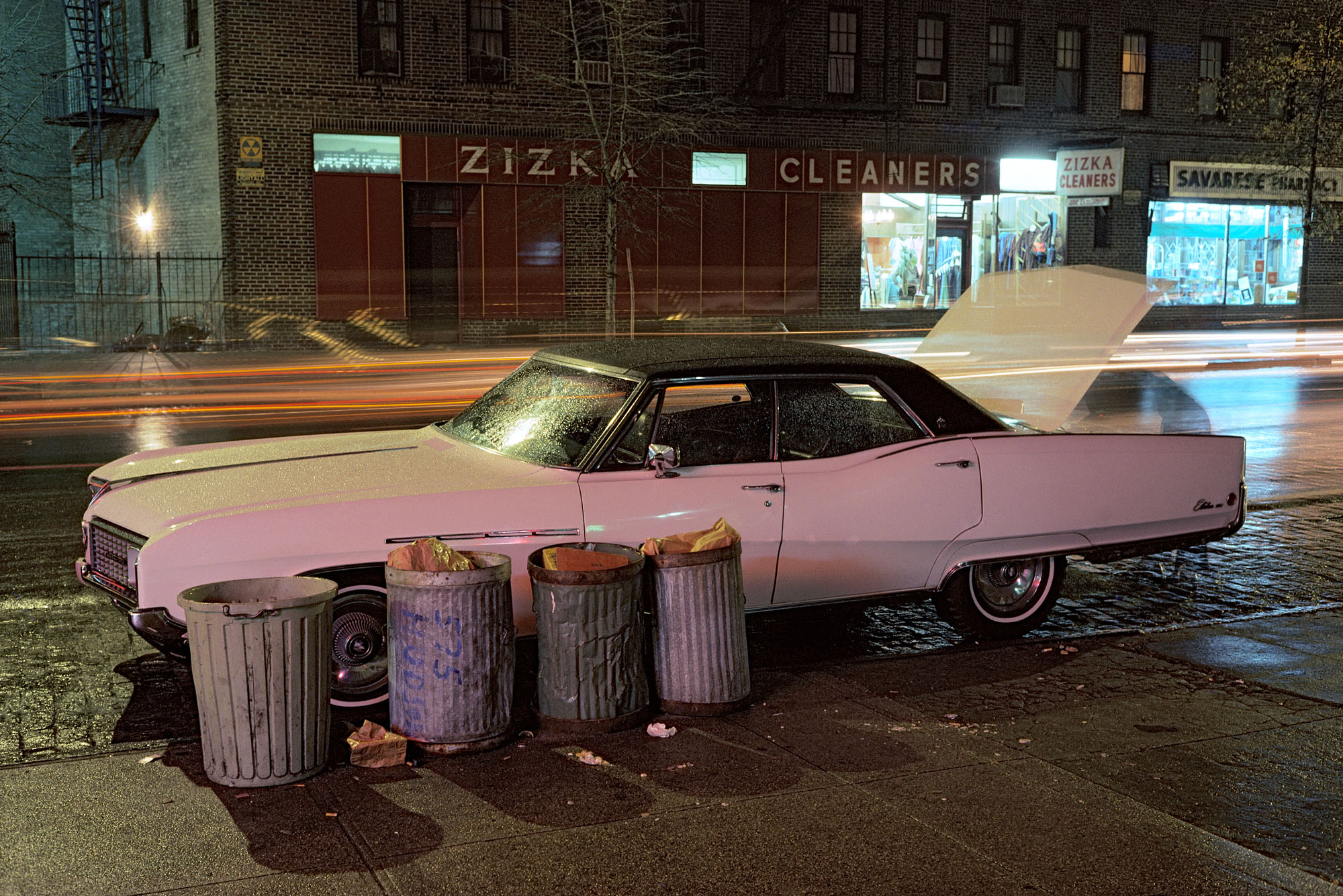
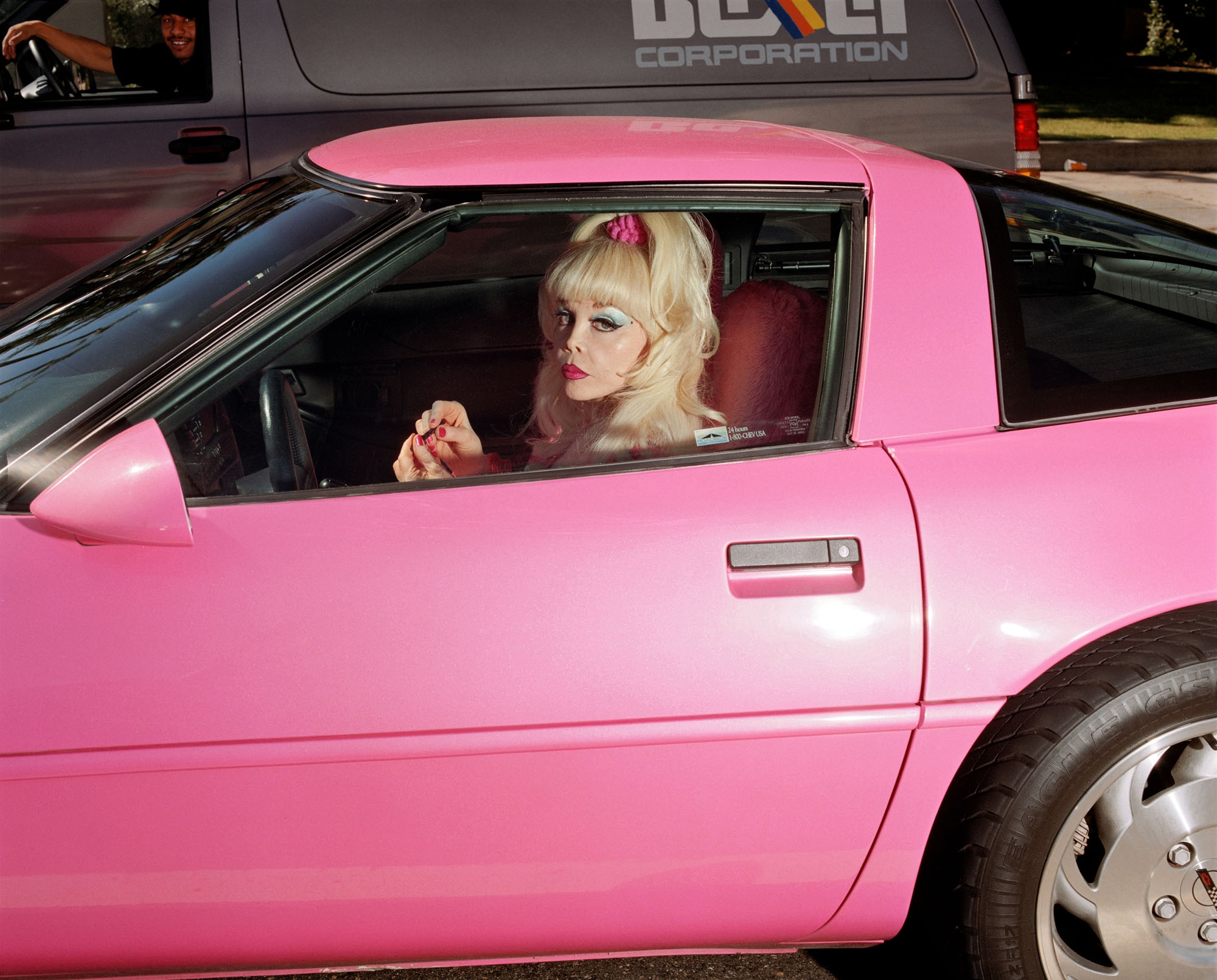
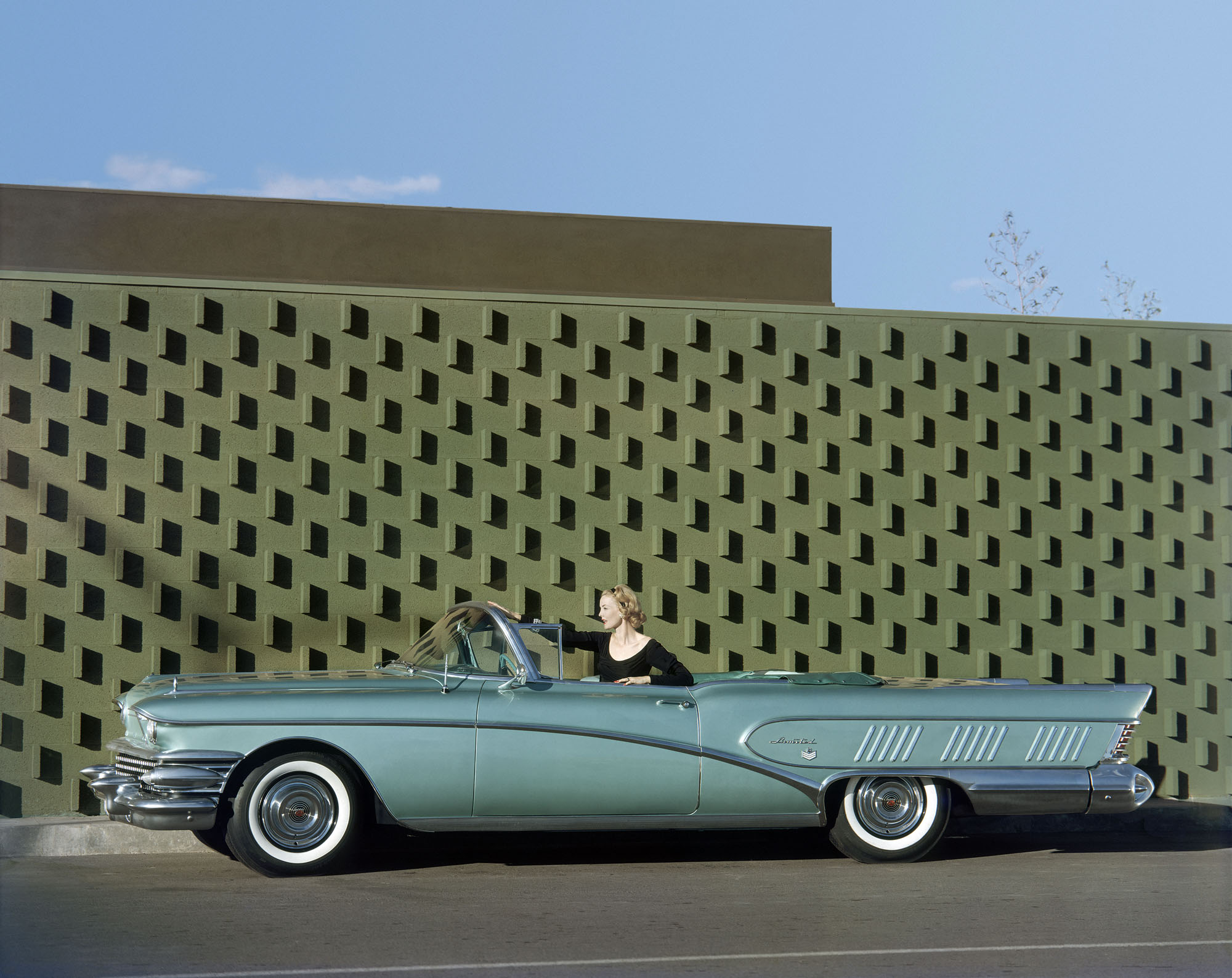
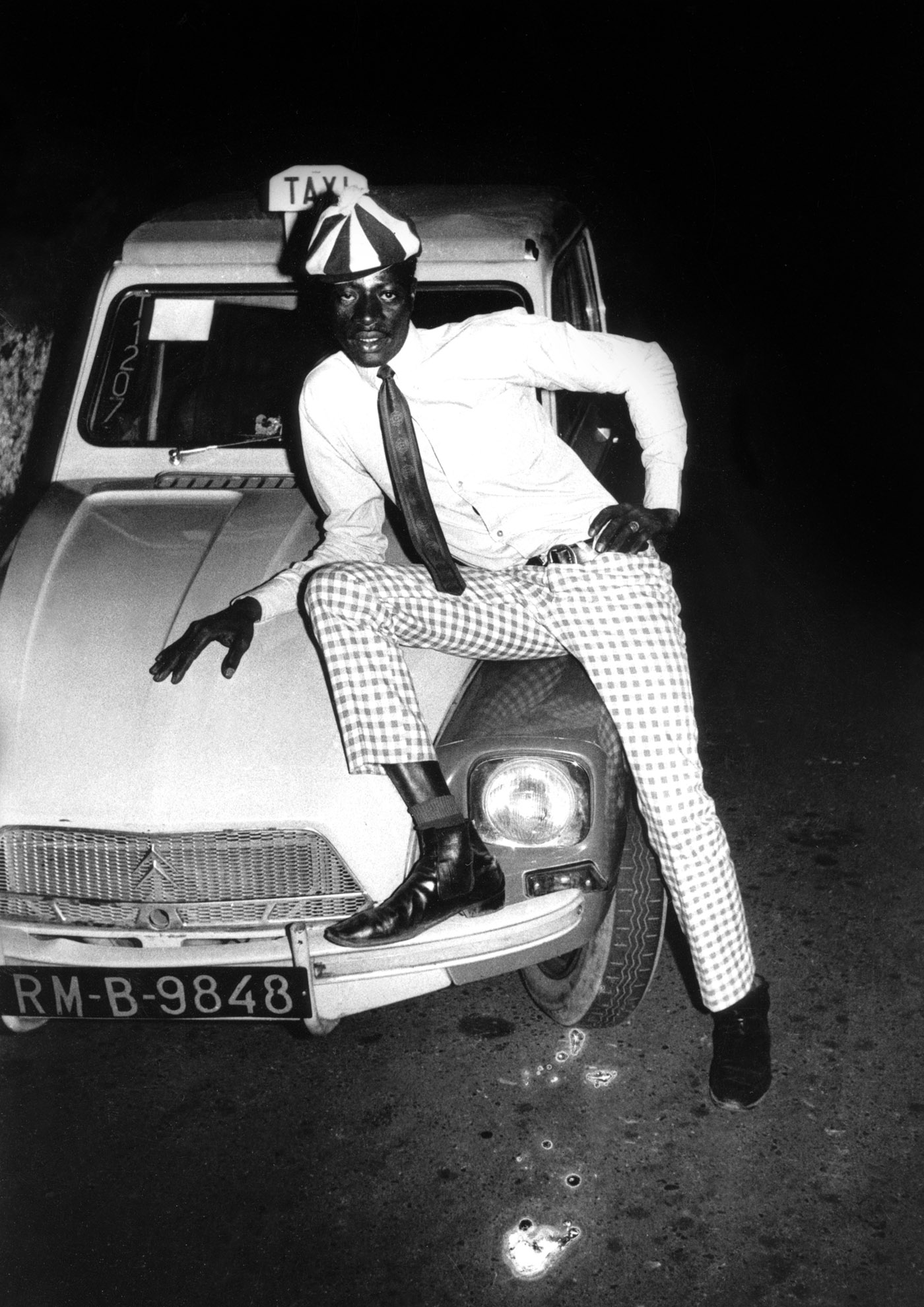
The exhibition will also present a series of “auto portraits”* made by a variety of photographers from the mi-twentieth century to the present. Yashuhiro Ishimoto and Langdon Clay’s photographs, for example, are portraits in profile of cars parked on sparsely inhabited city streets, that immerse the viewer in a different eras and atmospheres. Ishimoto’s black and white photographs, taken in Chicago in the 1950s, emphasise their polished, curved silhouettes in a distanced and serial manner, while Langdon Clay’s colour pictures taken in New York in the 1970s, show their decaying and dented chassis in an eerie nocturnal light. Other works in this section, such as the found photographs of Sylvie Meunier and Patrick Tourneboeuf’s American Dream series, or the flamboyant portraits of African photographers Seydou Keïta and Sory Sanlé, focus on the role of the automobile as a emblem of social mobility showing proud owners posing with their cars.
*A play on words in French: auto portrait meaning self-portrait.
The Car as a Medium: New Perspectives on the Landscape
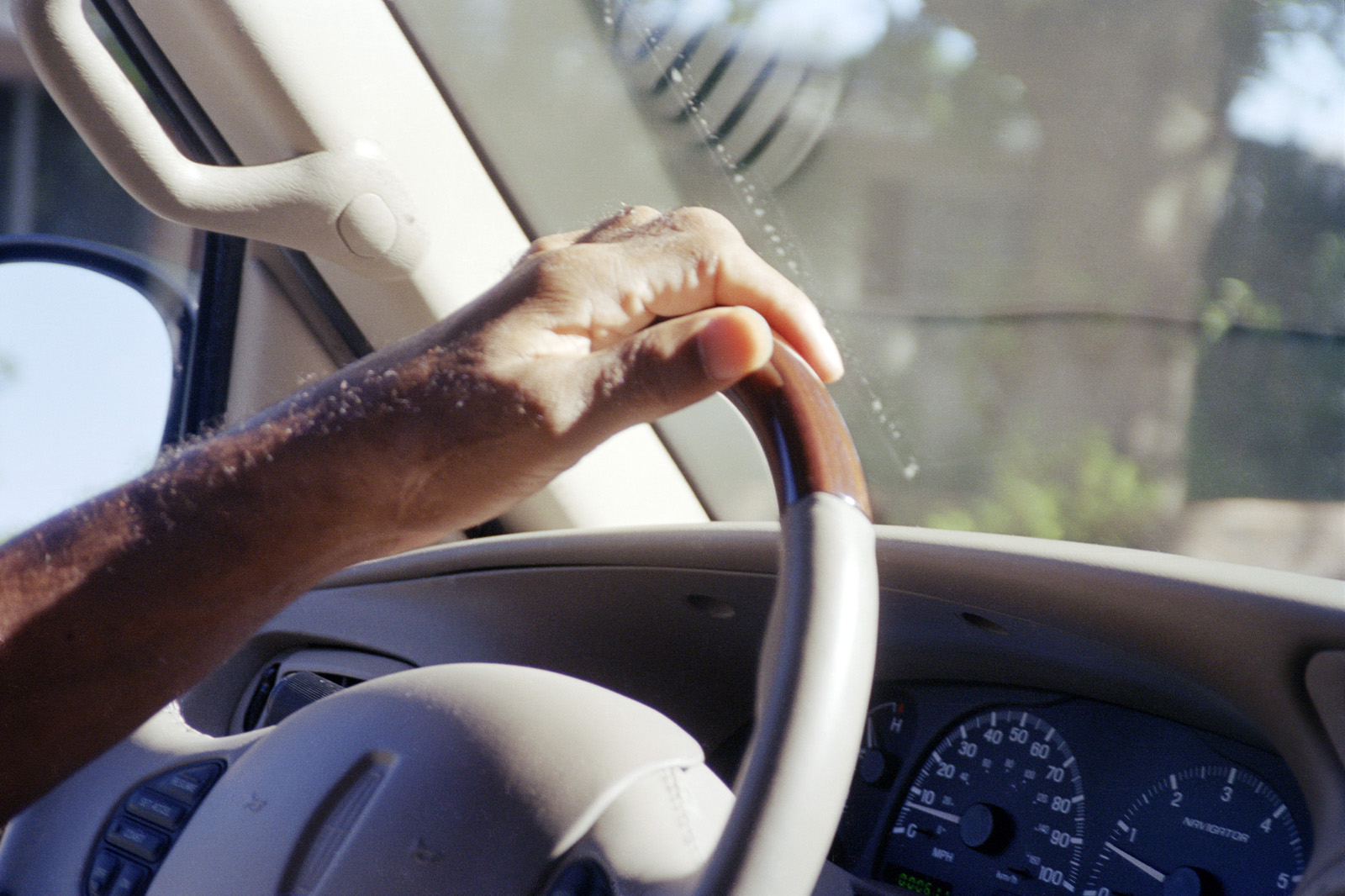
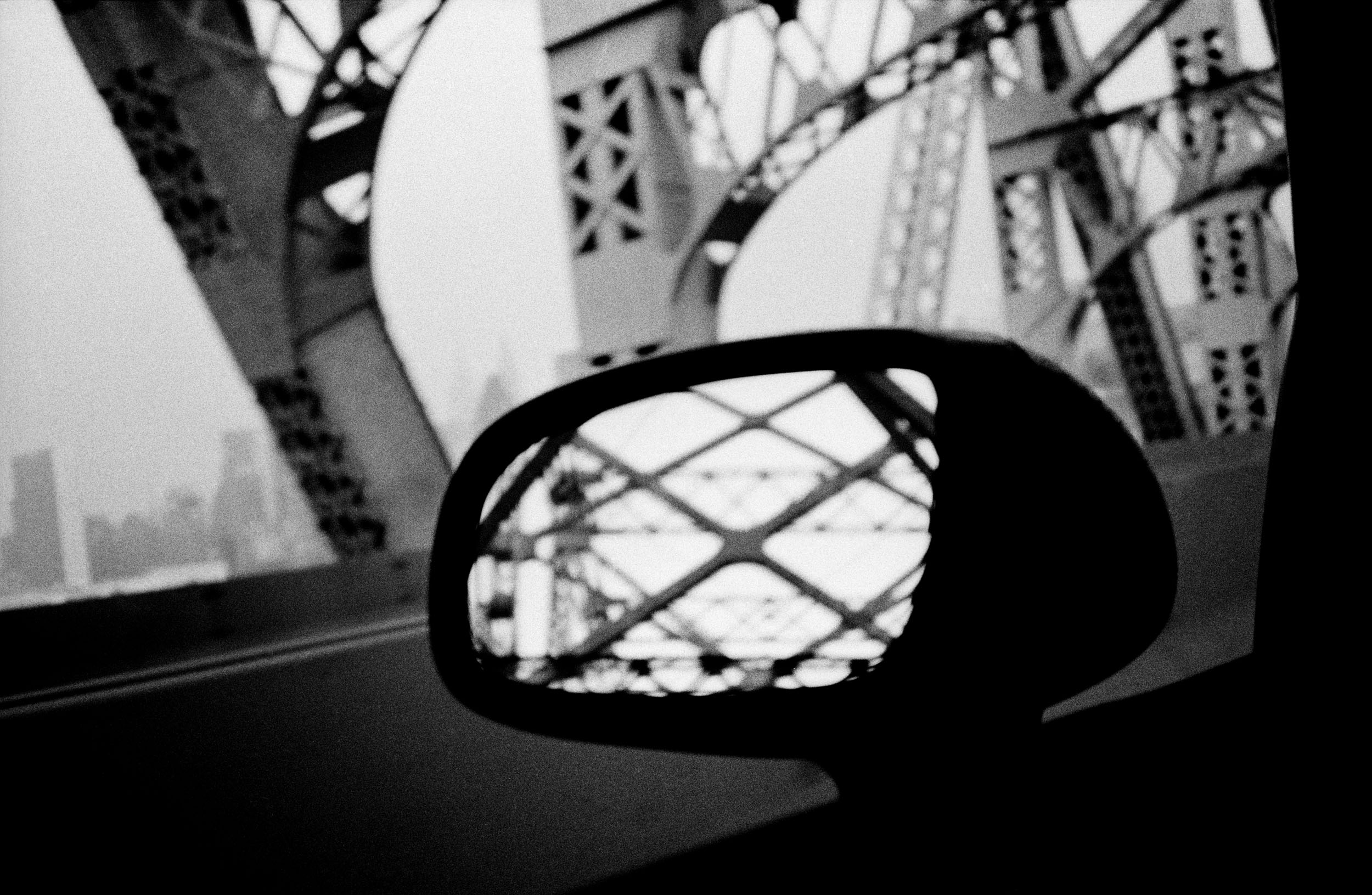
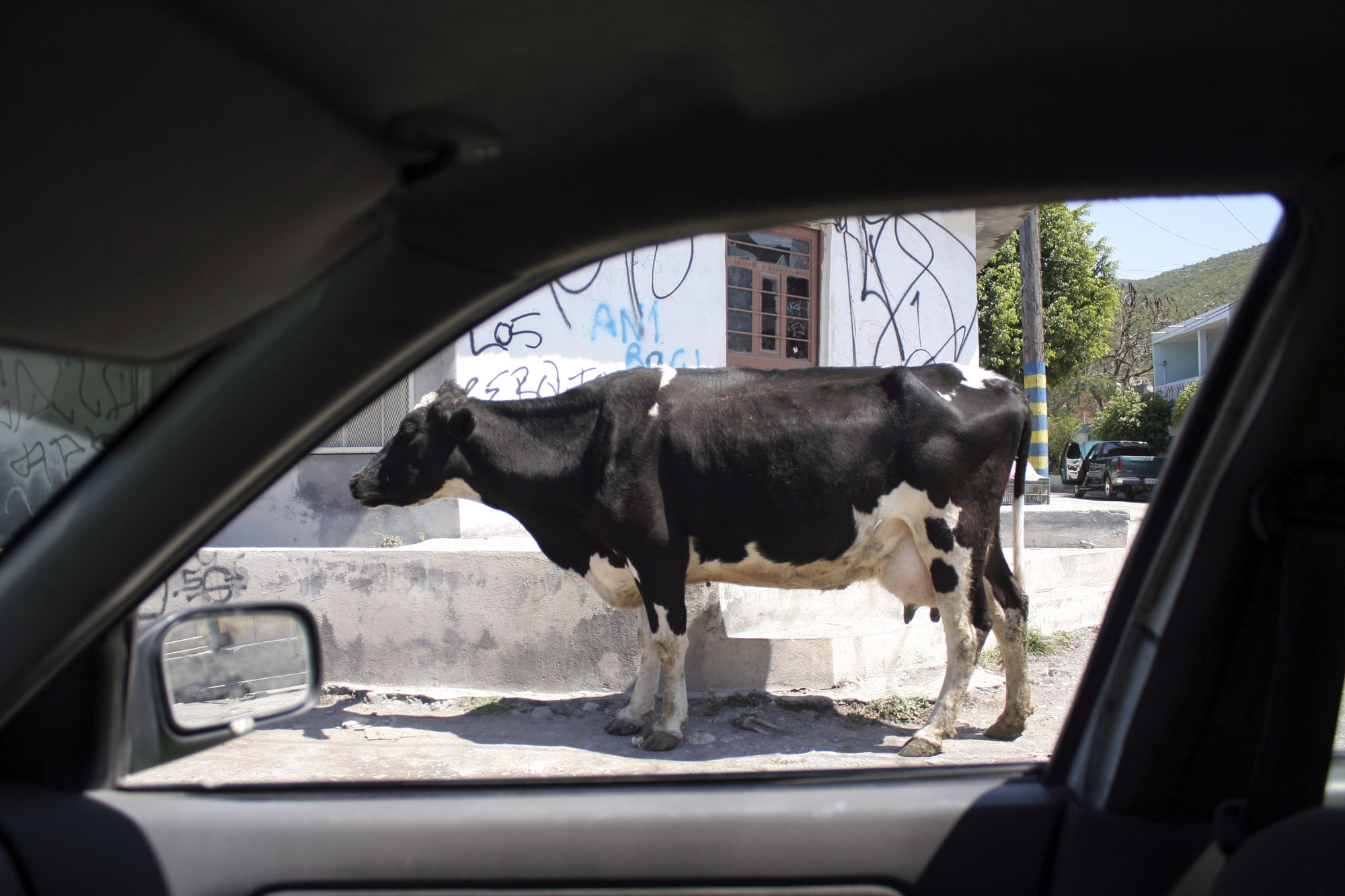
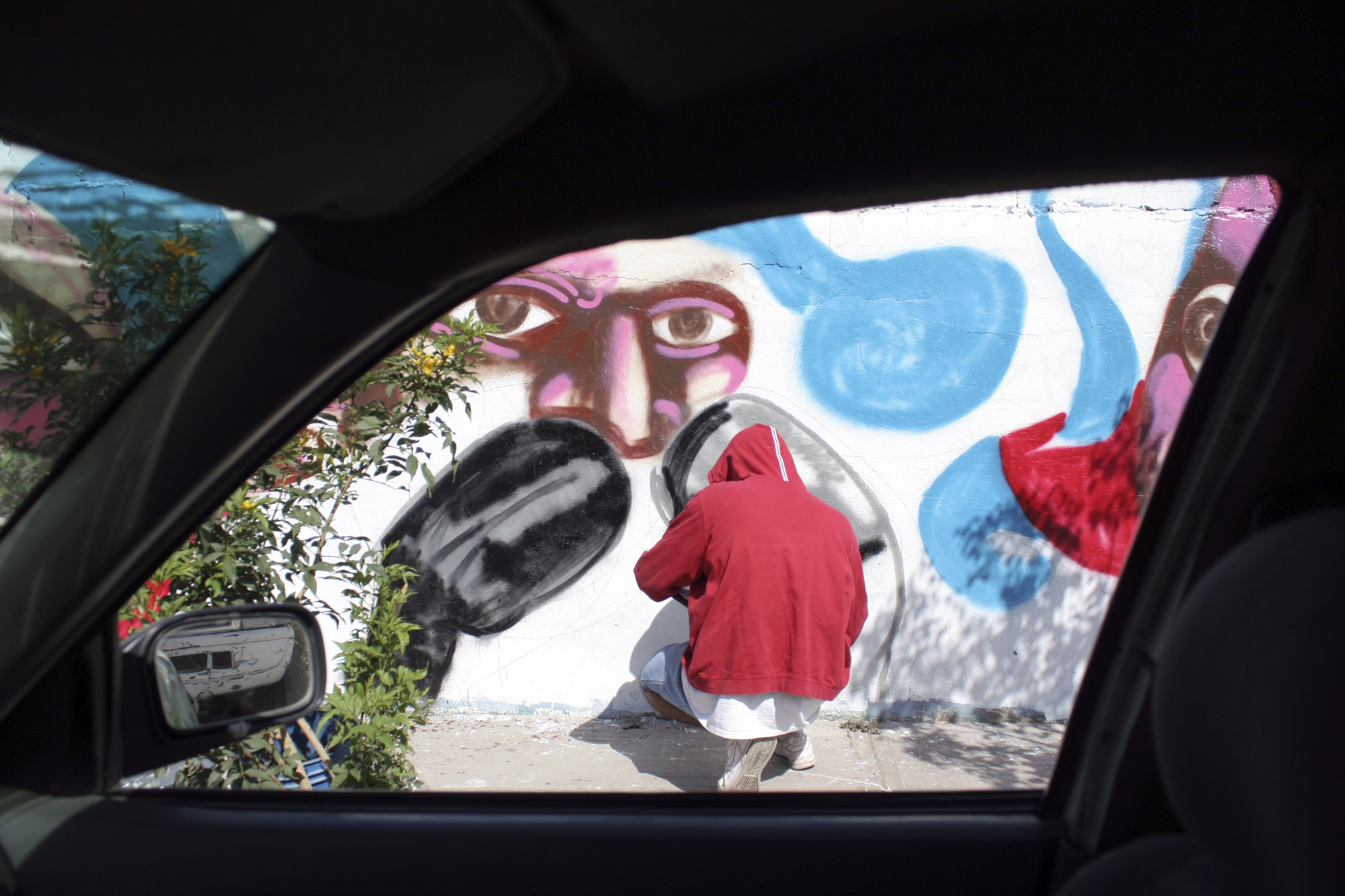
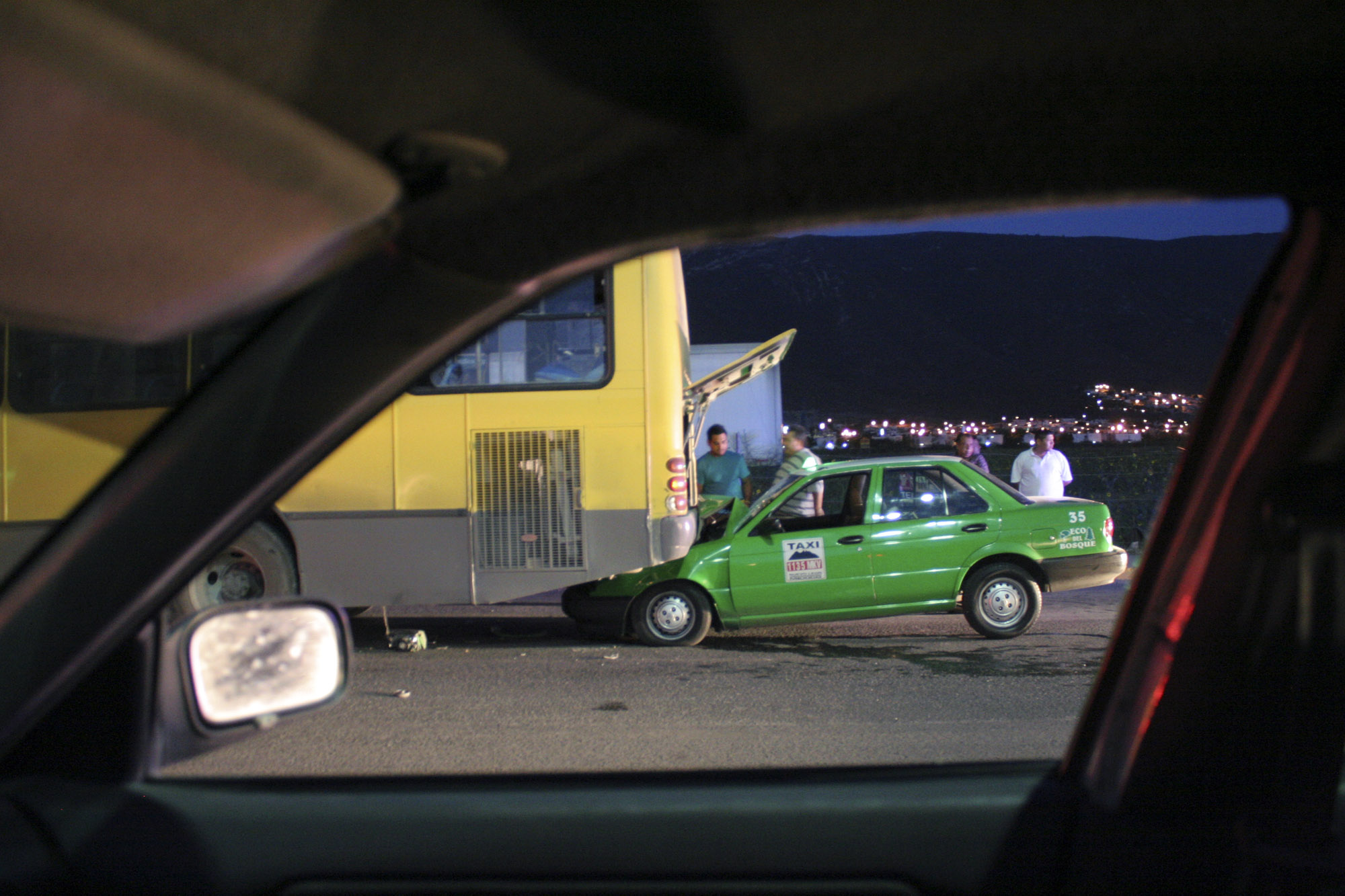
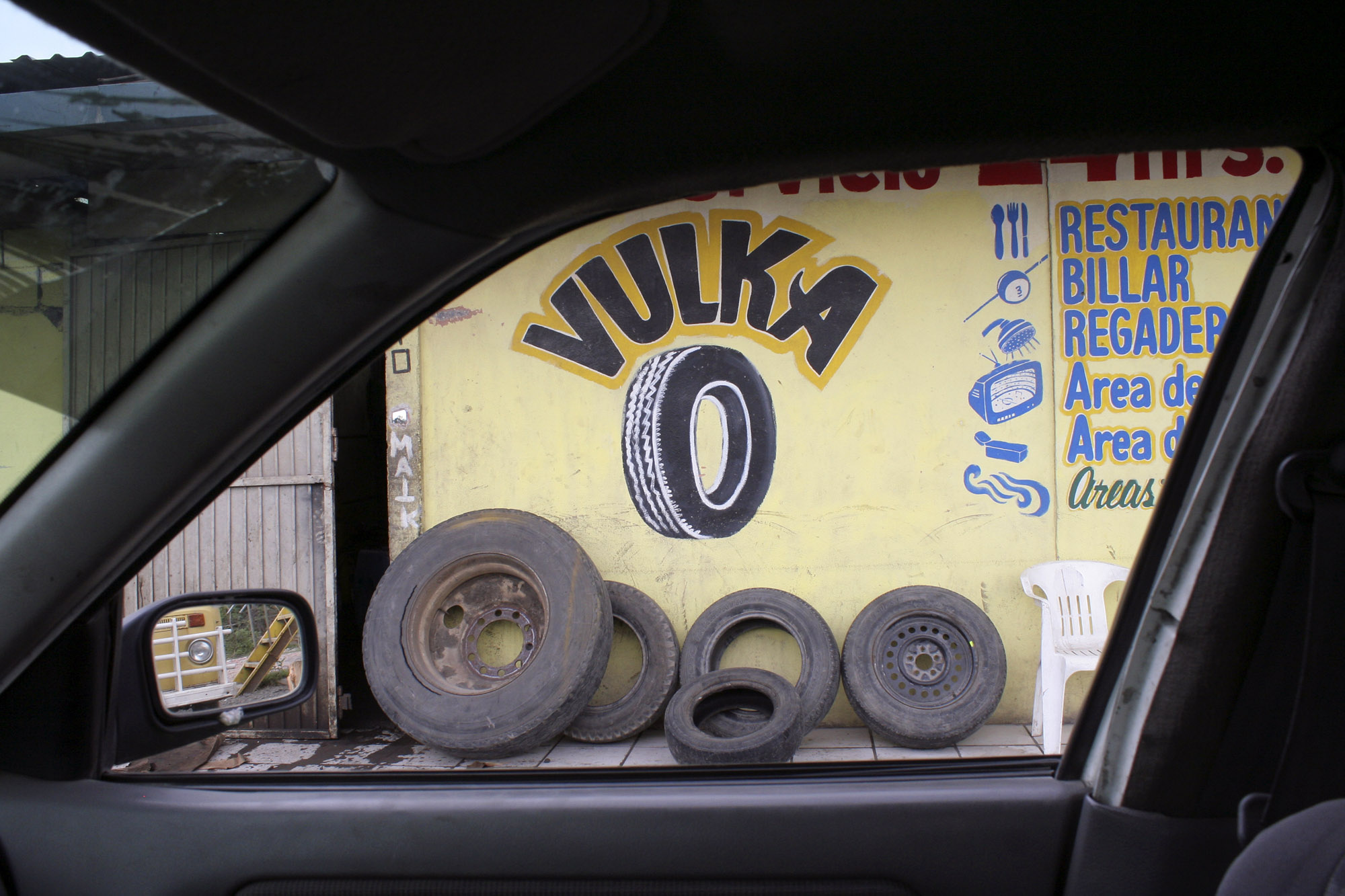
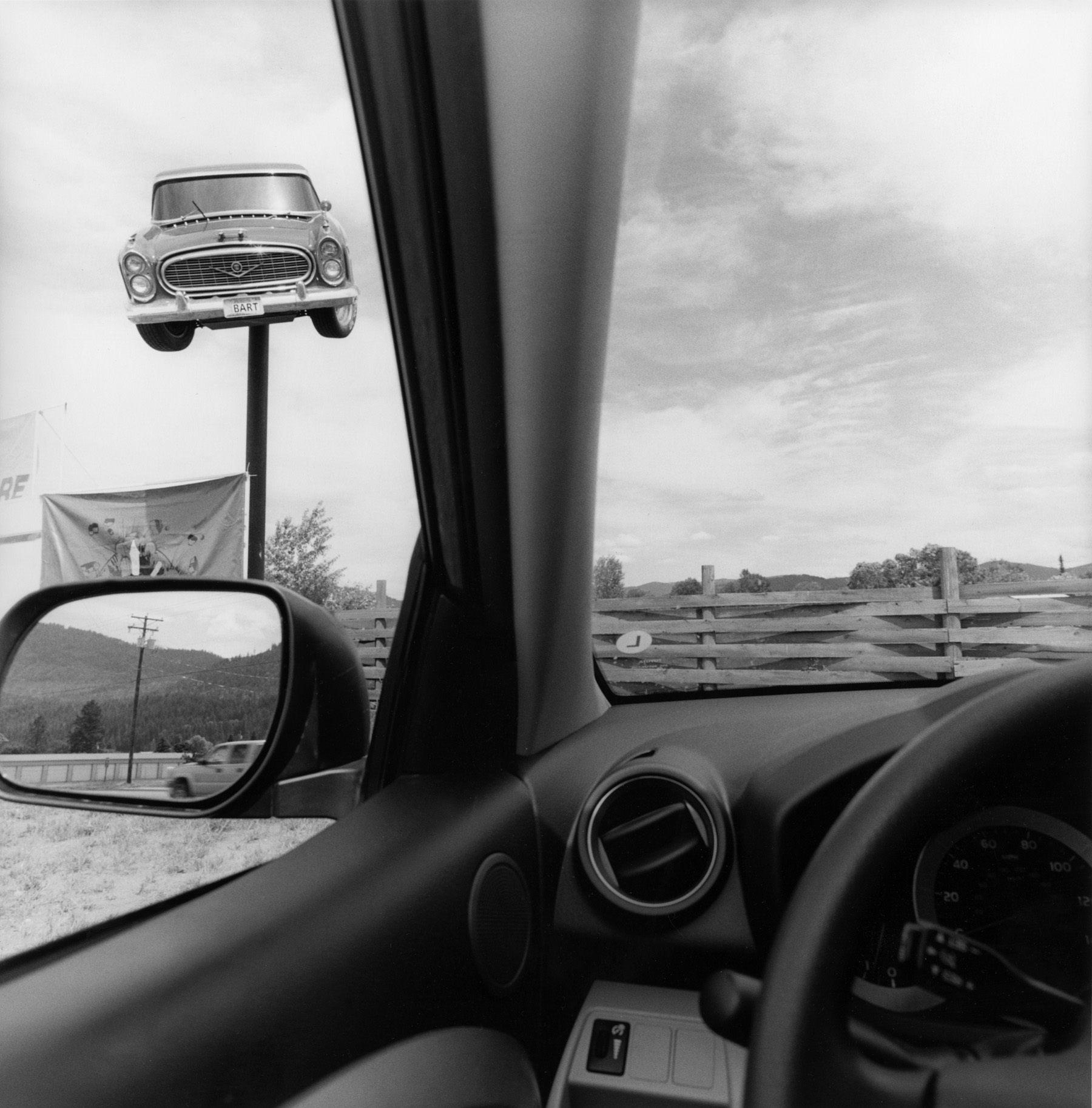
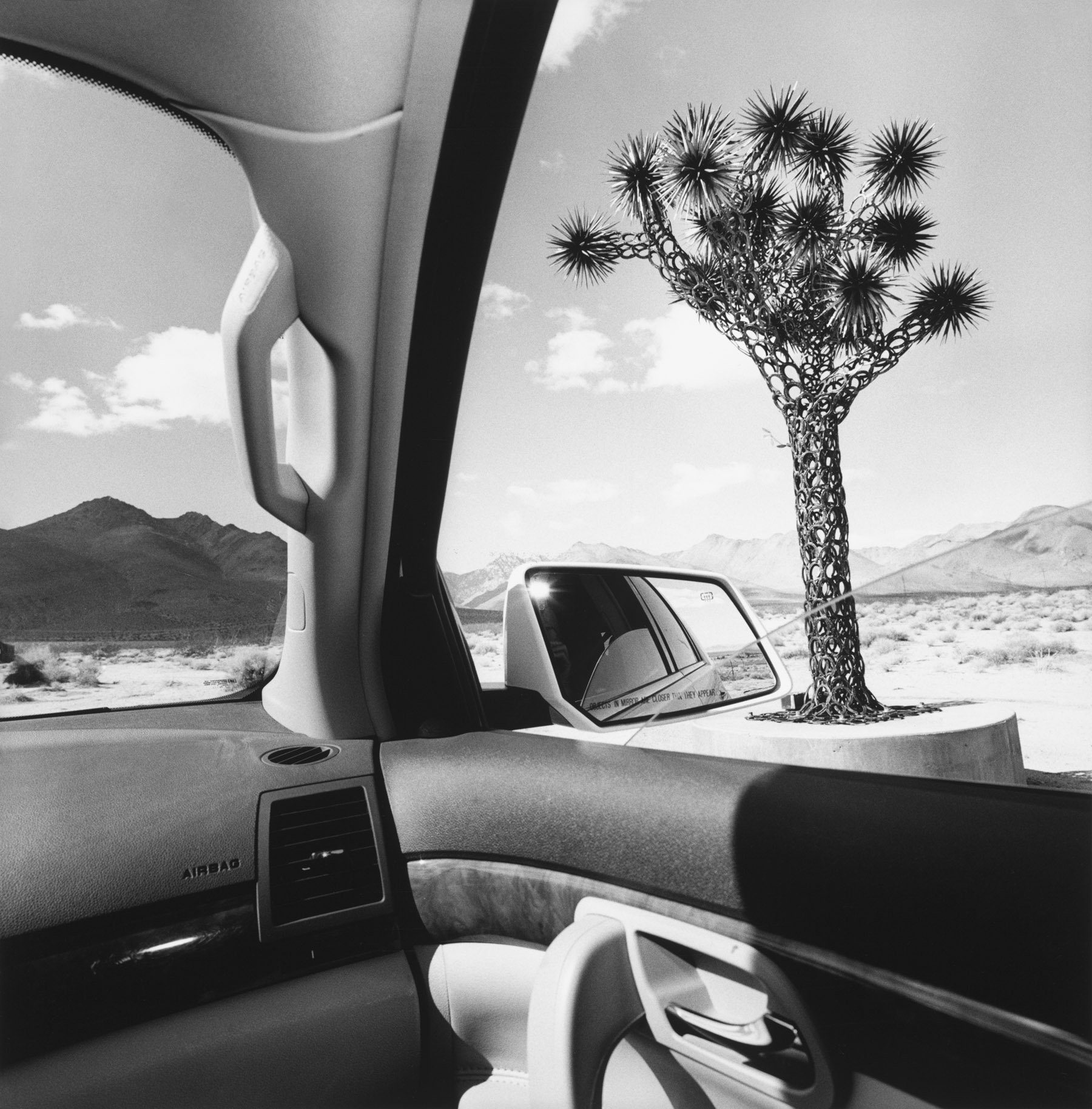
Many photographers have exploited the technical and aesthetic possibilities offered by the automobile, using it like a camera to capture the surrounding landscape through car windows or the reflections in rear-view mirrors.
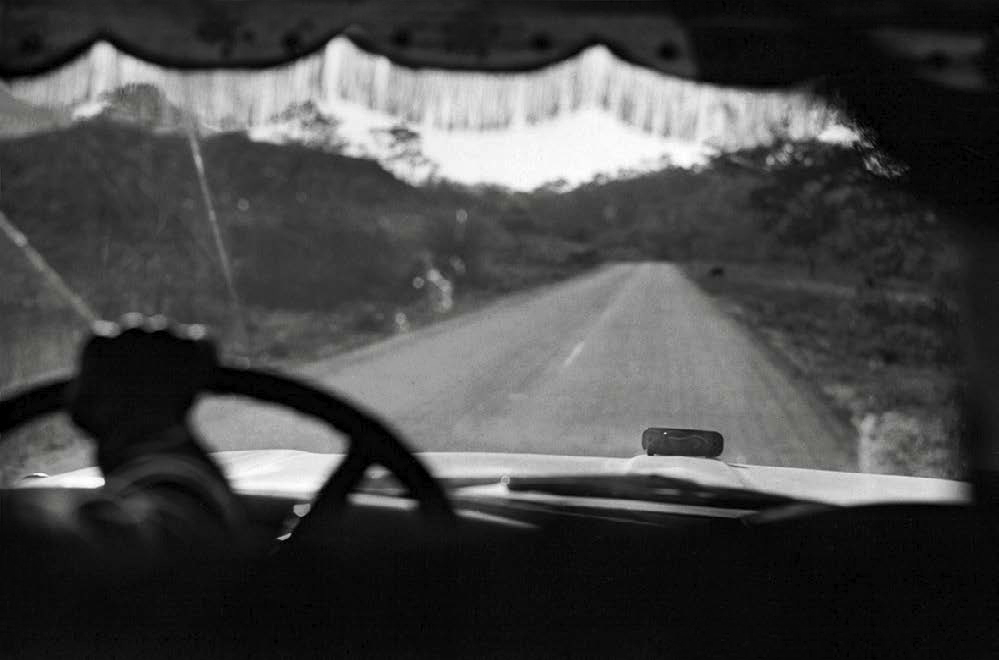
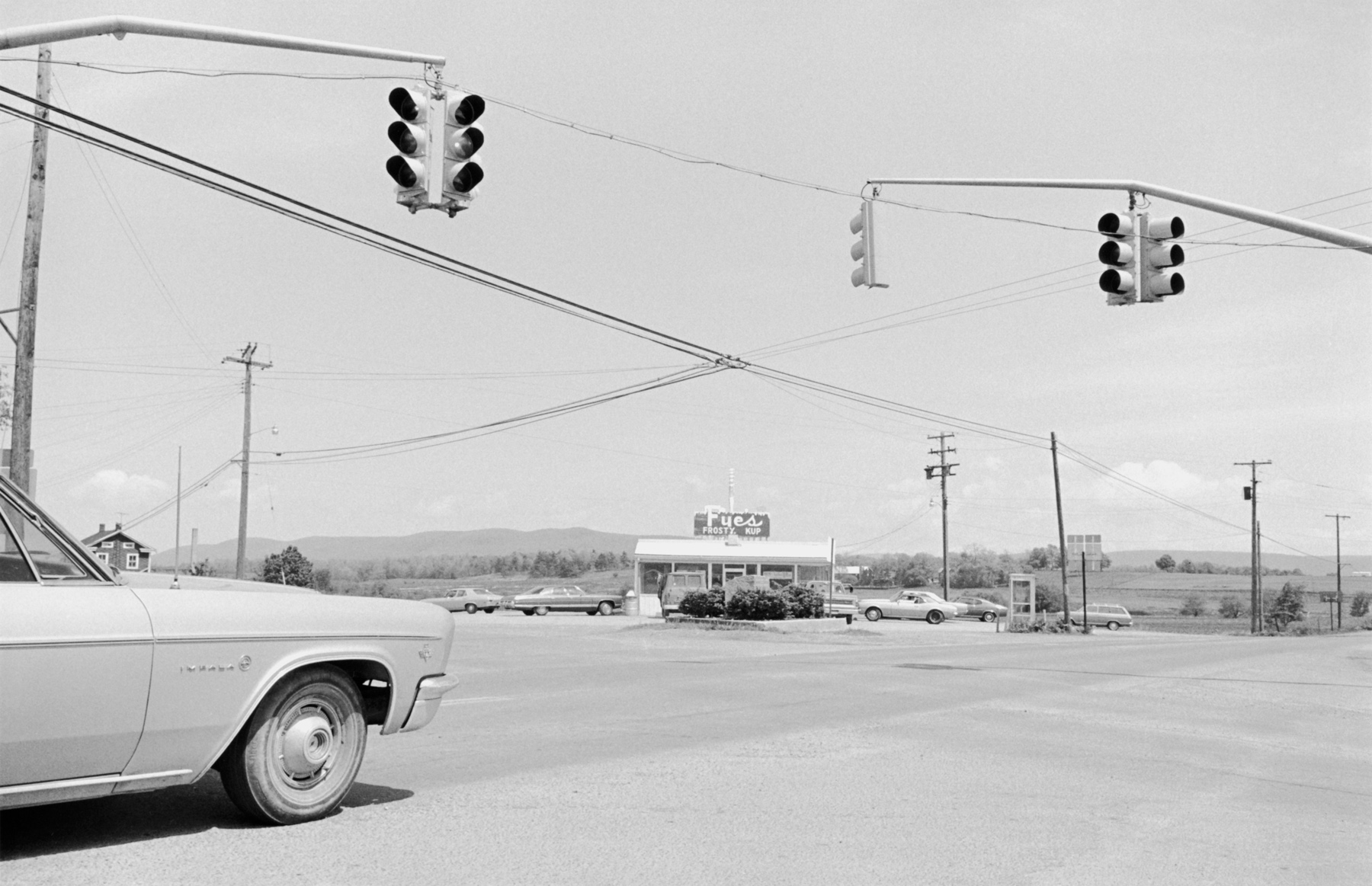
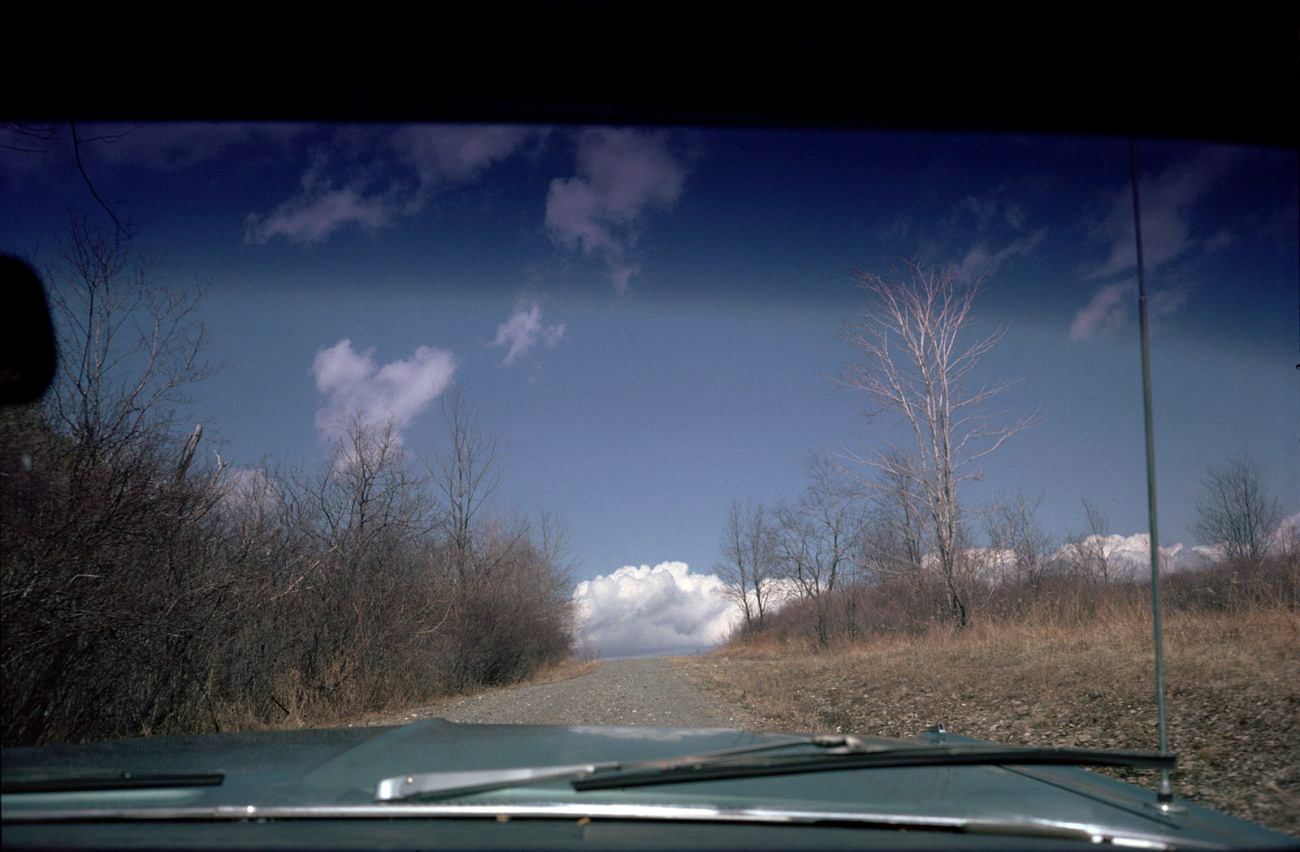
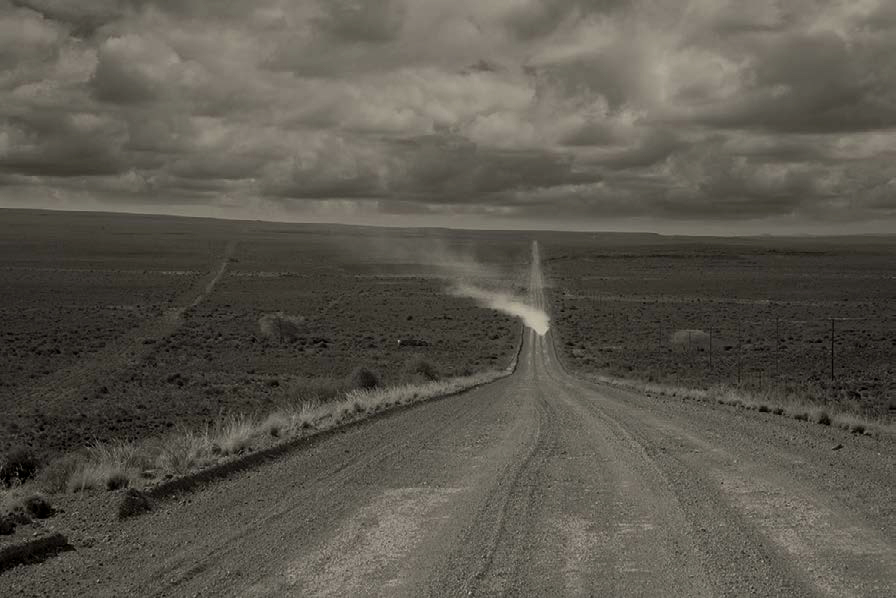
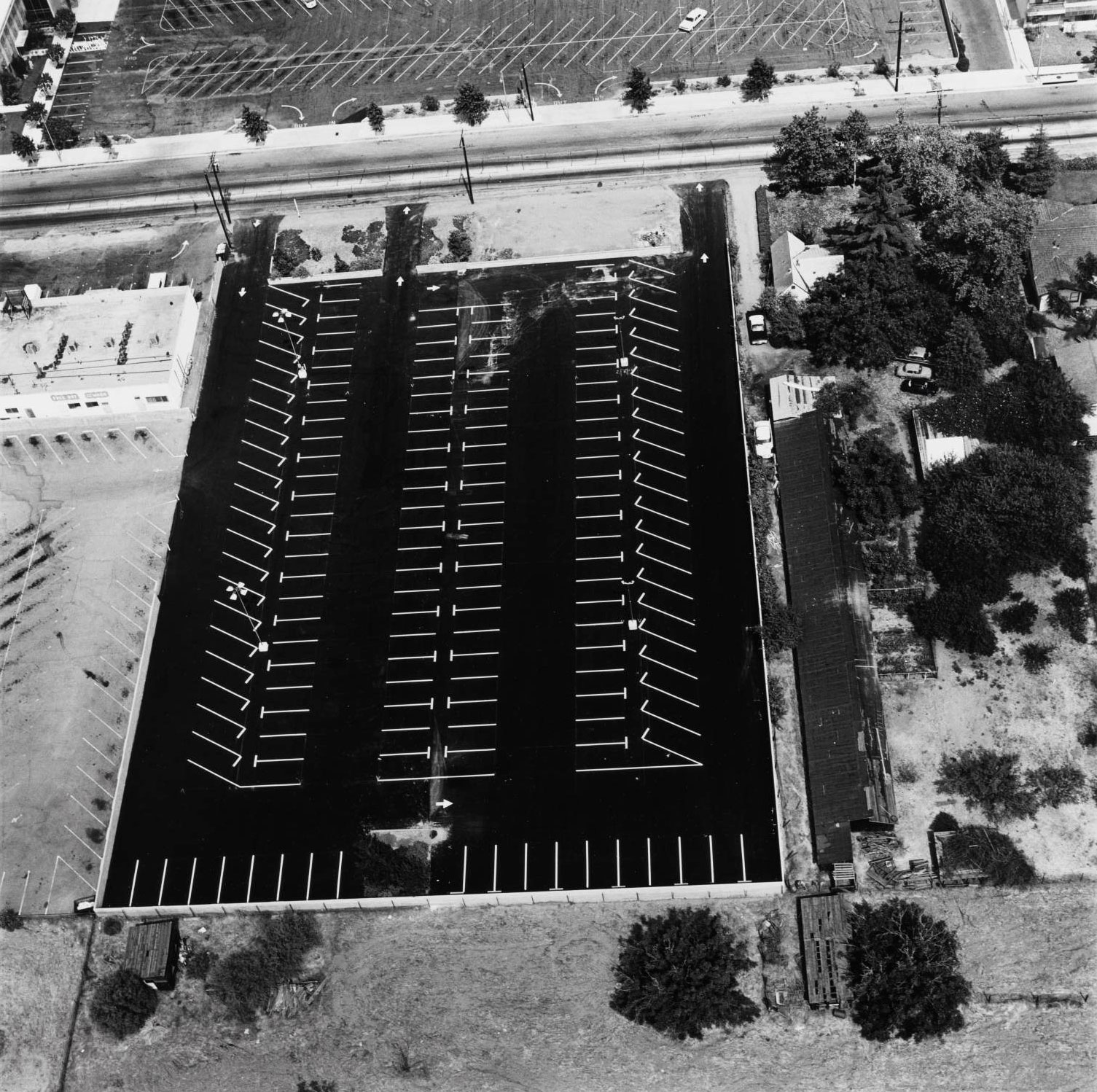
Cars have determined the framing and composition as well as the serial nature of the photographs of Joel Meyerowitz, Daido Moriyama, John Divola and David Bradford who have all worked from moving cars. From behind their windshields, these photographers capture an amusing store sign, a white car behind a wire fence, a dog running along a dusty road, a highway stretching out into the horizon. Other photographers, including Sue Barr, Robert Adams, Ed Ruscha, and Alex MacLean scrutinise our car-altered environment. Their landscape is no longer one of magnificent mountains, wondrous waterfalls or awe-inspiring canyons, but of a world transformed by the automobile with its suburban housing complexes, parking lots, and highway infrastructure.
Our Car Culture: Industry, History and New Ways of Life
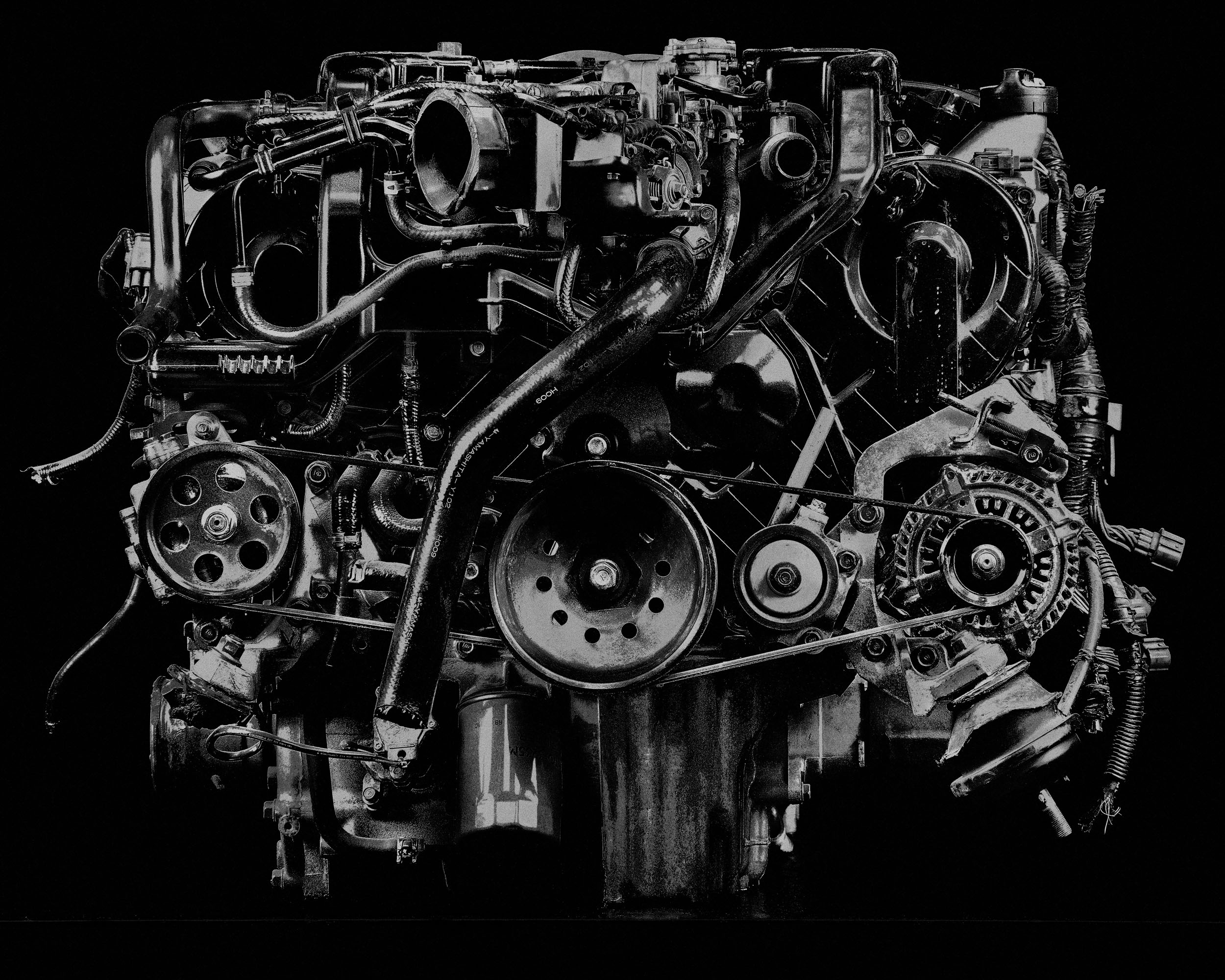
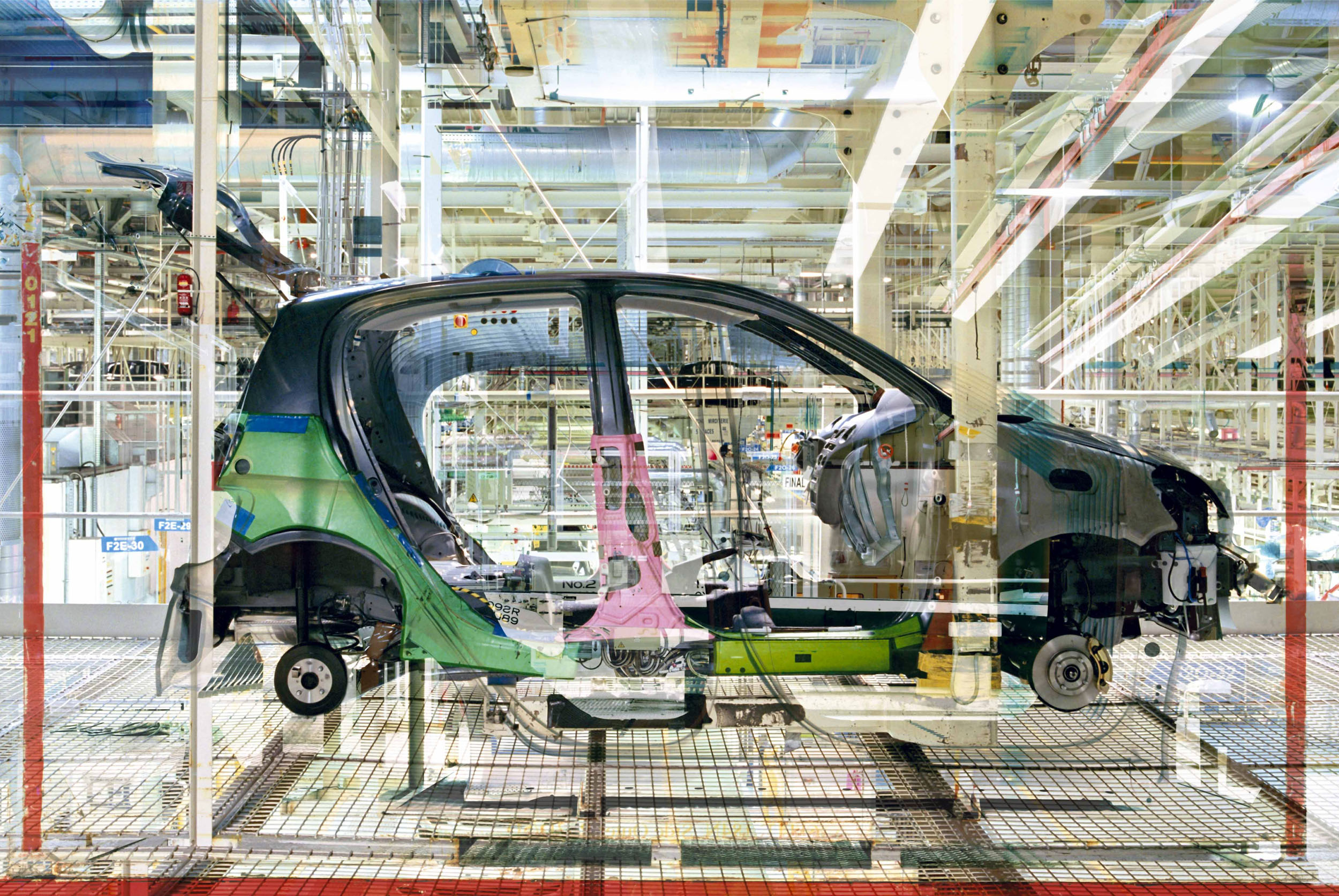
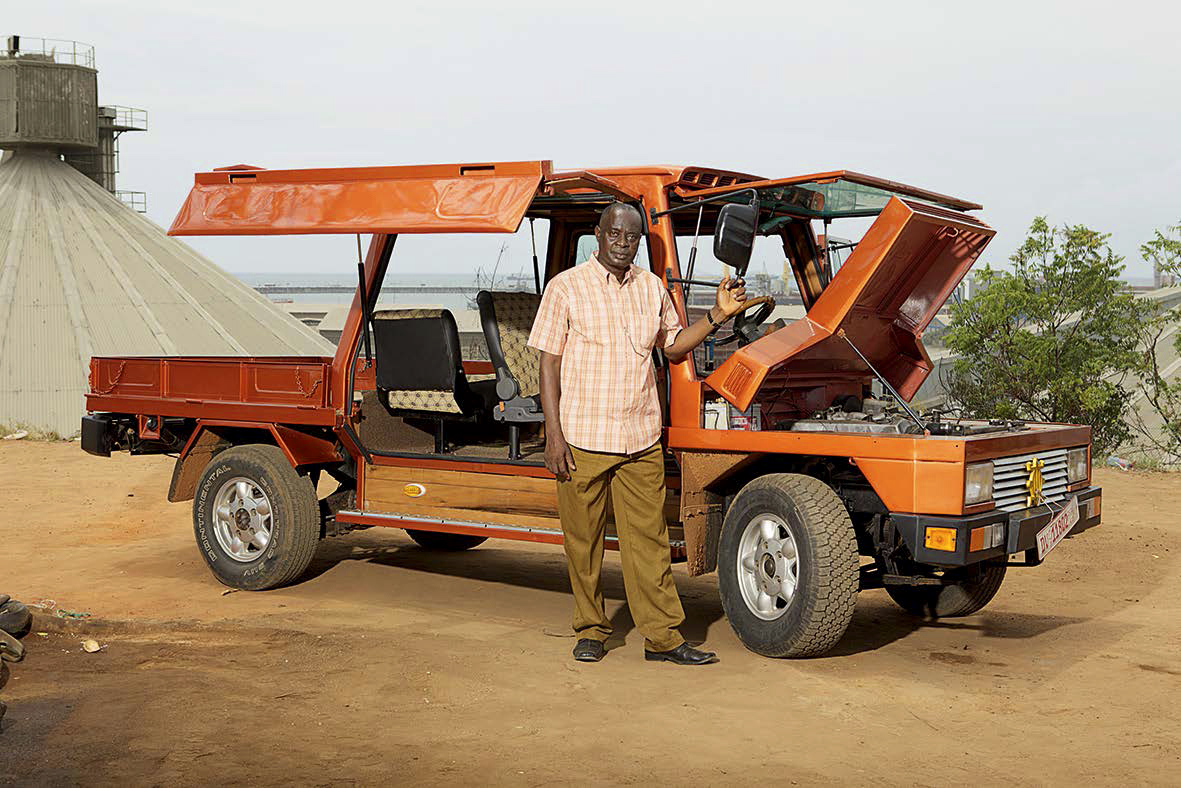
Many photographers have explored other aspects of our car culture, from the car industry and its impact on the environment to its role in history and society. Both Robert Doisneau and Robert Frank registered life in the factory, from the machines and productions lines to the activities of the workers lives, the first at the Renault plant in the 1930s and the second at Ford River Rouge in the 1950s. Their photographs, unique in their attention to individual assembly line workers, contrast with the work of contemporary photographer Stéphane Couturier whose deliberately distanced, impersonal pictures taken at a Toyota factory reflect the increasingly dehumanised nature of contemporary industry. Working in Ghana, far from the automated factory photographed by Stéphane Couturier, Dutch artist Melle Smets, and sociologist Joost Van Onna, put industrial waste from the car industry to good use. Collaborating with local craftsman in a region called Suame Magazine, where cars are disassembled and their parts traded, they created a car specifically for the African market called Turtle 1, using parts from different brands that happened to be available. Their installation, which includes photographs, drawings, and videos, documents the entire fabrication process of this car.
Photographers such as Philippe Chancel, Éric Aupol and Edward Burtynsky are concerned with the car industry’s damage to the environment. Philippe Chancel’s work focuses on the city of Flint and its dismantled General Motors factory, while Éric Aupol’s and Ed Burtynsky’s photographs reveal the sculptural yet apocalyptic beauty of industrial waste sites.
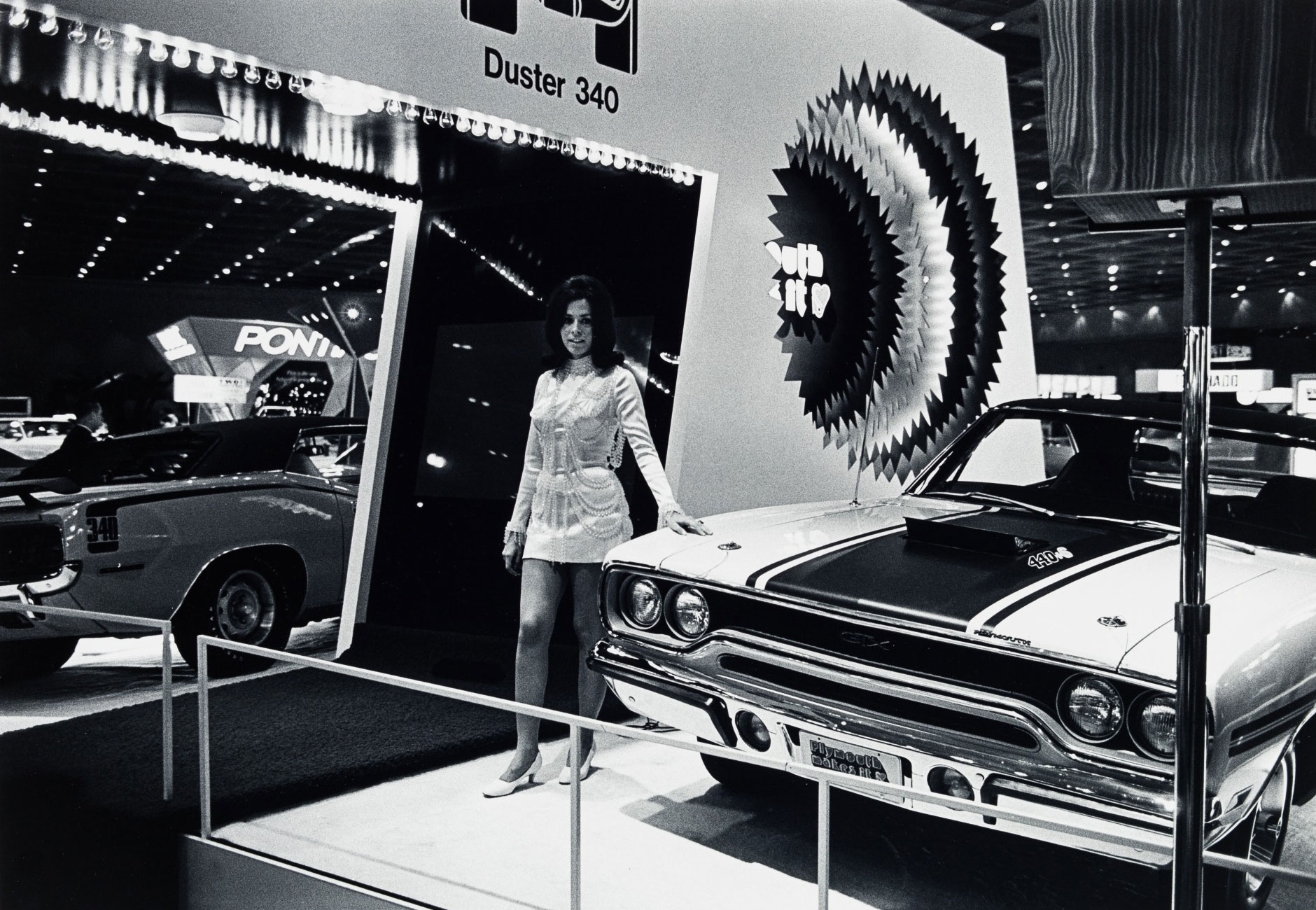
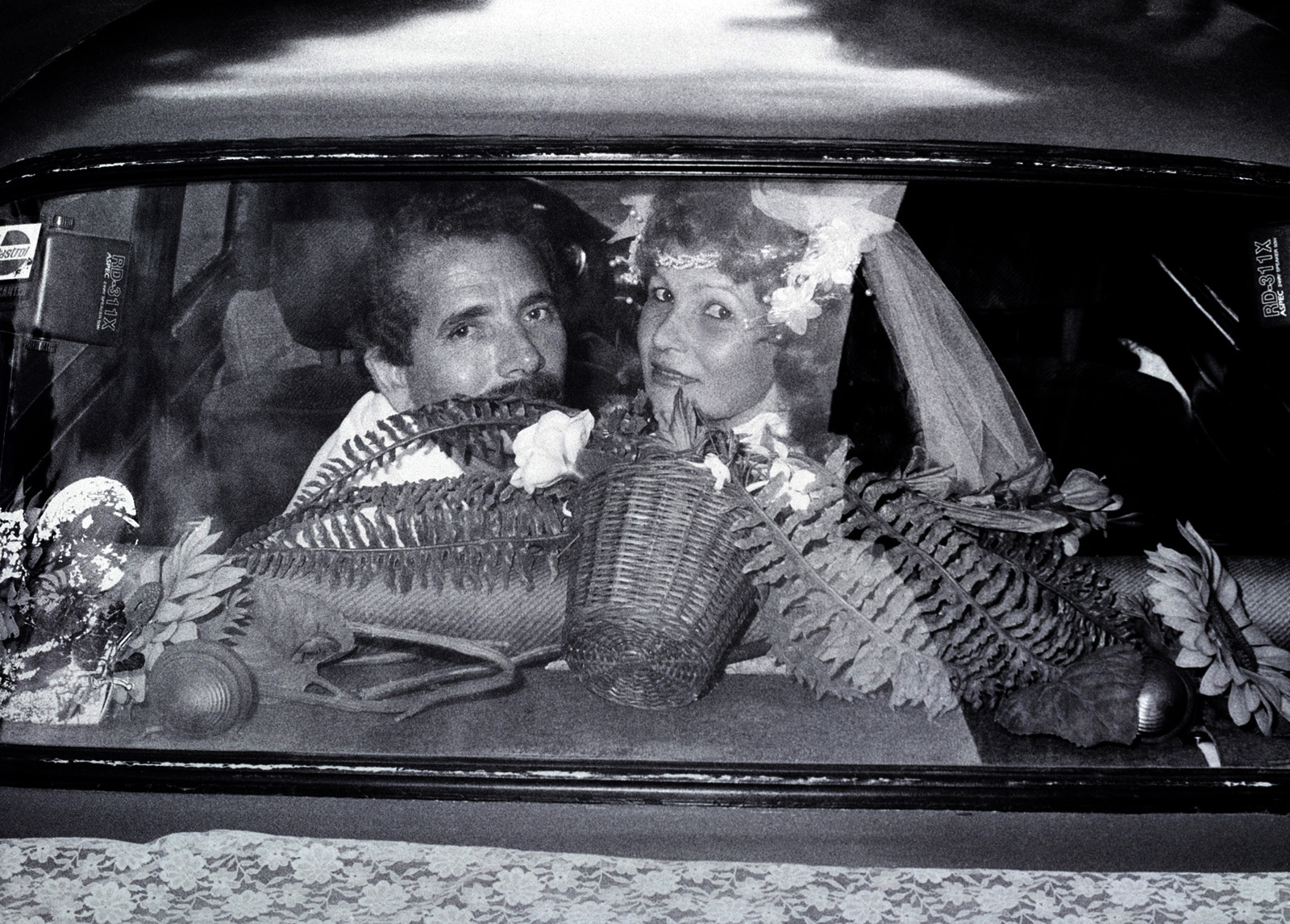
Other photographers reveal how the car plays an important role in historical events, in society and in daily life. Arwed Messmer’s Reenactement series brings together photographs from the archives of the Stasi showing how people used cars in unusual ways to escape from East Germany, and Fernando Gutiérrez work, Secuelas, explores the role of the Ford Falcon, a symbol of Argentina’s military dictatorship, in the collective imaginary of the Argentinean people. Jacqueline Hassink’s immersive projection Car Girls investigates the role and status of women who work in car shows around the world. Martin Parr’s series From A to B chronicles the thoughts dreams and anxieties of British motorists. Still other series by photographers such as Rosângela Rennó, Óscar Monzón, Kurt Caviezel and Bruce Davidson show how the car has become an extension of the home, used for weddings and picnics, living and sleeping, arguments and making love.
The Fondation Cartier has also invited artist Alain Bublex to create for the exhibition a series of 10 model cars that cast a fresh eye on the history of automobile design. His installation combines photographs, drawings and models to explore how the car design has evolved over time incorporating new techniques, forms, and practices.
Despite energy crises, ecology movements, and industrial mismanagement, the car remains essential to our daily lives. At a time when we are questioning the role and the future of the automobile in our society, the Autophoto exhibition reexamines, with nostalgia, humour, and a critical eye, this 20th century symbol of freedom and independence.
The Catalogue
Bringing together over 600 images, the catalogue of the Autophoto exhibition reveals how photography, a tool privileging immobility, benefited from the automobile, a tool privileging mobility. The catalogue features iconic images by both historic and contemporary photographers who have captured the automobile, and transformed this popular accessible object through their passionate and creative vision. Quotes by the artists, and a chronology of automobile design, as well as interviews and texts by specialists provide a deeper understanding of this vast topic through a variety of aesthetic, sociological, and historical perspectives.
Featured artists (selection): Ottomar Anschütz | Bill Brandt | Brassaï | Günter Brus | John Coplans | Hugo Erfurth | Trude Fleischmann | Seiichi Furuya | Eikoh Hosoe | Martin Imboden | Dora Kallmus | Rudolf Koppitz | Johann Victor Krämer | Heinrich Kühn | Helmar Lerski | O. Winston Link | Will McBride | Arnulf Rainer | Henry Peach Robinson | Otto Schmidt | Rudolf Schwarzkogler | Franz Xaver Setzer | Anton Josef Trčka | Erwin Wurm
Anonymous photographer The Sculptor Hans Gasser and Workshop Assistants at Work 1855-1857 Daguerreotype Albertina, permanent loan of the Höhere Graphische Bundes-Lehr-und Versuchsanstalt, Vienna
I made this posting way before my operation, but have been unable to post until now because of my ongoing recuperation.
While the exhibition may have finished, I am so enamoured of the theme of the exhibition, the people and artists, that I think it’s valuable to have the posting, images and the additional research I did online. I especially like the striking work of Helmar Lerski and the “Aktionen” of Rudolf Schwarzkogler which reflect on the hurtfulness of the world, but remind me of the yet to come political art of the first wave of HIV/AIDS. What a beautiful installation as well…
Dr Marcus Bunyan
Many thankx to the Albertina for allowing me to publish the photographs in the posting. Please click on the photographs for a larger version of the image.
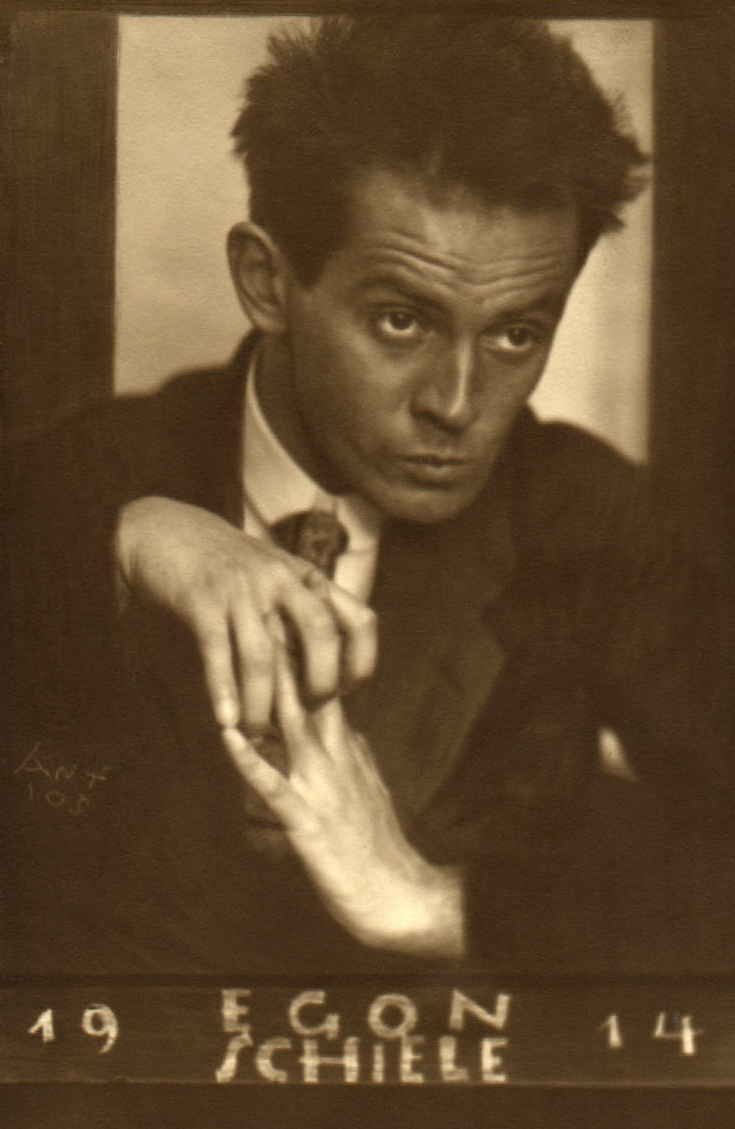
Anton Josef Trčka (Czech, 1893-1940) Egon Schiele 1914 Gelatin silver print Albertina, Vienna
Josef Anton Trčka, Antios (7. September 1893 Vienna – 16. March 1940), was a Czech photographer , painter, sculptor, draftsman, designer of tapestries and silver jewellery, collector of folk art Moravian, occasional antiquarian, poet and philosopher. He was a representative of Viennese Modernism, Art Movement, which influenced European culture of the 20th century…
Around 1910 the Trčka decided to study at the professional school of photography Lehr- Graphische und Versuchsanstalt in Vienna, one of the best in Europe. Coincidentally, at the school was Professor Karel Novák, in his time one of the most important personalities of the beginnings of art photography. In 1914 he got the opportunity to portray several leading personalities of Viennese Modernism. Among them was Gustav Klimt, Peter Alternberg and the 50 year old Josef Svatopluk Machar. However, the highlight for Trčka prewar contracts were the photographic series of portraits of Egon Schiele, which focused on facial expressions and hand gestures.
Franz Xaver Setzer, actually Franz Anton Adolf (6 August 1886 in Vienna – 10 January 1939) was an Austrian photographer.
Hans Walter Conrad Veidt (22 January 1893 – 3 April 1943) was a German actor best remembered for his roles in films such as The Cabinet of Dr. Caligari (1920), The Man Who Laughs (1928), and, after being forced to migrate to Britain by the rise of Nazism in Germany, his English-speaking roles in The Thief of Bagdad (1940), and, in Hollywood, Casablanca (1942). After a successful career in German silent film, where he was one of the best-paid stars of Ufa, he left Germany in 1933 with his new Jewish wife after the Nazis came to power. They settled in Britain, where he participated in a number of films before emigrating to the United States around 1941…
He starred in a few films, such as George Cukor’s A Woman’s Face (1941) where he received billing just under Joan Crawford’s and Nazi Agent (1942), in which he had a dual role as both an aristocratic German Nazi spy and as the man’s twin brother, an anti-Nazi American. His best-known Hollywood role was as the sinister Major Heinrich Strasser in Casablanca (1942), a film which was written and began pre-production before the United States entered the war.
In 1943, at the age of fifty, he died of a massive heart attack while playing golf at the Riviera Country Club in Los Angeles. In 1998, his ashes were placed in a niche of the columbarium at the Golders Green Crematorium in north London.
Dora Kallmus (Madame d’Ora) (Austrian, 1881-1963), Arthur Benda (German, 1885-1969) Anita Berber and Sebastian Droste in their dance Märtyrer [Martyrs] 1922 Gelatin silver print Albertina, Vienna
Dora Philippine Kallmus (20 March 1881 – 28 October 1963), also known as Madame D’Ora or Madame d’Ora, was an Austrian fashion and portrait photographer.
In 1907, she established her own studio with Arthur Benda in Vienna called the Atelier d’Ora or Madame D’Ora-Benda. The name was based on the pseudonym “Madame d’Ora”, which she used professionally. D’ora and Benda operated a summer studio from 1921 to 1926 in Karlsbad, Germany, and opened another gallery in Paris in 1925. She was represented by Schostal Photo Agency (Agentur Schostal) and it was her intervention that saved the agency’s owner after his arrest by the Nazis, enabling him to flee to Paris from Vienna.
Her subjects included Josephine Baker, Coco Chanel, Tamara de Lempicka, Alban Berg, Maurice Chevalier, Colette, and other dancers, actors, painters, and writers.
Arthur Benda (23 March 1885, in Berlin – 7 September 1969, in Vienna) was a German photographer. From 1907 to 1938 he worked in the photo studio d’Ora in Vienna, from 1921 as a partner of Dora Kallmus and from 1927 under the name d’Ora-Benda as the sole owner. …
In 1906, Arthur Benda met photographer Dora Kallmus, who also trained with Perscheid. When she opened the Atelier d’Ora on Wipplingerstrasse in Vienna in 1907, Benda became her assistant. The Atelier d’Ora specialised in portrait and fashion photography. Kallmus and Benda quickly made a name for themselves and soon supplied the most important magazines. The peak of renown was reached when Madame d’Ora photographed the present nobility in 1916 on the occasion of the coronation of Emperor Charles I as King of Hungary.
In 1921, Arthur Benda became a partner in Atelier d’Ora, which also ran a branch in Karlovy Vary during the season. In 1927 Arthur Benda took over the studio of Dora Kallmus, who had run a second studio in Paris since 1925, and continued it under the name d’Ora-Benda together with his wife Hanny Mittler. In addition to portraits, he mainly photographed nudes that made the new company name known in men’s magazines worldwide. A major order from the King of Albania Zogu I, who had himself and his family photographed in 1937 for three weeks by Arthur Benda in Tirana secured Arthur Benda financially. In 1938 he opened a new studio at the Kärntnerring in Vienna, which he continued to operate under his own name after the Second World War.
Anita Berber (10 June 1899 – 10 November 1928) was a German dancer, actress, and writer who was the subject of an Otto Dix painting. She lived during the time of the Weimar Republic. …
Her hair was cut fashionably into a short bob and was frequently bright red, as in 1925 when the German painter Otto Dix painted a portrait of her, titled “The Dancer Anita Berber”. Her dancer friend and sometime lover Sebastian Droste, who performed in the film Algol (1920), was skinny and had black hair with gelled up curls much like sideburns. Neither of them wore much more than low slung loincloths and Anita occasionally a corsage worn well below her small breasts.
Her performances broke boundaries with their androgyny and total nudity, but it was her public appearances that really challenged taboos. Berber’s overt drug addiction and bisexuality were matters of public chatter. In addition to her addiction to cocaine, opium and morphine, one of Berber’s favourites was chloroform and ether mixed in a bowl. This would be stirred with a white rose, the petals of which she would then eat.
Aside from her addiction to narcotic drugs, she was also a heavy alcoholic. In 1928, at the age of 29, she suddenly gave up alcohol completely, but died later the same year. She was said to be surrounded by empty morphine syringes.
Rudolf Koppitz (Austrian, 1884-1936) In the Arms of Nature [self-portrait] 1923 Multicolour gum bichromate print Albertina, permanent loan of the Höhere Graphische Bundes-Lehr-und Versuchsanstalt, Vienna
Rudolf Koppitz (4 January 1884 – 8 July 1936), often credited as Viennese or Austrian, was a Photo-Secessionist whose work includes straight photography and modernist images. He was one of the leading representatives of art photography in Vienna between the world wars. Koppitz is best known for his works of the human figure including his iconic Bewegungsstudie, “Motion Study” and his use of the nude in natural settings. …
After the [First World] war, Koppitz returned to the Institute to teach photography where in 1923 he took the nude self-portrait, In the Bosom of Nature [above], in which he framed himself by tree trunks, rocks, snowy mountains, and is posed to convey a dreamlike harmony reminiscent of a symbolist painting and graphic art. In c. 1925 Koppitz created his masterpiece, Bewegungsstudie, “Motion Study” in which he photographed dancers from the Vienna State Opera; the nude dancer, credited to be the Russian Claudia Issatschenko but is more likely, her daughter, ballet dancer and choreographer, Tatyana Issatschenko Gsovsky, with her head thrown dramatically back and flanked by three dark-robed women, lends Bewegungsstudie to the highly decorative and symbolist tradition of the Viennese Jugendstil.
Rudolf Koppitz (Austrian, 1884-1936) Bewegungsstudie (Motion Study) 1926 Multicolor gum bichromate print Albertina, permanent loan of the Höhere Graphische Bundes-Lehr-und Versuchsanstalt, Vienna
Rudolf Koppitz (4 January 1884 – 8 July 1936), often credited as Viennese or Austrian, was a Photo-Secessionist whose work includes straight photography and modernist images. He was one of the leading representatives of art photography in Vienna between the world wars. Koppitz is best known for his works of the human figure including his iconic Bewegungsstudie, “Motion Study” and his use of the nude in natural settings….
Koppitz’s work is marked by a pronounced awareness of form, line, and the surface play of light and shadow. Early in his career, Koppitz was known for staging groups of subjects in the style of the Vienna Secession, the most well known example of this being his Bewegungsstudie, “Motion Study”.
Bewegungsstudie (Motion Study) is surely the most widely published and best known image in Austrian photography from the early decades of the last century. This is for good reason, as no photograph better captures the cultural strands that characterized the Austrian avant-garde at that time. Here one can see a graphic strength and compositional clarity that reflects the modernist ambitions initiated in the fine as in the applied arts by the Secession and by the Wiener Werkstätte. But what gives the image its power is the aura of mystery, of symbolist sensuality that resonates through this enigmatic grouping of the three uniformly coiffed and draped figures and the one single naked figure.” ~ Christies
Bewegungsstudie’s languid nude, elaborately robed women and undeniable sensuality, in the context of its rigorous and artistic composition, bring to mind the sexual morbidity of Viennese artists like Gustav Klimt and Alphonse Mucha, as well as the Swiss symbolist painter Ferdinand Hodler and has made it as unforgettable then as it is today. It has become the Koppitz’s signature image, and was also his best-seller. Prints of the image were purchased by, among others, the Toledo Museum of Art; the New York Camera Club notable Joseph Bing, head of that club’s print committee; and the Englishman Stephen Tyng, who published it in a small portfolio of works from his collection.
His earliest works show evidence of influence by Gustav Klimt, Japanese art, Art Nouveau and Constructivism. During the First World War, Koppitz’s photographs took on a documentary quality when his photographs became more simple and direct in their subject matter and composition. Koppitz’s work came of age during the inter-war period when most of Austria’s photographers were supporters of art photography. Photographs from that time are full of symbolic meanings often capturing nude and clothed dancers as well as liberal use of both male and female, many of which were of Koppitz himself and female nudes placed in elements of nature and posed to give the impression of a Greek or Roman statue…
Although he did not possess a consistent style, Koppitz was a virtuoso of the dark room, seemingly determined to make the photograph as much of an art object as possible. His beautifully grainy, subtly tinted images align him with American Pictorialists like Edward Steichen and Clarence Smith. Koppitz’s work, much of it using the gum bichromate process, reflected his links with modern artists such as Gustav Klimt and Egon Schiele, and their involvement with the ‘life reform’ movement including; nudism, sun culture, and expressive dance popular in Central Europe from the early 1900s as well as agrarian romanticism. Koppitz’s extraordinary mastery of pictorial processes – pigment, carbon, gum, and bromoil process of transfer printing – gained the respect of his colleagues throughout the world and garnered mention in the Encyclopædia Britannica of 1929.
Trude Fleischmann (American born Austria, 1895-1990) Actress and Dancer Lucy Kieselhausen c. 1925 Gelatin silver print Albertina, Vienna
Trude Fleischmann (22 December 1895 – 21 January 1990) was an Austrian-born American photographer. After becoming a notable society photographer in Vienna in the 1920s, she re-established her business in New York in 1940. …
In 1920, at the age of 25, Fleischmann opened her own studio close to Vienna’s city hall. Her glass plates benefitted from her careful use of diffuse artificial light. Photographing music and theatre celebrities, her work was published in journals such as Die Bühne, Moderne Welt, ‘Welt und Mode and Uhu. She was represented by Schostal Photo Agency (Agentur Schostal). In addition to portraits of Karl Kraus and Adolf Loos, in 1925 she took a nude series of the dancer Claire Bauroff which the police confiscated when the images were displayed at a Berlin theatre, bringing her international fame. Fleischmann also did much to encourage other women to become professional photographers.
With the Anschluss in 1938, Fleischmann was forced to leave the country. She moved first to Paris, then to London and finally, together with her former student and companion Helen Post, in April 1939 to New York. In 1940, she opened a studio on West 56th Street next to Carnegie Hall which she ran with Frank Elmer who had also emigrated from Vienna. In addition to scenes of New York City, she photographed celebrities and notable immigrants including Albert Einstein, Eleanor Roosevelt, Oskar Kokoschka, Lotte Lehmann, Otto von Habsburg, Count Richard von Coudenhove-Kalergi and Arturo Toscanini. She also worked as a fashion photographer, contributing to magazines such as Vogue. She established a close friendship with the photographer Lisette Model.
Lucy Kieselhausen was born in 1897 in Vienna, Austria. She was an actress, known for Tausend und eine Frau. Aus dem Tagebuch eines Junggesellen (1918), Erdgeist (1923) and Die siebente Großmacht (1919). She was a student of Grete Wiesenthal and was celebrated as a successful dancer at the beginning of the 20th century who had great successes on German stages. Besides her dancing activity she also wrote the dance drama “Salambo”, which was set to music by Heinz Tiessen. She died in December 1926 in Berlin, Germany.
“Around 1915 another Viennese, Lucy Kieselhausen (1897-1927), began specializing in performing waltzes. She, too, had evolved out of ballet culture, but her embodiment of the waltz was virtually opposite that of Wiesenthal. She favoured luxuriously decorative hothouse costumes and the utmost refinement of movement. For her the waltz was not a lyrical expansion of space into the freedom of nature but an almost perfumed distillation of the stirrings within an opulent boudoir, with its scenography of exquisite privileges and voluptuous secrets. An adroit sense of irony shaded her movements with a abruptly “bizarre and jerky” rhythms; “her joyfully flashing temperament did not hover on a smooth surface but over a shadowy abyss from which issued her fool’s dance with its slumbering, half-animal rapture.” Her curious appropriation of the waltz ended suddenly when she died in a benzine explosion.”
Karl Eric Toepfer. Empire of Ecstasy: Nudity and Movement in German Body Culture, 1910-1935. University of California Press, 1997, pp. 161-162.
Hugo Erfurth (German, 1874-1948) Clotilde von Derp-Sacharoff c. 1928 Gelatin silver print Albertina, Vienna – permanent loan of the Austrian Ludwig Foundation for Art and Science
Hugo Erfurth (14 October 1874 – 14 February 1948) was a German photographer known for his portraits of celebrities and cultural figures of the early twentieth century. …
During the next ten years [after 1896] he ran the Schröder studio, then established his own studio, art gallery, and home in the Palais Lüttichau. He became a member of the German Werkbund and was appointed an honorary member of the London’s Royal Photographic Society and of Munich’s Süddeutsche Photographen-Verein. He married Helene Reuther in 1898 and fathered three children over the next 6 years. He photographed for the Royal Playhouse in Dresden from 1913-1919.
During this time, Dresden was home to a cultural elite that included Otto Dix, Erich Heckel, Paul Klee, and Oskar Kokoschka. These artists and writers, who considered Erfurth their creative equal, frequented his studio to have their portraits taken. He also photographed opera and dance performers, did work in industrial photography, and experimented with photograms and photomontage.
In 1922, Erfurth opened a gallery under the name “Graphisches Kabinett Hugo Erfurth” with an exhibition of works by Oskar Kokoschka. In 1925, works by Emil Nolde were shown and the exhibition “7 Bauhaus Masters” was organised, with works by Paul Klee and Wassily Kandinsky, among others. The gallery also supported young Dresden artists such as Hans Grundig, Wilhelm Lachnit, and Kurt Schütze.
By the late 1920s, Erfurth had established himself as one of Germany’s leading portraitists and was known for a broad range of work around photography…
Clotilde von Derp, stage name of Clotilde Margarete Anna Edle von der Planitz(5 November 1892 – 11 January 1974), was a German expressionist dancer, an early exponent of modern dance. Her career was spent essentially dancing together with her husband Alexander Sakharoff with whom she enjoyed a long-lasting relationship…
Among her admirers were artists such as Rainer Maria Rilke and Yvan Goll. For his Swiss dance presentations, Alexej von Jawlensky gave her make-up resembling his abstract portraits. From 1913, Clotilde appeared with the Russian dancer Alexander Sacharoff with whom she moved to Switzerland during the First World War. Both Sacharoff and Clotilde were known for their transvestite costumes. Clotilde’s femininity was said to be accentuated by the male attire. Her costumes took on an ancient Greek look which she used in Danseuse de Delphes in 1916. Her style was said to be elegant and more modern than that achieved by Isadora Duncan. Their outrageous costumes included wigs made from silver and gold coloured metal, with hats and outfits decorated with flowers and wax fruit.
They married in 1919 and. with the financial support of Edith Rockefeller, appeared at the Metropolitan Opera in New York but without any great success. They lived in Paris until the Second World War. Using the name “Les Sakharoff”. Their 1921 poster by George Barbier to advertise their work was seen as showing a “mutually complementary androgynous couple” “united in dance” joined together in an act of “artistic creation.”
They toured widely visiting China and Japan which was so successful that they returned again in 1934. They and their extravagant costumes visited both North and South America. They found themselves in Spain when France was invaded by Germany. They returned to South America making a new base in Buenos Aires until 1949. They toured Italy the following year and they took up an invitation to teach in Rome by Guido Chigi Saracini. They taught at the Accademia Musicale Chigiana in Siena for Saracini and they also opened their own dance school in Rome. She and Sakharoff stopped dancing together in 1956. They both continued to live in Rome until their deaths. Clotilde gave and sold many of their writings and costumes, that still remained, to museums and auctions. She eventually sold the iconic 1909 painting of her husband by Alexander Jawlensky. In 1997 the German Dance Archive Cologne purchased many remaining items and they have 65 costumes, hundreds of set and costume designs and 500 photographs.
Martin Imboden (Swiss, 1893-1935) The Dancer Gertrud Kraus c. 1929 Gelatin silver print Albertina, Vienna
Martin Imboden (born November 10, 1893 in Stans, Nidwalden; died August 19, 1935 in Zurich ) was a Swiss photographer. …
Born into a Swiss working-class family, Imboden first trained as a cabinetmaker 1909-1912 and worked as a carpenter in Switzerland and in France 1913-1917 then in Basel and Zurich 1918-1929. It was only in 1923 that he began to take photographs.
In 1929 Imboden moved to Vienna, where he began to work as a freelance architectural photographer, at the same time undertaking courses at the Urania (opened in 1910 by Franz Joseph I of Austria as an educational facility with a public observatory and named after the Muse Urania who represents Astronomy) and at the Photosezession which had inspired Steiglitz’s 1902 American version.
Imboden had arrived in the city during the peak of Red Vienna (1918 to 1934) when the Socialist Workers’ Party of German Austria repeatedly won absolute majorities in the elections to parliament and local council. The Socialists undertook extensive multi-storey social housing projects on the back of a fiscal policy that brought bold reforms in the social, health and education policies. He photographed many of these municipal buildings.
At this time he encountered Gertrud Kraus and her New School of Arts which she had opened in 1927 in Vienna. It was a private school for rhythmic gymnastics and artistic dance. In this rare group of images he documents Kraus’s own energetic and expressionist performances.
Interest in modern, or ‘free’, dance was not uncommon, especially in the German area, but also worldwide, in the first half of the 20th century given the popularity of physical culture Körperkultur, the hygiene and care of one’s own body.
Kraus devised training particularly to improve the physical health of women. Through her program many young women, including Jula Isenburger and Mia Slavenska, ventured into and found success in a career in dance and movement. Imboden’s photography pays tribute to their strength of personality and physical presence through this series of portraits.
His approach is clearly experimental, though it is Photo-Secessionist rather than Modernist in spirit. The lighting is appropriately theatrical, intensifying the performative nature of these portraits in which the self-contained concentration of each young woman is paramount. He used bromoil and carbon printing, favourite printing techniques of the Pictorialist photographers, which enable adjustment of lights and intensification of darks through the application of a brush during development, with a painterly quality and warmth, often on hand-laid papers. There is no sense that these women are posing for a male gaze (the gaze of only one meets the lens) and in fact it is hard to find full-length photographs of these individuals by Imboden…
James McArdle. “November 10: Dance,” on the On This Date In Photography website 10/11/2016 [Online] Cited 19/12/2021
Gertrud Kraus (Hebrew: גרטרוד קראוס; 5 May 1901 – 13 November 1977) was an Israeli pioneer of modern dance in Israel. …
In the 1920s, Gertrud Kraus’s style was known as expressionistic dance, or German dance. In 1929 Gertrud Kraus, together with Gisa Geert, was chief assistant to Rudolf von Laban, director of a trade union parade during the “Vienna Festival” in Vienna.
In 1930, an impresario invited her to perform in Mandate Palestine. Her tour was a great success and she was invited back the following season. In 1933, her company performed her work Die Stadt wartet (“The City Waits”), presenting the modern metropolis as a fascinating but dangerous place. It was based on a short story by Maxim Gorki. On the night that Adolf Hitler was elected chancellor of Germany, Kraus’s company performed this piece on the open-air stage in the Burg-garden next to the Hofburg.
In 1933, while she was in Prague performing for the Zionist Congress, leaders of a Czech communist cell contacted her and tried to recruit her for their purposes. The next day, she went to the Palestine Office in Prague, and applied for immigration. Kraus moved to Tel Aviv in 1935, first living with friends and then renting a basement that became her studio. She formed a modern dance company affiliated with the Tel Aviv Folk Opera, which was probably the only one of its kind in the world. In 1949, she won a scholarship to travel to the United States to learn the newest trends in modern dance.
In 1950-1951, she founded the Israel Ballet Theatre, and became its artistic director. The company folded after a year due to financial difficulties. Until her death in 1977, Kraus devoted herself to teaching dance, as well as painting and sculpture.
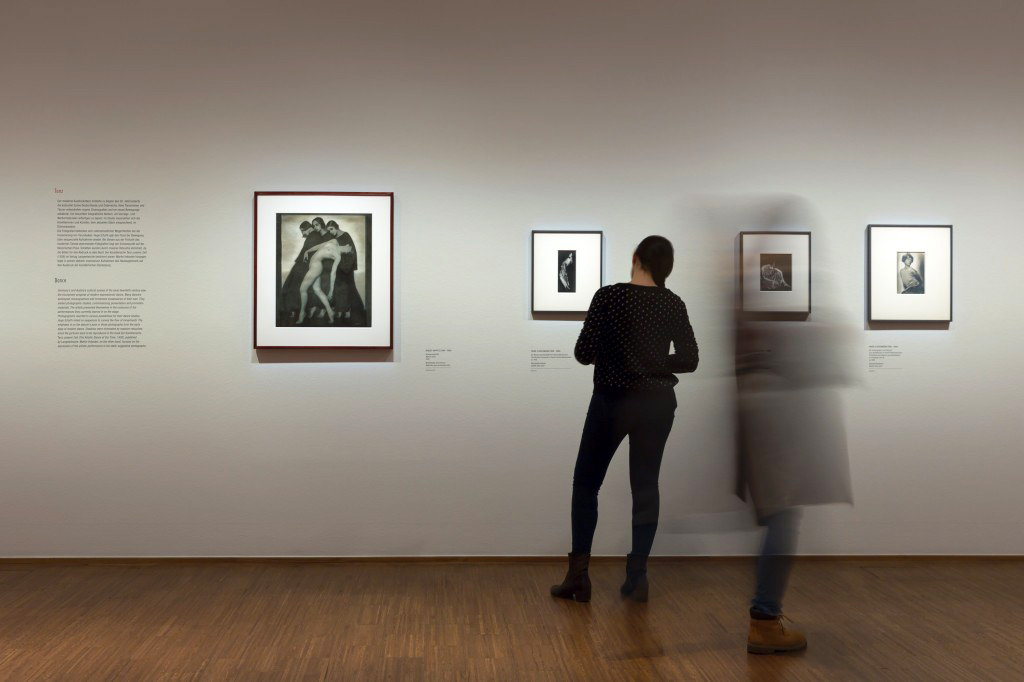
In the above image at left, Rudolph Koppitz’s Bewegungsstudie (Motion Study) 1926
In the above image at centre, Rudolph Koppitz’s In the Arms of Nature [self-portrait] 1923
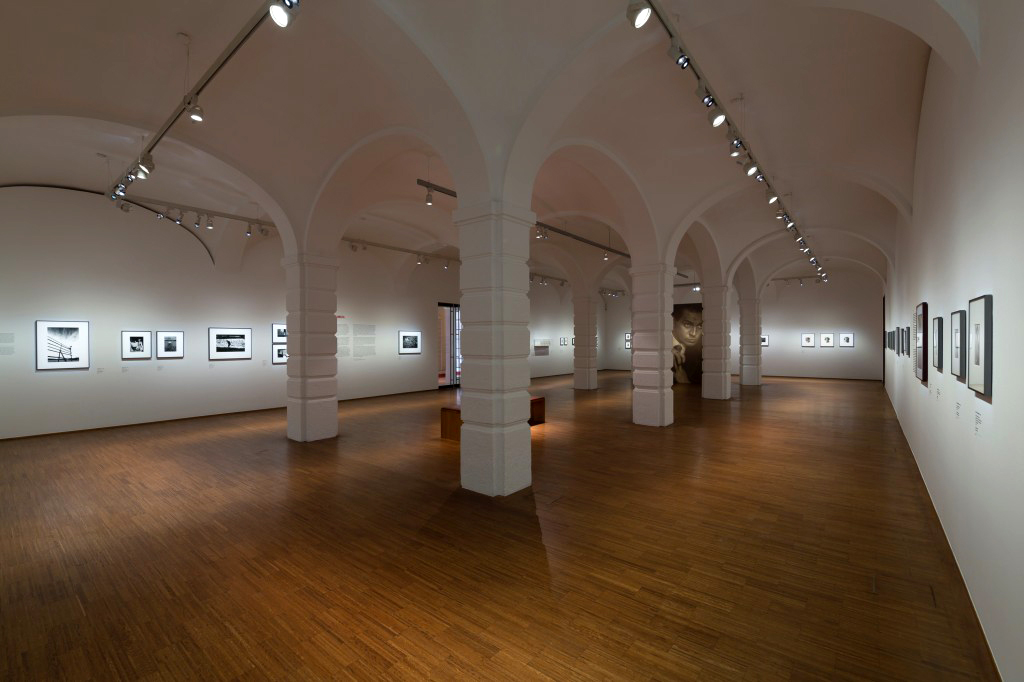
In the above image at left and centre, the work of Jan Coplans
In the above image, Erwin Wurm’s One Minute Sculptures at right
Installation views of the exhibition Acting for the Camera at the Albertina, Vienna, March – June 2017
With circa 120 works from the Albertina’s Photographic Collection, the exhibition Acting for the Camera examines the diverse ways in which models are staged or stage themselves before the camera. The featured photographic works, created between the 1850s and the present, represent a cross-section of photographic history as well as the diversity of the Albertina’s own holdings. The present selection is divided between six thematic emphases: motion studies, models for artists, dance, picture stories, portraits of actresses and actors, and Viennese Actionist stagings of the body.
All of these photographs arose from diverse and multi-layered forms of collaboration between the model before and the photographer behind the camera lens. Some of the models are staged according to their photographers’ instructions, while other shots originated via a creative process in which model and photographer collaborated on an equal footing. And in some cases, the pictures were even taken according to highly specific instructions given by the model.
Beginnings
It was photographic studies done in the interest of scientific research that made it possible for the first time to visually analyse the processes of human locomotion in high detail. Anonymous models, such as in the photographs taken by Ottomar Anschütz beginning around 1890, made themselves available in order to render understandable processes such as spear-throwing. The individuals seen in such works act according to the exact instructions of the photographer. Series of this type were used to compare the motion patterns of “healthy” and “unhealthy” bodies as well as undergird medical theories with visual evidence.
While such motion studies occasionally doubled as working studies for artworks by other artists, there was also a category of works created specifically for this purpose such as Johann Victor Krämer’s staged studio photographs as well as Otto Schmidt’s nudes, and some of these were also sold “under the table” as pornography.
Expressive Gestures
A strong and likewise mutually influential relationship arose between photography and dance. At the beginning of the 20th century, modern expressionist dance was an avant-garde art form, and dancers would work together closely with photographers in order to document and disseminate their performances. Such partnerships made possible expressive stagings that helped define the styles of that era. The expressive gestures often seen therein were also taken up by Anton Josef Trčka, who had Egon Schiele pose with a hand position reminiscent of something one might see in dance.
Portraits of well-known actors such as a laughing Romy Schneider, along with role-portraits for film productions, were created in Viennese studios by photographers such as Trude Fleischmann and Madame d’Ora, and these iconic pictures represent yet another emphasis in this presentation.
Bodies as Photographic Material
Much like the way in which classic portraits convey the personalities of those being portrayed, photography can also stage the body in the opposite way, as something purely material. Helmar Lerski, for example, treated the human face as a landscape that could be modelled by light and shadow. John Coplans, on the other hand, explored his own naked body centimetre by centimetre, portraying himself without his head and thus questioning stagings of masculinity and social norms.
In Viennese Actionism, the artists likewise placed themselves front and centre as pictorial subjects. Rudolf Schwarzkogler, who wrapped himself like a mummy in muslin bandages during the late 1960s, as well as his Actionist colleague Günter Brus, staged performances specifically for the photographic camera. And the newest works in Acting for the Camera are as recent as Erwin Wurm’s One Minute Sculptures, for which the artist had models assume ridiculous poses with everyday objects.
Following Black & White (2015) and Landscapes & People (2016), this is the third large-scale presentation of the Albertina’s Photographic Collection. The Albertina, as a treasure trove of visual knowledge, began collecting photographs all the way back in the mid-19th century – but it was only upon the establishment of the Photographic Collection in 1999 that these fascinating works were rediscovered.
… In 1915 Lerski returned to Europe and started a career in cinematography. For over ten years, he worked as a cameraman, lighting technician and expert on special effects for numerous expressionistic silent films in Berlin, among others Fritz Lang’s “Metropolis” (1925/26). At the end of the 1920s, he turned his attention once again to portrait photography and took part in the avant-garde movement that was trying to effect radical changes in the language of the photographic image. At the legendary Werkbund exhibition “Film und Foto” (1929), at which the New Photography made its greatest appearance at first in Stuttgart and subsequently in Zurich, Lerski – who had in the meantime become the best-known portrait photographer of his time – was well represented with 15 photographs.
But Lerski’s pictures were only partly in line with the maxims of the New Photography, and they questioned the validity of pure objectivity. The distinguishing characteristics of his portraits included a theatrical-expressionistic, sometimes dramatic use of lighting inspired by the silent film. Although his close-up photographs captured the essential features of a face – eyes, nose and mouth –, his primary concern was not individual appearance or superficial likeness but the deeper inner potential: he emphasised the changeability, the different faces of an individual. Lerski, who sympathised with the political left wing, thereby infiltrated the photography of types that was practised (and not infrequently misused for racist purposes) by many of Lerski’s contemporaries.
In his book “Köpfe des Alltags” (1931), a milestone in the history of photographic books, Lerski clearly expressed his convictions: he showed portraits of anonymous people from the underclass of the Berlin society, presenting them as theatrical figures so that professional titles such as “chamber maid”, “beggar” or “textile worker” appeared as arbitrarily applied roles. Thus his photographs may be interpreted as an important opposite standpoint to the work of August Sander, who was at the same time working on his project “Menschen des 20. Jahrhunderts” – that large-scale attempt at a social localisation of various representatives of the Weimar society.
But Helmar Lerski’s attitude was at its most radical in his work entitled “Metamorphosis”. This was completed within a few months at the beginning of 1936 in Palestine, to where Lerski and his second wife Anneliese had immigrated in 1932. In “Verwandlungen durch Licht” (this is the second title for this work), Lerski carried his theatrical talent to extremes. With the help of up to 16 mirrors and filters, he directed the natural light of the sun in constant new variations and refractions onto his model, the Bernese-born, at the time out-of-work structural draughtsman and light athlete Leo Uschatz. Thus he achieved, in a series of over 140 close-ups “hundreds of different faces, including that of a hero, a prophet, a peasant, a dying soldier, an old woman and a monk from one single original face” (Siegfried Kracauer). According to Lerski, these pictures were intended to provide proof “that the lens does not have to be objective, that the photographer can, with the help of light, work freely, characterise freely, according to his inner face.” Contrary to the conventional idea of the portrait as an expression of human identity, Lerski used the human face as a projection surface for the figures of his imagination. We are only just becoming aware of the modernity of this provocative series of photographs.
Peter Pfrunder. “Helmar Lerski: Metamorphosis,” on the Fotostiftung Schweiz 2005 [Online] Cited 17/12/2021. No longer available online
Wall texts
Motion Studies
Photographs taken in the context of scientific experimental arrangements visualise the different phases of human and animal locomotion sequences. Several cameras are mounted one after another, their shutters release at short intervals while the model is moving. Shortly after Eadweard Muybridge, who makes a name for himself with motion studies of racehorses in 1877, achieves his first successes, the physician Étienne-Jules Marey and the photographers Ottomar Anschütz and Albert Londe also dedicate themselves to capturing movement sequences photographically. Londe works with Jean-Martin Charcot, a neurologist at the Pitié-Salpêtrière psychiatric hospital in Paris. Anonymous models have to perform certain movements defined by the scientists. The photographs are used to compare the movement patterns of “healthy” and”unhealthy” people and to provide visual evidence for medical theories. Artists interested in the anatomically correct representation of movements use the photographs as models.
Models for Artists
Photographs are used as a workaround in the fine arts quite early on; special collections are compiled. Photographs of models in motion, for example, come to replace preparatory drawings after nature. The expanding demand for photographic material creates a new market for professional studios. The Viennese photographer and publisher Otto Schmidt produces body and facial expression studies as well as nudes (so-called academies). Since these photographs, thanks to their erotic pictorial repertoire, enjoy great popularity not only with artists, Schmidt’s circle of customers keeps growing.
The reduction in price and the easier handling of the photographic material increases the number of artists that take up a camera themselves. The painter Johann Victor Krämer has his models pose in front of half-finished paintings to check or complete their posture and gestures. Grids drawn on the photographs sometimes help to transfer subjects to the canvas.
Dance
Germany’s and Austria’s cultural scenes of the early twentieth century see the triumphant progress of modern expressionist dance. Many dancers develop choreographies and movement vocabularies of their own. They visit photographic studios, commissioning presentation and promotion materials. The artists present themselves in the costumes of the performances they currently star in on the stage.
Photographers resort to various possibilities for their dance studies. Hugo Erfurth relies on sequences to convey the flow of movements. The emphasis is on the dancer’s pose in these photographs from the early days of modern dance. Shadows are eliminated by massive retouches, since the pictures were to be reproduced in the book Der Künstlerische Tanz unserer Zeit (The Artistic Dance of Our Time, 1928), published by Langewiesche. Martin Imboden, on the other hand, focuses on the expression of the artistic performance in his static suggestive photographs.
Picture Stories
Restaging paintings and other works of art is a favourite pastime of the upper middle classes and the aristocracy in the nineteenth century. Costumed amateur actors adopting rigid poses for a few moments present the “living pictures” at certain events. The emergence of photography makes it possible to reenact these fleeting performances in the studio and to preserve them for the long term. The theatrical group photos are sold as editions on the art market or used as models to emulate.
Henry Peach Robinson is one of those who devote themselves to staging photographs in a way that lean on the tradition of tableaux vivants. Brassaï’s and Bill Brandt’s photo reportages, which seem to document nocturnal scenes the photographers chanced upon, are actually staged for the occasion. Brandt, for example, has members of his family embody precisely conceived parts in his mysteriously toned series A Night in London. The American O. Winston Link, who shows a penchant for steam engines, plans his pictures in every detail. Relying on an elaborate flash technique and the use of spotlights, his photographs, taken in the open and by night, exhibit a filmic aesthetic.
Portraits of Actresses and Actors
In Vienna, Madame d’Ora, Franz Xaver Setzer, and Trude Fleischmann specialise in portraits of performing artists from the 1910s to the 1930s. They not only catered to the public’s great demand; focusing on the cultural scene’s clientele also ties in with the personal interest of the studios’ owners. The models collaborate with the photographers to realise the desired notions regarding their appearance and the interpretation of their look. Stars from the theatre world choose the costume, make-up, and pose they prefer for their photographic portraits. Some of the character portraits and scenic representations show sweepingly theatrical gestures. Film actresses and actors are only rarely captured in traditional character portraits in the early days of the medium. Setzer’s portrait of Conrad Veidt, who stars in The Cabinet of Dr. Caligari in 1919, is an exception. The lighting and styling as well as his facial expression and the expressive gesture of his hand mirror the film’s Expressionism.
Actionist Stagings of the Body
The Actionist art gaining momentum from the 1960s on shows itself inseparably bound up with photography. Next to film, photography is the only way to provide live documentations of performances. Some actions are specifically staged for the photo camera. From about the mid-1960s on, the Viennese Actionist artists Günter Brus and Rudolf Schwarzkogler realise constellations of bodies and objects for photographs that are intended as visual works of art.
Arnulf Rainer, whose grimaces, like the Vienna Actionists’s works, are aimed at criticising the socially standardised body, also poses for a photographer. The photographer was not supposed to pursue an artistic approach of his own but to neutrally capture the given representations of the body. After the pictures were taken, Rainer defines the final image area and overpaints the photos by relying on gestural techniques that emphasise physical and emotional moments of expression.
John Coplans combines observations on the representation of the body with reflections on the nature of media. Using a straightforward and precise exposure technique and keen on obtaining sharp pictures, he confronts the viewer with defamiliarised views of his body transforming it into sculptural fragments. The humorous and absurd poses in which models present themselves for Erwin Wurm’s One Minute Sculptures with the help of everyday objects are often based on drawn studies and are captured in factual photographs lending the ephemeral performances durability.
Rudolf Schwarzkogler (Austrian, 1940-1969) 2nd Action 1965 Gelatin Silver Print
Rudolf Schwarzkogler (Austrian, 1940-1969) 3rd Action 1965 Gelatin Silver Print
Rudolf Schwarzkogler (Austrian, 1940-1969) 4th Action 1965 Gelatin Silver Print
Rudolf Schwarzkogler (13 November 1940, Vienna – 20 June 1969, Vienna) was an Austrian performance artist closely associated with the Viennese Actionism group that included artists Günter Brus, Otto Mühl, and Hermann Nitsch.
He is best known today for photographs depicting his series of closely controlled “Aktionen” featuring such iconography as a dead fish, a dead chicken, bare light bulbs, coloured liquids, bound objects, and a man wrapped in gauze. The enduring themes of Schwarzkogler’s works involved experience of pain and mutilation, often in an incongruous clinical context, such as 3rd Aktion (1965) in which a patient’s head swathed in bandages is being pierced by what appears to be a corkscrew, producing a bloodstain under the bandages. They reflect a message of despair at the disappointments and hurtfulness of the world.
Schwarzkogler devoted himself entirely to free art from 1965 and quit his job. He started out with horse betting and was interested in winning systems. In 1968 he took part in film projects. In 1969, he died after falling from the window of his apartment. He was buried at the Vienna Central Cemetery.
Seiichi Furuya (古屋 誠一, Furuya Seiichi, born 1950) in Izu, Shizuoka is a Japanese photographer.
As a student Furuya studied architecture and then spent two years at Tokyo College of Photography. In 1973 he left his studies and his native Japan and traveled, ending up, according to Arthur Ollman in his book, The Model Wife, “a man in exile. He wears alienation like an obligation.” In Austria where he lived since 1982 he met and married Christine Gössler. From 1984 to 1987 he lived in East Berlin and worked as translator. Christine was to become the primary subject of his photography until her suicide in 1985. His last pictures of her are of her shoes, neatly placed by the window she had just jumped out of, and her body, shot from the same window, on the ground, nine stories below.
“The other person is absent as a point of reference but present as an addressee. This strangely warped situation causes an unbearable presence: You are gone (which I lament); you are here (because I am turning to you).”
~ Roland Barthes, A Lover’s Discourse
“If you consider the taking of photographs to be in a sense a matter of fixing time and space, then this work – the documenting of the life of one human being – is exceptionally thrilling… in facing her, in photographing her, and looking at her in photographs, I also see and discover “myself.””
~ Seiichi Furuya, 1979
Seiichi Furuya and Christine Gössler would soon marry, and they would later have a child, Komyo. Throughout their seven years together, Christine would plunge in and out of depressions and psychiatric institutions. And one Sunday in October of 1985, she would jump to her death from the 9th floor of their apartment building in East Berlin. Furuya photographed her throughout, to the very end. And this faithful and macabre portrait making would become his artistic and philosophical project.
Stacey Platt. “The Art of Losing Love, pt.2: Seiichi Furuya and Christine Gössler,” on the space in between website October 28, 2004 [Online] Cited 17/12/2021. No longer available online
Erwin Wurm (Austrian, b. 1954) One Minute Sculpture 1997 Silver dye bleach print Albertina, Vienna
Erwin Wurm (born 1954) is an Austrian artist born in Bruck an der Mur, Styria, Austria. He lives and works in Vienna and Limberg, Austria. …
Since the late 1980s, he has developed an ongoing series of One Minute Sculptures, in which he poses himself or his models in unexpected relationships with everyday objects close at hand, prompting the viewer to question the very definition of sculpture. He seeks to use the “shortest path” in creating a sculpture – a clear and fast, sometimes humorous, form of expression. As the sculptures are fleeting and meant to be spontaneous and temporary, the images are only captured in photos or on film.
To make a One Minute Sculpture, the viewer has to part with his habits. Wurm’s instructions for his audience are written by hand in a cartoon-like style. Either Wurm himself or a volunteer follow the instructions for the sculpture, which is meant to put the body in an absurd and ridiculous-looking relationship with everyday objects. Whoever chooses to do one of Wurm’s One Minute Sculptures holds the pose for a minute, or the time it takes to capture the scene photographically. These positions are often difficult to hold; although a minute is very short, a minute for a One Minute Sculpture can feel like an eternity.
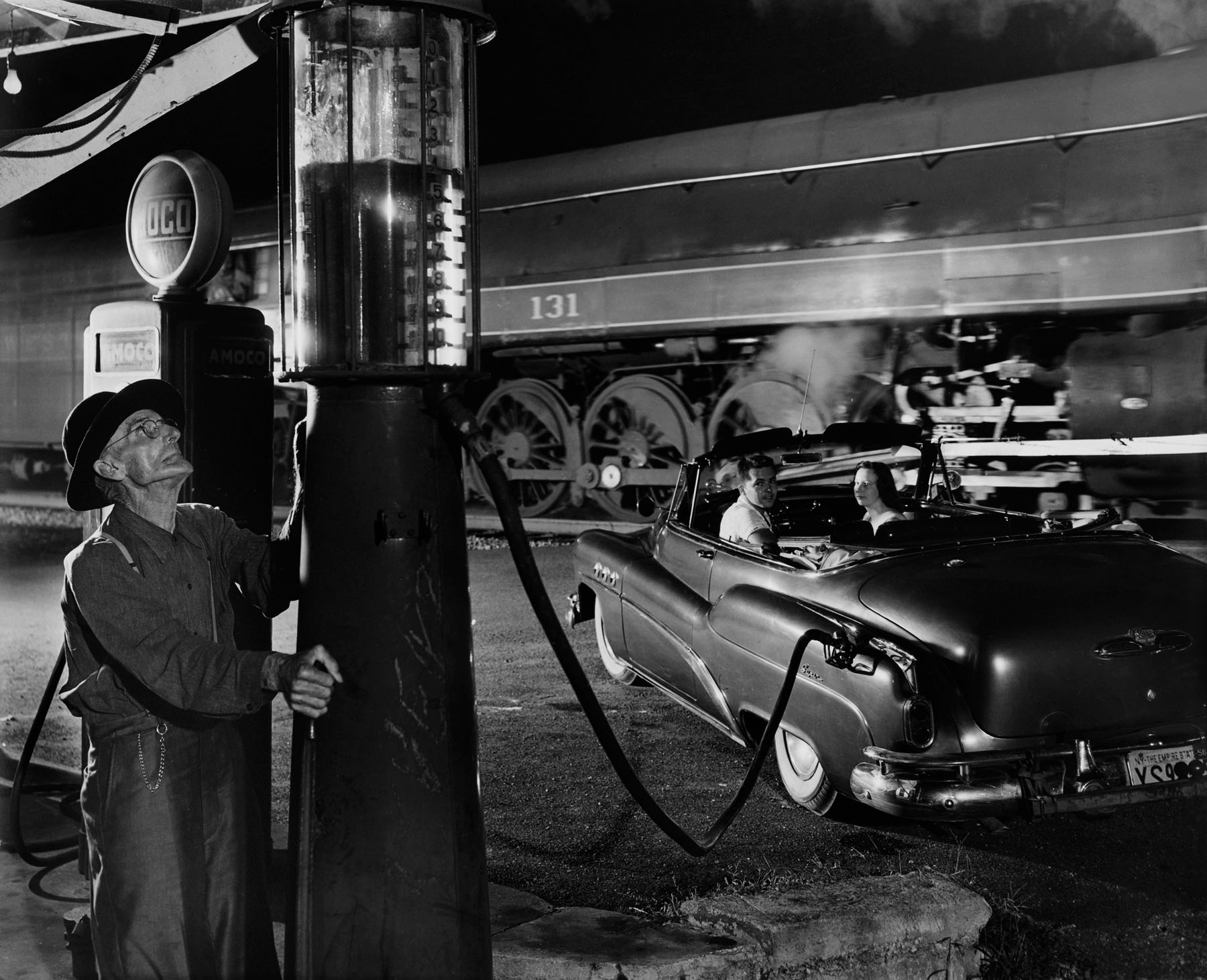
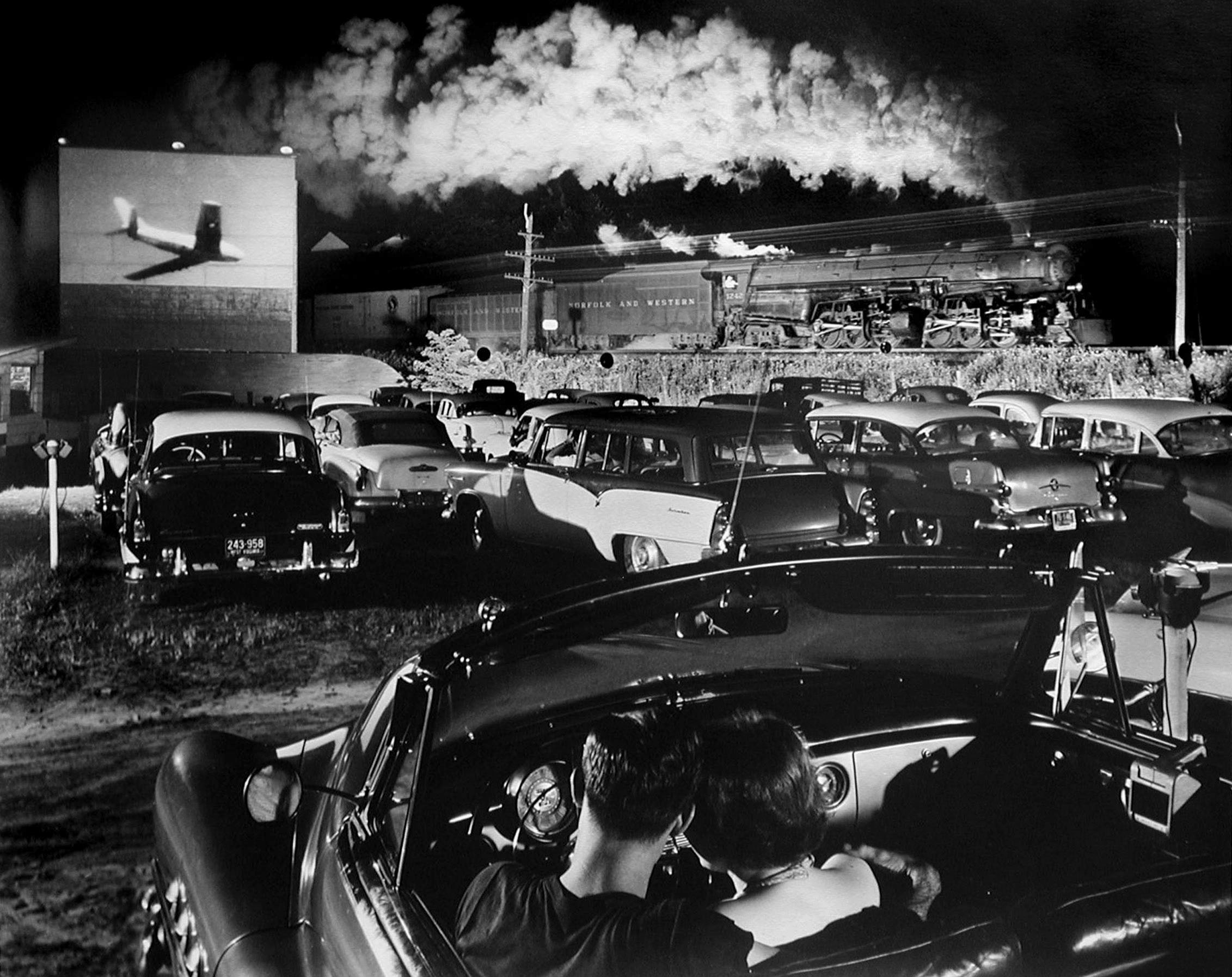
Link pasted the plane into the negative at a later stage
I have to admit to a very large amount of admiration for this photographer. He is brilliant, simply the best photographer of trains and their cultural surrounds that the world has ever seen. He persevered within his photographic projects through thick and thin. I feel a special affinity toward this man as I love trains, planes, ships and trucks (although I am yet to use trains in my work).
As with all great photographers he pursued his goals with passion, a unique eye and the ability to produce a ‘signature’ photograph that could only be his. His photographs are timeless remembrances of the history and culture of the era. The above image combines all the elements of 1950s America – the drive in, the couple, the speed, the convertible car, night and the ambiguous slightly sinister rocket like plane. Planes, trains and automobiles are the stuff of legend for me, a child of the 1950s. The lighting of the train is incredible, with rows of flash set off at just the right moment. The precision and skill to do this and the resulting tableaux have few equals. When I first saw this image I was amazed and still am today!
O. Winston Link had a deep respect for the people and machines he was photographing – capturing a vanishing world before it all but disappeared. Thank god there was someone with vision and foresight to accomplish this task so that these incredible and indelible images will forever transcend the time in which they were taken, to give joy to the people that look at them.
Dr Marcus Bunyan
Many thankx to the George Eastman Museum for allowing me to publish the photographs in the posting. Please click on the photographs for a larger version of the image.
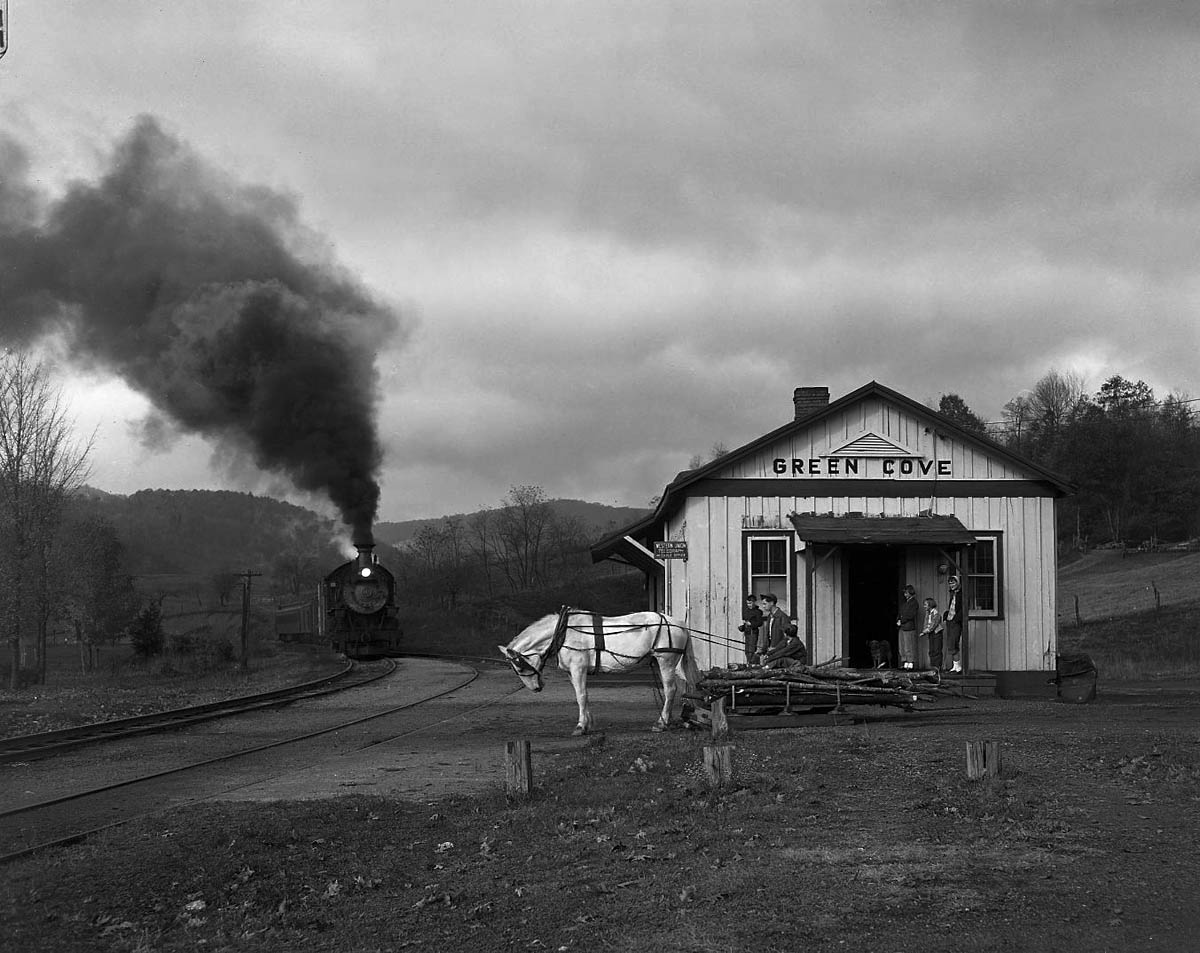
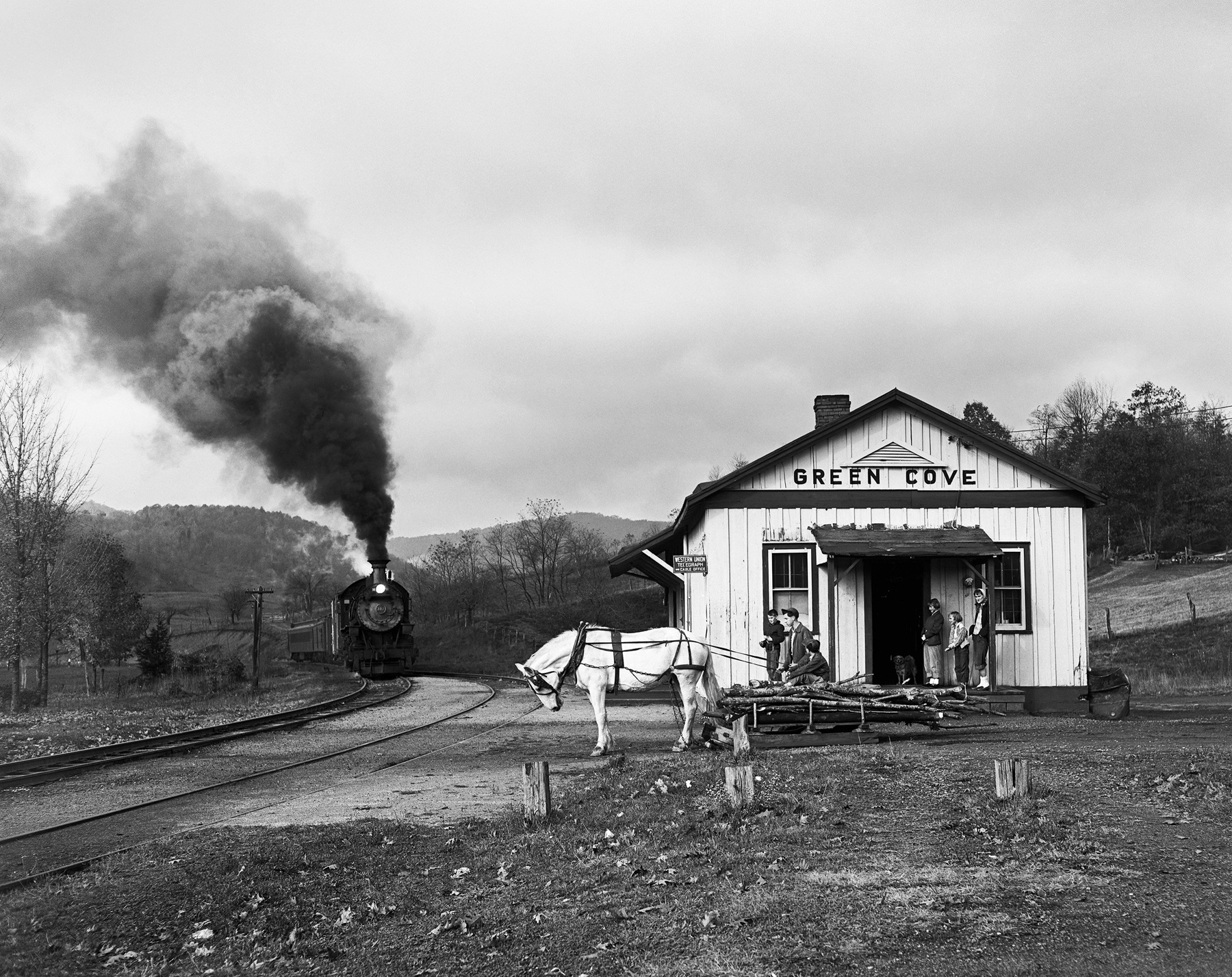
The Abingdon Branch of the N&W led Link to another approach in his documentation of the railroad. Since the trains did not run at night, all of the images had to be made in daylight, making this branch the source of many of his genre scenes and colour images. The branch was short but steep, including the highest point of any passenger train in the east. With top speeds of 25 mph, it earned the nickname “Virginia Creeper.”
Link found the slow pace and setting the most bucolic of the entire N&W system. He wrote, “There was beauty at every curve and every bridge.” The line crept by cascading waterways and across high wooden trestles. Although the entire branch was abandoned in 1978, the railbed has since become a hiking trail, with Green Cove the only station remaining and restored to the look of this photograph.
Ogle Winston Link, known commonly as O. Winston Link, has been revered by many as the most important railroad photographer of all time. He is best known for his black-and-white photography and sound recordings of the last days of steam locomotive railroading in the United States in the late 1950s. A true American master, Link produced night-time photographs of the railroad over a five-year period that ended when the last steam locomotive of the Norfolk & Western Railway was taken out of service in May 1960.
This exhibition features more than 100 framed photographs as well as Link’s actual photographic and lighting equipment, plus his personal notebooks detailing set-ups, formulas, and exposure details.











![Dora Kallmus (Madame d'Ora) (Austrian, 1881-1963), Arthur Benda (German, 1885-1969) 'Anita Berber and Sebastian Droste in their dance Märtyrer [Martyrs]' 1922](https://artblart.com/wp-content/uploads/2017/04/dora-kallmus-arthur-benda-anita-berber-and-sebastian-droste-web.jpg "Dora Kallmus (Madame d'Ora) (Austrian, 1881-1963), Arthur Benda (German, 1885-1969) 'Anita Berber and Sebastian Droste in their dance Märtyrer [Martyrs]' 1922")


![Installation view of the exhibition 'Acting for the Camera' at the Albertina, Vienna, March - June 2017 showing at centre, Rudolph Koppitz's 'In the Arms of Nature [self-portrait]' 1923](https://artblart.com/wp-content/uploads/2017/04/install-c.jpg "Installation view of the exhibition 'Acting for the Camera' at the Albertina, Vienna, March - June 2017 showing at centre, Rudolph Koppitz's 'In the Arms of Nature [self-portrait]' 1923")





 Art Blart _ art and cultural memory archive
You must be logged in to post a comment.