Exhibition: ‘Paul Strand: The Balance of Forces’ at Fondation Henri Cartier-Bresson, Paris

Exhibition dates: 14th February – 23rd April, 2023
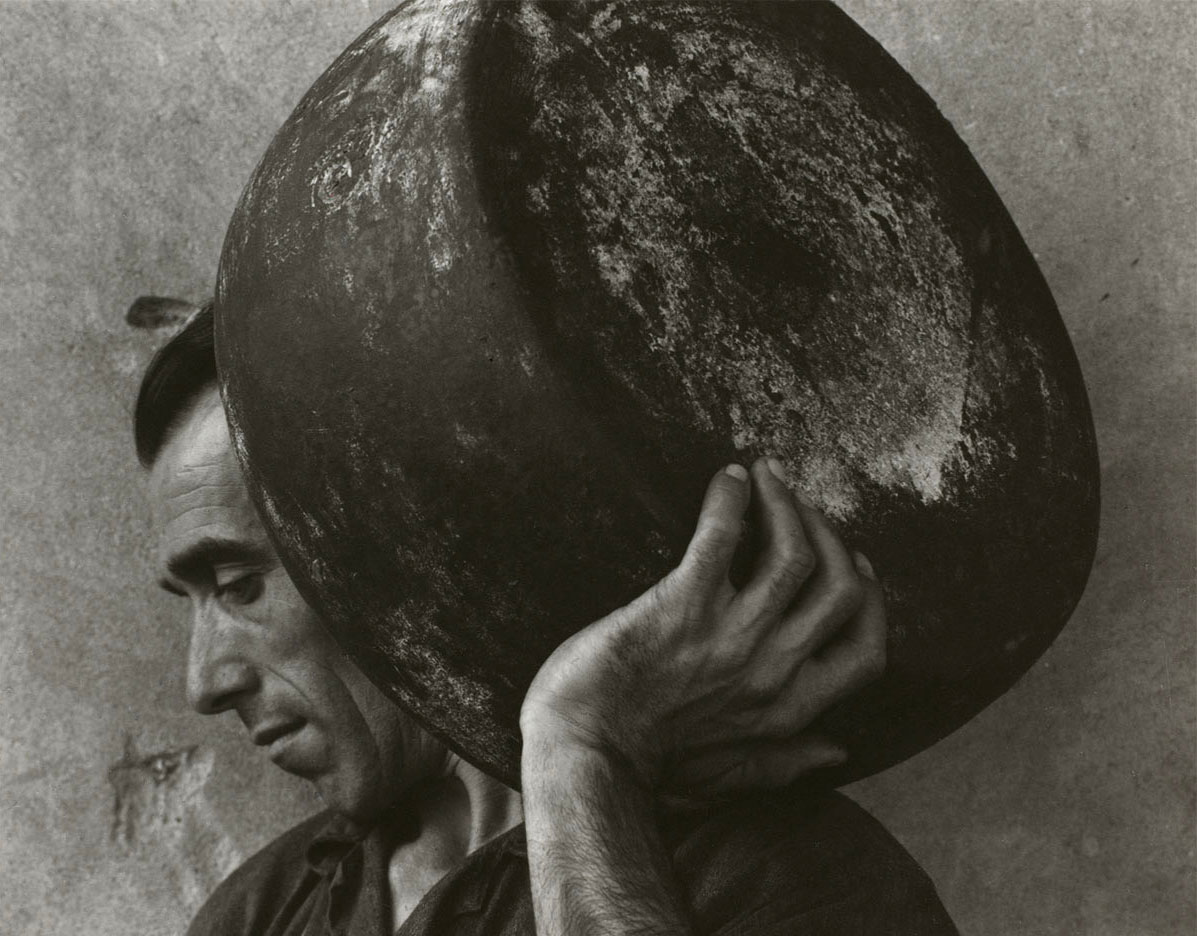
 

Paul Strand (American, 1890-1976) 'Parmesan, Luzzara
' 1953 from the exhibition 'Paul Strand: The Balance of Forces' at Fondation Henri Cartier-Bresson, Paris, February - April, 2023


Paul Strand (American, 1890-1976)
Parmesan, Luzzara

1953
Gelatin silver print
© Aperture Foundation Inc., Paul Strand Archive. Fundación MAPFRE Collections


Balance of forces

Look at the “colour” of the Parmesan cheese in Strand’s photograph Parmesan, Luzzara
 (1953, above). If we think of Ansel Adam’s ‘Zone System’ (the 11 zones in the system from 0-10) where pure black is Zone 0, mid grey (the colour of a Kodak Grey Card) is Zone 5 and pure white is Zone 10… then in “real life” the colour of the wheel of Parmesan would fall in about Zone 5. But what does Strand do? He places the “colour” of the Parmesan wheel in Zone 2-3, much darker than in real life.

In Strand’s “continuous search for a photographic formalism” – that is, the most important aspect of the photograph being its form, the way it is made and its purely visual aspects rather than its narrative content or its relationship to the visible world – then we would ignore Strand’s moving zones, his dark, brooding cheese.

I think not.

Strand’s formalism does not stand alone, for his photographs breathe the subject he is photographing. They are not just surfaces (which is what formalism is), for the viewer is invited to imbibe (absorb or assimilate (ideas or knowledge)) of the intensity and feeling of the culture and people from which these photographs emerge. Feel the intensity of the gaze of Young Boy, Gondeville, Charente, France (1951, below). Imagine placing yourself in the ethereal space of Tir a’Mhurain, Isle of South Uist, Outer Hebrides (1954, below). Dark cheese.

Strand’s photographs are formal and yet they contain a luminiferous ether/real – transmitting light, but also acting as a medium for the transmission and propagation of spirit.

Dr Marcus Bunyan


Many thankx to the Fondation Henri Cartier-Bresson for allowing me to publish the photographs in the posting. Please click on the photographs for a larger version of the image.


Through each trip, Paul Strand tries to tell the real life of people: humble people, affected by wars, bad weather, diseases, oppressive regimes… The artist highlights those who fight for their freedom, for their happiness. Touching stories, which give all their power to these photographs.

Art and documentary research, social and political involvement and the desire to remain objective: these ambivalences bring great strength to Paul Strand’s work. It is these opposing imperatives that make his photographs so interesting, so exciting for us as viewers.


CĆ©cile D. “Exhibition Paul Strand Or The Balance of Forces, A Journey in Photos at the HCB Foundation,” on the Sotir Paris website February 13, 2023 [Online] Cited 19/03/2023


The Fondation HCB offers a new perspective on the work of American photographer Paul Strand (1890-1976) from the collections of the Fundación MAPFRE, Madrid. While Strand is often celebrated as a pioneer of straight photography, this exhibition also addresses the deeply political dimension of his work.


Interview de ClĆ©ment ChĆ©roux sur l’exposition Paul Strand ou l’Ć©quilibre des forces


Martine Franck (British-Belgian, 1938-2012) 'Paul Strand Photographing the Orgeval Garden' 1974 from the exhibition 'Paul Strand: The Balance of Forces' at Fondation Henri Cartier-Bresson, Paris, February - April, 2023


Martine Franck (British-Belgian, 1938-2012)
Photographer Paul Strand in his garden, Orgeval
1972
Ā© Martine Franck / Magnum Photos


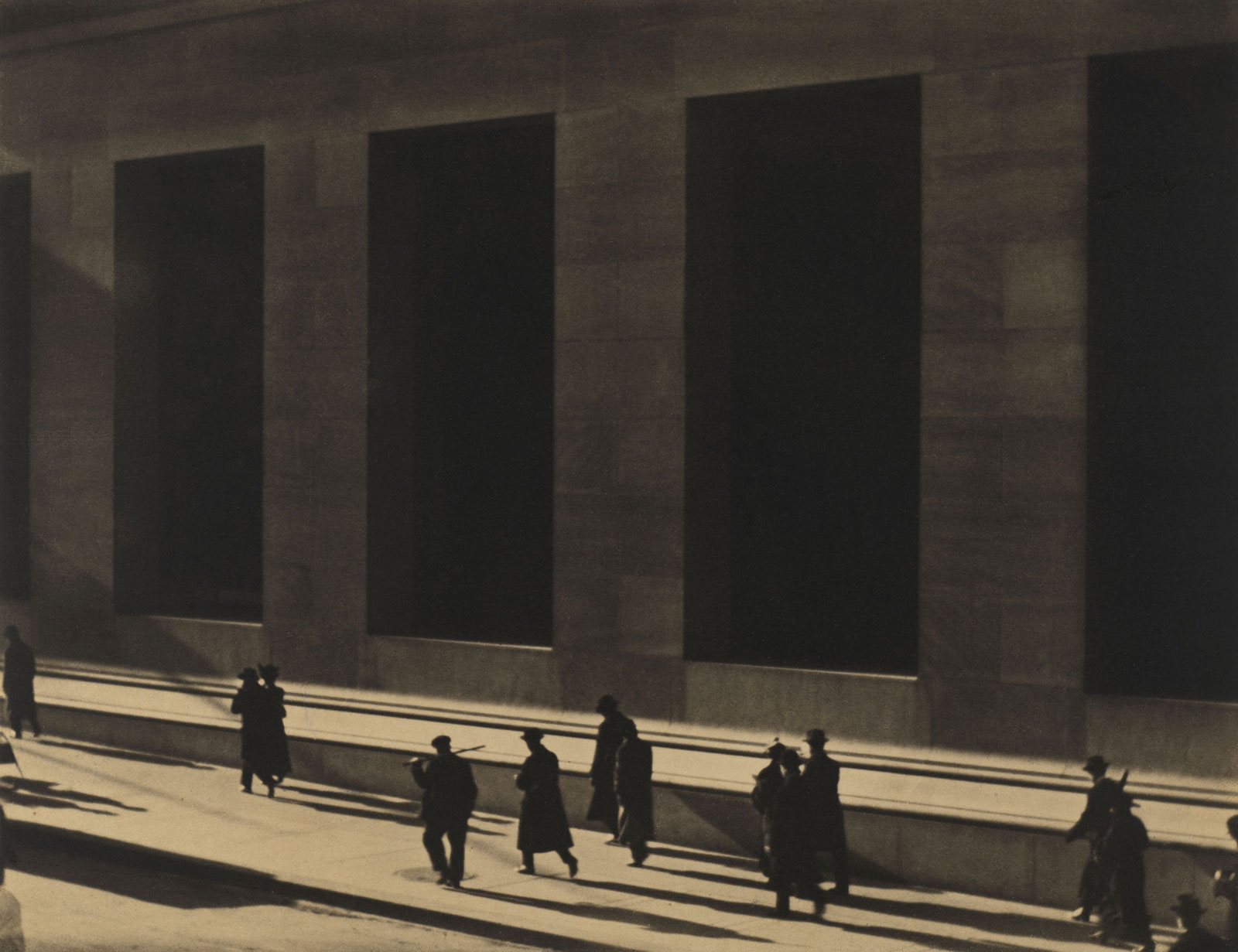
Paul Strand (American, 1890-1976) 'Wall Street, New York' 1915 (negative); 1915 (print) from the exhibition 'Paul Strand: The Balance of Forces' at Fondation Henri Cartier-Bresson, Paris, February - April, 2023


Paul Strand (American, 1890-1976)
Wall Street, New York
1915
Platinum/palladium Print
© Aperture Foundation Inc., Paul Strand Archive. Fundación MAPFRE Collections
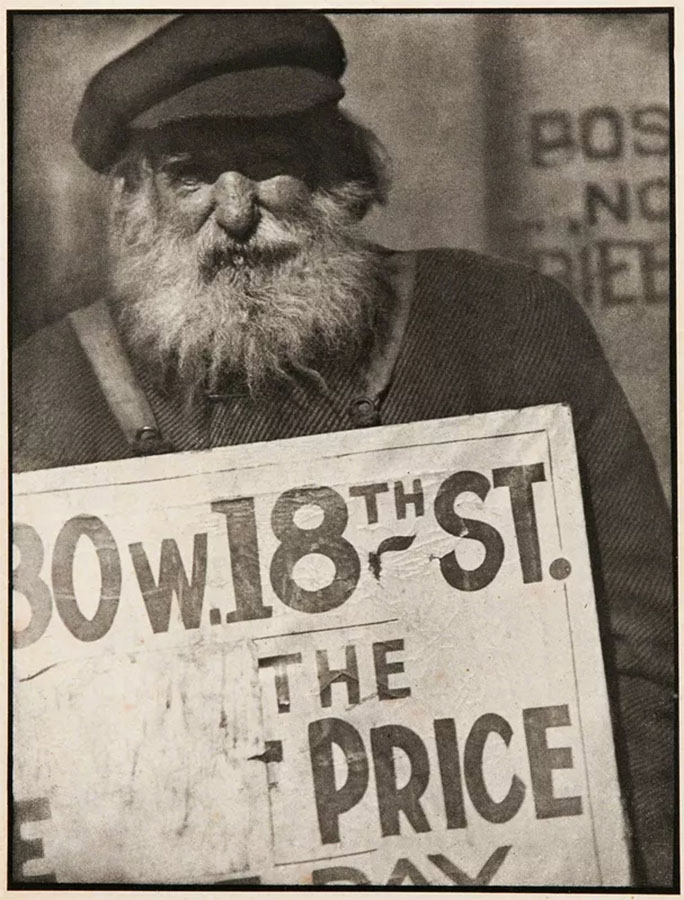
 

Paul Strand (American, 1890-1976) 'Sandwich Man, New York' 1916


Paul Strand (American, 1890-1976)
Sandwich Man, New York
1916
© Aperture Foundation Inc., Paul Strand Archive. Fundación MAPFRE Collections
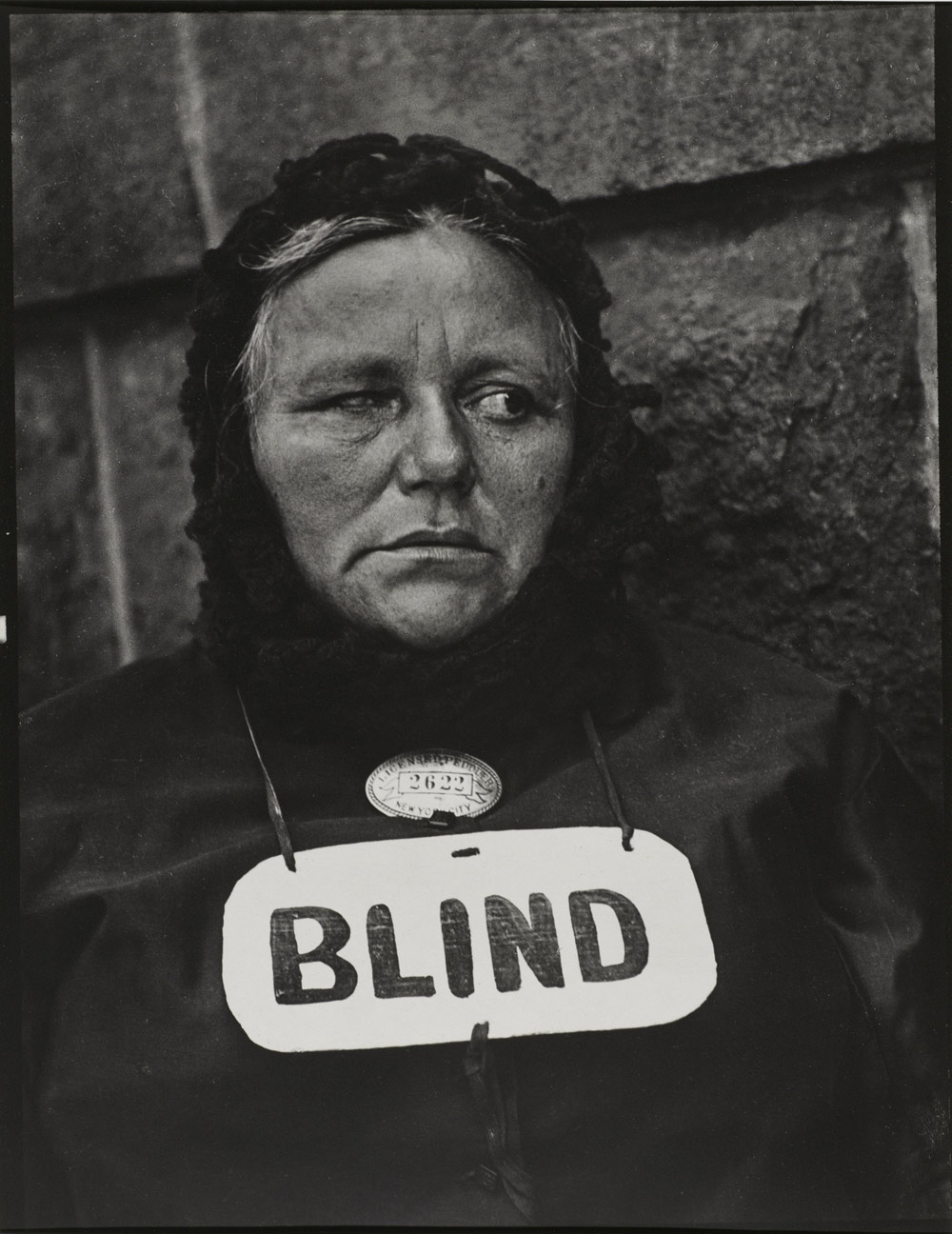
 

Paul Strand (American, 1890-1976) 'Blind Woman, New York' 1916 (negative); 1945 (print)


Paul Strand (American, 1890-1976)
Blind Woman, New York
1916
Gelatin silver print
© Aperture Foundation Inc., Paul Strand Archive. Fundación MAPFRE Collections


In the mid 1910s Paul Strand produced a series of images of New York portraying a truly genuine perspective of the city. Strand, a young photographer at the time, connected with modern art and incorporated some of its tendencies into a series of unprecedented views of the metropolis. Anticipating Straight Photography, he made images that distanced themselves from the precepts of Pictorialism through a direct portrayal of reality.

His photographs rapidly found favourable reception within the pages of Camera Work, the legendary magazine directed by Alfred Stieglitz who dedicated the last two issues of the publication to Strand’s compositions. Almost half of the images that appeared were close-up portraits shot with a rudimentary system that allowed Strand to photograph his subjects without them noticing. These surprising shots offered a lively perspective of the city and focused on some of its figures, who were marginal albeit ubiquitous, and seldom represented. With this attention to the periphery of urban life, Strand manifested his commitment to reality rooted in the example of his mentor Lewis Hine.

Blind Woman is one of the most iconic images in the history of North American photography. Published in 1917 by Stieglitz it combines the compositional strength and sharp clarity characteristic of Strand’s work.

Text from the Fundación MAPFRE Collections website


Paul Strand (American, 1890-1976) 'Abstraction Bowls, Twin Lakes, Connecticut' 1916


Paul Strand (American, 1890-1976)
Abstraction, Bowls, Twin Lakes, Connecticut
1916
Gelatin silver print
22.5 Ɨ 16.5cm
© Aperture Foundation Inc., Paul Strand Archive. Fundación MAPFRE Collections
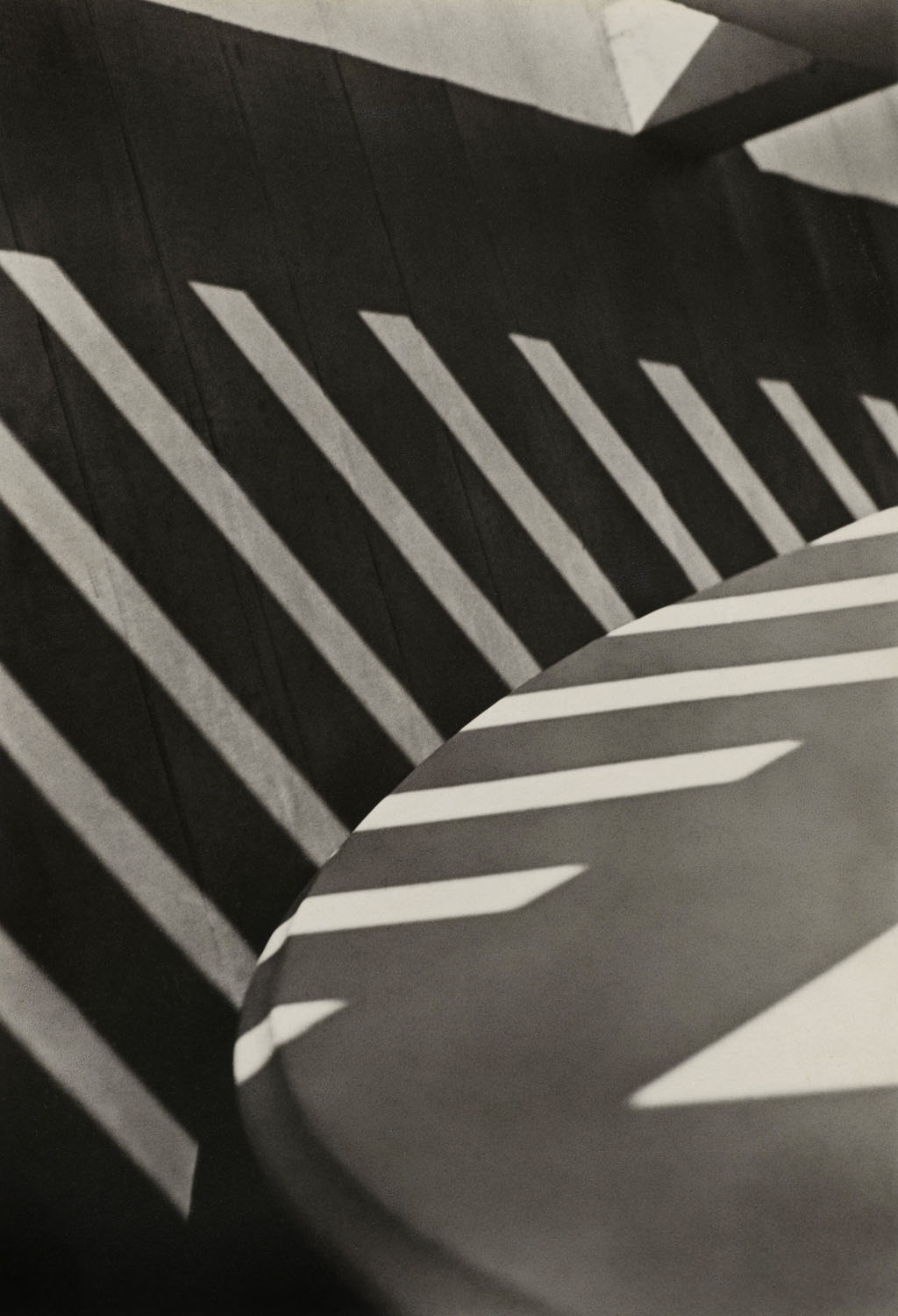
 

Paul Strand (American, 1890-1976) 'Abstraction, Porch Shadows' 1916


Paul Strand (American, 1890-1976)
Abstraction, Porch Shadows
1916
Silver gelatin print
© Aperture Foundation Inc., Paul Strand Archive. Fundación MAPFRE Collections
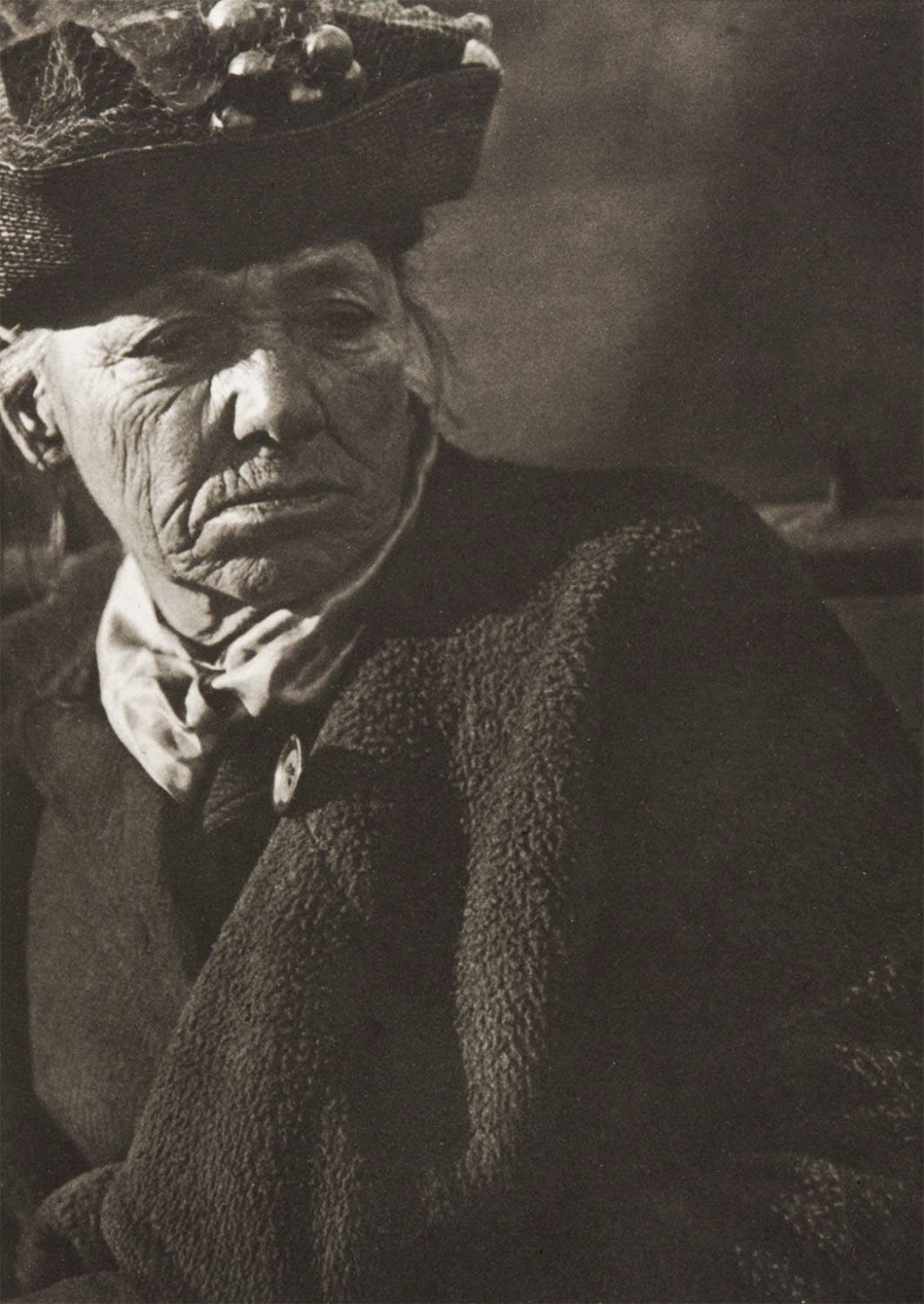
 

Paul Strand (American, 1890-1976) 'Portrait, Washington Square Park, New York' 1916 (negative); 1917 (photogravure)


Paul Strand (American, 1890-1976)
Portrait, Washington Square Park, New York
1916 (negative); 1917 (photogravure)
© Aperture Foundation Inc., Paul Strand Archive. Fundación MAPFRE Collections


The Fondation HCB offers a new perspective on the work of American photographer Paul Strand (1890-1976) from the collections of the Fundación MAPFRE, Madrid. While Strand is often celebrated as a pioneer of straight photography, this exhibition also addresses the deeply political dimension of his work.

“Opposites are cured by opposites,” goes the saying. American photographer Paul Strand (1890-1976) was heir to two great traditions in photography, often presented as opposed. He had a formalist approach that sought to prove photography an art, and a social approach, which saw photography as more of a documentary instrument serving political ends. Perhaps this is explained by the fact that Alfred Stieglitz and Lewis Hine, who occupy the two poles in photography history, were both Strand’s mentors in his formative years.

While in the mid-1910s Strand photographed faces of the people on the streets of New York, the first period of his work is especially marked by formalism. In 1917, when Stieglitz dedicated the latest issue of his famous magazine Camera Work to Strand, it was above all to show that photography had its own artistic language. Starting with a journey to Mexico City (1932-1934), then Moscow (1935), his approach became more political. He joined the American Labor Party and worked with more than twenty organisations classified “anti-American” during the McCarthy era, leading to his departure from the United States for France. Many of Strand’s choices were deliberated through this political conscience: his choice of subject, places he photographed, writers he worked with, the book as main vector for distributing his work.

In the past few decades, numerous exhibitions have been held on Strand focusing on his formalism. By no means minimising this perspective, the current project seeks to recontextualise Strand, emphasising the importance of his political commitments. Between formalist pursuits and social concerns, the two forces at work in his art are brought into balance here. If Strand often stands among the 20th century’s major photographers, it is precisely because he knew how to offer just equilibrium between the two poles.

The exhibition presents almost 120 prints from the collections of the Fundación MAPFRE, Madrid, the film Manhatta made by Paul Strand and Charles Sheeler in 1921 as well as several prints lent by the Centre Pompidou.

Biography

Born in 1890 in New York, Paul Strand entered the New York Ethical Culture School (ECS) in 1907 where he studied under Lewis Hine, who introduced him to the Photo Secession gallery, founded by Alfred Stieglitz at 291 Fifth Avenue. Stieglitz had an important influence on Paul Strand’s work from the beginning. In 1916, his work was published for the first time in Stieglitz’s magazine, Camera Work, of which he was an avid reader, and then exhibited at 291 in the exhibition Photographs from New York and Other Places. During the war, Paul Strand worked as a hospital radiographer and, after his close-ups of machines, began to take an interest in surgical technique. In 1919 he travelled to Nova Scotia in Canada where he photographed his first landscapes and rock piles.

In 1921, Paul Strand made the film Manhatta with the photographer and painter Charles Sheeler. Between 1925 and 1932, various exhibitions of his work were shown in New York galleries. He travelled to Mexico from 1932 to 1934, during which time he had a solo exhibition at the Sala de Arte in Mexico City, was appointed Head of Film and Photography at the Mexican Secretariat of Education, and directed the film The Revolts of Alvarado (Redes) for the Mexican government.

Paul Strand travelled to the USSR in 1935, where he met Sergei Eisenstein. He then joined the Nykino group, around Leo Hurwitz, Ralph Steiner and Lionel Berman. Two years later, he became president of Frontier Film, a non-profit educational film production company, with former Nykino members.

In 1943, Paul Strand returned to photography after more than ten years in the film industry. In 1945, MoMA gave him a solo exhibition. From 1949 to 1957, the photographer undertook several trips to Europe, from which several books were written, and began an exile outside the United States, which coincided with the period of McCarthyism. He settled in Orgeval, France, where he remained until his death in 1976.

Press release from the Fondation HCB


ManhattaĀ (1921) | Paul Strand – Charles Sheeler

In 1920 Paul Strand and artist Charles Sheeler collaborated on Manhatta, a short silent film that presents a day in the life of lower Manhattan. Inspired by Walt Whitman’s book “Leaves of Grass,” the film includes multiple segments that express the character of New York. The sequences display a similar approach to the still photography of both artists. Attracted by the cityscape and its visual design, Strand and Sheeler favoured extreme camera angles to capture New York’s dynamic qualities. Although influenced by Romanticism in its view of the urban environment, Manhatta is considered the first American avant-garde film.
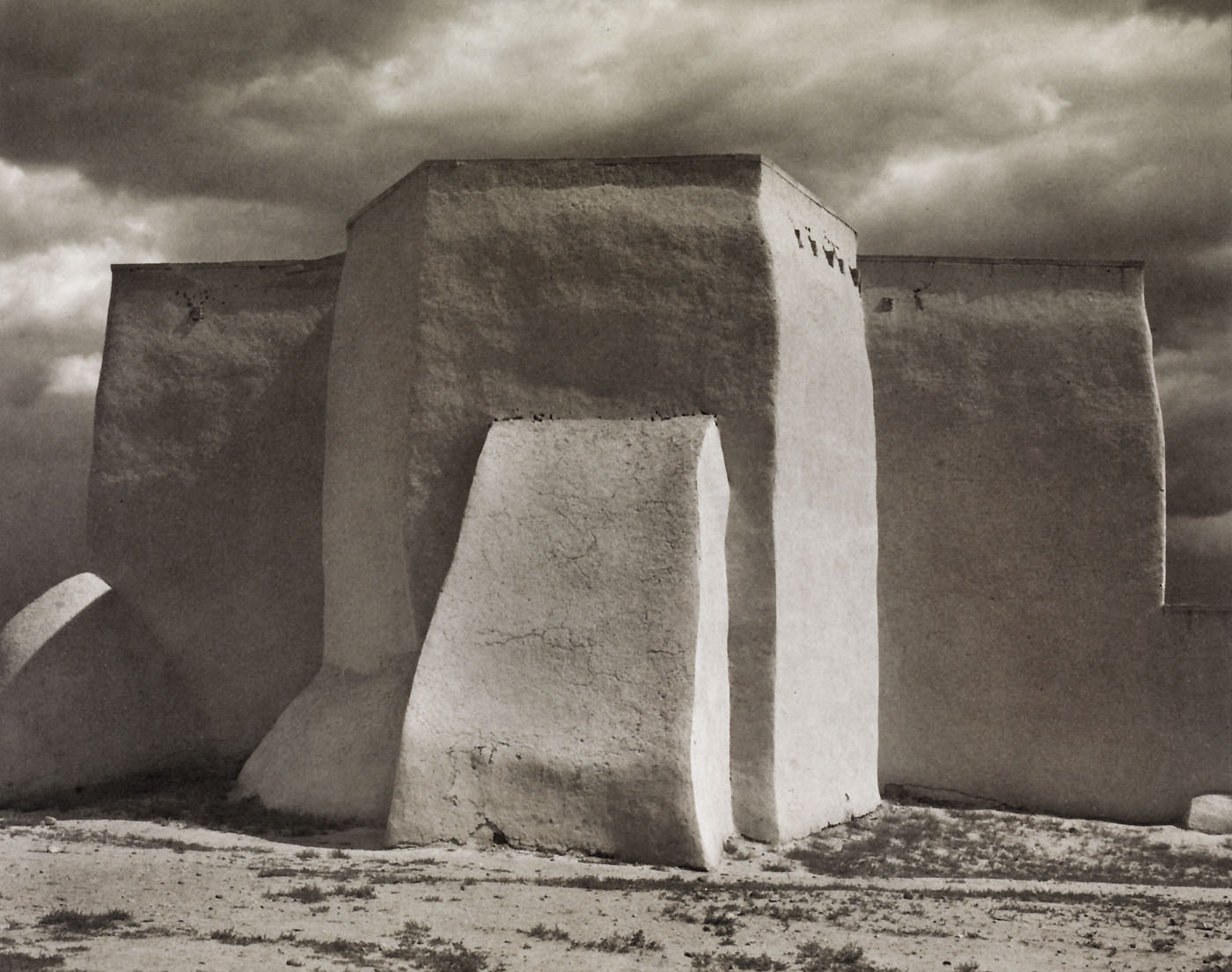
 

Paul Strand (American, 1890-1976) 'St. Francis Church, Ranchos de Taos, New Mexico' 1931


Paul Strand (American, 1890-1976)
St. Francis Church, Ranchos de Taos, New Mexico
1931
Platinum/palladium Print
17.1 Ɨ 21.8cm
© Aperture Foundation Inc., Paul Strand Archive. Fundación MAPFRE Collections
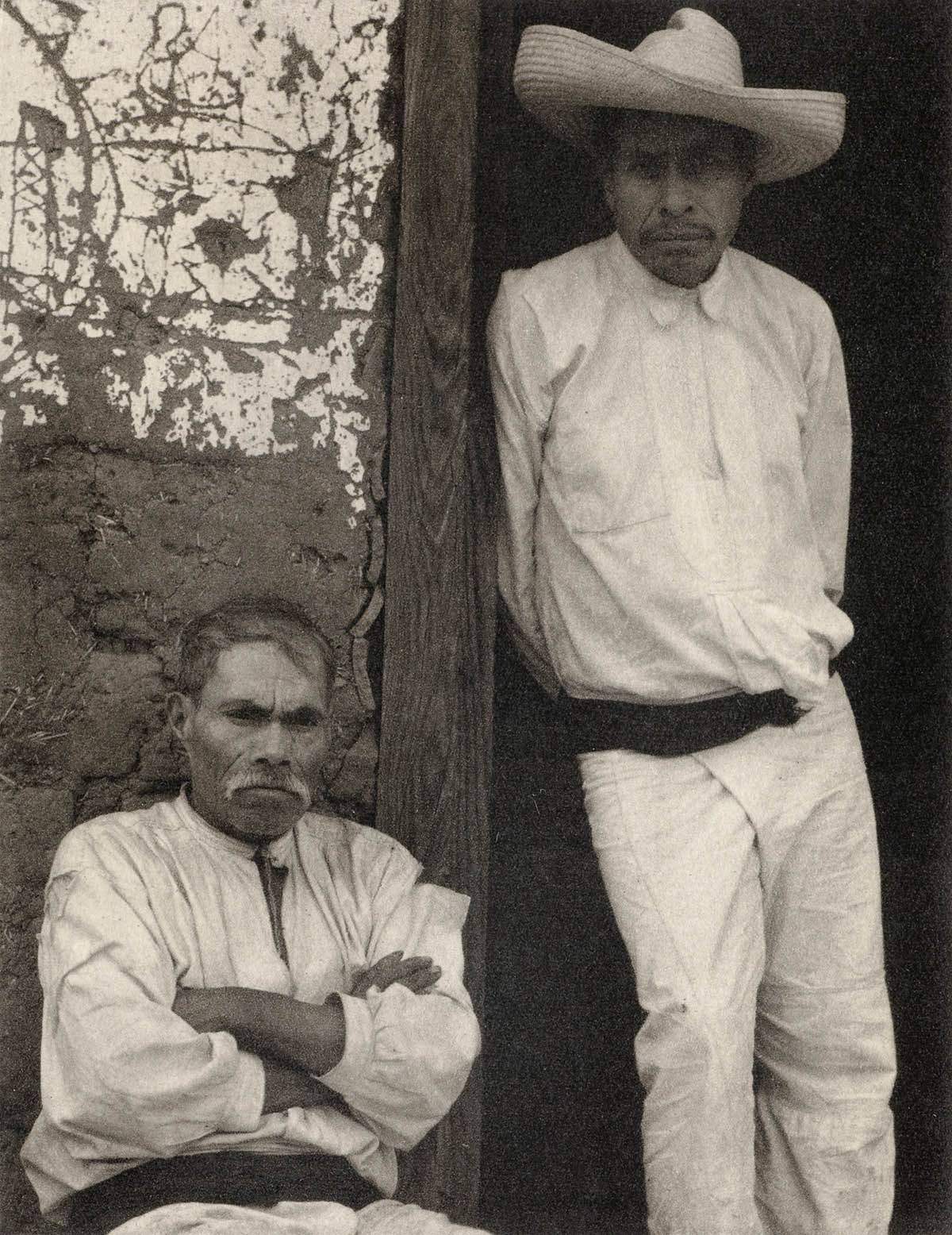
 

Paul Strand (American, 1890-1976) 'Men of Santa Ana, Lake PƔtzcuaro, MichoacƔn' (Hombres de Santa Ana, Lake PƔtzcuaro, MichoacƔ) 1933


Paul Strand (American, 1890-1976)
Men of Santa Ana, Lake PƔtzcuaro, MichoacƔn
1933
Gelatin silver print
© Aperture Foundation Inc., Paul Strand Archive. Fundación MAPFRE Collections


Paul Strand (American, 1890-1976) 'Man with Hoe - Los Remedios' 1933


Paul Strand (American, 1890-1976)
Man with Hoe – Los Remedios
1933
Gelatin silver print
© Aperture Foundation Inc., Paul Strand Archive. Fundación MAPFRE Collections


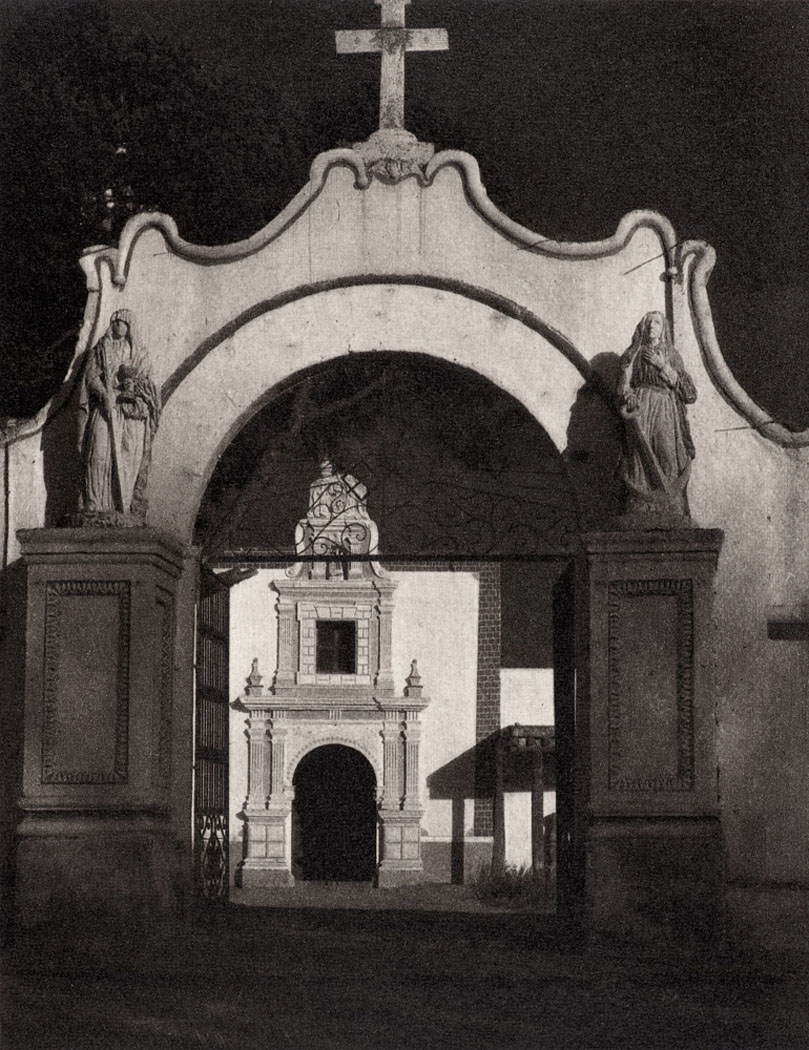
Paul Strand (American, 1890-1976) 'Cristo with Thorns - Huexotla' 1933


Paul Strand (American, 1890-1976)
Cristo with Thorns – Huexotla
1933
Silver gelatin print
© Aperture Foundation Inc., Paul Strand Archive. Fundación MAPFRE Collections
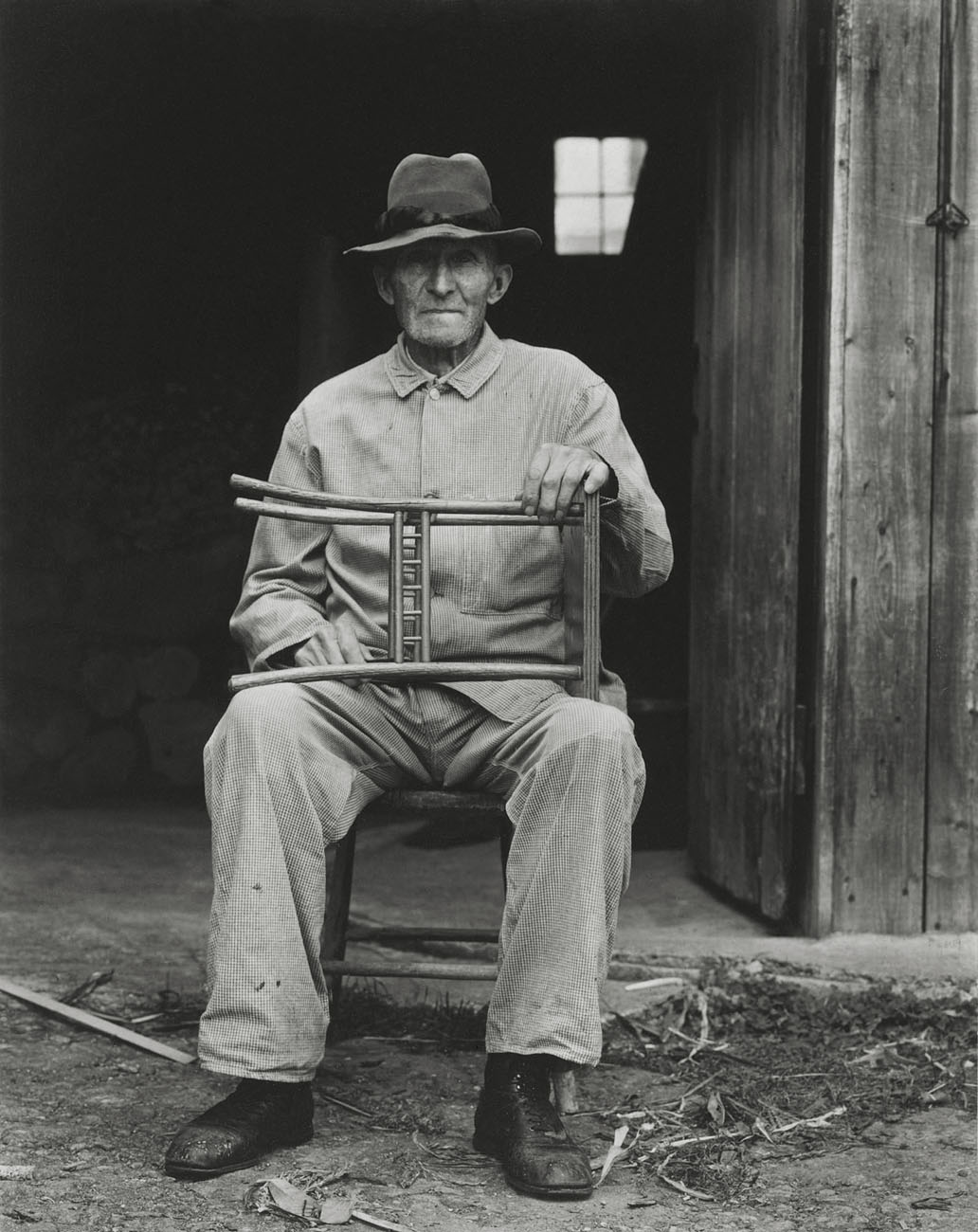
 

Paul Strand (American, 1890-1976) 'Mr. Bolster, Weston, Vermont' 1943


Paul Strand (American, 1890-1976)
Mr. Bolster, Weston, Vermont
1943
Silver gelatin print
© Aperture Foundation Inc., Paul Strand Archive. Fundación MAPFRE Collections


Paul Strand (American, 1890-1976) 'Mr. Bennett, West River Valley, Vermont' 1944


Paul Strand (American, 1890-1976)
Mr. Bennett, West River Valley, Vermont
1944
Gelatin silver print
© Aperture Foundation Inc., Paul Strand Archive. Fundación MAPFRE Collections


In 1945 a major exhibition dedicated to the work of Paul Strand took place at the Museum of Modern Art in New York that included 172 photographs, becoming the greatest retrospective devoted to a photographer to date. The project was conceived by Nancy Newhall, Head of the Department of Photography at the institution, who during the show’s preparation proposed to collaborate with Strand on a book about New England, a region located in the northeastern United States.

For a little over a month and a half Strand travelled with his camera throughout the region. His previous experience in Mexico had provided him with an attentive eye for capturing the social and cultural reality of the territory; in this instance through photographs of landscapes, diverse forms of architecture, and through his characteristic portraits. Resulting from this process his first photobook, Time in New England, was published in 1950, with texts by Nancy Newhall. The project’s outcome and his successful collaboration with Newhall inspired Strand to initiate a series of publications that coincided with a growing demand for travel books.

Text from the Fundación MAPFRE Collections website
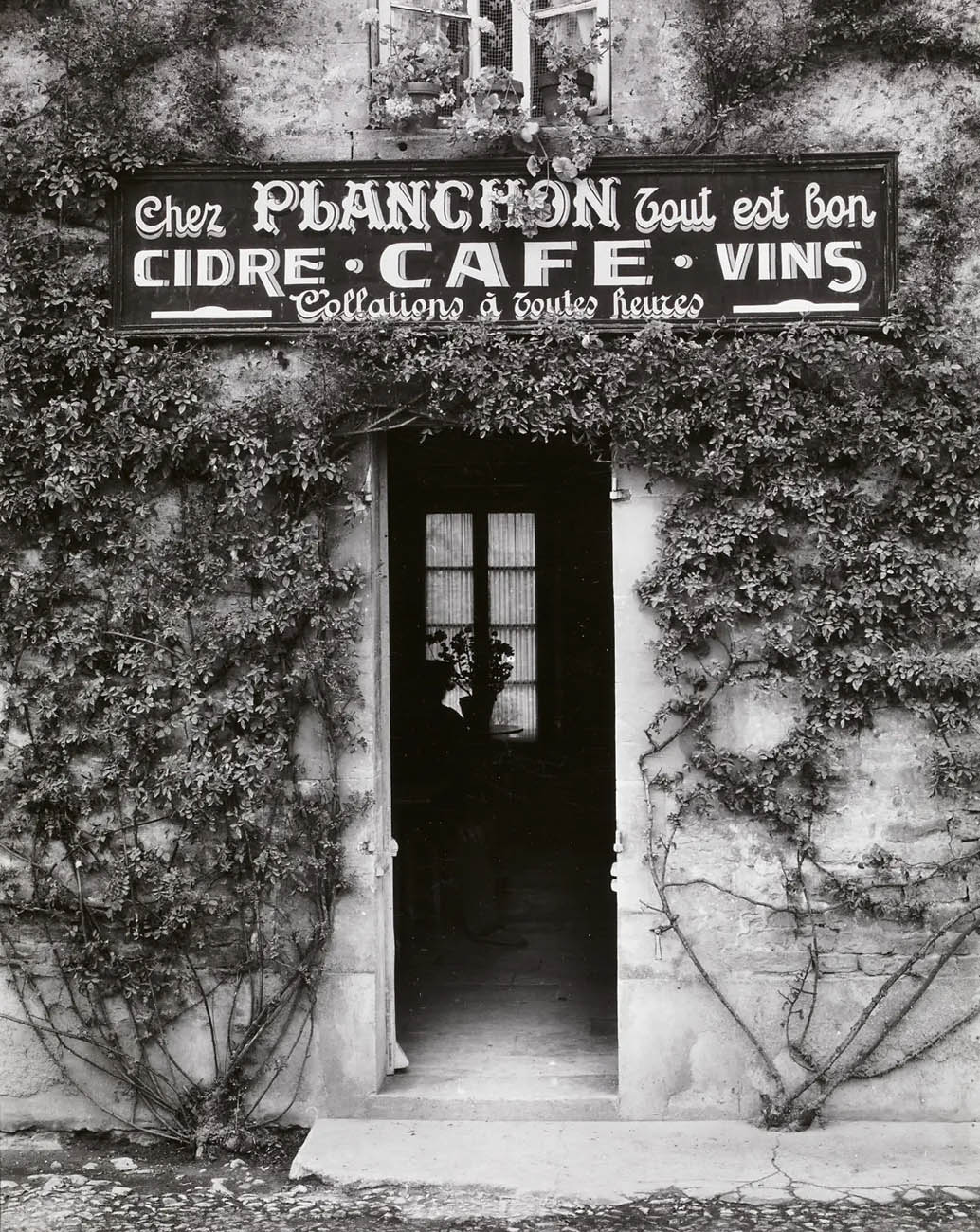
 

Paul Strand (American, 1890-1976) 'CafƩ Planchon, France' 1950


Paul Strand (American, 1890-1976)
CafƩ Planchon, France
1950
Gelatin silver print on baryta paper
24.4 Ɨ 19.4cm
© Aperture Foundation Inc., Paul Strand Archive. Fundación MAPFRE Collections


In 1950 Paul Strand left the United States due in great measure to the increasingly hostile social and political environment generated by the “witch hunt” of McCarthyism. Together with Hazel Kingsbury, who would become his third wife, Strand arrived in France. After their wedding that following year, they traveled the country together. Resulting from this journey and following the format of joining image and text that was established in his book Time in New England, the artist produced La France de Profil [France in Profile] in 1952.  The book was published by renowned Swiss publisher Guilde du Livre, with texts by the writer and poet Claude Roy, whose points of view on the social reality and the ethical commitment of artists coincided with Strand’s.

In CafĆ© Planchon Paul Strand presents a rhetoric characteristic of the avant-garde, one of texts that belie the visual reality they attempt to portray, which grants them an inevitable and warm ironical distance. The image also contains a sense of artistic joy that is not merely related to the formal composition but is manifested in the proliferation of the vegetation, in the tactility of textures, and in the charming gradation of light that is finally enveloped by shadow. The richness of the image arises as a result of the photographer’s attention to this particular reality, which is celebrated in the book, as well as his technical prowess and the dedication he poured into the prints made in the darkroom.

Text from the Fundación MAPFRE Collections website
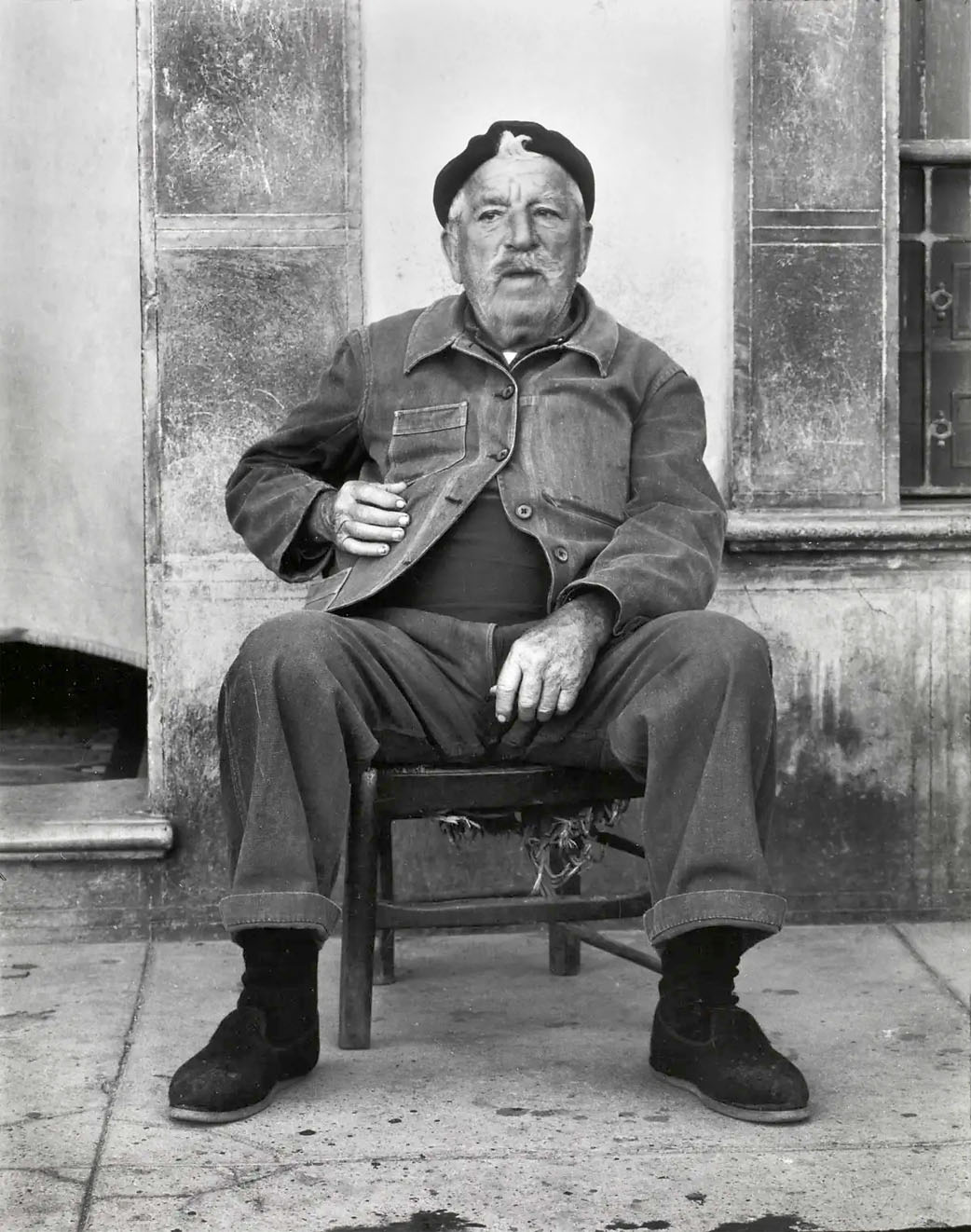
 

Paul Strand (American, 1890-1976) 'Fisherman, Banyuls, PyrƩnƩes-Orientales, France' 1950-1951


Paul Strand (American, 1890-1976)
Fisherman, Banyuls, PyrƩnƩes-Orientales, France
1950-1951
Silver gelatin print
16.1 Ɨ 12.5cm
© Aperture Foundation Inc., Paul Strand Archive. Fundación MAPFRE Collections
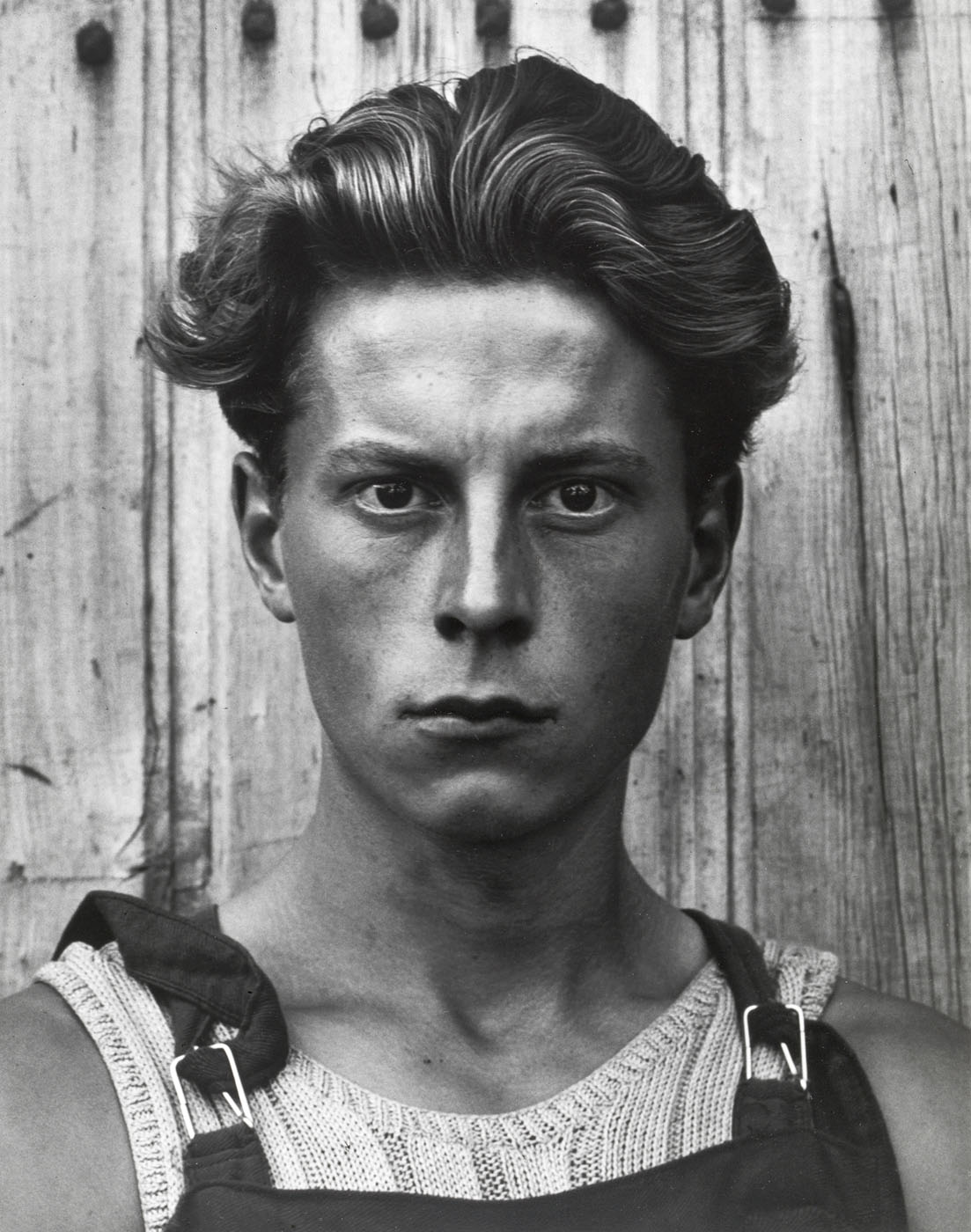
 

Paul Strand (American, 1890-1976) 'Young Boy, Gondeville, Charente, France' 1951


Paul Strand (American, 1890-1976)
Young Boy, Gondeville, Charente, France
1951
Gelatin silver print
© Aperture Foundation Inc., Paul Strand Archive. Fundación MAPFRE Collections


In 1952 Paul Strand published La France de profil [France in Profile] which included the photographs he took during his trip throughout the country. With texts by Claude Roy, the book was published by Swiss publisher Guilde du Livre, which had been producing a collection of travel books since the 1940s containing texts by well known writers such as Paul Ɖluard and Jacques PrĆ©vert, and photographs by artists such as Robert Doisneau and Michel Huet.

In a similar fashion to how he had articulated a unique perspective far from the hegemonic exoticising of Mexico during the 1930s, Strand portrayed France in a way that did not settle on its most picturesque features. As inferred by the title, the series is an oblique perspective on the territory materialised through an assortment of images that are arranged in a singular style. Towns, landscapes, examples of vernacular architecture, and faces of elderly people and fishermen appear next to photographs detailing small objects that – beyond their documentary value – join the artistic language of images while simultaneously evoking the time that is inscribed within them.

Young Boy captures the characteristic intensity of the gamut of black and white hues in Strand’s work. The beauty hidden within the heroic ruggedness of the boy’s face, emphasised by the artist’s treatment of light, exemplifies the way in which Strand’s attention to the artistic values he upholds effectuates his political commitment.

Text from the Fundación MAPFRE Collections website
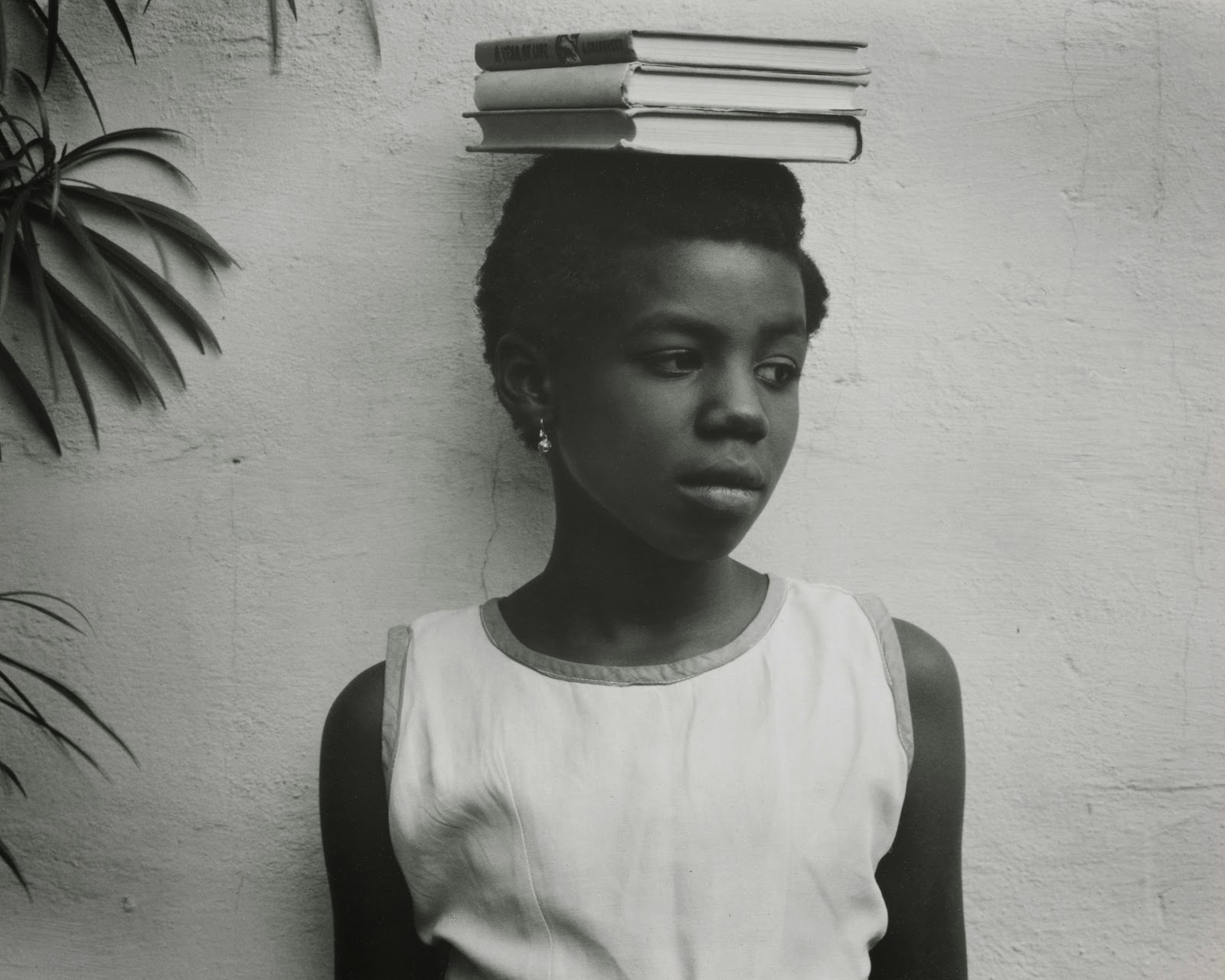
 

Paul Strand (American, 1890-1976) 'Anna Attinga Frafra, Accra, Ghana' 1964


Paul Strand (American, 1890-1976)
Anna Attinga Frafra, Accra, Ghana
1951
Gelatin silver print
© Aperture Foundation Inc., Paul Strand Archive. Fundación MAPFRE Collections


Throughout the 1960s, during the Cold War, Paul Strand continued his documentary work traveling to different socialist countries such as Romania, Egypt, and Ghana. As evidenced by the series of photobooks that he published, Strand’s perspective on these realities is translated into portraits, landscapes, and images of the communities’ daily life and their objects. Nevertheless, although direct references to political issues are eloquently scarce in his photographs, some elements can be observed that subtly point to the positive aspects of the revolutionary processes occurring in these countries.

Such is the case of the portrait of Anna Attinga Frafra – included in Ghana: An African Portrait (New York, Aperture, 1976) – in which the simplicity of the composition points to one dissonant element: the books balanced on the girl’s head. The symbolic character of the image serves as a reference to the literacy and education campaigns planned for the Ghanaian populations, which included women, and has an undoubtedly, albeit subtle, propagandistic nature. Nevertheless, the photograph makes sense and coexists seamlessly with the other images that make up the series. As a whole, they offer a vision that is an alternative from ethnographic typology, incorporating the reality of the aspirations, efforts, and hopes of the community without becoming crude propaganda.

Text from the Fundación MAPFRE Collections website
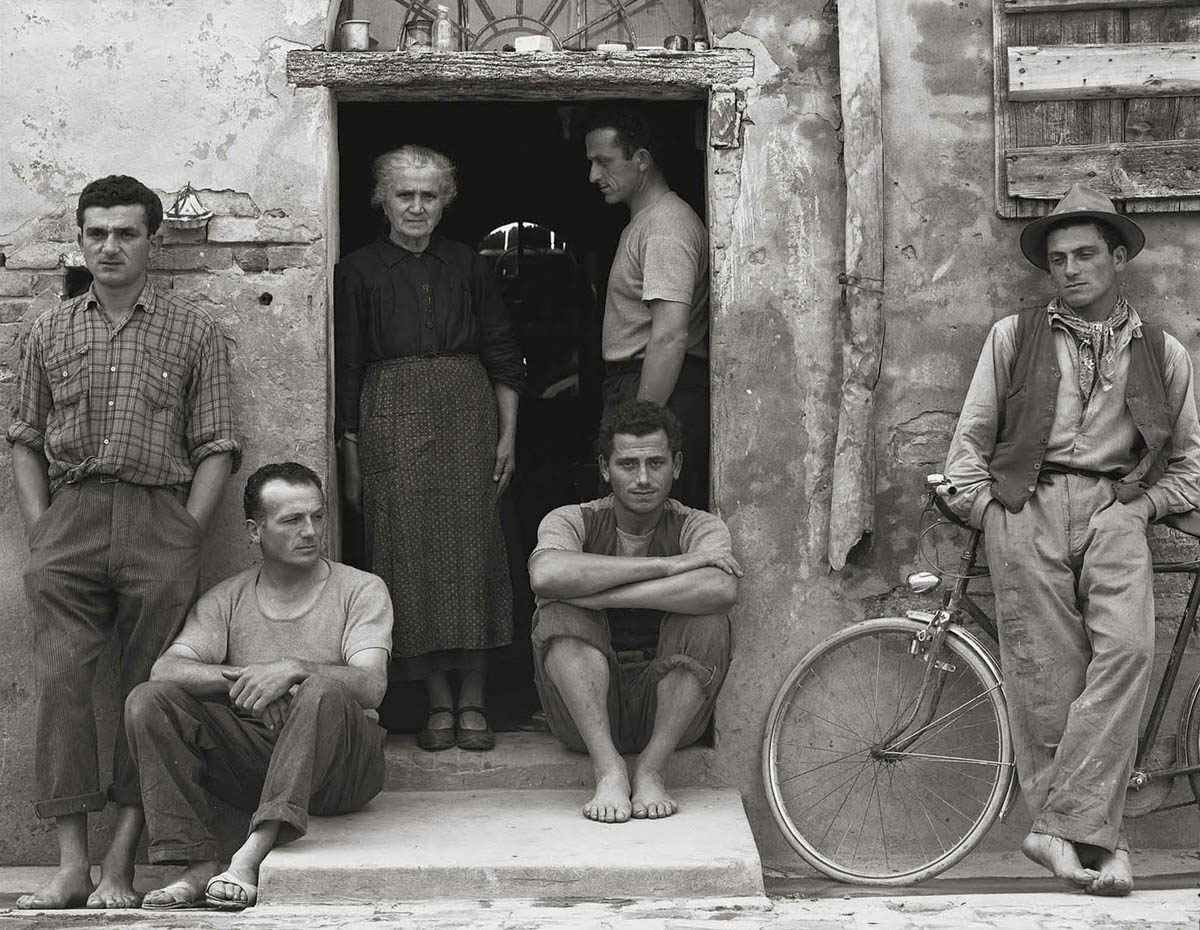
 

Paul Strand (American, 1890-1976) 'The Lusetti Family, Luzzara, Italy' 1953


Paul Strand (American, 1890-1976)
The Lusetti Family, Luzzara, Italy
1953
Gelatin silver print
16.9 Ɨ 21.3cm
© Aperture Foundation Inc., Paul Strand Archive. Fundación MAPFRE Collections
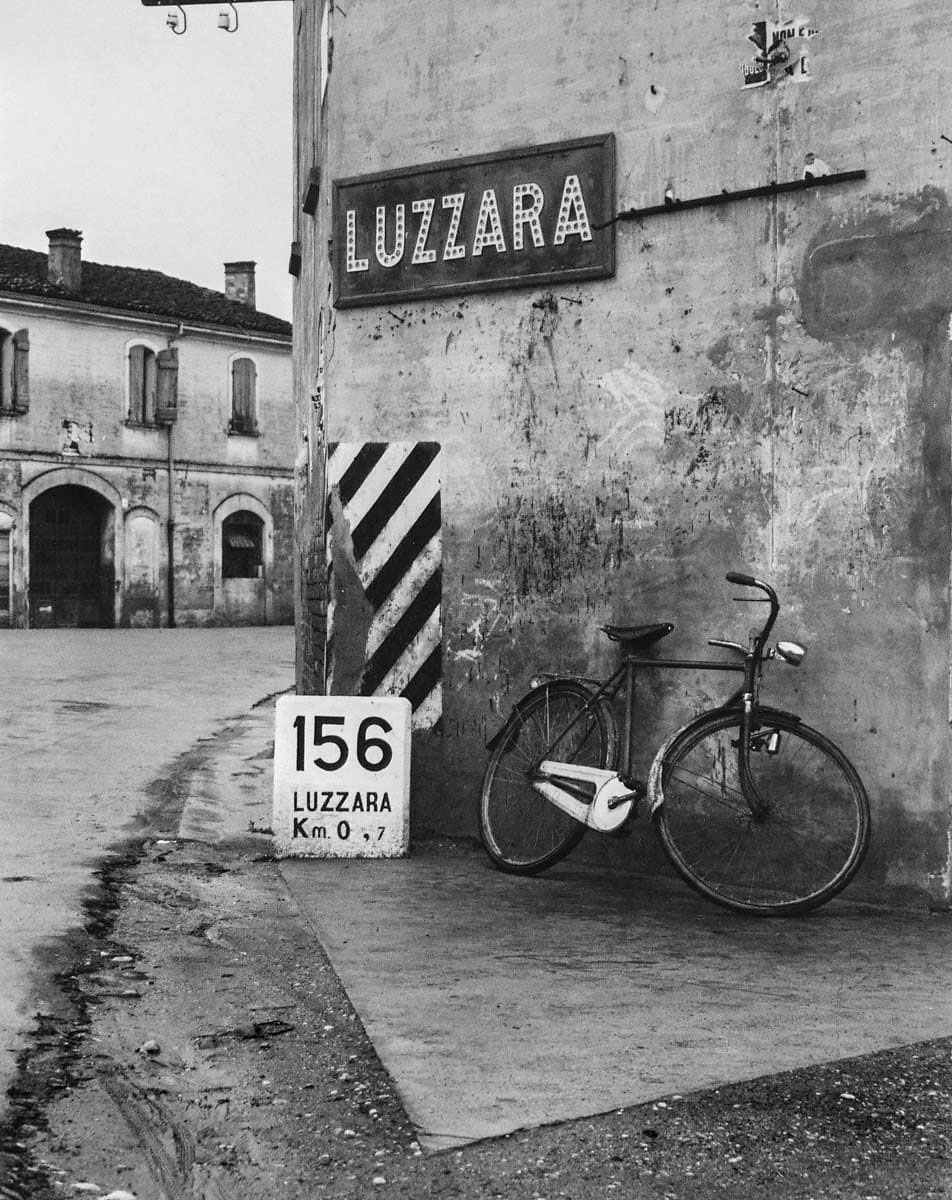
 

Paul Strand (American, 1890-1976) 'Luzzara'
 1953


Paul Strand (American, 1890-1976)
Luzzara
1953
Gelatin silver print
© Aperture Foundation Inc., Paul Strand Archive. Fundación MAPFRE Collections
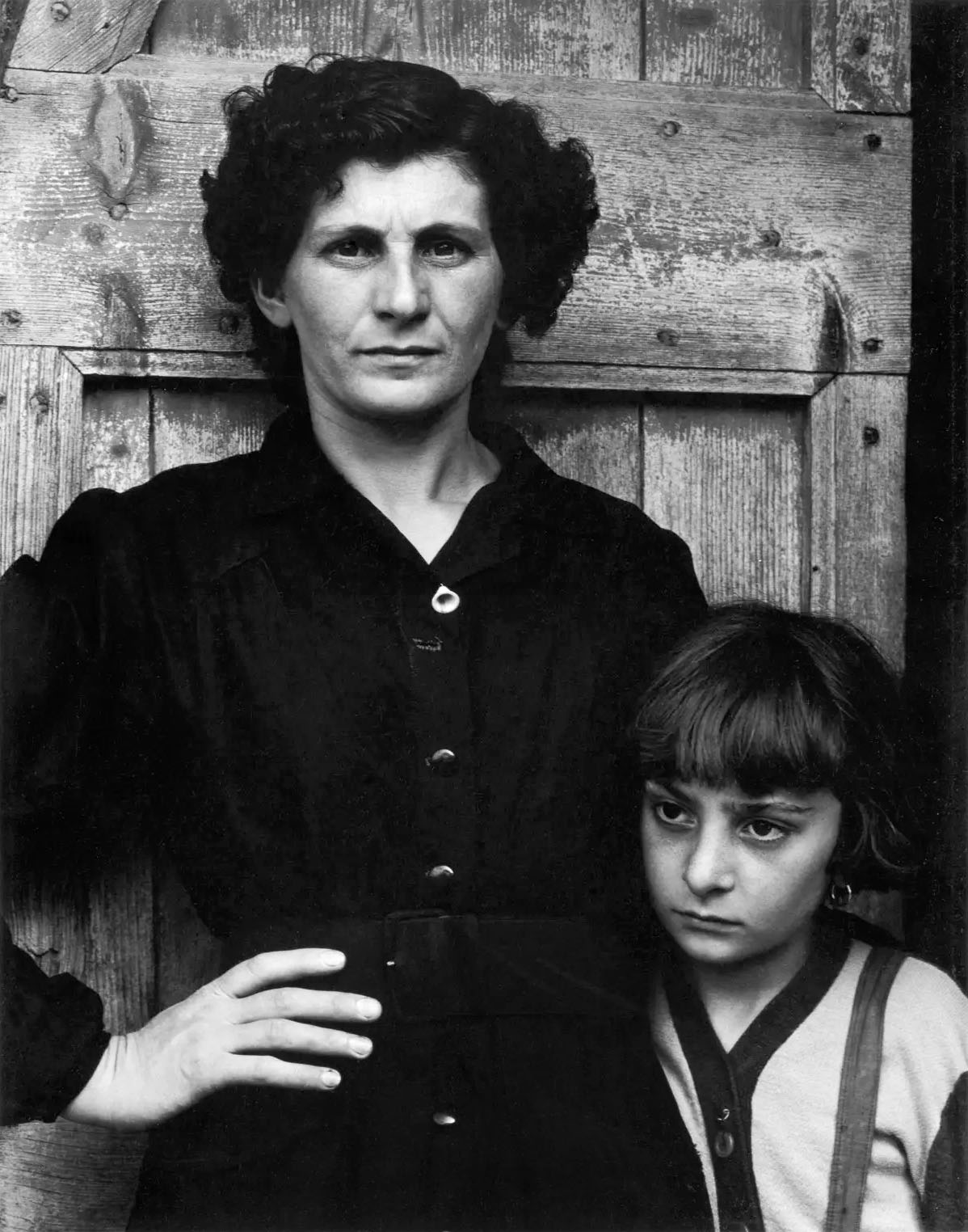
 

Paul Strand (American, 1890-1976) 'Postmistress and Daughter, Luzzara, Italy' 1953


Paul Strand (American, 1890-1976)
Postmistress and Daughter, Luzzara, Italy
1953
Silver gelatin print
33.3 Ɨ 26.4cm
© Aperture Foundation Inc., Paul Strand Archive. Fundación MAPFRE Collections
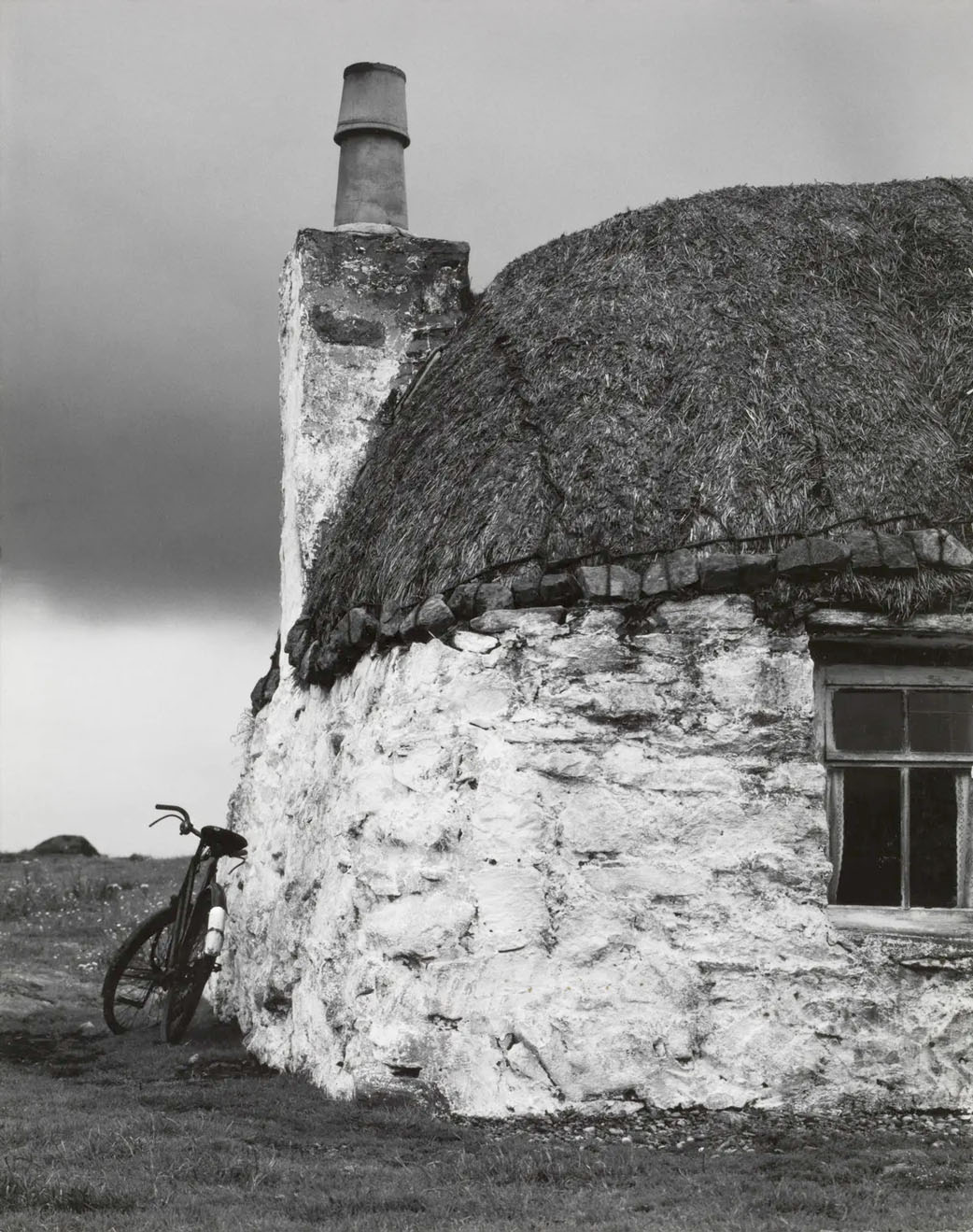
 

Paul Strand (American, 1890-1976) 'House, Benbecula, Isle of South Uist, Outer Hebrides' 1954


Paul Strand (American, 1890-1976)
House, Benbecula, Isle of South Uist, Outer Hebrides
1954
Silver gelatin print
14.9 Ɨ 11.7cm
© Aperture Foundation Inc., Paul Strand Archive. Fundación MAPFRE Collections
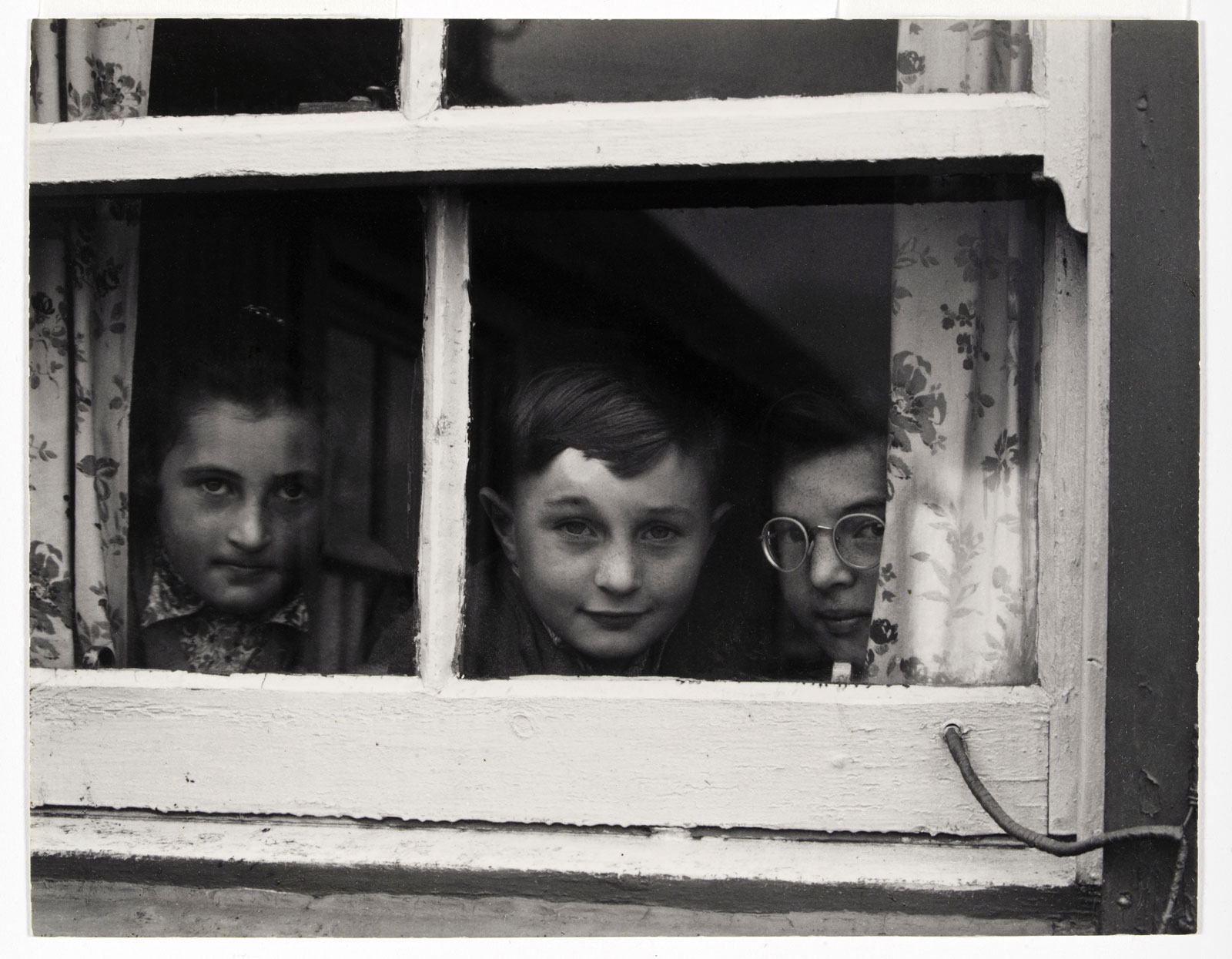
 

Paul Strand (American, 1890 - 1976) 'Milly, John and Jean MacLellan, South Uist, Hebrides' 1954


Paul Strand (American, 1890-1976)
Milly, John and Jean MacLellan, South Uist, Hebrides
1954
Silver gelatin print
© Aperture Foundation Inc., Paul Strand Archive. Fundación MAPFRE Collections
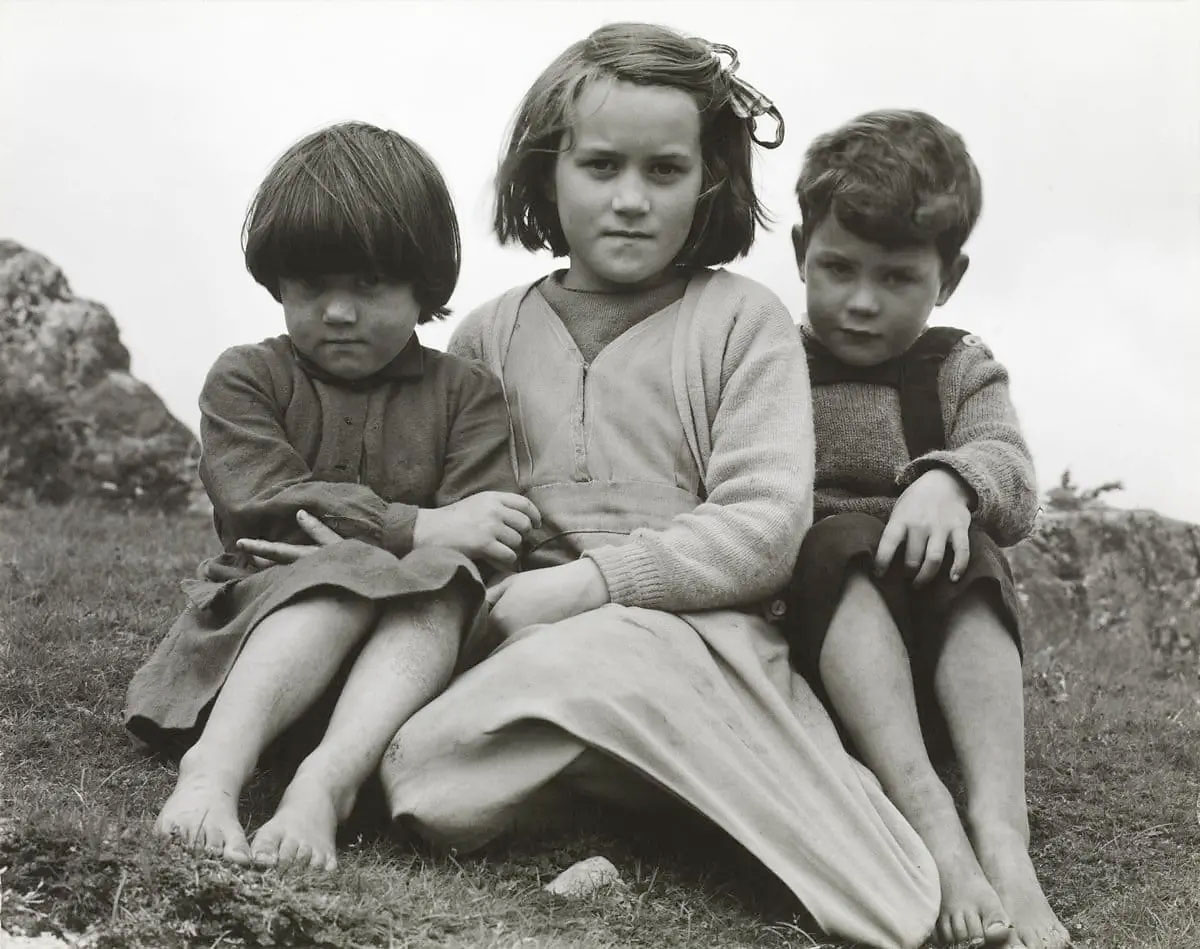
 

Paul Strand (American, 1890-1976) 'Agnes MacDonald, Morag and Ewen MacLellan, Isle of South Uist, Outer Hebrides' 1954


Paul Strand (American, 1890-1976)
Agnes MacDonald, Morag and Ewen MacLellan, Isle of South Uist, Outer Hebrides
1954
Silver gelatin print
© Aperture Foundation Inc., Paul Strand Archive. Fundación MAPFRE Collections
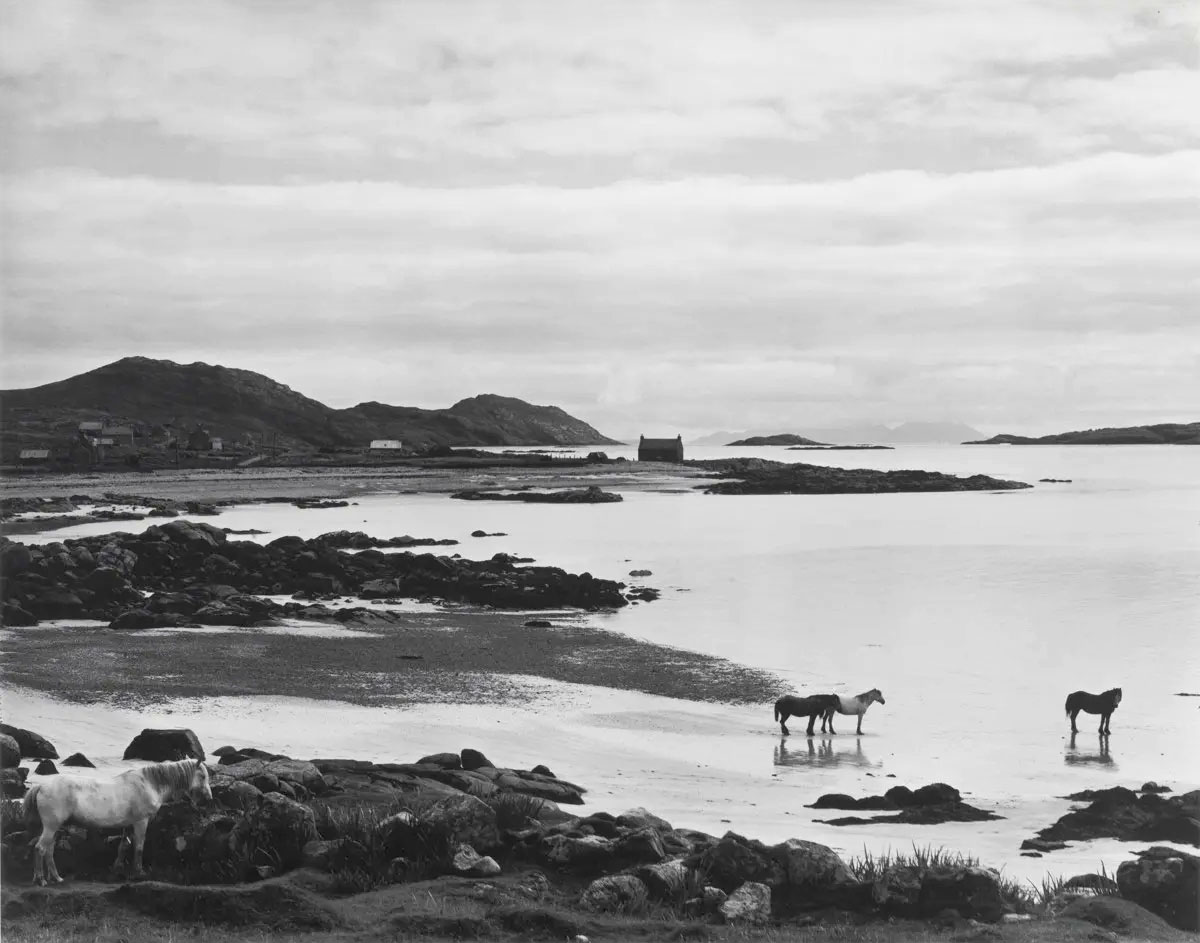
 

Paul Strand (American, 1890-1976) 'Tir a'Mhurain, Isle of South Uist, Outer Hebrides' 1954


Paul Strand (American, 1890-1976)
Tir a’Mhurain, Isle of South Uist, Outer Hebrides
1954
Silver gelatin print
14.8 Ɨ 12.4cm
© Aperture Foundation Inc., Paul Strand Archive. Fundación MAPFRE Collections
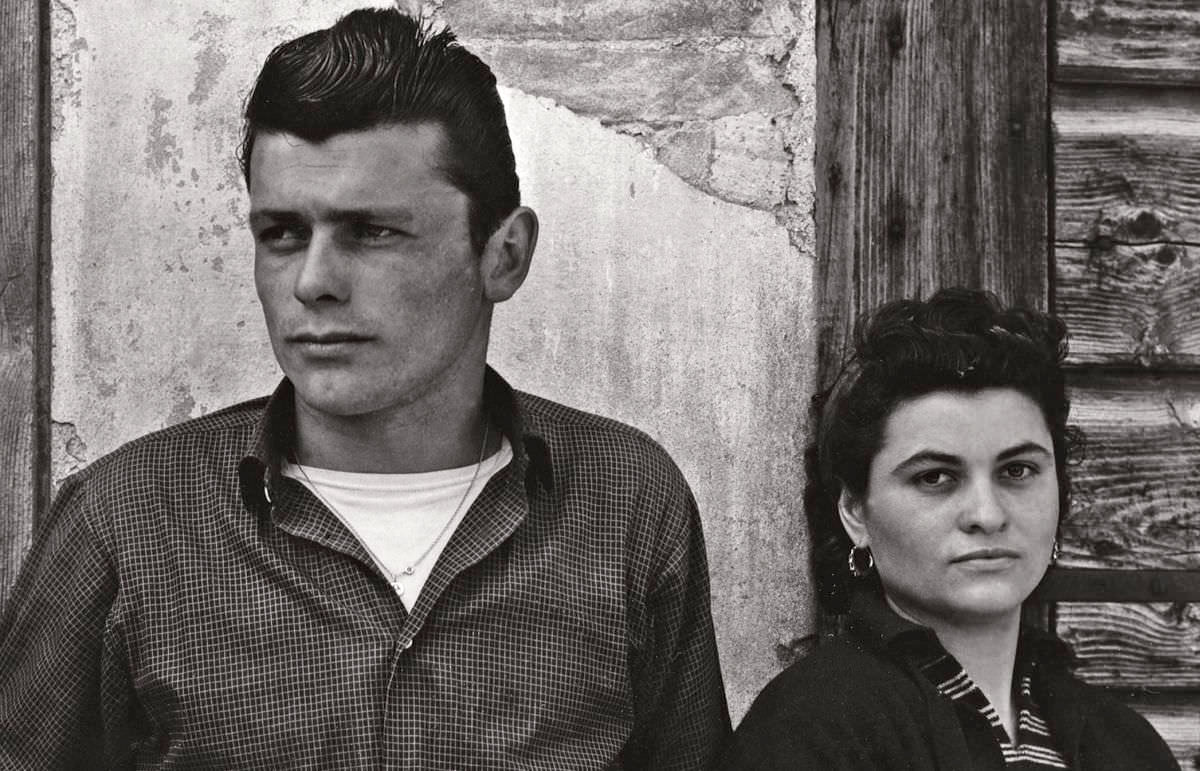
 

Paul Strand (American, 1890-1976) 'Un paese' 1955


Paul Strand (American, 1890-1976)
Un paese
1955
Silver gelatin print
© Aperture Foundation Inc., Paul Strand Archive. Fundación MAPFRE Collections


300,000 lire, 10 sheets, 10 pillowcases, 10 towels, 10 parures and the bedroom are not enough to marry me, you can’t do less. He has to go into the army, otherwise we’d get married right away even if there’s little work. This year he has done less than a thousand hours of work.

Text by Zavattini, photographs by Paul Strand, Turin, Einaudi, 1955, p. 73
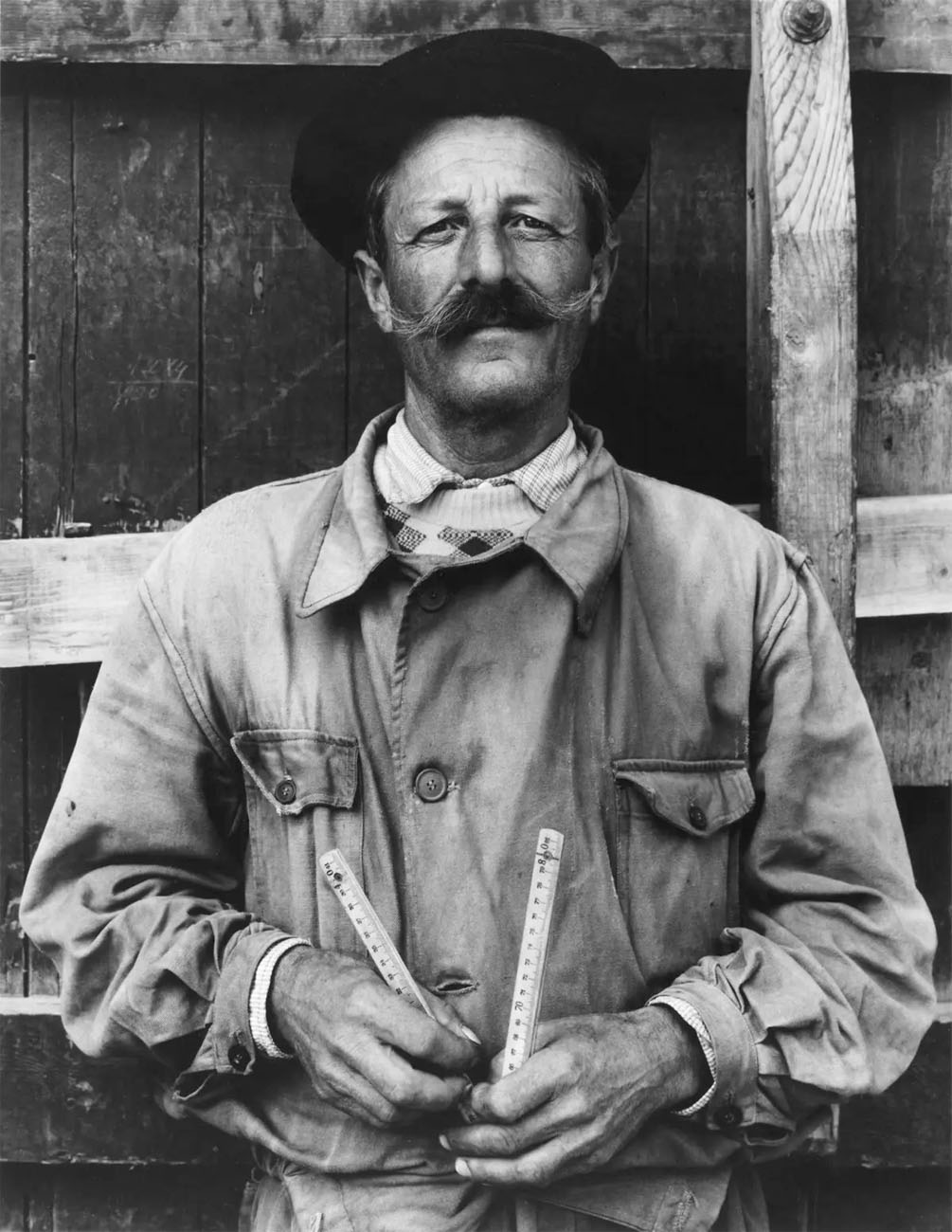
 

Paul Strand (American, 1890-1976) 'Iordache Ciaocata, Bicaz, Romania' 1960


Paul Strand (American, 1890-1976)
Iordache Ciaocata, Bicaz, Romania
1960
Silver gelatin print
33.2 Ɨ 35.7cm
© Aperture Foundation Inc., Paul Strand Archive. Fundación MAPFRE Collections
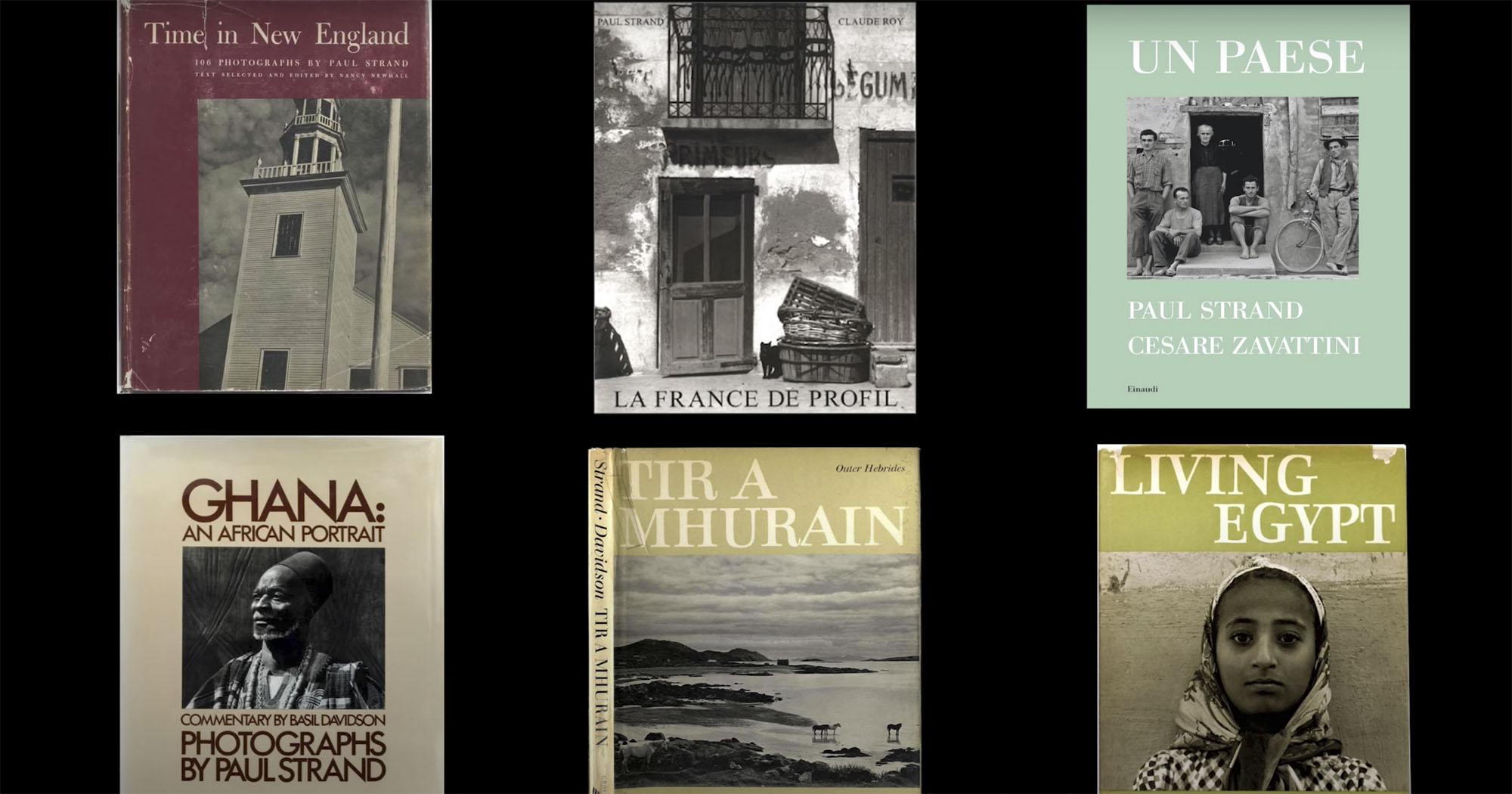
 

Paul Strand book covers


Paul Strand book covers


Fondation Henri Cartier-Bresson
79 rue des Archives
75003 Paris

Opening hours:
Tuesday – Sunday 11am – 7pm
Closed on Mondays

Fondation Henri Cartier-Bresson website

LIKE ART BLART ON FACEBOOK

Back to top

Exhibition: ‘Under the Mexican Sky: A Revolution in Modern Photography’ at the Palmer Museum of Art, Pennsylvania State University

Exhibition dates: 1st June – 28th July, 2019


Edward WestonĀ (American, 1886-1958) 'Dr. Federico MarĆ­n, Jean Charlot, and Tina Modotti' 1925 from the exhibition 'Under the Mexican Sky: A Revolution in Modern Photography' at the Palmer Museum of Art, Pennsylvania State University, June - July, 2019


Edward Weston (American, 1886-1958)
Dr. Federico MarĆ­n, Jean Charlot, and Tina Modotti
1925
Vintage gelatin silver print
7 1/2 x 9 1/4 inches


Shown with Modotti are Federico MarĆ­n, who was Diego Rivera’s brother-in-law and physician, and Jean Charlot, who is here seen making a sketch on Tina’s back.


If there is one period and two countries that I love more than anything else in the history of medium, it is the avant-garde photography of the interwar years in France and the photography of Mexico in the 1920s and 1930s.

American, French and Italian photographers were drawn like bees to a honey pot to the blossoming artistic scene in Mexico City and the country in general. They soaked up the unique Mexican culture, its atmosphere of work, religion, beauty, death, poverty, and sensuality – its churches, religious icons, sculptures, festivals, pottery, and people – the land, the mountains and the inhabitants all photographed in this dazzling light. They photographed in an “international modernism” style (the supposed revolution in modern photography named in the title), expatriate photographers in a hospitable but impoverished land. But this was not their land, for this was not their country.

While Strand “modified his 5 Ɨ 7 Graflex camera, adding a special prism extension that enabled him to clandestinely shoot a subject at a 90° angle from the front of his camera”, surreptitiously making portraits as he had done in his New York subway portraits; while Weston documents the murals of Mexican culture at a distance, the clay pots as an abstract composition, and the traditional art and craft Tehuana dress as idealised icon; while Modotti comes closer with her political statements and constructed still life; it is only the Mexican artist Manuel Ɓlvarez Bravo that steals my heart.

His work exudes the spirit of the country through its sensitivity and connection to the earth from which he was born. The light and form in Bravo La Siesta de los Peregrinos; the light and form in Retrato de lo Eterno. I have studied his work quite thoroughly. He is the blessed one. Through his music, he captures the light and life of Mexico, the spirit of the eternal, “the sunlight [as] a discreet veil that turns the shadows into velvet.” His work is the art of the People.

Dr Marcus Bunyan


Hands in the Water of the Mind

The water of the mind     has filled with forms.
Come, come closer now,    elusive as
an anemone or a jellyfish     a criminal, a saint;

dip your hand in and pull    from the tormented water
angles and profiles,         an incessant music,

the murmur of the sky,     the mouth of the earth,
the crown of the breeze,     the rings of fire,

the bodies of the lynxes,     the wings of the bat,
the glasses and the pillow,     the brightness of hunger.

David Huerta


Many thankx to the Palmer Museum of Art for allowing me to publish the photographs in the posting. Please click on the photographs for a larger version of the image.


In the aftermath of the Mexican Revolution (1910-1920), expatriate photographers flocked to the blossoming artistic scene in Mexico City. Los Angelino Edward Weston reinvented his approach to the medium during three years there in the 1920s. In exploring the development of international modernism into the next decades, this exhibition features rare photographs by Italian Tina Modotti, New Yorkers Helen Levitt and Paul Strand, French master Henri Cartier-Bresson, and Mexico’s own Manuel Ɓlvarez Bravo.


“For six months I worked at still photographs of Mexico, made about sixty platinum prints, completed and mounted them. Among other things I made a series of photographs in the churches, of the Christs and Madonnas, carved out of wood by the Indians. They are among the most extraordinary sculptures I have seen anywhere, and have apparently gone relatively unnoticed. These figures so alive with the intensity of the faith of those who made them. That is what interested me, the faith, even if it is not mine; a form of faith, to be sure, that is passing, that has to go. But the world needs a faith equally intense in something else, something more realistic, as I see it. Hence my impulse to photograph these things, and I think the photographs are pretty swell.”


Paul Strand


“At first the brilliance of technique is commented on. Laymen say: What reality! How three-dimensional. Photographers say: What texture! What a scale of values! What print quality! This is a first reaction and the least significant one. All this virtuosity is at the service of what Strand has to express, the felt idea behind the photograph.”


Leo Hurwitz


“Popular Art is the art of the People. A popular painter is an artisan who, as in the Middle Ages, remains anonymous. His work needs no advertisement, as it is done for the people around him. The more pretentious artist craves to become famous, and it is characteristic of his work that it is bought for the name rather than for the work – a name that is built up by propaganda. Before the Conquest all art was of the people, and popular art has never ceased to exist in Mexico.”


Manuel Ɓlvarez Bravo


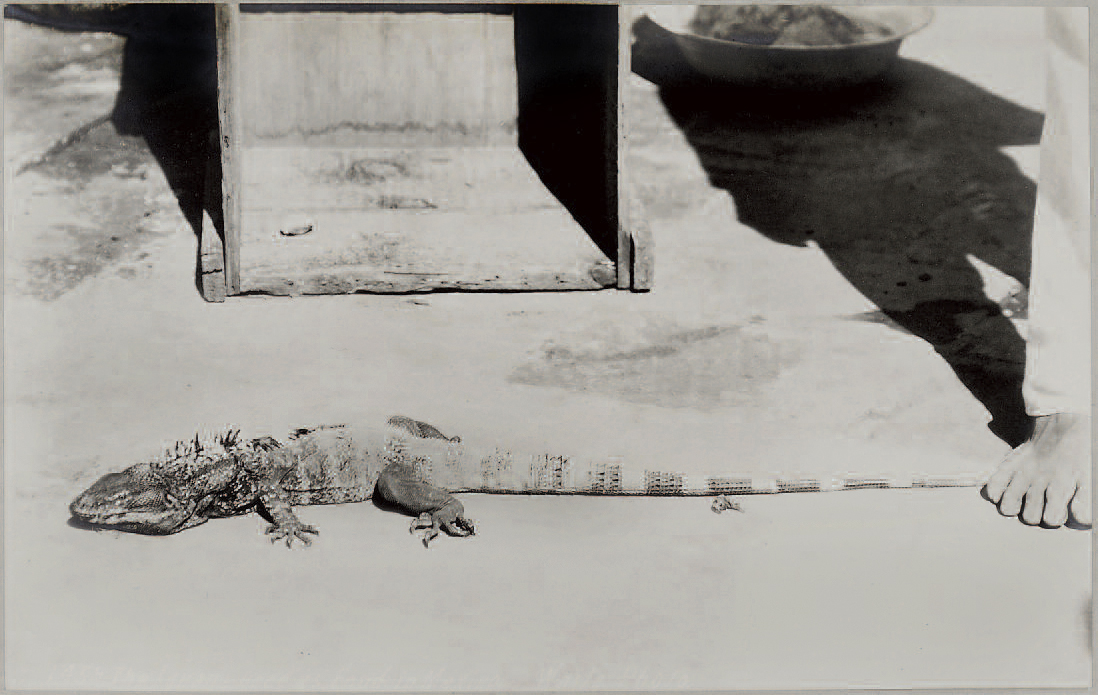
Charles Betts WaiteĀ (American, 1861-1927) 'The Iguana' 1901 from the exhibition 'Under the Mexican Sky: A Revolution in Modern Photography' at the Palmer Museum of Art, Pennsylvania State University, June - July, 2019


Charles Betts Waite (American, 1861-1927)
The Iguana
1901
Vintage gelatin silver print
5 x 7 7/8 inches


In this playful study, the shadows dominate: the bowl of vittles atop the man’s shadow suggest a sombrero shielding a sleeping man’s face during an afternoon siesta.

[Waite] traveled to Mexico City and in May 1897 established a photography studio there, during the Porfirio DĆ­az government. He became part of Porfirian society, taking photographs of many in the ruler’s circle. He was among a group of expatriate photographers (such as Winfield Scott and fellow San Diegans Ralph Carmichael and Percy S. Cox) working in Mexico in the first decade of the 20th century. Waite traveled throughout Mexico, exploring archaeological sites and the countryside.

[Waite’s life] corresponds with that of adventurers, brave explorers with romantic spirits and materialistic outlooks, who toured the hitherto unknown world, discovering their riches and inventing paradises.” ~ Francisco Montellano, author of C. B. Waite, fotógrafo


His works were published in books, travel magazines, and on post cards, having contracted with the Sonora News Company. He also worked for several Mexican newspapers, and he documented United States scientific expeditions in Mexico. The images often included scenic Mexican images and the country’s native residents. Many of Waite’s photographs depict railroads, parks, archaeological sites, and business enterprises.

Text from the Wikipedia website


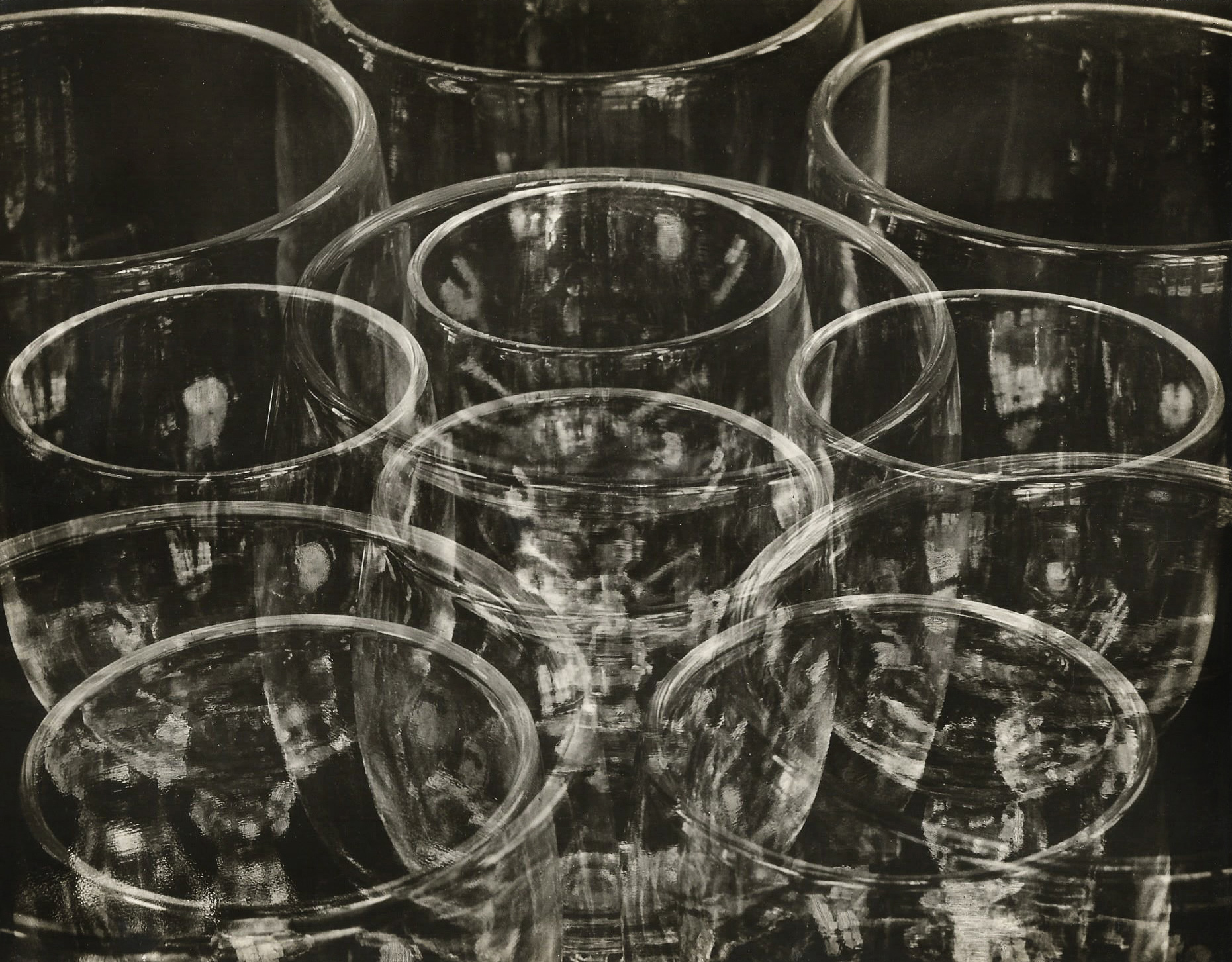
Tina ModottiĀ (Italian, 1896-1942) 'Experiment in Related Form' 1924


Tina Modotti (Italian, 1896-1942)
Experiment in Related Form
1924
Vintage gelatin silver print
7 3/8 x 9 3/8 inches


This is one of only two known photomontages by Modotti, in which a single image of six wine glasses is enlarged and cropped and then superimposed onto itself.


Edward WestonĀ (American, 1886-1958) 'Ollas de Oaxaca' 1926


Edward Weston (American, 1886-1958)
Ollas de Oaxaca
1926
Vintage palladium print
8 x 10 inches


An olla is a clay pot or jar. Weston wrote that his first thought of Oaxaca “is always of the market, – and the market means first of all loza – crockery! I bought and bought – dishes, jars, jugettes, – of the dull black or grey-black ware, and of the deep green glaze ware… Very well do these people reproduce, make use of the essential quality of the material, – splendidly do they observe and utilise to advantage the very essence of a form. A race of born sculptors!”


Edward WestonĀ (American, 1886-1958) 'Detail of stone frieze, ruins of Mitla, Oaxaca' 1926


Edward Weston (American, 1886-1958)
Detail of stone frieze, ruins of Mitla, Oaxaca
1926
Vintage gelatin silver print
7 1/2 x 9 1/2 inches


“I was fascinated by the stone mosaics at Mitla, for besides a variation on the Greek fret, there was a unique pattern – oblique lines of dynamic force – flashes of stone lightning, which remain my strongest memory.” ~ Edward Weston, The Daybooks, vol. I.


Edward WestonĀ (American, 1886-1958) 'Stone lions in relief, Oaxaca' 1926


Edward Weston (American, 1886-1958)
Stone lions in relief, Oaxaca
1926
Vintage gelatin silver print
7 1/2 x 9 1/2 inches


Edward WestonĀ (American, 1886-1958) 'Two clay pitchers' 1926


Edward Weston (American, 1886-1958)
Two clay pitchers
1926
Vintage gelatin silver print
7 1/2 x 9 1/4 inches


These studies of pre-Columbian and folk-art statuary and pottery, done for Anita Brenner’s Idols Behind Altars project, taught Weston the art of the table-top still life. As such, they were the direct precursor to the iconic shells, peppers, and cabbages that occupied him immediately upon his return to Los Angeles in December 1926.


Edward Weston (American, 1886-1958) 'Tarascan Pottery, MichoacÔn' 1926


Edward Weston (American, 1886-1958)
Tarascan Pottery, MichoacƔn
1926
Vintage gelatin silver print
7 1/2 x 8 1/4 inches


The Tarascan people flourished from 1100 A.D. to 1530 A.D. After the Spanish Conquest, missionaries organised the Tarascan empire into a series of craft-oriented villages. Their artistic traditions survive today in the Lake PƔtzcuaro region.


Tina ModottiĀ (Italian, 1896-1942) 'Jean Charlot' 1923


Tina Modotti (Italian, 1896-1942)
Jean Charlot
1923
Vintage gelatin silver print
9 1/2 x 7 1/2 inches


Anita Brenner and Tina Modotti remained friendly rivals in Mexico City’s close-knit artistic expatriate community throughout the 1920s. Their intertwined social life revolved around the French-Mexican painter Jean Charlot, who had been a principal assistant to Rivera. Charlot was Weston’s closest friend in Mexico as well as Brenner’s paramour and professional collaborator. In a diary entry in 1927, Brenner made a three-column table captioned “Actively Friends; Actively Enemies; and Actively Both.” Modotti’s name appears in the third column.

This sensitive Modotti portrait is inscribed by Charlot to Brenner, “You are bad tempered / I am worst tempered / Does that explain the sweet / Hours we passed together”


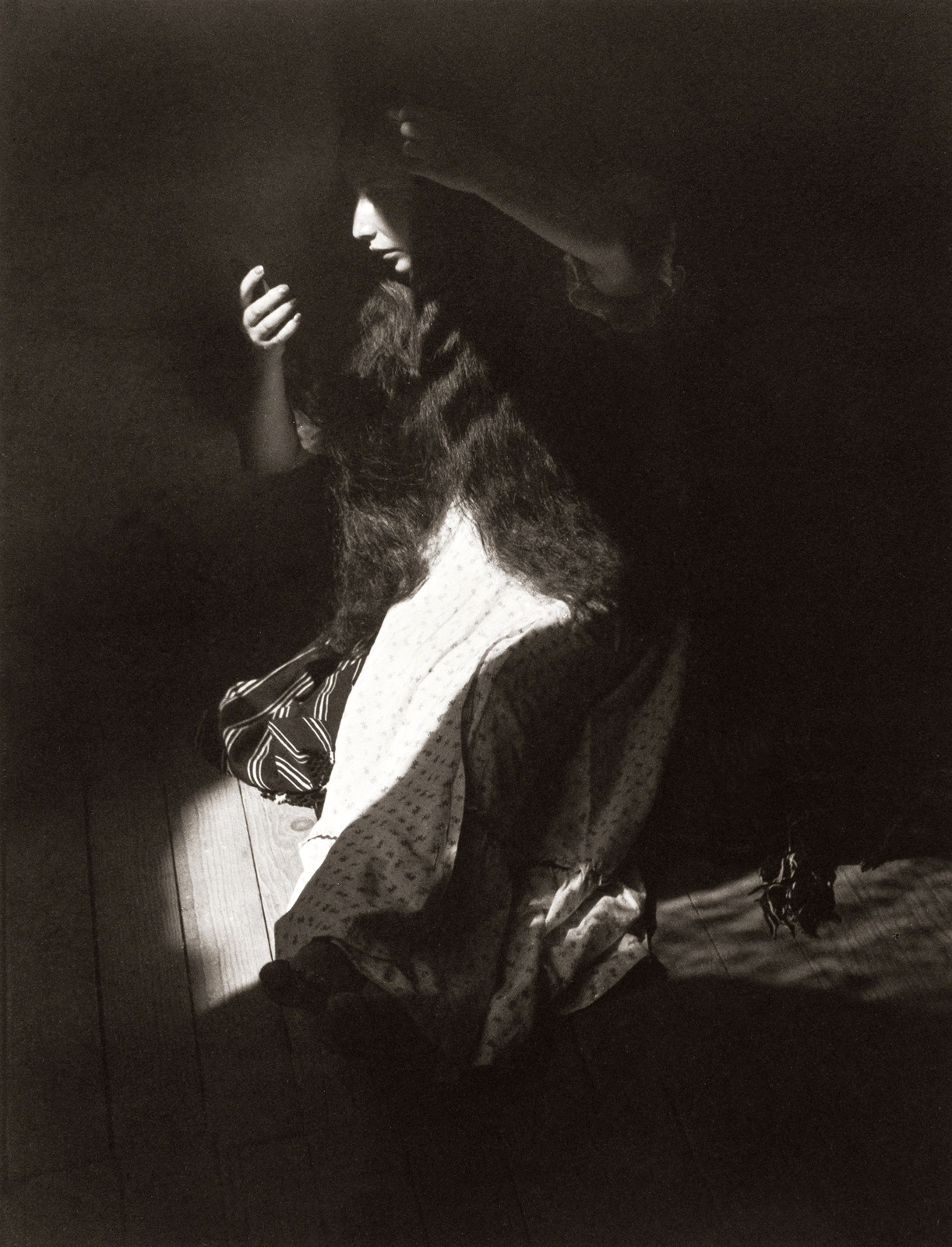
Tina ModottiĀ (Italian, 1896-1942) 'Elisa Kneeling' 1924


Tina Modotti (Italian, 1896-1942)
Elisa Kneeling
1924
Vintage palladium print
8 7/8 x 6 5/8 inches


The power of Modotti’s portrait of her young chambermaid is due to the contrast between her beatific face and her coiled hands, which suggest a lifetime of hard manual labor.


Edward WestonĀ (American, 1886-1958) 'Anita ("Pear-Shaped Nude")' 1925


Edward Weston (American, 1886-1958)
Anita (“Pear-Shaped Nude”)
1925
Vintage gelatin silver print
8 5/8 x 7 3/8 inches


“I was shaving when A[nita] came, hardly expecting her on such a gloomy, drizzling day. I made excuses, having no desire, no ‘inspiration’ to work … but she took no hints, undressing while I reluctantly prepared my camera… And then appeared to me the most exquisite lines, forms, volumes – and I accepted, – working easily, rapidly, surely…

Reviewing the new prints, I am seldom so happy as I am with the pear-like nude of A[nita]. I turn to it again and again. I could hug the print in sheer joy. It is one of my most perfect photographs.” ~ Edward Weston, The Daybooks, vol. I


Edward WestonĀ (American, 1886-1958) 'Excusado' 1926


Edward Weston (American, 1886-1958)
Excusado
1926
Gelatin silver print, 1930s
10 x 8 inches


“‘Form follows function.’ Who said this I don’t know, but the writer spoke well! I have been photographing our toilet, that glossy enamelled receptacle of extraordinary beauty. It might be suspicioned that I am in a cynical mood to approach such subject matter… My excitement was absolute aesthetic response to form… I was thrilled! – here was every sensuous curve of the ‘human form divine’ but minus imperfections.” ~ Edward Weston, The Daybooks, vol. I

Weston was particularly amused when his chambermaid placed a bouquet of flowers in the bowl, in a well-meaning effort to create a more fitting subject for her employer’s lens.


Edward WestonĀ (American, 1886-1958) 'Casa de Vecindad' 1926


Edward Weston (American, 1886-1958)
Casa de Vecindad
1926
Vintage gelatin silver print
7 3/8 x 9 1/2 inches


A casa de vecindad or “neighborhood house” was a community home or tenement. This one had once been “a fine old convent,” wrote Weston. “The light was made perfect by the collective noise of cats and dogs, children laughing and crying, women gabbling and vendors calling.”


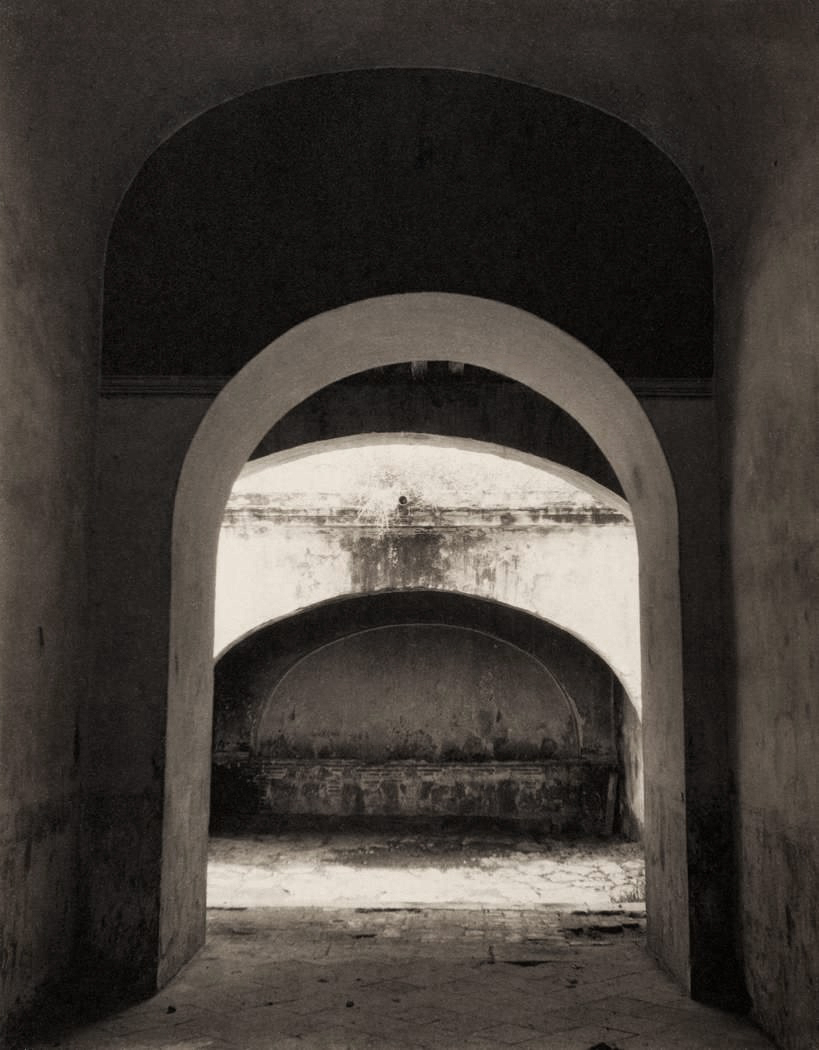
Edward WestonĀ (American, 1886-1958) 'Arches, Oaxaca' 1926


Edward Weston (American, 1886-1958)
Arches, Oaxaca
1926
Vintage gelatin silver print
9 1/2 x 7 1/2 inches


Edward WestonĀ (American, 1886-1958) 'Guadalajara, Barranca de los Oblatos: Rocky Trail' 1925


Edward Weston (American, 1886-1958)
Guadalajara, Barranca de los Oblatos: Rocky Trail
1925
Vintage palladium print
10 x 8 inches


Mexico City in the 1920s-30s was the scene of one of the great artistic flowerings of the twentieth century. Like Paris in the aftermath of World War I, Mexico City after the decade-long Mexican Revolution served as a magnet for international artists and photographers. Foremost among the expatriate photographers was the Los Angelino, Edward Weston, who embedded himself in the artistic milieu surrounding the muralist painters Rivera, Orozco, and Siqueiros. Weston reinvented his approach to picture-making during his three years in Mexico, 1923-26. The soft-focus painterliness that had characterised his studio portraiture in the ‘teens melted away under the brilliant Mexican sun, to be replaced by crystalline landscapes as well as evocative still life that prefigured his later shells and peppers. Meanwhile his paramour and protĆ©gĆ©e, the Italian silent film star Tina Modotti, created photographs that would place her in the pantheon of great photographers of the era. This exhibition features rare vintage Mexican masterworks by both Weston and Modotti from the 1920s, as well as stellar photographs from the 1930s by the New Yorker Paul Strand, the Frenchman Henri Cartier-Bresson, and by Mexico’s own self-taught master of the camera, Manuel Ɓlvarez Bravo.

Already in the first two decades of the 20th century, immigrant photographers had played an outsize role in Mexican photography. German-born Hugo Brehme published picturesque views of Mexican life and landscape in local and international tourist magazines, including National Geographic. Brehme’s fellow German Ć©migrĆ©, Carl Wilhelm (Guillermo) Kahlo, meticulously photographed Mexico’s colonial architecture; his daughter Frida would marry Diego Rivera and become a legendary painter and personality. A third talented immigrant photographer was the Californian C.B. Waite, who moved to Mexico City in 1897 and opened a photo studio. At their best, as in The Iguana from 1901, seen here, Waite’s genre studies prefigure by a quarter century the exotic Surrealism that would characterise the work of Modotti, Ɓlvarez Bravo, and Cartier-Bresson.

In 1923, C.B. Waite left Mexico and retired to Glendale, California, a suburb of Los Angeles. Coincidentally, within a few months, Glendale’s leading photographer, Edward Weston, would make that same journey in the opposite direction. Weston sought to escape from the personal and professional distractions that he felt were deterring him from an aesthetic breakthrough. His love affair with Tina Modotti made him realise that he would never be a conventional husband. In August, 1923, Weston left the port of Los Angeles and sailed to Mexico on the S.S. Colima, accompanied by Modotti, who agreed to run his studio in exchange for photography lessons.

The Weston-Modotti home in Mexico City became a gathering place for writers, painters and photographers. This was the time of the Mexican Renaissance, a cultural movement that celebrated the country’s modern artists as well as its popular and indigenous arts. Under the presidency of Ɓlvaro Obregón, the education minister JosĆ© Vasconcelos sponsored an ambitious program of progressive public art, most notably the mural movement which was led by Diego Rivera, who was in all ways a larger-than-life character.

While Weston never second-guessed his decision to give up the steady income from studio portraiture, he and Tina faced constant money problems during their three years together in Mexico. Financial salvation came in the unlikely guise of a brash 19-year-old anthropology student, Anita Brenner. Born to a mercantile family with roots in both Texas and Mexico, Brenner befriended Weston and Modotti in Mexico City and hired them to furnish 400 photographs for her book, Idols Behind Altars. This was to be the first serious art-historical treatise on pre-Columbian art, Spanish Colonial architecture, and contemporary Mexican folk art. Weston and Modotti rose to the task with gusto, criss-crossing southern Mexico from Oaxaca to Guadalajara in search of prime examples of these genres.

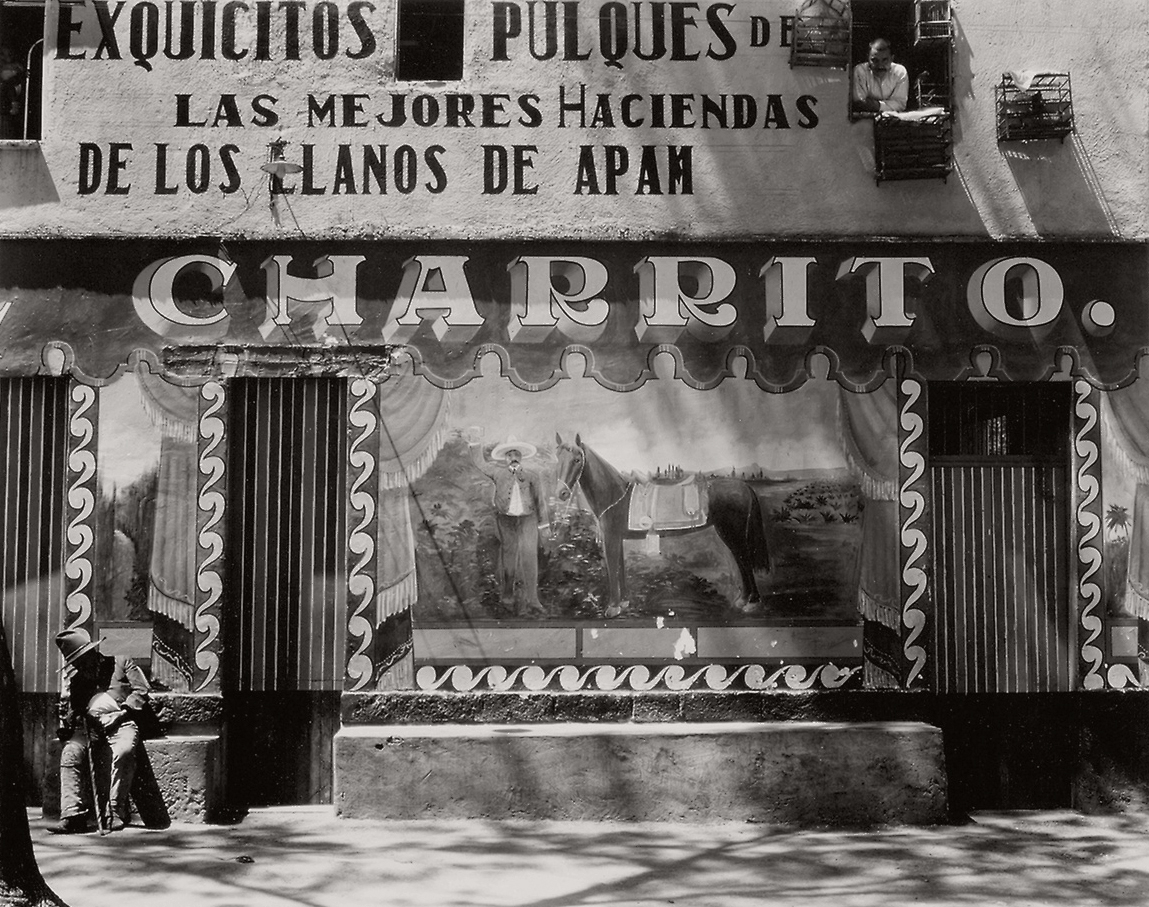
Weston was first introduced to pulquerĆ­as, or working-class bars, by Diego Rivera, who was writing an article on pulquerĆ­a mural painting for Mexican Folkways magazine. Weston was impressed by the vitality of these anonymous murals, writing:

“The aspiring young painters of Mexico should study the unaspiring paintings – popular themes – popular art – which adorn the humble pulquerĆ­a… brave matadores at the kill – white veiled ladies, pensive beside moonlit waters – an exquisitely tender group of Indians … and all the pictured thoughts, nearest and dearest to the heart of the people.”


When Modotti left Mexico in 1930, she gifted her large-format view cameras to her close friend and protĆ©gĆ©, Manuel Ɓlvarez Bravo. With a seven-decade career, he is considered Mexico’s greatest photographer. “I was born in the city of Mexico, behind the Cathedral, in the place where the temples of the ancient Mexican gods must have been built, February fourth, 1902,” he wrote, invoking the magical realism that infuses his most iconic photographs. As a teenager he studied painting at the Academia San Carlos, the same art school that Rivera and Orozco had attended. “Interested since always in art, I committed the common error of believing that photography would be the easiest,” he confessed. In addition to Modotti, another important early mentor was the painter Rufino Tamayo, who counselled Ɓlvarez Bravo against the “surface nationalism” of political art, such as that of Rivera, Orozco, or indeed Modotti herself: “Art is a way of expression that has to be understood by everybody, everywhere. It grows out of the earth, the texture of our lives and our experiences.” Tamayo’s words became Ɓlvarez Bravo’s touchstones.

In 1934, Ɓlvarez Bravo befriended the young painter-turned-photographer Henri Cartier-Bresson, who had come to Mexico to spend the year photographing in the brilliant natural light not often found in his native Paris. At a technical level their approach to photography diverged: Ɓlvarez Bravo, like Weston and Modotti, favoured traditional large-format view cameras, while Cartier-Bresson, the progenitor of the “decisive moment,” was an early proponent of the hand-held 35mm Leica camera. Yet their common interest in capturing the “accidental theater of the street” outweighed these differences. “Cartier-Bresson and I did not photograph together but we walked the same streets and photographed many of the same things,” Ɓlvarez Bravo recalled. They exhibited together in 1935 in a show entitled Documentary and Anti-Graphic Photographs, first at the Palacio de Bellas Artes in Mexico City and then at the Julien Levy Gallery in New York. This seminal exhibit was the first time that “street photographyā€ had been placed in a serious fine art setting. Reviewing that show, poet Langston Hughes wrote: “In a photograph by Cartier-Bresson, as in modern music, there is a clash of sunlight and shadow, while in Bravo, the sunlight is a discreet veil that turns the shadows into velvet.”

Text from the Palmer Museum of Art


Edward WestonĀ (American, 1886-1958) 'Los Changos Vaciladores (Playful Monkeys), pulquerĆ­a mural' 1926


Edward Weston (American, 1886-1958)
Los Changos Vaciladores (Playful Monkeys), pulquerĆ­a mural
1926
Vintage gelatin silver print
7 1/2 x 9 1/2 inches


Edward WestonĀ (American, 1886-1958) 'Charrito, pulquerĆ­a mural' 1926


Edward Weston (American, 1886-1958)
Charrito, pulquerĆ­a mural
1926
Vintage gelatin silver print
7 1/2 x 9 1/2 inches


Edward WestonĀ (American, 1886-1958) 'Two children with pulquerĆ­a mural' 1926


Edward Weston (American, 1886-1958)
Two children with pulquerĆ­a mural
1926
Vintage gelatin silver print
9 3/8 x 6 3/4 inches


Edward Weston (American, 1886-1958) 'Ceiling of the Church of Santiago, TupÔtaro' 1926


Edward Weston (American, 1886-1958)
Ceiling of the Church of Santiago, TupƔtaro
1926
Vintage gelatin silver print
7 1/2 x 9 1/2 inches


“Few had seen this church of TupĆ”taro, far from tourist tracks. The ceiling was entirely lacquered, even the beams – a notable achievement in colour, design and craftsmanship. That was a hard day of work. Exposures were prolonged to even fifteen minutes with additional flash light, the while I must remain quite still upon a rickety balcony for fear of jarring the camera, which was real torture with more fleas biting and crawling than I ever knew could jump from a few square feet of space.” ~ Edward Weston, The Daybooks, vol. I


Edward WestonĀ (American, 1886-1958) 'Tin roofs, Mexico' 1926


Brett Weston (American, 1911-1993)
Tin roofs, Mexico
1926
Vintage gelatin silver print
7 1/8 x 9 1/2 inches


Edward Weston’s son Brett joined him in his final year in Mexico. Brett was himself a child prodigy photographer, as evidenced by this sensitively balanced and exquisitely printed abstract masterwork, taken when he was fourteen years old.

Theodore Brett Weston (December 16, 1911, Los Angeles – January 22, 1993, Hawaii) was an American photographer. Van Deren Coke described Brett Weston as the “child genius of American photography.” He was the second of the four sons of photographer Edward Weston and Flora Chandler.

Weston began taking photographs in 1925, while living in Mexico with Tina Modotti and his father. He began showing his photographs with Edward Weston in 1927, was featured at the international exhibition at Film und Foto in Germany at age 17, and mounted his first one-man museum retrospective at age 21 at the De Young Museum in San Francisco in January, 1932.

Weston’s earliest images from the 1920s reflect his intuitive sophisticated sense of abstraction. He often flattened the plane, engaging in layered space, an artistic style more commonly seen among the Abstract Expressionists and more modern painters like David Hockney than other photographers. He began photographing the dunes at Oceano, California, in the early 1930s. This eventually became a favourite location of his father Edward and later shared with Brett’s third wife Dody Weston Thompson. Brett preferred the high gloss papers and ensuing sharp clarity of the gelatin silver photographic materials of the f64 Group rather than the platinum matte photographic papers common in the 1920s and encouraged Edward Weston to explore the new silver papers in his own work. Brett Weston was credited by photography historian Beaumont Newhall as the first photographer to make negative space the subject of a photograph. Donald Ross, a photographer close to both Westons, said that Brett never came after anyone. He was a true photographic equal and colleague to his father and “one should not be considered without the other.”

“Brett and I are always seeing the same kinds of things to do – we have the same kind of vision. Brett didn’t like this; naturally enough, he felt that even when he had done the thing first, the public would not know and he would be blamed for imitating me.” Edward Weston – Daybooks – May 24, 1930.

Text from the Wikipedia website


Edward WestonĀ (American, 1886-1958) 'Rosa Covarrubias in Tehuana dress' 1926


Edward Weston (American, 1886-1958)
Rosa Covarrubias in Tehuana dress
1926
Vintage gelatin silver print
9 3/8 x 7 1/2 inches


Rosa and Miguel Covarrubias were early promoters of traditional Mexican art and craft; their extensive collection now resides at San Francisco’s Mexican Museum. This striking portrait of Rosa in traditional Zapotec dress was appropriated by Diego Rivera for his painting Tehuana Woman, 1929.

Born in Los Angeles, Rosa Rolanda was a dancer with the Marion Morgan dance troupe and the Ziegfeld Follies. She married the Mexican artist Miguel Covarrubias, who was the leading caricaturist of the jazz age. While Rosa and Miguel were accompanying Edward and Tina on one of their trips for Anita Brenner, they taught Rosa the basics of photography. Later, Man Ray would teach her his technique of cameraless photograms. With such tutelage, it is no surprise that Rosa became a gifted photographer in her own right.


Edward WestonĀ (American, 1886-1958) 'Rosa Covarrubias' 1926


Edward Weston (American, 1886-1958)
Rosa Covarrubias
1926
Vintage gelatin silver print
9 x 6 3/4 inches


Edward WestonĀ (American, 1886-1958) 'Palma Bendita' 1926


Edward Weston (American, 1886-1958)
Palma Bendita
1926
Vintage gelatin silver print
9 1/2 x 7 3/8 inches


The branches of the palma bendita, or “blessed palm,” were believed to have been strewn on the road before Christ during his entry into Jerusalem and are blessed on Palm Sunday, an important Mexican holiday.


Tina ModottiĀ (Italian, 1896-1942) 'Campesinos (Workers' Parade)' 1926


Tina Modotti (Italian, 1896-1942)
Campesinos (Workers’ Parade)
1926
Vintage palladium print
8 3/8 x 7 1/2 inches


Modotti’s iconic Campesinos has the same formal structure – circular forms filling the picture frame – as Weston’s Olla Pots of Oaxaca made the same year. But Modotti’s picture adds a political dimension that Weston would by nature recoil from. Modotti’s increasingly fervent politicisation contributed to the dissolution of her relationship with Weston, who was fundamentally apolitical. Weston returned to Los Angeles at the end of 1926; Modotti would remain in Mexico another four years.


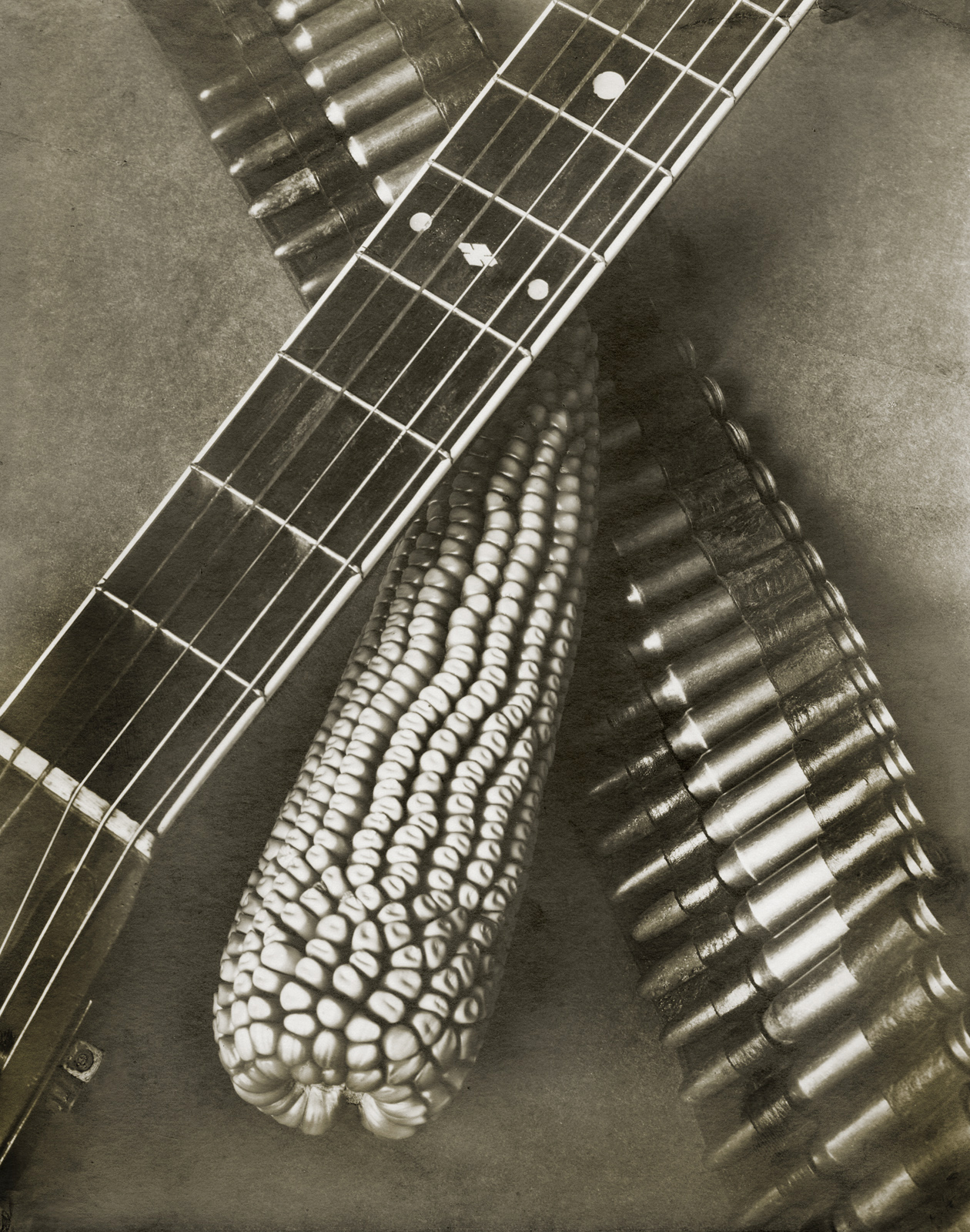
Tina ModottiĀ (Italian, 1896-1942) 'Bandolier, Corn, Sickle' 1927


Tina Modotti (Italian, 1896-1942)
Bandolier, Corn, Sickle
1927
Vintage gelatin silver print
8 3/4 x 7 1/2 inches


This politically-charged still life, and its companion piece Bandolier, Corn and Guitar, were made the year Modotti formally joined Mexico’s Communist Party. At the time she was modelling for Diego Rivera, a fellow traveler. Modotti’s likeness appears in several of Rivera’s most famous Revolutionary murals; she would also be blamed for the break-up of his marriage to Lupe MarĆ­n.


Tina ModottiĀ (Italian, 1896-1942) 'Bandolier, Corn and Guitar' 1927


Tina Modotti (Italian, 1896-1942)
Bandolier, Corn and Guitar
1927
Vintage gelatin silver print
9 1/2 x 7 1/2 inches


Tina ModottiĀ (Italian, 1896-1942) 'Women of Tehuantepec' 1929


Tina Modotti (Italian, 1896-1942)
Women of Tehuantepec
1929
Vintage gelatin silver print
9 x 7 1/4 inches


This is one of Modotti’s final masterworks. The following year she would be expelled from Mexico for sedition, due to her work on behalf of the Communist Party. She settled in Russia, giving up photography for relief work with International Red Aid. When the Spanish Civil War erupted in 1936, she joined the fray. She returned to Mexico under a pseudonym in 1939, and died of a heart attack three years later, at age 45, her life the stuff of legend.


Manuel Álvarez Bravo (Mexican, 1902-2002) 'La Siesta de los Peregrinos' (the siesta of the migrants) 1930s


Manuel Ɓlvarez Bravo (Mexican, 1902-2002)
La Siesta de los Peregrinos (the siesta of the migrants)
1930s
Vintage gelatin silver print
6 7/8 x 9 3/8 inches


Manuel Ɓlvarez Bravo (February 4, 1902 – October 19, 2002) was a Mexican artistic photographer and one of the most important figures in 20th century Latin American photography. He was born and raised in Mexico City. While he took art classes at the Academy of San Carlos, his photography is self-taught. His career spanned from the late 1920s to the 1990s with its artistic peak between the 1920s and 1950s. His hallmark as a photographer was to capture images of the ordinary but in ironic or Surrealistic ways. His early work was based on European influences, but he was soon influenced by the Mexican muralism movement and the general cultural and political push at the time to redefine Mexican identity. He rejected the picturesque, employing elements to avoid stereotyping. He had numerous exhibitions of his work, worked in the Mexican cinema and established Fondo Editorial de la PlĆ”stica Mexicana publishing house. He won numerous awards for his work, mostly after 1970. …

Ɓlvarez Bravo’s photography career spanned from the late 1920s to the 1990s. It formed in the decades after the Mexican Revolution (1920s to 1950s) when there was significant creative output in the country, much of it sponsored by the government wanting to promote a new Mexican identity based on both modernity and the country’s indigenous past.

Although he was photographing in the late 1920s, he became a freelance photographer full-time in 1930, quitting his government job. That same year, Tina Modotti was deported from Mexico for political activities and she left Alvarez Bravo her camera and her job at Mexican Folkways magazine. For this publication, Alvarez Bravo began photographing the work of the Mexican muralists and other painters. During the rest of the 1930s, he established his career. He met photographer Paul Strand in 1933 on the set of the film “Redes”, and worked with him briefly. In 1938, he met French Surrealist artist AndrĆ© Breton, who promoted AlvarĆ©z Bravo’s work in France, exhibiting it there. Later, Breton asked for a photograph for the cover of catalog for an exhibition in Mexico. Alvarez Bravo created “La buena fama durmiendo” (The good reputation sleeping), which Mexican censors rejected due to nudity. The photograph would be reproduced many times after that however.

Alvarez Bravo trained most of the next generation of photographers including Nacho López, Héctor García and Graciela Iturbide. From 1938 to 1939, he taught photography at the Escuela Central de Artes PlÔsticas, now the National School of Arts (UNAM). In the latter half of the 1960s he taught at the Centro Universitario de Estudios CinematogrÔficos.

Text from the Wikipedia website


Manuel Álvarez Bravo (Mexican, 1902-2002) 'Retrato de lo Eterno' (Portrait of the Eternal) 1935


Manuel Ɓlvarez Bravo (Mexican, 1902-2002)
Retrato de lo Eterno (Portrait of the Eternal)
1935
Vintage gelatin silver print
9 1/2 x 7 3/8 inches


Henri Cartier-BressonĀ (French, 1908-2004) 'The Spider of Love, Mexico City' 1934


Henri Cartier-Bresson (French, 1908-2004)
The Spider of Love, Mexico City
1934
Gelatin silver print c. 1960
6 1/2 x 9 3/4 inches


“I was very lucky. I had only to push the door open. It was so voluptuous, so sensual. I couldn’t see their faces. It was miraculous – physical love in all its fullness. Tonio grabbed a lamp, and I took several shots. There was nothing obscene about it. I could never have got them to pose – a matter of decency.” ~ Cartier-Bresson


Henri Cartier-BressonĀ (French, 1908-2004) 'Calle Cuauhtemoctzin (two prostitutes), Mexico City' 1934


Henri Cartier-Bresson (French, 1908-2004)
Calle Cuauhtemoctzin (two prostitutes), Mexico City
1934
Gelatin silver print c. 1960
9 1/8 x 13 3/4 inches


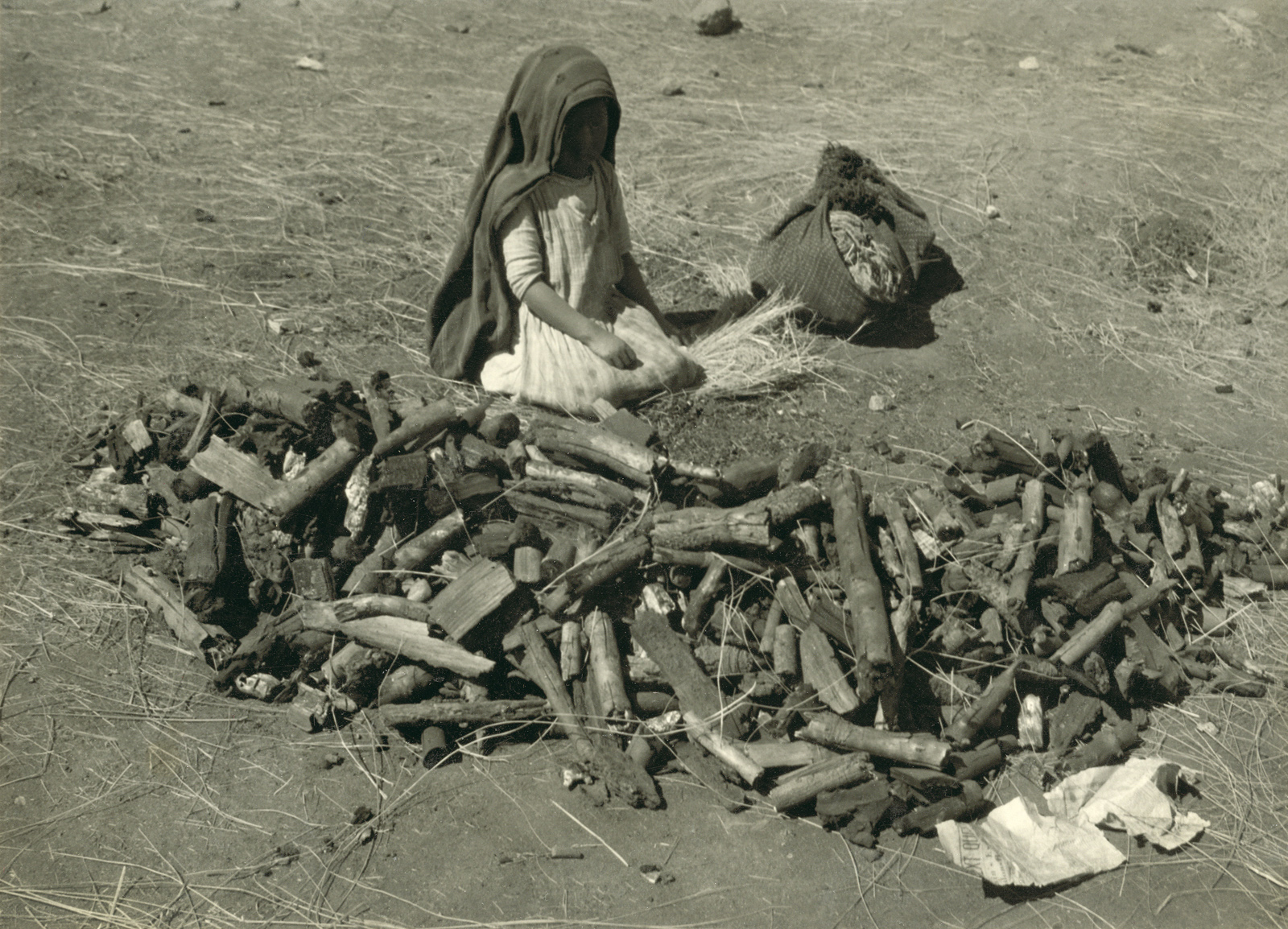
Manuel Álvarez Bravo (Mexican, 1902-2002) 'Niña con Leña' (Girl with Firewood) 1930s


Manuel Ɓlvarez Bravo (Mexican, 1902-2002)
NiƱa con LeƱa (Girl with Firewood)
1930s
Vintage gelatin silver print
7 x 9 5/8 inches


Helen Levitt’s photographs of Mexico City, taken in 1941, are a notable exception to her otherwise exclusive focus on New York City during her long career (1930s through 1970s). But the principal subject matter of Levitt’s work was the same in both metropolises: the lives of children in working-class neighbourhoods. In this evocative image, the children’s play is undeterred by their poverty, which is evidenced by their bare feet, the dirt road, and the dilapidated buildings. Levitt studied with the noted photographer Walker Evans; her work was also influenced by the other artists in the present exhibition: like Cartier-Bresson, she favoured the hand-held Leica camera; like Paul Strand, she used a secret sideways lens that enabled her to photograph surreptitiously.

Levitt printed her Mexican photographs only after returning to New York, where they added to her blossoming reputation. Her first one-woman show at the Museum of Modern Art included sixteen photographs from Mexico, including a variant of this image (below).


Helen Levitt (American, 1913-2009) 'Mexico City' 1941


Helen Levitt (American, 1913-2009)
Mexico City
1941
Vintage gelatin silver print
7 1/4 x 9 5/8 inches


Henri Cartier-BressonĀ (French, 1908-2004) 'Mexico' 1963


Henri Cartier-Bresson (French, 1908-2004)
Mexico
1963
Vintage gelatin silver print
9 3/4 x 6 1/2 inches


Paul Strand (American, 1890-1976)

Paul Strand achieved early recognition as a protĆ©gĆ© of Alfred Stieglitz, the New York photographer and gallerist. In 1917 Stieglitz devoted the final two issues of his Camera Work magazine to Strand’s high modernist photography, which was heavily influenced by avant garde artists such as Paul Cezanne and Pablo Picasso. Stieglitz praised Strand’s work as “brutally direct” and “devoid of all flim-flam.”

By 1932, when Strand drove his Model A Ford from Taos to Mexico, his style had evolved dramatically. Abstraction had given way to humanism, reflecting the influence of his high school photography teacher, the eminent social documentarian Lewis Hine. Strand was now concerned with how people lived, and especially with those aspects of life that “make a place what it is.” Mexico was a logical destination for Strand, whose political concern for the common man intersected with the proletarian goals of the Mexican Revolution.

Over the next several months Strand photographed people and places in rural small towns across southern Mexico, from MichoacĆ”n in the West to Oaxaca in the East, unconsciously retracing Edward Weston and Tina Modotti’s footsteps from the 1920s. Strand’s work in Mexico set the tone for the photographic journeys to out-of-the-way destinations in Europe and Africa that would occupy the rest of his long career.

For these Mexican portraits, Strand modified his 5 x 7 Graflex camera, adding a special prism extension that enabled him to clandestinely shoot a subject at a 90° angle from the front of his camera. The subjects of these portraits, absorbedly watching the Yankee photographer at work, were unaware that he was actually aiming his camera at them. Strand had pioneered this technique as a young photographer on the streets of New York.

Strand originally printed his Mexican photographs as platinum prints. The prints shown here are hand-pulled photogravures created for a 1940 portfolio Photographs of Mexico. In his introduction to the portfolio, Strand describes the prints as “a step forward in the art of reproduction processes,” attributing their quality to the production team’s combined two centuries of experience.


Paul StrandĀ (American, 1890-1976) 'Near Saltillo' 1932


Paul Strand (American, 1890-1976)
Near Saltillo
1932
Vintage photogravure
5 x 6 3/8 inches


“When you leave the Texas border for about 70 miles – flat desert, it could still be Texas. Then suddenly appear the mountains of the North around Monterrey and Saltillo – amazing mountains. They are a continuation of the American spur – our Rockies I suppose – but how different – utterly fantastic shapes, like mountains in fairy books. And I never saw the forms within each individual mountain – defined – come right at you as those in the North.” ~ Paul Strand to painter John Marin


Paul StrandĀ (American, 1890-1976) 'Gateway – Hidalgo' 1933


Paul Strand (American, 1890-1976)
Gateway – Hidalgo
1933
Vintage photogravure
10 1/8 x 8 inches


“What have come to be known as ‘Strand clouds’ – heavy, lowering shapes holding rain and threat of storm – appear in a great many of his photographs. A friend of Strand’s remembers him cursing under his breath whenever fluffy, cottony cloud formations, which he referred to as ‘Johnson & Johnson,’ took over the sky; they never appear in his prints.” ~ Calvin Tomkins


Paul StrandĀ (American, 1890-1976) 'Boy – Hidalgo' 1933


Paul Strand (American, 1890-1976)
Boy – Hidalgo
1933
Vintage photogravure
6 3/8 x 5 inches


Paul StrandĀ (American, 1890-1976) 'Man with Hoe – Los Remedios' 1933


Paul Strand (American, 1890-1976)
Man with Hoe – Los Remedios
1933
Vintage photogravure
6 1/4 x 5 inches


Paul StrandĀ (American, 1890-1976) 'Plaza – State of Puebla' 1933


Paul Strand (American, 1890-1976)
Plaza – State of Puebla
1933
Vintage photogravure
5 x 6 3/8 inches


Paul StrandĀ (American, 1890-1976) 'Church, Cuapiaxtla' 1933


Paul Strand (American, 1890-1976)
Church, Cuapiaxtla
1933
Vintage photogravure
6 3/8 x 5 inches


Paul StrandĀ (American, 1890-1976) 'Man – Tenancingo' 1933Ā 


Paul Strand (American, 1890-1976)
Man – Tenancingo
1933
Vintage photogravure
6 1/2 x 5 1/8 inches


Paul StrandĀ (American, 1890-1976) 'Girl and Child – Toluca' 1933


Paul Strand (American, 1890-1976)
Girl and Child – Toluca
1933
Vintage photogravure
6 1/2 x 5 1/8 inches


Paul StrandĀ (American, 1890-1976) 'Boy – Uruapan' 1933


Paul Strand (American, 1890-1976)
Boy – Uruapan
1933
Vintage photogravure
10 1/8 x 8 1/8 inches


Paul StrandĀ (American, 1890-1976) 'Cristo – Oaxaca' 1933


Paul Strand (American, 1890-1976)
Cristo – Oaxaca
1933
Vintage photogravure
10 x 8 inches


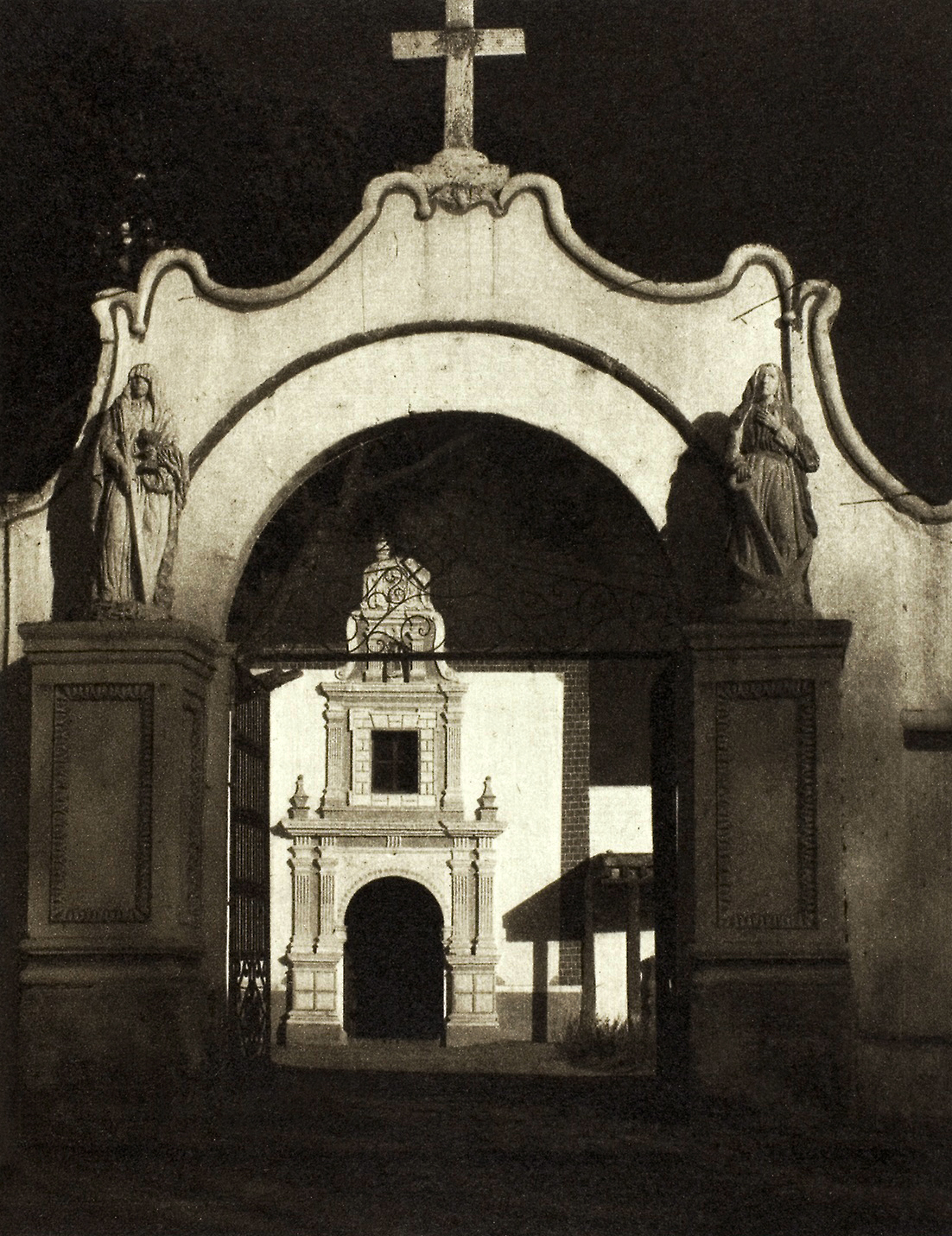
Paul StrandĀ (American, 1890-1976) 'Cristo with Thorns – Huexotla' 1933


Paul Strand (American, 1890-1976)
Cristo with Thorns – Huexotla
1933
Vintage photogravure
10 1/4 x 8 1/8 inches


Paul StrandĀ (American, 1890-1976) 'Cristo – Tlacochoaya – Oaxaca' 1933


Paul Strand (American, 1890-1976)
Cristo – Tlacochoaya – Oaxaca
1933
Vintage photogravure
10 1/4 x 8 inches


Paul StrandĀ (American, 1890-1976) 'Virgin – San Felipe – Oaxaca' 1933


Paul Strand (American, 1890-1976)
Virgin – San Felipe – Oaxaca
1933
Vintage photogravure
10 1/4 x 8 1/8 inches


Palmer Museum of Art
The Pennsylvania State University
Curtin Road
University Park, PA 16802

Opening hours:
Temporarily closed until June 2024

Palmer Museum of Art website

LIKE ART BLART ON FACEBOOK

Back to top

Exhibition: ‘Henri Cartier-Bresson / Paul Strand, Mexico 1932-1934’ at HCB Foundation, Paris

Exhibition dates: 11thĀ January – 22nd April 2012


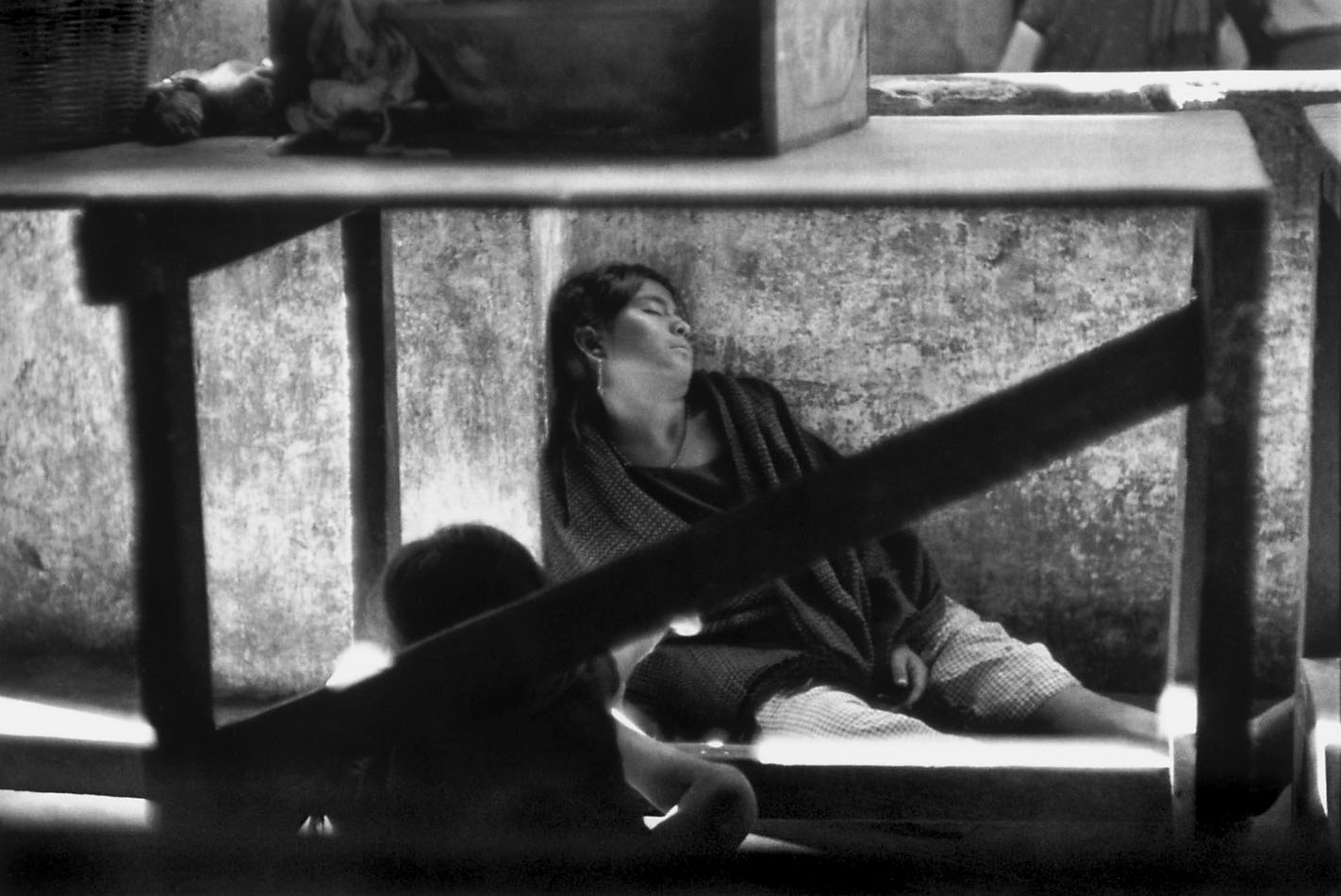
Henri Cartier-BressonĀ (French, 1908-2004) 'Mexico' 1934


Henri Cartier-BressonĀ (French, 1908-2004)
Mexico
1934
Gelatin silver print
Ā© Magnum, Henri Cartier-Bresson Foundation


“The American’s immobility contrasts with [the] Frenchman’s fluidity.”

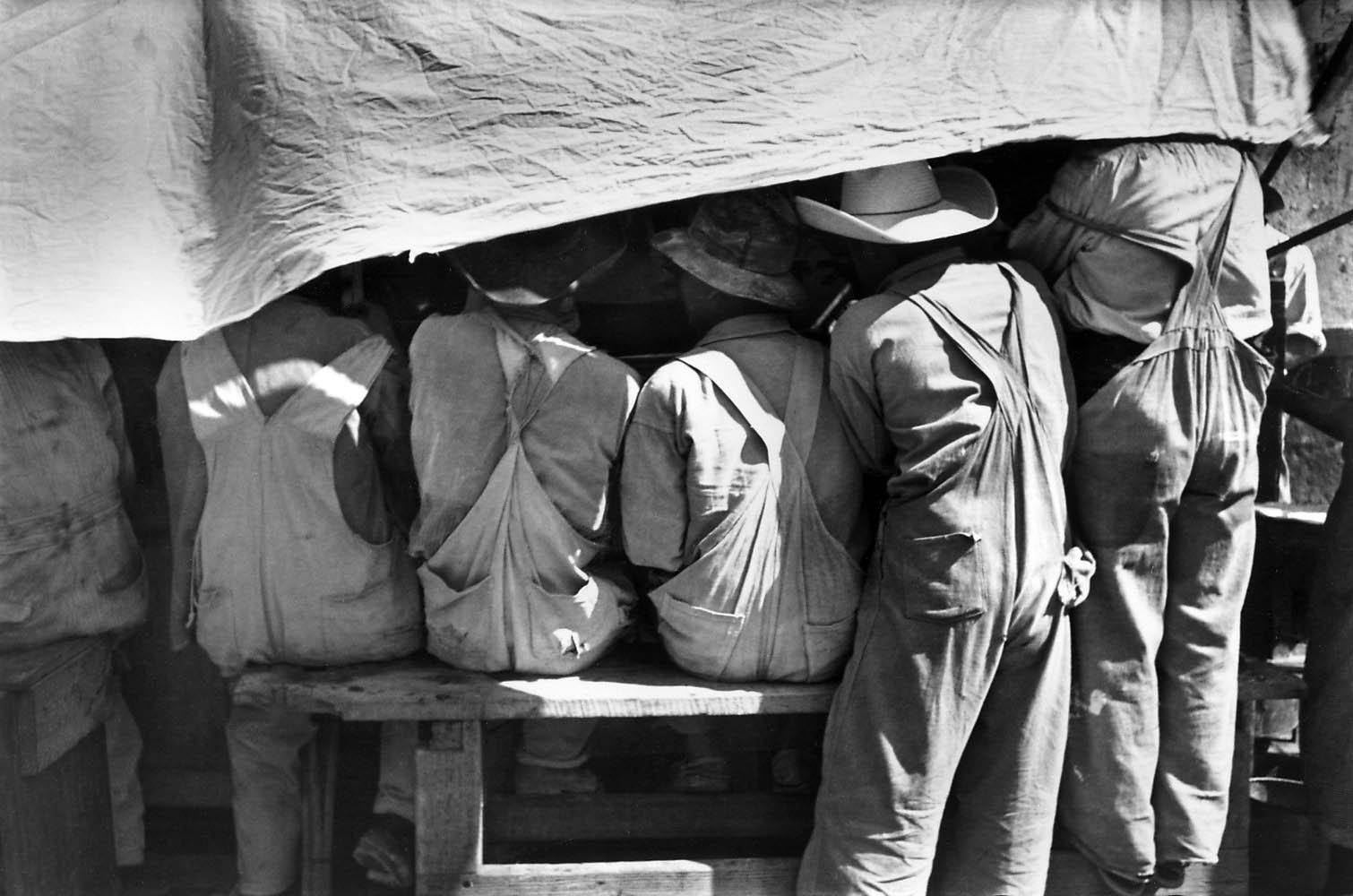
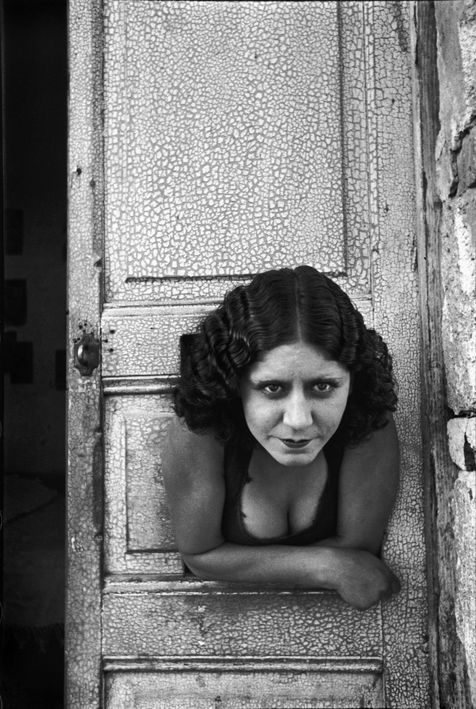
Press releases should be very careful when making such sweeping generalisations. Personally I find the photographs of Cartier-Bresson the more static (both physical and psychological) of the two photographers. The compartmentalisation of space in Bresson’s photographs – the use of diagonals and verticals – is more fixed than in the sensuous Strand, the emotions more didactic and formalised even as they seek the spontaneity of photojournalism. The placement of the two figures in Strand’s Men of Santa Ana (1933, below) is superlative, with the central dividing column and combination of tones and textures, father and son(?), stares and postures.Ā Cartier-Bresson’sĀ Prostitute (1934, below) is simpler in pose and purpose but we must remember this was a twenty-six year old photographer still finding his voice in the world, whereas Strand was a much older person and a more experienced photographer.

Dr Marcus Bunyan


Many thankx to the Henri Cartier-Bresson Foundation for allowing me to publish the photographs in the posting. Please click on the photographs for a larger version of the image.


Henri Cartier-BressonĀ (French, 1908-2004) 'Natcho Aguirre, Santa Clara, Mexico' 1934


Henri Cartier-BressonĀ (French, 1908-2004)
Natcho Aguirre, Santa Clara, Mexico
1934
Gelatin silver print
Ā© Magnum, Henri Cartier-Bresson Foundation


Henri Cartier-BressonĀ (French, 1908-2004) 'Calle Cuauhtemoctzin (two prostitutes), Mexico City' 1934


Henri Cartier-BressonĀ (French, 1908-2004)
Calle Cuauhtemoctzin (two prostitutes), Mexico City
1934
Gelatin silver print
Ā© Magnum, Henri Cartier-Bresson Foundation


Henri Cartier-BressonĀ (French, 1908-2004) 'The Spider of Love, Mexico City' 1934


Henri Cartier-BressonĀ (French, 1908-2004)
The Spider of Love, Mexico City
1934
Gelatin silver print
Ā© Magnum, Henri Cartier-Bresson Foundation


Henri Cartier-BressonĀ (French, 1908-2004) 'Mexico' 1934


Henri Cartier-BressonĀ (French, 1908-2004)
Mexico
1934
Gelatin silver print
Ā© Magnum, Henri Cartier-Bresson Foundation


Henri Cartier-BressonĀ (French, 1908-2004) 'Juchitan' 1934


Henri Cartier-BressonĀ (French, 1908-2004)
Juchitan
1934
Gelatin silver print
Ā© Magnum, Henri Cartier-Bresson Foundation


Paul StrandĀ (American, 1890-1976) 'Nets, Michoacan' 1933


Paul StrandĀ (American, 1890-1976)
Nets, Michoacan
1933
Gelatin silver print
Ā© Paul Strand


Paul StrandĀ (American, 1890-1976) 'Near Saltillo' 1932


Paul StrandĀ (American, 1890-1976)
Near Saltillo
1932
Gelatin silver print
Ā© Paul Strand


Bringing together such different works by two great masters in the history of photography isĀ not self-evident. There are many points of convergence, but their styles are profoundlyĀ different. The American’s immobility contrasts with Frenchman’s fluidity. They both travelledĀ to Mexico during the same period and they crossed paths in New York in 1935 when theyĀ joined the political filmmakers’ group Nykino (which later became Frontier Films) in order toĀ explore filmmaking at a critical point in their respective careers.

In autumn 1932, Paul Strand (1890-1976) set out for Mexico by car at the invitation of theĀ Mexican Ministry of Education. He exhibited his photographs there and had the pleasure ofĀ witnessing the popular success of his images. It was in the course of working in the streets ofĀ Mexico, a practice which he had abandoned for many years, that Strand took up a differentĀ documentary style. At that point, he received a proposal to make a series of films. In 1934, heĀ shot Redes (released in English as The Wave), a ‘docu-fiction’ about the oppression of theĀ fishermen in the village of Alvarado. The film was screened in Mexico in 1936, andĀ subsequently in the United States and France. In 1950, fleeing the climate of McCarthyism inĀ the United States, he came to France and ultimately settled in the village of Orgeval, where heĀ remained until the end of his life.

In 1934, Henri Cartier-Bresson (1908-2004), who was eighteen years younger than Strand, signed up for a French ethnographic mission which was supposed to take him to Argentina. In the end, the mission was suspended and the twenty-six-year-old photographer spent a year in Mexico, literally fascinated by the country. He worked for several newspapers there, moved in intellectual and artistic circles together with his sister and worried about his future. In March 1935, he exhibited his work at the Palacio de Bellas Artes with Mexican photographer Manuel Ɓlvarez Bravo. The local press reacted favourably and the young Frenchman contacted New York art dealer Julien Levy – who had already exhibited him in 1933 – to suggest a show of his recent work. He left Mexico with the firm intention of becoming a filmmaker and thus headed straight for the Nykino group. Strand’s prints come from various international collections; those of Cartier-Bresson belong to the Fondation HCB archives.

Press release from the HCB Foundation website


Henri Cartier-BressonĀ (French, 1908-2004) 'Prostitute, Calle Cuauhtemoctzin, Mexico' 1934


Henri Cartier-BressonĀ (French, 1908-2004)
Prostitute, Calle Cuauhtemoctzin, Mexico
1934
Gelatin silver print
Ā© Magnum, Henri Cartier-Bresson Foundation


Henri Cartier-BressonĀ (French, 1908-2004) 'Men of Santa Ana, Lake Patzcuaro Michoacan' 1933


Paul StrandĀ (American, 1890-1976)
Men of Santa Ana, Lake Patzcuaro Michoacan
1933
Gelatin silver print
Ā© Paul Strand


From January 11 to April 22, 2012, the HCB Foundation will pay tribute to two great masters of photography: Henri Cartier-Bresson and Paul Strand. The perspective of their work on Mexico between 1932 and 1934 will be an opportunity for the public to discover two visions of the same country and especially two approaches to photography.

In the fall of 1932, Paul Strand (1890-1976) left the United States and a personal life in crisis for Mexico. It was at the invitation of Carlos Chavez, whom he had met a little earlier and now responsible for culture at the Ministry of Education, that Strand discovered this country of which he said “I thought of Mexico as something mysterious, dark and dangerous, inhospitable.” However, Strand remained in Mexico for two years until his return to New York in December 1934.

The support of Carlos Chavez proved to be very important and enabled Strand to exhibit for the first time in Mexico at the Sala de Arte of the Ministry of Education in February 1933. After this first success, he left in the spring of 1933 to investigate Mexican arts and crafts in the state of MichoacƔn. Fascinated by the indigenous culture and the piety of the inhabitants, he brought back from this mission portraits of religious statues, men, women and children in the streets, landscapes and architecture.

He was then appointed director of photographic and cinematographic activities for the Ministry of Education and was entrusted with the production of a series of films on Mexico. He then worked on the script for his first feature film Redes, which is intended as a docu-fiction based on the struggle of a group of men, fishermen, against a corrupt society. The actors of the film are mainly the inhabitants of the village of Alvarado. The realisation is complex but the film is finally screened at the Juarez de Alvarado theatre on June 4, 1936. Barely a year later, it is under the title The Wave that the American public discovers this film very largely influenced by Russian cinema. Unfortunately, the new Mexican government set up in 1934 with the election of Lazaro Cardenas abandoned the film series project and Strand therefore decided to return to New York. He then abandoned photography, joined the association of filmmakers Nykino, devoted himself to political cinema and became president of Frontier Film, Nykino’s new name.

In 1940, thanks to the financial support of Virginia Stevens, his new wife, he published “Photographs of Mexico”, a portfolio, published in 250 copies, of 20 carefully assembled photogravures. A copy will be presented in the exhibition.

In 1951, when the witch hunt was launched in the United States by McCarthy, Strand decided to settle in Orgeval, France, where he would spend the end of his life.

Henri Cartier-Bresson (1908-2004) landed in Mexico City in July 1934. He was part of an ethnographic mission led by Doctor Julio Brandan and supported by the TrocadĆ©ro Museum to follow the construction of a major Pan-American road. The mission got off to a bad start because the funding promised by the Mexican government was not forthcoming. The majority of the members of the expedition then returned to France, disappointed to see the project abandoned. But HCB decides to stay because “he feels a real crush on this country”. Nicknamed “the little Frenchman with shrimp cheeks” by Lupe Cervantes, his Mexican “fiancĆ©e”, Cartier-Bresson travels the country with his Leica. He therefore manages to survive in this country, befriends poets like Langston Hugues, Tonio Salazar or Natcho Aguirre, is passionate about muralists and their revolutionary frescoes, works for the press like Todo. He exhibited at the Palacio de Bellas Artes in March 1935 with the Mexican photographer Manuel Alvarez Bravo. “When he left, he declared himself a Frenchman from Mexico.”

During his stay, Henri Cartier-Bresson maintains frequent contact with the New York gallery owner Julien Levy and invites him to exhibit his recent photographs. This project will be carried out in April 1935 under the title “Documentary and Antigraphic photographs”. On this occasion, he will find the Mexican Manuel Alvarez Bravo and meet Walker Evans whom he deeply esteems. As soon as he arrived in New York, Henri Cartier-Bresson turned to cinema, “I stopped photographing in 1935, when I was in New York. Photography has always been for me only one of the different means of visual expression. […] I therefore started, with Paul Strand and with others, to learn cinema. I changed tools. Thanks to financial help from his parents, he bought a 35mm camera and joined the Nykino group. He learned a lot from this group of committed filmmakers and on his return to France, he assisted Jean Renoir on several of his films (La vie est Ć  nous [Life is ours], Une partie de campagne [A country party]). It was not until 1937 that he left for Spain to make documentaries on the Spanish front. (Spain Will Live, Victory of Life, and With the Abraham Lincoln Brigade in Spain)

Putting these two photographers into perspective is not easy. The convergences are numerous but the styles vary profoundly. The fluidity of the French contrasts with the immobility of the American. Both travel to Mexico at the same time, both meet in New York in 1935, when they join the group of committed filmmakers Nykino, to try a cinematic experience in a key phase of their two careers.

The exhibition presents 90 black and white prints: the works of Paul Strand come from Spanish, American and Mexican collections; those of Cartier-Bresson, some of which are unpublished, come from the collection of the HCB Foundation. The exhibition will be presented from May 13 to September 2, 2012 at the Point du Jour Center d’art in Cherbourg.

The exhibition is accompanied by a catalogue, published by Steidl, with a preface by Agnès Sire and an essay by Clément Chéroux.

Press dossier from HCB Foundation website translated from the French by Google Translate


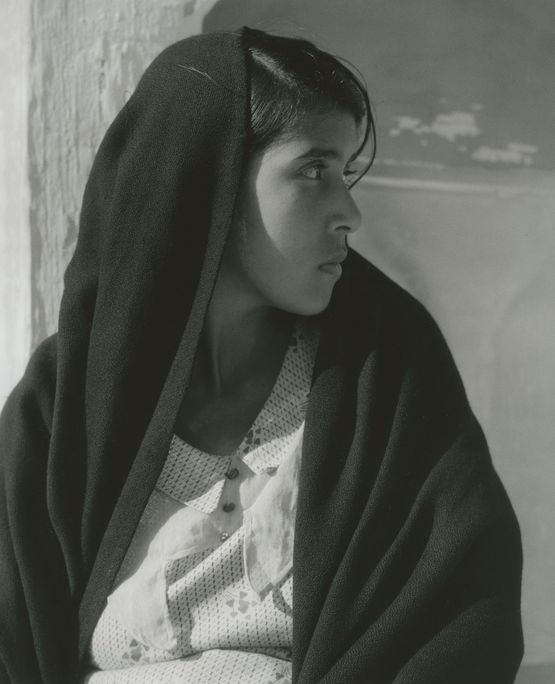
Paul StrandĀ (American, 1890-1976) 'Woman of Alvarado, Veracruz' 1933


Paul StrandĀ (American, 1890-1976)
Woman of Alvarado, Veracruz
1933
Gelatin silver print
Ā© Paul Strand


Paul Strand (American, 1890-1976) 'Cristo with Thorns, Huexotla' 1933, printed 1940


Paul Strand (American, 1890-1976)
Cristo with Thorns, Huexotla
1933, printed 1940
Gelatin silver print
Ā© Paul Strand


Paul Strand (American, 1890-1976) 'Boy – Hidalgo' 1933


Paul Strand (American, 1890-1976)
Boy – Hidalgo
1933
Gelatin silver print
Ā© Paul Strand


Paul Strand (American, 1890-1976) 'Man with Hoe – Los Remedios' 1933


Paul Strand (American, 1890-1976)
Man with Hoe – Los Remedios
1933
Gelatin silver print
Ā© Paul Strand


Paul StrandĀ (American, 1890-1976) 'Man – Tenancingo' 1933


Paul StrandĀ (American, 1890-1976)
Man – Tenancingo
1933
Gelatin silver print
Ā© Paul Strand


Paul StrandĀ (American, 1890-1976) 'Boy – Uruapan' 1933


Paul StrandĀ (American, 1890-1976)
Boy – Uruapan
1933
Gelatin silver print
Ā© Paul Strand


Paul Strand (American, 1890-1976) 'Church, Coapiaxtla' 1933, printed 1940


Paul Strand (American, 1890-1976)
Church, Coapiaxtla
1933, printed 1940
Gelatin silver print
Ā© Paul Strand


Henri Cartier-BressonĀ (French, 1908-2004) 'Mexico' 1934


Henri Cartier-BressonĀ (French, 1908-2004)
Mexico
1934
Gelatin silver print
Ā© Magnum, Henri Cartier-Bresson Foundation


Fondation Henri Cartier-Bresson
79 rue des Archives
75003 Paris

Opening hours:
Tuesday – Sunday 11am – 7pm
Closed Mondays
Henri Cartier-Bresson Foundation website

LIKE ART BLART ON FACEBOOK

Back to top