Exhibition: ‘Fashioning Self: The Photography of Everyday Expression’ at the Phoenix Art Museum

Exhibition dates: 8th March – 12th November 2023

Curator: Rebecca A. Senf, chief curator at CCP and curator of Fashioning Self
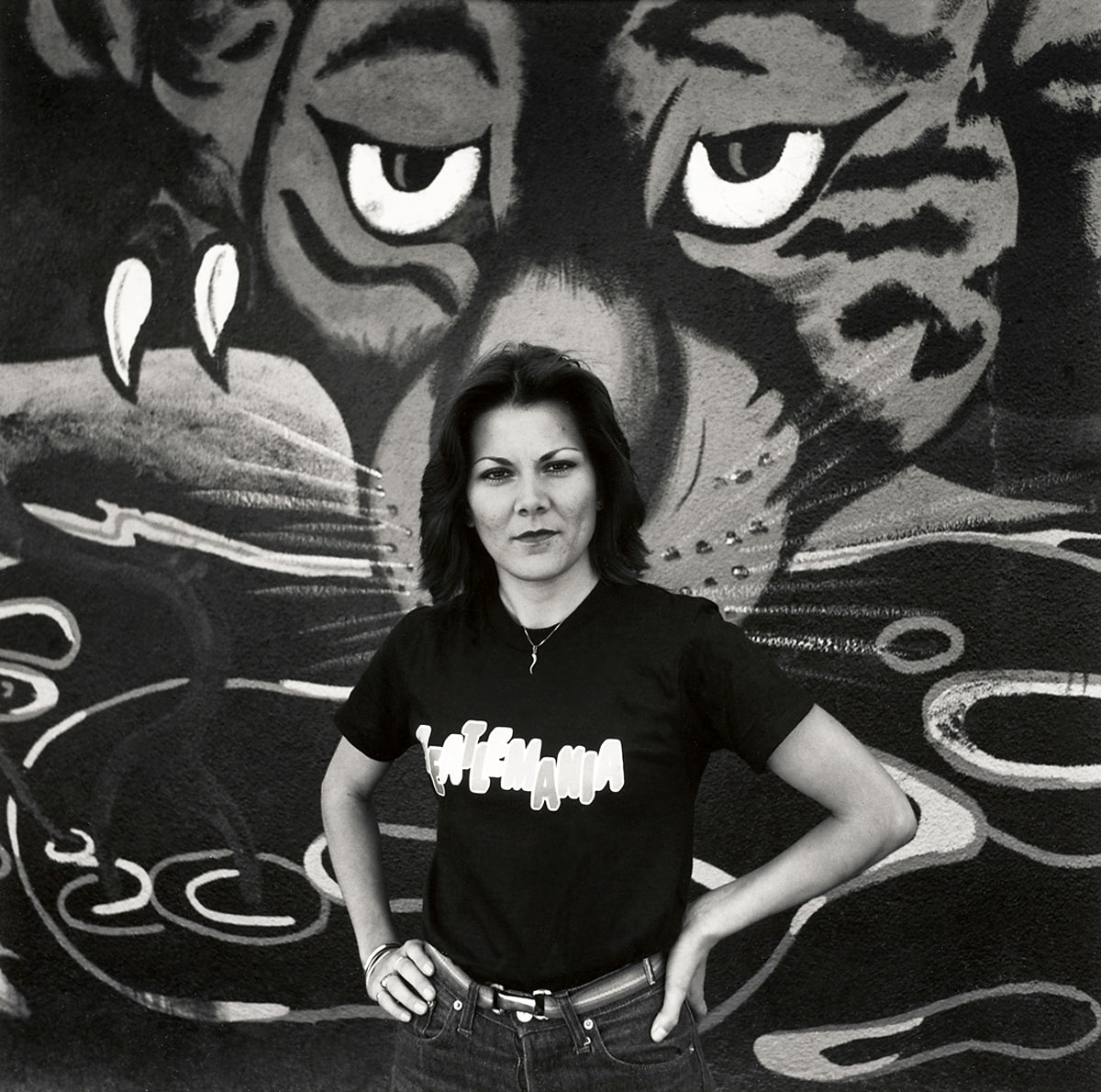
 

Roger Minick (American, b. 1944) 'Young Woman in Black with Pendant, Estrada Courts, Boyle Heights, East Los Angeles, 1978' 1978 from the exhibition 'Fashioning Self: The Photography of Everyday Expression' at the Phoenix Art Museum, March - Nov 2023


Roger Minick (American, b. 1944)
Young Woman in Black with Pendant, Estrada Courts, Boyle Heights, East Los Angeles, 1978
1978
Gelatin silver print
Center for Creative Photography, University of Arizona
Gift of the Mexican American Legal Defense and Educational Fund
© Roger Minick 1978


Freedom of the self

This is a strange group of photographs with which to investigate the “long-intertwined relationship between fashion as a tool for self-expression and photography’s role in chronicling it,” for while the many historical portrait photographs depict a link between fashion and photography of the self (through the need to fit into a regimented cultural norm), many of the vernacular images are not about fashion, are a kind of non-fashion, where the people who “pose” for the photographs are just wearing whatever they are in at the time… thereby undermining the premise of the exhibition, that the performance of self becomes a visual language through the picturing of fashion.

Indeed, despite the assertion that historical genres such as street photography “inform contemporary evolutions, such as selfies and carefully crafted social-media platforms”, most selfies taken today through the ubiquity of the phone camera are not carefully crafted, are the very antithesis of the old purpose of a portrait: that is, to picture how we choose to dress, adorn, and re/present ourselves at a particular moment in time.

In today’s contemporary age self is more about the style and context of the individual (as pictured in a photograph) rather than about the fashion (the latest style; the manner of doing something) of the individual or the collective.

Today, style is casual, informal, ephemeral, temporary… which leads us to pose the questions, are historical photographs evidence of a self-expression of more substance, compared to the rapid self, the throw away self, the narcissistic self of today? Are selfies today just a shallow expression of self or are they intended to be more, can they be more?

Today, there is less a consciousness of fashionability than there is the ability to enact the self without resort to fashion. As Yves Saint Laurent once said, “Fashion fades, style is eternal.”

While visual representations of identity continue to shape our understandings of self and each other “with intimate details that alert viewers to who we are, as filtered through the photographic medium” this is no longer achieved through the definition of self as “fashionable” (as defined on a hierarchical scale of who is fashionable and who isn’t, who is beautiful and who isn’t) – rather, it is through the equivalence of a nonhierarchical expression of self where everything becomes valuable, every selfie and portrait of equal awareness and importance in a collective and individual consciousness of self.

The very non-fashion of contemporary self expression is a non-performance, an anti-ritual if you like (which destroys the ritual of production of consumable fashion), which negates fashion as defining the self, much as photography of the self does not define who we are but is only a very small facet of a multi-layered identity.

All of which makes the premise of this exhibition (that the performance of self becomes a visual language through the picturing of fashion) and the first part of its title – Fashioning Self – highly problematic.

Dr Marcus Bunyan

PS. Many thankx to my friend and artist Elizabeth Gertsakis for her help in providing thoughts and inspiration for this text.


Many thankx to the Phoenix Art Museum for allowing me to publish the photographs in the posting. Please click on the photographs for a larger version of the image.


Louis Carlos Bernal (American, 1941-1993) 'Albert and Lynn Morales, Silver City, New Mexico' 1978 from the exhibition 'Fashioning Self: The Photography of Everyday Expression' at the Phoenix Art Museum, March - Nov 2023


Louis Carlos Bernal (American, 1941-1993)
Albert and Lynn Morales, Silver City, New Mexico
1978
Chromogenic print. Center for Creative Photography, University of Arizona
Gift of the Mexican American Legal Defense and Educational Fund
© Lisa Bernal Brethour and Katrina Berna


Louis Carlos Bernal (1941-1993) was born in Douglas, Arizona, and grew up in Phoenix. After completing his M.F.A. at Arizona State University in 1972, he joined the faculty of Pima Community College in Tucson, where he remained for the duration of his career, developing and heading its photography program. In 1979, Bernal, along with four other photographers – Morrie Camhi, Abigail Heyman, Roger Minick, and Neal Slavin – received funding from the Mexican American Legal Defense and Educational Fund to photograph Chicano culture in the Southwest for an exhibition and a book project entitled ESPEJO: Reflections of the Mexican American. The commission brought him closer to his ethnic roots and fueled a passionate direction for his work that gained him international recognition for championing regional diversity while symbolizing his exploration of identity as a Mexican American.

Following a tradition of Latin American documentary street photography, Bernal photographed in the barrio – a young girl and her grandfather in a corner barber shop, a girl taking her quinceañera, or locals posing in front of colourful wall murals – images that captured the unique character of Chicano life. He wrote, “My images speak of the religious and family ties I have experienced as a Chicano. I have concerned myself with the mysticism of the Southwest and the strength of the spiritual and cultural values of the barrio.”

Bernal also centered on the family and the home, believing these two elements combined to form the most significant structure within the Mexican-American community. As he wandered streets from Texas to Los Angeles, and met people who were soon drawn to charismatic personality, he was often invited into their homes. He asked permission to photograph them surrounded by their treasured possessions, their family portraits and mementos, and their shrines decorated with saints, candles, and flowers. His subjects appear at ease and confident in front of his camera, a product of Bernal’s deep respect for them. Bernal’s interest in what people chose to surround themselves with led him to photograph the interiors of homes without people. These sensitive portraits of both prized and everyday items in living rooms, bedrooms and gardens were perhaps his most significant innovation.

Bernal’s interest in strong compositional design and technical expertise are evident in both his skilfully printed black-and-white images and his colour work that luminously captures the bright pinks, blues, and greens of interior painted adobe walls, window curtains, and religious icons. He felt a particular urgency to document the streets, people, homes, and artefacts in historic neighbourhoods, as many were undergoing rapid changes or being bulldozed to make way for urban renewal. In recording the Mexican- American experience of Southwest towns and barrios, Bernal created a visual document that preserves the specific iconography and reveals many aspects of this distinct culture.

The Louis Carlos Bernal Collection contains 98 fine prints, both black-and-white and colour, and research materials that include project records, correspondence, clippings, writings and publications.

Anonymous. “Louis Carlos Bernal,” on the Centre for Creative Photography website Nd [Online] Cited 28/09/2023


Kozo Miyoshi (Japanese, b. 1947) 'Tucson, Arizona' 1992 from the exhibition 'Fashioning Self: The Photography of Everyday Expression' at the Phoenix Art Museum, March - Nov 2023


Kozo Miyoshi (Japanese, b. 1947)
Tucson, Arizona
1992
Gelatin silver print
Center for Creative Photography, University of Arizona
Gift of the artist, DEP’T CO.,LTD., Tokyo, Nippon Polaroid, Tsudani Oil Co. Ltd.
© Kozo Miyosh


Kozo Miyoshi was born in Chiba, Japan in 1947. He graduated from the Department of Photography at Nihon University College of Art in 1971. He began his photographic career in the 1970s and started shooting an 8 × 10-inch large format camera in 1981. In 2009 he upgraded to an ultra large format 16 × 20-inch camera which he continues to use on his travels. Miyoshi’s photographs have received international acclaim for their unique and sincere approach to his fleeting subjects.


Dennis Feldman (American, b. 1946) 'Man with Reflective Glasses' 1969-1972


Dennis Feldman (American, b. 1946)
Man with Reflective Glasses
1969-1972
Center for Creative Photography, University of Arizona
Gift of the artist
© Dennis Feldman


Dennis Feldman (American, b. 1946) 'White Girl 1970' 1970


Dennis Feldman (American, b. 1946)
White Girl 1970
1970
Gelatin silver print
Center for Creative Photography, University of Arizona
Gift of the artist
© Dennis Feldman


From the seedy streets of Los Angeles to empty living rooms and apartments across the United States, the photographs of Dennis Feldman (b. 1946) explore the ways popular entertainment seeps into American consciousness. Pictures from his most acclaimed series, Hollywood Boulevard, 1969-1972, invite subjects from social parade of Los Angeles’s famed sidewalk to animate their self-styled identities. His American Images series, published in 1977, pursues other disclosures, revealing tensions that have come to define the underside of the American dream. In some pictures, people relish the escape and freedom symbolised by cars and movieland, while others seem to search for more elusive horizons. Like Walker Evans, Robert Frank, and Frederick Sommer – pioneering photographers whom he considers mentors – Feldman carefully crafts compositions that do not judge their subjects. Instead, they pry apart the world of appearances to reflect on fantasy and desire as they intertwine with paths of everyday life.

Anonymous. “Dennis Feldman: Photographs,” on the BAMPFA website 2019 [Online] Cited 28/09/2023


Garry Winogrand (American, 1928-1984) 'Untitled [Liberace with his mother]' New York, 1954


Garry Winogrand (American, 1928-1984)
Untitled [Liberace with his mother]
New York, 1954
Gelatin silver print
Center for Creative Photography, University of Arizona
Garry Winogrand Archive
Gift of the artist
© The Estate of Garry Winogrand, courtesy Fraenkel Gallery, San Francisco


Fashioning Self: The Photography of Everyday Expression examines the role of photography in shaping, sharing, and shifting identity.

About the exhibition

Whether for a selfie or formal portrait, we all craft our appearance and identity for a public audience. We consider cultural and social norms, the emotions we wish to express or hide away, where we’re going and with whom, and the purpose of the photograph when choosing how we dress, adorn, and present ourselves. The resulting images serve as a window into a particular moment of our life, with intimate details that alert viewers to who we are, as filtered through the photographic medium.

Organised by Phoenix Art Museum and the Center for Creative Photography (CCP), Fashioning Self: The Photography of Everyday Expression features 54 works of street, documentary, and self-portrait photography from 1912 to 2015 that explore this long-intertwined relationship between fashion as a tool for self-expression and photography’s role in chronicling it. Iconic views by Dennis Feldman, Laura Volkerding, Linda Rich, John Simmons, David Hume Kennerly, Teenie Harris, and more illuminate the dialogue that occurs between photographer and subject – the give-and-take between self-performance and art making.

Alongside these works drawn from CCP’s outstanding collection, Fashioning Self also features a rotating display of social media images reflecting community members and individuals from across the United States. Throughout the duration of the exhibition, the Museum and CCP will invite visitors, Arizona residents, and our collective social media followings to take their own selfies and portraits in the galleries or in their environments and share them via the hashtag #FashioningSelf for display in Norton Gallery. By placing these contemporary, real-time images in conversation with works by renowned photographers of the Americas, the exhibition interrogates what it means to be an artist or maker in a world where cameras are commonplace and everyone curates a feed.

Text from the Phoenix Art Museum website
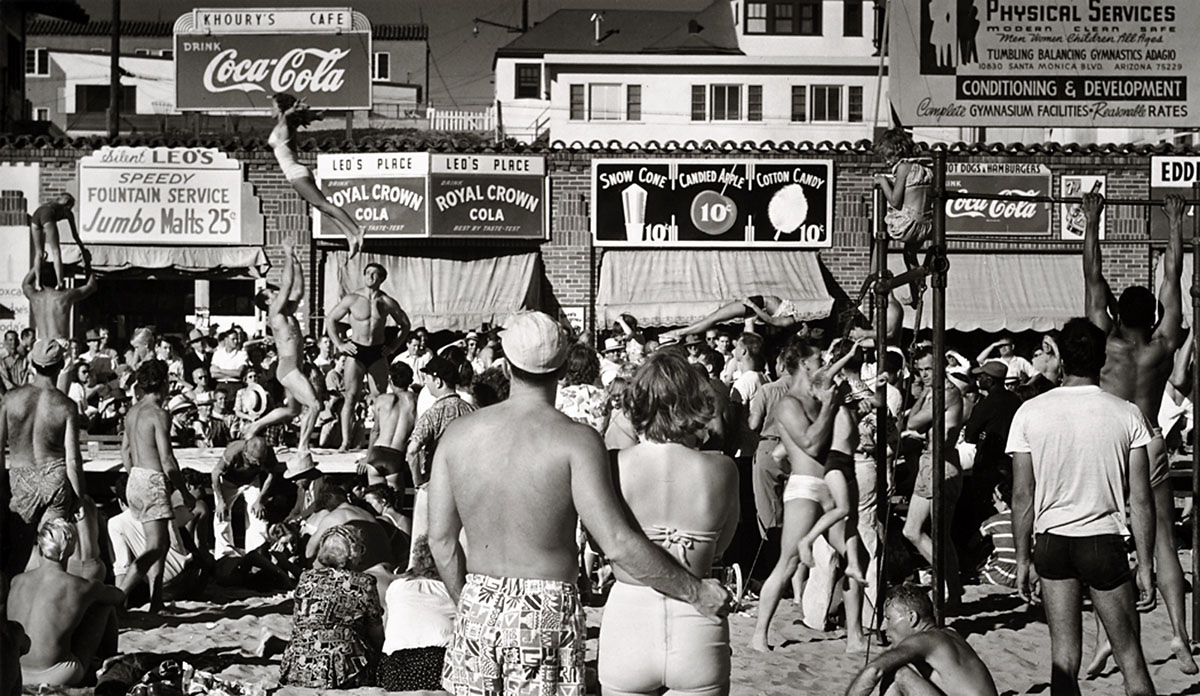
 

Max Yavno (American, 1911-1985) 'Muscle Beach, Los Angeles' 1949


Max Yavno (American, 1911-1985)
Muscle Beach, Los Angeles
1949
Gelatin silver print
Center for Creative Photography, University of Arizona
Purchase
© Center for Creative Photography, The University of Arizona Foundation
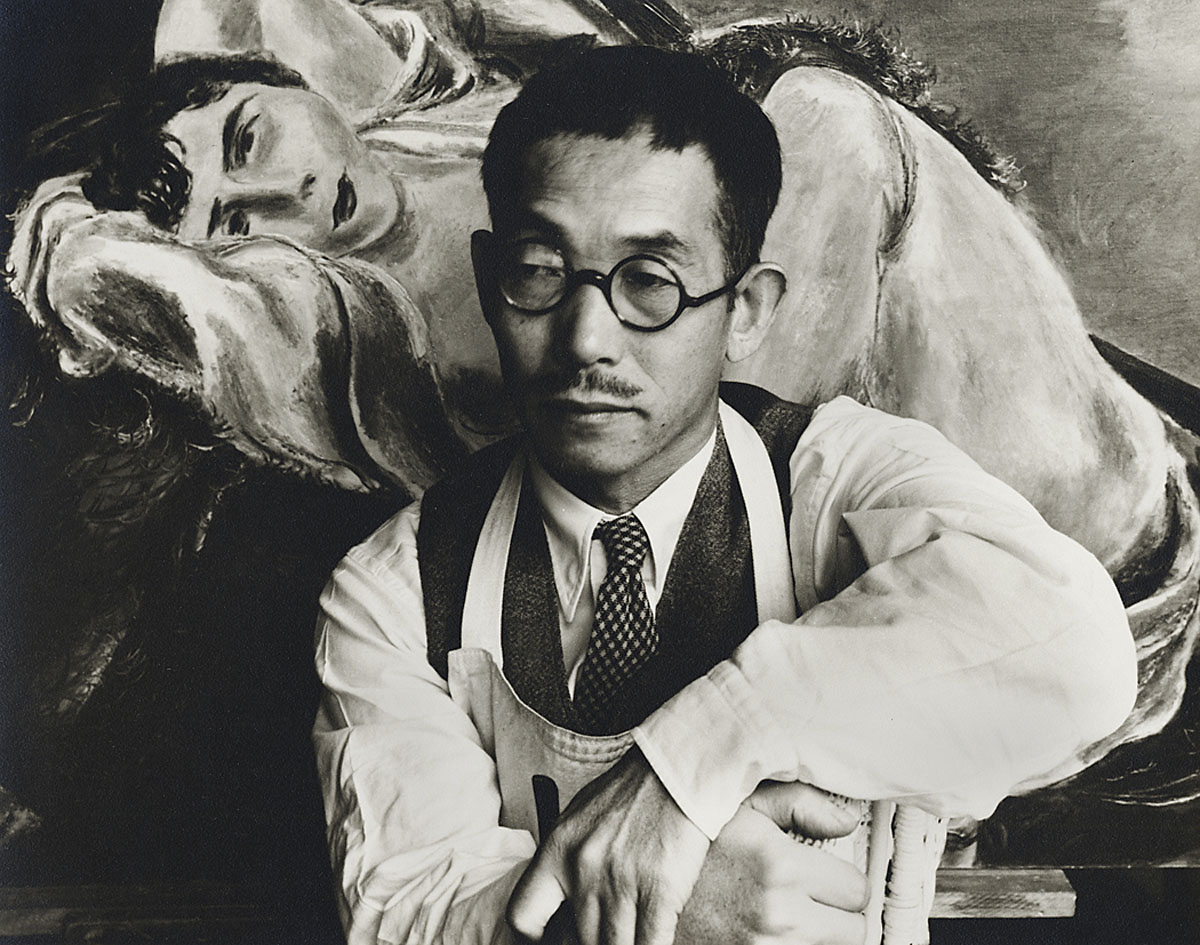
 

Max Yavno (American, 1911-1985) 'Kuniyoshi Portrait' c. 1941


Max Yavno (American, 1911-1985)
Kuniyoshi Portrait
c. 1941
Gelatin silver
Center for Creative Photography, University of Arizona
Max Yavno Archive
© Center for Creative Photography, The University of Arizona Foundation


Yasuo Kuniyoshi (国吉 康雄, Kuniyoshi Yasuo, September 1, 1889 – May 14, 1953) was an eminent 20th-century Japanese-American painter, photographer and printmaker.


Max Yavno (American, 1911-1985) 'Untitled [Opening Night at the San Francisco Opera]' 1947


Max Yavno (American, 1911-1985)
Untitled [Opening Night at the San Francisco Opera]
1947
Gelatin silver print
Center for Creative Photography, University of Arizona
Max Yavno Archive
© Center for Creative Photography, The University of Arizona Foundation


Social documentary photographer Max Yavno (1911-1985) identified the odd charm that constitutes the identity of a place and people. Born in New York, Yavno was a social worker from 1932-1936; this background clearly informed his photographic career. His humanistic sensibility is revealed in his work, which includes street photographs made in New York, San Francisco, and Los Angeles. Yavno is best known for his depictions of these great American cities and the cultural and social detail of their inhabitants, many of which distinctively reflect their era.

In 1936, Yavno began photographing New York street life for the Works Progress Administration’s Federal Theater Project. As his interest in photography burgeoned, Yavno joined the Photo League and served as its President in the late 1930s. Through this organisation he met Aaron Siskind who became his roommate and lifelong friend. During World War II, Yavno served in the United States Army Air Force as a film and photography instructor. Following the war, he relocated to San Francisco and continued teaching. There, Yavno began a freelance career with clients including Vogue and Harper’s Bazaar. During this time Yavno achieved success both as a fine art and a commercial photographer.

Yavno was included in “Seventeen American Photographers,” a 1947 exhibition at the Los Angeles County Museum of Art. This placed him alongside established photographers Berenice Abbott, Ansel Adams, Man Ray, and Edward Weston. Following this pivotal exhibition, Yavno published The San Francisco Book in 1948 and The Los Angeles Book in 1950, both of which chronicled the urban landscape and its population. By 1952, Edward Steichen had purchased Yavno’s prints for The Museum of Modern Art, New York. With recommendations by Edward Weston and Steichen, he was awarded a Guggenheim Fellowship in 1953. From 1954-75, Yavno owned and operated a thriving commercial photography studio in Los Angeles.

In 1975, the sixty four year old photographer closed his studio to allow for more personal pursuits. Yavno continued to photograph California, but also worked in Mexico, Morocco, Israel, and Egypt, securing funds for the later trips from the National Endowment for the Arts. The Photography of Max Yavno was published by University of California press in 1981, to accompany a retrospective at Los Angeles Municipal Art Gallery. Yavno continued to make and exhibit photographic works until his death in 1985.

The Max Yavno Archive contains papers, records of commercial assignments, correspondence, information regarding the Photo League, memorabilia, photographic materials and over 800 fine photographs.

Anonymous. “Max Yavno,” on the Centre for Creative Photography website Nd [Online] Cited 28/09/2023


Max Yavno (American, 1911-1985) 'Air Force Pilot' 1975-1980


Max Yavno (American, 1911-1985)
Air Force Pilot
1975-1980
Gelatin silver print
Center for Creative Photography, University of Arizona
Max Yavno Archive
© Center for Creative Photography, The University of Arizona Foundation


Elliott Erwitt (American born France, b. 1928) 'Pennsylvania Dutch & Adidas, Santa Cruz, U.S.A.' 1975


Elliott Erwitt (American born France, b. 1928)
Pennsylvania Dutch & Adidas, Santa Cruz, U.S.A.
1975
Gelatin silver print
Center for Creative Photography, University of Arizona
Gift of Al Cohen
© Elliott Erwitt


Marion Post Wolcott (American, 1910-1990) 'Jitterbugging in a night club. Memphis, Tennessee, 1939' 1939-11


Marion Post Wolcott (American, 1910-1990)
Jitterbugging in a night club. Memphis, Tennessee, 1939
1939-11
Gelatin silver print
Center for Creative Photography, University of Arizona
Gift of John H. Wolcott
© Courtesy of Linda Wolcott Moore for the Estate of Marion Post Wolcott


Marion Post Wolcott (American, 1910-1990) 'Spectators at the Paddock Fence, Warrenton, West Virginia' 1941


Marion Post Wolcott (American, 1910-1990)
Spectators at the Paddock Fence, Warrenton, West Virginia
1941
Gelatin silver print
Center for Creative Photography, University of Arizona
Gift of Robin Moore
© Courtesy of Linda Wolcott Moore for the Estate of Marion Post Wolcott


Marion Post Wolcott (American, 1910-1990) 'Board of Directors of the Two Rivers Non-stock Cooperative at a Demonstration of Farmall "M" Tractor, Waterloo, Nebraska' 1941


Marion Post Wolcott (American, 1910-1990)
Board of Directors of the Two Rivers Non-stock Cooperative at a Demonstration of Farmall “M” Tractor, Waterloo, Nebraska
1941
Gelatin silver print
Center for Creative Photography, University of Arizona
Gift of Robin Lee Moore
© Courtesy of Linda Wolcott Moore for the Estate of Marion Post Wolcott


Marion Post Wolcott was born in Montclair, New Jersey, and educated at the New School for Social Research, New York University, and at the University of Vienna. Upon graduation in 1932, she returned to New York to pursue a career in photography and attended workshops with Ralph Steiner. By 1936, she was a freelance photographer for Life, Fortune, and other magazines. She became a staff photographer for the Philadelphia Evening Bulletin in 1937 and remained there until Paul Strand recommended her to Roy Stryker at the Farm Security Administration, where she worked from 1938 to 1942. Wolcott suspended her photographic career thereafter in order to raise her family, but continued to photograph periodically as she traveled and taught, in Iran, Pakistan, Egypt, and New Mexico. In 1968 she returned to freelance photography in California and concentrated on colour work, which she had been producing in the early 1940s. Wolcott’s photographs have been included in group and solo exhibitions at the Museum of Modern Art in 1962, ICP, and elsewhere. Among other honours she has received are the Dorothea Lange Award, and the 1991 Society of Photographic Education’s Lifetime Achievement Award. The several books on her life and career include Paul Henrickson’s Looking for the Light: The Hidden Life of Marion Post Wolcott (1992).

Wolcott’s documentary photographs for the FSA are notable for their variation in subject matter. Because she joined the organisation late in its existence, Stryker often gave her assignments intended to complete projects already begun by others. Wolcott’s photographs show wealthy and middle-class subjects in addition to the poor people and migrant workers who appeared in most FSA photographs. Her body of work provides a view into another side of the 1930s in America, among that small percentage of people who could afford to escape the damaging effects of the Depression.

Lisa Hostetler

Handy et al. Reflections in a Glass Eye: Works from the International Center of Photography Collection, New York: Bulfinch Press in association with the International Center of Photography, 1999, p. 232 “Marion Post Wolcott,” on the International Center of Photography website Nd [Online] Cited 28/09/2023


Francis J. Bruguière (American, 1879-1945) 'Self-portrait with Friend' c. 1912


Francis J. Bruguière (American, 1879-1945)
Self-portrait with Friend
c. 1912
Gelatin silver print
Center for Creative Photography, University of Arizona
Gift of James Enyeart


This spring, Phoenix Art Museum (PhxArt) presents Fashioning Self: The Photography of Everyday Expression, a new major photography exhibition organised by PhxArt and the Center for Creative Photography (CCP) in Tucson. It will be on view from March 8 through November 12 in the Doris and John Norton Gallery for the Center for Creative Photography at Phoenix Art Museum.

Spanning the 1910s through the present, Fashioning Self explores the long-intertwined relationship between self-expression, fashion, and the photographic medium, with more than 50 works by Dennis Feldman, Laura Volkerding, Louis Carlos Bernal, Tseng Kwong Chi, David Hume Kennerly, Helen Levitt, Teenie Harris and others drawn from the CCP collection. These fine-art photographs are displayed alongside a social-media feed of community photos and selfies to spark reflection on the dynamic between photographer and subject, particularly as new technologies, self-styling, and the photographic medium continue to shape visual culture and personal and collective identities around the globe.

“Since the mid-1800s, photographers have captured our world and the captivating cast of characters who inhabit it, documenting all the varied and nuanced presentations of style and expression,” said the Sybil Harrington Director and CEO of Phoenix Art Museum, Jeremy Mikolajczak. “Fashioning Self: The Photography of Everyday Expression sparks fascinating conversations around historical photography genres, including street photography, and how they inform contemporary evolutions, such as selfies and carefully crafted social-media platforms, while also exploring the give-and-take between self-performance and art making.”

Fashioning Self showcases 54 works of street, documentary and self-portrait photography that present slices of everyday public life in the United States from 1912 through 2015. Featured works include those by Garry Winogrand, Marion Post Wolcott, Kozo Miyoshi, Laura Volkerding, Tseng Kwong Chi, Joan Liftin and Rosalind Solomon.

The exhibition’s fine-art images are complemented by a rotating display of social-media photos reflecting community members and individuals from across the United States. Throughout the duration of the exhibition, the museum and CCP will invite visitors, Arizona residents and the institutions’ collective social-media followings to snap their own selfies and portraits in the galleries or other environments and share them via the hashtag #FashioningSelf for display in Norton Gallery. By placing these contemporary, real-time images in conversation with works by renowned photographers of the Americas, the exhibition interrogates what it means to be an artist or maker when cameras are commonplace and everyone curates a feed.

“I am excited for visitors to contribute their own photos to Fashioning Self and engage with works from CCP’s collection in a fun and unique way,” said Rebecca A. Senf, chief curator at CCP and curator of Fashioning Self. “By participating in the gallery’s regularly updated social-media feed, they will be included in a century-long history of photographers who have fashioned, captured and distributed visual representations of identity, while considering how technology, digital platforms, and the ubiquity of the camera continue to shape our understandings of self and each other.”

Press release from the Phoenix Art Museum


Laura Volkerding (American, 1939-1996) 'Mrs. Mary Hatchett, Chicago' 1979


Laura Volkerding (American, 1939-1996)
Mrs. Mary Hatchett, Chicago
1979
Gelatin silver print
Center for Creative Photography, University of Arizona
Laura Volkerding Archive
© Center for Creative Photography, The University of Arizona Foundation


Educator and photographer Laura Volkerding (1939-1996) began her artistic career making prints and drawings, and discovered her passion for photography in 1972, at age thirty-three. Volkerding studied fine arts at the University of Louisville and the Institute of Design at the Illinois Institute of Technology where she received a Master’s degree in graphic design. She taught at University of Chicago from 1970 to 1980, and then served as a senior lecturer in photography at Stanford University until her death in 1996.

Citing photographs by Walker Evans and Art Sinsabaugh, as well as Chicago’s modernist architecture as visual influences, Volkerding’s early photographic work depicts quirky vernacular architecture, campgrounds and suggestive landscapes. In the late 1970s, Laura Volkerding, Nicholas Nixon, Stephen Shore, Frank Gohlke, and Lewis Baltz were among twenty-four photographers chosen to participate in an intensive project entitled Court House that documented historic court house architecture across America. Published in 1979, the monograph Court House: A Photographic Document exhibits a diverse and inclusive examination of America’s architectural heritage. In 1980, Volkerding moved to California and embarked on a project documenting the development of the San Francisco and San Pablo Bay waterfronts creating panoramic images by joining continuous frames of 5 x 7 inch negatives into a more expansive view.

Volkerding experimented with multiple photographic formats before settling, in 1984, on the rich clarity of prints produced with a Deardorff 8 x 10 inch view camera. This same year, Volkerding discovered the subject that would drive her work for over a decade: Les Compagnons du Devoir, a French sculpture apprentice community founded in medieval times. Their history of sculptural practice and reverence for craftsmanship resonated for Volkerding. She was attracted to the figurative and architectural forms that populated their work space. Volkerding photographed classrooms and apprentice projects, foundries and workshops, and cathedral restoration projects. The images suggest the presence of the craftsmen, but are devoid of the actual artisans, thus alluding to the longer craft tradition rather than the contemporary individuals. In addition to making many photographs of Les Compagnons in France, Volkerding photographed other sculpture workshops in Quebec, Tunisia, Spain, Greece, Italy, and the United States. This body of work was exhibited at Stanford in 1986; in 1988 she was awarded her second Guggenheim fellowship. The Center for Creative Photography published a related monograph, Solomon’s Temple: the European Building-Crafts Legacy, shortly before Volkerding’s death.

The Laura Volkerding Endowment and the naming of the Laura Volkerding Reading Room at the Center for Creative Photography serve to perpetuate her important role in photography. The Laura Volkerding Archive contains photographic work prints, negatives, personal papers, and a substantial collection of multi-colour intaglio prints and one-colour lithographs, as well as 968 fine prints.

Anonymous. “Laura Volkerding,” on the Centre for Creative Photography Nd [Online] Cited 28/09/2023


Laura Volkerding (American, 1939-1996) 'Easter, Chicago' 1979


Laura Volkerding (American, 1939-1996)
Easter, Chicago
1979
Gelatin silver print
Center for Creative Photography, University of Arizona
Laura Volkerding Archive
© Center for Creative Photography, The University of Arizona Foundation


“Our choices about clothing, makeup, hairstyles and accessories are a component of the way we communicate who we are, what we value, and what is important to us,” says Rebecca A. Senf, Chief Curator at the Center for Creative Photography …

“These prints are not just evidence of the photographer’s process; they are also evidence of the self presentation process of the people who appear in the pictures,” says Senf. “When you have your portrait made, there’s a process that goes behind thinking about what you’ll wear, how you’ll do your hair and what kind of sense of yourself are you trying to convey through the picture.”

Featuring works by Helen Levitt, Tseng Wong Chi, Charles “Teenie” Harris and Dennis Feldman, among others, Fashioning Self considers both the formal and informal ways in which people employ visual signifiers to transit their identities to the world. Whether donning ball gowns and fur wraps, cowboy hats and boots, bandana and chest tattoos, or unironic trucker hats, each subject conveys an intuitive sense of ease and authenticity that comes from being true to who they are.

Senf brings this integrity to the curation of the show, offering a broad array of images sparkling with individual expressions of character and poise that can resonate with the widest possible audience. “One of the most exciting things about photography is that it’s functioning as a visual language and people are using it to communicate ideas,” she says.

Miss Rosen. “Symbiotic relationship between art and identity,” on the Huck website Monday 14 August 2023 [Online] Cited 28/09/2023
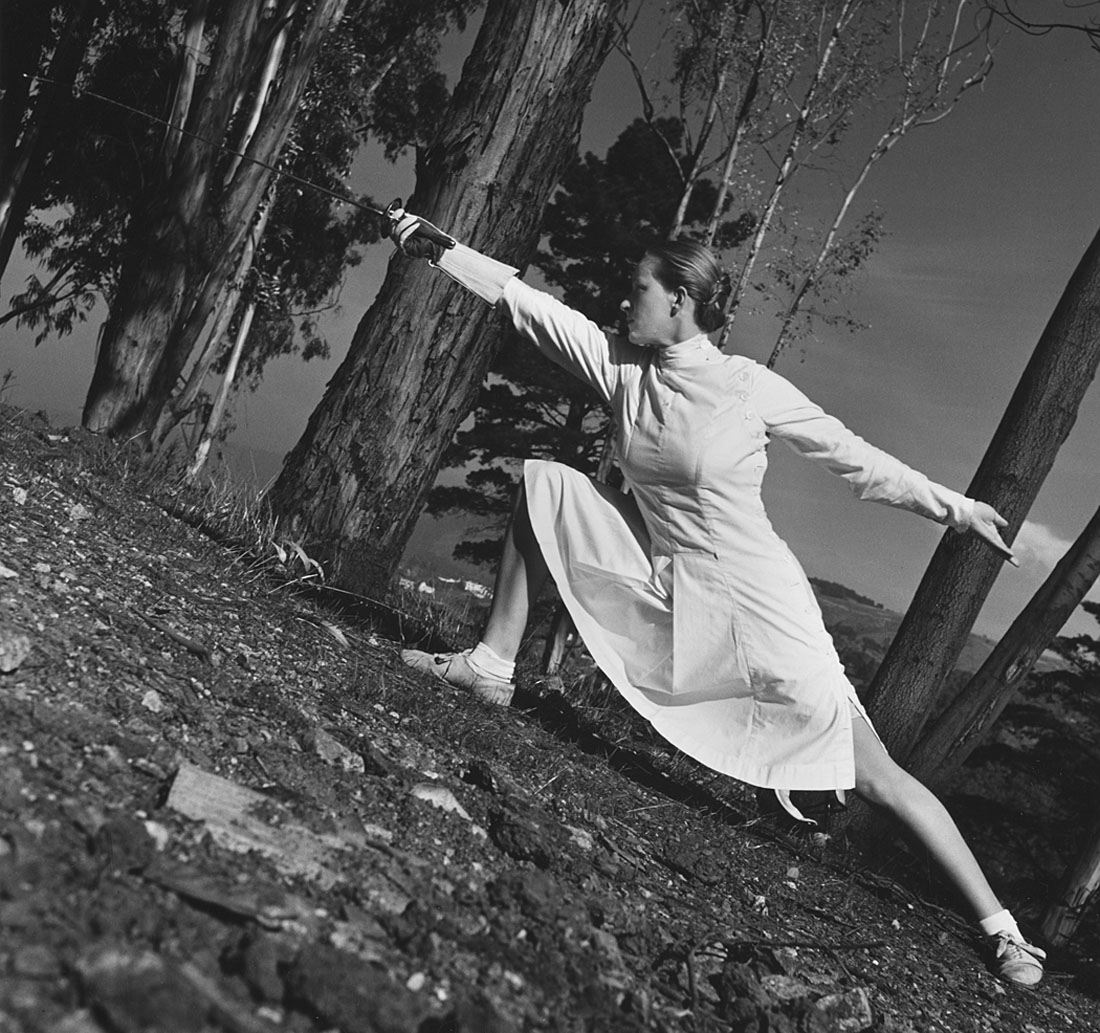
 

John Gutmann (American born Germany, 1905-1998) 'Helene Mayer, Two Time Olympic Fencing Champion' 1935


John Gutmann (American born Germany, 1905-1998)
Helene Mayer, Two Time Olympic Fencing Champion
1935
Gelatin silver print
Center for Creative Photography, University of Arizona
John Gutmann Archive
© Center for Creative Photography, Arizona Board of Regents


John Gutmann received his bachelor’s degree from the State Academy of Arts and Crafts in Breslau, Germany (now Wroclaw, Poland) and studied with master painter Otto Mueller, one of the founding members of the New Realist movement in Germany. Gutmann moved to Berlin in 1927 where he earned his master’s degree at the State Institute for Higher Education. The arts were flourishing in Berlin, and the city’s vibrant social scene provided inspiration for subject matter and aesthetic. Gutmann’s paintings were done in the vein of well-known German painter Otto Dix, who represented Berlin nightlife as both dizzily exciting and darkly isolating. In 1933, due to the rise of the Nazi regime, Gutmann was no longer able to exhibit his paintings or teach and began to experiment with photography as a means of supporting himself. He bought a Rolleiflex camera, shot three rolls of film, and immediately secured a contract with a German agency, Presse-Foto, to photograph in America and send pictures back for German publications. That same year he arrived in San Francisco and started to document America from the detached eye of an anthropologist. By 1936 he had secured a teaching position at San Francisco State College, where a decade later he founded its creative photography program, one of the first in the country. By the end of the thirties, Gutmann switched agencies to Pix, Inc., a New York-based agency, which promoted his work for publication in magazines such as Time, The Saturday Evening Post, Life, and Look. During World War II, he studied at the Signal Corps Motion Picture School in Queens and made still and motion pictures for the United States Army Signal Corps. He focused much of his work during this time on China, Burma, and India. Gutmann retired from teaching in 1973 and began to print and edit his earlier work for exhibition and publication. The San Francisco Museum of Modern Art held a two-man exhibition in 1976 of John Gutmann and Walker Evan’s work focusing on images of the Great Depression and the American culture that emerged from it. Two years later he was awarded a Guggenheim fellowship. In 1984 his first publication titled The Restless Decade was published by Harry N. Abrams, showcasing his work from the 1930s. Beginning in 1989 a major retrospective, Beyond the Document, traveled from San Francisco Museum of Modern Art to the Museum of Modern Art in New York and then to the Los Angeles County Museum of Art. Gutmann died on June 12, 1998 in San Francisco.

Gutmann brings a strong modernist sensibility to his black-and-white documentary photographs. Using a Rolleiflex camera and shooting from the waist, he combines unusual angles, close cropping, and careful – almost classical – framing to create works that are as poetic as they are impactful. Like Walker Evans, he finds beauty in ordinary and everyday subjects such as advertisements, street scenes, and automobiles–subjects he would return to throughout his career. His straight-style depictions of Depression-era America often include an element of humour, capturing quiet moments of human drama, charged with anxiety, but also hope.

Anonymous. “John Gutmann,” on the International Center of Photography website Nd [Online] Cited 28/09/2023


Joan Liftin (American, 1933-2023) 'Drive-in Owners, North Carolina' 1987


Joan Liftin (American, 1933-2023)
Drive-in Owners, North Carolina
1987
Chromogenic print
Center for Creative Photography, University of Arizona
Gift of Helen Levitt
© Joan Liftin


Joan Liftin (American, 1933-2023) 'Marseille' 2008


Joan Liftin (American, 1933-2023)
Marseille
2008
Gelatin silver print
Center for Creative Photography, University of Arizona
Gift of Andrea Stern
© Joan Liftin


Joan Liftin (American, 1933-2023) '70-40, Clairsville, Ohio' 1978


Joan Liftin (American, 1933-2023)
70-40, Clairsville, Ohio
1978
Dye coupler print
Center for Creative Photography, University of Arizona
Gift of artist
© Joan Liftin


Milton Rogovin (American, 1909-2011) 'Untitled' 1973


Milton Rogovin (American, 1909-2011)
Untitled
1973
Gelatin silver print
Center for Creative Photography, University of Arizona
Gift of Dr. and Mrs. John Knaus
© The Rogovin Collection


Milton Rogovin (American, 1909-2011) 'Untitled' 1985


Milton Rogovin (American, 1909-2011)
Untitled
1985
Gelatin silver print
Center for Creative Photography, University of Arizona
Gift of Dr. and Mrs. John Knaus
© The Rogovin Collection


Milton Rogovin (American, 1909-2011) 'Untitled' 1992


Milton Rogovin (American, 1909-2011)
Untitled
1992
Gelatin silver print
Center for Creative Photography, University of Arizona
Gift of Dr. and Mrs. John Knaus
© The Rogovin Collection


Milton Rogovin (American, 1909-2011) 'Untitled' 1963


Milton Rogovin (American, 1909-2011)
Untitled
1963
Gelatin silver print
Center for Creative Photography, University of Arizona
Gift of Dr. J. Patrick Kennedy
© The Rogovin Collection
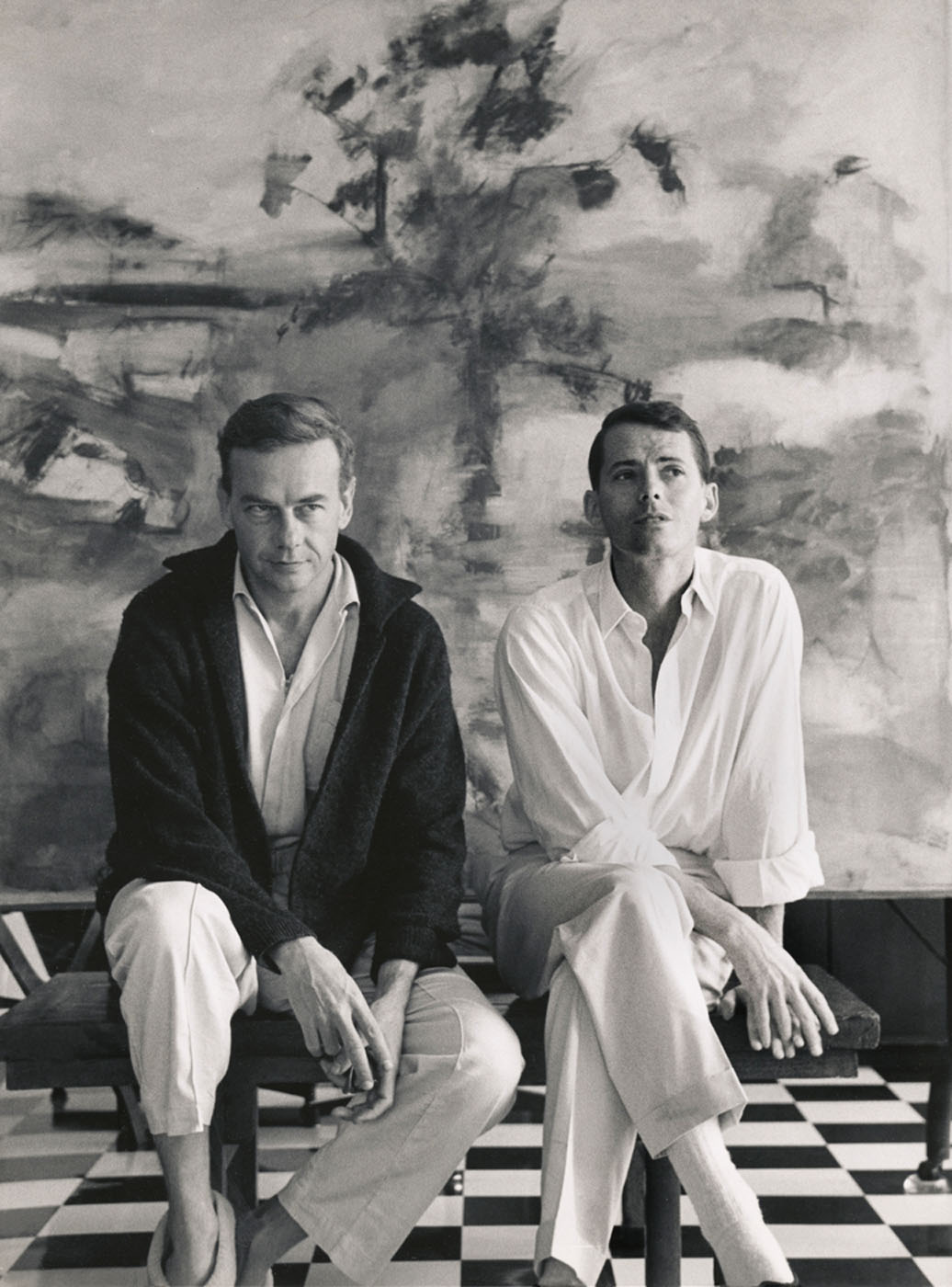
 

Rollie McKenna (American, 1918-2003) 'David Jackson and James Merrill, Stonington, Connecticut' 1961


Rollie McKenna (American, 1918-2003)
David Jackson and James Merrill, Stonington, Connecticut
1961
Gelatin silver print
Center for Creative Photography, University of Arizona
Rosalie Thorne McKenna Archive
© Rosalie Thorne McKenna Foundation


David Noyes Jackson (September 16, 1922 – July 13, 2001) was the life partner of poet James Merrill (1926-1995).

A writer and artist, Jackson is remembered today primarily for his literary collaboration with Merrill. The two men met in May 1953 in New York City, after a performance of Merrill’s play, “The Bait.” They shared homes in Stonington, Connecticut, Key West, Florida, and Athens, Greece. “It was, I often thought, the happiest marriage I knew,” wrote Alison Lurie, who got to know both men in the 1950s and thought enough of the relationship to write a memoir about it more than forty years later, Familiar Spirits (2001).

Over the course of decades conducting séances with a Ouija board, Merrill and Jackson took down supernatural transcriptions and messages from otherworldly entities. Merrill’s and Jackson’s ouija transcriptions were first published in verse form in The Book of Ephraim (printed for the first time in Divine Comedies, 1976, which was awarded the Pulitzer Prize in 1977).

Jackson collaborated with James Merrill on much of his most significant poetic output. The Book of Ephraim (1976), Mirabell: Books of Number (1978), and Scripts for the Pageant (1980) were all written with Jackson’s assistance. Together, they constitute the epic trilogy The Changing Light at Sandover, a 560-page apocalyptic poem published in its entirety in 1982.

He and James Merrill are buried side by side at Evergreen Cemetery, Stonington. Jackson’s former wife and Merrill’s friend, Doris Sewell Jackson is buried behind them.

Text from the Wikipedia website


Rollie McKenna (American, 1918-2003) 'Georgia O'Keeffe with René d'Harnoncourt, Director of MoMA, at the Georges Seurat Opening, NYC' 1958


Rollie McKenna (American, 1918-2003)
Georgia O’Keeffe with René d’Harnoncourt, Director of MoMA, at the Georges Seurat Opening, NYC
1958
Gelatin silver print
Center for Creative Photography, University of Arizona
Rosalie Thorne McKenna Archive
© Rosalie Thorne McKenna Foundation


Rosalie Thorne “Rollie” McKenna (November 15, 1918 – June 14, 2003) was an American photographer. Writers photographed by McKenna include Sylvia Plath, Robert Frost, Dylan Thomas, and Truman Capote. McKenna had a long-term friendship with John Malcolm Brinnin, who helped her come in contact with many of the people she photographed. In addition to portraiture, McKenna also had an interest in architecture, particularly the architecture of Stonington, Connecticut.


John Yang (American, 1933-2009) 'Untitled' 1948


John Yang (American, 1933-2009)
Untitled
1948
Gelatin silver print
Center for Creative Photography, University of Arizona
John Yang Archive
© Naomi Yang


John Yang (1933-2009) was an American architect and photographer. Born in China, he settled in the United States with his family in 1939. His interest in photography began as a child and was later developed when he was a student at The Putney School in Vermont where he was classmates with other future photographers such as Tim Asch. In the summer of 1951, he studied with Minor White at The California School of the Fine Arts. He graduated from Harvard College majoring in Philosophy, and in 1957 he earned a MA in Architecture from the University of Pennsylvania studying under Louis Kahn. Before becoming a photographer full-time, Yang worked as an architect and continued in that practice until 1978.

Yang photographed the architecture and streets of New York as well as the surrounding landscape and gardens. Using traditional equipment and alternative darkroom techniques, he produced exquisite large format contact prints, often toned rich magentas: 11″ x 14″, 8″ x 10″, 5″ x 7″ and 10″ x 78″ panoramas. All work was printed by Yang himself.


Larry Fink (American, 1941-2023) 'Ronis Wedding II, Easton Pennslyvania' January 1989


Larry Fink (American, 1941-2023)
Ronis Wedding II, Easton Pennslyvania
January 1989
Gelatin silver print
Center for Creative Photography, University of Arizona
Purchase
© Larry Fink


Larry Fink (American, 1941-2023) 'Melzer Family Picnic, Eastport, Long Island, New York' June 2002


Larry Fink (American, 1941-2023)
Melzer Family Picnic, Eastport, Long Island, New York
June 2002
Gelatin silver print
Center for Creative Photography, University of Arizona
Purchase
© Larry Fink
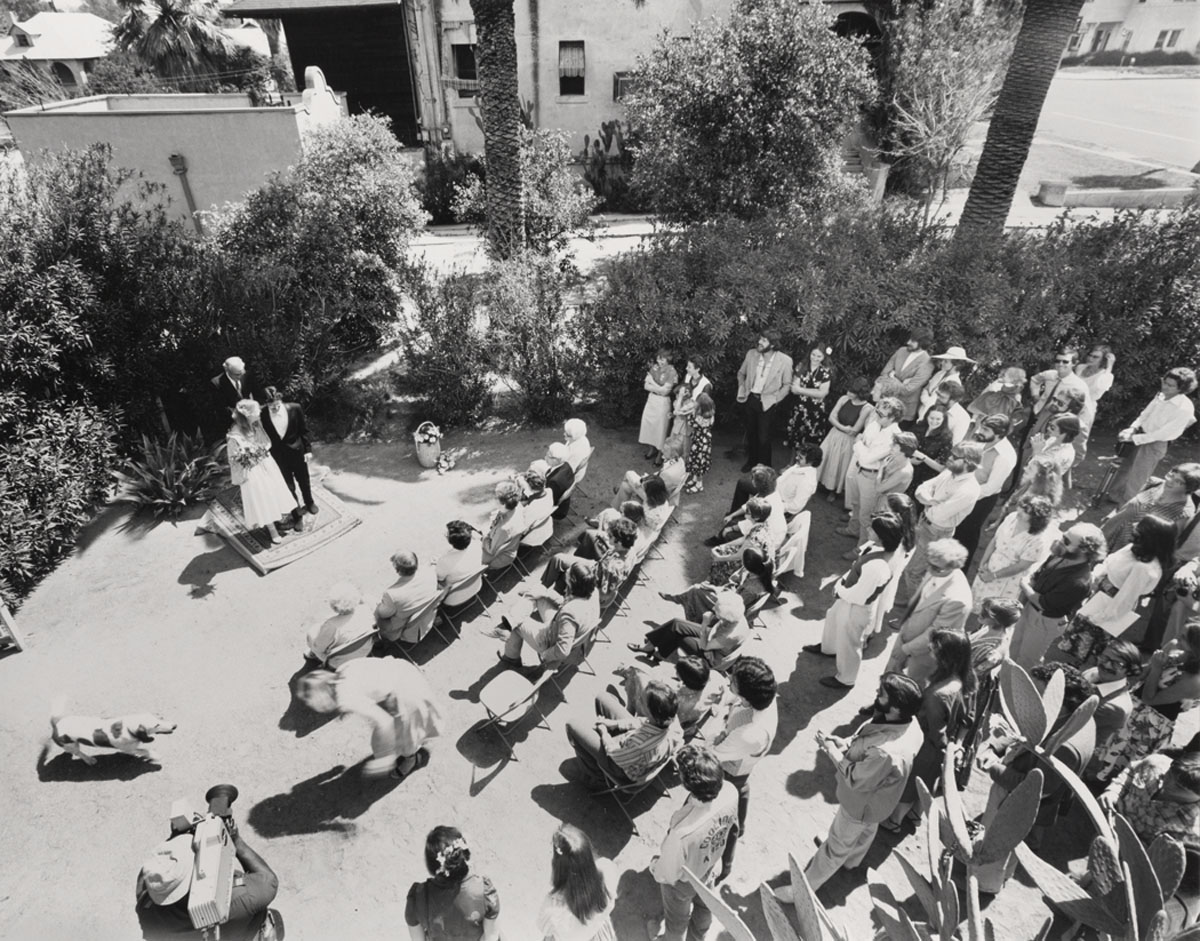
 

Harold Jones (American, b. 1940) 'John and Sandy's Wedding' 1980


Harold Jones (American, b. 1940)
John and Sandy’s Wedding
1980
Gelatin silver print
Center for Creative Photography, University of Arizona
Gift of Harold Jones
© Harold Jones


Harold Jones (born 1940) has contributed to photography as an artist, educator, curator and arts administrator. Born in Morristown, New Jersey in 1940, he graduated from the Maryland Institute with a BFA in Painting and Photography, and from the University of New Mexico with an MFA in Art History and Photography. After graduation Jones worked as an assistant curator at the George Eastman House and in 1971 became the first director of LIGHT Gallery in New York City, the first gallery to exclusively represent contemporary photographers, such as Harry Callahan, Aaron Siskind, and Frederick Sommer. In 1975 Jones became the founding director of the Center for Creative Photography and then went on to start the photography program at the University of Arizona where he taught for the next 30 years. Presently he is professor emeritus and volunteer coordinator of the Voices of Photography oral history project at the Center. Jones continues to be a constant student and practitioner of photography.

Harold Jones’s photography is difficult to categorise, and there are no generalisations that satisfactorily describe his varied body of work. His original training in painting and photography led to a practice that Jones referred to as “photodrawings” – gelatin silver prints worked with a variety of hand-coloured surfaces. Over the years, Jones used ink, food colouring, and oil paints as well as a variety of chemical toners to produce effects that range from subtle to direct. The resulting images are unique and cannot be duplicated. Initially he was ambivalent about altering the surfaces of his prints, feeling that it was an impure practice, but ultimately concluded that creating the photograph was the first phase of drawing, and surface treatments and colouring constituted the second phase. Jones’ approach has varied even within his unaltered prints. He has worked with both multiple and long-duration exposures to capture motion. Jones’s subjects are everyday objects arranged in compositions that require viewing and re-viewing. The photographer has described his delight in the process in which a person moves beyond a superficial reading of his work for closer inspection. His images reinforce the idea that a world continues beyond the picture plane; that one is seeing a fragment of a larger whole. Although he often photographs mundane objects, such as a water tower or laundry hanging, his unusual vantage points or unexpected cropping, produce a range of effects from humour to mystery.

The Harold Jones Archive contains over 150 prints, including a number of unique photodrawings, correspondence, biographical materials, teaching and exhibition files, records of the Society for Photographic Education, publications and clippings, and ephemera covering his career. Correspondents include Robert Heinecken, Jim Alinder, Robert Fichter, Beaumont Newhall, Jerry Uelsmann, and many others. An archive highlight is: University: A Photographic Inquiry, 1984-85: a 2-volume maquette from a project titled Universe City, containing 44 gelatin silver prints and 3 colour prints. Jones’s career can also be studied at the Center for Creative Photography through the LIGHT Gallery archive.

Anonymous. “Harold Jones,” on the International Center of Photography website Nd [Online] Cited 28/09/2023


John Simmons (American, b. 1950) 'The Cotillion' 2015


John Simmons (American, b. 1950)
The Cotillion
2015
Inkjet print
Center for Creative Photography, University of Arizona
Gift of the artist
© John Simmons
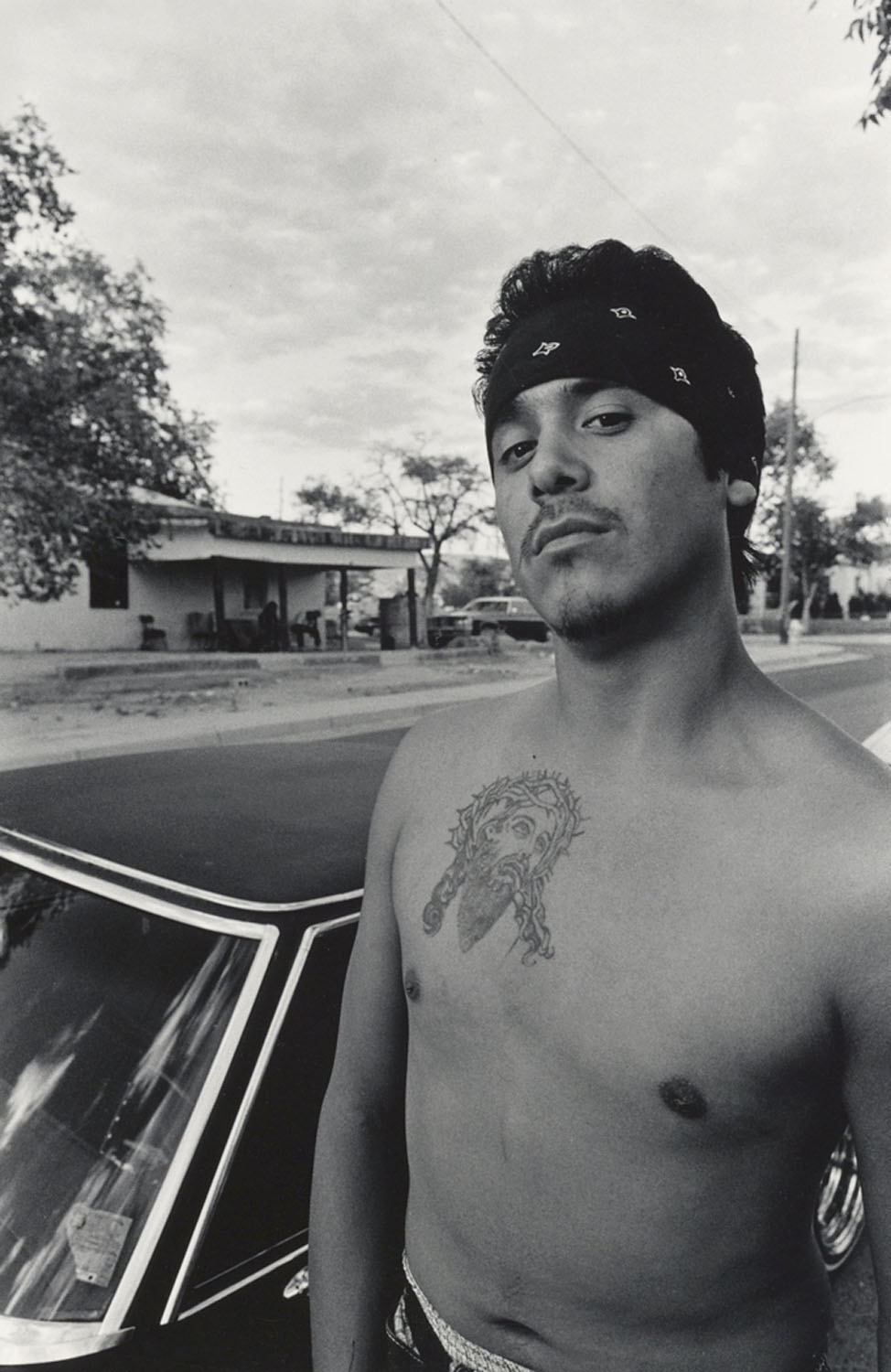
 

Miguel A. Gandert (American, b. 1956) 'Juanito with Jesus Tattoo, Albuerquerque, NM' 1986


Miguel A. Gandert (American, b. 1956)
Juanito with Jesus Tattoo, Albuerquerque, NM
1986
Gelatin silver print
Center for Creative Photography, University of Arizona
Gift of Alan Manley
© Miguel Gandert


David Hume Kennerly (American, b. 1947) 'President Barack Obama And First Lady Michelle Obama Attend The Inaugural Balls' 2009


David Hume Kennerly (American, b. 1947)
President Barack Obama And First Lady Michelle Obama Attend The Inaugural Balls
2009
Chromogenic print
Center for Creative Photography, University of Arizona
David Hume Kennerly Archive
© Center for Creative Photography, Arizona Board of Regents


David Hume Kennerly (born March 9, 1947) is an American photographer. He won the 1972 Pulitzer Prize for Feature Photography for his portfolio of photographs of the Vietnam War, Cambodia, East Pakistani refugees near Calcutta, and the Ali-Frazier fight in Madison Square Garden. He has photographed every American president since Lyndon B Johnson. He is the first presidential scholar at the University of Arizona.

Text from the Wikipedia website


Rosalind Solomon (American, b. 1930) 'On the Ranch, Wyoming, USA' 1977


Rosalind Solomon (American, b. 1930)
On the Ranch, Wyoming, USA
1977
Gelatin silver print
Center for Creative Photography, University of Arizona
Rosalind Solomon Archive
© Rosalind Solomon, all rights reserved


The photographer Rosalind Fox Solomon turned her camera on Washington, D.C., between 1977 and 1979. With access to spaces ranging from artist studios to the White House, Solomon made probing portraits, such as this one of First Lady Rosalynn Carter aboard Air Force 2. During her years as first lady, Carter (born in Plains, Georgia, in 1927) expanded the role of the presidential spouse, regularly attending cabinet meetings and representing her husband, Jimmy Carter, in an official capacity at home and abroad.

Carter continues to devote her life to public service. For more than four decades, she has championed the needs of people with mental illness while also advocating on behalf of numerous other causes, including the Equal Rights Amendment, early childhood immunisation, the Cambodian refugee crisis, and homelessness. In 1982, she and her husband co-founded the Carter Center to promote peace and human rights worldwide. They jointly received the Presidential Medal of Freedom in 1999.

Text from the Smithsonian National Portrait Gallery website


Rosalind Solomon (American, b. 1930) 'First Lady Rosalyn Carter, Airforce 2 en route Orlando, USA' 1978


Rosalind Solomon (American, b. 1930)
First Lady Rosalyn Carter, Airforce 2 en route Orlando, USA
1978
Gelatin silver print
Center for Creative Photography, University of Arizona
Rosalind Solomon Archive
© Rosalind Solomon, all rights reserved


Phoenix Art Museum
McDowell Road & Central Avenue
1625 N. Central Avenue
Phoenix, AZ 85004

Opening hours:
Monday and Tuesday Museum closed
Wednesday: 10am – 7pm
Thursday – Sunday: 10am – 5pm

Phoenix Art Museum website

LIKE ART BLART ON FACEBOOK

Back to top

Exhibition: ‘Reality Makes Them Dream: American Photography, 1929-1941’ at the Cantor Arts Center at Stanford University, California

Exhibition dates: 29th March – 30th July 2023

Curator: Dr. Josie R. Johnson, Capital Group Foundation Curatorial Fellow for Photography at the Cantor Arts Center


Edward Weston (American, 1886-1958) 'Cypress Root and Rock, Seventeen Mile Drive' 1929 from the exhibition 'Reality Makes Them Dream: American Photography, 1929-1941' at the Cantor Arts Center at Stanford University, March - July, 2023


Edward Weston (American, 1886-1958)
Cypress Root and Rock, Seventeen Mile Drive
1929
Gelatin silver print
The Capital Group Foundation Photography Collection at Stanford University
Cantor Arts Center Collection


On November 18, 1929, Edward Weston drove north from his home in Carmel to traverse the scenic coastal route of Seventeen Mile Drive. He made nine photographs of cypress roots and rocks that day, including this image. Less than three weeks earlier, the stock market had crashed, setting off a panic that plunged the United States into the Great Depression. Money troubles plagued Weston throughout his life, but on this November day, he was completely enthralled with the landscape. He wrote in his daybooks soon after that these photographs were “among the best seen and most brilliant technically I have yet done.”

Wall label from the exhibition


Transcending reality

While I admire the clever recontextualisation of the work of American photographers from the 1930s in this exhibition – into the sections Natural Wonders, Divine Figures, Everyday Splendors, Living Relics, The World of Tomorrow, Street Theater and Surreal Encounters – I am unsure that those photographers would ultimately see their work as a fusion of reality and dream, their documentary photographs “being both real and dream-like” that the concept of this exhibition proposes.

While all photographers use their imagination to visualise and take their photographs, to then extrapolate that these images are both reality-dream is, to my mind, a theoretical fancy that takes a kernel of the truth and views the images through a contemporary lens. Nothing wrong with that I hear you say and as the photographer Richard Misrach observes, “Photographs, when they’re made, can shift meaning with time, and often do.” And I agree that the meaning of photographs changes over time, is an ever fluid and shifting feast.

But can you imagine any of the Farm Security Administration (FSA) photographers out in the field saying to themselves, “Oh! let’s take a dreamscape of these poor travelling people trying to survive the deprivations of hunger, poverty and joblessness”. It just wouldn’t happen. They didn’t think like that because it was a different era. They were concerned with representing with clarity and focus, with compassion and imagination not the melding of reality and dream, but the visceral feeling of the life being lived under the most trying of circumstances.

Following on from thoughts on the stunning landscape photographs of Ansel Adams in the last posting, one has to agree with Dr Isobel Crombie, Senior Curator of Photography at the National Gallery of Victoria, Melbourne when she says that,

“The term “landscape” can be ambiguous and is often used to describe a creative interpretation of the land by an artist and the terrain itself. But there is a clear distinction: the land is shaped by natural forces while the artist’s act of framing a piece of external reality involves exerting creative control. The terms of this ‘control’ have be theorised since the Renaissance and, while representations of nature have changed over the centuries, a landscape is essentially a mediated view of nature.”1


All photographs are a mediated view of reality, captured through the imagination of the artist and (usually) the gaze of the camera lens… but that does not necessarily mean that they are a melding of reality and dream: of course they can be – but in the context of 1930s American photography what is more likely is that the artists where attempting to create something that transcends the moment. As that fantastic American landscape photographer Robert Adams observes,

“At our best and most fortunate we make pictures because of what stands in front of the camera, to honor what is greater and more interesting than we are. We never accomplish this perfectly, though in return we are given something perfect – a sense of inclusion. Our subject thus redefines us, and is part of the biography by which we want to be known.”2


To my mind American photographers of the 1930s took photographs not only to document but also to honor what was greater and more interesting than they were. Not as a melding of reality-dream as this exhibition proposes, but as an exploration of what is possible through the interface of the image and imagination, the interface as Ansel Adams put it “between the reality of the world and the reality of yourself.”

Finally, the unknown to me photographs of Wright Morris are superb because of their very capricious fidelity.

Dr Marcus Bunyan


1/ Isobel Crombie. Stormy Weather. Contemporary Landscape Photography (exhibition catalogue). Melbourne: National Gallery of Victoria, 2010, p. 15
2/ Robert Adams. Why People Photograph. New York: Aperture Foundation, 1994, p. 179


Many thankx to the Cantor Arts Center for allowing me to publish the photographs in the posting. Please click on the photographs for a larger version of the image.


In the fall of 1930, Stanford biology professor Laurence Bass-Becking used a curious phrase to describe the photography of his friend Edward Weston: “Reality makes him dream.” Few people today would associate dreaminess with the Great Depression, yet Bass-Becking penned this statement one year into the economic turmoil that would last until the nation’s entry into World War II. This exhibition of over 100 photographs, periodicals, and photobooks offers an alternative understanding of 1930s photography in the US by taking Bass-Becking’s phrase as its point of departure.

The work of five photographers featured in the Capital Group Foundation Photography Collection at the Cantor Arts Center – Ansel Adams, John Gutmann, Helen Levitt, Wright Morris, and Edward Weston – comprises the core of the exhibition. Woven into this display is a diverse selection of photographs by their contemporaries that present new narratives about artists and images, from the iconic to the overlooked. Against the typical history of 1930s photography that views the work of this period as primarily documentary, this exhibition contends that a key goal for artists of this period was to use photography to ignite the imagination.


“If you have a conscious determination to see certain things in the world you are a potential propagandist; if you trust your intuition as the vital communicative spark between the reality of the world and the reality of yourself, what you tell in the super-reality of your art will have greater impact and verity. … without the elements of imaginative vision and taste the most perfect technical photograph is a vacuous shell.”


Ansel Adams. “Exhibition of Photographs” (1936), reproduced in Andrea Gray. Ansel Adams: An American Place, 1936. Tucson: Center for Creative Photography, University of Arizona, 1982, p. 38 quoted in Josie R. Johnson. “Reality Makes Them Dream: American Photography, 1929-1941,” in Josie R. Johnson. Reality Makes Them Dream: American Photography, 1929-1941. Iris & B. Gerald Cantor Center for Visual Arts at Stanford University, 2023, p. 17.


The present exhibition [exhibition of contemporary photography in November 1930 at Harvard University] attempts to prove that the mechanism of the photograph is worthy and capable of producing creative work entirely outside the limits of reproduction or imitation. … Photography exists in the contemporary consciousness of time, surprising the passing moment out of its context in flux, and holding it up to be regarded in the magic of its arrest. It has the curious vividness and unreality of street accidents, things seen from a passing train, and personal situations overheard or seen by chance – as one looks from the window of one skyscraper into the lighted room of another forty stories high and only across the street.


Lincoln Kirstein, introductory note, Photography 1930. Cambridge, MA: Harvard Society for Contemporary Art, 1930, n.p. quoted in Josie R. Johnson. “Reality Makes Them Dream: American Photography, 1929-1941,” in Josie R. Johnson. Reality Makes Them Dream: American Photography, 1929-1941. Iris & B. Gerald Cantor Center for Visual Arts at Stanford University, 2023, p. 26.


Dorothea Lange (American, 1895-1965) 'Migrant Mother, Nipomo, California' March 1936 from the exhibition 'Reality Makes Them Dream: American Photography, 1929-1941' at the Cantor Arts Center at Stanford University, March - July, 2023


Dorothea Lange (American, 1895-1965)
Migrant Mother, California
1936
Gelatin silver print
Gift from the Alinder Collection
Cantor Arts Center Collection


The Cantor Arts Center is pleased to present Reality Makes Them Dream: American Photography, 1929-1941, an exhibition featuring over 100 photographs, periodicals, and photobooks. This material collectively pushes against the typical history of 1930s photography that views the work of this period as primarily documentary, and instead illustrates that artists of this era frequently used photography to ignite the imagination. The exhibition and the expansive art historical narratives it illuminates result from Dr. Josie R. Johnson’s study over the past three years of the Cantor’s Capital Group Foundation (CGF) Photography Collection – a major gift of over 1,000 twentieth-century American photographs.

Currently serving as the museum’s CGF Curatorial Fellow for Photography, Johnson comments: “The Cantor’s holdings of American photography from the 1930s are especially rich, and the generous terms of the Capital Group Foundation Fellowship enabled me to delve deeply into this fascinating chapter of photo history. Sifting through these prints allowed me to set aside what I thought I knew about this material and take a fresh look, giving me a new appreciation for the novel approaches these artists developed in the midst of a profoundly difficult historical moment.”

The work of five photographers from the CGF Collection – Ansel Adams, John Gutmann, Helen Levitt, Wright Morris, and Edward Weston – comprises the core of the exhibition. Its conceit draws from a curious phrase by Stanford biology professor Laurence Bass-Becking about the photography of his friend Edward Weston: “Reality makes him dream.” Though few people today would associate dreaminess with the Great Depression, Bass-Becking penned this statement in the fall of 1930, one year into the economic turmoil that would last until the nation’s entry into World War II. Reality Makes Them Dream exemplifies the spirit of experimentation that Bass-Becking describes by highlighting an undercurrent of artistic practices in the United States that were sometimes more akin to those of Surrealism taking place concurrently in Europe.

To tease out these under-examined connections, and de-emphasise the association of American photography of the 1930s with the unbiased documentation of real people and events, works by the five core CGF artists are interwoven with a diverse selection of photographs by their contemporaries, both iconic and overlooked, such as Walker Evans, Hiromu Kira, and Dorothea Lange. Edward Weston’s bold experimentation with forms both natural and man-made – exemplified by highly evocative works such as Pepper No. 35 (1930) and Egg Slicer (1930) that inspired Bass-Becking’s comment – blends harmoniously with contemporary prints from the community of Japanese-American photographers in Los Angeles that often supported Weston’s work. Examples of fashion and editorial photography, including colour images by Toni Frissell and Paul Outerbridge, draw connections across the galleries with photographs of airplanes, household items, and tourist sites made by seasoned artists and amateur hobbyists alike. Helen Levitt’s surreal tableaux on the streets of New York echo Berenice Abbott‘s studies of the metropolis with multiple layers of history jumbled into the same block. Ansel Adams’s pristine images of the Sierra Nevada hang alongside little-known photographs by Seema Weatherwax, his darkroom assistant in the late 1930s who was similarly enchanted with nature but developed a vision all her own. Despite gaining the respect of not only Adams, but also Weston, Lange, and Imogen Cunningham, Weatherwax shared her own work publicly for the first time in 2000 at the age of 95. Her photographs evidence her technical abilities and, not unlike her peers on view in this exhibition, find beauty in the everyday. Altogether, these photographs effectively illustrate Johnson’s three year exploration of the collection which revealed that despite the very real financial, political, and cultural challenges of the Great Depression, certain photographers chose not to focus on the camera’s cold mechanical precision, but rather used it as a medium to spark their imaginations – fusing reality and dream into one. …

The first exhibition curated by a CGF fellow, Reality Makes Them Dream is accompanied by a fully-illustrated catalogue. It features an essay by Johnson and contributions from the community of photography scholars at Stanford University – Kim Beil, associate director of the ITALIC arts program for undergraduates; Yechen Zhao (PhD in art history ’22); Anna Lee, photography curator for special collections at the Stanford Libraries; Rachel Heise Bolten (PhD in English ’22); Altair Brandon-Salmon (PhD candidate in art history); Marco Antonio Flores (PhD candidate in art history); and Maggie Dethloff, PhD, assistant curator of photography and new media at the Cantor.

Press release from the Cantor Arts Center


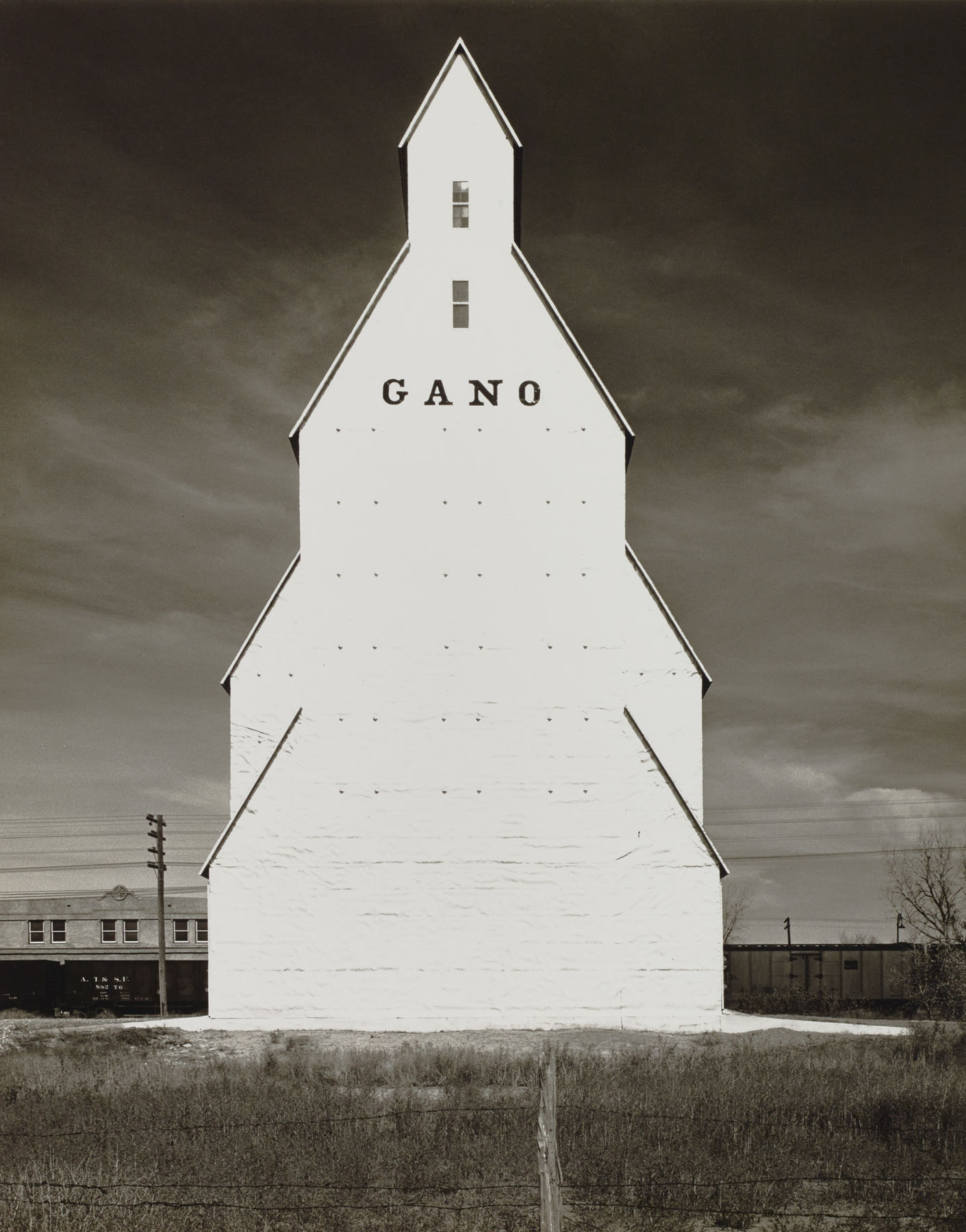
Wright Morris (American, 1910-1998) 'Gano Grain Elevator, Western Kansas' 1940, printed 1979-1981 from the exhibition 'Reality Makes Them Dream: American Photography, 1929-1941' at the Cantor Arts Center at Stanford University, March - July, 2023


Wright Morris (American, 1910-1998)
Gano Grain Elevator, Western Kansas
1940, printed 1979-1981
Gelatin silver print
The Capital Group Foundation Photography Collection at Stanford University
Cantor Arts Center Collection


In Dr. Josie R. Johnson’s exhibition … Johnson interweaves the Capital Group Foundation Collection images with additional works by other artists, building narratives that nuance our understanding of American photography in the 1930s. Her essay pushes against longstanding narratives that overemphasise the purity of straight photography and the veracity of documentary photography in this decade. Her research reveals instead that many artists used the medium of photography to fuse reality and dream into one.

Johnson divides Reality Makes Them Dream into seven sections exploring subjects commonly photographed in the 1930s as being both real and dream-like. Looking beyond well-traveled approaches to photographs captured in the decade defined by the Great Depression, “Natural Wonders” features awe inspiring organic forms from still life and nature photography. “Divine Figures” presents methods of elevating the human figure to the status of a god-like being in portraiture, nude studies, dance photography, and photographs of modern labourers. “Everyday Splendors” explores the transformation of commonplace scenes and objects into vibrant masses of shapes and textures. The portraits, architectural photographs, and still life images in “Living Relics” exemplify the tendency of these photographers to depict emblems of a purer and more noble past that they hoped to reclaim. “The World of Tomorrow” considers the opposite end of the temporal spectrum, where photographers captured glimpses of a futuristic, machine-driven utopia in urban or industrial scenes. “Street Theater” encompasses street photography and urban architectural studies that approach their subjects as if they are actors and stage sets in their own make-believe world. Finally, “Surreal Encounters” highlights Surrealist strands in the work of American photographers as they emphasised the uncanny and fantastical in the physical world around them.

Veronica Roberts, Director of the Cantor Arts Center


Ansel Adams (American, 1902-1984) 'Sculptor's Tools, San Francisco, California' 1930


Ansel Adams (American, 1902-1984)
Sculptor’s Tools, San Francisco, California
1930, printed c. 1974
Gelatin silver print
Gift from the Alinder Collection
Cantor Arts Center Collection


In 1930, a meeting with the photographer Paul Strand inspired Ansel Adams to abandon the use of soft-focus camera settings and textured printing papers in pursuit of “absolute realism.” However, Adams did not renounce the photograph’s capacity to convey an artist’s imaginative vision; instead, he launched a crusade for photography to be recognised as a “pure art form.” This image of the tools belonging to the San Francisco sculptor Ralph Stackpole stages Adams’s main argument at the time: Photography is no less a form of art than sculpture, so long as the artist’s tools (a camera or a hammer and chisel) are employed directly, without imitating another medium.

Wall label from the exhibition


Berenice Abbott (American, 1898-1991) 'Sumner Healy Antique Shop' 1936


Berenice Abbott (American, 1898-1991)
Sumner Healy Antique Shop
1936
Gelatin silver print
Gift of Judge Leonard Edwards
Cantor Arts Center Collection


Helen Levitt (American, 1913-2009) 'New York' c. 1938


Helen Levitt (American, 1913-2009)
New York
c. 1938
Gelatin silver print
The Capital Group Foundation Photography Collection at Stanford University
Cantor Arts Center Collection


Woven into this exhibition is a diverse selection of photographs by their contemporaries, adding breadth to this survey of American photography of the 1930s and presenting new narratives about artists and images, from the iconic to the overlooked. This project interprets the term “American” loosely, encompassing photographers who lived in the United States for extended periods but who did not necessarily hold citizenship, as well as locations including Alaska and Hawaii, which were then still US territories. Thirteen of the forty-two photographers featured in this catalogue were born outside the United States, reflecting diasporic patterns that brought Japanese immigrants in the early 1900s and European immigrants – especially Jews fleeing antisemitism – in the 1910s and mid-1930s.7 Many turned to photography as a way to earn a living, and their photographs often expressed their enchantment with the dramatic natural landscapes or unfamiliar cultural practices they encountered in their newly adopted nation.

Together, this material demonstrates that Bass-Becking’s idea [Bass-Becking used a curious phrase to describe the photography of his friend Edward Weston: “Reality makes him dream”] offers an interpretive lens for a much wider swath of photography than either he or Weston might have realized. Against the typical history of 1930s photography that views the work of this period as primarily documentary in style and purpose , this project contends that a key goal for artists of this period was to use photography to ignite the imagination, even while pursuing an increasingly transparent approach that mirrored the world as they saw it. From the delicate curve of a seashell to the jostle of a crowded city street, reality made the photographers and their audiences dream.

Footnote 7. Another ten were second- and/or third-generation immigrants.

Josie R. Johnson. “Reality Makes Them Dream: American Photography, 1929-1941,” in Josie R. Johnson. Reality Makes Them Dream: American Photography, 1929-1941. Iris & B. Gerald Cantor Center for Visual Arts at Stanford University, 2023, p. 11.


Natural Wonders


Ansel Adams (American, 1902-1984) 'Dogwood, Yosemite National Park, California' 1938


Ansel Adams (American, 1902-1984)
Dogwood, Yosemite National Park, California
1938
Gelatin silver print
The Capital Group Foundation Photography Collection at Stanford University
Cantor Arts Center Collection


Ansel Adams is best known today for the majestic landscape photographs he made throughout his life, but in the 1930s he gravitated toward tightly framed images of a more intimate scale. This photograph of dogwood blossoms exemplifies Adams’s close looking at nature from this period. Even among the grand vistas of Yosemite, he often turned his lens to humbler sights while retaining the same density of detail across the picture plane, illuminating multitudes in a patch of moss or a pile of pine needles. Adams explained at the time: “Honest simplicity and maximum emotional statement suggests the basis of a critical definition of photography as an Art Form – that is, as a means of more than factual statement.”

Wall label from the exhibition


Cedric Wright (American, 1889-1959) 'Wildflowers' 1930s-1940s


Cedric Wright (American, 1889-1959)
Wildflowers
1930s-1940s
Gelatin silver print
Gift from the Alinder Collection
Cantor Arts Center Collection


George Cedric Wright (April 13, 1889 – 1959) was an American violinist and a wilderness photographer of the High Sierra. He was Ansel Adams’s mentor and best friend for decades, and accompanied Adams when three of his most famous photographs were taken. He was a longtime participant in the annual wilderness High Trips sponsored by the Sierra Club. …

In an article published in 1957, which included eight full-page photographs, Wright described his thoughts about how high mountain beauty resembles great music: “Beauty haunts the high country like a majestic hymn, sings in cold sunny air, the brilliant mountain air – makes of sunlight a living thing – floats in cloud forms – filters changing floods of light ever clothing the mountains anew. Beauty arrives in deep voice of river and wind through forest, swelling the chorus, giving sonority universal proportions.”[Wright, Cedric. “Trail Song: An Artist’s Profession of Faith” Sierra Club Bulletin. San Francisco: Sierra Club. 42 (6): 50-53]. He dedicated these words to Sierra Club leader William Edward Colby, and they became part of the introduction to Wright’s posthumous book, Words of the Earth.

Text from the Wikipedia website


Bradford Washburn (American, 1910-2007) 'Mount La Perouse' c. 1933


Bradford Washburn (American, 1910-2007)
Mount La Perouse
c. 1933
Gelatin silver print
Courtesy of Department of Special Collections, Stanford Libraries


Bradford Washburn became a well-known mountaineer and aerial photographer while still in college. In the early 1930s, he climbed and surveyed multiple peaks in the Fairweather Range of southeastern Alaska, including Mount La Perouse. Although Washburn’s photographs functioned as topographical records and route maps, he also displayed them in artistic contexts, where they elicited deeply poetic and emotional responses from viewers. In the 1940 issue of U.S. Camera Magazine, an editor wrote of Washburn’s Alaskan photography: “Sea and mountain and plain, join island and cape and bay in a beauty that is the true setting for the fantasy of northern lights and midnight sun. … Here is an America that is no more a last frontier or hinterland, but a fruitful part of America, present – a glowing promise to America, future.”

Wall label from the exhibition


Henry Bradford Washburn Jr. (June 7, 1910 – January 10, 2007) was an American explorer, mountaineer, photographer, and cartographer. He established the Boston Museum of Science, served as its director from 1939-1980, and from 1985 until his death served as its Honorary Director (a lifetime appointment). Bradford married Barbara Polk in 1940, they honeymooned in Alaska making the first ascent of Mount Bertha together.

Washburn is especially noted for exploits in four areas.

1/ He was one of the leading American mountaineers in the 1920s through the 1950s, putting up first ascents and new routes on many major Alaskan peaks, often with his wife, Barbara Washburn, one of the pioneers among female mountaineers and the first woman to summit Denali (Mount McKinley).

2/ He pioneered the use of aerial photography in the analysis of mountains and in planning mountaineering expeditions. His thousands of striking black-and-white photos, mostly of Alaskan peaks and glaciers, are known for their wealth of informative detail and their artistry. They are the reference standard for route photos of Alaskan climbs.

3/ He was responsible for creating maps of various mountain ranges, including Denali, Mount Everest, and the Presidential Range in New Hampshire.

4/ His stewardship of the Boston Museum of Science.

Text from the Wikipedia website


Hy Hirsh (American, 1911-1961) 'Untitled' Late 1930s


Hy Hirsh (American, 1911-1961)
Untitled
Late 1930s
Gelatin silver print
Dennis and Annie Reed Collection


Hyman Hirsh (October 11, 1911, Philadelphia, Pennsylvania – November 1961, Paris, France), was an American photographer and experimental filmmaker. He is regarded as a visual music filmmaker, as well as one of the first filmmakers to use electronic imagery (filmed oscilloscope patterns) in a film. …

Photography style

Hirsh’s early photographs were influenced by California photography movement Group f/64, who had first exhibited in 1932 at the de Young Museum where Hirsh later worked. In 1932. Hirsh’s photo work from that period used sharply focused black and white renderings and little manipulation in their process. Hirsh was then influenced by the social documentary of the Farm Security Administration [FSA] photographers who recorded the impact of the Great Depression on displaced workers and their families. Hirsh followed suit, exploring social issues through visages of vacant lots, rusted machinery, and other images of urban decay. Recognition for these photographs led to seven exhibitions in Los Angeles and San Francisco from 1935 to 1955. A 1936 group show entitled “Seven Photographers” at L.A.’s Stanley Rose Gallery put him alongside the leading figures of West Coast photography, including Ansel Adams, Edward Weston and Brett Weston. Hirsh also appeared in the publication U.S. Camera in 1936, 1937 and 1939.

In 1943 San Francisco Museum of Art featured Hirsh in a solo exhibition. By now Hirsh had moved away from the straight-ahead aesthetic of Ansel Adams and Group f64, and his artistic photography took more cues from the world of experimental film. He made surrealist self-portraits by superimposing negatives of himself with broken sheets of glass. Later in Paris, as a study for one of his films, he shot colour slides of old wall posters that were peeling, exposing layers of posters underneath.

Text from the Wikipedia website


Edward Weston (American, 1886-1958) 'Bananas' 1930


Edward Weston (American, 1886-1958)
Bananas
1930
Gelatin silver print
Dennis and Annie Reed Collection


Despite his many accolades, Edward Weston struggled to support himself throughout his career as a photographer. He found an important group of patrons in Los Angeles’s Little Tokyo, where several artist groups sustained a lively community of photographers in the 1920s and ’30s. The play of light, movement, and space in Shinsaku Izumi’s The Shadow (below) exemplifies their experimental ethos. In this context, the photographer Toyo Miyatake (1895-1979) organised three exhibitions of Weston’s photography between 1925 and 1931. At the final exhibition, he purchased this print (above) from Weston, perhaps because he shared Weston’s excitement for the pictorial possibilities of the rhythms and textures in a bunch of bananas.

Wall label from the exhibition


Marion Post Wolcott (American, 1910-1990) 'Cornshocks and fences on farm near Marion, Virginia' 1940


Marion Post Wolcott (American, 1910-1990)
Cornshocks and fences on farm near Marion, Virginia
1940
Gelatin silver print
Gift of Michael and Sheila Wolcott
Cantor Arts Center Collection


Marion Post Wolcott (June 7, 1910 – November 24, 1990) was an American photographer who worked for the Farm Security Administration during the Great Depression documenting poverty, the Jim Crow South, and deprivation. …

Post trained as a teacher, and went to work in a small town in Massachusetts. Here she saw the reality of the Depression and the problems of the poor. When the school closed she went to Europe to study with her sister Helen. Helen was studying with Trude Fleischmann, a Viennese photographer. Marion Post showed Fleischmann some of her photographs and was told to stick to photography.

Career

While in Vienna she saw some of the Nazi attacks on the Jewish population and was horrified. Soon she and her sister had to return to America for safety. She went back to teaching but also continued her photography and became involved in the anti-fascist movement. At the New York Photo League she met Ralph Steiner and Paul Strand who encouraged her. When she found that the Philadelphia Evening Bulletin kept sending her to do “ladies’ stories”, Ralph Steiner took her portfolio to show Roy Stryker, head of the photography division of the Farm Security Administration, and Paul Strand wrote a letter of recommendation. Stryker was impressed by her work and hired her immediately.

Post’s photographs for the FSA often explore the political aspects of poverty and deprivation. They also often find humour in the situations she encountered.

In 1941 she met Leon Oliver Wolcott, deputy director of war relations for the U. S. Department of Agriculture under Franklin Roosevelt. They married, and Marion Post Wolcott continued her assignments for the FSA, but resigned shortly thereafter in February 1942. Wolcott found it difficult to fit in her photography around raising a family and a great deal of traveling and living overseas.

In the 1970s, a renewed interest in Post Wolcott’s images among scholars rekindled her own interest in photography. In 1978, Wolcott mounted her first solo exhibition in California, and by the 1980s the Smithsonian and the Metropolitan Museum of Art began to collect her photographs. The first monograph on Marion Post Wolcott’s work was published in 1983. Wolcott was an advocate for women’s rights; in 1986, Wolcott said: “Women have come a long way, but not far enough. … Speak with your images from your heart and soul” (Women in Photography Conference, Syracuse, N.Y.).

Text from the Wikipedia website


Edward Weston (American, 1886-1958) 'Pepper No. 35' 1930, printed 1952-1955 by Brett Weston


Edward Weston (American, 1886-1958)
Pepper No. 35
1930, printed 1952-1955 by Brett Weston
Gelatin silver print
The Capital Group Foundation Photography Collection at Stanford University
Cantor Arts Center Collection


Ansel Adams (American, 1902-1984) 'High Country Crags and Moon, Sunrise, Kings Canyon National Park, California' c. 1935, printed 1979


Ansel Adams (American, 1902-1984)
High Country Crags and Moon, Sunrise, Kings Canyon National Park, California
c. 1935, printed 1979
Gelatin silver print
The Capital Group Foundation Photography Collection at Stanford University
Cantor Arts Center Collection


Divine Figures


Peter Stackpole (American, 1913-1997) 'Overview of the City' 1935


Peter Stackpole (American, 1913-1997)
Overview of the City
1935
Gelatin silver print
Gift of Ayleen Ito Lee
Cantor Arts Center Collection


In 1935, 25 of Stackpole’s bridge photographs were shown at the San Francisco Museum of Art.

Peter Stackpole (1913-1997) was an American photographer. Along with Alfred Eisenstaedt, Margaret Bourke-White, and Thomas McAvoy, he was one of Life Magazine‘s first staff photographers and remained with the publication until 1960. He won a George Polk Award in 1954 for a photograph taken 100 feet underwater, and taught photography at the Academy of Art University. He also wrote a column in U.S. Camera for fifteen years. He was the son of sculptor Ralph Stackpole.

Text from the Wikipedia website


Peter Stackpole (American, 1913-1997) 'Mother and Daughter' 1934


Peter Stackpole (American, 1913-1997)
Mother and Daughter
1934
Gelatin silver print
Cantor Arts Center Collection


Gordon Parks (American, 1912-2006) 'Langston Hughes, Chicago, Illinois, 1941' 1941, printed 2002-2003


Gordon Parks (American, 1912-2006)
Langston Hughes, Chicago, Illinois, 1941
1941, printed 2002-2003
Gelatin silver print
The Capital Group Foundation Photography Collection at Stanford University
Cantor Arts Center Collection


Barbara Morgan (American, 1900-1992) 'Martha Graham – Ekstasis (Torso)' 1935


Barbara Morgan (American, 1900-1992)
Martha Graham – Ekstasis (Torso)
1935
Gelatin silver print
Given in memory of Belva Kibler by Barbara Morgan
Cantor Arts Center Collection


Barbara Morgan first attended a performance by Martha Graham’s modern dance company in 1935. The experience so deeply impressed her that she began photographing Graham and her fellow dancers regularly, becoming a recognised expert in the genre within a few years. Morgan typically captured a dancer’s entire body, but for Graham’s solo in Ekstasis, she explained: “When by moving a light which cast a certain shadow I suddenly felt a heroic scale evoked. … The torso expressed it all, and I felt as if I were on a lonely shore between Egypt and archaic Greece discovering a forgotten Venus.”

Wall label from the exhibition


John Gutmann (American born Germany, 1905-1998) 'Classe (Marjorie Gestring, championne olympique 1936 de plongeon de haut vol)' 1935


John Gutmann (American born Germany, 1905-1998)
Class, Olympic High Diving Champion, Marjorie Gestring
1937
Gelatin silver print
The Capital Group Foundation Photography Collection at Stanford University
Cantor Arts Center Collection


Marjorie Gestring, a future Stanford undergraduate from Los Angeles, won the 1936 Olympic gold medal in women’s springboard diving at age 13. John Gutmann photographed Gestring the following spring at a diving exhibition held as part of the weeklong festivities for the opening of the Golden Gate Bridge. For Gutmann, the “rigid geometry” of her dives struck him as an “absolutely modern machine style.” More broadly, his image of Gestring soaring through the air captures the ethos of a moment when, having just completed the longest suspension bridge in the world, humans seemed capable of any accomplishment.

Wall label from the exhibition


Edward Weston (American, 1886-1958) 'Nude (Charis) Floating' 1939, printed 1952-1955 by Brett Weston


Edward Weston (American, 1886-1958)
Nude (Charis) Floating
1939, printed 1952-1955 by Brett Weston
Gelatin silver print
The Capital Group Foundation Photography Collection at Stanford University
Cantor Arts Center Collection


Herbert Matter (American born Switzerland, 1907-1984) 'Untitled' 1940


Herbert Matter (American born Switzerland, 1907-1984)
Untitled
1940
Gelatin silver print
Courtesy of Department of Special Collections, Stanford Libraries


Herbert Matter (April 25, 1907 – May 8, 1984) was a Swiss-born American photographer and graphic designer known for his pioneering use of photomontage in commercial art. Matter’s innovative and experimental work helped shape the vocabulary of 20th-century graphic design. …

As a photographer, Matter won acclaim for his purely visual approach. A master technician, he used every method available to achieve his vision of light, form and texture. Manipulation of the negative, retouching, cropping, enlarging and light drawing are some of the techniques he used to achieve the fresh form he sought in his still lifes, landscapes, nudes and portraits. As a filmmaker, he directed two films on his friend Alexander Calder: “Sculptures and Constructions” in 1944 and “Works of Calder” (with music by John Cage) for the Museum of Modern Art in 1950.

Text from the Wikipedia website


Russell Lee (American, 1903–1986) 'Jim Norris and wife, homesteaders, Pie Town, New Mexico' 1940


Russell Lee (American, 1903–1986)
Jim Norris and wife, homesteaders, Pie Town, New Mexico
1940
Dye transfer print
Committee for Art Acquisitions Fund
Cantor Arts Center Collection


Chao-Chen Yang (Chinese-American, 1910-1969) 'Chief Owasippe' 1939


Chao-Chen Yang (Chinese-American, 1910-1969)
Chief Owasippe
1939
Gelatin silver print
The Michael Donald Brown Collection, made possible by the William Alden Campbell and Martha Campbell Art Acquisition Fund and the Asian American Art Initiative Acquisitions Fund
Cantor Arts Center Collection


Chao-Chen Yang came to the United States in 1934 to work at the Chinese Consulate in Chicago. He photographed in his spare time, regularly submitting prints like this one to the national circuit of photography salons. At first glance, this photograph might appear to be a portrait of the man named in the title. In fact, “Owasippe” references a legend about a Potawatomi chief who died waiting for his sons to return from a journey. The story originated in Michigan around the turn of the 20th century; by the 1930s, it had been popularised around the Midwest by the Boy Scouts of America. Yang likely heard the tale in Chicago and photographed a model whose true identity remains unknown. Although the headdress was familiar to settler audiences as a shorthand for “Native,” the one in this photograph references different cultural traditions than those of the Potawatomi. Reality thus became fodder for a fantasy that captured the interest of many viewers in the late 1930s, when Yang’s photograph won multiple awards from camera club juries across the country.

Wall label from the exhibition


Chao-Chen Yang (1910-1969) was a Chinese American photographer based in Seattle, Washington. Born Hangchow, China, Yang received degrees in foreign relations and art education from the University of Hwin-Hwa, Shanghai, and became the director of the Department of Art at the Government Institute in Nanking. Coming to the United States in 1934 to work at the Chinese Consulate in Chicago, he took night courses in art at the Art Institute of Chicago from 1935 to 1939. He was transferred to Seattle as Deputy Consul and founded the Seattle Photographic Society in 1941. He served as director of the Northwest Institute of Photography and concentrated in colour photo printing processes.

Text from the Smithsonian website


Lit dramatically from above, the face of the “chief” emerges stoically from beneath a feathered headdress, the sartorial signifier of “Indianness” lifted by white Americans from the Oceti Sakowin Oyate of the Northern Plains (plate 27 [here above]). Concentrating on some distant point beyond the frame, he squints as if staring into the sun, but the nondescript background suggests that the photograph was likely made in a studio setting. All the better to decontextualize and generalize its subject, because the aim is not to reproduce the specificity of an Indigenous person, but to practice the visual shorthand popularized decades earlier by the photographer Edward S. Curtis and his North American Indian portfolios (fig. 2).1 The stereotyping function of this picture is reinforced by its title: “Chief Owasippe” is not Oceti Sakowin Oyate, but an invented leader of the Potawatomi, whose name continues to adorn the oldest Boy Scout camp in the United States, founded in 1911 in Michigan by a group of businessmen from Chicago.

Yet this reductive representation of the “vanishing Indian” – whose authenticity and natural purity came from his exteriority to the temporal and societal boundaries of modernity – was produced by a recent arrival to the United States with no personal connection to the politics of Indigenous assimilation, domination, and expropriation that underpinned this representational type. Chao-Chen Yang, employee at the Chinese consulate in Chicago, made this picture while enrolled in night classes at the Art Institute of Chicago. The photograph is his attempt to speak a foreign language: not English per se but the dialect of American identity, which is so filled with fantasy and contradiction that it feels right, with the theme of this exhibition in mind, to call it a language of dreams. What fluencies must the photographer possess to move freely within another person’s dream?

By the time Yang took this photograph, American artists’ fetishistic valorization of Indigenous culture had turned away from the Plains tribes from which the chief’s feather headdress originates and toward the southwestern tribes in New Mexico. In the 1920s, writers and artists including D. H. Lawrence, Mabel Dodge Luhan, John Sloan, and Marsden Hartley projected an “authenticity” onto Pueblo visual culture, which justified their appropriation of its subject matter and form to create a native modernist aesthetic.2 Many photographers did the same, including Ansel Adams and Wright Morris (plates 47 and 48). For its time, Yang’s photograph spoke a dated form of Indigenous appropriation, but the numerous exhibition stamps on the version of the print held by his estate reveal that this image was widely received by photography clubs across America – New York, Denver, all the way to Seattle, where Yang would become deputy consul in 1941.

Vexingly, the racist exoticization and flattening of Indigenous identity performed by the photograph also demonstrate its creator’s fluency with the visual language of artistic-minded amateur photographers in America…

Yechen Zhao. “Photographic Fluency (Its Pleasures and Pains): Kyo Koike and Chao-Chen Yang,” in Josie R. Johnson. Reality Makes Them Dream: American Photography, 1929-1941. Iris & B. Gerald Cantor Center for Visual Arts at Stanford University, 2023, p. 55.


Everyday Splendors


Shinsaku Izumi (Japanese-American, 1880-1941) 'The Shadow' c. 1931


Shinsaku Izumi (Japanese-American, 1880-1941)
The Shadow
c. 1931
Gelatin silver print
Dennis and Annie Reed Collection


In The Shadow (c. 1931, above), Izumi plays with the late-afternoon light, picturing a man riding a bike. In the upper-right-hand corner of the image, we see part of the front wheel; the entire rear wheel; the bicycle seat; and the cyclist’s feet, perfectly balanced and planted on pedals, riding past our line of vision. The rest of the image shows the bike traveling past a rectangular manhole cover, on the left side; and, on the right, the front wheel appears prominently as it casts a long shadow, with the individual spokes disappearing with each rotation. Against the brushed surface of the street, hard and soft patterns of gray emerge diagonally across the image…

The Shadow [is] a study of motion, light, and shadow, and, on another level, a metaphysical commentary on “the fugitive, fleeting beauty of present-day life.”

Susette Min. “Speculative Frameworks: Approaching the Interwar Years Work of Shinsaku Izumi and Nakaji Yasuim,” in Trans-Asia Photography Volume 5, Issue 1: Photography and Diaspora, Guest Edited by Anthony W. Lee, Fall 2014


Marion Post Wolcott (American, 1910-1990) 'One of the Wilkins family making biscuits for dinner on cornshucking day at Mrs. Fred Wilkins’ home near Tallyho, Granville County. North Carolina' 1939


Marion Post Wolcott (American, 1910-1990)
One of the Wilkins family making biscuits for dinner on cornshucking day at Mrs. Fred Wilkins’ home near Tallyho, Granville County. North Carolina
1939
Gelatin silver print
Gift of Judith Hochberg and Michael Mattis
Cantor Arts Center Collection


Sonya Noskowiak (American, 1900-1975) 'Washing, San Francisco, California' 1937


Sonya Noskowiak (American, 1900-1975)
Washing, San Francisco, California
1937
Gelatin silver print
San Francisco Museum of Modern Art, The United States General Services Administration, formerly Federal Works Agency, Works Projects Administration (WPA), allocation to the San Francisco Museum of Modern Art


Sonya Noskowiak (25 November 1900 – 28 April 1975) was a 20th-century German-American photographer and member of the San Francisco photography collective Group f/64 that included Ansel Adams and Edward Weston. She is considered an important figure in one of the great photographic movements of the twentieth century. Throughout her career, Noskowiak photographed landscapes, still lifes, and portraits. Her most well-known, though unacknowledged, portraits are of the author John Steinbeck. In 1936, Noskowiak was awarded a prize at the annual exhibition of the San Francisco Society of Women Artists. She was also represented in the San Francisco Museum of Art’s “Scenes from San Francisco” exhibit in 1939. Ten years before her death, Noskowiak’s work was included in a WPA exhibition at the Oakland Museum in Oakland, California.

Photography

Noskowiak primarily focused on landscapes and portraits between the 1930s and 1940s. Noskowiak embraced straight photography and used it as a tool to give newer meaning to her photographs. She emphasized the forms, patterns, and textures of her subject, to enrich the documentation of it.

Her earliest works reflect the work of photographers of her period and their thoughts on Pictorialism. In her earliest works, such as City Rooftops, Mountains in Distance (the 1930s), there is a graphic quality to how she abstracted the piece. There is the dark, strong industrial structure that contrasts with the light sky. There are almost no logs seen on the buildings, as if they are they are blurred beyond readability. This is an example of the ‘New Objectivity’ movement, which focused on a harder, documentary approach to photography.

Noskowiak often composed her photographs to intersect her subjects, which gave a more dynamic feel to her photographs. Examples of these are provided by her works Kelp (1930) and Calla Lily (1932). The composition crops the boundaries of the kelp plant and flower and draws the viewer’s eye to the texture of the plants. The kelp is so abstracted that if not for the title it would be unrecognisable. In Calla Lily, her use of chiaroscuro gives a luminous, almost floating feeling to the photograph.

Her photograph Agave (1933) is an intimate viewing of the cactus plant – another example of a composition separating the object from what is made visible shown and emphasising the plant’s beautiful pattern.

Noskowiak utilised the same technique of straight photography in her pictorial portraits and commercial works. The same intimacy shown in Agave can be seen in portrait works such as John Steinbeck (1935) and Barbara (1941). In both, she creates an intimate atmosphere, in which the viewer feels as though they are there interacting with the subjects. Even in her more commercial works, Noskowiak’s style and technique still remained important. In her untitled 1930s photograph, you have a model with a broad-brimmed hat that conceals her face. The composition of the piece relieves viewers from thinking about the photograph as an advertisement. The cropping and position of the model offers closeness, and viewers get the feeling of being in the moment with the model more than simply responding to the photo as an advertisement.

Text from the Wikipedia website


Edward Weston (American, 1886-1958) 'Cement Worker's Glove' 1936


Edward Weston (American, 1886-1958)
Cement Worker’s Glove
1936, printed 1952-1955 by Brett Weston
Gelatin silver print
The Capital Group Foundation Photography Collection at Stanford University
Cantor Arts Center Collection


Imogen Cunningham (American, 1883-1976) 'Junk' 1934


Imogen Cunningham (American, 1883-1976)
Junk
1934
Gelatin silver print
Gift of Florence Alston Swift
San Francisco Museum of Modern Art, The Henry Swift Collection


Seema Weatherwax (Jewish-American, 1905-2006) 'Yosemite' 1940


Seema Weatherwax (Jewish-American, 1905-2006)
Yosemite
1940
Gelatin silver print
Courtesy of Department of Special Collections, Stanford Libraries


Seema Aissen Weatherwax was a photographer and social activist who was part of the Film and Photo League, worked with Ansel Adams in Yosemite, and shot Woody Guthrie and migrant workers at a California FSA camp. …

Emigrating from Tsarist Russia with her parents in 1913 to escape persecution and the conscription act, Seema Aissen graduated from high school and began studying science courses in Leeds, England. A few years after her father’s death, her mother took the three daughters to Boston to join relatives, and Seema became involved in photography. She moved to Southern California in 1929, lived in Tahiti for a year, and upon returning to Los Angeles joined the Film and Photo League in 1934. Ansel Adams asked her to run his darkroom in Yosemite in 1938. The following year she assisted Adams with the first Camera Workshop in Yosemite. In 1941 Seema met the writer Jack Weatherwax, and together with folk singer Woody Guthrie visited the Shafter Farm Security Administration Camp, managed by noted civil rights advocate Fred Ross. At Shafter she photographed Dust Bowl refugees and their surroundings. The Weatherwaxes moved to Santa Cruz, California in 1984. Following the death of her husband, Seema continued her activism, including working with the NAACP and the Women’s International League for Peace and Freedom, and at the age of 95 organized the first exhibition of her work. She passed away in 2006, two months shy of her 101st birthday.

Text from the Online Archive of California website


Prints made by Seema at Yosemite reveal a photographer whose confidence in her technical abilities allows her to pursue photography in daunting weather conditions7 and to render transcendent beauty through everyday forms, both natural and man-made. Her work from this period focuses not only on postcard-ready vistas but also on the physical structures that locate and organise human experiences within these natural surroundings: like a slush-covered road impressed by tire tracks, or a fawn viewed through a gridded windowpane. 8 In one winter scene from 1940, titled simply Yosemite, tall wooden utility poles with triple cross-arms anchor a dozen snow-coated cables (plate 38 [above]). Set amidst dark tree trunks laced with white boughs, these power lines are resplendent in the snow. They stream down the vertical axis of the scene, indelible reminders of a Yosemite modernised for tourism – reminders that Adams typically left out of his artistic work. Seema’s prints from the 1940s are variously signed “Seema,” “Seema Aissen,” and later “Seema Weatherwax,” reflecting the surname she adopts upon marrying writer and political activist Jack Weatherwax in 1942.

Anna Lee. “Seema (Sophie) Aissen Weatherwax: Photographer,” in Josie R. Johnson. Reality Makes Them Dream: American Photography, 1929-1941. Iris & B. Gerald Cantor Center for Visual Arts at Stanford University, 2023, p. 72.


Living Relics


Wright Morris (American, 1910-1998) 'Meeting House, Southbury, Connecticut' 1940


Wright Morris (American, 1910-1998)
Meeting House, Southbury, Connecticut
1940
Gelatin silver print
Gift from the Alinder Collection
Cantor Arts Center Collection


Wright Morris developed a personal practice of pairing his photographs with texts, publishing the first of many of these combination projects in 1940. The page-long text paired with a variation of this photograph does not describe an observed scene but rather a scene imagined by the narrator, who sits “like a man caught in a spell” seeing “what nobody’d seen before.” By presenting this text with his photograph of an unidentified, weather-worn wooden building, Morris vaguely evokes a moment from the past, but leaves its meaning open to interpretation. As with memories and daydreams, the viewer’s impressions are subjective and imprecise, if not total figments of the imagination.

Wall label from the exhibition


Wright Morris (1910-1998) was a renowned writer and affective photographer. Pairing photographs with his own writing, Morris pioneered a new tradition of “photo-texts” in the 1940s that proved highly influential to future photographers. Devoid of figures, his photographs depict everyday objects and atmosphere. Morris’s poetic images exist in a fictional narrative, but reference documentary style.

Born in Nebraska, Morris attended Pomona College in Claremont, California. After graduation he traveled throughout Europe, purchasing his first camera in Vienna. Morris returned to California in 1934 determined to become a writer, but also continued to photograph. In 1935, he bought a Rolleiflex camera and began photographing extensively. Morris first exhibited his photo-texts in 1940, at the New School for Social Research in New York. This same year the Museum of Modern Art purchased prints for their collection and New Directions published images that would become his first book.

In 1942, Morris received the first of his three Guggenheim Fellowships, funding the completion of The Inhabitants. Published by Scribners, The Inhabitants (1946) documented domestic scenes of the South, Midwest, and Southwest and although visually influential enjoyed little financial success. His second photo-text book, The Home Place (1948) was a visual novel, with short fictional prose accompanying each photograph. Although groundbreaking, it remained unmarketable and after its publication Morris invested in his more successful career as a writer. In 1956, Morris won the National Book Award for his tenth book, the unillustrated A Field of Vision. Morris continued to write and publish while teaching English and creative writing from 1962-1974 at San Francisco State University, San Francisco, California. Morris’s acclaimed novel, Plains Song won American Book Award for Fiction 1981.

The Museum of Modern Art proved supportive of Morris throughout his career, both exhibiting and purchasing his work. MoMA curator John Szarkowski prompted a reconsideration of Wright Morris with the publication of God’s Country and My People (1968), widely considered Morris’s most successful photo-text book. Morris’s exhibition career burgeoned in his later years with many shows including Wright Morris: Origin of a Species, a 1992 retrospective at the San Francisco Museum of Modern Art, and following his death, Distinctly American: The Photography of Wright Morris at Stanford’s Cantor Center of Art in 2002.

Anonymous. “Wright Morris,” on the Center for Creative Photography website Nd [Online] Cited 04/07/2023


Wright Morris (American, 1910-1998) 'House in Winter, near Lincoln, Nebraska' 1941, printed 1979-1981


Wright Morris (American, 1910-1998)
House in Winter, near Lincoln, Nebraska
1941, printed 1979-1981
Gelatin silver print
The Capital Group Foundation Photography Collection at Stanford University
Cantor Arts Center Collection


Edward Weston (American, 1886-1958) 'Wedding Cake House, Kennebunkport, Maine' 1941, printed 1952-1955 by Brett Weston


Edward Weston (American, 1886-1958)
Wedding Cake House, Kennebunkport, Maine
1941, printed 1952-1955 by Brett Weston
Gelatin silver print
The Capital Group Foundation Photography Collection at Stanford University
Cantor Arts Center Collection


Edward Weston (American, 1886-1958) 'Eroded Plank from Barley Sifter' 1931, printed 1952-1955 by Brett Weston


Edward Weston (American, 1886-1958)
Eroded Plank from Barley Sifter
1931, printed 1952-1955 by Brett Weston
Gelatin silver print
The Capital Group Foundation Photography Collection at Stanford University
Cantor Arts Center Collection


Alma Lavenson (American, 1897-1989) 'Eucalyptus Leaves' 1933


Alma Lavenson (American, 1897-1989)
Eucalyptus Leaves
1933
Gelatin silver print
Gift from the Alinder Collection
Cantor Arts Center Collection


The next year Lavenson made her own picture specimen, titled Eucalyptus Leaves, a forking branch against white ground (plate 49 [above]). The leaves are rounded, almost gingko-like, the stems slender and bending, a young plant or newer shoot, likely blue or silver dollar gum. It is hard to make sense of the light, which comes from the left, above, and the right – which is to say that there is an unnatural quality to the photograph. This looks like a studio picture, though Lavenson rarely worked indoors. But there are ways the photograph is in conversation with others made during this period, after she met Weston in 1930. It is a graceful picture, attentive to form and surface. Almost a decade later Lavenson would write, “In all my work – whether shacks or flowers or landscapes – I aim for perfection of texture and fineness of detail.”2 Up close the silver gelatin print has a lithographic quality, in its etched shadows and shining branch, the velvet opacity of the leaves.

Footnote 2. Alma R. Lavenson. “Virginia City: Photographing a ‘Ghost Town,'” in U.S. Camera Magazine 10 (June-July 1940), 66, quoted in Audrey Goodman. A Planetary Lens: The Photo-Poetics of Western Women’s Writing. Lincoln: University of Nebraska Press, 2021, p. 75.

Rachel Heise Bolten. “Eucalyptus Leaves,” in Josie R. Johnson. Reality Makes Them Dream: American Photography, 1929-1941. Iris & B. Gerald Cantor Center for Visual Arts at Stanford University, 2023, p. 87.


The World of Tomorrow


Akira Furukawa (American born Japan, 1890-1968) 'Cargo' 1929


Akira Furukawa (American born Japan, 1890-1968)
Cargo
1929
Bromoil
Dennis and Annie Reed Collection


Edward Weston (American, 1886-1958) 'Egg Slicer' 1930, printed 1952-1955 by Brett Weston


Edward Weston (American, 1886-1958)
Egg Slicer
1930, printed 1952-1955 by Brett Weston
Gelatin silver print
The Capital Group Foundation Photography Collection at Stanford University
Cantor Arts Center Collection


Ruth Bernhard (American born Germany, 1905-2006) 'Kitchen Music' 1930-1933


Ruth Bernhard (American born Germany, 1905-2006)
Kitchen Music
1930-1933
Gelatin silver print
Gift from the Alinder Collection
Cantor Arts Center Collection


Hiromu Kira (American, 1898-1991) 'The Thinker' about 1930


Hiromu Kira (American, 1898-1991)
The Thinker
c. 1930
Gelatin silver print
Dennis and Annie Reed Collection


Margaret Bourke-White (American, 1904-1971) 'Drilling Rig, The Texas Co.' 1937


Margaret Bourke-White (American, 1904-1971)
Drilling Rig, The Texas Co.
1937
Gelatin silver print
Elizabeth K. Raymond Fund
Cantor Arts Center Collection


Lou Stoumen (American, 1917-1991) 'Times Square in the Rain' 1940


Lou Stoumen (American, 1917-1991)
Times Square in the Rain
1940
Gelatin silver print
Gift from the Alinder Collection
Cantor Arts Center Collection


Lou Stoumen began photographing Times Square when he first moved to New York City at age 21. Decades later, he still recalled the day he made this photograph, when he rode an elevator to the top of the Times Building, then waited to snap the shutter until the rain “turned the great X of Broadway and Seventh Avenue into silvery rivers.” Stoumen continued photographing this famed stretch of the city for nearly half a century, but he remembered the years around 1940 as special: “Those days Manhattan was the center of the world, and Times Square was its heart.”

Wall label from the exhibition


It was raining in New York. Streets slick as oil, people hurrying past the trams and buses in Times Square with their umbrellas up. September 1940: the penultimate year of peace for America. An ocean away, bombs were falling on London, nightly. But here, for now, people could still think of it as a European war.

Some of the crowds in Lou Stoumen’s photograph Times Square (plate 59 [above]) might have come to catch Gone with the Wind, Wallace Beery’s new western Wyoming, or Busby Berkeley’s latest musical spectacular Strike Up the Band, starring Judy Garland and Mickey Rooney. Times Square: Here are the cinemas and the burning neon lights and the billboards for cigarettes and automobiles and cold, fizzy drinks. All the things you can buy and see during an autumn in New York.

Lou Stoumen was 23 when he made the photograph: The elevator at 1475 Broadway took him up the first 19 stories and then he took the stairs up the final six flights, to the top, and walked out onto the roof ledge.1 From there he pointed his camera out at 46th Street and Broadway capturing the TIMES sign from behind. The building had once been the home of the New York Times, but the newspaper had departed in 1913 and now the sign stood as an announcement of a location, a cry too, an exclamation of the times. …

Margaret Bourke-White photographed Drilling Rig, The Texas Co. (1937) (plate 56) within the oil well’s tower, looking up at the vertiginous pipes that pumped petroleum from beneath the ground. The cutting shadows cast by the latticework of the rig patterns the image with a rigorous geometry, all forms reduced to a series of rectangles and triangles. Humanity has disappeared from view, to be replaced by science and engineering, unchallengeable, mathematically correct.

Bourke-White had begun working for the newly established Life magazine a year earlier, already one of America’s most prominent news photographers.5 Yet she had been fascinated with shooting machinery since the late 1920s, claiming that “the beauty of industry lies in its truth and simplicity; every line is essential therefore beautiful.”6 The drilling rig is undoubtedly elegant; shorn of context, it becomes impossible to establish its scale or relationship to its environment. It stands as an autonomous creation, a pure distillation of form as function. Irresistibly, its towering pipes and metal superstructure, disappearing into the distance at the top of the photograph, recall the skyscrapers of Stoumen’s New York. Their symbiosis is more than coincidence: It is the drilling rig that enables the tower block. This is the stuff that the World of Tomorrow is built upon.

1/ William A. Ewing. Ordinary Miracles: The Photography of Lou Stoumen. Los Angeles: Hand Press, 1981, p. 22.
5/ Stephen Bennett Phillips. Margaret Bourke-White: The Photography of Design, 1927-1936. Washington, DC: Phillips Collection, in association with Rizzoli, New York, 2002, p. 83.
6/ Margaret Bourke-White in 1930, quoted in Theodore M. Brown. Margaret Bourke-White: Photojournalist. Ithaca, NY: Andrew Dickson White Museum of Art, Cornell University, 1972, p. 31.

Altair Brandon-Salmon. “Sign of the Times,” in Josie R. Johnson. Reality Makes Them Dream: American Photography, 1929-1941. Iris & B. Gerald Cantor Center for Visual Arts at Stanford University, 2023, pp. 101-102.


John Gutmann (American born Germany, 1905-1998) '"Switch to Dodge," An American Altar, Detroit' 1936


John Gutmann (American born Germany, 1905-1998)
“Switch to Dodge,” An American Altar, Detroit
1936
Gelatin silver print
The Capital Group Foundation Photography Collection at Stanford University
Cantor Arts Center Collection


Street Theater


Walker Evans (American, 1903-1975) 'Corrugated Tin Façade' 1936


Walker Evans (American, 1903-1975)
Corrugated Tin Façade
1936
Gelatin silver print
Gift of Dr. J. Patrick and Patricia A. Kennedy
Cantor Arts Center Collection


Berenice Abbott (American, 1898-1991) 'Warehouse, Water and Dock Streets' 1936


Berenice Abbott (American, 1898-1991)
Warehouse, Water and Dock Streets
1936
Gelatin silver print
Gift of Daniel Mattis
Cantor Arts Center Collection


Wright Morris (American, 1910-1998) 'Powerhouse and Palm Tree, near Lordsburg, New Mexico' 1940, printed 1979-1981


Wright Morris (American, 1910-1998)
Powerhouse and Palm Tree, near Lordsburg, New Mexico
1940, printed 1979-1981
Gelatin silver print
The Capital Group Foundation Photography Collection at Stanford University
Cantor Arts Center Collection


Marion Post Wolcott (American, 1910-1990) 'Center of town. Woodstock, Vermont. "Snowy night"' 1940


Marion Post Wolcott (American, 1910-1990)
Center of town. Woodstock, Vermont. “Snowy night”
1940
Gelatin silver print
Gift of Michael and Sheila Wolcott
Cantor Arts Center Collection


Marion Post Wolcott made this photograph halfway through her three-year appointment as a photographer for the Farm Security Administration. Though most of her work (and that of the FSA overall) was understood at the time as “documentary” or factual in nature, this is one of several photographs by Post that tended to stir the imagination. For instance, Sherwood Anderson reproduced this photograph in his 1940 book on rural America, Home Town, to illustrate his metaphor for New England winters as times of peaceful slumber.

Wall label from the exhibition


Aaron Siskind (American, 1903-1991) 'Untitled' c. 1938


Aaron Siskind (American, 1903-1991)
Untitled from St. Joseph’s House
c. 1938
Gelatin silver print
Vincent Bressi Fund
Cantor Arts Center Collection


Robert Disraeli (American born Germany, 1905-1988) 'Sunday – After Church' 1933


Robert Disraeli (American born Germany, 1905-1988)
Sunday – After Church
1933
Gelatin silver print
Cantor Arts Center Collection
Committee for Art Acquisitions Fund


Wright Morris (American, 1910-1998) 'Untitled' 1940


Wright Morris (American, 1910-1998)
Untitled
1940
Gelatin silver print
Gift from the Alinder Collection
Cantor Arts Center Collection


Helen Levitt (American, 1913-2009) 'New York' c. 1940


Helen Levitt (American, 1913-2009)
New York
c. 1940
Gelatin silver print
The Capital Group Foundation Photography Collection at Stanford University
Cantor Arts Center Collection


Helen Levitt avoided the descriptive or symbolic titles favoured by the previous generation of photographers, preferring instead to leave her photographs untethered to specific people or locations within New York. The viewer is thus given free rein to make associations or compose narratives from the streetscapes in each photograph, just as the shoe shiner in this image may have conjured his own daydream from the action unfolding on the street.

Wall label from the exhibition


Surreal Encounters


John Gutmann (American born Germany, 1905-1998) 'Monster on Broadway, New York City' 1936


John Gutmann (American born Germany, 1905-1998)
Monster on Broadway, New York City
1936
Gelatin silver print
The Capital Group Foundation Photography Collection at Stanford University
Cantor Arts Center Collection


John Vachon (American, 1914–1975) 'Girl on Lobster, Washington, D.C.' 1938


John Vachon (American, 1914–1975)
Girl on Lobster, Washington, D.C.
1938
Gelatin silver print
Gift of R. Joseph and Elaine R. Monsen
Cantor Arts Center Collection


By the early 1930s, discussions about Surrealism had spread from the art world into the mainstream, even if few Americans subscribed to, or even understood, its main tenets. Not long after, Americans began to use the words “surreal” and “surrealistic” to describe anything bizarre or dreamlike. Each of these three photographs could have fit this unofficial classification; by locating the extraordinary among the ordinary – a monster in the city, a woman riding a lobster, and another woman enacting the text on the magazine in her hands – each image is thoroughly uncanny.

Wall label from the exhibition


John Gutmann (American born Germany, 1905-1998) 'Monument to the Chicken Center of the World, Petaluma, California' 1936


John Gutmann (American born Germany, 1905-1998)
Monument to the Chicken Center of the World, Petaluma, California
1936
Gelatin silver print
The Capital Group Foundation Photography Collection at Stanford University
Cantor Arts Center Collection


After photographing the town of Petaluma, north of San Francisco, John Gutmann sent dozens of prints to his agent in New York. He explained: “This little town of 9,000 inhabitants and its surrounding ranches is today one of the greatest, if not the greatest poultry center in the world. … Thousands and thousands of little chicken houses, covering the country, the low built hatcheries, the many signs and symbols, trucks fully loaded with poultry or eggs give a very unique character to this district.” Gutmann photographed this roadside monument several times, likely noticing the traces of past vandalism visible in this image.

Wall label from the exhibition


Edward Weston (American, 1886-1958) 'Hot Coffee, Mojave Desert' 1937, printed 1977 by Cole Weston


Edward Weston (American, 1886-1958)
Hot Coffee, Mojave Desert
1937, printed 1977 by Cole Weston
Gelatin silver print
Gift from the Alinder Collection
Cantor Arts Center Collection


Although Edward Weston regarded his photography with the utmost seriousness, his writings and accounts from friends reveal a spirited sense of humour. This photograph offers a rare example of this playful side. According to Charis Wilson, Weston’s travel companion at the time, they were struck by the absurdity of the hot coffee advertisement in the middle of the desert; the fact that the location bore the name “Siberia” added a second layer of irony.

Wall label from the exhibition


Clarence John Laughlin (American, 1905-1985) 'The Repulsive Bed' 1941


Clarence John Laughlin (American, 1905-1985)
The Repulsive Bed
1941
Gelatin silver print
Gift from the Alinder Collection
Cantor Arts Center Collection


In the summer of 1941, Edward Weston visited Louisiana with Clarence John Laughlin as his guide. Before driving to the same building that Walker Evans had photographed six years earlier, they visited another antebellum plantation house where Laughlin photographed a friend among the ruins. Weston shared Laughlin’s fascination with the ornate architecture, laden with history as it slowly deteriorated back into swampy earth. Yet Laughlin understood these forces as an embodiment of Surrealism. For him, New Orleans was a place “unparalleled in its violence of decay” but also where “the human spirit reached a singular flowering” in the face of this destruction.

Wall label from the exhibition


Dubbed “The Father of American Surrealism,” Clarence John Laughlin (American, 1905-1985) was the most important Southern photographer of his time and a singular figure within the burgeoning American school of photography. Known primarily for his atmospheric depictions of decaying antebellum architecture that proliferated his hometown of New Orleans, Laughlin approached photography with a romantic, experimental eye that diverged heavily from his peers who championed realism and social documentary.

Referring to his own fraught relationships with women, Laughlin described this ethereal photograph of a woman lounging atop a collapsed, tattered bed in a decaying house as an “Image of those who endure marriage, without love, because of convention. [The] marriage bed becomes repulsive, and part of it turns into a monster head.” The veil across the woman’s face gives her a haunting look, as if she is fading away along with the house around her. The cracks in the wall reinforce the idea of a fractured, failing marriage, while the shadows envelop her in darkness.

Text from the High Museum of Art website


Walker Evans (American, 1903-1975) 'Breakfast Room at Belle Grove Plantation, White Chapel, Louisiana' 1935, printed 1974


Walker Evans (American, 1903-1975)
Breakfast Room at Belle Grove Plantation, White Chapel, Louisiana
1935, printed 1974
Gelatin silver print
Gift of Dr. J. Patrick and Patricia A. Kennedy
Cantor Arts Center Collection


Walker Evans admired the photography of Eugène Atget (1857-1927), a French photographer whose images of Paris caught the interest of a new generation of photographers shortly before his death. Though neither photographer self-affiliated with Surrealism, Evans recognised that “in some of his work [Atget] places himself in a position to be pounced upon by the most orthodox of surrealists.” Evans occasionally emulated Atget’s style, as in this image of an empty Louisiana plantation house, leading some American critics to describe Evans’s photography in a manner befitting a Surrealist. One 1938 review stated, “In some miraculous way [Evans’s] objects or persons acquire a super-reality, the implications of which echo across the years to startle and haunt, to jolt and to enchant.”

Wall label from the exhibition


Nathan Lerner (American, 1913-1997) 'Uncommon Man' 1936, printed 1983


Nathan Lerner (American, 1913-1997)
Uncommon Man
1936, printed 1983
From Nathan Lerner – Fifteen Photographs: 1935-1978
Gelatin silver print
Gift of the Mattis Family
Cantor Arts Center Collection


Frederick Sommer (American, 1905-1999) 'Jack Rabbit' 1939


Frederick Sommer (American, 1905-1999)
Jack Rabbit
1939
Gelatin silver print
Gift of Lisa and John Pritzker
San Francisco Museum of Modern Art


Sommer’s Jack Rabbit (1939) was one of the first 100 negatives the artist made with his new 8 x 10 inch view camera recommended by his friend Edward Weston.1 Living in the arid climate of Arizona to protect his lungs against the recurrence of tuberculosis, the casualties of the desert – rabbits, horses, coyotes – became some of Sommer’s signature photographic subjects.2 Weston, too, had a penchant for photographing dead things. Weston’s preference was for the corpses of birds, often those of shore birds near his coastal California home.3 Photo historian Robin Kelsey has made an excellent comparison of the two artists’ “rival” treatments of deceased animals, grounded in their diametrically opposed aesthetic concerns. As in Jack Rabbit, Sommer used evenly dispersed light to create a visual field that privileged no one thing above the rest,4 reflecting both an aesthetic and a philosophical orientation concerned with the essential oneness of the world.5 On the other hand, Weston treated his dead birds in the same manner as his nudes or his peppers, expressing what he termed “the universality of basic form.”6 Using light to emphatically trace the contours of the birds’ forms, Weston visually separated them from their backgrounds and transformed them into abstract objects. Aligned with their concerns, the two artists typically chose different moments of death and decay to capture: For Sommer it was desiccated or decaying bodies and for Weston it was stripped bones or newly deceased bodies.

Although Weston’s Dead Man, Colorado Desert (1937) similarly focuses on the clearly defined form of a newly deceased body,7 there are crucial distinctions in its composition. Whereas Weston’s birds are photographed from above, aiding in their abstraction, the dead man is photographed from an angle to the side, which emphasizes both his human features and the bramble-filled space that he occupies (plate 83 [below]). His waist, legs, and one arm continue outside the frame to the top right. This makes Dead Man fundamentally different from Weston’s birds, because the man exists not as an abstract form, but as a body in space, a space that we can imagine Weston and his wife and collaborator Charis Wilson sharing and a space that we can imagine inhabiting ourselves.

Maggie Dethloff. “Violable Edges: Frederick Sommer’s and Edward Weston’s Photographs of Death in the Desert,” in Josie R. Johnson. Reality Makes Them Dream: American Photography, 1929-1941. Iris & B. Gerald Cantor Center for Visual Arts at Stanford University, 2023, p. 131.


Edward Weston (American, 1886-1958) 'Dead Vulture, Mojave Desert' 1937


Edward Weston (American, 1886-1958)
Dead Vulture, Mojave Desert
1937


Edward Weston (American, 1886-1958) 'Dead Man, Colorado Desert' 1937


Edward Weston (American, 1886-1958)
Dead Man, Colorado Desert
1937
Gelatin silver print
The Capital Group Foundation Photography Collection at Stanford University
Cantor Arts Center Collection


While traveling through the Colorado Desert on a photography excursion for his Guggenheim Fellowship, Edward Weston came across the corpse of a recently deceased man. He had apparently become ill and stranded while traversing the harsh landscape. Despite the unexpected, and certainly disturbing, nature of this encounter, Weston seamlessly fit the subject into his photography practice. He made two photographs, one of which Life magazine published alongside a short narrative by Weston titled “Desert Tragedy.” In the text Weston explained: “He must have died that day. But whatever aid he got came too late, hunger and privation had wasted his body and the merciless sun had dried him up. But he was quite beautiful in death.”

Wall label from the exhibition


Cantor Arts Center
328 Lomita Drive at Museum Way
Stanford, CA
Phone: 650-723-4177

Opening hours:
Wednesday – Sunday, 11.00am – 5.00pm

Cantor Arts Center website

LIKE ART BLART ON FACEBOOK

Back to top

Exhibition: ‘Masterworks of Modern Photography 1900-1940: The Thomas Walther Collection at The Museum of Modern Art, New York’ at Jeu de Paume, Paris

Exhibition dates: 14th September, 2021 – 13th February, 2022

Curated by Sarah Meister, former Curator, Department of Photography, The Museum of Modern Art, New York and Quentin Bajac, Director, Jeu de Paume, with Jane Pierce, Carl Jacobs Foundation Research Assistant, The Museum of Modern Art, New York. Organised by the Museum of Modern Art, New York


Max Burchartz (German, 1887-1961) 'Lotte (Eye)' 1928 from the exhibition 'Masterworks of Modern Photography 1900-1940: The Thomas Walther Collection at The Museum of Modern Art, New York' at Jeu de Paume, Paris, Sept 2021 - Feb 2022


Max Burchartz (German, 1887-1961)
Lotte (Eye)
1928
Gelatin silver print
30.2 × 40cm
The Museum of Modern Art, New York. Thomas Walther Collection
Acquired through the generosity of Peter Norton © 2021 Max Burchartz/Artists Rights Society (ARS), New York/VG Bild-Kunst, Germany
Digital Image © 2021 The Museum of Modern Art, New York


A huge posting today that took hours to compile and all I can think of to say is – wow, I want them all in my collection!

If I had to specify one era of photography that is my favourite it would be the experimental, avant-garde photographs from the interwar period. There was such freedom, revolution and danger in the air which encouraged artists to produce radical art that defined a generation (and which ideological others found offensive and degenerate).

The tremendous diversity of “modern” photography is on show in the different sections of the exhibition – from portraiture to perspective, from science to magic realism, from interiority and surrealist dreams to new objective visions of self and the landscape – the works investigating how photographs transcend their conventional function of documentation through their social, psychological, and metaphysical implications.

I have added relevant biographical details and salient book covers and pages from the exhibition catalogue to enhance the viewing experience. My particular favourites in the posting are Willi Ruge’s vertiginous Seconds before Landing (1931, below); Stanisław Ignacy Witkiewicz’s unforgettable portrait of Anna Oderfeld, Zakopane (1911-1912, below); Lyonel Feininger’s almost-there, atmos/sphere Bauhaus (February 26, 1929 below); and Gertrud Arndt’s masterpiece, At the Masters’ Houses (1929-1930, below).

I hope you enjoy your Sunday looking at these stunning images.

Dr Marcus Bunyan


Many thankx to Jeu de Paume for allowing me to publish the photographs in the posting. Please click on the photographs for a larger version of the image.


Kate Steinitz (American born Poland, 1889-1975) 'Backstroke' 1930 from the exhibition 'Masterworks of Modern Photography 1900-1940: The Thomas Walther Collection at The Museum of Modern Art, New York' at Jeu de Paume, Paris, Sept 2021 - Feb 2022


Kate Steinitz (American born Poland, 1889-1975)
Backstroke
1930
Gelatin silver print
26.6 × 34.1cm
The Museum of Modern Art, New York. Thomas Walther Collection
Gift of Thomas Walther
Reprinted with permission of the Steinitz Family Art Collection
Digital Image © 2021 The Museum of Modern Art, New York


El Lissitzky (Russian, 1890-1941) 'Record' 1926


El Lissitzky (Russian, 1890-1941)
Runner in the City (Experiment for a Fresco for a Sports-Club)
1926
Gelatin silver print
26.7 × 22.4cm
The Museum of Modern Art, New York. Thomas Walther Collection
Gift of Thomas Walther
Digital Image © 2021 The Museum of Modern Art, New York


Lotte (Charlotte) Beese (German-Dutch, 1903-1988) 'Untitled (Bauhaus Weavers)' 1928


Lotte (Charlotte) Beese (German-Dutch, 1903-1988)
Untitled (Bauhaus Weavers)
1928
Gelatin silver print
8.4cm (diam.)
The Museum of Modern Art, New York. Thomas Walther Collection
Gift of Thomas Walther
Digital Image © 2021 The Museum of Modern Art, New York


Maurice Tabard (French, 1897-1984) 'Test for the Film "Culte Vaudou," Exposition 1937' 1936


Maurice Tabard (French, 1897-1984)
Test for the Film “Culte Vaudou,” Exposition 1937
1936
Gelatin silver print with cellophane sheet
29.3 × 23cm
The Museum of Modern Art, New York. Thomas Walther Collection
Gift of Shirley C. Burden, by exchange
Digital Image © 2021 The Museum of Modern Art, New York


Maurice Tabard (French, 1897–1984) 'Untitled (Self-Portrait with Roger Parry)' c. 1936


Maurice Tabard (French, 1897–1984)
Untitled (Self-Portrait with Roger Parry)
c. 1936
Gelatin silver print
9 1/4 × 6 5/8″ (23.5 × 16.8cm)
Thomas Walther Collection. Gift of Thomas Walther


Roger M. Parry (French, 1905-1977)

Born and educated in Paris, Roger Parry was originally interested in painting and worked as a draftsman after graduation. In 1928 he met Maurice Tabard, who taught him photography and for whom Parry worked as a darkroom assistant. Parry published his photographs in Art et Métiers Graphiques, a photographic annual, and Banalités, a book of poems. These publications gained the attention of André Malraux, with whom Parry became associated around 1930.

Parry worked for Malraux and the Gallimard publishers for more than forty years. In 1934 Gallimard published Parry’s photographs of Tahiti. During World War II Parry was a photography war correspondent for the news agency L’Express. He eventually became head of photography and art director for the Gallimard publication Nouvelle Revue Française.

Text from the J. Paul Getty website [Online] Cited 25/01/2022


Lotte Jacobi (American, 1896-1990) 'Franz Lederer' c. 1929


Lotte Jacobi (American, 1896-1990)
Franz Lederer
c. 1929
Gelatin silver print
21.3 × 15.5cm
The Museum of Modern Art, New York. Thomas Walther Collection
Grace M. Mayer Fund
© Lotte Jacobi Collection, University of New Hampshire
Digital Image © 2021 The Museum of Modern Art, New York


Francis Lederer (November 6, 1899 Prague – May 25, 2000) was a Czech-born American film and stage actor with a successful career, first in Europe, then in the United States. His original name was Franz (Czech František) Lederer.


Unknown photographer / Press-Photo G.M.B.H. 'Untitled (Cover illustration from 'Here Comes the New Photographer')' c. 1928-1929


Unknown photographer / Press-Photo G.M.B.H.
Untitled (Cover illustration from Here Comes the New Photographer)
c. 1928-1929
Gelatin silver print
21.9 × 16.2cm
The Museum of Modern Art, New York. Thomas Walther Collection
Gift of Edward Steichen, by exchange
Digital Image © 2021 The Museum of Modern Art, New York


Masterworks of MoMA

Introduction

In 2001 and 2017, The Museum of Modern Art in New York acquired more than 350 photographs from the collector Thomas Walther. This collection, which is now one of the pillars of MoMA’s modern collection, is presented for the first time in France in an exhibition of some 230 images.

Comprising iconic works from the first half of the twentieth century, the exhibition provides a history of the European and American photographic avant-gardes. Through the works of a hundred or so photographers, from Berenice Abbott to Karl Blossfeldt, from Claude Cahun to El Lissitzky, from Edward Weston to André Kertész, this fusion of masterpieces and lesser-known images traces the history of modernity in photography. Mixing genres and approaches – architecture and urban landscapes, portraits and nudes, reportage, photomontage, experimentation, etc. – the exhibition delves deep into the artistic networks of the inter-war period, from the Bauhaus to Surrealist Paris, via Moscow and New York.

In their visually radical inventiveness, these images capture perfectly the utopian spirit of those who wanted to change images in order to change the world; now we fully understand the words of the photographer and theoretician Lázló Moholy-Nagy who, a century ago, stated that “the illiterate of the future will be ignorant of the camera and the pen alike.”

The Exhibition

Life as an artist

While it is true that throughout the 20th century photographers took great pleasure in portraiture, the Thomas Walther Collection also illustrates the spirit of freedom that characterised the lives of these artists and the circles they moved in.

Marcel Duchamp once described the Paris of the 1920s as home to the first truly international community of artists. The body of photographs by André Kertész assembled by Thomas Walther offers a fine summary of the photographer’s affinities, empathies and networking during his Parisian years, while also reflecting his interest in abstract and post-Cubist art and the play of light on highly geometric volumes.

The period between the two World Wars saw the affirmation of a collective artistic adventure most strikingly evidenced by the Bauhaus – one of the main axes of the Thomas Walther collection. From Florence Henri to Lotte Beese and Umbo, many of the artists represented in the collection spent time there; and all of them practiced photography without necessarily being photographers. Thus the works relating to the Bauhaus here are essentially snapshots of documentary interest. Lázsló Moholy-Nagy and Lucia Moholy were both very active photographers, but while Lázsló’s work attracted considerable critical attention, this is less true of his wife, who, although not an official member of the school, took numerous photographs of architecture and portraits.

Similarly, Lyonel Feininger, a trained painter and head of the engraving workshop, and Gertrud Arndt and Lotte Beese, students in the weaving workshop, acquired skills through an intense photographic activity that went far beyond the official teaching.

Experiments with night photography, high- and low-angle shots, multiple exposures, distorting reflections: a large part of the vocabulary of the avant-gardes can be found at the Bauhaus.

The third body of work in this section documents these artistic networks and communities in a different way. The self-portrait plays a predominant role here, revealing the shaping of a new identity for the photographer via an emphasis on the camera that underscored photography’s mechanical character – an aspect often skirted by the art photographers of the previous generation.

Now, whether on a tripod or in the hand, the camera was omnipresent, to the point where it merged completely with the user as an artificial extension of the eye.

El Lissitzky redefined photography as a mental activity and the photographer as a “constructor”, a producer of images who must unify the work of eye and hand, in a context of photography become inseparable from graphics.

Here comes the new photographer!

Photography was the ideal medium for catching the feel of modern life in the aftermath of the First World War: looking both up and down – from planes, bridges and skyscrapers – photographers discovered unparalleled views and a new, dynamic visual language, free of convention.

A new thirst for photographic images took hold of the illustrated press between the wars, a period that saw the advent of reports and magazines built entirely around the photographic image. Another feature of this period was its passion for sport and speed. Advances in the sensitivity of photographic film and paper and the development of more manageable cameras allowed artists to capture movement as never before.

Totally unexpected points of view were thus created. One of the most famous is doubtless the aerial view, where the aviator embodies this new sporting modernity, as does the racing driver.

A sense of weightlessness and lightness is found in the images of Kate Steinitz and John Gutmann, both influenced by Dada and European Surrealism. Alexander Rodchenko’s images of divers emphasise the space that the body travels through as well as the athlete himself.

Their out-of-kilter framing, pushing the bodies into the corners of the image, attempts to summarise a rapid, complex movement in a single still image. While using an overtly avant-garde photographic grammar – high-angle, low angle – the themes of these photographs seem to be fully in line with the political context of the Soviet Union in the 1930s. Lissitzky too was fascinated by the figure of the athlete: his photomontage Rekord (Record), a model of a project for the photographic decoration of a sports club in Moscow, offers a modernist yet dreamlike vision in which the entire illuminated metropolis mutates into a sports arena.

Finally, this exaltation of a new humanity underlies in a much more literal way Leni Riefenstahl’s images of the 1936 Berlin Olympic Games. Armed with impressive technical and financial resources, photographer / filmmaker Riefenstahl directed Olympia, commissioned by the Hitler regime to hymn the new Aryan type. In images markedly avant-garde in style, one finds many features of the aesthetics of the Third Reich, from the references to antiquity to the celebration of the athlete-hero and the geometrisation and perfect synchronisation of figures in movement.

Discovering photography

In 1925, László Moholy-Nagy asserted that although photography had been invented a hundred years earlier, its true aesthetic potential had only just been discovered when he and other members of avant-garde circles adopted the medium. With their brief history and no connection to traditional fine arts disciplines, photography and film became true modernist instruments.

Moving away from the efforts of the art photographers of the previous generation, out to obscure the mechanical nature of the photographic print through various subterfuges – timeless subjects, use of blur, etc. – the photographic avant-gardes of the early 20th century drew on images from non-art spheres: X-rays, astronomy, medicine and science provided them with representations of the invisible; photojournalism revealed forms in motion, improbably frozen by the snapshot; amateur photography offered a repertoire of strange viewpoints and aberrations of perspective. See differently, that was the maxim.

They experimented every which way, playfully and undeterred by reversion to archaic forms and processes. The photogram is probably the best illustration of this new language. This camera-less technique, which simply prints images of objects directly onto sensitised paper that has been exposed to light, is the origin of photography. It was practiced by all of photography’s pioneers before falling into disuse except as a mere laboratory exercise. It was only after the First World War that it was rediscovered by a few enthusiasts and became a major avant-garde gambit.

Appreciated for its simplicity, playfulness, and undeniable visual impact, it also became a much appreciated tool in the field of applied photography. Moreover, in addition to the photogram as such, advertising, Industry, and publishing were becoming broadly receptive to the new avant-garde photographic language, just as photography was gradually beginning to oust graphic techniques in their respective fields.

At the same time the laboratory began to function as a venue for exploration of both the negative and the print. The stretching of exposure times, with the resultant blurring of movement, allows the representation of time to be modified by embedding duration and movement in the still image. In some cases – think Albert Renger-Patzsch and Jean Painlevé – the precision of a simple close-up framing a particular being or thing as closely as possible, sufficed to imbue the subject with fresh presence and reality.

Last but not least, the avant-gardes revelled in the construction of composite images, notably through collage and photomontage, using all the resources made available to them by the illustrated press and publishing of the time. To these image games we should add the multiple exposure, long considered as no more than a photographer’s failure. In this sense, this generation was the first to practice borrowing and reusing images and forms on such a scale, attesting to the – already – rapid circulation of images within the European avant-garde.

Magic Realisms

In the mid-1920s, members of European art movements ranging from Surrealism to New Objectivity moved away from a realist approach, seeking instead to highlight the strangeness of everyday life or to bring together dreams and unusual states of consciousness. Echoes of these preoccupations, centred on the human figure, can be found throughout the Thomas Walther collection.

The images in this section hijack two traditional photographic genres, the portrait and the nude, with the aid of various processes: close-ups, inversion of negative-positive values through solarisation, photograms, overprints. Many of the techniques employed by photographers close to Surrealism aimed to transform reality by pushing technique to the point of destroying the human form. The diffuse influence of Surrealism is of course particularly evident among Parisian photographers, as can be seen in the numerous, often virtuoso laboratory games of commercial, advertising or fashion photographers like Maurice Tabard or Aurel Bauh, and even André Kertész in the early 1930s. The “distortions” Kertész produced, using the countless optical possibilities offered by deforming mirrors, are part of a photographic tradition that goes back to the 19th century, but also remind us of the representation and deformation of the human body undertaken by Picasso and Dalí in the same years.

The press of the 1920s was fond of optical visual games, transforming the human body in line with a certain objectification: loss of scale and reference points, oddness induced by a detail or the texture of skin. Of all the parts of the body, it was undoubtedly the eye, the organ of sight, that attracted the attention of distinction between the real and the fantastic – and created interplay between the animate and the inanimate by approaching the human body through substitutes such as dolls, mannequins, or masks.

Symphony of a Great City

Like the cinema, photography in the first half of the 20th century achieved a fragmentation and recomposition of an increasingly insistent urban reality. In an era of rapidly advancing urbanisation, the big city was the stamping ground par excellence for photographers and filmmakers.

The period saw the emergence of a large number of films that treated the city as a living organism: Paul Strand’s Manhattan, Charles Sheeler on New York and Berlin, Walther Ruttmann’s Symphony of a Great City. Often consisting of short, rapidly edited shots, these films have obvious links with the photography of the time: the German photographer Umbo was involved in the making of Ruttmann’s film. The four images on display here play on some of the optical games dear to the avant-garde: the derealisation effected by the bird’s-eye view and cast shadows, the simultaneous transparency and reflection of store windows, and the repetitive geometry of certain urban spaces.

The advent of an architecture of mobility was exactly contemporary with that of the first Kodak-type cameras, which allowed the operator a hitherto unknown freedom and mobility. Photographers would take full advantage of all the new possibilities open to them by favouring symbols and places emblematic of the contemporary: factory chimneys and industry at work; the iron architecture of buildings like the Eiffel Tower in Paris or the Brooklyn Bridge in New York; subjects and objects in movement, such as cyclists caught in urban traffic; newly pullulating public spaces; and, of course, the omnipresent street. The city was indeed this dynamic organism, the locus of human encounters, of incongruous objects and visual signs, captured at random in its streets. Constantly on the lookout, the pedestrian-photographer of the inter-war period appears as a modern version of the Baudelairean flâneur of the preceding century. With its unprecedented vertical extension, the modern city offers a multitude of new points of view, high-angle or low-angle, magnifying the impression of vertigo or crushing weight.

The city allowed for all kinds of new visual and optical experiments. Iron architecture, by erasing the boundaries between interior and exterior, offered countless possibilities for framing, as in the work of Germaine Krull, a photographer particularly attentive to these exercises in “framing within the frame”. Night shots, which gave pride of place to lighting effects, renewed the experience of nocturnal vision to a point of near-abstraction, simple luminous inscriptions of objects in movement.

But the fragmenting dear to Walter Benjamin is probably nowhere more perceptible than in photomontage, with its fantasised, idealised or monstrous version of the urban and industrial universe. The visual chaos of Paul Citroën’s Metropolis, composed of some two hundred images pasted together, is a perfect example. Citroën evokes a city not in ruins but in pieces, a cacophonous space, all the elements piled up in an incoherent spirit close to Dada.

High fidelity

At a time when, in Europe, experimentation was being put forward as a core concept by the photographic avant-gardes, the Americans seem to have put more emphasis on a search for a truth of the world through exact representation. “High fidelity”, a term borrowed from the world of acoustics, was used to designate this approach and its taste for a clear and faithful image.

Pure photography is a discipline in search of perfection and technical mastery at all stages of the production of the image. It is in this near-contradictory tension between the “highly detailed” and the “abstract”, between the use of a large format camera combining an almost hyper-realistic rendering with simplified shooting strategies, that lies one of the main characteristics of a certain American modernist approach. It seems logical, then, that this aesthetic of attention to object, texture and form, quickly pervaded various spheres of American commercial photography of the time.

At Film und Foto, the flagship exhibition of the international photographic avant-garde, some people remarked on the extent to which the American section, with its “refined technique that can rightly be described as cultivated”, contrasted with the more raw work of the Europeans.

However, while straight photography remained a very American movement, it also had ramifications in Europe. In Germany, in the late 1920s and early 1930s, voices began to be raised in photographic circles against the expressive experiments of the previous decade, urging respect for reality and greater objectivity. Karl Blossfeldt’s direct and unmanipulated approach to plants, produced for documentary purposes as part of his teaching at the Berlin School of Applied Arts, was praised. At the same time, it was the sweeping aerial views of Germany taken by balloonist Robert Petschow that aroused the enthusiasm of avant-garde circles, which exhibited them and celebrated both their quasi-abstract singularity and their informative content, blended in the manner of a topographical survey.


Umbo (Otto Umbehr) (German, 1902-1980) 'View of Berlin's Department Store Karstadt' 1929


Umbo (Otto Umbehr) (German, 1902-1980)
View of Berlin’s Department Store Karstadt
1929
Gelatin silver print
23.7 × 15.5cm
The Museum of Modern Art, New York. Thomas Walther Collection
Gift of Shirley C. Burden, by exchange
© ADAGP, Paris, 2021
© 2021 Umbo/ Gallery Kicken Berlin/ Phyllis Umbehr/VG Bild-Kunst, Bonn
Digital Image © 2021 The Museum of Modern Art, New York


El Lissitzky (Russian, 1890-1941) 'Cover study for America: The Development of Style in New Buildings in the United States (New Ways of Building in the World)' 1929-1930


El Lissitzky (Russian, 1890-1941)
Cover study for America: The Development of Style in New Buildings in the United States (New Ways of Building in the World)
1929-1930
Gelatin silver print
10 1/4 × 7 5/8″ (26 × 19.4cm)
Thomas Walther Collection. Gift of Henri Cartier-Bresson, by exchange
© 2022 Artists Rights Society (ARS), New York / VG Bild-Kunst, Bonn


Berenice Abbott (American, 1898-1991) 'Fifth Avenue, Nos. 4, 6, 8, Manhattan' March 20, 1936


Berenice Abbott (American, 1898-1991)
Fifth Avenue, Nos. 4, 6, 8, Manhattan
March 20, 1936
Gelatin silver print
38.6 × 49.5cm
The Museum of Modern Art, New York. Thomas Walther Collection
Gift of Mr. Robert C. Weinberg, by exchange
© 2021 Estate of Berenice Abbott
Digital Image © 2021 The Museum of Modern Art, New York


Albert Renger-Patzsch (German, 1897-1966) 'Pitmen's houses in Essen, Stoppenberg' 1929


Albert Renger-Patzsch (German, 1897-1966)
Pitmen’s houses in Essen, Stoppenberg
1929
Gelatin silver print
10 3/4 × 14 13/16″ (27.3 × 37.6cm)
Thomas Walther Collection. Gift of James Thrall Soby, by exchange
© 2022 / Artists Rights Society (ARS), New York / VG Bild-Kunst, Germany


Aenne Biermann (German, 1898-1933) 'Summer Swimming' 1925-1930


Aenne Biermann (German, 1898-1933)
Summer Swimming
1925-1930
Gelatin silver print
17.8 × 20cm
The Museum of Modern Art, New York. Thomas Walther Collection
Bequest of Ilse Bing, by exchange
Digital Image © 2021 The Museum of Modern Art, New York


Aurel Bauh (Romanian, 1900-1964) 'Untitled' 1929-1932


Aurel Bauh (Romanian, 1900-1964)
Untitled
1929-1932
Gelatin silver print
29.4 × 23.3cm
The Museum of Modern Art, New York. Thomas Walther Collection
Gift of Thomas Walther
Digital Image © 2021 The Museum of Modern Art, New York


Karl Blossfeldt (German, 1865-1932) 'Acanthus mollis (Soft Acanthus, Bear's Breeches. Bracteoles with the Flowers Removed, Enlarged 4 Times)' 1898-1928


Karl Blossfeldt (German, 1865-1932)
Acanthus mollis (Soft Acanthus, Bear’s Breeches. Bracteoles with the Flowers Removed, Enlarged 4 Times)
1898-1928
Gelatin silver print
29.8 × 23.8cm
The Museum of Modern Art, New York. Thomas Walther Collection
Gift of Thomas Walther
Digital Image © 2021 The Museum of Modern Art, New York


Aenne Biermann (German, 1898-1933) 'Ficus elastica' 1926


Aenne Biermann (German, 1898-1933)
Ficus elastica
1926
Gelatin silver print
14 3/4 × 11 1/8″ (37.5 × 28.2cm)
Thomas Walther Collection. Gift of Thomas Walther


John Gutmann (American born Germany, 1905-1998) 'Classe (Marjorie Gestring, championne olympique 1936 de plongeon de haut vol)' Class (Marjorie Gestring, 1936 Olympic champion in high diving) 1935


John Gutmann (American born Germany, 1905-1998)
Classe (Marjorie Gestring, championne olympique 1936 de plongeon de haut vol)
Class (Marjorie Gestring, 1936 Olympic champion in high diving)

1935
Gelatin silver print
22.3 x 19.2cm
The Museum of Modern Art, New York. Thomas Walther Collection
© 2020 The Museum of Modern Art, New York/Scala, Florence


Aleksandr Rodchenko. 'Girl with Leica' 1932-1933


Aleksandr Rodchenko (Russian, 1891-1956)
Girl with a Leica
1932-1933
Gelatin silver print
30 x 20.3cm
The Museum of Modern Art, New York. Collection Thomas Walther
Gift of Shirley C. Burden, by exchange
© ADAGP, Paris 2021
Digital Image © 2021 The Museum of Modern Art, New York


Wanda Wulz (Italian, 1903-1984) 'Exercise' 1932


Wanda Wulz (Italian, 1903-1984)
Exercise
1932
Gelatin silver print
11 1/2 × 8 5/8″ (29.2 × 21.9cm)
Thomas Walther Collection
Abbott-Levy Collection funds, by exchange
© Fratelli Alinari Museum Collections-Studio Wulz Archive, Florence


George Hoyningen-Huene (American born Russia, 1900-1968) 'Henri Cartier-Bresson' 1935


George Hoyningen-Huene (American born Russia, 1900-1968)
Henri Cartier-Bresson
1935
Gelatin silver print
9 11/16 × 7 11/16″ (24.6 × 19.5cm)
Thomas Walther Collection
Abbott-Levy Collection funds, by exchange
© George Hoyningen-Huene Estate Archives


El Lissitzky (Russian, 1890-1941) 'Self-Portrait' 1924


El Lissitzky (Russian, 1890-1941)
Self-Portrait
1924
Gelatin silver print
5 1/2 × 3 1/2″ (13.9 × 8.9cm)
Thomas Walther Collection
Gift of Shirley C. Burden, by exchange
© 2022 Artists Rights Society (ARS), New York / VG Bild-Kunst, Bonn


The essence of New Vision photography is pointedly expressed in this picture, commonly known as The Constructor, which puts the act of seeing at center stage. Lissitzky’s hand, holding a compass, is superimposed on a shot of his head that explicitly highlights his eye: insight, it expresses, is passed through the eye and transmitted to the hand, and through it to the tools of production. Devised from six different exposures, the picture merges Lissitzky’s personae as photographer (eye) and constructor of images (hand) into a single likeness. Contesting the idea that straight photography provides a single, unmediated truth, Lissitzky held instead that montage, with its layering of one meaning over another, impels the viewer to reconsider the world. It thus marks a conceptual shift in the understanding of what a picture can be.

Gallery label from The Shaping of New Visions: Photography, Film, Photobook, April 16, 2012 – April 29, 2013


Aleksandr Rodchenko (Russian, 1891-1956) 'Demonstration' 1932


Aleksandr Rodchenko (Russian, 1891-1956)
Demonstration
1932
Gelatin silver print
11 5/8 × 9″ (29.6 × 22.8cm)
Thomas Walther Collection
Gift of Shirley C. Burden, by exchange


Alvin Langdon Coburn (American, 1882-1966) 'The Octopus' 1909


Alvin Langdon Coburn (American, 1882-1966)
The Octopus
1909
Gelatin silver print
22 1/8 × 16 3/4″ (56.2 × 42.6cm)
Thomas Walther Collection. Gift of Thomas Walther
© George Eastman House


Franz Roh (German, 1890-1965) 'Lightbulb' 1928-1933


Franz Roh (German, 1890-1965)
Lightbulb
1928-1933
Gelatin silver print
7 3/16 × 9 7/16″ (18.2 × 23.9cm)
Thomas Walther Collection. Gift of Willys P. Wagner and Mrs. Gerald F. Warburg, by exchange
© Estate Franz Roh, Munich


Hans Finsler (Swiss, 1891-1972) 'Incandescent Lamp' 1928


Hans Finsler (Swiss, 1891-1972)
Incandescent Lamp
1928
Gelatin silver print
14 1/2 × 9 3/4″ (36.9 × 24.7cm)
Thomas Walther Collection. Gift of Thomas Walther
© Stiftung Moritzburg, Kunstmuseum des Landes. Sachsen-Anhalt


Jaroslav Rössler (Czech, 1902-1990) 'Untitled' 1923-1925


Jaroslav Rössler (Czech, 1902-1990)
Untitled
1923-1925
Gelatin silver print
8 11/16 × 8 9/16″ (22.1 × 21.8cm)
Thomas Walther Collection. Horace W. Goldsmith Fund through Robert B. Menschel
© 2022 Sylva Vitove-Rösslerova


André Kertész (Hungarian, 1894-1985) 'Les Lunettes et la Pipe de Mondrian, Paris' 'Glasses and Pipe of Mondrian, Paris' 1926


André Kertész (Hungarian, 1894-1985)
Les Lunettes et la Pipe de Mondrian, Paris (Glasses and Pipe of Mondrian, Paris)
1926
Gelatin silver print
3 1/8 × 3 11/16″ (7.9 × 9.3cm)
Thomas Walther Collection. Grace M. Mayer Fund
© 2022 Estate of André Kertész


André Kertész (Hungarian, 1894-1985) 'Chez Mondrian, Paris' 1926


André Kertész (American, born Hungary. 1894-1985)
Chez Mondrian
1926
Gelatin silver print
4 1/4 × 3 1/16″ (10.8 × 7.8cm)
Thomas Walther Collection. Grace M. Mayer Fund and gift of the artist, by exchange
© 2022 Estate of André Kertész


Gertrud Arndt. 'At the Masters' Houses' (An den Meisterhäusern) 1929-1930


Gertrud Arndt (German, 1903-2000)
At the Masters’ Houses
1929-1930
Gelatin silver print
8 7/8 × 6 1/4″ (22.6 × 15.8cm)
Thomas Walther Collection. Gift of Thomas Walther
© 2022 Artists Rights Society (ARS), New York / VG Bild-Kunst, Bonn


Germaine Krull (Dutch born Germany, 1897-1985) 'Untitled' 1927-1928


Germaine Krull (Dutch born Germany, 1897-1985)
Untitled
1927-1928
Gelatin silver print
9 × 6 1/4″ (22.9 × 15.9cm)
Thomas Walther Collection. Gift of Thomas Walther
© Estate Germaine Krull, Museum Folkwang, Essen


Germaine Krull (Dutch born Germany, 1897-1985)

Germaine Krull was a pioneer in the fields of avant-garde photomontage, the photographic book, and photojournalism, and she embraced both commercial and artistic loyalties. Born in Wilda-Poznań, East Prussia, in 1897, Krull lived an extraordinary life lasting nine decades on four continents – she was the prototype of the edgy, sexually liberated Neue Frau (New Woman), considered an icon of modernity and a close cousin of the French garçonne and the American flapper. She had a peripatetic childhood before her family settled in Munich in 1912. She studied photography from 1916 to 1918 at Bayerische Staatslehranstalt für Lichtbildwesen (Instructional and Research Institute for Photography), and in 1919 opened her own portrait studio. Her early engagement with left-wing political activism led to her expulsion from Munich. Then, on a visit to Russia in 1921, she was incarcerated for her counterrevolutionary support of the Free French cause against Hitler. In 1926, she settled in Paris, where she became friends with artists Sonia and Robert Delaunay and intellectuals André Malraux, Jean Cocteau, Colette, and André Gide, who were also subjects of her photographic portraits.

Krull’s artistic breakthrough began in 1928, when she was hired by the nascent VU magazine,the first major French illustrated weekly. Along with photographers André Kertész and Éli Lotar, she developed a new form of reportage rooted in a freedom of expression and closeness to her subjects that resulted in intimate close-ups, all facilitated by her small-format Icarette, a portable, folding bed camera. During this period, she published the portfolio, Metal (Métal) (1928), a collection of 64 pictures of modernist iron giants, including cranes, railways, power generators, the Rotterdam transporter bridge, and the Eiffel Tower, shot in muscular close-ups and from vertiginous angles. Krull participated in the influential Film und Foto, or Fifo, exhibition (1929-1930), which was accompanied by two books, Franz Roh’s and Jan Tschichold’s Foto-Auge (Photo-Eye) and Werner Gräff’s Es kommt der neue Fotograf! (Here Comes the New Photographer!). Fifo marked the emergence of a new critical theory of photography that placed Krull at the forefront of Neues Sehen or Neue Optik (New Vision) photography, a new direction rooted in exploring fully the technical possibilities of the photographic medium through a profusion of unconventional lens-based and darkroom techniques. After the end of World War II, she traveled to Southeast Asia, and then moved to India, where, after a lifetime dedicated to recording some of the major upheavals of the twentieth century, she decided to live as a recluse among Tibetan monks.

Introduction by Roxana Marcoci, Senior Curator, Department of Photography, 2016, text from the MoMA website [Online] Cited 01/02/2022


Paul Citroen (Dutch born Germany, 1896-1983) 'Metropolis' 1923


Paul Citroen (Dutch born Germany, 1896-1983)
Metropolis (City of My Birth) (Weltstadt (Meine Geburtsstadt))
1923
Gelatin silver print
8 × 6″ (20.3 × 15.3cm)
Thomas Walther Collection
Gift of Thomas Walther
© 2022 Paul Citroen/Artist Rights Society (ARS), New York/Pictoright, Amsterdam


César Domela-Nieuwenhuis (Dutch, 1900-1992) 'Hamburg, Germany's Gateway to the World' 1930


César Domela-Nieuwenhuis (Dutch, 1900-1992)
Hamburg, Germany’s Gateway to the World
1930
Gelatin silver print
Dimensions
15 7/8 × 16 1/2″ (40.3 × 41.9cm)
Thomas Walther Collection
Abbott-Levy Collection funds, by exchange
© 2022 César Domela/ Artists Rights Society (ARS), New York / ADAGP, Paris


Masterworks of Modern Photography 1900-1940 book


'Masterworks of Modern Photography 1900-1940' book cover


'Masterworks of Modern Photography 1900-1940' book pages

'Masterworks of Modern Photography 1900-1940' book pages

'Masterworks of Modern Photography 1900-1940' book pages

'Masterworks of Modern Photography 1900-1940' book pages

'Masterworks of Modern Photography 1900-1940' book pages

'Masterworks of Modern Photography 1900-1940' book pages

'Masterworks of Modern Photography 1900-1940' book pages

'Masterworks of Modern Photography 1900-1940' book pages

'Masterworks of Modern Photography 1900-1940' book pages

'Masterworks of Modern Photography 1900-1940' book pages


The creative possibilities explored through photography were never richer or more varied than in the years between the two world wars, when photographers tested the medium with unmatched imaginative fervor. This moment of inventive approaches to documentary, abstract, and architectural subjects is dramatically captured in the more than three hundred and fifty photographs that constitute the Thomas Walther Collection at The Museum of Modern Art. The Museum acquired these photographs from Thomas Walther’s private collection, which includes exceptionally striking prints by towering figures in the field alongside lesser known treasures by more than one hundred other practitioners. This exhibition also highlights the artists whose work Walther collected in depth, including André Kertész, Germaine Krull, Franz Roh, Willi Ruge, Maurice Tabard, Umbo, and Edward Weston. Made on the street and in the studio, intended for avant-garde exhibitions and the printed page, these photographs provide unique insight into the radical objectives of their creators. The transatlantic circulation of ideas, images, objects, and people stimulated vibrant dialogues concerning the transformation of vision, and the varied uses and capacities of photography. Organised to explore thematic connections between the works, the exhibition testifies to the dynamic experience of modernity through genres such as portraiture, expressions of the urban experience, and techniques of estrangement and experimentation, including unfamiliar points of view and distortions.

Purisms

Beginning in the 1890s, in an attempt to distinguish their efforts from those of the growing ranks of professionals and the new hordes of Kodak-wielding amateurs, “artistic” photographers referred to themselves as Pictorialists. They embraced soft focus and painstakingly wrought prints to encourage an awareness of the preciousness of their photographs as objects, often emulating strategies from contemporary fine-art prints and drawings and choosing subjects that underscored the ethereal effects of their methods. Before long, however, some avant-garde photographers came to celebrate precise and distinctly photographic qualities as virtues, and by the early twentieth century, photographers on both sides of the Atlantic were transitioning from Pictorialism to Modernism – and occasionally blurring the distinction. Modernist photographers made exhibition prints using precious platinum or palladium, or, particularly after World War I, matte surfaces that mimicked those materials. These techniques are in evidence in the work of Edward Weston, whose suite of prints in the Walther Collection suggests the range of appearances achievable with unadulterated contact prints from large-format negatives.

Edward Weston (United States, 1886-1958)

In 1922, en route from his home in Los Angeles to New York City, where he planned to meet Alfred Stieglitz, Weston stopped to visit his sister in Ohio. There he made a series of pictures of the Armco Steel factory that signalled a break from the ethereal portrait practice that characterised his early professional work and an embrace of pure, industrial form. The following year Weston relocated to Mexico City, where he expanded his modernist vocabulary in the company of his apprentice, lover, and muse, the photographer Tina Modotti. In 1926, Weston returned to the United States, where he received increasingly international recognition for the formal rigour of his distilled subjects and the expressive luminosity of his prints.


Edward Weston (American, 1886-1958) 'Shells' 1927


Edward Weston (American, 1886-1958)
Shells
1927
Gelatin silver print
9 1/2 × 7 1/2″ (24.1 × 19cm)
Thomas Walther Collection. Purchase
© 1981 Center for Creative Photography, Arizona Board of Regents


Books and Magazines

The extraordinary fecundity of the photographic medium between the First and Second World Wars can be persuasively attributed to the dynamic circulation of people, ideas and images that was a hallmark of that era in Europe and the United States. Migration, a profusion of publications distributed and read on both sides of the Atlantic, and landmark exhibitions that brought artistic achievements into dialogue with one another all contributed to a period of innovation that was a creative peak both in the history of photography and in the field of arts and letters. Overall, only a small number of European photobooks made their way to the United States, but their significance was evidently appreciated by those Americans who encountered them. These publications signalled a recognition of the artistic potential of photography while also cementing its centrality in the popular imagination, as well as providing the opportunity to discover photographic works no matter the artist’s place of origin. Photographs also circulated in Europe and America through various types of publications such as avant-garde magazines and more widely circulated periodicals. The vast majority of magazines and reviews founded in the 1910s and 1920s did not survive the economic crisis of the end of the decade. This is not to say that the era of photographs in magazines was over – far from it. Life was founded in 1936, and its extraordinary success was followed, if not matched, by dozens of other magazines in the United States and Europe. These, however, did not embrace the experimental artistic and literary practices that had flourished on the pages of magazines and journals in the first quarter of the twentieth century.


László Moholy-Nagy, 'Painting, Photography, Film' 1925


Cover of László Moholy-Nagy (Hungarian, 1895-1946)
Painting, Photography, Film (Malerei, Fotografie, Film)
Munich: Albert Langen Verlag, 1925


Malerei Photographie Film (Painting Photography Film) marked the beginning of an explosively creative and influential decade of photography books. The book features the work of Walther Collection artists Paul Citroen, Georg Muche, and István Kerny in addition to Moholy-Nagy, and was the eighth in the Bauhausbücher (Bauhaus Books) publications series, which was edited by Moholy-Nagy and Walter Gropius, the German art school’s founding director. Although photography was central to the thinking of Moholy-Nagy and his fellow Bauhaus teacher Josef Albers, and each incorporated it into the school’s preliminary course, the medium was not formally made a part of the curriculum until 1929, when the Bauhaus hired photographer Walter Peterhans. Peterhans balanced a rigorous attention to technical detail with the reputational benefits of having his work circulate in publications and exhibitions, and he was responsible for teaching a significant number of Walther Collection photographers – from the Argentine Horacio Coppola to the German Umbo.

In 1922, Laszlo Moholy-Nagy published the short article “Produktion-Reproduktion” in the Dutch journal De Stijl, identifying the potential for the relatively new mediums of photography and film to transcend their conventional function of documentation. He advocated for their creative application – through multiple exposures, typographic interventions, montage, and oblique perspectives – to produce “new, as yet unfamiliar relationships” in the visual field. In the first half of the twentieth century, publications featuring photography were one of the primary outlets for expressing these new ways of seeing. Viewing these books and journals today provides a richer understanding of modernist photography and its impact on other mediums.

Text from the MoMA website


Werner Gräff. 'Es kommt der neue Fotograf!' (Here comes the new photographer!) 1929


Cover of Werner Gräff (German, 1901-1978)
Es kommt der neue Fotograf! (Here comes the new photographer!)
Berlin: H. Reckendorf, 1929


Es kommt der neue Fotograf! (Here Comes the New Photographer!) features eleven artists (and four artworks) of the Walther Collection, and was likewise designed as a primer for those interested in but unfamiliar with the experimental front lines of its medium. “The purpose of this book is to break down barriers, not create them,” wrote the author of the book Werner Gräff. He declared his bias in favour of “unconventional photographs,” including photomontage, which is featured in a dedicated section.


Cover of Franz Roh and Jan Tschichold. 'Foto-Auge: 76 Fotos der Zeit' (Photo-eye: 76 photos of the time) Stuttgart: F. Wedekind, 1929


Cover of Franz Roh (German, 1890-1965) and Jan Tschichold (German, 1902-1974)
Foto-Auge: 76 Fotos der Zeit (Photo-eye: 76 photos of the time)
Stuttgart: F. Wedekind, 1929
The Museum of Modern Art Library, New York
© 2014 Artists Rights Society (ARS), New York/VG Bild-Kunst, Bonn


Foto-Auge (Photo-Eye) features on its cover El Lissitzky’s work Self-Portrait (The Constructor), a complex photomontage that collapses pictorial and graphic space, merging image with text, geometry with human form, and the act of seeing with, as the title suggests, constructing. In 1931, just two years after it appeared, Foto-Auge was recognised as a vital publication by the American photographer Walker Evans. Evans wrote, “Photo-Eye is a nervous and important book. Its editors call the world not only beautiful but exciting, cruel, and weird. In intention social and didactic, this is an anthology of the ‘new’ photography; yet its editors knew where to look for their material, and print examples of the news photo, aerial photography, microphotography, astronomical photography, photomontage and the photogram, multiple-exposure and the negative print.”


Cover from August Sander and Alfred Döblin. 'Antlitz der Zeit. Sechzig Aufnahmen Deutscher Menschen Des 20. Jahrhunderts' (Face of our time: Sixty portraits of twentieth-century Germans) Munich: Transmare Verlag, 1929


Cover from August Sander (German, 1876-1964) and Alfred Döblin (German, 1878-1957)
Antlitz der Zeit. Sechzig Aufnahmen Deutscher Menschen Des 20. Jahrhunderts (Face of our time: Sixty portraits of twentieth-century Germans)
Munich: Transmare Verlag, 1929


By the mid-1920s, August Sander had fixed on a wildly ambitious (if not intentionally impossible) goal of publishing a synthetic portrait – Menschen des 20. Jahrhunderts (People of the Twentieth Century) – comprising hundreds of individual portraits of his fellow Germans. Although this project of capturing “an absolutely faithful historical picture of our time” would remain unrealised in his lifetime, Antlitz der Zeit (Face of Our Time), published in Munich in 1929, distilled his vision into a suite of sixty photographs accompanied by an essay by novelist Alfred Doblin.


Cover of Albert Renger-Patzsch. 'Die Welt ist schön' 1928


Cover of Albert Renger-Patzsch (German, 1897-1966)
Die Welt ist schön
1928
Munich: Kurt Wolff Verlag, 1928


Albert Renger-Patzsch (German, 1897-1966) 'Die Welt ist schön' 1928


Pages from Albert Renger-Patzsch (German, 1897-1966)
Die Welt ist schön. Einhundert photographische Aufnahmen (The world is beautiful: One hundred photographic images)
Munich: Kurt Wolff Verlag, 1928
The Museum of Modern Art Library, New York
© 2014/Artists Rights Society (ARS), New York/VG Bild-Kunst, Germany

Left: Albert Renger-Patzsch. Kauper, von unten gesehen. Hochofenwerk. Herrenwyk (Cowper, Seen from below. Blast furnace plant. Herrenwyk).
Right: Albert Renger-Patzsch. Bügeleisen für Schuhfabrikation (Iron shoe for fabrication).


Karl Blossfeldt (German, 1865-1932) .Urformen der Kunst' (Art forms in nature). Berlin: Ernst Wasmuth, 1928


Cover from Karl Blossfeldt (German, 1865-1932)
Urformen der Kunst (Art forms in nature) with original dust jacket
Berlin: Ernst Wasmuth, 1928
The Metropolitan Museum of Art, New York. Ford Motor Company Collection. Gift of Ford Motor Company and John C. Waddell
© 2014 Karl Blossfeldt/Artists Rights Society (ARS), New York


Karl Blossfeldt (German, 1865-1932) .Urformen der Kunst' (Art forms in nature). Berlin: Ernst Wasmuth, 1928


Pages from Karl Blossfeldt (German, 1865-1932)
Urformen der Kunst (Art forms in nature)
Berlin: Ernst Wasmuth, 1928
The Metropolitan Museum of Art, New York. Ford Motor Company Collection. Gift of Ford Motor Company and John C. Waddell
© 2014 Karl Blossfeldt/Artists Rights Society (ARS), New York

Left: Adiantum pedatum. Haarfarn
Right: Acanthus mollis. Akanthus. Bärenklau


Albert Renger-Patzsch’s Die Welt ist schön (The World Is Beautiful) and Karl Blossfeldt’s Urformen der Kunst (Art Forms in Nature) both appeared in 1928, published in Munich and Berlin, respectively. Renger-Patzsch and Blossfeldt represented two threads of the New Vision: the former was committed to unadulterated photographic depiction as the essence of a modern way of seeing, while the latter explored the intersection of mechanical processes and natural form. Neither chose the path of experimentation that Moholy-Nagy had defined earlier in the decade with Malerei Photographie Film, but in their embrace of the camera’s mechanical capacity, their work resonated with avant-garde practices.


Albert Renger-Patzsch was one of the most important promoters of modern photography in Weimar Germany. Die Welt ist Schön (The World is Beautiful) is his most well-known book, and the one that has come to define his career. It contains 100 closeup photographs of natural and man-made objects which are sequenced in progression from plants, animals, people, and the natural landscape, to turbines, girders, and other elements of industry before ending with a pair of hands clasped in prayer. The book was hugely popular at the time but received some criticism, particularly over the title which has contributed to a possible misreading of the work. In A Short History of Photography, Walter Benjamin wrote: ‘Therein is unmasked a photography which is able to relate a tin of canned food to the universe, yet cannot grasp a single one of the human connections in which that tin exists.’ Renger-Patzsch himself maintains that he would have preferred to have used the title Die Dinge (Things), which is more in keeping with his straight documentary approach. He maintained that his aesthetic arose from an interest in the precise nature of scientific photography and an interest in the composition of visual structures of the outside world, rather than from a desire to create a harmonic universal design. In a 1930 letter to Franz Roh he expressed his concern that Die Welt ist Schön was being interpreted philosophically, holding it up instead as his declared belief in optimism. To the end of his life Renger-Patzsch rejected any attempts to push photography toward total abstraction. He maintained his belief that photography was not an art but a means of documenting and recording, and that any attempt to compete with the graphic arts would cause photography to lose it own inherent characteristics of nuance and detail.

Text from the Oliver Wood Books website [Online] Cited 26/01/2022


Artist’s Life

Photography is particularly well suited to capture the distinctive nuances of the human face, and photographers delighted in portraiture throughout the twentieth century. In the Thomas Walther Collection, portraits and self-portraits of artists – as varied as the individuals portrayed – are complemented by works that convey a free-spirited sense of artists’ lives and communities, generously represented here through photographs made by André Kertész in Paris, and by students and faculty at the Bauhaus. When the Hungarian-born Kertész moved to the French capital in 1925, large sheets of photographic paper were a luxury he couldn’t afford. Choosing less expensive postcard stock instead, he made intimate prints that function as miniature windows into the lives of his bohemian circle of friends. The group of photographs made at the Bauhaus in the mid-1920s, before the medium was formally integrated into the school’s curriculum, includes playful and spontaneous snapshot-like pictures, as well as more considered compositions in which students explore their relationship to the architecture of the school and other aspects of their coursework.


Lucia Moholy (European, 1894-1989) 'Florence Henri' 1927


Lucia Moholy (European, 1894-1989)
Florence Henri
1927
Gelatin silver print
37.2 × 27.9cm
The Museum of Modern Art, New York. Thomas Walther Collection
Gift of Thomas Walther
© 2021 Lucia Moholy Estate/Artists Rights Society (ARS), New York/VG Bild-Kunst, Bonn.
Digital Image © 2021 The Museum of Modern Art, New York


Between 1924 and 1930, Moholy photographed dozens of Bauhaus students, masters, and their families, creating often startlingly close views with her large-format camera. Within very narrow parameters, Moholy conveys her sensitivity to her sitters. Having printed many enlargements for her husband, László Moholy-Nagy, she was well aware of the visual impact afforded by large prints, and she had the experience and talent required to produce them.

The glass plate negative from which this image was made is the largest Moholy used, exposed in a large wooden camera on a tripod. The advantage to working with these fragile and cumbersome glass plates is their exceptionally high resolution, as well as the possibility that one could retouch directly on the negative. Indeed, this print reveals extensive retouching, both in the negative and on the print.


Lyonel Feininger (German-American, 1871-1956) 'Bauhaus' February 26, 1929


Lyonel Feininger (German-American, 1871-1956)
Bauhaus
February 26, 1929; print 1929-1932
Gelatin silver print
7 × 8 1/2″ (17.8 × 21.6cm)
Thomas Walther Collection. Gift of Thomas Walther
© 2022 Artists Rights Society (ARS), New York / VG Bild-Kunst, Bonn


At the Bauhaus in Dessau, all members of the Feininger family (Lyonel, his wife, Julia, and their sons, Andreas, Laurence, and Theodore Lux) were active photographers. In 1927, Andreas built a darkroom in the Feininger basement. The year after, his father also took up photography, initially as an activity to enliven his long, solitary evening walks. Bauhaus is a view of the workshop wing of the school, carefully trimmed, retouched, and inscribed on the verso with the time and place it was taken. Feininger chose a matte paper that invites the eye to sink into the velvety blacks and allows the gradual discrimination of degrees of darkness within this nocturne.

In 1926, Lyonel Feininger, accompanied by his wife, Julia, and their adolescent sons, Andreas, Laurence, and Theodore Lux, moved into one of the double Masters’ Houses at the Dessau Bauhaus. In the other half of the house – designed by Walter Gropius, the director of the school – lived the photographer Lázsló Moholy-Nagy with his wife, Lucia Moholy, a skilled professional photographer. Moholy-Nagy enthusiastically advocated photography as the essential modern language, a message he broadcast in his influential book Malerei, Fotographie, Film (Painting, Photography, Film), which was published by the school in 1925 and reprinted in 1927. Feininger initially considered Moholy’s vigorous embrace of camera optics, new perspectives, and recombinant techniques to be outside the realm of art, but after a few years of living in the same house he changed his views: Moholy’s ideas and vitality had proved irresistible not only to the painter but to his three sons as well.

From the Feininger basement, where Andreas built a darkroom in 1927, emerged lively photographs of Bauhaus theatre productions, of the Bauhaus jazz band in which T. Lux and other students played, and of their friends involved in all manner of events. To enlarge their images, the young Feiningers fabricated a projector from a wood box, four lightbulbs, and a camera lens. They secured a glass negative to the front of the device and projected the negative’s image onto sheets of unexposed photographic paper pinned to an easel. The only signs of this procedure in the prints are the tiny white lines of shadow cast by the pins, which blocked the paper’s exposure to the light.

Prior to his arrival at the Bauhaus, in 1919, Feininger had shown his paintings with the artist group Blaue Reiter (Blue Rider), at the Galerie der Sturm and at the Galerie Dada. Because of these and other accomplishments, Gropius deferred to the somewhat older master and let him give up teaching and devote himself entirely to painting. In 1928 Feininger also took up photography, initially as an activity to enliven his long, solitary evening walks. Bauhaus is a view of the workshop wing of the school printed from a 4.5 by 6 centimeter (1 3/4 by 2 3/8 inch) glass-plate negative using the projection technique worked out by his sons. Feininger carefully trimmed, retouched, and inscribed this large print on the verso with the time and place it was taken.

In making his prints Feininger drew from his experience as a printmaker who knew the critical role of craft and materials – of inks and papers – and Lucia Moholy’s fine printing may also have made him especially attentive to print quality. Feininger chose a thin matte paper with a high rag content, which instead of reflecting light, as glossy papers do, absorbs it. This invites the viewer’s eye to sink into the velvety blacks and allows the gradual discrimination of degrees of darkness within these meditative nocturnes.

Lee Ann Daffner, Maria Morris Hambourg on the Object: Photo MoMA website [Online] Cited 26/01/202


Hajo Rose (German, 1910–1989) 'Untitled (Self-Portrait)' 1931


Hajo Rose (German, 1910-1989)
Untitled (Self-Portrait)
1931
Gelatin silver print
9 7/16 × 7 1/16″ (23.9 × 17.9cm)
Thomas Walther Collection. Gift of Thomas Walther
© 2022 Hajo Rose/ Artists Rights Society (ARS), New York / VG Bild-Kunst, Germany


Trained first as a graphic artist and introduced to photography only upon enrolling at the Bauhaus in 1930, Rose applied his talents with both disciplines to generate this superimposition made from two different negatives: the distinctive facade of the Bauhaus in Dessau circumscribed by a self-portrait. Photography was formally integrated into the Bauhaus curriculum with the appointment of Walter Peterhans to the faculty in 1929, and this image may have been Rose’s response to a Peterhans assignment. Like the school’s curriculum, the picture weaves together photography, graphic design, and architecture into a unique, instructive whole, suggesting the collective nature of the school and the inculcation of Constructivist ideals in the individuals that made up the student body.


Claude Cahun (Lucy Schwob) (French, 1894-1954), Marcel Moore (Suzanne Malherbe) (French, 1892-1972) 'Untitled' 1921-1922


Claude Cahun (Lucy Schwob) (French, 1894-1954), Marcel Moore (Suzanne Malherbe) (French, 1892-1972)
Untitled
1921-1922
Gelatin silver print
9 5/16 × 5 7/8″ (23.7 × 15cm)
Thomas Walther Collection. Gift of Mrs. Leon Dabo, by exchange
© 2022 Estate of Claude Cahun


Lucy Schwob was a writer, actress, and outspoken member of the lesbian community of Paris between the two world wars. She and her half-sister, Suzanne Malherbe, became partners in life, love, and art, and took the ambiguously gendered pseudonyms Claude Cahun and Marcel Moore for their theatrical and photographic works. These mostly depict Cahun, and sometimes Moore, in a variety of masculine, androgynous, and feminine personas in minimally staged scenes in their home. This cropped image shows just Cahun’s head. In the full negative she appears full-length as a dandy in a man’s evening suit, her stance brazen, with hand on hip and improper cigarette in hand.

Lucy Schwob was a writer, actress, and outspoken member of the Parisian lesbian community between the two world wars. She and Suzanne Malherbe, her stepsister, became partners in life, love, and art, and took the ambiguously gendered pseudonyms Claude Cahun and Marcel Moore for their collaborative theatrical and photographic works. The images they made mostly depict Cahun, and sometimes Moore, in a variety of masculine, androgynous, and feminine personas set in minimally staged scenes in their home.

This print is an enlargement from a negative that was cropped to frame Cahun’s face and torso; the full-length image reveals a dandy in a men’s evening suit, her stance brazen, with hand on hip and cigarette in hand. Cahun erased the visible traces of her femininity by shaving her head, wearing masculine clothes, and avoiding jewellery and makeup. Through her wide variety of self-portrayals, she undercut the notion of a fixed identity and challenged the concept of a strict gender binary. Cahun and Moore’s writings – particularly their 1930 book Aveux non avenus (Disavowals), where this photograph was reproduced – also explored a shifting, malleable concept of personhood. Cahun considered their self-imaging project to be never-ending, explaining, “Under this mask another mask. I will never finish removing all these faces.”

Publication excerpt from MoMA Highlights: 375 Works from The Museum of Modern Art, New York. New York: The Museum of Modern Art, 2019


Claude Cahun (1894-1954) 'Aveux Non Avenus' Paris- Éditions du Carrefour, 1930


Cover of Claude Cahun (Lucy Schwob) (French, 1894-1954)
Aveux Non Avenus
Paris- Éditions du Carrefour, 1930


Claude Cahun (1894-1954) 'Aveux Non Avenus' Paris- Éditions du Carrefour, 1930

Claude Cahun (1894-1954) 'Aveux Non Avenus' Paris- Éditions du Carrefour, 1930

Claude Cahun (1894-1954) 'Aveux Non Avenus' Paris- Éditions du Carrefour, 1930

Claude Cahun (1894-1954) 'Aveux Non Avenus' Paris- Éditions du Carrefour, 1930

Claude Cahun (1894-1954) 'Aveux Non Avenus' Paris- Éditions du Carrefour, 1930


Pages of Claude Cahun (Lucy Schwob) (French, 1894-1954)
Aveux Non Avenus
Paris- Éditions du Carrefour, 1930


Man Ray (Emmanuel Radnitzky) (American, 1890-1976) 'Three Heads – Joseph Stella and Marcel Duchamp' 1920


Man Ray (Emmanuel Radnitzky) (American, 1890-1976)
Three Heads – Joseph Stella and Marcel Duchamp
1920
Gelatin silver print
8 1/8 × 6 3/16″ (20.7 × 15.7cm)
Thomas Walther Collection. Gift of Thomas Walther
© 2022 Man Ray Trust / Artists Rights Society (ARS), New York / ADAGP, Paris


In 1920, collector-philanthropist Katherine Dreier and Marcel Duchamp cofounded the Société Anonyme, an organisation intended to promote and exhibit modern European and American art in New York. Various other artists assisted in this enterprise, including Man Ray, who photographed the art and artists for publicity and postcards, and the Italian Futurist Joseph Stella, who helped to select and hang the early exhibitions.

The presence of Stella and Duchamp together on the couch in this image reflects their close association with Dreier at this moment. Stella contrasts in joviality and girth with the monkish intensity of Duchamp; combined with the photograph of the woman smoking on the wall (an image also taken by Man Ray) this incidental pairing was just the sort of delicious, lightly barbed nonsense that delighted Man Ray. He referred to portrait photography, with which he would earn his living in Paris, as “taking heads”; that he considered the picture of the woman an essential part of this image is indicated by his title, Three Heads.


August Sander (German, 1876-1964) 'High School Student' 1926


August Sander (German, 1876-1964)
High School Student
1926
Gelatin silver print
10 3/16 × 7 3/8″ (25.8 × 18.7cm)
Thomas Walther Collection. Gift of Edward Steichen, by exchange
© 2022 Die Photographische Sammlung / SK Stiftung Kultur – August Sander Archiv, Cologne / ARS, NY


Around 1910 Sander began producing his monumental project, Menschen des 20. Jahrhunderts (People of the Twentieth Century): a photographic catalogue of the German people that traces the country’s transformation from agrarian society into modern industrialised nation, organised in seven categories: farmers, workers, women, professionals, artists, urbanites, and the “last people,” or those individuals on the fringe of society. In 1929, he published Antlitz der Zeit (Face of Our Time), a group of sixty of these photographs that outlined his ideas about the existing social order, but the project’s incompatibility with Nazi ideology eventually caught the attention of Third Reich censors, who destroyed the printing plates in 1936. This portrait appeared in Antlitz der Zeit, and was classified in Menschen des 20. Jahrhunderts as a representative image of a modern high school student.


Atelier Stone. Sasha Stone (Russian, 1895-1940) and Cami Stone (born Wilhelmine Schammelhout, Belgian 1892-1975) 'Woman Smoking' 1928


Atelier Stone. Sasha Stone (Russian, 1895-1940) and Cami Stone (born Wilhelmine Schammelhout, Belgian 1892-1975)
Woman Smoking
1928
Gelatin silver print
23 1/16 × 16 5/16″ (58.6 × 41.4cm)
Thomas Walther Collection. Committee on Photography Fund


Atelier Stone was a photography studio founded in Berlin by Sasha and Cami Stone, a married couple who collaborated professionally. Their pictures were disseminated in German magazines throughout the 1920s, and in 1929 their photographs were included in the exhibition Film und Foto. This large-scale print was almost certainly made for display, rather than reproduction. Oozing cool confidence, the figure portrayed here is emblematic of the Weimar-era “neue Frau,” or “new woman,” a social type whose independence, feminist outlook, and daring style challenged traditional gender expectations.

Magic Realisms

In the mid-1920s, members of European artistic movements ranging from Surrealism to New Objectivity shifted away from a realist approach, instead seeking to highlight the strangeness of everyday life or to mingle dreams and conscious states. Echoes of these concerns, centred on the human figure, can be found throughout the Walther Collection. Some photographers used anti-naturalistic methods – capturing hyperreal, close-up details, playing with scale, or rendering the body as landscape – to challenge the viewer’s perception. Others, in line with Sigmund Freud’s definition of “the uncanny” in 1919 as an effect resulting from the blurring of distinctions between the real and the fantastic, offered plays on life and the lifeless, the animate and the inanimate, engaging the human body through surrogates in the form of dolls, mannequins, and masks. Photographers influenced by Surrealism, such as Maurice Tabard, subjected the human figure to distortions and transformations by experimenting with photographic techniques while capturing the image or developing prints in the darkroom.

Maurice Tabard (France, 1897-1984)

Although he started out as a more conventional portrait photographer in the United States, Tabard made his name internationally as a magician of solarisation – a method that creates a hybrid image (part negative, part positive) by interrupting the development process to expose the image to an additional flash of light – and other darkroom manipulations. From 1928 to 1931 he was director of the photography lab at the Parisian type foundry Deberny & Peignot, which was at the forefront of the printing, advertising, and magazine trades, bringing him into contact with leading writers and artists of the day.


Herbert Bayer (American born Austria, 1900-1985) 'Humanly Impossible (Self-Portrait)' 1932


Herbert Bayer (American born Austria, 1900-1985)
Humanly Impossible (Self-Portrait)
1932
Gelatin silver print
38.9 × 29.3cm
The Museum of Modern Art, New York. Thomas Walther Collection
Acquired through the generosity of Howard Stein
© ADAGP, Paris, 2021
© 2021 Artists Rights Society (ARS), New York/VG Bild-Kunst, Bonn
Digital Image © 2021 The Museum of Modern Art, New York


In the case of the Germans Herbert Bayer and John Guttman, it is the photographer’s own body that is the object of this doubling. In his Humanly Impossible – part of a series of photomontages titled Man and Dream – Bayer calls up the themes of the double and the ancient. Mingling disbelief and horror, the photographer watches himself performing his own amputation. The reflection in the mirror shows him his own body turned into a statue, his own flesh transformed into marble, and the present reverting to antiquity.

From 1925 to 1928 Bayer led the workshop in printing and advertising at the Bauhaus. In 1928, he relocated to Berlin, where he became the art director of the German edition of Vogue magazine and of Dorland Studio, an international advertising agency. It is at that time that he started creating dramatic montages, including this one, in which Bayer observes his reflected double in a mirror. A slice of his arm is severed from his torso. Although the picture is playful, reflecting both Dada humour and Surrealist dream states, the horror on Bayer’s face could reflect something darker, perhaps the physical and psychological traumas of World War I and the growing fears that such a cataclysmic nightmare might recur.


Raoul Hausmann (Austrian, 1886-1971) 'Untitled' February 1931


Raoul Hausmann (Austrian, 1886-1971)
Untitled
February 1931; print 1931-1933
Gelatin silver print
5 3/8 × 4 7/16″ (13.7 × 11.3cm)
Thomas Walther Collection. Gift of Thomas Walther
© 2015 Raoul Hausmann / Artists Rights Society (ARS), New York / ADAGP, Pari


A key Berlin-based Dadaist, Hausmann exhibited assemblage sculptures, collages, and photomontages made with magazines and newspaper clippings between 1918 and 1922. By the late 1920s he had taken up photography in earnest, making straight camera-based images of landscapes and plants before turning to more experimental works on light and optics. Hausmann made this untitled image during these years of intense focus on photography. The model is his second wife, Hedwig Mankiewitz-Hausmann. The reflection in the shaving mirror magnifies the organ of vision, the eye, a strategy popular in avant-garde photography of that period. The round mirror becomes a metaphor for the camera’s mechanical lens, which enables the operator to see the world literally larger than life.


Jindřich Štyrský (Czech, 1899-1942) 'Untitled' 1934-1935


Jindřich Štyrský (Czech, 1899-1942)
Untitled
1934-1935
From Na jehlách těchto dní. On the Needles of These Days
Gelatin silver print
3 9/16 × 3 3/8″ (9 × 8.5cm)
Thomas Walther Collection. Abbott-Levy Collection funds, by exchange


Štyrský – an avant-garde poet, photographer, editor, painter, and collagist – was among the many avant-garde artists between the two world wars who were interested in the mannequin motif. Like the Surrealists in France, he was drawn to the bizarre, erotic, and morbid, and to the symbolic forms in which they appeared in popular culture. Štyrský trawled the streets of Paris and Prague, looking for such subjects. In 1941, in occupied Czechoslovakia, he published a clandestine edition of On the Needles of These Days, a book of photographs accompanied by Jindřich Heisler’s poems. This print of a mannequin in the window of a Prague shop comes from a maquette for the book.

“Na Jehlach Techto Dni (On the Needles of These Days)” published by Fr. Borovy v Praze, Prague in 1945 was preceded by the extremely scarce clandestine self-published edition of 1941 with original tipped-in silver gelatin prints. In “The Photobook: A History”, Parr and Badger write, “This remains a haunting photobook, 50 years after the war. It is a prime example of one of the photobook’s great truths – it’s not necessarily the individual pictures that count, but what you do with them”. Commenting in the book, “The Book of 101 Books: Seminal Photographic Books of the Twentieth Century”, Vince Aletti states, “On the Needles of These Days” is a Surrealist meditation on war and resistance the book’s aura of alienation, repression, and anxiety not only captured the war’s home front theatre of the absurd, it anticipated the depth of postwar pessimism.” Cited in all three reference books on photobooks: “The Book of 101 Books: Seminal Photographic Books of the Twentieth Century” by Andrew Roth and “The Photobook: A History”, by Parr and Badger, and “The Open Book” by Andrew Roth.

Text from the Abebooks website


Raoul Ubac (Belgian born Germany, 1910-1985) 'The Secret Gathering' 1938


Raoul Ubac (Belgian born Germany, 1910-1985)
The Secret Gathering
1938
Gelatin silver print
15 5/8 × 11 11/16″ (39.7 × 29.7cm)
Thomas Walther Collection
Abbott-Levy Collection funds, by exchange
© 2022 / Artists Rights Society (ARS), New York / ADAGP, Paris


At the time of his association with Surrealism in the 1930s, Ubac distinguished himself with deft darkroom manipulations, creating complex photographs through multiple experimental techniques. This image is from a series that has come to be associated with the legend of Penthesilea, the mythical queen of the Amazons. To construct this picture, Ubac carefully lit and posed his wife, Agui, and a friend in the studio. The resulting images were collaged into a new composition, which he rephotographed and solarised (exposed to an additional flash of light) to partially annihilate their forms. Recalling the transformative rituals of secret societies, the tangled mass of naked flesh and hair evokes unconscious sexual and aggressive drives, while the title suggests secret societies and subterfuge.


Stanisław Ignacy Witkiewicz (Polish, 1885-1939) 'Anna Oderfeld, Zakopane' 1911-1912


Stanisław Ignacy Witkiewicz (Polish, 1885-1939)
Anna Oderfeld, Zakopane
1911-1912
Gelatin silver print
6 11/16 × 4 3/4″ (17 × 12.1 cm)
Thomas Walther Collection. Gift of Mrs. Willard Helburn, by exchange


Writer, painter, and philosopher, Witkiewicz made extraordinary close-up portraits of himself, his parents, and his friends, including this elusive portrait of his lover, Anna Oderfeld. This photograph is an intimate record of a young man’s romantic obsession, yet the blurred image and extremely tight cropping look nothing like a traditional portrait of a sweetheart. As evidenced by the dark oval left by a negative clip in the top right corner, this is a contact print, and the light source – a paned window – is reflected in the dark of the subject’s eyes. Witkiewicz’s embrace of these technical “flaws” was not merely a signal of creative license; he was keenly attuned to their social, psychological, and metaphysical implications.


Iwao Yamawaki (Japanese, 1898-1987) 'Articulated Mannequin' 1931


Iwao Yamawaki (Japanese, 1898-1987)
Articulated Mannequin
1931
Gelatin silver print
9 1/16 × 6 13/16″ (23 × 17.3cm)
Thomas Walther Collection. Gift of Thomas Walther
© 2022 Makoto Yamawaki


Trained in architecture at the Tokyo School of Arts but disenchanted with architectural practice in his native country, Yamawaki applied to study architecture and interior design at the Bauhaus in Dessau. Once in Germany, however, he turned to photography, creating images of architecture, people, furniture, and objects. This image is a prime example of the exquisite sculptural quality Yamawaki could achieve in his photographs. Involved in designing and producing theatre and dance at the school, Yamawaki employed theatrical lighting to emphasise the voluminous forms of a commonly available artist’s mannequin.

Experiments in Form

In 1925 László Moholy-Nagy asserted that although photography had been invented one hundred years earlier, its true aesthetic possibilities were only then being discovered, as he and others in his avant-garde circles adopted the medium. As products of technological culture, with short histories and no connection to the old fine-art disciplines, photography and cinema were truly modern instruments with the greatest potential for transforming visual habits – a key goal of the New Vision, the movement of young photographers synthesised through Moholy’s writing. These ideas were distilled in widely circulated publications by Moholy-Nagy, Franz Roh, and others who deployed innovative combinations of text and image. From the photogram to solarisation, from negative prints to double exposures, New Vision photographers explored the medium in countless ways, rediscovering older techniques and inventing new ones. Echoing the cinematic experiments of the same period, their emerging photographic vocabulary was adopted by the advertising industry, which was quick to exploit the visual efficiency of its bold graphic simplicity.

Franz Roh (Germany, 1890-1965)

Roh was an art historian and a pioneering critic of the twentieth-century avant-garde, with a special interest in photography. In 1927, encouraged by his friend László Moholy-Nagy, whom he had visited at the Bauhaus in Dessau the year before, he started making his own experimental photos. Some of Roh’s favourite techniques were photomontage, which he often used to combine shots of nudes and of architecture in nonsensical compositions; negative printing; and sequenced contact prints that suggest a film-like narrative. He coauthored the seminal photography book Foto-Auge with the Dutch graphic designer Jan Tschichold in 1929 and launched Fotothek (Photo Library), a short-lived series of small books about new photographers, in 1930.


Florence Henri (European born America, 1893-1982) 'Composition No.19' 1928-1930


Florence Henri (European born America, 1893-1982)
Composition No.19
1928-1930
10 5/16 × 14 3/8″ (26.2 × 36.5cm)
Thomas Walther Collection. Gift of Shirley C. Burden, by exchange
© 2022 Florence Henri, Galleria Martini e Ronchetti, Genova, Italy


Henri arrived at the Bauhaus in Dessau in 1927 as a painter and left a few short months later as a photographer. Back in Paris in 1928 and influenced by Lucia Moholy’s ideas about photography, Henri started a series of still lifes with mirrors, playing with photography’s usual perspective. Every adjustment of mirrors and objects yielded fascinating new perceptions in this elastic environment. These images circulated in avant-garde magazines and major photography exhibitions of the day, including the 1929 exhibition Film und Foto.

“With photography, what I really want to do is compose the image, as I do in painting,” the artist Florence Henri has said about her artistic approach. “The volumes, lines, shadows and light should submit to my will and say what I would like them to say. All of this under the strict control of the composition, because I do not claim to be able to explain the world or to explain my own thoughts.” …

Henri turned to photography after spending a semester at the Bauhaus in Dessau, Germany, in 1927. Even though photography wasn’t introduced into the curriculum until 1929, it had already been used on campus for documentary, publicity, and experimental purposes for years. Henri’s professor, László Maholy-Nagy said, “With Florence Henri’s photos, photographic practice enters a new phase, the scope of which would have been unimaginable before today… Reflections and spatial relationships, superposition and intersections are just some of the areas explored from a totally new perspective and viewpoint.”

Though photography is a medium that uses light to capture the surfaces of physical objects, she manipulated light and manipulated objects to create a dialogue between realism and abstraction. Henri frequently experimented with mirror, angling them to create surreal still lives and self-portraits marked by spatial ambiguity. She also manipulated her images via photomontage, multiple exposures, and negative printing. This experimental work exemplified the New Vision movement (a term coined by Moholy-Nagy), and it earned its place on the walls of the prominent international photography exhibitions of the time, including Fotografie der Gegenwart (1929), Film und Foto (1929), and Das Lichtbild (1930).

In 1929, Henri established her own successful studio in Paris, and she taught photography to artists such as Gisèle Freund and Lisette Model. During the Nazi occupation, photographic supplies became difficult to acquire, and Henri’s experimental style was in danger of being deemed “degenerate” by the regime. Henri returned to painting, but it was her photographs, taken mainly between 1927 and 1940, that left lasting impressions on her contemporaries and later generations alike.

Jane Pierce, Carl Jacobs Foundation Research Assistant, Department of Photography. “Florence Henri,” on the MoMA website Nd [Online’ Cited 292/01/2022


The Modern World

Even before the introduction of the handheld Leica camera in 1925, photographers were avidly exploring the unique experience of capturing the world through a camera’s lens. Photography was ideally suited to express the tenor of modern life in the wake of World War I: looking both up and down (from airplanes, bridges, and skyscrapers), photographers found unfamiliar points of view and a new dynamic visual language, freed from convention. Improvements in the light sensitivity of photographic films and papers meant that photographers could capture motion as never before. At the same time, technological advances in printing resulted in an explosion of opportunities for photographers to present their work to ever-widening audiences. From inexpensive weekly magazines to extravagantly produced journals, periodicals exploited the potential of photographs and imaginative layouts to tell a story. It wasn’t just photojournalists like Willi Ruge whose work appeared in magazines and newspapers; the illustrated press was a primary means of distribution and circulation for most photographers of this era.


Leni Riefenstahl (German, 1902-2003) 'Schönheit im Olympischen Kampf'. Berlin: Deutschen Verlag 1937


Leni Riefenstahl (German, 1902-2003)
Schönheit im Olympischen Kampf
Berlin: Deutschen Verlag 1937


Having enjoyed success as a dancer and actress, Riefenstahl pivoted to directing films in the 1930s. Although never a formal member of the Nazi Party, she infamously made propaganda films for the Nazi Party and cultivated a close personal and professional relationship with Hitler. With the assistance of various cameramen Riefenstahl extensively documented the 1936 Olympics in Berlin in both still photography and film, using her technical virtuosity to craft an image of German triumph for an international audience. The resultant 1938 film Olympia broke ground with its innovative cinematography, and many photographs of the games taken by her and her team, including this one, were compiled in the 1936 multilingual publication Schönheit im Olympischen Kampf (Beauty in the Olympic Games) [above]. During post-war denazification proceedings, Riefenstahl was classified as a Nazi sympathiser.


Willi Ruge. 'Seconds before Landing' (Sekunden vor der Landung) 1931


Willi Ruge (German, 1892-1961)
Seconds before Landing
1931
From the series I Photograph Myself during a Parachute Jump
Gelatin silver print
20.4 × 14.1cm
The Museum of Modern Art, New York. Thomas Walther Collection
Gift of Thomas Walther
Digital Image © 2021 The Museum of Modern Art, New York


In 1931, the photojournalist Willi Ruge took a series of photographs during a parachute jump over Berlin, using a camera attached to his waist. The reportage was backed up by a number of more conventional shots from another plane and from the ground. The story was published in the Berliner Illustrierte Zeitung, at the time Germany’s leading magazine using photography. Such was the success of the story that it was subsequently picked up by other magazines ranging from England to the United States.

Oscillating between documentation and entertainment stunt, this series depicts a parachute jump made by press photographer Ruge in 1931 from the Staaken airfield, near Berlin. In addition to the photographs Ruge made during his descent using a camera strapped to his belt, published accounts included pictures made from a second plane, and by at least one other photographer on the ground before and after the jump. The images Ruge produced while jumping echo many of the concerns and qualities put forward by New Vision photographers, including taking a more personal and almost amateur approach; unusual, dynamic vantage points; unexpected cropping; fractured, collage-like images; and the exaltation of modern sporting heroism. Distributed by the Berlin-based press agency Fotoaktuell, the pictures were published in a variety of magazines, first in Germany and then in Great Britain.


Jeu de Paume
1, Place de la Concorde
75008 Paris
métro Concorde
Phone: 01 47 03 12 50

Opening hours:
Tuesday – Sunday 11am – 7pm
Closed Mondays

Jeu de Paume website

LIKE ART BLART ON FACEBOOK

Back to top

Exhibition: ‘Crime Stories: Photography and Foul Play’ at the Metropolitan Museum of Art, New York

Exhibition dates: 7th March – 31st July, 2016

Curators:  Jeff L. Rosenheim (Curator in Charge of the Department of Photographs), with Doug Eklund (Curator and a key organiser) and Mia Fineman (Associate Curator), with Beth Saunders (Curatorial Assistant)


Unknown photographer (American) '[Jeff Briggs, Robert Sims, Otis Hall, and Peter Pamphlet; Full-Length Mugshot from the Chicago Police Department]' 1936 from the exhibition 'Crime Stories: Photography and Foul Play' at the Metropolitan Museum of Art, New York, March - July, 2016


Unknown photographer (American)
[Jeff Briggs, Robert Sims, Otis Hall, and Peter Pamphlet; Full-Length Mugshot from the Chicago Police Department]
1936
Gelatin silver prints
Image: 5 15/16 × 9 1/8 in. (15.1 × 23.1cm)
Sheet: 6 1/8 × 9 5/16 in. (15.6 × 23.6cm)
Twentieth-Century Photography Fund, 2014


One wrong does not a life make

A very large posting on a fascinating subject, for an exhibition that examines “the numerous ways that photography has influenced that favourite human activity, speculating about crimes and the people who commit them.” As the press release notes, “Since the earliest days of the medium, photographs have been used for criminal investigation and evidence gathering, to record crime scenes, to identify suspects and abet their capture, and to report events to the public. This exhibition explores the multifaceted intersections between photography and crime…”

And all this history displayed in just two gallery spaces!

What the press release fails to note is that it is often the people in power (the police, judiciary, and even the photographer) who name and shame those whose likenesses are captured by the camera. In other words, the people in these photographs are already labelled – deviant, lifter, wife poisoner, forger, sneak thief; cracksman, pickpocket, burglar, highwayman; murderer, counterfeiter, abortionist – before their photograph is ever taken. They have already been dressed for the part.

This verdict is further reinforced when images, such as those by Weggee, appear in newspapers and, using Walker Evans phrase, the “Ladies and gentlemen of the jury” confirm what has been fed to them. As noted in the text in the posting about the photographs of Samuel G. Szabó, “Would the serious young man in the overcoat and silk top hat appear roguish without the caption “John McNauth alias Keely alias little hucks / Pick Pocket” below his portrait?” I think not (which is what the viewer does when confronted with the veracity of the photograph and the text supplied by those in a position of power)…

What strikes me about the “mugshot” photographs of Samuel G. Szabó and Alphonse Bertillon is the ordinariness of the people he captured – tailor, printer, accountant, photographer, seamstress – and how they have forever been labelled “anarchists”. Nothing is known of the rest of their lives and a search on the internet reveals nothing about them, except those people indelibly printed onto the fabric of history: Ravachol, murderer and anarchist who was bent on improving the conditions of the poor (no name or age under his photograph); and Félix Fénéon – head and eyes directed away from the camera whereas most others stare straight into the camera (upon direction) – all haughty superiority, as though the process of being photographed as an “anarchist” was beneath the witty critique (no name or age under his photograph as well). Only by this is it recorded that they are morally suspicious and this is done at the behest of the authorities. Whatever else they did in their life counts as if for nothing.

What also strikes me about the “en situ” photographs of the habitats of the murdered victims and the places where they were found, is again the mundanity of the interiors and places of execution. In the photographs that document the Assassination of Monsieur V. Lecomte, 74 Rue des Martyrs, 1902 we note the ephemera of human existence – the photographs standing on three-tiered wooden shelves, the open box on the table, the body on the floor – photographed from both directions, once with the camera pointing towards the windows, the other from 180 degrees, with the camera pointing into the room. And then we notice the mantlepiece photographed from another direction, with the open box on the table. And the bound and gagged man on the floor is still on the floor out of frame. And then another place of murder, that of the ending of a life, marked out in Bertillon’s photograph “Place where the corpse was found” by two pieces of wood laying on the ground and two pieces of wood propped at 45 degrees against the wall. As though this is all that is left of the existence of Mademoiselle Mercier along a street (Rue de l’Yvette) that still exists in Paris to this day … a photograph of pieces of wood and an empty space. Pace HEAD by Weggee.

It’s all about the stories, or the lack of them, that these photographs tell/sell. Weggee’s photographs of a sixteen-year old child killer, Frank Pape, are brutal in their exposure of this adolescent man. The way the horizontal negative has been cropped over and over again, to gain best effect, best value for the tabloid dollar, gives an idea of the pejorative pronunciation of guilt upon this individual before trial. What happened to Frank Pape? I’ve been digging, trying to find out… but nothing. Did he live, was he executed? What led him to that point and what happened to the rest of his life? This is the great unknown after the click of the shutter, the key in the lock, the silence of history. Here I am not advocating for the celebrity of the criminal, as in Richard Avedon’s photographs of the murderer Dick Hickock, but an acknowledgement that one wrong does not a life make.

But then again, for the victim, in shootings like that of Sen. Robert F. Kennedy – the pain of the photograph and the look in his eyes says it all. Here he is a victim, twice over (the victim of the assassin and the camera), and is to remain a victim for eternity, as long as people look at this photograph. This is such a sad and painful photograph. I remember the day it happened. I was ten years old at the time, and it’s one of those events that you will always remember the rest of you life, where you were, who you were with – like the moon landings or 9/11. I was in a car outside a small shop and the news came on the radio. Robert F. Kennedy had been shot – first aural, then visual on the black and white tv that night, then textual in the newspapers and then visual again with this photograph. The pain of the loss of those heady days of hope lessen not.

Today we live in a police state where surveillance and recognition are everything, where those in power seek to control and regulate ever more the freedom of the people, and the people are lost to anonymity and time.

Dr Marcus Bunyan

Word count: 1,046


Many thankx to the Metropolitan Museum of Art for allowing me to publish the photographs in the posting. Please click on the photographs for a larger version of the image.


“Crime Stories: Photography and Foul Play,” an exhibit currently on display at the Metropolitan Museum of Art, proposes to examine the numerous ways that photography has influenced that favorite human activity, speculating about crimes and the people who commit them. This would be an ambitious undertaking for a ten-room show; this one is limited to only two. The result is something of a hodgepodge, hemmed in by a vague set of constraints. The bulk of the photos were taken in the United States between the mid-nineteenth and mid-twentieth centuries, none after the seventies, and all are in black and white, as if to emphasize their historical remove from our own filtered times. But the aesthetic and ethical questions the exhibit raises – about the American attraction to criminal glamour, and our queasy, not always critical fascination with looking at violence – are the right ones to ask during the current vogue for “true crime,” that funny phrase we use for stories told in public about terrible things others suffer privately.


Alexandra Schwartz. “The Long Collusion of Photography and Crime,” on The New Yorker website April 9, 2016 [Online] Cited 03/10/2021


Since the earliest days of the medium, photographs have been used for criminal investigation and evidence gathering, to record crime scenes, to identify suspects and abet their capture, and to report events to the public. This exhibition explores the multifaceted intersections between photography and crime, from 19th-century “rogues’ galleries” to work by contemporary artists inspired by criminal transgression. The installation will feature some 70 works, drawn entirely from The Met collection, ranging from the 1850s to the present.

Among the highlights of the installation is Alexander Gardner’s documentation of the events following the assassination of President Lincoln, as well as rare forensic photographs by Alphonse Bertillon, the French criminologist who created the system of criminal identification that gave rise to the modern mug shot. Also on display is a vivid selection of vintage news photographs related to cases both obscure and notorious, such as a study of John Dillinger’s feet in a Chicago morgue in 1934; Jack Ruby shooting Lee Harvey Oswald in 1963; and Patty Hearst captured by bank surveillance cameras in 1974. In addition to exploring photography’s evidentiary uses, the exhibition will feature work by artists who have drawn inspiration from the criminal underworld, including Richard Avedon, Larry Clark, Walker Evans, John Gutmann, Andy Warhol, and Weegee.

Text from the Metropolitan Museum of Art website


Unknown photographer (American) '[John Dillinger's Feet, Chicago Morgue]' 1934 from the exhibition 'Crime Stories: Photography and Foul Play' at the Metropolitan Museum of Art, New York, March - July, 2016


Unknown photographer (American)
[John Dillinger’s Feet, Chicago Morgue]
1934
Gelatin silver print
4 11/16 x 7 13/16 in. (11.9 x 19.8cm)
Purchase, The Marks Family Foundation Gift, 2001
© Bettmann / CORBIS


This press photo of John Dillinger, the celebrity gangster from Chicago shot down at age 31, morbidly embodies the twentieth-century’s obsession with fame and hunger for physical contact with media personae. As the Depression era’s most successful bank robber, Dillinger had become a folk hero for his brash, cocky manner and disregard for authority. This unflinching view of Dillinger laid out on a slab in the Chicago morgue not only bares the facts but ironically recalls Mantegna’s The Lamentation Over the Dead Christ (c. 1490).


John Dillinger & “Baby Face” Nelson Hunted by FBI


Unknown photographer (American) '[Jeff Briggs, Robert Sims, Otis Hall, and Peter Pamphlet; Full-Length Mugshot from the Chicago Police Department]' 1936


Unknown photographer (American)
[Jeff Briggs, Robert Sims, Otis Hall, and Peter Pamphlet; Full-Length Mugshot from the Chicago Police Department]
1936
Gelatin silver prints
Image: 5 15/16 × 9 1/8 in. (15.1 × 23.1cm)
Sheet: 6 1/8 × 9 5/16 in. (15.6 × 23.6cm)
Twentieth-Century Photography Fund, 2014


The Chicago Police Department likely made these discarded file photographs when arrested suspects entered the precinct for booking. Each is accompanied by a typewritten caption recording the subjects’ names, vital statistics, and, in some cases, the crimes for which they were arrested (carrying concealed weapons, assault and robbery at gunpoint). With their subjects lined up theatrically against a dark velvet curtain, the images vividly evoke an era and milieu familiar to fans of film noir and hard-boiled detective fiction of the 1930s and 1940s.

A similar defiant dignity is evident in two booking photographs taken by the Chicago Police Department, part of a series made between 1936 and 1946. In the first, four black men in suits line up in front of what seems to be a theatre curtain. In the second, they strike the same pose, now in longer coats and with hats, as if auditioning for different parts in the same play. One of the men smiles affably, a flash of personality in a process meant to cloak it. The others look out evenly, returning the camera’s gaze and reminding whoever is behind the shutter that they, too, have the power to see.


Walker Evans (American, St. Louis, Missouri 1903–1975 New Haven, Connecticut) '[Subway Passengers, New York City]' 1938


Walker Evans (American, St. Louis, Missouri 1903 – 1975 New Haven, Connecticut)
[Subway Passengers, New York City]
1938
Gelatin silver print
12.2 x 15.0cm (4 13/16 x 5 15/16 in.)
Gift of Arnold H. Crane, 1971
© Walker Evans Archive, The Metropolitan Museum of Art


“Ladies and gentlemen of the jury,” Evans called his unwitting subjects. In this example, a smirking, vaguely menacing young man is engrossed in his copy of the Daily News. PAL TELLS HOW GUNGIRL KILLS, reads the headline. An obese woman, obviously not an acquaintance, sits miserably beside him.

During the winter months between 1938 and 1941, Evans strapped a camera to his midsection, cloaked it with his overcoat, and snaked a cable release down his suit sleeve to photograph New York City subway passengers unawares. In his book of these unposed portraits, Many Are Called (1966), the artist referred to his quarry as “the ladies and gentlemen of the jury.” What he was after stylistically, though, was more in keeping with the criminal mug shot: frontal and without emotional inflection. In this photograph, the tabloid headline “PAL TELLS HOW GUNGIRL KILLED” across the newspaper nods to Evans’s interest in vernacular source material.

Inspired by the incisive realism of Honoré Daumier’s Third-Class Carriage, Walker Evans sought to avoid the vanity, sentimentality, and artifice of conventional studio portraiture. The subway series, he later said, was “my idea of what a portrait ought to be: anonymous and documentary and a straightforward picture of mankind.”


Walker Evans’ candid photos of 1930s subway passengers are early conceptual art | Art, Explained

“I think it is one of the first conceptual art projects that I’m aware of.”

Art, Explained invites 100 curators from across the Museum to talk about 100 works of art that changed the way they see the world.


Weegee (Arthur Fellig) (American born Ukraine (Austria), Złoczów (Zolochiv) 1899 - 1968 New York) 'A Bunch of Cops' 1940s


Weegee (Arthur Fellig) (American born Ukraine (Austria), Złoczów (Zolochiv) 1899 – 1968 New York)
A Bunch of Cops
1940s
Gelatin silver print
Gift of Bruce A. Kirstein, in memory of Marc S. Kirstein, 1978
© Weegee / International Center of Photography


In Cold Blood – Trailer

IN COLD BLOOD dramatises actual events and people in a realistic, technically well-crafted fashion, based upon Truman Capote’s novel. The movie is a faithful docudrama about the real-life mass murder of the Clutter family, which took place in Holcomb, Kansas on November 15, 1959 by two psychopathic killers. © 1967, renewed 1995 Pax Enterprises, Inc. All Rights Reserved.


Richard Avedon (American, New York 1923 - 2004 San Antonio, Texas) 'Dick Hickock, Murderer, Garden City, Kansas' April 1960


Richard Avedon (American, New York 1923 – 2004 San Antonio, Texas)
Dick Hickock, Murderer, Garden City, Kansas
April 1960
Gelatin silver print
Image: 50.8 x 50.8cm (20 x 20 in.)
Frame: 59.7 x 59.7cm (23 1/2 x 23 1/2 in.)
Gift of the artist, 2002
© Richard Avedon


In April 1960 Avedon traveled to Garden City, Kansas, to photograph the individuals connected with the savage murder of the four-member Clutter family in their remote farmhouse. He came at the request of his friend Truman Capote, who was there gathering material for his groundbreaking true-crime novel In Cold Blood (1966). Working with a handheld Rolleiflex camera, Avedon made this striking photograph of one of the killers, Richard “Dick” Hickcock, while he was in jail awaiting trial. The mug shot-like portrait captures Hickock’s sullen, lopsided face with mesmerising clarity, as if searching for physiognomic clues to his criminal pathology.


“One of the show’s most striking pictures is a Richard Avedon portrait of Dick Hickock, one of the two murderers immortalized in Truman Capote’s true-crime touchstone “In Cold Blood.” Hickock and Perry Smith, both ex-convicts out on parole, had set out to rob the home of Herbert Clutter, a farmer in Holcomb, Kansas; when they didn’t find the safe they’d been looking for, they killed Clutter, his wife, and his two children. Looking at Hickock’s mug shot, Capote writes, the wife of the case’s investigator is reminded “of a bobcat she’d once seen caught in a trap, and of how, though she’d wanted to release it, the cat’s eyes, radiant with pain and hatred, had drained her of pity and filled her with terror.” Here, Hickock gets the soft-focus celebrity treatment, the line between notoriety and fame as blurred as ever. Hickock, according to Capote, had always been self-conscious about his long, lopsided face. His nose juts out at a Picasso angle, and while his right eye meets Avedon’s lens straight on, his smaller left one seems to look inward. The result is a double portrait, part persona, part awkward, vulnerable self, both haunted by Capote’s own verbal portrait of Hickock’s victims, the Clutter family, at their funeral: “The head of each was completely encased in cotton, a swollen cocoon twice the size of an ordinary blown-up balloon, and the cotton, because it had been sprayed with a glossy substance, twinkled like Christmas-tree snow.”

Alexandra Schwartz. “The Long Collusion of Photography and Crime,” on The New Yorker website April 9 2016 [Online] Cited 15/07/2016


Richard Avedon (American, New York 1923 - 2004 San Antonio, Texas) 'Dick Hickock, Murderer, Garden City, Kansas' April 1960


Richard Avedon (American, New York 1923 – 2004 San Antonio, Texas)
Dick Hickock, Murderer, Garden City, Kansas
April 1960
Gelatin silver print
Image: 50.8 x 50.8cm (20 x 20 in.)
Frame: 59.7 x 59.7cm (23 1/2 x 23 1/2 in.)
Gift of the artist, 2002
© Richard Avedon


“Richard Avedon is represented by his 1960 portrait of Dick Hickock, the Kansas murderer who was one of the subjects of Truman Capote’s In Cold Blood. In his typical style, Avedon presents a large-scale investigation of Hickock’s face: the black greased pompadour combed just so, the slightly fleshy nose, the disturbingly engaging eyes, all of it ever so slightly skewed by the impression of Hickock’s inscrutable lopsided grievance. (Hickock had suffered a brain injury in an automobile accident when he was nineteen.) As with Gardner’s 1865 portrait of Lewis Powell (who was also executed by hanging for his crime), you sense how seriously Hickock takes being photographed, his wish to give something of himself, to influence, if not control, the emanations of his image and how he is being portrayed.”

Michael Greenberg. “Caught in the Act,” on The New York Review of Books website, April 7, 2016 [Online] Cited 22/06/2016


Robert H. Jackson (American, born 1934) 'FATAL BULLET HITS OSWALD. Jack Ruby fires bullet point blank into the body of Lee Harvey Oswald at Dallas Police Station. Oswald grimaces in agony' November 24, 1963


Robert H. Jackson (American, born 1934)
FATAL BULLET HITS OSWALD. Jack Ruby fires bullet point blank into the body of Lee Harvey Oswald at Dallas Police Station. Oswald grimaces in agony
November 24, 1963
Gelatin silver print
Image: 16.8 x 19.5 cm (6 5/8 x 7 11/16 in.)
Sheet: 20.5 x 20.1 cm (8 1/16 x 7 15/16 in.)
Twentieth-Century Photography Fund, 2011


Before today’s fast-paced twenty-four hour news cycle, an eager American public followed the development of criminal investigations through the grey tones of press photographs. News outlets used a wire service to send images via in-house or portable transmitters, converting black-and-white tones into electrical pulses that were instantaneously received and printed using the same technology. Mundane courtroom proceedings, such as arraignments and evidence display, became newsworthy through the immediacy of reportage. Every small detail was devoured by a public impatient for news about notorious bank robbers and murderers – some of whom, like John Dillinger, were elevated to the status of folk heroes. In other instances, such as the assassinations of Robert F. Kennedy and Lee Harvey Oswald, newspapers and television brought the drama and intensity of firsthand observation into people’s homes.


Boris Yaro/Los Angeles Times. 'The assassination of Robert F. Kennedy' 1968


Boris Yaro (American, 1938-2020)
LOS ANGELES. KENNEDY MOMENTS AFTER SHOOTING. Sen. Robert F. Kennedy Lies Gravely Wounded on the floor at the Ambassador Hotel in Los Angeles shortly after midnight today, moments after he was shot during a celebration of his victory in yesterday’s California primary election
June 5, 1968
Gelatin silver print
17.2 x 21.1cm (6 3/4 x 8 5/16 in.)
Twentieth-Century Photography Fund, 2010


June 5, 1968: “Presidential candidate Robert F. Kennedy lies on the floor at the Ambassador Hotel in Los Angeles moments after he was shot in the head. He had just finished his victory speech upon winning the California primary. Times photographer Boris Yaro was standing 3 feet from Kennedy when the shooting began. “The gunman started firing at point-blank range. Sen. Kennedy didn’t have a chance,” Yaro recounted in a June 6, 1968, story for The Times. The Democratic senator, 42, was alive for more than 24 hours and was declared dead on the morning of June 6. The shooter was later identified as Sirhan B. Sirhan, who was found guilty of Kennedy’s assassination on April 17, 1969. His motives remain a mystery and controversy to this day.”

1964 Pulitzer Prize, Photography, Robert Jackson, Dallas Times Herald November 22, 1963


Andy Warhol (American, Pittsburgh, Pennsylvania 1928 - 1987 New York) 'Electric Chair' 1971


Andy Warhol (American, Pittsburgh, Pennsylvania 1928 – 1987 New York)
Electric Chair
1971
Printer: Silkprint Kettner, Zurich
Publisher: Bruno Bischofberger
Portfolio of ten screenprints
35 1/2 x 48 inches (90.2 x 121.9cm)
Gift of Robert Meltzer, 1972


Alphonse Bertillon (French, 1853-1914) '[Album of Paris Crime Scenes]' 1901-1908

Alphonse Bertillon (French, 1853-1914) '[Album of Paris Crime Scenes]' 1901-1908 (detail)


Assassination of Monsieur V. Lecomte, 74 Rue des Martyrs, 1902 (and detail)


Alphonse Bertillon (French, 1853-1914) '[Album of Paris Crime Scenes]' 1901-1908

Alphonse Bertillon (French, 1853-1914) '[Album of Paris Crime Scenes]' 1901-1908 (detail)


Assassination of Monsieur V. Lecomte, 74 Rue des Martyrs, 1902 (and detail)


Alphonse Bertillon (French, 1853-1914) '[Album of Paris Crime Scenes]' 1901-1908

Alphonse Bertillon (French, 1853-1914) '[Album of Paris Crime Scenes]' 1901-1908 (detail)


Assassination of Monsieur V. Lecomte, 74 Rue des Martyrs, 1902 (and detail)


Alphonse Bertillon (French, 1853-1914) '[Album of Paris Crime Scenes]' 1901-1908

Alphonse Bertillon (French, 1853-1914) '[Album of Paris Crime Scenes]' 1901-1908 (detail)


Assassination of Monsieur V. Lecomte, 74 Rue des Martyrs, 1902 (and detail)


Alphonse Bertillon (French, 1853-1914) '[Album of Paris Crime Scenes]' 1901-1908

Alphonse Bertillon (French, 1853-1914) '[Album of Paris Crime Scenes]' 1901-1908 (detail)


Murder of Madame Veuve Bol, Projection on a Vertical Plane (and detail)


Alphonse Bertillon (French, 1853-1914) '[Album of Paris Crime Scenes]' 1901-1908

Alphonse Bertillon (French, 1853-1914) '[Album of Paris Crime Scenes]' 1901-1908 (detail)


1st November 1902. Assassination of Mademoiselle Mercier, Rue de l’Yvette á Bouvry la Reine. Photograph of the corpse.


Alphonse Bertillon (French, 1853-1914) '[Album of Paris Crime Scenes]' 1901-1908

Alphonse Bertillon (French, 1853-1914) '[Album of Paris Crime Scenes]' 1901-1908 (detail)


Place where the corpse was found (and detail)


Alphonse Bertillon (French, 1853-1914) '[Album of Paris Crime Scenes]' 1901-1908

Alphonse Bertillon (French, 1853-1914) '[Album of Paris Crime Scenes]' 1901-1908 (detail)


House of the victim (and detail)


Attributed to Alphonse Bertillon (French, 1853-1914)
[Album of Paris Crime Scenes]
1901-1908
Gelatin silver prints
Overall: 24.3 x 31cm (9 9/16 x 12 3/16in.)
Page: 23 x 29cm (9 1/16 x 11 7/16 in.)
Gilman Collection, Purchase, The Howard Gilman Foundation Gift, 2001


Alphonse Bertillon, the chief of criminal identification for the Paris police department, developed the mug shot format and other photographic procedures used by police to register criminals. Although the images in this extraordinary album of forensic photographs were made by or under the direction of Bertillon, it was probably assembled by a private investigator or secretary who worked at the Paris prefecture. Photographs of the pale bodies of murder victims are assembled with views of the rooms where the murders took place, close-ups of objects that served as clues, and mug shots of criminals and suspects. Made as part of an archive rather than as art, these postmortem portraits, recorded in the deadpan style of a police report, nonetheless retain an unsettling potency.


Samuel G. Szabó (Hungarian, active America c. 1854-1861) 'Rogues, a Study of Characters' c. 1860

Samuel G. Szabó (Hungarian, active America c. 1854-1861) 'Rogues, a Study of Characters' c. 1860

Samuel G. Szabó (Hungarian, active America c. 1854-1861) 'Rogues, a Study of Characters' c. 1860

Samuel G. Szabó (Hungarian, active America c. 1854-1861) 'Rogues, a Study of Characters' c. 1860

Samuel G. Szabó (Hungarian, active America c. 1854-1861) 'Rogues, a Study of Characters' c. 1860


Samuel G. Szabó (Hungarian, active America c. 1854-1861)
Rogues, a Study of Characters
c. 1860
Salted paper prints from glass negatives
From 8.8 x 6.6cm (3 7/16 x 2 5/8 in.) to 11.5 x 8.8cm (4 1/2 x 3 7/16 in.)
Gilman Collection, Purchase, Ann Tenenbaum and Thomas H. Lee Gift, 2005
The Metropolitan Museum of Art


Lifter, wife poisoner, forger, sneak thief; cracksman, pickpocket, burglar, highwayman; murderer, counterfeiter, abortionist – each found a place in this gallery of rogues. Photography was first put to service for the identification and apprehension of criminals in the late 1850s. In New York, for example, 450 photographs of known criminals could be viewed by the public in a real rogues’ gallery at police headquarters, the portraits arranged by category, such as “Leading pickpockets, who work one, two, or three together, and are mostly English.”

Little is known of Samuel G. Szabó, his methods or his intentions. He appears to have left his native Hungary in the early or mid-1850s by necessity, but the reason for his exile remains a mystery.

In the United States Szabó moved frequently. Between May 1857 and his return to Europe in July 1861 he traveled to New Orleans, Cincinnati, Chicago, Saint Louis, Philadelphia, and New York, settling for a brief period in Baltimore, where he was listed in the city directory as a daguerreotypist. His whereabouts when he made this album are unknown. One may speculate that Szabó made these portraits while working for, or with the cooperation of, the police, and some of the 218 prints in the album appear to be copy prints made from other photographic portraits.

But this is more than a collection of mug shots; it is a study of characters by a “photogr[aphic] artist,” as Szabó signed the title page of this album. Just as Mathew Brady believed that portraits of America’s great men and women held clues to the nobility of their character and could serve as moral and political exemplars to those who contemplated them, others attempted to discern in photographs such as Szabó’s physical characteristics of the criminal psyche. Yet, as in Hugh Diamond’s portraits of the insane (no. 30), the reading of individual portraits is not always self-evident. Would the serious young man in the overcoat and silk top hat appear roguish without the caption “John McNauth alias Keely alias little hucks / Pick Pocket” below his portrait?


Alphonse Bertillon (French, 1853 - 1914) Tableau synoptic des traits physionomiques: pour servir a l'étude du "portrait parlé" c. 1909

Alphonse Bertillon (French, 1853 - 1914) Tableau synoptic des traits physionomiques: pour servir a l'étude du "portrait parlé" c. 1909 (detail)


Eyebrows, eyelids, globes, orbits, wrinkles


Alphonse Bertillon (French, 1853 - 1914) Tableau synoptic des traits physionomiques: pour servir a l'étude du "portrait parlé" c. 1909 (detail)

Alphonse Bertillon (French, 1853 - 1914) Tableau synoptic des traits physionomiques: pour servir a l'étude du "portrait parlé" c. 1909 (detail)


Alphonse Bertillon (French, 1853-1914)
Tableau synoptic des traits physionomiques: pour servir a l’étude du “portrait parlé” (and details)
c. 1909
Gelatin silver print
39.4 x 29.5cm (15 1/2 x 11 5/8 in.)
The Metropolitan Museum of Art, New York
Twentieth-Century Photography Fund, 2009


Nineteenth-century police headquarters were host to disorganised “rogues’ galleries” swollen with photographic portraits of criminals, which turned even the simplest of searches into a Sisyphean labor. As a response, police clerk Alphonse Bertillon introduced a rigorous system of classification, or signalment, to help organise archives, a process that included not only quantitative anthropometric measurements of the head, body, and extremities but also qualitative descriptions of the face. Photography’s potential for exactitude made it a crucial tool for Bertillon’s system, and his portrait parlé – the basis for today’s mugshot – posited a powerful analogy between a photographic likeness and the ink fingerprint.

Akin to a cheat-sheet for police clerks, this composite photograph illustrates how the mugshot could yield a series of classifications, dividing the male criminal’s face into discrete units of information. Such points of identification include the precise differentiation between left ear and right, the angle of inclination of the chin, and the pattern of the folds on the brow. Although intended merely as a filing aide, this image of the human face in all its striations of repetition and difference renders surveillance as a terrifying manifestation of the modern sublime.


“Bertillon’s other major legacy in the field of forensics was his invention of the mug shot. In the mid-nineteenth century, criminal photography focussed on identifying types of offenders; the exhibit’s earliest images are from an album of “rogues,” taken around 1860 in the United States by the photographer Samuel G. Szabó, who sought to distinguish the physiognomy of a counterfeiter from that of a “sneak thief,” a burglar, and a pickpocket. (Whatever revealing differences Szabó may have discerned, his subjects all look mad as hell to be stuck in his perp pictures.) Bertillon countered this hypothetical typology with empirical method, taking “anthropometric” measurements – determining the length of a convict’s middle finger, for example – as well as making elaborate verbal descriptions of a subject’s physical aspect, covering everything from his wrinkles to his eyelids, and two standardised photographs of his face, one from the front, one in profile.”

Alexandra Schwartz. “The Long Collusion of Photography and Crime,” on The New Yorker website April 9 2016 [Online] Cited 15/07/2016


Alphonse Bertillon (French, 1853 - 1914) 'Véret. 0ctave-Jean. 19 ans, né à Paris XXe. Photographe. Anarchiste. 2/3/94.' 1894


Alphonse Bertillon (French, 1853-1914)
Véret. 0ctave-Jean. 19 ans, né à Paris XXe. Photographe. Anarchiste. 2/3/94
1894
Albumen silver print from glass negative
10.5 x 7 x 0.5cm (4 1/8 x 2 3/4 x 3/16 in.)
Gilman Collection, Museum Purchase, 2005


Alphonse Bertillon (French, 1853 - 1914) 'Beaulieu. Henri, Félix, Camille. 23 ans, né le 30/11/70 à Paris Ve. Comptable. Anarchiste. 23/5/94.' 1894


Alphonse Bertillon (French, 1853-1914)
Beaulieu. Henri, Félix, Camille. 23 ans, né le 30/11/70 à Paris Ve. Comptable. Anarchiste. 23/5/94
1894
Albumen silver print from glass negative
10.5 x 7 x 0.5cm (4 1/8 x 2 3/4 x 3/16 in.)
Gilman Collection, Museum Purchase, 2005


Alphonse Bertillon (French, 1853 - 1914) 'Soubrier. Annette (femme Chericotti). 28 ans, né Paris Ille. Coutiére. Anarchiste. 25/3/94' 1894


Alphonse Bertillon (French, 1853-1914)
Soubrier. Annette (femme Chericotti). 28 ans, né Paris Ille. Coutiére. Anarchiste. 25/3/94
1894
Albumen silver print from glass negative
10.5 x 7 x 0.5cm (4 1/8 x 2 3/4 x 3/16 in.)
Gilman Collection, Museum Purchase, 2005


Alphonse Bertillon (French, 1853 - 1914) 'Schulé. Armand. 21 ans, né le 28/2/73 Choisy-le-Roi. Comptable. Anarchiste. 2/7/94' 1894


Alphonse Bertillon (French, 1853-1914)
Schulé. Armand. 21 ans, né le 28/2/73 Choisy-le-Roi. Comptable. Anarchiste. 2/7/94
1894
Albumen silver print from glass negative
10.5 x 7 x 0.5cm (4 1/8 x 2 3/4 x 3/16 in.)
Gilman Collection, Museum Purchase, 2005


Alphonse Bertillon (French, 1853 - 1914) 'Roobin. Joseph. 40 ans, né Bourgneuf (Loire-Inférieure). Terrassier. Anarchiste. 2/3/94' 1894


Alphonse Bertillon (French, 1853-1914)
Roobin. Joseph. 40 ans, né Bourgneuf (Loire-Inférieure). Terrassier. Anarchiste. 2/3/94
1894
Albumen silver print from glass negative
10.5 x 7 x 0.5cm (4 1/8 x 2 3/4 x 3/16 in.)
Gilman Collection, Museum Purchase, 2005


Alphonse Bertillon (French, 1853 - 1914) 'Robillard. Guillaume, Joseph. 24 ans, né le 17/11/68 Vaucresson. Fondeur en cuivre. Anarchiste. 2/7/94' 1894


Alphonse Bertillon (French, 1853-1914)
Robillard. Guillaume, Joseph. 24 ans, né le 17/11/68 Vaucresson. Fondeur en cuivre. Anarchiste. 2/7/94
1894
Albumen silver print from glass negative
10.5 x 7 x 0.5cm (4 1/8 x 2 3/4 x 3/16 in.)
Gilman Collection, Museum Purchase, 2005


Alphonse Bertillon (French, 1853 - 1914) 'Ravachol. François Claudius Kœnigstein. 33 ans, né St-Chamond (Loire). Condamné le 27/4/92' 1892


Alphonse Bertillon (French, 1853-1914)
Ravachol. François Claudius Kœnigstein. 33 ans, né St-Chamond (Loire). Condamné le 27/4/92
1892
Albumen silver print from glass negative
10.5 x 7 x 0.5 cm (4 1/8 x 2 3/4 x 3/16 in.)
Gilman Collection, Museum Purchase, 2005


Condemned 27/04/1892


François Claudius Koenigstein, known as Ravachol (1859-1892), was a French anarchist. He was born on 14 October 1859, at Saint-Chamond, Loire and died guillotined on 11 July 1892, at Montbrison.

François Koenigstein was born in Saint-Chamond, Loire as the eldest child of a Dutch father (Jean Adam Koenigstein) and a French mother (Marie Ravachol). As an adult, he adopted his mother’s maiden name as his surname, following years of struggle after his father abandoned the family when François was only 8 years old. From that time on he had to support his mother, sister, and brother; he also looked after his nephew. He eventually found work as a dyer’s assistant, a job which he later lost. He was very poor throughout his life. For additional income he played accordion at society balls on Sundays at Saint-Étienne.

Ravachol became politically active. He joined the anarchists as well as groups organising to improve working conditions. Labor unrest resulted in fierce reprisals by police. On 1 May 1891, at Fourmies, a workers demonstration took place for the eight-hour day; confrontations with the police followed. The Police opened fire on the crowd, resulting in nine deaths amongst the demonstrators. The same day, at Clichy, serious incidents erupted in a procession in which anarchists were taking part. Three men were arrested and taken to the commissariat of police. There they were interrogated (and brutalised with beatings, resulting in injuries). A trial (the Clichy Affair (fr)) ensued, in which two of the three anarchists were sentenced to prison terms (despite their abuse in jail.

In addition to these events, authorities kept up repression of the communards, which had continued from the time of the insurrection of the Paris Commune of 1871. Ravachol was aroused to take action in 1892 against members of the judiciary. He placed bombs in the living quarters of the Advocate General, Léon Bulot (executive of the Public Ministry), and Edmond Benoît, the councillor who had presided over the Assises Court during the Clichy Affair.

An informant told of his actions, and Ravachol was arrested on 30 March 1892 for his bombings at the Restaurant Véry. The day before the trial, anarchists bombed the restaurant where the informant worked. Ravachol was tried at the Assises Court of Seine on 26 April. He was convicted and condemned to prison for life. On 23 June, Ravachol was condemned to death in a second trial at the Assises Court of Loire for three murders. His participation in two of them is disputed (he confessed only to the murder of the hermit of Montbrison, claiming it was due to his own poverty). On 11 July 1892, Ravachol was publicly guillotined.

Text from the Wikipedia website


Cover page of "Le Petit Journal" illustrating the arrest of French anarchist and assassin Ravachol


Cover page of “Le Petit Journal” illustrating the arrest of French anarchist and assassin Ravachol (1859-1892)
Bibliothèque nationale de France


Alphonse Bertillon (French, 1853-1914) 'Rampin. Pierre. 3/7/94' 1894


Alphonse Bertillon (French, 1853-1914)
Rampin. Pierre. 3/7/94
1894
Albumen silver print from glass negative
10.5 x 7 x 0.5cm (4 1/8 x 2 3/4 x 3/16 in.)
Gilman Collection, Museum Purchase, 2005


Alphonse Bertillon (French, 1853- 914) 'Peticolin. Henri. 23 ans, nŽ le 8/6/71 ˆGoersdorf (Bas-Rhin). Vernisseur. Anarchiste. 2/7/94' 1894

Alphonse Bertillon (French, 1853-1914) 'Peticolin. Henri. 23 ans, né le 8/6/71 Goersdorf (Bas-Rhin). Vernisseur. Anarchiste. 2/7/94' 1894 (verso)


Alphonse Bertillon (French, 1853-1914)
Peticolin. Henri. 23 ans, né le 8/6/71 Goersdorf (Bas-Rhin). Vernisseur. Anarchiste. 2/7/94
1894
Albumen silver print from glass negative
10.5 x 7 x 0.5cm (4 1/8 x 2 3/4 x 3/16 in.)
Gilman Collection, Museum Purchase, 2005


Varnisher. Anarchist.


Alphonse Bertillon (French, 1853-1914) 'Olguéni Gustave. 24 ans, né à Sala (Suède) le 24-5-69. Artiste-peintre. Anarchiste. 14-3-94' 1894


Alphonse Bertillon (French, 1853-1914)
Olguéni Gustave. 24 ans, né à Sala (Suède) le 24-5-69. Artiste-peintre. Anarchiste. 14-3-94
1894
Albumen silver print from glass negative
10.5 x 7 x 0.5cm (4 1/8 x 2 3/4 x 3/16 in.)
Gilman Collection, Museum Purchase, 2005


Olguéni Gustave. 24 years old, born in Sala (Sweden) on 24-5-69. Painter. Anarchist. 14-3-94


Alphonse Bertillon (French, 1853-1914) 'Adnet. Clotilde. 19 ans, née en décembre 74 à Argentant (Orne). Brodeuse. Anarchiste. Fichée le 7/1/94' 1894


Alphonse Bertillon (French, 1853-1914)
Adnet. Clotilde. 19 ans, née en décembre 74 à Argentant (Orne). Brodeuse. Anarchiste. Fichée le 7/1/94
1894
Albumen silver print from glass negative
10.5 x 7 x 0.5cm (4 1/8 x 2 3/4 x 3/16 in.)
Gilman Collection, Museum Purchase, 2005


Embroiderer. Anarchist.


Alphonse Bertillon (French, 1853-1914) 'Nic. Celestin. 20 ans, né Conflans-St-Honorine (Seine & Oise). Emballeur. 26/2/94' 1894


Alphonse Bertillon (French, 1853-1914)
Nic. Celestin. 20 ans, né Conflans-St-Honorine (Seine & Oise). Emballeur. 26/2/94
1894
Albumen silver print from glass negative
10.5 x 7 x 0.5cm (4 1/8 x 2 3/4 x 3/16 in.)
Gilman Collection, Museum Purchase, 2005


Alphonse Bertillon (French, 1853-1914) 'Mocquet. Georges, Gustave. 17 ans, né le 17/5/76 Paris IXe. Tapissier. Anarchiste. 6/1/94' 1894


Alphonse Bertillon (French, 1853-1914)
Mocquet. Georges, Gustave. 17 ans, né le 17/5/76 Paris IXe. Tapissier. Anarchiste. 6/1/94
1894
Albumen silver print from glass negative
10.5 x 7 x 0.5cm (4 1/8 x 2 3/4 x 3/16 in.)
Gilman Collection, Museum Purchase, 2005


Alphonse Bertillon (French, 1853-1914) 'Feneon. Felix. Clerk of the Galerie Berheim Jeune' 1894-1895


Alphonse Bertillon (French, 1853-1914)
Feneon. Felix. Clerk of the Galerie Berheim Jeune
1894-1895
Albumen silver print from glass negative
10.5 x 7 x 0.5cm (4 1/8 x 2 3/4 x 3/16 in.)
Gilman Collection, Museum Purchase, 2005


Félix Fénéon (22 June 1861, Turin, Italy – 29 February 1944, Châtenay-Malabry) was a Parisian anarchist and art critic during the late 19th century. He coined the term “Neo-Impressionism” in 1886 to identify a group of artists led by Georges Seurat, and ardently promoted them.

Felix Fénéon was a prominent literary stylist, art critic, and anarchist born in Turin, Italy in 1861. He was later raised in Burgundy, presumably because his father was a travelling salesman. After placing first in the competitive exams for jobs, Fénéon moved to Paris to work for the War Office where he achieved the rank of chief clerk. During his time in the war office he edited many works, including those of Rimbaud and Lautréamont, as well as helped to advance the fledgling pointillist movement under Georges Seurat. He was also a regular at Mallarmé’s salons on Tuesday evenings as well as active in anarchist circles.

Fénéon, ironically, worked 13 years at the War Office while remaining heavily active in supporting anarchist circles and movements. In March 1892 French police talked about Fénéon as an ‘active Anarchist’, and they had him shadowed. In 1894 Fénéon was arrested on suspicion of conspiracy because of an anarchist bombing of the Foyot restaurant, a popular haunt of politicians. He was also suspected of connection with the assassination of the French President, Sadi Carnot, by an Italian anarchist. He and twenty-nine others were arrested under charges of conspiracy in what became known as the “Trial of Thirty”. Fénéon was acquitted with many of the original thirty. However, the trial was a high point in publicity for Fénéon, normally behind the scenes, as he championed his wit to the amusement of the jury. Of the courtroom scene, Julian Barnes writes, “When the presiding judge put it to him that he had been spotted talking to a known anarchist behind a gas lamp, he replied coolly: Can you tell me, Monsieur le Président, which side of a gas lamp is its behind?”

After the trial, Fénéon became even more elusive. In 1890, the Neo-Impressionist Paul Signac asked to produce a portrait of the lauded critic. Fénéon refused several times before agreeing, on the condition that Signac produced a full face effigy. Signac naturally refused, painting instead a famous profile of Fénéon with his characteristic goatee, a picture that largely became a symbol of the movement, spawning many variations. Fénéon, though displeased, hung the picture on his wall until Signac’s death 45 years later. Aside from Novels in Three Lines that first appeared as clippings in the Parisian Le Matins in 1906 and later as a collection, only because his mistress Camille Pateel had collected them in an album, Fénéon published only a 43-page monograph in Les Impressionists (1886). When asked to produce Les Nouvelles en Trois Lignes as a collection, Fénéon famously replied with an angry “I aspire only to silence”. As Luc Sante points out, Fénéon, one might say, is invisibly famous, having affected so much without being recognisable to many.

Text from the Wikipedia website


Alphonse Bertillon (French, 1853-1914) 'Dupuis. Augustin. 53 ans, né le 24/6/41 Dourdan (Seine & Oise). Charron, forgeron. Anarchiste. 3/7/94' 1894


Alphonse Bertillon (French, 1853-1914)
Dupuis. Augustin. 53 ans, né le 24/6/41 Dourdan (Seine & Oise). Charron, forgeron. Anarchiste. 3/7/94
1894
Albumen silver print from glass negative
10.5 x 7 x 0.5cm (4 1/8 x 2 3/4 x 3/16 in.)
Gilman Collection, Museum Purchase, 2005


Wheelwright, blacksmith. Anarchist.


Alphonse Bertillon (French, 1853-1914) 'Charrié. Cyprien. 26 ans, né le 7/10/67 Paris XVIlle. Imprimeur. Anarchiste 2/7/94' 1894


Alphonse Bertillon (French, 1853-1914)
Charrié. Cyprien. 26 ans, né le 7/10/67 Paris XVIlle. Imprimeur. Anarchiste 2/7/94
1894
Albumen silver print from glass negative
10.5 x 7 x 0.5cm (4 1/8 x 2 3/4 x 3/16 in.)
Gilman Collection, Museum Purchase, 2005


Alphonse Bertillon (French, 1853-1914) 'Bellemans. Eugène (ou Michel). 23 ans, né à Gand (Belgique). Tailleur d'habits. Anarchiste. 9/3/94' 1894


Alphonse Bertillon (French, 1853-1914)
Bellemans. Eugène (ou Michel). 23 ans, né à Gand (Belgique). Tailleur d’habits. Anarchiste. 9/3/94
1894
Albumen silver print from glass negative
10.5 x 7 x 0.5cm (4 1/8 x 2 3/4 x 3/16 in.)
Gilman Collection, Museum Purchase, 2005


Born into a distinguished family of scientists and statisticians, Bertillon began his career as a clerk in the Identification Bureau of the Paris Prefecture of Police in 1879. Tasked with maintaining reliable police records of offenders, he developed the first modern system of criminal identification. The system, which became known as Bertillonage, had three components: anthropometric measurement, precise verbal description of the prisoner’s physical characteristics, and standardised photographs of the face.

In the early 1890s Paris was subject to a wave of bombings and assassination attempts carried out by anarchist proponents of “propaganda of the deed.” One of Bertillon’s greatest successes came in March 1892, when his system of criminal identification led to the arrest of an anarchist bomber and career criminal who went by the name Ravachol. The publicity surrounding the case earned Bertillon the Legion of Honor and encouraged police departments around the world to adopt his anthropometric system.


Unknown photographer (American) '[Broadside for the Capture of John Wilkes Booth, John Surratt, and David Herold]' 1865


Unknown photographer (American)
[Broadside for the Capture of John Wilkes Booth, John Surratt, and David Herold]
Artist: Alexander Gardner (American, Glasgow, Scotland 1821 – 1882 Washington, D.C.)
Photography Studio: Silsbee, Case & Company (American, active Boston)
Photography Studio: Unknown
April 20, 1865
Ink on paper with three albumen silver prints from glass negatives
Sheet: 60.5 x 31.3cm (23 13/16 x 12 5/16 in.)
Each photograph: 8.6 x 5.4cm (3 3/8 x 2 1/8 in.)
Gilman Collection, Purchase, The Horace W. Goldsmith Foundation Gift, through Joyce and Robert Menschel, 2005


On the night of April 14, 1865, just five days after Lee’s surrender to Grant at Appomattox, John Wilkes Booth shot Lincoln at the Ford Theatre in Washington, D.C. Within twenty-four hours, Secret Service director Colonel Lafayette Baker had already acquired photographs of Booth and two of his accomplices. Booth’s photograph was secured by a standard police search of the actor’s room at the National Hotel; a photograph of John Surratt, a suspect in the plot to kill Secretary of State William Seward, was obtained from his mother, Mary (soon to be indicted as a fellow conspirator), and David Herold’s photograph was found in a search of his mother’s carte-de-visite album. The three photographs were taken to Alexander Gardner’s studio for immediate reproduction. This bill was issued on April 20, the first such broadside in America illustrated with photographs tipped onto the sheet.

The descriptions of the alleged conspirators combined with their photographic portraits proved invaluable to the militia. Six days after the poster was released Booth and Herold were recognised by a division of the 16th New York Cavalry. The commanding officer, Lieutenant Edward Doherty, demanded their unconditional surrender when he cornered the two men in a barn near Port Royal, Virginia. Herold complied; Booth refused. Two Secret Service detectives accompanying the cavalry, then set fire to the barn. Booth was shot as he attempted to escape; he died three hours later. After a military trial Herold was hanged on July 7 at the Old Arsenal Prison in Washington, D.C.

Surratt escaped to England via Canada, eventually settling in Rome. Two years later a former schoolmate from Maryland recognised Surratt, then a member of the Papal Guard, and he was returned to Washington to stand trial. In September 1868 the charges against him were nol-prossed after the trial ended in a hung jury. Surratt retired to Maryland, worked as a clerk, and lived until 1916.


Alexander Gardner (American, Glasgow, Scotland 1821 - 1882 Washington, D.C.) 'Lewis Powell [alias Lewis Payne]' April 27, 1865


Alexander Gardner (American, Glasgow, Scotland 1821 – 1882 Washington, D.C.)
Lewis Powell [alias Lewis Payne]
April 27, 1865
Albumen silver print from glass negative
22.4 × 17.4cm (8 13/16 × 6 7/8 in.)
Gilman Collection, Purchase, The Horace W. Goldsmith Foundation Gift, through Joyce and Robert Menschel, 2005


Alexander Gardner’s 1865 portrait of Lewis Powell, a conspirator with John Wilkes Booth. At roughly the same time that John Wilkes Booth shot President Lincoln, Lewis Paine attempted unsuccessfully to murder Secretary of State William Seward. The son of a Baptist minister from Alabama, Paine (alias Wood, alias Hall, alias Powell) was one of at least five conspirators who planned with Booth the simultaneous assassinations of Lincoln, Vice President Andrew Johnson, and Seward. A tall, powerful man, Paine broke into the secretary’s house, struck his son Frederick with the butt of his jammed pistol, brutally stabbed the bedridden politician, and then escaped after stabbing Seward’s other son, Augustus.

Four days later, Paine was caught in a sophisticated police dragnet and arrested at the H Street boarding house of fellow conspirator Mary Surratt. Detained aboard two iron-clad monitors docked together on the Potomac, Paine and seven other presumed conspirators were photographed by Alexander Gardner on April 27. Gardner made full-length, profile, and full-face portraits of each of the men, presaging the pictorial formula later adopted by law-enforcement photographers. Of the ten known photographs of Paine, six show him against a canvas awning on the monitor’s deck, the others against the dented gun turret. In this portrait, Paine, towering more than a head above the deck officer, appears menacingly free of handcuffs. He was twenty years old.


Alexander Gardner (American, Glasgow, Scotland 1821 - 1882 Washington, D.C.) 'Execution of the Conspirators' July 7, 1865


Alexander Gardner (American, Glasgow, Scotland 1821 – 1882 Washington, D.C.)
Execution of the Conspirators
July 7, 1865
Albumen silver print from glass negative
16.8 x 24.2cm (6 5/8 x 9 1/2 in.)
Gilman Collection, Purchase, The Horace W. Goldsmith Foundation Gift, through Joyce and Robert Menschel, 2005


Alexander Gardner’s intimate involvement in the events following President Lincoln’s assassination would have challenged even the most experienced twentieth-century photojournalist. In just short of four months, Gardner documented in hundreds of portraits and views one of the most complex national news stories in American history. The U.S. Secret Service provided Gardner unlimited access to individuals and places unavailable to any other photographer. Free to retain all but one of his negatives-a portrait of Booth’s corpse-Gardner attempted to sell carte-de-visite and large-format prints of the whole picture story. America, still wounded from the four-year war, was less than interested.

The photographs of the execution of Mary Surratt, Lewis Paine, David Herold, and George Atzerodt on July 7, 1865, were, however, highly sought after by early collectors of Civil War ephemera beginning in the 1880s. This photograph shows the final preparations on the scaffolding in the yard of the Old Arsenal Prison. The day was extremely hot and a parasol shades Mary Surratt, seated at the far left of the stage. (She would become the first woman in America to be hanged.) Two soldiers stationed beneath the stage grasp the narrow beams that hold up the gallows trapdoors. The soldier on the left would later admit he had just vomited, from heat and tension. Only one noose is visible, slightly to the left of Surratt; the other three nooses moved during the exposure and are registered by the camera only as faint blurs. Members of the clergy crowd the stage and provide final counsel to the conspirators. A private audience of invited guests stands at the lower left. Minutes after Gardner’s exposure, the conspirators were tied and blindfolded and the order was given to knock out the support beams.


Unknown photographer (American). 'Policeman Posing with Four "Collared" Thugs' c. 1875


Unknown photographer (American)
Policeman Posing with Four “Collared” Thugs
c. 1875
Tintype
Image: 4 5/8 × 3 9/16 in. (11.7 × 9cm), visible
Plate: 5 7/16 × 4 1/16 in. (13.8 × 10.3cm), approx.
Gift of Stanley B. Burns, MD and The Burns Archive, in honour of Elizabeth A. Burns, 2016


This rare narrative tintype of a policeman posing with four criminals handcuffed to one another may be viewed as an occupational portrait of sorts. The officer’s police cap and gleaming badge indicate his profession, while his pose and central placement emphasise his authority.


Unknown photographer (American). '[Five Members of the Wild Bunch]' c. 1892


Unknown photographer (American)
[Five Members of the Wild Bunch]
c. 1892
Tintype
Image: 8.4 x 6.2cm (3 5/16 x 2 7/16 in.)
Gilman Collection, Gift of The Howard Gilman Foundation, 2005


The Wild Bunch was the largest and most notorious band of outlaws in the American West. Led by two gunmen better known by their aliases, Butch Cassidy (Robert LeRoy Parker) and Kid Curry (Harvey Logan), the Wild Bunch was an informal trust of thieves and rustlers that preyed upon stagecoaches, small banks, and especially railroads from the late 1880s to the first decade of the twentieth century.

This crudely constructed tintype portrait of five members of the gang dressed in bowler hats and city clothes shows, clockwise, from the top left, Kid Curry, Bill McCarty, Bill (Tod) Carver, Ben Kilpatrick, and Tom O’Day. Without their six shooters and cowboy hats the outlaws appear quite civilised and could easily be mistaken for the sheriffs and Pinkerton agents who pursued them in a “Wild West” already much tamed by the probable date of this photograph. Gone was the open range – instead, homesteads and farms dotted the landscape and barbed-wire fences frustrated the cattleman’s drive to market. Gone too was the anonymity associated with distance, as the camera and the telegraph conspired to identify criminals. Bank and train robbery were still lucrative, but the outlaw’s chances for escape gradually shifted in favour of the sheriff’s chances for arrest and conviction.

By 1903 the Wild Bunch had disbanded. A few members of the gang followed Butch Cassidy to South America, while the majority remained in the West, trying to avoid capture. McCarty was shot dead in 1893, in a street in Delta, Colorado, after a bank robbery; Carver died in prison; Kilpatrick was killed during a train robbery in 1912; Tom O’Day was captured by a Casper, Wyoming, sheriff in 1903; and Kid Curry died either by his own hand in Parachute, Colorado, in 1904, or, as legend has it, lived until he was killed by a wild mule in South America in 1909. The photograph comes from the collection of Camillus S. Fly, a pioneer photographer in Tombstone, Arizona, in the 1880s and sheriff of Cochise County in the 1890s.


Tom Howard (American, 1894-1961) '[Electrocution of Ruth Snyder, Sing Sing Prison, Ossining, New York]' 1928


Tom Howard (American, 1894-1961)
[Electrocution of Ruth Snyder, Sing Sing Prison, Ossining, New York]
1928
Gelatin silver print
24 x 19.3cm (9 7/16 x 7 5/8 in.)
Twentieth-Century Photography Fund, 2008
© The New York Daily News Archive / Getty Images


In spite of the universal ban on cameras in American death chambers, news editors have long recognised the public’s hunger for eyewitness images of high-profile executions. In January 1928 Tom Howard made tabloid history when he photographed, using a miniature camera strapped to his ankle, the electrocution of the convicted murderer Ruth Snyder at Sing Sing prison in Ossining, New York. The sensational picture ran under banner headlines on the front page of the New York Daily News two days in a row.

“In 1925, Snyder, a housewife from Queens Village, Queens, New York City, began an affair with Henry Judd Gray, a married corset salesman. She then began to plan the murder of her husband, enlisting the help of her new lover, though he appeared to be very reluctant. Her distaste for her husband apparently began when he insisted on hanging a picture of his late fiancée, Jessie Guishard, on the wall of their first home, and named his boat after her. Guishard, whom Albert described to Ruth as “the finest woman I have ever met”, had been dead for 10 years.

Ruth Snyder first persuaded her husband to purchase insurance, with the assistance of an insurance agent (who was subsequently fired and sent to prison for forgery) “signed” a $48,000 life insurance policy that paid extra (“double indemnity”) if an unexpected act of violence killed the victim. According to Henry Judd Gray, Ruth had made at least seven attempts to kill her husband, all of which he survived. On March 20, 1927, the couple garrotted Albert Snyder and stuffed his nose full of chloroform-soaked rags, then staged his death as part of a burglary. Detectives at the scene noted that the burglar left little evidence of breaking into the house; moreover, that the behaviour of Mrs. Snyder was inconsistent with her story of a terrorised wife witnessing her husband being killed.

Then the police found the property Ruth claimed had been stolen. It was still in the house, but hidden. A breakthrough came when a detective found a paper with the letters “J.G.” on it (it was a memento Albert Snyder had kept from former love Jessie Guishard), and asked Ruth about it. A flustered Ruth’s mind immediately turned to her lover, whose initials were also “J.G.,” and she asked the detective what Gray had to do with this. It was the first time Gray had been mentioned, and the police were instantly suspicious. Gray was found upstate, in Syracuse. He claimed he had been there all night, but eventually it turned out a friend of his had created an alibi, setting up Gray’s room at a hotel. Gray proved far more forthcoming than Ruth about his actions. He was caught and returned to Jamaica, Queens and charged along with Ruth Snyder. Dorothy Parker told Oscar Levant that Gray tried to escape the police by taking a taxi from Long Island to Manhattan, New York, which Levant noted was “quite a long trip.” According to Parker, in order “not to attract attention, he gave the driver a ten-cent tip.” …

Snyder became the first woman executed in Sing Sing since 1899. She went to the electric chair only moments before her former lover. Her execution (by “State Electrician” Robert G. Elliott) was caught on film, by a photograph of her as the electricity was running through her body, with the aid of a miniature plate camera custom-strapped to the ankle of Tom Howard, a Chicago Tribune photographer working in cooperation with the Tribune-owned New York Daily News. Howard’s camera was owned for a while by inventor Miller Reese Hutchison, then later became part of the collections of the Smithsonian’s National Museum of American History.”

Text from the Wikipedia website


Unknown photographer (French) Publisher: Le Petit Parisien (French, active 1876-1944) 'Marius Bourotte' 1929


Unknown photographer (French)
Publisher: Le Petit Parisien (French, active 1876–1944)
Marius Bourotte
1929
Gelatin silver print with applied colour
11.6 x 16.2cm (4 9/16 x 6 3/8 in.)
Purchase, The Horace W. Goldsmith Foundation Gift, through Joyce and Robert Menschel, 1996


These photographs of thieves and assassins were heavily retouched with ink and gouache to facilitate their reproduction in illustrated newspapers and magazines. Although they were not conceived as typological studies, the cropping and retouching deliberately intensified their sinister aspect, producing caricatures of criminality that satisfied the sensationalism of the picture press.


Unknown photographer (American) '[Automobile Murder Scene]' c. 1935


Unknown photographer (American)
[Automobile Murder Scene]
c. 1935
Gelatin silver print
24.3 x 20.1cm (9 9/16 x 7 15/16 in.)
Twentieth-Century Photography Fund, 2008


This picture is a master class in the aesthetics of the crime photograph. As the writer Luc Sante has noted, photography stops time, while crime photography shows the stopped time of an individual life cut short. The anonymous cameraman (whose shadow can be seen in the image) may have worked for the police but was more likely a newspaper photographer. His editors must have considered this an absolute bull’s-eye combination of titillation, voyeurism, and fig-leaf moralising that lets readers have their cake and eat it too. Most importantly, the stopped time of the crime photograph imparts a heightened significance to all the details within the frame, which could either be clues or random accident.


Weegee (American, born Ukraine (Austria), Złoczów (Zolochiv) 1899 - 1968 New York) 'Human Head Cake Box Murder' c. 1940


Weegee (Arthur Fellig) (American born Ukraine (Austria), Złoczów (Zolochiv) 1899 – 1968 New York)
Human Head Cake Box Murder
c. 1940
Gelatin silver print
33.6 x 26.9cm (13 1/4 x 10 9/16 in.)
Ford Motor Company Collection, Gift of Ford Motor Company and John C. Waddell, 1987
© Weegee / International Center of Photography


It is hard to decide which of the several mysteries contained in this macabre photograph is the most bizarre: the murder to which the title alludes, the headless bodies standing flat-footedly around a bodyless head, the “scriptboy” who enters at upper left, how the police photographer can be both rooted to the spot and levitating above it, why he wears his hat as he works, or where Weegee is standing.


John Gutmann (American (born Germany), Breslau 1905 - 1998 San Francisco) "X Marks the Spot Where Ralph Will Die" 1938


John Gutmann (American born Germany, Breslau 1905 – 1998 San Francisco)
“X Marks the Spot Where Ralph Will Die”
1938
Gelatin silver print
23.4 x 17.8cm (9 3/16 x 7 in.)
Ford Motor Company Collection, Gift of Ford Motor Company and John C. Waddell, 1987
© 1998 Center for Creative Photography, Arizona Board of Regents


Trained as a painter, Gutmann fled Germany for America in 1933. In need of money, the artist began photographing across the country as a foreign correspondent for the tremendously popular picture magazines of his homeland, which had an insatiable appetite for all things American. What began as an assignment in exile – travelling from New York, Chicago, and Detroit to New Orleans and San Francisco – became a remarkable lifelong career in a new medium and country.

One of the earliest and most inventive practitioners of street photography, Gutmann was one of the great poets and chroniclers of a particularly American kind of city life – the endless supply of characters and spontaneous dramas set against a backdrop of skyscrapers, signs, and graffiti.


Weegee Tells How

Arthur Fellig, better known as Weegee, was a New York city freelance news photographer from the 1930s to the 1950s. Here he talks about his career and gives advice to those wanting to become news photographers.


Weegee (American, born Ukraine (Austria), Złoczów (Zolochiv) 1899 - 1968 New York) '[Outline of a Murder Victim]' 1942


Weegee (Arthur Fellig) (American born Ukraine (Austria), Złoczów (Zolochiv) 1899 – 1968 New York)
[Outline of a Murder Victim]
1942
Gelatin silver print
33.9 x 27.4cm (13 3/6 x 10 13/16 in.)
Gift of Bruce A. Kirstein, in memory of Marc S. Kirstein, 1978
© Weegee / International Center of Photography


Working as a freelance press photographer in New York City during the mid-1930s and 1940s, Weegee achieved notoriety through sensational photographs of a crime-ridden metropolis. Although his nickname derived from an earlier job as a “squeegee boy” drying photographic prints in a professional darkroom, through brazen self-styling he designated himself a human Ouija board, who always seemed to know where the next big scoop would be. In fact, he lived across the street from police headquarters and used a department-issued radio. Here, Weegee distills the genre of the crime scene photograph into a minimalist trace: the camera’s flashbulb illuminates a hastily drawn chalk outline bearing the stark label “HEAD.”


Weegee (Arthur Fellig) 'Man Escorting Frank Pape, Arrested for Strangling Boy to Death, New York. November 10, 1944' 1944


Weegee (Arthur Fellig) (American born Ukraine (Austria), Złoczów (Zolochiv) 1899 – 1968 New York)
Man Escorting Frank Pape, Arrested for Strangling Boy to Death, New York. November 10, 1944
1944
Gelatin silver print
9 1⁄2 × 7 9/16″ (24.1 × 19.2cm)
International Center of Photography. Bequest of Wilma Wilcox
© 2014 Weegee/ International Center of Photography/Getty Images

PHOTOGRAPH NOT IN EXHIBITION.
Taken prior to the famous image by Weggee below.


The first of these 8 by 10s (above), although not without its pleasures (the sad ambivalence registered on Pape’s face; the awkward delicacy with which he toys with his cap; the encroaching elbow at right announcing the crowdedness of the photographic field here), is utterly banal. It is “photojournalism” as generally understood, an ostensibly uncomplicated document relating the newsworthy event, its composition dictated only by the informational concern of Pape’s bittersweet apprehension in the wake of the false accusation of the victim’s older brother.

Jason E. Hill, “In the Police Wagon, in the Press, and in The Museum of Modern Art (A Note on Weegee’s Frank Pape, Arrested for Homicide, November 10, 1944)”


Weegee (American, born Ukraine (Austria), Złoczów (Zolochiv) 1899 - 1968 New York) 'Frank Pape, Arrested for Homicide' 1944


Weegee (Arthur Fellig) (American born Ukraine (Austria), Złoczów (Zolochiv) 1899 – 1968 New York)
Frank Pape, Arrested for Homicide
1944
Gelatin silver print
33.6 x 26.4cm (13 1/4 x 10 3/8 in.)
Anonymous Gift, 2005


“For Weegee… a photographic print was usually nothing more than a by-product. Weegee’s prints served as the matrices from which halftone and gravure printing plates were made (by others) for reproduction in magazines, books, and newspapers. Weegee intended these mass-produced multiples, and not the photographic prints themselves, to be the final forms of his imagery… He did not expect or intend his work to be experienced in the form of photographic prints.”

A. D. Coleman, “Weegee as Printmaker: An Anomaly in the Marketplace,” in Tarnished Silver: After the Photo Boom. New York: Midmarch, 1996, p. 28. (Emphasis added.) quoted in Jason E. Hill.


The subject of this photograph, a sixteen-year-old boy, confessed to tying up and strangling four-year-old William Drach in the Bronx on October 29, 1944, allegedly mimicking what he had seen in a movie. Here, Weegee adapts the traditional tropes of portraiture, in which the sitter’s hands and facial features are of the utmost importance, to present a caged criminal still armed with his weapons. Exploiting the cramped quarters of the police van, Weegee frames the boy’s placid face within the crisscross of the chain-linked fence. The boy’s hands – the presumed tools of his crime – are eerily dismembered from his body.

“On November 9, 1944, the American photographer Weegee made three exposures of Frank Pape, moments after the sixteen year old was arraigned on homicide charges for the accidental strangling death of a four-year-old neighbor and as he was escorted into a police wagon outside the Manhattan Police Headquarters, on Centre Market Place, en route to the 161st Street courthouse in the Bronx.1 Of these, the third expo- sure, which pictures the young Pape through the luminously articulated mesh of that police wagon’s grated rear window and is the basis for Frank Pape, Arrested for Homicide, November 10, 1944 in the Thomas Walther Collection, now stands among the photographer’s best-known and most widely collected and reproduced works.”

1/ On October 29, 1944, four-year-old Billy Drach was found by his father and eight-year-old brother, Bobby, bound and gagged in the basement of the apartment building where the family lived. Initially Bobby confessed that he had tied Billy up while playing “commando,” and the police ruled the death accidental. The Drach family, however, pressed for further investigation, which ultimately led to the confession of Pape, who lived nearby. Pape said that he had wanted to mimic a scene from a movie he had just seen, had found Billy drawing with chalk on the street, and had asked him, “Want to play tie-up?” As the tabloid story that accompanied the publication of Weegee’s photograph recounts (see fig. 9), Pape claimed he panicked when Billy began to struggle, and he left the younger boy bound with rope in the basement, with a handkerchief in his mouth and a burlap sack over his head. See “Neighbor Boy Admits Tying Bobby Drach,” PM, November 10, 1944, p. 15.


For more on the creation and dissemination of this print, see Jason E. Hill, “In the Police Wagon, in the Press, and in The Museum of Modern Art (A Note on Weegee’s Frank Pape, Arrested for Homicide, November 10, 1944)”

The original negative was horizontal and was cropped in various proportions, photographs taken from the above article by Jason E. Hill:


Weegee (Arthur Fellig) 'Frank Pape, Arrested for Strangling Boy to Death, New York' 1944


Weegee (Arthur Fellig) (American born Ukraine (Austria), Złoczów (Zolochiv) 1899 – 1968 New York)
Frank Pape, Arrested for Strangling Boy to Death, New York
1944
Photographic negative (digitally scanned and inverted)
4 x 5″ (10.2 x 12.7cm)
International Center of Photography
© 2014 Weegee/International Center of Photography/Getty Images

PHOTOGRAPH NOT IN EXHIBITION


Weegee (Arthur Fellig) 'Frank Pape, Arrested for Strangling Boy to Death, New York' 1944 indicating cropping variants


This print, made by Sid Kaplan in 1983, shows the entire view of Weegee’s original negative for the third exposure he took of Frank Pape in November 1944. Coloured frames indicate the cropping of prints, now in various collections, derived from the negative: Sid Kaplan’s portfolio of Weegee’s prints, International Center of Photography, New York (red); Frank Pape, Arrested for Homicide, J. Paul Getty Museum, Los Angeles (blue); Sixteen-Year-Old Boy Who Strangled a Four-Year-Old Child to Death, Museum of Fine Arts, Boston (dark green); Frank Pape, Arrested for Homicide, November 10, 1944, National Gallery of Art, Washington, D.C. (brown); Frank Pape, Arrested for Homicide, November 10, 1944, The Museum of Modern Art, New York (orange); Frank Pape, Arrested for Strangling Boy to Death, New York, International Center of Photography (yellow); the image as it was first published in PM (white); the image as it appeared in Weegee’s 1945 book, Naked City (light green).


William Klein (American, 1928-2022). 'Gun 1, New York' 1955


William Klein (American, 1928-2022)
Gun 1, New York
1954, printed 1986
Gelatin silver print
45.4 x 33.3cm (17 7/8 x 13 1/8 in.)
Gift of the artist, in honor of his mother, Mrs. Helen Klein, 1987


Upon his return home in the late 1940s after eight years abroad in the army, Klein found his native New York City familiar but strange. Commissioned by Vogue to create a photographic book about the city, Klein recorded its vibrancy and grittiness, producing an uncompromising portrait that the magazine ultimately rejected. He subsequently took his photographs to Paris and published them under the title Life is Good & Good for You in New York. For this photograph, Klein asked two boys on Upper Broadway to pose. One pointed a gun at the camera, his face erupting with rage, mimicking the stereotypical poses of criminals in our image-saturated society.


United Press International (American) Person in Photograph: Patricia Hearst (American, born 1954) 'SAN FRANCISCO. Fugitive newspaper heiress Patricia Hearst and three other members of the Symbionese Liberation Army (SLA) were reported captured in the Mission District here 9/18, bringing to an end one of the most bizarre criminal cases in U.S. History. In this photo released by the FBI 4/15/74, a girl resembling Miss Hearst is shown with a weapon in hand during a robbery of the Hibernia Bank' 1974


United Press International (American)
Person in Photograph: Patricia Hearst (American, b. 1954)
SAN FRANCISCO. Fugitive newspaper heiress Patricia Hearst and three other members of the Symbionese Liberation Army (SLA) were reported captured in the Mission District here 9/18, bringing to an end one of the most bizarre criminal cases in U.S. History. In this photo released by the FBI 4/15/74, a girl resembling Miss Hearst is shown with a weapon in hand during a robbery of the Hibernia Bank
1974
Gelatin silver print
22.4 x 17.5cm (8 13/16 x 6 7/8 in.)
Gift of Alan L. Paris, 2011


The newspaper heiress Patricia Hearst in a 1974 shot from a bank surveillance camera.

The kidnapping of newspaper heiress Patty Hearst by the Symbionese Liberation Army (SLA) was one of the most sensational news stories of the twentieth century. As part of its mission to dismantle the U.S. government and its capitalist values, the SLA abducted Hearst, an act that catapulted the terrorist group onto an international stage. A few months later, the SLA released tapes of Hearst declaring that she had joined their crusade, and within weeks she was photographed participating in a San Francisco bank robbery. The bank’s surveillance camera captured the photographs, vividly demonstrating the power of the medium to render a dramatic image of an event, even without a person behind the lens.


Larry Clark (American, born 1943) 'Armed Robbers, Oklahoma City' 1975, printed 1981


Larry Clark (American, b. 1943)
Armed Robbers, Oklahoma City
1975, printed 1981
Gelatin silver print
30.5 x 20.2cm (12 x 7 15/16 in.)
Purchase, The Horace W. Goldsmith Foundation Gift, through Joyce and Robert Menschel, 1994
© Larry Clark


A child of Eisenhower’s strait laced and conformist 1950s America, Clark saw the camera as a way to “turn back the years” and photograph a younger crowd doing the kinds of things he either did or wanted to have done when he himself was a teenager – shooting drugs, shacking up with prostitutes, and committing all manner of crimes. Because of the nature of who and what he was photographing, almost all of Clark’s work from this period would become memorial in nature. This double portrait makes manifest the dangerous allure that is often attached to portrayals of criminality.


United Press International (American) '[Bank Robber Aiming at Security Camera, Cleveland, Ohio]' March 8, 1975


United Press International (American)
[Bank Robber Aiming at Security Camera, Cleveland, Ohio]
March 8, 1975
Gelatin silver print
Image: 6 7/8 × 4 13/16 in. (17.4 × 12.2cm)
Sheet: 7 1/2 × 5 7/8 in. (19.1 × 15cm)
Twentieth-Century Photography Fund, 2015


This startling photograph captures a robber firing his pistol at a bank camera to prevent it from recording his identity. Although he and his accomplices absconded with $11,600 in the heist, the gunman was too slow for the ever-watchful eye of the security camera, which caught his face right before the shot rang out, enabling authorities to identify their suspect.


The Metropolitan Museum of Art
1000 Fifth Avenue at 82nd Street
New York, New York 10028-0198
Phone: 212-535-7710

Opening hours:
Sunday – Tuesday and Thursday: 10am – 5pm
Friday and Saturday: 10am – 9pm
Closed Wednesday

The Metropolitan Museum of Art website

LIKE ART BLART ON FACEBOOK

Back to top