Exhibition: ‘Guest Relations’ by Robyn Stacey at Stills Gallery, Sydney

Exhibition dates: 9th October – 9th November 2013
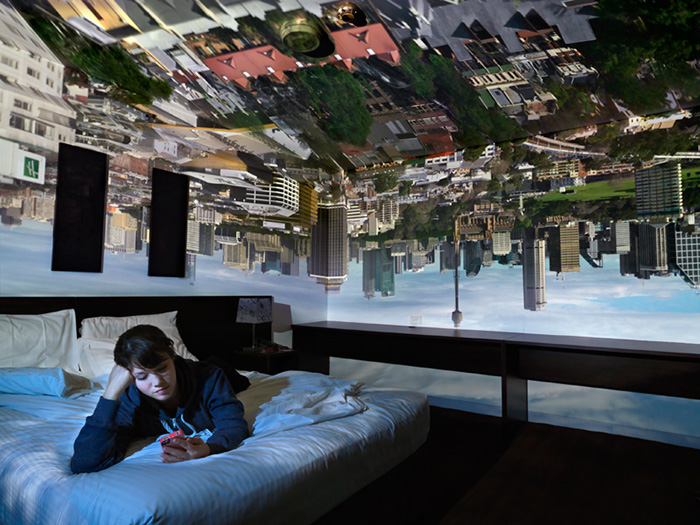
 

Robyn Stacey (Australian, b. 1952) 'Room 1306 Mercure Potts Point, Jodi' 2013


Robyn Stacey (Australian, b. 1952)
Room 1306 Mercure Potts Point, Jodi
2013
From Guest Relations
Type C print
100 x 133cm


X marks the spot

Somehow these photographs just don’t work for me.

Intellectually, I appreciate the Inception-esque concept but visually and emotionally I am ambivalent towards the images. They feel more like caricatures than engaging works of art. Human beings stare blankly off into the distance, as though there was some meaningful relationship between this “dead pan” look and the upside down camera obscura image; thought bubbles appearing above the head (as in a cartoon), emanate from stilted, frozen, blank-faced human beings. Dead pan, introverted looks do not make for engaging associations – between elements in the image or between the image and the viewer.

The tableau vivants evidence little life, to wit, the oh so correctly crossed legs in Room 3907 Sofitel on Collins, Morgan; the impeccably placed photographs in Room 2515 Shangri-la, Isobel (who would ever put photographs on a bed like that?); and the artfully placed dumbells in Room 4821 Sofitel on Collins, Chris (all 2013, below). X certainly does mark the constrained, constructed spot. Paradoxically, the images that work best are the ones where the human beings are absent, because the viewer can imagine the visage (and visualised thoughts) of the occupants, without seeing them. Then, and only then, do these images work as dreamlike scenarios and fulfil the artist’s desire to produce surreal and psychological spaces which seem to materialise their inhabitants’ distant thoughts.

However, as they are presented, each element of the image feels quite divisible, and all the elements of the image never feel fully integrated with each other. Hence the images feel less than fully resolved. What this body of work needed was a bit more panache and savour faire. Perhaps more distortion of the camera obscura image and more life from the protagonists would have brought the symbiotic relationships to life. You only have to think of the murder of Ann Lively in the film Minority Report to understand how these head cloud “visualisations” have incredible psychological power. I get none of that here.

Dr Marcus Bunyan


Many thankx to Stills Gallery for allowing me to publish the photographs in the posting. Please click on the photographs for a larger version of the image. All images are copyright of the artist.
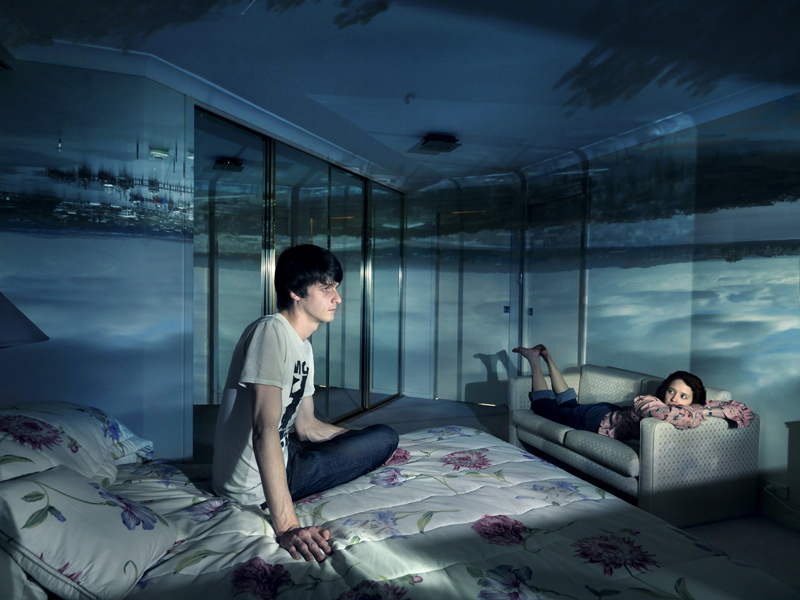


Robyn Stacey (Australian, b. 1952) 'Room 13 Cartwright, Michael and Katherine' 2013


Robyn Stacey (Australian, b. 1952)
Room 13 Cartwright, Michael and Katherine
2013
From Guest Relations
Type C print
100 x 133cm
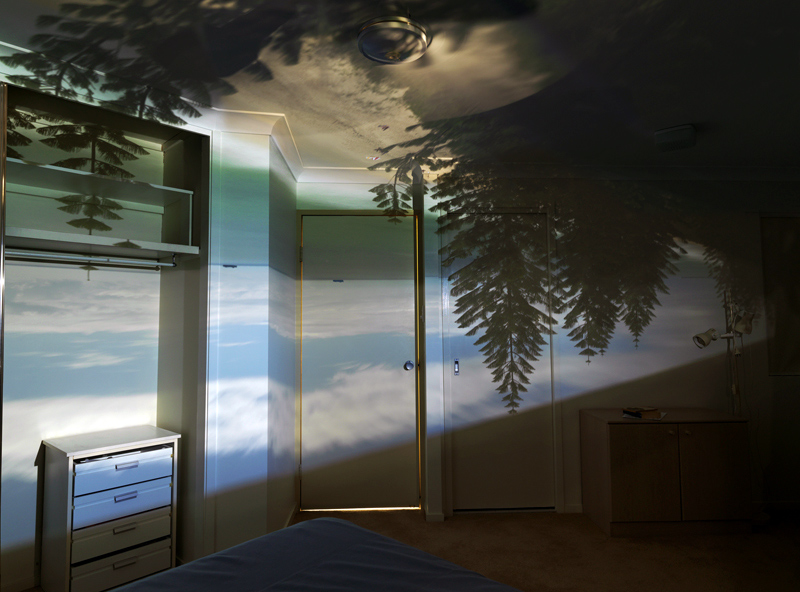
 

Robyn Stacey (Australian, b. 1952) 'Room 14 Cartwright, Ocean' 2013


Robyn Stacey (Australian, b. 1952)
Room 14 Cartwright, Ocean
2013
From Guest Relations
Type C print
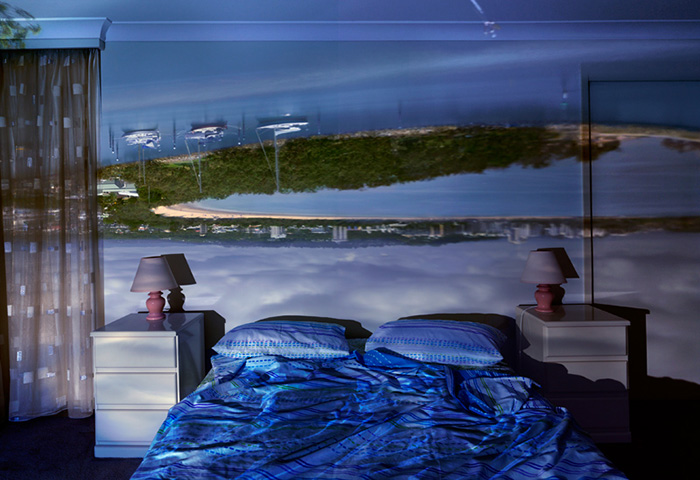
 

Robyn Stacey. 'Room 14 Cartwright, Harbour' 2013


Robyn Stacey (Australian, b. 1952)
Room 14 Cartwright, Harbour
2013
from Guest Relations
Type C print
100 x 146cm
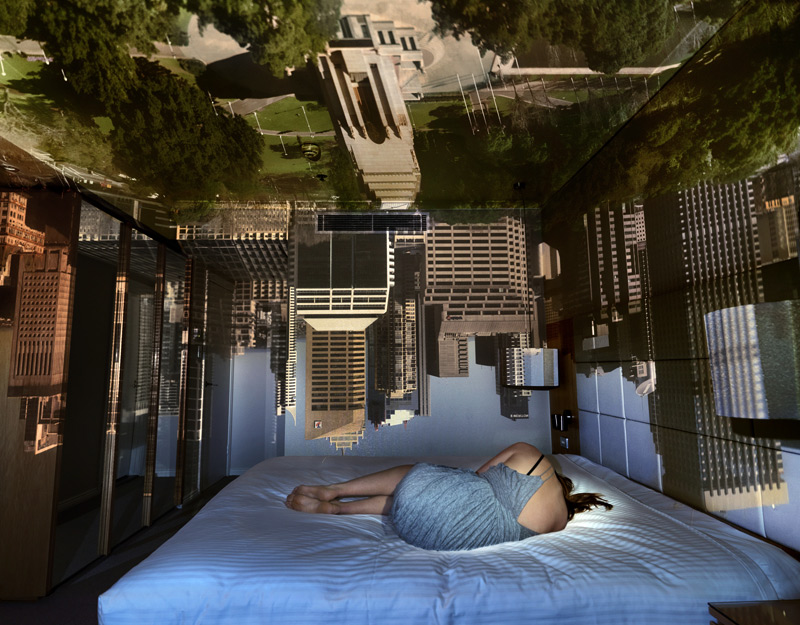
 

Robyn Stacey (Australian, b. 1952) 'Room 5126 Pullman Hyde Park, Brielle' 2013


Robyn Stacey (Australian, b. 1952)
Room 5126 Pullman Hyde Park, Brielle
2013
From Guest Relations
Type C print


“Hotel rooms are waiting spaces: waiting in rooms for people to arrive, for events to start, or just waiting to go home. They are also private spaces.”


Robyn Stacey, 2013


This striking new series by leading contemporary art photographer, Robyn Stacey, combines the simplest form of the camera, the “camera obscura”, with high-end digital photography to explore a specific context: the hotel room. The project explores the fleeting and ephemeral experience and how this is captured as a moment out of time, by the photographic still. 

Through Robyn Stacey’s photography we imagine other people’s private worlds. For the past 5 years her spectacular compositions have breathed new life into the old families of Sydney, reviving their personal objects from historic collections to evoke scenes as if they’ve just exited the room, leaving only a sprinkling of crumbs. Now, for Guest Relations she has turned from high fidelity studio photography to the non-digital process of camera obscura, Stacey brings our gaze to contemporary life and the transitory meetings of private and public worlds within the modern hotel room. Like pinhole photography, the camera obscura allows light in through a tiny hole in order to project a scene from outside onto an inside surface. Stacey recreates this process with ambitious scale and in unexpected settings, transforming the interiors of high-rise city chains and quiet coastline holiday destinations, into darkrooms for dramatically projected landscape vistas.

Turning from high fidelity studio photography to the non-digital process of camera obscura, Stacey brings our gaze to contemporary life and the transitory meetings of private and public worlds within the modern hotel room. Like pinhole photography, the “camera obscura” allows light in through a tiny hole in order to project a scene from outside onto an inside surface. Stacey recreates this process with ambitious scale and in unexpected settings, transforming the interiors of high-rise city Hotel chains and quiet coastline holiday destinations, into darkrooms for dramatically projected landscape vistas.

This historical form of image making, which Caravaggio and Vermeer are said to have used to create their impressive Baroque paintings, elaborately decorates the otherwise hermetic hotels rooms by wallpapering them with the world outside their windows. Normally characterised by modern minimalism and standardised comforts, these interiors are covered with the colonnades of buildings, the cityscapes of roads, rivers and parks (Sydney, Melbourne, Brisbane), and the turquoise shores of a sunbather’s paradise, such as the Gold Coast in Qld. Businessmen, young couples, and solo travellers are actors in these dreamlike scenarios; the upside-down, reversed and distorted visual effects of camera obscura, produce surreal and psychological spaces which seem to materialise their inhabitants’ distant thoughts.

Like stills from the sets of movies, Stacey’s images offer us fragments of untold narratives. Intimate and enigmatic moments glimpse the plethora of stories we can only imagine might play out within a hotel rooms’ four walls: the melodramas of domestics, the passionate professions of love, and the time-slowing boredom and loneliness that might accompany a life spent in endless waiting. Through the theatrical and distorted view of camera obscura is revealed a roving, fragmented and homogenised portrait of contemporary life. But by imbuing the transitory with the timeless, Stacey suggests that behind these closed, generic doors, we may all be looking outwards, seeking moments of beauty, clarity and meaningful connection.

Press release from the Stills Gallery website
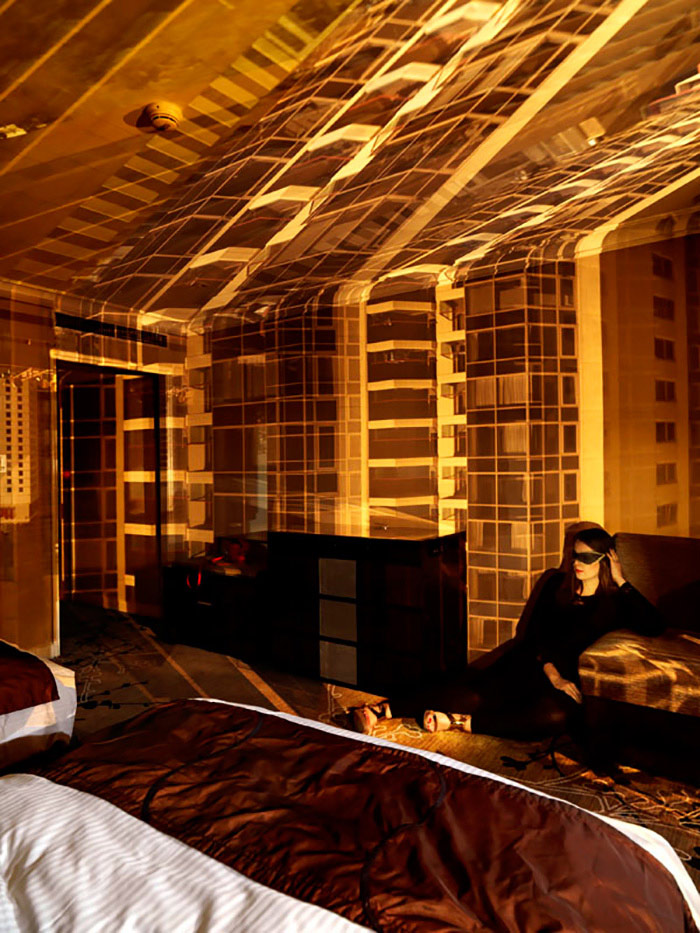
 

Robyn Stacey (Australian, b. 1952) 'Room 2016 Shangri-la, Courtney' 2013


Robyn Stacey (Australian, b. 1952)
Room 2016 Shangri-la, Courtney
2013
From Guest Relations
Type C print
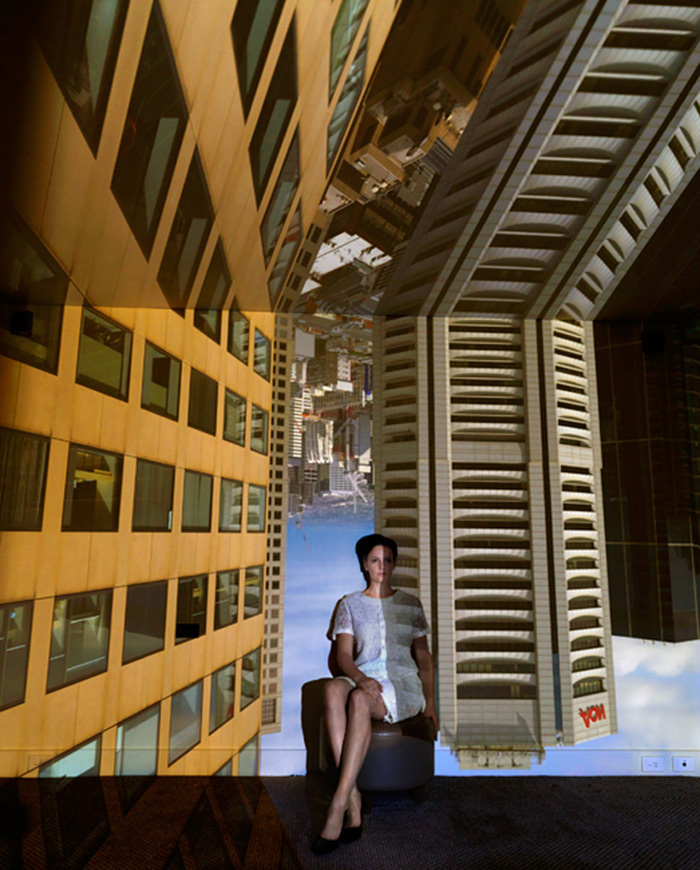
 

Robyn Stacey (Australian, b. 1952) 'Room 3907 Sofitel on Collins, Morgan' 2013


Robyn Stacey (Australian, b. 1952)
Room 3907 Sofitel on Collins, Morgan
2013
From Guest Relations
Type C print
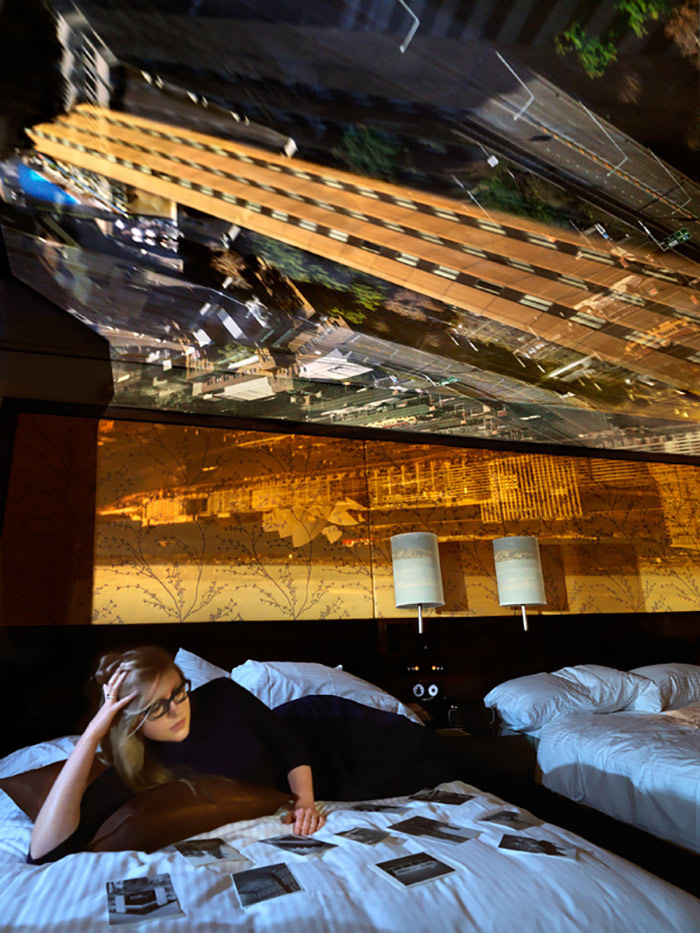
 

Robyn Stacey (Australian, b. 1952) 'Room 2515 Shangri-la, Isobel' 2013


Robyn Stacey (Australian, b. 1952)
Room 2515 Shangri-la, Isobel
2013
From Guest Relations
Type C print


Artist statement

“The project, Guest Relations, was developed for an Artist in Residency earlier this year, at the Sofitel on Collins in Melbourne, renowned for its uninterrupted panoramic views over Melbourne city. The aim of the residency was to explore the hermetic, but transient nature of the hotel room.

As the view is a significant part of the hotel experience I wanted to incorporate the external cityscape into the interior. By making the room into a camera obscura (the simplest and earliest form of pin-hole camera) the external view is then naturally projected back into the room, upside down and in reverse, allowing me to photograph the view and the room together in one image.

This visual combination creates a unique and powerful dreamlike setting that serves as the backdrop and creates an environment for the guests to be photographed in. There are no tricks – just utilising the earliest and simplest form of photography to produce spectacular cinematic results. The people in the photographs are not models and they bring their personality to the rooms, in a sense creating their own narratives. The project has since been extended to Sydney, Brisbane, Gold Coast and Sunshine Coast.”

Robyn Stacey, 2013
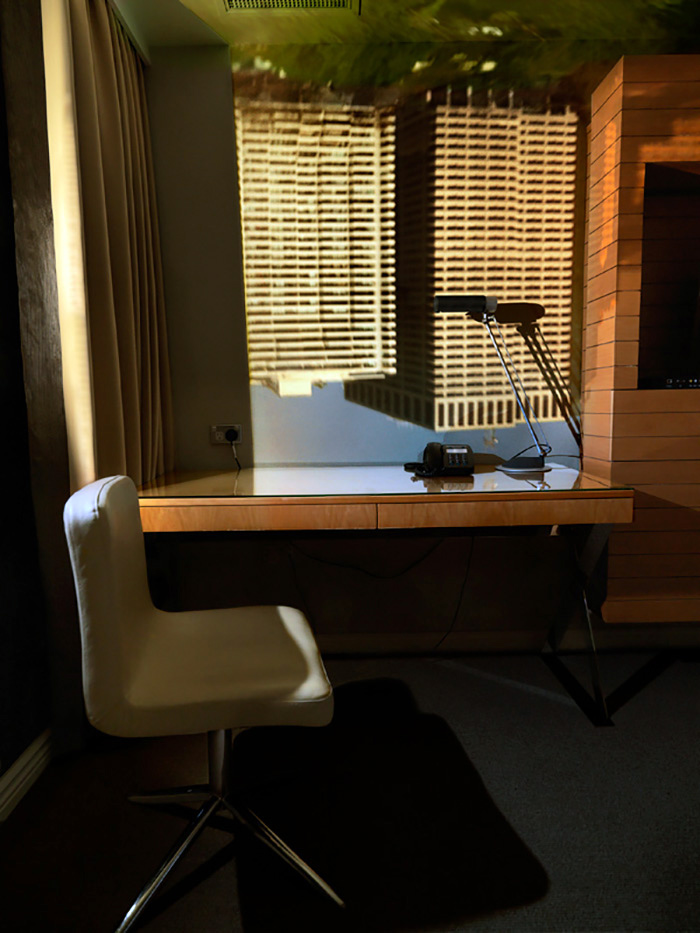
 

Robyn Stacey (Australian, b. 1952) 'Room 2015 Pullman Hyde Park, Chair Still Life' 2013


Robyn Stacey (Australian, b. 1952)
Room 2015 Pullman Hyde Park, Chair Still Life
2013
From Guest Relations
Type C print
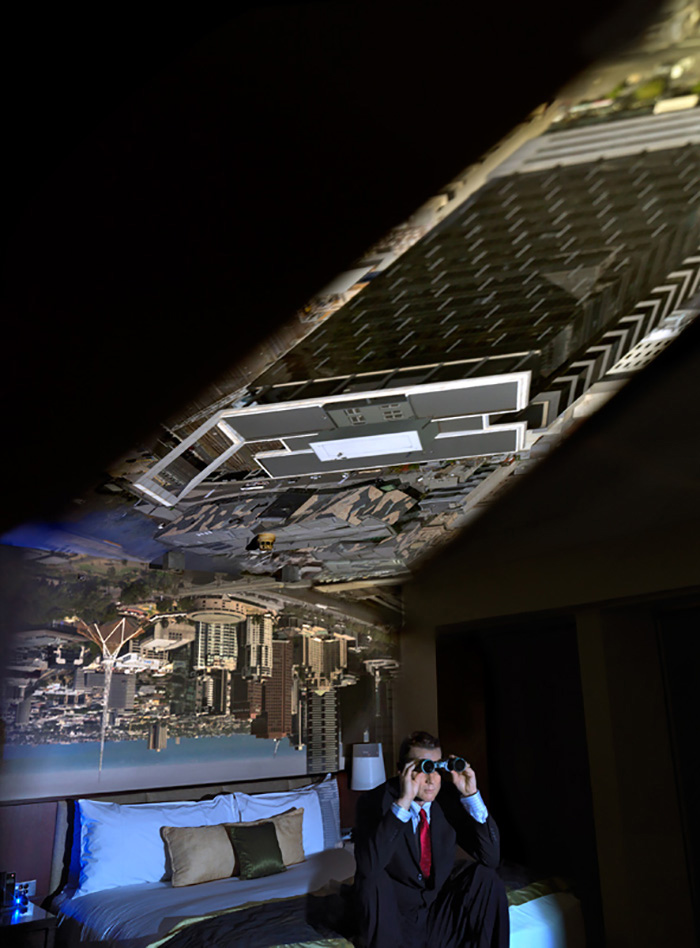
 

Robyn Stacey (Australian, b. 1952) 'Room 3601 Sofitel on Collins, Mr. Hoey' 2013


Robyn Stacey (Australian, b. 1952)
Room 3601 Sofitel on Collins, Mr. Hoey
2013
From Guest Relations
Type C print
135 x 100cm
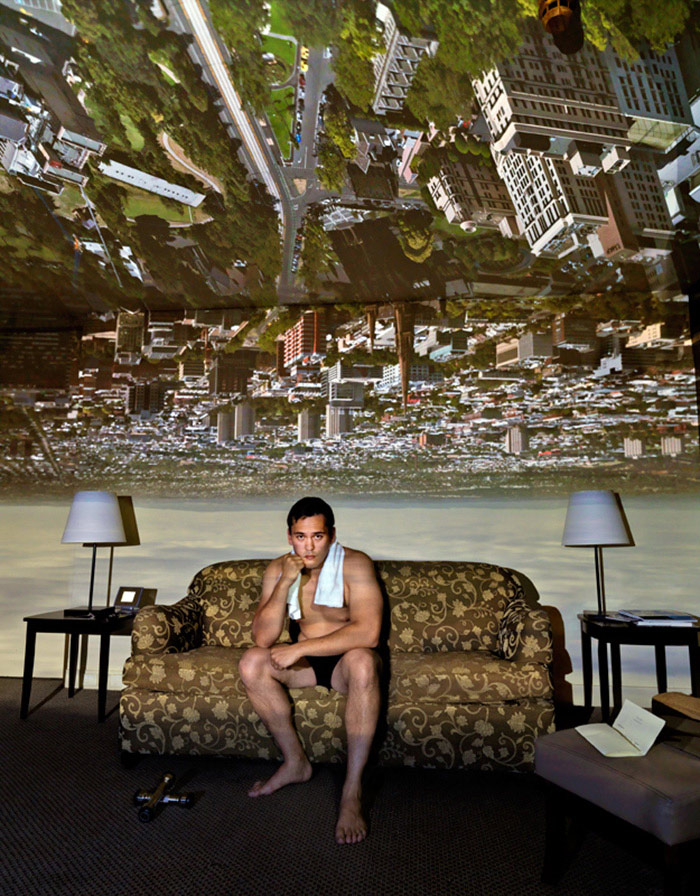
 

Robyn Stacey (Australian, b. 1952) 'Room 4821 Sofitel on Collins, Chris' 2013


Robyn Stacey (Australian, b. 1952)
Room 4821 Sofitel on Collins, Chris
2013
From Guest Relations
Type C print
127 x 100cm


Stills Gallery

This gallery has now closed.
Stills Gallery website

LIKE ART BLART ON FACEBOOK

Back to top

Exhibition: ‘Doug Aitken’ at Regen Projects, Los Angeles

Exhibition dates: 12th September – 17th October, 2009


Many thankx to Regen Projects for allowing me to publish the art work in the posting. Please click on the photographs for a larger version of the image.


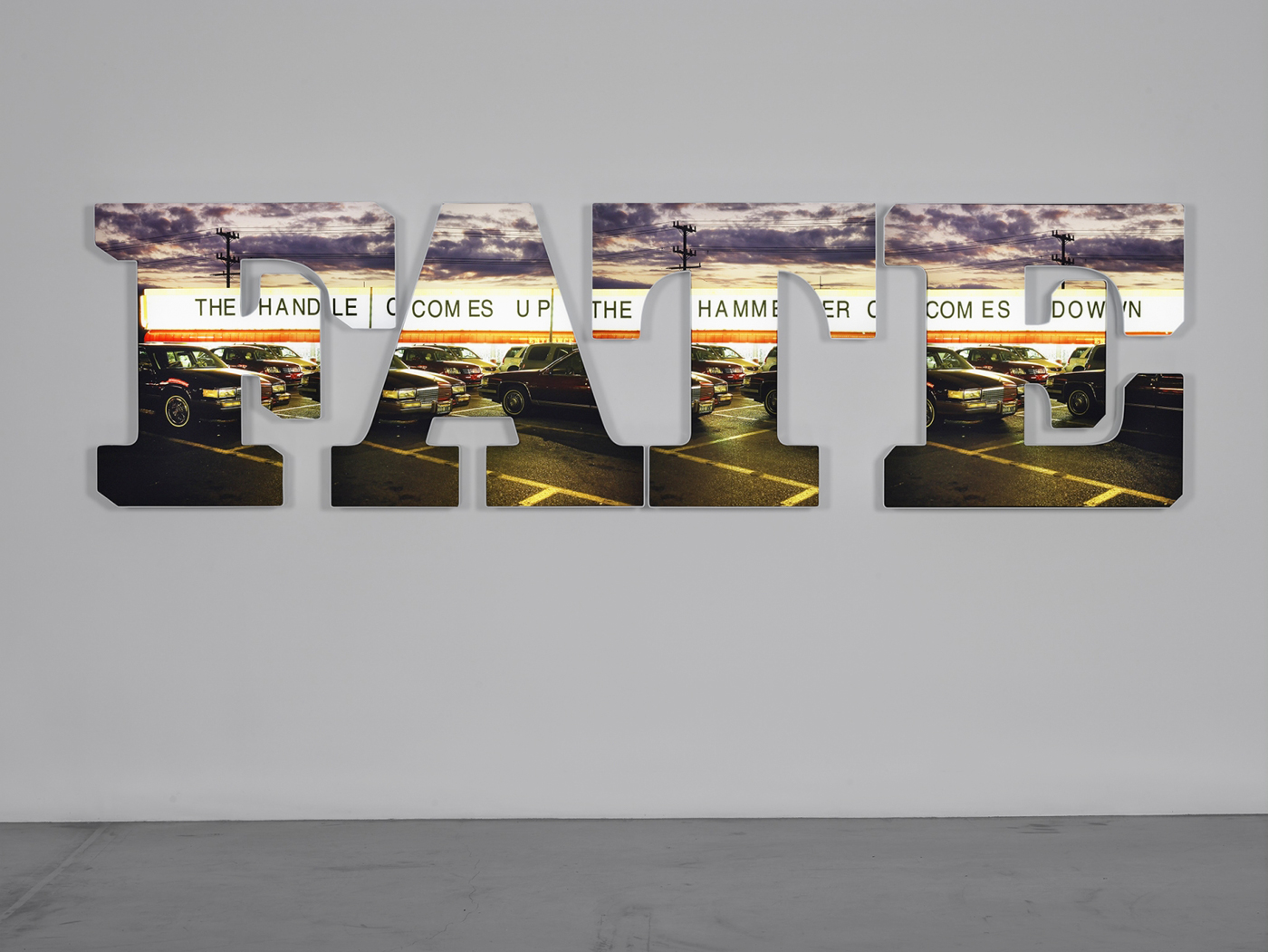
Doug Aitken (American, b. 1968) 'The handle comes up, the hammer comes down' 2009 from the exhibition 'Doug Aitken' at Regen Projects, Los Angeles, Sept - Oct, 2009


Doug Aitken (American, b. 1968)
The handle comes up, the hammer comes down
2009
LED lit lightbox


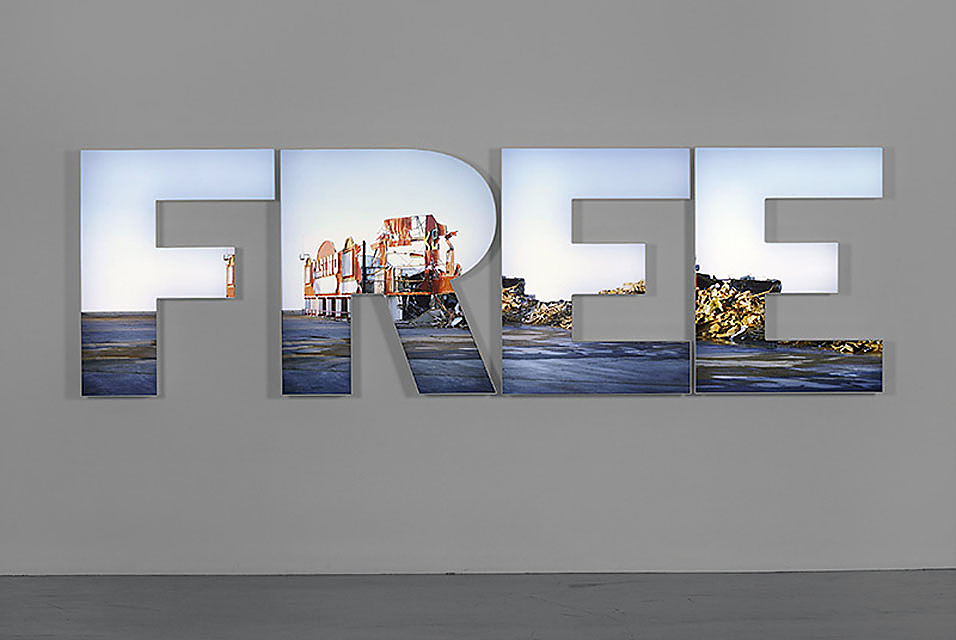
Doug Aitken (American, b. 1968) 'Free' 2009 from the exhibition 'Doug Aitken' at Regen Projects, Los Angeles, Sept - Oct, 2009


Doug Aitken (American, b. 1968)
Free
2009
LED lit lightbox


Doug Aitken (American, b. 1968) 'Start Swimming' 2006 from the exhibition 'Doug Aitken' at Regen Projects, Los Angeles, Sept - Oct, 2009


Doug Aitken (American, b. 1968)
Start Swimming
LED lit lightbox
2006


Doug Aitken (American, b. 1968) 'Start Swimming' 2006


Doug Aitken (American, b. 1968)
Start Swimming
LED lit lightbox
2006


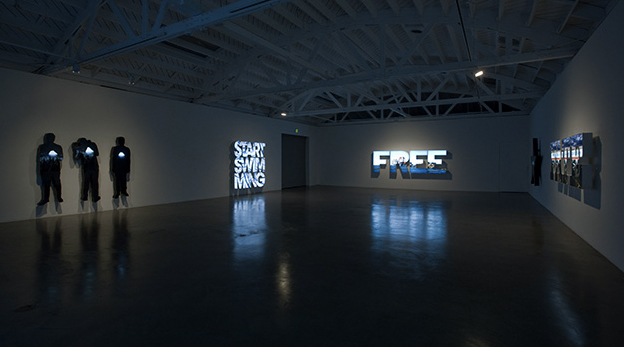
Installation view of ;Doug Aitken; at Regen Projects, Los Angeles


Installation view of Doug Aitken at Regen Projects, Los Angeles


Regen Projects is pleased to announce an exhibition of new works by Los Angeles artist Doug Aitken. This exhibition will present a series of new text-based light boxes and will feature the west coast debut of the film migration. Aitken explores the themes of temporality, space, memory, movement, and landscape in his work. History and themes of both the past and present are interwoven and reconfigured. His work deconstructs the connection between idea and iconography allowing each to reinvent itself.

Doug Aitken’s new light boxes combine image and text in a collision that creates a rupture in which alternate connections are presented. The work frontier depicts a destroyed property on the water’s edge, redefining expectations of what a frontier may hold. The images within some of the light boxes are a photographic collage that references Aitken’s photographic oeuvre and aesthetic. Experimenting with font, borrowed images, and his own photographs, the light boxes will be presented in the darkened gallery, glowing and playing off of one another. The disjunction of word, image, and light in these works also moves toward a cinematic whole, creating panoramic landscapes through text.

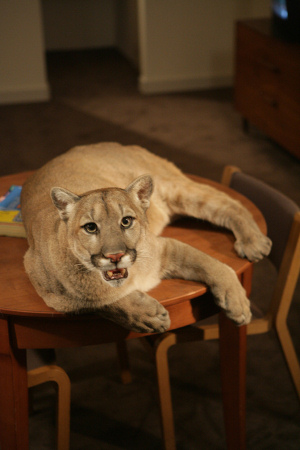
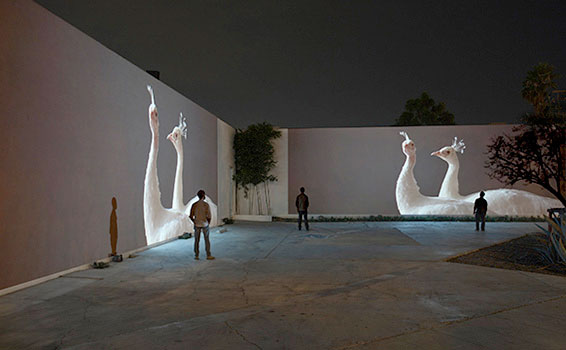
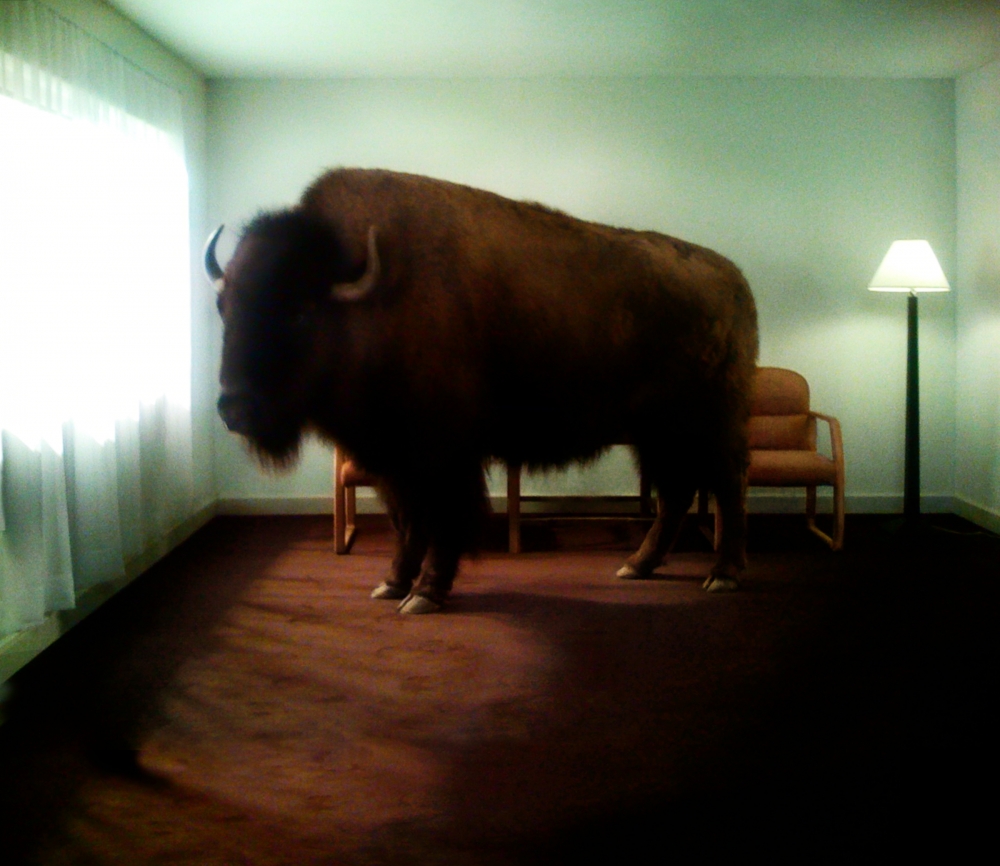
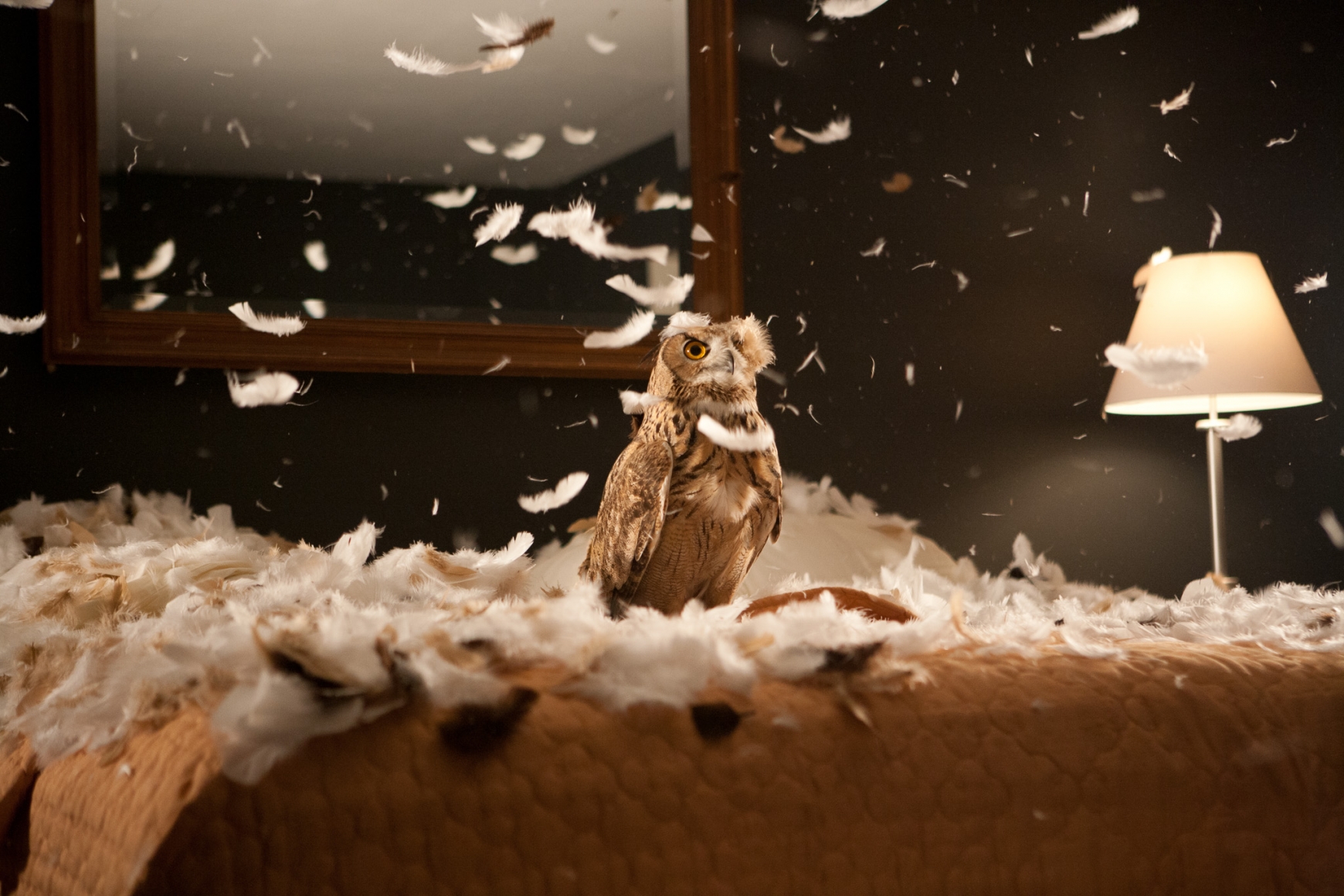
Presented alongside the light boxes will be Aitken’s first large scale public installation in Los Angeles, migration. The film, the first instalment in a three-part trilogy entitled empire, debuted at the 2008 Carnegie International. This hallucinatory epic depicts the movements of migratory animals as they pass through vacant and deserted hotel and motel rooms, delineating a nomadic passage across America from east to west. Fittingly making its first appearance on the west coast, this large-scale cinematic installation will be presented to the public on Santa Monica Boulevard projected onto the courtyard of Regen Projects II; visible only at night from sunset to sunrise. In addition to the nighttime public presentation, migration will also be exhibited at the 633 North Almont Drive space on an indoor billboard accompanied by its original score.

Settlers who met the untamed wilderness to forge new ways of life defined westward expansion. Aitken’s migratory landscape in migration is the opposite; it is a landscape completely devoid of human presence. His non-linear narrative presents a series of different sequences in which the animals and their actions are unique while the rooms and their components are indistinguishable. Hotels such as these offer a sense of both security and isolation and while some animals adapt to these surroundings, others seem conspicuously strange. Rarely do we get to examine these creatures so closely. Their movements and presence make the viewer acutely aware of scale, calling into question various relationships; the most apparent of which is the relationship of the natural and the man-made. In this encounter between the urban and the indigenous the viewer gets a sense of both displacement and habituation. As one critic describes:

“One by one, at different hotels, the animals behave as they behave, sniffing the air, twitching their noses to orient themselves in the desolate human habitat. Imbued with Aitken’s usual intimations of planetary solitude, his sense of spatial dislocation, and gorgeous formalised perception, these images … have the quality not so much of a nonlinear narrative as of a mirage.” (Kim Levin, Artnews, January 2009, p. 110.)


Aitken’s work has been exhibited extensively at museums and galleries worldwide, including his 2007 exhibition “sleepwalkers,” a large-scale outdoor installation at the Museum of Modern Art, New York. He has had numerous solo exhibitions including shows at the Serpentine Gallery, the Kunstmuseum Wolfsberg, the Kunsthaus Bregenz and the Kunsthalle Zurich. Aitken was awarded the international prize at the Venice Biennale in 1999 and was included in the 2000 Whitney Biennial.

Text from the Regen Projects website [Online] Cited 01/11/2009. No longer available online


Doug Aitken (American, b. 1968) Still from 'Migration' 2008

Doug Aitken (American, b. 1968) Still from 'Migration' 2008

Doug Aitken (American, b. 1968) Still from 'Migration' 2008

Doug Aitken (American, b. 1968) Still from 'Migration' 2008

Doug Aitken (American, b. 1968) Still from 'Migration' 2008

Doug Aitken (American, b. 1968) Still from 'Migration' 2008


Doug Aitken (American, b. 1968)
Stills from Migration
2008
Single video projection with billboard (steel and PVC projection screen)


In Migration, peacocks, deer, and beaver are filmed occupying motel rooms in vignettes that strike a poignant, provocative chord: talk about unexpected guests. Nevertheless, the work isn’t funny; it’s too frank in its beauty, too finely and respectfully wrought to be a joke.

Aitken’s animals are frequently shot in close perspective, which enhances their beauty in a way that is mesmerising. We’re not looking through them as much as we’re looking alongside them, ingesting the utter foreignness of their environs. As evening falls, we see an owl, an already otherworldly creature whose glowing eyes appear extraterrestrial, blinking at us from its perch on a king-size bed. Against the singsong of chirping birds, the camera pans away from the stationary owl as the room fills with thousands of downy feathers. Light is a powerful character in the film, whether gently filtered through sheer curtains or spilling onto carpeted hallways. Rather than highlighting imperfections or ugliness, the light is salvic, evincing a limbo that’s illuminating and warming. In one way or another, all of Aitken’s animals are drawn to light, whether toward a blinking lamp, the refracted surface of a swimming pool, or even the glow of an opened refrigerator door.

Extract from


Regen Projects
6750 Santa Monica Boulevard
Los Angeles, CA 90038
Phone: (310) 276 5424

Gallery hours:
Tuesday – Saturday 10am – 5pm

Regen Projects website

LIKE ART BLART ON FACEBOOK

Back to thttps://artblart.com/2009/10/04/exhibition-doug-aitken-at-regen-projects-los-angeles/op

Exhibition: ‘Walker Evans and the Picture Postcard’ at The Metropolitan Museum of Art, New York

Exhibition dates: 3rd February – 25th May 2009


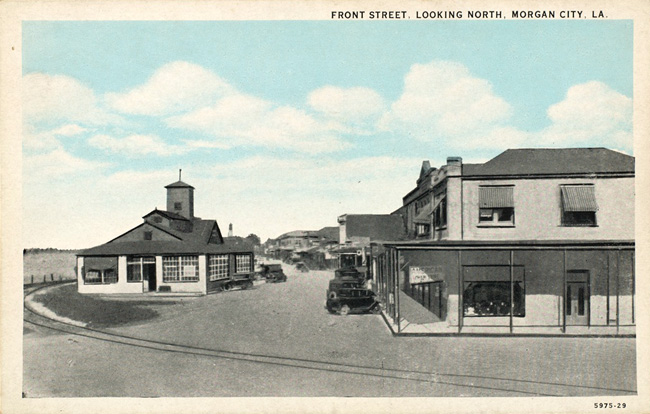
Unknown Artist. 'Front Street, Looking North, Morgan City, LA' 1929 from the exhibition 'Walker Evans and the Picture Postcard' at The Metropolitan Museum of Art, New York, Feb - March, 2009


Unknown artist (American)
Front Street, Looking North, Morgan City, LA
1929
Postcard, Photomechanical reproduction
3 1/2 x 5 1/2 in. (8.9 x 14 cm)
The Metropolitan Museum of Art, New York, Walker Evans Archive, 1994


This looks a very interesting exhibition – I wish I could see the actual thing!


Many thankx to The Metropolitan Museum of Art for allowing me to publish the photographs and art work in the posting. Please click on the photographs for a larger version of the image.


This exhibition will focus on a collection of 9,000 picture postcards amassed and classified by the American photographer Walker Evans (1903-1975), now part of the Metropolitan’s Walker Evans Archive. The picture postcard represented a powerful strain of indigenous American realism that directly influenced Evans’s artistic development. The dynamic installation of hundreds of American postcards drawn from Evans’s collection will reveal the symbiotic relationship between Evans’s own art and his interest in the style of the postcard. This will also be demonstrated with a selection of about a dozen of his own photographs printed in 1936 on postcard format photographic paper.

Text from The Metropolitan Museum of Art website


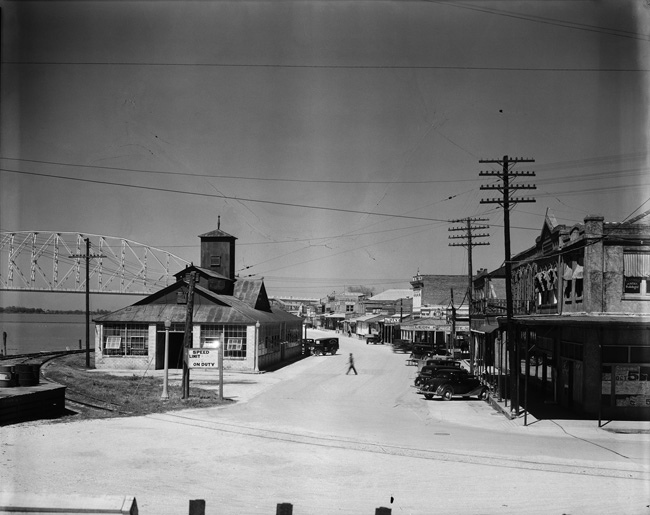
Walker Evans (American, 1903-1975) 'Street Scene, Morgan City, Louisiana' 1935 from the exhibition 'Walker Evans and the Picture Postcard' at The Metropolitan Museum of Art, New York, Feb - March, 2009


Walker Evans (American, 1903-1975)
Street Scene, Morgan City, Louisiana
1935
Film negative
8 x 10 in. (20.3 x 25.4cm)
The Metropolitan Museum of Art, New York, Walker Evans Archive, 1994


“Sold in five-and-dime stores in every small town in America, postcards satisfied the country’s need for human connection in the age of the railroad and Model T when, for the first time, many Americans regularly found themselves traveling far from home. At age twelve, Walker Evans began to collect and classify his cards. What appealed to the nascent photographer were the cards’ vernacular subjects, the simple, unvarnished, “artless” quality of the pictures, and the generic, uninflected, mostly frontal style that he later would borrow for his own work with the camera. Both the picture postcard and Evans’s photographs seem equally authorless – quiet documents that record the scene with an economy of means and with simple respect. Walker Evans and the Picture Postcard proposes that the picture postcard represented a powerful strain of indigenous American realism that directly influenced Evans’s artistic development.”

Text from the Steidl website


The American postcard came of age around 1907, when postal deregulations allowed correspondence to be written on the address side of the card. By 1914, the craze for picture postcards had proved an enormous boon for local photographers, as their black-and-white pictures of small-town main streets, local hotels and new public buildings were transformed into handsomely coloured photolithographic postcards that were reproduced in great bulk and sold in five-and-dime stores in every small town in America. Postcards met the nation’s need for communication in the age of the railroad and Model T, when, for the first time, many Americans often found themselves traveling far from home. In the Walker Evans Archive at New York’s Metropolitan Museum of Art, there is a collection of 9,000 such postcards amassed by the great American photographer, who began his remarkable collection at the age of 10. What appealed to Evans, even as a boy, were the vernacular subjects, the unvarnished, “artless” quality of the pictures and the generic, uninflected, mostly frontal style that he later would borrow for his own work. The picture postcard and Evans’ photographs seem equally authorless, appearing as quiet documents that record a scene with both economy of means and simple respect. This volume demonstrates that the picture postcard articulated a powerful strain of indigenous American realism that directly influenced Evans’ artistic development.

Text from the Amazon website


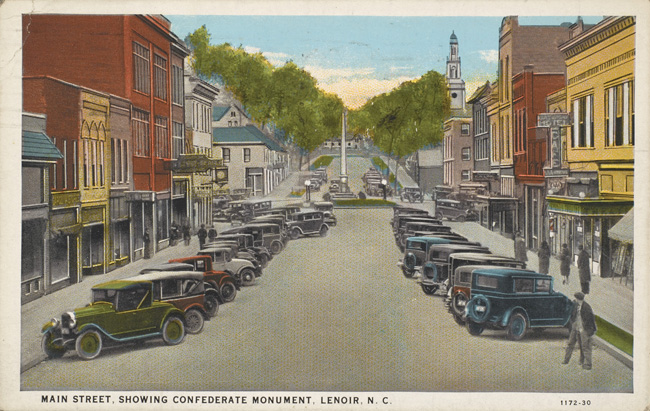
Unknown artist (American) 'Main Street, Showing Confederate Monument, Lenoir, N. C.,' 1930s


Unknown artist (American)
Main Street, Showing Confederate Monument, Lenoir, N. C.
1930s
Postcard, Photomechanical reproduction
3 1/2 x 5 1/2 in. (8.9 x 14cm)
The Metropolitan Museum of Art, New York, Walker Evans Archive, 1994


Walker Evans was the progenitor of the documentary style in American photography, and he argued that picture postcard captured a part of America that was not recorded in any other medium. In the early 20th century, picture postcards, sold in five-and-dime stores across America, depicted small towns and cities with realism and hometown pride – whether the subject was a local monument, a depot, or a coal mine.

Evans wrote of his collection: “The very essence of American daily city and town life got itself recorded quite inadvertently on the penny picture postcards of the early 20th century .… Those honest direct little pictures have a quality today that is more than mere social history .… The picture postcard is folk document.”

Walker Evans and the Picture Postcard is the first exhibition to focus primarily on works drawn from The Walker Evans Archive. The installation is designed to convey the incredible range of his collection and to reflect the eclectic and obsessional ways in which the artist organised his picture postcards. For example, Evans methodically classified his collection into dozens of subject categories, such as “American Architecture,” “Factories,” “Automobiles,” “Street Scenes,” “Summer Hotels,” “Lighthouses,” “Outdoor Pleasures,” “Madness,” and “Curiosities”.

Marty Weil. “Walker Evans’ Picture Postcard Collection on the ephemera: exploring the world of old paper website Feb 24, 2009 [Online] Cited 12/06/2022. No longer available online


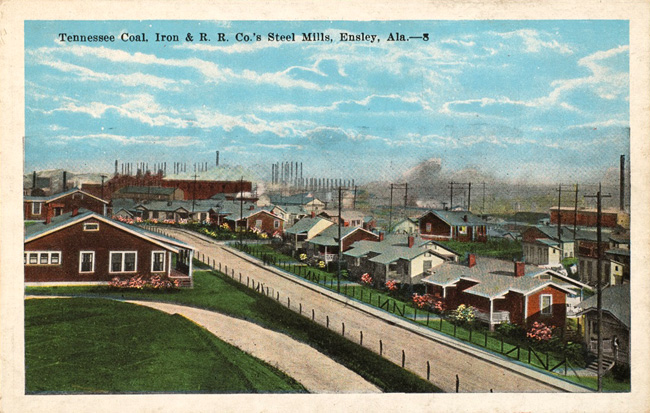
Unknown artist (American) 'Tennessee Coal, Iron, & R. R. Co.'s Steel Mills, Ensley, Ala.,' 1920s


Unknown artist (American)
Tennessee Coal, Iron, & R. R. Co.’s Steel Mills, Ensley, Ala.
1920s
Postcard, Photomechanical reproduction
3 1/2 x 5 1/2 in. (8.9 x 14cm)
The Metropolitan Museum of Art, New York, Walker Evans Archive, 1994


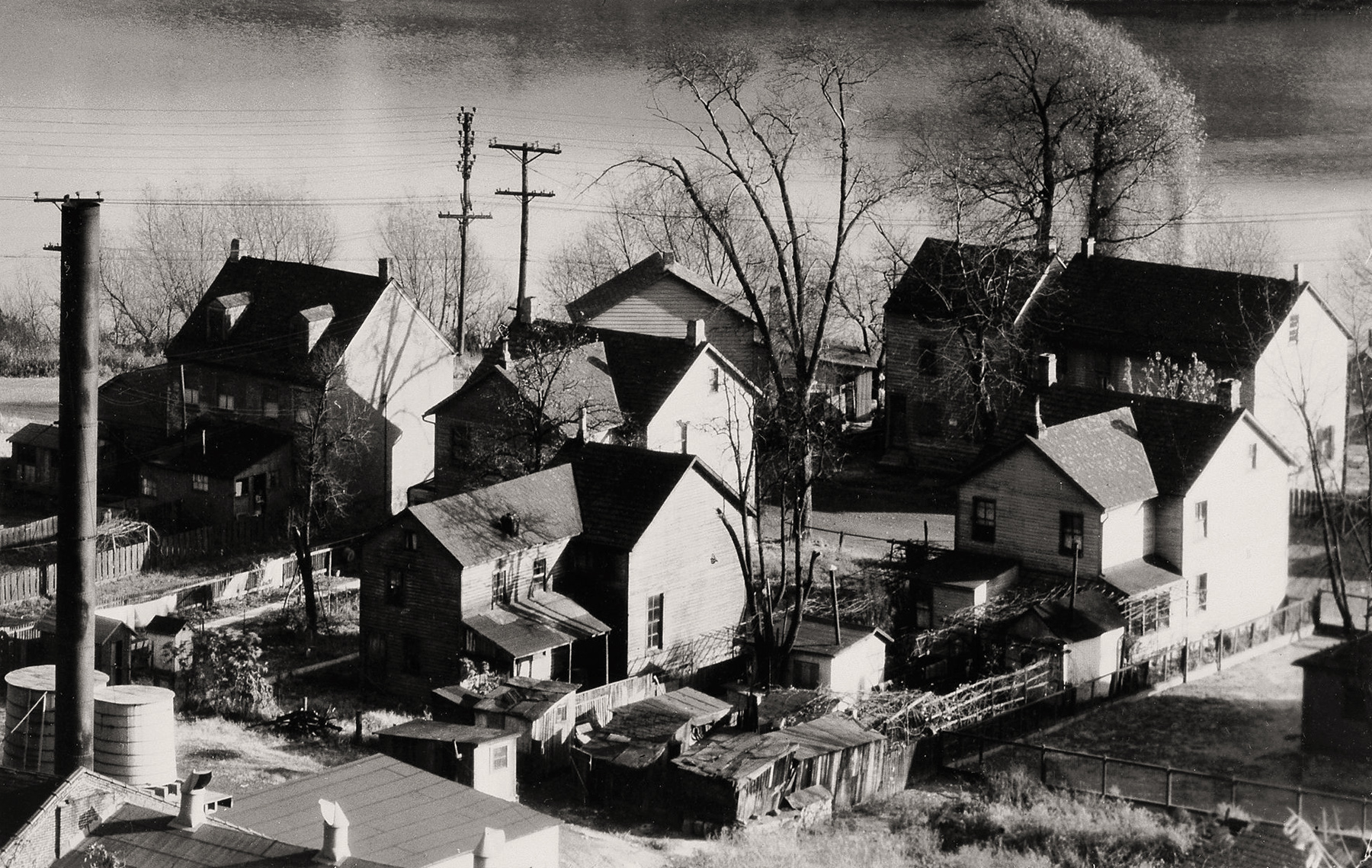
Walker Evans (American, 1903-1975) 'View of Easton, Pennsylvania' 1935


Walker Evans (American, 1903-1975)
View of Easton, Pennsylvania
1935
Postcard format gelatin silver print


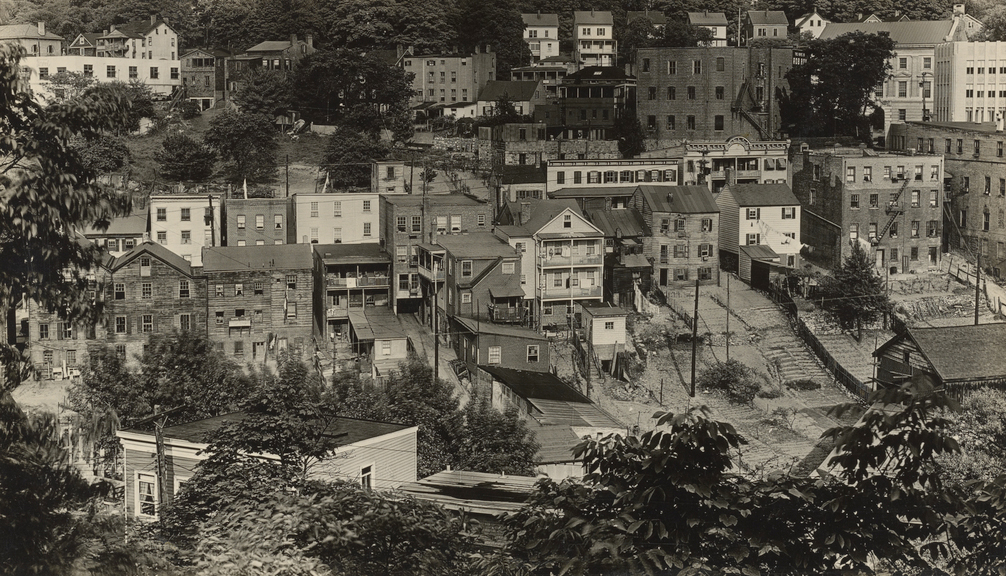
Walker Evans (American, 1903-1975) 'View of Ossining, New York' 1930-1931


Walker Evans (American, 1903-1975)
View of Ossining, New York
1930-1931
Gelatin silver print
4 1/8 x 7 13/16 in. (10.5 x 19.8cm)
The Metropolitan Museum of Art, New York, Purchase, The Horace W. Goldsmith Foundation Gift through Joyce and Robert Menschel, 1999


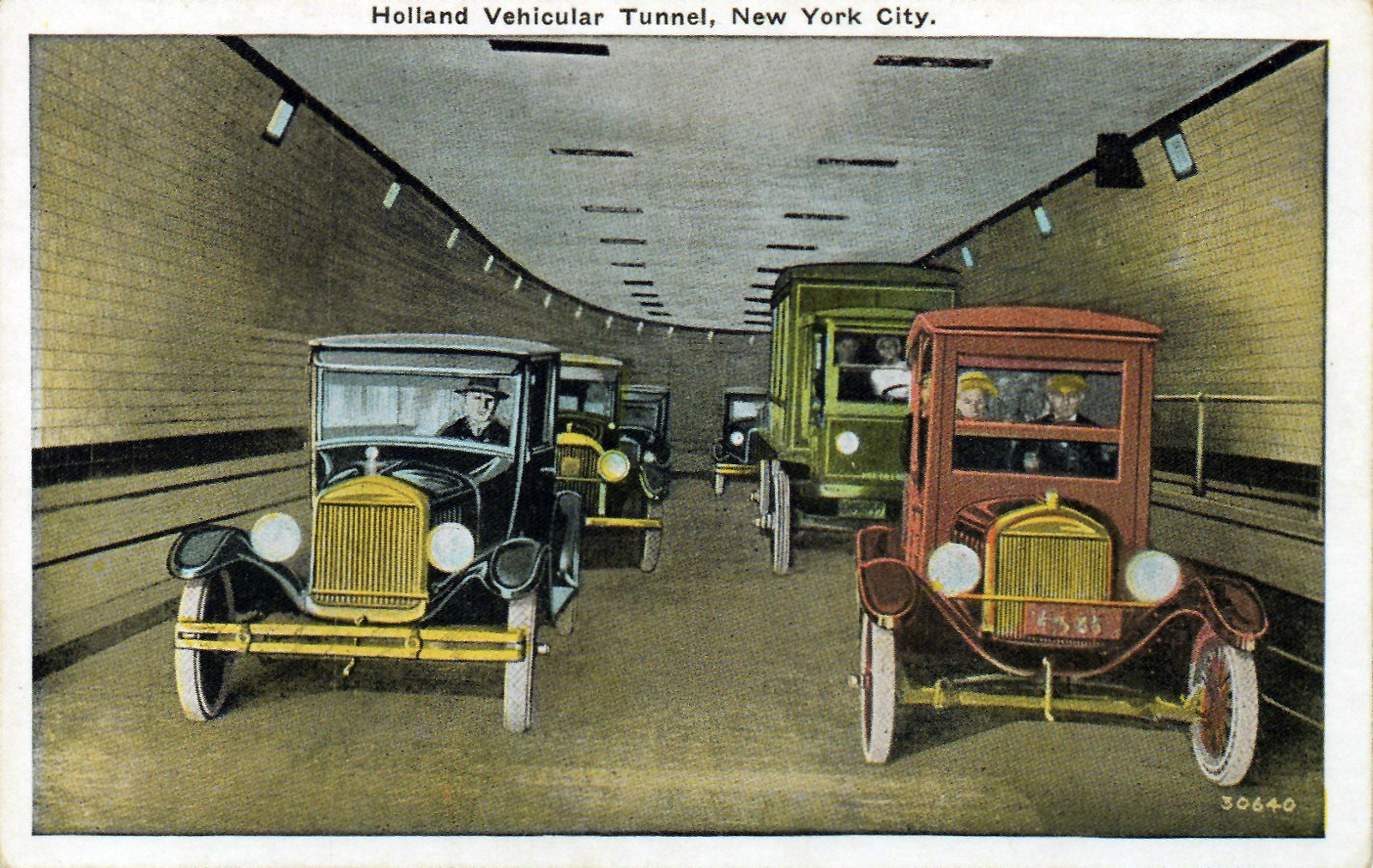
Unknown artist (American) 'Holland Vehicular Tunnel, New York City' 1920s


Unknown artist (American)
Holland Vehicular Tunnel, New York City
1920s
Postcard, Photomechanical reproduction
3 9/16 x 5 1/2 in. (9 x 14cm)
The Metropolitan Museum of Art, New York, Walker Evans Archive, 1994


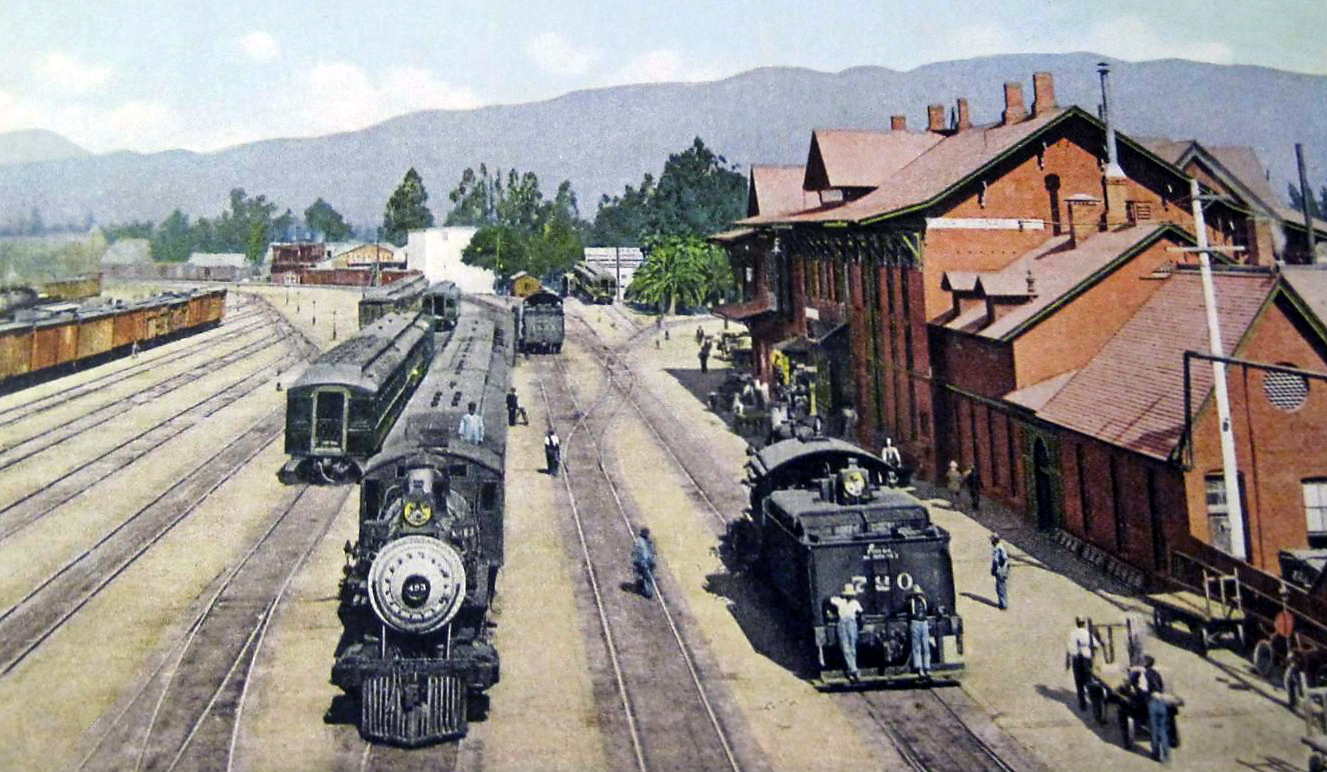
Unknown artist (American) 'Santa Fe station and yards, San Bernardino, California' c. 1910


Unknown artist (American)
Santa Fe station and yards, San Bernardino, California
c. 1910
Postcard, Photomechanical reproduction
3 9/16 x 5 1/2 in. (9 x 14cm)
The Metropolitan Museum of Art, New York, Walker Evans Archive, 1994


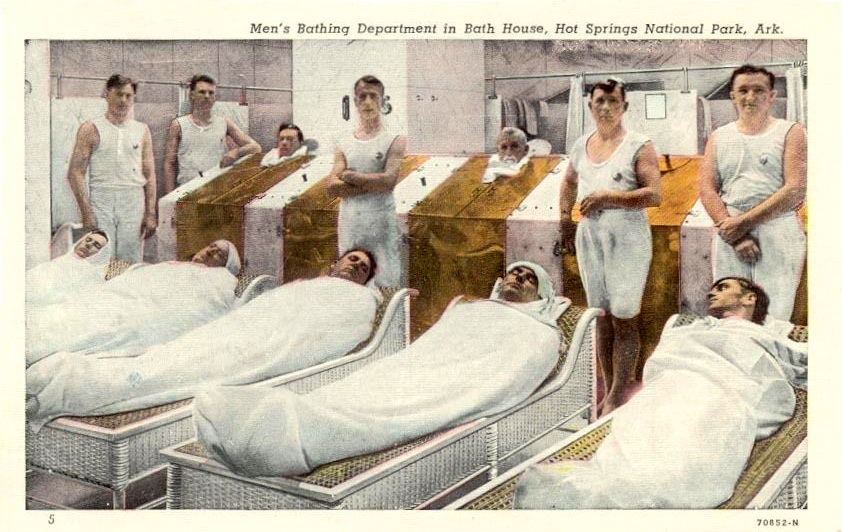
Unknown artist (American) 'Men's Bathing Department, Bath House, Hot Springs National Park, Ark.' 1920s


Unknown artist (American)
Men’s Bathing Department, Bath House, Hot Springs National Park, Ark.
1920s
Postcard, Photomechanical reproduction
3 9/16 x 5 1/2 in. (9 x 14cm)
The Metropolitan Museum of Art, New York, Walker Evans Archive, 1994


Walker Evans and the Picture Postcard


Walker Evans and the Picture Postcard


In 1903, the year Walker Evans was born, the US Postal service handled 700 million picture postcards. Evans would later recall his fondness for those “honest, direct, little pictures that once flooded the mail.” By the age of twelve he was a collector and through his lifetime, an obsessive. “Yes, I was a postcard collector at an early age. Every time my family would take me around for what they thought was my education, to show me the country in a touring car, to go to Illinois, to Massachusetts, I would rush into Woolworth’s and buy all the postcards.” For Evans, the addition of hand-colouring added a great deal of aesthetic value. …

Walker Evans and the Picture Postcard reproduces hundreds of cards from his collection including the three magazine features mentioned above. Also the fine addition of an “illustrated transcript” of his now famous Lyric Documentary lecture at Yale in 1964 makes this a bit more interesting than the title may suggest. …

Later in life Evans had friends around the country while on photo trips keeping an eye for postcards that might interest. He had a particular love for ones produced by the Detroit Publishing Company which were considered the “Cadillac” of postcards. Lee Friedlander related the following from a recent interview: “The Detroit Publishing Company had a formula. If a town had 2,000 people or so, it got a main street postcard; if it had 3,500, it got the main street and also a courthouse square. Walker liked the formula. He had everyone looking for this or that. He told me once in Old Lyme, “If you run across any ‘Detroits,’ get them for me.” I found sixty or seventy cards for him. He loved them.”

“Walker Evans and the Picture Postcard by Jeff L. Rosenheim,” on the 5B4: Photography and Books blog, March 1, 2009 [Online] Cited 12/06/2022


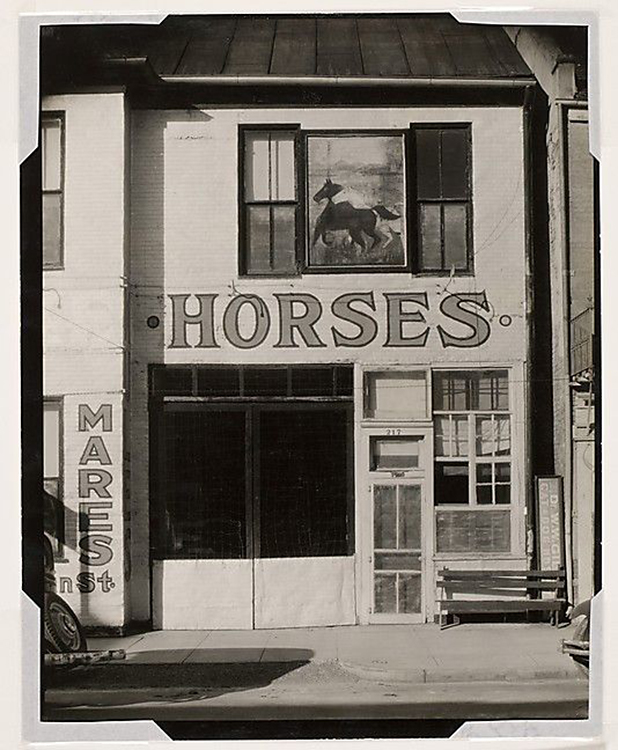
Walker Evans (American, 1903-1975) 'Stable, Natchez, Mississippi' March 1935


Walker Evans (American, 1903-1975)
Stable, Natchez, Mississippi
March 1935
Gelatin silver print
10 x 8 in. (25.4 x 20.3cm)
The Metropolitan Museum of Art, New York, Gilman Collection, Purchase, The Horace W. Goldsmith Foundation Gift through Joyce and Robert Menschel, 2005


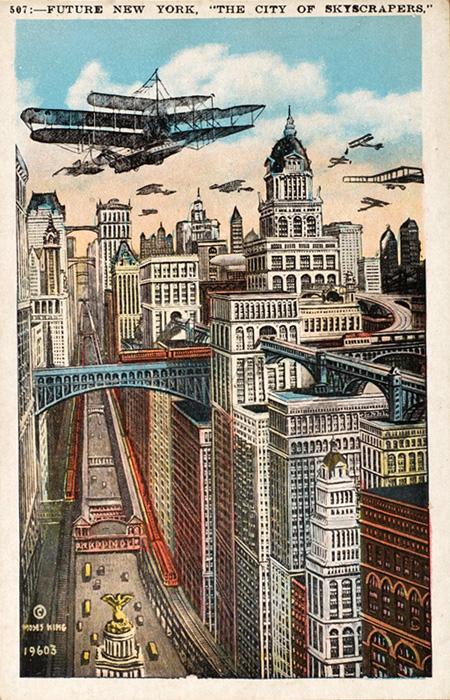
Unknown artist (American) 'Future New York, The City of Skyscrapers' 1910s


Unknown artist (American)
Future New York, The City of Skyscrapers
1910s
Postcard, Photomechanical reproduction
3 9/16 x 5 1/2 in. (9 x 14cm)
The Metropolitan Museum of Art, New York, Walker Evans Archive, 1994


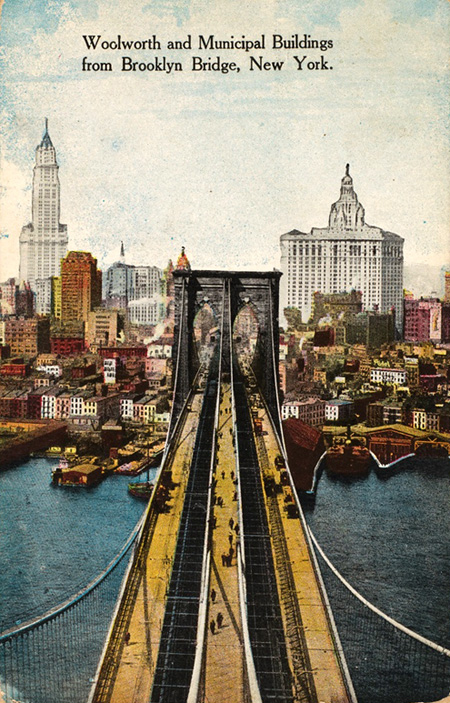
Unknown artist (American) 'Woolworth and Municipal Buildings from Brooklyn Bridge, New York' 1910s


Unknown artist (American)
Woolworth and Municipal Buildings from Brooklyn Bridge, New York
1910s
Postcard, Photomechanical reproduction
3 9/16 x 5 1/2 in. (9 x 14cm)
The Metropolitan Museum of Art, New York, Walker Evans Archive, 1994


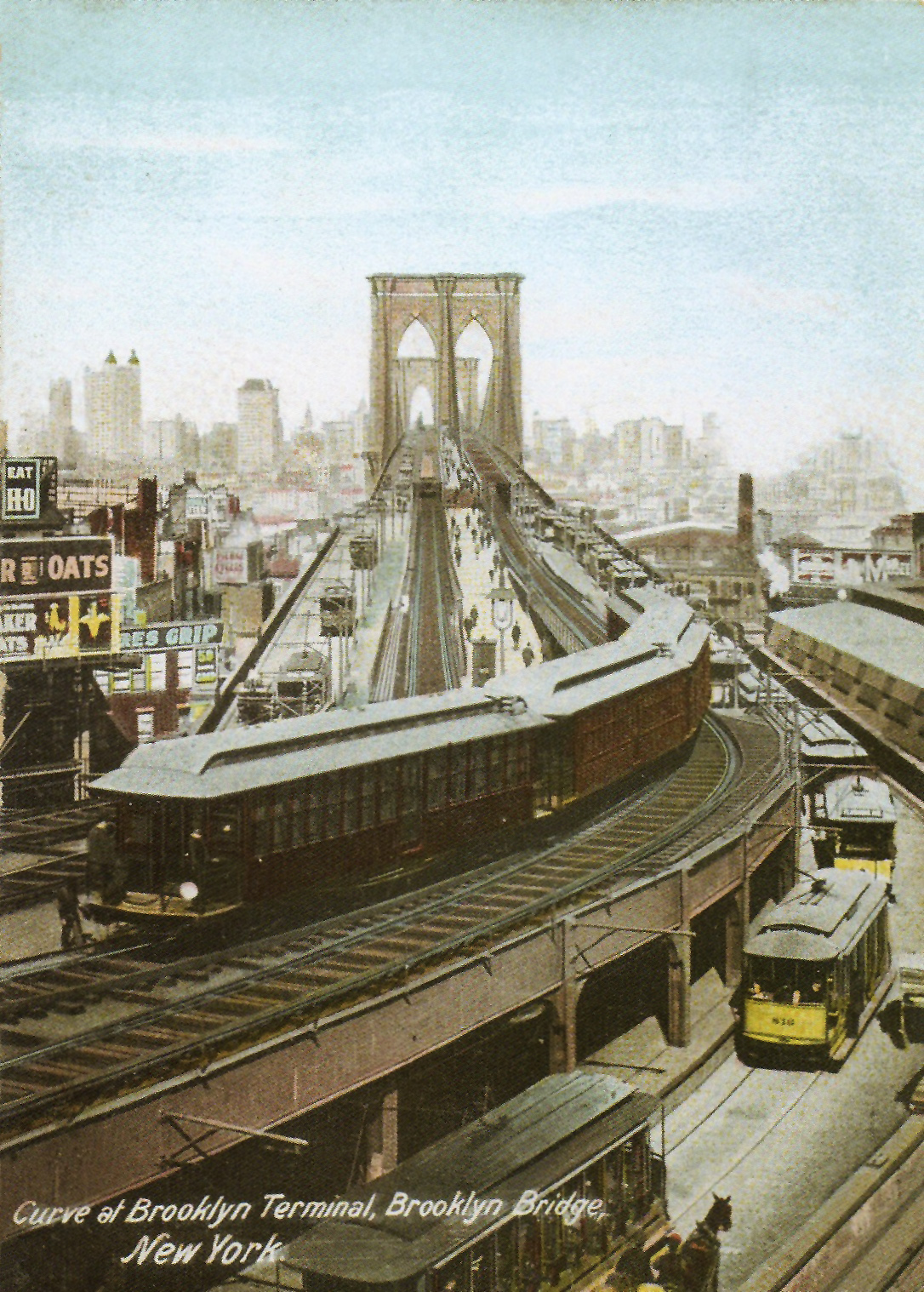
Unknown artist (American) 'Curve at Brooklyn Terminal, Brooklyn Bridge, New York' 1907


Unknown artist (American)
Curve at Brooklyn Terminal, Brooklyn Bridge, New York
1907
Postcard, Photomechanical reproduction
3 9/16 x 5 1/2 in. (9 x 14cm)
The Metropolitan Museum of Art, New York, Walker Evans Archive, 1994


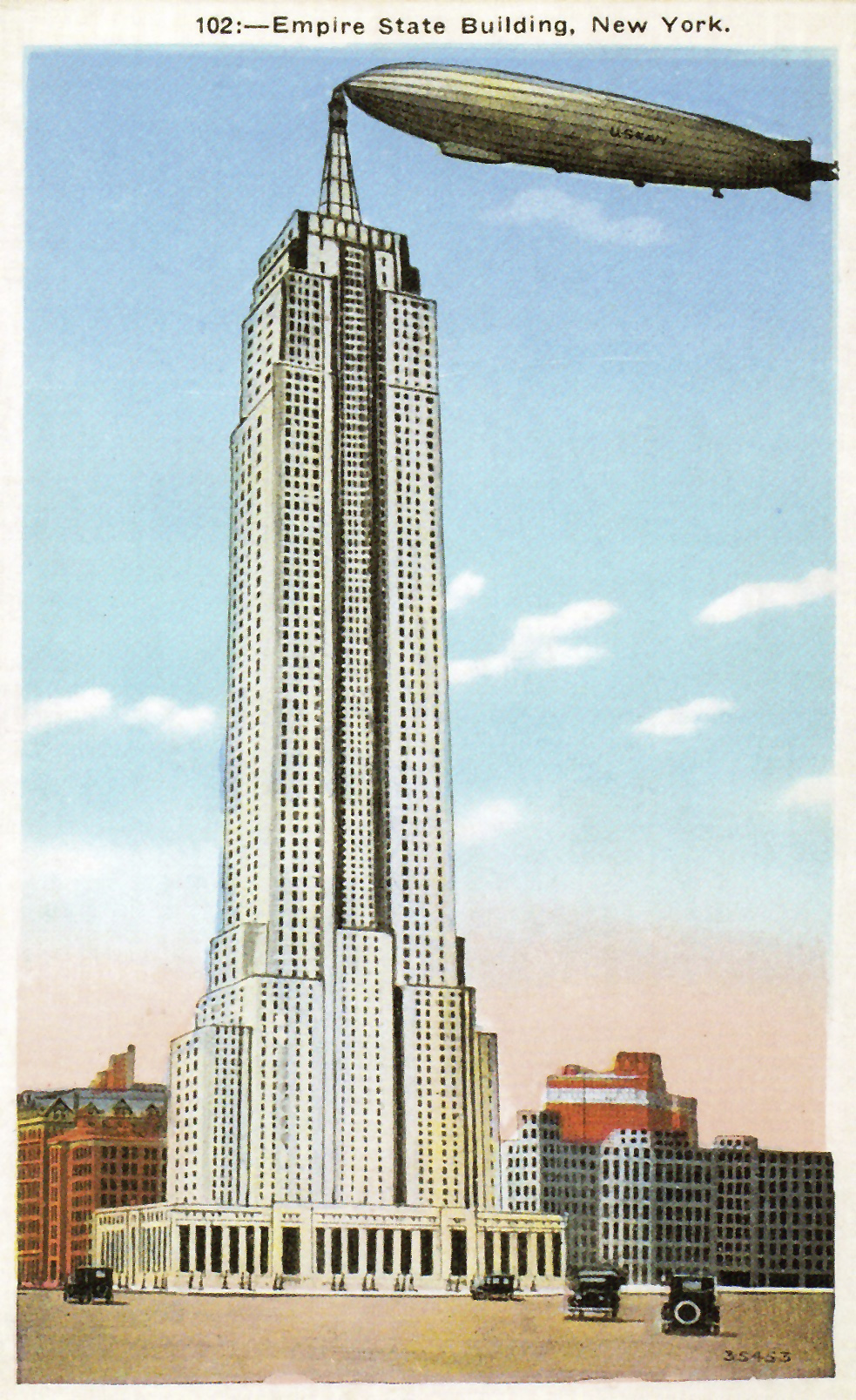
Unknown artist (American) 'Empire State Building, New York' 1930s


Unknown artist (American)
Empire State Building, New York
1930s
Postcard, Photomechanical reproduction
3 9/16 x 5 1/2 in. (9 x 14cm)
The Metropolitan Museum of Art, New York, Walker Evans Archive, 1994


The Metropolitan Museum of Art
1000 Fifth Avenue at 82nd Street
New York, New York 10028-0198
Phone: 212-535-7710

Opening hours:
Sunday – Tuesday and Thursday: 10am – 5pm
Friday and Saturday: 10am – 9pm
Closed Wednesday

Walker Evans and the Picture Postcard (Hardcover)
by Jeff Rossenheim and Walker Evans

The Metropolitan Museum of Art website

LIKE ART BLART ON FACEBOOK

Back to top