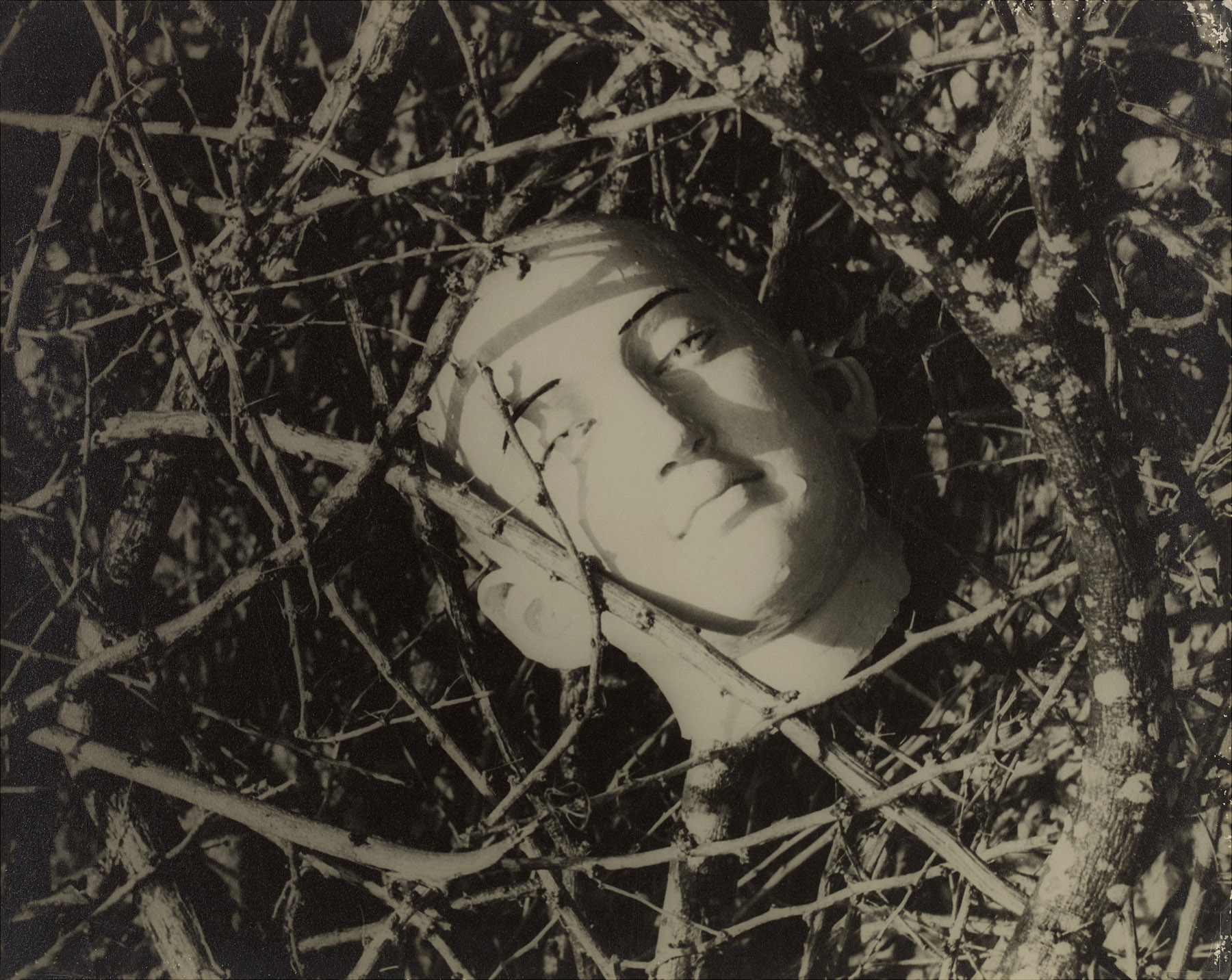
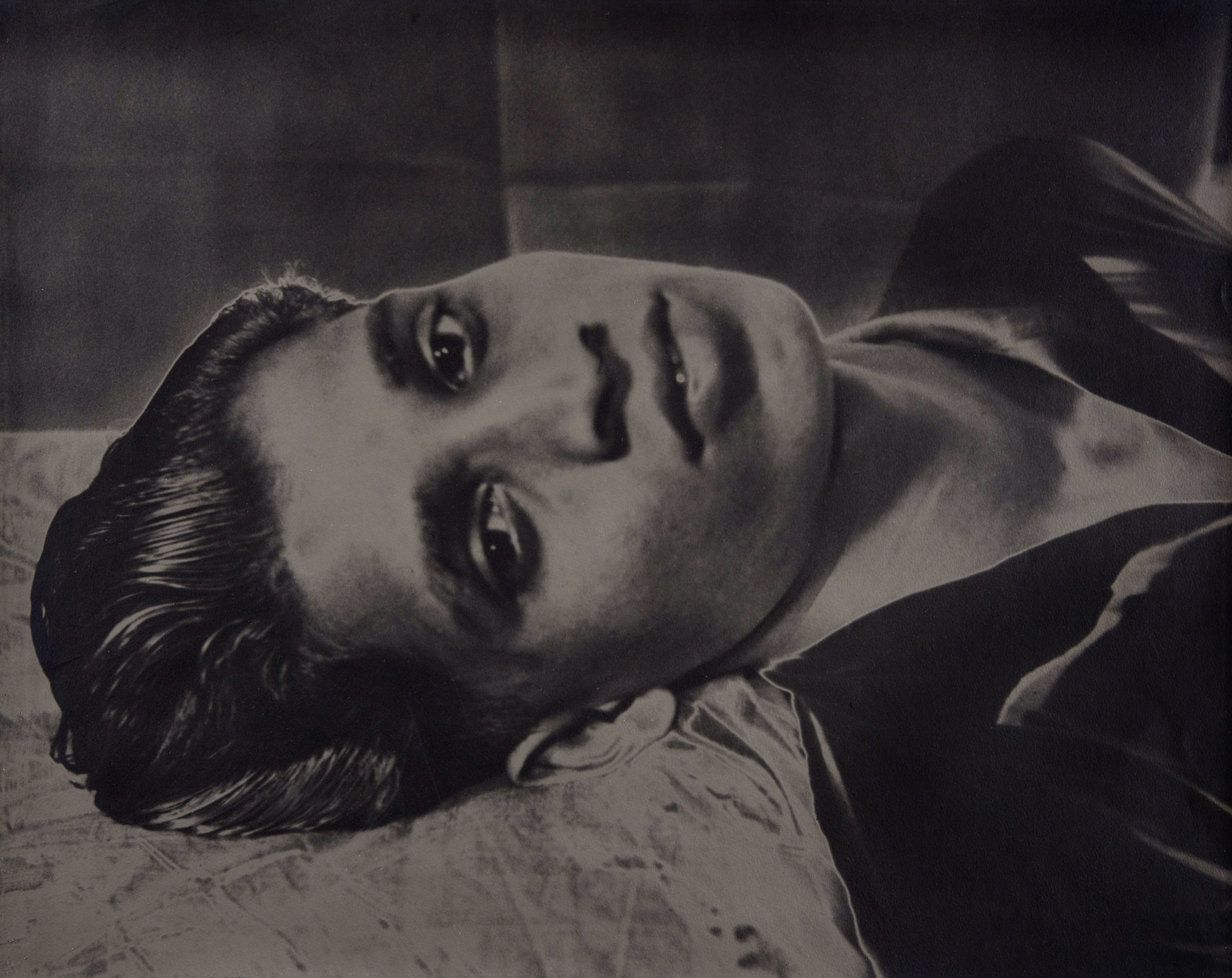
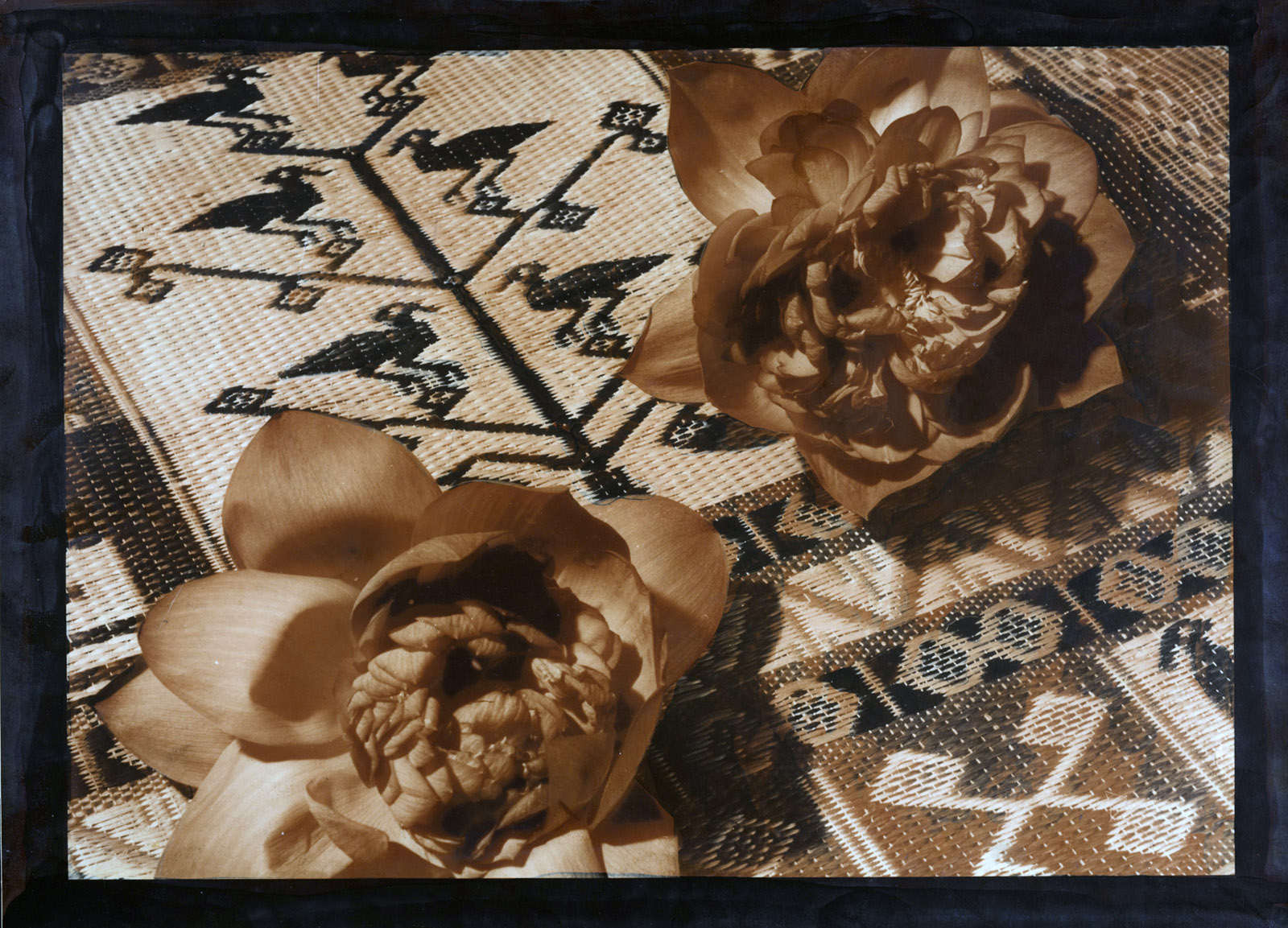
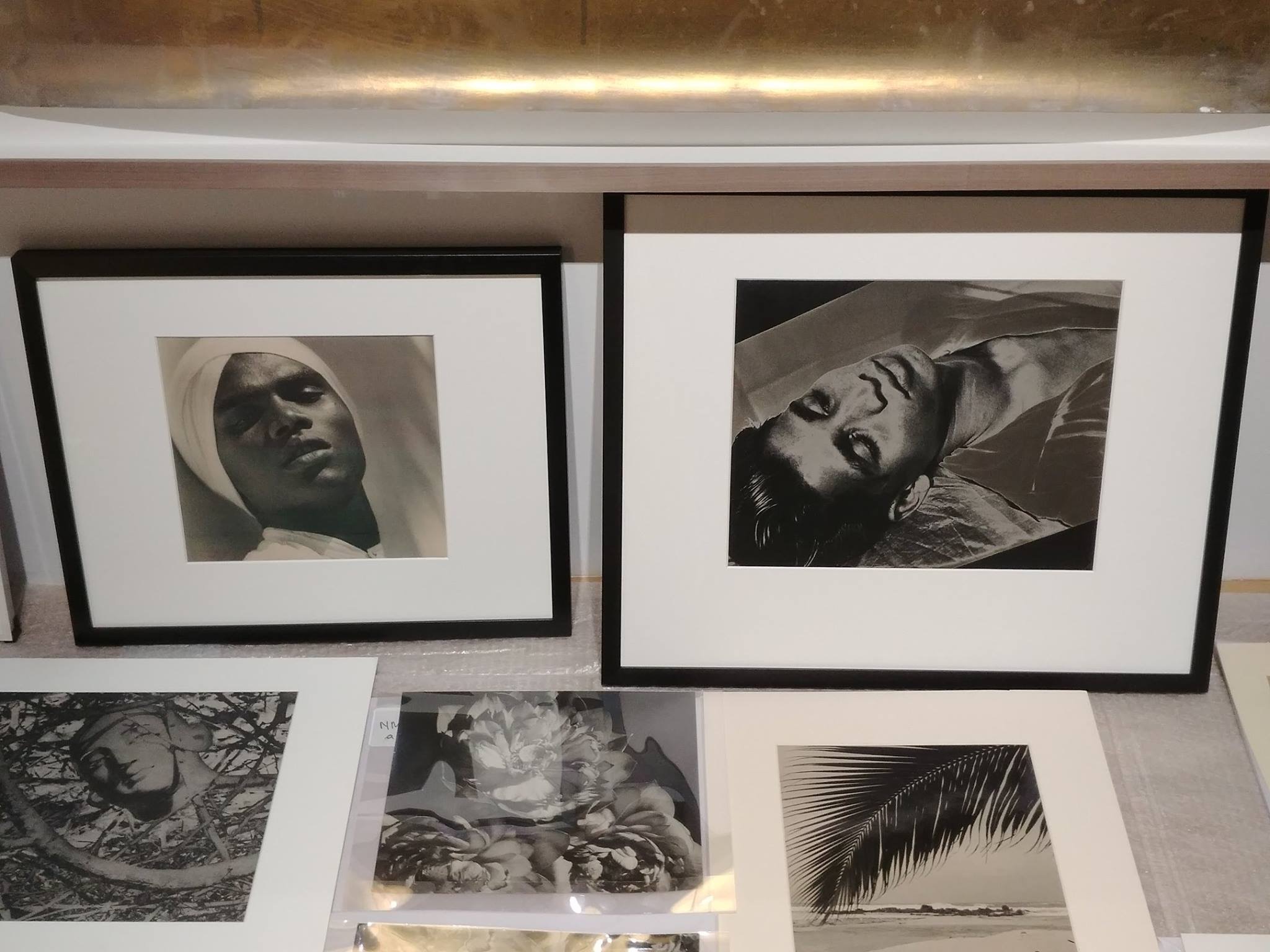
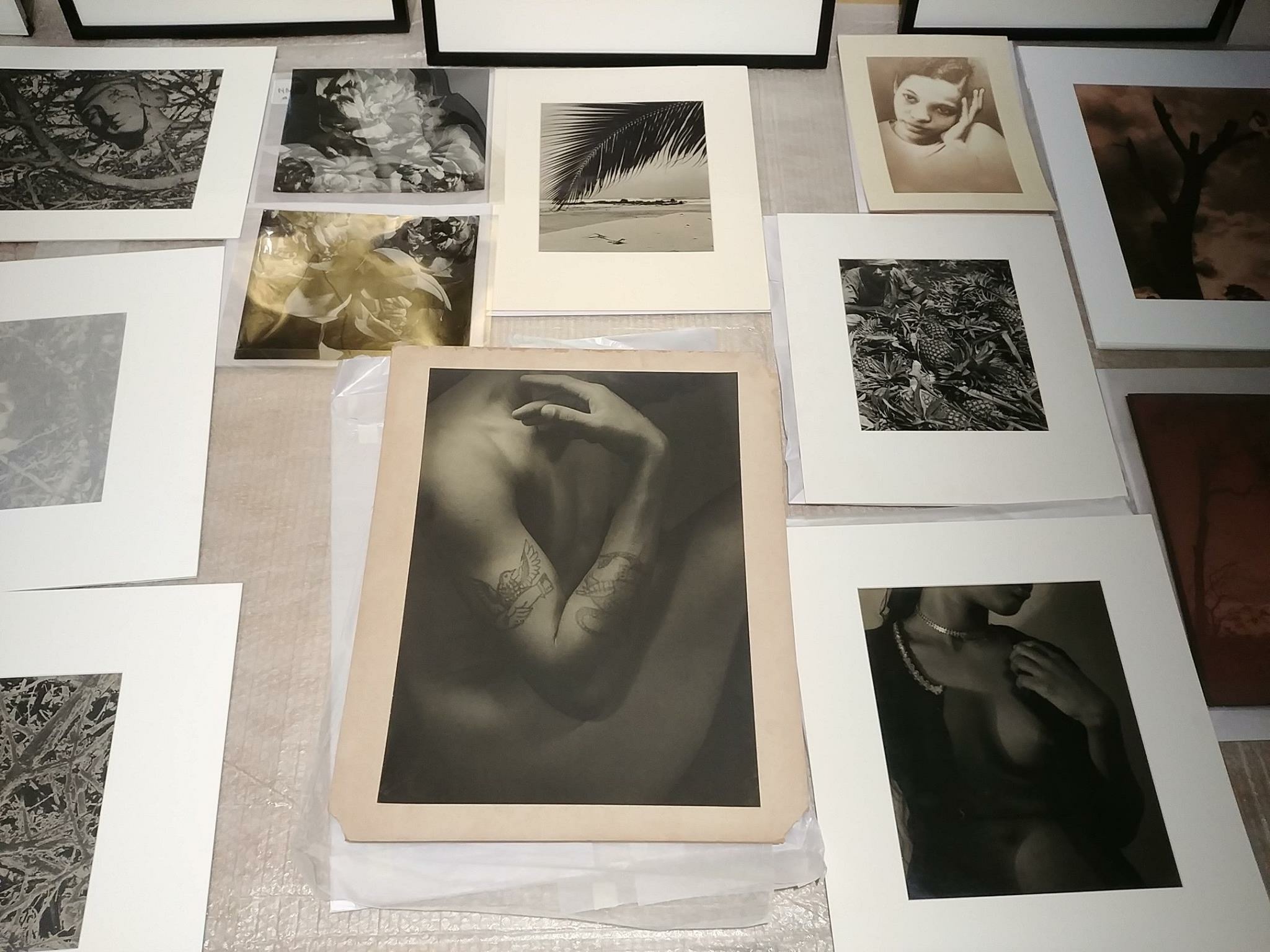
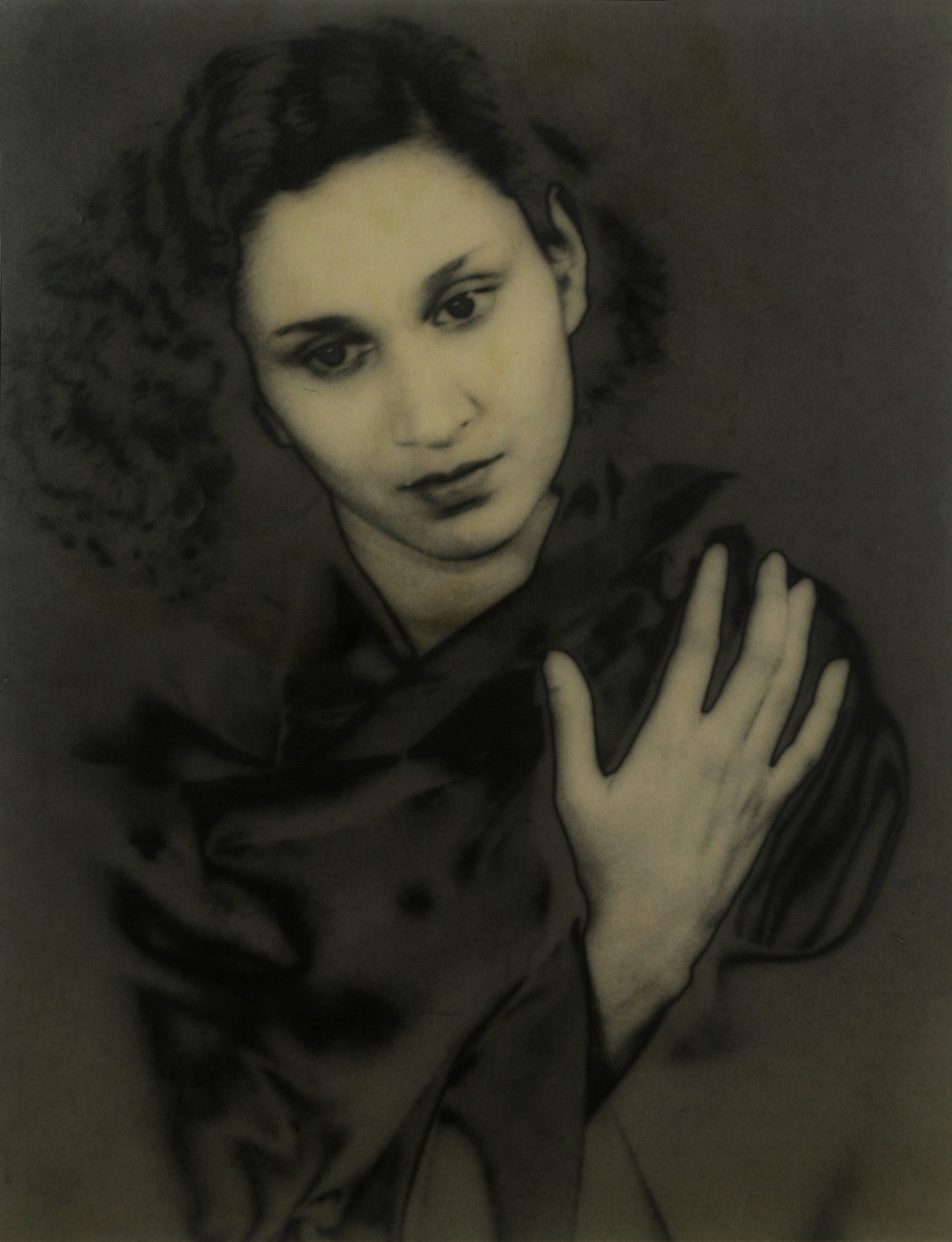
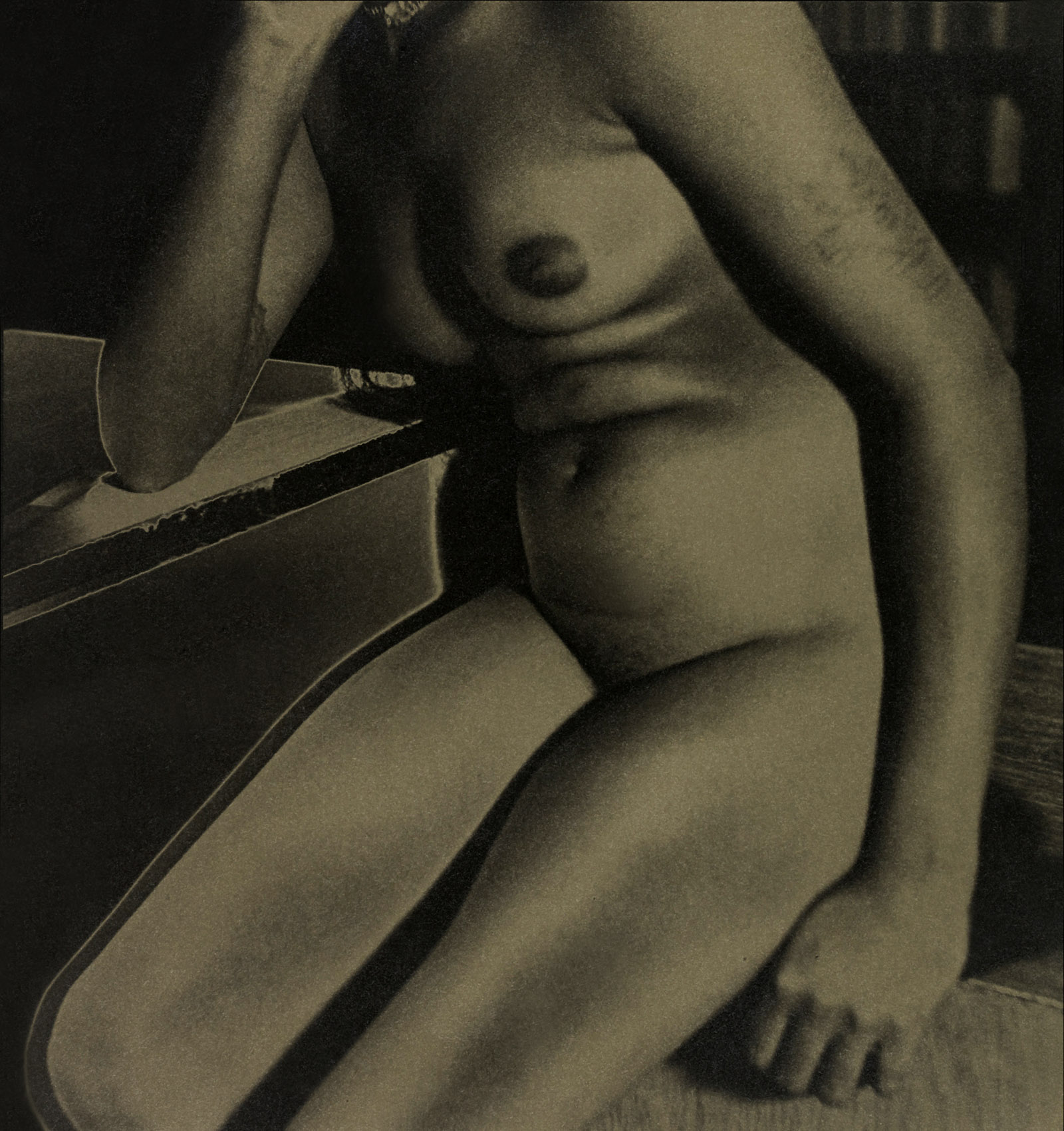
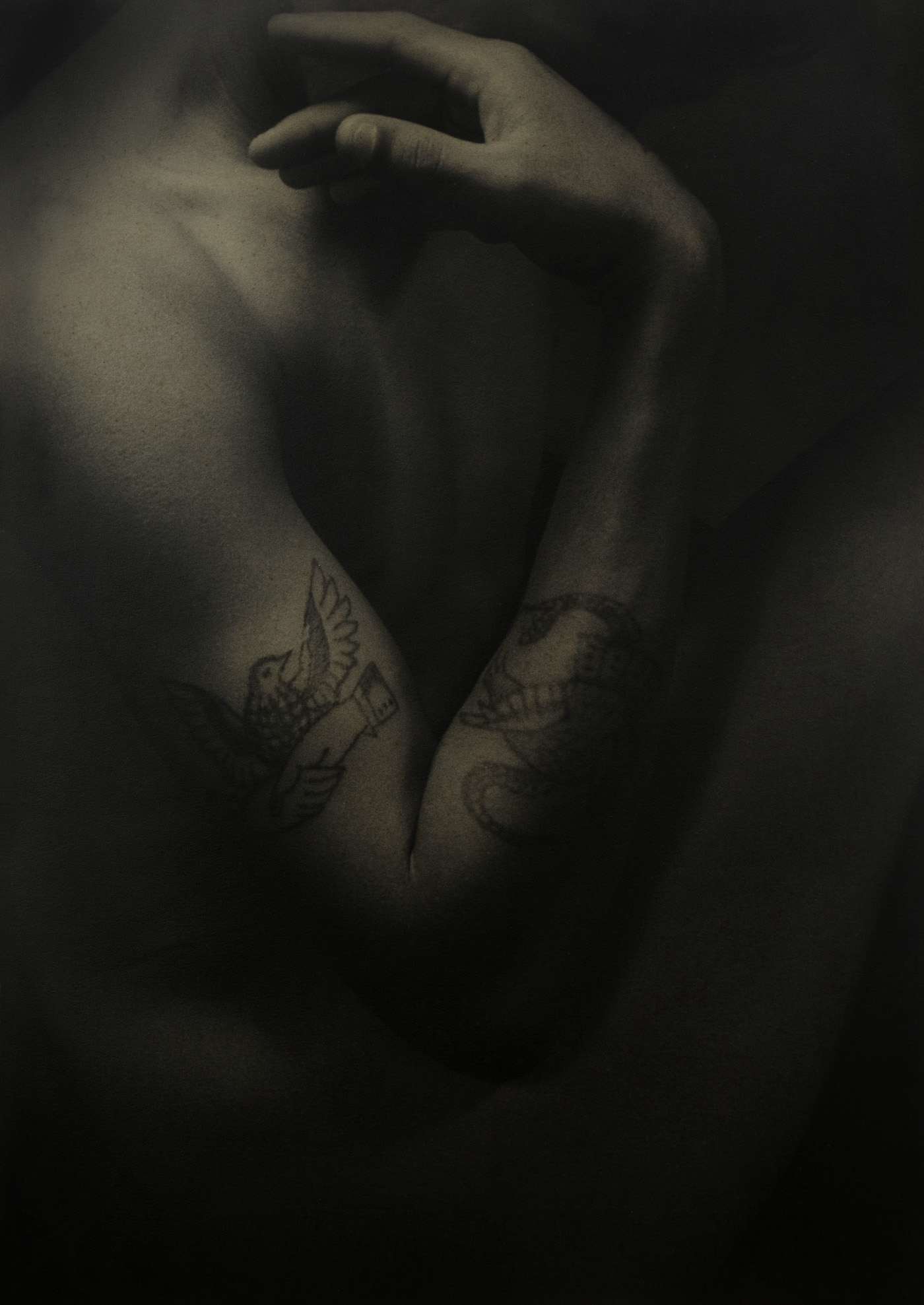
Glorious modernist photographs with avant-garde and surrealist overtones: the use of photomontage, double printing and solarisation is particularly effective.
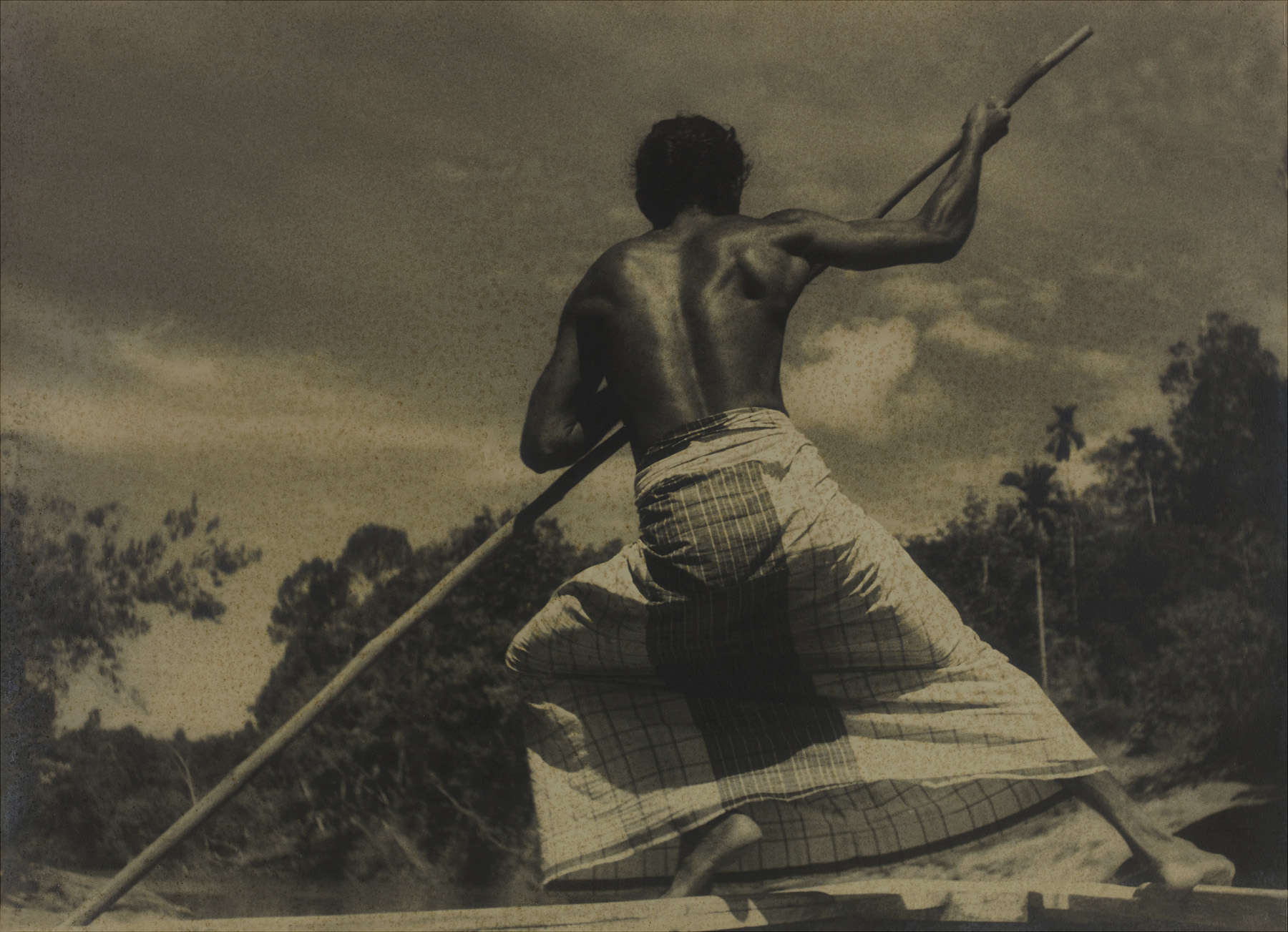
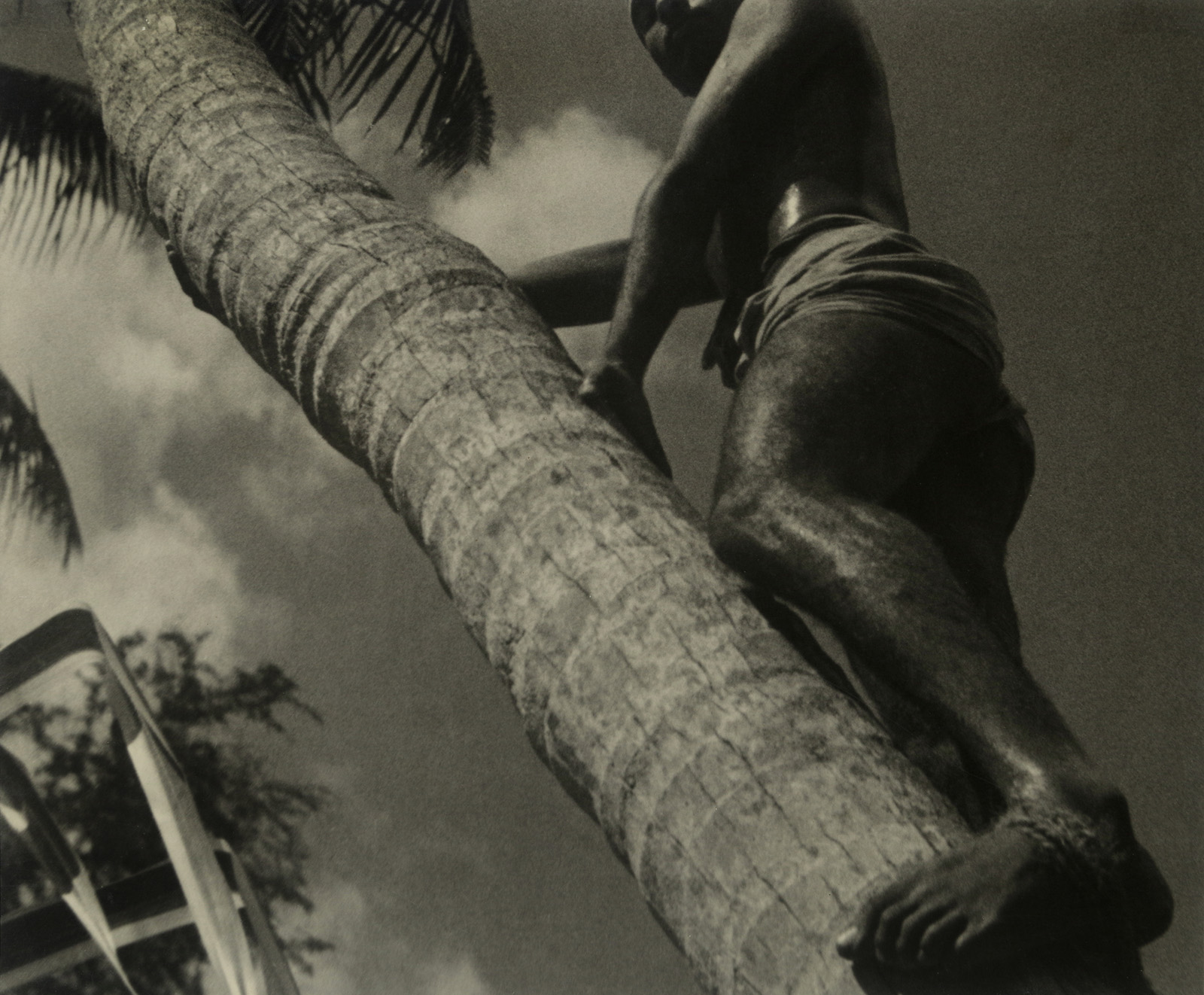
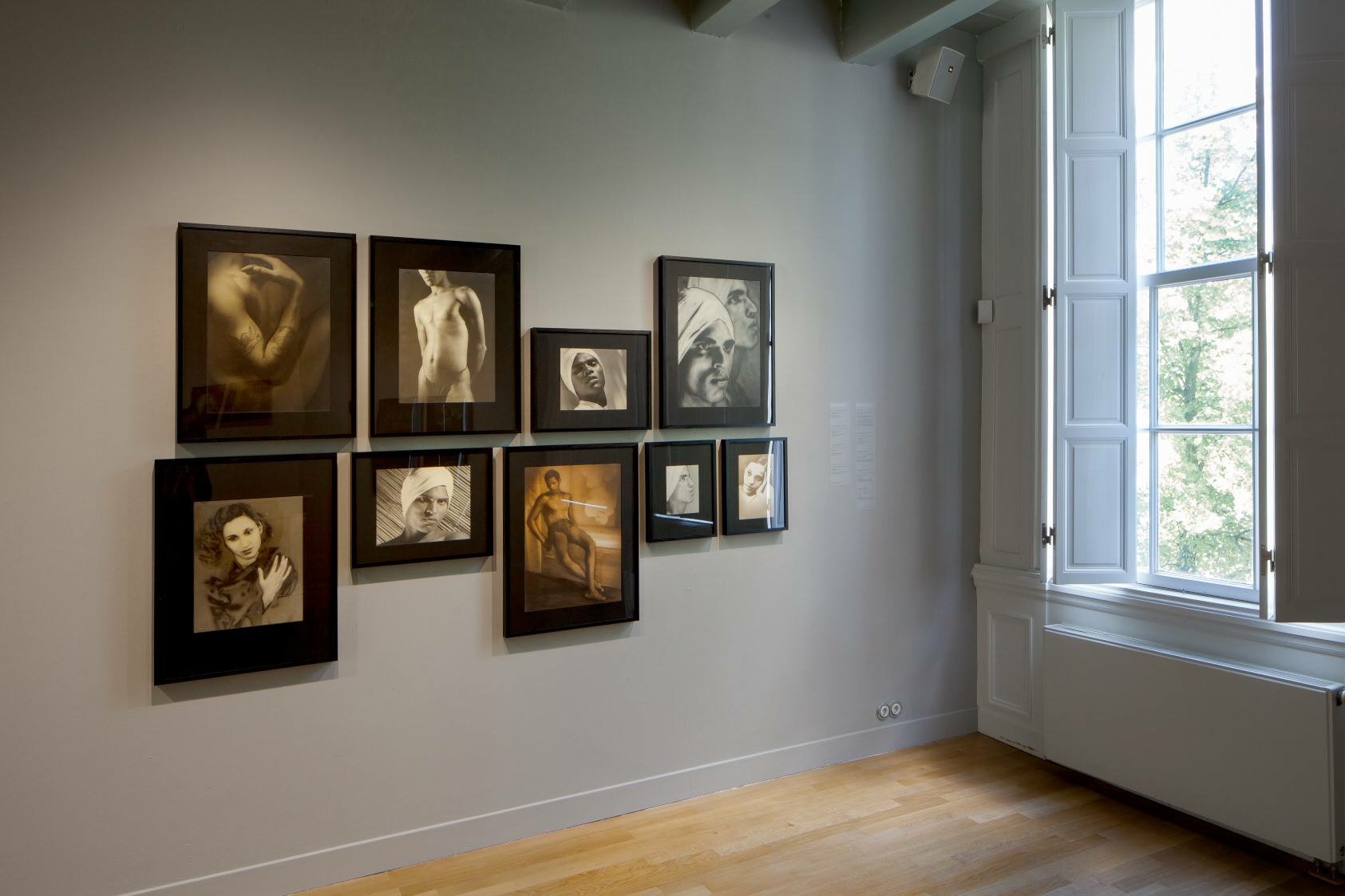
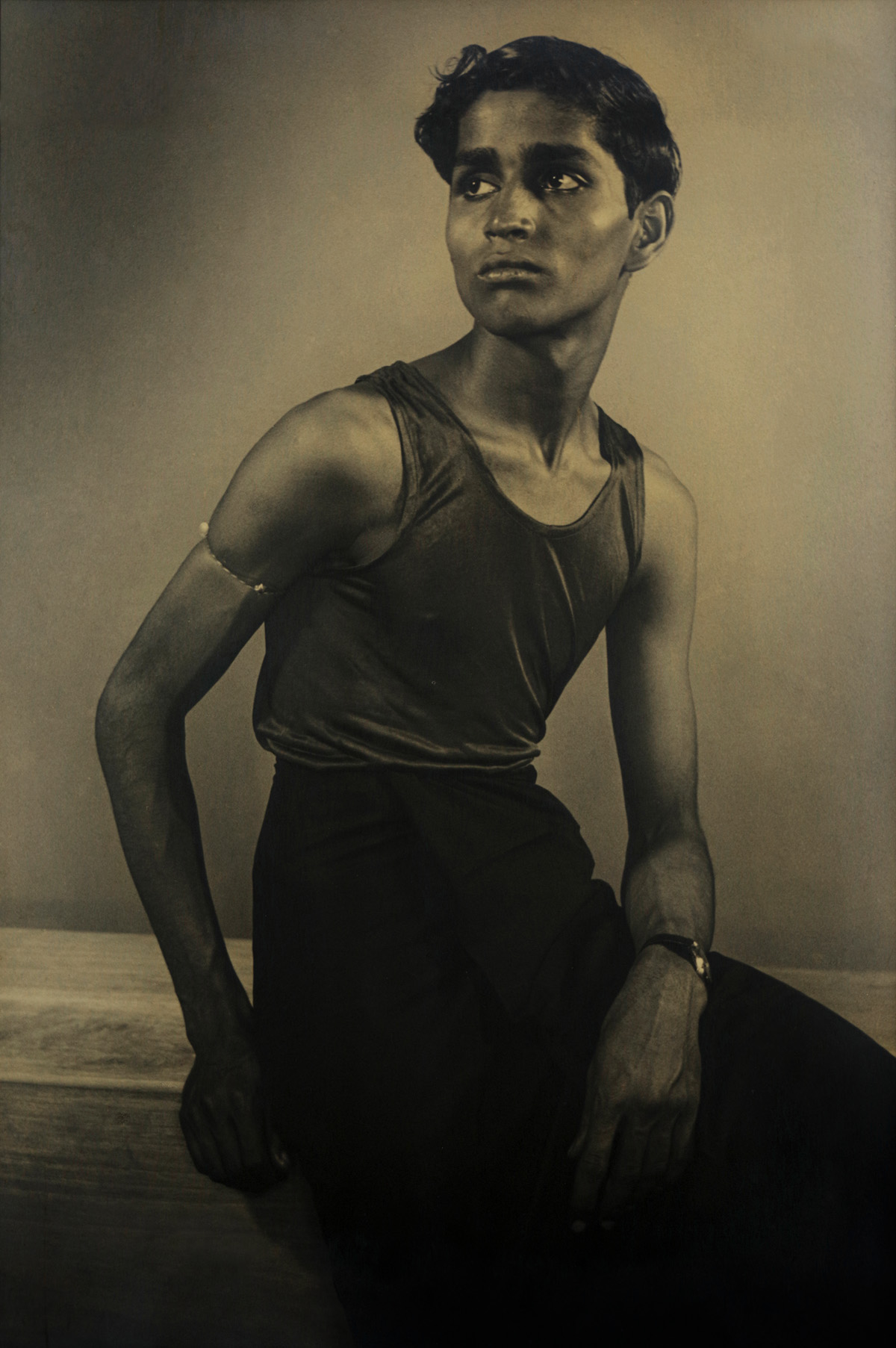
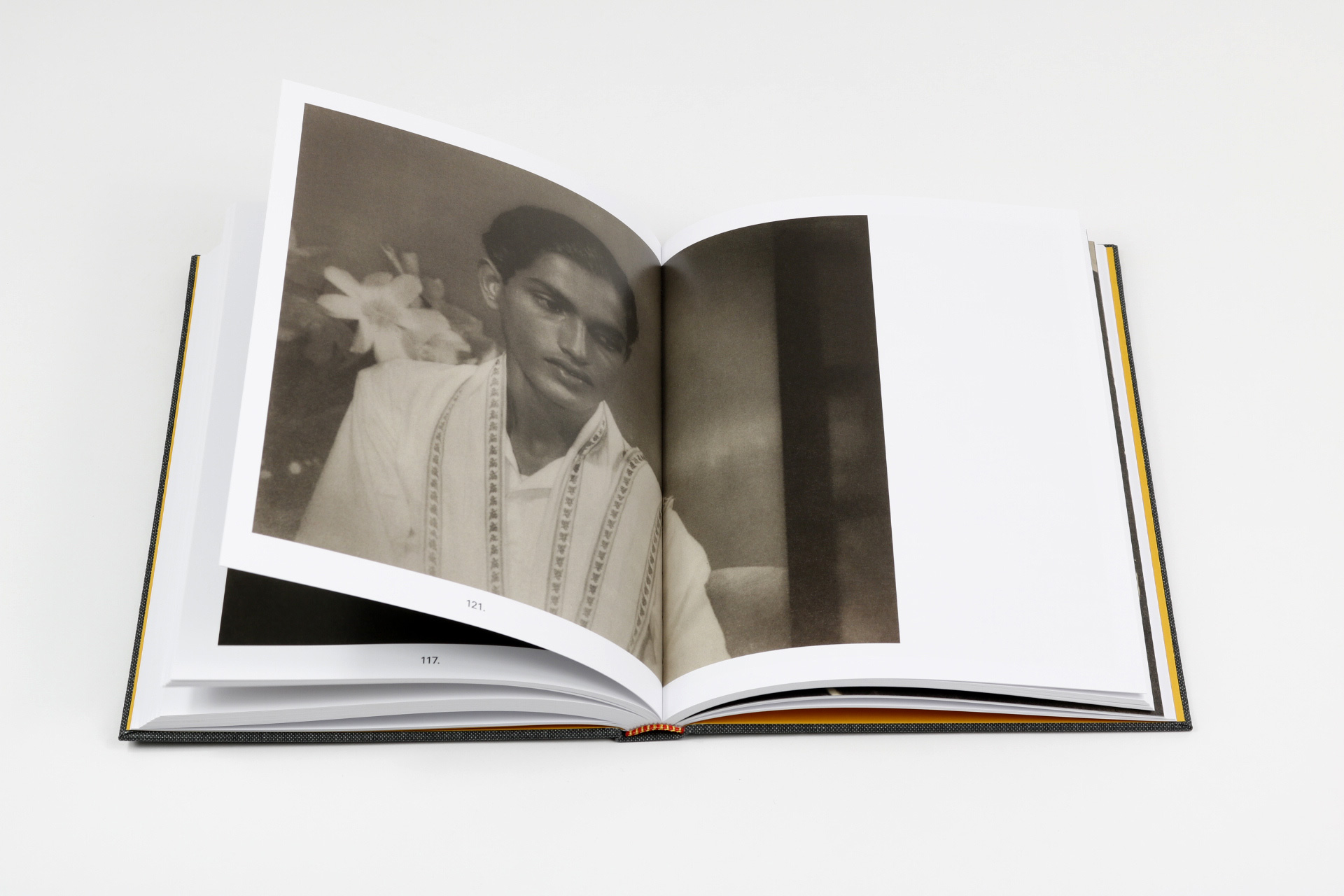
The sensitive figure studies of males in classical pose carry an over current of barely suppressed desire evidencing a sexualised (post-colonial?) gaze falling on the exotic Other – even as Wendt was part of an emerging generation of artists documenting Sri Lanka’s culture and history from the inside.
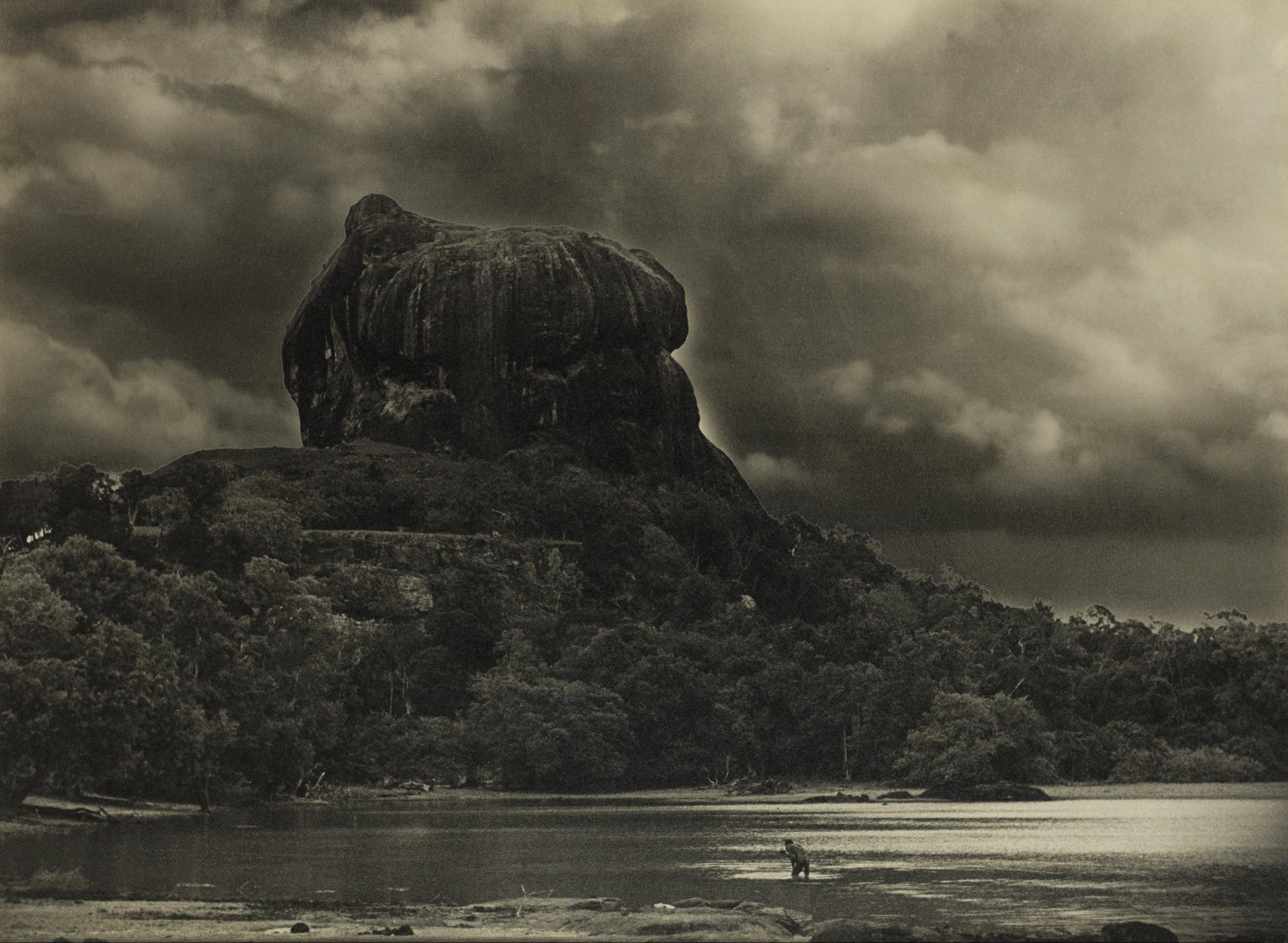
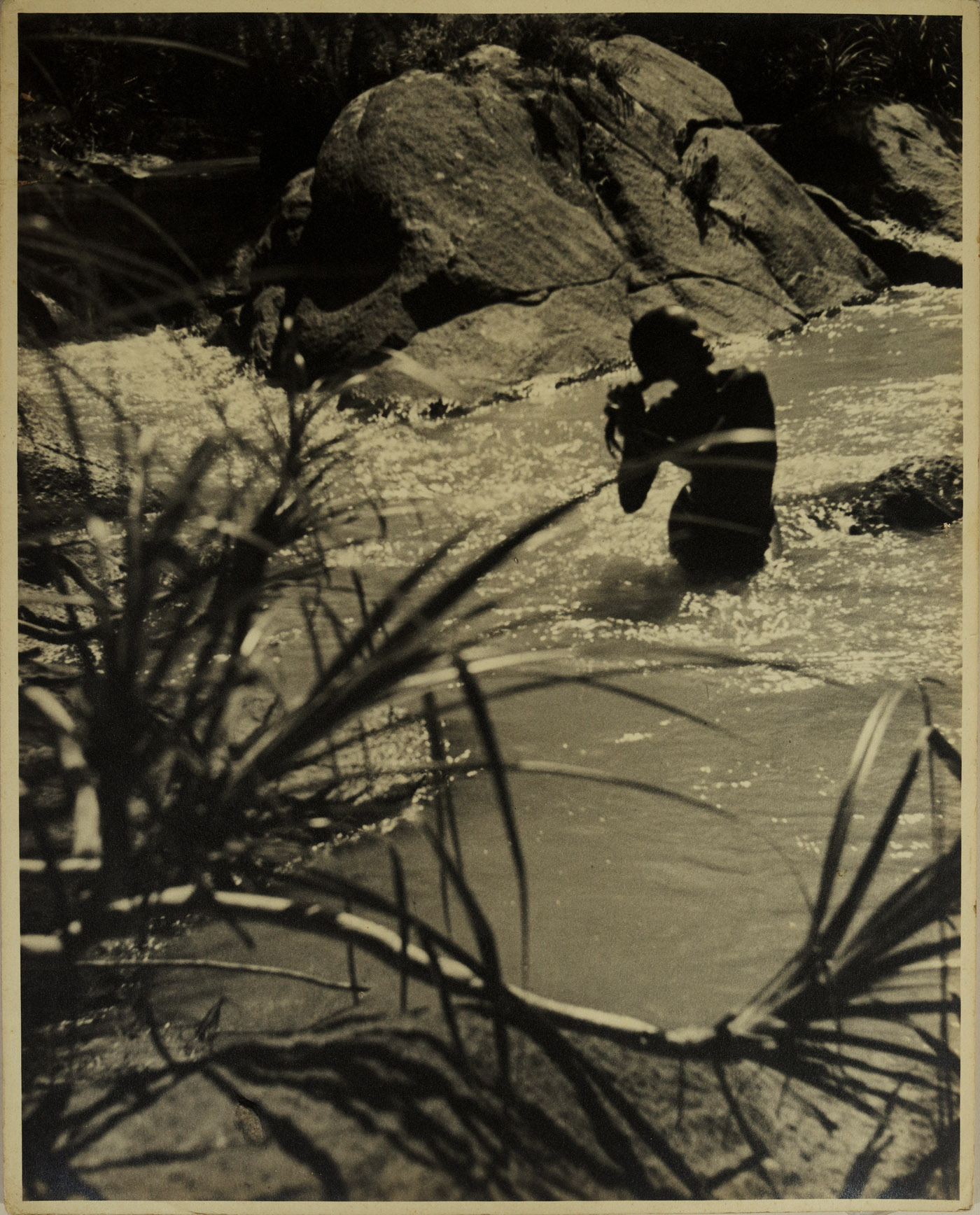
More interesting than desire hiding through artistic ethnographic study are the landscapes, abstracts of coils of rope and the voluptuous female nudes. Stunning.
The media images were in such poor condition when I received them that I have spent a long time digitally cleaning and balancing them for your pleasure.
Dr Marcus Bunyan
Many thankx to Huis Marseille for allowing me to publish the photographs in the posting. Please click on the photographs for a larger version of the image.
“Lionel Wendt was the central figure of a cultural life torn between the death rattles of the Empire and a human appraisal of the untapped values of Ceylon.”
Pablo Neruda, Memoirs
“The proposition that confronted Wendt was that Sri Lanka had a way of life that was very old but which remained, in spite of poverty, squalor and apathy, a vital sense of life. He recognised that here man, living in traditional ways, had not become alienated from his environment… Evidence of his deep regard for Sri Lanka and its traditions are illustrated in the images he chose to capture with his camera, each being a tiny microcosm of a vast and magnificent tapestry. It was recognised by all those who knew him that Wendt had an endless capacity for work. He focussed on the country and the people with unerring judgement and relentless dedication, and in doing this, he stimulated a new consciousness among them and (just as pertinent) in some high places.”
Neville Weeraratne
“He never spoke much about his photography. I expect he wanted his images to speak for themselves and he never spoke of them or about himself. I suppose he was so critical of everybody else that he did not want to expose himself to the same treatment. He did not reveal himself. He was a very interior person. He showed no emotion though he expressed a great passion for things. Perhaps he was hypocritical.”
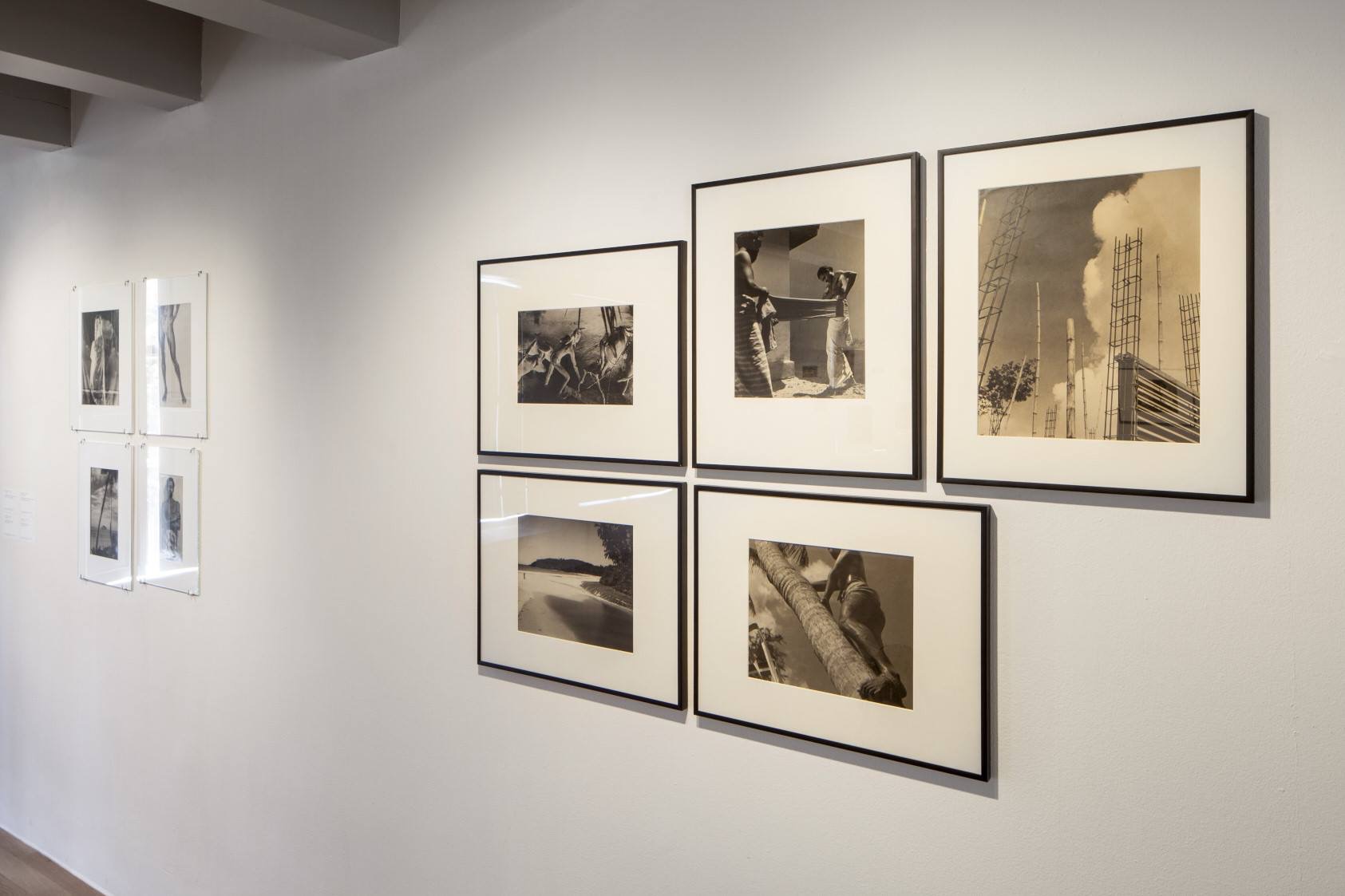
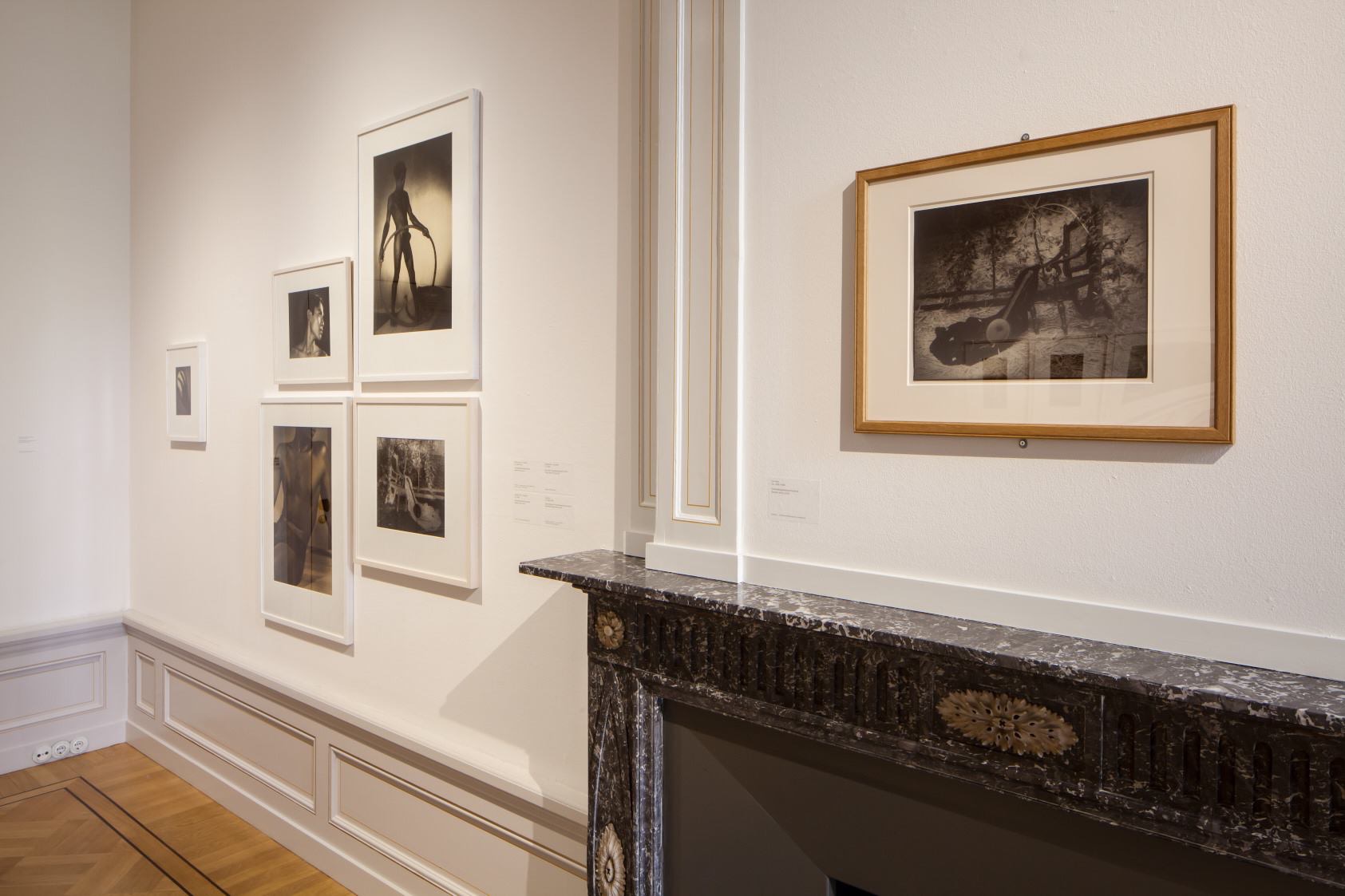
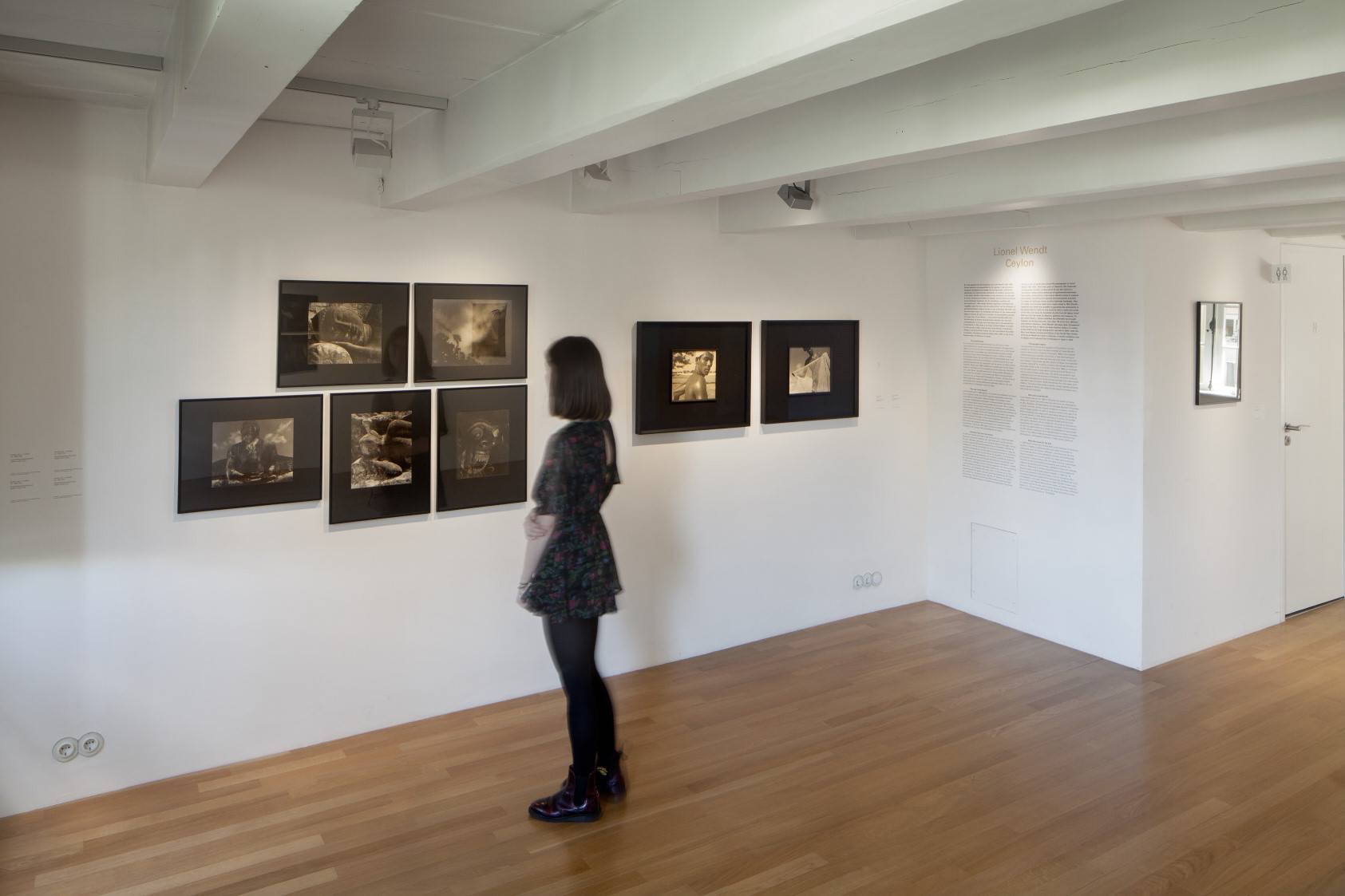
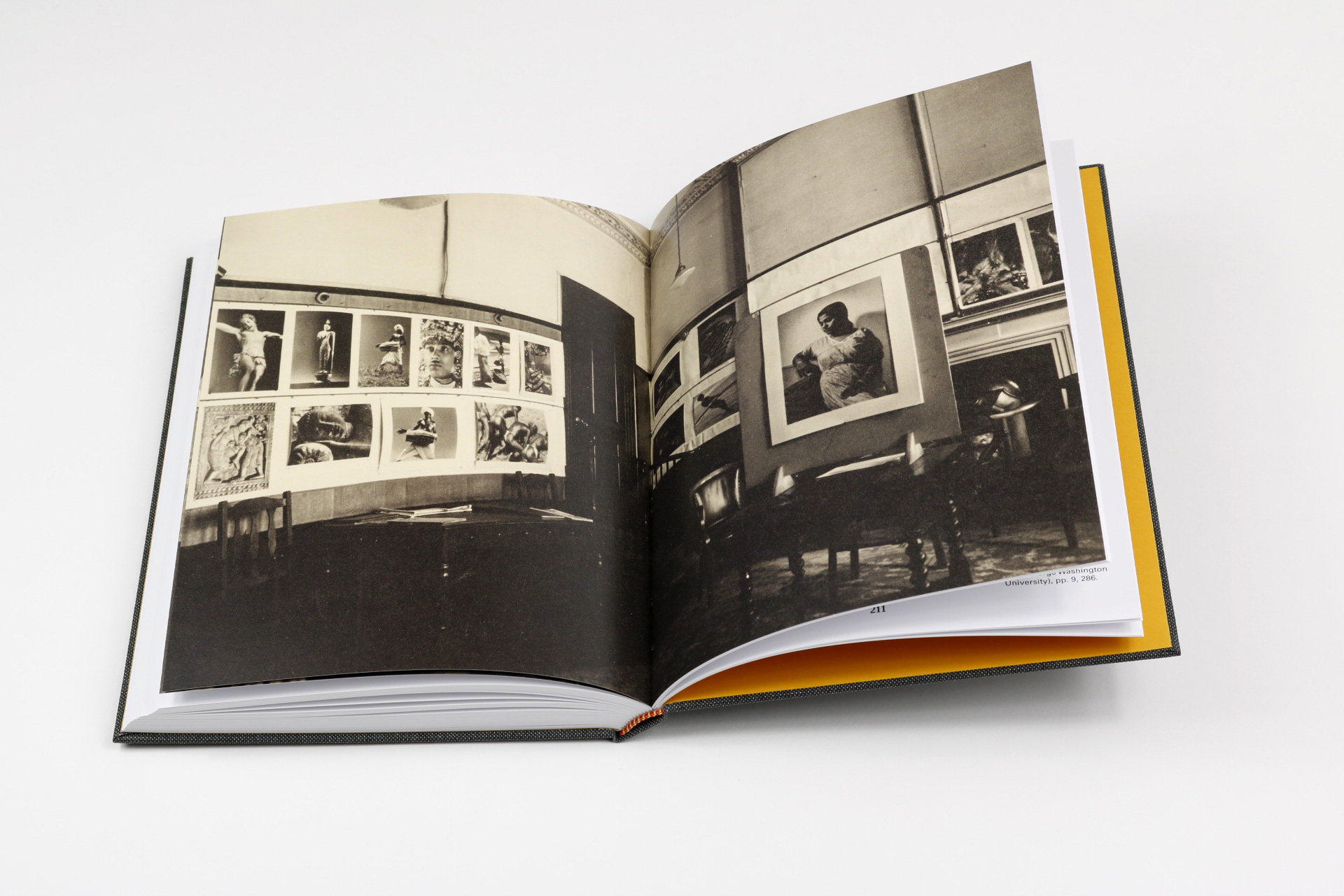
There is something special going on with regard to the oeuvre of Ceylonese photographer Lionel Wendt (1900-1944). After a period of relative obscurity, Wendt was rediscovered – or discovered, in fact – worldwide as a unique, individualistic photographer who availed himself of experimental techniques and modern compositions. Wendt’s choice of subjects was eclectic: from sensual and homo-erotic portraits to tropical images of Ceylon (now Sri Lanka), and from picturesque scenes to compositions for which he used modernist stylistic devices and experimental techniques. After Wendt’s premature death in 1944 his negatives were destroyed, but the work he left behind lives on. This consists of a collection of beautiful experimental prints, of which several are included in the renowned collections of such museums as Tate Modern in London and Rijksmuseum in Amsterdam. This year, Wendt’s work is being exhibited at Documenta 14 in Athens and, from 10 June till 3 September 2017, in a large-scale retrospective exhibit at Huis Marseille, which shines a spotlight on the fascinating work of this photographer in all its facets.
Who was Lionel Wendt?
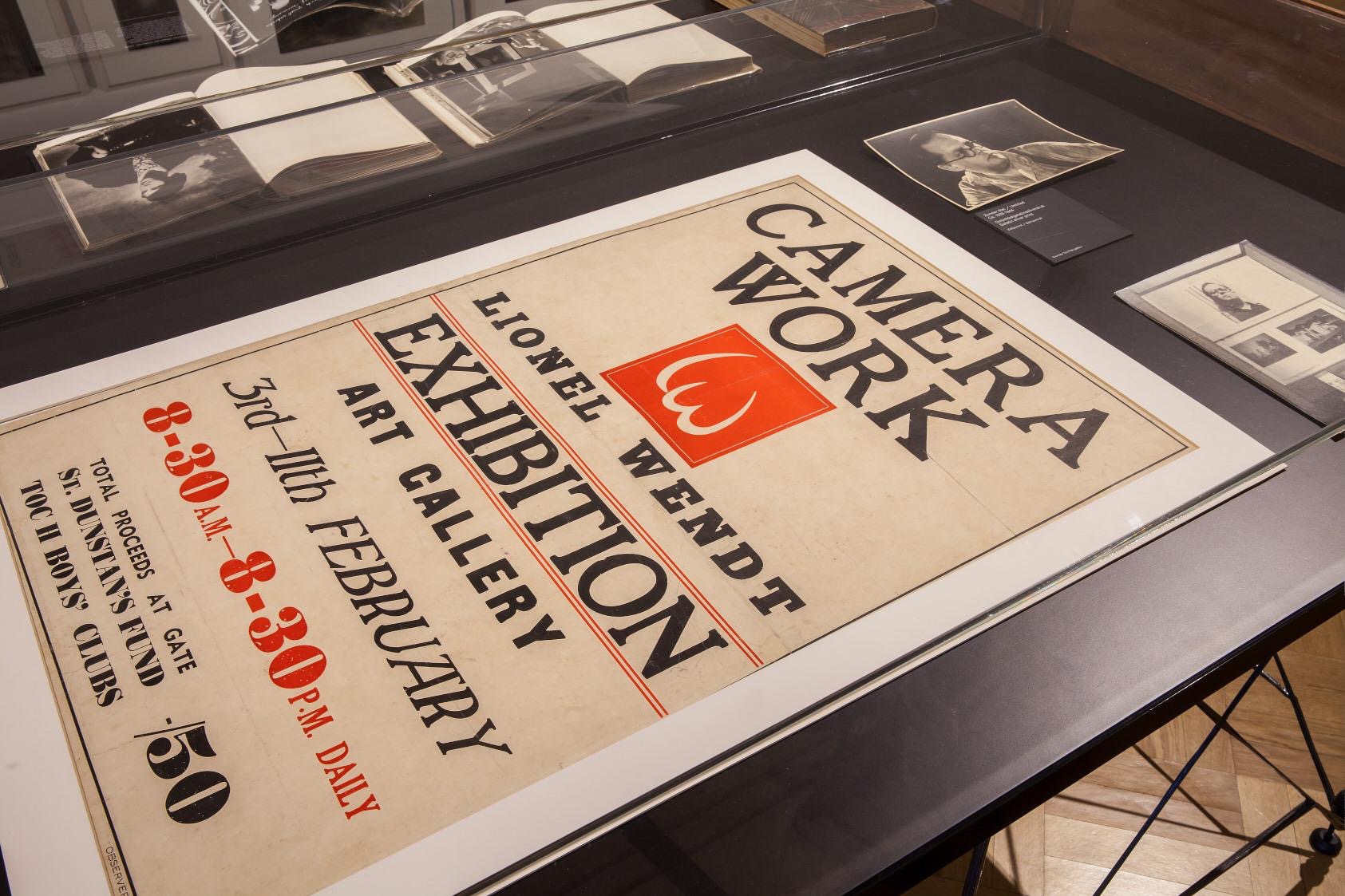
Lionel Wendt was a concert pianist, author, patron of the arts, teacher and, above all, a first-class photographer. After having studied law and musical training as a concert pianist in Great Britain, Wendt returned to the city of his birth, Colombo in Ceylon, at the age of 24. It did not take long for him to dedicate himself fully to the arts after his return: piano, literature and the visual arts. It was particularly in photography that he found an ideal vehicle for expression. In 1934, he established the Photographic Society of Ceylon jointly with Bernard G. Thornley and P.J.C. Durrant, and started running Chitrafoto, the photographic studio of the Associated Newspapers of Ceylon and in which he also published a photographic column, in 1938. Wendt developed into a prominent avant-gardist – the ‘Oscar Wilde’ of the Ceylonese arts scene. His first solo exhibition took place in 1938 at the Camera Club in London, at the invitation of Ernst Leitz, the inventor and manufacturer of the Leica. Two years later, a solo exhibition followed in Colombo entitled Camera Work, probably in reference to Alfred Stieglitz’s avant-gardist photography magazine of the same name.
Tropical modernism, masterful prints
Initially, Wendt used a Rolleiflex for his photography, which he quickly replaced by a Leica. From approximately 1933 onwards, he started to print his film in his own darkroom, where he soon showed himself to be a master. He made refined bromide and gelatine silver prints with subtle shades of grey and gradations of black, which gave his nudes and landscapes a velvet-like quality. Wendt allowed himself to be inspired by the ‘straight photography’ of Paul Strand and Edward Weston and the surrealistic experiments of Man Ray, and experimented with techniques such as photogram, photomontage, double printing and solarisation.
Homosexuality, hiding in plain sight
Wendt’s work includes spectacular images of Ceylon: its landscapes, cultural heritage and local population, photographed during everyday activities or traditional rituals. However, his sensual homoerotic nudes are particularly astounding. In a time and at a place where homosexuality was not accepted, Wendt had his male subjects (men and boys) pose in the landscape or in his studio. Through the traditional Ceylonese loincloths worn by his subjects, which leave little to the imagination, and the academic poses he asked them to take, he was able to express his homosexuality under the guise of art and ethnography. He also created portraits of the members of the island’s avant-garde movement. Wendt played a significant role in the development of modernist painting on Ceylon; he acted as a patron of the arts and his house was a meeting place for the ’43 Group, the artistic movement that was a predecessor of Ceylonese modernism.
A dormant legacy reawakens
Following Wendt’s early death in 1944 his work sank into oblivion. In the course of time the hundreds of prints that comprise his legacy came into the possession of several collectors, galleries and museums. After having led a dormant existence for several decades, Wendt’s work was once again brought to the attention of the public in 1994.
Large-scale museum retrospective in the Netherlands
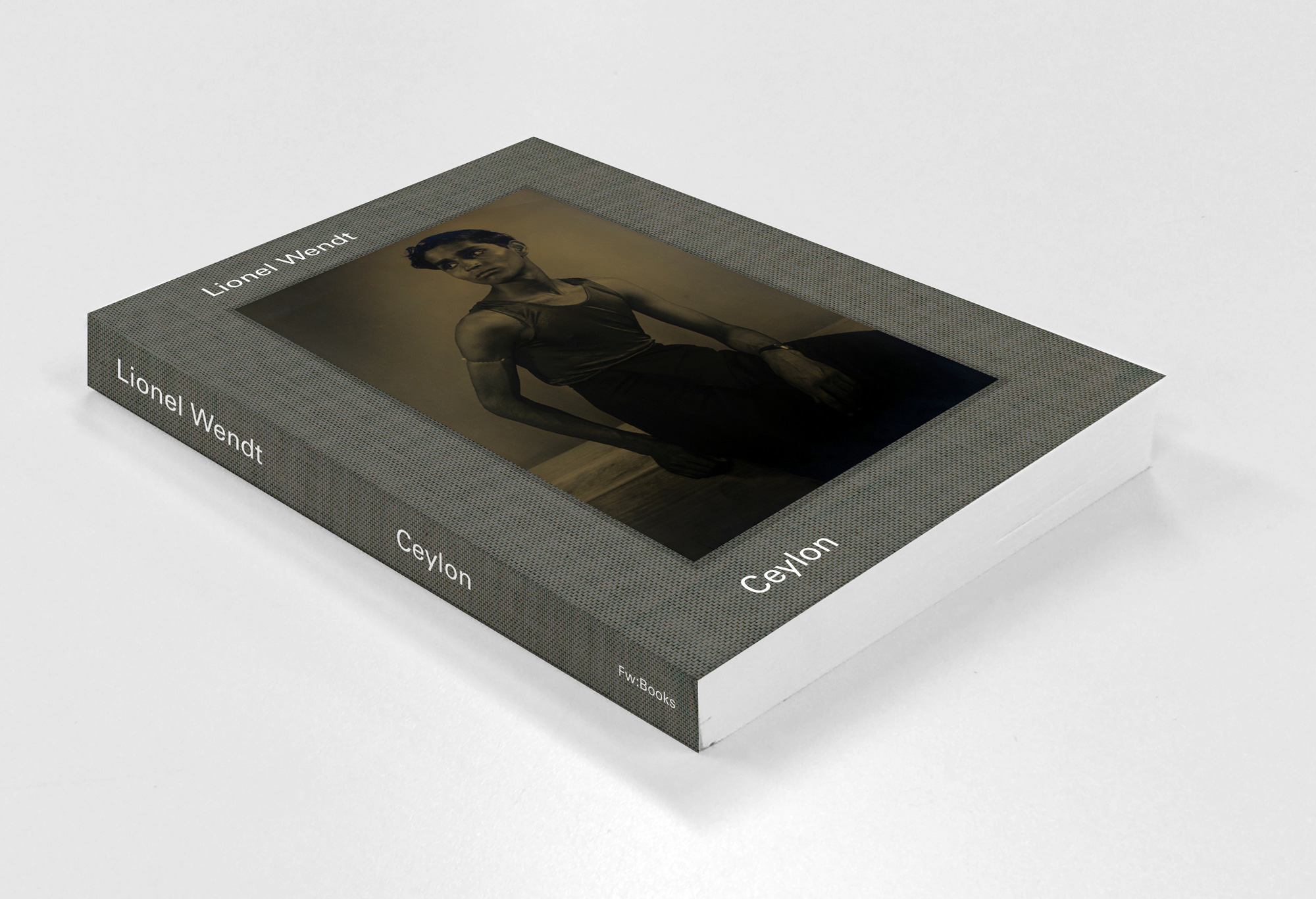
From 10 June through 3 September 2017, Huis Marseille is presenting the first museum solo exhibition of Lionel Wendt in the Netherlands, in collaboration with the Ton Peek Gallery (Utrecht) and Jhaveri Contemporary Gallery (London/Mumbai). Over 140 prints from various international private and museum collections have been brought together. Concurrent to the exhibition, the publishing house Fw:Books will be presenting the book Lionel Wendt. Ceylon featuring an overview of Wendt’s work (hardcover, 200 pages, design by Hans Gremmen). This is the first monograph since Lionel Wendt. A Centennial Tribute (2000), an extensive and revised version of the very first catalogue of Wendt’s oeuvre: Lionel Wendt’s Ceylon (1950).
Text from Huis Marseille
Installation views of the exhibition Lionel Wendt: Ceylon at Huis Marseille, Amsterdam
Johann Joachim Winckelmann (German, 1717-1768) Histoire de l’art de l’antiquité 1781 Leipzig: J. G. I. Brietkopf
Winckelmann was murdered in Trieste on June 8, 1768. The frontispiece to this French translation of the History presents an allegory of his death designed by his friend, the painter Adam Friedrich Oeser (1717-1799)
Johann Joachim Winckelmann (German, 1717-1768)
Johann Joachim Winckelmann (9 December 1717 – 8 June 1768) was a German art historian and archaeologist. He was a pioneering Hellenist who first articulated the difference between Greek, Greco-Roman and Roman art. “The prophet and founding hero of modern archaeology”, Winckelmann was one of the founders of scientific archaeology and first applied the categories of style on a large, systematic basis to the history of art. Many consider him the father of the discipline of art history. He was one of the first to separate Greek Art into periods, and time classifications. His would be the decisive influence on the rise of the Neoclassical movement during the late 18th century. His writings influenced not only a new science of archaeology and art history but Western painting, sculpture, literature and even philosophy. Winckelmann’s History of Ancient Art (1764) was one of the first books written in German to become a classic of European literature. His subsequent influence on Lessing, Herder, Goethe, Hölderlin, Heine, Nietzsche, George, and Spengler has been provocatively called “the Tyranny of Greece over Germany.”
Today, Humboldt University of Berlin’s Winckelmann Institute is dedicated to the study of classical archaeology. Winckelmann was homosexual, and open homoeroticism formed his writings on aesthetics. This was recognised by his contemporaries, such as Goethe.
These were the only press images I could get for this exhibition. I would have liked to have seen many more!
Dr Marcus Bunyan
Many thankx to the ONE Archives for allowing me to publish the photographs in the posting. Please click on the photographs for a larger version of the image.
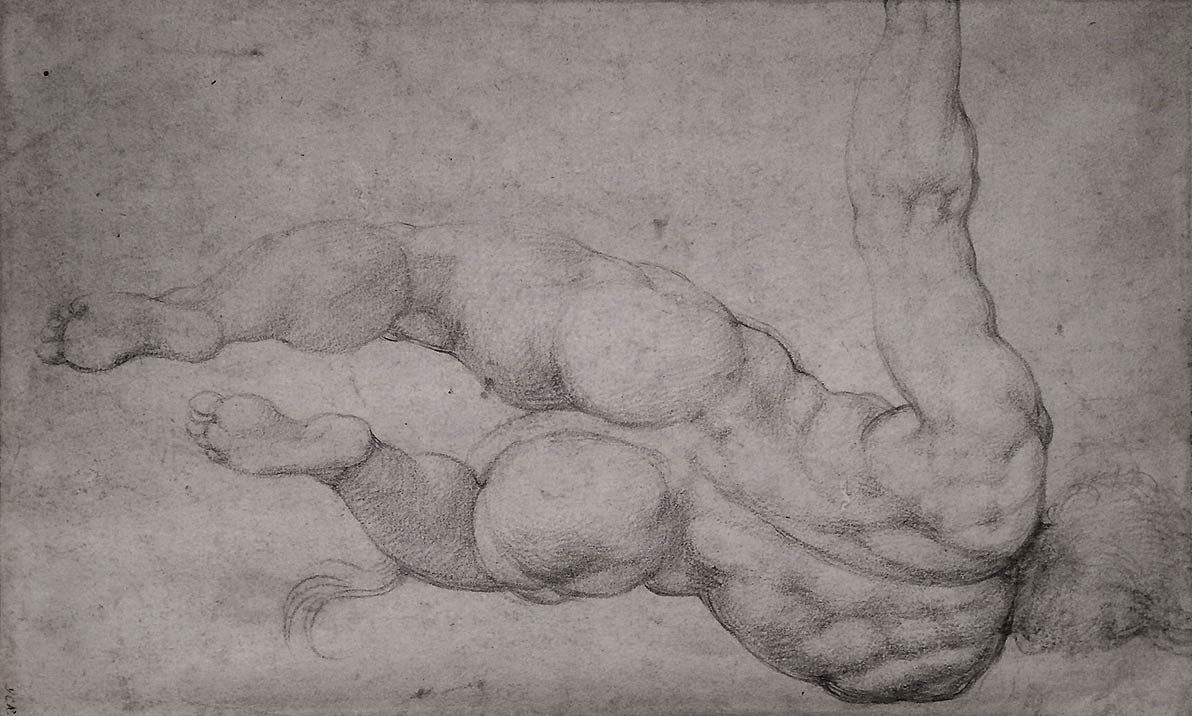
Michelangelo Buonarroti (Italian, 1475-1564) Study of Satyr (The Last Judgement) 1540 Black chalk on paper 7.25 x 11.75 in. Collection of Mr. and Mrs. Mark Borghi
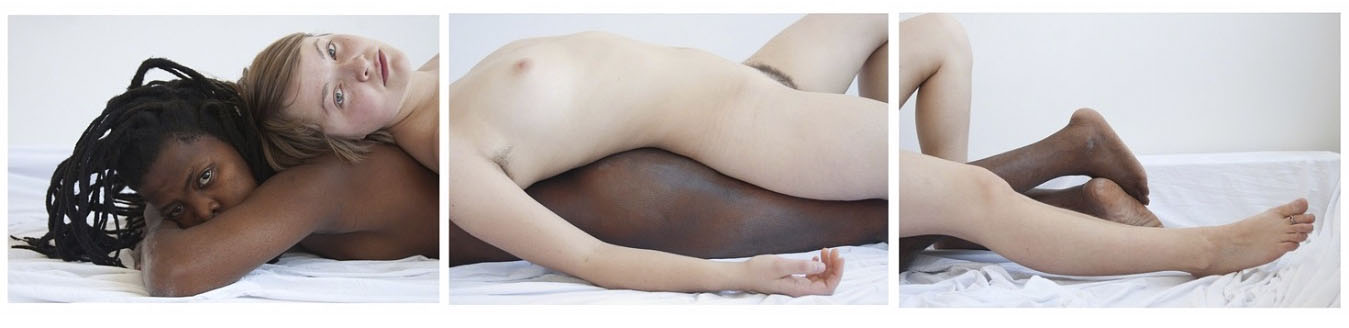
Zanele Muholi (South African, b. 1972) Caitlin and I 2009 C-print 17.125 x 23.75 (triptych) Zanele Muholi Courtesy of Yancey Richardson Gallery, New York
George Platt Lynes (American, 1907-1955) Nicholas Magallanes and Francisco Moncion in Balachines’s Orpheus II 1948 Gelatin silver print 8 x 10 inches Private Collection
Nicholas Magallanes (American born Mexico, 1922-1977)
Nicholas Magallanes (November 27, 1922 – May 2, 1977) was a principal dancer and charter member of the New York City Ballet. Along with Francisco Moncion, Maria Tallchief, and Tanaquil Le Clercq, Magallanes was among the core group of dancers with which George Balanchine and Lincoln Kirstein formed Ballet Society, the immediate predecessor of the New York City Ballet.
Magallanes embodied the Balanchinian archetype with the melancholy heroes of Serenade, La Valse, and La Sonnambula. He performed Orpheus, opposite Francisco Moncion as the Dark Angel and Tallchief as Eurydice. A set of photographs of the trio by George Platt Lynes suggests the drama of their interrelationships.
Edwin Townsend (American, 1877-1948) Tony Sansone c. 1950s Gelatin silver print 9.5 x 7.5 inches Collection of the Leslie-Lohman Museum of Gay and Lesbian Art, New York
Edwin F. Townsend (American, 1877-1948)
Born in Iowa in 1877, Edwin F. Townsend came to New York early in the 1900s. After the armistice, he took up professional photography, working with Lockeed Pictorial Co. In early autumn of 1921, he opened a studio on the upper west side of Manhattan. He established his credentials in the world of theatrical photography with a suite of portraits of opera singer / movie actress Geraldine Ferrar. He would continue as an active theatrical and celebrity photographer for the next two decades, excelling in dance photography.
In the mid-1920s, noting the success of fellow New Yorkers Edwin Bower Hesser and Alfred Cheney Johnston in supplementing studio income from portraiture with nudes (sold to “art magazines” and privately by mail order), Townsend began shooting male physique photographs. Among the Broadway photographers only Nickolas Muray then made the male nude an important component of his work. Bernarr Macfadden, the publisher and promoter of physical culture, and Ted Shawn, the modern dancer, in the 1920s elaborated a new aesthetics of the male body. Two poles of imagery came to the fore: a neoclassicism in which models posed in the attitudes of Greek statues, and a native Americanism in which models moved in dances enacting natural masculinity. Though Townsend (and Muray) had dealings with both Macfadden and Shawn, his own aesthetics tended toward the classical. Indeed, the produced the most famous set of physique photographs of the interwar period when he posed the model / actor Tony Sansone, whom he discovered in a David Belasco theatrical production, in a series of poses of Greek simplicity and dignity.
Townsend published two small books of photographic studies, dutifully airbrushed, of Sansone: Modern Classics (1932) and Rhythm (1935). For true connoisseurs, Townsend sold original prints, signed in red ink, of Sansone fully revealed. These images are among the most cherished and artistic icons of physique photography, establishing a standard of masculine beauty.
In 1933 Townsend moved his studio to midtown Manhattan. There he shot society portraiture, fashion layouts for department stores, and occasional theatrical and movie publicity work. The studio operated until the late 1950s.
David S. Shields/ALS. “Edwin F. Townsend,” on the Broadway Photographs website [Online] Cited 05/06/2021. Used under fair use conditions for the purposes of education and research
James Bidgood (American, 1933-2022) Pan 1965 Digital C-print 22 x 22 inches Courtesy of the artist and ClampArt, New York
James Bidgood (American, 1933-2022)
His artistic output has embraced a number of media and disciplines, including music, set and window design, and drag performance. In time, his interests led him to photography and film and it is for this work that he is most widely known. Highly recognisable, his photographs are distinguished by an aesthetic of high fantasy and camp. His work which was inspired by an early interest in Florenz Ziegfeld, Folies Bergère, and George Quaintance has, in turn, served as important inspiration for a slew of artists including Pierre et Gilles and David LaChapelle. …
Bidgood’s work is characterised by a heavy reliance on invention. His photographs feature elaborate sets built ground up from the materials of the theatre, fashion, design, and fine art. In a profile of the artist published in Aperture, Philip Gefter writes,
Necessity was the mother of invention for Bidgood, who created elaborate photographic tableaux in his small midtown Manhattan studio apartment. His first erotic series was an underwater epic called Water Colors, made in the early 1960s, in which he used a dancer from Club 82 named Jay Garvin as his subject. The underwater atmosphere is completely fabricated; the bottom of the ocean was created with silver lame spread across the floor of Bidgood’s apartment; he made the arch of a cave out of waxed paper, and fashioned red lame into the shape of lobster. He coated Garvin with mineral oil and pasted glitter and sequins to his skin so the silver fabric under photographic lights would reflect on his body like water. For weeks at a time, Bidgood would eat and sleep within the sets he constructed in his apartment. (Philip Gefter. “Off to the Camp,” in Aperture 191, Summer 2008)
Many contemporary themes are found even in the earliest of Bidgood’s work. Camp, identity, erotica, desire, marginality, and performance all figure heavily in his portraits of nude men. Bidgood’s complex references to the theatre and performance seem to presage Queer articulations of Performance. His techniques, working processes, and masterful use of illusionistic colour indicate both a mature understanding of his influences and goals and an important contrast to the art movements of the time the work was first created.
Organised by the Leslie-Lohman Museum of Gay and Lesbian Art and curated by scholar Jonathan David Katz, The Classical Nude and the Making of Queer History investigates how the visual iconography of Greco-Roman culture has acted as a recurring touchstone in the development of same-sex representation. Within the canon of western art history, images of the classical past have acted as a sensitive barometer for the shifting constructions of what we today call LGBT or queer culture. The classical past is queer culture’s central origin myth, and tracing how this tradition has been utilised by queer artists over time offers far more information about the cultural context that appropriates the classical than it does about that past itself.
Examining the classical nude across centuries of artistic production, this exhibition considers four major periods: Antiquity, the Renaissance, the nineteenth century, and the modern/contemporary period. Drawn almost exclusively from the collections of the Leslie-Lohman Museum of Gay and Lesbian Art in New York, the objects are diverse in medium and format. While all periods are represented, the majority of the works illustrate how artists in recent history have utilised classical iconography and themes to explore same-sex desire. It is in the recent past, as artists reimagined a classical legacy that had not accounted for diverse gender and racial perspectives, that we find queer culture’s relationship to the classical tradition at both its most complex and dynamic.
This presentation at the ONE Gallery is a condensed preview of a show to open at the Leslie-Lohman Museum in October 2014. Containing over ninety-five objects, the exhibition in New York will include works by Albrecht Dürer, Michelangelo, Jacopo Pontormo, Andrea Mantegna, F. Holland Day, Romaine Brooks, Claude Cahun, Herbert List, Jess, Paul Cadmus, and Pierre et Gilles, in addition to the works presented here, and will be accompanied by a scholarly exhibition catalogue.
Text from the ONE Archives website
Alonze James Hanagan (aka Lon of New York) (American, 1911-1999) Howard Hunter c. 1950s Gelatin silver print 13.25 x 7 inches Collection of the Leslie-Lohman Museum of Gay and Lesbian Art, New York
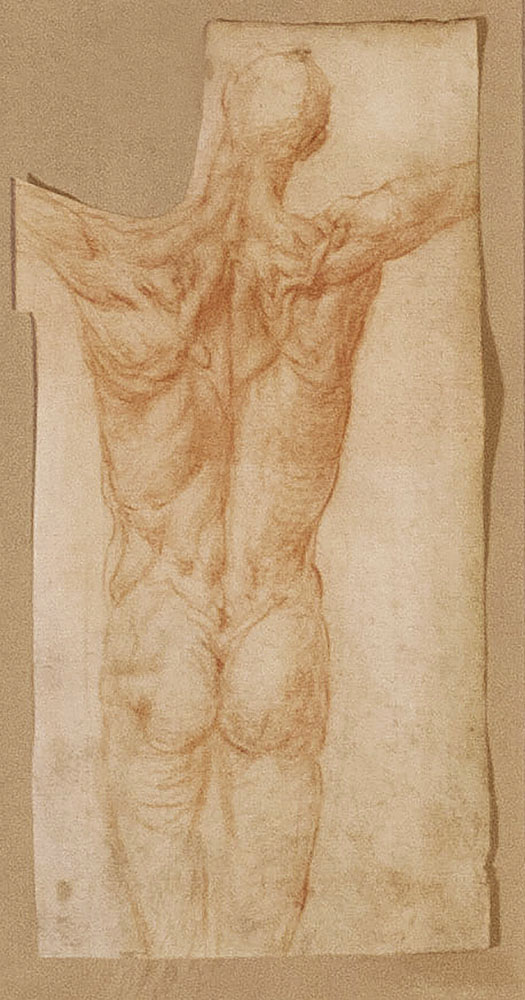
Jacopo Pontormo (Italian, 1494-1557) Study of a Male 1528-1530 Red chalk on paper 14 x 6 in. Collection of Mr. and Mrs. Mark Borghi
Jacopo Pontormo (Italian, 1494-1557)
Jacopo Carucci or Carrucci (May 24, 1494 – January 2, 1557), usually known as Jacopo (da) Pontormo or simply Pontormo, was an Italian Mannerist painter and portraitist from the Florentine School. His work represents a profound stylistic shift from the calm perspectival regularity that characterised the art of the Florentine Renaissance. He is famous for his use of twining poses, coupled with ambiguous perspective; his figures often seem to float in an uncertain environment, unhampered by the forces of gravity.
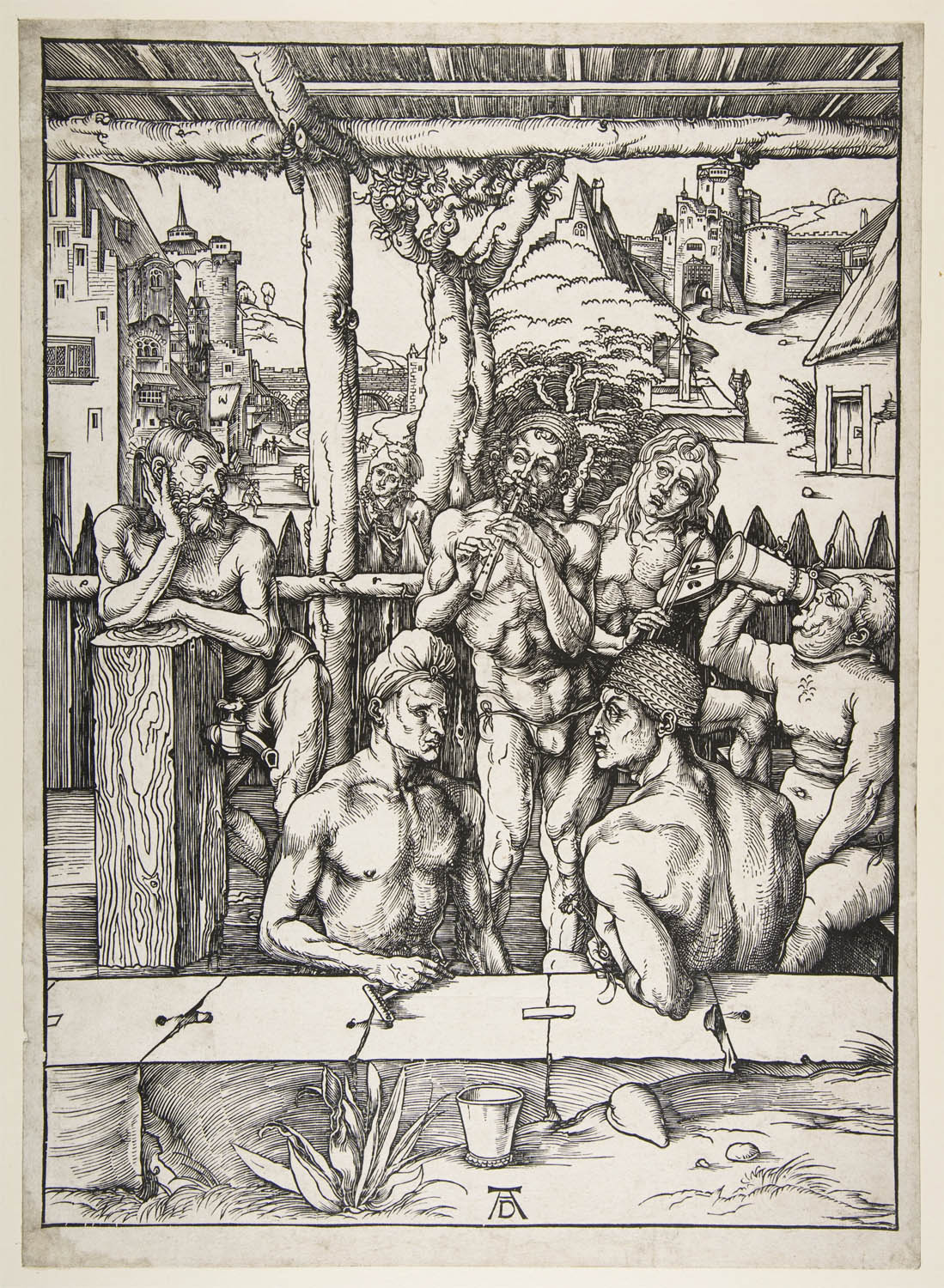
Albrecht Dürer (German, 1471-1528) The Men’s Bath c. 1498 Woodcut 14.438 x 11.125 in. New York Public Library
Artist unknown Replica of The Warren Cup Original c. mid-1st century AD Silver Unnumbered issue from edition of twelve Collection of the Leslie-Lohman Museum of Gay and Lesbian Art, New York. Image of the original courtesy of The British Museum
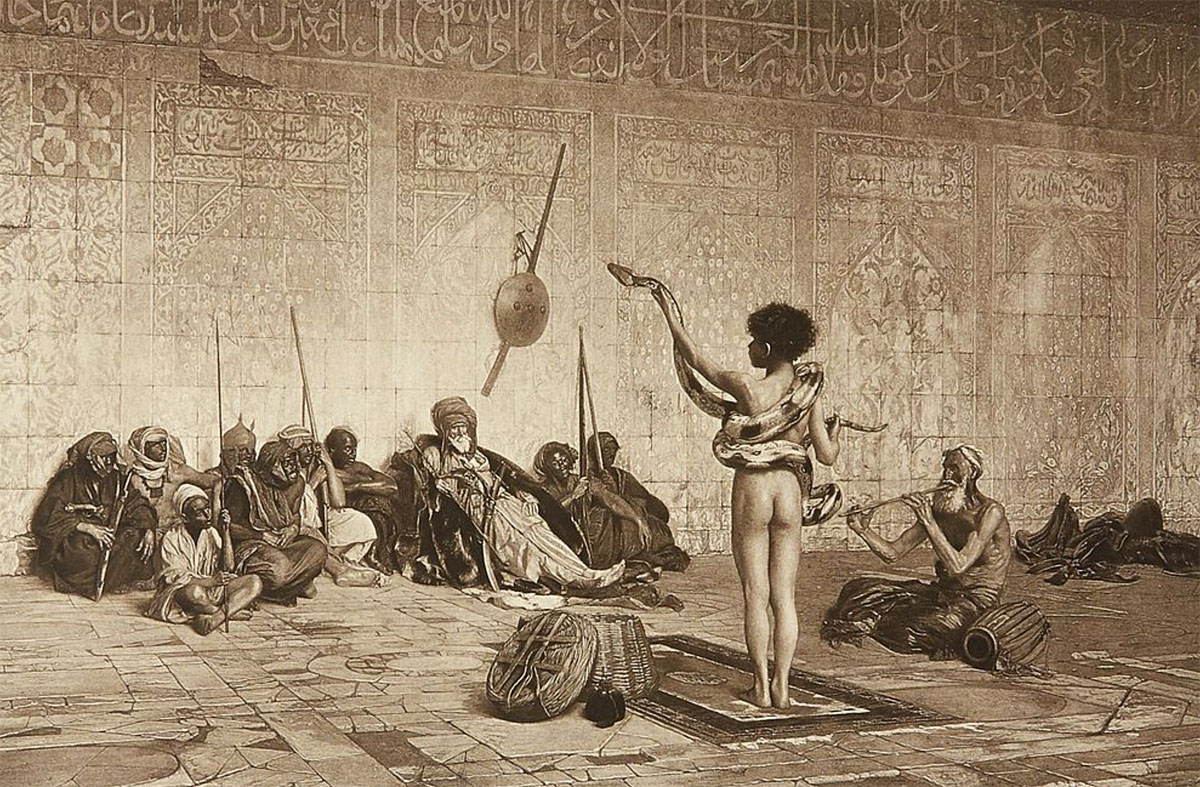
Jean-Léon Gérôme (French, 1824-1904) The Serpent Charmer 1894 Photogravure 7.75 x 11.75 in. Museum Purchase Collection of Leslie-Lohman Museum
Jean-Léon Gérôme (French, 1824-1904)
Jean-Léon Gérôme (11 May 1824 – 10 January 1904) was a French painter and sculptor in the style now known as academicism. His paintings were so widely reproduced that he was “arguably the world’s most famous living artist by 1880.” The range of his works includes historical paintings, Greek mythology, Orientalism, portraits, and other subjects. Gérôme is considered among the most important painters from the academic period and was, with Meissonier and Cabanel, one of “the three most successful artists of the Second Empire”.
He was also a teacher with a long list of students, including Mary Cassatt, Thomas Eakins, and Osman Hamdi Bey, among others.
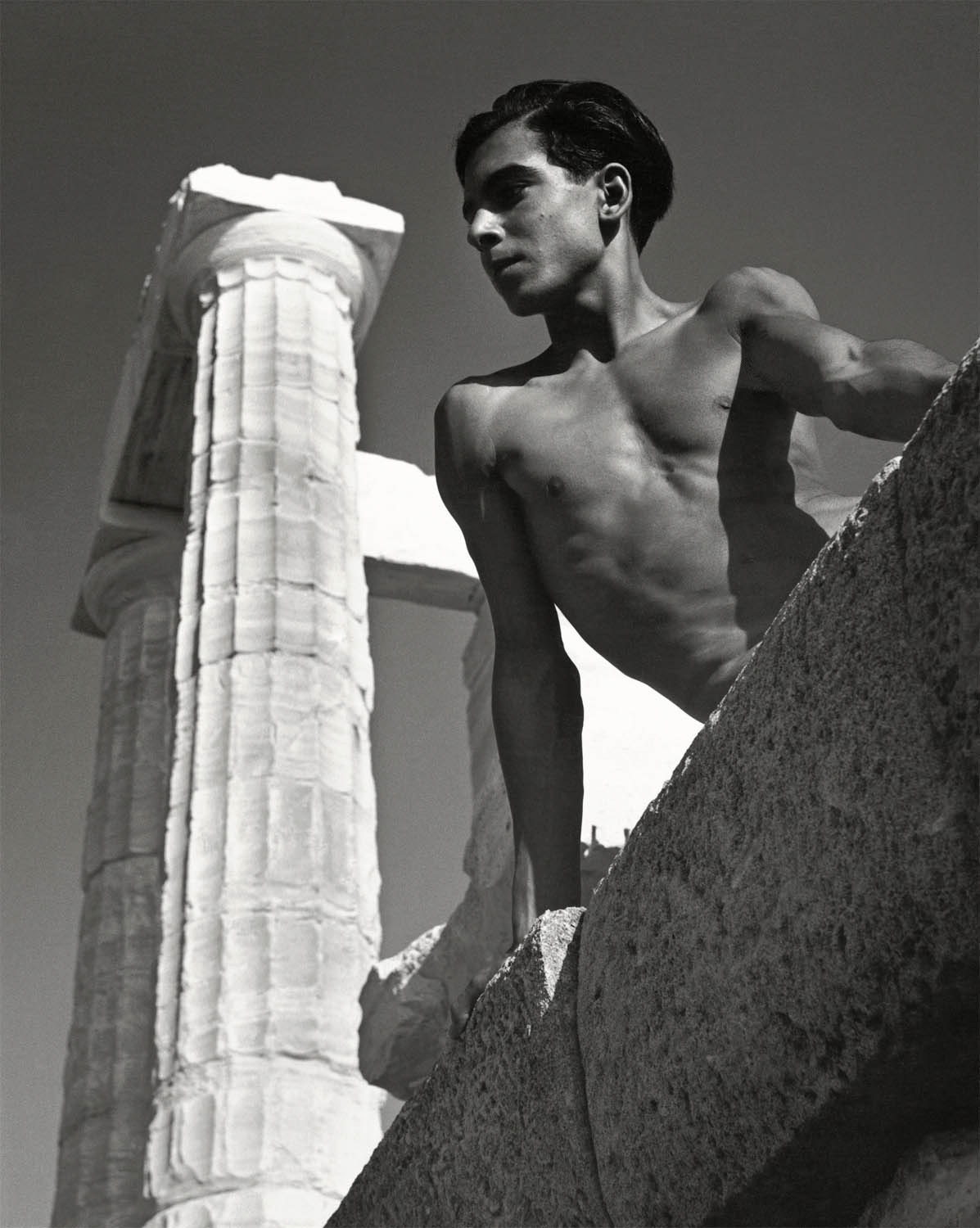
Herbert List (German, 1903-1975) Beneath the Poseidon Temple 1937 Silver gelatin print 11.614 x 10.827 in. Herb Ritts Foundation Collection of William Zewadski
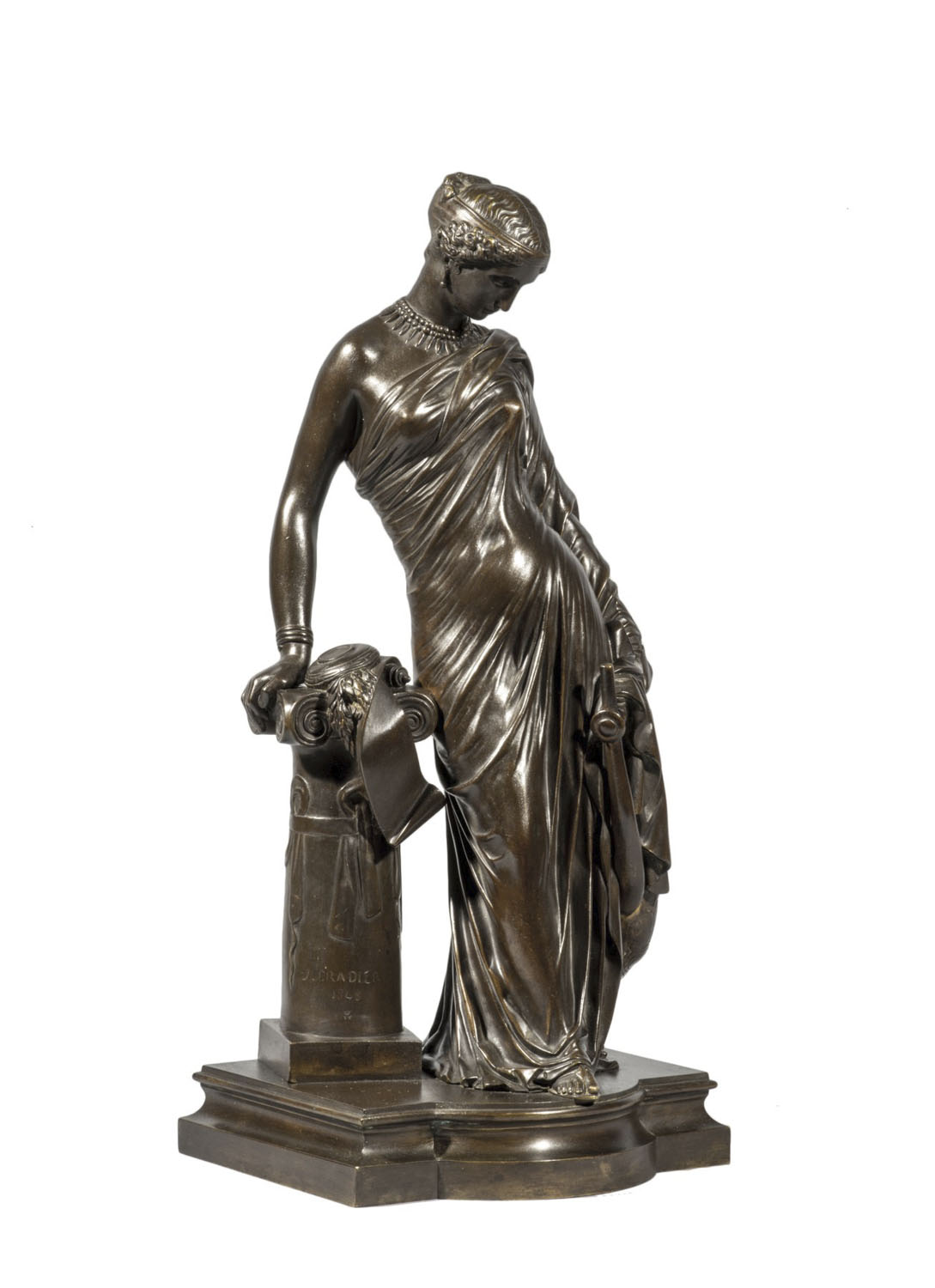
Jean Jacques Pradier (French, 1790-1852) Standing Sappho 1848-1851 Bronze 33.875 x 14.563 x 13 in. The Dahesh Museum of Art, New York
Florine Stettheimer (American, 1871-1944) Nude Study, Standing With Hands Clasped Late 1890s Oil on canvas mounted on board 30 x 18 in. Columbia University
Florine Stettheimer (American, 1871-1944)
Florine Stettheimer (August 19, 1871 – May 11, 1944) was an American modernist painter, feminist, theatrical designer, poet, and salonnière.
Stettheimer developed a feminine, theatrical painting style depicting her friends, family, and experiences in New York City. She made the first feminist nude self-portrait and paintings depicting controversies of race and sexuality. She and her sisters hosted a salon that attracted members of the avant-garde. In the mid-1930s, Stettheimer created the stage designs and costumes for Gertrude Stein and Virgil Thomson’s avant-garde opera, Four Saints in Three Acts. She is best known for her four monumental works illustrating what she considered New York City’s “Cathedrals”: Broadway, Wall Street, Fifth Avenue, and New York’s three major art museums.
During her lifetime, Stettheimer exhibited her paintings at more than 40 museum exhibitions and salons in New York and Paris. In 1938, when the Museum of Modern Art sent the first American art exhibition to Europe, Stettheimer and Georgia O’Keeffe were the only women whose work was included. Following her death in 1944, her friend Marcel Duchamp curated a retrospective exhibition of her work at the Museum of Modern Art in 1946. It was the museum’s first retrospective exhibition of work by a woman artist. After her death, Stettheimer’s paintings were donated to museums throughout the United States. In addition to her many paintings and costume and set designs, Stettheimer designed custom frames for her paintings and matching furniture, and wrote humorous, often biting poetry. A book of her poetry, Crystal Flowers, was published privately and posthumously by her sister Ettie Stettheimer in 1949.
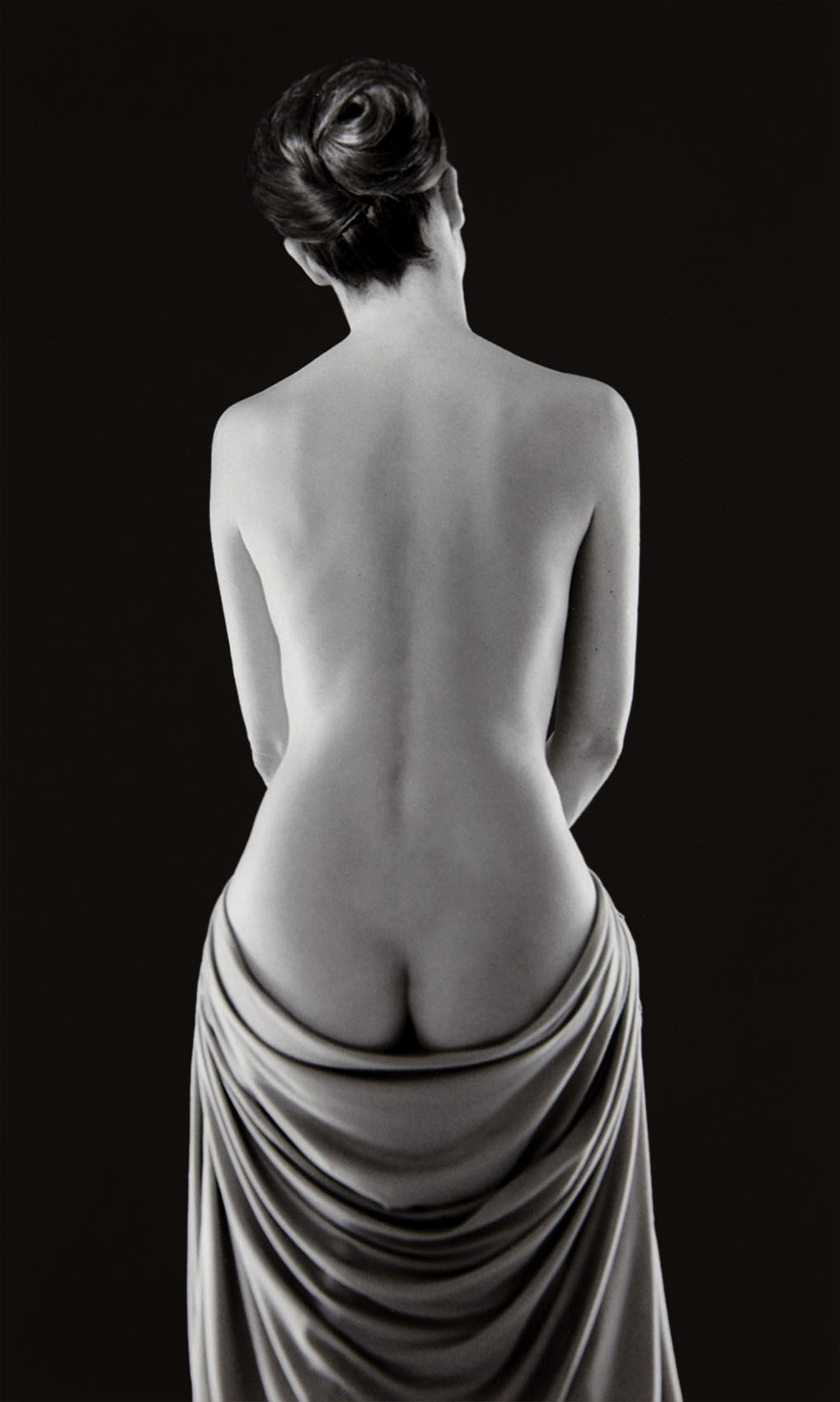
Ruth Bernhard (American born Germany, 1905-2006) Draped Torso 1962 Selenium-toned silver gelatin print 12.75 x 8.25 in. Ruth Bernhard Estate Courtesy Peter Fetterman Gallery, Santa Monica, Calif.
Bruce LaBruce (Canadaian, b. 1964) with Nina Arsenault (Canadian, b. 1974) Tripartite Goddess I, II, III 2011 Archival photograph Signed on verso 1/10 18 x 28 in.
Austin Young (American, b. 1966) Dani Daniels, Los Angeles 2011 Archival inkjet print Edition 1/10
Austin Young (American, b. 1966)
Austin Young (born April 12, 1966) is an American photographer, film maker and new media artist currently based in Los Angeles, known for both celebrity portraits and an encyclopaedic documentation of sub and trans culture in New York City, Los Angeles and San Francisco. Young is also co-founder of Fallen Fruit, an art collective that uses fruit as a common denominator for public engagement and collaboration. Young’s photographs have been featured in major publications such as Interview, OK, and Flaunt and have been shown in solo exhibitions and projects at LACMA (Los Angeles), Machine Project (Los Angeles), Hammer Museum (Los Angeles), Berkeley Art Museum (Berkeley, California); as well as groups shows at Los Angeles Contemporary Exhibitions (Los Angeles) and Stephen Cohen Gallery (Los Angeles).
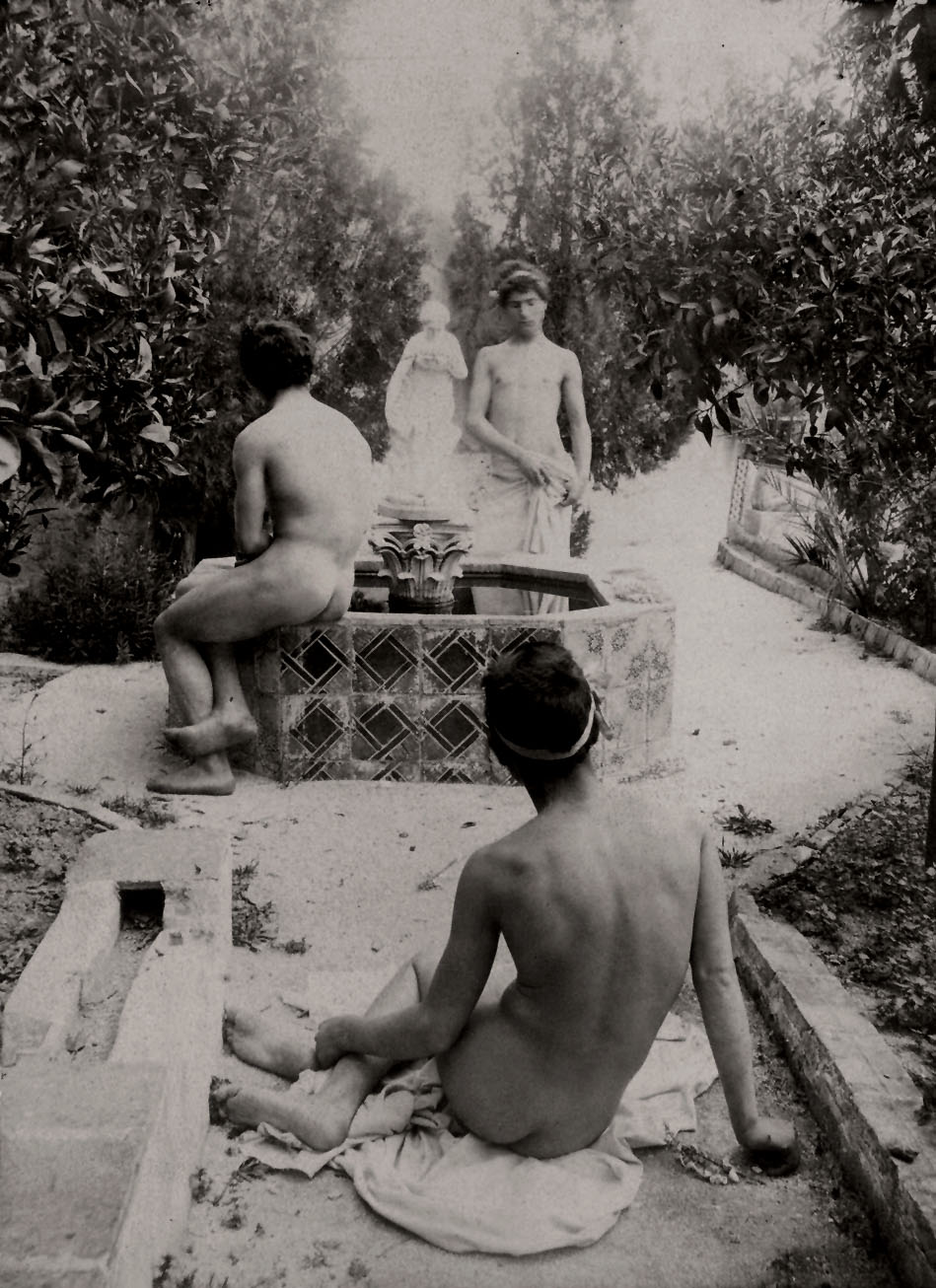
Wilhelm Von Gloeden (German, 1856-1931) Untitled (Three seated youths) c. 1900 Black and white photograph glued to board Foundation purchase Collection of Leslie-Lohman Museum
Wilhelm Von Gloeden (German, 1856-1931) Untitled 1895 Albumen silver print 9 x 6.75 inches Collection of Sinski/McLaughlin
Wilhelm Von Gloeden (German, 1856-1931)
Wilhelm Iwan Friederich August Freiherr von Gloeden (September 16, 1856 – February 16, 1931) was a German photographer who worked mainly in Italy. He is mostly known for his pastoral nude studies of Sicilian boys, which usually featured props such as wreaths or amphoras, suggesting a setting in the Greece or Italy of antiquity. From a modern standpoint, his work is commendable due to his controlled use of lighting as well as the often elegant poses of his models. His innovations include the use of photographic filters and special body makeup (a mixture of milk, olive oil, and glycerin) to disguise skin blemishes. …
Works
While today Gloeden is mainly known for his nudes, in his lifetime he was also famous for his landscape photography that helped popularize tourism to Italy. In addition, he documented damage from the 1908 Messina earthquake, which may explain why the locals mostly approved of his work.
The majority of Gloeden’s pictures were made before the First World War, in the years from 1890 to 1910. During the war, he had to leave Italy. After returning in 1918, he photographed very little but continued to make new prints from his voluminous archives. In total, he took over 3000 images (and possibly up to 7000), which after his death were left to one of his models, Pancrazio Buciunì (also spelled Bucini; his dates sometimes given as c. 1864 – c. 1951 but probably should be 1879-1963), known as Il Moro (or U Moru) for his North African looks. Il Moro had been Gloeden’s lover since the age of 14 when he had first joined his household. In 1933, some 1,000 glass negatives from Gloeden’s collection (inherited by Buciuni) and 2,000 prints were confiscated by Benito Mussolini’s Fascist police under the allegation that they constituted pornography, and were destroyed; another 1,000 negatives were destroyed in 1936, but Buciuni was tried and cleared at a court in Messina (1939-1941) of disseminating pornographic images. Most of the surviving pictures (negatives and prints) are now in the Fratelli Alinari photographic archive in Florence (which in 1999 bought 878 glass negatives and 956 vintage prints formerly belonging to Buciuni to add to its existing collection of 106 prints) and further prints (which fetch hundreds of pounds at auction) are in private collections or held by public institutions such as the Civico Archivo Fotographico in Milan.
Attitudes towards his work during his lifetime and later
Gloeden generally made several different kinds of photographs. The ones that garnered the most widespread attention in Europe and overseas were usually relatively chaste studies of peasants, shepherds, fisherman, etc., featured in clothing like togas or Sicilian traditional costume, and which generally downplayed their homoerotic implications. He also photographed landscapes and some studies were of, or included, women. His models were usually posed either at his house, among the local ancient ruins, or on Monte Ziretto (c. 600 metres), located two kilometres to the north of Taormina and famous in antiquity for its quarries of red marble. He wrote in 1898: “The Greek forms appealed to me, as did the bronze-hued descendants of the ancient Hellenes, and I attempted to resurrect the old, classic life in pictures…The models usually remained merry and cheerful, lightly clad and at ease in the open air, striding forward to the accompaniment of flutes and animated chatter. More than a few greatly enjoyed the work and anxiously awaited the moment when I would show them the finished picture.”
More explicit photos in which boys aged between about 10 and 20, and occasionally older men, were nude (sometimes with prominent genitalia) and which, because of eye contact or physical contact were more sexually suggestive, were traded “under the counter” and among close friends of the photographer, but “as far as is known, Gloeden’s archive contained neither pornographic nor erotically lascivious motifs”.
Friedrich O. Wolter (German, 1865-1931) Drei Grazien (Three Graces) Date unknown Photograph 5.5 x 3.5 inches Collection of the Leslie-Lohman Museum of Gay and Lesbian Art, New York
Del LaGrace Volcano (American, b. 1957) The Three Graces, Jasper, Suzie and Gill, London 1992 Digital C-print 30 x 23.5 inches Collection of the Leslie-Lohman Museum of Gay and Lesbian Art, New York
Del LaGrace Volcano (American, b. 1957)
Del LaGrace Volcano (born July 26th, 1957) is an American artist, performer, and activist from California. A formally trained photographer, Volcano’s work includes installation, performance and film and interrogates the performance of gender on several levels, especially the performance of masculinity and femininity. …
Volcano’s work complicates understandings of both femininity and masculinity by depicting lesbian masculinity. In “The Feminine Principle” Volcano takes queer femininities as a focus; including in this project is a portrait of Kate Bornstein. In “Lesbian Boyz and Other Inverts,” Volcano’s celebration of butch dykes, transsexual boys and other gender-queers. In the project, masculinity is shown as a tool of subversion.
Volcano’s recent photographs demonstrate how intersex bodies can offer an entirely new perspective on the body. The “normal” body in relation to Volcano’s photographs becomes queer, describing the bodies in their latest works as “sites of mutation, loss, and longing.” In these newer works, Volcano takes on the loss of their friend, Kathy Acker and the transformation of their lover Simo Maronati’s abled body into a disabled one. Here, Volcano illustrates the queerness of any body marked by illness or trauma. Their self-portrait “INTER*me” photograph series (formally the “Herm Body” series) is a raw rendition of the artist’s body using black and white Polaroid film, in conversation with their previous work it speaks to the construction of different age-selves and the technologies of gender in photography.
Volcano’s artist statement of September 2005 reads:
As a gender variant visual artist I access ‘technologies of gender’ in order to amplify rather than erase the hermaphroditic traces of my body. I name myself. A gender abolitionist. A part time gender terrorist and an intentional mutation My journey must be distinguished from the thousands of intersex individuals who have had their ‘ambiguous’ bodies mutilated and disfigured in a misguided attempt at “normalisation”. I believe in crossing the line, not just once, but as many times as it takes to build a bridge we can all walk across.
Volcano also explores themes of both sexual and gender fluidity throughout their work. Volcano often depicts the instability of gender identity, by pushing past the binary gender system, and frequently uses their queerness in their work to contest the idea of sexual identity as something that is permanently embodied. As shown in Volcano’s photography book, “Love Bites”, Volcano presents various images of women at sexual play, dressed “in costumes ranging from brides to gay leather men”. Volcano, in this way, seems to aim at defying conventional gender norms and feminist principles within their text. In “Teddy Boy David”, Volcano further pushes this agenda and toys with the idea of age dynamics and, mainly, youthfulness in terms of sexuality and sexual play.
























 Art Blart _ art and cultural memory archive
You must be logged in to post a comment.