Exhibition: ‘FOTOGAGA: Max Ernst and Photography. A Visit from the Würth Collection’ at Museum für Fotografie, Staatliche Museen zu Berlin

Exhibition dates: 18th October, 2024 – 27th May, 2025

Curators: Katja Böhlau and Ludger Derenthal, Kunstbibliothek – Staatliche Museen zu Berlin


Max Ernst (German, 1891-1976) 'Frontispiece' 1921 From 'Paul Éluard: Répétitions' from the exhibition 'FOTOGAGA: Max Ernst and Photography. A Visit from the Würth Collection' at Museum für Fotografie, Oct 2024 - May 2025


Max Ernst (German, 1891-1976)
Frontispiece
1921
From Paul Éluard: Répétitions
Print from collage
5.5 x 10.3cm
Sammlung Würth
© VG Bild-Kunst, Bonn 2024


“Although these artists were explicitly not dealing with mundane reality but instead with what lies beneath, behind and in-between, the still relatively new medium of photography was of great importance for many. Last but not least, they also used it to make visible what remains hidden to the naked eye without technical means: the distant, the tiny, the moving.” (Press release)

Expressing the unconscious mind through illogical, dreamlike imagery and ideas, exploring the irrational, challenging notions of reality through a technical instrument – the camera – to create “a rich and multifarious cosmos of idiosyncratic realities that radically transcended traditional aesthetics.”

In the dream of the mind and the camera’s eye. Over and above the real.

Dr Marcus Bunyan


Many thankx to the Museum für Fotografie for allowing me to publish the photographs in the posting. Please click on the photographs for a larger version of the image.


“The invention of modern photomontage in the early twentieth century by Max Ernst with his Dada colleagues Hannah Höch, John Heartfield, George Grosz and Raoul Hausmann established new history in a variety of ways. Expanding modern art with multimedia as well as placing found photographs into art cut from printed magazines, rather than chemical made prints from the darkroom. Redefining final works of art without the paint brush or canvas. Ernst freed imagery into the unconscious by self-made combinations of drawing with torn and pasted photographic fragments, evoking memories and other responses by viewers that continue today.”


Steve Yates, Fulbright scholar, photographic artist, author and curator


Max Ernst (German, 1891-1976)
Die chinesische Nachtigall / Le rossignol chinois / The Chinese Nightingale 1920 from the exhibition 'FOTOGAGA: Max Ernst and Photography. A Visit from the Würth Collection' at Museum für Fotografie, Oct 2024 - May 2025


Max Ernst (German, 1891-1976)
Die chinesische Nachtigall / Le rossignol chinois / The Chinese Nightingale
1920
Collage and ink on paper
15.5 x 9cm
Musée de Grenoble
© VG Bild-Kunst, Bonn 2024
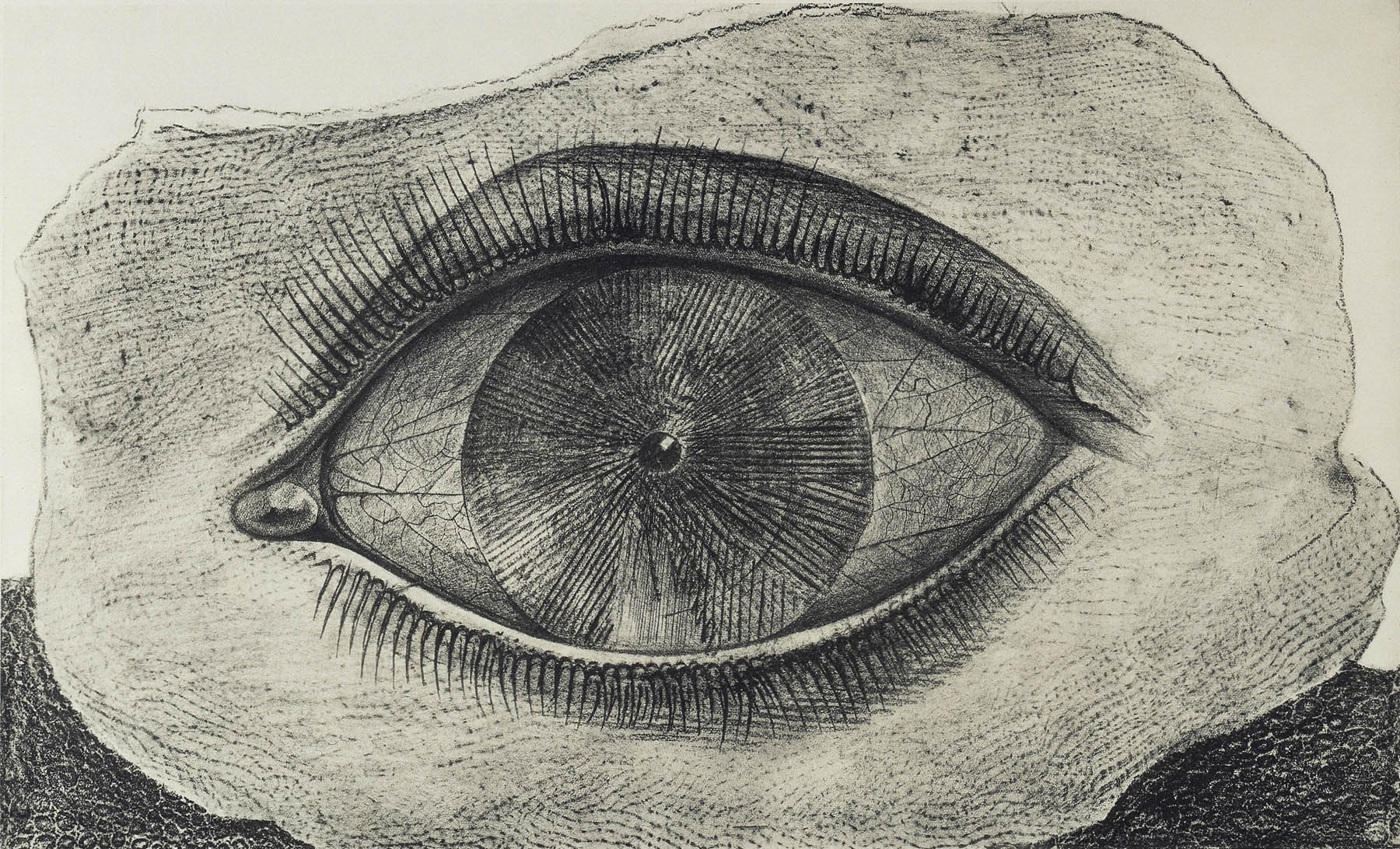
 

Max Ernst (German, 1891-1976) Lichtrad / la roue de la lumière / The wheel of light 1926 from the exhibition 'FOTOGAGA: Max Ernst and Photography. A Visit from the Würth Collection' at Museum für Fotografie, Oct 2024 - May 2025


Max Ernst (German, 1891-1976)
Lichtrad / la roue de la lumière / The wheel of light
1926
From Histoire Naturelle, sheet 29
Photogravure after frottage
32.5 x 50cm
Sammlung Würth
© VG Bild-Kunst, Bonn 2024


Max Ernst (German, 1891-1976) Max Ernst, Marie-Berthe Aurenche und Jean Aurenche / Max Ernst, Marie-Berthe Aurenche and Jean Aurenche, Photomaton c. 1929


Max Ernst (German, 1891-1976)
Max Ernst, Marie-Berthe Aurenche und Jean Aurenche / Max Ernst, Marie-Berthe Aurenche and Jean Aurenche, Photomaton
c. 1929
Silver gelatin paper
20.9 x 3.7cm
Sammlung Würth
© VG Bild-Kunst, Bonn 2024


Max Ernst (German, 1891-1976) "…unter meinem weißen Gewand, in meinem Taubenhaus, werdet ihr nicht mehr arm sein, ihr tonsurierten Tauben. Ich werde euch zwölf Tonnen Zucker bringen. Aber berührt nicht mein Haar“ / "…sous mon blanc vêtement, dans mon colombodrôme, vous ne serez plus pauvres, pigeons tonsurés. Je vous apporterai douze tonnes de sucre. Mais ne touchez pas à mes cheveux!" / "…you won't be poor anymore, head-shaven pigeons, under my white dress, in my columbarium. I'll bring you a dozen tons of sugar. But don't you touch my hair!" 1930


Max Ernst (German, 1891-1976)
“…unter meinem weißen Gewand, in meinem Taubenhaus, werdet ihr nicht mehr arm sein, ihr tonsurierten Tauben. Ich werde euch zwölf Tonnen Zucker bringen. Aber berührt nicht mein Haar“ / “…sous mon blanc vêtement, dans mon colombodrôme, vous ne serez plus pauvres, pigeons tonsurés. Je vous apporterai douze tonnes de sucre. Mais ne touchez pas à mes cheveux!” / “…you won’t be poor anymore, head-shaven pigeons, under my white dress, in my columbarium. I’ll bring you a dozen tons of sugar. But don’t you touch my hair!”
1930
From Das Karmelienmädchen. Ein Traum / Rêve d’une petite fille qui voulut entrer au Carmel / Dream of a little girl who wanted to enter Carmel
Print from collage
7.7 x 11.3cm
Sammlung Würth
© VG Bild-Kunst, Bonn 2024


Max Ernst (German, 1891-1976) Das Innere der Sicht 3 / A l'intérieur de la vue 3 / Inside View 3 1931/1947


Max Ernst (German, 1891-1976)
Das Innere der Sicht 3 / A l’intérieur de la vue 3 / Inside View 3
1931/1947
From Paul Éluard : A l’intérieur de la vue. 8 Poèmes visibles
Collage
22.3 x 15.5cm
Sammlung Würth
© VG Bild-Kunst, Bonn 2024


Max Ernst (German, 1891–1976) …des vollständig auf sie beschränkten, des vom Rest der Welt isolierten / … d'absolument limité à eux, d'isolant du reste du monde / of the one who is completely confined to them, isolated from the rest of the world 1936


Max Ernst (German, 1891–1976)
…des vollständig auf sie beschränkten, des vom Rest der Welt isolierten / … d’absolument limité à eux, d’isolant du reste du monde / of the one who is completely confined to them, isolated from the rest of the world
1936
From André Breton: Le château étoilé
Photogram after frottage
25 x 20cm
Sammlung Würt
© VG Bild-Kunst, Bonn 2024


Max Ernst (German, 1891-1976) Eine weitere Laune der Venus / Un autre caprice de Venus / Another whim of Venus 1961


Max Ernst (German, 1891-1976)
Eine weitere Laune der Venus / Un autre caprice de Venus / Another whim of Venus
1961
Oil on canvas
27 x 22cm
Sammlung Würth
© VG Bild-Kunst, Bonn 2024


Max Ernst holds a prominent position within Dada and Surrealist Art. His name stands for genre-bending works that combine dream and reality. The exhibition FOTOGAGA: Max Ernst and Photography. A Visit from the Würth Collection is the first to search for points of intersection between his work and photography. Commemorating Surrealism’s centenary, the Museum für Fotografie (Museum of Photography) is showing a representative overview of Max Ernst’s artworks from the Würth Collection. These are complemented by works from the Kunstbibliothek, Kupferstichkabinett, Sammlung Scharf-Gerstenberg and the Staatsbibliothek zu Berlin, and other exceptional loans from museums and private collections in France and Germany.

Max Ernst and Photography – A Special Connection

The art of Max Ernst (1891-1976) was created at a time characterised by a new, creative approach to photography. Snapshots, scientific photographs and images of war machinery inspired him and served as working materials, especially for his collages. Technical and artistic developments in the medium of photography significantly influenced his work. He used photographic reproduction techniques to increase the visual impact of his works: enlargements allowed his small-format collages to hold their own alongside paintings in exhibitions; the production of photo postcards of the collages ensured that the works could be distributed quickly and easily; and the inversion of the tonal values in a photogram enhanced the effect of his frottages.

Max Ernst himself never used a camera for his art, but he liked to pose for the camera, whether for images taken by well-known photographers or made in photo booths. At times serious, at times a little “gaga”, the portraits illustrate not just the artist’s love for playfulness but also an occasionally strategic use of photography to promote his artistic agenda. The title of the exhibition – “FOTOGAGA” – is derived from a group of works by Hans Arp and Max Ernst, which they called “FATAGAGA”: the “FAbrication de TAbleaux GAsométriques Garantis (Fabrication of Guaranteed Gasometric Images)”. One of these photocollages, in which the two artists address their relationship as friends, can be seen in the exhibition.

A Century of Surrealism

Some 270 works will be exhibited, primarily works on paper but also paintings by Max Ernst and photographs, photograms, collages, and illustrated books by his Surrealist contemporaries. Although these artists were explicitly not dealing with mundane reality but instead with what lies beneath, behind and in-between, the still relatively new medium of photography was of great importance for many. Last but not least, they also used it to make visible what remains hidden to the naked eye without technical means: the distant, the tiny, the moving.

Max Ernst’s works are framed within the context of both contemporary and historical references. There are numerous and surprising parallels to photographs by other artists. An avid delight in experimentation and a creative game played with chance characterise the works selected for the exhibition. Their originators reflected on forgotten photographic processes from the 19th century and developed new techniques using light-sensitive materials. Semi-automatic methods, working with found objects, unusual combinations, and the blurring of traces have equally shaped the work of Max Ernst and the photographic oeuvres of many of his contemporaries and other artists that followed. Even a century after André Breton published the first Surrealist Manifesto on 15 October 1924, they have not lost any of their fascination.

A cooperation with tradition

The Staatliche Museen zu Berlin look back on a longstanding cooperation with the Würth Collection. FOTOGAGA: Max Ernst and Photography is the fourth exhibition in a series that began in 2019‒2020 with Anthony Caro: The Last Judgement Sculpture from the Würth Collection at the Gemä-ldegalerie. It was followed in 2021‒2022 by Illustrious Guests: Treasures from the Kunstkammer Würth in the Kunstgewerbemuseum and David Hockney – Landscapes in Dialogue. “The Four Seasons” from the Würth Collection in 2022, also shown at the Gemäldegalerie. The exhibition at the Museum für Fotografie draws on the Würth Collection’s extensive holdings, especially of Max Ernst’s graphic works, which are now being shown in Berlin for the first time.

Press release from the Museum für Fotografie


Max Ernst (German, 1891-1976) 'Above the Clouds Midnight Passes' 1920


Max Ernst (German, 1891-1976)
Above the Clouds Midnight Passes
1920
Photographic enlargement of a collage and ink, facsimile, 2024
73 x 55cm
Kunsthaus Zürich
Public domain


László Moholy-Nagy (Hungarian, 1895-1946) 'The broken marriage' 1925


László Moholy-Nagy (Hungarian, 1895-1946)
The broken marriage
1925
Photomontage
16.5 x 12.2cm
Sammlung Siegert, München
Public domain


Max Ernst (German, 1891-1976) 'The Stall of the Sphinx' 1925


Max Ernst (German, 1891-1976)
The Stall of the Sphinx
1925
Pencil on paper
16.4 x 15.2cm
Sammlung Ulla und Heiner Pietzsch, Berlin


Max Ernst (German, 1891-1976) 'Little Tables around the Earth' (Petites tables autour de la terre) 1926


Max Ernst (German, 1891-1976)
Little Tables around the Earth (Petites tables autour de la terre)
1926
From Natural History (Histoire naturelle)
Collotype of a frottage
50 x 32.5 cm (sheet)
Paris: Éditions Jeanne Bucher
Portfolio with 34 collotypes of frottages
51.7 x 35 x 1cm


Jean Painlevé (French, 1902-1989)
Hummerschere / Pince d'homard, Port-Blanc, Bretagne / Lobster claw, Port-Blanc, Brittany 1929


Jean Painlevé (French, 1902-1989)
Hummerschere / Pince d’homard, Port-Blanc, Bretagne / Lobster claw, Port-Blanc, Brittany
1929
Silver gelatin paper
23 x 16.7cm
Sammlung Dietmar Siegert
© Archives Jean Painlevé/Les Documents cinématographiques, Paris
Repro: Christian Schmieder


Aenne Biermann (German, 1898-1933) 'Cactus' 1929


Aenne Biermann (German, 1898-1933)
Cactus
1929
Silver gelatin paper
12.4 x 17.3cm


“The object, which, in its surroundings, is never seen other than in its most mundane aspect, is given new life when isolated in the lens of the viewfinder. […] It seemed to me that the clarity of a constructed form, when removed from its overly distracting surroundings, could be depicted convincingly through the use of photography.”

~ Aenne Biermann


Max Ernst (German, 1891–1976) 'Quiétude' from 'The Hundred-Headless Woman' 1929


Max Ernst (1891–1976)
Quiétude from The Hundred-Headless Woman
1929
Collage novel with 147 reproductions of collages
Paris: Éditions du Carrefour
25 x 19cm


The Hundred Headless Woman is Ernst’s first collage novel. It features a loosely narrative sequence of uncanny Surrealist collages, made by cutting up and reassembling nineteenth-century illustrations, accompanied by Ernst’s equally strange captions. Ernst’s French title, La Femme 100 têtes, is a double entendre; when read aloud it can be understood as either “the hundred-headed woman” or “the headless woman.” Along with this enigmatic title character, the book marks the introduction of Ernst’s favourite alter ego, Loplop, “the Bird Superior.” Ernst was deeply engaged with illustrated books during the 1930s; in addition to collage novels, he created many etchings and lithographs to complement the poems and stories of Surrealist writers with whom he was closely associated.

Gallery label from Max Ernst: Beyond Painting, September 23, 2017-January 1, 2018 on the MoMA website Nd [online] Cited 31/03/2025


Max Ernst (German, 1891-1976) 'Loplop presents the members of the Surrealist group' 1931


Max Ernst (German, 1891-1976)
Loplop presents the members of the Surrealist group
1931
Reproduction of a collage in Le Surréalisme au service de la revolution, No. 4
27.4 x 19.9cm
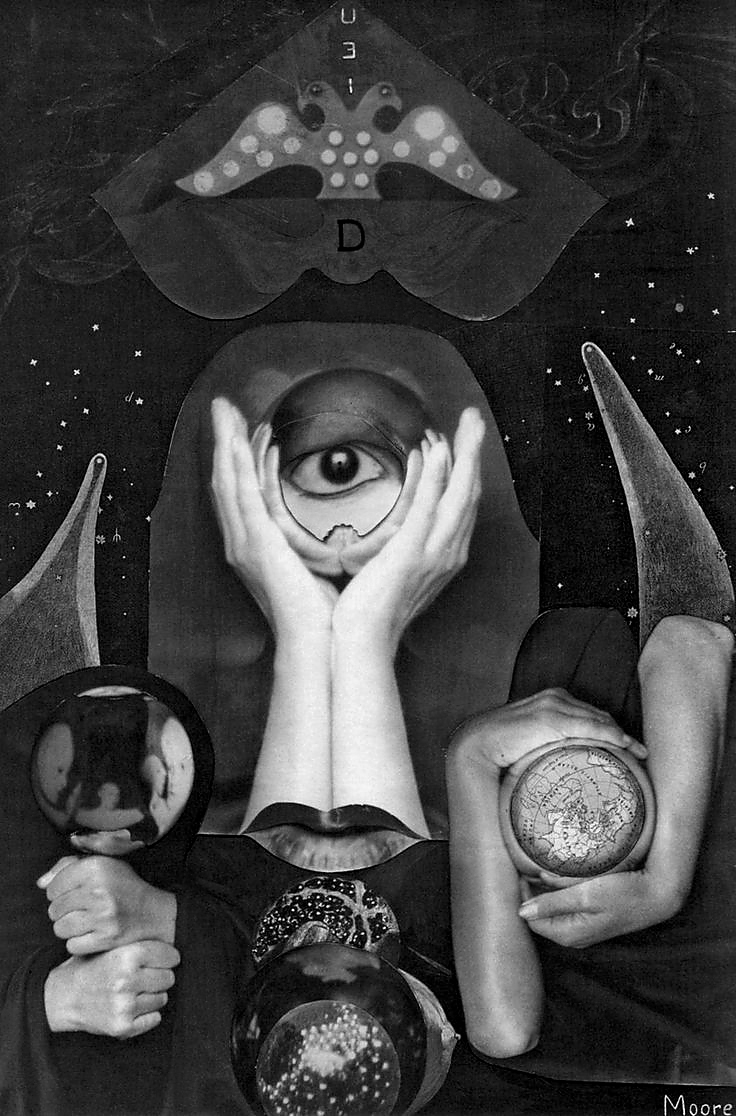
 

Claude Cahun (French, 1894-1954) / Marcel Moore (French, 1892-1972)
'Aveux non avenus' / Disavowals (frontispiece) 1930 Paris: Éditions du Carrefour


Claude Cahun (French, 1894-1954) / Marcel Moore (French, 1892-1972)
Aveux non avenus / Disavowals (frontispiece)
1930
Paris: Éditions du Carrefour
Book with 11 heliogravures of collages
22 x 17 x 2.8cm
Sammlung Siegert, München


Man Ray (American, 1890-1976) 'Untitled'
1931 from 'Électricité. Dix rayogrammes de Man Ray et un texte de Pierre'


Man Ray (American, 1890-1976)
Untitled
1931
From Électricité. Dix rayogrammes de Man Ray et un texte de Pierre
Bost, Paris: La Compagnie Parisienne de Distribution d’Électricité
Heliogravure after photogram
Collotype
38.8 x 29.3cm
Kunstbibliothek – Staatliche Museen zu Berlin
© Man Ray Trust / VG Bild-Kunst, Bonn 2024
Repro: Dietmar Katz
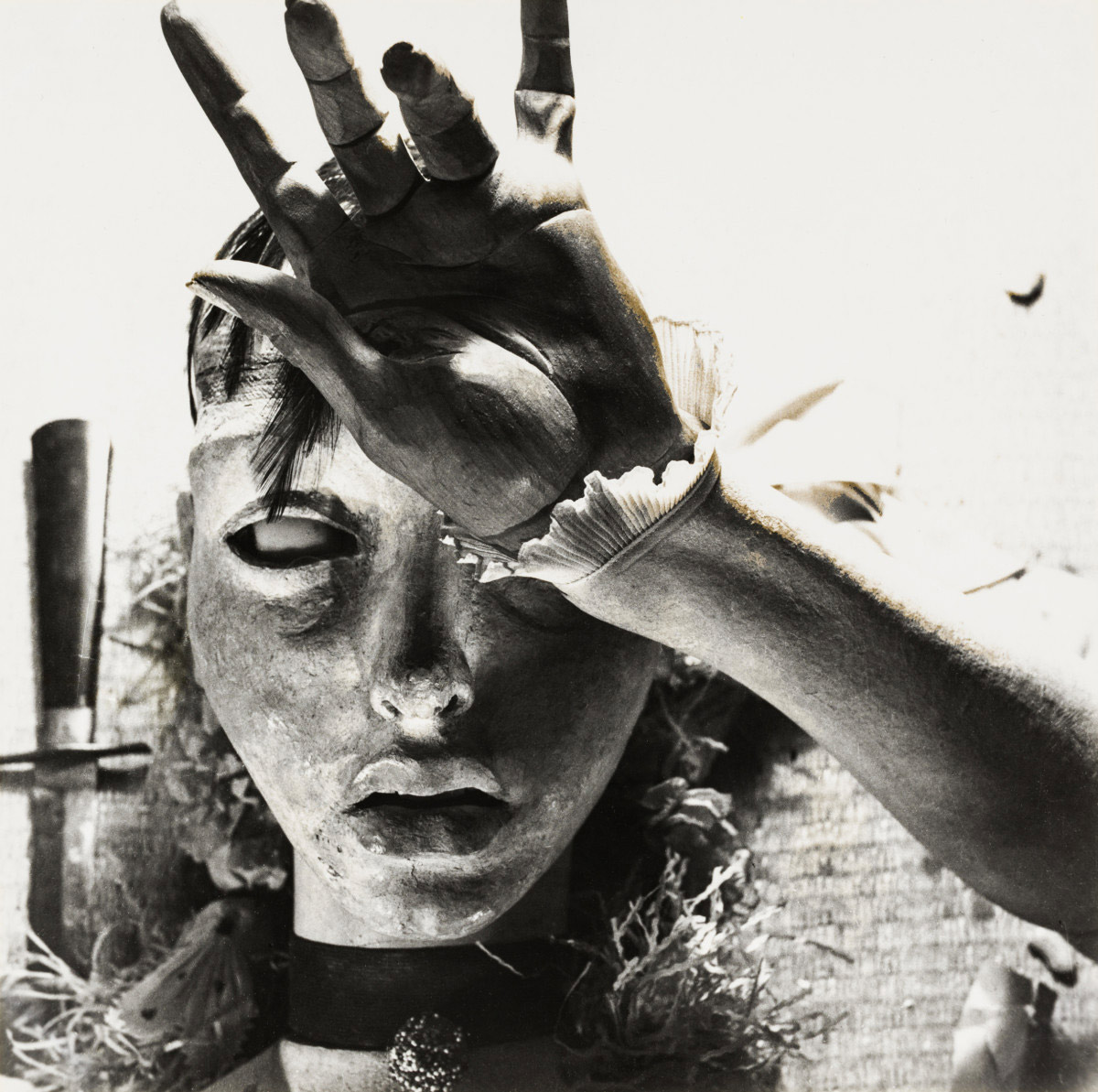
 

Hans Bellmer (German, 1902-1975) 'The Doll' 1935


Hans Bellmer (German, 1902-1975)
The Doll
1935
Silver gelatin paper
17.5 x 16 cm
Sammlung Siegert, München


Brassaï (British born Germany, 1899-1984) 'Night Moth' 1935


Brassaï (British born Germany, 1899-1984)
Night Moth
1935
Reproduction in Minotaure No. 7
31.6 x 24.8cm
Kunstbibliothek


Joseph Breitenbach (German, 1896-1984) 'Max Ernst, Paris' 1936


Joseph Breitenbach (German, 1896-1984)
Max Ernst, Paris
1936
Silver gelatin paper
35.3 x 27.8cm
Sammlung Würth
© The Josef and Yaye Breitenbach Charitable Foundation


Raoul Ubac (Belgian, 1910-1985) 'The Battle of the Penthesilea II' 1937


Raoul Ubac (Belgian, 1910-1985)
The Battle of the Penthesilea II
1937
Photomontage, silver gelatin paper
18 x 24.2cm
Sammlung Siegert, München


Max Ernst (1891-1976) is one of the most important representatives of Dadaism and Surrealism, two artistic movements that turned traditional norms on their head from the 1920s onwards. His boundary-crossing works combine dream and reality. His art also was created at a time characterized by a new, creative approach to photography. Snapshots, scientific photographs and images of war machinery inspired him and served as working materials, especially for his collages. Although he never used a camera for his art himself, technical and artistic developments in the medium of photography significantly influenced his work. Last but not least, Max Ernst liked to pose for the camera, whether for images taken by well-known photographers or made in photo booths. 

Some 270 works will be exhibited, primarily works on paper but also paintings by Max Ernst and photographs, photograms, collages, and illustrated books by his Surrealist contemporaries. Although these artists were explicitly not dealing with mundane reality but instead with what lies beneath, behind and in-between, the still relatively new medium of photography was of great importance for many. Last but not least, they also used it to make visible what remains hidden to the naked eye without technical means: the distant, the tiny, the moving. 

Max Ernst’s works are framed within the context of both contemporary and historical references. There are numerous and surprising parallels to photographs by other artists. Semi-automatic methods, working with found objects, unusual combinations, and the blurring of traces have equally shaped the work of Max Ernst and the photographic oeuvres of many of his contemporaries and other artists that followed. Even a century after André Breton published the first Surrealist Manifesto on 15 October 1924, they have not lost any of their fascination.

Gazes and Visions 

The Motif of the Eye as a Surrealist Symbol

For the Surrealists, free, wild seeing opened up perspectives on an untamed world beyond reality – provided that the eyes were used in the right way or equipped with appropriate devices. Thus the motif of the eye symbolizes the translation of visions into perceptible images. Max Ernst’s frottages show radically enlarged, wide-open eyes hovering over a flat horizon. Visionary seeing can also be assisted by various instruments. In a coloured collage for Les malheurs des immortels, a young man gazes through two pipes, cheeks flushed with excitement: what might he be looking at? 

The focus on inner vision becomes the theme of a 1929 collage, in which the portrait photos of the Surrealists, all shown with eyes closed, are arranged around the reproduction of a nude painting by René Magritte. In so doing, a very masculinely connoted group activity is simulated in which sexual desire makes possible the liberation of thought. A violent variation – a blinding, likewise understood as liberation – appears in the famous eyeball-slicing scene in the prologue of the 1928 film Un chien andalou by Luis Buñuel and Salvador Dalí. 

Flora, fauna, firmament 

Frottage, Nature Printing, and Plant Photography

Plantlike animals, seashell flowers, fishbone forests, crocheted stars – the visual world of Max Ernst is full of fantastic forms. For him, nature served as both inspiration and material. In his frottages, he used wood, leaves and much more for rubbings on paper. This is how the portfolio Histoire naturelle (Natural History) was created in 1926. The frottages were reproduced as collotype prints, photomechanically produced prints using an exposed glass plate as a printing block. 

With Histoire Naturelle, Max Ernst drew on natural history encyclopaedias, but reworked the originals to create his own natural history. In so doing he dissected nature, showed the tiny and the distant, and created planar structures rather than views. This interest in the formal language of nature also resonates in the photography of the New Objectivity from around the same time, which reveal the aesthetic power of natural forms. That also made them interesting to the Surrealist movement. 

In his artist’s book Maximiliana or the Illegal Practice of Astronomy from 1964, Max Ernst devoted himself entirely to celestial phenomena. As in photograms, Ernst used objects here like spirals or gears as stencils to evoke comets and nebulas.

Between Positive and Negative 

Photogram, Cliché Verre, and Other Darkroom Experiments

The play of positive and negative effects is a recurring theme in Max Ernst’s oeuvre. Early works created using fine lines incised on a black ground show motifs that appear fragile and vague. He also used photographic techniques for some of his works and transformed his frottages into negative forms in Man Ray’s studio. In 1931, for example, he created dark photograms as illustrations for René Crevel’s text Mr. Knife, Miss Fork

Max Ernst’s use of manually produced prototypes relates to a technique borrowed from the early days of photography: cliché verre, or glass printing. In this hybrid process, an etching is created on a glass plate coated with paint or ink, which then serves as a negative for the print. The twentieth century witnessed a rediscovery of cliché verre and the further amalgamation of photographic and drawing processes. The growing interest in camera-less photography led to a wide range of experiments using light and unconventional materials in various avant-garde circles.

Invisible Cuts 

(Photo-) Collages, Collage Novels, and Surrealist Photography

For Max Ernst, collage is the fundamental mode of artistic production. It encompasses a colorful variety of methods for combining materials of all kinds, initiating an open-ended artistic process. Max Ernst had already experimented with collages of printed photographs during his Dada years. The combination of the most diverse illustrations and their fusion into a new image by painting and drawing over them all took place within the working process. 

For his wood engraving collages, Max Ernst made use of old-fashioned illustrations from popular scientific magazines of the nineteenth century. Many of these images were also based on photographs; at that time, however, photos could not yet be reproduced and thus had to be rendered as wood engravings. His three collage novels featured visions and hallucinations alongside blasphemy, the critique of bourgeois morals, and the glorification of free love and revolution. 

Photographers of the Surrealist movement from Claude Cahun to Karel Teige, from Georges Hugnet to Emila Medková created with the help of camera and darkroom as well as scissors and glue, a rich and multifarious cosmos of idiosyncratic realities that radically transcended traditional aesthetics. 

Max Ernst in Front of the Camera 

From Studio Portrait to Photo Booth

Max Ernst is one of the most frequently photographed artists of the twentieth century. He posed for the cameras of important photographers such as Berenice Abbott, Arnold Newman, Lee Miller, Irving Penn, and Man Ray. Their portraits demonstrate just how individual the view of a person can be. A whole series of photographs shows the artist at work, with his art, or in the studio. Whether in focused concentration wearing his painter’s smock, in the midst of creative chaos, or in intimate relation to his sculptures – such photographs reinforce or even create the iconic conception of the artist. 

Another group of images shows Max Ernst with female companions such as the artists Leonora Carrington or Dorothea Tanning, which convey the intensity of their relations. As a member of the Surrealists Max Ernst frequently appears in group portraits. These images bear witness to the various stations of the movement – its beginnings in Paris or exile in America – as well as to constellations of fashion and gender. Whether individually or in a group, pensive, playful, joyful or serious, the photographs tell of Max Ernst’s delight in self-representation and in theatrical play.

Text from the Museum für Fotografie


George Platt Lynes (American, 1907-1955) 'Max Ernst, New York' 1941


George Platt Lynes (American, 1907-1955)
Max Ernst, New York
1941
Silver gelatin paper, new print
25.1 x 20.1cm


Josef Breitenbach (German, 1896-1984) 'Max Ernst and the seahorse, New York' 1942


Josef Breitenbach (German, 1896-1984)
Max Ernst and the seahorse, New York
1942
Silver gelatin paper
24 x 19cm


Arnold Newman (American, 1918-2006) 'Max Ernst, New York' 1942


Arnold Newman (American, 1918-2006)
Max Ernst, New York
1942
Silver gelatin paper
24.2 x 18.6cm
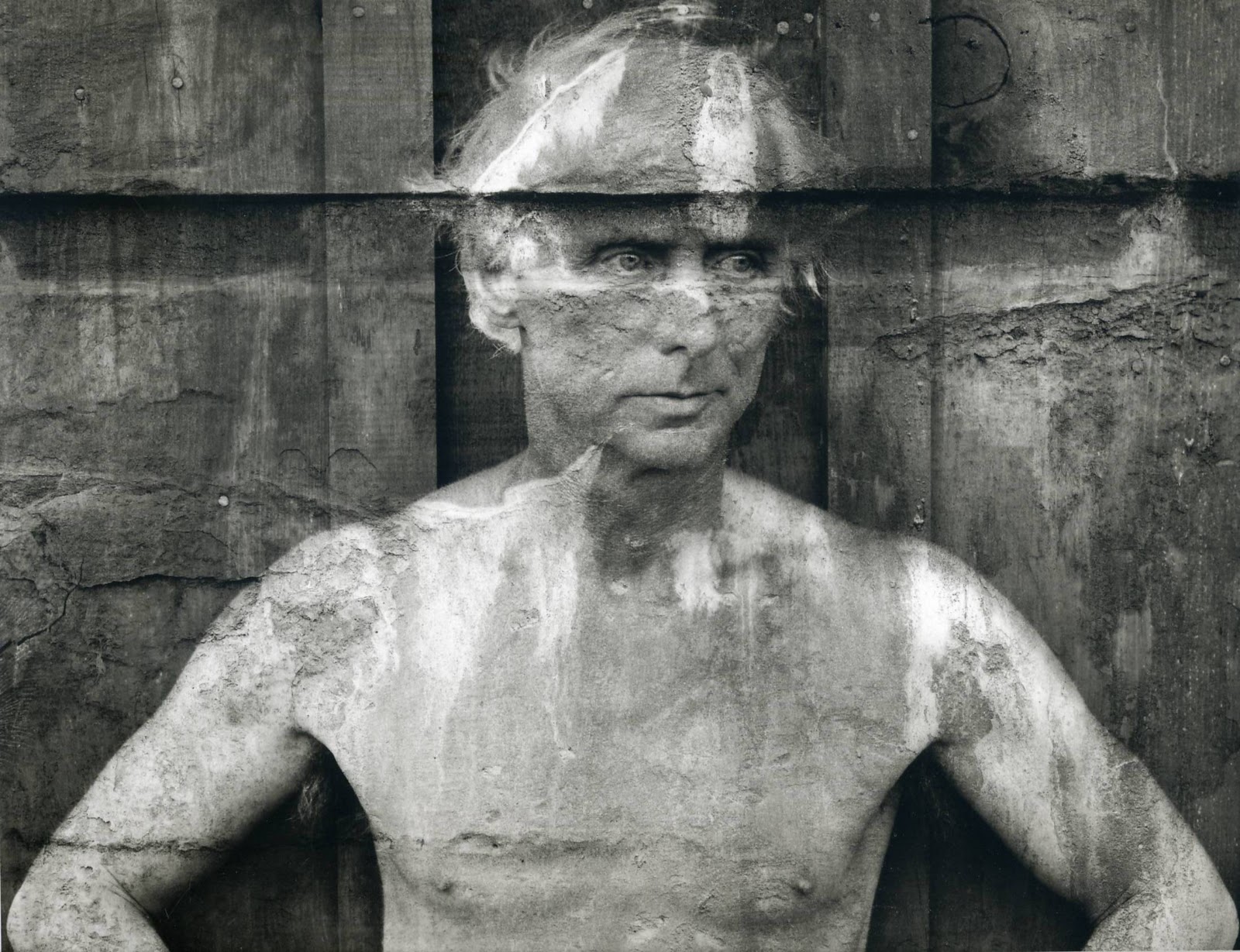
 

Frederick Sommer (American, 1905-1999) 'Max Ernst' 1946


Frederick Sommer (American, 1905-1999)
Max Ernst
1946
Gelatin silver print

A reproduction of this image on postcard for the Max Ernst retrospective: 30 Years of his Work – A Survey, Copley Galleries, Beverly Hills 1949 is included in the exhibition.


John Kasnetzis. 'Dorothea Tanning and Max Ernst with the sculpture Capricorne, Arizona' 1948


John Kasnetzis
Dorothea Tanning and Max Ernst with the sculpture Capricorne, Arizona
1948
Silver gelatin print, later print
23.6 x 18.8cm


In the summer of 1947, Max Ernst, exuberant and inspired by the arrival of water piped to our house (up to then we had hauled it daily from a well 5 miles away), began playing with cement and scrap iron with assists from box tops, eggshells, car springs, milk cartons and other detritus, The result: Capricorn, a monumental sculpture of regal but benign deities that consecrated our “garden” and watched over its inhabitants. Years later, when we had gone, a sculptor friend made molds and sent them to their creator in Huismes, France where he reassembled his Capricorn for casting in bronze. The above photo is a one-shot, spur-of-the-moment caper made after taking a people-less documentary photo.

Dorothea Tanning from Birthday, Santa Monica: The Lapis Press, 1986


Emila Medková (Czech, 1928-1985)
Schwarz / Black 1949


Emila Medková (Czech, 1928-1985)
Schwarz / Black
1949
Silver gelatin paper
17.7 x 23cm
Sammlung Dietmar Siegert
© Eva Kosakova Medkova
Repro: Christian Schmieder


Denise Colomb (French, 1902-2004) 'Max Ernst on the roof terrace on the Quai Saint-Michel in Paris' 1953


Denise Colomb (French, 1902-2004)
Max Ernst on the roof terrace on the Quai Saint-Michel in Paris
1953
Silver gelatin paper, later print
28 x 22cm


Fritz Kempe (German, 1909-1988) 'Max Ernst, Hamburg' 1964


Fritz Kempe (German, 1909-1988)
Max Ernst, Hamburg
1964
Silver gelatin print
12.8 x 17.7cm


Max Ernst (German, 1891-1976) 'Seen at the Neuilly fair' 1971


Max Ernst (German, 1891-1976)
Seen at the Neuilly fair
1971
Colour reproduction of a collage, sheet 3 from the portfolio: Commonplaces. Eleven Poems and Twelve Collages
49 x 34.5cm


Museum für Fotografie
Jebensstraße 2, 10623 Berlin

Opening hours:
Tuesday + Wednesday 11am – 7pm
Thursday 11am – 8pm
Friday – Sunday 11am – 7pm

Museum für Fotografie website

LIKE ART BLART ON FACEBOOK

Back to top

Exhibition: ‘Gerhard Richter. Overpainted Photographs’ Gerhard Richter Archive at Albertinum at the Staatliche Kunstsammlungen Dresden

Exhibition dates: 26th August – 19th November 2023


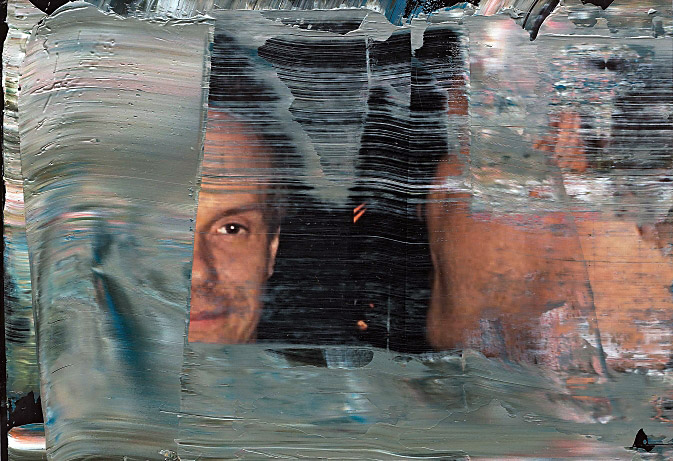
Gerhard Richter (German, b. 1932) '15. April 2015' 2015 from the exhibition 'Gerhard Richter. Overpainted Photographs' Gerhard Richter Archive at Albertinum at the Staatliche Kunstsammlungen Dresden, Aug - Nov 2023


Gerhard Richter (German, b. 1932)
15. April 2015
2015
Oil on colour photography
11.3 x 16.6cm
On loan from the Gerhard Richter Art Foundation
© Gerhard Richter 2023
Foto: Simon Vogel, Köln


The first of two postings on the work of one of my favourite artists, the great Gerhard Richter – this time on his miraculous overpainted photographs, abstractions which hover between one medium and the next, thither and yon.

“Richter began these works in 1986. All of the formats exhibited are unusually small, each being about 10 x 15cm. The basis for his pictures was ordinary photographs, most of which he took himself and had developed in a conventional photo lab. The photos are not artistic in any way. They are snapshots of family celebrations and trips, people, landscape or architecture, including a view of Dresden. The Overpainted Photographs are intimately linked to Richter’s artistic works. Every day, after working on his large-format paintings in his studio, Richter dragged the photographs through the remaining wet paint on the squeegee. The result depended heavily on chance, and surprising new realities were formed.” (Press release from the Staatliche Kunstsammlungen Dresden)

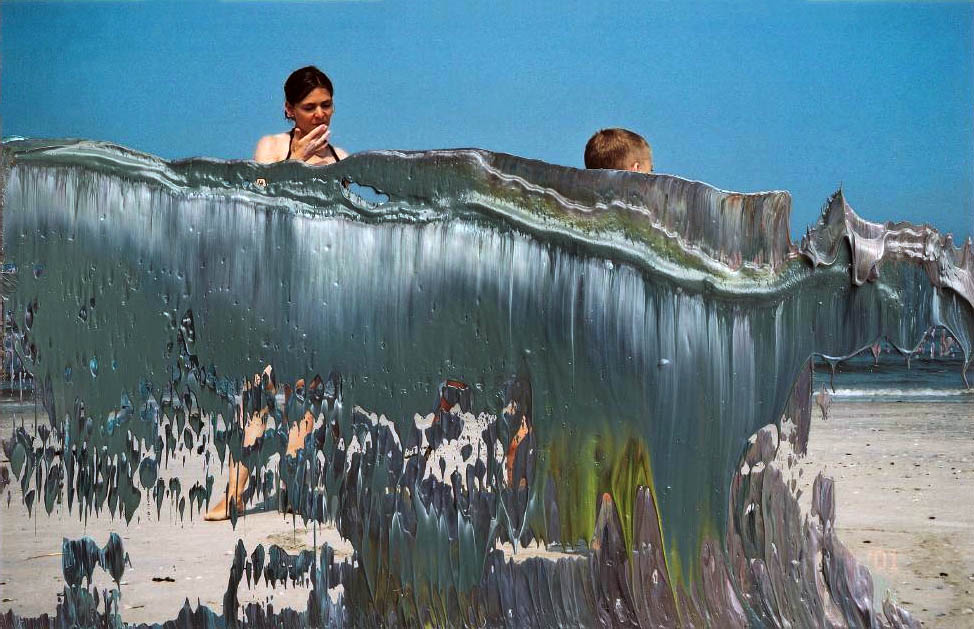
Creative juxtapositions enlighten these new realities: the smeared stalagmite of green and yellow paint in 8. Juni 2016 (8) (2016, below) echoes the vertiginous mountainous landscape beyond; curtains of paint in 4. March 2003 (2003 ,below) hide sunbathing bodies whilst echoing the breaking waves in the background; and coloured skeins rain down on a tower in 29.1.2000 (Firenze) (2000, below) portending its destruction.

These active interventions, action photo-paintings, gestural abstractions are spontaneous in form and intelligent in conception. They combine elements of both mediums to create interstitial spaces, spaces that promote an evolution in the way in which we conceive of space,1 a world of liquid transformations realised through shifts between photo and picture, reality and presence, memory and awareness – a coexistence between a conscious and unconscious way of perceiving which sustains the mystery of the object… and the world.

Bravo!

Dr Marcus Bunyan


1/ Adapted from Kovac, Tom. “Curve Gallery,” in van Schaik, Leon (ed.,). Architectural Design. Vol. 72. No. 2. (‘Poetics in Architecture’). London: John Wiley and Sons, 2002, p. 60.


Many thankx to the Albertinum at the Staatliche Kunstsammlungen Dresden for allowing me to publish the photographs in the posting. Please click on the photographs for a larger version of the image.


In 1991 Gerhard Richter commented on the creation of these works:

“Photography has almost no reality; it is almost a hundred per cent picture. And painting always has reality: you can touch the paint; it has presence; but it always yields a picture – no matter whether good or bad. That’s all theory. It’s no good. I once took small photographs and then smeared them with paint. That partly resolved the problem, and it’s really good – better than anything I could ever say on the subject.”


Text from the Staatliche Kunstsammlungen Dresden website


“What works for me about the series is the balance between the paint and the photograph beneath it. There are works in the series where the two seem to work together and others where they fight for primacy. The act of adding paint is a simple gesture but somehow Richter uses it to add a layer of complexity to the image. We are left with hints about the photographs and can, to an extent, imagine the gestures used to obscure them – certainly the texture of the paint offers clues – but piecing together the evidence provides a tantalisingly incomplete picture. For me, the work is all the stronger for that.”


Ann Jones. “Veils of abstraction,” on the Image Object Text website 22/09/2012 [Online] Cited 12/10/2023


Installation view of the exhibition 'Gerhard Richter. Overpainted Photographs' at Albertinum at the Staatliche Kunstsammlungen Dresden

Installation view of the exhibition 'Gerhard Richter. Overpainted Photographs' at Albertinum at the Staatliche Kunstsammlungen Dresden showing at left, '8 March 2000 (Firenze)'; at second right bottom, '13.5.07'; at at top right, '14.5.07'


Installation views of the exhibition Gerhard Richter. Overpainted Photographs at Albertinum at the Staatliche Kunstsammlungen Dresden showing in the bottom image at left, 8 March 2000 (Firenze) (below); at second right bottom, 13.5.07 (below); at at top right, 14.5.07 (below)
© Gerhard Richter 2023, Staatliche Kunstsammlungen Dresden
Foto: Klemens Renner


Gerhard Richter (German, b. 1932) '8 March 2000 (Firenze)' 2000 from the exhibition 'Gerhard Richter. Overpainted Photographs' Gerhard Richter Archive at Albertinum at the Staatliche Kunstsammlungen Dresden, Aug - Nov 2023


Gerhard Richter (German, b. 1932)
8 March 2000 (Firenze)
2000
Oil on colour photography
© Gerhard Richter 2023


Gerhard Richter (German, b. 1932) '13.5.07' 2007


Gerhard Richter (German, b. 1932)
13.5.07
2007
Oil on colour photography
© Gerhard Richter 2023


Gerhard Richter (German, b. 1932) '14.5.07' 2007


Gerhard Richter (German, b. 1932)
14.5.07
2007
Oil on colour photography
© Gerhard Richter 2023


The exhibition at Albertinum shows a selection of Gerhard Richter’s Overpainted Photographs for the first time in Dresden. 36 of the selected works come from the holdings of the Gerhard Richter Kunststiftung, founded by the artist in 2019; 36 additional works are loans from private collections.

Gerhard Richter’s oeuvre from the past six decades is shaped by a dialogue and a confrontation between figurative and abstract visual strategies. In no other workseries by the artist do the two styles enter into a symbiosis like the one in the small-format Overpainted Photographs. Richter began these works in 1986. All the formats exhibited are unusually small, each approximately 10 × 15cm.

In 1991 Gerhard Richter commented on the creation of these works:

“Photography has almost no reality; it is almost a hundred per cent picture. And painting always has reality: you can touch the paint; it has presence; but it always yields a picture – no matter whether good or bad. That’s all theory. It’s no good. I once took small photographs and then smeared them with paint. That partly resolved the problem, and it’s really good – better than anything I could ever say on the subject.”

Standard photographs usually taken by the artist himself and developed at an ordinary photo lab serve as the foundation for these works. The shots themselves are entirely lacking in artistic quality. They are snapshot motifs of family celebrations and excursions, people, landscapes, or architectures, including a view of Dresden.

The Overpainted Photographs are closely linked to his painterly oeuvre. After his daily work on the large paintings in the studio, Richter pulled these photographs through the remaining wet paint on the squeegee. In this way, the result of this action is strongly determined by coincidence and surprising new realities emerge. With the declared end of his painterly work in 2017, Gerhard Richter also concluded work on the Overpainted Photographs.

Text from the Staatliche Kunstsammlungen Dresden website


Installation view of the exhibition 'Gerhard Richter. Overpainted Photographs' at Albertinum at the Staatliche Kunstsammlungen Dresden

Installation view of the exhibition 'Gerhard Richter. Overpainted Photographs' at Albertinum at the Staatliche Kunstsammlungen Dresden

Installation view of the exhibition 'Gerhard Richter. Overpainted Photographs' at Albertinum at the Staatliche Kunstsammlungen Dresden

Installation view of the exhibition 'Gerhard Richter. Overpainted Photographs' at Albertinum at the Staatliche Kunstsammlungen Dresden


Installation views of the exhibition Gerhard Richter. Overpainted Photographs at Albertinum at the Staatliche Kunstsammlungen Dresden
© Gerhard Richter 2023, Staatliche Kunstsammlungen Dresden
Foto: Klemens Renner


As a Dresden first, the Gerhard Richter Archiv, run by Staatliche Kunstsammlungen Dresden is exhibiting a selection of Gerhard Richter’s Overpainted Photographs. Of the 72 works on show in the Albertinum, 36 are from the holdings of the Gerhard Richter Kunststiftung, a foundation established by the artist in 2019, and 36 from private collections.

Richter’s oeuvre of the past six decades is marked by interacting and opposing representational and abstract artistic strategies. In his small-format Overpainted Photographs, these two styles develop a symbiosis that is stronger than in any of the artist’s other groups of works.

In 1991, Gerhard Richter described how the works came about: “Photography has almost no reality; it is almost a hundred per cent picture. And painting always has reality: you can touch the paint; it has presence; but it always yields a picture – no matter whether good or bad. That’s all the theory. It’s no good. I once took some small photographs and then smeared them with paint. That partly resolved the problem, and it’s really good – better than anything I could ever say on the subject.”

Richter began these works in 1986. All of the formats exhibited are unusually small, each being about 10 x 15cm. The basis for his pictures was ordinary photographs, most of which he took himself and had developed in a conventional photo lab. The photos are not artistic in any way. They are snapshots of family celebrations and trips, people, landscape or architecture, including a view of Dresden.

The Overpainted Photographs are intimately linked to Richter’s artistic works. Every day, after working on his large-format paintings in his studio, Richter dragged the photographs through the wet paint left on his doctor blade. The result depended heavily on chance, and surprising new realities were formed. In 2017, Gerhard Richter announced his retirement from painting, and at the same time the end of his work on the Overpainted Photographs.

A catalogue is being published to accompany the exhibition. Dietmar Elger: Gerhard Richter. Overpainted Photos, published by Staatliche Kunstsammlungen Dresden, Buchhandlung Walther & Franz König, Cologne, 2023, 120 pages, 77 colour illustrations, 3 b&w illustrations. ISBN 978-3-7533-0538-7

Press release from the Staatliche Kunstsammlungen Dresden


Gerhard Richter (German, b. 1932) '8. Juni 2016 (6)' 2016


Gerhard Richter (German, b. 1932)
8. Juni 2016 (6)
2016
Oil on colour photography
16.9 x 12.7cm
On loan from a private collection
© Gerhard Richter 2023


Gerhard Richter (German, b. 1932) '8. Juni 2016 (8)' 2016


Gerhard Richter (German, b. 1932)
8. Juni 2016 (8)
2016
Oil on colour photography
16.75 x 12.6cm
On loan from the Gerhard Richter Art Foundation
© Gerhard Richter 2023


Installation view of the exhibition 'Gerhard Richter. Overpainted Photographs' at Albertinum at the Staatliche Kunstsammlungen Dresden showing at top left, '26. Nov 2014'; at top second right, '25. Jan 2015'; at top right, '15. April 2015' (top of posting); at bottom second left, '28. Dec 2014'; and at bottom right, '28.7.15 (2)'


Installation view of the exhibition Gerhard Richter. Overpainted Photographs at Albertinum at the Staatliche Kunstsammlungen Dresden showing at top left, 26. Nov 2014 (below); at top second right, 25. Jan 2015 (below); at top right, 15. April 2015 (top of posting); at bottom second left, 28. Dec 2014 (below); and at bottom right, 28.7.15 (2) (below)
© Gerhard Richter 2023, Staatliche Kunstsammlungen Dresden
Foto: Klemens Renner


Gerhard Richter (German, b. 1932) '26. Nov 2014' 2014


Gerhard Richter (German, b. 1932)
26. Nov 2014
2014
Oil on colour photography
© Gerhard Richter 2023


Gerhard Richter (German, b. 1932) '25. Jan 2015' 2015


Gerhard Richter (German, b. 1932)
25. Jan 2015
2015
Oil on colour photography
© Gerhard Richter 2023


Gerhard Richter (German, b. 1932) '28. Dec 2014' 2014


Gerhard Richter (German, b. 1932)
28. Dec 2014
2014
Oil on colour photography
© Gerhard Richter 2023


Gerhard Richter (German, b. 1932) '28.7.15 (2)' 2015


Gerhard Richter (German, b. 1932)
28.7.15 (2)
2015
Oil on colour photography
© Gerhard Richter 2023


Installation view of the exhibition 'Gerhard Richter. Overpainted Photographs' at Albertinum at the Staatliche Kunstsammlungen Dresden showing at left, '4.12.06'; at at right, '21.2.08'


Installation view of the exhibition Gerhard Richter. Overpainted Photographs at Albertinum at the Staatliche Kunstsammlungen Dresden showing at left, 4.12.06 (below); at at right, 21.2.08 (below)
© Gerhard Richter 2023, Staatliche Kunstsammlungen Dresden
Foto: Klemens Renner


Gerhard Richter (German, b. 1932) '4.12.06' 2006


Gerhard Richter (German, b. 1932)
4.12.06
2006
Oil on colour photography
12.5 x 16.6cm
On loan from a private collection
© Gerhard Richter 2023


Gerhard Richter (German, b. 1932) '21.2.08' 2008


Gerhard Richter (German, b. 1932)
21.2.08
2008
Oil on colour photography
© Gerhard Richter 2023


Gerhard Richter (German, b. 1932) '11.2.98' 1998


Gerhard Richter (German, b. 1932)
11.2.98
1998
Oil on colour photography
© Gerhard Richter 2023


Installation view of the exhibition 'Gerhard Richter. Overpainted Photographs' at Albertinum at the Staatliche Kunstsammlungen Dresden showing at left, '28. April 2015'; at second left, '29. April 2015'; and at right, '14.7.15 (3)'


Installation view of the exhibition Gerhard Richter. Overpainted Photographs at Albertinum at the Staatliche Kunstsammlungen Dresden showing at left, 28. April 2015 (below); at second left, 29. April 2015 (below); and at right, 14.7.15 (3) (below)
© Gerhard Richter 2023, Staatliche Kunstsammlungen Dresden
Foto: Klemens Renner


Gerhard Richter (German, b. 1932) '28. April 2015' 2015


Gerhard Richter (German, b. 1932)
28. April 2015
2015
Oil on colour photography
© Gerhard Richter 2023


Gerhard Richter (German, b. 1932) '29. April 2015' 2015


Gerhard Richter (German, b. 1932)
29. April 2015
2015
Oil on colour photography
16.7 x 12.6cm
On loan from the Gerhard Richter Art Foundation
© Gerhard Richter 2023
Foto: Simon Vogel, Köln


Gerhard Richter (German, b. 1932) '14.7.15 (3)' 2015


Gerhard Richter (German, b. 1932)
14.7.15 (3)
2015
Oil on colour photography
© Gerhard Richter 2023


Gerhard Richter (German, b. 1932) '29.1.2000 (Firenze)' 2000


Gerhard Richter (German, b. 1932)
29.1.2000 (Firenze)
2000
Oil on colour photography
© Gerhard Richter 2023


Gerhard Richter (German, b. 1932) '4. March 2003' 2003


Gerhard Richter (German, b. 1932)
4. March 2003
2003
Oil on colour photography
© Gerhard Richter 2023


Gerhard Richter (German, b. 1932) '20.6.05' 2005


Gerhard Richter (German, b. 1932)
20.6.05
2005
Oil on colour photography
© Gerhard Richter 2023


Gerhard Richter (German, b. 1932) 'MV. 92' 2011


Gerhard Richter (German, b. 1932)
MV. 92
2011
Oil on colour photography
© Gerhard Richter 2023


Gerhard Richter (German, b. 1932) 'MV. 98' 2011


Gerhard Richter (German, b. 1932)
MV. 98
2011
Oil on colour photography
© Gerhard Richter 2023


Gerhard Richter (German, b. 1932) 'MV. 133' 2011


Gerhard Richter (German, b. 1932)
MV. 133
2011
Oil on colour photography
10.1 x 15.1 cm
© Gerhard Richter 2023


Albertinum
Tzschirnerplatz 2
01067 Dresden

Opening hours:
Daily 10 – 18, Monday closed

Albertinum website

LIKE ART BLART ON FACEBOOK

Back to top

Exhibition: ‘Gerhard Richter: Panorama’ at Tate Modern, London

Exhibition dates: 6th October, 2011 – 8th January, 2012

Curators: Nicholas Serota and Mark Godfrey


Many thankx to the Tate Modern for allowing me to publish the artwork in the posting. Please click on the photographs for a larger version of the image.


Gerhard Richter (German, b. 1932) 'Reader' 1994


Gerhard Richter (German, b. 1932)
Reader
1994
Courtesy San Francisco Museum of Modern Art
© Gerhard Richter


“Curated by Nicholas Serota and Mark Godfrey, this show sets up all sorts of telling juxtapositions, while following the thread not just of Richter’s thinking, but of history – and in particular German history – since the second world war. We go from the saturation bombing of Dresden and Cologne to 1960s West German consumerism, from 1970s domestic terrorism to 9/11. There are paintings devoted to Richter’s parents, his aunts and uncles, and what happened to them in wartime. There are paintings devoted to his children, and to becoming a father again in his 60s. He confronts the personal with the public, one kind of history with another. …

Caspar David Friedrich’s German Romanticism, Titian’s Venetian colour, constructivism and postwar gestural painting, minimalism and process art are all grist to Richter’s mill. His 1973 Annunciation After Titian is a reworking from a postcard of the original, while the impossibility of Friedrich’s Romanticism returns time and again in Richter’s seascapes and his Greenland photographs. “I was always looking,” he once said, “for a third way, in which eastern realism and western modernism would be resolved into one redeeming construct.” If this remains Richter’s programme, it is one riven with the irreconcilable, a friction on which his art depends.”


Adrian Searle. “Tenderness and terror: the Tate’s Gerhard Richter retrospective,” on The Guardian website Tuesday 4th October 2011 [Online] Cited 03/11/2024


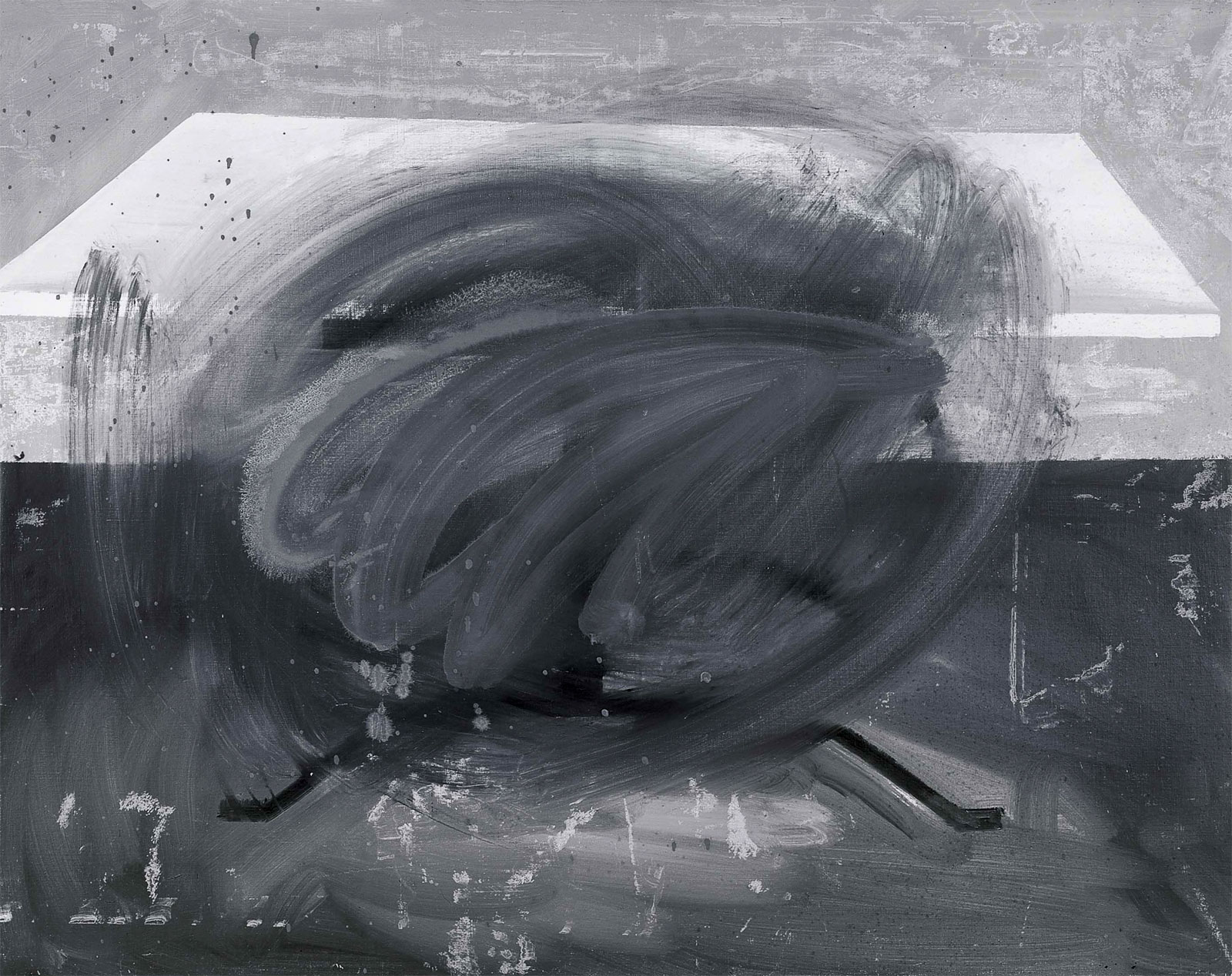
Gerhard Richter (German, b. 1932) 'Table' (Tisch) 1962


Gerhard Richter (German, b. 1932)
Table (Tisch)
1962
© Gerhard Richter


Gerhard Richter (German, b. 1932) 'Mustang Squadron' 1964


Gerhard Richter (German, b. 1932)
Mustang Squadron
1964
Private Collection
© Gerhard Richter


Gerhard Richter (German, b. 1932) 'Tante Marianne' (Aunt Marianne) 1965


Gerhard Richter (German, b. 1932)
Tante Marianne (Aunt Marianne)
1965
Private Collection
© Gerhard Richter


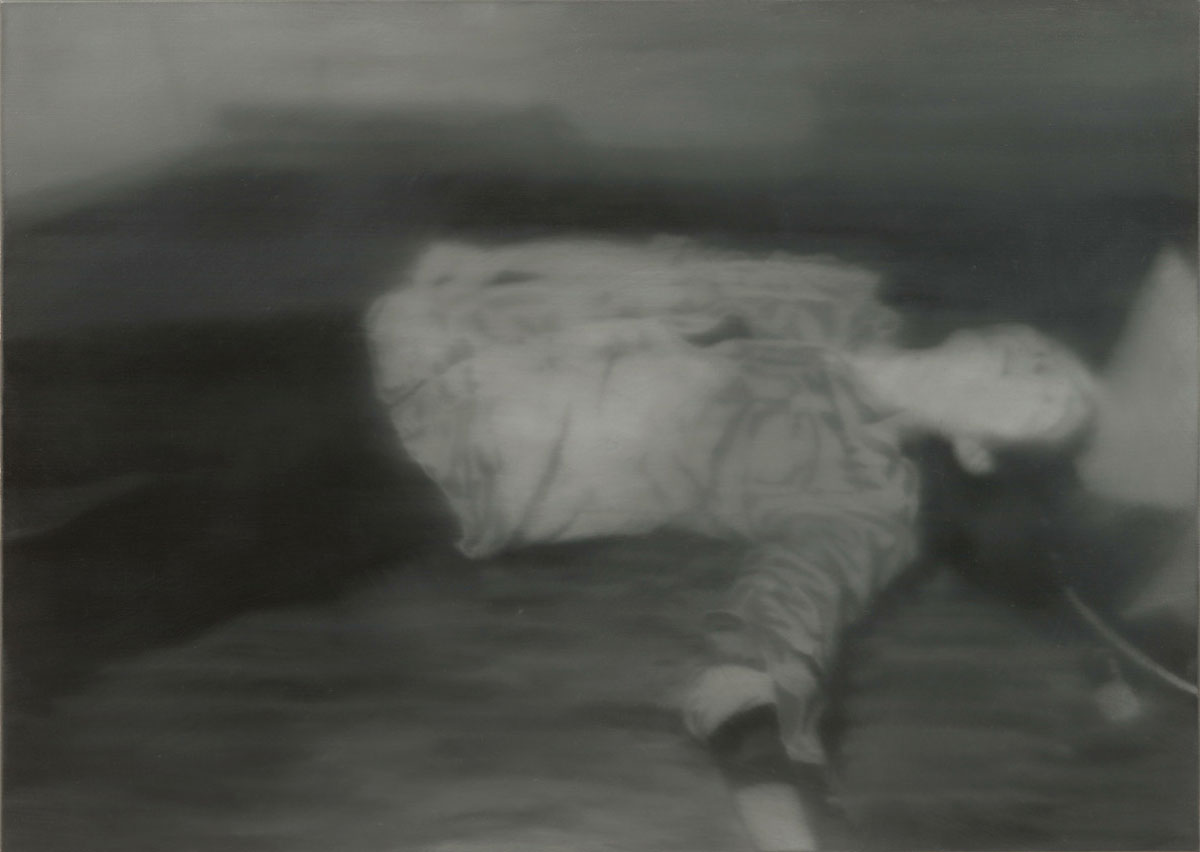
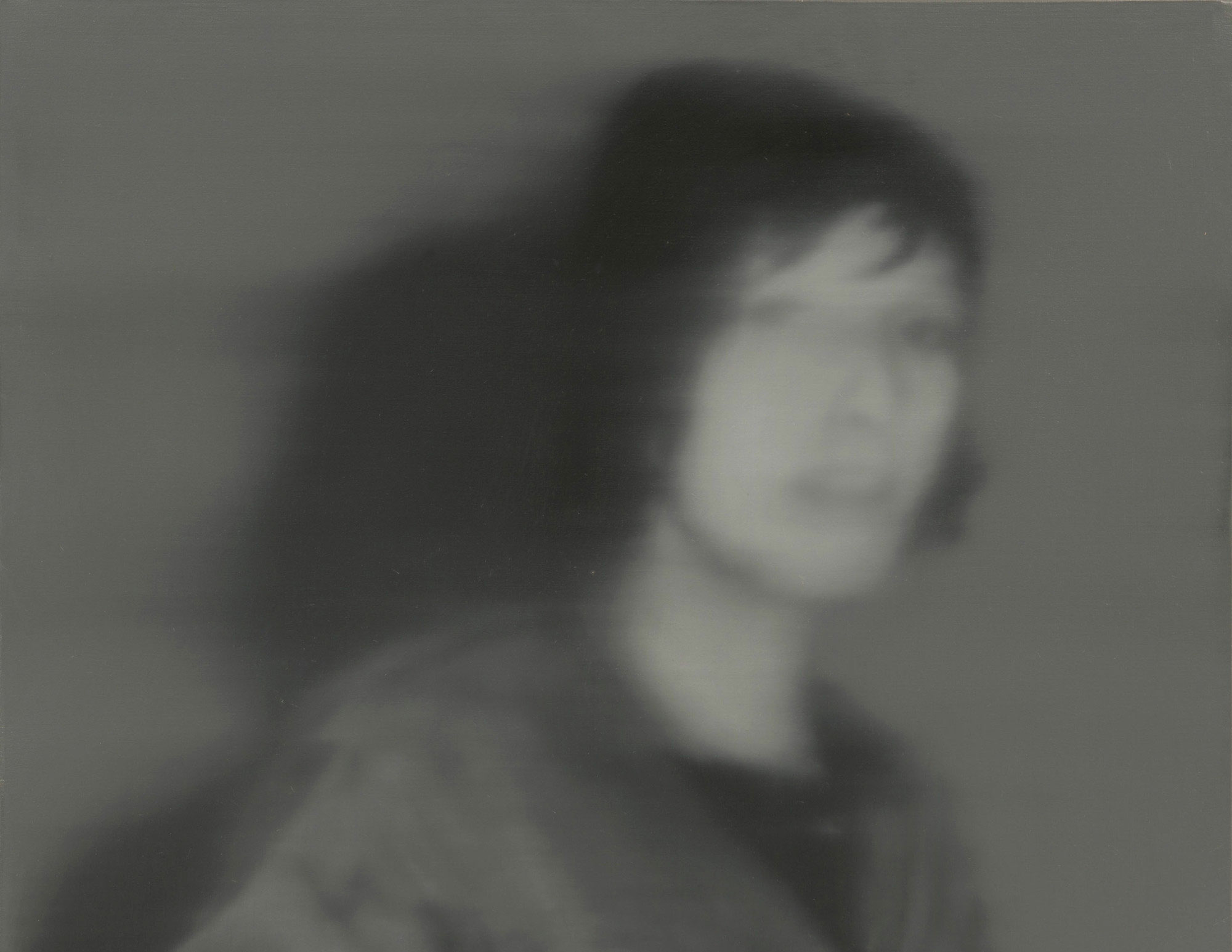
Wedded to this aesthetic of indifference, it seems more than coincidental that he introduced into his practice subject matter directly related to Germany’s recent Nazi past, images from his family album (one of the few possessions he brought over from the East) that most artists would have chosen to keep concealed. Uncle Rudi for instance is a full sizes portrait of his uncle in the uniform of the Wehrmacht – a going away photo, it turns out, as he was to die some months later. What distinguishes this portrait and many others is the addition of Richter’s signature blur. Paint has been dragged across the wet surface with a dry brush, signalling a whole variety of responses.  Often interpreted as replicating an out of focus snapshot, evoking speed, or signalling a temporal distancing by underlining the difference between the ‘now’ of the viewer and the ‘then’ of whatever was captured in the photograph, this flurry of soft or hard brush strokes also signals a degree of moral and emotional ambiguity – despite the painter’s insistence on a lack of intentionality on his part. Take his portrait of Aunt Marianne that depicts his maternal aunt cradling Richter as a none-too-happy baby. A schizophrenic, she was sterilized and eventually starved to death by the Nazis. The blur of the brushstrokes bring her and the baby together suggesting the very emotional attachment that Richter was initially keen to disavow. During an interview in 1986 Richter confessed that this dispassionate stance of indifference was mere subterfuge and pretence on his part: “Content definitely – though I may have denied this at one time, by saying that it had nothing to do with content, because it was supposed to be about copying a photograph and giving a demonstration of indifference.”

Anna Leung. “Gerhard Richter: Panorama at Tate Modern,” on The Arts Section website Nd [Online] Cited 05/12/2024


Gerhard Richter (German, b. 1932) 'Uncle Rudy' 1965


Gerhard Richter (German, b. 1932)
Uncle Rudy
1965
© Gerhard Richter


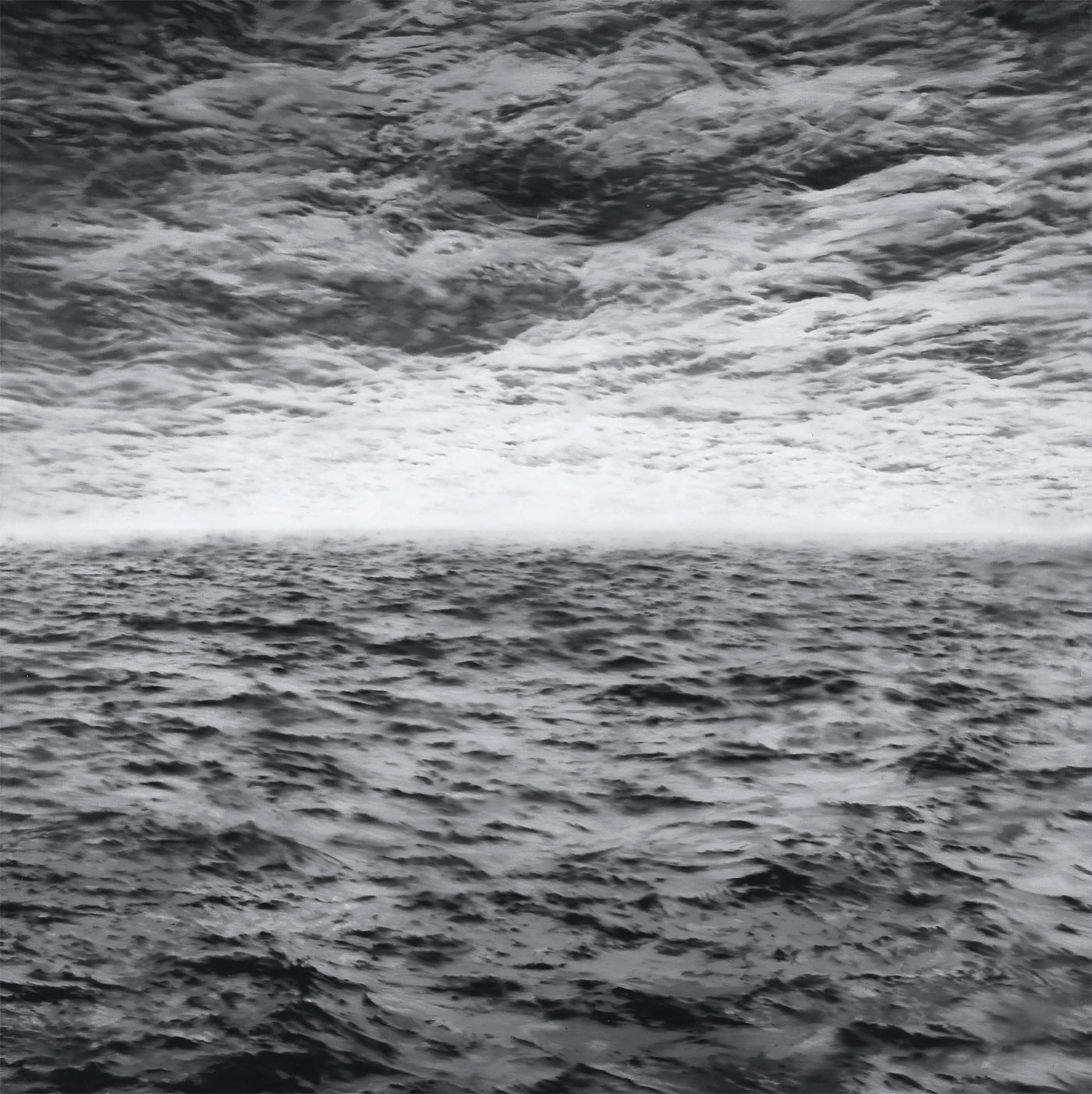
Gerhard Richter (German, b. 1932) 'Seascape (Sea-Sea)' 1970


Gerhard Richter (German, b. 1932)
Seascape (Sea-Sea)
1970
© Gerhard Richter


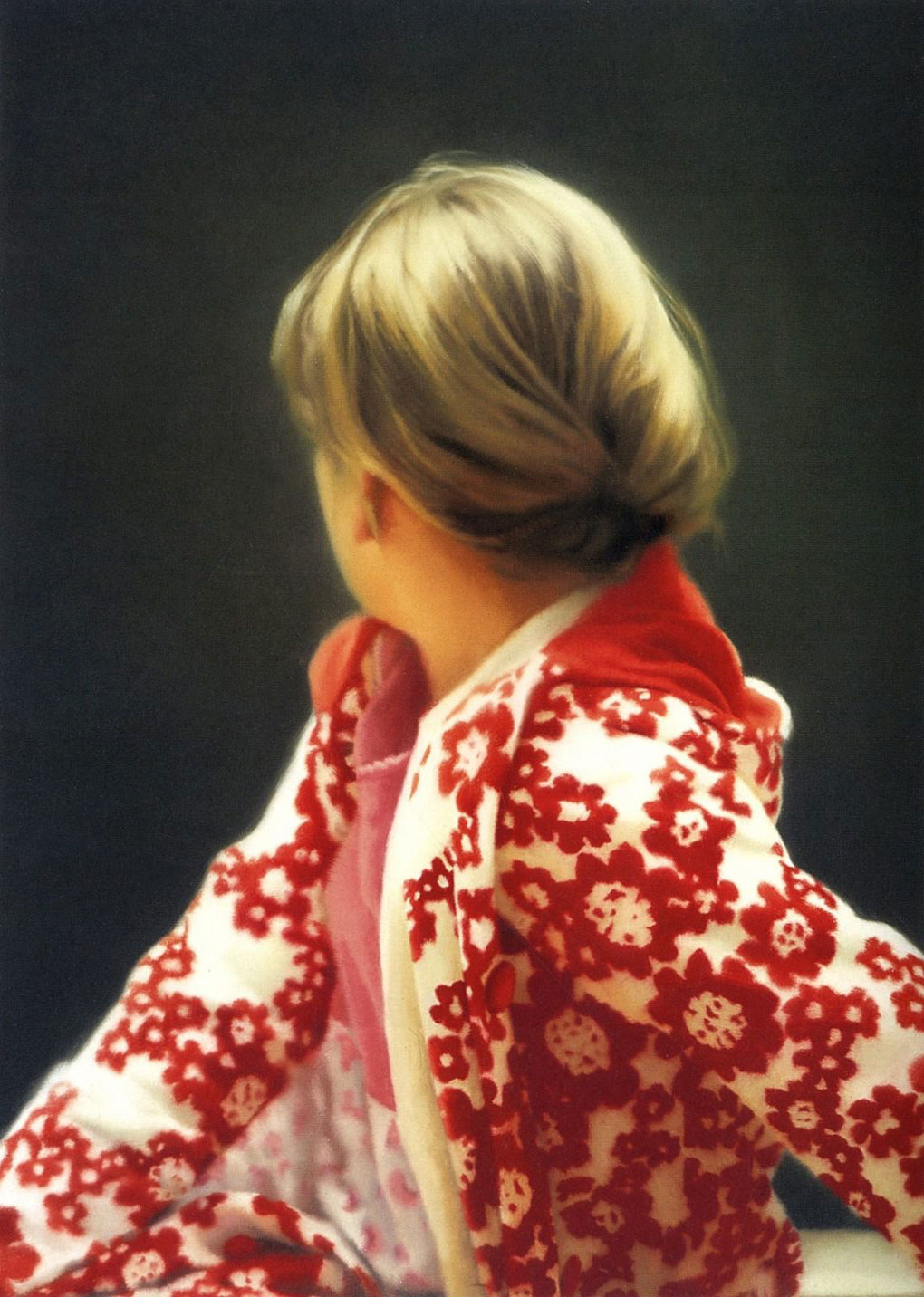
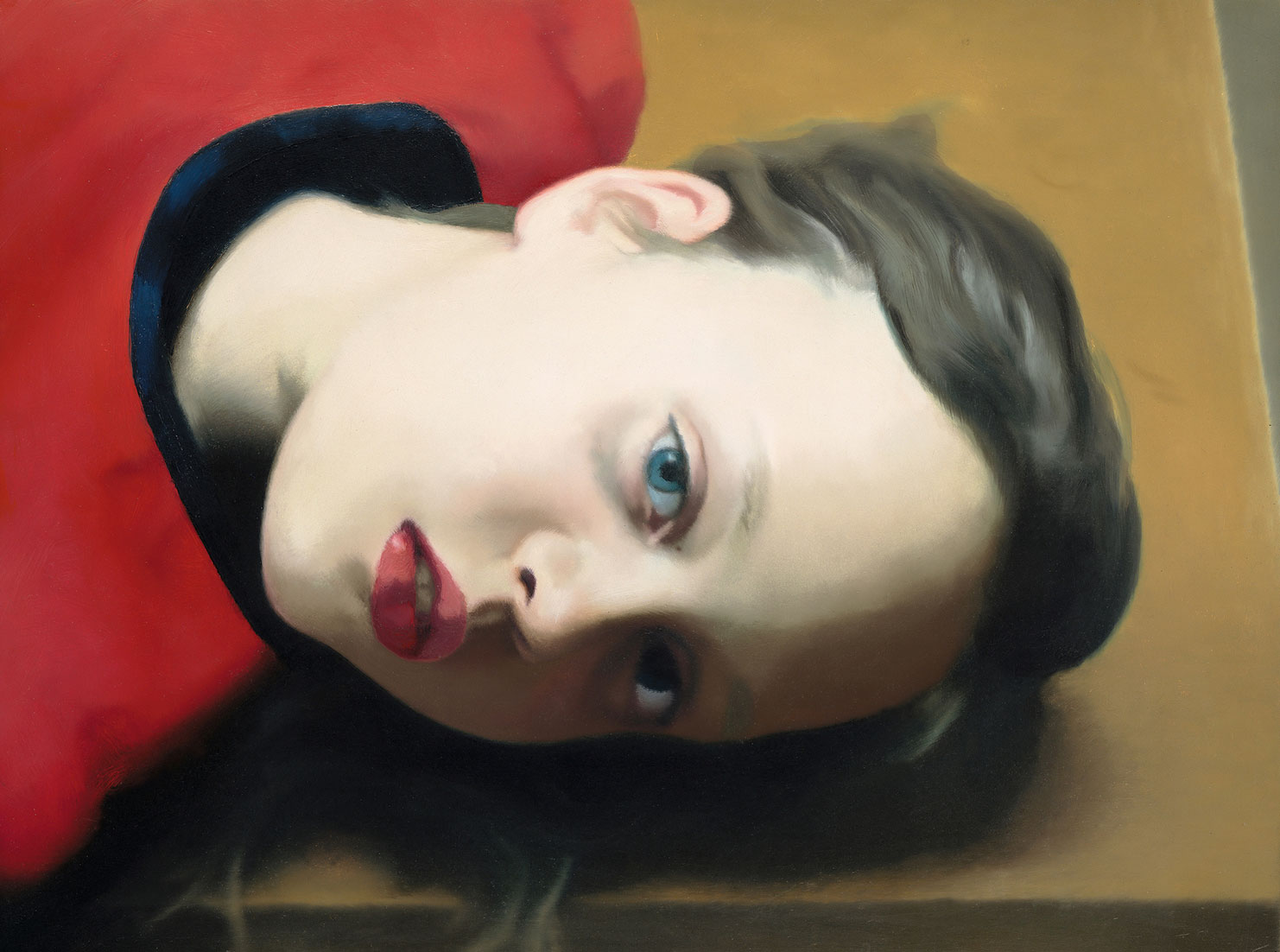
Gerhard Richter (German, b. 1932) 'Betty' 1977


Gerhard Richter (German, b. 1932)
Betty
1977
© Gerhard Richter


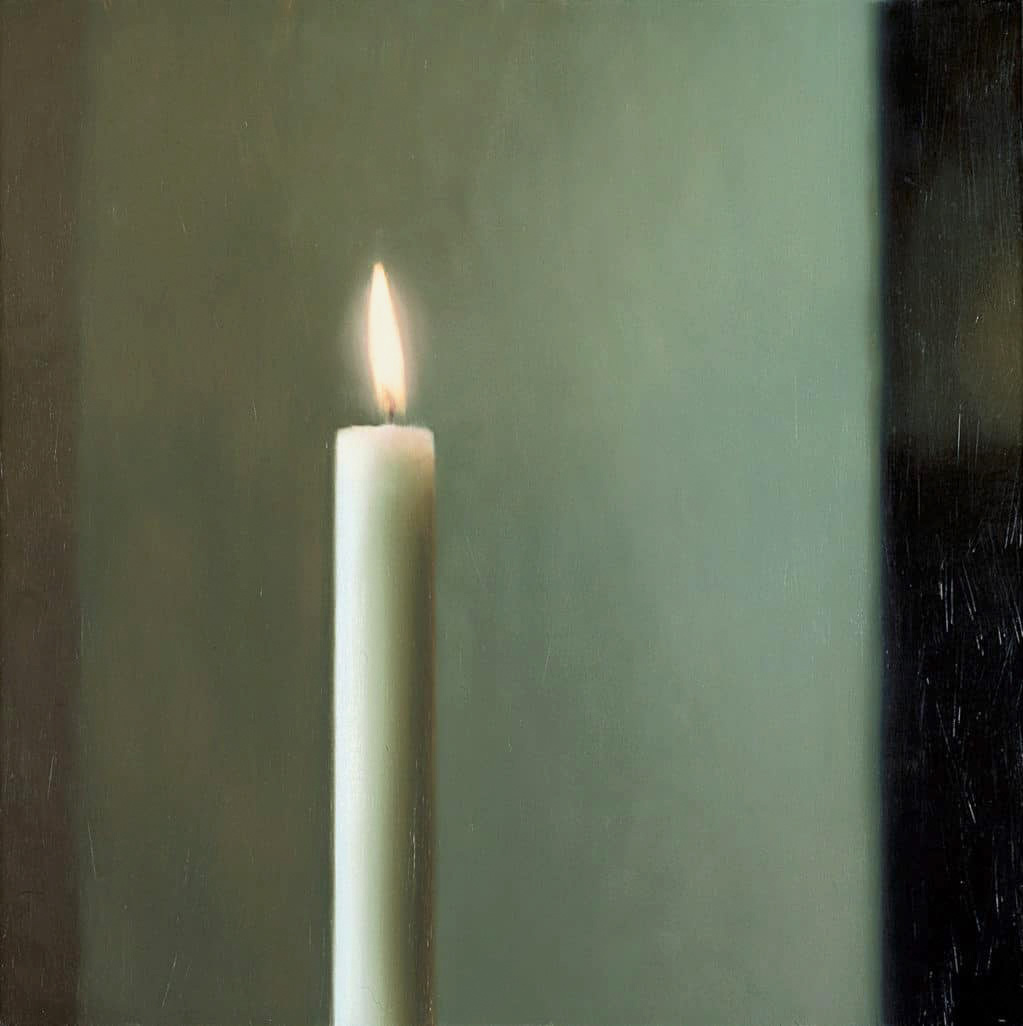
Gerhard Richter (German, b. 1932) 'Candle' 1982


Gerhard Richter (German, b. 1932)
Candle
1982
Museum Frieder Burda, Baden-Baden, Germany
© Gerhard Richter


Gerhard Richter (German, b. 1932) 'Betty' 1988


Gerhard Richter (German, b. 1932)
Betty
1988
Saint Louis Art Museum, USA
© Gerhard Richter


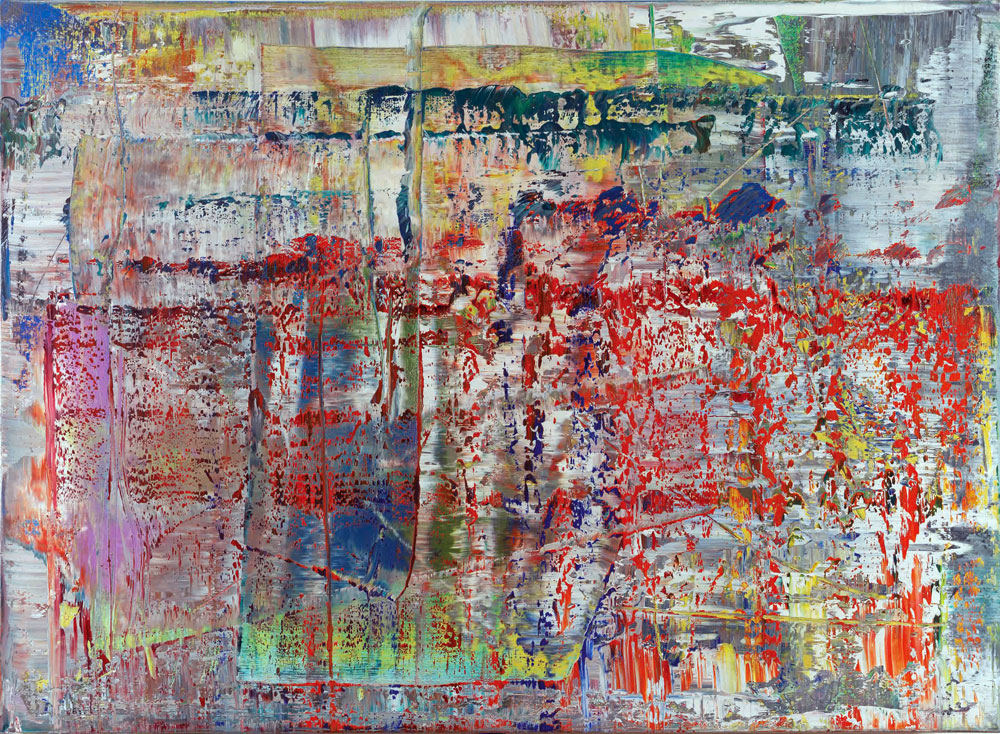
Gerhard Richter’s extremely productive career needs to be seen against this shift in attitudes and expectations when pictorial references were no longer drawn directly from the natural world but from an ever-growing nexus of information. Empirical data was being rapidly replaced by conceptual data. From 1961 when he settled in West Germany Richter alternated between figuration and non-figuration treating a wide range of subjects and employing a wide variety of means while not valuing one practice over another. As we shall see Richter is equally adept at dealing with historical genres such as the nude, landscape, portraits and history painting as he is in investigating colour and its absence in his monochromes and colour charts and in his densely layered, explosively coloured abstract canvases. For Richter, Abstraction is as real as Realism is abstract, for what fascinates him is not the image per se or its absence but appearance or semblance as our apprehension of appearance. Richter readily admits that it is inevitable that figurative elements be seen in abstraction and denies any difference between what for him is a false polarity. That this panoply of styles remains Richter’s consistent trademark throughout his long career can be seen as we wander through the rooms of this vast exhibition. Each room displays figurative paintings, mostly from photographic imagery, side by side with abstract paintings. There are two exceptions; the first is the room devoted to 18 October 1977, a cycle of fifteen photo-paintings based on the deaths of the Baader-Meinhof terrorists in Stammheim high security prison, the second the Cage room of abstract paintings that brings the exhibition to an close. Throughout the exhibition we see Richter appropriating mutually contradictory trends associated with Hyperrealism, Minimalism and Conceptual Art while at the same time honing his craft as a painter to produce some extraordinarily beautiful images. Impossible to categorise he demonstrates his determination to confront the crisis of representation on one hand and that of Germany’s recent history on the other.

Anna Leung. “Gerhard Richter: Panorama at Tate Modern,” on The Arts Section website Nd [Online] Cited 05/12/2024


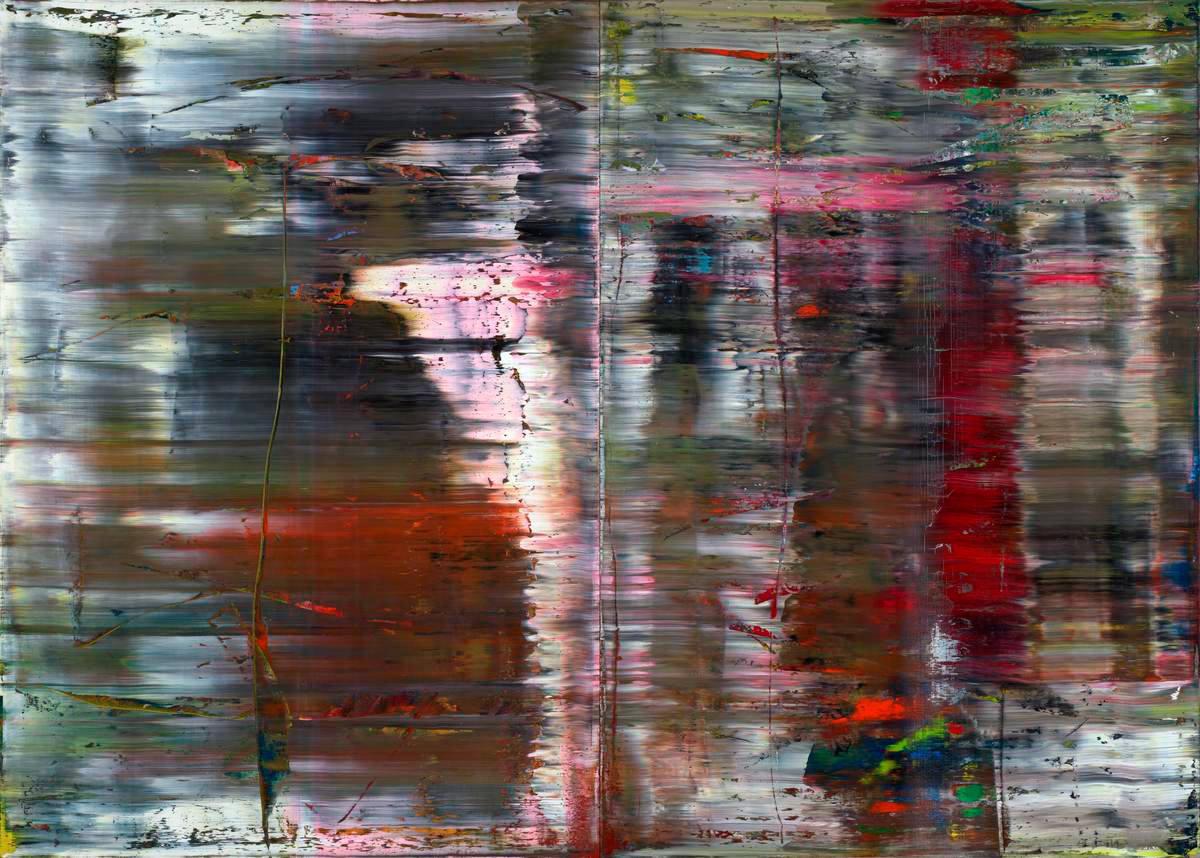
Gerhard Richter (German, b. 1932) 'Abstract Painting (726)' 1990


Gerhard Richter (German, b. 1932)
Abstract Painting (726)
1990
Tate
© Gerhard Richter


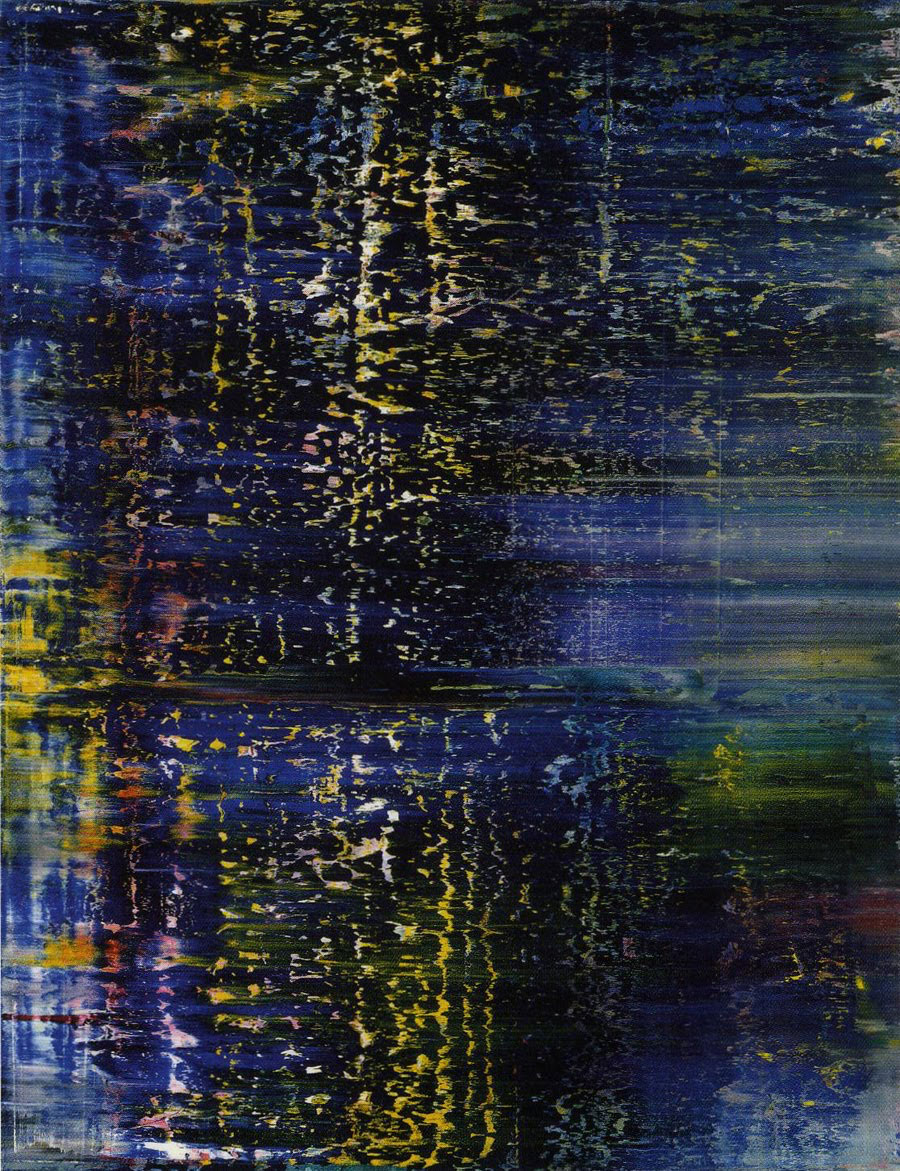
Gerhard Richter (German, b. 1932) 'Abstract Painting' 1990


Gerhard Richter (German, b. 1932)
Abstract Painting
1990
Tate. Purchased 1992
© Gerhard Richter
Photo: Lucy Dawkins


Gerhard Richter (German, b. 1932) 'Forest (3)' and 'Forest (4)' 1990


Gerhard Richter (German, b. 1932)
Forest (3) and Forest (4)
1990
Private collection (left) and The Fisher Collection, San Francisco (right)
© Gerhard Richter
Photo: Lucy Dawkins


Gerhard Richter (German, b. 1932) 'Forest (3)' 1990


Gerhard Richter (German, b. 1932)
Forest (3)
1990
Private collection
© Gerhard Richter


Gerhard Richter is widely regarded as one of the most important artists working today. Spanning nearly five decades, and coinciding with the artist’s eightieth birthday, Gerhard Richter: Panorama is a major retrospective that groups together significant moments of his remarkable career.

As evoked by the title Panorama this exhibition presents a broad look at the wide range of Richter’s practice, discovering contradictions and connections, continuities and breaks. Each room is devoted to a particular moment of his career showing how he explored a set of ideas. While the focus is on painting, the exhibition includes glass constructions, mirrors, drawings, and photographs, and explores how Richter uses these media to ask questions about painting.

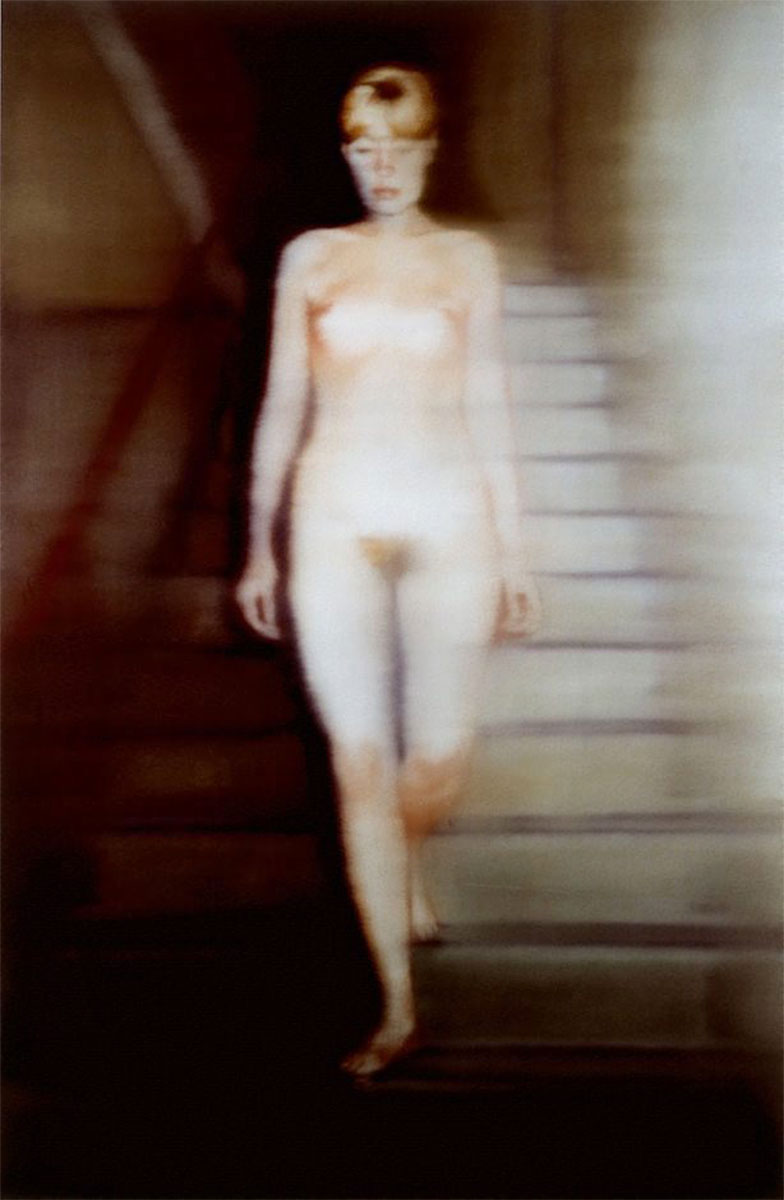
The exhibition includes many of Richter’s most well-known works such as Ema (Nude descending a staircase) 1966, Candle 1982, Betty 1988 and Reader 1994. There are also important works that are rarely shown: the first Colour Chart from 1966, 4 Panes of Glass 1967, a triptych of Cloud paintings from 1970, and, for the first time outside Germany, Richter’s monumental twenty metre long painting Stroke (on Red) 1980, based on a photograph of a brush stroke. There are several groups of important abstract paintings including a room of brightly coloured works from the early 1980s, a room of monumental squeegee paintings from the 1990s, and the Cage series 2006.

Richter was one of the first German artists to reflect on the history of National Socialism, creating paintings of family members who had been members, as well as victims of, the Nazi party. In the late 1980s, looking back to the history of radical political activity in West Germany in the 1970s, he produced the fifteen-part work 18 October 1977 1988, a sequence of black and white paintings based on images of the Baader Meinhof group. At the same time as developing a complex body of abstract work, often using squeegees to drag paint across the surface of his canvases, Richter has continued to respond to significant moments in history. In 2005 he painted September, an image of the terrorist attacks on the World Trade Center in New York in 2001, which is shown for the first time in the UK in this exhibition.

Richter is often celebrated for the diversity of his approaches to painting. His practice can seem to be structured by various oppositions, with paintings after photographs as well as abstract pictures; traditional still-lifes alongside highly charged subjects; monochrome grey works and multicoloured grids. Some paintings are planned out and ordered; others are the result of unpredictable accumulations of marks and erasures. Richter sometimes maintains these oppositions, but at other times he undoes them.  This exhibition shows how he often brings abstraction and figuration together, and explores related ideas in very different looking works. The exhibition reveals breaks and new beginnings in his career, but it also reveals questions that he has asked throughout his life.

Short Biography

Richter was born in Dresden in 1932 and after training in the East, moved to West Germany in 1961. He was part of a group of painters working in Düsseldorf, that included Sigmar Polke and Konrad Lueg, who turned to image-based painting during the emergence of American Pop art. Major solo exhibitions include the 36th Venice Biennale in 1972, his first large-scale retrospective at Städtische Kunsthalle und Kunstverein für die Rheinlande und Westfalen, Düsseldorf in 1986 and Forty Years of Painting, a large-scale retrospective at the Museum of Modern Art, New York, 2002. He installed Black Red Gold in the foyer of the Reichstag building in Berlin in 1999 and the window that he designed for Cologne Cathedral was completed in 2007. Richter lives and works in Cologne.”

Press release from the Tate Modern website


Gerhard Richter (German, b. 1932) Panel from '18 October 1977' 1988 Gerhard Richter (German, b. 1932) Panel from '18 October 1977' 1988 Gerhard Richter (German, b. 1932) Panel from '18 October 1977' 1988


Gerhard Richter (German, b. 1932)
Panels from 18 October 1977
1988
© Gerhard Richter


Gerhard Richter debuted his 15-painting suite 18 October 1977, concerning the radical left-wing Baader-Meinhof Group that had shaken Germany with a two-year campaign of terror, with more public ceremony than usual. At a press conference at the Museum Haus Esters in Krefeld, introducing the pictures before they were first shown in early 1989, he offered a curious speech, reflecting that, “I hope…there is purpose in looking at those deaths, because there is something about them that should be understood.” If Richter’s words recognized the particularly ambitious nature of these paintings among his growing body of work, it also gave listeners little guidance as to what it was that should be understood. …

Soon after, Richter began wiping across the still-wet surface of his photo-paintings with a squeegee to soften the edges and blur the image. This signature blur can evoke a range of things – the motion of the viewer or the camera, the passage of time, but also something more metaphoric, of the type suggested in the artist’s 1971 musing: “My relationship to reality has a great deal to do with imprecision, uncertainty, transience, incompleteness.” At times, Richter also suggested that this fuzzy gaze might serve a role in helping to focus the mind: “You do not see less,” he wrote, “by looking at a field out of focus through a magnifying glass.” In the October cycle, Richter seems to amp his blurring technique up a notch, so that the images are more obscured, more diffuse than usual, in some cases approaching the edge of recognisability.

The date of the title – October 18, 1977 – marks the bloody denouement of a story that had played out over several years in front of a shaken German nation. From 1968 to 1977, the Baader-Meinhof Group led a campaign of shootings and kidnappings aimed at undermining the German state, leaving more than 30 people dead. The group’s founders – Holger Meins, Ulrike Meinhof, Gudrun Ensslin, and Andreas Baader – and several other members of the group were arrested and held in Stammheim prison. On October 17, a plane was diverted to Mogadishu by hijackers who demanded the release of the members of the group from prison. Early the next morning, following the successful liberation of the plane by the German military, three of the Baader-Meinhof Group were found dead in their cells from apparent suicide – though the proximity of these events prompted speculation about their cause of death. …

Richter acknowledged how profoundly unsettling he found the events around the Baader-Meinhof Group: “The deaths of the terrorists, and the related events both before and after,” he reflected, “stand for a horror that distressed me and has haunted me as unfinished business ever since, despite all my effort to repress it.” Perhaps as a way of processing things, Richter began to collect materials related to the group, holding onto “a number” for years before he began painting the October cycle, filed “under the heading of unfinished business.” In fact, over 100 images related to the Baader-Meinhof Group appear in Atlas, Richter’s ongoing scrapbook-like compendium of photographic source material.

When he began working in earnest on what would become 18 October 1977, Richter drew some of his source images from newspapers and magazines or snapshots of television coverage – markers of the pervasiveness of media coverage of the Baader-Meinhof Group during their violent reign and in its aftermath. But others, taken from police evidentiary photographs, were far less readily available, and serve as tokens of Richter’s preoccupation with the topic and his determined research efforts in preparation for painting. …

The narrative arc Richter creates begins in a banally sweet portrait image of a young woman and ends in a collective ritual of public mourning. Yet both, Richter seems to suggest, are inadequate to our understanding of what has taken place. What truth, he seems to ask, do photographs offer? Can violence or righteousness be discerned in the blur of grays?

But he declined to offer answers: “It is impossible for me to interpret the pictures,” he concluded in notes made for the work’s unveiling. “In the first place they are too emotional; they are, if possible, an expression of speechless emotion. They are the almost forlorn attempt to give shape to feelings of compassion, grief, horror (as if the pictorial repetition of events were a way of understanding these events, being able to live with them).”

Leah Dickerman. “Gerhard Richter’s Enigmatic Cycle in The Long Run,” on the MoMA website March 1, 2019 [Online] Cited 05/12/2024


Gerhard Richter (German, b. 1932) Panel from '18 October 1977' 1988

Gerhard Richter (German, b. 1932) Panel from '18 October 1977' 1988


Gerhard Richter (German, b. 1932)
Panels from 18 October 1977
1988
© Gerhard Richter


Gerhard Richter (German, b. 1932) 'Abstract Painting' 1990


Gerhard Richter (German, b. 1932)
Abstract Painting
1990
Private Collection
© Gerhard Richter


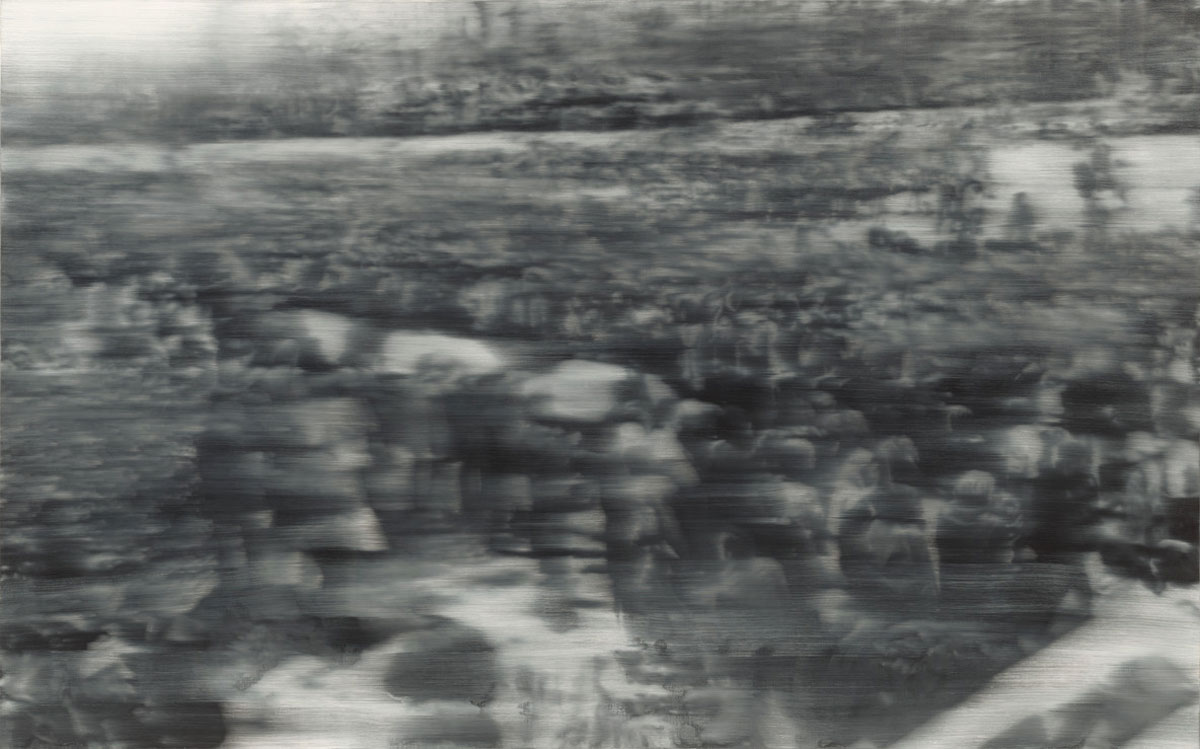
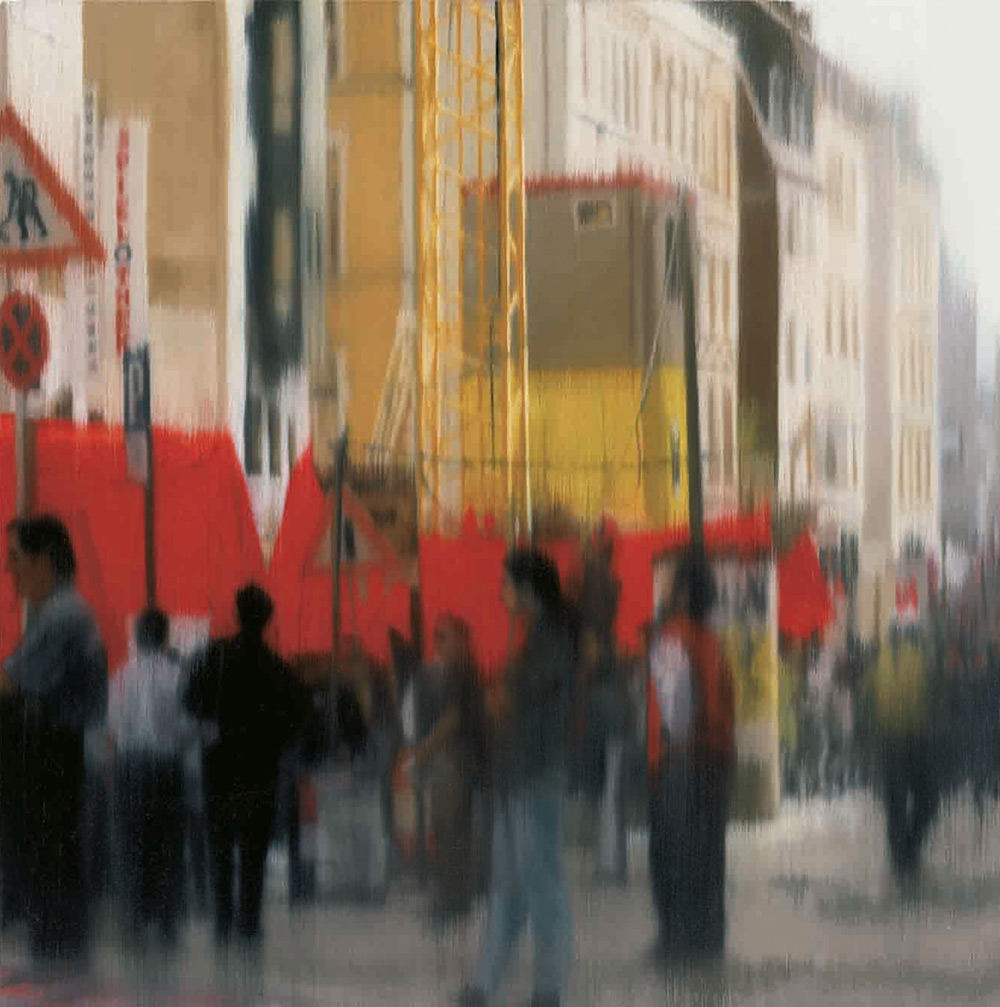
Gerhard Richter (German, b. 1932) 'Demo' 1997


Gerhard Richter (German, b. 1932)
Demo
1997
The Rachofsky Collection
© Gerhard Richter


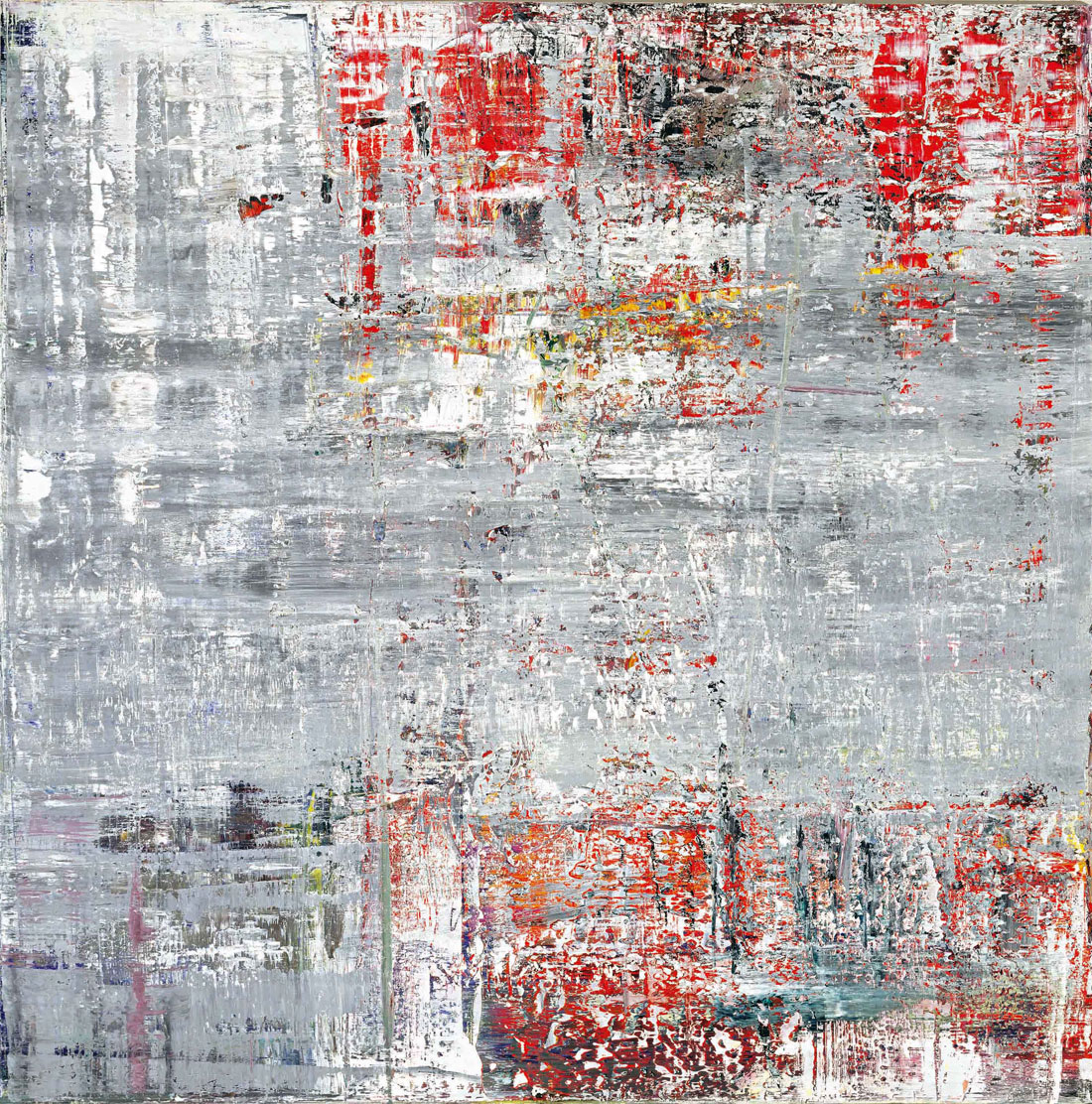
Gerhard Richter (German, b. 1932) 'Cage 4' 2006


Gerhard Richter (German, b. 1932)
Cage 4
2006
Tate. Lent from a private collection 2007
© Gerhard Richter


Gerhard Richter (German, b. 1932) 'Ema (nude descending a staircase)' 1992


Gerhard Richter (German, b. 1932)
Ema (nude descending a staircase)
1992
© Gerhard Richter


Gerhard Richter (German, b. 1932) '14. Feb. 45' 2002


Gerhard Richter (German, b. 1932)
14. Feb. 45
2002
Tate
© Gerhard Richter


Tate Modern
Bankside
London SE1 9TG

Opening hours:
Daily 10am – 6pm
Tate Modern website

LIKE ART BLART ON FACEBOOK

Back to tophttps://artblart.com/2012/01/06/exhibition-gerhard-richter-panorama-at-tate-modern-london/

Exhibition: ‘Painting on paper – Josef Albers in America’ at Pinakothek der Moderne, Munich

Exhibition dates: 16th December 2010 – 6th March 2011


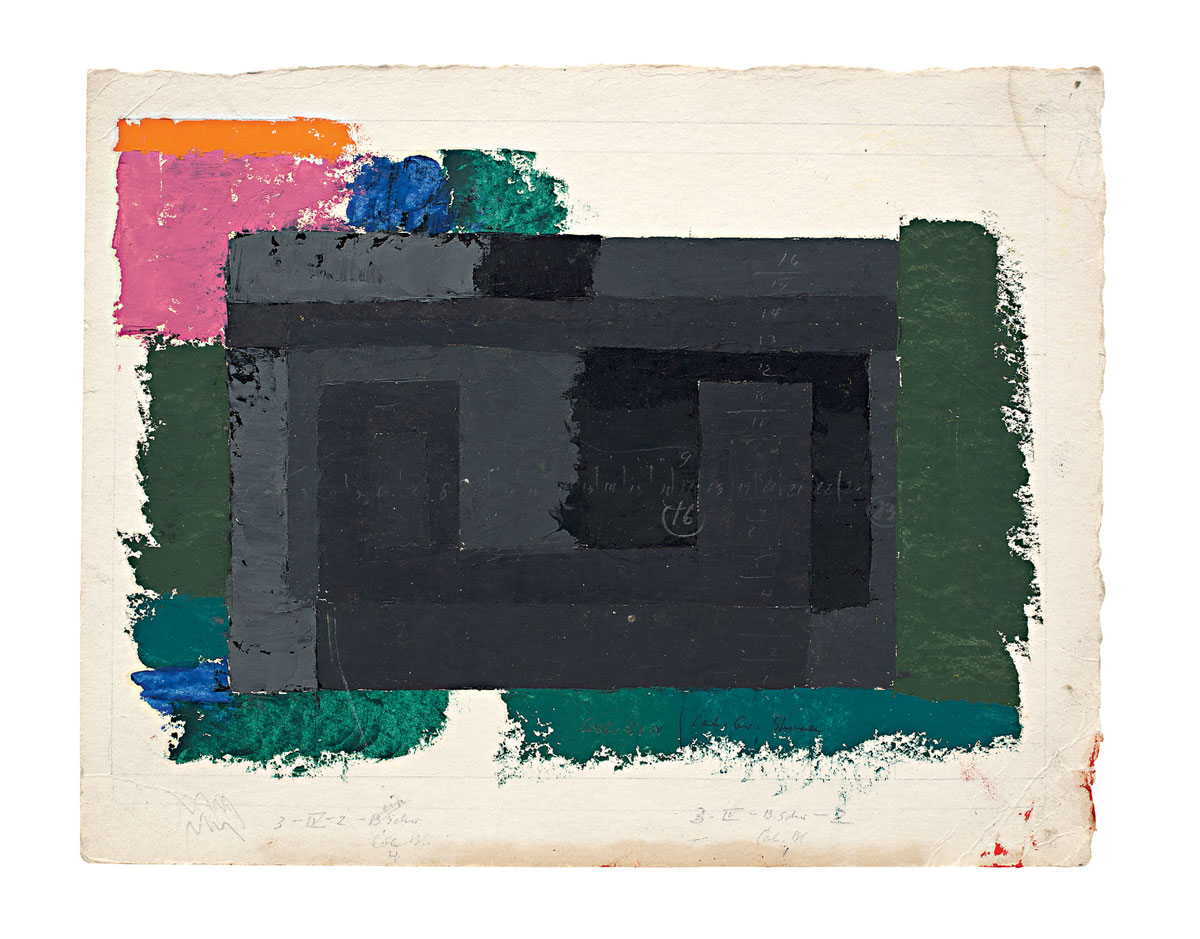
Josef Albers (German, 1888-1976) 'Study for a Adobe' c. 1947


Josef Albers (German, 1888-1976)
Study for a Adobe
c. 1947
Oil and graphite on blotting paper
24.1 × 30.5cm
The Josef Albers Museum Quadrat Bottrop
© 2010 The Josef and Anni Albers Foundation/VG Bildkunst, Bonn/Artists Rights Society, New York


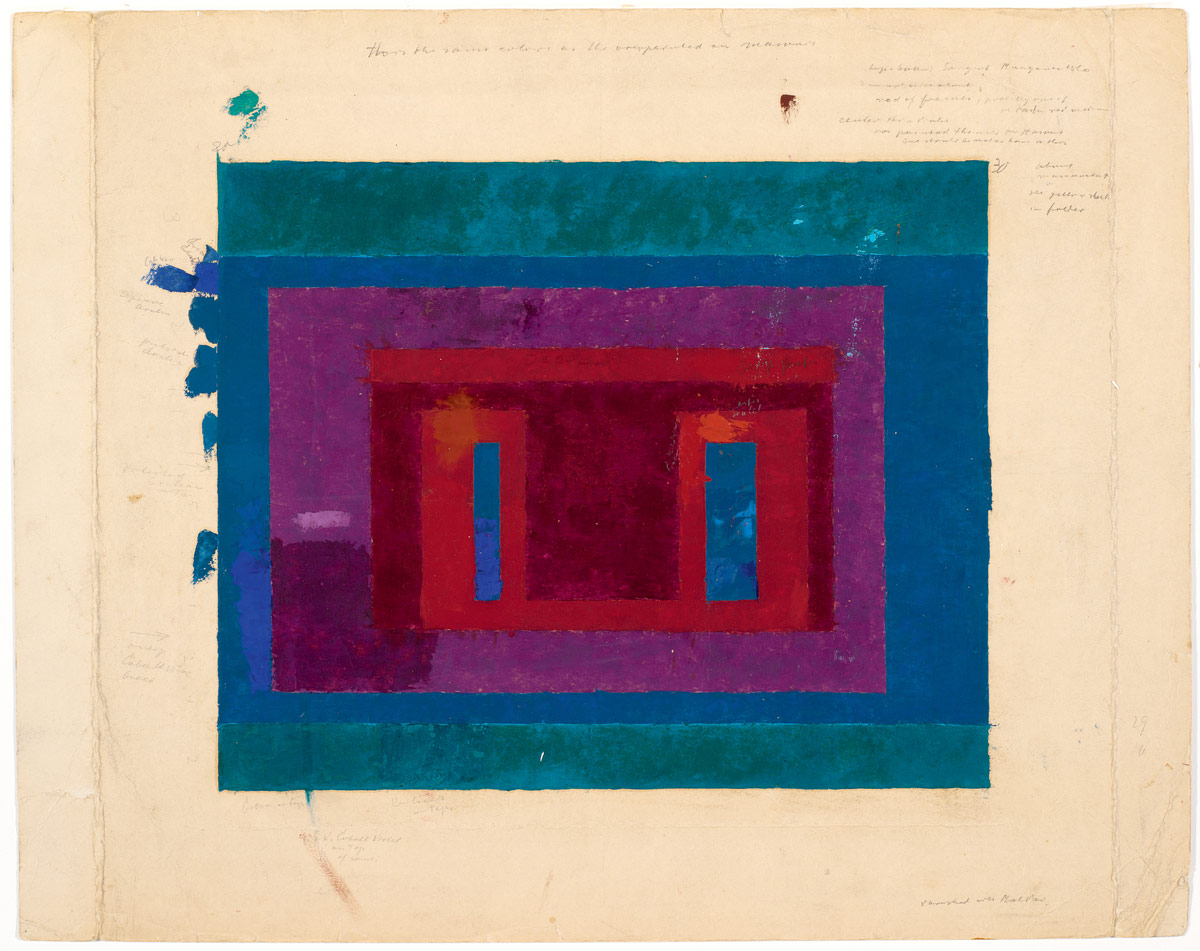
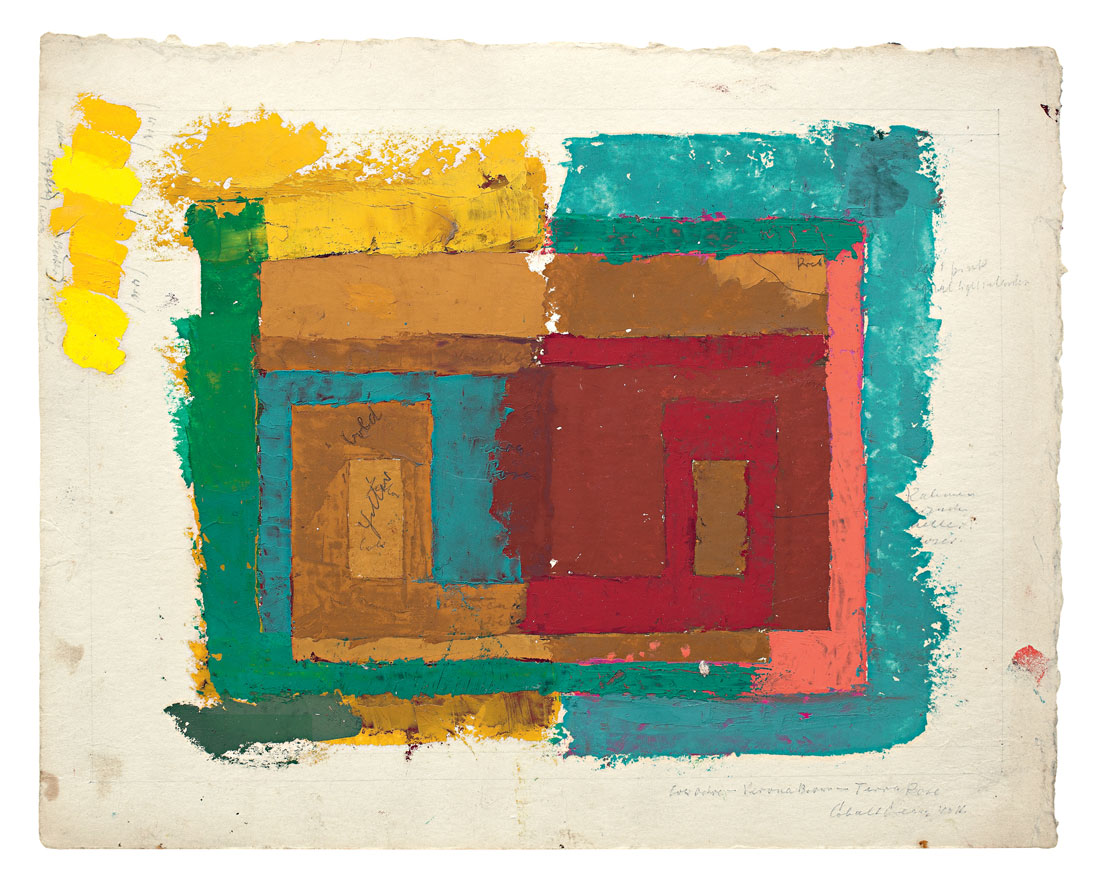
I really like the work of Josef Albers and these paintings on paper, studies for later work, give insight into that rare quality of Albers – his ability to mould, no that’s not the right word – his ability to accrete colours and spaces together, to build tectonic plates of colour that collide and burst against each other forming an “osmosis of plane and space.” These harmonic oscillations of vibrant colour form a pleasing equilibrium in the mind, freeing the viewer from conceptual thought and allowing us to enter a different state of being. It is fascinating to me that he painted these studies on blotting paper as the paper seems to soak up the colours, intensifying their existence.

Dr Marcus Bunyan


Many thankx to Pinakothek der Moderne for allowing me to publish the photographs of the art in the posting. Please click on the photographs for a larger version of the image.


Josef Albers (German, 1888-1976) 'Color Study for a Variant / Adobe' Nd


Josef Albers (German, 1888-1976)
Color Study for a Variant / Adobe
Nd
Oil on blotting paper
48.2 × 60.9cm
The Josef and Anni Albers Foundation
© 2010 The Josef and Anni Albers Foundation/VG Bildkunst, Bonn/Artists Rights Society, New York


Josef Albers (German, 1888-1976) 'Study for a Variant / Adobe (I)' c. 1947


Josef Albers (German, 1888-1976)
Study for a Variant / Adobe (I)
c. 1947
Oil on blotting paper with pencil
24.1 × 30.6cm
The Josef and Anni Albers Foundation
© 2010 The Josef and Anni Albers Foundation/VG Bildkunst, Bonn/Artists Rights Society, New York


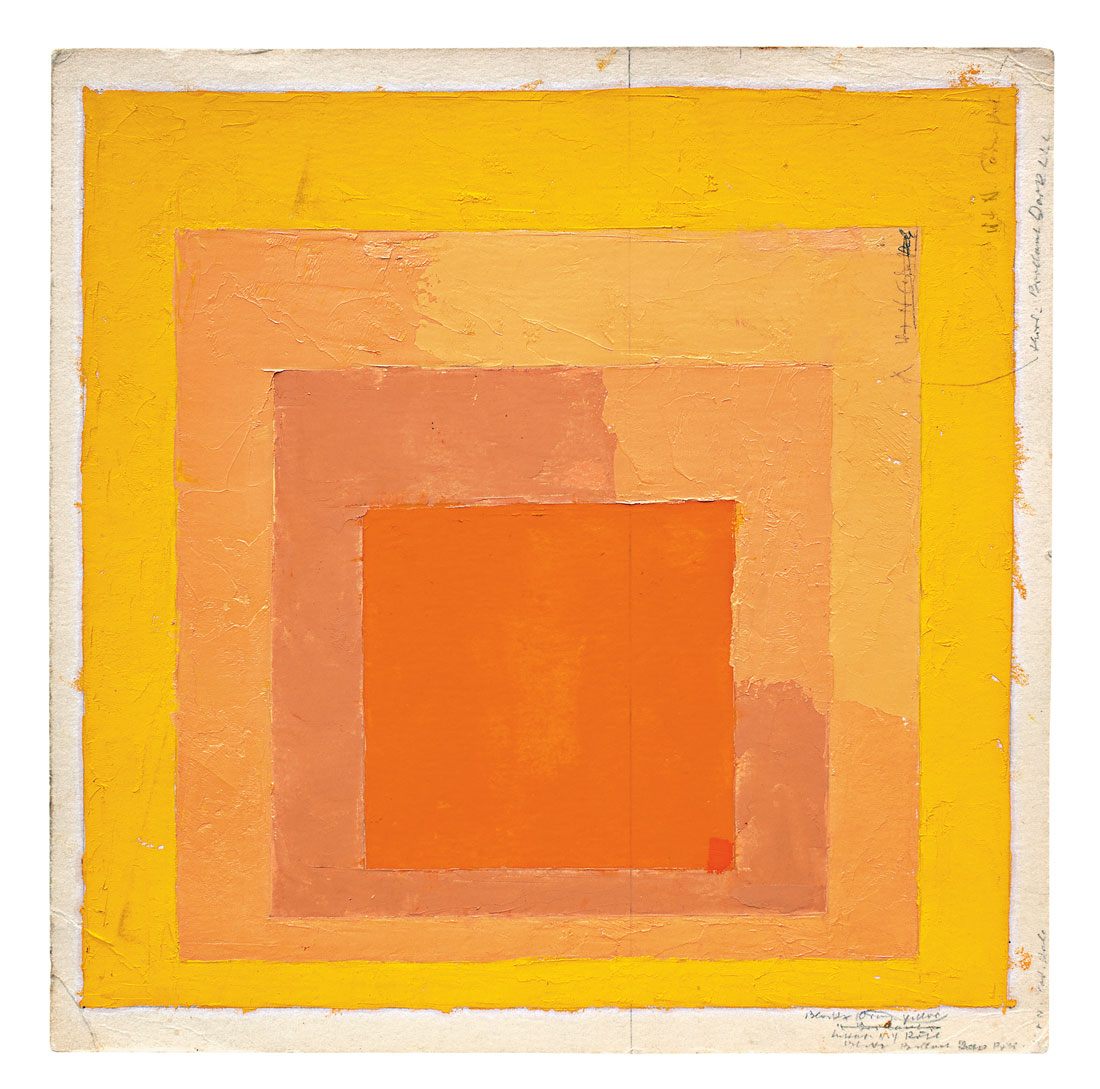
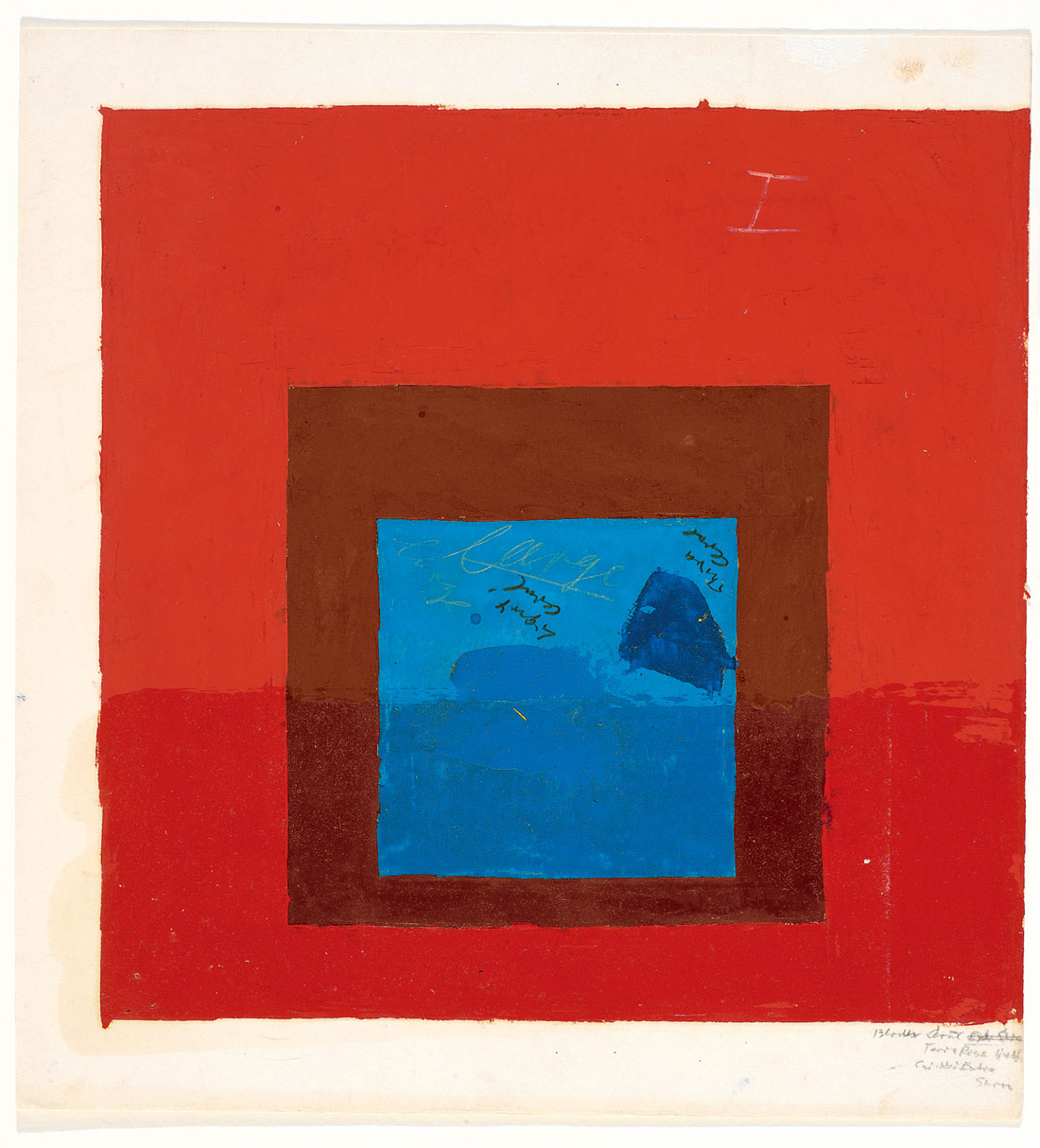
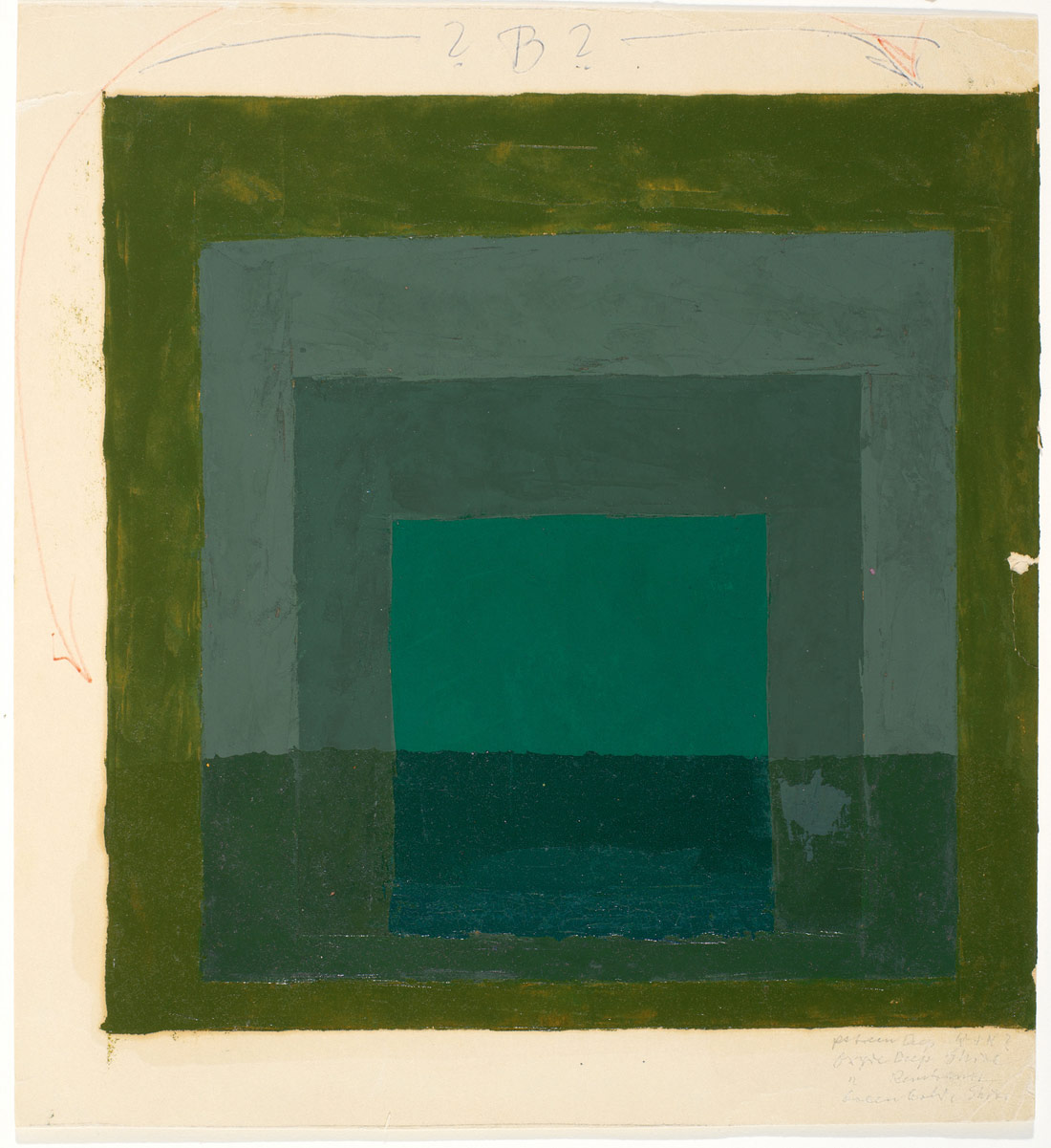
The exhibition is the first to show such a concentration of paintings on paper by Josef Albers, some of which will be completely unknown to the general public. Works in oil on paper, painted by the artist since the 1940s in preparation for the Adobe and Variant series in particular, are presented together with a large group related to his principal work “Homage to the Square” from the artist’s late period, that he focused on from 1950 until his death in 1976.

Josef Albers was only able to fully develop into an important artist and influential teacher after emigrating to the USA. From around 1940 onwards, Albers was inspired by Mexico’s pre-Columbian architecture, sculpture and textile art that boosted his sense for the aesthetic and led to idiosyncratic, radiant colour compositions, the likes of which had never been seen at that time in European modern art. Around 1950, Albers discovered what was for him the ideal formal shape of colour – the square.

The works exhibited surprise the viewer with their spontaneity, their search for immediacy and the extraordinary delicacy of their colours. Albers studied the interaction of colours like virtually no other. Through his works on paper in particular it can be seen in detail how the artist achieved such a thorough osmosis of plane and space through increasing the density of the colours used.

Text from the Pinakothek der Moderne website


Josef Albers (German, 1888-1976) 'Color Study for Homage to the Square' Nd


Josef Albers (German, 1888-1976)
Color Study for Homage to the Square
Nd
Oil and graphite on blotting paper with varnish
30.5 × 30.5cm
The Josef Albers Museum Quadrat Bottrop
© 2010 The Josef and Anni Albers Foundation/VG Bildkunst, Bonn/Artists Rights Society, New York


Josef Albers (German, 1888-1976) 'Color Study for Homage to the Square' Nd


Josef Albers (German, 1888-1976)
Color Study for Homage to the Square
Nd
Oil on blotting paper
33.2 × 30.9cm
The Josef and Anni Albers Foundation
© 2010 The Josef and Anni Albers Foundation/VG Bildkunst, Bonn/Artists Rights Society, New York


Josef Albers (German, 1888-1976) 'Color Study for Homage to the Square' Nd


Josef Albers (German, 1888-1976)
Color Study for Homage to the Square
Nd
Oil on blotting paper with varnish
33.6 × 30.4cm
The Josef and Anni Albers Foundation
© 2010 The Josef and Anni Albers Foundation/VG Bildkunst, Bonn/Artists Rights Society, New York


Pinakothek Der Moderne
Barer Strasse 40
Munich

Gallery hours:
Daily except Monday 10am – 6pm
Thursday 10am – 8pm

Pinakothek der Moderne website

LIKE ART BLART ON FACEBOOK

Back to top