Exhibition: ‘Hildegard Heise: Photographer’ at Museum fur Kunst und Gewerbe Hamburg

Exhibition dates: 17th September, 2021 – 20th March, 2022


Hildegard Heise (German, 1897-1979) 'Karussellpferde, Halle a. d. Saale' (Carousel Horses, Halle a. d. Saale) 1929 from the exhibition 'Hildegard Heise: Photographer' at Museum fur Kunst und Gewerbe Hamburg, Sept 2021 - March 2022


Hildegard Heise (German, 1897-1979)
Karussellpferde, Halle a. d. Saale (Carousel Horses, Halle a. d. Saale)
1929
Gelatin silver paper
29 x 38.7cm
Museum für Kunst und Gewerbe Hamburg
© Nachlass Hildegard Heise, MK&G


Here is another woman photographer with an strong, passionate, objective but sensitive eye who seems to have slipped through the cracks of time, history and recognition. Would you believe it, this is the first comprehensive survey of the work of photographer Hildegard Heise (German, 1897-1979).

At first New Objectivity, New Vision to the fore… multiples, rows and grids. Carousel horses shot from below, town hall towers as a medieval encampment, and a mass of herring barrels so perfect in their unity higher than the surrounding buildings. An then my favourite, the mass and floating weight of the leaves of the Victoria Regia… the rigour of the composition, its cadences, and the tonality and feeling of the image are just superb. I could go on: the cactus, the crystal, the china – so pure and clean. Followed by glorious almost breathless landscape photographs – Wintry trees, Hamburg (1955, below) and Blossoming apple trees (1961, below). Where has this woman been?

The star of the show has to be her portrait photography. THIS is how you take a portrait, unlike those modestly proficient evocations we saw from Man Ray in the last posting. In these portraits Heise shows her strength and understanding of subject matter, she grasps the essence of the person she is photographing… the whimsy of Alfred Mahlau with film strips (1928-1933, below); the sensitivity of the hands of Carpet weaver Alen Müller-Hellwig at work (1930, below); the windswept bravura of Siegfried Leber, cow hand in Neuendorf on Hiddensee (1934-1938, below); and the composure of the mother in Mother and child on the inter-island steamer (1938, below) with the shadow of the hat covering her face, and the placement of the hands of both mother and child. You could almost pick these people out of the photo and shake them, ask them about their lives, empathise with them. They have true presence. Call me an old romantic, but I could rave on and on about this photographer’s work.

And to top it all off, we have a self-knowing, all-knowing self-portrait where Hildegard (which is a female name derived from the Old High German hild (‘war’ or ‘battle’) and gard (‘enclosure’ or ‘yard’), and means ‘battle enclosure’) appears as if a Sander archetype, staring directly at the camera like a Wagnerian god/ess, both masculine and feminine at the same time. A true enunciation of Gesamtkunstwerk, where art, design, creative process and life combine to create a single cohesive whole.

I take a lovely enjoyment, finally, in her success (Freudenfreude).

Dr Marcus Bunyan


Many thankx to the Museum fur Kunst und Gewerbe Hamburg for allowing me to publish the photographs in the posting. Please click on the photographs for a larger version of the image.
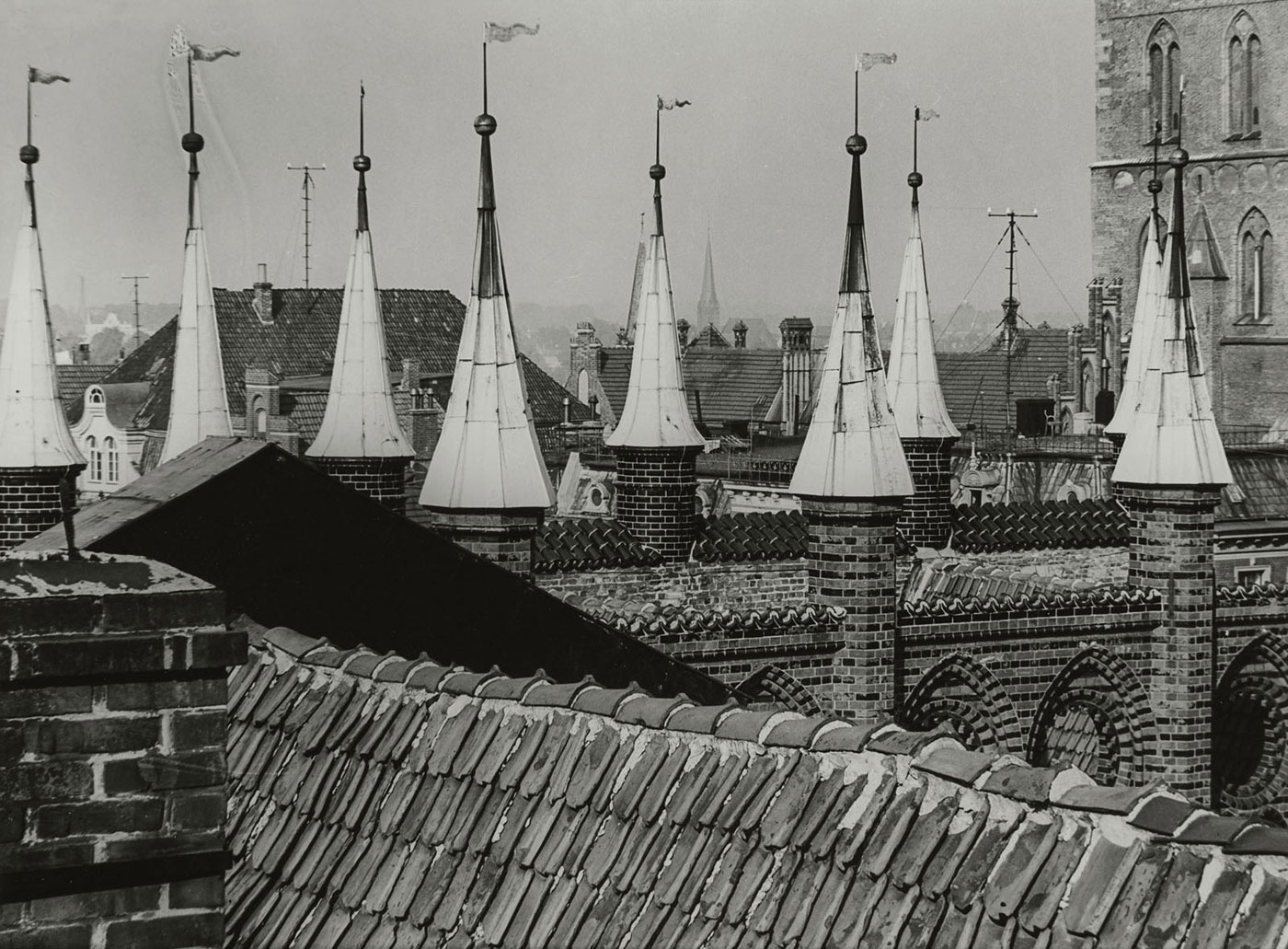


Hildegard Heise (German, 1897-1979) 'Lübeck, Rathaustürme' (Lübeck, town hall towers) 1932 from the exhibition 'Hildegard Heise: Photographer' at Museum fur Kunst und Gewerbe Hamburg, Sept 2021 - March 2022


Hildegard Heise (German, 1897-1979)
Lübeck, Rathaustürme (Lübeck, town hall towers)
1932
Gelatin silver paper
17.2 x 23.3cm
Museum für Kunst und Gewerbe Hamburg
© Estate Hildegard Heise, MK&G


It was in the 1920s, a decade when new career prospects were opening up for women, that Hildegard Heise discovered her passion for photography.

Photography during this period reflected the upheavals and transformation of society in the wake of the First World War. Heise found innovative ways to picture these developments, often choosing unusual perspectives. In line with the “new” genre of object photography, which showcased the world of things, she emphasised the structure, surfaces and form of her subjects. Heise for example shot the “bathing machines” in the French beach town of Carolles from a plunging angle to highlight their graphic structures, and focused in on the shiny surfaces of technical vessels produced by a Berlin porcelain manufactory.

Heise found portrait models all around her, photographing mainly children and artists. In 1937 she took a long trip through the Caribbean, portraying people in their communities, their home settings and landscapes. A precise observer, she succeeded in painting a multifaceted picture of a foreign, still little-travelled region. Even at an advanced age, Heise was still capturing landscapes with her camera; her last pictures show the view out her window of passing cloud formations.


Hildegard Heise (German, 1897-1979) 'Emden, Heringstonnen auf dem Gelände einer Heringsfischerei AG im Hafen' (Emden, herring barrels on the premises of a herring fishing company in the port) c. 1934


Hildegard Heise (German, 1897-1979)
Emden, Heringstonnen auf dem Gelände einer Heringsfischerei AG im Hafen (Emden, herring barrels on the premises of a herring fishing company in the port)
c. 1934
Gelatin silver paper
17.3 x 23.3cm
Museum für Kunst und Gewerbe Hamburg
© Estate Hildegard Heise, MK&G


Hildegard Heise (German, 1897-1979) 'Blätter der Victoria Regia im Botanischen Garten in Berlin' (Leaves of the Victoria Regia in the Botanical Garden in Berlin) 1934-1945


Hildegard Heise (German, 1897-1979)
Blätter der Victoria Regia im Botanischen Garten in Berlin (Leaves of the Victoria Regia in the Botanical Garden in Berlin)
1934-1945
Gelatin silver paper
16.7 x 22.7cm
Museum für Kunst und Gewerbe Hamburg
© Estate Hildegard Heise, MK&G
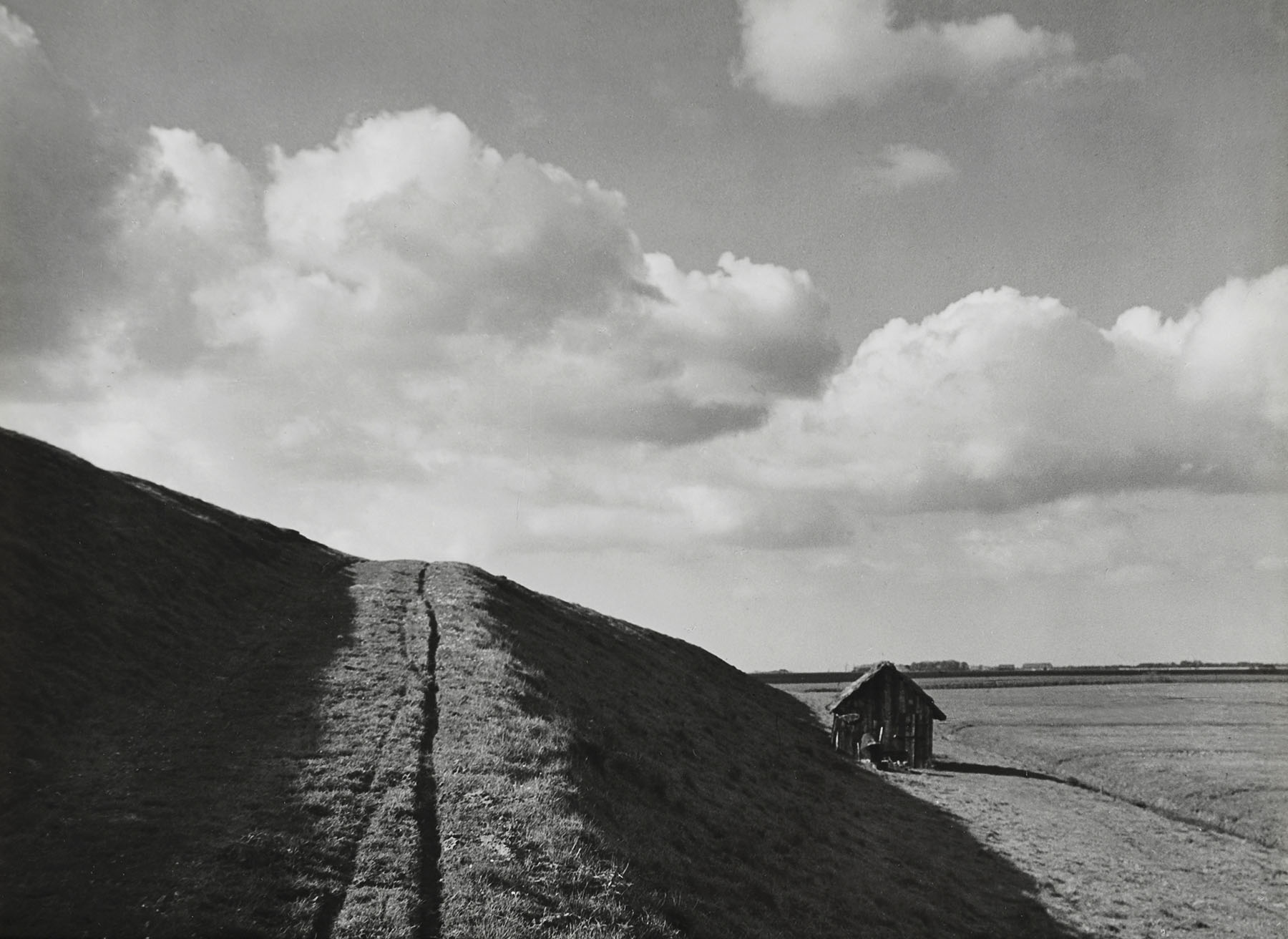
 

Hildegard Heise (German, 1897-1979) 'Deichlandschaft bei Emden' (Dike landscape near Emden) Before 1937


Hildegard Heise (German, 1897-1979)
Deichlandschaft bei Emden (Dike landscape near Emden)
Before 1937
Gelatin silver paper
17 x 23cm
Museum für Kunst und Gewerbe Hamburg
© Nachlass Hildegard Heise, MK&G


Hildegard Heise (German, 1897-1979) 'Haus mit Garten, Christiansted, Insel St. Croix' (House with garden, Christiansted, Island of St Croix) 1937-1938


Hildegard Heise (German, 1897-1979)
Haus mit Garten, Christiansted, Insel St. Croix (House with garden, Christiansted, Island of St Croix)
1937-1938
Gelatin silver paper
18.3 x 16.8cm
Museum für Kunst und Gewerbe Hamburg
© Nachlass Hildegard Heise, MK&G
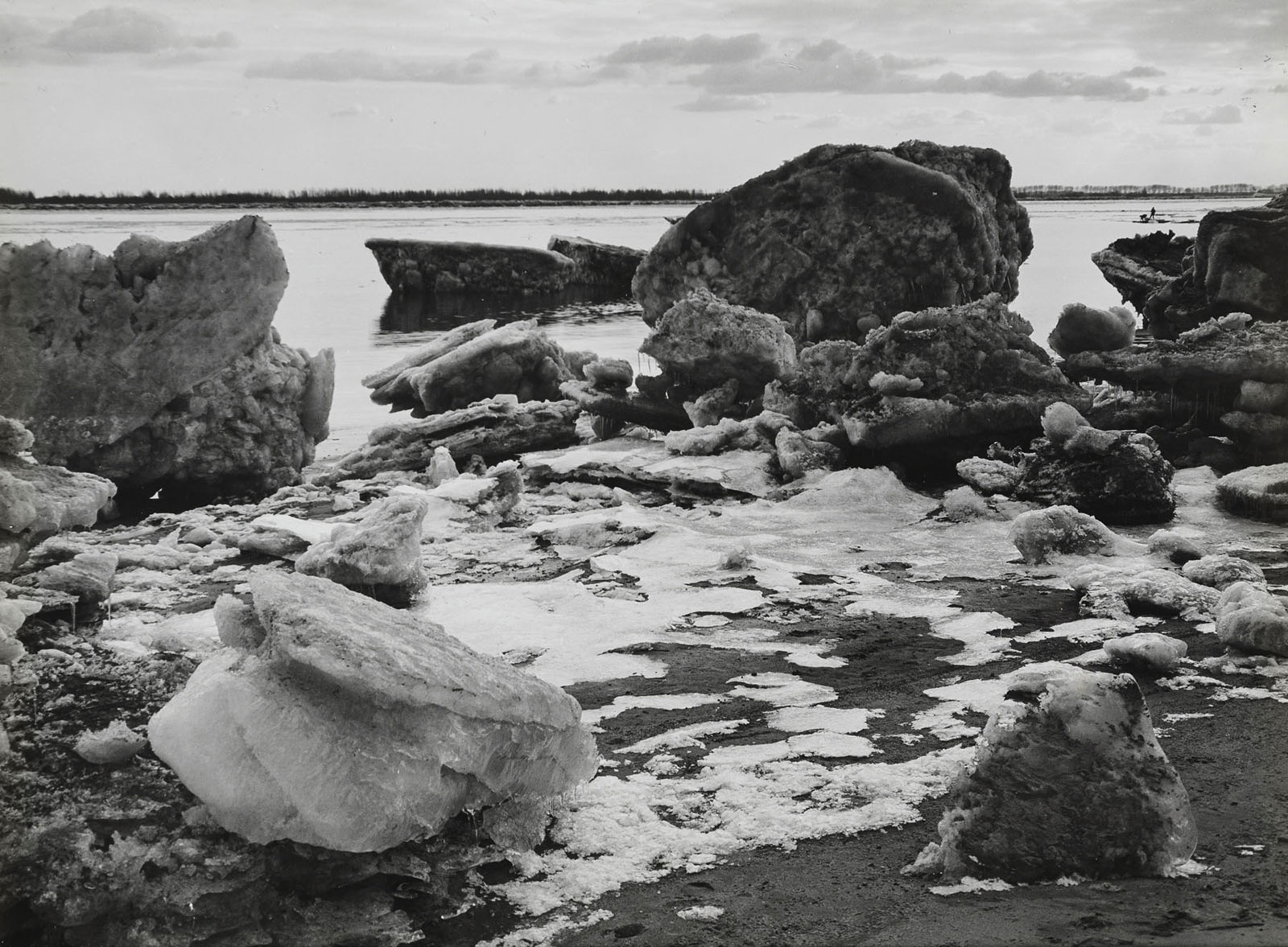
 

Hildegard Heise (German, 1897-1979) 'Eisschollen am Elbstrand, Hamburg' (Ice floes on the Elbe beach, Hamburg) 1956


Hildegard Heise (German, 1897-1979)
Eisschollen am Elbstrand, Hamburg (Ice floes on the Elbe beach, Hamburg)
1956
Gelatin silver paper
17.1 x 23cm
Museum für Kunst und Gewerbe Hamburg
© Nachlass Hildegard Heise, MK&G
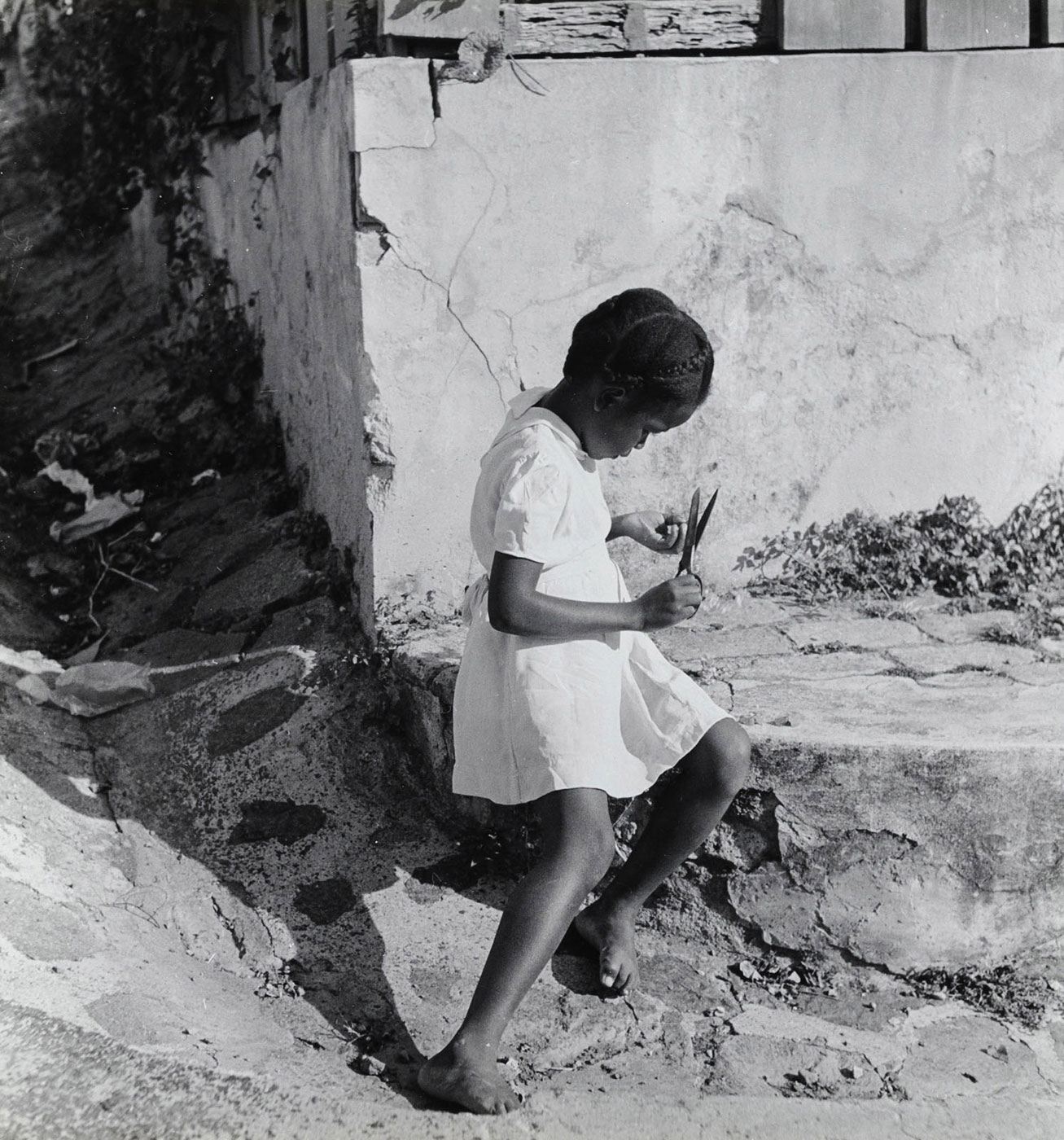
 

Hildegard Heise (German, 1897-1979) 'A Young Girl Cuts Her Nails' 1937-1938


Hildegard Heise (German, 1897-1979)
A Young Girl Cuts Her Nails
1937-1938
from the series A Journey through the West Indies
Gelatin silver paper
17.2 x 16.2cm
Museum für Kunst und Gewerbe Hamburg
© Estate Hildegard Heise, MK&G


Hildegard Heise (German, 1897-1979) 'Bergkette, Nußdorf am Inn' (Mountain range, Nußdorf am Inn) 1961


Hildegard Heise (German, 1897-1979)
Bergkette, Nußdorf am Inn (Mountain range, Nußdorf am Inn)
1961
Gelatin silver paper
23 x 17cm
Museum für Kunst und Gewerbe Hamburg
© Nachlass Hildegard Heise, MK&G


Hildegard Heise (German, 1897-1979) 'Adolescents on the shore, Central Park, New York' 1970


Hildegard Heise (German, 1897-1979)
Adolescents on the shore, Central Park, New York
1970
C-Print
7.8 x 7.8cm
Museum für Kunst und Gewerbe Hamburg
© Estate Hildegard Heise, MK&G


Hildegard Heise (German, 1897-1979) 'Städter auf der Parkbank schlafend, Central Park, New York' (Townsfolk asleep on park bench, Central Park, New York) 1970


Hildegard Heise (German, 1897-1979)
Städter auf der Parkbank schlafend, Central Park, New York (Townsfolk asleep on park bench, Central Park, New York)
1970
C-Print
11.8 x 12cm
Museum für Kunst und Gewerbe Hamburg
© Estate Hildegard Heise, MK&G


The Museum für Kunst und Gewerbe Hamburg (MK&G) is proud to present the first comprehensive survey of the work of photographer Hildegard Heise (1897-1979). The photographs she produced between 1928 and the early 1970s are nothing less than a revelation. In 1930, Heise exhibited alongside avant-garde photographers such as Max Burchartz, Andreas Feininger, Hans Finsler, Hein Gorny and Anneliese Kretschmer at the “Internationale Ausstellung – Das Lichtbild” in Munich. But this buoyant period of bright prospects was followed after 1945 by a systematic side-lining of women artists. Heise continued to privately pursue photography, but her work fell into oblivion and was little researched. With around 160 images on view, the exhibition now pays delayed tribute to this important photographer. As an exponent of the New Objectivity, Heise often focused in closely on details and emphasised the structure, surfaces and form of her subjects. Her images span the areas of object photography, portrai­ture, in particular portraits of children, city scenes, travel photography and landscapes. Heise lived in Lübeck until 1933 and in Hamburg from 1945 to 1959, where she helped shape the city’s cultural life together with her husband, Carl Georg Heise, director of the Hamburger Kunsthalle from 1945. The couple counted among their close friends the painter Anita Rée, the graphic artist and painter Alfred Mahlau, and the photographer Albert Renger-Patzsch. Heise did a number of portraits while in Hamburg, for example of Oskar Kokoschka, Karl Schmidt-Rottluff and the weaver Alen Müller-Hellwig. Hildegard Heise’s estate, comprising around 3000 photographs and 2500 negatives, is housed at MK&G.

The exhibition is organised along Heise’s major areas of focus. In her OBJECT PHOTOGRAPHY she highlighted graphic structures and the formal qualities of the objects depicted. In 1930, for example, she photographed the “bathing machines” in the French town of Carolles from an unusual camera angle and showed the turrets lined up atop Lübeck’s town hall. She devoted the same attention to the worn surfaces of Much-Loved Dolls (1928) as she did to the immaculate exteriors of technical vessels produced by a Berlin porcelain manufactory [see below].

Heise found models for her PORTRAITS all around her, for example among her friends or artists such as Oskar Kokoschka, Karl Schmidt-Rottluff and Alfred Mahlau. These are often half-length portraits concentrating on the sitter’s face, manifesting the great preoccupation during this period with physiognomy. Children’s portraiture – mainly the realm of women photo­graphers at the time – became a specialty that Heise continued to pursue over the years. She did such portraits on commission but also in her circle of friends, where she proved to be an attentive observer, seemingly capturing candid moments.

From 1934 to 1936 Heise created an extensive CITY PORTRAIT of Emden that interweaves photographs of people, the cityscape and the northern German dike landscape. Her study of Emden combines shots of boatmen, carters and other occupational groups with scenes of the harbour with its herring factory and views of the Hanseatic city’s architecture and cultural monuments. Heise would continue in the following decades to work with the stylistic device of linking varied perspectives.

In 1937-1938, Heise and her husband took an extended trip to the islands of St. Thomas, St. Croix, Jamaica and Hispaniola in search of traces of her Caribbean grandmother. The PHOTOGRAPHIC TRAVEL REPORTAGE she created during the journey conjoins portraits with scenes of the landscape and built environment. In addition to the sea, exotic vegetation and architecture, she evinced a keen interest in the people she encountered and the different ways of life of the various social classes. Her subjects include the wife of a priest, an elegantly dressed Caribbean lady she spied on a ferry as well as a chambermaid in a grand hotel and the children of market vendors. By addressing everyday human experiences, Heise’s work thus anticipates the humanist photography of the post-war period. After the war, Heise’s travel photography became even more spontaneous and situational. In Naples in the 1960s, she captured the colourful comings and goings at the harbour, and in 1969 she observed the process of wood being loaded onto ships at a port in Finland. The photographer’s pronounced interest in painting a broad portrait of society with its different classes and cultures is in evidence once more in her images of New York’s Central Park (1970).

Another consistent theme in Heise’s work is LANDSCAPE PHOTO­GRAPHY. Until an advanced age, she engaged in an almost meditative contemplation of trees and their root systems, remaining true to her matter-of-fact, objective approach. Her nature observations intensified even further after she moved to Nußdorf am Inn, where starting in 1960 she produced extensive series of scenes of the Upper Bavarian winter landscape surrounding her new home. Photography would remain an important means of expression for her until the very last; she was still photographing passing clouds from the window of the residential home where she spent her final years.

Hildegard Heise, born in Lübeck in 1897, initially trained during the First World War as a kindergarten teacher, baby nurse and social worker, unusual occupations for a woman from the upper middle class that testify to her social commitment. After marrying Carl Georg Heise in 1922, she gave up these activities and took up photography, studying in 1928 with her contemporary Albert Renger-Patzsch, a friend of the couple who was at the time a museum director in Lübeck. She accompanied Renger-Patzsch to Holland and Alsace as his assistant. From 1929 to 1930 she continued her training with Hans Finsler (head of the photography class at the Burg Giebichenstein School of Art in Halle) and spent three months working in Grete Kolliner’s portrait studio in Vienna. In 1930 Heise exhibited at the “Internationale Ausstellung – Das Lichtbild” in Munich. Thereafter she participated in a showing of the “Kurt Kirchbach Collection” at the Hamburger Kunstverein in 1932 and in an exhibition on “Contemporary German Photography” at Mills College in California around 1934. Her photographs were featured in magazines including Atlantis, Das Deutsche Familienblatt and the Allgemeiner Wegweiser. Heise sold her pictures through the photography agencies Bavaria and kind-foto and accepted commissions to document works of art and decorative art and architecture, including for the publication Das Lübecker Orgelbuch (1931). From 1945 until the early 1970s, Heise continued to pursue her artistic activities in private.

Press release from the Museum fur Kunst und Gewerbe Hamburg
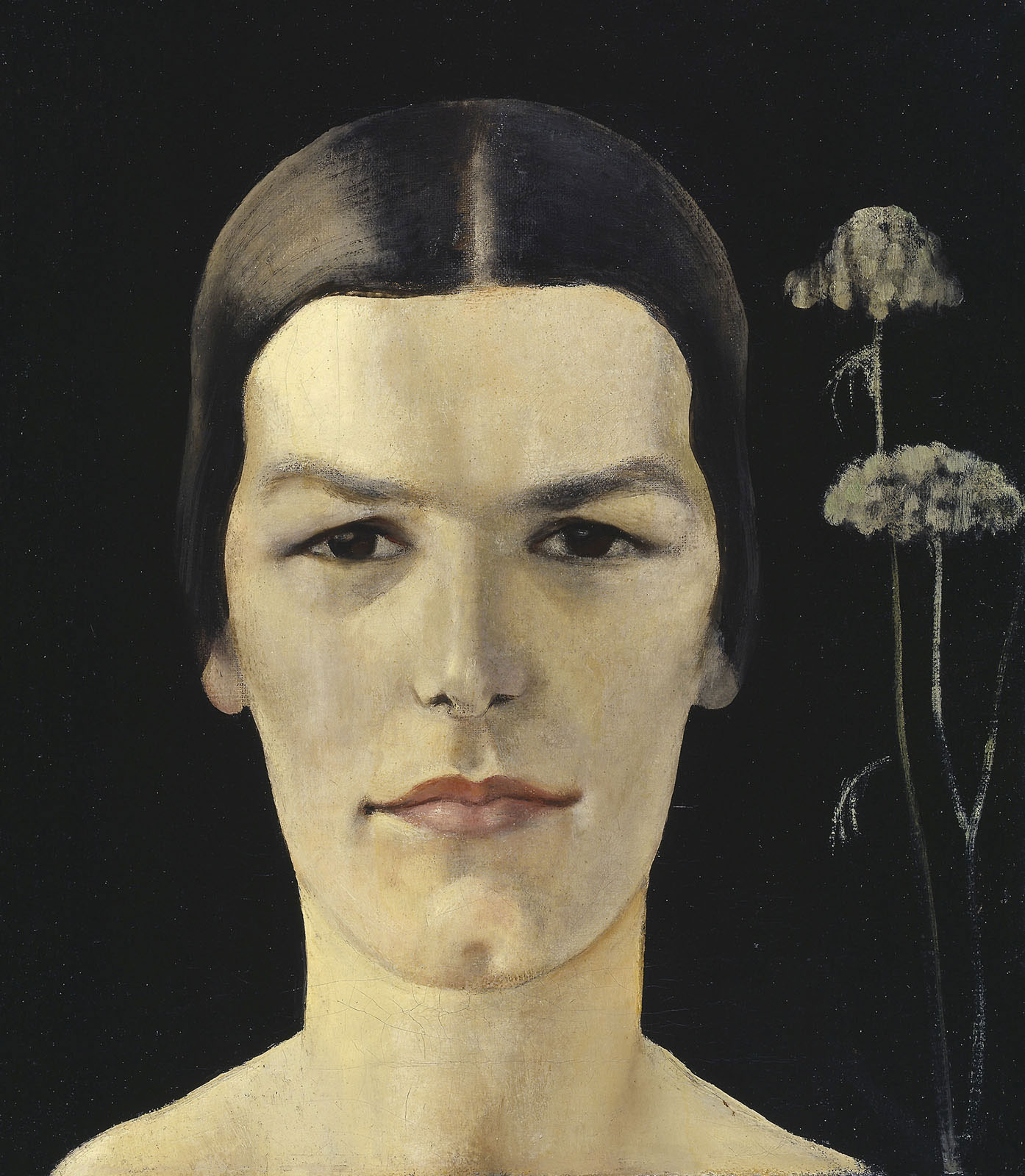
 

Anita Rée (German, 1885-1933) 'Portrait of Hildegard Heise' 1927


Anita Rée (German, 1885-1933)
Portrait of Hildegard Heise
1927
Oil on canvas
40.6 x 35.6cm
Hamburger Kunsthalle
© Hamburger Kunsthalle / bpk
Foto: Elke Walford


“I can no longer find my way in such a world, to which I no longer belong and I have no desire but to leave it. What is the point – without a family, without the once loved art and without any people – to continue to vegetate alone in such an indescribable, madness-riddled world … ?”


Anita Rée in her farewell letter to her sister before committing suicide in 1933


Anita Clara Rée (born 9 February 1885 in Hamburg, died 12 December 1933 in Kampen) was a German avant-garde painter during the Weimar Republic. After she took her own life the anti-Semitic government declared her work degenerate. Her works were saved by a groundskeeper. …

In 1930, she received a commission to create a triptych for the altar at the new Ansgarkirche in Langenhorn. The church fathers were not happy with her designs, however, and the commission was withdrawn in 1932 over “religious concerns”. Meanwhile, the Nazis had denounced her as a Jew and the Hamburg Art Association called her an “alien”. Shortly after, she moved to Sylt.

She was a suicide in 1933, partly as a result of having been subjected to such hostility and continuing harassment by antisemitic forces, partly due to disappointments on the personal level. In a note to her sister, she decried the insanity of the world. In 1937, the Nazis designated Rée’s work as “Degenerate art” and began purging it from museum collections. Wilhelm Werner, a groundskeeper at the Kunsthalle Hamburg preserved many of Rée’s paintings by hiding them in his apartment.

Text from the Wikipedia website


Anita Rée is one of the most fascinating and enigmatic artist of the 1920s. In many respects she lived a life in between worlds: as an independent woman in an art world on the verge between tradition and Modernism, as a regional artist with international aspirations, as a native from Hamburg brought up as a Protestant, with South American and Jewish roots. The works of Anita Rée (1885-1933) also reflect the at times radical changes in modern society at the beginning of the 20th century. Yet their main focus lies on the search for one’s own identity that is still highly topical and existential.

In hauntingly intense paintings, Rée depicts both people of different origins and the self as a foreign being. Her intimate female nudes continue to touch us today. Portraits of society gentlemen, the southern landscape as a place of yearning, worldly figure paintings with religious overtones or lone animals in stark dunes mirror the wide variety of her motives.

Text from the Hamburger Kunsthalle website [Online] Cited 12/02/2022. No longer available online


Hildegard Heise (1897–1979) 'Self-portrait' 1930s


Hildegard Heise (German, 1897-1979)
Self-portrait
1930s
Gelatin silver paper
22.7 x 16.8cm
Museum für Kunst und Gewerbe Hamburg
© Estate Hildegard Heise, MK&G


Hildegard Heise (German, 1897-1979) 'Alfred Mahlau mit Filmstreifen' (Alfred Mahlau with film strips) 1928-1933


Hildegard Heise (German, 1897-1979)
Alfred Mahlau mit Filmstreifen (Alfred Mahlau with film strips)
1928-1933
Gelatin silver paper
23.2 x 17.4cm
Private collection
© Nachlass Hildegard Heise, MK&G


Alfred Mahlau (German, 1894-1967)

Alfred Mahlau (21 June 1894 – 22 January 1967) German painter, illustrator and teacher.

Alfred Mahlau was born in Berlin on 21 June 1894. He was best known for his graphical work and illustrations, and for the large stained glass window, Dance of Death, in the Lübeck Marienkirche (St. Mary’s Church in Lübeck), which paid homage to a famous mural of the Dance of Death in the church that was destroyed in the bombing of Lübeck during World War II. His books include a number of works with paintings and drawings of Hamburg and the Hamburg port. In the 1920s Mahlau created packaging design for Niederegger, and in 1927 he created the company profile that it still uses today.

During the Third Reich he was a celebrated artist, and was drafted only at a very late stage, to Berlin in April of 1945. He was captured by the Soviets, and held in custody for a couple of months. After the war he became a professor in 1946 at the Hamburg Academy of Fine Arts in Lerchenfeld.

He died in Hamburg on 22 January 1967.

Text from the Wikipedia website


Hildegard Heise (1897-1979) 'Ulrike von Borries in a deck chair' 1928-1933


Hildegard Heise (German, 1897-1979)
Ulrike von Borries in a deck chair
1928-1933
Gelatin silver paper
39.2 x 29.3cm
Museum für Kunst und Gewerbe Hamburg
© Estate Hildegard Heise, MK&G


Hildegard Heise (German, 1897-1979) 'Badekarren, Carolles' (Bathing carts, Carolles) 1928-1933


Hildegard Heise (German, 1897-1979)
Badekarren, Carolles (Bathing carts, Carolles)
1928-1933
Gelatin silver paper
17.2 x 23.1cm
Museum für Kunst und Gewerbe Hamburg
© Estate Hildegard Heise, MK&G


Hildegard Heise (German, 1897-1979) 'Diwandecke von Alen Müller-Hellwig' (Divan corner of Alen Müller-Hellwig) c. 1930


Hildegard Heise (German, 1897-1979)
Diwandecke von Alen Müller-Hellwig (Divan corner of Alen Müller-Hellwig)
c. 1930
Gelatin silver paper
23.5 x 17.5cm
Museum für Kunst und Gewerbe Hamburg
© Nachlass Hildegard Heise, MK&G


Alen Müller-Hellwig (German, 1901-1993)

Alen Müller-Hellwig, née Müller ( October 7, 1901 in Lauenburg in Pomerania – December 9, 1993 in Lübeck) was a German weaver.

Alen Müller learned hand weaving and embroidery, first at the Hamburg School of Applied Arts as a student of Paul Helms and Maria Brinckmann, then at the Munich School of Applied Arts with Else Jaskolla. In 1925 she passed the master’s examination as an embroiderer and in 1928 as a hand weaver.

From 1926 to 1991 she had a workshop for hand weaving in Lübeck. In 1934 she was given the castle gate (tower and the customs officer’s house to the east ) as a place to work and live. She had been married to the violin maker Günther Hellwig (1903-1985) since 1937, who also moved his workshop here and devoted himself specifically to building the viola da gamba .

As one of the first weavers, she created a tapestry using only undyed sheep’s wool, working solely with the natural shades and material appeal of the undyed and partially unwashed wool. When Der Baum, her first work of this kind, was exhibited in the Grassi Museum in Leipzig in autumn 1927, it caused a sensation. She was then invited to all major exhibitions of German arts and crafts abroad.

Her style came close to the ideas of the Bauhaus. She “invented constructive motifs from the technique of warp and weft.” With the exhibition Handwoven Carpets from the Best German Weaving Mills in the Behnhaus, Carl Georg Heise offered her the first great opportunity to present herself in Lübeck and showed her work again in the Hallway of the Behnhaus on the occasion of the major Lübeck Carl Milles exhibition in 1929. From 1929, Mies van der Rohe and Lilly Reich ordered a series of monochrome, hand-knotted sheep’s wool carpets from her for the Villa Tugendhat, the Barcelona pavilionand buildings in Paris and Milan. In 1931 she received the honorary award of the city of Berlin. She took part in the world exhibitions in Chicago in 1933 and in Paris in 1937. In Paris she received a gold medal.

Alfred Mahlau, Robert Pudlich and Ervin Bossányi, among others, provided designs for their carpets. A template by Bossányi was her first figurative weaving motif. In 1932 she was the only woman to co-found the artist group Werkgruppe Lübeck with the painters Curt Stoermer and Hans Peters, the graphic artist Alfred Mahlau, the garden architect Harry Maasz and the architects Wilhelm Bräck and Emil Steffann.

From 1934 to 1939, 70 carpets were made based on designs by Alfred Mahlau, mainly on behalf of the Reich Air Ministry, but also for municipalities and private individuals. This kept the growing workshop busy. In 1935 it comprised ten looms, a wool washer, a spinning mill with nine spinning wheels, a showroom and an office and sales room and employed three journeymen, four apprentices, two clerks, three unskilled workers, nine homeworkers and two interns. The first carpet in this series was the curtain Drei Möwen for Kiel-Holtenau Airport. Most of the works from this period have been destroyed or lost. Some examples including the cycle However, the four elements from 1939 have been preserved because they were acquired by Walter Passarge for the Kunsthalle Mannheim. The cooperation with Mahlau ended in 1940 because Alen Müller-Hellwig wanted to support Hildegard Osten, who had worked for many years, after opening her own workshop. In March 1942, during the German occupation, an exhibition was held in the Reichsmuseum Amsterdam under the title Exhibition of modern tapestries based on designs by Alfred Mahlau and Alen Müller-Hellwig Lübeck. fabrics and embroidery. Alfred Mahlau Lübeck. Cardboard boxes for tapestries from the workshop of Alen Müller Hellwig.

Alen Müller-Hellwig turned back to her own designs and created until 1942 a series of tapestries with plant motifs such as Foxglove Meadow (1940), Spiraea, Bear’s Hogweed and Mullein. Also after the air raid on Lübeck on March 29, 1942, where her workshop remained undamaged, she continued to run it in the Lübeck Burgtor (she brought her two children Friedemann and Barbara to safety in Timmendorfer Strand). After the end of the war, the work was expanded to include textiles for everyday use (bed linen, towels, tablecloths) and employed numerous women, especially from East Germany, e.g. Spinners from East Prussia. After the industrial production of textiles got going again, she limited her work to decorative pieces and floor carpets. In 1954 she received the Art Prize of the State of Schleswig-Holstein. Alen Müller-Hellwig ran her workshop until 1990.

Her last trainee Ruth Löbe (1959-2016) took over the workshop in 1992 and continued it until her death in January 2016.

Text translated by Google Translate from the German Wikipedia website


Hildegard Heise (German, 1897-1979) 'Die Teppich-Weberin Alen Müller-Helwig bei der Arbeit' (Carpet weaver Alen Müller-Hellwig at work) 1930


Hildegard Heise (German, 1897-1979)
Die Teppich-Weberin Alen Müller-Helwig bei der Arbeit (Carpet weaver Alen Müller-Hellwig at work)
1930
Gelatin silver paper
23.3 x 17.3cm
Museum für Kunst und Gewerbe Hamburg
© Nachlass Hildegard Heise, MK&G


Hildegard Heise (German, 1897-1979) 'Blick in das Kakteenhaus in Bonn/Rhein' (View of the cactus house in Bonn/Rhein) c. 1935


Hildegard Heise (German, 1897-1979)
Blick in das Kakteenhaus in Bonn/Rhein (View of the cactus house in Bonn/Rhein)
c. 1935
Gelatin silver paper
23.4 x 17.4cm
Museum für Kunst und Gewerbe Hamburg
© Nachlass Hildegard Heise, MK&G


Hildegard Heise (German, 1897-1979) 'Bergkristall' (Rock Crystal) c. 1935


Hildegard Heise (German, 1897-1979)
Bergkristall (Rock Crystal)
c. 1935
Gelatin silver paper
23.8 x 17.8cm
Museum für Kunst und Gewerbe Hamburg
© Nachlass Hildegard Heise, MK&G


Hildegard Heise (German, 1897-1979) 'Technisches Porzellan, Berliner Manufaktur, Berlin 1935' (Technical porcelain, Berlin manufacturer, Berlin 1935) 1935


Hildegard Heise (German, 1897-1979)
Technisches Porzellan, Berliner Manufaktur, Berlin 1935 (Technical porcelain, Berlin manufacturer, Berlin 1935)
1935
Gelatin silver paper
39.3 x 29.1cm
Museum für Kunst und Gewerbe Hamburg
© Nachlass Hildegard Heise, MK&G


Hildegard Heise (German, 1897-1979) 'Rathaus Stadtseite, Emden' (Town hall city side, Emden) Before 1937


Hildegard Heise (German, 1897-1979)
Rathaus Stadtseite, Emden (Town hall city side, Emden)
Before 1937
Gelatin silver paper
23 x 17cm
Museum für Kunst und Gewerbe Hamburg
© Nachlass Hildegard Heise, MK&G


Hildegard Heise (German, 1897-1979) 'Siegfried Leber, cow hand in Neuendorf on Hiddensee, Pomerania' 1934-1938


Hildegard Heise (German, 1897-1979)
Siegfried Leber, cow hand in Neuendorf on Hiddensee, Pomerania
1934-1938
Gelatin silver paper
22.7 x 16.7cm
Museum für Kunst und Gewerbe Hamburg
© Estate Hildegard Heise, MK&G
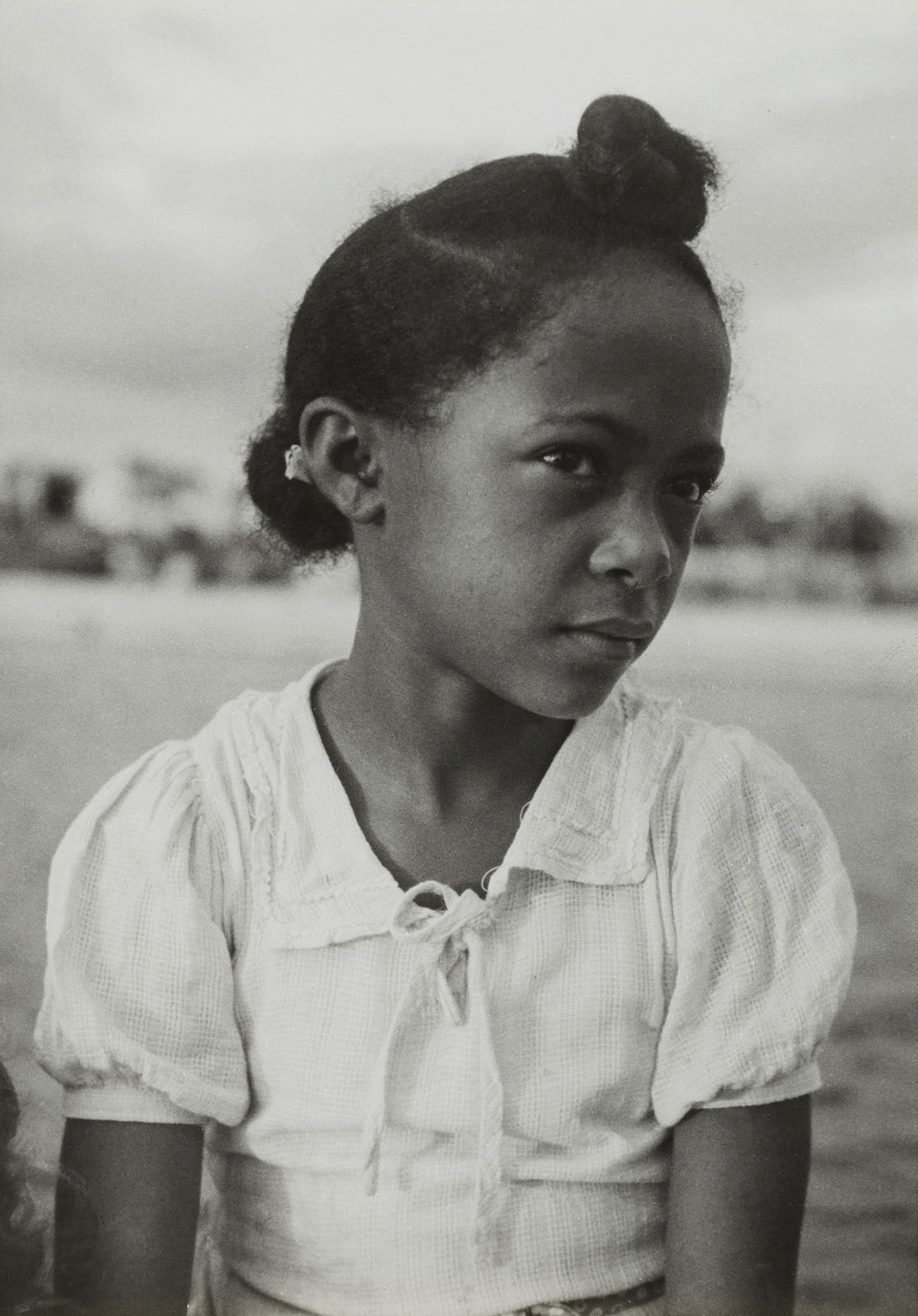
 

Hildegard Heise (German, 1897-1979) 'Portrait of a Girl, Hispaniola' 1937-1938


Hildegard Heise (German, 1897-1979)
Portrait of a Girl, Hispaniola
1937-1938
Gelatin silver paper
17.3 x 12.4cm
Museum für Kunst und Gewerbe Hamburg
© Estate Hildegard Heise, MK&G


Hildegard Heise (German, 1897-1979) 'Mutter und Kind auf dem Dampfer zwischen den Inseln' (Mother and child on the inter-island steamer) 1938


Hildegard Heise (German, 1897-1979)
Mutter und Kind auf dem Dampfer zwischen den Inseln (Mother and child on the inter-island steamer)
1938
From the series A journey through the West Indies
Gelatin silver paper
22 x 17cm
Museum für Kunst und Gewerbe Hamburg
© Nachlass Hildegard Heise, MK&G


Hildegard Heise (German, 1897-1979) 'Albert Renger-Patzsch mit Zylinder' (Albert Renger-Patzsch with top hat) After 1950


Hildegard Heise (German, 1897-1979)
Albert Renger-Patzsch mit Zylinder (Albert Renger-Patzsch with top hat)
After 1950
Gelatin silver paper
23.3 x 17.3cm
Museum für Kunst und Gewerbe Hamburg
© Nachlass Hildegard Heise, MK&G


Hildegard Heise (German, 1897-1979) 'Arnold Küstermann' 1951


Hildegard Heise (German, 1897-1979)
Arnold Küstermann
1951
Gelatin silver paper
23.2 x 17.1cm
Museum für Kunst und Gewerbe Hamburg
© Nachlass Hildegard Heise, MK&G


Hildegard Heise (German, 1897-1979) 'Winterliche Bäume, Hamburg' (Wintry trees, Hamburg) 1955


Hildegard Heise (German, 1897-1979)
Winterliche Bäume, Hamburg (Wintry trees, Hamburg)
1955
Gelatin silver paper
23 x 17.3cm
Museum für Kunst und Gewerbe Hamburg
© Nachlass Hildegard Heise, MK&G


A consistent theme in Hildegard Heise’s work is landscape photography. Up until old age, the photographer repeatedly dealt with trees and roots in an almost meditative repetition, while remaining true to her objective, sober approach. After moving to Nußdorf am Inn, she intensified her engagement with nature observation, where from 1960 extensive series about the Upper Bavarian winter landscape in the vicinity of her new place of residence were created. Photography remained Heise’s most important means of expression until the end of her life. From around 1965, Hildegard Heise photographed simultaneously in black and white and with colour slides. Heise photographed the passing clouds from the window of the residential home where she lived between 1973 and 1975.

Esther Ruelfs on the Museum fur Kunst und Gewerbe Hamburg website Nd [Online] Cited 11/02/2022


Hildegard Heise (German, 1897-1979) 'Blühende Apfelbäume, Nußdorf am Inn' (Blossoming apple trees, Nußdorf am Inn) 1961


Hildegard Heise (German, 1897-1979)
Blühende Apfelbäume, Nußdorf am Inn (Blossoming apple trees, Nußdorf am Inn)
1961
Gelatin silver paper
23 x 17.1cm
Museum für Kunst und Gewerbe Hamburg
© Nachlass Hildegard Heise, MK&G


Hildegard Heise (German, 1897-1979) 'Städter im Park, New York' (Townsfolk in the Park, New York) 1970


Hildegard Heise (German, 1897-1979)
Städter im Park, New York (Townsfolk in the Park, New York)
1970
Gelatin silver paper
19.3 x 17.4cm
Museum für Kunst und Gewerbe Hamburg
© Nachlass Hildegard Heise, MK&G


Museum für Kunst und Gewerbe Hamburg
Steintorplatz, 20099 Hamburg

Opening hours:
Tuesday to Sunday 10am – 6pm
Thursday 10am – 9pm
Closed Mondays
Museum fur Kunst und Gewerbe Hamburg website

LIKE ART BLART ON FACEBOOK

Back to top

European photographic research tour: Vintage August Sander photographs at Galerie Julian Sander, Cologne

Visited September 2019 posted July 2020


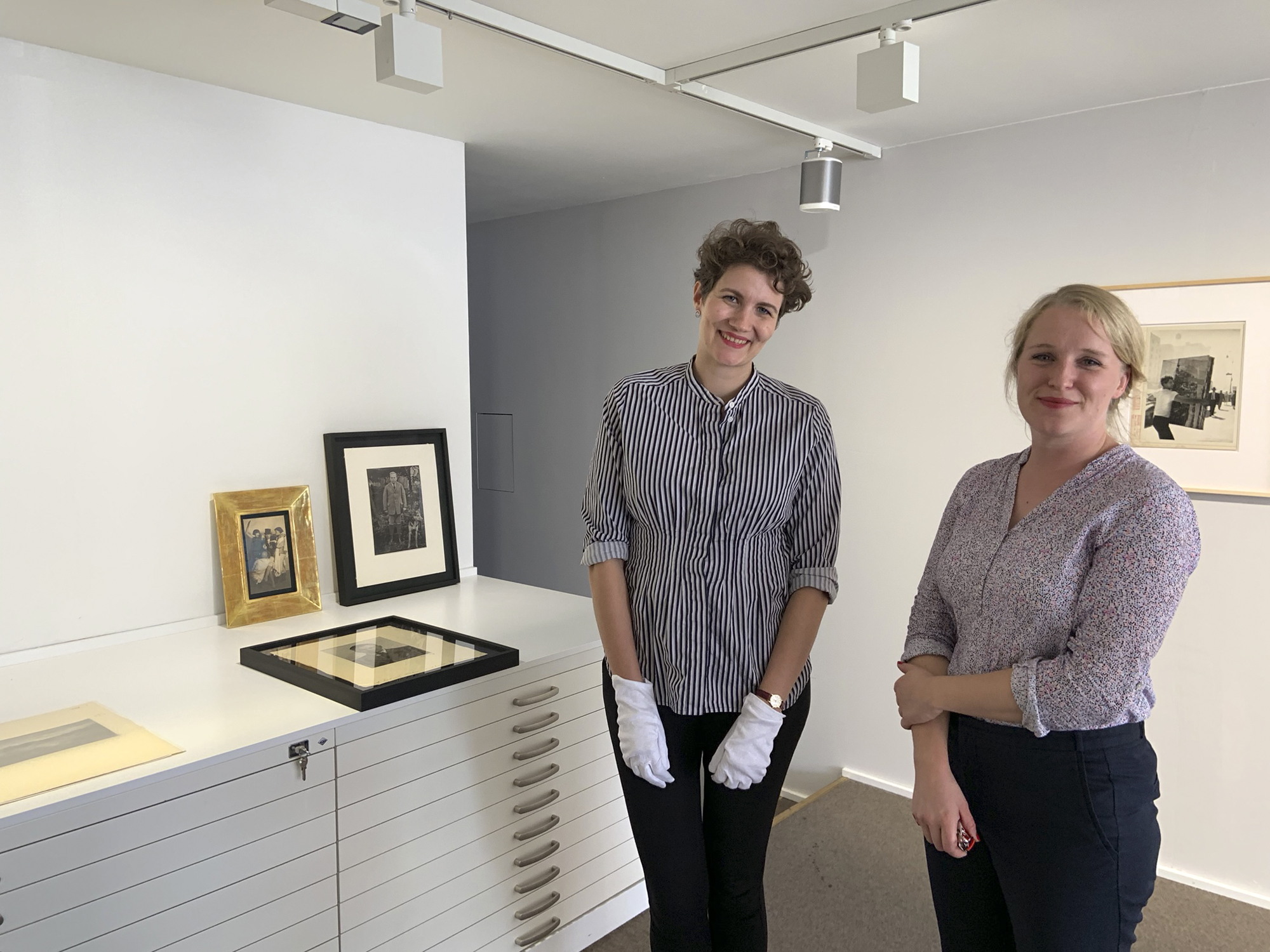
Tamara Könen of the gallery (left) and Kristina Engels from August Sander Stiftung – at Galerie Julian Sander, standing in front of August Sander's photographs


Tamara Könen of the gallery (left) and Kristina Engels from August Sander Stiftung – at Galerie Julian Sander, standing in front of August Sander’s photographs.


On my European photographic research tour in late 2019, I had a memorable visit to Galerie Julian Sander to see some vintage and later prints from the August Sander Archive / August Sander Stiftung with Tamara Könen from the gallery (left) and Kristina Engels from August Sander Stiftung.

It was a privilege to be able to see about 10 prints… the highlights being a stunning 1929-1930 vintage landscape, a vintage carnivalesque image of the Cologne avant-garde and a later print by his son of Painter’s Wife [Helene Abelen] 1926. The vintage landscape, like the vintage prints of Sudek, possessed no true black or white, the tonal range prescribed between zones 2-8.

The use of low depth of field in the portraits was outstanding. For example the shoes of Helene are completely out of focus whereas her hands are as crisp and clear as a summer breeze. Most astonishing was the panache of the bohemians, with the outstretched arm top left… printed on matt brown toned paper with a thin gold edge.

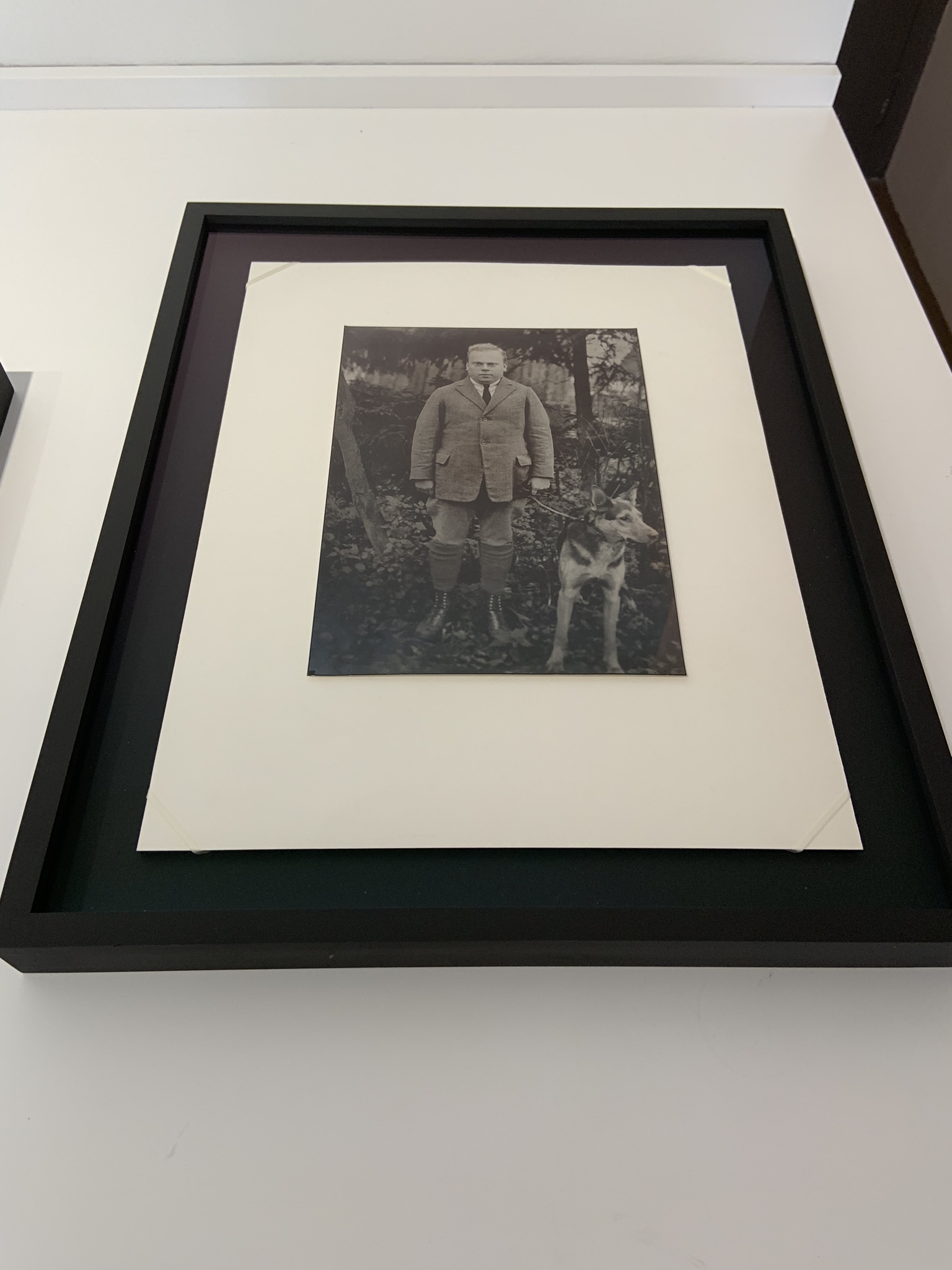
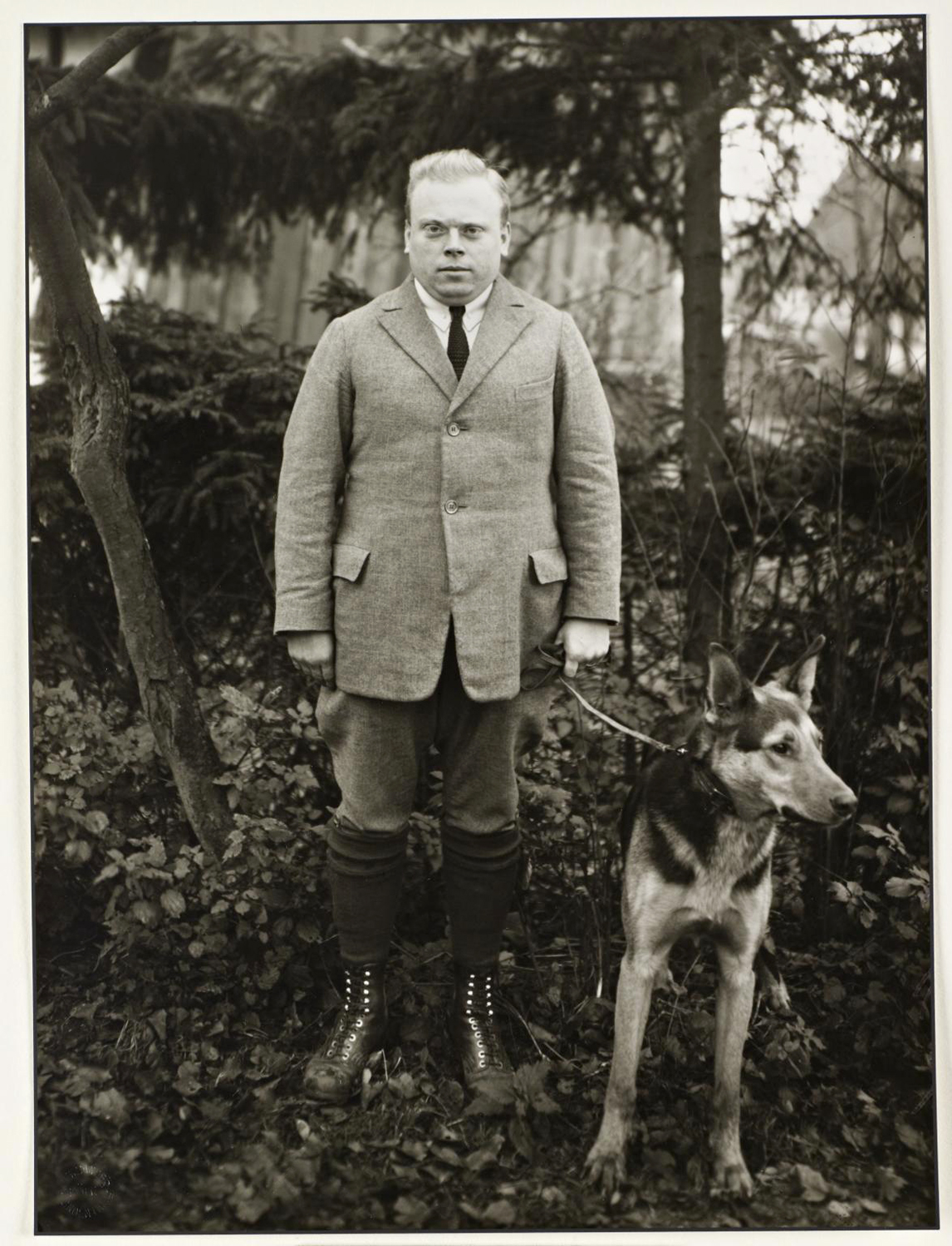
Another vintage print that showed selective depth of field was the photograph of a man with his dog, Junglehrer (Young Teacher) 1928. The dog’s lower legs were completely out of focus (Sander tilting his large format camera) making this oh so German photograph seem so surreal!

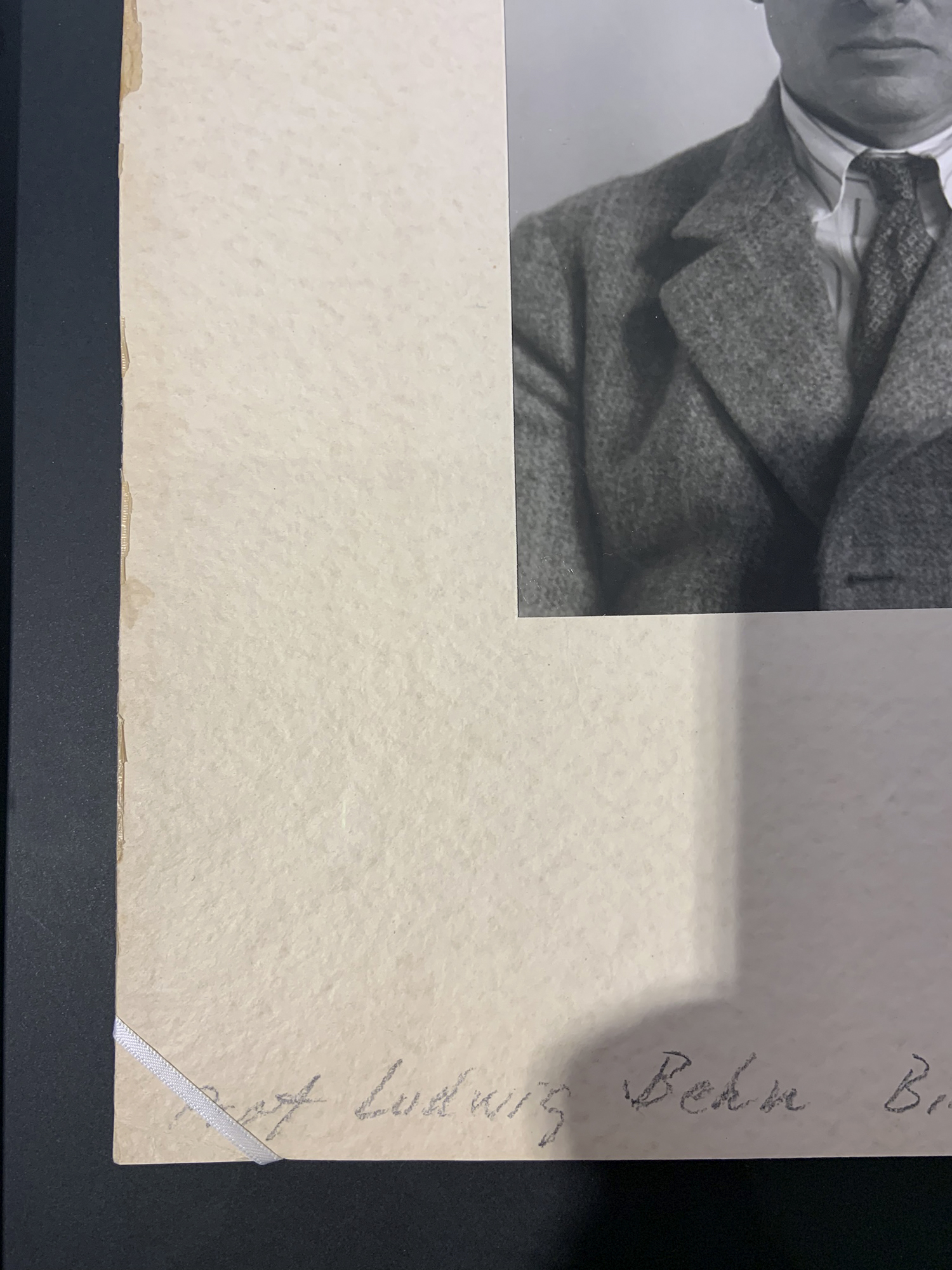
Other prints had a thin black edge and the vintage press print landscape (c. 1920s) was printed on thin single weight paper, while the vintage photograph of the sculptor Professor Ludwig Benh shows an original Sander mount – the print mounted behind an artist cut window. All prints were enlargements from 4×5” glass negatives or German equivalent size.

Such a wonderful learning experience! Thank you to the gallery for their time and knowledge.

Dr Marcus Bunyan


Please click on the photographs for a larger version of the image. Most photographs © Marcus Bunyan and Galerie Julian Sander


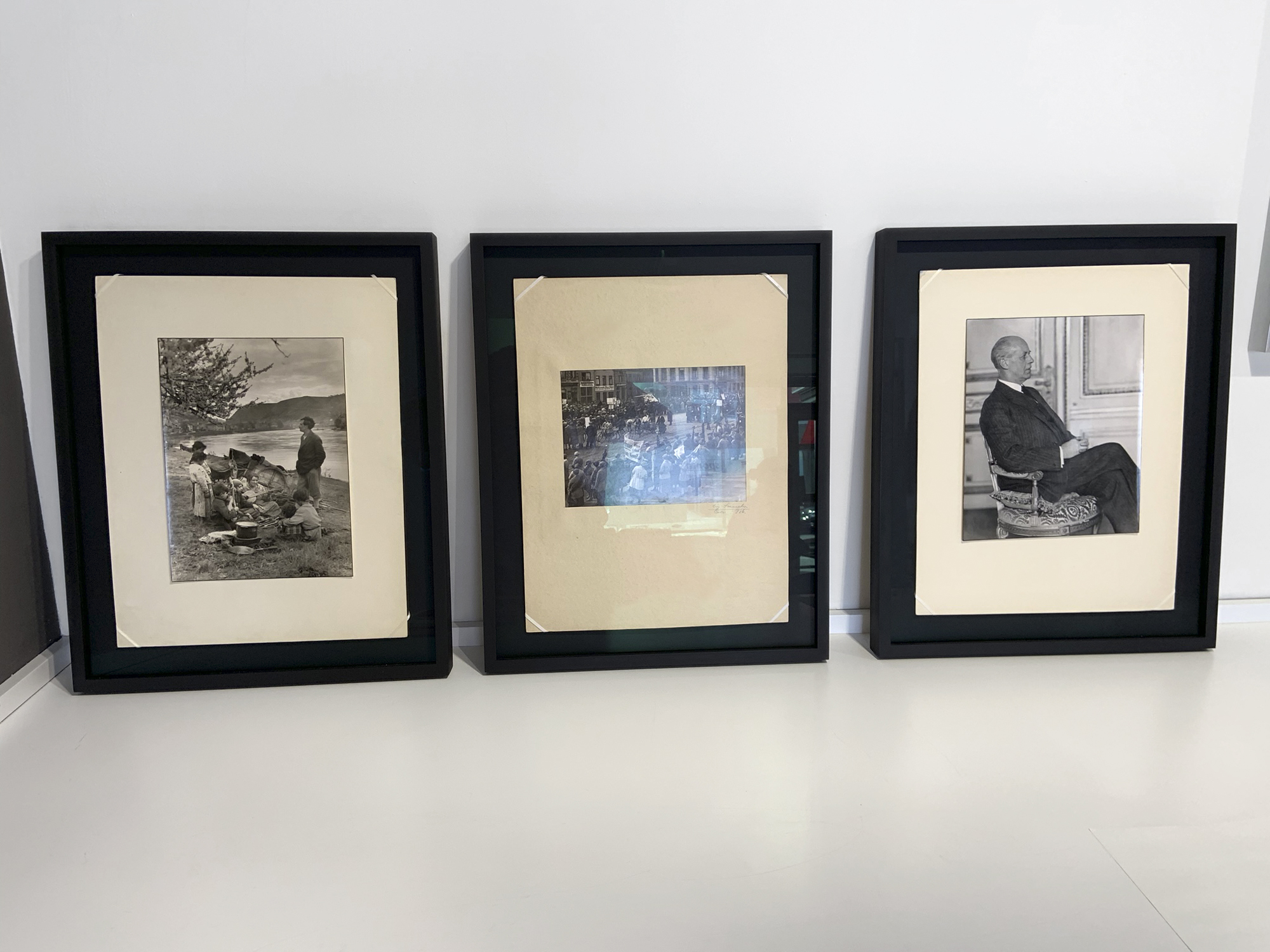
3 vintage prints, the left one with black edge floating free of the backboard; the second c .1920s of a Communist rally; and the third of an industrialist (Großindustrieller / The Industrialist, 1927)


3 vintage silver gelatin prints, the left one with black edge floating free of the backboard; the second c. 1920s of a Communist rally; and the third of an industrialist (Großindustrieller / The Industrialist, 1927)
Galerie Julian Sander, Cologne
Photo: Marcus Bunyan


August Sander (German, 1876-1964). 'Das Siebengebirge: Blick vom Rolandsbogen' [The Siebengebirge: view from the Rolandsbogen] 1929-30 (center) and 'Untitled [Remagen Bridge on the Rhine]' c. 1930 (right)


August Sander (German, 1876-1964)
Das Siebengebirge: Blick vom Rolandsbogen [The Siebengebirge: view from the Rolandsbogen] 1929-1930 (center) and Untitled [Remagen Bridge on the Rhine] c. 1930 (right)
Galerie Julian Sander, Cologne
Photo: Marcus Bunyan


August Sander (German, 1876-1964) 'Das Siebengebirge: Blick vom Rolandsbogen' [The Siebengebirge: view from the Rolandsbogen] 1929-1930


August Sander (German, 1876-1964)
Das Siebengebirge: Blick vom Rolandsbogen [The Siebengebirge: view from the Rolandsbogen]
1929-1930
Vintage gelatin silver print
Also titled:
Siebengebirge von der linken Rheinseite gesehen [Siebengebirge seen from the left side of the Rhine]
Blick vom Rolandsbogen auf das Siebengebirge mit Drachenfels [View from Roland Arch on the Siebengebirge with Drachenfels]
Galerie Julian Sander, Cologne
Photo: Marcus Bunyan


August Sander (German, 1876-1964) 'Das Siebengebirge: Blick vom Rolandsbogen' [The Siebengebirge: view from the Rolandsbogen] 1929-1930


August Sander (German, 1876-1964)
Das Siebengebirge: Blick vom Rolandsbogen [The Siebengebirge: view from the Rolandsbogen]
1929-1930
Vintage gelatin silver print
Also titled:
Siebengebirge von der linken Rheinseite gesehen [Siebengebirge seen from the left side of the Rhine]
Blick vom Rolandsbogen auf das Siebengebirge mit Drachenfels [View from Roland Arch on the Siebengebirge with Drachenfels]
Galerie Julian Sander, Cologne
Photo:
Marcus Bunyan


August Sander (German, 1876-1964) 'Das Siebengebirge: Blick vom Rolandsbogen' [The Siebengebirge: view from the Rolandsbogen] 1929-1930


August Sander (German, 1876-1964)
Das Siebengebirge: Blick vom Rolandsbogen [The Siebengebirge: view from the Rolandsbogen]
1929-1930
Vintage gelatin silver print


August Sander (German, 1876-1964) 'Untitled [Remagen Bridge on the Rhine]' c. 1930


August Sander (German, 1876-1964)
Untitled [Remagen Bridge on the Rhine]
c. 1930
Vintage gelatin silver press print
Galerie Julian Sander, Cologne
Photo: Marcus Bunyan


August Sander (German, 1876-1964) 'Untitled [Bohemians: avant-garde of Cologne]' 1920s (left) and 'Professor Ludwig Behn' 1920s (right)


August Sander (German, 1876-1964)
Untitled [Bohemians: avant-garde of Cologne] 1920s (left) and Professor Ludwig Behn 1920s (right)
Vintage gelatin silver print with gold edge printed on matt warm toned paper
Galerie Julian Sander, Cologne
Photo: Marcus Bunyan


August Sander (German, 1876-1964) 'Untitled [Bohemians: avant-garde of Cologne]' 1920s


August Sander (German, 1876-1964)
Untitled [Bohemians: avant-garde of Cologne]
1920s
Vintage gelatin silver print with gold edge printed on matt warm toned paper
Galerie Julian Sander, Cologne
Photo: Marcus Bunyan


August Sander (German, 1876-1964) 'Untitled [Bohemians: avant-garde of Cologne]' 1920s


August Sander (German, 1876-1964)
Untitled [Bohemians: avant-garde of Cologne]
1920s
Vintage gelatin silver print with gold edge printed on matt warm toned paper
Galerie Julian Sander, Cologne
Photo: Marcus Bunyan


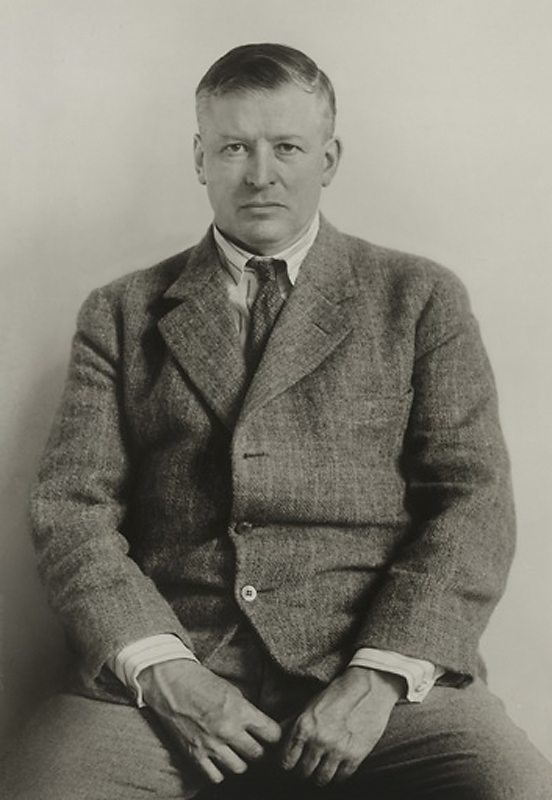
August Sander (German, 1876-1964) 'Professor Ludwig Behn, Bildhaver, Munich' 1920s


August Sander (German, 1876-1964)
Professor Ludwig Behn, Bildhaver, Münich
1920s
Gelatin silver print


August Sander (German, 1876-1964) 'Professor Ludwig Behn, Bildhaver, Munich' 1920s (detail)


August Sander (German, 1876-1964)
Professor Ludwig Behn, Bildhaver, Münich
1920s
Vintage gelatin silver print with original Sander mount
Galerie Julian Sander, Cologne
Photo: Marcus Bunyan


August Sander (German, 1876-1964) 'Painter's Wife [Helene Abelen]' 1926


August Sander (German, 1876-1964)
Painter’s Wife [Helene Abelen]
1926
Later gelatin silver print by Sander’s son
Galerie Julian Sander, Cologne
Photo: Marcus Bunyan


This photograph shows Helene Abelen, wife of the Cologne painter, Peter Abelen. During the 1920s August Sander befriended many Cologne artists because of his involvement with the Cologne Progressive Artists Group (Gruppe Progressiver Künstler Köln). In 1926 Sander was asked by Peter Abelen to create a portrait of his young wife. With her short, slicked-back hair, collared shirt, thin necktie and trousers, Frau Abelen is presented as a distinctly androgynous figure. Her masculine garb and haircut, as well as the cigarette held between her teeth, signal a defiance of traditional gender roles. Staring determinedly out at the viewer Helene Abelen’s animated expression is unusual for a Sander portrait and falls somewhere between bravado and agitation.

This portrait reflects the so-called ‘new woman’ of the Weimar Republic. The concept of the ‘new woman’ dates from before the First World War but became firmly rooted during it when women were mobilised in the workforce. Within Germany this created considerable anxiety about women’s roles, particularly in relation to the family. In 1928, on the tenth anniversary of the end of the war, the Münchner Illustrierte Presse showed on its cover a photograph of a young woman, with short hair and skirt, astride a motorcycle with a lit cigarette in hand, with the heading, ‘Only ten years – a different world’. Like this magazine image, Sander’s portrait of Helene Abelen reflected a consciousness about the blurring of gender roles in the wake of the ‘new woman’.

Painter’s Wife represents an anomaly in Sander’s work. For the most part, his depictions of women show them as wives and mothers, as the soul of the home and the family. Contrary to appearances, this portrait should not be taken to represent an unqualified vision of female independence. The costume Helene Abelen is wearing was created for her by Peter Abelen and the haircut she sports was also his choice. Her daughter later commented of this work: ‘This was the creation of my father. He wanted her to look like this. He always did our dresses’ (quoted in Greenberg 2000, p. 121).

Matthew Macaulay
November 2011

Text from the Tate website [Online] Cited 24/06/2020


August Sander (German, 1876-1964) 'Junglehrer' (Young Teacher) 1928


August Sander (German, 1876-1964)
Junglehrer (Young Teacher)
1928
Vintage gelatin silver print with black edge
Galerie Julian Sander, Cologne
Photo: Marcus Bunyan


August Sander (German, 1876-1964) 'Junglehrer' (Young Teacher) 1928


August Sander (German, 1876-1964)
Junglehrer (Young Teacher)
1928
Vintage gelatin silver print with black edge
Galerie Julian Sander, Cologne
Photo: Marcus Bunyan


Galerie Julian Sander
Cäcilienstr. 48
50667 Cologne
Germany
Phone: +49 (0) 221 170 50 70

Opening hours:
Tuesday – Friday 12.00 – 18.00

Galerie Julian Sander website

LIKE ART BLART ON FACEBOOK

Back to top

Exhibition: ‘Albert Renger-Patzsch: Things’ at Jeu de Paume, Paris

Exhibition dates: 17th October, 2017 – 21st January, 2018

Curator: Sérgio Mah, Universidade NOVA, Lisboa


Albert Renger-Patzsch (German, 1897-1966) 'Stapelia variegata, Asclepiadaceae' 1923 from the exhibition Exhibition: 'Albert Renger-Patzsch: Things' at Jeu de Paume, Paris, Oct 2017 - Jan 2018


Albert Renger-Patzsch (German, 1897-1966)
Stapelia variegata, Asclepiadaceae
1923
Albert Renger-Patzsch Archiv / Stiftung Ann und Jürgen Wilde. Pinakothek der Moderne, Munich
© Albert Renger-Patzsch / Archiv Ann und Jürgen Wilde, Zülpich / ADAGP, Paris 2017


Experiencing the image

“[Walter Isaacson] describes the photographs, of which 7200 … miraculously survive today, as the greatest record of curiosity, because his “cross-disciplinary brilliance whirls across every page, providing a delightful display of a mind dancing with nature”. Renger-Patzsch delighted in seeing patterns in nature, so he would juxtapose a photograph of the branching arteries of the heart with the roots of a sprouting tree.”1


A mind dancing with nature.

Of course, the original quote (which I have altered) was talking about Leonardo da Vinci… but the same enquiring mind, the same display can be seen in the work of Albert Renger-Patzsch. His was a mind entranced by the nature of technology, and the technology, the structure of nature. However, he is ambivalent about the benefits of industrialisation even as he photographed it in ‘New Objectivity’ style – that is, supposedly free from emotion and subjectivity.

No writing about his work can put it better than this quote from when this exhibition was at Fundación MAPFRE in Madrid:

“Technical precision and exact representation of the subject; psychological contention and rejection of pictorial stylisation and expressionism; a keen sense of composition with attention to details, structures and forms; a sharp and clear construction of the image: these were some of the fundamental premises of a tendency that understands photography as a privileged medium to promote an artistic and simultaneously perceptive shift.

Renger-Patzsch’s work amalgamates a great number of photographic subjects, typologies and genres. In a historical period marked by deep political tension and significant social and economic change, his work allows the viewer to envision a unique worldview, a platform of intersections and re-appreciations between the domains of nature and technology.”


The only point I would not support in this quotation are these words, “psychological contention and rejection of pictorial stylisation and expressionism.”

Of course, “through the disconcerting simplicity of the photographs Renger-Patzsch highlights the phenomenological and psychological aspects that are part of experiencing the image,” but he does so not through a REJECTION of pictorial stylisation and expressionism (and all the baggage that those words embody), but through an INTENSIFICATION of a different form of pictorial style which forces? the image to emit a new form of expression. That is, the object is just its surface and is captured, instantly, by the camera in this perceptive shift.

Can you imagine seeing these photographs in the 1920s, having never seen anything like them before? They would have been revolutionary, in their rendering of the surface of the object and nothing more. Placing the camera directly before the object which requires nothing else but itself… the eye of the snake, the darkness of a tree trunk, the ordering of shoemakers’ irons. But then he finishes his ode to life, Die Welt ist schön (The World is Beautiful), with his version of Albrecht Dürer’s Praying Hands (c. 1508). I suspect that the idea the Renger-Patzsch was working with is that beauty is truth, and truth is beauty.

In contemporary society, have we lost the ability to see these photographs as he intended, with a child-like innocence? Was he saying, this is objective, do you agree? Or does the poetic intensity in the life of things refuse to be stilled?

For me, these photographs are not e/motion-less, they are the very essence of a reality rendered wonderful in my eyes.

Dr Marcus Bunyan


1/ Paraphrase of Tina Allen. “Prophetic Polymath,” on Leonardo da Vinci by Walter Isaacson in Weekend Australian Review January 6-7 2018, p. 14


Many thankx to Jeu de Paume for allowing me to publish the photographs in the posting. Please click on the photographs for a larger version of the image.


Albert Renger Patzsch / Trailer

Independently of the role he played in New Objectivity – an artistic movement that appeared in Germany at the beginning of the 1920s – Albert Renger-Patzsch (1897-1966) is today considered one of the most important and most important figures / influences in the history of 20th century photography.

The exhibition pays tribute to this extraordinary photographer and allows us to rediscover the posterity of a work that invites us to reflect on the nature of photography and on its artistic and speculative potential in the context of contemporary art and culture.


Albert Renger-Patzsch (German, 1897-1966)

Albert Renger-Patzsch (1897-1966), who produced a huge body of work spanning four and half decades, was one of the most influential photographers of the New Objectivity movement that emerged in Germany in the mid 1920s. His work helped to establish photography as a unique and important medium within modern art. Renger-Patzsch revived realism in photography, adopting an approach that was characterised by formal and technical rigour and a rejection of expressionism and pictorial stylisation. He had a highly developed sense of composition, and his attention to detail, structure and form resulted in images with sharp, clear compositions. For Renger-Patzsch, photography was a medium that made possible new forms of artistic imagery, while being perfectly in step with a period marked by industrialisation and the spread of technology. By highlighting the medium’s unique properties and the creative possibilities of documentary photography, Renger-Patzsch forged a unique role for photography within the arts of his time.

His original, simple images combine extraordinary realism and documentary value with poetic and phenomenological resonance, giving them great power. Renger-Patzsch was a highly prolific photographer who explored a wide range of subjects and genres. This exhibition highlights the invaluable legacy of this extraordinary photographer, whose work provides an ideal context for reflecting on the specificities and relevance of photography within the field of contemporary art and culture.

– The Design of Nature
– From Vernacular Landscape to the Modern City
– The vision of things
– Landscapes of the Ruhr: the Topography of a Transformation
– Industrial Objects and Architecture: Geometry and Series
– The Destiny of Nature

Sérgio Mah


The Design of Nature

During the initial phase of his career, Albert Renger-Patzsch produced a series of photographs depicting plants and flowers for the collection Die Welt der Pflanze (The World of Plants), coordinated by Ernst Fuhrmann as part of his biosophical studies.

The first two volumes in the series, both published in 1924, were Orchideen (Orchids) and Crassula. Renger-Patzsch worked within the general parameters of the book, reproducing fragments of nature with as much objectivity and clarity as possible. He produced a large number of photographs distinguished by their great technical and compositional rigour, including systematic close-ups of plants and flowers. In 1923, Renger-Patzsch wrote his first text, “Pflanzenaufnahmen” (Plant photographs), setting out his views on photography and its extraordinary capacity for capturing nature. Among the images and arguments in the text he outlines some of the key principles that would underpin his photography: attention to detail and emphasis on the formal, structural and material aspects of nature, as well as, correspondingly, a reiterative affirmation of the intrinsic qualities of photography – realism, objectivity, neutrality – and its unique role in expanding our perception of reality.


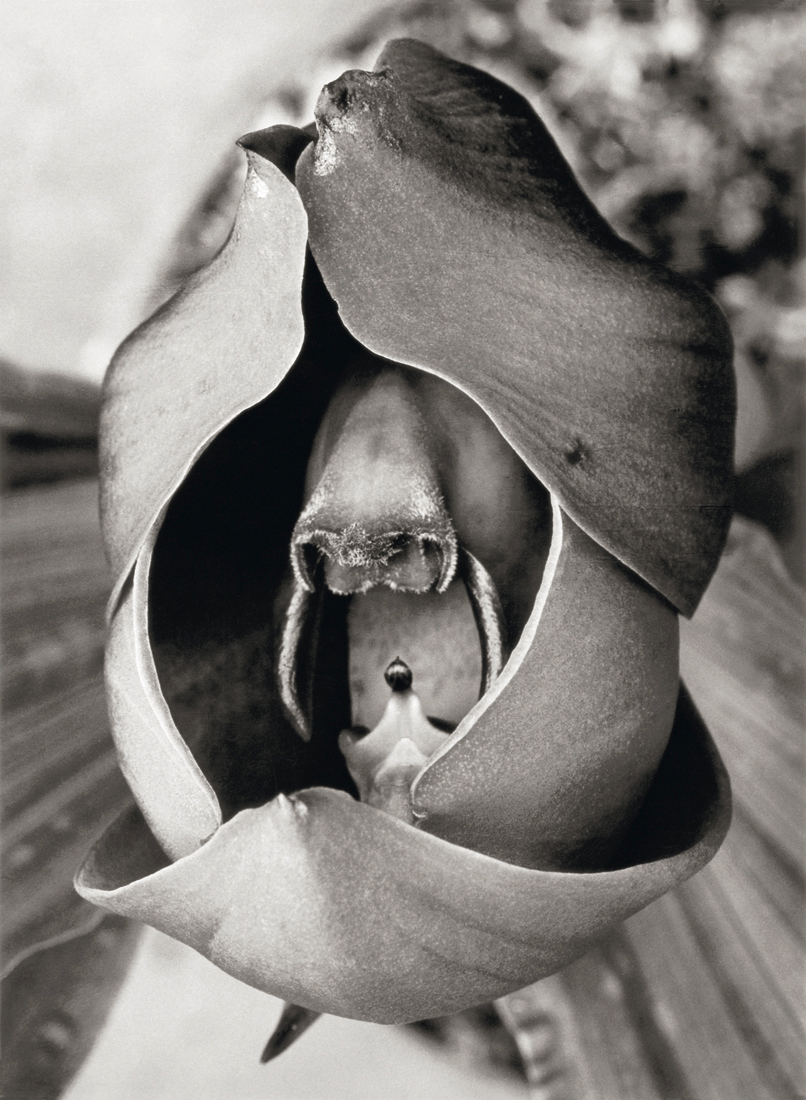
Albert Renger-Patzsch (German, 1897-1966) 'Catasetum trindentatum, Orchidaceae' 1922-1923 from the exhibition Exhibition: 'Albert Renger-Patzsch: Things' at Jeu de Paume, Paris, Oct 2017 - Jan 2018


Albert Renger-Patzsch (German, 1897-1966)
Catasetum trindentatum, Orchidaceae
1922-1923
Albert Renger-Patzsch Archiv / Stiftung Ann und Jürgen Wilde, Pinakothek der Moderne, Munich
© Albert Renger-Patzsch / Archiv Ann und Jürgen Wilde, Zülpich / ADAGP, Paris 2017


Albert Renger-Patzsch (German, 1897-1966) 'Brasilianischer Melonenbaum von unten gesehen [Brazilian melon tree seen from below]' 1923


Albert Renger-Patzsch (German, 1897-1966)
Brasilianischer Melonenbaum von unten gesehen (Brazilian melon tree seen from below)
1923
Galerie Berinson, Berlin
© Albert Renger-Patzsch / Archiv Ann und Jürgen Wilde, Zülpich / ADAGP, Paris 2017


From Vernacular Landscape to the Modern City

In 1927, Albert Renger-Patzsch published his most ambitious book to date, Die Halligen (The Halligen Islands), with images of the islands in the Wadden Sea, on the northern coast of Germany.

His photographs featured a number of subjects: landscapes, portraits, architectural motifs and everyday activities. These subjects encapsulated the relationship between local ways of life (genuine, deep-rooted, traditional) and the physical and symbolic characteristics of this peculiar area. This vernacular reality contrasted with the rampant industrialisation that was transforming many of the great urban centres in Germany.

Over the ensuing years, Renger-Patzsch published Lübeck (1928) and Hamburg (1930), books that highlight the emerging characteristics of the modern city, the coexistence of different historic periods and the intersection between historical culture and the impact of industrialisation. In these photographs the photographer’s interest in combining documentary objectives with the creative potential of a modern vision is evident in his use of close-cropped, asymmetrical compositions and innovative perspectives, alternating between general shots and a focus on details. He displays sensitivity to the formal and structural aspects of reality, rejecting the atavistic influence of painting in order to embrace the possibilities of a “new vision” governed by photography.


Albert Renger-Patzsch (German, 1897-1966) 'Krabbenfischerin [Shrimp fisherwoman]' 1927


Albert Renger-Patzsch (German, 1897-1966)
Krabbenfischerin (Shrimp fisherwoman)
1927
Centre Pompidou, Musée national d’art moderne – Centre de création industrielle, Paris. Acquisition en 1979
© Albert Renger-Patzsch / Archiv Ann und Jürgen Wilde, Zülpich / ADAGP, Paris 2017


The vision of things

In 1928, Albert Renger-Patzsch’s best-known book was published, Die Welt ist schön (The World is Beautiful), although the photographer would have preferred the title Die Dinge (Things).

It exemplifies the principles and characteristics of the photographer’s work: a desire to represent the immanent substance of an object/subject while demonstrating photography’s capacity for recording reality. In this respect, representing the unique character of a particular thing was also a way of affirming the unique character of photography.

The book encompasses a wide range of subjects and elements from the photographer’s world. It is an anthology of photographs taken since the beginning of his career, including several images produced for the books Die Welt der Pflanze, Die Halligen and Lübeck. Photographic genres are equally diverse, spanning portrait, landscape, still life and architectural images. The subjects are presented in an evolving thematic and conceptual sequence: first nature, plants, animals, people and landscapes; next, the manmade world of objects, architecture, the city, machines, and industrial structures and spaces. In this way a worldview is organised, a context of intersections and reappraisals, between nature and technology, between the sacred and the profane, between historical heritage and modernity.


Albert Renger-Patzsch (German, 1897-1966) 'Ritzel and Zahnräder, Lindener Eisen-und Stahlwerke [Sprockets and gears, Lindener Eisen-und Stahlwerke factory]' 1927


Albert Renger-Patzsch (German, 1897-1966)
Ritzel and Zahnräder, Lindener Eisen-und Stahlwerke (Sprockets and gears, Lindener Eisen-und Stahlwerke factory)
1927
Albert Renger-Patzsch. Albert Renger-Patzsch Archiv / Stiftung Ann und Jürgen Wilde, Pinakothek der Moderne, Munich
© Albert Renger-Patzsch / Archiv Ann and Jürgen Wilde, Zülpich / ADAGP, Paris 2017


Albert Renger-Patzsch (German, 1897-1966) 'Bügeleisen für Schuhfabrikation, Faguswerk Alfeld [Shoemakers' irons, Fagus factory, Alfeld]' 1928


Albert Renger-Patzsch (German, 1897-1966)
Bügeleisen für Schuhfabrikation, Faguswerk Alfeld (Shoemakers’ irons, Fagus factory, Alfeld)
1928
Albert Renger-Patzsch Archiv / Stiftung Ann und Jürgen Wilde, Pinakothek der Moderne, Munich
© Albert Renger-Patzsch / Archiv Ann und Jürgen Wilde, Zülpich / ADAGP, Paris 2017


Focus on the book Die Welt ist schön (The World is Beautiful)

Like other artists of his time, Renger-Patzsch was especially keen on exploring the formal analogies between the things of nature and industrial things. Industry led to mass production and the manufacture of standardised objects, exemplified in this image. This contrasts with other images from Die Welt ist schön (The World is Beautiful), such as Gebirgsforst im Winter (Mountain forest in winter) (below), which capture repetition in nature.

Renger-Patzsch identifies a coherence, a parity, between nature and culture as non-antagonistic doHands. He suggests a measure of naturalness in technology, and a measure of rationality in nature. For the photographer the emphasis on industrial seriality also allowed him to underscore the seriality of photography itself (as a means of technical reproduction), thus demonstrating the unique, mediating condition of this medium for visual reproduction in the connection between the natural world and the world of modern industry.


Albert Renger-Patzsch (German, 1897-1966) 'Gebirgsforst im Winter (Fichtenwald im Winter)' [Mountain forest in winter (spruce forest in winter)] 1926


Albert Renger-Patzsch (German, 1897-1966)
Gebirgsforst im Winter (Fichtenwald im Winter)
(Mountain forest in winter (spruce forest in winter))
1926
Galerie Berinson, Berlin
© Albert Renger-Patzsch / Archiv Ann und Jürgen Wilde, Zülpich / ADAGP, Paris 2017


Albert Renger-Patzsch (German, 1897-1966) 'Natterkopf [Head of an adder]' 1925


Albert Renger-Patzsch (German, 1897-1966)
Natterkopf (Head of an adder)
1925
Galerie Berinson, Berlin
© Albert Renger-Patzsch / Archiv Ann und Jürgen Wilde, Zülpich / ADAGP, Paris 2017


Focus on the book Die Welt ist schön (The World is Beautiful)

Painstaking attention to detail is a central feature of Renger-Patzsch’s photography, as demonstrated by several images in Die Welt ist schön (The World is Beautiful). Resorting to pronounced close-ups or subsequent reframing, the photographer breaks down and isolates the vision of certain things, thereby providing a fresh perspective: in this case, the image of a serpent’s head surrounded by a section of its body.

The close-up framing allows him to accentuate the two-dimensionality of the image, the part being more suggestive than the whole. This is a realistic, objective vision, but one aimed at creating a tension between the concrete nature of the motif and its abstract character.


Albert Renger-Patzsch (German, 1897-1966) 'Hände [Hands]' 1926-1927


Albert Renger-Patzsch (German, 1897-1966)
Hände (Hands)
1926-1927
Collection Ann und Jürgen Wilde
© Albert Renger-Patzsch / Archiv Ann und Jürgen Wilde, Zülpich / ADAGP, Paris 2017


Focus on the book Die Welt ist schön (The World is Beautiful)

This is the hundredth and last image of Die Welt ist schön (The World is Beautiful). It shows a pair of hands joined together, isolated from the rest of the body, rising over a black background in a gesture heavy with symbolic, meditative and spiritual fervour.

Aware that photography was increasingly becoming mundane and banal, and that the experience of attention was crumbling in the face of the accelerating transformation of reality, in Die Welt ist schön Renger-Patzsch offers an imaginary world where modern subjects can be reconnected with the things surrounding them via the mediation of a diffuse and calm temporality, the temporality of tradition and myth. A symptom of this vision is precisely the closing image of the book.


“To do justice to modern technology’s rigid linear structure, to the lofty gridwork of cranes and bridges, to the dynamism of machines operating at one thousand horsepower – only photography can do that. […] The absolutely correct rendering of form, the subtlety of tonal gradation from the brightest light to the darkest shadow, impart to a technically expert photograph the magic of experience.”


Albert Renger-Patzsch, “Ziele”, ‘Das Deutsche Lichtbild’, Berlin, 1927


“There is an urgent need to examine old opinions and look at things from a new viewpoint. There must be an increase in the joy one takes in an object, and the photographer should become fully conscious of the splendid fidelity of reproduction made possible by this technique.”


Albert Renger-Patzsch, “Die Freude am Gegenstand,” ‘Das Kunstblatt’, Berlin, 1928


“[…] the eye is subjective; it views with pleasure the essential things and completely overlooks what is unimportant. The camera, on the other hand, has to reproduce the entire image in focus and in a particular size. It will see the essential and the inessential with equal clarity.”


Albert Renger-Patzsch, in ‘Meister der Kamera erzählen wie sie wurden und wie sie arbeiten’, Halle (Saale), 1937


“[…] the eye is not isolated in its perception of the world. Rather its connections to the brain and the support of our senses in experience heat, cold wind, noise, smells and so on create an extraordinarily compact image of the world, whose plasticity and density are perhaps intensified by a particularly appropriate emotional state. Photography reduces this colourful world into a black-and-white rectangle. It is obvious that this most unpretentious of art forms requires the greatest reliability of taste, ability for abstraction, fantasy and concentration.”


Albert Renger-Patzsch, in ‘Meister der Kamera erzählen wie sie wurden und wie sie arbeiten’, Halle (Saale), 1937


The aim of this exhibition is to rediscover and pay tribute to the legacy of this unique photographer in the conviction that his work offers a context for encouraging reflection on the nature and artistic and speculative potential of photography within the framework of contemporary art and culture.

Of enormous simplicity and originality, Renger-Patzsch’s photography is notable for being based on a documentary style that prioritised realist sobriety and frankness as fundamental characteristics of photographic representation. In other words, his work offers a rigorous approach in technical and formal terms, in which the camera is only used to intensify our vision and aware of things. For Renger-Patzsch, this not only explained his photographic procedures but above all the potential for an aesthetic and conceptual identity for photography that visibly distanced itself from the Pictorialist legacy and from the hybrid experimentalism characteristic of the early 20th-century avant-gardes.

Both Renger-Patzsch’s photography and the various texts in which he set out his ideas reveal his determination to exploit the qualities inherent in the photographic medium. He stated that his aim was: “to use photographic means to create a photography that could exist through its own photographic nature.” In another text Renger-Patzsch wrote that,

“the eyes are not isolated from their perception of the world.

On the contrary, they are part of our senses and, by being connected to the brain, allow us to experience heat, cold, wind, noise, smell, and to rapidly construct a remarkably compacted image of the world, the plasticity and density of which also depend on our emotional states.

Photography reduces the world in colour to a rectangle in black and white. And logically, given that it is the least pretentious form of art, it requires rigorous taste, a capacity for abstraction, imagination and concentration.”


Such statements reveal that the exceptional quality of Renger-Patzsch’s work and thought is also notable for the way it conceives and expands the horizon and scope of the idea of documentary photography. As a result, the descriptive and objective qualities of photography are combined with and articulated by its aesthetic, poetic and phenomenological powers.

This retrospective aims to encompass the principal themes, periods and genres that define Renger-Patzsch’s photographic output through the identification of three moments that are fundamental for an understanding of his career: firstly, his early years, from his photographs of plants taken for Folkwang / Auriga publishers, to the profusion of themes and photographic eclecticism which would be decisive for the creation of his book Die Welt ist schön (The World is Beautiful) of 1928. The period that began after his move to Essen was one of intense photographic creation on the Ruhr area, principally involving subjects associated with places, buildings and industrial objects. Finally, the years after World War II reveal a new interest in the themes of nature and landscape particularly trees and rocks.

Including around 154 photographs, this is one of the largest retrospectives on the artist to date and undoubtedly the one to bring together the largest number of works by Renger-Patzsch from institutional and private collections: the Stiftung Ann und Jürgen Wilde / Pinakothek der Moderne München (Munich), the Museum Folkwang (Essen), the Ludwig Museum (Cologne), the Galerie Berinson (Berlin), the Centre Georges Pompidou (Paris).

Press release from Jeu de Paume


Highlights of the exhibition

Author of a monumental oeuvre created over four and a half decades, Albert Renger-Patzsch (1897-1966) was the leading photographer of the New Objectivity movement that appeared in German art in the mid 1920s.

Renger-Patzsch was a prolific photographer and his oeuvre encompasses a variety of themes, types and genres. This exhibition covers the most important stages in Renger-Patzsch’s career, from his first photographs of plant details, urban scenes and industrial subjects to his later landscape work. In total the exhibition features more than 150 photographs, mostly vintage prints from the most important collections in Germany.

Renger-Patzsch devoted himself to creating a new photographic realism, characterised by an extreme simplicity and originality. He created a modern visual language that was imbued with a poetic resonance and helped to redefine the photographic image. For Renger-Patzsch, photography was the most appropriate medium for carrying out a change that was simultaneously artistic and perceptual, i.e., the possibility of a new kind of image that reflected the changes of the 1920s and 1930s, a period marked by industrialisation and the spread of technology.

Albert Renger-Patzsch is the author of one of the seminal books in the history of photography, Die Welt ist schön (The World is Beautiful), which was published in 1928. This work reveals the full scope of Renger-Patzsch’s approach, which was to capture the unique character of each concrete thing in order to affirm also the unique character of photography.

Renger-Patzsch produced an exceptional body of work on the theme of industrial architecture, which he helped to turn into a genre in itself. He exerted a decisive influence on generations of photographers, not least Bernd and Hilla Becher. This exhibition sets out to highlight the vital legacy of this extraordinary photographer. In so doing, it sheds light on the important role of photography within the context of contemporary art and culture.


Albert Renger-Patzsch (German, 1897-1966) 'Landstraße bei Essen [Country road near Essen]' 1929


Albert Renger-Patzsch (German, 1897-1966)
Landstraße bei Essen (Country road near Essen)
1929
Albert Renger-Patzsch Archiv / Stiftung Ann und Jürgen Wilde, Pinakothek der Moderne, Munich
© Albert Renger-Patzsch / Archiv Ann und Jürgen Wilde, Zülpich / ADAGP, Paris 2017


Landscapes of the Ruhr: the Topography of a Transformation

In 1929, Renger-Patzsch relocated to Essen, in the Ruhr, Germany’s leading industrial region and one the photographer was familiar with.

Two years earlier, he had produced the first images in an ambitious project focusing on the landscapes of the Ruhr, which he would work on until 1935. In this realm of contrasts, he became particularly interested in spaces that were between cities, between the urban and the rural, landscapes that displayed the process of change that the region was undergoing due to industrialisation and the development of public infrastructure.

The works reflect a change in Renger-Patzsch’s photographic vision: the compositions are widened, in some cases into large panoramic views. The images now focus on a multiplicity of elements and explore interpretative relationships and associations. His preference for more open images that include the surroundings of objects, rather than just close-ups, reflects a more inclusive objectivity. Some images include people, usually seen from afar. These figures are set in particular socio-spatial contexts and help to highlight the enormous disparity in scale between the human figure and the new industrial complexes. Vertical and horizontal elements, close up and in the distance, are combined and juxtaposed. The relationship between different planes, between foreground and background, is intensified in order to show how industry has shaped the landscape, turning it into a heterogeneous and paradoxical landscape (in historical and social terms).


Albert Renger-Patzsch (German, 1897-1966) 'Landschaft bei Essen und Zeche "Rosenblumendelle" [Landscape near Essen with the Rosenblumendelle colliery]' 1928


Albert Renger-Patzsch (German, 1897-1966)
Landschaft bei Essen und Zeche “Rosenblumendelle” (Landscape near Essen with the Rosenblumendelle colliery)
1928
Albert Renger-Patzsch Archiv / Stiftung Ann und Jürgen Wilde, Pinakothek der Moderne, Munich
© Albert Renger-Patzsch / Archiv Ann und Jürgen Wilde, Zülpich / ADAGP, Paris 2017


Albert Renger-Patzsch (German, 1897-1966) 'Zeche "Victoria Mathias" in Essen [Colliery "Victoria Mathias" in Essen]' 1929


Albert Renger-Patzsch (German, 1897-1966)
Zeche “Victoria Mathias” in Essen (Colliery “Victoria Mathias” in Essen)
1929
Albert Renger-Patzsch Archiv / Stiftung Ann und Jürgen Wilde, Pinakothek der Moderne, Munich. © Albert Renger-Patzsch / Archiv Ann und Jürgen Wilde, Zülpich / ADAGP, Paris 2017


Focus on the Ruhr

In the photographs of the Ruhr, the landscape emerges as a genre in which disparate elements are combined and contrasted, a way of exploring the boundaries between the rural and industrial worlds, the city and the periphery.

One of the most extraordinary examples from this period is the 1928 image Landschaft bei Essen und Zeche “Rosenblumendelle” (Landscape near Essen with the Rosenblumendelle colliery) (above). This photograph that seems to result from the collage of two layers (two regions, two realities), bringing together the idyllic serenity of the rural world, in the foreground, and the massive and disproportionate character of the new industrial complexes in the background, as the fatal destiny of the modern world.

At the centre is a road, a metaphor for history, mediating two different realities and suggesting the dilemma between tradition and modernity – a dilemma that highlights Renger-Paztsch’s ambivalent and paradoxical stance towards industrialisation.


Albert Renger-Patzsch (German, 1897-1966) 'Kauper, Hochofenwerk Herrenwyk, Lübeck [Cowper, blast furnace Herrenwyk, Lübeck]' 1927


Albert Renger-Patzsch (German, 1897-1966)
Kauper, Hochofenwerk Herrenwyk, Lübeck (Cowper, blast furnace Herrenwyk, Lübeck)
1927
Albert Renger-Patzsch Archiv / Stiftung Ann und Jürgen Wilde, Pinakothek der Moderne, Munich. © Albert Renger-Patzsch / Archiv Ann und Jürgen Wilde, Zülpich / ADAGP, Paris 2017


Industrial Objects and Architecture: Geometry and Series

From the late 1920s onwards, Renger-Patzsch produced numerous works following commissions from architects and industrial companies.

At this time, the expansion of the press and advertising, boosted by industry, was having a big impact on art, providing an abundance of work opportunities for artists and photographers.

Photographs of industrial objects and buildings lent themselves to rigorous, carefully calculated compositions. In many cases, the viewer’s perception is guided by planimetric compositions, which are sometimes orthogonal, sometimes diagonal. His architectural photographs combine structural and formal aspects with a desire to record the functional reality of industrial complexes. His images of objects are characterised by their attention to detail and a desire to give aesthetic meaning to each of the objects photographed through meticulous graphic composition.

However, Renger-Patzsch emphasises the repetitive, standardised nature of the objects – aspects inherent to mass production. For him, the theme of technology was further confirmation of how photography differed from painting and provided the most suitable medium for representing the new reality – technical, material and spatial – of modern industrialisation.


Albert Renger-Patzsch (German, 1897-1966) 'Ein Knotenpunkt der Fachwerkbrücke Duisburg-Hochfeld [A node from the latticework bridge in Duisburg-Hochfeld]' 1928


Albert Renger-Patzsch (German, 1897-1966)
Ein Knotenpunkt der Fachwerkbrücke Duisburg-Hochfeld (A node from the latticework bridge in Duisburg-Hochfeld)
1928
Vintage gelatin silver print
Albert Renger-Patzsch Archiv / Stiftung Ann und Jürgen Wilde, Pinakothek der Moderne, Munich
© Albert Renger-Patzsch / Archiv Ann und Jürgen Wilde, Zülpich / VEGAP, Madrid 2017


Albert Renger-Patzsch (German, 1897-1966) 'Zeche "Heinrich-Robert", Turmförderung, Pelkum bei Hamm [Headframe at the Heinrich-Robert colliery in Pelkum, near Hamm]' 1951


Albert Renger-Patzsch (German, 1897-1966)
Zeche “Heinrich-Robert”, Turmförderung, Pelkum bei Hamm (Headframe at the Heinrich-Robert colliery in Pelkum, near Hamm)
1951
Albert Renger-Patzsch Archiv / Stiftung Ann und Jürgen Wilde, Pinakothek der Moderne, Munich
© Albert Renger-Patzsch / Archiv Ann und Jürgen Wilde, Zülpich / ADAGP, Paris 2017


Albert Renger-Patzsch (German, 1897-1966) 'Zeche "Graf Moltke", Gelsenkirchen-Gladbeck [Graf Moltke colliery, in the Gladbeck district of Gelsenkirchen]' 1952-1953


Albert Renger-Patzsch (German, 1897-1966)
Zeche “Graf Moltke”, Gelsenkirchen-Gladbeck (Graf Moltke colliery, in the Gladbeck district of Gelsenkirchen)
1952-1953
Albert Renger-Patzsch Archiv / Stiftung Ann und Jürgen Wilde, Pinakothek der Moderne, Munich
© Albert Renger-Patzsch / Archiv Ann und Jürgen Wilde, Zülpich / ADAGP, Paris 2017


Albert Renger-Patzsch (German, 1897-1966) 'Zeche "Katharina", Schacht Ernst Tengelmann, Essen-Kray [Katharina colliery, Ernst Tengelmann well, in the Kray district of Essen]' 1955-1956


Albert Renger-Patzsch (German, 1897-1966)
Zeche “Katharina”, Schacht Ernst Tengelmann, Essen-Kray (Katharina colliery, Ernst Tengelmann well, in the Kray district of Essen)
1955-1956
Albert Renger-Patzsch Archiv / Stiftung Ann und Jürgen Wilde, Pinakothek der Moderne, Munich. © Albert Renger-Patzsch / Archiv Ann und Jürgen Wilde, Zülpich / ADAGP, Paris 2017


Focus on architecture

Throughout his career, Renger-Patzsch created a huge number of photographs of industrial architecture. Its emergence as an artistic genre owes much to him, and his legacy exerted a decisive influence on generations of future photographers, including Bernd and Hilla Becher.

The perspective and the composition accentuate the geometry of the vertical, horizontal and diagonal lines. The photographer seeks to highlight the significance of a building designed according to strict functional and rational principles. In doing so, Renger-Patzsch reveals a correspondence between method and object in the sense that precision, objectivity and the documentary value of photography were in harmony with the rationality, coherence and functionality of the new industrial and modern architecture.


Albert Renger-Patzsch (German, 1897-1966) 'Jenaer Glas (Zylindrische Gläser) [Jena glass (cylinders)]' 1934


Albert Renger-Patzsch (German, 1897-1966)
Jenaer Glas (Zylindrische Gläser) (Jena glass (cylinders))
1934
Museum Folkwang, Essen
© Albert Renger-Patzsch / Archiv Ann und Jürgen Wilde, Zülpich / ADAGP, Paris 2017


Focus on series

For Renger-Patzsch commercial commissions also provided opportunities for a personal and creative approach to photography. This image is part of a commission from the Jenaer Glaswerke Schott company, for whom he photographed several sets of laboratory objects in glass (recipients, flasks, tubes, jars). In this particular image Renger-Patzsch arranges eight glass beakers, all with the same cylindrical shape but of differing dimensions, on a reflecting surface and photographs them from a slightly elevated angle. The larger items are placed to the rear. The objects overlap with each other. The mirroring effect of the base creates the impression that the glassware is floating, especially at the centre of the image where the smaller cylinder (on which the manufacturer’s logo can be read) is the focal point. In their simple, standardised shape, and their transparency, the objects create a choreography of light, shadows and reflections, an experiment with the possibilities of looking at objects and reconfiguring their shapes.

The Destiny of Nature

In 1944, a large part of his archives at the Folkwang Museum were destroyed in an Allied bombing raid. With his family, Renger-Patzsch moved to the rural area of Wamel, close to Soest. He began to work on a new theme, returning to natural subjects, although now with an emphasis on landscape.

The photographer seemed to find among the trees, forests, rocks and craggy scenes a vital energy. These images suggest a diffuse sense of time contrasting with the linear nature of history and immune to the contingencies of modernity and the devastating consequences of war. In this final phase of his life, Renger-Patzsch published Baüme (Trees) in 1962 and Gestein (Rocks) in 1966, two volumes that exemplify the conceptual and aesthetic bases of this renewed, revitalised view of nature. Both books include essays by the writer and philosopher Ernst Jünger, with whom the photographer maintained an intense and regular correspondence for over twenty years.

The photographs in Baüme and Gestein are the logical corollary to Renger-Patzsch’s extraordinary trajectory. The images are less graphic, in part due to the fact that they depict forms that are apparently disordered, uncontrollable and unpredictable. Nevertheless, through the disconcerting simplicity and sobriety of these photographs, Renger-Patzsch also highlights the phenomenological and psychological aspects that are part of experiencing the image.

Nature can thus be seen as a subject that allows the viewer to experience a primal gaze. This is the condition for a vision simultaneously concrete, poetic and metaphysical that leads to a rediscovery of nature, its destiny, its silence, its rhythms, forms and forces.


Albert Renger-Patzsch (German, 1897-1966) 'Buchenwald [Beech forest]' 1936


Albert Renger-Patzsch (German, 1897-1966)
Buchenwald (Beech forest)
1936
Albert Renger-Patzsch Archiv / Stiftung Ann und Jürgen Wilde, Pinakothek der Moderne, Munich
© Albert Renger-Patzsch / Archiv Ann und Jürgen Wilde, Zülpich / ADAGP, Paris 2017


Albert Renger-Patzsch (German, 1897-1966) 'Das Bäumchen [The little tree]' 1928


Albert Renger-Patzsch (German, 1897-1966)
Das Bäumchen (The little tree)
1928
Galerie Berinson, Berlin
© Albert Renger-Patzsch / Archiv Ann und Jürgen Wilde, Zülpich / ADAGP, Paris 2017


Focus on vertical landscape

This is one of Renger-Patzsch’s best-known and most outstanding photographs. This landscape with a tree in the middle heralds his later work. Because of its links to the history of painting, landscape was not a central theme of New Objectivity. In this image Renger-Patzsch chose a vertical landscape, a less usual format than the horizontal landscape. It is a hybrid image in the sense that it combines the tree as the central motif (leafless and reduced to its branch structure) with a panoramic view of a vast landscape. Of particular note is the way the photographer explores the different planes within the image, playing with depth and distance, with the foreground, where the tree stands and the background of the endless landscape. The differences between near and far are diluted on the two-dimensional surface of the image.


Albert Renger-Patzsch (German, 1897-1966) 'Mechanismus der Faltung [Fold mechanism]' 1962


Albert Renger-Patzsch (German, 1897-1966)
Mechanismus der Faltung (Fold mechanism)
1962
Albert Renger-Patzsch Archiv / Stiftung Ann und Jürgen Wilde, Pinakothek der Moderne, Munich
© Albert Renger-Patzsch / Archiv Ann und Jürgen Wilde, Zülpich / ADAGP, Paris 2017


Focus on geology

Rocks and geological phenomena became of great interest to Renger-Patzsch in the latter phase of his career as a photographer, during which he travelled to France, Norway, Northern Ireland, Italy, Sweden and several parts of Germany to take the photographs published in Gestein (Rocks). In the book, the images are strategically interspersed with text by geologist and palaeontologist Max Richter and an essay by writer and philosopher Ernst Jünger.

Renger-Patzsch photographed the rocks and layers of rock as evidence of the slower phenomena of nature, but also as metaphors for time and history. This image, taken on the coast of Brittany, shows a series of geological folds, a phenomenon that occurs when different forces cause the planar rock sheets to curve or fold. The photographic precision and objectivity of the image, along with the stunning (peculiar, expressive, pictorial) appearance generated by tectonic forces on the surface of the rock, create a vision that combines figuration and abstraction.


Jeu de Paume
1, Place de la Concorde
75008 Paris
métro Concorde
Phone: 01 47 03 12 50

Opening hours:
Tuesday: 11.00 – 21.00
Wednesday – Sunday: 11.00 – 19.00
Closed Monday

Jeu de Paume website

LIKE ART BLART ON FACEBOOK

Back to top