Review: ‘Intersection’ by Daniel Crooks at Anna Schwartz Gallery, Melbourne

Exhibition dates: 28th November – 20th December, 2008
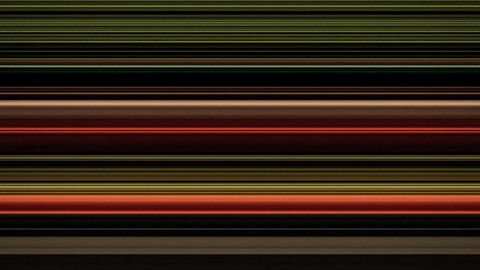
 

Daniel Crooks (New Zealand, b. 1973) 'Intersection No.2 (vertical plane)' 2008 from the exhibition 'Intersection' by Daniel Crooks at Anna Schwartz Gallery, Melbourne, Nov - Dec, 2008


Daniel Crooks (New Zealand, b. 1973)
Intersection No.2 (vertical plane)
2008


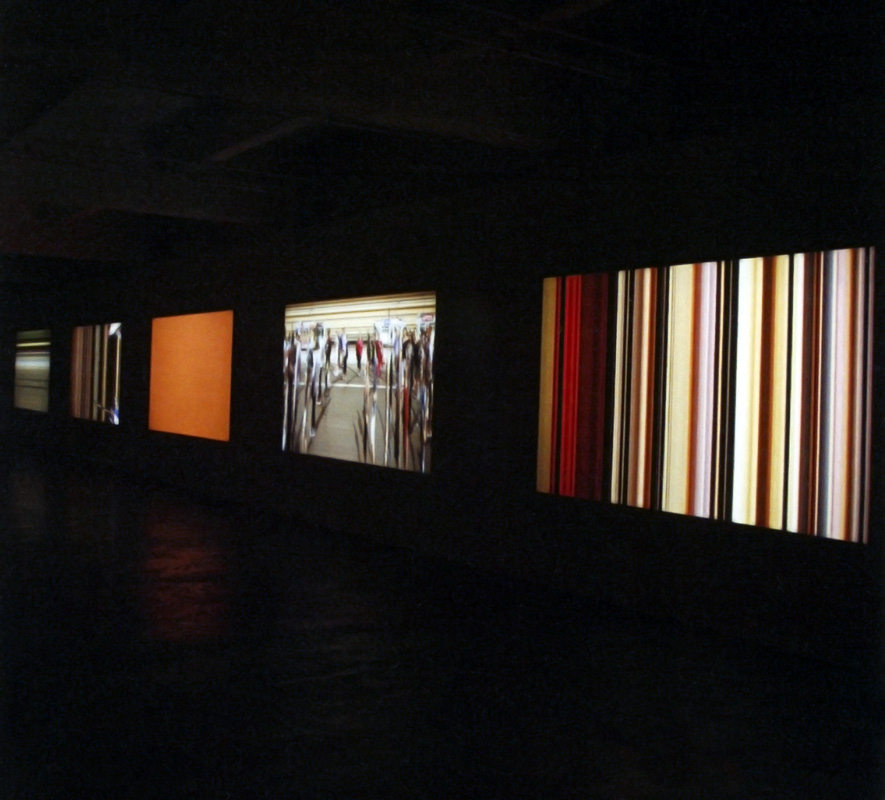
This was a magical exhibition – beautiful, insightful and mesmerising in equal parts. Five large video screens were presented in the long space of the Anna Schwartz gallery in Melbourne. The outer two videos feature striated horizontal and vertical bands of pulsating colours, fluxing up and down and from side to side, seemingly rushing past like tarmac outside a moving car. These videos add balance at each end of the installation.

The inner videos on either side of the central panel are the most figurative of the work: the video on the left-hand side reminded me of a Jackson Pollock drip painting come alive, ribbons of paint in time and space morphing backwards, finally coalescing into figures and their shadows walking across tarmac; the video on the right-hand side shows people moving across a pedestrian intersection like an animated slow motion photograph flowing anamorphically across the screen, their shadows distorted on the ground as trams pass behind them. Up close the surface of the projected video breaks down into grided squares of light, hypnotic in their blooming, shape-shifting colours.

The central panel is the key to the whole work. Intensities of colour flash and fade in time with atmospheric ambient music (by J. David Franz and Byron Scullin) that works effectively with the whole installation. Beeps of the pedestrian crossing intersection intersperse the ambient music adding an almost sonar like pinging to the atmospheric soundtrack; after-images appear and glow as the colours fade, transcending the solidity of the ever-changing single pixel of colour taken through the block of video time. The pyrotechnics of the other screens are balanced by the colours/intensities/music of this central panel.

The installation reminds me of a folded out five-panel religious altarpiece form of the 15th century. The figures, shadows and lines of the outer videos surround the pulsing heart of the central panel that, for me, took on an almost transcendent spirituality (especially when you understand the transcendence of time and space that is being achieved and how that relates to your own path in life). If you stand very still against the far wall of the gallery and look at all five videos at the same time the central panel achieves the ‘Intersection’ that Daniel Crooks is imagining. Subtle, profound and intelligent the viewer is invited to spend time, no, to transcend time in the company of this work and that is a major achievement: to reveal certain truths about our existence in these moments of time, to inhabit the space between breath – no time, no space.

Dr Marcus Bunyan
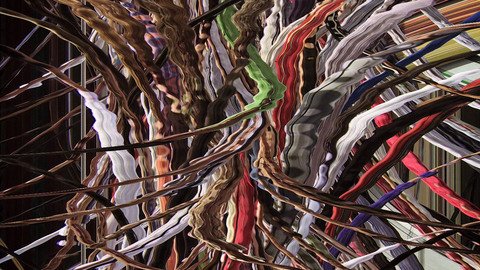


Daniel Crooks (New Zealand, b. 1973) 'Intersection No.5 (horizontal volume)' 2008 from the exhibition 'Intersection' by Daniel Crooks at Anna Schwartz Gallery, Melbourne, Nov - Dec, 2008


Daniel Crooks (New Zealand, b. 1973)
Intersection No.5 (horizontal volume)
2008


“The subjects of Daniel Crook’s oeuvre; the recurrence of city transport systems, lifts in high-rise buildings alongside images of the sea, invoke an idea of the world made as much of time as space and that indeed we ourselves are also made of time …

Crooks works, literally, from inside the medium, deconstructing its time-space matrix to reveal the inner truth about the subjects of video: they are purely temporal.

The five works comprising Intersection are all sourced from the same ‘volume’ of video footage. Each video is a formal variation that navigates an alternative path through the same light field, pushing its own ‘picture plane’ through the space along opposing axes.

The two most figurative videos navigate the entire volume of footage – each swapping time for the vertical or the horizontal. The second, more abstracted videos are reduced to horizontal and vertical ‘planes’. The centre work – a single pixel of information that tunnels through time – is the intersection between opposing axes, almost like the fulcrum or nodal point, and in turn acts as a pivot for the installation.”

Catalogue notes from Daniel Crooks exhibition Intersection at Anna Schwartz Gallery, Melbourne.
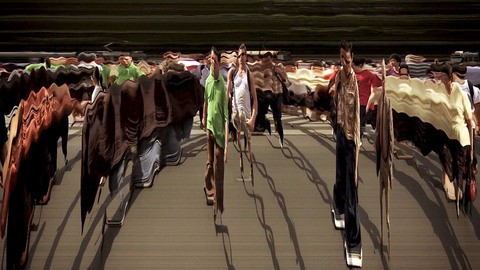
 

Daniel Crooks (New Zealand, b. 1973) 'Intersection No.4 (vertical volume)' 2008


Daniel Crooks (New Zealand, b. 1973)
Intersection No.4 (vertical volume)
2008


Daniel Crooks works pre­dom­i­nant­ly in video, pho­tog­ra­phy and sculp­ture. He is best known for his dig­i­tal video and pho­to­graph­ic works that cap­ture and alter time and motion. Crooks manip­u­lates dig­i­tal imagery and footage as though it were a phys­i­cal mate­r­i­al. He breaks time down, frame by frame. The result­ing works expand our sense of tem­po­ral­i­ty by manip­u­lat­ing dig­i­tal ‘time slices’ that are nor­mal­ly imper­cep­ti­ble to the human eye.


Daniel Crooks. 'Intersection' exhibition installation view at Anna Schwartz Gallery, Melbourne


Intersection installation view at Anna Schwartz Gallery, Melbourne
Photo: Marcus Bunyan


Addendum 2019


Daniel Crooks
Static No. 12 (extract)
2012
HD Video
Courtesy Daniel Crooks & Anna Schwartz Gallery


Artistic Responses by Daniel Crooks | Symposium: Wider Vantages Are Needed Now, Times 18
2013

Daniel Crooks, New Zealand-born and Melbourne-based, is one of the foremost innovators in the quickly evolving fields of video and digital art.


Daniel Crooks: Phantom Ride
2016

Daniel Crooks’ Phantom Ride alludes to cinema history to create a seamless journey through a composite reality. By manipulating digital footage as though it were a physical material, the artist has constructed a collaged landscape that takes us through multiple worlds and shifts our perception of space and time.


Anna Schwartz Gallery
185 Flinders Lane
Melbourne, Victoria 3000

Opening hours:
Tuesday – Friday 12 – 6pm
Saturday 1 – 5pm
Anna Schwartz Gallery website

LIKE ART BLART ON FACEBOOK

Back to top

Exhibition: ‘Odyssey: The Photographs of Linda Connor’ at Phoenix Art Museum

Exhibition dates: 30th November, 2008 – 8th March, 2009


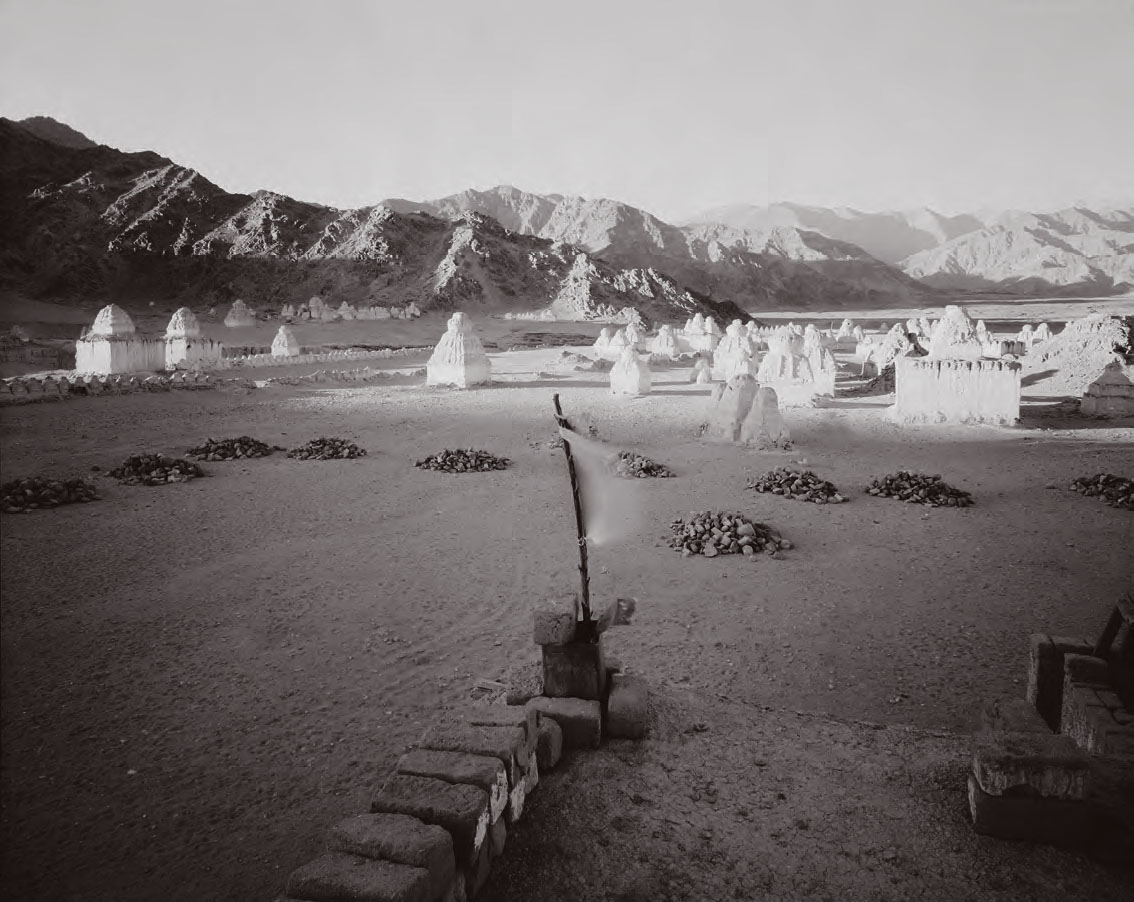
Linda Connor (American, b. 1944) 'Prayer Flag and Chortens, Ladakh, India 1988' 1988 from the exhibition 'Odyssey: The Photographs of Linda Connor' at Phoenix Art Museum, Nov 2008 - March 2009


Linda Connor (American, b. 1944)
Prayer Flag and Chortens, Ladakh, India 1988
1988
Silver gelatin print


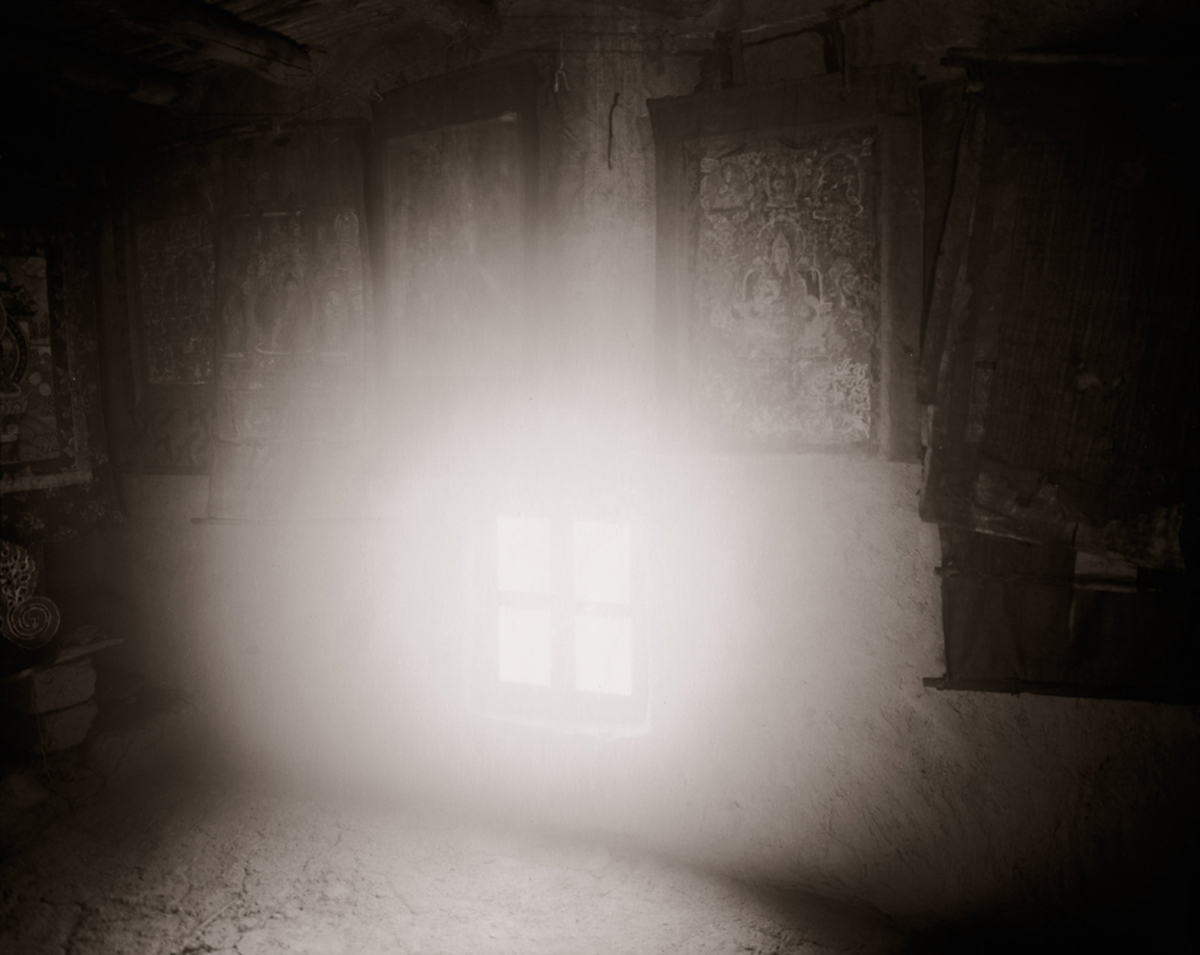
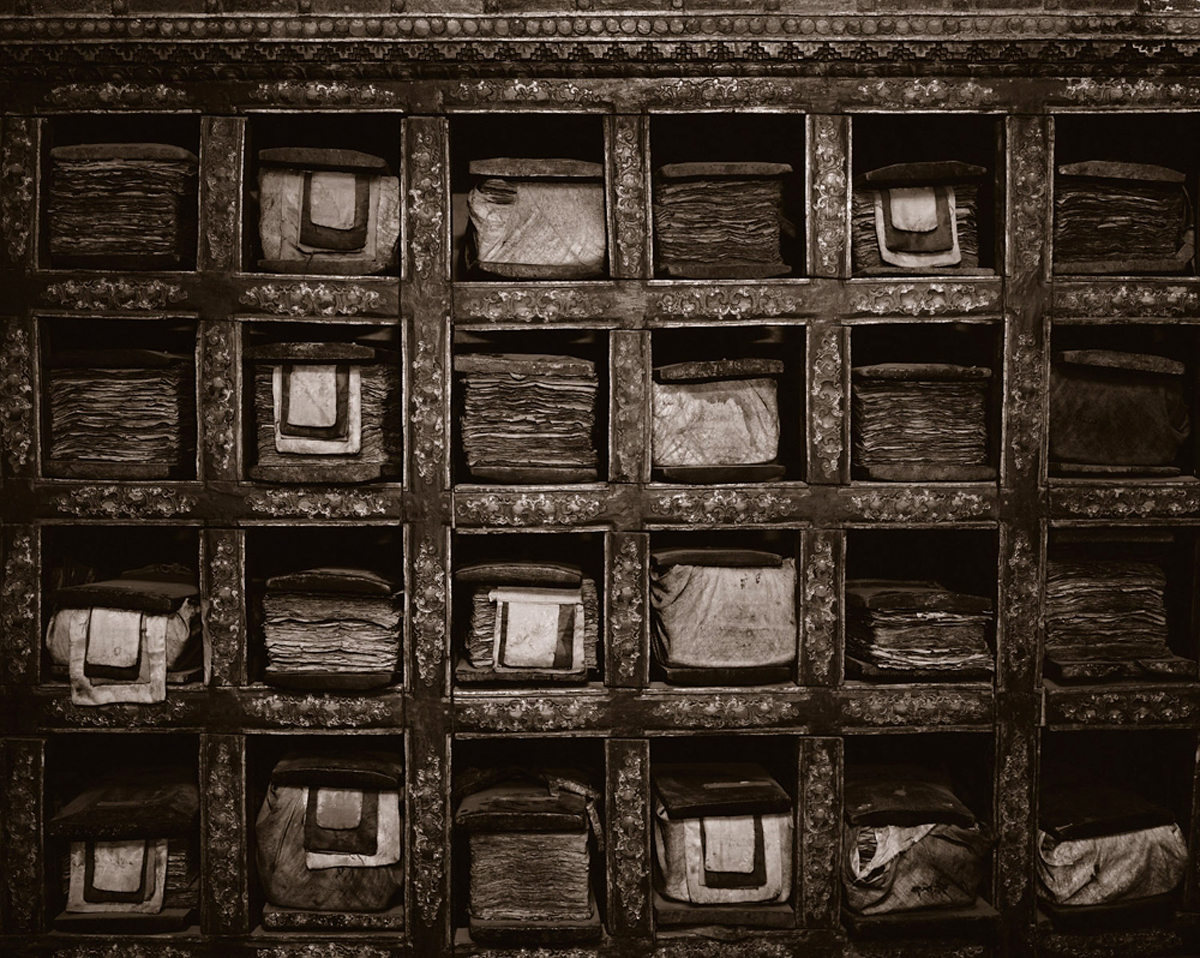
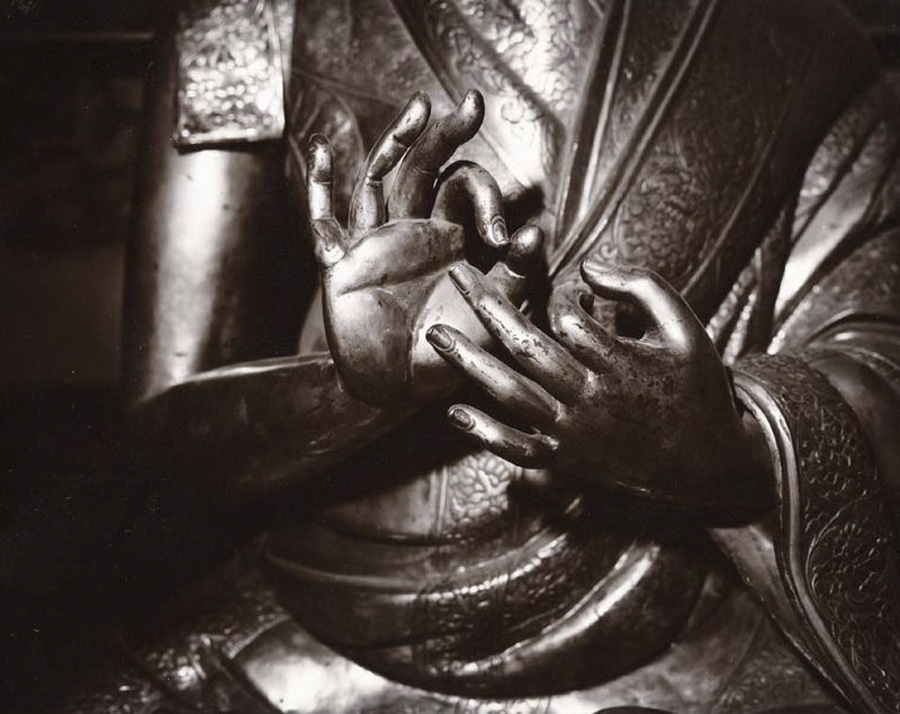
Connor’s photographs reveal the essence of her subjects, yielding a sense of timelessness while visually evoking the intangible. She uses a distinctive technique. A large-format view camera allows her to achieve remarkable clarity and rich detail. Her prints are created by direct contact of the 8 x 10-inch negative on printing out paper, exposed and developed using sunlight …

Connor embraces a wide range of subject matter, connecting the physical and the spiritual world. Just as sacred art evokes deep meaning even without an explicit understanding, Connor hopes her photographs serve a similar metaphorical function. Upon entering Chartres Cathedral, for example, one feels transported into another realm, regardless of religious beliefs. Connor’s images share this transformative nature as they transcend the boundaries of subject, culture, and time. She brings an equal amount of attention to a rock in the desert as she does when she photographs a temple.

Text from the Phoenix Art Museum website


Many thankx to the Phoenix Art Museum for allowing me to publish the photographs in the posting. Please click on the photographs for a larger version of the image.


Linda Connor (American, b. 1944) 'Windows and Thangkas, Ladakh' 1988 from the exhibition 'Odyssey: The Photographs of Linda Connor' at Phoenix Art Museum, Nov 2008 - March 2009


Linda Connor (American, b. 1944)
Windows and Thangkas, Ladakh
1988
Silver gelatin print


Linda Connor (American, b. 1944) 'Library of Prayer Books, Ladakh, India' 1988


Linda Connor (American, b. 1944)
Library of Prayer Books, Ladakh, India
1988
Silver gelatin print


Linda Connor is an American photographer who photographs spiritual and exotic locations including India, Mexico, Thailand, Ireland, Peru, and Nepal. Her photographs appear in a number of books, including Spiral Journey, a catalog of her exhibition at the Museum of Contemporary Photography in 1990 and Odyssey: Photographs by Linda Connor, published by Chronicle Books in 2008. Connor was awarded a National Endowment for the Arts grant in 1976 and 1988 and received a Guggenheim Fellowship in 1979. Connor’s work is included in the collections of the Art Institute of Chicago, Museum of Modern Art, San Francisco Museum of Modern Art, and the Victoria & Albert Museum in London.


Linda Connor (American, b. 1944) 'Portal Figures, Chartres Cathedral, France' 1989


Linda Connor (American, b. 1944)
Portal Figures, Chartres Cathedral, France
1989
Silver gelatin print


Linda Connor (American, b. 1944) 'Mudra, Mindroling Monastery, Tibet' 1993


Linda Connor (American, b. 1944)
Mudra, Mindroling Monastery, Tibet
1993
Silver gelatin print


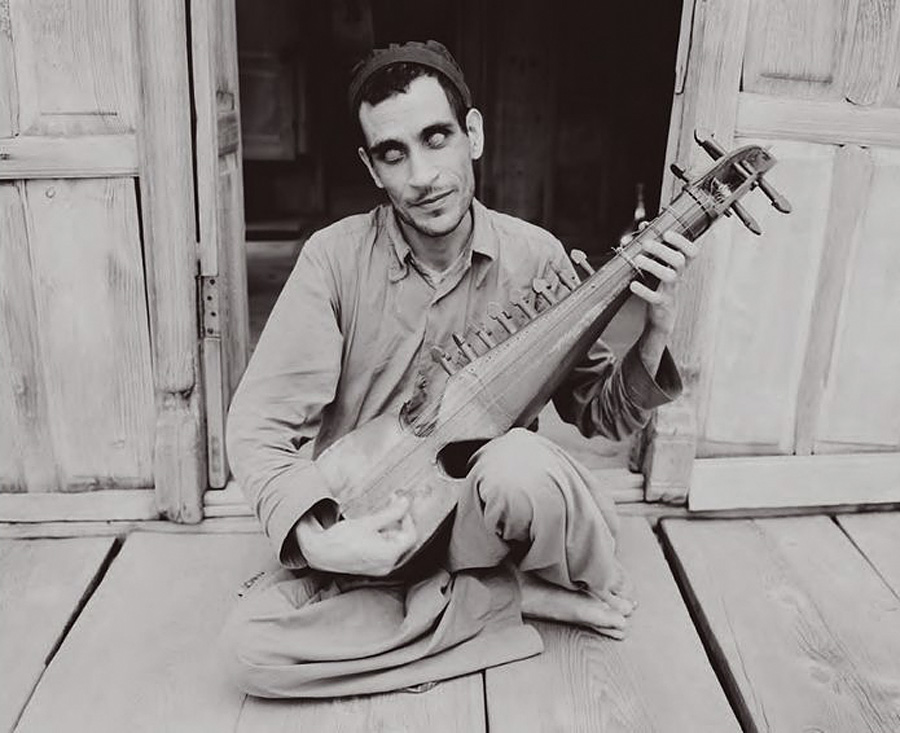
Linda Connor (American, b. 1944)
'Blind Musician, Kashmir, India' 1985


Linda Connor (American, b. 1944)
Blind Musician, Kashmir, India
1985
Silver gelatin print


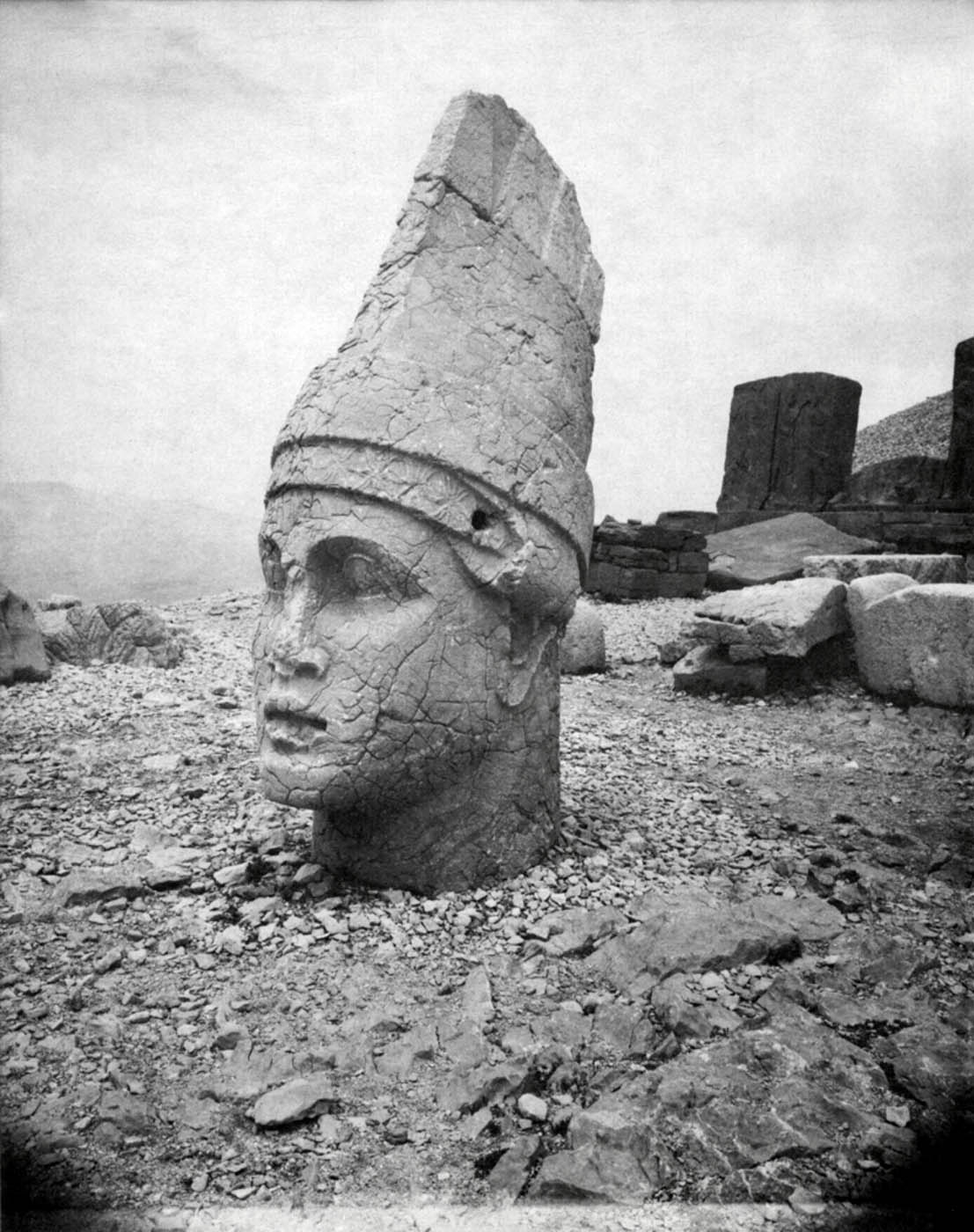
Linda Connor (American, b. 1944)
'Apollo, Mt. Nemrut, Turkey' 1992


Linda Connor (American, b. 1944)
Apollo, Mt. Nemrut, Turkey
1992
Silver gelatin print


Doris and John Norton Gallery for the Center for Creative Photography, Phoenix Art Museum
1625 N Central Ave, Phoenix, AZ 85004, USA

Opening hours:
Wednesday 10am – 9pm
Thursday – Sunday 10am – 5pm
Closed Monday and Tuesday

Center for Creative Photography, University of Arizona, Tucson
27th March – 21st June 2009

Phoenix Art Museum website

LIKE ART BLART ON FACEBOOK

Back to top

Exhibition: ‘cowboys, cocks and natives’ by Patrick Christie at Green-Wood Gallery, Melbourne

Exhibition dates: 27th November – 7th December, 2008


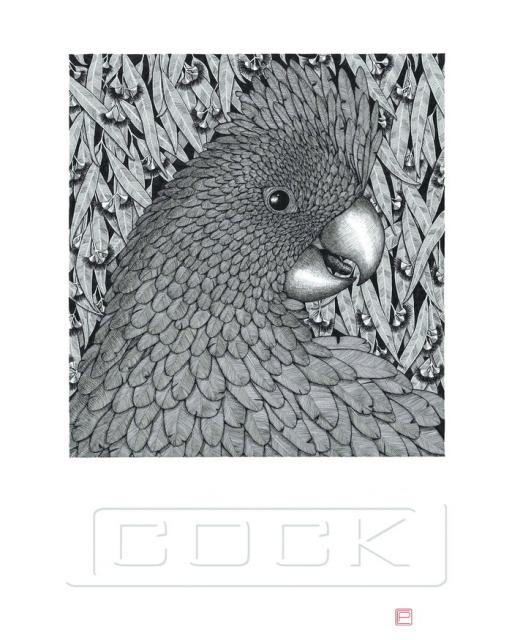
Patrick Christie (Australian) 'Black COCKatoo' 2008 from the exhibition 'cowboys, cocks and natives' by Patrick Christie at Green-Wood Gallery, Melbourne, Nov - Dec, 2008


Patrick Christie (Australian)
Black COCKatoo

2008
53 x 44cm
ink on paper with hand embossing


This is the first exhibition by artist Patrick Christie exhibiting at Green-Wood gallery in South Melbourne. The ink illustrations are a mixed bag featuring native botanical specimens, beetles of various varieties and colourful birds – a red COCK, a blue peaCOCK and a black COCKatoo (the ‘cocks’ of the title). While the beetle images and the cowboy illustrations feel flat and uninspired it is the larger flower arrangements and the beautifully detailed birds that hold the attention.

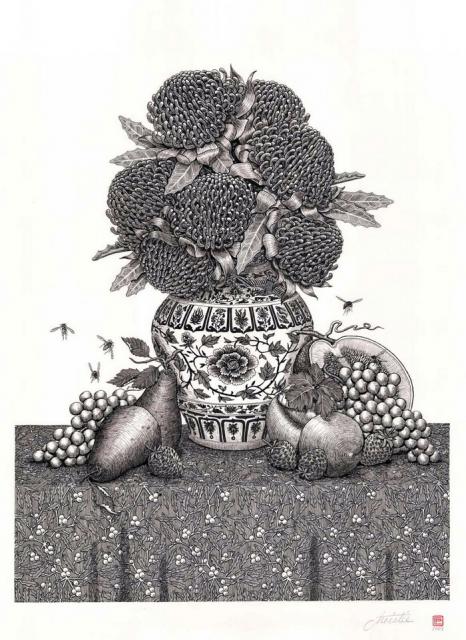
With an abundance in the rendering of their subject matter both produce an uplifting cornucopia – vase, flowers, fruit and material overflowing; feathers of the Black COCKatoo repeating and blending like an Escher drawing into the gum leaves behind. The hand marks the page again and again forming exquisite line. Dutch still life of the 17th century come to mind with the flower arrangements and whilst I like the embossed word COCK under the bird images I am not sure it is really necessary. The drawings are strong enough to stand on their own.

There is real talent here. Yes the exhibition needed more conceptual rigour as the whole did not match the sum of the parts. Yes the framing needs attention especially in the bird series, where simpler frames with more space around the images would have let the work breathe but these things can be addressed. For an artist what needs to be there from the start is passion, a good eye and the talent to develop a personal language that is vibrant, interesting and unique – that can be nurtured and developed over many years. This exhibition sets Patrick Christie squarely on this path.

Dr Marcus Bunyan


Patrick Christie (Australian) '5 Wasps' 2008 from the exhibition 'cowboys, cocks and natives' by Patrick Christie at Green-Wood Gallery, Melbourne, Nov - Dec, 2008


Patrick Christie (Australian)
5 Wasps
2008
67 x 50cm
ink on paper


Green-Wood Gallery

This gallery has now closed

LIKE ART BLART ON FACEBOOK

Back to top

Review: ‘Intimacy’ at the Australian Centre for Contemporary Art (ACCA), Melbourne

Exhibition dates: 7th October – 30th November, 2008

The exhibition includes works by Louise Bourgeois, Nan Goldin, Steve McQueen, Sophie Calle, Mariele Neudecker, Jesper Just, Gabrielle de Vietri, Felix Gonzalez-Torres, Mutlu Çerkez, Amikam Toren, Margaret Salmon and Annika Ström


Sophie Calle (French, b. 1953) 'Doleur exquise' 1984/1999 from the exhibition 'Intimacy' at the Australian Centre for Contemporary Art (ACCA), Melbourne, Oct - Nov, 2008


Sophie Calle (French, b. 1953)
Doleur exquise
1984/1999


Set up by Frank Gehry and Edwin Chan
Exhibition view at Rotonde1, Luxembourg, 2007


An eclectic mix of mixed media, photography and video work is presented in this exhibition. The work examines concepts of intimacy – staged performances, stories of the city, of men, women, families and children; the artists “contemplate passion, love and longing, as well as feelings of disquiet, loss, and loneliness that embody intimate human relations.”

The show exudes a certain melancholia and is troubling in many aspects: loneliness, separation, desire for intimacy, desire for love all being expressed through the presented works. Some of the works are strong but others left me cold and uninterested. Few are joyous renditions of the closeness of intimate relations and most works ponder the dangers and disillusionment of failed intimacies that involve feelings of vulnerability (intimate acts often involve a degree of self-disclosure where intimates show something of themselves that may make them feel vulnerable), ambiguity (intimate acts are often an ambiguous and incomplete shared and often idiosyncratic view of the world) and secrecy (intimate acts are private: they are often constructed, by their participants, to be hidden from the view of others).1

The large work by English artist Steve McQueen features two naked black wrestlers shot in slow motion in grainy black and white video. The wrestlers are photographed from the waist down, images of moving legs, or from below, bodies clinging together, faces grimacing in a hyperreal performance of some hypnotic intimate dance – an acted out state of being.

Amikan Torren’s 2008 video work is by comparison is about the improbabilities of life’s daily encounters: in Downstairs over a video image of 3 steps outside a London railway station the narrator tells of a man, a stockbroker who after an accident sometimes needs help descending steps; in Blind the narrator comments on a person helping a blind man across the street; and in Carrots, over a video image of a London street the narrator tells a story about an adolescent and fresh carrots! The musings on the synchronicity and serendipity of everyday encounters are very effective.

Jesper Just’s two video works No Man Is An island II (2004) and The Lonely Villa (2004) were very effective and moving. In the first lonely men in a pub sing the Roy Orbison song Crying with pictures of naked ladies behind them – it is funny and sad at the same time. In the second men in the shadows sit or stand with telephones in front of them: two men sing to each other the song I Don’t Want To Set The World On Fire with close-ups of their lips singing into the telephone: songs of loss, longing and remembrance.

The two most interesting pieces are not video works, nor are they the overrated photographs of Nan Goldin featuring photographs of a family hugging and lying on a bed, but the work of two women: Sophie Calle and Louise Bourgeois.

In Doleur exquise (exquisite pain) Calle revisits fifteen years later the breakup of a relationship and the aftermath of that event: the distress and pain, the experiences of her friends in such circumstances and turns them into brilliant insightful art. A selection of the whole work is presented here that features colour photographs (multiples of a red telephone, abandoned car with it’s doors open, washbasins and empty bedrooms) above text woven onto linen – black on white, grey on grey. The texts are both painful and repetitive (Calle’s on the left) and others heartbreaking accounts of pain (on the right): “6 days ago, the man I love left me …”

(For an insightful analysis of this work see Can Pain Be Exquisite? Autofictional Stagings of Douleur exquise by Sophie Calle, Forced Entertainment and Frank Gehry and Edwin Chan by Anneleen Masschelein. “On the one hand, it deals with the most intense, acute experiences of pain in a human life. On the other hand, these moments are unique and “localised”, that is, they are connected to a concrete time and space, of which the details are forever inscribed in memory.”)

My favourite work from the show is Louise Bourgeois 10AM IS WHEN YOU COME TO ME (2006) – drawings on music paper of mainly red hands, the key a drawing of a 10am clock with a man the big hand with hands extended drawing towards him (or is it tethered to him) an armless woman, the small hand. Some have seen these as “ambiguous images of a hermetic cosmos, as acts of violence or love” but they represent “both Bourgeois’s hands and those of her friend and muse Jerry Gorovoy” and how he helps her and arrives at her studio at this, the designated hour.

To me they are joyous, liberating, spontaneous expressions of love and intimacy, fingerprints on the page, hands intertwining together. They made me feel the intimate expression of humanity: holding a babies hand, so small and vulnerable and feeling them grasp your hand. That connection is what Bourgeois achieves with this work and I thought it was wonderful.

This exhibition is no easy ride but is well worth the contemplation necessary to tease out the themes and feelings that the work investigates.

Dr Marcus Bunyan


1/ Steve Howard, Frank Vetere, Martin Gibbs, Jesper Kjeldskov, Sonja Pedell, Karen Mecoles, Marcus Bunyan, and John Murphy. Mediating Intimacy: Digital Kisses and Cut and Paste Hugs. 2004.


Sophie Calle (French, b. 1953) 'Doleur exquise' 1984/1999 (detail) from the exhibition 'Intimacy' at the Australian Centre for Contemporary Art (ACCA), Melbourne, Oct - Nov, 2008


Sophie Calle (French, b. 1953)
Doleur exquise (detail)
1984/1999


    Louise Bourgeois (French-American, 1911-2010) 'TEN AM IS WHEN YOU COME TO ME' 2006 (detail)


    Louise Bourgeois (French-American, 1911-2010)
    TEN AM IS WHEN YOU COME TO ME (detail)
    2006


    Louise Bourgeois (French-American, 1911-2010) 'TEN AM IS WHEN YOU COME TO ME' 2006


    Louise Bourgeois (French-American, 1911-2010)
    TEN AM IS WHEN YOU COME TO ME
    2006


    Australian Centre for Contemporary Art
    111 Sturt Street, Southbank
    Victoria 3006, Australia
    Phone: 03 9697 9999

    Opening hours:
    Tuesday – Friday 10am – 5pm
    Saturday – Sunday 11am – 5pm
    Monday Closed
    Open all public holidays except Christmas Day and Good Friday

    Australian Centre for Contemporary Art website

    LIKE ART BLART ON FACEBOOK

    Back to top

    Opening: Helen Britton ‘The things I see’ at Gallery Funaki, Melbourne

    Exhibition dates: 11th November – 6th December, 2008

    Opening: Tuesday 11th November, 2008


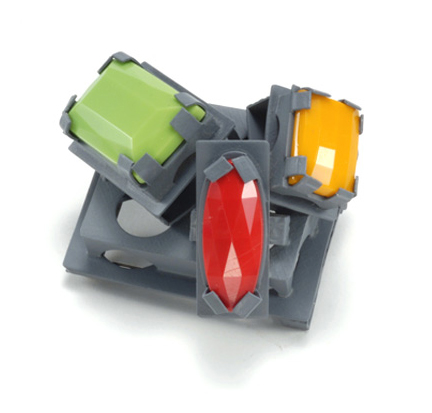
    Helen Britton (Australian, b. 1966) 'Brooch' 2008 from the exhibition Helen Britton 'The things I see' at Gallery Funaki, Melbourne, Nov - Dec, 2008


    Helen Britton (Australian, b. 1966)
    Brooch
    2008


    Moving through Melbourne’s busy laneways from the Oleh Witer exhibition we arrive at the intimate, stylish Gallery Funaki to view the work of Australian artist Helen Britton who works with the form of contemporary jewellery. The crowd spilled onto the street and the small space was busy with an interesting crowd in attendance.

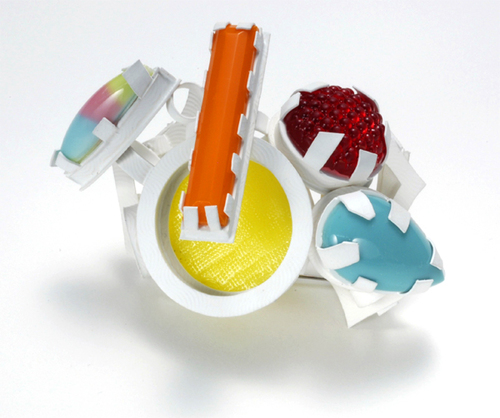
    The exhibition presents brooches, earrings, rings and necklaces built with the artists trademark assemblages. Whilst the necklaces are more prosaic (movie like reels and slinks of melted plastic restrained within metal banding) it is the brooches that capture and hold the viewer’s attention. Sci-fi like grided circles collide with concave discs filled with glistening blue crystals; thrusters and steel from a miniature collapsed lunar landing vehicle vie with clusters of vibrant colours that appear to be imbedded into a lunar landscape: delicate crimped and folded metal landscapes with the appearance of collapsed geometric origami.

    These are wonderfully inventive constructions, invigorating for their energy and exuberance. Britton has described her work as “industrial baroque”. Perhaps an equally pertinent description would be spatial, or ‘space baroque’ as the artist investigates the nexus, the cellular biology of matter, reality and the spaces we inhabit.

    Dr Marcus Bunyan


    Helen Britton (Australian, b. 1966) 'Brooch' 2008 from the exhibition Helen Britton 'The things I see' at Gallery Funaki, Melbourne, Nov - Dec, 2008


    Helen Britton (Australian, b. 1966)
    Brooch
    2008


    Gallery Funaki Sackville House Apartment 33 27 Flinders Lane Melbourne 3000 Australia

    Opening hours: Wednesday – Friday 12 – 5pm Saturday on occasion (check our socials) or by appointment

    Gallery Funaki website

    LIKE ART BLART ON FACEBOOK

    Back to top

    Opening: Darren Wardle ‘Soft Target’ at Nellie Castan Gallery, Melbourne

    Exhibition dates: 7th November – 29th November, 2008

    Opening: Friday 7th November, 2008


    Darren Wardle (Australian, b. 1969) 'Frontier Psychology' 2008 from the exhibition Opening: Darren Wardle 'Soft Target' at Nellie Castan Gallery, Melbourne, Nov 2008


    Darren Wardle (Australian, b. 1969)
    Frontier Psychology
    2008
    Oil and acrylic on linen
    153cm x 274cm
    Private collection


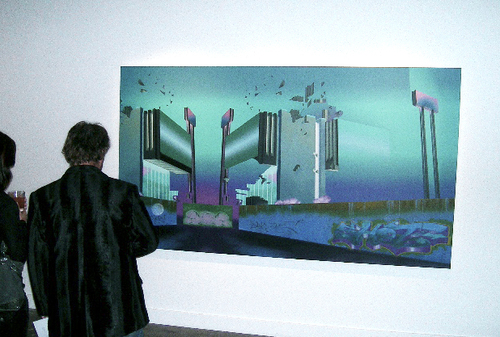
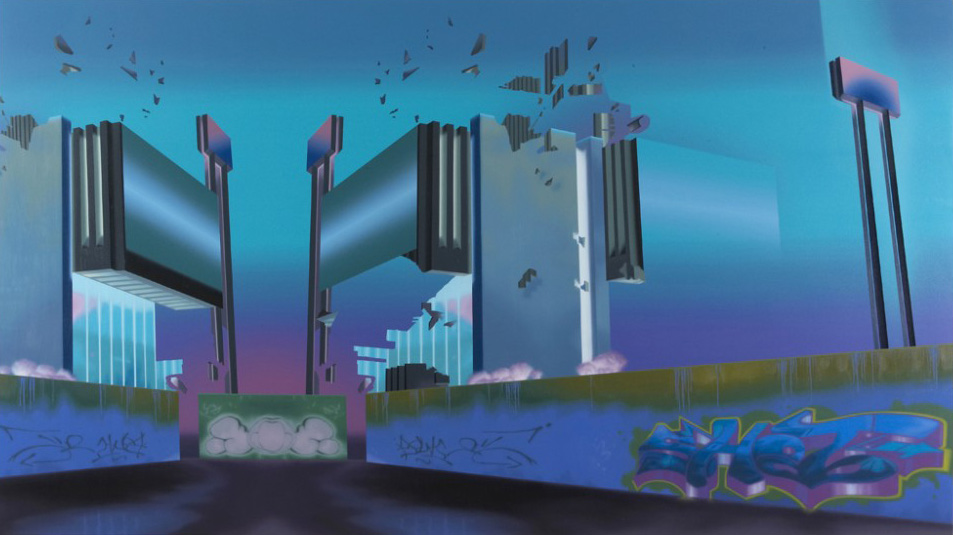
    Six luminous oil and acrylic paintings by Darren Wardle greeted viewers in the front gallery at Nellie Castan in South Yarra. In his apocalyptic fractured pop coloured landscapes objects elide, disintegrate and vanish into thin air. Buildings, empty screens and advertising hoardings become the target of lost innocence, a metaphor for the dis-ease and disintegration of consumer society, a portent of things to come.

    The titles of the paintings (such as Tipping Point, Faultline and Slanted) perfectly describe the conceptual themes explored in the work. Slinks of dripping paint pour down the canvas, canvases are cut in three through the use of fractured planes like a double exposure in photography and vegetation becomes purple and white, mutated and x-rayed. Some of the paint almost has a crystalline nature to it’s surface, a ‘surface tension’ that contrasts with flat gradated areas of colour in the backgrounds, as though the world is solidifying, cracking and about to fall apart.

    An excellent show that is well hung: so many exhibitions have too many objects, too much noise crowding the walls. Here the work is given space to breathe and live and looks all the better for it. Highly recommended.

    Dr Marcus Bunyan


    Darren Wardle (Australian, b. 1969) 'Faultline' 2008 (installation view)


    Darren Wardle (Australian, b. 1969)
    Faultline (installation view)
    2008
    Oil and acrylic on canvas


    Darren Wardle (Australian, b. 1969) 'Faultline' 2008 from the exhibition Opening: Darren Wardle 'Soft Target' at Nellie Castan Gallery, Melbourne, Nov 2008


    Darren Wardle (Australian, b. 1969)
    Faultline
    2008
    Oil and acrylic on canvas
    153cm x 274cm
    Private collection


    Darren Wardle (Australian, b. 1969) 'Inland Empire' 2008


    Darren Wardle (Australian, b. 1969)
    Inland Empire
    2008
    Oil and acrylic on linen
    183cm x 167cm
    Private collection


    Nellie Castan Gallery

    This gallery is no longer open

    LIKE ART BLART ON FACEBOOK

    Back to top