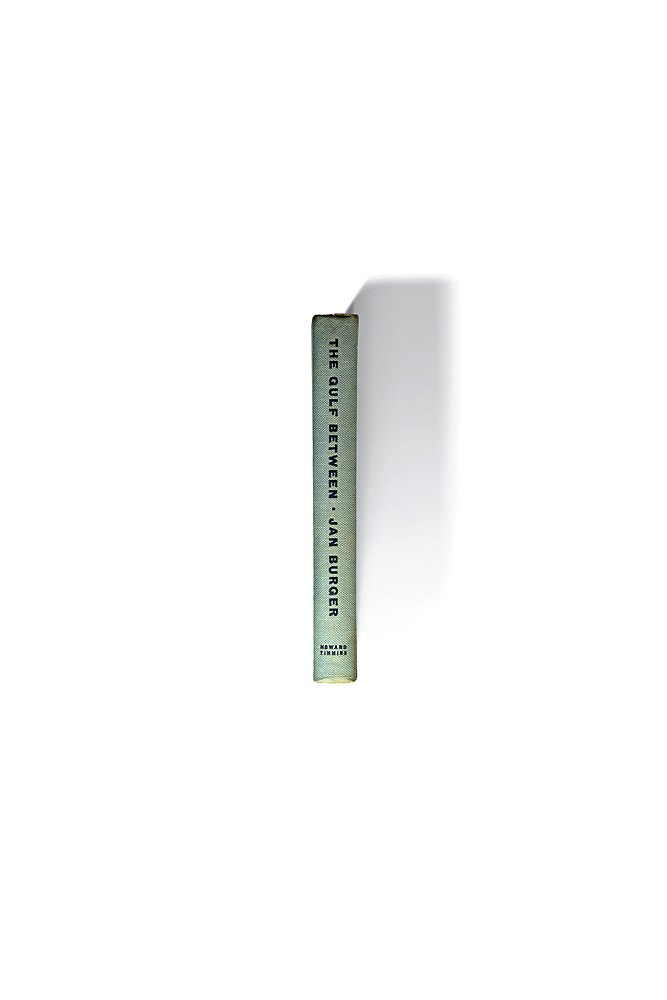
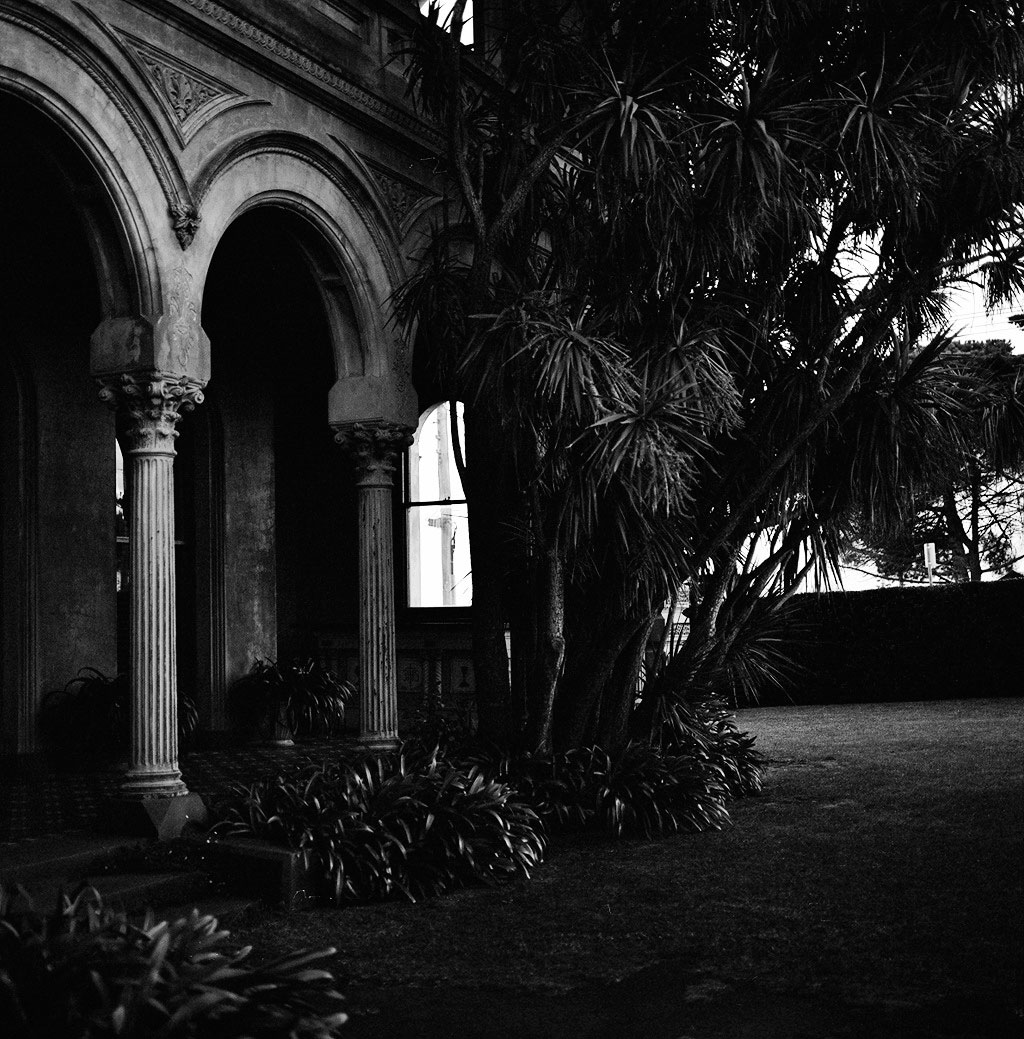
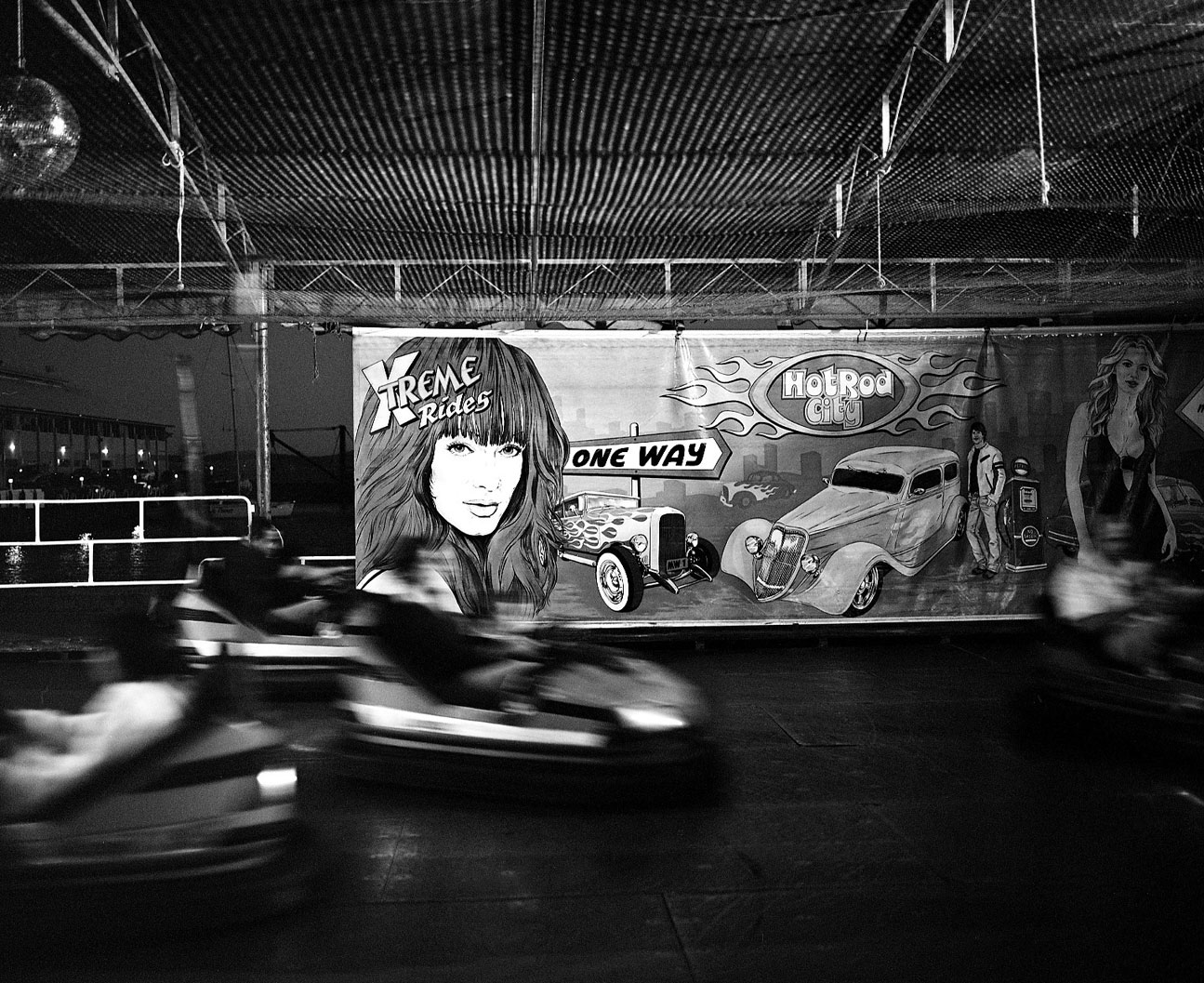
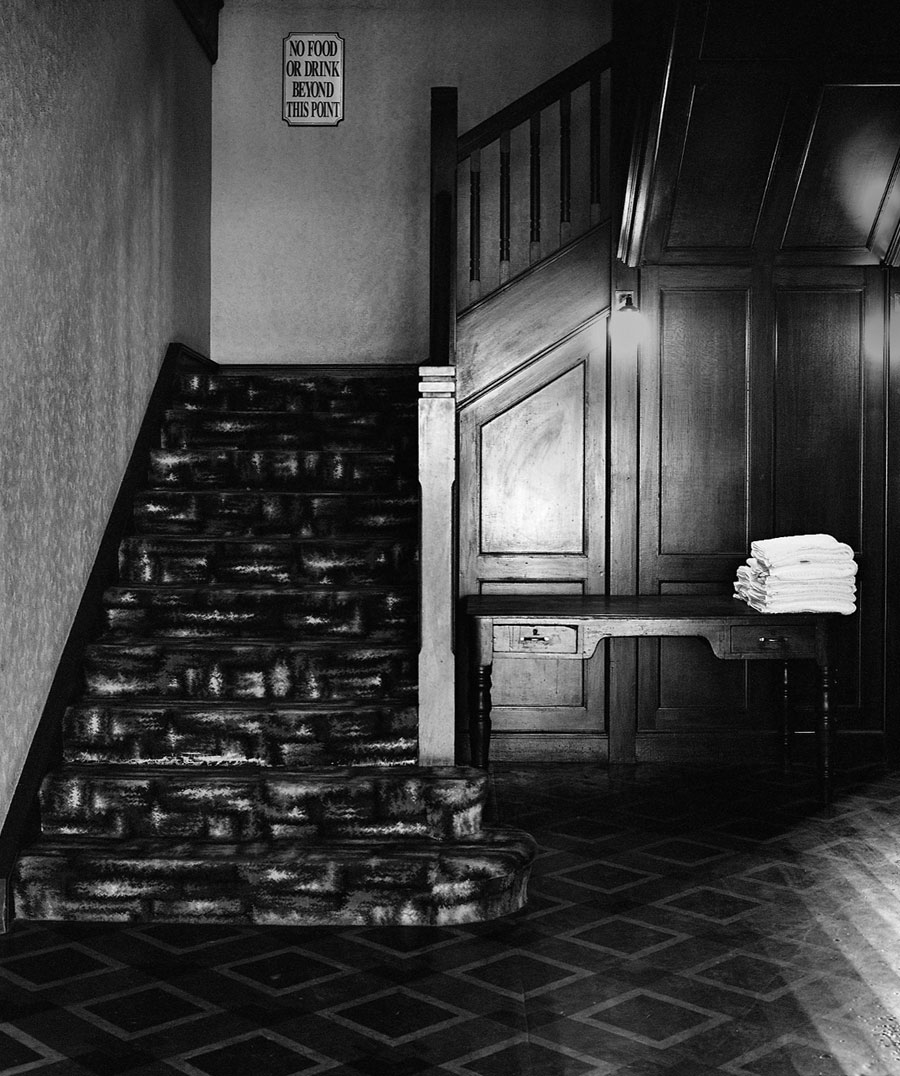
Three exhibitions: ‘Henri van Noordenburg / Efface’; ‘Amber McCaig / Imagined Histories’ and ‘Greg Elms / What Remains’ at Edmund Pearce Gallery, Melbourne

Exhibition dates: 6th – 23rd November 2013
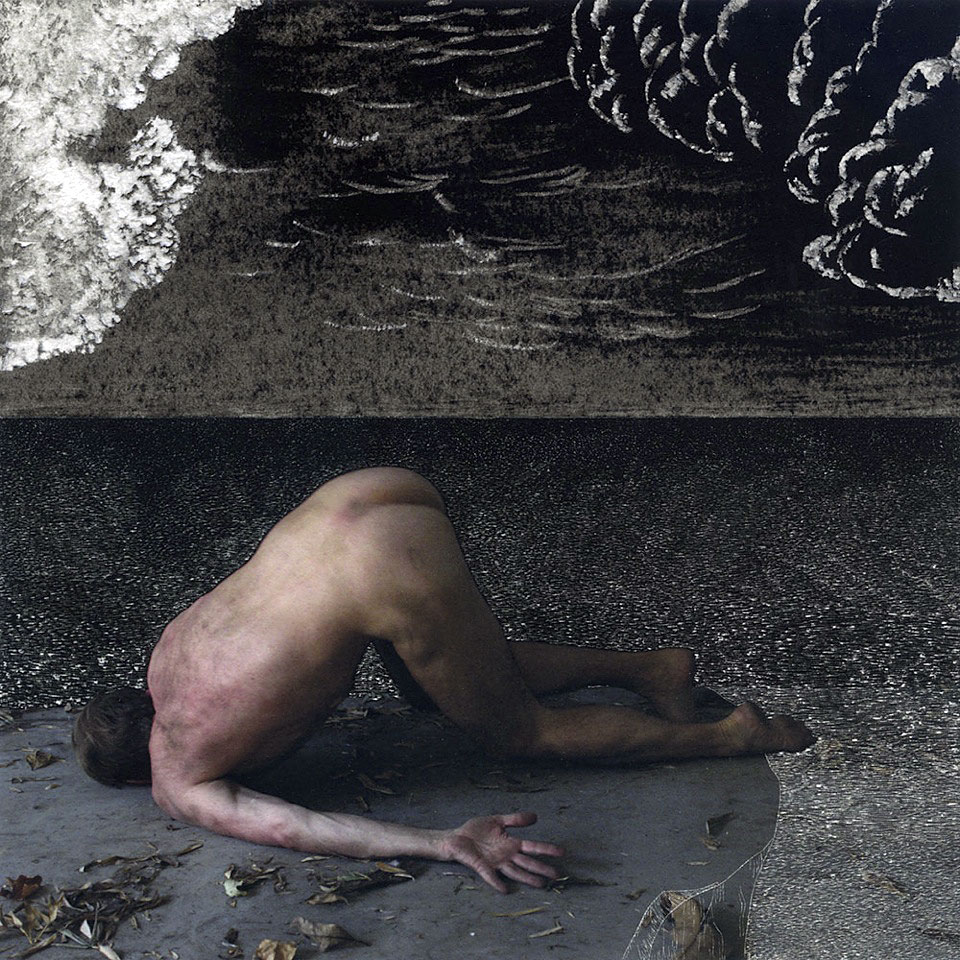
 

Henri van Noordenburg (Australian born Netherlands, b. 1967) 'Composition XXI' 2013


Henri van Noordenburg (Australian born Netherlands, b. 1967)
Composition XXI
2013
Hand carved archival pigment print
30 x 30cm


Three solid exhibitions at Edmund Pearce Gallery. All three have interesting elements and strong images. All three have their positives and negatives.

Henri van Noordenburg presents us with a European, colonialist take on the Australian landscape in his new series Efface, similar in their vernacular to early Australian painters visions of their new homeland, with their longing for an “original” home many leagues away over the sea. Except Noordenburg’s interventions look nothing like any Australian landscape I know, heavily influenced as they are by the work of French artist and engraver Gustav Doré (1832-1883) and Japanese wood block prints. His dark, brooding, subterranean art works – in which the artist photographs himself naked and bruised, prints this image on a large sheet of black photographic paper, then hand carves the landscape with a scalpel back into the paper base, isolating but at the same time surrounding the vulnerable, exposed body – image a gothic, melancholy vision of man lost in the wilderness. Here the body (self) is helpless before various forces, but these forces must still be engaged before some progress (pilgrims progress?) can be made.

The technique is truly extraordinary and the artist sets up a “perceptible tension” between technique and form, etching and photograph, body and bulimic (as in excessive), landscape. These ‘synthetic landscapes’ whose form is produced by spatial reorganisation and topographical interventions, man-made spaces, serve as background for what the artist wants us to see as our collective existence.1 Unfortunately, the conceptualisation of the work seems, well, a little confused. And perhaps that is the point. Noordenburg, with his Dutch heritage, is apparently still unsure of his place in a multicultural Australia, even after a few decades living here. But, I feel his point of departure for this work still remains uncertain. And this leads to uncertain outcomes for the viewer.

This uncertainty in the point of departure makes it difficult for the viewer to empathise with the stylistic inclinations of the landscape or the work as a whole. Somehow, it all seems so remote from too much. We can all sympathise with the “humanity” of the work, its anguish and sense of dislocation and wish it well, but I was left a little non-plussed by the visual evidence presented to me. If the exhibition was about wildness (not wilderness) and craziness (not a form of identity dislocation), then it would have been spot on:

“God against man. Man against God. Man against nature. Nature against man. Nature against God. God against nature. Very funny religion!”

D.T. Suzuki (1870-1966)

Amber McCaig‘s series Imagined Histories image “contemporary people captured by a sharp technology… [as they] aspire to join the consciousness of another epoch” (Robert Nelson). Small, intense prints, hung in pairs, re-present figures dressed in renaissance costume acting out the fantasy of living in a romantic, historical era. The portraits are paired with still life of wooden boxes filled with allegorical objects full of symbolic representation. The portraits are strong (the incongruity of an Asian knight is particularly effective), and the relationship between portrait and still life is ambiguous and nuanced. However, the still life become repetitive with the constant placement of images at the back of the box coupled with objects situated towards the front of the box. A study of the magical boxes of the artist Joseph Cornell would have been beneficial in this regard.

I feel that there needs to be more layering in the construction of the individual photographs and between the works in the series as a whole, not just the pairs of images. While the work is a little one dimensional in this imagined time, this is a good beginning to an ongoing investigation.

While Sally Mann’s body of work What Remains is the rolled-gold standard for this kind of work, Greg Elms series What Remains offers an interesting forensic amplification of skeletal “nature”. These animalistic portraits of nature mort are eloquent, strong and forthright. Some work better than others. The Cheetah skull, the Vervet monkey skull (with Rayban Aviator sunglass eyes) and best of them all, the magnificent, constructivist Black cockatoo skull – are all haunting in their deathly presence. Some of the smaller skulls lack these works muscularity, especially when they are printed horizontally on a vertical piece of photographic paper, which simply does not work.

Whether the series needed the ironic commentary of the titles, or the trope of hanging the conceptualisation of the series on the back of global warming, is also debatable. I think the best images are strong enough, and the conviction of the artist obvious enough over numerous bodies of work, that the viewer does not need to be spoon fed this rationalisation.

Dr Marcus Bunyan


1/ Jackson, J. B. Discovering the Vernacular Landscape. New Haven: Yale University Press, 1984, p. 8 quoted in Goldswain, Phillip. “Surveying the Field, Picturing the Grid: John Joseph Dwyer’s Urban Industrial Landscapes,” in Goldswain, Phillip and Taylor, William (eds.,). An Everyday Transience: The Urban Imaginary of Goldfields Photographer John Joseph Dwyer. Crawley, WA: University of Western Australia Publishing, 2010, p. 75.


Many thankx to Edmund Pearce Gallery for allowing me to publish the photographs in the posting. Please click on the photographs for a larger version of the image.
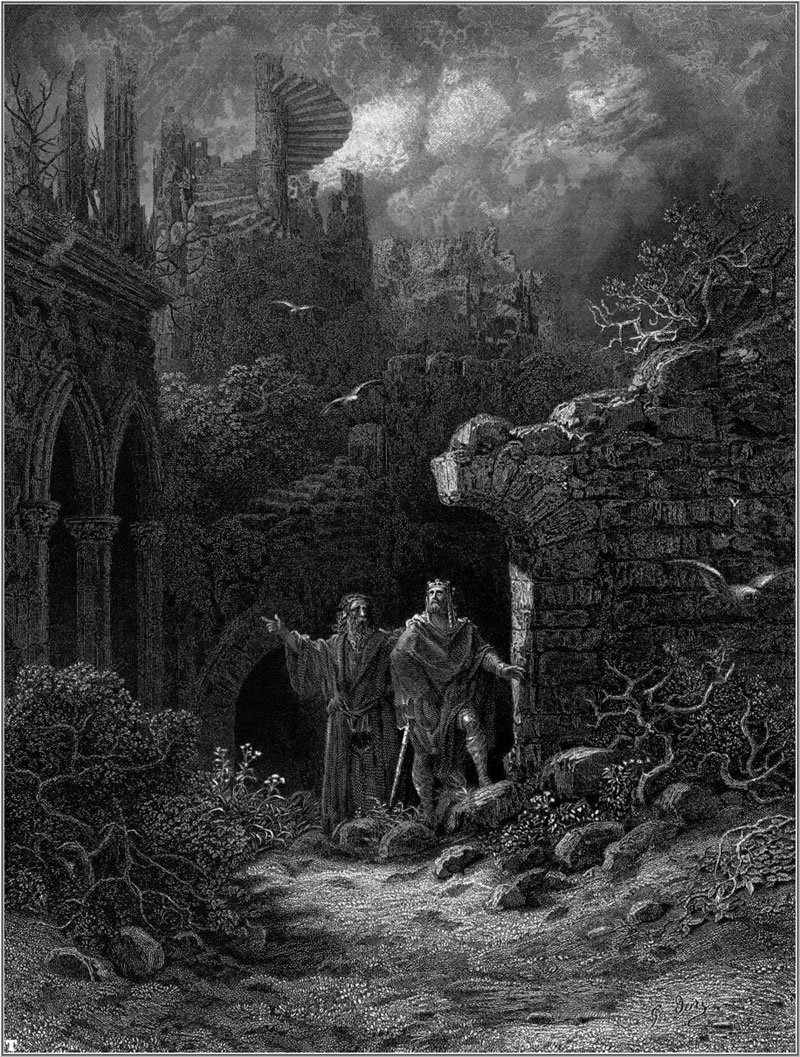


Gustave Doré (French, 1832-1883) llustration of Lord Alfred Tennyson's 'Idylls of the King' 1868


Gustave Doré (French, 1832-1883)
llustration of Lord Alfred Tennyson’s Idylls of the King
1868
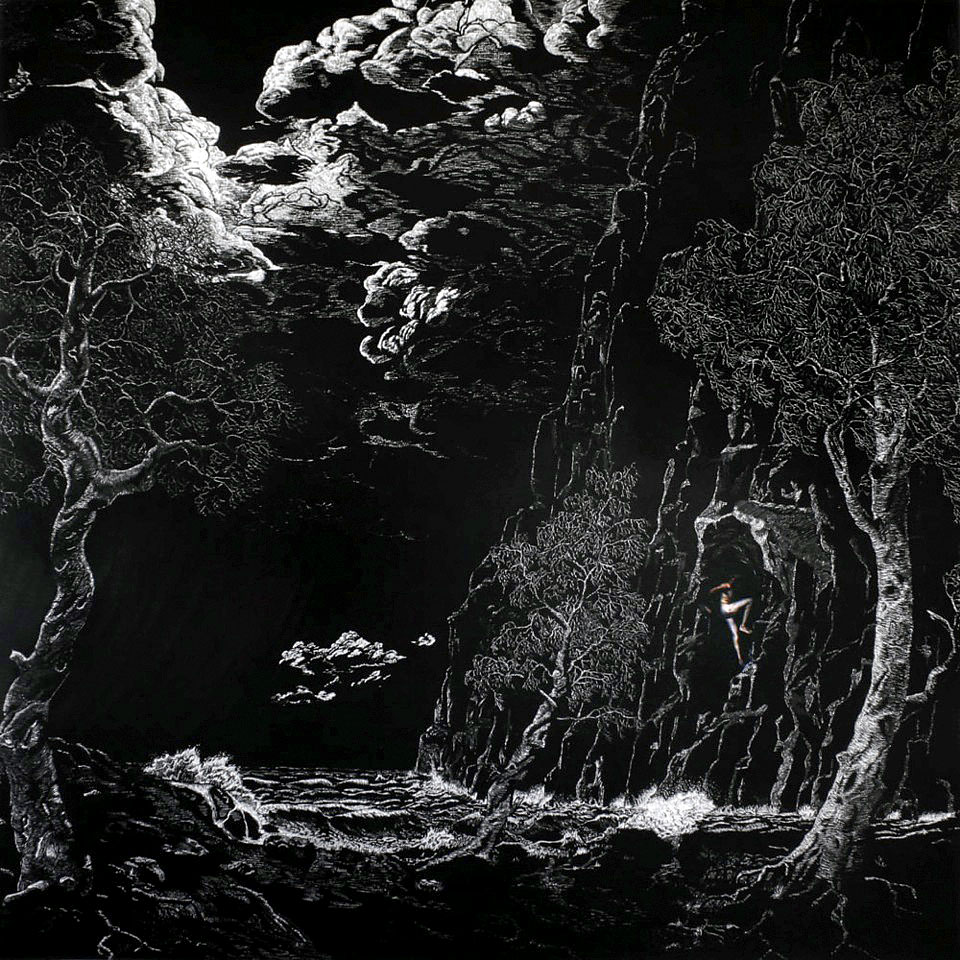
 

Henri van Noordenburg (Australian born Netherlands, b. 1967) 'Composition X' 2012


Henri van Noordenburg (Australian born Netherlands, b. 1967)
Composition X
2012
Hand carved archival pigment print
106 x 106cm


Abstracted within the landscape, the artist features as the protagonist facing the threats of a seemingly hostile bush. Efface references The Expulsion from the Garden of Eden with a focus on the overlaying of a European aesthetic on the physical and intellectual landscape. Starting with self portraits set amid a featureless black background, the photographic surface is hand etched to reveal the landscape.

Van Noordenburg describes the process of self-nude photography as an “incredible mix between strength and weakness, frustration and containment a feeling of euphoria and adrenaline”. Feelings, which mirror van Noordenburg’s attempts to assimilate within a dominant culture.

Text from the Edmund Pearce Gallery website
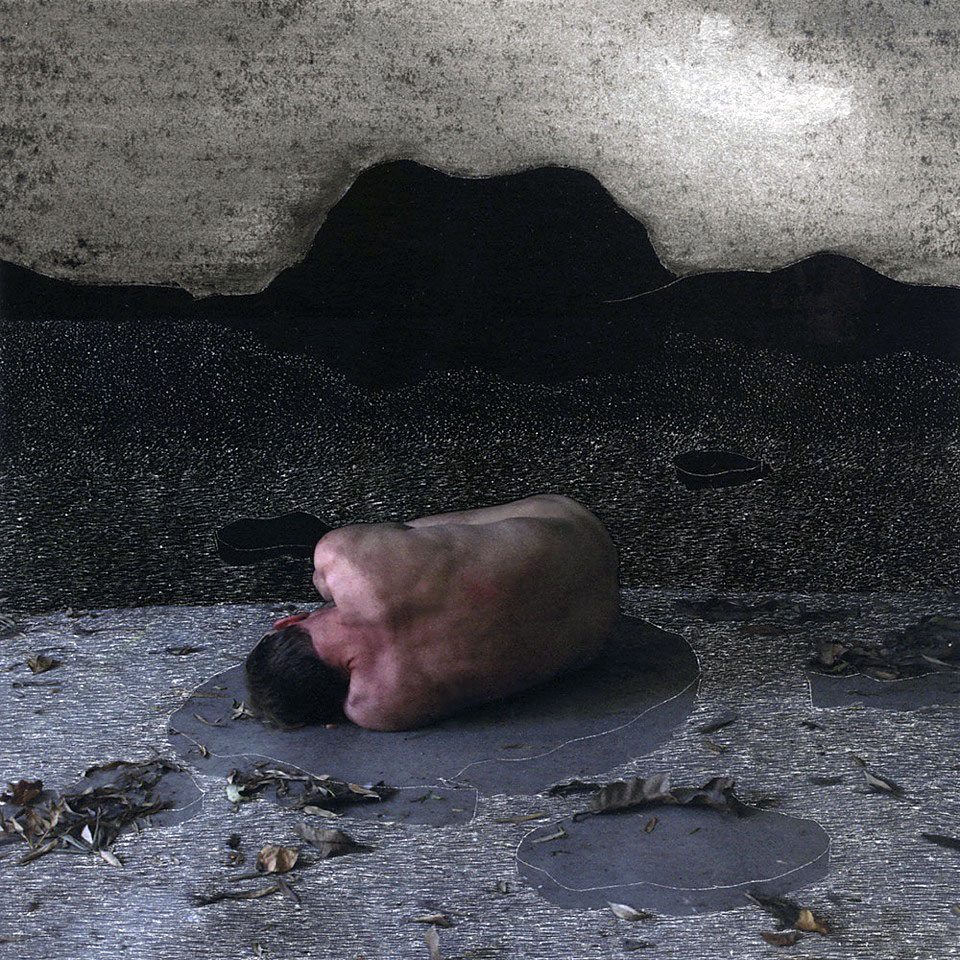
 

Henri van Noordenburg (Australian born Netherlands, b. 1967) 'Composition XXII' 2013


Henri van Noordenburg (Australian born Netherlands, b. 1967)
Composition XXII
2013
Hand carved archival pigment print
30 x 30cm
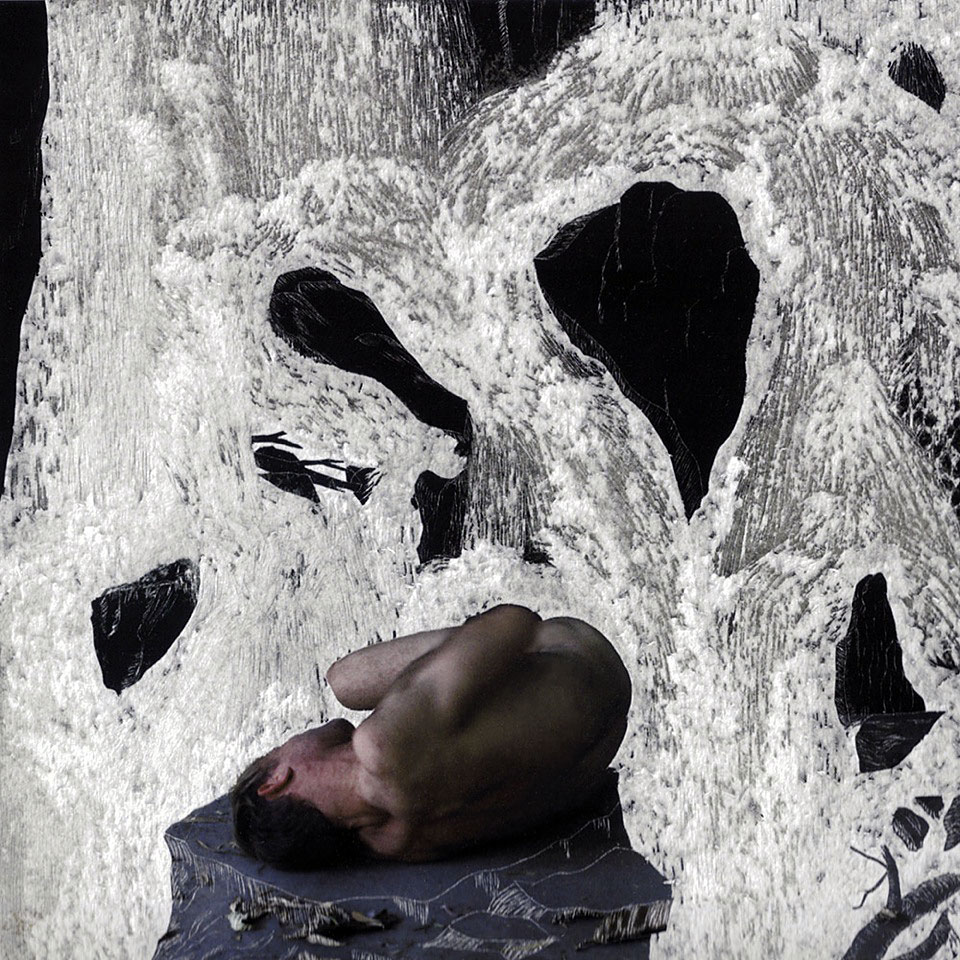
 

Henri van Noordenburg (Australian born Netherlands, b. 1967) 'Composition XXIII' 2013


Henri van Noordenburg (Australian born Netherlands, b. 1967)
Composition XXIII
2013
Hand carved archival pigment print
30 x 30cm


Between Here and There

The figure that haunts these images is far from a signifier of passivity and calm. Dwarfed and subjugated by that which surrounds, his naked form seems deep in the throes the landscape’s implicit bewilderment and assault. His pallid, naked flesh is scarred and reddened and soiled, the reproach of this eerie land leaving an acrid evidence.

The work of Henri van Noordenburg veers towards the anxieties of juncture, displacement and exodus – art history, religious mythology, the socio-cultural tropes of migration and dislocation and the tensions of the photographic medium underlie his visual and allegorical language.

Indeed, the sensibilities and narratives that punctuate the Dutch-born artist’s new series, Efface, are significant on several levels. The immediately perceptible tension is that of technique and form. Beginning their lives as nude photographic self-portraits (the body set against a vast, featureless, black backdrop), van Noordenburg’s renderings of the Australian landscape and wilderness are in fact painstakingly realised hand-etchings. The photographic surface is an amalgam, the physicality of the photographic object unmistakable. In an era of fluctuation and change for the now ubiquitous digital form, van Noordenburg attempts to reengage, reinterpret and gain further understanding of the photograph’s physical roots.

The formal and stylistic inclinations that the artist achieves via such a process offers another intriguing layer. Resting upon the myth of the Expulsion from the Garden of Eden, this loaded series operates in the shadows of art history, forging a Romantic European imagining of the landscape and broaching its loaded colonialist underpinnings. Just as van Noordenburg’s photographic visage wanders a landscape created via the hand and the imagination, the European man stalks the myth of the non-European landscape as a base, inhospitable threat. Allegories and references double back on one another; themes of movement, displacement, exile and expulsion break bread with the iconography of the colonialist gaze.

That it is van Noordenburg’s own image that haunts these works – his body writhing, crouched or prone amid the bush – proves telling. Though living in Australia for the best part of two decades, the artist is an outsider in a nation that remains in acute denial of the extent of its immigrant foundations. Whether white, black, yellow or brown, the great myth of a quintessential Australianness – one that exists on a plane distinct from the cultural melange that marks the Australian reality – threatens to dislocate all who fail to blindly buy in.

In the suite of works that populate Efface, van Noordenburg sets himself adrift, haunted by his own place in history, mythology and the wider Australian scheme. Though we live in an increasingly borderless and post-national world, some things tend not to change.

Dan Rule
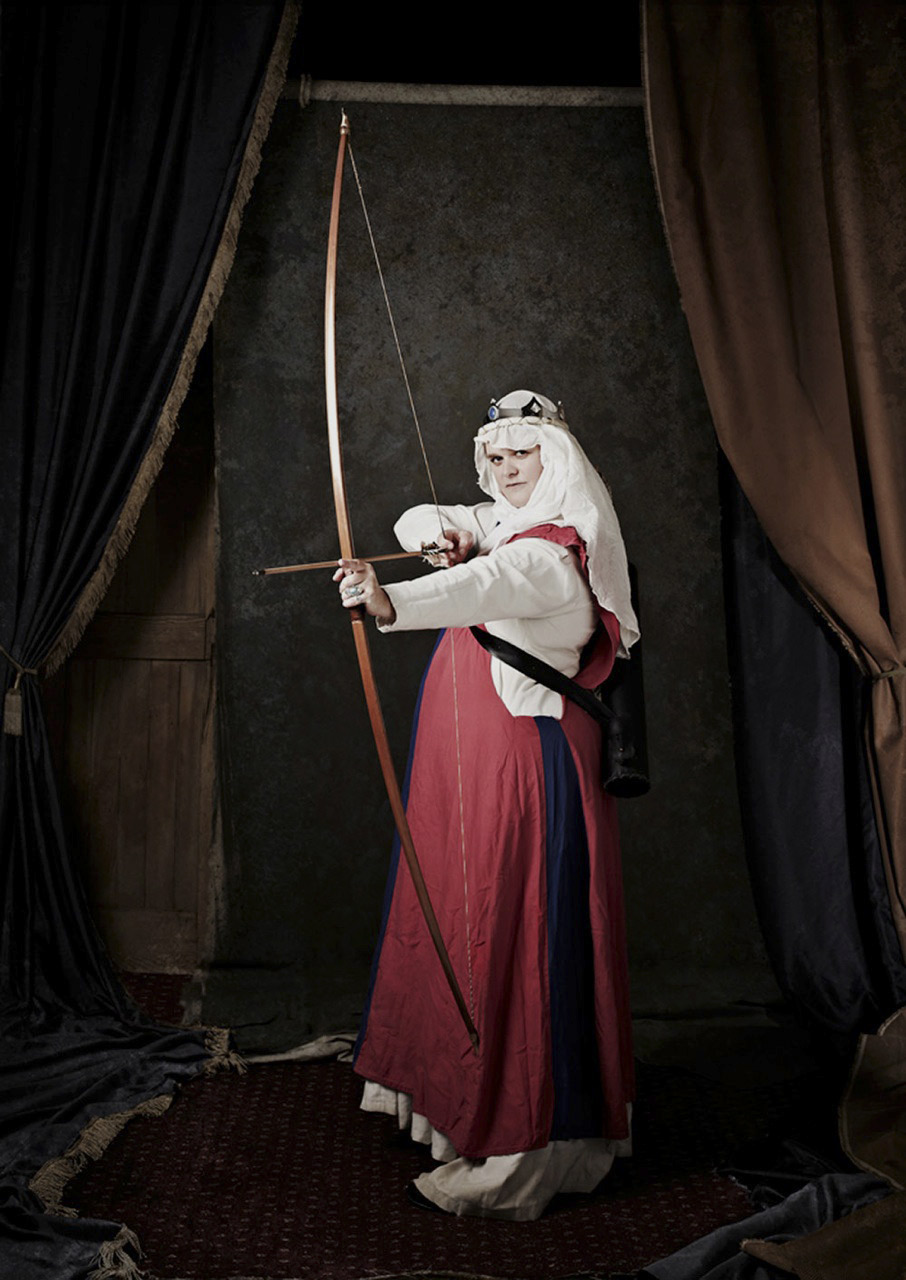
 

Amber McCaig (Australian) 'Ute von Tangermunde' 2013


Amber McCaig (Australian)
Ute von Tangermunde
2013
Archival pigment print
48 x 33cm
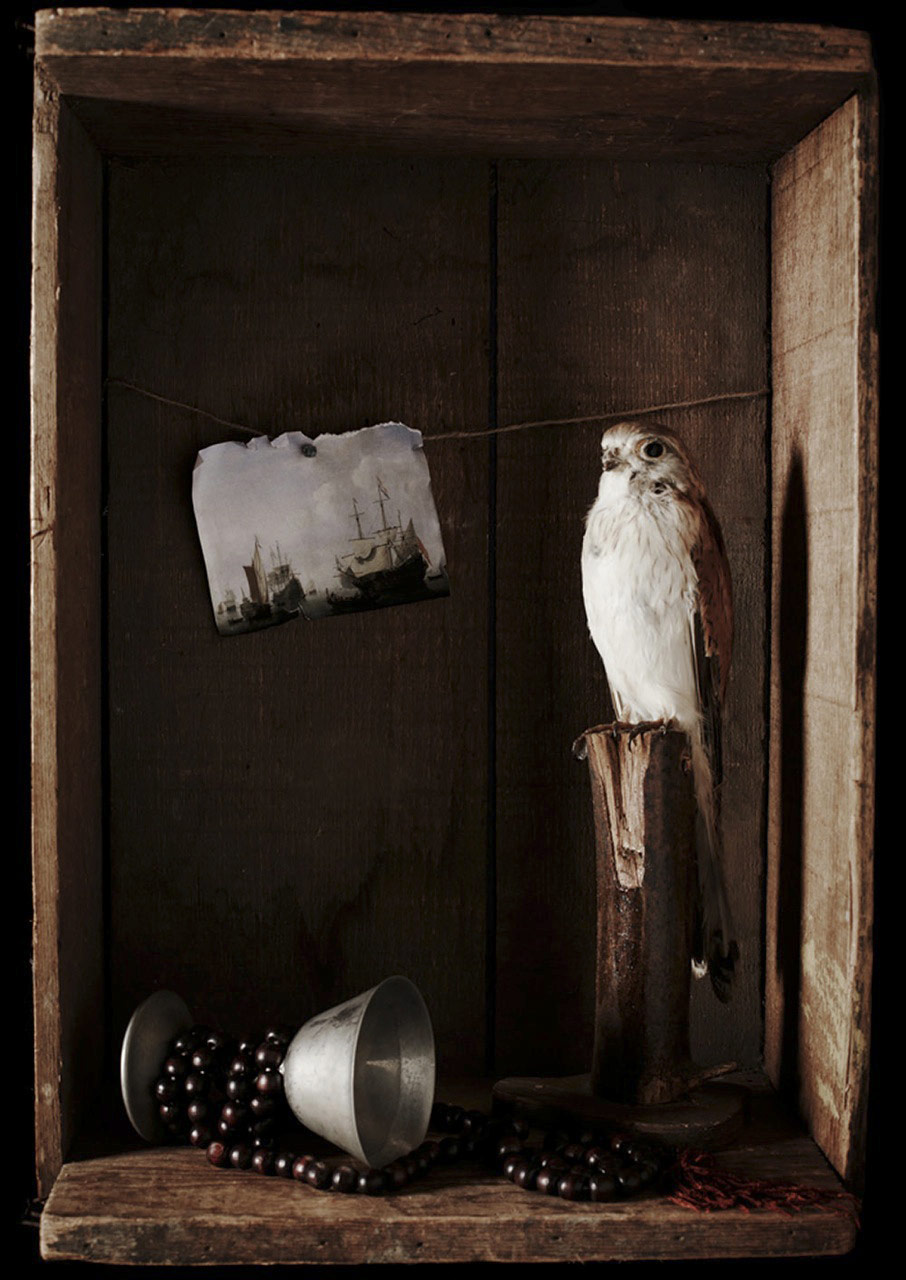
 

Amber McCaig (Australian) 'Untitled VII' 2013


Amber McCaig (Australian)
Untitled VII
2013
Archival pigment print
48 x 33cm


“Using a combination of portraits and still life elements, Amber recreates an exploration into the idea of identity and imagination, providing an insight into what it is like to live out fantasies in everyday life. Laden with armour, treasure chests, maps and lore, these fantasies show the power of our imagination and what is possible if we dare to dream.”

Text from the Edmund Pearce Gallery website
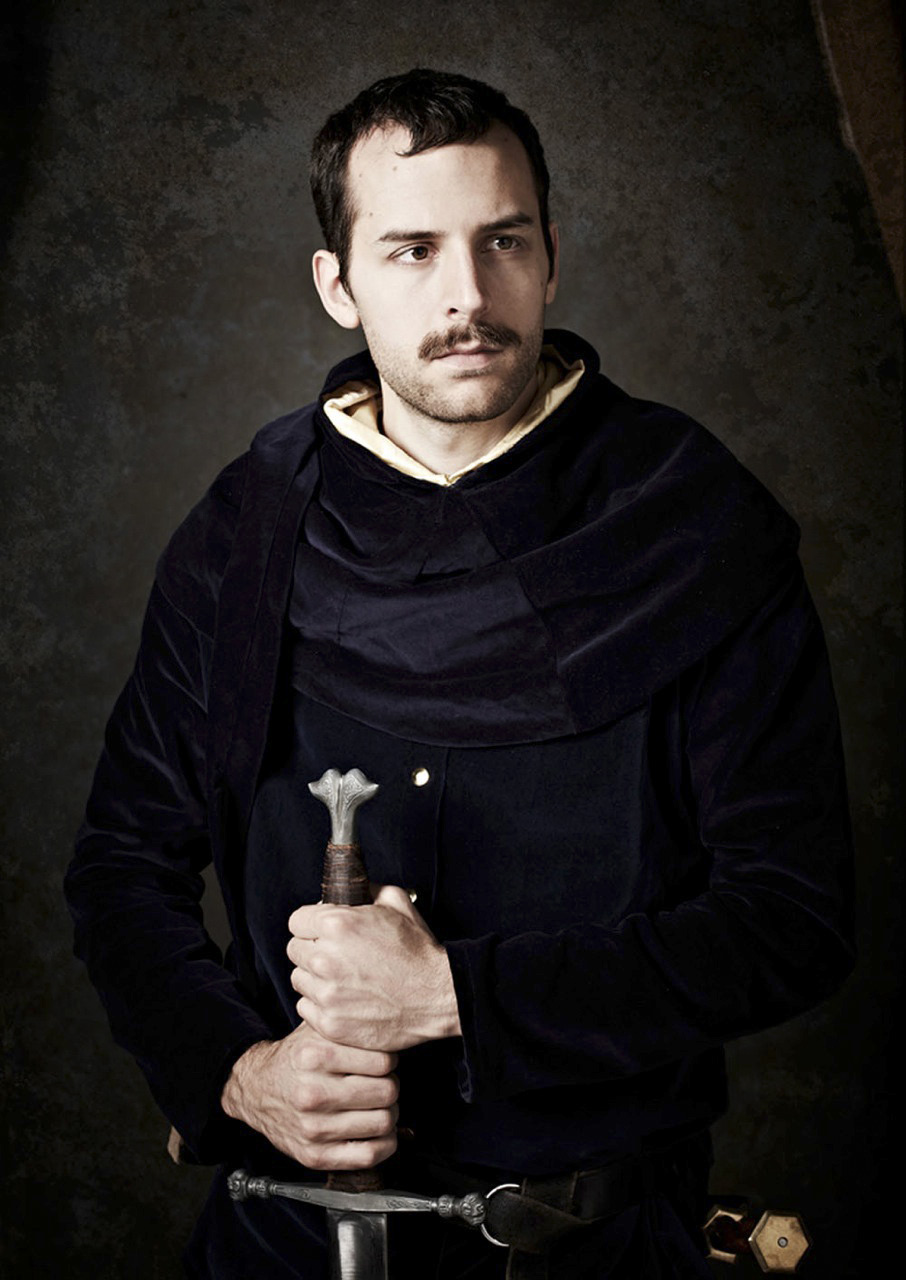
 

Amber McCaig (Australian) 'The Knight Errant' 2013


Amber McCaig (Australian)
The Knight Errant
2013
Archival pigment print
60 x 42cm
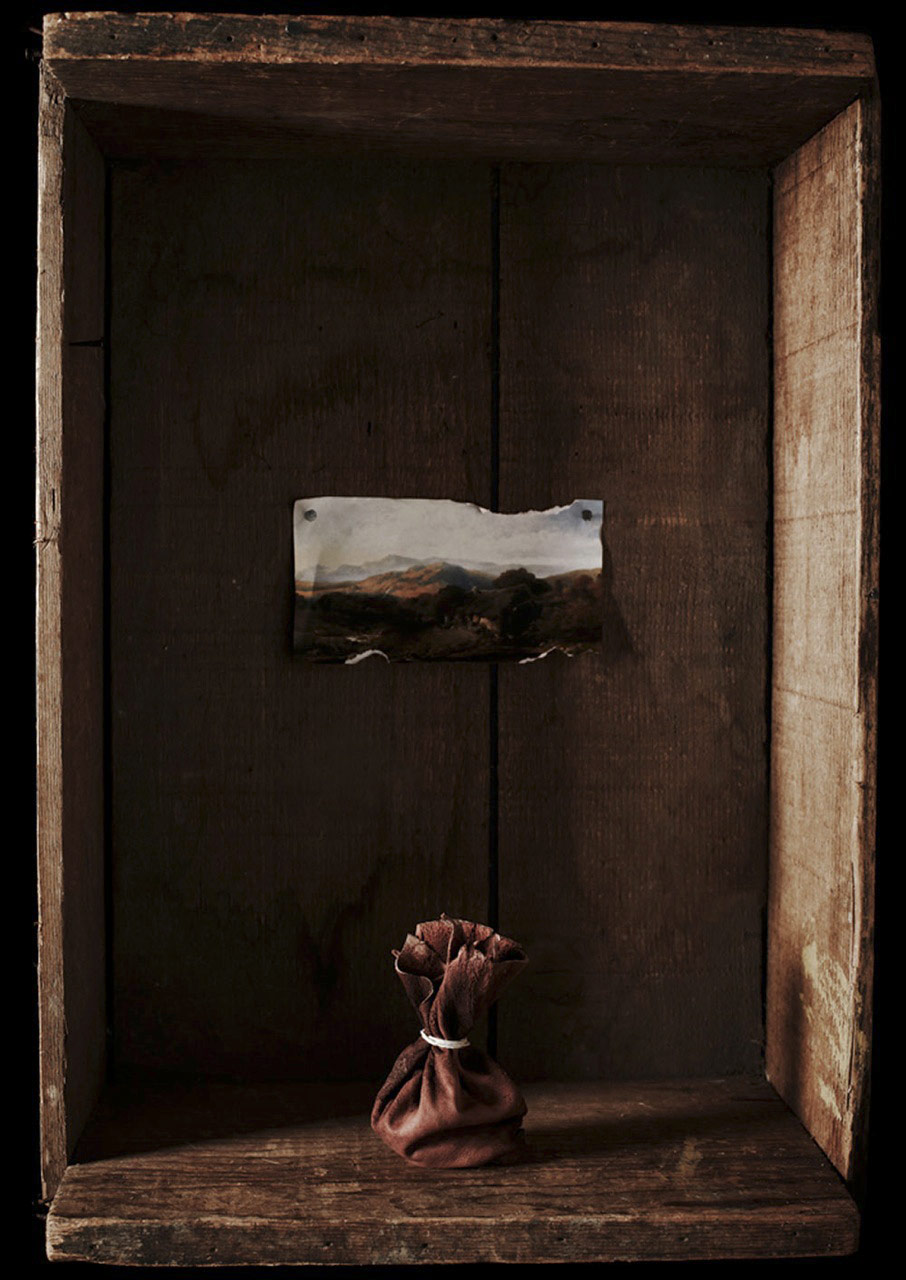
 

Amber McCaig (Australian) 'Untitled IV' 2013


Amber McCaig (Australian)
Untitled IV
2013
Archival pigment print
60 x 42cm
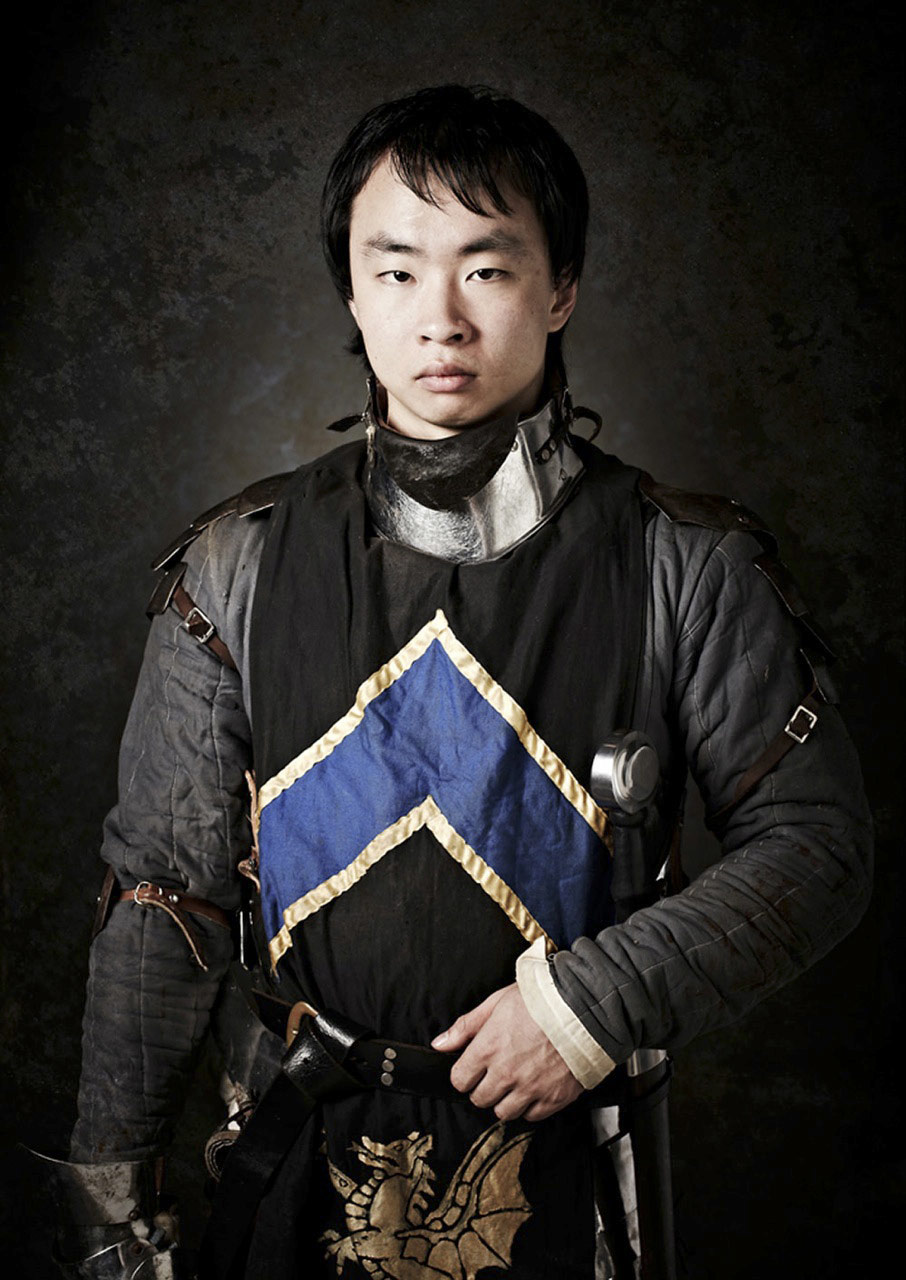
 

Amber McCaig (Australian) 'The Knight' 2013


Amber McCaig (Australian)
The Knight
2013
Archival pigment print
60 x 42cm
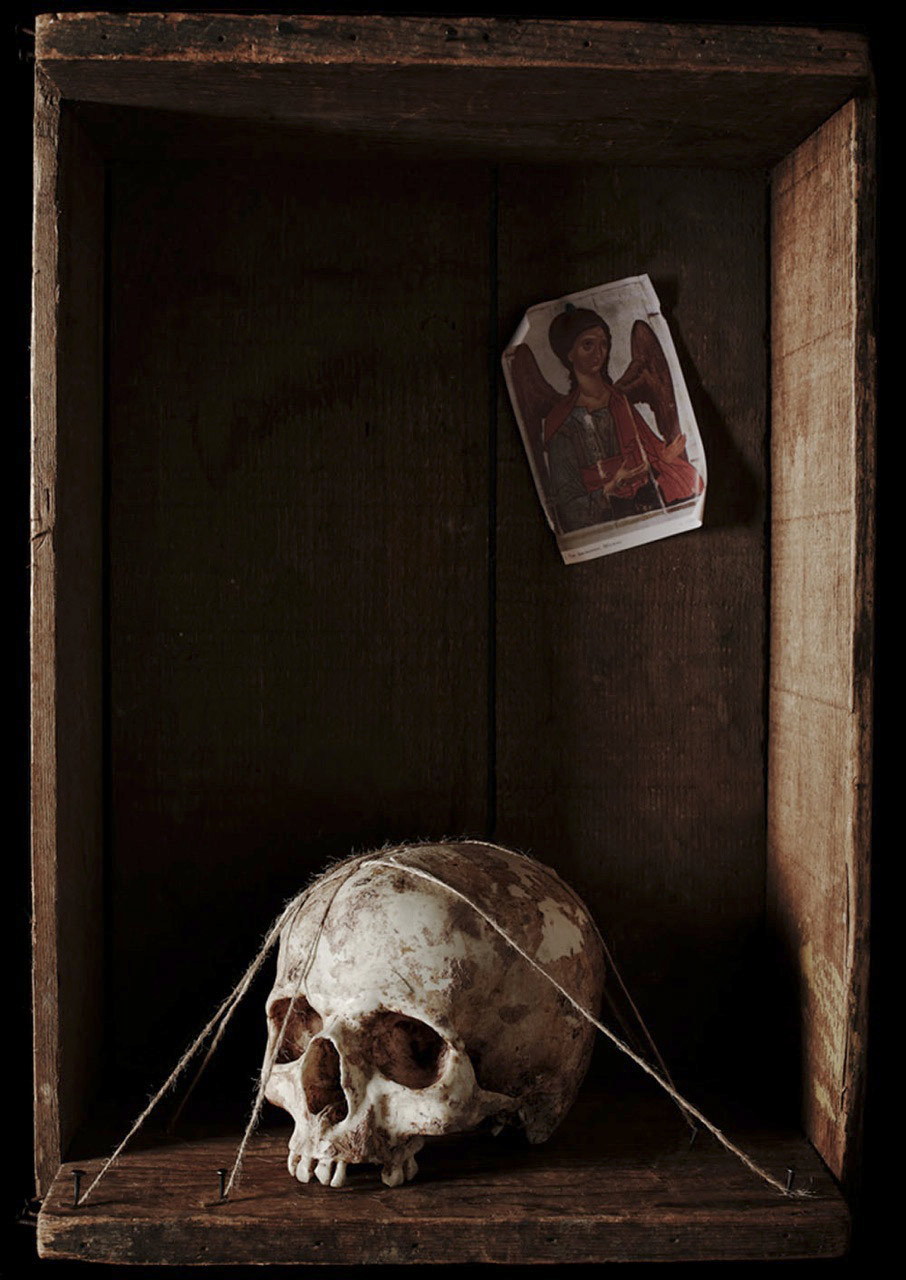
 

Amber McCaig (Australian) 'Untitled III' 2013


Amber McCaig (Australian)
Untitled III
2013
Archival pigment print
60 x 42cm
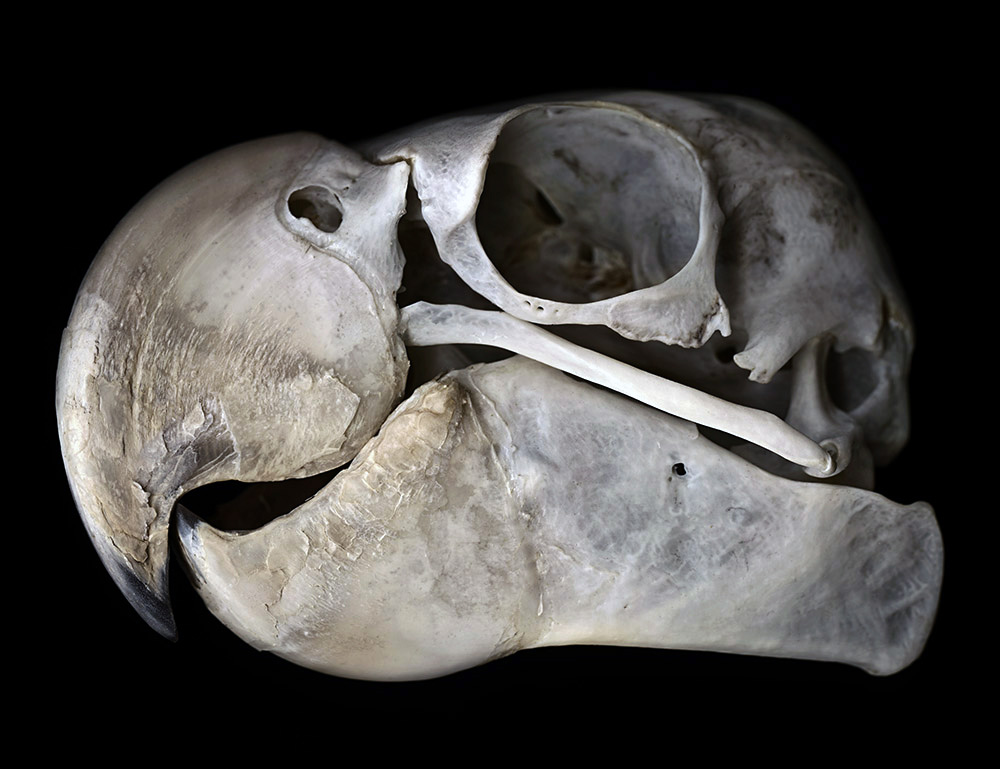
 

Greg Elms (Australian, b. 1960) 'We knew it was serious, but we were kind of busy (Black cockatoo skull)' 2013


Greg Elms (Australian, b. 1960)
We knew it was serious, but we were kind of busy (Black cockatoo skull)
2013
Archival pigment print
85 x 110cm


“This taxonomy series of large-scale prints, which acts as an amplification of its forensic nature, is an examination of where our relationships with animals are headed. Whilst those with vested interests may deride climate change, it is beyond dispute that there is a decline in many species of fauna (and flora). In 21st century life, where the distractions are numerous and social media pervasive, 24-hour news counteracts important issues amidst a blur of information overload… Elms work investigates the natural world exploring themes of reality, mortality and the sublime.”

Text from the Edmund Pearce Gallery website
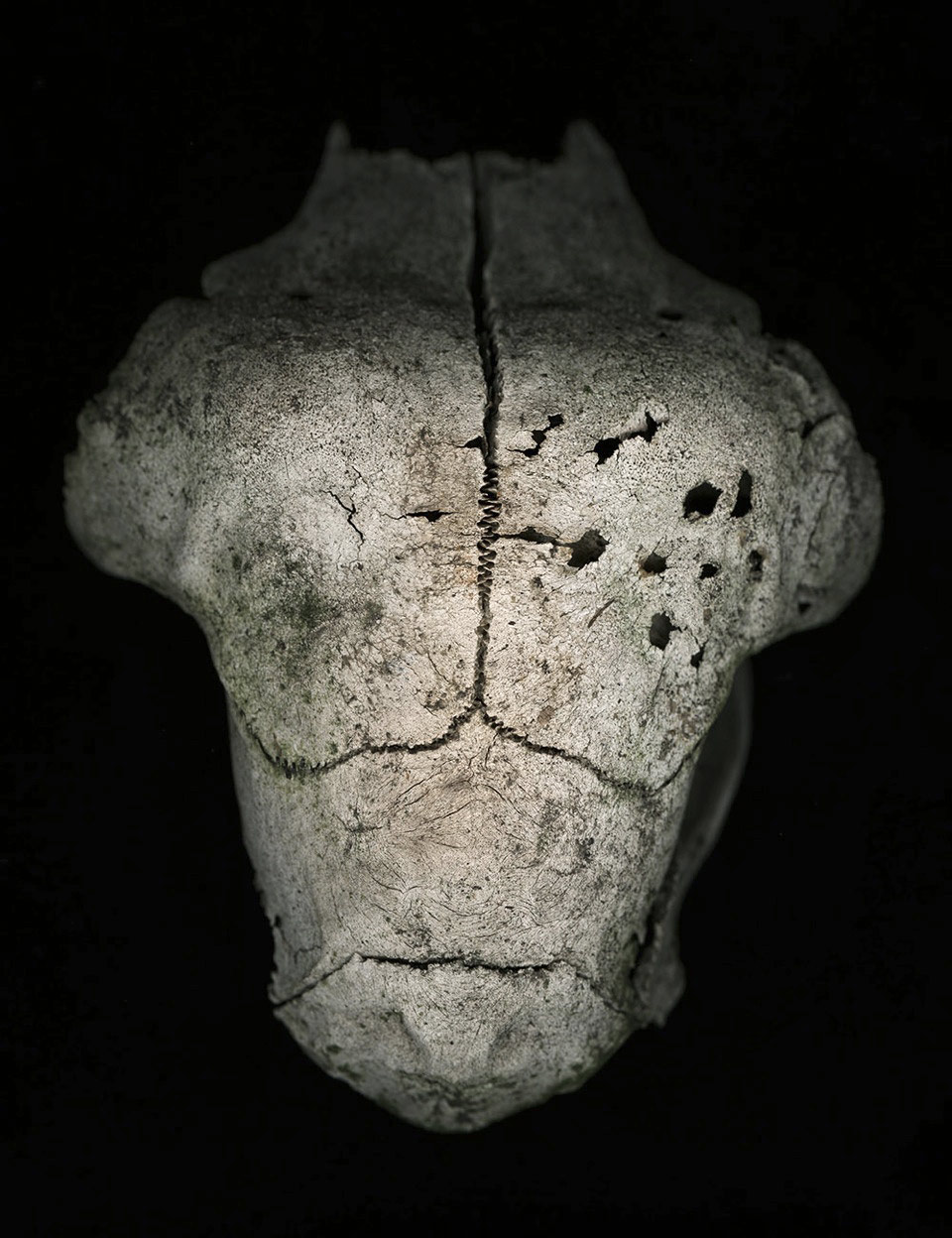
 

Greg Elms (Australian, b. 1960) 'It got overrun by other news (Wombat skull, aerial view)' 2013


Greg Elms (Australian, b. 1960)
It got overrun by other news (Wombat skull, aerial view)
2013
Archival pigment print
70 X 55cm


Respice post te!

There is something incredibly human about Greg Elms’ latest suite of works. Something uncannily and immediately recognisable in these gaping eyes and grimacing teeth. What links each of the ‘individuals’ here is very simple. It is not just death, it is the cause of death. These are forensic portraits of homicide victims, genocidal talismans for the perpetrator. Enjoy them, for it is we who must plead futile innocence.

Stripped of fur and flesh, they were beforehand stripped of the flora and fauna that sustained them, they were humiliated, out-numbered and out equipped and we? Well it’s simple. We needed more coffee plantations, more timber, more cultivation, more food for our yapping pets.

I’m not suggesting here that Elms is some kind of tree-hugging animal lover. But I am saying that, like the best forensic analysts, he has identified his victims well.

Elms himself gives away much of the story behind this cruelly grinning menagerie. Think of how many times in recent decades you have read the kinds of commentary that Elms utilises here as titles; “We knew it was serious, but we were kind of busy,” “Lobbyists were employed to dispute the facts,” “It got overrun by other news,” “We felt like we were helpless,” “It would’ve been fine if Newscorp was onside.”

These are everyday, generic comments. All too much so. think: Global Warming, human genocide, animal extinctions. Just everyday comments accompanied by a shrug of the shoulders. One could add “too late now.” Elms himself adds: “Everything comes and goes…”

But if there is beauty in Apocalypse then Elms has found it. There is an elegance alongside a silence in these animalistic portraits of nature mort. These un-furred memento mori.

The Latin phrase, memento mori, translates essentially as “Remember that you must die.” Another translation of the term reads Respice post te! Hominem te esse memento – Look behind you! Remember that you are but a man! But here in Elms’ portraits it is the Vervet Monkey, the Black Cockatoo, the Cheetah. Indeed, the only thing missing is the skull of the human.

But there is time enough for that…

Ashley Crawford
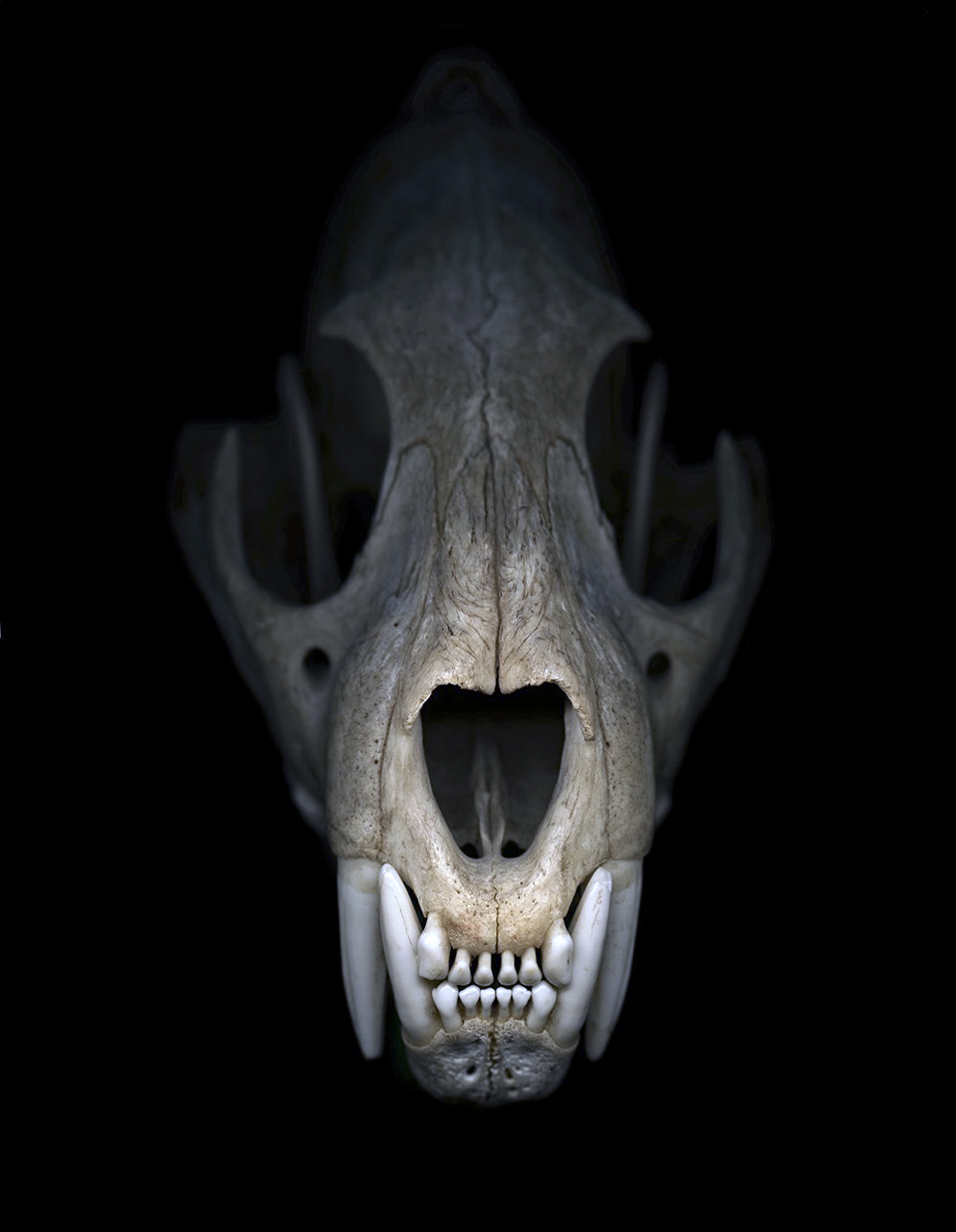
 

Greg Elms (Australian, b. 1960) 'We felt sort of helpless to stop the extinction (Cheetah skull)' 2012


Greg Elms (Australian, b. 1960)
We felt sort of helpless to stop the extinction (Cheetah skull)
2012
Archival pigment print
110 x 85cm
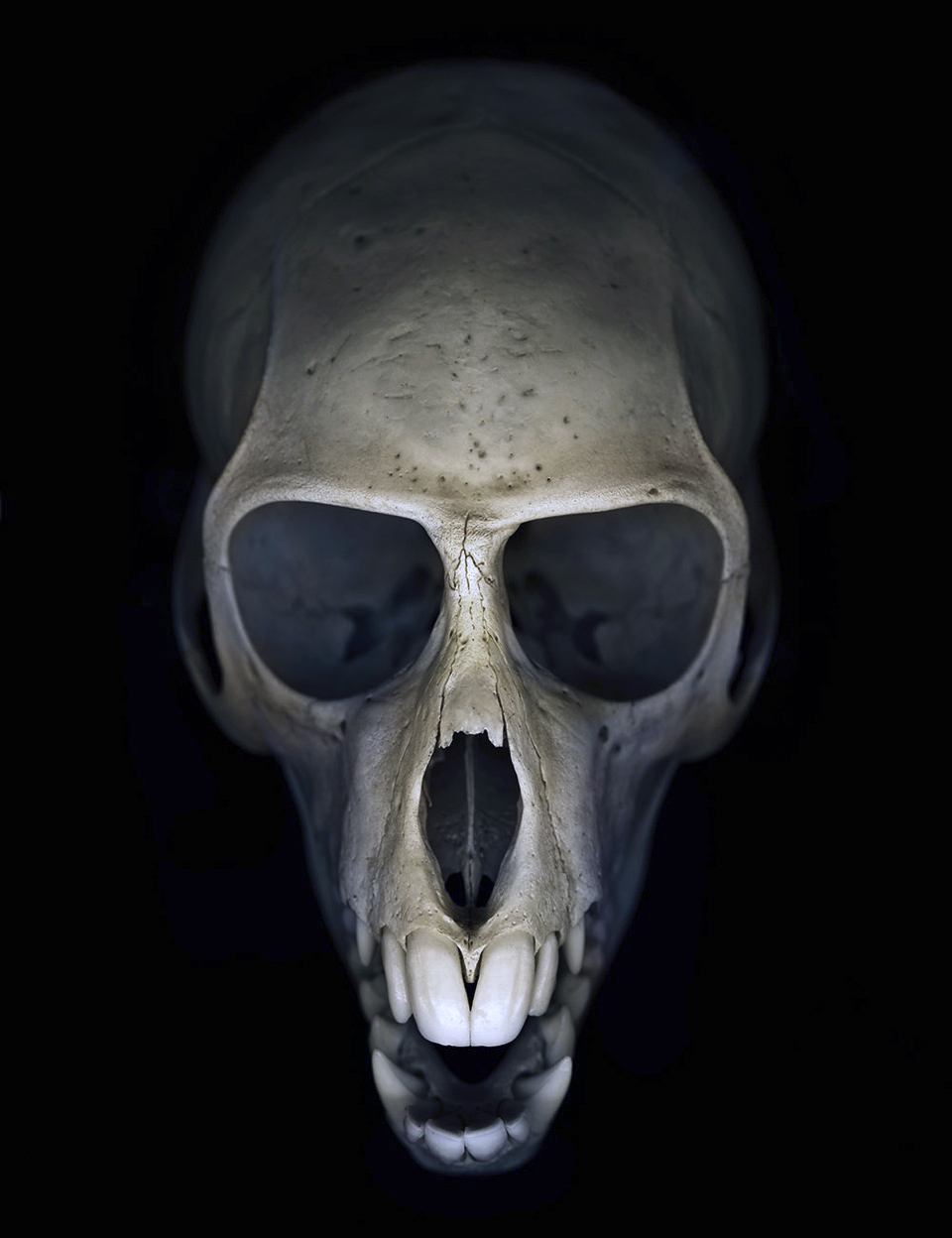
 

Greg Elms (Australian, b. 1960) 'You won’t get away with this for much longer (Vervet monkey skull)' 2011


Greg Elms (Australian, b. 1960)
You won’t get away with this for much longer (Vervet monkey skull)
2011
Archival pigment print
110 x 85cm


Edmund Pearce Gallery

This gallery has now closed.

LIKE ART BLART ON FACEBOOK

Back to top

Review: ‘Tangent’ by Michael Corridore at Edmund Pearce Gallery, Melbourne

Exhibition dates: 11th September – 5th October 2013


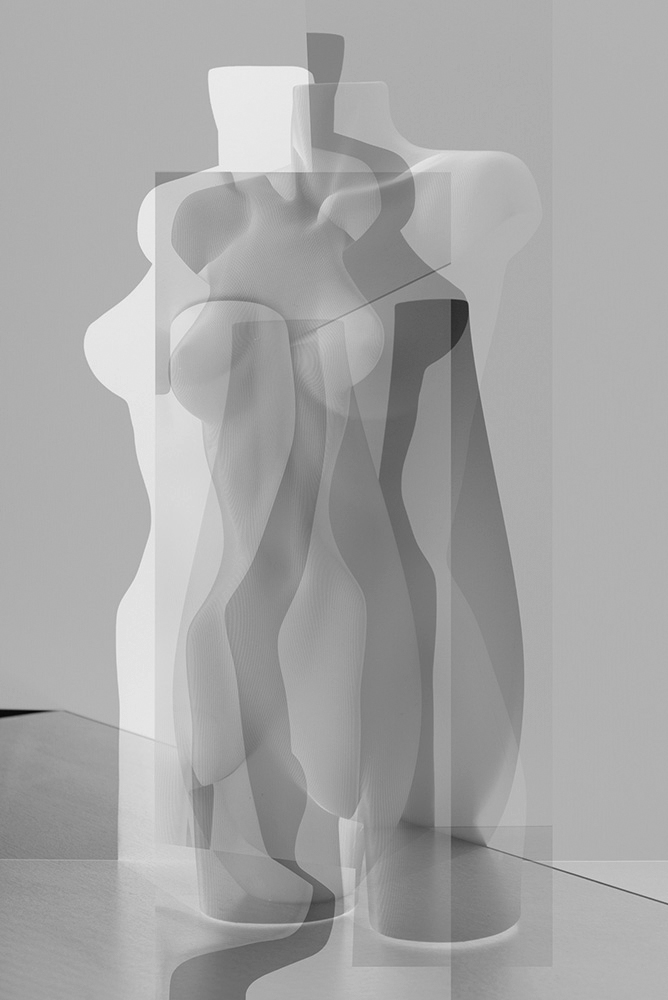
Michael Corridore (Australian) 'Form Collage 0004' 2001


Michael Corridore (Australian)
Form Collage 0004
2001
Archival pigment print
20 x 26.5cm
© Michael Corridore


This is a patchy exhibition by Michael Corridore at Edmund Pearce Gallery.

The four small images from the initial foray into digital collage (the photograph above and the top three photographs below, all 2001) are the most striking and effective works in the exhibition. Lucid in their Duchampian layering and movement, these beautiful photographs most clearly express the conceptual ideas behind the collages. The four pieces literally stopped me in my tracks when I saw them in the gallery space. The colours are bold, the overlapping and movement refined and the effect on this viewer was profound, so intense was the visualisation of the work.

The new photographs possess a different order of being. Subtle and requiring greater contemplation there were only five images that impinged on my consciousness in the rest of the exhibition (the first five photographs after the press release below, all 2013). Even the best of them seem more an exercise in the formal qualities of digital collage rather than the élan vital of the earlier work. While Corridore re-interprets “what we see from differing perspectives and synthesise[s] those components of our observations and memory information into a two-dimensional image,” what he produces are images that are not that memorable. Interesting exercises, perhaps, in the topography of being, but not that memorable or emotive as images.

The rest of the new photographs simply did not work for me. Either there was not enough for this viewer to hang his hat on (visually speaking) or the image was so subtle and occluded behind the glass of the frame that the viewer gets no feeling, no presence from the image at all. (Of course, this is the perennial difficulty of framing dark or subtle work in a gallery environment, the ability of the viewer to actually see the work if glass or perspex is placed in front of it. Either you pin the work to the wall, or frame it without glass, or mount on aluminium but all but the latter precludes the easy sale to customers who want an artwork ready to purchase off the gallery wall). Tangentially speaking, it is as if the train of thought of the artist has wandered as he seeks other pathways to creation, pathways that fail to interestingly develop the initial topic of conversation.

It is all very well to go off at a tangent (defined as a line, curve, or surface meeting another line, curve, or surface at a common point and sharing a common tangent line or tangent plane at that point; a sudden digression or change of course), but the meeting point between artist’s intentions and the viewer’s reception have to at some point possess some common ground of interest and understanding. As it stands, I will always, always remember Corridore’s initial ‘fictional realities’ for their intensity and beauty but the later work will seep from my mind as easily as thought placed it there.

Dr Marcus Bunyan


Many thankx to Edmund Pearce Gallery for allowing me to publish the photographs in the posting. Please click on the photographs for a larger version of the image.


Michael Corridore (Australian) 'Form Collage 0015' 2001


Michael Corridore (Australian)
Form Collage 0015
2001
Archival pigment print
26.5 x 20cm
© Michael Corridore


Michael Corridore (Australian) 'Form Collage 0001' 2001


Michael Corridore (Australian)
Form Collage 0001
2001
Archival pigment print
26.5 x 20cm
© Michael Corridore


Michael Corridore (Australian) 'Form Collage 0003' 2001


Michael Corridore (Australian)
Form Collage 0003
2001
Archival pigment print
26.5 x 20 cm
© Michael Corridore


Although a departure from the Angry Black Snake series and ongoing landscape work, Tangents reflects Michael’s deep artistic practise and an ability to experiment confidently with different techniques and styles. Such strong technique reflects this photographer’s mastery of his craft.

Michael Corridore’s primary interest in his fine-art and commercial photography has been in inventing new narratives. Whether it is spectators shrouded in the smoke of burning rubber, his unique portraits of the famous and not so famous, capturing empty urban everyday spaces, or external landscapes that are at times exceptionally beautiful or beautifully strange and mysterious, you cannot help but be drawn in by Corridore’s ‘fictional realities’.

In this new series, Tangents, Corridore uses references to Cubism and art history, redefining such ideas in a modern photographic context. This project was commenced in 2000 and now in 2013 it has been fully realised by the artist due to advances in digital capture technology. Vibrant and subtle colour can now be fully preserved in the collage process.

“In this series of collages, I have returned to a series that I had started in 2000. The original series resulted in about a dozen or so photographs. My first attempts at collage were through printing negatives onto black and white Lithographic film and layering multiple sheets of those films onto a light box and photographing the assembled sheets as collages.

From there I decided to experiment with digital capture of the original components and assemble the layers in photoshop so that I could preserve colour, which was lost in the lithographic printing process. This was my first foray into working with digital capture technology.

In the past year I began to explore this collage process again photographing various forms working with life models, mannequins and various household objects which offered me the opportunity to explore both malleable and solid forms and shapes that could be layered together in the assembled collages.

This exploration in collage stems from my interest in the Cubists approach to re-interpreting what we see from differing perspectives and synthesise those components of our observations and memory information into a two-dimensional image.”

Michael Corridore artist statement 2013


Michael Corridore (Australian) 'Form 3784' 2013


Michael Corridore (Australian)
Form 3784
2013
Archival pigment print
100 x 67cm
© Michael Corridore


Michael Corridore (Australian) 'Form 3781' 2013


Michael Corridore (Australian)
Form 3781
2013
Archival pigment print
100 x 67cm
© Michael Corridore


Michael Corridore (Australian) 'Form 4107' 2013


Michael Corridore (Australian)
Form 4107
2013
Archival pigment print
100 x 67cm
© Michael Corridore


Michael Corridore (Australian) 'Form 4102' 2013


Michael Corridore (Australian)
Form 4102
2013
Archival pigment print
100 x 67cm
© Michael Corridore


Michael Corridore (Australian) 'Form 0137' 2013


Michael Corridore (Australian)
Form 0137
2013
Archival pigment print
100 x 67cm
© Michael Corridore


Michael Corridore (Australian) 'Form 3783' 2013


Michael Corridore (Australian)
Form 3783
2013
Archival pigment print
100 x 67cm
© Michael Corridore


Edmund Pearce Gallery

This gallery has now closed.
LIKE ART BLART ON FACEBOOK

Back to top

Review: ‘Lee Grant / Belco Pride’ at Edmund Pearce Gallery, Melbourne

Exhibition dates: 5th June – 22nd June 2013


Lee Grant (Australian, b. 1973) 'Belco Pride' 2008


Lee Grant (Australian, b. 1973)
Belco Pride
2008
Archival pigment print
60 x 60cm
Edition of 8 + 2 AP


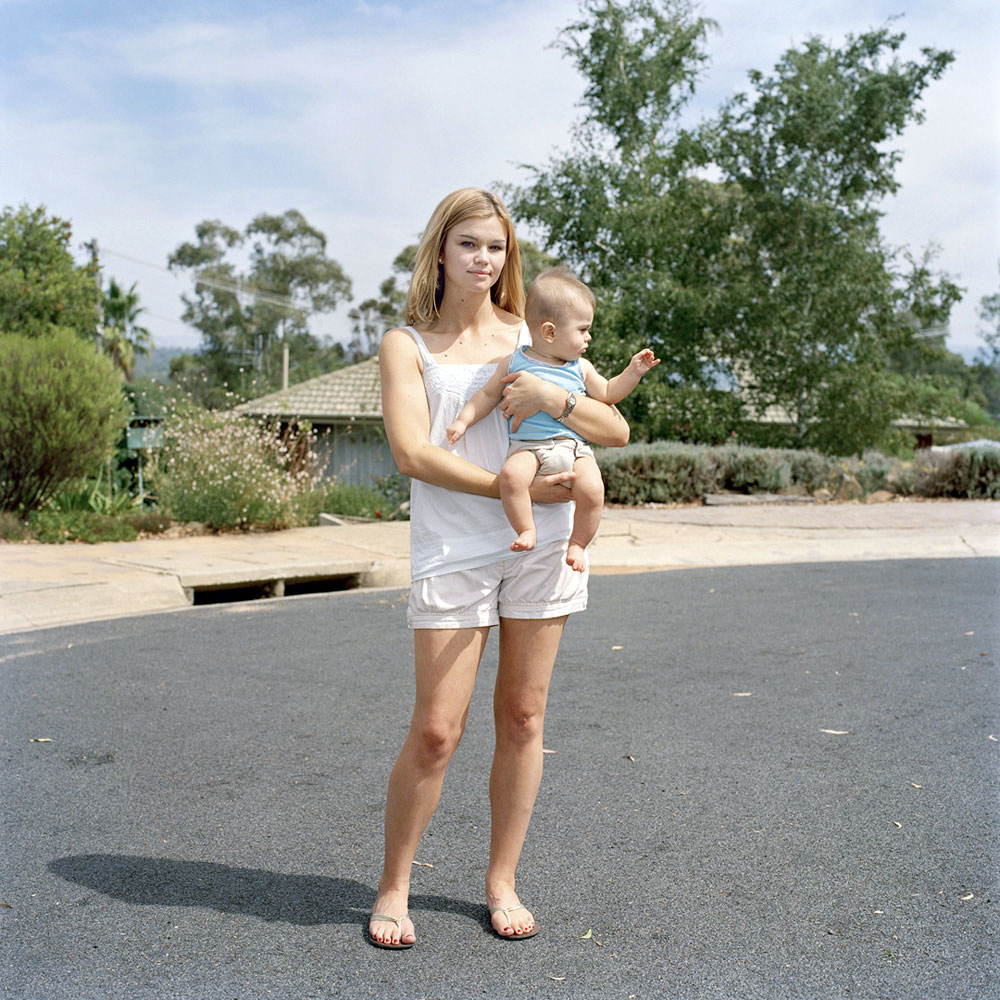
In Belco Pride, the photographer Lee Grant comes as close as you are ever likely to come to an Australian version of the American photographer Alec Soth (Sleeping by the Mississippi, Niagara). That is a great compliment indeed.

This is an intelligent, cohesive exhibition which features 5 large colour photographs and a grid of 3 x 9 smaller colour photographs that form a topographical map of a suburb in Canberra called Belconnen. The body of work investigates how humans inhabit a specific place and how that place in turn influences the formation of identity and a sense of belonging and community. These themes are set in the context of a shifting, migratory, multicultural Australian suburb. The photographs are beautifully shot and individually well resolved; these square photographs then go on to form a holistic body that gives the viewer a wonderful sense of the people and place being photographed.

Grant likes to shoot formally and frontally, but that does not mean that there is not subtly and humour present in these photographs. Technically she likes to vary depth of field to emphasise the context of place: in some images, for example Ashleigh in her Formal Dress (2008, below), depth of field is minimal in order to bring focus onto Ashleigh and the texture of her formal dress. The artist also likes to change light conditions from bright sunlight (Alisha and baby Saul, 2009 below), to overcast (Belco Pride, 2008 above) to gathering gloom (George with his model aeroplane, 2008 below); she also likes to push and pull figures and objects within the pictorial frame, from close up to mid-distance to infinity (the rendering of houses for example). This shading of space and tonality adds a beautiful luminosity to the series.

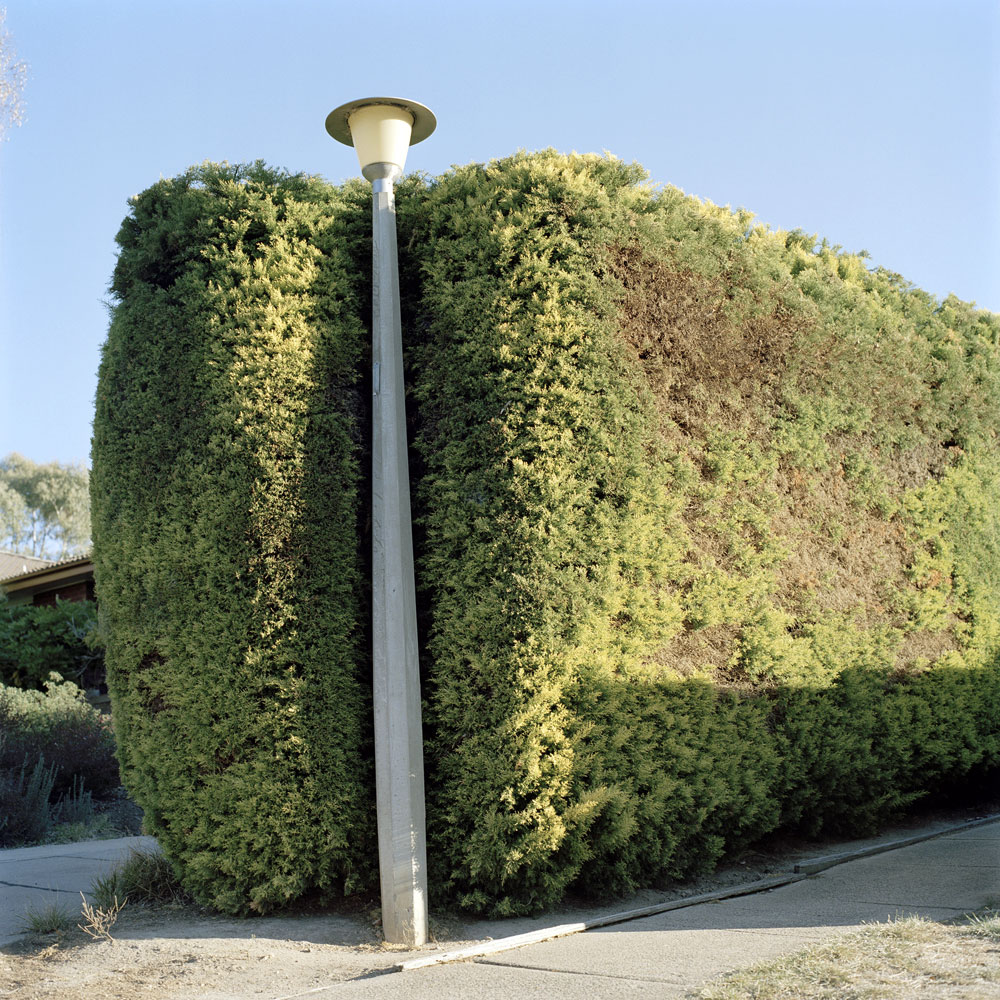
The humour and detail present is also fun: the suits of the sons two sizes too big in The Duot Family (2009, below); the barbed wire looming ominously above the white graffiti  ‘Belco Pride’; the off kilter lamp post in Suburban Hedge (2008, below) being swallowed by the hedge; and the delicious way that the lead from Kiki travels down and trails along the ground to Chucky the dog. There is a real affection and affinity for this place and people that is expressed in these photographs. They are unusually contemplative for this type of photography and that is perhaps a reflection on Grant’s Korean-Australian heritage.

Other work on her website is a mixed bag: the Sudanese Portraits are very successful, reminding me of the work of Mali photographer Malick Sidibé, while Window on the Orient is interesting but the photographs are a little ‘flat’ due to their subject matter. The Road to Kuvera and Welcome to Vietnam lack the same connection and insight into the human condition that Belco Pride possesses, and this body of work seems to be her strongest so far in terms of an enunciation of her inner vision. I await new work with interest.

Dr Marcus Bunyan


Many thankx to Edmund Pearce for allowing me to publish the photographs in the posting. Please click on the photographs for a larger version of the image.


Lee Grant (Australian, b. 1973) 'The Duot Family' 2009


Lee Grant (Australian, b. 1973)
The Duot Family
2009
Archival pigment print
110 x 110cm
Edition of 4 + 2 AP


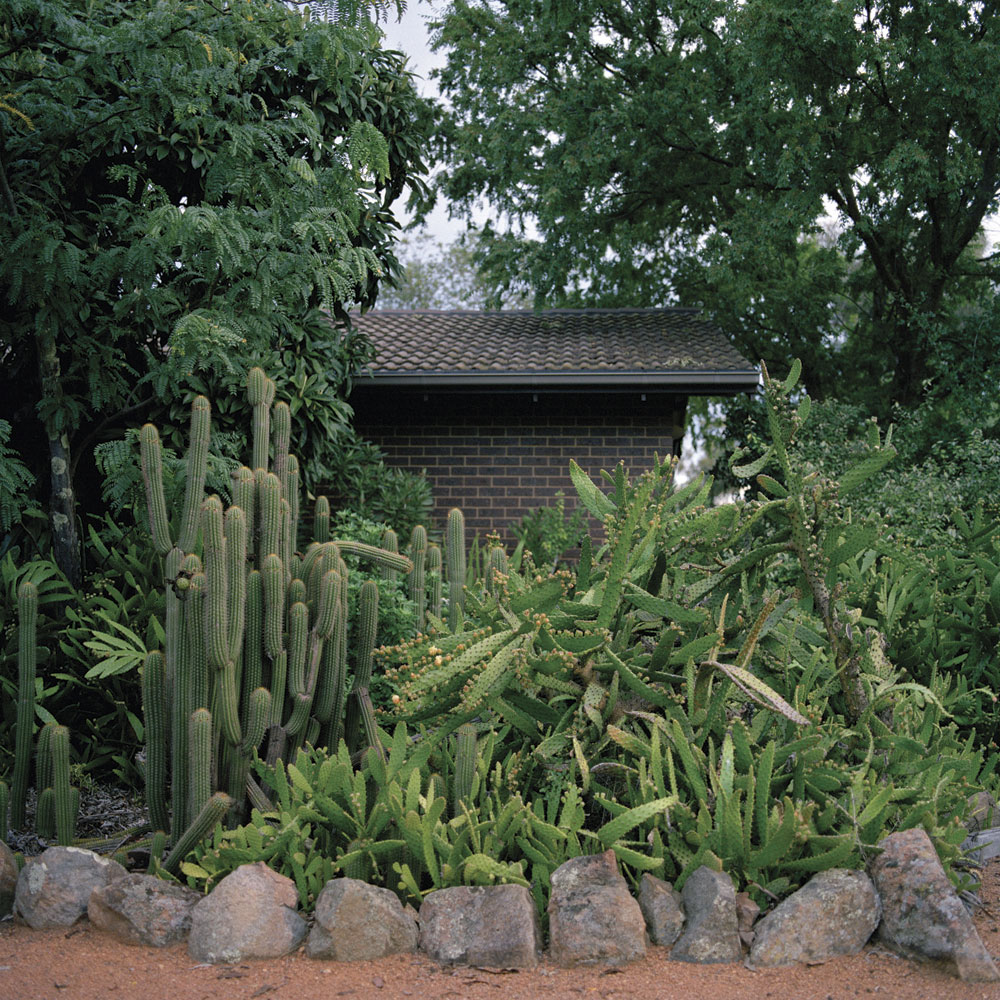
Lee Grant (Australian, b. 1973) 'Cactus Garden' 2012


Lee Grant (Australian, b. 1973)
Cactus Garden
2012
Archival pigment print
110 x 110cm
Edition of 4 + 2 AP


Lee Grant (Australian, b. 1973) 'Ashleigh in her Formal Dress' 2008


Lee Grant (Australian, b. 1973)
Ashleigh in her Formal Dress
2008
Archival pigment print
110 x 110cm
Edition of 4 + 2 AP


Lee Grant (Australian, b. 1973) 'Suburban Hedge' 2008


Lee Grant (Australian, b. 1973)
Suburban Hedge
2008
Archival pigment print
110 x 110cm
Edition of 4 + 2 AP


Lee Grant (Australian, b. 1973) 'Graffheads' 2009


Lee Grant (Australian, b. 1973)
Graffheads
2009
Archival pigment print
60 x 60cm
Edition of 8 + 2 AP


Lee Grant (Australian, b. 1973) 'Roxy and Jess' 2008


Lee Grant (Australian, b. 1973)
Roxy and Jess
2008
Archival pigment print
60 x 60cm
Edition of 8 + 2 AP


Belco’s a hole… but it’s our hole.

I’ve been told that you never truly leave behind the place you grew up. That it remains deep within your experience of the world. Feeling conflicted about one’s place of origin is certainly not unique, but for me, the process of returning ‘home’ and reconciling my perception of place with its banal and vernacular reality was a surprising yet cathartic experience. The photographs in this series express the idea that belonging, connection and identity is deeply rooted in the specifics of one’s inhabited landscape. The landscape depicted here being the 25 northernmost suburbs of Canberra known as Belconnen, or to us locals, as ‘Belco’.

As a photographer, I am interested in the way migrant communities adapt to new environments, particularly in western cultures and much of my work explores themes of identity, belonging and community set often in the context of the Australian suburbs.

Lee Grant


“I always believed it was the things you don’t choose that makes you who you are. Your city, your neighbourhood, your family. People here take pride in these things, like it was something they’d accomplished. The bodies around their souls, the cities wrapped around those. I lived on this block my whole life; most of these people have.”

Dennis Lehane


Lee Grant’s latest exhibition at Edmund Pearce, Belco Pride, explores how belonging, connection and identity is deeply rooted in the specifics of one’s inhabited landscape. The landscape depicted here being the 25 northernmost suburbs of Canberra known as Belconnen, or to the locals, as ‘Belco’.

Lee is a documentary photographer who lives and works in Canberra. She holds a degree in Anthropology and in 2010 completed a Master of Philosophy at the ANU School of Art. Lee has exhibited at the Australian Centre for Photography, the Monash Gallery of Art and the National Portrait Gallery amongst others. She has been a finalist in the National Photographic Portrait Prize, the Head On Alternative Portrait Prize, the Josephine Ulrick and Win Schubert Prize and the Olive Cotton Award. Lee was also the winner of the prestigious Bowness Photography Prize in 2010. Her work is held in the National Library, the Canberra Museum and Art Gallery as well as numerous private collections.


Lee Grant (Australian, b. 1973) 'Kiki and Chucky' 2008


Lee Grant (Australian, b. 1973)
Kiki and Chucky
2008
Archival pigment print
60 x 60cm
Edition of 8 + 2 AP


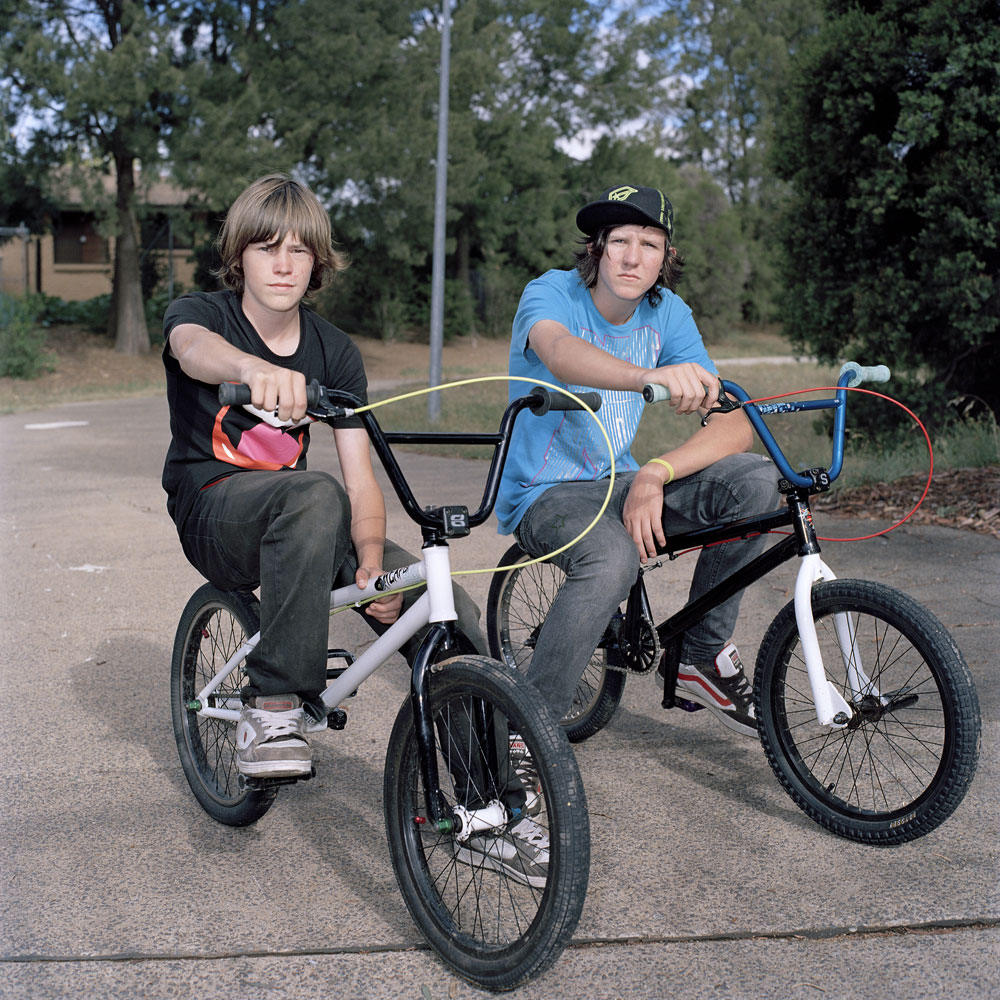
Lee Grant (Australian, b. 1973) 'Nathan & Mac, BMX bros' 2009


Lee Grant (Australian, b. 1973)
Nathan & Mac, BMX bros
2009
Archival pigment print
60 x 60cm
Edition of 8 + 2 AP


Lee Grant (Australian, b. 1973) 'A View of Suburbia' 2009


Lee Grant (Australian, b. 1973)
A View of Suburbia
2009
Archival pigment print
60 x 60cm
Edition of 8 + 2 AP


Lee Grant (Australian, b. 1973) 'Alisha and baby Saul' 2009


Lee Grant (Australian, b. 1973)
Alisha and baby Saul
2009
Archival pigment print
60 x 60cm
Edition of 8 + 2 AP


Lee Grant (Australian, b. 1973) 'George with his model aeroplane' 2008


Lee Grant (Australian, b. 1973)
George with his model aeroplane
2008
Archival pigment print
60 x 60cm
Edition of 8 + 2 AP


Lee Grant (Australian, b. 1973) 'Ginninderra Creek on a Winter's morning' 2008


Lee Grant (Australian, b. 1973)
Ginninderra Creek on a Winter’s morning
2008
Archival pigment print
60 x 60cm
Edition of 8 + 2 AP


Lee Grant (Australian, b. 1973) 'The Beehive' 2008


Lee Grant (Australian, b. 1973)
The Beehive
2008
Archival pigment print
60 x 60cm
Edition of 8 + 2 AP


Lee Grant (Australian, b. 1973) 'Lee' 2010


Lee Grant (Australian, b. 1973)
Lee
2010
Archival pigment print
60 x 60cm
Edition of 8 + 2 AP


Edmund Pearce Gallery

This gallery is now closed.

LIKE ART BLART ON FACEBOOK

Back to top

Review: ‘Aliza Levi / Books on a White Background’ at Edmund Pearce Gallery, Melbourne

Exhibition dates: 10th April – 4th May 2013


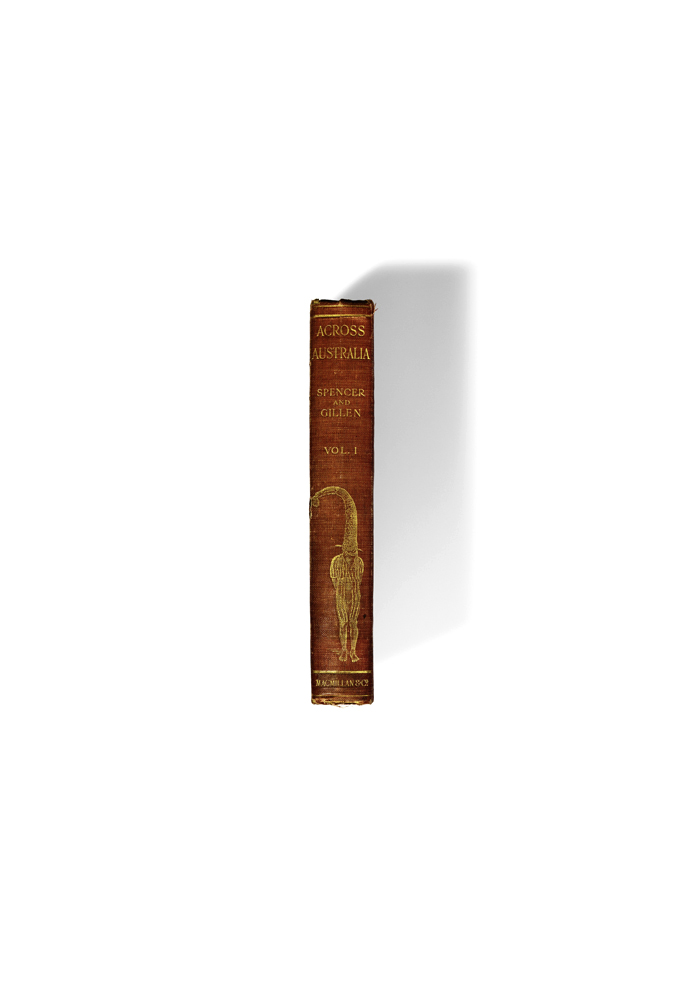
Aliza Levi (South African, b. 1969) 'Across Australia' 2011


Aliza Levi (South African, b. 1969)
Across Australia
2011
Archival Inkjet Print
59 x 42cm


Aura of white

Shadow of black

Books for the boys *

Black bodies out the back


* Books for the bourgeois

* Books for the parlour

* Books for the burning

* Books to hide memories

* Books lost in archives

* Books still in libraries

* Books for the tower (implying Babel)

* Books for the scrapheap

* Books for academics

* Books for the garbo

* Books for the church stall

* Books to forget


Dr Marcus Bunyan


Many thankx to Edmund Pearce Gallery for allowing me to publish the photographs in the posting. Please click on the photographs for a larger version of the image.


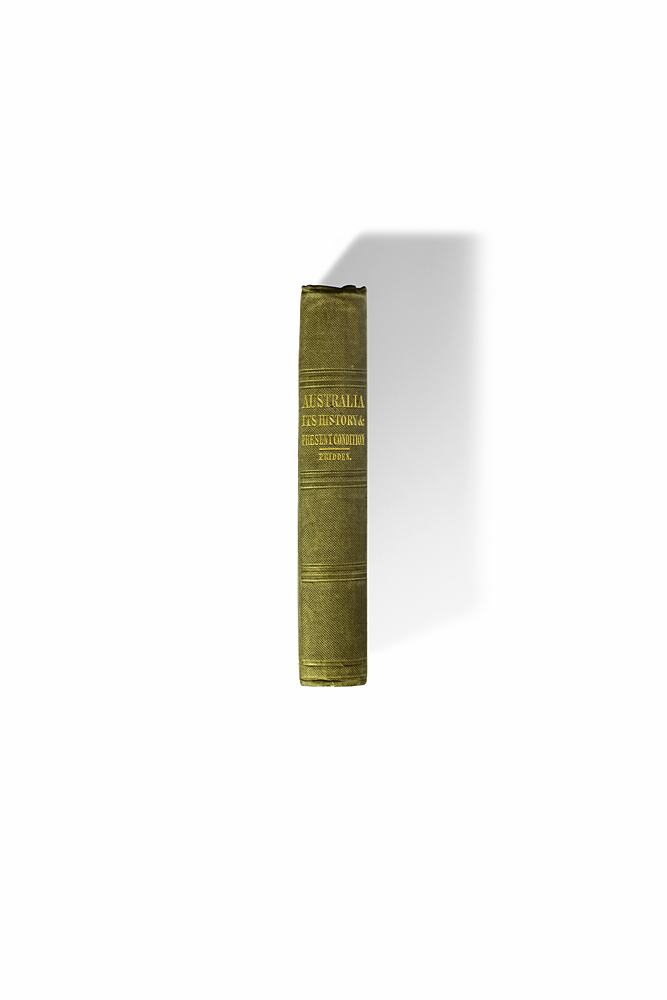
Aliza Levi (South African, b. 1969) 'Australia, its History and Present Condition' 2013


Aliza Levi (South African, b. 1969)
Australia, its History and Present Condition
2013
Archival Inkjet Print
59 x 42cm


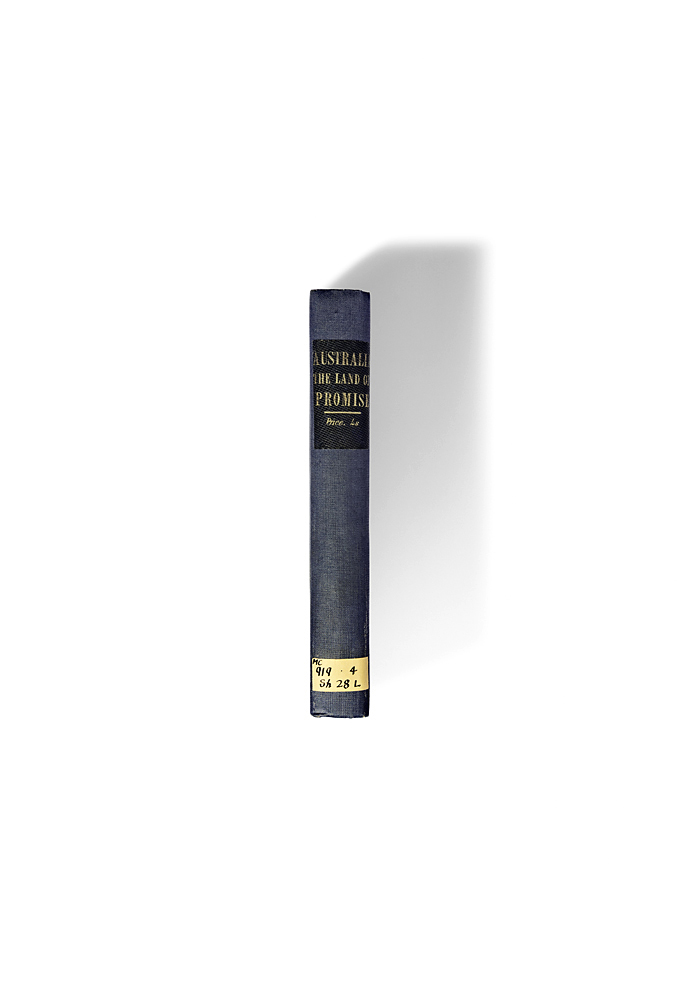
Aliza Levi (South African, b. 1969) 'Australia the Land of Promise' 2012


Aliza Levi (South African, b. 1969)
Australia the Land of Promise
2012
Archival Inkjet Print
59 x 42cm


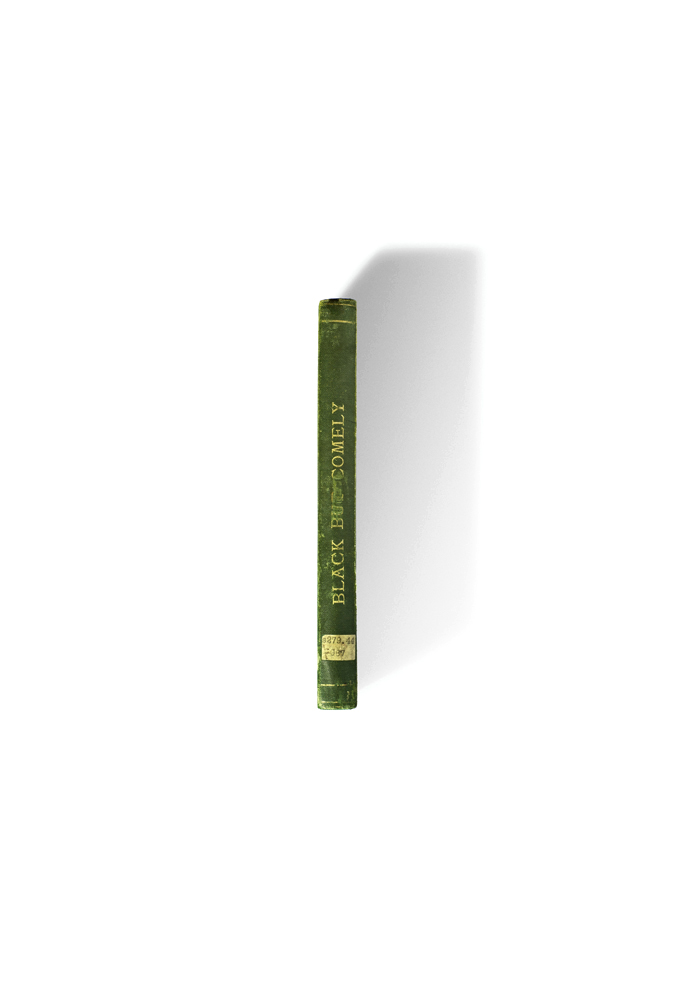
Aliza Levi (South African, b. 1969) 'Black But Comely' 2013


Aliza Levi (South African, b. 1969)
Black But Comely
2013
Archival Inkjet Print
59 x 42cm


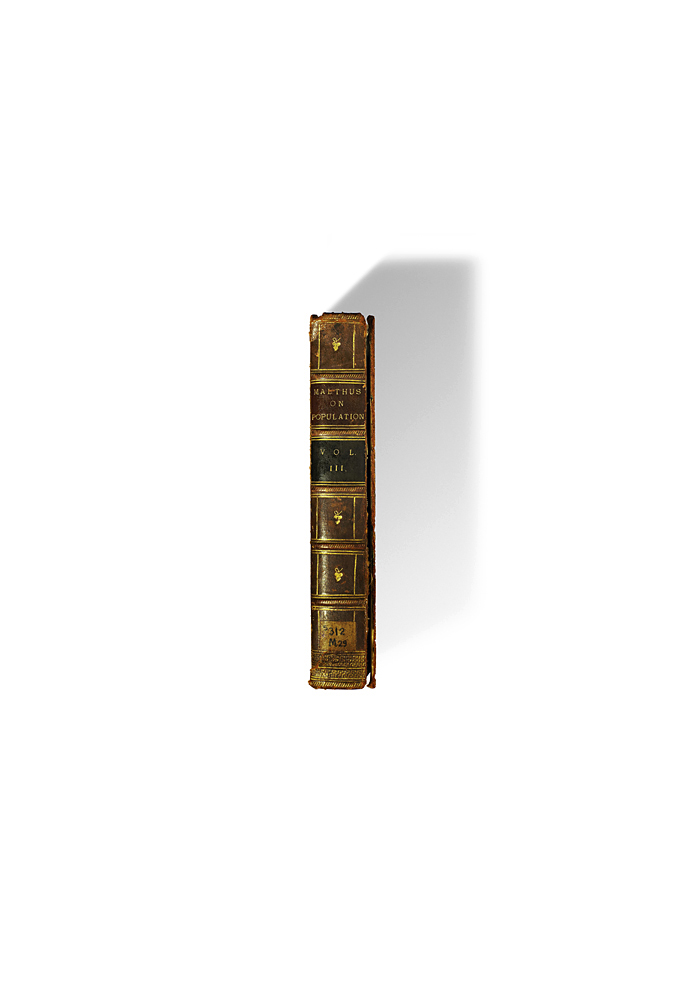
Aliza Levi (South African, b. 1969) 'Malthus on Population' 2012


Aliza Levi (South African, b. 1969)
Malthus on Population
2012
Archival Inkjet Print
59 x 42cm


“I began this series by choosing books that reflected the assumptions and behaviour of the nineteenth century colonists, the persistent notations of self and other. I soon started to notice, that many of the titles were pertinent to today. A blurring of time and relevance, where views from a hundred years ago were intersecting with current attitudes and events.”


Aliza Levi


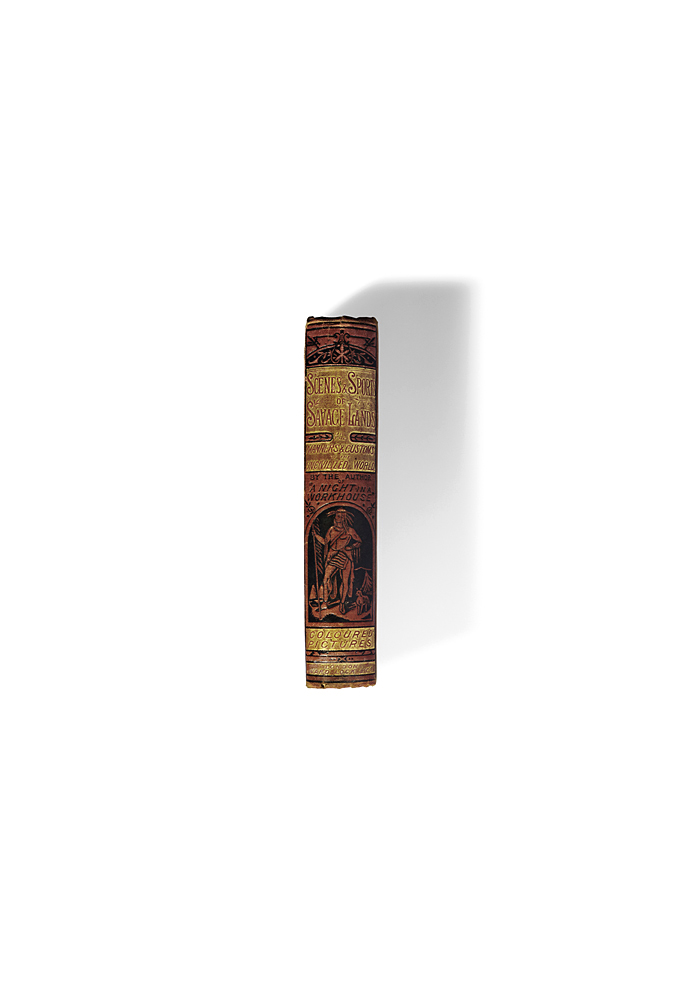
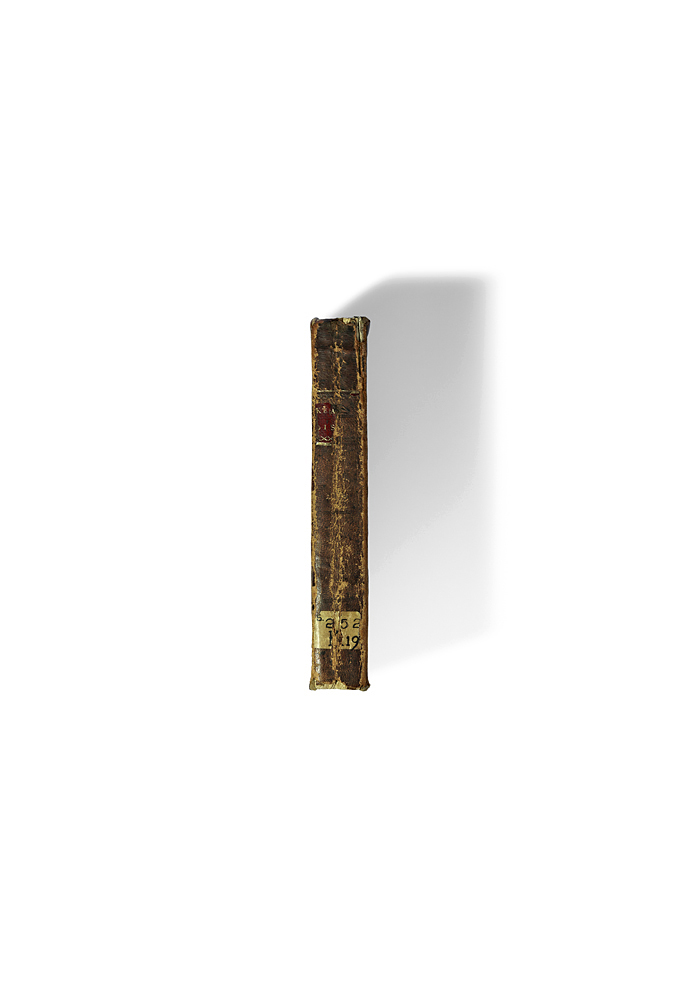
South African born artist, Aliza Levi premiers her latest body of work Books on a White Background at Edmund Pearce Gallery. Camera and lights in hand, Aliza has been photographing nineteenth century books in small town junk shops, second-hand book dealers, flea markets, rare book collections and libraries both here and in her native South Africa. Books authored by anthropologists, ethnologists and laypersons who took it upon themselves to comment on their travels. To date she has captured nearly 250 books.

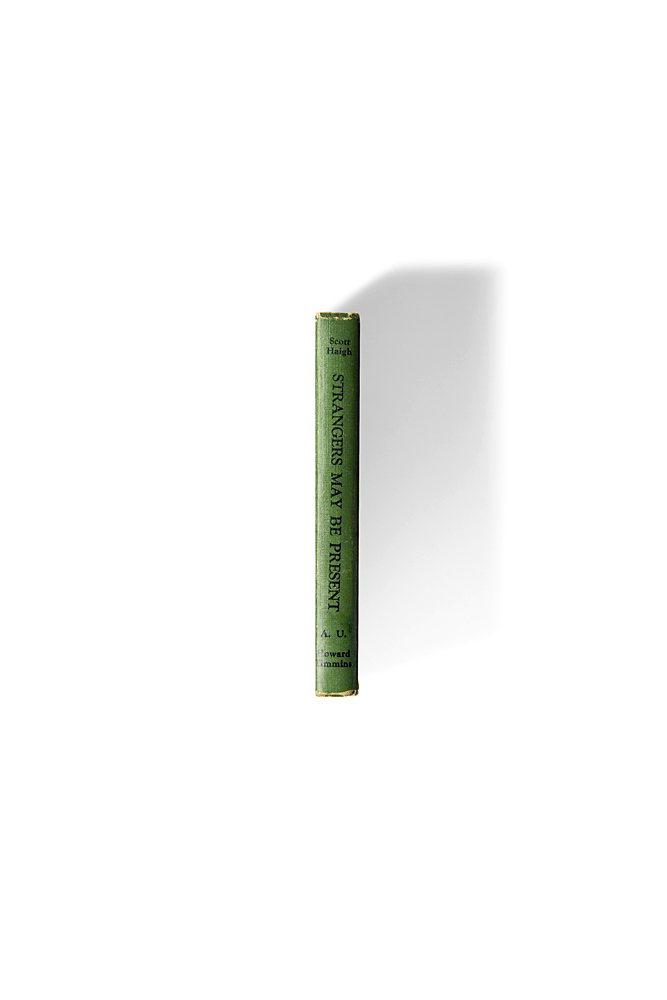
The books, were initially chosen to reflect the ideologies and assumptions of the nineteenth century West. However, Aliza soon realised, that some of the titles were pertinent to today. A blurring of time and relevance where titles from a hundred years ago were intersecting with current attitudes and events. For example, the book Strangers May be Present, in its evocation of colonial settlers viewing the other as stranger also evoked for her the more recent, disturbing events in which the other is articulated: xenophobic attacks and corrective rapes in South Africa. Closer to home, the century old book entitled Australia, the Land of Promise immediately raises questions around certain stark realities such as refugee detention centres.

Kate Warren writes in the accompanying exhibition essay: “The precise regularity of her photographic compositions create a compelling visual plane that immediately draws the viewer’s attention. But look closer. In the situation that Levi presents us with, the seductive nature of the visual cannot escape the immediacy of language. The force of their titles – often starkly confronting and potentially upsetting – leaves the embossing, decoration and materiality of the books themselves as an ironic supplement.”

Born in 1969 in South Africa, Aliza Levi’s practice is multidisciplinary in form yet single-minded in concept. Much of her work presents a relationship to land, consciousness and memory brought on by her South African and Australian citizenship. Having recently presented her work in the UK, this is her first solo show in Melbourne, where she has been producing art as well as facilitating women’s art groups with refugees from Sudan. Levi is currently completing a Masters Degree in Fine Art at Monash University.

Press release from the Edmund Pearce Gallery website


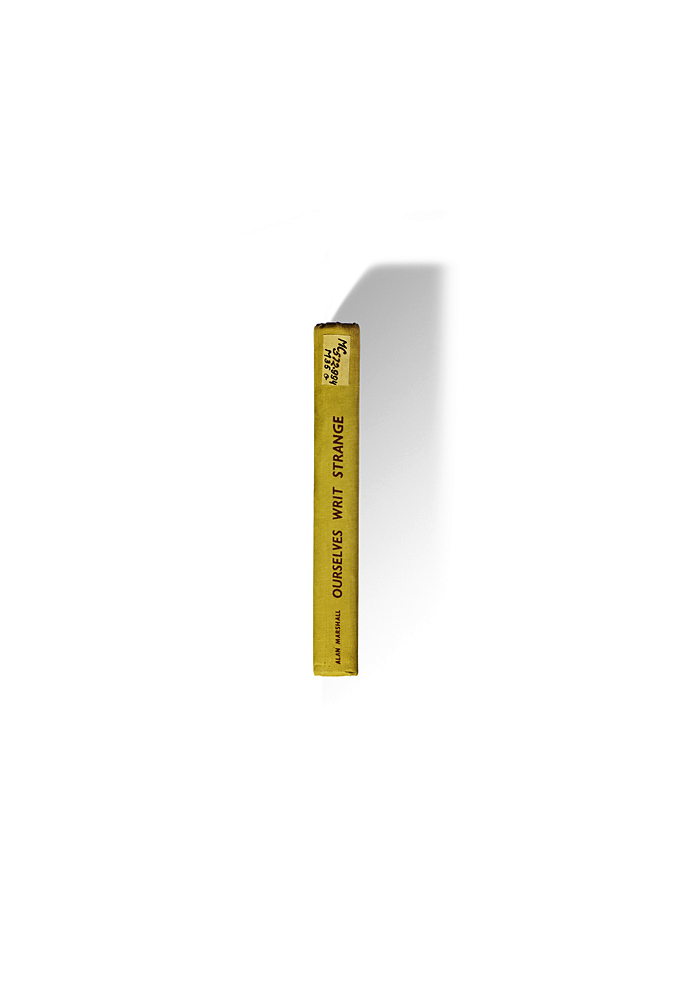
Aliza Levi (South African, b. 1969) 'Ourselves Writ Strange' 2011


Aliza Levi (South African, b. 1969)
Ourselves Writ Strange
2011
Archival Inkjet Print
59 x 42cm


Aliza Levi (South African, b. 1969) 'Scenes and Sports of Savage Lands' 2012


Aliza Levi (South African, b. 1969)
Scenes and Sports of Savage Lands
2012
Archival Inkjet Print
59 x 42cm


Aliza Levi (South African, b. 1969) 'Strangers May Be Present' 2010


Aliza Levi (South African, b. 1969)
Strangers May Be Present
2010
Archival Inkjet Print
59 x 42cm


Aliza Levi (South African, b. 1969) 'The Art of Living in Australia' 2012


Aliza Levi (South African, b. 1969)
The Art of Living in Australia
2012
Archival Inkjet Print
59 x 42 cm


Textual thresholds: The uncomfortable nature of titles in Books on a White Background

Kate Warren

Aliza Levi’s research-based photographic project, Books on a White Background (2012), confronts the viewer with an array that is at once visually compelling and profoundly difficult to look at. The precise regularity of her photographic compositions, the ‘grid-like’ repetition of these images’ installation, the consistent form and shape of her subject matter, and the contrast between the stark white background and the darker shadows thrown, all create a compelling visual plane that immediately draws the viewer’s attention. But look closer. In the situation that Levi presents us with, the seductive nature of the visual cannot escape the immediacy of language. The force of their titles – often starkly confronting and potentially upsetting – leaves the embossing, decoration and materiality of the books themselves as an ironic supplement.

This is not a ‘library’. Although developed from Levi’s archival research, the final photographic project is not an ‘archive’. Rather than displaying the original books themselves as objets trouvés, Levi disavows their materiality and tactility. Photographing the books’ ‘spines’, she not only flattens but removes entirely from view their ‘flesh’ the pages and the content – and in doing so opens up a liminal space that can accommodate and illuminate a multiplicity of (sometimes uncomfortable) and connections between the past and the present.

In the human form, our spines form the connection between the psychical realm of our brains and the physicality of our bodies; between our ‘inner’ subjectivity and our ‘outer’ ability to move, communicate and interact with our surroundings. Likewise in the case of the books that Levi photographs; the spines and titles are liminal spaces that mediate their content and the cultural and historical contexts in which they exist. Gérard Genette calls this the ‘paratext’, the “fringe [which] constitutes a zone between text and off-text, a zone not only of transition but also of transaction: a privileged place of a pragmatics and a strategy, of an influence on the public.” Levi’s project works at this juncture. By denying access to the detailed substance and content of these books she denies their overt ‘authority’, yet at the same time she reveals uncomfortable legacies that persist and cannot be wholly escaped.

The various ‘post’ discourses (post-colonialism, post-structuralism, post-modernism) and their influential theorists and practitioners have done enormous amounts of work to deconstruct and destabilise dominant narratives and histories. The process is necessarily ongoing and open-ended; because although many narratives that were once unquestioned have been removed from their dominance and acceptability, it is often through language that their traces and legacies remain.

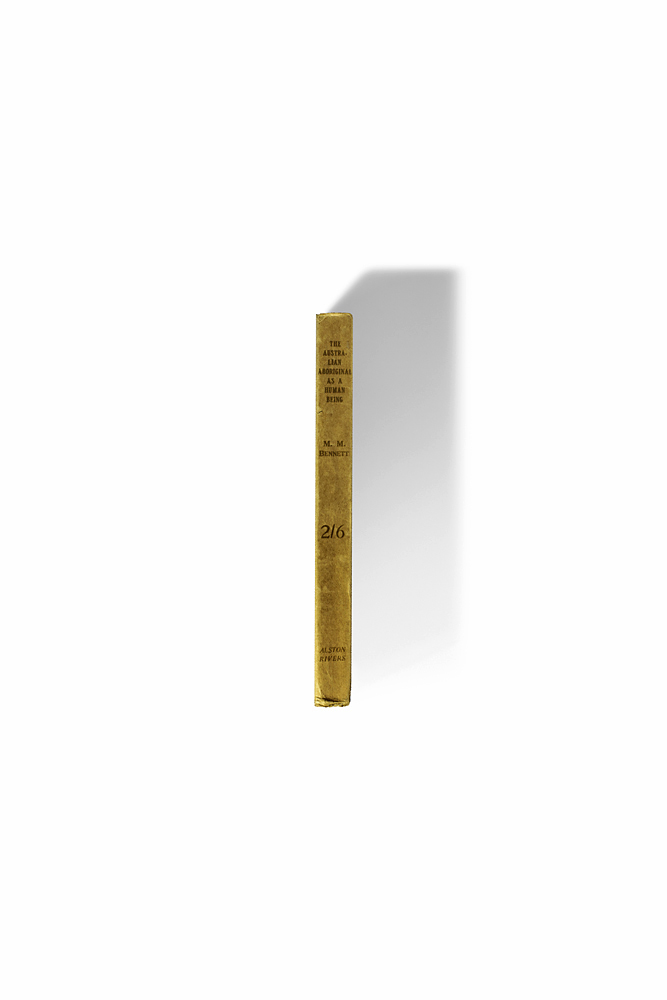
Thus in the selection of Australian books included in this exhibition, there emerges jarring and disturbing contrasts between titles that clearly belie values that are no longer widely accepted (such as The Aboriginal as Human Being), and other titles which still resonate with national myths (such as Australia the Land of Promise). Other titles like Ourselves Writ Large and The Gulf Between become more ambiguous; for without access to the specificities of their content, these books’ paratexts are revealed in Levi’s project as (necessarily) multifaceted signifiers. They immediately open up a ‘zone of transaction’ that reveals the past as an immanent presence, constantly transformed by and transforming of the present. These now abstracted titles retain a force and power to reveal uncomfortable truths and forgotten narrative tropes, speaking to the way that Australian history and presumed cultural values are constructed and repeated in our contemporary life.

Kate Warren would like to thank Aliza Levi for the stimulating and ongoing discussions; and David Wlazlo for his timely and astute insights.

Gérard Genette, Paratexts: Thresholds of Interpretation (Cambridge: Cambridge University Press, 1997), p. 2.


Aliza Levi (South African, b. 1969) 'The Aboriginal as Human Being' 2012


Aliza Levi (South African, b. 1969)
The Aboriginal as Human Being
2012
Archival Inkjet Print
59 x 42cm


Aliza Levi (South African, b. 1969) 'The Gulf Between' 2012


Aliza Levi (South African, b. 1969)
The Gulf Between
2012
Archival Inkjet Print
59 x 42cm


Aliza Levi (South African, b. 1969) 'The Report of the Aborigines Committee of the Meeting for Sufferings 1840' 2012


Aliza Levi (South African, b. 1969)
The Report of the Aborigines Committee of the Meeting for Sufferings 1840
2012
Archival Inkjet Print
59 x 42cm


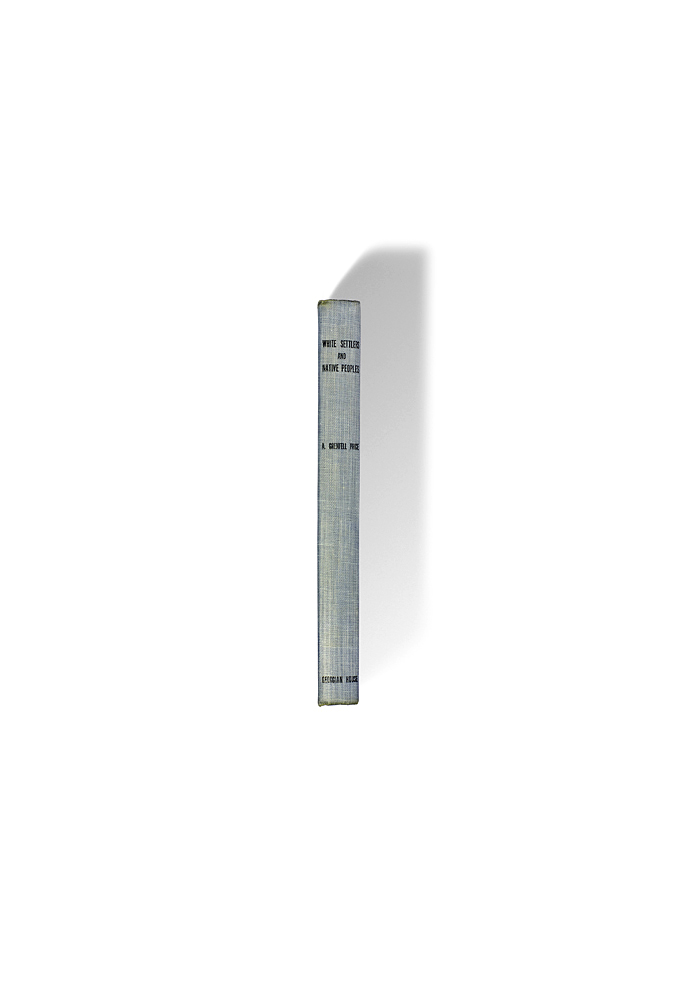
Aliza Levi (South African, b. 1969) 'White Settlers and Native Peoples' 2012


Aliza Levi (South African, b. 1969)
White Settlers and Native Peoples
2012
Archival Inkjet Print
59 x 42cm


Edmund Pearce Gallery

This gallery is no longer open.

LIKE ART BLART ON FACEBOOK

Back to top

Exhibition: ‘Carine Thévenau: Return To Huldra’s Wood’ at Edmund Pearce Gallery, Melbourne

Exhibition dates: 13th February – 9th March 2013


Carine Thévenau (Mauritian/Australian) 'Ulda. The Arctic Fairy' 2013


Carine Thévenau (Mauritian/Australian)
Ulda. The Arctic Fairy
2013
Archival Pigment Print
80 x 60cm
Edition of 10 + 2 AP


Sometimes I just want to surround myself with objects that are beautiful, that give me pleasure in the act of looking. I just want to look at a photograph that is beautiful, just because it is that. This exhibition is one such case. In the small, darkened gallery at Edmund Pearce in Melbourne these photographs radiate beauty. Despite a too regular hang and photographs of bouquets of flowers that don’t really move the work forward, the overall feeling of the ensemble is one of serenity and contained ecstasy. As was said of Catherine Opie’s work recently, “these lyrical visions evoke formal classicism, [are] beautifully elegant compositions that immerse and seduce the eye.”

The exhibition is rather let down by one of the worst sentences in a media release that I have not had the pleasure of reading in a long time: “Carine’s pictures sway from using over exposed lighting techniques, hinting at the sublime, to implementing a dimly lit chiaroscuro effect whereby an undeniable darkness is evident, all the while remaining beautiful.”

Who writes this stuff? The sentence makes no sense at all.

Carine’s pictures “sway” (?) … overexposure techniques hint at the sublime (!), a dimly lit chiaroscuro effect (what?), an undeniable darkness (!?) – and guess what, using light and dark lets the image “remain beautiful” = the massacre of the English language!

Dr Marcus Bunyan


Many thankx to Edmund Pearce Gallery for allowing me to publish the photographs in the posting. Please click on the photographs for a larger version of the image.


Carine Thévenau (Mauritian/Australian) 'Deep Inside Lillomarka' 2013


Carine Thévenau (Mauritian/Australian)
Deep Inside Lillomarka
2013
Archival Pigment Print
80 x 60cm
Edition of 10 + 2 AP


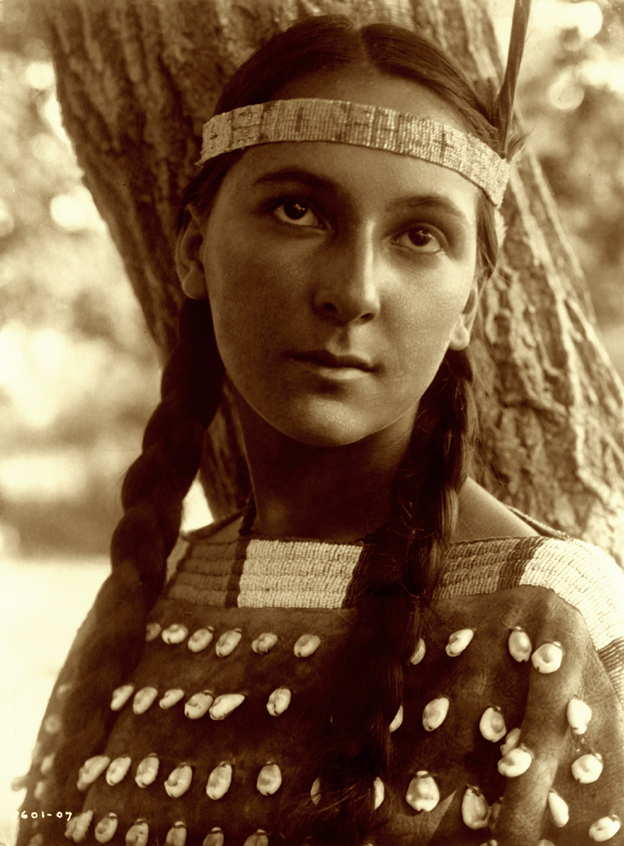
Edward S. Curtis (American, 1868-1952) 'Lucille, Dakota Sioux' 1907


Edward S. Curtis (American, 1868-1952)
Lucille, Dakota Sioux
1907


Carine Thévenau (Mauritian/Australian) 'Tryst East of Morskogen' 2013


Carine Thévenau (Mauritian/Australian)
Tryst East of Morskogen
2013
Archival Pigment Print
80 x 60cm
Edition of 8 + 2 AP


Return To Huldra’s Wood is a visual exploration into Scandinavian Folklore. A Huldra is a mythical character who lives deep in the forests of Sweden and Finland. Also known as Pine tree Mary or Skogsfu (in Norway) this secret woodland dweller lures her prey into the darkness of night and underneath the heavy branches she is known to do unspeakable things. The Huldra appears in many fairy tales written by Peter Christen Asbjornsen. The origins of the tales stem from Christianity, whereby old stories of Eve forgetting to wash all her children prior to a visit from God forced her to hide the dirty ones. As a result God decreed these children to be hidden and forbidden from contact with the rest of mankind. These children are said to have been named Huldrer. The Huldra represents a deep fear of the wild, of sexuality and of otherness.


Huldra’s Wood

When early springtime’s night winds sing
around the steaming cattle byre,
and smoke curls high through wicker slats
above the dancing Great Hall fire;
Old women pull the children near,
with knowing looks well understood;
Tonight only a fool would stray
within the groves of Huldra’s Wood.

As daylight leaves the greening fields
and sunset paints the pale sky gold,
As far horizons fade to blue
and nightingales sing shrill and cold;
The adder in his hide curls safe
from those who seek his serpent’s blood,
he sleeps within the old stone cairn
that marks the edge of Huldra’s Wood.

Above us rides the scar-faced Moon
amongst the stars in wanton haste,
whilst in the trees the tawny owls
cry shuddering across the waste
that separates our steading from
the Elfhane Host in cap and hood;
they frolic now, unbidden, deep
within the groves of Huldra’s Wood.

~  Alan Hodgson


Recently a speaker at the International Design Conference, AGIdeas and previously nominated by industry leader, Capture Magazine, for the Emerging Editorial Photographer of the Year Award, Carine Thevenau’s photographic work has appeared in such publications as Rollingstone, iD Magazine, Vogue, Smith Journal and is a Senior Photographer at Frankie Magazine.

Carine’s pictures sway from using over exposed lighting techniques, hinting at the sublime, to implementing a dimly lit chiaroscuro effect whereby an undeniable darkness is evident, all the while remaining beautiful.”

Press release from the Edmund Pearce website


Carine Thévenau (Mauritian/Australian) 'Skogsra (Forest Spirit)' 2013


Carine Thévenau (Mauritian/Australian)
Skogsra (Forest Spirit)
2013
Archival Pigment Print
80 x 60cm
Edition of 10 + 2 AP


Carine Thévenau (Mauritian/Australian) 'Huldra of The Norse' 2013


Carine Thévenau (Mauritian/Australian)
Huldra of The Norse
2013
Archival Pigment Print
80 x 60cm
Edition of 10 + 2 AP


Carine Thévenau (Mauritian/Australian) 'Witness in Bymarka' 2013


Carine Thévenau (Mauritian/Australian)
Witness in Bymarka
2013
Archival Pigment Print
80 x 60cm
Edition of 10 + 2 AP


Carine Thévenau (Mauritian/Australian) 'Pine Tree Mary' 2013


Carine Thévenau (Mauritian/Australian)
Pine Tree Mary
2013
Archival Pigment Print
100 x 75cm
Edition of 5 + 2 AP


Edmund Pearce Gallery

This gallery has now closed.

Carine Thevenau website

LIKE ART BLART ON FACEBOOK

Back to top

Review: ‘Terraria’ by Darron Davies at Edmund Pearce Gallery, Melbourne

Exhibition dates: 16th January – 9th February 2013


Darron Davies (Australian) 'Atmosphere' 2012


Darron Davies (Australian)
Atmosphere
2012
Archival Pigment Print on Photo Rag
80 x 80cm
Edition of 6


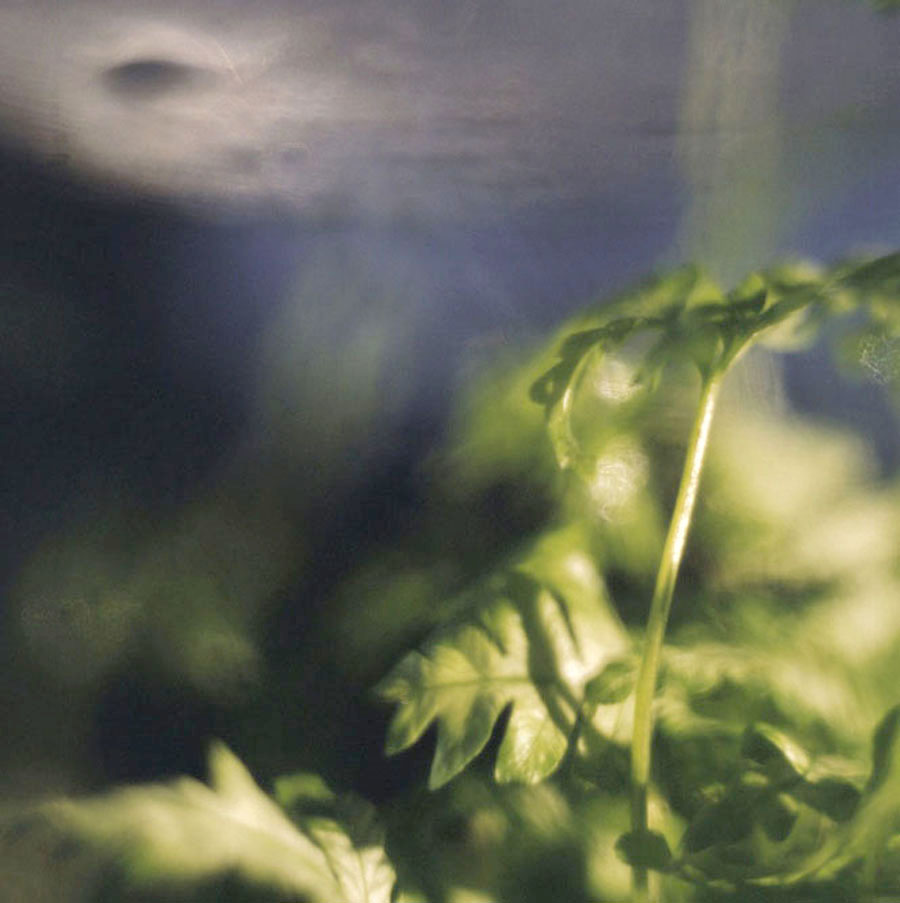
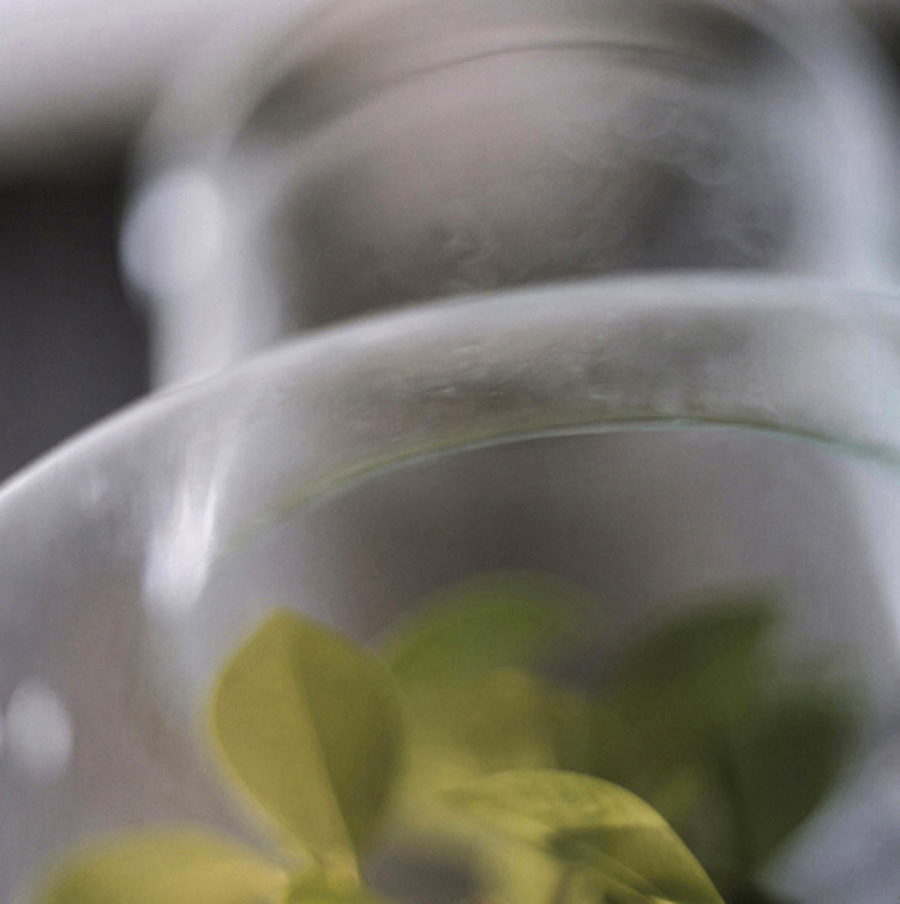
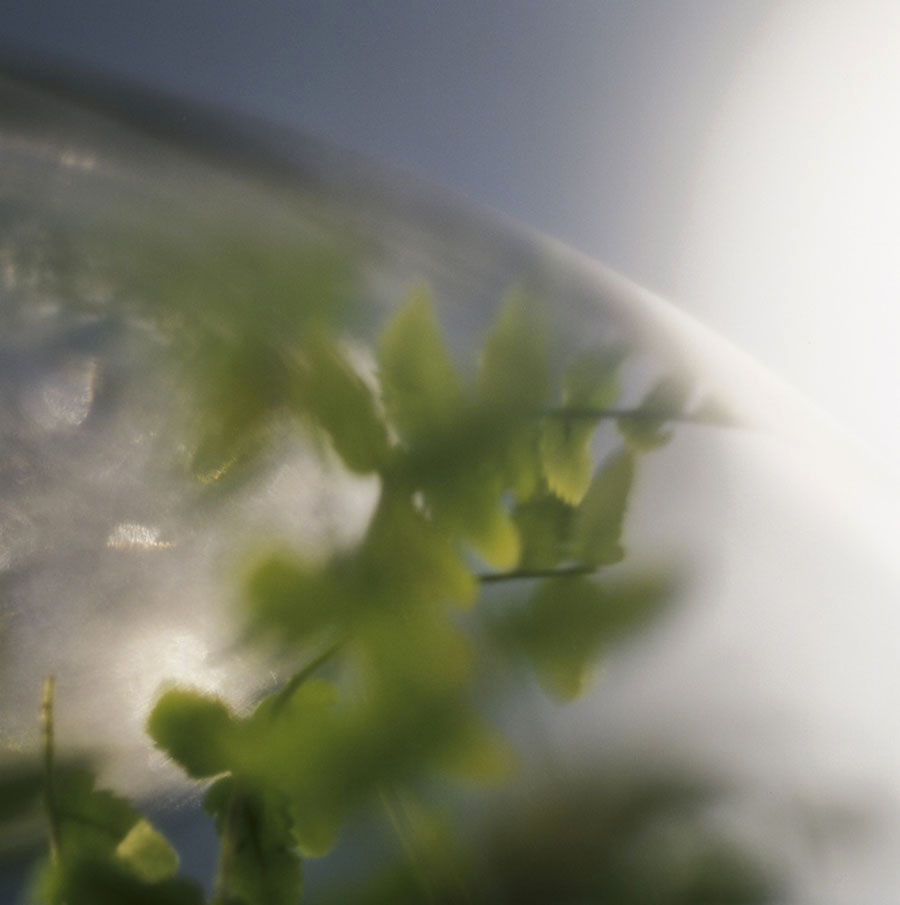
This is the first “magical” exhibition of photography that I have seen in Melbourne this year. Comprising just seven moderately large Archival Pigment Print on Photo Rag images mounted in white frames, this exhibition swept me off my feet. The photographs are beautiful, subtle, nuanced evocations to the fragility and enduring nature of life. The photographs move (shimmer almost) one to another, with slight changes in the colour green balanced with abstract splashes of light and pigment reminiscent of an abstract expressionist painting (I particularly like the splash of red in The Red Shard, 2102, below). These are beautifully seen works, that require 1) a good idea, 2) an aware and enquiring mind, 3) an understanding and receptive eye, and 4) a relationship to the ineffable that allows visions such as these to be breathed into existence. As Minor White would say,


Three Canons

Be still with yourself
Until the object of your attention
Affirms your presence


Let the Subject generate its own Composition


When the image mirrors the man
And the man mirrors the subject
Something might take over


A sense of day/dreaming is possible when looking at these images. Interior/exterior, size/scale, ego/self are not fixed but fluid, like the condensation that runs down the inside of these environments (much like blood circulates our body). This allows the viewer’s mind to roam at will, to ponder the mysteries of our short, improbable, joyous life. The poetic titles add to this introspective reflection. I came away from viewing these magical, self sustaining vessels with an incredibly happy glow, more aware of my own body and its relationship to the world than before I had entered Darron Davies enveloping, terrarium world.

Dr Marcus Bunyan


Many thankx to Edmund Pearce Gallery for allowing me to publish the photographs in the posting. Please click on the photographs for a larger version of the image.


Darron Davies (Australian) 'Day’s Reach' 2012


Darron Davies (Australian)
Day’s Reach
2012
Archival Pigment Print on Photo Rag
80 x 80cm
Edition of 6


Darron Davies (Australian) 'Encased' 2012


Darron Davies (Australian)
Encased
2012
Archival Pigment Print on Photo Rag
80 x 80cm
Edition of 6


Terraria


I step into your small world
Your secret world
Each a planet of green

Fragile edges holding
the lived
and living

Peering into your glass
your mirror
I see the shards of light
Drawing in
and
Stretching out

You are another
In atmosphere
In moss
In fear


Terraria is a photographic project exploring the magical, abstract and metaphoric world of terrariums – an increasingly popular form of enclosed and small scale eco-system designed for showcasing plants.

Ultimately, Terraria is also about the fragility of life – terrariums as self contained vessels, enduring, magical – like the human body or our planet – yet somewhat mysterious. These vessels are self sustaining with no watering needed. They are independent and endure quietly. This project would not have been possible without support from Lisa Rothwell from Lu Lu Blooms.

Artist statement


Darron Davies (Australian) 'Heaven’s Door' 2012


Darron Davies (Australian)
Heaven’s Door
2012
Archival Pigment Print on Photo Rag
80 x 80cm
Edition of 6


Darron Davies (Australian) 'The Second Dream' 2012


Darron Davies (Australian)
The Second Dream
2012
Archival Pigment Print on Photo Rag
80 x 80cm
Edition of 6


Darron Davies (Australian) 'The Light Play' 2012


Darron Davies (Australian)
The Light Play
2012
Archival Pigment Print on Photo Rag
80 x 80cm
Edition of 6


Darron Davies (Australian) 'The Red Shard' 2012


Darron Davies (Australian)
The Red Shard
2012
Archival Pigment Print on Photo Rag
80 x 80cm
Edition of 6


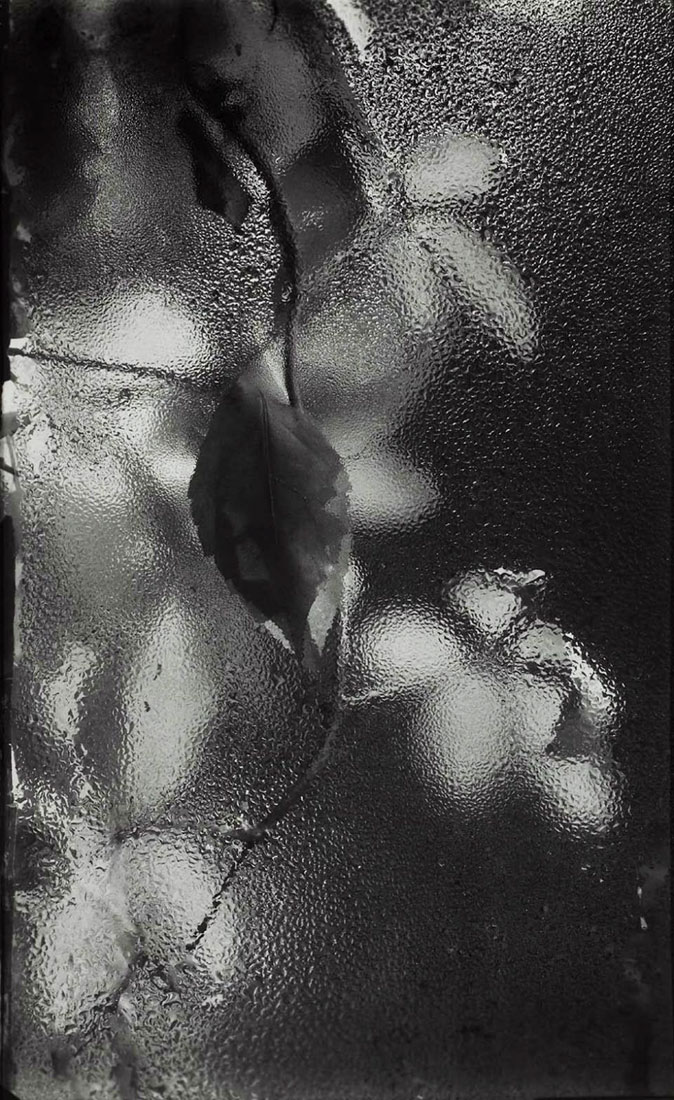
Darron Davies (Australian) 'From the Window of My Atelier' 1940


Josef Sudek (Czechoslovakian, 1896-1976)
From the Window of My Atelier
1940
Gelatin silver print


Edmund Pearce Gallery

This gallery is no longer open.

Darron Davies website

LIKE ART BLART ON FACEBOOK

Back to top

Melbourne’s magnificent eleven 2012

January 2013


Here’s my pick of the eleven best artists/exhibitions which featured on the Art Blart blog in 2012. Enjoy!

Marcus


1/ Review: The work of Robyn Hosking, AT_SALON at Anita Traverso Gallery, Richmond

6th March – 24th March 2012


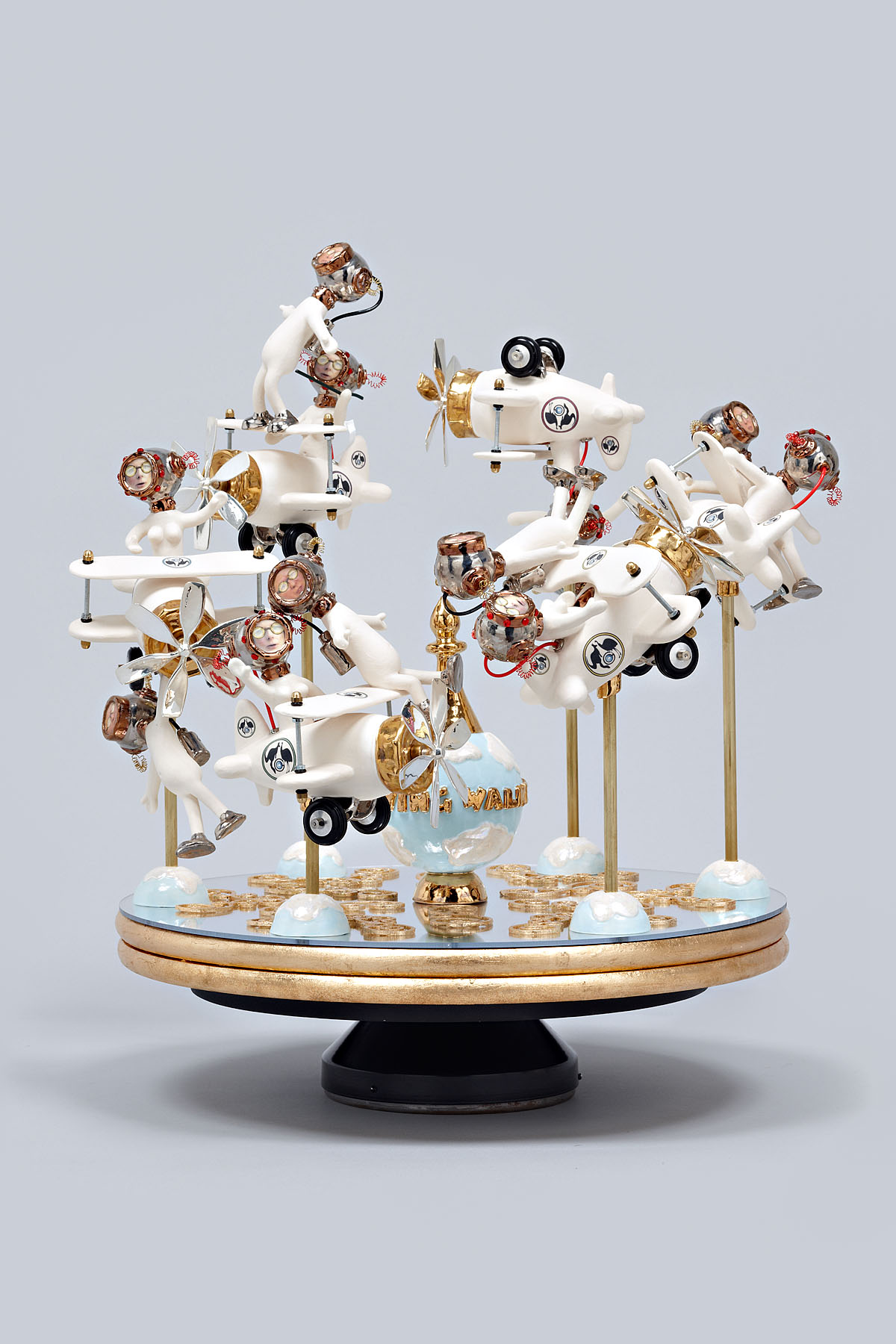
Robyn Hosking (Australian, b. 1948) 'The Wing Walker' 2011


Robyn Hosking (Australian, b. 1948)
The Wing Walker
2011
Mixed media


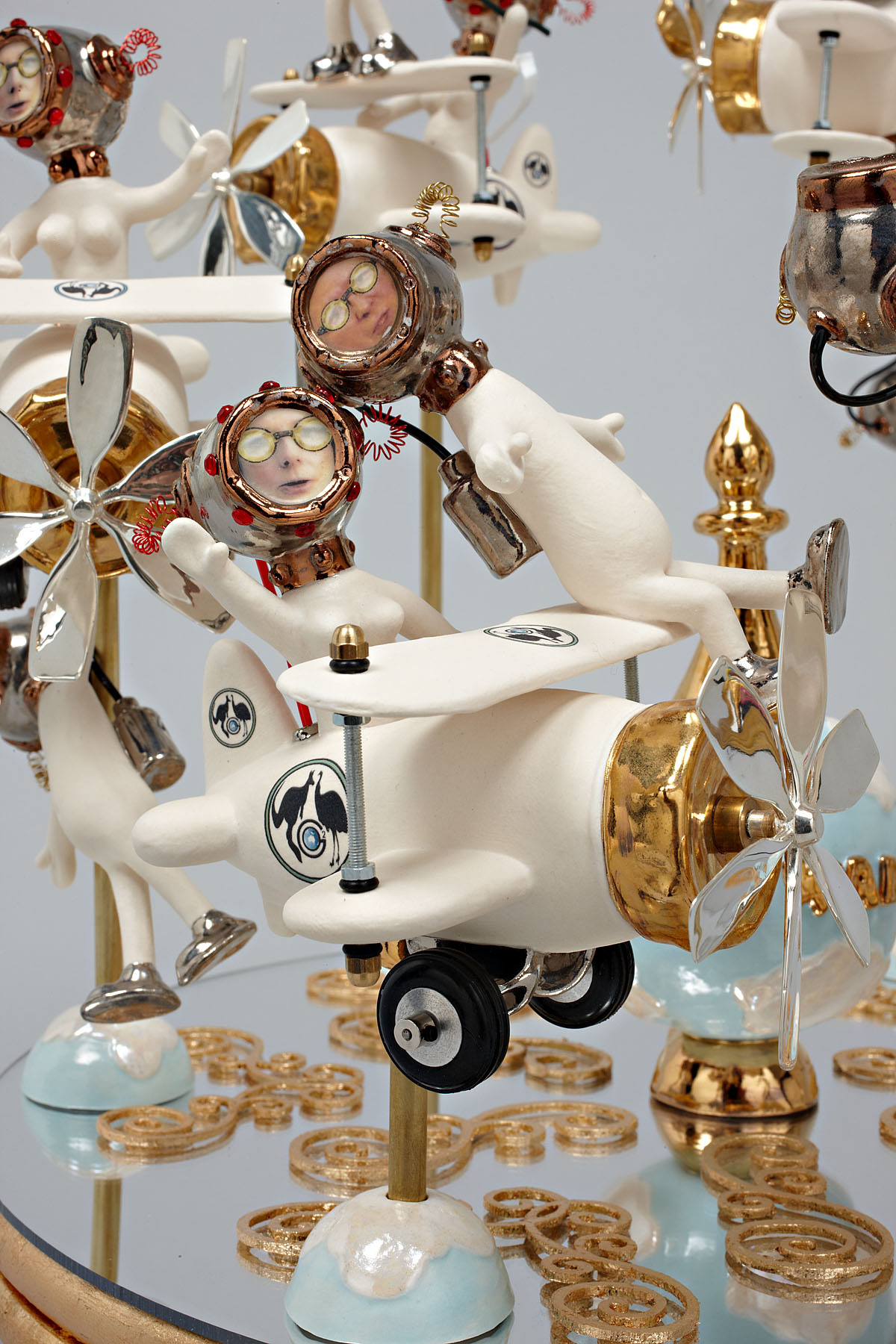
Robyn Hosking (Australian, b. 1948) 'The Wing Walker' 2011 (detail)


Robyn Hosking (Australian, b. 1948)
The Wing Walker (detail)
2011
Mixed media


… My favourite has to be The Wing Walker (2011) as an irate Julia Gillard tries to get rid of Kevin Rudd once and for all, even poking him with a stick to push him off the edge of the biplane. Balanced on a slowly revolving turntable with the world at its centre, this political merry-go round is panacea for the soul for people sick of politicians. This is brilliant political satire. The planes are all ends up and even when Julia thinks she has got rid of Kevin there he is, hanging on for dear life from the undercarriage of one of the planes…

Reminding me of the fantasy creatures of Tom Moore, these whimsical manifestations deal with serious, life changing and challenging issues with purpose, feeling and a wicked sense of humour. I really enjoyed this art (and joy is the correct word) because it takes real world issues, melds fantasy and pointed observation and reflects it back, as the artist observes, in a funfair’s distorted mirror. Magic!


2/ Review: Martin Parr: In Focus at Niagara Galleries, Richmond, Melbourne

Exhibition dates: 6th March – 31st March 2012

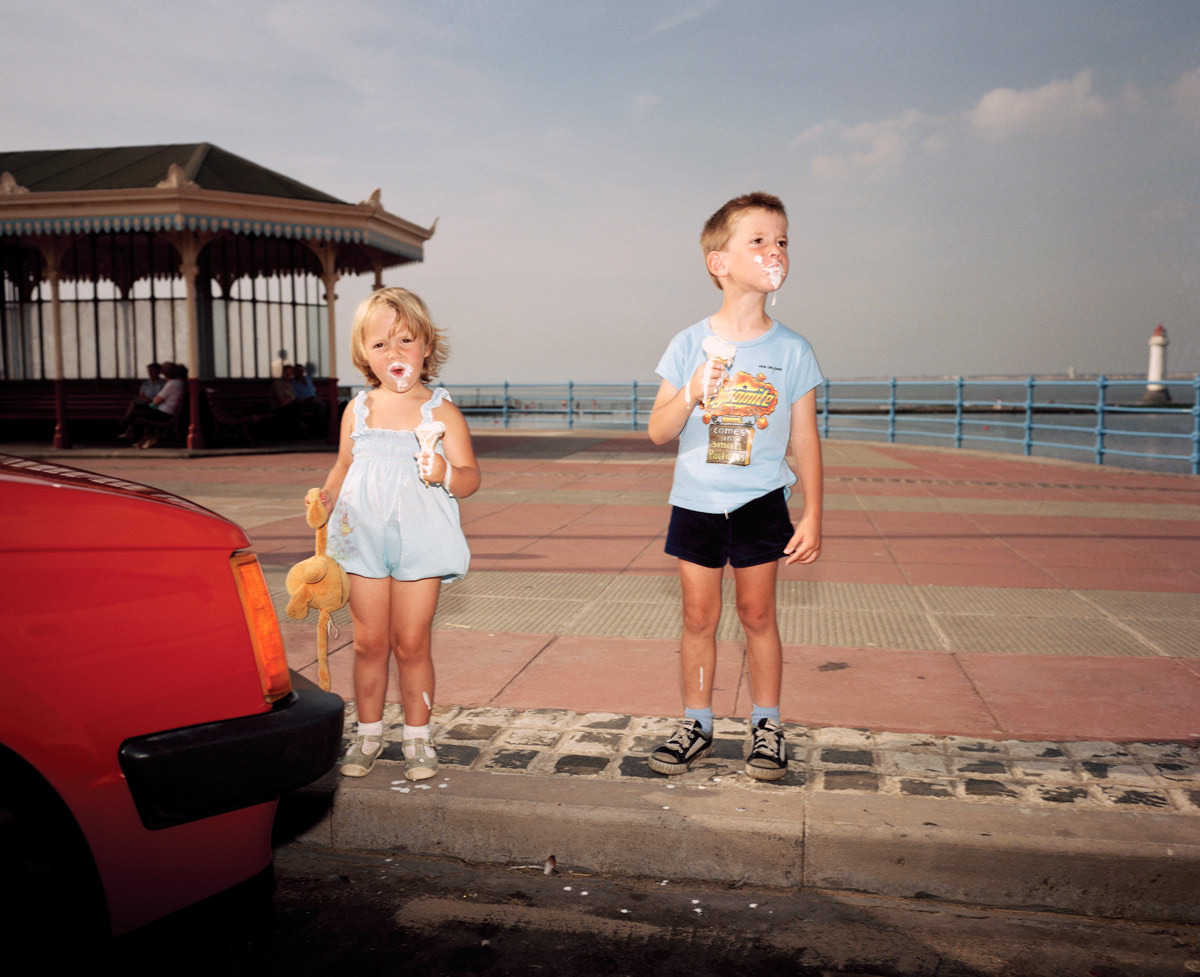
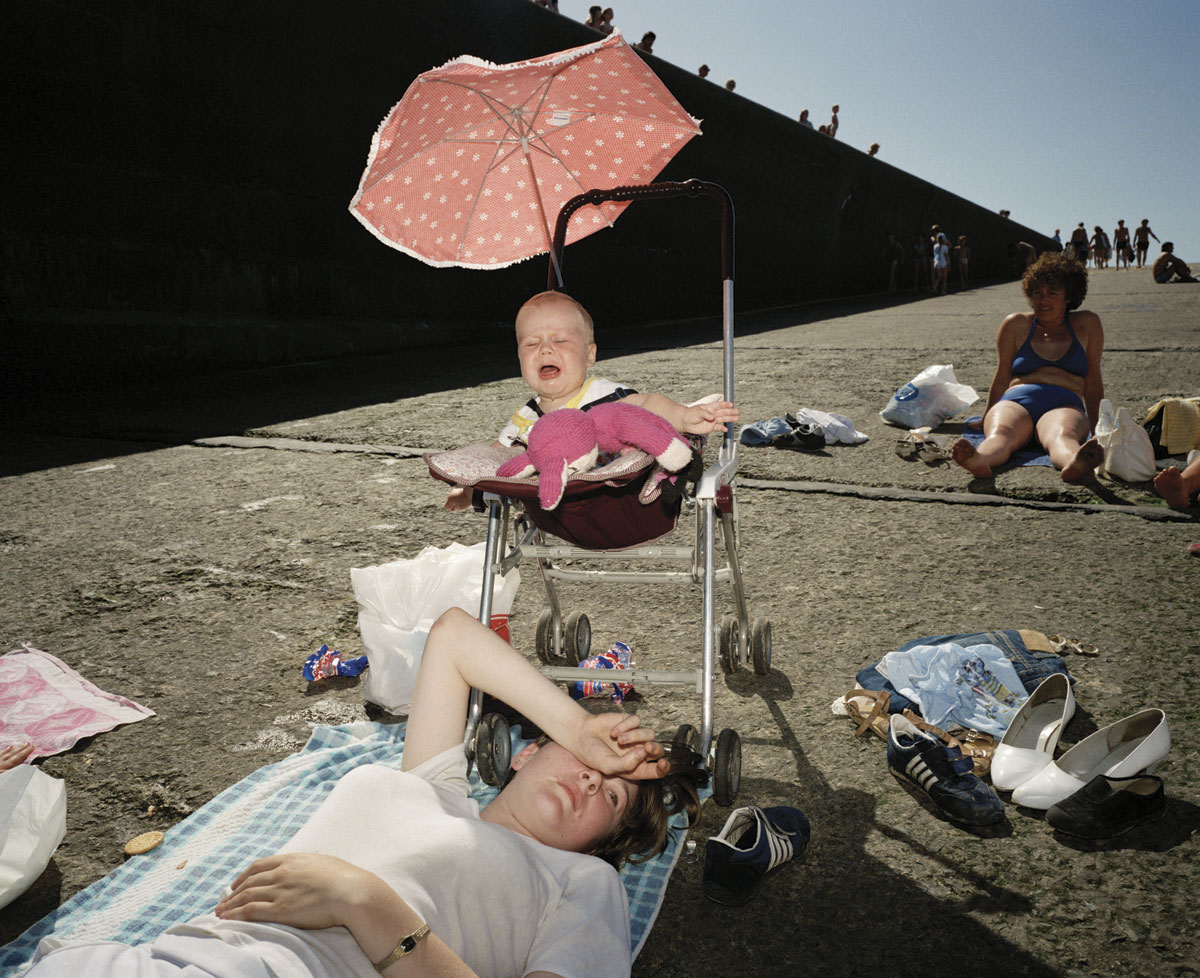
This is a fine exhibition of the work of celebrated English photographer Martin Parr at Niagara Galleries, Richmond, albeit with one proviso. The mainly large colour prints are handsomely displayed in plain white frames within the gallery space and are taken from his well known series: Last Resort, Luxury, New British and British Food. Parr’s work is at its best when he concentrates on the volume of space within the image plane and the details that emerge from such a concentrated visualisation – whether it be the tension points within the image, assemblage of colour, incongruity of dress, messiness of childhood or philistine nature of luxury.

And so it goes. The dirt under the fingernails of the child eating a doughnut, the lurid colours of the popsicle and jacket of the kid with dribble on his face, all fantastic… They are joyous paeans to the quirky, incongruous worlds in which we live and circulate. They evidence life itself in all its orthogonal absurdity.


Martin Parr (British, b. 1952) 'England. New Brighton' 1983-1985


Martin Parr (British, b. 1952)
England. New Brighton
1983-1985
From the series Last Resort
1983-1985
Pigment print
Edition of 5
102 x 127cm
Image courtesy of the artist and Niagara Galleries, Melbourne


Martin Parr (British, b. 1952) 'England. New Brighton' 1983-1985


Martin Parr (British, b. 1952)
England. New Brighton
1983-1985
From the series Last Resort
Pigment print
Edition of 5
102 x 127 cm
Image courtesy of the artist and Niagara Galleries, Melbourne


3/ Review: Tourist #5: Disappearing Project 1 – 41 by Nicola Loder at Helen Gory Galerie, Prahran, Melbourne

Exhibition dates: 14th March – 7th April 2012

I have always loved the work of Nicola Loder ever since I saw her solo exhibition Child 1-175: A Nostalgia for the Present at Stop 22 Gallery in St Kilda in 1996. This exhibition is no exception. Loder is the consummate professional, her work is as imaginative and intriguing as ever and there has been a consistent thematic development of ideas within her work over a long period of time. These ideas relate to the nature of seeing and being seen, the mapping of identity and the process of its (dis)appearance…

Loder’s exquisitely sensuous description of disappearance allows us to see the phenomenal word afresh. I look forward with a sense of anticipation to the next voyage of discovery the artist will take me on.


'Tourist #5: Disappearing Project 1-41' by Nicola Loder, installation photograph at Helen Gorie Galerie


Tourist #5: Disappearing Project 1-41 by Nicola Loder, installation photograph at Helen Gorie Galerie


Nicola Loder (Australian, b. 1964) 'Tourist #5: Disappearing Project 1-41 (no 11)' 2012


Nicola Loder (Australian, b. 1964)
Tourist #5: Disappearing Project 1-41 (no 11)
2012
Polyester thread, muslin
86 x 69cm


4/ Review: Jane Brown / Australian Gothic at Edmund Pearce Gallery, Melbourne

Exhibition dates: 25th April – 12th May 2012


Jane Brown (Kuwait, Australia, b. 1967) 'Big Trout, New South Wales' 2010

Jane Brown (Kuwait, Australia, b. 1967)
Big Trout, New South Wales
2010
Museo silver rag print
59 x 46cm


Jane Brown (Kuwait, Australia, b. 1967) 'Adelong, New South Wales' 2011


Jane Brown (Kuwait, Australia, b. 1967)
Adelong, New South Wales
2011
Fibre based, silver gelatin print
16.5 x 20.5cm


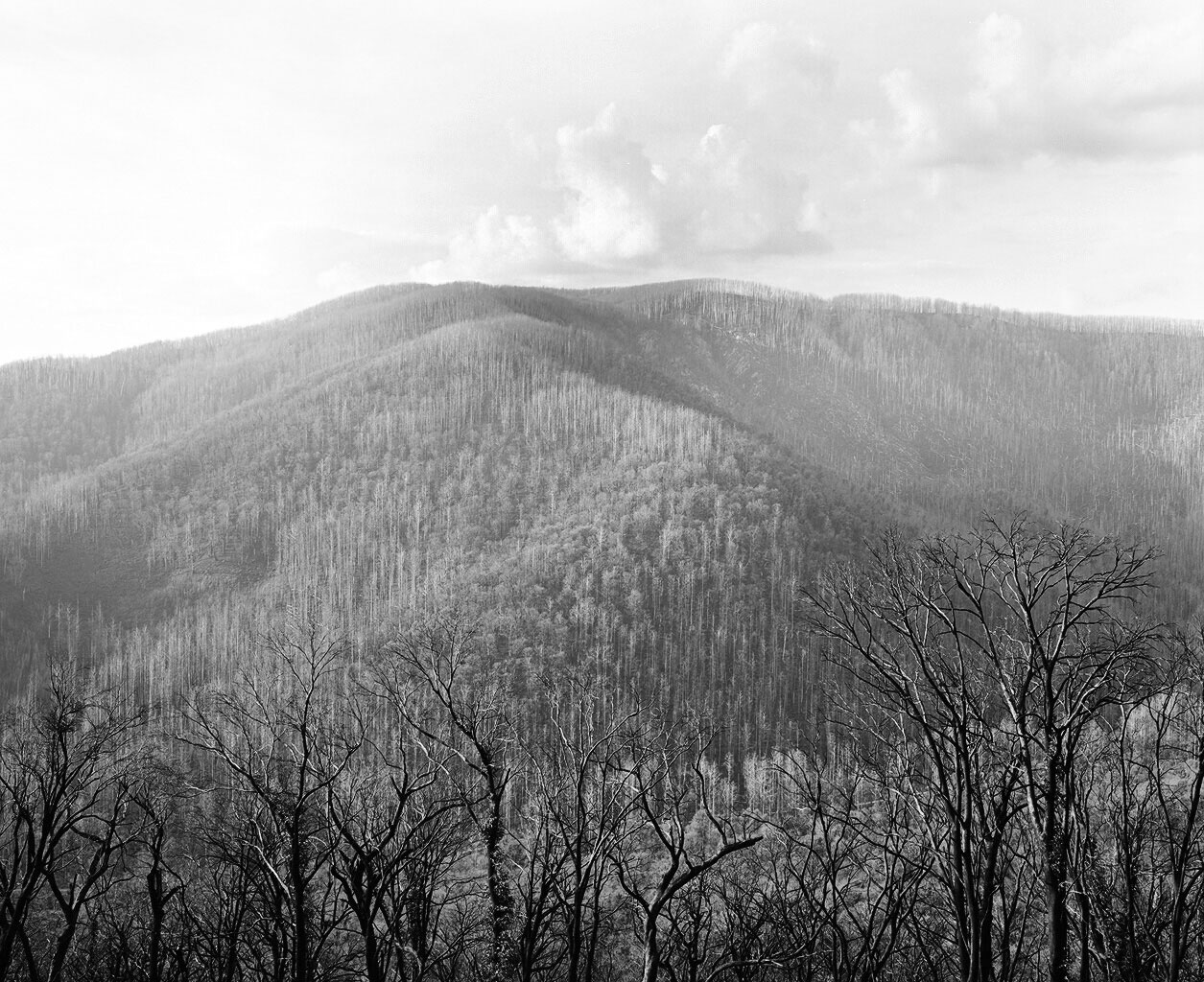
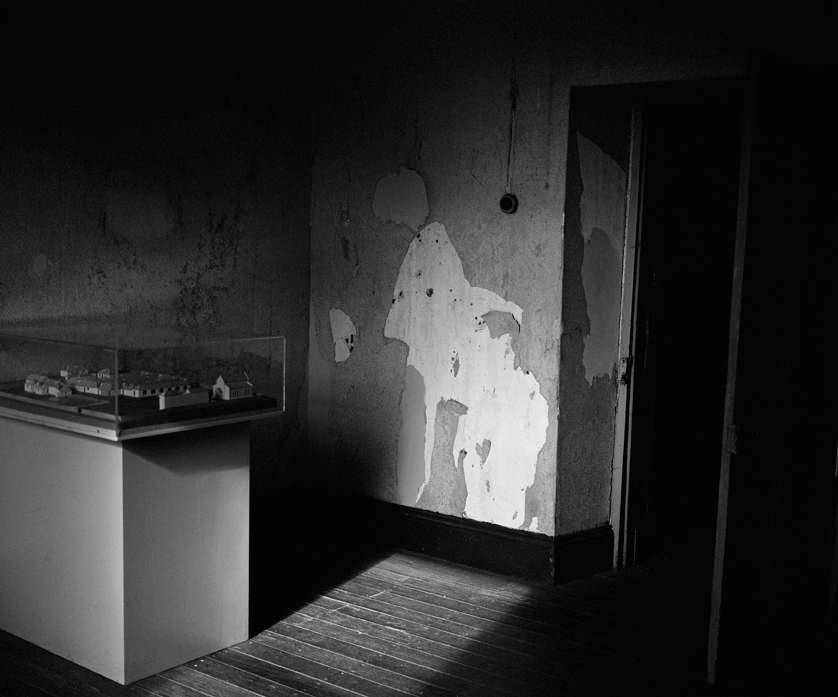
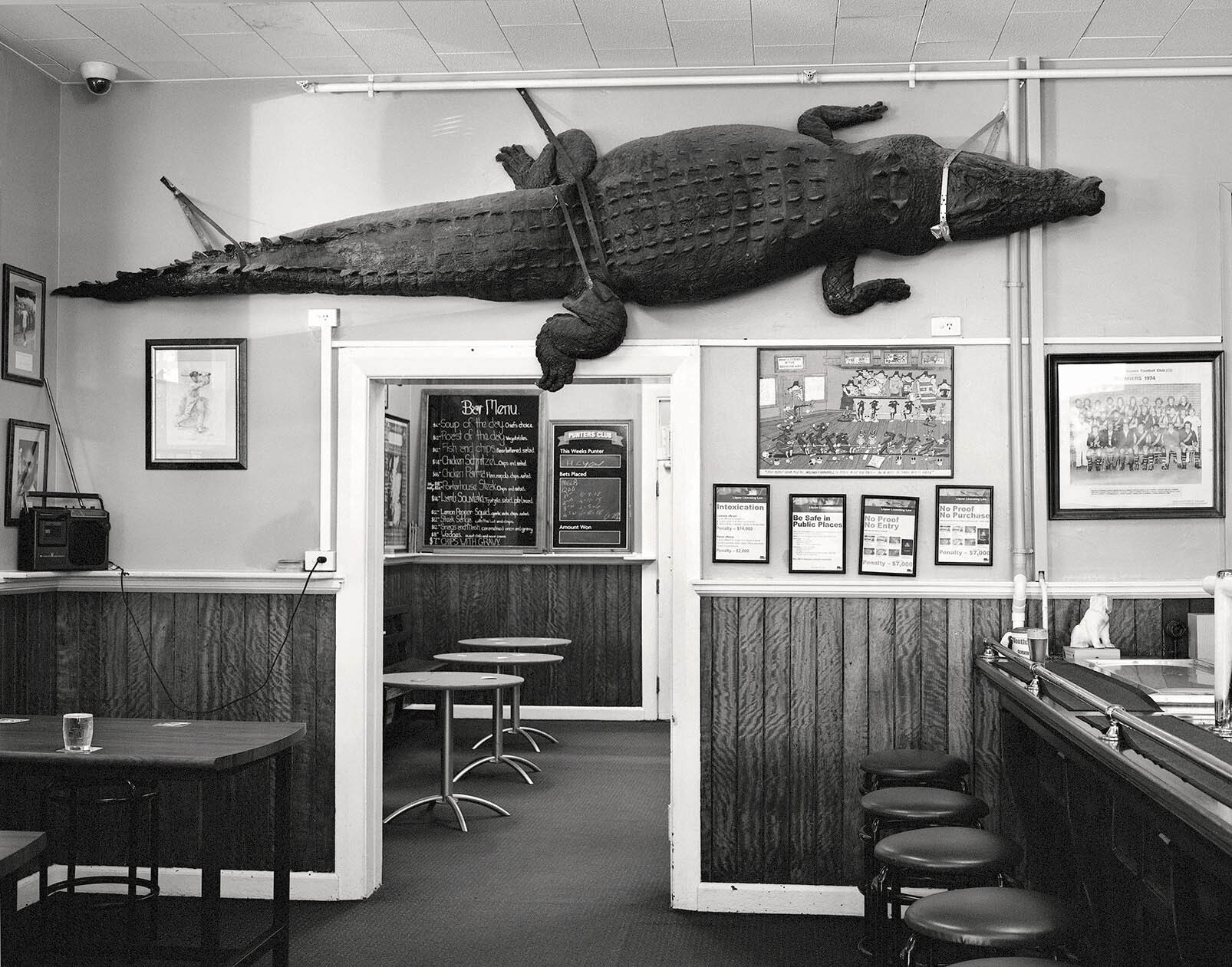
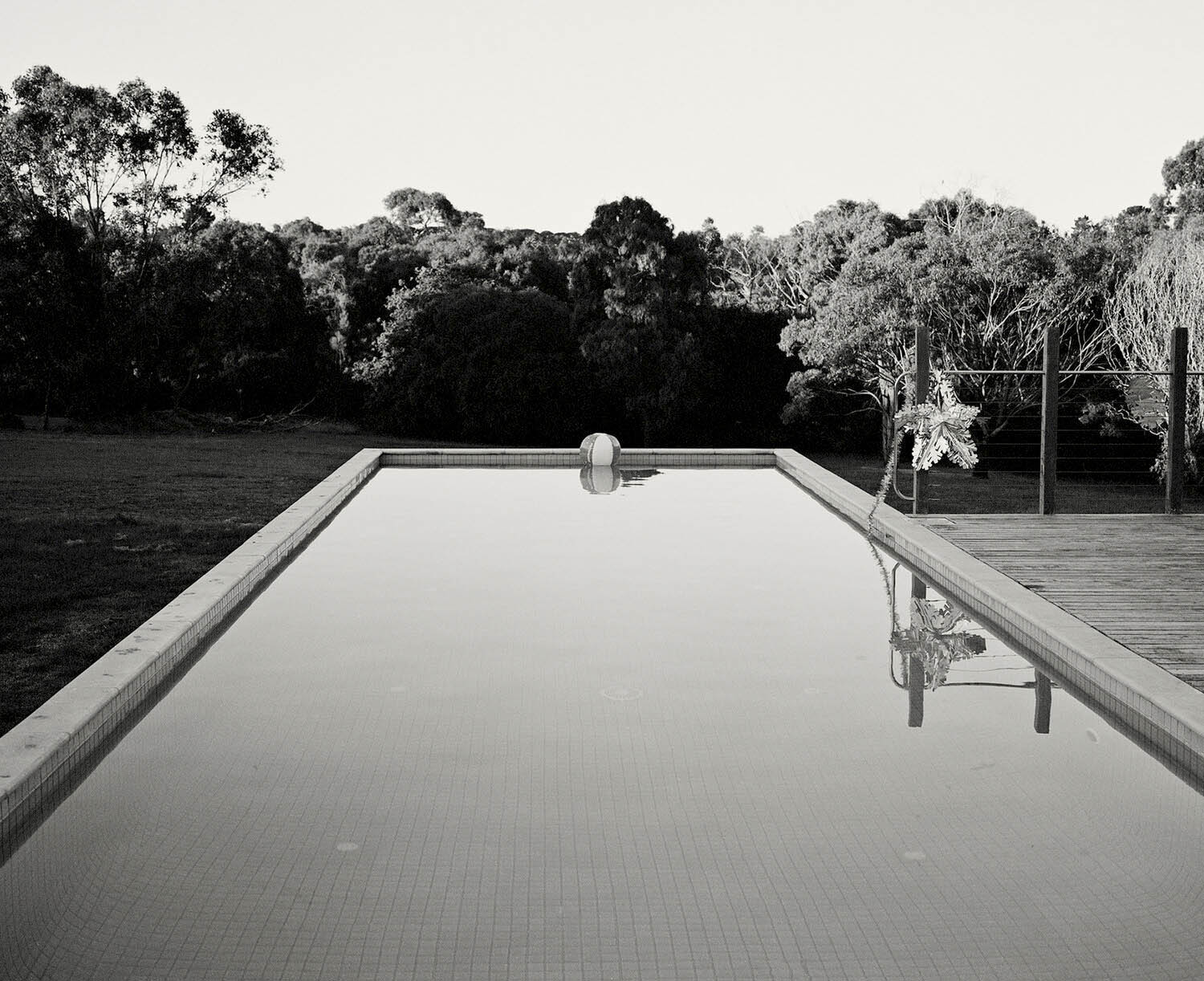
This is a good exhibition of small, darkly hewn, traditionally printed silver gelatin photographs, beautifully hung in the small gallery at Edmund Pearce and lit in the requisite, ambient manner. There are some outstanding photographs in the exhibition. The strongest works are the surrealist tinged, film noir-ish mise-en-scènes, the ones that emphasise the metaphorical darkness of the elements gathered upon the stage. Photographs such as Big TroutThe Female Factory, Adelong, New South Wales and Captain’s Flat Hotel, New South Wales really invoke a feeling of unhomely (or unheimlich), where nature is out of kilter. These images unsettle our idea of Oztraliana, our perceived sense of Self and our place in the world. They disrupt normal transmission; they transmutate the seen environment, transforming appearance, nature and form.


5/ Review: Jacqui Stockdale: The Quiet Wild at Helen Gory Galerie, Melbourne

Exhibition dates: 18th April – 19th May 2012


Jacqui Stockdale (Australian, b. 1968) 'Rama-Jaara the Royal Shepherdess' 2012


Jacqui Stockdale (Australian, b. 1968)
Rama-Jaara the Royal Shepherdess
2012
Type C Print
100 x 78cm


Jacqui Stockdale (Australian, b. 1968) 'Lagunta Man, Leeawuleena' 2012 Type C Print 100 x 78cm


Jacqui Stockdale (Australian, b. 1968)
Lagunta Man, Leeawuleena
2012
Type C Print
100 x 78cm


These are incredibly humorous, magical and symbolic photographs. A thought came into my mind when I was in the gallery surrounded by the work: for me they represented a vision of the Major Arcana of the Tarot (for example Jaguar Hombre could be seen as an inverted version of the Hanged Man with his foot in a figure four, the Hanged Man symbolising the need to just be in the world, yielding his mind and body to the Universal flow). The Major Arcana deal with the human condition, each card representing the joys and sorrows every man and woman can experience in a lifetime. In a way Stockdale offers us her own set of subversive Major Arcana, images that transgress the boundaries of the colonial vernacular, offering the viewer a chance to explore the heart of the quiet wild.


6/ Review: Littoral by Kristian Laemmle-Ruff at Colour Factory Gallery, Fitzroy

Exhibition dates: 4th May – 26th May 2012


It was such a joy then to walk around the corner from the CCP to the Colour Factory Gallery and view the exhibition Littoral by emerging artist Kristian Laemmle-Ruff. This is one of the best, if not the best, “photography” exhibition I have seen so far this year. As soon as you walk into the simple, elegant gallery you are surrounded by fourteen large scale horizontal photographs that are suffused with colour variations bouncing across the gallery – here a blue, there a green, now a lush orange palette. The effect is much like Monet’s waterlilies at the Musée de l’Orangerie in Paris; seated in the middle of the four curved paintings you are surrounded by large daubs of paint of various hues that have an elemental effect – resonances of earth, air, water, fire – on the viewer. The same affection of colour and space can be found in Laemmle-Ruff’s photographs.


Kristian Laemmle-Ruff (Australian) 'Olympic Stadium' 2012


Kristian Laemmle-Ruff (Australian)
Olympic Stadium
2012
Type C print
100cm x 67cm


Kristian Laemmle-Ruff (Australian) 'Truck in Safi' 2010


Kristian Laemmle-Ruff (Australian)
Truck in Safi
2010
Type C print
100cm x 67cm


7/ Review: Lost & Found: Family Photos Swept away by the 3.11 East Japan Tsunami at the Centre for Contemporary Photography (CCP), Fitzroy, Melbourne

Exhibition dates: 1st June – 15th July 2012

What we are left with in these images are vestiges of presence, remnants or traces of people that have passed on. In a kind of divine intervention, these photographs ask the viewer questions about the one fact that we cannot avoid in our lives, our own mortality, and what remains after we pass on. We can never know these people and places, just as we can never know the place and time of our death – when our “time” is up – but these photographs awaken in us a subconscious remembering: that we may be found (in life), then lost (through death), then found again in the gaze of the viewer looking at the photographs in the future present. We are (dis)continuous beings.

There is no one single reading of these photographs for “there are only competing narratives and interpretations of a world that cannot be wholly, accurately described.” These indescribable photographs impinge on our consciousness calling on us to remember even as the speed of contemporary life asks us to forget. This ethical act of looking, of mourning and remembering, of paying homage to presence acknowledges that we choose not to let pass into the dark night of the soul these traces of our forebears, for each emanation is deeply embedded within individual and cultural memory.

These photographs are a contemporary form of Western ‘dreaming’ in which we feel a link to the collective human experience. In this reification, we bear witness to the (re)assemblance of life, the abstract made (subconsciously) concrete, as material thing. These images of absent presence certainly reached out and touched my soul. Vividly, I choose to remember rather than to forget.


'Untitled' from 'Lost and Found' 2011

'Untitled' from 'Lost and Found' 2011


Anonymous photographer
Untitled
2011
From Lost and Found 2011


8/ Review: Berlinde De Bruyckere: We are all Flesh at the Australian Centre for Contemporary Art (ACCA), Melbourne

Exhibition dates: 2nd June – 29th July 2012

The main work We Are All Flesh (2012) reminded me of a version of the game The Hanged Man (you know, the one where you have to guess the letters of a word and if you don’t get the letter, the scaffold and the hanged man are drawn). The larger of the two hanging pieces featured two horse skins of different colours intertwined like a ying yang paux de deux. Psychologically the energy was very heavy. The use of straps to suspend the horses was inspired. Memories of Rembrandt’s The Anatomy Lesson of Dr. Nicolaes Tulp and The Godfather rose to the surface. My favourite piece was 019 (2007). Elegant in its simplicity this beautiful display case from a museum was dismantled and shipped over to Australia in parts and then reassembled here. The figurative pieces of wood, made of wax, seemed like bodies drained of blood displayed as specimens. The blankets underneath added an element of comfort. The whole piece was restrained and beautifully balanced. Joseph Beuys would have been very proud.

The “visceral gothic” contained in the exhibition was very evident. I liked the artist’s trembling and shuddering. Her narratives aroused a frisson, a moment of intense danger and excitement, the sudden terror of the risen animal


Berlinde De Bruyckere (Belgian, b. 1964) 'We Are All Flesh' 2012


Berlinde De Bruyckere (Belgian, b. 1964)
We Are All Flesh
2012
Treated horse skin, epoxy, iron armature
280 x 160 x 100cm
Courtesy the artist, Hauser & Wirth and Galleria Continua


Berlinde De Bruyckere (Belgian, b. 1964) '019' 2007


Berlinde De Bruyckere (Belgian, b. 1964)
019
2007
Wax, epoxy, metal, glass, wood, blankets
293.5 x 517 x 77.5cm
Private Collection, Paris


9/ Review: Light Works at NGV International, Melbourne

Exhibition dates: 23rd March – 16th September 2012

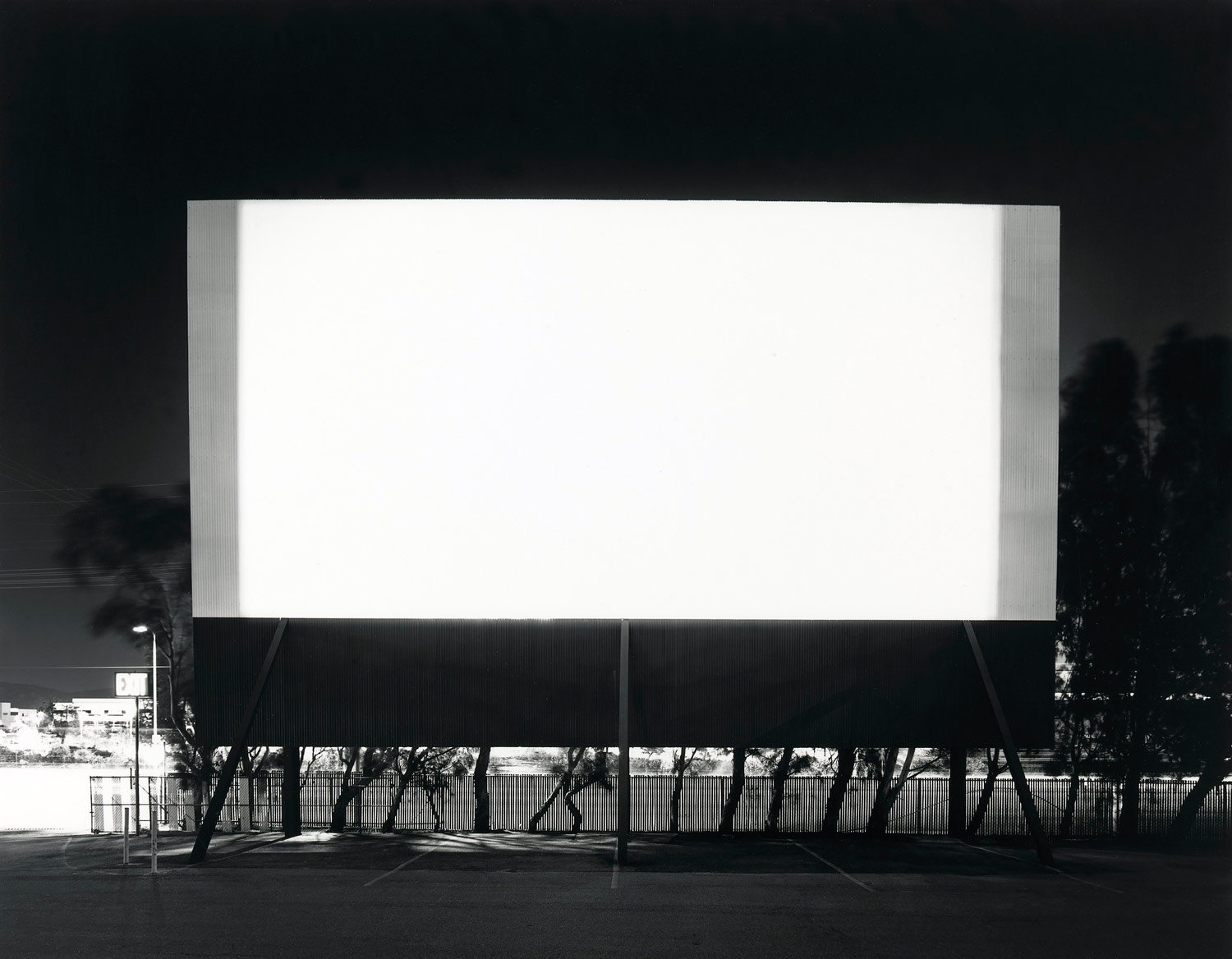
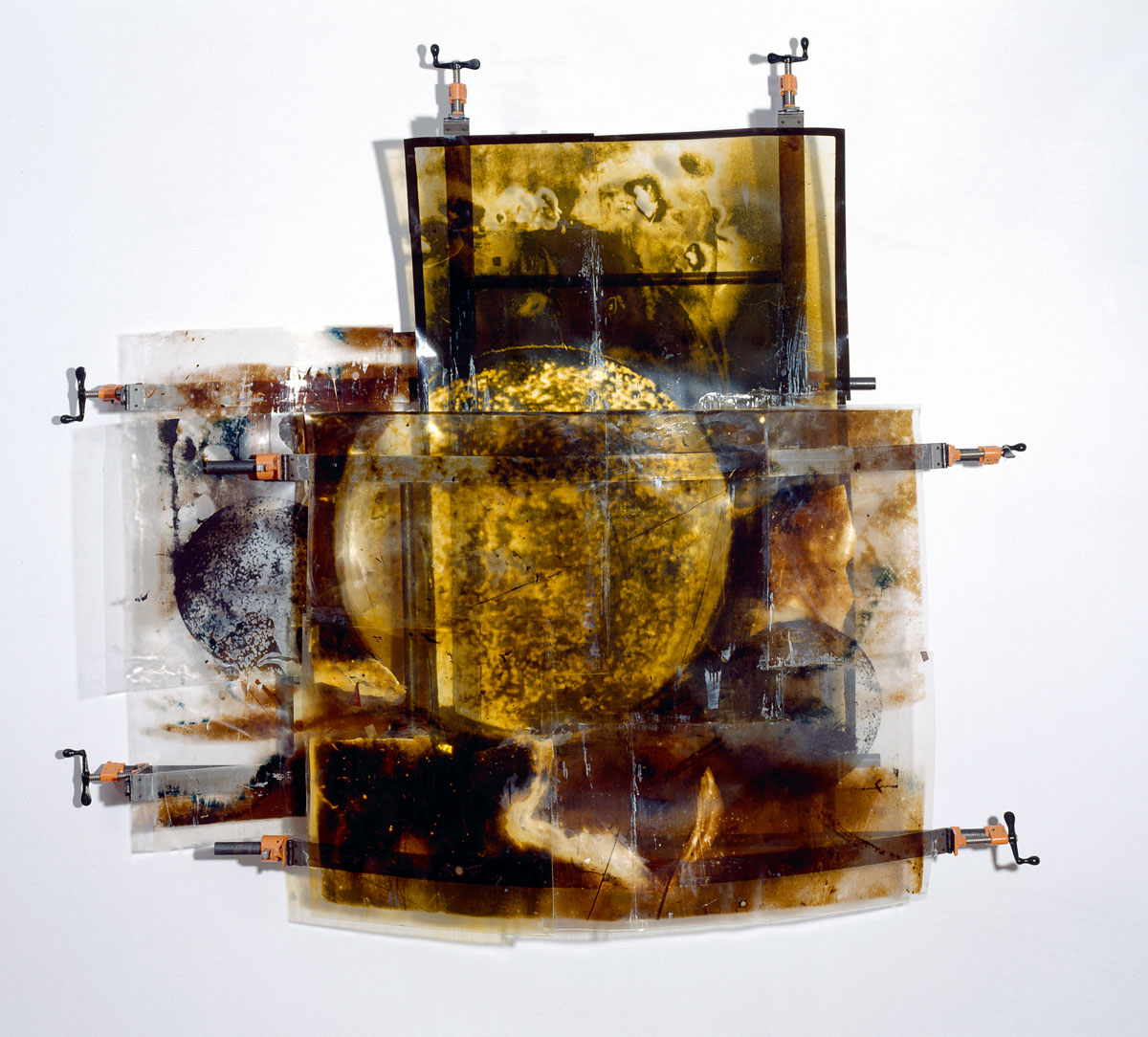
This is an intimate and stimulating photographic exhibition at the NGV International featuring the work of artists Mike and Doug Starn, David Stephenson, Hiroshi Sugimoto, Bill Henson, Adam Fuss, Simone Douglas, Park Hong-Chun, Eugenia Raskopoulos, Sam Shmith, Christoph Dahlhausen and Patrick Bailly-Maitre-Grand. It is fantastic to see an exhibition of solely contemporary photographs at the National Gallery of Victoria taken from their collection (with nary a vintage silver gelatin photograph in sight!), one which examines the orchestration of light from which all photography emanates – used by different photographers in the creation, and there is the key word, of their work. Collectively, the works seem to ooze a mysterious inner light, a facing towards the transcendent divine – both comforting, astonishing and terrifying in part measure.


Hiroshi Sugimoto (Japanese, b. 1948-, worked in United States 1972- ) 'Winnetka Drive-In, Paramount' 1993


Hiroshi Sugimoto (Japanese, b. 1948-, worked in United States 1972- )
Winnetka Drive-In, Paramount
1993
Gelatin silver photograph
42.3 x 54.1cm
National Gallery of Victoria, Melbourne
Purchased with funds donated by the Bowness Family Fund for Contemporary Photography, 2009
© Hiroshi Sugimoto, courtesy The Pace Gallery, New York


Mike Starn (American, b. 1961) and Doug Starn (American, b. 1961)
'Sol Invictus' 1992


Mike Starn (American, b. 1961) and Doug Starn (American, b. 1961)
Sol Invictus
1992
Orthographic film, silicon, pipe clamps, steel and adhesive tape
175 x 200 x 35cm
National Gallery of Victoria, Melbourne
Purchased with funds donated by the National Gallery Women’s Association, 1994
© Doug Starn, Mike Starn/ARS, New York. Licensed by VISCOPY, Sydney


10/ Review: Gregory Crewdson: In A Lonely Place at the Centre for Contemporary Photography (CCP), Fitzroy, Melbourne

Exhibition dates: 28th September – 11th November 2012

In his visual mosaics Crewdson engages our relationship with time and space to challenge the trace of experience. His tableaux act as a kind of threshold or hinge of experience – between interior and exterior, viewer and photograph. His photographs are a form of monism in which two forces (interior / exterior) try to absorb each other but ultimately lead to a state of equilibrium. It is through this “play” that the context of the photographs and their relationship to each other and the viewer are “framed.” This device emphasises the aesthetic as much as information and encourages the viewer to think about the relationship between the body, the world of which it is part and the dream-reason of time. This intertextual (n)framing (n meaning unspecified number in mathematics) encourages the viewer to explore the inbetween spaces in the non-narrative / meta-narrative, “and by leaps (intuitive leaps, poetic leaps, leaps of faith)” encourage escapism in the imagination of the viewer. It is up to us as viewers to seek the multiple, disparate significances of what is concealed in each photograph as “felt knowledge” (Walter Benjamin), recalling to mind the sensory data placed before our eyes, something that can be experienced but cannot be explained by man: “the single moment of the present amidst the transience of life and searching for some kind of eternal truth.”


Installation photograph of the series 'Beneath the Roses' from the exhibition 'Gregory Crewdson: In a Lonely Place' at the Centre for Contemporary Photography (CCP), Melbourne


Installation photograph of the series Beneath the Roses from the exhibition Gregory Crewdson: In a Lonely Place at the Centre for Contemporary Photography (CCP), Melbourne


Gregory Crewdson (American, b. 1962) 'Untitled (Maple Street)' 2003-2005


Gregory Crewdson (American, b. 1962)
Untitled (Maple Street)
2003-2005
© Gregory Crewdson. Courtesy Gagosian Gallery


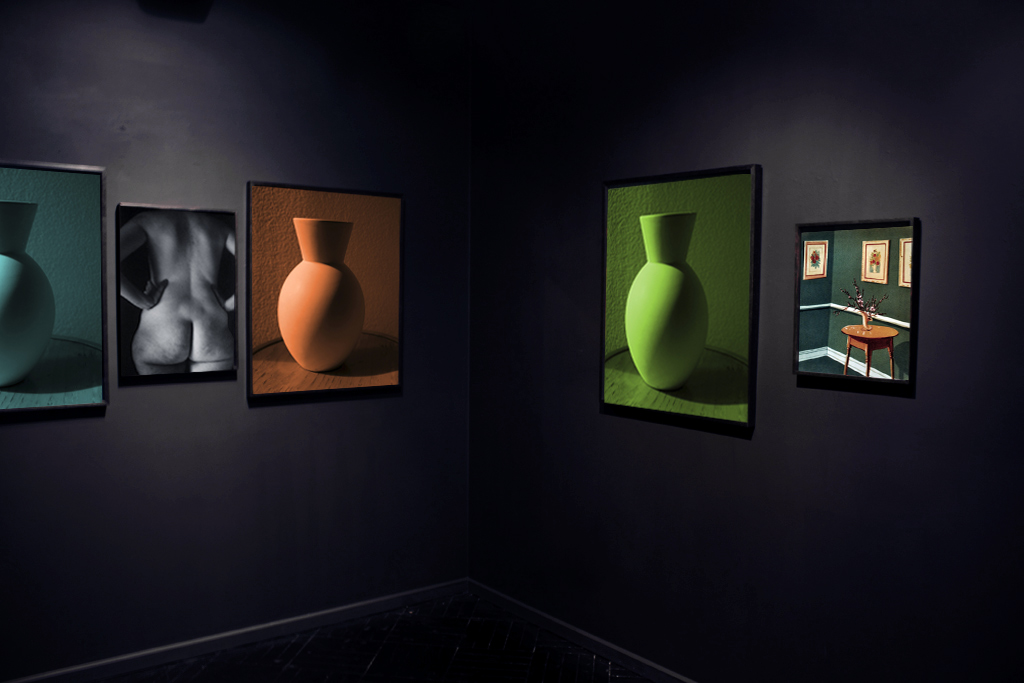
11/ Exhibition: Janina Green: Ikea at Edmund Pearce Gallery, Melbourne

Exhibition dates: 28th November 28 – 15th December 2012


Installation photograph of 'Ikea' by Janina Green at Edmund Pearce Gallery, Melbourne


Installation photograph of Ikea by Janina Green at Edmund Pearce Gallery, Melbourne


Janina Green (Australian born Germany, b. 1944) 'Orange vase' 1990 reprinted 2012


Janina Green (Australian born Germany, b. 1944)
Orange vase
1990 reprinted 2012
Silver gelatin print on fibre based paper, hand-tinted with orange photo dye
85 x 70 cm


Fable = invent (an incident, person, or story)

Simulacrum = pretends to be a faithful copy, but it is a copy with no original

Performativity = power of discourse, politicization of abjection, ritual of being

Body / identity / desire = imperfection, fluidity, domesticity, transgression, transcendence


Intimate, conceptually robust and aesthetically sensitive.
The association of the images was emotionally overwhelming.
An absolute gem. One of the highlights of the year.


LIKE ART BLART ON FACEBOOK

Back to top

Exhibition: ‘Janina Green: Ikea’ at Edmund Pearce Gallery, Melbourne

Exhibition dates: 28th November 28 – 15th December 2012


Installation photograph of 'Ikea' by Janina Green at Edmund Pearce Gallery, Melbourne


Installation photograph of Ikea by Janina Green at Edmund Pearce Gallery, Melbourne


“It is necessary to revisit what Walter Benjamin said of the work of art in the age of its mechanical reproducibility. What is lost in the work that is serially reproduced, is its aura, its singular quality of the here and now, its aesthetic form (it had already lost its ritual form, in its aesthetic quality), and, according to Benjamin, it takes on, in its ineluctable destiny of reproduction, a political form. What is lost is the original, which only a history itself nostalgic and retrospective can reconstitute as “authentic.” The most advanced, the most modern form of this development, which Benjamin described in cinema, photography, and contemporary mass media, is one in which the original no longer even exists, since things are conceived from the beginning as a function of their unlimited reproduction.”


Jean Baudrillard. ‘Simulacra and Simulation’. 1981 (English translation 1994)


“To apprehend myself as seen is, in fact, to apprehend myself as seen in the world and from the standpoint of the world. The look does not carve me out in the universe; it comes to search for me at the heart of my situation and grasps me only in irresolvable relations with instruments. If I am seen as seated, I must be seen as “seated-on-a-chair,” … But suddenly the alienation of myself, which is the act of being-looked-at, involves the alienation of the world which I organise. I am seated on this chair with the result that I do not see it at all, that it is impossible for me to see it …”


Jean-Paul Satre. ‘Being and Nothingness’ (trans. Hazel Barnes). London: Methuen, 1966, p. 263


“It must be possible to concede and affirm an array of “materialities” that pertain to the body, that which is signified by the domains of biology, anatomy, physiology, hormonal and chemical composition, illness, age, weight, metabolism, life and death. None of this can be denied. But the undeniability of these “materialities” in no way implies what it means to affirm them, indeed, what interpretive matrices condition, enable and limit that necessary affirmation. That each of those categories [BODY AND MATERIALITY] have a history and a historicity, that each of them is constituted through the boundary lines that distinguish them and, hence, by what they exclude, that relations of discourse and power produce hierarchies and overlappings among them and challenge those boundaries, implies that these are both persistent and contested regions.”


Judith Butler. ‘Bodies That Matter’. New York: Routledge, 1993, pp. 66-67


Fable = invent (an incident, person, or story)

Simulacrum = pretends to be a faithful copy, but it is a copy with no original

Performativity = power of discourse, politicisation of abjection, ritual of being

Body / identity / desire = imperfection, fluidity, domesticity, transgression, transcendence


Intimate, conceptually robust and aesthetically sensitive.
The association of the images was emotionally overwhelming.
An absolute gem. One of the highlights of the year.

Dr Marcus Bunyan


Many thankx to Edmund Pearce Gallery for allowing me to publish the photographs in the posting. Please click on the photographs for a larger version of the image.


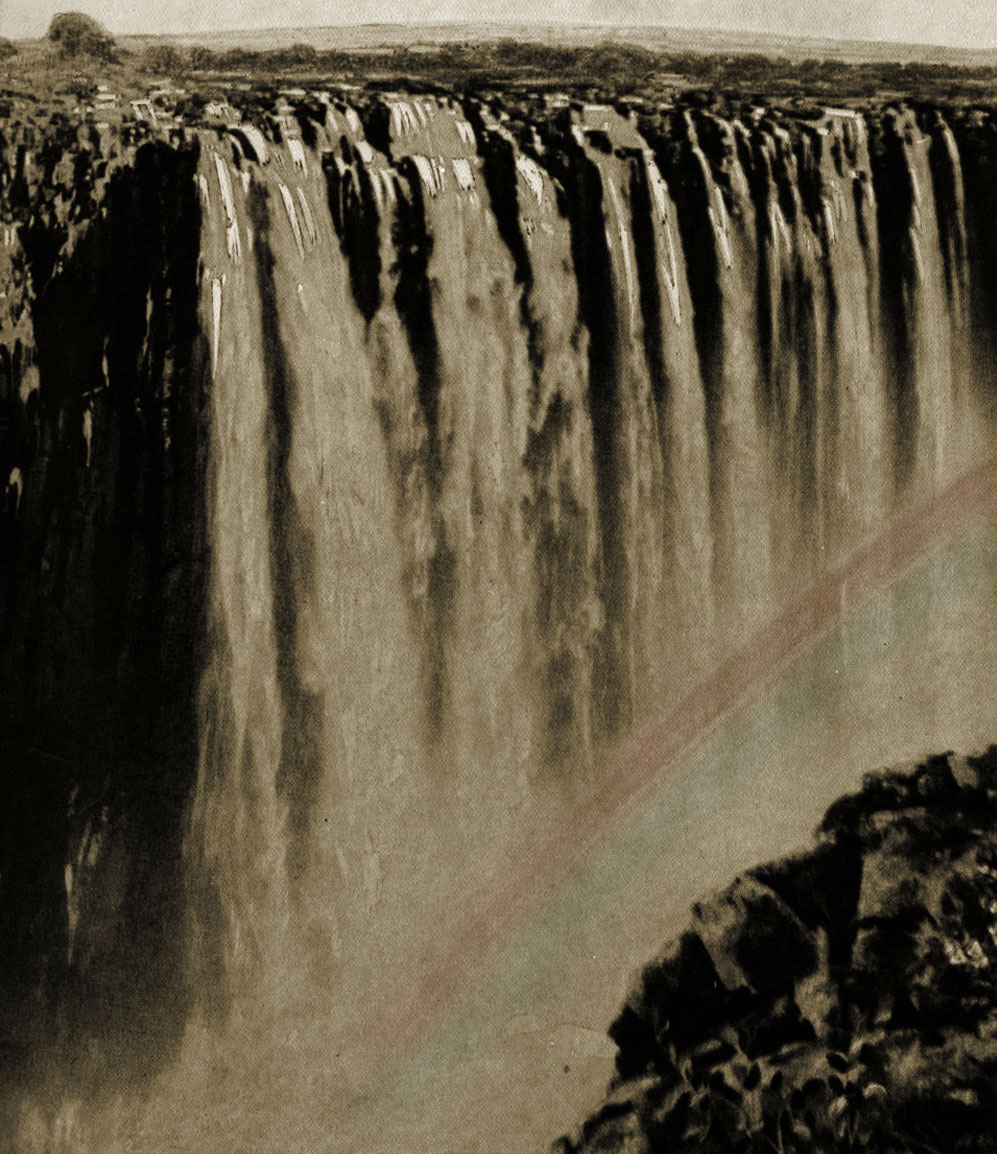
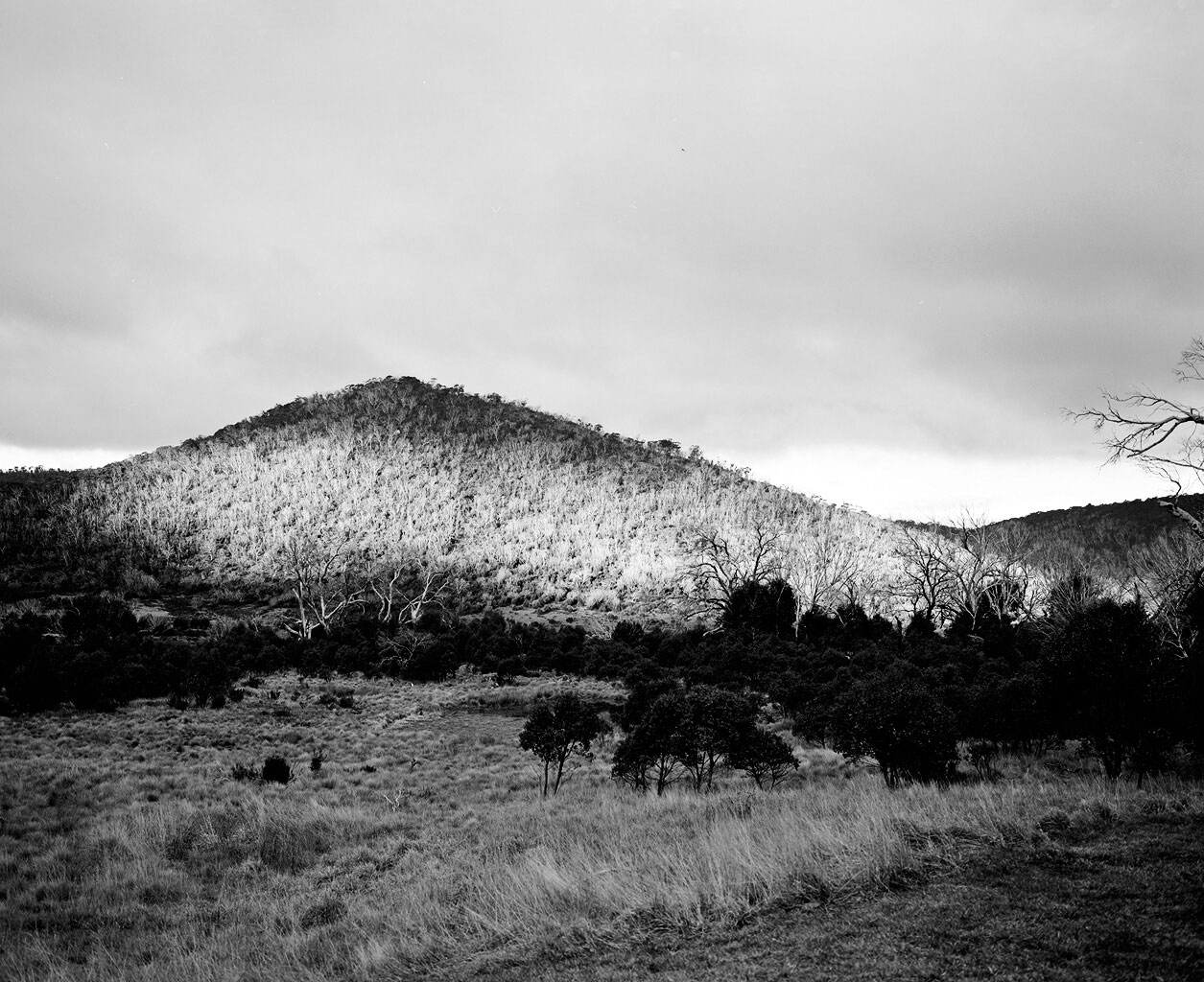
Janina Green (Australian born Germany, b. 1944) 'Waterfall' 1990


Janina Green (Australian born Germany, b. 1944)
Waterfall
1990
Silver gelatin print on Kentmere Parchment paper, tinted with coffee and photo dyes
58 x 48cm
Vintage print


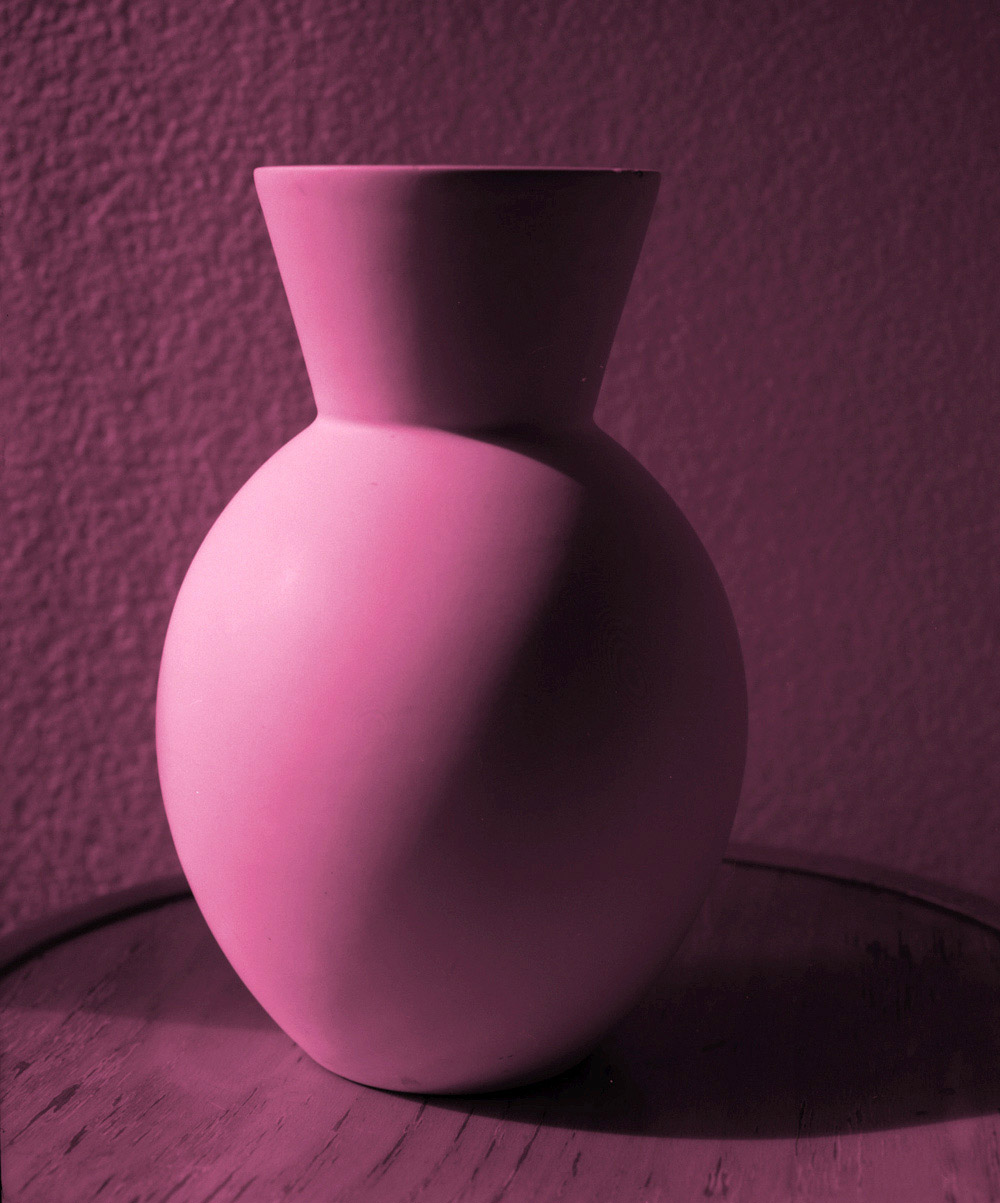
Janina Green (Australian born Germany, b. 1944) 'Pink vase' 1990 reprinted 2012


Janina Green (Australian born Germany, b. 1944)
Pink vase
1990 reprinted 2012
Silver gelatin print on fibre based paper, hand tinted with pink photo dye
85 x 70cm


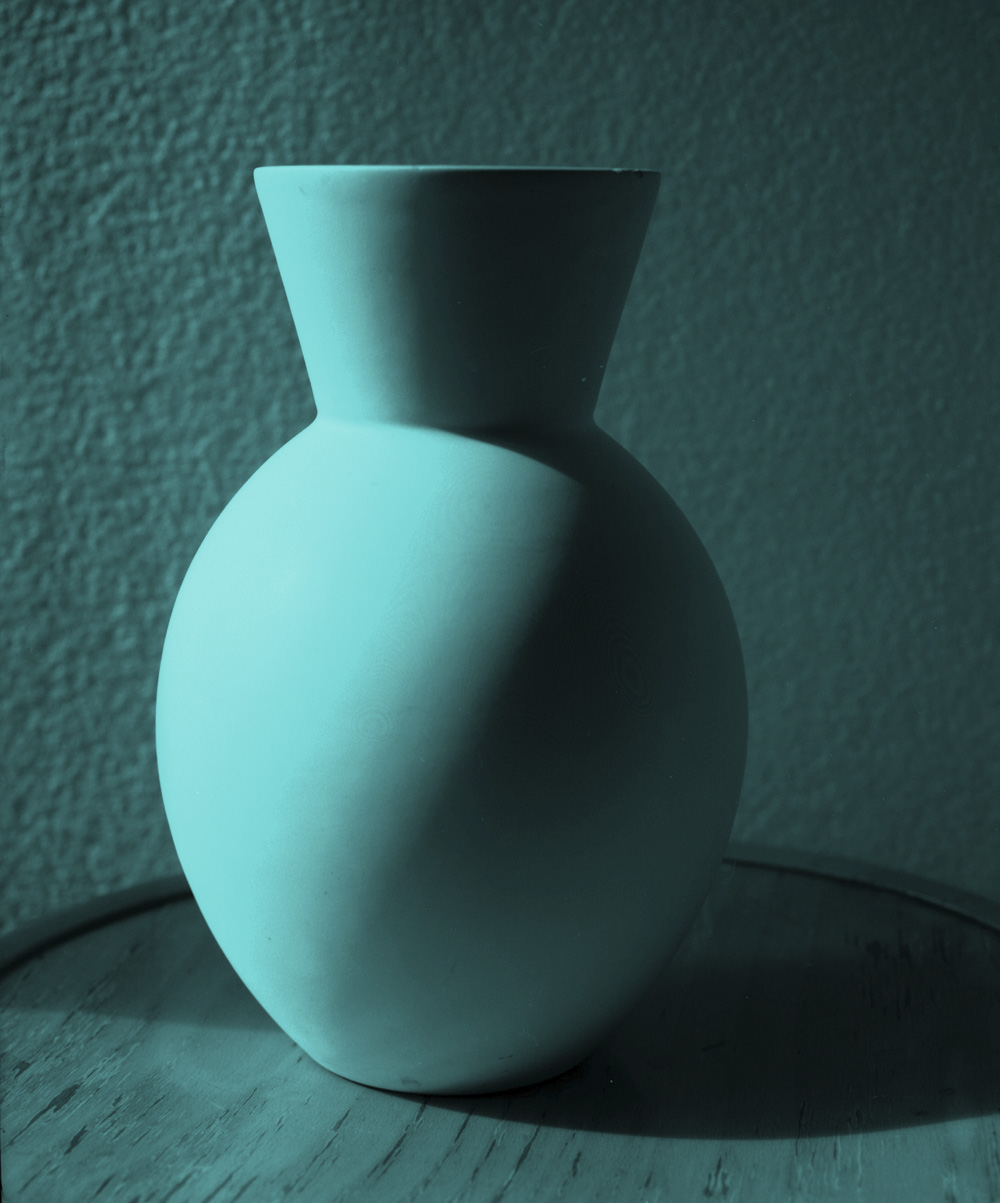
Janina Green (Australian born Germany, b. 1944) 'Blue vase' 1990 reprinted 2012


Janina Green (Australian born Germany, b. 1944)
Blue vase
1990 reprinted 2012
Silver gelatin print on fibre based paper, hand tinted with blue photo dye
85 x 70cm


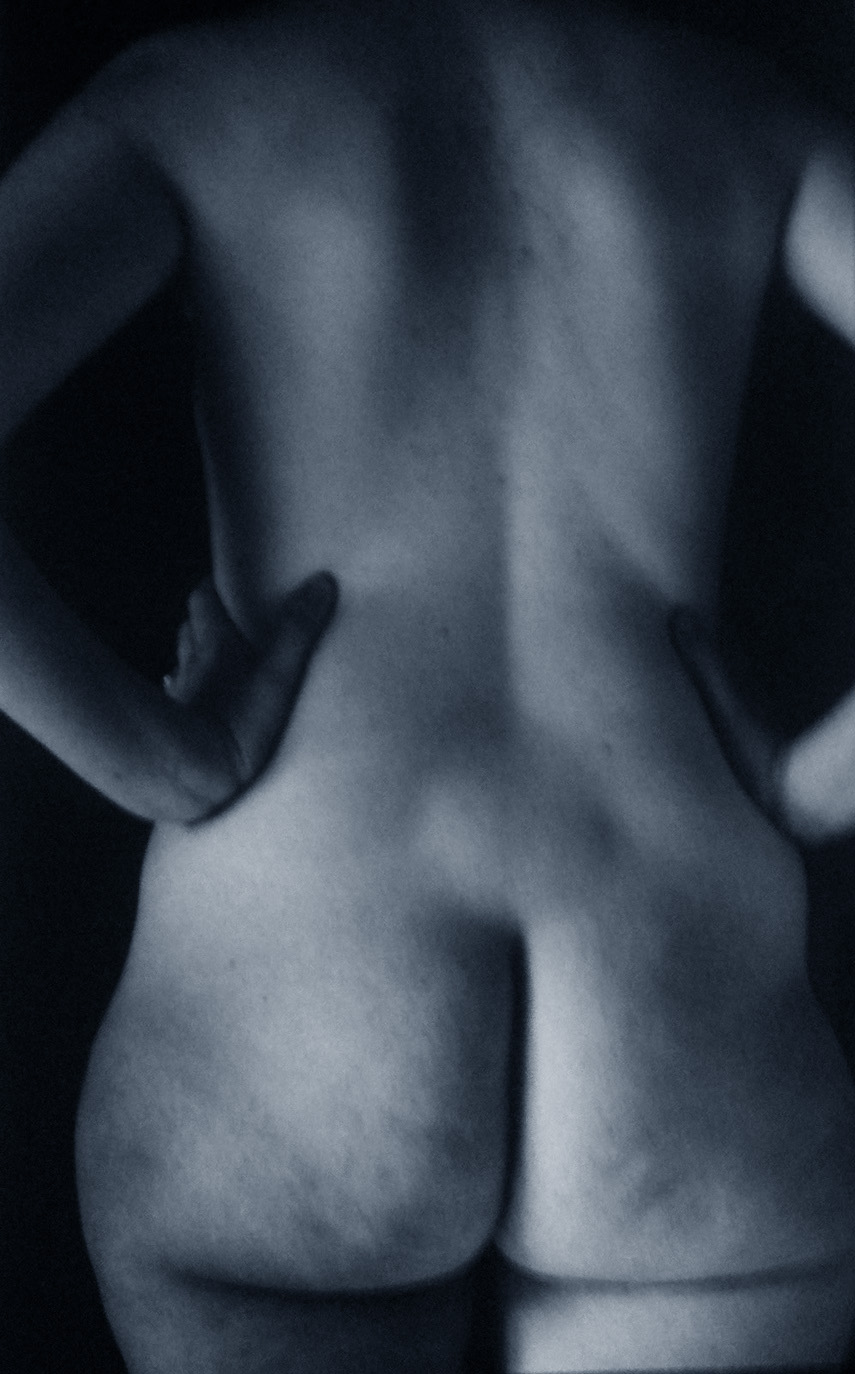
Janina Green (Australian born Germany, b. 1944) 'Nude' 1986


Janina Green (Australian born Germany, b. 1944)
Nude
1986
Silver gelatin print on fibre based paper, hand tinted with blue photo dye
60 x 45cm
Vintage print


My photographs are always about the past.

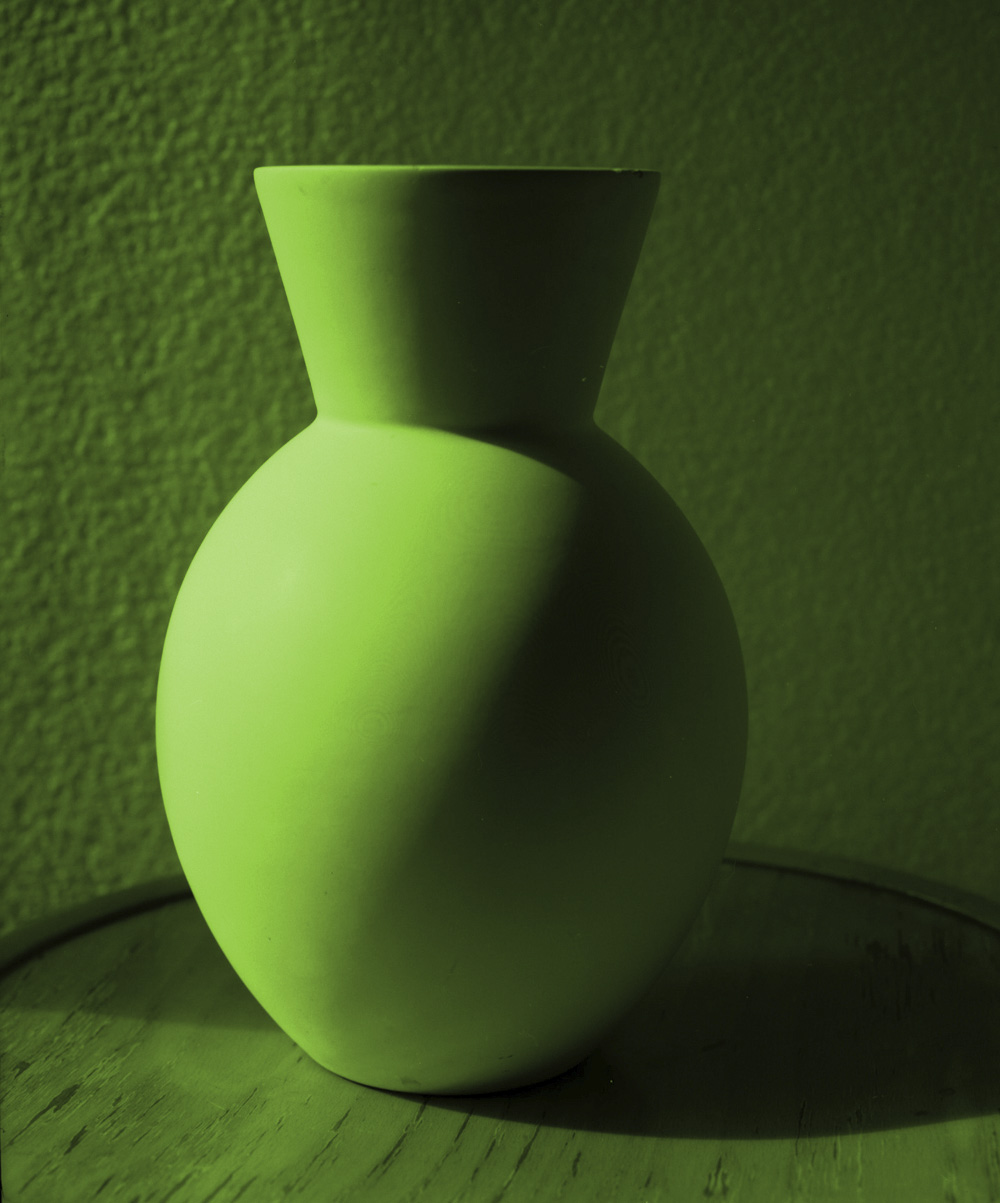
The Barthesian slogan, “this has been,” is for me, “I was there.” This series of images of a vase from Ikea consists of silver gelatin prints tinted in different coloured photographic dyes; photographs of a simple mass produced vase – its form the familiar vessel which so dominates Art History. “Ikea” for me is symbolic of the useful homely object and of the ideal home. The vase from Ikea no longer exists. The picture of that vase stands in for the vase that once existed. The photograph can be seen now – at this moment. It will continue to exist in the future. Its representation crosses time barriers.

My photographs are always documentations of a private performance.

Every photograph records what is in front of the camera, but my interest is in the occasion and the complex conditions of the making of the photograph – first the negative then the print. Each photograph ends up being a documentation of my state of mind during this intensely private moment as well as something for other people to look at. Because of changing conditions, every one of these prints from that same negative is different. For me each analogue print is an unsteady thing. They are now relics from another era, as is the vase.

As a counterpoint to the repetition of the vase prints, I have selected four vintage works from my archive.

Artists statement by Janina Green

Janina is represented by M.33


Janina Green (Australian born Germany, b. 1944) 'Orange vase' 1990 reprinted 2012


Janina Green (Australian born Germany, b. 1944)
Orange vase
1990 reprinted 2012
Silver gelatin print on fibre based paper, hand tinted with orange photo dye
85 x 70cm


Janina Green (Australian born Germany, b. 1944) 'Green vase' 1990 reprinted 2012


Janina Green (Australian born Germany, b. 1944)
Green vase
1990 reprinted 2012
Silver gelatin print on fibre based paper, hand tinted with green photo dye
85 x 70cm


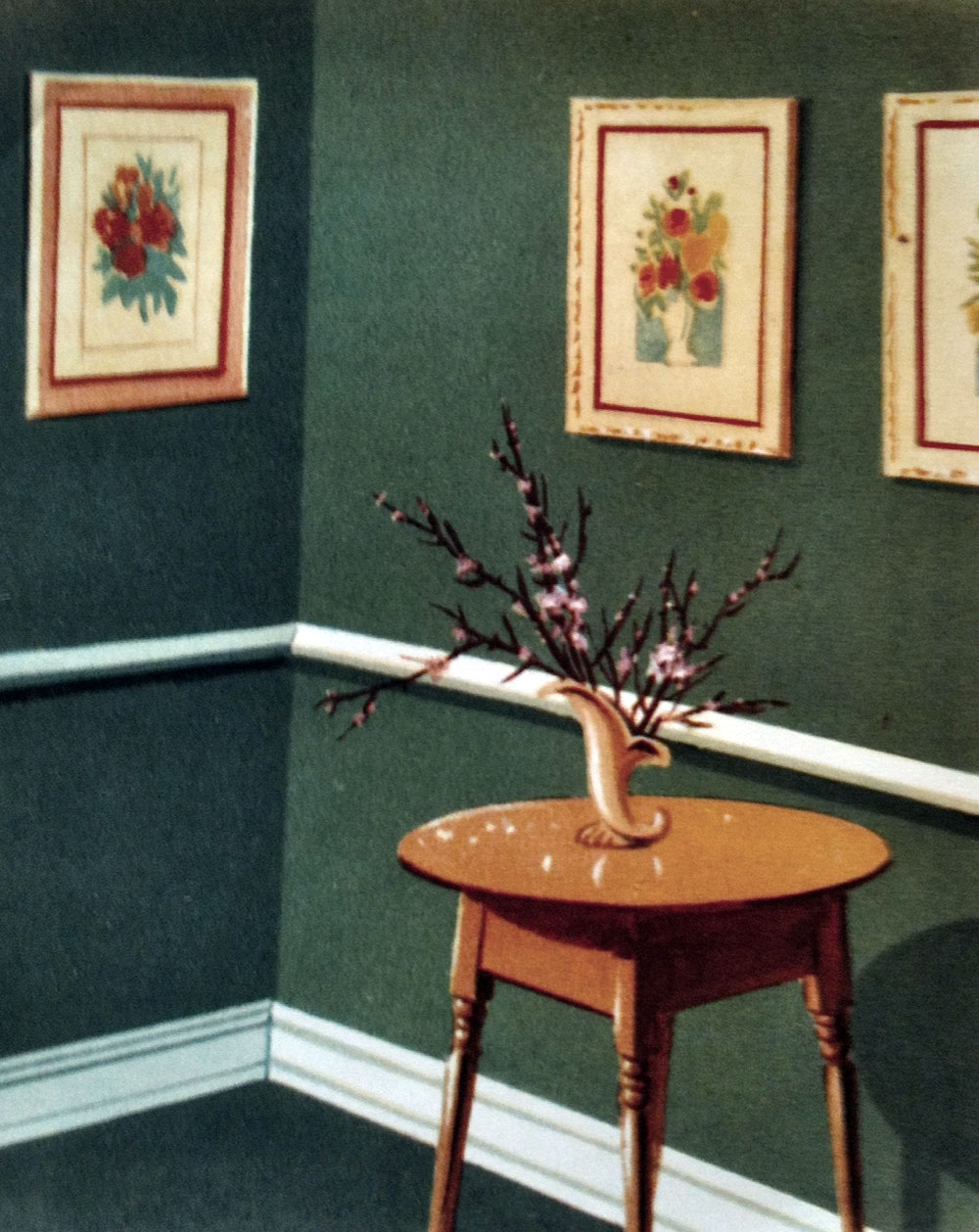
Janina Green (Australian born Germany, b. 1944) 'Interior' 1992


Janina Green (Australian born Germany, b. 1944)
Interior
1992
C Type print
38 x 30cm
Vintage print / edition of 5


Janina Green (Australian born Germany, b. 1944) 'Telephone' 1986 reprinted 2010


Janina Green (Australian born Germany, b. 1944)
Telephone
1986 reprinted 2010
Silver gelatin print on fibre based paper, tinted with coffee
58 x 48cm


Janina Green (Australian born Germany, b. 1944) 'Yellow vase' 1990 reprinted 2012


Janina Green (Australian born Germany, b. 1944)
Yellow vase
1990 reprinted 2012
Silver gelatin print on fibre based paper, hand tinted with yellow photo dye
85 x 70cm


Edmund Pearce Gallery

This gallery is now closed.

LIKE ART BLART ON FACEBOOK

Back to top

Review: ‘Jane Brown / Australian Gothic’ at Edmund Pearce Gallery, Melbourne

Exhibition dates: 25th April – 12th May 2012


Jane Brown (Kuwait, Australia, b. 1967) 'Big Trout, New South Wales' 2010


Jane Brown (Kuwait, Australia, b. 1967)
Big Trout, New South Wales
2010
Museo silver rag print
59 x 46cm


As you should know by now, this blog tries to promote the work of less well known artists and subject matter. So instead of concentrating on the wonderful aerial bushfire photographs of the well-known artist John Gollings (showing in the same gallery in different spaces with the work of Michael Norton) I have decided to do a posting on the exhibition Australian Gothic by Jane Brown.

This is a good exhibition of small, darkly hewn, traditionally printed silver gelatin photographs, beautifully hung in the small gallery at Edmund Pearce and lit in the requisite, ambient manner. There are some outstanding photographs in the exhibition. The strongest works are the surrealist tinged, film noir-ish mise-en-scènes, the ones that emphasise the metaphorical darkness of the elements gathered upon the stage. Photographs such as Big TroutThe Female Factory, Adelong, New South Wales and Captain’s Flat Hotel, New South Wales really invoke a feeling of unhomely (or unheimlich), where nature is out of kilter. These images unsettle our idea of Oztraliana, our perceived sense of Self and our place in the world. They disrupt normal transmission; they transmutate the seen environment, transforming appearance, nature and form. Less successful in this quest are the bushfire landscapes. I feel these add little to the narrative thread of the exhibition and could have easily been left out in a judicious cull of the photographs. This would have made the overarching story line stronger still.

One of the best photographs in the exhibition is Lathamstowe (2011, below). This dark, brooding, intense photograph is a beautifully realised visualisation, one that balances scale, tone, light, form and darkness to create a haunting image that stays with you a long time after you have seen it. This one images says it all: the artist has talent. More please!

Dr Marcus Bunyan


Many thankx to Edmund Pearce Gallery for allowing me to publish the photographs in the posting. Please click on the photographs for a larger version of the image.


Jane Brown (Kuwait, Australia, b. 1967) 'Bushfire Landscape I' 2011


Jane Brown (Kuwait, Australia, b. 1967)
Bushfire Landscape I
2011
Fibre based, silver gelatin print
16.5 x 20.5cm


Jane Brown (Kuwait, Australia, b. 1967) 'Bushfire Landscape II, Lake Mountain, Victoria' 2010


Jane Brown (Kuwait, Australia, b. 1967)
Bushfire Landscape II, Lake Mountain, Victoria
2010
Fibre based, silver gelatin print
16.5 x 19.5cm


Jane Brown (Kuwait, Australia, b. 1967) 'The Female Factory (convict women’s prison), Ross, Tasmania' 2009


Jane Brown (Kuwait, Australia, b. 1967)
The Female Factory (convict women’s prison), Ross, Tasmania
2009
Fibre based, silver gelatin print
15.8 x 19.5cm


Jane Brown (Kuwait, Australia, b. 1967) 'Front Bar, Wonthaggi Hotel, Victoria' 2012


Jane Brown (Kuwait, Australia, b. 1967)
Front Bar, Wonthaggi Hotel, Victoria
2012
Fibre based, selenium toned, gelatin silver print


Jane Brown (Kuwait, Australia, b. 1967) 'Bush Christmas, Victoria' 2011


Jane Brown (Kuwait, Australia, b. 1967)
Bush Christmas, Victoria
2011
Fibre based, selenium toned, gelatin silver print


Jane Brown (Kuwait, Australia, b. 1967) 'Lathamstowe' 2011


Jane Brown (Kuwait, Australia, b. 1967)
Lathamstowe
2011
Fibre based, silver gelatin print
16.5 x 16.5cm


“I find it interesting how monochrome is used to differentiate the living and the dead, the past and the present. It has an ability to transcend the constraints of time, memory and death. I examine this a lot in my work – landscapes seem to have vestiges or traces of past life and memorials become otherworldly.”


Jane Brown. ‘Weekend Australian Review’, August 2011


“The antipodes was seen as a world of reversals, the dark subconscious of Britain. It was for all intents and purposes Gothic par excellence.”


Gary Turcotte. “Australian Gothic,” in Marie Mulvey-Roberts (ed.). The Handbook to Gothic Literature. 1998


Comprising photographs taken in rural New South Wales, the ACT, Victoria and Tasmania, this exhibition takes its cue from the gothic imaginings of colonial Australia. We see images of a convict past, the bush Christmas, unforgiving landscapes and melancholic hotels. It carries echoes of the cinema of Wake in Fright (1971) and the Cars that Ate Paris (1974)Rendering visible the themes of the melancholic and the uncanny, Australian Gothic manifests itself in rural isolation – where the homely becomes unhomely (or unheimlich) and where nature is out of kilter.


Jane Brown (Kuwait, Australia, b. 1967) 'Adelong, New South Wales' 2011


Jane Brown (Kuwait, Australia, b. 1967)
Adelong, New South Wales
2011
Fibre based, silver gelatin print
16.5 x 20.5cm


Jane Brown (Kuwait, Australia, b. 1967) 'Tumbarumba, New South Wales' 2012


Jane Brown (Kuwait, Australia, b. 1967)
Tumbarumba, New South Wales
2012
Fibre based, silver gelatin print
16.5 x 19.5cm


Jane Brown (Kuwait, Australia, b. 1967) 'One Way, Hobart, Tasmania' 2009


Jane Brown (Kuwait, Australia, b. 1967)
One Way, Hobart, Tasmania
2009
Fibre based, silver gelatin print
16.5 x 19.5cm


Jane Brown (Kuwait, Australia, b. 1967) 'Unheimlich, French Island, Victoria' 2010


Jane Brown (Kuwait, Australia, b. 1967)
Unheimlich, French Island, Victoria
2010
Fibre based, silver gelatin print
19 x 16cm


Jane Brown (Kuwait, Australia, b. 1967) 'Captain’s Flat Hotel, New South Wales' 2012


Jane Brown (Kuwait, Australia, b. 1967)
Captain’s Flat Hotel, New South Wales
2012
Fibre based, silver gelatin print
21.5 x 17.5cm


Edmund Pearce Gallery

This gallery has now closed.

LIKE ART BLART ON FACEBOOK

Back to top