Exhibition: ‘Bernd & Hilla Becher – History of a Method’ at Die Photographische Sammlung/SK Stiftung Kultur, Cologne

Exhibition dates: 5th September, 2025 – 1st February, 2026

An exhibition by Die Photographische Sammlung/SK Stiftung Kultur in cooperation with the Bernd & Hilla Becher Studio, Düsseldorf
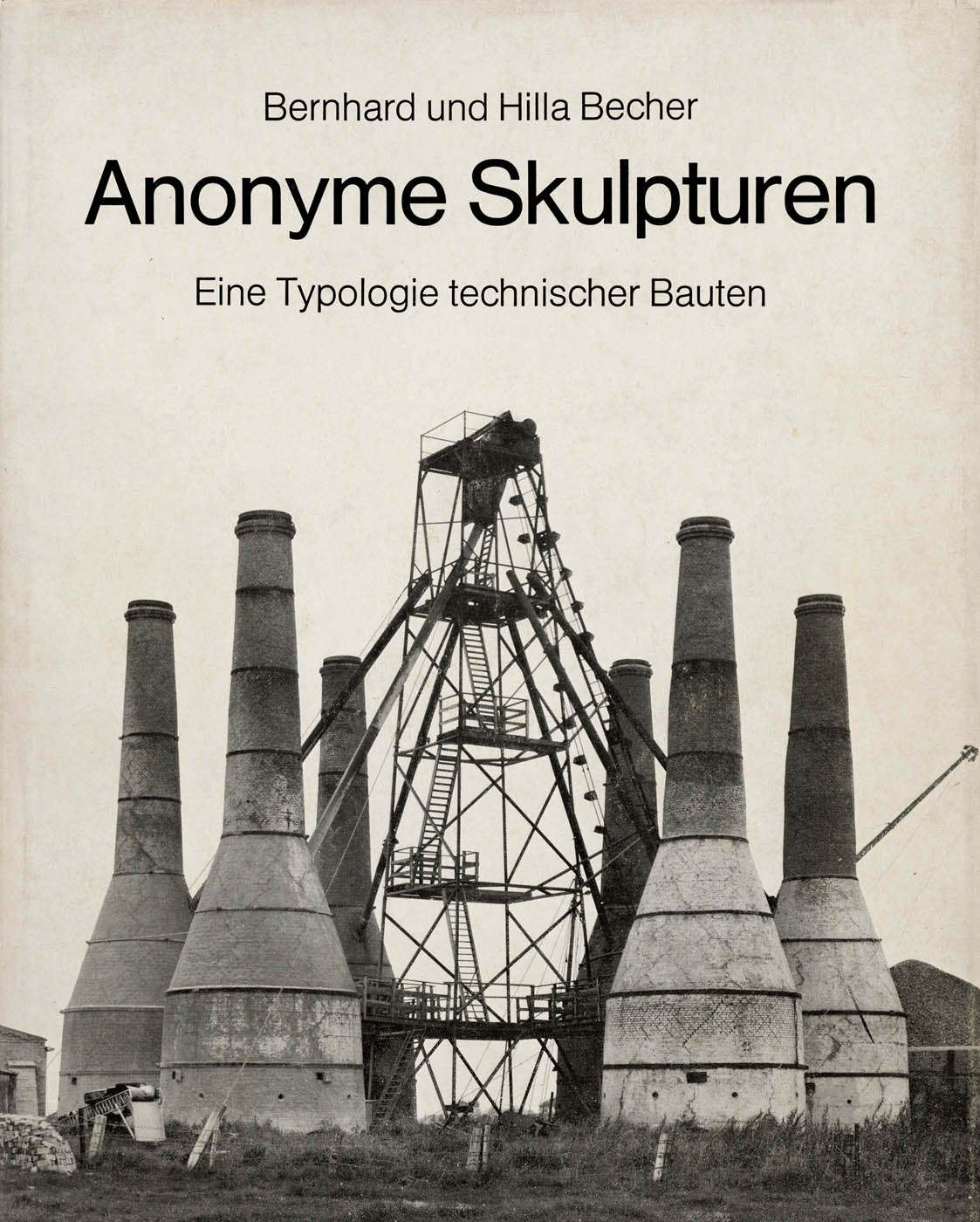
 

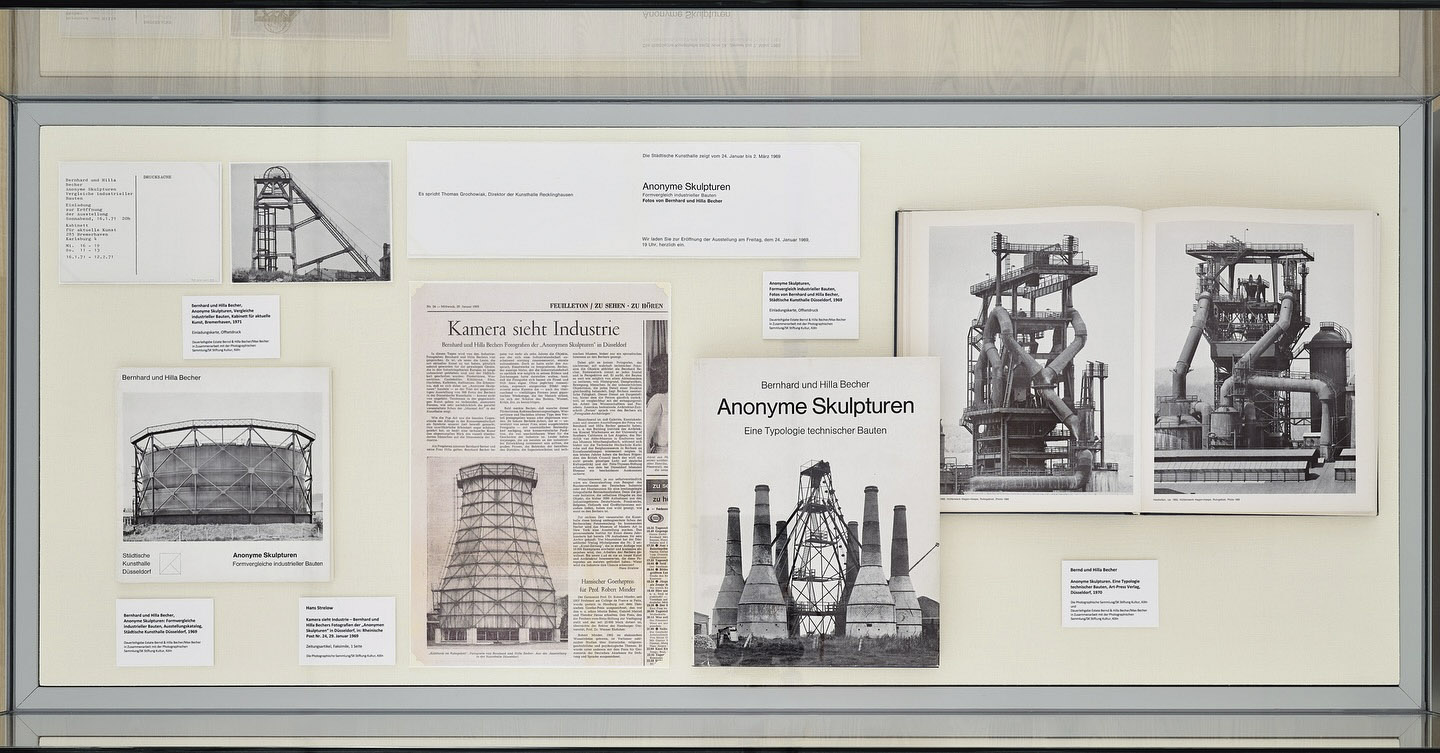
'Anonyme Skulpturen. Eine Typologie technischer Bauten, Düsseldorf: Art-Press' (Anonymous Sculptures: A Typology of Technical Buildings) Düsseldorf: Art-Press 1970 (Buchcover)


Anonyme Skulpturen. Eine Typologie technischer Bauten, Düsseldorf: Art-Press
Anonymous Sculptures: A Typology of Technical Buildings, Düsseldorf: Art-Press
1970 (Buchcover)
Courtesy Die Photographische Sammlung/SK Stiftung Kultur, Köln


When we think about the most influential photographers of the first five decades of the 20th century we conjure up names such as Eugène Atget, Alfred Stieglitz, Paul Strand, Walker Evans, László Moholy-Nagy, Dorothea Lange, and Berenice Abbott, to name just a few – and by influential, I mean those photographers that altered the intensification of the medium – the conceptualisation, creation, veracity, meaning and reception of the image.

In the last 50 years of the 20th century there are less of these medium-shifting artists that have really made a difference. Diane Arbus and Lee Friedlander are the two that readily spring to mind. And then there are the Bechers, Bernd & Hilla Becher. These German photographers changed the course of contemporary photographic practice, their conceptual art / objective photographic raison d’être still embedded at the heart of fine art photography today.

But, as I have argued elsewhere, their typologies and grids, their topographic state, their same same photographs and perspectives of industrial sculptures and landscapes are anything but objective. Their pictorial grammar, underlaid by a conceptual approach to subject matter, continuously reflected in the systematics of capture and display (the juxtaposition of works together), is constantly undermined by the ghost in the machine – those viral codes of mutation and difference which cannot be controlled.

While they professed to “eschew entirely entirely the aspects of beauty, emotion and opinion,” every photograph they took involves a subjective point of view, an element of uniqueness and beauty that can never be repeated.

“Despite protestations to the contrary (appeals to the objectivity of the image, eschewing entirely the aspects of beauty, emotion and opinion; the rigorous frontality of the individual images giving them the simplicity of diagrams, while their density of detail offers encyclopaedic richness) these are subjective images for all their objective desire. The paradox is the more a photographer strives for objectivity, the more ego drops away, the more the work becomes their own: subjective, beautiful, emotive.

Even though the Bechers’ demonstrate great photographic restraint with regard to documenting the object, the documentary gaze is always corrupted / mutated / distorted by personal interpretation: where to position the camera, what to include or exclude, how to interpret the context of place, how to crop or print the image, and how to display the image, in grids, sequences or singularly. In other words there are always multiple (con)texts to which artists conform or transgress. What makes great photographers, such as Eugène Atget, Walker Evans, August Sander and the Bechers, is the idiosyncratic “nature” of their vision: how Atget places his large view camera – at that particular height and angle to the subject – leaves an indelible feeling that only he could have made that image, to reveal the magic of that space in a photograph. It is their personal, unique thumbprint, recognisable in an instant. So it is with the Bechers.”1

For a deeper dive into the work of the Bechers, please see my text “Ghosts in the machine,” on the exhibition Bernd and Hilla Becher at the Metropolitan Museum of Art, New York, July – November, 2022.

Dr Marcus Bunyan


1/ Marcus Bunyan text on the exhibition Bernd and Hilla Becher: Mines and Mills – Industrial Landscapes at Fotomuseum Winterthur, Zurich, November 2011 – February 2012 [Online] Cited 05/12/2025


Many thankx to Die Photographische Sammlung/SK Stiftung Kultur, Cologne for allowing me to publish the photographs in the posting. Please click on the photographs for a larger version of the image.


Installation view of the exhibition 'Bernd & Hilla Becher – History of a Method' at Die Photographische Sammlung/SK Stiftung Kultur, Cologne September, 2025 – February, 2026


Installation view of the exhibition Bernd & Hilla Becher – History of a Method at Die Photographische Sammlung/SK Stiftung Kultur, Cologne
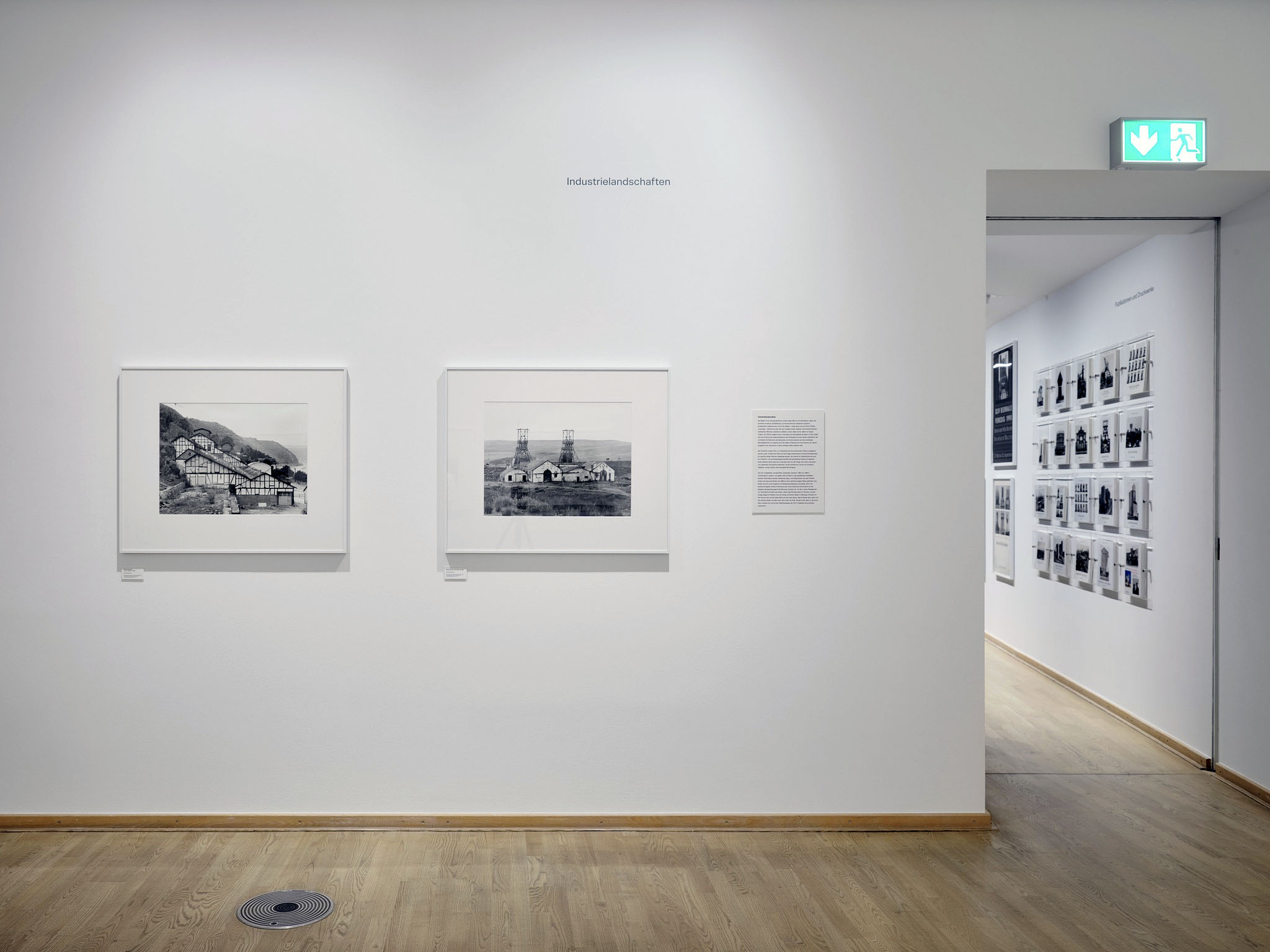
 

Installation view of the exhibition 'Bernd & Hilla Becher – History of a Method' at Die Photographische Sammlung/SK Stiftung Kultur, Cologne September, 2025 – February, 2026


Installation view of the exhibition Bernd & Hilla Becher – History of a Method at Die Photographische Sammlung/SK Stiftung Kultur, Cologne
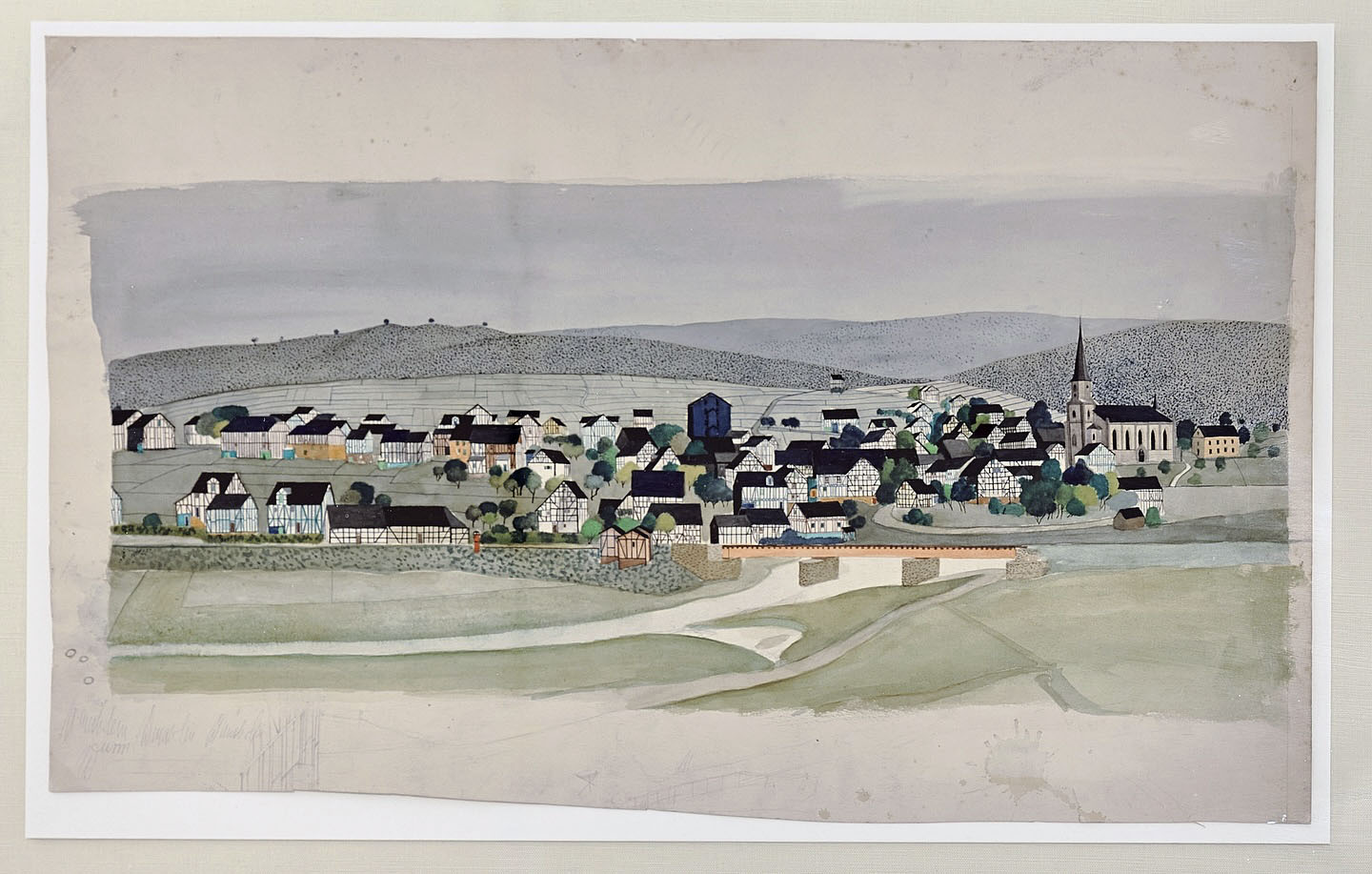
 

Bernd Becher (German, 1931-2007) 'Mudersbach' 1950s


Bernd Becher (German, 1931-2007)
Mudersbach
1950s
Watercolour
35.5 x 59.9cm
© Estate Bernd & Hilla Becher, vertreten durch Max Becher
Courtesy Die Photographische Sammlung/SK Stiftung Kultur – Bernd und Hilla Becher Archiv, Köln
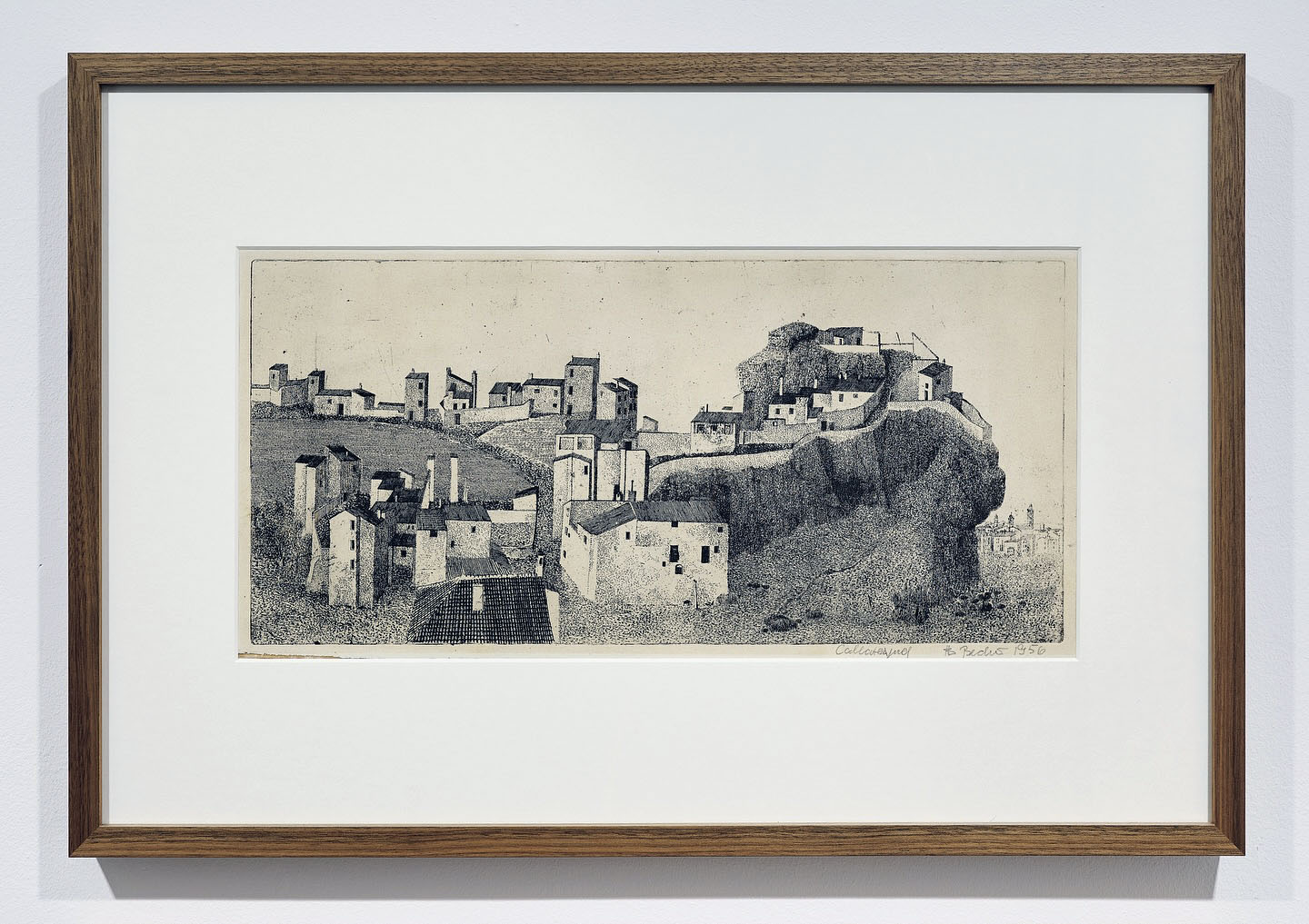
 

Installation view of the exhibition 'Bernd & Hilla Becher – History of a Method' at Die Photographische Sammlung/SK Stiftung Kultur, Cologne September, 2025 – February, 2026 showing Bernd Becher's 'Calatayud' 1956


Installation view of the exhibition Bernd & Hilla Becher – History of a Method at Die Photographische Sammlung/SK Stiftung Kultur, Cologne showing Bernd Becher’s Calatayud 1956 (below)
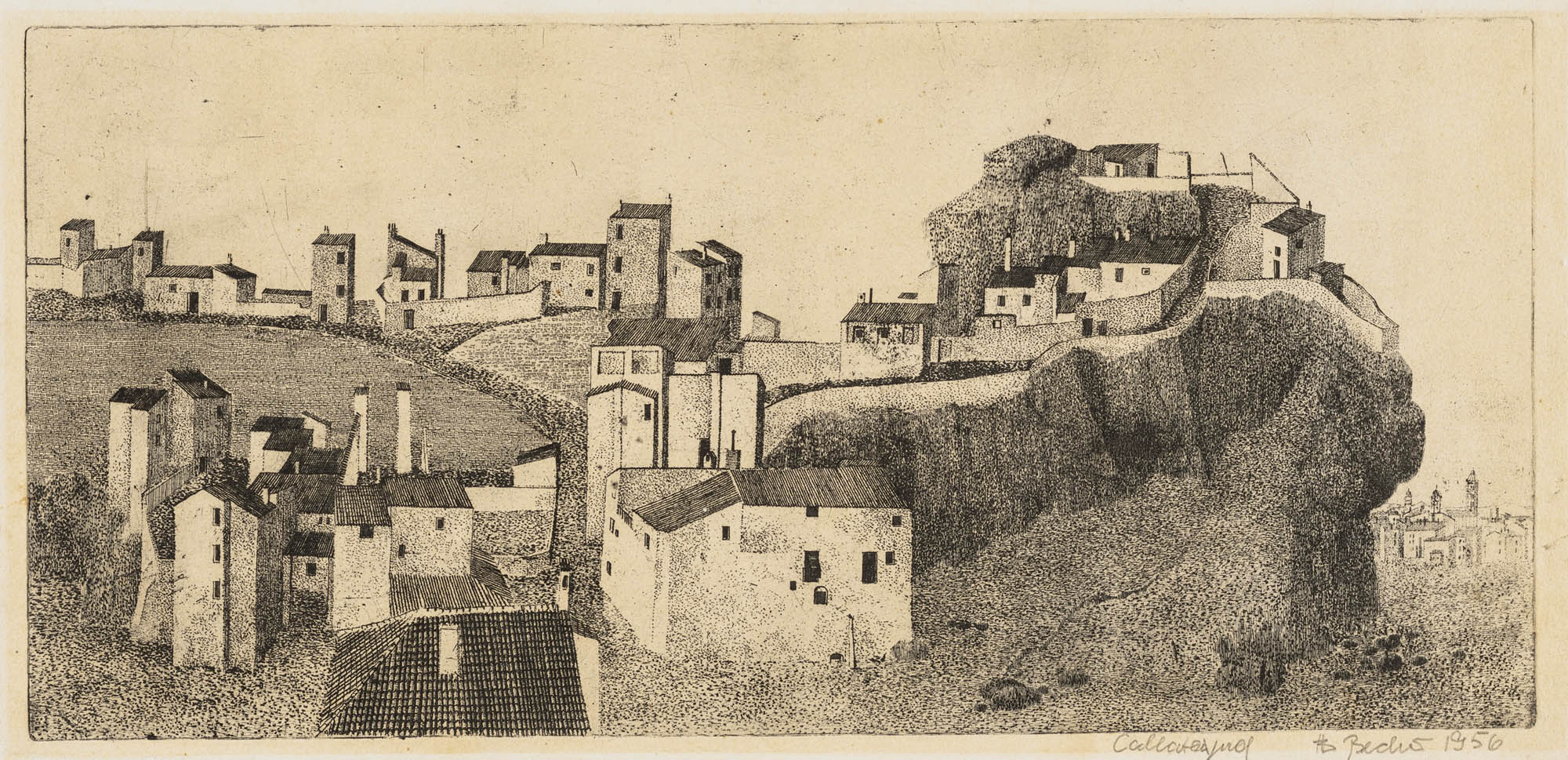
 

Bernd Becher (German, 1931-2007) 'Calatayud' 1956


Bernd Becher (German, 1931-2007)
Calatayud
1956
Aquatint on laid paper
20.8 x 44.0cm
© Estate Bernd & Hilla Becher, vertreten durch Max Becher
Courtesy Die Photographische Sammlung/SK Stiftung Kultur – Bernd und Hilla Becher Archiv, Köln
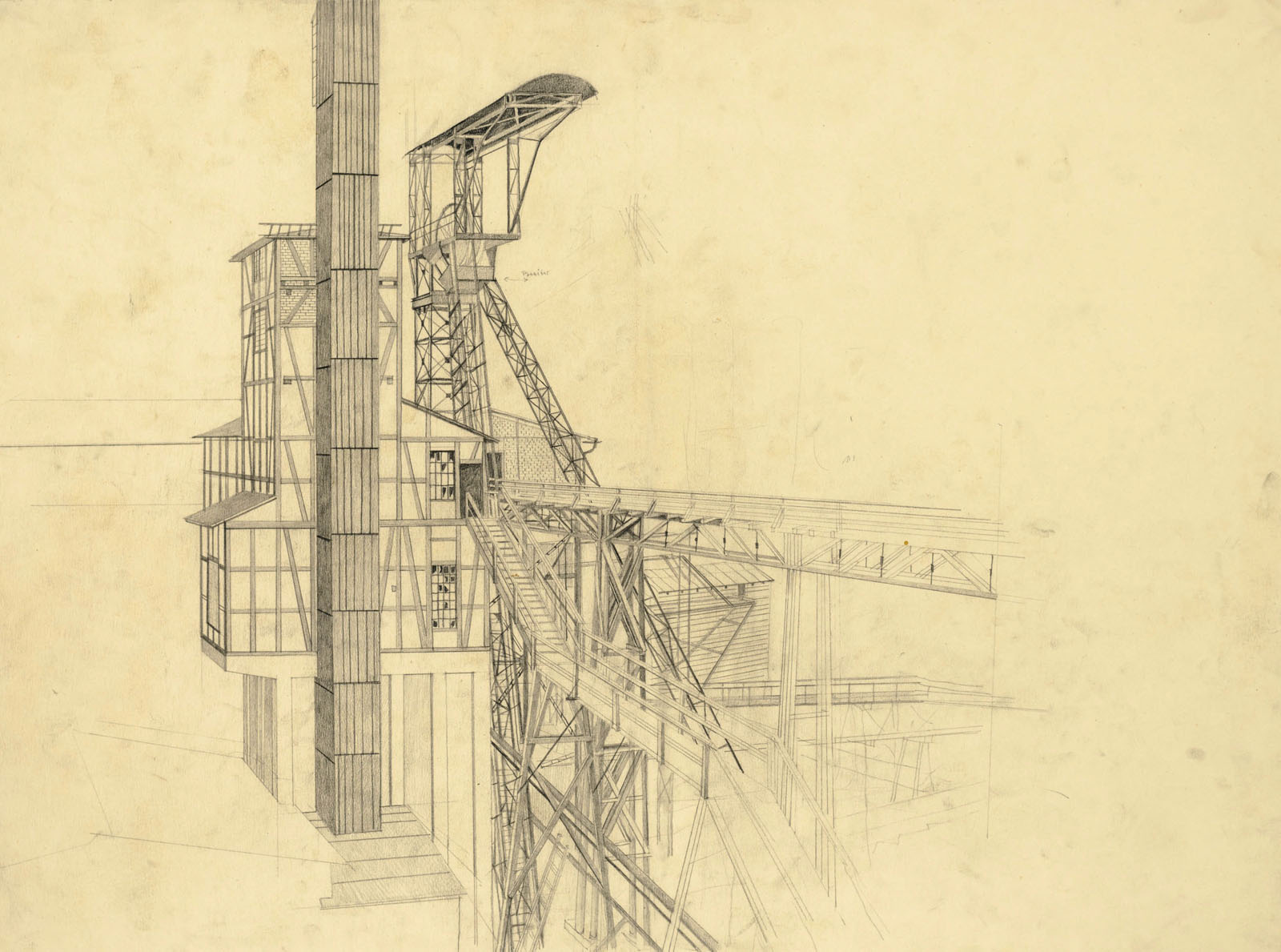
 

Bernd Becher (German, 1931-2007) 'Grube Eisernhardter Tiefbau, Eisern, D' (Eisernhardter Tiefbau mine, Eisern, Germany) 1955/56


Bernd Becher (German, 1931-2007)
Grube Eisernhardter Tiefbau, Eisern, D (Eisernhardter Tiefbau mine, Eisern, Germany)
1955/56
Pencil on paper
42.0 x 56.5cm
© Estate Bernd & Hilla Becher, vertreten durch Max Becher
Courtesy Die Photographische Sammlung/SK Stiftung Kultur – Bernd und Hilla Becher Archiv, Köln
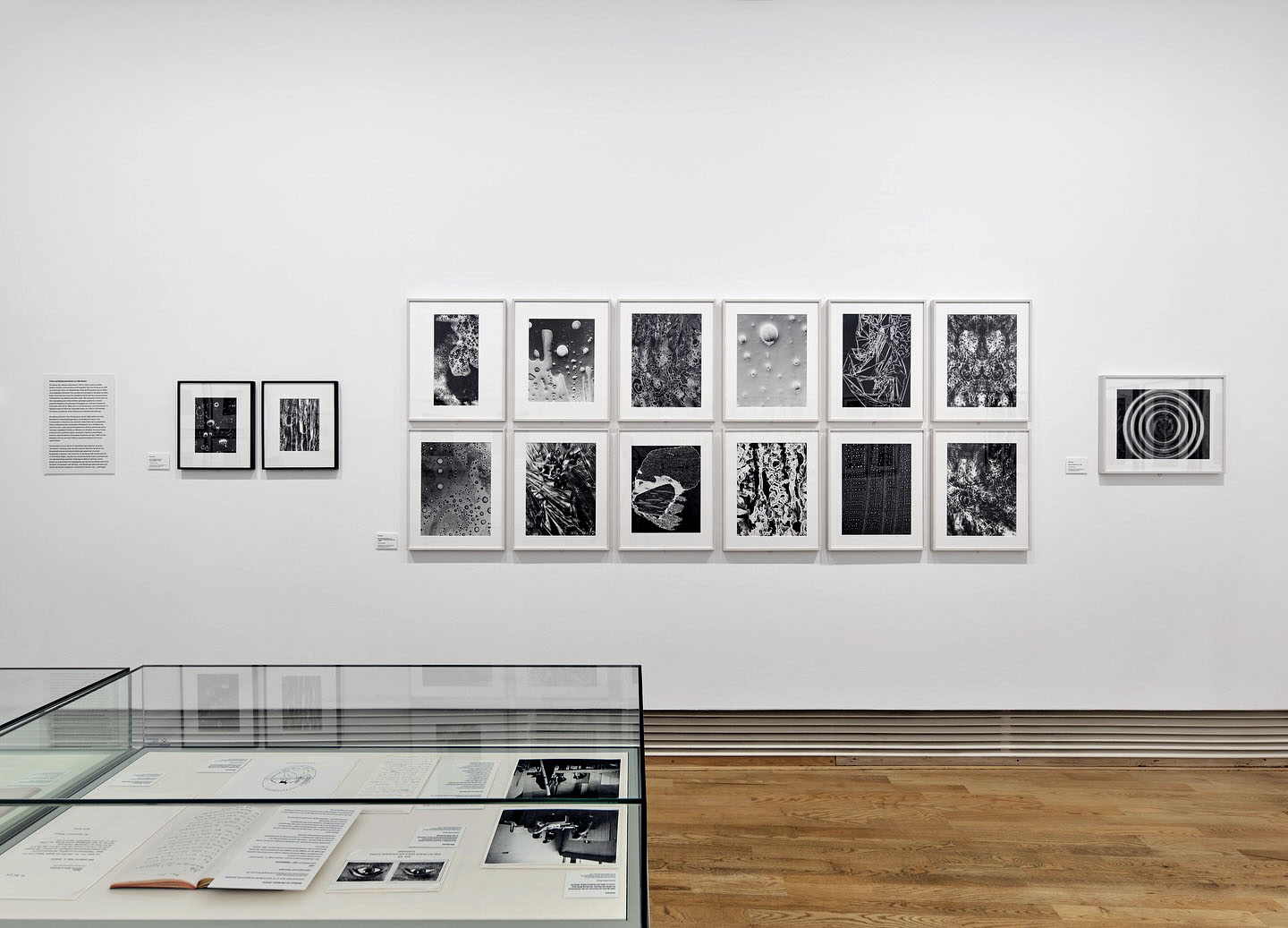
 

Installation view of the exhibition 'Bernd & Hilla Becher – History of a Method' at Die Photographische Sammlung/SK Stiftung Kultur, Cologne September, 2025 – February, 2026


Installation view of the exhibition Bernd & Hilla Becher – History of a Method at Die Photographische Sammlung/SK Stiftung Kultur, Cologne
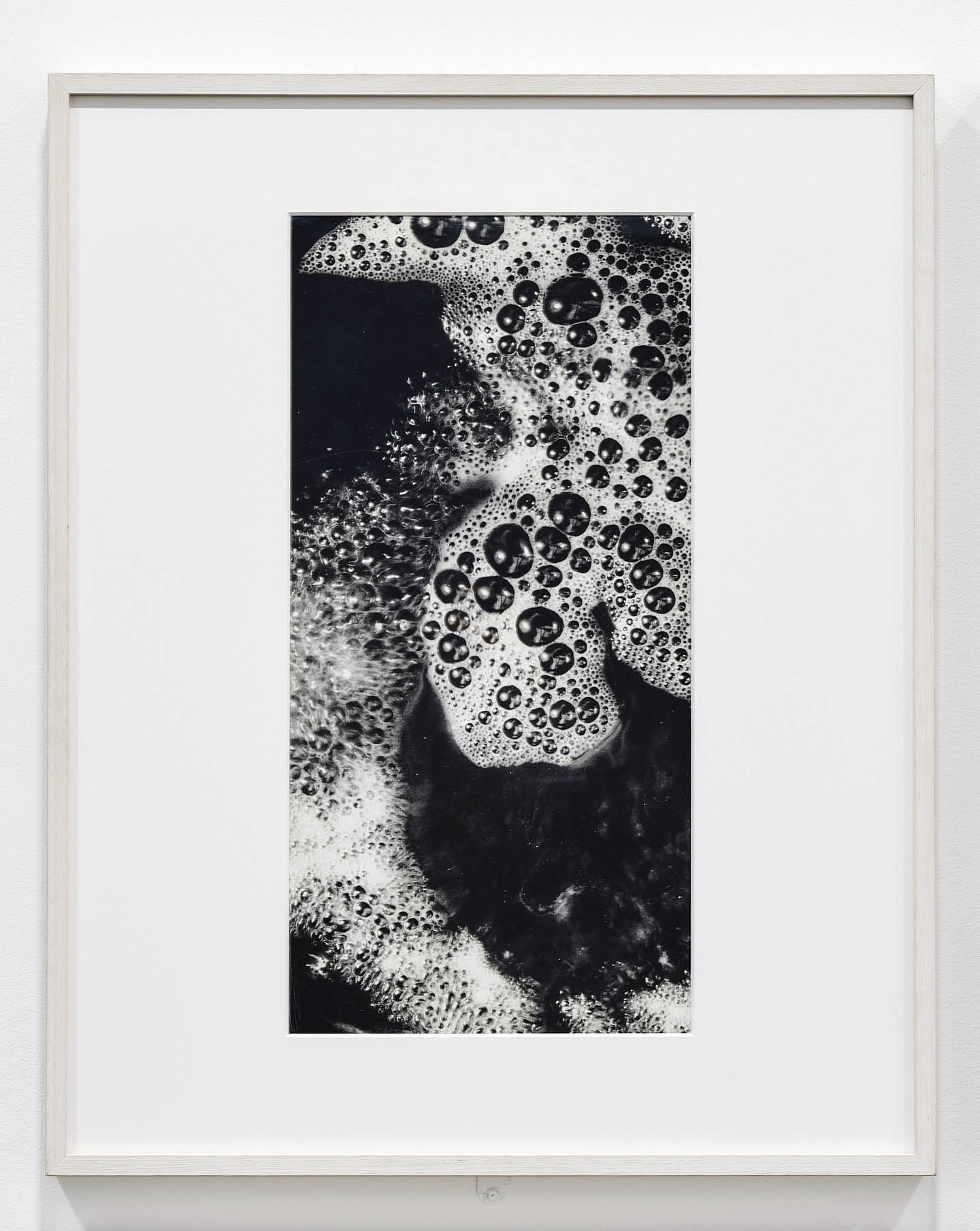
 

Installation view of the exhibition 'Bernd & Hilla Becher – History of a Method' at Die Photographische Sammlung/SK Stiftung Kultur, Cologne September, 2025 – February, 2026 showing Hilla Becher's 'Untitled (Makroaufnahme von Schaum)' (Macro shot of foam) c. 1960


Installation view of the exhibition Bernd & Hilla Becher – History of a Method at Die Photographische Sammlung/SK Stiftung Kultur, Cologne showing Hilla Becher’s Untitled (Makroaufnahme von Schaum) (Macro shot of foam) c. 1960
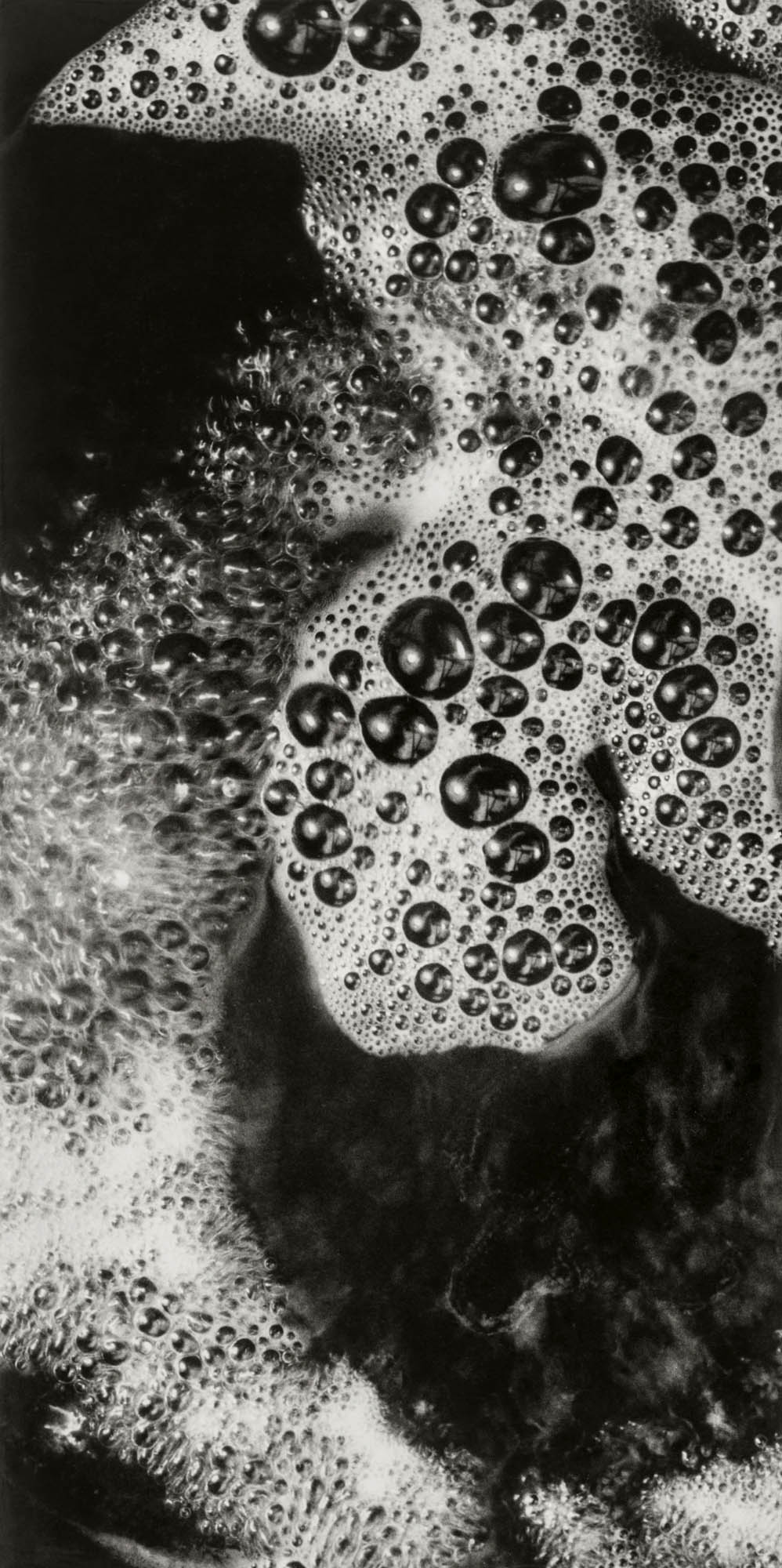
 

Hilla Becher (German, 1934-2015) 'Untitled (Makroaufnahme von Schaum)' (Macro shot of foam) c. 1960


Hilla Becher (German, 1934-2015)
Untitled (Makroaufnahme von Schaum) (Macro shot of foam)
c. 1960
Gelatin silver print
38.9 x 19.4cm
© Estate Bernd & Hilla Becher, vertreten durch Max Becher
Courtesy Die Photographische Sammlung/SK Stiftung Kultur – Bernd und Hilla Becher Archiv, Köln


Hilla Becher (née Wobeser) discovered photography as a teenager. Her mother had trained as a photographer at the Lette Verein in Berlin and supported her daughter’s interest. Accordingly, from 1951 to 1953, Hilla completed an apprenticeship as a photographer at the Walter Eichgrün studio in her hometown of Potsdam. In 1953, the family fled East Germany, and Hilla continued her career in West Germany. For example, in 1957 she worked at the Troost advertising agency in Düsseldorf, where she also met Bernd Becher.

The photograph shown above belongs to a series of surface and structural studies from around 1960. Nothing is known about the exact context of the photographs; however, their stylistic affinity to the “Subjective Photography” movement, which gained influence from the early 1950s onward, is interesting. Distortion techniques were an important tool in “Subjective Photography,” and Hilla Becher’s macro photographs utilise extreme proximity to the subject as a means of creating a sense of alienation.

Text from the SK Stiftung Kultur Die Photographische Sammlung Instagram page
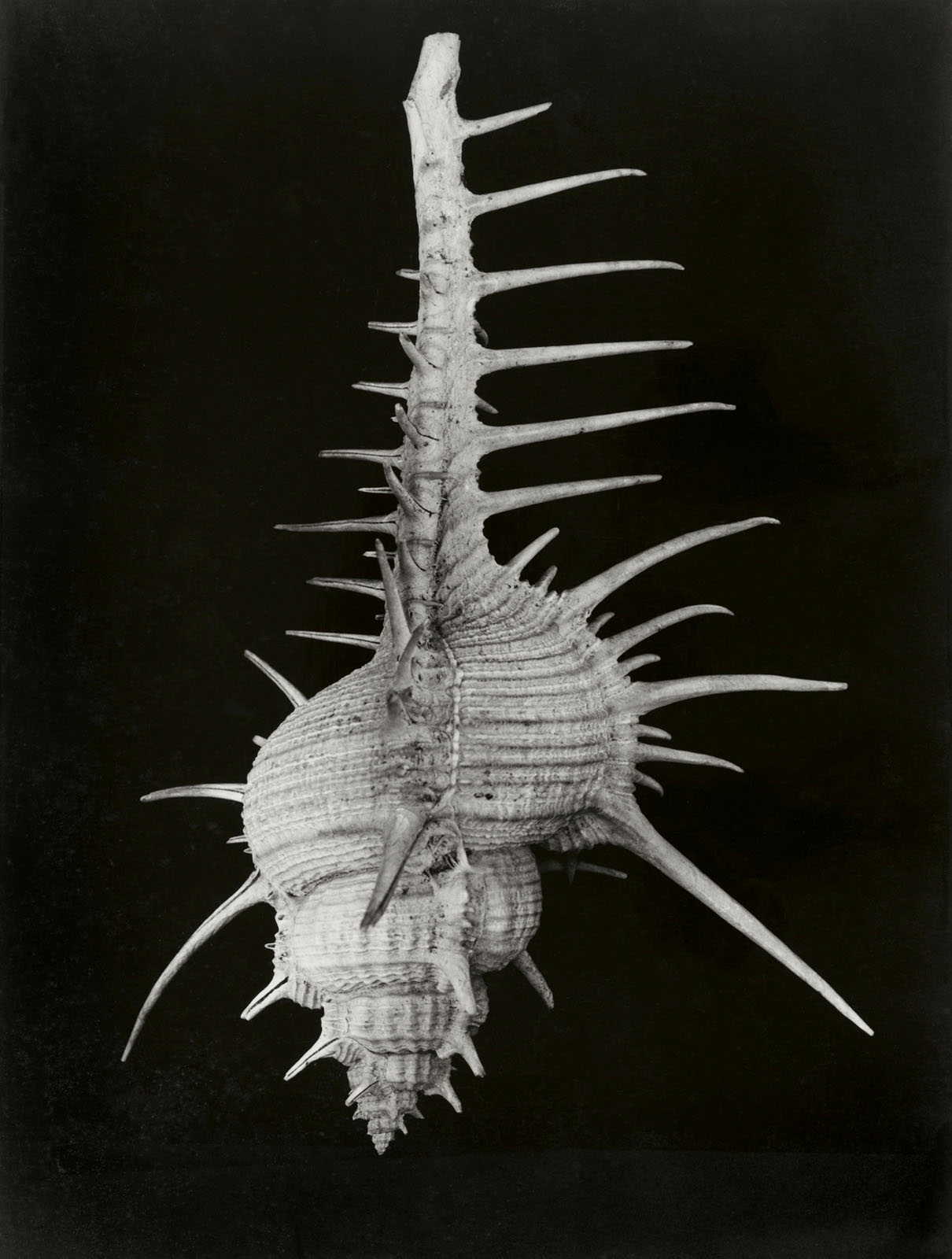
 

Hilla Becher (German, 1934-2015) 'Meeresschnecke (Venuskamm)' (Sea snail (Venus comb)) 1960s


Hilla Becher (German, 1934-2015)
Meeresschnecke (Venuskamm) (Sea snail (Venus comb))
1960s
Gelatin silver print
39.6 x 30cm
© Estate Bernd & Hilla Becher, vertreten durch Max Becher
Courtesy Die Photographische Sammlung/SK Stiftung Kultur – Bernd und Hilla Becher Archiv, Köln
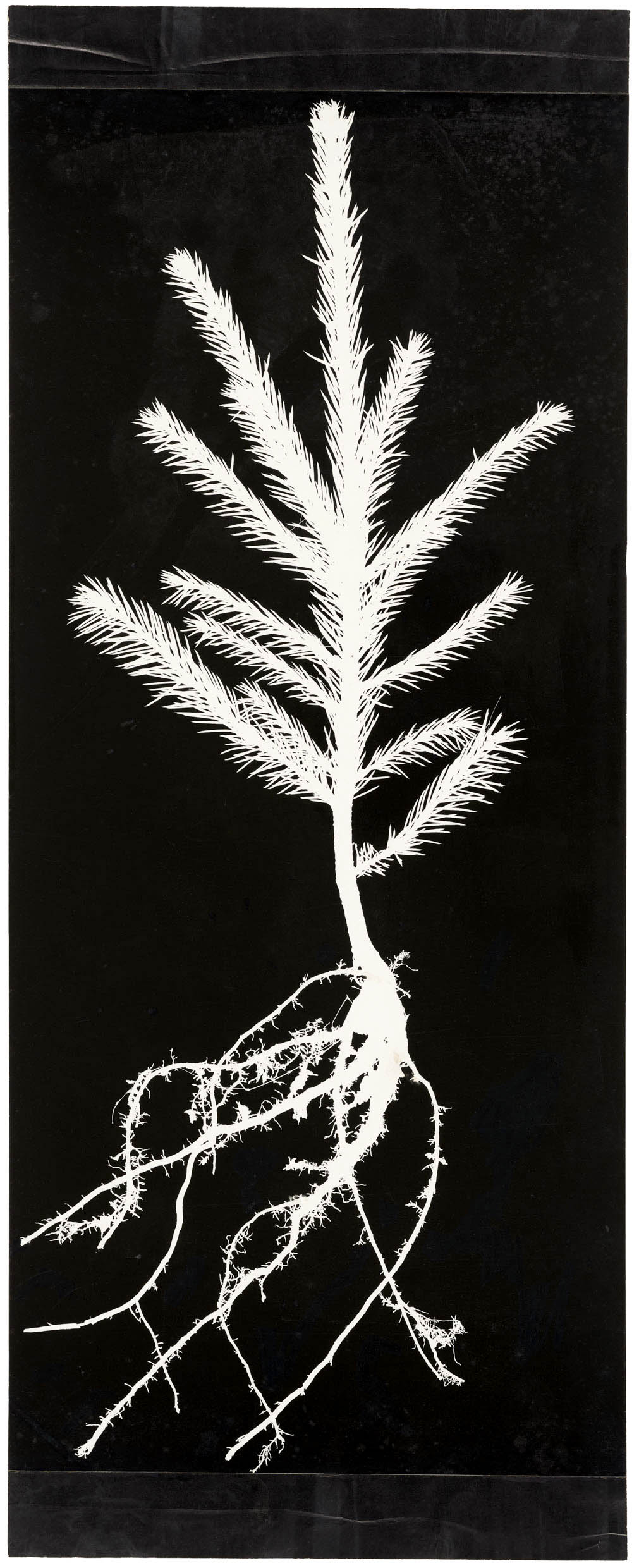
 

Hilla Becher (German, 1934-2015) 'Pflanzenstudie, Photogramme' (Plant study, photograms) 1960s


Hilla Becher (German, 1934-2015)
Pflanzenstudie, Photogramme (Plant study, photograms)
1960s
© Estate Bernd & Hilla Becher, vertreten durch Max Becher
Courtesy Die Photographische Sammlung/SK Stiftung Kultur – Bernd und Hilla Becher Archiv, Köln
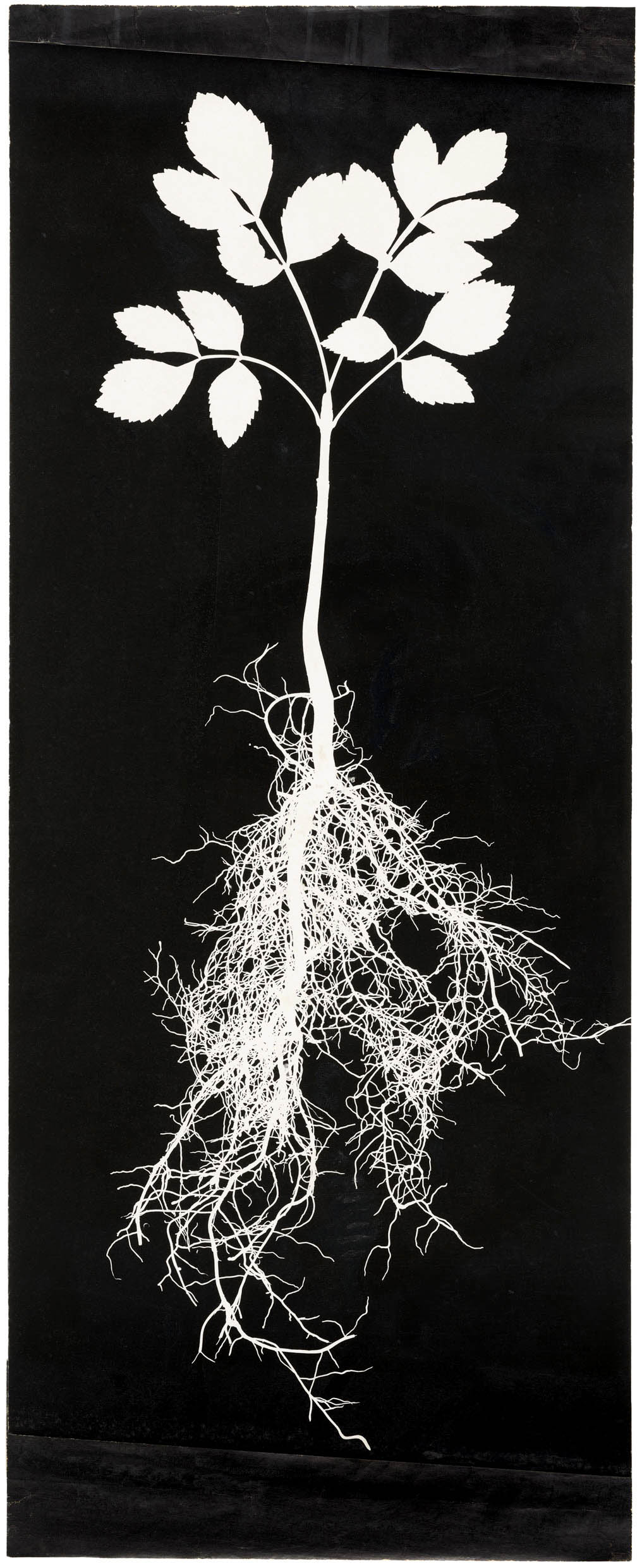
 

Hilla Becher (German, 1934-2015) 'Pflanzenstudie, Photogramme' (Plant study, photograms) 1960s


Hilla Becher (German, 1934-2015)
Pflanzenstudie, Photogramme (Plant study, photograms)
1960s
© Estate Bernd & Hilla Becher, vertreten durch Max Becher
Courtesy Die Photographische Sammlung/SK Stiftung Kultur – Bernd und Hilla Becher Archiv, Köln


An exhibition of Die Photographische Sammlung/SK Stiftung Kultur in cooperation with the Bernd & Hilla Becher Studio, Düsseldorf

The artist couple Bernd and Hilla Becher (1931-2007/1934-2015) has written photographic history. With their joint work, which they developed from 1959 until the 2000s on the basis of an almost uninterrupted photographic activity in the industrial regions of Germany, the Benelux countries, Great Britain, France, Italy, the USA and Canada, they created a new artistically motivated documentary style.

For the first time in Europe, this exhibition will present the methodological and thematic range of their oeuvre in great detail with over 300 original black and white photographs and other exhibits by the artist couple. In the individual sections, almost all of Becher’s found subjects can be located in a compilation and sequencing largely determined by themselves. Photographs of landscapes, winding towers, blast furnaces, cooling towers, gas tanks or even views of entire collieries etc. are considered her trademark. The juxtaposition of the groups of works authentically conveys the pictorial grammar developed by Bernd and Hilla Becher and their continuously reflected systematics and conceptual approach.

The exhibits come from the Bernd and Hilla Becher Archive in Die Photographische Sammlung/SK Stiftung Kultur and the Bernd & Hilla Becher Studio, Düsseldorf, in collaboration with Max Becher under the supervision of the Bernd & Hilla Becher Estate. There are also loans from Sprüth Magers and the LVR-Landesmuseum Bonn.

The publication accompanying the exhibition will be published by Schirmer / Mosel Verlag, with texts by Max Becher, Gabriele Conrath-Scholl, Marianne Kapfer and Urs Stahel.

Text from the Die Photographische Sammlung/SK Stiftung Kultur, Cologne website
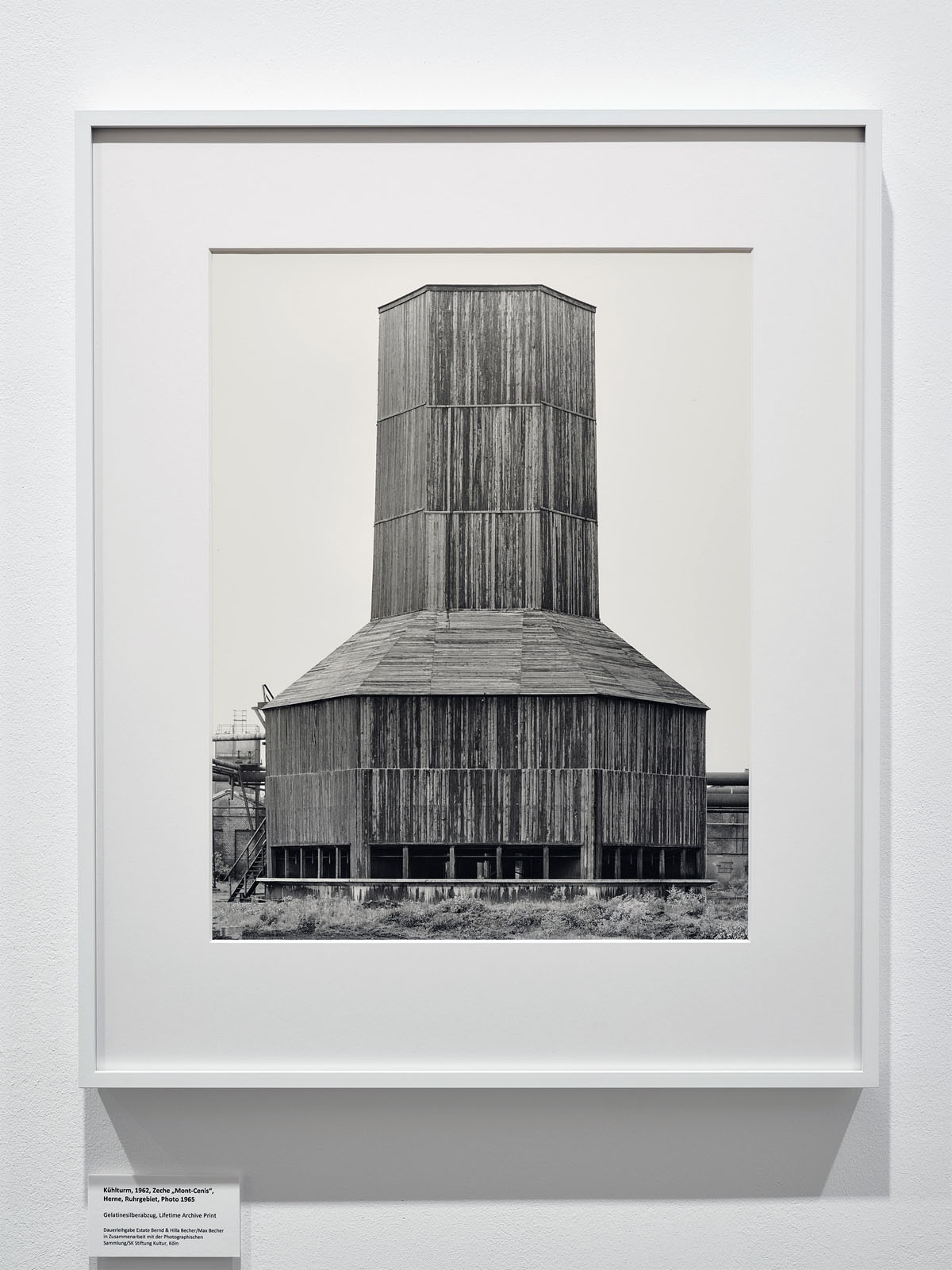
 

Installation view of the exhibition 'Bernd & Hilla Becher – History of a Method' at Die Photographische Sammlung/SK Stiftung Kultur, Cologne September, 2025 – February, 2026 showing Bernd and Hilla Becher's photograph 'Kühlturm (Cooling tower) 1962, "Mont-Cenis" mine, Herne, Ruhr area' 1965


Installation view of the exhibition Bernd & Hilla Becher – History of a Method at Die Photographische Sammlung/SK Stiftung Kultur, Cologne showing Bernd and Hilla Becher’s photograph Kühlturm (Cooling tower) 1962, “Mont-Cenis” mine, Herne, Ruhr area 1965 (below)
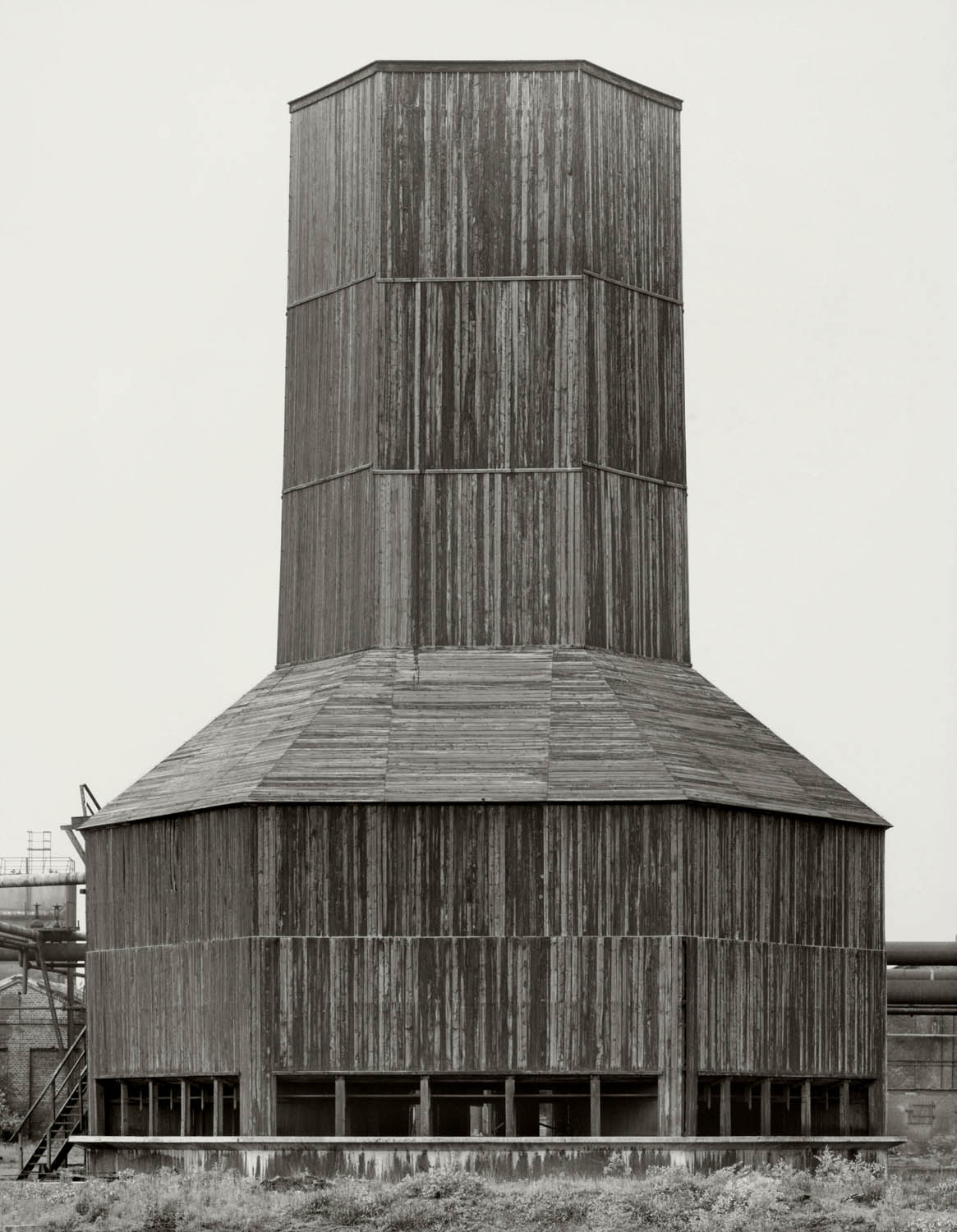
 

Bernd and Hilla Becher (German, 1931-2007/1934-2015) 'Kühlturm (Cooling tower) 1962, "Mont-Cenis" mine, Herne, Ruhr area' 1965


Bernd and Hilla Becher (German, 1931-2007/1934-2015)
Kühlturm (Cooling tower) 1962, “Mont-Cenis” mine, Herne, Ruhr area
1965
Gelatin silver print
40.3 x 31.5cm
© Estate Bernd & Hilla Becher, vertreten durch Max Becher
Courtesy Die Photographische Sammlung/SK Stiftung Kultur – Bernd und Hilla Becher Archiv, Köln


We have dedicated an entire room of our current exhibition to the group of “Anonymous Sculptures.” With this series of images, Bernd and Hilla Becher defined the building types that were important to them, such as cooling towers. The fundamental principle of the comparability of the motifs was introduced, and the work on publications, so crucial to Bernd and Hilla Becher’s artistic output, was also initiated.

You can trace the artists’ approach using 41 photographs that exemplify the building types presented in seven chapters of the 1970 publication “Anonymous Sculptures: A Typology of Technical Structures.” An exhibition at the Düsseldorf Municipal Art Gallery preceded the book in 1969 [see the book cover at the top of the posting].

The term “Anonymous Sculptures” establishes a link to conceptual art. This connection between Bernd and Hilla Becher’s work and the visual arts was important for their subsequent work and its presentation in museums and galleries.

Text from the SK Stiftung Kultur Die Photographische Sammlung Instagram page
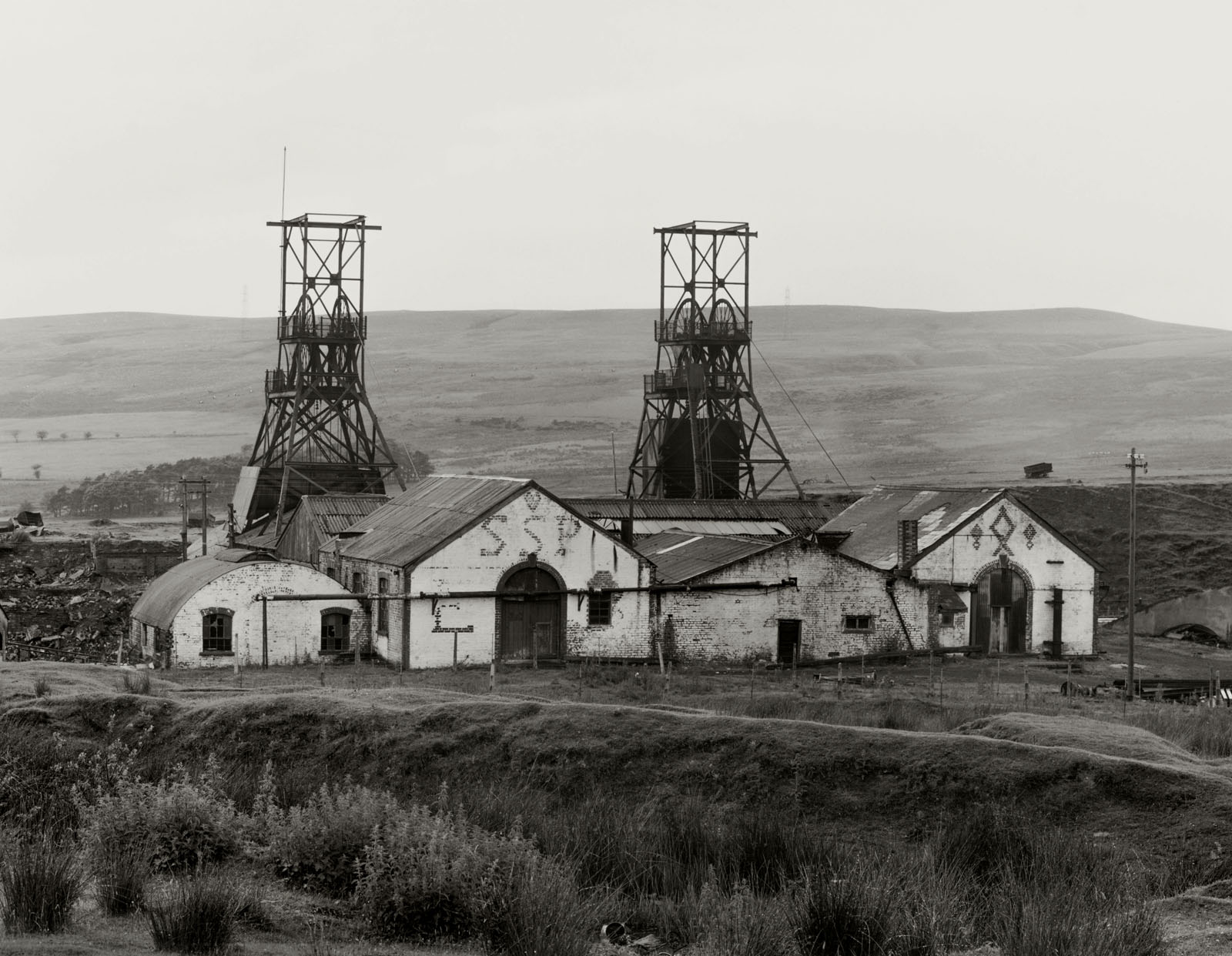
 

Bernd and Hilla Becher (German, 1931-2007/1934-2015) 'Seven Sisters Pit, South Wales, GB' 1966


Bernd and Hilla Becher (German, 1931-2007/1934-2015)
Seven Sisters Pit, South Wales, GB
1966
Gelatin silver print
© Estate Bernd & Hilla Becher, vertreten durch Max Becher
Courtesy Die Photographische Sammlung/SK Stiftung Kultur – Bernd und Hilla Becher Archiv, Köln, 2025
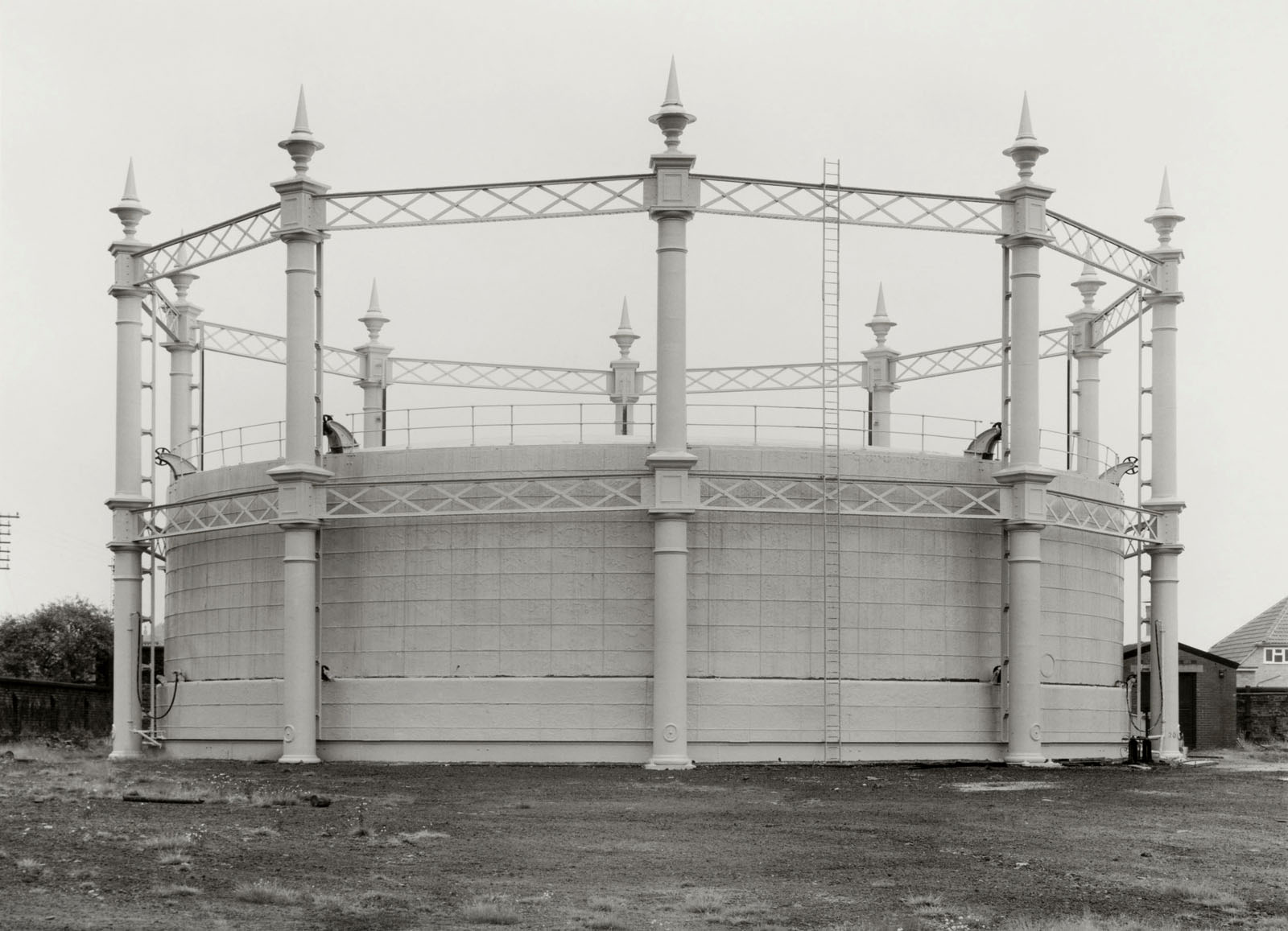
 

Bernd and Hilla Becher (German, 1931-2007/1934-2015) 'Gasbehälter (Gas container) 1886 Tyldesley near Manchester, UK' 1966


Bernd and Hilla Becher (German, 1931-2007/1934-2015)
Gasbehälter (Gas container) 1886 Tyldesley near Manchester, UK
1966
Gelatin silver print
30.4 x 41.5cm
© Estate Bernd & Hilla Becher, vertreten durch Max Becher
Courtesy Die Photographische Sammlung/SK Stiftung Kultur – Bernd und Hilla Becher Archiv, Köln
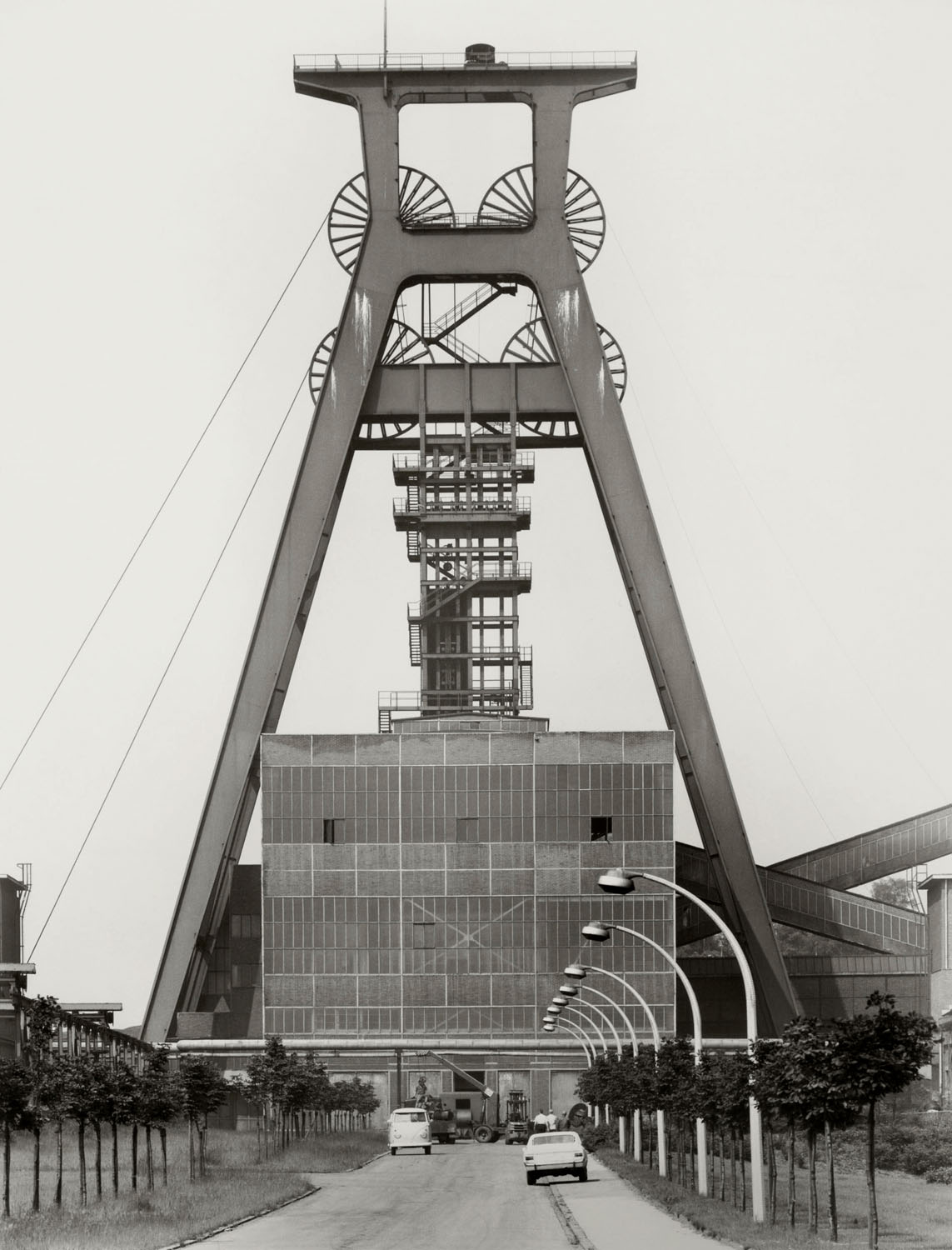
 

Bernd and Hilla Becher (German, 1931-2007/1934-2015) 'Förderturm (Conveyor tower) 1958 "Graf Bismarck" mine, Gelsenkirchen, Ruhr area' 1967


Bernd and Hilla Becher (German, 1931-2007/1934-2015)
Förderturm (Conveyor tower) 1958 “Graf Bismarck” mine, Gelsenkirchen, Ruhr area
1967
Gelatin silver print
40.3 x 31.1cm
© Estate Bernd & Hilla Becher, vertreten durch Max Becher
Courtesy Die Photographische Sammlung/SK Stiftung Kultur – Bernd und Hilla Becher Archiv, Köln


Bernd and Hilla Becher (German, 1931-2007/1934-2015) 'Hochofen (Blast furnace) c. 1930, Blast furnace plant, Esch, Luxembourg' 1969


Bernd and Hilla Becher (German, 1931-2007/1934-2015)
Hochofen (Blast furnace) c. 1930, Blast furnace plant, Esch, Luxembourg
1969
Gelatin silver print
40.4 x 31.5 cm
© Estate Bernd & Hilla Becher, vertreten durch Max Becher
Courtesy Die Photographische Sammlung/SK Stiftung Kultur – Bernd und Hilla Becher Archiv, Köln
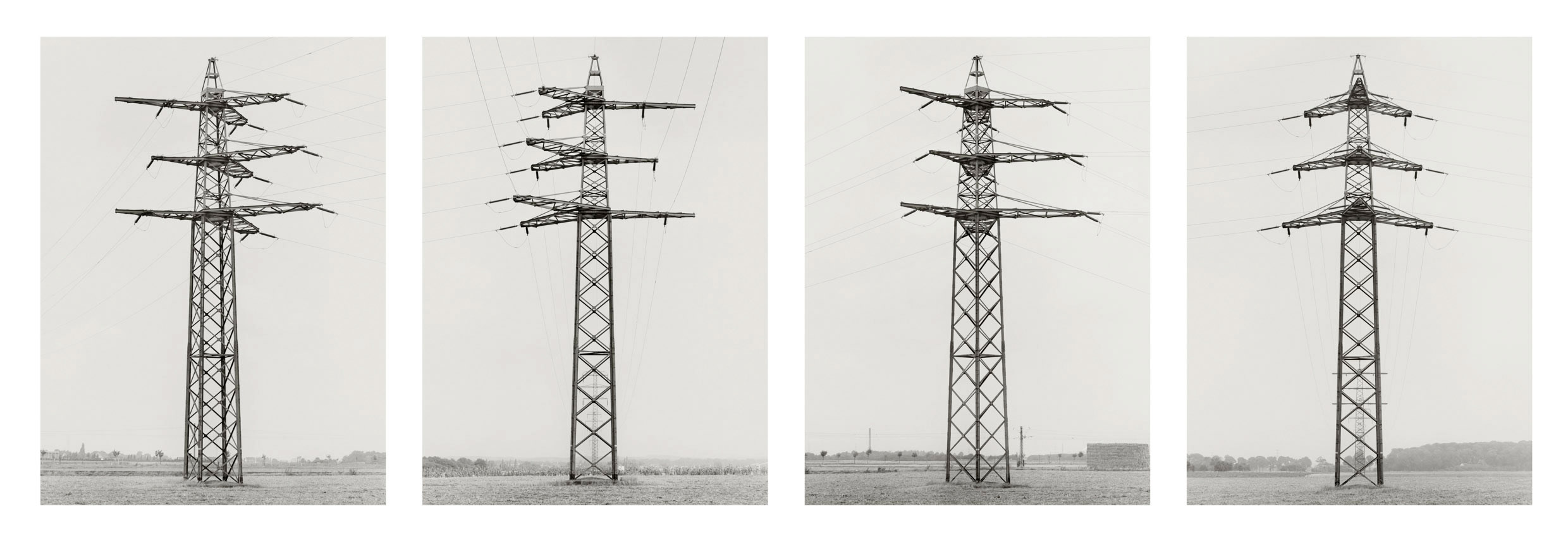
 

Bernd and Hilla Becher (German, 1931-2007/1934-2015) 'Hochspannungsmast, Düsseldorf, D' (High-voltage pylon, Düsseldorf, Germany) 1969


Bernd and Hilla Becher (German, 1931-2007/1934-2015)
Hochspannungsmast, Düsseldorf, D (High-voltage pylon, Düsseldorf, Germany)
1969
4 gelatin silver prints
Each approx. 41.3 x 30.4cm
© Estate Bernd & Hilla Becher, vertreten durch Max Becher
Courtesy Die Photographische Sammlung/SK Stiftung Kultur – Bernd und Hilla Becher Archiv, Köln
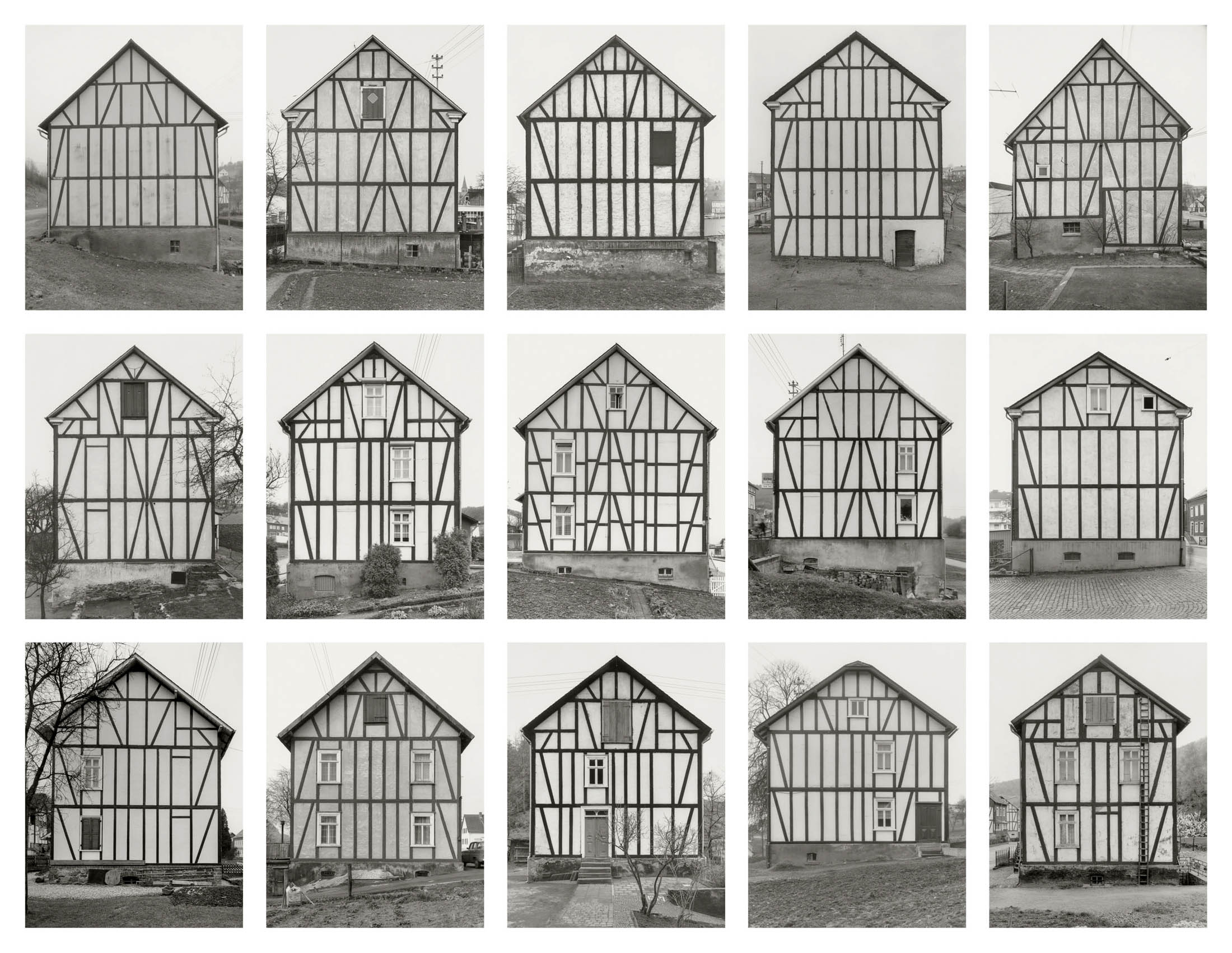
 

Bernd and Hilla Becher (German, 1931-2007/1934-2015) 'Giebelseiten Fachwerk, Siegerland D' (Gable sides half-timbered, Siegerland D) 1959-1973


Bernd and Hilla Becher (German, 1931-2007/1934-2015)
Giebelseiten Fachwerk, Siegerland D (Gable sides half-timbered, Siegerland D)
1959-1973
15 gelatin silver prints
Each approx. 40 x 31cm
© Estate Bernd & Hilla Becher, vertreten durch Max Becher
Courtesy Museum für Gegenwartskunst Siegen und Die Photographische Sammlung/SK Stiftung Kultur, Köln

The first subjects Bernd and Hilla Becher photographed on their nearly fifty-year journey to documenting industrial buildings were half-timbered houses in the Siegerland region. For Bernd Becher, it was natural to photograph these “poor people’s houses,” as Hilla called them, from his childhood and youth. For the film “The Photographers Bernd and Hilla Becher,” we attempted to identify the Bechers’ subjects using the book “Siegerland Half-Timbered Houses” by Schirmer/Mosel. We asked locals and showed them the book. Although the Bechers provided the exact address of each house, they were often unrecognisable. Many, being drafty and cold, had been clad with asbestos cement, thus obscuring their exposed timber framing. Their original appearance is preserved only in the Bechers’ photographs.

Text from the Text from the SK Stiftung Kultur Facebook page
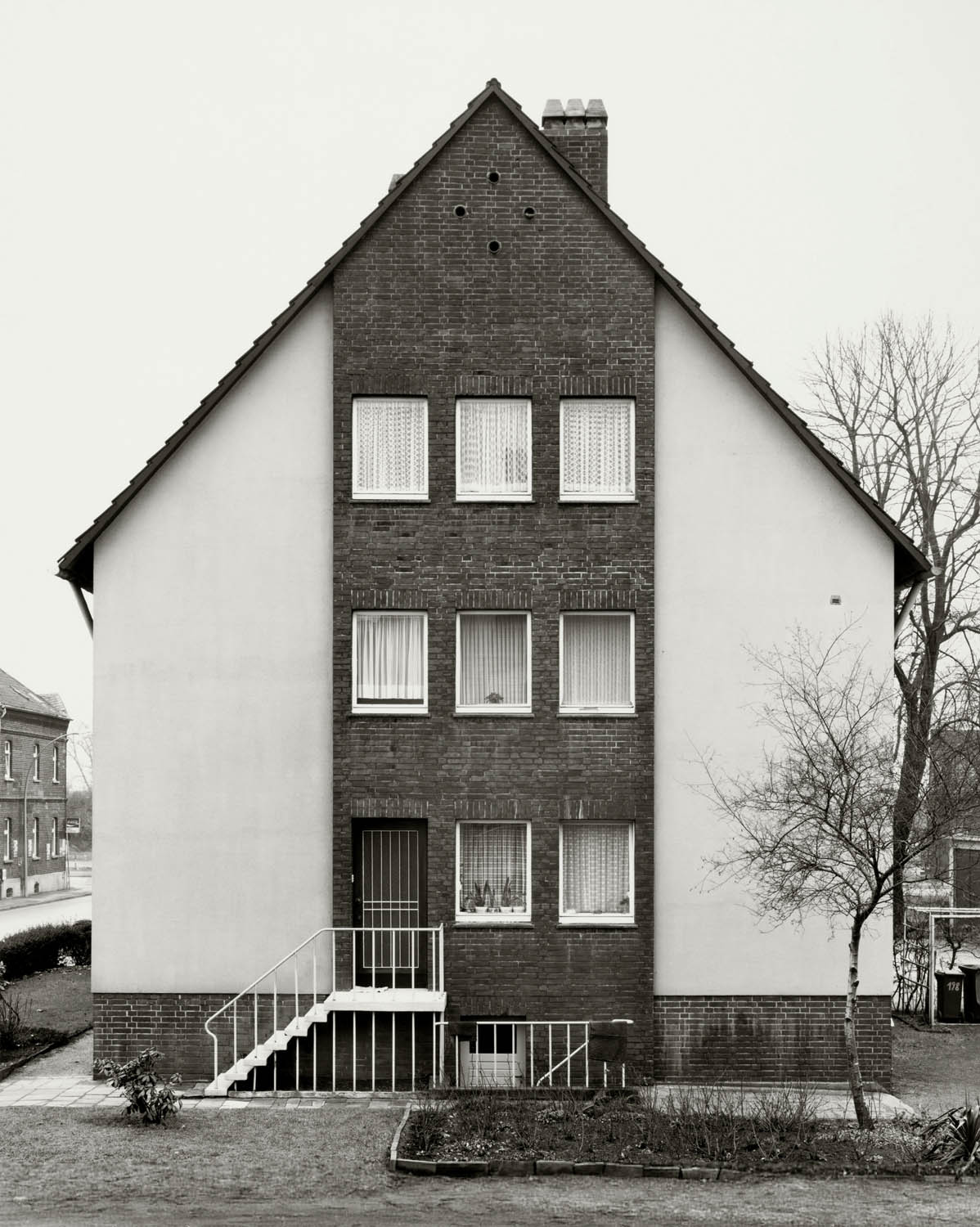
 

Bernd and Hilla Becher (German, 1931-2007/1934-2015) 'Bottrop, D' 1976


Bernd and Hilla Becher (German, 1931-2007/1934-2015)
Bottrop, D
1976
© Estate Bernd & Hilla Becher, vertreten durch Max Becher
Courtesy Die Photographische Sammlung/SK Stiftung Kultur – Bernd und Hilla Becher Archiv, Köln, 2025
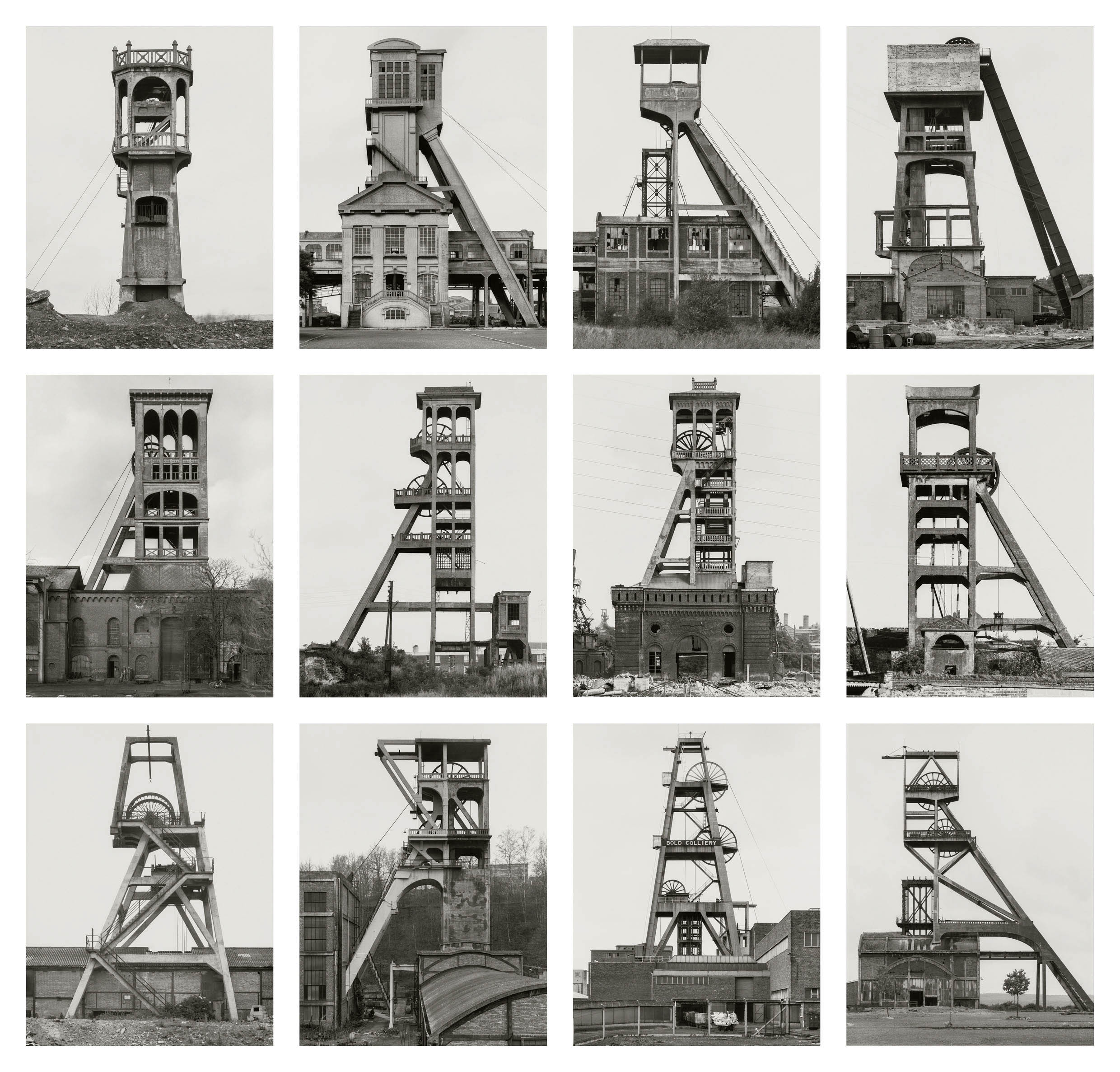
 

Bernd and Hilla Becher (German, 1931-2007/1934-2015) 'Fördertürme' (Winding towers) 1966-1979


Bernd and Hilla Becher (German, 1931-2007/1934-2015)
Fördertürme (Winding towers)
1966-1979
12 gelatin silver print
Each approx. 41 x 31cm
© Estate Bernd & Hilla Becher, vertreten durch Max Becher
Courtesy Die Photographische Sammlung/SK Stiftung Kultur – Bernd und Hilla Becher Archiv, Köln
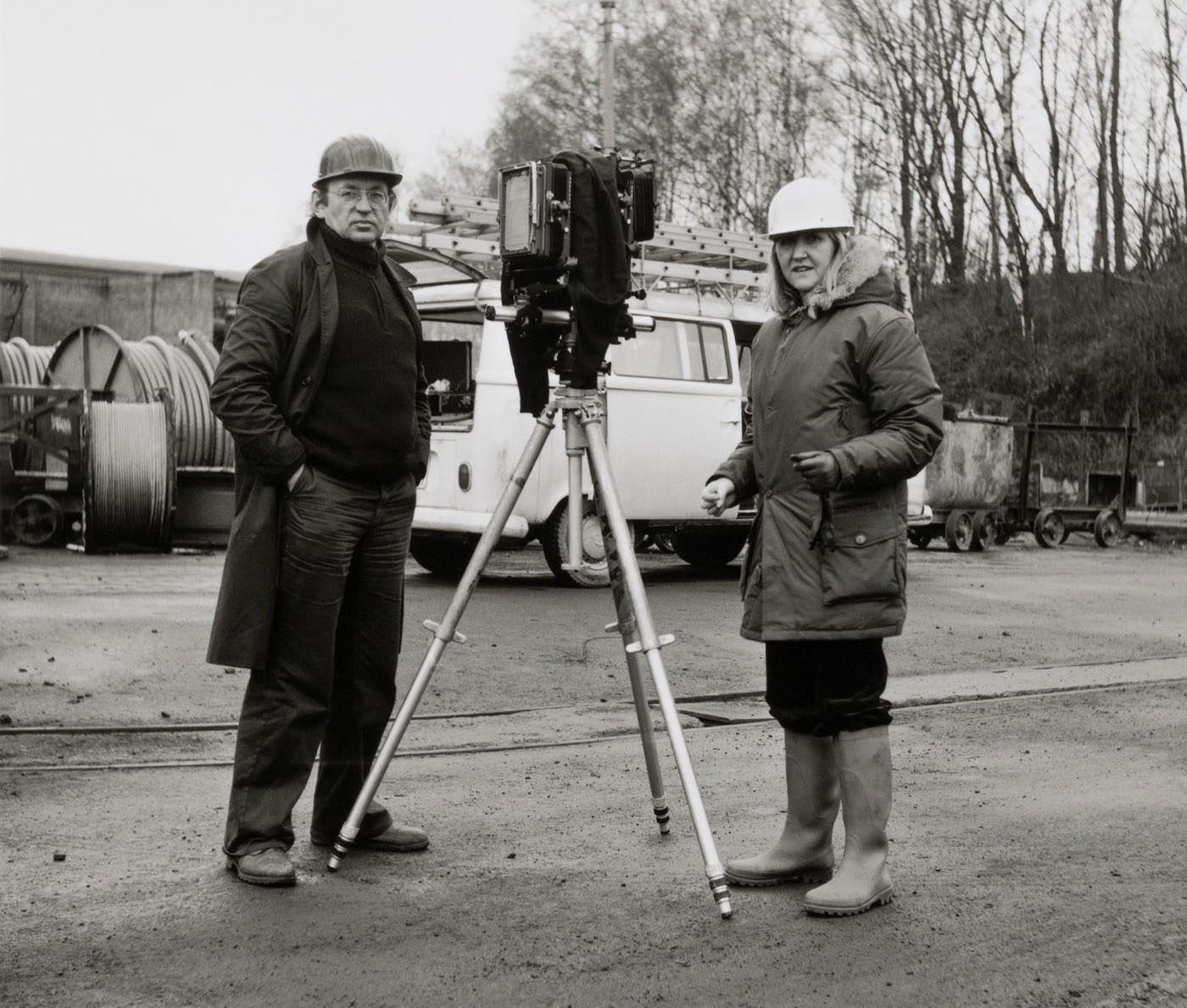
 

Bernd and Hilla Becher (German, 1931-2007/1934-2015) 'auf der Grube Ensdorf, Saarland' (at the Ensdorf mine, Saarland) 1979


Bernd and Hilla Becher (German, 1931-2007/1934-2015)
auf der Grube Ensdorf, Saarland (at the Ensdorf mine, Saarland)
1979
Gelatin silver print
12 x 14.1cm
© Estate Bernd & Hilla Becher, vertreten durch Max Becher
Courtesy Die Photographische Sammlung/SK Stiftung Kultur – Bernd und Hilla Becher Archiv, Köln


The artist couple Bernd and Hilla Becher (1931-2007/1934-2015) set a benchmark in the history of photography with their work. Beginning in 1959, they collaborated almost continuously for decades on a joint oeuvre, developed across Germany, the Benelux countries, the United Kingdom, France, Italy, the United States, and Canada. Their artistic style, characterised by a precise, documentary visual language and methodical systematisation, resonated significantly with movements such as Minimal Art and Conceptual Art. Against the backdrop of New Objectivity and inspired by 19th-century documentary photography, they created a visual grammar whose influence remains palpable in contemporary photography.

For the first time in Europe, Die Photographische Sammlung/SK Stiftung Kultur presents an extensive retrospective featuring over 300 original black-and-white photographs and complementary exhibits, showcasing the formal and thematic breadth and depth of Bernd and Hilla Becher’s work. The exhibition centers on the themes and methods developed by the Bechers: consistent methodical approaches to the photographic motif that evolved and were variably applied over decades. The exhibition explores how these methods emerged, how they developed, and how they reflected the Bechers’ perspective on the different shapes, functions, and integration of industrial buildings into the landscape.

Rare early works from both artists – created between the 1950s and 1970s – are on view, many for the first time. These pieces provide insight into the evolution of their shared aesthetic.

Room 2 is dedicated to the book Anonyme Skulpturen. Eine Typologie technischer Bauten (Anonymous Sculptures. A Typology of Technical Constructions), 1970, considered the foundation of their work. This publication systematically catalogued industrial structures and remains a key reference point. Quoted texts on the function of the objects and original prints illuminate its significance within their oeuvre.

Industrial Landscapes and photographs of entire sites form another focus and demonstrate that the Bechers did not merely document isolated buildings, but also functional and spatial relationships. Featured works include views of the Zollern 2 coal mine in Dortmund (published 1977) and the Ewald Fortsetzung mine in Recklinghausen (1982-1985).

The exhibition also includes “portraits” of residential and settlement houses from the Ruhr region – especially from the post-war era – reflecting the everyday life and environment of industrial workers. A framework house from the Siegerland region is used to show how a single subject can take on different meanings depending on presentation and context.

“Sequences” or “unfoldings” are illustrated using various building groups, presenting structures from multiple perspectives, so that a sculptural image of the motifs is created.

Lastly, the exhibition presents typologies – photographic series of coal bunkers, grain silos, winding and water towers, blast furnaces, and cooling towers. These highlight how the Bechers used specific representational strategies, systematic arrangement, and variation to achieve artistic expression. Created between the 1960s and early 2000s across different countries, the works powerfully demonstrate the visual grammar developed by the Bechers.

A kind of “cinematic epilogue” is provided by a video created by Max Becher, who accompanied his parents on a work trip to Ohio in 1987, offering an evocative glimpse into their working process.

The works are drawn from the Bernd and Hilla Becher Archive at Die Photographische Sammlung/SK Stiftung Kultur and the Bernd & Hilla Becher Studio in Düsseldorf, directed by Max Becher. Additional loans are provided by Sprüth Magers and the LVR-Landesmuseum Bonn.

A catalogue will accompany the exhibition, published by Schirmer/Mosel Verlag, Munich, with texts by Max Becher, Gabriele Conrath-Scholl, Marianne Kapfer, and Urs Stahel. (Will be released in early November.)

Press release from Die Photographische Sammlung/SK Stiftung Kultur
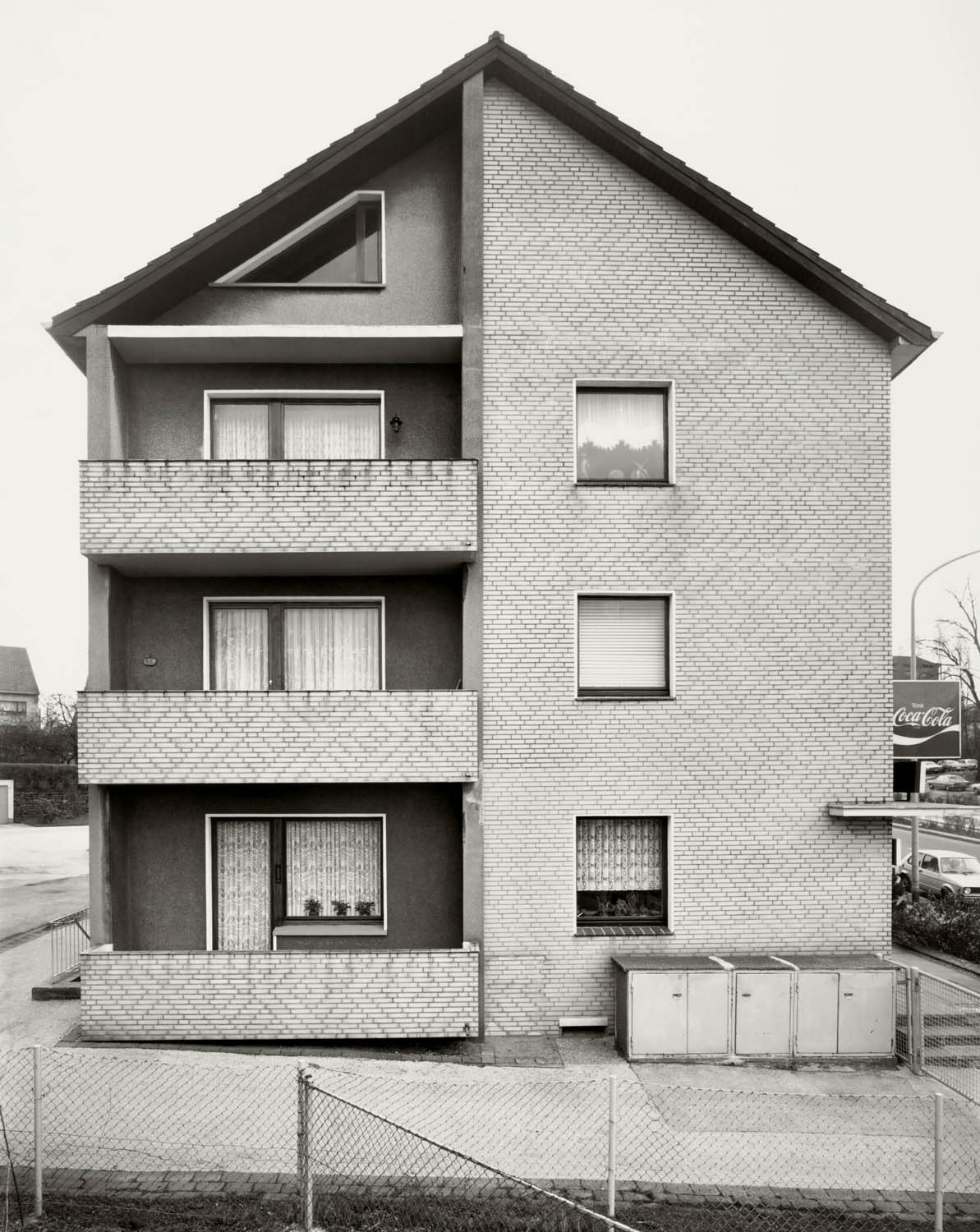
 

Bernd and Hilla Becher (German, 1931-2007/1934-2015) 'Essen-Schönebeck, D' 1981


Bernd and Hilla Becher (German, 1931-2007/1934-2015)
Essen-Schönebeck, D
1981
© Estate Bernd & Hilla Becher, vertreten durch Max Becher
Courtesy Die Photographische Sammlung/SK Stiftung Kultur – Bernd und Hilla Becher Archiv, Köln
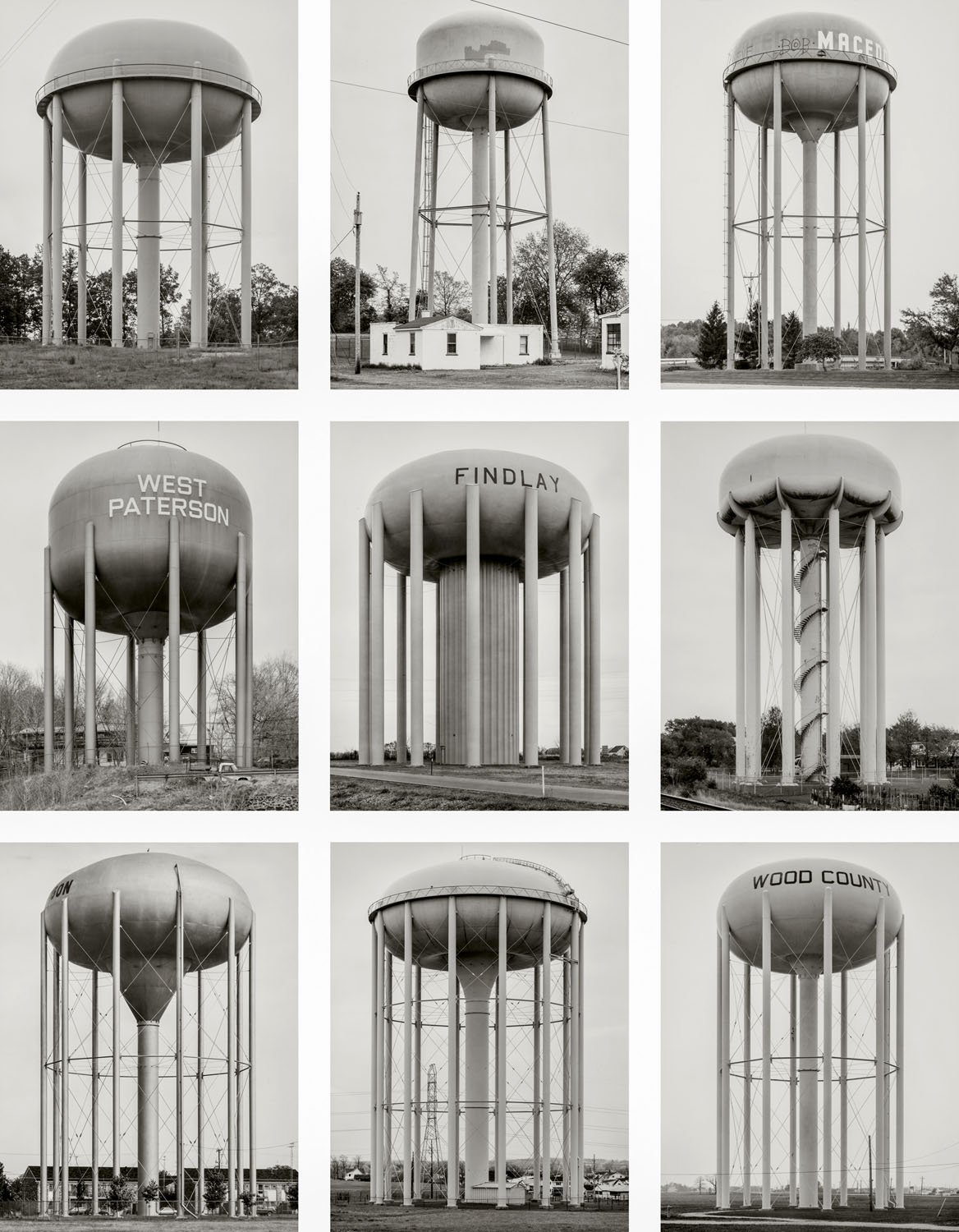
 

Bernd and Hilla Becher (German, 1931-2007/1934-2015) 'Wassertürme, USA' (Water towers, USA) 1974-1983


Bernd and Hilla Becher (German, 1931-2007/1934-2015)
Wassertürme, USA (Water towers, USA)
1974-1983
Gelatin silver prints
© Estate Bernd & Hilla Becher, vertreten durch Max Becher
Courtesy Die Photographische Sammlung/SK Stiftung Kultur – Bernd und Hilla Becher Archiv, Köln, 2025
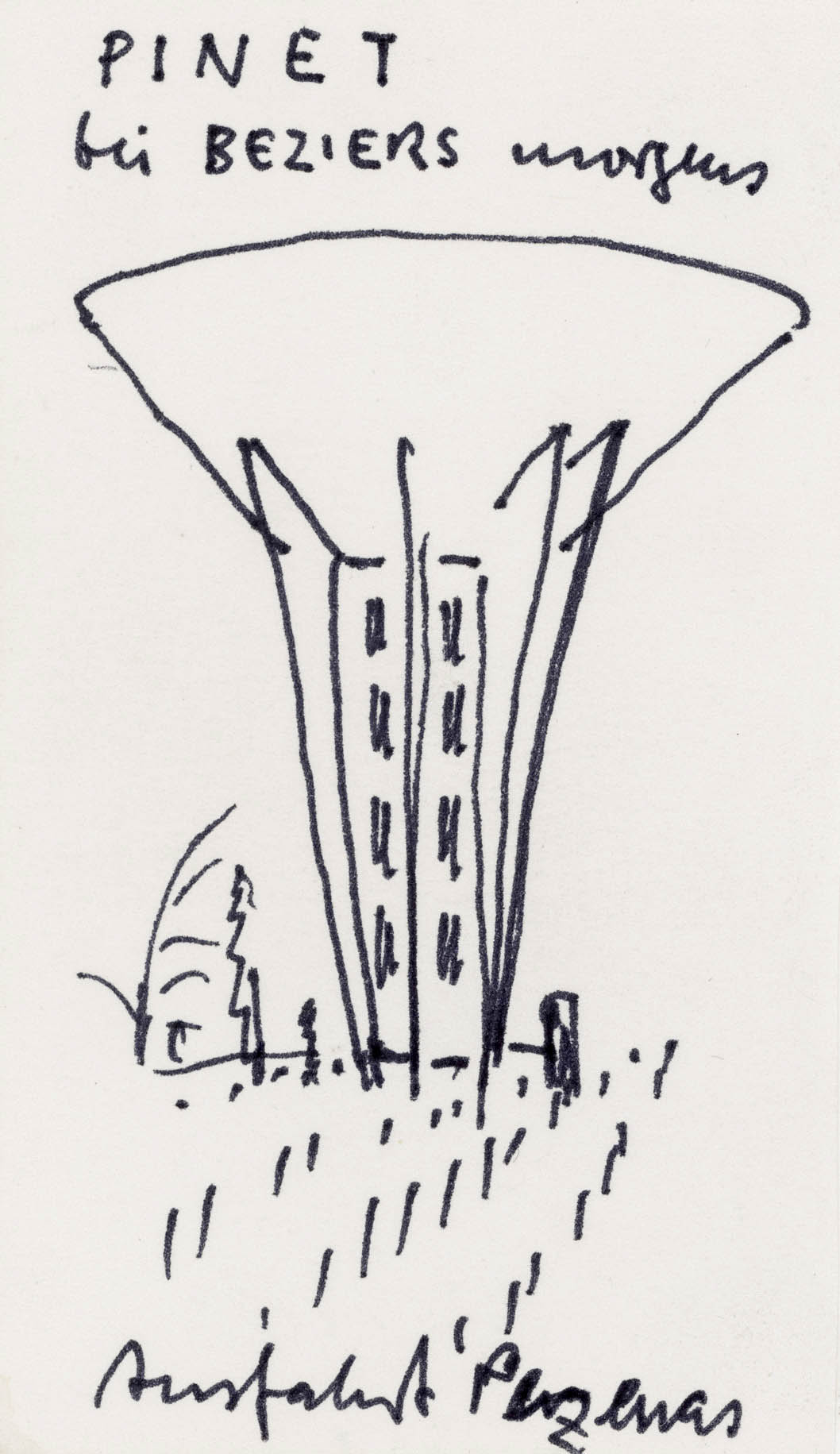
 

Bernd Becher (German, 1931-2007) 'Untitled (Water tower, Béziers, Hérault, F)' c. 1984


Bernd Becher (German, 1931-2007)
Untitled (Water tower, Béziers, Hérault, F)
c. 1984
Ink on paper
9 x 5.1cm
© Estate Bernd & Hilla Becher, vertreten durch Max Becher
Courtesy Die Photographische Sammlung/SK Stiftung Kultur – Bernd und Hilla Becher Archiv, Köln, 20255
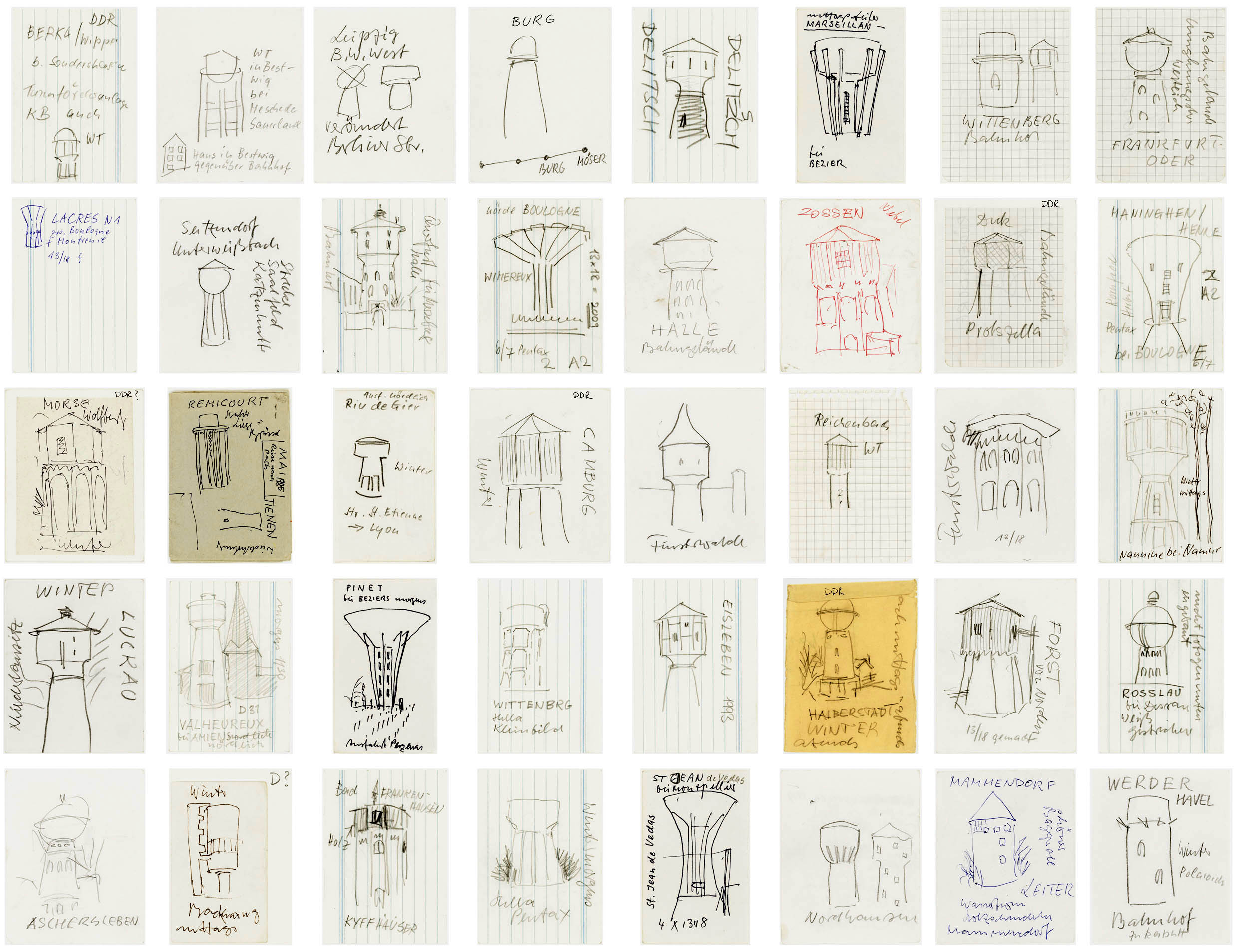
 

Bernd and Hilla Becher (German, 1931-2007/1934-2015) 'Wassertürme' (Water tower) 1960s-1980s


Bernd and Hilla Becher (German, 1931-2007/1934-2015)
Wassertürme (Water tower)
1960s-1980s
Drawings with felt-tip pen, pencil, ballpoint pen on cardboard, paper, index cards
Various sizes around 10.5 x 8.5cm
© Estate Bernd & Hilla Becher, vertreten durch Max Becher
Courtesy Die Photographische Sammlung/SK Stiftung Kultur – Bernd und Hilla Becher Archiv, Köln


Walker Evans (United States of America 1903 - 1975) 'Graveyard and steel mill, Bethlehem, Pennsylvania' 1935


Walker Evans (United States of America 1903-1975)
Graveyard and steel mill, Bethlehem, Pennsylvania
1935
Gelatin silver print
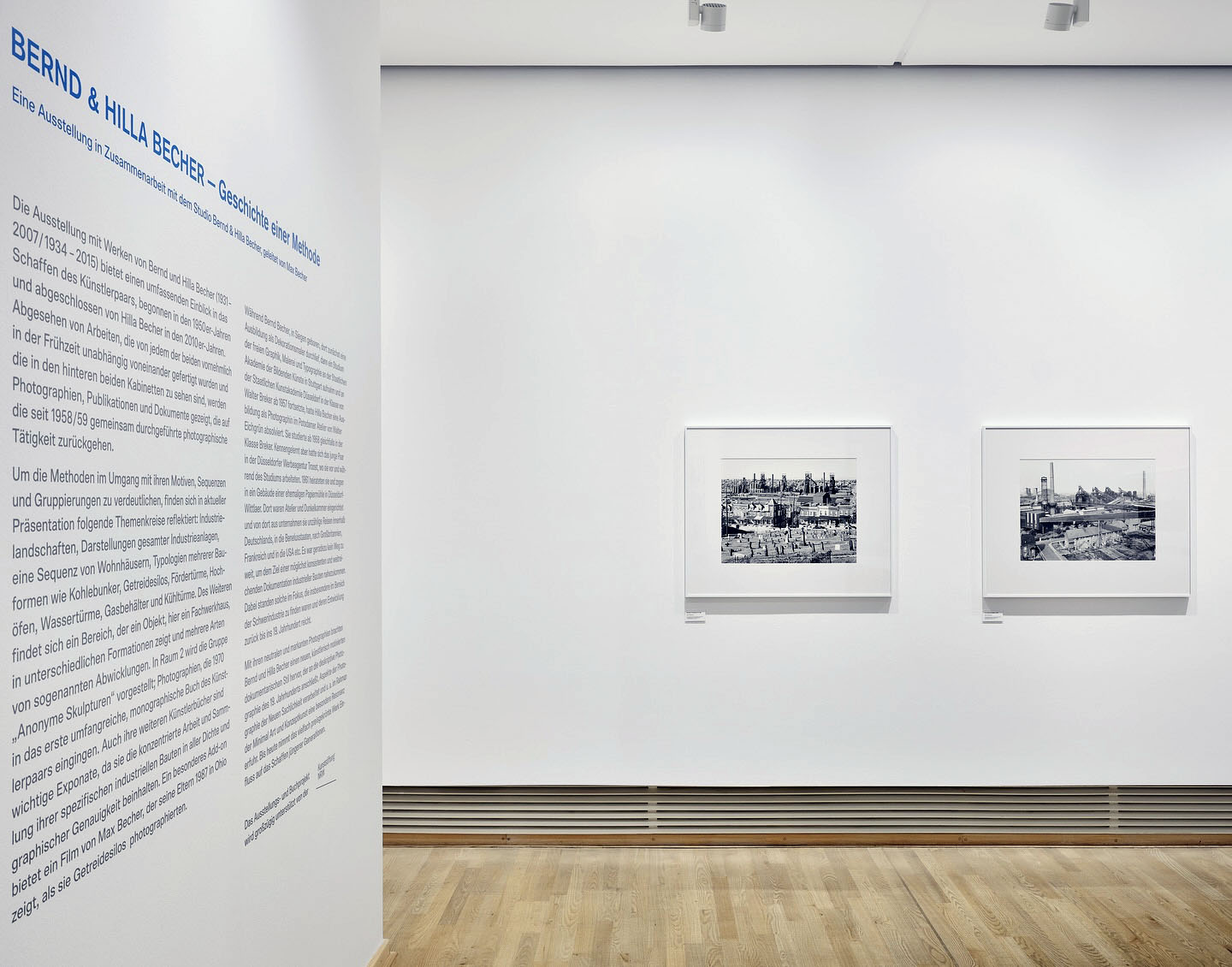
 

Installation view of the exhibition 'Bernd & Hilla Becher – History of a Method' at Die Photographische Sammlung/SK Stiftung Kultur, Cologne September, 2025 – February, 2026 showing at left Bernd and Hilla Becher's photograph 'Bethlehem, Pennsylvania, USA' 1986


Installation view of the exhibition Bernd & Hilla Becher – History of a Method at Die Photographische Sammlung/SK Stiftung Kultur, Cologne showing at left Bernd and Hilla Becher’s photograph Bethlehem, Pennsylvania, USA 1986 (below)
 

Installation view of the exhibition 'Bernd & Hilla Becher – History of a Method' at Die Photographische Sammlung/SK Stiftung Kultur, Cologne September, 2025 – February, 2026 showing Bernd and Hilla Becher's photograph 'Bethlehem, Pennsylvania, USA' 1986


Installation view of the exhibition Bernd & Hilla Becher – History of a Method at Die Photographische Sammlung/SK Stiftung Kultur, Cologne showing Bernd and Hilla Becher’s photograph Bethlehem, Pennsylvania, USA 1986 (below)
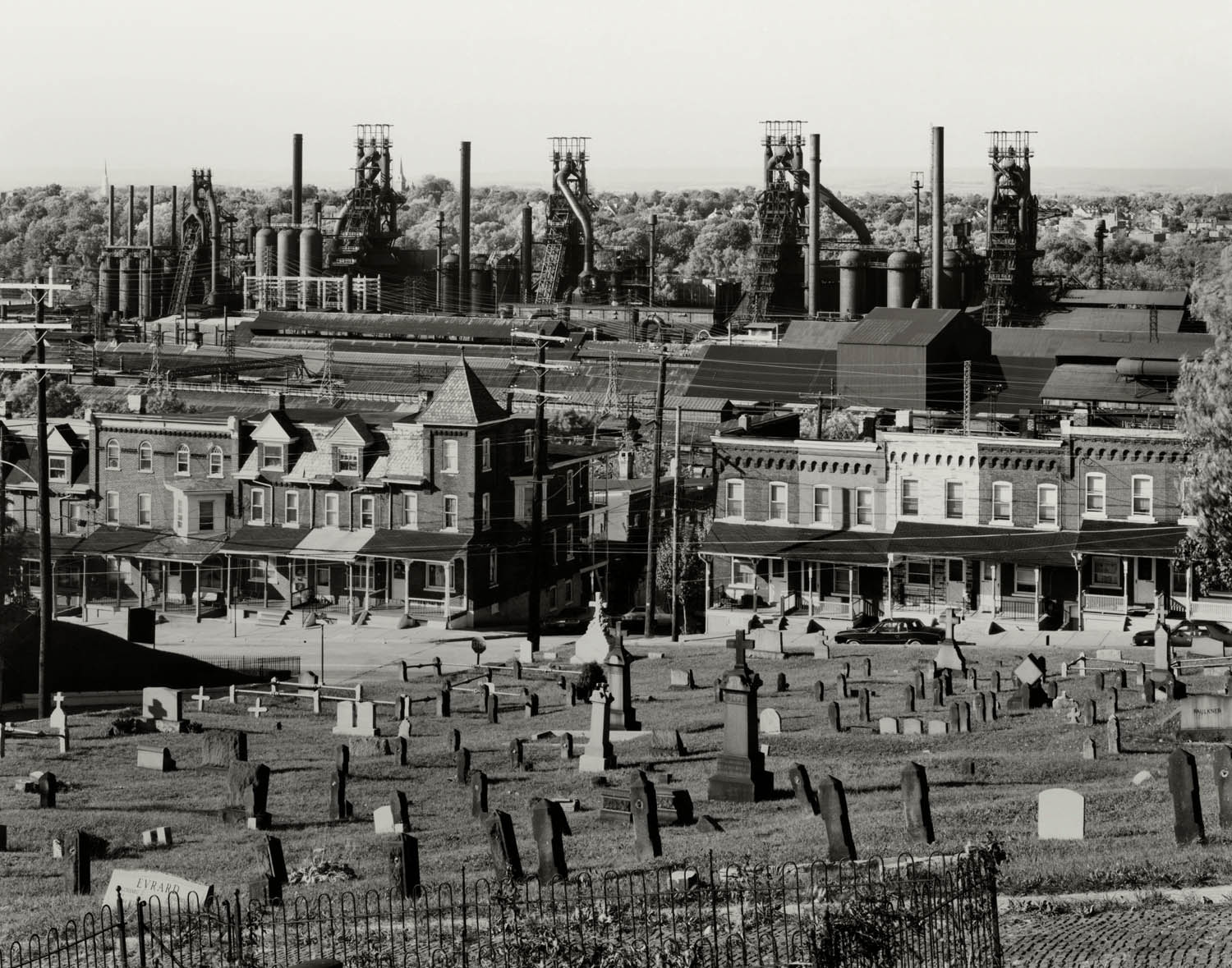
 

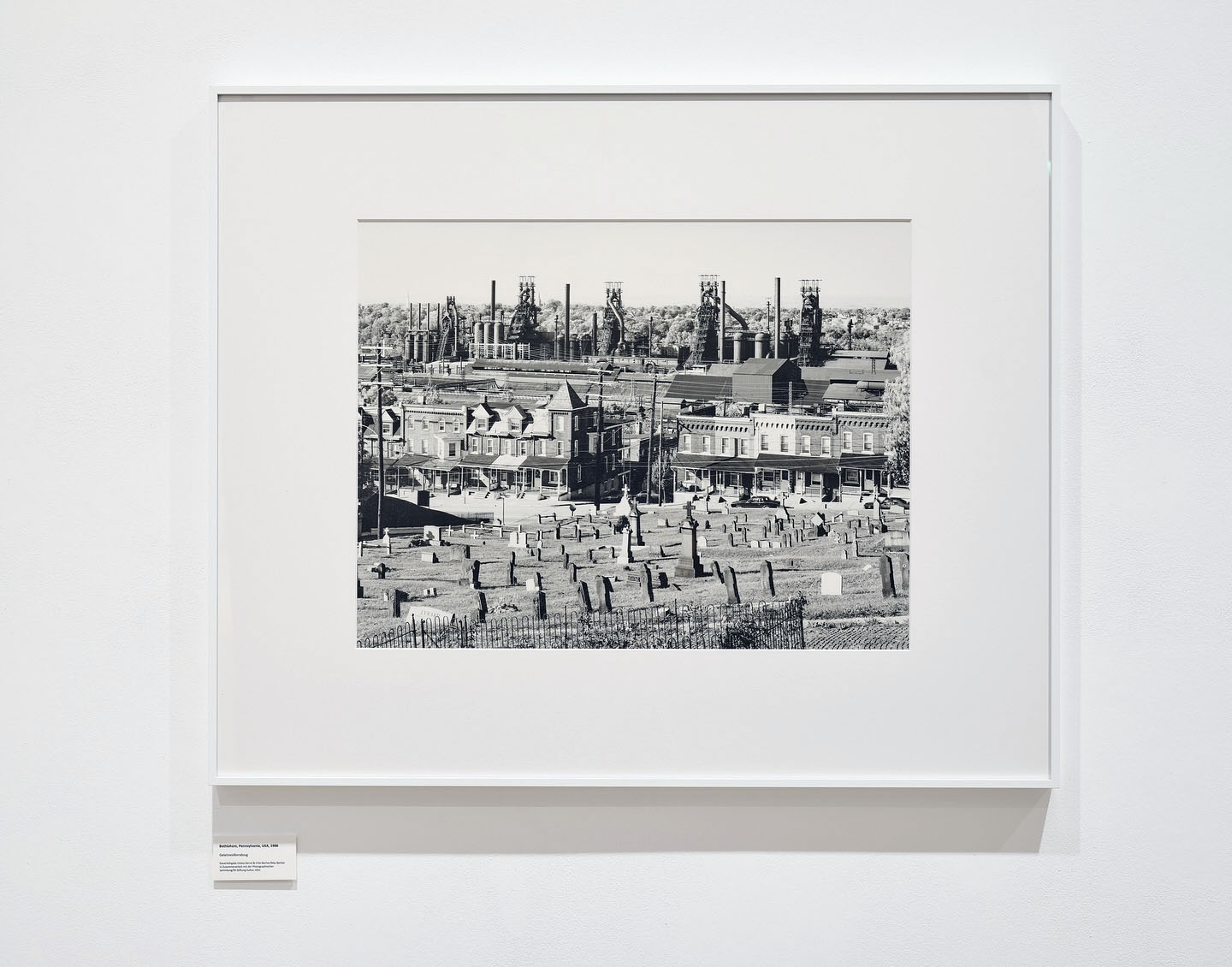
Bernd and Hilla Becher (German, 1931-2007/1934-2015) 'Bethlehem, Pennsylvania, USA' 1986


Bernd and Hilla Becher (German, 1931-2007/1934-2015)
Bethlehem, Pennsylvania, USA
1986
Gelatin silver print
46.7 x 60cm
© Estate Bernd & Hilla Becher, vertreten durch Max Becher
Courtesy Die Photographische Sammlung/SK Stiftung Kultur – Bernd und Hilla Becher Archiv, Köln


With their blast furnaces, chimneys, pipes, and conveyor belts, steelworks are less buildings than gigantic machines. They are among the most imposing industrial structures that Bernd and Hilla Becher have photographed since the late 1950s. Anatomically speaking, blast furnaces are like a body without skin, the artist couple wrote in 1990: excessively high temperatures, too much pressure, too many gases make cladding the steel shell impossible; they are nothing but function. In Bethlehem, Pennsylvania, the enormous work practically hangs over the town. Photographed from an elevated vantage point (similar to the one Walker Evans had chosen in 1935), the blast furnaces, houses, and the cemetery – work, life, death – are compressed into an inescapable proximity. Space compressed, time compressed.

Dr. Maria Müller-Schareck, art historian and member of the PS/SK management team

Text from the SK Stiftung Kultur Die Photographische Sammlung Instagram page
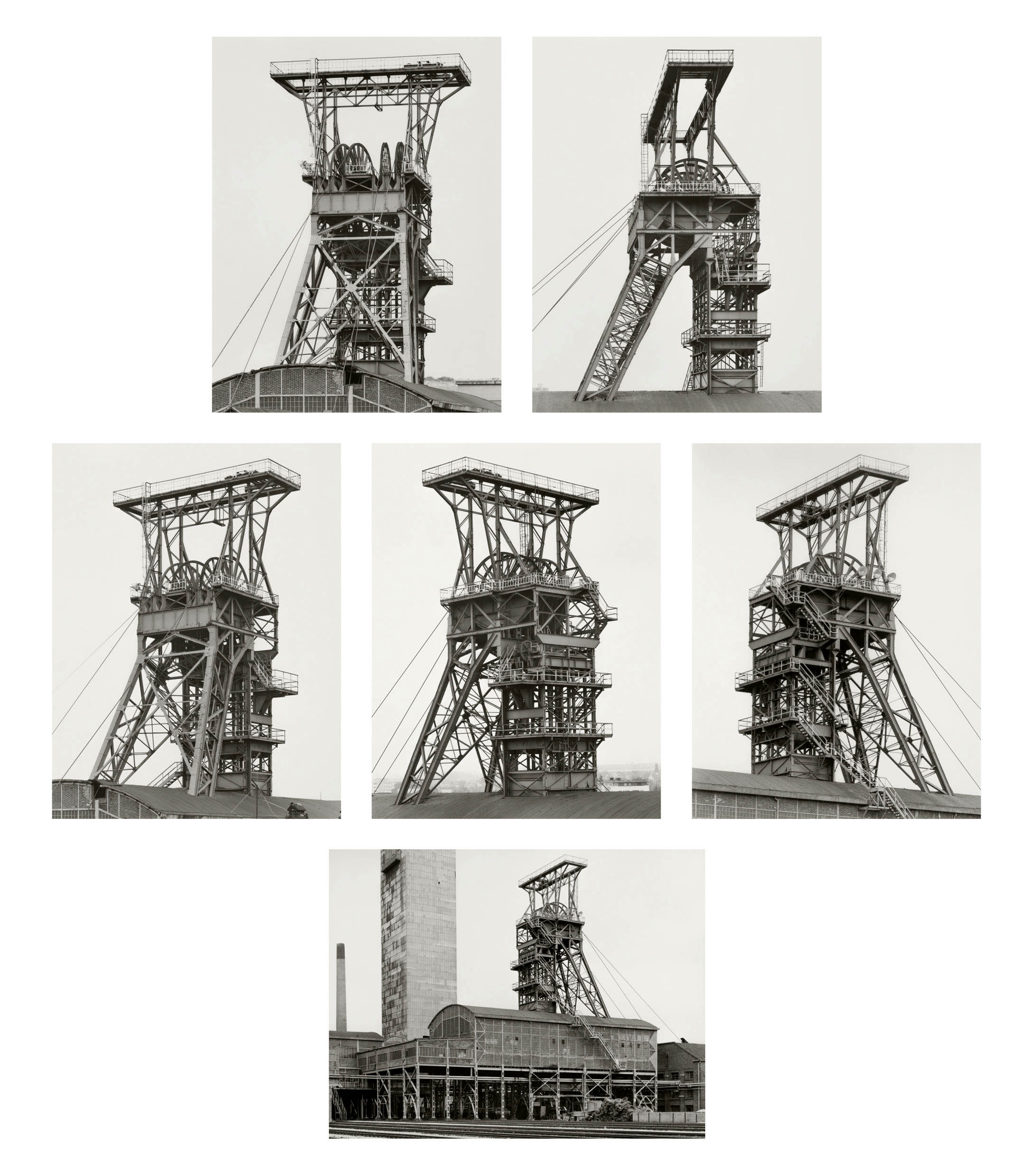
 

Bernd and Hilla Becher (German, 1931-2007/1934-2015) 'Förderturm, Schacht 2' (Winding tower, shaft 2) 1982


Bernd and Hilla Becher (German, 1931-2007/1934-2015)
Förderturm, Schacht 2 (Winding tower, shaft 2)
1982
6 gelatin silver prints,
Each approx. 40 x 31cm
© Estate Bernd & Hilla Becher, vertreten durch Max Becher
Courtesy Die Photographische Sammlung/SK Stiftung Kultur – Bernd und Hilla Becher Archiv, Köln
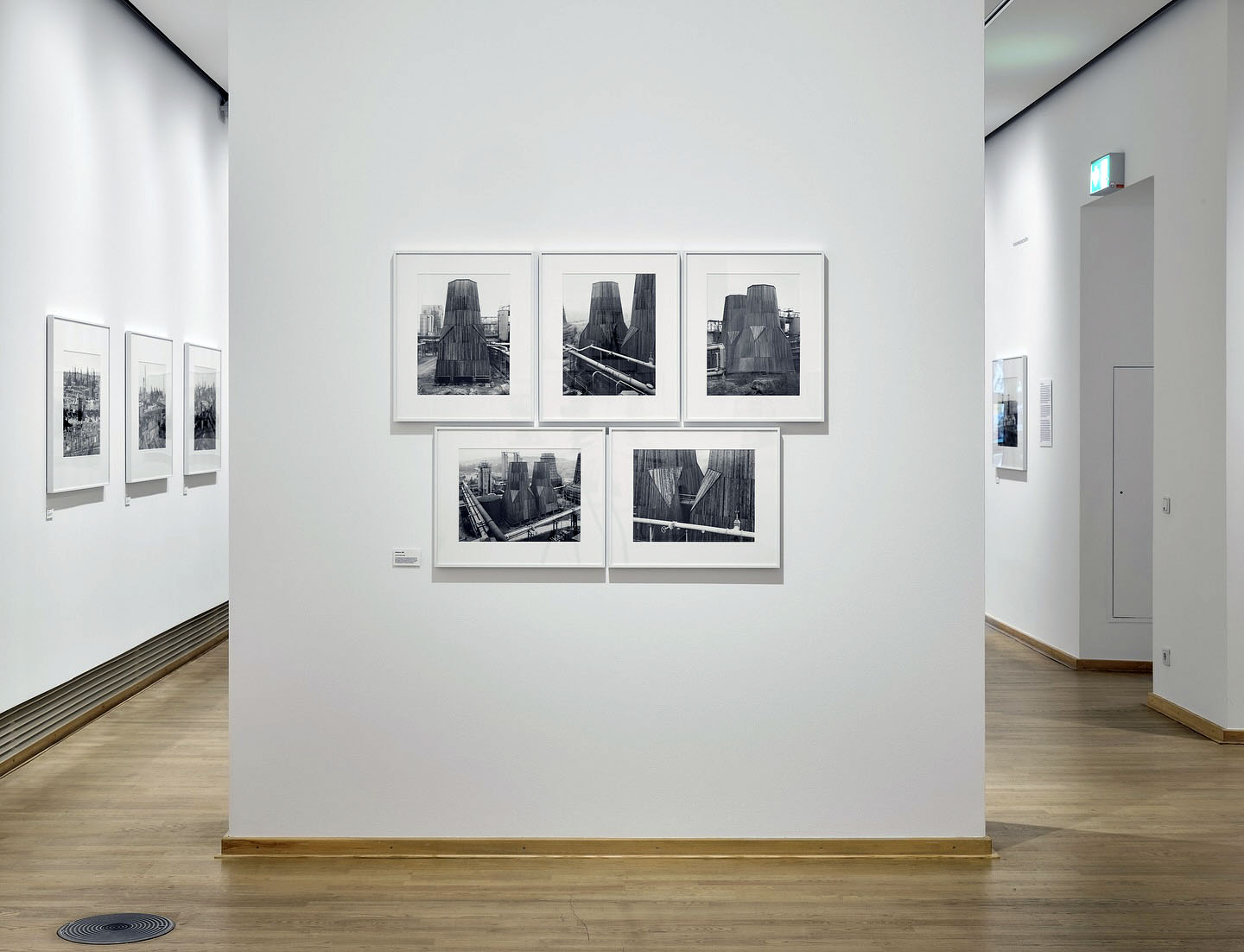
 

Installation view of the exhibition 'Bernd & Hilla Becher – History of a Method' at Die Photographische Sammlung/SK Stiftung Kultur, Cologne September, 2025 – February, 2026 showing Bernd and Hilla Becher's 'Zeche Ewald Fortsetzung, Kühlturm/-türme' (Ewald mine continuation, cooling tower(s)) 1985


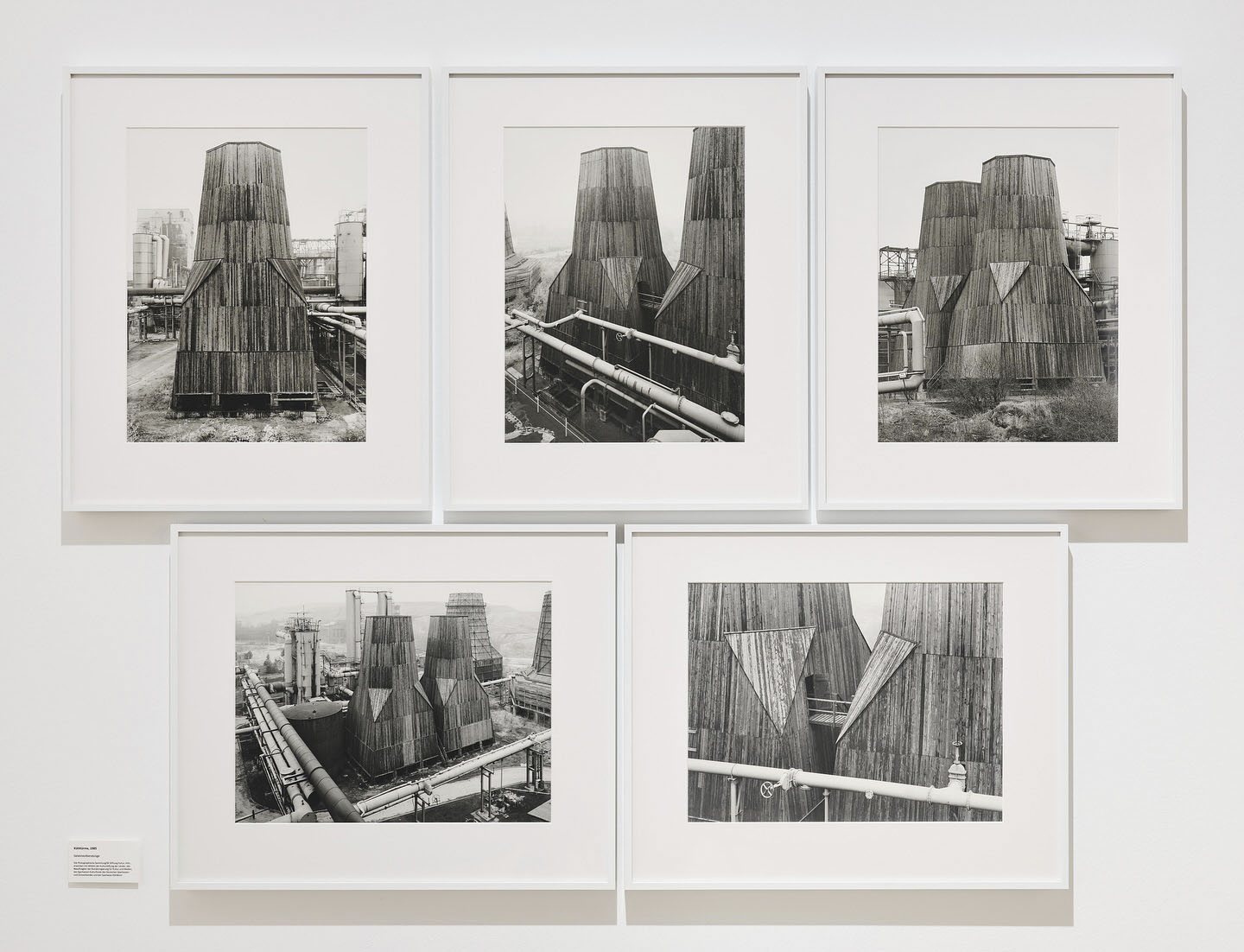
Installation views of the exhibition Bernd & Hilla Becher – History of a Method at Die Photographische Sammlung/SK Stiftung Kultur, Cologne showing Bernd and Hilla Becher’s Zeche Ewald Fortsetzung, Kühlturm/-türme (Ewald mine continuation, cooling tower(s)) 1985 (below)


Bernd and Hilla Becher (German, 1931-2007/1934-2015) 'Zeche Ewald Fortsetzung, Kühlturm/-türme' (Ewald mine continuation, cooling tower(s)) 1985


Bernd and Hilla Becher (German, 1931-2007/1934-2015)
Zeche Ewald Fortsetzung, Kühlturm/-türme (Ewald mine continuation, cooling tower(s))
1985
5 gelatin silver prints
Each approx. 40.0 x 31.0cm
© Estate Bernd & Hilla Becher, vertreten durch Max Becher
Courtesy Die Photographische Sammlung/SK Stiftung Kultur – Bernd und Hilla Becher Archiv, Köln


Over the course of their artistic career, Bernd and Hilla Becher documented approximately 200 industrial sites, including the Ewald Fortsetzung coal mine in Recklinghausen, which we are featuring in our exhibition.

These documentations are based on systematic walks through the industrial sites and surrounding areas. A panoramic photograph, often central to each site, provides an overview of the grounds and allows the individual buildings to be located and understood in relation to one another.

The subsequent photographs portray the individual building types, in this case, two cooling towers. The five images in this group clearly demonstrate how Bernd and Hilla Becher approach their subject, photographing the building from different sides and perspectives, and highlighting a specific detail. The aim of this approach was to depict the industrial buildings in a way that is both technically clear and aesthetically pleasing.

Text from the SK Stiftung Kultur Die Photographische Sammlung Instagram page
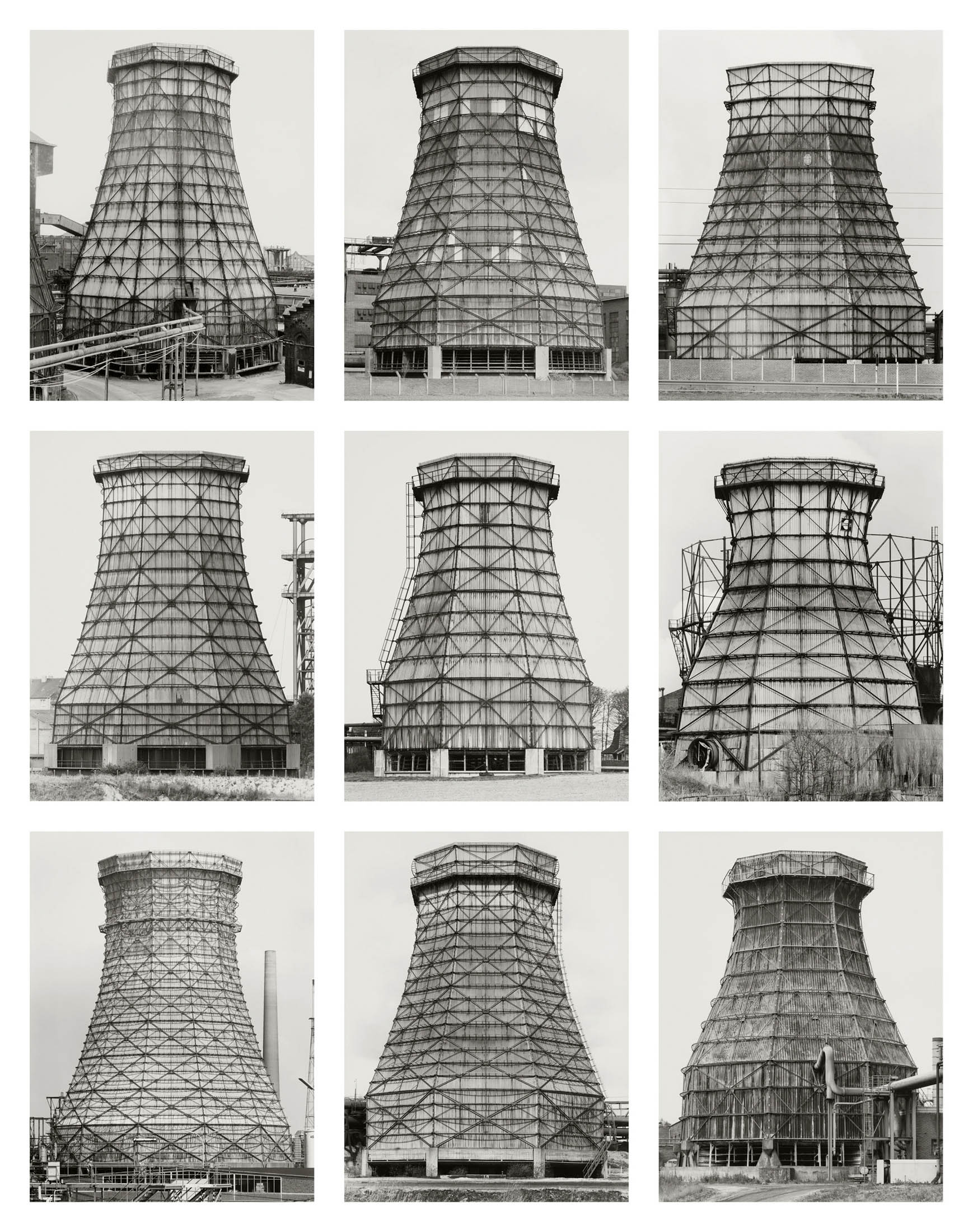
 

Bernd and Hilla Becher (German, 1931-2007/1934-2015) 'Kühltürme' (Cooling towers) 1964-1993


Bernd and Hilla Becher (German, 1931-2007/1934-2015)
Kühltürme (Cooling towers)
1964-1993
9 gelatin silver prints
Each approx. 41 x 31cm
© Estate Bernd & Hilla Becher, vertreten durch Max Becher
Courtesy Die Photographische Sammlung/SK Stiftung Kultur – Bernd und Hilla Becher Archiv, Köln
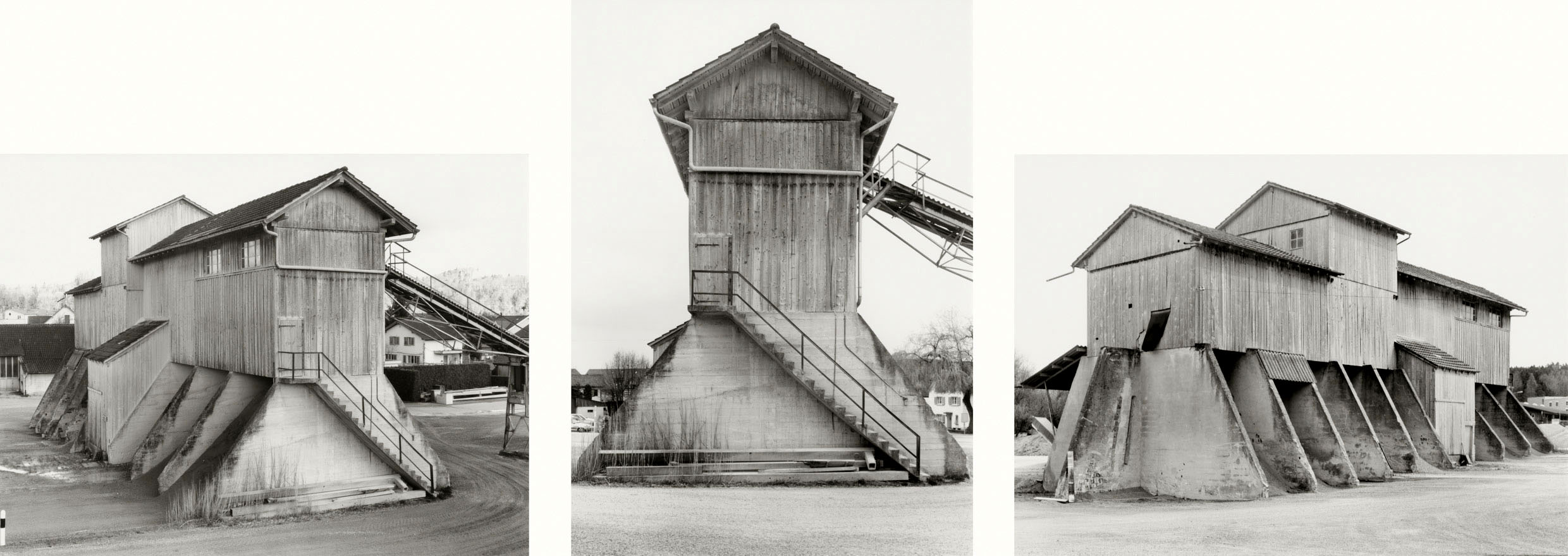
 

Bernd and Hilla Becher (German, 1931-2007/1934-2015) 'Kies- und Schotterwerk, Oberbüren/St. Gallen, CH' (Gravel and crushed stone works, Oberbüren/St. Gallen, CH) 2001


Bernd and Hilla Becher (German, 1931-2007/1934-2015)
Kies- und Schotterwerk, Oberbüren/St. Gallen, CH (Gravel and crushed stone works, Oberbüren/St. Gallen, CH)
2001
3 gelatin silver print
Each approx. 30 x 40cm
© Estate Bernd & Hilla Becher, vertreten durch Max Becher
Courtesy Sprüth Magers
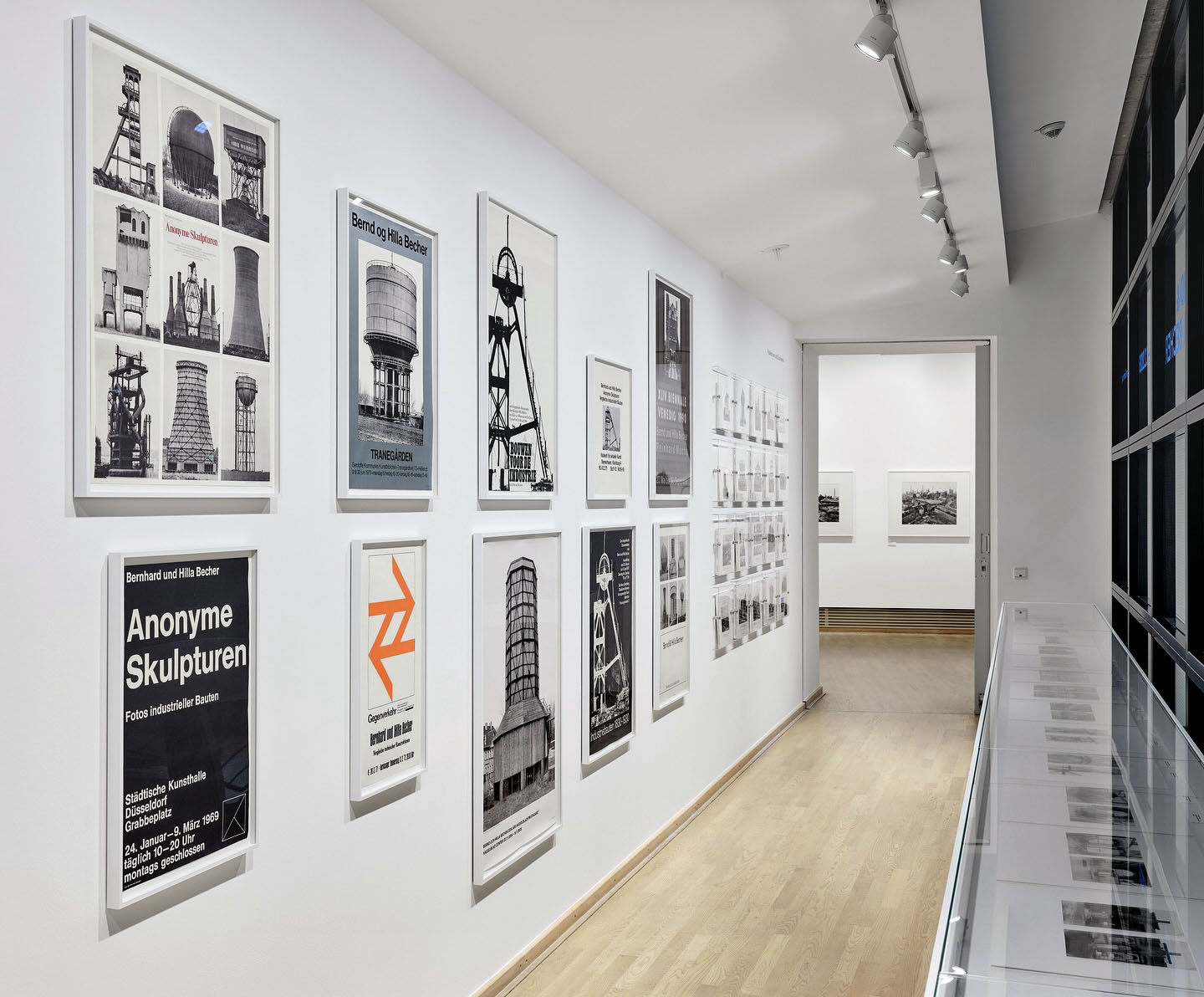
 

Installation view of the exhibition 'Bernd & Hilla Becher – History of a Method' at Die Photographische Sammlung/SK Stiftung Kultur, Cologne September, 2025 – February, 2026


Installation view of the exhibition Bernd & Hilla Becher – History of a Method at Die Photographische Sammlung/SK Stiftung Kultur, Cologne September, 2025 – February, 2026


'Bernd & Hilla Becher – History of a Method' book cover


Bernd & Hilla Becher – History of a Method book cover


Die Photographische Sammlung/SK Stiftung Kultur
Im Mediapark 7, 50670 Cologne
Phone: +49 221/888 95 300

Opening hours: Daily (except Wednesdays): 2pm – 7pm

Die Photographische Sammlung/SK Stiftung Kultur website

LIKE ART BLART ON FACEBOOK

Back to top

Exhibition: ‘Candida Höfer: A Return to Italy’ at Ben Brown Fine Arts, London

Exhibition dates: 12th February – 12th April 2013


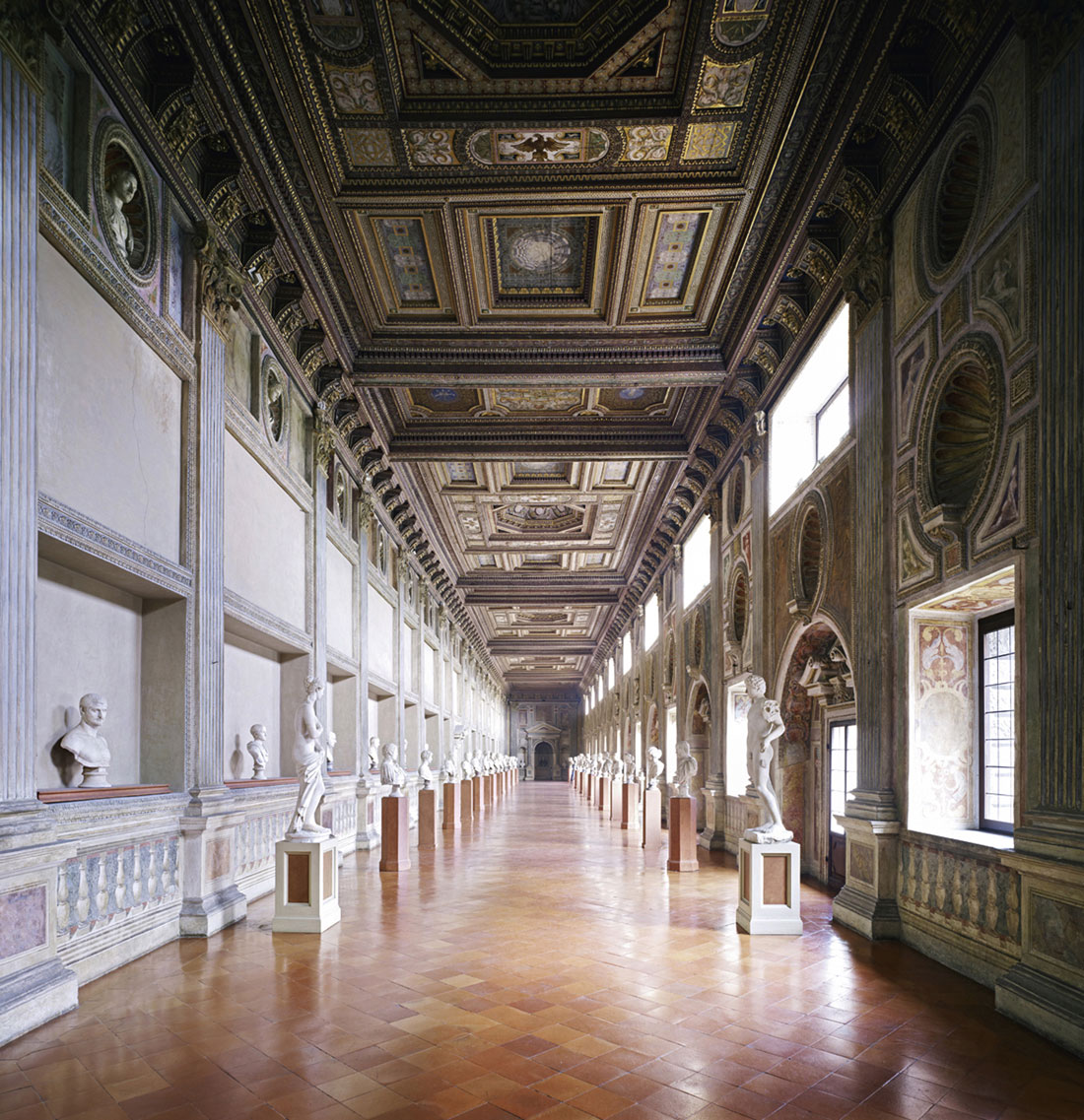
Candida Höfer (German, b. 1944) 'Galleria Degli Antichi Sabbioneta I 2010' 2010


Candida Höfer (German, b. 1944)
Galleria Degli Antichi Sabbioneta I 2010
2010
Light Jet print
Edition of 6
180 x 220.7cm (70 7/8 x 86 7/8 in.)
© 2013 Candida Höfer, VG Bild-Kunst, Bonn
Courtesy of Ben Brown Fine Arts


Ah symmetry, that vague sense of harmonious and beautiful proportion and balance, that patterned self-similarity that, through Hofer’s large format photographs, reflects the vainglorious human edifices of Northern Italy, superbly beautiful in their empty pride. Customarily devoid of human presence, Hofer’s photographs are technically and aesthetically superb. One has to examine the photographs with respect to their relationship to the passage of time, utilising spatial awareness to try to understand why things exist in specific locations within human culture.

“Both in ancient and modern times, the ability of a large structure to impress or even intimidate its viewers has often been a major part of its purpose, and the use of symmetry is an inescapable aspect of how to accomplish such goals.” (Wikipedia) Symmetries are informative of the world around us, and peer relationships are based on symmetry sending the message “we are all the same.” So Hofer’s symmetrical photographs possess opposing messages: we are all the same but some of us are more important (read powerful) than others.

Hofer’s highly symmetrical rooms are unavoidably also rooms in which anything out of place or potentially threatening can be identified easily and quickly, which has implications for safety, security, and familiarity. In this case it is the absence of human presence. To me this is the critical reading of Hofer’s photographs: they comment on the foibles of the human race, a race nearing the destruction of its only place of habitation, reaching the tipping point on the path to annihilation, yet indulging itself in a continuing race of construction and consumption. There will come a point when these edifices are crumbling and in ruins, as an Ebola-like virus races airborne around the world, destroying 90 percent of the population of the earth within months. The Earth will self balance and all we will be left with will be the memory of an empty symmetry.

Symmetry can be a source of comfort not only as an indicator of biological health, but also of a safe and well-understood living environment. The paradox of Hofer’s environments is that in these colourful, exuberant, profuse environments nothing is alive, the interiors becoming meaningless “noise” in an empty, vacuous world. The human race will have left the building.

Dr Marcus Bunyan


Many thankx to Ben Brown Fine Arts for allowing me to publish the photographs in the posting. Please click on the photographs for a larger version of the image.


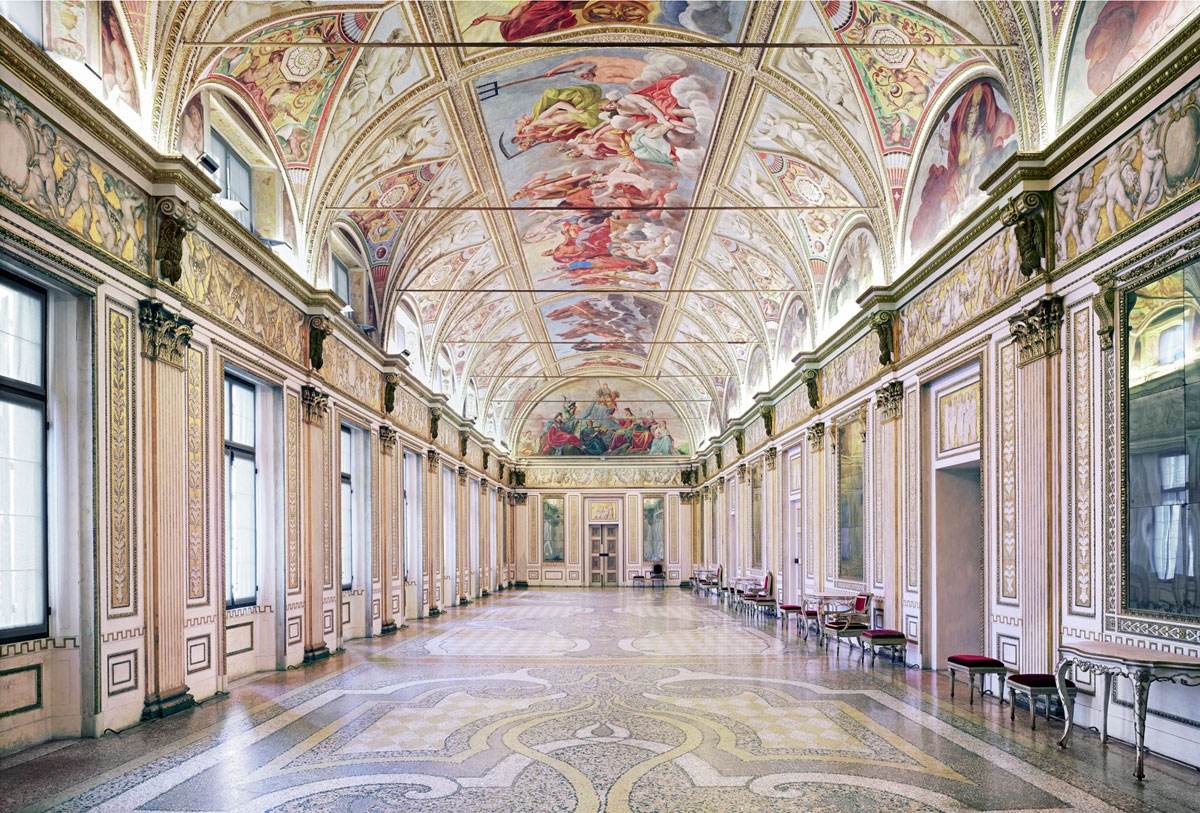
Candida Höfer (German, b. 1944) 'Palazzo Ducale Mantova I' 2011


Candida Höfer (German, b. 1944)
Palazzo Ducale Mantova I 2011
2011
Light Jet print
Edition of 6
180 x 246cm (70 7/8 x 96 7/8 in.)
© 2013 Candida Höfer, VG Bild-Kunst, Bonn
Courtesy of Ben Brown Fine Arts


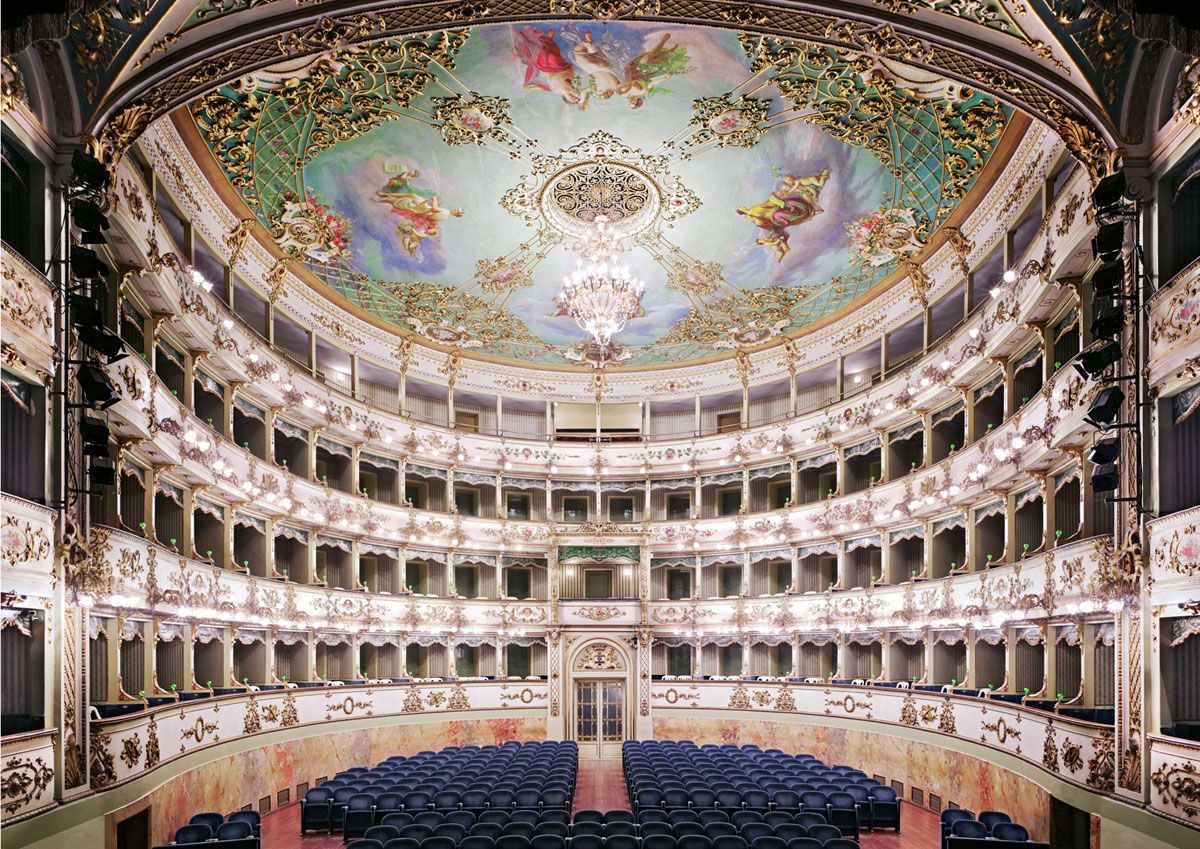
Candida Höfer (German, b. 1944) 'Teatro Comunale di Carpi I' 2011


Candida Höfer (German, b. 1944)
Teatro Comunale di Carpi I 2011
2011
Light Jet print
Edition of 6
180 x 237cm; (70 7/8 x 93 1/4 in.)
© 2013 Candida Höfer, VG Bild-Kunst, Bonn
Courtesy of Ben Brown Fine Arts


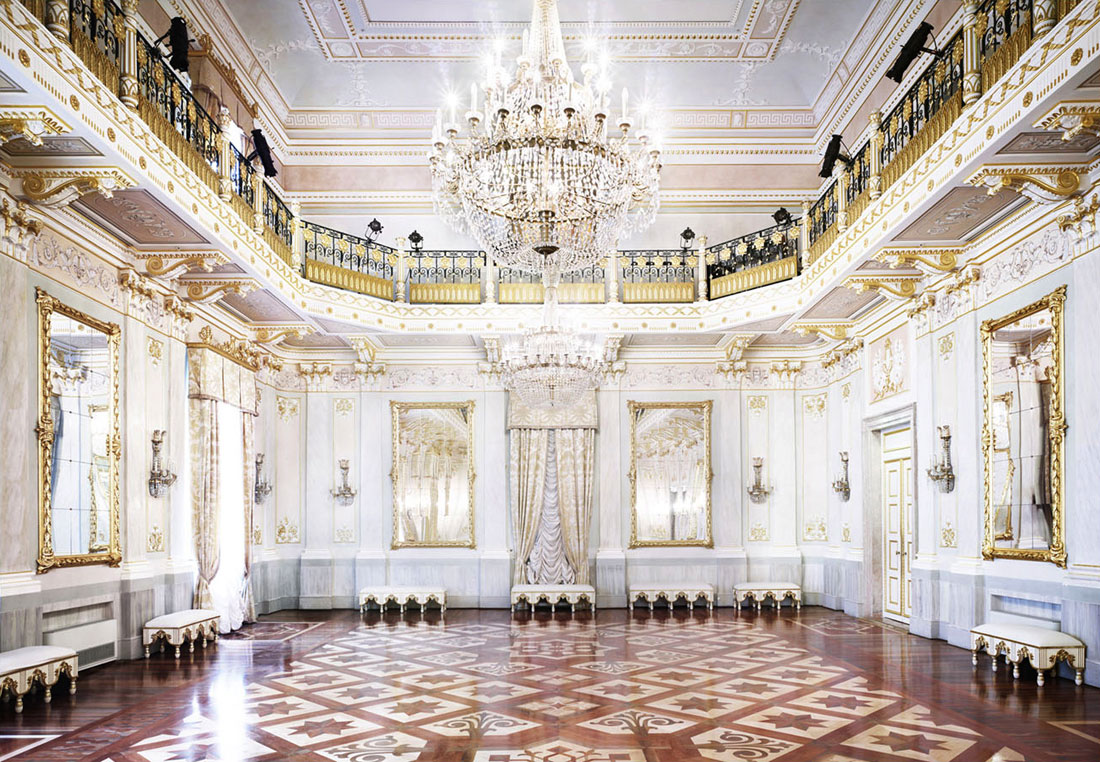
Candida Höfer (German, b. 1944) 'Teatro La Fenice di Venezia III' 2011


Candida Höfer (German, b. 1944)
Teatro La Fenice di Venezia III 2011
2011
Light Jet print
Edition of 6
180 x 242cm (70 7/8 x 95 1/4 in.)
© 2013 Candida Höfer, VG Bild-Kunst, Bonn
Courtesy of Ben Brown Fine Arts


Candida Höfer (German, b. 1944) 'Teatro La Fenice di Venezia V 2011' 2011


Candida Höfer (German, b. 1944)
Teatro La Fenice di Venezia V 2011
2011
Light Jet print
Edition of 6
180 x 235cm (70 7/8 x 92 1/2 in.)
© 2013 Candida Höfer, VG Bild-Kunst, Bonn
Courtesy of Ben Brown Fine Arts


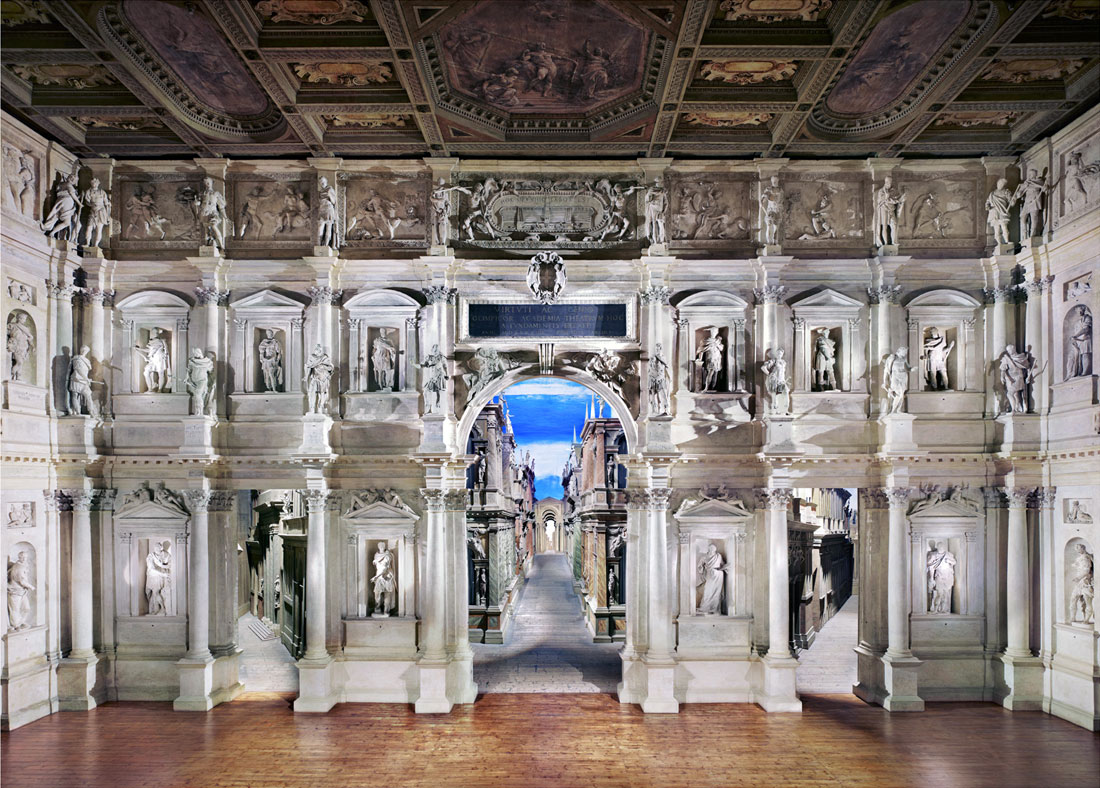
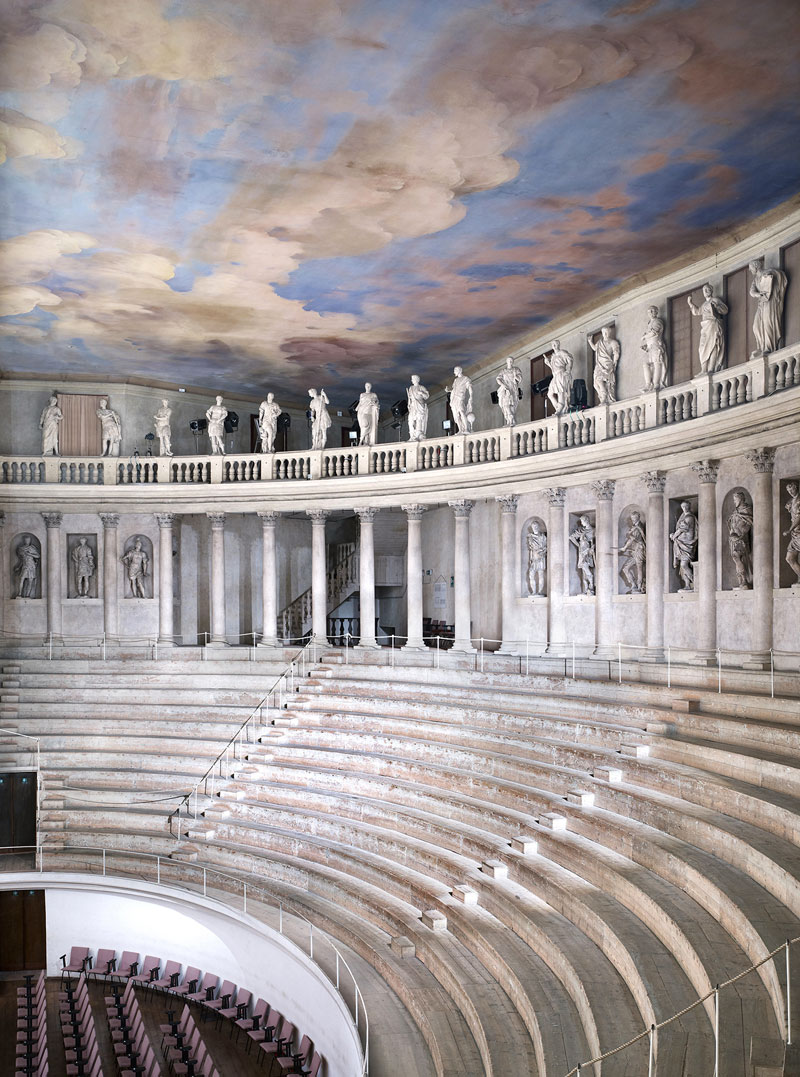
Candida Höfer (German, b. 1944) 'Teatro Olimpico Vicenza II' 2010


Candida Höfer (German, b. 1944)
Teatro Olimpico Vicenza II 2010
2010
Light Jet print
Edition of 6
180 x 235cm (70 7/8 x 92 1/2 in.)
© 2013 Candida Höfer, VG Bild-Kunst, Bonn
Courtesy of Ben Brown Fine Arts


Candida Höfer (German, b. 1944) 'Teatro Scientifico Bibiena Mantova I' 2010


Candida Höfer (German, b. 1944)
Teatro Scientifico Bibiena Mantova I 2010
2010
Light Jet print
Edition of 6
180 x 226cm (70 7/8 x 89 in.)
© 2013 Candida Höfer, VG Bild-Kunst, Bonn
Courtesy of Ben Brown Fine Arts


German photographer Candida Höfer makes a significant return to Ben Brown Fine Arts in London on 12 February with a major solo show, unveiling thirteen new and previously unseen photographs which catalogue the architectural treasures of Northern Italy.

Mantova, Vicenza, Sabbioneta, Venice and Carpi provide the glorious setting for this new series shot over the past two years, a continuation of Höfer’s previous work in Central and Southern Italy. The interiors of palaces, opera houses, libraries and theatres, which Höfer captures with incredible skill, are part of her meticulous documentation of public spaces – places of culture, knowledge, communication and exchange with a rich history and clear functionality. Having rarely visited the Northern region, Höfer was particularly touched by the naturalness and ease with which the local people there accepted this extraordinary architecture as a part of their daily lives.

Höfer’s portraits of interiors, customarily devoid of human presence, emphasise the solemn magnificence of the Palazzo Ducale, Teatro La Fenice and Biblioteca Teresiana, amongst others. By featuring spaces that celebrate mankind’s greatness, yet where people are nowhere to be found, Höfer’s images possess an unexpected poignancy which has become the hallmark of her work. Höfer produces these large-format photographs without digital enhancement or alteration, using long exposure and working solely with the existing light source. The effect is a rare combination of intimacy and scale, in which intricate architectural detail is captured without sacrificing the sense of space and civilised order.

Höfer, a member of the Düsseldorf School (Kunstakademie Düsseldorf), was a noted pupil of the Bechers, who were heavily influenced by the 1920s German art tradition of Neue Sachlichkeit and pioneered a type of detached objectivity. The Bechers’ black and white photographs of industrial landscapes and architecture embodied a clinical, documentary style, which Höfer has retained in her work through the same neutral and methodical process. Yet Höfer’s large-scale colour prints differ in their more sympathetic approach to the building’s culture and history.”

Press release from Ben Brown Fine Arts


Candida Höfer (German, b. 1944) 'Museo Civico Di Palazzo Te Mantova IV' 2010


Candida Höfer (German, b. 1944)
Museo Civico Di Palazzo Te Mantova IV 2010
2010
Light Jet print
Edition of 6
180 x 187cm; (70 7/8 x 73 5/8 in.)
© 2013 Candida Höfer, VG Bild-Kunst, Bonn
Courtesy of Ben Brown Fine Arts


Candida Höfer (German, b. 1944) 'Teatro Olimpico Vicenza III' 2010


Candida Höfer (German, b. 1944)
Teatro Olimpico Vicenza III 2010
2010
Light Jet print
Edition of 6
180 x 144cm (70 7/8 x 56 3/4 in.)
© 2013 Candida Höfer, VG Bild-Kunst, Bonn
Courtesy of Ben Brown Fine Arts


Candida Höfer (German, b. 1944) 'Biblioteca Teresiana Mantova I' 2010


Candida Höfer (German, b. 1944)
Biblioteca Teresiana Mantova I 2010
2010
Light Jet print
Edition of 6
180 x 163cm (70 7/8 x 64 1/8 in.)
© 2013 Candida Höfer, VG Bild-Kunst, Bonn
Courtesy of Ben Brown Fine Arts


Candida Höfer (German, b. 1944) 'Palazzo Ducale Mantova III' 2011


Candida Höfer (German, b. 1944)
Palazzo Ducale Mantova III 2011
2011
Light Jet print
Edition of 6
180 x 169cm; (70 7/8 x 66 1/2 in.)
© 2013 Candida Höfer, VG Bild-Kunst, Bonn
Courtesy of Ben Brown Fine Arts


Candida Höfer (German, b. 1944) 'Palazzo Ducale Mantova V' 2011


Candida Höfer (German, b. 1944)
Palazzo Ducale Mantova V 2011
2011
Light Jet print
Edition of 6
180 x 176cm (70 7/8 x 69 1/4 in.)
© 2013 Candida Höfer, VG Bild-Kunst, Bonn
Courtesy of Ben Brown Fine Arts


Candida Höfer (German, b. 1944) 'Palazzo Ducale Mantova IV' 2011


Candida Höfer (German, b. 1944)
Palazzo Ducale Mantova IV 2011
2011
LightJet print
Edition of 6
180 x 176cm (70 7/8 x 67 3/4 in.)
© 2013 Candida Höfer, VG Bild-Kunst, Bonn
Courtesy of Ben Brown Fine Arts


Ben Brown Fine Arts
12 Brook’s Mews, London W1K 4DG
Phone: +44 (0)20 7734 8888

Opening hours:
Monday to Friday 11am – 6pm
Saturdays 10.30am – 2.30pm

Ben Brown Fine Arts website

LIKE ART BLART ON FACEBOOK

Back to top

Exhibition: ‘Edouard Baldus and the Modern Landscape. Important Salt Prints of Paris from the 1850s’ at James Hyman Gallery, London

Exhibition dates: 12th October – 9th November 2012


Edouard Baldus (French, 1813-1889) 'Vue generale de Paris pont neuf' c. 1855


Edouard Baldus (French, 1813-1889)
Vue generale de Paris pont neuf
c. 1855
Salt print mounted on card
33.6 x 43.9cm (13.20 x 17.25 ins)
Negative: Lower left inscribed in negative: no 82 Mount: Lower right beneath negative: stamped E. Baldus Lower left bottom: Vue generales des Paris pont neuf


A beautiful, complimentary post to the last one on the exhibition Eugène Atget: Old ParisIt is interesting to compare the styles of the two photographers and the change in photography that takes place between the 1850s and the 1890s. Baldus’ photographs are eloquent in their grandeur and frontality, tonality and texture. Atget’s photographs on the other hand are slightly claustrophobic in their intensity, the camera obliquely placed to capture old buildings, narrow cobbled streets and distant vanishing points. Both, in their own way, are very modern photographers. Baldus’ legacy, as Dr James Hyman correctly notes, was his influence on his German compatriots such as the Bechers, Thomas Struth and, to a lesser extent, Andreas Gursky. His rigorous frontality (the photographing of the thing itself) gives his photographs the simplicity of diagrams and emphasises their topographical state, while their density of detail offers encyclopaedic richness. This straightforward “objective” point of view was most notably used by Bernd and Hilla Becher in contemporary photography. Atget’s photographs, on the other hand, aroused an immediate interest “among the Surrealists because of the composition, ghosting, reflections, and its very mundanity.”

Conversely, it is the subjective signature of both artists that make their work truly great – not the mundanity, not the topographic objectivity but their intimate vision of this city, Paris. As I noted in an earlier posting on the Bechers,

“These are subjective images for all their objective desire. The paradox is the more a photographer strives for objectivity, the more ego drops away, the more the work becomes their own: subjective, beautiful, emotive… What makes great photographers, such as Eugène Atget, Walker Evans, August Sander and the Bechers, is the idiosyncratic “nature” of their vision: how Atget places his large view camera – at that particular height and angle to the subject – leaves an indelible feeling that only he could have made that image, to reveal the magic of that space in a photograph. It is their personal, unique thumbprint, recognisable in an instant.”

The same can be said of Baldus and these magnificent, ethereal photographs.

Dr Marcus Bunyan


Many thankx to James Hyman Gallery for allowing me to publish the photographs in the posting. Please click on the photographs for a larger version of the image.


Edouard Baldus (French, 1813-1889) 'Le Nouveau Louvre' c. 1857


Edouard Baldus (French, 1813-1889)
Le Nouveau Louvre
c. 1857
Salt print mounted on card
31.6 x 44.3cm (12.42 x 17.41 ins)
Le Nouveau Louvre series: 1855-1857 Negative: Lower left inscribed in negative: no 107 Mount: Lower right beneath negative: stamped E. Baldus Lower left bottom: Le Nouveau Louvre


Mid-nineteenth century Paris was a city in the midst of modernisation, and as such, was ripe for documentation of its changing landscape. Counted as one of the premier photographers of his day, Edouard Baldus captured the aesthetic of the Second Empire’s ideology in his monumental views of both old and new Parisian landmarks. In 1855, Baldus received his largest commission, to document the construction of the Musee du Louvre. This rich salt print is a survey of the project as it nears almost full completion. Baldus produced over two thousand images of each part of the new Louvre, from large pavilions to small decorative statue. This photograph, however, takes a step back from the individual pieces of the lengthy project, and allows the viewer to appreciate the endeavour as a whole.


Edouard Baldus (French, 1813-1889) 'Le Pantheon' 1853


Edouard Baldus (French, 1813-1889)
Le Pantheon
1853
Salt print mounted on card
33.8 x 43.5cm (13.28 x 17.10 ins)
Negative: Lower left inscribed in negative: Le Pantheon Lower right inscribed in negative: Baldus Mount: Lower right beneath negative: stamped E. Baldus Lower left bottom: Le Pantheon


Due to the strength of his architectural imagery and work with the Mission Heliographique, Baldus would go on to gain the support of a government commission, Les Villes de France Photographies, which focused on the landmarks of Paris in particular, such as the Pantheon. Similar in style to the frontal views of the Louvre pavilions, this image is a precursor to that project, and also includes Saint Etienne du Mont in its background. The Pantheon is one of Paris’ best-known landmarks, and was originally built as a church dedicated to Saint Genevieve. Looking out over the whole of the city, it is now a mausoleum that houses the remains of distinguished French citizens.


Edouard Baldus (French, 1813-1889) 'Arc de Caroussel' c. 1853


Edouard Baldus (French, 1813-1889)
Arc de Caroussel
c. 1853
Salt print mounted on card
34.1 x 44.3 cms (13.40 x 17.41 ins)
Negative: Lower left inscribed in negative: signature of E.Baldus Lower right inscribed in negative: no.81 Mount: Lower right beneath negative: stamped E.Baldus Lower left bottom: Arc de Caroussel
Mount: 43.9 x 61 cms
Image: 34.1 x 44.3 cms


One of Baldus’ greatest projects was to provide a photographic inventory of the New Louvre and adjoing Tuilleries. A number of these works are of particular interest, expecially those of the Tuilleries Palace, which would be burnt down in 1870-1871. All that remains today is the central triumphal arch, the Caroussel, which is depicted here, still with the palace visible in the background. Built between 1806 and 1808, the Arc de Caroussel is a monument commemorating Napolean’s military victories, with Peace riding a triumphal chariot atop the central archway. Two guards flank the sides of the arch, each atop their own horse, which not only provide for a sense of scale, but, being slightly blurred, also hint at the length of Baldus’ exposure. This enhances the effects of the delicately carved sculptures that adorn the archway, presented here with a clarity that defined the standard Baldus set with his architectural images.


James Hyman is proud to present a loan exhibition of one of the greatest photographers of the nineteenth century, Edouard Baldus. Remarkably, this is the first major exhibition of Edouard Baldus ever to be staged in London. Baldus was famed for his monumental photographs of the buildings of Paris at a time of massive transition under Napoleon III, Baron Haussman and Viollet Le Duc, as well as the depiction of the contemporary landscape of France. Acclaimed as the greatest architectural photographer of the nineteenth century, Baldus’s prints were some of the largest photographs in existence and pioneered an aesthetic of presenting modernity and the modern city that would have a profound influence on later photographers from the Bechers to John Davies.

Baldus was one of the great calotypists of the 1850s, producing works of an unprecedented range and scale. He moved to Paris in 1838 to study painting alongside other future photographers such as Le Gray, Le Secq, and Negre. He frequently retouched his paper negatives, adding pencil and ink, to add clouds or clarify details, then printing his own large-scale negatives. He was also adept at stitching several negatives together to re-create architectural views, most famously in his views of the cloisters of Saint Trophime.

Famed especially for his depiction of architecture, Baldus not only documented the modernisation of Paris but also travelled widely through France recording modernity and new construction – including new railways and aqueducts, as well as the building of the new Louvre. In 1851 the Commission des Monuments Historiques cited Baldus as one of the five best architectural photographers and he was commissioned to record the monuments of France for what became known as the Mission heliographic. His beginnings in photography are not well documented before his participation in the Mission heliographique, although it is known that he took photographs of Montmajour in 1849.

In 1852 he began Villes de France photographies to which the minister of Beaux-Arts subscribed until 1860. In 1854 he travelled with his student Petiot-Groffier in Auvergne and in 1855 the Baron James de Rothschild commissioned him to photograph the new Northern train line from Paris to Boulogne as a gift, in the form of a commemorative album, for Queen Victoria before her visit to the Exposition Universelle. Later, in his commission to document the reconstruction of the Louvre, Baldus took more than two thousand views in a period of three years. His last big commission was from 1861-1863 documenting the Paris-Lyon-Mediterranean train line illustrating seventy views of the train’s track. After this, Baldus tried to provide more commercial alternatives to his large-format works, creating smaller prints and heliogravures of his earlier work. Unfortunately, the effort was unsuccessful and Baldus passed away in bankruptcy and relative obscurity.

Press release from the James Hyman website


Edouard Baldus (French, 1813-1889) 'Pavillon Colbert, Nouveau Louvre, Paris' c.1855


Edouard Baldus (French, 1813-1889)
Pavillon Colbert, Nouveau Louvre, Paris
c. 1855
Salt print mounted on card
43.2 x 34.1cm (16.98 x 13.40 ins)
Stamped ‘E. Baldus’ on the lower right of the mount and titled lower left ‘Pavillon Colbert Nouveau Louvre’


Of the many photographs Baldus took of the Louvre during the period 1855-1857, it is his large-format photographs of the main pavilions that best demonstrate the stretch of his artistic achievements. Commissioned by the French government once again, Baldus was charged with documenting every aspect of the new Palace’s construction, which was to be the Second Empire’s largest building project. Consequently, over the course of two years, it also evolved into the largest photographic commission to date, and Baldus took over two thousand photographs ranging in subject matter from individual statuary to the grand frontal views of each completed pavilion, such as this example of the Pavillon Colbert.

This particular photograph is an astounding example of the precision and clarity wet plate negatives afforded Baldus in capturing the texture of New Louvre’s stonework. Each part of the façade, from the temple relief statuary to the columns flanking the entryway, is bathed in a bright light that emphasises the three-dimensionality of the new pavilion. The sense of crisp stonework evident in this image is only heightened by the blurred tree in the bottom left corner, as well as the trace of a ghostly figure in the foreground – a horse and cart that paused long enough to be captured, just barely, in Baldus’ long exposure.

The subject of this picture brings to bear the importance of the symbolism of the architecture of the Nouveau Louvre for the reign of Napoleon III. The relief and figures on the façade of the Pavillon Colbert highlight France’s greatest realms of achievement, from the conquering of nature through to industry. The upmost relief represents Earth and Water, while the figures to either side personify Science and Industry. Baldus has also ensured that a human figure on the right-hand side of the central entrance has stood still long enough to provide the viewer with a sense of the imposing scale of the statuary, as well as the entire façade. The result is a striking image that is sharper than any contemporary enlargement, exemplary of Baldus’ ability to isolate and capture architecture while giving a slight hint to the life that continued to move around it.


Edouard Baldus (French, 1813-1889) 'Pavillon de la Bibliotheque, Rue de Rivoli, Paris' c. 1855


Edouard Baldus (French, 1813-1889)
Pavillon de la Bibliotheque, Rue de Rivoli, Paris
c. 1855
Salt print mounted on card
43.2 x 34.3cm (16.98 x 13.48 ins)
Inscribed ‘no 103’ in the negative, lower left. Stamped E. Baldus on the lower right of the mount and titled lower left ‘Nouveau Louvre Rue Rivoli’


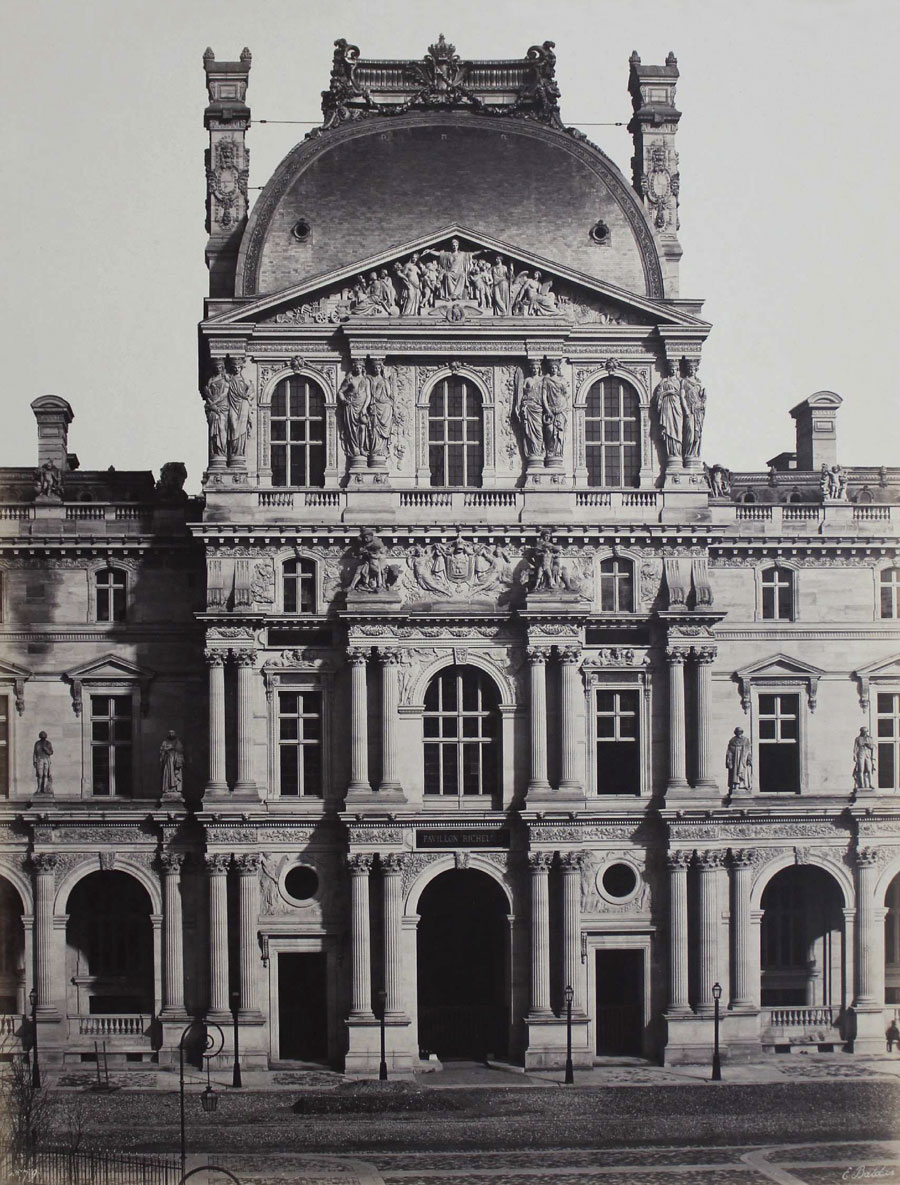
Edouard Baldus (French, 1813-1889) 'Pavillon Richelieu, Nouveau Louvre, Paris' c. 1855


Edouard Baldus (French, 1813-1889)
Pavillon Richelieu, Nouveau Louvre, Paris
c. 1855
Salt print mounted on card
45 x 34.5cm (17.69 x 13.56 ins)
Inscribed ‘no 79’ in the negative, lower left and signed in the negative lower right ‘E. Baldus’ Stamped E. Baldus on the lower right of the mount and titled lower left ‘Pavillon Richelieu Nouveau Louvre’


An image that the Metropolitan Museum of Art describes as “among the most spectacular of all Baldus photographs,” it is clear that Baldus took full advantage of the opportunity to use larger equipment, which was necessary to capture his tremendous subject. The technical advantages afforded by glass plate negatives allowed him to create equally large contact prints without joining separate negatives, as was his practice with many of his earlier images. Here, the resulting photograph depicts the Pavillon Richelieu in a striking range of tonality, from the crisp texture of the street to the glowing reflection of the pavilion’s new tiled roof.


Edouard Baldus (French, 1813-1889) 'Pavillon Sully, Nouveau Louvre, Paris' c. 1857


Edouard Baldus (French, 1813-1889)
Pavillon Sully, Nouveau Louvre, Paris
c. 1857
Salt print mounted on card
44.5 x 34.5cm (17.49 x 13.56 ins)
Inscribed ‘no 92’ in the negative, lower left. Stamped E. Baldus on the lower right of the mount and titled lower left ‘Pavillon Sully Nouveau Louvre’


Baldus returned to this particular pavilion numerous times, his earliest images of the structure produced while he was photographing for the Mission Heliographique. The Pavillon Sully was originally built during the Classical Period of Louis XIV in 1625, and served as a model for the Second Empire additions. One of the grandest of all the completed facades, the Pavillon Sully acquired many sculptural additions during the reconstruction, but the central clock from which the pavilion derived its original name (Pavillon de l’Horloge) remained central.

Taking an elevated view, Baldus depicted the Pavillon Sully with exemplary precision that is sharper than any contemporary enlargement. The result is one of the most imposing images of the Nouveau Louvre pavilions, giving the entire façade a commanding sense of presence as it rises above trees in the foreground, which are just blurred enough to reveal Baldus’ long exposure.


Dr James Hyman text


Edouard Baldus (French, 1813-1889) 'Saint Etienne du Mont, Paris' c. 1858


Edouard Baldus (French, 1813-1889)
Saint Etienne du Mont, Paris
c. 1858
Salt print mounted on card
44.1 x 34.2cm (17.33 x 13.44 ins)
Stamped E Baldus on the lower right of the mount and titled lower left ‘St Etienne du Mont’
Mount: 61 x 43.9 cms
Image: 44.1 x 34.2 cms


Edouard Baldus (French, 1813-1889) 'Notre Dame, Facade Principale, Paris' 1857


Edouard Baldus (French, 1813-1889)
Notre Dame, Facade Principale, Paris
1857
Salt print mounted on card
44.5 x 34.2cm (17.49 x 13.44 ins)
Inscribed ‘no 34’ in the negative, lower right. Stamped E. Baldus on the lower right of the mount and titled lower left ‘Notre Dame Facade Principal’
Dimensions Mount: 61 x 44 cms Image: 44.5 x 34.2 cms


This iconic image of Notre Dame embodies the direct and frontal style that came to define Baldus’ architectural images. Here, he has captured the majesty of one of Paris’ most notable landmarks by elevating his vantage point and placing the viewer at eye level with its magnificent rose window. This print is a carefully executed example of the type of balance and symmetry Baldus aimed to capture while working on this commission.


James Hyman Gallery
16 Savile Row
London W1S 3PL
Telephone 020 7494 3857

Opening hours:
By appointment

James Hyman Gallery website

LIKE ART BLART ON FACEBOOK

Back to top