*PLEASE NOTE THIS POSTING CONTAINS ART PHOTOGRAPHS OF MALE NUDITY – IF YOU DO NOT LIKE PLEASE DO NOT LOOK, FAIR WARNING HAS BEEN GIVEN*
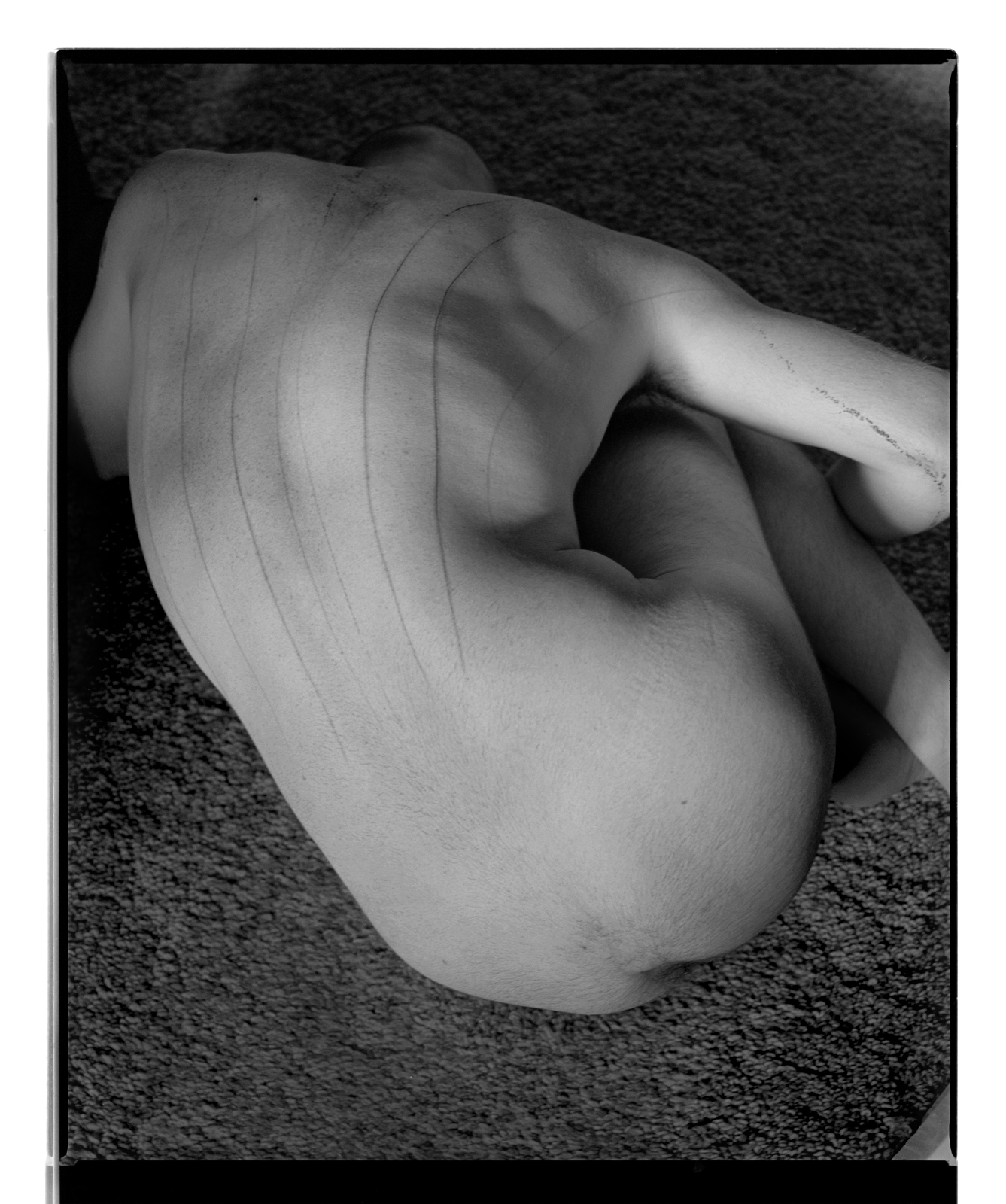
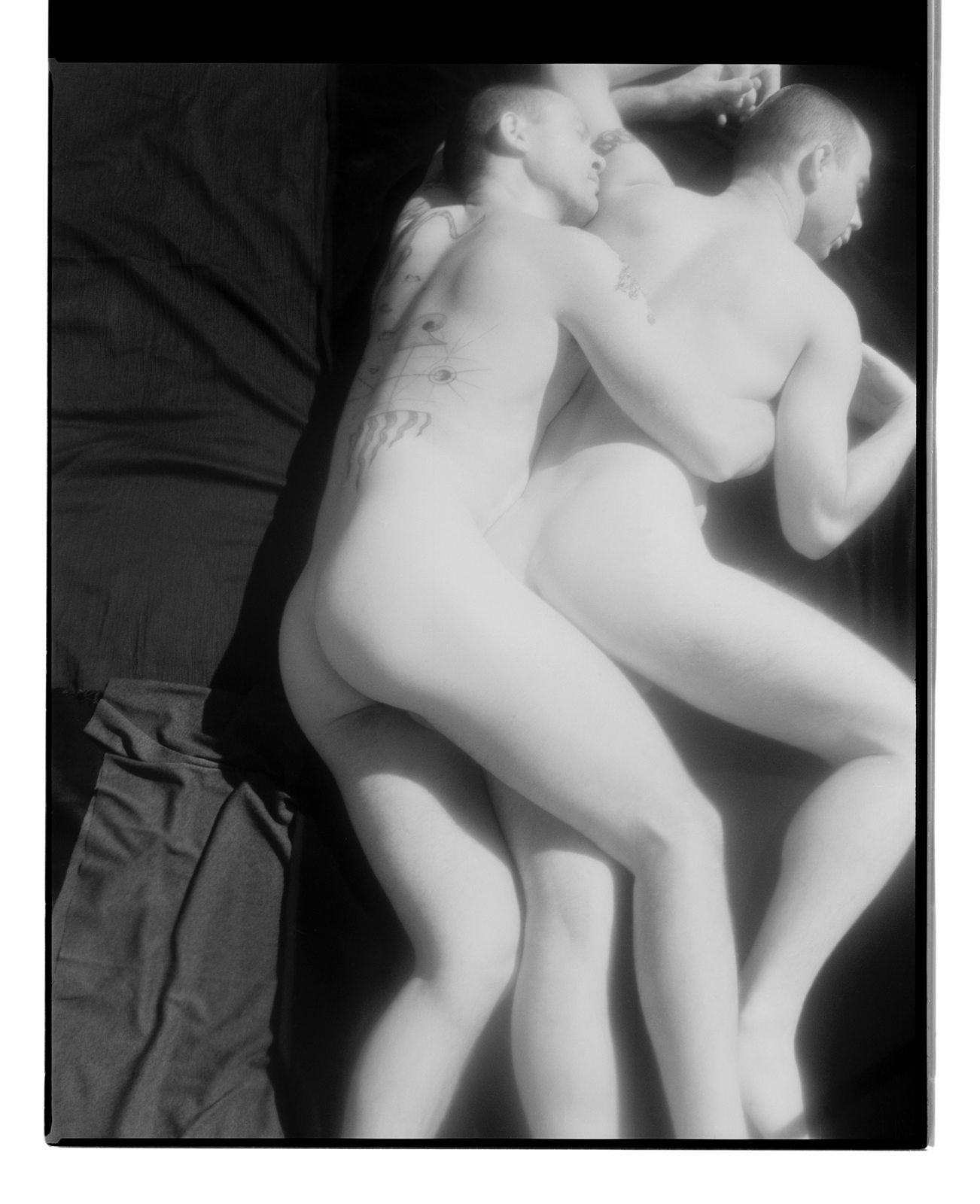
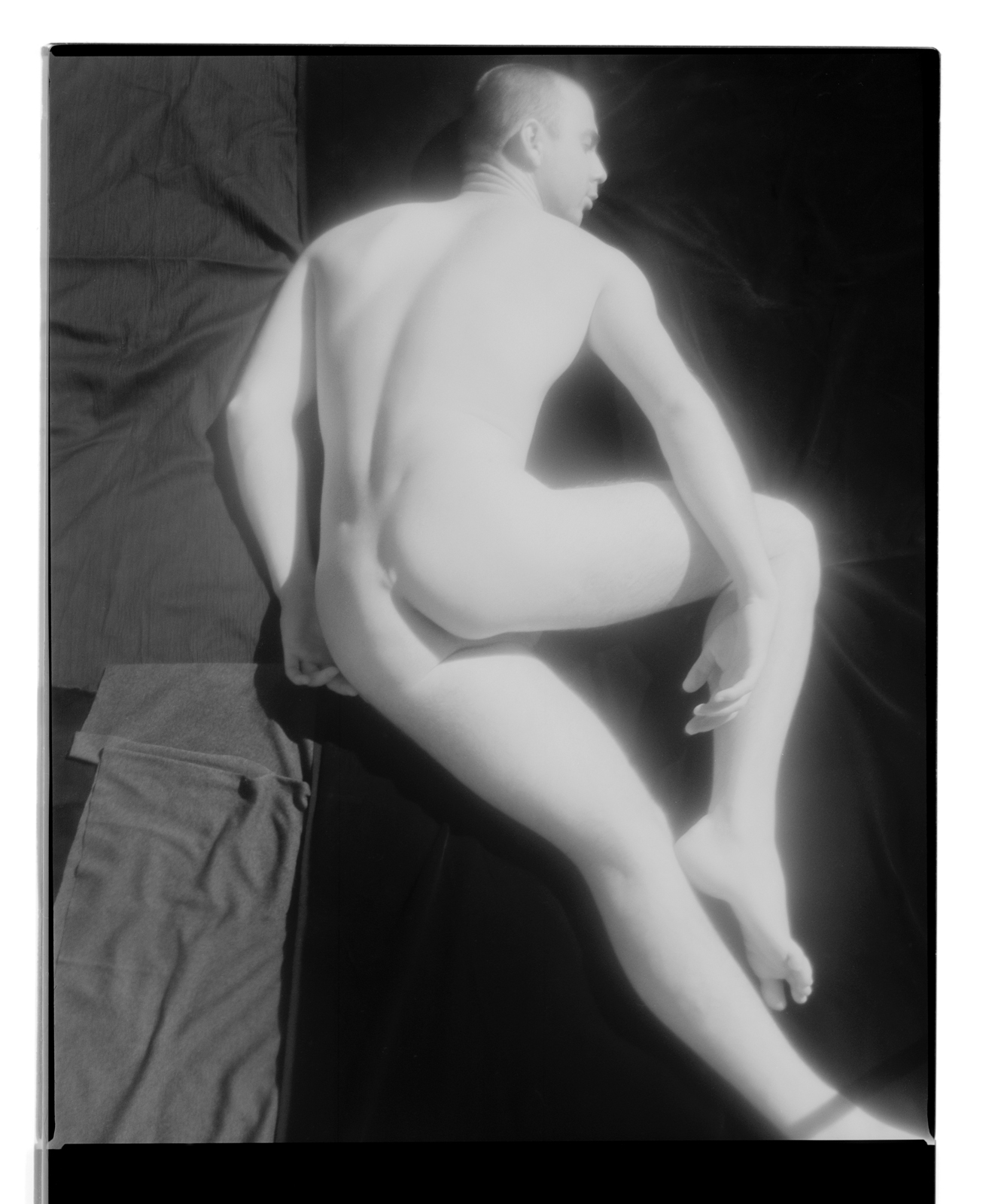
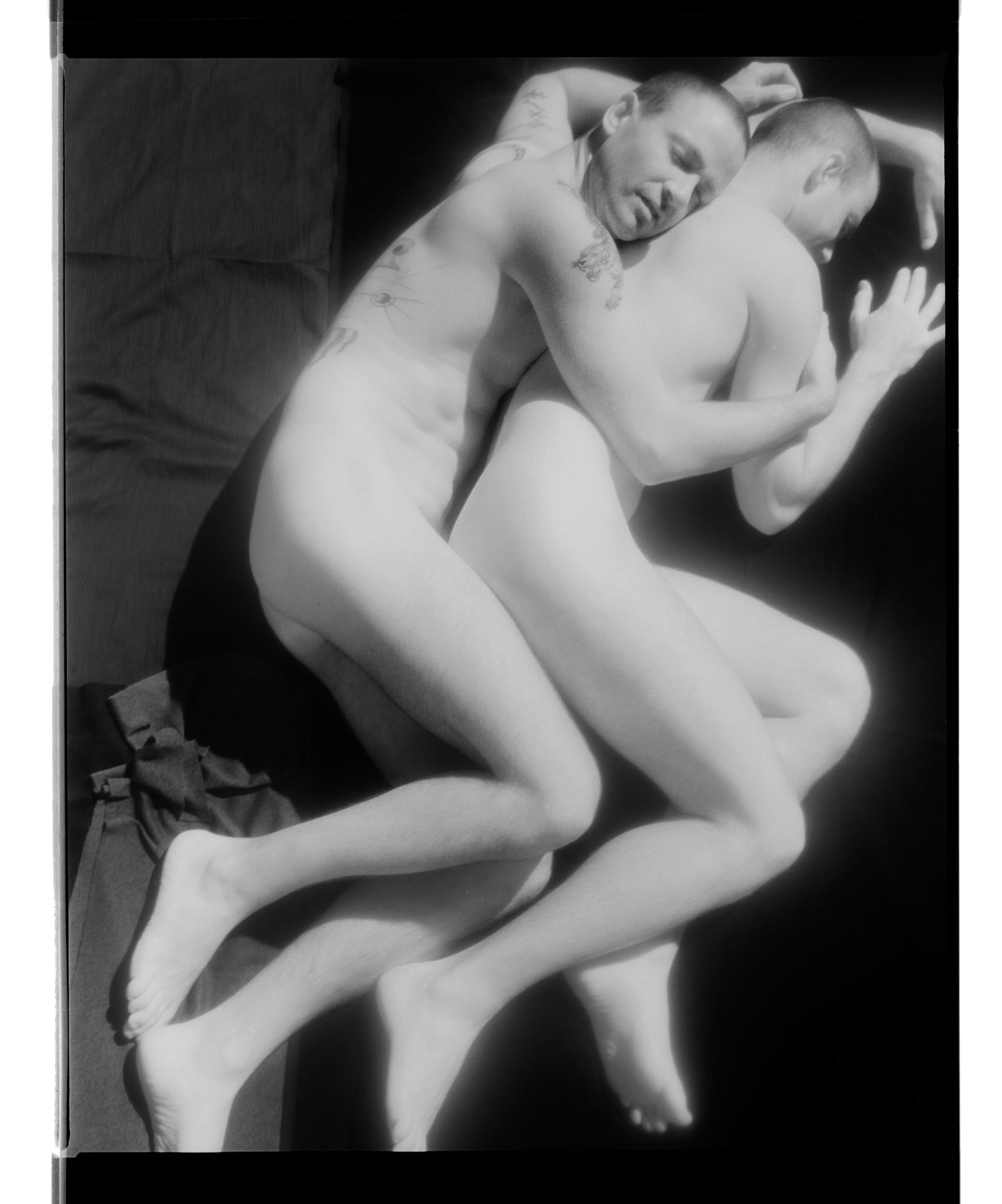
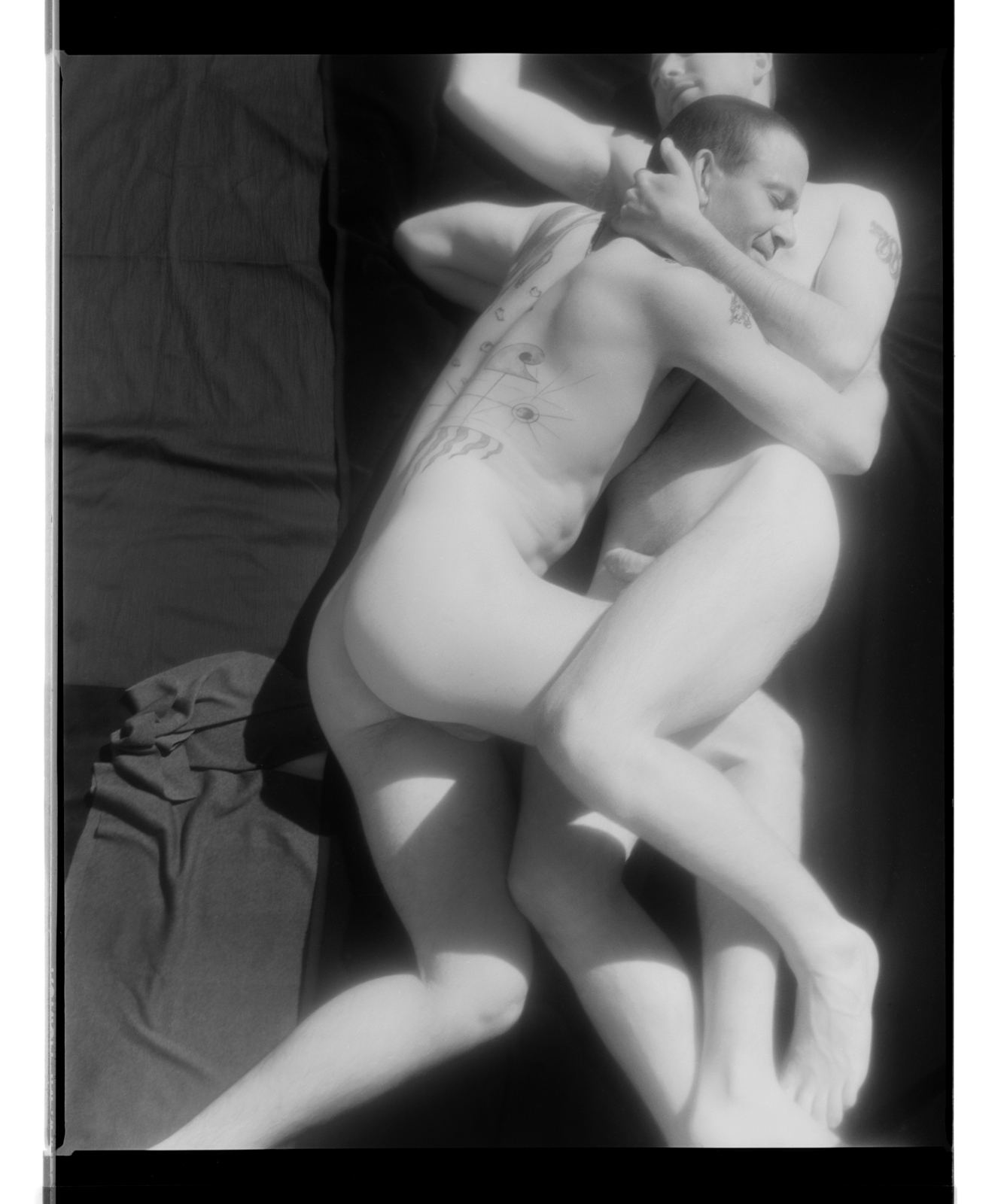
Marcus Bunyan (Australian born England, b. 1958) Untitled 1995-1996 From the series Sleep/Wound Gelatin silver print
Time is but the stream I go a-fishing in. I drink at it; but while I drink, I see the sandy bottom and detect how shallow it is. Its thin current slides away, but eternity remains. I would drink deeper; fish in the sky, whose bottom is pebbly with stars.
Thoreau, Walden
The series Sleep/Wound appeared in my solo exhibition titled The Cleft in Words, The Words As Flesh, at Stop 22 Gallery, St Kilda, Melbourne in 1996.
The series consists of ethereal, intimate photographs of my partner and myself in sleep positions, taken on infra-red film, the only time I ever used such film. I was fascinated (and still am) with the positions of the body in space, and how it moves in different environments.
The second part of the series are photographs of a performance, that of the cutting of my partners back. Paul and I held a dance party at a house on Punt Road in South Yarra where our friend Woody (David J. Wood of Bent Metal fame) was being evicted. The party, naturally enough called Eviction, was held to raise money for HIV/AIDS. Paul and I decorated the house, painting large, colourful kundalini symbols such as snakes and mandalas on the walls. In one room, painted with the seven colours of the main chakras, and to ambient music connected to earth, spirit and cosmos – I cut my partners back. Half the people fled, but the other half recognised the powerful spiritual connection that was happening in the performance (remember at this time, blood in terms of being gay, was tainted because of HIV/AIDS infection). I then smeared Paul’s blood on the walls of the house with my hands, crossing the boundary of the taboo by touching a bodily fluid whist acknowledging something that is essential to human life.
After packing up all the equipment from the party, we both headed to the Tasty nightclub (if any of you remember the Tasty raid) to have a good dance, with the blood still drying on Paul’s back. People were shocked at seeing his cut back. When we got back home at 6am in the morning I took out my trusty Mamiya RZ67 and took these beautiful photographs of one of the most connected, spiritual experiences of my life.
My thankx go to Paul as always for being my muse and partner without whom these experiences and photographs would never have been possible.
Dr Marcus Bunyan
I am scanning my negatives made during the years 1991-1997 to preserve them in the form of an online archive as a process of active memory, so that the images are not lost forever. These photographs were images of my life and imagination at the time of their making, the ideas I was thinking about and the people and things that surrounded me.
Photographs are available from this series for purchase. As a guide, a vintage 8″ x 10″ silver gelatin print costs $700 plus tracked and insured shipping. For more information please see my Store web page.
Marcus Bunyan (Australian born England, b. 1958) Untitled 1995-1996 From the series Sleep/Wound Gelatin silver print
Marcus Bunyan (Australian born England, b. 1958) Untitled 1995-1996 From the series Sleep/Wound Gelatin silver print
Marcus Bunyan (Australian born England, b. 1958) Untitled 1995-1996 From the series Sleep/Wound Gelatin silver print
Marcus Bunyan (Australian born England, b. 1958) Untitled 1995-1996 From the series Sleep/Wound Gelatin silver print
Marcus Bunyan (Australian born England, b. 1958) Untitled 1995-1996 From the series Sleep/Wound Gelatin silver print
Marcus Bunyan (Australian born England, b. 1958) Untitled 1995-1996 From the series Sleep/Wound Gelatin silver print
Marcus Bunyan (Australian born England, b. 1958) Untitled 1995-1996 From the series Sleep/Wound Gelatin silver print
Marcus Bunyan (Australian born England, b. 1958) Untitled 1995-1996 From the series Sleep/Wound Gelatin silver print
Marcus Bunyan (Australian born England, b. 1958) Untitled 1995-1996 From the series Sleep/Wound Gelatin silver print
Marcus Bunyan (Australian born England, b. 1958) Untitled 1995-1996 From the series Sleep/Wound Gelatin silver print
Marcus Bunyan (Australian born England, b. 1958) Untitled 1995-1996 From the series Sleep/Wound Gelatin silver print
Marcus Bunyan (Australian born England, b. 1958) Untitled 1995-1996 From the series Sleep/Wound Gelatin silver print
Marcus Bunyan (Australian born England, b. 1958) Untitled 1995-1996 From the series Sleep/Wound Gelatin silver print
Marcus Bunyan (Australian born England, b. 1958) Untitled 1995-1996 From the series Sleep/Wound Gelatin silver print
Marcus Bunyan (Australian born England, b. 1958) Untitled 1995-1996 From the series Sleep/Wound Gelatin silver print
Marcus Bunyan (Australian born England, b. 1958) Untitled 1995-1996 From the series Sleep/Wound Gelatin silver print
Marcus Bunyan (Australian born England, b. 1958) Untitled 1995-1996 From the series Sleep/Wound Gelatin silver print
Marcus Bunyan (Australian born England, b. 1958) Untitled 1995-1996 From the series Sleep/Wound Gelatin silver print
Marcus Bunyan (Australian born England, b. 1958) Untitled 1995-1996 From the series Sleep/Wound Gelatin silver print
Marcus Bunyan (Australian born England, b. 1958) Untitled 1995-1996 From the series Sleep/Wound Gelatin silver print
Marcus Bunyan (Australian born England, b. 1958) Untitled 1995-1996 From the series Sleep/Wound Gelatin silver print
This project has been supported by the Victorian Government through Creative Victoria
PLEASE NOTE: I am still recovering from my hand operation which is going to take longer than expected. All of the text has been constructed using a dictation programme and corrected using only my right hand – a tedious process. I have to keep my mental faculties together, otherwise this hand will drive me to distraction… Marcus
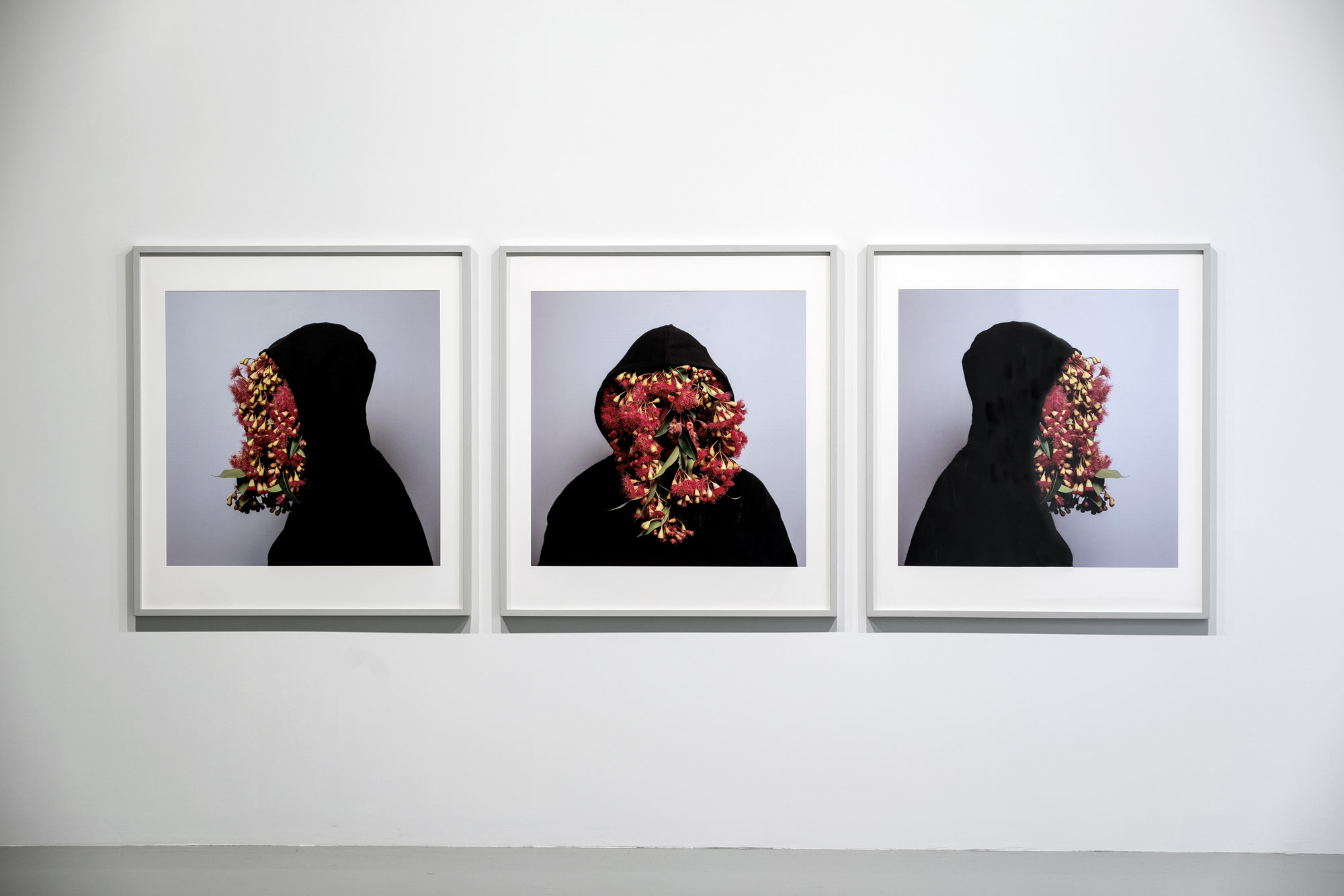
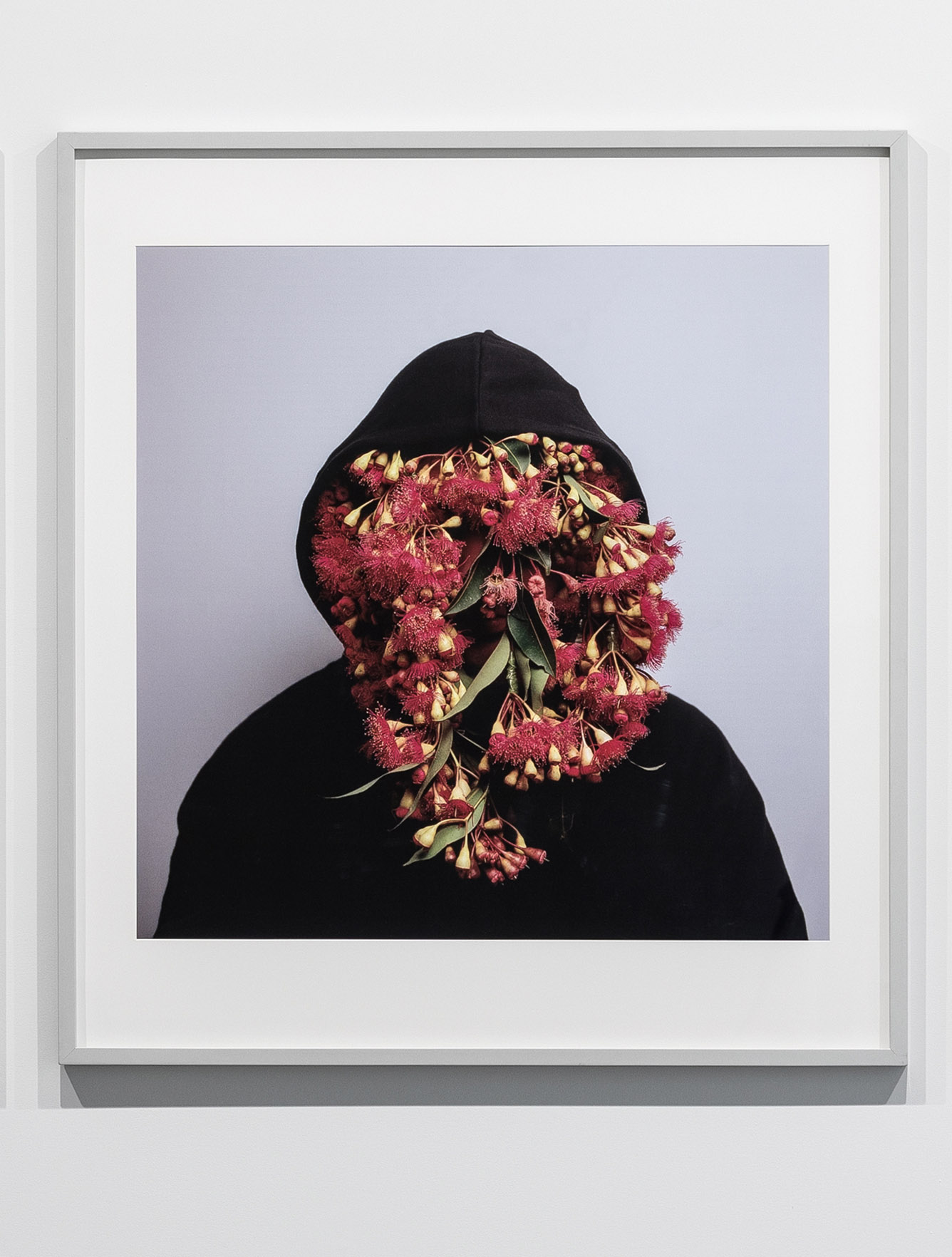
Christian Thompson (Australian, b. 1978) Black gum 1-3 2007 From the series Australian graffiti C-type prints Collection of the National Gallery of Australia, Canberra Photo: Andrew Curtis
Still singing, still Dreaming, still loving… not dying.
This is a strong survey exhibition of the work of contemporary Australian Indigenous artist and Bidjara man exploring the world, Christian Thompson. As with any survey exhibition, it can only give us a glimpse into the long standing development of the artist’s work, inviting the viewer to then research more fully the themes, conceptual acts and bodies (of work) that have led the artist to this point in his artistic development. Having said that the exhibition, together with its insightful catalogue essays and additional images that do not appear in the exhibition, allow the viewer to be challenged intellectually, aesthetically and most importantly … spiritually. And to be somewhat conflicted by the art as well, it has to be said.
Thompson’s “multidisciplinary practice explores notions of cultural hybridity, along with identity and history, creating works that transcend cultural boundaries.” His self-reflexive and self-referential bodies of work, often with the artist using his body as an “armature for his characters, costumes and various props,” are intuitive and imaginative in how they relate Aboriginal and Australian/European history, taking past time into present time which influences future time. Time, memory, history, space, landscape are conflated into one point, enunciated through acts of ritual intimacy. These ritual intimacies, these performative acts, are enabled through an understanding of a regularised and constrained repetition of norms (in this case, the declarative power of colonialism), where the taking of a photograph of an Aboriginal person (for example), is “a ritual reiterated under and through constraint, under and through the force of prohibition and taboo, with the threat of ostracism and even death controlling and compelling the shape of the production…” (Judith Butler, Bodies That Matter. New York: Routledge, 1993, p. 95).
What is so heartening to see in this exhibition is a contemporary Indigenous artist not relying on re-animating colonial images of past injustices, but re-imagining these images to produce a spiritual connection to Country, to place, to people in the present moment. As Charlotte Day, Director, MUMA and Hetti Perkins, guest curator observe in the wall text at the beginning of the exhibition, “Rather than appropriating or restaging problematic ethnographic images of indigenous ancestors held in the Museum’s photographic collection, Thompson has chosen to spend significant periods of time with these images, absorbing their ‘aura’ and developing a personal artistic and deferential response that is decisively empowered.” As Marina Warner states in her excellent catalogue essay “Magical Aesthetics”, these ritual intimacies are a “magical re-animation and adopt time-honoured processes of making holy – of hallowing. Adornment is central to ritual and a prime way of glorifying and consecration.” What Thompson is doing is not quoting but translating the source-text into new material. As Mary Jacobus notes of the work of the painter Cy Twombly, “Quotation involves the repurposing of an existing text: translation requires a swerve from the source-text as it finds new directions and enters unknown terrain.” (Mary Jacobus. Reading Cy Twombly: Poetry in Paint. Princeton & Oxford: Princeton University Press, 2016, p. 7).
This auto-ethnographic exploration and adornment leads to a deterritorialisation and reterritorialisation of time in a heterotopic space, juxtaposing in a single real place several spaces, several sites of contestation – Thompson’s travels and research from around the world, the embodiment in his own culture and that of contemporary Australia, pop culture, fashion, music and language – where, as Hetti Perkins says, “the unknowable is a lovely thing” and where Thompson can affect and influence “the Zeitgeist through more subversive means.” These spaces of ritualised production overlaid with memory, imagination, desire, and nostalgia, these fragmented images, become a process and a performance in which Thompson seeks to ameliorate the objects aura through a process of ‘spiritual repatriation’. Thompson’s performativity is where the ritual of production and meaning is never fully predetermined at any stage of production and reception.
Here, in terms of ‘aura’ and ‘spirit’, I am interested in the word “repatriation”. Repatriation means to send (someone) back to their own country – from the verb repatriare, from re- ‘back’ + Latin patria ‘native land’. It has an etymological link to the word “patriot” – from late Latin patriota ‘fellow countryman’, from Greek patriōtēs, from patrios ‘of one’s fathers’, from patris ‘fatherland’ – and all the imperial connotations that are associated with the word. So, to send someone back (against their own will? by force?) or to be patriotic, as belonging to or coming from, the fatherland. A land that is father, farther away. Therefore, it is with regard to a centralised, monolithic body and its materialities (for the body is usually centrally placed in Thompson’s work) in Thompson’s instinctive works, that relations of discourse and power will always produce hierarchies and overlappings which are going to be contested. As Judith Butler notes,
“That each of those categories [body and materiality] have a history and a historicity, that each of them is constituted through the boundary lines that distinguish them and, hence, by what they exclude, that relations of discourse and power produce hierarchies and overlappings among them and challenge those boundaries, implies that these are both persistent and contested regions.” (Judith Butler. Bodies That Matter. New York: Routledge, 1993, pp. 66-67)
Thus performativity is the power of discourse, the politicisation of abjection, and the ritual of being.
This is where I become conflicted by much of this work. Intellectually and conceptually I fully understand the instinctive, intuitive elements behind the work (crystals, flowers, maps, butterflies, dreams) but aesthetically I feel little ‘aura’ emanating from the photographs. Thompson’s “peripatetic life and your bowerbird, magpie-like fascination” (p. 107) lead to all sorts of influences emerging in the work – orange from The Netherlands, Morris dancers from England, Jewish heritage, Aboriginal and Australian heritage, fashion, pop culture, music, language – all evidenced through “acts of concealment in his self-portraits.” (p. 75). Now there’s the rub!
In Thompson’s ritual intimacies the intimacy is performed only once, for the camera. It is not didactic, but it is interior and hidden, leaving much to the feelings of the viewer, looking. The re-presentation of that intimacy is performed by the viewer every time they look at the art. I think of the work of one of my favourite performance artists, Claude Cahun, where the artist inhabits her personas, adorning her androgynous face with costume after costume to become something that she wants to become – a buddha, a double, a harpy, a lunatic or a doll with equal ease. Cahun is always and emphatically herself, undermining a certain authority… and she produces indelible images that sear the mind.
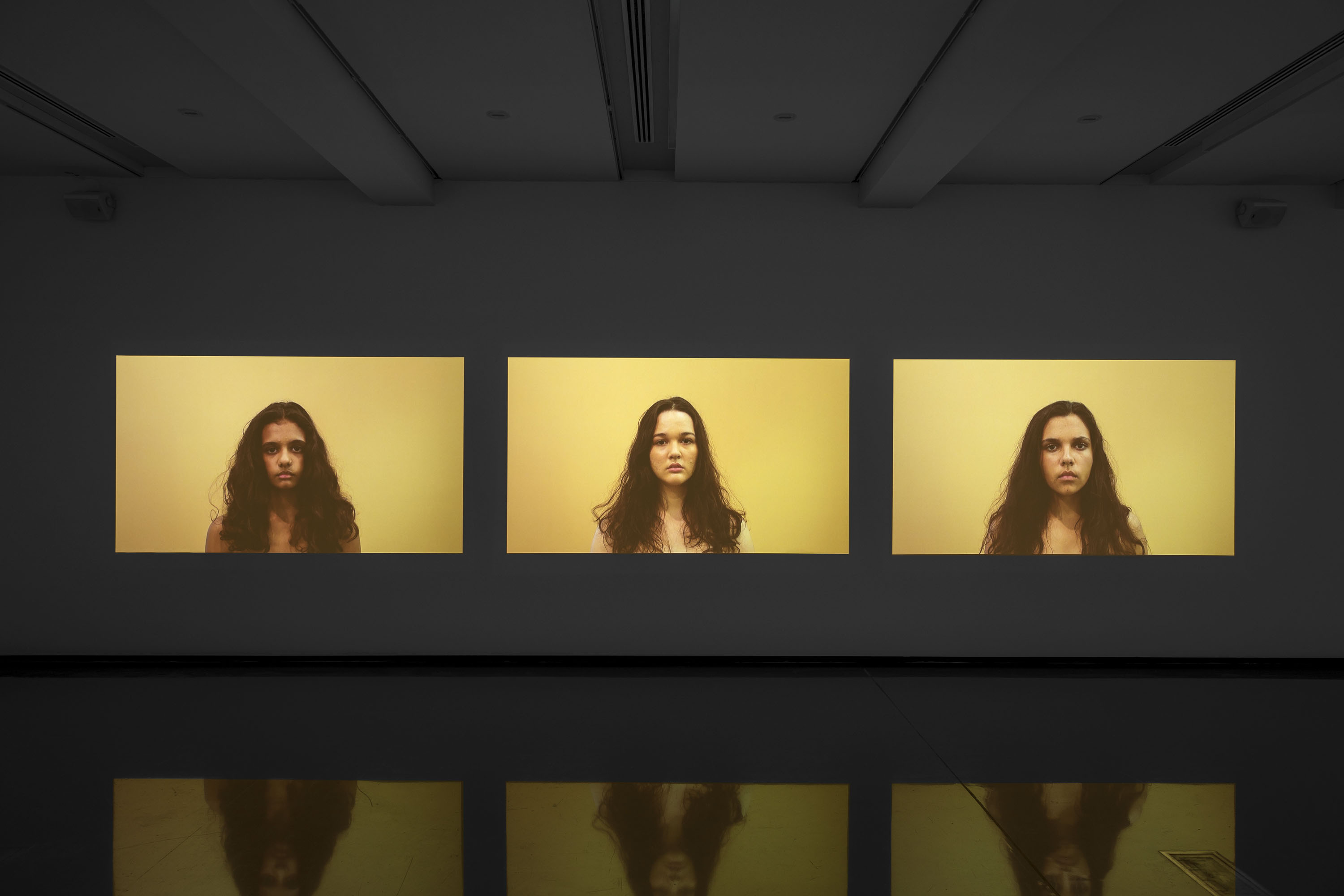
I don’t get that from Thompson. I don’t know who he really is. Does it matter? Yes it does. In supposedly his most autobiographic work (according to Hetti Perkins), the video Heat (2010, below) the work emerges out of Thompson’s memories of growing up in the desert surrounding Barcaldine in central west Queensland where “heat captures the sensation that he associates with being on his country: the dry wind blowing through his hair.” Perhaps for him or someone from the desert country like Hetti Perkins (as she states in the catalogue), but not for me. I feel no ‘heat’ from these three beautiful woman standing in a contextless background with a wind machine blowing their hair. The only ‘heat’ I felt was perhaps the metaphoric heat of colonisation, violence and abuse thrust on a vulnerable culture.
Talking of vulnerable cultures, in the work Polari (2014, below) Thompson invokes the history of languages in an intimate ritual “as he seeks to reanimate and repossess vanishing knowledge. Polari is a private language … a kind of code used by sailors, circus and fairground folk, and in gay circles. … Thompson’s Polari series warns us that the artist has a language of his own, which we can overhear but not fully understand: something is withheld, in contrast to the imposed and implacable exposure which the subjects of scientific collections were made to suffer in the past.” (Warner, p. 74) But why is he using Polari specifically, a language that is strongly associated with the libertine gay culture of the 1950s-70s? Does he have a right to use this word and its linguistic heritage because he is gay? It is never stated, again another thing left hidden, concealed and unresolved.
Although no culture can ever fully own its language (language is a construct after all) … if Thompson is not gay, then I would take exception to his invoking the Polari language, just as an Indigenous artist would take exception to me using Bidjara language in an art work of my own. I remember coming out in London in 1975 and speaking Polari myself when it was still being used in pubs and clubs such as the A + B club in Soho. It was not being used as a language of resistance, far from it, but as a language of desire. It was a language used to inculcate that desire. As a video on YouTube observes of speaking Polari, “you didn’t think, oh God I’m so oppressed I can never speak about myself, you just did it, you just slipped into it without thinking.” It was your own language, like a comfortable pair of slippers. Does Thompson understand how using that word to title a body of work could be as offensive to some people as he finds the denaturing of his own culture? For me this is where the work really becomes problematic, when an artist does not enunciate these connections, where things, like sexuality, remain hidden. Similarly, with historical photographs of Indigenous people taken for ethnographic study, Thompson fails to acknowledge the work of academics such as Jane Lydon and her important books Eye Contact: Photographing Indigenous Australians (2005) and Photography, Humanitarianism, Empire (2016) where she unpacks the historical baggage of the images and notes that the photographs were not solely a tool of colonial exploitation. Lydon articulates an understanding in Eye Contact that the residents of Coranderrk, an Aboriginal settlement near Healsville, Melbourne, “had a sophisticated understanding of how they were portrayed, and they became adept at manipulating their representations.” Again, there is more than meets the eye, more than just ‘spiritual repatriation’ of aura.
For me, the magic of this exhibition arrives when Thompson lets go all obfuscation, let’s go all actions that make something obscure, unclear, or unintelligible. Where his ritual intimacies become grounded in language, earth and spirit. This happens in the video works, Desert slippers (2006, below), Refuge (2014, below), Gamu Mambu (Blood Song) (2011) and Dhagunyilangu (Brother) (2011, below). In these videos, the Other’s gaze disintegrates and we are left with poignant, heart felt words and actions that engage history, emotion, family and Country.
The video Desert slippers “features a Bidjara ritual in which a father and son transfer sweat. The desert slipper is a native cactus that symbolises the transferal of the spirit back to earth as the plant grows.” It is simple, eloquent, powerful, present. The other videos feature two baroque singers from Europe and Thompson singing in his native tongue Bidjara (Bidyara, Pitjara), a language that Wikipedia states “is an extinct Australian Aboriginal language. In 1980 it was spoken by twenty elders in Queensland, between Tambo and Augathella, Warrego and Langlo rivers.” Spelt out in black and white. Extinct. To hear Thompson sing a berceuse (French, from bercer ‘to rock’), or lullaby in his native language, a language taught to him by his father, is the most emotional of experiences. The work “combines evocative chanting and electronic elements to invoke the cultural experiences and narratives of his Bidjara culture,” and “is premised on the notion that if one word of Bidjara is spoken, or sung in this case, it remains a living language.” Amen to that.
This is the real hallowing, not the dress ups or the concealments. It is in these videos that the raw material of his and his cultures experience is transmuted into living, breathing stories, in an alchemical transmutation, a magical re-animation of past time into present and future time. My transfiguration into a more spiritual state was complete when listening in quiet contemplation. For I was given, if only for a very brief moment, access to the pain of our First Peoples and a vision of hope for their future healing.
Still singing, still Dreaming, still loving… and certainly not dying.
Christian Thompson (Australian, b. 1978) Black gum 1 (installation view) 2007 From the series Australian graffiti C-type print Collection of the National Gallery of Australia, Canberra Photo: Marcus Bunyan
Christian Thompson (Australian, b. 1978) Black gum 2 (installation view) C-type print 2007 From the series Australian graffiti Collection of the National Gallery of Australia, Canberra Photo: Marcus Bunyan
“While I’m interested in portraiture – I don’t consider my work as portraiture because that suggests that I’m trying to portray myself, my own visage, my own image. I employ images, icons, materials, metaphors to capture and idea and moment in time. There are many different things at play; taking a picture of myself is really the last thing that’s on my mind.”
Christian Thompson in conversation with Hetti Perkins, catalogue extract
“I’m interested in simple aesthetic gestures that can say something … something quite profound about the world that we live in. I tend to build images how I create a sculpture. I borrow from the world around me.”
On being away from home: “You’re able to remove yourself from the local discourse, and romanticise home. When you’re displaced you tend to gravitate towards certain memories … But this is who I am. It would be weird not to express that somehow. I combine memories of my past with my lived experience and an idea of where I’d like to be … it’s all montaged into one.”
“But Thompson makes things up. His ‘We bury our own’ does not let us see the early daguerreotype but improvises a series of fugues on its spiritual essence. This is the crucial step that Thompson has taken: if you repeat the spectacle you cannot escape the past. But if you, a spiritual descendant, transmogrify yourself in keeping with the aura of the image’s subject, during the prolonged period of encounter and immersion, you can ‘repatriate’ that forebear. Or so he desires.”
“Through these conjurings of the language his people spoke before colonisation set out to strip them of their culture as well as their land, Christian Thompson performs private ceremonies – to reach beyond visual statements of personal presence and reawaken the knowledge of his forebears, and allow us, his listeners and viewers, into their living story.”
Marina Warner. “Magical Aesthetics,” extracts from the catalogue essay
“At the heart of my practice is a concern with aura: what it is, how it can be photographed and how it can be repatriated.”
Christian Thompson
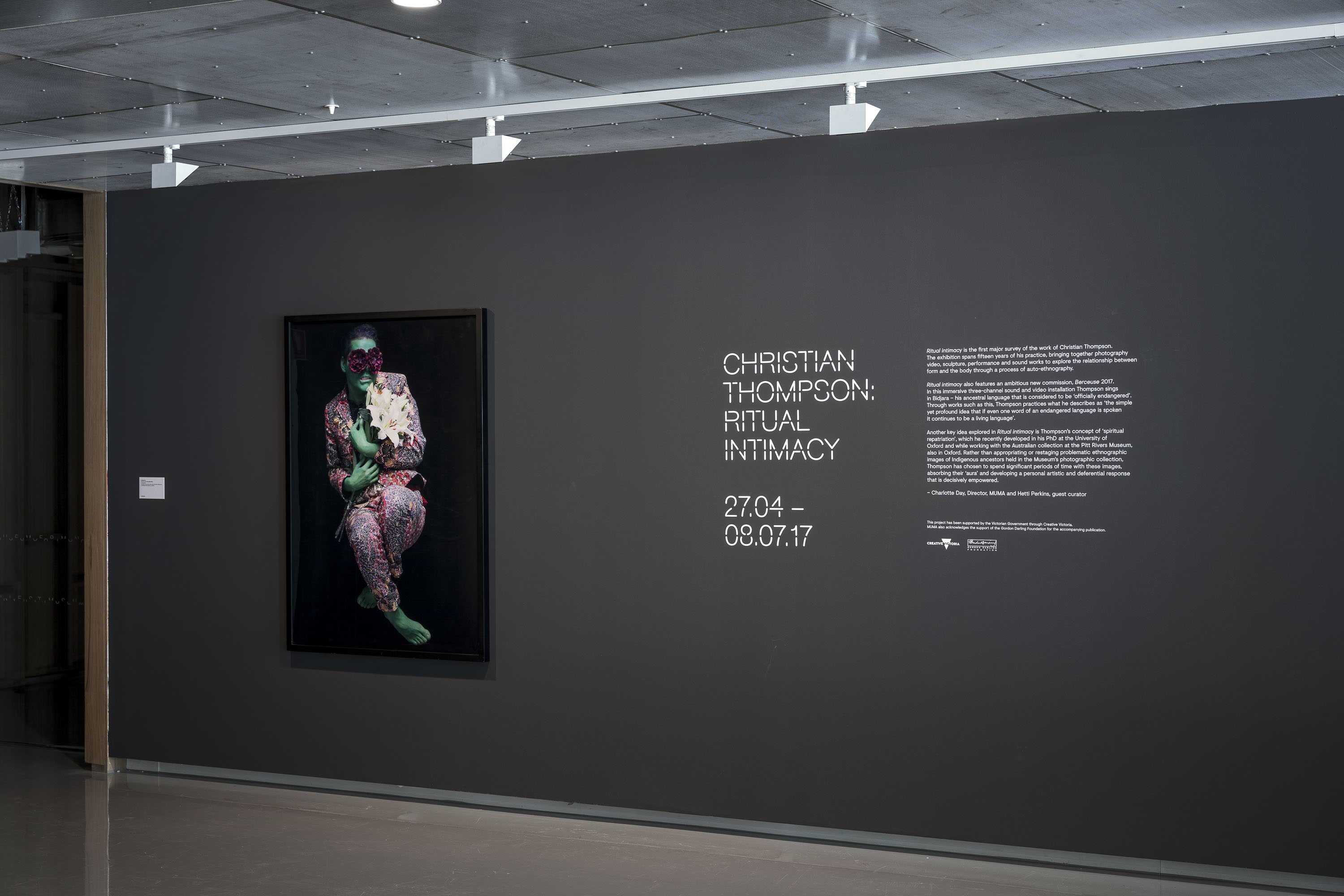
Christian Thompson: Ritual intimacy, installation view: Monash University Museum of Art, Melbourne 2017 Photo: Andrew Curtis
Christian Thompson (Australian, b. 1978) Untitled #6 2010 From the series King Billy C-type print Image courtesy of the artist, Sarah Scout Presents, Melbourne, and Michael Reid, Sydney and Berlin
Christian Thompson: Ritual intimacy, installation view: Monash University Museum of Art, Melbourne 2017 featuring stills from the video Berceuse (2017) Photos: Marcus Bunyan
Christian Thompson (Australian, b. 1978) Berceuse (extract installation view) 2017 Three-channel digital colour video, sound 5.47 minutes Sound design: Duane Morrison
Christian Thompson (Australian, b. 1978) Berceuse 2017 Three-channel digital colour video, sound 5.47 minutes Sound design: Duane Morrison
In this newly commissioned work, Thompson sings a berceuse – a cradle song or lullaby – that combines evocative chanting and electronic elements to invoke the cultural experiences and narratives of his Bidjara culture. Intended as a gesture of re-imagining his traditional Bidjara language, which is been categorised as extinct, the work is premised on the notion that if one word of Bidjara is spoken, or sung in this case, it remains a living language.
Thompson makes subtle reference to his maternal Sephardic Jewish roots by ruminating in this work on the lullaby Nani Nani:
Lullaby, lullaby The boy wants a lullaby, The mother’s son, Who although small will grow.
Oh, oh my lady open, Open the door, I come home tired, From ploughing the fields.
Oh, I won’t open them, You don’t come home tired, You’ve just come back, From seeing your new lover.
Christian Thompson: Ritual intimacy, installation view: Monash University Museum of Art, Melbourne 2017 featuring the series Museum of Others (2016) Photos: Marcus Bunyan
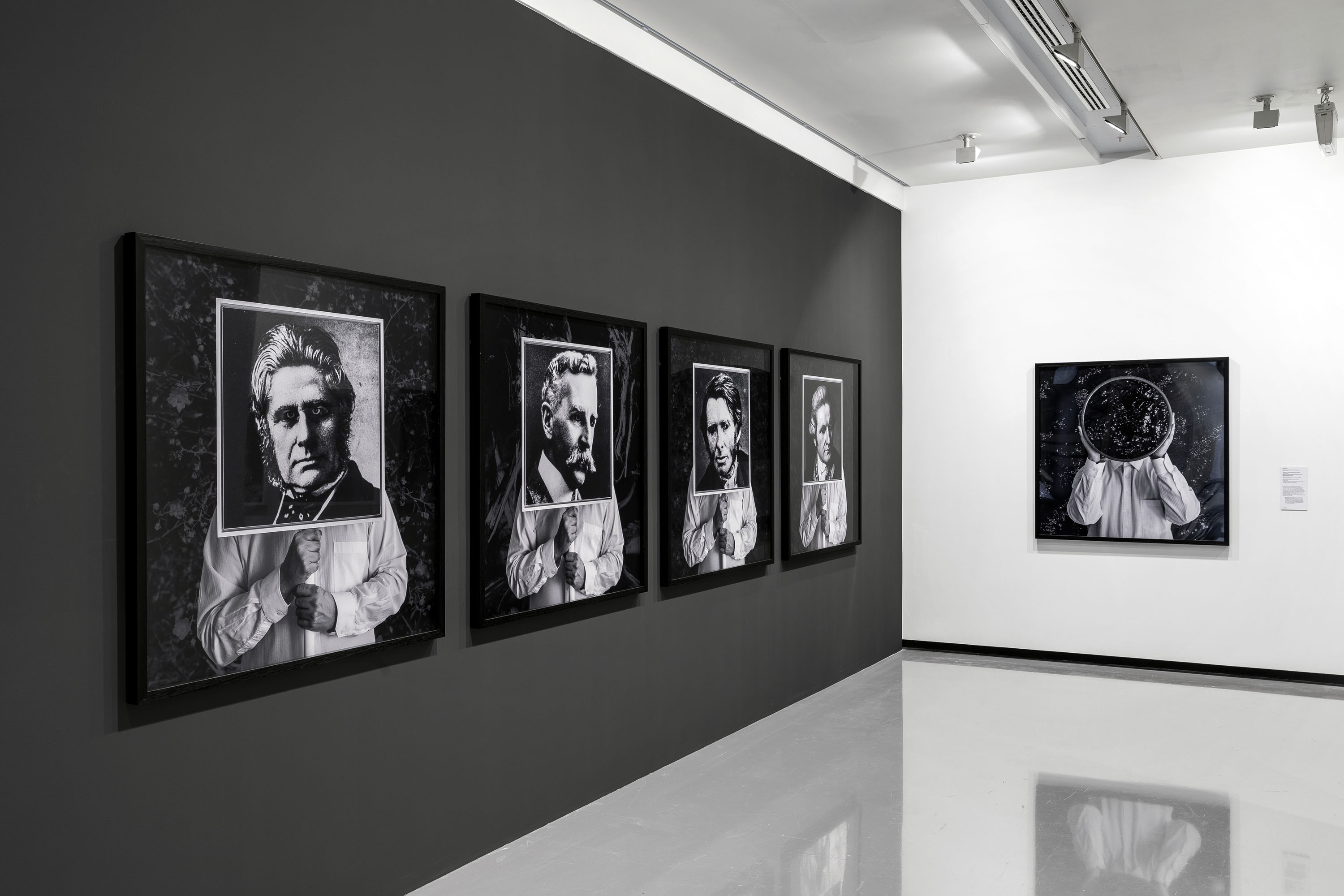
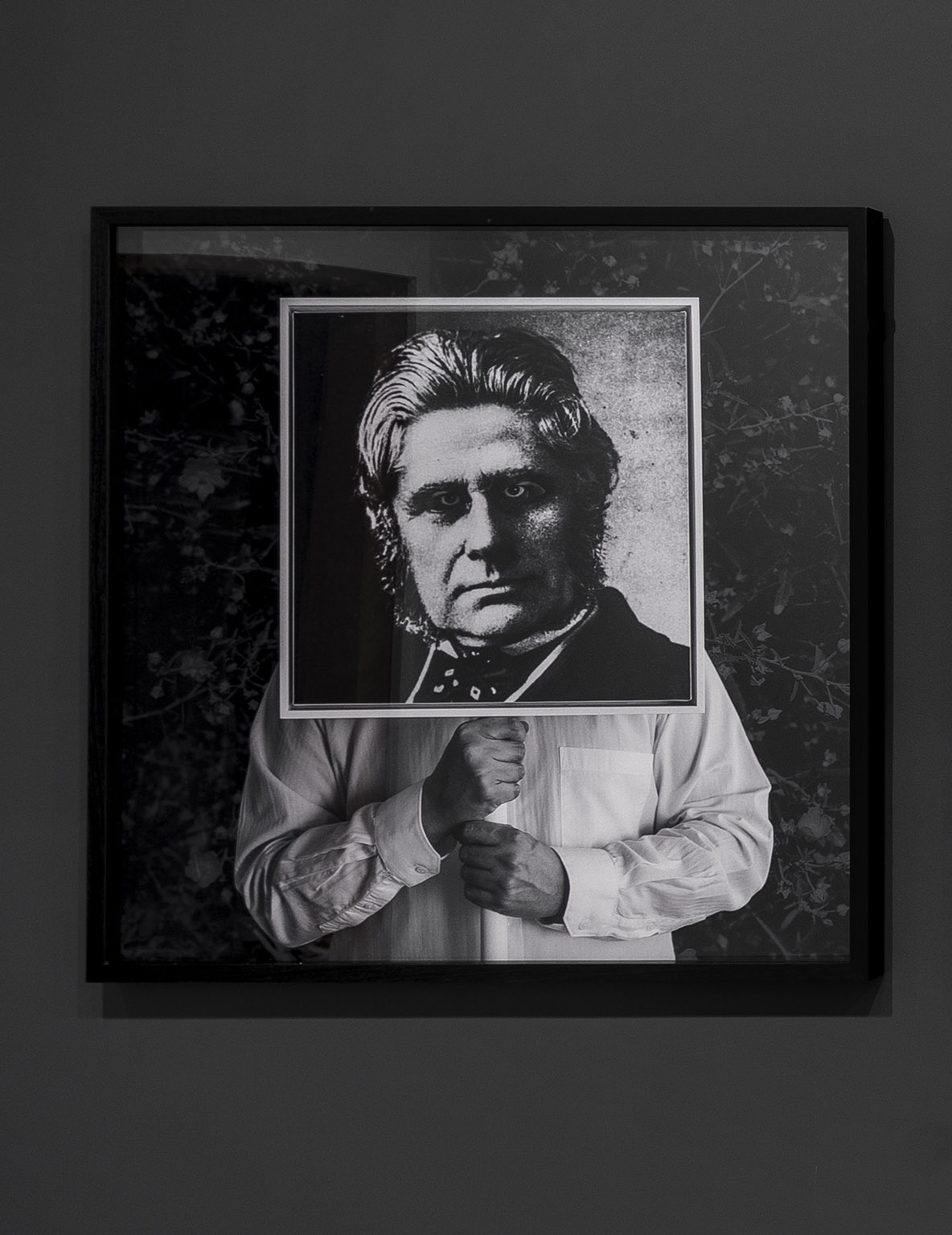
Installation view of Museum of Others (Othering the Ethnologist, Augustus Pitt Rivers) 2016 Photo: Marcus Bunyan
Christian Thompson (Australian, b. 1978) Museum of Others (Othering the Anthropologist, Walter Baldwin Spencer) 2016 From the series Museum of Others C-type print
Installation view of Museum of Others (Othering the Explorer, James Cook) 2016 Photo: Marcus Bunyan
Christian Thompson (Australian, b. 1978) Museum of Others (Othering the Explorer, James Cook) 2016 From the series Museum of Others C-type print
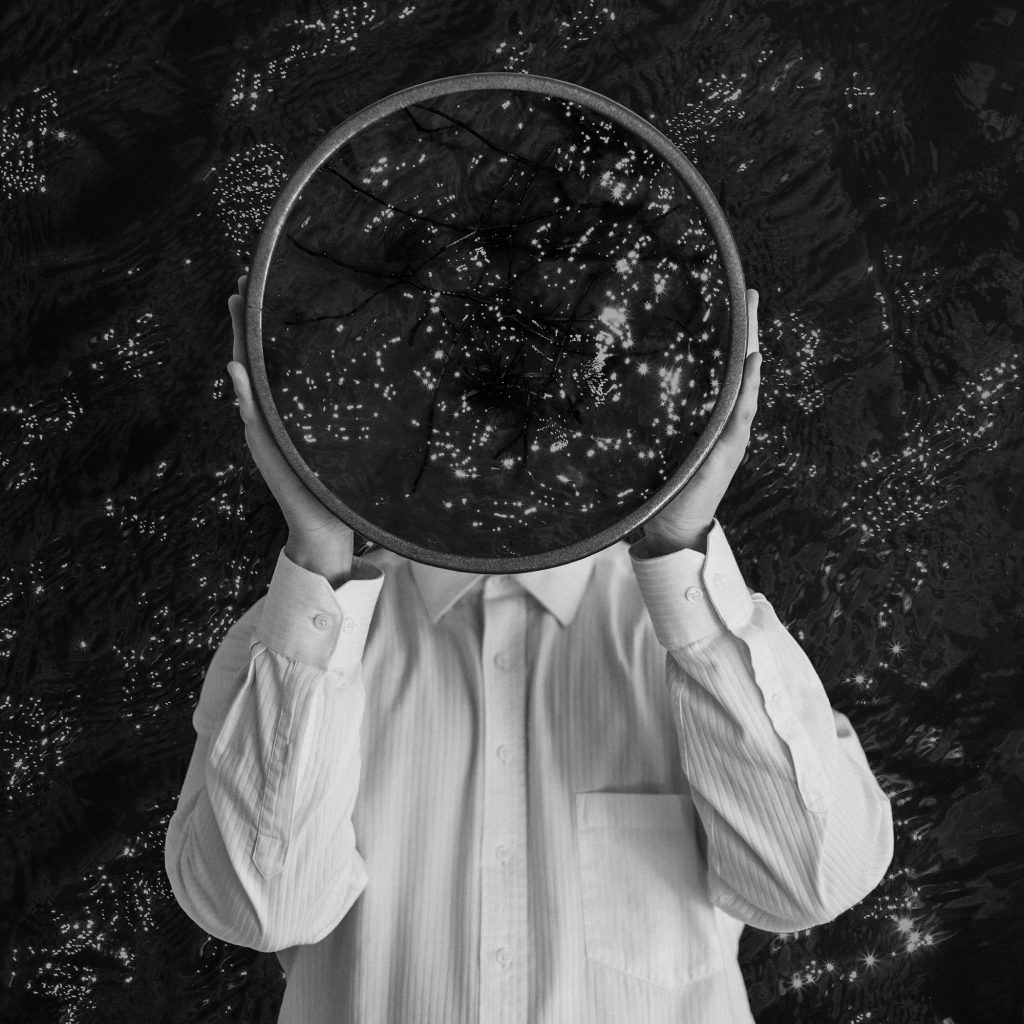
Christian Thompson (Australian, b. 1978) Equilibrium 2016 From the series Museum of Others C-type print
Museum of others is Thompson’s most recent photographic series and continues to reflect on his time at the University of Oxford. It features several ‘dead white males’ from the pantheon of British and Australian culture. The explorer, the ethnologist and the anthropologist all had roles in the process of colonisation in Australia but the art critic is particular to Thompson; Ruskin was the first Slade Professor of Fine Art at University of Oxford, just as Thompson was one of its first Australian Aboriginal students. Thompson explains his motivation for the series:
“Historically, it was the western gaze that was projected onto the ethnic other and I thought I’ll create a ‘museum of others’ and I’ll be the one othering, so to speak. ‘Equilibrium’ is based around the idea that the vessel is the equaliser. The vessel is the cradle of all civilisations. We all have that in common.”
Wall text from the exhibition
Christian Thompson: Ritual intimacy, installation view: Monash University Museum of Art, Melbourne 2017 featuring photographs from the series We bury our own 2010 (C-type prints) Photos: Andrew Curtis
We bury our own is a body of work that was developed in response to the historic collection of photography, featuring Aboriginal people from the late nineteenth century, at the Pitt Rivers Museum in Oxford. Thompson noted in 2012 that these early images “have permeated my work over the last year. They have remained at the forefront of every artistic experiment and they have pushed me into new territory, they have travelled with me… I was drawn to elements of opulence, ritual, homage, fragility, melancholy, strength and even a sense of play operating in the photographs…”
Each of Thompson’s lyrical photographic images from We bury our own and Pagan sun feature himself partially disguised with props and costumes. The works are virtually monochromatic with elements highlighted in full colour, and his eyes, or face, are partially concealed or painted. The use of votive objects is explained in his equally lyrical 2012 statement: “I lamented the passing of the flowers at the meadow, I lit candles and offered blood to the ancestral beings, looked into the black sparkling sea, donned the Oxford garb, visited the water by fire light and bowed at the knees of the old father ghost gum.”
Christian Thompson (Australian, b. 1978) Energy Matter 2010 From the series We bury our own C-type print
Christian Thompson (Australian, b. 1978) Lamenting the flowers 2010 From the series We bury our own C-type print
Christian Thompson (Australian, b. 1978) Forgiveness of Land 2010 From the series We bury our own C-type print
Christian Thompson (Australian, b. 1978) Down Under World 2010 From the series We bury our own C-type print
I conceived the We Bury Our Own series in 2010 after curator Christopher Morton invited me to develop a body of work that would be inspired by and in dialogue with the Australian photographic collection at the Pitt Rivers Museum…
The archival images have permeated my work over the last year. They have remained at the forefront of every artistic experiment and pushed me into new territory; they have travelled with me to residencies at the Fonderie Darling in Montreal and Greene Street Studio, New York. I was drawn to elements of opulence, ritual, homage, fragility, melancholy, strength and even a sense of play operating in the photographs. The simplicity of a monochrome and sepia palette, the frayed delicate edges and the cracks on the surface like a dry desert floor that reminded me of the salt plains of my own traditional lands.
I wanted to generate an aura around this series, a meditative space that was focused on freeing oneself of hurt, employing crystals and other votive objects that emit frequencies that can heal, ward off negative energies, psychic attack, geopathic stress and electro magnetic fields, and, importantly, transmit ideas.
I lamented the passing of the flowers at the meadow, I lit candles and offered blood to the ancestral beings, looked into the black sparkling sea, donned the Oxford garb, visited the water by fire light and bowed at the knees of the old father ghost gum. I asked the photographs in the Pitt Rivers Museum to be catalysts and waited patiently to see what ideas and images would surface in the work, I think with surprising results. Perhaps this is what art is able to do, perform a ‘spiritual repatriation’ rather than a physical one, fragment the historical narrative and traverse time and place to establish a new realm in the cosmos, set something free, allow it to embody the past and be intrinsically connected to the present?
I heard a story many years ago from some old men, they told me about a ceremony where young warriors would make incisions through the flesh exposing the joints, they would insert gems between the bones to emulate the creator spirits, often enduring infection and agonising pain or resulting in death. The story has stuck with me for many years, one that suggests immense pain fused with intoxicating beauty. The idea of aspiring to embody the creators, to transgress the physical body by offering to our gods our spiritual heart, freeing ourselves of suffering by inducing a kind of excruciating decadent torture. This was something that played on my mind during the production of this series of photos and video work. The deliverance of the spirit back to land – the notion that art could be the vehicle for such a passage, the aspiration to occupy a space that belongs to something higher than one’s physical self.
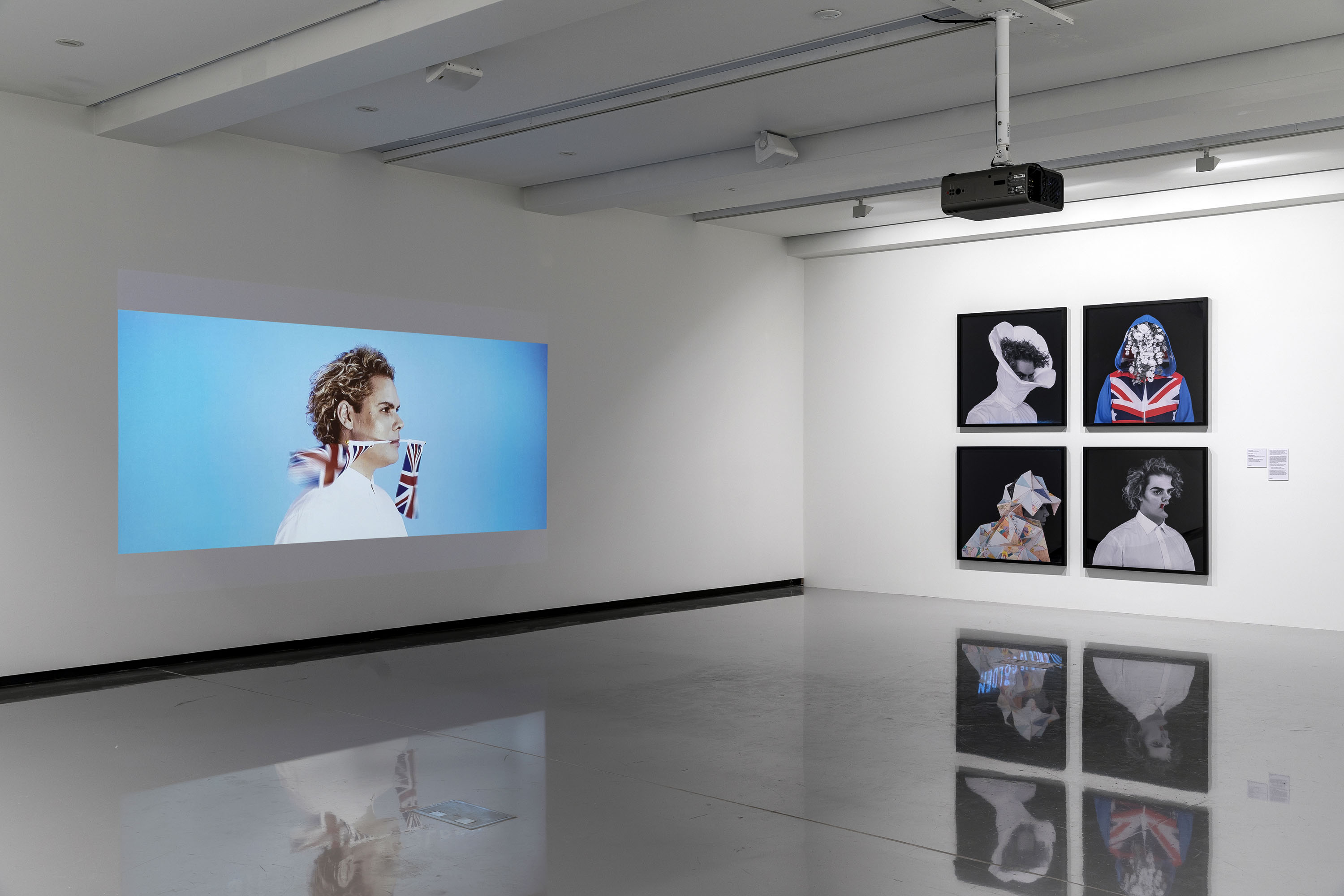
Christian Thompson: Ritual intimacy, installation view: Monash University Museum of Art, Melbourne 2017 featuring Ship of dreams, Ancient bloom, Death’s second self, and Gods and kings from the series Imperial relic 2015 (C-type prints) and a still from the video dead tongue 2015 Photo: Andrew Curtis
In Dead tongue Thompson continues to interrogate the implications of England’s empirical quest on the former colonies of the British Empire through the threat to or loss of Indigenous languages. In works such as this, Thompson actively challenges the perception that Aboriginal culture has become reduced to a captured trophy of Empire.
Wall text from the exhibition
Christian Thompson: Ritual intimacy, installation view: Monash University Museum of Art, Melbourne 2017 featuring Ship of dreams, Ancient bloom, Death’s second self, and Gods and kings from the series Imperial relic 2015 (C-type prints) Photo: Andrew Curtis
In … Imperial relic, he continues to use himself as the ‘armature for his characters, costumes and various props’. Drawing on his background in sculpture, he has created ‘wearable sculptures’ including a trumpet shaped shirt collar, an eruption of white flowers from a union jack hoodie, and an armature of maps. In each his face is partially or fully obscured again. “I’m interested in ideas of submission and domination,” he says. “So the trumpet headpiece is beautiful, but it also potentially muffles or silences the voice. The same thing with maps: they are purporting different kinds of historical narrative, depending who is telling the story. One is about the history of Indigenous people, one is about the history of white colonisers and then one is about the idea of charting the land and of discovery. I’m wearing it as an armature over my own body: that’s part of my own history but also of Australian history.”
Christian Thompson (Australian, b. 1978) Ancient bloom 2015 From the series Imperial relic C-type print on fuji pearl metallic paper 100 x 100cm Image courtesy of the artist, Sarah Scout Presents, Melbourne, and Michael Reid, Sydney and Berlin
Christian Thompson (Australian, b. 1978) Ship of dreams 2015 From the series Imperial relic C-type print on fuji pearl metallic paper 100 x 100 cm Image courtesy of the artist, Sarah Scout Presents, Melbourne, and Michael Reid, Sydney and Berlin
The series title Imperial relic, summarises the fundamental philosophy underpinning the colonial occupation of Australia. Like the nearby series We bury our own, it is closely connected to Thompson’s studies in the collections of the Pitt Rivers Museum and shares with the Australian graffiti series Thomson’s physical presence is standing in for the Australian landscape.
The work Ancient bloom alludes to the phonograph horn out which might be heard the voice of Fanny Cochran Smith, who’s wax cylinder recordings of songs are the only historical audio recordings of any of the Tasmanian Aboriginal languages. Is also represents a Victorian-era shirt collar – a motif that has appeared in Thompson’s work since his Emotional striptease series of 2003 – but here is exaggerated into a soft-sculptural form that both projects and stifles the voice.
In Death’s second self the artist’s face is uncovered but distorted by make up and digital postproduction effects.The title quotes William Shakespeare’s Sonnet 73:
As after sunset fadeth in the west, Which by and by black night doth take away, Death’s second self, that seals up all in rest.
In God and Kings Thompson is cloaked with a map of Aboriginal language groups like a coat of armour. In the Ship of dreams he reprises the motif of Australian flora obscuring his face but here his hoodie is stitched together from several flags: the red ensign (flown by British registered ships), the RAAF flag and the Australian flag.
“I’m interested in ideas of submission and domination … So the trumpet headpiece is beautiful, but it also potentially muffles or silences the voice. The same thing with maps: they are purporting different kinds of historical narrative, depending who is telling the story. One is about the history of Indigenous people, one is about the history of white colonisers and then one is about the idea of charting the land and of discovery. I’m wearing it as an armature over my own body: that’s part of my own history but also of Australian history.”
Christian Thompson: Ritual intimacy, installation view: Monash University Museum of Art, Melbourne 2017 featuring Isabella kept her dignity, I’m not going anywhere without you, Dead as a door nail and Hannah’s diary from the series Lost together 2009 (C-type prints) Photo: Andrew Curtis
On 13 February 2008 then Prime Minister Kevin Rudd made an official apology to Aboriginal Australians for the Stolen Generations – the children of Aboriginal and Torres Strait Islander descent who were removed from their families between 1910 and 1970 under the respective Federal and State government policies of assimilation. At the time, Thompson was preparing to leave Australia for further studies aboard and felt this historic gesture allowed him to proudly take his culture and history with him as he ventured into the world.
Thompson photographed the series Lost together in the Netherlands while studying at the DasArts Academy of Theatre and Dance at Amsterdam University. The theme of the orange throughout the series is a reference to the national colour of the Netherlands, while the tartan patterning refers to early clan societies in the United Kingdom. The combination of these different styles is based on counter-cultural aesthetics – particularly punk collage of 1970s London.
Christian Thompson (Australian, b. 1978) Hannah’s Diary 2009 From the series Lost Together C-type print Image courtesy of the artist, Sarah Scout Presents, Melbourne, and Michael Reid, Sydney and Berlin
MUMA | Monash University Museum of Art is proud to announce the first major survey exhibition of the work of Bidjara artist, Christian Thompson, one of Australia’s leading and most intriguing contemporary artists.
Thompson works across photography, video, sculpture, performance and sound, interweaving themes of identity, race and history with his lived experience. His work is held in the collections of major state and national art museums in Australia and internationally.
Thompson made history as one of the first two Aboriginal Australians to be accepted into the University of Oxford as a Charlie Perkins Scholar, where he completed his Doctorate of Philosophy (Fine Art) in 2016. Christian Thompson: Ritual Intimacy opens as the artist looks forward to the graduation ceremony in July, when he will be conferred his degree.
Featuring a major new commission created for this exhibition, Christian Thompson: Ritual Intimacy will survey Thompson’s diverse practice, spanning fifteen years, and will also be accompanied by the publication of the first monograph on the artist’s career and work, including essays by Brian Catling RA and Professor Dame Marina Warner DBE, CBE, FBA, FRSL.
The specially commissioned installation will be an ambitious multichannel composition, developing the sonic experimentation that is a signature of Thompson’s work. Incorporating Bidjara language, it will invite viewers into an immersive space of wall-to-wall imagery and sound:
“Bidjara is officially an endangered language but my work is motivated by the simple yet profound idea that if even one word of an endangered language is spoken it continues to be a living language,” Thompson says.
Christian Thompson: Ritual Intimacy explores the unique perspective and breadth of Thompson’s practice from the fashioning of identity through to his ongoing interest in Indigenous language as the expression of cultural survival. The new multichannel work will develop musical ideas Thompson has previously explored.
“It will be a much more ambitious iteration of a song in Bidjara. At one stage I’m singing on one screen and then other versions of me appear singing the melodies. I really see it as an opportunity to do something that’s more complex musically, more textured sonically – I also want it to be more intricate with my use of language,” the artist says.
Ritual Intimacy is curated by MUMA director Charlotte Day and guest curator Hetti Perkins. Day explains that the exhibition is part of MUMA’s Australian artist series, which affords the opportunity to look at each artist’s practice in depth. “Christian’s exhibition traces a particularly productive period of research and development, from early well-known works such as the Australian Graffiti series to more recent experiments with language in sound and song works,” Day says.
A long-time curatorial collaborator with Thompson, Perkins is the writer and presenter of art + soul, the ABC’s acclaimed television series about contemporary Aboriginal and Torres Strait Islander art. Thompson was accepted to Oxford University on an inaugural Charlie Perkins Scholarship, set up to honour Hetti Perkins’s famous father – a leader, activist and the first Aboriginal Australian to graduate from university. Perkins says the MUMA exhibition is well-earned recognition for Thompson’s work, which she featured in the second series of art + soul.
“Christian has spent periods of his adult life, as a practicing artist, away from home, but there is a common thread in his work, and it’s this connection to home or Country,” Perkins says. “In terms of the rituals or rites of the exhibition title, he is constantly reiterating that connection to home – through words, through performance, through his art, through ideas and writing,” she says.
Alongside performance and ritual, Thompson’s concept of “spiritual repatriation” is central to his work. Working with the Australian collection at famed ethnographic storehouse the Pitt Rivers Museum, Oxford, the artist was offered copies of colonial photographs of Aboriginal people but preferred not to work this way. Instead, he chose to spend significant periods of time with these ancestral images, absorbing their “aura” in order to then make his own artistic response that did not reproduce those original problematic images.
Dr Christian Thompson is a Bidjara contemporary artist whose work explores notions of identity, cultural hybridity, and history; often referring to the relationships between these concepts and the environment. Formally trained as a sculptor, Thompson’s multidisciplinary practice engages mediums such as photography, video, sculpture, performance, and sound. His work focuses on the exploration of identity, sexuality, gender, race, and memory. In his live performances and conceptual anti-portraits he inhabits a range of personas achieved through handcrafted sculptures and carefully orchestrated poses and backdrops.
Press release from MUMA
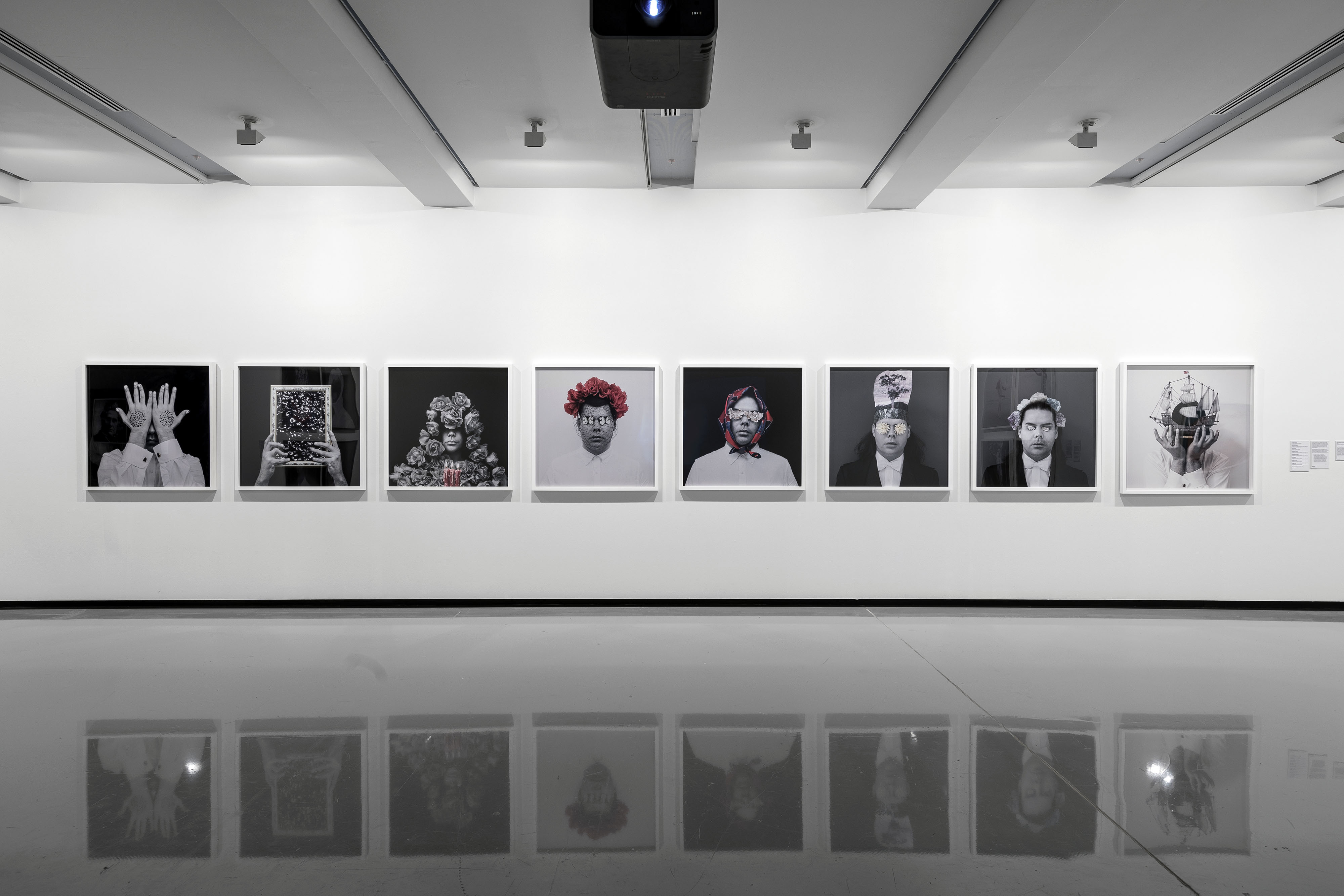
Christian Thompson: Ritual intimacy, installation view: Monash University Museum of Art, Melbourne 2017 featuring the series Polari (2014) Photos: Marcus Bunyan
‘Polari’ is a form of cant or cryptic slang that evolved over several centuries from the various languages that converged in London’s theatres, circuses and fairgrounds, the merchant navy and criminal circles. It came to be associated with gay subculture, as many gay men worked in theatrical entertainment or joined ocean liners as waiters, stewards and entertainers at a time when homosexual activity was illegal. This slang rendered the speaker unintelligible to hostile outsiders, such as policeman, but fell out of use after the Sexual Offences Act (1967) effectively decriminalised homosexuality in the United Kingdom. Attracted to the theatricality and defiant nature of Polari (which he likens to the situation of Australian Indigenous languages under assimilationist policies), Thompson borrowed its name for the series which examines how subcultures express themselves.
Christian Thompson (Australian, b. 1978) Siren 2014 From the series Polari C-type print Image courtesy of the artist, Sarah Scout Presents, Melbourne, and Michael Reid, Sydney and Berlin
Christian Thompson (Australian, b. 1978) Trinity II 2014 From the series Polari C-type print Image courtesy of the artist, Sarah Scout Presents, Melbourne, and Michael Reid, Sydney and Berlin
Christian Thompson (Australian, b. 1978) Trinity III 2014 From the series Polari C-type print Image courtesy of the artist, Sarah Scout Presents, Melbourne, and Michael Reid, Sydney and Berlin
Christian Thompson (Australian, b. 1978) Ariel 2014 From the series Polari C-type print Image courtesy of the artist, Sarah Scout Presents, Melbourne, and Michael Reid, Sydney and Berlin
Christian Thompson: Ritual intimacy, installation view: Monash University Museum of Art, Melbourne 2017 showing at left, Ellipse (2014, below) Photo: Marcus Bunyan
Christian Thompson (Australian, b. 1978) Ellipse 2014 From the series Polari C-type print Image courtesy of the artist, Sarah Scout Presents, Melbourne, and Michael Reid, Sydney and Berlin
Putting on the Dish – A short film in Polari
Polari was a form of slang used by gay men in Britain prior to the decriminalisation of homosexuality in 1967, used primarily as a coded way for them to discuss their experiences. It quickly fell out of use in the 70s, although several words entered mainstream English and are still used today. For more about Polari see Wikipedia.
Polari – The Story of Britain’s Gay Slang
Author and academic Paul Baker of Lancaster University discusses a form of gay slang known as Polari that was spoken in Britain. It was a secret type of language used mainly by gay men and some lesbians and members of the trans, drag and other communities in the United Kingdom in the 20th century until it largely died out by the early 1970s.
Christian Thompson (Australian, b. 1978) Refuge 2014 Video and sound 4 mins 18 secs
Refuge is a video work by contemporary Australian artist Christian Thompson. Thompson sings in the endangered Bidjara language of his heritage. A collaboration with James Young formerly of ‘Nico’ and recorded the original track in Oxford, United Kingdom.
Christian Thompson: Ritual intimacy, installation view: Monash University Museum of Art, Melbourne 2017 featuring stills from the video Heat (2010) Photos: Marcus Bunyan
Christian Thompson (Australian, b. 1978) Heat (extract) 2010 Three-channel digital colour video, sound 5.52 minutes
Like the Australian graffiti photographs [see photographs below], Heat come out of Thompson’s memories of growing up in the desert surrounding Barcaldine in central west Queensland. Barcaldine is famous for its role in the foundation organised labor in Queensland and ultimately the formation of the Australian Labor Party. It also holds historical significance for Thompson’s family as it is where his great-great-grandfather, Charlie Thompson, surreptitiously bought a block of land before Aboriginal people could legally buy land, creating a safe haven for his family and other Aboriginal families at the time when Aboriginal people had few legal rights. For Thompson, heat captures the sensation that he associates with being on his country: the dry wind blowing through his hair. It features the three granddaughters of Aboriginal rights pioneer Charlie Perkins, who are the daughters of Thompson’s Long time collaborator Hetti Perkins.
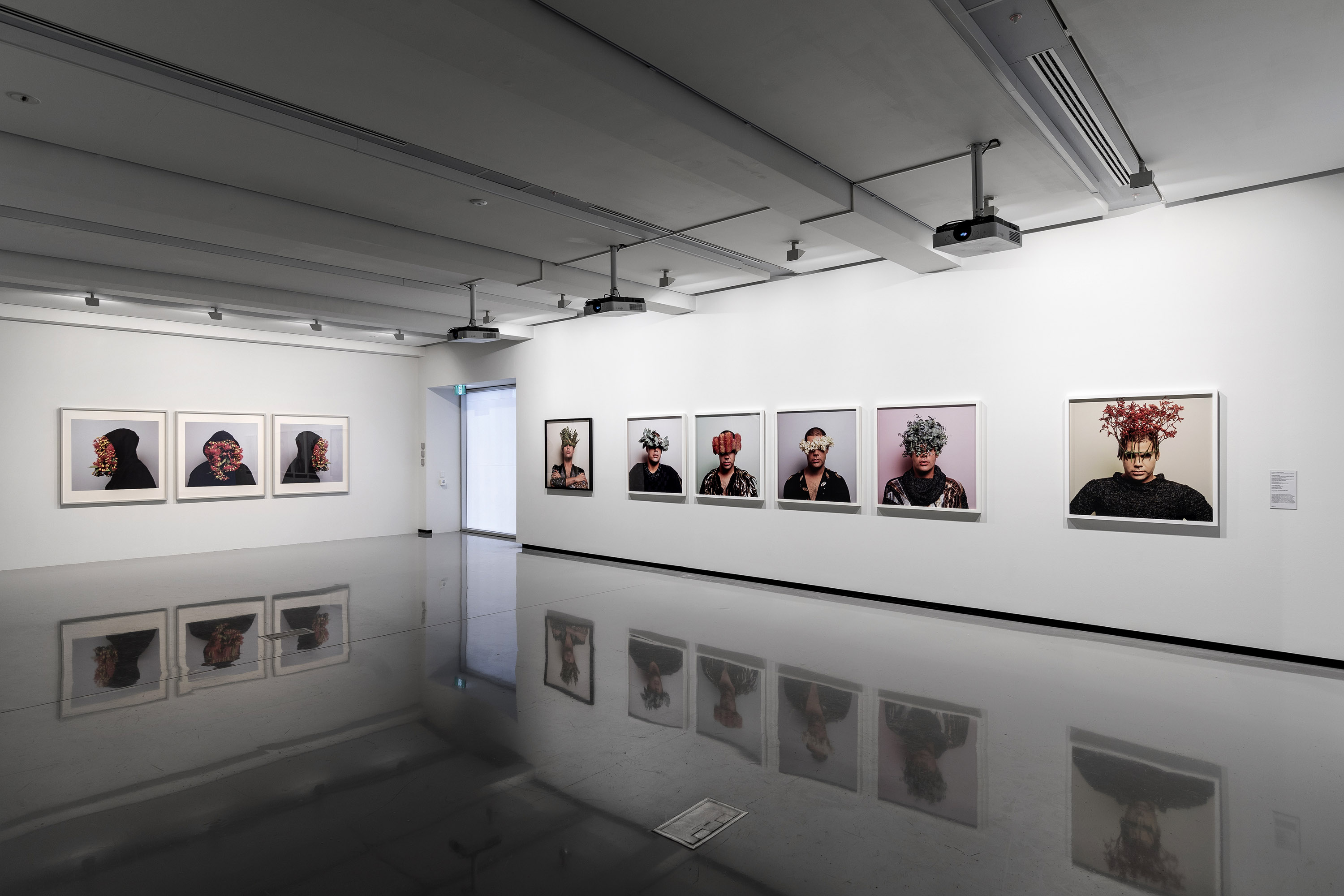
Christian Thompson: Ritual intimacy, installation view: Monash University Museum of Art, Melbourne 2017 featuring photographs from the series Australian graffiti (2007) Photo: Marcus Bunyan
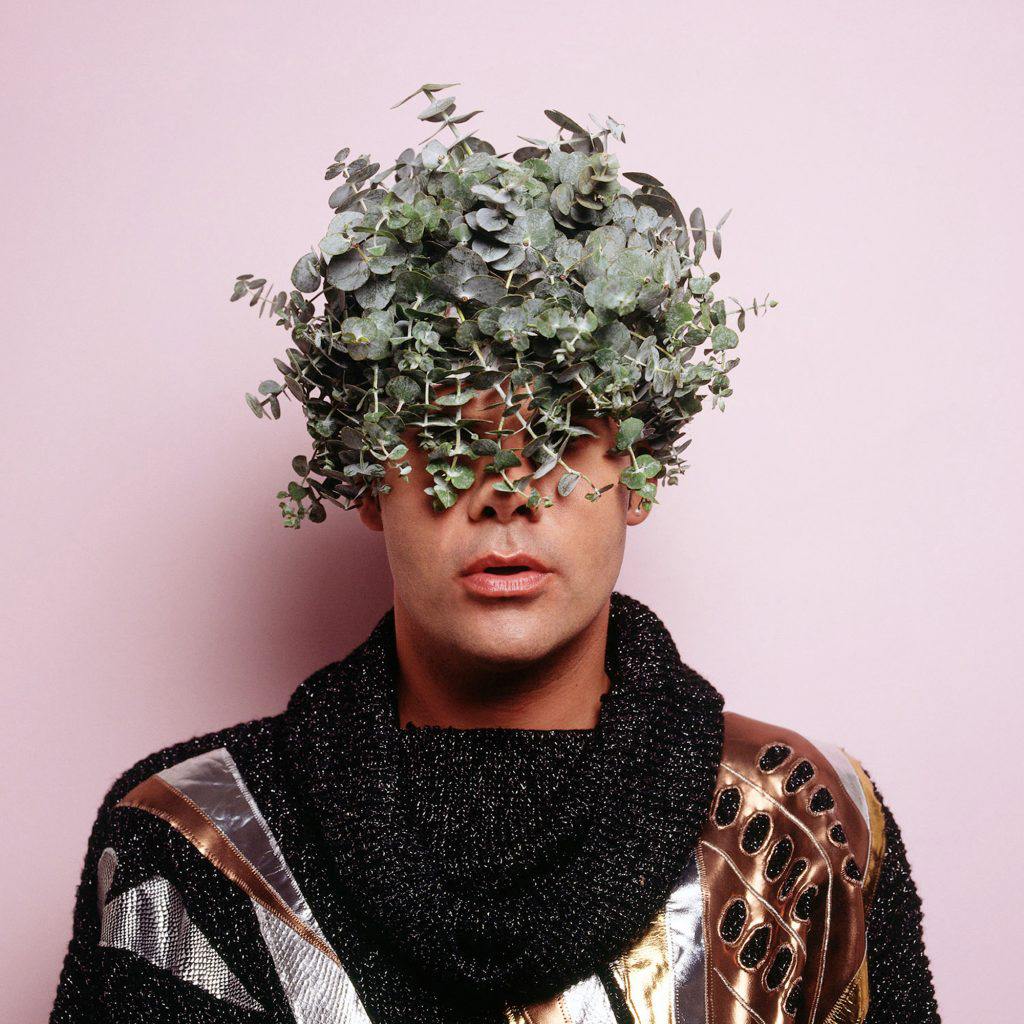
Christian Thompson (Australian, b. 1978) Untitled (blue gum) 2007 From the series Australian graffiti C-type print Image courtesy of the artist, Sarah Scout Presents, Melbourne, and Michael Reid, Sydney and Berlin
Christian Thompson (Australian, b. 1978) Untitled (banksia) 2007 From the series Australian graffiti C-type print Monash University Collection
Australian graffiti was the last work that Thompson made before leaving Australia for Europe. It connects with his memories of growing up in the outback and its desert flowers, which he perceives to be both fragile and immensely powerful. I adorning himself with garlands of these flowers and flamboyant garments of the 1980s and 1990s – the period in which he grew up – Thompson juxtaposes these elements against his own Bidjara masculinity. By wearing native flora he also stands in for the landscape, invoking an Indigenous understanding of the landscape as a corporeal, living ancestral being.
Christian Thompson (Australian, b. 1978) Desert slippers (extract) 2006 Single-channel digital colour video, sound 34 seconds
Desert slippers was made at the time the Northern Territory government commissioned research into allegations of the abuse of children in Aboriginal communities. When the ‘Little Children are Sacred’ report was tabled the following year, the federal government under John Howard staged the Northern Territory Emergency Response (NTER), which quickly became known as ‘the intervention’. This action was enacted without consultation with Indigenous people and ignored the substantive recommendations of the report to which it was allegedly responding.
Thompson made this video, involving his father, and the ceremonial aspects of their daily lives, during this period. Desert slippers features a Bidjara ritual in which a father and son transfer sweat. The desert slipper is a native cactus that symbolises the transferal of the spirit back to earth as the plant grows.
Christian Thompson (Australian, b. 1978) Dhagunyilangu (Brother) (extract installation view) 2011 Single-channel digital colour video, sound, subtitled 2.19 minutes
Christian Thompson Dhagunyilangu (Brother) 2011 Single-channel digital colour video, sound, subtitled 2.19 minutes
Gamu Mambu (Blood Song) and Dhagunyilangu (Brother) were made in England and in the Netherlands respectively. While studying at the DasArts Academy of Theatre and Dance in Amsterdam, a centre for the study of early musical styles such as the baroque, Thompson realised that his own Bidjara language could be interpreted through the matrix of another cultural context and sphere. He undertook operatic training with this in mind, choosing in the end to work with specialist singers Sonja Gruys and Jeremy Vinogradov to realise the two works.
Monash University Museum of Art (MUMA) Ground Floor, Building F, Monash University Caulfield campus, 900 Dandenong Road, Caulfield East, VIC 3145 Phone: 61 3 9905 4217
Exhibition dates: 19th October 2012 – 3rd February 2013
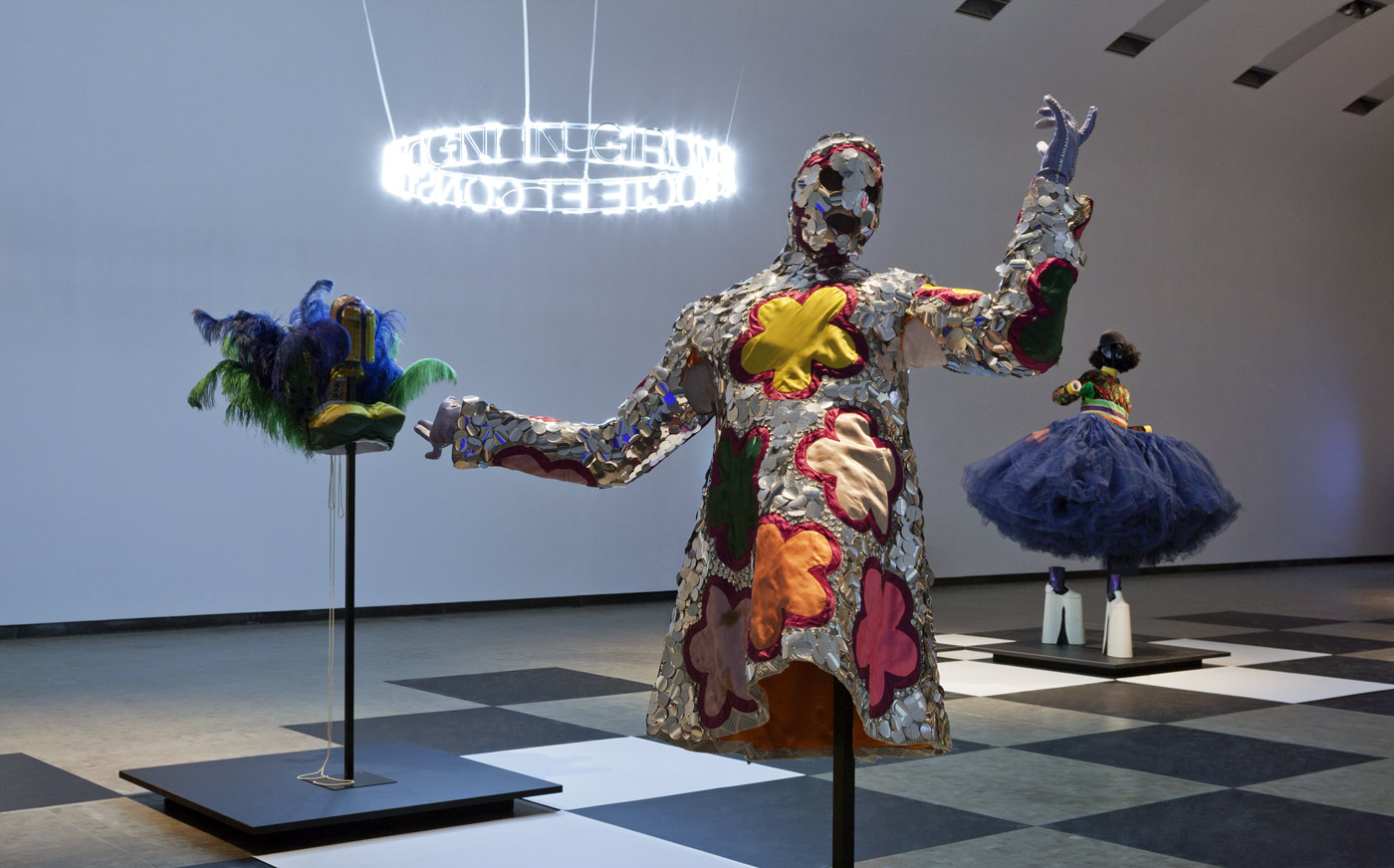
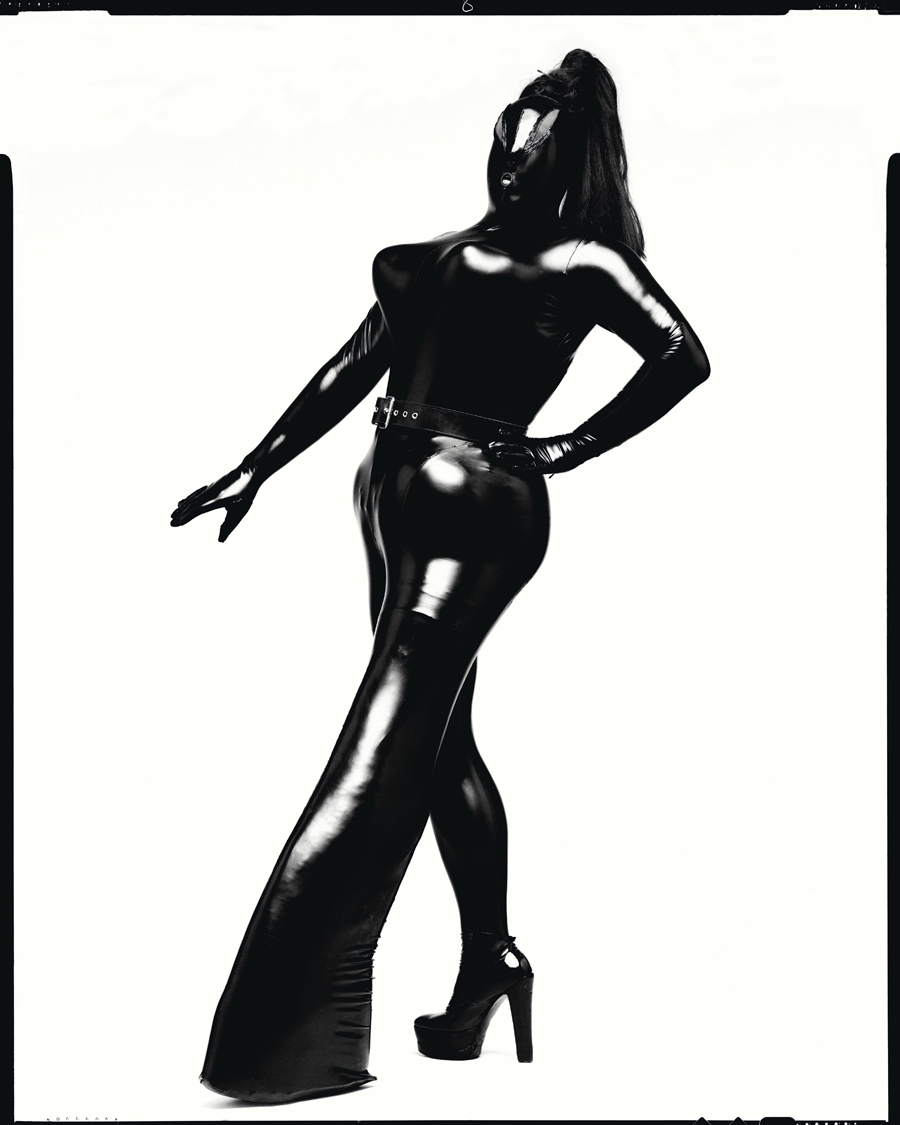
Installation view of XTRAVAGANZA. Staging Leigh Bowery, Kunsthalle Wien Foto: Stephan Wyckoff Kostüme: Leigh Bowery Kostümpräsentation: Klaus Mayr
Courtesy Estate of Leigh Bowery
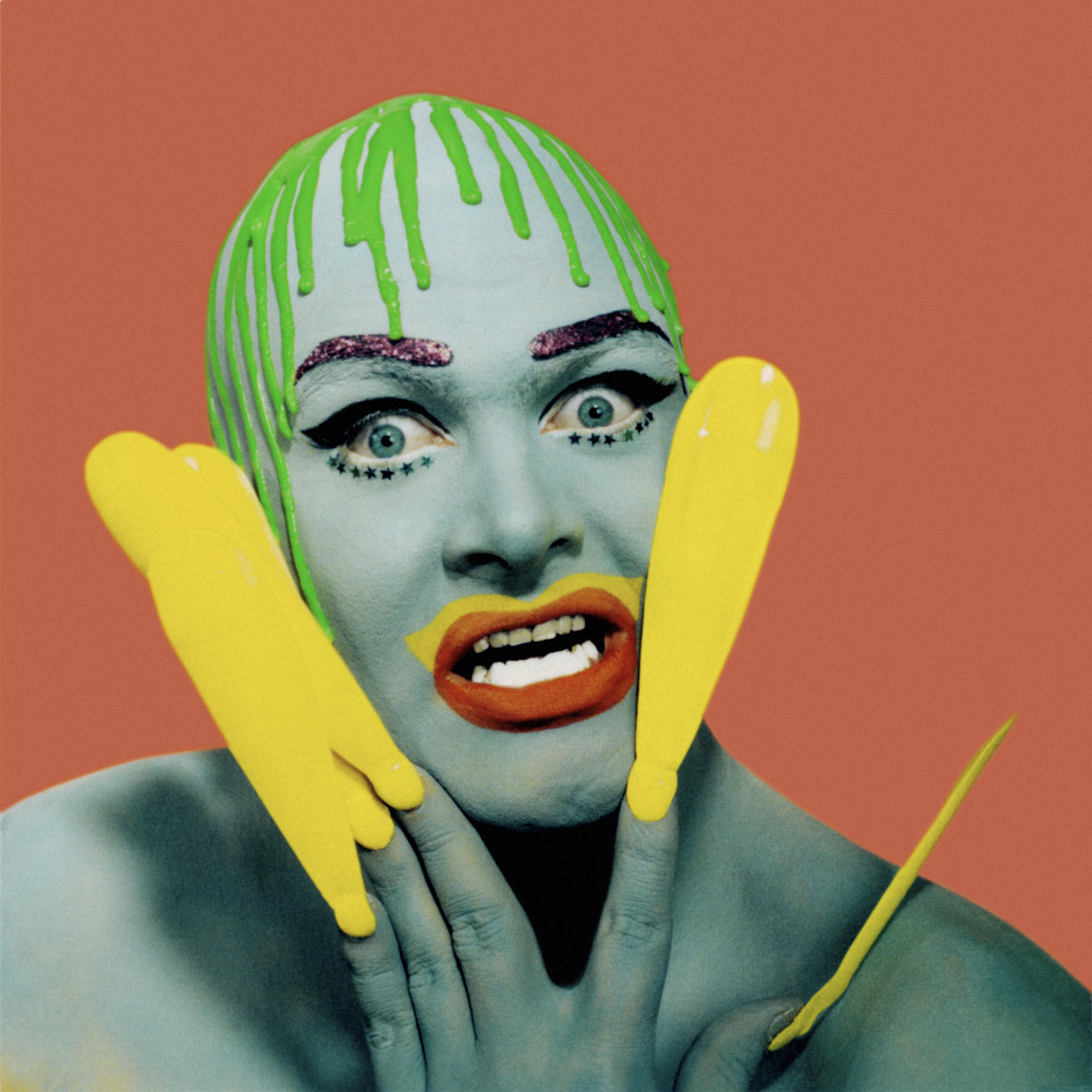
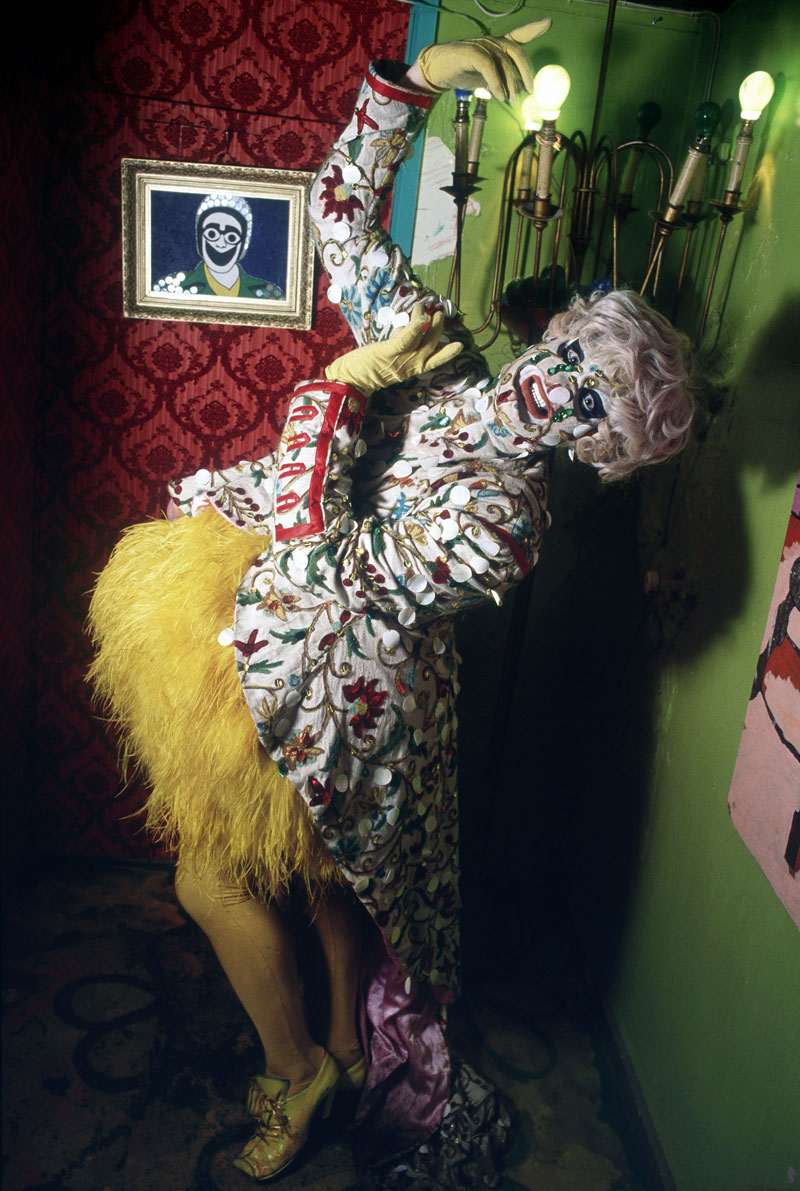
I can die happy now that I have had the opportunity to do a posting on this amazing man. He challenged social stereotypes turning his body into an every changing, ever challenging work of art. He used his body as a canvas and inscribed narratives upon it. He used these narratives to challenge the dominant discourse, offering himself as material evidence to facilitate new perspectives. His body became a performance, the self as performance, one that was not fully pre-determined, for you never knew what he would do next, what social outrage he would offer up.
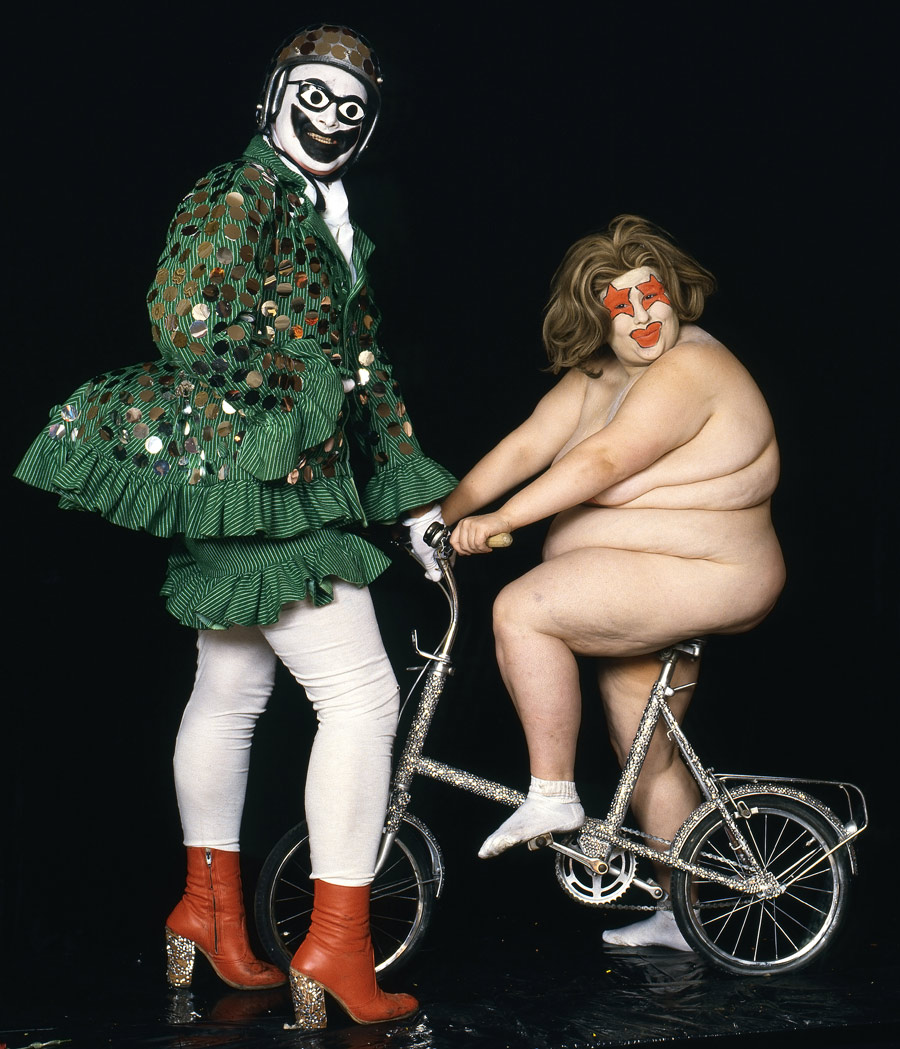
Through masks, makeup, wigs and body modification, Bowery confronted the viewer with an/other field of existence, one that promoted an encounter with the face of the other, causing an emotional response in the audience, the viewer. As Wendy Garden observes, “Being faced with another provokes a reaction: it makes an appeal, demands an engagement.”1 We cannot look away for we do not know what Bowery will do next. He used his large body, its bulk and presence to bring the viewer face-to-face with an/other. The magnification of his size and the emphasis and manipulation of his face, especially the mouth and eyes, rescales his presence in front of the viewer – at his performances, in the photographs of Bowery. For example, look at his creation Evening Wear – Andrew Logan’s 1986 Alternative Miss World (1986, below). Impossibly high and luridly coloured boots, leggings, a bustled and bedazzled jacket / skirt combo, crash helmet and the most maniacal black and white face you will ever see. Bowery unbalances the fixity of the single perspective and through his transgression destabilises the mastering gaze.
I was living in London at the time Leigh Bowery, Boy George, Marilyn and Divine were strutting their stuff in the nightclubs of London town. What a time. Maggie Thatcher (and I can hardly bring myself to type her name) was Prime Minister of a right wing Conservative government from 1979-1990, a period of social oppression of minorities, the breaking of the trade unions, the beginning of HIV/AIDS. Think Boy George’s famous song No Clause 28 that protested against a local government act that “shall not intentionally promote homosexuality or publish material with the intention of promoting homosexuality” or “promote the teaching in any maintained school of the acceptability of homosexuality as a pretended family relationship.” Bowery was a child of his time, a prescient, sentient being who was out there doing his thing, challenging the dominant paradigms of a patriarchal society. He burned like a comet, bright in the sky, and then was gone all too early. But he will never be forgotten. What a man.
Dr Marcus Bunyan
1/ Garden, Wendy. “Ethical witnessing and the portrait photograph: Brook Andrew,” in Journal of Australian Studies Vol. 35, No. 2, June 2011, p. 261.
Many thankx to Kunsthalle Wien for allowing me to publish the photographs in the posting. Please click on the photographs for a larger version of the image.
“I believe that fashion (where all girls have clear skin, blue eyes, blonde blow-waved hair + a size 10 figure, and where all men have clear skin, a moustache, short blow-waved hair, a masculine physique + appearance) STINKS”
Leigh Bowery
The Legend of Leigh Bowery 2002
Installation view of XTRAVAGANZA. Staging Leigh Bowery, Kunsthalle Wien Foto: Stephan Wyckoff Kostüme: Leigh Bowery Kostümpräs: Klaus Mayr
Courtesy Estate of Leigh Bowery; Cerith Wyn Evans, In Girum Imus Nocte Et Consumimur Igni, 2008
Courtesy Cerith Wyn Evans und White Cube
Installation view of XTRAVAGANZA. Staging Leigh Bowery, Kunsthalle Wien Foto: Stephan Wyckoff Kostüme: Leigh Bowery Kostümpräsentation: Klaus Mayr
Courtesy Estate of Leigh Bowery
Werner Pawlok (German, b. 1953) Portrait Leigh Bowery 3
1988
Courtesy Werner Pawlok
“I think of myself as a canvas,” fashion pioneer Leigh Bowery once said about himself. If there were a formula to describe this enfant terrible who refused all categorisation throughout his life, this would be it: turning oneself into a work of art. Presenting himself in the most garish ways that defied all conventions and stylising himself as a walking work of art, Leigh Bowery, who was born in Australia in 1961, stirred up London’s sub-culture of the 1980s in the wake of post punk and New Romanticism. Being friends with stars of the scene like Michael Clark and Cerith Wyn Evans, he continuously reinvented himself on the manifold stages of the metropolis.
The show highlights Leigh Bowery’s life and work between fashion, performance, music, dance, and sculpture by presenting rarely exhibited costumes, numerous films, photographs, music videos, talk shows, and magazines. It approaches Bowery by way of artistic descriptions, reflections, and documentations in the work of friends, supporters, and colleagues, whose source of inspiration, entertainer, and muse he was: Bowery’s performative enactments oscillating between masquerade and radical self-expression were captured by filmmakers such as Charles Atlas, Dick Jewell, Baillie Walsh, and John Maybury. It took Fergus Greer a number of sessions that stretched over six years to shoot the legendary photo series Looks. As Charles Atlas’s Teach shows, Leigh Bowery developed his unmistakable outfits, gestures, and poses in multiple forms of self-reflection under his companions’ critical eye. Bowery’s one-week performance in the Anthony d’Offay Gallery in London (1988) involved a two-way mirror: while the public could watch Leigh Bowery changing his outfits for hours on end, he saw only his own mirror image and remained inescapably confronted with himself and his movements. Though Bowery claimed that he had had to fight his shame initially and hid his room-filling physique behind conspicuous materials such as tulle, glitter, paint, and satin, his performances were anything but embarrassing: “The rest of us used drag and make-up to disguise our blemishes and physical defects. Leigh made them the focal point of his art,” Boy George once remarked. The nightclubs of London provided Bowery with catwalks on which to flaunt his visions of himself and let him always come out on top in terms of maximum attention. Lucian Freud, the British prince of painters, took great pleasure in Leigh Bowery’s fascinating personality and the fullness of his naked body. Bowery became one of his most important models, and the artist depicted him as he could never be seen in public: natural, intimate, and vulnerable.
Leigh Bowery’s art clearly differs from the designs, presentation patterns, and distribution channels of fashion designers. With Trash and Bad Taste irony, Bowery, like his idol John Waters and his main actor Divine, abandoned all conventions and stylistic doctrines in a both cynical and humorous way. His craftsmanship in tailoring and his creative potential constitute the core of an expressive self-stylisation which did not depend on encouraging the public through marketing strategies or offers of consumer goods. His vestimentary creations were based on the work with his own body, which he regarded as a malleable material and workable mass and which was to play an increasingly central part in his late oeuvre. Regarded as inexorably deficient, his body became the origin of those manifold appearances and kaleidoscopic diversifications that we find most astounding when confronted with Bowery’s work. He experimented with second skins of black latex, exaggerated the size and volume of his body with sweeping tulle attires, and made himself look taller with platform shoes. Bowery sabotaged glamorous, ornamental and transparent materials with steel helmets, toilet seats, and skulls. He fastened artificial lips in his cheeks with safety pins and wore flesh-coloured velvet suits that transformed his body into a vagina. Using adhesive tape and a bodice, he shaped his flesh into an artificial bosom, and he concealed his member behind pubic hair toupees or overemphasised it as he did in one of the Michael Clark Company’s dance performances. He disparaged unequivocal gender definitions and transcended their socially informed attributions – Gender Trouble: everything was a look. By and by, Bowery turned into what has been called “the self as performance.”
Leigh Bowery’s existence was the epitome of extremes. He looked for exceptional emotional and physical states like pain and ecstasy that would release him from the mediocrity of everyday life, like in the performance The Laugh of No.12 in Fort Asperen on June 4, 1994. Suspended on one foot, stark naked, wearing a black face mask, and displaying some clothespins on his genitals, he swung through the air uttering a sprechgesang, before he smashed a pane of glass with his bulky body. Exposing himself to his vulnerability in his performances, Bowery overcame physical injuries by showcasing them. His sometimes sadomasochist appearances and provocative lifestyle culminated in an attitude that crystallised into a sociopolitical approach in his statement “I like doing the opposite of what people expect.” Far from nocturnal footlights and kindred spirits’ protection, he – who was “larger than life” in every respect – strained the social limits of propriety with his big and exalted appearance. He enjoyed causing offence and holding up a mirror to the dictatorship of conformism, unmasking its heteronomy.
After an excessive life, Leigh Bowery died from AIDS at the age of 33. He was more than an extraordinary peripheral figure making his mark in the urban arena of exhibitionism and voyeurism. His virtuoso works have influenced haute couture collections by such fashion stars as Rei Kawakubo, John Galliano, Walter van Beirendonck, and Alexander McQueen. In spite of its simplicity, the latest fall/winter collection of Comme des Garçons shows obvious parallels to Leigh Bowery’s designs.
Press release from the Kunsthalle Wien website
Robin Beeche (Australian, 1945-2015) Evening Wear – Andrew Logan’s 1986 Alternative Miss World
1986
Courtesy Robin Beeche
A huge gallery crawl on Wednesday last saw me take in exhibitions at Nellie Castan Gallery (Malleus Melficarum: strong sculptural work by James and Eleanor Avery; Broken Canon: vibrant mixed media collages by Marc Freeman); Anita Traverso Gallery (Peristereonas: sculptures, photographs and mixed media by Barry Thompson); John Buckley Gallery (Perpetua by Emma can Leest, beautiful cut paper works; rather mundane paintings by Christian Lock); Karen Woodbury Gallery (Every breath you take: wonderful galaxy-like paintings, perhaps as seen by the Hubble telescope, with a geometric / cellular base by Lara Merrett); The Centre for Contemporary Photography (Event horizon: a group exhibition that “engages the horizon as a means to establish a physical locality with relation to the Earth’s surface and more broadly to the universe of which it is a miniscule component.” An exhibition that left me rather cold); and ACCA (Towards an elegant solution by Peter Cripps, again a singularly unemotional engagement with the precise, contained work: interesting for how the work explores spatial environments but in an abstract, intellectual way).
The stand out work from this mammoth day was Jill Orr: Vision at Jenny Port Gallery. Simply put, it was the strongest, most direct, most emotionally powerful work that I saw all day.
Dr Marcus Bunyan
Many thankx to Amelia Douglas and Jenny Port Gallery for allowing me to publish the photographs in this posting.
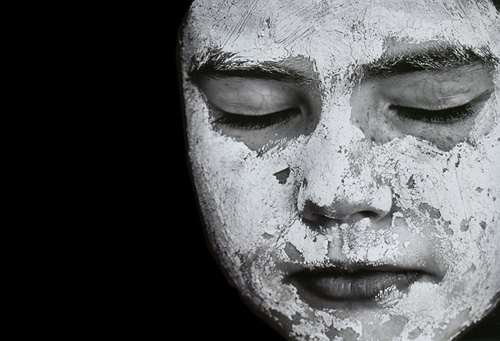
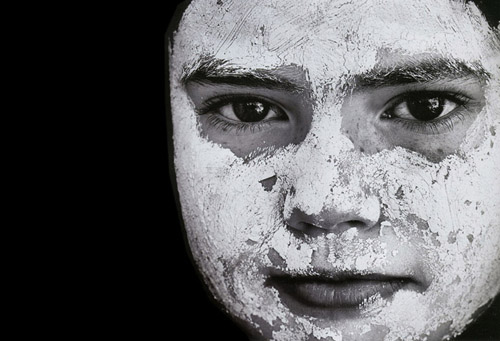
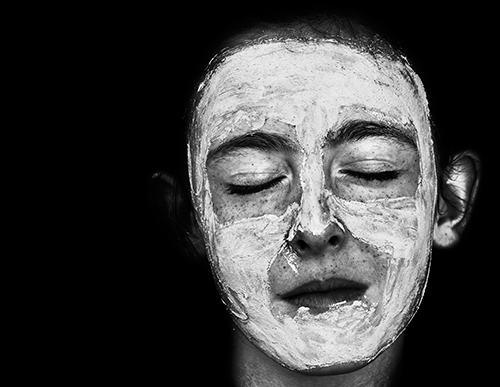
Jill Orr (Australian, b. 1952) Megan 2009
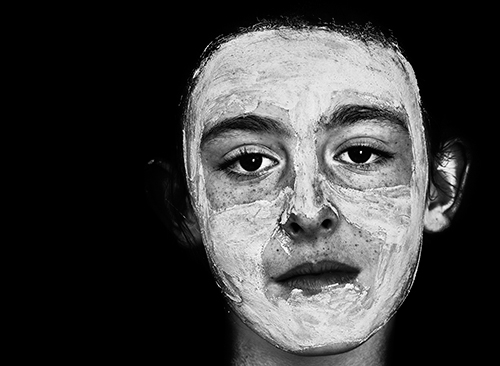
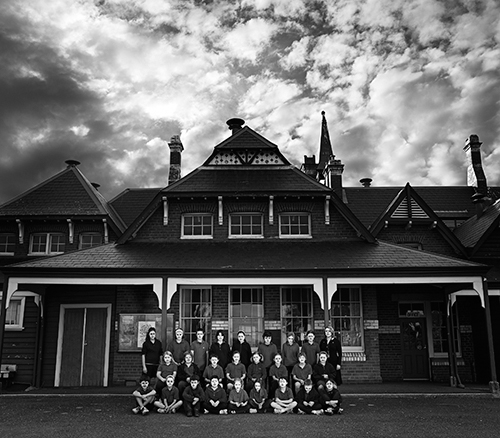
Jill Orr’s new participatory performances are photographs of children from Avoca Primary School painted with white clay from the area, displayed in pairs. The children are photographed once with eyes open, once with eyes closed. Orr asked the children to imagine their future life when they had their eyes closed. The key to the work is a group photograph of the ghostly children outside the primary school where everyone is isolated from each other (see photograph below).
“White faces loom up out of a dark ground, described by Orr as a void. On the surface these portraits are finely crafted, the skin of masked face becomes one with the digital file to create a facial landscape. The materiality of the face and the photographic file are exposed for the viewer. Titling the series ‘vision’ Orr ventures into a ‘haptic visuality’ where “vision itself can be tactile, as though one were touching a film with one’s eyes.”
From the catalogue essay by Professor Anne Marsh, Monash University
In the performance, the ritual of being photographed, Orr instructs the children who are placed under the surveillance of the camera. “We are confronted with the pose, the conscious composition of the image to be photographed, the inherent constructedness of the posed photograph.”1 The child assumes the pose by which they wish to be memorialised. The gaze (of the camera, of the viewer) is returned / or not in this spectacle.
Something happens when we look at these photographs. The text of the photographs becomes intertextual, producing as Barthes understands a “plurality of meanings and signifying / interpretive gestures that escape the reduction of knowledge to fixed, monological re-presentations, or presences.”2 This is because, as Foucault observes, texts “are caught up in a system of references to … other texts, other sentences: it is a node within a network … Its unity is variable and relative.”3
The photographs invite us to share not only the mapping of the surface of the skin and the mapping of place (the history of white people living on the land in country Australia) and identity but the sharing of inner light, the light of the imaginary as well – and in this observation the images become unstable, open to reinterpretation. The distance between viewer and subject is transcended through an innate understanding of inner and outer light. The photographs seduce, meaning, literally, to be led astray.
As American photographer Minor White, who photographed in meditation hoping for a revelation in spirit though connection between person > subject > camera > negative > print, observes in one of his Three Canons
When the image mirrors the man And the man mirrors the subject Something might take over 4
Here the power of the photographer acting in isolation, the modernist tenet of authorship, is overthrown. In it’s place, “White supposes a relationship with subject that is a two way street: by granting the world some role in its own representation we create a photograph that is not so much a product solely of individual actions as it is the result of a negotiation in which the world and all its subjects might participate.”5 The autobiography of a soul born in the age of mechanical reproduction. This is the power of these photographs for something intangible within the viewer does take over. I found myself looking at the photographs again and again for small nuances, the detail of hairs on the head, the imagining of what the person was thinking about with their eyes closed: their future, their fears, their hopes, the ‘active imagination as a means to visualise sustainable futures’ (Orr, 2010).
These photographs seem to lengthen or protract time through this haptic touching of inner light. As Pablo Helguera observes in his excellent essay How To Understand the Light on a Landscape that examines different types of light (including experiental light, somber light, home light, ghost light, the light of the deathbed, protective light, artificial light, working light, Sunday light, used light, narrated light, the last light of day, hotel light, transparent light, after light, the light of the truly blind and the light of adolescence but not, strangely, inner light)
“Experience is triggered by light, but not exclusively by the visible light of the electro-magnetic spectrum. What the human eye is incapable to perceive is absorbed by other sensory parts of the body, which contribute to the perception that light causes an effect that goes beyond the merely visual …
There is the LIGHT OF ADOLESCENCE, a blinding light that is similar to the one we feel when we are asleep facing the sun and we feel its warmth but don’t see it directly. Sometimes it marks the unplace, perhaps the commonality of all places or perhaps, for those who are pessimists, the unplaceness of every location …
We may choose to openly embrace the darkness of light, and thus let ourselves through the great gates of placehood, where we can finally accept the unexplainable concreteness of our moments for what they are.”6
In the imagination of the darkness that lies behind these children’s closed eyes is the commonality of all places, a shared humanity of memory, of dreams. These photographs testify to our presence and ask us to decide how we feel about our life, our place and the relation to that (un)placeness where we must all, eventually, return.
Dr Marcus Bunyan
1/ Feiereisen, Florence and Pope, Daniel. “True Fiction and Fictional Truths: The Enigmatic in Sebald’s Use of Images in The Emigrants” in Patt, Lise (ed.,). Searching for Sebald: Photography after W.G. Sebald. Los Angeles: The Institute of Cultural Inquiry, 2007, p. 175.
2/ Barthes, Roland. “From Work to Text” in Image, Music, Text. trans. S. Heath. New York: Hill and Wang, 1977 quoted in Thumlert, Kurt. Intervisuality, Visual Culture, and Education. [Online] Cited 10/08/2006. www.forkbeds.com/visual-pedagogy.htm (link no longer active)
3/ Foucault, Michel. The Order of Things: An Archeology of the Human Sciences. New York: Vintage, 1973 quoted in Thumlert, Kurt. Intervisuality, Visual Culture, and Education. [Online] Cited 10/08/2006. www.forkbeds.com/visual-pedagogy.htm (link no longer active)
4/ White, Minor. Mirrors, Messages and Manifestations. Aperture, 1969
5/ Leo, Vince. Review of Mirrors, Messages and Manifestations on the Amazon website [Online] Cited 26/06/2010
6/ Helguera, Pablo. “How to Understand the Light on a Landscape,” in Patt, Lise (ed.,). Searching for Sebald: Photography after W.G. Sebald. Los Angeles: The Institute of Cultural Inquiry, 2007, pp. 110-119
Jill Orr (Australian, b. 1952) Jacinta 2009
Jill Orr (Australian, b. 1952) Avoca Primary School 2009
Jill Orr’s work centres on issues of the psycho-social and environmental where she draws on land and identities. Grappling with the balance and discord that exists between the human spirit, art and nature, Orr has, since the 1970s, delighted, shocked and moved audiences through her performance installations.
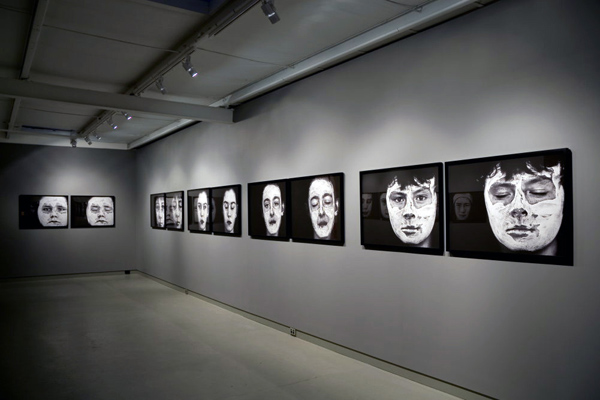
This current body of work involved children from the Avoca Primary School as active participants in Orr’s performance for the camera. The result is a series of high contrast black and white photographic portraits, which are shown as diptychs portraying the different states of seeing both outwardly and inwardly. One of each pair frames the child looking directly at the camera. The gaze meets the viewer. Who is looking at whom? The second captures the child whose eyes are closed. An inner world is intimated, but not accessible to the viewer.
In terms of the ‘gaze’, these works turn to the child as conveyer of the imaginary engaging both within and without. “I have found that creative acts require the visionary sensibilities of both the inner and outer world to operate simultaneously, consciously and unconsciously as dual aspects of the one action. In this instance the action is that of active imagination as a means to visualise sustainable futures.” (Jill Orr, 2010). The portraits also reflect the present relationship to place that is etched into the faces of youth as already kissed by the harsh Australian sun.
Avoca is one of many townships that has been socially, economically and environmentally affected by drought and climate change. The portraits are created against this background.
Text from the Jenny Port Gallery website [Online] Cited 26/06/2010 no longer available online
Jill Orr (Australian, b. 1952) Vision installation photographs at Jenny Port Gallery June 2010 Photos: Marcus Bunyan




























 Art Blart _ art and cultural memory archive
You must be logged in to post a comment.