Exhibition: ‘Photography & place: Australian landscape photography, 1970s until now’ at the Art Gallery of New South Wales, Sydney

Exhibition dates: 16th March – 29th May 2011


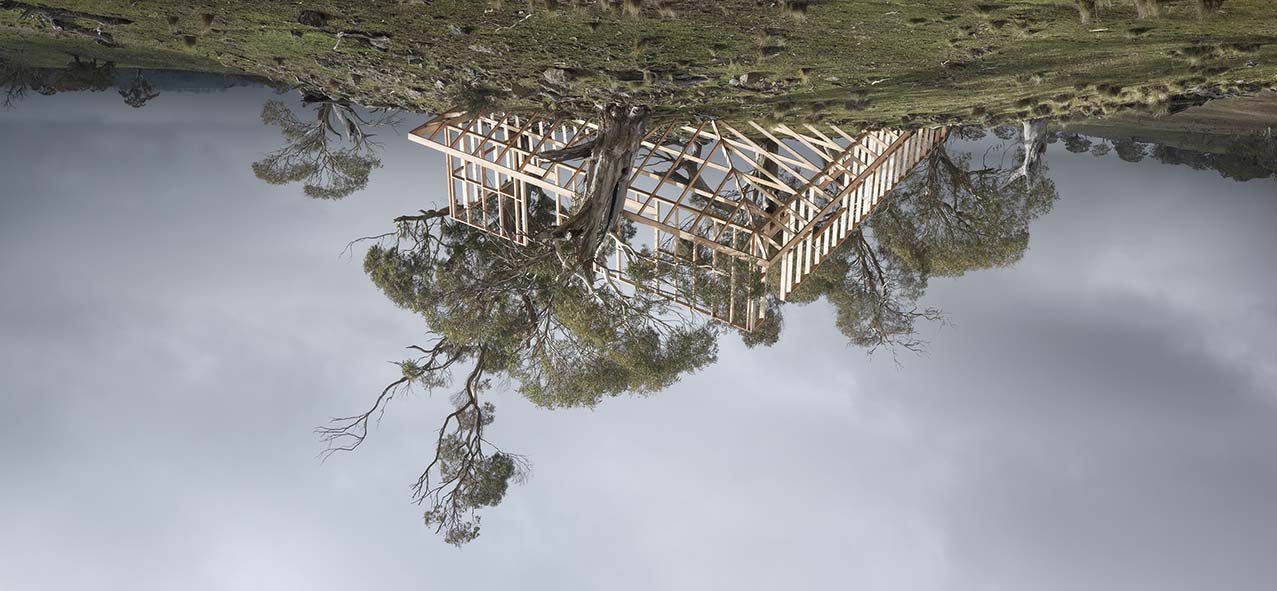
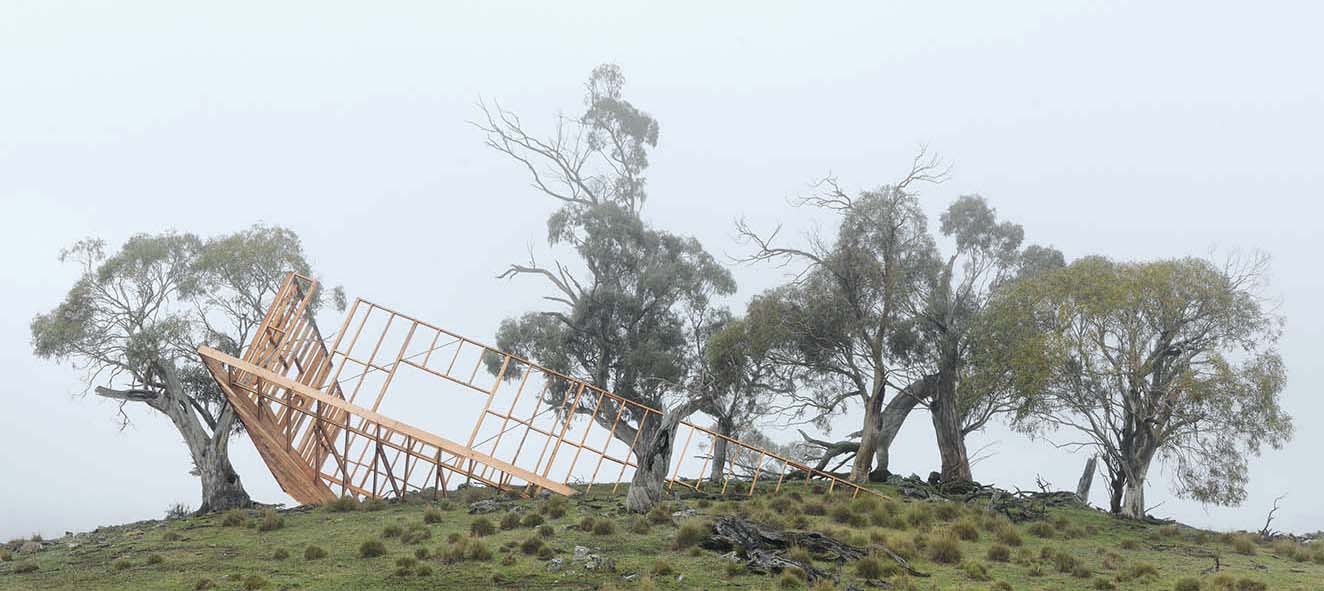
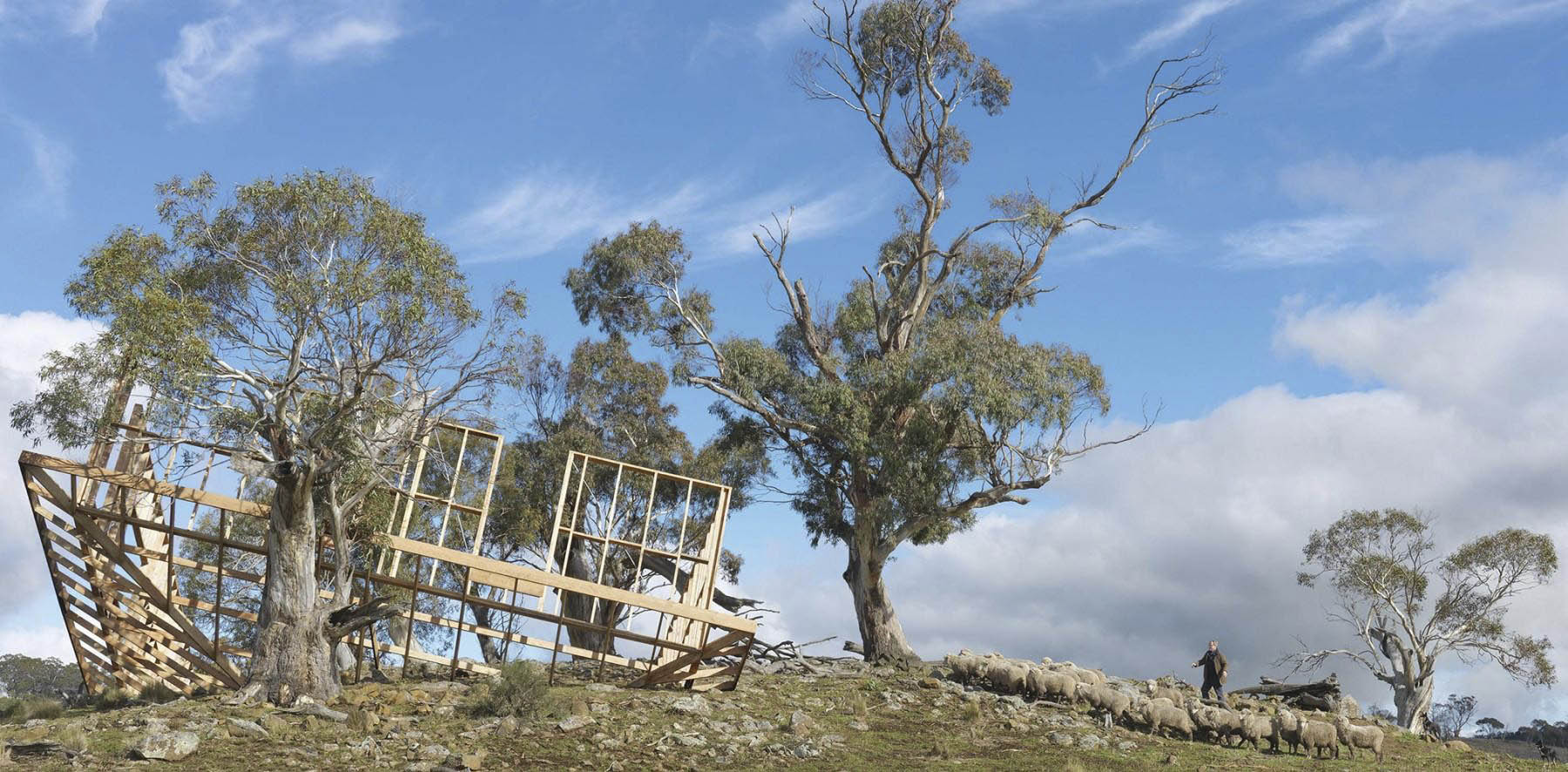
Debra Phillips (Australian, b. 1958) 'Untitled 7 (view from model plane launch area)' 2001


Debra Phillips (Australian, b. 1958)
Untitled 7 (view from model plane launch area)
2001
From the series The world as puzzle
Two Type C photographs
68 x 80cm each
Image courtesy the artist and BREENSPACE, Sydney
© Debra Phillips


Hot on the heels of my reviews of Stormy Weather: Contemporary Landscape Photography at NGV Australia and Sidney Nolan: Drought Photographs at Australian Galleries, Melbourne comes the exhibition Photography & place: Australian landscape photography, 1970s until now at the Art Gallery of New South Wales. An insightful, eloquent text by Vigen Galstyan (Assistant curator, photographs, AGNSW) accompanies the posting.

Dr Marcus Bunyan


Many thankx to Susanne Briggs for her help and to the Art Gallery of New South Wales for allowing me to publish the photographs and the text in the posting. Please click on the photographs for a larger version of the image.


Douglas Holleley (Australia, United States of America, b. 1949) 'Bottle-brush near Sleaford Bay, South Australia' 1979


Douglas Holleley (Australia, United States of America, b. 1949)
Bottle-brush near Sleaford Bay, South Australia
1979
Four SX-70 Polaroid photographs
61 x 76cm
AGNSW collection, purchased 1982
© Douglas Holleley


Australian born and American based photographer Douglas Holleley has experimented with many aberrant photographic techniques over the course of his career. Holleley received a Bachelor of Arts in Psychology in 1971 at Macquarie University before relocating to America to undertake a Master of Fine Arts, studying at the Visual Studies Workshop in Rochester, New York between 1974 and 1976. Founded by Nathan Lyons in 1969 and affiliated with important photographers including Minor White and Frederick Sommers, the Visual Studies Workshop was a bedrock institution that fostered innovative photographic practice from the 1970s onwards. It was here that Holleley received tutelage from Ansel Adams in 1975. His early photographic output includes hand coloured black and white photographs as well as photograms and gridded arrangements of Polaroids. He later began experimenting with digital photography, applying the same principles of the photogram to his experiments with a flatbed scanner.

During the time spent studying photography in America in the 1970s Holleley became interested in Polaroid technology. When he returned to Australia in 1979, before later relocating permanently to America, Holleley commenced an extensive photographic project of documenting the Australian bush with a Polaroid SX-70 camera, effectively becoming one of the first professional practitioners of the medium in the country. The resulting images were presented as a series and published as a book – Visions of Australia – in 1980. Employing a refined formalist vocabulary, Holleley produced photographic mosaics by arranging his Polaroids into gridded compositions.

Dissected, disassembled and then collated within the pictorial frame, the landscape in Holleley’s works becomes slightly unnatural and detached. These works negate linear single point perspective by focusing on the ground and reducing the scene to a formal composite. Here, the expanse of the view and the horizon does not dominate the space of the image. The tessellating images produce a ‘whole’ that is slightly misaligned and unsettled. In some works, the photographer’s shadow is visible. It asserts itself as an ambivalent presence that is not tethered to the scene. This spectral form heightens the sense of disquiet that pervades the images.

Text from the Art Gallery of New South Wales website [Online] Cited 16/01/2020


Ian North (New Zealand, b. 1945) 'Canberra suite no 2' 1980, printed c. 1984


Ian North (New Zealand, b. 1945)
Canberra suite no 2
1980, printed c. 1984
From the series Canberra suite 1980-81
Type C photograph
37 x 45.7cm
AGNSW collection, gift of the artist
© Ian North


Ian North (New Zealand, b. 1945) 'Canberra suite no 7' 1980, printed c. 1984


Ian North (New Zealand, b. 1945)
Canberra suite no 7
1980, printed c. 1984
From the series Canberra suite 1980-81
Type C photograph
37 x 45.7cm
AGNSW collection, gift of the artist
© Ian North


Ian North is an Adjunct Professor of Visual Arts at both the University of Adelaide and the University of South Australia. He is a photographer, painter and writer, and was the founding curator of photography at the National Gallery of Australia 1980-1984. Throughout his career, he has been concerned with the legacy of Australian landscape, the impact of colonial narratives and their established visual conventions and, as a consequence, the politics of representing the subject. …

North’s methodology is concerned with the processes of vision and interaction as they have shaped the landscape. In Canberra Suite North presents an encyclopaedic record of Walter Burley Griffin’s intricately designed city, exploring the spatial interface between nature and humanity. The works are absent of human life – reminiscent of Ed Ruscha’s Twenty-six Gasoline Stations. The emotional ambivalence of the images is reflected in their use of colour, like that of postcards. As one of the first instances of larger format colour art photography in Australia, the images topographically map space as a depersonalised, banal subject. Yet their colour, like that of landscape painting, highlights flora, revealing the number of non-native plants included in Canberra’s design. As such, these artefacts of North’s private wanderings and systemic mode of looking are able to subtly critique colonialism.

Text from the Art Gallery of New South Wales website [Online] Cited 16/01/2020


EARTH SCANS AND BUSH RELEVANCES: Photography & place in Australia, 1970s till now

For many of us, landscape is a noun. A view from the window or the balcony, a strange immaterial ‘thing’ that makes people exclaim in awe, point to in pride, recall nostalgically, pose in front of or be used to bump up real estate prices. If one is an urban dweller, which most Australians are, then the landscape exists essentially as a mirage, something to create in the backyard, occasionally look at on holidays or hang on the walls. However, noted American cultural theorist and art historian W. J. T. Mitchell has proposed that we should think of landscape as a verb: an act of creation on our part that engenders cultural constructs, national identities and shared mythologies.

Photography & place is an exhibition that investigates this process of ‘landscaping’ through the work of 18 Australian photographers between the 1970s and now. Their significant contribution to representation of landscape broke new ground in what has always been a confounding topic. Indeed, as Judy Annear has pointed out in a 2008 essay in Broadsheet magazine, the practice of documenting and interpreting the notion of ‘place’ in Australian photography has been fragmentary in comparison to traditions in America, Europe or New Zealand. This reluctance to focus on the natural environment is perhaps a residue of the ‘terra nullius’ polemic, which shifted the attention of many photographers on the building of colonial Australia. Photography from the mid 19th to the early 20th century by photographers such as Charles Bayliss and Nicholas Caire actively documented the conquest of nature by white settlers, or presented views of untouched wilderness as epitomes of the picturesque: endless waterfalls, lakes, forests in twilights, enigmatic caves and an occasional nymph like creature prancing. Despite Bayliss’ efforts to show the indigenous people on their land, they are, as Helen Ennis observed in her 2007 book Photography and Australia, conspicuous by their absence: the land that we see surrounding them in early Australian photography by the likes of J.W. Lindt is often a mass-produced painted studio backdrop.

The advent of modernism in the 1930s only served to entrench the photographers deeper into the urban space. ‘Place’ is the city and it is here that industry, progress and culture shapes the Australian identity. It is still difficult to dislodge the iconic images of Max Dupain and David Moore as epitomes of Australianness, promulgated as they were through countless renditions in mass media and consumer culture. But as post-modern anxiety started to seep through the patchwork of the Australian dream, it was landscape that many critically informed photographers turned to as a tool for analysis and revision.

A number of factors conflated in the mid 1970s, engendering a radical shift in perspectives. One of the primary forces that began to reshape the approaches to landscape in Australian photography was the awareness of new artistic movements taking place in USA and Europe. The enormously influential exhibition New Topographics: Photographs of a Man-Altered Landscape held in 1975 at the George Eastman House, Rochester, consolidated the spread of minimalist and conceptually informed photography which was avidly embraced by a younger generation of Australian photographers. One can also cite the rise of the Australian greens movement in Tasmania, the increasing awareness of Indigenous cultures and rights and not the least, the phenomenon of university-educated photographers as key milestones during this decade.

Lynn Silverman, Douglas Holleley, Jon Rhodes, Wes Stacey and Marion Marrison were among the practitioners who pointed their lenses out of the city, often exploring the fringes of human settlement and sometimes as in the case of Silverman, Stacey and Holleley, venturing into the desert. The element that collectively stamps their work is the ostensible fragmentation of the landscape. Instead of the holistic, positivist postcard views of Australia, we get something resembling a lunar vista. The palpable sense of alienation in American expatriate Lynn Silverman’s striking Horizons series from 1979 echoes in the disorienting grid-based Polaroid assemblages by Holleley conjuring up a space that appears hostile and to a degree indifferent to our presence. The foreignness of these landscapes is not necessarily a malevolent force as was customary to show in a slate of Australian New Wave films of the 70s and 80s. Rather a much more meditative stance is taken in regards to our relationship to a place which has been claimed without being understood or in many ways respected. Ingeborg Tyssen’s photographs hint at existing presences, forms and phenomena which are full of life and meaning that remain perpetually unresolved to an outsider. The imported paradigms of Western culture can not take root in this environment. One could easily define the landscape photography of this period in Lynn Silverman’s words as “an orienting experience” and a belated attempt at a proper reconnaissance of the land.

The coolly detached outlook that underlines the investigative drive of most of these photographers is magnified by their adoption of serial or multi-panel formats. It was certainly a way to expand and collapse the accepted faculties of the pictorial field, challenging and questioning the accepted notions of photographic ‘truth’. Jon Rhodes demonstrates the inherent power of this simple device in his cinematically sequential Gurkawey, Trial Bay, NT 1974, which transforms a seemingly wild and uninhabitable swamp into a joyful playground of an Aboriginal child.

In some instances the photographic approach is more concerned with elucidating the nature of the photographic image itself and the way it can influence and control our perception. As Arnold Hauser has lucidly described in his groundbreaking Social History of Art, images have always been used to secure and infer political power. As such, the metamorphosis of a visual representation into an iconographic one carries within it an element of danger as images begin to seduce the viewer away from objectivity. Indeed, images of Australia have been the most relentlessly and carefully used signifiers in promoting a (colonial) national consciousness by political, commercial and cultural institutions. In this light, it is not difficult to see the works of Wes Stacey and Ian North as acts of iconoclasm. Stacey’s droll and gently parodic series The road 1973-1975, charts a snapshot journey that goes nowhere. Seemingly random, half-glimpsed shots of empty dirt roads, sunburnt grass mounds and endless highways emanate a sense of rootlessness and displacement, negating any possibility of objectification or identification with the landscape. Instead of epic grandeur and jingoism we get something that is confronting, uncomfortably real and in no way ‘advertisable’.

‘The Real’ is even more startling in Ian North’s subversive Canberra suite 1980-81, where the utopian dream capital has been reduced to banal ‘documents’ of depopulated, custom-made suburbia. The hyperreal concreteness of North’s Canberra gives the city an aura of a De Chiricoesque waking nightmare. In line with the set practices of conceptual photography of the period, North has distilled his images from any sign of formal mediation, forcing the viewer to focus on the raw content. It is through this forensic directness that the strange incongruity of human intervention within the landscape becomes ostensible.

Daniel Palmer has noted that North’s images “are highly prescient of much photography produced by artists in Australia today”. Certainly by the 1980s photographers became more actively engaged in analysing the nature / culture median. Strongly influenced by feminist and post-colonial theory, a number of practitioners used photography as a medium to document ideas rather than objective reality. Anne Ferran and Simryn Gill are particularly notable in this regard. Both artists are concerned with the historical and political dimensions of the locations they chose to photograph, resulting in multi-layered and complex strategies that require more involved intellectual interaction from the audience. Gill’s ‘staged’ photographs relate to us the agency of nature and time upon the cultural environment. Synthesis and amalgamation of outwardly irreconcilable elements – imported plants, Australian bush, cotton shirts – slowly, but surely melt into new, as yet unknown entities in Rampant 1999. The force of inevitable decay is absolute yet imbued with generative power as well. Exploring the constantly shifting certainties of what constitutes a ‘place’ the artist draws the audience into questioning its own role in this transformative process.

Ferran takes a more archaeological position in relation to her subject matter. Her eerie surveys of rather ordinary grass mounds in the series Lost to worlds 2008 become evocative paeans to obliterated lives, once we learn that the mounds are all that remain of the factories where convict women were sent to work. Looking at these shimmering ghost worlds one is reminded of Walter Benjamin’s essay The Ruin where the writer analyses the capacity of ruins to reveal the “philosophical truth content”. It is through this allegorical device that Ferran achieves a degree of rehabilitation for the absent histories she photographs.

History, in its manifold and troubling guises, is directly ‘exposed’ in the landscapes of Ricky Maynard, Michael Riley and Rosemary Laing. As Indigenous photographers, Maynard and Riley have played an important role in translating the cultural and political status of Aboriginal peoples into a ‘language’ that is universally understood. Their work remains firmly rooted in the traditions of contemporary art, yet the heavily symbolical slant shows a more ardent and personal engagement with the Australian landscape. Riley’s expressionistic series flyblown 1998 sums up in a few strategically juxtaposed metaphors the spiritual dimension of the landscape, while simultaneously revealing the diverging connotations of Australia’s fundamentally divided identity. The colonial legacy is shown as one of conquest and domination that clashes with the artist’s engagement with country. Maynard’s Portrait of a distant land 2005, explores the same dichotomy in more site specific terms. After permanently settling in Flinders Island, Maynard decided to return to the portrayal of Tasmanian Aborigines, taking a more collaborative approach. He sees this as a way of bypassing the propensity of the photographic image “to subjugate its subjects”. The resulting series is a profoundly poetic treatment that rises above social documentation to suggest the wider implications of historical change and disclose the ability of people to overcome what the artist has described as victimisation through a deeply compassionate relationship with the land. Ultimately Maynard gives us an edifying testimony to the affirmative power of the landscape as collective memory.

Interest in the political aspects of landscape photography has continued unabated into the 21st century. Yet a more philosophically inclined thread has become evident in the last two decades. No longer is it enough to deconstruct and pull apart ideas about landscape’s relationship to identity and nationhood. What photographers like Bill Henson, David Stephenson, Simone Douglas and Rosemary Laing question is the very possibility (or impossibility) of seeing itself. If positioning oneself in relation to nature seems like a distinct, albeit problematic proposition in the 1970s and 80s, the later works in the exhibition are resolutely ambivalent on the subject.

What can one grab onto when faced with the endless expanses of white in Stephenson’s The ice 1992, the terrifying darkness of Henson’s night scenes or the infuriating haze of Douglas’s twilight worlds? Perhaps the only recourse is to dissolve into the beckoning ‘forever’ of the vanishing point in Laing’s To walk on a sea of salt 2004. This void is not a boundary point between nature and culture – it is where culture ends and an entirely new state of consciousness begins: the realm of the sublime and the imagination. As history seems no longer to be trustworthy, ‘place’ can only be constructed as a metaphysical entity. It is a curious turnabout in some ways that echoes some of the early, turn-of-the-century encounters with the Australian landscape by photographers such as John Paine and Norman C. Deck. The sense of fear and awe towards the unfamiliar environment permeates their images, transcending the merely investigative / didactic motives of most colonial photography. What has eventuated from walking into this environment? Subjugation? Destruction? Incomprehension? Indifference? By going back to the point zero of the void and the sublime, contemporary photography negotiates a second attempt at engagement with nature through a renewed and deeper understanding of humanity’s symbiotic relationship with this life-giving force.

Vigen Galstyan
Assistant curator, photographs1


1/ Galstyan, Vigen. “EARTH SCANS AND BUSH RELEVANCES: Photography & place in Australia, 1970s till now,” in Look gallery magazine. Sydney: Art Gallery Society of New South Wales, 2011, pp. 25-29.


Rosemary Laing (Australian, b. 1959) 'After Heysen' 2005


Rosemary Laing (Australian, b. 1959)
After Heysen
2005
Type C photograph
110 x 252cm
On loan from The Australian Club, Melbourne
Image courtesy of the arts & Tolarno Galleries, Melbourne
© Rosemary Laing


Rosemary Laing (Australian, b. 1959) 'to walk on a sea of salt' 2004


Rosemary Laing (Australian, b. 1959)
to walk on a sea of salt
2004
Type C photograph
110 x 226.7cm
Image courtesy of the arts & Tolarno Galleries, Melbourne
© Rosemary Laing
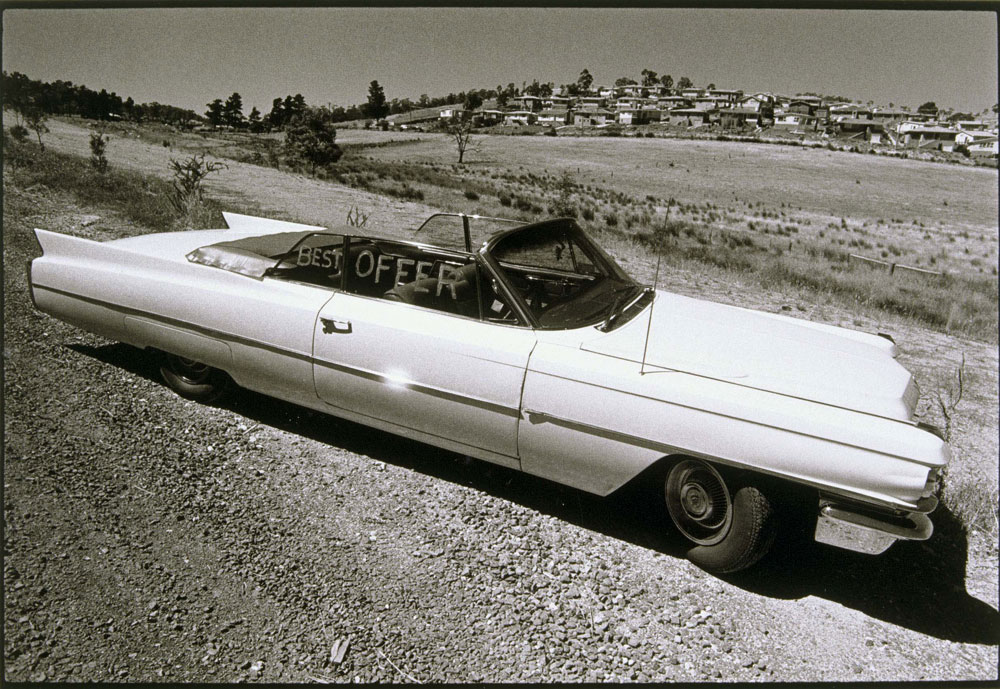
 

Jon Rhodes (Australian, b. 1947) 'Hobart, Tasmania' 1972-75 from the album 'Australia'


Jon Rhodes (Australian, b. 1947)
Hobart, Tasmania
1972-75
From the album Australia
1 of 53 gelatin silver photographs
11.9 x 17.7cm
Art Gallery of New South Wales, purchased 1980
© Jon Rhodes


Jon Rhodes (Australian, b. 1947) 'Tuncester, New South Wales' 1972-75 from the album 'Australia'


Jon Rhodes (Australian, b. 1947)
Tuncester, New South Wales
1972-75
From the album Australia
1 of 53 gelatin silver photographs
11.9 x 17.7cm
Art Gallery of New South Wales, purchased 1980
© Jon Rhodes


Michael Riley (Australian, 1960-2004) 'Untitled' 1998 from the series 'flyblown'


Michael Riley (Australian, 1960-2004)
Untitled
1998
From the series flyblown
Pigment print
82 x 107.8cm
Art Gallery of New South Wales, Sydney
Anonymous gift to the Aboriginal & Torres Strait Islander and Photography collections 2010
© Michael Riley Estate. Licensed by Viscopy, Sydney


Michael Riley (Australian, 1960-2004) 'Untitled' 1998 from the series 'flyblown'


Michael Riley (Australian, 1960-2004)
Untitled
1998
From the series flyblown
Pigment print
82 x 107.8cm
Art Gallery of New South Wales, Sydney
Anonymous gift to the Aboriginal & Torres Strait Islander and Photography collections 2010
© Michael Riley Estate. Licensed by Viscopy, Sydney


Michael Riley received his first introduction to photography through a workshop at the Tin Sheds Gallery in Sydney, 1982. A Wiradjuri / Kamilaroi man, the artist moved to Sydney from Dubbo in his late teens. He became part of a circle of young Indigenous artists drawn together in the city at that time. A founding member of the Boomalli Aboriginal Artists Co-operative Riley was also a key participant in the first exhibition of Indigenous photographers at the Aboriginal Artists Gallery, Sydney in 1986 (curator Ace Bourke). In 2003 Riley’s work was selected for the Istanbul Biennial, and in 2006 his work was permanently installed at Musée de quai Branly, Paris. A major retrospective toured nationally in 2006-2008.

Riley’s fine art photography began in black and white but he quickly progressed to large-scale colour, a format that also expanded the cinematic qualities of his images, no doubt reflecting the influence film and video were having upon the artist as he worked simultaneously with these media. He produced, for example, the documentaries Blacktracker and Tent boxers for ABC television in the late nineties.

The photographic series flyblown bears a close relationship to the film Empire which Riley created in 1997. Like the film, these photographs give expression to the artist’s concern with the impact of European culture upon that of Australia’s Indigenous population, specifically, as he described it, the ‘sacrifices Aboriginal people made to be Christian’ (Avril Quaill, ‘Marking our times: selected works of art from the Aboriginal and Torres Straight Islander Collection at the National Gallery of Australia’, National Gallery of Australia, Canberra 1996 p. 66).

Christian iconography looms large in the series, as it has across much of Riley’s work. In flyblown, an imposing reflective cross is raised in the sky. Repeated in red, gold and blue its presence is inescapable. A symbol capable of inspiring awe, fear, devotion, Riley also engages with its elegiac qualities so that it functions as memorial marker. Another image depicting a bible floating face down in water conceptualises the missionary deluge, perhaps; submersion and loss through baptism, definitely.

flyblown reverberates with a subtle ominous hum – the quiet tension that precedes a storm. The parched earth beneath a dead galah seems to ache for the rain and water promised in the other images of clouds and dark skies. The nourishment Christianity offered and the inadvertent drowning of traditional culture that often followed is implied.

Visually linking the natural environment with religious symbolism Riley articulates Indigenous spirituality’s connections to country and widens his examination beyond to examine the sustained environmental damage. The negative side effects of pastoralist Australia are indicated by contrasting images of the long grass of cattle pastures with that of drought and wildlife death.

Riley’s success in articulating these issues and complexities, incorporating religious iconography so laden by history and meaning is a testament to his sensitivity and subtlety. Allowing room for ambiguity, Riley provides space for the mixed emotions of the subject and its history.

Text from the Art Gallery of New South Wales website [Online] Cited 16/01/2020


Simryn Gill (Singapore, Malaysia, Australia, b. 1959) 'Untitled' 1999 from the series 'Rampant'


Simryn Gill (Singapore, Malaysia, Australia, b. 1959)
Untitled
1999
From the series Rampant
Gelatin silver photograph
25 x 24cm
AGNSW collection, gift of the artist, 2005
© Simryn Gill


In Rampant, Simryn Gill turned her eye once more on Australia ‘… to see if I could find friends among the local flora’. This series of photographs was shot in sub-tropical northern New South Wales and shows unnerving images of trees and plants dressed up in clothes. In the photographs these ghostly forms are seen lingering in groves of introduced plants such as bamboo, bananas, sugar cane and camphor laurels. The plants are dressed in lungis and sarongs, generic clothing from South and South- East Asia, where many of these plants originate. Rampant is a form of memento mori, a record of the aspirations that saw plants only too successfully introduced into a pristine terrain which was unable to offer any resistance to their feral ways.

French philosopher Gaston Bachelard condenses his complex thinking on creativity and the human imagination into the metaphor of a tree, with its living, evolving growth and the simultaneity of being earth bound and heaven reaching, symbolising both the real and ideal.1 However, what happens when that tree is a camphor laurel, an admirable thing in its native land but out of place and wrecking havoc along the creeks of rural New South Wales?

Many once-useful species are now noxious weeds and over-successful colonisers, despised for their commonness, their success, their over-familiarity, and for being where we feel they should not be. They disrupt the order we would like to impose and remind us of our fallibility when attempting to play god and create our own earthly Edens. The language of natural purity that we use to protect our landscape also resonates with the nationalist rhetoric used to police our borders and to decide who are acceptable new arrivals and who are illegal aliens, often determined through scales of economic and social usefulness.

Text from the Art Gallery of New South Wales website [Online] Cited 16/01/2020


1/ Gaston Bachelard, ‘The totality of the root image’, On poetic imagination and reverie, editor and translator Colette Graudin, Spring Publications, Quebec, 1987, p. 85.


    Anne Ferran (Australian, b. 1949) 'Untitled' 2008 from the series 'Lost to worlds'


    Anne Ferran (Australian, b. 1949)
    Untitled
    2008
    From the series Lost to worlds
    Gelatin silver print
    © Anne Ferran


    Anne Ferran (Australian, b. 1949) 'Untitled' 2008


    Anne Ferran (Australian, b. 1949)
    Untitled
    2008
    From the series Lost to worlds
    Gelatin silver print
    © Anne Ferran


    Wesley Stacey (Australia, b. 1941) 'The road: Outback to the city 3' 1973-1975


    Wesley Stacey (Australia, b. 1941)
    The road: Outback to the city 3
    1973-1975
    Folio 1 from “The Road” a portfolio of 280 photographs
    Fuji Colour machine print
    © Wesley Stacey


    Wesley Stacey (Australia, b. 1941) 'The road: Surfers to Hobart 15' 1973-1975


    Wesley Stacey (Australia, b. 1941)
    The road: Surfers to Hobart 15
    1973-1975
    Folio 16 from “The Road” a portfolio of 280 photographs
    Fuji Colour machine print
    © Wesley Stacey


    Wesley Stacey (Australia, b. 1941) 'The road: Port Hedland / Wittenoon / Roeburne, WA 14' 1973-1975


    Wesley Stacey (Australia, b. 1941)
    The road: Port Hedland/Wittenoon/Roeburne, WA 14
    1973-1975
    Folio 10 from “The Road” a portfolio of 280 photographs
    Fuji Colour machine print
    © Wesley Stacey


    Art Gallery of New South Wales
    Art Gallery Road, The Domain, Sydney NSW 2000, Australia

    Opening hours:
    Open every day 10am – 5pm
    except Christmas Day and Good Friday

    Art Gallery of New South Wales website

    LIKE ART BLART ON FACEBOOK

    Back to top

    Review: ‘Bill Henson’ at Tolarno Galleries, Melbourne

    Exhibition dates: 30th March – 21st April 2011


    Bill Henson (Australian, b. 1955) 'Image No.9 from an Untitled sequence 1977' 1977


    Bill Henson (Australian, b. 1955)
    Image No. 9 from an Untitled sequence 1977
    1977
    Gelatin silver print


    This is an exquisite exhibition by one of Australia’s preeminent artists. Like Glenn Gould playing a Bach fugue, Bill Henson is grand master in the performance of narrative, structure, composition, light and atmosphere. The exhibition features thirteen large colour photographs printed on lustre paper (twelve horizontal and one vertical) – nine figurative of adolescent females, two of crowd scenes in front of Rembrandt paintings in The Hermitage, St. Petersburg (including the stunning photograph that features The return of the prodigal son c. 1662 in the background, see below) and two landscapes taken off the coast of Italy. What a journey this exhibition takes you on!

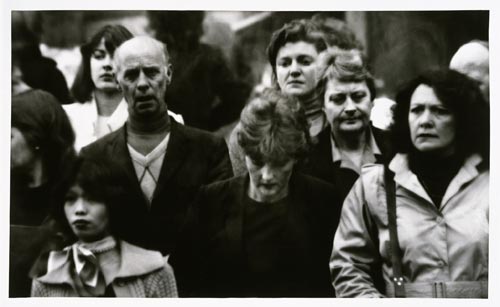
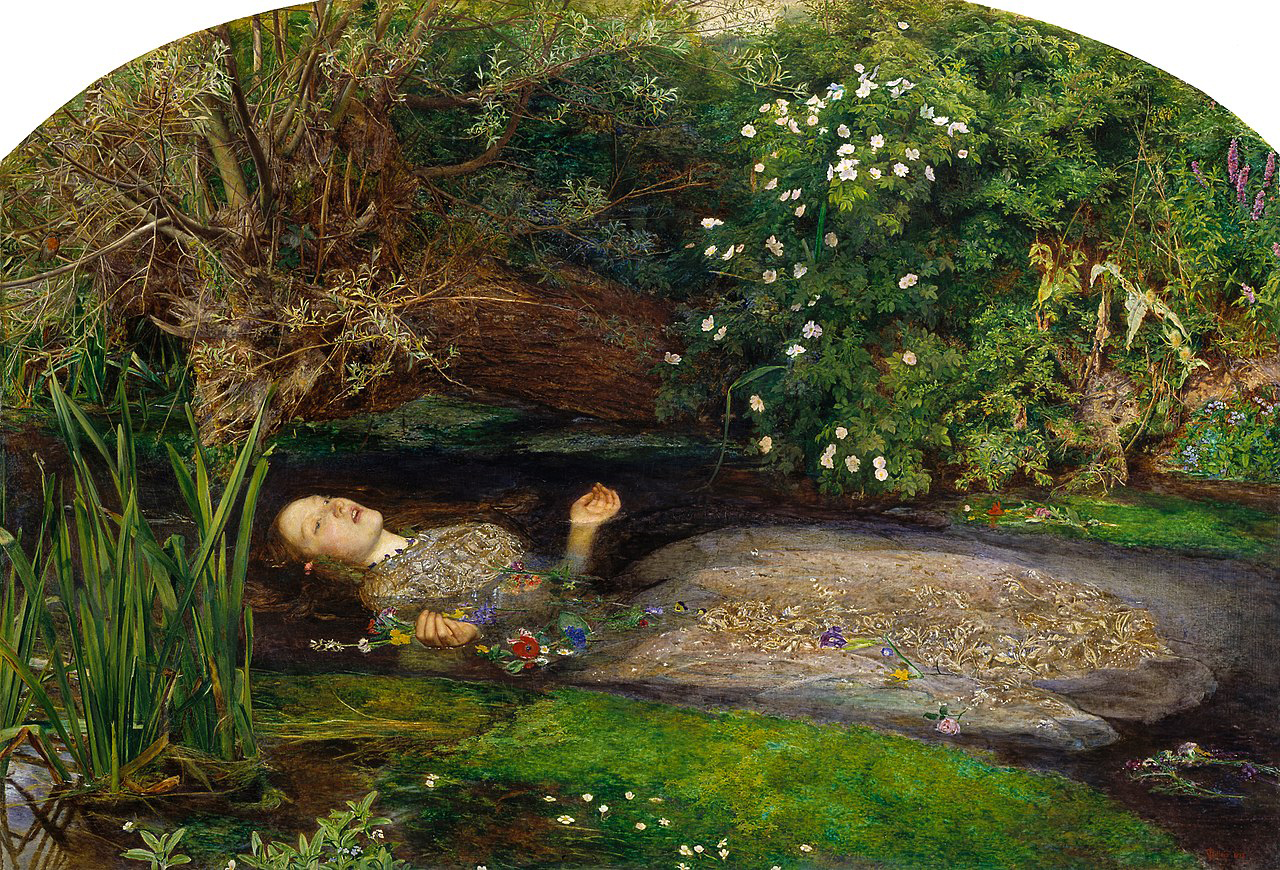
    Throughout his career Henson has carefully and thoughtfully mined the history of art to create personal mythologies that have wider universal implications. His work is a spiral feeding back into itself. As it ascends so it expands. His inquiry has been consistent and persuasive – themes and techniques that were evident in the very first photographs still appear many years later. For example, the very early photograph Image No.9 from an Untitled sequence 1977 (above) features a Mannerist-influenced elongated body, a form that appears in the latest exhibition in several of the works. Other influences have been, in early work, the Baroque (Untitled 1983/84, below), Rembrandt’s use of chiaroscuro in the Paris Opera Project (Untitled 21/51, below), the Pre-Raphaelite (used in most of his figurative work, especially in the faces, see below). In the current exhibition the influence of Caravaggio on the form of the body and the relationship between a work and Leonardo da Vinci’s Head of Christ (c. 1494-1495, below) is evident as is the implementation of a flattened perspective that is opposed to the principles of linear perspective, used in Dutch still life of the 17th century (see ‘The Art of Describing’1) that Henson employed in early photographs of crowds (Untitled 1980/82, below) – now reappearing in the two photographs taken in front of the Rembrandt paintings.

    Henson’s vulnerable bodies have always been marked, bruised and subject to distress, emerging into the light in fragments – unsure in their relationship to life, spirit and mortality. His naked adolescent subjects occupy interstitial spaces: the gap between spaces full of structure, between childhood and adulthood – fluid spaces of adventure, exploration and problematic transience. Using this metaphor the photographs invite the viewer to examine their own social identity for this is never fixed and stable, is always in a state of flux; we, the viewer, have an intimate relationship to this period in our life not as some distant memory but with a sense of wonder and appreciation.

    The new photographs, with their languorous, limpid figures have a certain malaise to them – the disintegrating body, the surface of the skin all blotchy hues of blue, pink and purple as if diseased – are translucent like a chrysalis … the inner light seeming to magically emerge from under the skin. As John McDonald in his excellent article (an essential read!) in The Age comments,

    “The bodies of teenagers are transformed into living sculptures, infused with a slivery-blue sheen, every bruise and blemish captured in unsettling detail. Henson does not provide us with fantasy objects; he makes us feel how lonely it can be within our own skins. These are disturbing images but not because they feature naked adolescents. They are disturbing because they have the beauty of old master paintings or antique statuary but depict beings of flesh and blood. They are disturbing because they touch parts of the psyche we might prefer to avoid, stripping away the social self, leaving us as defenceless as a snail without its shell.”2

    As McDonald notes, these bodies are more melancholy than erotic although they do possess, powerfully, that ability to image “the primeval deity who embodies not only the force of love but also the creative urge of ever-flowing nature, the firstborn Light for the coming into being and ordering of all things in the cosmos.”3 In this sense they emerge from darkness into the (dying of the) Light and possess a foreboding sense of death as well as elegiac sensuality: the placement of a hand, the hair of a person enveloped in darkness languidly resting on an exposed stomach, easily missed if not being attentive to the image.

    Henson’s photographs have been said by many to be haunting but his images are more haunted than haunting. There is an indescribable element to them (be it the pain of personal suffering, the longing for release, the yearning for lost youth or an understanding of the deprecations of age), a mesmeric quality that is not easily forgotten. The photographs form a kind of afterimage that burns into your consciousness long after the exposure to the original image has ceased. Haunted or haunting they are unforgettable.

    Dr Marcus Bunyan


    1/ See Alpers, Svetlana. The Art of Describing: Dutch Art in the Seventeenth Century. University Of Chicago Press, 1984

    2/ McDonald, John. “Bill Henson,” in The Age newspaper. April 9th 2011 [Online] Cited 17/04/2011

    3/ Anon. “Eros,” on Wikipedia [Online] Cited 17/04/2011


    Many thankx to Jan Minchin and Tolarno Galleries for allowing me to publish the four photographs from the exhibition in the posting. Please click on the photographs for a larger version of the image. All photographs © the artist and Tolarno Galleries.

    All photographs published other than the ones supplied by Tolarno Galleries are published under fair dealing for the purposes of criticism or review (Commonwealth of Australia Consolidated Acts: Copyright Act 1968 – Sect 41).


    Bill Henson (Australian, b. 1955) 'Untitled' 1980/82


    Bill Henson (Australian, b. 1955)
    Untitled
    1980/1982
    Gelatin silver photograph
    28 × 47cm


    David Bailly (Dutch, 1584-1657) 'Self-Portrait with Vanitas Symbols' c. 1651


    David Bailly (Dutch, 1584-1657)
    Self-Portrait with Vanitas Symbols
    c. 1651
    Oil on canvas


    Bill Henson (Australian, b. 1955) 'Untitled' 1983-84 Triptych


    Bill Henson (Australian, b. 1955)
    Untitled 1983/84
    1983-1984
    Triptych
    Type C colour photograph
    Each 98.3 x 73.6cm


    Bill Henson (Australian, b. 1955) 'Untitled 21/51' 1990-91


    Bill Henson (Australian, b. 1955)
    Untitled 21/51
    1990-1991
    Paris Opera Project
    Type C photograph
    127 × 127cm
    Series of 50
    Edition of 10 + 2 A/Ps


    Bill Henson (Australian, b. 1955) 'Untitled #125' 2000-03


    Bill Henson (Australian, b. 1955)
    Untitled #125
    2000/2003
    LMO SH163 N15A
    Type C photograph
    127 × 180cm
    Edition of 5 + 2 A/Ps


    Sir John Everett Millais (English, 1829-1896) 'Ophelia' 1851-1852


    Sir John Everett Millais (English, 1829-1896)
    Ophelia
    1851-1852
    Oil on canvas
    Tate Britain


    Tolarno Galleries is pleased to present Bill Henson’s most recent body of work.

    Comprising 13 photographs depicting glowing interiors, stunning landscapes and softly lit figures, this exhibition shows, as David Malouf declared in 1988, that ‘Bill Henson is a maker of magic.’

    Henson’s spellbinding new works push photography into the realm of painting. His masterly compositions, captured at twilight, remind us of Caravaggio. Hauntingly beautiful, they express a palpable tenderness through subtle gestures and exquisite modulations of colour. Such photographs tell us why Bill Henson is one of Australia’s leading contemporary artists.

    Born in Melbourne, he had his first solo exhibition, at the age of 19, at the National Gallery of Victoria in 1975. Since then he has exhibited extensively in Australia and internationally. In 1995 he represented Australia at the Venice Biennale with his celebrated series of cut-screen photographs.

    In 2003 his work appeared in Strangers: The First ICP Triennial of Photography and Video at the International Center of Photography, New York.

    A major survey of his work was held at the Art Gallery of New South Wales and the National Gallery of Victoria in 2005. This landmark exhibition attracted record visitor numbers for a contemporary art exhibition in Australia. The following year he exhibited a major body of work in Twilight: Photography in the magic Hour at the Victoria and Albert Museum, London.

    Press release from Tolarno Galleries


    Bill Henson (Australian, b. 1955) 'Untitled' 2010/11


    Bill Henson (Australian, b. 1955)
    Untitled
    2010/2011
    NH SH346 N10B
    Archival inkjet pigment print
    127 x 180cm
    Edition of 5


    Bill Henson (Australian, b. 1955) 'Untitled' 2009/10


    Bill Henson (Australian, b. 1955)
    Untitled
    2009/2010
    CL SH733 N35B
    Archival inkjet pigment print
    127 x 180cm
    Edition of 5


    Bill Henson (Australian, b. 1955) 'Untitled' 2009/10


    Bill Henson (Australian, b. 1955)
    Untitled
    2009/2010
    CL SH767 N17B
    Archival inkjet pigment print
    127 x 180cm
    Edition of 5


    Bill Henson (Australian, b. 1955) 'Untitled' 2009/10


    Bill Henson (Australian, b. 1955)
    Untitled
    2009/2010
    NH SH353 N33D
    Archival inkjet pigment print
    127 x 180cm
    Edition of 5


    Leonardo da Vinci (Italian, 1452-1519) 'Study for the head of Christ for The Last Supper [Testa di Cristo]' c. 1494-1495


    Leonardo da Vinci (Italian, 1452-1519)
    Study for the head of Christ for The Last Supper [Testa di Cristo]
    c. 1494-1495
    Drawing on paper
    40 x 32cm
    Pinacoteca di Brera, Milano


    Tolarno Galleries
    Level 4, 104 Exhibition Street
    Melbourne VIC 3000
    Australia
    Phone: 61 3 9654 6000

    Opening hours:
    Tuesday – Friday 10am – 5pm
    Saturday 1pm – 4pm

    Tolarno Galleries website

    LIKE ART BLART ON FACEBOOK

    Back to top

    Review: ‘In Spates’ by Sam Shmith at Arc One Gallery, Melbourne

    Exhibition dates: 29th March – 23rd April 2011


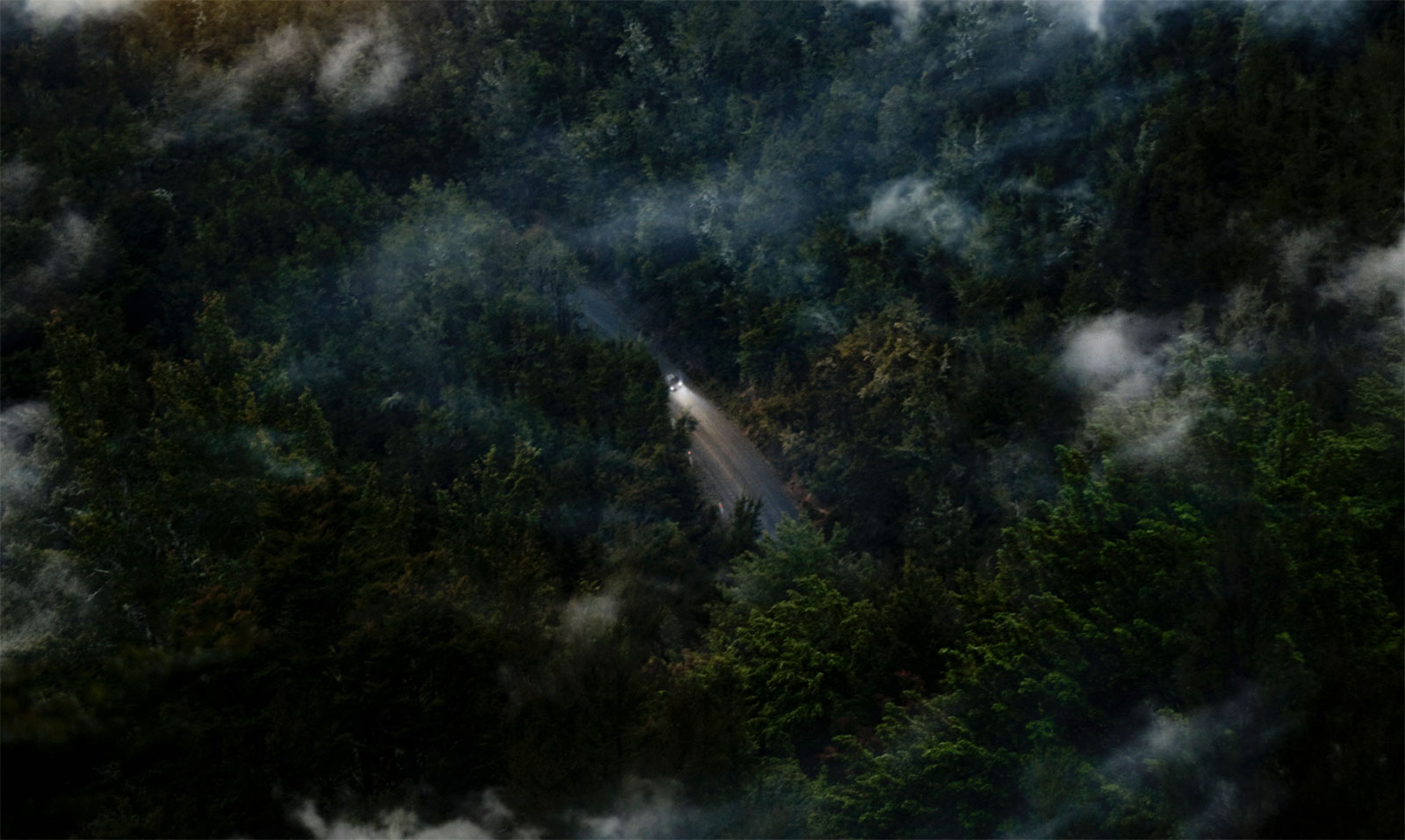
    Sam Shmith (Australian born England, b. 1980) 'Untitled (In Spates 2)' 2011


    Sam Shmith (Australian born England, b. 1980)
    Untitled (In Spates 2)
    2011
    125 x 75cm
    Pigment print on archival rag


    The Digital Punctum

    Spate, definition: A sudden flood, rush, or outpouring

    This is a visually strong body of work by Sam Shmith that thematically hangs together beautifully in the Arc One Gallery space. The mystery, the sublime and the journey are well handled by the artist. As a spectral ‘body’ the photographs work together to create a new form of hallucination, one that haunts and perturbs the mind, like a disturbing psychological thriller a la David Lynchian ‘Twin Peaks’. The work, as a whole, becomes a meta-narrative and as Shmith develops as an artist, they seem to me like work that has journeyed to the point of departure. The viewer is (not really) flying, (not really) floating above the clouds observing the meta-narrative, creating a visual memory of things. Spectral luminescences, not-quite-right perspectives, the photograph as temporal hallucination.

    Shmith’s photographs are constructed from “30-40 photographs per pictorial narrative” taken during the day and then digitally darkened: the clouds from Queensland, the cities from here, the cars from there. To be honest the clouds and cities could be from anywhere they are just part of the process. Shmith’s technique is interesting to know and then is quickly forgotten when looking at the photographs – like reading, it does not become the meaning (just a layer) of the work. The images, when constructed (however!) take me to other spaces and memories, opening up new vistas in my imagination.


    Shmith’s series acts as a punctum, working to create an unitary impression on the mind that pricks my consciousness. The whole work becomes punctum. This is a very interesting and powerful proposition.

    The punctum, as argued by Barthes in Camera Lucida, relies on the QUESTION OF INTENTIONALITY – the detail that pricks and wounds is an unconscious act on the part of the photographer – not one of intention. It cannot be perceived by the photographer or indeed anyone else in the present. In other words, when the photographer photographs the total object, he cannot not not photograph the part object, which is what the punctum is:

    “Hence the detail which interests me is not, or a least not strictly, intentional, and probably must not be so; it occurs in the field of the photographer thing like a supplement that is at once inevitable and graceful; it does not necessarily attest to the photographer’s art; it says only that the photographer was there, or else, still more simply, that he could not not photograph the partial object at the same time as the total object … The photographer’s “second sight” does not consist in “seeing” but in being there. And above all, imitating Orpheus, he must not turn back to look at what he is leading – what he is giving to me!” (CL 47/CC 79-80)

    As Michael Fried observes in his analysis of Camera Lucida, the punctum is “antitheatrical” in the sense that we see it for ourselves and are not shown it by the photographer: it is not consciously constructed by the photographer but unconsciously captured as part of the total object:

    “As Fried has argued, the experience of the punctum lives or dies for Barthes according to the absence of presence of intentionality on the part of the photographer; if there is visible intention, there is no punctum. That the punctum can exist only in the absence of intention is consistent, Fried claims, with his distinction between “seeing” (understood positively as antitheatrical) and “being shown” (understood negatively as theatrical). The possibility of the punctum is cancelled if bound to the photographer’s intention – if we are shown what can only be seen. As Fried states: “The punctum, we might say, is seen by Barthes but not because it has been shown to him by the photographer, for whom it does not exist; as Barthes recognizes, ‘it occurs [only] in the photographic field of the photographed thing,’ which is to say that it is not a pure artefact of the photographic event.”1


    This changes in digital photography, especially with photographs such as Shmith’s constructed from 30-40 photographs. Here the construction can only be intentional (or can it?), dissolving the relation between referent and photograph, the unseen nature of punctum and the ability to not not photograph the part object:

    “Fried mentions the subject I have in mind when he says digital photographs undermine the condition of the punctum by making it impossible that “a partial object in the photograph that might otherwise prick or wound me may never have been part of a total object, which itself may be a digital construction” (Michael Fried, “Barthes’s Punctum,” Critical Inquiry 31, Spring 2005, p.563). In the sentence just preceding that, Fried notes that digitalization “threatens to dissolve the ‘adherence’ of the referent to the photograph,” thus ending the fundamental claim that “the photographer could not not photograph the partial object at the same time as the total object.”2

    But the digital punctum still exists. Shmith’s work is evidence of this. It exists in the mind of the artist and viewer, external to rather than strictly “in” or “of” the image:

    “Curiously, however, Barthes does claim in Camera Lucida that the punctum may also be of the mind, or at the level of remembrance, rather than strictly “in” or “of” the image: “… the punctum (is) revealed only after the fact, when the photograph is no longer in front of me and I think back on it. I may know better a photograph I remember than a photograph I am looking at, as if direct vision oriented its language wrongly, engaging it in an effort of description which will always miss its point of effect, the punctum” (Roland Barthes, Camera Lucida: Reflections on Photography, trans. Richard Howard (New York: Hill and Wang, 1981), 53.) Indeed, the punctum is a most difficult thing to pin down, or, should one say, to prick. Fried recognizes the truly aporetic [characterised by an irresolvable internal contradiction or logical disjunction] nature of the punctum when he points to certain affinities between the literalist work of the Minimalists and the punctum, whereby the Minimalists understood the relationship between the literalist work and the beholder as ’emphatically not determined by the work itself’, suggesting that meaning in literalism was essentially indeterminate.”3

    As James Elkins has observed, the punctum, or the image’s antitheatricality, is not necessarily threatened by digitalisation either through the detaching of the referent from the photograph or through the detaching of the part object from the full object within the image itself.

    “The presence and efficaciousness of the part object are independent of digitalisation because the concept of the part object arises from a certain understanding of the internal structure of pictures and objects. Part objects can be found as readily in photographs of galaxies, which are assembled from layers of cleaned and enhanced digital images, as in the background of Wessing’s Nicaragua. Nor does the detachment of the photograph from its referent threaten the operation of the punctum because photographs with subjects that are wholly digitally constructed can be understood as having overlooked elements waiting to be discovered by each viewer.”4


    My belief is that the digital photographer can evidence punctum in the construction of image through an anticipation of it’s affect – either consciously or unconsciously. Not through the ‘placement’ inside disparate texts but a holistic embedding through intertextuality. The punctum becomes the (non)intentional ground of discovery – the part part object if you like – the prick among many photographs now created as one, in this case 30-40 turned into one pictorial narrative. The punctum does not have to be part of a total object and digitalisation does not undermine the punctum; it may even enhance it so that, in this case, the whole series becomes punctum.

    Shmith’s series and individual photographs within the series work best when the artist lets go of his consciousness and lets the ‘thing itself’ emerge, like a Japanese haiku poem. While consciously constructed by the artist the haiku takes on a life and meaning of it’s own outside the confines of intentionality.

    “The artist can proffer a ‘releasement toward things’ (Heidegger, Martin. Discourse on Thinking. New York: Harper & Row, 1966, pp. 55-56), a coexistence between a conscious and unconscious way of perceiving which sustains the mystery of the object confusing the distinction between real time and sensual time, between inside and outside, input and output becoming neither here nor there. The mystery of the image is not to be found in its emasculation (in the sense of it’s deprivation of vigour) but by being attentive to the dropping a way of awareness, of memory, imagination, and the fixed gaze of desire through the glimpsing of a coexistence between a conscious and unconscious way of perceiving, a ‘releasement towards things’ which enables the seeing of the ‘Thing Itself’.”5

    While Shmith’s series works as a whole and there are some wonderful individual images occasionally the artist has become too conscious of the punctum, the marks he intentionally makes. There are too many planes in clouds, the marking of these planes loosing their aura of (in)significance. They should be discovered afresh, “overlooked elements waiting to be discovered by each viewer,” not intentionally placed and shown by the artist. The series needed other themes embedded within them to allow the viewer to discover, to journey – more! As I said in the opening paragraph the photographs seems to me like work that has journeyed to the point of departure.

    And what an exciting departure it is, for what happens next is in his, and our, imagination.

    Dr Marcus Bunyan


    1/ Fried, Michael. “Barthes’s Punctum,” in Critical Inquiry 31, Spring 2005 quoted in Hughes, Gordon. “Camera Lucida, Circa 1980,” in Batchen, Geoffrey (ed.,). Photography Degree Zero: Reflections on Roland Barthes’s Camera Lucida. Cambridge, MA: MIT Press, 2009

    2/ Elkins, James. “What Do We Want Photography To Be?” in Batchen, Geoffrey (ed.,). Photography Degree Zero: Reflections on Roland Barthes’s Camera Lucida. Cambridge, MA: MIT Press, 2009, pp. 176-177

    3/ Haraldsson, Arni. “Fried’s Turn,” on Fillip website, Spring 2004 [Online] Cited 12/04/2011. fillip.ca/content/frieds-turn

    4/ Elkins, Op. cit.

    5/ Bunyan, Marcus. “Spaces That Matter: Awareness and Entropia in the Imaging of Place,” 2002, on the Academia.edu website [Online] Cited 20/07/2022. https://www.academia.edu/4885768/Spaces_That_Matter_Awareness_and_Entropia_in_the_Imaging_of_Place_October_2002_


    Many thankx to Angela Connor for her help and to Arc One Gallery for allowing me to publish the text and photographs in the posting. Please click on the photographs for a larger version of the image.


    Sam Shmith (Australian born England, b. 1980) 'Untitled (In Spates 7)' 2011


    Sam Shmith (Australian born England, b. 1980)
    Untitled (In Spates 7)
    2011
    50 x 30cm
    Pigment print on archival rag


    Sam Shmith (Australian born England, b. 1980) 'Untitled (In Spates 14)' 2011


    Sam Shmith (Australian born England, b. 1980)
    Untitled (In Spates 14)
    2011
    50 x 30cm
    Pigment print on archival rag


    Sam Shmith’s photographs resemble the opening scenes of a Hollywood blockbuster. By harnessing our collective imagination, each image is charged with mystery and intrigue, leaving the viewer to draw their own conclusions about the narrative embedded in each of the works.

    Digitally layered from an image bank of over 60,000 self-shot images, Sam’s twenty-two new landscapes choreograph a series of temporal clues into single images that simultaneously obliterate all references to a particular locality. His works are a hybrid of images from his personal archives, composited so that each journey is no longer distinct, but melded to create their single, artificial realities.

    Influenced by François Truffaut’s film Day for Night (1973), the works are shot during the day, and meticulously transformed into twilight scenes. Reworking and repeating particular motifs, these elaborately constructed works are broken up into four distinct groups – sky, mountains, cities and roads. The centre of the frame concentrates an immediate human intervention enveloped by mountainous panoramas, vaporous clouds or close foliage to create a murky tension between the encompassing landscape and specks of synthetic light. Intuitively composited from between 30 to 40 photographs per pictorial narrative, the works are shot from cars, aeroplanes and hot air balloons producing mood scenes that have athematic unity.

    Through his methods Sam fashions an unconventional approach to landscape photography. Citing the melancholic landscapes of Bill Henson, the suburban malaise of Gregory Crewdson and drawing motivation from Alfred Stieglitz’s Equivalents, In Spates communicates the artist’s devotional dedication to the emotive importance of the genre. Though isolation appears as a common theme in his work, Sam’s observations should also be considered as an arbitrary moment viewed from afar, evoking a feeling of alienation and disengagement between the environment and ourselves.

    Text from the Arc One Gallery press release


    Sam Shmith (Australian born England, b. 1980) 'Untitled (In Spates 5)' 2011


    Sam Shmith (Australian born England, b. 1980)
    Untitled (In Spates 5)
    2011
    125 x 75cm
    Pigment print on archival rag


    Sam Shmith (Australian born England, b. 1980) 'Untitled (In Spates 21)' 2011


    Sam Shmith (Australian born England, b. 1980)
    Untitled (In Spates 21)
    2011
    125 x 75cm
    Pigment print on archival rag


    Arc One Gallery
    45 Flinders Lane
    Melbourne, 3000
    Phone: (03) 9650 0589

    Opening hours:
    Wed – Sat 11am – 5pm

    Arc One Gallery website

    LIKE ART BLART ON FACEBOOK

    Back to top

    Review: ‘NETWORKS (cells & silos)’ at Monash University Museum of Art (MUMA), Caulfield

    Exhibition dates: 1st February – 16th April 2011


    Installation photograph of one of the galleries in the exhibition 'NETWORKS (cells & silos)' at Monash University Museum of Art (MUMA) with Nick Mangan's 'Colony' (2005) in the foreground


    Installation photograph of one of the galleries in the exhibition NETWORKS (cells & silos) at the newly opened Monash University Museum of Art (MUMA) with Nick Mangan’s Colony (2005) in the foreground
    Photo: Marcus Bunyan


    This is a vibrant and eclectic exhibition at MUMA, one of the best this year in Melbourne. The curator Geraldine Barlow has gathered together some impressive, engaging works that are set off to good effect in the new gallery spaces. I spent a long and happy time wandering around the exhibition and came away visually satiated and intellectually stimulated.

    The exhibition “explores the connections between artistic representation of networks; patterns and structures found in nature; and the rapidly evolving field of network science, communications and human relations.” (text from MUMA)

    Networks connect – they describe (abstract) connections between people and things. Networks map simple or complex systems and can be real or an abstract representation of those systems. Networks form a nexus, “a sort of concentrated nodal point among a series of chains of markers” that reveals the centralising structure of networks (such as Facebook and Google). Robert Nelson in his review of this exhibition in The Age notes, “Geert Lovink and Ned Rossiter [in their catalogue essay] describe the way networks paradoxically disorganise you, creating a disempowering messy grid of protocols that colonise your headspace … It’s commonplace to celebrate networks because they stimulate excitement about belonging, about extending your reach and joining in. These hopes are as pervasive as the networks themselves. But in structural terms, networks are also insidiously colonising and hierarchical, built on the principle of the rich becoming richer and the poor becoming more dependent.”1

    I believe that networks can also be altruistic and non-heirarchical, offering a horizontal consciousness rather than a vertical one: points of view and perspectives on the world that open up these (virtual) spaces to fluidity, mutation, transgression and subversion. Catherine Lumby observes that,

    “The contradictory, constantly shifting nature of contemporary information and image flows tends to erode the moral authority of any social order, patriarchal or otherwise. It is this very collapse which has arguably fuelled social revolutions such as feminism and gay and lesbian rights, but which equally disrupts attempts by some to ground them in identity politics.”2

    Critical to understanding the construction of these constantly shifting networks in contemporary society are the concepts of weaving and intertexuality. Intertextuality is the concept that texts do not live in isolation, “caught up as they are in a system of references to other books, other texts, other sentences: it is a node within a network… Its unity is variable and relative (Foucault, 1973)3. In other words the network is decentred and multiple allowing the possibility of transgressive texts or the construction of a work of art through the techniques of assemblage (Deleuze and Guattari) – a form of fluid, associative networking that is now the general condition of art production.4

    Infection of the network (by viruses for example) disrupts the pattern/randomness binary and may lead to mutations, ‘differance’ in Derrida’s terminology, spaces that are both fluid and fixed at one and the same time; neither here nor there.


    On to (some of) the work.

    Masato Takasaka’s series of fibre-tipped pen and pencil on paper, Information Superhighway (2006-07), are wonderful, kaleidoscopic works – inventive and fun, full of rhizomic, multi-layered dimensionality. Nick Mangan’s mixed media sculpture Colony (2005, see photograph below) is a spiky, totemic, figurative creature made of axe, shovel and hammer handles and riddled with holes like driftwood that looks like a bizarre, Medieval torture instrument.

    Bryan Spiers paintings Shadowmath and New descending (both 2010, see photograph below) are excellent, puzzle-like reinterpretations of delicate, Futuristic movements. As he describes them, “I think of my paintings as puzzles or visual toys. They are images to be manipulated by the viewer; reconfigured, recomposed, expanded upon. Trajectories of change are implied by repeated shapes and graded colour transitions. They describe a continuum to be followed to its logical conclusion outside of the picture plane. This leads to the dissolution of the image, proposing new images yet to be made.”

    Heath Bunting’s 3 panel work from The Status project (all 2010) features interrelated data sets that reach a “level of absurdity in attempting to relate radically different but inter-related information.” This mind mapping schematic of connections (coloured connections with labels, markers and legends) based around Bristol, England has some unbelievable entries if you look really closely:

    ~ A1072 Able to provide natural person date of birth 2010
    ~ A1073 Able to access the Internet
    ~ A1003 A terrorist
    ~ A1047 Providing instruction or training in the use of imaginary firearms such as sticks
    ~ A1088 Providing training in leopard crawling


    Aaron Koblin’s beautiful video Flight patterns (2010) offers a mapping of thousands of plane journeys across the USA over time (based on East Coast time) so that the explosion of their frequency becomes like a fireworks display. Andrew McQualter’s fantastic acrylic paint wall drawings Three propositions, one example (2010-11), painted directly onto the gallery wall show various people, isolated from each other and from the viewer, talking and listening to their iPhones. As Robert Nelson comments, “They’re isolated individuals, all on their own plane, presumably doing social networking or communicating. If you walked past them, they wouldn’t respond because, with heads bowed, they’re absorbed in another reality. Their hands and minds are busy with a reality elsewhere.”

    Present but not present, (not) here and there at the same time. This is a critical debate in contemporary culture: do these type of networks lessen our ability to build friendships and connections in the real world or are they just another element in our rhizomic network of associations that help with our interconnectivity: utopian or dystopian or equal measure of both? Does it really matter?

    From the UK Kit Wise’s large digital print on aluminium series (including KTM SEA MOW RUH 2010, see below) are effective, offering solarised, negative, brightly coloured collages of seemingly atomised cities (the titles refer to the cities airport abbreviation codes). Mass Ornament (2009) by American artist Natalie Bookchin is one of my favourite works in the exhibition. In a horizontal panel of wall mounted screens play videos of people dancing in their bedroom. Bookchin has gleaned these gems from uploaded personal videos on YouTube – there are handstands, contortions, tap dancing, all manner of performances (some then deleted by the performer) – then collated by the artist and set to a Broadway-type music number. Mesmeric and amazing!

    Koji Ryui’s spatial constructions Extended network towards the happy end of the universe (2007-2011, see photograph below) are made of bendy, plastic drinking straws of different colours, encased and moulded into cellular shapes (reminding me of the white of the Melbourne Recital Centre exterior). Trailing off these structures in different colours are airborne-like filaments similar to the plant Old Man’s Beard. “Ryui repeats and arranges these objects in space to create peculiar environments and accidental narratives. In his installations, relationships or spaces between objects are equally as important as the objects themselves.” Wonderful.

    Last but not least my favourite work in the exhibition: heart of the air you can hear by Sandra Selig (2011, see photographs below). The photographs do not do the work justice. Made simply from spun polyester, nails and paint this Spirograph-like construction is beautiful in its resonance and colour, captivating in its complexity. Built into a corner of the gallery the work floats at eye level, twists and turns and changes intensity of colour when viewed from different angles. From the front it looks like a spaceship out of Star Wars woven by light!


    There are many other excellent works in the exhibition that I have not mentioned. Some of the work disrupts the continual reiteration of norms by weaving a lack of fixity into the network’s existence. Other work visually makes comment on and reinforces the structure of such networks. Whichever it is this is a truly engaging exhibition that no single body, let alone a networked one, should miss.

    Dr Marcus Bunyan


    1/ Nelson, Robert. “Networks, Cells and Silos” review in The Age newspaper. Melbourne: Fairfax Media, 23/02/2011 [Online] Cited 23/03/2011

    2/ Lumby, Catharine. “Nothing Personal: Sex, Gender and Identity in The Media Age,” in Matthews, Jill (ed.,). Sex in Public: Australian Sexual Cultures. St. Leonards: Allen and Unwin, 1997, pp. 14-15

    3/ Foucault, Michel cited in Thumlert, Kurt. Intervisuality, Visual Culture, and Education. [Online] Cited 01/04/2011 no longer available online

    4/ “To understand the production of art at the end of tradition, which in our lifetime means art at the end of modernism, requires, as the postmodern debate has shown, a careful consideration of the idea of history and the notion of ending. Rather than just thinking ending as the arrival of the finality of a fixed chronological moment, it can also be thought as a slow and indecisive process of internal decomposition that leaves in place numerous deposits of us, in us and with us – all with a considerable and complex afterlife. In this context all figuration is prefigured. This is to say that the design element of the production of a work of art, the compositional, now exists prior to the management of form of, and on, the picture plane. Techniques of assemblage, like montage and collage – which not only juxtaposed different aesthetics but also different historical moments, were the precursors of what is now the general condition of production.”
    Fry, Tony. “Art Byting the Dust,” in Hayward, Phillip. Culture, Technology and Creativity in the Late Twentieth Century. London: John Libbey and Company, 1990, pp. 169-170


    Many thankx to Monash University Museum of Art for allowing me to publish the text and photographs in the posting. Please click on the photographs for a larger version of the image.


    Kerrie Poliness (Australian, b. 1962) 'Blue Wall Drawing #1' 2007-2011


    Kerrie Poliness (Australian, b. 1962)
    Blue Wall Drawing #1
    2007-2011
    Photo: Marcus Bunyan


    Hilarie Mais (British/Australian, b. 1952) 'The waiting - anon' 1986


    Hilarie Mais (British/Australian, b. 1952)
    The waiting – anon
    1986
    Photo: Marcus Bunyan


    An interview with the curator: Geraldine Barlow

    Where did your interest in networks come from?

    I’ve long been fascinated by network maps of human relationships – the graphical representation of something seemingly so complex and multi-layered. The structure of the brain and how this relates to theories of mind is also an area of personal interest. Our society, bodies and relationships are all made up of different kinds of networks, and artists have long been interested in mapping out these structures. I realised some time ago that the visual representation of networks might make for an interesting exhibition, from this point on I collected and ‘tested’ different ideas of what the exhibition might include.

    How is this explored in the exhibition?

    Human relationships feature in some of the works in the exhibition, but not all. I hope the exhibition offers a wide variety of links between people’s familiar world and daily experiences on the one hand, and more abstract ideas on the other.

    There are a number of works from the Monash University Collection included in the exhibition. Can you tell us about these and why you selected them?

    The Monash University Collection is a great source of inspiration, it is a wonderful collection, but also, I think any artwork considered closely and over time opens up in surprising ways and offers unexpected insights, working with the works in the collection over a period of years allows me to think about them in a long and slow way.

    Dorothy Braund’s work Christ with the disciples listening 1966 was given to the University in 1974. It is a very beautiful formal painting of a series of shaded circles and ellipses. At first glance it is simple and seems to represent a ring of figures, their heads and bodies gathered together. On closer examination it is not so clear where one figure ends and another begins, as a whole the clustered forms seem to operate more like a cell. Historically this cell of men and the ideas attributed to them has had a profound impact, in their day they might have been seen as a kind of terrorist cell.

    Through the sensitive composition and balance of abstract form, the artist has created a complex representation of the relationships between people: the ways in which we are both connected to each other, and yet might also circulate ideas in a tight ‘Chinese whispers’ type circle. This work was painted in 1966, long before our current awareness of social and telecommunications networks, but it can still offer us insights in our contemporary world and the way we relate to each other.

    How did the new gallery space affect the installation of the exhibition?

    The exhibition was slowly forming in my mind, even as Kerstin Thompson’s wonderful gallery space was being designed and built. The gallery has offered a wonderful armature and character for the exhibition to work with, hopefully in the manner of a conversation. Kerstin was been very interested in understand and reflecting the essential structure of the building, not building over what was pre-existing. The exhibition like-wise has an interest in structural models, geometries and patterns – in finding a balance between the regular and the slightly warped. In the central corridor which runs down the spine of the gallery, Thompson has chosen to leave the mechanical services exposed, to allow the essential structure of the building to be a form of ornament. Many of the artists in the exhibition also have an interest in the relationship between structure and ornament.


    Sandra Selig (Australian, b. 1972) 'heart of the air you can hear' 2011


    Sandra Selig (Australian, b. 1972)
    heart of the air you can hear
    2011
    Photo: Marcus Bunyan


    Sandra Selig (Australian, b. 1972) 'heart of the air you can hear' 2011 (detail)


    Sandra Selig (Australian, b. 1972)
    heart of the air you can hear (detail)
    2011
    Photo: Marcus Bunyan


    Koji Ryui (Australian/Japanese, b. 1976) 'Extended network towards the happy end of the universe' 2007-2011


    Koji Ryui (Australian/Japanese, b. 1976)
    Extended network towards the happy end of the universe
    2007-2011
    Photo: Marcus Bunyan


    The connections between artistic representations of networks and the rapidly evolving field of network science are the subject of the latest exhibition at the Monash University Museum of Art (MUMA).

    Presenting the work of Australian and international artists, NETWORKS (cells & silos) reflects the organising principles and dynamics of our increasingly networked society, and related patterns found in organic, social and engineered forms.

    MUMA’s Senior Curator, Geraldine Barlow conceived and developed the exhibition as a way of continuing the dialogue about the role and effect of different networks in society.

    “Art and aesthetics are often treated as very separate enclaves from science, physics and mathematics,” Barlow says. “But art offers us a way to re- contextualise our associations and interactions with the networks around us and look at the effect they have on us. I hope the exhibition will prompt people to think about the networks in their lives and how they mould and shape us.”

    A key inspiration for the exhibition was Annamaria Tallas’ documentary, How Kevin Bacon Cured Cancer, which features the work of network scientist Albert-László Barabási.

    “The documentary explores the thesis that all networks – both natural and man-made – conform to a similar mathematical formula, with the same patterns emerging over and again,” Barlow said.

    The artworks featured in NETWORKS (cells & silos) explore networks as diverse as those found in urban planning and cities, biology, organisations, travel and of course social networks, as well as the dual qualities of hyper-connectedness and isolation that technology has heightened in modern life.

    Extending the dialogue about the possibilities of networks is of great interest to MUMA Director, Max Delany, particularly in the university context.

    “Within a university we have a vast array of specialist disciplines – science, technology, humanities – all having conversations about how the world is and where we want to be heading,” Delany says. “Often these conversations are held in isolation from each other, but considered together, and from the standpoint of artists, the possibilities of collaborative networks become very exciting.”

    This collaboration can be seen in Kerrie Poliness’ work Blue Wall Drawing #1 (2007/2011). Students from Monash University have created the piece, following the formal and conceptual guidelines set out by the artist. Each version of Poliness’ work creates unique patterns and networks as the collaborative team choose how to implement the drawing rules which are structured to allow a different outcome in each space where they are applied.

    The exhibition’s accompanying publication contains essays from curator Geraldine Barlow, network and social theorists Geert Lovink and Ned Rossiter, and science documentary filmmaker Annamaria Tallas, all exploring the exhibition’s theme. Digital and hard copies are available on request.

    Press release from the Monash University Museum of Art


    Bryan Spier (Australian) 'Shadowmath' 2010 (and) 'New descending' 2010 (installation view)


    Bryan Spier (Australian)
    Shadowmath and New descending (installation view)
    both 2010
    Photo: Marcus Bunyan


    Kit Wise (Australian born England, b. 1975) 'KTM SEA MOW RUH' 2010


    Kit Wise (Australian born England, b. 1975)
    KTM SEA MOW RUH
    2010
    Digital photograph


    Monash University Museum of Art (MUMA)
    Ground Floor, Building F.
    Monash University Caulfield campus
    900 Dandenong Road
    Caulfield East, VIC 3145
    Phone: +61 3 9905 4217

    Opening hours:
    Tuesday – Friday 10am – 5pm
    Saturday 12 – 5pm

    Monash University Museum of Art (MUMA) website

    LIKE ART BLART ON FACEBOOK

    Back to top

    Photographs: Marcus Bunyan. ‘The Symbolic Order (cartes de visite)’ 2011

    March 2011


    Marcus Bunyan (Australian, b. 1958)
'Untitled' 2011 From the series 'The Symbolic Order (cartes de visite)'


    Marcus Bunyan (Australian, b. 1958)
    Untitled
    2011
    From the series The Symbolic Order (cartes de visite)
    Digital photograph


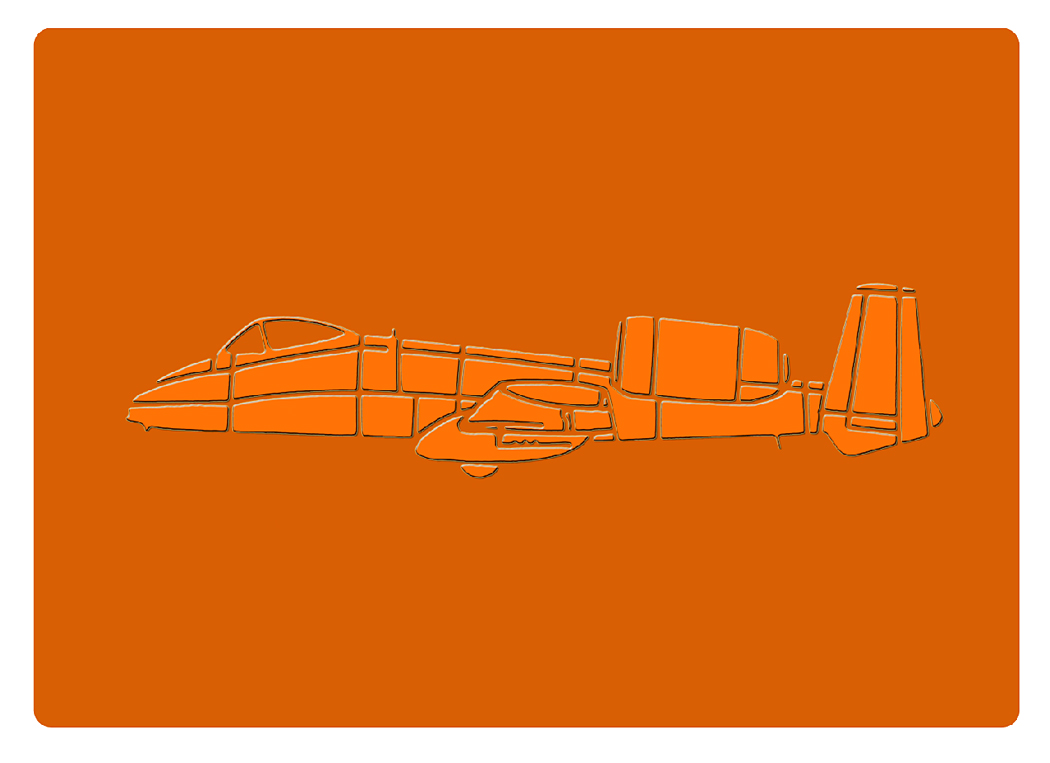
    The body of work The Symbolic Order (cartes de visite) 2011 is now online on my website. There are 23 images in the series of modulated fighter aircraft recognition cards that cycle through the colour wheel. Below is a selection of images from the series.

    I hope you like the work!

    Marcus


    Please click on the photographs for a larger version of the image.

    Photographs are available from this series for purchase. As a guide, a digital colour 16″ x 20″ costs $1000 plus tracked and insured shipping. For more information please see my Store web page.


    Marcus Bunyan (Australian, b. 1958)
'Untitled' 2011 From the series 'The Symbolic Order (cartes de visite)'


    Marcus Bunyan (Australian, b. 1958) 'Untitled' 2011 From the series 'The Symbolic Order (cartes de visite)'


    Marcus Bunyan (Australian, b. 1958) 'Untitled' 2011 From the series 'The Symbolic Order (cartes de visite)'


    Marcus Bunyan (Australian, b. 1958) 'Untitled' 2011 From the series 'The Symbolic Order (cartes de visite)'


    Marcus Bunyan (Australian, b. 1958) 'Untitled' 2011 From the series 'The Symbolic Order (cartes de visite)'


    Marcus Bunyan (Australian, b. 1958) 'Untitled' 2011 From the series 'The Symbolic Order (cartes de visite)'


    All photographs: Untitled from the series The Symbolic Order (cartes de visite) 2011 by Marcus Bunyan

    See the whole series on my website.


    Marcus Bunyan website

    LIKE ART BLART ON FACEBOOK

    Back to top

    Review: ‘Sidney Nolan: Drought Photographs’ at Australian Galleries, Melbourne

    Exhibition dates: 3rd March – 27th March 2011

    Curator: Damian Smith


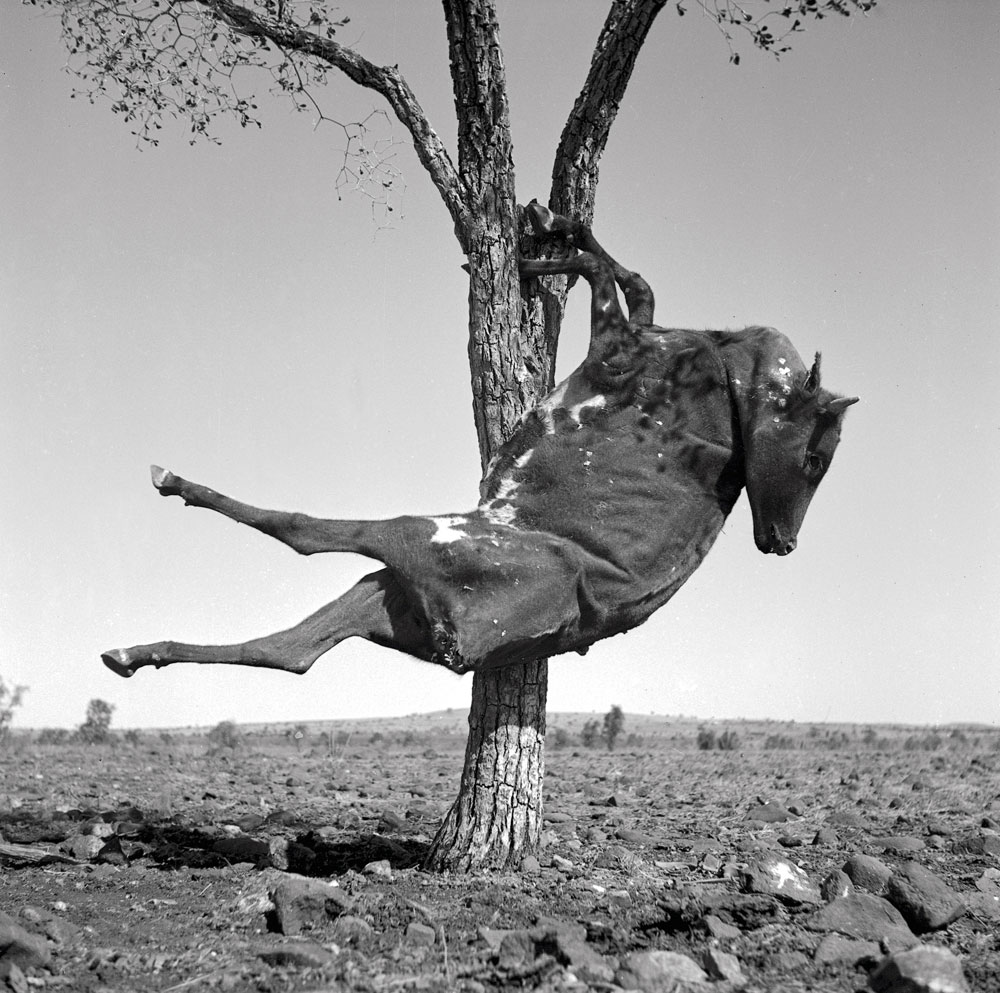
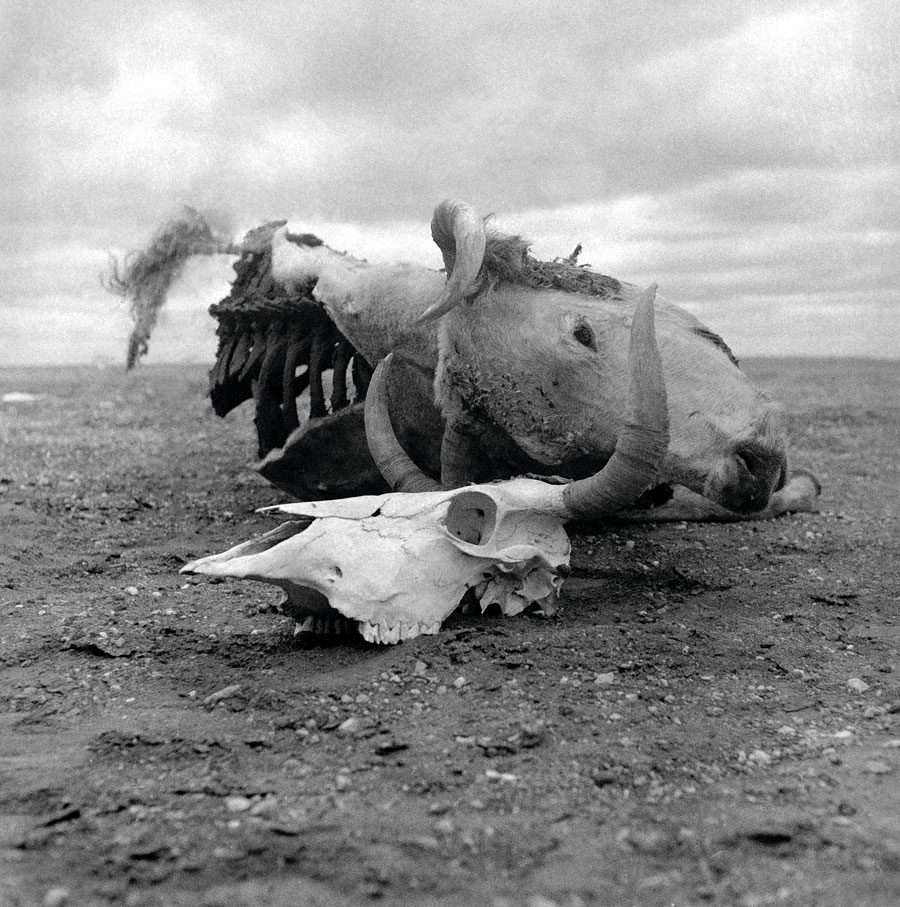
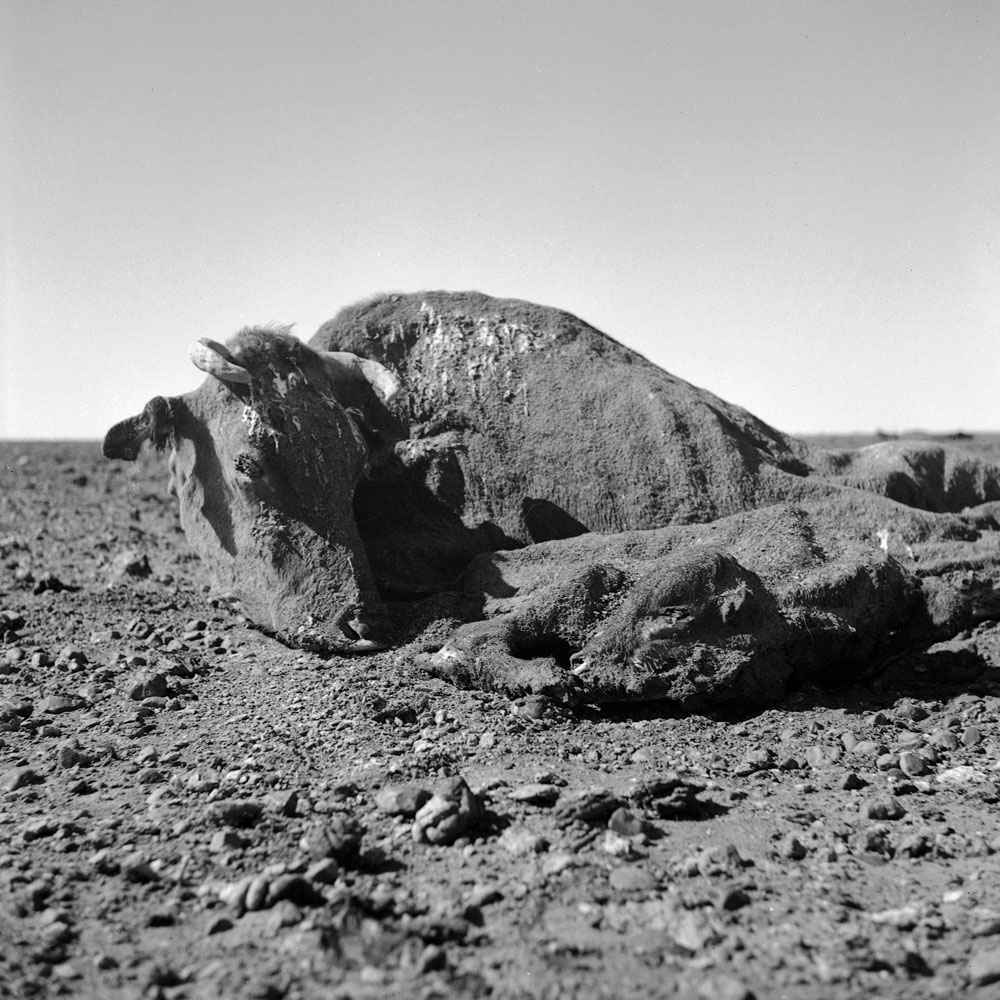
    Sidney Nolan (Australian, 1917-1992) 'Untitled (desiccated horse carcass sitting up)' 1952


    Sidney Nolan (Australian, 1917-1992)
    Untitled (desiccated horse carcass sitting up)
    1952
    Archival inkjet print
    23 x 23cm


    “In the meantime the landscape presents scenes of desolation which mark the memory of all who see it. Thousands of carcasses are strewn on the baked and cracked plains. There is a brooding air of almost Biblical intensity over millions of acres which bear no trace of surface waters. The dry astringent air extracts every drop of moisture from the grass, leaving it so brittle that it breaks under foot with the tinkling of thin glass.”


    Sidney Nolan. Epic Drought in Australia 1952


    “Peering into the pantry, which held a particular fascination for me, my eye was caught by several jars of preserved fruit that stood on the otherwise empty shelves and by a few dozen diminutive crimson apples on the sill of the window darkened by the yew tree outside. And as I looked on these apples which shone through the half-light … the quite outlandish thought crossed my mind that these things … had all outlasted me …”


    W.G. Sebald. The Rings of Saturn 1988


    This is a superb exhibition of 61 black and white photographs by Sidney Nolan. The photographs were shot using a medium format camera and are printed in square format from the original 1952 negatives. They were taken near the Birdsville Track in Queensland and were commissioned at the time by the Brisbane newspaper The Courier Mail. Although not intended to be studies for the later ‘Drought paintings’ they have become, were the beginning of, can be seen as, preparatory ideas pre sketching and painting.

    There are two proof sets of the Drought Photographs (including the one displayed on the gallery wall) that are printed on a cool-toned Type C photographic paper (analogue to digital to analogue) at about 8″ square. These are the less successful of the prints for the “beauty is in the box.” The more impressive prints are the edition of 10 that is for sale, either as individual prints or as a whole folio, that are printed at approximately 10″ square on a slightly warm-toned Canson Infinity 310 gsm archival inkjet paper (analogue to digital). These are the knockout prints with lots of mid-toned hues – for the warm tone of the paper more closely matches the feel of the dusty Outback. They possess a very “inky” atmosphere and wonderful light. Make sure that you get the gallery staff to show you some of these prints!

    The work itself is a joy to behold. The photographs hang together like a symphony, rising and falling, with shape emphasising aspects of form. The images flow from one to another. The formal composition of the mummified carcasses is exemplary, the resurrected animals (a horse, for example, propped up on a fifth leg) and emaciated corpses like contemporary sculpture. Here I am reminded of some of the work of Henry Moore.

    The handling of the tenuous aspects of human existence in this uniquely Australian landscape is also a joy to behold. Through an intimate understanding of how to tension the space between objects within the frame Nolan’s seemingly simple but complex photographs of the landscape are previsualised by the artist in the mind’s eye before he even puts the camera to his face. Unfortunately I don’t have any photographs to show you of these works but for me they were one of the highlights of the exhibition, rivalling any of the work of the Farm Security Administration (FSA) photographers photographing in the American Dustbowl during the 1930s. Finally, some great Australian landscape photographs!!

    As the curator Damian Smith notes of both strands, “Throughout the series emphasis shifts from detached observation to intimate contemplation – between the forces of the outer landscape to the darkness of the animals’ inner being.”

    I would not say the landscapes are ‘detached observation’. Both forms require intimate contemplation.

     
    Let us investigate the presence of these images further.

    “Barthes mentions the apparently “universal” experiences of birth and death, experiences that, he points out, are in fact always mediated by historical and thus political circumstances. Echoing a famous remark by Bertolt Brecht, he contends that “the failure of photography seems to me to be flagrant in this connection: to reproduce death or birth tells us, literally, nothing.””1

    “To reproduce death or birth tells us, literally, nothing.” Hence, you could argue, through an appeal to nostalgia for a mythology of the Australian bush we are held at the surface of an identity. Drought, desolation, despair, death. But these photographs go beyond the reproduction of death, go beyond mere nostalgia, by pushing the prick of consciousness, Barthes punctum, into a sense of spatial immediacy and temporal anteriority – an experience Barthes “sums up as the “having-been-there” that is the basis of every photograph’s sense of witness.”2

    The new punctum becomes other than the detail – no longer of form but of intensity, of Time: conjuring past, present and future in a single image.3 We, the viewer, bring our own associations to the image, our knowledge of drought in this big land – the knowledge that this drought has happened, it did happen and it will happen again and again and again in the future, probably with more frequency than it does now. The photograph becomes an active, mental representation of the material world. It becomes the world’s ‘essence’.

    The photographs stand for something else, some other state of being, much as this work can be seen as one small aspect of Nolan’s art that stands for the whole – a close examination of a small part of something that represents the whole, like a sail represents a yacht, a metonymic resonance. They tell us something through time, of life and death. As the great author W. G. Sebald eloquently observes in his quotation at the top of this posting these things outlast us – in our imagination.

    Dr Marcus Bunyan

     1/ Batchen, Geoffrey. “Palinode: An Introduction to Photography Degree Zero,” in Batchen, Geoffrey (ed.,). Photography Degree Zero: Reflections on Roland Barthes’s Camera Lucida. Cambridge, MA: MIT Press, 2009, p. 6
    2/ Ibid., pp. 8-9
    3/ Ibid., p. 13


    Many thankx to Ingrid Oosterhuis (General Manager Melbourne) for her help and to Australian Galleries for allowing me to publish the text and the photographs in the posting. Please click on the photographs for a larger version of the image.


    Sidney Nolan (Australian, 1917-1992) 'Untitled (calf carcass in tree)' 1952


    Sidney Nolan (Australian, 1917-1992)
    Untitled (calf carcass in tree)
    1952
    Archival inkjet print
    23 x 23cm


    In 1952 Sidney Nolan was commissioned by the Brisbane newspaper The Courier Mail to travel through far northern Queensland to record his impressions of one of the worst droughts in Australia’s history. Throughout this journey Nolan took numerous black and white photographs using a medium format camera, resulting in a host of startling and memorable images. Focusing on both the macabre spectre of the many animal carcasses strewn across the landscape and on the singular dwellings announcing a tenuous human presence, Nolan created numerous iconic images.

    Having returned to Australia after an extended period traveling in Europe, Nolan commented that the animal carcasses reminded him of the petrified bodies he had seen at Pompeii. Throughout the series emphasis shifts from detached observation to intimate contemplation – between the forces of the outer landscape to the darkness of the animals’ inner being. With their carefully composed compositions the photographs represent a dramatic shift from the artist’s earlier photographic experiments. In place of a prior spontaneity, drought-stricken animal carcases are framed in formally rigorous compositions, the moment seemingly trapped in time.

    For the first time this exhibition includes the complete and unabridged series of Sidney Nolan’s Drought Photographs, including images previously unavailable for public exhibition.

    Damian Smith
    Archivist for the Nolan Estate 1996-1999


    Sidney Nolan (Australian, 1917-1992) 'Untitled (camp bed)' 1952


    Sidney Nolan (Australian, 1917-1992)
    Untitled (camp bed)
    1952
    Archival inkjet print
    23 x 23cm


    Epic Drought in Australia

    Australia has not a very long history, but it is long enough to indicate that she must expect a major drought once every decade. Even so the present drought which the north and west of the continent is enduring, is by far the worst in living memory.

    Rivers which have not been dry for over a century are now beds of hot sand, and even the aborigines can find no parallel in their mythology for a drought of this magnitude.

    To cattle raising areas, failure of the annual monsoonal rains spells near tragedy. Of a total of 11.4 million beef cattle 1.5million have already perished.

    The position is complicated by the lack of a railway connecting the North-centre of Australia with the eastern seaboard. Had such a railway been in existence many thousands of cattle could have been shifted to agistment areas and saved. As it is, the cattle must survive journeys from 500 to 1500 miles on stock routes, and this is generally impossible owing to the weakened positions of the animals. Thus cattle men must face the prospect of watching their herds dwindle until at least the end of the year when there is the probability of early summer storms bringing relief.

    In the meantime the landscape presents scenes of desolation which mark the memory of all who see it. Thousands of carcasses are strewn on the baked and cracked plains. There is a brooding air of almost Biblical intensity over millions of acres which bear no trace of surface waters. The dry astringent air extracts every drop of moisture from the grass, leaving it so brittle that it breaks under foot with the tinkling of thin glass.

    Death takes on a curiously abstract patter under these arid conditions. Carcasses of animals are preserved in strange shapes which have often a kind of beauty, or even grim elegance.

    Over the whole country there is a silence in which men and animals bring forth the qualities necessary for survival. Patience, endurance – and for many Australians, a bitter and salty attitude of irony.

    Sidney Nolan, August 1952

    Text from the Australian Galleries website [Online] Cited 18/03/2011 no longer available online


    Sidney Nolan (Australian, 1917-1992) 'Untitled (cow in tree)' 1952


    Sidney Nolan (Australian, 1917-1992)
    Untitled (cow in tree)
    1952
    Archival inkjet print
    23 x 23cm


    Sidney Nolan (Australian, 1917-1992) 'Untitled (Brian the stockman mounting dead horse)' 1952


    Sidney Nolan (Australian, 1917-1992)
    Untitled (Brian the stockman mounting dead horse)
    1952
    Archival inkjet print
    23 x 23cm


    Australian Galleries is delighted to present this fascinating exhibition of selected photographs by Sidney Nolan curated by Damian Smith, Archivist for the Nolan Estate 1996-1999.

    Smith states in the accompanying exhibition catalogue:

    “In 1952 Sidney Nolan was commissioned by the Brisbane newspaper The Courier Mail to travel through far northern Queensland to record his impressions of one of the worst droughts in Australia’s history. Throughout this journey Nolan took numerous black and white photographs using a medium format camera, resulting in a host of startling and memorable images. Focusing on both the macabre spectre of the many animal carcasses strewn across the landscape and on the singular dwellings announcing a tenuous human presence, Nolan created numerous iconic images. This exhibition includes the complete and unabridged series of Sidney Nolan’s Drought Photographs, including images previously unavailable for public exhibition.”

    In his 1952 essay Epic Drought in Australia Sidney Nolan remarked on the poignancy of the images, noting the following:

    “Death takes on a curiously abstract patter under these arid conditions. Carcasses of animals are preserved in strange shapes which have often a kind of beauty, or even grim elegance.”

    To coincide with the exhibition Drought Photographs, Australian Galleries will be showing a selection of Drought Drawings by Sidney Nolan that include works previously exhibited at the National Gallery of Victoria, in it’s landmark survey of Nolan’s work Desert Drought in 2003.

    Sidney Nolan Drought Photographs
    Curated by Damian Smith

    In 2010 Damian Smith established Words For Art, a consultancy specialising in art writing and curatorial projects.

    Damian has always had a strong interest in Nolan’s work, he was appointed the inaugural archivist for the estate of Sidney Nolan in 1996. Since that time he has curated numerous Nolan exhibitions including a major exhibition, Unmasked: Sidney Nolan and Ned Kelly 1950-1990 for the Heide Museum of Modern Art in 2006.

    Building up to the Heide exhibition, Damian was based at Sidney Nolan’s home ‘The Rodd’ at Herefordshire, a 16th Century manor on the border of England and Wales. During that research period he developed an interest in Nolan’s life-long engagement with photography. He discovered vintage prints of Nolan’s photographs of outback Australia and the devastating drought in far northern Queensland, which were included in the landmark survey Sidney Nolan: Desert and Drought, at the National Gallery of Victoria in 2003. The exhibition included previously unseen photographic images from 1949 to 1952.

    In the NGV exhibition, numerous small-scale contact prints showing Nolan’s ‘Drought animals’ were featured, as were larger black and white prints from the same series. Additional small-scale prints were sourced as well through Nolan’s step-daughter Jinx Nolan. Of note was Nolan’s now famous Untitled (Brian the stockman mounting a dead horse at Wave Hill Station), 1952, a startling image that first featured in the 1961 Thames & Hudson monograph Sidney Nolan, where it appeared titled Desert.

    Having researched and written about these images, Damian recognised that Nolan had spent many hours studying the images, notating them and ultimately using them in the development of his now famous Drought paintings. Nolan offered the photographs to Life Magazine, New York in a bid to bring this extraordinary series to public attention. This bid was unsuccessful.

    After all of the years since these photographs were taken, Damian made the decision to resurrect Nolan’s photographs working closely with Sidney Nolan’s widow Mary Nolan, nee Boyd. The result being this exhibition at Australian Galleries, Melbourne in 2011.

    Keen to preserve the artist’s vision, the photographs have been produced to a scale consistent with the vintage prints and all are printed from the original negatives which were discovered at ‘The Rodd’.

    Text from Australian Galleries Melbourne


    Sidney Nolan (Australian, 1917-1992) 'Untitled (cow carcass and cow skull)' 1952


    Sidney Nolan (Australian, 1917-1992)
    Untitled (cow carcass and cow skull)
    1952
    Archival inkjet print
    23 x 23cm


    Sidney Nolan (Australian, 1917-1992) 'Untitled (cow and calf carcass covered in dirt I)' 1952


    Sidney Nolan (Australian, 1917-1992)
    Untitled (cow and calf carcass covered in dirt I)
    1952
    Archival inkjet print
    23 x 23cm


    Australian Galleries
    35 Derby Street [PO Box 1183]
    Collingwood 3066
    Phone: +61 3 9417 4303

    Opening hours:
    Open 7 days 10am – 6pm

    Australian Galleries website

    LIKE ART BLART ON FACEBOOK

    Back to top

    Exhibition: ‘TRACEY MOFFATT: narratives’ at Art Gallery of South Australia, Adelaide

    Exhibition dates: 26th February – 20th March 2011

     Curators: Maria Zagala, Associate Curator of Prints, Drawings and Photographs, Art Gallery of South Australia and Stephen Zagala, Curator at Monash Gallery of Art


    Tracey Moffatt (Australia, b. 1960) 'Something More (no. 3)' 
from the series of 9 photographs ‘Something More’ 1989


    Tracey Moffatt (Australia, b. 1960)
    Something More (no. 3)
    From the series of 9 photographs Something More
    1989
    Direct positive colour photograph
    98 × 127cm
    Courtesy the artist and Roslyn Oxley9 Gallery, Sydney


    Many thankx to the Art Gallery of South Australia for allowing me to publish the photographs in the posting. Please click on the photographs for a larger version of the image.


    Tracey Moffatt: Narratives is the first major exhibition of this leading contemporary Australian artist to be held in Adelaide. The exhibition is a collaboration between the Monash Gallery of Art in Melbourne and the Art Gallery of South Australia and explores Moffatt’s interest in the history of cinema and the formal language of film and video in her construction of ‘photo-narratives’. It features seven of Moffatt’s multi-part photographic series, including Something More (1989), Scarred for Life I (1994) and II (1999), Up in the Sky (1997), Laudanum (1999), Invocations (2000), and The Adventure Series (2004).

    In these series Moffatt uses photographic stills to build non-linear and open-ended stories. The narrative aspect of these series allows her to develop dream-like sequences, in which the real and the imaginary can unfold alongside each other. In this way, Moffatt invests the social reality of issues like race relations and domestic violence with uncertainty and subconscious dimensions. She presents disturbing subject matter in highly staged photographs which use the seductive language of film and popular culture to directly engage her audience.

    The exhibition also includes Moffatt’s ground breaking films Nice Coloured Girls (1987), Night Cries (1990), Heaven (1997) and BeDevil (1993), and the critically acclaimed video montages produced with Gary Hillberg, Artist (2000), Revolution (2008) and Other (2009).

    Text from the AGSA website


    Tracey Moffatt (Australia, b. 1960) 'Something More (no. 5)' from the series of 9 photographs 'Something More' 1989


    Tracey Moffatt (Australia, b. 1960)
    Something More (no. 5)
    From the series of 9 photographs Something More
    1989
    Direct positive colour photograph
    98 × 127cm
    Courtesy the artist and Roslyn Oxley9 Gallery, Sydney


    Tracey Moffatt (Australian, b. 1960)
'Something More (no. 1)' 1997


    Tracey Moffatt (Australian, b. 1960)
    Something More (no. 1)
    1997
    From the series of 9 photographs Something More
    1989
    Direct positive colour photograph
    98 × 127cm
    Courtesy the artist and Roslyn Oxley9 Gallery, Sydney


    Tracey Moffatt (Australia, b. 1960) 'Job hunt, 1976' 1994


    Tracey Moffatt (Australia, b. 1960)
    Job hunt, 1976
    From the series of 10 prints Scarred for life I
    1994
    Colour photolithograph on paper
    80 x 60cm
    Monash Gallery of Art, City of Monash Collection
    Courtesy of the artist and Roslyn Oxley9 Gallery, Sydney


    Tracey Moffatt (Australia, b. 1960) 'Useless, 1974' 1994


    Tracey Moffatt (Australia, b. 1960)
    Useless, 1974
    From the series of 10 prints Scarred for life I
    1994
    Colour photolithograph on paper
    80 x 60cm
    Monash Gallery of Art, City of Monash Collection
    Courtesy of the artist and Roslyn Oxley9 Gallery, Sydney


    Tracey Moffatt (Australia, b. 1960) 'Up in the sky (no. 1)' 1997


    Tracey Moffatt (Australia, b. 1960)
    Up in the sky (no. 1)
    From the series of 25 prints Up in the sky
    1997
    colour photolithograph on paper
    61 x 76cm
    Monash Gallery of Art, City of Monash Collection
    Courtesy of the artist and Roslyn Oxley9 Gallery, Sydney


    Tracey Moffatt (Australia, b. 1960) 'Up in the sky' 1997


    Tracey Moffatt (Australia, b. 1960)
    Up in the sky
    From the series of 25 prints Up in the sky
    1997
    colour photolithograph on paper
    61 x 76cm
    Monash Gallery of Art, City of Monash Collection
    Courtesy of the artist and Roslyn Oxley9 Gallery, Sydney


    Tracey Moffatt (Australia, b. 1960) 'Laudanum (no. 1)' 1998


    Tracey Moffatt (Australia, b. 1960)
    Laudanum (no. 1)
    From the series of 19 prints Laudanum
    1998
    Photogravure on paper
    76 × 57cm
    Courtesy the artist and Roslyn Oxley9 Gallery, Sydney


    Tracey Moffatt (Australia, b. 1960) 'Invocations (no. 2)' 2000


    Tracey Moffatt (Australia, b. 1960)
    Invocations (no. 2)
    From the series of 13 prints Invocations
    2000
    Colour silkscreen on paper
    146 x 122cm
    Monash Gallery of Art, City of Monash
    Collection 
Courtesy of the artist and Roslyn Oxley9 Gallery, Sydney


    Tracey Moffatt (Australia, b. 1960) 'Invocations (no. 5)' 2000


    Tracey Moffatt (Australia, b. 1960)
    Invocations (no. 5)
    From the series of 13 prints Invocations
    2000
    Colour silkscreen on paper
    146 x 122cm
    Monash Gallery of Art, City of Monash
    Collection 
Courtesy of the artist and Roslyn Oxley9 Gallery, Sydney


    Tracey Moffatt (Australia, b. 1960) 'Invocations (no. 7)' 2000


    Tracey Moffatt (Australia, b. 1960)
    Invocations (no. 7)
    From the series of 13 prints Invocations
    2000
    Colour silkscreen on paper
    146 x 122cm
    Monash Gallery of Art, City of Monash
    Collection 
Courtesy of the artist and Roslyn Oxley9 Gallery, Sydney


    Tracey Moffatt (Australia, b. 1960) 'Adventure Series (no. 1)' 2004


    Tracey Moffatt (Australia, b. 1960)
    Adventure Series (no. 1)
    from the series of 10 prints Adventure Series
    2004
    Inkjet print on paper
    132 × 114cm
    Courtesy the artist and Roslyn Oxley9 Gallery, Sydney


    Tracey Moffatt (Australia, b. 1960) 'Adventure Series (no. 2)' 2004


    Tracey Moffatt (Australia, b. 1960)
    Adventure Series (no. 2)
    From the series of 10 prints Adventure Series
    2004
    Inkjet print on paper
    132 × 114cm
    Courtesy the artist and Roslyn Oxley9 Gallery, Sydney


    Art Gallery of South Australia
    North Terrace Adelaide
    Public information: 08 8207 7000

    Opening hours:
    Daily 10am – 5pm (last admissions 4.30pm)

    Art Gallery of New South Wales website

    LIKE ART BLART ON FACEBOOK

    Back to top

    Review: ‘Rosemary Laing: leak’ at Tolarno Galleries, Melbourne

    Exhibition dates: 26th February – 19th March 2011


    Rosemary Laing (Australian, b. 1959) 'Jim' 2010


    Rosemary Laing (Australian, b. 1959)
    Jim
    2010
    From the series Leak
    C Type photograph
    Large image size 110 x 238cm
    Framed size 127 x 255cm
    Edition of 8


    You have just got to love these!

    A wonderful suite of five panoramic photographs, framed in white, inhabit the beautiful space of Tolarno Galleries, Melbourne. The photographs, different angles of the same bleached bone inverted skeleton of a house that was constructed by five builders in the Australian landscape around Cooma, New South Wales (no Photoshop tricks here!) have a subdued colour palette of misty greys and greens – all except one that has a vibrant blue sky with clouds, a man with his sheep dogs and a flock of sheep. Two of the photographs are framed upside down, one photograph a closer study from the same angle.

    The house on the hill is surrounded by wondrous light gently highlighting the wooden bones of the building embedded into the landscape in a context that is soon to become another suburban housing estate. The skeleton rises up (and falls into the sky) like a foundering ship amongst mysterious gum trees, surrounded by broken stumps and littered branches. The best photograph (top, below) has the effect of the bones being lit up like a giant puzzle.

    Examining ‘the encroachment of suburban development and the socio-economic and environmental pressures on the Australian landscape’ these photographs, named after the characters from Patrick White’s novel The Twyborn Affair, are ecologically aware and politically astute, as well as being fine photographs. The title of the exhibition, leak, perfectly sums up the osmotic nature of the encroachment of human habitation upon the ‘natural’ environment, which is already a mediated landscape due to European farming techniques and clearance of the landscape. But this is not a one way discourse; what do we call the ‘new’ Australian bush? What if the humpy invaded suburbia and pushed back the tide?

    I would love to see different types of houses in different contexts. I want to see more these are so good!

    Dr Marcus Bunyan


    Many thankx to Jan Minchin (Director) and Tolarno Galleries for allowing me to publish the photographs in the posting. Please click on the photographs for a larger version of the image. Both images courtesy of the artist and Tolarno Galleries © Rosemary Laing.


    Rosemary Laing (Australian, b. 1959) 'Prowse' 2010


    Rosemary Laing (Australian, b. 1959)
    Prowse
    2010
    From the series Leak
    C Type photograph
    Large image size 110 x 247cm
    Framed size 127 x 264cm
    Edition of 8


    Rosemary Laing (Australian, b. 1959) 'Aristide' 2010


    Rosemary Laing (Australian, b. 1959)
    Aristide
    2010
    From the series Leak
    C Type photograph
    60 x 122cm
    Edition of 8


    Rosemary Laing (Australian, b. 1959) 'Eddie' 2010


    Rosemary Laing (Australian, b. 1959)
    Eddie
    2010
    From the series Leak
    Type C photograph
    Framed 127.0 x 274.6cm
    Edition of 8


    Tolarno Galleries
    Level 4
    104 Exhibition Street
    Melbourne VIC 3000
    Australia
    Phone: 61 3 9654 6000

    Opening hours:
    Tue – Fri 10am – 5pm
    Sat 1pm – 4pm

    Tolarno Galleries website

    LIKE ART BLART ON FACEBOOK

    Back to top

    Sculpture: ‘Before The After’ (2010) by Fredrick White

    February 2011


    Fredrick White. 'Before The After' 2010


    Fredrick White (Australian)
    Before The After
    2010
    Steel
    220 x 105 x 95cm


    Another beautiful sculpture by Australian sculptor Fredrick White that will be appearing in the Montalto Sculpture Prize that opens this weekend at 33 Shoreham Road, Red Hill South, Victoria and continues until 1st May, 2011. The work has great presence and continues the artist’s exploration into the matrix of what is seen and not seen, what lies above and below. Please click on the photographs for a larger version of the image.

    Dr Marcus Bunyan


    Please click on the photographs for a larger version of the image.


    Fredrick White. 'Before The After' 2010
    Fredrick White. 'Before The After' 2010


    Fredrick White (Australian)
    Before The After
    2010
    Steel
    220 x 105 x 95cm


    LIKE ART BLART ON FACEBOOK

    Back to top

    Exhibitions: ‘The Other’ by Titania Henderson at Karen Woodbury Gallery, Richmond, ‘Halftone’ by John Nicholson at Sophie Gannon Gallery, Richmond

    Exhibition dates: 19/20th October – 13th November 2010


    Titania Henderson (Dutch, b. 1945 emigrated Australia 1956) 'Together II' 2010


    Titania Henderson (Dutch, b. 1945 emigrated Australia 1956)
    Together II
    2010
    Images courtesy of the artist and Karen Woodbury Gallery


    Two solid exhibitions, ceramics by Titania Henderson at Karen Woodbury Gallery and sculpture by John Nicholson at Sophie Gannon Gallery. Both exhibitions benefit from a straight forward approach to craft – elegant, refined sensibilities that are free from an overly conceptual rendering of ideas; stillness, of form in style, inhabits both bodies of work.

    Contemplation is of the essence – in the beautiful, delicate, seemingly fragile shell and tubular mollusc-like bone china structures that, conversely, are physically strong; in the tonal colours of woven amoebic, disc and U-shaped constructions (the Halftone of the exhibition title referring to the loss of colour in digital printing, the longing for sumptuous analogue markings). I liked both exhibitions for the paring down of elements to essentials forming a basis for quiet reflection, a grounding in texture, colour and lightness of form.

    Dr Marcus Bunyan


    Many thankx to Karen Woodbury Gallery and Sophie Gannon Gallery for allowing me to publish the photographs in the posting. Please click on the photographs for a larger version of the image.


    Titania Henderson (Dutch, b. 1945 emigrated Australia 1956) 'Silence' 2010


    Titania Henderson (Dutch, b. 1945 emigrated Australia 1956)
    Silence
    2010
    Images courtesy of the artist and Karen Woodbury Gallery


    Titania Henderson (Dutch, b. 1945 emigrated Australia 1956) 'Remembering' 2010


    Titania Henderson (Dutch, b. 1945 emigrated Australia 1956)
    Remembering
    2010
    Images courtesy of the artist and Karen Woodbury Gallery


    Titania Henderson (Dutch, b. 1945 emigrated Australia 1956) 'Piled up 1 (yellow)' 2009/10


    Titania Henderson (Dutch, b. 1945 emigrated Australia 1956)
    Piled up 1 (yellow)
    2009/10
    Images courtesy of the artist and Karen Woodbury Gallery


    Titania Henderson (Dutch, b. 1945 emigrated Australia 1956) 'Piled up 2 (yellow)' 2009/10


    Titania Henderson (Dutch, b. 1945 emigrated Australia 1956)
    Piled up 2 (yellow)
    2009/10
    Images courtesy of the artist and Karen Woodbury Gallery


    Titania Henderson’s exhibition The Other presents a range of ceramic sculptural installations in pure white Bone China that convey a three-dimensional engagement. A fragility and vulnerability resonate through these poignant paper-thin configurations, bringing a sense of clarity and freedom. These hand built works challenge the conception of Bone China as a material only suited for slip casting while also incorporating the use of French Limoges. Henderson’s method involves perseverance, technical proficiency and precision, as she creates her own language of rhythmic ceramic art. There is an inherent translucent character that appeals to elements of shadow and light within the works. This new body of work is based on ideas of the human conscience and larger philosophical ideas beyond the objects themselves and beyond language.

    Text from the Karen Woodbury Gallery website


    John Nicholson (Australian, b. 1970) 'Cloudpopper' 2010


    John Nicholson (Australian, b. 1970)
    Cloudpopper
    2010
    Plastic
    110 x 38 x 38cm
    Photo: Marcus Bunyan


    John Nicholson (Australian, b. 1970) 'Scan' 2010


    John Nicholson (Australian, b. 1970)
    Scan
    2010
    Plastic
    72 x 128cm
    Photo: Marcus Bunyan


    John Nicholson (Australian, b. 1970) 'Asymmetric' 2010


    John Nicholson (Australian, b. 1970)
    Asymmetric
    2010
    Plastic
    29 x 70 x 29cm
    Photo: Marcus Bunyan


    John Nicholson (Australian, b. 1970) 'Concept 101' 2010


    John Nicholson (Australian, b. 1970)
    Concept 101
    2010
    Plastic
    35 x 46 x 40cm
    Photo: Marcus Bunyan


    John Nicholson (Australian, b. 1970) Installation view of 'Halftone' 2010


    John Nicholson (Australian, b. 1970)
    Installation view of Halftone
    2010
    Photo: Marcus Bunyan


    Karen Woodbury Gallery

    This gallery has now closed.

    Sophie Gannon Gallery
    2, Albert Street
    Richmond, Melbourne

    Opening hours: Tues – Saturday 11 – 5pm

    Sophie Gannon Gallery website

    LIKE ART BLART ON FACEBOOK

    Back to top