Exhibition: ‘Suburbia. Building the American Dream’ at the Centre de Cultura Contemporània de Barcelona | CCCB

Exhibition dates: 20th March – 8th September 2024

Curators: Philipp Engel and Francesc Muñoz


'Suburbia. Building the American Dream' exhibition poster


Suburbia. Building the American Dream exhibition poster


An offer you can’t refuse

“The “American dream” can be summed up in a mental image that seems frozen in time: a home of one’s own, surrounded by lawns, with a pool in the back garden and a couple of cars slumbering in the garage… Suburbia. Building the American Dream draws us into the imaginary of the idyllic family home and shows how this lifestyle has been sold and promoted by fiction and the entertainment industry.” (Text from the CCCB website)


To me, there has always be something slightly askew, slightly out of kilter about the “American dream”. It promotes a generalised simulation of a imaginary reality, sold as a lifestyle, more fiction than fact. It is the ghost of desire that haunts the everyday reality of life, entirely on the side of demand: I want therefore I must have.

This desire must be satiated in the nuclear family, the white picket fence, the idyllic family home, the loveable children – as much a surface that reflects the approbation of others as for the sustenance of the self. As Anthony Giddens observes we are inescapably involved in a

“‘reflexive project of the self’: this project is reflexive because it involves unremitting self-monitoring, self-scrutiny, planning and ordering of all elements of our lives appearances and performances in order to marshal them into a coherent narrative called ‘the self’. We have to interpret the past and plan the future in relation to an identity we are attempting to constitute in a particularly immediate and transient social present. Consumerism is central to this self-obsession. This is partly because we not only have to choose a self, but (as Foucault’s line of argument also indicates) have to constitute ourselves as a self who choses, a consumer.”1


The American Dream endeavours to direct the identity we are attempting to constitute (through consumerism), so that it fits into a particularly conformist idea of a wholesome life: patriarchal, hegemonic, puritan (most important in America), god fearing, white – a particularly hyperreal simulation of a world that never existed in the first place. An imaginary construction.2

Photographs reinforce this “imaginary” state of being, this desire for the American Dream. As the wonderful Victor Burgin observes,

“The structure of presentation – point-of-view and frame – is intimately implicated in the reproduction of ideology (the ‘frame of mind’ of our ‘points-of-view’). More than any other textual system, the photograph presents itself as ‘an offer you can’t refuse’. The characteristics of the photographic apparatus position the subject in such a way that the object photographed serves to conceal the textuality of the photograph itself – substituting passive receptivity for active (critical) reading. … With most photographs we see, […] decoding and investiture takes place instantaneously, unselfconsciously, ‘naturally’; but it does take place – the wholeness, coherence, identity, which we attribute to the depicted scene is a projection, a refusal of an impoverished reality in favour of an imaginary plenitude. The imaginary object here, however, is not ‘imaginary’ [as in fictive] in the usual sense of the word, it is seen, it has a projected image.”3 (My bold and italics)


The photographs of the American Dream, then, deny an impoverished reality in favour of a desired imaginary plenitude. You too can live the dream, because you have seen the evidence of the projected image, and this imaginary identification can have very real effects.

In the desire for the dream we witness (elsewhere in the world) the egocentric obsession of some of the builders in the British series “Grand Designs” where people mortgage themselves up to the hilt, become sick, have marriage breakdowns and can’t finish the project, because of a dream… to build huge houses with 7 bedrooms and 4 bathrooms that no one in their right mind needs to build for 2 people. Or the case of the Australian Melissa Caddick who, in a Ponzi scheme stole A$30 million from investors, including her friends and family, in order to appear a successful business woman. “Caddick used the proceeds of her crimes to acquire “all the trappings of wealth” and that her “success was all a façade and the financial services business was an elaborate front for Ms. Caddick’s Ponzi scheme”.”4

Ego is reinforced by the image reflected back to us by the photograph.

Christopher Lasch comments that, “The proliferation of recorded images undermines our sense of reality. As Susan Sontag observes in her study of photography, “Reality has come to seem more and more like what we are shown by cameras.” We distrust our perceptions until the camera verifies them. Photographic images provide us with the proof of our existence, without which we would find it difficult even to reconstruct a personal history…”5

Photographs posit a reality that promotes the dream, that verifies the dream, as ‘an offer you can’t refuse’.

Thankfully, some of the contemporary artists in this posting (I particularly like the work of Weronika Gęsicka) undermine the utopian ideal through wit, humour and critical inquiry.

Dr Marcus Bunyan


1/ Anthony Giddens. Modernity and Self-Identity: Self and Society in the Late Modern Age. Polity Press, Cambridge, 1991

2/ “In sociology, the imaginary as a Lacanian term refers to an illusion and fascination with an image of the body as coherent unity, deriving from the dual relationship between the ego and the specular or mirror image… “The term ‘imaginary’ is obviously cognate with ‘fictive’ but in its Lacanian sense it is not simply synonymous with fictional or unreal; on the contrary, imaginary identifications can have very real effects.””

David Macey, “Introduction”, Jacques Lacan, The Four Fundamental Concepts of Psycho-Analysis. London, 1994, p. xxi  quoted in “Imaginary (sociology)” on the Wikipedia website [Online] Cited 01/09/2024

3/ Victor Burgin (ed.,). Thinking Photography. Macmillan, Basingstoke, 1982, pp. 146-148.

4/ Farid Assaf SC quoted in Kate McClymont. “Melissa Caddick’s ‘trappings of wealth’ a front for her Ponzi scheme”. The Sydney Morning Herald 29 June 2021 in “Melissa Caddick,” on the Wikipedia website [Online] Cited 01/09/2024

5/ Christopher Lasch. The Culture of Narcissism. W.W.Norton and Company, New York, 1978, p. 48.


Many thankx to the Centre de Cultura Contemporània de Barcelona for allowing me to publish the photographs in the posting. Please click on the photographs for a larger version of the image.


Inside the exhibition: Suburbia. Building the American Dream 

Philipp Engel, curator of the exhibition “Suburbia”, examines the origin and vast expansion of residential neighbourhoods in the United States, an urban model centred on constructing large swathes of single-family homes on the outskirts of cities. Engel reflects on the allure that suburban landscapes have stirred in Western culture while highlighting the main issues and contradictions of the model, including segregation, safety paranoia and unsustainable consumption of water and energy.


Introduction
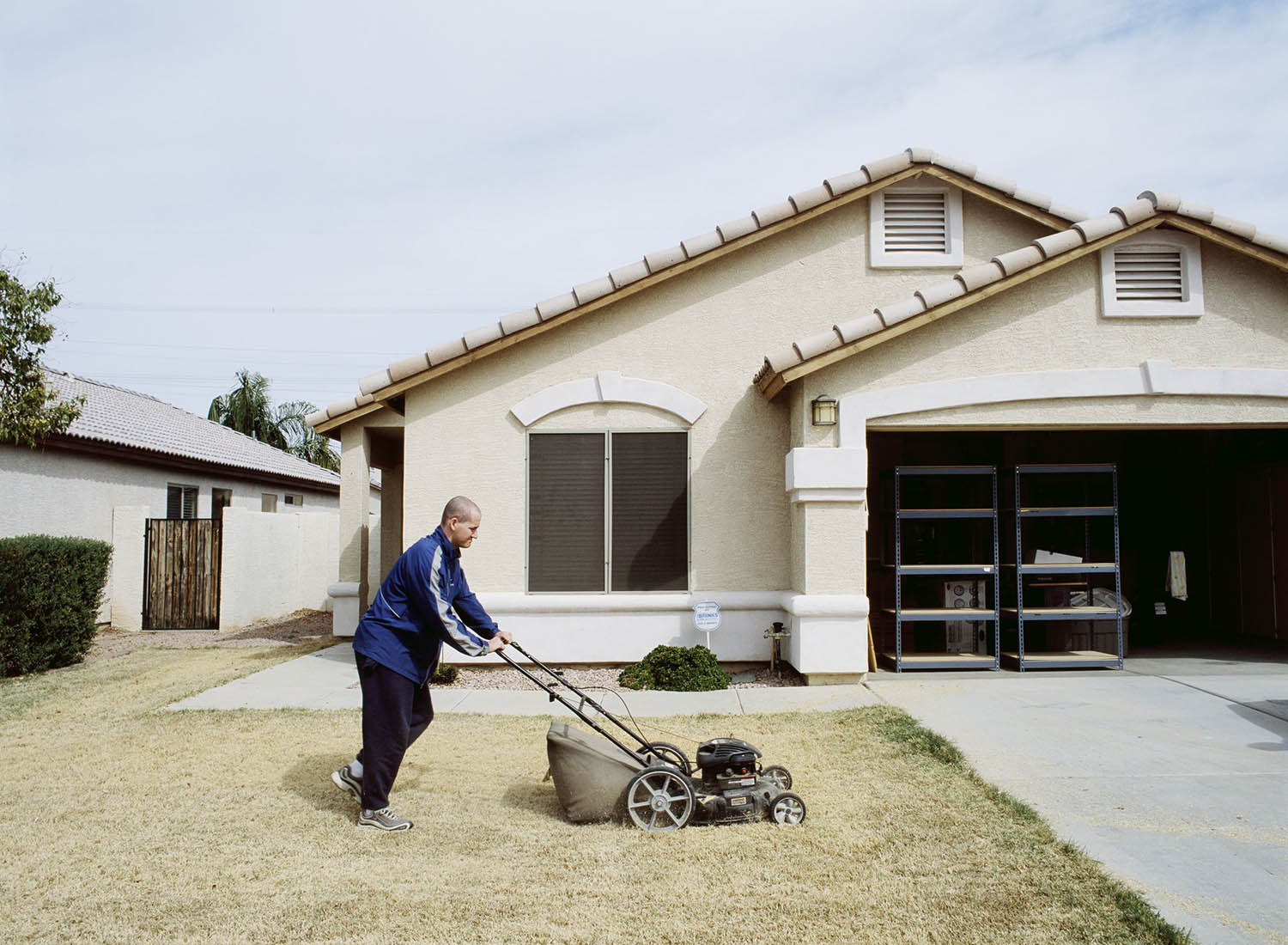
Greg Stimac (American, b. 1976) 'Chandler, Arizona' 2006 From 'Mowing the Lawn' portfolio


Greg Stimac (American, b. 1976)
Chandler, Arizona
2006
From Mowing the Lawn portfolio
Impressió digital Museum of Contemporary Photography, Columbia College Chicago


Who hasn’t longed for the American dream? A big house with a garden, a swimming pool and a couple of cars in the garage. A quiet, safe place to live as a family, close to nature in a people-friendly neighbourhood. This exhibition traces the cultural history of a lifestyle ideal that has been endlessly reproduced on television, in advertising and in cinema, and analyses the validity and the most controversial aspects of its urban planning model.

Suburbia. Building the American Dream draws us into the imaginary of the idyllic family home and shows how this lifestyle has been sold and promoted by fiction and the entertainment industry. The exhibition goes back to the origins of residential neighbourhoods in the early nineteenth century, explains how they developed massively in the 1950s, and reviews the economic, political and social context of their relentless expansion across the United States.

Now, when more and more families are pursuing their own version of the dream on the outskirts of cities, it is a good moment to analyse the contradictions of an urban planning model based on social, ethnic and gender segregation.

The dream of living in a house with a swimming pool is still very much alive today and has been exported all over the world. The exhibition shows the impact of this highly unsustainable model, based on constant car use, with examples of developments around Barcelona and Madrid.

With abundant historical material, period documentaries, photographs, paintings, films and series, novels and magazines, works of art and everyday objects, the exhibition places us in the mental paradise of the suburb and invites us to rethink the value of the city and public space today.

Suburbia. Building the American Dream presents the work of foremost creators who, from different points of view, help us to take a critical look at the famed American way of life: Jessica Chou, Gregory Crewdson, Thomas Doyle, Gerard Freixes, Rodrigo Fresán, Gabriele Galimberti, Weronika Gesicka, Benjamin Grant, Todd Hido, Joel Meyerowitz, Matthias Müller, Blanca Munt, Alberto Ortega, Bill Owens, Sheila Pree Bright, León Siminiani, Todd Solondz, Amy Stein, Greg Stimac, Angela Strassheim, Deborah Stratman, Ed & Deanna Templeton, Kate Wagner and Christopher Willan.

Text from the CCCB website
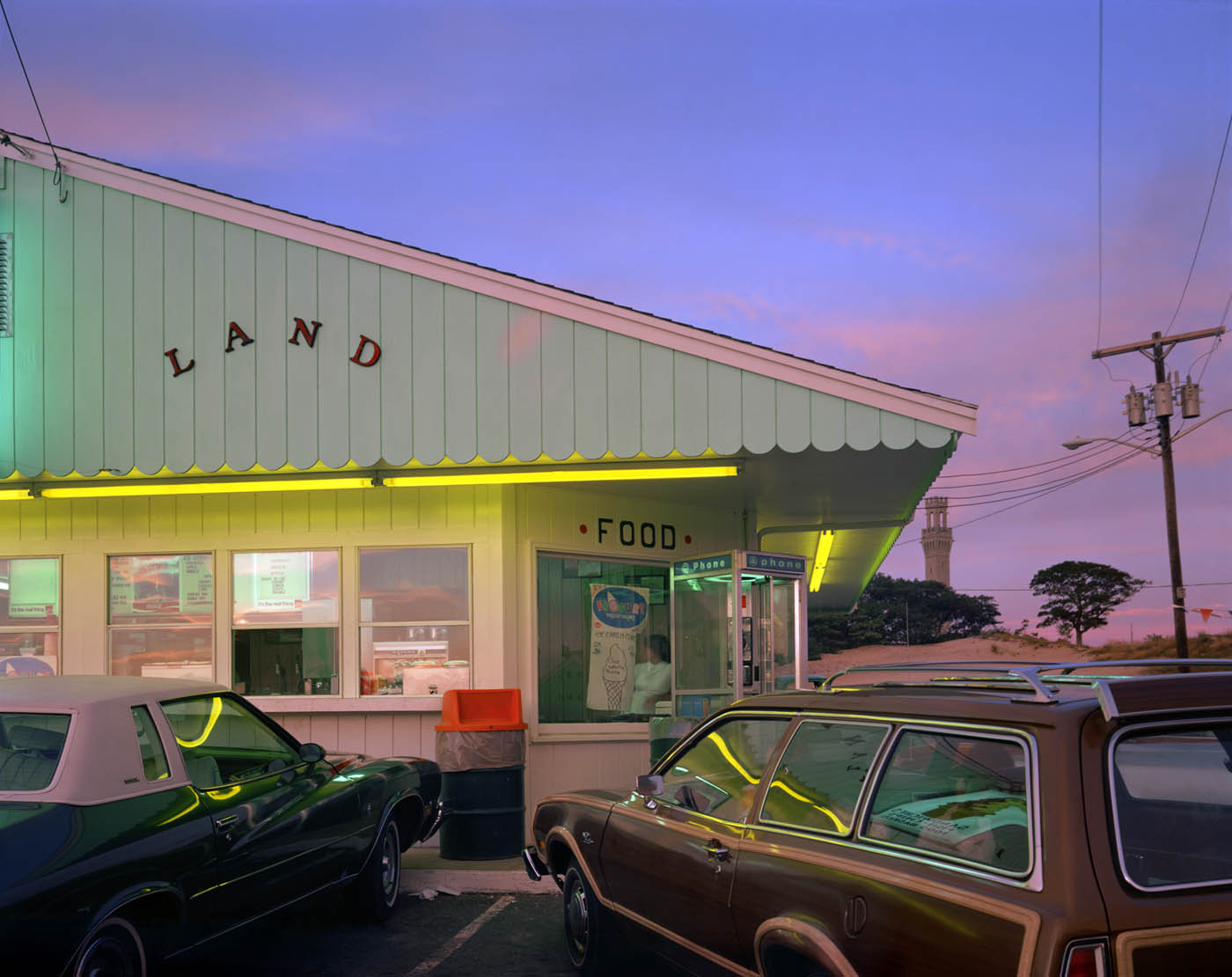
 

Joel Meyerowitz (American, b. 1938) 'Land. Provincetown' 1976


Joel Meyerowitz (American, b. 1938)
Land. Provincetown
1976
Archival pigment print
Collecció Pancho Saula i Michelle Ferrara / Galeria Alta, Andorra


Joel Meyerowitz (American, b. 1938) 'Dusk, New Jersey' 1978


Joel Meyerowitz (American, b. 1938)
Dusk. New Jersey
1978
Archival pigment print
Collecció Pancho Saula i Michelle Ferrara / Galeria Alta, Andorra


The “American dream” can be summed up in a mental image that seems frozen in time: a home of one’s own, surrounded by lawns, with a pool in the back garden and a couple of cars slumbering in the garage. Suburbia. Building the American Dream traces the cultural history of a lifestyle ideal shared far and wide by literature, television, advertising and cinema, and analyses the most controversial aspects of an urban planning model that has spread beyond US territory and reached our shores. Journalist Philipp Engel curates this exhibition with geographer Francesc Muñoz collaborating as adviser on the model in the local context.

Suburbia. Building the American Dream draws us into the imaginary of the idyllic family home and shows how this lifestyle has been sold and promoted by fiction and the entertainment industry. The exhibition goes back to the origins of residential neighbourhoods in the early nineteenth century, explains how they developed massively in the 1950s, and reviews the economic, political and social context of their relentless expansion across the United States.

Since the 1990s most of the American population has lived in this sprawling urban mass that has continued to spread, even beyond US borders. At a time when more and more families are pursuing their own version of the dream on city outskirts, the exhibition analyses the contradictions of an urban planning model based on social, ethnic and gender segregation. It also shows the impact of this highly unsustainable model, based on constant car use, with examples of developments around Barcelona and Madrid. With abundant historical material, photographs, paintings, audiovisuals, literature, works of art and everyday objects, the exhibition situates us in the mental paradise of the model of residential development inspired by American suburbia, and invites us to rethink the value of the city and public space today.

Suburbia. Building the American Dream decodes an almost abstract landscape that is still valid in pop culture. It does so through the work of foremost creators who help us take a critical look at the famed American way of life. It includes works by Jessica Chou, Gregory Crewdson, Thomas Doyle, Gerard Freixes, Gabriele Galimberti, Weronicka Gęsicka, Benjamin Grant, Todd Hido, Joel Meyerowitz, Matthias Müller, Blanca Munt, Alberto Ortega, Bill Owens, Sheila Pree Bright, León Siminiani, Amy Stein, Greg Stimac, Angela Strassheim, Deborah Stratman, Ed & Deanna Templeton, Kate Wagner and Christopher Willan, among others.
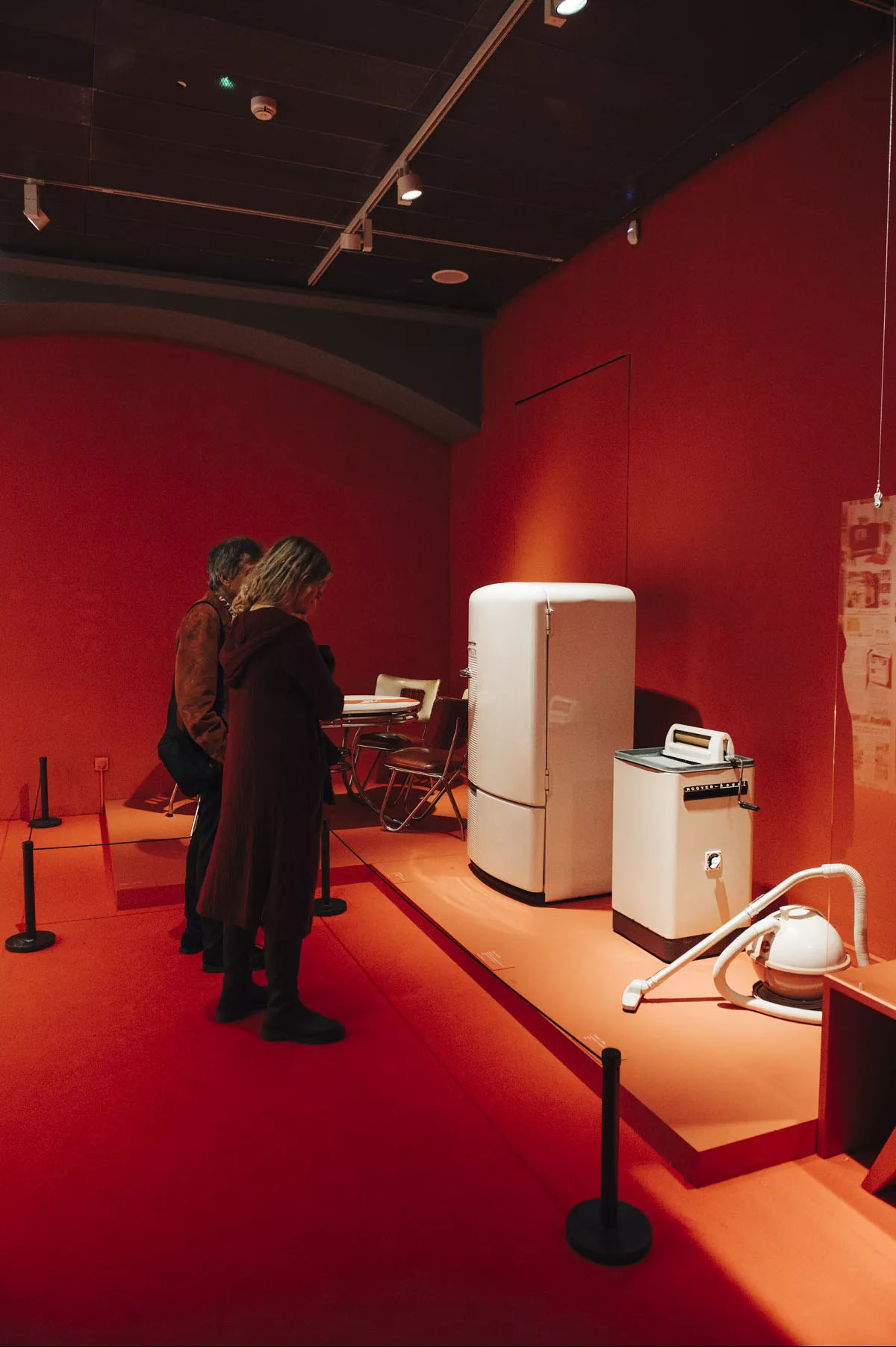
 

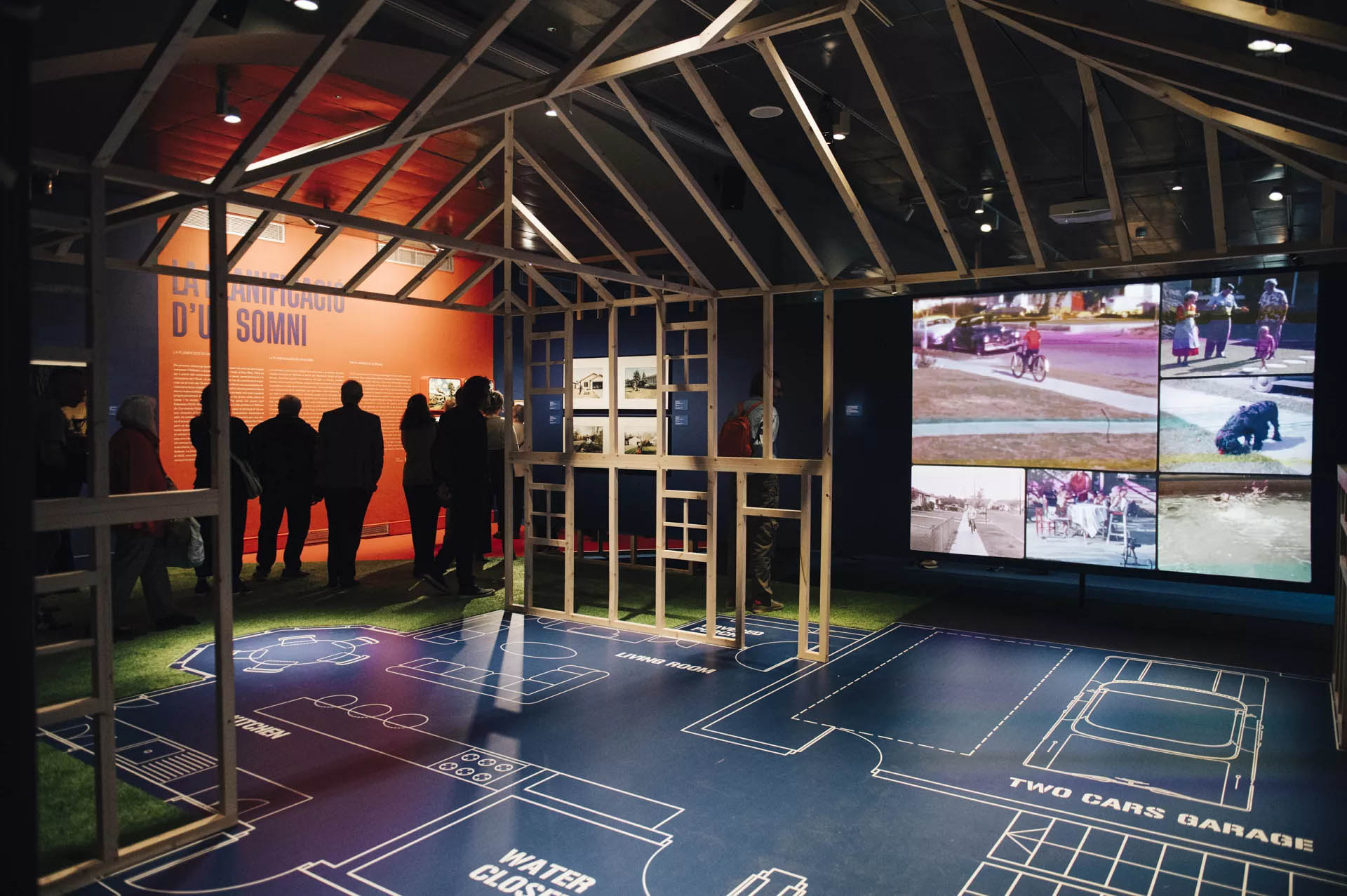
Installation view of the exhibition 'Suburbia. Building the American Dream' at the Centre de Cultura Contemporània de Barcelona | CCCB

Installation view of the exhibition 'Suburbia. Building the American Dream' at the Centre de Cultura Contemporània de Barcelona | CCCB

Installation view of the exhibition 'Suburbia. Building the American Dream' at the Centre de Cultura Contemporània de Barcelona | CCCB

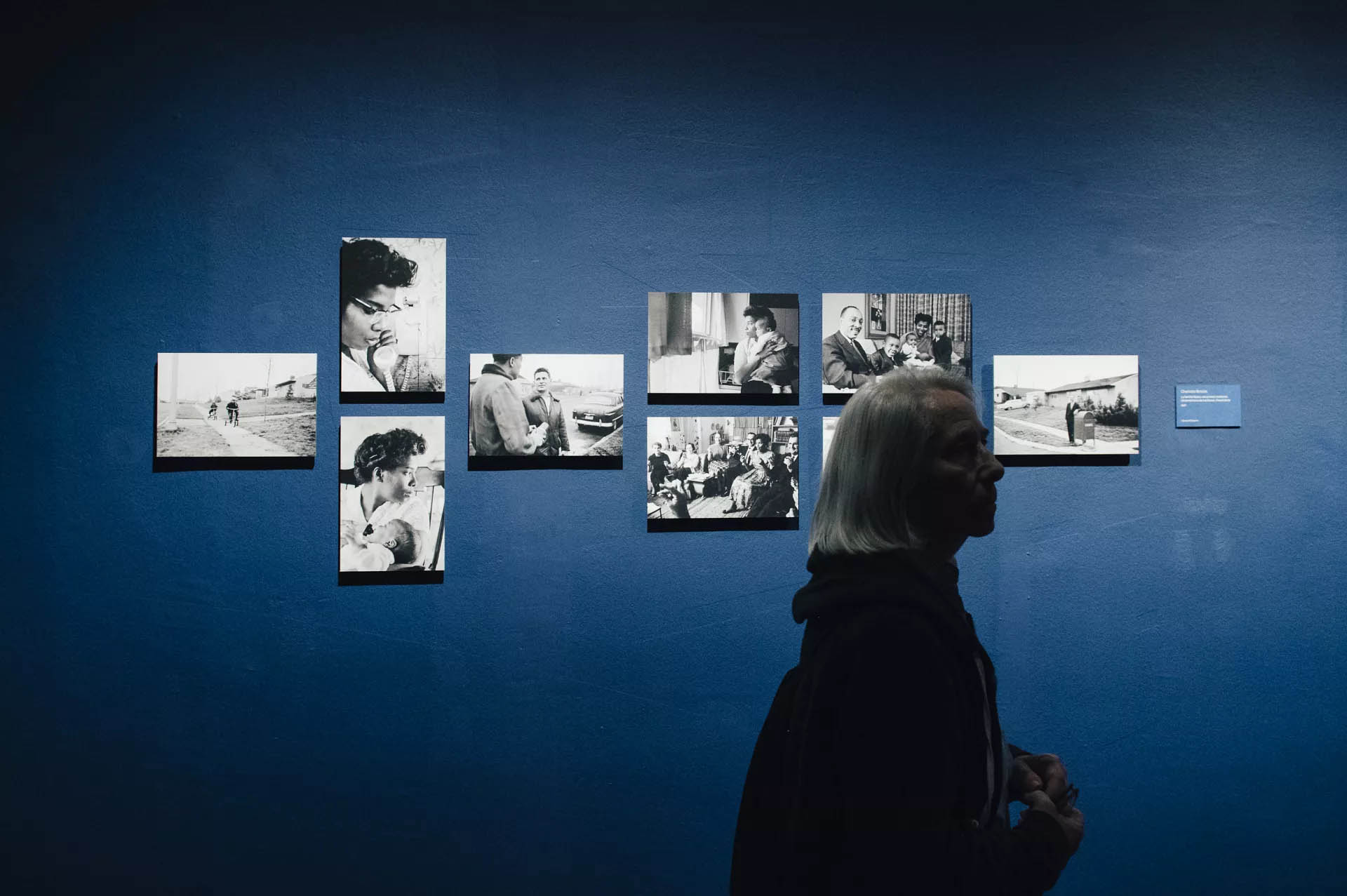
Installation view of the exhibition 'Suburbia. Building the American Dream' at the Centre de Cultura Contemporània de Barcelona | CCCB showing photographs by Charlotte Brooks

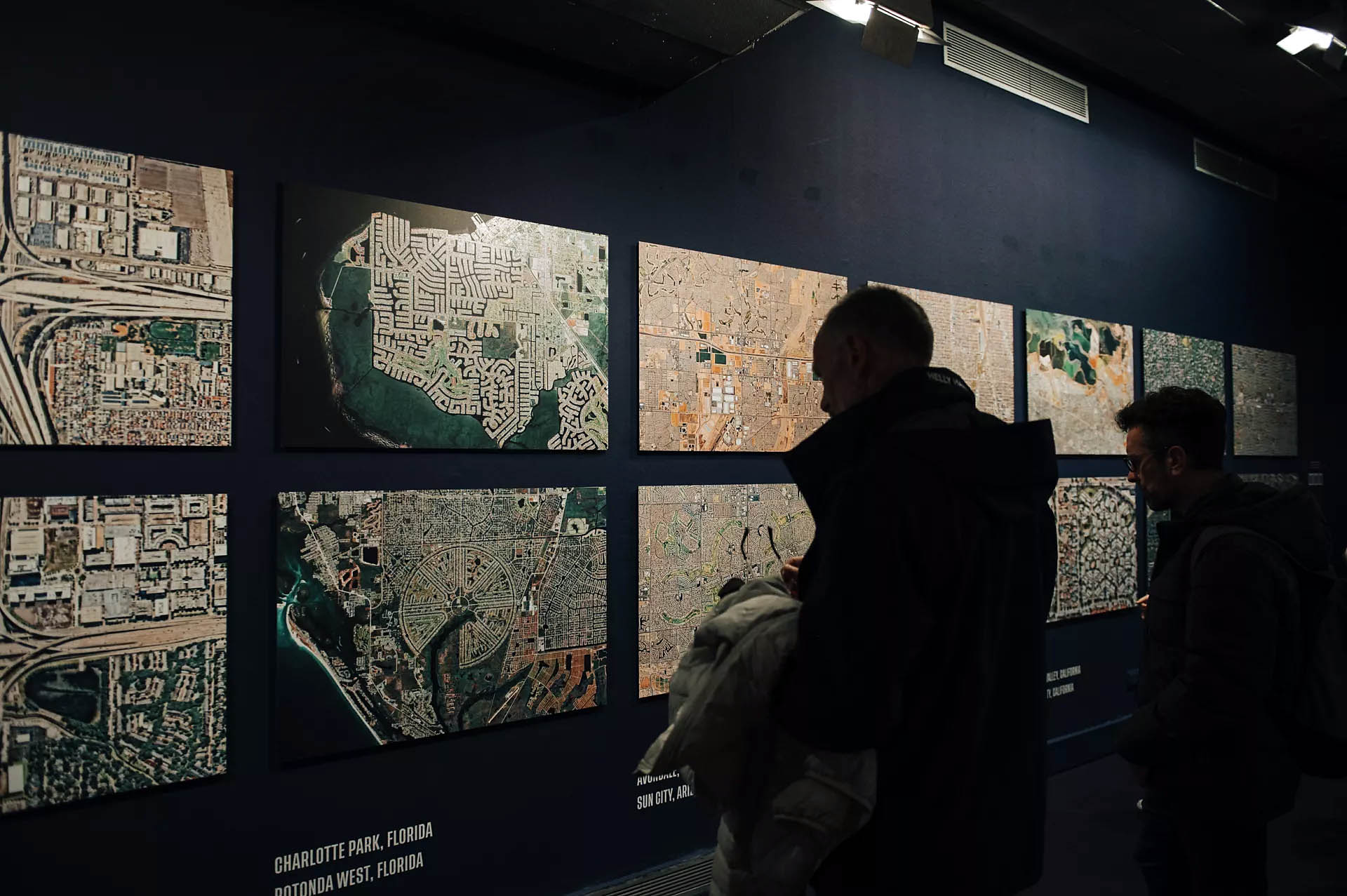
Installation view of the exhibition 'Suburbia. Building the American Dream' at the Centre de Cultura Contemporània de Barcelona | CCCB showing visitors looking at satellite images of US cities and suburbs that show their grid layout


Installation views of the exhibition Suburbia. Building the American Dream at the Centre de Cultura Contemporània de Barcelona | CCCB showing in the second image photographs by Charlotte Brooks (below); and in the bottom image, visitors looking at satellite images of US cities and suburbs that show their grid layout
© Alice Brazzit, CCCB, 2024


Charlotte Brooks (American, 1918-2014) '[Image from LOOK - Job 57-7621 titled Myers family]' 20th December 1957


Charlotte Brooks (American, 1918-2014)
[Image from LOOK – Job 57-7621 titled Myers family]
20th December 1957
Film negative
Look magazine photograph collection (Library of Congress)
Library of Congress Prints and Photographs Division Washington, D.C.


Installation view of the exhibition 'Suburbia. Building the American Dream' at the Centre de Cultura Contemporània de Barcelona | CCCB showing photographs by Gregory Crewdson


Installation view of the exhibition Suburbia. Building the American Dream at the Centre de Cultura Contemporània de Barcelona | CCCB showing photographs by Gregory Crewdson (below)


Gregory Crewdson (American, b. 1962) 'Untitled (Dream House)' 2002


Gregory Crewdson (American, b. 1962)
Untitled (Dream House)
2002
Digital C-print
29 x 44 inches


American photographer Gregory Crewdson is best known for his uncanny images of deceptively serene suburban life.  Using Hollywood film techniques and elaborate sets, Crewdson creates what he calls “frozen moments”: meticulously staged scenes whose narrative meaning remains a mystery.  Throughout this series, special attention is paid to light.  The twilight setting favoured by the photographer functions as a metaphor, an eerie evocation of the darkness on the edge of town.

Crewdson created this twelve-part portfolio, Dream House, as a commission for The New York Times Magazine in 2002.  The cinematic character of these frozen vignettes is underscored by the use of Hollywood actors (Gwyneth Paltrow, Tilda Swinton, and Philip Seymour Hoffman among others) whose celebrity contrasts with the “Anytown” anonymity of their environments.

Text from the Mutual Art website
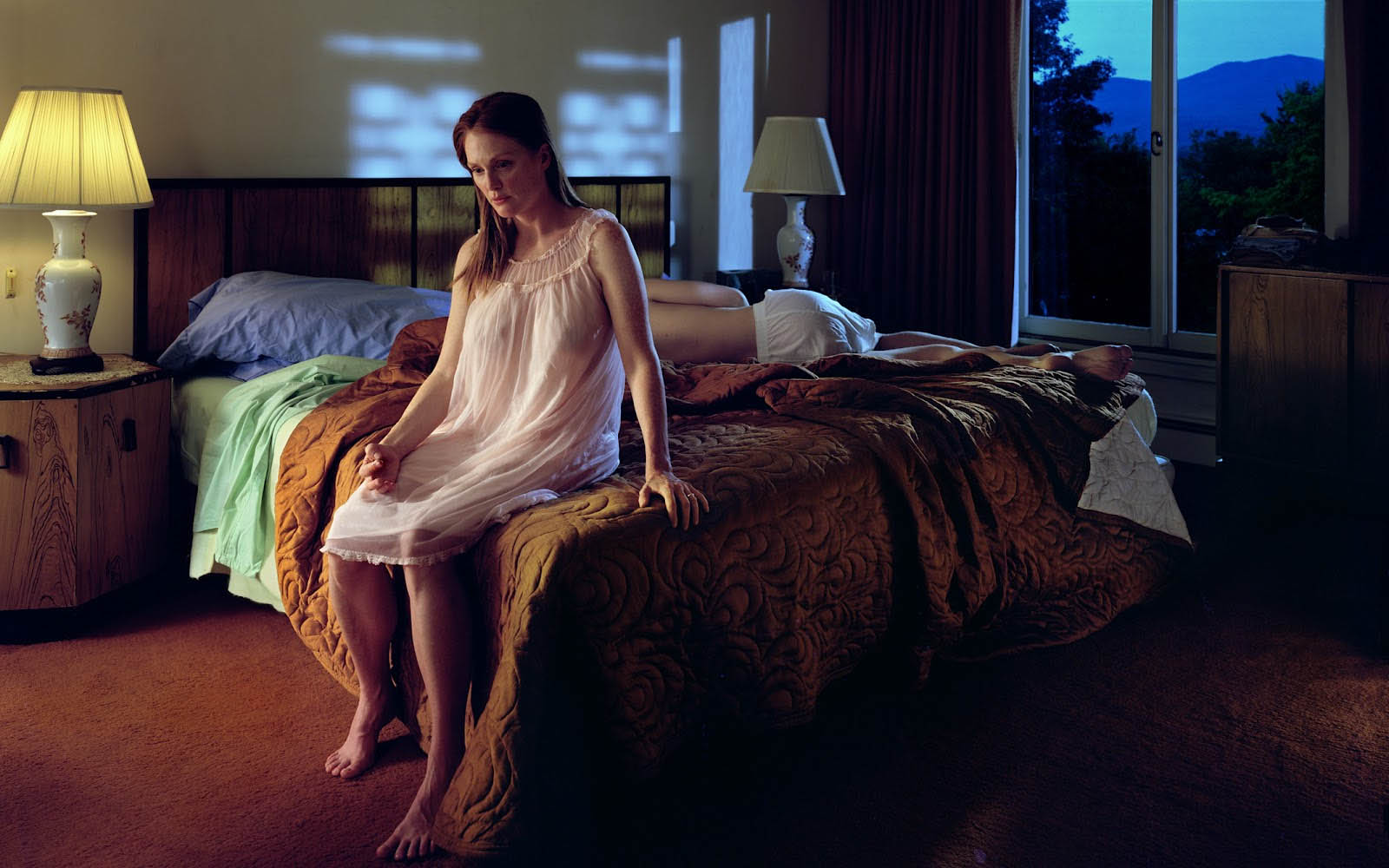
 

Gregory Crewdson (American, b. 1962) 'Julianne Moore (Dream House)' 2002


Gregory Crewdson (American, b. 1962)
Julianne Moore (Dream House)
2002
Digital C-print
29 x 44 inches


Sections of the exhibition

Planning A Dream

When the Industrial Revolution reached the USA in the first half of the 19th century, big cities became engines of progress, but they were also seen as dangerous places, in contrast with the opulent nature of the New World. With the emergence of the railway, the tram and the automobile, the mobility revolution prompted the gradual colonisation of city outskirts, transforming the countryside into residential neighbourhoods.

From Llewellyn Park (New Jersey) to Tuxedo Park (New York), throughout the 19th century the first gated communities began to pop up across the United States. At the end of the century, after the West was won, the appearance of the tram gave the middle classes access to the periphery, giving rise to a new type of housing that led to an orderly arrangement of city grids. But it wasn’t until the popularisation of the famous Ford Model T that the US landscape was radically transformed, crisscrossed by roads that became freeways. The automobile became a symbol of freedom, marking the birth of the suburbs that were to spring up everywhere.

This first section includes historical material like the original lithograph View of New York by John William Hill (1836); The American Woman’s Home by Catharine Beecher, the bible of “domestic feminism”; a Ford T Touring (1923) produced by General Motors, and films like The Suburbanite (1908), among other Harold Lloyd and Buster Keaton classics.


Alexander Jackson Davis (American, 1803–1892) 'Villa for David Codwise, near New Rochelle, NY (project; elevation and four plans)' 1835


Alexander Jackson Davis (American, 1803–1892)
Villa for David Codwise, near New Rochelle, NY (project; elevation and four plans)
1835
Pen and ink, watercolour, graphite
Sheet: 14 5/16 x 9 in. (36.4 x 22.9 cm)
Metropolitan Museum of Art, New York
Harris Brisbane Dick Fund, 1924
Public domain
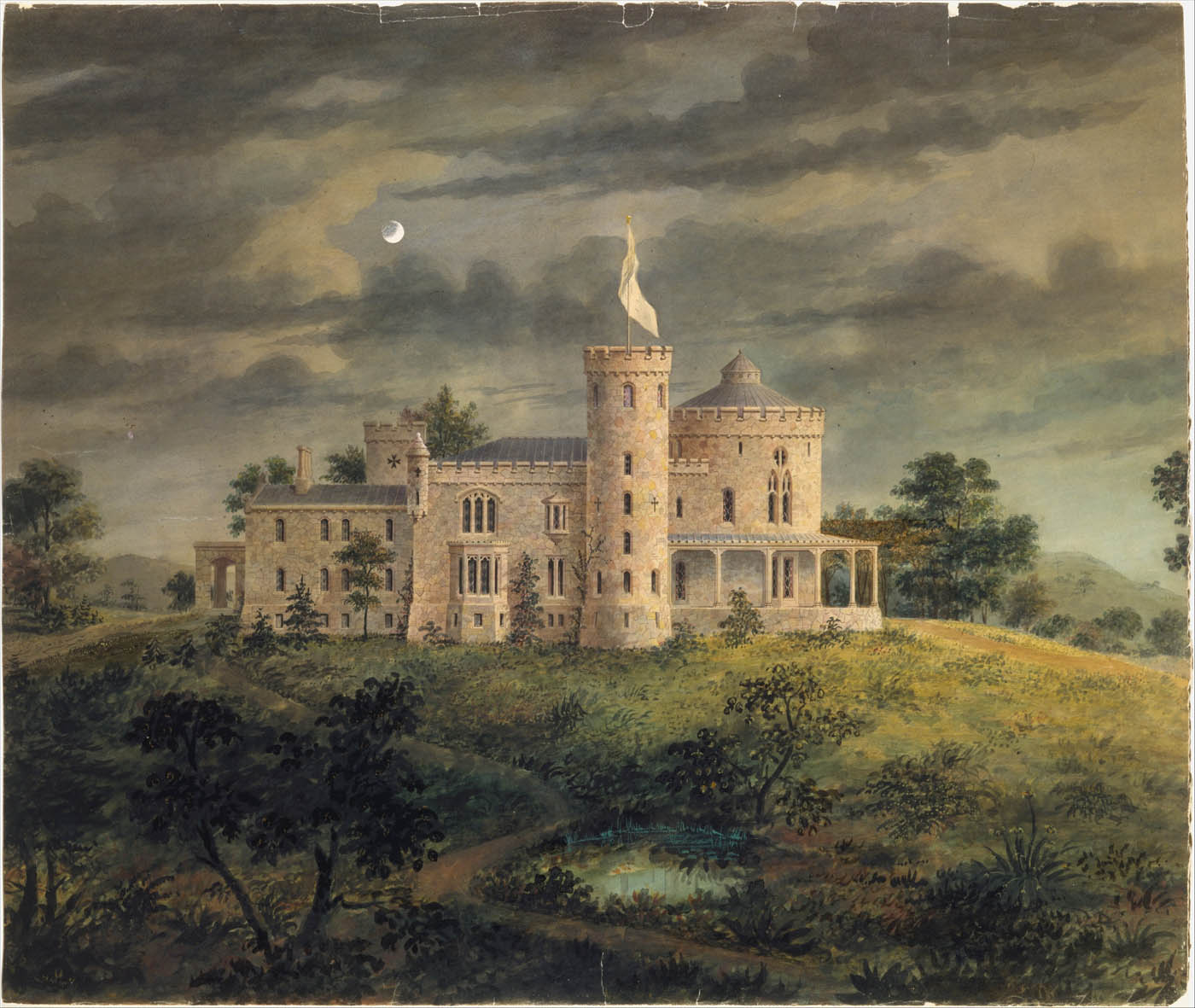
 

Alexander Jackson Davis (American, 1803-1892) 'Ericstan, for John J. Herrick, Tarrytown, New York (perspective)' 1855


Alexander Jackson Davis (American, 1803–1892)
Ericstan, for John J. Herrick, Tarrytown, New York (perspective)
1855
Watercolour, ink, and graphite on paper
25 5/16 x 30in. (64.3 x 76.2cm)
Metropolitan Museum of Art, New York
Harris Brisbane Dick Fund, 1924
Public domain


Davis’ most successful castellated villa was built for dry-goods merchant John J. Herrick. The design was dominated by an enormous three-story circular tower facing west over the Hudson River. The tower housed an extraordinary circular parlor that had an intricately vaulted ceiling springing from a massive central cluster of delicate Gothic columns. Ericstan was demolished in 1944.


After Alexander Jackson Davis (American, 1803-1892) Friend & Aub (Publisher Philadelphia, Pennsylvania) 'Map of Llewellyn Park and Villa Sites, on Eagle Ridge in Orange & West Bloomfield' 1857


After Alexander Jackson Davis (American, 1803-1892)
Friend & Aub (Publisher Philadelphia, Pennsylvania)
Map of Llewellyn Park and Villa Sites, on Eagle Ridge in Orange & West Bloomfield
1857
Lithograph
14 7/16 x 23 7/16 in. (36.7 x 59.6cm)
Metropolitan Museum of Art, New York
Harris Brisbane Dick Fund, 1924
Public domain


Morse & Fronti (Charles W. Morse and J. Fronti) 'Residence of Mr. E. Hooker, Fremont Ave., Orange, N.J.' 1860


Morse & Fronti (Charles W. Morse and J. Fronti)
Residence of Mr. E. Hooker, Fremont Ave., Orange, N.J.
1860
The Miriam and Ira D. Wallach Division of Art, Prints and Photographs: Photography Collection
The New York Public Library
Public domain
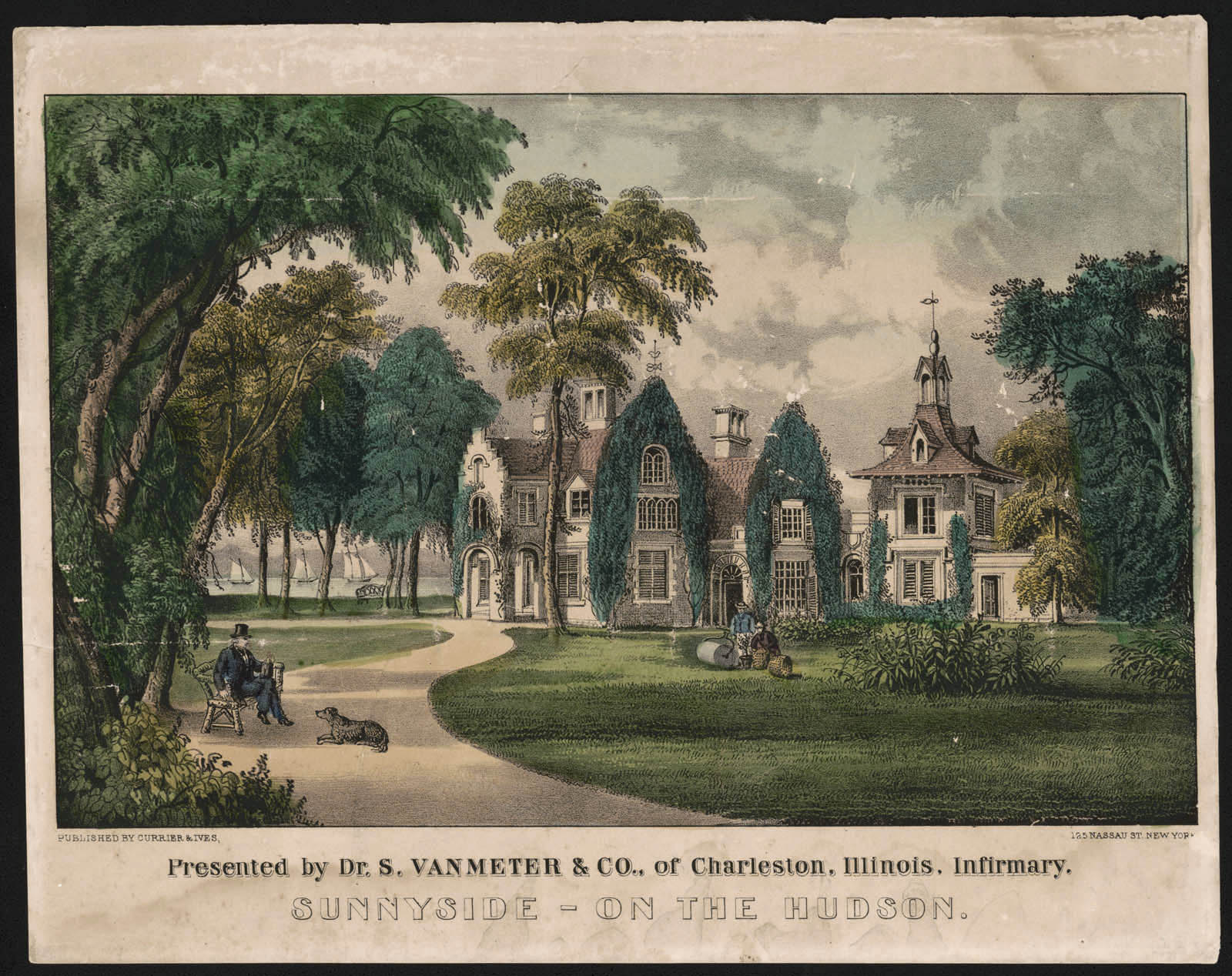
 

Currier & Ives (Publisher, New York active between 1856-1907) 'Sunnyside on the Hudson' 1856-1871


Currier & Ives (Publisher, New York active between 1856-1907)
Sunnyside on the Hudson
1856-1871
Hand coloured lithograph
Library of Congress Prints and Photographs Division Washington, D.C.
Public domain
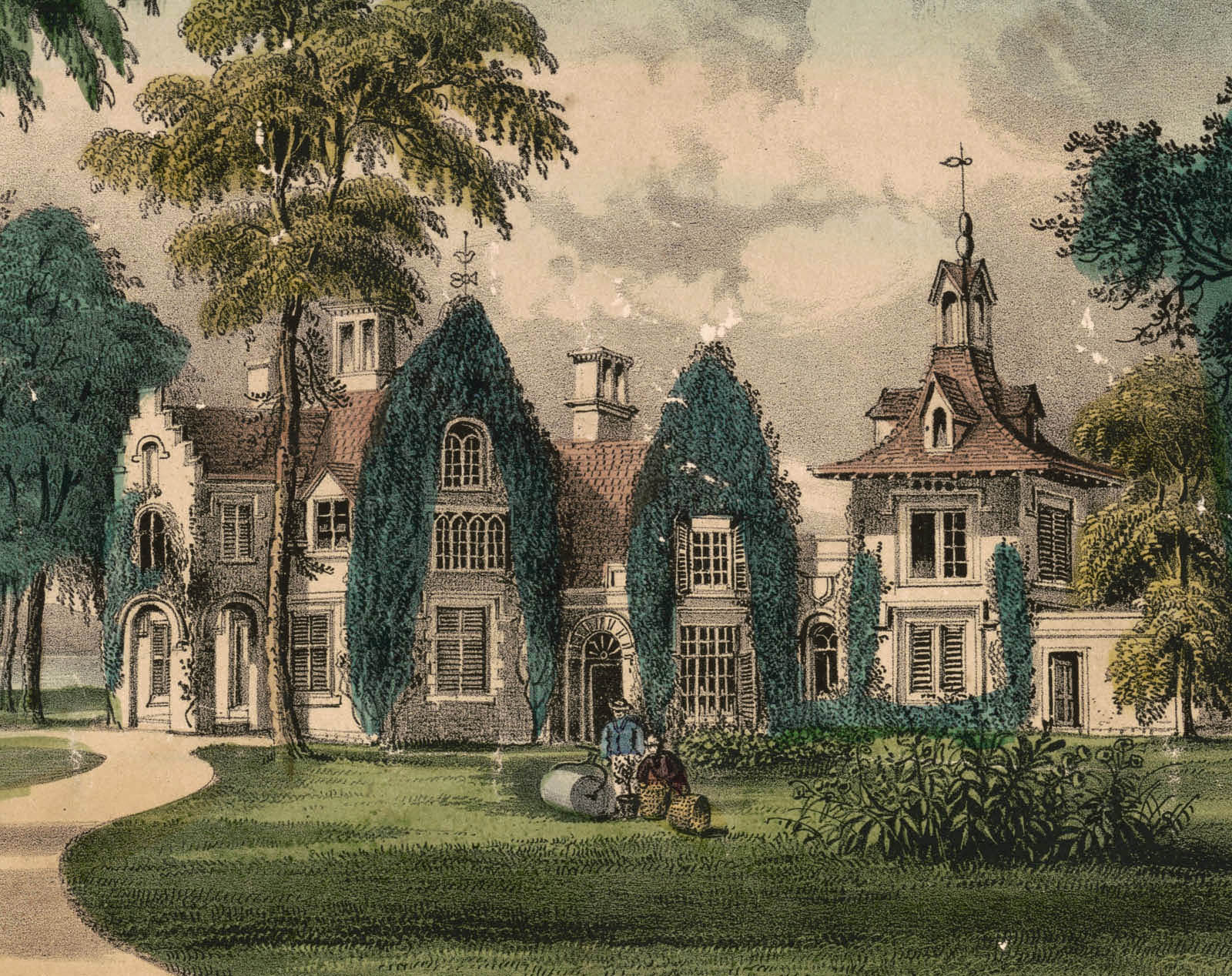
 

Currier & Ives (Publisher, New York active between 1856-1907) 'Sunnyside on the Hudson' 1856-1871 (detail)


Currier & Ives (Publisher, New York active between 1856-1907)
Sunnyside on the Hudson (detail)
1856-1871
Hand coloured lithograph
Library of Congress Prints and Photographs Division Washington, D.C.
Public domain


Currier & Ives (Publisher, New York active between 1856-1907) 'American railroad scene: lightning express trains leaving the junction' 1874


Currier & Ives (Publisher, New York active between 1856-1907)
American railroad scene: lightning express trains leaving the junction
1874
Hand coloured lithograph
Library of Congress Prints and Photographs Division Washington, D.C.
Public domain


Advertising by Samuel. E. Gross 'August Gast & Co. New York' c. 1900


Advertising by Samuel. E. Gross.
August Gast & Co. New York
c. 1900
Lithography
Library of Congress


Advertising by Samuel. E. Gross 'August Gast & Co. New York' c. 1900 (detail)


Advertising by Samuel. E. Gross.
August Gast & Co. New York (detail)
c. 1900
Lithography
Library of Congress
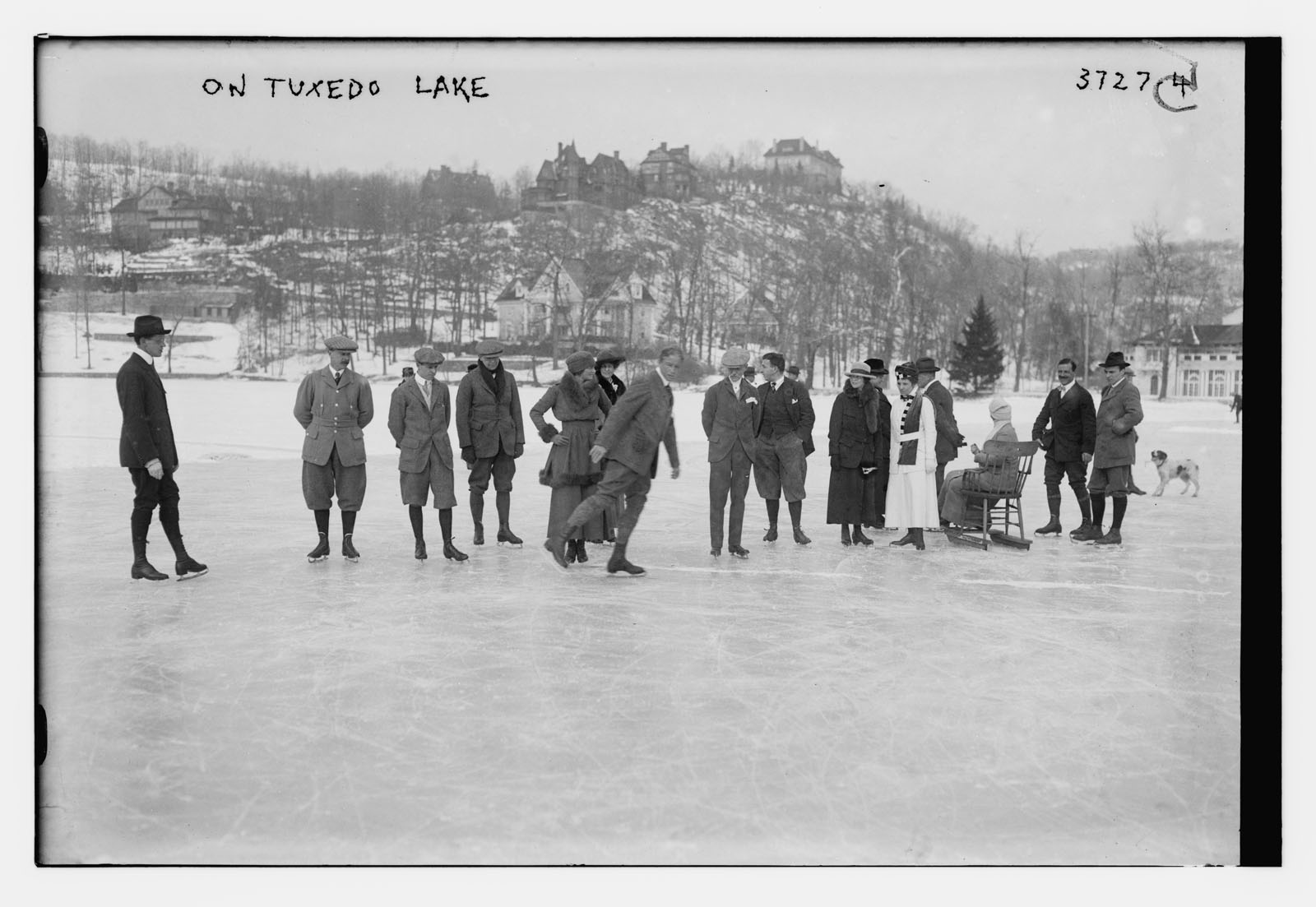
 

Anonymous photographer / Bain News Service (publisher) 'Skaters on the lake at Tuxedo Park' 1910


Anonymous photographer
Bain News Service
(publisher)
Skaters on the lake at Tuxedo Park
1910
Glass negative
Library of Congress Prints and Photographs Division Washington, D.C.
Public domain
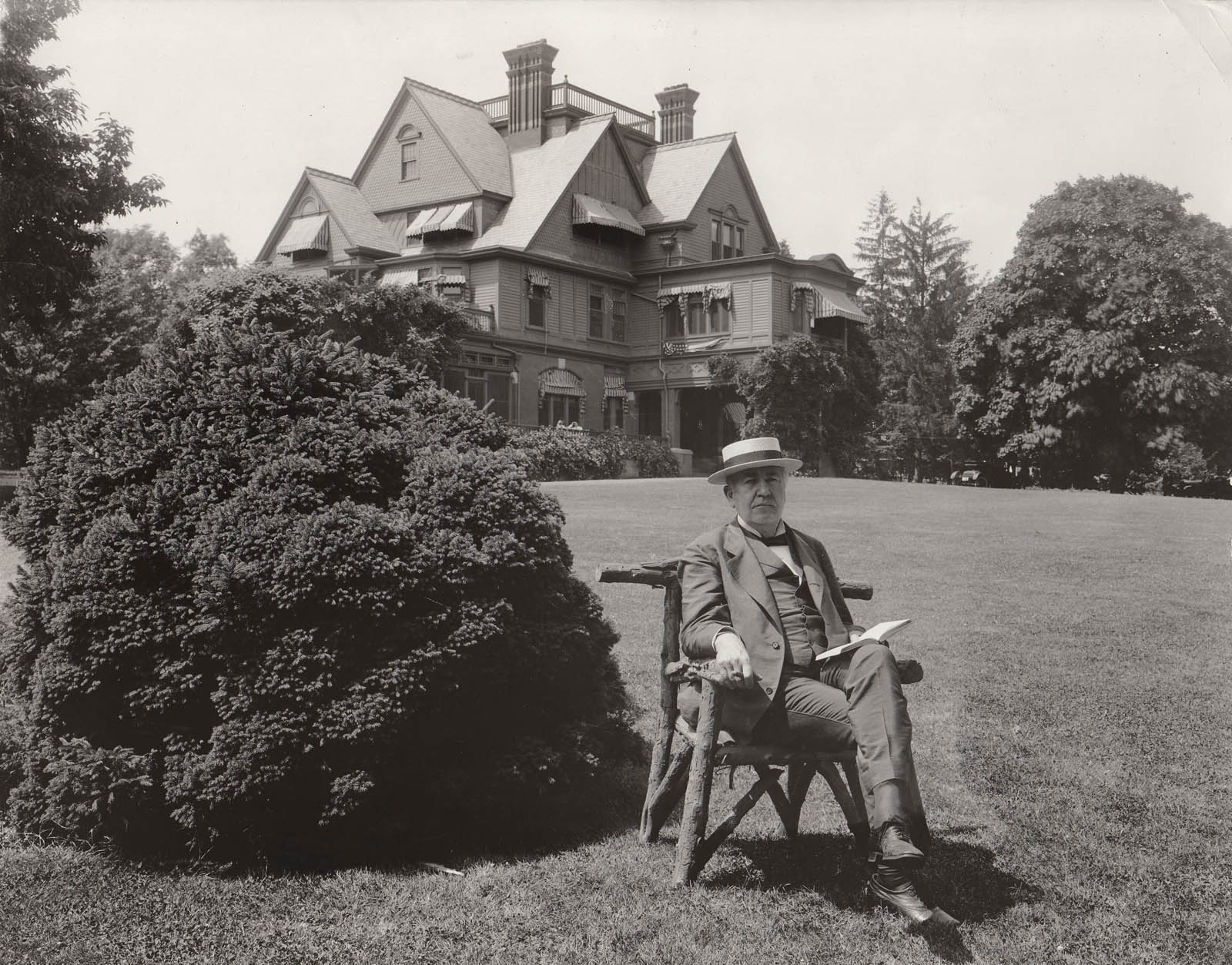
 

Anonymous photographer. 'Thomas Edison in the garden of his residence in Glenmont' 1917


Anonymous photographer
Thomas Edison in the garden of his residence in Glenmont
1917
Thomas Edison National Historical Park, West Orange, New Jersey


Anonymous photographer. 'General Motors Pavilion: Futurama, Norman Bel Geddes. New York World's Fair. General Motors – Crowds leading into Futurama' 1939


Anonymous photographer
General Motors Pavilion: Futurama, Norman Bel Geddes. New York World’s Fair. General Motors – Crowds leading into Futurama
1939
New York World’s Fair 1939-1940 records
Manuscripts and Archives Division, The New York Public Library
Public domain
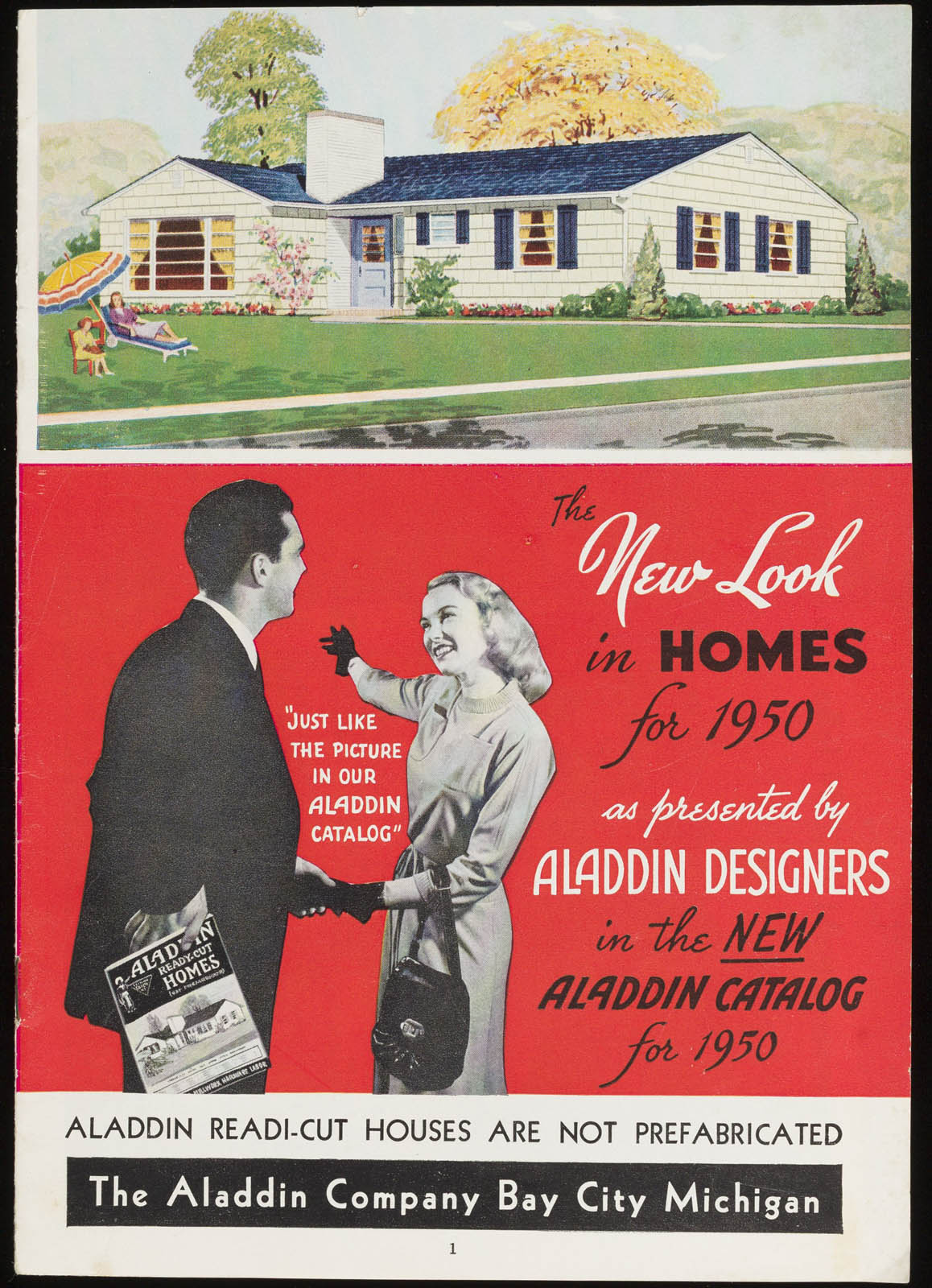
 

'Catalog of the Aladdin company selling houses by mail' 1950


Catalog of the Aladdin company selling houses by mail
1950
Courtesy Historic New England
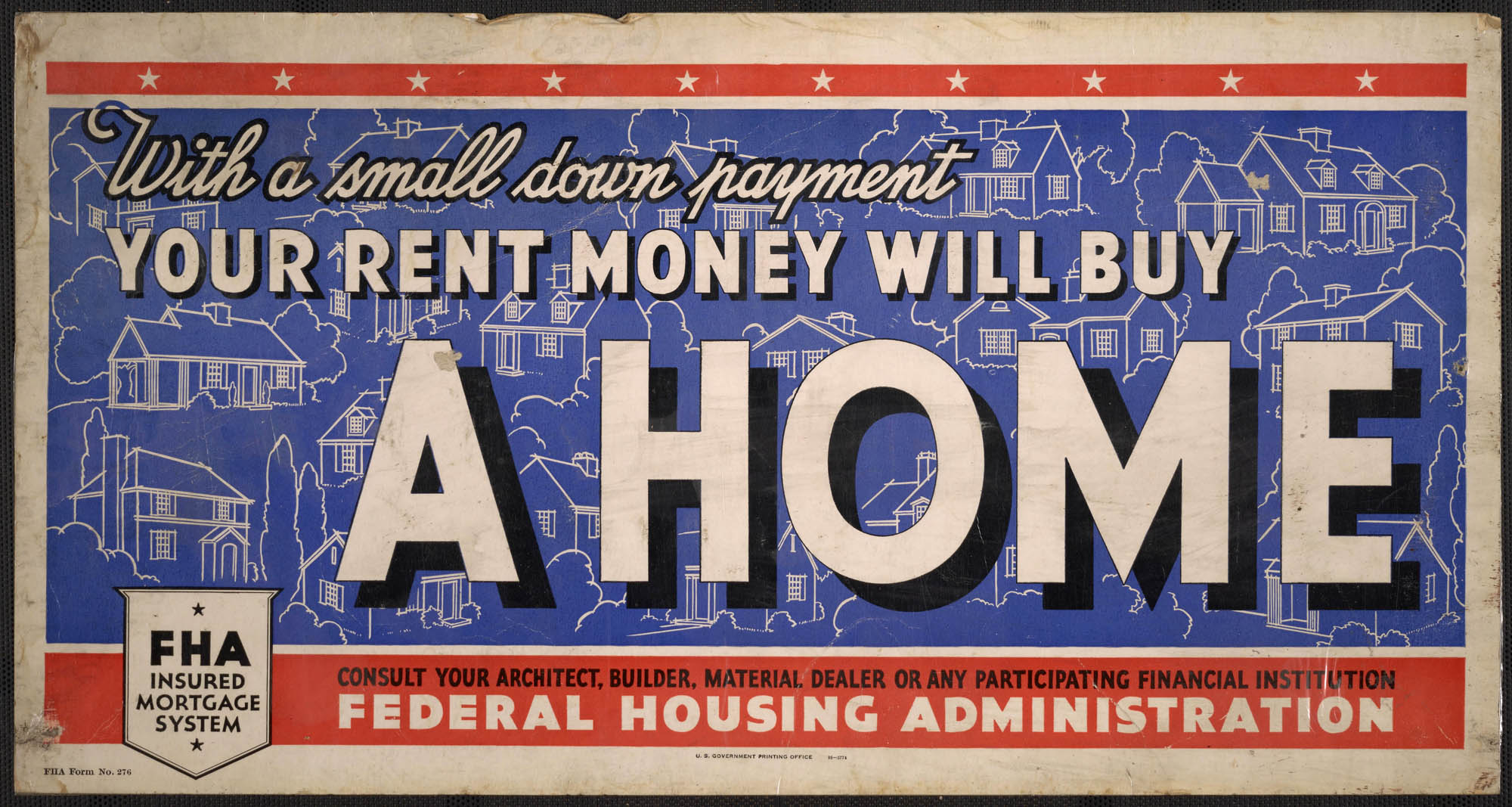
 

'Federal Housing Administration, Minneapolis and St. Paul, Minnesota' c. 1950


Federal Housing Administration, Minneapolis and St. Paul, Minnesota
c. 1950
Courtesy Minnesota Streetcar Museum, Minneapolis


The advertisement reads, “With a small down payment your rent money will buy a home. Consult your architect, builder, material dealer or any participating financial institution. Federal Housing Administration.”


The Suburban Room

The suburban explosion was first and foremost demographic, occurring as World War II soldiers returned, eager to set up home. There was no room for them in the crowded cities. With the support of the state, which offered generous loans, suburbs were built using the Fordist assembly-line production logic. It was the “American way of life”, the start of a collective dream that fascinated the whole world.

And so the baby boom took place in 11 million single-family homes fitted with all kinds of electrical domestic appliances, presided over by a brand new television set on which the new suburbanites watched idealised versions of themselves with identical skin colour and the same war experiences, age, mortgage and feeling of uprootedness. The media echoed this phenomenon, and cinema and literature reflected this standardised landscape in which a wife waited at home for her husband with a drink for him in her hand, children went everywhere by bicycle, and everyone had barbecues on Sundays.

Sponsored by the state, Suburbia became a paradise that excluded racial minorities. But little by little, by the sixties, the gates of paradise were opened to African Americans and other minorities, giving rise to a white exodus, the white flight.

As well as a variety of historical material, this section reviews sitcoms portraying the suburbs, from the 1940s to the present day. It also includes the famous illustration New Kids in the Neighborhood by Norman Rockwell and a broad selection of the photographs that make up Bill Owens’ Suburbia (1972), the first book of photographs about this American urban planning model.
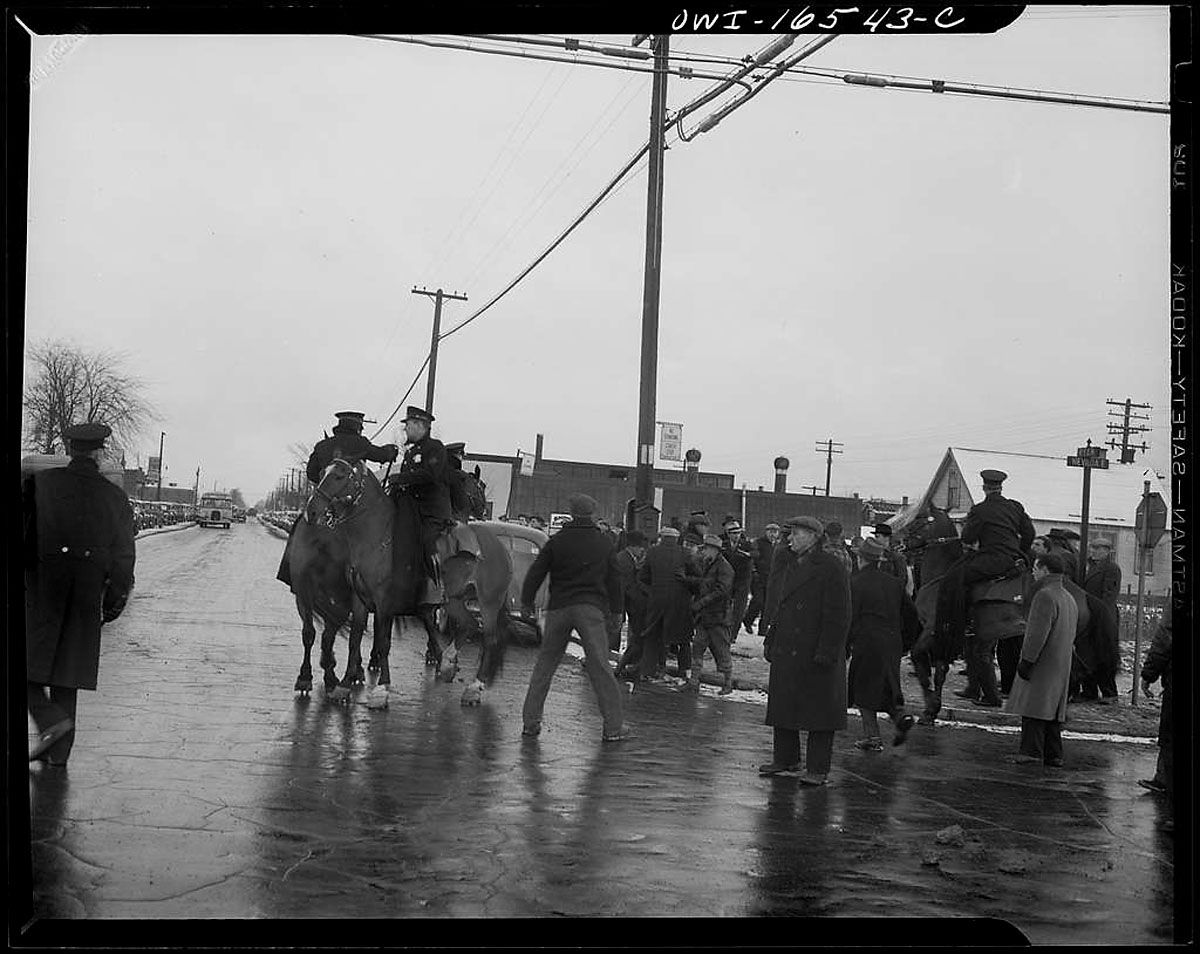
 

Arthur S. Siegel (American, 1913-1978) 'Detroit, Michigan. Riot at the Sojourner Truth homes, a new U.S. federal housing project, caused by white neighbours' attempt to prevent Negro tenants from moving in. Mounted police and whites' Detroit 1942


Arthur S. Siegel (American, 1913-1978)
Detroit, Michigan. Riot at the Sojourner Truth homes, a new U.S. federal housing project, caused by white neighbours’ attempt to prevent Negro tenants from moving in. Mounted police and whites
Detroit 1942
Library of Congress
Public domain


General Electric advertisement 'It's a promise' 1945


General Electric advertisement
It’s a promise
1945
Private collection, Barcelona
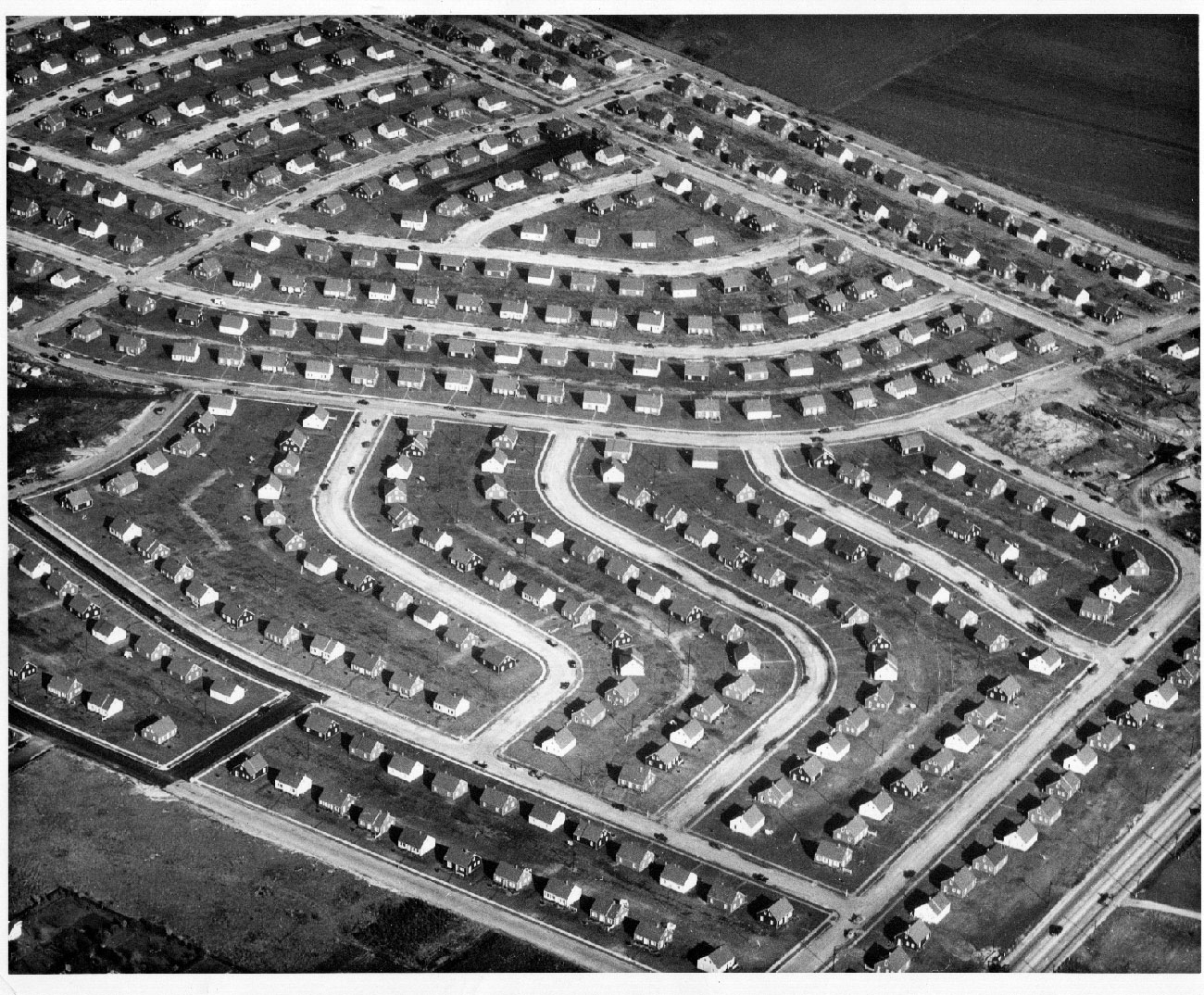
 

Anonymous photographer. 'Aerial view of Levittown' 1949


Anonymous photographer
Aerial view of Levittown
1949
Courtesy Levittown Public Library
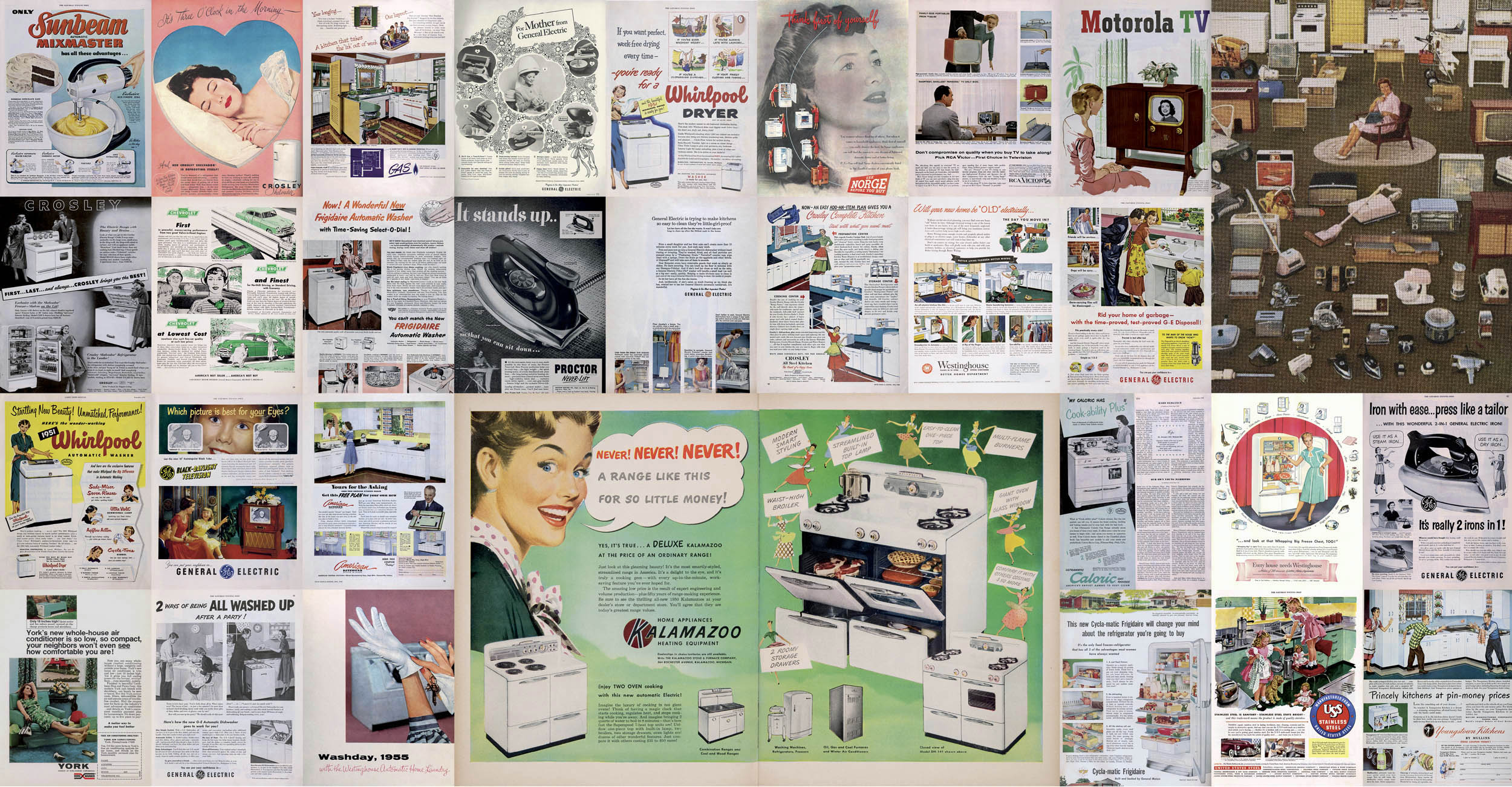
 

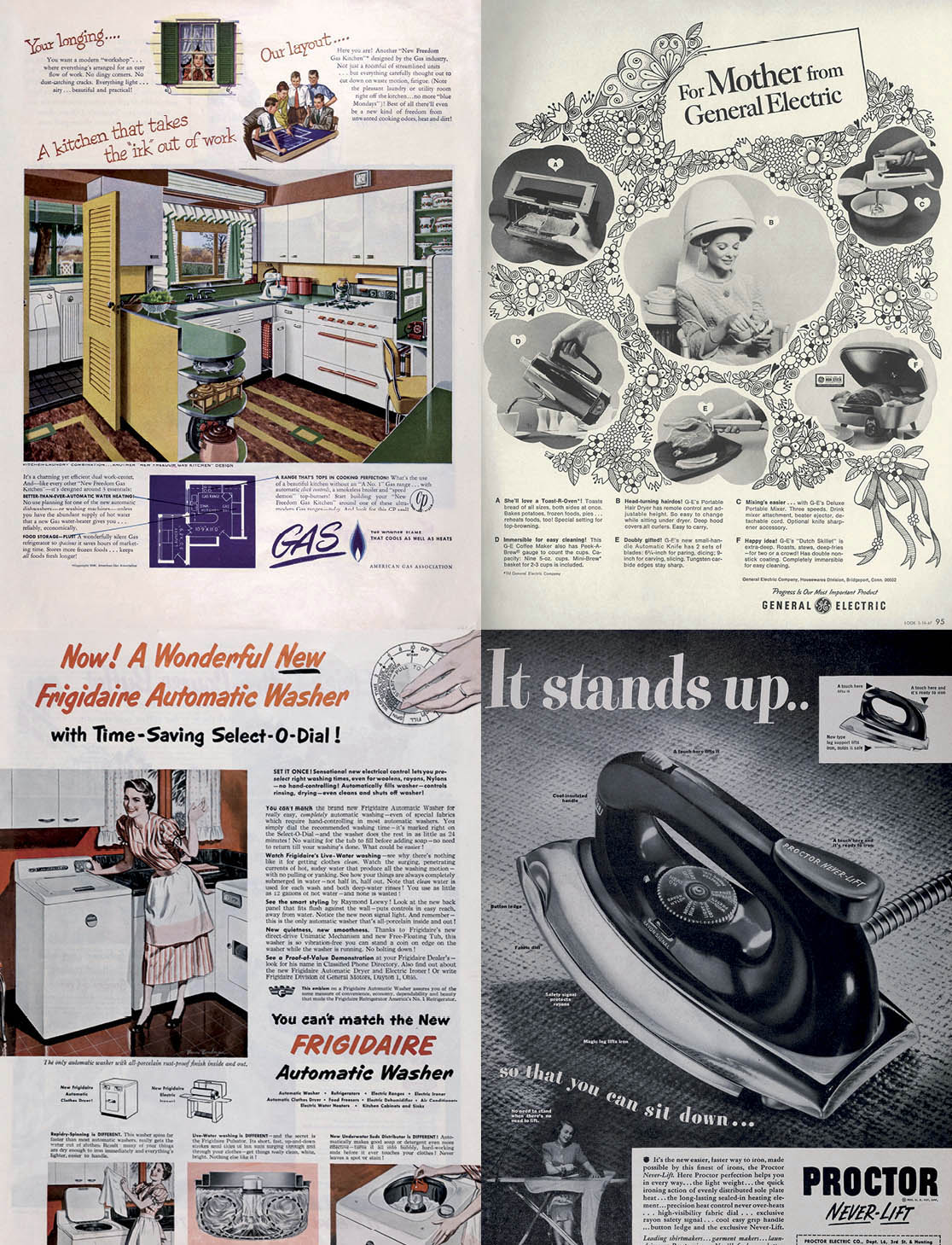
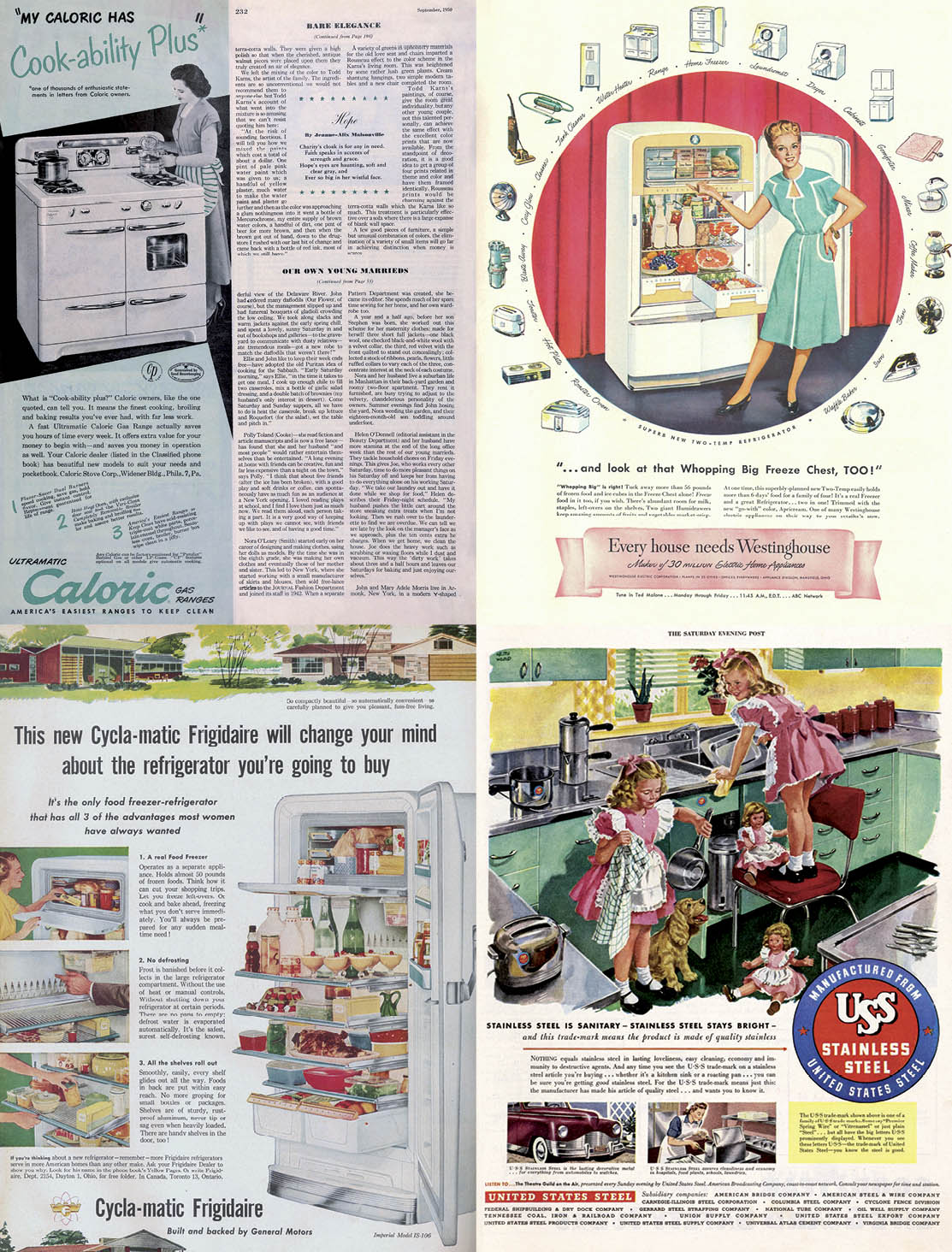
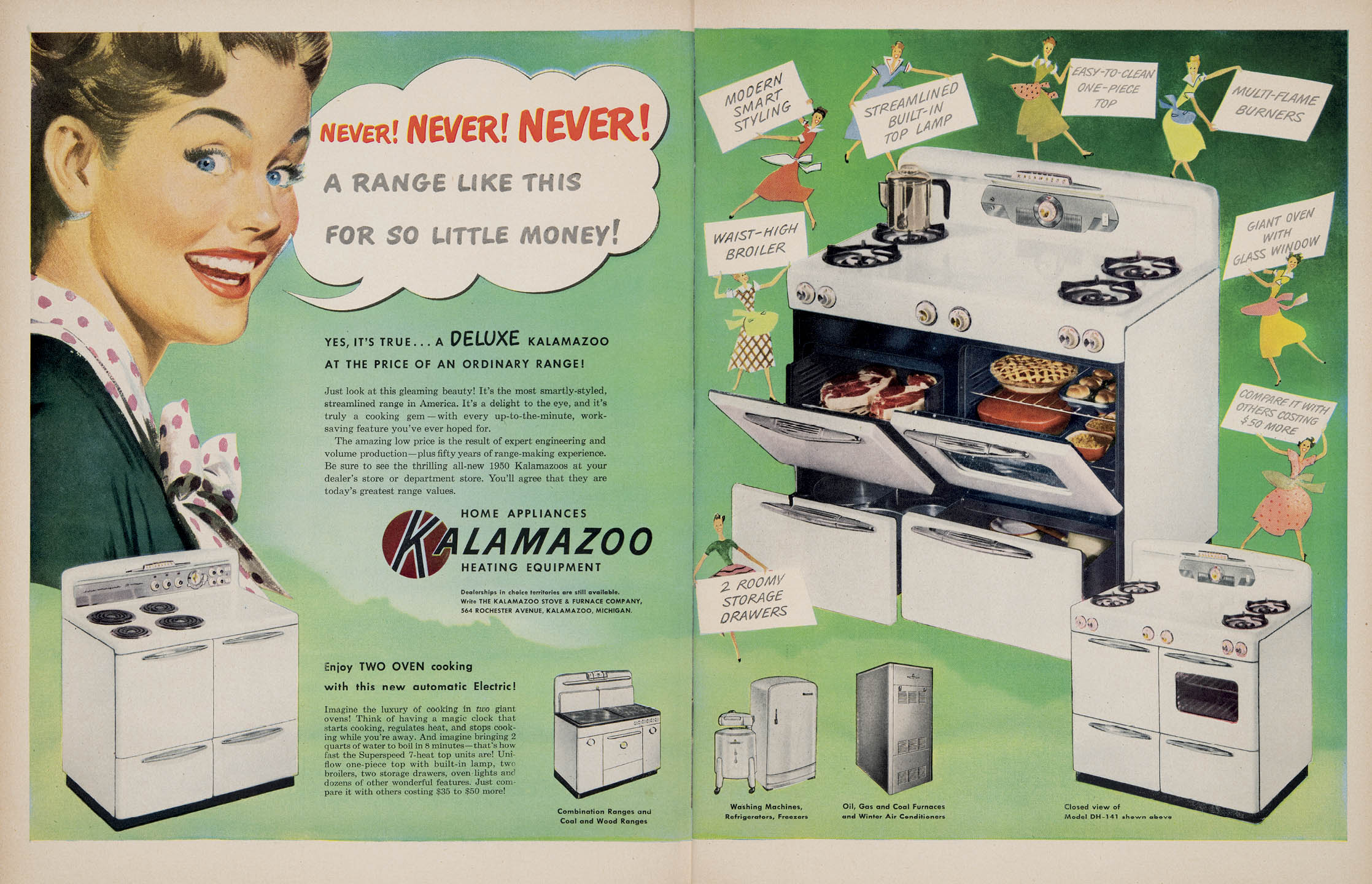
'Mural of household appliance advertisements published in different American magazines' 1947-1962


Mural of household appliance advertisements published in different American magazines
1947-1962
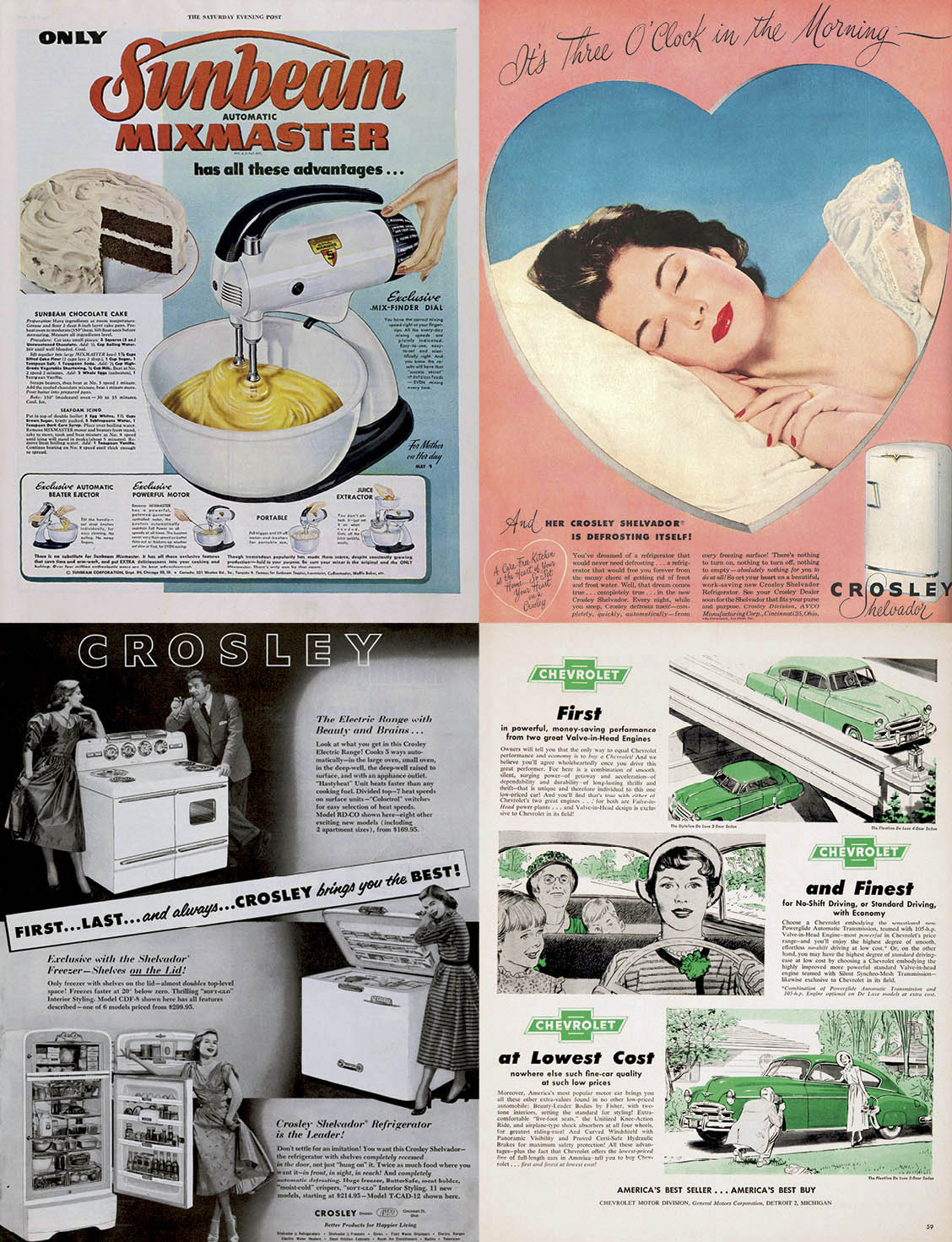
 

'Mural of household appliance advertisements published in different American magazines' 1947-1962 (detail)

'Mural of household appliance advertisements published in different American magazines' 1947-1962 (detail)

'Mural of household appliance advertisements published in different American magazines' 1947-1962 (detail)

'Mural of household appliance advertisements published in different American magazines' 1947-1962 (detail)


Mural of household appliance advertisements published in different American magazines (details)
1947-1962
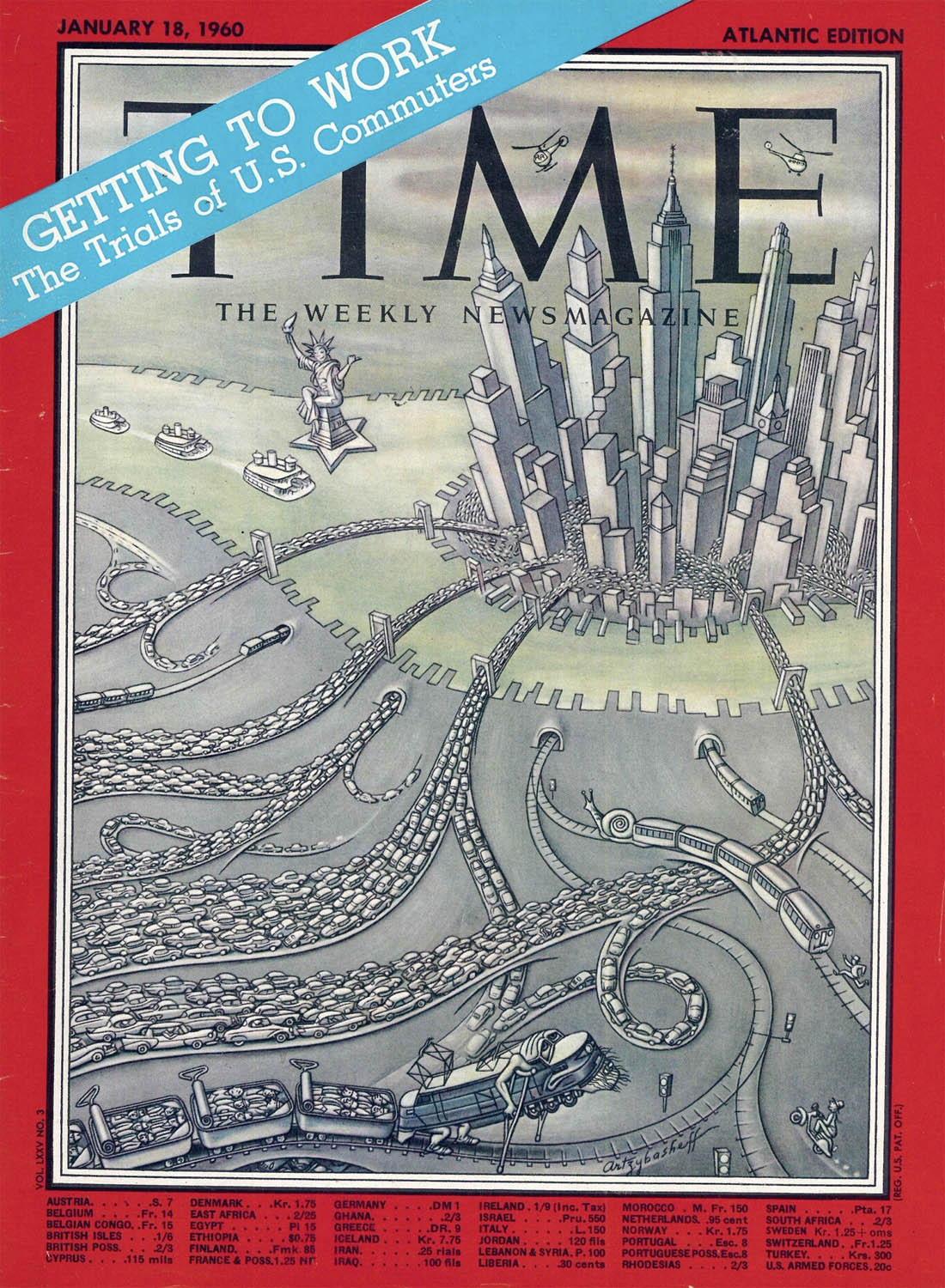
 

Getting to Work. The Trials to U.S. commuters 'Time', January 18, 1960


Getting to Work. The Trials to U.S. commuters
Time, January 18, 1960
Library of Catalonia, Barcelona
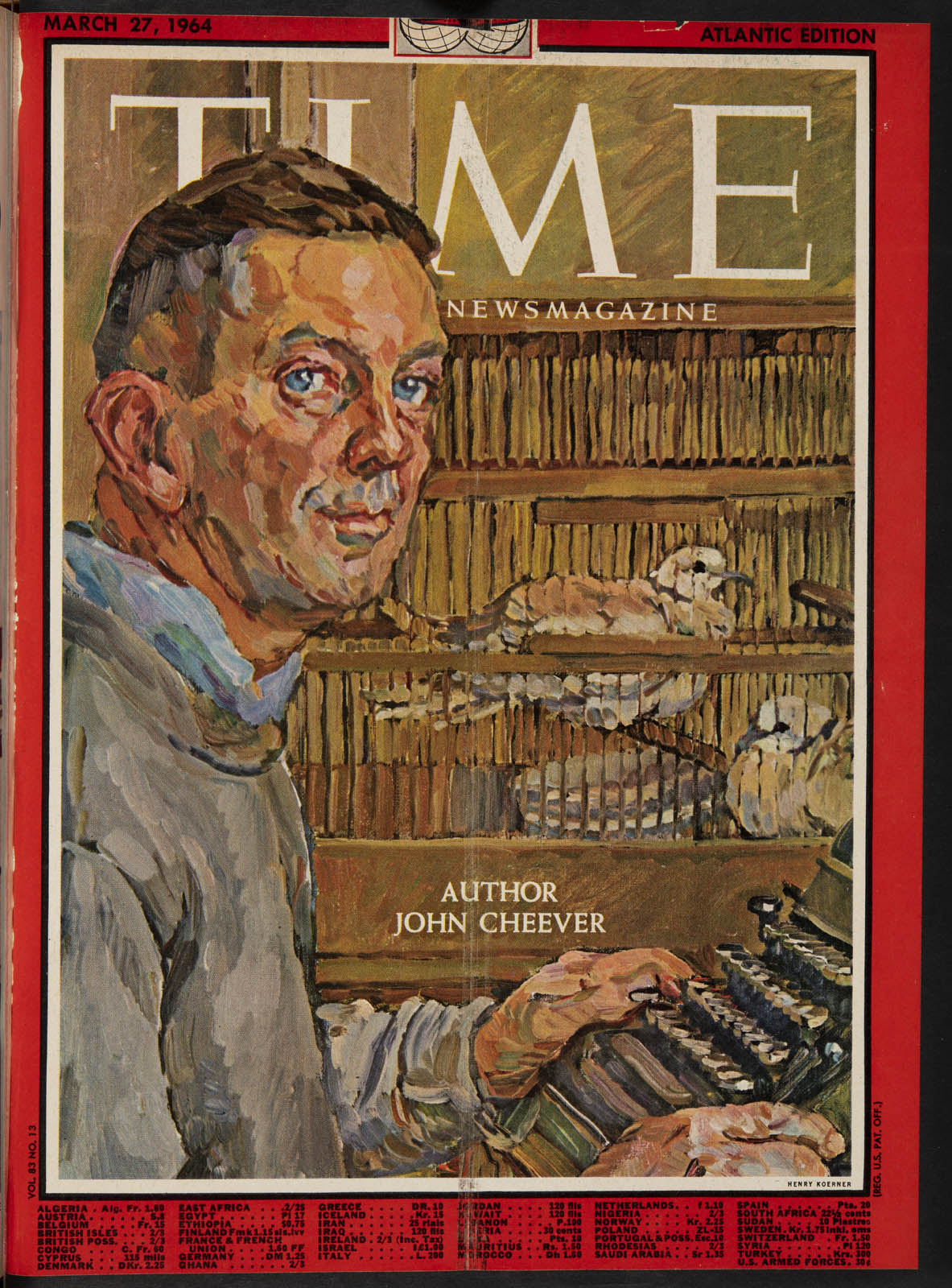
 

John Cheever 'Time', March 27, 1964


John Cheever
Time, March 27, 1964
Library of Catalonia, Barcelona
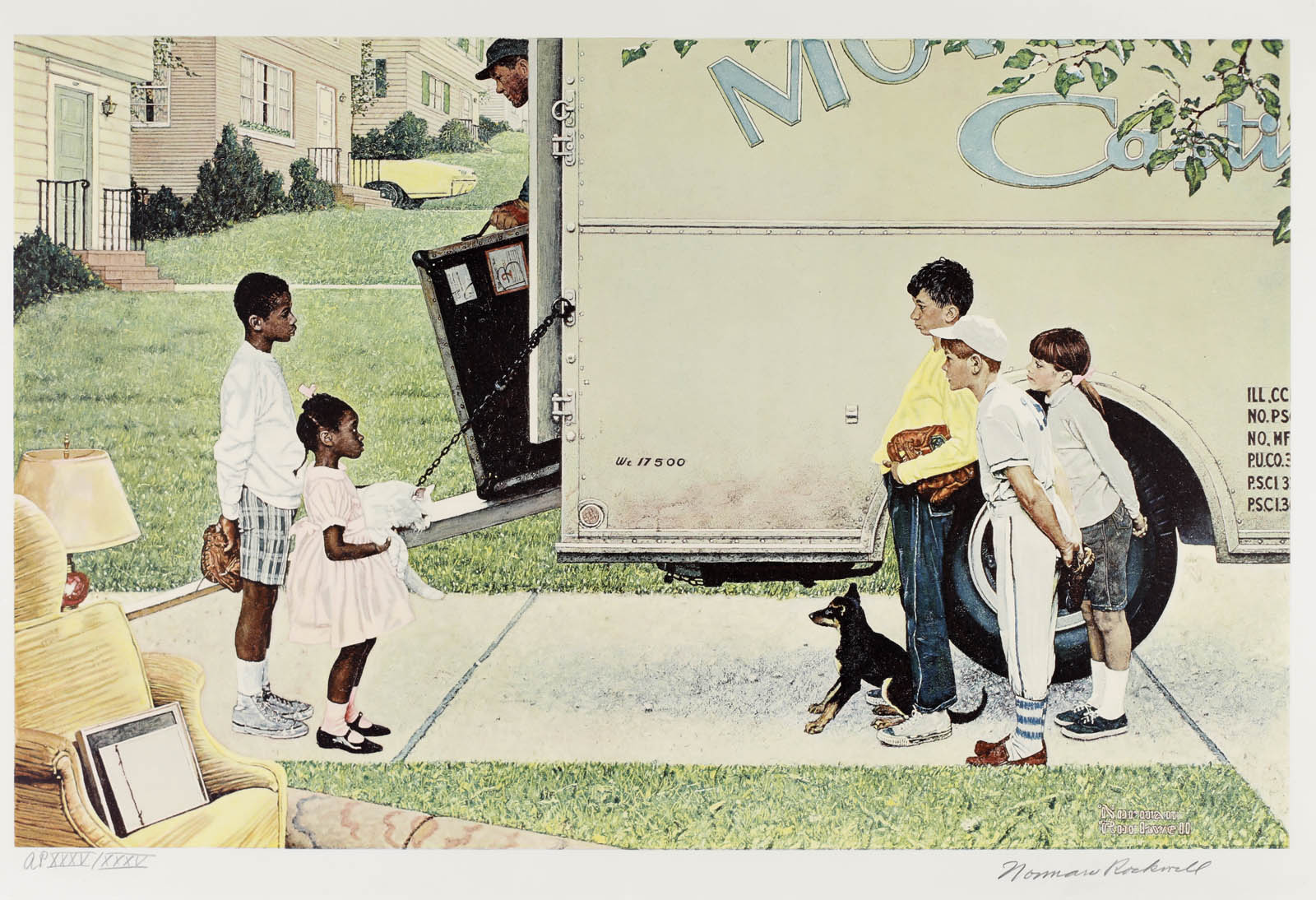
 

Norman Rockwell (American, 1894-1978) 'New Kids in the Neighbourhood' 1967


Norman Rockwell (American, 1894-1978)
New Kids in the Neighbourhood
1967
Lithograph
Norman Rockwell Museum Collection
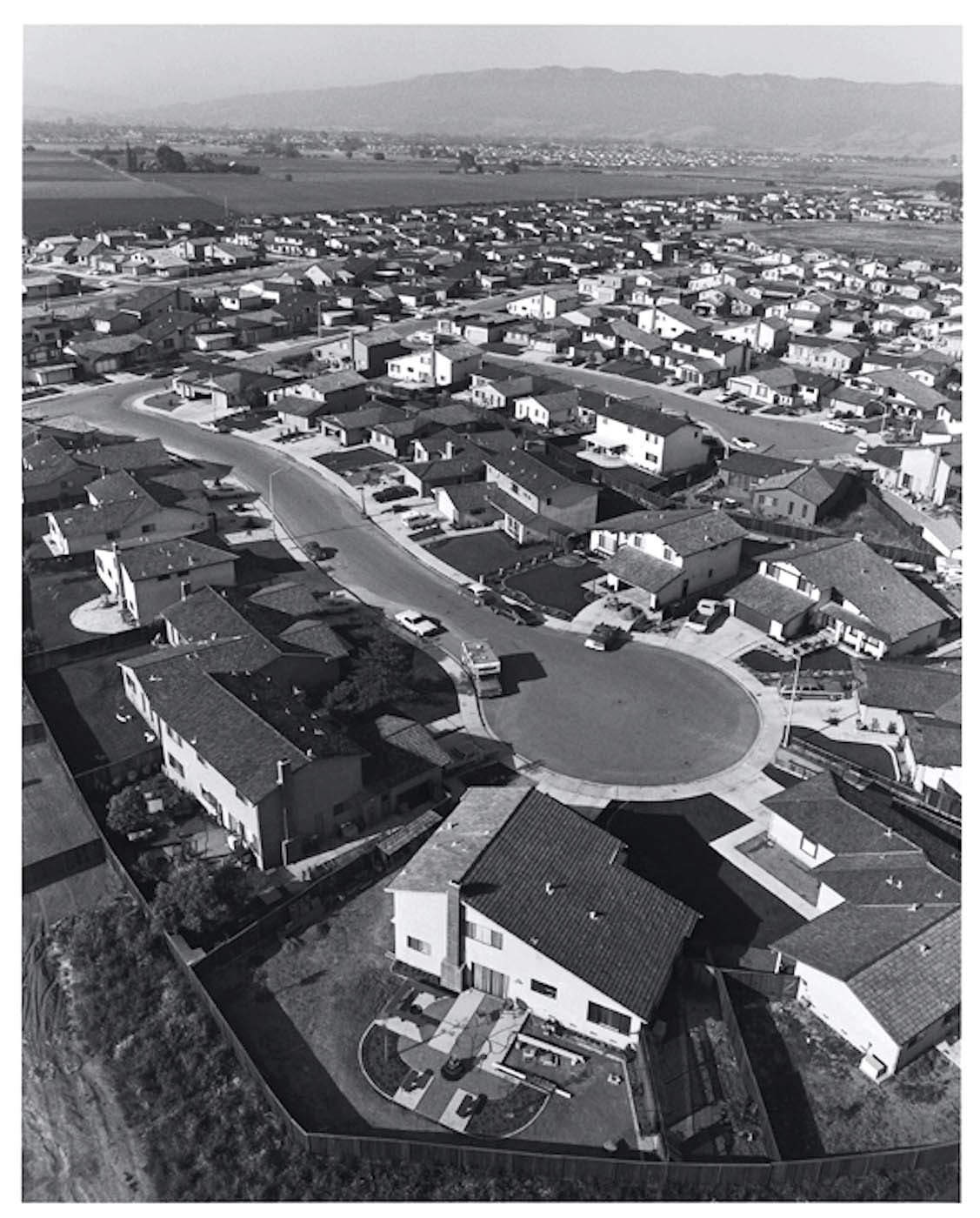
 

Bill Owens (American, b. 1938) 'Suburbia, Cul de sac, Pleseanton, California' 1972


Bill Owens (American, b. 1938)
Suburbia, Cul de sac, Pleseanton, California
1972
Gelatin silver
Bill Owens Archive, Milan


Bill Owens (American, b. 1938) 'I don't feel that Richie playing with guns will have a negative effect on his personality. (He already wants to be a policeman.)' 1972


Bill Owens (American, b. 1938)
I don’t feel that Richie playing with guns will have a negative effect on his personality. (He already wants to be a policeman.)
1972
Gelatin silver
Bill Owens Archive, Milan


The Residential Nightmare

And night fell on Suburbia. What had been a dream became a nightmare. The idea of a safe, healthy, happy place was gradually contaminated with fears, terrors and paranoias. Doors were bolted and alarms installed. After all, in the American Gothic tradition, the house, often haunted, had always been a source of horror – evil lurked there. With the appearance of mass-produced housing, a new sub genre called Suburban Gothic was consolidated, and began to manifest itself both in literature and in cinema. Unlike the traditional Gothic, in this new landscape the family residence was no longer tied to a specific territory, as it had been in New England; now, with its white picket fence and green lawn, it could be anywhere in the country. And evil came from outside, it threatened to invade the home and even undermine it. Under the guise of shiny normality, American suburbs always conceal cracks through which terror creeps.

To illustrate this residential nightmare, we take in historical materials of the atomic age, photographs of the dark side of suburbia by Amy Stein, Todd Hido, Gregory Crewdson, Angela Strassheim and Gabriele Galimberti, and Kate Wagner’s installation, McMansionHell. Alberto Ortega, an artist from Seville resident in the US who has devoted himself to painting the suburbs at night, presents two works for the first time at the CCCB.
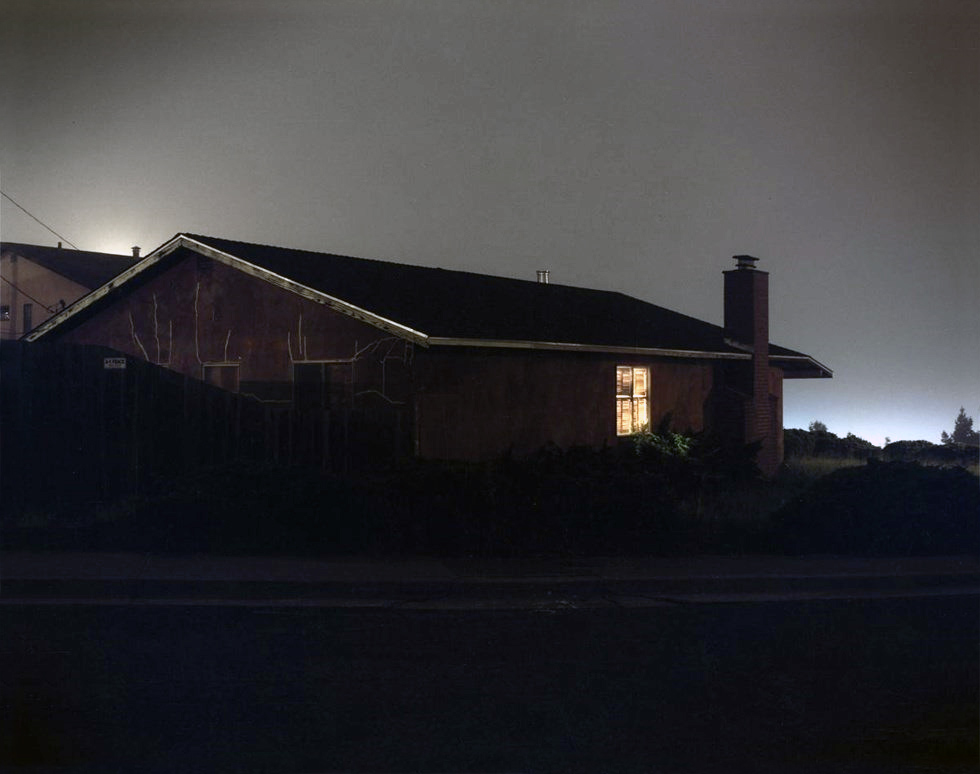
 

Todd Hido (American, b. 1968) 'Untitled #2214' 1998


Todd Hido (American, b. 1968)
Untitled #2214
1998
From the series House Hunting
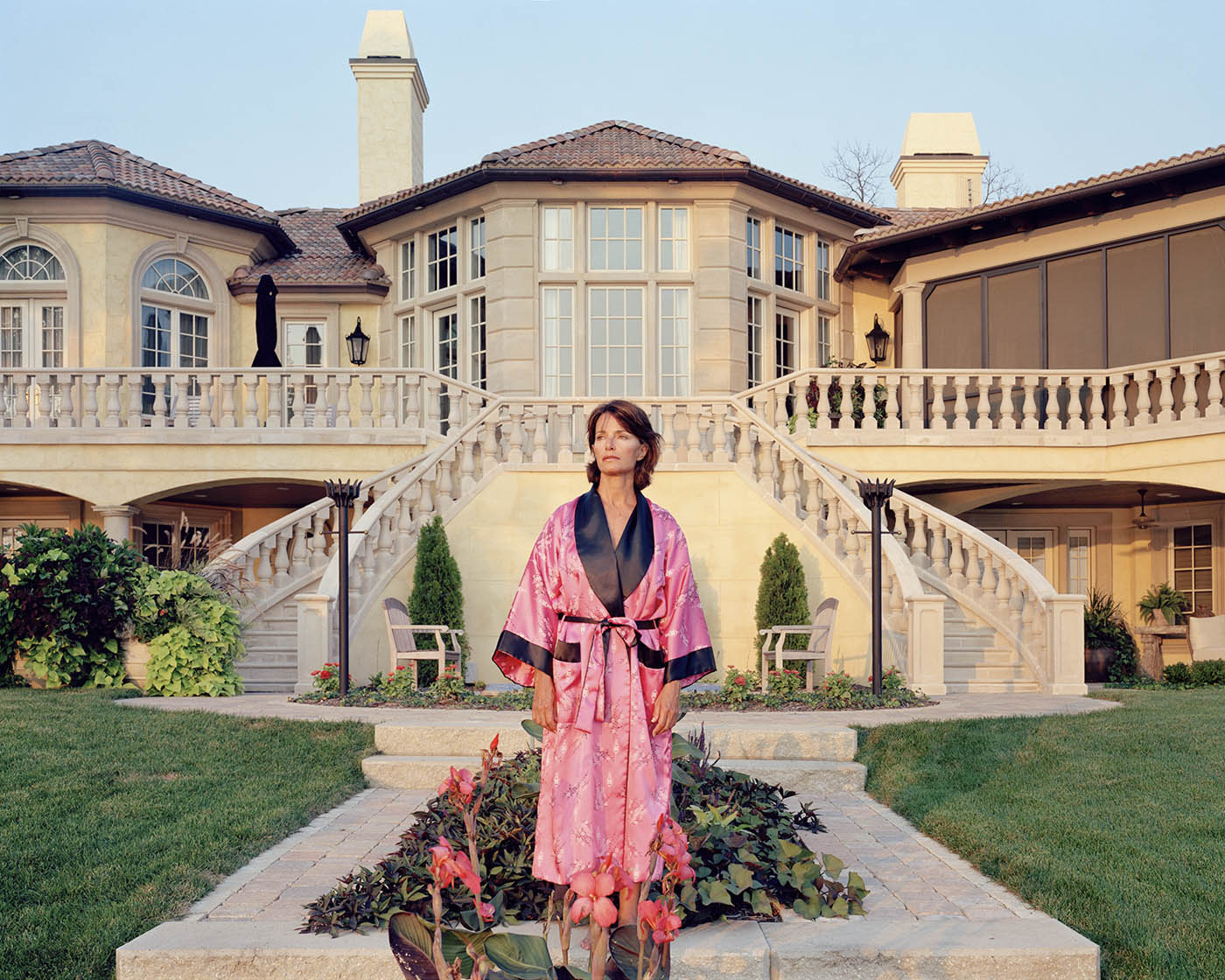
 

Angela Strassheim (American, b. 1969) 'Untitled (Elsa)' 2005


Angela Strassheim (American, b. 1969)
Untitled (Elsa)
2005
Left Behind series
Courtesy of the artist


Installation view of the exhibition 'Suburbia. Building the American Dream' at the Centre de Cultura Contemporània de Barcelona | CCCB showing the work of Gabriele Galimberti from the series 'The Ameriguns' with at top right, 'Joel, Lynne, Paige and Joshua (44, 43, 5 and 11 years old) – central Texas' 2021; and at bottom right, 'Eric Arnsberger (30) and Morgan Gagnier (22) – Lake Forest, California' 2021


Installation view of the exhibition Suburbia. Building the American Dream at the Centre de Cultura Contemporània de Barcelona | CCCB showing the work of Gabriele Galimberti from the series The Ameriguns with at top right, Joel, Lynne, Paige and Joshua (44, 43, 5 and 11 years old) – central Texas 2021; and at bottom right, Eric Arnsberger (30) and Morgan Gagnier (22) – Lake Forest, California 2021
© Alice Brazzit, CCCB, 2024
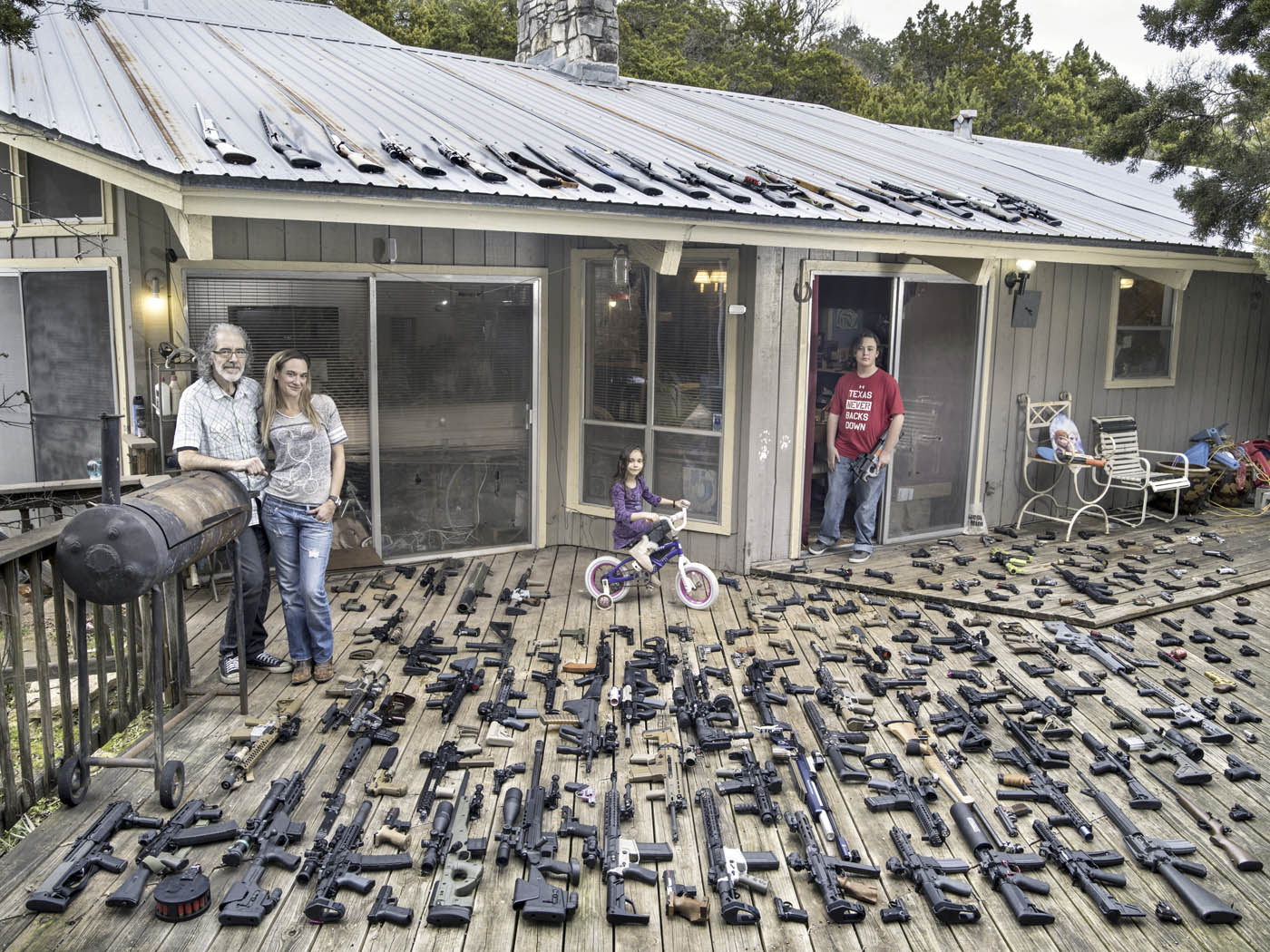
 

Gabriele Galimberti (Italian, b. 1977) 'Joel, Lynne, Paige and Joshua (44, 43, 5 and 11 years old) – central Texas' 2021


Gabriele Galimberti (Italian, b. 1977)
Joel, Lynne, Paige and Joshua (44, 43, 5 and 11 years old) – central Texas
2021
Digital printing
Courtesy of the artist
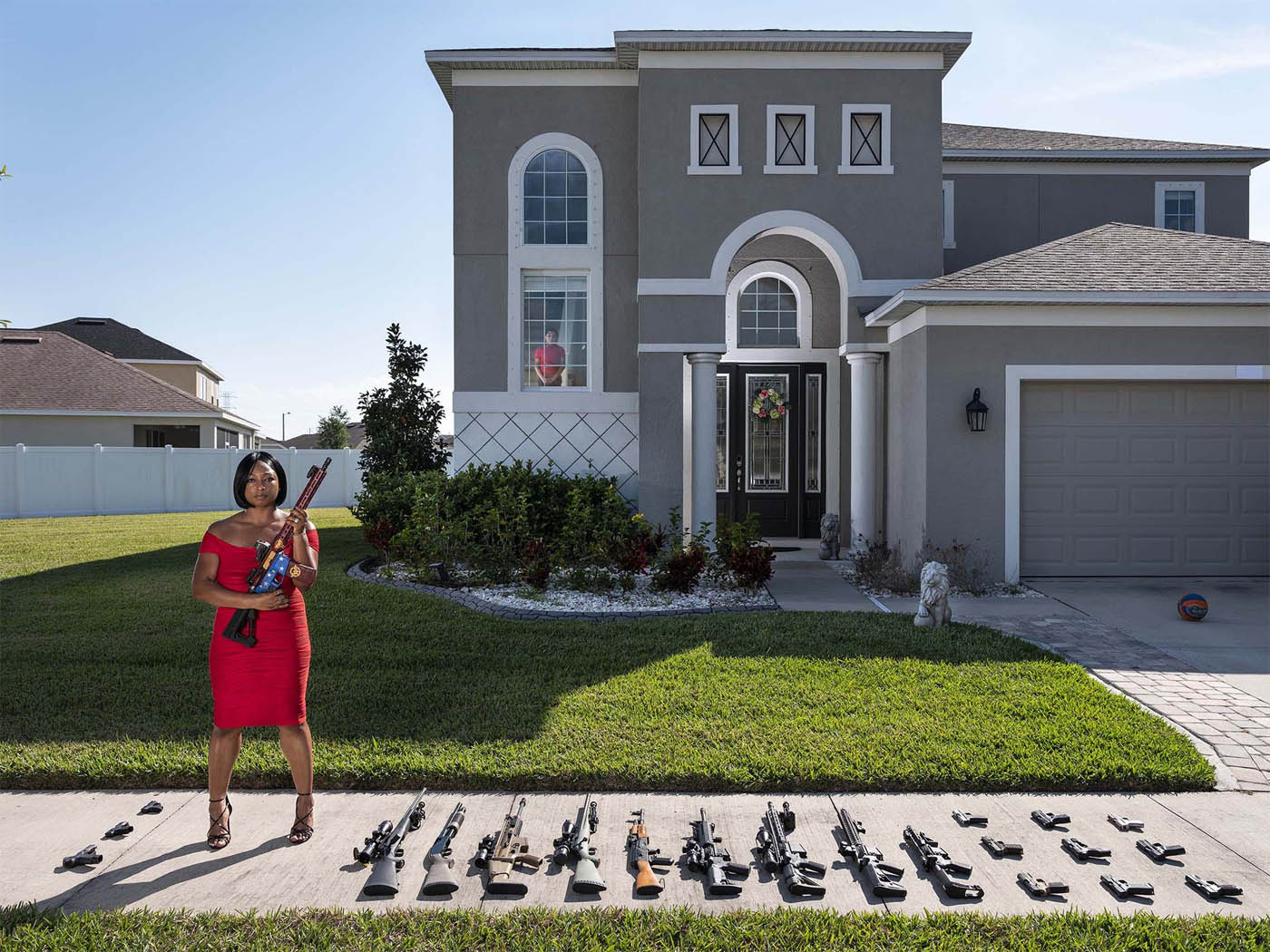
 

Gabriele Galimberti (Italian, b. 1977) 'Avery Skipalis (33) – Tampa, Florida' 2021


Gabriele Galimberti (Italian, b. 1977)
Avery Skipalis (33) – Tampa, Florida
2021
Digital printing
Courtesy of the artist


Avery Skipalis (33) stands with her firearms in front of her house in Tampa, Florida, USA. Her son looks on from a window. Avery joined the US Air Force when she was 17, and after serving in the UAE, Japan and Germany, left to start a company that offers firearms safety classes to adults and children.


Alberto Ortega (American born Spain, b. 1976) 'Annunciation' 2023


Alberto Ortega (American born Spain, b. 1976)
Annunciation
2023
Oil on aluminium panel
Courtesy of the artist


Alberto Ortega (Sevilla, Spain 1976) creates oil paintings made after miniature sets that he builds as references. The small-scale sets enable him to recreate suburban scenes using details that recall the 1950s. Since he’s able to control the angle and point of view, the lighting, the location of every element, much like a film director would do, his works have a strong cinematic feel.

As an immigrant to the United States, Alberto is intrigued by American suburban life as depicted in film, literature, and visual art. Through these images of American homes, buildings, and neighbourhoods, he portrays society and some of its contradictions. These scenes represent hopes and dreams, the threat of their failure, and alienation.

Text from the Alberto Ortega website
 

Kate Wagner (American, b. 1993) 'Observations from McMansion Hell' 2023


Kate Wagner (American, b. 1993)
Observations from McMansion Hell
2023
Digital print on palboard
Courtesy of the artist


McMansion Hell is a blog that humorously critiques McMansions, large suburban homes typically built from the 1980s to 2008 and known for their stylistic attempt to create the appearance of affluence using mass-produced architecture. The website is run by Kate Wagner, an architectural writer. …

The blog uses Wagner’s commentary atop images of the interiors and exteriors of McMansions, using arrows to note features she finds questionable or in poor taste. Besides critiquing the homes themselves, the website also criticises the perceived material culture of wastefulness McMansions can represent, gives anecdotes of situations when McMansions have been a poor financial investment, and provides other essays on urban planning and architectural history. The blog offers subscriptions with bonus content, generating sufficient funding for Wagner to work on the blog full-time.

Text from the Wikipedia website


Post-Suburbia?

The appearance of New Urbanism in the 1990s began to herald the inevitable death of Suburbia due to the announced depletion of oil that has not yet occurred. Meanwhile, Suburbia continues to spread, transform and diversify. Today, 8 out of 10 Americans live in sprawl and single-family homes, representing 75% of the residential areas where new generations continue to dream of living. This is a new suburbia that is more open but also more unequal.

This suburb is made up of very diverse communities, as captured by the cameras of the photographers Sheila Pree Bright (who portrays African American life around Atlanta) and Jessica Chou (who immortalises the Asian community in Monterrey Park, California). New lifestyles also proliferate there, like at Huntington Beach, a “contemporary suburb” and surfing capital featured in the works of artist and skateboarder Ed Templeton.

This section also focuses on the environmental impact of this highly polluting city model, through the apocalyptic bonsai of artist Thomas Doyle and the satellite photographs of Benjamin Grant, a lethal panorama of the effects of the sprawling city.
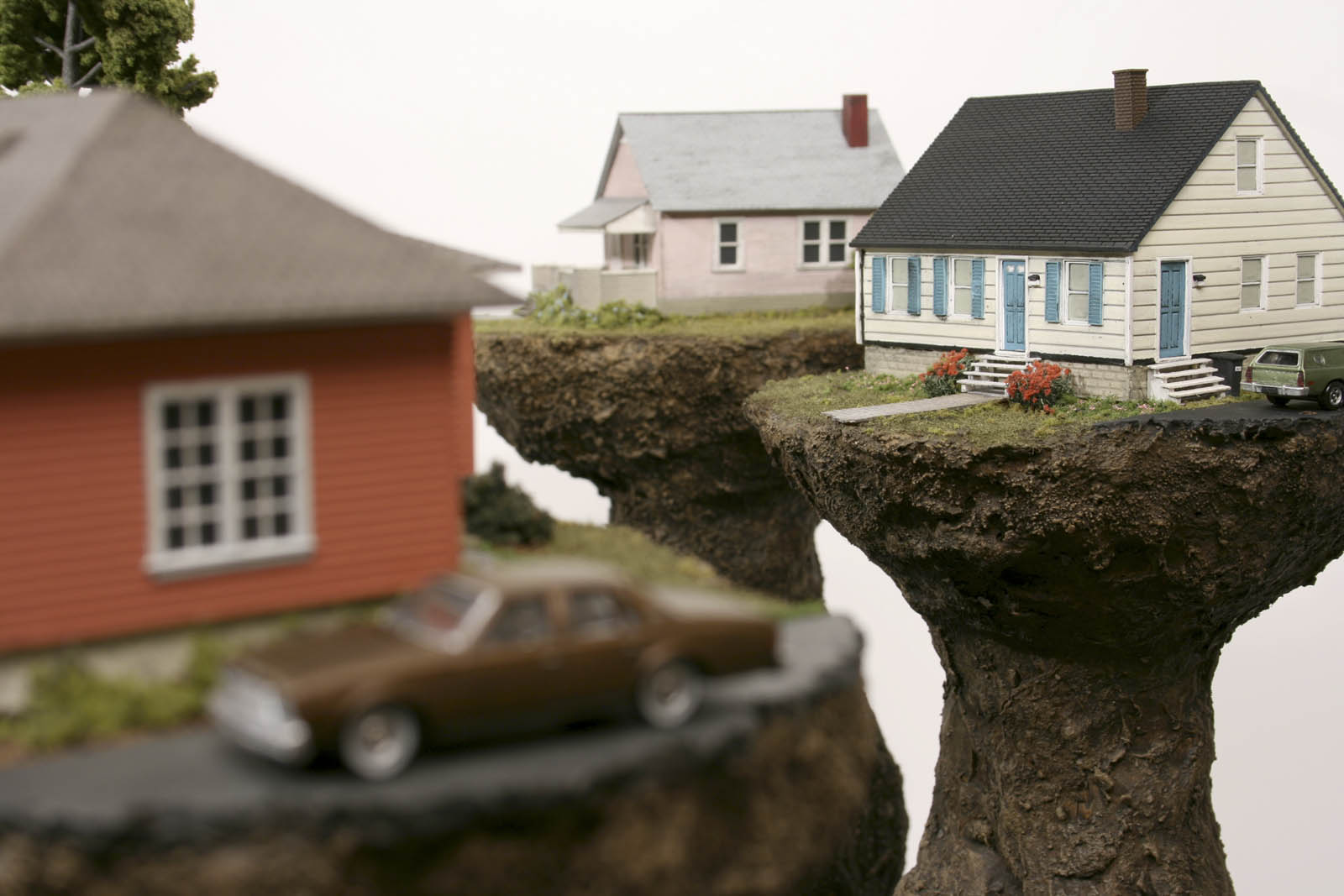
 

Thomas Doyle (American, b. 1976) 'Proxy (Haven Ln.)' 2012


Thomas Doyle (American, b. 1976)
Proxy (Haven Ln.)
2012
Mixed media
Courtesy of the artist


Thomas Doyle work mines the debris of memory through the creation of intricate worlds sculpted in 1:43 scale and smaller. Often sealed under glass, the works depict the remnants of things past – whether major, transformational experiences, or the quieter moments that resonate loudly throughout a life. In much the way the mind recalls events through the fog of time, the works distort reality through a warped and dreamlike lens.

Text from the Ronchini Gallery website


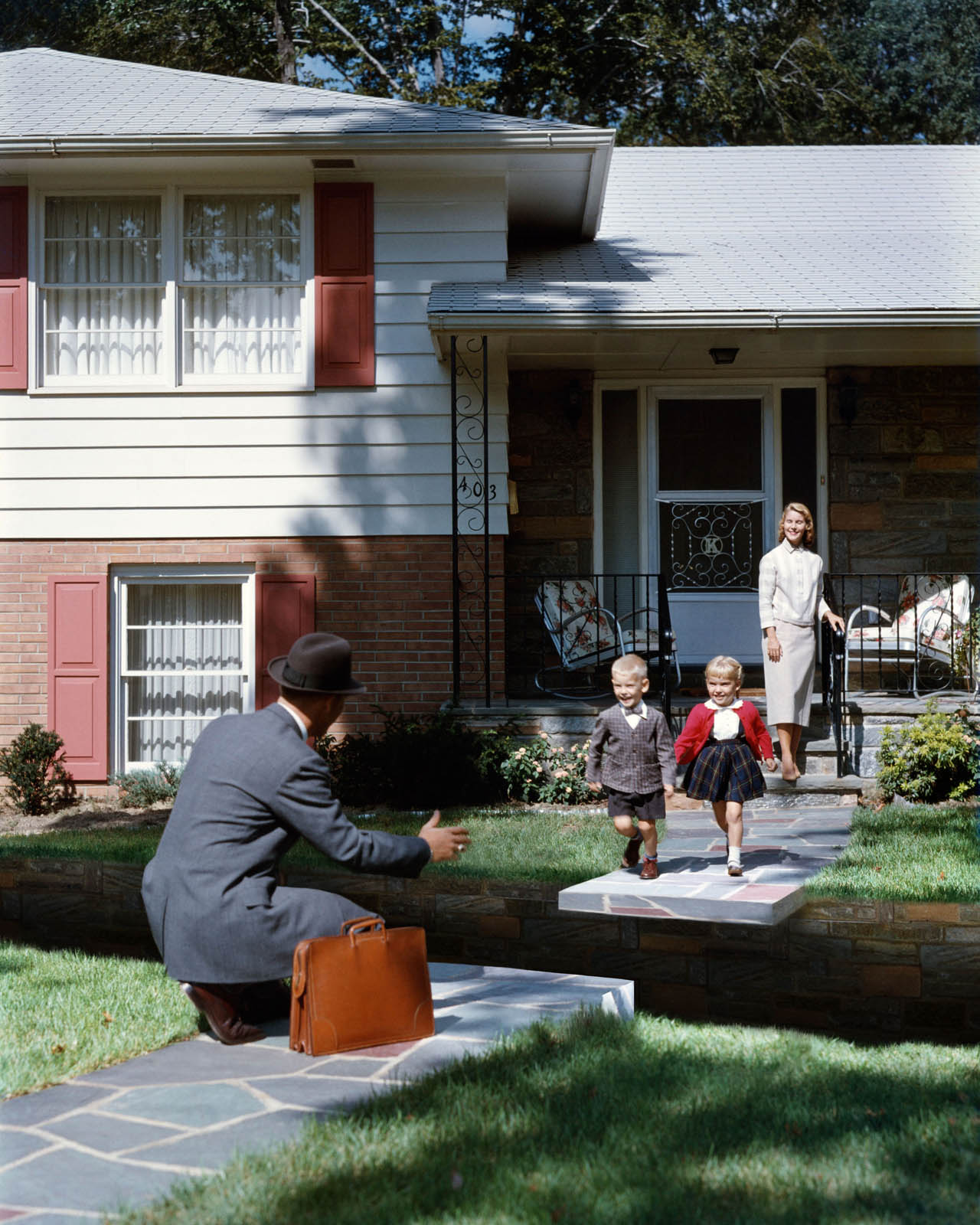
Weronika Gęsicka (Polish, b. 1984) 'Untitled #16' 2015-2017 From the series 'Traces'


Weronika Gęsicka (Polish, b. 1984)
Untitled #16
2015-2017
From the series Traces
Digital printing
Courtesy of the artist and Jednostka Gallery, Warsaw


For her series “Traces”, Polish artist Weronika Gęsicka searched through various online image databases for photographs from the 1940s to the 1960s that in her eyes reflect the American way of life at that time. Many of these scenes are full of clichés, showing happy-looking people in an apparently perfect world. The exact origin of the pictures is not verifiable. As a result, they are a mixture of advertisements and private photos. Gęsicka manipulates the idyllic scenes in a playful way by digitally distorting the images. In doing so, she does not follow a strict pattern, but instead decides intuitively what detail she finds fascinating and will edit. In this way, the rather stereotypical scenes of suburban American life are transformed into a humorous, but also uncomfortable reality. Covered faces, deformed bodies and peculiar superimpositions create a distorted version of the American dream. Gęsicka’s photos are characterised by a discomforting, almost oppressive mood that sometimes only reveals itself at second glance: young men at a tea dance, whose heads are submerged in the cleavages of their oversized female partners, family members hidden behind a curtain at the dinner table, or a father coming home from work, separated by a trench from his children, who are running towards him.

In “Traces”, Weronika Gęsicka questions how we perceive images. In doing so, she makes us aware that even the medium of photography, which allegedly reflects reality, is not objective. Each photograph merely satisfies a perception of what is happening and, in the photographer’s eye, remains a subjective likeness. By modifying the images, she is playing with the observer, who is initially confident that he can quickly classify and identify the scene – until he notices that nothing in these pictures is as it seems at first glance.

Anonymous. “Weronika Gęsicka: A Disconcerting Idyll,” on the Deutsche Börse Photography Foundation website Nd [Online] Cited 13/08/2024
 

Weronika Gęsicka (Polish, b. 1984) 'Untitled #52' 2015-2017 From the series 'Traces'


Weronika Gęsicka (Polish, b. 1984)
Untitled #52
2015-2017
From the series Traces
Digital printing
Courtesy of the artist and Jednostka Gallery, Warsaw
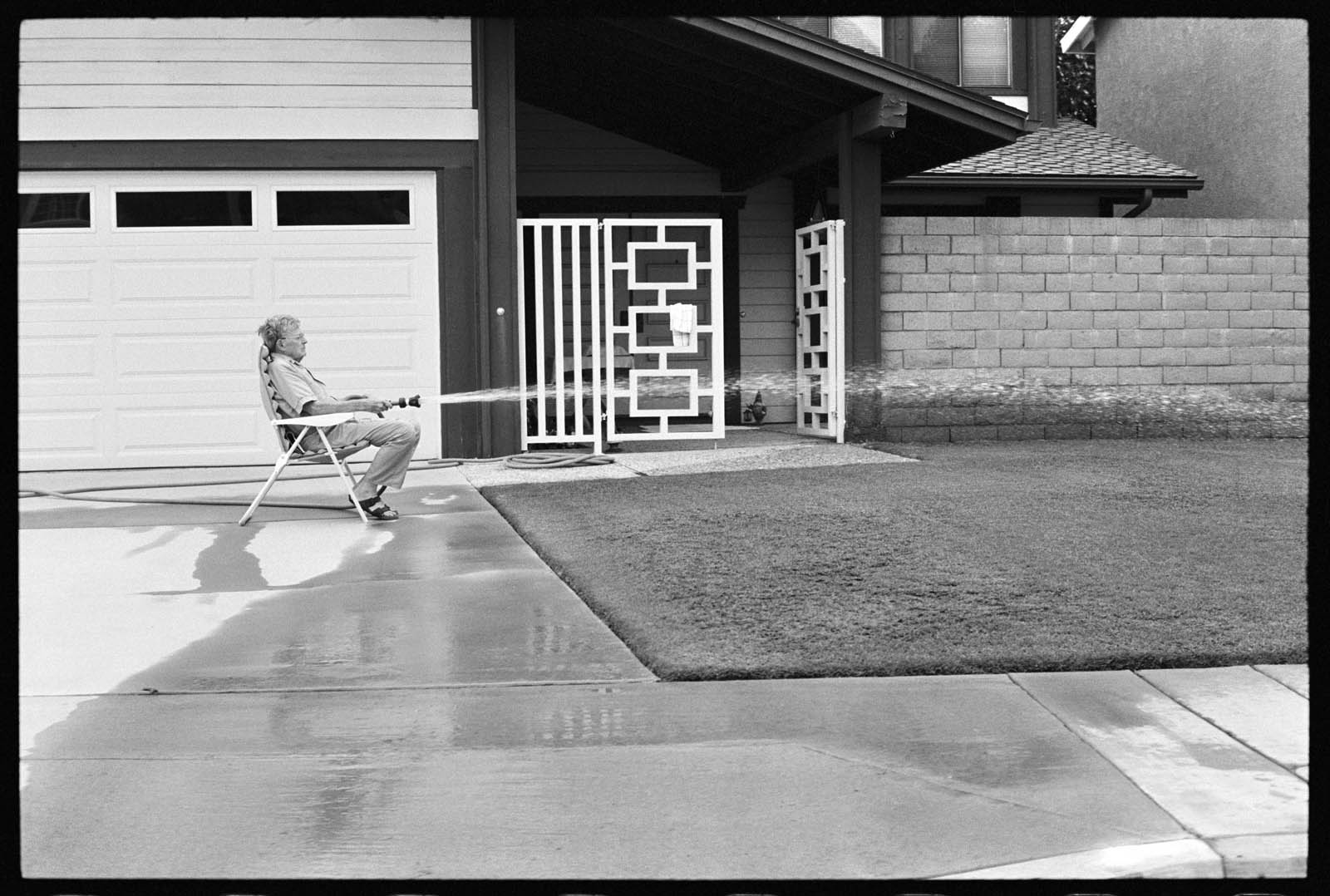
 

Ed Templeton (American, b. 1972) 'Contemporary Suburbium' 2017


Ed Templeton (American, b. 1972)
Contemporary Suburbium
2017
Digital printing on baryta paper
Courtesy of Roberts Projects, Los Angeles

 

Jessica Chou (American born Taiwan, b. 1985) 'The Mark Keppel High School Dance Team at the 2019 Miss Dance Drill Team USA National Dance Competition' 2019


Jessica Chou (American born Taiwan, b. 1985)
The Mark Keppel High School Dance Team at the 2019 Miss Dance Drill Team USA National Dance Competition
2019
Digital printing
Courtesy of the artist
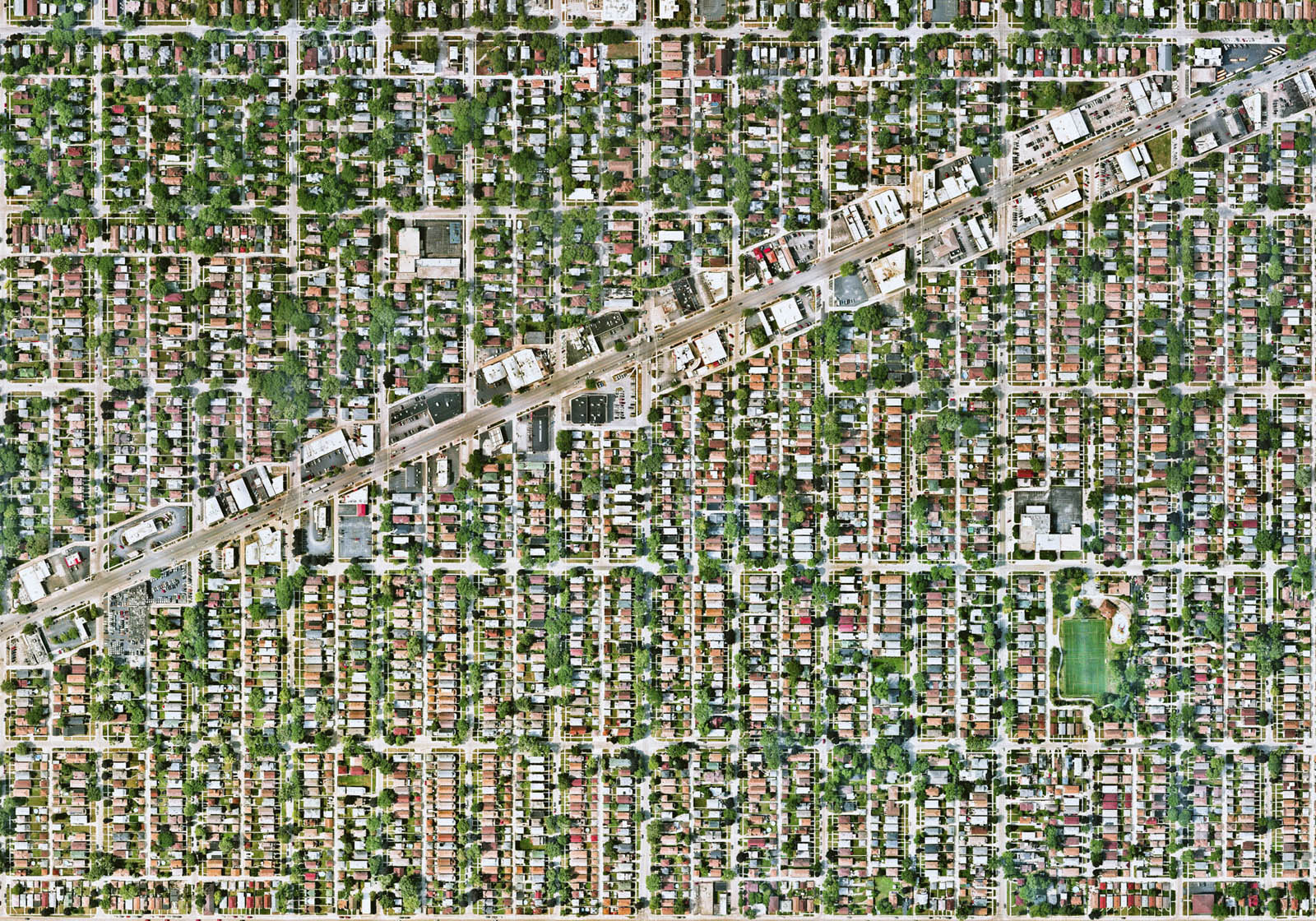
 

Benjamin Grant (American, b. 1984) 'Berwyn, Illinois' 2023


Benjamin Grant (American, b. 1984)
Berwyn, Illinois
2023
Digital printing
Images created by Overview, source images
© Nearmap


Overview takes its inspiration from Daily Overview – an Instagram account established by author Benjamin Grant. Since he began the project in December 2013, his daily posts have both delighted and challenged his audience from all corners of the globe. For Overview, Grant has curated and created more than 200 original images by stitching together numerous high-resolution satellite photographs. With each Overview, Grant aims to not only inspire a fresh perspective of our planet but also encourage a new understanding of what human impact looks like. He lives and rides his bike in New York City.

Text from the Penguin Books website
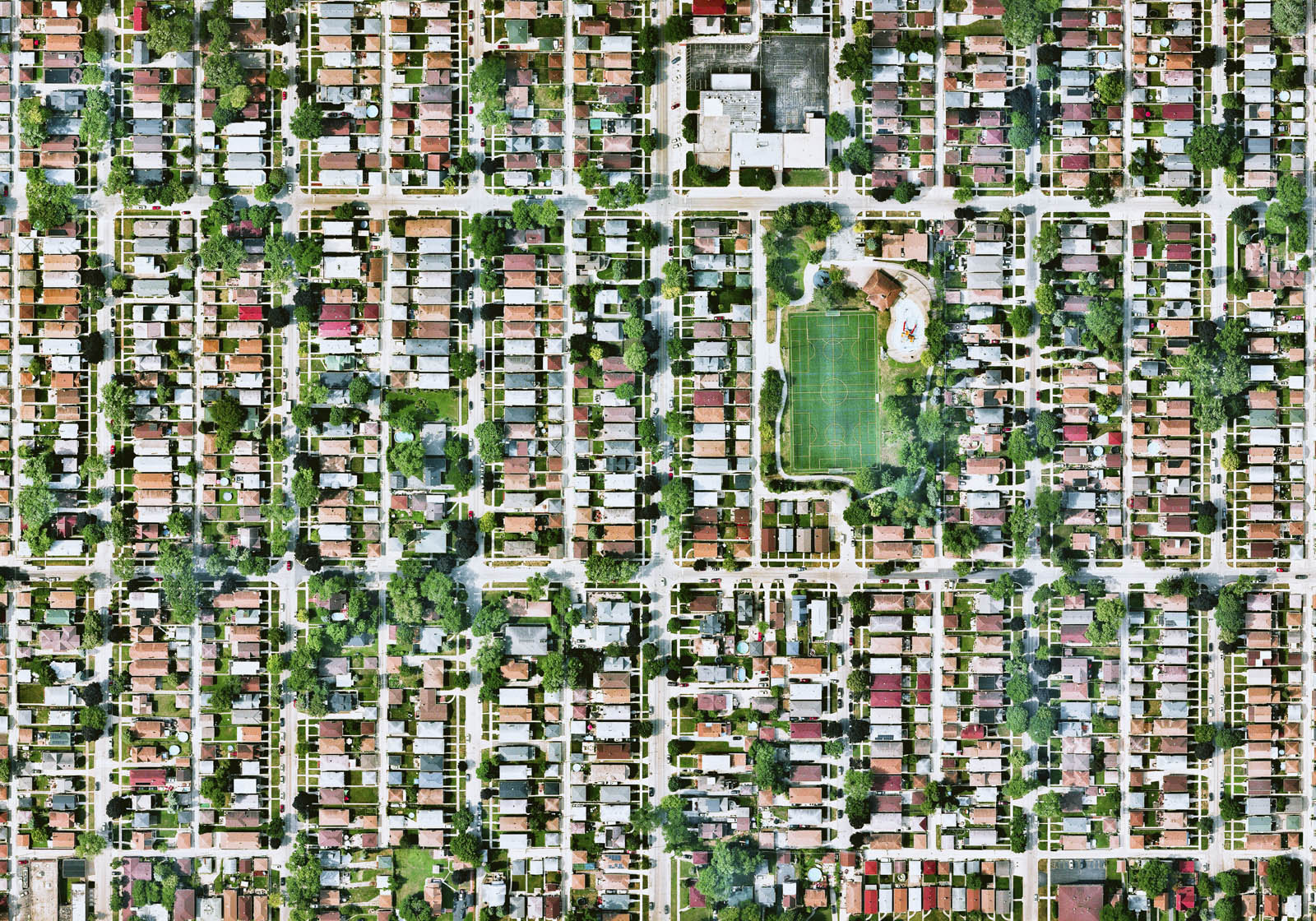
 

Benjamin Grant (American, b. 1984) 'Berwyn, Illinois' 2023 (detail)


Benjamin Grant (American, b. 1984)
Berwyn, Illinois (detail)
2023
Digital printing
Images created by Overview, source images
© Nearmap


Sprawl Reaches Our Shores

The formation of Suburbia as a cultural phenomenon in Catalonia is a reality historically ignored by narratives about the Catalan process of urbanisation, too focused on city growth and the ideological differentiation between an urban, Barcelona-based Catalonia and an “inner” Catalonia, the birthplace of what still today we call the “countryside”.

Suburban Catalonia shows how, in many territories, urban growth no longer corresponds to the well-known metaphor of city growth as an “oil stain”. In fact, an endless mass of oil stains has spread across the territory, giving rise to the same cloned reality everywhere: regional urban sprawl. The sprawl that is so commonplace today developed with the motorisation of society starting in the latter half of the 20th century as part and parcel of a very heterogeneous cultural discourse: the ideological propaganda of the American way of life mixed with local traditions derived from criticism of the built-up, crowded industrial city popularly disseminated in expressions such as “la caseta i l’hortet” (a little house and a garden) that idealised rural life. The path leading from those initial suburban choices to today’s regional urban sprawl is not a straight one, making the Catalan suburb a world yet to be discovered.

Christopher Willan has made a photographic reportage about the Catalan suburban world specially for the exhibition, which also includes Blanca Munt’s installation Mira-Sol Alert about the neighbourhood’s paranoid state of alert and an audiovisual piece by filmmaker León Siminiani that closes the exhibition.


Pere Torné Esquius (Spanish, 1879-1936) 'The rocking chair' 1913


Pere Torné Esquius (Spanish, 1879-1936)
The rocking chair (El balancí)
1913
Oil on canvas
National Art Museum of Catalonia, Barcelona


For different reasons, the singular work of the painter, illustrator and cartoonist Pere Torné Esquius (Barcelona 1879 – Flavancourt, France, 1936) doesn’t fit in with either the modernist proposals or the noucentista style (turn of the century), even though the latter considered him to be one of theirs.

Settled in Paris from 1905 onwards, although he would often return to Barcelona to regularly exhibit there, his work, of apparent simplicity, responded to a certain primitivism which was somewhat naive and with a strong French influence. His painting, highly singular, maintained pictorial and atmospheric values which provided the whole production with a sense of unity.

The favourite topics of Torné Esquius were interior or secluded spaces, such as gardens or living rooms, humble or of artisan extraction. It is worth highlighting, very often, the absence of the human figure and the main presence of inanimate elements that on occasions would cause a disturbing or even alarming effect. He also produced other genres such as landscapes or portraits.

Despite the fact that he was a painter, his professional work was based on illustration, focused on three main lines: children’s literature, the illustration of literary texts and the collaboration in magazines and periodical publications, often satirical, such as Papitu, Picarol or Le Rire, amongst others.

Anonymous. “Torné Esquius. Poetics of the Everyday,” on the Museu Nacional D’Art De Catalunya website 2017 [Online] Cited 13/08/2024


'XXIII Barcelona International Exhibition Fair, 1955. USA Pavilion. OITF: Office of International Trade Fair. Single-family house model: "house beautiful prefabricated"' 1955


XXIII Barcelona International Exhibition Fair, 1955. USA Pavilion. OITF: Office of International Trade Fair. Single-family house model: “house beautiful prefabricated”
1955
Historical Archive of the College of Architects of Catalonia
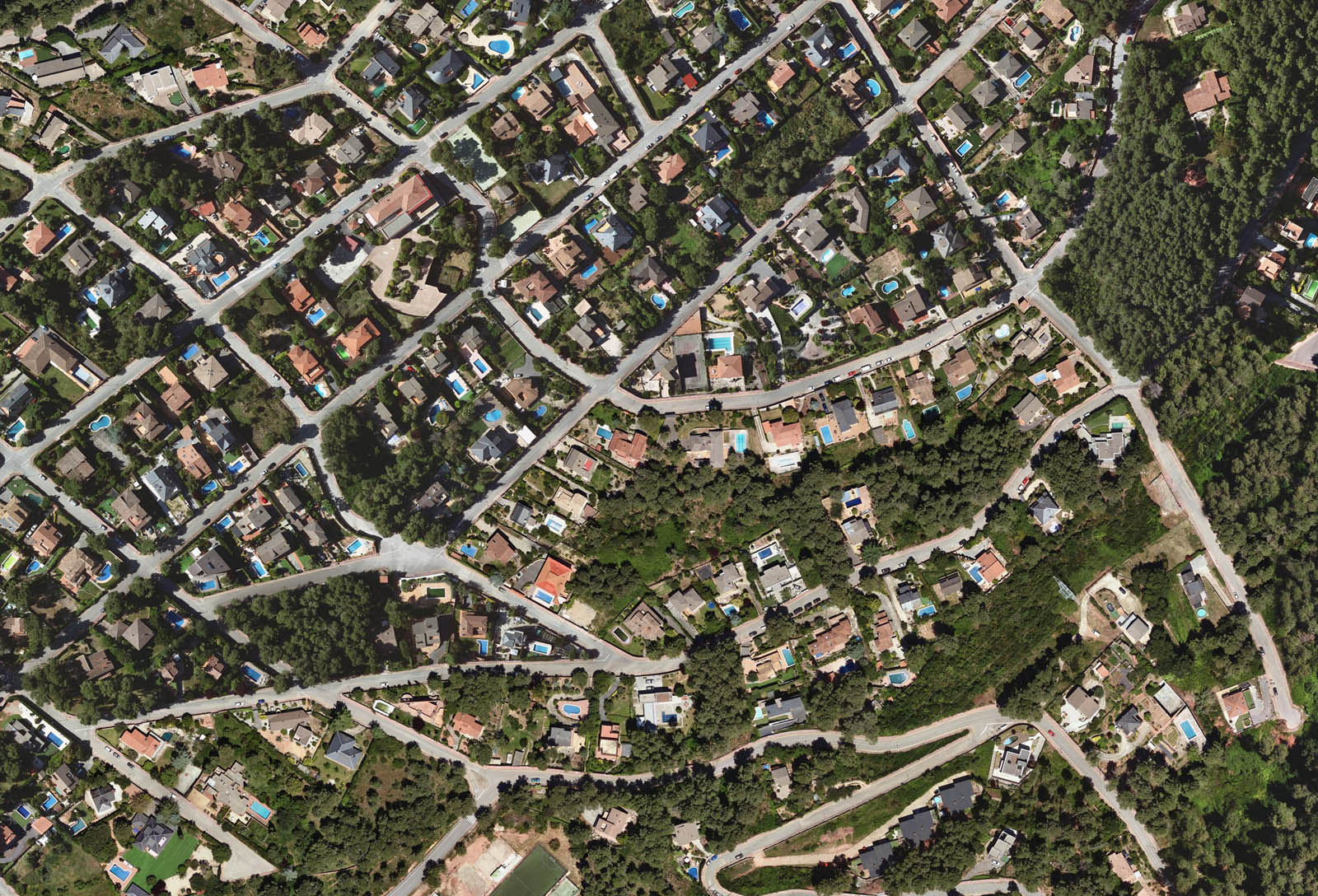
 

Barcelona Metropolitan Area. 'Orthophoto. Dispersed urbanisation in the municipality of Corbera de Llobregat' 2015


Barcelona Metropolitan Area
Orthophoto. Dispersed urbanisation in the municipality of Corbera de Llobregat
2015


Blanca Munt (Spanish, b. 1997) 'Mira-sol alert' 2023


Blanca Munt (Spanish, b. 1997)
Mira-sol alert
2023
Digital printing
Courtesy of the artist


In 2019, photographer Blanca Munt engaged in a neighbourhood chat group created to surveil her own neighbourhood and alert to any potential home burglaries or other suspicious activity. What is initially presented as an effective tool for the neighbours soon becomes a source of speculation, suspicion and paranoia. The seemingly quiet community life in a neighbourhood of well-lit streets and conventional homes founders due to the actual burglaries, but also due to the disintegration of the idea of community when personal security is at stake: mistrust, typically based on suspicious appearance or behaviour, now extends to any neighbours who fail to rigorously conform to the group’s purpose.

With a clean and sober design reminiscent of a real estate or security company brochure, the dispassionate pictures portrayed in Mira-sol Alert intertwine with the mental images stemming from an inflamed rhetoric, which gradually take shape as we learn the self-interested views of the different actors in this landscape – neighbours, suspects, police officers, local authorities – and which appeal strongly to our fears and contradictions. In her own words, Blanca Munt calls for a “reflection on the tension between the privilege of living in a peaceful place and the constant sense of lurking threat encouraged by our current culture of fear.”

Text from the Dalpine website
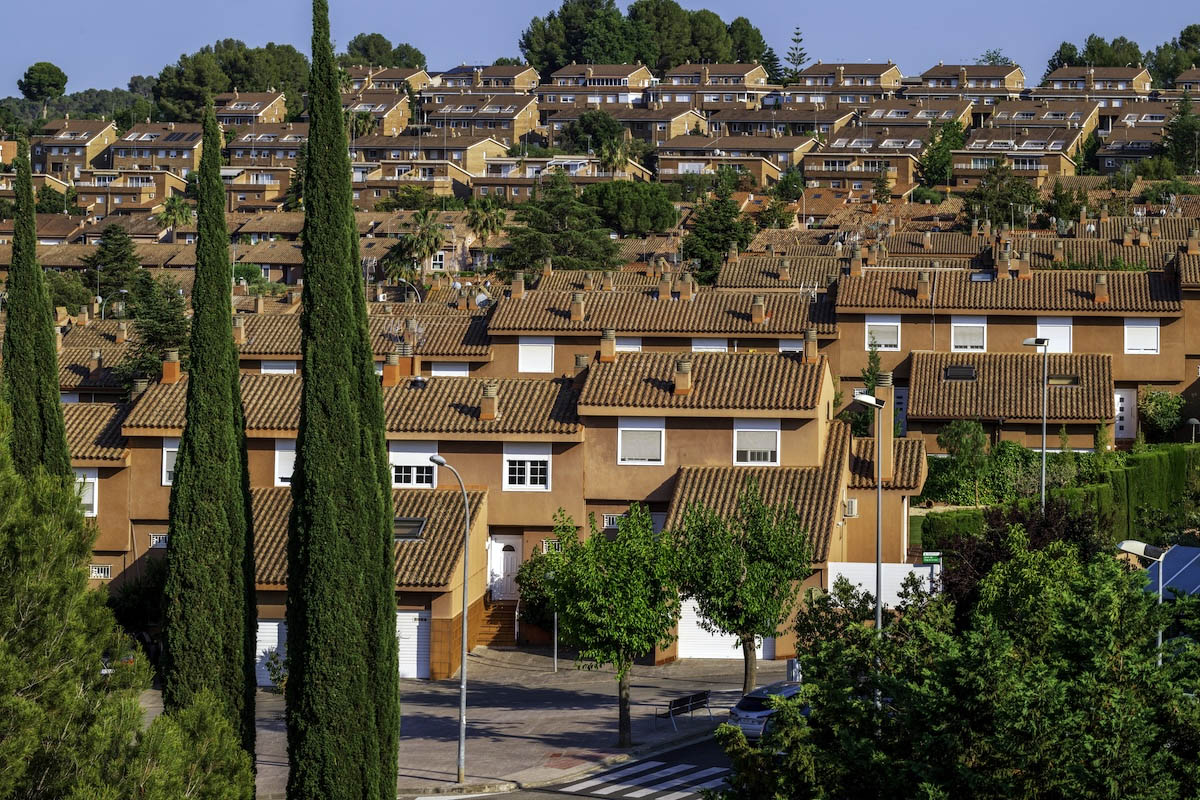
 

Christopher Willan (British lives Spain) 'Sant Quirze del Vallès' 2023


Christopher Willan (British lives Spain)
Sant Quirze del Vallès
2023
Digital printing
Courtesy of the artist
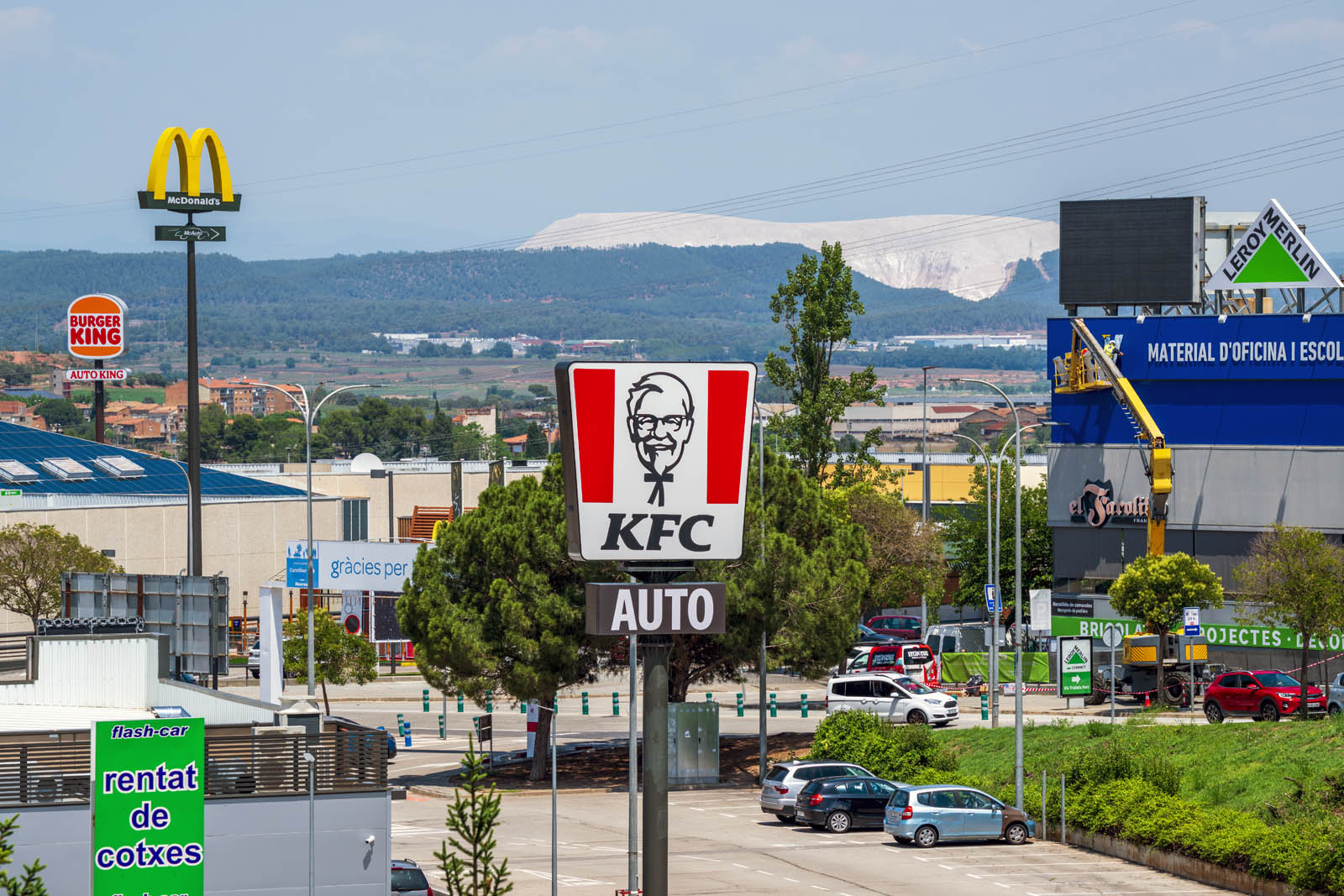
 

Christopher Willan (British lives Spain) 'Els Trullols Park-1' 2023


Christopher Willan (British lives Spain)
Els Trullols Park-1
2023
Digital printing
Courtesy of the artist


The Curators

Philipp Engel: Graduate in Modern Literature from the University of Toulouse, with a thesis on Bret Easton Ellis. After ten years in the music sales and distribution business, he started to work as a cultural journalist, specializing in cinema and literature. He is currently a contributor to various periodicals, such as Cultura(s), El Mundo, Cinemanía, Sofilm and Coolt.

Francesc Muñoz: Lecturer in Urban Geography, director of the Observatory of Urban Planning at the Universitat Autònoma de Barcelona, and professor at the Università IUAV di Venezia. He has received prizes such as the Prize for the Best Doctoral Thesis Attending to Human Values in Engineering (UPC, 2004) and the Bonaplata Award for the exhibition The Light Factory, about the power station in Sant Adrià de Besòs (2014). He has curated shows such as the commemorative exhibition of 30 years of democratic town councils, Local, Local! The City to Come (CCCB, 2010), and the exhibition Architectures on the Waterfront (Fundació Mies van der Rohe, 2019), and was a member of the Cerdà Year Advisory Board (2010).

Press release from the CCCB


Centre de Cultura Contemporània de Barcelona | CCCB
Montalegre, 5 – 08001 Barcelona
Phone: (+34) 933 064 100

Opening hours:
From Tuesday to Sunday and bank holidays 11.00 – 20.00
Closed Monday
Centre de Cultura Contemporània de Barcelona | CCCB website

LIKE ART BLART ON FACEBOOK

Back to top

Exhibition: ‘Stephen Shore’ at The Museum of Modern Art (MoMA), New York

Exhibition dates: 19th November, 2017 – 28th May, 2018

Stephen Shore is organised by Quentin Bajac, The Joel and Anne Ehrenkranz Chief Curator of Photography, with Kristen Gaylord, Beaumont and Nancy Newhall Curatorial Fellow, Department of Photography, MoMA.


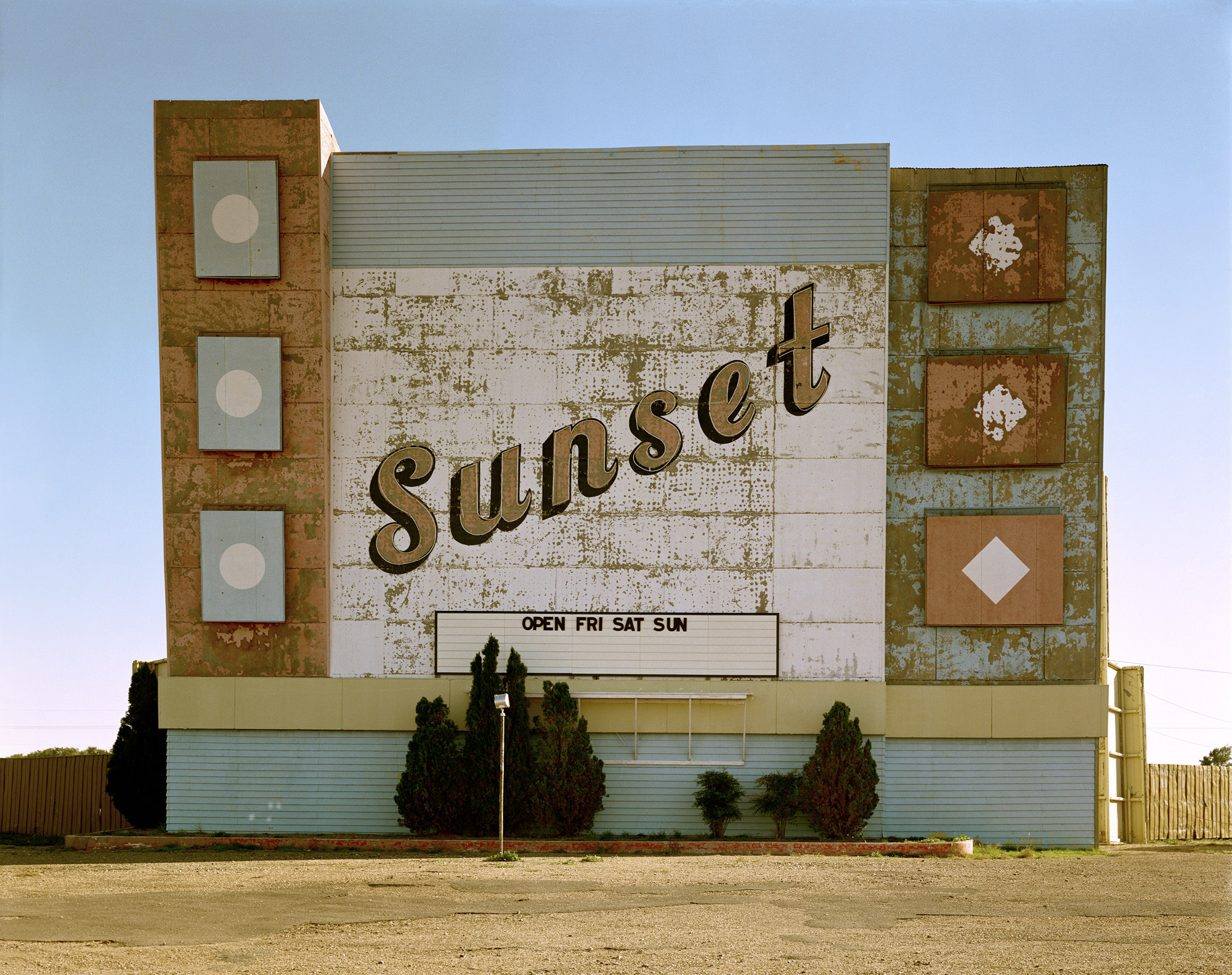
Stephen Shore (American, b. 1947) 'West 9th Avenue, Amarillo, Texas, October 2, 1974' from the exhibition 'Stephen Shore' at The Museum of Modern Art (MoMA), New York, Nov 2017 - May 2018


Stephen Shore (American, b. 1947)
West 9th Avenue, Amarillo, Texas, October 2, 1974
1974, printed 2013
Chromogenic colour print
17 × 21 3/4 in. (43.2 × 55.2cm)
The Museum of Modern Art, New York
Acquired through the generosity of an anonymous donor
© 2017 Stephen Shore


The truth in the detail of day-to-day life

1970s colour photography is the key period in the work of Stephen Shore. These classical, formal colour photographs capture “mundane aspects of American popular culture in straightforward, unglamorous images.” They are what made him famous. They are, historically, conceptually and emotionally, his most effective means of communication as an artist.

American Surfaces and Uncommon Places made Shore “one of the most prominent figures of the American New Color movement,” showing colour just as colour.

I know that is a strange thing to say, but Shore was showing the world in a different light… and he was using an aesthetic based on the straight forward use of colour. Colour is just there, part of the form of the image. Of course there are insightful subjective judgements about what to photograph in American surburbia, but this subjectivity and the use of colour within it is subsumed into the song that Shore was composing. It all comes back to music. Here’s a Mozart tune, this is his aesthetic, for eternity.

I remember seeing two vintage Stephen Shore chromogenic colour prints from 1976 where the colours were still true and had not faded in the exhibition American Dreams: 20th century photography from George Eastman House at Bendigo Art Gallery. This was incredible experience – seeing vintage prints from one of the masters of colour photography; noticing that they are not full of contrast like a lot of today’s colour photographs – more like a subtle Panavision or Technicolor film from the early 1960s. Rich, subtle, beautiful hues with the photograph containing this amazing presence, projected through the construction of the image and the physicality of the print.

Shore has a fantastic eye and his colour photographs are beautifully resolved. The subjectivity is not pushed, because his song was in tune, and he just sang it. Like his contemporaries, Wiliam EgglestonRichard Misrach and Joel Meyerwitz, there are some artists who just know how to play the tune.
Dr Marcus Bunyan


Many thankx to MoMA for allowing me to publish the photographs in posting. Please click on the photographs for a larger version of the image.


Stephen Shore encompasses the entirety of the artist’s work of the last five decades, during which he has conducted a continual, restless interrogation of image making, from the gelatin silver prints he made as a teenager to his current engagement with digital platforms. One of the most significant photographers of our time, Stephen Shore (American, b. 1947) has often been considered alongside other artists who rose to prominence in the 1970s by capturing the mundane aspects of American popular culture in straightforward, unglamorous images. But Shore has worked with many forms of photography, switching from cheap automatic cameras to large-format cameras in the 1970s, pioneering the use of colour before returning to black and white in the 1990s, and in the 2000s taking up the opportunities of digital photography, digital printing, and social media.

The artist’s first survey in New York to include his entire career, this exhibition will both allow for a fuller understanding of Shore’s work, and demonstrate his singular vision – defined by an interest in daily life, a taste for serial and often systematic approaches, a strong intellectual underpinning, a restrained style, sly humour, and visual casualness – and uncompromising pursuit of photography’s possibilities.


Stephen Shore | MoMA LIVE

Join us for a conversation with MoMA Chief Curator of Photography Quentin Bajac and artist Stephen Shore on the opening of the exhibition, “Stephen Shore,” moderated by MoMA Senior Deputy Director of Curatorial Affairs, Peter Reed.

One of the most significant photographers of our time, Stephen Shore has often been considered alongside other artists who rose to prominence in the 1970s by capturing the mundane aspects of American popular culture in straightforward, unglamorous images. But Shore has worked with many forms of photography, and this exhibition encompasses the entirety of the artist’s work of the last five decades, during which he has conducted a continual, restless interrogation of image making, from the gelatin silver prints he made as a teenager to his current engagement with digital platforms.


Stephen Shore (American, b. 1947) 'New York, New York' 1964 from the exhibition 'Stephen Shore' at The Museum of Modern Art (MoMA), New York, Nov 2017 - May 2018


Stephen Shore (American, b. 1947)
New York, New York
1964
Gelatin silver print
9 1/8 × 13 1/2 in. (23.2 × 34.3cm)
Courtesy the artist
© 2017 Stephen Shore


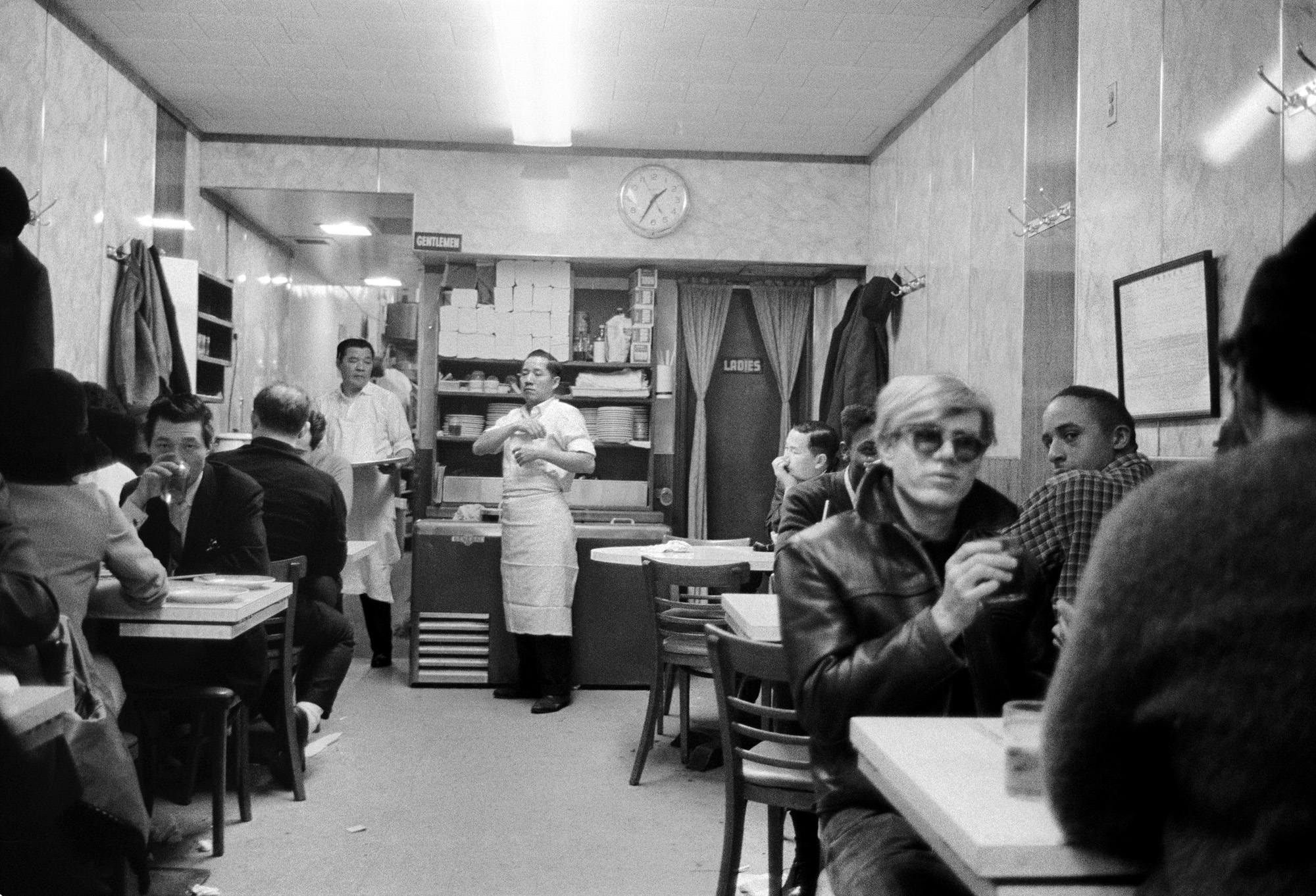
Stephen Shore (American, b. 1947) '1:35 a.m., in Chinatown Restaurant, New York, New York' 1965-1967


Stephen Shore (American, b. 1947)
1:35 a.m., in Chinatown Restaurant, New York, New York
1965-1967, printed c. 1995
Gelatin silver print
9 × 13 1/2 in. (22.9 × 34.3cm)
Courtesy the artist
© 2017 Stephen Shore


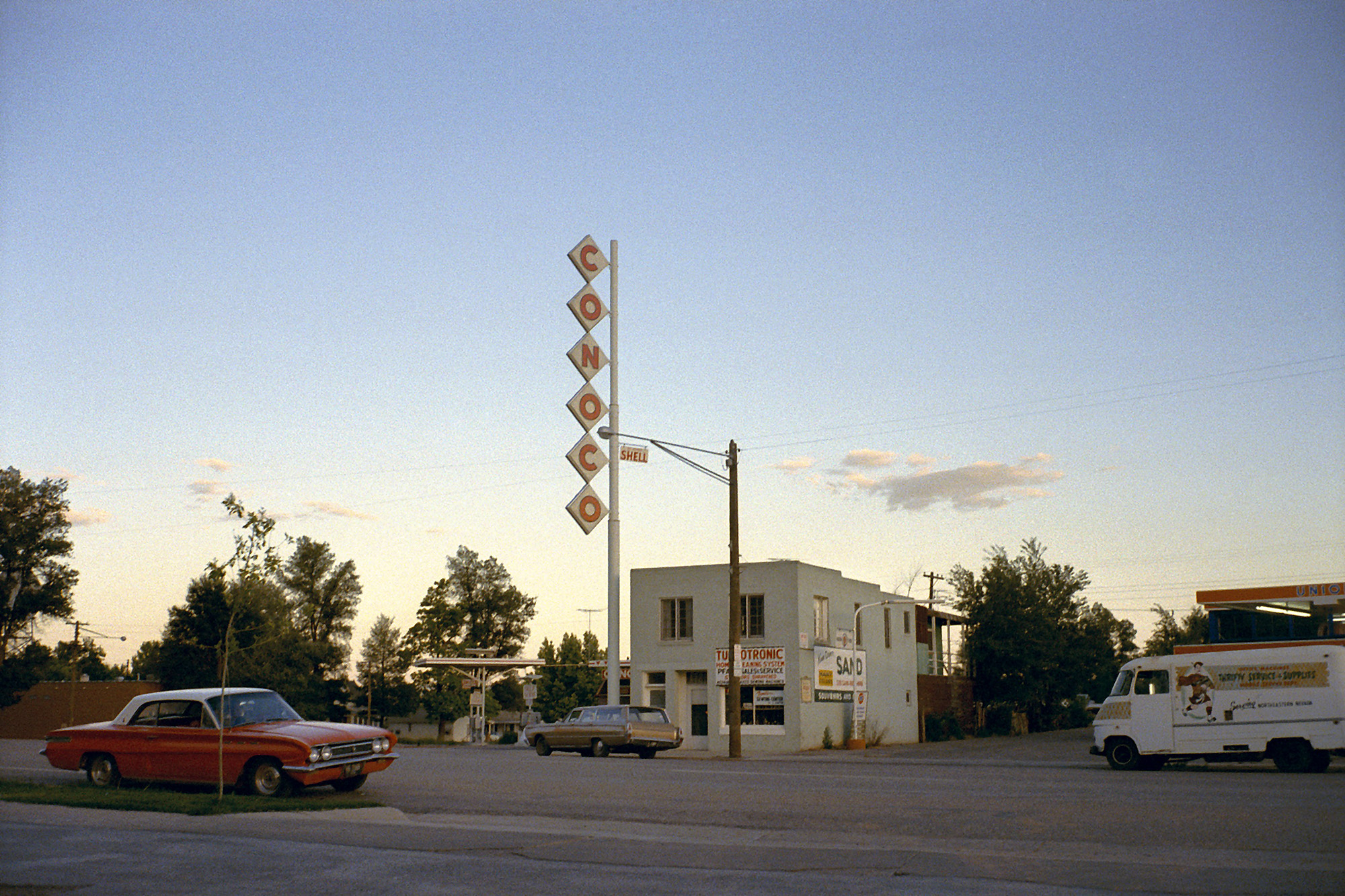
Stephen Shore (American, b. 1947) 'Kanab, Utah, June 1972'


Stephen Shore (American, b. 1947)
Kanab, Utah, June 1972
1972, printed 2017
Chromogenic colour print
3 1/16 × 4 5/8 in. (7.8 × 11.7cm)
Courtesy the artist
© 2017 Stephen Shore


Stephen Shore (American, b. 1947) 'Amarillo, Texas, July 1972'


Stephen Shore (American, b. 1947)
Amarillo, Texas, July 1972
1972, printed 2017
Chromogenic colour print
3 1/16 × 4 5/8 in. (7.8 × 11.7cm)
Courtesy the artist
© 2017 Stephen Shore


Stephen Shore (American, b. 1947) 'Washington, D.C., November 1972'


Stephen Shore (American, b. 1947)
Washington, D.C., November 1972
1972, printed 2017
Chromogenic colour print
3 1/16 × 4 5/8 in. (7.8 × 11.7cm)
Courtesy the artist
© 2017 Stephen Shore


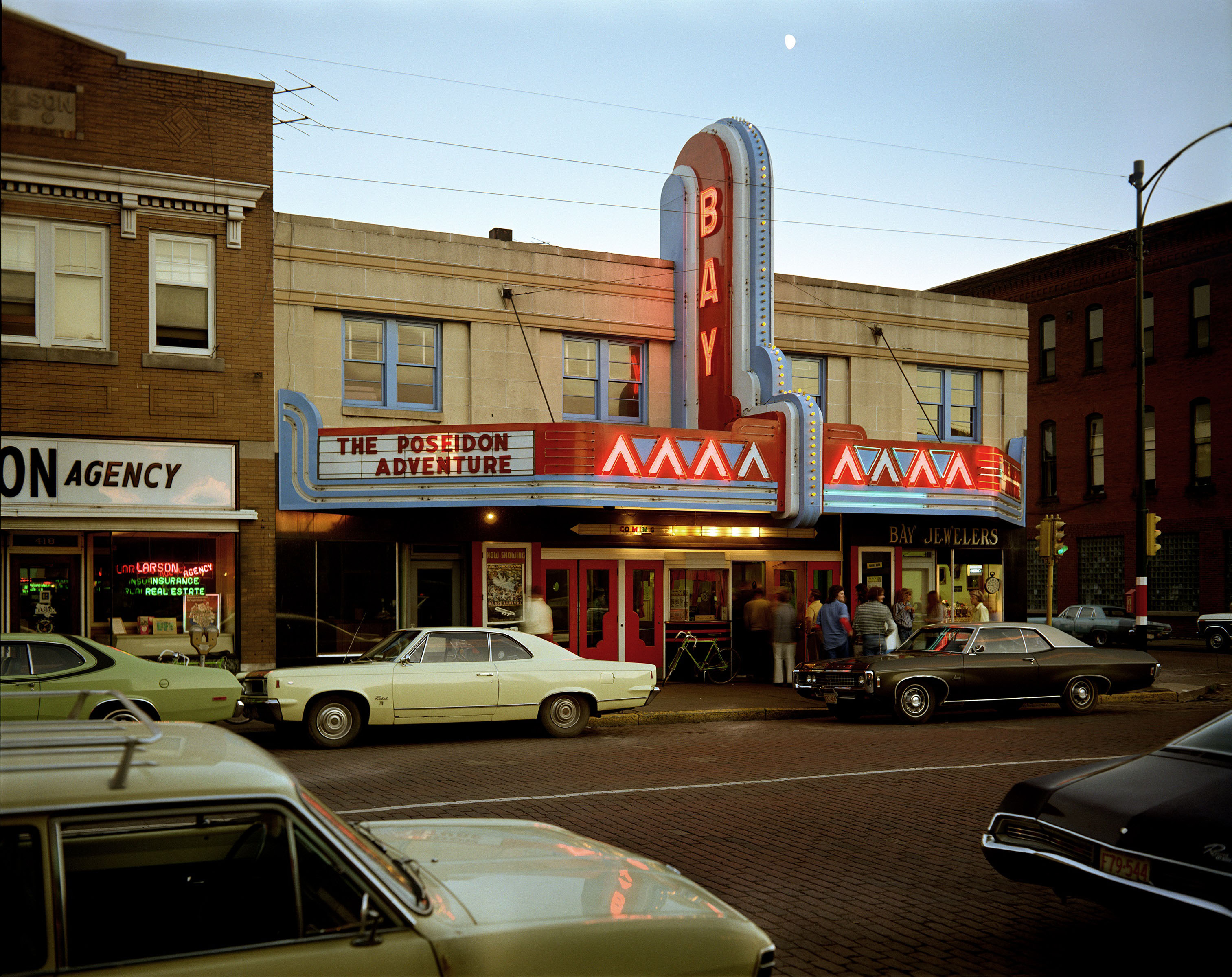
Stephen Shore (American, b. 1947) 'Second Street, Ashland, Wisconsin, July 9, 1973'


Stephen Shore (American, b. 1947)
Second Street, Ashland, Wisconsin, July 9, 1973
1973, printed 2017
Chromogenic colour print
17 × 21 3/4 in. (43.2 × 55.2cm)
Courtesy the artist
© 2017 Stephen Shore


Stephen Shore (American, b. 1947) 'U.S. 97, South of Klamath Falls, Oregon, July 21, 1973'


Stephen Shore (American, b. 1947)
U.S. 97, South of Klamath Falls, Oregon, July 21, 1973
1973, printed 2002
Chromogenic colour print
17 3/4 x 21 15/16 in. (45.1 x 55.7cm)
The Museum of Modern Art, New York. The Photography Council Fund
© 2017 Stephen Shore


Stephen Shore (American, b. 1947) 'Breakfast, Trail's End Restaurant, Kanab, Utah, August 10, 1973'


Stephen Shore (American, b. 1947)
Breakfast, Trail’s End Restaurant, Kanab, Utah, August 10, 1973
1973
Chromogenic colour print
16 7/8 × 21 1/4 in. (42.8 × 54cm)
The Museum of Modern Art, New York. Purchase
© 2017 Stephen Shore


Stephen Shore (American, b. 1947) 'West Third Street, Parkersburg, West Virginia, May 16, 1974'


Stephen Shore (American, b. 1947)
West Third Street, Parkersburg, West Virginia, May 16, 1974
1974
Chromogenic colour print
8 × 10 1/2 in. (20.3 × 26.7cm)
Courtesy the artist
© 2017 Stephen Shore


Stephen Shore (American, b. 1947) 'Lookout Hotel, Ogunquit, Maine, July 16, 1974'


Stephen Shore (American, b. 1947)
Lookout Hotel, Ogunquit, Maine, July 16, 1974
1974, printed 2013
Chromogenic colour print
17 × 21 3/4 in. (43.2 × 55.2cm)
The Museum of Modern Art, New York
Acquired through the generosity of an anonymous donor
© 2017 Stephen Shore


The Museum of Modern Art presents the most comprehensive exhibition ever organised of photographer Stephen Shore’s work, on view from November 19, 2017, until May 28, 2018. The exhibition tracks the artist’s work chronologically, from the gelatin silver prints he made as a teenager to his current work with digital platforms. Stephen Shore establishes the artist’s full oeuvre in the context of his time – from his days at Andy Warhol’s Factory through the rise of American colour photography and the transition to large-scale digital photography – and argues for his singular vision and uncompromising pursuit of photography’s possibilities. The exhibition will include hundreds of photographic works along with additional materials including books, ephemera, and objects. Stephen Shore is organised by Quentin Bajac, The Joel and Anne Ehrenkranz Chief Curator of Photography, with Kristen Gaylord, Beaumont and Nancy Newhall Curatorial Fellow, Department of Photography, MoMA.

Born in 1947, Shore spearheaded the New Color Photography movement in the United States in the 1970s, and became a major catalyst in the renewal of documentary photography in the late 1990s, both in the US and Europe, blending the tradition of American photographers such as Walker Evans with influences from various artistic movements, including Pop, Conceptualism, and even Photo-Realism. Shore’s images seem to achieve perfect neutrality, in both subject matter and approach. His approach cannot be reduced to a style but is best summed up with a few principles from which he has seldom deviated: the search for maximum clarity, the absence of retouching and reframing, and respect for natural light. Above all, he exercises discipline, limiting his shots as much as possible – one shot of a subject, and very little editing afterward.

Shore started developing negatives from his parents when he was only six, received his first camera when he was nine, and sold prints to Edward Steichen, then director of MoMA’s Department of Photography, at the age of 14. In the early 1960s Shore became interested in film, both narrative and experimental, and he showed his short film Elevator in 1965 at the Film-Makers’ Cinematheque, where he first met Andy Warhol. That spring, he dropped out of high school and started photographing at Warhol’s studio, The Factory, initially on an almost daily basis, then more sporadically, until 1967. Elevator has been restored by conservators and will be screened in the exhibition for the first time since the 1960s.

In 1969, Shore used serial black-and-white projects to deconstruct the medium and rebuild it on a more detached, intellectual foundation. In these works, many shot in Amarillo, Texas, with his friend Michael Marsh as his main model, Shore was striving to free himself from certain photographic conventions: the concept of photography as the art of creating isolated and “significant” images, and the related cult of the “decisive moment”; perfect framing; and the expressive subjectivity of the photographer. The principle of multiplicity prevails in Shore’s work of that period – series, suites, and sequences that resist all narrative temptation. In their attempt to eliminate subjectivity, these series are related to a number of Conceptual photographic works by other artists of the same period.

In November 1971 Shore curated an exhibition called All the Meat You Can Eat at the 98 Greene Street Loft. Embracing a century of photography, the show was composed largely of found images collected by Shore and two friends, Weston Naef, then a curator at The Metropolitan Museum of Art, and Michael Marsh. It also included images by Shore, such as shots taken with a Mick-a-Matic camera and colour photos that would serve as the basis for the postcards in his series Greetings from Amarillo, “Tall in Texas.” Stephen Shore will include a reconstructed version of this display, using material from Shore’s archives – some that was originally in the exhibition and some that has been selected by Shore for this installation.

In the early 1970s Shore turned to colour photography, a format that at that time was still largely overlooked by art photographers. In March 1972, he started taking snapshots of his daily life, embarking in June and July of the same year on a road trip to the southern US. For two months he photographed his everyday life in an almost systematic way – unremarkable buildings, main streets, highway intersections, hotel rooms, television screens, people’s faces, toilet seats, unmade beds, a variety of ornamental details, plates of food, shop windows, inscriptions, and commercial signs. In September and October 1972, images from the series were shown at Light Gallery in New York under the title American Surfaces. The MoMA display of this work echoes that initial presentation, in which the small Kodacolor prints were attached directly to the wall, unframed, in a grid of three rows.

Begun in 1973 and completed almost 10 years later, Shore’s next project, Uncommon Places, inhabits the same world and deals with the same themes as American Surfaces. Yet because of Shore’s move from a handheld 35mm camera to a large-format one, Uncommon Places features fewer details and close-ups and a more detached approach. Appearing in the context of accelerated change in the national landscape, especially in areas of suburban sprawl, it betrays a more contemplative reading of individual images. Before being published as a book in 1982, the series was exhibited both in the US and abroad, especially in Germany, making Shore one of the most prominent figures of the American New Color movement. Though he is best known for his large-format work of this period, Shore was at the same time experimenting with other photographic formats. The exhibition will include a selection of stereo images he made in 1974 that were never published, and have not been exhibited since 1975.

While working on what would become Uncommon Places, Shore began to accept photographic commissions, not only for editorial work but also for institutions and companies. If some of these commissions seem quite distant from Uncommon Places, most of them still show some affinity with the series in their attention to architecture and exploration of “Americanness.” He took photographs focusing on contemporary vernacular architecture that the architects Robert Venturi and Denise Scott Brown used in their 1976 exhibition Signs of Life: Symbols in the American City. This exhibition will feature some of the original, gridded transparencies from Signs of Life that incorporate images by Shore and other photographers, not seen since 1976. Finally, some commissions he did for magazines alternate between urban landscapes, portraits, and architectural details in a direct extension of Uncommon Places. Shore would include a number of commissioned photographs in his personal body of work, showing how porous the borders were between the two groups of images, and Stephen Shore will include examples both of the photographs in context in books and periodicals, and of others that were not subsequently published.

Starting in the late 1970s, Shore gradually abandoned urban and suburban areas and turned to the natural landscape, a subject he would concentrate on almost exclusively during the next decade. These included the landscapes of Montana (1982-1983), where he settled with his wife in 1980, Texas (1983-1988), and the Hudson Valley (1984-1986), where he moved in 1982, but also more international locations: the Highlands of Scotland (1988); Yucatán, in Mexico (1990); and finally the Po Valley, with a series in Luzzara, Italy (1993). This period corresponds also to a reduced public visibility of his photographic work, marked by fewer exhibitions, publications, and commissions.

In the early 2000s Shore began experimenting with digital tools and technologies that had only recently become available. Between 2003 and 2010, he made dozens of print-on-demand books, which were each printed in limited editions of 20 copies, making them similar to artist’s books. But the ease of production, speed of execution, democratic nature of the technique used, and modesty of the finished product are in direct line with the snapshots of American Surfaces and the immediacy of Polaroid images. In the choice of subjects and approaches, the series of books seems both literally and figuratively to be a mini-version of Shore’s entire oeuvre, blending and reworking the themes that have always been important to him – an exhaustive exploration of a particular subject or place, a penchant for the vernacular, an interest in sequence, a tendency toward autobiography, a search for a kind of immediacy, and a dry sense of humour – while still retaining its autonomy and specificity. A few years later he created Winslow, Arizona in a single day in 2013. The precise temporal duration of the series – one day from sunrise to sunset – links it to some of Shore’s print-on-demand books, but it takes on a new performance-based dimension. Over 180 of the pictures Shore took that day were presented, unedited and in the order in which they were shot, in a slide show, projected on a drive-in screen in Barstow, California, a few days after he took them.

In 1996 and 1997 Shore, who had always been fascinated by archaeology, undertook photographic projects around excavation sites in Israel and Italy, shooting solely in black and white. Within the archaeological remains of these vanished cities, Shore was especially interested in the human dimension, both domestic and secular, seen in bones, pottery, and vestiges of dwellings and shops. Then, between September of 2009 and the spring of 2011, Shore returned to the region five times, photographing throughout the entire territory from north to south, or From Galilee to the Negev, as he titled the book he published of a selection of his photographs in Israel and the West Bank. As indicated by the title and structure of the book, with chapters organised geographically, the project was guided by a topographical exploration. It mixes various temporalities – which are echoed by the diversity of the images – bringing together the “short term” of people and events with and the “long term” of the landscape and planet.

The photographs Shore took in Ukraine in the summer of 2012 and the fall of 2013 have as their subject the country’s Jewish community, specifically survivors of the Holocaust who are assisted today by the Survivor Mitzvah Project. Following three years of photographing primarily in Israel, the series provided Shore with the opportunity to continue working with subjects related to his Jewish roots. In a break from his norm, Shore structured the Ukraine series around the human figure. Survivors in Ukraine, the book of photographs he published in 2015, provides accounts of 22 survivors, all more than 80 years old, through a wide range of images: close-ups, busts, and full-length portraits; fragmentary portraits of hands, arms, and legs; views of dwellings and interiors; and still-life details of meals, belongings, and memorials to departed family members.

In the summer of 2014 Shore decided to devote most of his photographic activity to Instagram, where he posts images almost every day. While he continues to take on commissions, the bulk of his personal production over the past three years has been through the social networking app; he considers this output his current “work.” With Instagram Shore has reestablished a rapid, instantaneous practice, one that requires him to be on constant alert. It also presents a new, dual aesthetic challenge for Shore in the square format and the small size of the image. These constraints encourage a simplification of the picture, making it more a “notation” than a constructed image. Tablets will be stationed within a gallery of the exhibition, allowing viewers to scroll through Shore’s Instagram feed, which will feature new images as Shore continues to post them.

Press release from MoMA


Stephen Shore (American, b. 1947) 'Beverly Boulevard and La Brea Avenue, Los Angeles, California, June 21, 1975'


Stephen Shore (American, b. 1947)
Beverly Boulevard and La Brea Avenue, Los Angeles, California, June 21, 1975
1975, printed 2013
Chromogenic colour print
17 × 21 3/4 in. (43.2 × 55.2cm)
The Museum of Modern Art, New York
Acquired through the generosity of Thomas and Susan Dunn
© 2017 Stephen Shore


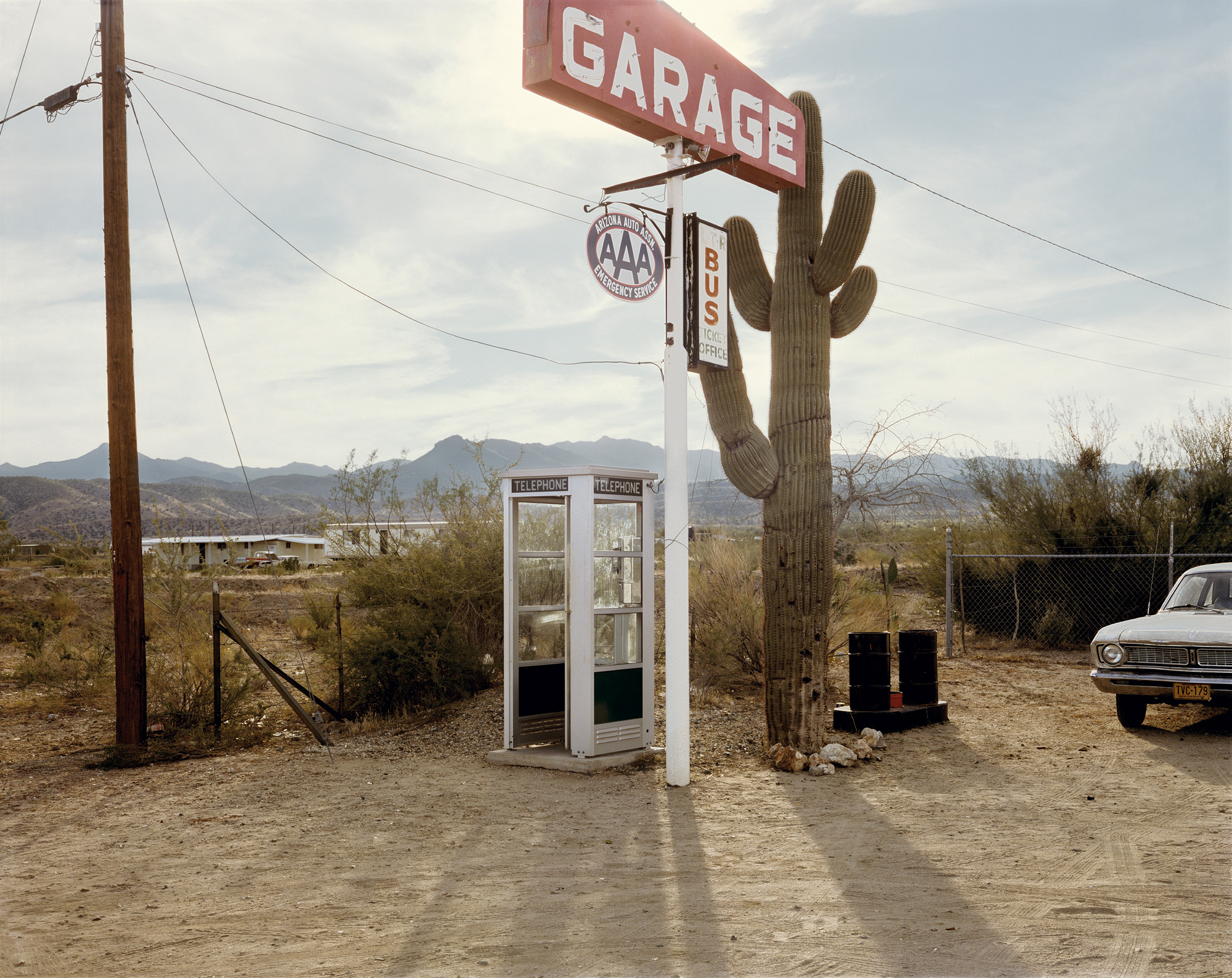
Stephen Shore (American, b. 1947) 'U.S. 93, Wikieup, Arizona, December 14, 1976'


Stephen Shore (American, b. 1947)
U.S. 93, Wikieup, Arizona, December 14, 1976
1976, printed 2013
Chromogenic colour print
17 × 21 3/4 in. (43.2 × 55.2cm)
The Museum of Modern Art, New York
Acquired through the generosity of Thomas and Susan Dunn
© 2017 Stephen Shore


Stephen Shore (American, b. 1947) 'Giverny, France, 1977'


Stephen Shore (American, b. 1947)
Giverny, France, 1977
1977
Chromogenic colour print
7 11/16 x 9 5/8 in. (19.5 x 24.5cm)
The Museum of Modern Art, New York
Gift of the Estate of Lila Acheson Wallace
© 2017 Stephen Shore


Stephen Shore (American, b. 1947) 'Graig Nettles, Fort Lauderdale, Florida, March 1, 1978'


Stephen Shore (American, b. 1947)
Graig Nettles, Fort Lauderdale, Florida, March 1, 1978
1978
Chromogenic colour print
7 11/16 x 9 11/16 in. (19.5 x 24.6cm)
The Museum of Modern Art, New York
Acquired with matching funds from Blanchette Hooker Rockefeller and the National Endowment for the Arts, 1978
© 2017 Stephen Shore


Stephen Shore (American, b. 1947) 'Merced River, Yosemite National Park, California, August 13, 1979'


Stephen Shore (American, b. 1947)
Merced River, Yosemite National Park, California, August 13, 1979
1979, printed 2013
Chromogenic colour print
35 7/8 x 44 15/16 in. (91.2 x 114.2cm)
The Museum of Modern Art, New York. Gift of the artist
© 2017 Stephen Shore


Stephen Shore (American, b. 1947) 'Gallatin County, Montana, August 2, 1983'


Stephen Shore (American, b. 1947)
Gallatin County, Montana, August 2, 1983
1983, printed 2017
Chromogenic colour print
36 × 45 in. (91.4 × 114.3cm)
Courtesy the artist
© 2017 Stephen Shore


Stephen Shore (American, b. 1947) 'County of Sutherland, Scotland, 1988'


Stephen Shore (American, b. 1947)
County of Sutherland, Scotland, 1988
1988
Chromogenic colour print
35 1/2 × 45 1/2 in. (90.2 × 115.6cm)
The Museum of Modern Art, New York
Gift of Susan and Arthur Fleischer, Jr.
© 2017 Stephen Shore


Stephen Shore (American, b. 1947) 'Sderot, Israel, September 14, 2009'


Stephen Shore (American, b. 1947)
Sderot, Israel, September 14, 2009
2009
Chromogenic colour print
17 × 21 3/4 in. (43.2 × 55.2cm)
The Museum of Modern Art, New York
Gift of the artist
© 2017 Stephen Shore


Stephen Shore (American, b. 1947) 'Peqi'in, Israel, September 22, 2009'


Stephen Shore (American, b. 1947)
Peqi’in, Israel, September 22, 2009
2009
Chromogenic colour print
17 × 21 3/4 in. (43.2 × 55.2cm)
The Museum of Modern Art, New York
Gift of the artist
© 2017 Stephen Shore


Stephen Shore (American, b. 1947) 'Uman, Cherkaska Province, Ukraine, July 22, 2012'


Stephen Shore (American, b. 1947)
Uman, Cherkaska Province, Ukraine, July 22, 2012
2012, printed 2017
Chromogenic colour print
16 × 20 in. (40.6 × 50.8cm)
Courtesy the artist
© 2017 Stephen Shore


The Museum of Modern Art
11 West 53 Street
New York, NY 10019
Phone: (212) 708-9400

Opening hours:
10.30am – 5.30pm
Open seven days a week

MoMA website

LIKE ART BLART ON FACEBOOK

Back to top

Exhibition: ‘Lee Friedlander – America by Car’ at Foam, Amsterdam

Exhibition dates: 13th September – 11th December 2013


Lee Friedlander (American, b. 1934) 'Bettina Katz, Cleveland, Ohio' 2009


Lee Friedlander (American, b. 1934)
Bettina Katz, Cleveland, Ohio
2009
From the series America by Car, 1995-2009
Gelatin silver print
15 × 15 in. (38.1 × 38.1cm)
Collection of the artist; courtesy Fraenkel Gallery, San Francisco
© Lee Friedlander, courtesy Fraenkel Gallery, San Francisco


“I’m not trying to do something to you, I’m trying to do something with you.”


American pianist and composer Keith Jarrett at a concert in Melbourne, 1970s


The eye of Lee Friedlander is incredible. His complex, classical photographs in books such as Letters from the People (1993), Flowers and Trees (1981), The American Monument (1976) and America by Car (2010) have redefined the (photographic) landscape. The artist is constantly reinventing himself, reinventing pictorial space – cutting, distorting, reflecting it back onto itself – to create layered images (after Eugène Atget and Walker Evans). These self-reflective spaces are as much about the artist and his nature as they are about the world in which he lives. They have become the basis of Friedlander’s visual language. Here is a love of the medium and of the world that is a reflection of Self.

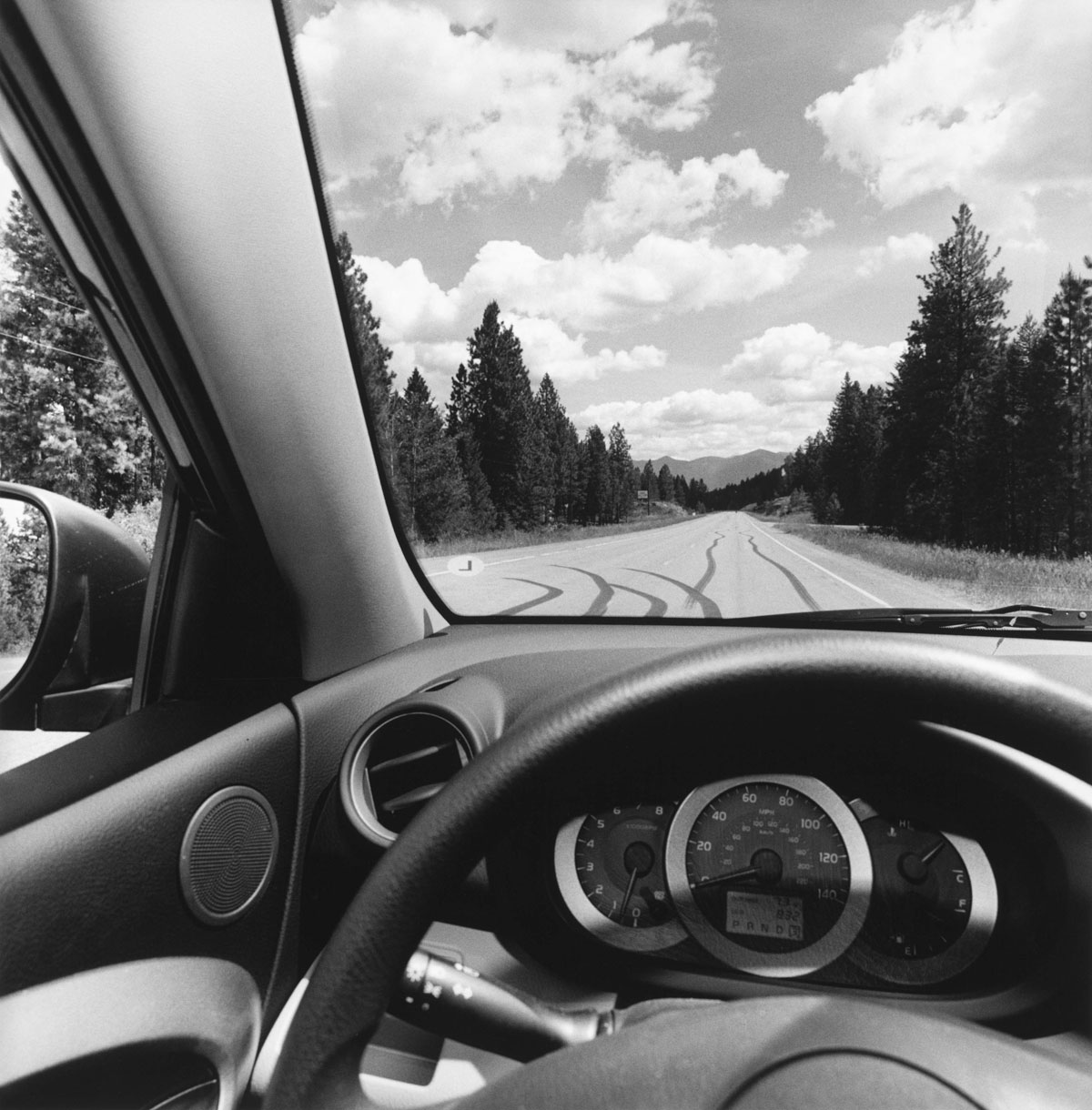
I don’t see these cars (or photographs) as illusion factories. For me, this series of work is akin to a tri-view self-portrait. Instead of the artist painting the sitter (as in the triple portrait of Cardinal Richelieu, 1627 below), a vision, an energy of Self emanates outwards from behind the bulwark of the car steering wheel and dash. It is a Self and its relationship to the world split into multifaceted angles and views. He looks out the left window, the front window, the side window – and then he splits his views between side and front windows using the A pillar of the car as a dividing, framing tool. Sometimes he throws in the reflections of him / self with camera in the rear view mirror for good measure. There is wit, humour and irony in these photographs. There is cinematic panorama and moments of intimacy. There is greatness in these images.

Friedlander is not trying to do something to you, but something with you, for he is showing you something that you inherently know but may not be aware of. Like a Zen master, he asks you questions but also shows you the way. If you understand the path of life and the energy of the cosmos, you understand what a journey this is.

Dr Marcus Bunyan


Many thankx to Foam for allowing me to publish the photographs in the posting. Please click on the photographs for a larger version of the image.


Philippe de Champaigne (French, 1602-1674) 'Triple portrait of Cardinal Richelieu' 1642


Philippe de Champaigne (French, 1602-1674)
Triple portrait of Cardinal Richelieu
c. 1640
Oil on canvas
58cm (22.8 in) x 72cm (28.3 in)
The National Gallery, London
This reproduction is in the public domain


Lee Friedlander: America by Car

Published by D.A.P./Fraenkel


Lee Friedlander (American, b. 1934) 'Houston, Texas' 2006


Lee Friedlander (American, b. 1934)
Houston, Texas
2006
From the series America by Car, 1995-2009
Gelatin silver print
15 × 15 in. (38.1 × 38.1cm)
Collection of the artist; courtesy Fraenkel Gallery, San Francisco
© Lee Friedlander, courtesy Fraenkel Gallery, San Francisco


Lee Friedlander (American, b. 1934) 'Denali National Park, Alaska' 2007


Lee Friedlander (American, b. 1934)
Denali National Park, Alaska
2007
From the series America by Car, 1995-2009
Gelatin silver print
15 × 15 in. (38.1 × 38.1cm)
Collection of the artist; courtesy Fraenkel Gallery, San Francisco
© Lee Friedlander, courtesy Fraenkel Gallery, San Francisco


Lee Friedlander (American, b. 1934) 'Nebraska' 1999


Lee Friedlander (American, b. 1934)
Nebraska
1999
From the series America by Car, 1995-2009
Gelatin silver print
15 × 15 in. (38.1 × 38.1cm)
Collection of the artist; courtesy Fraenkel Gallery, San Francisco
© Lee Friedlander, courtesy Fraenkel Gallery, San Francisco


The automobile has come to symbolise the American dream and the associated urge for freedom. It is therefore no surprise that cars play a central role in the series America by Car and The New Cars 1964 by renowned American photographer Lee Friedlander (1934, US), now receiving their first showing in the Netherlands.

Road Trip

America by Car documents Friedlander’s countless wanderings around the United States over the past decade. In this he follows a trail laid down by numerous photographers, film makers and writers like Robert Frank, Stephen Shore and Jack Kerouac. Friedlander nevertheless succeeds in giving the theme of the American road trip his own very original twist, using the cars’ windscreens and dashboards to frame the familiar American landscape, as well as exploiting the reflections found in their wing and rear view mirrors. It is a simple starting point which results in complex and layered images that are typical for Friedlander’s visual language. He also has a sharp eye for the ironic detail. He makes free use of text on billboards and symbols on store signs to add further meaning to his work. His images are so layered that new information continues to surface with every glance, making America by Car a unique evocation of contemporary America.

Car portraits

The New Cars 1964 is a much older series. Friedlander had been commissioned by Harper’s Bazaar to photograph all the new models of automobile introduced in 1964. Rather than placing them centrally and showing them to best advantage, Friedlander decided to set the cars in the most banal of locations, in front of a furniture store or in a scrap yard for instance. Exploiting reflections, available light and unusual perspectives, his cars are almost completely absorbed into the street scene. Although they were rejected at the time by the magazine’s editorial board on the grounds that the images were not attractive enough, the pictures were put away in a drawer and since forgotten. Friedlander however recently rediscovered this series. The New Cars 1964 has since become a special historical and social document and has in its own right become part of Friedlander’s impressive oeuvre.

Fifty-year career

Lee Friedlander was born in the US in 1934. In a career extending across 5 decades Friedlander has maintained an obsessive focus on the portrayal of the American social landscape. His breakthrough in the eyes of the wider public came with the New Documents exhibition at the MoMA in 1967, where his work was presented alongside that of Diane Arbus and Garry Winogrand. Friedlander accumulated numerous awards during his career, including the MacArthur Foundation Award and three Guggenheim Fellowships. He also published more than twenty books. His work has been shown at many venues around the world, including the Whitney Museum of American Art and the MoMA in New York, San Francisco’s SFMOMA, the MAMM in Moscow and the National Museum of Photography in Copenhagen.

Press release from the FOAM website


Lee Friedlander (American, b. 1934) 'Cleveland, Ohio' 2009


Lee Friedlander (American, b. 1934)
Cleveland, Ohio
2009
From the series America by Car, 1995-2009
Gelatin silver print
15 × 15 in. (38.1 × 38.1cm)
Collection of the artist; courtesy Fraenkel Gallery, San Francisco
© Lee Friedlander, courtesy Fraenkel Gallery, San Francisco


Lee Friedlander (American, b. 1934) 'Montana' 2008


Lee Friedlander (American, b. 1934)
Montana
2008
From the series America by Car, 1995-2009
Gelatin silver print
15 × 15 in. (38.1 × 38.1cm)
Collection of the artist; courtesy Fraenkel Gallery, San Francisco
© Lee Friedlander, courtesy Fraenkel Gallery, San Francisco


Lee Friedlander (American, b. 1934) 'Montana' 2008


Lee Friedlander (American, b. 1934)
Montana
2008
From the series America by Car, 1995-2009
Gelatin silver print
15 × 15 in. (38.1 × 38.1cm)
Collection of the artist; courtesy Fraenkel Gallery, San Francisco
© Lee Friedlander, courtesy Fraenkel Gallery, San Francisco


Mr. Friedlander took his black-and-white, square-format photographs entirely from the interior of standard rental cars – late-model Toyotas and Chevys, by the looks of them – on various road trips over the past 15 years. In these pictures our vast, diverse country is buffered by molded plastic dashboards and miniaturized in side-view mirrors…

Mr. Friedlander groups images by subject, not geography: monuments, churches, houses, factories, ice cream shops, plastic Santas, roadside memorials.

So “America by Car,”… is more of an exercise in typology, along the lines of Ed Ruscha’s “Twentysix Gasoline Stations.” But there’s nothing deadpan or straightforward about the way Mr. Friedlander composes his pictures. He knows that cars are essentially illusion factories – to wit: “Objects in the mirror are closer than they appear.”

Some of the illusions on view here exploit the technology of the camera Mr. Friedlander has been using since the 1990s, the square-format Hasselblad Superwide (so named for its extra-wide-angle lens). The Superwide produces crisp and detail-packed images that are slightly exaggerated in perspective, giving the foreground – the car – a heightened immediacy…

Some of the photographs are dizzyingly complex, like one taken in Pennsylvania in 2007. The camera looks out through the passenger-side window, at a man whose feet appear to be perched on the door frame. He is standing in front of a trompe l’oeil mural of a train, which seems to be heading right at the car. In the side-view mirror you can see a woman approaching. It’s a bizarre pileup of early cinematic trickery (as in the Lumière Brothers), amateur photography and surveillance technology.

Mr. Friedlander’s love of such layering can be traced to Walker Evans and Eugène Atget. He also shares, in this series, Evans’s wry eye for signs of all kinds: the matter-of-fact “Bar” advertising a Montana watering hole, or the slightly more cryptic “ME RY RISTMAS” outside a service station in Texas [see image below]. He strikes semiotic gold at Mop’s Reaching the Hurting Ministry in Mississippi: “LIVE IN RELATIONSHIP ARE LIKE RENTAL CARS NO COMMITMENT.”

Cars distance people from one another, this series reminds us over and over. When Mr. Friedlander photographs people he knows – the photographer Richard Benson, or the legendary MoMA curator John Szarkowski (to whom the book is dedicated) – he remains in his seat, shooting through an open window. In just a few instances the subjects poke their heads inside, a gesture that seems transgressive in its intimacy…

Did he ever get out of the vehicle? Just once in this series, for a self-portrait. It’s the last picture, and it shows him leaning into the driver’s-side window, elbow propped on the door, left hand reaching for the steering wheel.

Maybe he was thinking of the last image in “The Americans” – a shot of Mr. Frank’s used Ford taken from the roadside, showing his wife and son huddled in the back seat. In Mr. Frank’s photograph the car is a protective cocoon. Mr. Friedlander seems to see it that way too, but from the inside out.

Excerpts of an excellent review of “America by Car” by Karen Rosenberg published on The New York Times website on September 2, 2010.


Lee Friedlander (American, b. 1934) 'Alaska' 2007


Lee Friedlander (American, b. 1934)
Alaska
2007
From the series America by Car, 1995-2009
Gelatin silver print
15 × 15 in. (38.1 × 38.1cm)
Collection of the artist; courtesy Fraenkel Gallery, San Francisco
© Lee Friedlander, courtesy Fraenkel Gallery, San Francisco


Lee Friedlander (American, b. 1934) 'Montana' 2008


Lee Friedlander (American, b. 1934)
Montana
2008
From the series America by Car, 1995-2009
Gelatin silver print
15 × 15 in. (38.1 × 38.1cm)
Collection of the artist; courtesy Fraenkel Gallery, San Francisco
© Lee Friedlander, courtesy Fraenkel Gallery, San Francisco


Lee Friedlander (American, b. 1934) 'California' 2008


Lee Friedlander (American, b. 1934)
California
2008
From the series America by Car, 1995-2009
Gelatin silver print
15 × 15 in. (38.1 × 38.1cm)
Collection of the artist; courtesy Fraenkel Gallery, San Francisco
© Lee Friedlander, courtesy Fraenkel Gallery, San Francisco


Lee Friedlander (American, b. 1934) 'Texas' 2006


Lee Friedlander (American, b. 1934)
Texas
2006
From the series America by Car, 1995-2009
Gelatin silver print
15 × 15 in. (38.1 × 38.1cm)
Collection of the artist; courtesy Fraenkel Gallery, San Francisco
© Lee Friedlander, courtesy Fraenkel Gallery, San Francisco


Foam
Keizersgracht 609
1017 DS Amsterdam
The Netherlands
Phone: + 31 20 5516500

Opening hours:
Daily from 10am – 6pm
Thurs – Friday 10am – 9pm

Foam website

LIKE ART BLART ON FACEBOOK

Back to top

Exhibition: ‘Robert Adams: The Place We Live, A Retrospective Selection of Photographs’ at the The Denver Art Museum (DAM)

Exhibition dates:  25th September 2011 – 1st January 2012


Many thankx to The Denver Art Museum for allowing me to publish the photographs in the posting. Please click on the photographs for a larger version of the image.


Robert Adams (American, b. 1937) 'Burning oil sludge, north of Denver, Colorado' 1973-1974


Robert Adams (American, b. 1937)
Burning oil sludge, north of Denver, Colorado
1973-1974
Gelatin silver print
Yale University Art Gallery, purchased with a gift from Saundra B. Lane, a grant from the Trellis Fund and the Janet and Simeon Braguin Fund


Robert Adams (American, b. 1937) 'North of Keota, Colorado' 1973


Robert Adams (American, b. 1937)
North of Keota, Colorado
1973 printed 1989
Gelatin silver print
Yale University Art Gallery, purchased with a gift from Saundra B. Lane, a grant from the Trellis Fund and the Janet and Simeon Braguin Fund


Robert Adams (American, b. 1937) 'Mobile home park, north edge of Denver, Colorado' 1973-1974


Robert Adams (American, b. 1937)
Mobile home park, north edge of Denver, Colorado
1973-1974
Gelatin silver print
Yale University Art Gallery, purchased with a gift from Saundra B. Lane, a grant from the Trellis Fund and the Janet and Simeon Braguin Fund


The Denver Art Museum (DAM) is the first U.S. venue for Robert Adams: The Place We Live, A Retrospective Selection of Photographs. The exhibition features more than 200 black-and-white photos spanning Adams’s 45-year career, showcasing the artistic legacy of the American photographer and his longstanding engagement with the contemporary Western landscape. Adams lived and worked in Colorado for nearly 30 years. Many of his most acclaimed images were taken in the Rocky Mountain region and will strike a familiar chord with visitors. The exhibition, organised by the Yale University Art Gallery, will be on view September 25, 2011 – January 1, 2012 in the museum’s Gallagher Family Gallery.

“We’re excited to host the work of one of the foremost photographers of our time,” said Eric Paddock, the DAM’s curator of photography. “Robert Adams’s striking yet quiet photos provoke thought about current economic, political and environmental issues Westerners confront every day. We think visitors will see something very familiar in his work.”

Since becoming a photographer in the mid-1960s, Adams has been widely regarded as one of the most significant and influential chroniclers of the American West. Adams’s photographs and writing insist that the realities of everyday landscapes are as beautiful as idealised scenes from nature. They ask questions about the ways people change and interact with nature, and what it means to live simply and quietly in today’s world. This commitment earned Adams prominence in photography’s “New Topographics” movement of the late 20th century and lends authority to his ongoing work. His photographs of Colorado suburban growth and clear cut forests in the Pacific Northwest, for example, express shock at mainstream social and economic values.

“The Denver Art Museum is pleased to be the first U.S. venue for The Place We Live, showcasing our continued commitment to our photography program,” said Christoph Heinrich, Frederick and Jan Mayer Director of the DAM. “Colorado has a rich photography history and we’re excited to have visitors engage with these artworks that provide a narrative to the American experience and take a fresh look at their surroundings.”

Featuring more than 200 gelatin silver prints, The Place We Live weaves together four decades of Adam’s work into a cohesive, epic narrative of American experience in the late 20th and early 21st centuries. Each of the photographer’s major projects is represented, from early pictures of quiet buildings and monuments erected by prior settlers of his native Colorado to his most recent images of forests and migratory birds in the Pacific Northwest.

Biography

Born in Orange, N.J., in 1937, Robert Adams moved with his family from Madison, Wis., to Denver, Colo., at the age of 15. He earned a doctorate degree from the University of Southern California and, intent on pursuing an academic career, returned to Colorado in 1962 as an assistant professor of English at Colorado College. Disturbed by the rapid transformation of the Colorado Springs and Denver areas, Adams began photographing a landscape transformed by tract housing, highways, strip malls and gas stations. “The pictures record what we purchased, what we paid and what we could not buy,” Adams wrote. “They document a separation from ourselves, and in turn from the natural world that we professed to love.” Since 1997, he has lived and worked in Oregon.”

Press release from The Denver Art Museum


Robert Adams (American, b. 1937) 'Lakewood, Colorado' 1968-1971


Robert Adams (American, b. 1937)
Lakewood, Colorado
1968-1971
Gelatin silver print
Yale University Art Gallery, purchased with a gift from Saundra B. Lane, a grant from the Trellis Fund and the Janet and Simeon Braguin Fund


Robert Adams (American, b. 1937) 'In a New Subdivision, Colorado Springs, Colorado' 1969


Robert Adams (American, b. 1937)
In a New Subdivision, Colorado Springs, Colorado
1969
Gelatin silver print
Yale University Art Gallery, purchased with a gift from Saundra B. Lane, a grant from the Trellis Fund and the Janet and Simeon Braguin Fund


Robert Adams (American, b. 1937) 'Frame for a Tract House, Colorado Springs, Colorado' 1969


Robert Adams (American, b. 1937)
Frame for a Tract House, Colorado Springs, Colorado
1969
Gelatin silver print
Yale University Art Gallery, purchased with a gift from Saundra B. Lane, a grant from the Trellis Fund and the Janet and Simeon Braguin Fund


Robert Adams (American, b. 1937) 'Pikes Peak, Colorado Springs, Colorado' 1969


Robert Adams (American, b. 1937)
Pikes Peak, Colorado Springs, Colorado
1969
Gelatin silver print
Yale University Art Gallery, purchased with a gift from Saundra B. Lane, a grant from the Trellis Fund and the Janet and Simeon Braguin Fund


Robert Adams (American, b. 1937) 'Denver, Colorado' c. 1970


Robert Adams (American, b. 1937)
Denver, Colorado
c. 1970
Gelatin silver print
Yale University Art Gallery, purchased with a gift from Saundra B. Lane, a grant from the Trellis Fund and the Janet and Simeon Braguin Fund


Robert Adams (American, b. 1937) 'Longmont, Colorado' 1973-1974, printed 2007


Robert Adams (American, b. 1937)
Longmont, Colorado
1973-1974, printed 2007
Gelatin silver print
Yale University Art Gallery, purchased with a gift from Saundra B. Lane, a grant from the Trellis Fund and the Janet and Simeon Braguin Fund


Robert Adams (American, b. 1937) 'Eden, Colorado' 1968


Robert Adams (American, b. 1937)
Eden, Colorado
1968
Gelatin silver print
Yale University Art Gallery
Purchased with a gift from Saundra B. Lane, a grant from the Trellis Fund and the Janet and Simeon Braguin Fund


Robert Adams (American, b. 1937) 'Colorado Springs, Colorado' 1974


Robert Adams (American, b. 1937)
Colorado Springs, Colorado
1968
Gelatin silver print
Yale University Art Gallery
Purchased with a gift from Saundra B. Lane, a grant from Trellis Fund, and the Janet and Simeon Braguin Fund


Robert Adams (American, b. 1937) 'Edge of San Timoteo Canyon, Redlands, California' 1978


Robert Adams (American, b. 1937)
Edge of San Timoteo Canyon, looking toward Los Angeles, Redlands, California
1978
Gelatin silver print
Yale University Art Gallery
Purchased with a gift from Saundra B. Lane, a grant from the Trellis Fund and the Janet and Simeon Braguin Fund


Robert Adams (American, b. 1937) 'Quarried Mesa Top, Pueblo County, Colorado' 1978


Robert Adams (American, b. 1937)
Quarried Mesa Top, Pueblo County, Colorado
1978
Gelatin silver print
Yale University Art Gallery
Purchased with a gift from Saundra B. Lane, a grant from Trellis Fund, and the Janet and Simeon Braguin Fund


Robert Adams (American, b. 1937) 'Longmont, Colorado' 1979, printed 1985


Robert Adams (American, b. 1937)
Longmont, Colorado
1979, printed 1985
Gelatin silver print
Yale University Art Gallery, purchased with a gift from Saundra B. Lane, a grant from the Trellis Fund and the Janet and Simeon Braguin Fund


Robert Adams (American, b. 1937) 'Santa Ana Wash, Redlands, California' 1982


Robert Adams (American, b. 1937)
Santa Ana Wash, Redlands, California
1983, printed 1991
Gelatin silver print
Yale University Art Gallery, purchased with a gift from Saundra B. Lane, a grant from the Trellis Fund and the Janet and Simeon Braguin Fund


Robert Adams (American, b. 1937) 'Sitka spruce, Cape Blanco State Park, Curry County, Oregon' 1999-2000


Robert Adams (American, b. 1937)
Sitka spruce, Cape Blanco State Park, Curry County, Oregon
1999-2000
Gelatin silver print
Yale University Art Gallery, purchased with a gift from Saundra B. Lane, a grant from the Trellis Fund and the Janet and Simeon Braguin Fund


The Denver Art Museum
Civic Center Cultural Complex
located on 13th Avenue between Broadway and Bannock in downtown Denver

Opening hours:
Daily 10am – 5pm

The Denver Art Museum website

LIKE ART BLART ON FACEBOOK

Back to top