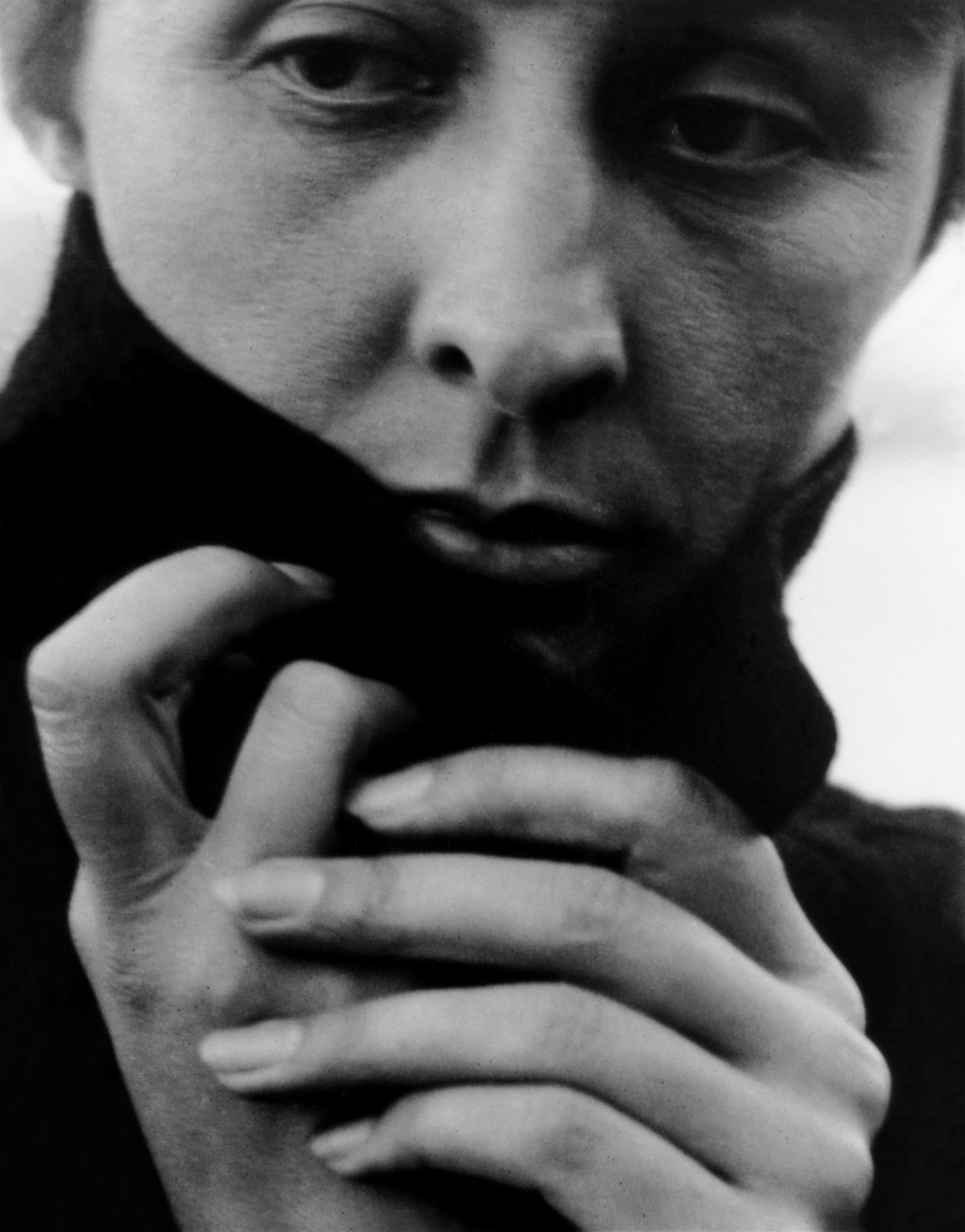
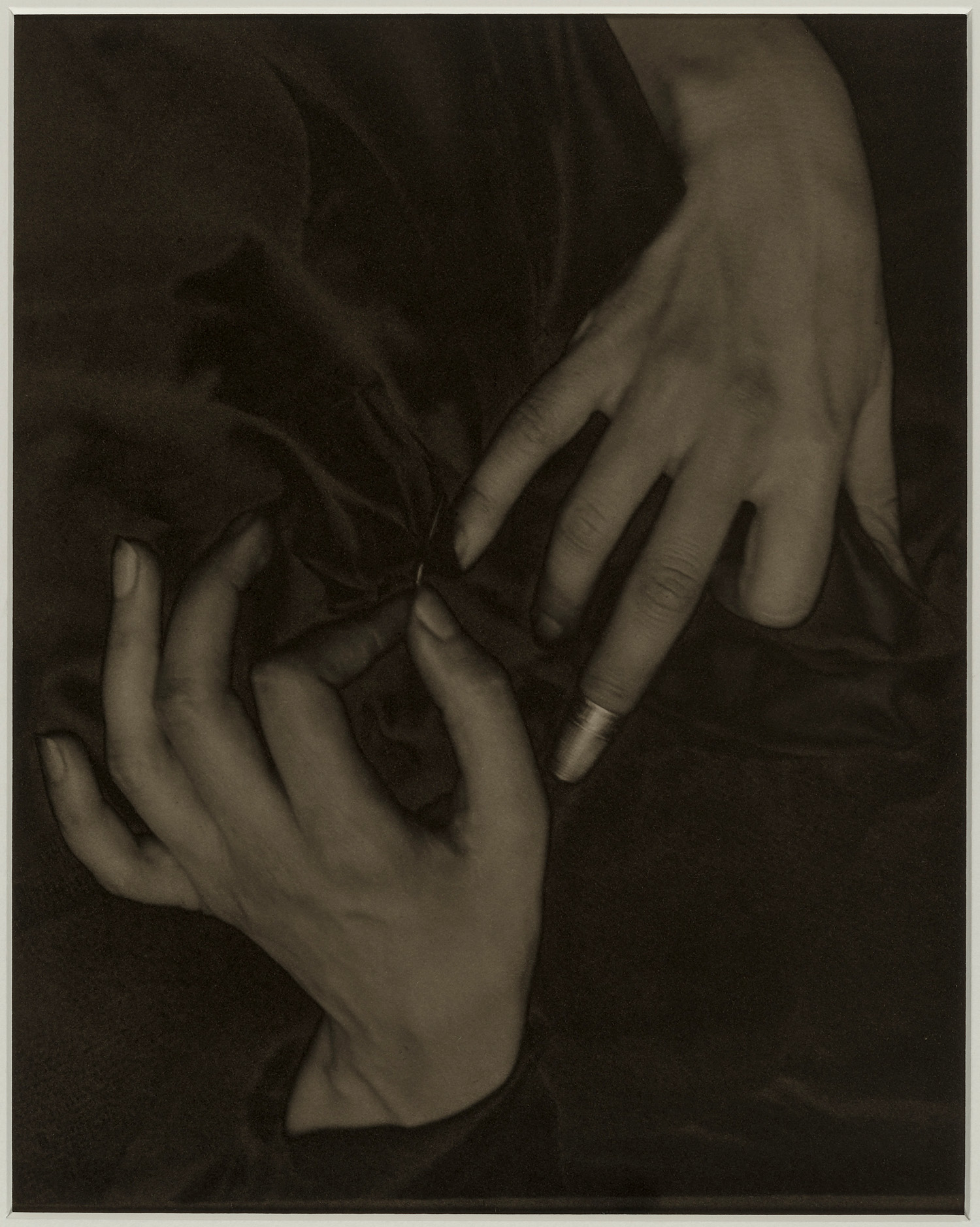
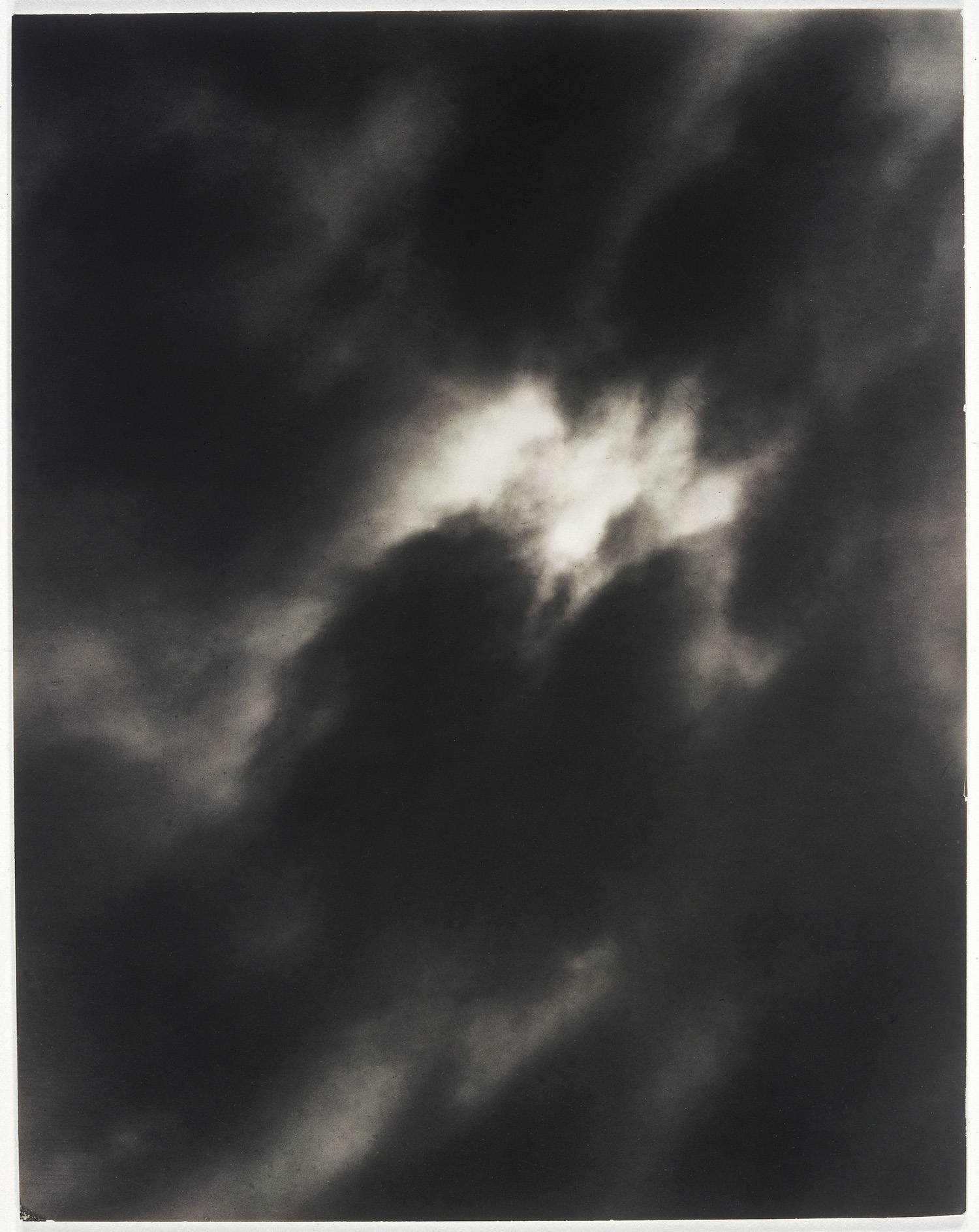
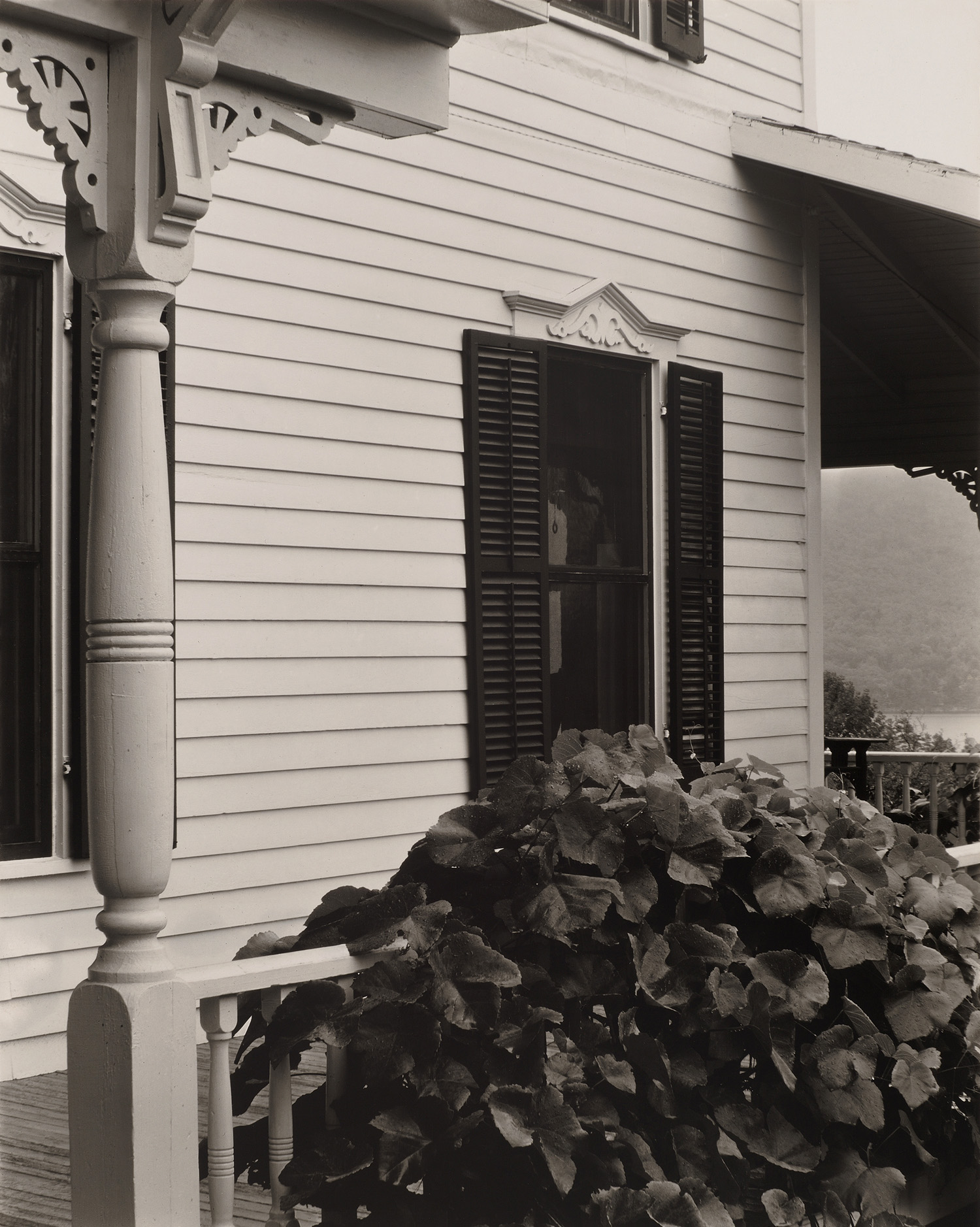
Look at the tonality and sensuality in Georgia O’Keeffe: A Portrait (8) (1919, below) and Dancing Trees (1922, below). No one would ever think of printing a photograph like that today!
Dr Marcus Bunyan
Many thankx to the Museum of Fine Arts Boston for allowing me to publish the photographs in the posting. Please click on the photographs for a larger version of the image.
This exhibition presents a selection of the MFA’s exceptional holdings of works by Alfred Stieglitz (1864-1946), the great American impresario of photography at the turn of the 20th century. Featuring 36 photographs, the exhibition showcases fine examples of his New York views, portraits and photographs that Stieglitz took at his family’s country home at Lake George. The New York views reveal the artist’s lifelong interest in the city, from his early explorations of the picturesque effects of rain, snow and nightfall to later ones that focus on the inherent geometry of modernity’s rising architectural structures. The portraits include 10 images from Stieglitz’s magnificent extended series of images of his wife, the celebrated painter Georgia O’Keeffe – a “portrait in time” that reflects his ideals of modern womanhood and is evocative of their close relationship. These portraits are accompanied by additional images of members of his family and friends.
The Lake George photographs include, in addition to views of the family property, a sequence of the mystical cloud studies that Stieglitz called “equivalents,” which explore the interpretation of inner states of being. Many of the photographs on view were donated by Stieglitz to the MFA in 1924 – making it one of the first museums in the US to collect photography as fine art. Enhanced by an additional gift from O’Keeffe in 1950, the MFA’s Stieglitz holdings form an outstanding survey of the photographer’s career, as well as the cornerstone of the Museum’s photography collection.
291 is the commonly known name for an internationally famous art gallery that was located in Midtown Manhattan at 291 Fifth Avenue in New York City from 1905 to 1917. Originally known as the “Little Galleries of the Photo-Secession“, the gallery was created and managed by photographer Alfred Stieglitz.
The gallery is famous for two reasons. First, the exhibitions there helped bring art photography to the same stature in America as painting and sculpture. Pioneering artistic photographers such as Stieglitz, Edward Steichen, Alvin Langdon Coburn, Gertrude Käsebier and Clarence H. White all gained critical recognition through exhibitions at 291. Equally important, Stieglitz used this space to introduce to the United States some of the most avant-garde European artists of the time, including Henri Matisse, Auguste Rodin, Henri Rousseau, Paul Cézanne, Pablo Picasso, Constantin Brâncuși, and the Dadaists Francis Picabia and Marcel Duchamp.
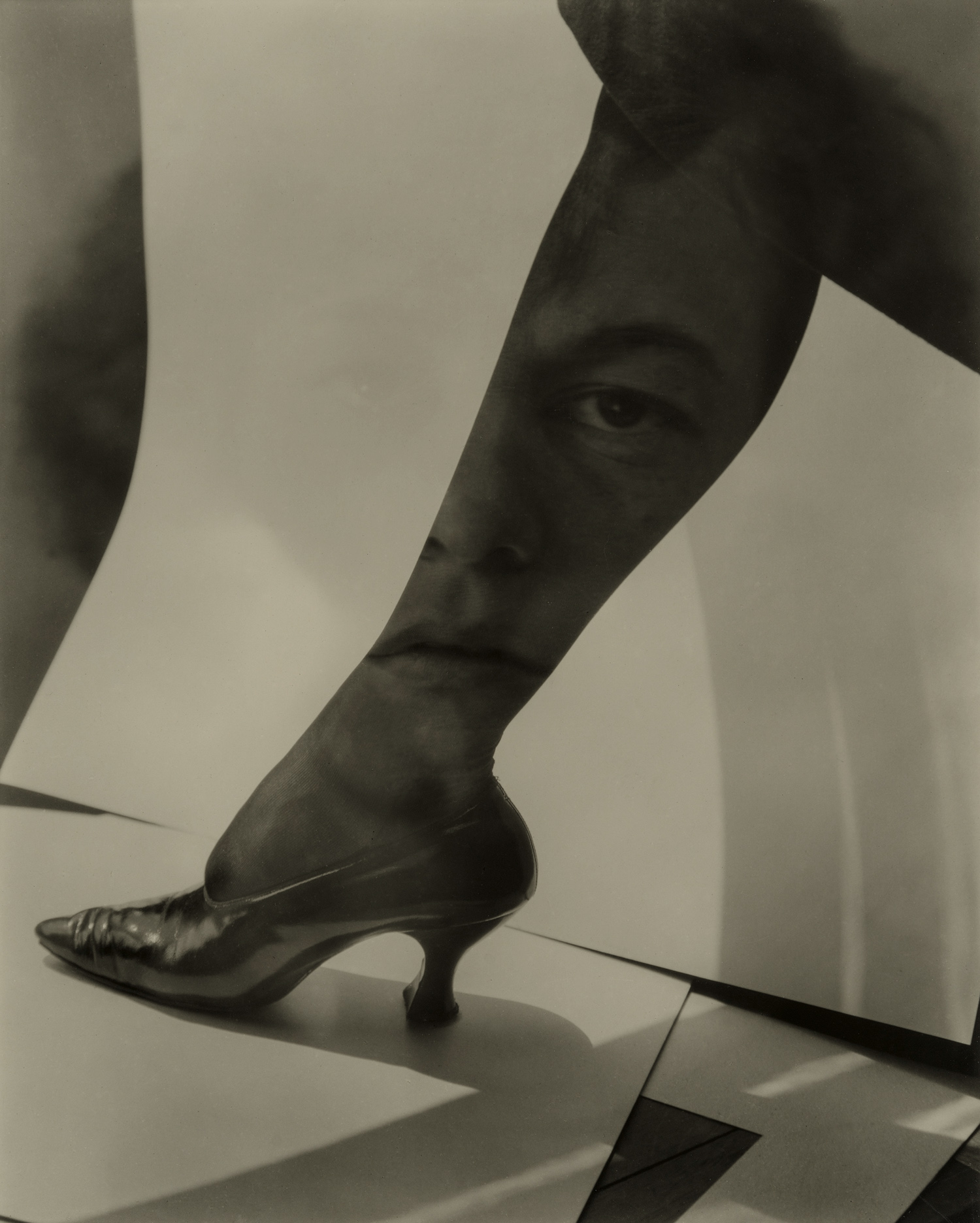
First published in 1921 with the caption “Watch your step!” in the single issue of Marcel Duchamp and Man Ray’s magazine New York Dada, Stieglitz’s surreal portrait was a happy accident. Attempting to capture the modern character of Dorothy True, a friend of Georgia O’Keeffe, Stieglitz made two exposures: a conventional, full-face portrait and a view of one artfully posed leg. Stieglitz was thrilled with the fortuitous superimposition of the images, believing that together they captured the spirit of the postwar American female. While the equation of short hair and skirts with women’s liberation might seem trite today, Stieglitz made the portrait in 1919, the year that Congress extended suffrage to women. In 1926, he exhibited it with the title American Girl.
This double exposure of the face and leg of Dorothy True constitutes an unusual portrait. Her somewhat somber face, very faint, is not immediately apparent, but slowly a mouth, nose, and eye begin to reveal themselves in the black-stockinged ankle and calf. Alone, the image of the leg is an interesting one; her foot appears veritably stuffed into her stylish, patent leather pump. Her instep bulges out of the top of the shoe, and the leather ripples from the pressure at the toe, making the foot an almost sculptural form.
True appears to step down upon overturned prints or mats. A chair casts a graphic shadow across the floor, and a vertical paper backdrop echoes the black shadow at the upper left, uncovered by the sagging paper. The neat triangle of True’s skirt lends additional geometric balance.
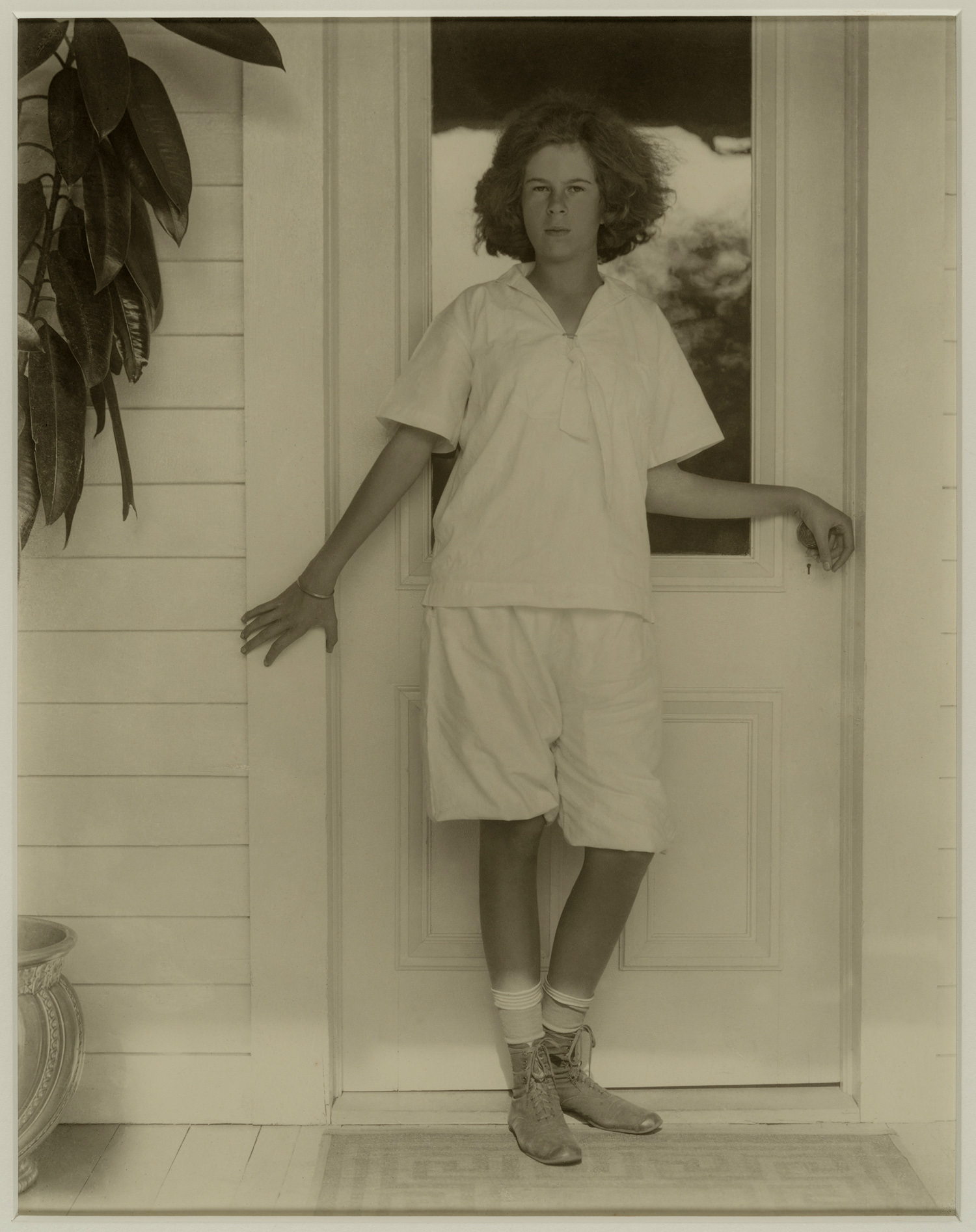
Georgia Engelhard was the first child of George Engelhard and Agnes Stieglitz. It is as the niece of Alfred Stieglitz, modernism’s most successful early booster in the United States, that Engelhard’s artistic career was encouraged. From the age of 12 to 22 she corresponded regularly with Stieglitz who serve as a confidant to the young woman. Engelhard occasionally posed for Stieglitz and the uncle honoured her with an exhibition at his famous gallery, 291, when she was only ten years old. (Stieglitz’s motivation to show his niece’s work was more than likely a response to Wassily Kandinsky’s proposition that there was a fundamental spirituality to be found in true art and that children’s art had the ability to convey this “inner truth.”)
It is under the tutelage of Stieglitz’s wife, Georgia O’Keeffe, that Engelhard matured as a painter. In biographies Engelhard is repeatedly mentioned as O’Keeffe’s friend and companion. Georgia minor, as Engelhard was called, served as comic release for the older artist who often found Stieglitz and his family oppressive. The two artists frequently painted together at Stiegltiz’s summer house on Lake George and occasionally took excursions together. Engelhard’s paintings reflect O’Keeffe’s influence – flat areas of pure colour and sensuous curves are used to define the landscape. …
Despite a paralysing fear of heights, Engelhard became a premier mountain climber at the age of 20 and was the first female climber to ascend many of the peaks in the Canadian Rockies. Engelhard’s determination to overcome this specific fear evolved into a passion for the mountains that lasted throughout her lifetime…
Engelhard was also a writer and an accomplished photographer. In 1938 when she began living with Eaton Cromwell she stopped painting and together the couple pursued photography. While living in Switzerland they sold a number of their pictures to postcard companies. Few of Georgia Engelhard’s paintings are in existence today and when one does appear there is often a dispute about whether the canvas comes from O’Keefe’s hands or Engelhard’s.
Anonymous text. “Georgia Engelhard,” on the JWL Collection website [Online] Cited 05/01/2022. No longer available online
Exhibition dates: 10th November 2010 – 10th April 2011
Many thankx to the The Metropolitan Museum of Art for allowing me to publish the photographs in the posting. Please click on the photograph for a larger version of the image.
Alfred Stieglitz (American, 1864-1946) The Terminal 1893, printed 1920s-30s Gelatin silver print 8.9 x 11.5cm (3 1/2 x 4 1/2 in.) The Metropolitan Museum of Art Alfred Stieglitz Collection, 1949
As proprietor of the Little Galleries of the Photo-Secession and publisher of the photographic journals Camera Notes and later Camera Work, Stieglitz was a major force in the promotion and elevation of photography as a fine art in America in the late nineteenth and early twentieth centuries. His own photographs had an equally revolutionary impact on the advancement of the medium.
Stieglitz took this picture using a small 4 x 5″ camera, an instrument not considered at the time to be worthy of artistic photography. Unlike the unwieldy 8 x 10″ view camera (which required a tripod), this camera gave Stieglitz greater freedom and mobility to roam the city and respond quickly to the everchanging street life around him. The Terminal predicts by over a decade the radical transformation of the medium from painterly prints of rarified subjects to what the critic Sadakichi Hartmann dubbed “straight photography.” This new photography would take as its subject matter the quotidian aspects of modern, urban life, using only techniques that are unique to the medium.
Text from The Metropolitan Museum of Art website
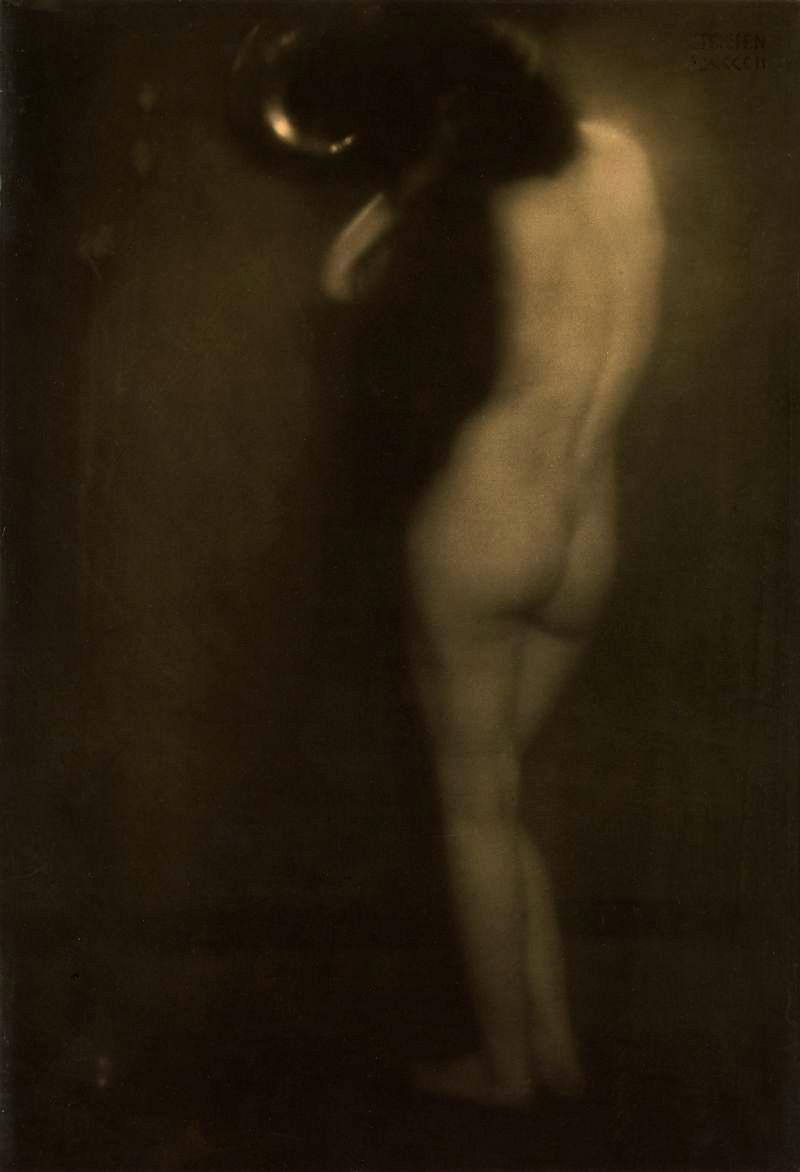
Edward Steichen (American born Luxembourg, 1879-1973) The Little Round Mirror 1901, printed 1905 Gum bichromate over platinum print 48.3 x 33.2cm (19 x 13 1/16 in.) The Metropolitan Museum of Art Alfred Stieglitz Collection, 1933
Alfred Stieglitz (American, 1864-1946) The Hand of Man 1902, printed 1910 Photogravure 24.2 x 31.9cm (9 1/2 x 12 9/16 in.) The Metropolitan Museum of Art Alfred Stieglitz Collection, 1949
The Hand of Man was first published in January 1903 in the inaugural issue of Camera Work. With this image of a lone locomotive chugging through the train yards of Long Island City, Stieglitz showed that a gritty urban landscape could have an atmospheric beauty and a symbolic value as potent as those of an unspoiled natural landscape. The title alludes to this modern transformation of the landscape and also perhaps to photography itself as a mechanical process. Stieglitz believed that a mechanical instrument such as the camera could be transformed into a tool for creating art when guided by the hand and sensibility of an artist.
Text from The Metropolitan Museum of Art website
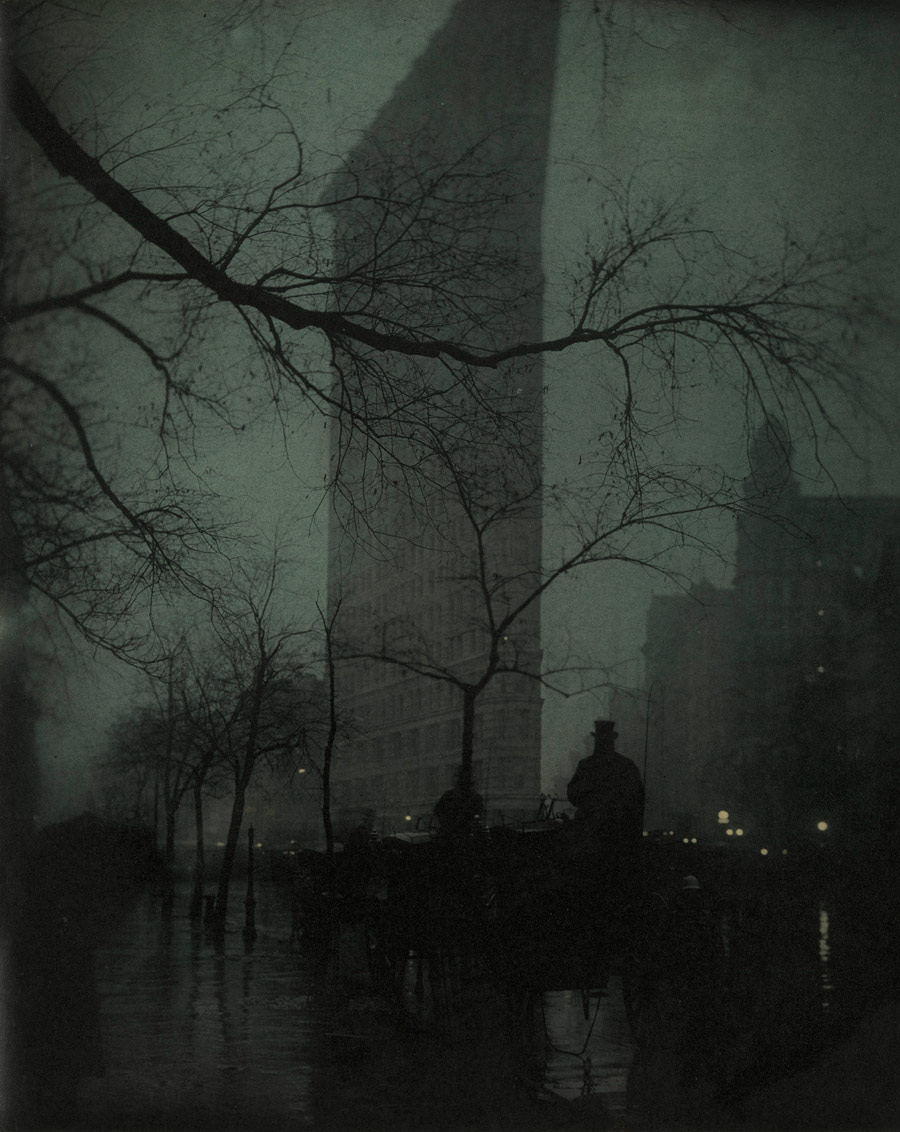
Edward Steichen (American born Luxembourg, 1879-1973) The Flatiron 1904 Gum bichromate over platinum print 47.8 x 38.4cm (18 13/16 x 15 1/8 in.) The Metropolitan Museum of Art Alfred Stieglitz Collection, 1933
Edward Steichen (American born Luxembourg, 1879-1973) Alfred Stieglitz 1907 Autochrome 23.9 x 18cm The Metropolitan Museum of Art Alfred Stieglitz Collection, 1955
For the first time in more than 25 years, The Metropolitan Museum of Art will display five of its original Autochromes by Edward Steichen and Alfred Stieglitz for one week only – January 25-30, 2011 – as part of the current exhibition Stieglitz, Steichen, Strand. Invented by Auguste and Louis Lumière in 1907, Autochromes are one-of-a-kind color transparencies that are seductively beautiful when backlit.
The invention of the Autochrome was a milestone in the history of photography. It was the first commercially available means of making color photographs. Steichen was enthralled by the process and recommended it to his fellow photographers. Praising the luminosity of the new medium, he wrote, “One must go to stained glass for such color resonance, as the palette and canvas are a dull and lifeless medium in comparison.” Among the five Autochromes exhibited are Steichen’s portrait of Rodin in front of his sculpture The Eve and his widely reproduced portrait of Stieglitz holding an issue of his influential publication, Camera Work.
These fragile photographs – composed of minute grains of potato starch dyed red, blue, and green – cannot withstand the exposure of long-term display without suffering irreversible damage. Because of the high risk of the color fading, the Metropolitan – like most museums – has had a policy of not exhibiting its important collection of Autochromes. The Metropolitan recently completed a three-year study of the stability and light-sensitivity of Autochrome dyes, conducted by Luisa Casella, the Museum’s first Mellon Research Scholar in Photo Conservation, in close collaboration with Masahiko Tsukada of the Museum’s Department of Scientific Research, and supervised by Nora Kennedy, Sherman Fairchild Conservator of Photographs at the Metropolitan Museum. The study established that the Autochrome dyes are partially, though not completely, protected from light fading when in an environment where all oxygen has been removed.
Guided by this research, the Museum will display five original Autochromes by Steichen and Stieglitz within individual oxygen-free enclosures and under carefully controlled lighting conditions from January 25 to 30 in the exhibition Stieglitz, Steichen, Strand. During the other weeks of the exhibition, facsimiles of the photographs are displayed in their place.
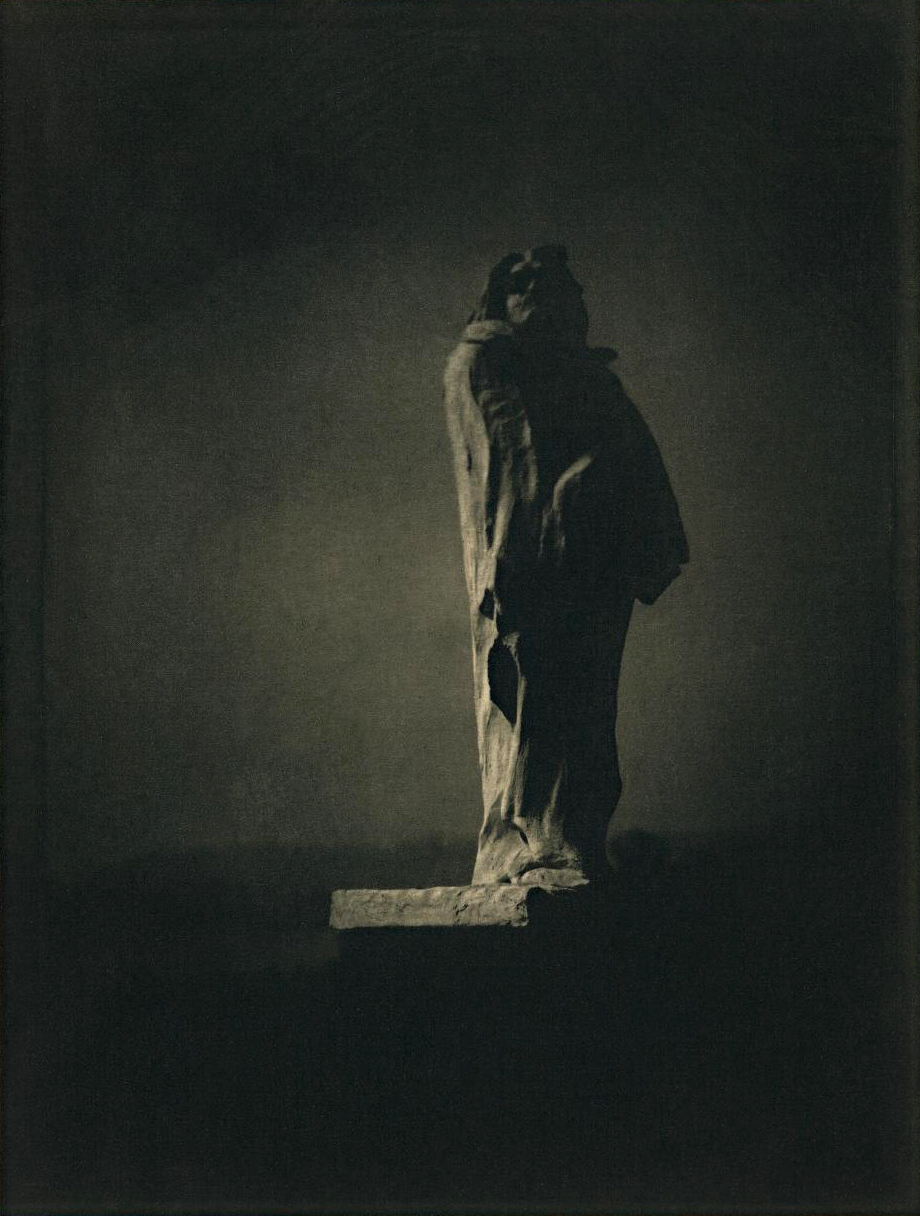
Edward J. Steichen (American born Luxembourg, 1879-1973) Balzac, The Open Sky – 11 P.M. 1908, printed 1909 Direct carbon print 48.7 x 38.5cm (19 3/16 x 15 3/16 in.) The Metropolitan Museum of Art Alfred Stieglitz Collection, 1933
In late summer 1908 Rodin moved the plaster of his sculpture of the French writer Honoré de Balzac out of his studio and into the open air so that Steichen, who disliked its chalky aspect in the daylight, could photograph it by the moon. Waiting through several exposures as long as an hour each, Steichen made this exposure at 11 p.m., when the moonlight transformed the plaster into a monumental phantom rising above the brooding nocturnal landscape. Steichen recalled that when he presented his finished prints some weeks later, an elated Rodin exclaimed: “You will make the world understand my Balzac through your pictures. They are like Christ walking on the desert.”
Text from The Metropolitan Museum of Art website
Stieglitz, Steichen, Strand
Go behind the lens with Sarah Greenough and Joel Smith as they speak about the relationships between three giants of early twentieth-century photography – Alfred Stieglitz, Edward Steichen, and Paul Strand – whose diverse and groundbreaking works are among the Metropolitan’s greatest photographic treasures. Followed by a discussion among the participants. Malcolm Daniel, Curator in Charge, Department of Photographs, MMA, introduces the program.
“Steichen, Stieglitz, and the Art of Change” Joel Smith, Curator of Photography, Princeton University Art Museum
“Stieglitz and Strand: Mentor and Protégé/Friend and Rival” Sarah Greenough, Senior Curator of Photographs, National Gallery of Art, Washington.
Stieglitz and the New York Art Scene (1905-46)
Lisa M. Messinger, associate curator, Department of Nineteenth-Century, Modern, and Contemporary Art, The Metropolitan Museum of Art
Three giants of 20th-century American photography – Alfred Stieglitz, Edward Steichen, and Paul Strand – are featured at The Metropolitan Museum of Art, New York, through April 10, 2011, in the exhibition Stieglitz, Steichen, Strand. The diverse and groundbreaking work of these artists will be revealed through a presentation of 115 photographs, drawn entirely from the Museum’s collection. On view will be many of the Metropolitan’s greatest photographic treasures from the 1900s to 1920s, including Stieglitz’s famous portraits of Georgia O’Keeffe, Steichen’s large coloured photographs of the Flatiron building, and Strand’s pioneering abstractions.
Alfred Stieglitz (1864-1946) was a photographer of supreme accomplishment and a forceful and influential advocate for photography and modern art through his gallery “291” and his sumptuous journal Camera Work. Stieglitz also laid the foundation for the Museum’s collection of photographs. In 1928, he donated 22 of his own works to the Metropolitan; these were the first photographs to enter the Museum’s collection as works of art. In later decades he gave the Museum more than 600 photographs by his contemporaries, including Edward Steichen and Paul Strand.
Among Stieglitz’s works to be featured in this exhibition are portraits, views of New York City from the beginning and end of his career, and the 1920s cloud studies he titled Equivalents, through which he sought to arouse in the viewer the emotional equivalent of his own state of mind at the time he made the photograph, and to show that the content of a photograph was different from its subject.
The exhibition will also include numerous photographs from Stieglitz’s extraordinary composite portrait of Georgia O’Keeffe (1887-1986), part of a group of works selected for the Museum’s collection by O’Keeffe herself. Stieglitz made more than 330 images of O’Keeffe between 1917 and 1937 – of her face, torso, hands, or feet alone, clothed and nude, intimate and heroic, introspective and assertive. Through these photographs Stieglitz revealed O’Keeffe’s strengths and vulnerabilities, and almost single-handedly defined her public persona for generations to come.
Stieglitz’s protégé and gallery collaborator, Edward Steichen (1879-1973), was the most talented exemplar of the Photo-Secession, the loosely-knit group of artists founded by Stieglitz in 1902, seceding, in his words, “from the accepted idea of what constitutes a photograph,” but also from the camera clubs and other institutions dominated by a more retrograde establishment. In works such as The Pond – Moonrise (1904), made using a painstaking technique of multiple printing, Steichen rivalled the scale, colour, and individuality of painting.
Steichen’s three large variant prints of The Flatiron (1904) are prime examples of the conscious effort of Photo-Secession photographers to assert the artistic potential of their medium. Steichen achieved coloristic effects reminiscent of Whistler’s Nocturne paintings by brushing layers of pigment suspended in light-sensitive gum solution onto a platinum photograph. Although he used only one negative to create all three photographs, the variable colouring enabled him to create three significantly different images that convey the chromatic progression of twilight. The Metropolitan’s three prints, all donated by Stieglitz in 1933, are the only exhibition prints of Steichen’s iconic image.
In 1908 Steichen photographed the plaster of Rodin’s sculpture of Honoré de Balzac in the open air, by the light of the moon, making several exposures as long as an hour each. In Balzac, The Silhouette – 4 A.M., the moonlight has transformed the plaster into a monumental phantom rising above the brooding nocturnal landscape. Steichen recalled that when he presented his finished prints to Rodin, the elated sculptor exclaimed, “You will make the world understand my Balzac through your pictures.”
Among the unique early-20th-century works by Stieglitz and Steichen in the Museum’s collection are Autochromes, an early process of colour photography that became commercially available in 1907. Because of the delicate and light-sensitive nature of these glass transparencies, five original Autochromes by Stieglitz and Steichen will be displayed for one week only, January 25-30, 2011. During the other weeks of the exhibition, facsimiles of these Autochromes will be on view.
Stieglitz’s and Steichen’s younger contemporary, Paul Strand (1890-1976), pioneered a shift from the soft-focus aesthetic and painterly prints of the Photo-Secession to the straight approach and graphic power of an emerging modernism. Strand was introduced to Stieglitz as a high-schooler by his camera club advisor, Lewis Hine, the social reformer and photographer. He quickly became a regular visitor to “291,” where he was exposed to the latest trends in European art through groundbreaking exhibitions of works by Cézanne, Picasso, Matisse, and Brancusi.
Strand incorporated the new language of geometric abstraction into his interest in photographing street life and machine culture. His photographs from 1915-1917 treated three principal themes: movement in the city, abstractions, and street portraits. Stieglitz, whose interest in photography had waned as he grew more interested in avant-garde art, saw in Strand’s work a new approach to photography. He showed Strand’s groundbreaking photographs at 291 and devoted the entire final double issue of Camera Work (1917) to this young photographer’s work, marking a pivotal moment in the course of photography.
In From the El (1915), Strand juxtaposed the ironwork and shadows of the elevated train with the tiny form of a lone pedestrian. In 1916, he experimented with radical camera angles and photographing at close range. Among the astonishingly modern photographs he made that summer is Abstraction, Twin Lakes, Connecticut, one of the first photographic abstractions to be made intentionally. When Stieglitz published a variant of this image in Camera Work, he praised Strand’s results as “the direct expression of today.”
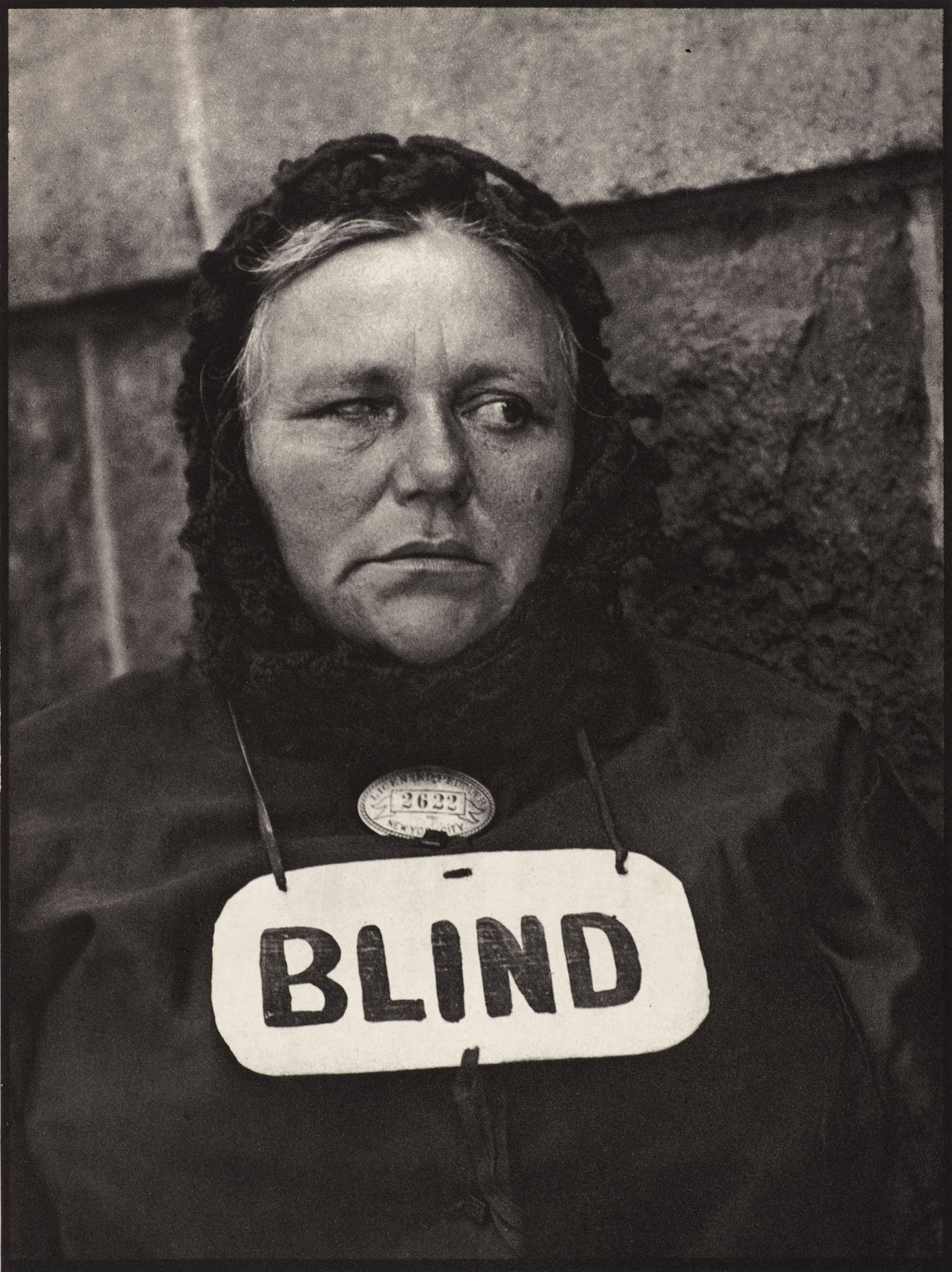
In the same year, Strand made a series of candid street portraits with a hand-held camera fitted with a special lens that allowed him to point the camera in one direction while taking the photograph at a 90-degree angle. Blind, his seminal image of a street peddler, was published in Camera Work and immediately became an icon of the new American photography, which integrated the humanistic concerns of social documentation with the boldly simplified forms of Modernism. As is true for most of the large platinum prints by Strand in the exhibition, the Metropolitan’s Blind, a gift of Stieglitz, is the only exhibition print of this image from the period.
Stieglitz, Steichen, Strand is organised by Malcolm Daniel, Curator in Charge of the Metropolitan Museum’s Department of Photographs, assisted by Russell Lord, Jane and Morgan Whitney Fellow in the Department of Photographs.
Text from the Metropolitan Museum of Art website
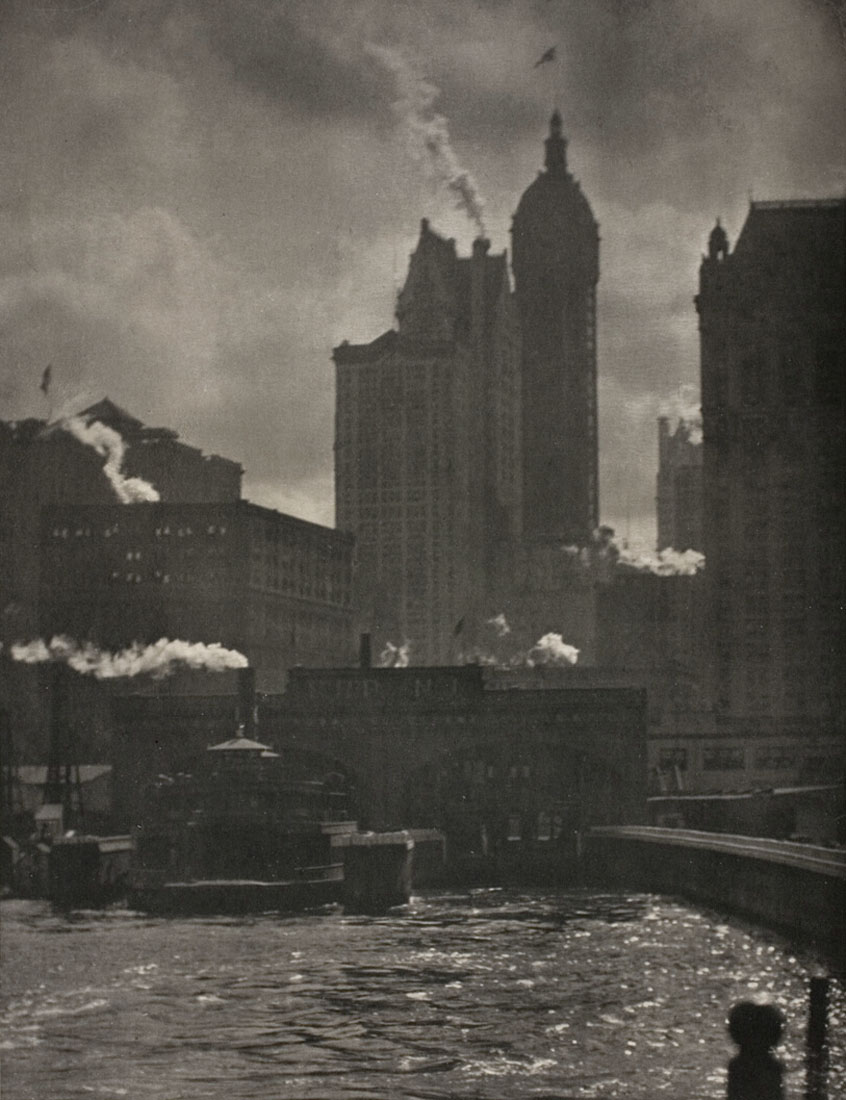
Alfred Stieglitz (American, 1864-1946) The City of Ambitions 1910, printed 1910-1913 Photogravure 33.8 x 26.0cm (13 5/16 x 10 1/4 in.) The Metropolitan Museum of Art Alfred Stieglitz Collection, 1949
This photograph belongs to a series of dynamic images Stieglitz made of New York of 1910. It appeared in the October 1911 issue of Camera Work along with eight other examples of his lyrical urban modernism – a contemporary vision certainly not lost on Coburn, Struss, and Strand.
Alfred Stieglitz (American, 1864-1946) Old and New New York 1910, printed in or before 1913 Photogravure 33.2 x 25.5cm (13 1/16 x 10 1/16 in.) The Metropolitan Museum of Art Alfred Stieglitz Collection, 1949
Paul Strand (American, 1890-1976) From the El 1915 Platinum print 33.6 x 25.9cm (13 1/4 x 10 3/16 in.) The Metropolitan Museum of Art Alfred Stieglitz Collection, 1949
Paul Strand was introduced to Alfred Stieglitz by his teacher Lewis Hine, and quickly became part of the coterie of painters and photographers that gathered at Stieglitz’s gallery at 291 Fifth Avenue. There he was exposed to the latest trends in European vanguard art through groundbreaking exhibitions of Cézanne, Picasso, Matisse, and Brancusi. Strand incorporated their abstracting compositional techniques into his work, marrying the new language of geometric surface design to his interest in street life and machine culture.
Strand’s vision of the city during these years often focuses on the problematic exchange between the sweep and rigor of the urban grid with the human lives that inhabit and pass through it. From the El is a good example of this dialectical approach, with the graphic power of the ironwork and street shadows punctuated by the tiny, lone pedestrian at the upper right. Strand addresses the effects of the new urban condition obliquely here, embedding a subtle political statement within the formal structure of the image.
Text from The Metropolitan Museum of Art website
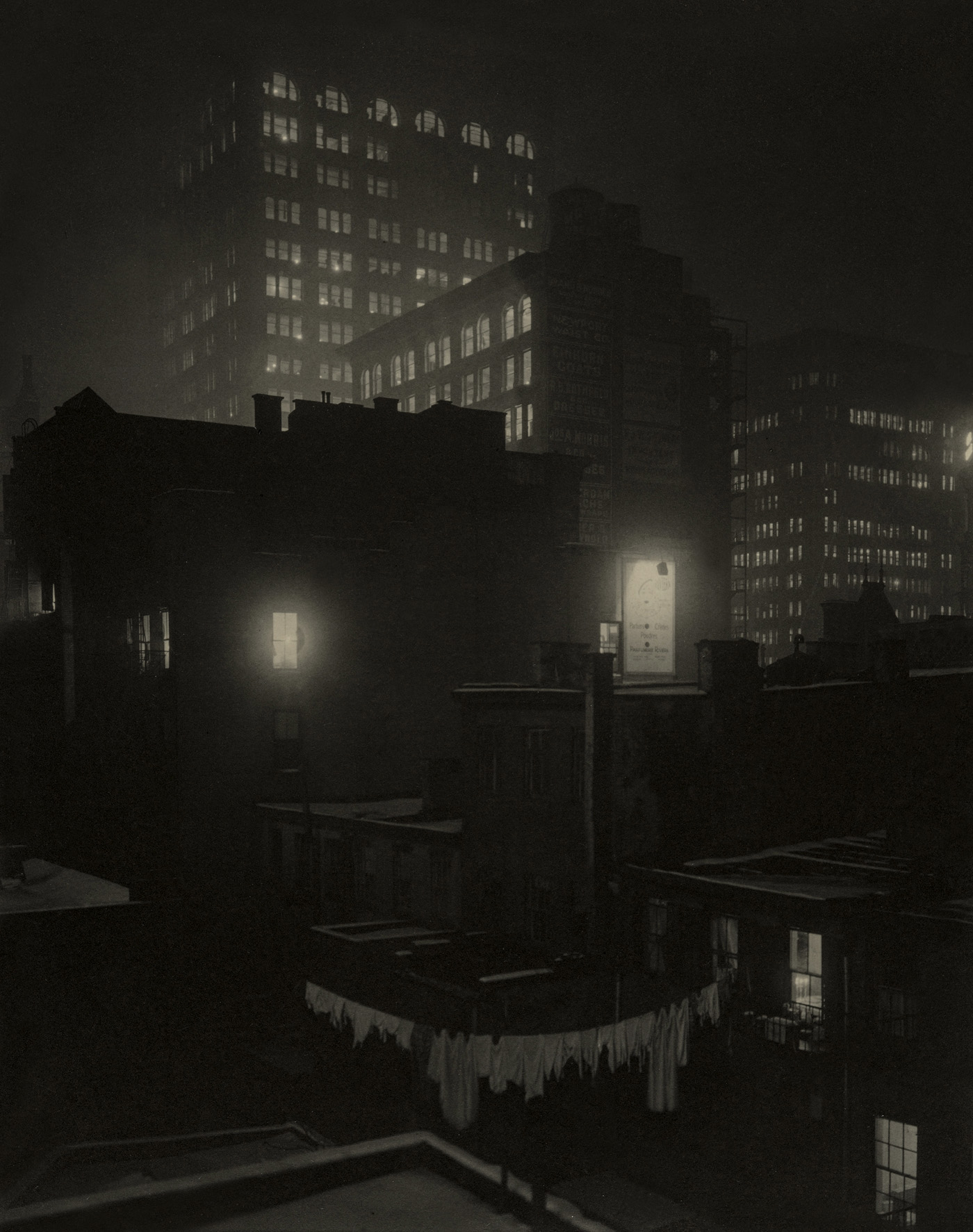
Alfred Stieglitz (American, 1864-1946) From the Back Window – 291 1915 Platinum print 25.1 x 20.2cm (9 7/8 x 7 15/16 in.) The Metropolitan Museum of Art Alfred Stieglitz Collection, 1949
At the turn of the century, Stieglitz’s duties as gallery owner, publisher, editor, and promoter left him little time to photograph. When the mood struck him, however, which began to happen with some frequency about 1915, he did not look far afield but photographed his colleagues at the gallery and the view from his window with a modernist rigor exceeded only by Strand.
Paul Strand (American, 1890-1976) Blind 1916 Platinum print 34 x 25.7cm (13 3/8 x 10 1/8 in.) The Metropolitan Museum of Art Alfred Stieglitz Collection, 1933
Alfred Stieglitz (American, 1864-1946) Hodge Kirnon 1917 Palladium print 24.6 x 19.9cm (9 11/16 x 7 13/16 in.) The Metropolitan Museum of Art Alfred Stieglitz Collection, 1949
One of the least well known and most beautiful of Stieglitz’s portraits, this photograph depicts Hodge Kirnon, a man Stieglitz saw in passing every day. When preparing to close his historic gallery “291” in 1917 as a result of World War I, Stieglitz assessed his work and life and saw that Kirnon – who operated the elevator that transported the gallery’s visitors, its critics, and its provocative modern art – had been a true fellow passenger on the momentous trip.
Text from The Metropolitan Museum of Art website
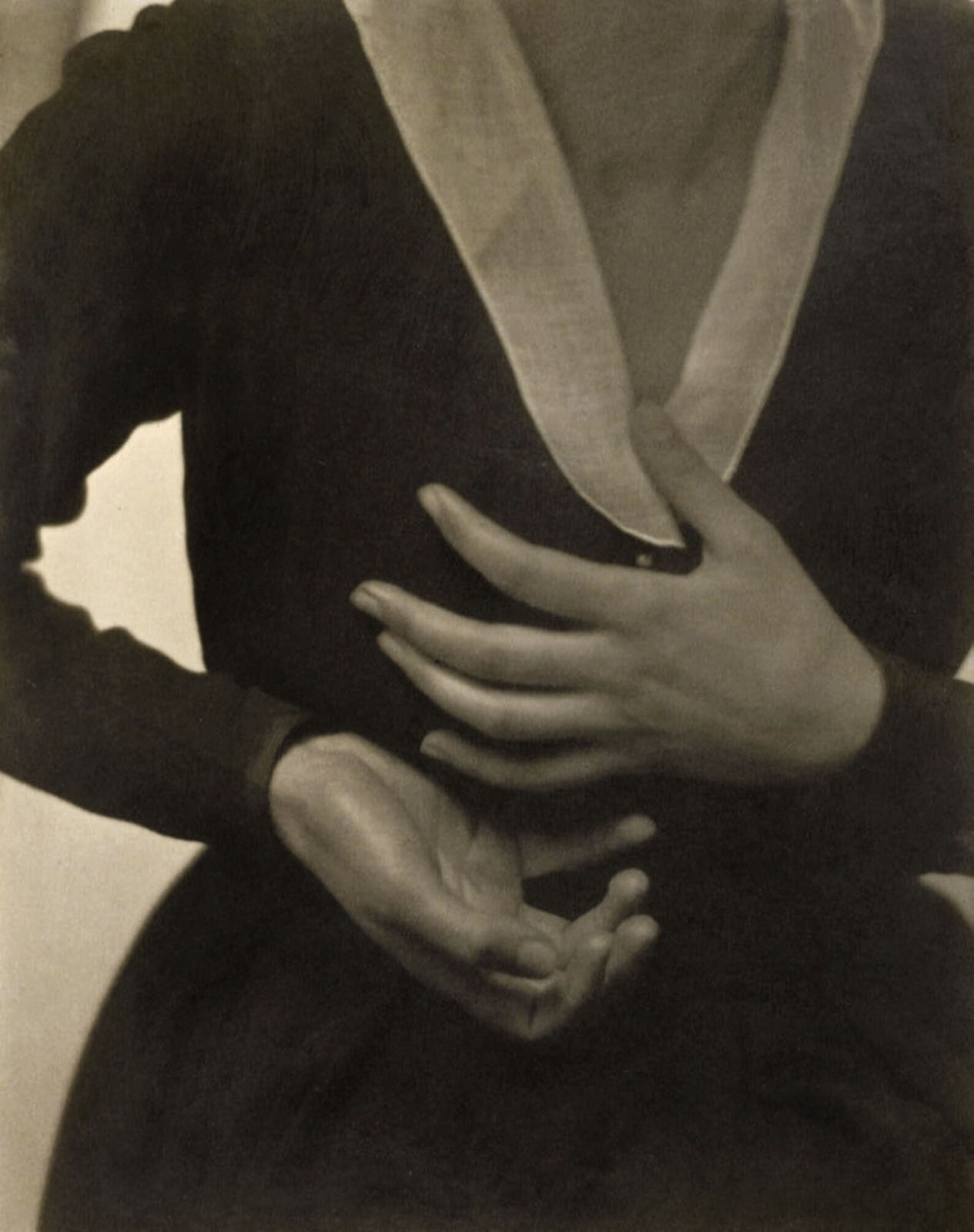
Alfred Stieglitz (American, 1864-1946) Georgia O’Keeffe – Hands 1917 Platinum print 22.6 x 16.8cm (8 7/8 x 6 5/8 in.) The Metropolitan Museum of Art Gift of Georgia O’Keeffe, through the generosity of The Georgia O’Keeffe Foundation and Jennifer and Joseph Duke, 1997
Georgia O’Keeffe – Hands is one of the images that Stieglitz made during his first portrait session with O’Keeffe, in 1917, when she traveled by train to New York to see her second show of drawings and watercolours at 291. “A few weeks after I returned to Texas, photographs of me came,” she recalled. “In my excitement at such pictures of myself I took them to school and held them up for my class to see. They were surprised and astonished too. Nothing like that had come into our world before.” The notion that an expressive portrait might be made without including the sitter’s face was indeed novel.
Text from The Metropolitan Museum of Art website
Exhibition Overview
This exhibition features three giants of photography – Alfred Stieglitz (American, 1864-1946), Edward Steichen (American, b. Luxembourg, 1879-1973), and Paul Strand (American, 1890-1976) – whose works are among the Metropolitan’s greatest photographic treasures. The diverse and groundbreaking work of these artists will be revealed through a presentation of approximately 115 photographs, drawn entirely from the collection.
Alfred Stieglitz, a photographer of supreme accomplishment as well as a forceful and influential advocate for photography and modern art through his gallery “291” and his sumptuous journal Camera Work, laid the foundation of the Met’s collection. He donated twenty-two of his own works in 1928 – the first photographs to be acquired by the Museum as works of art – and more than six hundred by other photographers, including Steichen and Strand, in later decades. Featured in the exhibition will be portraits, city views, and cloud studies by Stieglitz, as well as numerous images from his composite portrait of Georgia O’Keeffe (American, 1887-1986), part of a group selected for the collection by O’Keeffe herself.
Stieglitz’s protégé and gallery collaborator Edward Steichen was the most talented exemplar of Photo-Secessionist ideas, with works such as his three large variant prints of The Flatiron and his moonlit photographs of Rodin’s Balzac purposely rivaling the scale, color, and individuality of painting. By contrast, the final issue of Camera Work (1917) was devoted to the young Paul Strand, whose photographs from 1915-1917 treated three principal themes – movement in the city, abstractions, and street portraits – and pioneered a shift from the soft-focus Pictorialist aesthetic to the straight approach and graphic power of an emerging modernism.
Text from The Metropolitan Museum of Art website
Alfred Stieglitz (American, 1864-1946) Georgia O’Keeffe – Neck 1921 Palladium print 23.6 x 19.2cm (9 5/16 x 7 9/16 in.) The Metropolitan Museum of Art Gift of Georgia O’Keeffe, through the generosity of The Georgia O’Keeffe Foundation and Jennifer and Joseph Duke, 1997
Alfred Stieglitz (American, 1864-1946) The Dancing Trees 1922 Palladium print 24.2 x 19.3cm (9 1/2 x 7 5/8 in.) The Metropolitan Museum of Art Gift of David A. Schulte, 1928
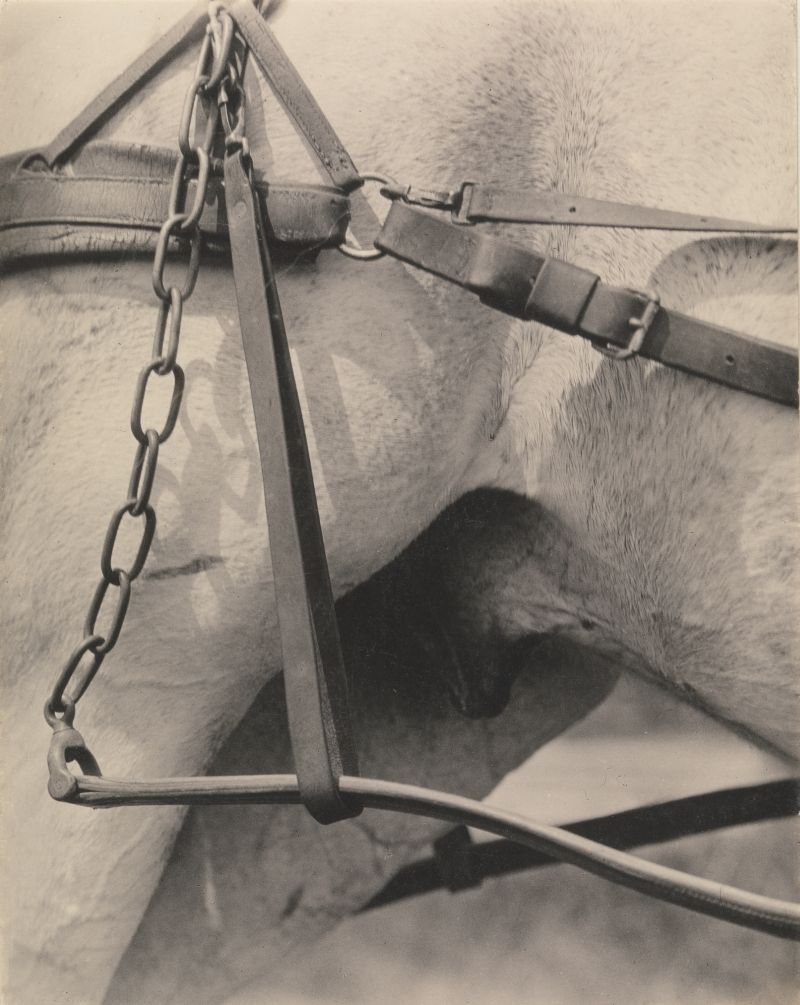
Alfred Stieglitz (American, 1864-1946) Spiritual America 1923 Gelatin silver print 11.6 x 9.2cm (4 9/16 x 3 5/8 in.) The Metropolitan Museum of Art Alfred Stieglitz Collection, 1949
In the decade leading up to the Great Depression, American modernism was a highly contested concept. Stieglitz, perhaps justifiably, considered himself one of the few qualified to dictate its course, having surrounded himself with a group of like-minded and devoted artists, critics, and writers whom he directed in an almost shamanistic fashion. Spirituality loomed large in his vision of American identity, but he was disheartened and offended with what he viewed as a pent-up, materialist, and culturally bankrupt American way. In a rare attempt at ironic commentary, Stieglitz produced this picture of a harnessed, castrated horse – a pure representation of eradicated sexual prowess and restrained muscular energy – and labelled it Spiritual America. In effect, he suggested that America was lacking in spirit by reinterpreting the horse, a traditional American symbol of unstoppable force, as a trussed-up pattern of slick geometry.
Text from The Metropolitan Museum of Art website
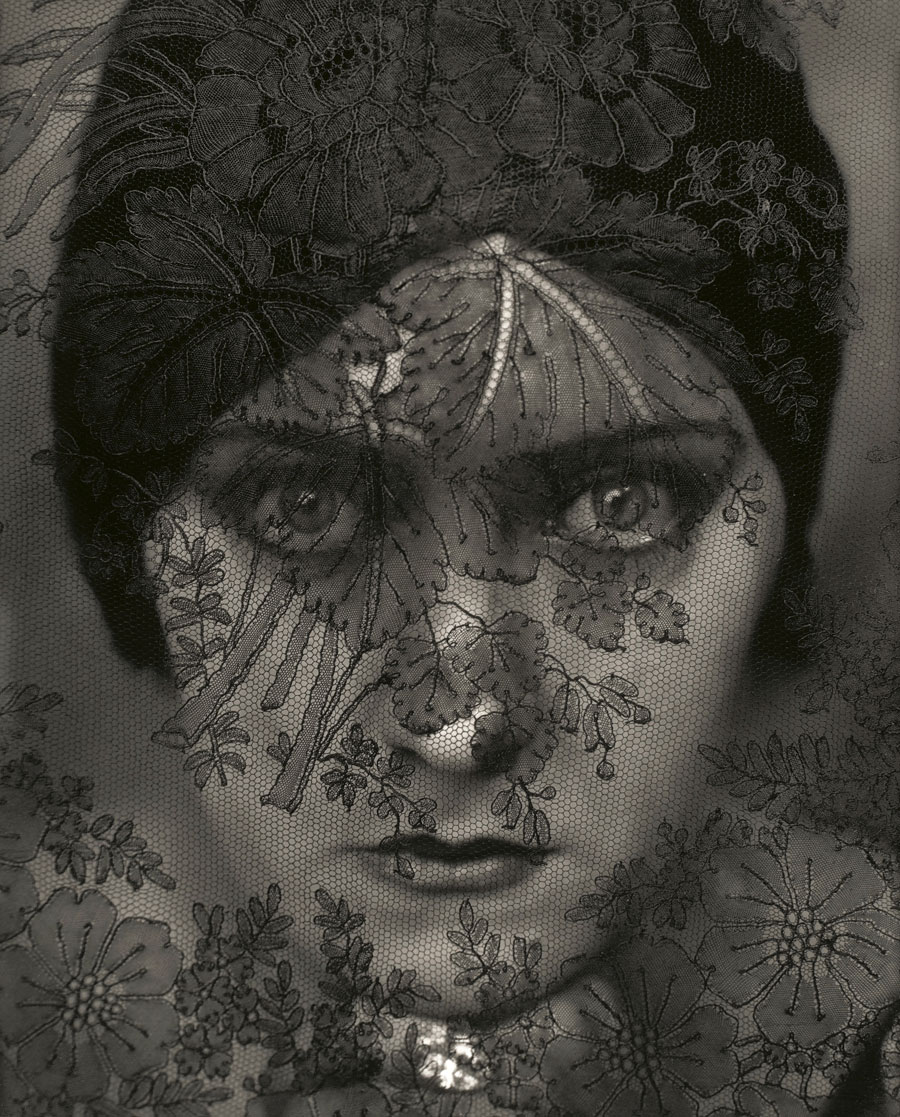
Edward J. Steichen (American born Luxembourg, 1879-1973) Gloria Swanson 1924, printed 1960s Gelatin silver print 24.0 x 19.1cm (9 7/16 x 7 1/2 in.) The Metropolitan Museum of Art Gift of Grace M. Mayer, 1989
Paul Strand (American, 1890-1976) Wild Iris, Maine 1927-1928 Gelatin silver print 24.8 x 19.8cm (9 3/4 x 7 13/16 in.) The Metropolitan Museum of Art Alfred Stieglitz Collection, 1955 Courtesy Aperture Foundation, Inc., Paul Strand Archive
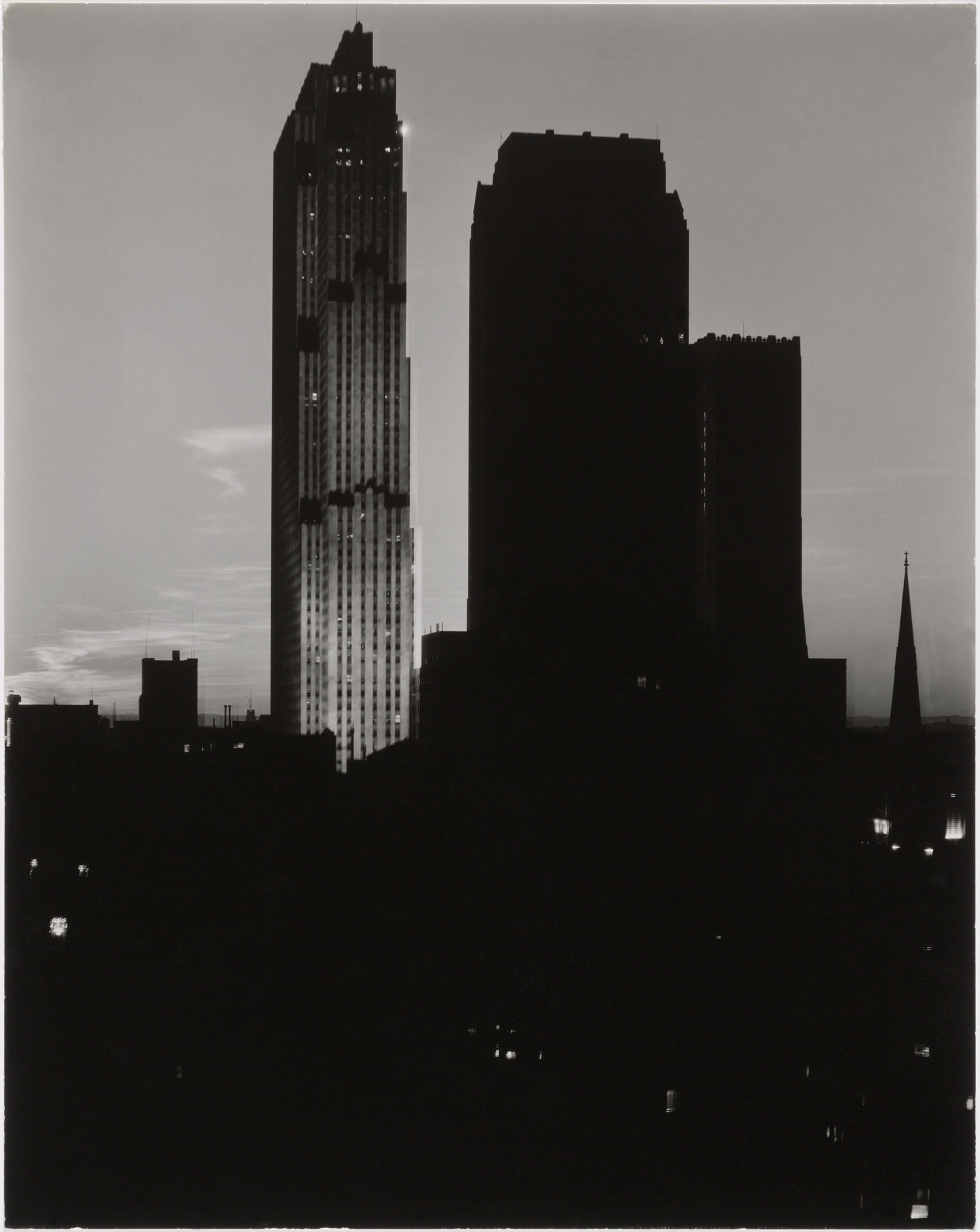
Alfred Stieglitz (American, 1864-1946) Looking Northwest from the Shelton, New York 1932 Gelatin silver print 24.2 x 19.2cm (9 1/2 x 7 9/16 in.) The Metropolitan Museum of Art Ford Motor Company Collection Gift of Ford Motor Company and John C. Waddell, 1987
Stieglitz recorded the construction of the skyscrapers of midtown Manhattan from the windows of his gallery and of his nearby apartment in the Shelton Towers. His photographs seem not to celebrate the astonishing growth of new buildings but rather almost geological permanence and stability: “Crammed on the narrow island the million-windowed buildings will jut glittering, pyramid on pyramid…,” as John Dos Passos wrote.
Alfred Stieglitz (American, 1864-1946) Georgia O’Keeffe – Hand and Wheel 1933 Gelatin silver print 24.1 x 19.5cm (9 1/2 x 7 11/16 in.) The Metropolitan Museum of Art Gift of Georgia O’Keeffe, through the generosity of The Georgia O’Keeffe Foundation and Jennifer and Joseph Duke, 1997
Paul Strand (American, 1890-1976) Cristo – Oaxaca 1933, printed 1940 Photogravure 25.4 x 20.2cm (10 x 7 15/16 in.) The Metropolitan Museum of Art David Hunter McAlpin Fund, 1940
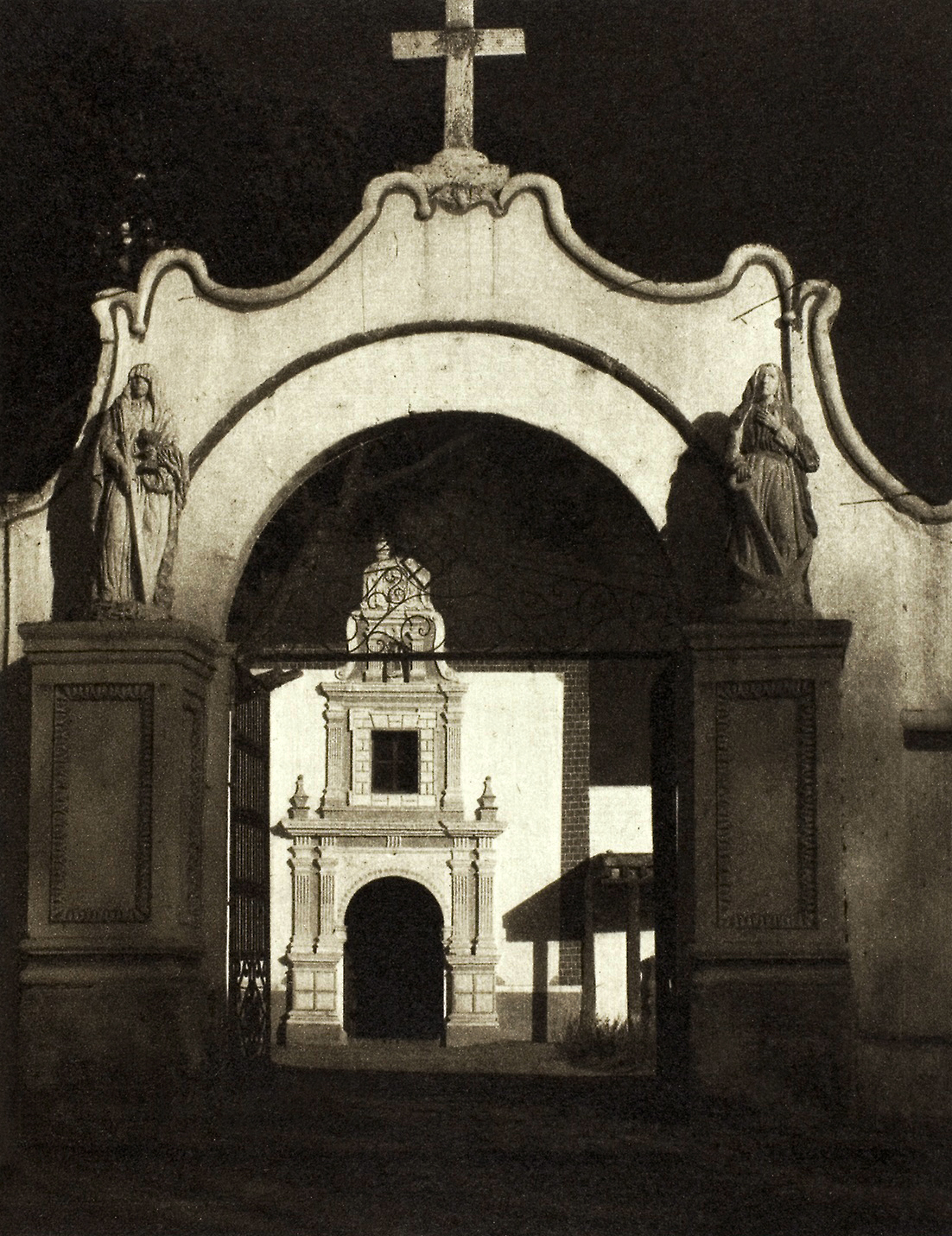
Paul Strand (American, 1890-1976) Coapiaxtla, Church 1933, printed 1940 Photogravure 16.2 x 12.7cm (6 3/8 x 5 in.) David Hunter McAlpin Fund, 1940
The Metropolitan Museum of Art 1000 Fifth Avenue at 82nd Street New York, New York 10028-0198 Information: 212-535-7710
Opening hours: Sunday – Tuesday and Thursday: 10am – 5pm Friday and Saturday: 10am – 9pm Closed Wednesday
Alfred Stieglitz (American, 1864-1946) Ford V-8 1935 Gelatin silver photograph 19.5 x 24.3cm George Eastman House, part purchase and part gift from Georgia O’Keeffe
Many thankx to Susanne Briggs and the Art Gallery of New South Wales for allowing me to publish the photographs in the posting. Please click on the photographs for a larger version of the image.
“… much has happened in photography that is sensational, but very little that is comparable with what Stieglitz did. The body of his work, the key set – I think – is the most beautiful photographic document of our time.”
Georgia O’Keeffe 1978
The photographs Alfred Stieglitz (1864-1946) took around his summer house at Lake George, New York state, USA after 1915 are considered a major departure and dramatically influenced the course of photography. The desire to build a specifically ‘American’ art led Stieglitz to explore the essential nature of photography, released from contrivances and from intervention in print and negative. “Photography is my passion. The search for truth my obsession,” he would write in 1921.
This major exhibition is the first in Australia of Stieglitz’s photographs. 150 are included and are amongst the very best Stieglitz ever printed. They are also the rarest. One third of the exhibition is being lent by the National Gallery of Art, Washington DC, which holds ‘the key set’ – selected by his lover, muse and wife, the artist Georgia O’Keeffe, and deposited there after Stieglitz’s death.
Alfred Stieglitz (American, 1864-1946) City of ambition 1911 Photogravure 33.9 x 26.0cm George Eastman House, Museum purchase from Museum of Modern Art, New York
Alfred Stieglitz (American, 1864-1946) Ellen Koeniger 1916 Gelatin silver photograph 11.1 x 9.1cm J Paul Getty Museum, Los Angeles
Alfred Stieglitz (American, 1864-1946) Waldo Frank 1920 Palladium photograph 25.1 x 20.2cm Art Institute of Chicago, Alfred Stieglitz Collection
Waldo David Frank was an American novelist, historian, political activist, and literary critic, who wrote extensively for The New Yorker and The New Republic during the 1920s and 1930s.
Alfred Stieglitz (American, 1864-1946) Spiritual America 1923 Gelatin silver photograph 11.7 x 9.2cm Philadelphia Museum of Art: the Alfred Stieglitz Collection 1949
The photographs Alfred Stieglitz (1864-1946) took around his summer house at Lake George, New York state, USA after 1915 are considered a major departure and dramatically influenced the course of photography. The desire to build a specifically ‘American’ art led Stieglitz to explore the essential nature of photography, released from contrivances and from intervention in print and negative.
‘Stieglitz’s mature photographs from the 1910s onwards are free from any sense that photography must refer to something outside of itself in order to express meaning,’ said Judy Annear, senior curator photography, Art Gallery of New South Wales.
This major exhibition is the first in Australia of Stieglitz’s photographs. 150 are included and are amongst the very best Stieglitz ever printed. They are also the rarest. One third of the exhibition is being lent by the National Gallery of Art, Washington DC, which holds ‘the key set’ – selected by his lover, muse and wife, the artist Georgia O’Keeffe, and deposited there after Stieglitz’s death.
‘Passionate and provocative; charismatic, verbose and intellectually voracious; a self described revolutionist and iconoclast with an unwavering belief in the efficacy of radical action; competitive, egotistical, narcissistic and at times duplicitous, but also endowed with a remarkable ability to establish a deep communion with those around him – these are but some of the adjectives that can be used to describe Alfred Stieglitz,’ said Sarah Greenough, senior curator of photographs, National Gallery of Art, Washington.
Major loans are also coming from the J Paul Getty Museum, Los Angeles, Museum of Modern Art and Metropolitan Museum of Art, New York, Philadelphia Museum of Art, Art Institute of Chicago, and George Eastman House, Rochester amongst others.
The exhibition begins with a selection of Stieglitz’s photographs from the 1910s including those that he took at his gallery 291 in New York City of artists and collaborators, including O’Keeffe. Stieglitz was a superb photographic printer and dedicated to aesthetics in publishing. A number of the later editions (from 1911-1917) of his publication Camera work – described as the most beautiful journal in the world – are included.
Stieglitz’s portraits grew steadily in power in the 1910s and 20s, and continued to be a major part of his photographic practice. He would sometimes photograph his subjects over and over again and none more so than O’Keeffe, whom he met in 1916.
Stieglitz photographed O’Keeffe for the first time in 1917. He continued to photograph her from every angle, clothed and unclothed, indoors and out until his last photographs from 1936/1937. In all there are more than 300 photographs of O’Keeffe which convey all the nuances of their relationship in that 20-year period. A selection is included.
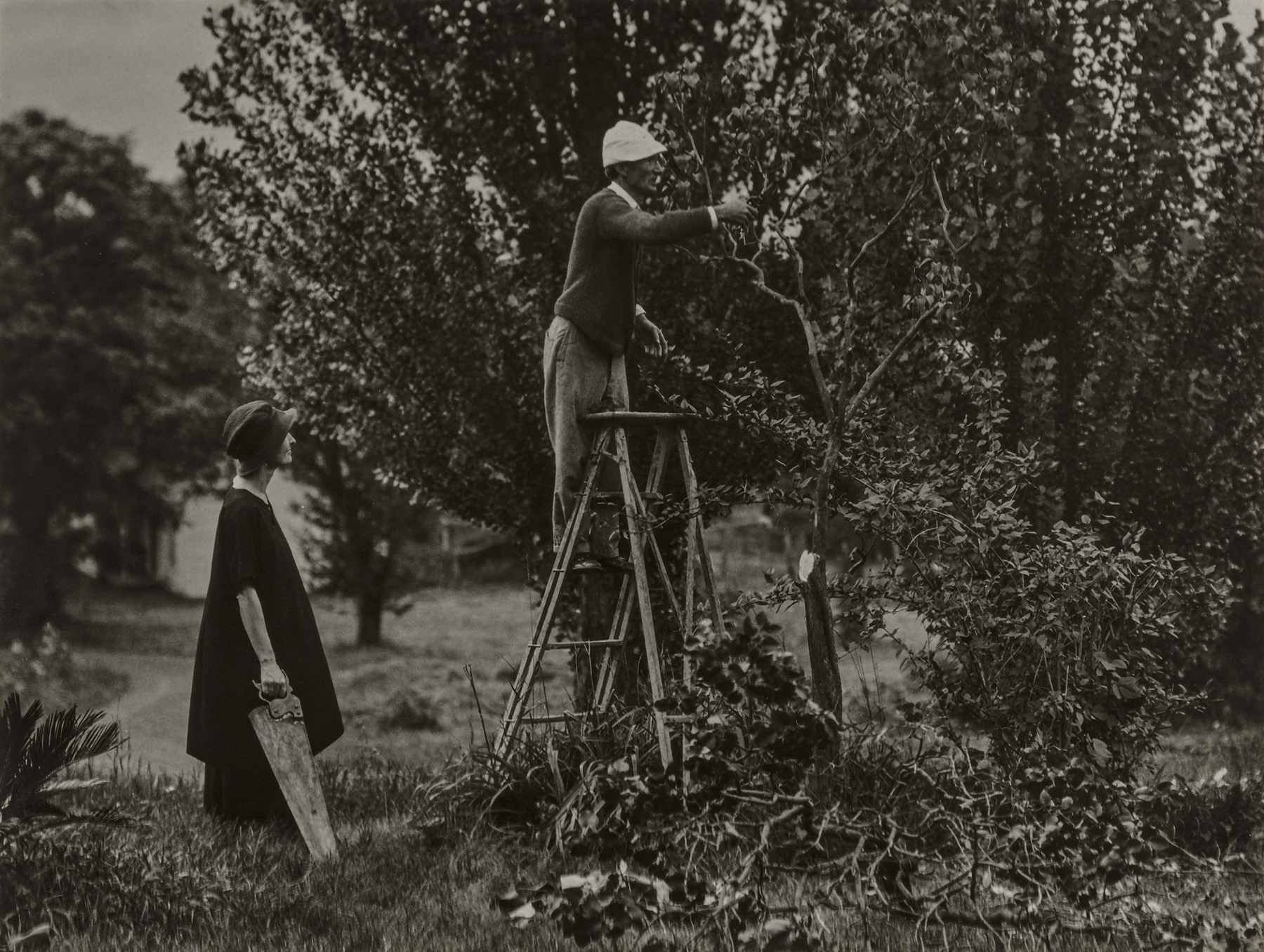
Stieglitz first visited Lake George in the 1870s with his parents. The visits slowed until the 1910s but from 1917 until his death he spent every summer there. Stieglitz’s ashes are buried at Lake George.
The photographs of people, buildings, landscapes and skies that Stieglitz took at Lake George form a collective portrait of a place which has not been rivalled in the history of photography worldwide for its subtlety of feeling expressed in the simplest of terms.
Stieglitz developed the idea for his cloud photographs in 1922 because he wanted to create images which carried the emotional impact of music and to disprove the idea being put about that he hypnotised his (human) subjects. The first title for the cloud photographs was simply Music: a sequence…; this was eventually superseded by Equivalent as Stieglitz believed that these photographs could exist as the visual equivalent to other forms of expression.
Stieglitz changed the course of photography worldwide and has influenced major figures in photography from Minor White to Robert Mapplethorpe, Max Dupain to Tracey Moffatt and Bill Henson.”
Alfred Stieglitz (American, 1864-1946) Georgia O’Keeffe: a portrait 1918 Platinum photograph 24.6 x 19.7cm The J. Paul Getty Museum Copyright J. Paul Getty Trust
Alfred Stieglitz (American, 1864-1946) Georgia O’Keeffe 1920 Gelatin silver photograph 23.5 x 19.69cm San Francisco Museum of Modern Art Alfred Stieglitz Collection. Gift of Georgia O’Keeffe
“Stieglitz is too easily bundled in amongst a rush to the reductions of modernism and cubism, the time he inhabits and the new technology he is stretching make that almost inevitable. On looking at the images here it feels like a mistake to label him that simply. We can see hints of the abstract, the grids of Mondrian or the blocks of Braque, but his work is as human and as smudged as a fingerprint. It is this sense of flaw and serendipity is what makes him so different to photographers like Man Ray for Stieglitz seems to embrace the beauty of imperfection. The memorable works here inhabit a world of infinite shining gradations between black and white, they are expansive and open rather than reductive and finished, in doing this Stieglitz’s greatest innovation might be to take a static form and make it so intensely moving.”
John Matthews on his Art Kritique blog Sunday 15 August 2010 [Online] Cited 22/12/2019
Alfred Stieglitz (American, 1864-1946) Self-portrait 1907, printed 1930 Gelatin silver photograph 24.8 x 18.4cm J. Paul Getty Museum, Los Angeles
Alfred Stieglitz (American, 1864-1946) From the Back Window – 291 1915 Platinum print 25.1 x 20.2cm (9 7/8 x 7 15/16 in.) Metropolitan Museum of Art Alfred Stieglitz Collection, 1949
From the Back Window – 291 is a black and white photograph taken by Alfred Stieglitz in 1915. The picture was taken at night from a back window of his 291 gallery in New York. Its one of the several that he took that year from that window, including at a snowy Winter.
The night photograph depicts an urban cityscape of New York. The reigning darkness is leavened by several sources of artificial light. The background building is the 105 Madison Avenue, at the southeast corner of Madison and 30th Street, while the smaller building with the advertisements is 112 Madison Avenue.
Stieglitz seems to have taken inspiration from a recent exhibition of Cubist painters Pablo Picasso and Georges Braque at the 291 gallery, which would explain his interest in the geometrical forms and lines, but also of the 19th century photographers, like David Octavius Hill. He wrote then to R. Child Bailey: “I have done quite some photography recently. It is intensely direct. Portraits. Buildings from my back window at 291, a whole series of them, a few landscapes and interiors. All interrelated. I know nothing outside of Hill’s work which I think is so direct, and quite so intensely honest.” The picture also seems still reminiscent of Pictorialism, while being more in the straight photography style.
There are prints of this photograph at several public collections, including the Metropolitan Museum of Art, in New York, the National Gallery of Art, in Washington, D.C., the Museum of Fine Arts, Boston, and at the Williams College Museum of Art, in Williamstown, Massachusetts.
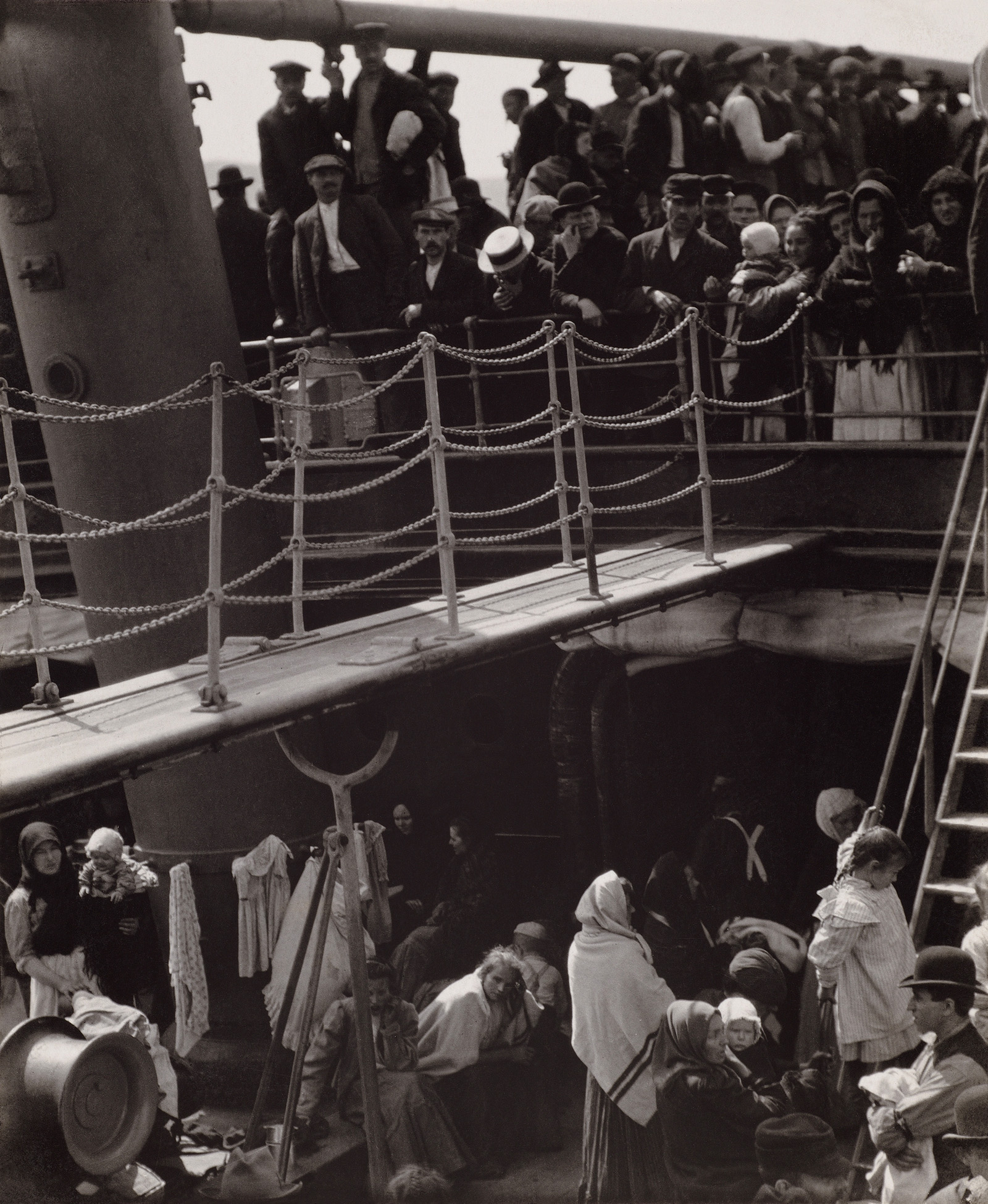
Alfred Stieglitz (American, 1864-1946) The Steerage 1907 Gelatin silver print Gift of Miss Georgia O’Keeffe
Alfred Stieglitz (American, 1864-1946) Hodge Kirnon 1917 Palladium print 9 11/15 x 7 13/16 in The Metropolitan Museum of Art Alfred Stieglitz Collection, 1949
The noted West Indian scholar and historian Hodge Kirnon leaning against a doorframe.
Alfred Stieglitz (American, 1864-1946) Georgia O’Keeffe – Torso 1918 Gelatin silver print 23.6 x 18.8cm (9 5/16 x 7 3/8 in.) Metropolitan Museum of Art Gift of Mrs. Alma Wertheim, 1928
Stieglitz took dozens of pictures of O’Keeffe’s body, including her hands and her nude torso. The photograph depicts her naked torso, seen from below, with her arms only partially visible and without showing her head. The Torso, with its uplifted arms and muscular thighs, has a sculptoric quality that seems influenced by Auguste Rodin, whose work Stieglitz knew well and had shown at the Photo-Secession.
The Torso was in the Stieglitz exhibition at the Anderson Galleries in New York, where he presented pictures of several parts of the body of O’Keeffe, and which had a particular impact. Herbert Seligmann wrote that “Hands, feet, hands and breasts, torsos, all parts and attitudes of the human body seen with a passion of revelation, produced an astonishing effect on the multitudes who wandered in and out of the rooms”.
A print of this picture sold for $1,360,000 at Sotheby’s New York, on 14 February 2006, making it the second most expensive price reached by a Stieglitz photograph.
There are prints of Torso at the Metropolitan Museum of Art, New York, the National Gallery of Art, Washington, D.C., The Art Institute of Chicago, the J. Paul Getty Museum, Los Angeles, and the Museé d’Orsay, in Paris.














 Art Blart _ art and cultural memory archive
You must be logged in to post a comment.