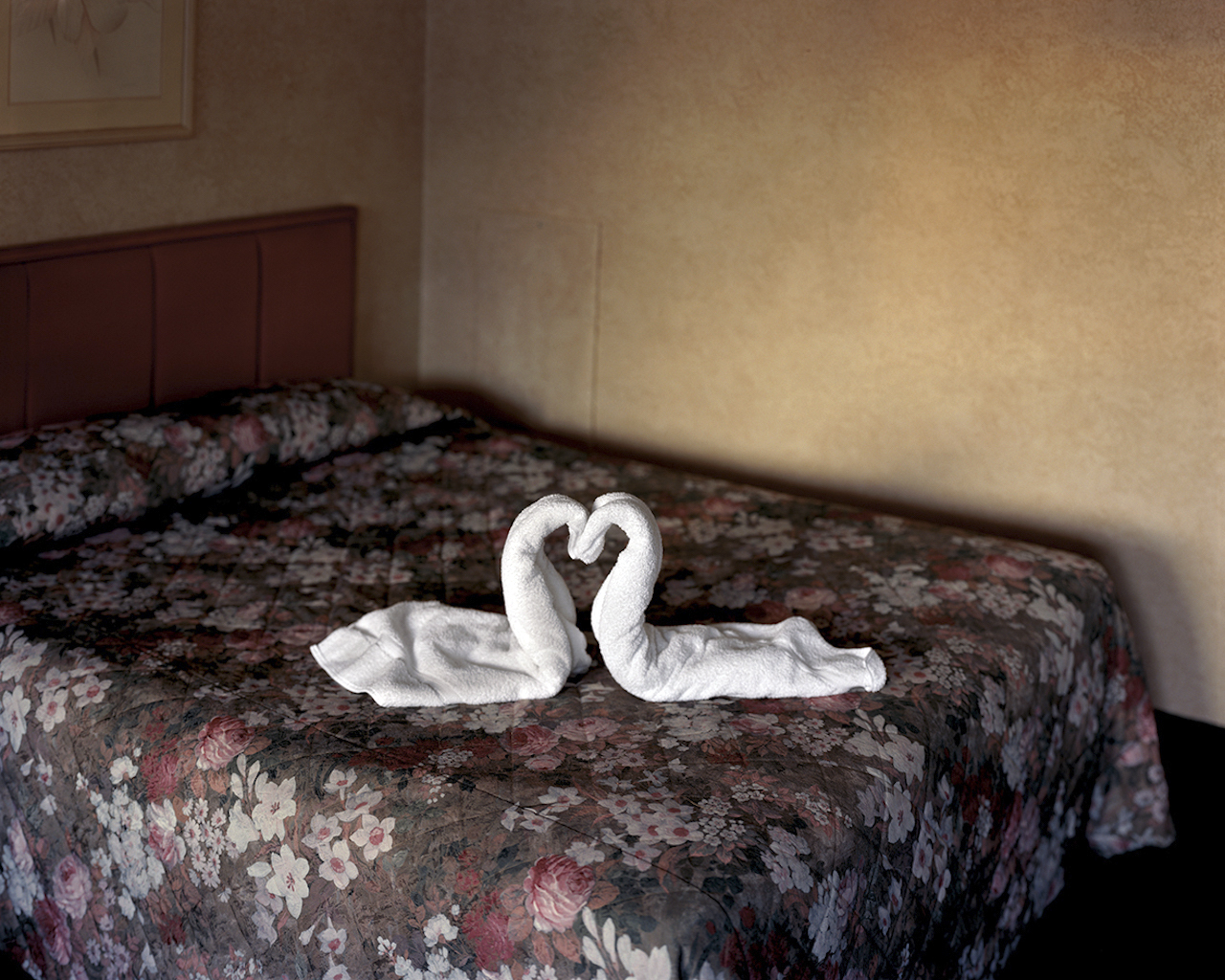
Alec Soth (American, b. 1969) Two Towels 2004 From the series Niagara (2006)
Minneapolis-based photographer Alec Soth has attained international recognition for his photographic series. Notable are the two series Sleeping by the Mississippi (1999-2004) portraying the river and the life along it’s banks and Niagara (2006) where Soth focuses his large format camera on the hotels, residents loves and lives and the environs around Niagara Falls.
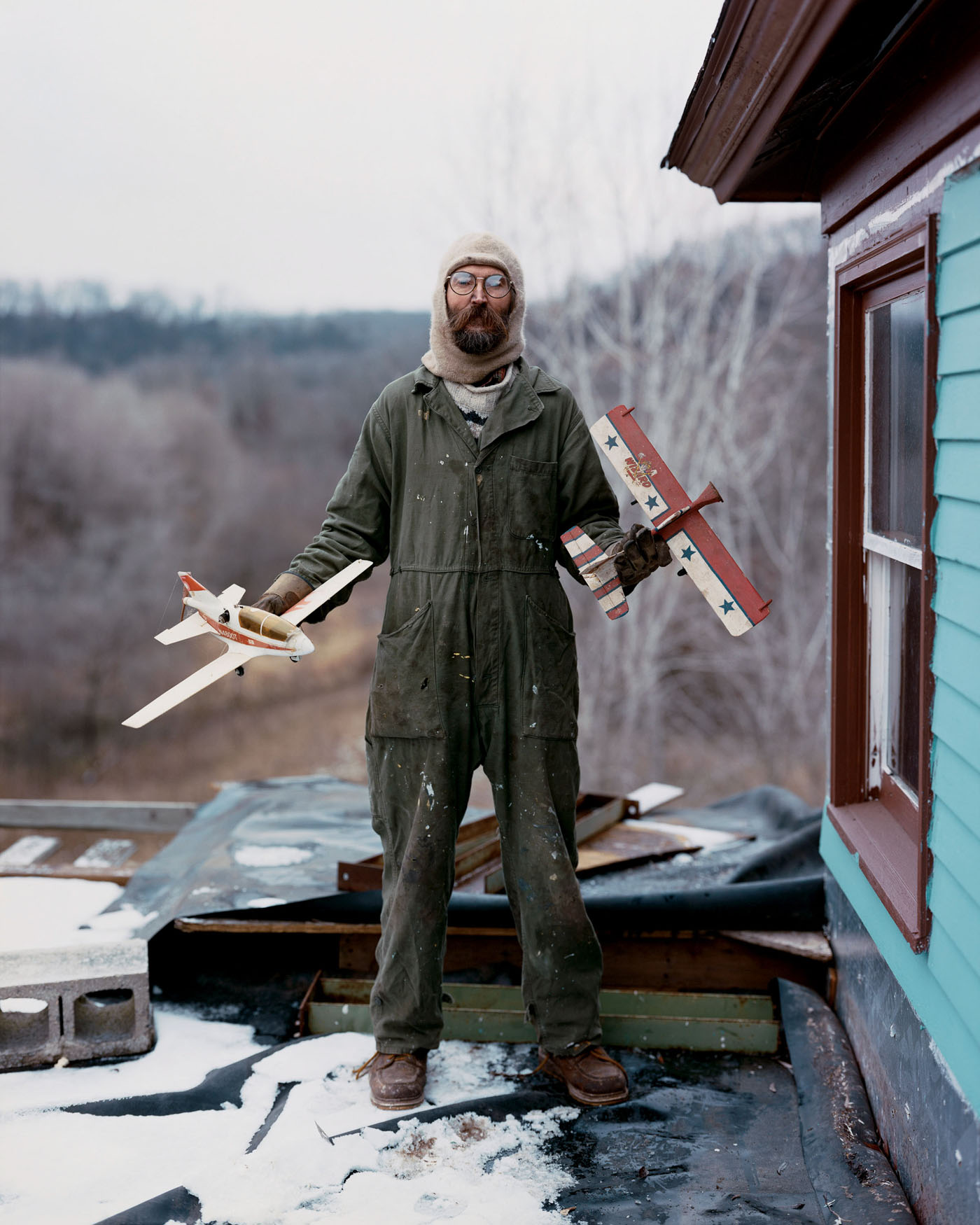
His work is firmly rooted in the documentary traditions of Walker Evans and Robert Frank but pushes the documentary form. Whereas Frank used a foreigners eye and ‘snapshot’ photography to challenge traditional notions of American culture in his seminal book The Americans (1958), Soth photographs everyday events of American life – home, romance, religion, bliss, heartbreak and agony – and constructs his vision of the land and people in poetic form. His use of handwritten notes is especially poignant.
His view of America is both narrative, truth and epic construction. Working in a serial form, Soth builds the themes within his series. The connections between people living their lives and facing their plight together – with dignity – becomes fully evident.
Dr Marcus Bunyan
Alec Soth (American, b. 1969) Charles, Vasa, Minnesota 2002 From the series Sleeping by the Mississippi (1999-2004)
“Sciagraphy: the art of depicting an object through its shadow.”
(William Henry Fox Talbot’s private name for photography)
Schaaf, Larry. “The Paper Multiple: Talbot’s Invention and Early Photographic Books,” in Foster, S., Heiting, M. and Stuhlman, R. Imagining Paradise. Rochester NY: George Eastman House, 2007, p. 45.
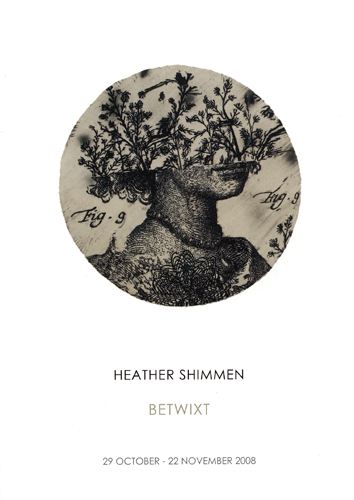
Exhibition dates: 29th October – 22nd November 2008
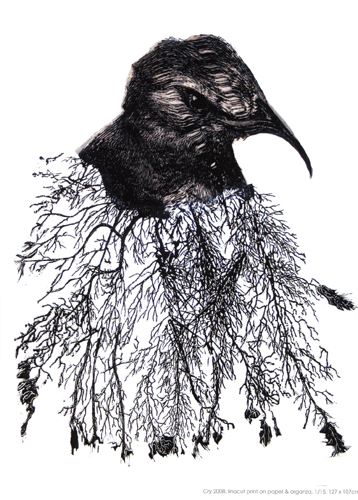
Heather Shimmen (Australian, b. 1957) Cry 2008 Linocut print on paper and organza
“(Somewhere) betwixt nature and civilisation, past and future, fact and fantasy. Shimmen guides the viewer on a magical history of the landmarks and turning points which connect these extremes … Pictures of skewed, stretched and distorted women are abundant. There are moody pieces where Victorian women look uncomfortable in the Australian bush. In fact their discomfort is palpable as they begin to morph into the local shrubbery, their beauty spots being replaced with twigs … These images wear the marks and piercings of the subverted.”
Pamela Irving. Catalogue essay
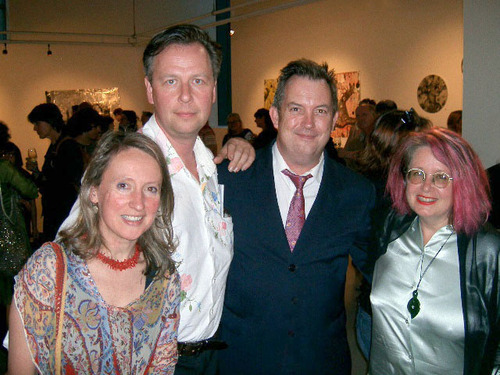
Arriving late from the Rennie Ellis opening there was a lively crowd in attendance at the opening of Betwixt by printmaker Heather Shimmen at Gallery 101, Collins Street. The exhibition had been opened by the well known sculptor William Eicholtz. Also in attendance were artists Louise Rippert whose exhibition Trace at Deakin University Art Gallery had opened the previous night and Carolyn Lewens who I studied photography with at RMIT University in the early 1990s and who is now completing her PhD.
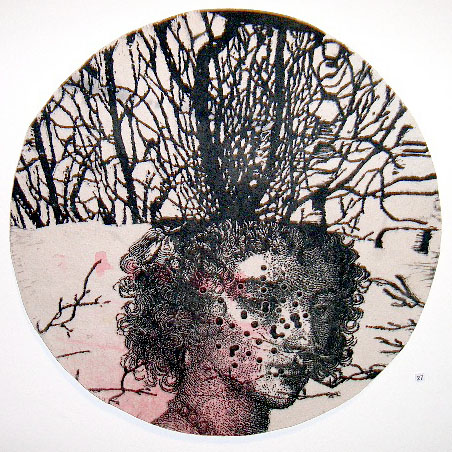
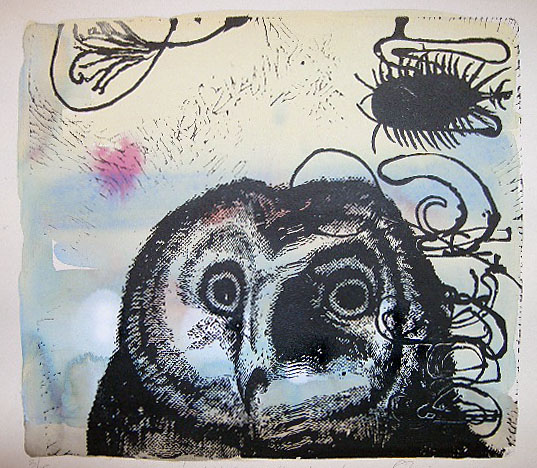
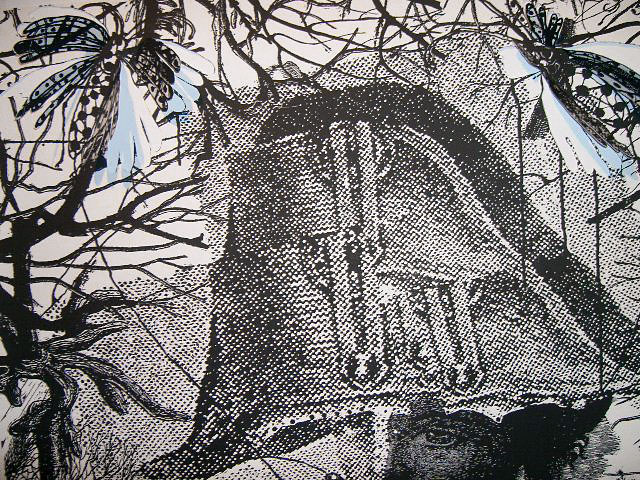
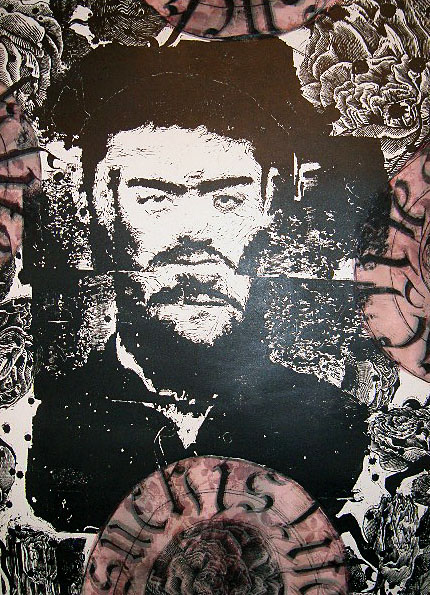
The work is feminine but also muscular and visceral, expanding past the edges of the paper. Images are composed in fractured spaces, Ned Kelly surrounded by emblazoned Life Savers, Australian creatures no longer loveable and pliable but dark and threatening. These elements are balanced with the use of delicate printed organza feathers for example. The work challenges conventional iconic wisdoms about Australian culture, morphing traditional stereotypes: no longer is it the Australia child lost in the bush (see Kim Torney’s Babes in the Bush) but the bush invading and subverting adults, animals and the city.
This is a body of work that is both conceptually and technically well resolved, displayed to advantage in the gallery space. Well worth a visit.
Dr Marcus Bunyan
Left to right: Artist Louise Rippert, sculptor William Eicholtz, architect Vaughn Barker and artist Heather Shimmen Photo: Marcus Bunyan
Heather Shimmen (Australian, b. 1957) Lost I 2008 Linocut print on circle of felt, unique state
More artwork from the opening of Heather Shimmen’s exhibition Betwixt at 101 Gallery, Melbourne
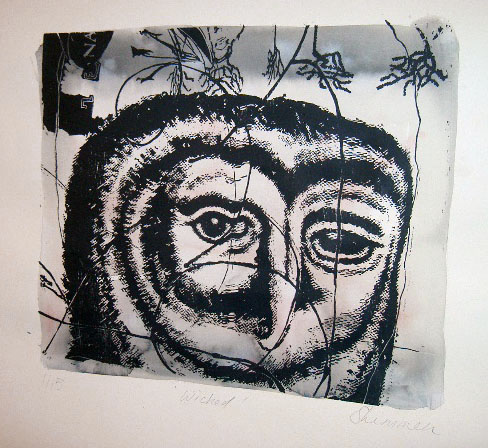
Heather Shimmen (Australian, b. 1957) Wicked 2008 linocut on paper and ink
Heather Shimmen (Australian, b. 1957) Such Is Life 2008 Linocut print on paper and organza
Heather Shimmen (Australian, b. 1957) Catalogue front cover with the work Lost II 2008 Linocut print on circle of felt, unique state
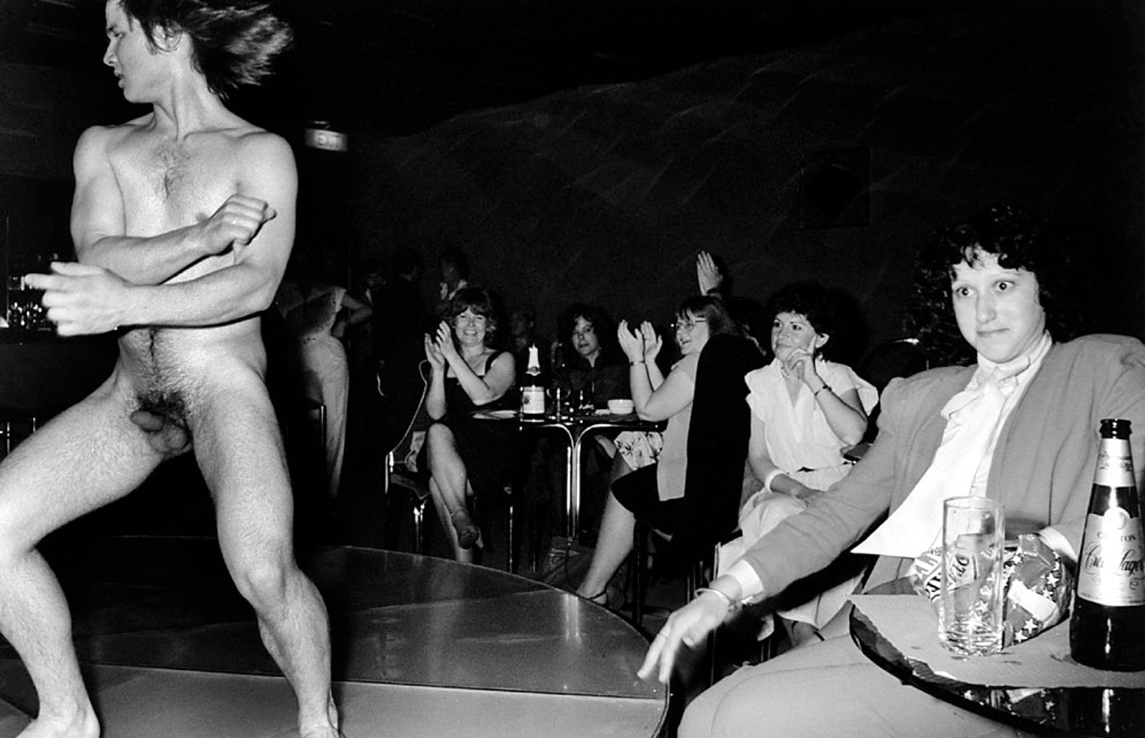
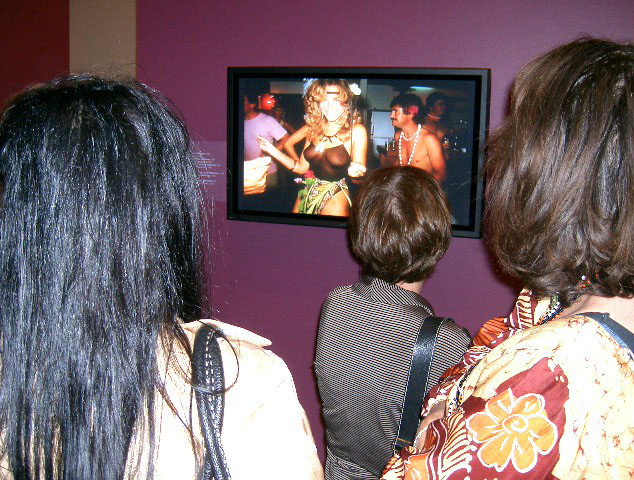
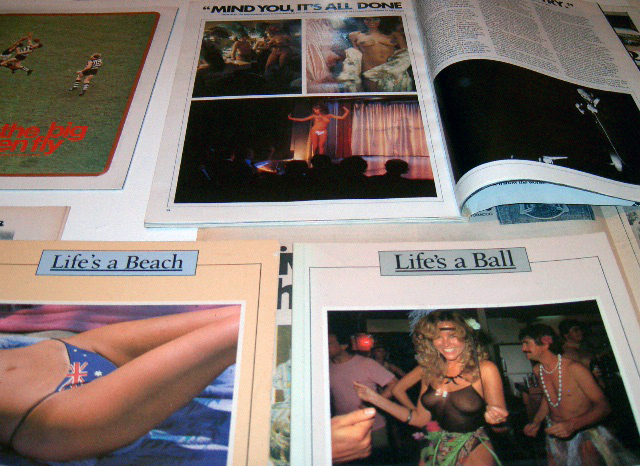
Rennie Ellis (Australian, 1940-2003) Girls’ Night Out, Prahran 1980 Silver gelatin, selenium toned fibre based print
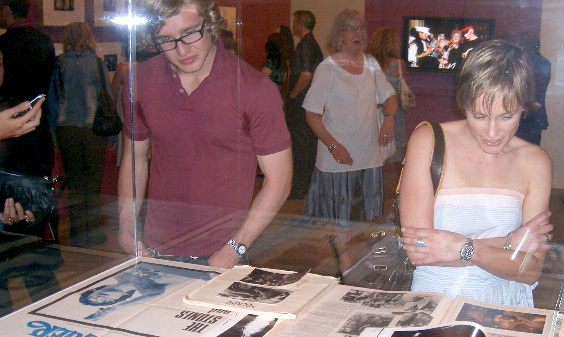
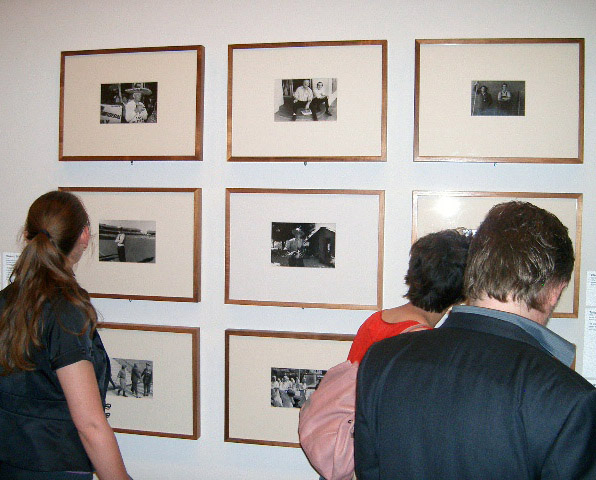
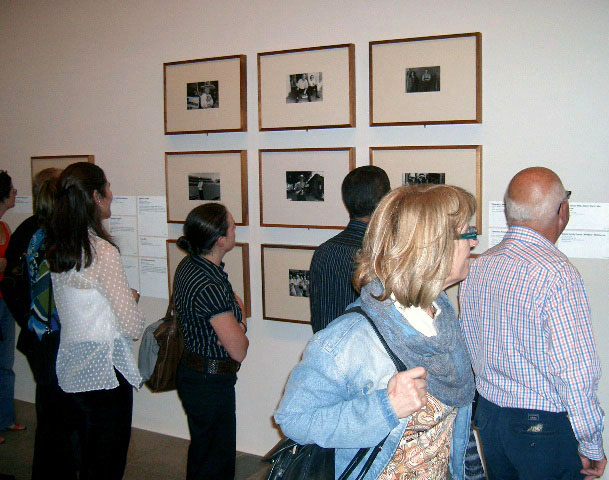
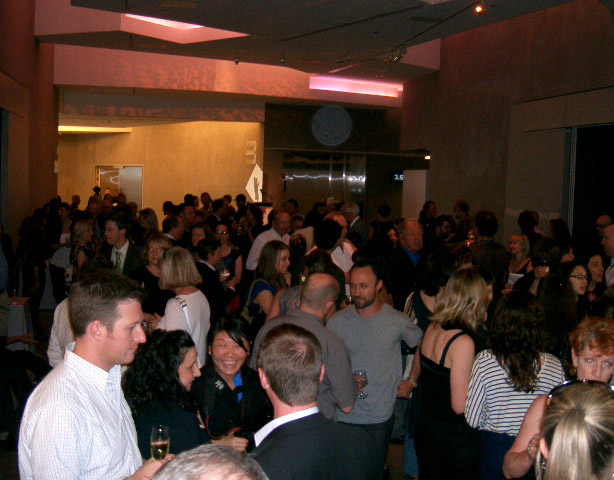
A very social and lively crowd gathered at The Ian Potter Centre: NGV Australia at Federation Square on the evening of 30th October to celebrate the life and work of the Australian social photographer Rennie Ellis.
After opening comments by the NGV Director Dr Gerard Vaughan there was a funny and erudite speech by Phillip Adams AO who had flown down from Sydney to open the exhibition. The crowd enjoyed the anecdotes about his relationship with Rennie and said he thought that dying was a good career move on Rennie’s behalf and that he would have loved the fact that he had a retrospective at the NGV. Adams observed that Ellis used to be everywhere, at every party and opening, using his astute eye to record and never to judge. Applause all round for a life well lived.
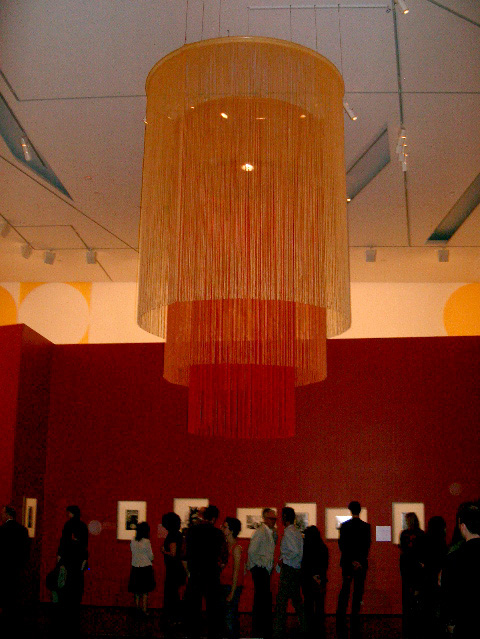
On entering the exhibition space viewers were treated to a simple but effective installation of his work, with overtones of the 1970’s-1980s interior decor with yellow and white circle graphics and hanging fabric chandelier. The curatorial staff at the NGV (notably Susan van Wyk) have chosen over 200 works from an archive of over half a million images for the exhibition in a process that has taken over two and a half years.
As an immigrant arriving in Australia in 1986 I remember 397 Club that used to be at 397 Swanston Street. After every other place had closed this club attracted people from every walk of life: pimps, prostitutes, drag queens, faggots, lesbians, straights and druggies. Rennie was probably there recording the scene. We were there just for a good time. It was fun and this is what Ellis’ photography is. Not burdened by overarching conceptual ideas Ellis recorded what he saw insightfully, balancing social commentary and spatial organisation in the construction of his images. The image Girls’ Night Out, Prahran 1980 (above) is a pearler (with the look on the woman’s face) and neatly encapsulates the magic of his image making.
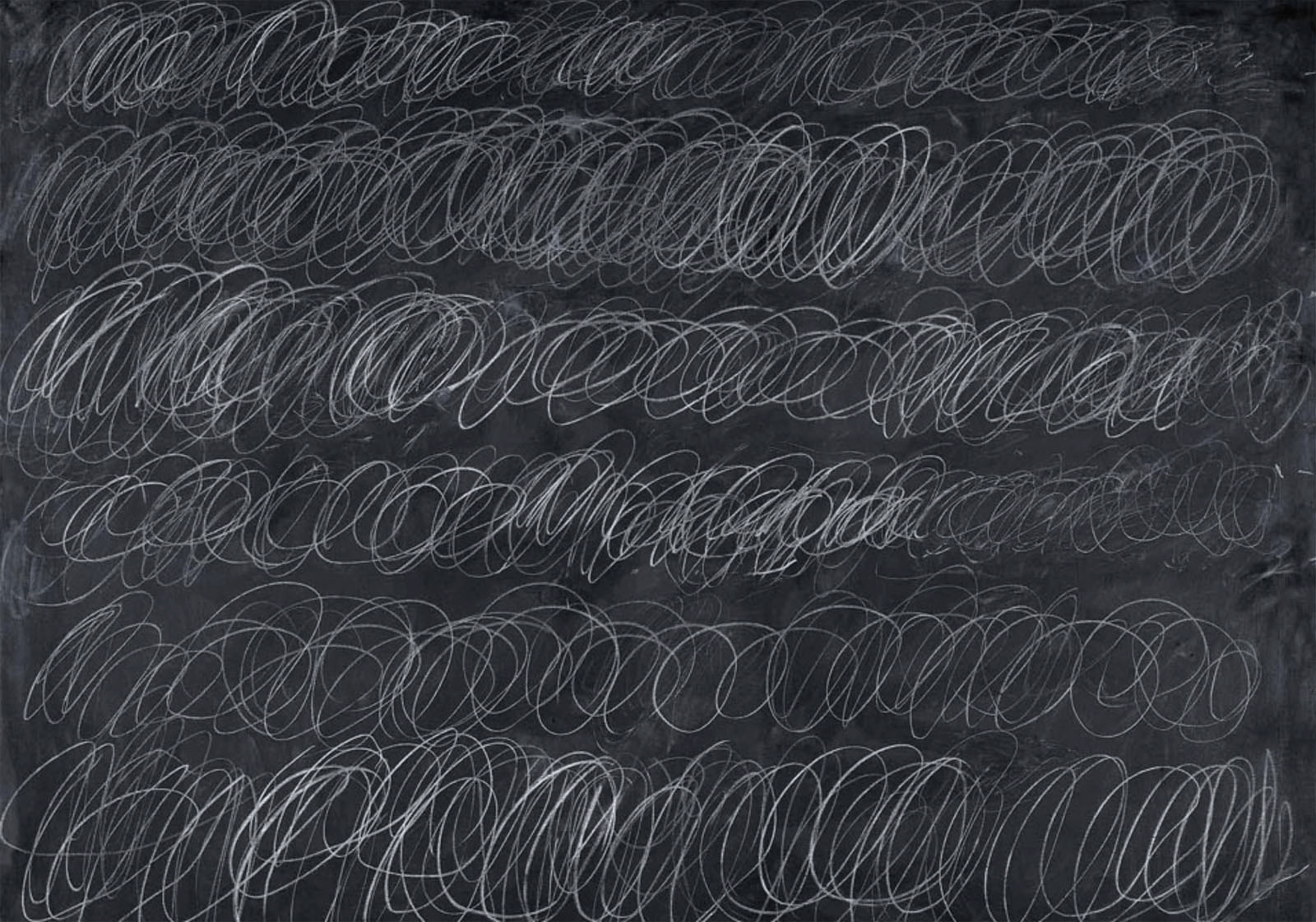
Cy Twombly (American, 1928-2011) Cold Stream 1966 White wax pencil on canvas
This painting reminds me of the drawings of Rudolf Steiner (see the exhibition Joseph Beuys & Rudolf Steiner: Imagination, Inspiration, Intuition at The National Gallery of Victoria, Melbourne earlier this year) but here the performance of marking is pushed beyond the bounds of the spiritual by the ferocious attack of the artist – repeating the form but transgressing the boundaries of that form, disintegrating the ritual into the physical release of energy through the hand.
One can almost see the maelstrom of the splitting of the atom in Twombly’s repeating performance threatening to destroy himself and the world around him.
Exhibition dates: 29th October – 6th December, 2008
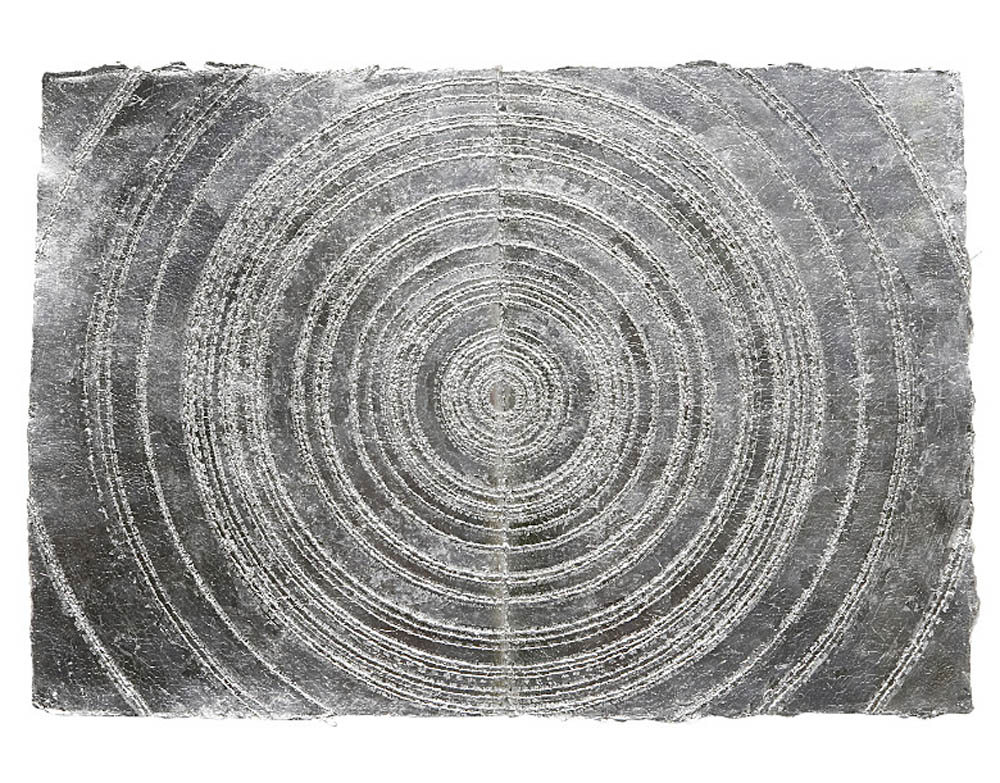
Louise Rippert (Australian) Recording (detail) 2008 Collage; thread, aluminium and silver gilt and pencil on khadi paper 38 x 37cm Collection of Deakin University
Deakin University Art Gallery present an exhibition by this Melbourne artist of new work.
“Favouring the use of archival, translucent, brittle and fine materials in her labour intensive and near devotional ‘manuscripts’ of stitching, pattern and perforation, Rippert creates mixed media works of the utmost delicacy … This is the first solo exhibition of Rippert’s work in a public institution and will present her past and recent work.”
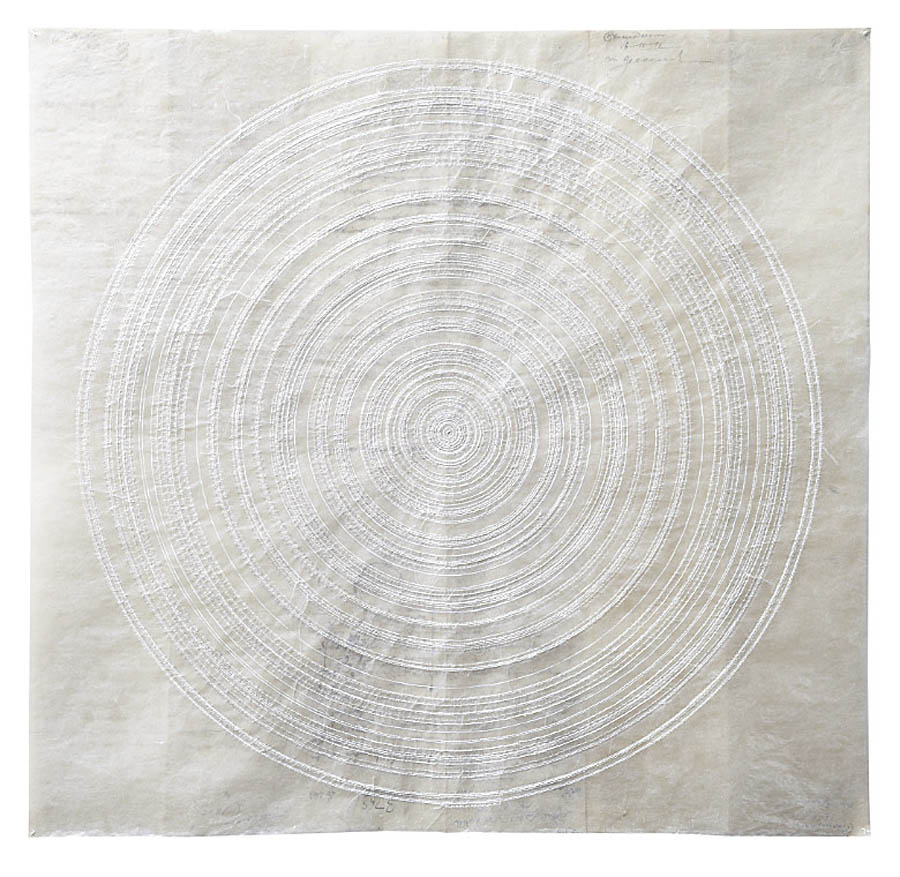
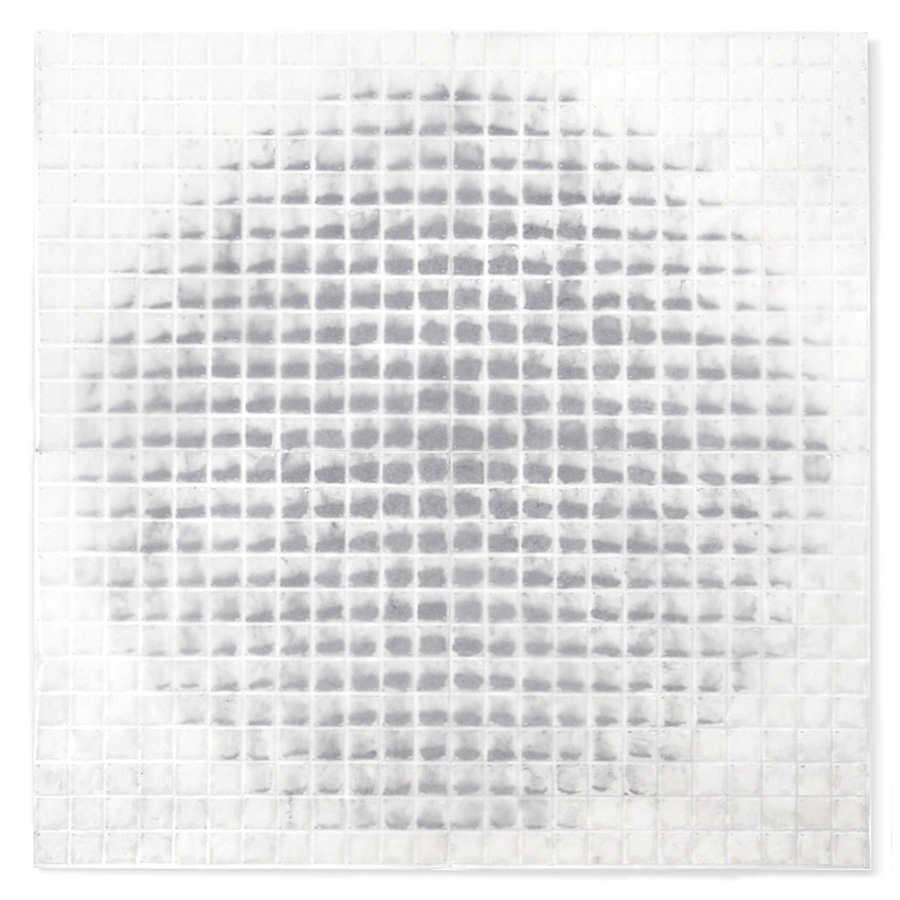
Rippert’s work is extraordinary. Taking paper of every sort Rippert inscribes the surface: stitches, weaves, colours and indents the paper, making annotations that develop personal narrative. Delicate and insightful her work celebrates what it is to be human – to be lovers, to be a daughter, to dance, to record. Rippert uses repetition of form in grids and circles to achieve her archetypal works, touching the deepest patterns of our lives.
Dr Marcus Bunyan
Louise Rippert (Australian) Cochin Mandala 2005 Collage; glassine, pencil, thread and gouache on paper Private collection
For many artists the process of art making has a mysterious fascination that continues to draw them back to experimenting, searching and the experience of creating. At the very least, it is reasonable to suggest that art making in this respect is supramundane; an experience particular to itself, simultaneously autonomous but contingent on an “other”, challenging but ostensibly satisfying, baffling and revelatory as – in this sense – creating art involves the artist’s responses, reflections and what is sometimes referred to as an inner dialogue with the work.
The medium (in that very specific conjuring sense of the word) and the interaction with it then becomes a vehicle in which this dialogue has an opportunity to “arise”, or be “heard”. It may be in these cases that the exercising of inner consciousness marks an escape or a period of sanctuary from the regular rigours of life, or that it denotes the labour of a different kind, of higher purpose, intellectual inquiry or even some manner of transcendence.
The term meditative is often ascribed to this transformation of consciousness and the introspective process of art creation. So is it meditation? Certainly many artistic traditions have involved high levels of training and discipline. Certainly many forms of meditation have involved an “other” to provide musing, focus or distraction for the mind. Both have shared common traits of concentration, labour, devotion, repetition, patience and practice. In the artwork of Louise Rippert, certainly the preconditions for such a meditation are identifiable.
The inherent irony with formal artwork is that short of sitting over the artist’s shoulder the audience experiences the result of process, rather than the process itself. However, the beauty (in more sense than one) of Louise Rippert’s work is that in many cases she leaves paths that can be followed or re-imagined, whether it is in the delicacy of her stitching and folding or the sequential approach to numbering that characterises many of her works. We can sense the endeavour. We can see the labour. We can begin in the middle of a spiral or circle and follow the numbers to their logical conclusion. Our mind in many respects can literally “join the dots” and so make the abstractive leap back and forth in time to appreciate this process of becoming.
The extra dimension to the work exhibited in LOUISE RIPPERT: TRACE is that the result also speaks not just of the process, but the intent. There is equilibrium, harmony and quiet in and across these works, which compels revisiting that very painstaking process. While having exhibited artwork annually since 1994, Rippert’s modus operandi has meant limited opportunities to show substantive bodies of work. She has been represented periodically in the National Works on Paper Prize at the Mornington Peninsula Regional Gallery and in 2005 she was the co-winner of the Blake Prize for Religious Art.
Deakin University Art Gallery is therefore very proud to present LOUISE RIPPERT: TRACE, the first solo exhibition of Louise Rippert’s creations in a public gallery and would like to thank the artist for collaborating in this project. Thanks are also extended to the following people for their contributions to this project; Euan Heng, artist, for his opening remarks to launch this landmark event, Diane Soumilas, Gallery Co-ordinator, Glen Eira City Council Gallery for her insightful catalogue essay, to the private collectors who have loaned works and Jasmin Tulk for designing the catalogue to mark and accompany this important exhibition.
Victor Griss Exhibition Curator
Originally published in Louise Rippert:Trace, Deakin University 2008
Louise Rippert (Australian) Trace 2008 Collage; pigment baking paper, tracing paper, pencil, thread and adhesive contact on drafting film 94 x 94cm Collection on the artist
Deakin University Art Gallery 221, Burwood Highway Burwood 3125
Artist Tim Fleming on the ABC’s Sunday Arts program talks about his art practice, his Flatland work in plywood and laminex and how the work has taken on a life of its own. The work takes on a self-reflexive element with his use of mirrored surfaces forcing the viewer/maker to assess where they are going in life. Fleming notes that it is important to take time as an artist to gather the skills and lay the foundation for future work. Working slowly, laying the foundations, gathering the skills.
Personally I like the use of objects that are taken out of context to convey different metaphors for everyday life. As an artist Flemings semiotic language upsets accepted boundaries of how we look and interact with the world, forcing us to question what it is that makes us who we are.
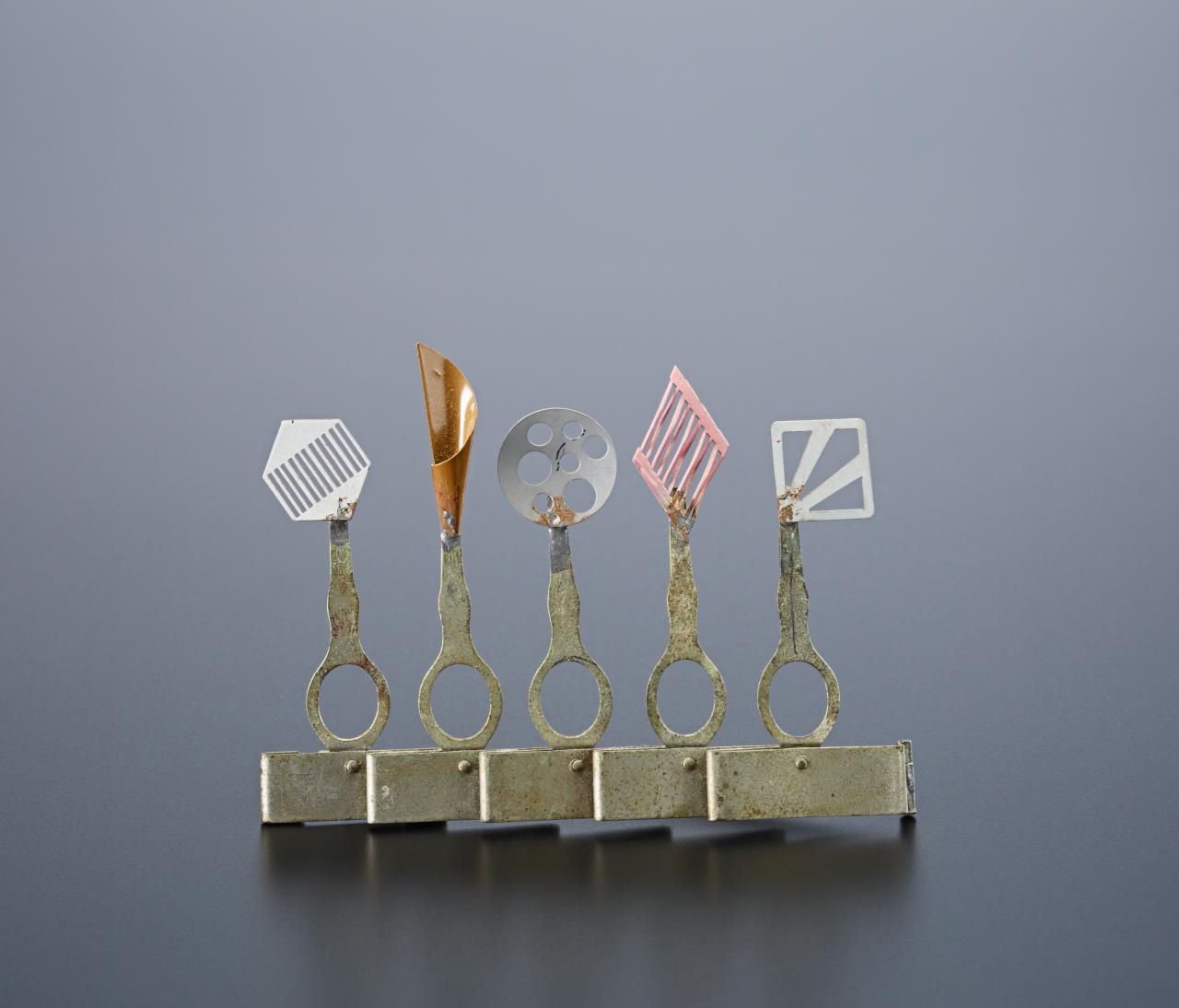
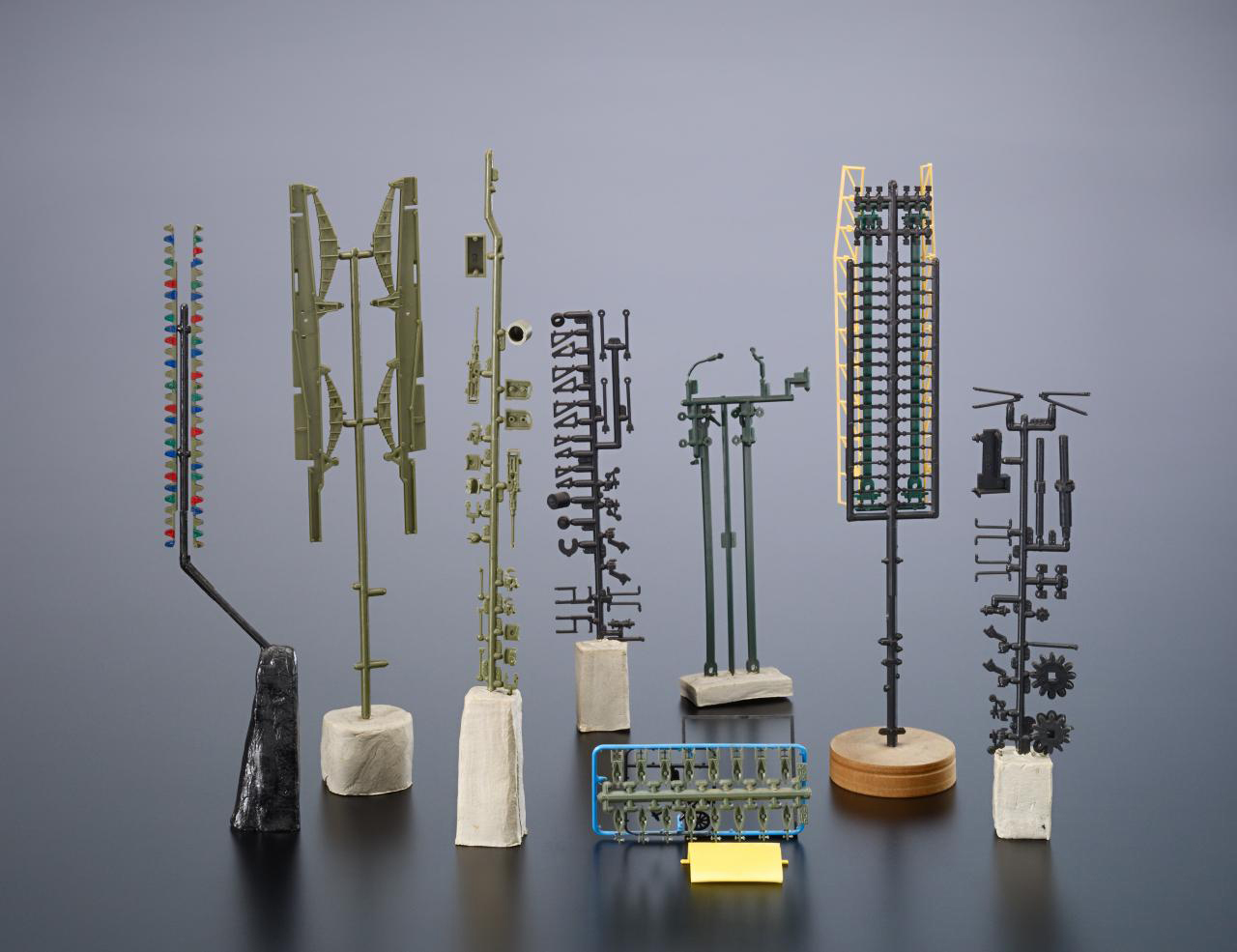
Klippel/Klippel: Opus 2008 exhibition sculpture and installation from the first space
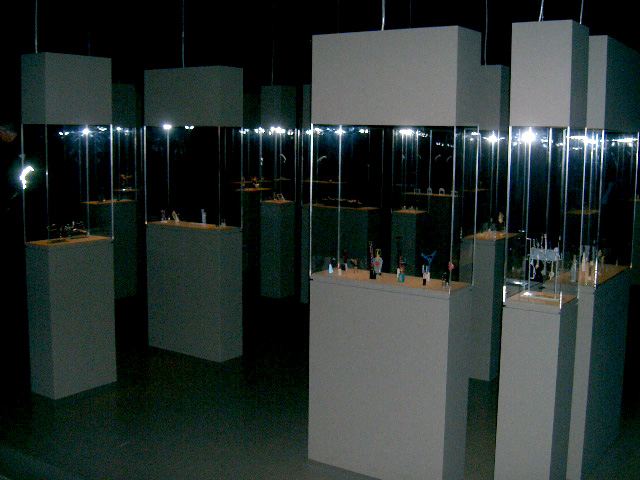
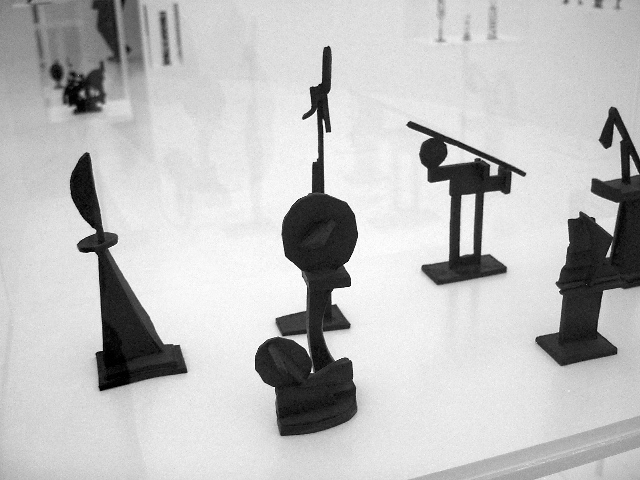
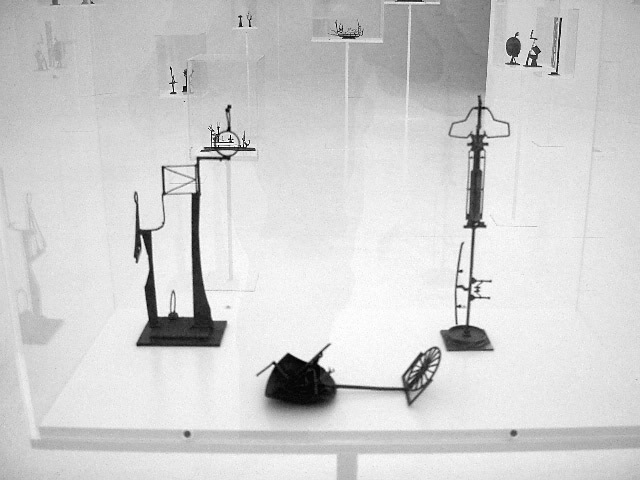
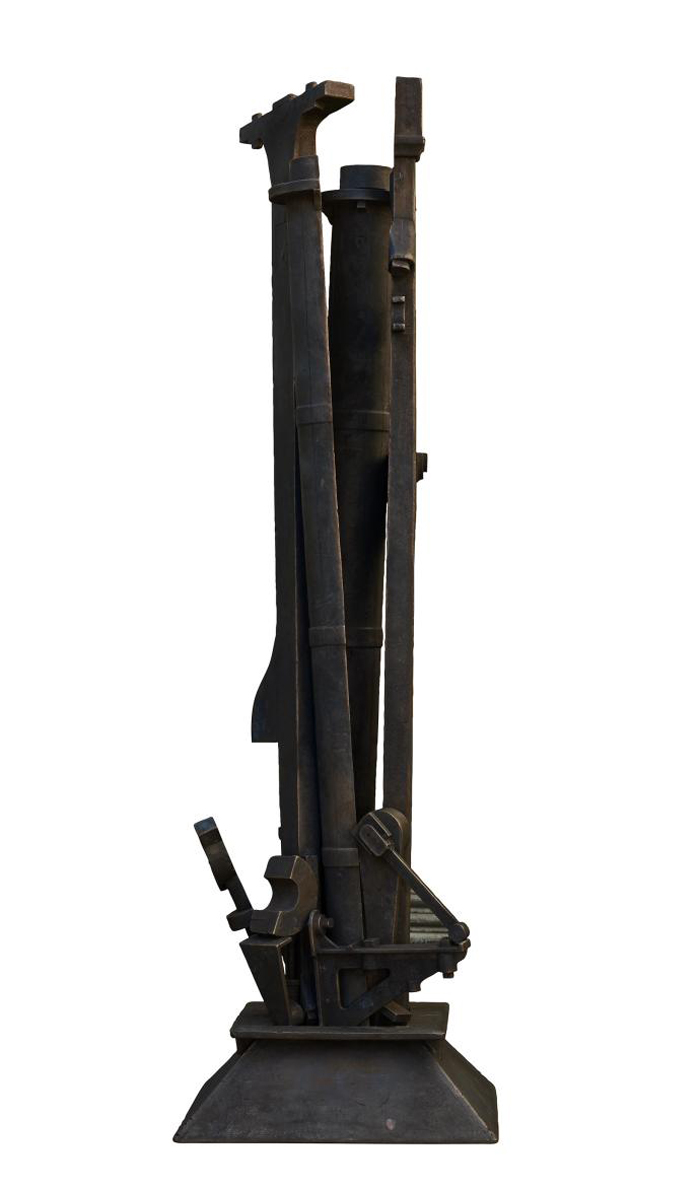
A magical exhibition of the work of the Australian sculptor Robert Klippel (1920-2001) is presented together with a soundscape to accompany the works by his son Andrew Klippel. The exhibition presents two distinct rooms of light and shade and finishes with a singular monumental bronze work No. 709, but it is the two rooms that astound. They contain small assemblages and bronze sculpture made in the 1980s-1990s.
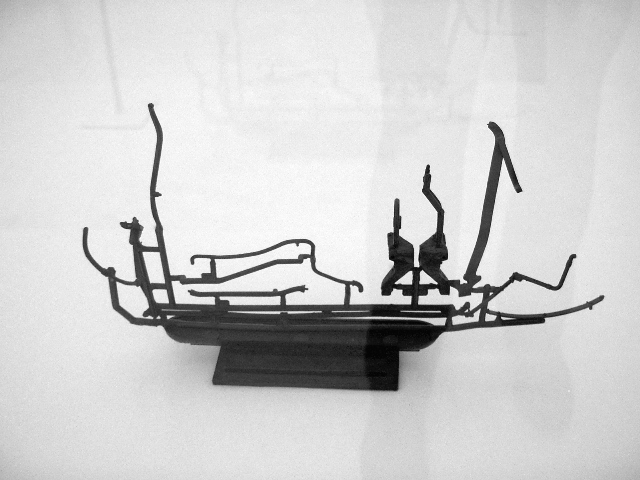
In the first space lit glass cases hover in darkness, containing delicate constructions of found objects, beautifully crafted. Made of plastic and metal, some parts taken from modelling kits, the sculptures morph and weave a delicate narrative, a powerful artistic vision. Mostly totemic in nature they transport the viewer with wonder and delight, the artists vision fully realised: no unnecessary flourishes, no wasted energy on forms that are redundant.
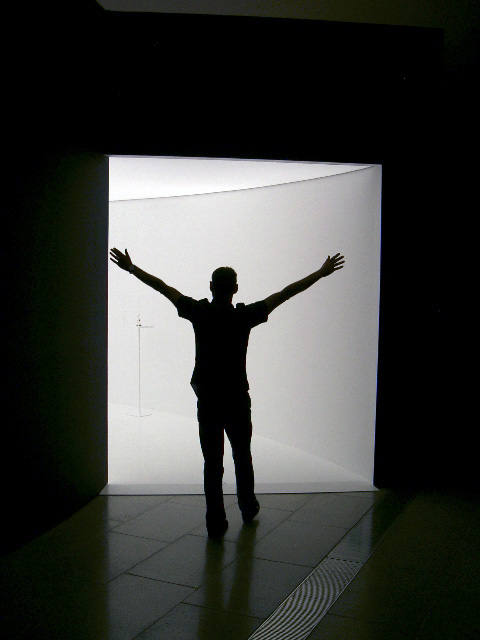
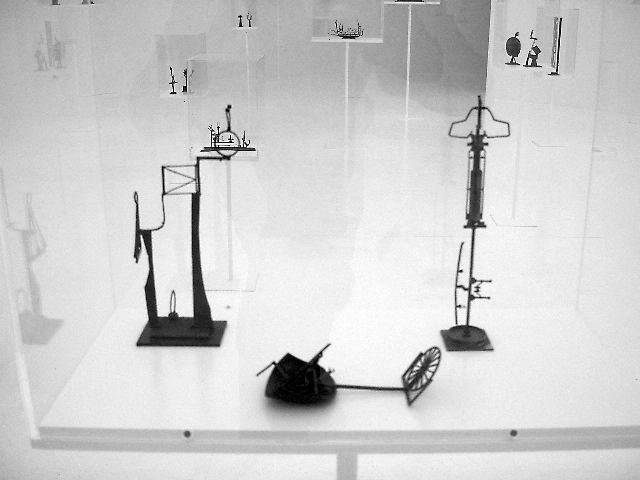
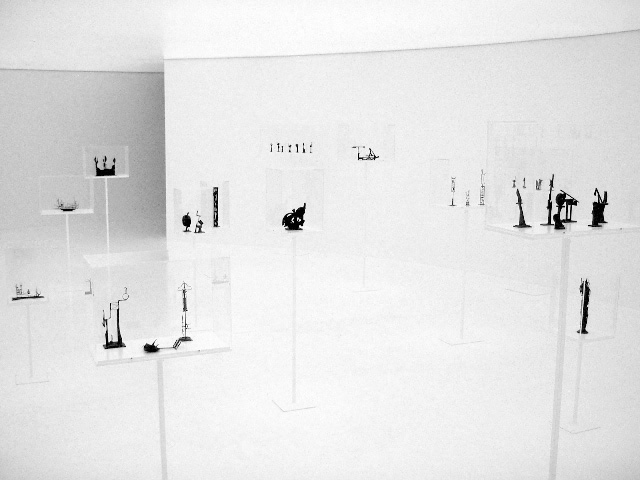
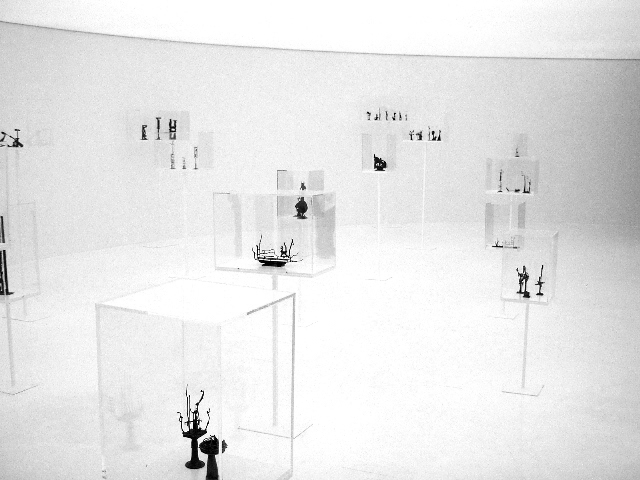
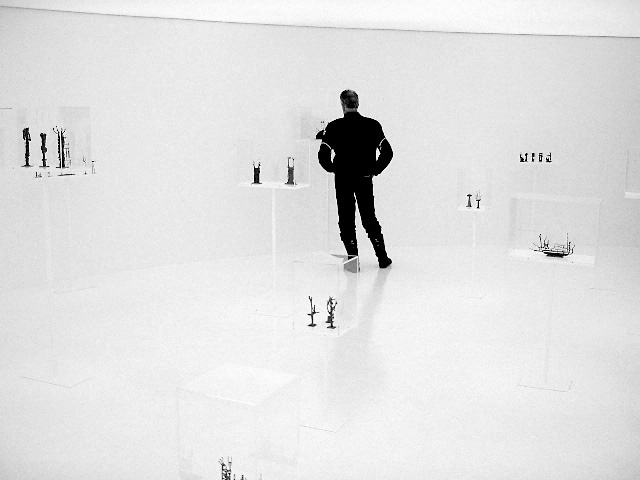
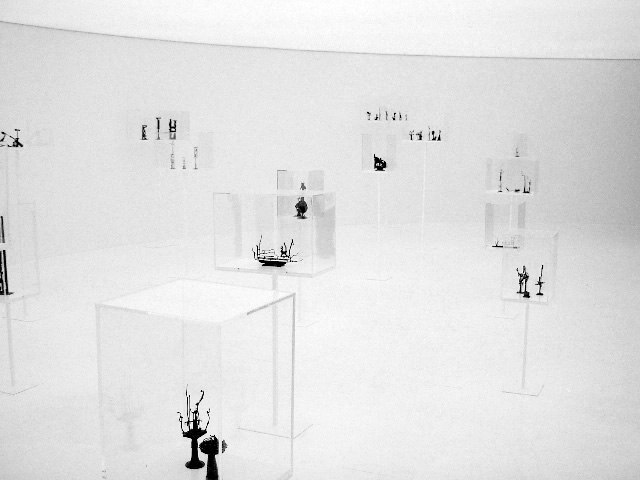
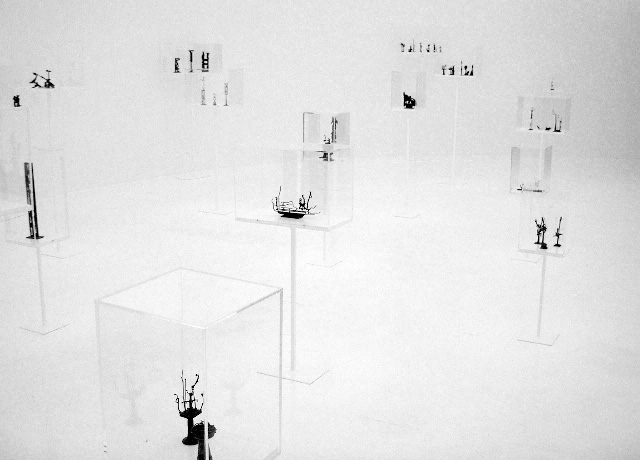
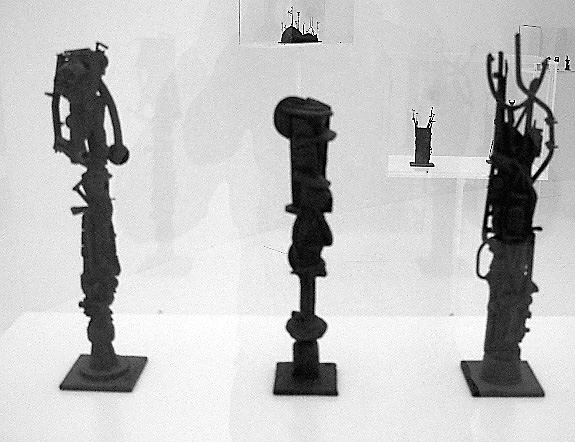
Wandering from the first darkened space we face a curved wall of black with a bright white opening, almost like the mouth of a Nautilus shell. Upon entering we are enveloped in white – walls, floor, stretched acrylic ceiling and stands upon which glass cases sit all being pure white. It is like stepping into the spacecraft from Stanley Kubrick’s 2001: A Space Odyssey – quite disorientating but transformational. In the cases sit small very dark bronze sculptures contrasting with the white. Again mostly totemic in nature the sculptures have great power and presence. Some portray small cities on top of hills. Others intricate machine and figure like constructions. All of the cases are mounted at different eye levels, unlike the first room.
When looking across the gallery space, the boxes and sculpture within create a diorama, almost a tableaux vivant, where you can move the focus of your gaze from foreground to mid to background, all suspended in white. If you can be in this space alone with the work and wander around soaking in the vision of this artist so much the better. The contrast and parallels between the two rooms is striking – here is an artist at the height of his powers commanding his materials and his vision in two distinct bodies of work: one delicate, found, plastic the other solid, dark and essential, both dealing with the essence of human creativity and being, leaving the viewer with a sensory experience long remembered.
Klippel/Klippel: Opus 2008 exhibition entrance to the second space
Robert Klippel is regarded as Australia’s most important sculptor of the post-war 20th century period. Known for his abstract assemblages created from found objects he is a distinguished figure in the history of Australian art. Andrew Klippel, Robert’s son, is a composer and musician who has achieved international recognition as a solo musician, songwriter and influential music producer.
Klippel/Klippel: Opus 2008 is a unique and compelling sensory experience which presents a group of Robert Klippel’s small-scale sculptures that were produced during the 1980s and 1990s – some of these have never been publicly displayed. It also includes the monumental bronze work No. 709. Andrew has arranged for this work, which Robert was preparing to cast at the time of his death, to be executed for the National Gallery of Victoria and included in the exhibition. And, in an important artistic response, Andrew Klippel has created a soundscape – a meditation on his father’s work.
Klippel/Klippel: Opus 2008 is an extraordinary and immersive exhibition that celebrates the creative process.
“5. In a modern society, images made by cameras are the principal access to realities of which we have no direct experience. And we are expected to receive and to register an unlimited number of images of what we don’t directly experience. The camera defines for us what we allow to be “real” – and it continually pushes forward the boundary of the real. Photographers are particularly admired if they reveal hidden truths about themselves or less than fully reported social conflicts in societies both near and far from where the viewer lives.”
Sontag, Susan. “Photography: A Little Summa,” in Sontag, Susan. At the Same Time: Essays and Speeches. London: Hamish Hamilton, 2007, p. 125.
Edward S Curtis (American, 1868-1952) Nuhlihahla-Qagyuhl Nd
Following my thoughts on the series The First Australians on SBS we have this wonderful coffee table book of photographs: Edward S. Curtis: Visions of the First Americans with images taken from his seminal 20 volume work The North American Indian.
Curtis worked on the project from 1906 to 1927 hauling his large format glass plate camera across the United States much as Eugene Atget did at roughly the same time in Paris, taking photographs of the old city and its hotels, shops, parks and gardens. Atget died in 1927 with his art recognised by few whilst Curtis lived on into the 1950’s, dying in obscurity and poverty after the fame of his ground breaking work had disappeared. Both photographed a vanishing world capturing it for prosperity on fragile glass plates. Both brought to their projects a unique vision and a belief in what they were doing.
Atget’s photographs of people half seen through shop doors and windows, like shadows of the night. Curtis’s photographs of masked Yeibichei dancers wearing elaborate attire. Curtis thought he was photographing the dying races of the American Indians. Atget knew he was photographing the collapsing spaces of old Paris. Both use the space of the photograph to signify their intentions: an understanding of their subject matter, an empathy with a disappearing way of life, a need to record their vision of this world – and an intensity of insight into that condition.
No other photograph has the space and timelessness of an Atget. No other image the presence of the plains that Curtis summoned.
His masked dancers remind me of the last photographs of the great American photographer Diane Arbus in their candour and beauty, posthumously called Untitled. Finally Arbus has found a subject matter that she could return to over and over again. As did Atget and Curtis.
As Doon Arbus has commented,
“These images – created out of the courage to see things as they are, the grace to permit them simply to be, and a deceptive simplicity that permits itself neither fancy nor artifice … The photographs appear to be documents of a world we’ve never seen or imagined before – one with its own rituals and icons, its own games and fashions and codes of conduct – which, for all its strangeness, is at the same time hauntingly familiar and, in the end, no more or less unfathomable than our own.”1
Dr Marcus Bunyan
1/ Arbus, Doon. “Afterword,” in Diane Arbus: Untitled. London: Thames and Hudson, 1995.


 Art Blart _ art and cultural memory archive
You must be logged in to post a comment.