Domenico de Clario (Australian born Italy, b. 1947) u (renoir’s garden) 2008/09 Oil on canvas
Based on the music of melancholy that inhabits the shadows of the paintings of Montmarte by the French artist Maurice Utrillo, Domenico de Clario’s exhibition of paintings at John Buckley Gallery in Melbourne is a major achievement. This is a superlative exhibition of focused, resonant work beautifully and serenely installed in the gallery space.
The exhibition features seven small and seven large oil and acrylic on canvas paintings that envelop the viewer in a velvety quietness, an intense stillness accompanied by ambient music composed by de Clario himself. All fourteen paintings are reinterpretations of works by Utrillo picked at random by de Clario that strip away surface matter to reveal the shadow substance that lays at the anxious heart of Utrillo’s meta/physical body of work (Utrillo was an alcoholic at fourteen and spent numerous periods in sanatoriums). When de Clario was fifteen he was fascinated by a small book on Utrillo and found that his paintings reminded him of his childhood, growing up in the town of Trieste. Recently he noticed that the word ‘triestement’ was used to mean, essentially, an investigation of sadness, of melancholy and started an investigation into the life and work of Utrillo. From this dialogue the paintings for the exhibition have emerged as de Clario found the ‘more is’ of Utrillo, the anima of his presence within the work.
The small abstract paintings (such as renoir’s garden, above) are dark and miasmic, vaporous emanations of atmosphere that contain traces of Utrillo’s lifelong battle with the black dog but it is the seven large paintings facing each other in the main gallery space that are at the heart of de Clario’s project. They are magnificent.
Painted in a limited colour palette of ochres, greys and blacks the works vibrate with energy. Cezanne-like spatial representations are abstracted and the paint bleeds across the canvas forming a maze of buildings. Walls and hedges loom darkly over roadways, emanations of heads and figures float in the picture plane and the highlight white of snow hovers like a spectral figure above buildings. These are elemental paintings where the shadow has become light and the light is shadow, meanderings of the soul in space. In the painting i (the house of hector berlioz – night) below, the single dark line of the house rises from the plain; the shadowy haze of recognition sits in the subconscious like the trace of our own mortality. My mind made an association with the modernist photograph by Paul Strand of the church at Taos (see photo at bottom of posting) with the looming bulk of the ramparts: it’s funny how things just click into place.
“The watergaw, the faint rainbow glimmering in chittering light, provides a sort of epiphany, and MacDiarmid connects the shimmer and weakness and possible revelation in the light behind the drizzle with the indecipherable look he received from his father on his deathbed … Each expression, each cadence, each rhyme is as surely and reliably in place as a stone on a hillside.” ~ Seamus Heaney1
To paint these works de Clario was open and receptive to the idea of the letting go. In the wonderfully erudite catalogue essay he says he felt like he was standing under a waterfall experiencing the joyful bliss of substance, material, surface, shadow, blandness, light, plenitude and triestement while acknowledging that he could never capture them and that their value could only be fully understood once he abandoned any thought of possessing them. Like Seamus Heaney in the quotation above, de Clario experienced the glimmering in chittering light, the possible revelation in the light behind the drizzle (of the shadow) and he then paints the trace of Utrillo’s subconscious anima, the indecipherable look of his triestement. de Clario feels the fluid relationship between substance and appearance; he understands that Utrillo is embedded in the position of each building and stone, in the cadences and rhymes of the paintings of Montmarte. de Clario interprets this knowledge in a Zen like rendition of shadow substance in his paintings. Everything has it’s place without possession of here and there, dark and light.
For my part it was my soul responding to the canvases. I was absorbed into their fabric. As in the dark night of the soul my outer shell gave way to an inner spirituality stripped of the distance between viewer and painting. I felt communion with this man, Utrillo, with this art, de Clario, that brought a sense of revelation in the immersion, like a baptism in the waters of dark light. For art this is a fantastic achievement. Highly recommended.
Dr Marcus Bunyan
1/ Heaney, Seamus. The Redress of Poetry. London: Faber and Faber, 1995, pp. 107-108.
Please click on the artwork for a larger version of the image.
Domenico de Clario (Australian born Italy, b. 1947) l (le lapin agile – snow coming) 2008/09 Oil on canvas
Maurice Utrillo (French, 1883-1955) Renoir’s Garden 1909-1910 Oil on canvas
Installation views of triestement (more-is u thrill-o) by Domenico De Clario at John Buckley Gallery
Maurice Utrillo (French, 1883-1955) Paris Street 1914 Oil on canvas
Domenico de Clario (Australian born Italy, b. 1947) r (rue ravignan – le bateau lavoir) 2008/09 Oil on canvas
Domenico de Clario (Australian born Italy, b. 1947) l (le lapin agile and rue du mont cenis – snow receding) 2008/09 Oil on canvas
Domenico de Clario (Australian born Italy, b. 1947) o (la grande maison blanche – snow clouds massing) 2008/09 Oil on canvas
Is there any limit, I thought, to the kinds of shadows that might be transmuted into light? And is this because the key component of the nature of shadow is its deep longing for a transmutation to light?
As a consequence of these thoughts I arrived at the question that animates the core of this current project; what, I asked myself, might the original shadow-substance Utrillo experienced and subsequently transmutes into the paintings we known, have looked like? What shadow images did Utrillo first see, or even imagine, before he transmuted them into colour? …
Utrillo must have believed that the outer world of coloured light belonged exclusively to others, for he never succeeded in releasing himself from the dark inner shadows that engulfed him. Though he struggled much to reach the light he accepted shadow as constituting his world and worked ceaselessly to offer us images that reflected this side’s plenitude.
Perhaps the luminous surfaces of his paintings functioned as the thin membrane that separates the outer world of cacophonously coloured light from the velvety grey inner world of the monotic anxiety he inhabited. Upon that thought the momentousness of his gift became apparent to me …
For the purposes of this present project I believe that the shadow substance laying beneath the architecture of Utrillo’s streetscapes existed within the artist long before his paintings came into being. This non-substance generated the appearance of matter on the paintings’ surfaces and more significantly it gradually came to contain the spirit of his Montmarte-body.
The process of removing matter results in an obvious absence of substance but paradoxically this leads me to feel that here, under all this discarded visible matter, an invisible substance that has always contained more than matter awaits to be revealed. This leads to the provisional conclusion that the primal trace of normally unseen shadow is far richer than any material constituting appearance, containing as it does infinitely more substance than appearance.
Astonishing paradox; infinite substance can only be discovered once all matter is removed.
Text from the catalogue essay by Domenico de Clario [Online] Cited 26/04/2009. No longer available online
Maurice Utrillo (French, 1883-1955) Berlioz House 1910 Oil on canvas
Anonymous Postcard of Hector Berlioz House Nd
Domenico de Clario (Australian born Italy, b. 1947) i (the house of hector berlioz – night) 2008/09 Oil on canvas
Paul Strand (American, 1890-1976) Inverted colour burn of his photograph Church, Ranchos de Taos New Mexico 1932
Eric Tabuchi (French, b. 1959) Station #1 from the book Twentysix Abandoned Gas Stations 2002
One of my favourite artists at the moment is Frenchman Eric Tabuchi. I don’t know a lot about him as there is only an exhibition list on his website and no other details but this does not matter. His work speaks for him. Taken in simple formalist objective style his colour photographs tell it like it is, speaking the images of existence in a clear and precise manner. His work ‘en serie’ are conceptually based but the images themselves are straight forward, images that depict the ironies and degradations of environments and artefacts without moral judgement. His photographs have links back to the formalist style of the German Bernd and Hiller Becher whose work has influenced many contemporary photographers (including Andreas Gursky, Candid Hofer, Thomas Ruff and Thomas Struth amongst others).
Tabuchi’s latest artist book Twentysix Abandoned Gas Stations is a contemporary reprise on the very first modern artist’s book Twentysix Gasoline Stations produced by Ed Ruscha in 1963. Using minimalist notions of repetitive sequence and seriality Tabuchi addresses a contemporary landscape full of abandoned technologies, toxic environments and architectural wastelands foretelling the badlands of future worlds. As in all his bodies of work the body of the human is absent, the sense of corporeal distance from object to viewer devastating. His constructions, both photographic and environmental, speak eloquently to the human present, presence absence.
He is a photographer to remember.
Dr Marcus Bunyan
Many thankx to Eric Tabuchi for allowing me to publish the photographs in the posting. Please click on the photographs for a larger version of the image.
Eric Tabuchi (French, b. 1959) Station #21 from the book Twentysix Abandoned Gas Stations 2008
Eric Tabuchi (French, b. 1959) Station #22 from the book Twentysix Abandoned Gas Stations 2006
Eric Tabuchi (French, b. 1959) Stock Options #3 from the Monument series 2007
Eric Tabuchi (French, b. 1959) Two Windows from the Road Signs series 2006
Eric Tabuchi (French, b. 1959) Untitled from the Untitled Landscape series 2005
Eric Tabuchi (French, b. 1959) Untitled from the Various Ruins series 2007
Eric Tabuchi (French, b. 1959) Untitled from the Work in Progress series 2007
Mark Klett and Byron Wolfe Rock formations on the Road to Lee’s Ferry, Arizona 2008 Digital inkjet print 36″ h x 76″ w
Left inset: William Bell. Plateau North of the Colorado River near the Paris 1872 (courtesy National Archives) Right inset: William Bell. Headlands North of the Colorado River 1872 (courtesy National Archives)
An interesting concept but I’m not entirely sure that the images are successful. Some work better than others. Perhaps it is not necessary for there to be an absolute registration across time and space, the continuation of a horizon line for example. The famous photographic collages by David Hockney are a case in point.
It doesn’t matter when the images were made, whether there is a second, or a century, between compositions. The camera and the artist are always selective, the camera always privileging one view over another view: all images are therefore constructions. Hockney pushes the boundaries of these constructions whereas I don’t think these images do to anywhere near the same extent.
There were some vaguely interesting videos on the Phoenix Art Museum website about the starting point, discovery, process and collaboration for the work which are no longer available. There is one video available on the Klett and Wolfe website.
Dr Marcus Bunyan
Many thankx to Phoenix Art Museum for allowing me to publish the photographs in the posting. Please click on the photographs for a larger version of the image.
William H. Bell (American, 1830-1910) Headlands North of the Colorado River 1872 Still Picture Records Section, Special Media Archives Services Division Courtesy National Archives
Arizona’s Grand Canyon – natural wonder, national park, tourist attraction, sacred land – is perhaps the world’s best “photo op.” The collaborative photographic team of Mark Klett and Byron Wolfe have set out to explore this celebrated place of dramatic beauty, and Phoenix Art Museum is proud to be the first to show a comprehensive look at their powerful, thoughtful, and playful approach to the Grand Canyon.
Drawn from two seasons of fieldwork, Charting the Canyon will include about 30 photographs ranging from a modest 20 by 20-inch print to a panorama nearly 10 feet wide. Mark Klett, a Regents Professor at Arizona State University, and Byron Wolfe, a former student of Klett’s who is now a Lantis’ University Professor teaches at California State University at Chico, have been interested in rephotographing historic images since their collaboration began in 1997.
Now the pair combines their own colour photographs with imagery by 19th-century photographer J. K. Hillers and artist William Holmes and by Ansel Adams and Edward Weston, who worked at the Canyon in the early 20th century. Klett and Wolfe respond to the historic images and the Canyon itself, yielding artworks that reconsider an icon, challenge how we perceive the land, and bring a new perspective to its portrayals.
Charting the Canyon offers visual delights: the humorous layering of a 19th-century drawing with contemporary photographic details, the extension of an Ansel Adams view into a serene panorama, and the illusion of three-dimensions with a stereopticon viewer built for the twenty-first century, among others to be discovered in this unique exhibition.
Text from the Phoenix Art Museum website [Online] Cited 20/04/2009. No longer available online
Mark Klett and Byron Wolfe Sixty-six years after Edward Weston’s “Storm, Arizona” From the Marble Canyon Trading Post 2007 Digital inkjet print 16″ h x 38.75″ w
Left: Edward Weston. Storm, Arizona 1941 (courtesy of the Center for Creative Photography, Tucson)
Mark Klett and Byron Wolfe Desert View: from the window of the Watchtower gift shop 2008
The Grand Canyon – natural wonder, sacred ground, national park, international tourist attraction – is perhaps the world’s best “photo op.” Vivid colours, breathtaking vistas and jaw dropping canyon depths have lured photographers to Northern Arizona for years. A new exhibition, Charting the Canyon: Photographs by Mark Klett and Byron Wolfe on view at Phoenix Art Museum through July 12, 2009, explores this celebrated place of dramatic beauty with large-scale sweeping panoramas that marry 21st century colour photographs with historic drawings and images.
In 2007, Mark Klett, a Regents Professor at Arizona State University, and Byron Wolfe, a former student of Klett’s and now a Lantis’ University Professor at California State University at Chico, headed to the Grand Canyon to re-envision the many images made at the site over the last 150 years. During two summers of field work, they identified the exact locations portrayed in early photographs and drawings. From those geographic points they created new photographs that incorporate the original view. Digital versions of the historic images are inserted within the contemporary photograph, creating combined images that convey the big picture surrounding earlier artists’ depicted view.
Working collaboratively, Klett and Wolfe challenge one another to invent new ways to integrate the historic images they discover. Charting the Canyon reveals their combined invention, offering provocative ways to think about the land, its history and our role in seeing it.
“Many of the things we’re trying to do seemed impossible at first – like merging several views of a scene from different times into a continuous space, or extending one photo’s frame to include spaces from multiple vantage points,” commented Klett. “We’re intentionally using playfulness as a way to stretch ideas, a kind of free form exploration that puts a premium on creative solutions to complex space and time problems.”
“The pleasure the artists experienced in the creative process comes through in their work. Charting the Canyon is a joyful exploration allowing Museum visitors to discover the Grand Canyon in a new and thought-provoking way,” commented Rebecca Senf, Norton Family Assistant Curator of photography, Phoenix Art Museum. “Phoenix Art Museum is proud to be the first to show a comprehensive look at Klett and Wolfe’s powerful, thoughtful and playful images.”
Charting the Canyon includes 26 photographs ranging from a modest 20 by 20-inch print to a panorama 10 feet wide. Exhibition highlights include: The humorous layering of a 19th-century drawing with contemporary photographic details. The extension of an Ansel Adams view into a serene panorama. The pairing of a black-and-white Edward Weston view with a colour image made 66 years later. The illusion of three-dimensions with a stereopticon viewer built for the 21st century.
Text from Artdaily.org website
Mark Klett and Byron Wolfe Point Imperial on the Grand Canyon, 50% Ansel Adams, 50% Red Wall Limestone 2008
Left: Ansel Adams. Grand Canyon National Park, Arizona 1941
Ansel Adams (American, 1902-1984) Grand Canyon National Park, Arizona 1941 Gelatin silver print
Mark Klett and Byron Wolfe Panorama from Hopi Point on the Grand Canyon, made over two days extending the view of Ansel Adams 2007
Right: Ansel Adams. Grand Canyon National Park, Arizona 1941 (Courtesy of the Center for Creative Photography, Tucson, AZ)
Ansel Adams (American, 1902-1984) Grand Canyon National Park, Arizona 1941 Gelatin silver print Courtesy of the Center for Creative Photography, Tucson, AZ
“We’re intentionally using playfulness as a way to extend ideas, a kind of free-form exploration that puts a premium on creative solutions to complex space and time problems. Many of the things we’re trying to do seemed impossible at first – like merging several views of a scene from different times into a continuous space, or extending one photo’s frame to include spaces from multiple vantage points.”
Klett and Wolfes process of inserting historic views within contemporary photographs, or linking a number of different historic views, emphasises the possibilities of multiple interpretations of a single landscape. If we look at a photograph of the Grand Canyon, we bring to it our own cultural notions, myths, and memories, and read it based on our personal point of view. By bringing together images made throughout time, Klett and Wolfe remind us that any terrain is not only what we see and think about it in this present moment, but it is part of a long evolution of thought and use that includes the past and future, as well. The team’s photographs present time as overlapping layers, much like the stratigraphic rock of the Canyon. This unconventional presentation encourages viewers to see time as a flexible construction.
Text by Rebecca Senf, Assistant Curator of photography, Phoenix Art Museum from the exhibition brochure [Online] Cited 20/04/2009. No longer available online
Mark Klett and Byron Wolfe Details from the view at Point Sublime on the north rim of the Grand Canyon, based on the panoramic drawing by William Holmes (1882) 2007
Lithograph by William Henry Holmes, 1882. From Clarence Dutton, Atlas to Accompany the Monograph on the Tertiary History of the Grand Cañon District. (Courtesy of the Library of Congress).
David Hockney (English, b. 1937) Pearblossom Highway., 11-18th April 1986 #2 1986
Phoenix Art Museum McDowell Road & Central Avenue 1625 N. Central Avenue Phoenix, AZ 85004
Mark Strizic (Australian, 1908-2012) Eastern Market Destruction – 1 1960, printed 1996 Silver gelatin photograph 19 x 22.5cm
Social Fact and Urban Vision
This is an exhibition by the veteran Australian photographer Mark Strizic that plays like the coda at the end of a piece of music, the pensive full stop at the end of a well read book. There are some stunning highlight photographs among the 139 black and white silver gelatin prints on display, some good photographs and some fairly mundane images and prints. With some judicious editing of the photographs (perhaps by a third), the exhibition could have had a stronger artistic aesthetic and carried the voice of the photographer with greater projection. As it is the exhibition will be popular drawing in the crowds because of the photographs subject matter and their appeal to both an individual and collective nostalgia.
Examining Strizic’s photographs we note a traditional structure to the picture plane. Unlike the photographs of Eugene Atget who photographed Paris in the early 20th century there is little sublime spatial representation in Strizics photographs, that different angle of alignment that Atget achieved with the positioning of his camera. Further, we observe that unlike an immigrant to another country at around the same time, Robert Frank and America, the photographs follow traditional format: none of the revolutionary experimentation in handheld, grainy images of jukeboxes, cut up people or images of flags appear in this work. We can also say that unlike Helen Levitt’s early black and white images of New York from around the same period there is little ‘joie de vivre’, little engagement with the actual nitty gritty stuff of living in Strizic’s work. The quote below articulates what Strizic’s photographs both address and dismiss:
“To walk in the city is to experience the disjuncture of partial vision/partial consciousness. The narrativity of this walking is belied by a simultaneity we know and yet cannot experience. As we turn a corner, our object disappears around the next corner. The sides of the street conspire against us; each attention suppresses a field of possibilities. The discourse of the city is a syncretic discourse, political in its untranslatability. Hence the language of the state elides. Unable to speak all the city’s languages, unable to speak all at once, the state’s language become monumental, the silence of headquarters, the silence of the bank. In this transcendent and anonymous silence is the miming of corporate relations. Between the night workers and the day workers lies the interface of light; in the rotating shift, the disembodiment of lived time. The walkers of the city travel at different speeds, their steps like handwriting of a personal mobility. In the milling of the crowd is the choking of class relations, the interruption of speed, and the machine. Hence the barbarism of police on horses, the sudden terror of the risen animal.”1
We observe in the photographs an emphasis on surfaces, on a supreme understanding of light and shade coupled with a certain distance and emotional remoteness from the frenetic hubbub of city life. Empty streets and isolated people fall into shadow and their is little evidence of ‘play’ in the photographs. This is observation not interaction or integration as an immigrant observing Melbourne life. There is no up front presence of disembodied people as in Robert Franks photographs in The Americans. Here the alienation that pervades the photographs is the alienation of the photographer from the people as much as it is the alienation of the people from themselves. People are shot in silhouette against the sun or shop windows or peering in at unobtainable goods; desolate streets and working class suburbs all express the isolation of city life but at a structured distance from them.
When Strizic’s photographs are good they are very good. His understanding of light is magnificent: light reflects off water, hazes and shimmers off city buildings. The mixing of shadows and sun and his use of the technique of ‘contre jour’ (shooting into the sun) the one thing Strizic does against traditional conventions works to good effect in some of the best photographs. His 1968 night time long exposure photograph of the old Gas and Fuel Building is rewarding for the black bulk of the end of the building looming over Flinders Street and the striations of car headlamps. The photograph Flinders Lane (1967, below) shows a delicate use of depth of field where the foreground of cars and person are out of focus, the light bouncing off the edges of the woman, the focus of the image in the far distance. The photograph McPhersons Building (1958, below) is one of my personal favourites in the exhibition and is a stunning photograph for the atmosphere the photographer has captured.
After a while the use of the ‘contre jour’ technique becomes tiresome. Other photographs simply document a city in transition. These photographs appeal both to an individual nostalgia (‘I used to work in that building’; ‘My grandmother used to live in that street’) and a collective nostalgia where people experience things collectively, “in the sense that [collective] nostalgia occurs when we are with others who shared the event(s) being recalled, and also in the sense that one’s nostalgia is often for the collective – the characteristics and activities of a group or institution in which the individual was a participant.”2
Collective nostalgia refers to that condition in which the symbolic objects are of a highly public, widely shared and familiar character, i.e. those symbolic resources from the past which can under proper conditions trigger off wave upon wave of nostalgic feeling in millions of persons at the same time3 and in this exhibition it is the photographs of a city in transition that trigger this nostalgia, a city now lost to the mists of time. Through these photographs we remember what Melbourne was like at this time collectively.
As Harper has observed
“Nostalgia combines bitterness and sweetness, the lost and the found, the far and near, the new and the familiar, absence and presence. The past which is over and gone, from which we have been or are being removed, by some magic becomes present again for a short while. But its realness seems even more familiar, because renewed, than it ever was, more enchanting and more lovely …”4
Does this collective nostalgia make the photographs good? This is a pertinent question.
Today, nostalgia has become a cultural phenomenon one centred on a longing for home (home is where you are happy to be!) in a collective sense and promoted through commercialisation and the realisation that nostalgia sells. The use of the value seeking word ‘rare’ in the exhibition title is instructive in this regard. Only about 25% of the photographs in this exhibition are “vintage” prints, in other words photographs printed within 3 years of the negative being taken. All other photographs have been printed within the last 15 years. Some are ‘Unique state’ gelatin photographs while others are not. What does this mean. Are they are unique state only in this size? What about the common or garden silver gelatin prints in the show? What does the status word “rare” imply for them?
I remember seeing an exhibition of the photographs of Henri Cartier-Bresson in Scotland about ten years ago. Three rooms had large prints of his work. One room just had vintage prints. The contrast was astounding. The room full of vintage prints had an intensity of vision, of his vision at the time he took the photographs evidenced in small jewel like photographs that the three other rooms photographs simply did not possess – through scale, printing and aesthetics. The same question, without any need for an answer, can be posed here. Only the word ‘rare’ demands that answer for the modern prints are just what they are and nothing more.
In conclusion this is a strong show by Strizic that could have been edited and focused in a more rewarding way. Strizic is one of Australia’s best photographers for understanding the significance of place. His use of light is superb but there always seems to be an emotional distance to his photographs. An element of collective nostalgia adds to their documentary appeal but the best photographs do not just record, they challenge and transcend the subject matter taking the work to an altogether different plane of existence.
Dr Marcus Bunyan
1/ Stewart, Susan. On Longing: Narratives of the Miniature, the Gigantic, the Souvenir, the Collection. Durham: Duke University Press, 1993, p. 2. Prologue
2/ Wilson, Janelle. “”Remember when …” a consideration of the concept of nostalgia,” in et Cetera. Concord: Fall 1999. Vol. 56, Iss. 3; pg. 296, 9 pgs
3/ Davis, F. Yearning For Yesterday: A Sociology of Nostalgia. New York: The Free Press, 1979, p. 222
4/ Harper, R. Nostalgia: An Existential Exploration of Longing and Fulfilment in the Modern Age. The Press of Western Reserve University, 1966, p. 120 quoted in Wilson, Janelle. “”Remember when …” a consideration of the concept of nostalgia,” in et Cetera. Concord: Fall 1999. Vol. 56, Iss. 3; pg. 296, 9 pgs
Many thankx to Gallery 101 for allowing me to publish the photographs in the posting. Please click on some of the photographs for a larger version of the image.
Installation views of the exhibition Mark Strizic: Melbourne – A City in Transition exhibition at Gallery 101, Melbourne Photos: Marcus Bunyan
Mark Strizic, one of Australia’s eminent photographic artists presents us with nostalgic views of Melbourne and the changing face of the city in rare silver gelatin photographs. The exhibition, Melbourne – A City in Transition will be held at Gallery 101 from 8th April – 2nd May. There will be an evening artist reception on Thursday 9th April to celebrate the opening of the exhibition. Strizic’s oeuvre represents a collection of iconic images of architecture and of life – a record of the changing face of a migrating society of new prosperity, youth and popular culture – taken with a sympathetic eye for humanistic detail.
The exhibition will coincide with the announcement of the forthcoming publication, Mark Strizic, Melbourne: Marvellous to Modern, published by Thames & Hudson in association with the State Library of Victoria. In 2007, the State Library of Victoria acquired Mark Strizic’s entire archive of approximately 5000 negatives, colour transparencies and slides. In addition, the Library holds a fine collection of Strizic photographs, including examples of all types of photographic print, from gelatin silver to digital, produced by the photographer during his long career.
Press release from Gallery 101
“‘Melbourne – A City in Transition’ is a collection of iconic images of Melbourne city life taken with a sympathetic eye for humanist detail. Strizic accurately depicts the joys and hardships experienced in everyday life with a fresh and living memory. He successfully captures the vicarious essence of suburban life. His portrait of Melbourne includes the city, harbour and river banks – streets and trams, pavements, arcades and lanes, stations and bridges, billboards and facades and public sculpture. We see people going about their daily activities – commuting, shopping at leisure, trading, embracing, conversing, reading the newspaper and visiting the beach. Other works record the demolition and construction of building sites and the changing face of Melbourne, both in society and the urban landscape.”
Text from the exhibition flyer
“In these eloquent studies of light and shadow, Strizic finds beauty in the commonplace – Melbourne’s desolate lanes, street paving, derelict ferries – adopting interesting camera angles, viewpoints and cropping. Through his images, this visual humanist teaches us to observe, to see our surroundings, perhaps with the intention of stimulating us to a higher level of civilisation.”
Emma Matthews. Mark Strizic, Melbourne: Marvellous to Modern. Thames & Hudson in association with the State Library of Victoria, September, 2009.
“This magnificent collection of photographs arose from the creativity of a young photographer and his adoption of his new home town, Melbourne. His pictures were taken at a time when the Victorian elegance of the city once known as ‘Marvellous Melbourne’ was being punctuated by a wave of development and the modern architectural movement. Today Mark Strizic is renowned as a photographer. In the 1950s he was a young science student from Europe playing with the possibilities of the camera. As he gained work as a professional his commercial success was accompanied by the instincts and eye of an artist. His solid technicality was accompanied by the whimsy and wit that made him the ‘poet of the fleeting movement’. The versatility of his work shows us many aspects of Melbourne – its magnificent architectural heritage, its intimate and vibrant laneways, its grand arcades counter-posed against the sudden spaces of the wrecker, the brash intrusion of the glass and concrete skyscrapers, the poignancy of poverty in the rundown inner suburbs. We see the people, on grand occasions such as the 1954 Royal Visit, or just caught in their own world of travelling, shopping, resting, walking, working.”
Mark Strizic, Melbourne: Marvellous to Modern book cover
Mark Strizic (Australian, 1908-2012) From Princes Bridge 1958, printed 2006 Silver gelatin photograph 58 x 39cm
Mark Strizic (Australian, 1908-2012) Near Spencer Street – 1 1950 Silver gelatin photograph 27.5 x 38.5cm
Mark Strizic (Australian, 1908-2012) At St. Pauls (St Paul’s Cathedral steps) 1954, printed 1999 Silver gelatin photograph 17.8 × 24.5cm
Mark Strizic (Australian, 1908-2012) St Paul’s Cathedral steps 1954, printed 1999 Silver gelatin photograph 17.8 × 24.5cm
Mark Strizic (Australian, 1908-2012) Collins Street at Russell Street 1957, printed 1997 Unique silver gelatin photograph 39 x 56cm
Mark Strizic (Australian, 1908-2012) St Georges Road, Northcote at Summer Av. 1958, printed 1998 Silver gelatin photograph
Mark Strizic (Australian, 1908-2012) St. Patrick’s Cathedral January 1967, printed 1998 Unique silver gelatin photograph 27 x 41cm
Mark Strizic (Australian, 1908-2012) Bourke Street from the Parliament – 2 1967, printed 1998 Silver gelatin photograph 38 x 27cm
Mark Strizic (Australian, 1908-2012) Russell Street Pawn Shop 1958 Silver gelatin photograph
Mark Strizic (Australian, 1908-2012) Block Arcade 1967, printed February 2008 Unique silver gelatin photograph 53.5 x 37cm
Mark Strizic (Australian, 1908-2012) From Princes Bridge (Winter moorings from Princes Bridge) 1955, printed 2006 Silver gelatin photograph 58 x 39cm
Mark Strizic (Australian, 1908-2012) Flinders Lane 1967, printed 1998 Unique silver gelatin photograph 41 x 41cm
Mark Strizic (Australian, 1908-2012) Swan Street, Richmond, at Church Street 1963 Silver gelatin photograph
Mark Strizic (Australian, 1908-2012) Queensberry Street at Errol Street, North Melbourne 1963 Silver gelatin photograph
Mark Strizic (Australian, 1908-2012) Swan Street at Church Street 1963, printed 1998 Silver gelatin photograph
Mark Strizic (Australian, 1908-2012) Coates Building 1960, printed 1961 Vintage silver gelatin photograph 23.5 x 15cm
Mark Strizic (Australian, 1908-2012) Macphersons Building – 1 1958 Silver gelatin photograph
Mark Strizic (Australian, 1908-2012) On Princes Bridge 1959, printed 1996 Silver gelatin photograph 17 x 24cm
Installation photograph of the opening of Nicola Loder’s exhibition Tourist #3 sighted child 1-11 at Helen Gory Gallery, Melbourne
A wonderful, social opening at Helen Gory Gallery of Nicola Loder’s latest work in her ongoing Tourist photographic series. As always Loder’s work looks superb, the mounting of the images at the back of thick perspex giving the images an almost holographic 3D effect. I still remember her exhibition of black and white children’s faces at the sadly closed Stop 22 Gallery in St Kilda many years ago: those images still impinge on the subconscious. This work continues those themes of instability in the mapping of identity, how we begin to see, to represent ourselves as an individual entity. Speaking of Stop 22 it was great to see Marianne, ex curator of that gallery at the opening with new bub in tow! There is an excellent catalogue essay by Stuart Koop (below).
Dr Marcus Bunyan
Many thankx to Nicola Loder and Helen Gory Gallery for allowing me to publish the photographs in the posting. Please click on the photographs for a larger version of the image.
Installation photograph of the opening of Nicola Loder’s exhibition Tourist #3 sighted child 1-11 at Helen Gory Gallery, Melbourne
“We might think of Loder’s work as ‘undoing’ visuality. She sets technology in reverse, working against the imperatives of photography to clarify, focus, refine and sharpen images, as if our eyes worked backwards, as if acuity worsened. The face is an obvious (originary) limit beyond which chaos prevails and other senses are engaged to interpret what looks like abstract static but which many now believe is an unstriated sensory realm, a liberated space of interrelated, undifferentiated holistic sensory experiences; the original synaesthesia from which perception emerges as a travesty according to 5 distinct categories.
So it’s not blindness after all that the work references, not the failing of vision, but the first moments of looking, when ‘seeing’ begins to separate from the other senses and consolidates into a face, a percept, then into a code, a genre, a representation.”
Josef Sudek (Czech, 1896-1976) A Summer Shower in the Magic Garden 1954-1959 Gelatin silver print
Further to the last post I have collected some images from the Czech photographer Josef Sudek (1896-1976), one of my favourite photographers. The images of this master photographer are a delight. Like the photographs of Eugene Atget they evince generosity in the understanding of light, space and humanity. Insightful writing on Josef Sudek by Charles Sawyer is included in the post.
Dr Marcus Bunyan
Please click on the photographs for a larger version of the image.
“Everything around us, dead or alive, in the eyes of a crazy photographer mysteriously takes on many variations, so that a seemingly dead object comes to life through light or by its surroundings. And if the photographer has a bit of sense in his head maybe he is able to capture some of this – and I suppose that’s lyricism.”
“I believe a lot in instinct. One should never dull it by wanting to know everything. One shouldn’t ask too many questions but do what one does properly, never rush, and never torment oneself.”
“It would have bored me extremely to have restricted myself to one specific direction for my whole life, for example, landscape photography. A photographer should never impose such restrictions upon himself.”
Josef Sudek
Josef Sudek (Czech, 1896-1976) In the enchanted garden 1954-1959 From the series Remembrances Gelatin silver print
Josef Sudek (Czech, 1896-1976) Untitled 1967 Gelatin silver print
“The systematic approach, and the dogged aesthetic experimentation of Sudek are akin to the working habits of Cezanne. But these alone are insufficient to make great art or even good art. On the contrary, if these are all one sees in a work, then the cumulative burden of so much plain labor would be unbearable. Sudek’s devotion to work may have integrated his shattered life but it could not have offered him the spiritual redemption he was seeking; only his aesthetic quest could bring this. It is the struggle for spiritual redemption through his aesthetic quest that gives Sudek’s best photographs their true power. Two qualities characterise his best work: a rich diversity of light values in the low end of the tonal scale, and the representation of light as a substance occupying its own space. The former, the diversity of light values, requires very delicate treatment of the materials, especially the negative, but also the paper (Sudek used silver halide papers in the main). The latter, the portrayal of light as substance, is a more original trait than his tonal palette, which one sees in occasional prints of other photographers. Flaubert once expressed an ambition to write a book which would have no subject, “a book dependent on nothing external … held together by the strength of its style.” Photographers have sometimes expressed parallel aspirations to make light itself the subject of their photographs, leaving the banal, material world behind. Both ideals are, of course, unobtainable, but nonetheless they may be worth pursuing. (Artists, in their pursuit of the unobtainable, are not so likely to be called pathological as others, of us, though recent developments in the philosophy of science tend to view the scientist’s quest for truth as equally quixotic).
Sudek has come closer than any other photographer to catching this illusive goal. His devices for this effect are simple and highly poetic: the dust he raised in a frenzy when the light was just right, a gossamer curtain draped over a chair back, the mist from a garden sprinkler, even the ambient moisture in the atmosphere when the air is near dew point. The eye is usually accustomed to seeing not light but the surfaces it defines; when light is reflected from amorphous materials, however, perception of materiality shifts to light itself. Sudek looked for such materials everywhere. And then he usually balanced the ethereal luminescence with the contra-bass of his deep shadow tonalities. The effect is enchanting, and strongly conveys the human element which is the true content of his photographs. For, throughout all his photography, there is one dominant mood, one consistent viewpoint, and one overriding philosophy. The mood is melancholy and the point of view is romanticism. And overriding all this is a philosophic detachment, an attitude he shares with Spinoza. The attitude of detachment that characterises Sudek’s art accounts for both its strength and weakness: the strength which lies in the ideal of utter tranquility and the weakness which is found in the paucity of human intimacy. Some commentators find Sudek’s photos mysterious but I think this is a mistake: the air of mystery vanishes once we see in Sudek’s photography a person’s private salvation from despair.”
Charles Sawyer. “Josef Sudek” in Creative Camera April 1980, Number 190 [Online] Cited 14/04/2009. No longer available online
A good collection of Josef Sudek photographs can be found on the Museum of Fine Arts Boston website. Go to the site and enter ‘Josef Sudek’ in the Collection Search box to the right and then click on the arrow.
Josef Sudek (Czech, 1896-1976) From the series Vanished Statues in Mionsi 1969 Gelatin silver print
Josef Sudek (Czech, 1896-1976) The Window of My Atelier 1969 Gelatin silver print
Josef Sudek (Czech, 1896-1976) Still-life after Caravaggio, Variation No 2 (or a night-time Variation) 1956 Gelatin silver print
Josef Sudek (Czech, 1896-1976) Untitled (Still Life According to Caravaggio) 1956 Gelatin silver print
Josef Sudek (Czech, 1896-1976) Remembrance of Mr. Magician (the garden of architect Rothmayer) 1959 Gelatin silver print
Otto Rothmayer (architect)
Otto Rothmayer was born during 1892 into a family of carpenters. He took up that trade, following in his father’s footsteps. Rothmayer studied at the Academy of Applied Arts in Prague under Jože Plečník’s guidance, and the Slovenian architect would inspire Rothmayer throughout his entire life. In fact, the design of the Rothmayer Villa was greatly influenced by Plečník’s Villa Stadion in Ljubljana. Rothmayer’s skill at carpentry came in handy as he designed much furniture. He made furniture for the gurus of Czech Cubism, architects Pavel Janák and Josef Gočár. Furniture he designed that does not fall under the category of Cubism but is rather simple and practical can be found in his villa and garden, for instance. His white chairs forged from rough steel were a big hit.
Work at Prague Castle
Plečník would not only be Rothmayer’s mentor but also his colleague. Rothmayer started working as Plečník’s assistant architect at Prague Castle in 1921, when Tomáš G. Masaryk was president of a young, democratic Czechoslovakia. Rothmayer even built a spiral staircase at Prague Castle, using what was then a new material – faux marble. When Plečník left his Castle post after 1930, Rothmayer continued to draw plans for the Castle until his retirement in 1958.
Other projects and the academic world
Rothmayer’s résumé does not only include his tenure at Prague Castle. He took up other projects, too. For instance, he designed three family houses and a side altar for a church in the Vinohrady district of Prague. He also designed museum exhibitions. Rothmayer went into teaching as well. He held the post of Professor of Interior Design at Prague’s Academy of Applied Arts in the late 1940s and early 1950s, when he left for political reasons. Rothmayer also was friends with photographer Josef Sudek, who took many snapshots at Otto’s Břevnov residence. Sudek’s photos set in the villa’s garden are particularly impressive. Otto Rothmayer died in 1966.
Tracy A. Burns. “The Rothmayer Villa: A gem of modern architecture,” on the Private Prague Guide website [Online] Cited 11/01/2019
Josef Sudek (Czech, 1896-1976) Labyrinths 1969 Gelatin silver print
Josef Sudek (Czech, 1896-1976) Labyrinth of Spring 1968 Gelatin silver print 22.5 × 28.7cm (8 7/8 × 11 1/4 in)
Josef Sudek (Czech, 1896-1976) Remembrances of Architect Rothmayer, Mr. Magician 1960 Gelatin silver print
Jindřich Štreit (Czech, b. 1946) Arnoltice 1985 From the Village Life series Gelatin silver print
Jindřich Štreit (born 5 September 1946 in Vsetín) is a Czech photographer and pedagogue known for his documentary photography. He concentrates on documenting the rural life and people of Czech villages. He is considered one of the most important exponents of Czech documentary photography.
Looks like an interesting exhibition. I wish I had been able to see it. Wouldn’t it be such a grand job flying around the world, reviewing photography exhibitions and bringing you my thoughts. I can only wish…
Dr Marcus Bunyan
Many thankx to the Exhibition Hall of the Federal Republic of Germany for allowing me to publish the photographs in the posting. Please click on the photographs for a larger version of the image.
František Drtikol (Czech, 1883-1961) Wave 1925 Gelatin silver print
Czech photography produced and produces leading figures in all areas of photography – from classical documentary photojournalism to surrealism, realism or avant-garde works. From 13 March 2009 on, the Art and Exhibition Hall of the Federal Republic of Germany is presenting over 400 photographic works, a historical mosaic of Czech photography from 1900 until the late 20th century that underlines the international reputation enjoyed by Czech photography today. That reputation is not only apparent in the outstanding contributions by such renowned artists as Josef Sudek, Karel Hájek, Václav Jírů, Vilém Reichmann, Jan Reich, Jindřich Štreit, Frantisek Drtikol, Jaromír Funke, Jaroslav Rossler, Josef Koudelka and Jan Saudek, but also in works from a host of younger photographers. The exhibition does not only showcase famous names but also less well-known photographers, providing an overall impression of the variation and innovation in Czech photography.
From Surrealism and other avant-garde experimentation to realism and classic photo reportage, Czech photographers have long played a key role in all areas of photography and continue to do so to this day.
This exhibition is the first in Germany to present the history and development of Czech photography from 1900 to the turn of the millennium. Beginning with Art Nouveau-inspired Pictorialism, the comprehensive survey traces the rise of avant-garde photography and the development of photo montage in the 1920s to the 1940s. It examines the influence of ideological pressure on photography during the Second World War, the Stalinist 1950s and the period of Communist ‘normalisation’ after the occupation in 1968 and introduces the visitor to the multifaceted range of contemporary trends.
Text from the Exhibition Hall of the Federal Republic of Germany website [Online] Cited 10/04/2009. No longer available online
František Drtikol (Czech, 1883-1961) Nude 1927 Gelatin silver print
František Drtikol (3 March 1883, Příbram – 13 January 1961, Prague) was a Czech photographer of international renown. He is especially known for his characteristically epic photographs, often nudes and portraits.
From 1907 to 1910 he had his own studio, until 1935 he operated an important portrait photostudio in Prague on the fourth floor of one of Prague’s remarkable buildings, a Baroque corner house at 9 Vodičkova, now demolished. Jaroslav Rössler, an important avant-garde photographer, was one of his pupils. Drtikol made many portraits of very important people and nudes which show development from pictorialism and symbolism to modern composite pictures of the nude body with geometric decorations and thrown shadows, where it is possible to find a number of parallels with the avant-garde works of the period. These are reminiscent of Cubism, and at the same time his nudes suggest the kind of movement that was characteristic of the futurism aesthetic.
Eugen Wiskovsky (Czech, 1888-1964) Lunar Landscape or Collars 1929 Gelatin silver print
The oeuvre of the leading Czech avant-garde photographer Eugen Wiskovsky (1888-1964) is not large in size or subject range, but it is noteworthy in its originality, depth of ideas, and mastery. Wiskovsky’s early New Objectivist works, from the late 1920s and early 1930s, sought artistic effect in apparently non-aesthetic objects: His inventive lighting and cropping allowed their elementary lines to stand out, to lose their worldly associations and take on potential metaphorical meanings. In his dynamic diagonal compositions, Wiskovsky was among the most radical practitioners of Czech Constructivism. His landscape work is similarly distinctive.
Jaroslav Rössler (Czech, 1902-1990) Untitled 1931 Gelatin silver print
Jaroslav Rössler (25 May 1902, Smilov – 5 January 1990, Prague) was a pioneer of Czech avant-garde photography and a member of the association of Czech avant-garde artists Devětsil (Butterbur).
Rössler was born to the Czech-German father, Eduard Rössler, and a Czech mother, Adela Nollova. From 1917 to 1920, Rössler studied in the atelier of the company owned by renowned Czech photographer František Drtikol. Subsequently, he worked with the company as a laboratory technician. As a 21 years old, he began collaboration with the art theorist Karel Teige, who assigned him to create typographic layout for magazines Pásmo, Disk, Stavba and ReD (Revue Devětsilu). While working on these tasks, Rössler deepened his knowledge of photographic methods. In his works he utilised and combined the techniques of photogram, photomontage, collage and drawing. The beginnings of his photographic work were influenced by Cubism and Futurism, but he also attempted to create the first abstract photographs. In 1923, he became a member of the avant-garde association Devětsil.
In 1925, he went on a six-month study visit to Paris. The same year he began working as a photographer in the Osvobozené divadlo in Prague. Before his second departure to Paris, he co-worked as a commercial photographer with the pictorial magazine Pestrý týden.
In 1927, Rössler moved to Paris together with his wife, Gertruda Fischerová (1894-1976). Initially, he focused on commercial photography. He collaborated with the experimental studio of Lucien Lorell, and worked on commissions for notable companies such as Michelin and Shell. However, later he found an interest in the “street life” of Paris, which influenced his future stay in the city. During a demonstration, he encountered the protesters and took photographs of the event. Shortly after that he was arrested, and after a six-month imprisonment he was expelled from the country, in 1935. The alleged reason for his expulsion was his German-sounding surname.
After his return from Paris, Rössler and his wife resided in Prague, Žižkov. He opened a small photographic atelier, but difficulties associated with the management of the studio caused a significant gap in his artistic work, lasting for almost two decades.
In the 1950s, he resumed his previous activities and again began experimenting with the camera and photographic techniques. He created so-called “prizmata” (prisms), photographs taken through a birefringent prism. Additionally, he experimented with solarisation and explored the possibilities of the Sabatier effect.
Jindřich Štyrský (Czech, 1899-1942) From the Man with Blinkers series 1934 Museum of Decorative Arts, Prague
Eugen Wiskovsky (Czech, 1888-1964) Disaster 1939 Gelatin silver print
Josef Sudek (Czech, 1896-1976) The Last Rose from the Rose series 1956 Gelatin silver print
Josef Sudek (17 March 1896, Kolín, Bohemia – 15 September 1976, Prague) was a Czech photographer, best known for his photographs of Prague.
Sudek was originally a bookbinder. During the First World War he was drafted into the Austro-Hungarian Army in 1915 and served on the Italian Front until he was wounded in the right arm in 1916 which led to the limb being amputated at the shoulder. After the war he studied photography for two years in Prague under Jaromir Funke. His army disability pension gave him leeway to make art, and he worked during the 1920s in the romantic Pictorialist style. Always pushing at the boundaries, a local camera club expelled him for arguing about the need to move forwards from ‘painterly’ photography. Sudek then founded the progressive Czech Photographic Society in 1924. Despite only having one arm, he used large, bulky cameras with the aid of assistants.
Sudek’s photography is sometimes said to be modernist. But this is only true of a couple of years in the 1930s, during which he undertook commercial photography and thus worked “in the style of the times”. Primarily, his personal photography is neo-romantic.
Josef Sudek was a Czech photographer best known for his elegiac black-and-white images of Prague, interiors, still lifes, and the landscapes of Bohemian forests. Many of Sudek’s most memorable images were taken from the window of his small studio, documenting his humble courtyard during changing weather and light conditions. “Everything around us, dead or alive, in the eyes of a crazy photographer mysteriously takes on many variations,” he explained, “so that a seemingly dead object comes to life through light or by its surroundings.”
Text from the artnet website [Online] Cited 10/01/2019
Jan Saudek (Czech, b. 1935) Life 1966 Gelatin silver print
Josef Koudelka (Czech, b. 1938) France 1987 Gelatin silver print
The Art and Exhibition Hall of the Federal Republic of Germany Museumsmeile Bonn Helmut-Kohl-Allee 4 53113 Bonn Telephone: +49 228 9171-200
ACCA’s annual commissions exhibition – this year curated by Charlotte Day with new works from eight contemporary Australian artists including Justine Khamara, Brodie Ellis, Marco Fusinato, Simon Yates, Matthew Griffin, Benjamin Armstrong and Pat Foster and Jen Berean.
Simon Yates (Australian, b. 1973) Rhabdomancy Tissue paper, wood, fishing rods, tape, string, electrical components, helium balloons dimensions variable 2009 Photo: Marcus Bunyan
“That’s what art is, he said, the story of a life in all its particularity. It’s the only thing that really is particular and personal. It’s the expression and, at the same time, the fabric of the particular. And what do you mean by the fabric of the particular? I asked, supposing he would answer: Art. I was also thinking, indulgently, that we were pretty drunk already and that it was time to go home. But my friend said: What I mean is the secret story … The secret story is the one we’ll never know, although we’re living it from day to day, thinking we’re alive, thinking we’ve got it all under control and the stuff we overlook doesn’t matter. But every damn thing matters! It’s just that we don’t realise. We tell ourselves that art runs on one track and life, our lives, on another, we don’t even realise that’s a lie.”
From the story “Dentist” from the book ‘Last Evenings on Earth’ by Roberto Bolaño1
“A work of art reminds you of who you are now”
Kepesh from the film ‘Elegy’
The curator Charlotte Day has assembled an interesting selection of artists for New 09 at ACCA, Melbourne. It is an exhibition whose ‘presences’ challenge through dark and light, sound and light, contemplation and silence. The journey is one of here and now moments that transport the viewer to states of being that address the fabric of the particular: doubt, anxiety and enlightenment crowd every corner. The particularities of the experience (material, social, psychological and imaginative) impinge on the viewers interior states of being transcending the very physicality and symbolic realism of the works.2
On entering the gallery you are greeted by Simon Yates self-propelled figures that make up the work Rhabdomancy (2009, above). Suspended, tethered, floating just above the floor the figures move eerily about the entrance to the gallery, startling people who have not seen them move before. They stand silent witness, a simulation of self in tissue paper searching for meaning by using a dowsing rod. The word rhabdomancy has as one of it’s meanings ‘the art or gift of prophecy (or the pretence of prophecy) by supernatural means’. Here the figures are divining and divination rolled into one: grounded they seek release through the balloons but through augury they become an omen or portent from which the future is foretold.
“… cutting and slicing in order to see them better, willing them into three dimensions; an attempt to cheat death, or rather, to ward off forgetting of them as they are/were and as I was when the work was made.”
~ Justine Khamara
In the first gallery, a very minimal installation by Justine Khamara of two fractured faces stare out at you from the wall, my favourite work of the show. These are unsettling faces, protruding towards you like some topographical map, one eyes screwed shut the other beadily following you as you walk around the gallery space. Here the images of brother and sister presence anterior, already formed subjects not through memory (as photographs normally do) but through the insistence of the their multiple here and now planes of existence. Rather than ‘forgetting’ the images authenticate their identity through their ongoing presence in an ever renewing present.3 Their dissection of reality, the affirmation of their presence (not the photographic absence of a lost subject) embodies their secret story on the viewer told through psychological and imaginative processes: how do they make me feel – about my life, my death and being, here, now.
The pathos of the show is continued with the next work Noosphere (2008) by Brodie Ellis (the noosphere is best described as a sort of collective consciousness of human-beings).4 In this work a video above the clouds is projected onto a circular shape on the ceiling in a darkened room. The emotional and the imaginative impact of the message on the audience is again disorientating and immediate. The images look across the clouds to vistas of setting suns, look down on the clouds and the sea and land below. The images first move one way and then another, disorientating the viewer and changing their perspective of the earth; these are alien views of the earth accompanied by heart beat like ambient music. The perspective of the circle also changes depending on where the viewer stands like some anamorphic distortion of reality. On a stand a beaded yoke for a horse adds to the metaphorical allegory of the installation.
In the next gallery is the literal climax to the exhibition, Marco Fusinato’s Aetheric Plexus (2009). (Aether: medium through which light propagates; Plexus: in vertebrates, a plexus is an area where nerves branch and rejoin and is also a network of blood vessels).
Consisting of scaffolding that forms a cross and supports large numbers of silver spotlights with visible wiring and sound system the installation seems innocuous enough at first. Walking in front of the work produces no effect except to acknowledge the dull glow of red from the banks of dormant lights trained on the viewer. The interaction comes not in random fashion but when the viewer walks to the peripheries of the gallery corners triggering the work – suddenly you are are blasted with white light and the furious sound of white noise for about 15 seconds: I jumped half out of my skin! Totally disorientated as though one has been placed in a blast furnace or a heavenly irradiated crematorium one wonders what has just happened to you and it takes some time to reorientate oneself back in the afterlife of the here and now. Again the immediacy of the work, the particularities of the experience affect your interior states of being.
After a video installation by Matt Griffin you wander into the next gallery where two works by Benjamin Armstrong inhabit the floor of the gallery. And I do mean inhabit. Made of blown glass forms and wax coated tree branches the works have a strange affect on the psyche, to me seemingly emanations from the deep subconscious. Twin glass hemispheres of what look like a brain are surrounded by clasping synaptic nerve endings that support an egg like glass protrusion – a thought bubble? a spirit emanation? These are wonderful contemplative but slightly disturbing objects that have coalesced into shape only in another form to melt and disappear: molten glass and melted wax dissipating the very form of our existence.
Finally we come to the three part installation by Pat Foster and Jen Berean (below). On the right of the photograph you can see three aluminium and glass doors, closed, sealed leading to another gallery. What you can’t see in the photograph is the three pieces of gaffer tape stretched across the glass doors, like they do on the building sites of new homes. No entry here. Above your head is a suspended matrix of aluminium and glass with some of the glass planes smashed. Clean, clinical, safe but smashed, secure but threatening the matrix presses down on the viewer. It reminded me of the vertical standing shards of the World Trade Centre set horizontal suspended overhead. Only the steel cable seemed to ruin the illusion and seemed out of place with the work. It would have been more successful if the matrix was somehow suspended with fewer tethers to increase the sense of downward pressure. Finally you sit on the aluminium benches and contemplate in silence all that has come before and wonder what just hit you in a tidal wave of feelings, immediacies and emotions. The Doing and Undoing of Things.
An interesting journey then, one to provoke thought and emotion. The fabric of the particular. The pathos of the art-iculate.
My only reservations are about the presence, the immediacy, the surface of it all. How persistent will these stories be? Will the work sustain pertinent inquiry above and beyond the here and now, the shock and awe. Or will it be like a meal one eats and then finds one is full but empty at the same time. A journey of smoke and mirrors.
Dr Marcus Bunyan
1/ Bolano, Robert. Last Evenings on Earth. New Directions, 2007. Available on Amazon.
2/ Blair, French. The Artist, The Body. [Online] Cited on 12/04/2009. No longer available online
3/ Ibid.,
4/ “For Teilhard, the noosphere is best described as a sort of ‘collective consciousness’ of human-beings. It emerges from the interaction of human minds. The noosphere has grown in step with the organisation of the human mass in relation to itself as it populates the earth. As mankind organizes itself in more complex social networks, the higher the noosphere will grow in awareness.” From the concept of Nooshpere on Wikipedia.
Justine Khamara (Australian, b. 1971) Dilated Concentrations 2009 UV print on laser cut stainless steel Photos: Marcus Bunyan
Benjamin Armstrong (Australian, b. 1975) Hold Everything Dear I 2008 Photo: Marcus Bunyan
Pat Foster (Australian, b. 1981) and Jen Berean (Canadian, b. 1981) Untitled from the series The Doing and Undoing of Things 2009 Aluminium, safety glass, steel cable Photo: Marcus Bunyan
Pat Foster (Australian, b. 1981) and Jen Berean (Canadian, b. 1981) Untitled from the series The Doing and Undoing of Things (detail) 2009 Aluminium, safety glass, steel cable Photo: Marcus Bunyan
Australian Centre for Contemporary Art (ACCA) 111 Sturt Street Southbank Victoria 3006 Australia
Curator: Curator of Media Arts Rudolf Frieling and Mark Rosenthal, adjunct curator of contemporary art at the Norton Museum of Art
William Kentridge (South African, b. 1955) Drawing for the film Stereoscope [Felix Crying] 1998-1999
One of my favourite artists in the world. His technique – the palimpsestic nature of his practice where the history, memories and spaces of previous drawings are overwritten again and again on a single piece of paper without their ever being lost (unlike traditional animation techniques) – is amazing. His use of drawing, animation and the camera to record narratives of connection always has personal and archetypal themes – love, loss, bigotry, big business, persecution, reconciliation and social conflict in the stories of his homeland South Africa. His perspective on the world, his knowledge of books and philosophy, his understanding that stories exist as faint, legible remains completes the perception that he is an artist drawn to the line of the world. His work is moving and compassionate as all great art should be.
Dr Marcus Bunyan
Many thankx to the San Francisco Museum of Modern Art for allowing me to publish the art work in the posting.
Combining the political with the poetic, William Kentridge’s work has made an indelible mark on the contemporary art scene. Dealing with subjects as sobering as apartheid and colonialism, Kentridge often imbues his art with dreamy, lyrical undertones or comedic bits of self-deprecation, making his powerful messages both alluring and ambivalent. Perhaps best known for his stop-motion films of charcoal drawings, the internationally renowned South African artist also works in etching, collage, sculpture, and the performing arts, opera in particular. This exhibition explores five primary themes that have engaged Kentridge over the last three decades through a comprehensive selection of his work from the 1980s to the present. Concentrating on his most recent production and including many pieces that have not been seen in the United States, the exhibition reveals as never before the full arc of his distinguished career.
Text from the SFMOMA website [Online] Cited 01/04/2009. No longer available online
William Kentridge (South African, b. 1955) “Invisible Mending” from 7 Fragments for Georges Méliès 2003 35-mm and 16-mm animation film
William Kentridge: Five Themes, a comprehensive survey of the contemporary South African artist’s work, will premiere at the San Francisco Museum of Modern Art (SFMOMA) on March 14, 2009. Featuring more than 75 works in a range of media – including animated films, drawings, prints, theater models, sculptures, and books – the exhibition is co-organised by SFMOMA and the Norton Museum of Art in West Palm Beach, Florida. The San Francisco presentation, overseen by SFMOMA Curator of Media Arts Rudolf Frieling, will be on view through May 31, 2009.
Curated by Mark Rosenthal, adjunct curator of contemporary art at the Norton Museum of Art, in close collaboration with the artist, the exhibition explores five primary themes that have engaged Kentridge over the past three decades. Although the exhibition highlights projects completed since 2000 (many of which have not been seen in the United States), it will also present, for the first time, Kentridge’s most recent work alongside his earlier projects from the 1980s and 1990s – revealing as never before the full arc of his distinguished career.
Following its debut at SFMOMA, the survey will travel to the Modern Art Museum of Fort Worth, the Norton Museum of Art, and The Museum of Modern Art in New York. Plans for the European tour – which will tentatively include Galerie nationale du Jeu de Paume in Paris, the Stedelijk Museum in Amsterdam, the Albertina Museum in Vienna, and the Israel Museum in Jerusalem – are being finalised. Accompanying the exhibition is a richly illustrated catalogue, complete with a DVD produced by the artist for this special occasion. The San Francisco presentation of William Kentridge: Five Themes is made possible by the generous support of the Koret Foundation and Doris and Donald Fisher.
William Kentridge is one of today’s most influential artists, and with this exhibition, SFMOMA continues its commitment to bringing such groundbreaking artists as Olafur Eliasson, Richard Tuttle, and Jeff Wall to local and international audiences,” says SFMOMA Director Neal Benezra, who co-curated the last major retrospective of the artist’s work in the United States in 2001. “Although Kentridge is primarily recognised for his animated films, he has devoted most of his time to making works on paper. The drawn line is completely inseparable from his work in other media, informing everything he creates. His transformation of drawing into animated film reflects his deep interest in how content evolves from process, how meaning accrues through making.”
Exhibition curator Rosenthal adds, “Even as Kentridge has established his reputation as a master draftsman, printmaker, and one of the preeminent artist–filmmakers of our time, he has also expanded the traditional notion of political art, evolving the genre from a conventional depiction of horrors to a more nuanced portrayal of the psychological effects of political events upon those who observe them, whether they be perpetrators, victims, or onlookers.”
Born in 1955 in Johannesburg, where he continues to live and work, Kentridge has earned international acclaim for his interdisciplinary practice, which often fuses drawing, film, and theater. Known for engaging with the social landscape and political background of his native South Africa, he has produced a searing body of work that explores themes of colonial oppression and social conflict, loss and reconciliation, and the ephemeral nature of both personal and cultural memory.
Kentridge first gained recognition in 1997, when his work was included in Documenta X in Kassel, Germany, and in the Johannesburg and Havana Biennials, which were followed by prominent solo exhibitions internationally. His art was widely introduced to American audiences in 2001 through a traveling retrospective – co-curated by Neal Benezra when he served as deputy director of the Art Institute of Chicago – which primarily included works made before 2000. William Kentridge: Five Themes brings viewers up to date on the artist’s work over the past decade, exploring how his subject matter has evolved from the specific context of South Africa to more universal stories. In recent years, Kentridge has dramatically expanded both the scope of his projects (such as recent full-scale opera productions) and their thematic concerns, which now include his own studio practice, colonialism in Namibia and Ethiopia, and the cultural history of post-revolutionary Russia. His newer work is based on an intensive exploration of themes connected to his own life experience, as well as the political and social issues that most concern him.
Although his hand-drawn animations are often described as films, Kentridge himself prefers to call them “drawings for projection.” He makes them using a distinctive technique in which he painstakingly creates, erases, and reworks charcoal drawings that are photographed and projected as moving image. Movement is generated within the image, by the artist’s hand; the camera serves merely to record its progression. As such, the animations explore a tension between material object and time-based performance, uniquely capturing the artist’s working process while telling poignant and politically urgent stories.
Concerning the artist’s innovative film installations of the past ten years, Rudolf Frieling adds: “Kentridge has been considered primarily as an artist who draws for projections. Yet his recent installation-based films explore an expanded cinema space and question the very foundation of what it means to produce and perceive a moving image.”
In light of SFMOMA’s history with Kentridge – in 2004 the museum acquired the artist’s landmark film Tide Table (2003) and a set of related drawings – and the rich holdings of his work in private Bay Area collections, the occasion to present the first major exhibition of his work in San Francisco has particular resonance and reflects the museum’s ongoing commitment to his art. In conjunction with the exhibition, SFMOMA will bring the artist’s multimedia opera The Return of Ulysses to San Francisco for performances at Project Artaud Theater from March 25 through 29, 2009. Kentridge will also present his lecture-format solo performance I am not me, the horse is not mine at SFMOMA on March 14, 2009.
The Five Themes
“Parcours d’Atelier: Artist in the Studio”
The first section of the exhibition examines a crucial turning point in Kentridge’s work, one in which his own art practice became a subject. According to the artist, many of these projects are meant to reflect the “invisible work that must be done” before beginning a drawing, film, or sculpture. This theme is epitomised by the large-scale multiscreen projection 7 Fragments for Georges Méliès (2003), an homage to the early French film director, who, like Kentridge, often combined performance with drawing. The suite of seven films – each depicting Kentridge at work in his studio or interacting with his creations – has only been shown once before in the United States and will be accompanied by a rarely seen group of related drawings, forming an intimate portrayal of the artist’s process.
“Thick Time: Soho and Felix”
A second section of the exhibition is dedicated to Kentridge’s best-known fictional characters, Soho Eckstein, a domineering industrialist and real estate developer whose troubled conscience reflects certain miens of contemporary South Africa, and his sensitive alter ego, Felix Teitlebaum, who pines for Soho’s wife and often functions as a surrogate for the artist himself. The centrepiece of this section, an ongoing work entitled 9 Drawings for Projection, comprises nine short animated films: Johannesburg, 2nd Greatest City after Paris (1989), Monument (1990), Sobriety, Obesity & Growing Old (1991), Mine (1991), Felix in Exile (1994), History of the Main Complaint (1996), WEIGHING … and WANTING (1998), Stereoscope (1999), and Tide Table (2003). These projections, along with a key selection of related drawings, follow the lives of Soho and Felix as they struggle to navigate the political and social climate of Johannesburg during the final decade of apartheid. According to Kentridge, the Soho and Felix films were made without a script or storyboards and are largely about his own process of discovery.
“Occasional and Residual Hope: Ubu and the Procession”
In 1975 Kentridge acted in Ubu Rex (an adaptation of Ubu Roi, Alfred Jarry’s satire about a corrupt and cowardly despot), and he subsequently devoted a large body of work to the play. He began with a series of eight etchings, collectively entitled Ubu Tells the Truth (1996), and in 1997 made an animated film of the same name, as well as a number of related drawings. These works also deal with the South African experience, specifically addressing the Truth and Reconciliation Commission hearings set up by the nation’s government in 1995 to investigate human rights abuses during apartheid. Other highlights in this grouping include the film Shadow Procession (1999), in which Kentridge first utilises techniques of shadow theatre and jointed-paper figures; the multi-panel collage Portage (2000); a large charcoal-and-pastel-on-paper work entitled Arc Procession (Smoke, Ashes, Fable) (1990); and some of the artist’s rough-hewn bronze sculptures.
William Kentridge (South African, b. 1955) Act IV Scene I from Ubu Tells the Truth 1996-1997
“Sarastro and the Master’s Voice: The Magic Flute”
A selection of Kentridge’s drawings, films, and theatre models inspired by his 2005 production of the Mozart opera The Magic Flute for La Monnaie, the leading opera house in Belgium, will be a highlight of the exhibition. The artist’s video projection Learning the Flute (2003), which started the Flute project, shifts between images of black charcoal drawings on white paper and white chalk drawings projected onto a blackboard, forming a meditation on darkness and light. Preparing the Flute (2005) was created as a large-scale maquette within which to test projections central to the production of the opera. Another theatre model, Black Box/Chambre Noire (2006), which has never been seen in the United States, addresses the opera’s themes, specifically through an examination of the colonial war of 1904 in German South-West Africa, and of the genocide of the Herero people. What Will Come (has already come) (2007), a consideration of colonialism in Ethiopia, presents an anamorphic film installation in which intentionally distorted images projected onto a tabletop right themselves only when reflected in a cylindrical mirror. This work was recently acquired, under the guidance of Rosenthal, by the Norton Museum of Art.
“Learning from the Absurd: The Nose”
The fifth section comprises a multichannel projection made in preparation for Kentridge’s forthcoming staging of The Nose, a Metropolitan Opera production that will premiere in New York in March 2010. The Nose – a 1930 Dmitri Shostakovich opera based on Nikolai Gogol’s absurdist short story of 1836 – concerns a Russian official whose nose disappears from his face, only to turn up, in uniform, as a higher-ranking official moving in more respected circles. Kentridge’s related work, I am not me, the horse is not mine (2008), on view in the United States for the first time, is a room-size installation of projected films that use Gogol’s story as the basis for examining Russian modernism and the suppression of the Russian avant-garde in the 1920s and 1930s.
Related Performances
Acknowledging the profound importance of theatrical work in Kentridge’s oeuvre, SFMOMA will bring the artist’s opera The Return of Ulysses to San Francisco in conjunction with the exhibition. First performed in Brussels in 1998, Kentridge’s acclaimed reinterpretation of Claudio Monteverdi’s classic 1640 opera (based on Homer’s epic poem) is transposed to a mid-20th-century Johannesburg setting. This limited-engagement performance features live actors and musicians, as well as 13 life-size, artisan-crafted wooden puppets and projections of Kentridge’s animated charcoal drawings. The Return of Ulysses will run at Project Artaud Theater from Tuesday, March 24, through Saturday, March 28 (preview March 24, opening March 25), and is a production of Pacific Operaworks, in Seattle, incorporating puppeteers from Kentridge’s longtime collaborator, the Handspring Puppet Company of Cape Town, in South Africa.
In a special opening-night event on March 14, Kentridge will present a lecture-format solo performance of I am not me, the horse is not mine, which premiered at the 16th Biennale of Sydney in June 2008 (and shares the same title of the related multichannel projection making its U.S. debut with the exhibition). This live performance focuses on the development process of Kentridge’s upcoming opera production, The Nose.
Definitive Publication with Companion DVD
To coincide with the exhibition, SFMOMA and the Norton Museum of Art, in association with Yale University Press, will publish a richly illustrated catalogue (hardcover, $50). In the catalogue’s principal essay, exhibition curator Mark Rosenthal presents a portrait of the artist, showing the interrelationship between aspects of Kentridge’s character and the protagonists that populate his work. Carolyn Christov-Bakargiev, chief curator at the Castello di Rivoli Museum of Contemporary Art, examines the artist’s themes and iconography in closer detail, addressing Kentridge’s working methods as he moves freely between disciplines. Rudolf Frieling demonstrates that although Kentridge is not typically discussed as an installation artist, there are compelling reasons to consider him as such. Cornelia H. Butler, Judith B. Hecker, and Klaus Biesenbach, curators at the Museum of Modern Art, New York, explore the subject of performance in Kentridge’s work. Finally, a conversation between Kentridge and Michael Auping, chief curator at the Modern Art Museum of Fort Worth, focuses on the artist’s drawing practice. In addition, the artist has written texts to introduce each of the book’s five plate sections.
For the first time, Kentridge will produce a DVD for distribution with the publication, making the catalogue unique among existing literature on the artist. Combining intimate studio footage of the artist at work with fragments from significant film projects, the DVD offers a fascinating look at how Kentridge’s ideas evolve from raw concept to finished work.
Press release from the San Francisco Museum of Modern Art
William Kentridge (South African, b. 1955) Johannesburg 1989
William Kentridge (South African, b. 1955) Drawing for the projection Felix in Exile 1994
William Kentridge (South African, b. 1955) Felix in Exile 1994
More videos of William Kentridge’s work are available on You Tube
San Francisco Museum of Modern Art 151 Third Street San Francisco CA 94103 Phone: 415.357.4000
Opening night crowd at Colour, Time by David Thomas with from right to left Farbenfreude Series: Movement of Colour, Heart (Large) 2008; Farbenfreude Series: Amid Dark and Light (Dark Painting) 2008; and Farbenfreude Series: A Gentle Pasing (Large) 2008 on back wall Photo: Marcus Bunyan
“A photographed real space and an expanding undefinable painting space (the non-figurative form) confront each other. The result is a coexistence of various models of space, a coexistence and entanglement of inconsistent things.”
Christoph Dahlhausen. David Thomas EIKON nr 53, Vienna, Austria, 2006
A slow burn painting, photography and composites show at Nellie Castan Gallery. Minimalist grid paintings combine with squares of colour taken out of photographs (again! as at the recent Richard Grigg show at Block Projects). This supposedly imparts profundity to insubstantial and mundane photographs that aim to comment on the existential nature of our being through the presence / absence of the missing spatio-temporal slice. This exhibition just didn’t hit the spot for me. Nice to catch up with Jason Smith Director of Heide Museum of Modern Art who was in attendance.
Dr Marcus Bunyan
Many thankx to Nellie Castan Gallery for allowing me to publish the photographs in the posting. Please click on the photographs for a larger version of the image.
Opening night crowd at Colour, Time by David Thomas with the series Length of Time 2009 on table Photo: Marcus Bunyan
David Thomas (Australian born Northern Ireland, b. 1951) Length of Time Series: Blue tape on red monochrome 2009 Photo: Marcus Bunyan
David Thomas (Australian born Northern Ireland, b. 1951) End of Summer: Homage a Tati (small splash) Enamel on photograph 2009
Opening night crowd in front of David Thomas’ Black Reflection Painting: For William Barak 2009 Photo: Marcus Bunyan

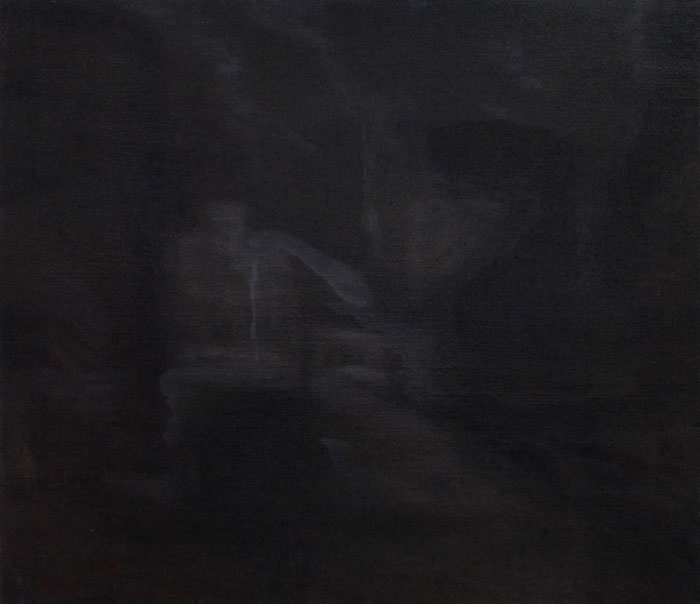

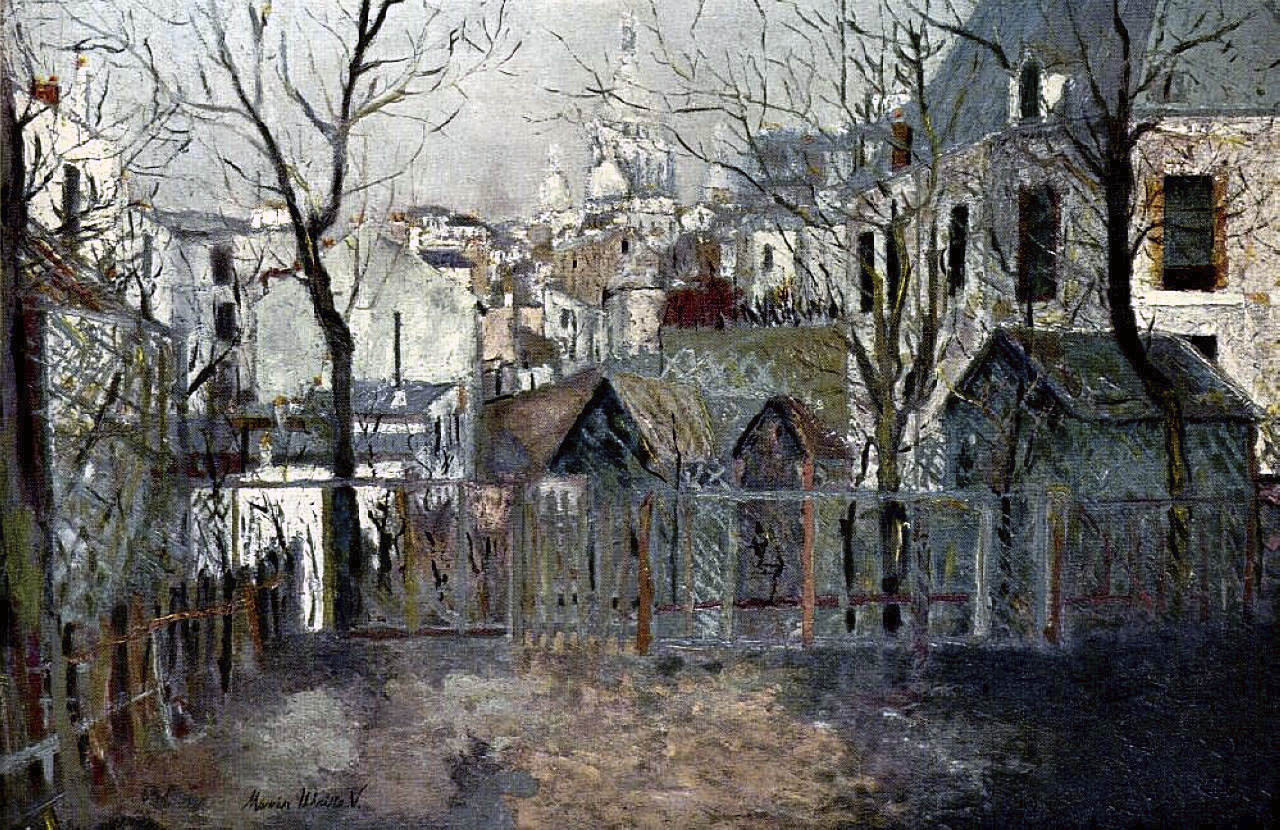
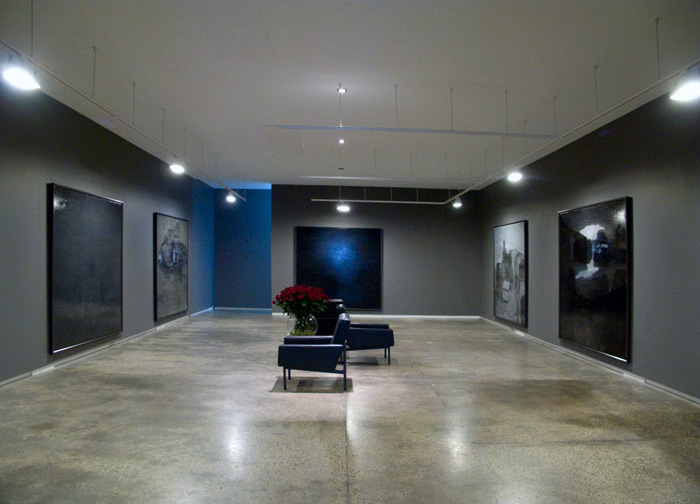

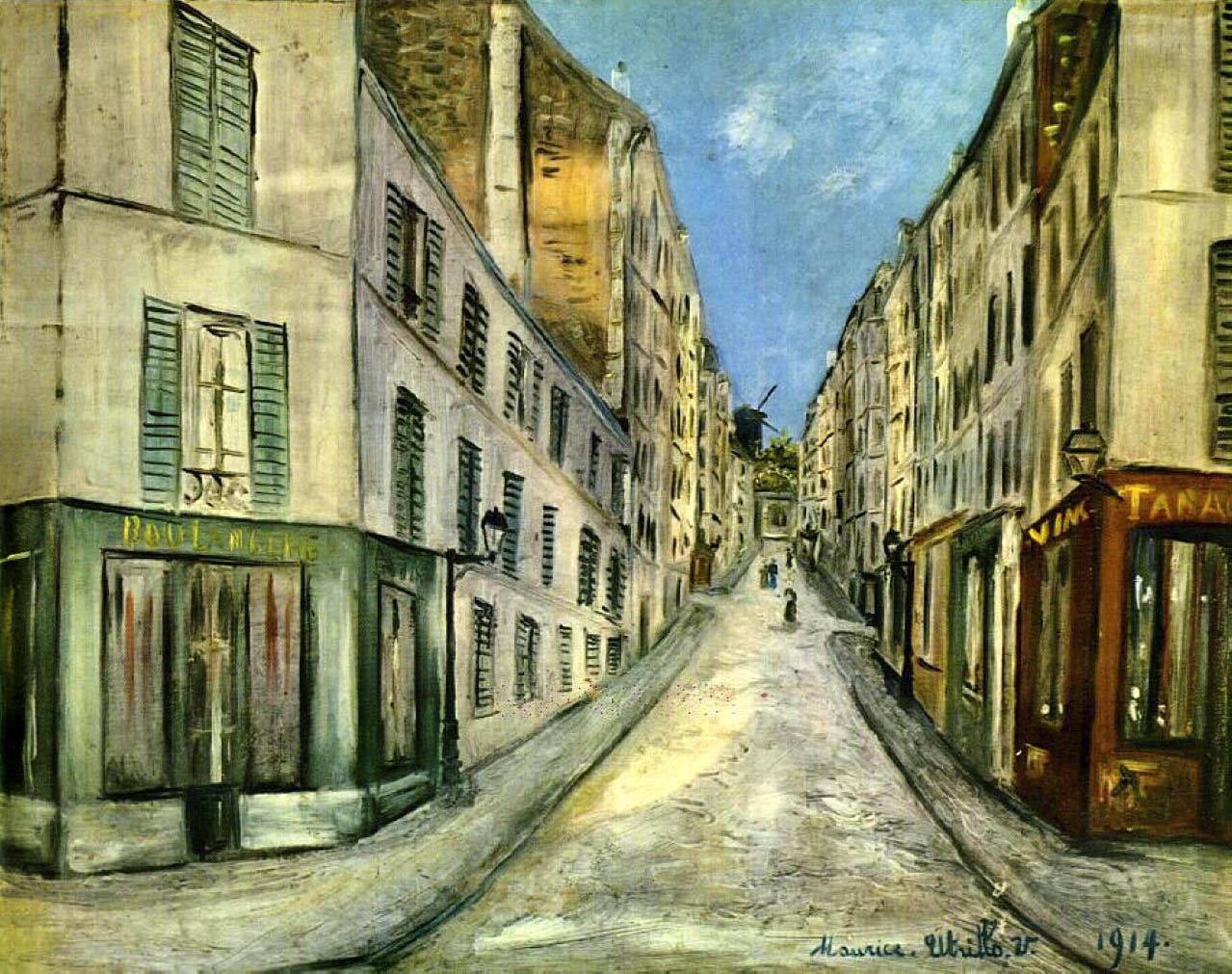
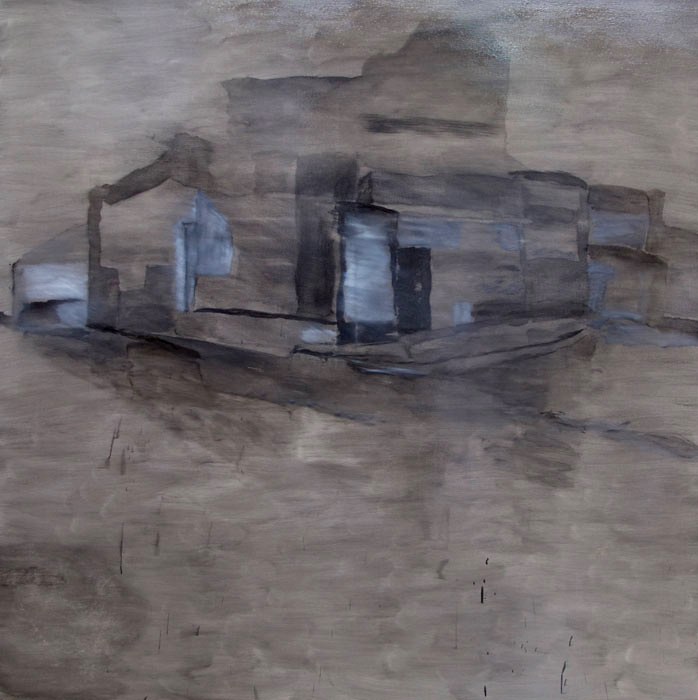

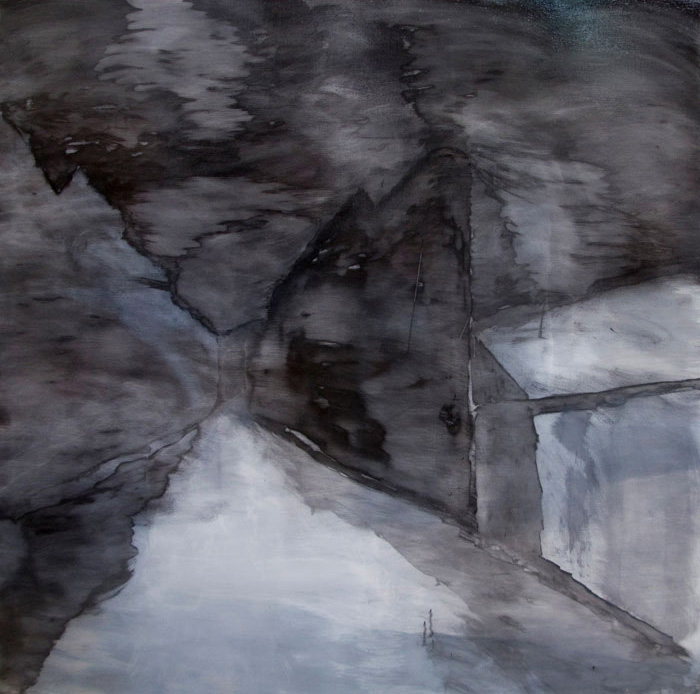

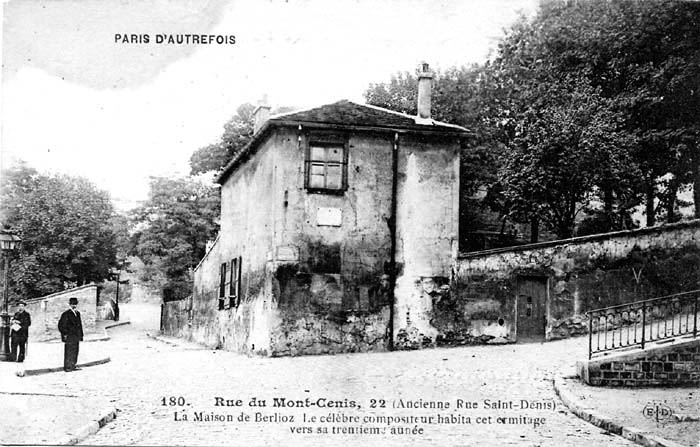
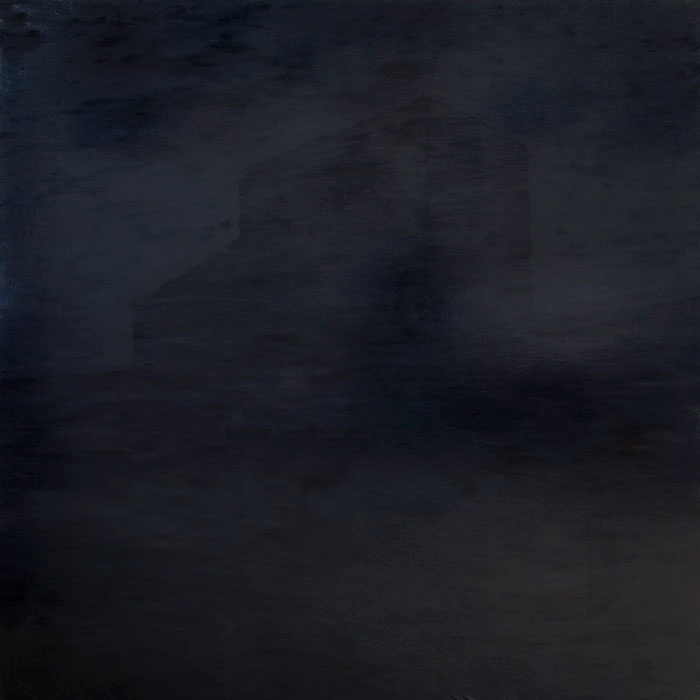

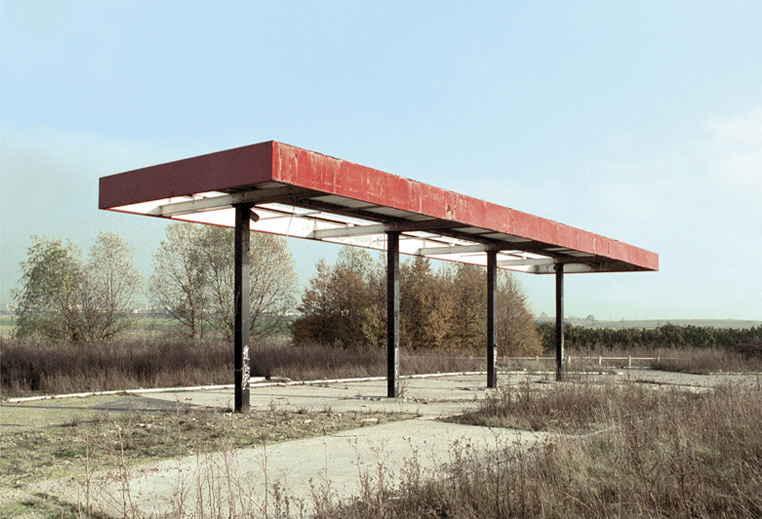
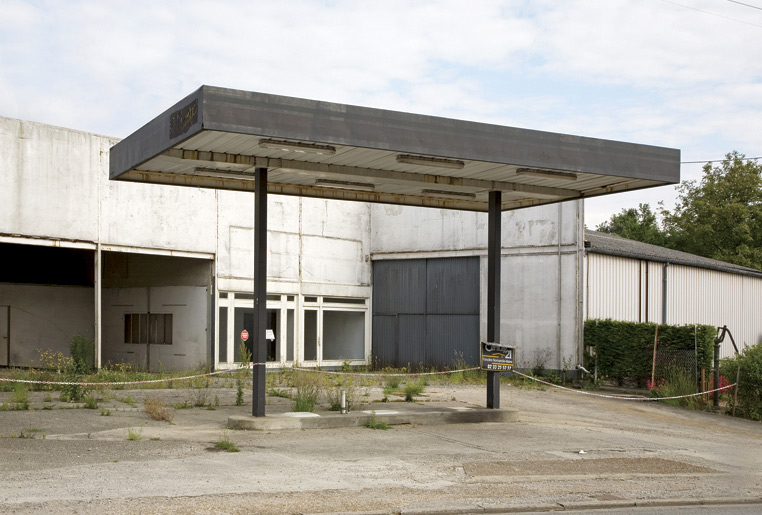
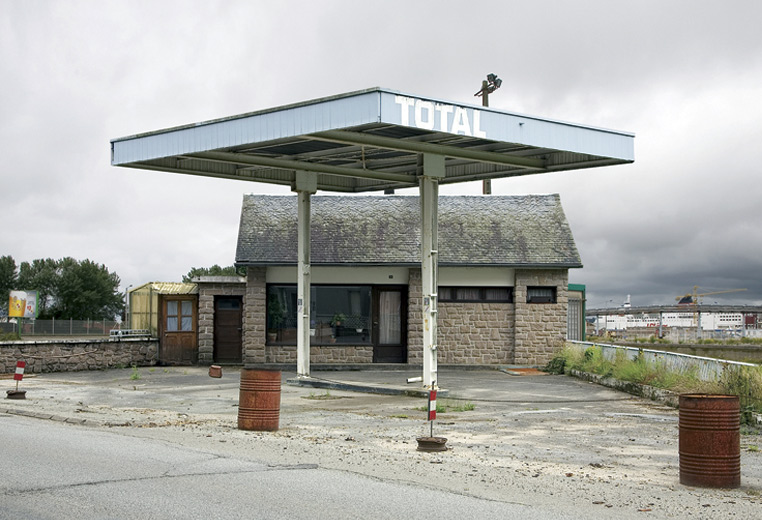
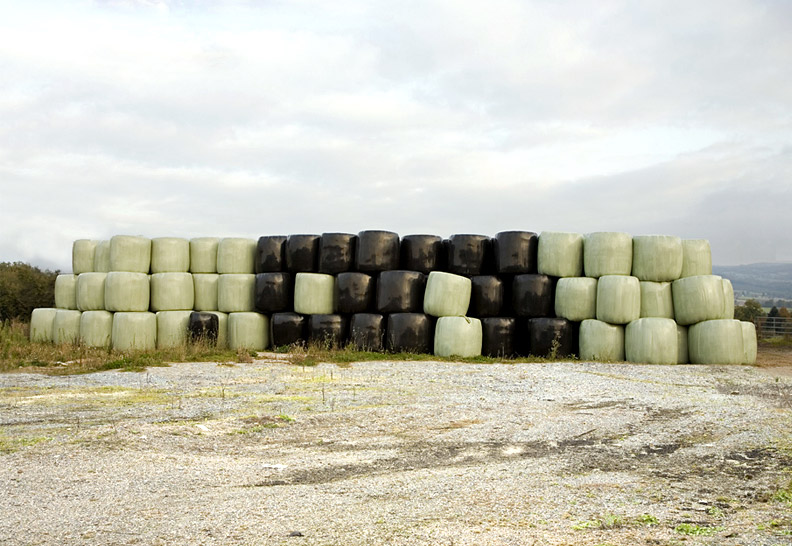
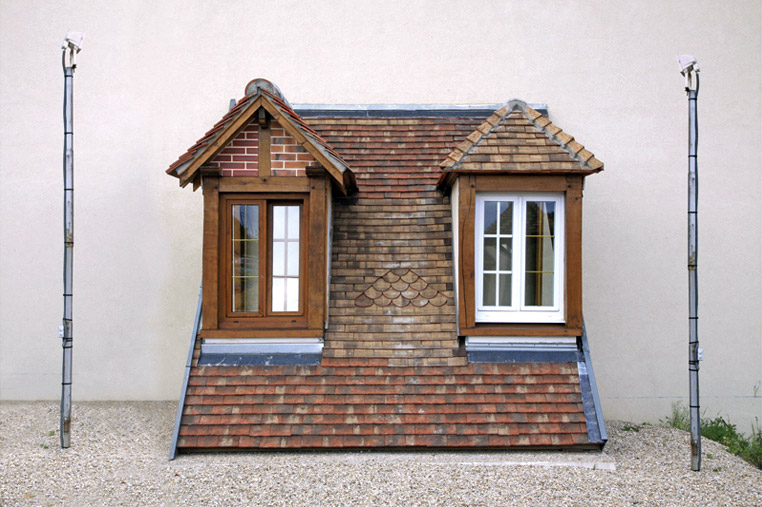
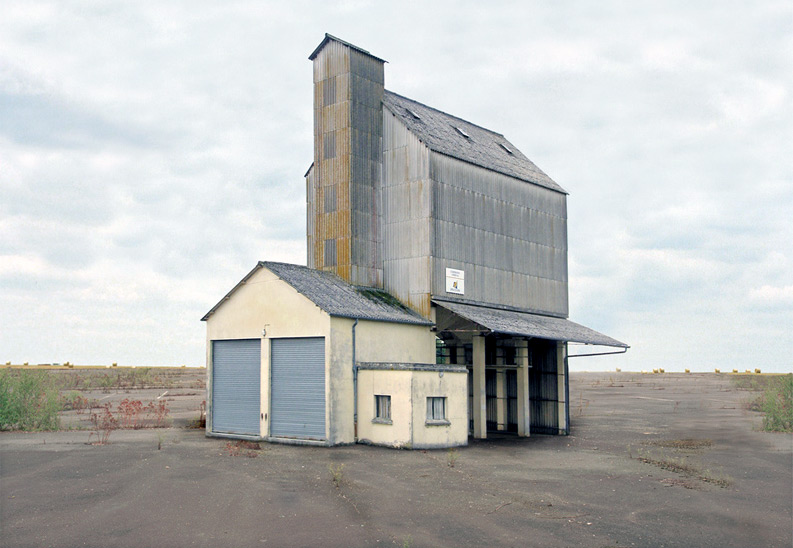
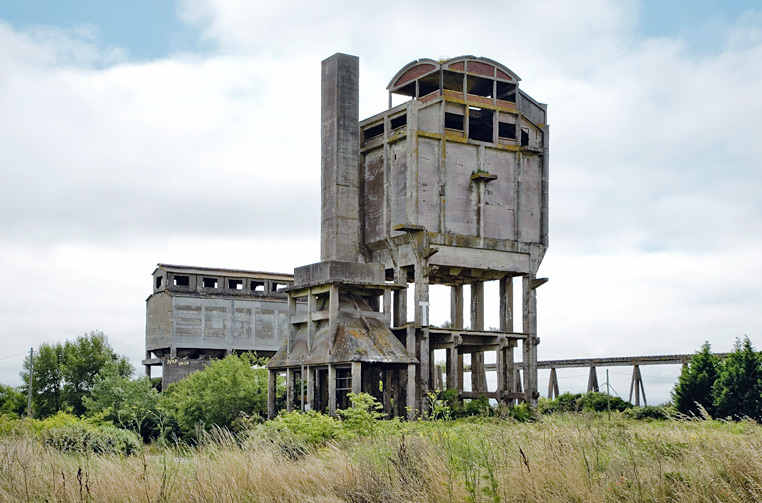
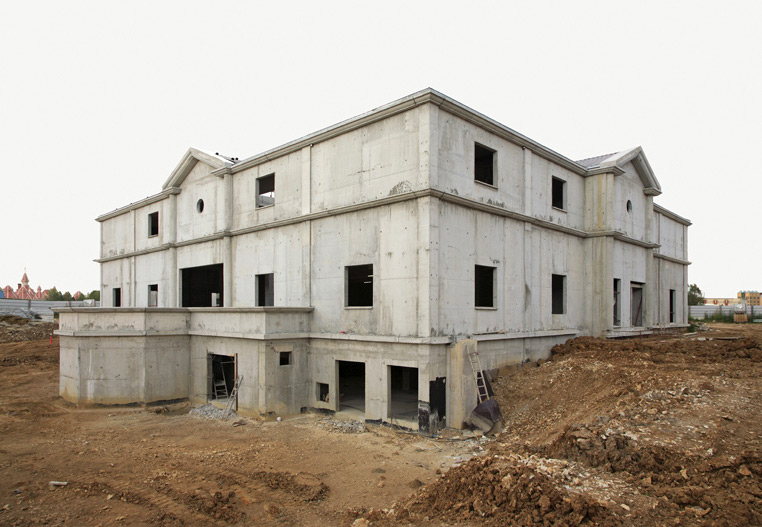
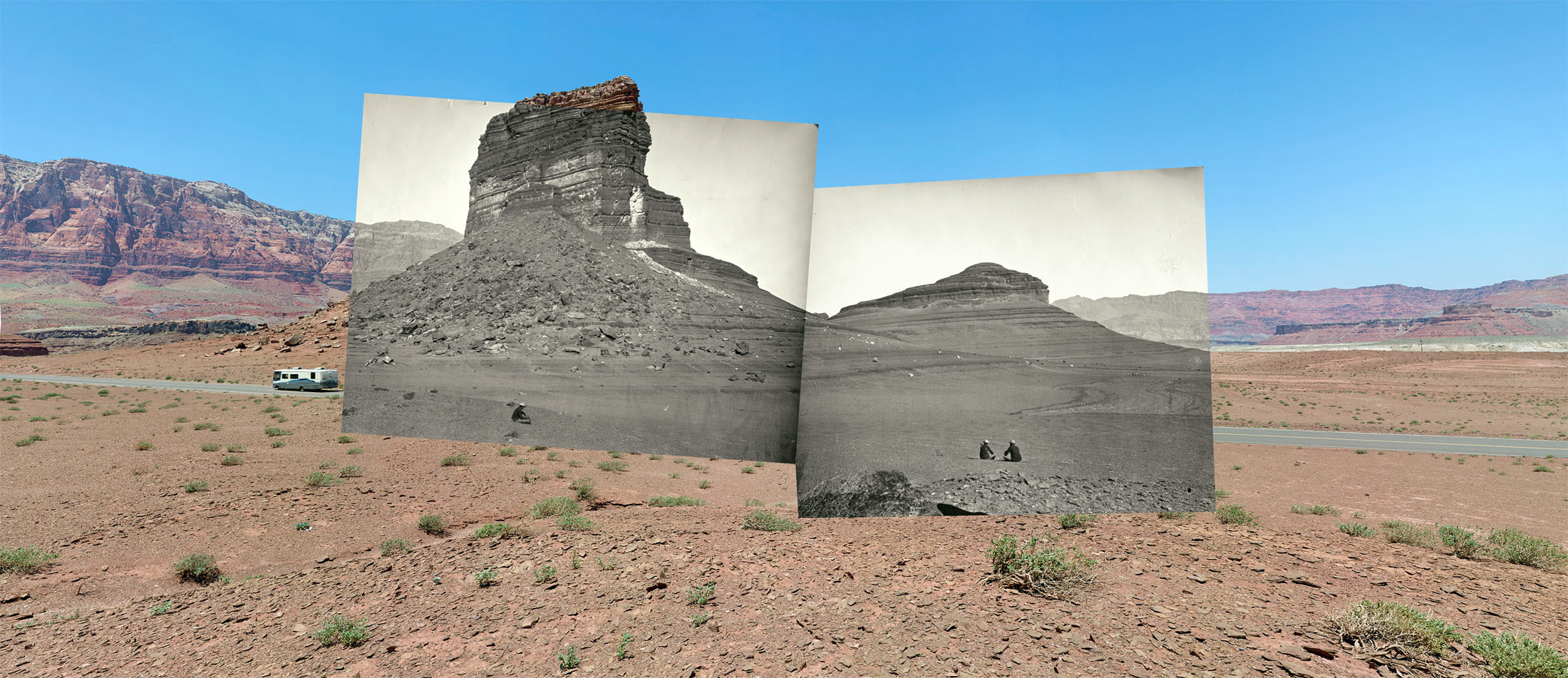
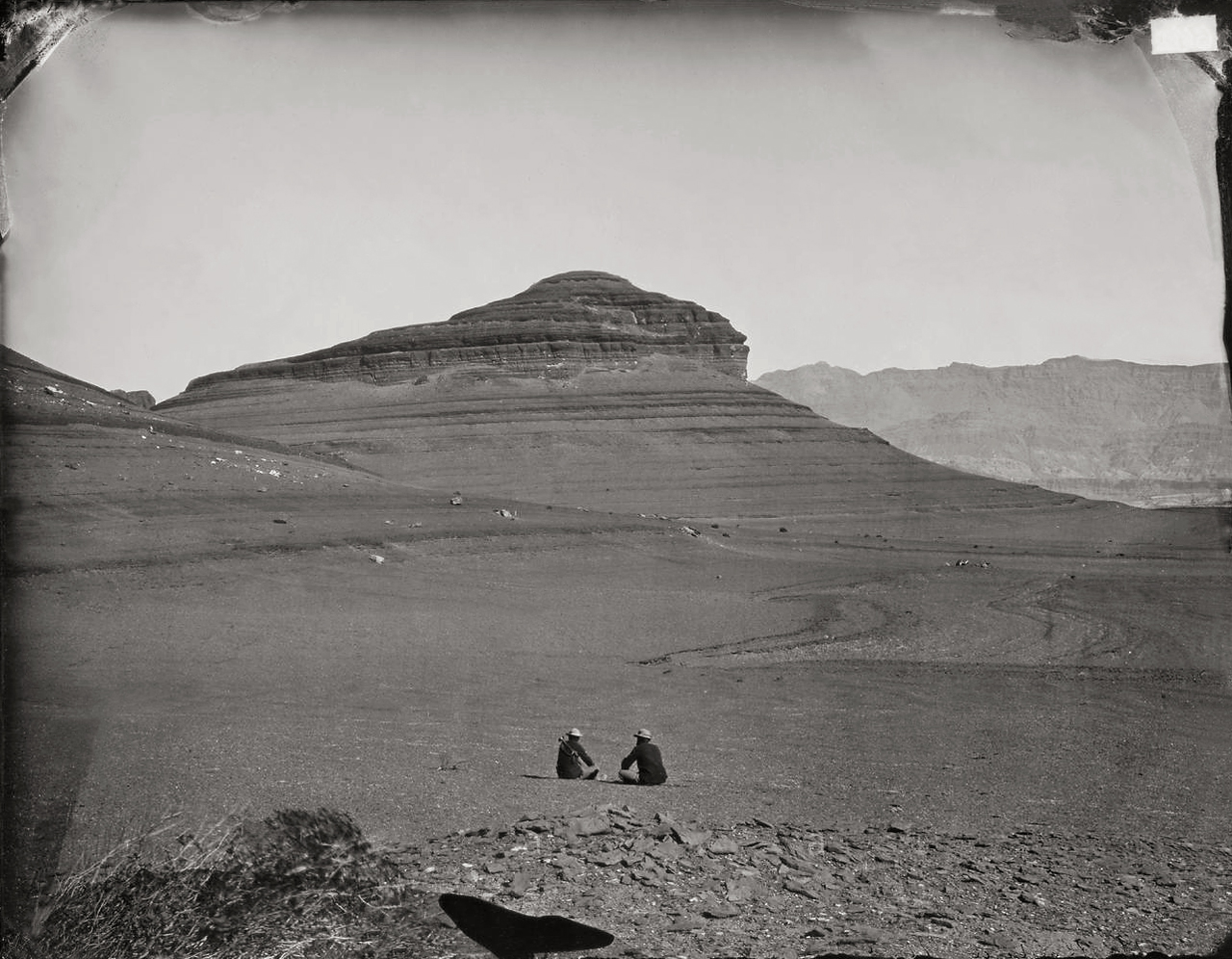
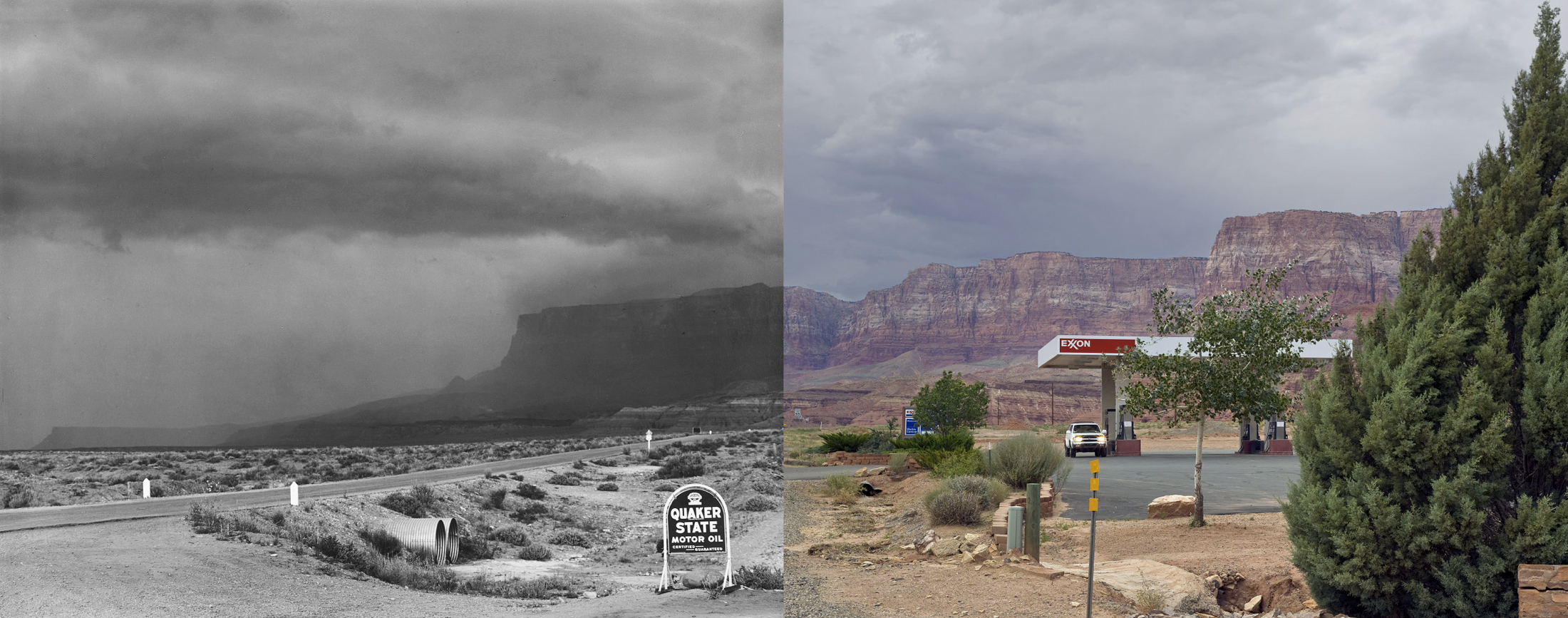
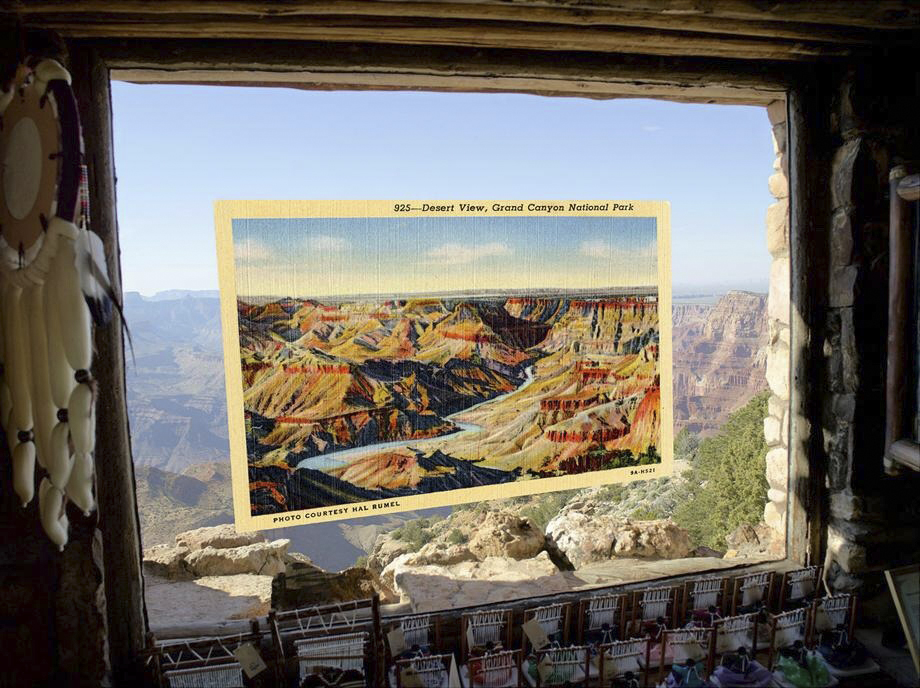

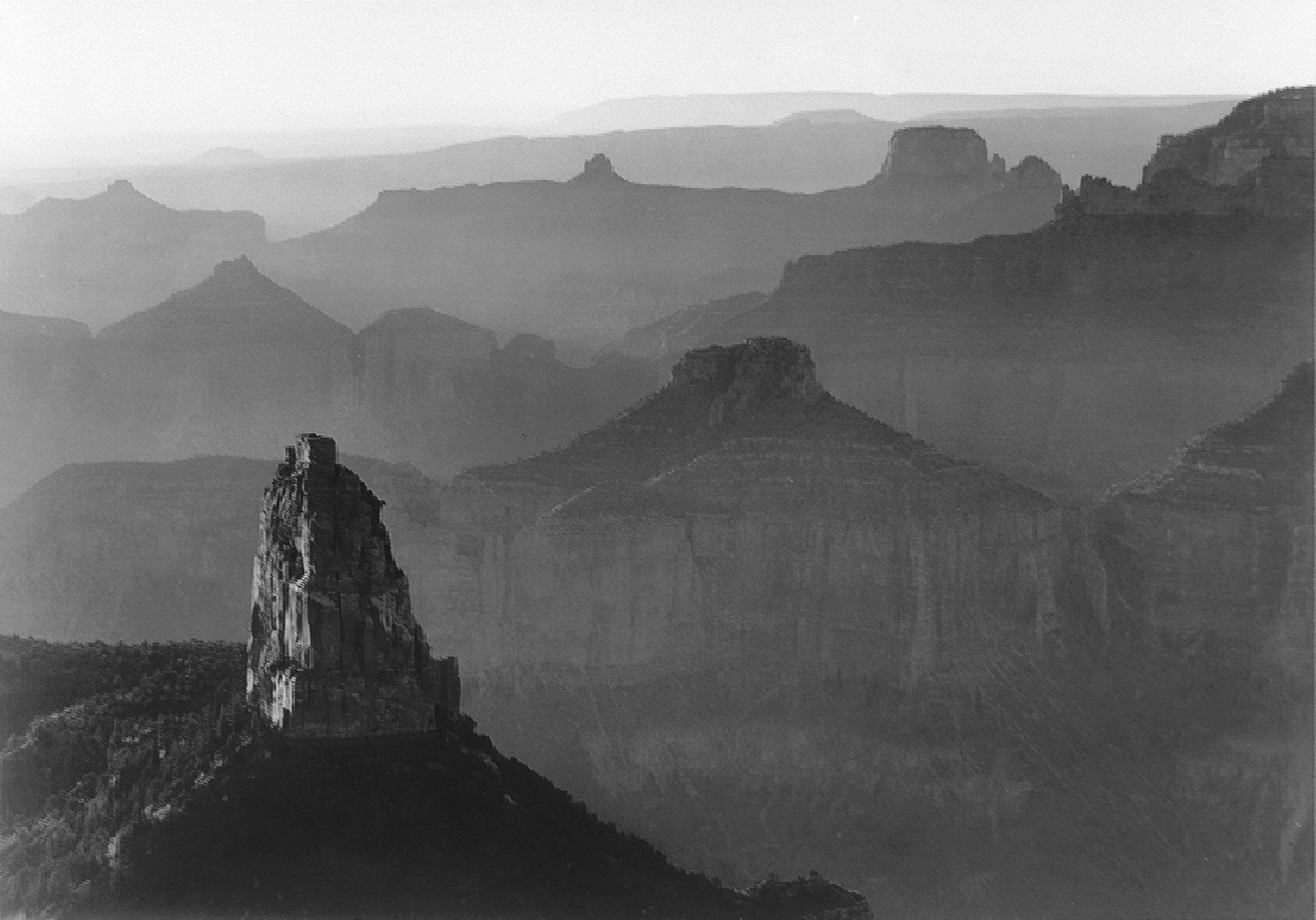


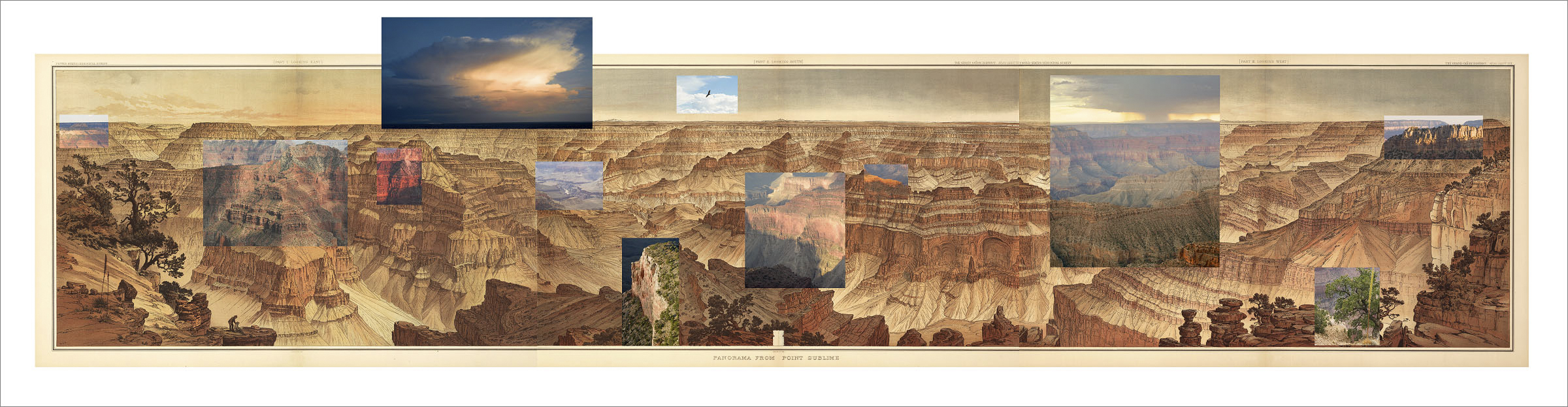
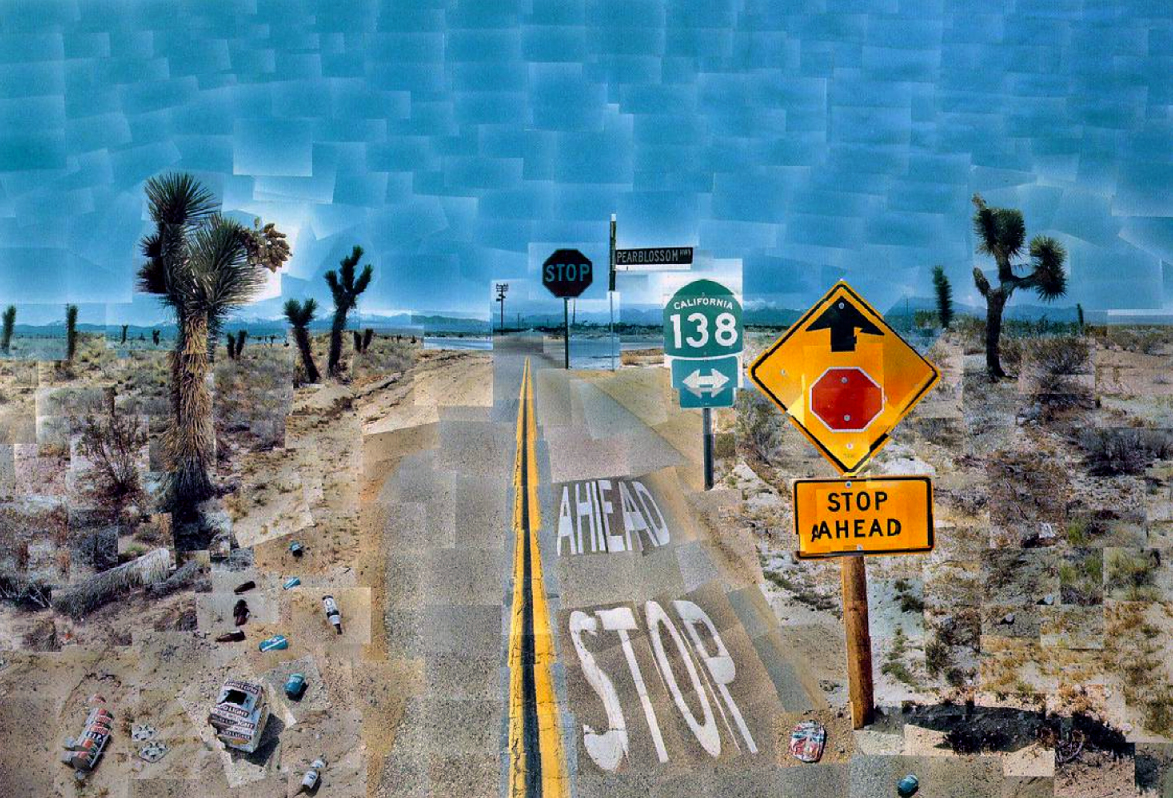


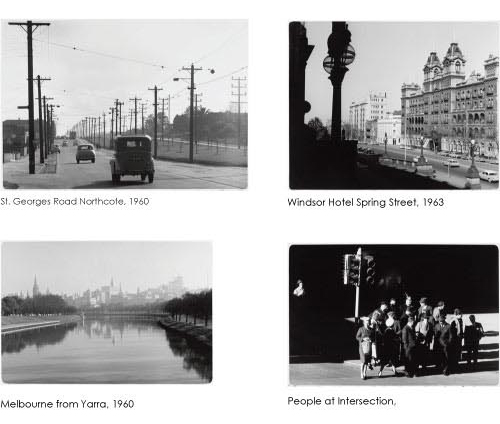

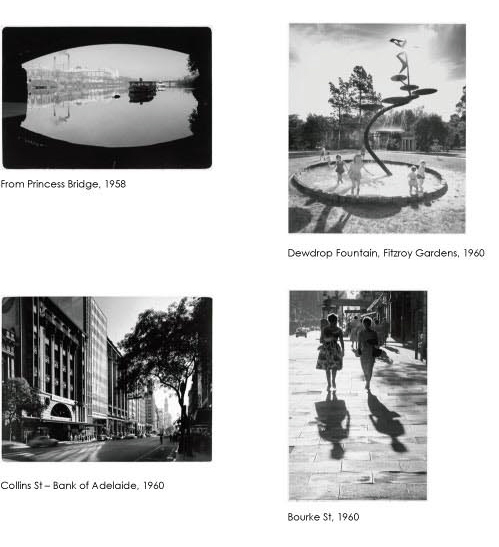


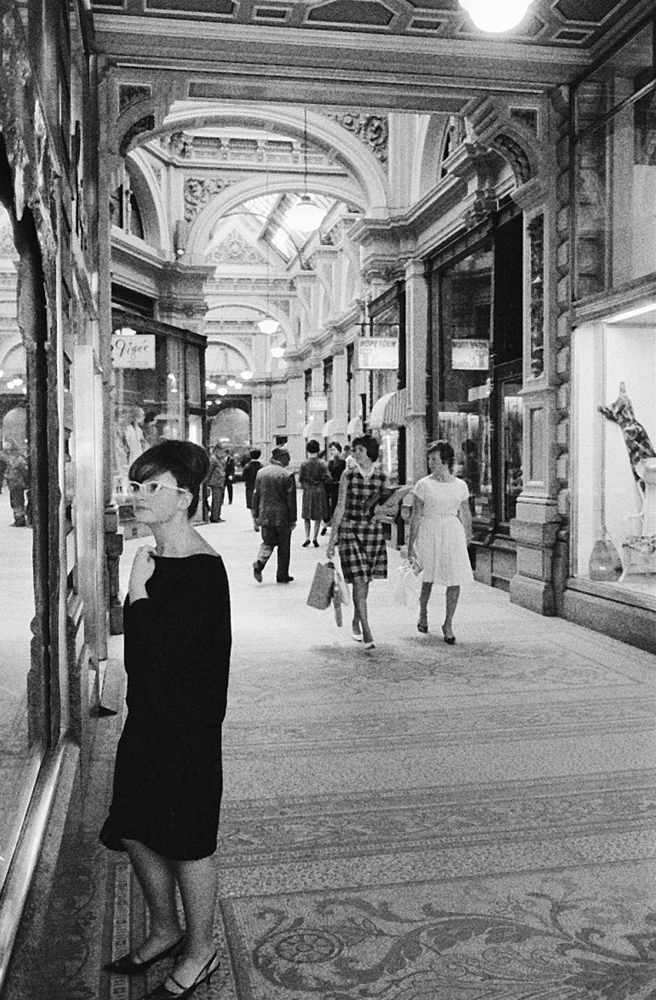


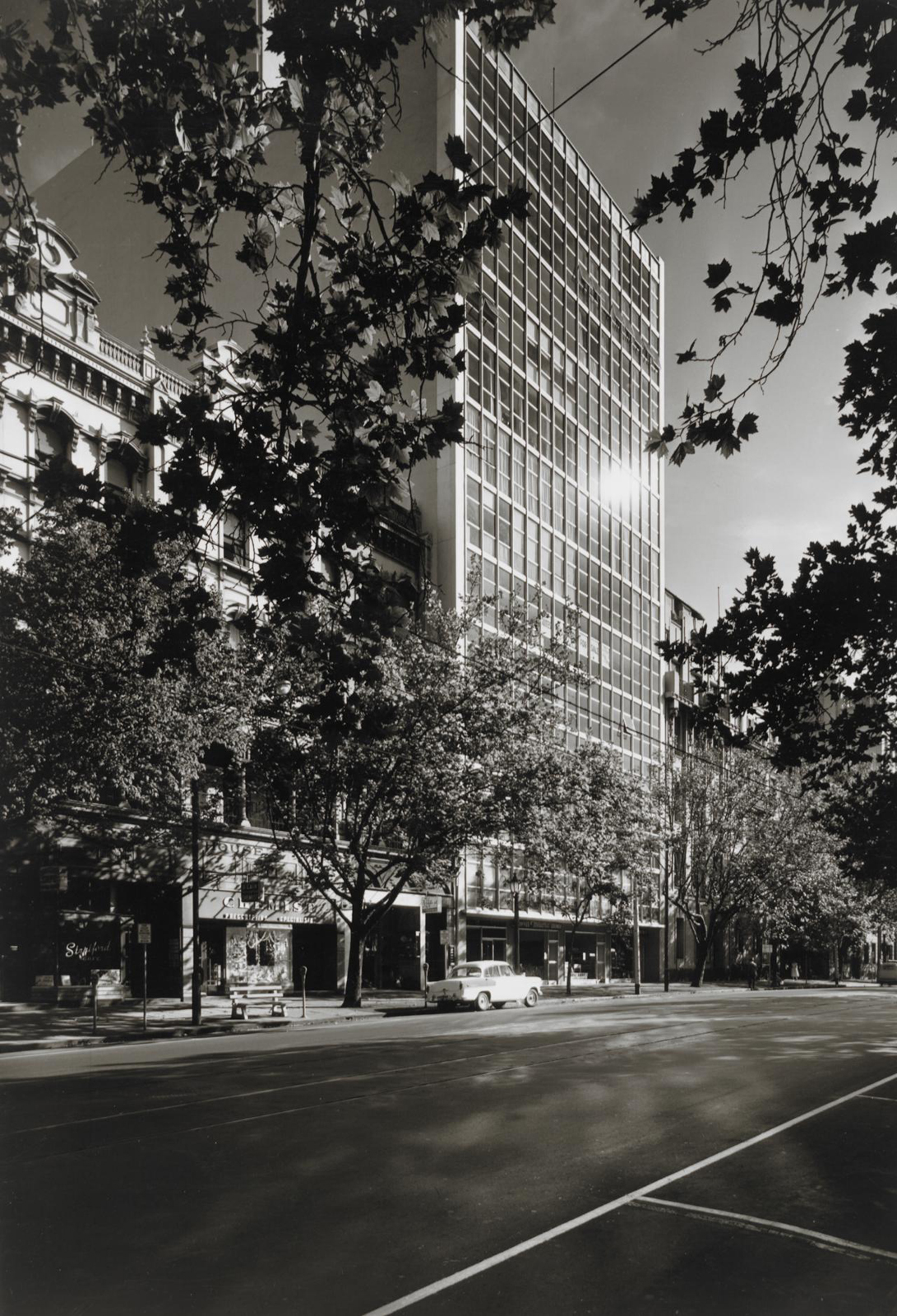

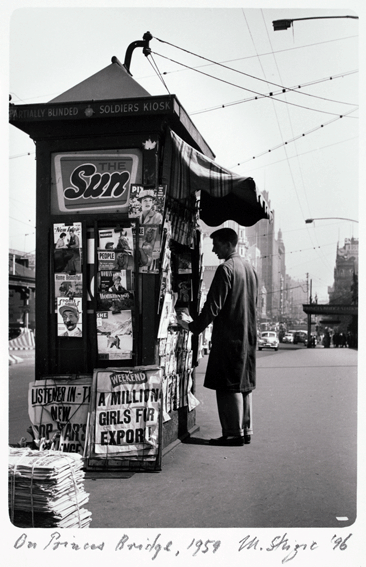


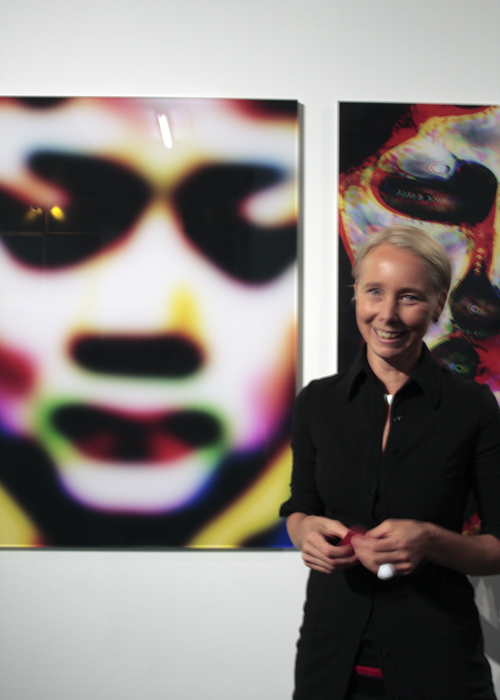


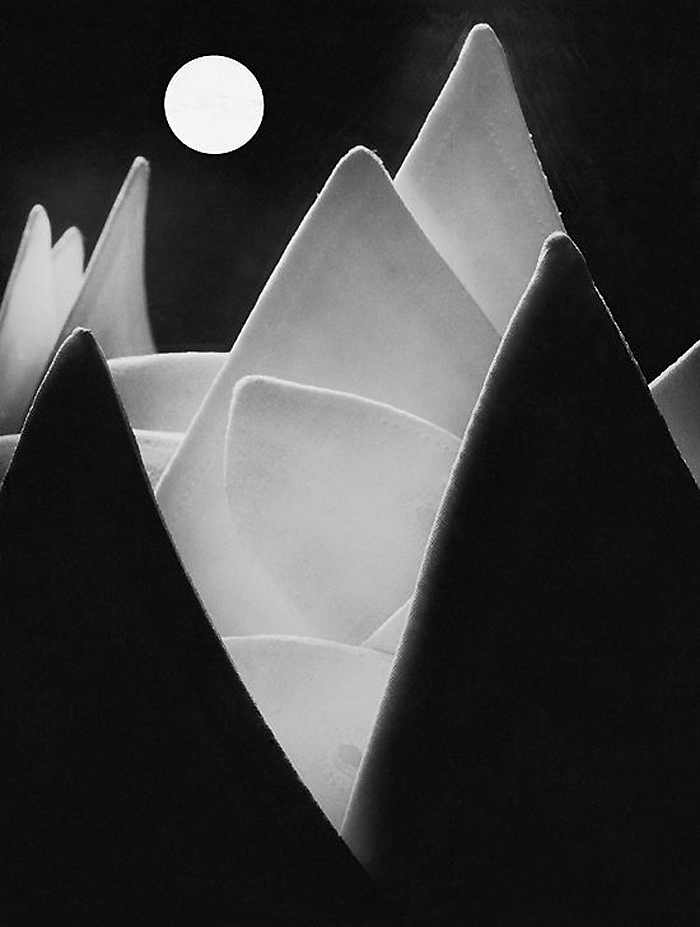

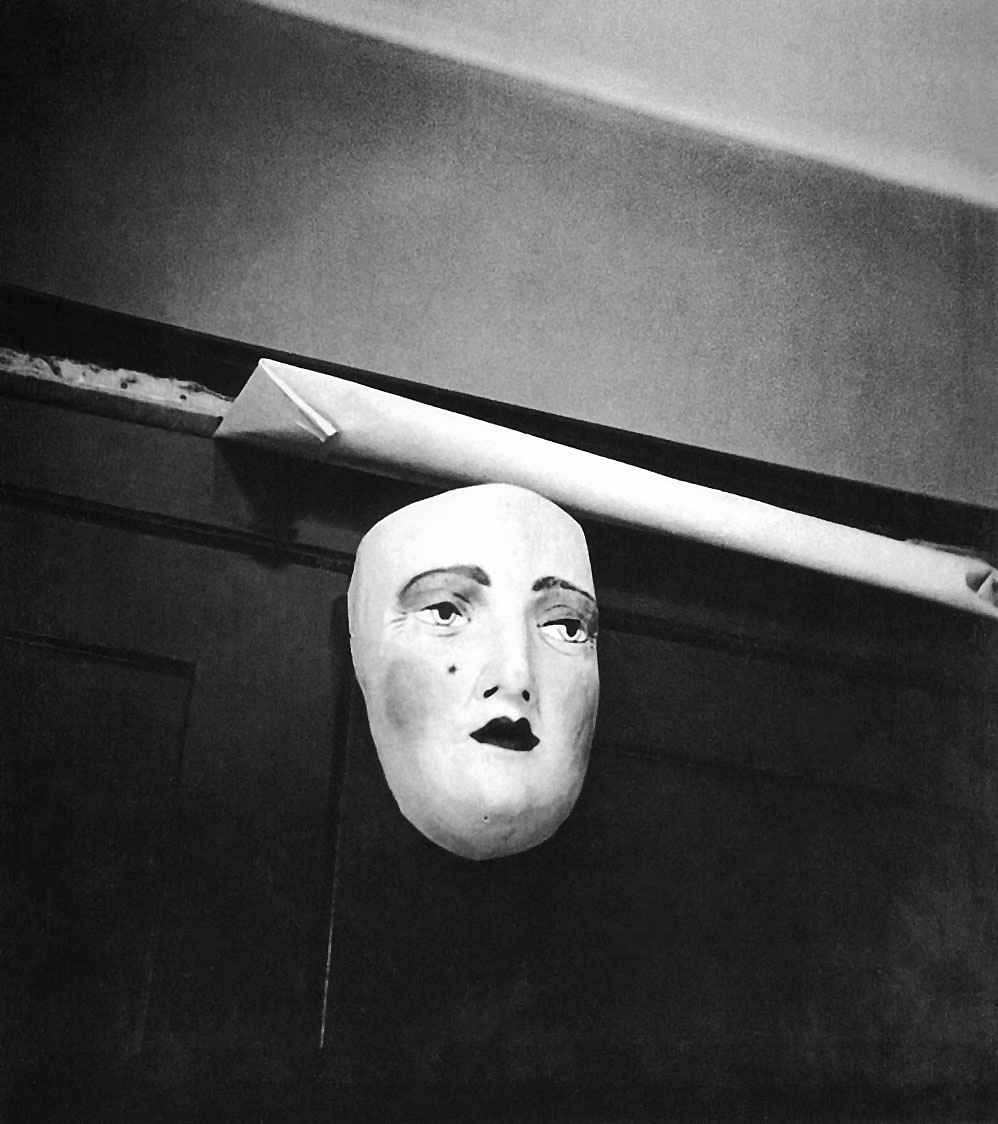
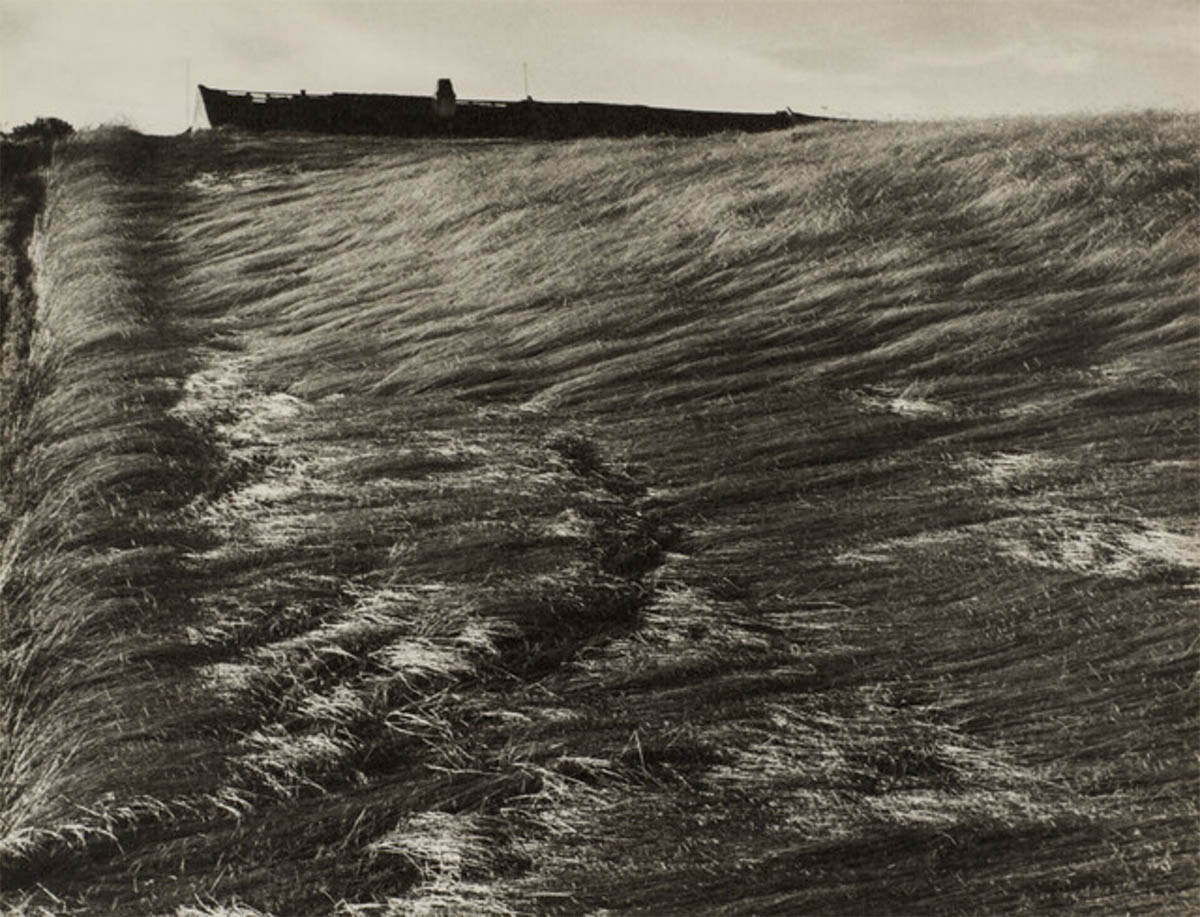


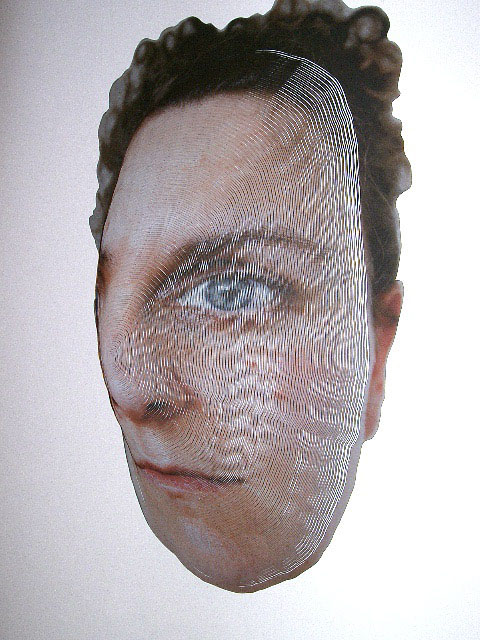
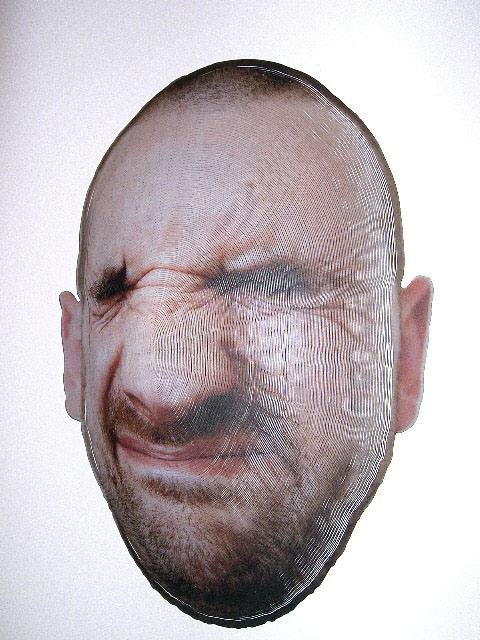
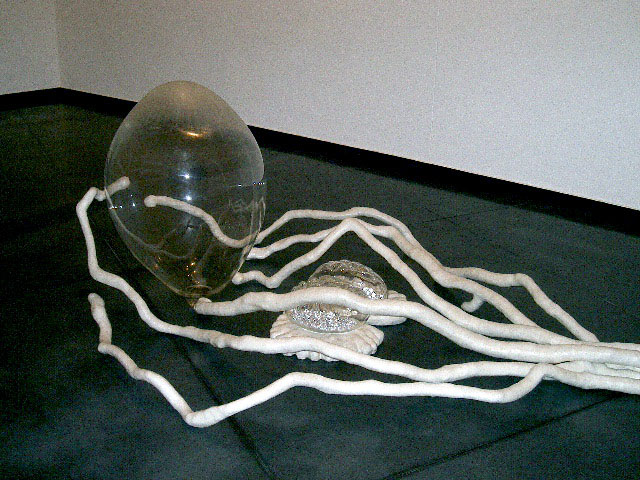
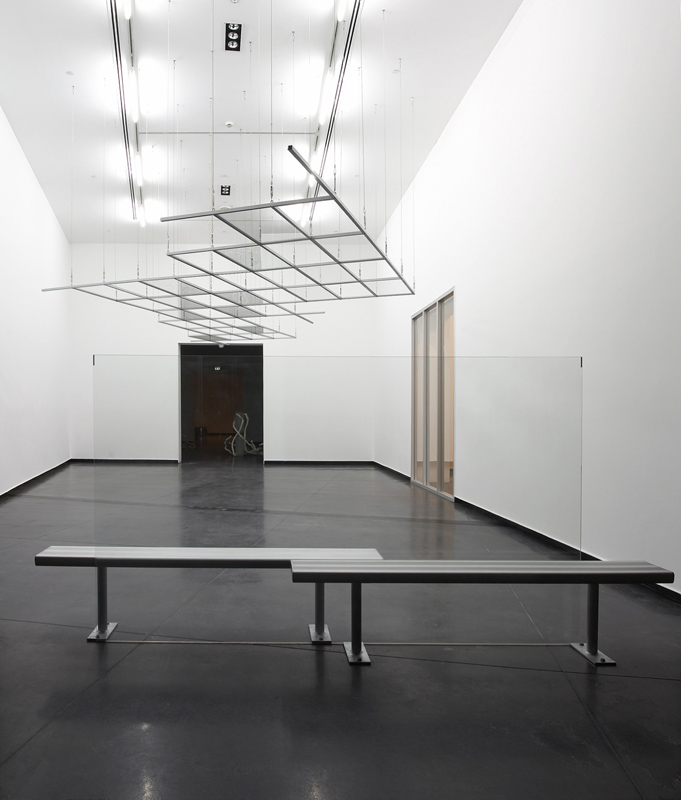

![William Kentridge (South African, b. 1955) 'Drawing for the film 'Stereoscope [Felix Crying]'' 1998-1999 from the exhibition 'William Kentridge: Five Themes' at San Francisco Museum of Modern Art (SFMOMA), March - May, 2009](https://artblart.com/wp-content/uploads/2009/04/kentridge2.jpg "William Kentridge (South African, b. 1955) 'Drawing for the film 'Stereoscope [Felix Crying]'' 1998-1999 from the exhibition 'William Kentridge: Five Themes' at San Francisco Museum of Modern Art (SFMOMA), March - May, 2009")
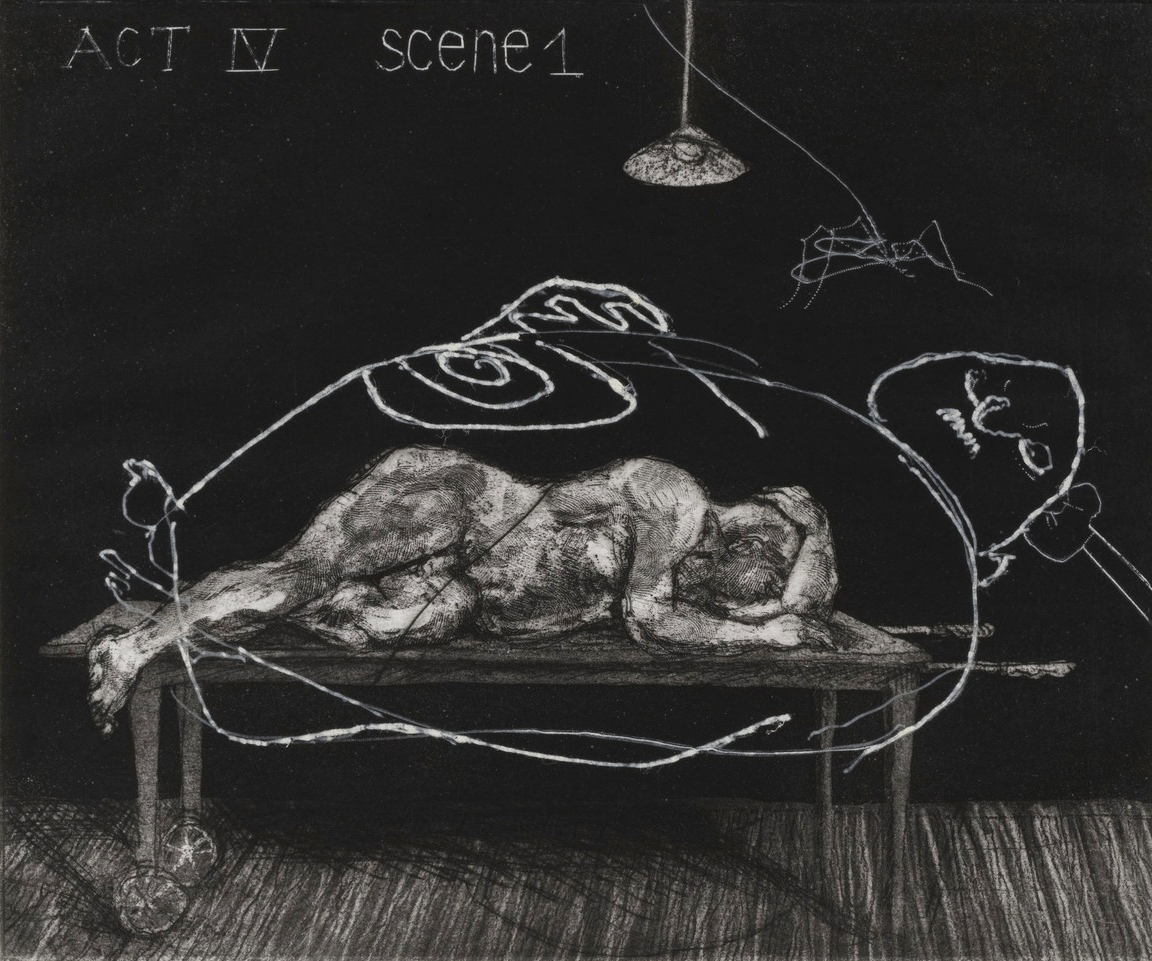


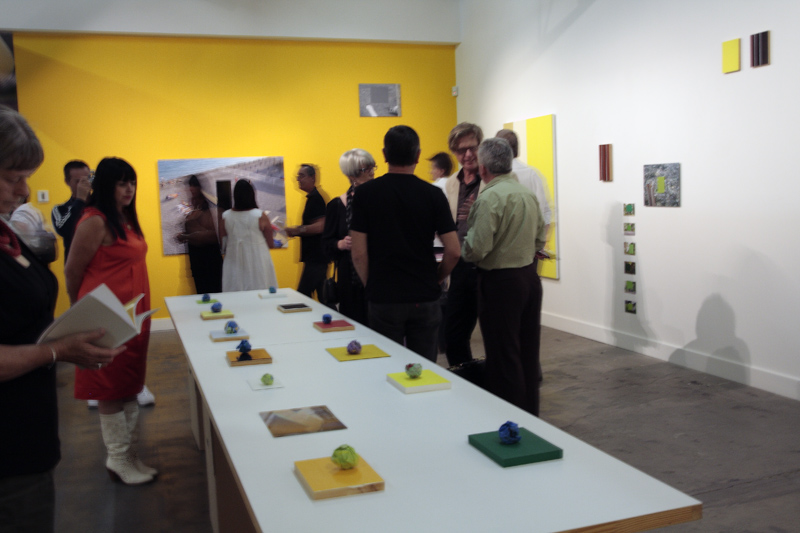

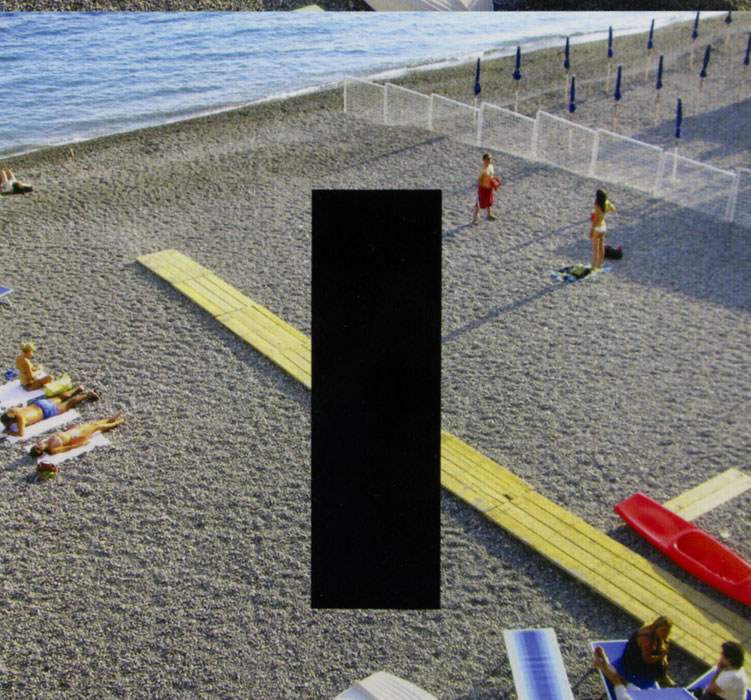
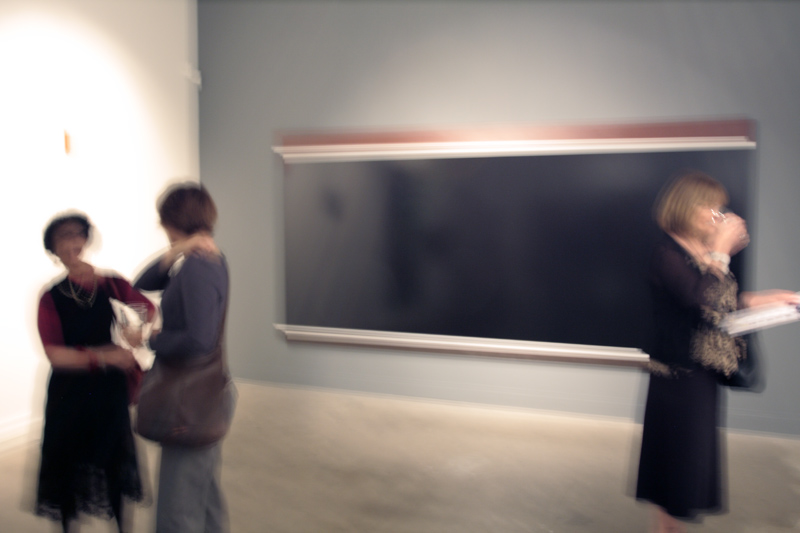
 Art Blart _ art and cultural memory archive
You must be logged in to post a comment.