Exhibition: ‘André Kertész’ at Jeu de Paume, Paris

Exhibition dates: 28th September 2010 – 6th February 2011

Curators: Michel Frizot and Annie-Laure Wanaverbecq


Many thankx to Jeu de Paume for allowing me to publish the photographs in the posting. Please click on the photographs for a larger version of the image.
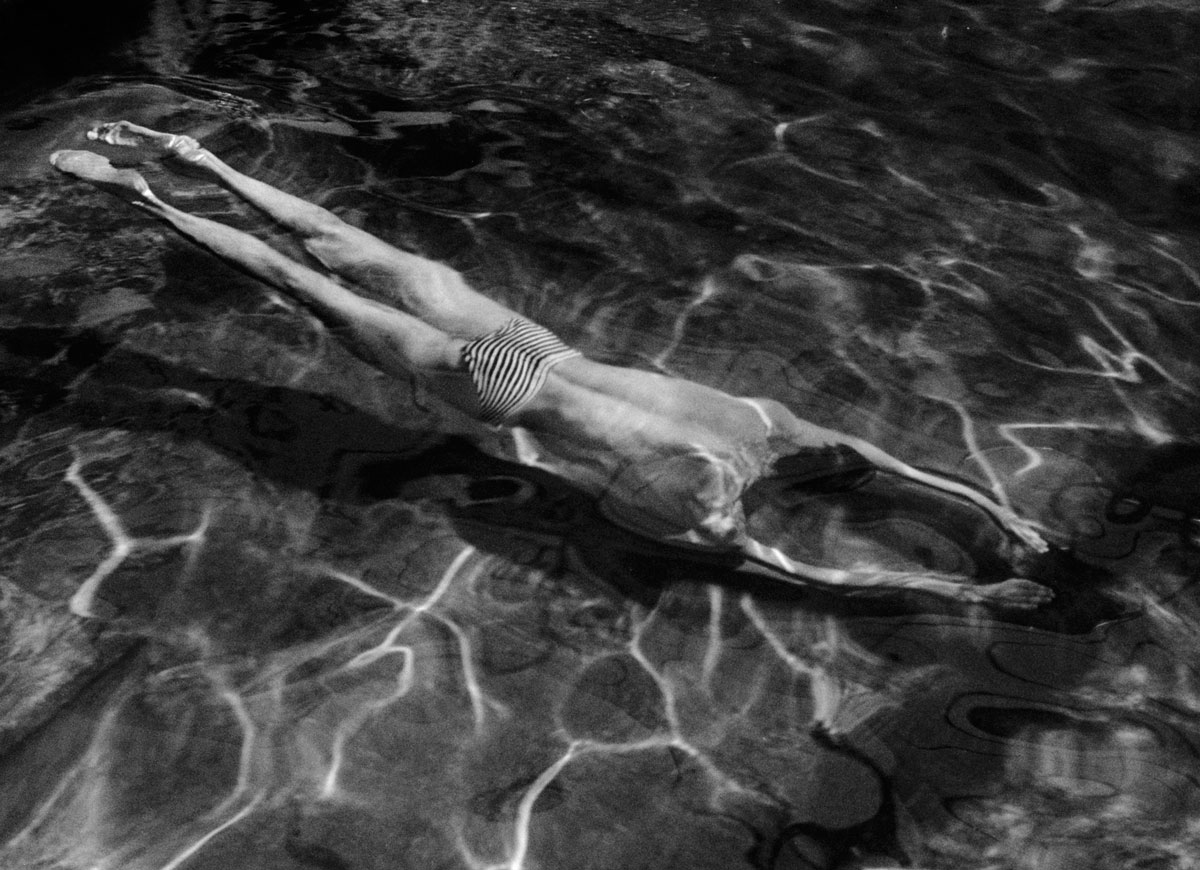
 

André Kertész (Hungarian, 1894-1985) 'Underwater Swimmer, Esztergom' 1917 from the exhibition 'André Kertész' at Jeu de Paume, Paris


André Kertész (Hungarian, 1894-1985)
Underwater Swimmer, Esztergom
1917, printed in the 1980s
Gelatin silver print
Bibliothèque Nationale de France


André Kertész

André Kertész (Budapest, 1894 – New York, 1985) has never seen his work the subject of a real retrospective in Europe, although he donated all his negatives to the French State. However, he is one of the major photographers of the 20th century, both in terms of the richness of his work and the longevity of his career…


André Kertész (Hungarian, 1894-1985) 'Esztergom' 1918 from the exhibition 'André Kertész' at Jeu de Paume, Paris


André Kertész (Hungarian, 1894-1985)
Esztergom
1918
Gelatin silver print
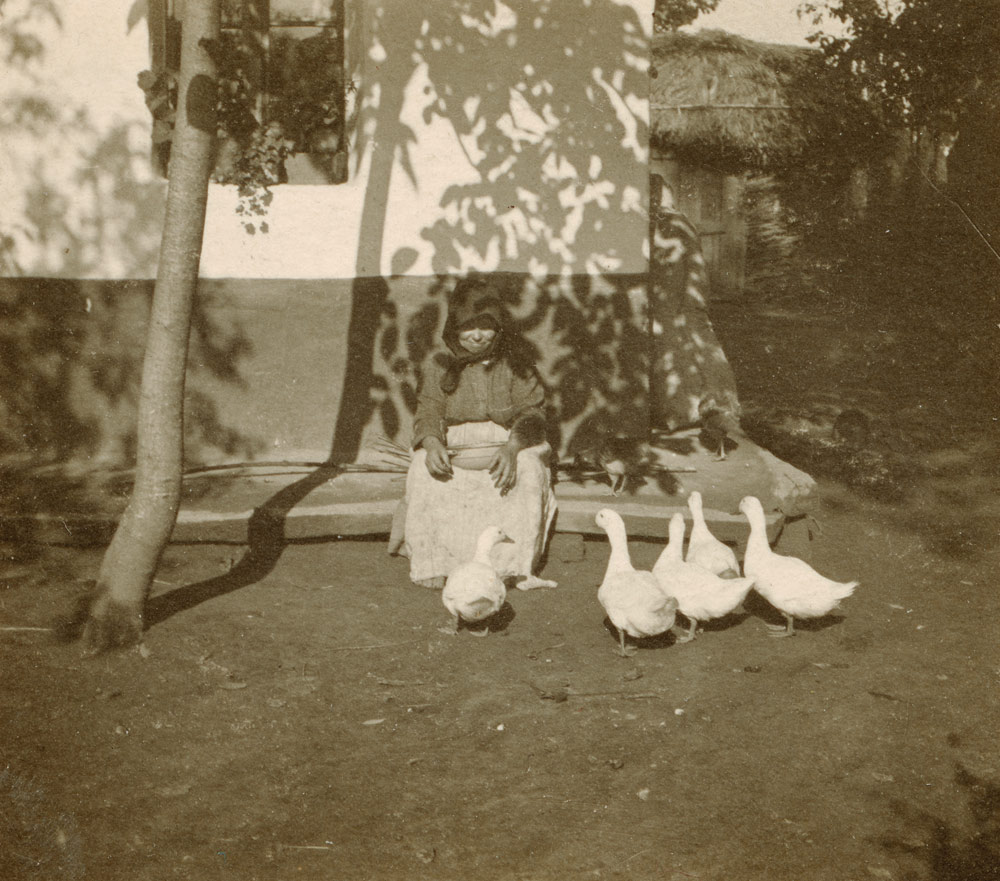
 

André Kertész (Hungarian, 1894-1985) 'Tisza Szalka' 1924 from the exhibition 'André Kertész' at Jeu de Paume, Paris


André Kertész (Hungarian, 1894-1985)
Tisza Szalka
1924
Vintage gelatin silver contact print
Salgo Trust for Education, New York
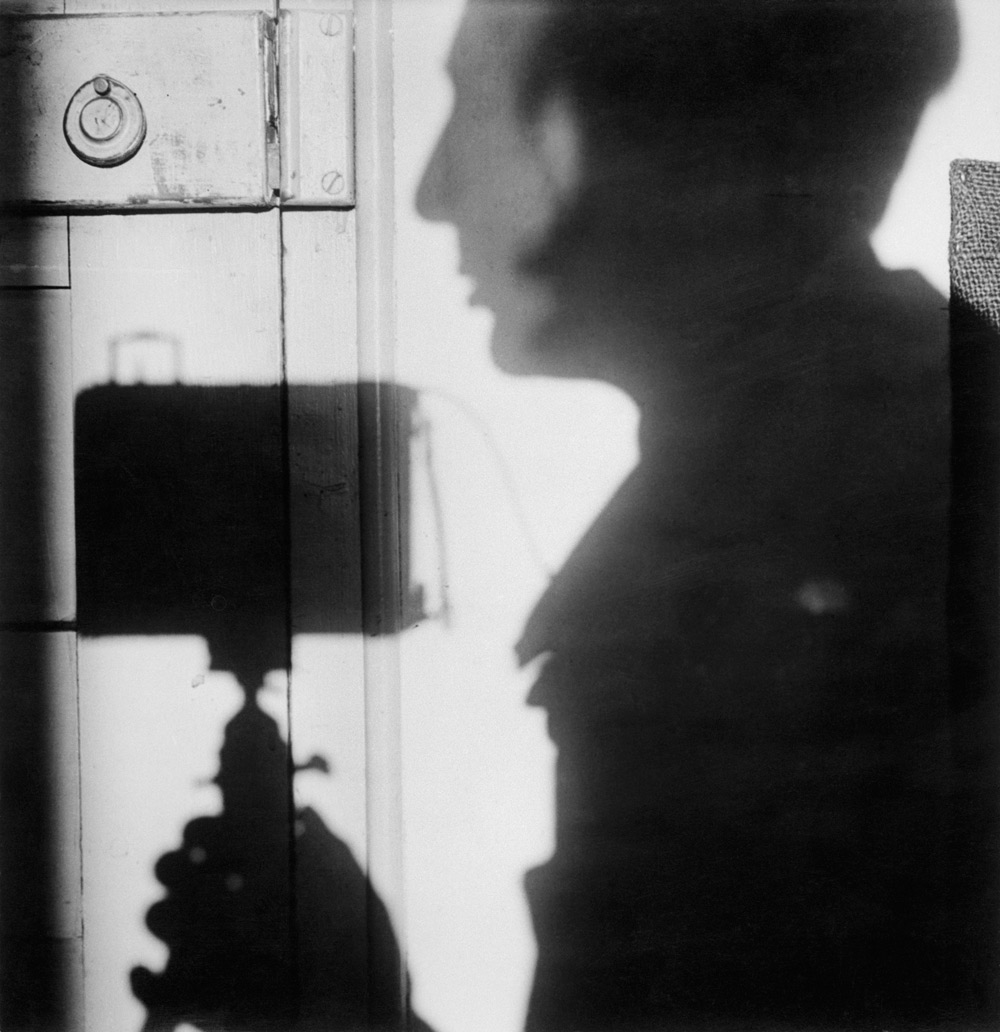
 

André Kertész (Hungarian, 1894-1985) 'Self-portrait, Paris' 1927 from the exhibition 'André Kertész' at Jeu de Paume, Paris


André Kertész (Hungarian, 1894-1985)
Self-portrait, Paris
1927
Gelatin silver print


André Kertész (Hungarian, 1894-1985) 'Plaque cassée, Paris' (Broken Plate, Paris) 1929 from the exhibition 'André Kertész' at Jeu de Paume, Paris


André Kertész (Hungarian, 1894-1985)
Plaque cassée, Paris (Broken Plate, Paris)
1929
Gelatin silver print


André Kertész (Hungarian, 1894-1985) 'Distortion n° 41' 1933 from the exhibition 'André Kertész' at Jeu de Paume, Paris


André Kertész (Hungarian, 1894-1985)
Distortion n° 41
1933
[with André Kertész selportrait]
Gelatin silver print, later print
Collection of the Maison Européenne de la Photographie, Paris


Twenty-five years after his death, André Kertész (1894-1985) is today a world-famous photographer who produced images that will be familiar to everyone, but he has yet to receive full recognition for his personal contribution to the language of photography in the 20th century. His career spanning more than seventy years was chaotic, and his longevity was matched by an unwavering creative acuity that rendered difficult an immediate or retrospective understanding of his work.

This exhibition attempts to provide for the first time a broad and balanced view of Kertéz’s work, presenting new elements and bringing together, for the first time also, a large number of period prints (two thirds of the 300 photographs on show). Both the exhibition and the accompanying catalogue were produced in collaboration with The André and Elizabeth Kertész Foundation (New York) and the Médiathèque de l’Architecture et du Patrimoine (Paris), which holds Kertész’s donation to the ministère de la Culture.

An initial investigation was undertaken during his lifetime as part of preparations for the first retrospective in 1985. The book Ma France (1990) paid tribute to his French donation and celebrated his Parisian periods (1925-1936 and after 1963), and the recent catalogue for the exhibition at the National Gallery of Art (2005), Washington, provided lots of circumstantial information and new analyses. With this retrospective exhibition, which draws extensively on archive documents, we have attempted to present Kertész’s work as a whole in its homogeneity and its continuity, as he himself conceived it, reflecting closely the course of his life.

Adopting a chronological and linear exhibition layout reflecting the various periods of his creative life, punctuated by self-portraits at the entrance to each space, we have created thematic groups in the form of “cells” highlighting the unique aspects of his output: his personal photography (the photographic postcards, the Distortions), his involvement in publishing (the book Paris vu par Kertész, 1934), his recurrent creative experiments (shadows, chimneys), and the more diffuse expression of emotions (solitude). The exhibition sheds light on the importance of previously neglected or unexplored periods (his time as a soldier between 1914 and 1918, the New York period and the Polaroids of his last years). In particular, it highlights the beginnings of photojournalism in Paris in 1928, and the dissemination of his photographs in the press, which had become a professional activity for him. Thus numerous copies of magazines are presented (Vu, Art et Médecine, Paris Magazine), as are the various publications of his photo essay on the Trappist monastery in Soligny, with Kertész’s original shots.

Press release from the Jeu de Paume website
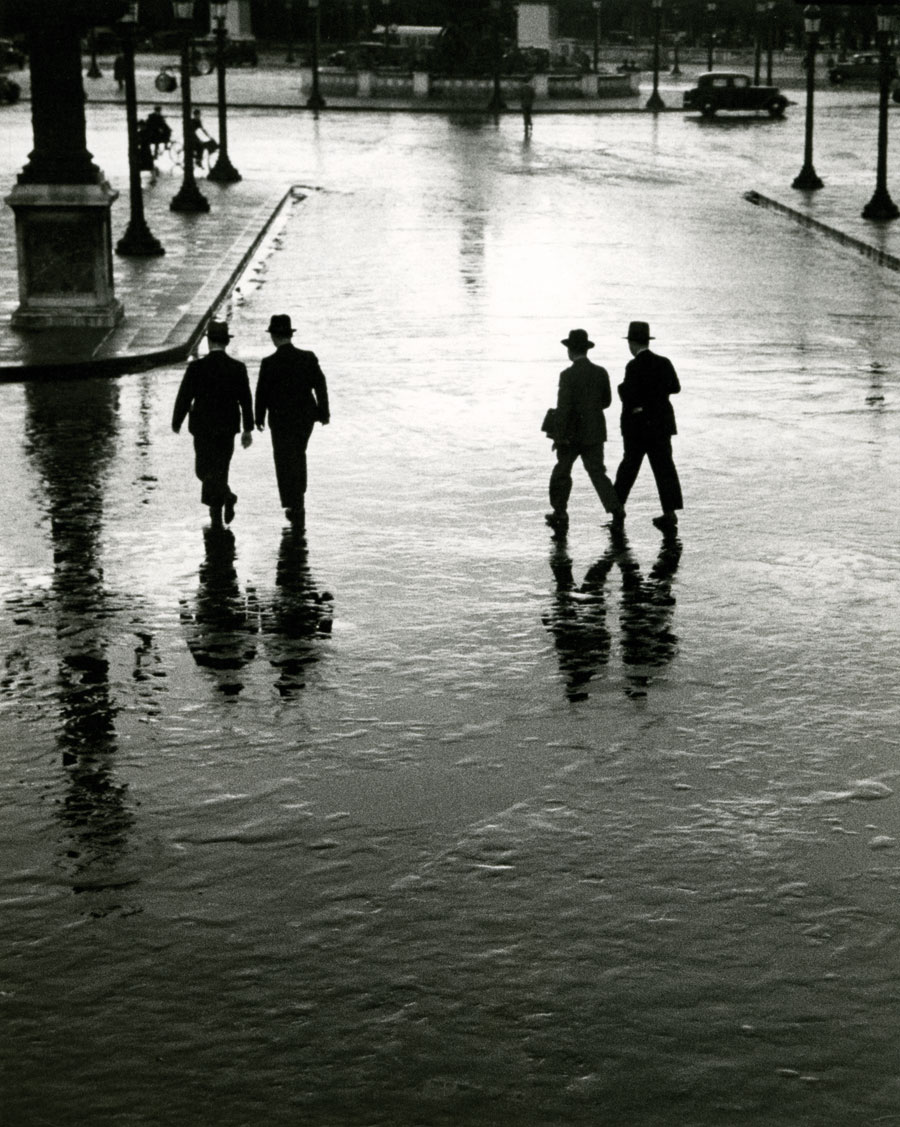
 

André Kertész (Hungarian, 1894-1985) 'Place de la Concorde' Paris 1928 from the exhibition 'André Kertész' at Jeu de Paume, Paris


André Kertész (Hungarian, 1894-1985)
Place de la Concorde
Paris, 1928, printed in the 1970s
Gelatin silver print
Collection of Robert Gurbo
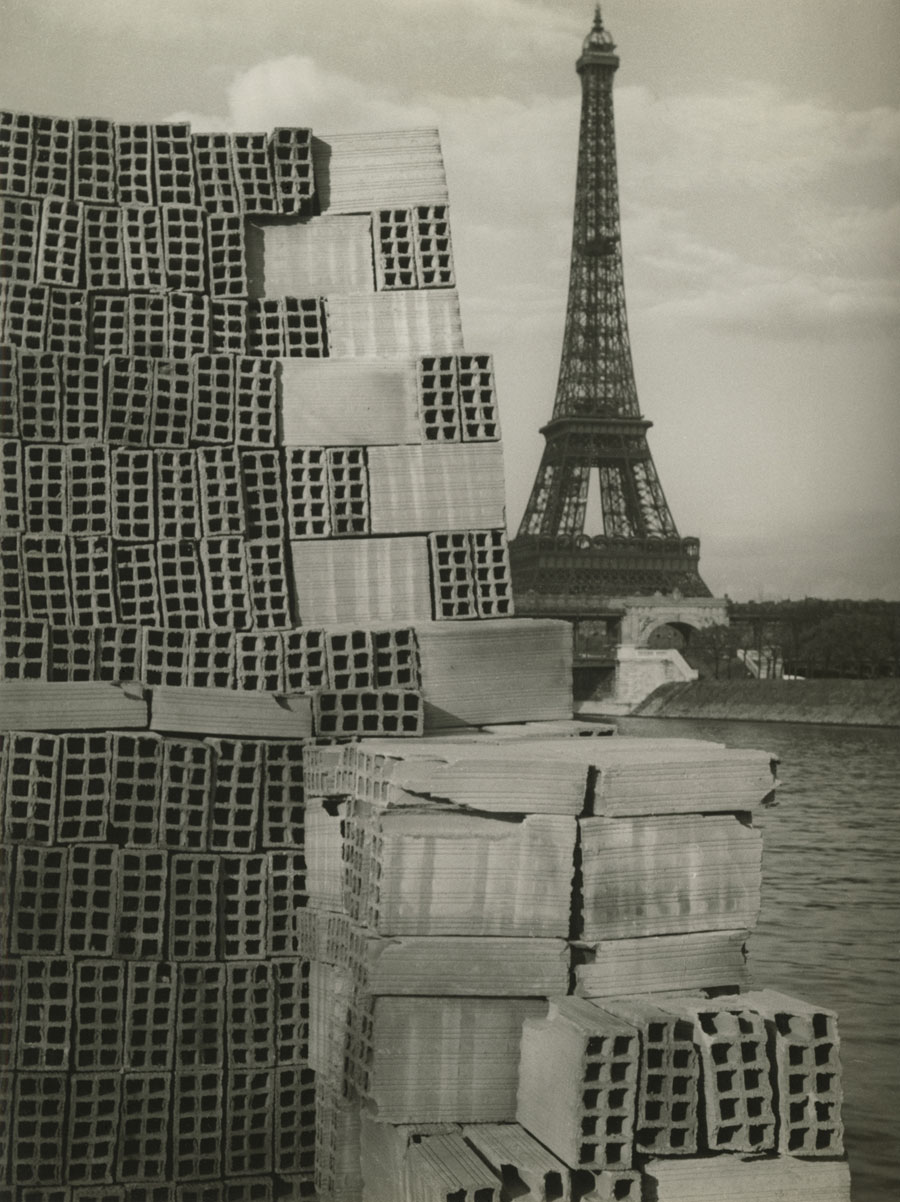
 

André Kertész (Hungarian, 1894-1985) 'The Eiffel Tower, Paris' 1933 from the exhibition 'André Kertész' at Jeu de Paume, Paris


André Kertész (Hungarian, 1894-1985)
The Eiffel Tower, Paris
1933
Vintage gelatin silver print
Courtesy Stephen Daiter Gallery


André Kertész (Hungarian, 1894-1985) '
Elizabeth and I' 1933 from the exhibition 'André Kertész' at Jeu de Paume, Paris


André Kertész (Hungarian, 1894-1985)
Elizabeth and I
1933
Gelatin silver print


A Small Journal

André Kertész (1894-1985) is today famous for his extraordinary contribution to the language of photography in the 20th century. This retrospective, which will be traveling to Winterthur, Berlin, and Budapest, marshals a large number of prints and original documents that highlight the exceptional creative acuity of this photographer, from his beginnings in Hungary, his homeland, to Paris, where between 1925 and 1936 he was one of the leading figures in avant-garde photography, to New York, where he lived for nearly fifty years without encountering the success that he expected and deserved. It pays tribute to a photographer whom Cartier-Bresson regarded as one of his masters, and reveals, despite an apparent diversity of periods and situations, themes and styles, the coherence of Kertész’s approach. It emphasises his originality and poetic uniqueness, drawing on new elements to present his oeuvre as the photographer himself conceived it, reflecting as closely as possible the course of his life. It makes full use of archive documents, focusing in particular on an area of his work that is little known (the beginnings of photo-reportage in Paris and the publication of his images in the press and books), and it analyses the circumstances surrounding his late resurgence. By exploring the recurring preoccupations and themes of Kertész’s work, it sheds light on the complex output of this unclassifiable photographer, who defined himself as an “amateur,” and in connection with whom Roland Barthes talked of a photography “that makes us think.”

Hungary 1894-1925: from Andor to André

Kertész’s youth left him with an enduring love of the countryside, animals, leisurely walks, and down-to-earth people. His sentimental nature led him to treat photography as “a little notebook, a sketchbook,” whose principal subjects were his friends, his family, his fiancée Elizabeth, and above all his younger brother, Jenö, with whom he carried out most of his early experiments in photography. Called up during the war, he continued to take photographs, capturing for the most part trivial events in the lives of the soldiers, whose situation he shared, for in spite of the context photography remained for him a way of expressing emotions. André Kertész was very independent at this time – his work diverged radically from the prevailing pictorialism of the time – and he was laying the foundations for a unique innovative photographic language. In 1914, he began photographing at night; in 1917, he took an astonishing photo of an underwater swimmer, and captured his brother “as a scherzo” in 1919. The two persons watching the Circus (1920) and The Blind Musician (1921) immediately emerged as modernist images. André Kertész’s photography was distinguished at this time by its freedom and diversity of approach, as well as its reliance on feelings and emotional bonds for inspiration.

France, 1925-1936: The Garden of André Kertész

Hard up and speaking only Hungarian, André Kertész lived in Paris amid a circle of fellow Hungarian émigrés. It was in the studio of one of them, Étienne Beöthy, that the dancer Magda Förstner, mimicking one of the artist’s sculptures, instigated the famous photograph Satiric Dancer in 1926. In the same year, when taking photographs at Mondrian’s studio, the photographer emerged as the master of a new type of unorthodox “portrait in absence.” Kertész evokes more than he shows, giving life to the inanimate, and creating a poetic language of allusive signs, both poetic and visual. During the early years of his life in Paris, he printed a large number of his images on photographic paper in postcard format (this inexpensive practice occupied a notable place in his work, because he resorted to it so persistently and with such inventiveness).

The street also provided the photographer with micro-events, fleeting associations and multiple signs that became metaphors. The leading representative, along with Man Ray, of international modernity in Paris, he worked for the press, initiating photo-reportage; he took part in several important exhibitions, including “Film und Foto” in Stuttgart in 1929. Kertész nevertheless insisted on retaining his independence, keeping artistic movements, in particular Surrealism, at arm’s length. Nourished by his emotions, surprises, and personal associations, his work, with its mirrored images, reflections, shadows, and doubles, established him as a leading exponent of avant-garde photography. But he nevertheless avoided conventional doctrines and styles. The Fork (1928), for example, a perfect application of the modernist creed that held sway at the time, reveals another distinguishing feature of Kertész’s work: his interest in shadows cast by objects or people. In The Hands of Paul Arma (1928) and the extraordinary Self-Portrait (1927), these play subtly on the alternation between absence and presence, doubling and disappearance.

André Kertész always sought to take advantage of innovations that would enable him to reconfigure reality through unusual images. He very quickly became interested in the optical distortions produced by waves (The Swimmer, 1917), or by the polished surfaces of such objects as silver balls or by car headlights. In 1930, when the magazine VU commissioned him to take a portrait of its new editor, Carlo Rim, Kertész took him to the funhouse at Luna Park to pose in front of the distorting mirrors. Then, in 1933, at the request of the editor of a girlie magazine, Le Sourire, he produced an extraordinary series of female nudes, known as Distortions. He used two models, who posed with two distorting mirrors that, depending on the vantage point chosen, produced grotesque elongations, monstrous protuberances, or the complete disintegration of the body. Following his move to the United States, Kertész hoped to make use of this technique by adapting it to advertising, but he was met with incomprehension (it was not until 1976 that a book devoted to the Distortions was published in American and French editions).

United States, 1936-1962: A Lost Cloud

The offer of a contract from the Keystone agency (which would be broken after one year) prompted Kertész’s to move to New York in October 1936. His reservations about fashion photography, the rejection of his photo essays that “talked too much” according to the editorial board of Life, and the incomprehension that greeted the Distortions series gradually plunged Kertész into depression. The war and the curtailment of the “foreign” photographer’s freedom merely added to his difficulties. In 1947, in order to have a regular income, Kertész was forced to accept a contract from the magazine House & Garden. In 1952, he moved into an apartment overlooking Washington Square, which prompted a change of direction in Kertész’s work. He now watched and witnessed what was taking place on the surrounding terraces and in the square. He used telephoto lenses and zooms to create whimsical series, such as the one featuring chimneys.

André Kertész lived in New York from 1936 to 1985 and he never stopped photographing “in” the city, rather than the city itself. He did not record the life of its neighbourhoods, the picturesque aspects of its various trades, and its often paradoxical architectural environments. For him, New York was a sound box for his thoughts, which the city echoed back to him in the form of photographs. He sought everywhere an antidote to the city’s regularity, in the dilapidated brick walls and the inextricable tangle of shadows, beams, and external staircases, and it is sometimes impossible to recognise specific places in these broken geometries: Kertész’s New York is highly fragmented, but a single photo could reveal the imaginary city.

He remained true to his intuitive, allusive personal style, and used his work to give voice to the sadness that undoubtedly permeated his entire life in New York, rendered most explicitly in The Lost Cloud (1937). Right up until the end of his life, he sought images of solitude, sometimes incorporating pigeons into them. On January 1, 1972, during a trip to Martinique, he caught the fleeting, pensive profile of a man behind a pane of frosted glass: this nebulous vision of a solitary man before the immensity of the sea was the last image in his retrospective collection, Sixty Years of Photography, 1912-1972, providing a very provisional conclusion to his career.

Returns and Renewal, 1963-1985

After his retirement in 1961, Kertész developed a new appetite for life and photography. Following a request from the magazine Camera for a portfolio, he made a sort of inventory of his available work. In 1963 he had one-man exhibitions at the Venice Photography Biennale and the Bibliothèque Nationale de Paris, the latter enabling him to stay in a city that, on an emotional level, he had never left. In addition, he located and took possession of several boxes of negatives that had been entrusted to a friend in 1936, at the time of his departure, which prompted a review of his entire oeuvre and led to new prints, with fresh croppings. These various episodes, which can be seen as part of a general reassessment of the value of photography and its history, had a rejuvenating effect on Kertész (who was seventy at the time). The traveling exhibition “The Concerned Photographer” even presented him as a pioneer of photojournalism.

Kertész continued his never-ending search for images, both in the cities that he visited and from the window of his apartment. His two books J’aime Paris (1974) and Of New York … (1976) express his sense of being torn between two cultures. The death of his wife Elizabeth in 1977, shortly before his one-man show at the Centre Georges Pompidou, led him to develop an interest in Polaroids, which enabled him to adopt a more introspective approach. As always, emotion was the driving force behind his work. Of the fifty-three Polaroids brought together in the small book From My Window, dedicated to Elizabeth, Kertész, always curious about new technology, was in reality capturing the light of his recollections and the distortions of his memory.”

Michel Frizot and Annie-Laure Wanaverbecq, curators of the exhibition


André Kertész (Hungarian, 1894-1985) 'Peintre d'ombre, Paris' (Shadow painter, Paris) 1926 from the exhibition 'André Kertész' at Jeu de Paume, Paris


André Kertész (Hungarian, 1894-1985)
Peintre d’ombre, Paris (Shadow painter, Paris)
1926
Gelatin silver print
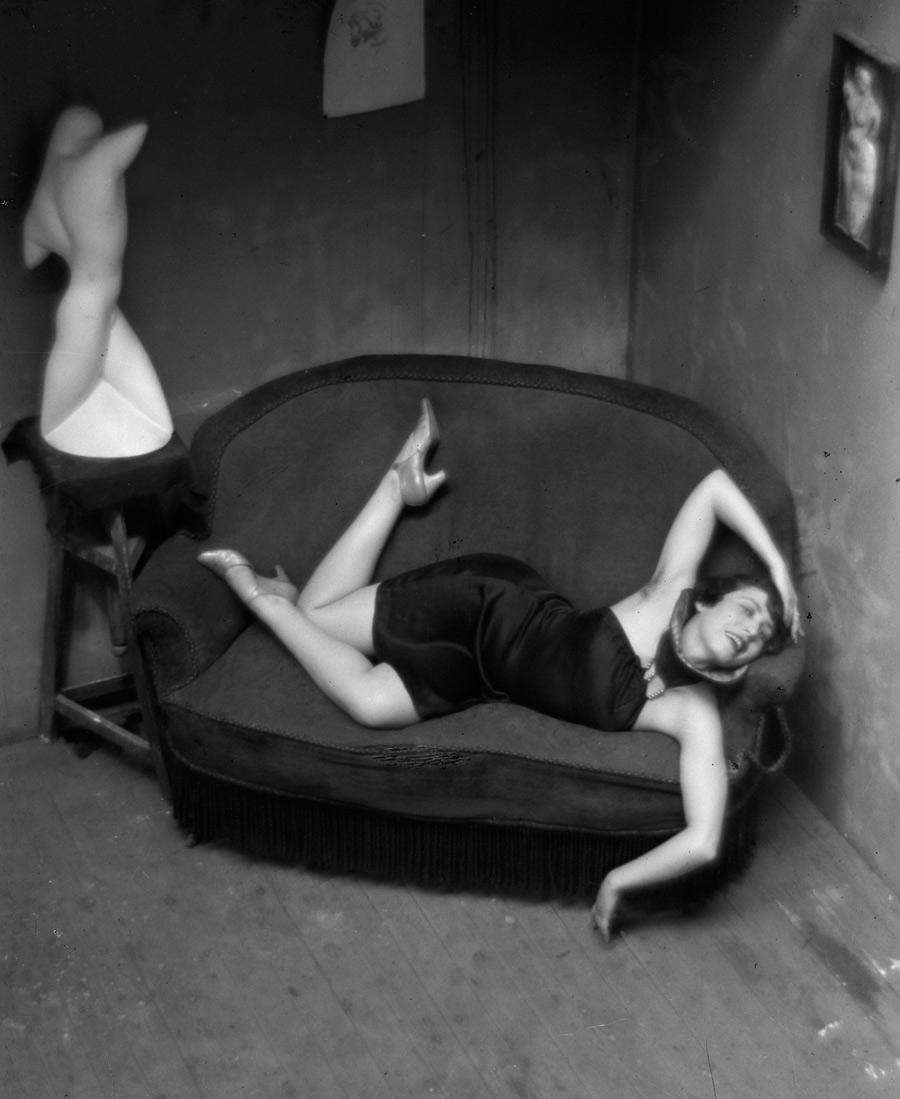
 

André Kertész (Hungarian, 1894-1985) 'Satiric Dancer' 1926 from the exhibition 'André Kertész' at Jeu de Paume, Paris


André Kertész (Hungarian, 1894-1985)
Satiric Dancer
1926, printed in the 1950s
Gelatin silver print
Bibliothèque nationale de France


André Kertész (Hungarian, 1894-1985) 'Melancholic Tulip' New York, 1939 from the exhibition 'André Kertész' at Jeu de Paume, Paris


André Kertész (Hungarian, 1894-1985)
Melancholic Tulip
New York, 1939, printed c. 1980
Gelatin silver print
Courtesy Bruce Silverstein Gallery
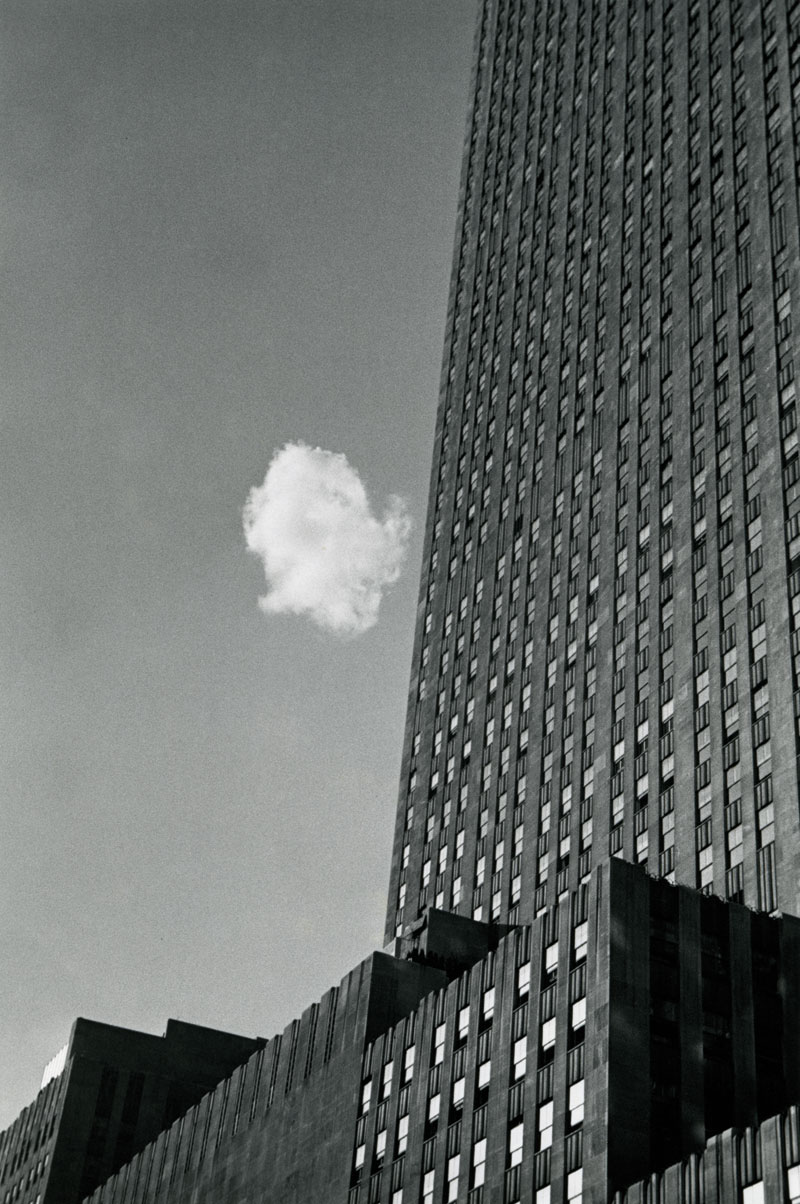
 

André Kertész (Hungarian, 1894-1985) 'Lost Cloud, New York' 1937 from the exhibition 'André Kertész' at Jeu de Paume, Paris


André Kertész (Hungarian, 1894-1985)
Lost Cloud, New York
1937, printed in the 1970s
Gelatin silver print
Courtesy Sarah Morthland Gallery, New York
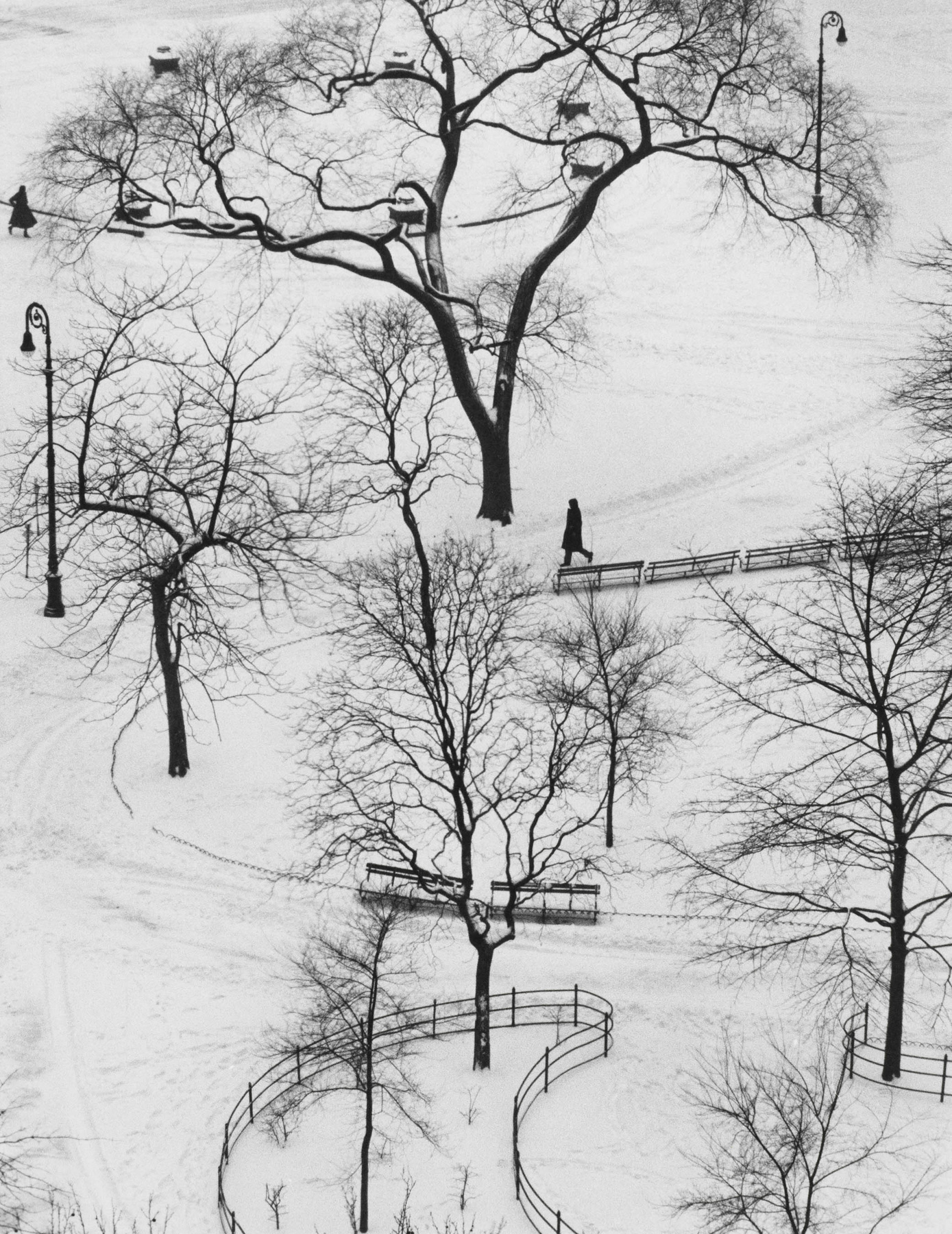
 

André Kertész (Hungarian, 1894-1985) 'Washington Square, New York' 1954 from the exhibition 'André Kertész' at Jeu de Paume, Paris


André Kertész (Hungarian, 1894-1985)
Washington Square, New York
1954
Gelatin silver print
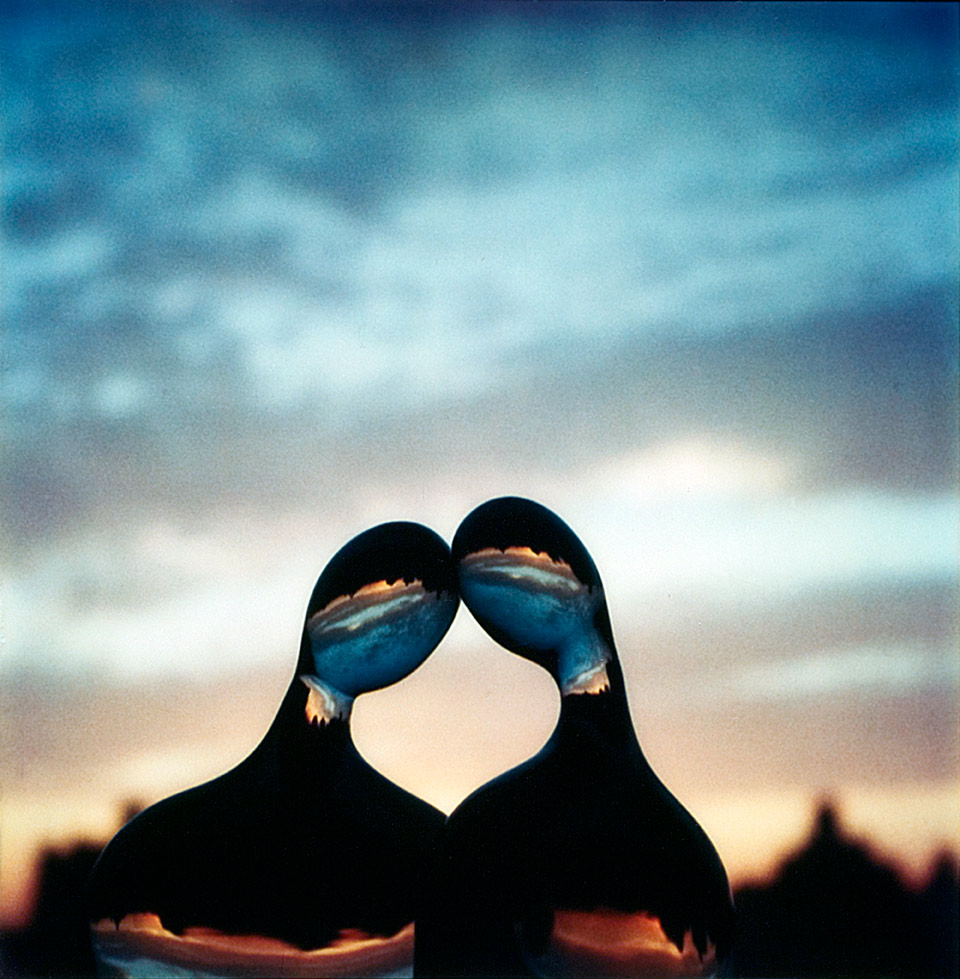
 

André Kertész (Hungarian, 1894-1985) 'July 3, 1979
' from the exhibition 'André Kertész' at Jeu de Paume, Paris


André Kertész (Hungarian, 1894-1985)
July 3, 1979

Polaroid


Jeu de Paume
1, place de la Concorde
75008 Paris
métro Concorde
information: 01 47 03 12 50

Opening hours:
Tuesday – Friday 12 – 8pm
Saturday and Sunday 11am – 7pm
Closed Monday (including public holidays)
Jeu de Paume website

LIKE ART BLART ON FACEBOOK

Back to top

Exhibition: ‘The Monstropolous Beast’ by Will Steacy at Christophe Guye Galerie, Zurich

Exhibition dates: 17th November 2010 – 15th January, 2011


Many thankx to Christophe Guye Galerie for allowing me to publish the photographs in the posting. Please click on the photographs for a larger version of the image.


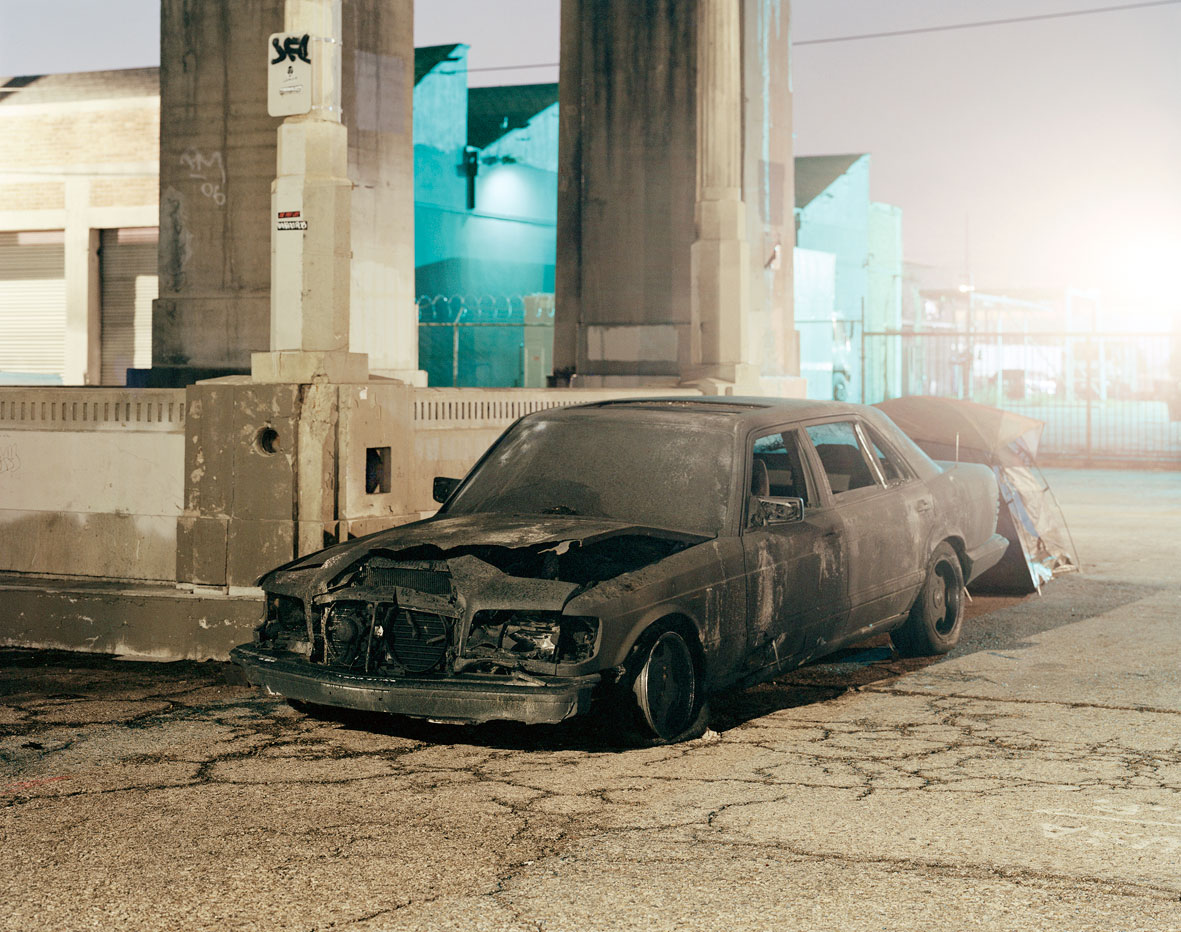
Will Steacy (American, b. 1980) 'Burned Car, Los Angeles' 2009 from the exhibition 'The Monstropolous Beast' by Will Steacy at Christophe Guye Galerie, Zurich


Will Steacy (American, b. 1980)
Burned Car, Los Angeles
2009
from Down these Main Streets, 2009
Archival pigment prints
61 x 76.2cm (24 x 30 in)


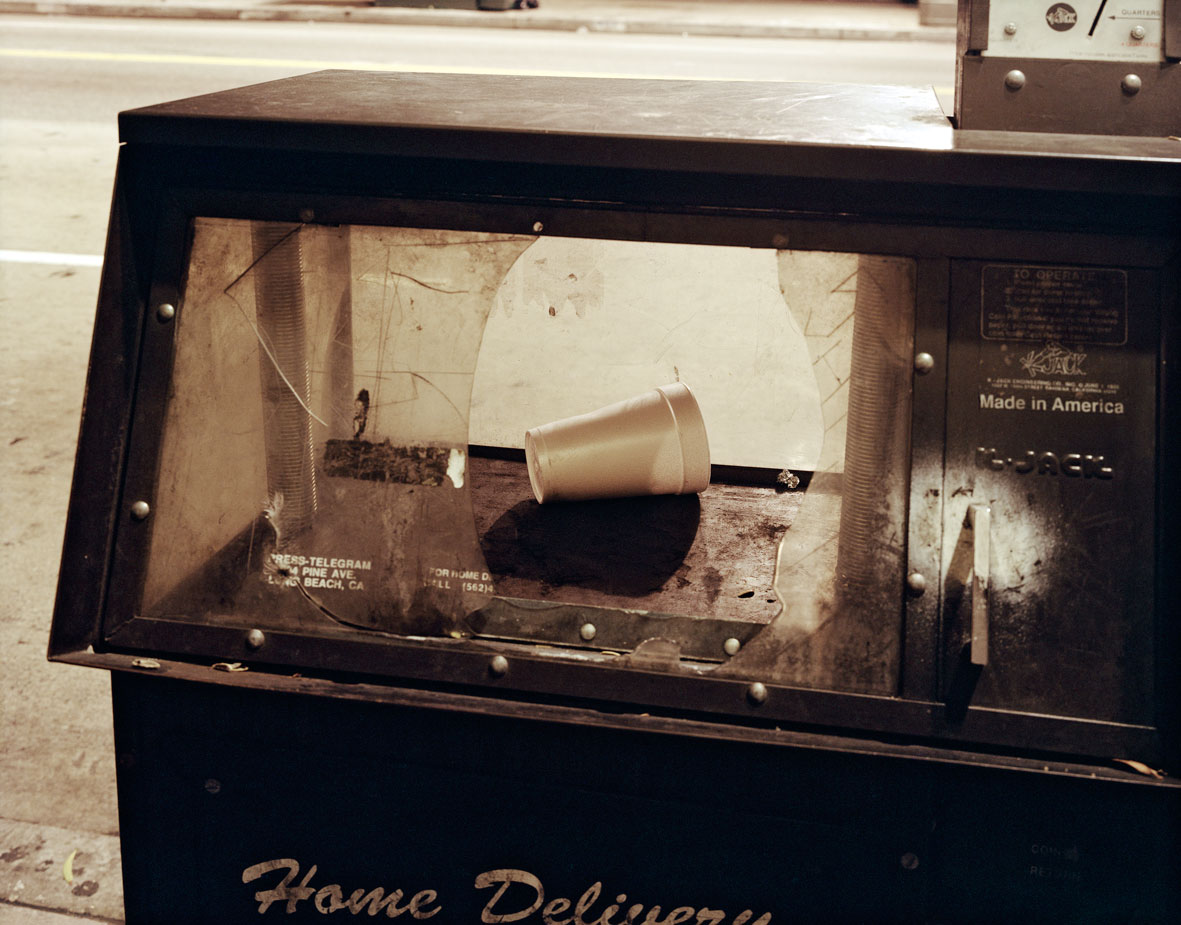
Will Steacy (American, b. 1980) 'Home Delivery, Los Angeles' 2009 from the exhibition 'The Monstropolous Beast' by Will Steacy at Christophe Guye Galerie, Zurich


Will Steacy (American, b. 1980)
Home Delivery, Los Angeles
2009
from Down these Main Streets, 2009
Archival pigment prints
61 x 76.2cm (24 x 30 in)


Will Steacy (American, b. 1980) 'Lovers, New Branford' 2007 from the exhibition 'The Monstropolous Beast' by Will Steacy at Christophe Guye Galerie, Zurich


Will Steacy (American, b. 1980)
Lovers, New Branford
2007
from All my Life I have the same Dream, 2007
Archival pigment prints
61 x 76.2cm (24 x 30 in)


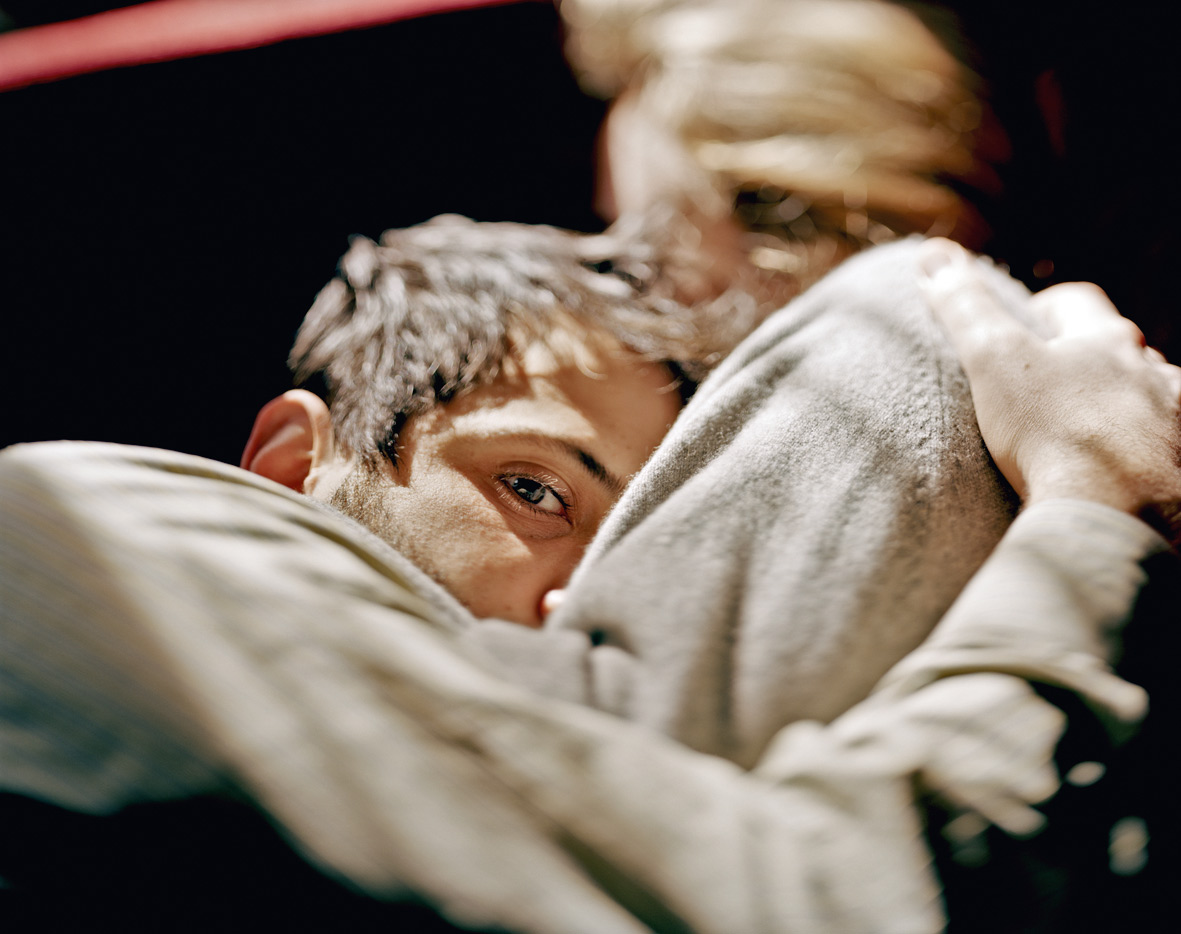
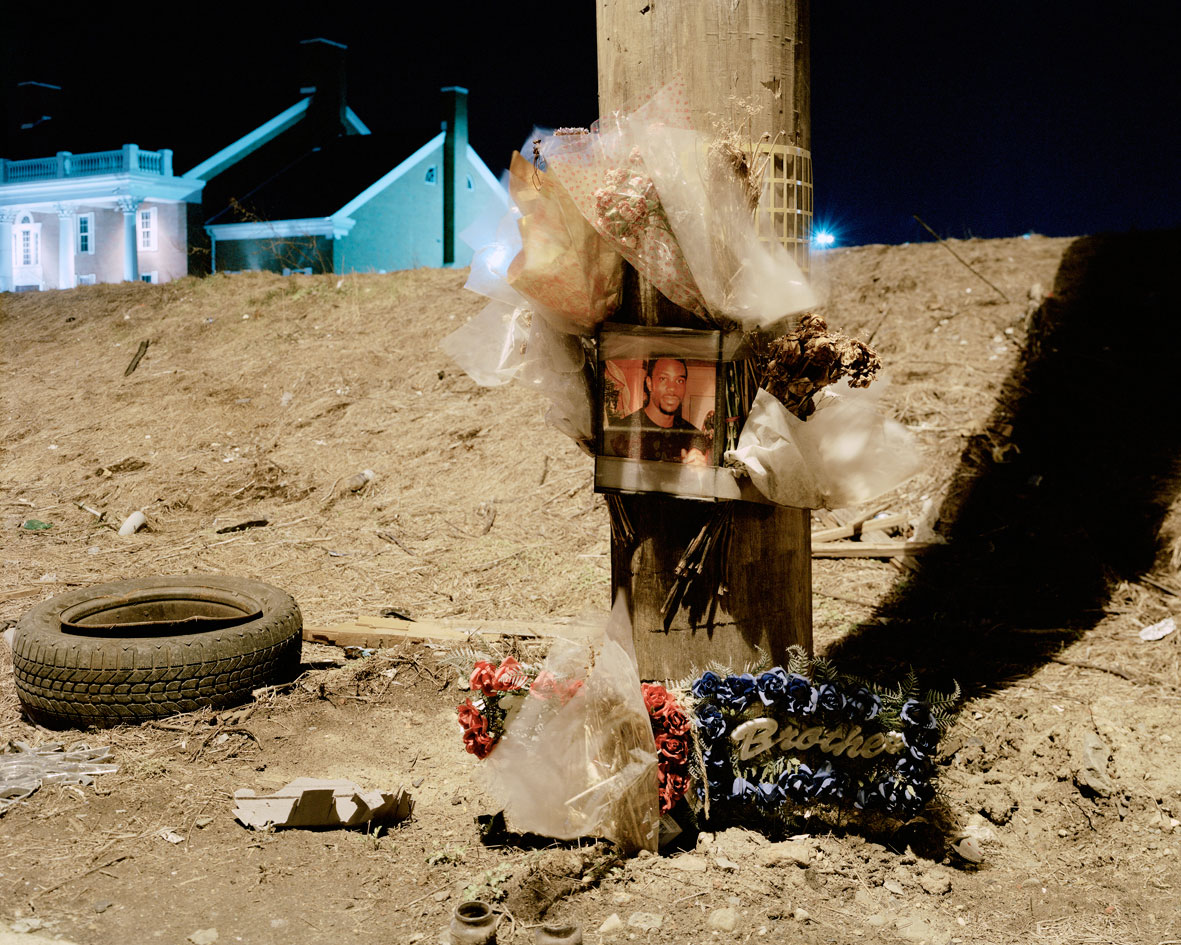
Will Steacy (American, b. 1980) 'Memorial, Philadelphia' 2009 from the exhibition 'The Monstropolous Beast' by Will Steacy at Christophe Guye Galerie, Zurich


Will Steacy (American, b. 1980)
Memorial, Philadelphia
2009
from Down these Main Streets, 2009
Archival pigment prints
61 x 76.2cm (24 x 30 in)


“The monstropolous beast had left his bed. Two hundred miles an hour wind had loosed his chains. He seized hold of his dikes and ran forward until he met the quarters; uprooted them like grass and rushed on after his supposed-to-be conquerors, rolling the dikes, rolling the houses, rolling the people in the houses along with other timbers. The sea was walking the earth with a heavy heel.”


From Zola Neale Hurston’s Their Eyes Were Watching God


Christophe Guye Galerie is pleased to present The Monstropolous Beast, Will Steacy’s (American, b. 1980) first solo exhibition outside the United States.

For his first solo exhibition at the Christophe Guye Galerie, Will Steacy is showing a cross-section of his past years of creative working. Showing 28 new and recent photographs, The Monstropolous Beast is the first exhibition to comprehensively portray Steacy’s whole body of work to date. Once named “the lovechild of Charles Bukowski and Dorothea Lange” Steacy’s work is poetic and confrontational alike, at once evoking photojournalist documentation and romanticised realism.

Steacy’s imaginary stems from his experiences, encounters and the desire to awaken. His work quietly observes, holding on to moments of apparent silence that would pass unnoticed had he not been there to click the shutter. Breathtaking and touching, the emotional force of the artist’s work allows the viewer to intimately connect with the subject. Deeply philosophical, the camera permits him to ask questions, to truly see and think. It is for Steacy a tool with which to understand the world; an understanding he wants to convey to his viewers.

His method of inquiry is a large format film camera. Photographing the depleted city centres and rural suburbs of America, Steacy has spent the last years travelling his country to create a body of work that through its social connotations goes beyond simple photography. As a former Union Labourer, one can sense the humanistic approach to Steacy’s art. While deeply personal, Steacy works with the intention to create awareness, challenging people to look inward.

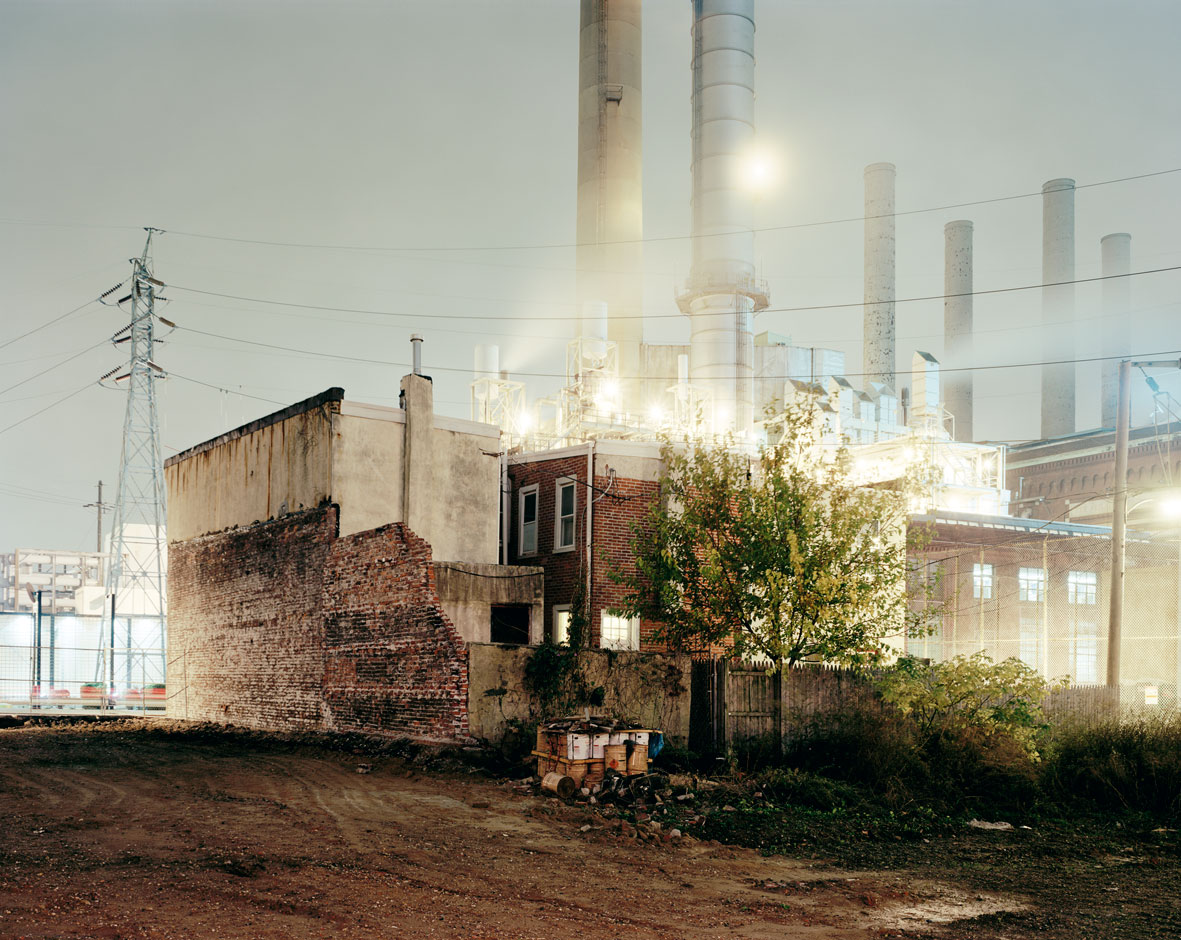
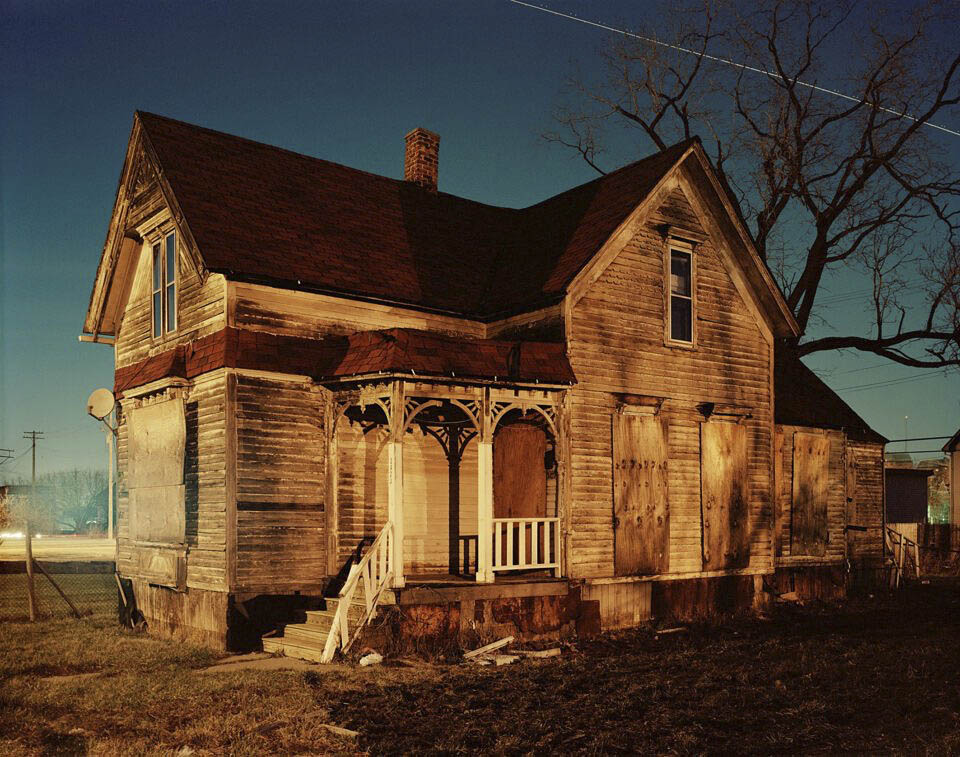
A key series in the exhibition is Down These Mean Streets, for which the artist examined fear and abandonment of America’s inner cities. The reality experienced at night on the streets is so haunting it becomes a hyper reality; laden with emotional and mental attachment, in works such as Memorial or Home Delivery the energy and courage that spark the artist’s work is intensely apparent. Factories, deserted streets and inhabitants of neglected neighbourhoods are his subjects. By addressing the loss and despair that reign in US metropolitan communities, his aim is to reveal a modern day portrait of the reality in American urban centres.

Though still early in his career, the almost ordinary or unspectacular subject matters depicted in the works shown bring to mind the works of William Eggleston or Martin Parr. Demonstrating a distinctive ability to find beauty or fascination in commonplace scenes, and illustrating them with vivid displays of colour and luminosity, Steacy’s works take a critical look at modern society and human conditions, bring viewers uncomfortably close to an often sombre reality.

What at first glance appears like a simple capturing of ordinary people, everyday situations and mundane settings or situations, unravels into a multifaceted portrayal of society, its people, places, race, class, and boundaries. Through a life-changing experience, Steacy turned to art, devoting “everything I have to my art, this gift, this thing that is the reason I am alive… Coming that close to death will change a man. Life has had a new meaning since then, and I wake up every day happy to be alive, happy to chase this dream.” Frank and profound alike, unostentatious and similarly intense Steacy’s work is about life: life today in 21st century America, where layers of seeming simplicity unfolds before our eyes.”

Press release from the Christophe Guye Galerie website


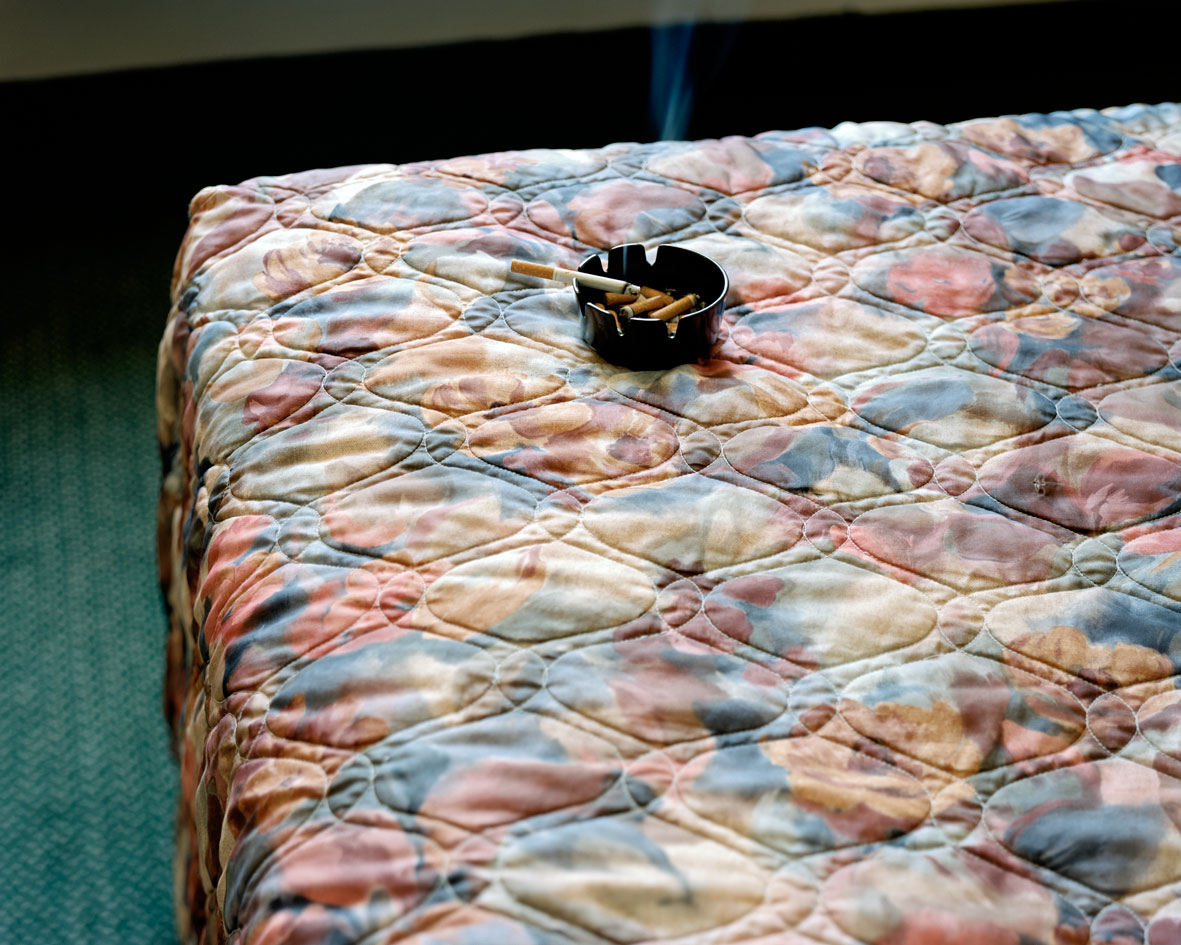
Will Steacy (American, b. 1980) 'Motel Room' 2007 from the exhibition 'The Monstropolous Beast' by Will Steacy at Christophe Guye Galerie, Zurich


Will Steacy (American, b. 1980)
Motel Room
2007
from We are all in this Together, 2007
Archival pigment prints
61 x 76.2cm (24 x 30 in)


Will Steacy (American, b. 1980) 'Pawn Shop, Memphis' 2007 from the exhibition 'The Monstropolous Beast' by Will Steacy at Christophe Guye Galerie, Zurich


Will Steacy (American, b. 1980)
Pawn Shop, Memphis
2007
from All my Life I have the same Dream, 2007
Archival pigment prints
61 x 76.2cm ( 24 x 30 in)


Will Steacy (American, b. 1980) 'Power Plant, Philadelphia' 2008


Will Steacy (American, b. 1980)
Power Plant, Philadelphia
2008
from Down these Main Streets, 2009
Archival pigment prints
61 x 76.2cm (24 x 30 in)


Will Steacy (American, b. 1980)
'Satellite Dish, Detroit' 2009


Will Steacy (American, b. 1980)
Satellite Dish, Detroit
2009
from Down these Main Streets, 2009
Archival pigment prints
61 x 76.2cm (24 x 30 in)


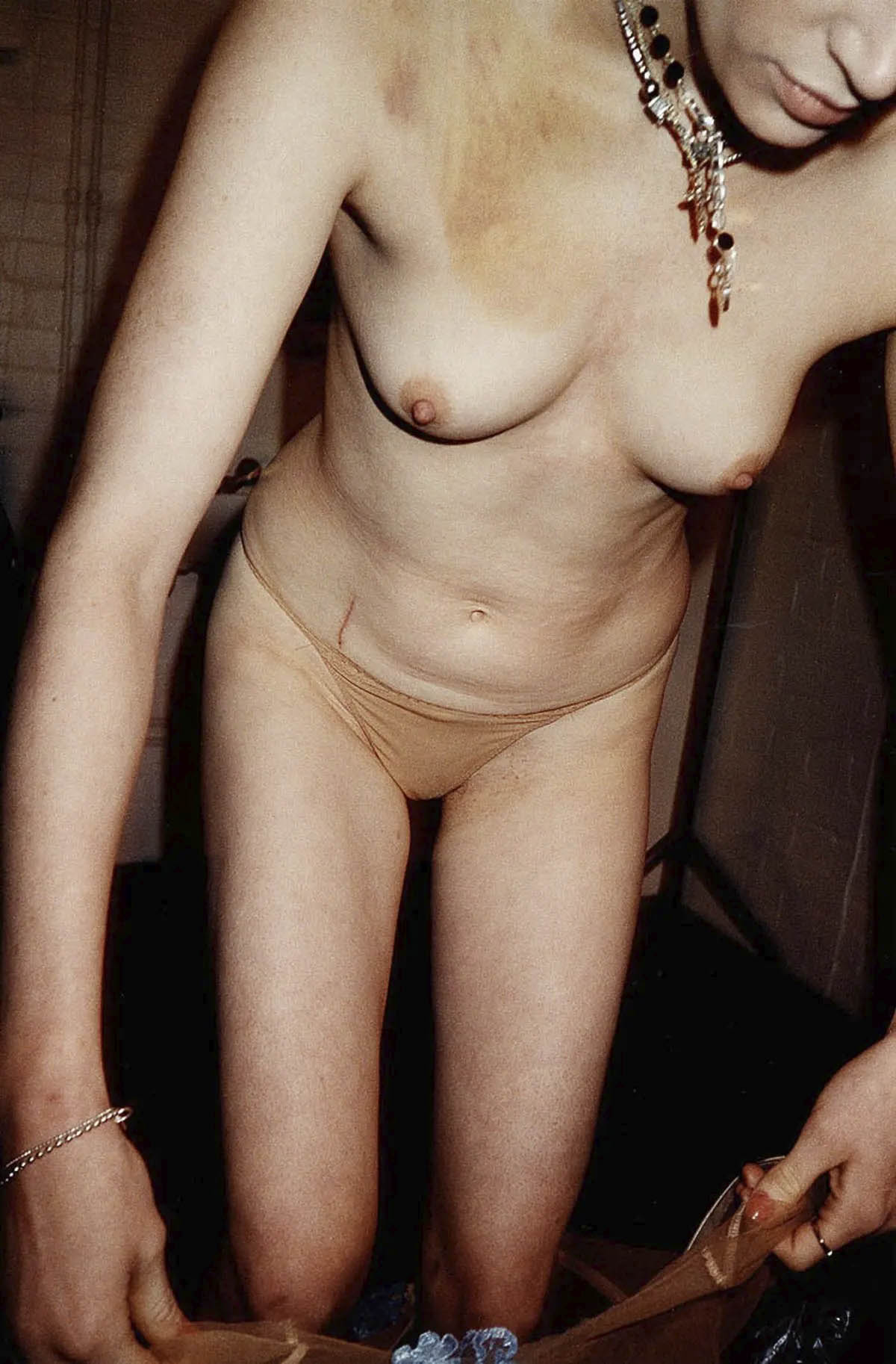
Will Steacy (American, b. 1980) 'Liz, Philadelphia' 2007 from the exhibition 'The Monstropolous Beast' by Will Steacy at Christophe Guye Galerie, Zurich


Will Steacy (American, b. 1980)
Liz, Philadelphia
2007
from All my Life I have the same Dream, 2007
Archival pigment prints
61 x 76.2cm (24 x 30 in)


Christophe Guye Galerie
Dufourstrassse 31
8008 Zurich, Switzerland
Phone: +41 44 252 01 11

Opening hours:
Monday – Friday 10am – 6pm
Saturday 11am – 4pm

Christophe Guye Galerie website

LIKE ART BLART ON FACEBOOK

Back to top

melbourne’s magnificent eleven 2010

December 2010


Here’s my pick of the eleven best exhibitions in Melbourne for 2010 that featured on the Art Blart: art and cultural memory archive (in no particular order). Enjoy!

Marcus


1/ Jenny Holzer at The Australian Centre for Contemporary Art (ACCA)

Jenny Holzer (American, b. 1950) 'Right Hand (Palm Rolled)' 2007 from the exhibition 'Jenny Holzer' at The Australian Centre for Contemporary Art (ACCA)


Jenny Holzer (American, b. 1950)
Right Hand (Palm Rolled)
2007
Oil on linen
80 x 62 in (203.2 x 157.5cm)
Text: U.S. government document


The reason that you must visit this exhibition is the last body of work. Working with declassified documents that relate to the wars in Iraq and Afghanistan Holzer’s Redaction paintings address the elemental force that is man’s (in)humanity to man (in the study of literature, redaction is a form of editing in which multiple source texts are combined (redacted) and subjected to minor alteration to make them into a single work) … I left the exhibition feeling shell-shocked after experiencing intimacy with an evil that leaves few traces. In the consciences of the perpetrators? In the hearts of the living! Oh, how I wish to see the day when the human race will truly evolve beyond. We live in hope and the work of Jenny Holzer reminds us to be vigilant, to speak out, to have courage in the face of the unconscionable.


2/ ‘Pondlurking’ by Tom Moore at Helen Gory Galerie, Prahran

This exhibition produced in me an elation, a sense of exalted happiness, a smile on my dial that was with me the rest of the day. The installation features elegantly naive cardboard cityscape dioramas teeming with wondrous, whimsical mythological animals that traverse pond and undulating road. This bestiary of animals, minerals and vegetables (bestiaries were made popular in the Middle Ages in illustrated volumes that described various animals, birds and even rocks) is totally delightful … What really stands out is the presence of these objects, their joyousness. The technical and conceptual never get in the way of good art. The Surrealist imagining of a new world order (the destruction of traditional taxonomies) takes place while balanced on one foot. The morphogenesis of these creatures, as they build one upon another, turns the world upside down … Through their metamorphosed presence in a carnivalesque world that is both weird and the wonderful, Moore’s creatures invite us to look at ourselves and our landscape more kindly, more openly and with a greater generosity of spirit.
 

Tom Moore (Australian, b. 1971) 'Birdboat with passenger with a vengeance' (left) and 'Robot Island' (right) 2010 and 2009 from the exhibition 'Pondlurking' by Tom Moore at Helen Gory Galerie, Prahran


Tom Moore (Australian, b. 1971)
Birdboat with passenger with a vengeance (left) and Robot Island (right)
2010 and 2009


3/ ‘Safety Zone’ by John Young at Anna Schwartz Gallery

What can one say about work that is so confronting, poignant and beautiful – except to say that it is almost unbearable to look at this work without being emotionally charged, to wonder at the vicissitudes of human life, of events beyond one’s control.

The exhibition tells the story of the massacre of 300,000 people in the city of Nanjing in Jiangsu, China by Japanese troops in December, 1937 in what was to become known as the Nanjing Massacre. It also tells the story of a group of foreigners led by German businessman John Rabe and American missionary Minnie Vautrin who set up a “safety zone” to protect the lives of at least 250,000 Chinese citizens. The work is conceptually and aesthetically well resolved, the layering within the work creating a holistic narrative that engulfs and enfolds the viewer – holding them in the shock of brutality, the poignancy of poetry and the (non)sublimation of the human spirit to the will of others.

Simply, this is the best exhibition that I have seen in Melbourne so far this year.


John Young (Australian, b. 1956) 'Flower Market (Nanjing 1936) #1' 2010 from the exhibition 'Safety Zone' by John Young at Anna Schwartz Gallery


John Young (Australian, b. 1956)
Flower Market (Nanjing 1936) #1
2010
digital print and oil on Belgian linen
240 x 331cm
image courtesy of the artist and Anna Schwartz Gallery


John Young (Australian, b. 1956) 'Safety Zone' 2010


John Young (Australian, b. 1956)
Safety Zone
2010
60 works, digital prints on photographic paper and chalk on blackboard-painted archival cotton paper
Installation shot, Anna Schwartz Gallery, Melbourne
Image courtesy of the artist and Anna Schwartz Gallery


4/ ‘To Hold and Be Held’ by Kiko Gianocca at Gallery Funaki

Kiko Gianocca (Swiss, b. 1974) 'Man & dog' found image, resin, silver 2009 from the exhibition 'To Hold and Be Held' by Kiko Gianocca at Gallery Funaki


Kiko Gianocca (Swiss, b. 1974)
Man & dog
Found image, resin, silver
2009


A beautiful exhibition of objects by Swiss/Italian artist Kiko Gianocca at Gallery Funaki, Melbourne, one full of delicate resonances and remembrances.

Glass vessels with internal funnels filled with the gold detritus of disassembled objects, found pendants: Horse, Anchor, Four leaf clover, Swan, Hammer & sickle … Brooches of gloss and matt black resin plates. On the reverse images exposed like a photographic plate, found images solidified in resin.

The front: the depths of the universe, navigating the dazzling darkness
The back: memories, forgotten, then remade, worn like a secret against the beating chest. Only the wearer knows!

As Kiki Gianocca asks, “I am not sure if I grasp the memories that sometimes come to mind. I start to think they hold me instead of me holding them.”


5/ ‘Jill Orr: Vision’ at Jenny Port Gallery, Richmond

The photographs invite us to share not only the mapping of the surface of the skin and the mapping of place and identity but the sharing of inner light, the light of the imaginary as well – and in this observation the images become unstable, open to reinterpretation. The distance between viewer and subject is transcended through an innate understanding of inner and outer light. The photographs seduce, meaning, literally, to be led astray … I found myself looking at the photographs again and again for small nuances, the detail of hairs on the head, the imagining of what the person was thinking about with their eyes closed: their future, their fears, their hopes, the ‘active imagination as a means to visualise sustainable futures’ (Orr, 2010) …

In the imagination of the darkness that lies behind these children’s closed eyes is the commonality of all places, a shared humanity of memory, of dreams. These photographs testify to our presence and ask us to decide how we feel about our life, our place and the relation to that (un)placeness where we must all, eventually, return.


Jill Orr (Australian, b. 1952) 'Jacinta' 2009 from the exhibition 'Jill Orr: Vision' at Jenny Port Gallery, Richmond

Jill Orr (Australian, b. 1952) 'Jacinta' 2009 from the exhibition 'Jill Orr: Vision' at Jenny Port Gallery, Richmond


Jill Orr (Australian, b. 1952)
Jacinta
2009


6/ ‘AND THEN…’ by Ian Burns at Anna Schwartz Gallery

These are such fun assemblages, the created mis en scenes so magical and hilarious, guffaw inducing even, that they are entirely delightful.

There is so much to like here – the inventiveness, the freshness of the work, the insight into the use of images in contemporary culture. Still photographs of this work do not do it justice. I came away from the gallery uplifted, smiling, happy – and that is a wonderful thing to happen.


Ian Burns (Australian, b. 1964) '15 hours v.4' 2010 from the exhibition 'AND THEN...' by Ian Burns at Anna Schwartz Gallery


Ian Burns (Australian, b. 1964)
15 hours v.4
2010
Found object kinetic sculpture, live video and audio
Image courtesy the artist and Anna Schwartz Gallery


7/ ‘Night’s Plutonian Shore’ by Julia deVille at Sophie Gannon Gallery, Richmond

Julia deVille (Australian, b. 1982) 'Nevermore' 2010 from the exhibition 'Night's Plutonian Shore' by Julia deVille at Sophie Gannon Gallery, Richmond


Julia deVille (Australian, b. 1982)
Nevermore
2010


This is an excellent exhibition by Julia deVille at Sophie Gannon Gallery in Richmond … This exhibition shows a commendable sense of restraint, a beautiful rise and fall in the work as you walk around the gallery space with the exhibits displayed on different types and heights of stand and a greater thematic development of the conceptual ideas within the work. There are some exquisite pieces.

In these pieces there is a simplification of the noise of the earlier works and in this simplification a conversant intensification of the layering of the conceptual ideas. Playful and witty the layers can be peeled back to reveal the poetry of  de Sade, the stories of Greek mythology and the amplification of life force that is at the heart of these works. Good stuff.


8/ ‘Mari Funaki; Objects’ at The Ian Potter Centre: NGV Australia

Mari Funaki (born Japan 1950, arrived Australia 1979, died 2010) 'Object' 2008 from the exhibition 'Mari Funaki; Objects' at The Ian Potter Centre: NGV Australia


Mari Funaki (born Japan 1950, arrived Australia 1979, died 2010)
Object
2008
Heat-coloured mild steel
36 x 47.5 x 14.5cm
Collection of Johannes Hartfuss & Fabian Jungbeck, Melbourne
© The Estate of Mari Funaki


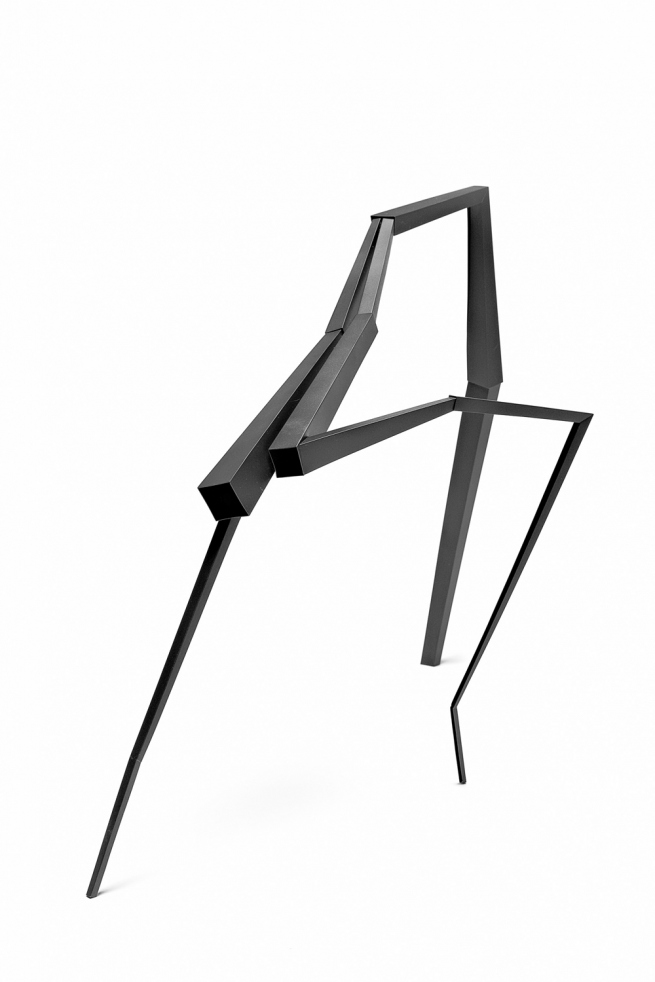
Quiet, precise works. Forms of insect-like legs and proboscises. They balance, seeming to almost teeter on the edge – but the objects are incredibly grounded at the same time. As you walk into the darkened gallery and observe these creatures you feel this pull – lightness and weight. Fantastic!

And so it came to pass in silence, for these works are still, quiet and have a quality of the presence of the inexpressible. Funaki achieves these incredible silences through being true to her self and her style through an expression of her endearing will. While Mari may no longer be amongst us as expressions of her will the silences of these objects will be forever with us.


9/ ‘Up Close: Carol Jerrems with Larry Clark, Nan Goldin and William Yang’ at Heide Museum of Modern Art

When looking at art, one of the best experiences for me is gaining the sense that something is open before you, that wasn’t open before. I don’t mean accessible, I mean open like making a clearing in the jungle, or being able to see further up a road, or just further on. And also like an open marketplace – where there were always good trades. There is the feeling that if you put in a certain amount of honesty, then you would get something back that made some room for you in front – some room that would allow you to look forward, and maybe even walk into that space. Seeing Jerrems work gives you that feeling.


Carol Jerrems (Australian, 1949-1980) 'Mark and Flappers' 1975 from the exhibition 'Up Close: Carol Jerrems with Larry Clark, Nan Goldin and William Yang' at Heide Museum of Modern Art


Carol Jerrems (Australian, 1949-1980)
Mark and Flappers
1975
National Gallery of Victoria, Melbourne
Gift of James Mollison, 1994
© Ken Jerrems & the Estate of Lance Jerrems


10/ ‘John Davis: Presence’ at The Ian Potter Centre: NGV Australia

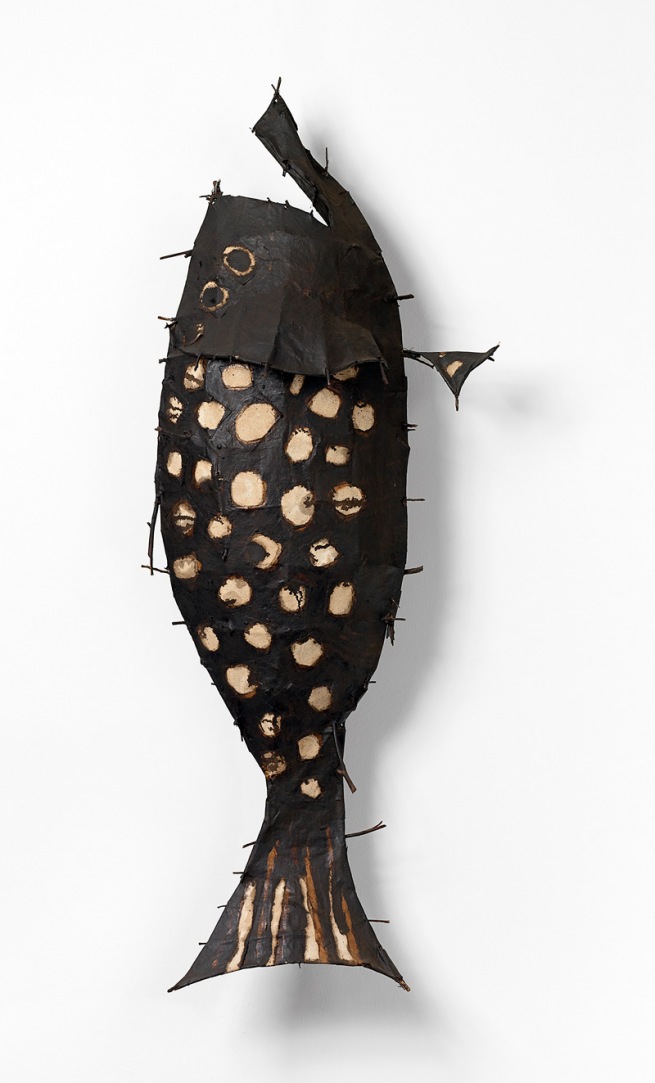
John Davis (Australia 1936-1999) '(Spotted fish)' 1989 from the exhibition 'John Davis: Presence' at The Ian Potter Centre: NGV Australia


John Davis (Australia 1936-1999)
(Spotted fish)
1989
Twigs, cotton thread, calico, bituminous paint
55 x 145 x 30cm
Private collection, Melbourne
© Penelope Davis & Martin Davis. Administered by VISCOPY, Australia


This is a superlative survey exhibition of the work of John Davis at NGV Australia, Melbourne.

In the mature work you can comment on the fish as ‘travellers’ or ‘nomads’, “a metaphor for people and the way we move around the world.” You can observe the caging, wrapping and bandaging of these fish as a metaphor for the hurt we humans impose on ourselves and the world around us. You can admire the craftsmanship and delicacy of the constructions, the use of found objects, thread, twigs, driftwood and calico and note the ironic use of bituminous paint in relation to the environment, “a sticky tar-like form of petroleum that is so thick and heavy,” of dark and brooding colour.

This is all well and true. But I have a feeling when looking at this work that here was a wise and old spirit, one who possessed knowledge and learning … a human being who attained a state of grace in his life and in his work.


11/ ‘Mortality’ at The Australian Centre for Contemporary Art (ACCA)

Fiona Tan (Indonesian, b. 1966) 'Tilt' 2002 from the exhibition 'Mortality' at The Australian Centre for Contemporary Art (ACCA)


Fiona Tan (Indonesian, b. 1966)
Tilt
2002
DVD
courtesy of the artist, Frith Street Gallery London


I never usually review group exhibitions but this is an exception to the rule. I have seen this exhibition three times and every time it has grown on me, every time I have found new things to explore, to contemplate, to enjoy. It is a fabulous exhibition, sometimes uplifting, sometimes deeply moving but never less than engaging – challenging our perception of life. The exhibition proceeds chronologically from birth to death. I comment on a few of my favourite works below but the whole is really the sum of the parts: go, see and take your time to inhale these works – the effort is well rewarded. The space becomes like a dark, fetishistic sauna with it’s nooks and crannies of videos and artwork. Make sure you investigate them all!


LIKE ART BLART ON FACEBOOK

Back to top

Exhibition: ‘The Original Copy: Photography of Sculpture, 1839 to Today’ at The Museum of Modern Art (MoMA), New York

Exhibition dates: 1st August – 1st November 2010


A huge posting of wonderful photographs!

Many thankx to the Museum of Modern Art for allowing me to publish the photographs in the posting. Please click on the photographs for a larger version of the image.


Edward Weston (American, 1886-1958) 'Rubber Dummies, Metro Goldwyn Mayer Studios, Hollywood' 1939 from the exhibition 'The Original Copy: Photography of Sculpture, 1839 to Today' at MoMA, New York, Aug - Nov 2010


Edward Weston (American, 1886-1958)
Rubber Dummies, Metro Goldwyn Mayer Studios, Hollywood
1939
Gelatin silver print
7 9/16 x 9 5/8″ (19.3 x 24.4cm)
The Museum of Modern Art, New York. Gift of Edward Steichen
© 1981 Collection Center for Creative Photography, Arizona Board of Regents


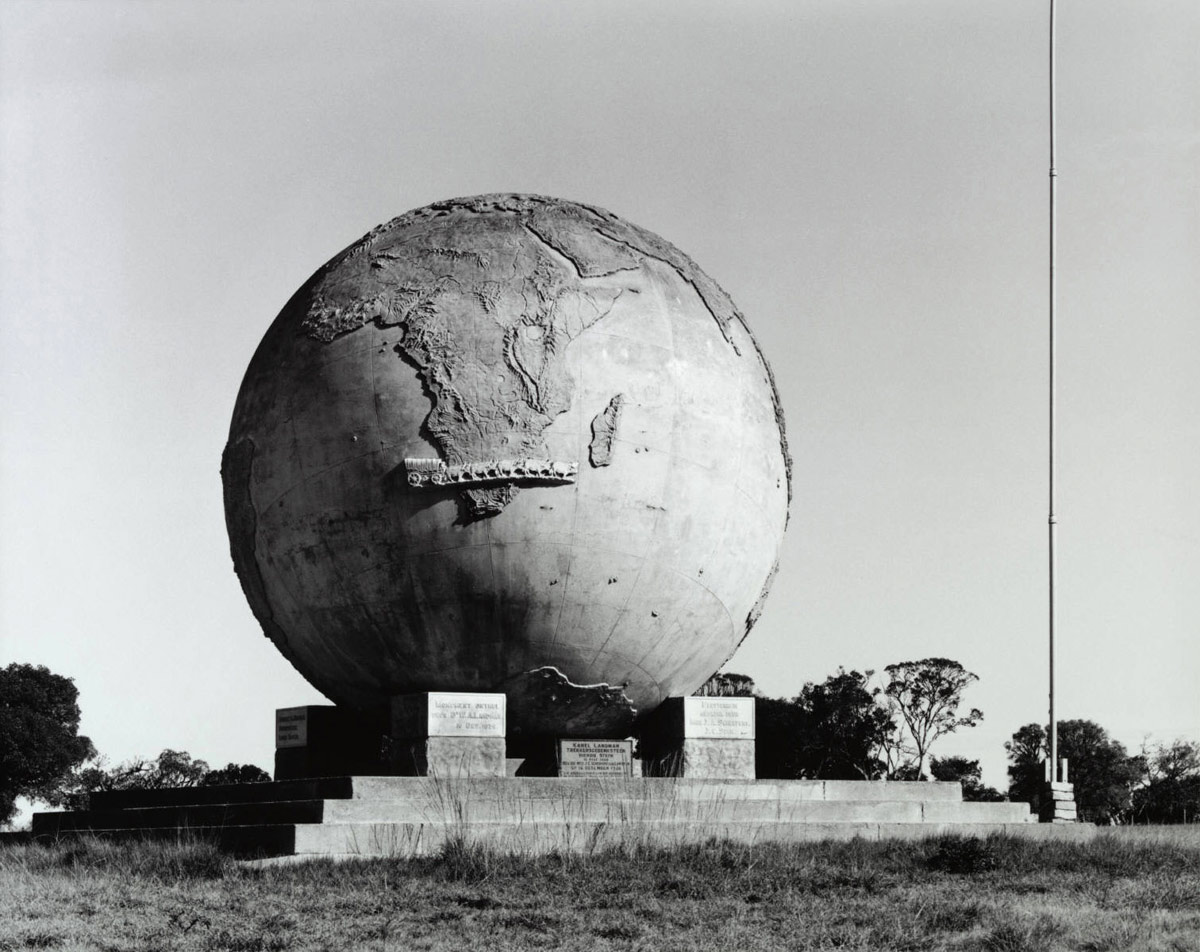
David Goldblatt (South African, 1930-2018) 'Monument to Karel Landman, Voortrekker Leader, De Kol, Eastern Cape' April 10, 1993 from the exhibition 'The Original Copy: Photography of Sculpture, 1839 to Today' at MoMA, New York, Aug - Nov 2010


David Goldblatt (South African, 1930-2018)
Monument to Karel Landman, Voortrekker Leader, De Kol, Eastern Cape
April 10, 1993
Gelatin silver print
10 15/16 x 13 11/16″ (27.9 x 34.8cm)
The Museum of Modern Art, New York. Purchase
© 2010 David Goldblatt. Courtesy David Goldblatt and the Goodman Gallery


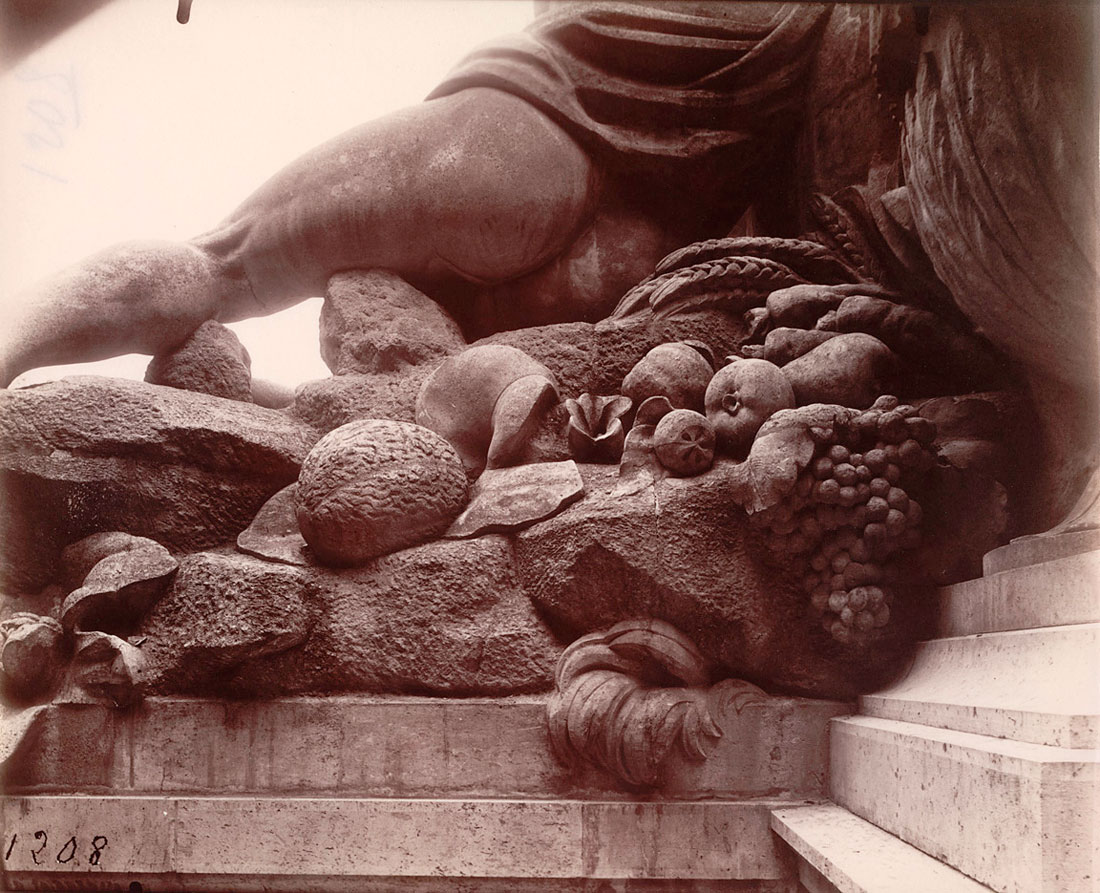
Eugène Atget (French, 1857-1927) 'Saint-Cloud' 1923 from the exhibition 'The Original Copy: Photography of Sculpture, 1839 to Today' at MoMA, New York, Aug - Nov 2010


Eugène Atget (French, 1857-1927)
Saint-Cloud
1923
Albumen silver print
6 7/8 x 8 3/8″ (17.5 x 21.3cm)
The Museum of Modern Art, New York. Anonymous gift


Edward Steichen (American born Luxembourg, 1879-1973) 'Midnight - Rodin’s Balzac'. 1908 from the exhibition 'The Original Copy: Photography of Sculpture, 1839 to Today' at MoMA, New York, Aug - Nov 2010


Edward Steichen (American born Luxembourg, 1879-1973)
Midnight – Rodin’s Balzac
1908
Pigment print
12 1/8 x 14 5/8″ (30.8 x 37.1cm)
The Museum of Modern Art, New York. Gift of the photographer
Permission of Joanna T. Steichen


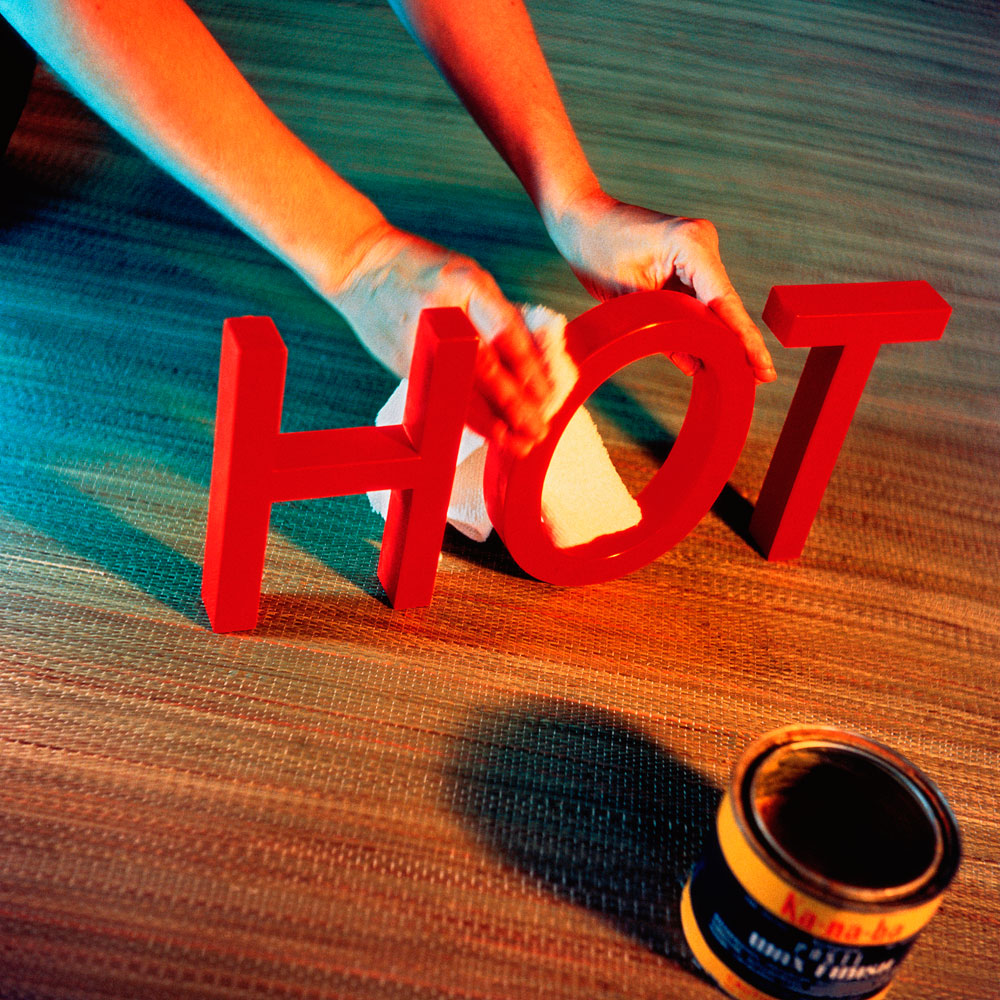
Bruce Nauman. 'Waxing Hot' from the portfolio 'Eleven Color Photographs' 1966–67/1970/2007


Bruce Nauman (American, b. 1941)
Waxing Hot from the portfolio Eleven Color Photographs
1966-1967/1970/2007
Inkjet print (originally chromogenic colour print)
19 15/16 x 19 15/16″ (50.6 x 50.6cm)
Museum of Contemporary Art, Chicago. Gerald S. Elliott Collection
© 2010 Bruce Nauman/Artists Rights Society (ARS), New York


Gilbert & George (Gilbert Proesch. British, b. Italy 1943. George Passmore. British, b. 1942) 'Great Expectations'. 1972


Gilbert & George (Gilbert Proesch. British, b. Italy 1943. George Passmore. British, b. 1942)
Great Expectations
1972
Dye transfer print
11 9/16 x 11 1/2″ (29.4 x 29.2cm)
The Museum of Modern Art, New York. Art & Project/Depot VBVR
© 2010 Gilbert & George


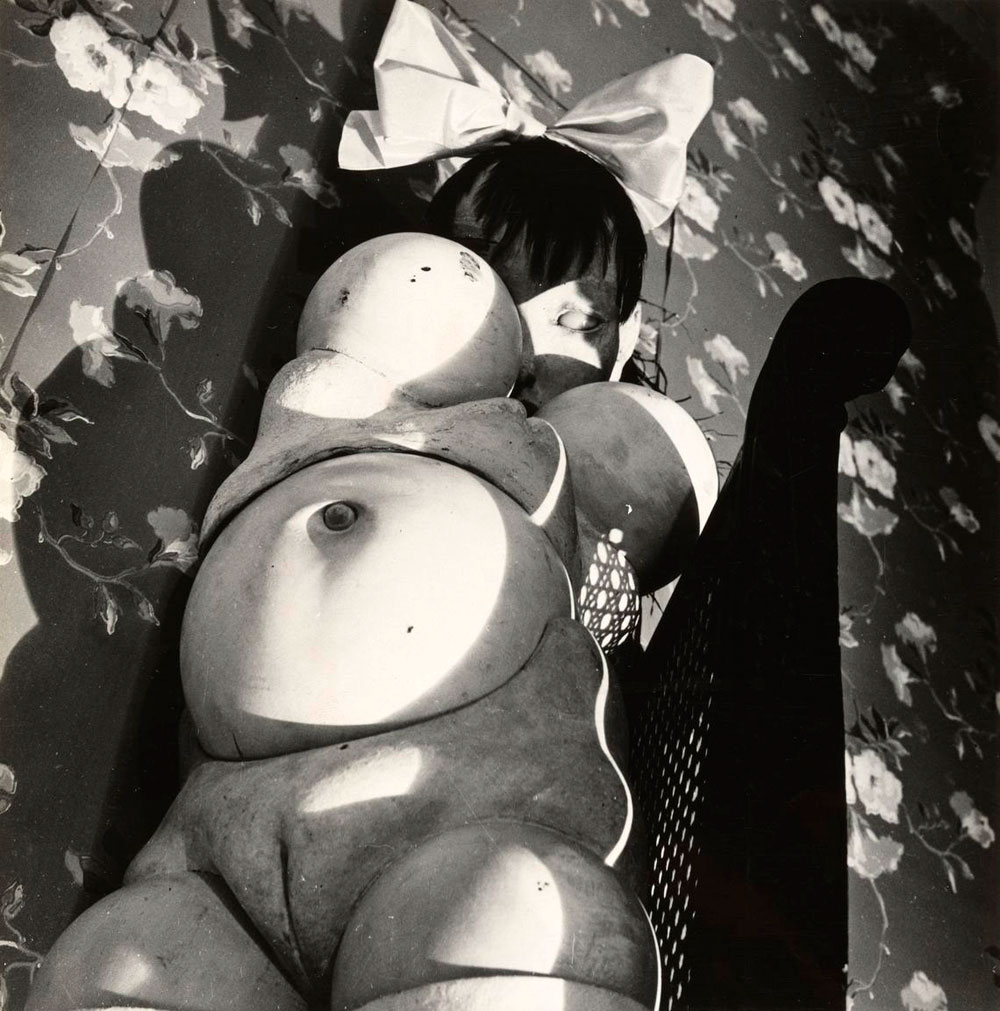
Hans Bellmer (German, 1902-1975) 'The Doll' 1935-1937


Hans Bellmer (German, 1902-1975)
The Doll
1935-1937
Gelatin silver print
9 1/2 x 9 5/16″ (24.1 x 23.7cm)
The Museum of Modern Art, New York. Samuel J. Wagstaff, Jr. Fund
© 2010 Artists Rights Society (ARS), New York/ADAGP, Paris


The Original Copy: Photography of Sculpture, 1839 to Today presents a critical examination of the intersections between photography and sculpture, exploring how one medium informs the analysis and creative redefinition of the other. On view at The Museum of Modern Art from August 1 through November 1, 2010, the exhibition brings together over 300 photographs, magazines, and journals, by more than 100 artists, from the dawn of modernism to the present, to look at the ways in which photography at once informs and challenges the meaning of what sculpture is. The Original Copy is organised by Roxana Marcoci, Curator, Department of Photography, The Museum of Modern Art. Following the exhibition’s presentation at MoMA, it will travel to Kunsthaus Zürich, where it will be on view from February 25 through May 15, 2011.

When photography was introduced in 1839, aesthetic experience was firmly rooted in Romanticist tenets of originality. In a radical way, photography brought into focus the critical role that the copy plays in art and in its perception. While the reproducibility of the photograph challenged the aura attributed to the original, it also reflected a very personal form of study and offered a model of dissemination that would transform the entire nature of art.

“In his 1947 book Le Musée Imaginaire, the novelist and politician André Malraux famously advocated for a pancultural ‘museum without walls,’ postulating that art history, and the history of sculpture in particular, had become ‘the history of that which can be photographed,'” said Ms. Marcoci.

Sculpture was among the first subjects to be treated in photography. There were many reasons for this, including the desire to document, collect, publicise, and circulate objects that were not always portable. Through crop, focus, angle of view, degree of close-up, and lighting, as well as through ex post facto techniques of dark room manipulation, collage, montage, and assemblage, photographers have not only interpreted sculpture but have created stunning reinventions of it.

Conceived around ten conceptual modules, the exhibition examines the rich historical legacy of photography and the aesthetic shifts that have taken place in the medium over the last 170 years through a superb selection of pictures by key modern, avant-garde, and contemporary artists. Some, like Eugène Atget, Walker Evans, Lee Friedlander, and David Goldblatt, are best known as photographers; others, such as Auguste Rodin, Constantin Brancusi, and David Smith, are best known as sculptors; and others, from Hannah Höch and Sophie Taeuber-Arp to such contemporaries as Bruce Nauman, Fischli/Weiss, Rachel Harrison, and Cyprien Gaillard, are too various to categorise but exemplify how fruitfully and unpredictably photography and sculpture have combined.

The Original Copy begins with Sculpture in the Age of Photography, a section comprising early photographs of sculptures in French cathedrals by Charles Nègre and in the British Museum by Roger Fenton and Stephen Thompson; a selection of André Kertész’s photographs from the 1920s showing art amid common objects in the studios of artist friends; and pictures by Barbara Kruger and Louise Lawler that foreground issues of representation to underscore photography’s engagement in the analysis of virtually every aspect of art. Eugène Atget: The Marvelous in the Everyday presents an impressive selection of Atget’s photographs, dating from the early 1900s to the mid 1920s, of classical statues, reliefs, fountains, and other decorative fragments in Paris, Versailles, Saint-Cloud, and Sceaux, which together amount to a visual compendium of the heritage of French civilisation at the time.

Auguste Rodin: The Sculptor and the Photographic Enterprise includes some of the most memorable pictures of Rodin’s sculptures by various photographers, including Edward Steichen’s Rodin – The Thinker (1902), a work made by combining two negatives: one depicting Rodin in silhouetted profile, contemplating The Thinker (1880-82), his alter ego; and one of the artist’s luminous Monument to Victor Hugo (1901). Constantin Brancusi: The Studio as Groupe Mobile focuses on Brancusi’s uniquely nontraditional techniques in photographing his studio, which was articulated around hybrid, transitory configurations known as groupe mobiles (mobile groups), each comprising several pieces of sculpture, bases, and pedestals grouped in proximity. In search of transparency, kineticism, and infinity, Brancusi used photography to dematerialise the static, monolithic materiality of traditional sculpture. His so-called photos radieuses (radiant photos) are characterised by flashes of light that explode the sculptural gestalt.
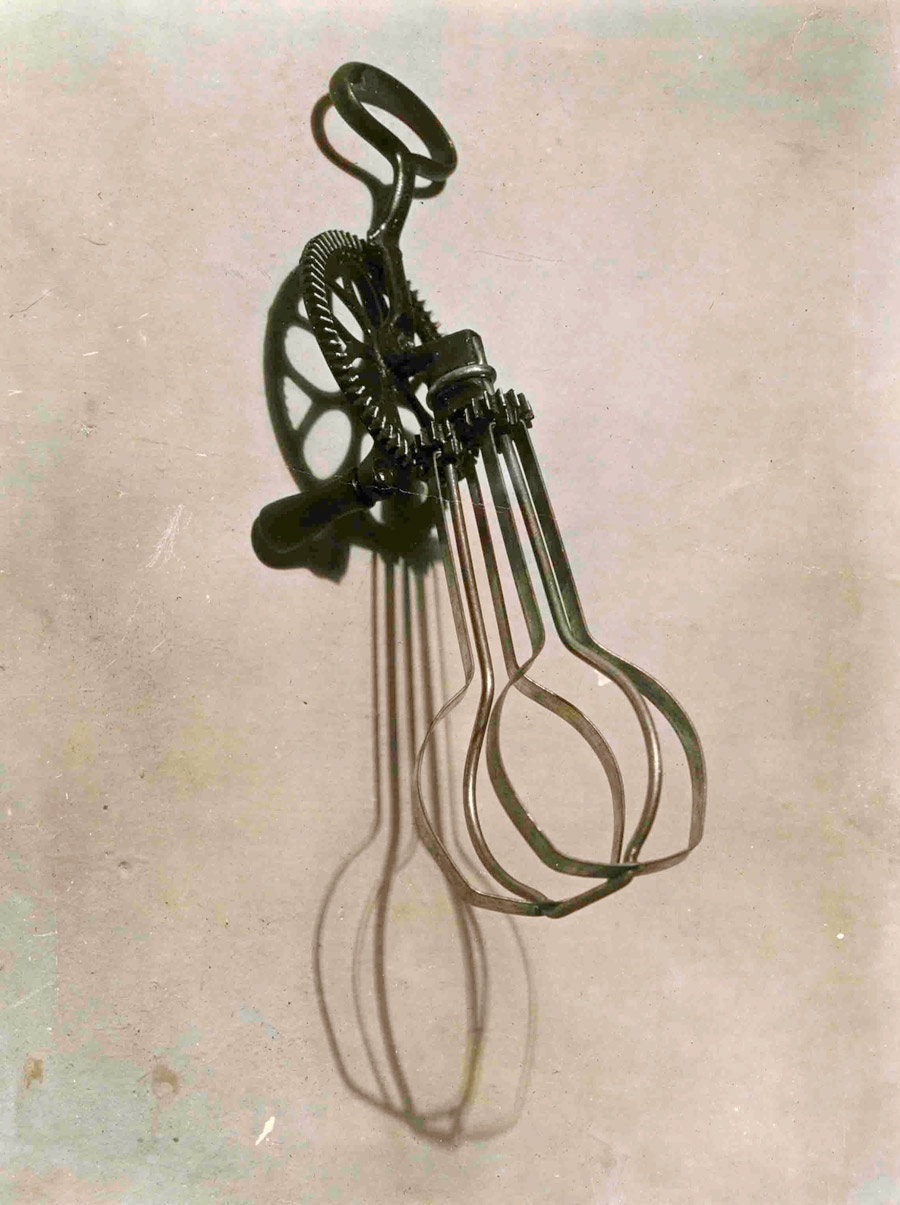
Marcel Duchamp: The Readymade as Reproduction examines Box in a Valise (1935-41), a catalogue of his oeuvre featuring 69 reproductions, including minute replicas of several readymades and one original work that Duchamp “copyrighted” in the name of his female alter ego, Rrose Sélavy. Using collotype printing and pochoir – in which colour is applied by hand with the use of stencils – Duchamp produced “authorised ‘original’ copies” of his work, blurring the boundaries between unique object, readymade, and multiple. Cultural and Political Icons includes selections focusing on some of the most significant photographic essays of the twentieth century – Walker Evans’s American Photographs (1938), Robert Franks’s The Americans (1958), Lee Friedlander’s The American Monument (1976), and David Goldblatt’s The Structure of Things Then (1998) – many of which have never before been shown in a thematic context as they are here.
The Studio without Walls: Sculpture in the Expanded Field explores the radical changes that occurred in the definition of sculpture when a number of artists who did not consider themselves photographers in the traditional sense, such as Robert Smithson, Robert Barry, and Gordon Matta-Clark, began using the camera to document remote sites as sculpture rather than the traditional three-dimensional object. Daguerre’s Soup: What Is Sculpture? includes photographs of found objects or assemblages created specifically for the camera by artists, such as Brassaï’s Involuntary Sculptures (c. 1930s), Alina Szapocznikow’s Photosculptures (1970-1971), and Marcel Broodthaers’s Daguerre’s Soup (1974), the last work being a tongue-in-cheek picture which hints at the various fluid and chemical processes used by Louis Daguerre to invent photography in the nineteenth century, bringing into play experimental ideas about the realm of everyday objects.

The Pygmalion Complex: Animate and Inanimate Figures looks at Dada and Surrealist pictures and photo-collages by artists, including Man Ray, Herbert Bayer, Hans Bellmer, Hannah Höch, and Johannes Theodor Baargeld, who focused their lenses on mannequins, dummies, and automata to reveal the tension between living figure and sculpture. The Performing Body as Sculptural Object explores the key role of photography in the intersection of performance and sculpture. Bruce Nauman, Charles Ray, and Dennis Oppenheim, placing a premium on their training as sculptors, articulated the body as a sculptural prop to be picked up, bent, or deployed instead of traditional materials. Eleanor Antin, Ana Mendieta, VALIE EXPORT, and Hannah Wilke engaged with the “rhetoric of the pose,” using the camera as an agency that itself generates actions through its presence.

Press release from the Museum of Modern Art website


Man Ray (Emmanuel Radnitzky) (American, 1890-1976) 'Noire et blanche' (Black and white) 1926


Man Ray (Emmanuel Radnitzky) (American, 1890-1976)
Noire et blanche (Black and white)
1926
Gelatin silver print
6 3/4 x 8 7/8″ (17.1 x 22.5cm)
The Museum of Modern Art, New York. Gift of James Thrall Soby
2010 Man Ray Trust/Artists Rights Society (ARS), New York/ADAGP, Paris


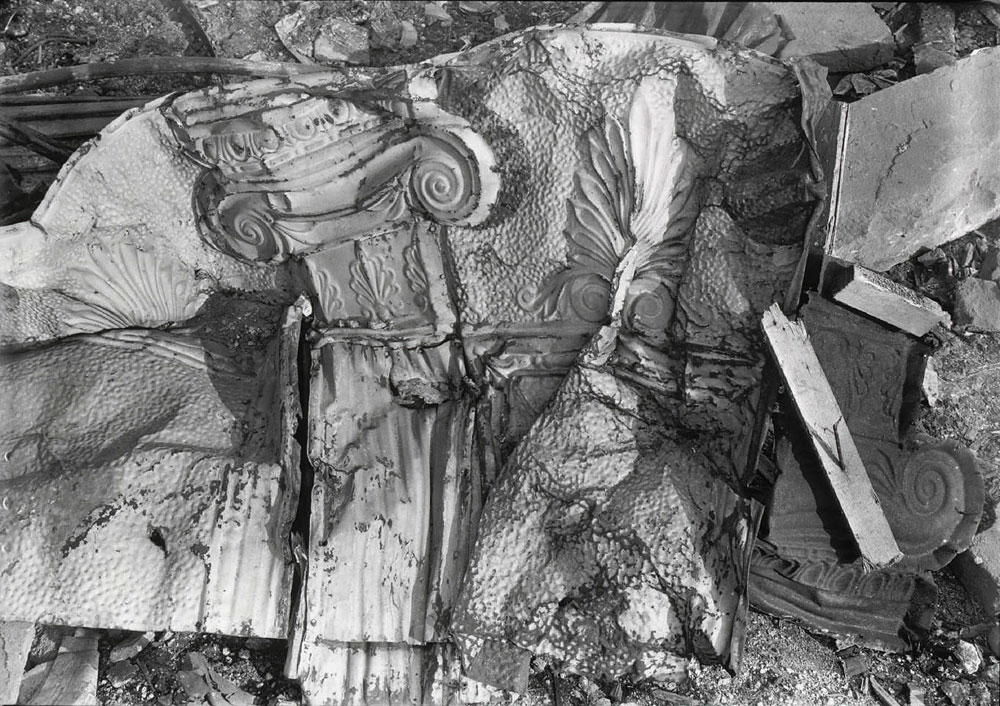
Walker Evans (American, 1903-1975) 'Stamped Tin Relic' 1929 (printed c. 1970)


Walker Evans (American, 1903-1975)
Stamped Tin Relic
1929 (printed c. 1970)
Gelatin silver print
4 11/16 x 6 5/8″ (11.9 x 16.9cm)
The Museum of Modern Art, New York. Lily Auchincloss Fund
© 2010 Estate of Walker Evans


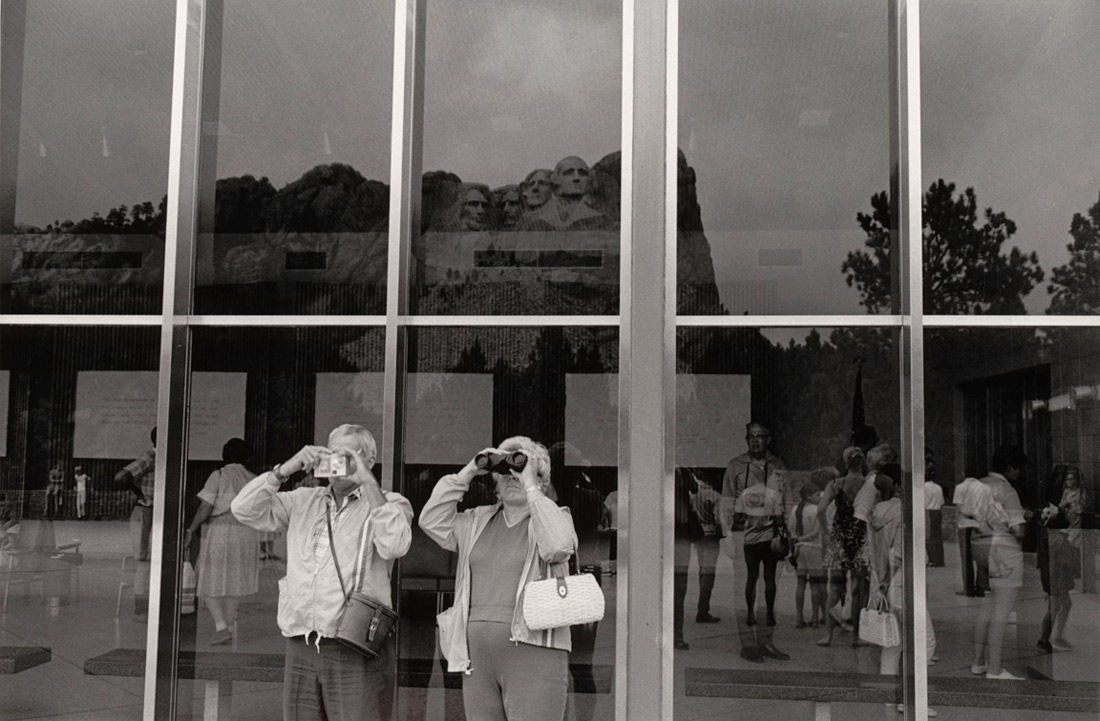
Lee Friedlander (American, b. 1934) 'Mount Rushmore, South Dakota' 1969


Lee Friedlander (American, b. 1934)
Mount Rushmore, South Dakota
1969
Gelatin silver print
8 1/16 x 12 1/8″ (20.5 x 30.8cm)
The Museum of Modern Art, New York. Gift of the photographer
© 2010 Lee Friedlander


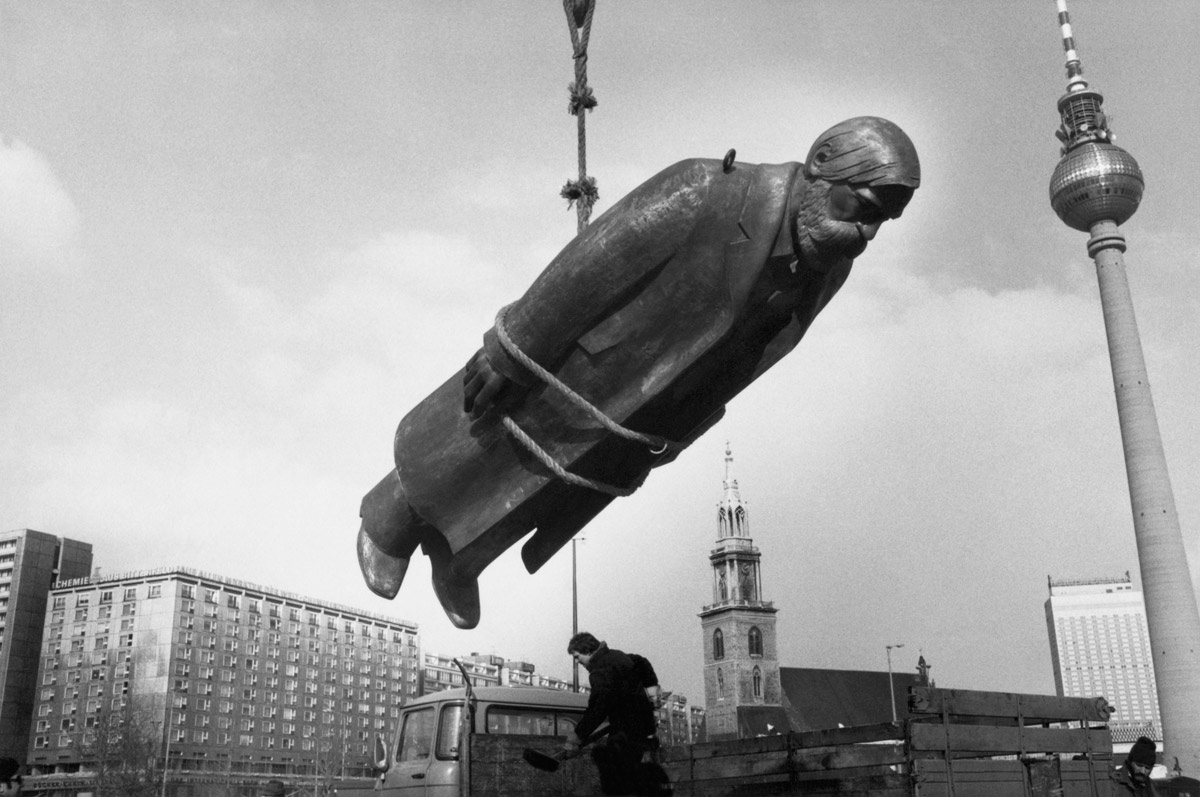
Sibylle Bergemann (German, 1941-2010) 'Das Denkmal, East Berlin' (The monument, East Berlin)


Sibylle Bergemann (German, 1941-2010)
Das Denkmal, East Berlin (The monument, East Berlin)
1986
Gelatin silver print
19 11/16 x 23 5/8″ (50 x 60cm)
Sibylle Bergemann/Ostkreuz Agentur der Fotografen, Berlin
© 2010 Sibylle Bergemann/Ostkreuz Agentur der Fotografen, Berlin


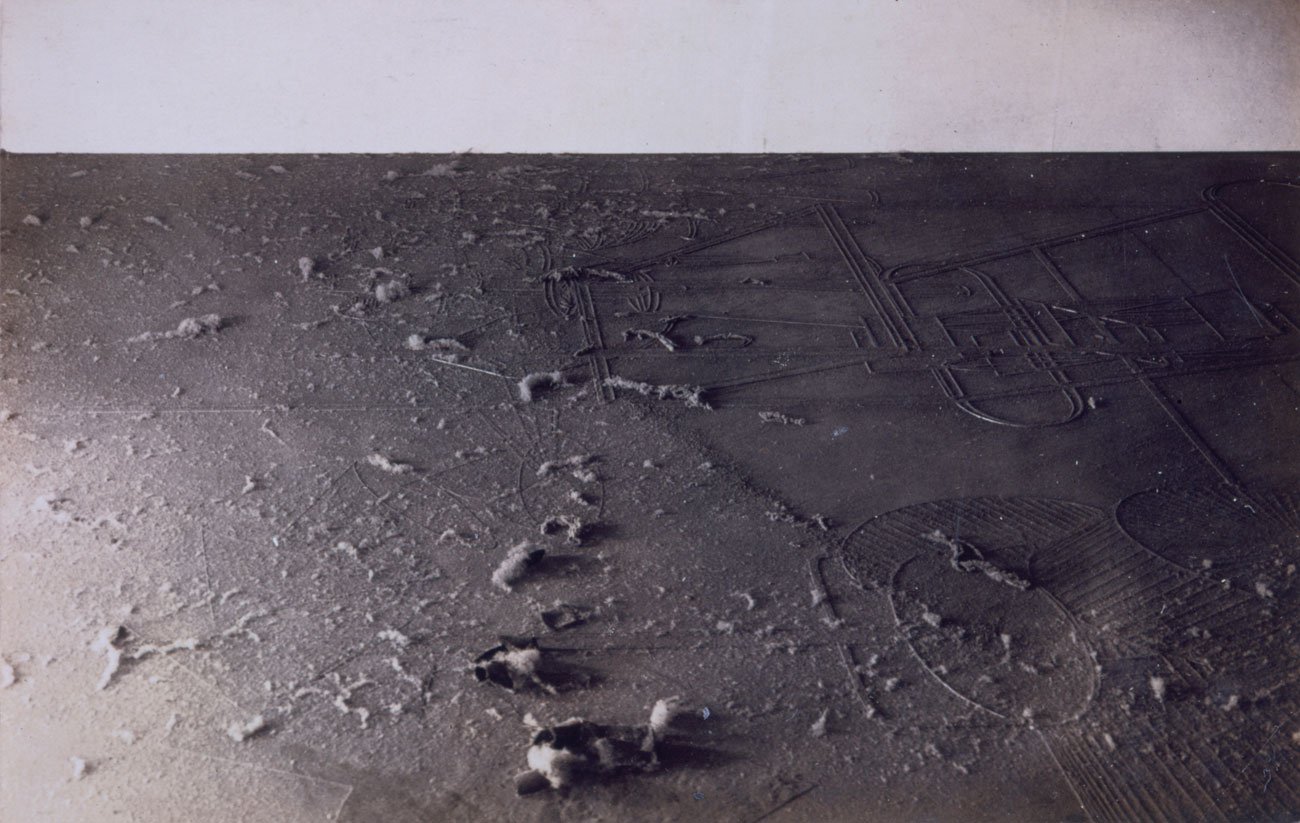
Marcel Duchamp (American, born France, 1887-1968) and Man Ray (Emmanuel Radnitzky) (American, 1890-1976) 'Élevage de poussière (Dust breeding)' 1920


Marcel Duchamp (American, born France, 1887-1968)
Man Ray (Emmanuel Radnitzky) (American, 1890-1976)
Élevage de poussière (Dust breeding)
1920
Gelatin silver contact print
2 13/16 x 4 5/16″ (7.1 x 11cm)
The Bluff Collection, LP
© 2010 Man Ray Trust/Artists Rights Society (ARS), New York/ADAGP, Paris


Guy Tillim (South African, b. 1962) 'Bust of Agostinho Neto, Quibala, Angola' 2008


Guy Tillim (South African, b. 1962)
Bust of Agostinho Neto, Quibala, Angola
2008
Pigmented inkjet print
17 3/16 x 25 3/4″ (43.6 x 65.4cm)
The Museum of Modern Art, New York
Acquired through the generosity of the Contemporary Arts Council of The Museum of Modern Art
© 2010 Guy Tillim. Courtesy Michael Stevenson Gallery


Selected wall text from the exhibition

“The advent of photography in 1839, when aesthetic experience was firmly rooted in Romanticist tenets of originality, brought into focus the critical role that the copy plays in the perception of art. The medium’s reproducibility challenged the aura attributed to the original, but it also reflected a new way of looking and offered a model for dissemination that would transform the entire nature of art. The aesthetic singularity of the photograph, the archival value of a document bearing the trace of history, and the combinatory capacity of the image, open to be edited into sequences in which it mixes with others – all these contribute to the status of photography as both an art form and a medium of communication.

Sculpture was among the first subjects to be treated in photography. In his 1947 book Le Musée imaginaire, the novelist and politician André Malraux famously advocated for a pancultural “museum without walls,” postulating that art history, and the history of sculpture in particular, had become “the history of that which can be photographed.” There were many reasons for this, including the immobility of sculpture, which suited the long exposure times needed with the early photographic processes, and the desire to document, collect, publicise and circulate objects that were not always portable. Through crop, focus, angle of view, degree of close-up, and lighting, as well as through ex post facto techniques of dark room manipulation, collage, montage, and assemblage, photographers not only interpret sculpture but create stunning reinventions of it.

The Original Copy presents a critical examination of the intersections between photography and sculpture, exploring how the one medium has been implicated in the analysis and creative redefinition of the other. Bringing together 300 pictures, magazines and journals by more than 100 artists from the dawn of modernism to the present, this exhibition looks at the ways in which photography at once informs and challenges our understanding of what sculpture is within specific historic contexts.

Sculpture in the Age of Photography

If we consider photography a child of the industrial era – a medium that came of age alongside the steam engine and the railroad – it is not surprising that one of its critical functions was to bring physically inaccessible worlds closer by means of reproduction. Among its early practitioners, Charles Nègre photographed sculpture in the cathedrals of Chartres, Amiens, and, in Paris, Notre Dame, circling them at different levels to capture perspectives of rarely seen sculptural details, while in London Roger Fenton and Stephen Thompson documented the ancient statuary in the British Museum, making visible the new power of collecting institutions.

With the advent of the handheld portable camera in the early 1920s, photographers had the flexibility to capture contingent sculptural arrangements taken from elliptical viewpoints. André Kertész, for instance, recorded unexpected juxtapositions between art and common objects in the studios of artist friends, including Fernand Léger and Ossip Zadkine. His ability to forge heterogeneous materials and objects into visual unity inspired the novelist Pierre Mac Orlan to confer on him the title of “photographer-poet.”

Focusing on details in this way, photographers have interpreted not only sculpture itself, as an autonomous object, but also the context of its display. The results often show that the meaning of art is not fixed within the work but open to the beholder’s reception of it at any given moment. Taking a place in the tradition of institutional critique, Barbara Kruger’s and Louise Lawler’s pictures foreground issues of representation to underscore photography’s engagement in the analysis of virtually every aspect of art.

Eugène Atget
The Marvelous in the Everyday

During the first quarter of the twentieth century, Atget took hundreds of photographs of sculptures – classical statues, reliefs, fountains, door knockers, and other finely wrought decorative fragments – in Paris and its outlying parks and gardens, especially at Versailles, Saint-Cloud, and Sceaux. These images amount to a visual compendium of the heritage of French civilisation at that time.

At Versailles, most intensely between 1901 and 1906 and again between 1921 and 1926, Atget photographed the gardens that André Le Nôtre, the landscape architect of King Louis XIV, had designed in the second half of the seventeenth century. In a series of pictures of allegorical statues punctuating the garden’s vistas, Atget focused on the scenic organisation of the sculptures, treating them as characters in a historical play. The pantomimic effect of the statues’ postures clearly appealed to Atget, who in 1880, before turning to photography, had taken acting classes at the Conservatory of the Théâtre national de France. Depicting the white marble statues from low viewpoints, in full length, and against the dark, unified tones of hedges and trees, Atget brought them into dramatic relief, highlighting the theatrical possibilities of sculpture.

Among the pictures taken at Saint-Cloud is a series centred on a melancholy pool surrounded by statues whose tiny silhouettes can be seen from a distance. Atget’s interest in the variable play between nature and art through minute changes in the camera’s angle, or as functions of the effects of light and time of day, is underscored in his notations of the exact month and sometimes even the hour when the pictures were taken.

Auguste Rodin
The Sculptor and the Photographic Enterprise

Rodin never took pictures of his sculptures but reserved the creative act for himself, actively directing the enterprise of photographing his work. He controlled staging, lighting and background, and he was probably the first sculptor to enlist the camera to record the changing stages through which his work passed from conception to realisation. The photographers working with Rodin were diverse and their images of his work varied greatly, partly through each individual’s artistic sensibility and partly through changes in the photographic medium. The radical viewing angles that Eugène Druet, for instance, adopted in his pictures of hands, in around 1898, inspired the poet Rainer Maria Rilke to write: “There are among the works of Rodin hands, single small hands which without belonging to a body, are alive. Hands that rise, irritated and in wrath; hands whose five bristling fingers seem to bark like the five jaws of a dog of Hell.”

Among the most memorable pictures of Rodin’s sculptures is Edward Steichen’s Rodin – The Thinker (1902), a work made by combining two negatives: Rodin in dark silhouetted profile contemplating The Thinker (1880-1882), his alter ego, is set against the luminous Monument to Victor Hugo (1901), a source of poetic creativity. Steichen also photographed Rodin’s Balzac, installed outdoors in the sculptor’s garden at Meudon, spending a whole night taking varying exposures from fifteen minutes to an hour to secure a number of dramatic negatives. The three major pictures of the sculpture against the nocturnal landscape taken at 11 p.m., midnight, and 4 a.m. form a temporal series. 

Constantin Brancusi
The Studio as Groupe Mobile

“Why write?” Brancusi once queried. “Why not just show the photographs?” The sculptor included many great photographers among his friends – Edward Steichen was one of his early champions in the United States; Alfred Stieglitz organised in 1914 his first solo exhibition in New York; Man Ray helped him buy photographic equipment; Berenice Abbott studied sculpture under him; and he was on close terms with Brassaï, André Kertész, and László Moholy-Nagy. Yet he declined to have his work photographed by others, preferring instead to take, develop, and print his own pictures.

Pushing photography against its grain, Brancusi developed an aesthetic antithetical to the usual photographic standards. His so-called photos radieuses (radiant photos) are characterised by flashes of light that explode the sculptural gestalt. In search of transparency, kineticism, and infinity, Brancusi used photography and polishing techniques to dematerialise the static, monolithic materiality of traditional sculpture, visualising what Moholy-Nagy called “the new culture of light.”

Brancusi’s pictures of his studio underscore his scenographic approach. The artist articulated the studio around hybrid, transitory configurations known as groupes mobiles (mobile groups), each comprising several pieces of sculpture, bases, and pedestals grouped in proximity. Assembling and reassembling his sculptures for the camera, Brancusi used photography as a diary of his sculptural permutations. If, as it is often said, Brancusi “invented” modern sculpture, his use of photography belongs to a reevaluation of sculpture’s modernity.

Cultural and Political Icons

How do we remember the past? What role do photographs play in mediating history and memory? In an era resonating with the consequences of two world wars, the construction and then dismantling of the Berlin Wall, the Vietnam War, and the after effects of the colonialist legacy in South Africa, commemoration has provided a rich subject for photographic investigation.

Some of the most significant photographic essays of the twentieth century – Walker Evans’s American Photographs (1938), Robert Frank’s The Americans (1958), Lee Friedlander’s The American Monument (1976), and David Goldblatt’s The Structure of Things Then (1998) – articulate to different degrees the particular value of photography as a means of defining the cultural and political role of monuments.

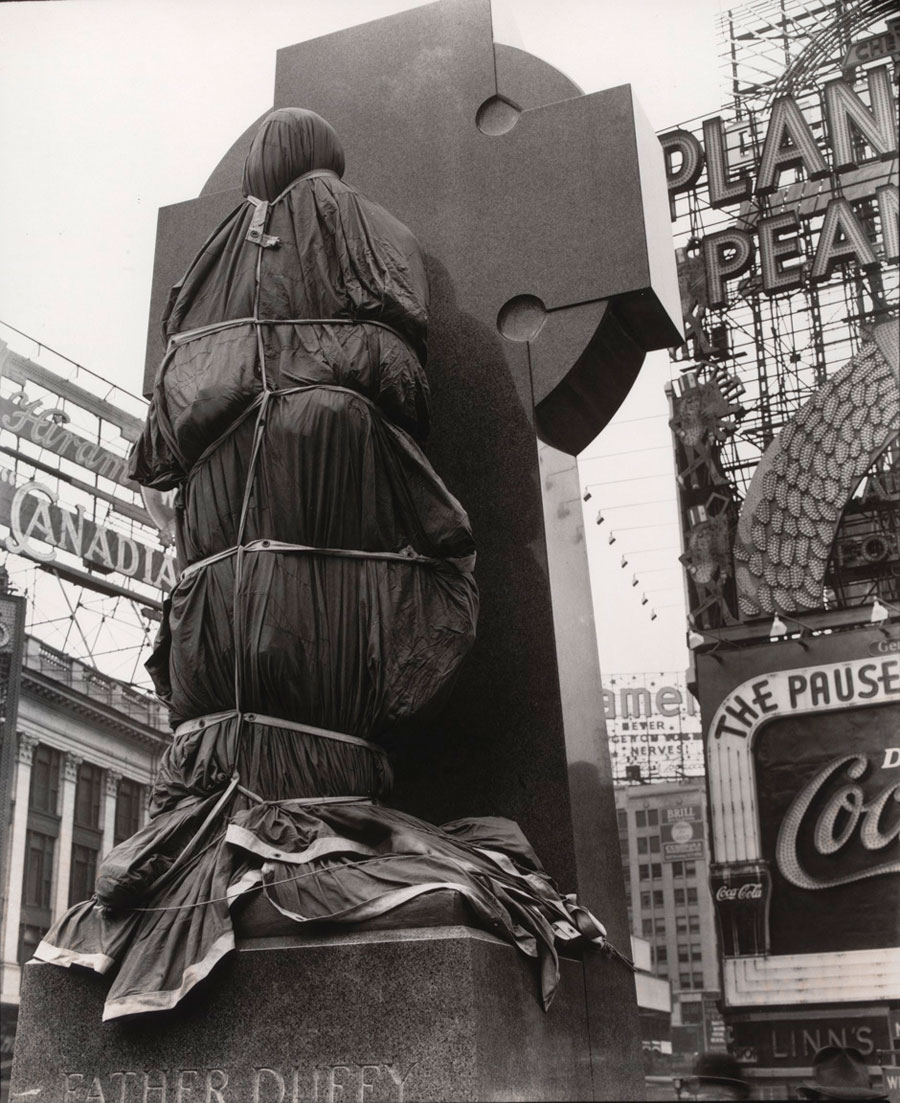
Evans’s emblematic image of a crushed Ionic column made of cheap sheet metal; Frank’s picture of a statue of St. Francis preaching, cross and Bible in hands, to the bleak vista of a gas station; Friedlander’s photograph of World War I hero Father Duffy, engulfed in the cacophony of Times Square’s billboards and neon, which threaten to jeopardise the sculpture’s patriotic message; and Goldblatt’s pictures of monuments to some of the most potent symbols of Afrikaner triumphalism – all take a critical look at the world that public statues inhabit.

The Studio without Walls
Sculpture in the Expanded Field

In the late 1960s a radical aesthetic change altered both the definition of the sculptural object and the ways in which that object was experienced. A number of artists who did not consider themselves photographers in the traditional sense began using the camera to rework the idea of what sculpture is, dispensing with the immobile object in favour of an altered site: the built environment, the remote landscape, or the studio or museum space in which the artist intervened.

This engagement with site and architecture – undoubtedly a function of early critiques of art’s institutional status – meant that sculpture no longer had to be a permanent three-dimensional object; it could, for instance, be a configuration of debris on the studio floor, a dematerialised vapour released into the landscape, a dissected home reconfigured as gravity-defying walk-through sculpture, or a wrapped-up building. Bruce Nauman, Robert Barry, Gordon Matta-Clark, and Christo respectively, as well as Michael Heizer, Richard Long, Dennis Oppenheim, and Robert Smithson made extensive use of photography, collecting and taking hundreds of pictures as raw material for other pieces, such as collages and photomontages.

In the first decade of the twenty-first century, artists such as Zhang Dali, Cyprien Gaillard, and Rachel Whiteread have continued this dialogue through photographs contemplating examples of architecture and sculpture in states of dilapidation and entropy, remnants of a society in demise.

Daguerre’s Soup
What Is Sculpture?

In 1932, Brassaï challenged the established notions of what is or is not sculpture when he photographed a series of found objects – tiny castoff scraps of paper that had been unconsciously rolled, folded, or twisted by restless hands, strangely shaped bits of bread, smudged pieces of soap, and accidental blobs of toothpaste, which he titled Involuntary Sculptures. In the 1960s and ’70s artists engaging with various forms of reproduction, replication, and repetition used the camera to explore the limits of sculpture. The word “sculpture” itself was somewhat modified, no longer signifying something specific but rather indicating a polymorphous objecthood. For instance, in 1971 Alina Szapocznikow produced Photosculptures, pictures of a new kind of sculptural object made of stretched, formless and distended pieces of chewing gum.

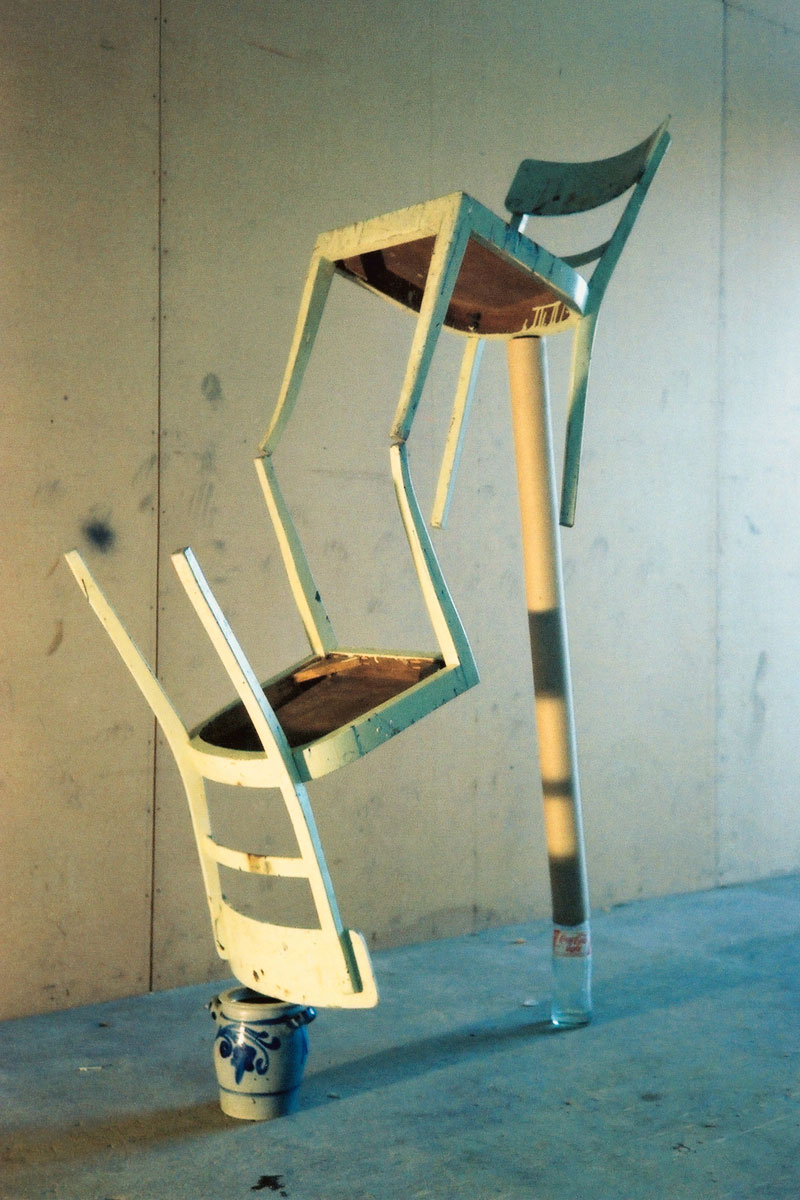
At the same time, Marcel Broodthaers concocted absurdist taxonomies in photographic works. In Daguerre’s Soup (1975), Broothaers hinted at the various fluids and chemical processes used by Louis Daguerre to invent photography in the nineteenth century by bringing into play experimental ideas about language and the realm of everyday objects. A decade later, the duo Fischli/Weiss combined photography with wacky, ingeniously choreographed assemblages of objects. Their tongue-in-cheek pictures of assemblages shot on the verge of collapse convey a sense of animated suspension and deadpan comedy.

In 2007, Rachel Harrison drew on Broodthaers’s illogical systems of classification and parodic collections of objects to produce Voyage of the Beagle, a series of pictures that collectively raise the question “What is sculpture?” Ranging from images of prehistoric standing stones to mass-produced Pop mannequins, and from topiaries to sculptures made by modernist masters, Harrison’s work constitutes an oblique quest for the origins and contemporary manifestations of sculpture.

The Pygmalion Complex
Animate and Inanimate Figures

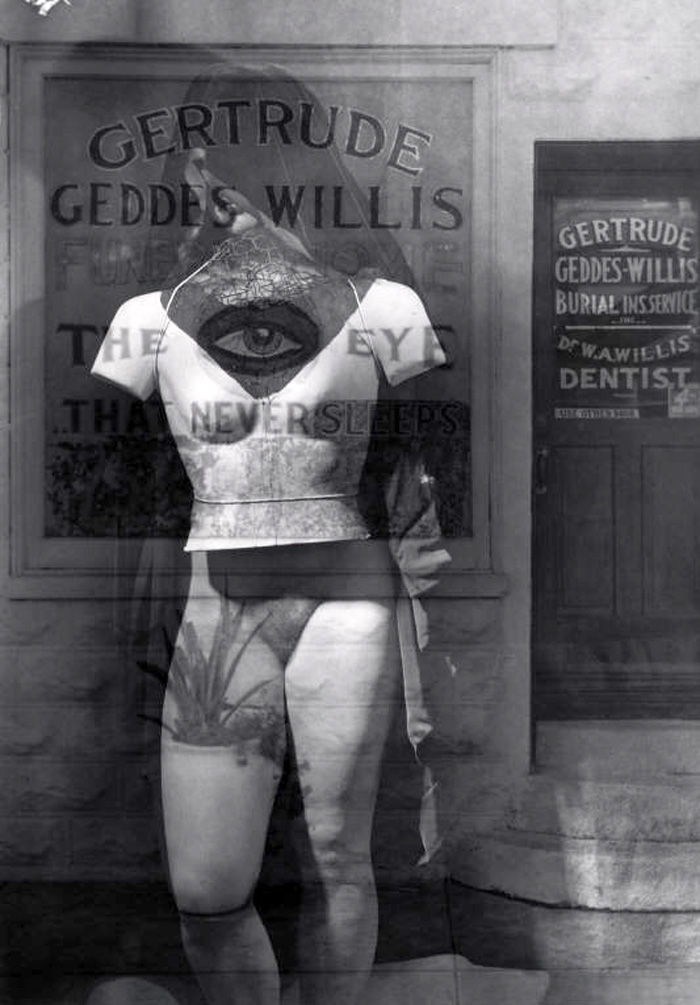
The subject of the animated statue spans the history of avant-garde photography. Artists interested in Surrealist tactics used the camera to tap the uncanniness of puppets, wax dummies, mannequins, and automata, producing pictures that both transcribe and alter appearances. Laura Gilpin explored this perturbing mix of stillness and living, alluring lifelikeness in her mysterious portrait George William Eggers (1926), in which Eggers, the director of the Denver Art Museum, keeps company with a fifteenth-century bust whose polychrome charm is enhanced by the glow of the candle he holds next to her face. So does Edward Weston, in his whimsical Rubber Dummies, Metro Goldwyn Mayer Studios, Hollywood (1939), showing two elastic dolls caught in a pas de deux on a movie-studio storage lot; and Clarence John Laughlin, in his eerie photomontage The Eye That Never Sleeps (1946), in which the negative of an image taken in a New Orleans funeral parlour has been overlaid with an image of a mannequin – one of whose legs, however, is that of a flesh-and-blood model.

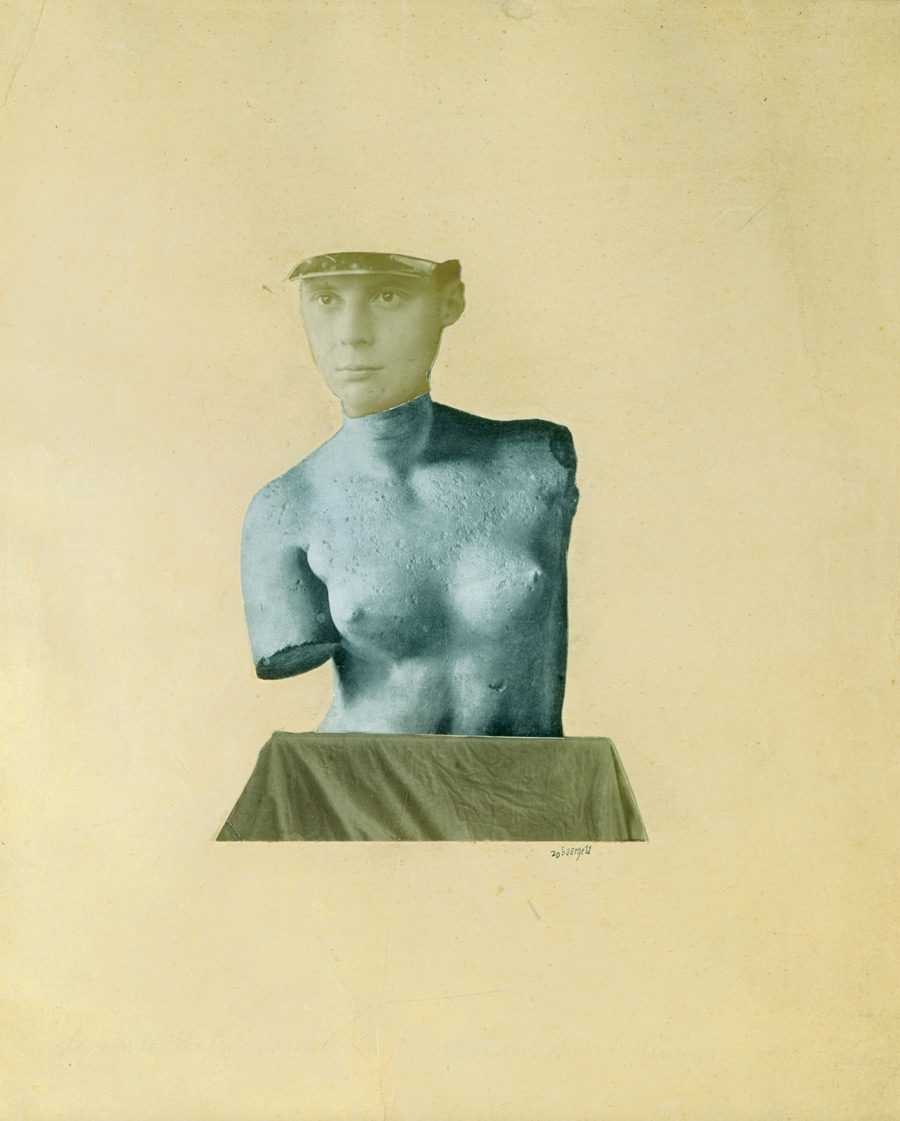
The tension between animate object and inanimate female form lies at the crux of many of Man Ray’s photographs, including Black and White (1926), which provocatively couples the head of the legendary model, artist, and cabaret singer Alice Prin, a.k.a. Kiki of Montparnasse, with an African ceremonial mask. Hans Bellmer’s photographs of dismembered dolls, and the critical photomontages of Herbert Bayer, Hannah Höch, and Johannes Theodor Baargeld, probe the relationship between living figure and sculpture by invoking the unstable subjectivity and breakdown of anatomic boundaries in the aftermath of the Great War.

The Performing Body as Sculptural Object

In 1969, Gilbert & George covered their heads and hands in metallic powders to sing Flanagan and Allen’s vaudeville number “Underneath the Arches” in live performance. Declaring themselves living sculptures, they claimed the status of an artwork, a role they used photography to express. Charles Ray and Dennis Oppenheim, placing a premium on their training as sculptors, articulated the body as a prop that could be picked up, bent, or deployed instead of more traditional materials as a system of weight, mass, and balance.

In the radicalised climate of the 1970s, artists such as Eleanor Antin, Ana Mendieta, VALIE EXPORT, and Hannah Wilke engaged with the “rhetoric of the pose,” underscoring the key role of photography in the intersection of performance, sculpture and portraiture.

Other artists as diverse as Robert Morris, Claes Oldenburg, Otto Muehl, Bas Jan Ader, and Bruce Nauman, experimented with the plasticity of the body as sculptural material. Several of Nauman’s pictures from his portfolio Eleven Color Photographs (1966-1967 / 1970) spoof the classic tradition of sculpture. Yet the signature image of the group – Self-Portrait as a Fountain, in which a stripped-to-the-waist Nauman spews water from his mouth like a medieval gargoyle – is a deadpan salute to Marcel Duchamp’s Fountain (1917). In this spirit, Erwin Wurm’s series of One Minute Sculptures (1997-98) evoke gestural articulations in which the artist’s body is turned into a sculptural form. Wurm, like the other artists presented in this exhibition, focuses attention on what one can do with and through photography, using the camera not to document actions that precede the impulse to record them but as an agency that itself generates actions through its own presence.


Clarence John Laughlin (American, 1905-1985) 'The Eye That Never Sleeps' 1946


Clarence John Laughlin (American, 1905-1985)
The Eye That Never Sleeps
1946
Gelatin silver print
12 3/8 x 8 3/4″ (31.4 x 22.2cm)
The Museum of Modern Art, New York. Purchase
© Clarence John Laughlin


Fischli/Weiss (Peter Fischli. Swiss, born 1952. David Weiss. Swiss, born 1946) 'Outlaws' 1984


Fischli/Weiss (Peter Fischli. Swiss, b. 1952. David Weiss. Swiss, b. 1946)
Outlaws
1984
Chromogenic colour print
15 ¾ x 11 13/16″ (40 x 30cm)
Courtesy the artists and Matthew Marks Gallery, New York
© Peter Fischli and David Weiss. Courtesy Matthew Marks Gallery, New York


Claes Oldenburg (American born Sweden. b. 1929) 'Claes Oldenburg - Projects for Monuments'. 1967


Claes Oldenburg (American born Sweden. b. 1929)
Claes Oldenburg: Projects for Monuments
1967
Offset lithograph
34 11/16 x 22 1/2″ (88.0 x 57.2 cm)
The Museum of Modern Art, New York. Gift of Barbara Pine
© 2010 Claes Oldenburg


Man Ray (Emmanuel Radnitzky) (American, 1890-1976) 'L'Homme' (Man) 1918


Man Ray (Emmanuel Radnitzky) (American, 1890-1976)
L’Homme (Man)
1918
Gelatin silver print
19 x 14 1/2″ (48.3 x 36.8cm)
Private collection, New York
© 2010 Man Ray Trust/Artists Rights Society (ARS), New York/ADAGP, Paris


Herbert Bayer (American born Austria, 1900-1985) 'Humanly impossible' 1932


Herbert Bayer (American born Austria, 1900-1985)
Humanly impossible
1932
Gelatin silver print
15 3/8 x 11 9/16″ (39 x 29.3cm)
The Museum of Modern Art, New York. Thomas Walther Collection. Purchase
© 2010 Artists Rights Society (ARS), New York/VG Bild-Kunst, Bonn


Constantin Brancusi (French born Romania, 1876-1957) 'L'Oiseau' (Golden Bird). c. 1919


Constantin Brancusi (French born Romania, 1876-1957)
L’Oiseau (Golden Bird)
c. 1919
Gelatin silver print
9 x 6 11/16″ (22.8 x 17cm)
The Museum of Modern Art, New York. Thomas Walther Collection. Purchase
© 2010 Artists Rights Society (ARS), New York/ADAGP, Paris


Gillian Wearing (British, b. 1963) 'Self-Portrait at 17 Years Old' 2003


Gillian Wearing (British, b. 1963)
Self-Portrait at 17 Years Old
2003
Chromogenic color print
41 x 32″ (104.1 x 81.3cm)
The Museum of Modern Art, New York
Acquired through the generosity of The Contemporary Arts Council of The Museum of Modern Art
© 2010 Gillian Wearing. Courtesy the artist, Tanya Bonakdar Gallery, New York, and Maureen Paley, London


Johannes Theodor Baargeld (Alfred Emanuel Ferdinand Gruenwald) (German, 1892-1927) 'Typische Vertikalklitterung als Darstellung des Dada Baargeld' (Typical vertical mess as depiction of the Dada Baargeld). 1920


Johannes Theodor Baargeld (Alfred Emanuel Ferdinand Gruenwald) (German, 1892-1927)
Typische Vertikalklitterung als Darstellung des Dada Baargeld (Typical vertical mess as depiction of the Dada Baargeld)
1920
Photomontage
14 5/8 x 12 3/16″ (37.1 x 31cm)
Kunsthaus Zürich, Grafische Sammlung


Berenice Abbott (American, 1898-1991) 'Father Duffy, Times Square' April 14, 1937


Berenice Abbott (American, 1898-1991)
Father Duffy, Times Square
April 14, 1937
Gelatin silver print
9 5/16 x 7 5/8″ (23.7 x 19.4cm)
The Museum of Modern Art, New York. Gift of Ronald A. Kurtz
© 2010 Berenice Abbott/Commerce Graphics, Ltd., New York


The Museum of Modern Art (MoMA)
11, West Fifty-Third Street, New York

Opening hours:
Daily 10am – 5.30pm

MoMA website

LIKE ART BLART ON FACEBOOK

Back to top

Review: ‘Night’s Plutonian Shore’ by Julia deVille at Sophie Gannon Gallery, Richmond

Exhibition dates: 28th July – 21st August 2010


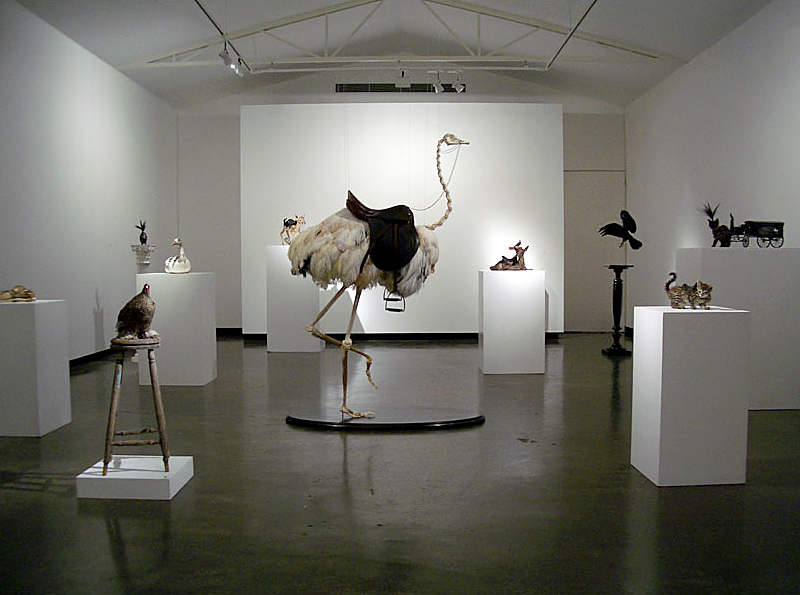
Installation view of 'Night's Plutonian Shore' by Julia deVille at Sophie Gannon Gallery, Richmond


Installation view of Night’s Plutonian Shore by Julia deVille at Sophie Gannon Gallery, Richmond
Photo: Marcus Bunyan


This is an excellent exhibition by Julia deVille at Sophie Gannon Gallery in Richmond. Compared to last year’s ‘shock and paw’ exhibition Cineraria reviewed on this blog, this exhibition shows a commendable sense of restraint, a beautiful rise and fall in the work as you walk around the gallery space with the exhibits displayed on different types and heights of stand and a greater thematic development of the conceptual ideas within the work. There are some exquisite pieces.

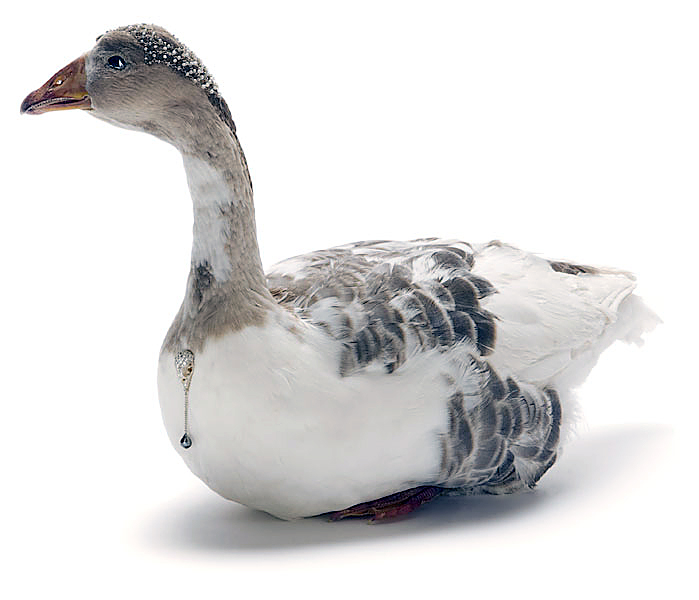
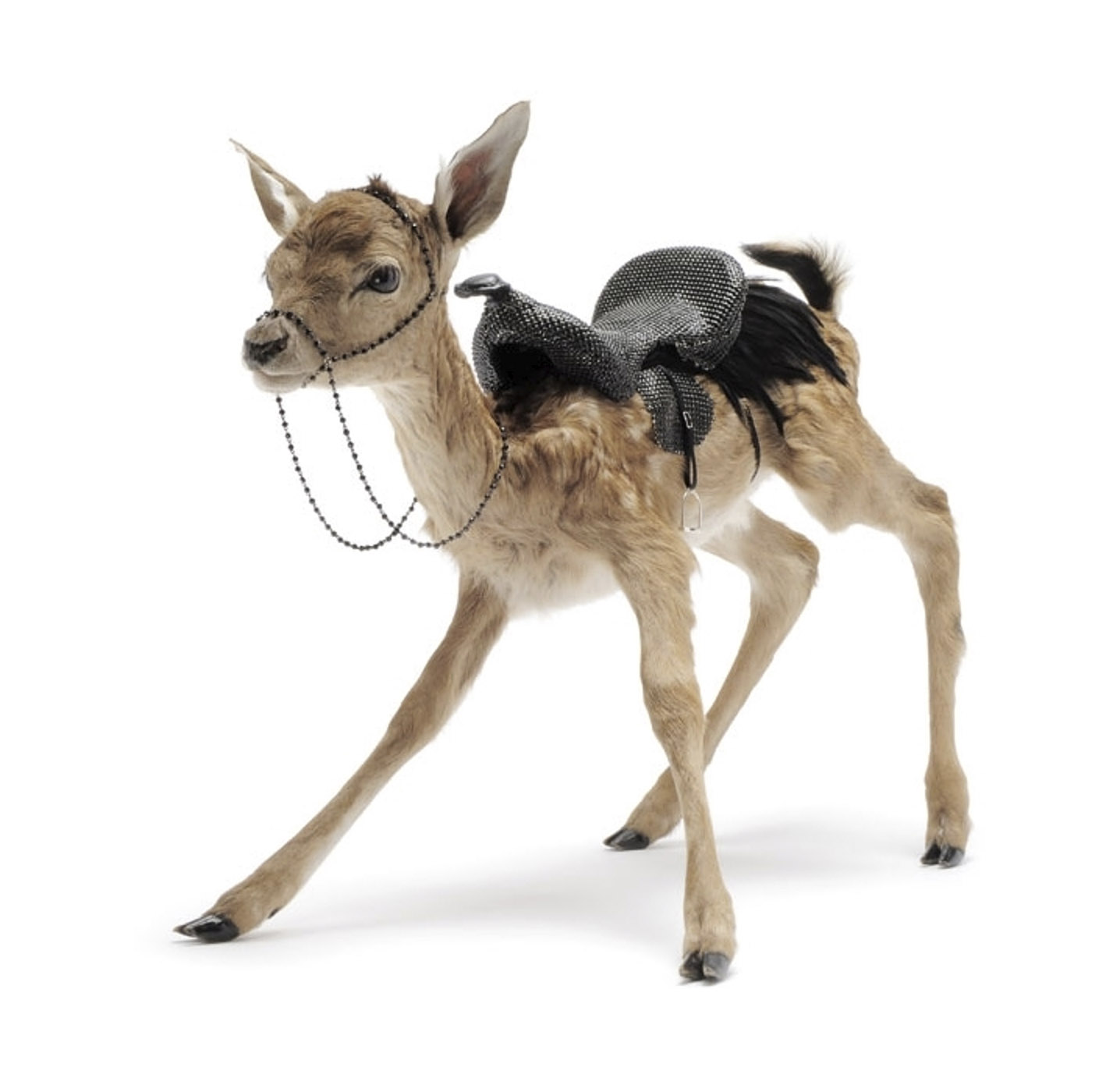
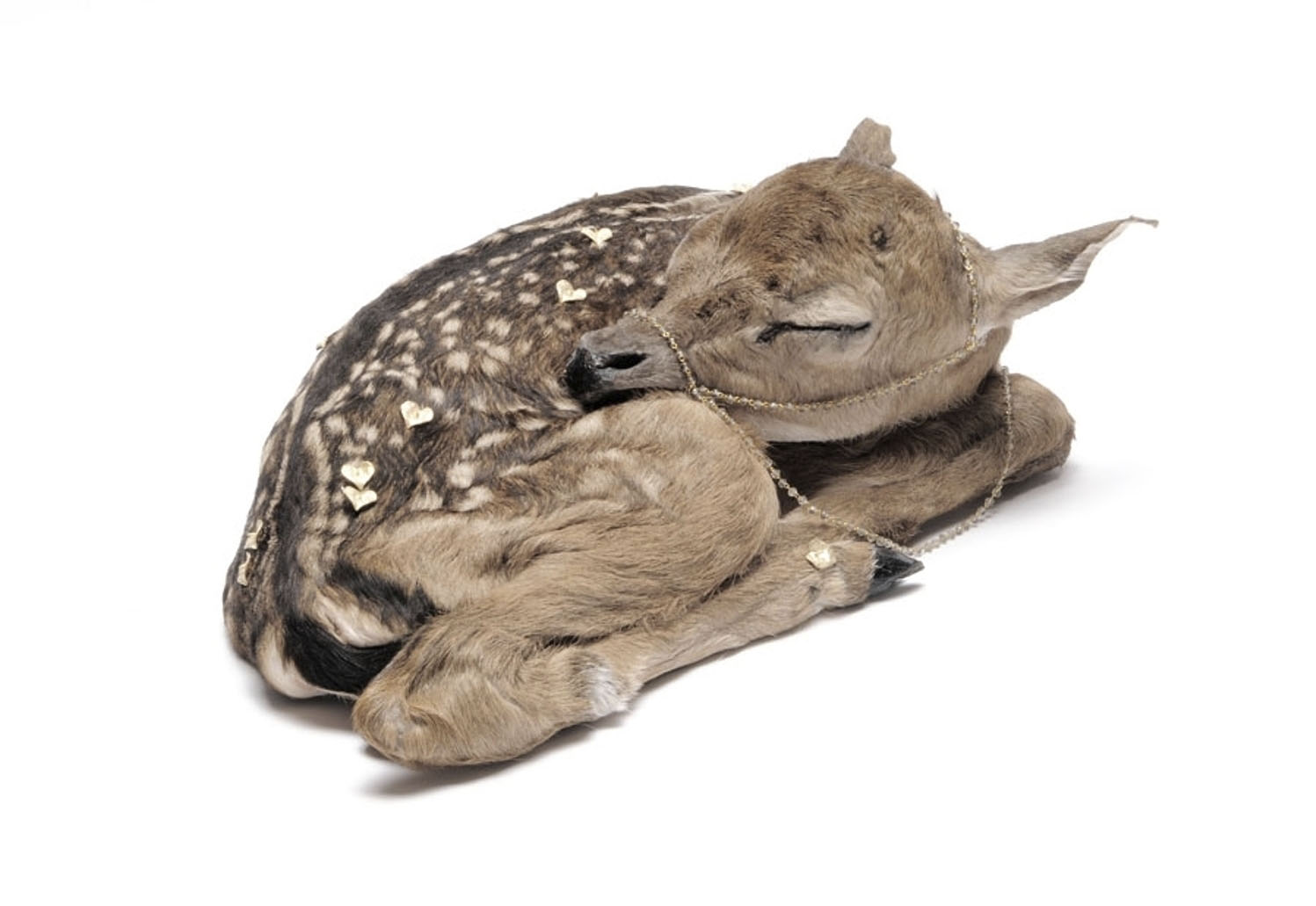
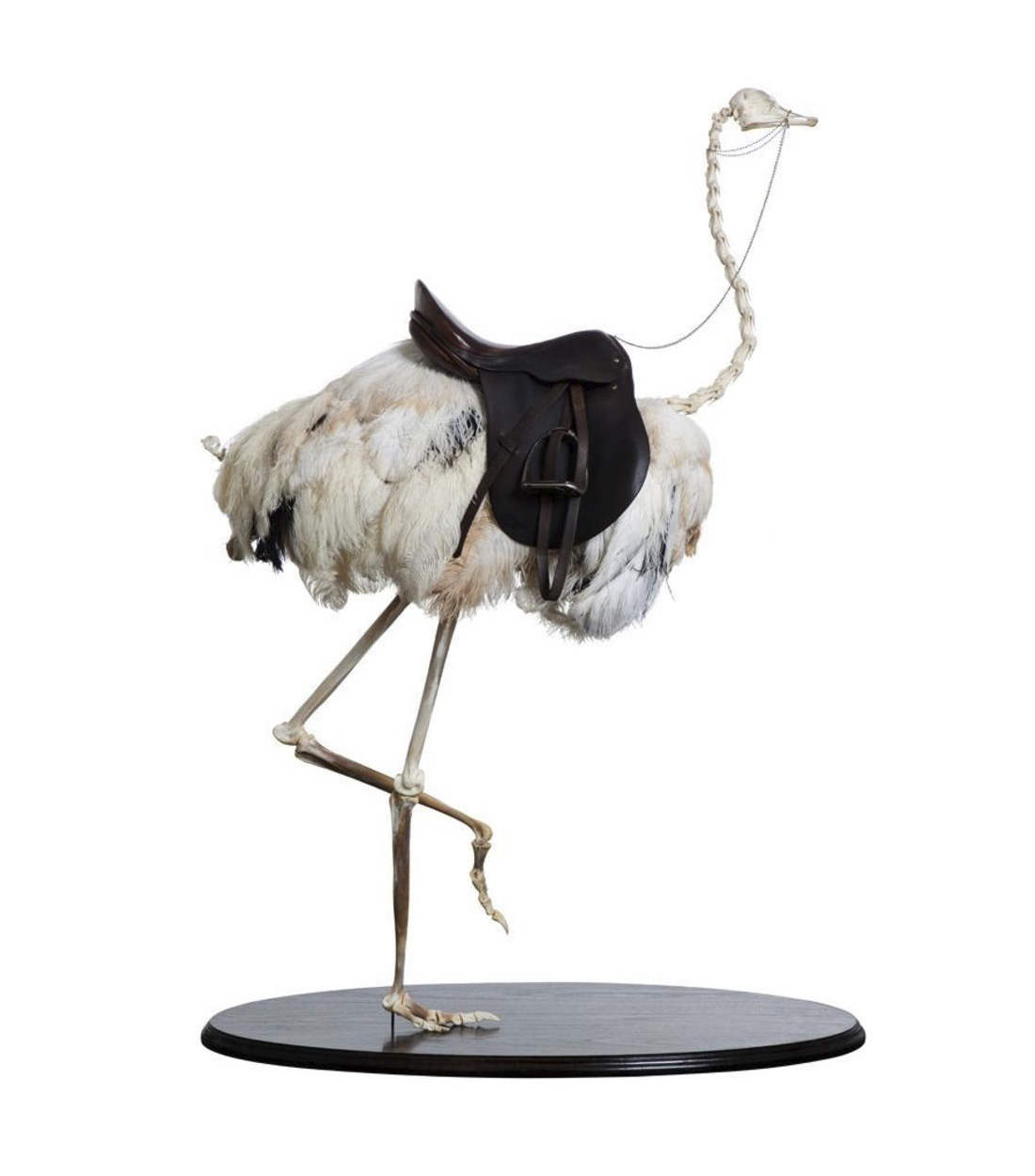
From the bejewelled Golden Gosling (2010), the goose that wears the gold not lays it to the cute stillborn fawn Lenore (2010), named after Edgar Allan Poe’s poem of the same name that discusses “the proper decorum in the wake of the death of a young woman, described as “the queenliest dead that ever died so young”,” (Wikipedia text) there is a delicacy to these sculptures that seemed absent in the last exhibition. The sleeping fawn wears a little golden bridle and is covered in golden hearts, the harness bringing in the element of control (of life, of death, of the body, of identity) into the pieces not seen in the earlier work. This sense of control is reinforced in other pieces in the exhibition including the three pieces Charon (2010), Nevermore (2010) and Kitten drawn hearse (2010, see photographs below).

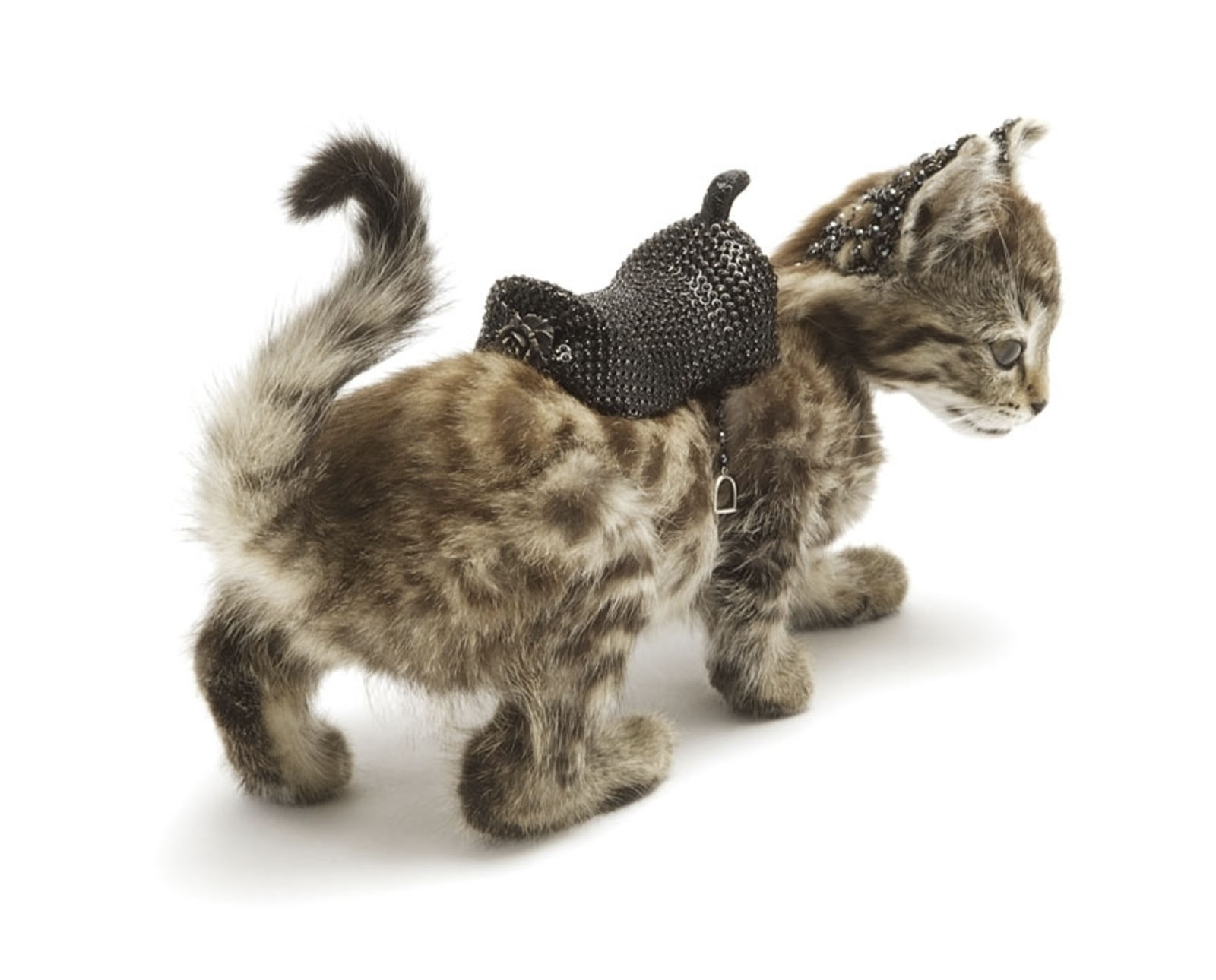
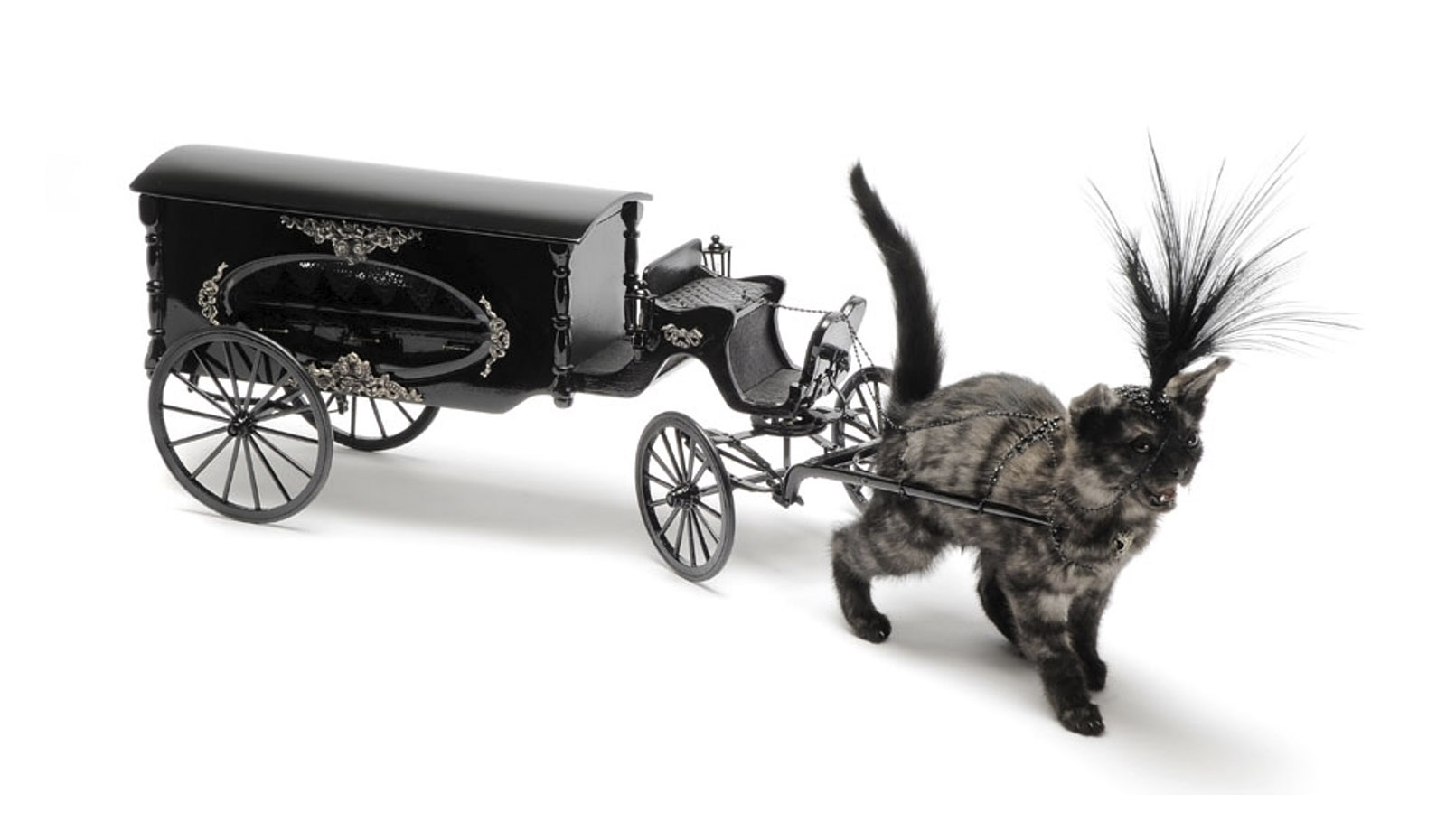
In Charon the kitten has an amazing beaded saddle and stirrups to allow the occupant to control the dead stead because in Greek mythology Charon is the ferryman who carries the souls of the newly deceased across the river Styx. Nevermore also features the saddle and bridle whilst the standout piece of the whole exhibition, Kitten drawn hearse just wows you with it’s delicacy and showmanship – the plume atop the harnessed kitten’s head faithfully replicating the dressage of a Victorian horse drawn funeral cortege.

In these pieces there is a simplification of the noise of the earlier works and in this simplification a conversant intensification of the layering of the conceptual ideas. Playful and witty the layers can be peeled back to reveal the poetry of de Sade, the stories of Greek mythology and the amplification of life force that is at the heart of these works.

Good stuff.

Dr Marcus Bunyan


Many thankx to Edwin and Sophie Gannon Gallery for allowing me publish the photographs in the posting. Please click on the photographs for a larger version of the image.

Another well considered response to the exhibition can be found on Karen Thompson’s Melbourne Jeweller blog.


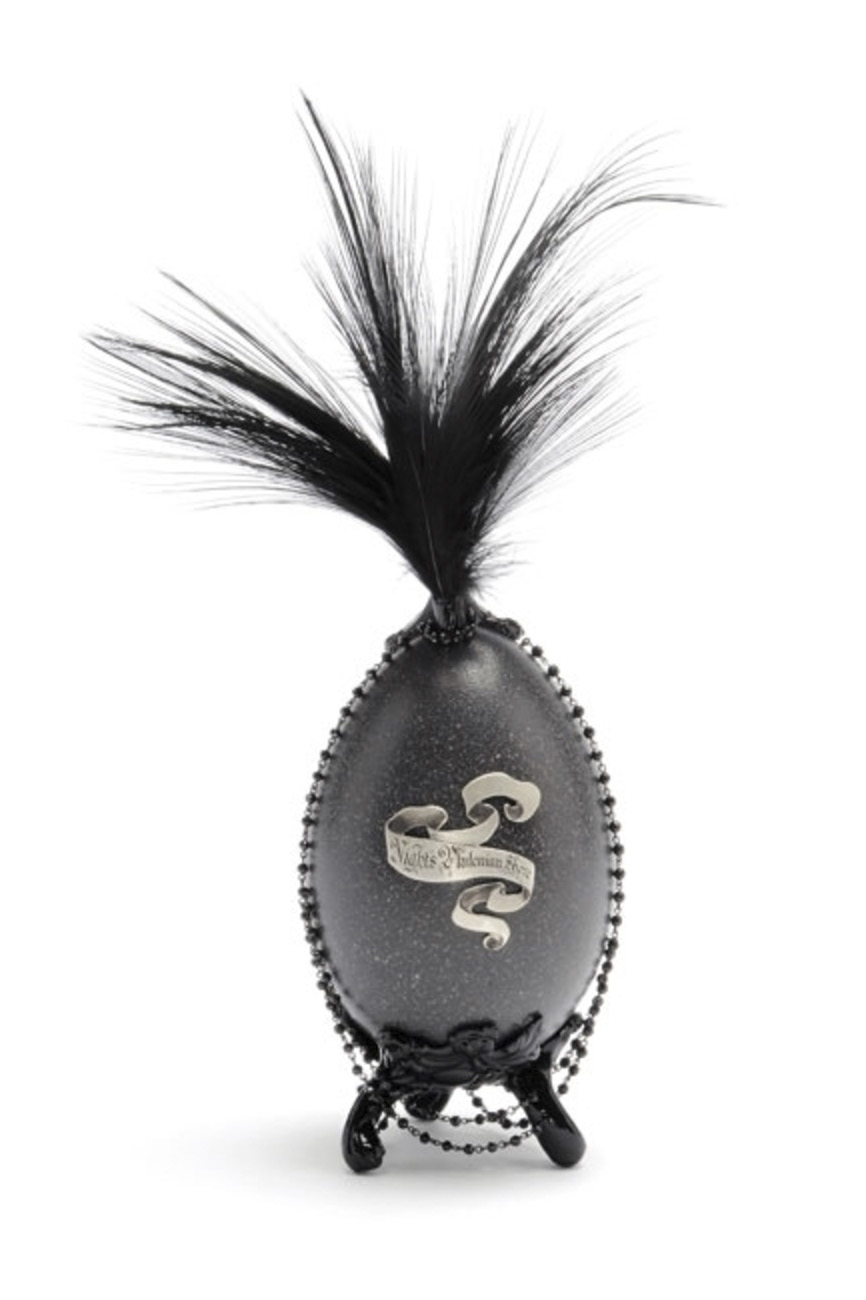
Julia deVille (Australian, b. 1982) 'Nameless here for evermore' 2010 from the exhibition 'Night's Plutonian Shore' by Julia deVille at Sophie Gannon Gallery, Richmond, July - August, 2010


Julia deVille (Australian, b. 1982)
Nameless here for evermore
2010
Emu egg, black garnet beads, sterling silver, bronze, enamel paint, egret feathers
31 x 16 x 16cm
Courtesy Sophie Gannon Gallery


Julia deVille (Australian, b. 1982) 'Golden Gosling' 2010 from the exhibition 'Night's Plutonian Shore' by Julia deVille at Sophie Gannon Gallery, Richmond, July-  August, 2010


Julia deVille (Australian, b. 1982)
Golden Gosling
2010


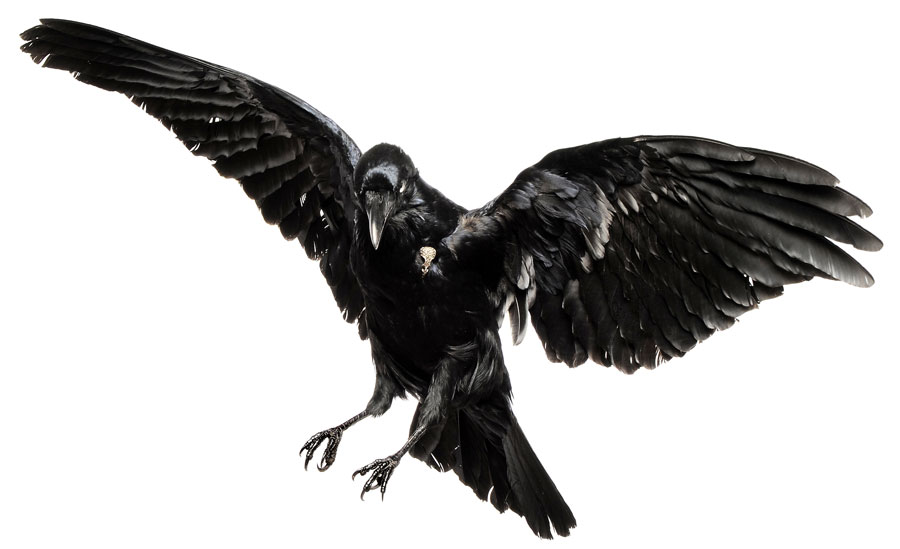
Julia deVille (Australian, b. 1982) 'Ghastly grim and ancient raven' 2010 from the exhibition 'Night's Plutonian Shore' by Julia deVille at Sophie Gannon Gallery, Richmond, July-  August, 2010


Julia deVille (Australian, b. 1982)
Ghastly grim and ancient raven
2010


Julia deVille (Australian, b. 1982) 'Nevermore' 2010 from the exhibition 'Night's Plutonian Shore' by Julia deVille at Sophie Gannon Gallery, Richmond, July - August, 2010


Julia deVille (Australian, b. 1982)
Nevermore
2010
Still-born fawn, black garnet beads, sterling silver, coque feathers, chain mail, glass
27 x 41 x 59cm
Courtesy Sophie Gannon Gallery


Julia deVille (Australian, b. 1982) 'Charon' 2010


Julia deVille (Australian, b. 1982)
Charon
2010
Kitten, hematite beads, mystic spinel beads, sterling silver, chain mail, glass
30 x 12 x 19cm
Courtesy Sophie Gannon Gallery


Julia deVille (Australian, b. 1982) 'Lenore' 2010


Julia deVille (Australian, b. 1982)
Lenore
2010
Stillborn fawn, black garnet beads, sterling silver, gold plate, glass
35 x 17 x 12cm
Courtesy Sophie Gannon Gallery


Julia deVille (Australian, b. 1982) 'Kitten drawn hearse' 2010


Julia deVille (Australian, b. 1982)
Kitten drawn hearse
2010
Kitten, black garnet beads, sterling silver, egret feathers, wood, glass
83 x 30 x 15cm
Courtesy Sophie Gannon Gallery


Julia deVille (Australian, b. 1982) 'Bird or beast' 2010


Julia deVille (Australian, b. 1982)
Bird or beast
2010
Ostrich skeleton, ostrich feathers, smoky quartz, sterling silver, leather and wood
Courtesy Sophie Gannon Gallery


Sophie Gannon Gallery
2, Albert Street, Richmond, Melbourne

Opening hours:
Tuesday – Saturday 11am – 5pm

Sophie Gannon Gallery website

LIKE ART BLART ON FACEBOOK

Back to top

Exhibition: ‘Present Tense: An Imagined Grammar of Portraiture in the New Media Age’ at the National Portrait Gallery, Canberra

Exhibition dates: 22nd May – 22nd August, 2010


Many thankx to David Edghill and the National Portrait Gallery for allowing me to publish the photographs in the posting. Please click on the photographs for a larger version of the image.


Karen Sander (German, b. 1957) 'Herve Blechy' 1:5 2008 from the exhibition 'Present Tense: An Imagined Grammar of Portraiture in the New Media Age' at the National Portrait Gallery, Canberra, May - August, 2010


Karen Sander (German, b. 1957)
Herve Blechy 1:5
2008
3D Bodyscans of the living person (3D coordinates and colour texture), MPT (Miniaturised Projection Technology), rapid prototyping, 3D Inkjet printer, plaster material, pigment
Courtesy of the artist, Berlin, and Galerie Nachst St. Stephan, Vienna, and Galerie Helga de Alvear, Madrid


Karen Sander (German, b. 1957) 'Herve Blechy' 1:5 2008


Karen Sander (German, b. 1957)
Herve Blechy 1:5
2008
3D Bodyscans of the living person (3D coordinates and colour texture), MPT (Miniaturised Projection Technology), rapid prototyping, 3D Inkjet printer, plaster material, pigment
Courtesy of the artist, Berlin, and Galerie Nachst St. Stephan, Vienna, and Galerie Helga de Alvear, Madrid.


A good way of looking at the show as a whole is that it is about the interaction of new technologies with the traditional methods of portraiture – painting, sculpture and photography – which already have their own pre-established ‘grammars’… This show foregrounds the fundamental image-making actions which have now become proper to contemporary portraiture. No longer just the snap the of camera’s shutter or the incremental description of the painter’s brush, but now also the trundling progress of the flatbed scanner and the circular pan of the 3D scanner…

In the end this is a humanist show, about ghosts more than shells. It argues that despite all of the cold digital technology in the world portraits are still about the promise of finding the warm interior of a person via their exterior. The show’s inclusion of some three-dimensional ultrasound images of foetuses in the womb could have easily been over-the-top and obvious in its point about our intimate adoption of new imaging technologies. Until we see one intrauterine image of twins in which one foetus is caught sticking its toe into the eye of its sibling. A rivalry which, we think to ourselves, will no doubt continue for the rest of their lives.

Martyn Jolly. “Review of Present Tense: An Imagined Grammar of Portraiture in the New Media Age, on the Martyn Jolly website October 3, 2013 [Online] Cited 10/07/2022


Osang Gwon (Korean, b. 1974) 'Metabo' 2009 from the exhibition 'Present Tense: An Imagined Grammar of Portraiture in the New Media Age' at the National Portrait Gallery, Canberra, May - August, 2010


Osang Gwon (Korean, b. 1974)
Metabo
2009
C-prints, mixed media
130.0 x 80.0 x 105.0cm
Courtesy of the artist and Arario Gallery, Seoul


Rineke Dijkstra (Dutch, b. 1959) 'Julie, Den Hagg, The Netherlands, February 29, 1994' 1994  from the exhibition 'Present Tense: An Imagined Grammar of Portraiture in the New Media Age' at the National Portrait Gallery, Canberra, May - August, 2010


Rineke Dijkstra (Dutch, b. 1959)
Julie, Den Hagg, The Netherlands, February 29, 1994
1994
Courtesy of Marian Goodman Gallery and the artist


The masterful Dutch photographer Rineke Dijkstra provides the emotional centre of gravity for the show. Her simple nude photographs of startled young mothers clutching their newborn babies like bags of shopping about to burst remind us again of the power of the straight photo. But her stunning two-gun video installation, The Buzzclub, LiverpoolUK / Mysteryworld, Zaandam NL, also from the mid-nineties, confirms the pre-eminence of the video portrait. Dijkstra has, presumably, momentarily pulled young off-their-faces clubbers straight from the dance floors of the two clubs and put them in front of her video camera in a bare white space off to the side. But the laser lightshows and the duff duff are obviously still going on inside their skulls. As they continue to work their jaws and jig robotically we get full voyeuristic access to them and, even though their interior individualities have temporarily gone AWOL, we nonetheless feel an extraordinary tenderness welling up for them.

Martyn Jolly. “Review of Present Tense: An Imagined Grammar of Portraiture in the New Media Age, on the Martyn Jolly website October 3, 2013 [Online] Cited 10/07/2022


Rineke Dijkstra (Dutch, b. 1959) 'Tecla, Amsterdam, Netherlands, May 16 1994' 1994


Rineke Dijkstra (Dutch, b. 1959)
Tecla, Amsterdam, Netherlands, May 16 1994
1994
C-print on paper, mounted on aluminium


Dijkstra decided to make these portraits after witnessing the birth of a friend’s baby. She photographed three women, one hour (Julie), one day (Tecla) and one week (Saskia) after giving birth. The raw immediacy of these images captures something of the contradictions inherent in this common and yet most singular of human experiences. The women appear at once vulnerable and invincible, traumatised and self-composed.

Tate Gallery label, May 2010


Tecla, Amsterdam, Netherlands, May 16, 1994 (1994, above) Julie, Den Haag, Netherlands, February 29 1994 (1994, above) and Saskia, Harderwijk, Netherlands, March 16 1994 (Tate P78099) are three portraits of women made shortly after they had given birth. All the women were known to the artist – one was a personal friend and the other two were friends of friends. Dijkstra photographed the women in their homes because in Holland it is more common for women to give birth at home than in a hospital. While bearing signs of their recent ordeal – the medical pants and sanitary towel which Julie wears, a trickle of blood down the inside of Tecla’s left leg, the caesarean scar on Saskia’s belly – the women appear proud and happy. They hold their new babies turned away from the camera, protectively pressed against their bodies. Dijkstra has developed a way of combining natural light with flash which results in particular quality of soft, clear light. Julie’s left hand covers her baby’s eyes to protect them from the flash.

Dijkstra was inspired to make these portraits after watching the birth of a friend’s baby. She is interested in photographing people at a time when they do not have everything under control. She uses the device of the formally posed, full-length portrait to try to reveal something of what people carry inside them – the emotional intensity concealed behind the mask of the face and the body’s pose. The photographic portrait, titled with the date and place, records a specific moment in time in which the subject was undergoing a particular experience. Dijkstra has commented:

As a photographer you enlarge or emphasise a certain moment, making it another reality. For instance the portraits I made of women after giving birth: the reality of this experience is about the whole atmosphere, which is very emotional. In the photograph, you can scrutinise all the details, which makes it a bit harsh: you can see things you normally would not pay so much attention to. (Quoted in Douglas, p. 79.)

In the same year that Dijkstra photographed the new mothers, she photographed matadors in Portugal, just after they had come out of the ring. Like the new mothers, the bull-fighters had been in emotionally charged, potentially life-threatening situations. Both mothers and matadors are captured in a state of physical and emotional catharsis which contributes to the intensity of their engagement with the camera. Dijikstra uses 4 x 5 inch film to make her portraits, demanding time and concentration on the part of both artist and subject. She is sensitive to the vulnerability which her subjects give her access to and is careful not to abuse their trust. She has explained of the new mothers:

‘It’s amazing how they trust me, and I think that afterwards they understand that these photos are about something universal and that it’s not particularly about them …the first show I had in Amsterdam with these photos a lot of women came to me and said, you know it’s really great that you make these photographs because it’s really the way it is but nobody ever shows it, and I can recognise myself in it. And the men were all like, you can’t show a woman like that.’
(Quoted in unpublished interview with Tate Modern Curator Jane Burton, on the occasion of the exhibition Cruel and Tender, in 2003.)

Elizabeth Manchester
July 2005

Elizabeth Manchester. “Tecla, Amsterdam, Netherlands, May 16 1994,” on the Tate Gallery website Nd [Online] Cited 10/07/2022


The portrait is an art of surface predicated on a paradox – that the rendering of someone’s features will somehow ultimately reveal more than just their outward appearance. It reminds me of the twist at the core of Tarkovsky’s film Solaris, (one of the greatest films about identity and representation) where the sceptical psychologist is finally forced to conclude, despite his rationalism, that ‘we need secrets to preserve simple human truths’. But how can the secretive preserve the truthful? It’s a question that Dijkstra, in her portraits, attempts to answer, albeit enigmatically and allusively. A withholding of information and obsession with surface makes her portraits feel recognisably human. They’re so riddled with secrets they practically breathe.

Perhaps it’s to do with the scale of the images, which are large and impossible to overlook, and her palette, which is almost as subtle and perfect as her 17th- and 18th-century precursors. If the Dutch and Flemish portrait painters looked at the world with eyes that anticipated photography, it could be said that Dijkstra continues the cycle by looking at photography through the lens of historical painting. …

Dijkstra’s portraits of three young mothers (Julia, Saskia and Tecla, all 1994) holding their new born babies to their chests with absolute, exhausted tenderness, exemplifies the restraint and deceptive simplicity of her approach towards representing people whose lives have been touched by commonplace but monumental change. Replace the sand with a floor and the sky with a hospital wall and the only thing that separates these images from the beach series is the nature of the transition that these people are experiencing. Our culture’s puritanical fear of the body, so beautifully reflected for hundreds of years in scores of paintings of bloodless, saintly motherhood, is countered in these truthful, unflinching images. One mother stands in her underwear, her sanitary pad bulgingly visible. The other two women stand naked, swollen, scarred and bloody. They all, as well they might, look faintly triumphant.

I can’t remember a show where the audience stood for so long in front of a series of images of ordinary people. The same can be said of Dijkstra’s video in which she isolated teenagers against a white background in two night-clubs (The Buzz Club in Liverpool, England and Mystery World in Zaandam, Netherlands) and videoed them dancing, mainly alone, to the camera. Each of them, of course, responded differently to the absence of those clubbing staples, dim lights and crowds – they danced self-consciously and smoked defiantly. Some flirted with the camera, others looked almost annoyed. Most of them, despite trying very hard not to be, looked very young, rather forlorn, sweet even. The audience watched, riveted. The film was long and repetitive, but mysteriously and compulsively viewable.

Jennifer Higgie. “Rineke Dijkstra – Young Mothers,” on the Sihyun Art website, February 2012 [Online] Cited 07/07/2022


 Video of Rineke Dijkstra “The Buzzclub, Liverpool, UK / Mysteryworld, Zaandam, NL”, 1996-1997. Presented in exhibition at Mücsarnok, Budapest, “Coolhunters. Youth cultures between media and the market”, 23 March 2006 – 28 May 2006.

The video was recorded pulling people out of the dance floor of a nightclub and inserting it in a white cube. The behaviour on the dance floor as part of the group, here so isolated as a rare person, an indigenous moved to the museum space.


Robert Lazzarini (American, b. 1965) 'Skull' 2000


Robert Lazzarini (American, b. 1965)
Skull
2000
Resin, bone, pigment
35.0 x 8.0 x 20.0cm
Courtesy of the artist and Deitch Projects


Present Tense: An Imagined Grammar of Portraiture in the New Media Age is the principal exhibition in the National Portrait Gallery’s 2010 exhibition calendar. It will be displayed from 22 May to 22 August 2010. We are entering an exceptional time for portraiture and visual culture in general as the art world embraces the digital age. Traditional portraiture is responding to the application of new technologies and this imaging process is reshaping our interpretation and reading of the face.

Present Tense considers the alliance between portraiture and technology, showing how different ways of imaging in this contemporary, digital world reflect the way an individual is perceived and the various mechanisms of imaging that are used to manipulate that perception. The exhibition is comprised of works by Australian and international artists’ and includes examples of the informal and immediate images made on mobile phones, images recorded with sonograms that reveal faces that cannot be seen by the unaided eye, 2D and 3D portraits generated exclusively from binary code, as well as the more expected streaming digital works and manipulated photographs.

‘Some of the images in Present Tense are confronting and some are positively endearing’, said exhibition Curator Michael Desmond. ‘The exhibition surveys the possibilities of portraiture today, with the premise that the inhabitants’ of our digital society are pictured in a technological mirror’.

The use of digital technologies by artists is increasing, providing affordable alternatives to traditional media and offering a new tool set and the possibility of a new aesthetic. This is not to suggest that older media has been abandoned, or is associated only with conservative practice, rather that artists’ have greater choice in the materials that they use and the style that they wish to engage with. Chuck Close is one of artists’ in the exhibition who ignores the rising tide of digital imaging processes to favour old technology, creating powerful images with the archaic daguerreotype technique. Other artists’ in Present Tense include: Loretta Lux, Patrick Pound, Stelarc, Jonathon Nichols, Petrina Hicks, Ghostpatrol, Patricia Piccinini and more.

‘At one time, oil on canvas or bronze was the medium for portraits. The medium now is technology. In an inversion of one of Modernism’s classic aphorisms, digital technology allows function to follow form; the function of the portrait – to illustrate an individual’s character and physiognomy – is established by the stamp of the technology that created it’, said Michael Desmond.

Press release from the National Portrait Gallery website [Online] Cited 06/08/2010


Chuck Close (American, 1940-2021) 'Self portrait daguerreotype' 2000


Chuck Close (American, 1940-2021)
Self portrait daguerreotype
2000
16.5 x 21.6cm each
Courtesy of Pace/MacGill Gallery, New York


Patricia Piccinini (Australian, b. 1965) 'Psychogeography' 1996


Patricia Piccinini (Australian, b. 1965)
Psychogeography
1996
From the series Psycho
Type C colour photograph
120.0 x 247.0cm
Courtesy of the Parliament House Art Collection, Department of Parliamentary Services, Canberra


Stelarc (Australian born Cyprus, b. 1946) 'Stretched skin' 2009


Stelarc (Australian born Cyprus, b. 1946)
Stretched skin
2009
type C photograph
120.0 x 180.0cm
Courtesy of the artist and Scott Livesey Galleries


Jonathan Nichols (Australian, b. 1956) 'Lucy' 2001


Jonathan Nichols (Australian, b. 1956)
Lucy
2001
Courtesy of James and Jacqui Erskine, Sydney


Petrina Hicks (Australian, b. 1972) 'Ghost in the Shell' 2008


Petrina Hicks (Australian, b. 1972)
Ghost in the Shell
2008
From the series The Descendents
Courtesy of the artist and Stills Gallery, Sydney


There can be no doubt that we are entering an exceptional time for portraiture as the art world embraces the digital age. Traditional portraiture is responding to the application of new technologies and this imaging process is reshaping our interpretation and reading of the face.

The use of the computer and the internet at the most basic level to source or digitalise images is pervasive. Artists are using digital technologies as alternatives to traditional media and offering the possibility of a new aesthetic. The ease of manipulating an image is a prime aspect of portraiture in the digital age and equally important is the ease of distribution. Artists seek out images on the internet and send out or ‘post’ their own, setting up their own virtual galleries using social media such as Flickr, Facebook, YouTube, Twitter and Tumblr.

The National Portrait Gallery exhibition Present Tense: An imagined grammar of portraiture in the digital age considers the alliance between portraiture and technology and investigates how different ways of imaging reflect how the individual is perceived as well as how the various mechanisms of imaging that are used to manipulate that perception.

Present Tense includes examples of the informal and immediate digital snapshots made with mobile phones; images recorded with sonograms that reveal faces that cannot be seen by the unaided eye; 2d and 3d portraits generated exclusively from binary code; and the more expected videos and manipulated photographs. A number of artists in the exhibition ignore the rising tide of digital imaging processes to favour old technology and create powerful images with the archaic daguerreotype technique or cruder still, old-fashioned stencil.

Video is still the dominant filmic medium. It is a difficult medium for portraiture as the narrative is the signifying factor of this temporal medium. Artist Petrina Hicks tackles this directly in her video portraits. In Ghost in the shell 2008 there are no props to convey identity in a conventional sense; the video is a slow pan of objectivity across the visage of a girl, unimpeded by good manners or fear. The camera records every detail, as her head pivots though 360 degrees and we are able to study and scrutinise the face and enjoy the sheer beauty of youth. The scanning view and the model’s perfect features conjure up the notion of a computer-aided design program that displays the object created by a 3d graphic application. Exhaled smoke emerges from the girl’s mouth in Art Nouveau curls and undulating arabesques. The combination of stilled, unemotional beauty makes the mobile, insubstantial smoke a metaphor for the soul. This is the ghost of the title but also a portrait of the inner self that inhabits all of us. Hicks makes a poetic contrast between the mapped surface and the unseen interior.

Zombies, vampires and plagues that decimate humankind to a few survivors haunt the movie and television screens of this decade. They represent the uncomfortable intimacy and connectedness of contemporary society – the six degrees of separation. While Jonathan Nichols’ portraits Lucy 2001, Nina 2002, and Smiling 2003 are hardly ghoulish the aura of uneasiness that surrounds them derives from the sense of being connected. Using social networks we can connect with fame and celebrity and we are also able to broadcast ourselves. The biggest and most varied galleries of portraits today are websites such as Facebook. These portrait galleries are more likely to display the girl next door rather than the glamorous magazine cover girls. Exhibitionism and voyeurism are implicit in posting portraits online. The aesthetic is bland and gives away little. They are image of self that are safe to broadcast. Nichols uses images taken from the internet to test the ‘look’ of such portraits. There is the hint of smiles to break the passport photo impassiveness, neutrality with a touch of erotic potential, enough personality to separate these anonymous faces from the crowd, and perhaps the comfort of looking at a face and knowing we all are connected.

Ghostpatrol & Miso are street artists who work together creating an extended portrait of a place, the inner Melbourne suburb of Fitzroy. Their portrait layers the views and experiences of inner city living as a sensual rather than documentary composite. Fitzroy 2010 is an homage to the streets of Fitzroy that Ghostpatrol & Miso have explored, stencilled, pasted and postered. Fitzroy is their platform for communication and the multiple images in this work are a response to the streets and the urban network of windows, houses and streets. Fitzroy is a self portrait, illustrating the artists’ perspective and their story in the city.

James Dodd, like Ghostpatrol & Miso, makes the streets his gallery. His posters from Occupied territory 2003 return to an established way of broadcasting and connecting, not by phone or internet, but by placing his portrait posters in the natural nodes and pathways where people travel and congregate. His faces in the streets – George W Bush, Saddam Hussein, Elizabeth II, Osama Bin Laden, John Howard – are powerful individuals who literally occupy the territory as they do the media. Advertisement, wanted poster or propaganda, Dodd employs the hand-made look of stencil to equalise differences between world leaders and as a means to counter the ubiquitous urbane and subjective portraits presented by mainstream new media with a fresh alternative.

The idea of creating accurate three dimensional portraits has always fascinated humanity. Here are portraits that are inseparable from the technology that created it. Robert Lazzarini sculpts forms with the computer. In making Skull 2000 he had little or no contact with traditional art materials. Lazzarini uses materials as close as possible to the original – in this case the skull is bone, though reconstituted with a resin binder. Anamorphic forms like this are measured against an ideal or archetype. The distorted form plays on our ability to recognise common forms such as a face or death’s head and reconstruct them in the mind.

So, having considered Lazzarini’s computer created sculpture, is it Karin Sander or the machine that created Hervé Blechy 1:5 2008? The artist herself didn’t touch any art materials or intervene in the process which involves the subject being photographed from all angles by multiple cameras; the images sent to a computer application that creates 3d models from photos and the resultant model is then sent to a rapid prototyping machine which generates the model in white plastic. This, in turn, is painted by an assistant. In 1967 Sol LeWitt declared that ‘The idea becomes a machine that makes the art.’ Sander’s mini-monuments, which she refers to as ‘assisted self portraits’ are classic examples of conceptual art, but with the neat twist that if an idea is as ephemeral as data, then here, data takes on materiality.

Portraiture with its strict focus on the recognisable image of the individual face is resistant to change despite the many movements and styles in the twentieth century and adoption of new digital technologies in the last decade. And although more choices of media available to the artist who is now able to make portraits using digital photography, digital video or installation the effect of the digital age is probably less on form and more on society. The use of digital media is near ubiquitous in part of the portrait process today. Photography, once considered an objective record of a sitter, as digital photography has gained the persuasive power of painting to subtly alter features and flatter beyond candid or objective description. There is greater spread and distribution with the increasing emphasis on the photographic but this may be only temporary as other forms and hybrids come online with 2d and 3d computer applications.

There is an increasing separation from old materials that slop, mess, spill in favour of keyboards and mice and the artist’s studio is starting to look like an executive’s work space. Research is done online and sketches are made on the camera rather than drawn from life and art is accordingly mediated from the start. Medium is less important than media, and in fact the term ‘medium’ is already starting to be an art historical term. Today, technology is not merely the means of transmission, it is the medium of so much contemporary art. While technology changes, the human face is a constant, mediated by fashion, politics and technological change. It is rewarding to look at portraits in terms of the technology that made it.

Michael Desmond. “Technical Terminology,” on the National Portrait Gallery website, 1 June 2010 [Online] Cited 10/07/2022


Present Tense: An imagined grammar of portraiture in the digital age

Senior Curator Michael Desmond talks about the exhibition Present Tense held at the National Portrait Gallery, Canberra from 22 May – 22 August 2010.


James Dodd (Australian, b. 1977) Posters from 'Occupied Territory' 2010 (installation view)


James Dodd (Australian, b. 1977)
Posters from Occupied Territory (installation view)
2010
Courtesy of the artist, Adelaide


GhostPatrol & Miso (David Booth and Stanislava Pinchuck) (Australian) 'Fitzroy' 2010 (installation view)


GhostPatrol & Miso (David Booth and Stanislava Pinchuck) (Australian)
Fitzroy (installation view)
2010
Courtesy of the artists, Melbourne


Aaron Seeto. 'Oblivion' 2006


Aaron Seeto
Oblivion
2006
From the series Oblivion
Daguerreotype


Aaron Seeto makes alternate historical positions and experiences visible through an exploration of archives, family photo albums and photographic records. In recent bodies of work Fortress and Oblivion, Seeto has utilised the daguerreotype, one of the earliest and most primitive photographic techniques, to highlight the malleability of narratives within archive records. Not only is the chemical process itself highly toxic and temperamental but the daguerreotype’s mirrored surface means the image appears as both positive and negative, depending on the angle of view. For Seeto, this mutability captures the essence of our experience of history and memory, reflecting how images degrade, how stories are formed and privileged, how knowledge and history are written. …

For his ongoing series Oblivion Seeto sourced details from images of the Cronulla riots – beachside riots around race and territory – of 2005 found on the internet. In reproducing these as daguerrotypes he seeks less to represent the incident than to look at how it was reported, understood and remembered. The instability of the virtual information found online is echoed in the photographic process.

Text from the Stills Gallery website [Online] Cited 14/02/2019


National Portrait Gallery
King Edward Terrace
Parkes, Canberra

Opening hours:
Daily 10am – 5pm

National Portrait Gallery website

LIKE ART BLART ON FACEBOOK

Back to top

Exhibition: ‘Pierre Leguillon features Diane Arbus: A Printed Retrospective, 1960-1971’ at the Moderna Museum, Malmo

Exhibition dates: 27th March – 1st August 2010


Many thankx to the Moderna Museum for allowing me to publish the photographs in the posting. Please click on the photographs for a larger version of the image.


Picture Magazine #16. Diane Arbus: A Monograph of Seventeen Photographs. 1964


Picture Magazine #16
Diane Arbus: A Monograph of Seventeen Photographs
1964
© 1969 The Estate of Diane Arbus, LLC


Diane Arbus (American, 1923-1971) 'Bishop on her bed, Santa Barbara, Cal.' 1964, printed later


Diane Arbus (American, 1923-1971)
Bishop on her bed, Santa Barbara, Cal.
1964, printed later
Gelatin silver print
© 1969 The Estate of Diane Arbus, LLC


Diane Arbus Magazine spread featuring 'Xmas tree in a living room in Levittown, L.I.,' (1963) and 'A Young Brooklyn Family Going for a Sunday Outing, N.Y.C.' 1966


Diane Arbus (American, 1923-1971)
Magazine spread featuring Xmas tree in a living room in Levittown, L.I., 1963 and A Young Brooklyn Family Going for a Sunday Outing, N.Y.C. 1966

See either installation photograph below and enlarge to see pairing on the back wall!


Diane Arbus Magazine spread featuring ‘Mexican Dwarf in his hotel room, N.Y.C.,’ 1970 and ‘Identical twins, Roselle, N.J.,’ 1967


Diane Arbus (American, 1923-1971)
Magazine spread featuring Mexican Dwarf in his hotel room, N.Y.C., 1970 and Identical twins, Roselle, N.J.,
1967

See either installation photograph below and enlarge to see pairing on the back wall!


Diane Arbus (American, 1923-1971) ''The New Life' Harper's Bazaar' (February, 1968) from the exhibition 'Pierre Leguillon features Diane Arbus: A Printed Retrospective, 1960-1971' at the Moderna Museum, Malmo, March - August, 2010


Diane Arbus (American, 1923-1971)
The New Life
Harper’s Bazaar (February, 1968)
© 1969 The Estate of Diane Arbus, LLC


Diane Arbus (American, 1923-1971) 'Anderson Hays Cooper, NYC' 1968


Diane Arbus (American, 1923-1971)
Anderson Hays Cooper, NYC
1968
Gelatin silver photograph
© 1969 The Estate of Diane Arbus, LLC


The exhibition “Pierre Leguillon features Diane Arbus: a printed retrospective, 1960-1971” presents approximately one hundred Diane Arbus photographs for magazines. According to its author, Pierre Leguillon, the aim of the small book that accompanies the exhibition is not to interpret the images or items on display but “simply to replace the photographs in the context of their initial appearance.” The aim of this conversation is in turn to replace this project in the context of Leguillon’s artistic practice.

About the title, Leguillon explains “it is analogous to the term one would use for an exhibition featuring all of Goya’s printwork. Showing everything that appeared in magazines during Diane Arbus’s lifetime participates in the same gesture. It’s also a matter of exposing the working process that shapes the exhibition. The poster created by Philippe Millot from one of my photos plays an important role in this. What we see is the pile of collected magazines that makes up the retrospective, with its somewhat vain and fanciful side, but we also see a sculpture or a monument. […] I wanted to show the pictures that were actually published that differ from some exhibition prints and also to show how they were published. It started from the observation that these photos were printed well in perfect layouts in sixties magazines. So I’m using the page layout as a ‘prefabricated’ exhibition structure: the mats are already there, along with picture titles and artist signature. So I don’t have to add descriptive labels.” (Interview / Pierre Leguillon – “not to be missed”: Diane Arbus, in: Particules no 22 – December 2008 / January 2009) …

The French artist Pierre Leguillon has compiled a unique retrospective on the large body of work produced by Diane Arbus for the Anglo-American press in the 1960s. This spring and summer, the exhibition is being shown at Moderna Museet Malmö, featuring some 100 photos in their original context – on the pages of magazines.

In the 1960s, Diane Arbus (1923-1971) was used widely by publications such as Harper’s Bazaar, Esquire, Nova and The Sunday Times Magazine. Her extensive work for the Anglo-American press is relatively unknown, however, and Pierre Leguillon’s presentation is the first time it has been shown in this way: a printed retrospective in the form of some one hundred original magazine spreads.

The exhibition presents a broad material comprising hundreds of photos that demonstrate her wide variety of subjects and genres: photo journalism, celebrity shots, kids’ fashion and several photo essays. All Arbus’ photos are shown in their original social and political context, in the pages of original magazines. The images are shown as they were intended to be seen, in their intended format and setting and in relation to a text. Interspersed in this rich array of Arbus’ photographic output are various texts and images by other photographers (Walker Evans, Annie Leibovitz, Victor Burgin, Wolfgang Tillmans, Matthieu Laurette, Bill Owens) directly or indirectly referring to a specific part of Arbus’ oeuvre and thus emphasising its strong impact on her contemporary times and the present day.

The retrospective, which was put together by the French artist Pierre Leguillon and is presented as a work of art / exhibition / collection, also encourages us to reflect on these aspects and on the relationship between the original and the copy.

Press release from the Moderna Museet Malmö website [Online] Cited 25/07/2010 no longer available online


Diane Arbus (American, 1923-1971) ''Make War Not Love!' Sunday Times Magazine' (London) (September 14, 1969) from the exhibition 'Pierre Leguillon features Diane Arbus: A Printed Retrospective, 1960-1971' at the Moderna Museum, Malmo, March - August, 2010


Diane Arbus (American, 1923-1971)
Make War Not Love!
Sunday Times Magazine (London) (September 14, 1969)
© 1969 The Estate of Diane Arbus, LLC


Diane Arbus (American, 1923-1971) ''The Vertical Journey: Six Movements of a Moment within the Heart of the City' Esquire' (July, 1960) from the exhibition 'Pierre Leguillon features Diane Arbus: A Printed Retrospective, 1960-1971' at the Moderna Museum, Malmo, March - August, 2010


Diane Arbus (American, 1923-1971)
The Vertical Journey: Six Movements of a Moment within the Heart of the City
Esquire (July, 1960)
© 1969 The Estate of Diane Arbus, LLC


Installation view of the exhibition 'Pierre Leguillon features Diane Arbus: A Printed Retrospective, 1960-1971', Moderna Museet Malmö, 27 March-1 August 2010


Installation view of the exhibition Pierre Leguillon features Diane Arbus: A Printed Retrospective, 1960-1971, Moderna Museet Malmö, 27 March-1 August 2010. Collection Kadist Art Foundation
Photo: Prallan Allsten
© Moderna Museet


Installation view of the exhibition 'Pierre Leguillon features Diane Arbus: A Printed Retrospective, 1960-1971', Moderna Museet Malmö, 27 March-1 August 2010


Installation view of the exhibition Pierre Leguillon features Diane Arbus: A Printed Retrospective, 1960-1971, Moderna Museet Malmö, 27 March-1 August 2010. Collection Kadist Art Foundation
Photo: Prallan Allsten
© Moderna Museet


Photographs by Diane Arbus
'Show', January 1965, "Mae West: Emotion in Motion"


Photographs by Diane Arbus
Show, January 1965, “Mae West: Emotion in Motion”
© 1969 The Estate of Diane Arbus, LLC


Photographs by Diane Arbus. 'Nova', October 1969, "People Who Think They Look Like Other People"


Photographs by Diane Arbus
Nova, October 1969, “People Who Think They Look Like Other People”
© 1969 The Estate of Diane Arbus, LLC


Moderna Museet Malmö
Gasverksgatan 22 in Malmö

Moderna Museet Malmö is located in the city centre of Malmö. Ten minutes walk from the Central station, five minutes walk from Gustav Adolfs torg and Stortorget.

Opening hours:
Tuesday 10 – 20
Wednesday 10 – 18
Thursday 10 – 18
Friday 10 – 20
Saturday 10 – 18
Sunday 10 – 18
Mondays closed

Moderna Museet Malmö website

LIKE ART BLART ON FACEBOOK

Back to top

Exhibition: ‘Nude Visions. 150 Years of Nude Photography’ at Museum Fur Kunst und Gewerbe (MKG), Hamburg

Exhibition dates: 29th January – 25th April, 2010

 Curator: Ulrich Pohlmann


Many thankx to the MKG for allowing me to publish the photographs in this post. Please click on the photographs for a larger version of the image.

Marcus


Kusakabe Kimbei (Japanese, 1841-1934)
Sumo wrestlers
c. 1880


Gerhard Riebicke (German, 1878-1957) 'Couple Performing German Dance' c. 1930 from the exhibition Exhibition: 'Nude Visions. 150 Years of Nude Photography' at Museum Fur Kunst und Gewerbe (MKG), Hamburg, January - April, 2010


Gerhard Riebicke (German, 1878-1957)
Couple Performing German Dance
c. 1930
Gelatin silver print
11.6 x 16.2 cm
Bodo Niemann and Münchner Stadtmuseum


Gerhard Riebicke spent his childhood in Switzerland. He studied in Tübingen, worked as a tutor in Poznan, and appropriated the technique of self taught photographer. In 1909 he was a press photographer in Berlin. Gradually, his focus shifted to the sports and nudity culture photography (ball games, jumps, dance or bathing scenes).

As a friend of Adolf Koch, he documented his school for physical education and nude culture. As a chronicler of the reform movement, he also maintained contacts with the Laban School of Hertha Feist and other dance and gymnastics schools Hedwig Hagemann, Berte Trümpi and Mary Wigman. He was represented in Hans Surén’s “The Man and the Sun” in 1924. After 1933 he concentrated on sports photography.

Text translated from the German Wikipedia website


T.W. Salomon (attributed) 'Female Nude in Armchair' c. 1935


T.W. Salomon (attributed)
Female Nude in Armchair
c. 1935
Gelatin silver print
27.5 x 27.4cm
Münchner Stadtmuseum


T.W. Salomon was a notable German photographer best known for his “Revuegirls” series from 1935. He was a contemporary of Erich Salomon, another influential German photographer, but there is no direct connection between the two.


T.W. Salomon (attributed) 'Revuegirls' 1935


T.W. Salomon (attributed)
Revuegirls
1935
Gelatin silver print
© Münchner Stadtmuseum


Jan Mutsu. 'Japanese Man with Tattoo' c. 1955 from the exhibition Exhibition: 'Nude Visions. 150 Years of Nude Photography' at Museum Fur Kunst und Gewerbe (MKG), Hamburg, January - April, 2010


Jan Mutsu
Japanese Man with Tattoo
c. 1955
Gelatin silver print
20.2 x 25.7cm
Münchner Stadtmuseum


Josef Breitenbach (German-American, 1896-1984) 'Nude' from the series 'This beautiful landscape' 1963 from the exhibition Exhibition: 'Nude Visions. 150 Years of Nude Photography' at Museum Fur Kunst und Gewerbe (MKG), Hamburg, January - April, 2010


Josef Breitenbach (German-American, 1896-1984)
Nude from the series This beautiful landscape
1963
Gelatin silver print
27.5 x 35.3cm
Breitenbach Trust USA and Munchner Stadtmuseum


An exhibition with more than 250 original photos, books and folders with studies from the nude, including masterpieces from each period.

The representation of the unclothed human body has exuded a great fascination ever since time began. The exhibition Nude Visions invites visitors to embark on a journey through a collection of depictions of the human body spanning 150 years. More than 250 original photos, books and folders with studies from the nude will be on view, including masterpieces from each period: from photographs dating from the 19th century which seek their models in Classical Antiquity and the Renaissance, up to Surrealistic experiments and fashion and lifestyle photography. The exhibition illustrates changing ideals of beauty and moral perceptions, and reveals once again the constant attempt to balance between educational openness, titillation and curiosity.

“Without any doubt, there is nothing which draws the attention of the observer to it so much as the naked human body.” This comment of the journalist and photographer Kurt Freytag in1909 is as true today as it was then. The exhibition turns this fact to its advantage and deals with the historical, aesthetic and ideological development of images of the human body in photography. The show is divided into seven chapters devoted to the meaning and function of the unclothed human body in photography, and tracing the history of the medium: “Academies and Exotic Pictures in the 19th century,” “Art photography around 1900 (Pictorialism),” “Avant-gardes of the 20s and 30s,” “Artistic positions after 1945,” “Naturism,” “The Male Nude” and “Glamourous Nudes.” The first coloured Daguerreotypes of curvaceous ladies with blushing cheeks dating from 1855 meet the unflatteringly in-your-face and voyeuristic self-portrait of the photographer Frank Stürmer from 2004. These two photos mark the two ends of the spectrum covered by the exhibition, which illustrates the evolution of nude photography over sixteen decades by the example of more than 250 eminent works.

Nude photography is always, too, a process of negotiation between revealing and concealing. This exhibition makes clear the ambivalence of what is visible and what is unseen, of shame and curiosity, of legitimation and provocativeness. How nakedness is treated is closely bound up with the specific social context in which it occurs, the ideas of morality and the aesthetic ideal of an era. The motif of the nude is always influenced here both by the historical artistic tradition and reactions to contemporary impulses, which are interpreted by the photographer. Thus the movement for women’s emancipation, for instance, led to new ways of looking at both the female and the male body, as seen for example in the work of Herlinde Koelbl. Images which were still regarded as being scandalous at the beginning of the 20th century, triggering moral misgivings and controversy about a subject perceived as being delicate, would hardly bring a blush to the face of anyone living today. It is not only the motifs which have moved on, but also the reproducibility of the images and the extent of their media coverage impact on the awareness and significance of nakedness in society.

The origins of the history of nude photography lie in the so-called “academies,” which provided painters, graphic artists and sculptors with study objects in the 19th century and which followed the historical artistic models of Classical Antiquity and the Renaissance. Nude photography soon increasingly became emancipated from being a mere model for painting and sculpture, and developed artistic ambitions of its own: photographers discovered in the art of the fin de siècle, with its debt to Symbolism, the nude as a reflection of emotional states and yearnings. In the outgoing 19th century, with its bias towards the exact sciences, the human body served as an object for the study of movement, such as in the celebrated series shots by Eadweard Muybridge showing the sequence of motions in human movement.

Whereas historically staged scenes and compositions are still created in the sheltered environment of the atelier at the beginnings of photography, we find the first open-air nudes after 1870. Wilhelm von Gloeden, Guglielmo Plüschow and others took advantage of the light in the Mediterranean South to stage their visions of an earthly Arcadia. As a feature of the Lebensreform back-to-nature movement which gained ground from the turn of the century onwards, especially in Germany, nude photography became a torchbearer of the Naturist movement. The ornamentally arranged groupings of naked dancers which Gerhard Riebicke for example photographs, mainly in the German countryside, became a symbol for the liberation from the moral constraints of civilisation and industrialisation. The aesthetic of athletic bodies engaged in sporting activities or dancers in motion was taken up in the heroic physical ideal of the National Socialists and can later still be found in the cult of bodybuilding.

A new, more radical vision was developed by the Avant-garde movements after the 1920s, with their abstract and surrealistic experiments, such as the stories narrated in a play of light and shadow by FrantiÅ¡ek Drtikol or the deformed bodies in the works of Hans List. The theme of “glamour” plays a crucial role above all in fashion photography. That chapter poses the question as to what role is played in the debate on fashion by the way of showing the unclothed female body, by male desire and how perceptions change in the course of cultural history. Glamour can be seen in the erotic images from the Atelier Manassé, shown in soft focus, in Bert Stern’s portraits from the “last sitting” of Marilyn Monroe, up to and including Helmut Newton’s photos. In addition to these, selected works by amateurs as well as the male nude as an expression of gay emancipation will also be presented in pictures, particularly by Will McBride or Herbert Roettgen, who placed the representation of the naked male body in the focus of their work as an expression of their homosexuality, an emblem of their coming-out.

The depiction of the naked torso is shrouded in an aura of scandal and has always been a political bone of contention, whereby images of the bare human body send signals which differ according to their historical context: the photographic artists of the 1970s, working within the framework of body art and performance events, declared the directness of their own physical experience to be a political necessity. In retrospect, their work can be seen as a last desperate attempt to grapple with the vanishing concept of the subjective personality before the transition to the post-modern age. The private spaces of life too are meanwhile also illuminated in a quite different way than 25 years ago. The photographer Thomas Ruff deals in his works, which he imbues with a diffuse haziness by digital means, with the theme of the exhibitionism which can go as far as pornographic exposure of one’s own and others’ nakedness in internet forums. Nude Visions shows that the representation of the naked human body always also has something to do with the quest for insight into what human beings (and one’s own self) really are and what role they play in society.

Press release from the MKG website [Online] Cited 15/04/2010. No longer available online


Franz Hanfstaengl (Bavarian, 1804-1877) 'Eugenie von Klenze' about 1855


Franz Hanfstaengl (Bavarian, 1804-1877)
Eugenie von Klenze
about 1855
© Münchner Stadtmuseum


Lehnert & Landrock. 'Artistic Nude Study 3113' around 1920


Lehnert & Landrock
Rudolf Lehnert (Bohemia, 1878-1948) & Ernst Landrock (German, 1878-1948)
Artistic Nude Study 3113
around 1920
© Münchner Stadtmuseum


Lehnert & Landrock was a photographic studio run by Rudolf Franz Lehnert and Ernst Heinrich Landrock active in Tunisia and Egypt in the early 20th century, noted for producing Orientalist images. Rudolf Franz Lehnert and Ernst Heinrich Landrock produced images of North African people, landscapes, and architecture for a primarily European audience. These images were mainly distributed in monographs, though also as original prints, photogravures, and lithographic postcards.

Text from the Wikipedia website


Rudolf Koppitz (Austrian, 1994-1936)
'In the Arms of Nature (Self-portrait)'
around 1925


Rudolf Koppitz (Austrian, 1994-1936)
In the Arms of Nature (Self-portrait)
around 1925
Gelatin silver print
© Münchner Stadtmuseum


Anonymous photographer. 'Untitled' c. 1928


Anonymous photographer
Untitled
c. 1928
© Münchner Stadtmuseum


Around 1900, photography increasingly established itself as an artistic medium, with proponents like Frank Eugene attempting to conceal its true character through soft-focus lenses, gauze curtains, and post-processing of the image.


Herbert List (German, 1903-1975) 'Arab Boy with Desert Candles' 1935


Herbert List (German, 1903-1975)
Arab Boy with Desert Candles
1935
Gelatin silver print
29.7 x 22.5cm
Herbert List-inheritance, Hamburg and Munchner Stadtmuseum


Will McBride (American, 1931-2015)
'Barbara in our bed, recording for 'twen'' 1959


Will McBride (American, 1931-2015)
Barbara in our bed, recording for ‘twen’
1959
Gelatin silver print
© Will McBride and Münchner Stadtmuseum


Bert Stern (American, 1929-2013) 'Marilyn Monroe' from the series 'The Last Sitting' 1962


Bert Stern (American, 1929-2013)
Marilyn Monroe from the series The Last Sitting
1962
C-print
48 x 48.1cm
Bert Stern


André Gelpke (German, b. 1947) 'Angelique, Salambo, St.Pauli/Hamburg' 1976


André Gelpke (German, b. 1947)
Angelique, Salambo, St.Pauli/Hamburg
1976
Gelatin silver print
32.6 x 22cm
André Gelpke and Münchner Stadtmuseum


Anonymous photographer. 'Female Nude Watching Television' 1980s


Anonymous photographer
Female Nude Watching Television
1980s
© Münchner Stadtmuseum


Hermann Stamm (German, b. 1953)
'Homage to Helmut Newton' 1985


Hermann Stamm (German, b. 1953)
Homage to Helmut Newton
1985
Gelatin silver print
© Hermann Stamm and Münchner Stadtmuseum


Norbert Przybilla (1953-1996) 'Franz' 1986


Norbert Przybilla (1953-1996)
Franz
1986
Gelatin silver print
50 x 50 cm
Münchner Stadtmuseum


Ulrike Frömel (German) 'Body image'
1993


Ulrike Frömel (German)
Body image
1993
Gelatin silver print
© Ulrike Frömel and Münchner Stadtmuseum


Juergen Teller (German, b. 1964) 'Kristen McMenamy' 1996


Juergen Teller (German, b. 1964)
Kristen McMenamy
1996
© Juergen Teller and Münchner Stadtmuseum


Museum für Kunst und Gewerbe Hamburg
Steintorplatz | 20099 Hamburg

Opening hours:
Tuesdays to Sundays 10 am – 6 pm
Wednesdays and Thursdays 10 am – 9 pm
Closed on Mondays

Museum für Kunst und Gewerbe Hamburg website

LIKE ART BLART ON FACEBOOK

Back to top

Four exhibitions in Albert Street, Richmond: Pamela Rataj at Anita Traverso Gallery, Claudia Damichi at Sophie Gannon Gallery, Steve Randall at John Buckley Gallery and Robert Boynes at Karen Woodbury Gallery

April 2010


Four interesting exhibitions in Albert Street, Richmond – from the beautiful, formed leather sculptures of Pamela Rataj to the wonderfully vibrant tropical bird, chair and decorative pattern paintings of Claudia Damichi; from the intensely observed canvas environments of Steve Randall to the post-photographic silk-screen textualisations of Robert Boynes. Well worth a visit on a Saturday afternoon!

As always, many thankx to the galleries for allowing me to publish the images in this posting. Please click on the images for a larger version.

~ Pamela Rataj. The Morphology of Forgetting at Anita Traverso Gallery. 7th April – 1st May 2010

~ Claudia Damichi. The Bitter Sweet at Sophie Gannon Gallery. 30th March – 25th April 2010

~ Steve Rendall. Security, Storage and Recreation at John Buckley Gallery. 8th April – 1st May 2010

~ Robert Boynes. Postscript at Karen Woodbury Gallery. 7th April – 1st May 2010


Pamela Rataj. The Morphology of Forgetting at Anita Traverso Gallery

7th April – 1st May 2010


Pamela Rataj. 'Tangent Bundle' 2009


Pamela Rataj (Australian)
Tangent Bundle
2009


Pamela Rataj. 'Ravel' 2009


Pamela Rataj (Australian)
Ravel
2009


Pamela Rataj. 'Kairos' 2009


Pamela Rataj (Australian)
Kairos
2009


How to draw a boundary between self and other, past time and today?

Patterns and forms in nature often resemble one another, connecting life forms in unexpected ways. Tide lines left in the sand resemble the grains found in a piece of wood, and the veins in a leaf or those in a hand.

The age lines in the trunk of a tree form as each outer layer covers the one preceding it and echoes its shape. This makes me think of the way past experience resurfaces as memory, receding or becoming more important at different times in our lives, as each new experience envelopes our previous states of being and yet is shaped by them.

The wrapped and layered forms in The Morphology of Forgetting explore coexistence and connection.

I dedicate this exhibition to my parents, whose recent deaths have helped me appreciate memory as a way to connect through time.

Pamela Rataj 2010

Press release from the Anita Traverso Gallery website [Online] Cited 10/04/2010. No longer available online


Pamela Rataj (Australian) 'Faisceaux 1' 2009


Pamela Rataj (Australian)
Faisceaux 1
2009


Pamela Rataj. 'Faisceaux 4' 2009


Pamela Rataj (Australian)
Faisceaux 4
2009


Claudia Damichi. The Bitter Sweet at Sophie Gannon Gallery

30th March – 25th April 2010


Claudia Damichi (Australian, b. 1972) 'Birds eye' 2010


Claudia Damichi (Australian, b. 1972)
Birds eye
2010
Acrylic on canvas
46 x 41cm


Claudia Damichi (Australian, b. 1972) 'Star Gazer' 2009


Claudia Damichi (Australian, b. 1972)
Star Gazer
2009
Acrylic on canvas
46 x 41cm


Claudia Damichi (Australian, b. 1972) 'Gridlock' 2010


Claudia Damichi (Australian, b. 1972)
Gridlock
2010
Acrylic on canvas
41 x 46cm


Claudia Damichi (Australian, b. 1972) 'Reading between the lines' 2010


Claudia Damichi (Australian, b. 1972)
Reading between the lines
2010
Acrylic on canvas
46 x 41cm


Claudia Damichi’s surrealist still life paintings are characterised by vivid colours, elaborate patterns and distorted spatial proportions. In her paintings of domestic interiors, flowers, birds and furniture, colour is inflated and scale is playfully manipulated – solitary domestic interiors are reconfigured into places of fantasy and illusion. Inspired by the enduring aesthetic of modern industrial design, her surreal and theatrically staged scenarios self-consciously conjure a sense of the absurd. Graphic patterning, high-croma colour and whimsical compositions foster worlds that are at once playful and claustrophobic, satirical and real, tapping into an ambiguous nostalgia that leaves the viewer feeling that anything is possible.

Visit the Sophie Gannon website


Claudia Damichi (Australian, b. 1972) 'Look out' 2010


Claudia Damichi (Australian, b. 1972)
Look out
2010
Acrylic on canvas
46 x 56cm


Steve Rendall. Security, Storage and Recreation at John Buckley Gallery

8th April – 1st May 2010


Steven Rendall (Australian born Britain, b. 1969; Australia from 2000) 'Archive 1' 2010


Steven Rendall (Australian born Britain, b. 1969; Australia from 2000)
Archive 1
2010
Oil on linen


Steven Rendall (Australian born Britain, b. 1969; Australia from 2000) 'Archive 2' 2010


Steven Rendall (Australian born Britain, b. 1969; Australia from 2000)
Archive 2
2010
Oil on linen


Citing the British artist Walter Sickert as an important influence on his painterly style, Rendall’s work displays a form and content that has attracted the attention of both critics and collectors. A key work in the exhibition is a large-scale painting on un-stretched linen titled Fountain (Rosemary’s Baby) that sprawls across 4.5m. Certain fountains, along with other apparently arbitrary images of television monitors, speedboats, clothing racks, shelving units and museum interiors are recurring motifs in Rendall’s paintings.

Rendall aims to ‘collect and synthesise’ images from around his home and en route to and from his Brunswick studio. Passing observations of window displays, charity shops and various light industrial warehouses are registered and recorded in conjunction with the accumulation of promotional flyers spruiking leisure activities and museum experiences. This shambolic collection of images is transcribed into an array of compositions in Rendall’s paintings. Images occasionally materialise in unlikely places, such as the spectral diver’s head that is resting on a warehouse shelf in the appropriately titled Storage.

In the exhibition Security, Storage and Recreation, you are invited to enter the image bank of Steven Rendall; a ‘wake in fright’ experience where one can become immersed and caught up in the maelstrom of the artist’s visual language – a sequence of painterly dreams each similar yet different to the last.”

Press release from the John Buckley Gallery website [Online] Cited 10/04/2010 no longer available online


Steven Rendall (Australian born Britain, b. 1969; Australia from 2000) 'Flat Screens (Green)' 2010


Steven Rendall (Australian born Britain, b. 1969; Australia from 2000)
Flat Screens (Green)
2010
Oil on linen


Steven Rendall (Australian born Britain, b. 1969; Australia from 2000) 'Pipes' 2010


Steven Rendall (Australian born Britain, b. 1969; Australia from 2000)
Pipes
2010
Oil on linen


Steven Rendall (Australian born Britain, b. 1969; Australia from 2000) 'Claustrophobia' 2010


Steven Rendall (Australian born Britain, b. 1969; Australia from 2000)
Claustrophobia
2010
Oil on linen


Steven Rendall (Australian born Britain, b. 1969; Australia from 2000) 'Redacted 2' 2010


Steven Rendall (Australian born Britain, b. 1969; Australia from 2000)
Redacted 2
2010
Oil on linen


Robert Boynes. Postscript at Karen Woodbury Gallery

7th April – 1st May 2010


Robert Boynes (Australian, b. 1942) 'Street Runner' 2010


Robert Boynes (Australian, b. 1942)
Street Runner
2010
Acrylic on canvas and velvet
120 x 242cm


Robert Boynes (Australian, b. 1942) 'Days that we forgot' 2010


Robert Boynes (Australian, b. 1942)
Days that we forgot
2010
Acrylic on canvas


Robert Boynes (Australian, b. 1942) 'Signal Driver' 2010


Robert Boynes (Australian, b. 1942)
Signal Driver
2010
Acrylic on canvas and velvet
120 x 190cm


Postscript is Robert Boynes’ second solo exhibition with Karen Woodbury Gallery. This series continues with his exploration of urban themes, contemporary experience and experimentation into ways of using paint. In this most recent body of work Robert has employed the use of text in juxtaposition to various materials such as wood and velvet. The text conveys a feeling of noise and urban clatter, acting as a context and environment for the figures within the work.

His technique involves transferring photographic images to large silk screens and dragging paint through the mesh onto canvas. Robert thus has control in the manipulation of colour, density and translucency of the images. This process results in still moments that magnify and investigate everyday observable reality. The anonymous figures are juxtaposed with text and layering of saturated, contrasting colours, appearing objectified and ghostly.

These works embody a filmic quality, the multi-panelled paintings signify fragmented narratives and enquire into perceptions of time and space.

Text from the Karen Woodbury Gallery website [Online] Cited 10/04/2010 no longer available online


Robert Boynes (Australian, b. 1942) 'Body Type' 2 2010


Robert Boynes (Australian, b. 1942)
Body Type 2
2010
Acrylic on canvas


Robert Boynes (Australian, b. 1942) 'Body Type 3' 2010


Robert Boynes (Australian, b. 1942)
Body Type 3
2010
Acrylic on canvas


Robert Boynes (Australian, b. 1942) 'Things we leave behind' 2009


Robert Boynes (Australian, b. 1942)
Things we leave behind
2009
Acrylic on canvas
120 x 180cm


Robert Boynes (Australian, b. 1942) 'The layered moment' 2009


Robert Boynes (Australian, b. 1942)
The layered moment
2009
Acrylic on canvas


Robert Boynes (Australian, b. 1942) 'Postscript' 2009


Robert Boynes (Australian, b. 1942)
Postscript
2009
Acrylic on canvas
120 x 124cm


All galleries have closed except for Sophie Gannon Gallery, Richmond.

Sophie Gannon Gallery
2 Albert Street Richmond VIC 3121 Australia
Phone: +61 3 9421 0857

Sophie Gannon Gallery website

LIKE ART BLART ON FACEBOOK

Back to top

Exhibition: ‘Alexey Titarenko: Saint Petersburg in Four Movements’ at Nailya Alexander Gallery, New York

Exhibition dates: 11th February – 24th April, 2010


Alexey Titarenko (American born Soviet Union, b. 1962) '#1 Untitled (Boy)' 1993 from the exhibition 'Alexey Titarenko: Saint Petersburg in Four Movements' at Nailya Alexander Gallery, New York, February - April, 2025


Alexey Titarenko (American born Soviet Union, b. 1962)
#1 Untitled (Boy)
1993
Gelatin silver print


Many thankx to the Nailya Alexander Gallery for allowing me to reproduce the images in the posting. Please click on the photographs for a larger version of the image.

Dr Marcus Bunyan


Alexey Titarenko (American born Soviet Union, b. 1962) '#3 Untitled (Crowd 1)' 1992 from the exhibition 'Alexey Titarenko: Saint Petersburg in Four Movements' at Nailya Alexander Gallery, New York, February - April, 2025


Alexey Titarenko (American born Soviet Union, b. 1962)
#3 Untitled (Crowd 1)
1992
Gelatin silver print


Alexey Titarenko (American born Soviet Union, b. 1962) '#7 Untitled (Three Women Selling Cigarettes)' 1992 from the exhibition 'Alexey Titarenko: Saint Petersburg in Four Movements' at Nailya Alexander Gallery, New York, February - April, 2025


Alexey Titarenko (American born Soviet Union, b. 1962)
#7 Untitled (Three Women Selling Cigarettes)
1992
Gelatin silver print


Alexey Titarenko (American born Soviet Union, b. 1962) '#11 Untitled (Begging Woman)' 1999 from the exhibition 'Alexey Titarenko: Saint Petersburg in Four Movements' at Nailya Alexander Gallery, New York, February - April, 2025


Alexey Titarenko (American born Soviet Union, b. 1962)
#11 Untitled (Begging Woman)
1999
Gelatin silver print


Nailya Alexander Gallery is pleased to announce Alexey Titarenko: Saint Petersburg in Four Movements opening on February 11th, in her new space at the Fuller Building, 41 E 57th Street, Suite 704. The reception for the artist will be from 6-8pm. Gallery hours are Tuesday through Saturday, 10am-6pm and by appointment.

This will be Alexey Titarenko’s first major exhibition in New York that features his entire St. Petersburg series (1991-2009). The four underlying sequences, or movements – to borrow a term from the vocabulary of music, which features prominently in the artist’s mind, are The City of Shadows, The Anonymous, The Light of Saint Petersburg and Unfinished time. Like music, the expression of time is a presence in Titarenko’s art, associated with literature and in particular, the works of Marcel Proust.

This majestic and history-laden city, where Titarenko was born in 1962, is the central subject of his photography, or to be more accurate it is the soul of the city and therefore that of Russia. As the artist himself explains:

“It would be en error to consider my photographs within the context of the values now fashionable in the arts in general and photography in particular. To align them with such and such a trend, without taking into account that their very purpose in existing is defined by the past. Even the most factual of them are not reportage, but a novel. The principal motivation for their creation is, in fact, always the same: Russia’s history throughout the 20th century, which is an unending series of tragedies of ever more baffling dimensions, whether you consider the wars, the famines or the so-called times of peace. The history of Russia … but in the form of rather contemporary images, made in a single location, a single city – St. Petersburg. Rather than the city (which is mostly only vaguely visible), these images represent emotion – the range of emotions forming the deep inner character of the people who lived in this country and endured all these disasters, people who were usually only represented from outside. And it is therefore these emotions which, in themselves, are quite general and have remained unchanged in the course of the century, like the emotions aroused by the music of Shostakovich, for example, or by the novels of Solzhenitsyn, which are the true subject of my photographs, and my goal would be to convey them to the viewer, to make him or her feel them … understand, to feel compassion and love.”

Titarenko was able to develop a form of expression reminiscent of Dostoyevsky’s stories, inspired by the moods and rhythms of the music of Shostakovich. Often, the city, veiled in winter’s shadows or bright with summer’s dazzle, is inhabited by nearly transparent phantoms. They dwell in its streets, cross its courtyards: crowds on the move, spreading over a vast square like a wave, their individual identities blurred and indistinct. Nevertheless, sometimes a few isolated, improbable figures emerge from the crowd. This photographic technique, involving relatively slow shutter speeds, confirms a taste for randomness and makes each image a unique adventure, a potential source of surprise. The approach also bespeaks Titarenko’s long-standing interest in 19th-century landscape photographers, especially those who operated in cities. In addition to this style of representation, which eschews any temptation to be objective and is finally quite impressionistic, the darkroom technique Titarenko uses transforms the black-and-white print into a composition endowed with subtle, suggestive hues and ever-differing nuances of gray. Titarenko never reproduces exactly the same rendering of light and shadow from one print to the next.

Press release from the Nailya Alexander Gallery website [Online] Cited 06/04/2010 no longer available online


Alexey Titarenko (American born Soviet Union, b. 1962) '#12 Untitled (Crowd 2)' 1993 from the exhibition 'Alexey Titarenko: Saint Petersburg in Four Movements' at Nailya Alexander Gallery, New York, February - April, 2025


Alexey Titarenko (American born Soviet Union, b. 1962)
#12 Untitled (Crowd 2)
1993
Gelatin silver print


Alexey Titarenko (American born Soviet Union, b. 1962) '#15 Untitled (Asking for a Smoke)' 1995 from the exhibition 'Alexey Titarenko: Saint Petersburg in Four Movements' at Nailya Alexander Gallery, New York, February - April, 2025


Alexey Titarenko (American born Soviet Union, b. 1962)
#15 Untitled (Asking for a Smoke)
1995
Gelatin silver print


Alexey Titarenko (American born Soviet Union, b. 1962) '#21 Untitled (Woman on the Corner)' 1995 from the exhibition 'Alexey Titarenko: Saint Petersburg in Four Movements' at Nailya Alexander Gallery, New York, February - April, 2025


Alexey Titarenko (American born Soviet Union, b. 1962)
#21 Untitled (Woman on the Corner)
1995
Partially toned gelatin silver print


Alexey Titarenko (American born Soviet Union, b. 1962) 'Untitled (Windows)' (Attic) 1993 from the exhibition 'Alexey Titarenko: Saint Petersburg in Four Movements' at Nailya Alexander Gallery, New York, February - April, 2025


Alexey Titarenko (American born Soviet Union, b. 1962)
Untitled (Windows)(Attic)
1993
Partially toned gelatin silver print


Nailya Alexander Gallery
41 E 57th Street, Suite 704,
 New York, NY 10022

By appointment only

Nailya Alexander Gallery website

LIKE ART BLART ON FACEBOOK

Back to top