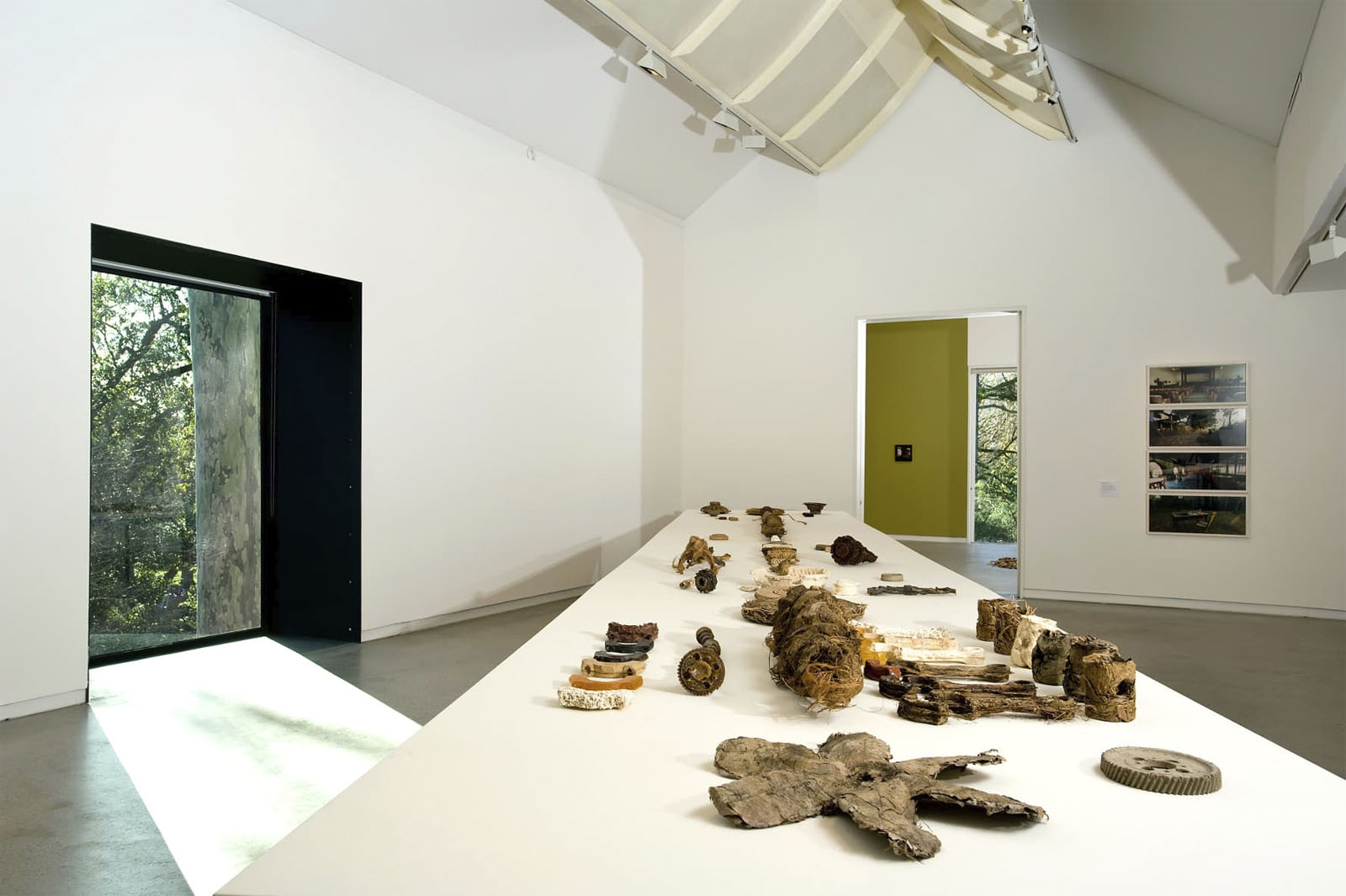
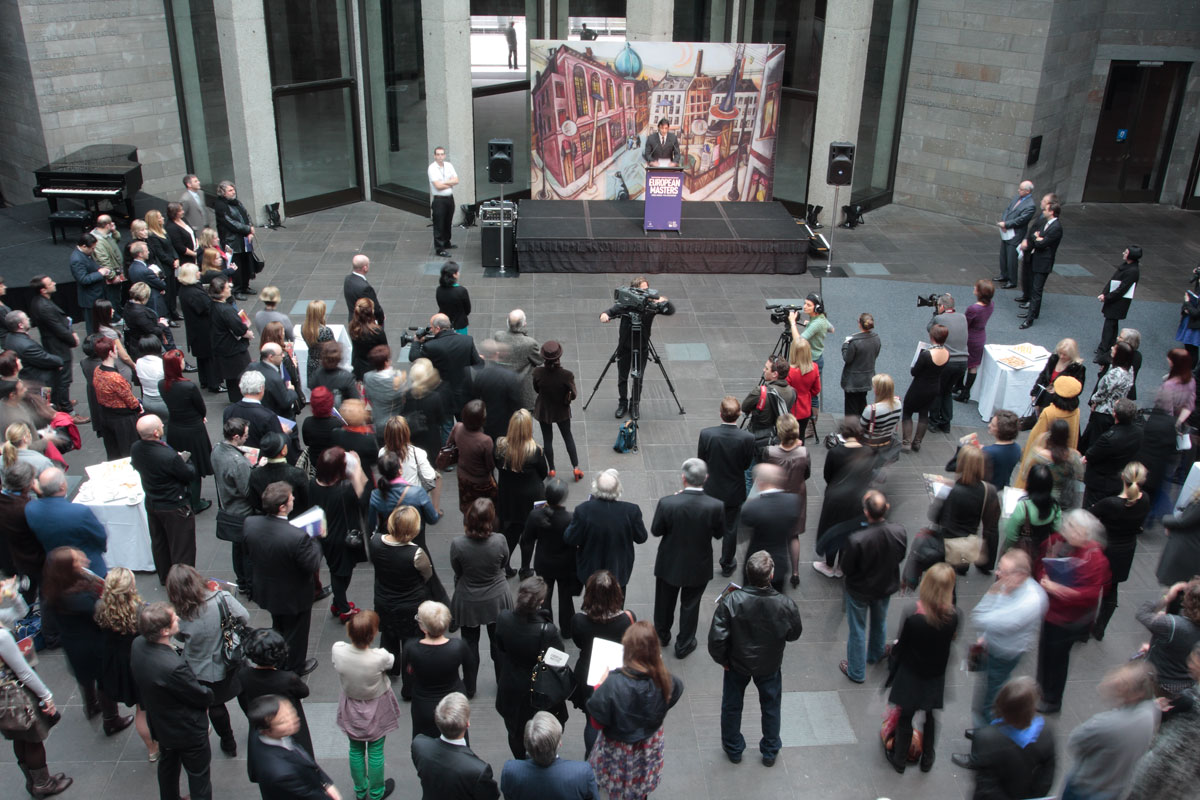
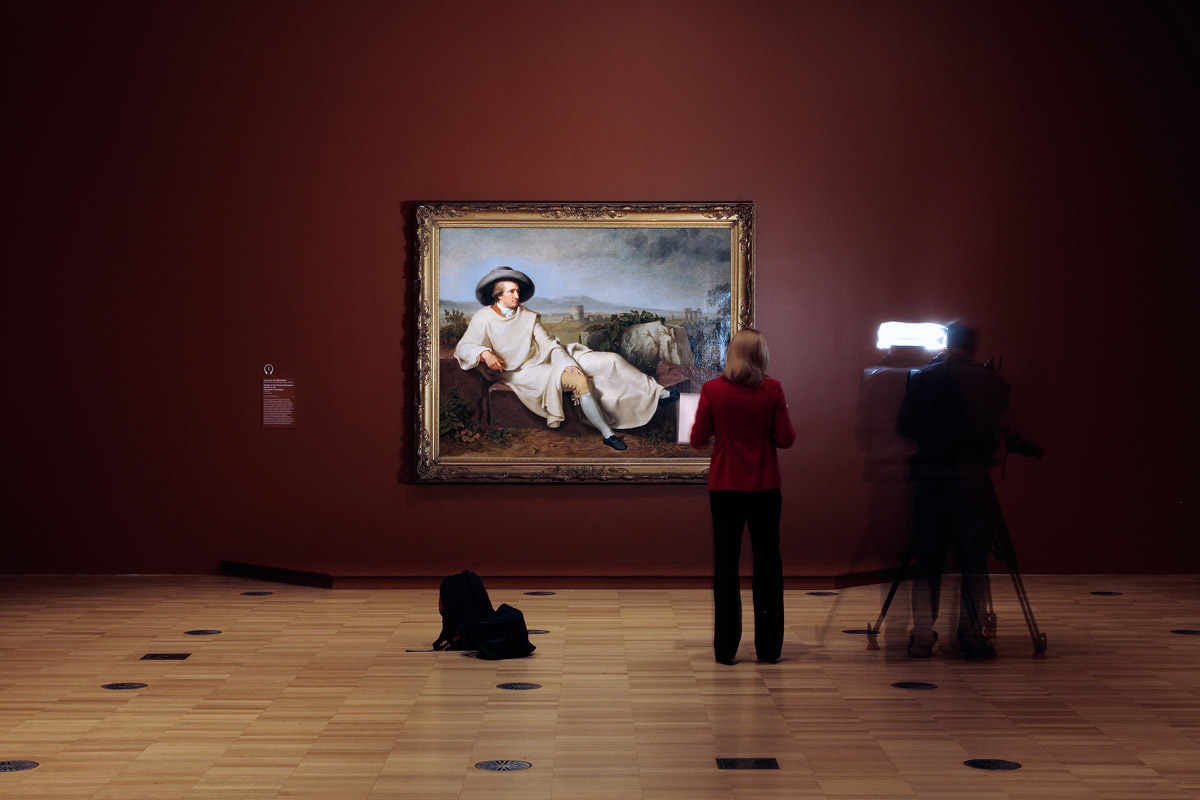
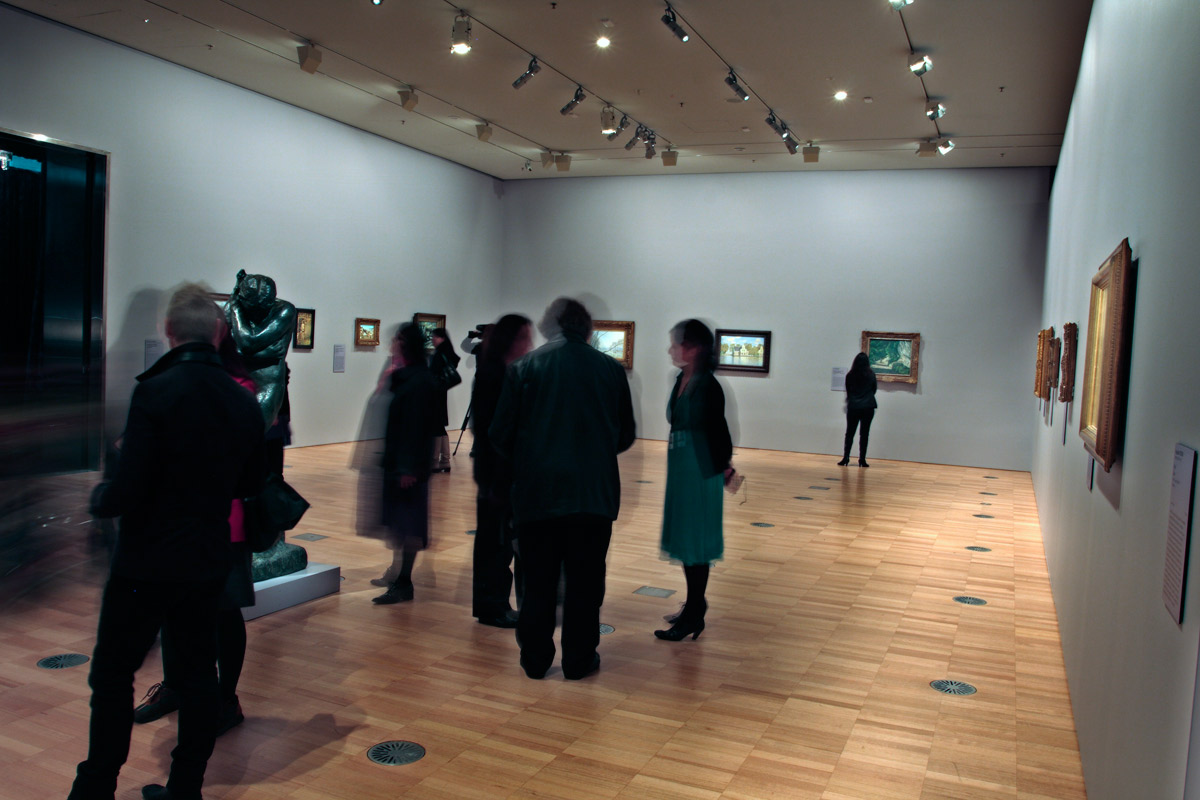
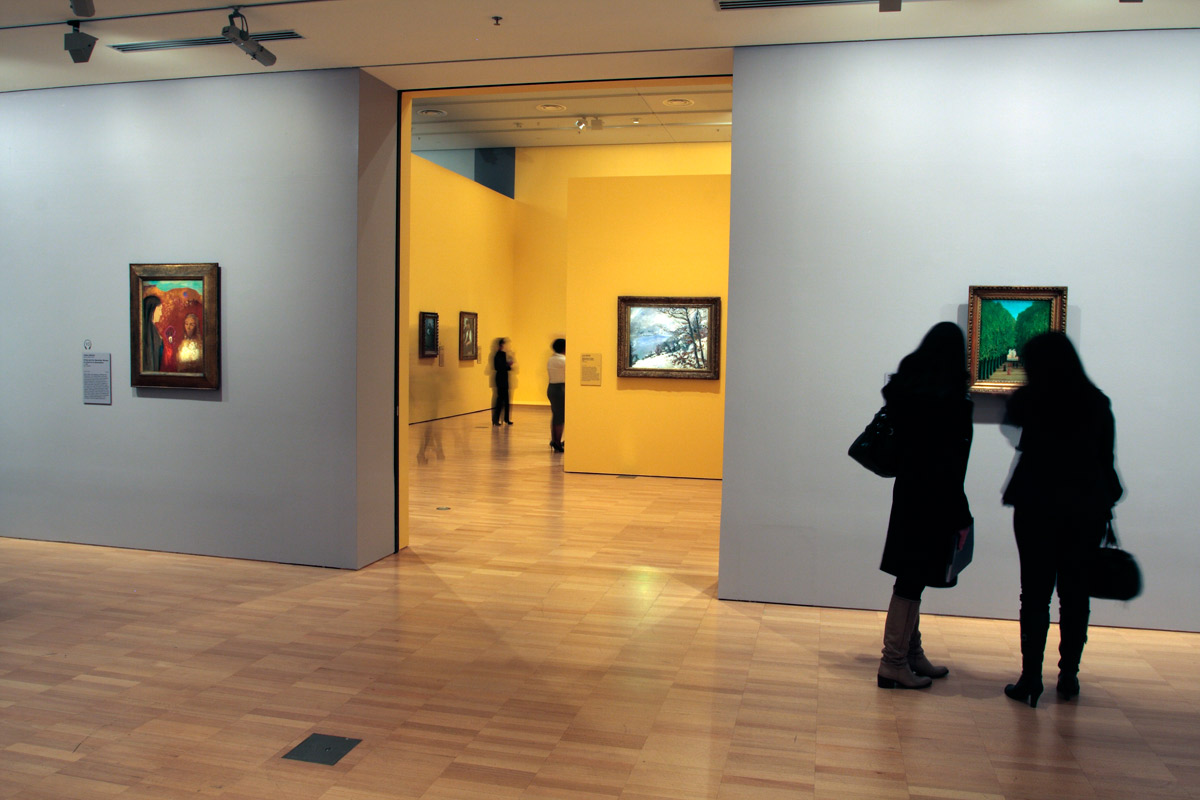
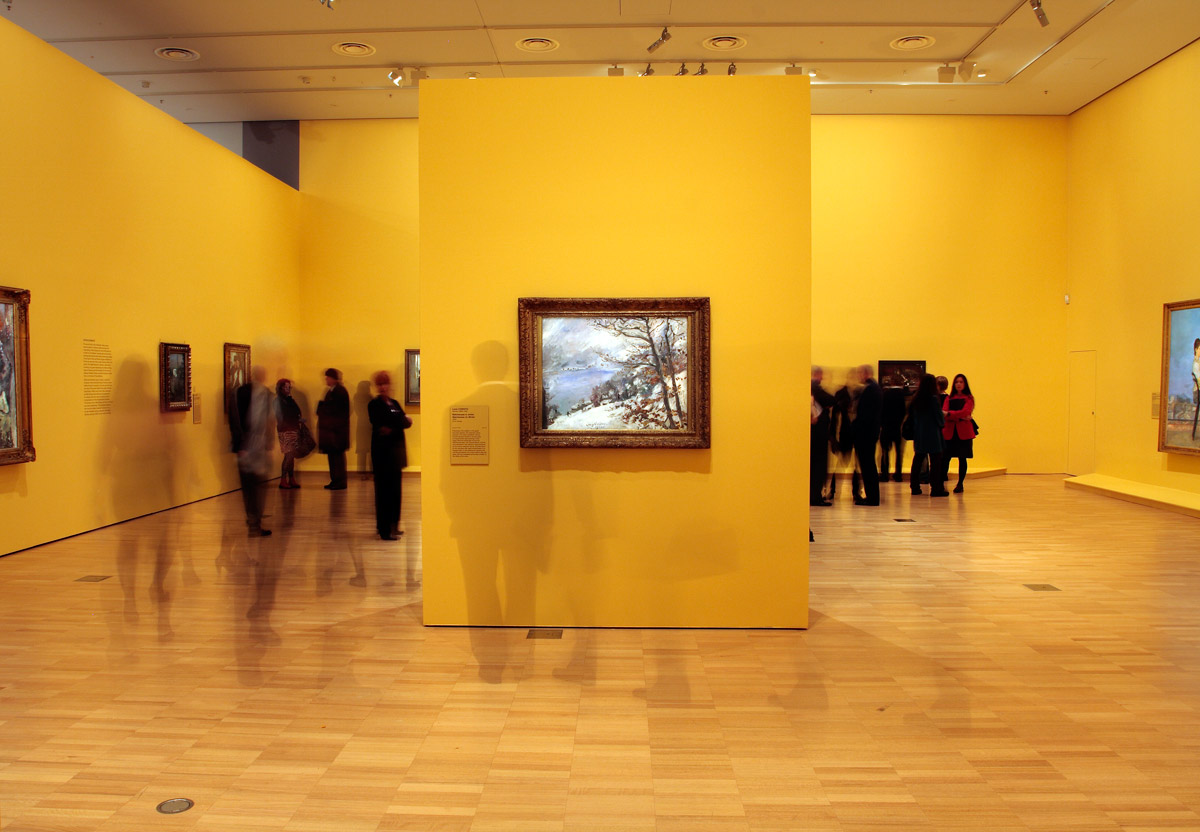
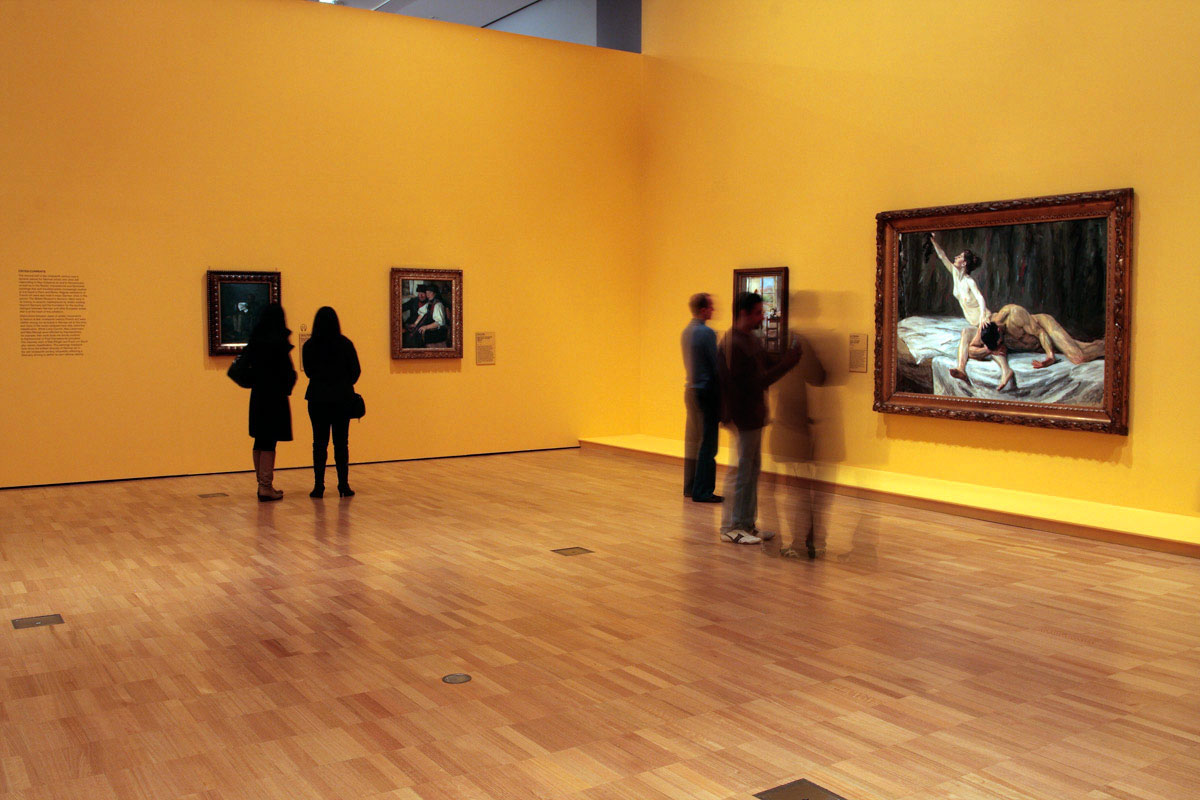
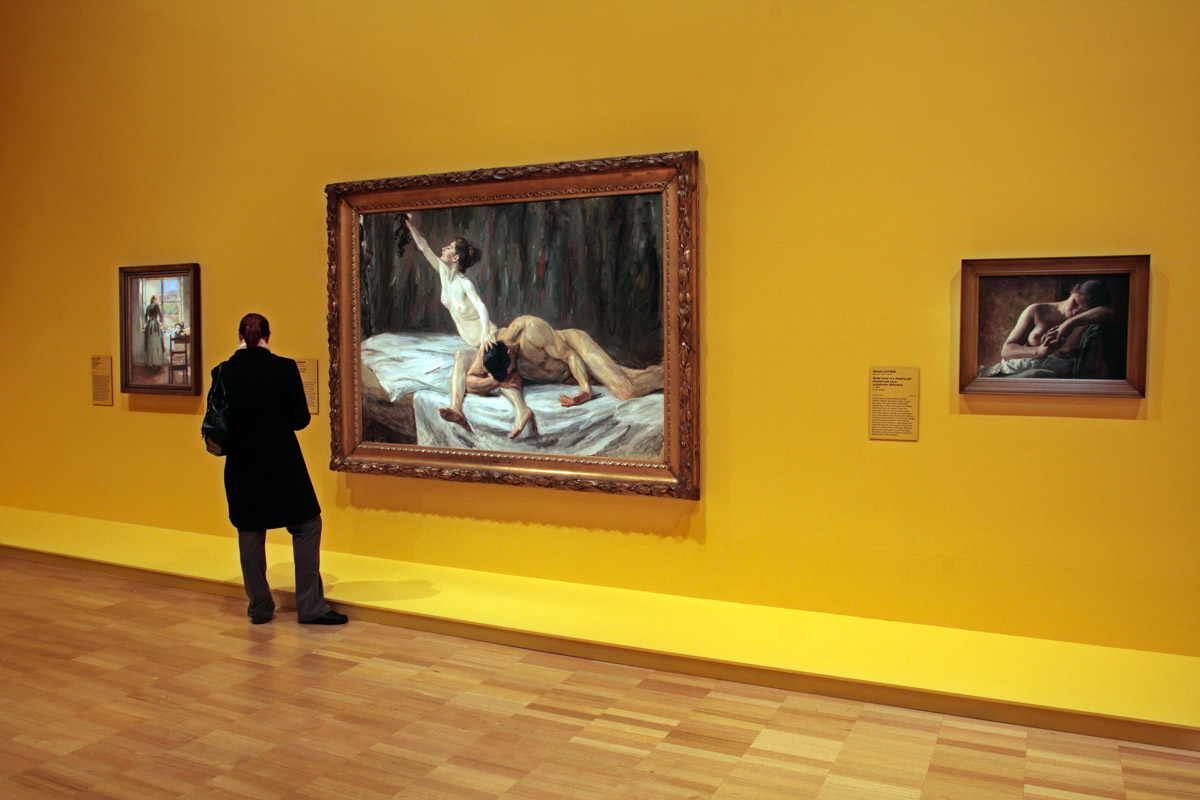
Review: ‘Mortality’ at the Australian Centre for Contemporary Art, Melbourne

Exhibition dates: 8th October – 28th November 2010

Exhibiting artists: Charles Anderson, George Armfield, Melanie Boreham, Bureau of Inverse Technology, Aleks Danko, Tacita Dean, Sue Ford, Garry Hill, Larry Jenkins, Peter Kennedy, Anastasia Klose, Arthur Lindsay, Dora Meeson, Anna Molska, TV Moore, Tony Oursler, Neil Pardington, Giulio Paolini, Mark Richards, David Rosetzky, Anri Sala, James Shaw, Louise Short, William Strutt, Darren Sylvester, Fiona Tan, Bill Viola, Annika von Hausswolff, Mark Wallinger, Lynette Wallworth, Gillian Wearing.


Fiona Tan (Indonesia, b. 1966) 'Tilt' 2002 from the exhibition 'Mortality' at the Australian Centre for Contemporary Art, Melbourne


Fiona Tan (Indonesia, b. 1966)
Tilt
2002
DVD
Courtesy of the artist, Frith Street Gallery London


“… this immersive exhibition swallows us into a kind of spiritual and philosophical lifecycle. As we weave our way through a maze-like series of darkened rooms, we encounter life’s early years, a youth filled with mischief, wonderment, possibilities and choices, and a more reflective experience of mid and later life, preceding the eventual end.”


Dan Rule in The Age


I never usually review group exhibitions but this is an exception to the rule. I have seen this exhibition three times and every time it has grown on me, every time I have found new things to explore, to contemplate, to enjoy. It is a fabulous exhibition, sometimes uplifting, sometimes deeply moving but never less than engaging – challenging our perception of life. The exhibition proceeds chronologically from birth to death. I comment on a few of my favourite works below but the whole is really the sum of the parts: go, see and take your time to inhale these works – the effort is well rewarded. The space becomes like a dark, fetishistic sauna with it’s nooks and crannies of videos and artwork. Make sure you investigate them all!

There is only one photograph by Gillian Wearing from her Album series of self portraits, Self Portrait at Three Years Old (2004, see photograph below) but what a knockout it is. An oval photograph in a bright yellow frame the photograph looks like a perfectly normal studio photograph of a toddler until you examine the eyes: wearing silicon prosthetics, Wearing confronts “the viewer with her adult gaze through the eyeholes of the toddler’s mask, Wearing plays on the rift between interior and exterior and raises a multitude of provocative questions about identity, memory, and the veracity of the photographic medium.”1

Tilt (2002, see photograph above) is a mesmeric video by Fiona Tan of a toddler strapped into a harness suspended from a cluster of white helium-filled balloons in a room with wooden floorboards. The gurgling toddler floats gently into the air before descending to the ground, the little feet scrabbling for traction before gently ascending again –  the whole process is wonderful, the instance of the feet touching the ground magical, the delight of the toddler at the whole process palpable. Dan Rule sees the video as “enlivening and troubling, joyous and worrisome” and he is correct in this observation, in so far as it is the viewer that worries about what is happening to the baby, not, seemingly, the baby itself. It is our anxiety on the toddlers behalf, trying to imagine being that baby floating up into the air looking down at the floor, the imagined alienness of that experience for a baby, that drives our fear; but we need not worry for babies are held above the heads of fathers and mothers every day of the year. Fear is the adult response to the joy of innocence.

There are several photographs by Melbourne photographer Darren Sylvester in the exhibition and they are delightful in their wry take on adolescent life, girls eating KFC (If All We Have Is Each Other, Thats Ok), or pondering the loss of a first love – the pathos of a young man sitting in a traditionally furnished suburban house, reading a letter (in which presumably his first girlfriend has dumped him), surrounded by the detritus of an unfinished Subway meal (see photograph below).

An interesting work by Sue and Ben Ford, Faces (1976-1996, see photograph below) is a video that shows closely cropped faces and the differences in facial features twenty years later. The self consciousness of people when put in front of a camera is most notable, their uncomfortable looks as the camera examines them, surveys them in minute detail. The embarrassed smile, the uncertainty. It is fascinating to see the changes after twenty years.

A wonderful series 70s coloured photographs of “Sharps” by Larry Jenkins that shine a spotlight on this little recognised Melbourne youth sub-culture. These are gritty, funny, in your face photographs of young men bonding together in a tribal group wearing their tight t-shirts, ‘Conte’ stripped wool jumpers (I have a red and black one in my collection) and rat tail hair:

“Larry was the leader of the notorious street gang the “BLACKBURN SOUTH SHARPS” from 1972-1977 when the Sharpie sub-culture was at its peak and the working class suburbs of Melbourne were a tough and violent place to grow up. These photographs represent a period from 1975-1976 in Australian sub-cultural history and are one of the few photographic records of that time. Larry began taking photos at the age of 16 using a pocket camera, when he started working as an apprentice motor mechanic and spent his weekly wage developing his shots… He captured fleeting moments, candid shots and directed his teenage mates through elaborate poses set against the immediate Australian suburban backdrops.”2

Immediate and raw these photographs have an intense power for the viewer.

A personal favourite of the exhibition is Alex Danko’s installation Day In, Day Out (1991, see photograph below). Such as simple idea but so effective: a group of identical silver houses sits on the floor of the gallery and through a rotating wheel placed in front of a light on a stand, the sun rises and sets over and over again. The identical nature of the houses reminds us that we all go through the same process in life: we get up, we work (or not), we go to bed. The sun rises, the sun sets, everyday, on life. Simple, beautiful, eloquent.

Another favourite is Louise Short’s series of found colour slides of family members displayed on one of those old Kodak carrousel slide projectors. This is a mesmeric, nostalgic display of the everyday lives of family caught on film. I just couldn’t stop watching, waiting for the next slide to see what image it brought (the sound of the changing slides!), studying every nuance of environment and people, colour and space: recognition of my childhood, growing up with just such images.

Anri Sala’s video Time After Time (2003, see photograph below) is one of the most poignant works in the exhibition, almost heartbreaking to watch. A horse stands on the edge of a motorway in the near darkness, raising one of it’s feet. It is only when the lights of a passing car illuminate the animal that the viewer sees the protruding rib cage and you suddenly realise how sick the horse must be, how near death.

The film Presentation Sisters (2005, see photographs below) by English artist Tacita Dean, “shows the daily routines and rituals of the last remaining members of a small ecclesiastical community as they contemplate their journey in the spiritual after-life.” Great cinematography, lush film colours, use of shadow and space – but it is the everyday duties of the sisters, a small order of nuns in Cork, Ireland that gets you in. It is the mundanity of washing, ironing, folding, cooking and the procedures of human beings, their duties if you like – to self and each other – that become valuable. Almost like a religious ritual these acts are recognised by Dean as unique and far from the everyday. We are blessed in this life that we live.

Finally two works by Bill Viola: Unspoken (Silver & Gold) 2001 and The Passing (1991, see photographs below). Both are incredibly moving works about the angst of life, the passage of time, of death and rebirth. For me the picture of Viola’s elderly mother in a hospital bed, the sound of her rasping, laboured breath, the use of water in unexpected ways and the beauty of cars travelling at night across a road on a desert plain, their headlights in the distance seeming like atomic fireflies, energised spirits of life force, was utterly beguiling and moving. What sadness with joy in life to see these two works.

Dr Marcus Bunyan


1/ Mann, Ted. “Self-Portrait at Three Years Old,” on the Guggenheim Collection website [Online] Cited 12/11/2010 no longer available online

2/ Anon. “History,” on the Blackburn South Sharps website [Online] Cited 12/11/2010 no longer available online


Many thankx to the Melbourne International Arts Festival and the Australian Centre for Contemporary Art for allowing me to publish the photographs in the posting. Please click on the photographs for a larger version of some of the images.


Gillian Wearing (English, b. 1963) 'Self-Portrait at Three Years Old' 2004 from the exhibition 'Mortality' at the Australian Centre for Contemporary Art, Melbourne


Gillian Wearing (English, b. 1963)
Self-Portrait at Three Years Old
2004
Digital C-type print
© Gillian Wearing


“To take a photograph is to participate in another person’s mortality, vulnerability, mutability. Precisely by slicing out this moment and freezing it, all photographs testify to time’s relentless melt” Susan Sontag wrote. Gillian Wearing registers this, and revisits herself at the age of 3 through the uncanny process of entering her own body. This performance of self, created by the artist putting on a full body prosthetic mask of herself as she was professionally photographed as a child, and peering out at the viewer with her 40-something eyes is a weird sarcophagi of identity. Is Gillian still 3? Is the adult inside the one she has become, or the one who was always there? Is identity pre-determined? Perhaps she would prefer to go back there, and yet this portrait is tinged with a kind of sadness. The eyes betray too much that has passed in the adult life, not yet known by the small child.

Extract from Juliana Engberg About Mortality catalogue


Darren Sylvester (Australian, b. 1974) 'Your First Love Is Your Last Love' 2005 from the exhibition 'Mortality' at the Australian Centre for Contemporary Art, Melbourne


Darren Sylvester (Australian, b. 1974)
Your First Love Is Your Last Love
2005
© Darren Sylvester


Sue Ford (Australian, 1943-2009) and Ben Ford 'Faces' 1976-1996 (still) from the exhibition 'Mortality' at the Australian Centre for Contemporary Art, Melbourne


Sue Ford (Australian, 1943-2009) and Ben Ford
Faces (still)
1976-1996
Detail 
of 15 min b/w 
reversal silent film
16mm, shot on b/w 
reversal film


Photographer, Sue Ford, in her iconic work Faces uses the camera as a kind of mirror to register the changes that occur as we grow older. Without the sometimes pompous commentary of the filmic anthropological voice-over which narrates an imposed, meta-story, Ford allowed her straightforward, black and white, close-up images to suggest the accumulation of experience and the evolution of identity silently. In this version of the work, a video projection which brings old and newer faces together in a rolling sequence, we are able to register the passage of time in a number of ways. The face becomes a terrain of time travelled.

Extract from Juliana Engberg About Mortality catalogue


Faces

Sue Ford’s experimental film “Faces” consists of portraits of the artist and her friends and acquaintances. Ford filmed each subject for roughly 25 seconds, using a wind-up Bolex camera that frames their faces in close-up. Variously self-conscious, serious, amused and distracted, the camera captures every small gesture, expression and flicker of emotion on the person’s face. The result is an examination of portraiture and the performance of identity, demonstrating the artist’s interest in using the camera to capture reality, time and change.

Text from the Youtube website
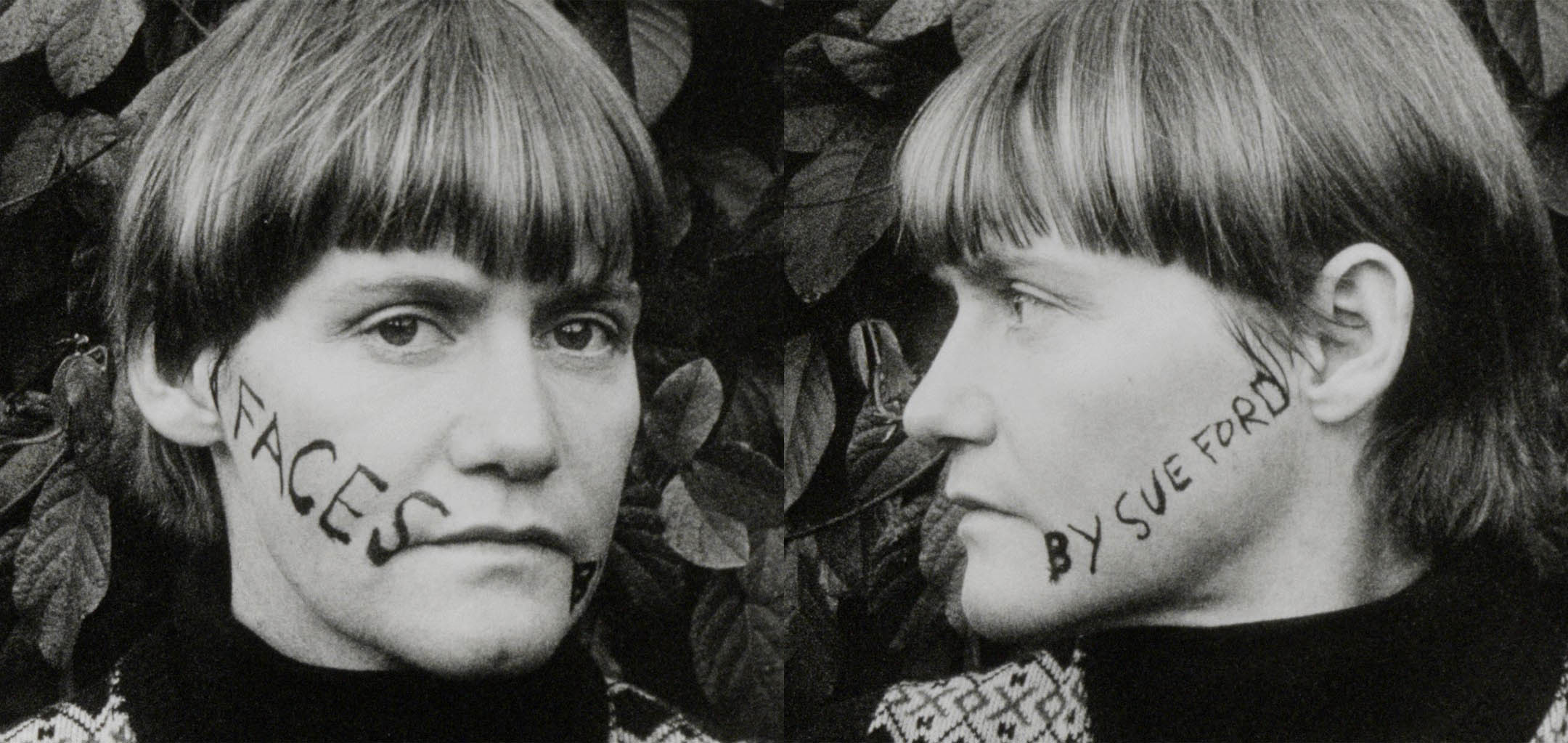
 

Sue Ford (Australian, 1943-2009) and Ben Ford 'Faces' (still) 1976-1996


Sue Ford (Australian, 1943-2009) and Ben Ford
Faces (still)
1976-1996
Detail 
of 15 min b/w 
reversal silent film
16mm, shot on b/w 
reversal film


Continuing on from the Time series, in 1976 Ford created the experimental film Faces, in which she filmed portraits of herself, friends and acquaintances. Using a Bolex spring-wound clockwork camera where the film ran through the camera for approximately 25 seconds, Ford directed her subjects to behave as they liked for the duration of the portrait. The camera frames the subject’s face in close-up, steadfastly focusing on them; Memory Holloway described of the work, “While there is no acting, character is revealed by the comfort or uneasiness of the subject. Some laugh, others look romantically pensive, others blow clouds of smoke at the lens as a cover-up”[6]. By bringing an element of time into the creation of a portrait, the film both reveals a moment in that person’s subjective experience and experiments with the plasticity of time, extending and concentrating the 25-second span into a focused moment.

Julia Murphy. “The films of Sue Ford – now part of the ACMI Collection,” on the ACMI website Nd [ONline] Cited 11/03/2025

6/ Memory Holloway, ‘Reel Women: Narrative as a Feminist Alternative’, Art and Text, 1981


Larry Jenkins (Australian) 'Chad, Jono and Mig, Twig, Beatie and Whitey walking down the street at Blackburn South shops' 1975 from the exhibition 'Mortality' at the Australian Centre for Contemporary Art, Melbourne


Larry Jenkins (Australian)
Chad, Jono and Mig, Twig, Beatie and Whitey walking down the street at Blackburn South shops
1975
© Larry Jenkins


The photographs of Larry Jenkins deliver an authentic tribalism. Taken with his instamatic camera, the photos of his sharpie friends, hanging out, posing, wrestling and testing out their manhood, are genuine documents of their time. Belonging to this group is an important and almost primate activity. Surviving the suburbs in the 70s was an ‘us and them’ kind of universe. These were the kinds of boys you crossed the street to avoid. Their collective power, while internally tumultuous as they each try to discover their own identities, nevertheless conveys externally a tight ball of testosterone. They are one, and if you are not them, you are nothing.

Extract from Juliana Engberg About Mortality catalogue
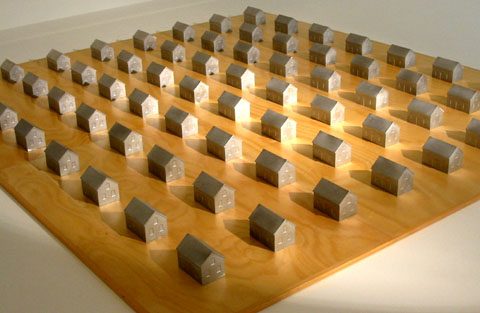
 

Alex Danko (Australian, b. 1950) 'Day In, Day Out' 1991 from the exhibition 'Mortality' at the Australian Centre for Contemporary Art, Melbourne


Alex Danko (Australian, b. 1950)
Day In, Day Out
1991


From the cradle to the grave… ACCA’s major exhibition Mortality takes us on life’s journey from the moment of lift off to the final send off, and all the bits in between. Curated by Juliana Engberg to reflect the Festival’s visual arts themes of spirituality, death and the afterlife, this transhistorical event includes metaphoric pictures and works by some of the world’s leading artists.

Exhibiting artists include:

Tacita Dean, an acclaimed British artist who works in film and drawing and has shown at Milan’s Fondazione Trussardi and at DIA Beacon, New York.

Anastasia Klose, one of Australia’s most exciting young video artists whose works also include performance and installation.

TV Moore, an Australian artist who completed his studies in Finland and the United States and who has shown extensively in Sydney, Melbourne and overseas.

Tony Oursler, a New York-based artist who works in a range of media and who has exhibited in the major institutions of New York, Paris, Cologne and Britain.

Giulio Paolini, an Italian born artist who has been a representative at both Documenta and the Venice Biennale.

David Rosetzky, a Melbourne-born artist who works predominantly in video and photographic formats and whose work has featured in numerous Australian exhibitions as well as New York, Milan and New Zealand galleries.

Louise Short, an emerging British artist who works predominately with found photographs and slides. Anri Sala, an Albanian-born artist who lives and works in Berlin. He has shown in the Berlin Biennale and the Hayward, London.

Fiona Tan, an Indonesian-born artist, who lives and works in Amsterdam. Tan works with photography and film and has shown in a number of major solo and group exhibitions, including representing the Netherlands at the 2009 Venice Biennale.

Bill Viola, one of the leaders in video and new media art who has shown widely internationally and in Australia.

Gillian Wearing, one of Britain’s most important contemporary artists and a Turner Prize winner who has exhibited extensively internationally.

Highlights of the exhibition include:

Albanian born artist Anri Sala’s acclaimed video work Time After Time, featuring a horse trapped on a Tirana motorway, repeatedly, heartbreakingly raising its hind-leg (see photograph below). Anri first came to acclaim in 1999 for his work in After the Wall, the Stockholm Modern Museum’s exhibition of art from post-communist Europe, and his work is characterised by an interest in seemingly unimportant details and slowness. Scenes are almost frozen into paintings.

Peter Kennedy’s Seven people who died the day I was born – April 18 1945, 1997-98 – a work from a series begun by the artist following the death of his father which connects individual lives with political and historical events. Kennedy’s birth in the last year of World War II and the seven people memorialised imply the multitude of others that died during this catastrophic event as well as the perpetual cycle of life.

A series of slides collected by British artist Louise Short, offering a beguiling insight into the everyday lives of everyday people accumulated as a life narrative.

Acclaimed British artist Tacita Dean’s Presentation Sisters, which shows the daily routines and rituals of the last remaining members of a small ecclesiastical community as they contemplate their journey in the spiritual after-life.

Three works from the Time series by influential Australian photographer Sue Ford, who passed away last year, will also be shown. The photographs capture the artist in various stages of her life.

Text from the ACCA website


Annika von Hausswolff (Swedish, b. 1967) 'Hey Buster! What Do You Know About Desire?' 1995 from the exhibition 'Mortality' at the Australian Centre for Contemporary Art, Melbourne


Annika von Hausswolff (Swedish, b. 1967)
Hey Buster! What Do You Know About Desire?
1995
Colour photograph
Courtesy of the artist and Moderna Museet
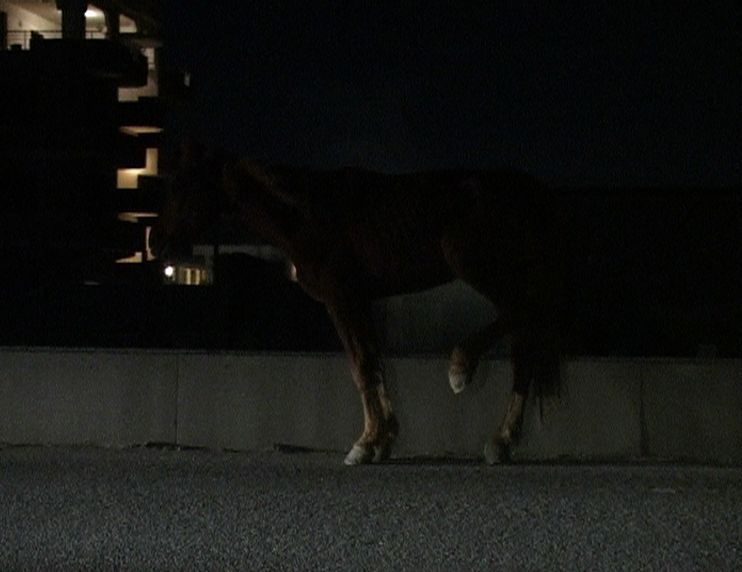
 

Anri Sala (Albanian, b. 1974) 'Time After Time' 2003 (still) from the exhibition 'Mortality' at the Australian Centre for Contemporary Art, Melbourne


Anri Sala (Albanian, b. 1974)
Time After Time (still)
2003
Video, 5 minutes 22 seconds


Sometimes we stagger into dangerous territory. In life, some of us find ourselves on the wrong side of the track. Anri Sala’s Time After Time provides a metaphor for the unfortunate ones who have lost their way or who are marginalised or discarded. A horse has manoeuvred itself, or worse, been abandoned on the wrong side of the highway divider and is now trapped in an endless and shuddering encounter with heavy traffic. The horse visibly flinches and as viewers we are helpless to do anything to assist. It is past its prime and appears malnourished, injured and unwanted. Sala’s horse is symbolic of the scapegoat… the one sent away, or outcast in order for social cohesion to seem reinforced by its exclusion.

Extract from Juliana Engberg About Mortality catalogue


David Rosetzky (Australian, b. 1970) 'Nothing like this' DVD, 2007 (still) from the exhibition 'Mortality' at the Australian Centre for Contemporary Art, Melbourne


David Rosetzky (Australian, b. 1970)
Nothing like this (still)
DVD
2007
Courtesy of the artist and Sutton Gallery, Melbourne


David Rosetzky’s two videos Weekender and Nothing Like This, hyper-construct the languor of these rites of passage for introspective types. One video uses the faded colours of the 1970s Levi’s, Lee’s and Wrangler’s where-do-you-go-to-my-lovely era, through a smudgy David Hamilton Bilitis-like lens. In the other, with a postmodern crispness, Rosetzky establishes scenarios of inner intensity in which the participants narrate their disaffections and doubts. As compared to Ford’s messy, shabby and experimental aesthetic, everything in Rosetzky’s plot is sanitary. This is the synthetic age.

Rosetzky’s videos reference films like The Big Chill which pushes a group together to explore identity. In the instance of Rosetzky’s works however, action is limited and the conventional narrative eliminated in order to zero in on the heightened meditations. Devices such as mirrors refer to a kind of twenty-something narcissism; the beach is presented as a dynamic character of identity flux; time is compressed and delivered in mediated bites.

Things happen on beaches. In Australian culture, as elsewhere they are places of fun, but also menace. When I was a child, the news of the disappearance of children and adults at beaches inflicted a fear into the cultural psyche; children’s freedom was forever altered after the Beaumont Children case.

Extract from Juliana Engberg About Mortality catalogue


David Rosetzky (Australian, b. 1970) 'Nothing like this' DVD 2007 (still) from the exhibition 'Mortality' at the Australian Centre for Contemporary Art, Melbourne


David Rosetzky (Australian, b. 1970)
Nothing like this (still)
DVD
2007
Courtesy of the artist and Sutton Gallery, Melbourne


Tacita Dean (British, b. 1965) 'Presentation Sisters' 2005 (still) from the exhibition 'Mortality' at the Australian Centre for Contemporary Art, Melbourne


Tacita Dean (British, b. 1965)
Presentation Sisters (still)
2005
16 mm film
courtesy of the artist, Frith Street Gallery London


 Some people find solace in religion. And in this exhibition Tacita Dean’s superb film The Presentation Sisters offers a quiet reflection space. Dean emphasises the aspects of quiet devotion, internal contemplation and external dedication that define the Sisters’ spiritual and earthly existence.

In the same way Vermeer suggested spiritualism through domesticity and by using the uplift of light through windows, Dean enlists the ethereal light that travels through the lives and rooms of this small order of nuns who go about their routines and mundane tasks. Dean’s film studies light as a part of metaphysical and theological transformation. However, Dean’s film is also about a kind of Newtonian light: scientific and alchemical.

Her interest in the transformations that occur when light passes through celluloid, and when light passes through glass is a study of the beautiful refractions discovered by scientific observation and written into philosophical enquiries by writers such as Goethe and Burke. As always with Dean’s work, there are layers of encounter in the seemingly simple.

Extract from Juliana Engberg About Mortality catalogue


Tacita Dean (British, b. 1965) 'Presentation Sisters' 2005 (still) from the exhibition 'Mortality' at the Australian Centre for Contemporary Art, Melbourne


Tacita Dean (British, b. 1965)
Presentation Sisters (still)
2005
16 mm film
Courtesy of the artist, Frith Street Gallery London


Bill Viola (American, 1951-2024) 'The Passing' 1991 (still)


Bill Viola (American, 1951-2024)
The Passing (still)
1991
In memory of Wynne Lee Viola
Videotape, black-and-white, mono sound
54 minutes
© Bill Viola


Bill Viola (American, 1951-2024) 'The Passing' 1991 (still)


Bill Viola (American, 1951-2024)
The Passing (still)
1991
In memory of Wynne Lee Viola
Videotape, black-and-white, mono sound
54 minutes
© Bill Viola


Australian Centre for Contemporary Art (ACCA)
111 Sturt Street
Southbank, Victoria 3006
Australia

Opening hours:
Tue – Fri 10am – 5pm
Sat – Sun 11am – 5pm
Mon Closed
Open all public holidays except Christmas Day and Good Friday
Australian Centre for Contemporary Art website

LIKE ART BLART ON FACEBOOK

Back to top

Exhibition: ‘Timelines: Photography and Time’ at the National Gallery of Victoria, Melbourne

Exhibition dates: 7th May – 3rd October 2010


Many thankx to Alison Murray and the National Gallery of Victoria for allowing me to publish the photographs in the posting. Please click on the photographs for a larger version of the image.


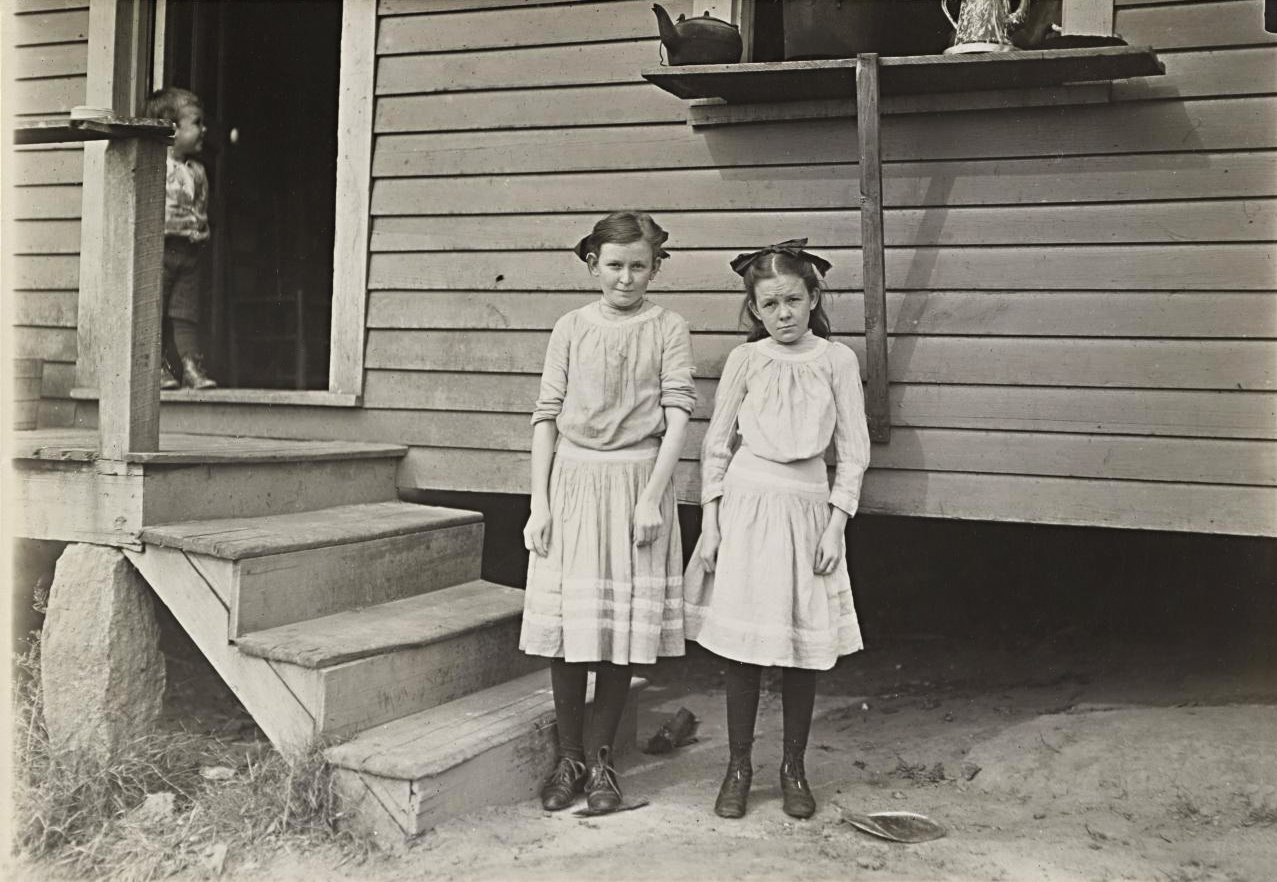
Lewis Hine (American, 1874-1940) 'Lacy, twelve years old and Savannah, eleven years old' 1908 from the exhibition 'Timelines: Photography and Time' at the National Gallery of Victoria, Melbourne, May - Oct 2010


Lewis Hine (American, 1874-1940)
Lacy, twelve years old and Savannah, eleven years old
1908
Gelatin silver print
Image and sheet: 11.9 × 17.1cm
National Gallery of Victoria, Melbourne
Purchased, 1980


‘Perhaps you are weary of child labour pictures. Well, so are the rest of us, but we propose to make you and the whole country so sick and tired of the whole business that when the time for action comes, child labour pictures will be records of the past.’

Lewis Hine, 1909


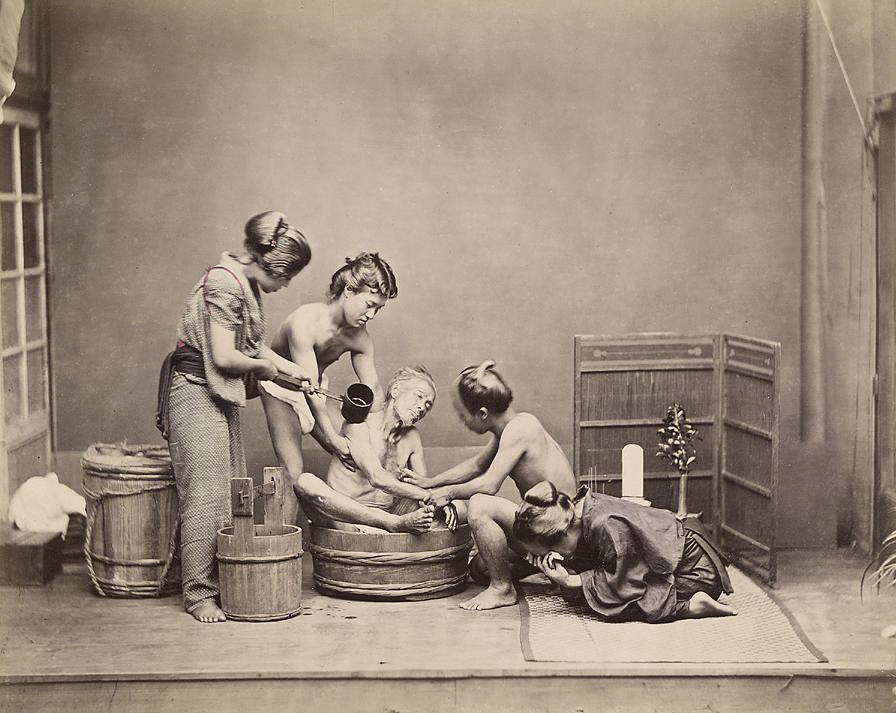
Unknown photographer, 'No title (Ritual washing for funeral)' c. 1880 from the exhibition 'Timelines: Photography and Time' at the National Gallery of Victoria, Melbourne, May - Oct 2010


Unknown photographer
No title (Ritual washing for funeral)
c. 1880
Albumen silver photograph, colour dyes
Image and sheet: 21.2 × 26.5cm
National Gallery of Victoria, Melbourne
Purchased, 2001


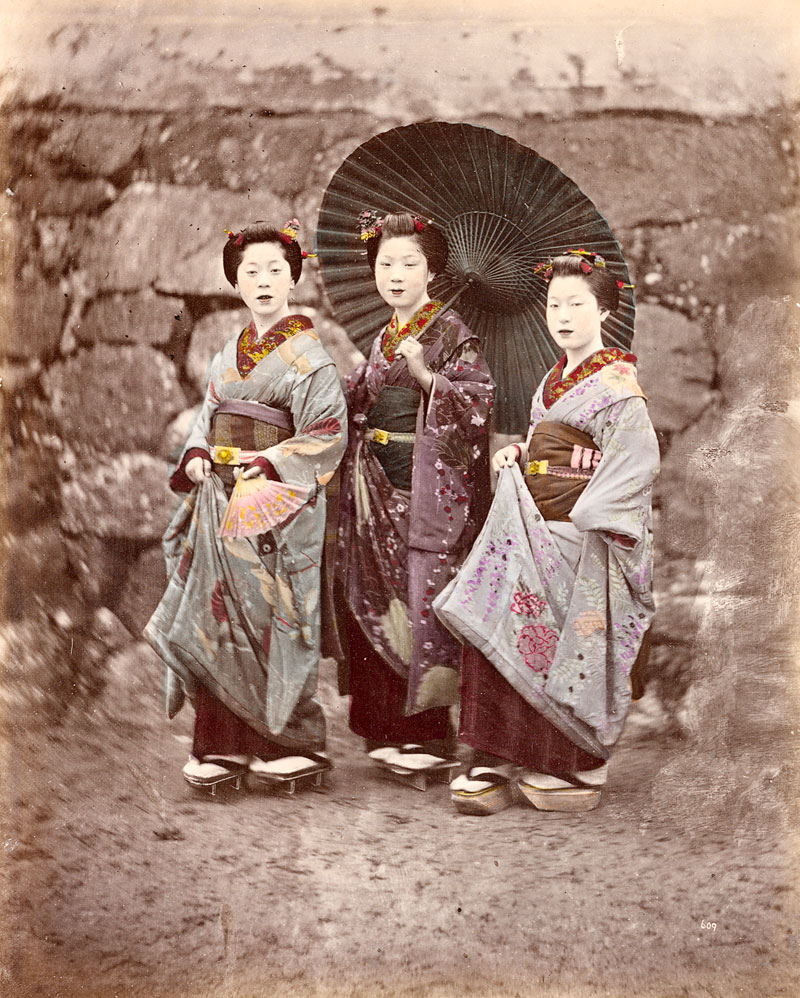
Felice Beato (Italian/English, 1832-1909, worked throughout Europe and Asia, 1853-1890) 'No title (Maiko)' (1866-1868, printed 1877-1985)


Felice Beato (Italian/English, 1832-1909, worked throughout Europe and Asia, 1853-1890)
Stillfried and Anderson and the Japan Photographic Association (studio) (Japanese, 1877-1885)
No title (Maiko)
1866-1868, printed 1877-1885
albumen silver photograph, coloured dyes
24.4 x 19.6cm
National Gallery of Victoria, Melbourne
Purchased through the NGV Foundation with the assistance of The Herald & Weekly Times Limited, Fellow, 2001


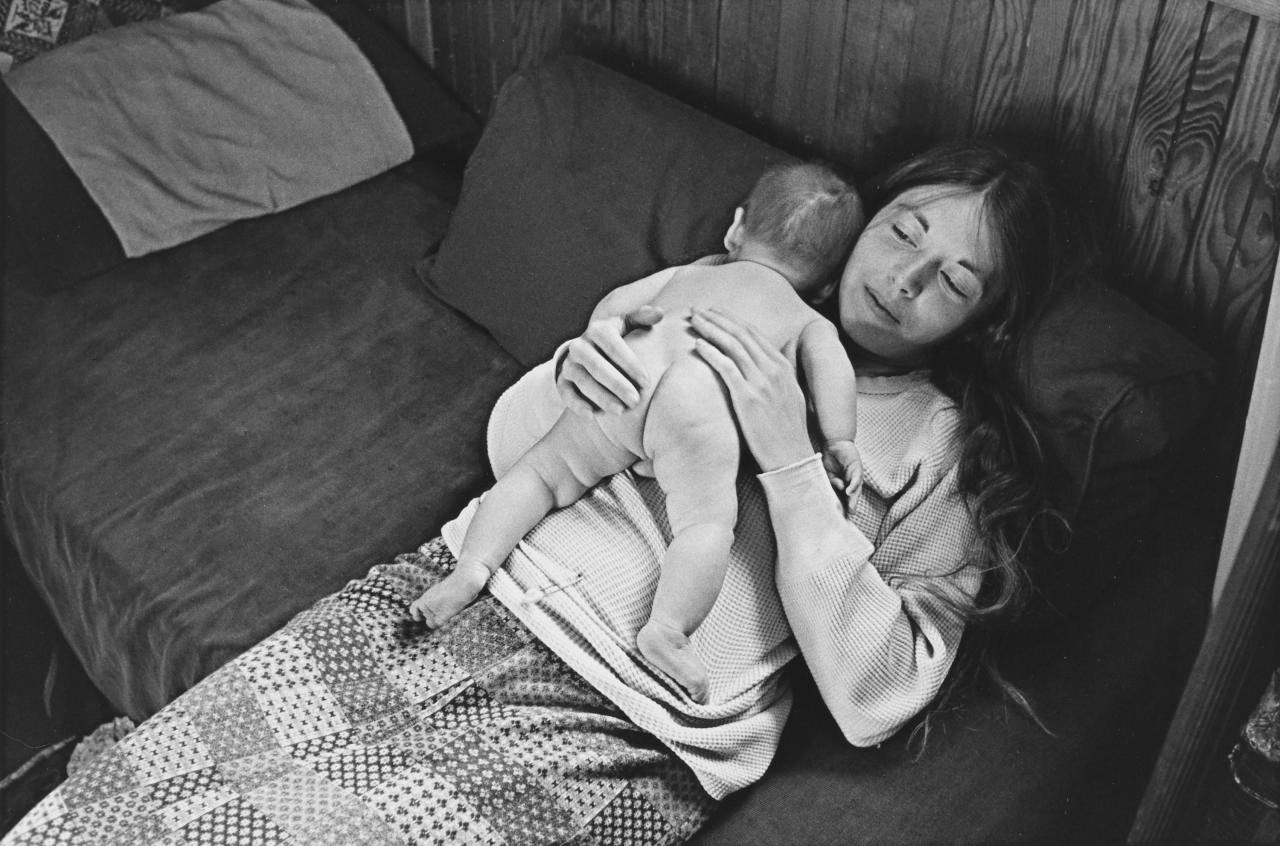
Christine Godden (Australian, b. 1947) 'Joanie with Jade' 1973; printed 1986 from the exhibition 'Timelines: Photography and Time' at the National Gallery of Victoria, Melbourne, May - Oct 2010


Christine Godden (Australian, b. 1947)
Joanie with Jade
1973; printed 1986
Gelatin silver photograph
20.3 × 30.6cm
National Gallery of Victoria, Melbourne
Purchased from Admission Funds, 1991
© Christine Godden


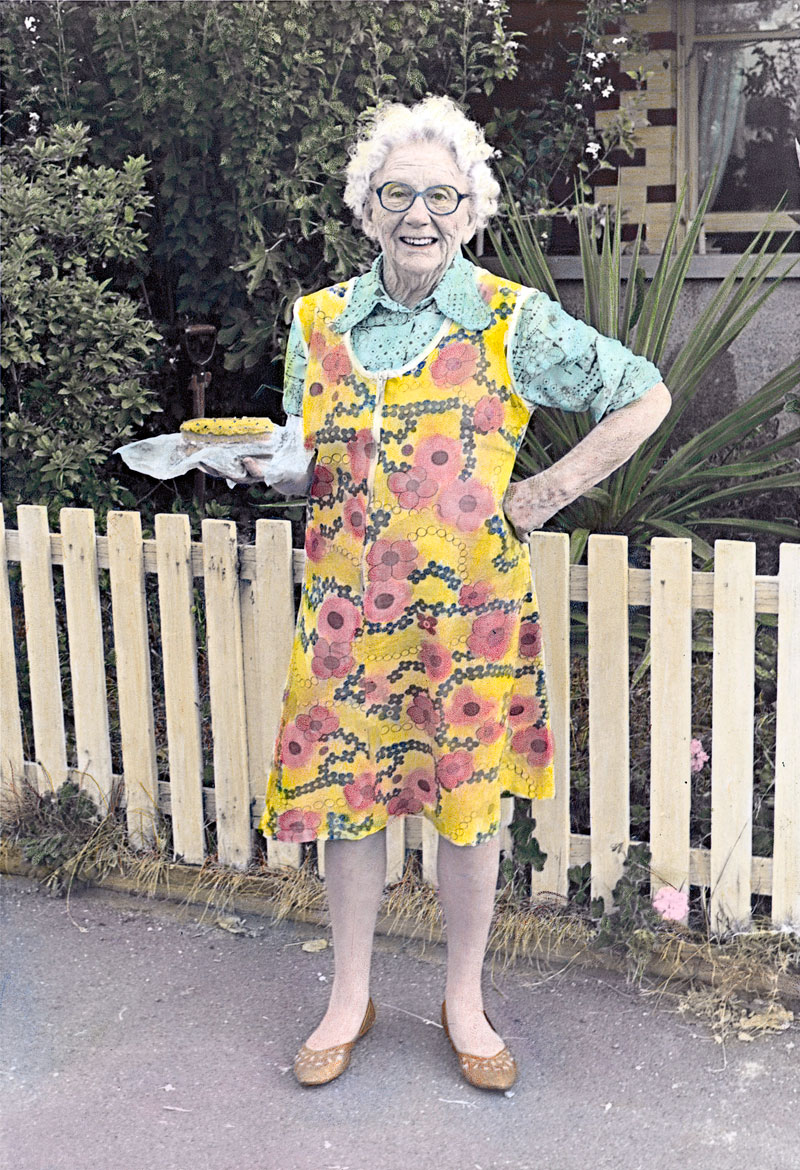
Ruth Maddison (Australian, b. 1945) 'Molly O'Sullivan, 82' 1990


Ruth Maddison (Australian, b. 1945)
Molly O’Sullivan, 82
1990
From the After work series 1990
Gelatin silver photograph, oil paint, fibre-tipped pen
24.8 x 20.6cm
National Gallery of Victoria, Melbourne
Purchased through The Art Foundation of Victoria with the assistance of the Hugh Williamson Foundation, Founder Benefactor, 1990
© Ruth Maddison


Opening 7 May, the National Gallery of Victoria will present Timelines: Photography and Time, a captivating exhibition exploring the notion of time in photographs.

Time is a slippery notion. It is everywhere and always moving but this powerful regulating force cannot be seen. It is only apparent in context: in the changing seasons, in another wrinkle on our faces, in the growth of children. Photography has a unique role to play in our sometimes poignant sense of time passing. The camera’s ability to depict ‘a moment in time’ – to stop the clock for a brief moment – gives photographs a unique capacity to direct our consideration towards the mechanics and poetics of this pervasive and mysterious cosmic force.

In this exhibition one aspect of time is considered from a photographic perspective: namely, human life. Works have been selected from the permanent collection both by International and Australian photographers that show an interest in some aspect of lifecycles. Arranged, in part, in a ‘timeline’, these works provoke our understanding of the mediums capacity to suggest the concept of time in ways that may be surprising, moving or even confronting. The exhibition also looks at how photographers have extended a sense of time and duration through images that work in series

Timelines will feature almost forty photographs from the NGV Collection by both Australian and international photographers including work by Diane Arbus, Micky Allan and Bill Brandt.

Isobel Crombie, Senior Curator of Photography, NGV said photography has a unique role to play in capturing the way that time passes.

“The camera’s ability to ‘stop the clock’ enables the medium to direct our consideration towards the mechanics and poetics of this pervasive and mysterious cosmic force.

“The instant that the photograph captures can be a potent reminder to seize the day rather than dreaming about the past or worrying about the future,” said Dr Crombie.
The exhibition also looks at how photographers have extended a sense of time and duration through images that work in series. From the 1960s onwards, photographers began experimenting with stretching time by creating a series or sequence of photographs.

This is seen in Rod McNicol’s powerful series titled A portrait revisited (1986-2006), (pictured Jack, below). Purchased by the NGV in 2009, the series features portraits of men and women; each posed directly facing the camera against a plain backdrop. There are two portraits of each subject photographed twenty years apart, inviting the viewer to compare the portraits to see how time has changed them. The sense of time passing is highlighted with the portrait of Peter, who is photographed only once. The blank image next to him is a reminder that he died before the second portrait was made.

Each phase of human existence has characteristic traits and features, and photographers have worked with these qualities in ways that evoke the passing of time and our place in this cycle. Arranged in part in a human timeline, the exhibition begins with the start of a new life as depicted in Christine Godden’s Joanie pregnant (1972) and Joanie with Jade (1973) and concludes with Kusakabe Kimbei’s Ritual washing for a funeral (c. 1880, see above – now labelled as ‘Unknown’ on the NGV website in 2019), an image of a deceased man being prepared in the traditional Japanese way for burial. This final scene captures the grief of the moment when a lifetime ends.
Frances Lindsay, Deputy Director, NGV said: “The works in the exhibition show how artists have explored the concept of time in ways that may surprise, move or even confront viewers. This exhibition provides visitors with a special opportunity to view this remarkable collection of photographs from the NGV Collection, many of which are on display for the first time.”
Timelines will include photographs by Micky Allan, Diane Arbus, Felice Beato, Bill Brandt, Brassaï, Harry Callahan, Imogen Cunningham, Walker Evans, Christine Godden, Ponch Hawkes, Petrina Hicks, Lewis Hine, Kusakabe Kimbei, Rosemary Laing, J.H. Lartigue, Ruth Maddison, Rod McNicol, David Moore, Jan Saudek, John Thompson, Roman Vishniac, and Edward Weston.

Text from the National Gallery of Victoria International website [Online] Cited 17/09/2010 no longer available online


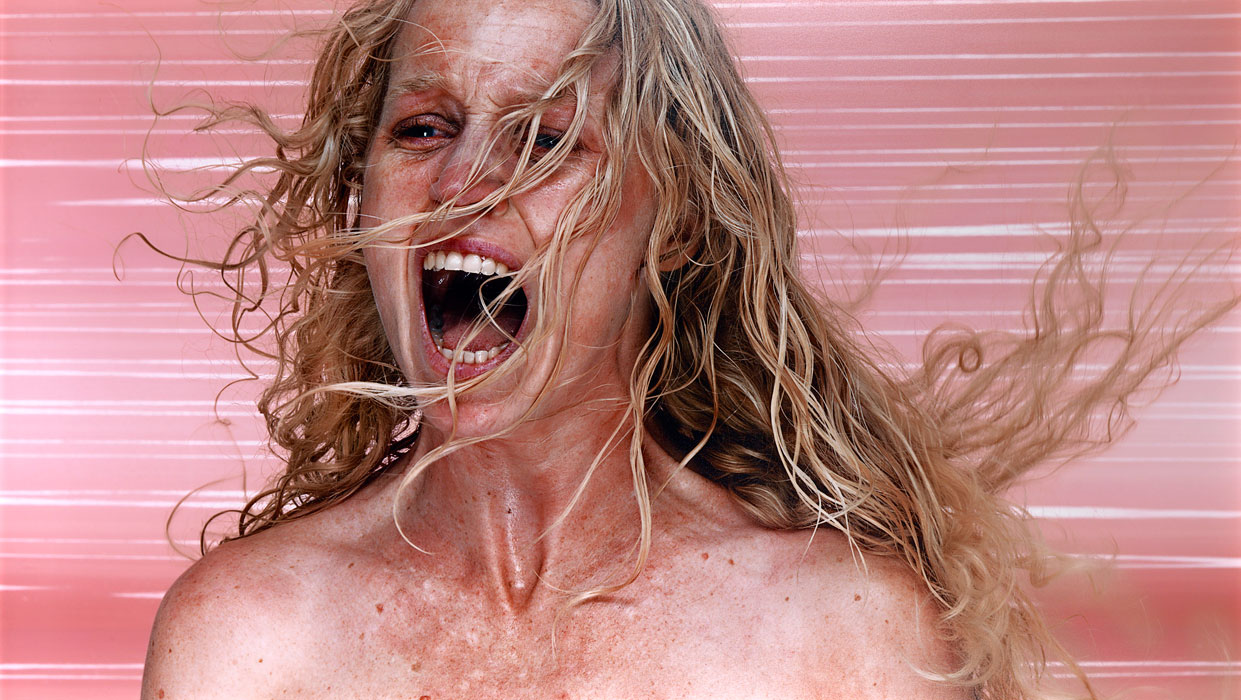
Rosemary Laing (Australian, 1959-2024) 'a dozen useless actions for grieving blondes #10' 2009


Rosemary Laing (Australian, 1959-2024)
a dozen useless actions for grieving blondes #10
2009
Type C photograph
76.3 x 132.1cm
National Gallery of Victoria, Melbourne
Purchased, Victorian Foundation for Living Australian Artists, 2010
© Rosemary Laing and Tolarno Galleries, Melbourne


Rod McNicol (Australian, b. 1946) 'Jack' 2006


Rod McNicol (Australian, b. 1946)
Jack
2006
From the A portrait revisited series 1986-2006
Digital type C print
48.0 x 67.1cm
National Gallery of Victoria, Melbourne
Purchased, Victorian Foundation for Living Australian Artists, 2009
© Rod McNicol


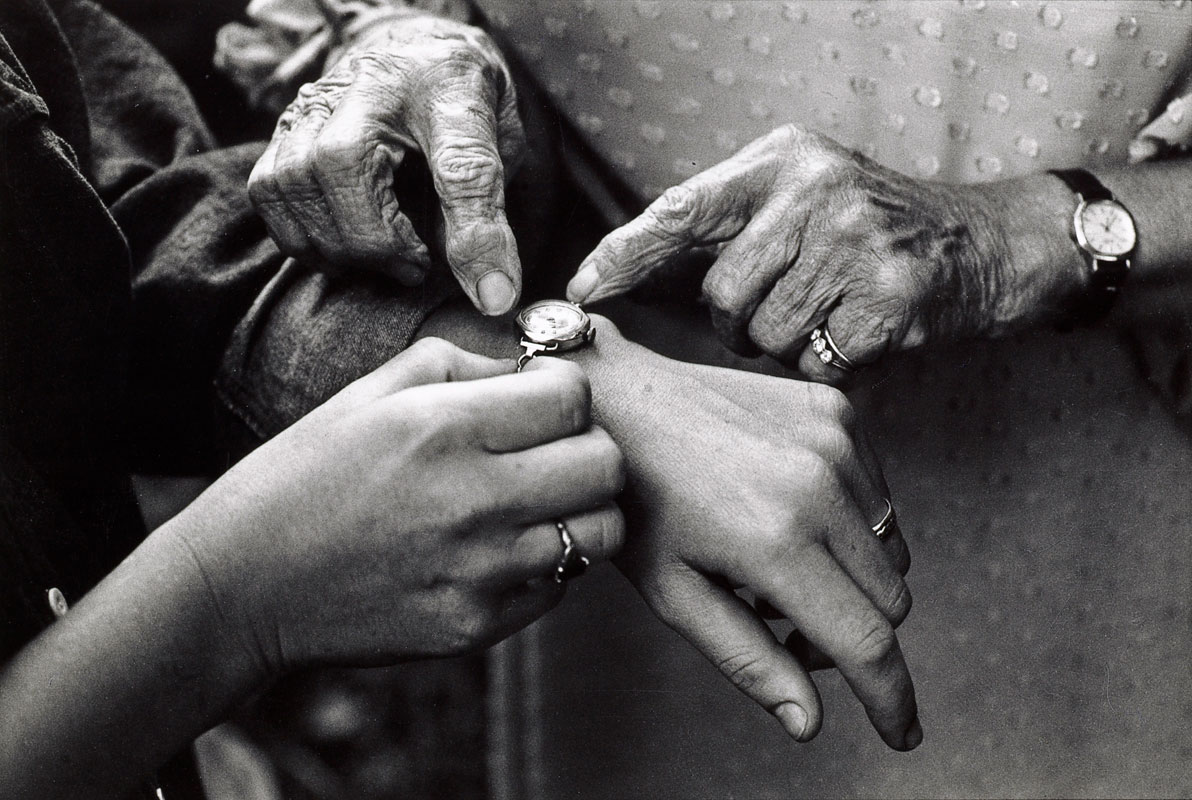
Ponch Hawkes (Australian, b. 1946) 'The watch that Lucy gave to Beci' (1987, printed 1989) from the exhibition 'Timelines: Photography and Time' at the National Gallery of Victoria, Melbourne, May - Oct 2010


Ponch Hawkes (Australian, b. 1946)
The watch that Lucy gave to Beci
1987, printed 1989
Gelatin silver photograph
23.8 x 35.1cm
National Gallery of Victoria, Melbourne
Purchased with funds donated by Hallmark Cards Australia Pty Ltd, 1989
© Ponch Hawkes


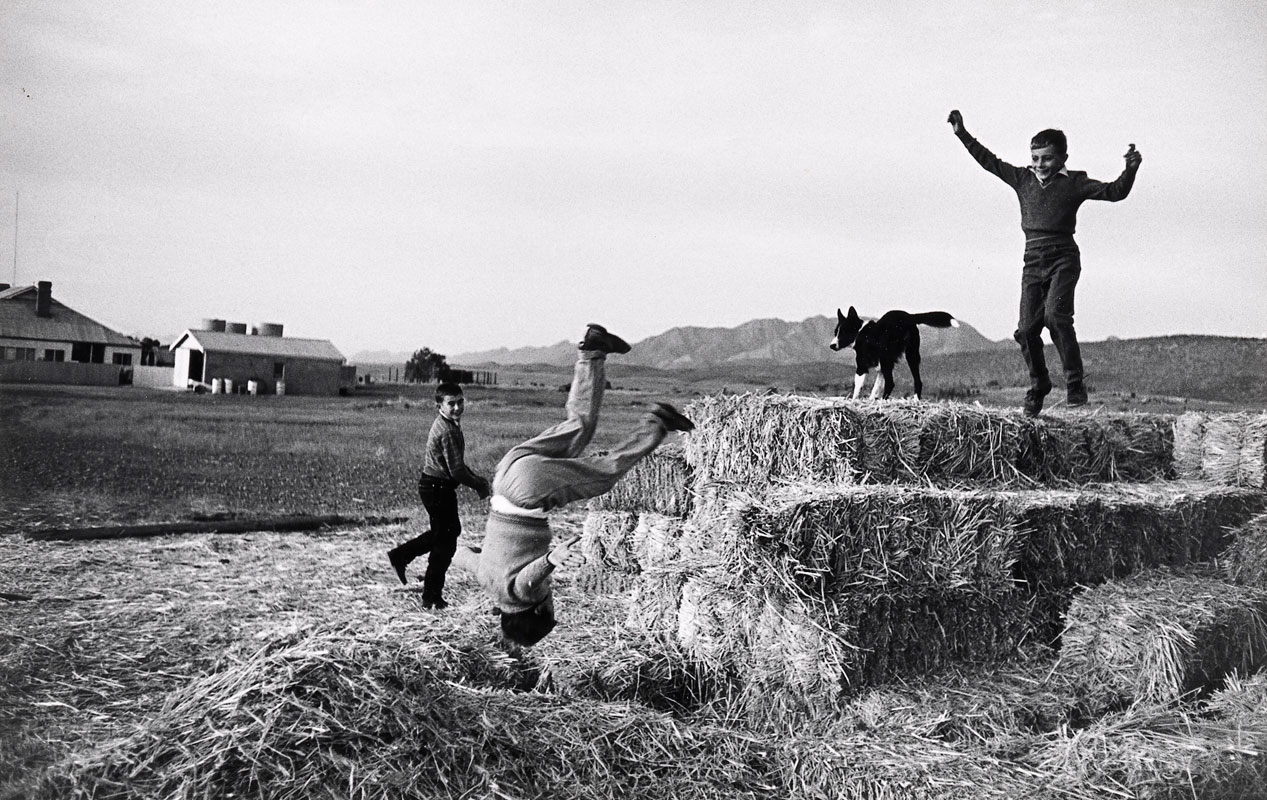
David Moore (Australian, 1927-2003) 'Outback children, South Australia' 1963


David Moore (Australian, 1927-2003)
Outback children, South Australia
1963
Gelatin silver photograph
36.8 x 57.6cm
National Gallery of Victoria, Melbourne
Purchased through the KODAK (Australasia) Pty Ltd Fund, 1969
© David Moore Estate


NGV International
180 St Kilda Road

Opening hours
Daily 10am – 5pm

National Gallery of Victoria website

LIKE ART BLART ON FACEBOOK

Back to top

Exhibition: ‘Yves Klein: With the Void, Full Powers’ at Hirshhorn Museum and Sculpture Garden, Washington, D.C.

Exhibition dates: 20th May – 12th September 2010


Yves Klein (French, 1928-1962) 'Hiroshima' c. 1961 from the exhibition 'Yves Klein: With the Void, Full Powers' at Hirshhorn Museum and Sculpture Garden, Washington, D.C., May-  Sept, 2010


Yves Klein (French, 1928-1962)
Hiroshima
c. 1961
Dry pigment and synthetic resin on paper mounted on canvas
© The Estate of Yves Klein c/o ADAGP, Paris


Space [    ] the final frontier … where silence is golden !


Many thankx to the Hirshhorn Museum and Sculpture Garden for allowing me to publish the photographs in the posting. Please click on the photographs for a larger version of the image. See all the Hirshhorn Flicker photosets of Yves Klein.


“I am the painter of space. I am not an abstract painter but, on the contrary, a figurative artist, and a realist. Let us be honest, to paint space, I must be in position. I must be in space.”


Yves Klein


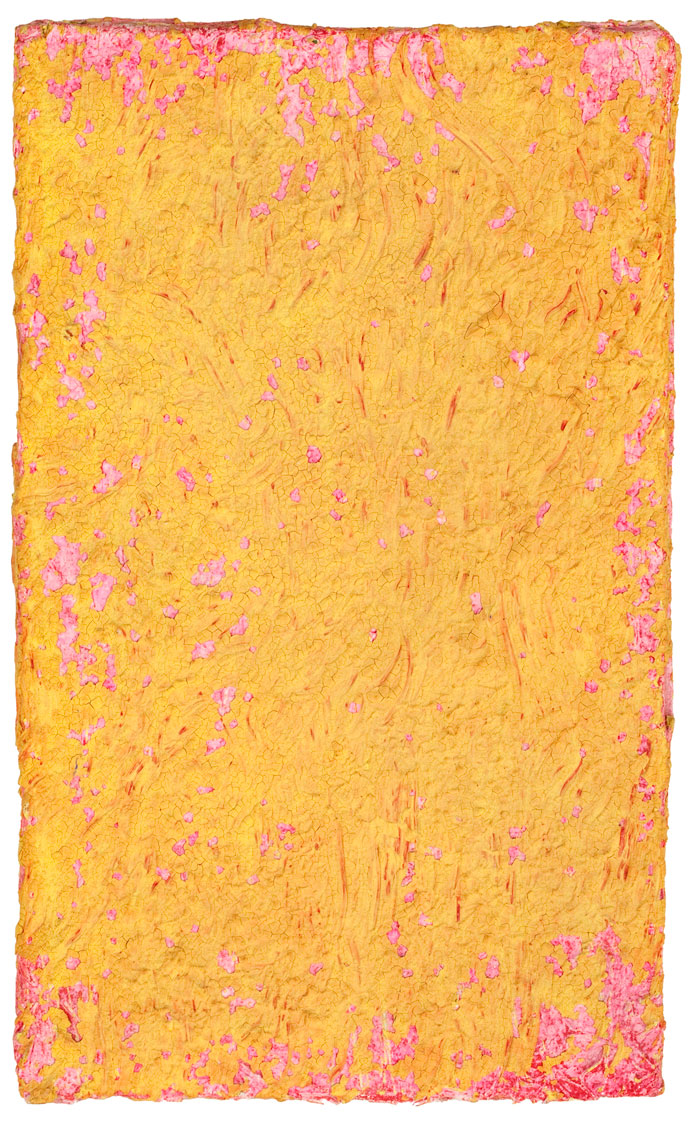
Yves Klein (French, 1928-1962) 'Untitled Yellow and Pink Monochrome' 1955 from the exhibition 'Yves Klein: With the Void, Full Powers' at Hirshhorn Museum and Sculpture Garden, Washington, D.C., May-  Sept, 2010


Yves Klein (French, 1928-1962)
Untitled Yellow and Pink Monochrome
1955
Dry pigment and binder on canvas
22 x 13 1/2 inch
© The Estate of Yves Klein c/o ADAGP, Paris


Yves Klein (French, 1928-1962) 'La Vent du voyage' (The Wind of the Journey) c. 1961 from the exhibition 'Yves Klein: With the Void, Full Powers' at Hirshhorn Museum and Sculpture Garden, Washington, D.C., May-  Sept, 2010


Yves Klein (French, 1928-1962)
La Vent du voyage (The Wind of the Journey)
c. 1961
Dry pigment and synthetic resin on canvas
37 x 29 1/2 inch
© The Estate of Yves Klein c/o ADAGP, Paris


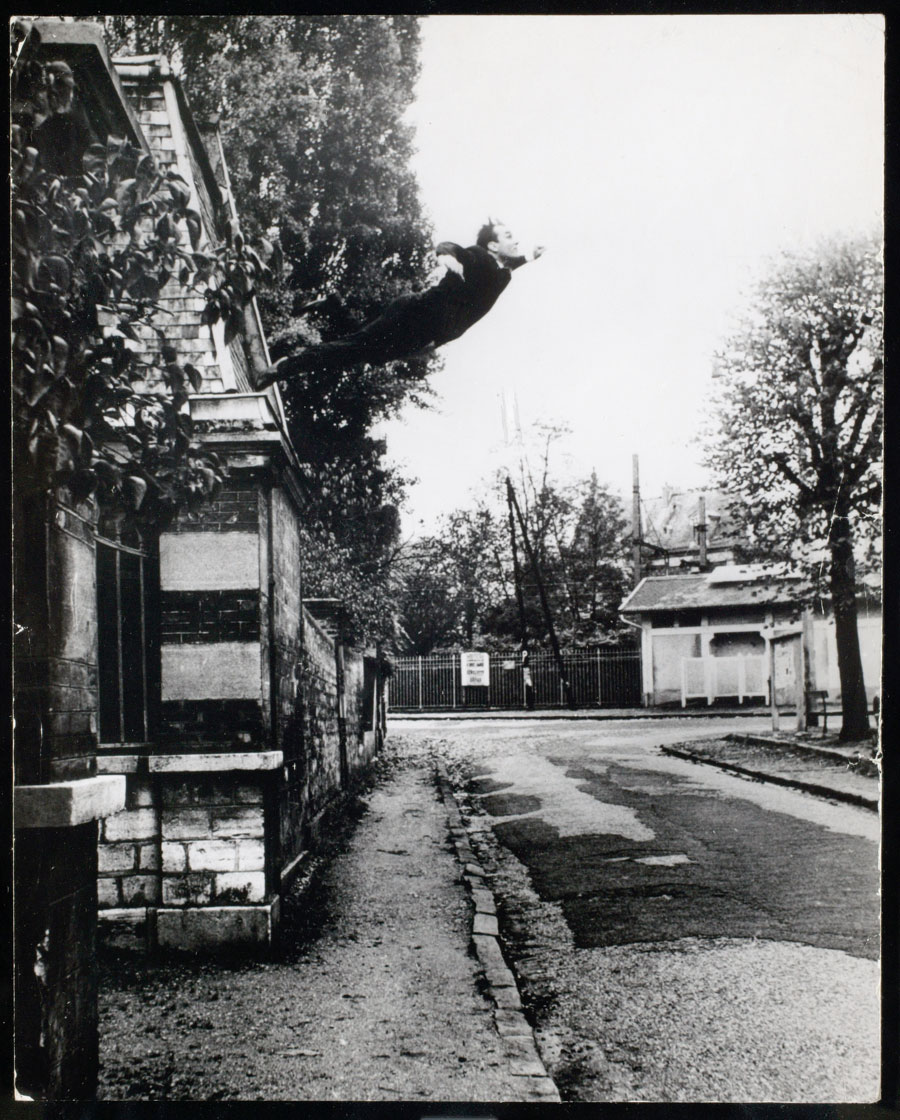
Yves Klein (French, 1928-1962) 'Le Saut dans le Vide' (Leap into the Void) 1960


Yves Klein (French, 1928-1962)
Le Saut dans le Vide (Leap into the Void)
1960
Gelatin silver print


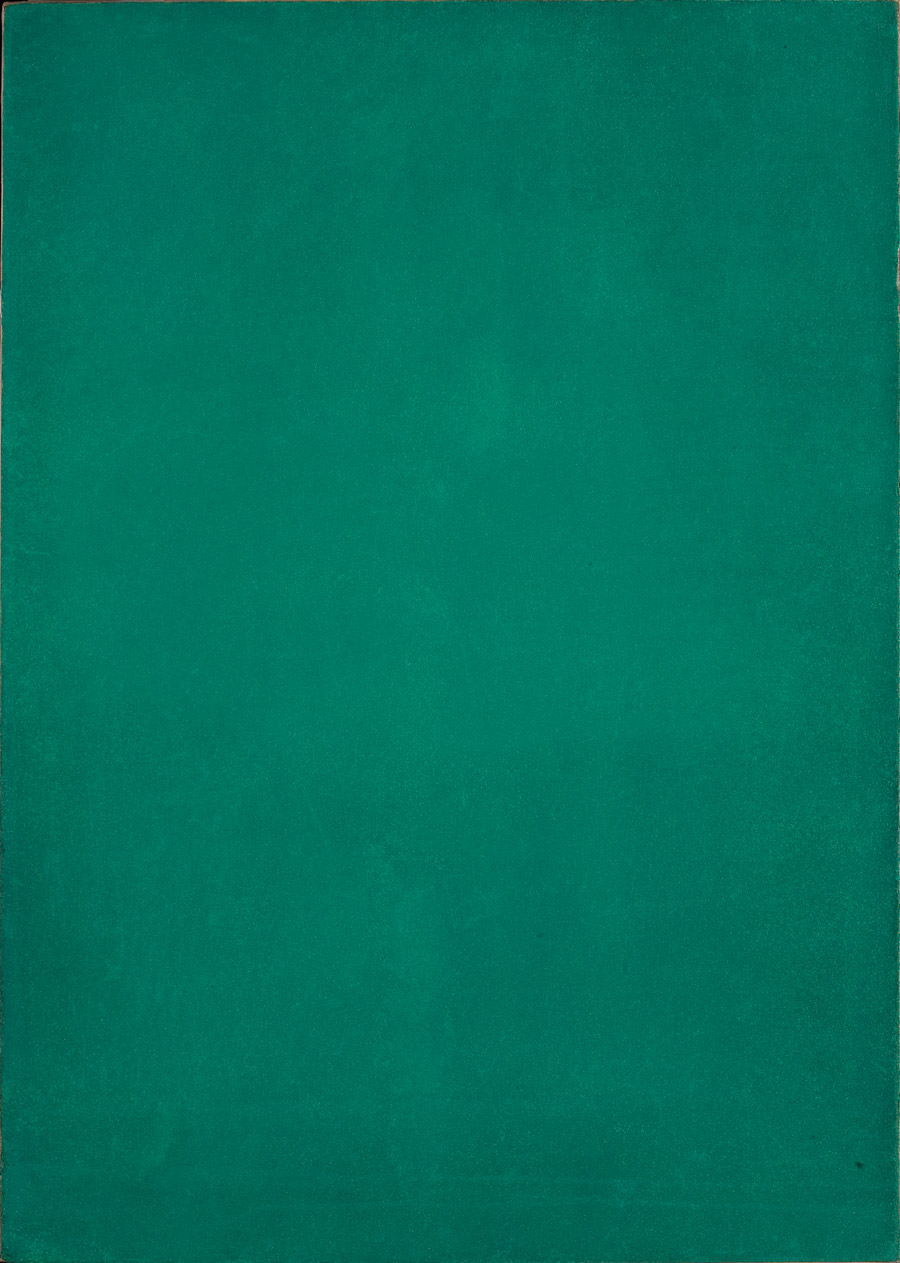
Yves Klein (French, 1928-1962) 'Untitled Green Monochrome' c. 1954


Yves Klein (French, 1928-1962)
Untitled Green Monochrome
c. 1954
Pure pigment and binder on paper
© The Estate of Yves Klein c/o ADAGP, Paris


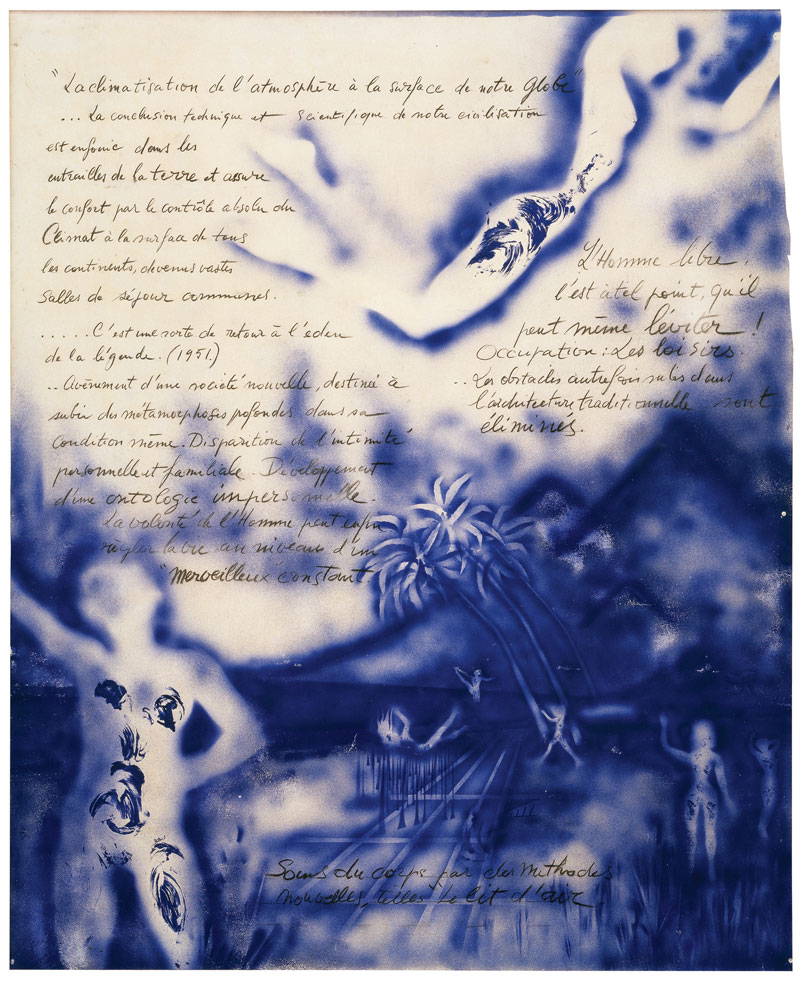
Yves Klein (French, 1928-1962) 'Architecture de l'air' (Air Architecture) 1961


Yves Klein (French, 1928-1962)
Architecture de l’air (Air Architecture)
1961
Dry pigment and synthetic resin on paper mounted on canvas
103 x 84 inch
© The Estate of Yves Klein c/o ADAGP, Paris


One of the 20th century’s most influential artists, Yves Klein (French, b. Nice, 1928; d. Paris, 1962), took the European art scene by storm in a prolific but brief career that lasted only from 1954 to 1962. Yves Klein: With the Void, Full Powers, on view at the Hirshhorn May 20 through Sept. 12, is the first major retrospective of the artist’s work in the United States since 1982. Co-curated by the Hirshhorn’s deputy director and chief curator Kerry Brougher and Dia Art Foundation director, former chief curator and deputy director at the Walker Art Center in Minneapolis, the exhibition is co-organised by the Hirshhorn and the Walker and developed in full collaboration with the Yves Klein Archives in Paris.

Presenting approximately 200 works, Yves Klein: With the Void, Full Powers explores the full range of the artist’s body of work and offers an essential overview and examination of a career that marked a key transition in 20th-century art. His work embodied an understanding of art beyond a western conception of modernity, beyond the object and beyond traditional notions of what art can be.

“Klein’s short but intense career is a pivotal moment in contemporary art history,” said Brougher. “His work questioned what art and even society could be in the future, and it provided new pathways leading to pop art, minimalism, conceptual art, installation and performance.”

The exhibition features examples from all of Klein’s major series, from his iconic blue monochromes and Anthropometries to sponge reliefs, Fire Paintings, “air architecture” projects, Cosmogonies and planetary reliefs as well as many works that have rarely been on view. The installation provides insight into the artist’s process and conceptual endeavours through an array of ephemera, including sketches, photographs, letters and writings. Several films, including performances and documentaries, further demonstrate Klein’s creative practice.

“I would like that when people leave the exhibition they leap into a void, leaving behind traditional notions of art and representation, but even more importantly, questioning the notion of materiality and materialism in art as well as in their lives,” said Vergne. “Ultimately, Klein’s lesson is about a different way of being together.”

Numerous objects are on loan directly from the Yves Klein Archives, with additional loans from the Musée National d’Art Moderne, Centre Pompidou in Paris, Kunstmuseen Krefeld in Krefeld, Germany, The Menil Collection in Houston, the Museum of Contemporary Art in Tokyo, the San Francisco Museum of Modern Art and a host of international private collections, including a rare loan from the Monastery of Saint Rita in Cascia, Italy.

Klein was an innovator and visionary whose goal was no less than to radically reinvent what art could be in the postwar world. Through a diverse practice, which included painting, sculpture, performance, photography, music, architecture and writing as well as plans for projects in theatre, dance and cinema, he shifted the focus of art from the material to “immaterial sensibility”; he levitated art above the weariness induced by the Second World War, resurrecting its avant-garde tendencies, injecting a new sense of spirituality and opening doors for much that followed in the 1960s and beyond.

Self-identified as “the painter of space,” Klein sought to achieve immaterial sensibility through pure colour, primarily an ultramarine blue of his own invention – International Klein Blue. This exhibition begins by examining Klein’s early explorations of colour with works in pastels, watercolours and more than 15 coloured monochromes created during the mid-to-late 1950s. Several significant blue monochromes, dating from as early as 1955 up through 1961, are on view. Klein further pushed boundaries in his engagement with colour and form by using pure pigment in tandem with unconventional materials, such as natural sponges. The sponge, which Klein incorporated into his practice in the late 1950s, became a metaphor, as its porous surface completely absorbed his signature colour, giving a material presence to the immaterial.

Among Klein’s best-known works are the Anthropometries, begun in 1958. Under the artist’s direction, nude female models were smeared with International Klein Blue paint and used as “living brushes” to make body prints on prepared sheets of paper. Klein wanted to record the body’s physical energy, and the resulting images represent the model’s temporary physical presence. More than an expression of the inner psyche of the artist, these paintings offer one method of giving visual presence to a cosmic, spiritual body, which neither photography nor film can fully capture. Seven works from this series are on view, including People Begin to Fly (1961) from The Menil Collection and Untitled Anthropometry (1960) from the Hirshhorn’s collection, which features the bodies of Klein and his future wife Rotraut Uecker.

In the late 1950s, but most notably in 1961, Klein began to use fire, which he considered “the universal principle of expression,” as part of his creative process. His Fire Paintings, such as Untitled Fire Painting (1961), in which fire either replaced or was combined with paint, embody concepts of process, transformation, creation, destruction, dissolution and elemental cosmology that were so essential throughout his career. The final galleries of the exhibition include examples from Klein’s “air architecture” projects, including drawings, plans and models for architectural spaces, such as fountains and walls, constructed out of natural elements like air, water and fire – elements that were not traditionally associated with architecture.

Klein created what he considered his first artwork when he signed the blue sky above Nice in 1947, making his first attempt to capture the immaterial. In his celebrated 1958 exhibition Specialization of Sensibility in the Raw Material State of Stabilized Pictorial Sensibility, better known as The Void, at Galerie Iris Clert in Paris, Klein went further by emptying the gallery of all artworks and painting the walls white. Among those who attended the renowned exhibition was Albert Camus, who reacted with a notable entry into the visitors’ album: “with the void, full powers.” In his famous Leap into the Void (1960) image by Harry Shunk and Janos Kender, which was published Nov. 27, 1960, in the faux newspaper Dimanche, which he created for the second Avant-Garde Art Festival, Klein is actually depicted leaping into space himself; the accompanying text asserts: “… to paint space, I must be in position. I must be in space.”

Defying the common understanding and definitions of art – from his experiments with architecture made of air to his leap into the void – Klein aimed to rethink the world in spiritual and aesthetic terms. His philosophy was revolutionary and demonstrated his acute grasp of the contemporary moment, from the horror of the Second World War to the promise of space travel. This presentation of his full oeuvre is essential to discern the shift from modern to contemporary practice and to reveal the extent of the artist’s influence.

Press release from the Hirshhorn website [Online] Cited 04/09/2010 no longer available online


Yves Klein (French, 1928-1962) 'Lune II' (Moon II), 1961


Yves Klein (French, 1928-1962)
Lune II (Moon II)
1961
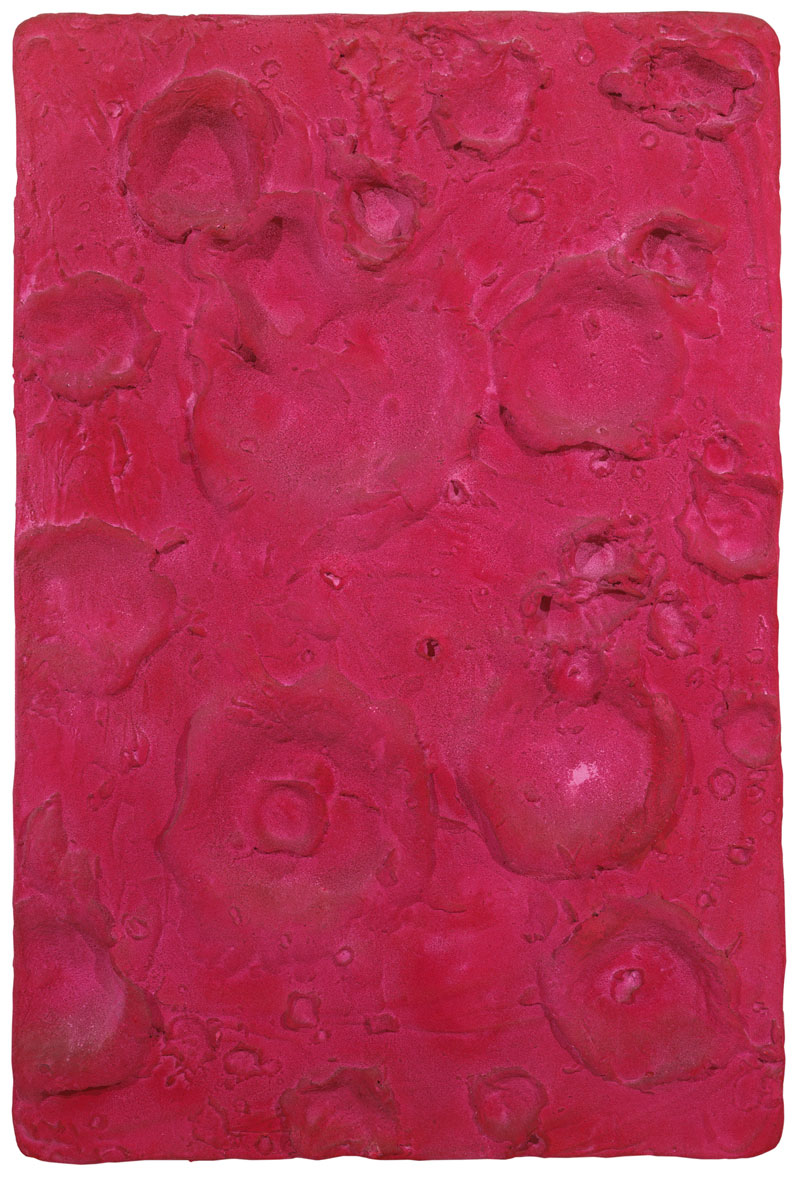
Pure pigment and undetermined binder on plaster
© The Estate of Yves Klein c/o ADAGP, Paris


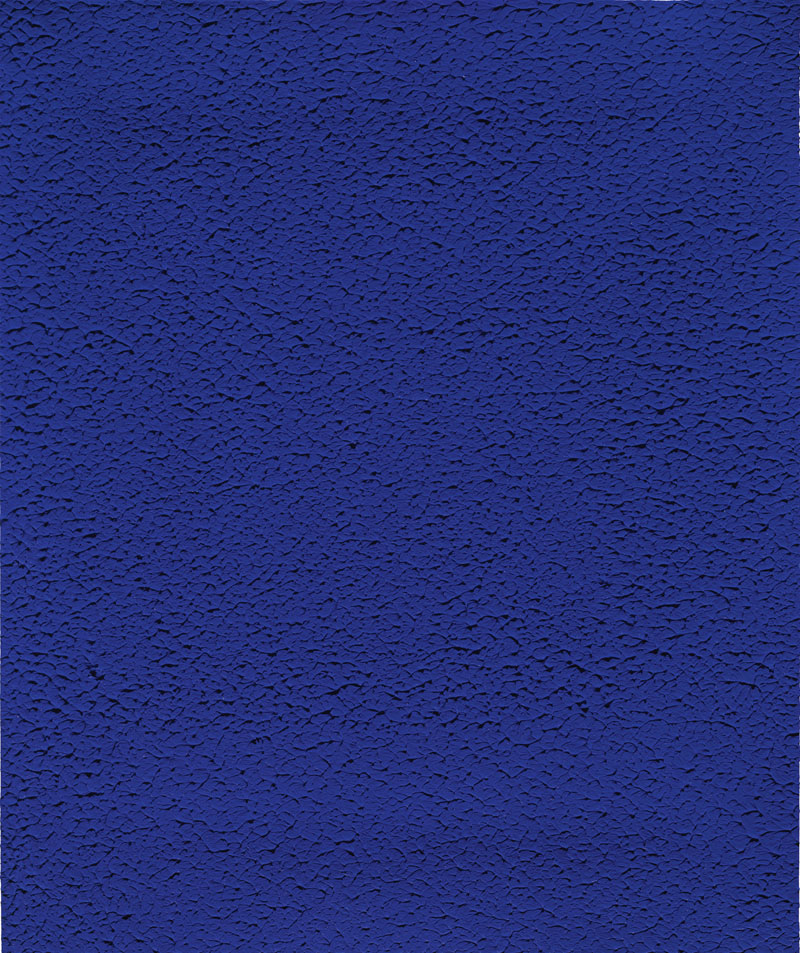
Yves Klein (French, 1928-1962) 'Untitled Blue Monochrome' 1959


Yves Klein (French, 1928-1962)
Untitled Blue Monochrome
1959
© The Estate of Yves Klein c/o ADAGP, Paris


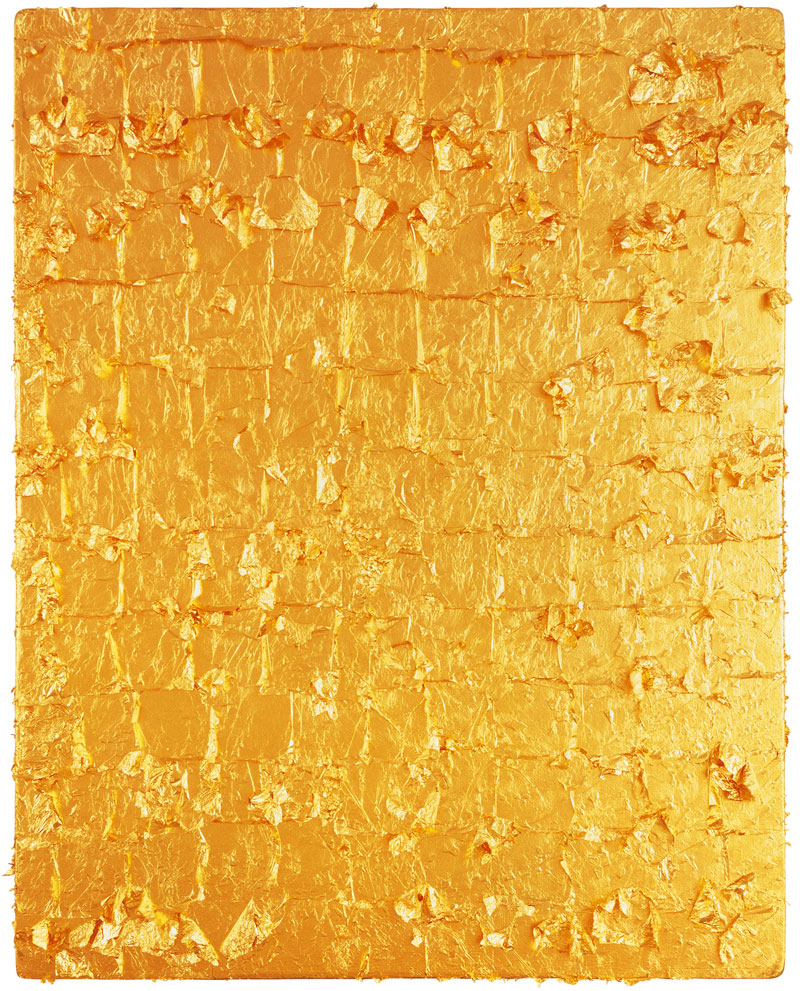
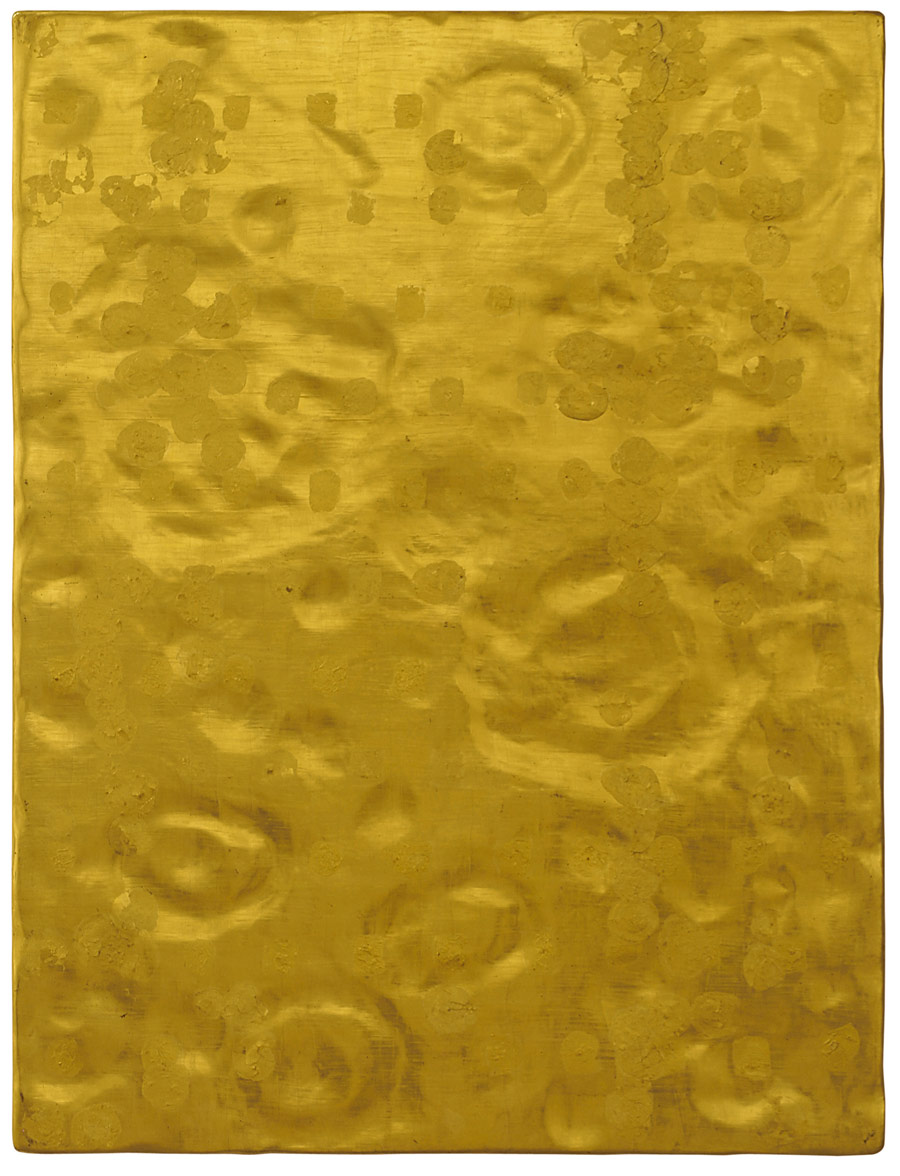
Yves Klein (French, 1928-1962) 'Untitled Gold Monochrome' 1962


Yves Klein (French, 1928-1962)
Untitled Gold Monochrome
1962
Gold leaf on wood
© Yves Klein, ADAGP, Paris / SAVA


Yves Klein (French, 1928-1962) 'La Rêve du Feu' (The Dream of Fire) c. 1961


Yves Klein (French, 1928-1962)
La Rêve du Feu (The Dream of Fire)
c. 1961
Yves Klein, ADAGP, Paris / DACS


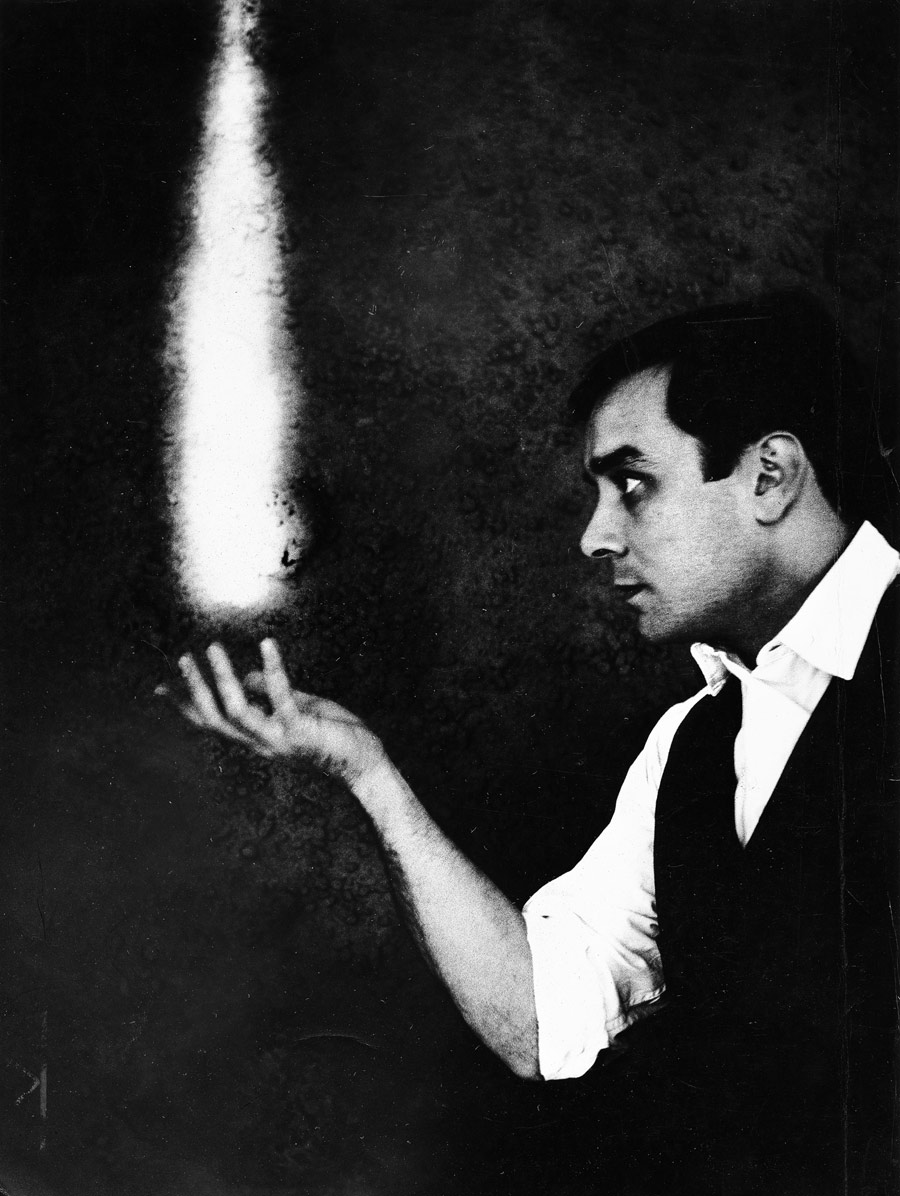
Harry Shunk and János Kender, photograph of Yves Klein, The Dream of Fire, c. 1961. Artistic action by Yves Klein.


Yves Klein (French, 1928-1962) 'Le Silence est d'or' (Silence is Golden) 1960


Yves Klein (French, 1928-1962)
Le Silence est d’or (Silence is Golden)
1960
Gold leaf on wood
© Yves Klein, ADAGP, Paris / SAVA


Hirshhorn Museum and Sculpture Garden
The Hirshhorn is located on the National Mall at the corner of 7th Street and Independence Avenue SW, Washington, D.C.

Opening hours:
Open daily except December 25
10am – 5.30pm

Hirshhorn Museum and Sculpture Garden website

LIKE ART BLART ON FACEBOOK

Back to top

Review: ‘How Nature Speaks’ at Arc One Gallery, Melbourne

Exhibition dates: 27th July – 21st August, 2010

Artists: Justine Khamara, Lyndell Brown and Charles Green, Imants Tillers, Sam Shmith, Janet Laurence, Murray Fredericks and Huang Xu


Janet Laurence (Australian, b. 1947) 'Carbon Vein' 2008 (installation view) from the exhibition 'How Nature Speaks' at Arc One Gallery, Melbourne, July - August, 2010


Janet Laurence (Australian, b. 1947)
Carbon Vein (installation view)
2008
Duraclear, oil pigment on acrylic
235 x 100cm
Photo: Marcus Bunyan


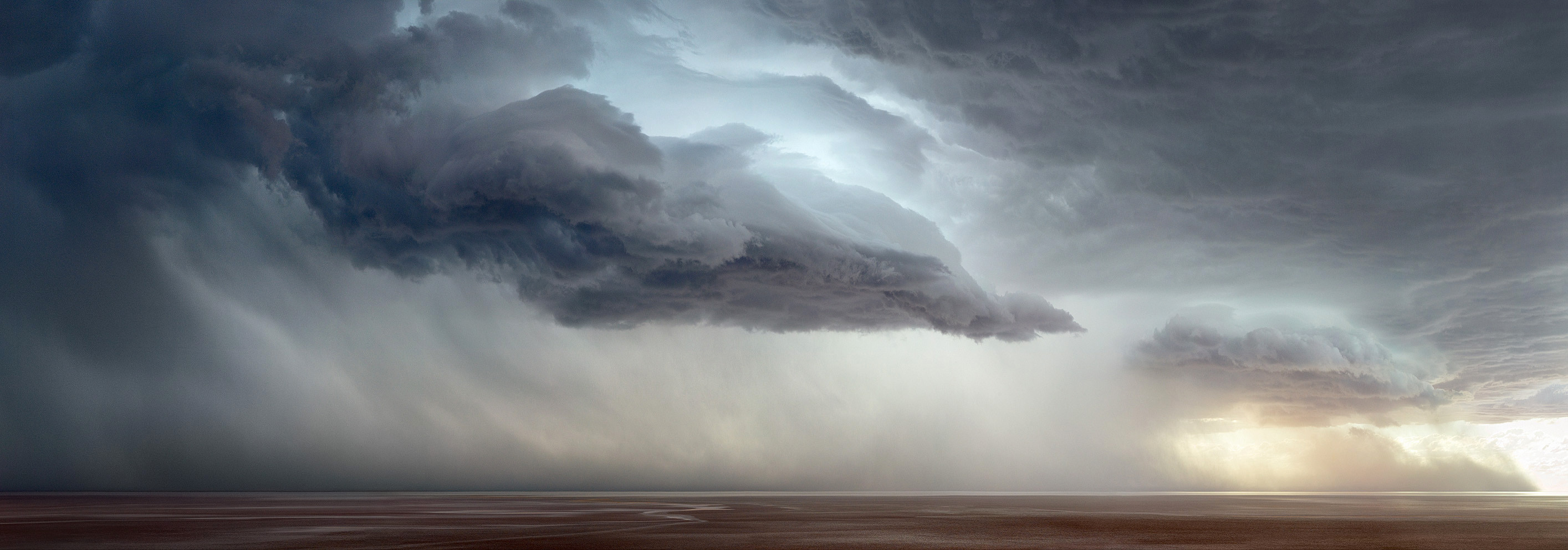
This is an excellent group exhibition at Arc One Gallery, Melbourne. Together the works form a satisfying whole; individually there are some visually exciting works. There are two insightful paintings by Imants Tillers, Nature Speaks: BP (2009) and Blossoming 21 (2010), a digitally constructed landscape by Sam Shmith, Untitled (Passenger) (2010, below) that the online image doesn’t really do justice to, a large photographic landscape of a storm over Lake Eyre Salt 304 (2009, below) by Murray Fredericks and two layered transcapes by Janet Laurence (see image above) that just confirm the talent of this artist after the exciting installation of her work at the Melbourne Art Fair (I call them transcapes because they seem to inhabit a layered in-between space existing between dream and reality).

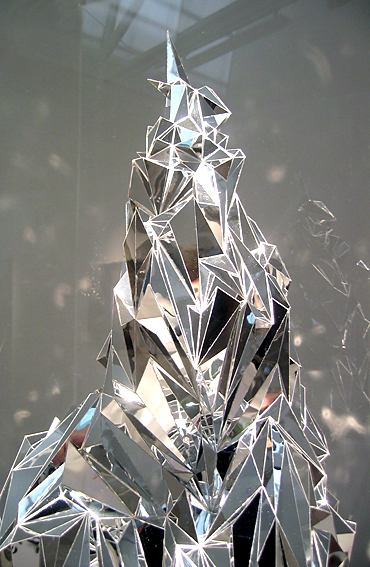
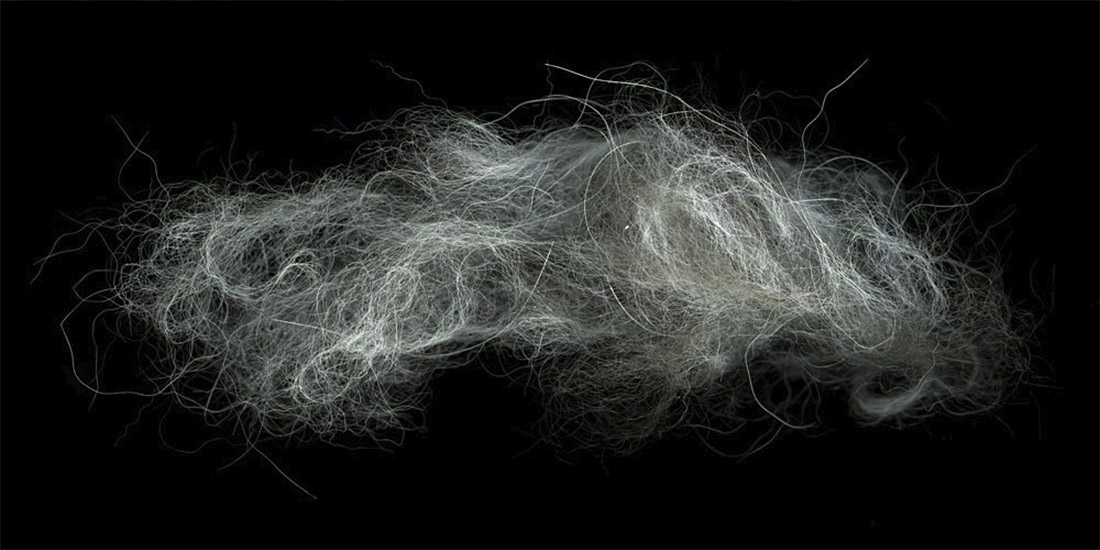
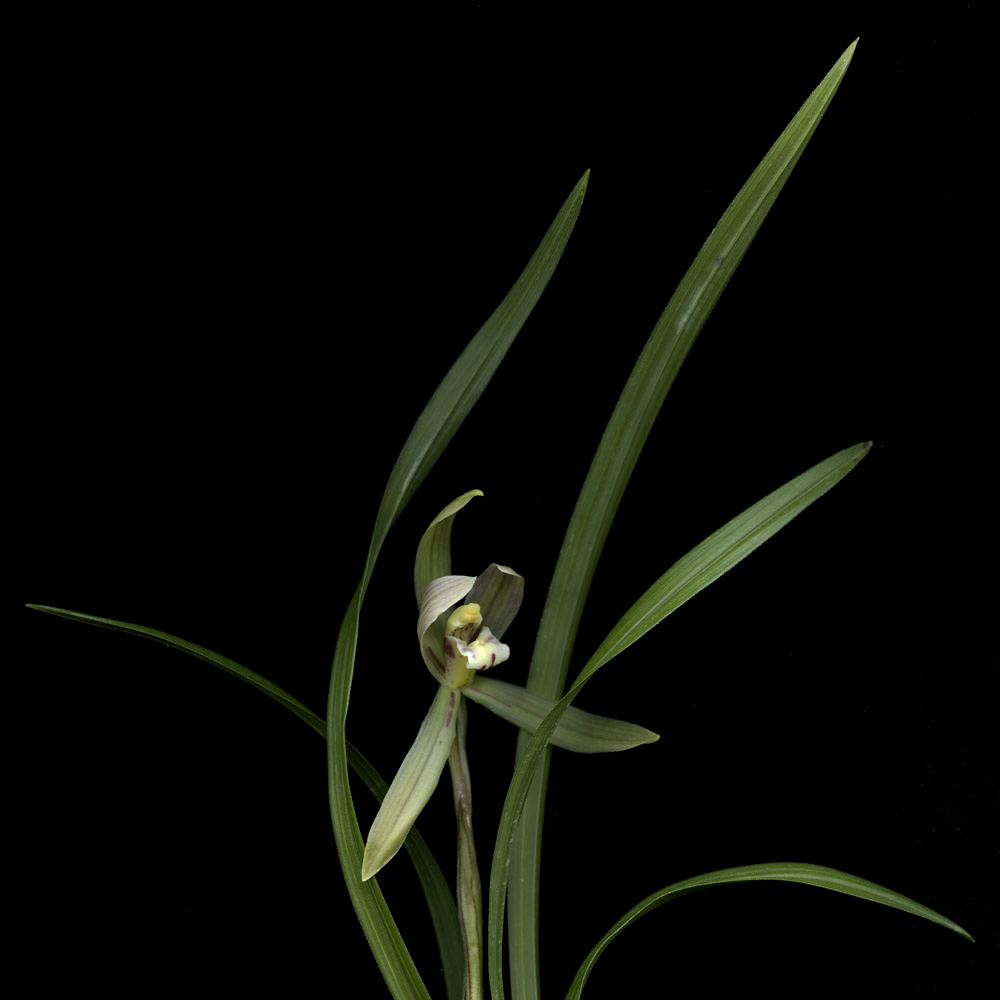
For me the three outstanding works were the large horizontal photograph Hair No.2 (2009, below) by Huang Xu, in which hair hangs like a delicate cloud on a dark background and his photograph Flower No. 1 (2008, below) in which the white petals of the chrysanthemum, symbol of death or lamentation and grief in some Western and Eastern countries in the world, seemingly turn to marble in the photographic print (you can see this online in the enlarged version of the image below). What a magnificent photograph this is – make sure that you don’t miss it because it is tucked away in the small gallery off the main gallery in the Arc One space. The third outstanding work is the sculpture you are a glorious, desolate prospect (2010) by Justine Khamara (see photographs below), a glorious magical mountain, twinkling in the light, all shards of reflectiveness, cool as ice. I would have loved to have seen this work without it’s protective case – in one sense the case works conceptually to trap the speaking of the mountain but in another it blocks access to the language of this work, the reflection of the light of the gallery, the light of the world bouncing off it’s surfaces.

This is not, of course, how nature speaks but how humans speak for nature – through image-ining and seeking to control and order the elemental forces that surround us. This construction of reality has a long tradition in the history of art, the mediation of the world through the hands, eyes and mind of the artist offering to the viewer, for however brief a moment, that sense of awakening to the possibilities of the world in which we all live.

Dr Marcus Bunyan


Many thankx to Angela and all at Arc One Gallery for allowing me to publish the photographs in the posting. Please click on the photographs for a larger version of the image.


Justine Khamara (Australian, b. 1971) 'you are a glorious, desolate prospect' 2010 (installation view)


Justine Khamara (Australian, b. 1971)
you are a glorious, desolate prospect (installation view)
2010
Mirror, perspex, plinth
80 x 186cm
Photo: Marcus Bunyan


Justine Khamara (Australian, b. 1971) 'you are a glorious, desolate prospect' 2010 (installation view detail)


Justine Khamara (Australian, b. 1971)
you are a glorious, desolate prospect (installation view detail)
2010
Mirror, perspex, plinth
80 x 186cm
Photo: Marcus Bunyan


Lyndell Brown (Australian, b. 1961) and Charles Green (Australian, b. 1961) 'Galatea Point' 2005


Lyndell Brown (Australian, b. 1961) and Charles Green (Australian, b. 1961)
Galatea Point
2005
Digital photograph on duraclear film edition of 5
112 x 112cm


Huang Xu (Chinese, b. 1968) 'Hair No.2' 2009


Huang Xu (Chinese, b. 1968)
Hair No.2
2009
Type C Photograph
120 x 245cm


Huang Xu (Chinese, b. 1968) 'Flower No.1' 2008 from the exhibition 'How Nature Speaks' at Arc One Gallery, Melbourne, July - August, 2010


Huang Xu (Chinese, b. 1968)
Flower No.1
2008
Type C photograph
120 x 120cm


Huang Xu (Chinese, b. 1968) 'Flower No.2' 2008


Huang Xu (Chinese, b. 1968)
Flower No.2
2008
Type C Photograph
120 x 120cm


Murray Fredericks (Australian, b. 1970) 'Salt 304' 2009


Murray Fredericks (Australian, b. 1970)
Salt 304
2009
Pigment print on cotton rag
244 x 88cm


Sam Shmith (Australian, b. 1980) 'Untitled (Passenger)' 2010


Sam Shmith (Australian, b. 1980)
Untitled (Passenger)
2010
pigment print on archival rag
180 x 108cm


Arc One Gallery
45 Flinders Lane
Melbourne, 3000
Phone: (03) 9650 0589

Opening hours:
Wednesday – Saturday 11am – 5pm

Arc One Gallery website

LIKE ART BLART ON FACEBOOK

Back to top

Alan Constable and the highlights of the Melbourne Art Fair 2010

August 2010


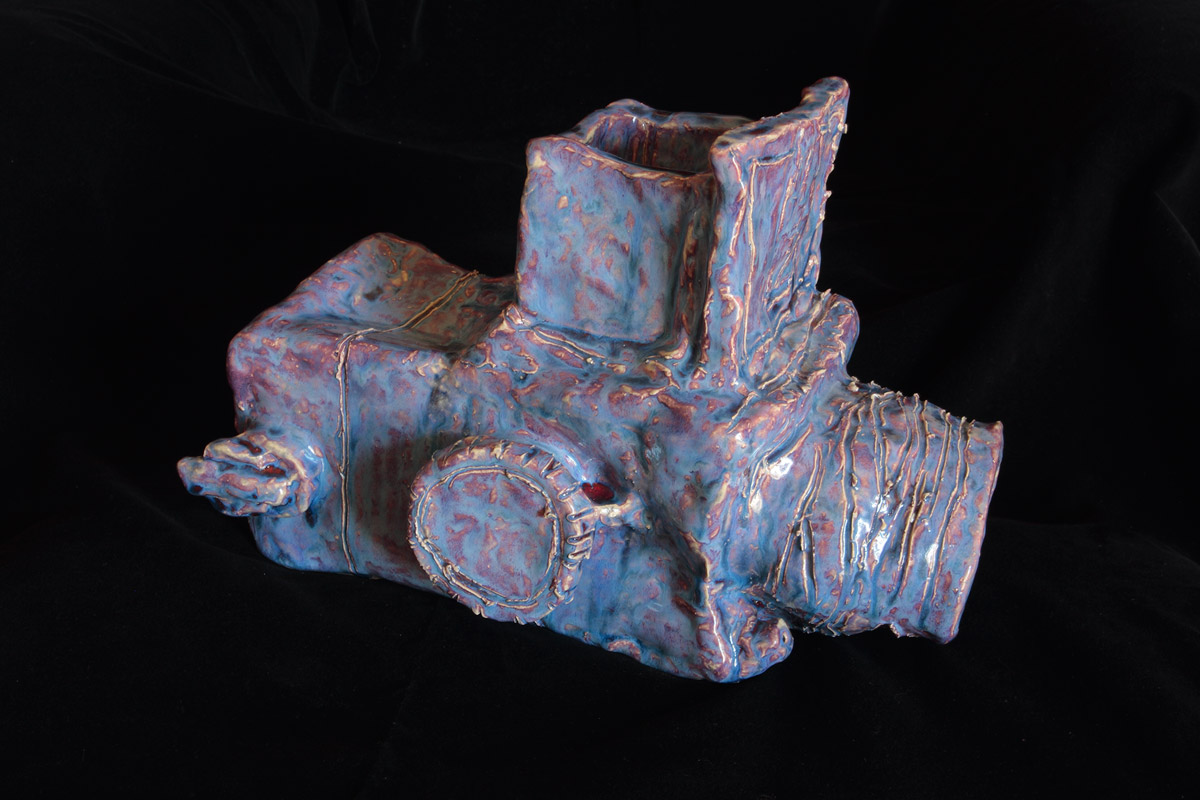
Alan Constable (Australian, b. 1956)
'Untitled (Hasselblad)' 2008


Alan Constable (Australian, b. 1956)
Untitled (Hasselblad)
2008
Clay, glaze


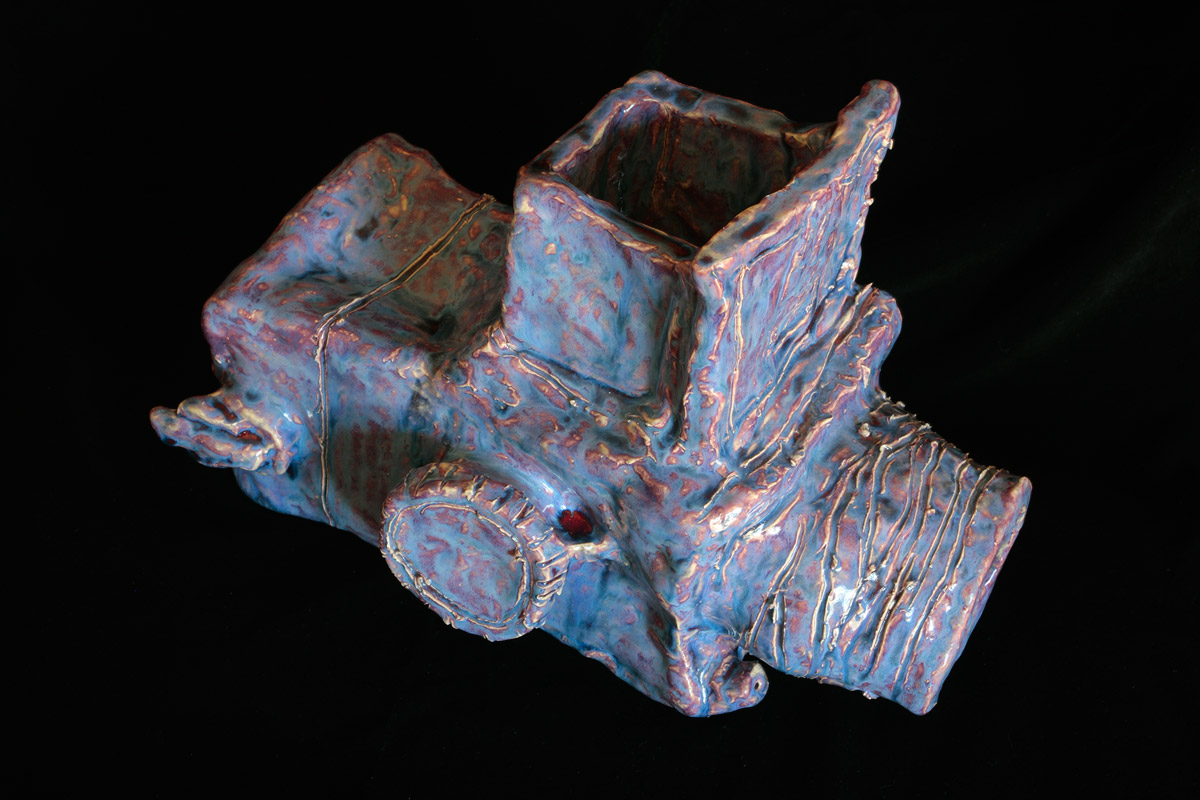
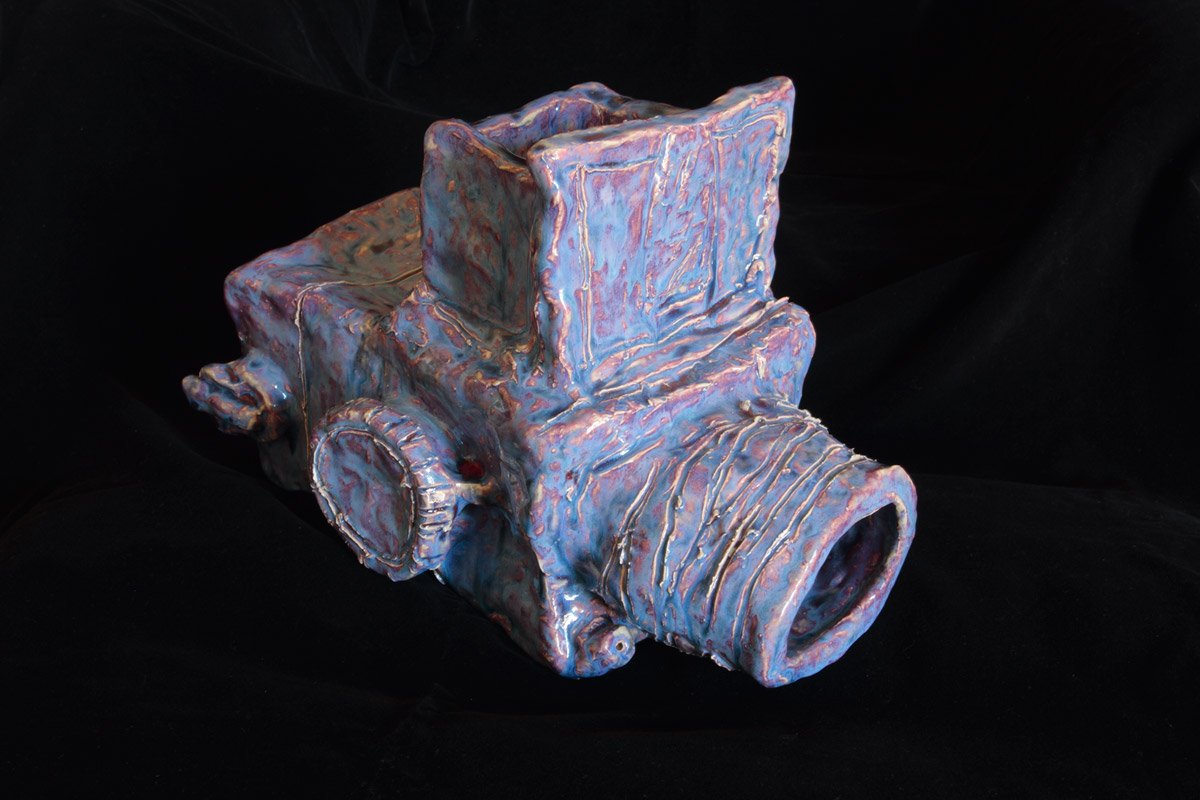
I finally succumbed and bought myself a wonderful Alan Constable ceramic camera from the Arts Project Australia stand at the Melbourne Art Fair on Saturday (see photographs below – click on the photographs for a larger version of the image). I first saw Alan’s ceramic work at his solo exhibition called Clay Cameras at Helen Gorie Galerie in August 2009 (see photographs from the exhibition) and was instantly attracted to the tactility and beauty of the work. Months later I saw more of his cameras at Sophie Gannon Gallery in Richmond and now at the Art Fair. Third time lucky, I found a stunning medium format Hasselblad in a beautiful two tone glaze that really spoke to me in terms of it’s form and aesthetic appeal. Constable’s work has really impinged on my consciousness and the piece has a special resonance for me.

“Constable’s ceramic works reflect a life-long fascination with old cameras, which began with his making replicas from cardboard cereal boxes at the age of eight. The sculptures are lyrical interpretations of technical instruments, and the artist’s finger marks can be seen clearly on the clay surface like traces of humanity. In this way, Alan Constable cameras can be viewed as extensions of the body, as much as sculptural representations of an object.” (Arts Project Australia text)


Highlights of the Art Fair were the outstanding paintings of Juan Ford at Dianne Tanzer Gallery, the mesmeric video work of Daniel Crooks at Anna Schwartz Gallery (who I think is one of the best artists in the country – see more images of his work from his Intersection exhibition), the delicately layered and outrageously beautiful collage work of Peter Madden at Ryan Renshaw Gallery, the layered transcapes of Janet Lawrence at Arc One Gallery and the cosmological paintings of Lara Merrett at Karen Woodbury Gallery. Brickbats for the most overblown presentation must go to Danie Mellor at Michael Reid for a truly over the top performance that just left one speechless.

It was a real pleasure to meet so many gallery directors and managers face to face including Gina Lee at Niagara Galleries, James Makin at James Makin Gallery, Matt Glen at Martin Browne Fine Art, Sydney, Paul Greenway from Gagprojects, Berlin and Ken Fehily from Fehily Contemporary, Melbourne.

Finally, I visited the Notfair 2010 exhibition in Richmond, a disappointing group exhibition of 30 artists selected from over 300 artists suggested by curators from around the country. As with many group exhibitions that lack thematic development the work was all over the place, in every media imaginable. The absolute standout work were the two antique stereoscopic cabinet and LED light animations of Chris Henschke from the duo Topologies. While the idea for the exhibition is to be applauded (that of presenting an exhibition of unknown or little known artists that may or may not be represented by a gallery) perhaps the next exhibition should have fewer artists to give the work chance to speak for the artist instead of just being a token gesture.

Dr Marcus Bunyan


Alan Constable (Australian, b. 1956)
'Untitled (Hasselblad)' 2008

Alan Constable (Australian, b. 1956)
'Untitled (Hasselblad)' 2008


Alan Constable (Australian, b. 1956)
Untitled (Hasselblad)
2008
Clay, glaze


LIKE ART BLART ON FACEBOOK

Back to top

Review: ‘Warrina Portraits’ by Ewen Ross at Anita Traverso Gallery, Melbourne

Exhibition dates: 14th July – 8th August, 2010


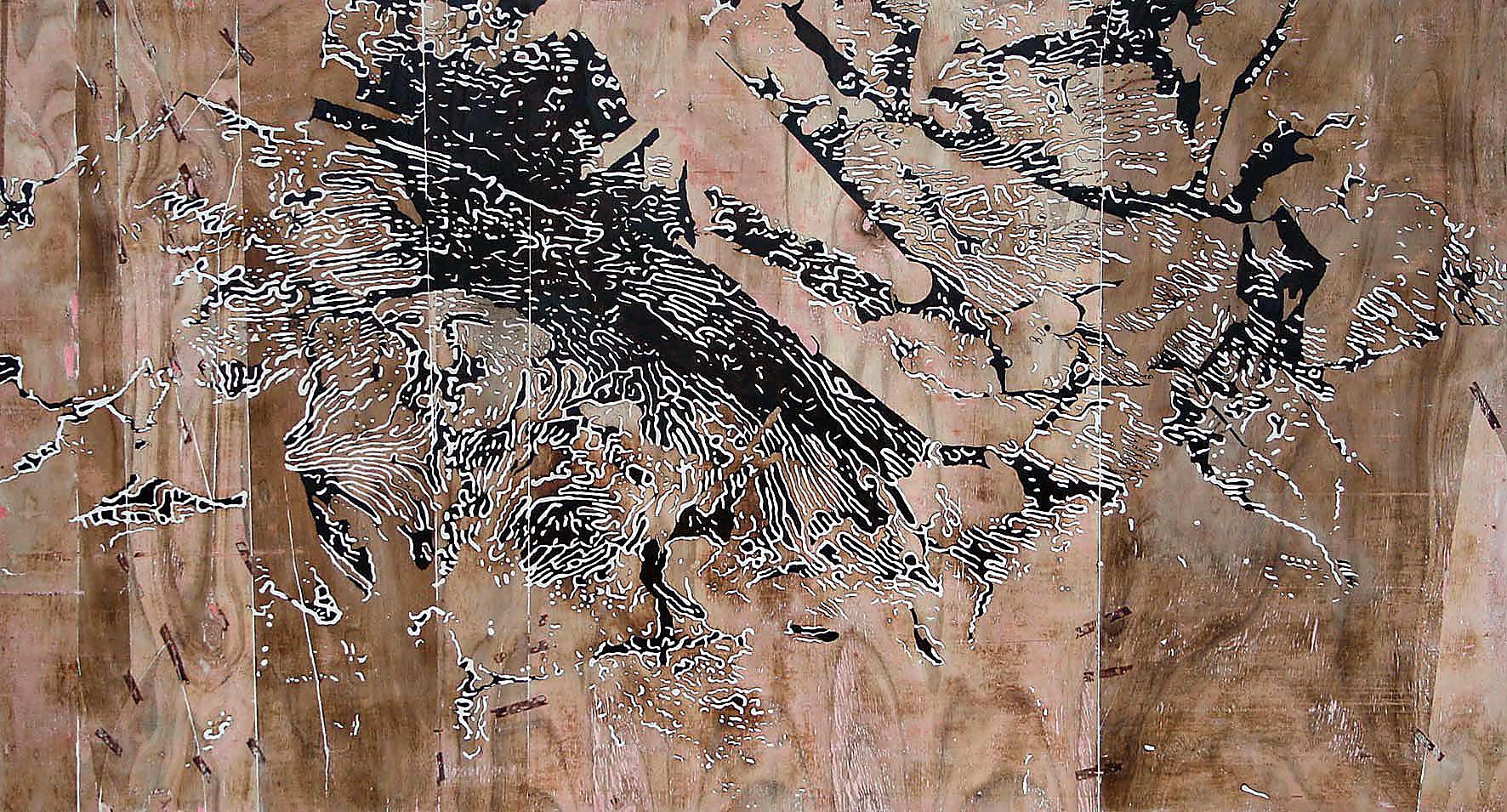
Ewen Ross (Australian, b. 1957) 'Plain of Mars' 2010 from the exhibition 'Warrina Portraits' by Ewen Ross at Anita Traverso Gallery, Melbourne, July - August, 2010


Ewen Ross (Australian, b. 1957)
Plain of Mars
2010
from the Warrina Portraits series


There is little more to say about this exhibition of works by Ewen Ross than the erudite catalogue essay by Geraldine Barlow enunciates (see essay below), except to say that the ‘presence’ of these works is extremely moving. It is difficult when viewing photographs of the work to explain the physical impact of actually standing in front of these works, absorbing their energy, examining their surfaces, their depths.

The larger photograph of Thenar Eminence (2010, below) is the closest one can get in the virtual world to appreciating the elemental quality of the work – the fire, the fragmentation and the soil, the contour-like mapping of the earth – as the work resembles a memory of earth, of place, re(as)sembles a signification, a meaning wholly of its own in the mind of the viewer. In the spectator the act of looking may turn into contemplation and this work does seem to have that effect = the context of looking at the work invites a contemplation on place and connection to earth.

Barlow asks. “Is this matter, or its coded representation? Ross sets up a liquid movement between such possibilities.”

Ross does indeed set up a liquid movement between matter and representation. But here I would offer a counter argument to the idea that matter and coded representation are binary opposites. As noted by Judith Butler in the excellent quotation below, matter is already meaningful, already coded and materialised. It always has a history and narrativisation embedded within it. Butler suggests the body is never a valueless matter on which inscription takes place because this hides the inscription already there.

Continuing this idea, Ross brings matter back into the fold, into the peeled away surfaces of his work. His process of materialisation offers these liquid movements not through an oppositional relationship between matter and coded representation but because a) his works are no longer anchored in an unquestionable reality and b) they have moved beyond coded representation. Ross reconceptualises both space and matter in his objects of place and invites us, the viewer, to contemplate these (e)motional environments.

Dr Marcus Bunyan


Many thankx to Anita from Anita Traverso Gallery for allowing me to publish the photographs in the posting and to Geraldine Barlow for allowing me to publish the catalogue essay, all very much appreciated. Please click on the photographs for a larger version of the image.


Body and Text

“Judith Butler has done much to interrogate and upset the assumes inside / outside binary of culture and nature, and has shown that what is called matter, and therefore presumed to be extra-discursive, is already meaningful. In her book entitled Bodies That Matter (1993) she argues that matter is already materialized, that is, it always has a history, is always narrativized. Any reference to matter will always be a particular formation of materiality that has been discursively set. Matter, nature or the body is never an absolute outside but is rather a constitutive outside that generates the significance of an interiority, culture or law. It is an outside that gives the inside its meaning and is, therefore, already textualized and incorporated within the oppositional space in which signification takes place. For Butler, the suggestion that the body is the valueless matter on which inscription takes place hides the inscription already there … Bringing matter back into the fold of inscription increases the manoeuvrability of political activism as it is no longer anchored by an unquestionable reality, the fixity of which is only secured by continual iteration of the norms attributed to it. ‘I would propose’, Butler argues, ‘a return to the notion of matter as a process of materialization that stabilizes over time to produce effects of boundary, fixity, and surface we call matter’ (Butler 1993: 9).

A useful analogy for this lack of fixity might be the reconceptualization of both space and matter within the new sciences, especially quantum mechanics, where matter, even that which we perceive as rigid or solid, is shown to be permanently in motion, and where the space which gives form to seemingly individual and autonomous objects is now understood to be a less dense area of matter itself.”

Curtis, Neal. “The Body as Outlaw: Lyotard, Kafka, and the Visible Human Project,” in Featherstone, Mike (ed.,). Body Modification. London: Sage, 2000, p. 258.


Ewen Ross (Australian, b. 1957) 'Thenar Eminence' 2010 from the exhibition 'Warrina Portraits' by Ewen Ross at Anita Traverso Gallery, Melbourne, July - August, 2010


Ewen Ross (Australian, b. 1957)
Thenar Eminence
2010
from the Warrina Portraits series


Warrina Portraits

This body of work presents as a suite of portraits, and continues my ambition to track the truth through creative practice. Metaphorically the palm of my left hand symbolises the natural patterns and rhythms of line found in the landscape along the Glenelg River in the Southern Wimmera, with particular reference to the property where I lived (Warrina).

This work presents as part of a portrait series derived solely from my left hand. It continues the story of my search for the truth of my genesis in reference to the property (Warrina) where I was raised. The notion of touching the landscape with an open hand in order to investigate the relationship between landscape and portraiture underpins this image.

The concept of looking down and across this country continues to drive the format of my work as does the idea of using fire to peel back the surface of the plywood which often reveals new and mysterious information to work with. Fire is part of the natural ecosystem and a valuable means of cleansing and regenerating new life and truth into this landscape. This premise remains integral to my practice.

The linear information gleaned from the palmar in theory creates a conduit for bridging the concept of portraiture and landscape. The notion of inlaying the narrative of my palm into the surface to construct an image of landscape underpins this body of work.

The significance of the left hand is relevant to the principle. It is controlled by the right brain (pattern recognition, relationship understanding), reflects the inner person, the natural self, the anima, and the ability to think laterally. It could even be considered to be part of a person’s spiritual and personal development.

It is also said the left hand is the one we are born with, the one the gods give you; the right is what we do it with.

Ironically, of the four descriptors allied with hands, earth, air, fire, and water, my hands are relative to fire.

Ewen Ross July 2010


Ewen Ross (Australian, b. 1957) 'Palmar Quartet' 2010 from the exhibition 'Warrina Portraits' by Ewen Ross at Anita Traverso Gallery, Melbourne, July - August, 2010


Ewen Ross (Australian, b. 1957)
Palmar Quartet
2010
from the Warrina Portraits series


Catalogue essay by Geraldine Barlow

Our palms and fingers each bear unique imprints. The intricate and entwined lines and loops of each palmscape have been generated from within the very core of what makes us individual, our encoded DNA.

“DNA molecules themselves, as physical entities, are like dewdrops. Under the right conditions they come into existence at a great rate, but no one of them has existed for long, and all will be destroyed within a few months. They are not durable like rocks. But the patterns they bear in their sequences are as durable as the hardest rocks.”1.


How should we read the patterned lines of a palm? The art of palmistry promised to decode the connections between this intimate landscape and our life to come. Palmistry is now dismissed as a quaint pseudoscience, yet the palm holds a special resonance, a very special part of the body from which the future might be foretold. Via the fingerprint, and now DNA traces, contemporary technology has developed seeking absolute recognition of each individual. Through our palms and fingers we hold and grip the world, we wield tools and touch those we care for. These interior sensate surfaces of the hand are at the centre of our embodied being in the world.

In his latest body of work Warrina Portraits, Ewen Ross has taken his own palm print as the starting point for a highly personal exploration of the relation between self and place. The furrowed banks of lines and shadows etched into ply sheets do not relay the literal five-fingered imprint of a hand, more a topography of interlaced systems, networks of lines which are at once familiar and strange to us.

In bringing these works into being, Ross has evolved a deliberate and multilayered process of making. He relays a detail of his palm print onto plywood, then channels the resulting lines into the layered timber surface. The finished surface of the ply sheet is then removed, to reveal an entirely new layer, with it’s own character and markings. Filler is applied, dries and the surface is sanded back, many times over. Sometimes further layers of stain or fine in-painting are added. This process involves a constant relay between layers of information, impression and counter-impression. At each stage there is the potential for slippage, opportunities for translation, room for the materials and the process of making to assert themselves. When Ross removes the finished surface of the plywood he welcomes chance into the artistic process, allowing for the planned and entirely unexpected to collide.

In Palmar Trilogy 2010 the mapped tracery of white lines and dark hollows sprawls over a surface of many parts. Various separate pieces of timber have been joined on this layer of the sheet; we can still see the remnants of the glue where the pieces were taped. Two systems of information are in conversation here, jostling against each other. Sometimes the incongruities suggest meaning; at other times they raise a series of questions. Looking at this work, I am reminded of a contour map superimposed onto a satellite image, or a geological survey. I see the echo of a tree branch in the patterns on a sheet of timber, overlaid with something more like an x-ray or a brain scan.

Is this matter, or its coded representation? Ross sets up a liquid movement between such possibilities.

In these works, palm print and wood grain take us into an intimate landscape. For Ross this is a place of memory. Warrina is the name of the Wimmera property where he grew up, where he ploughed the fields as a young man. Like Ross’ previous bodies of work Such is Dry Land, Red Gum Country and The Green Pick, these works speak of an intimate and formative connection with the Wimmera landscape. The artist works into and over ground that is familiar in the measure of his own life, as well as in the lives of previous generations.

Ross is sensitive to the connections of the many past generations associated with this land, stretching back beyond his own family’s history in this country. He works with the surface, but also looks behind it, tearing back the first skin, so that what was embedded in the substrate is now called into dialogue with other marks and textures, highlights and shadows.

In these works the artist’s hand is the model for a series of shimmering, chimera-like patterned imprints, echoes, reflections, templates and coursing sequences of code – allowing us to measure one life against many generations, the transitory against the eternal, our intimate landscape against the widest horizons.”

Geraldine Barlow
Senior Curator/Collection Manager
Monash University Museum of Art / MUMAMelbourne, May 2010

1/ Richard Dawkins, The Blind Watchmaker, Penguin, London, 2006, p. 127


Ewen Ross (Australian, b. 1957) 'Palmar Trilogy' 2010


Ewen Ross (Australian, b. 1957)
Palmar Trilogy
2010
from the Warrina Portraits series


Anita Traverso Gallery
PO Box 7001, Hawthorn North 3122
Phone: 0408 534 034

By appointment only

LIKE ART BLART ON FACEBOOK

Back to top

Exhibition: ‘Open Landscape’ at Galerie Wagner + Partner, Berlin

Exhibition dates: 21st May – 31st July 2010

Artists: Peter Dreher, Friederike Jokisch, Josef Schulz, Thomas Wrede


Many thankx to Cai Wagner and Galerie Wagner + Partner for allowing me to publish the photographs in the posting.

All works: © the artist, courtesy Galerie Wagner + Partner. Please click on the photograph for a larger version of the image.


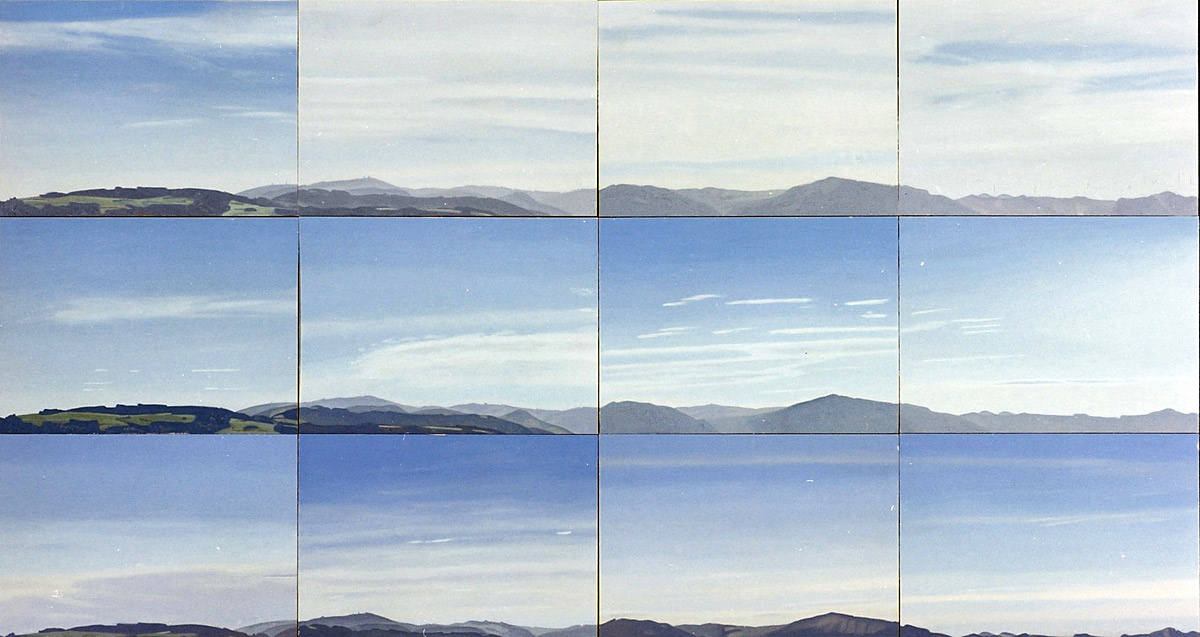
Peter Dreher (German, b. 1932) 'Schöne Tage im Hochschwarzwald' 1999 from the exhibition 'Open Landscape' at Galerie Wagner + Partner, Berlin, May - July, 2010


Peter Dreher (German, b. 1932)
Schöne Tage im Hochschwarzwald
1999
Oil on canvas


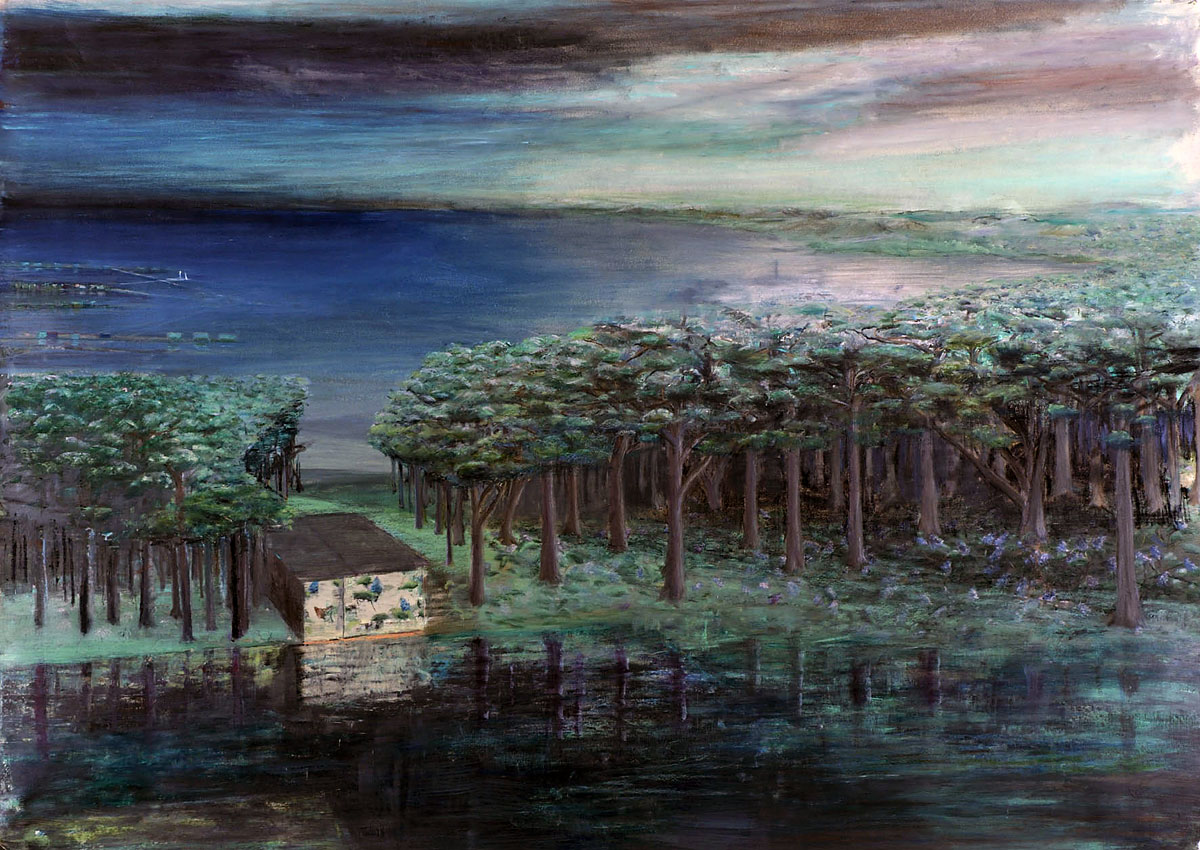
Friederike Jokisch (German, b. 1981) 'Domizil' 2009 from the exhibition 'Open Landscape' at Galerie Wagner + Partner, Berlin, May - July, 2010


Friederike Jokisch (German, b. 1981)
Domizil
2009
Pastel


Josef Schulz (Polish, b. 1966) 'Felswand #3' 2008 from the exhibition 'Open Landscape' at Galerie Wagner + Partner, Berlin, May - July, 2010


Josef Schulz (Polish, b. 1966)
Felswand #3
2008
Type C print Diasec


Nature became landscape long ago. Since the Romantic period landscape has furthermore been an aesthetic position. But what is landscape for the modern human being? The thematic exhibition “Open Landscape” at the Galerie Wagner + Partner provides a juxtaposition of multigenerational photographic and pictorial approaches to this question. The reference point for all participating artists is the real landscape.

The works of Thomas Wrede and Joseph Schulz increase their charm through friction between photorealistic representation extended through staging and intervention. Wrede, in his series entitled “Real Landscapes” combines the natural beauty of landscape with constructed miniature models. The landscapes photographed in this way appear seductively plausible and exaggerate the romantic projection.

Schulz similarly aims for an aesthetic exaggeration and idealisation through digital intervention in his nature photographs of the series “Terraform”. Through the elimination of human traces he reconstructs the lost primordial state of nature and creates people’s “internal” images of the landscape.

Similarly originating from actual landscape, Peter Dreher’s “Schwarzwaldlandschaft” (Black Forest Landscape) appears idealistic. It almost appears to be based on the tradition of “Heimatmalerei” (patriotic landscape painting). Viewed in close proximity however, the picture’s elements are ordered according to days and time. Each single picture documents what the artist saw and captured at precisely this point in time. Only when viewed as a whole an abstract picture of landscape as space-time-construct appears.

The central theme of Neo Rauch-student Friederike Jokisch is the landscape beyond the established idyll. Her large format pastel paintings make the process of transformation from nature to landscape tangible. In striking pictures “landscape” is demystified and instead ruptures and alienations between culture and nature become central themes.

The exhibition consciously poses more questions, attempts to find fewer answers. At the same time it continues the theme of the previous exhibition “The Nightingale’s Secret Garden”.

Text from the Galerie Wagner + Partner website [Online] Cited 14/07/2010 no longer available online


Thomas Wrede (German, b. 1963) 'Drive In Theatre' 2009


Thomas Wrede (German, b. 1963)
Drive In Theatre
2009
Lambda Print Diasec


Thomas Wrede (German, b. 1963) 'In the Tertiary Valley' 2008


Thomas Wrede (German, b. 1963)
In the Tertiary Valley
2008
Lambda Print Diasec


'Open Landscape' exhibition view at Galerie Wagner + Partner, 2010


Open Landscape exhibition view at Galerie Wagner + Partner, 2010


Galerie Wagner + Partner

This gallery has now closed.

LIKE ART BLACK ON FACEBOOK

Back to top

Review: ‘The Way Things Appear’ by Anne Zahalka at Arc One Gallery, Melbourne

Exhibition dates: 29th June – 24th July, 2010


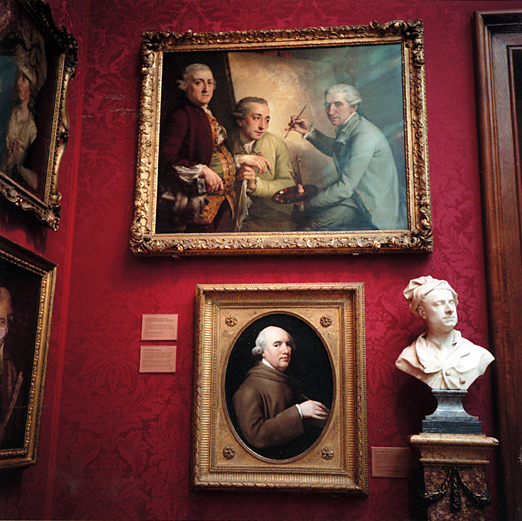
Anne Zahalka (Australian, b. 1957) 'National Portrait Gallery #1' 1992/2010 from the exhibition 'The Way Things Appear' by Anne Zahalka at Arc One Gallery, Melbourne, June-  July, 2010


Anne Zahalka (Australian, b. 1957)
National Portrait Gallery #1
1992/2010


A patchy exhibition by Anne Zahalka at Arc One Gallery, Melbourne. I can’t help feeling that we have seen this before, and done better, in the work of Candida Hofer and Thomas Struth.

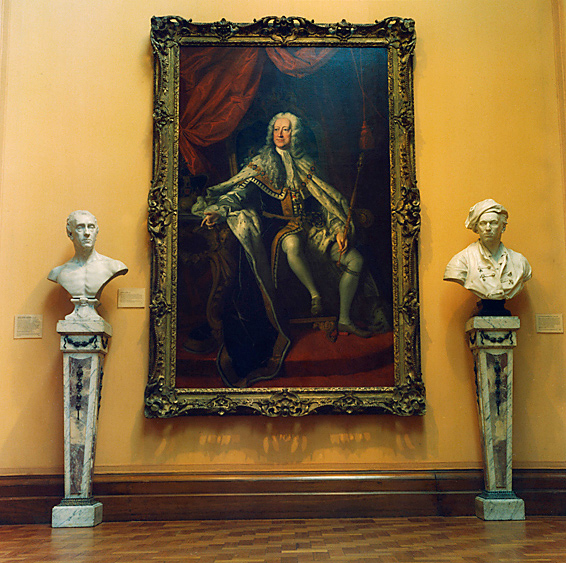
Although the square photographs are taken by a medium format film camera (a Hasselblad I suspect) and printed as C-type prints (hence the lush colours) because the camera was handheld this means that, in some of the photographs, little is actually in focus. While this may add to the immediacy of the images, like a quick snapshot as Zahalka prowls the galleries, it detracts from the clarity of the previsualisation of the artist whilst also detracting from the visual depth of field that the subject matter needed.

On the positive side there are some lovely spatial relationships between the figures in the paintings and the busts on the pedestals: in one particular photograph (National Portrait Gallery #2, 2010) there is an almost symbiotic relationship between the man in the painting at left, the bust of the man on the pedestal and the man at the very left in the right hand painting. This arrangement is like a triple portrait of the same person. A similar understanding of the spatial relationships within the image frame can be seen in National Portrait Gallery #1 (see photograph above), one of the more successful photographs in the series, with it’s wonderful red flocked wallpaper and gilt frames.

On the right hand side of the gallery there are numerous vertical colour photographs taken on a 35mm camera that feature the back of people looking at a work of art (see National Gallery of Australia, Masters of Paris #5, 2010). These are basic photographs that seek to conceptualise the act of looking at art as a tourist industry to no great affect or insight into the condition being examined.

Dr Marcus Bunyan


Many thankx to Angela Connor and Arc One Gallery for allowing me to publish the photographs in the posting. Please click on the photograph for a larger version of the image.


Anne Zahalka (Australian, b. 1957) 'National Portrait Gallery #5' 2010 from the exhibition 'The Way Things Appear' by Anne Zahalka at Arc One Gallery, Melbourne, June - July, 2010


Anne Zahalka (Australian, b. 1957)
National Portrait Gallery #5
2010


Anne Zahalka (Australian, b. 1957) 'National Portrait Gallery #3' 1992/2010 from the exhibition 'The Way Things Appear' by Anne Zahalka at Arc One Gallery, Melbourne, June - July, 2010


Anne Zahalka (Australian, b. 1957)
National Portrait Gallery #3
1992/2010


Anne Zahalka (Australian, b. 1957) 'Prado Museum, Madrid' 1992/2010


Anne Zahalka (Australian, b. 1957)
Prado Museum, Madrid
1992/2010


Arc One Gallery
45 Flinders Lane
Melbourne, 3000
Phone: +61 3 9650 0589

Opening hours:
Wednesday – Saturday, 11am – 5pm

Arc One Gallery website

LIKE ART BLACK ON FACEBOOK

Back to top

Review: ‘Simryn Gill: Gathering’ at Heide Museum of Modern Art, Melbourne

Exhibition dates: 22 April – 18 July 2010


Simryn Gill (Singapore, b. 1959) 'Pearls' 1999 from the exhibition 'Simryn Gill: Gathering' at Heide Museum of Modern Art, Melbourne, April - July, 2010


Simryn Gill (Singapore, b. 1959)
Pearls
1999
Private collection


This is a strong survey exhibition of the work of Simryn Gill at Heide Museum of Modern Art. Like most survey exhibitions it suffers from a slightly piecemeal approach, dipping in and out of various bodies of work to try to make up a holistic whole. Conceptually this is not a problem as the thematic development of Gill’s work, her narrative arc if you like, is evident throughout. Visually this causes some work to seem isolated and left me wanting more connection between pieces and rooms as you walk around.

Highlights included May 2006 (2006), Pearls (1999 – ongoing), Untitled (interiors) 2008 and Throwback (2007).

In May 2006 (2006) 817 silver gelatin photographs are mounted in columns of images, each column making up one of 30 rolls of film, one shot every day of a month photographing the artist’s immediate neighbourhood in Marrickville, Sydney, in the month in which the film expiration date occurred. Each column has a different number of images and are mounted along the one of the largest walls in the Heide galleries, producing an effect almost like a DNA sequence. Abstract scenes of pathways, fences, cars in streets, broken gutters, planes flying houses, trees, people walking, abandoned telephone directories, Hills hoists, coffee shops, windows, rooftops and factories inhabit the frame of reference – the environment seeming to be abandoned both literally and metaphorically. Empty chairs move from picture to picture. No Parking here!

There are some great angles in these photographs a la Robert Frank The Americans with excellent use of short depth of field shooting across tabletops for example. Above all there is a sense of abandonment, desolation and isolation in the intersection of spaces. Even in strong sunlight there is a strange, haunting melancholy present – an innate understanding of the subconsciously known archetype of space and place, that sense of belonging – and an absolute recognition in the viewer of that.

In Pearls (1999 – ongoing, see photograph above) friends provide Gill with a book of personal value, which she then transforms into beads of paper and then strings them together as necklaces which she then returns to the owner as a gift. The colours, length and heaviness of the necklace depends on the book chosen – the reconstructed text lying like pearls of wisdom against the skin of the giver / receiver, the meaning of the book transformed through the process. What a beautiful gift to receive.

Untitled (interiors) (2008), my second favourite work of the day, features bronze sculptures cast from the empty spaces created by dry cracks in the ground found near Nyngan and Lake George, New South Wales. The sculptures present the cracks inverted so they become like miniature mountain ranges, the cracks in the earth filled and metamorphosing until they thrust into the air, the empty spaces of the earth uplifted, negative / positive spaces interchangeable. This is a simple but beautifully resolved work. Unfortunately I do not have any photographs to show you of these sculptures.

Other work includes My own private Angkor (2007, see photograph above), photographs taken at a housing estate in Port Dickson that is becoming overgrown and returning to the surrounding landscape that Gill has made into her own Angkor Wat in reverse, featuring the detritus of a vanquished, constructed environment; four black and white photographs from Forest (1996) featuring text on leaves; a glass case of curiosities like the Victorian cabinet of curiosities that includes a jar of plastic cowboys and indians, a bowl of Mindanao pearls, found and made spherical objects, cast tin and mango seeds (Some of my best friends suck mangoes, 1998) and different noses of cast tin (Bouquet 1994); Untitled (1998 – ongoing), a glass case full of found and blunt objects arranged like a seismograph recording, small at the ends and big in the centre featuring scissors, clubs, spoons, knives, bottle top openers, tweezers, letter openers and salad servers!; and Paper boats (2008, see photographs below), table and floor covered by paper boats made from the torn out pages of Encyclopedia Britannica 1968 with the invitation to “Please make boats” with no explanation as to how, exactly, to make them – human knowledge as text, detritus, object, place, manufacture and commission.

The absolute star of the exhibition is the installation Throwback (2007, see photographs below). The installation features the interior parts of a Tata truck (the engine and axles) recast in termite mound soils, river clay, laterite, sea shells, fruit skins, coconut bark, resin, and fibre laid on a huge dissecting table (much like the body in Rembrandt’s painting The Anatomy Lesson of Dr Tulp (1632)) – the layout of the engine and axles evoking the spine and interior skeleton of the body. Unfortunately I do not have an overview photograph of the whole work but parts of the work can be seen in the photographs below. The Tata truck spent its working life plying the roads of the forests of Malaysia:

“With the rise of China and India, a voracious market for scrap metal has developed, hastening the disappearance of particular objects, Gill recovers the modern forms of the truck parts by casting them in natural materials found near her studio in Port Dickson.” (Wall text from the exhibition)

.
This is an outstanding work that left me stunned with it’s beauty and insightfulness. It literally took my breath away and for that reason alone a visit to this exhibition at Heide is well worth the journey.

Dr Marcus Bunyan


Many thankx to Jade Enge and the Heide Museum of Modern Art for allowing me to publish the photographs in the posting. Please click on the photographs for a larger version of the image.


“The work of Simryn Gill considers questions of place and history, and how they might intersect with personal and collection experience … Using objects, language and photographs, her work conveys a deep interest in material culture, and in the ways that meaning can transform and translate in different contexts. Through the reinterpretation or alteration of existing objects, the photographing of specific locations, and the forming of collections, Gill contemplates how ideas and meanings are communicated between people, objects and sites.”


Wall text from the exhibition


Simryn Gill (Singapore, b. 1959) 'Untitled' 1999 from the exhibition 'Simryn Gill: Gathering' at Heide Museum of Modern Art, Melbourne, April - July, 2010


Simryn Gill (Singapore, b. 1959)
Untitled
1999
Gouache on National Geographic magazine pages (1970s)
Courtesy of the artist, BREENSPACE, Sydney and Tracy Williams Ltd, New York


Simryn Gill (Singapore, b. 1959) 'Untitled' 1999 from the exhibition 'Simryn Gill: Gathering' at Heide Museum of Modern Art, Melbourne, April - July, 2010


Simryn Gill (Singapore, b. 1959)
Untitled
1999
Gouache on National Geographic magazine pages (1970s)
Courtesy of the artist, BREENSPACE, Sydney and Tracy Williams Ltd, New York


Simryn Gill (Singapore, b. 1959) 'My own private Angkor' 2007


Simryn Gill (Singapore, b. 1959)
My own private Angkor
2007
Courtesy of the artist, BREENSPACE, Sydney and Tracy Williams Ltd, New York


Installation view of the exhibition 'Simryn Gill: Gathering' at Heide Museum of Modern Art, Melbourne showing the work 'Throwback' 2007


Installation view of the exhibition Simryn Gill: Gathering at Heide Museum of Modern Art, Melbourne showing the work Throwback 2007


Simryn Gill (Singapore, b. 1959) 'Throwback' 2007 (detail)


Simryn Gill (Singapore, b. 1959)
Throwback (detail)
2007
Interior parts of Tata truck, termite mound soil, river clay, laterite, seashells, fruit skins, leaves, bark and fibre, flowers, glue, resin, milk
Buxton Collection Melbourne
Courtesy of the artist


Simryn Gill (Singapore, b. 1959) 'Throwback' 2007 (detail)


Simryn Gill (Singapore, b. 1959)
Throwback (detail)
2007
Interior parts of Tata truck, termite mound soil, river clay, laterite, seashells, fruit skins, leaves, bark and fibre, flowers, glue, resin, milk
Buxton Collection Melbourne
Courtesy of the artist


This exhibition (22 April – 18 July) presents the work of leading Sydney-based Malaysian artist, Simryn Gill. Featuring objects, books, collections, photographs and text pieces from the last six years of Gill’s practice, it explores the artist’s pursuit of meaning through materials, forms and ways of working, such as collecting, reading, archiving, arranging, casting and photographing.

Described in 2009 in the New Yorker as ‘quietly dazzling’, Gill’s work is internationally recognised. She has been honoured with solo exhibitions at the Tate Modern, London and the Smithsonian Institution, Washington DC, both in 2006. Born in Singapore in 1959, Gill lives and works in Sydney and Port Dickson, Malaysia, and has participated in significant exhibitions internationally, including documenta 12 in Kassel, Germany (2007), the Singapore Biennale (2006), the Biennale of Sydney (2002 and 2008), the São Paulo Biennial (2004) and the Venice Biennale (1999).

An MCA touring exhibition curated by Russell Storer, it has been expanded by Heide to include the Australian premiere of Gill’s major work Throwback, originally produced for the documenta 12 exhibition in Kassel, Germany, in 2007. Throwback reworks the inner machinery of a 1985 Tata truck that plied the roads of Malaysia. With the economic rise of China and India, a voracious market for scrap metal has developed, hastening the disappearance of particular objects. Gill recovers the modern forms of truck parts by casting them in natural materials – found near her studio in Malaysia – including river mud, coconut husks, reconstituted termite mounds and fruit skins.

Gill has also produced a new work, an artist’s book reflecting on the gardens at Heide.

Gill’s practice considers how we might experience place as an intersection of personal and collective histories and geographies. Through the reinterpretation or alteration of existing objects, the photographing of specific locations, and the forming of collections, Gill contemplates how ideas and meanings are communicated between people, objects, and sites.

Several works in the exhibition invite audience participation. Paper Boats invites visitors to add their own unique paper boat to the installation by tearing pages from a 1968 Encyclopaedia Britannica and using the sheet to make an origami boat. Another work, Garland (2006) encourages us to hold, touch and rearrange objects collected by Gill on the beaches of Port Dickson, Malaysia, and the islands off Singapore – fragments reshaped by sea and sand that take on almost organic form.

A selection of books, sketches, collections and experimental pieces from the early 1990s to the present, some produced for exhibitions and others never intended as artworks will also be presented as part of the exhibition. Together they offer an insight into Gill’s artistic processes and her interest in art-making as an active engagement with the world.”

Press release from the Heide Museum of Modern Art website [Online] Cited 01/10/2010 no longer available online


Simryn Gill (Singapore, b. 1959) 'Paper boats' 2008


Simryn Gill (Singapore, b. 1959)
Paper boats
2008
Encyclopaedia Britannica (1968 edition)
Courtesy of the artist and BREENSPACE, Sydney


Simryn Gill (Singapore, b. 1959) 'Paper boats' 2008 (detail)


Simryn Gill (Singapore, b. 1959)
Paper boats (detail)
2008
Encyclopaedia Britannica (1968 edition)
Courtesy of the artist and BREENSPACE, Sydney


Addendum: A Pencil for Your Thoughts


Heide pencil


Heide pencil, the confounding pencil

I love to visit Heide, the elegant buildings, the art, the cafe, a stroll in the gardens looking at the sculpture. What I don’t like is being accosted by gallery attendants on my last three visits, twice on the last visit alone to review the Simryn Gill exhibition – accost being not too harsh a word for some of the approaches. The request: to not write in the gallery with a pen but to use a pencil (rushed to the scene of the crime post haste!)

I don’t like writing with a pencil, they go blunt and I can’t read my notes. I like writing with a pen.
This is a ridiculous state of affairs, the only gallery in Melbourne that I know of that has such a ‘nanny state’ rule.

Do they think that I am going to:

a) spear the pen into the gallery wall
b) attack the attendant with the pen (after this last visit the thought did cross my mind!) or
c) scribble all over the art work like a child …

 
The more we are treated like children the more child-like we become.

“Put the pen on the ground … Step away from the pen.”


Heide Museum of Modern Art
7, Templestowe Road
Bulleen, Victoria 3105

Opening hours:
(Heide II and Heide III)
Tuesday – Sunday 10.00am – 5.00pm

Heide Museum of Modern Art website

LIKE ART BLART ON FACEBOOK

Back to top

Exhibition: ‘European Masters: Städel Museum 19th – 20th Century’, Winter Masterpieces at the National Gallery of Victoria, Melbourne

Exhibition dates: 19th June – 10th October 2010


Media opening of 'European Masters: Städel Museum 19th - 20th Century', Winter Masterpieces at the National Gallery of Victoria


Media opening of European Masters: Städel Museum 19th – 20th Century, Winter Masterpieces at the National Gallery of Victoria
Photo: Marcus Bunyan


A huge posting – and another ‘you saw it here first’ on Art Blart!

A simple, spacious hang shows off some wonderfully vibrant paintings in the new Winter Masterpieces blockbuster at the NGV. The use of strong yellow and pale grey wall colour compliments the paintings. Conversely, other rooms have a dark brown and very dark grey wall colour. Some people will like the effect but I found the dark grey a little too sombre and heavy in the room dedicated to the work of Max Beckmann. Overall a fantastic range of paintings, especially those by the German Expressionists and a luminous painting by Odilon Redon. To see them in Australia is a joy to behold.

Note on the photographs: All the photographs were taken with a timed exposure with the camera on a tripod. While this leads to ghosting as people walk through the shot it also adds a sense of the exhibition as a living entity. I find it preferable to the use of flash photography as flash destroys any ambience that the rooms possess. The photographs are in chronological order, proceeding from the beginning of the exhibition to the end.

Dr Marcus Bunyan


Many thankx to Dr Ted Gott, Senior Curator of International Art, Sue Coffey and all the media team and the National Gallery of Victoria for allowing me to photograph the exhibition and publish the photographs online. Please click on the photographs for a larger version of the image. All installation photographs © Marcus Bunyan and the National Gallery of Victoria.

PS. Thankx to the many people who have emailed me saying that they love the photographs, especially to Sue Coffey who said the posting looked superb = it makes it all worthwhile!


Media opening of 'European Masters: Städel Museum 19th - 20th Century', Winter Masterpieces at the National Gallery of Victoria


Media opening of European Masters: Städel Museum 19th – 20th Century, Winter Masterpieces at the National Gallery of Victoria
Photo: Marcus Bunyan


Installation view of Johann Heinrich Wilhelm Tischbei's panting 'Goethe in the Roman countryside' 1787 at the exhibition 'European Masters: Städel Museum 19th – 20th Century', Winter Masterpieces at the National Gallery of Victoria

Installation view of Johann Heinrich Wilhelm Tischbei's panting 'Goethe in the Roman countryside' 1787 at the exhibition 'European Masters: Städel Museum 19th – 20th Century', Winter Masterpieces at the National Gallery of Victoria


Installation views of Johann Heinrich Wilhelm Tischbei’s panting Goethe in the Roman countryside 1787 at the exhibition European Masters: Städel Museum 19th – 20th Century, Winter Masterpieces at the National Gallery of Victoria
Photos: Marcus Bunyan


Johann Heinrich Wilhelm Tischbein (German, 1751-1829) 'Goethe in the Roman countryside' (Goethe in der römischen Campagna) 1787 from the exhibition 'European Masters: Städel Museum 19th – 20th Century', Winter Masterpieces at the National Gallery of Victoria, June - October, 2010


Johann Heinrich Wilhelm Tischbein (German, 1751-1829)
Goethe in the Roman countryside (Goethe in der römischen Campagna)
1787
Oil on canvas
161.0 x 197.5cm
Städel Museum, Frankfurt am Main
Acquired in 1878 as a gift by Baroness Salomon von Rothschild


Installation view of 'European Masters: Städel Museum 19th - 20th Century', Winter Masterpieces at the National Gallery of Victoria


Installation view of the exhibition European Masters: Städel Museum 19th – 20th Century, Winter Masterpieces at the National Gallery of Victoria
Photo: Marcus Bunyan


Installation view of Johann Heinrich Wilhelm Tischbei's panting 'Goethe in the Roman countryside' 1787 at the exhibition 'European Masters: Städel Museum 19th – 20th Century', Winter Masterpieces at the National Gallery of Victoria

Installation view of Johann Heinrich Wilhelm Tischbei's panting 'Goethe in the Roman countryside' 1787 at the exhibition 'European Masters: Städel Museum 19th – 20th Century', Winter Masterpieces at the National Gallery of Victoria


Installation views of Johann Heinrich Wilhelm Tischbei’s panting Goethe in the Roman countryside 1787 at the exhibition European Masters: Städel Museum 19th – 20th Century, Winter Masterpieces at the National Gallery of Victoria
Photos: Marcus Bunyan


Installation view of 'European Masters: Städel Museum 19th - 20th Century', Winter Masterpieces at the National Gallery of Victoria

Installation view of 'European Masters: Städel Museum 19th - 20th Century', Winter Masterpieces at the National Gallery of Victoria


Installation views of the exhibition European Masters: Städel Museum 19th – 20th Century, Winter Masterpieces at the National Gallery of Victoria
Photos: Marcus Bunyan


Alfred Sisley (English, 1839-1899) 'Banks of the Seine in Autumn' 1879 (installation view) from the exhibition 'European Masters: Städel Museum 19th – 20th Century', Winter Masterpieces at the National Gallery of Victoria, June - October, 2010


Alfred Sisley (English, 1839-1899)
Banks of the Seine in Autumn (installation view)
1879
Oil on canvas
Photo: Marcus Bunyan


Installation view of Charles-Francois Daubigny (French 1817-1878) 'French Orchard at Harvest Time' (Le verger) 1876 at the exhibition 'European Masters: Städel Museum 19th – 20th Century', Winter Masterpieces at the National Gallery of Victoria, June - October, 2010

Installation view of Charles-Francois Daubigny (French 1817-1878) 'French Orchard at Harvest Time' (Le verger) 1876


Installation views of Charles-Francois Daubigny (French 1817-1878) French Orchard at Harvest Time (Le verger) 1876 at the exhibition European Masters: Städel Museum 19th – 20th Century, Winter Masterpieces at the National Gallery of Victoria
Photos: Marcus Bunyan


Charles-Francois Daubigny (French 1817-1878) 'French Orchard at Harvest Time' (Le verger) 1876 (installation view) from the exhibition 'European Masters: Städel Museum 19th – 20th Century', Winter Masterpieces at the National Gallery of Victoria, June - October, 2010


Charles-Francois Daubigny (French, 1817-1878)
French Orchard at Harvest Time (Le verger) (installation view)
1876
Oil on canvas
Photo: Marcus Bunyan


Pierre Auguste Renoir (French 1841-1919) 'After the luncheon' (La fin du déjeuner) 1879 (installation view) at the exhibition 'European Masters: Städel Museum 19th – 20th Century', Winter Masterpieces at the National Gallery of Victoria, June - October, 2010

Pierre Auguste Renoir (French 1841-1919) 'After the luncheon' (La fin du déjeuner) 1879 (installation view) at the exhibition 'European Masters: Städel Museum 19th – 20th Century', Winter Masterpieces at the National Gallery of Victoria, June - October, 2010


Installation views of Pierre Auguste Renoir (French 1841-1919) After the luncheon (La fin du déjeuner) 1879 at the exhibition European Masters: Städel Museum 19th – 20th Century, Winter Masterpieces at the National Gallery of Victoria
Photos: Marcus Bunyan


Pierre Auguste Renoir (French 1841-1919) 'After the luncheon' (La fin du déjeuner) 1879


Pierre Auguste Renoir (French 1841-1919)
After the luncheon (La fin du déjeuner)
1879
Oil on canvas
100.5 x 81.3cm
Städel Museum, Frankfurt am Main
Acquired in 1910


Odilon Redon (French 1840-1916) 'Christ and the Samaritan Woman' (Le Christ et la Samaritaine) c. 1895 (installation view) at the exhibition 'European Masters: Städel Museum 19th – 20th Century', Winter Masterpieces at the National Gallery of Victoria


Installation view of Odilon Redon (French 1840-1916) Christ and the Samaritan Woman (Le Christ et la Samaritaine) c. 1895 at the exhibition European Masters: Städel Museum 19th – 20th Century, Winter Masterpieces at the National Gallery of Victoria
Photo: Marcus Bunyan


Odilon Redon (French 1840-1916) 'Christ and the Samaritan Woman' (Le Christ et la Samaritaine) c. 1895


Odilon Redon (French, 1840-1916)
Christ and the Samaritan Woman (Le Christ et la Samaritaine)
c. 1895
Oil on canvas
64.8 x 50.0cm
Städel Museum, Frankfurt am Main
Acquired in 1960


Installation view of the exhibition 'European Masters: Städel Museum 19th - 20th Century', Winter Masterpieces at the National Gallery of Victoria


Installation view of the exhibition European Masters: Städel Museum 19th – 20th Century, Winter Masterpieces at the National Gallery of Victoria
Photo: Marcus Bunyan


“The appeal of the Städel Institute lies in the tremendous energy filling that confined space. Virtually all of the great emotions that have lived in the souls of the peoples of Europe are there, and all in superb works.”

Alfred Lichtwark, Director the Hamburg Museum, 1905


One of the world’s finest collections of 19th and 20th century art is showing exclusively in Melbourne as the seventh exhibition in the hugely popular Melbourne Winter Masterpieces series at the National Gallery of Victoria.

European Masters: Städel Museum, 19th-20th Century brings together almost 100 works by 70 artists from one of Germany’s oldest and most respected museums, the Städel Museum in Frankfurt.

Dr Gerard Vaughan, NGV Director, said: “European Masters presents a comprehensive overview of the Städel Museum’s holdings of painting and sculpture from the last two centuries of European art. This blockbuster exhibition provides a superb survey of the key artistic movements of the time, including Realism, Impressionism and Post Impressionism, German Romanticism, Expressionism and Modernism, and French Symbolism.”

The exhibition opens with a series of large-scale romantic German paintings, including Johann H.W. Tischbein’s iconic Goethe in the Roman Campagna from 1787. Visitors will also be treated to magnificent examples of 19th century French art from Corot and Courbet’s Realist landscapes to well-known beautiful Impressionist works by Monet, Renoir, Degas and Cézanne.

European Masters then traces the development of German art, introducing audiences to rarely seen Realist and Symbolist masterpieces from artists such as Max Liebermann and Franz von Stuck.

A major highlight of the exhibition is a powerful selection of German Expressionist paintings, with ten poignant works by Max Beckmann, including The synagogue in Frankfurt am Main and his powerful Double Portrait, all of which have left the Städel for the first time to be shown outside of Europe.

The exhibition also includes a breathtaking selection of Swiss, Belgian and Dutch works by artists such as Arnold Böcklin, Fernand Khnopff and Vincent Van Gogh.

“Exclusive to Melbourne, European Masters provides an unprecedented opportunity to see a spectacular group of masterpieces spanning the dynamic and transformative years of the 19th and 20th centuries. There is something in this exhibition for everyone, from the beauty and immediacy of French Impressionism to the raw power of German Expressionism. This is a once-in-a-lifetime chance to see superb pictures that rarely travel outside of Europe,” said Dr. Vaughan.

Founded in 1816 by the Frankfurt financier Johann Friedrich Städel, the Städel Museum has one of the world’s finest art collections. The collection boasts 2700 paintings, 600 sculptures and over 100,000 prints and drawings documenting the development of European art and culture.

The Melbourne Winter Masterpieces series began in 2004 with The Impressionists: Masterpieces from the Musée d’Orsay, continued in 2005 with Dutch Masters from the Rijksmuseum, Amsterdam, followed by Picasso in 2006, Guggenheim Collection: 1940s to Now in 2007, Art Deco 1910-1939 in 2008 and Salvador Dalí: Liquid Desire in 2009.

This year Melbourne Winter Masterpieces includes European Masters: Städel Museum, 19th-20th Century at the NGV, and Tim Burton at the Australian Centre for the Moving Image.

Press release from the National Gallery of Victoria website


Installation view of the exhibition 'European Masters: Städel Museum 19th - 20th Century', Winter Masterpieces at the National Gallery of Victoria

Installation view of Max Liebermann (German 1847-1935, lived in France 1874-78) 'Samson and Delilah' (Simson und Delila) 1901 at the exhibition 'European Masters: Städel Museum 19th – 20th Century', Winter Masterpieces at the National Gallery of Victoria

Installation view of Max Liebermann (German 1847-1935, lived in France 1874-78) 'Samson and Delilah' (Simson und Delila) 1901 at the exhibition 'European Masters: Städel Museum 19th – 20th Century', Winter Masterpieces at the National Gallery of Victoria


Installation views of Max Liebermann (German 1847-1935, lived in France 1874-78) Samson and Delilah (Simson und Delila) 1901 at the exhibition European Masters: Städel Museum 19th – 20th Century, Winter Masterpieces at the National Gallery of Victoria
Photos: Marcus Bunyan


Max Liebermann (German 1847-1935, lived in France 1874-78) 'Samson and Delilah' (Simson und Delila) 1901


Max Liebermann (German, 1847-1935, lived in France 1874-1878)
Samson and Delilah (Simson und Delila)
1901
Oil on canvas
151.2 x 212.0cm
Städel Museum, Frankfurt am Main
Acquired in 1910


Max Klinger (German 1857-1920) 'Portrait of a Roman woman on a flat roof' (Bildnis einer Römerin auf einem Dach in Rom) 1891


Max Klinger (German, 1857-1920)
Portrait of a Roman woman on a flat roof (Bildnis einer Römerin auf einem Dach in Rom)
1891
Oil on canvas
182 x 182cm
Städel Museum, Frankfurt am Main
Acquired in 1926 as a gift in commemoration of Walther Rathenau


Installation view at left of Max Klinger (German 1857-1920) 'Portrait of a Roman woman on a flat roof' (Bildnis einer Römerin auf einem Dach in Rom) 1891 at the exhibition 'European Masters: Städel Museum 19th – 20th Century', Winter Masterpieces at the National Gallery of Victoria


Installation view at left of Max Klinger (German 1857-1920) Portrait of a Roman woman on a flat roof (Bildnis einer Römerin auf einem Dach in Rom) 1891 at the exhibition European Masters: Städel Museum 19th – 20th Century, Winter Masterpieces at the National Gallery of Victoria
Photo: Marcus Bunyan


Max Beckmann room, installation view of 'European Masters: Städel Museum 19th - 20th Century', Winter Masterpieces at the National Gallery of Victoria

Max Beckmann room, installation view of 'European Masters: Städel Museum 19th - 20th Century', Winter Masterpieces at the National Gallery of Victoria

Max Beckmann room, installation view of 'European Masters: Städel Museum 19th - 20th Century', Winter Masterpieces at the National Gallery of Victoria


Max Beckmann room, installation view of European Masters: Städel Museum 19th – 20th Century, Winter Masterpieces at the National Gallery of Victoria
Photos: Marcus Bunyan


Max Beckmann. 'Female dancer' (Tanzerin) c. 1935 (installation view)


Max Beckmann (German 1884-1950, worked in the Netherlands 1937-1947, United States 1947-1950)
Female dancer (Tanzerin) (installation view)
c. 1935
Bronze
Photo: Marcus Bunyan


Installation view of 'European Masters: Städel Museum 19th - 20th Century', Winter Masterpieces at the National Gallery of Victoria

Installation view of 'European Masters: Städel Museum 19th - 20th Century', Winter Masterpieces at the National Gallery of Victoria

Installation view of 'European Masters: Städel Museum 19th - 20th Century', Winter Masterpieces at the National Gallery of Victoria


Installation views of European Masters: Städel Museum 19th – 20th Century, Winter Masterpieces at the National Gallery of Victoria
Photos: Marcus Bunyan


Ernst Ludwig Kirchner (German 1880-1938) 'Reclining woman in a white chemise' (Liegende Frau im weiβen Hemd) 1909


Ernst Ludwig Kirchner (German, 1880-1938)
Reclining woman in a white chemise (Liegende Frau im weiβen Hemd)
1909
Oil on canvas
95.0 x 121.0cm
Städel Museum, Frankfurt am Main
Acquired in 1950


NGV International
180 St Kilda Road

Opening hours:
Daily 10am – 5pm

National Gallery of Victoria website

LIKE ART BLART ON FACEBOOK

Back to top