Review: ‘John Davis: Presence’ at The Ian Potter Centre: NGV Australia, Melbourne

Exhibition dates: 6th August – 24th October 2010
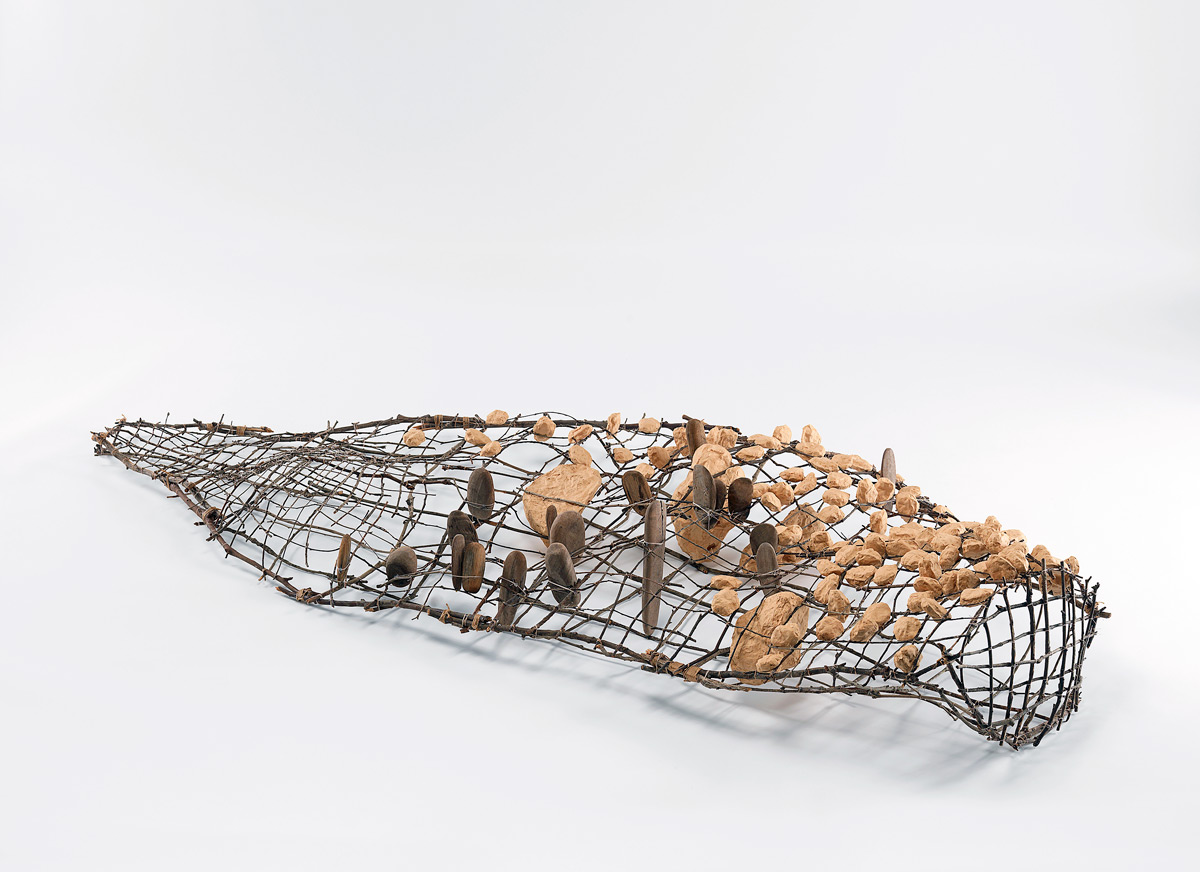
 

John Davis (Australian, 1936-1999) 'You Yangs' 1980 from the exhibition 'John Davis: Presence' at The Ian Potter Centre: NGV Australia, Melbourne, Aug - Oct 2010


John Davis (Australian, 1936-1999)
You Yangs
1980
Twigs, cotton thread, papier mâché, string, wood
196 x 90 x 30cm
Queensland Art Gallery, Brisbane
Purchased, 1980. Queensland Art Gallery Foundation with funds from Dr W. R. Johnston
© Penelope Davis & Martin Davis. Administered by VISCOPY, Australia


“In reality, I make one work over my life, so that when it’s all finished, there are a number of parts or contributions to an overall piece, each linking to another in some way.”


John Davis, 1989


This is a superlative survey exhibition of the work of John Davis at NGV Australia, Melbourne.

In the mature work you can comment on the fish as ‘travellers’ or ‘nomads’, “a metaphor for people and the way we move around the world.” You can observe the caging, wrapping and bandaging of these fish as a metaphor for the hurt we humans impose on ourselves and the world around us. You can admire the craftsmanship and delicacy of the constructions, the use of found objects, thread, twigs, driftwood and calico and note the ironic use of bituminous paint in relation to the environment, “a sticky tar-like form of petroleum that is so thick and heavy,”1 of dark and brooding colour.

This is all well and true. But I have a feeling when looking at this work that here was a wise and old spirit, one who possessed knowledge and learning.

Since one of his last works was titled ‘Kōan’ (1999, see image below), a story “the meaning of which cannot be understood by rational thinking but may be accessible through intuition,”2 I would like to use a quotation from Carlos Castaneda and The Teachings of Don Juan as an allegorical statement about the work and, more inclusively, about the human journey to knowledge and the attaining of a state of grace in one’s life.

Although I didn’t know John Davis I have a feeling from his work that he attained such a state. Stick with the quotation for it is through this journey that we relate to ourselves and world around us. The stuff of legend.

Dr Marcus Bunyan


Many thanxk to Alison Murray, Jemma Altmeier and The National Gallery of Victoria for allowing me to publish the photographs in the posting. Please click on the photographs for a larger version of the image. There is also another John Davis exhibition in Melbourne at the moment at Arc One Gallery until 16th October 2010.


Fear, clarity, power, death

“‘When a man starts to learn, he is never clear about his objectives. His purpose is faulty; his intent is vague. He hopes for rewards that will never materialize, for he knows nothing of the hardships of learning.

‘He slowly begins to learn – bit by bit at first, then in big chunks. And his thoughts soon clash. What he learns is never what he pictured, or imagined, and so he begins to be afraid. Learning is never what one expects. Every step of learning is a new task, and the fear the man is experiencing begins to mount mercilessly, unyieldingly. His purpose becomes a battlefield.

‘And thus he has stumbled upon the first of his natural enemies : Fear! A terrible enemy – treacherous, and difficult to overcome. It remains concealed at every turn of the way, prowling, waiting. And if the man, terrified in its presence, runs away, his enemy will have put an end to his quest.’

‘What will happen to the man if he runs away in fear?’

‘Nothing happens to him except that he will never learn. He will never become a man of knowledge. He will perhaps be a bully or a harmless, scared man; at any rate, he will be a defeated man. His first enemy will have put an end to his cravings.’

‘And what can he do to overcome fear?’

‘The answer is very simple. He must not run away. He must defy his fear, and in spite of it he must take the next step in learning, and the next, and the next. He must be fully afraid, and yet he must not stop. That is the rule! And a moment will come when his first enemy retreats. The man begins to feel sure of himself. His intent becomes stronger. Learning is no longer a terrifying task.

‘When this joyful moment comes, then he can say without hesitation that he has defeated his first natural enemy.’

‘Does it happen at once, don Juan, or little by little?’

‘It happens little by little, and yet the fear is vanquished suddenly and fast.’

‘But won’t the man be afraid again if something new happens to him?’

‘No. Once a man has vanquished fear, he is free from it for the rest of his life because, instead of fear, he has acquired clarity – a clarity of mind which erases fear. By then a man knows his desires; he knows how to satisfy those desires. He can anticipate the new steps of learning, and a sharp clarity surrounds everything. The man feels that nothing is concealed.

‘And thus he has encountered his second enemy : Clarity! That clarity of mind, which is so hard to obtain, dispels fear, but also blinds.

‘It forces the man never to doubt himself. It gives him the assurance he can do anything he pleases, for he sees clearly into everything. And he is courageous because he is clear, and he stops at nothing because he is clear. But all that is a mistake; it is like something incomplete. If the man yields to this make-believe power, he has succumbed to his second enemy and will fumble with learning. He will rush when he should be patient, or he will be patient when he should rush. And he will fumble with learning until he winds up incapable of learning anything more.’

‘What becomes of a man who is defeated in that way, don Juan? Does he die as a result?’

‘No, he doesn’t die. His second enemy has just stopped him cold from trying to become a man of knowledge; instead, the man may turn into a buoyant warrior, or a clown. Yet the clarity for which he has paid so dearly will never change to darkness and fear again. He will be clear as long as he lives, but he will no longer learn, or yearn for, anything.’

‘But what does he have to do to avoid being defeated?’

‘He must do what he did with fear : he must defy his clarity and use it only to see, and wait patiently and measure carefully before taking new steps; he must think, above all, that his clarity is almost a mistake. And a moment will come when he will understand that his clarity was only a point before his eyes, And thus he will have overcome his second enemy, and will arrive at a position where nothing can harm him any more. This will not be a mistake. It will not be only a point before his eyes. It will be true power.

‘He will know at this point that the power he has been pursuing for so long is finally his. He can do with it whatever he pleases. His ally is at his command. His wish is the rule. He sees all that is around him. But he has also come across his third enemy : Power!

‘Power is the strongest of all enemies. And naturally the easiest thing to do is to give in; after all, the man is truly invincible. He commands; he begins by taking calculated risks, and ends in making rules, because he is a master.

‘A man at this stage hardly notices his third enemy closing in on him. And suddenly, without knowing, he will certainly have lost the battle. His enemy will have turned him into a cruel, capricious man.’

‘Will he lose his power?’

‘No, he will never lose his clarity or his power.’

‘What then will distinguish him from a man of knowledge?’

‘A man who is defeated by power dies without really knowing how to handle it. Power is only a burden upon his fate. Such a man has no command over himself, and cannot tell when or how to use his power.’

‘Is the defeat by any of these enemies a final defeat?’

‘Of course it is final. Once one of these enemies overpowers a man there is nothing he can do.’

‘Is it possible, for instance, that the man who is defeated by power may see his error and mend his ways?’

‘No. Once a man gives in he is through.’

‘But what if he is temporarily blinded by power, and then refuses it?’

‘That means the battle is still on. That means he is still trying to become a man of knowledge. A man is defeated only when he no longer tries, and abandons himself.’

‘But then, don Juan, it is possible that a man may abandon himself to fear for years, but finally conquer it.’

‘No, that is not true. If he gives in to fear he will never conquer it, he will shy away from learning and never try again. But if he tries to learn for years in the midst of his fear, he will eventually conquer it because he will never have really abandoned himself to it.’

‘How can he defeat his third enemy, don Juan?’

‘He has to defy it, deliberately. He has to come to realize the power he has seemingly conquered is in reality never his. He must keep himself in line at all times, handling carefully and faithfully all that he has learned. If he can see that clarity and power, without his control over himself, are worse than mistakes, he will reach a point where everything is held in check. He will know then when and how to use his power. And thus he will have defeated his third enemy.

‘The man will be, by then, at the end of his journey of learning, and almost without warning he will come upon the last of his enemies : Old age! This enemy is the cruelest of all, the one he won’t be able to defeat completely, but only fight away.

‘This is the time when a man has no more fears, no more impatient clarity of mind – a time when all his power is in check, but also the time when he has an unyielding desire to rest. If he gives in totally to his desire to lie down and forget, if he soothes himself in tiredness, he will have lost his last round, and his enemy will cut him down into a feeble old creature. His desire to retreat will overrule all his clarity, his power, and his knowledge.

‘But if the man sloughs off his tiredness, and lives his fate through, he can then be called a man of knowledge, if only for a brief moment when he succeeds in fighting off his last, invincible enemy. That moment of clarity, power, and knowledge is enough.”

Carlos Castaneda. The Teachings of Don Juan: A Yaqui Way of Knowledge3


1/ Anon. “Bitumen,” on Wikipedia [Online] Cited 02/10/2010

2/ Anon. “Kōan,” on Wikipedia [Online] Cited 02/10/2010

3/ Castaneda, Carlos. The Teachings of Don Juan: A Yaqui Way of Knowledge. London: Arkana Books, 1968, pp. 84-87
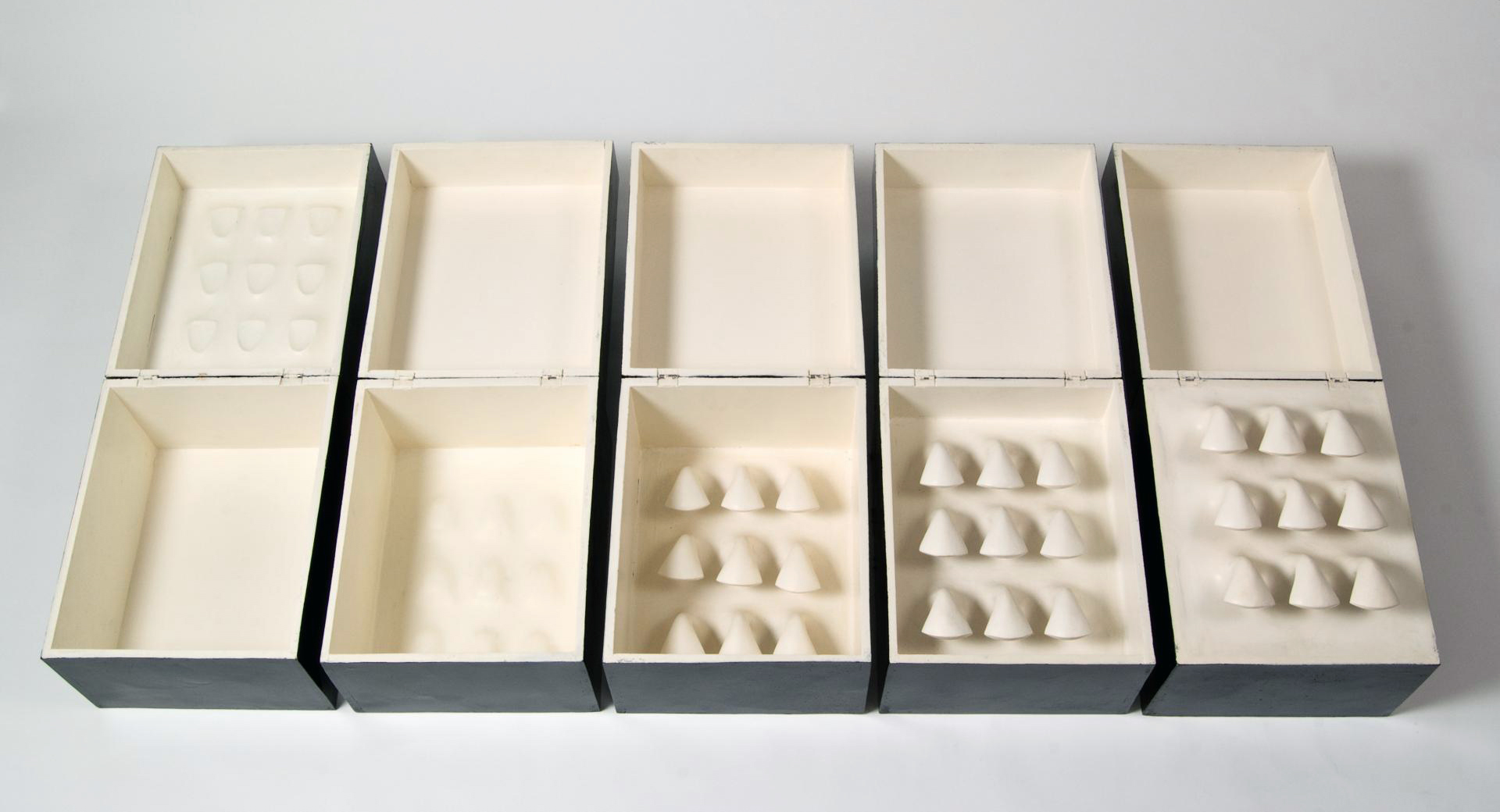


John Davis (Australia 1936-99) 'Nine through five' 1971 from the exhibition 'John Davis: Presence' at The Ian Potter Centre: NGV Australia, Melbourne, Aug - Oct 2010


John Davis (Australian, 1936-1999)
Nine through five
1971
Fibreglass, masonite, chipboard and enamel paint
(5 boxes) 30.8 x 33.4 x 40.4cm each
Newcastle Region Art Gallery, Newcastle
Gift of Marlene Creaser through the Taxation Incentives for the Arts Scheme, 1983
Photo: Dean Beletich
© Penelope Davis & Martin Davis. Administered by VISCOPY, Australia
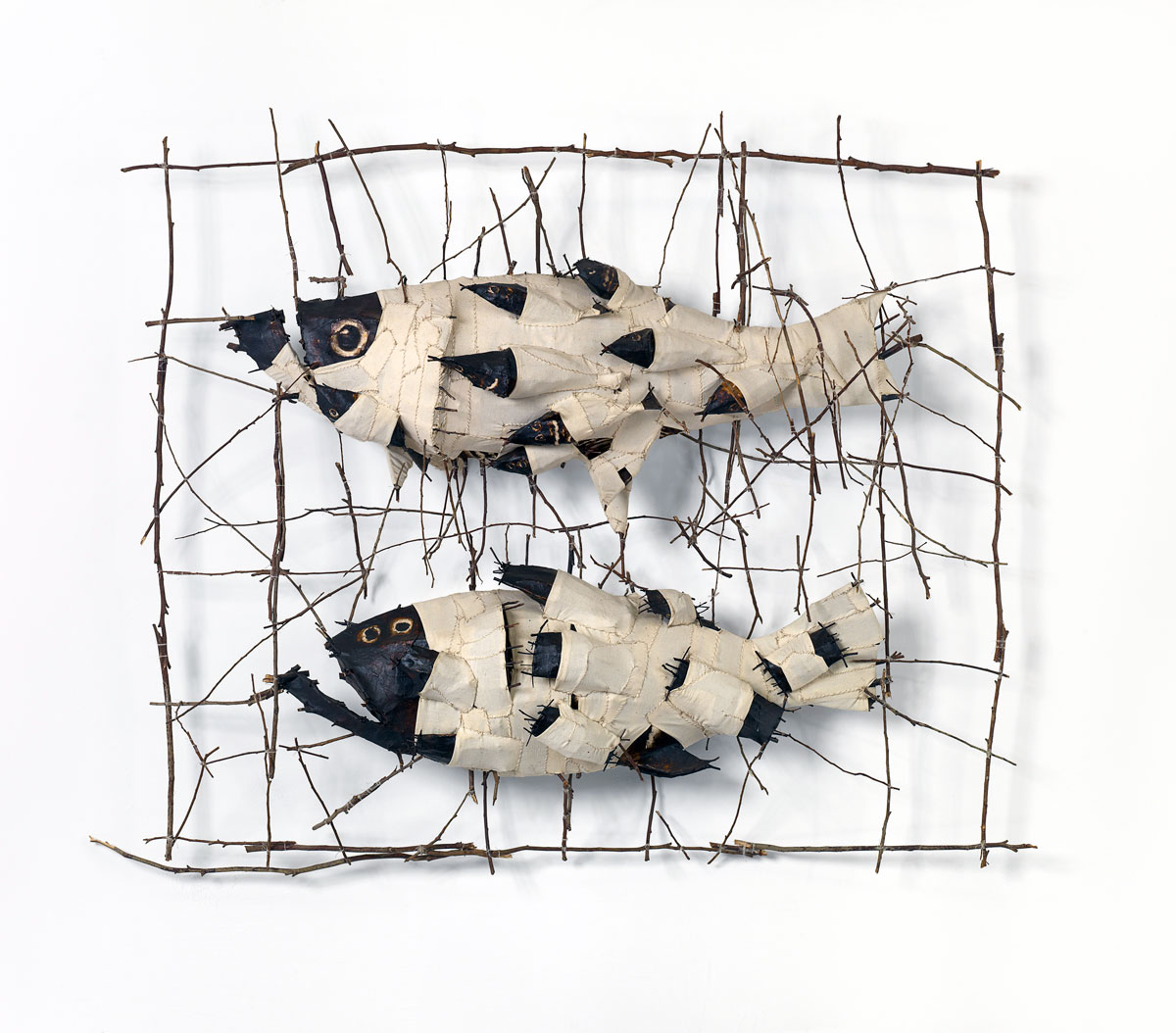
 

John Davis (Australian, 1936-1999) 'Evolution of a fish: Traveller' 1990 from the exhibition 'John Davis: Presence' at The Ian Potter Centre: NGV Australia, Melbourne, Aug - Oct 2010


John Davis (Australian, 1936-1999)
Evolution of a fish: Traveller
1990
Twigs, cotton thread, calico, bituminous paint
110 x 130 x 18cm
Private collection, Melbourne
© Penelope Davis & Martin Davis. Administered by VISCOPY, Australia


John Davis (Australian, 1936-1999) 'Nomad' 1998 (detail)


John Davis (Australian, 1936-1999)
Nomad (detail)
1998
Twigs, cotton thread, calico, bituminous paint
(1-150) 163 x 1400 x 18cm (variable) (installation)
Private collection, Melbourne
© Penelope Davis & Martin Davis. Administered by VISCOPY, Australia


John Davis (Australian, 1936-1999) 'Journey extended' 1982


John Davis (Australian, 1936-1999)
Journey extended
1982
Wood, twigs, calico, bituminous paint, paper, adhesive, cotton thread
(a-b) 35 x 60 x 610cm (installation)
Private collection, Melbourne
© Penelope Davis & Martin Davis. Administered by VISCOPY, Australia
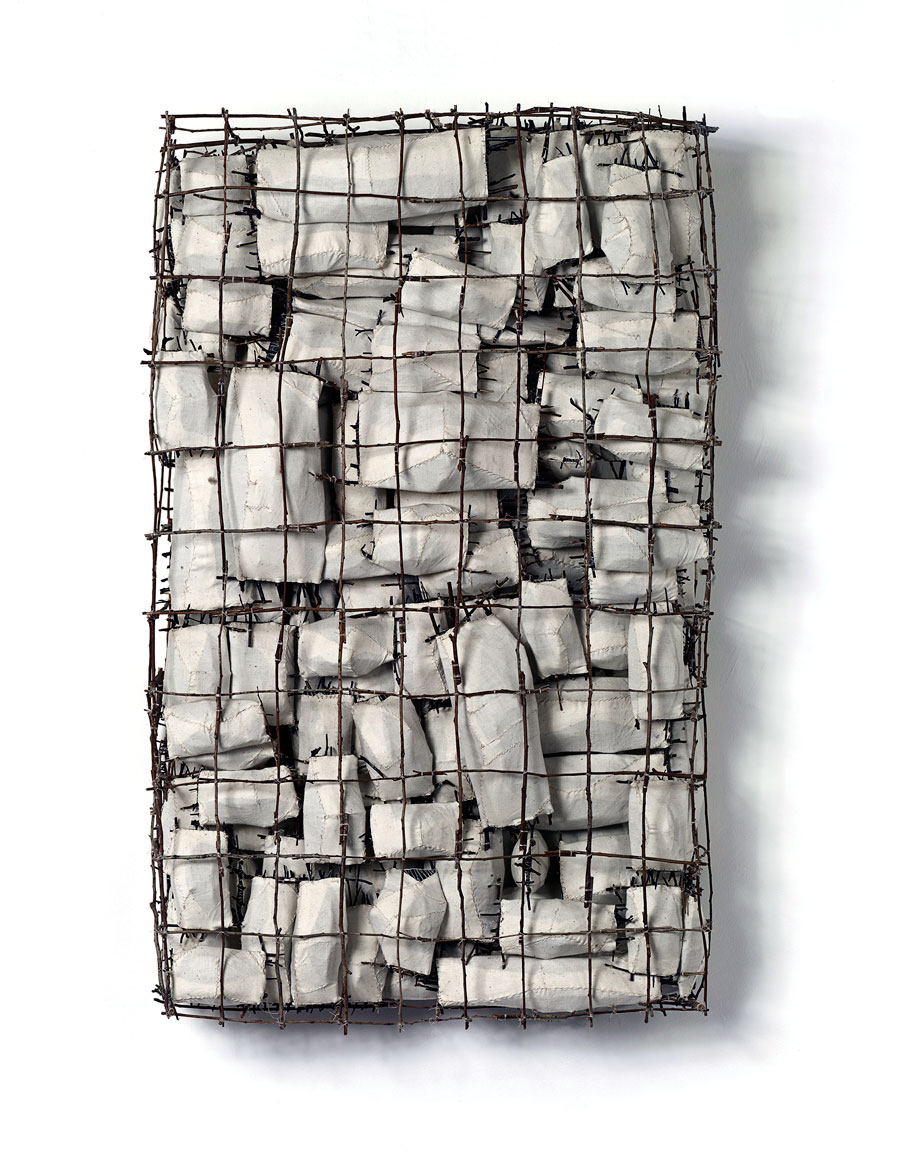
 

John Davis (Australian, 1936-1999) 'Collection 128' 1996


John Davis (Australian, 1936-1999)
Collection 128
1996
Twigs, cotton thread, calico
107 x 65 x 13cm
Private collection, Melbourne
© Penelope Davis & Martin Davis. Administered by VISCOPY, Australia


John Davis (Australian, 1936-1999) '(Spotted fish)' 1989


John Davis (Australian, 1936-1999)
(Spotted fish)
1989
Twigs, cotton thread, calico, bituminous paint
55 x 145 x 30cm
Private collection, Melbourne
© Penelope Davis & Martin Davis. Administered by VISCOPY, Australia
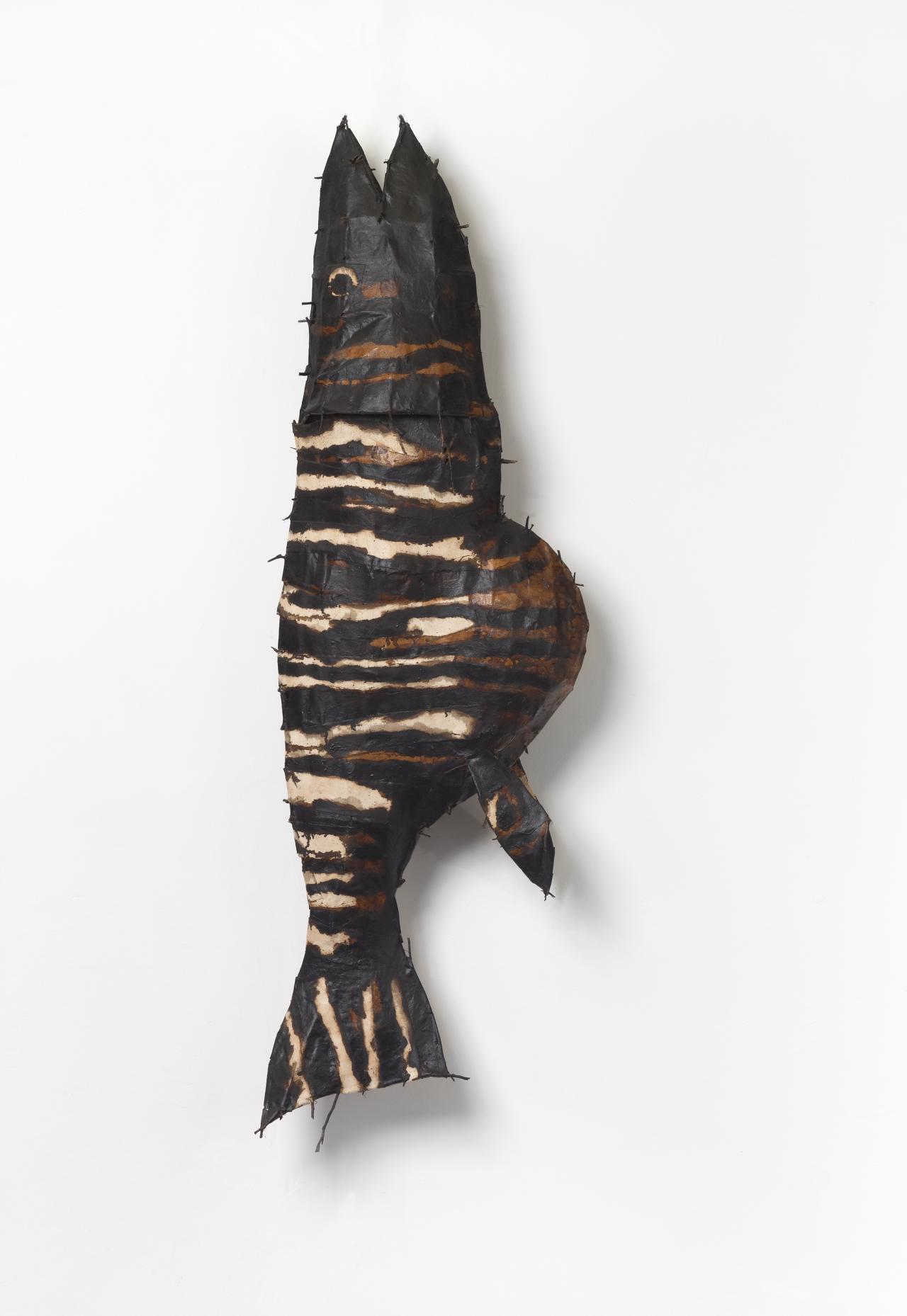
 

John Davis (Australia 1936-99) 'Fish and pebbles: I think the earth is dying' (detail) 1990


John Davis (Australian, 1936-1999)
Fish and pebbles: I think the earth is dying (detail)
1990
twigs, cotton thread, calico, bituminous paint
(1-104) 16 x 300 x 200cm (variable) (installation)
Private collection, Melbourne
© Penelope Davis & Martin Davis. Administered by VISCOPY, Australia


The National Gallery of Victoria has opened John Davis: Presence, celebrating the work of influential Australian artist, John Davis (1936-1999). The exhibition draws together over 40 works by the artist including sculpture, photography and installations.

David Hurlston, Curator, Australian Art, NGV, said this important survey charts Davis’s development as an artist, from his early works, produced during the 1960s, through to his critically acclaimed sculptures and installation works leading into the nineties.

“At the core of his practice, particularly evident in his late works, was an awareness of ecology and a sensitivity to the elemental forces of nature and the effect of human actions. Now, at a time when issues relating to the environment seem more pertinent than ever, Davis’s sculptures have even greater resonance.

“John Davis was a pioneering Australian artist who during his life achieved a critically acclaimed international reputation as a sculptor and installation artist. This important exhibition has a particular focus on the artist’s interest in found and fragile organic materials, and the powerful evocation of the landscape,” said Mr Hurlston.

A highlight of the exhibition is a series of works featuring fish. From the mid 1980s, Davis used fish in his work as a symbol for human movement and relationships with each other and the environment. Davis commonly referred to his fish as ‘nomads’ or ‘travellers’ and once described his works as ‘a metaphor for people and the way we move around the world; a statement for diversity’.

Frances Lindsay, Deputy Director, NGV said: “Davis’s mature works reflected his sensitivity to the landscapes that surrounded him. Visitors will be excited by the vision of this extraordinary artist as they explore his development from the early sixties through to his death in 1999. This exhibition is a special tribute to one of Australia’s great conceptual and environmentally aware artists.”

Born in Ballarat, Victoria, in 1936, John Davis studied at the Royal Melbourne Institute of Technology. In 1972 Davis travelled to Europe and America before returning to Australia the following year to take up a position at Prahran College of Advanced Education. In subsequent years Davis was a senior faculty member at the Victorian College of the Arts and continued to travel widely and exhibit regularly in America, Japan and Australia.

John Davis was awarded a number of prizes, among them the 1970 Comalco Invitation Award for Sculpture and the Blake Prize for Religious Art in 1993. He participated in the inaugural Mildura Sculpture Triennial, and he represented Australia at the Venice Biennale in 1978.  Davis was also the first artist whose work was profiled in the NGV Survey series in 1978.

Text from the National Gallery of Victoria website


John Davis (Australia 1936-99) 'Traveller' 1987


John Davis (Australian, 1936-1999)
Traveller
1987
Twigs, paper, calico, polyvinyl acetate emulsion, bituminous paint
117 x 130 x 56cm
Collection of Ken and Marian Scarlett, Melbourne
© Penelope Davis & Martin Davis. Administered by VISCOPY, Australia
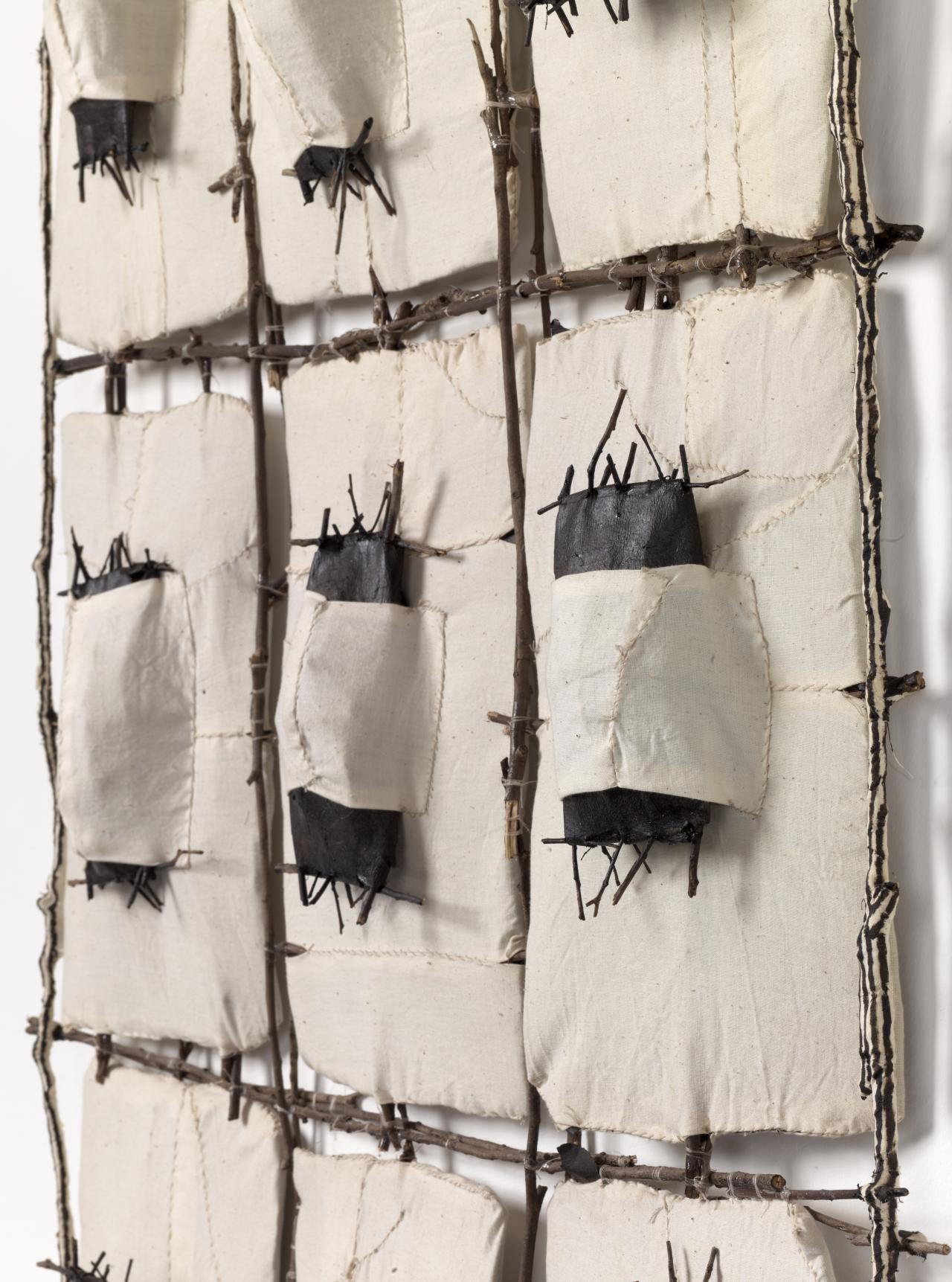
 

John Davis (Australia 1936-99) '9 conversations (and 81 drawings)' 1996


John Davis (Australian, 1936-1999)
9 conversations (and 81 drawings)
1996
Twigs, cotton thread, calico, bituminous paint
124 x 76 x 10cm
Private collection, Melbourne
© Penelope Davis & Martin Davis. Administered by VISCOPY, Australia
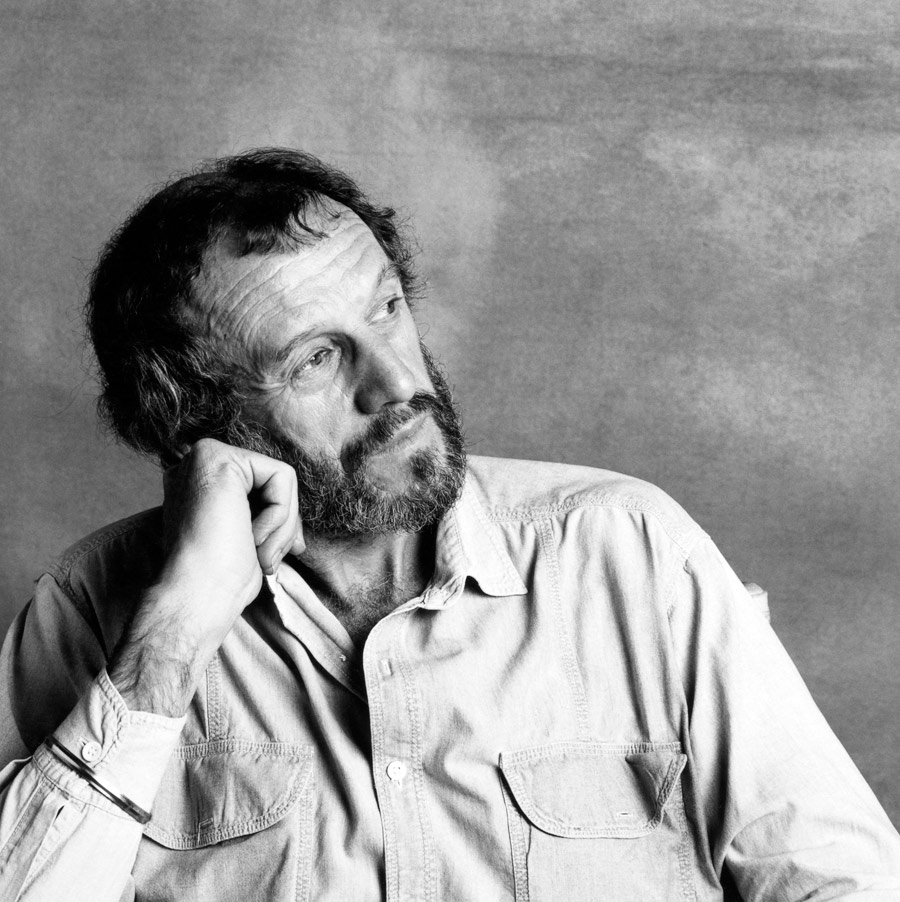
 

John Davis c. 1992. Photo: Penelope Davis


John Davis
c. 1992
Photo: Penelope Davis
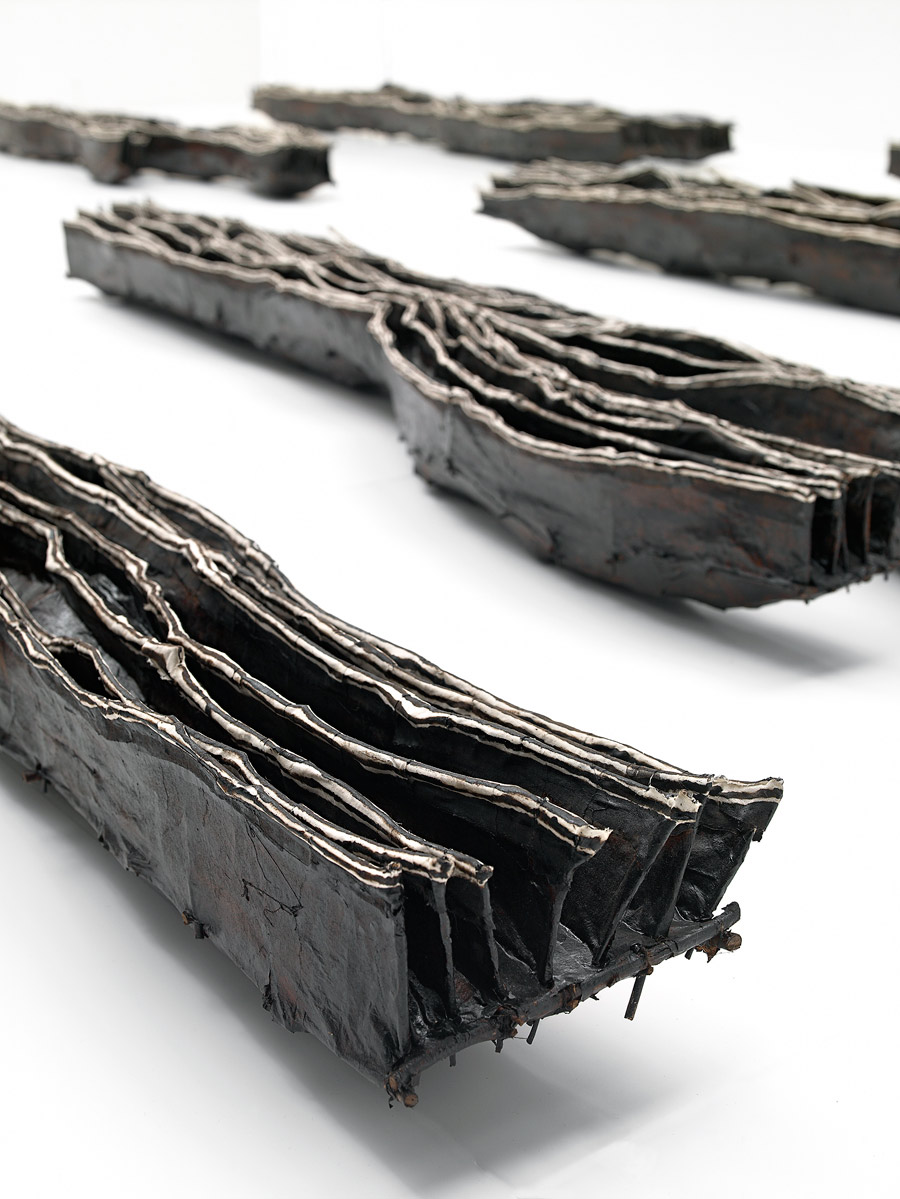
 

John Davis (Australian, 1936-1999) 'Kōan' 1999 (detail)


John Davis (Australian, 1936-1999)
Kōan (detail)
1999
Twigs, cotton thread, calico, bituminous paint
(a-l) 20 x 430 x 1086cm (variable) (installation)
Private collection, Melbourne
© Penelope Davis & Martin Davis. Administered by VISCOPY, Australia
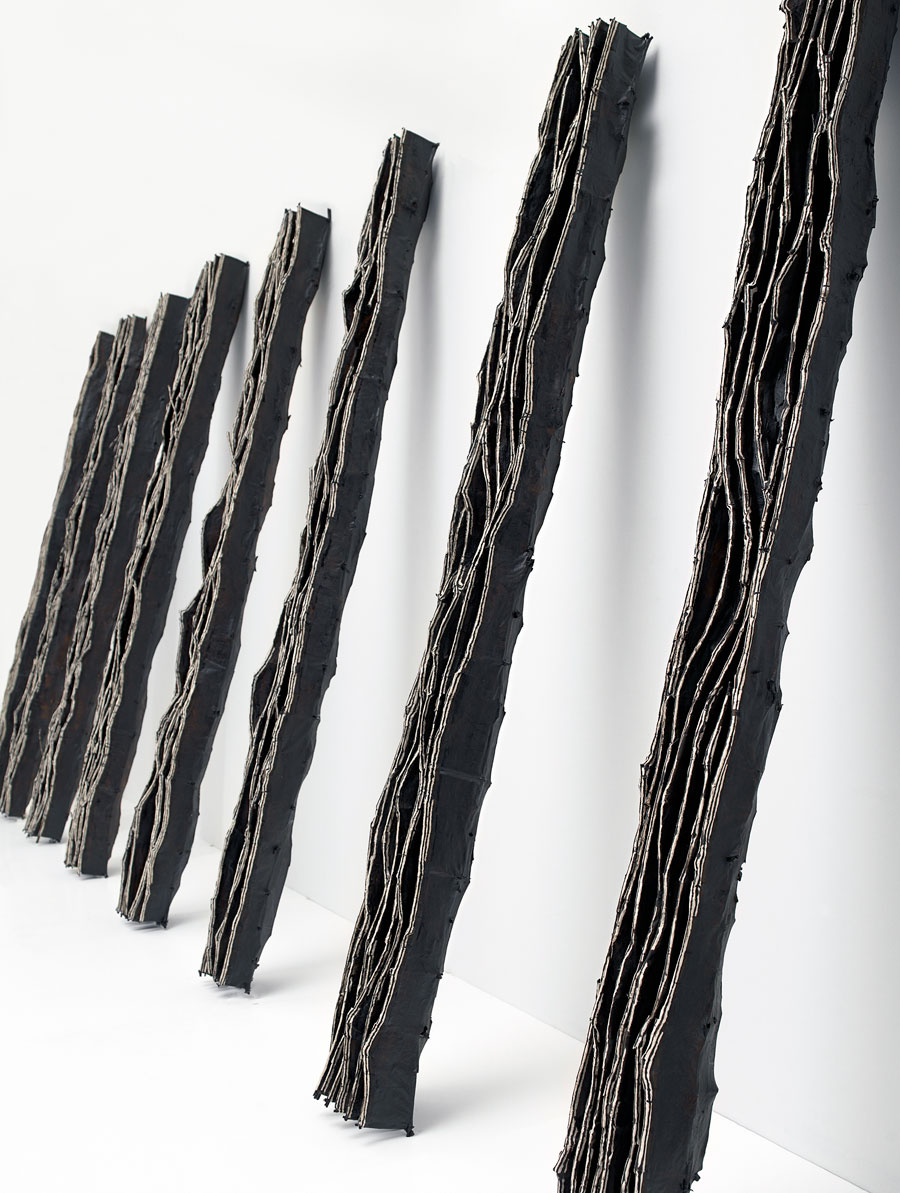
 

John Davis (Australian, 1936-1999) 'River' 1998


John Davis (Australian, 1936-1999)
River
1998
Twigs, cotton thread, calico, bituminous paint
(a-l) 300 x 1070 x 90cm (variable) (installation)
Private collection, Melbourne
© Penelope Davis & Martin Davis. Administered by VISCOPY, Australia


The Ian Potter Centre: NGV Australia
Federation Square
Corner of Russell and 
Flinders Streets, Melbourne

Opening hours:
Daily 10am – 5pm

National Gallery of Victoria website

LIKE ART BLART ON FACEBOOK

Back to top

Review: ‘Mari Funaki: Objects’ at the Ian Potter Centre: NGV Australia, Melbourne

Exhibition dates: 6th August – 24th October 2010


Mari Funaki (born Japan 1950, arrived Australia 1979, died 2010) 'Object' 2008 from the exhibition 'Mari Funaki: Objects' at the Ian Potter Centre: NGV Australia, Melbourne, Aug - Oct 2010


Mari Funaki (born Japan 1950, arrived Australia 1979, died 2010)
Object
2008
Heat-coloured mild steel
20.0 x 28.0 x 5.0cm
Collection of Raphy Star, Melbourne
© The Estate of Mari Funaki


Mari Funaki (born Japan 1950, arrived Australia 1979, died 2010) 'Container' 2008 from the exhibition 'Mari Funaki: Objects' at the Ian Potter Centre: NGV Australia, Melbourne, Aug - Oct 2010


Mari Funaki (born Japan 1950, arrived Australia 1979, died 2010)
Container
2008
heat-coloured mild steel
(a–c) 21.3 x 40.5 x 8.5cm (overall)
Private collection, Melbourne
© The Estate of Mari Funaki


Mari Funaki (born Japan 1950, arrived Australia 1979, died 2010) 'Container' 2008 from the exhibition 'Mari Funaki: Objects' at the Ian Potter Centre: NGV Australia, Melbourne, Aug - Oct 2010


Mari Funaki (born Japan 1950, arrived Australia 1979, died 2010)
Container
2008
heat-coloured mild steel
4.8 x 16.0 x 15.5cm
Private Collection, Melbourne
© The Estate of Mari Funaki


Mari Funaki (born Japan 1950, arrived Australia 1979, died 2010) 'Object' 2008 from the exhibition 'Mari Funaki: Objects' at the Ian Potter Centre: NGV Australia, Melbourne, Aug - Oct 2010


Mari Funaki (born Japan 1950, arrived Australia 1979, died 2010)
Object
2008
heat-coloured mild steel
20.0 x 28.0 x 5.0cm
Collection of Raphy Star, Melbourne
© The Estate of Mari Funaki


Let us drop away all interpretation and look at the thing in itself.
The literal feeling of standing before these objects.


Form

Balance

Colour

Surface

Precision

Will

Style

Silence


Quiet, precise works. Forms of insect-like legs and proboscises. They balance, seeming to almost teeter on the edge – but the objects are incredibly grounded at the same time. As you walk into the darkened gallery and observe these creatures you feel this pull – lightness and weight. Fantastic!

The surfaces, sublime matt grey colour and precision of their manufacture add to this sense of the ineffable. These are not mere renderings of content, but expressions of things that cannot be said.

Sontag observes, “Art is the objectifying of the will in a thing or performance, and the provoking or arousing of the will … Style is the principle of decision in a work of art, the signature of the artist’s will.”1

Sontag insightfully notes, “The most potent elements in a work of art are, often, its silences.”2


And so it came to pass in silence, for these works are still, quiet and have a quality of the presence of the inexpressible.

Funaki achieves these incredible silences through being true to her self and her style through an expression of her endearing will.

While Mari may no longer be amongst us as expressions of her will the silences of these objects will be forever with us.

Dr Marcus Bunyan


1/ Sontag, Susan. “On Style,” in Against Interpretation and Other Essays. New York: Delta Book, 1966, pp. 31-32.

2/ Ibid., p. 36.


Many thanxk to Alison Murray, Jemma Altmeier and The National Gallery of Victoria for allowing me to publish the photographs in the posting. Please click on the photographs for a larger version of the image. All individual photographs of work by Jeremy Dillon.


'Mari Funaki: Objects' installation shot on opening night at NGV Australia

'Mari Funaki: Objects' installation shot on opening night at NGV Australia

'Mari Funaki: Objects' installation shot on opening night at NGV Australia


Mari Funaki: Objects installation shots on opening night at NGV Australia
Photos: © Marcus Bunyan


Opening 6 August, the National Gallery of Victoria will present Mari Funaki: Objects, an exhibition showcasing a range of sculptural objects by the renowned contemporary jeweller and metalsmith, Mari Funaki (1950-2010).

This exhibition will present a selection of Funaki’s distinctive objects, dating from the late 1990s to 2010 including four recent large scale sculptures. The artist was working on the exhibition right up until the time of her recent death.

Jane Devery, Acting Curator, Contemporary Art, NGV said: “It was a great privilege to work with Mari Funaki on this exhibition. She possessed a clarity of vision and a capacity for ongoing invention that is rare among artists. Funaki produced some of the most captivating works in the field of contemporary jewellery and metalwork. Her unique geometric objects, meticulously constructed from blackened mild-steel, stemmed from a desire to express the world around her.”

“Funaki was interested in the expressive and associative capacities of her objects, creating forms that might stir our imaginations or trigger something from our memories. It has been particularly thrilling to see her extend these concerns in large scale works,” said Ms Devery. In 1979 Funaki left her home in Japan for Melbourne where she pursued her creative ambitions, enrolling in Gold and Silversmithing at RMIT in the late 1980s. At RMIT she studied under the prominent jewellers Marian Hosking, Robert Baines and Carlier Makigawa.

In 1995, Mari Funaki established Gallery Funaki in Melbourne’s CBD which remains Australia’s most important space dedicated to contemporary jewellery. Throughout her career she exhibited widely within Australia and overseas and won many awards, twice winning the prestigious Herbert Hoffman prize in Munich. In 2007 she was awarded an Australian Council Emeritus Award for her work as an artist and for her success in promoting Australian and international contemporary jewellery.

Frances Lindsay, Deputy Director, NGV said: “The NGV is delighted to exhibit many never-before-seen works by such an innovative and celebrated Melbourne artist. The exquisite objects assembled in this exhibition allow us to appreciate Mari Funaki’s remarkable artistic achievements.”

Mari Funaki: Objects will be on display at The Ian Potter Centre: NGV Australia, Federation Square from 6 August to 24 October, 2010. The exhibition will be open from 10am-5pm. Closed Mondays. Entry is free.

Press release from the National Gallery of Victoria website


Mari Funaki (born Japan 1950, arrived Australia 1979, died 2010) 'Object' 2008


Mari Funaki (born Japan 1950, arrived Australia 1979, died 2010)
Object
2008
Heat-coloured mild steel
36.0 x 47.5 x 14.5cm
Collection of Johannes Hartfuss & Fabian Jungbeck, Melbourne
© The Estate of Mari Funaki


Mari Funaki (born Japan 1950, arrived Australia 1979, died 2010) 'Container' 2006


Mari Funaki (born Japan 1950, arrived Australia 1979, died 2010)
Container
2006
Heat-coloured mild steel
26.0 x 8.5 x 6.0cm
Collection of Peter and Jennifer McMahon, Melbourne
© The Estate of Mari Funaki


Mari Funaki (born Japan 1950, arrived Australia 1979, died 2010) 'Object' 2010


Mari Funaki (born Japan 1950, arrived Australia 1979, died 2010)
Object
2010
Heat-coloured mild steel
30.0 x 19.0 x 20.5cm
Collection of the Estate of Mari Funaki, Melbourne
© The Estate of Mari Funaki


Mari Funaki (born Japan 1950, arrived Australia 1979, died 2010) 'Object' 2010


Mari Funaki (born Japan 1950, arrived Australia 1979, died 2010)
Object
2010
heat-coloured mild steel
45.0 x 52.0 3.5cm
Collection of the Estate of Mari Funaki, Melbourne
© The Estate of Mari Funaki


Mari Funaki (born Japan 1950, arrived Australia 1979, died 2010) 'Object' 2010


Mari Funaki (born Japan 1950, arrived Australia 1979, died 2010)
Object
2010
heat-coloured mild steel
12.0 x 44.0 x 14.0cm
Collection of the Estate of Mari Funaki, Melbourne
© The Estate of Mari Funaki


The Ian Potter Centre: NGV Australia
Federation Square

Corner of Russell and 
Flinders Streets, Melbourne

Opening hours:
Daily 10am – 5pm

National Gallery of Victoria website

LIKE ART BLART ON FACEBOOK

Back to top

Exhibition: ‘Timelines: Photography and Time’ at the National Gallery of Victoria, Melbourne

Exhibition dates: 7th May – 3rd October 2010


Many thankx to Alison Murray and the National Gallery of Victoria for allowing me to publish the photographs in the posting. Please click on the photographs for a larger version of the image.


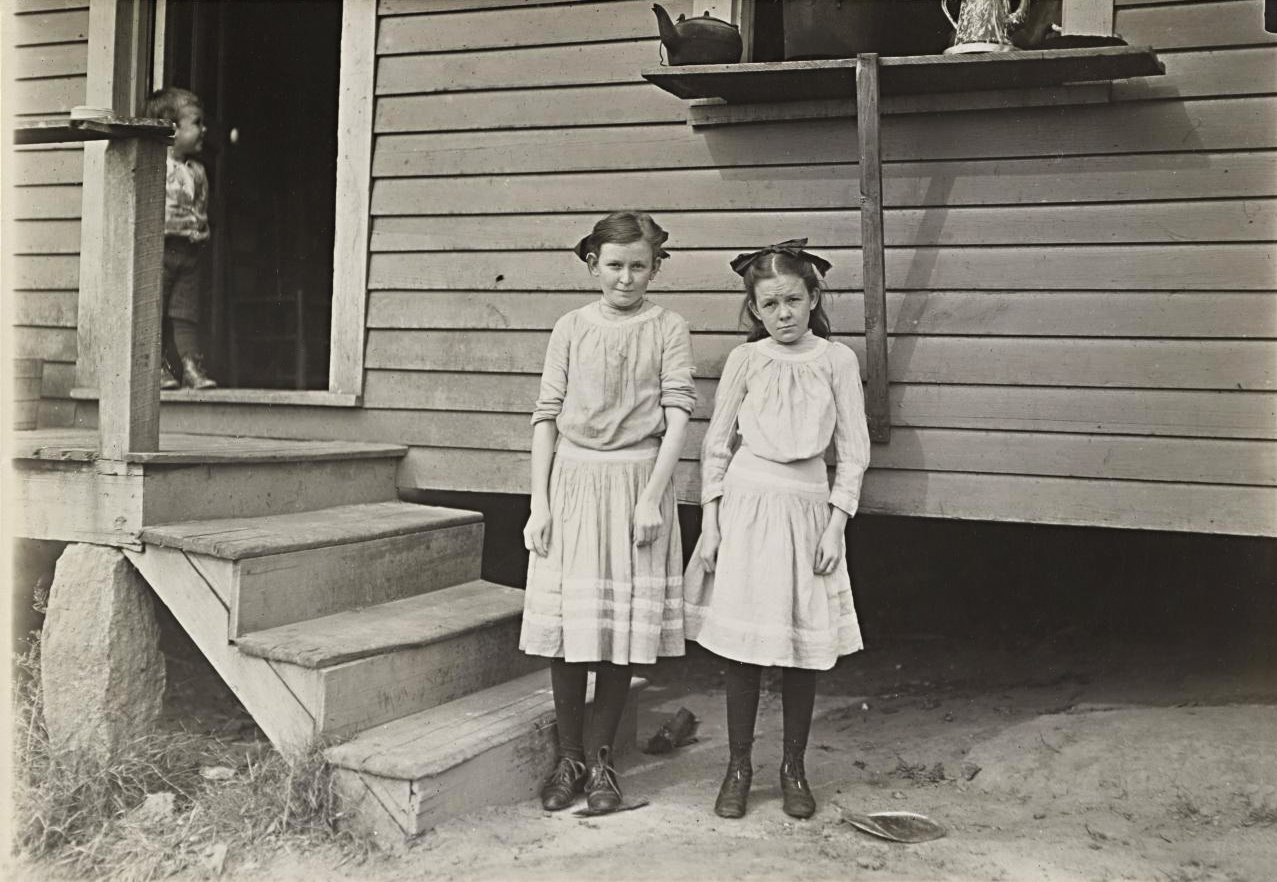
Lewis Hine (American, 1874-1940) 'Lacy, twelve years old and Savannah, eleven years old' 1908 from the exhibition 'Timelines: Photography and Time' at the National Gallery of Victoria, Melbourne, May - Oct 2010


Lewis Hine (American, 1874-1940)
Lacy, twelve years old and Savannah, eleven years old
1908
Gelatin silver print
Image and sheet: 11.9 × 17.1cm
National Gallery of Victoria, Melbourne
Purchased, 1980


‘Perhaps you are weary of child labour pictures. Well, so are the rest of us, but we propose to make you and the whole country so sick and tired of the whole business that when the time for action comes, child labour pictures will be records of the past.’

Lewis Hine, 1909


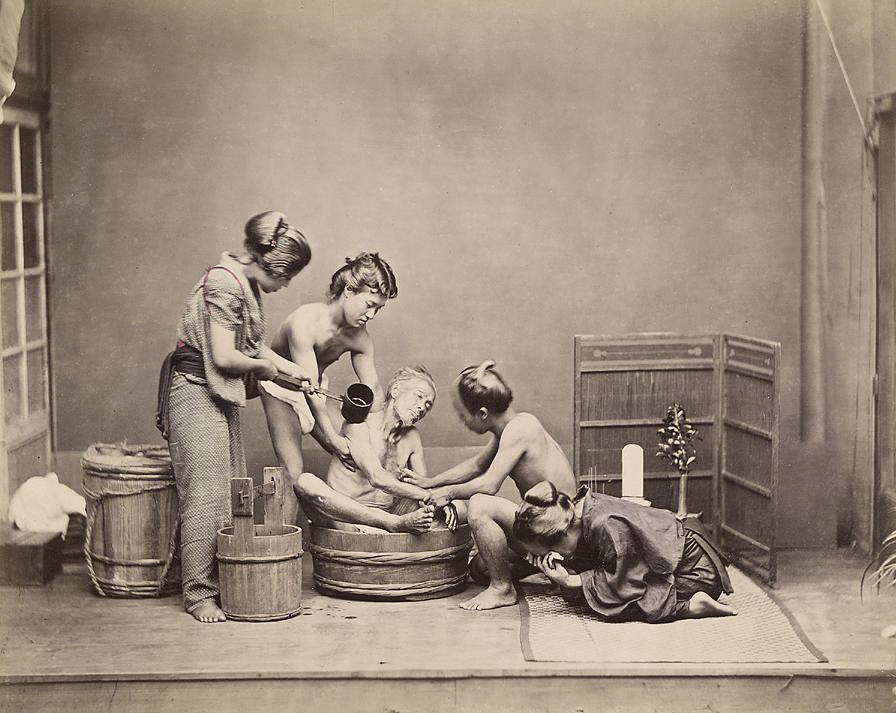
Unknown photographer, 'No title (Ritual washing for funeral)' c. 1880 from the exhibition 'Timelines: Photography and Time' at the National Gallery of Victoria, Melbourne, May - Oct 2010


Unknown photographer
No title (Ritual washing for funeral)
c. 1880
Albumen silver photograph, colour dyes
Image and sheet: 21.2 × 26.5cm
National Gallery of Victoria, Melbourne
Purchased, 2001


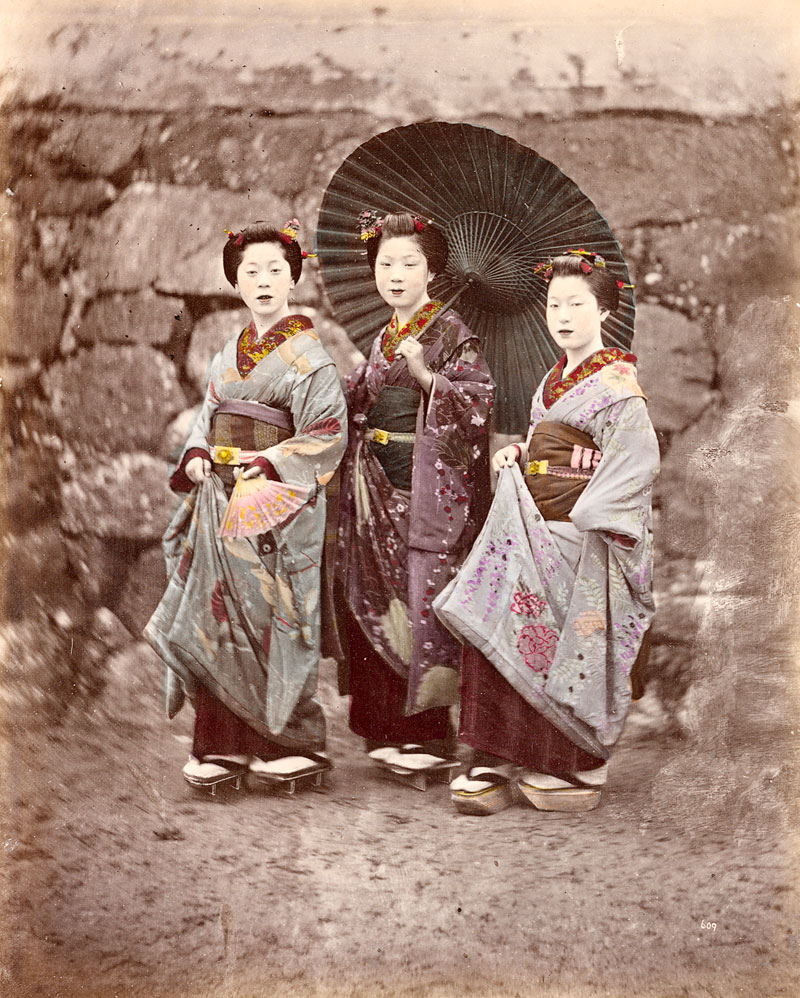
Felice Beato (Italian/English, 1832-1909, worked throughout Europe and Asia, 1853-1890) 'No title (Maiko)' (1866-1868, printed 1877-1985)


Felice Beato (Italian/English, 1832-1909, worked throughout Europe and Asia, 1853-1890)
Stillfried and Anderson and the Japan Photographic Association (studio) (Japanese, 1877-1885)
No title (Maiko)
1866-1868, printed 1877-1885
albumen silver photograph, coloured dyes
24.4 x 19.6cm
National Gallery of Victoria, Melbourne
Purchased through the NGV Foundation with the assistance of The Herald & Weekly Times Limited, Fellow, 2001


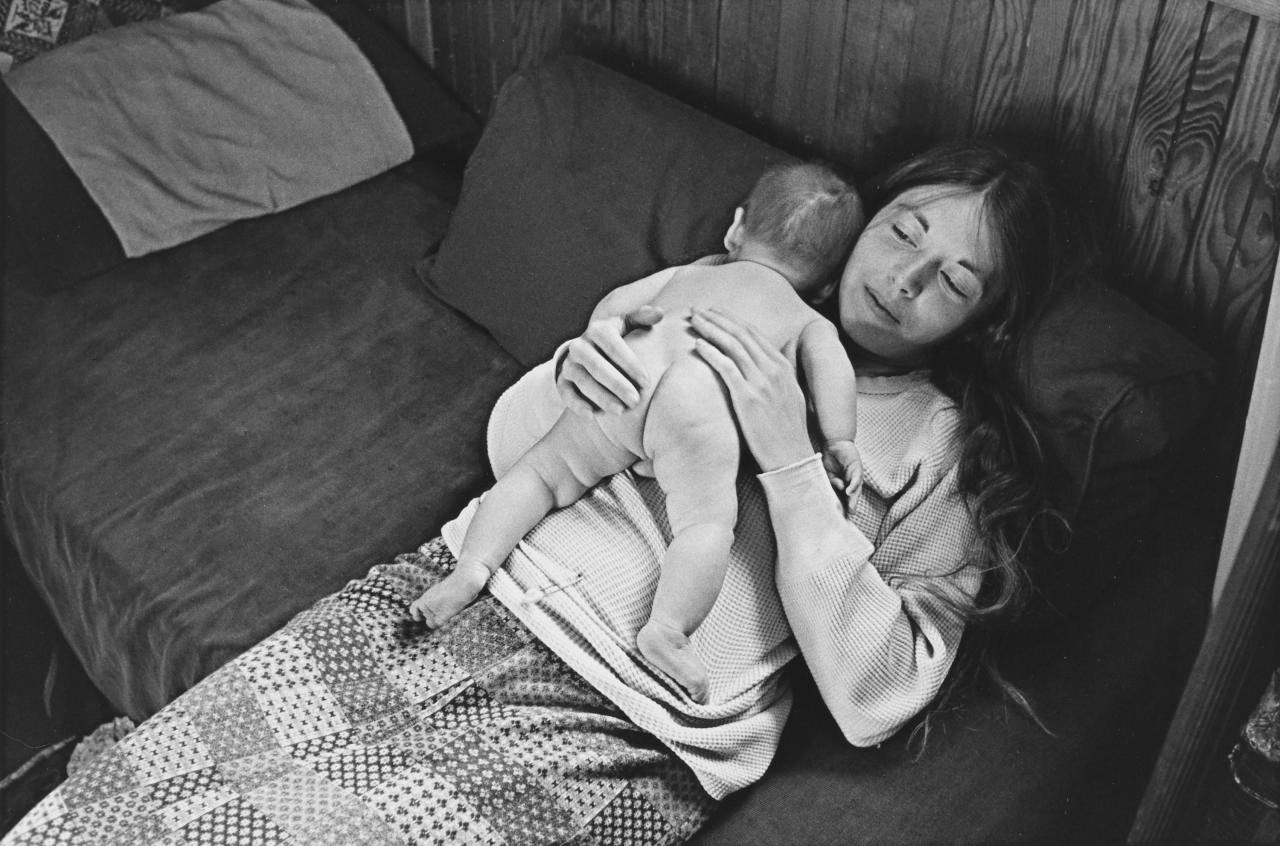
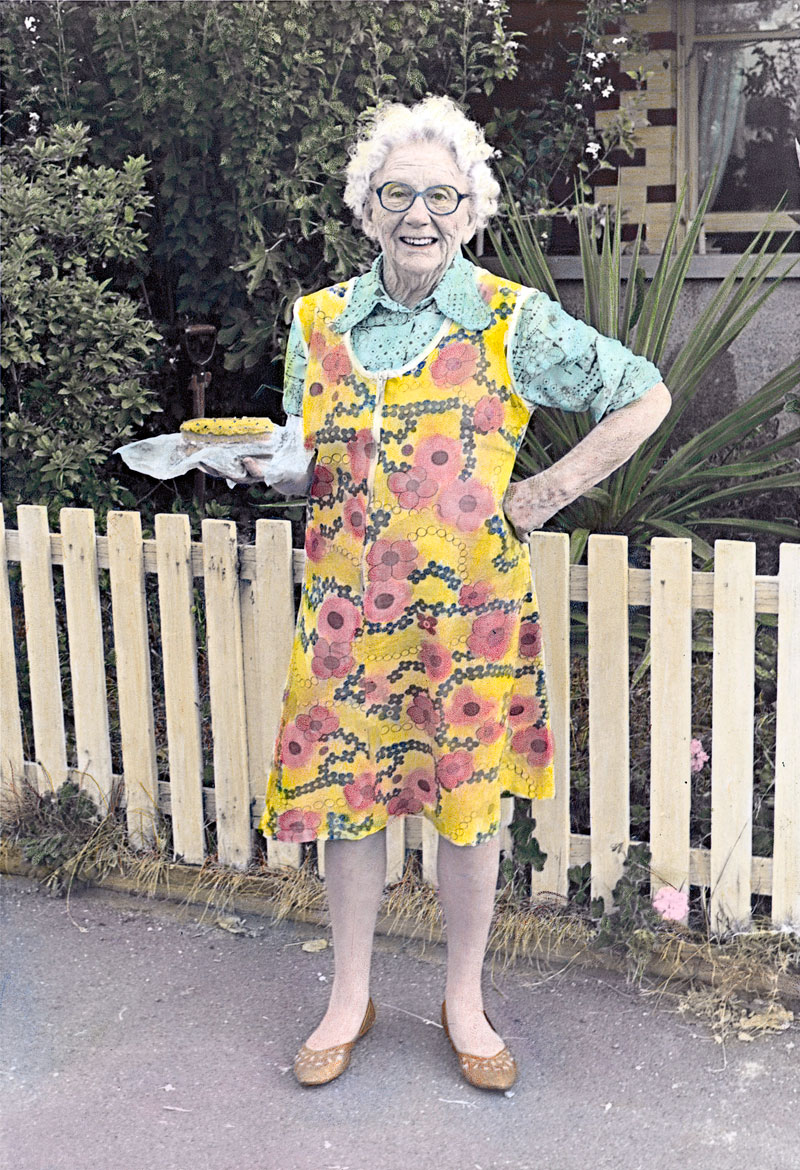
Christine Godden (Australian, b. 1947) 'Joanie with Jade' 1973; printed 1986 from the exhibition 'Timelines: Photography and Time' at the National Gallery of Victoria, Melbourne, May - Oct 2010


Christine Godden (Australian, b. 1947)
Joanie with Jade
1973; printed 1986
Gelatin silver photograph
20.3 × 30.6cm
National Gallery of Victoria, Melbourne
Purchased from Admission Funds, 1991
© Christine Godden


Ruth Maddison (Australian, b. 1945) 'Molly O'Sullivan, 82' 1990


Ruth Maddison (Australian, b. 1945)
Molly O’Sullivan, 82
1990
From the After work series 1990
Gelatin silver photograph, oil paint, fibre-tipped pen
24.8 x 20.6cm
National Gallery of Victoria, Melbourne
Purchased through The Art Foundation of Victoria with the assistance of the Hugh Williamson Foundation, Founder Benefactor, 1990
© Ruth Maddison


Opening 7 May, the National Gallery of Victoria will present Timelines: Photography and Time, a captivating exhibition exploring the notion of time in photographs.

Time is a slippery notion. It is everywhere and always moving but this powerful regulating force cannot be seen. It is only apparent in context: in the changing seasons, in another wrinkle on our faces, in the growth of children. Photography has a unique role to play in our sometimes poignant sense of time passing. The camera’s ability to depict ‘a moment in time’ – to stop the clock for a brief moment – gives photographs a unique capacity to direct our consideration towards the mechanics and poetics of this pervasive and mysterious cosmic force.

In this exhibition one aspect of time is considered from a photographic perspective: namely, human life. Works have been selected from the permanent collection both by International and Australian photographers that show an interest in some aspect of lifecycles. Arranged, in part, in a ‘timeline’, these works provoke our understanding of the mediums capacity to suggest the concept of time in ways that may be surprising, moving or even confronting. The exhibition also looks at how photographers have extended a sense of time and duration through images that work in series

Timelines will feature almost forty photographs from the NGV Collection by both Australian and international photographers including work by Diane Arbus, Micky Allan and Bill Brandt.

Isobel Crombie, Senior Curator of Photography, NGV said photography has a unique role to play in capturing the way that time passes.

“The camera’s ability to ‘stop the clock’ enables the medium to direct our consideration towards the mechanics and poetics of this pervasive and mysterious cosmic force.

“The instant that the photograph captures can be a potent reminder to seize the day rather than dreaming about the past or worrying about the future,” said Dr Crombie.

The exhibition also looks at how photographers have extended a sense of time and duration through images that work in series. From the 1960s onwards, photographers began experimenting with stretching time by creating a series or sequence of photographs.

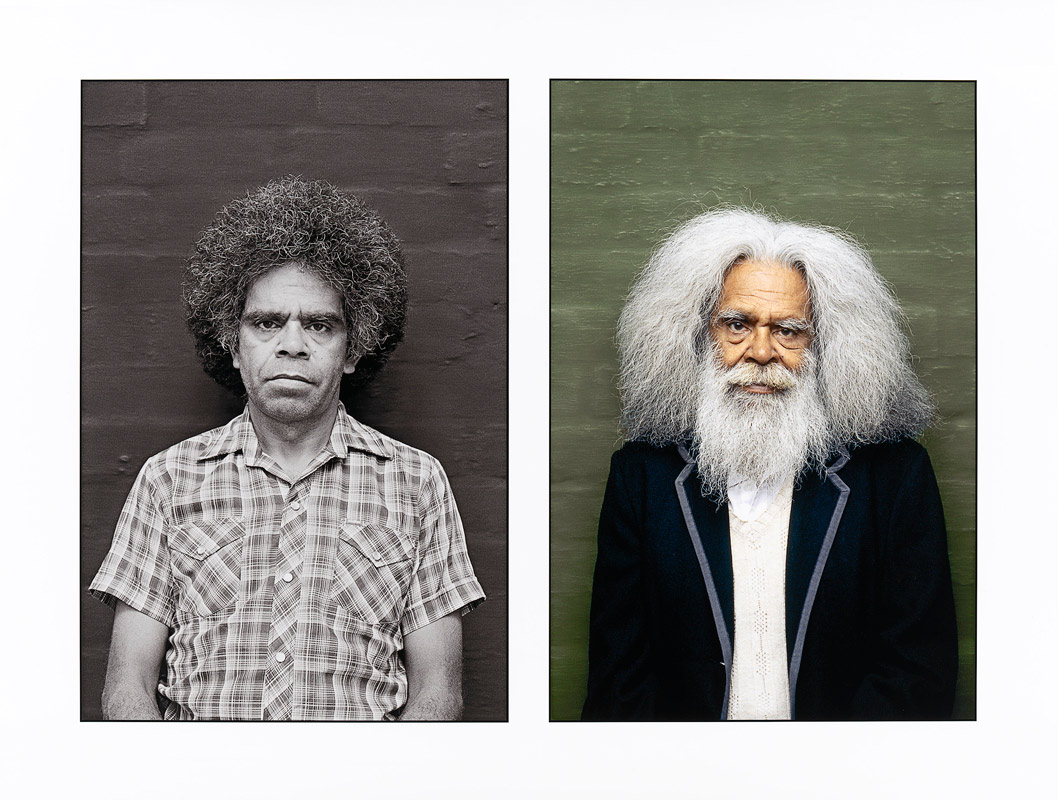
This is seen in Rod McNicol’s powerful series titled A portrait revisited (1986-2006), (pictured Jack, below). Purchased by the NGV in 2009, the series features portraits of men and women; each posed directly facing the camera against a plain backdrop. There are two portraits of each subject photographed twenty years apart, inviting the viewer to compare the portraits to see how time has changed them. The sense of time passing is highlighted with the portrait of Peter, who is photographed only once. The blank image next to him is a reminder that he died before the second portrait was made.

Each phase of human existence has characteristic traits and features, and photographers have worked with these qualities in ways that evoke the passing of time and our place in this cycle. Arranged in part in a human timeline, the exhibition begins with the start of a new life as depicted in Christine Godden’s Joanie pregnant (1972) and Joanie with Jade (1973) and concludes with Kusakabe Kimbei’s Ritual washing for a funeral (c. 1880, see above – now labelled as ‘Unknown’ on the NGV website in 2019), an image of a deceased man being prepared in the traditional Japanese way for burial. This final scene captures the grief of the moment when a lifetime ends.

Frances Lindsay, Deputy Director, NGV said: “The works in the exhibition show how artists have explored the concept of time in ways that may surprise, move or even confront viewers. This exhibition provides visitors with a special opportunity to view this remarkable collection of photographs from the NGV Collection, many of which are on display for the first time.”

Timelines will include photographs by Micky Allan, Diane Arbus, Felice Beato, Bill Brandt, Brassaï, Harry Callahan, Imogen Cunningham, Walker Evans, Christine Godden, Ponch Hawkes, Petrina Hicks, Lewis Hine, Kusakabe Kimbei, Rosemary Laing, J.H. Lartigue, Ruth Maddison, Rod McNicol, David Moore, Jan Saudek, John Thompson, Roman Vishniac, and Edward Weston.

Text from the National Gallery of Victoria International website [Online] Cited 17/09/2010 no longer available online


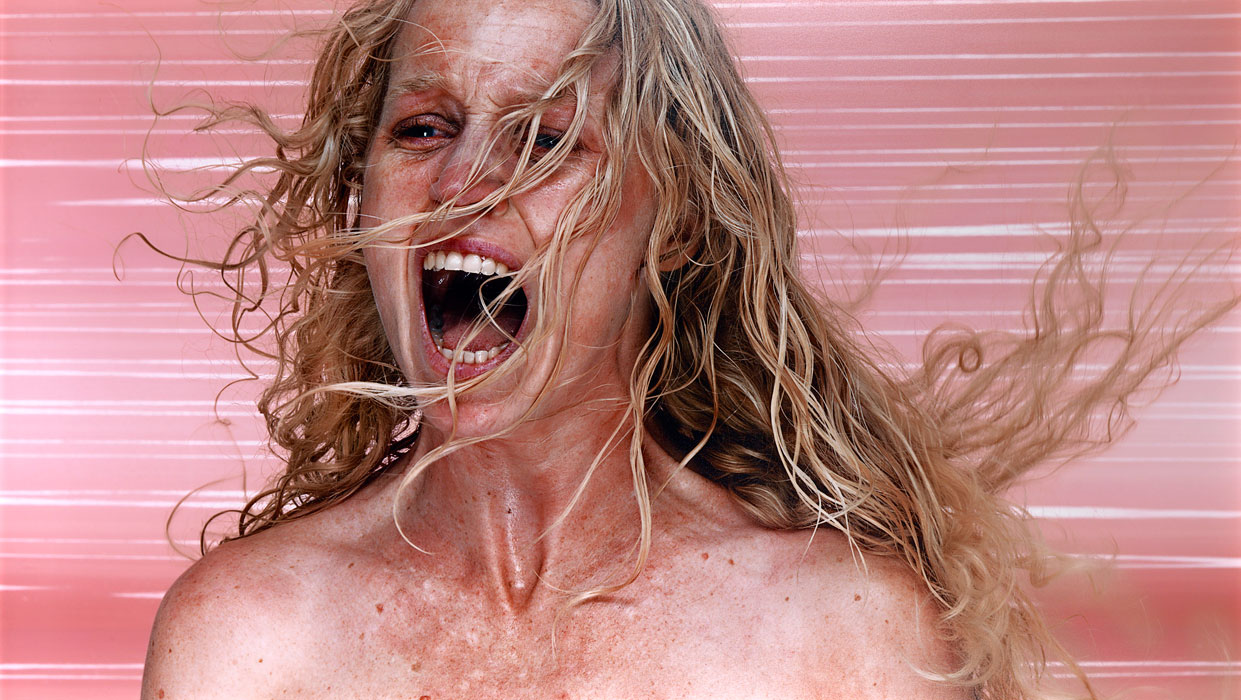
Rosemary Laing (Australian, 1959-2024) 'a dozen useless actions for grieving blondes #10' 2009


Rosemary Laing (Australian, 1959-2024)
a dozen useless actions for grieving blondes #10
2009
Type C photograph
76.3 x 132.1cm
National Gallery of Victoria, Melbourne
Purchased, Victorian Foundation for Living Australian Artists, 2010
© Rosemary Laing and Tolarno Galleries, Melbourne


Rod McNicol (Australian, b. 1946) 'Jack' 2006


Rod McNicol (Australian, b. 1946)
Jack
2006
From the A portrait revisited series 1986-2006
Digital type C print
48.0 x 67.1cm
National Gallery of Victoria, Melbourne
Purchased, Victorian Foundation for Living Australian Artists, 2009
© Rod McNicol


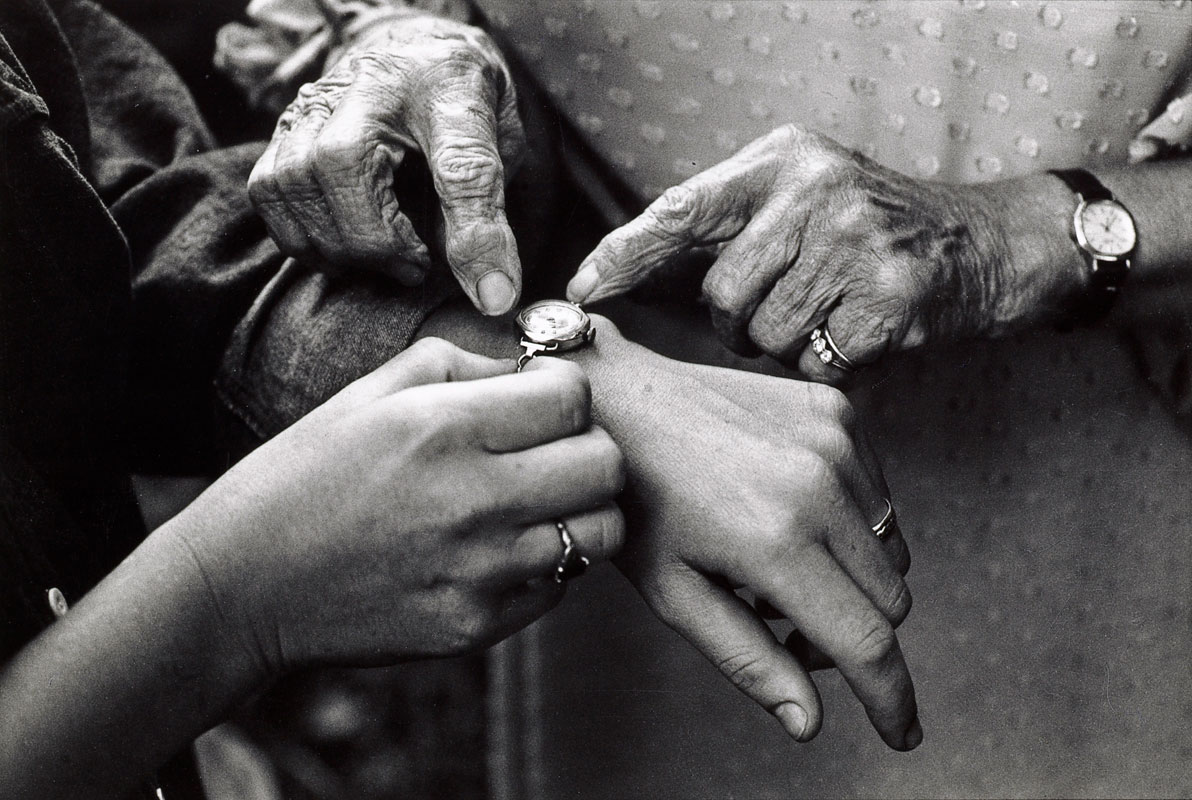
Ponch Hawkes (Australian, b. 1946) 'The watch that Lucy gave to Beci' (1987, printed 1989) from the exhibition 'Timelines: Photography and Time' at the National Gallery of Victoria, Melbourne, May - Oct 2010


Ponch Hawkes (Australian, b. 1946)
The watch that Lucy gave to Beci
1987, printed 1989
Gelatin silver photograph
23.8 x 35.1cm
National Gallery of Victoria, Melbourne
Purchased with funds donated by Hallmark Cards Australia Pty Ltd, 1989
© Ponch Hawkes


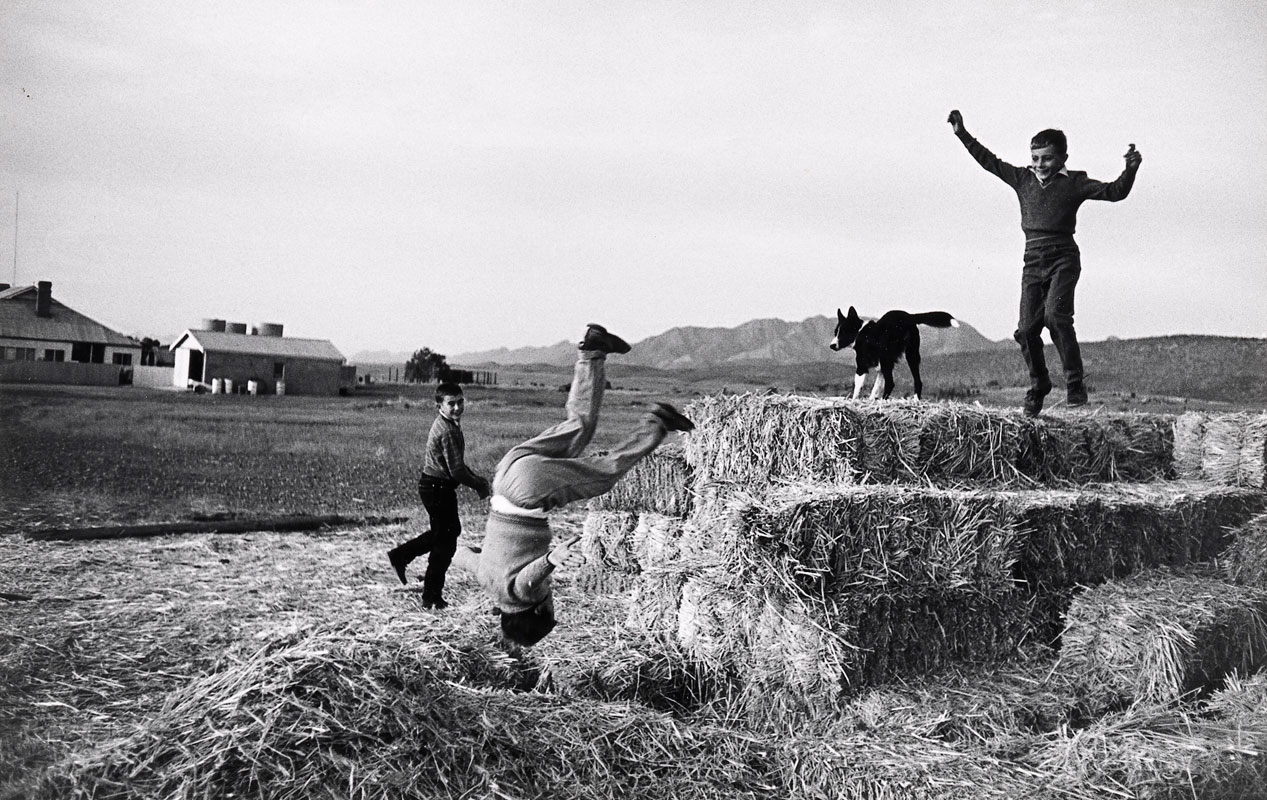
David Moore (Australian, 1927-2003) 'Outback children, South Australia' 1963


David Moore (Australian, 1927-2003)
Outback children, South Australia
1963
Gelatin silver photograph
36.8 x 57.6cm
National Gallery of Victoria, Melbourne
Purchased through the KODAK (Australasia) Pty Ltd Fund, 1969
© David Moore Estate


NGV International
180 St Kilda Road

Opening hours
Daily 10am – 5pm

National Gallery of Victoria website

LIKE ART BLART ON FACEBOOK

Back to top

Exhibition: ‘European Masters: Städel Museum 19th – 20th Century’, Winter Masterpieces at the National Gallery of Victoria, Melbourne

Exhibition dates: 19th June – 10th October 2010


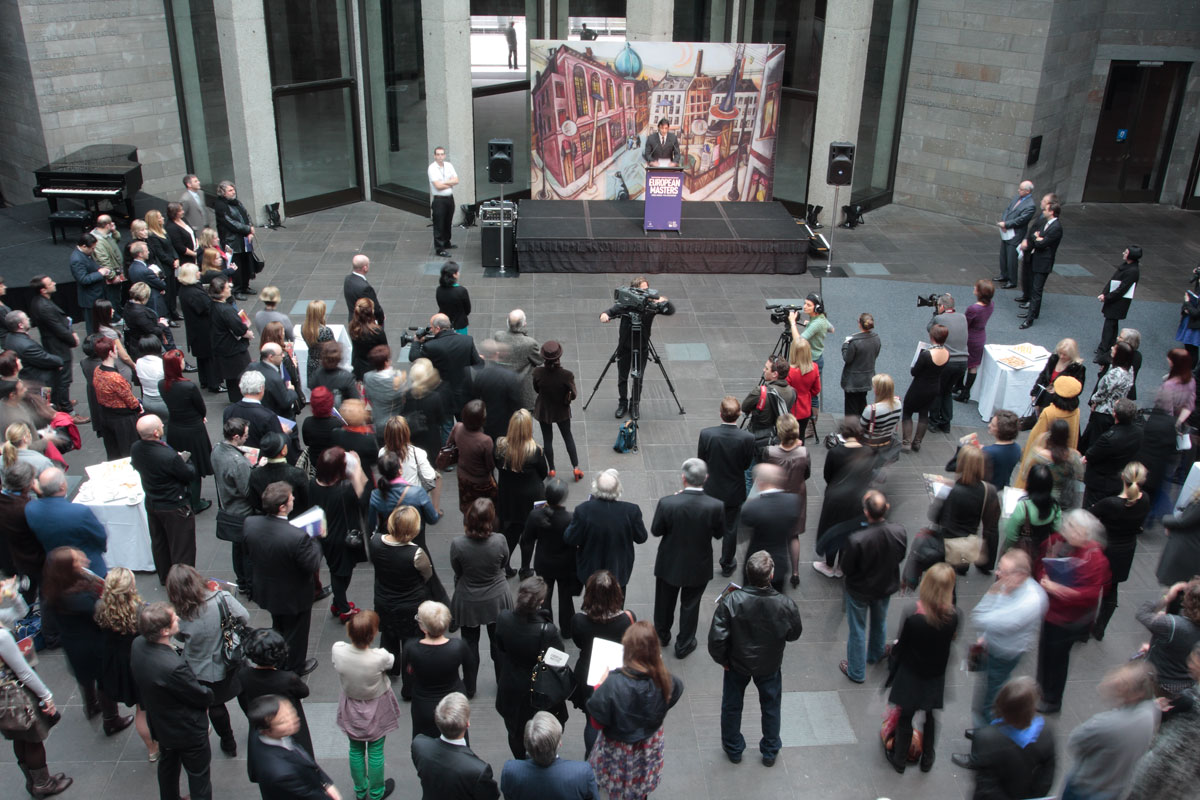
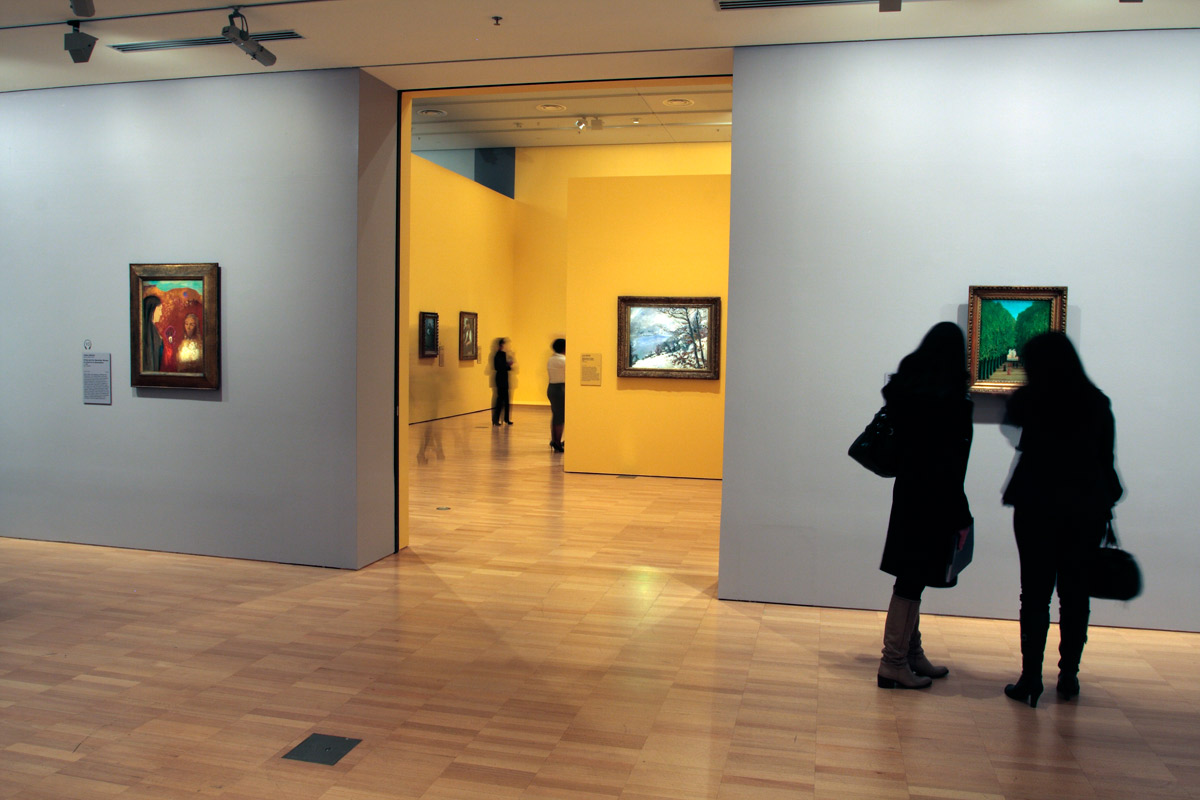
Media opening of 'European Masters: Städel Museum 19th - 20th Century', Winter Masterpieces at the National Gallery of Victoria


Media opening of European Masters: Städel Museum 19th – 20th Century, Winter Masterpieces at the National Gallery of Victoria
Photo: Marcus Bunyan


A huge posting – and another ‘you saw it here first’ on Art Blart!

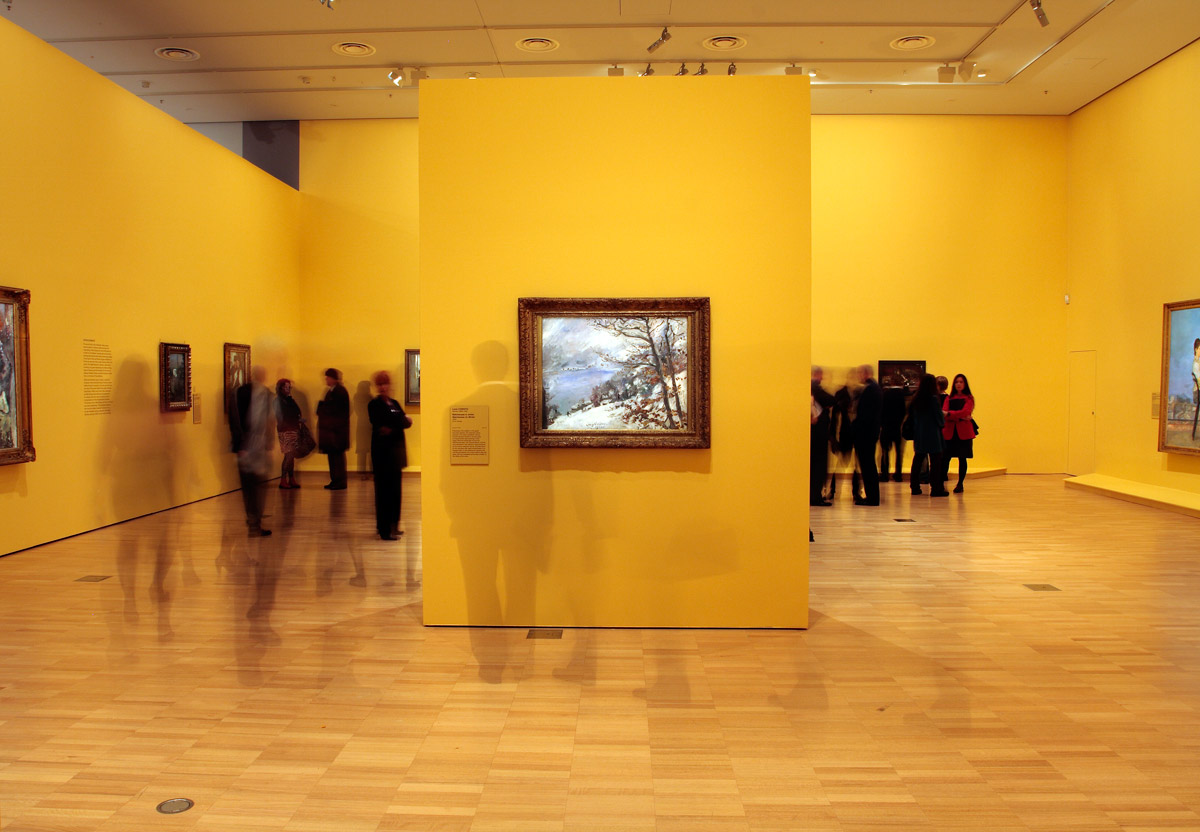
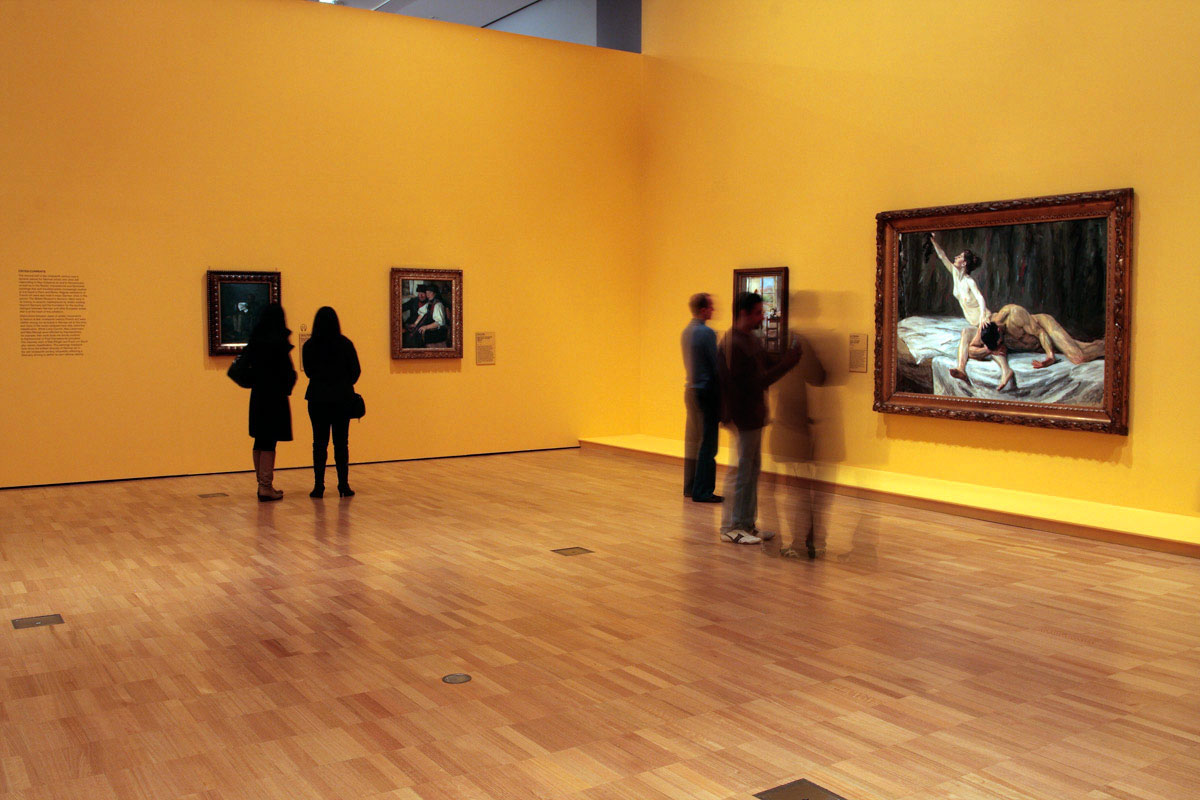
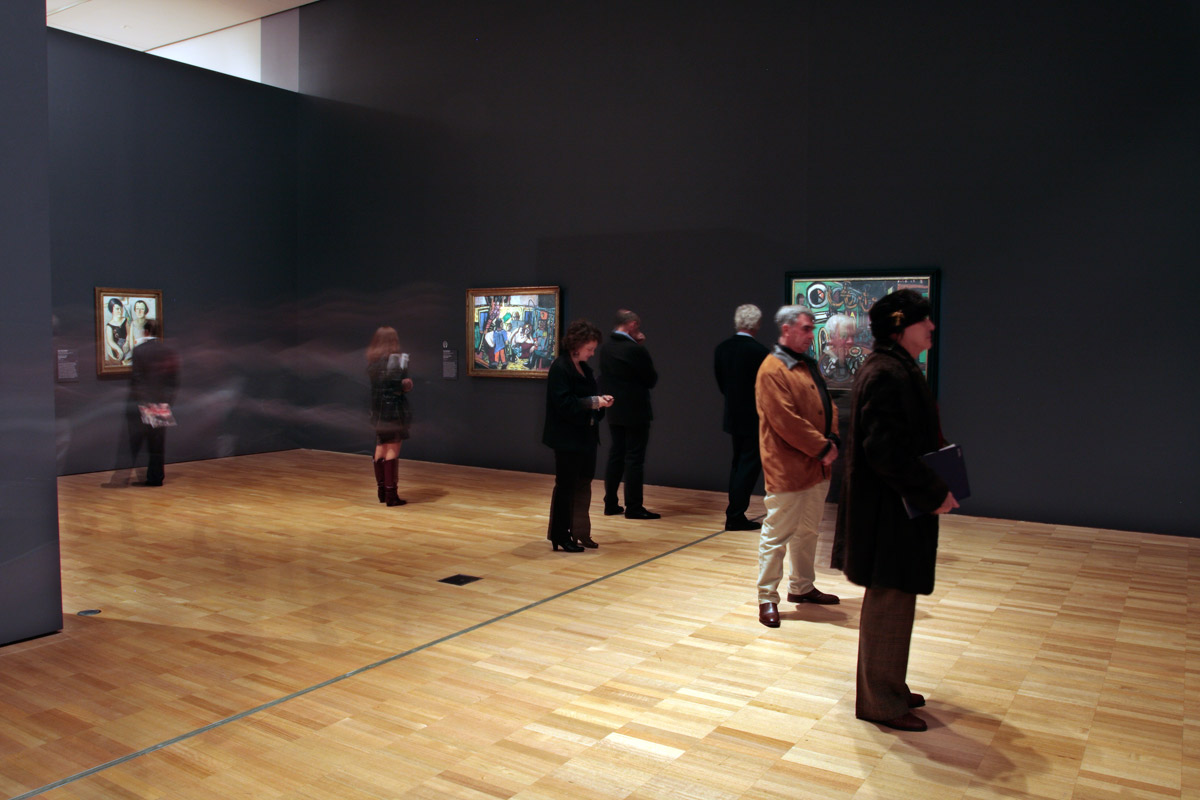
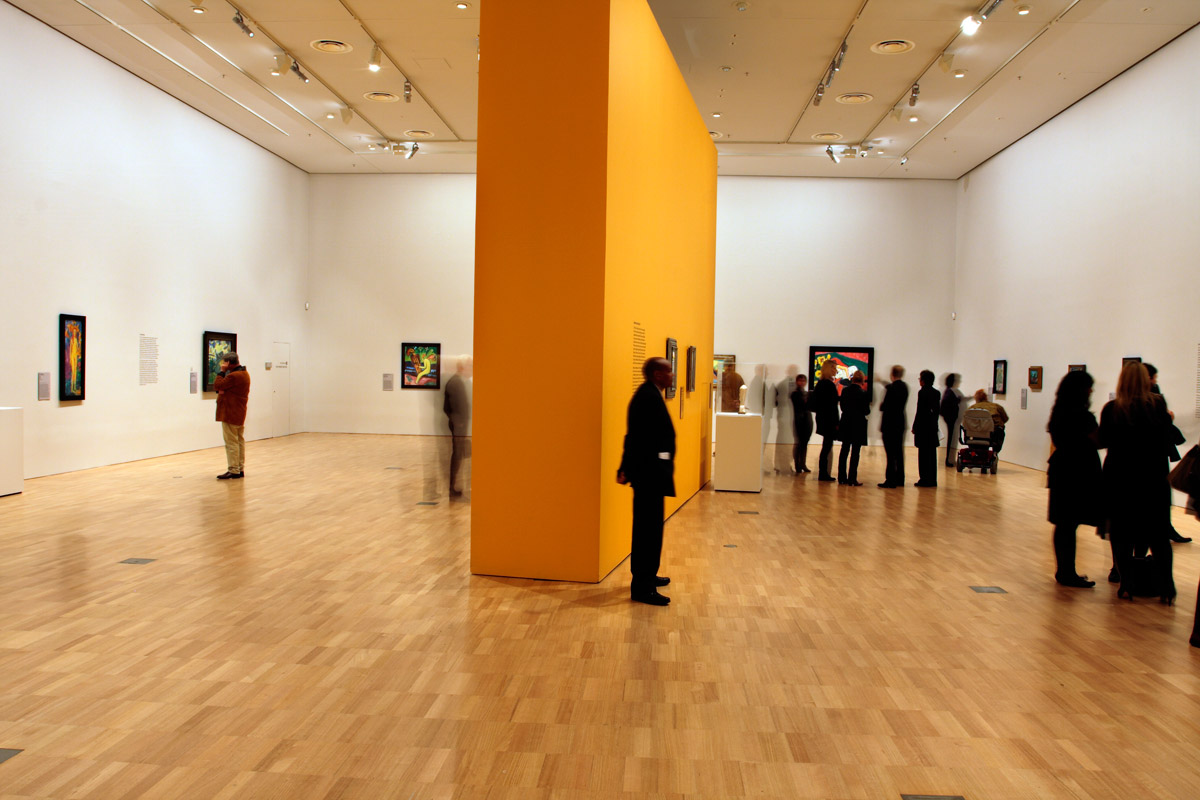
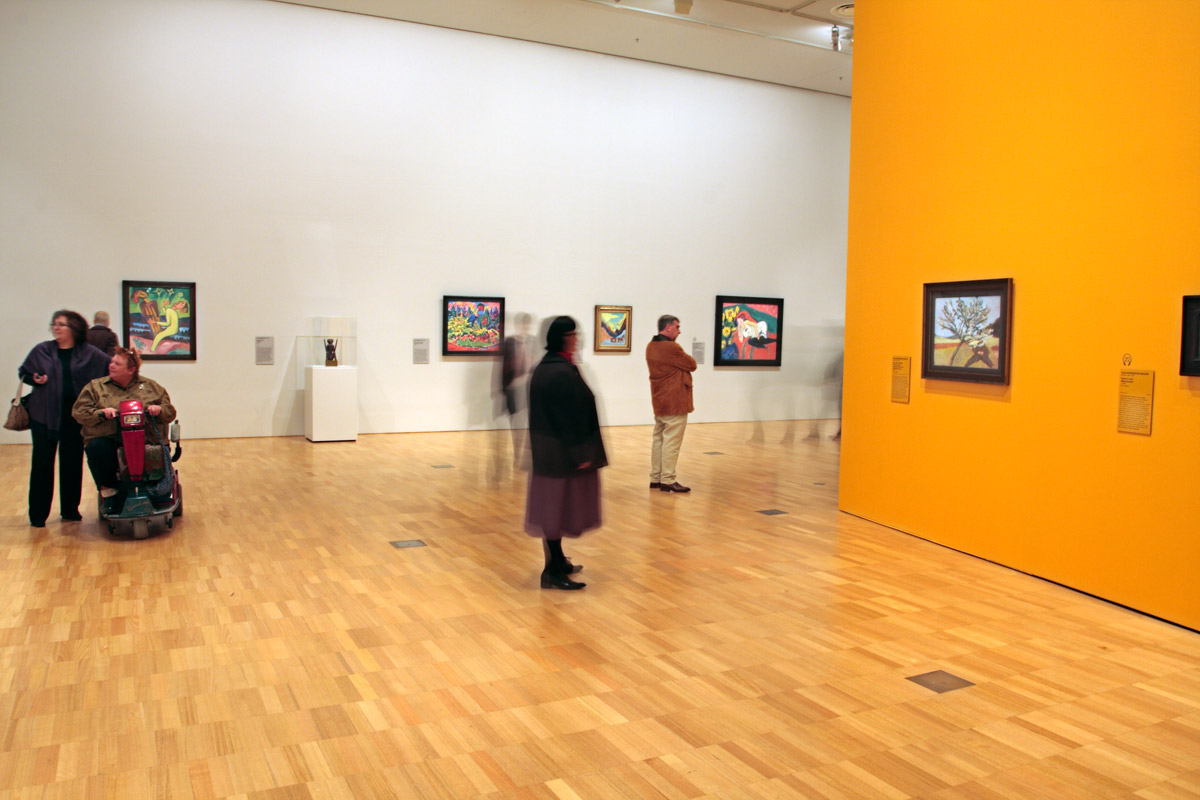
A simple, spacious hang shows off some wonderfully vibrant paintings in the new Winter Masterpieces blockbuster at the NGV. The use of strong yellow and pale grey wall colour compliments the paintings. Conversely, other rooms have a dark brown and very dark grey wall colour. Some people will like the effect but I found the dark grey a little too sombre and heavy in the room dedicated to the work of Max Beckmann. Overall a fantastic range of paintings, especially those by the German Expressionists and a luminous painting by Odilon Redon. To see them in Australia is a joy to behold.

Note on the photographs: All the photographs were taken with a timed exposure with the camera on a tripod. While this leads to ghosting as people walk through the shot it also adds a sense of the exhibition as a living entity. I find it preferable to the use of flash photography as flash destroys any ambience that the rooms possess. The photographs are in chronological order, proceeding from the beginning of the exhibition to the end.

Dr Marcus Bunyan


Many thankx to Dr Ted Gott, Senior Curator of International Art, Sue Coffey and all the media team and the National Gallery of Victoria for allowing me to photograph the exhibition and publish the photographs online. Please click on the photographs for a larger version of the image. All installation photographs © Marcus Bunyan and the National Gallery of Victoria.

PS. Thankx to the many people who have emailed me saying that they love the photographs, especially to Sue Coffey who said the posting looked superb = it makes it all worthwhile!


Media opening of 'European Masters: Städel Museum 19th - 20th Century', Winter Masterpieces at the National Gallery of Victoria


Media opening of European Masters: Städel Museum 19th – 20th Century, Winter Masterpieces at the National Gallery of Victoria
Photo: Marcus Bunyan


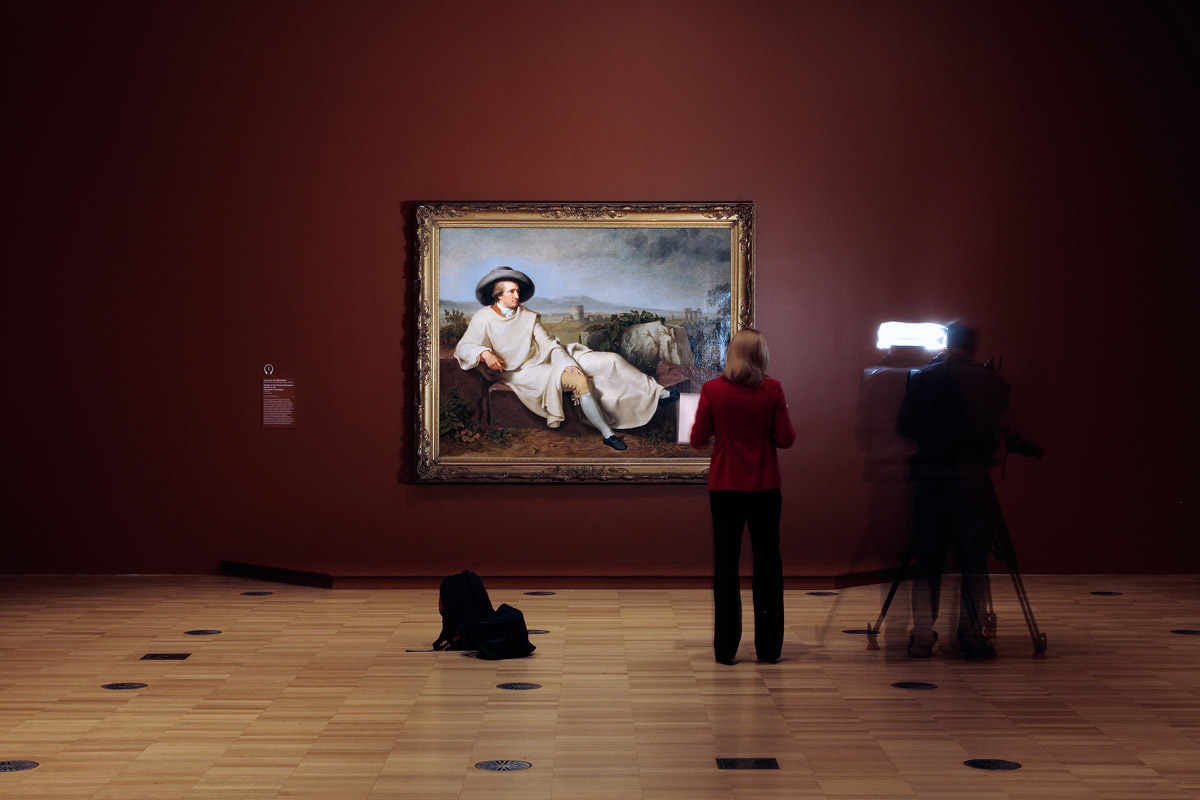
Installation view of Johann Heinrich Wilhelm Tischbei's panting 'Goethe in the Roman countryside' 1787 at the exhibition 'European Masters: Städel Museum 19th – 20th Century', Winter Masterpieces at the National Gallery of Victoria

Installation view of Johann Heinrich Wilhelm Tischbei's panting 'Goethe in the Roman countryside' 1787 at the exhibition 'European Masters: Städel Museum 19th – 20th Century', Winter Masterpieces at the National Gallery of Victoria


Installation views of Johann Heinrich Wilhelm Tischbei’s panting Goethe in the Roman countryside 1787 at the exhibition European Masters: Städel Museum 19th – 20th Century, Winter Masterpieces at the National Gallery of Victoria
Photos: Marcus Bunyan


Johann Heinrich Wilhelm Tischbein (German, 1751-1829) 'Goethe in the Roman countryside' (Goethe in der römischen Campagna) 1787 from the exhibition 'European Masters: Städel Museum 19th – 20th Century', Winter Masterpieces at the National Gallery of Victoria, June - October, 2010


Johann Heinrich Wilhelm Tischbein (German, 1751-1829)
Goethe in the Roman countryside (Goethe in der römischen Campagna)
1787
Oil on canvas
161.0 x 197.5cm
Städel Museum, Frankfurt am Main
Acquired in 1878 as a gift by Baroness Salomon von Rothschild


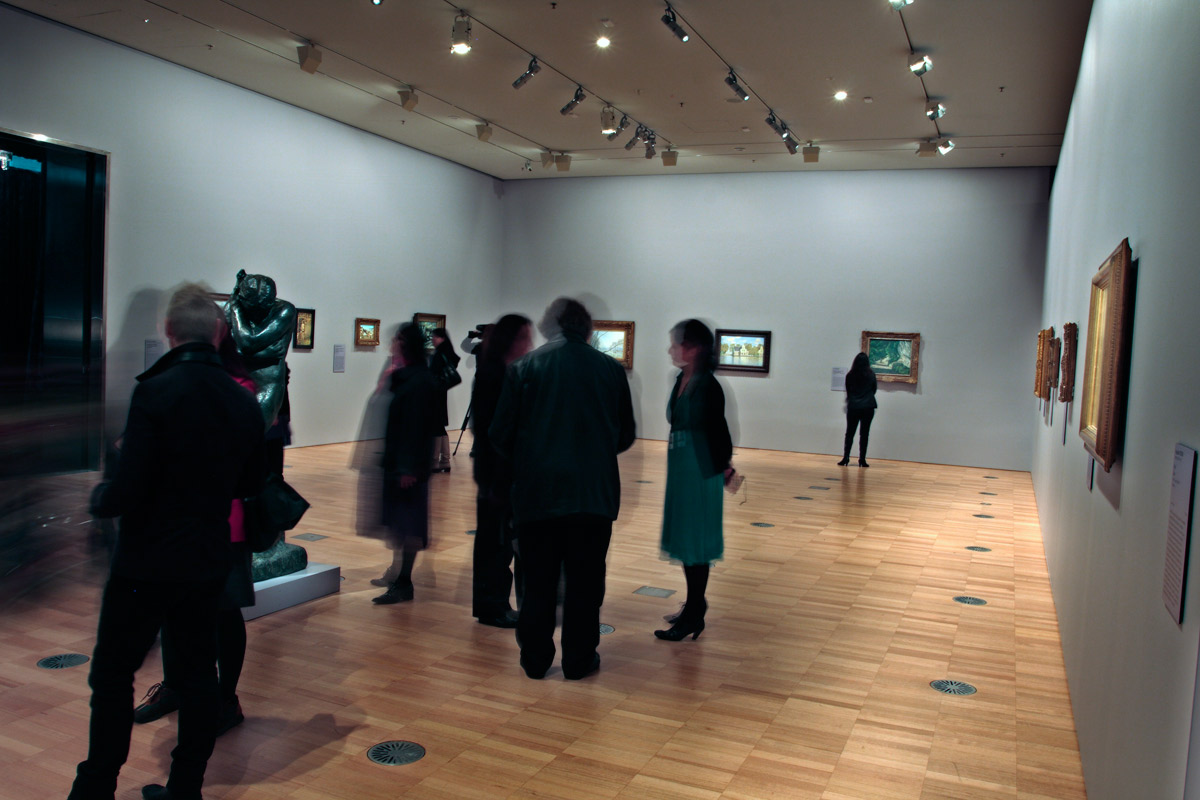
Installation view of 'European Masters: Städel Museum 19th - 20th Century', Winter Masterpieces at the National Gallery of Victoria


Installation view of the exhibition European Masters: Städel Museum 19th – 20th Century, Winter Masterpieces at the National Gallery of Victoria
Photo: Marcus Bunyan


Installation view of Johann Heinrich Wilhelm Tischbei's panting 'Goethe in the Roman countryside' 1787 at the exhibition 'European Masters: Städel Museum 19th – 20th Century', Winter Masterpieces at the National Gallery of Victoria

Installation view of Johann Heinrich Wilhelm Tischbei's panting 'Goethe in the Roman countryside' 1787 at the exhibition 'European Masters: Städel Museum 19th – 20th Century', Winter Masterpieces at the National Gallery of Victoria


Installation views of Johann Heinrich Wilhelm Tischbei’s panting Goethe in the Roman countryside 1787 at the exhibition European Masters: Städel Museum 19th – 20th Century, Winter Masterpieces at the National Gallery of Victoria
Photos: Marcus Bunyan


Installation view of 'European Masters: Städel Museum 19th - 20th Century', Winter Masterpieces at the National Gallery of Victoria

Installation view of 'European Masters: Städel Museum 19th - 20th Century', Winter Masterpieces at the National Gallery of Victoria


Installation views of the exhibition European Masters: Städel Museum 19th – 20th Century, Winter Masterpieces at the National Gallery of Victoria
Photos: Marcus Bunyan


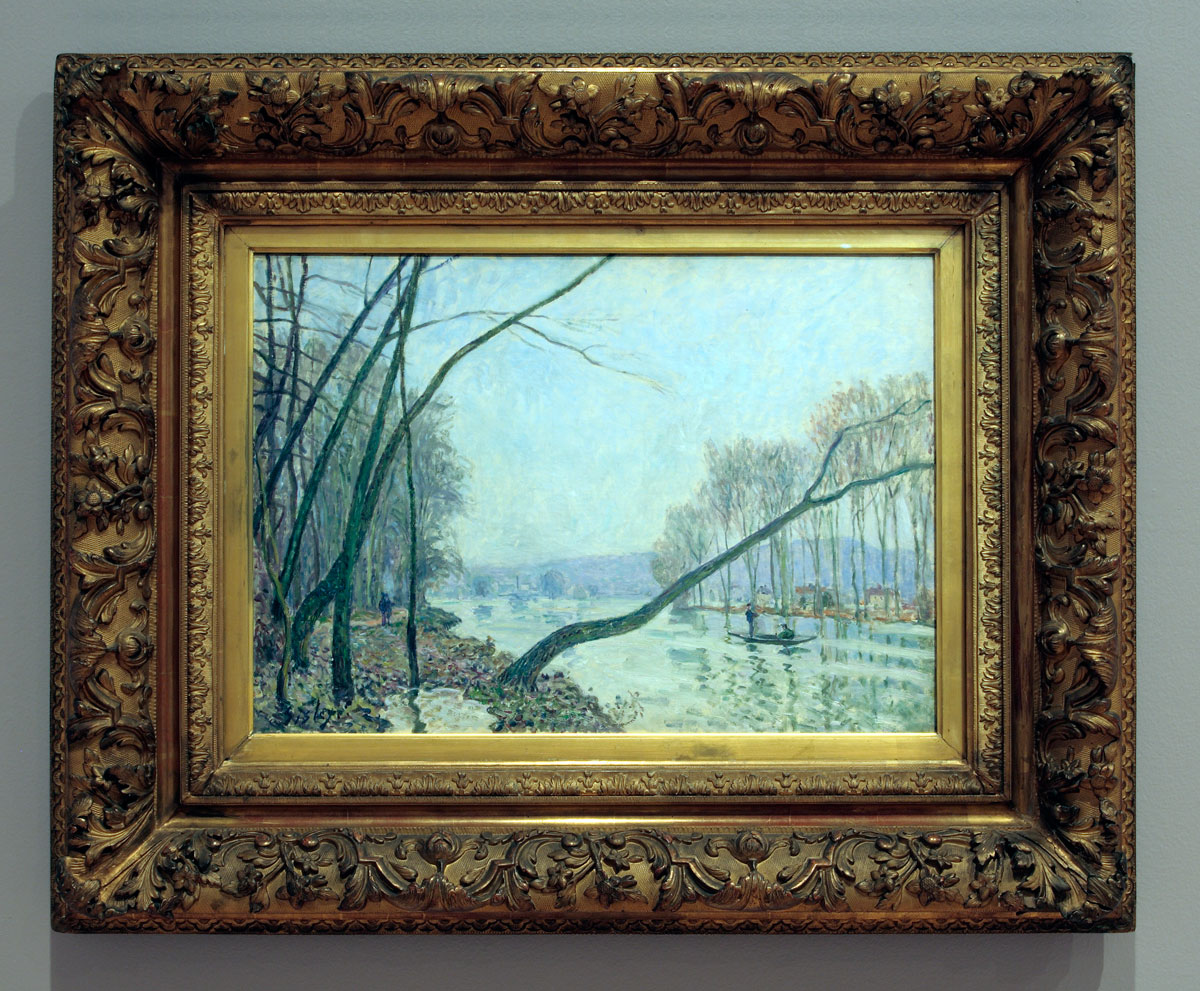
Alfred Sisley (English, 1839-1899) 'Banks of the Seine in Autumn' 1879 (installation view) from the exhibition 'European Masters: Städel Museum 19th – 20th Century', Winter Masterpieces at the National Gallery of Victoria, June - October, 2010


Alfred Sisley (English, 1839-1899)
Banks of the Seine in Autumn (installation view)
1879
Oil on canvas
Photo: Marcus Bunyan


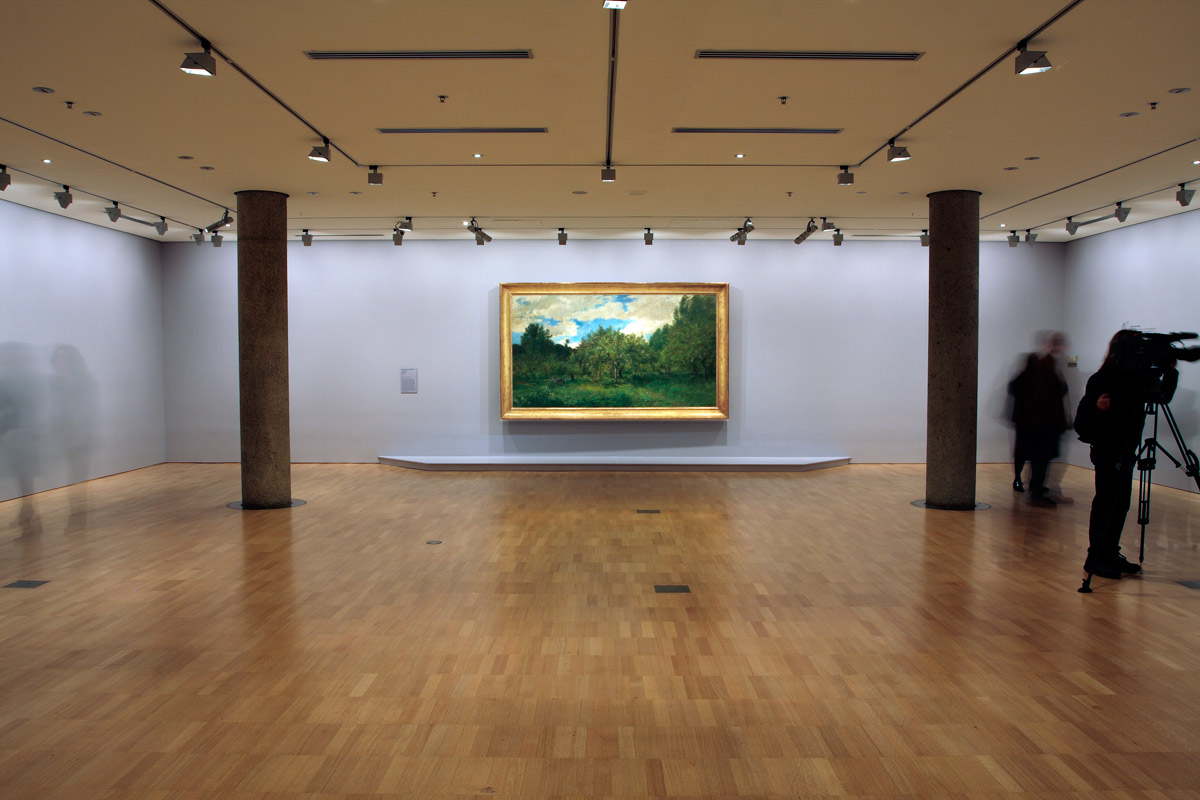
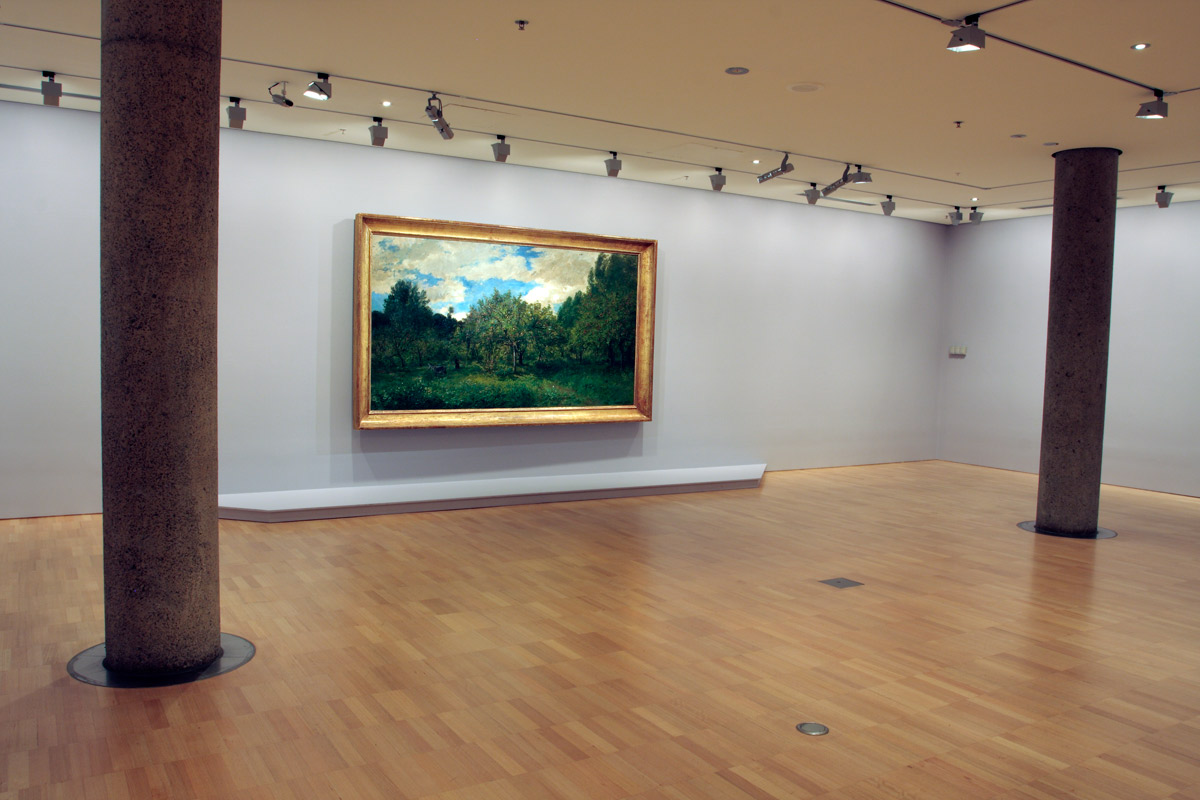
Installation view of Charles-Francois Daubigny (French 1817-1878) 'French Orchard at Harvest Time' (Le verger) 1876 at the exhibition 'European Masters: Städel Museum 19th – 20th Century', Winter Masterpieces at the National Gallery of Victoria, June - October, 2010

Installation view of Charles-Francois Daubigny (French 1817-1878) 'French Orchard at Harvest Time' (Le verger) 1876


Installation views of Charles-Francois Daubigny (French 1817-1878) French Orchard at Harvest Time (Le verger) 1876 at the exhibition European Masters: Städel Museum 19th – 20th Century, Winter Masterpieces at the National Gallery of Victoria
Photos: Marcus Bunyan


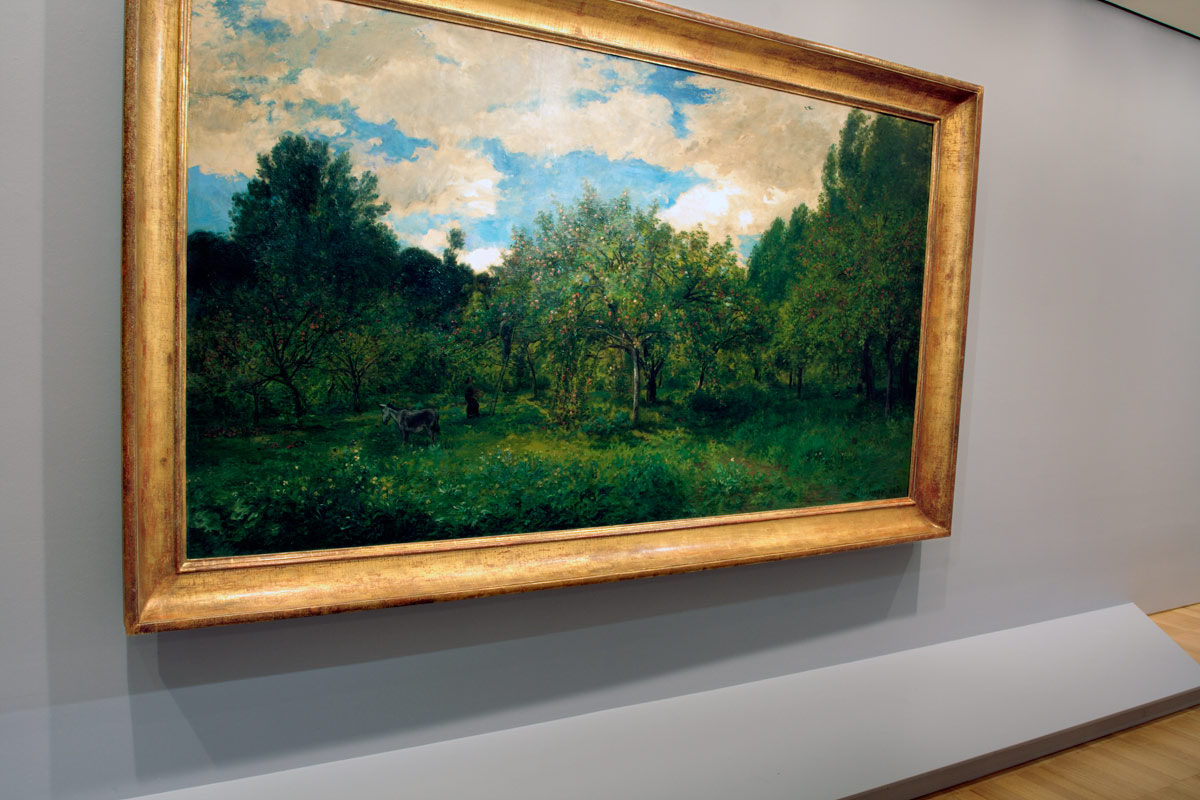
Charles-Francois Daubigny (French 1817-1878) 'French Orchard at Harvest Time' (Le verger) 1876 (installation view) from the exhibition 'European Masters: Städel Museum 19th – 20th Century', Winter Masterpieces at the National Gallery of Victoria, June - October, 2010


Charles-Francois Daubigny (French, 1817-1878)
French Orchard at Harvest Time (Le verger) (installation view)
1876
Oil on canvas
Photo: Marcus Bunyan


Pierre Auguste Renoir (French 1841-1919) 'After the luncheon' (La fin du déjeuner) 1879 (installation view) at the exhibition 'European Masters: Städel Museum 19th – 20th Century', Winter Masterpieces at the National Gallery of Victoria, June - October, 2010

Pierre Auguste Renoir (French 1841-1919) 'After the luncheon' (La fin du déjeuner) 1879 (installation view) at the exhibition 'European Masters: Städel Museum 19th – 20th Century', Winter Masterpieces at the National Gallery of Victoria, June - October, 2010


Installation views of Pierre Auguste Renoir (French 1841-1919) After the luncheon (La fin du déjeuner) 1879 at the exhibition European Masters: Städel Museum 19th – 20th Century, Winter Masterpieces at the National Gallery of Victoria
Photos: Marcus Bunyan


Pierre Auguste Renoir (French 1841-1919) 'After the luncheon' (La fin du déjeuner) 1879


Pierre Auguste Renoir (French 1841-1919)
After the luncheon (La fin du déjeuner)
1879
Oil on canvas
100.5 x 81.3cm
Städel Museum, Frankfurt am Main
Acquired in 1910


Odilon Redon (French 1840-1916) 'Christ and the Samaritan Woman' (Le Christ et la Samaritaine) c. 1895 (installation view) at the exhibition 'European Masters: Städel Museum 19th – 20th Century', Winter Masterpieces at the National Gallery of Victoria


Installation view of Odilon Redon (French 1840-1916) Christ and the Samaritan Woman (Le Christ et la Samaritaine) c. 1895 at the exhibition European Masters: Städel Museum 19th – 20th Century, Winter Masterpieces at the National Gallery of Victoria
Photo: Marcus Bunyan


Odilon Redon (French 1840-1916) 'Christ and the Samaritan Woman' (Le Christ et la Samaritaine) c. 1895


Odilon Redon (French, 1840-1916)
Christ and the Samaritan Woman (Le Christ et la Samaritaine)
c. 1895
Oil on canvas
64.8 x 50.0cm
Städel Museum, Frankfurt am Main
Acquired in 1960


Installation view of the exhibition 'European Masters: Städel Museum 19th - 20th Century', Winter Masterpieces at the National Gallery of Victoria


Installation view of the exhibition European Masters: Städel Museum 19th – 20th Century, Winter Masterpieces at the National Gallery of Victoria
Photo: Marcus Bunyan


“The appeal of the Städel Institute lies in the tremendous energy filling that confined space. Virtually all of the great emotions that have lived in the souls of the peoples of Europe are there, and all in superb works.”

Alfred Lichtwark, Director the Hamburg Museum, 1905


One of the world’s finest collections of 19th and 20th century art is showing exclusively in Melbourne as the seventh exhibition in the hugely popular Melbourne Winter Masterpieces series at the National Gallery of Victoria.

European Masters: Städel Museum, 19th-20th Century brings together almost 100 works by 70 artists from one of Germany’s oldest and most respected museums, the Städel Museum in Frankfurt.

Dr Gerard Vaughan, NGV Director, said: “European Masters presents a comprehensive overview of the Städel Museum’s holdings of painting and sculpture from the last two centuries of European art. This blockbuster exhibition provides a superb survey of the key artistic movements of the time, including Realism, Impressionism and Post Impressionism, German Romanticism, Expressionism and Modernism, and French Symbolism.”

The exhibition opens with a series of large-scale romantic German paintings, including Johann H.W. Tischbein’s iconic Goethe in the Roman Campagna from 1787. Visitors will also be treated to magnificent examples of 19th century French art from Corot and Courbet’s Realist landscapes to well-known beautiful Impressionist works by Monet, Renoir, Degas and Cézanne.

European Masters then traces the development of German art, introducing audiences to rarely seen Realist and Symbolist masterpieces from artists such as Max Liebermann and Franz von Stuck.

A major highlight of the exhibition is a powerful selection of German Expressionist paintings, with ten poignant works by Max Beckmann, including The synagogue in Frankfurt am Main and his powerful Double Portrait, all of which have left the Städel for the first time to be shown outside of Europe.

The exhibition also includes a breathtaking selection of Swiss, Belgian and Dutch works by artists such as Arnold Böcklin, Fernand Khnopff and Vincent Van Gogh.

“Exclusive to Melbourne, European Masters provides an unprecedented opportunity to see a spectacular group of masterpieces spanning the dynamic and transformative years of the 19th and 20th centuries. There is something in this exhibition for everyone, from the beauty and immediacy of French Impressionism to the raw power of German Expressionism. This is a once-in-a-lifetime chance to see superb pictures that rarely travel outside of Europe,” said Dr. Vaughan.

Founded in 1816 by the Frankfurt financier Johann Friedrich Städel, the Städel Museum has one of the world’s finest art collections. The collection boasts 2700 paintings, 600 sculptures and over 100,000 prints and drawings documenting the development of European art and culture.

The Melbourne Winter Masterpieces series began in 2004 with The Impressionists: Masterpieces from the Musée d’Orsay, continued in 2005 with Dutch Masters from the Rijksmuseum, Amsterdam, followed by Picasso in 2006, Guggenheim Collection: 1940s to Now in 2007, Art Deco 1910-1939 in 2008 and Salvador Dalí: Liquid Desire in 2009.

This year Melbourne Winter Masterpieces includes European Masters: Städel Museum, 19th-20th Century at the NGV, and Tim Burton at the Australian Centre for the Moving Image.

Press release from the National Gallery of Victoria website


Installation view of the exhibition 'European Masters: Städel Museum 19th - 20th Century', Winter Masterpieces at the National Gallery of Victoria

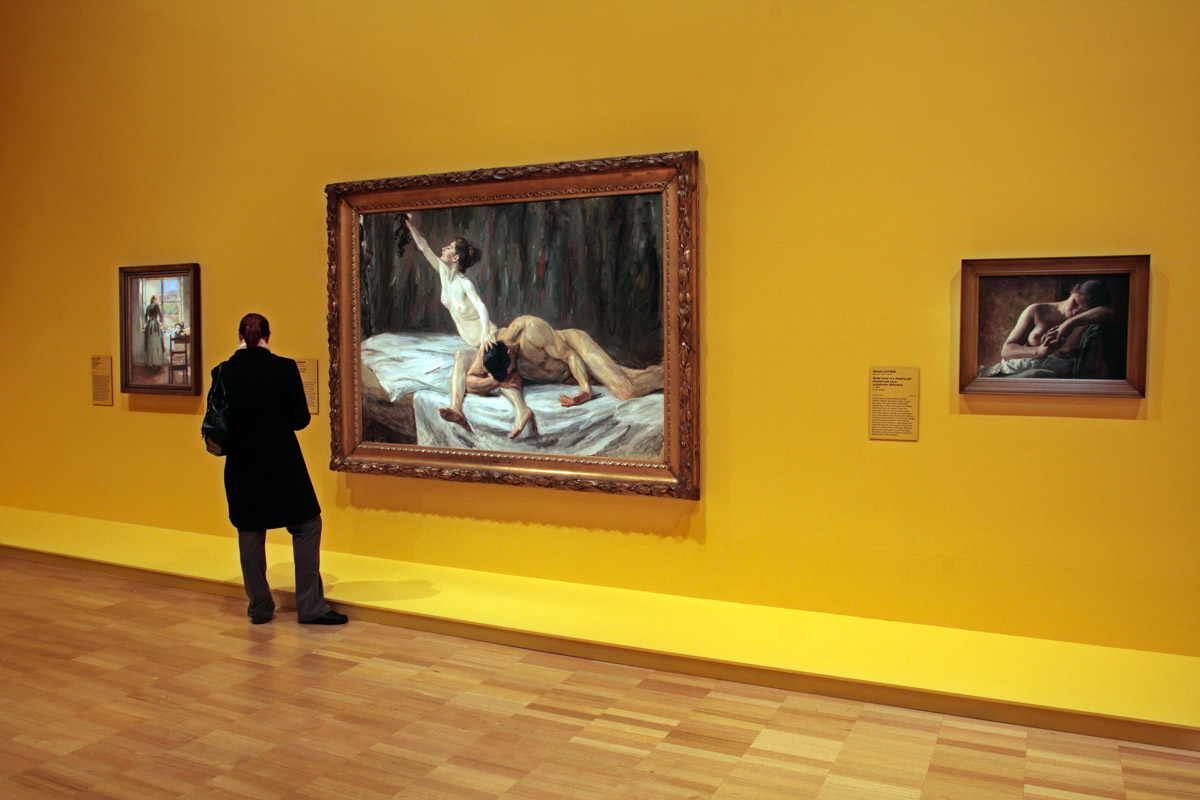
Installation view of Max Liebermann (German 1847-1935, lived in France 1874-78) 'Samson and Delilah' (Simson und Delila) 1901 at the exhibition 'European Masters: Städel Museum 19th – 20th Century', Winter Masterpieces at the National Gallery of Victoria

Installation view of Max Liebermann (German 1847-1935, lived in France 1874-78) 'Samson and Delilah' (Simson und Delila) 1901 at the exhibition 'European Masters: Städel Museum 19th – 20th Century', Winter Masterpieces at the National Gallery of Victoria


Installation views of Max Liebermann (German 1847-1935, lived in France 1874-78) Samson and Delilah (Simson und Delila) 1901 at the exhibition European Masters: Städel Museum 19th – 20th Century, Winter Masterpieces at the National Gallery of Victoria
Photos: Marcus Bunyan


Max Liebermann (German 1847-1935, lived in France 1874-78) 'Samson and Delilah' (Simson und Delila) 1901


Max Liebermann (German, 1847-1935, lived in France 1874-1878)
Samson and Delilah (Simson und Delila)
1901
Oil on canvas
151.2 x 212.0cm
Städel Museum, Frankfurt am Main
Acquired in 1910


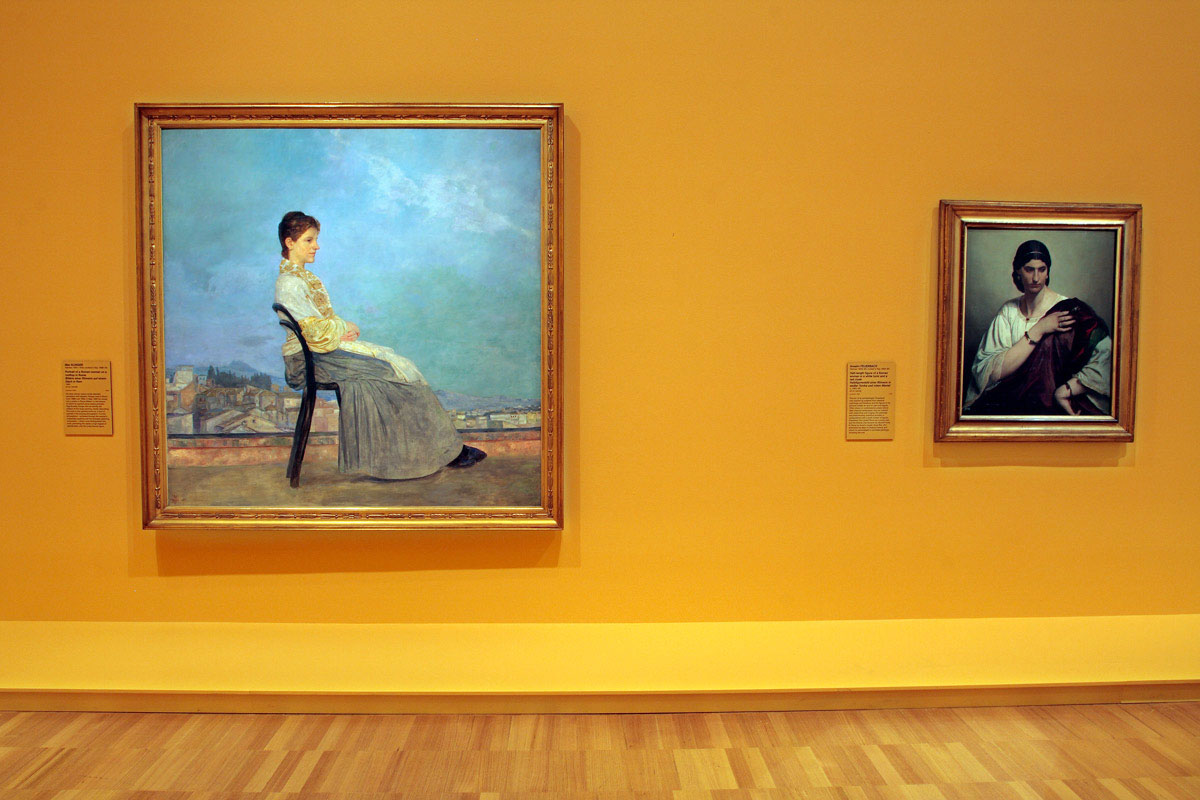
Max Klinger (German 1857-1920) 'Portrait of a Roman woman on a flat roof' (Bildnis einer Römerin auf einem Dach in Rom) 1891


Max Klinger (German, 1857-1920)
Portrait of a Roman woman on a flat roof (Bildnis einer Römerin auf einem Dach in Rom)
1891
Oil on canvas
182 x 182cm
Städel Museum, Frankfurt am Main
Acquired in 1926 as a gift in commemoration of Walther Rathenau


Installation view at left of Max Klinger (German 1857-1920) 'Portrait of a Roman woman on a flat roof' (Bildnis einer Römerin auf einem Dach in Rom) 1891 at the exhibition 'European Masters: Städel Museum 19th – 20th Century', Winter Masterpieces at the National Gallery of Victoria


Installation view at left of Max Klinger (German 1857-1920) Portrait of a Roman woman on a flat roof (Bildnis einer Römerin auf einem Dach in Rom) 1891 at the exhibition European Masters: Städel Museum 19th – 20th Century, Winter Masterpieces at the National Gallery of Victoria
Photo: Marcus Bunyan


Max Beckmann room, installation view of 'European Masters: Städel Museum 19th - 20th Century', Winter Masterpieces at the National Gallery of Victoria

Max Beckmann room, installation view of 'European Masters: Städel Museum 19th - 20th Century', Winter Masterpieces at the National Gallery of Victoria

Max Beckmann room, installation view of 'European Masters: Städel Museum 19th - 20th Century', Winter Masterpieces at the National Gallery of Victoria


Max Beckmann room, installation view of European Masters: Städel Museum 19th – 20th Century, Winter Masterpieces at the National Gallery of Victoria
Photos: Marcus Bunyan


Max Beckmann. 'Female dancer' (Tanzerin) c. 1935 (installation view)


Max Beckmann (German 1884-1950, worked in the Netherlands 1937-1947, United States 1947-1950)
Female dancer (Tanzerin) (installation view)
c. 1935
Bronze
Photo: Marcus Bunyan


Installation view of 'European Masters: Städel Museum 19th - 20th Century', Winter Masterpieces at the National Gallery of Victoria

Installation view of 'European Masters: Städel Museum 19th - 20th Century', Winter Masterpieces at the National Gallery of Victoria

Installation view of 'European Masters: Städel Museum 19th - 20th Century', Winter Masterpieces at the National Gallery of Victoria


Installation views of European Masters: Städel Museum 19th – 20th Century, Winter Masterpieces at the National Gallery of Victoria
Photos: Marcus Bunyan


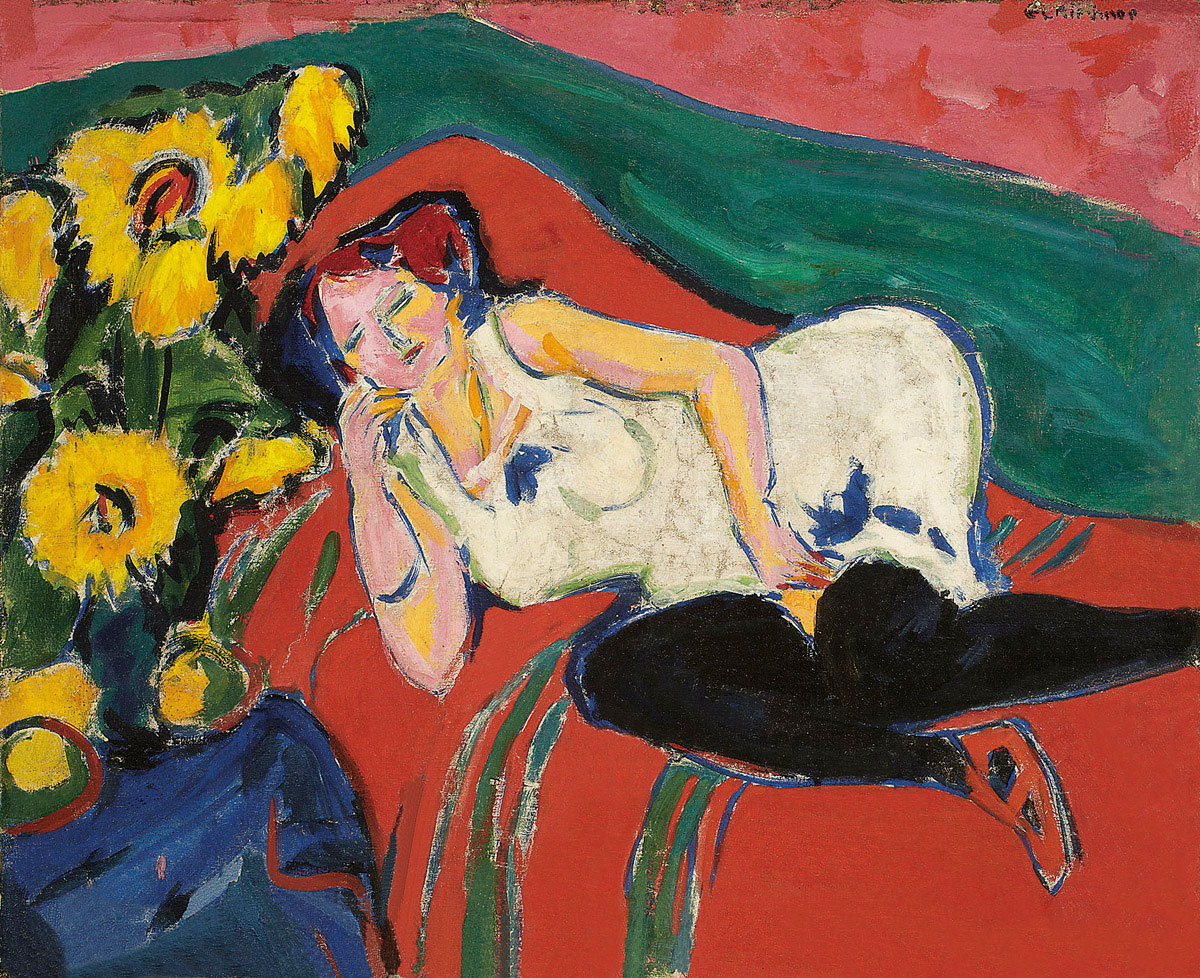
Ernst Ludwig Kirchner (German 1880-1938) 'Reclining woman in a white chemise' (Liegende Frau im weiβen Hemd) 1909


Ernst Ludwig Kirchner (German, 1880-1938)
Reclining woman in a white chemise (Liegende Frau im weiβen Hemd)
1909
Oil on canvas
95.0 x 121.0cm
Städel Museum, Frankfurt am Main
Acquired in 1950


NGV International
180 St Kilda Road

Opening hours:
Daily 10am – 5pm

National Gallery of Victoria website

LIKE ART BLART ON FACEBOOK

Back to top

Vale Mari Funaki

May 2010


It is with great sadness that I hear of the passing of Mari Funaki on the 13th May 2010.

I met Mari many times and she was always wonderfully generous with her energy, knowledge and enthusiasm. She was an amazing artist, I loved her work especially the stunning anamorphic black bracelets and the fact that she used photography of Bernd and Hiller Becher as part of her inspiration. My conversation with Mari in 2006 and photographs of her work can be found on the Notes from a Conversation with Mari Funaki posting.

Vale Mari Funaki


“A memorial will be held on Tuesday June 1st, 2010 at 11.00am in THE GREAT HALL of the National Gallery of Victoria, International.


Mari Funaki outside Gallery Funaki


Mari Funaki outside Gallery Funaki
Photo: Marcus Bunyan


Gallery Funaki website

LIKE ART BLART ON FACEBOOK

Back to top

Review: ‘Autumn Masterpieces: Highlights from the Permanent Collection’ at the Centre for Contemporary Photography (CCP), Fitzroy, Melbourne

Exhibition dates: 19th March – 18th May 2010

Curator: Mark Feary

Featuring Museum Highlights: A Gallery Talk by Andrea Fraser (USA) as well as works from the collections of Hany Armanious, Liv Barrett, Polly Borland (UK), Steve Carr (NZ), Lane Cormick, Chantal Faust, Marco Fusinato, Tony Garifalakis, Matthew Griffin, Irene Hanenbergh, Christopher Hanrahan, Hotham Street Ladies, the Kingpins, Paul Knight, Andrew Liversidge, Rob McLeish, Callum Morton, Nat & Ali, Geoff Newton, Martin Parr (UK), Stuart Ringholt, David Rosetzky, Darren Sylvester, Christian Thompson, Lyndal Walker and Caroline Williams.


Autumn Masterpieces: Highlights from the Permanent Collection


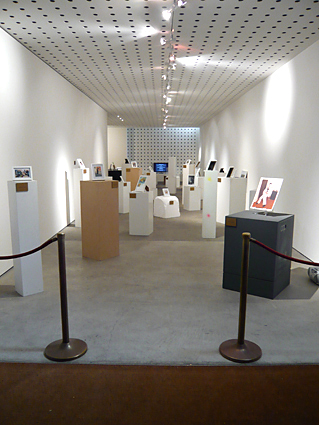
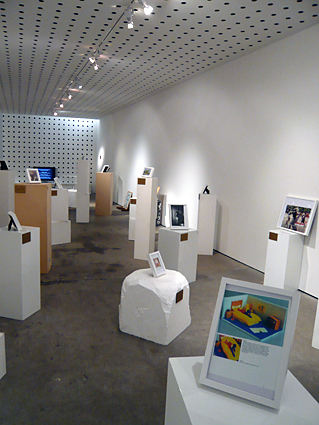
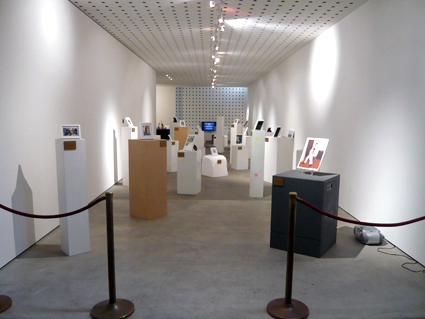
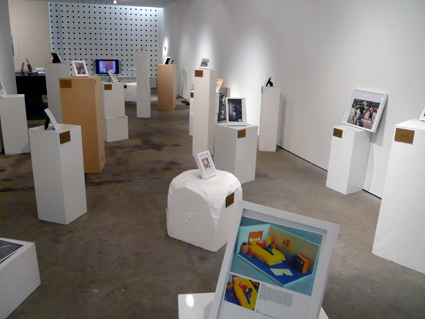
Curated by Mark Feary, this is a deliciously ironic exhibition that asks the audience to question the social and political construction of the blockbuster exhibitions regularly held by large museums around Australia; to question the role of the curator in assembling such exhibitions; and to question the cultural value of permanent collections of ‘Masterpieces’. Autumn Masterpieces displays work that is anything but permanent and undermines the process whereby museums construct frameworks for social understanding. The work, displayed in a roped off space on plinths of various heights, in cheap frames and at skew-whiff angles, seems ephemeral and transitory all the more to contradict both main tenants of the title of the exhibition: masterpiece and permanence.

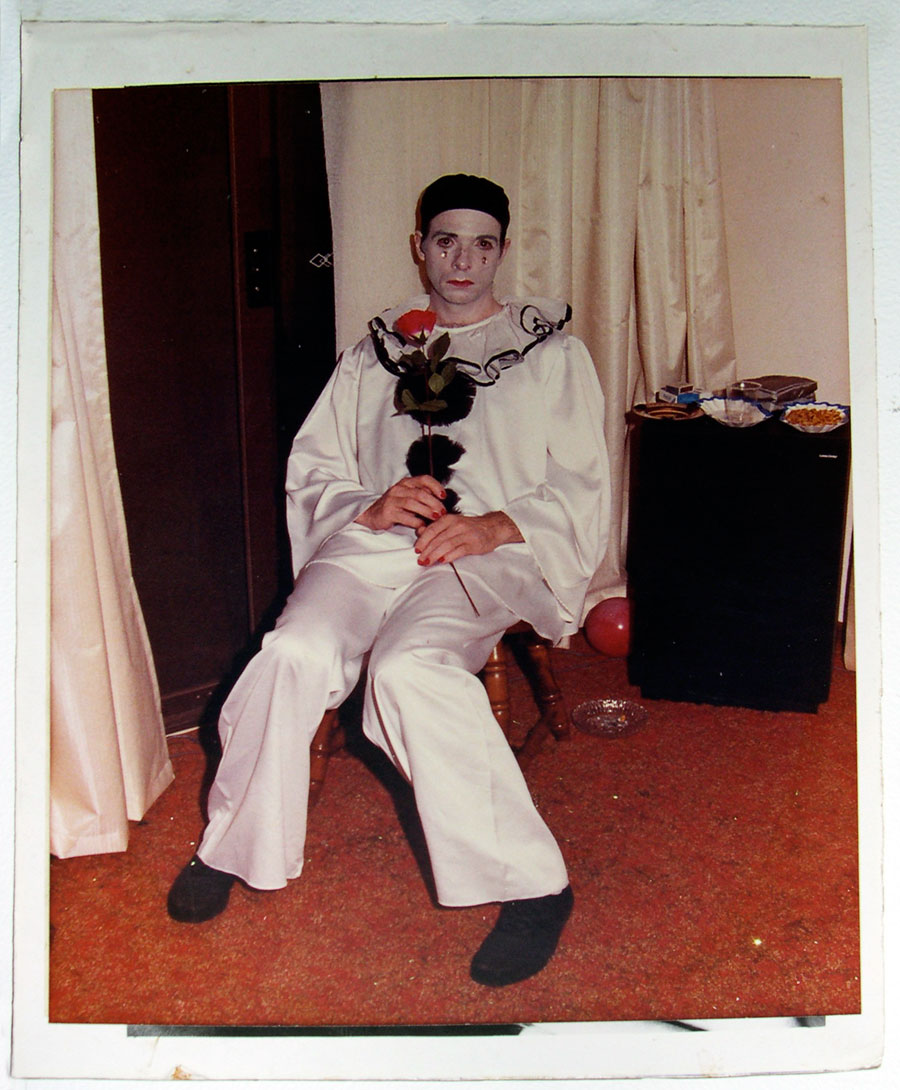
Sitting on plinths that are adorned with plastic gold name plaques emblazoned with the condition of the possibility of the works existence, “From the collection of …” , the untitled works reinforce the conceptual thrust of the exhibition. In one sense the content of the specific images seemed almost irrelevant; in another the collective dialectical argument of the images deconstructs normative interpretations of the masterpiece. ‘Instructions for the Tourist’ and ‘Rules for How to use the playground’ sit next to photographs of dejected clowns; ‘Confusion & Reversals’ sit next to ambiguous photographs of events and actions: people doing ‘normal’ things displayed though Polaroids, newspaper clippings, snapshots, photographs from albums, black and white and colour, framed and in museological glass cases.

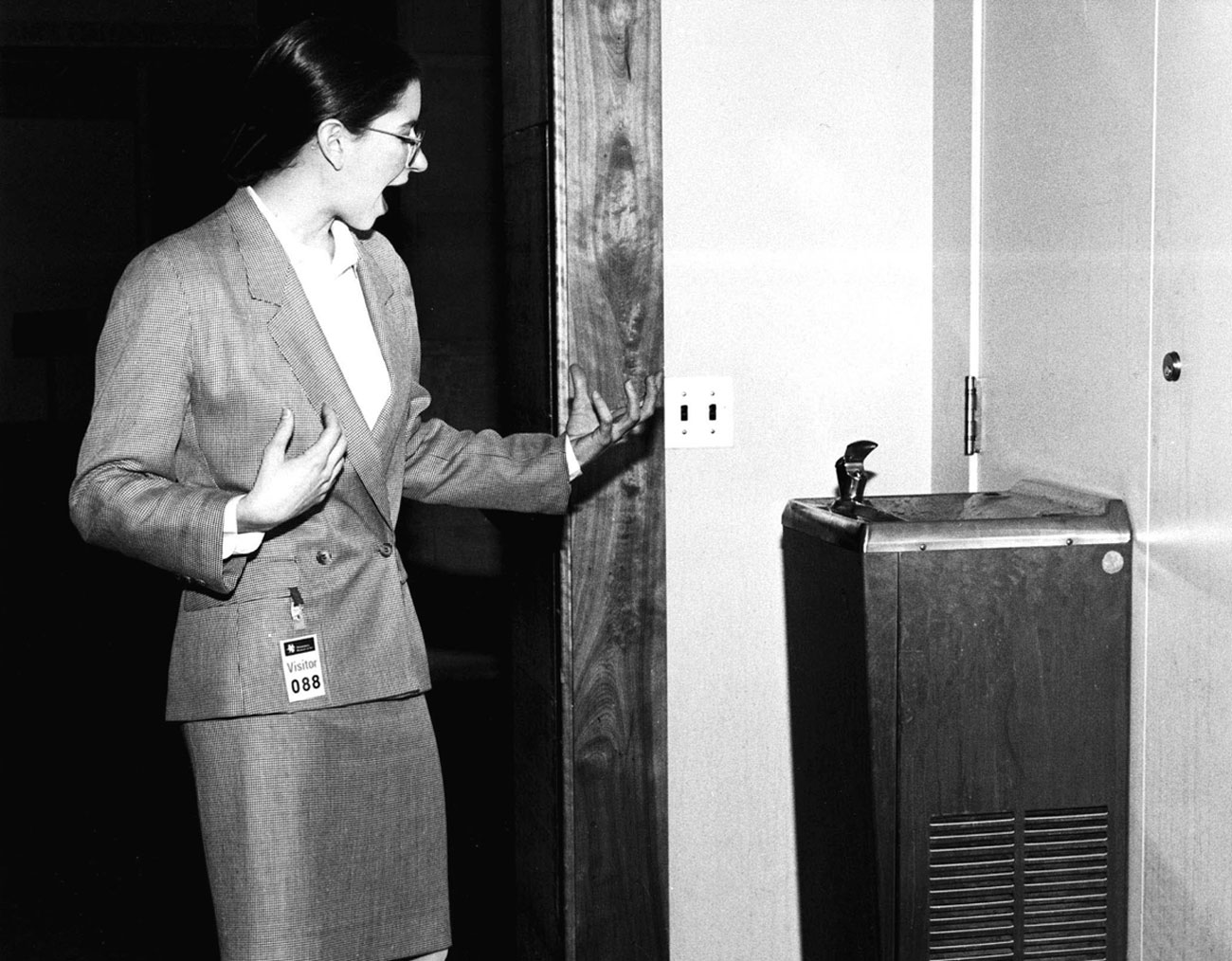
The highlight of the exhibition for me was the guffaw inducing DVD Museum Highlights: A Gallery Talk (1989) by American artist Andrea Fraser. Where Mark Feary found this post-cultural gem is beyond me but I am so glad he did! I stood transfixed as the narrator / curator takes us on a virtual tour of the Philadelphia Museum of Art, along the way pointing out the magnificence and subliminal beauty of the objects in the museum. She stresses the decorum of the institution, it’s tradition in measured, ordered, dignified arrangements that are fine and simple while addressing a water fountain. Oh the deliciousness! She continues with the exultation of the institution, that is to develop an appreciation of values – true / false, better / worse, right / wrong, what is good for you / what is good for society – standards that should be adopted by a discriminating public, while addressing a broom cupboard. The piece subverts an approach “in which visitors’ individual meanings are only validated by the extent to which they concord with the conclusions intended by exhibition-makers or to which they conform to some predetermined and fixed standard truth.”1 And so it goes in an ever so serious, side-splitting soliloquy, critiquing the functions of art, linking the aspirations of humanity with the highest privileges of wealth and leisure. Wonderful!

Dr Marcus Bunyan


1/ Hein, George E. Learning in the Museum. London: Routledge, 1998 quoted in Sandell, Richard. “Reframing conversations,” in Museums, Prejudice and the Reframing of Difference. London and New York: Routledge, p. 179.


Many thanks to Mark Feary and the CCP for allowing me to use the images in the posting. Please click on the last photographs in the posting for a larger version of the image. All installation photographs © Marcus Bunyan


Installation view of the exhibition 'Autumn Masterpieces: Highlights from the Permanent Collection' at the Centre for Contemporary Photography, Melbourne

Installation view of the exhibition 'Autumn Masterpieces: Highlights from the Permanent Collection' at the Centre for Contemporary Photography, Melbourne

Installation view of the exhibition 'Autumn Masterpieces: Highlights from the Permanent Collection' at the Centre for Contemporary Photography, Melbourne

Installation view of the exhibition 'Autumn Masterpieces: Highlights from the Permanent Collection' at the Centre for Contemporary Photography, Melbourne

Installation view of the exhibition 'Autumn Masterpieces: Highlights from the Permanent Collection' at the Centre for Contemporary Photography, Melbourne


Installation views of the exhibition Autumn Masterpieces: Highlights from the Permanent Collection at the Centre for Contemporary Photography, Melbourne
Photos: Marcus Bunyan


Courtesy of the collection of Tony Garifalakis from the exhibition 'Autumn Masterpieces: Highlights from the Permanent Collection' at the Centre for Contemporary Photography (CCP), Fitzroy, Melbourne, March - May, 2010


Courtesy of the collection of Tony Garifalakis


Courtesy of the collection of Irene Hanenbergh from the exhibition 'Autumn Masterpieces: Highlights from the Permanent Collection' at the Centre for Contemporary Photography (CCP), Fitzroy, Melbourne, March - May, 2010


Courtesy of the collection of Irene Hanenbergh


Courtesy of the collection of Hany Armanious from the exhibition 'Autumn Masterpieces: Highlights from the Permanent Collection' at the Centre for Contemporary Photography (CCP), Fitzroy, Melbourne, March - May, 2010

Courtesy of the collection of Hany Armanious


Courtesy of the collection of Hany Armanious


Andrea Fraser. 'Museum Highlights: A Gallery Talk' 1989 from the exhibition 'Autumn Masterpieces: Highlights from the Permanent Collection' at the Centre for Contemporary Photography (CCP), Fitzroy, Melbourne, March - May, 2010


Andrea Fraser (American, b. 1965)
Museum Highlights: A Gallery Talk
1989
DVD (colour video with sound. 29′)
Courtesy of the artist and Friedrich Petzel Gallery, New York


Centre for Contemporary Photography

No permanent exhibition space at the moment

Centre for Contemporary Photography website

LIKE ART BLART ON FACEBOOK

Back to top

Review: ‘Ricky Swallow: The Bricoleur’ at The Ian Potter Centre, NGV Australia, Melbourne

Exhibition dates: 16th October, 2009 – 28th February, 2010


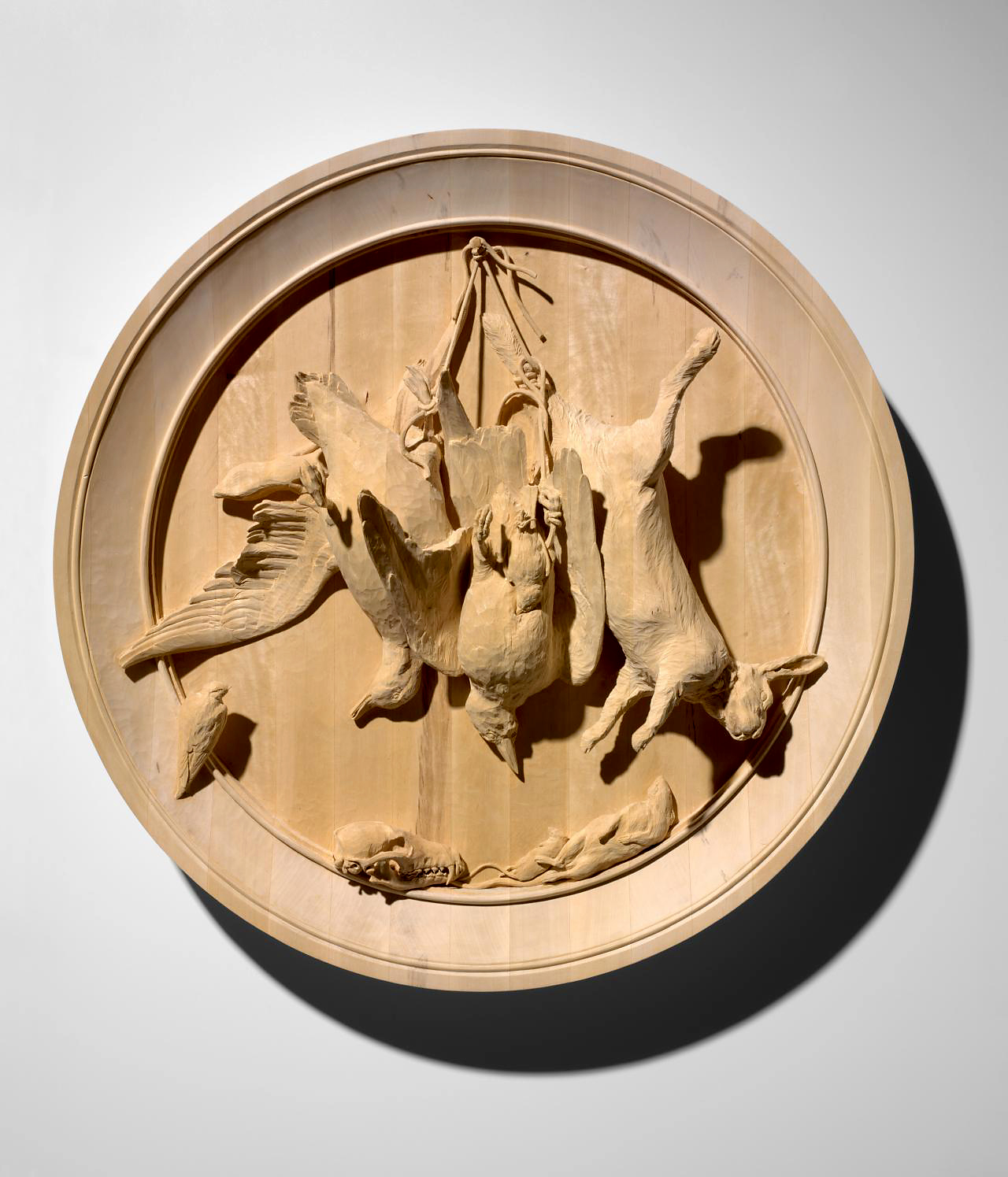
Ricky Swallow (born Australia 1974, lived in England 2003-06, United States 2006- ) 'Salad days' c. 2005 from the exhibition Review: 'Ricky Swallow: The Bricoleur' at The Ian Potter Centre, NGV Australia, Melbourne, October, 2009 - February, 2010


Ricky Swallow (born Australia 1974, lived in England 2003-2006, United States 2006- )
Salad days
c. 2005
Jelutong (Dyera costulata), maple (Acer sp.)
102.0 x 102.0 x 23.8cm
National Gallery of Victoria, Melbourne
Purchased with funds from the Victorian Foundation for Living Australian Artists, 2005
© Ricky Swallow
Photo: Andy Keate courtesy Darren Knight Gallery, Sydney


“Curiosity is a vice that has been stigmatized in turn by Christianity, by philosophy and even by a certain conception of science. Curiosity, futility. I like the word however. To me it suggests something all together different: it evokes concern; it evokes the care one takes for what exists or could exist; an acute sense of the real which, however, never becomes fixed; a readiness to find our surroundings strange and singular; a certain restlessness in ridding ourselves of our familiarities and looking at things otherwise; a passion for seizing what is happening now and what is passing away; a lack of respect for traditional hierarchies of the important and the essential.”


Michel Foucault 1


“Swallow is at his best when he’s exploring ways to communicate through the innate qualities of materials … This is always going to be more affecting than glib post-modernism, but he just can’t help himself sometimes. So my deep dislike for portentous and ironic titles bristled up immediately here. ‘Salad Days’ and ‘Killing Time’ are only two of the jokey puns, the problem is that art that simply supports two meanings isn’t very smart or complex. There’s no room for subtext. Irony is not the complex and neutral form that ambiguity is. It doesn’t invite engagement or interpretation. Art ought to aspire to infinite meanings, or maybe even only one. Irony doesn’t make for good art, when irony is the defense mechanism against meaning, masking an anxiety about sincerity.”


John Matthews 2


Let’s cut through the hyperbole. This is not the best exhibition since sliced bread (“the NGV highlight of 1609, 2009 and possibly 2109 too” says Penny Modra in The Age) and while it contains a few strong individual pieces this is not even a particularly good exhibition by Ricky Swallow at NGV Australia.

Featuring bronzes, watercolours and sculptures made from 2004-2009 that are sparingly laid out in the gallery space this exhibition comes as close to the National Gallery of Victoria holding a commercial show as you will find. Using forms such as human skeletons, skulls, balloons encrusted with barnacles, dead animals and pseudo death masks that address issues of materials and memory, time and space, discontinuity and death, Swallow’s sculptures are finely made. The craftsmanship is superb, the attention to detail magnificent and there is a feeling of almost obsessional perfectionism to the pieces. This much is given – the time and care taken over the construction, the hand of the maker, the presentation of specimen as momento mori is undeniable.

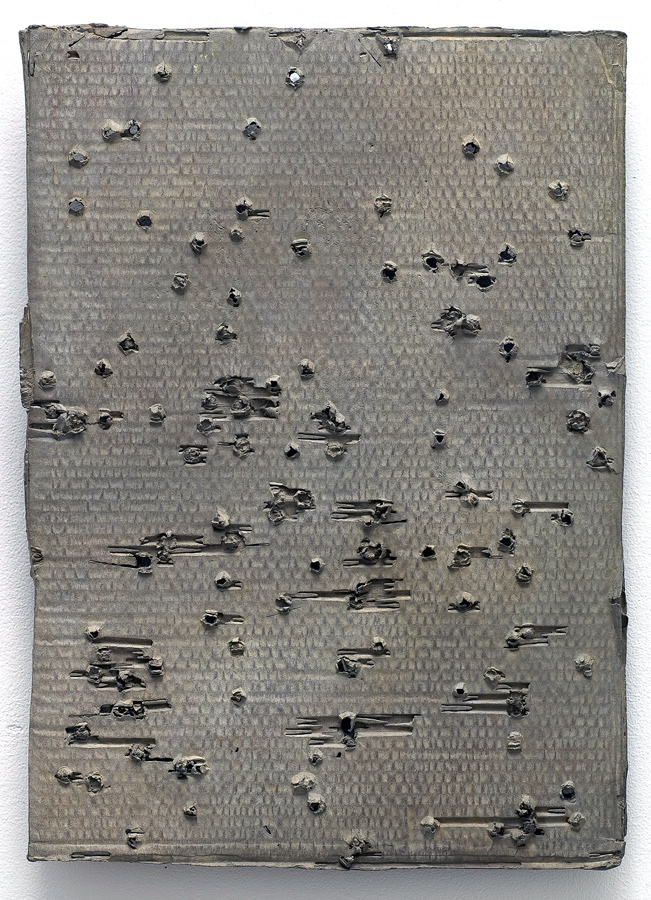
After seeing the exhibition three times the standout pieces for me are a life size dead sparrow cast in bronze (with the ironic title Flying on the ground is wrong 2006) – belly up, prostrate, feet curled under – that is delicate and poignant; Caravan (2008), barnacle encrusted bronze balloons that play with the ephemerality of life and form – a sculpture that is generous of energy and spirit, quiet yet powerful; Bowman’s record (2008), found objects of paper archery targets cast in bronze, the readymade solidified, the marks on paper made ambiguous hieroglyph of non-decaying matter, paper / bronze pierced by truth = I shot this, I was here (sometime); and Fig.1 (2008), a baby’s skull encased in a paper bag made of carved wood – the delicacy of surfaces, folds, the wooden paper collapsing into the skull itself creating the wonderful haunting presence of this piece. In these sculptures the work transcends the material state to engage the viewer in a conversation with the eternal beyond.

Swallow seeks to evidence the creation of meaning through the humblest of objects where the object’s fundamental beauty relies on the passing of time for its very existence. In the above work he succeeds. In other work throughout the exhibition he fails.

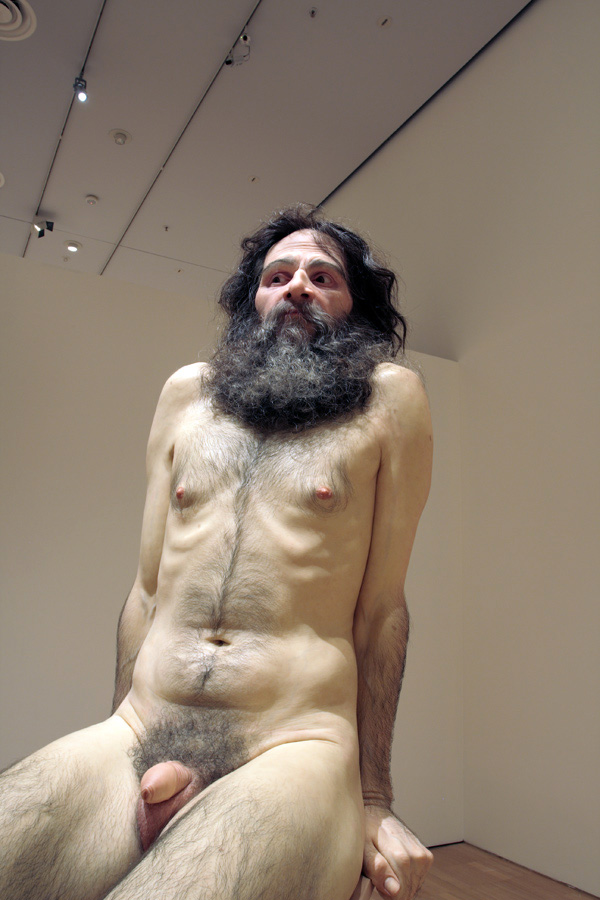
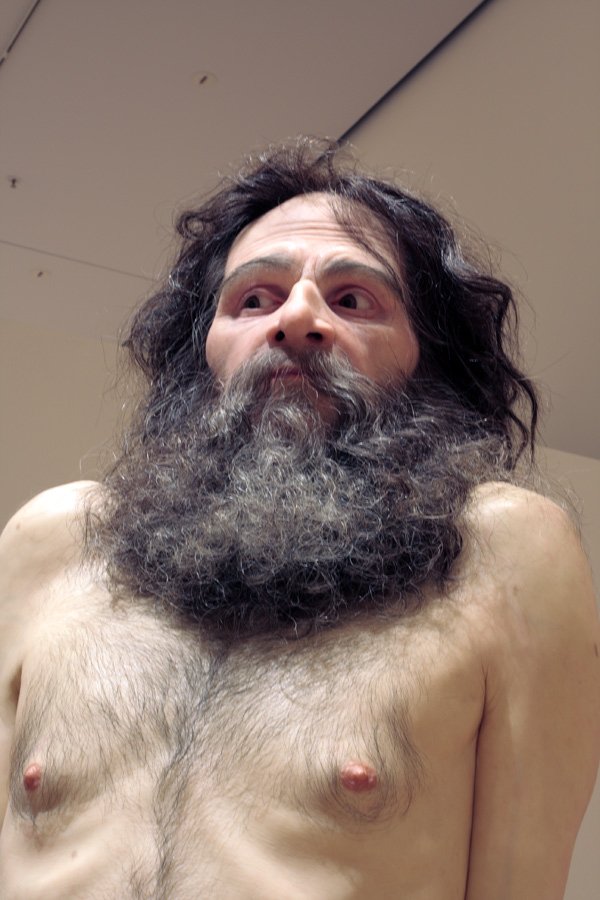
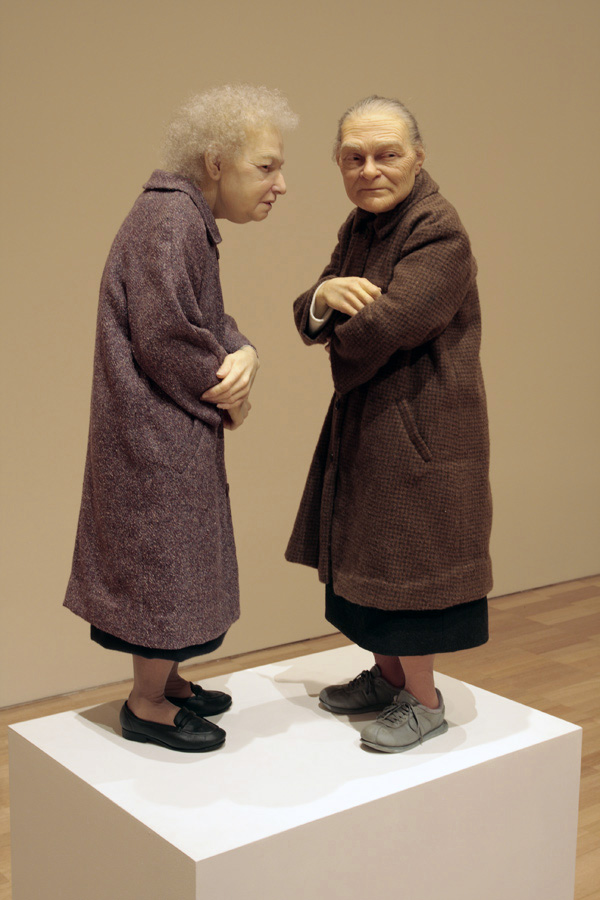
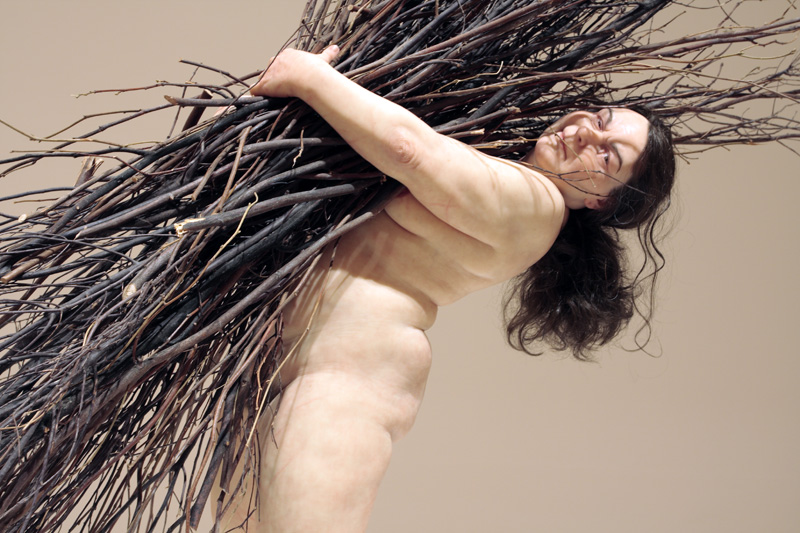
There seems to be a spare, international aesthetic at work (much like the aesthetic of the Ron Mueck exhibition at NGV International on St. Kilda Road). The art is so kewl that you can’t touch it, a dude-ish ‘Californication’ having descended on Swallow’s work that puts an emotional distance between viewer and object. No chthonic nature here, no dirt under the fingernails, no blood on the hands – instead an Apollonian kewlness, all surface and show, that invites reflection on life as discontinuous condition through perfect forms that seem twee and kitsch.

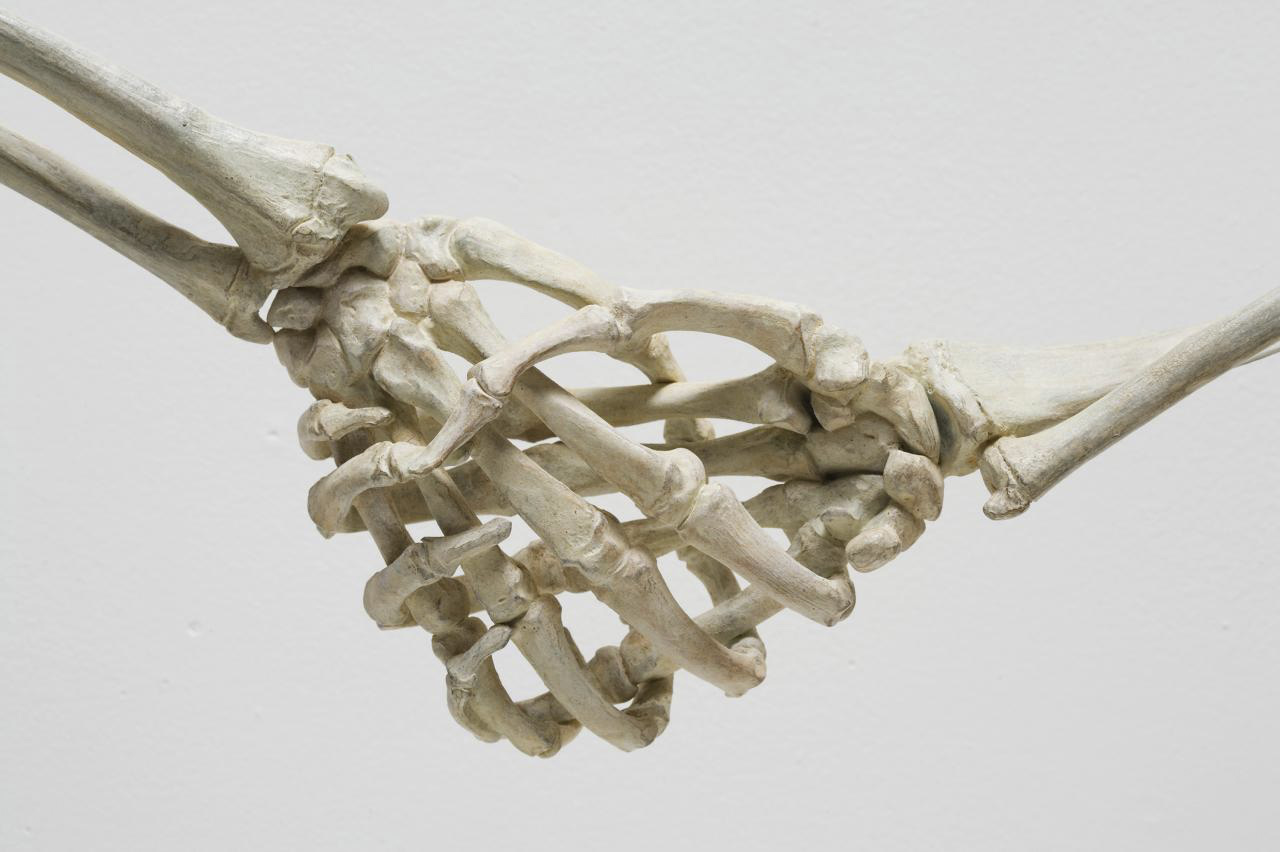
In Tusk (2007) two bronze skeletal arms hold hands in an undying bond but the sculpture simply fails to engage (the theme was brilliantly addressed by Louise Bourgeois in the first and only Melbourne Arts Biennale in 1999 with her carving in granite of two clasped hands); in History of Holding (2007) the icon of the Woodstock festival designed in 1969 is carved into a log of wood placed horizontally on the floor while  a hand holding a peeled lemon (symbolising the passing of time in the still life genre) is carved from another log of wood placed vertically. One appreciates the craftmanship of the carving but the sentiments are too saccharin, the surfaces too shallow – the allegorical layering that Swallow seeks stymied by the objects iconic form. A friend of mine insightfully observed about the exhibition: “Enough of the blond wood thing – it’s so Space Furniture!”

As John Matthews opines in the above quotation from his review of the exhibition there seems to be a lack of sincerity and authenticity of feeling in much of Swallow’s work. Irony as evidenced in the two major pieces titled Salad Days (2005) and Killing Time (2003-2004) leaves little room for the layering of meaning: “Irony is not the complex and neutral form that ambiguity is. It doesn’t invite engagement or interpretation.” Well said.

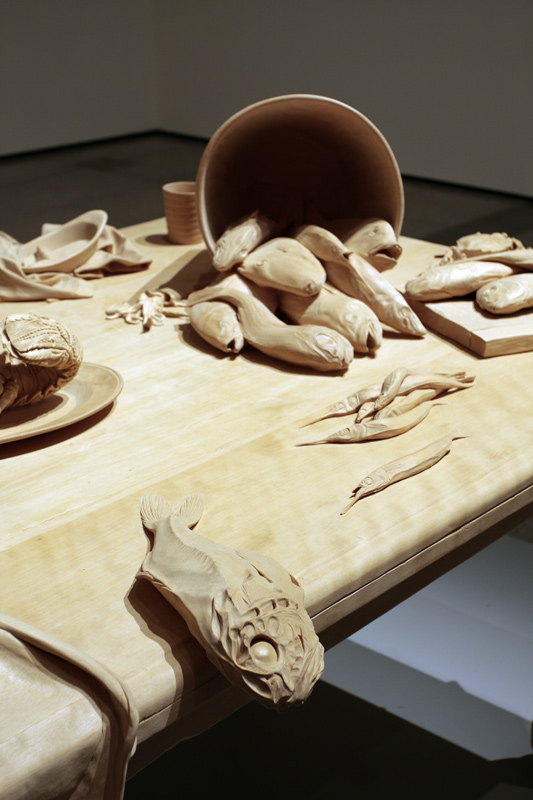
Killing Time in particular adds nothing to the vernacular of Vanitas paintings of the 17th century, adds nothing to the mother tongue of contemporary concerns about the rape of the seas, fails to update the allegories of the futility of pleasure and the inevitability of death – in fact the allegories in Swallow’s sculpture, the way he tries to twist our conception of the real, seem to have lost the power to remind us of our doom. The dead wooden fish just stare back at us with doleful, hollow eyes. The stilted iconography has no layering; it does not destroy hierarchies but builds them up.

In his early work Swallow was full of curiosity, challenging the norms of culture and creation. I always remember his wonderful series of dioramas at the Melbourne Biennale that featured old record players and animated scenes (see the photograph of Rooftop shoot out with chimpanzee (1999) below). Wow they were hot, they were fun, they made you think and challenge how you viewed the world! As Foucault notes in his excellent quotation at the top of the posting, curiosity promotes “an acute sense of the real which, however, never becomes fixed; a readiness to find our surroundings strange and singular; a certain restlessness in ridding ourselves of our familiarities and looking at things otherwise; a passion for seizing what is happening now and what is passing away; a lack of respect for traditional hierarchies of the important and the essential.”

While Swallow’s ‘diverse gestures of memorialisation’ still address the fundamental concerns of Foucault’s quotation his work seems to have become fixed in an Apollonian desire for perfection. He has forgotten how his early work challenged traditional hierarchies of existence; now, even as he twists and turns around a central axis, the conceptualisation of life, memory and death, his familiarity has become facsimile (a bricoleur is a master of nothing, a tinkerer fiddling at the edges). His lack of respect has become sublimated (“to divert the expression of (an instinctual desire or impulse) from its unacceptable form to one that is considered more socially or culturally acceptable”), his tongue in cheek has become firmly fixed, his sculptures just hanging around not looking at things otherwise.

Dr Marcus Bunyan


1/ Foucault, Michel. “The Masked Philosopher” in Politics, philosophy, culture: interviews and other writings, 1977-1984. London: Routledge, 1988, p. 328

2/ Matthews, John. “On Ricky Swallow @ NGV” on ArtKritique [Online] Cited 02/02/2010


    Ricky Swallow (born Australia 1974, lived in England 2003-06, United States 2006- ) 'Rooftop shoot out with chimpanzee' 1999


    Ricky Swallow (born Australia 1974, lived in England 2003-06, United States 2006- )
    Rooftop shoot out with chimpanzee
    1999
    From the series Even the odd orbit
    Cardboard, wood, plastic model figures and portable record player
    53.0 h x 33.0 w x 30.0 d cm
    Collection of the National Gallery of Australia
    Gift of Peter Fay 2001

    Please note: This art work is not in the exhibition


    Ricky Swallow (born Australia 1974, lived in England 2003-06, United States 2006- ) 'Tusk' 2007 (detail) from the exhibition Review: 'Ricky Swallow: The Bricoleur' at The Ian Potter Centre, NGV Australia, Melbourne, October, 2009 - February, 2010


    Ricky Swallow (born Australia 1974, lived in England 2003-06, United States 2006- )
    Tusk (detail)
    2007
    Patinated bronze, brass
    Edition of 3 plus 1 Artist’s Proof
    50 x 105 x 6cm
    National Gallery of Australia, Canberra Gift of the Prescott Family Foundation, 2008


    Ricky Swallow (born Australia 1974, lived in England 2003-06, United States 2006- ) 'The Man from Encinitas' 2009 from the exhibition Review: 'Ricky Swallow: The Bricoleur' at The Ian Potter Centre, NGV Australia, Melbourne, October, 2009 - February, 2010


    Ricky Swallow (born Australia 1974, lived in England 2003-06, United States 2006- )
    The Man from Encinitas
    2009
    Plaster, onyx, steel


    Ricky Swallow’s sculptures address fundamental issues that lie at the core of who we are. Things have lives. We are our things. We are things. When all is said and done it is our things – our material possessions – that outlive us. Anyone who has lost a family member or close friend knows this: what we have before us once that person is gone are the possessions that formed a life. Just as we are defined and represented by the things that we collect over time, we are ultimately objects ourselves. When we are dead and decomposed what remains are our bones, another type of object. And then there is social science. Archaeology, a subfield of anthropology, is entirely based on piecing together narratives of human relations based on material culture, that is, objects both whole and fragmentary. It may seem obvious but it is worth stressing here that our understanding of cultures from the distant past, those that originated before the advent of writing, is entirely based on the study of objects and skeletal remains. Swallow’s art addresses these basic yet enduring notions and reminds us of our deep symbiotic relationship to the stuff of daily life.

    Like the bricoleur put into popular usage by anthropologist Claude Levi-Strauss in his seminal book The Savage Mind, Ricky Swallow creates works of art often based on objects from his immediate surroundings. His method, however, is more of a second order bricolage: his sculptures are not assemblages of found objects, but rather elegantly crafted things. Handcarved from wood or plaster or cast in bronze, these humble objects are transformed into memorials to both the quotidian and the passage of time.

    Still life

    The still life has been an important touchstone throughout Swallow’s recent practice as it is an inspired vehicle for the exploration of how meaning is generated by objects. Several sculptures in the exhibition reference the still-life tradition in which Swallow updates and personalises this time-honoured genre, in particular the vanitas paintings of 17th century Holland. Vanitas still lifes, through an assortment of objects that had recognisable symbolism to a 17th-century viewer, functioned as allegories on the futility of pleasure and the inevitably of death. Swallow’s embrace of still life convention, however, is non-didactic, secular and open-ended. Swallow is not obsessed by death. On the contrary, his focus on objects is about salvaging them from the dust bin of history and honouring their continued resonance in his life.

    Killing time
    , 2003-2004, and Salad days, 2005, depict animals that Swallow and his family either found or caught when he was young and best highlight how the artist reclaims the still life genre to explore personal narrative. Killing time, which depicts a bounty of fish and crustaceans spread across a table modelled after the Swallow family kitchen table of the artist’s youth, is rife with autobiographical association. It not only references an object from Swallow’s past, but also the profession of his father, a fisherman, and the fact that Swallow was raised by the sea. Salad days is another autobiographical work depicting a range of animals such as birds, a rabbit, mice and a fox skull. Like many boys growing up in rural environments, Swallow recalls shooting magpies, encountering nesting birds in his garage or discovering dead lizards or trapping live ones in an attempt to keep them as pets.

    While not an overt still life, History of holding, 2007, suggests the genre in its fragmentary depiction of a musical instrument and the appearance of a lemon with falling rind. The hand holding / presenting a peeled lemon as the rind winds around the wrist in bracelet-like fashion is based on a cast of Swallow’s own hand, insinuating himself into this antiquated tradition. It is as if Swallow is announcing to us his deep interest in the temporality of objects through the presentation of the peeled lemon, which symbolises the passing of time and also appears in Killing time. The second component of History of holding is a sculptural interpretation of the Woodstock music festival icon designed by Arthur Skolnick in 1969, which still circulates today. History of holding, then, also references music, a leitmotif in Swallow’s art that appears both within the work itself, and also through Swallow’s use of titles.

    Body fragments

    Tusk, 2007 among several other works in the exhibition, explores the theme of body as fragment. Much has been discussed about Swallow’s use of the skeleton as a form rich in meaning within both the traditions of art history as well as popular culture (references range from the Medieval dance macabre and the memento mori of the still life tradition to the skeleton in rock music and skateboard art iconography). Tusk represents two skeletal arms with the hands clasped together in eternal union. A poignant work, Tusk is a meditation on permanence: the permanence of the human body even after death; the permanence of the union between two people, related in the fusion of the hands into that timeless symbol of love, the heart.

    Watercolours: atmospheric presentations, mummies, music, homage

    Swallow calls his watercolours “atmospheric presentations,” in contradistinction to his obviously more physical sculptures, and he sees them as respites from the intensity of labour and time invested in the sculptural work. They also permit experimentation in ways that sculpture simply does not allow. One nation underground, 2007, is a collection of images based on rock / folk musicians, several who had associations to 1960s Southern California, Swallow’s current home. Most of the subjects Swallow has illustrated in this work are now deceased; several experienced wide recognition only after their deaths. Like many of his sculptures, this group of watercolours tenderly painted with an air of nostalgia has the sensibility of a memorial – or as Swallow has called it “a modest monument”. The title of the work is based on a record album by another under-heralded rock band from the 1960s, Pearls Before Swine, and is a prime example of Swallow’s belief in the importance of titles to the viewing experience as clues or layers of meaning. In this case, the title hints at the quasi-cult status of the musicians and singers depicted. The featured musicians are Chris Bell (Big Star), Karen Dalton (a folk singer), Tim Buckley (legendary singer whose style spanned several genres and father to the late Jeff Buckley), Denny Doherty (The Mamas & the Papas ), Judee Sill (folk singer), Brian Jones (Rolling Stones), Arthur Lee (Love), John Phillips (The Mamas & the Papas ), Skip Spence (Jefferson Airplane and Moby Grape) and Phil Ochs (folk singer).

    Text from the NGV website


    Ricky Swallow (born Australia 1974, lived in England 2003-06, United States 2006- ) 'Killing Time' 2003-2004 from the exhibition Review: 'Ricky Swallow: The Bricoleur' at The Ian Potter Centre, NGV Australia, Melbourne, October, 2009 - February, 2010


    Ricky Swallow (born Australia 1974, lived in England 2003-2006, United States 2006- )
    Killing Time
    2003-04
    Laminated Jelutong, maple
    108.0 x 184.0 x 118.0cm (irreg.)
    Art Gallery of New South Wales
    Rudy Komon Memorial Fund and the Contemporary Collection Benefactors 2004
    © Ricky Swallow. Courtesy Darren Knight Gallery, Sydney


    Killing time, 2003-2004, and Salad days, 2005, depict animals that Swallow and his family either found or caught when he was young and best highlight how the artist reclaims the still life genre to explore personal narrative. Killing time, which depicts a bounty of fish and crustaceans spread across a table modelled after the Swallow family kitchen table of the artist’s youth, is rife with autobiographical association. It not only references an object from Swallow’s past, but also the profession of his father, a fisherman, and the fact that Swallow was raised by the sea. Salad days is another autobiographical work depicting a range of animals such as birds, a rabbit, mice and a fox skull. Like many boys growing up in rural environments, Swallow recalls shooting magpies, encountering nesting birds in his garage or discovering dead lizards or trapping live ones in an attempt to keep them as pets.

    Text from the National Gallery of Victoria


    Ricky Swallow (born Australia 1974, lived in England 2003-06, United States 2006- ) 'Killing Time' 2003-2004 (detail) from the exhibition Review: 'Ricky Swallow: The Bricoleur' at The Ian Potter Centre, NGV Australia, Melbourne, October, 2009 - February, 2010


    Ricky Swallow (born Australia 1974, lived in England 2003-2006, United States 2006- )
    Killing Time (detail)
    2003-04
    Laminated Jelutong, maple
    108.0 x 184.0 x 118.0cm (irreg.)
    Art Gallery of New South Wales
    Rudy Komon Memorial Fund and the Contemporary Collection Benefactors 2004
    © Ricky Swallow. Courtesy Darren Knight Gallery, Sydney


    “I’ve always been interested in how an object can be remembered and how that memory can be sustained and directed sculpturally, pulling things in and out of time, passing objects through the studio as a kind of filter returning them as new forms.”

    Ricky Swallow in Goth: Reality of the Departed World. Yokohama: Yokohama Museum of Art, 2007


    A new exhibition featuring the work of internationally renowned Australian artist Ricky Swallow will open at The Ian Potter Centre: NGV Australia on 16 October 2009.

    Ricky Swallow: The Bricoleur is the artist’s first major exhibition in Australia since 2006. This exhibition will feature several of the artist’s well‐known intricately detailed, carved wooden sculptures as well as a range of new sculptural works in wood, bronze and plaster. The exhibition will also showcase two large groups of watercolours, an aspect of Swallow’s practice that is not as well known as his trademark works.

    Salad days (2005) and Killing time (2003‐2004), which were featured in the 2005 Venice Biennale and are considered Swallow icons, will strike a familiar chord with Melbourne audiences.

    Sculptures completed over the past year include bronze balloons on which bronze barnacles seamlessly cling (Caravan, 2008); a series of cast bronze archery targets (Bowman’s Record, 2008) that look like desecrated minimalist paintings; and carved wooden sculpture of a human skull inside what looks like a paper bag.

    A highlight of the show will be Swallow’s watercolour, One Nation Underground (2007), recently acquired by the NGV. The work presents a collection of images based on 1960s musicians including Tim Buckley, Denny Doherty, Brian Jones and John Phillips.

    Alex Baker, Senior Curator, Contemporary Art, NGV said the works in this exhibition explore the themes of life and death, time and its passing, mortality and immortality.

    “Swallow’s art investigates how memory is distilled within the objects of daily life. His work addresses the fundamental issues that lie at the core of who we are, reminding us of our deep symbiotic relationship to the stuff of everyday life.”

    “The exhibition’s title The Bricoleur refers to the kind of activities performed by a handyman or tinkerer, someone who makes creative use of whatever might be at hand. The Bricoleur is also the title of one of the sculptures in the exhibition, which depicts a forlorn houseplant with a sneaker wedged between its branches,” said Dr Baker.

    Gerard Vaughan, Director, NGV, said this exhibition reinforces the NGV’s commitment to exhibiting and collecting world‐class contemporary art.

    “The NGV has enjoyed a long and successful relationship with Ricky Swallow, exhibiting and acquiring a number of his works over the years. His detailed and exquisitely crafted replicas of commonplace objects never fail to inspire visitors to the Gallery.”

    Ricky Swallow was born in Victoria in 1974 and currently lives and works in Los Angeles, California. His career has enjoyed a meteoric rise since winning the NGV’s prestigious Contempora5 art prize in 1999. Since then, Swallow has exhibited in the UK, Europe and the United States, and represented Australia at
    the 2005 Venice Biennale.

    Press release from the NGV


    Ricky Swallow (born Australia 1974, lived in England 2003-2006, United States 2006- ) 'A sad but very discreet recollection of beloved things and beloved beings' 2005 (detail)


    Ricky Swallow (born Australia 1974, lived in England 2003-2006, United States 2006- )
    A sad but very discreet recollection of beloved things and beloved beings (detail)
    2005
    Watercolour
    (1-10) 35.0 x 28.0cm (each)
    Private collection
    © Ricky Swallow
    Photo: courtesy Stuart Shave/Modern Art, London


    Ricky Swallow (born Australia 1974, lived in England 2003-06, United States 2006- ) 'Bowman’s record' 2008 (detail)


    Ricky Swallow (born Australia 1974, lived in England 2003-2006, United States 2006- )
    Bowman’s record (detail)
    2008
    Bronze
    46.0 x 33.0 x 2.5cm
    Collection of the artist, Los Angeles
    © Ricky Swallow
    Photo: Robert Wedemeyer courtesy Stuart Shave/Modern Art, London


    Ricky Swallow (born Australia 1974, lived in England 2003-2006, United States 2006- ) 'The Bricoleur' 2006 (detail)


    Ricky Swallow (born Australia 1974, lived in England 2003-2006, United States 2006- )
    The Bricoleur (detail)
    2006
    Jelutong (Dyera costulata)
    122 x 25 x 25cm
    Private collection


    The Ian Potter Centre: NGV Australia Federation Square
    Corner of Russell and 
Flinders Streets, Melbourne

    Opening hours:
    Open daily 10am-5pm

    National Gallery of Victoria website

    LIKE ART BLART ON FACEBOOK

    Back to top

    Opening: ‘Ron Mueck’ at the National Gallery of Victoria International, Melbourne

    Exhibition dates: 22nd January – 18th April, 2010


    Ron Mueck (Australian b. 1958) 'Dead Dad' 1996-1997 (installation view) from the exhibition 'Ron Mueck' at the National Gallery of Victoria International, Melbourne, January - April, 2010


    Ron Mueck (Australian, b. 1958)
    Dead Dad (installation view)
    1996-1997
    Silicone, polyurethane, styrene, synthetic hair
    Ed. 1/1
    20 x 38 x 102cm
    Stefan T. Edlis Collection, Chicago
    © Ron Mueck courtesy Anthony d’Offay, London
    Photo: © Marcus Bunyan and the National Gallery of Victoria


    You saw it first on Art Blart.

    Many thankx to Sue, Erin, Alison and all the crew at the National Gallery of Victoria for inviting me to the media opening (and for doing such a splendid job!) and to David Hurlston, Curator of Australian Art at the NGV, for allowing me to interview him.

    The photographs of the exhibition proceed in chronological order. There are a couple of lovely photographs using long exposure (especially the very last photograph one of my favourites). Enjoy!

    Dr Marcus Bunyan


    Photos: © Marcus Bunyan and the National Gallery of Victoria. Please click on the photograph for a larger version of the image.


    Ron Mueck (Australian b. 1958) 'Dead Dad' 1996-1997 (installation view) from the exhibition 'Ron Mueck' at the National Gallery of Victoria International, Melbourne, January - April, 2010

    Ron Mueck (Australian b. 1958) 'Dead Dad' 1996-1997 (installation view)

    Ron Mueck (Australian b. 1958) 'Dead Dad' 1996-1997 (installation view)

    Ron Mueck (Australian b. 1958) 'Dead Dad' 1996-1997 (installation view)


    Ron Mueck (Australian, b. 1958)
    Dead Dad (installation views)
    1996-1997
    Silicone, polyurethane, styrene, synthetic hair
    Ed. 1/1
    20 x 38 x 102cm
    Stefan T. Edlis Collection, Chicago
    © Ron Mueck courtesy Anthony d’Offay, London
    Photos: © Marcus Bunyan and the National Gallery of Victoria


    Ron Mueck (Australian, b. 1958) 'A girl' 2006 (installation view) from the exhibition 'Ron Mueck' at the National Gallery of Victoria International, Melbourne, January - April, 2010

    Ron Mueck (Australian, b. 1958) 'A girl' 2006 (installation view)

    Ron Mueck (Australian, b. 1958) 'A girl' 2006 (installation view)

    Ron Mueck (Australian, b. 1958) 'A girl' 2006 (installation view)

    Ron Mueck (Australian, b. 1958) 'A girl' 2006 (installation view)


    Ron Mueck (Australian, b. 1958)
    A girl (installation views)
    2006
    Polyester resin, fibreglass, silicone, synthetic hair, synthetic polymer paint
    Second edition, artist’s proof
    110 x 501 x 134.5cm
    Scottish National Gallery of Modern Art, Edinburgh Purchased with assistance from The Art Fund, 2007
    © Ron Mueck
    Photos: © Marcus Bunyan and the National Gallery of Victoria


    Ron Mueck (Australian, b. 1958) 'Wild Man' 2005 (installation view)

    Ron Mueck (Australian, b. 1958) 'Wild Man' 2005 (installation view detail)

    Ron Mueck (Australian, b. 1958) 'Wild Man' 2005 (installation view detail)


    Ron Mueck (Australian, b. 1958)
    Wild Man (installation views)
    2005
    Polyester resin, fibreglass, silicone, aluminium, wood and synthetic hair
    2850 x 1619 x 1080 mm
    Scottish National Gallery of Modern Art, Edinburgh Purchased with assistance from The Art Fund, 2008
    © Ron Mueck
    Photos: © Marcus Bunyan and the National Gallery of Victoria


    Mueck initially planned to make a figure who appeared confined, as if backed into a corner, but decided to make Wild Man after seeing an illustration of the colossal stone sculpture Appennino 1579-1580 (Villa di Pratolino, Vaglia, Italy) by the late Renaissance artist Giambologna. Appennino depicts a crouching hirsute river god, which inspired the oversized hairy ‘wild man’ of Mueck’s sculpture. The critic Anne Cranny-Francis notes that a wild man tends to be a reclusive individual afraid of human society and that this ‘might explain why [Mueck’s] large male figure – in one sense, the very image of the powerful white male – grips his chair, body rigid with tension, and stares over the heads of viewers in a paroxysm of fear’ (Cranny-Francis 2013, p. 6). The man’s nakedness adds to this sense of vulnerability, making him both physically and emotionally exposed.

    Extract from Susan McAteer. “Ron Mueck: Wild Man,” on the Tate website February 2015 [Online] Cited 23/05/2019


    Ron Mueck (Australian, b. 1958) 'Two Women' 2005 (installation view)

    Ron Mueck (Australian, b. 1958) 'Two Women' 2005 (installation view)

    Ron Mueck (Australian, b. 1958) 'Two Women' 2005 (installation view detail)

    Ron Mueck (Australian, b. 1958) 'Two Women' 2005 (installation view detail)


    Ron Mueck (Australian, b. 1958)
    Two Women (installation views)
    2005
    Polyester resin, fibreglass, silicone, polyurethane, aluminium wire, steel, wool, cotton, nylon, synthetic hair, plastic, metal
    Ed. 1/1
    82.6 x 48.7 x 41.5cm (variable)
    National Gallery of Victoria, Melbourne
    Purchased, Victorian Foundation for Living Australian Artists, 2007
    © Ron Mueck
    Photos: © Marcus Bunyan and the National Gallery of Victoria


    Ron Mueck’s Two women is an uncanny sculptural representation of two elderly female figures. The disarming realism of the work invites close scrutiny from which the viewer discovers Mueck’s virtuoso skill in rendering human features, costume details and the idiosyncratic attributes that form personality. Huddled close together, as if gently bracing themselves from the cold, the women peer outward with expressions that suggest both suspicion and vulnerability.

    A strong component of fantasy exists in Mueck’s work as he deliberately subverts conventional paradigms of scale. Much like the characters of Gulliver’s Travels, Mueck’s figures are monumentally increased or dramatically reduced in size. Mueck has explained, ‘I never made life-size figures because it never seemed to be interesting. We meet life-size people every day’ (S. Tanguy, ‘The progress of Big man: A conversation with Ron Mueck’, Sculpture, vol. 22, no. 6, 2003). The effect, as in the case of Two women, intensifies the physical and emotional aura of his figures. The minute stature of the women creates a tension between artifice and reality that elicits a viscerally empathetic response from the viewer. His creations appear seemingly trapped in introverted emotional states as their physical poses, gestures and facial expressions reflect the inner world of private feelings and thoughts. Mueck’s figurative sculptures often explore the timeless themes of birth, ageing and death.

    The craftsmanship with which Mueck constructs his sculptures adds significant impact to our viewing experience. This is very much apparent in Two women where each strand of hair is individually inserted into the characters’ heads; the clothes are specifically tailored to fit their anatomically proportioned, yet miniature bodies. Mueck has carefully fabricated the eyes of the women creating a transparent lens over a coloured iris and deep black pupil to astounding effect.

    Extract from Alex Baker. “Ron Mueck’s Two women,” in Art Bulletin of Victoria 48, 29 January 2014 [Online] Cited 25/05/2019


    Ron Mueck (Australian, b. 1958) 'Woman with Sticks' 2008 (installation view detail)

    Ron Mueck (Australian, b. 1958) 'Woman with Sticks' 2008 (installation view detail)

    Ron Mueck (Australian, b. 1958) 'Woman with Sticks' 2008 (installation view detail)


    Ron Mueck (Australian, b. 1958)
    Woman with Sticks (installation views)
    2008
    Mixed media
    170 x 183 x 120cm
    Fondation Cartier pour l’art Contemporain, Paris
    © Ron Mueck
    Photos: © Marcus Bunyan and the National Gallery of Victoria


    In January 2010, the National Gallery of Victoria will present a major exhibition of the work of internationally renowned sculptor Ron Mueck.

    Known for his extraordinarily life-like creations, this exhibition will feature twelve sculptures by Mueck including four new works.

    This will be the largest and most comprehensive Mueck exhibition ever to be held in Australia.

    Frances Lindsay, NGV Deputy Director, said: “Since his dramatic entry onto the international art stage, Mueck has continued to astound audiences with his realistic, figurative sculptures and now occupies a unique and important place in the field of international contemporary art.”

    David Hurlston, Curator Australian Art, said Ron Mueck’s poignant sculptures illustrate timeless human conditions from birth to demise.

    “Mueck’s sculptures range from puckish portrayals of childhood innocence to acute observations of stages of life; from birth to adolescence, middle and old age, and even death. Many are solitary figures, psychological portraits of emotional intensity and of isolation,” said Mr Hurlston.

    The exhibition will draw from Australian and international collections, highlights include: Mask II 2001/02, Man in a boat (2002), Old woman in bed (2000/02), Wild man (2005), Two women (2005), In bed (2005), and through the generosity of a private collector from the United States, the iconic work Dead Dad (1996/97).

    In addition to these there will be a number of new works created specifically for this exhibition which will be unveiled for the first time in Melbourne.

    In his early career Melbourne-born Mueck worked as a puppet maker, however since 1997 he has been entirely devoted to making sculpture. In 1996, he was ‘discovered’ by British advertising guru Charles Saatchi, who included Mueck’s Dead Dad as part of the history making Sensation exhibition the following year.

    Mueck went on to represent Australia at the 2001 Venice Biennale, capturing worldwide attention for his 4.5 metre sculpture, Crouching Boy.  Since then, he has become one of the most significant figures in the contemporary art world.

    Ron Mueck will be on display at NGV International on St Kilda Road from 22 January until 18 April 2010.

    Press release from the National Gallery of Victoria website [Online] Cited 20/01/2010. No longer available online


    Ron Mueck (Australian, b. 1958) 'Man in a boat' 2002 (installation view detail)

    Ron Mueck (Australian, b. 1958) 'Man in a boat' 2002 (installation view detail)


    Ron Mueck (Australian, b. 1958)
    Man in a boat (installation view details)
    2002
    Mixed media
    159 x 138 x 425.5cm
    © Ron Mueck
    Photos: © Marcus Bunyan and the National Gallery of Victoria


    Ron Mueck (Australian, b. 1958) 'Youth' 2009 (installation view)


    Ron Mueck (Australian b. 1958)
    Youth (installation view)
    2009
    Mixed media
    65 x 28 x 16cm
    Private collection
    © Ron Mueck
    Photos: © Marcus Bunyan and the National Gallery of Victoria


    Installation photograph of Ron Mueck's 'Youth' (2009) with 'Still life' (2009) in the background

    Installation photogtaph of Ron Mueck's 'Youth' (2009) with 'Still life' (2009) in the background


    Installation photographs of Ron Mueck’s Youth (2009) with Still life (2009) in the background
    Photos: © Marcus Bunyan and the National Gallery of Victoria


    Ron Mueck (Australian, b. 1958) 'Still life' 2009 (installation view)

    Ron Mueck (Australian, b. 1958) 'Still life' 2009 (installation view detail)


    Ron Mueck (Australian, b. 1958)
    Still life (installation views)
    2009
    Fondation Cartier pour l’art contemporain
    © Ron Mueck
    Photos: © Marcus Bunyan and the National Gallery of Victoria


    Ron Mueck (Australian, b. 1958) 'Old Woman in bed' 2002 (installation view)

    Ron Mueck (Australian, b. 1958) 'Old Woman in bed' 2002 (installation view detail)


    Ron Mueck (Australian, b. 1958)
    Old Woman in bed (installation views)
    2002
    Polyester resin, fibreglass, silicone, polyurethane, synthetic hair, cotton, polyester, second edition, artist’s proof
    25.4 x 94.0 x 53.9cm
    Art Gallery of New South Wales, Sydney, purchased 2003
    © Ron Mueck
    Photos: © Marcus Bunyan and the National Gallery of Victoria


    Ron Mueck (Australian, b. 1958) 'Drift' 2009 (installation view)

    Ron Mueck (Australian, b. 1958) 'Drift' 2009 (installation view)


    Ron Mueck (Australian, b. 1958)
    Drift (installation views)
    2009
    Mixed media
    118 x 96 x 21cm
    Private collection
    © Ron Mueck
    Photos: © Marcus Bunyan and the National Gallery of Victoria


    Installation photograph of the 'Ron Mueck' exhibition at the National Gallery of Victoria showing at left Woman with 'Sticks' (2005) and at right 'Two Woman' (2005) with 'A girl' (2006) in the distance


    Installation photograph of the Ron Mueck exhibition at the National Gallery of Victoria showing at left Woman with Sticks (2005) and at right Two Woman (2005) with A girl (2006) in the distance
    Photo: © Marcus Bunyan and the National Gallery of Victoria


    Installation photograph of the 'Ron Mueck' exhibition at the National Gallery of Victoria showing 'A girl' (2006)


    Installation photograph of the Ron Mueck exhibition at the National Gallery of Victoria showing A girl (2006)
    Photo: © Marcus Bunyan and the National Gallery of Victoria

    My favourite pic of the day!


    NGV International
    180 St Kilda Road

    Opening hours
    Daily 10am – 5pm

    National Gallery of Victoria website

    LIKE ART BLART ON FACEBOOK

    Back to top

    Melbourne’s Magnificent Dozen 2009

    January 2010


    Here’s my pick of the twelve best exhibitions in Melbourne for 2009 that featured on Art Blart (in no particular order) – and a few honourable mentions that very nearly made the list!


    1. The Water Hole by Gerda Steiner and Jorg Lenzlinger at ACCA (Australian Centre for Contemporary Art)


    Gerda Steiner (Swiss, b. 1967) and Jorg Lenzlinger (Swiss, b. 1964) 'The Waterhole' 2009


    Gerda Steiner (Swiss, b. 1967) and Jorg Lenzlinger (Swiss, b. 1964)
    The Water Hole
    2009


    “The most effective bed has a small meteorite suspended in a net bag above it. The viewer slides underneath the ‘rock’ placing the meteorite about a foot or so above your face. The meteorite is brown, dark and heavy, swinging slightly above your ‘third eye’. You feel its weight pressing down on your energy, on your life force and you feel how old this object is, how far it has traveled, how fragile and mortal you are. It is a sobering and enlightening experience but what an experience it is!”

    This was a magical and poignant exhibition that was a joy for children and adults alike. Children love it running around exploring the environments. Adults love it for it’s magical, witty and intelligent response to the problems facing our planet and our lives. A truly enjoyable interplanetary collision.

    2. Ocean Without A Shore video installation by Bill Viola at The National Gallery of Victoria


    Bill Viola (American, 1951-2024) 'Ocean Without A Shore' 2007 video still


    Installation photograph of Ocean Without A Shore at the National Gallery of Victoria, Melbourne


    The resurrected are pensive, some wringing the hands, some staring into the light. One offers their hands to the viewer in supplication before the tips of the fingers touch the wall of water – the ends turning bright white as they push through the penumbrae of the interface. As they move forward the hands take on a stricken anguish, stretched out in rigour. Slowly the resurrected turn and return to the other side. We watch them as we watch our own mortality, life slipping away one day after another. Here is not the distraction of a commodified society, here is the fact of every human life: that we all pass.

    The effect on the viewer is both sad but paradoxically uplifting. I cried …

    These series of encounters at the intersection of life and death are worthy of the best work of this brilliant artist. He continues to astound with his prescience, addressing what is undeniable in the human condition. Long may he continue.

    3. Rosalie Gascoigne at The Ian Potter Centre: NGV Australia


    Rosalie Gascoigne (Australian born New Zealand, 1917-1999) 'Sweet lovers' 1990


    Rosalie Gascoigne (Australian born New Zealand, 1917-1999)
    Sweet lovers
    1990


    This was a wonderful exhibition. Gascoigne rightly commands a place in the pantheon of Australian stars. She has left us with a legacy of music that evokes the rhythms, the air, the spaces and colours of our country. As she herself said,

    “Look at what we have: Space, skies. You can never have too much of nothing.”

    Nothing more, nothing less.

    4. The Big Black Bubble paintings by Dale Frank at Anna Schwartz Gallery


    Dale Frank (Australian, b. 1959) 'Ryan Gosling' (2008/2009)


    Dale Frank (Australian, b. 1959)
    Ryan Gosling
    2008/2009


    The artist offered the viewer the ability to generate their own resonances with the painting, to use the imagination of ‘equivalence’ to suggest what these paintings stand for – and also what else they stand for. States of being, of transformation, wonder and joy emerged in the playfulness of these works.

    Ryan Gosling was a tour de force. With the poetic structure of an oil spill, the varnish forms intricate slick upon slick contours that are almost topographical in their mapping. The black oozes light, becomes ‘plastic’ black before your eyes, like the black of Rembrandt’s backgrounds, illusive, illuminative and hard to pin down – perpetually hanging there in two dripping rows, fixed but fluid at one and the same time (you can just see the suspensions in the photograph above).

    This painting was one of the most overwhelming syntheses of art and nature, of universal forces that I have seen in recent contemporary art. This exhibition was an electric pulsating universe of life, landscape and transformation. Magnificent!

    5. So It Goes by Laith McGregor at Helen Gory Galerie


    Laith McGregor (Australian, b. 1977) 'The Last Bastion' 2009 (detail)


    Laith McGregor (Australian, b. 1977)
    The Last Bastion (detail)
    2009


    Simply spectacular!

    I had never seen such art made using a biro before: truly inspiring.
    Inventive, funny, poignant and outrageous this was a must see show of 2009.

    6. triestement (more-is u thrill-o) by Domenico De Clario at John Buckley Gallery


    Domenico de Clario (Australian born Italy, b. 1947) 'o (la grande maison blanche – snow clouds massing)' 2008/09


    Domenico de Clario (Australian born Italy, b. 1947)
    o (la grande maison blanche – snow clouds massing)
    2008/09


    Painted in a limited colour palette of ochres, greys and blacks the works vibrate with energy. Cezanne like spatial representations are abstracted and the paint bleeds across the canvas forming a maze of buildings. Walls and hedges loom darkly over roadways, emanations of heads and figures float in the picture plane and the highlight white of snow hovers like a spectral figure above buildings. These are elemental paintings where the shadow has become light and the light is shadow, meanderings of the soul in space.

    de Clario feels the fluid relationship between substance and appearance; he understands that Utrillo is embedded in the position of each building and stone, in the cadences and rhymes of the paintings of Montmarte. de Clario interprets this knowledge in a Zen like rendition of shadow substance in his paintings. Everything has it’s place without possession of here and there, dark and light.

    For my part it was my soul responding to the canvases. I was absorbed into their fabric. As in the dark night of the soul my outer shell gave way to an inner spirituality stripped of the distance between viewer and painting. I felt communion with this man, Utrillo, with this art, de Clario, that brought a sense of revelation in the immersion, like a baptism in the waters of dark light. For art this is a fantastic achievement.

    7. McLean Edwards: Songs from the Ghost Ship at Karen Woodury Gallery


    McLean Edwards (Australian, b. 1972) 'Venus' 2009


    McLean Edwards (Australian, b. 1972)
    Venus
    2009


    These heterogeneous paintings were a knockout with their wonderful, layered presence – they really command the viewer to look at them and celebrate the characters within them. Whimsical, ironic and full of humour these phantasmagorical images of creatures cast adrift with the night sky as background are fabulous assemblages of colour, form and storytelling.

    My friend and I really enjoyed this exhibition. We were captivated by these songs, going back to the work again and again to tease out the details, to feel connection to the work. These are not lonely isolated figures but sublime emanations of inner states of being expertly rendered in glorious colour. And they made us laugh – what more could you ask for!

    8. Tacita Dean at Australian Centre for Contemporary Art (ACCA)


    Tacita Dean (English, b. 1965) 'Michael Hamburger' 2007


    Tacita Dean (English, b. 1965)
    Michael Hamburger [Still]
    16mm colour anamorphic, optical sound
    28 minutes
    2007


    “One can see echoes of Sebald’s work in that of Tacita Dean – the personal narratives accompanied by mythical and historical stories and pictures. The tactility of Hamburger’s voice and hands, his caressing of the apples with the summary justice of the tossing away of rotten apples to stop them ruining the rest of the crop is arresting and holds you transfixed. Old varieties and old hands mixed with the old technology of film make for a nostalgic combination … Dean implicitly understands how objects can be elegies for fleeting lives.”

    Tacita Dean is a fantastic artist whose work examines the measure of things, the vibrations of spirit in the FLUX of experience. Her work has a trance-like quality that is heavy with nostalgia and memory and reflects the machine-ations of contemporary life. In her languorous and dense work Dean teases out the significance of insignificant actions/events and imparts meaning and life to them. This is no small achievement!

    As an exhibition this was an intense and moving experience.

    9. Ivy photographs by Jane Burton at Karen Woodbury Gallery


    Jane Burton (Australian, b. 1966) 'Ivy #2' 2009


    Jane Burton (Australian, b. 1966)
    Ivy #2
    2009


    I feel that in these photographs with their facelessness and the non-reflection of the mirror investigate notions of ‘Theoria’ – a Greek emphasis on the vision or contemplation of God where theoria is the lifting up of the individual out of time and space and created being and through contemplative prayer into the presence of God. In fact the whole series of photographs can be understood through this conceptualisation – not just remembrances of past time, not a blind contemplation on existence but a lifting up out of time and space into the an’other’ dark but enlightening presence.

    The greatest wonder of this series is that the photographs magically reveal themselves again and again over time. Despite (or because of) the references to other artists, the beauty of Burton’s work is that she has made it her own. The photographs have her signature, her voice as an artist and it is an informed voice; this just makes the resonances, the vibrations of energy within the work all the more potent and absorbing. I loved them.

    10. Sweet Complicity by eX de Medici at Karen Woodbury Gallery


    eX de Medici (Australia, b. 1959) 'Tooth and claw' 2009 (detail)


    eX de Medici (Australia, b. 1959)
    Tooth and claw (detail)
    2009


    In other less skilled artist’s hands the subject matter could become cliched and trite but here de Medici balances the disparate elements in her compositions and brings the subject matter alive – sinuously jumping off the paper, entwining the viewer in their delicious ironies, all of us sweetly complicit in the terror war (send more meat, send more meat!), fighting tooth and nail to keep urban realities at arm’s length. The dark desires that these works contain possess an aesthetic beauty that swallows us up so that we, too, become ‘Barbarians All’.

    11. Emily Kame Kngwarreye: The Person and her Paintings at DACOU Aboriginal Art


    Emily Kame Kngwarreye (Australian, 1910-1996) 'Wildflower' 1994


    Emily Kame Kngwarreye (Australian, 1910-1996)
    Wildflower
    1994


    The paintings were painted horizontally (like the painter Jackson Pollock who intuitively accessed the spiritual realm) and evidence a horizontal consciousness not a hierarchical one. Knowledge is not privileged over wisdom. There is a balance between knowledge and wisdom – the knowledge gained through a life well lived and the wisdom of ancient stories that represent the intimacy of living on this world. The patterns and diversities of life compliment each other, are in balance.

    Wisdom comes from the Indo-European root verb weid, “to see,” the same root from which words like vision come. In this sense these are “Vedic” paintings in that they are ancient, sacred teachings, Veda meaning literally “I have seen.”

    On this day I saw. I felt.

    12. Unforced Intimacies by Patricia Piccinini at Tolarno Galleries


    Patricia Piccinini (Australian, b. 1965) 'Doubting Thomas' 2008 (detail)


    Patricia Piccinini (Australian, b. 1965)
    Doubting Thomas (detail)
    2008


    Patricia Piccinini (Australian, b. 1965) 'Doubting Thomas' 2008


    Patricia Piccinini (Australian, b. 1965)
    Doubting Thomas
    Silicone, fibreglass, human hair, clothing, chair
    2008


    The terrains the Piccinini interrogates (nature and artifice, biogenetics, cloning, stem cell research, consumer culture) are a rematerialisation of the actual world through morphological ‘mapping’ onto the genomes of the future. Morphogenetic fields seem to surround the work with an intense aura; surrounded by this aura the animals and children become more spiritual in their silence. Experiencing this new world promotes an evolution in the way in which we conceive the future possibilities of life on this earth, this brave but mutably surreal new world.

    This was truly one of the best exhibitions of the year in Melbourne.


    Honorable mentions

    ~ Climbing the Walls and Other Actions by Clare Rae at the Centre for Contemporary Photography
    In these photographs action is opposed with stillness, danger opposed with suspension; the boundaries of space, both of the body and the environment, the interior and the exterior, memory and dream, are changed.

    ~ Johannes Kuhnen: a survey of innovation at RMIT Gallery
    We stood transfixed before this work, peering closely at it and gasping in appreciation of the beauty, technical proficiency and pure poetry of the pieces.

    ~ Double Infinitives by Marco Fusinato at Anna Schwartz Gallery
    The images are literally ripped from the matrix of time and space and become the dot dot dot of the addendum. What Fusinato does so excellently is to make us pause and stare, to recognize the flatness of these figures and the quietness of violence that surrounds us.

    ~ all about … blooming by JUNKO GO at Gallery 101
    Go’s musings on the existential nature of our being are both full and empty at one and the same time and help us contemplate the link to the breath of the sublime.

    ~ Mood Bomb by Louise Paramor at Nellie Castan Gallery
    They are dream states that allow the viewer to create their own narrative with the title of the works offering gentle guides along the way. These are wonderfully evocative paintings.

    ~ New 09 at Australian Centre for Contemporary Art (ACCA)
    Finally you sit on the aluminium benches and contemplate in silence all that has come before and wonder what just hit you in a tidal wave of feelings, immediacies and emotions. The Doing and Undoing of Things.

    ~ My Jesus Lets Me Rub His Belly by Martin Smith at Sophie Gannon Gallery
    At the end of days, when all is said and done, the funny diatribes with their ambiguous photographs are homily and heretic and together form a more inclusive body of bliss: ‘And also with you and you and you and you’.


    LIKE ART BLART ON FACEBOOK

    Back to top

    Vale Sue Ford (1943-2009)

    November 2009


    Sue Ford (Australian, 1943-2009)
'Dissolution' 2006 From the 'Last Light' series


    Sue Ford (Australian, 1943-2009)
    Dissolution
    2006
    From the Last Light series


    One thing always struck me about Sue Ford’s work when I saw it. The work had integrity.

    Whatever she produced it was always interesting, valid and had integrity. She followed her own path as we all do – and her voice was clear, focused and eloquent. I loved her series Shadow Portraits – an erudite investigation into the nature of Australian identity if ever there was one!

    Vale Sue Ford.

    Dr Marcus Bunyan


    Please click on some of the photographs for a larger version of the image.

    See also Barbara Hal. “Australian pioneer focused on her art,” in The Age newspaper November 21, 2009 [Online] Cited 10 May 2019


    Sue Ford (Australian, 1943-2009) 'Silhouette' 2006 from the 'Last Light' series


    Sue Ford (Australian, 1943-2009)
    Silhouette
    2006
    From the Last Light series


    Sue Ford (Australian, 1943-2009) 'Apparition' 2007 from the 'Last Light' series


    Sue Ford (Australian, 1943-2009)
    Apparition
    2007
    From the Last Light series


    Sue Ford (Australian, 1943-2009) 'Transparent' 2007 from the 'Last Light' series


    Sue Ford (Australian, 1943-2009)
    Transparent
    2007
    From the Last Light series


    Sue Ford (Australian, 1943-2009) 'Shadow portraits' 1994 (detail)


    Sue Ford (Australian, 1943-2009)
    Shadow portraits (detail)
    1994
    Colour photocopies


    Sue Ford (Australian, 1943-2009) 'Shadow portraits' 1994 (detail)


    Sue Ford (Australian, 1943-2009)
    Shadow portraits (detail)
    1994
    Colour photocopies


    Sue Ford (Australian, 1943-2009) 'Shadow portraits' 1994 (detail)


    Sue Ford (Australian, 1943-2009)
    Shadow portraits (detail)
    1994
    Colour photocopies


    For Shadow portraits, Ford, like numerous artists in this period, mined historical archives of photographs for her source material, decontextualising and reworking it. Her starting point was nineteenth-century studio portraits of settler Australians that were popular in colonial society. She exploded her previous practice and intense focus on the faces of individuals; in most cases the subjects of the original photographs used in Shadow portraits are unrecognisable. Their faces have been emptied out and replaced by Ford’s generic images of Australian foliage, especially fern fronds. All the details that define an individual, their character and appearance, have disappeared, just like the sitters themselves who have been dead for decades and exist only in ghosted form.

    Individual works in Shadow portraits (above) rely on a dynamic relationship between historical and contemporary images to create something new. The original studio portrait is not intact, having undergone an extended process of transformation; being re-photographed, cut up and photocopied to eventually take the form of a large gridded image. Use of the grid – an obvious reference to European systems of containment and control – continues the experimentation evident in Yellowcake. Overlaps, like the doubled image of a stereoscopic card, are purposefully exploited. The aim is to destabilise a once-static historic image, to turn the small into big, the tones into colour, the positive into negative and so on. Through these means the colonial past is represented as having continuing reverberations: the loss of concreteness in the images and distortions of scale parallel the incompleteness, gaps and blow-outs characteristic of any historical narrative. As Zara Stanhope writes, Ford’s Shadow portraits ‘image the ongoing processes involved in the construction of histories, and the power to know and remember, that provides the opportunity to revisit or critique such accounts’.

    Associate Professor Helen Ennis. “Sue Ford’s history,” in Art Journal 50, National Gallery of Victoria, 1 Jan 2013 [Online] Cited 11/05/2019


    Sue Ford (Australian, 1943-2009) 'Ross, 1964; Ross, 1974' printed 1974 from the 'Time' series (1962-1974)


    Sue Ford (Australian, 1943-2009)
    Ross, 1964; Ross, 1974
    Printed 1974
    From the Time series (1962-1974)
    Gelatin silver print
    11.1 × 20.1cm
    © Sue Ford


    “I have always been interested in how actions taken in the past could affect and echo in peoples’ lives in the present. Most of my work is to do with thinking about human existence from this perspective.”

    Sue Ford, “Project X’, in Helen Ennis & Virginia Fraser, Sue Ford: A Survey 1960-1995. Monash University Gallery, Clayton, 1995, p. 17


    Sue Ford (Australian, 1943-2009) 'Big secret!' c. 1960-1961


    Sue Ford (Australian, 1943-2009)
    Big secret!
    c. 1960-1961
    Gelatin silver print
    28.9 × 23.6cm
    © Sue Ford


    Sue Ford (Australian, 1943-2009) 'Orpheus' 1972


    Sue Ford (Australian, 1943-2009)
    Orpheus
    1972
    Gelatin silver print
    33.8 × 33.8cm
    © Sue Ford


    A feminist approach

    Until 1988 Ford was known principally for work that was motivated by feminist politics, that dealt with the lives of contemporary women and the politics of representation. She worked across media, using black and white photography, film and video. Her photography from the early 1960s onwards was based on what she regarded as photography’s objective capacity; in other words, she utilised the camera as a means of recording whatever she placed in front of it. This interest in ‘objectivity’ related more to the practices of conceptual art than to the heightened subjectivity, or subjective documentary that prevailed in art photography, especially during the seventies. Ford’s feminist photography can be regarded as objective but not as ‘documentary’ in the terms the latter is conventionally understood because there was nothing surreptitious or spontaneous about it. Her approach was non-exploitative and consensual in keeping with the politics of feminism and the counterculture. From the beginning of her career, her subjects were mostly friends and acquaintances; they knew they were being photographed and agreed to it. This consensual approach and its interrelated performative element were adopted by other feminist photographers, such as Carol Jerrems, Ponch Hawkes and Ruth Maddison, in their work during the 1970s.

    In the 1970s and 80s Ford’s photography differed from mainstream practice in another fundamental way. It did not relate to the purist and fine art traditions that underpinned the case for photography’s acceptance as art. Her prints were grainy, rough and often very small. Ford conceived photography in radical terms, as a plastic medium that was entwined with other art practices. In an interview at the time she was awarded a scholarship to fund her studies at the Victorian College of the Arts in 1973-74, she emphasised her interest in artists’ use of photography: ‘Some artists are utilising phototechniques and are thinking in a photographic way. I want to use some of their techniques and materials to extend photography into other dimensions’.

    Associate Professor Helen Ennis. “Sue Ford’s history,” in Art Journal 50, National Gallery of Victoria, 1 Jan 2013 [Online] Cited 11/05/2019


    Sue Ford (Australian, 1943-2009) 'No title (Photogram of two hands and garden path)' c. 1970


    Sue Ford (Australian, 1943-2009)
    No title (Photogram of two hands and garden path)
    c. 1970
    Gelatin silver print
    27.6 × 34.7cm irreg. (image and sheet)
    © Sue Ford


    LIKE ART BLART ON FACEBOOK

    Back to top