Exhibition dates: 6th October – 31st October, 2009
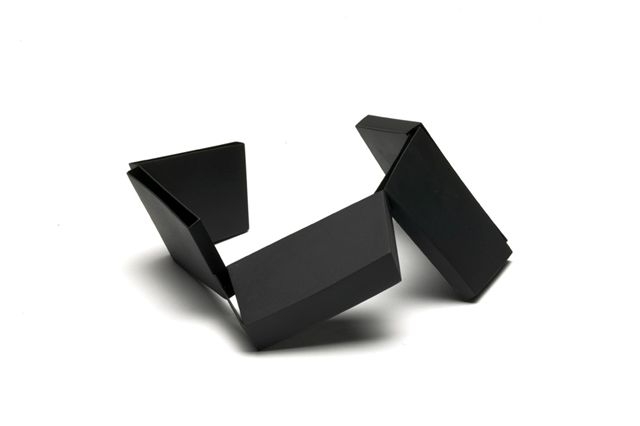
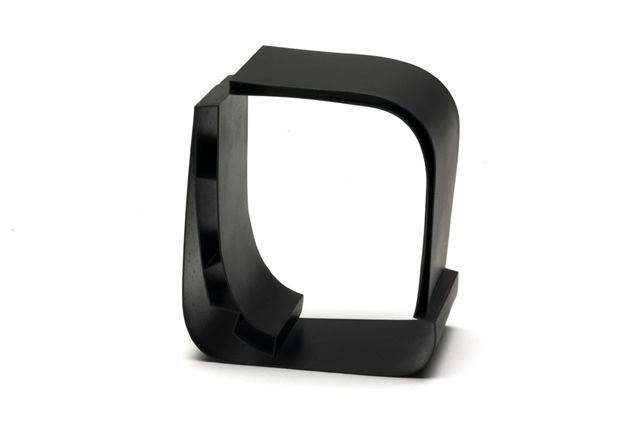
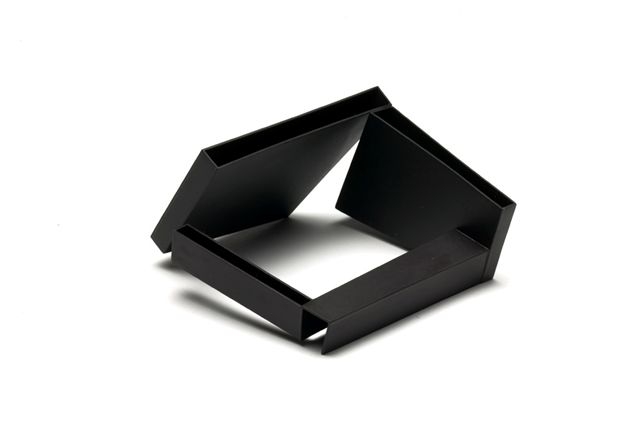
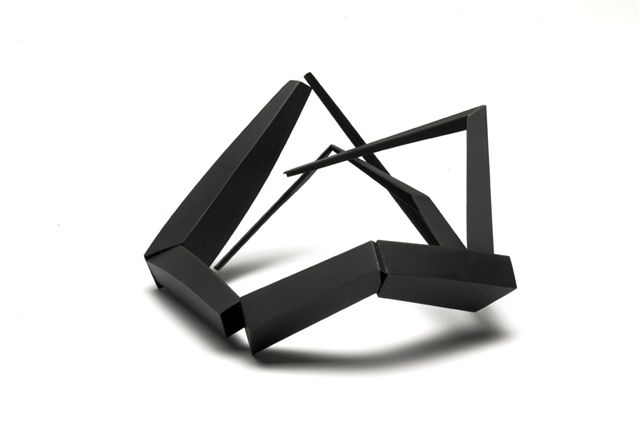
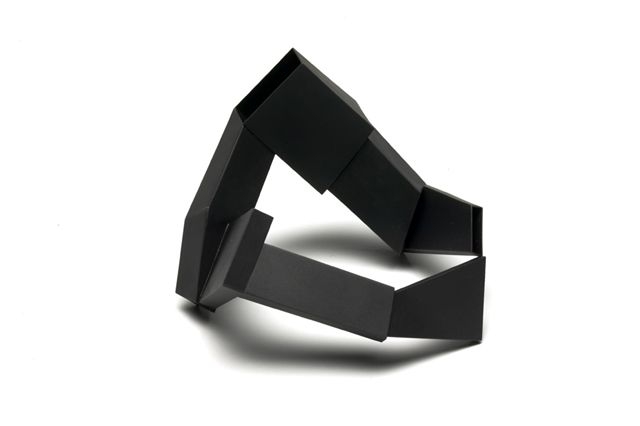
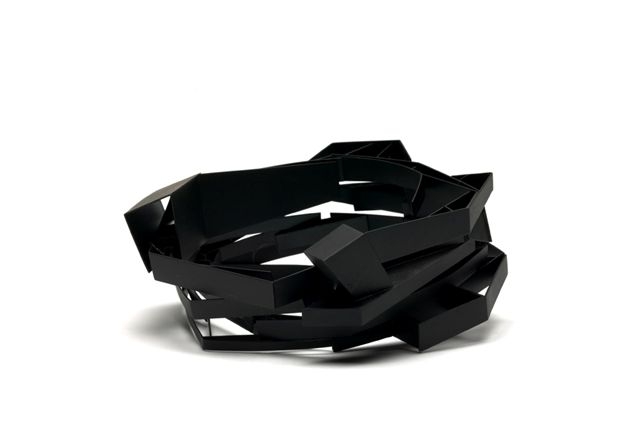
Carlier Makigawa (Australian, b. 1952) Brooch 2009 Silver, paint
Jewellery as art; is art
Brooches, objects
Robust/delicate
Holistic body of work
Affirmation of line and form
Simplicity/complexity of shapes
Span ______ (meta)physical
[Interior] exterior!
elemental | articulation
Volume ((( ))) form
&
arch-itecture
SPACE
√
beauty
……………………….
Dr Marcus Bunyan
Many thankx to Gallery Funaki for allowing me to publish the photographs in the posting. Please click on the photographs for a larger version of the image.
Carlier Makigawa (Australian, b. 1952) Brooch 2009 Silver
Carlier Makigawa (Australian, b. 1952) Brooch 2009 Silver
Carlier Makigawa (Australian, b. 1952) Brooch 2009 Silver
“A spiritual and private space. Ritual object, jewellery. Linear structures appear fragile and monumental to cradle the internal spirit. They appear to float in space, hovering, penetrating, a temporary existence. Nature is the reference, and the geometry of nature and architecture inform this world.”
Carlier Makigawa
Carlier Makigawa explores the parameters of small spaces in her new exhibition October 2009. Her spare, exacting constructions in silver wire have a monumentality that defies their scale and delicacy. Her new work consists of brooches and objects which move beyond the botanical inspiration of her earlier work to engage with more abstract notions of movement, compression and spatial manipulation.
Text from the Gallery Funaki website [Online] Cited 01/05/2019 no longer available online
Carlier Makigawa (Australian, b. 1952) Object 2009 Silver
Carlier Makigawa (Australian, b. 1952) Object 2009 Silver
Carlier Makigawa (Australian, b. 1952) Brooch 2009 Silver
Carlier Makigawa (Australian, b. 1952) Neckpiece 2009 Silver
Julia deVille (New Zealand, b. 1982) Ruby Heart Starling 2008 Starling, sterling silver, black rhodium & gold plate, rubies, antique frame 30 x 35 x 18cm
This is an itsy-bitsy show by Julia deVille at Sophie Gannon Gallery in Richmond, Melbourne. Offering a menagerie of macabre stuffed animals and conceptual ideas the exhibition fails to coalesce into a satisfying vision. It features many ideas that are not fully investigated and incorporated into the corporeal body of the work.
We have, variously, The Funerary Urn/Cinerarium, The Ossuary, Skeletons, Black, Victorian Funerary Customs, Feathers, Taxidermy, Time, Eggs and Religion. We also have stuffed animals, cigar boxes, lace and silver, pelts and columns, jet necklaces and Victorian glass domes, glass eyes and ruby hearts to name but a few. The viewer is overwhelmed by ideas and materials.
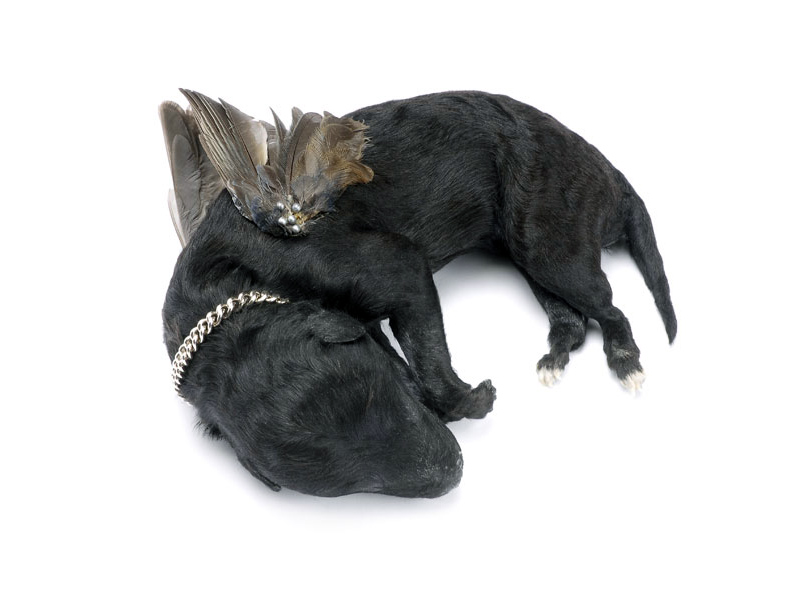
When individual pieces excel the work is magical: the delicate and disturbing Stillborn Angel (2009, below) curled in a foetal position with appended sparrows wings is a knockout. The large suspended raven of Night’s Plutonian Shore (2009, above) effectively evinces the feeling of the shores of the underworld that the title, taken from an Edgar Allan Poe poem, reflects on.
Other pieces only half succeed. Piglet (2009, below) is a nice idea with its lace snout and beaded wings sitting on a bed of feathers awaiting judgement but somehow the elements don’t click into place. Further work are just one shot ideas that really lead nowhere. For example Cat Rug (2008, below) features black crystals in the mouth of a taxidermied cat that lies splayed on a plinth on the gallery floor. And, so … Silver Rook (2008, below) is a rook whose bones have been cast in silver, with another ruby heart, suspended in mid-air in the gallery space. Again an interesting idea that really doesn’t translate into any dialogue that is substantial or interesting.
Another problem with the work is the technical proficiency of some of the pieces. The cast silver front legs and ribs of The Anatomy of a Rabbit (2008, below) are of poor quality and detract from what should have been the delicacy of the skeletal bones of the work. The bronze lion cartouche on the egg shaped Lion Urn (2009) fails to fit the curved shape of the egg – it is just attached at the top most point and sits proud of the egg shape beneath. Surely someone with an eye for detail and a sense of context, perfection and pride in the work they make would know that the cartouche should have been made to fit the shape underneath.
Despite its fashionable position hovering between craft, jewellery and installation this is ‘art’ in need of a good reappraisal. My suggestion would be to take one idea, only one, and investigate it fully in a range of work that is thematically linked and beautifully made. Instead of multiplying the ideas and materials that are used, simplify the conceptual theme and at the same time layer the work so it has more complexity, so that it reveals itself over time. You only have to look at the work of Mari Funaki in the previous post or the simple but conceptually complex photographs of Matthias Koch in the German photography review to understand that LESS IS MORE!
There are positive signs here and I look forward to seeing the development of the artist over the next few years.
Dr Marcus Bunyan
Many thankx to Sophie Gannon Gallery for allowing me to publish the photographs in the posting. Please click on the photographs for a larger version of the image.
Julia deVille (New Zealand, b. 1982) Night’s Plutonian Shore 2009 Tasmanian Forest Raven, black garnets, cotton, sterling silver, amethyst
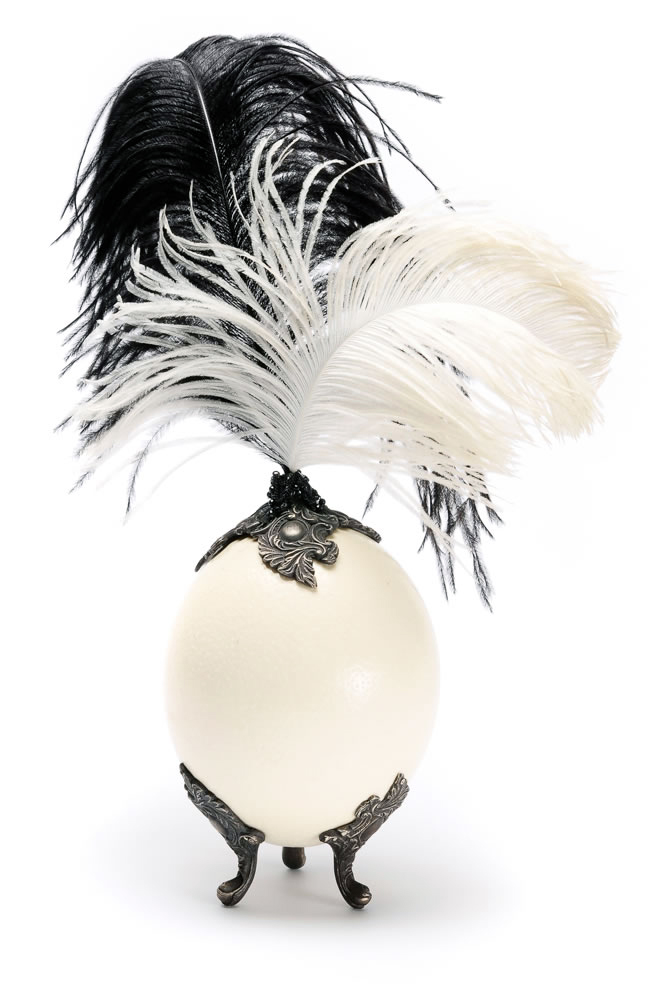
Julia deVille (New Zealand, b. 1982) L’enfant (Infant Funerary Urn) 2009 Ostrich egg, sterling silver, ostrich plumes and black garnet 35 x 12 x 12cm
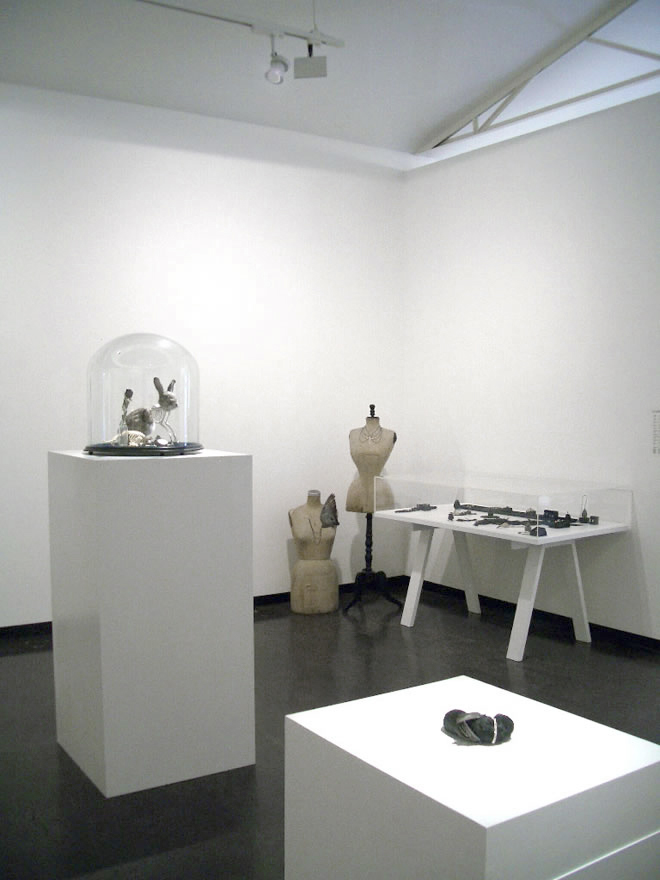
Julia deVille Cineraria installation views at Sophie Gannon Gallery, Melbourne Photos: Marcus Bunyan
Julia deVille (New Zealand, b. 1982) Piglet 2009 Piglet, antique lace, pins and feathers 25 x 23 x 13cm
Julia deVille (New Zealand, b. 1982) Cat Rug 2008 Cat, glitter and fibreglass 100 x 60 x 8cm
Julia deVille (New Zealand, b. 1982) Sympathy 2008
Julia deVille (New Zealand, b. 1982) Silver Rook 2008 Sterling silver, rubies 30 x 25 x 35cm
Cinerarium
n. pl. Cineraria A place for keeping the ashes of a cremated body.
Cineraria n. any of several horticultural varieties of a composite plant, Senecio hybridus, of the Canary Islands, having clusters of flowers with white, blue, purple, red, or variegated rays.
Origin: 1590-1600; < NL, fem. of cinerarius ashen, equiv. to L ciner- (s. of cinis ashes) + -rius -ary; so named from ash-coloured down on leaves.
CINERARIA is a study of the ritual and sentiment behind funerary customs from various cultures and eras.
Notes on inspirations
The Funerary Urn/Cinerarium: Funerary Urns have been used since the times of the ancient Greeks and are still used today. After death, the body is cremated and the ashes are collected in the urn.
The Ossuary: An ossuary is a chest, building, well, or site made to serve as the final resting place of human skeletal remains. They are frequently used where burial space is scarce. A body is first buried in a temporary grave, then after some years the skeletal remains are removed and placed in an ossuary. The greatly reduced space taken up by an ossuary means that it is possible to store the remains of many more people in a single tomb than if the original coffins were left as is. This was a common practice in post plague Europe in the 14th-16th Centuries.
Skeletons: Human skeletons and sometimes non-human animal skeletons and skulls are often used as blunt images of death. The skull and crossbones (Death’s Head) motif has been used among Europeans as a symbol of piracy, poison and most commonly, human mortality.
Black: In the West, the colour used for death and mourning is black. Black is associated with the underworld and evil. Kali, the Hindu god of destruction, is depicted as black.
Victorian Funerary Customs:
~ A wreath of laurel, yew or boxwood tied with crape or black ribbons would be hung on the front door to alert passers by that a death had occurred
~ The use of flowers and candles helped to mask unpleasant odours in the room before embalming became common
~ White was a popular colour for the funeral of a child. White gloves, ostrich plumes and a white coffin were the standard
Feathers: In Egyptian culture a recently deceased persons soul had to be as light as a feather to pass the judgment of Ma’at. Ma’at (Maet, Mayet) is the Egyptian goddess of truth, justice and the underworld. She is often portrayed as wearing a feather, a symbol of truth, on her head. She passed judgment over the souls of the dead in the Judgment Hall of Osiris. She also weighted up the soul against a feather. The “Law of Ma’at” was the basis of civil laws in ancient Egypt. If it failed, the soul was sent into the underworld. Ma’at’s symbol, an ostrich feather, stands for order and truth.
Taxidermy: Taxidermy to me is a modern form of preservation, a way for life to continue on after death, in a symbolic visual form.
The Raven: In many cultures for thousands of years, the Raven has been seen symbol of death. This is largely due to the Raven feeding on carrion. Edgar Allan Poe has used this symbolism in his poem, “The Raven”.
Time: Less blunt symbols of death frequently allude to the passage of time and the fragility of life. Clocks, hourglasses, sundials, and other timepieces call to mind that time is passing. Similarly, a candle both marks the passage of time, and bears witness that it will eventually burn itself out. These sorts of symbols were often incorporated into vanitas paintings, a variety of early still life.
Eggs: The egg has been a symbol of the start of new life for over 2,500 years, dating back to the ancient Persians. I have chosen egg shapes and even one Ostrich egg to represent the cycle of life, the beginning and the end.
Religion: Religion has played a large part in many funerary customs and beliefs. I am particularly interested in the Memento Mori period of the 16th-18th centuries. In a Calvinistic Europe, when the plague was a not too distant memory, a constant preoccupation with death became a fashionable devotional trend.
Julia deVille
Julia deVille (New Zealand, b. 1982) Stillborn Angel 2009 Stillborn puppy, sparrow wings and sterling silver 13 x 10 x 5cm
Julia deVille (New Zealand, b. 1982) The Anatomy of a Rabbit 2008 Rabbit, sterling silver, rubies, glitter and mahogany 30 x 30 x 30cm
Julia deVille Cineraria installation view at Sophie Gannon Gallery, Melbourne Photo: Marcus Bunyan
Sophie Gannon Gallery 2, Albert Street, Richmond, Melbourne
Mari Funaki (Australian, 1950-2010) Bracelet 1 from Space between 2005-2006 Heat-coloured mild steel
Mari Funaki (Australian, 1950-2010) Bracelet 2 from Space between 2005-2006 Heat-coloured mild steel
Mari Funaki is one of Australia’s leading jewellers. This exhibition celebrates her considerable achievements between 1992 and the present day. Her first major show in a state gallery, it includes nearly fifty works and will be the first time Perth audiences have seen her work in such depth. Many of these are new works produced especially for this show.
The exhibition will focus on rings, containers and bracelets. These forms have been the core of her practice, the foundation of her intricate material experimentations. Her sheer intensity of focus has seen her hone these forms into objects of extreme power and beauty. Funaki’s is no simple beauty, however. It is sharp, complicated. There is always a sense of danger in her work, as the spindly legs of her insect-like containers support unlikely, unwieldy torsos, and as her rings and bracelets cultivate miniature monoliths that play with scale and weight in fascinating ways.
This exhibition will frame these unique objects in such a way as to acknowledge Funaki’s ability to work with space and matter to form entrancing works that adorn the imagination in the same they adorn the body.
Text from the Art Gallery of Western Australia website [Online] Cited 10/08/2009. No longer available online
Mari Funaki (Australian, 1950-2010) Bracelet 3 from Space between 2005-2006 Heat-coloured mild steel
Mari Funaki (Australian, 1950-2010) Bracelet 4 from Space between 2005-2006 Heat-coloured mild steel
Notes from a Conversation with Mari Funaki, July 2006
Mari Funaki’s initial response comes from the environment – the response is part random, part constructed idea.
Funaki likes the ‘animated’ response from the viewer – allowing them to make their own associations with the work and their own meaning. The making of the work doesn’t emerge out of nothing but through the development of ideas over a long period of time.
Mari starts with a flat drawing – this approach comes from an Eastern perspective in the history of art making i.e. screens, woodcuts and scrolls. Initially when starting with the idea Mari is mentally thinking in two dimensions – then drawing out onto paper in two dimensions the ideas.
When actually making the work Mari then starts working and thinking in three dimensions – starting with a base piece of metal and working physically and intuitively around the object, to form a construction that evidences her feelings about what she wants to create. She likes the aesthetic beauty but uneasy aspect of a dead insect for example (like the Louise Bourgeois Maman spider outside the Guggenheim in Bilbao).
Now collaborating with architect Nonda Kotsalidis, Mari is working to produce her sculptural objects on a larger scale, up to 6 metres high. She needs the objects to have an emotional and physical impact on the viewer – both beautiful and threatening at one and the same time. How will her objects translate to a larger scale? Very well I think.
Funaki likes the physical distortion of space – and she likes telling a story to the viewer. She is working on a building where the facade is really strongly geometric and then she is embedding an emotion into the front of the building – constructing a narrative – constructing an emotional response with the viewer and establishing a relationship with the building. Here she is working from photographs of the space, her own recognition and remembrance of that space. She is having to work physically in 3D from the beginning for the first time, but still uses drawings to sketch out her ideas.
Several of Funaki’s pieces in the Cecily and Colin Rigg Contemporary Design Award (2006) at the NGV Federation Square were inspired by the work of Bernd and Hilla Becher. Their photographs of factories and gasworks, specifically the facades of such buildings (see image below), were the jumping off point for the development of the objects (the bracelets). Funaki takes the front of these buildings, a 3D structure ‘in reality’ but pictorially imaged on a 2D plane, and then twists and distorts their structure back into a 3D environment. The facades move up and around, as though a body is twisting around its own axis, pirouetting around an invisible central spine.
Each piece is created and then the next one is created in relation to the previous, or to each other. Each individual piece has its own character and relation to each other. They are never variations of the same piece with small differences – each is a separate but fully (in)formed entity.
Dr Marcus Bunyan
Bernd and Hiller Becher (German, 1931-2007 and 1934-2015) Water Towers 1980 Gelatin silver prints
“Black. Sharp, shifting contours. Familiar and alien. Confident, expressive and agile, it is easy to take the existence of these works for granted – and it is hard enough to trace in one’s mind the physical evolution back through heat colouring, sandblasting, soldering, assembling and cutting, to unremarkable, thin sheets of mild steel – let alone comprehend their conception and resolution.
They inhabit space in a way that is difficult to describe – the edge between each object and the space that encloses it is shockingly sudden.
How can something human-made be so insanely artificial and natural at the same time? It must be no accident that I described them as articulate – ambiguous and wide ranging in the breadth of associations and allusions, they can tell you everything and nothing at the same time.”
Sally Marsland, 2006
Text from the Gallery Funaki website [Online] Cited 10/08/2009 no longer available online
Mari Funaki (Australian, 1950-2010) Bracelet 5 from Space between 2005-2006 Heat-coloured mild steel
Mari Funaki (Australian, 1950-2010) Bracelet 6 from Space between 2005-2006 Heat-coloured mild steel
Art Gallery of Western Australia Perth Cultural Centre Perth WA 6000
Johannes Kuhnen (Australian born Germany, b. 1952) Rings 1971
This is a superlative exhibition, one of the highlights of the year so far in Melbourne.
The exhibition presents work from the early 1970s to contemporary work and evidences the breadth of vision of this master craftsman and artist, the arc of his investigation showing a consistency of feeling for the energy and form of his materials over many decades. Technically the work is superb; conceptually the work transcends the boundaries of jewellery and becomes something else altogether: it becomes magical.
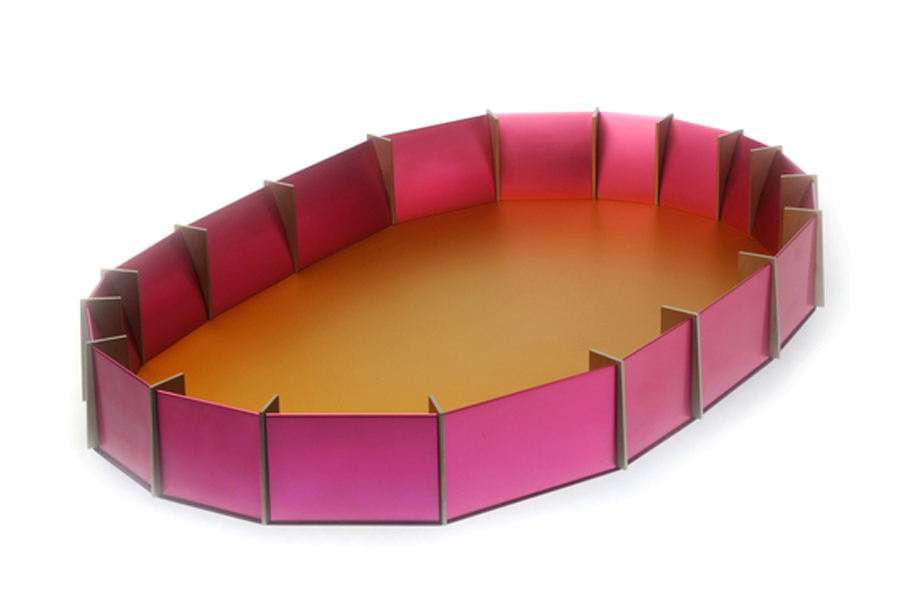
Kuhnen’s use of colour in his favoured anodised aluminium material is exquisite, the perfection of his forms flawless. His fabulous Vessels reminding me of the ancient Neolithic standing stone circles at Stonehenge in their shape and use of vertical buttresses in different materials (such stainless steel and granite) that intersect the oval forms. His Boxes are like small ancient reliquaries, objects for holding ashes worked with a delicacy, simplicity and feeling for form and colour that is absolutely beautiful and consistent with the containment of energy within their structure.
I went with Marianne Cseh a jeweller friend of mine. We stood transfixed before this work, peering closely at it and gasping in appreciation of the beauty, technical proficiency and pure poetry of the pieces. This exhibition is highly recommended and not to be missed!
Now showing with the international SCHMUCK jewellery exhibition from Germany.
A book to accompany the exhibition is available from the RMIT Gallery.
Dr Marcus Bunyan
Many thankx to RMIT Gallery for allowing me to publish the photographs in the posting. Please click on the photographs for a larger version of the image.
Johannes Kuhnen (Australian born Germany, b. 1952) Ring 1972 Stainless steel, synthetic ruby disc
Johannes Kuhnen (Australian born Germany, b. 1952)
Brooch 2003 Anodised aluminium, monel
Ring 1972 Stainless steel, synthetic ruby disc
Johannes Kuhnen (Australian born Germany, b. 1952) Boxes 1980
Johannes Kuhnen (Australian born Germany, b. 1952) Box and pendant 1980
Johannes Kuhnen (Australian born Germany, b. 1952) Tray 1986 Anodised aluminium, titanium, stainless steel
Johannes Kuhnen (Australian born Germany, b. 1952) Centrepiece 1987
Johannes Kuhnen (Australian born Germany, b. 1952) Centrepiece 1991 Anodised aluminium, silver, monel: fabricated
In his work as a jeweller, object maker and photographer, Johannes Kuhnen is engaged with the interpretation and manipulation of a precise visual language of forms. The dramatic curvilinear shape of this centrepiece has been designed to emphasise the particular visual qualities of its materials and to fulfil its role as a low, but commanding central presence on a table. The vivid, iridescent colour of its anodised aluminium rim is designed to interact with differing light conditions, while the technical and precious qualities of its monel and silver elements play against each other. This orchestration of metals is underpinned with an unseen but precise and ingenious inner structure, giving this object weight and functional strength.
Johannes Kuhnen has made a pioneering contribution to Australian design and gold and silver smithing through his commitment as a generous educator and innovative practitioner. This exhibition will create linkages between his earlier works, some of which was made in Germany prior to migrating to Australia and new work specifically produced for this exhibition and this will be done both with objects and through a catalogue / monograph to be launched at the opening venue. The exhibition will borrow from Australian public and private collections to facilitate the demonstration of connecting design elements in the work from both significant streams in Kuhnen’s work in jewellery and hollowware.
Text from the RMIT Gallery website [Online] Cited 02/07/2009. No longer available online
Johannes Kuhnen (Australian born Germany, b. 1952) Vessel 2007 Anodised aluminium, titanium, stainless steel 11.2 h x 84.5 w x 21.0 d cm Weight 14 kg
Johannes Kuhnen (Australian born Germany, b. 1952) Vessel 2008 Anodised aluminium, titanium, stainless steel
Johannes Kuhnen (Australian born Germany, b. 1952) Vessel 2009 Anodised aluminium, titanium, stainless steel
Johannes Kuhnen (Australian born Germany, b. 1952) Armring 1981 Anodised aluminium 9.8 h x 10.4 w cm
Johannes Kuhnen (Australian born Germany, b. 1952) Armring 1990 Armring, anodised aluminium, gold 750, granite
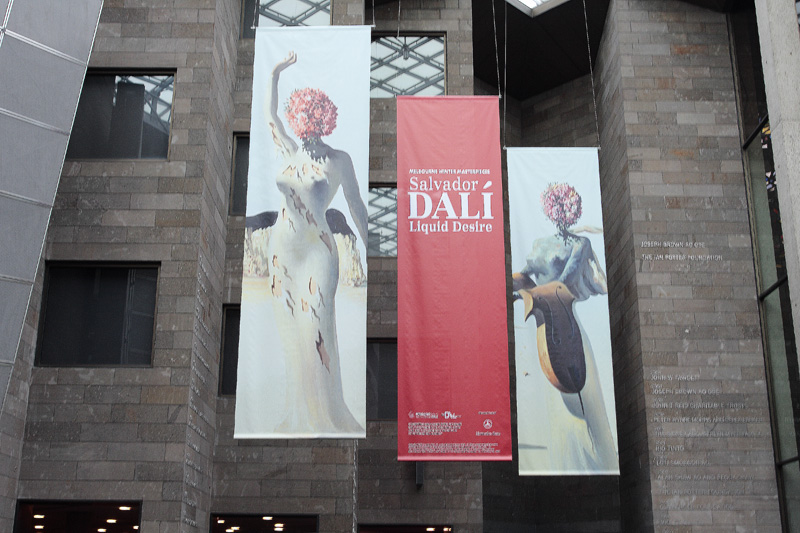
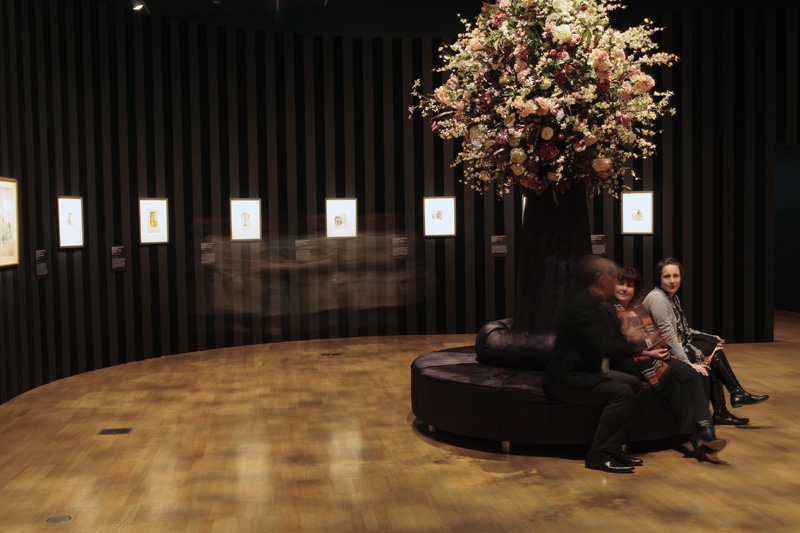
Installation view of the interior forecourt of the National Gallery of Victoria showing banners for the exhibition Salvador Dalí: Liquid Desire Photo: Marcus Bunyan
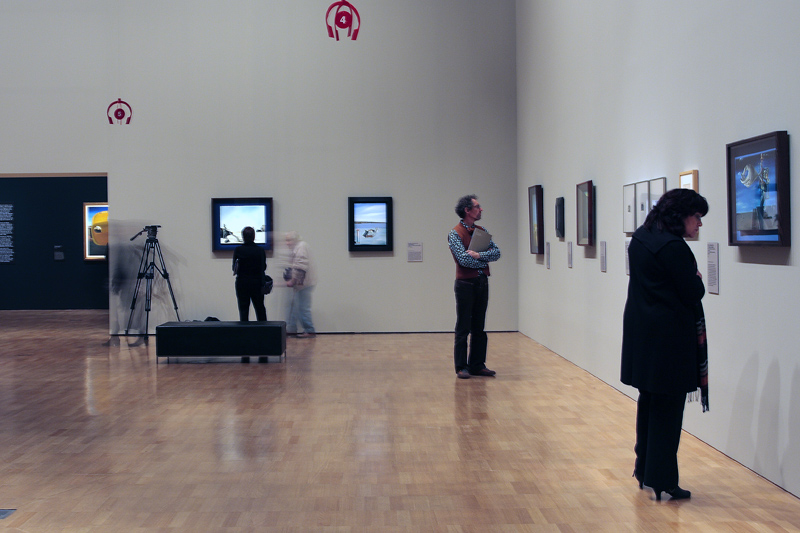
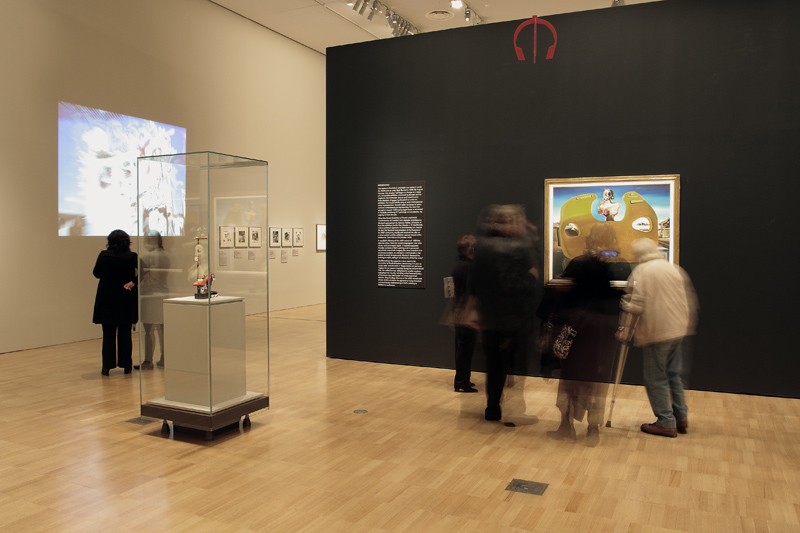
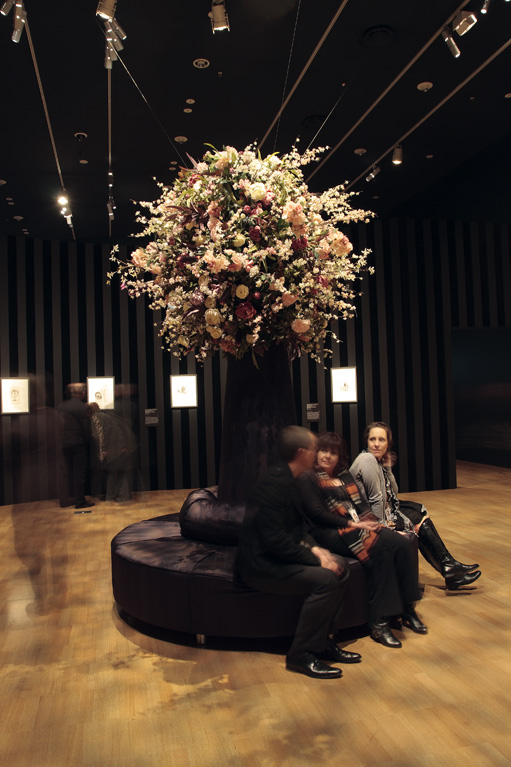
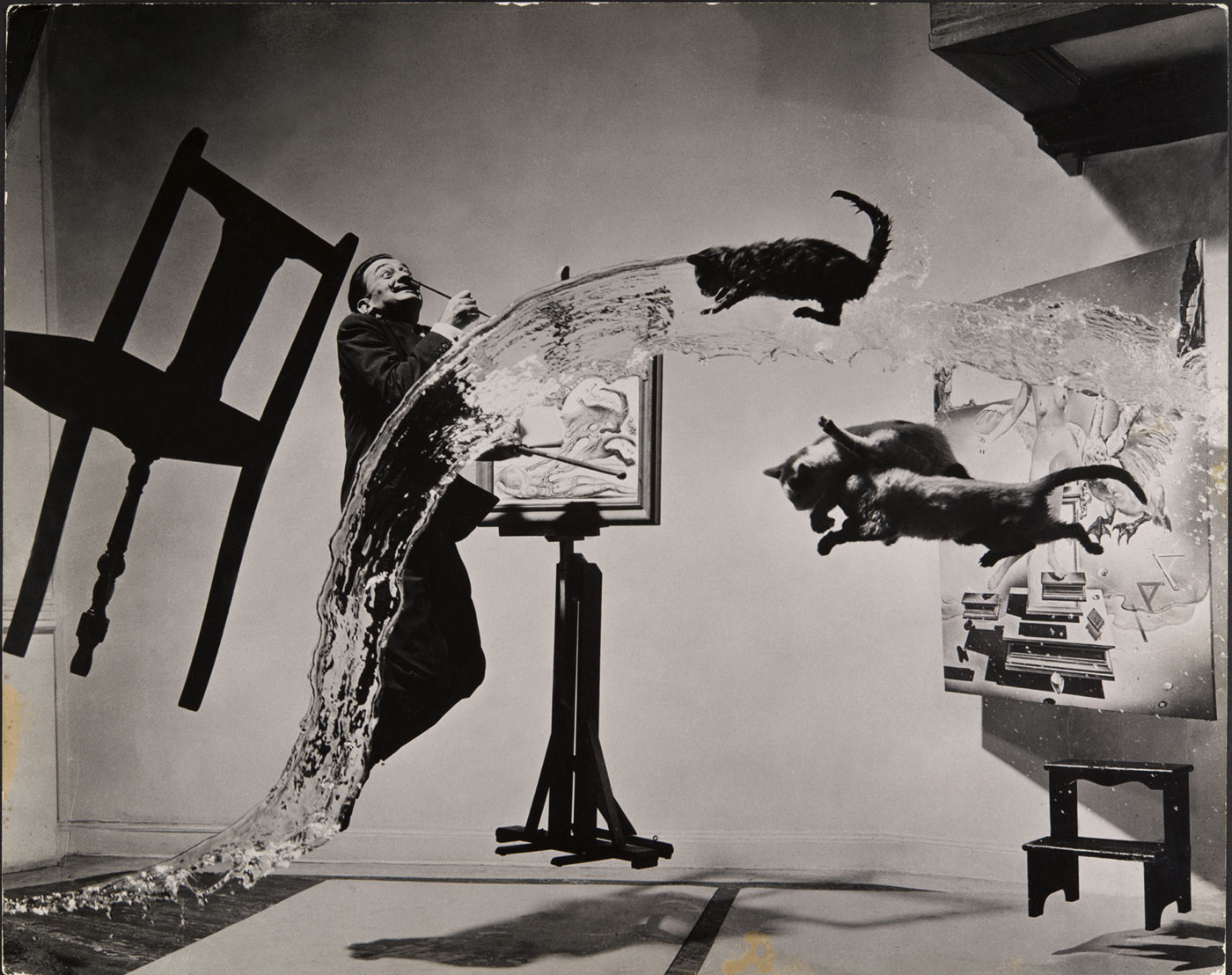
Installation photographs from the latest Winter Masterpieces blockbuster Salvador Dalí: Liquid Desire from the media preview on the day the exhibition opened at NGV International, Melbourne. Thank you to Jemma Altmeier, Media and Public Affairs Administrator at the NGV for the invitation. Photographs were taken using a digital camera, tripod and available light.
Fantastic to see my friend and curator of the exhibition, Dr Ted Gott, at the opening. Congratulations on a wonderful show!
Photographs proceed from the beginning to the end of the exhibition in chronological order.
Many thankx to the National Gallery of Victoria for allowing me to publish the photographs in the posting. Please click on the photographs for a larger version of the image.
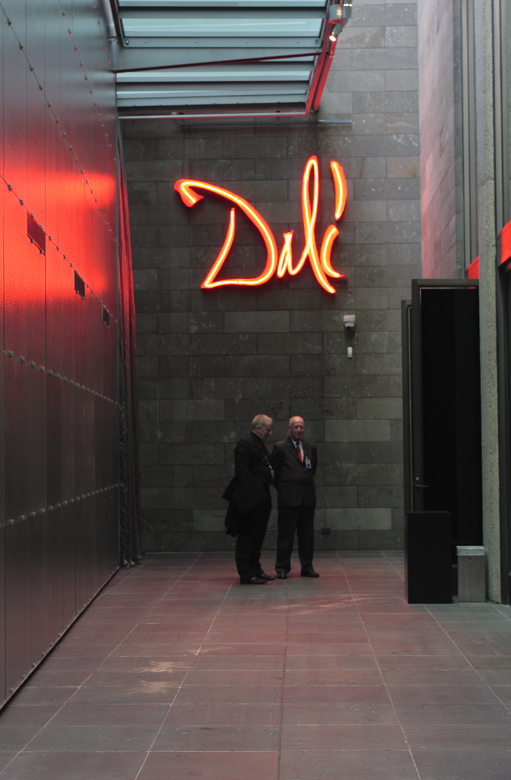
Entrance to the Salvador Dalí: Liquid Desire Winter Masterpieces exhibition at the National Gallery of Victoria, Melbourne Photo: Marcus Bunyan
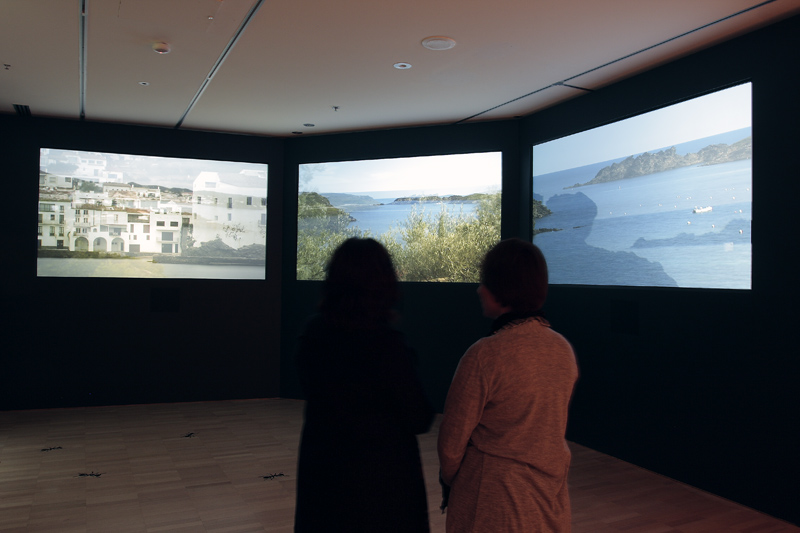
3 panel video installation of the Catalan countryside where Salvador Dali lived. 13 minutes duration from the exhibition Salvador Dalí: Liquid Desire Winter Masterpieces at the National Gallery of Victoria, Melbourne Photo: Marcus Bunyan
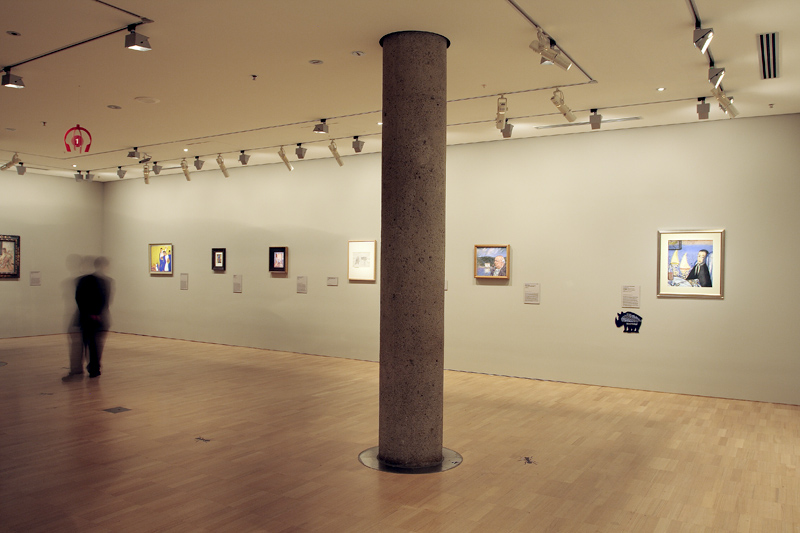
Early work from the Salvador Dalí: Liquid Desire Winter Masterpieces exhibition at the National Gallery of Victoria, Melbourne Photo: Marcus Bunyan
To the left View of the Cadaques from the Creus Tower 1923; to the right Table in front of the Sea. Homage to Eric Satie 1926 from the Salvador Dalí: Liquid Desire Winter Masterpieces exhibition at the National Gallery of Victoria, Melbourne Photos: Marcus Bunyan
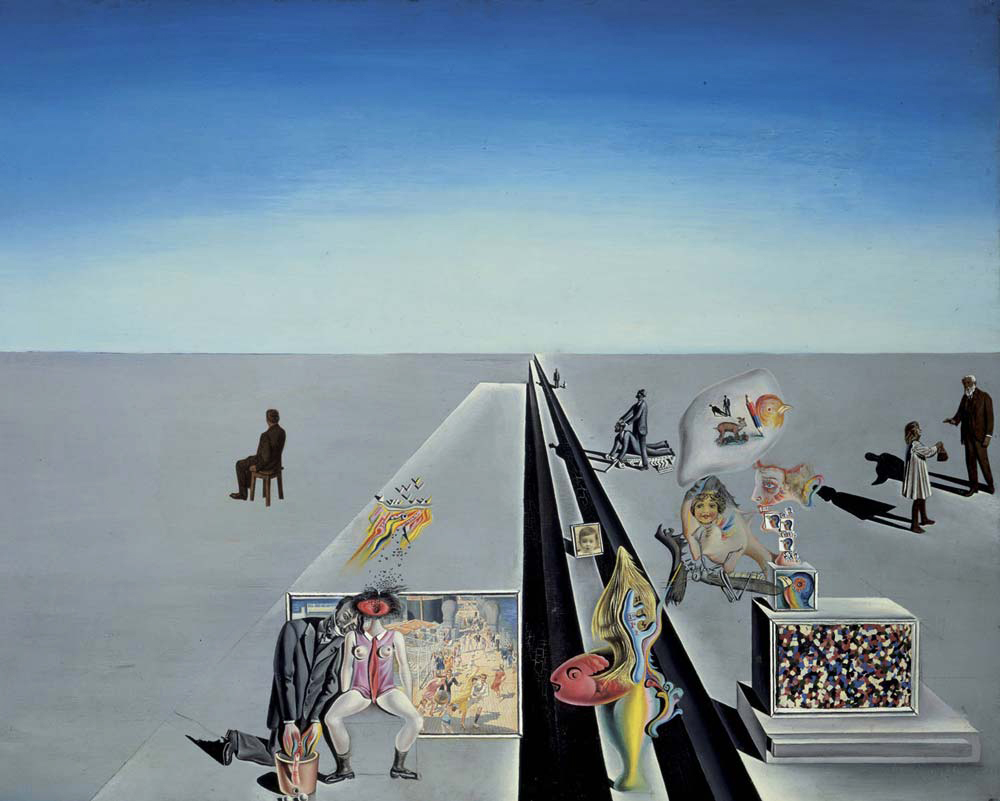
In the centre The First Days of Spring 1929; to the right Surrealist composition 1928 from the Salvador Dalí: Liquid Desire Winter Masterpieces exhibition at the National Gallery of Victoria, Melbourne Photo: Marcus Bunyan
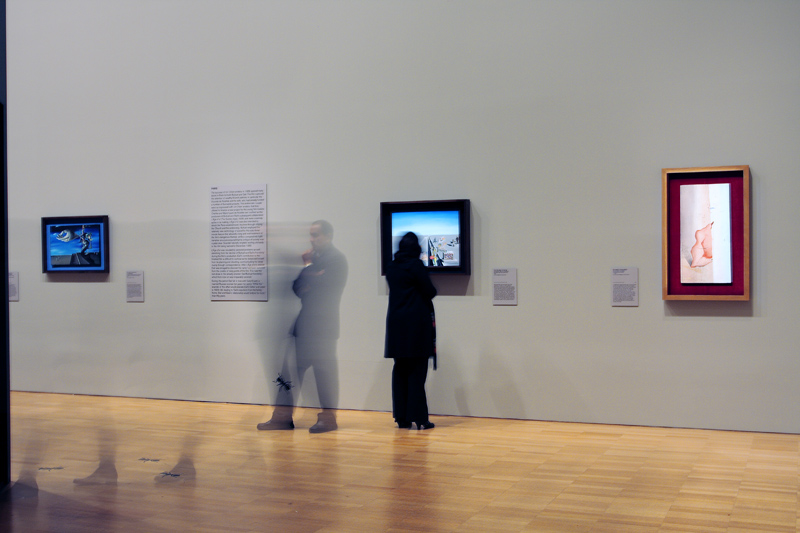
Installation view with The Age art critic Associate Professor Robert Nelson at centre right and The hand. The remorse of conscience 1930 at far right, from the Salvador Dalí: Liquid Desire Winter Masterpieces exhibition at the National Gallery of Victoria, Melbourne Photo: Marcus Bunyan
Installation view with Memory of the child-woman 1932 at right from the Salvador Dalí: Liquid Desire Winter Masterpieces exhibition at the National Gallery of Victoria, Melbourne Photo: Marcus Bunyan
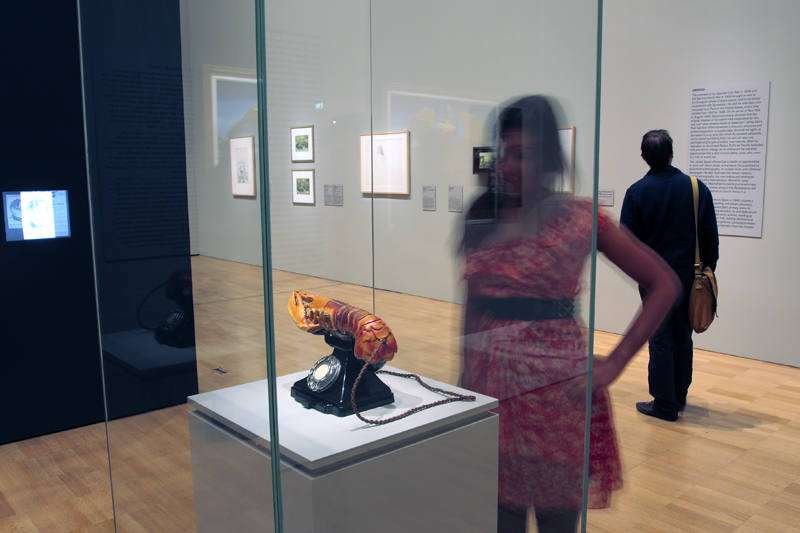
Salvador Dalí (Spanish 1904-1989, worked in United States 1940-1948) Lobster Telephone (installation view) 1936 Photo: Marcus Bunyan
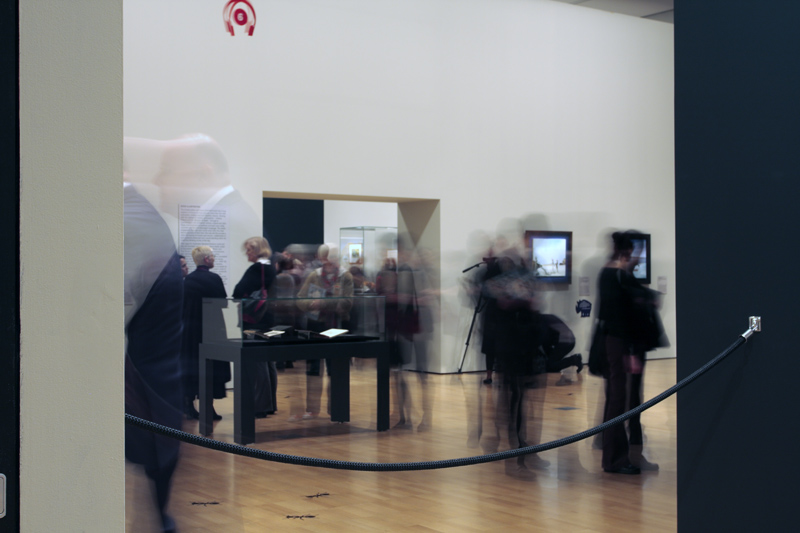
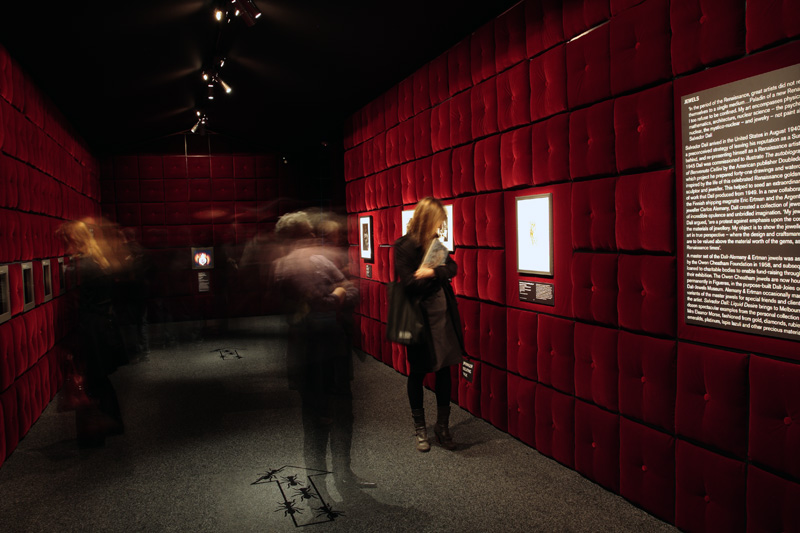
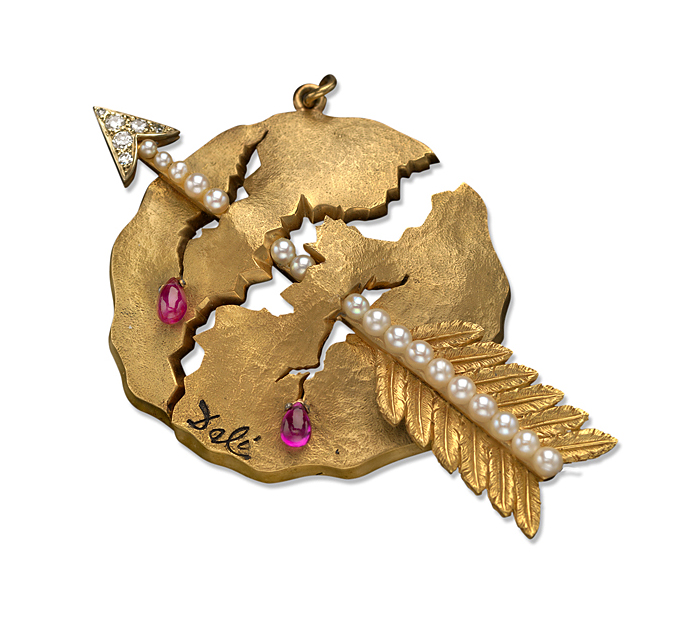
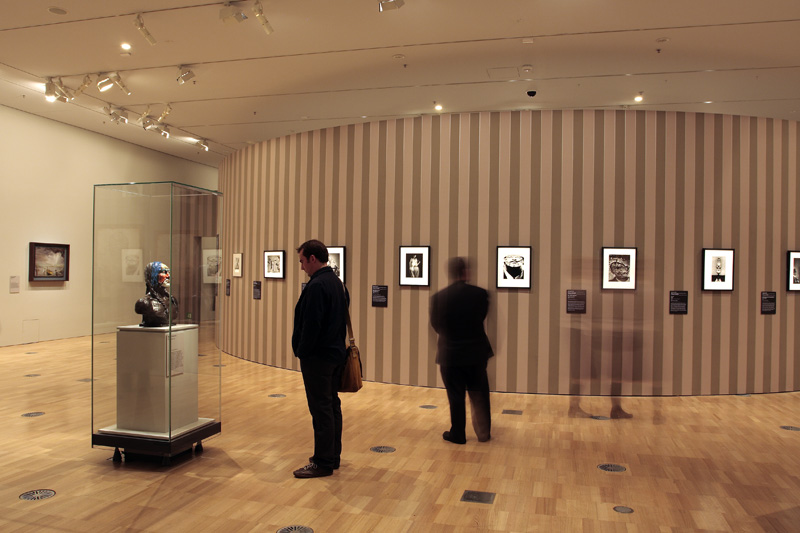
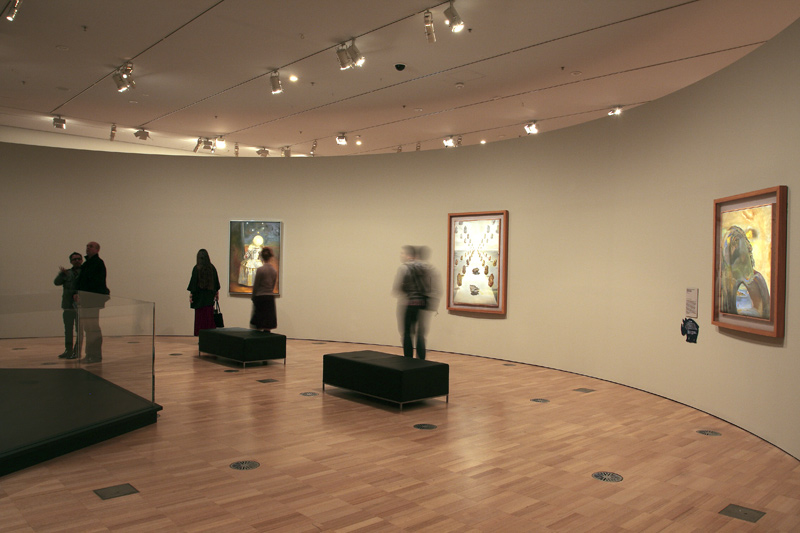
Jewellery gallery at the Salvador Dalí: Liquid Desire Winter Masterpieces exhibition at the National Gallery of Victoria, Melbourne Photos: Marcus Bunyan
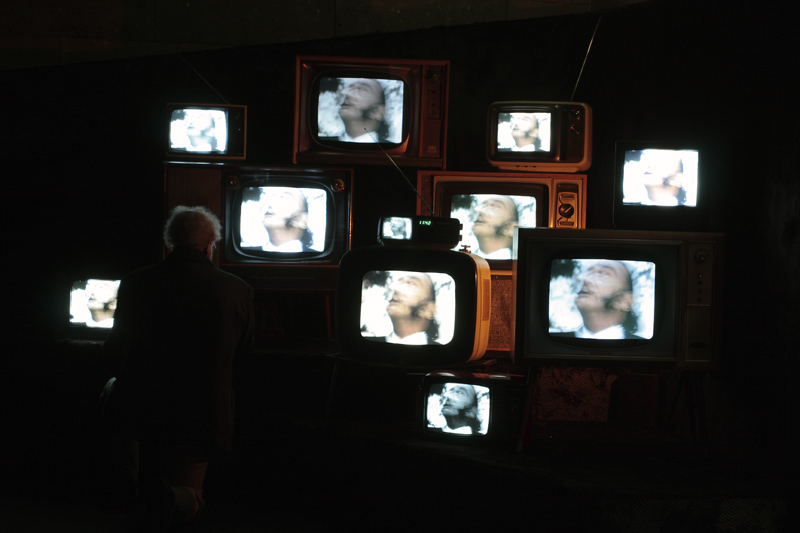
Televisions with film installation from the Salvador Dalí: Liquid Desire Winter Masterpieces exhibition at the National Gallery of Victoria, Melbourne Photo: Marcus Bunyan
Installation of black and white photography from the exhibition Salvador Dalí: Liquid Desire Winter Masterpieces exhibition at the National Gallery of Victoria, Melbourne with Dr Ted Gott, curator of the exhibition, with back to camera at centre Photo: Marcus Bunyan
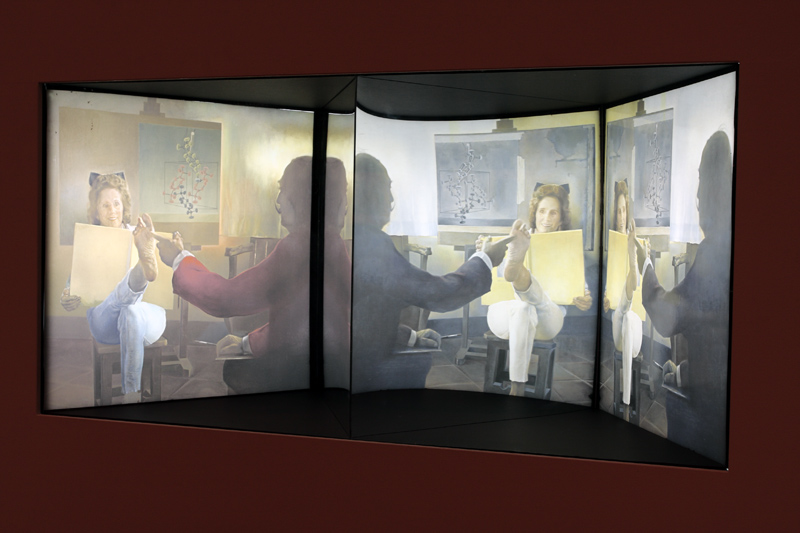
Reproduction of Gala foot. Stereoscopic paintings 1975-1976 in an installation using mirrors that would have been originally used to obtain the stereoscopic effect Photo: Marcus Bunyan
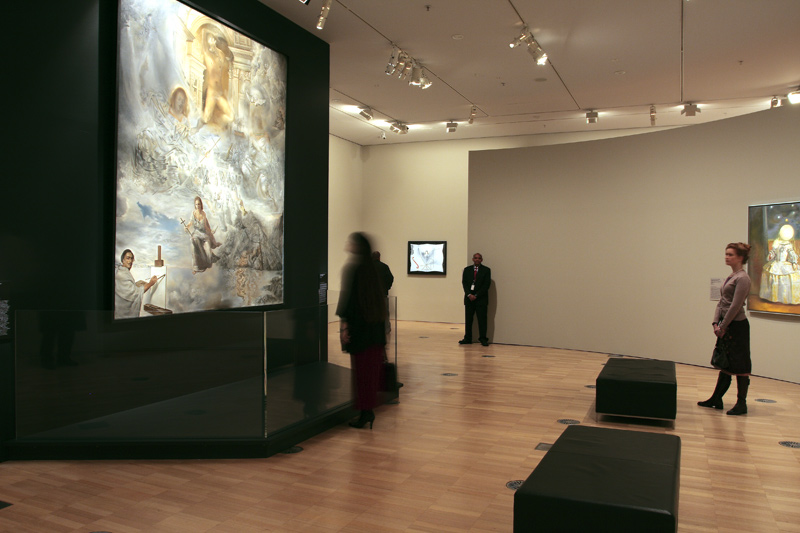
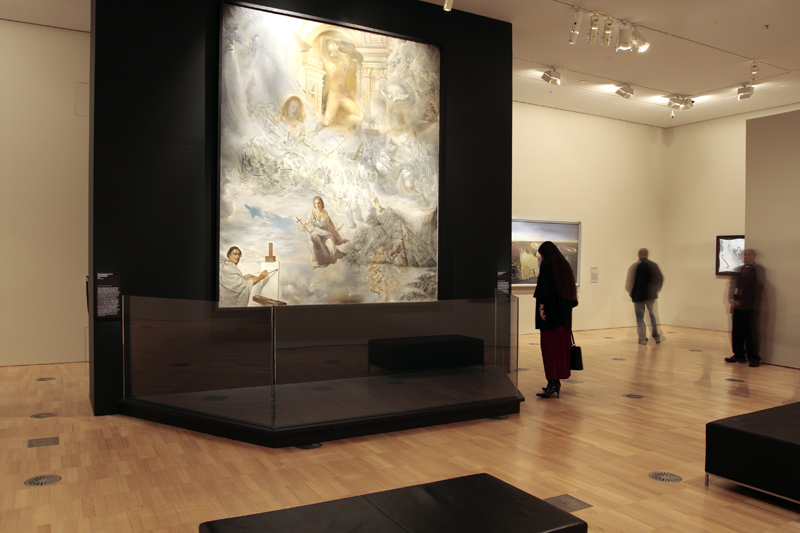
Final exhibition space from the Salvador Dalí: Liquid Desire Winter Masterpieces exhibition at the National Gallery of Victoria, Melbourne Photo: Marcus Bunyan
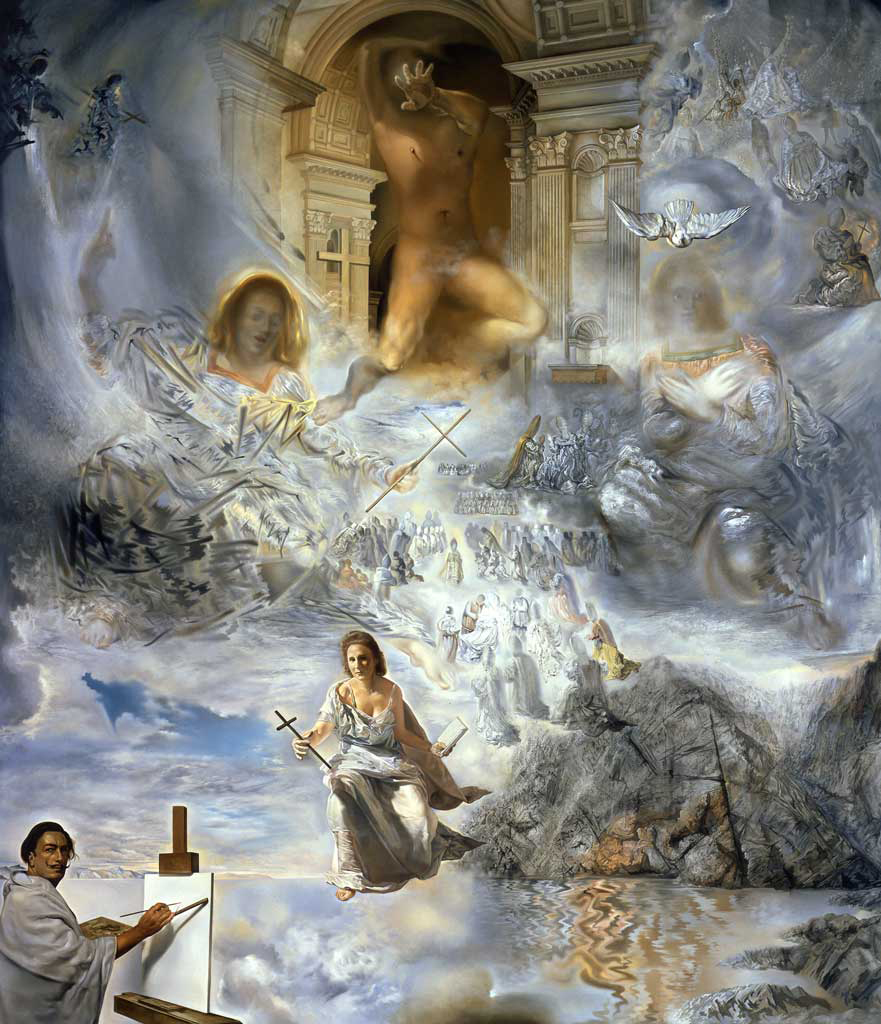
Final gallery space from the Salvador Dalí: Liquid Desire Winter Masterpieces exhibition at the National Gallery of Victoria, Melbourne featuring The Ecumenical Council 1960 Photos: Marcus Bunyan
National Gallery of Victoria (International) 180 St Kilda Road, Melbourne
Opening hours: Salvador Dalí: Liquid Desire is open 7 days a week and until 9pm every Wednesday from 17 June
Tickets Adult: $23 Concession: $18 Child: $11 (ages 5-15) Family (2 adults + 3 children): $60 NGV Member Adult: $16 NGV Member Family: $40
Exhibition dates: 13th January – 7th February, 2009
Opening: Tuesday 13th January, 2009
“I never work with the intention to decorate things or to make them look prettier. I try to discover the soul of an object or the essence of a photograph – I want to shape something new which appeals to me and to other people far beyond the optical appearance.”
Bettina Speckner
A very social crowd was in attendance for the opening of an exhibition by German jeweller Bettina Speckner at Gallery Funaki in Melbourne. The jewellery was certainly ravishingly made: refined, beautiful and with an elegance to most of the pieces. Interspersed between the jewellery were colour photographs of about A4 size that featured empty chairs, red benches, huts in the landscape and plants. These photographs seemed to have a very loose association to the form and imagery of the jewellery and were very minor photographs. I was not sure of their actual relevance to the pieces themselves.
Speckner uses a lot of imagery in her jewellery – tintype portraits from the Victorian era, grey etched images of gardens and vases studded with jewels and crystalline forms that have an almost solarised graphite feel to them and flowers, statues, pillars and cows etched into enamel. In these sites of intervention she seeks to make new worlds – inner/outer worlds that e-merge out of the material / worlds that are present and have ‘presence’.
The best work combines enamel, intaglio, jewels and photographic processes together. The art transcends the materials of each and coalesces in objects that transport the viewer – forming other associations, new insights into the condition of the object.
As the artist sees, this is not so much about the memories, cultural significance and semiotics embedded in the photograph but about making something new. For me this is where the problems lies.
Is it inevitable that there is a history and association present with these images or is the viewer culturally able to see them as new objects – in a postmodern sense?
It is almost as though Speckner does want these associations present between the jewellery and the images, why else put the colour photographs between the jewellery – or is this another example of her dissociative technique coming into play. Speckner seems to have purchased the memory of the object (which it still holds) but then wants to completely overwrite it – is this possible?
Personally I don’t think this is fully possible. While no ‘grand narrative’ is present in some of these images (some images seem to be so removed from their context that we will never be able to place them again) in other pieces the images overpower the art. The ‘trace’ of memory and identity, an entity for a split second before a camera, their unique state in this singular tintype, their actual presence and life not so easily destroyed!
When an artist seeks to justify work without fully understanding the cultural implications of the use of such images, even saying she seeks to find the soul of an object when the soul may already exist in another form, then in my eyes the work is unresolved, the vision uneven. Despite the beauty of the art, its refinement and great craftmanship, there is something lacking at the heart of these works – perhaps a deeper understanding that the soul can reside in optical appearance, that less may be more and that transcendence is more than skin deep.
Dr Marcus Bunyan
Bettina Speckner opening crowd at Gallery Funaki, Melbourne
Bettina Speckner jewellery
Gallery Funaki
Sackville House
Apartment 33
27 Flinders Lane
Melbourne 3000
Australia
Opening hours:
Wednesday – Friday 12 – 5pm
Saturday on occasion (check our socials) or by appointment
Exhibition dates: 11th November – 6th December, 2008
Opening: Tuesday 11th November, 2008
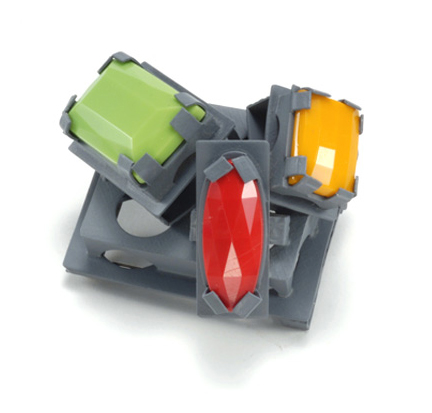
Helen Britton (Australian, b. 1966) Brooch 2008
Moving through Melbourne’s busy laneways from the Oleh Witer exhibition we arrive at the intimate, stylish Gallery Funaki to view the work of Australian artist Helen Britton who works with the form of contemporary jewellery. The crowd spilled onto the street and the small space was busy with an interesting crowd in attendance.
The exhibition presents brooches, earrings, rings and necklaces built with the artists trademark assemblages. Whilst the necklaces are more prosaic (movie like reels and slinks of melted plastic restrained within metal banding) it is the brooches that capture and hold the viewer’s attention. Sci-fi like grided circles collide with concave discs filled with glistening blue crystals; thrusters and steel from a miniature collapsed lunar landing vehicle vie with clusters of vibrant colours that appear to be imbedded into a lunar landscape: delicate crimped and folded metal landscapes with the appearance of collapsed geometric origami.
These are wonderfully inventive constructions, invigorating for their energy and exuberance. Britton has described her work as “industrial baroque”. Perhaps an equally pertinent description would be spatial, or ‘space baroque’ as the artist investigates the nexus, the cellular biology of matter, reality and the spaces we inhabit.
Dr Marcus Bunyan
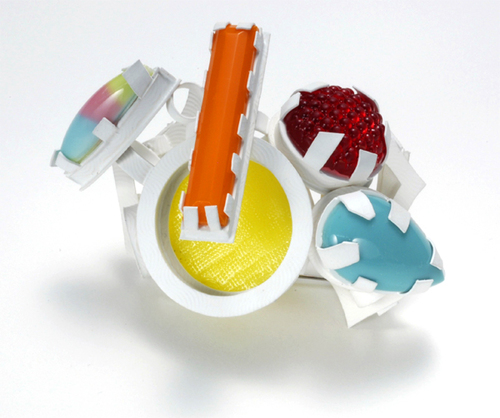
Helen Britton (Australian, b. 1966) Brooch 2008
Gallery Funaki
Sackville House
Apartment 33
27 Flinders Lane
Melbourne 3000
Australia
Opening hours:
Wednesday – Friday 12 – 5pm
Saturday on occasion (check our socials) or by appointment
















 Art Blart _ art and cultural memory archive
You must be logged in to post a comment.