Exhibition: ‘Nicolás Muller: beauty and commitment’ at Real Academia de Bellas Artes de San Fernando, Madrid

Exhibition dates: 19th November, 2024 – 2nd March, 2025


Nicolás Muller (Spanish born Hungary, 1913-2000) 'Tangier' 1940, printed 2005 from the exhibition 'Nicolás Muller: beauty and commitment' at Real Academia de Bellas Artes de San Fernando, Madrid


Nicolás Muller (Spanish born Hungary, 1913-2000)
Tangier
1940, printed 2005 by J. M. Castro Prieto
Printed with pigmented inks on cotton paper
623 x 610 mm
Acquired in 2006 with a charge to the Guitarte legacy


What an enchanted life!

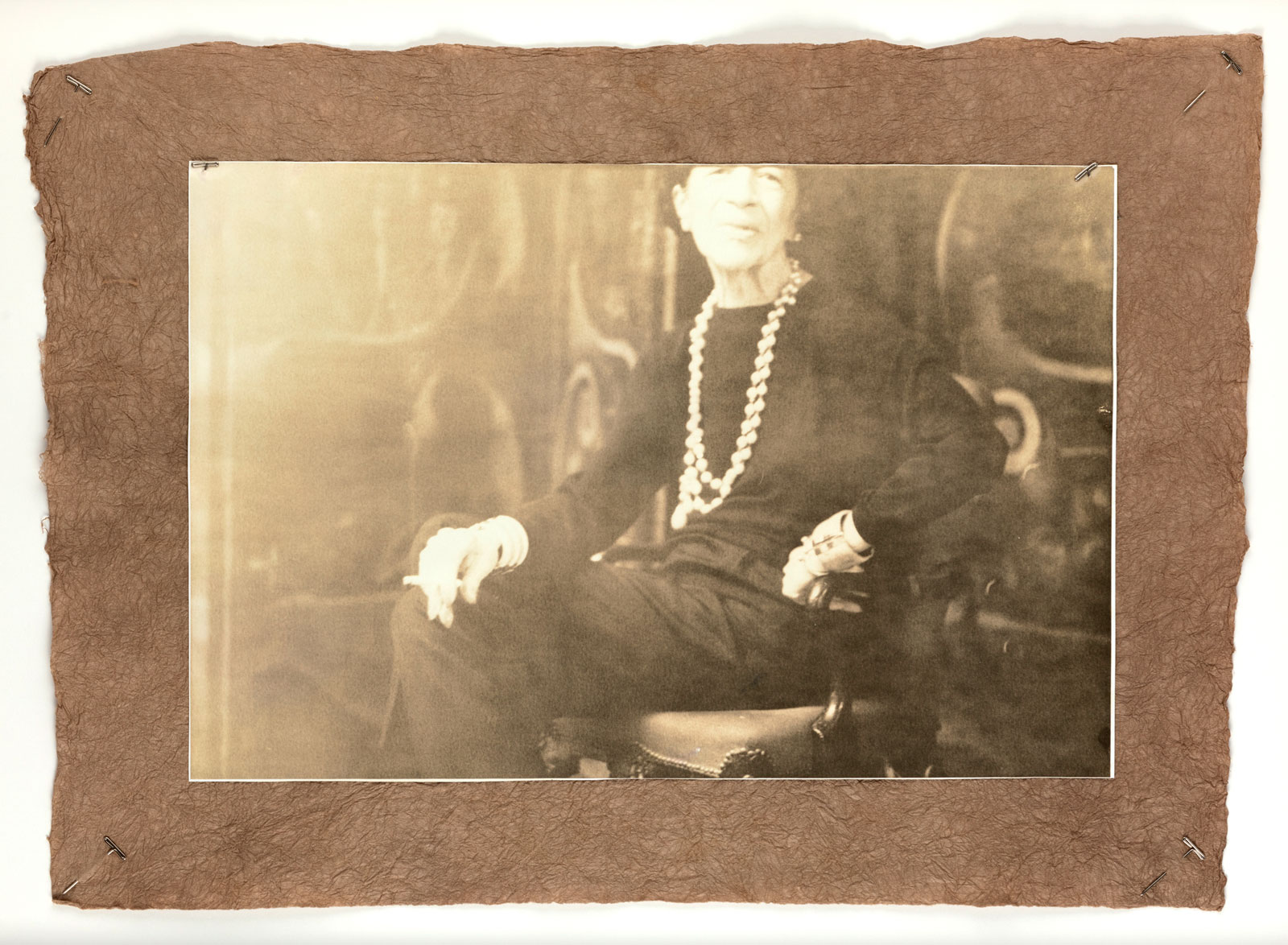
Nicolás Muller was a Hungarian photographer but the rise of Nazism forced him to flee his homeland in 1938 because he was Jewish.. to Paris to continue his work, then temporary shelter in Portugal before finally finding sanctuary in Tangier under the Spanish protectorate where he “published two notable books: Estampas marroquíes (Moroccan Prints) and Tánger por el Jalifa (Tangier by the Khalifa). These works revealed a mature artist, deeply sensitive to his surroundings and possessing a mastery of his craft.” (Press release)

“… in the 1930s Muller worked in a humanist, documentary vein, evincing a strong sense of sympathy for the world of labour and the most modest members of society. His interest in the working man’s experience would remain a hallmark of his photographs. As the social and political contexts changed, he photographed agricultural labourers and dockers in the ports of Marseille and Porto, then children and street vendors in Tangiers, and life in the countryside.”1

Off to Madrid for the first time to mix with underground intelligentsia where he met a beautiful woman who was to become his wife (moving to Madrid permanently in 1947, for love!), living in Spain under a fascist dictator (oh the irony, of one who had fled fascism!)

Then to become one of Spain’s greatest photographic visual storytellers, capturing the essence of the Spanish countryside and its people, the peasants and the sacred myths of the cultures of Spain, the mountain towns and the cities, the artists and the intellectuals. The passion and the people.

In Morocco it’s the blinding light and the open space of his photographs; in Spain it’s the intensity of his vision revealing something sensual and intimate in his photographs. Rich, textured, engaged / engaging.

“I learned that photography can be a weapon, an authentic document of reality. […] I became an engaged person, an engaged photographer.”

At heart always a humanist photographer he seems to me to be a romantic and I love that. I want to see more of his photographs, particularly his early photographs in Hungary and Paris which I have never seen.

Nicolás Muller is my secret pleasure. He deserves to be more widely recognised in the history of photography.

Dr Marcus Bunyan


1/ Press release on the exhibition Nicolás Muller (1913-2000). Traces of exile from the Château de Tours website quoted in Art Blart: art and cultural memory archive, May 10, 2015 [Online] Cited 28/02/2025


Many thankx to the Real Academia de Bellas Artes de San Fernando for allowing me to publish the photographs in the posting. Please click on the photographs for a larger version of the image.

Fore more photographs of the artist’s work please see the previous posting on the exhibition ‘Nicolás Muller (1913-2000). Traces of exile’ at the Château de Tours, November 2014 – May 2015


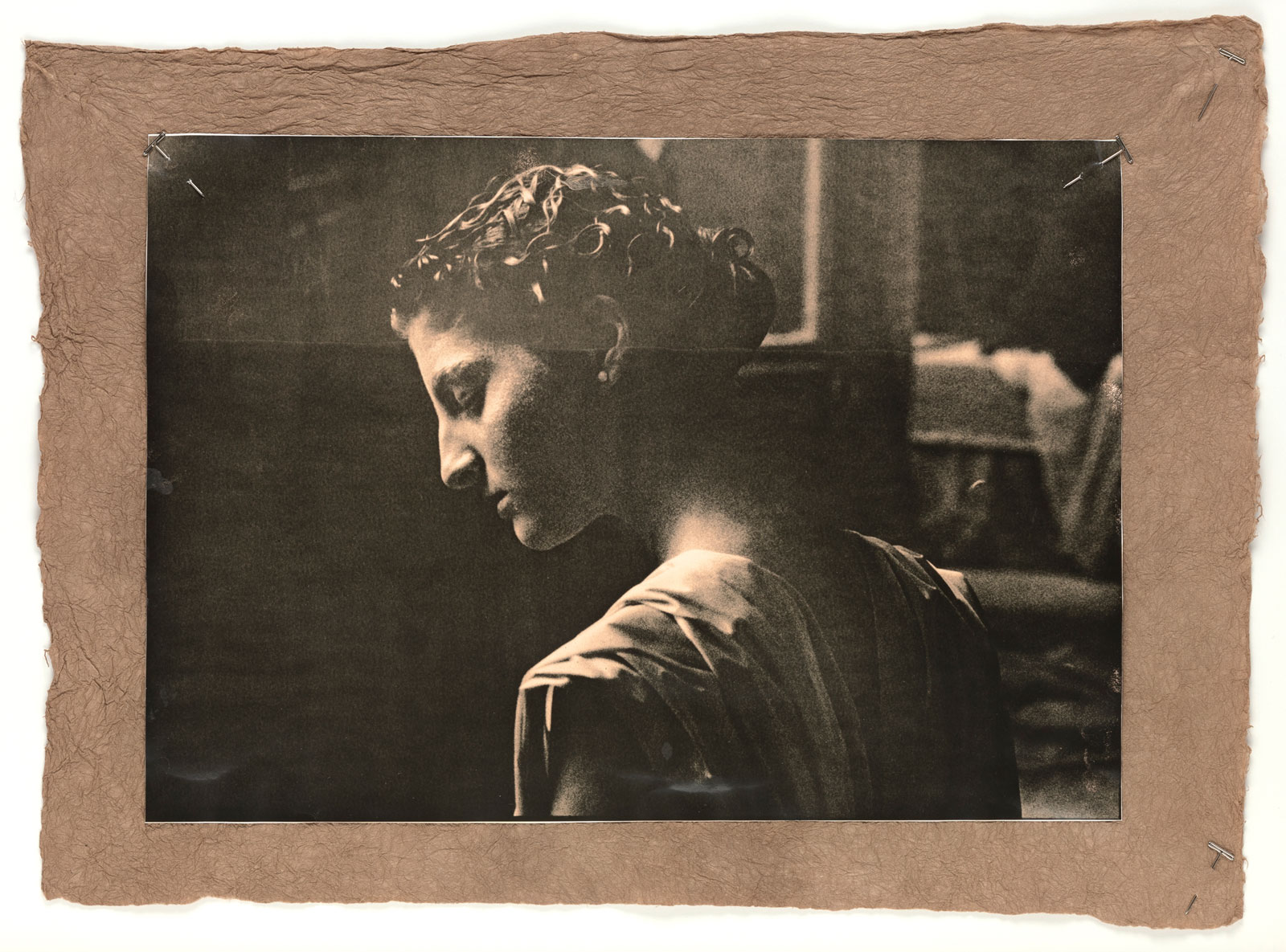
Nicolás Muller (Spanish born Hungary, 1913-2000) 'Desnudo. Tangier' 1940, printed 2005 from the exhibition 'Nicolás Muller: beauty and commitment' at Real Academia de Bellas Artes de San Fernando, Madrid


Nicolás Muller (Spanish born Hungary, 1913-2000)
Desnudo. Tangier
1940, printed 2005 by J. M. Castro Prieto
Printed with pigmented inks on cotton paper
724 x 610 mm
Acquired in 2006 with a charge to the Guitarte legacy


Within the hallowed halls of the Real Academia de Bellas Artes de San Fernando, a collection of photographs whispers stories of exile, resilience, and the vibrant cultural tapestry of a bygone era. These are the works of Nicolás Muller, a Hungarian-born photographer who, through his lens, became one of Spain’s most influential visual storytellers. This current exhibition at the prestigious academy offers a profound look at his impact, reminding us of the power of photography to transcend borders and capture the essence of humanity.

Muller’s life reads like a historical novel. Born in Hungary in 1913, he belonged to a remarkable generation of Hungarian photographers – a group that included giants like Robert Capa, Brassaï, Moholy-Nagy, and André Kertész. But the rise of Nazism forced him to flee his homeland in 1938, beginning a journey of exile that would shape his life and work.

Paris became his first refuge, where he contributed to prestigious publications like France Magazine, Paris-Match, and Regard. However, the shadow of war followed him. As a Jew, Muller was again forced to move, seeking temporary shelter in Portugal. Even there, he was not safe, facing expulsion by the Salazar regime’s secret police.

His wandering eventually led him to Tangier, a cosmopolitan city in Morocco, where he found a semblance of stability. From 1940 to 1947, Muller established a successful portrait studio, capturing the diverse faces of the city. During this time, under the Spanish Protectorate, he also collaborated with the newspaper España and published two notable books: Estampas marroquíes (Moroccan Prints) and Tánger por el Jalifa (Tangier by the Khalifa). These works revealed a mature artist, deeply sensitive to his surroundings and possessing a mastery of his craft.

In 1944, a pivotal encounter with Fernando Vela, a prominent intellectual and co-founder of the Revista de Occidente, brought Muller to Madrid for the first time. Three years later, he made Madrid his permanent home, opening a studio on Serrano Street, near the iconic Puerta de Alcalá.

Post-war Madrid was a city recovering from the ravages of conflict and under the weight of Franco’s dictatorship. Yet, Muller’s studio became a beacon of light and a haven for intellectuals, artists, and writers who yearned for intellectual freedom. His studio wasn’t just a place for portraits; it was a salon, a vibrant hub where minds met and ideas were exchanged.

Imagine the scene: the warm glow of studio lights, the quiet hum of conversation, the friendly presence of Muller’s dogs. Within those walls, giants of Spanish thought and culture gathered: Baroja and Azorín, elder statesmen of literature; philosophers like Pedro Laín Entralgo and Xavier Zubiri; poets like Gabriel Celaya and Gerardo Diego; writers like Ignacio Aldecoa and María Zambrano. Once a week, Muller himself would venture out to the nearby Café Gijón, joining the lively discussions of poets and painters.

This gathering at Muller’s studio echoed the legendary salons of 19th-century Paris, particularly that of Nadar. Like Nadar, Muller created a visual record of his time, capturing the faces of a generation that shaped Spain’s intellectual and artistic landscape. His portraits are more than just images; they are intimate glimpses into the souls of these remarkable individuals.

But Muller’s work extended far beyond the confines of his studio. He ventured across Spain, documenting its landscapes, towns, monuments, and people. His photographs offer a poignant portrayal of a country grappling with its past and striving for a new identity. His books, such as España Clara (Clear Spain) and numerous regional guides, are now treasured historical documents, offering a window into a Spain that has changed but not disappeared.

In 1980, after a rich and eventful career, Muller passed the torch to his daughter, Ana, also a talented photographer, and retired to the coastal town of Andrín, Asturias. It wasn’t until the 1990s, with a major retrospective at the Museum of Contemporary Art of Madrid and a comprehensive catalog, that Muller’s work received the widespread recognition it deserved. He was finally acknowledged as one of Spain’s most important photographers, a status he shares with his admired colleague, Catalá-Roca.

Now, this important body of work is being celebrated at the Real Academia de Bellas Artes de San Fernando, offering a new generation the chance to connect with Muller’s vision. His photographs remind us of the power of art to transcend borders, to connect us to the past, and to illuminate the human experience. They are a testament to the enduring impact of a wandering lens that found its home in Spain and captured the soul of a nation.

Press release from the Real Academia de Bellas Artes de San Fernando


Nicolás Muller (Spanish born Hungary, 1913-2000) 'Bailarina Tajara. Larache' (Tajara dancer. Larache) 1942, printed 2005 from the exhibition 'Nicolás Muller: beauty and commitment' at Real Academia de Bellas Artes de San Fernando, Madrid


Nicolás Muller (Spanish born Hungary, 1913-2000)
Bailarina Tajara. Larache (Tajara dancer. Larache)
1942, printed 2005 by J. M. Castro Prieto
Printed with pigmented inks on cotton paper
623 x 610 mm
Acquired in 2006 with a charge to the Guitarte legacy


Nicolás Muller (Spanish born Hungary, 1913-2000) 'Fiesta del Mulud II' 1942, printed 2005 from the exhibition 'Nicolás Muller: beauty and commitment' at Real Academia de Bellas Artes de San Fernando, Madrid


Nicolás Muller (Spanish born Hungary, 1913-2000)
Fiesta del Mulud II
1942, printed 2005 by J. M. Castro Prieto
Printed with pigmented inks on cotton paper
724 x 610 mm
Acquired in 2006 with a charge to the Guitarte legacy


Nicolás Muller (Spanish born Hungary, 1913-2000) 'Pio Baroja paseando por el Retiro' (Pio Baroja strolling through the Retiro) 1950, printed 2005 from the exhibition 'Nicolás Muller: beauty and commitment' at Real Academia de Bellas Artes de San Fernando, Madrid


Nicolás Muller (Spanish born Hungary, 1913-2000)
Pio Baroja paseando por el Retiro (Pio Baroja strolling through the Retiro)
1950, printed 2005 by J. M. Castro Prieto
Printed with pigmented inks on cotton paper
623 x 610 mm
Acquired in 2006 with a charge to the Guitarte legacy


 The Museum’s photography room displays a selection of works by photographer Nicolás Muller that are part of the Academy’s collection. In addition, bibliographic and photographic material from the Pedro Melero / Marisa Llorente collection and a portrait of the photographer from the Ana Muller collection are on display.

In the cultural wasteland of autocratic Spain, the photographer Nicolás Muller (Hungary, 1913 – Asturias, 2000) was, together with Catalá-Roca, the greatest and most influential Spanish photographer. A prominent member of the privileged group of Hungarian photographers of his generation – Robert Capa, Brassaï, Moholy-Nagi, André Kertész… – like them, he had to leave his country fleeing Nazism in 1938, to settle in Paris, where he actively collaborated in the famous weeklies France Magazine, Paris-Match and Regard. Of Jewish origin, the German occupation condemned him to a new and precarious exile in Portugal, a country from which he was arrested and expelled by the PIDE, the political police of the Salazar dictatorship. Finally, his long journey as a wandering Jew led him to Tangier, an open city where he lived and worked until 1947.

In Tangier he set up a portrait studio, which soon became the most prestigious and visited in the city. During the Spanish Protectorate of Morocco, Muller collaborated with the newspaper España and published two of his best books, Estampas marroquíes and Tánger por el Jalifa, which were added to those published in Hungary and which showed a photographer in full maturity, cultured, delicate, committed and deeply knowledgeable of all the secrets of his trade. In 1944, with the help of his great friend Fernando Vela, co-founder of the Revista de Occidente and director of España, he came to Madrid for the first time, where he exhibited his photographs at the Palace Hotel. Three years later he left Tangier for good, to move to Madrid. After working in two portrait studios, in 1947 he took up residence in a bright gallery on Calle Serrano, a stone’s throw from the Puerta de Alcalá.

In a shabby and intimidated Madrid, his studio soon became the most prestigious in the city and a back room and meeting point for a group of intellectuals and artists close to the liberal ideas led by Ortega y Gasset and Fernando Vela, from the Revista de Occidente. In that culturally depressed time, marked by the obsolescence of an aesthetically exhausted photographic officialdom, Muller represented one of the few windows open to modernity. In the shadow of the spotlights in his studio, in the presence of his friendly dogs, the most notable artists and intellectuals of the day met for years: Baroja and Azorín, as foster parents, Pedro Laín Entralgo, Lorenzo Goñi, Fernando Vela, Gabriel Celaya, Dionisio Ridruejo, Rodrigo Uría, Xavier Zubiri, Gerardo Diego, Pío and Julio Caro Baroja, Ignacio Aldecoa, María Zambrano… And once a week, the photographer would go to the nearby Café Gijón to join the well-known gathering known as the poets and painters, made up of Martínez Novillo, Benjamín Palencia, Pablo Serrano, Zabaleta, Pancho Cossío, Paco García Pavón, Gabriel Celaya and Cristino Mallo.

The gatherings in Muller’s studio, given the distance in time, are comparable only to the councils held a century earlier in the Parisian studio of the first Nadar, on the Boulevard des Capucines. Like the great French portraitist, Muller was building an admirable Parnassus, made up of more than a hundred portraits of painters, sculptors, poets, novelists and philosophers from that Madrid aggrieved by pain, hunger, fear and ration cards, which contrasted with the frivolous and offensive euphoria of the disrespectful mandarins and the rich speculators, to use the words of Dionisio Ridruejo. For these portraits alone, Muller would deserve a place of honour in the history of Spanish and universal photography.

But, unlike his Madrid colleagues at the time – Gyenes, Amer Ventosa, Ibáñez – whom he surpassed in talent, in addition to his work in the studio, from the very day of his arrival in the capital, Muller deployed an intense professional activity that led him to travel around Spain and portray its towns, its monuments, its landscapes and its people. The fruit of that titanic work are his numerous and excellent books, unfortunately not available today, such as España Clara (1966) and a dozen guides to the various provinces and regions of Spain, such as those produced in the Basque Country (1967), Andalusia (1968), Cantabria (1969) and La Mancha (1970). This series was followed by those dedicated to the Landscapes of Spain, Spanish Popular Architecture, Spanish Romanesque and the Jewish footprint in Spain, with texts by Azorín, Sáinz de Robles, Luis Rosales, Julio Caro Baroja, Gerardo Diego, Dionisio Ridruejo, Torrente Ballester, Fernando Vela and Laín Entralgo. In 1980, after a turbulent and well-lived professional life, in which he came to penetrate the roots of grief, successive exiles, love, friendship and melancholy, he left his Madrid studio in the hands of his daughter Ana Muller, an excellent professional, and retired to his small chosen homeland, in Andrín, Asturias, on the seashore.

Following his retrospective exhibition, Nicolás Muller. Fotógrafo, held in 1994 at the Museum of Contemporary Art in Madrid and the extraordinary catalogue published by Lunwerg Editores, Muller began to be recognised as the most important Spanish photographer of his time; a status he shares with his admired Catalá-Roca, with whom he shared many common points: curiosity, talent, a love of the arts, a joy for his work and a deep knowledge of the secrets of life and his craft. Since 1994, his exhibitions have multiplied in Spain and in various countries in Europe and America. Among them, Nicolás Muller. Obras maestras (2013) and Nicolás Muller, una mirada compromiso (2020) stand out, which is still touring various countries in Europe.

With the fall of communism in Hungary, Muller began to be known and admired in his country as well, after the retrospective exhibition of his photographs, held with great solemnity in his hometown and inaugurated by Arpad Gönez, the first Hungarian president of the democratic era. This exhibition was followed by others, among which Nicolas Muller. A retrospective look stands out, held in Budapest, organised by the Embassy of Spain and the House of Hungarian Photographers, six years after the death of the master. An emotional and well-deserved tribute to this great professional, Hungarian by birth, Spanish by adoption and, above all, a wandering Jew and citizen of the world.

Publio López Mondéjar
Academic. Section of Image Arts

Text from the Real Academia de Bellas Artes de San Fernando website


Nicolás Muller (Spanish born Hungary, 1913-2000) 'Pintando el barco. Las Palmas de Gran Canaria' (Painting the boat. Las Palmas de Gran Canaria) 1964, printed 2005 from the exhibition 'Nicolás Muller: beauty and commitment' at Real Academia de Bellas Artes de San Fernando, Madrid


Nicolás Muller (Spanish born Hungary, 1913-2000)
Pintando el barco. Las Palmas de Gran Canaria (Painting the boat. Las Palmas de Gran Canaria)
1964, printed 2005 by J. M. Castro Prieto
Printed with pigmented inks on cotton paper
623 x 610 mm
Acquired in 2006 with a charge to the Guitarte legacy


Nicolás Muller (Spanish born Hungary, 1913-2000) 'Monjitas en Lanzarote' (Nuns in Lanzarote) 1964, printed 2005 from the exhibition 'Nicolás Muller: beauty and commitment' at Real Academia de Bellas Artes de San Fernando, Madrid


Nicolás Muller (Spanish born Hungary, 1913-2000)
Monjitas en Lanzarote (Nuns in Lanzarote)
1964, printed 2005 by J. M. Castro Prieto
Printed with pigmented inks on cotton paper
724 x 610 mm
Acquired in 2006 with a charge to the Guitarte legacy


Nicolás Muller (Spanish born Hungary, 1913-2000) 'Pablo Serrano' 1965 from the exhibition 'Nicolás Muller: beauty and commitment' at Real Academia de Bellas Artes de San Fernando, Madrid


Nicolás Muller (Spanish born Hungary, 1913-2000)
Pablo Serrano
1965
Vintage silver gelatin print


Pablo Serrano Aguilar (8 March 1908, Crivillén, Teruel – 26 November 1985, Madrid) was a Spanish abstract sculptor.


Nicolás Muller (Spanish born Hungary, 1913-2000) 'Soledad. Cudillero' (Solitude. Cudillero) 1965, printed 2005 from the exhibition 'Nicolás Muller: beauty and commitment' at Real Academia de Bellas Artes de San Fernando, Madrid


Nicolás Muller (Spanish born Hungary, 1913-2000)
Soledad. Cudillero (Solitude. Cudillero)
1965, printed 2005 by J. M. Castro Prieto
Printed with pigmented inks on cotton paper
623 x 610 mm
Acquired in 2006 with a charge to the Guitarte legacy


Nicolás Muller (Spanish born Hungary, 1913-2000) 'País Vasco' (the Basque Country) 1966, printed 2005 from the exhibition 'Nicolás Muller: beauty and commitment' at Real Academia de Bellas Artes de San Fernando, Madrid


Nicolás Muller (Spanish born Hungary, 1913-2000)
País Vasco (the Basque Country)
1966, printed 2005 by J. M. Castro Prieto
Printed with pigmented inks on cotton paper
623 x 610 mm
Acquired in 2006 with a charge to the Guitarte legacy


Real Academia de Bellas Artes de San Fernando
C. de Alcalá, 13, Centro, 28014 Madrid, Spain

Real Academia de Bellas Artes de San Fernando website

LIKE ART BLART ON FACEBOOK

Back to top

Exhibition: ‘Deborah Turbeville: Photocollage’ at The Photographers’ Gallery, London

Exhibition dates: 9th October, 2024 – 23rd February, 2025

Curators: Nathalie Herschdorfer, Director of Photo Elysée, and Karen McQuaid, Senior Curator at The Photographers’ Gallery.


Deborah Turbeville (American, b. 1932-2013) 'Untitled' Passage Vivienne, Paris, France, November 1980 from the exhibition Deborah Turbeville: Photocollage' at The Photographers' Gallery, London


Deborah Turbeville (American, b. 1932-2013)
Untitled
Passage Vivienne, Paris, France, November 1980
From the series Comme des Garçons
© Deborah Turbeville/MUUS Collection


There are some haunting photographs in this posting on the work of American photographer Deborah Turbeville but unfortunately I can make little comment on her work.

Despite trawling through numerous sites looking at her images – there is not much online – and more importantly having not seen the exhibition, I find that I have no real handle on the photographic series.

A couple of photographs from the Passport, Comme des Garçons, Block Island and Unseen Versailles series, plus a few photocollage which investigate the nature of photography and its fragility in this posting doesn’t allow me to understand the full sweep of her artistic work… which is a great pity.

The only way to really understand and feel Turbeville’s work is to visit The Photographers’ Gallery and immerse yourself in the artist’s world. Unfortunately I cannot do that.

Dr Marcus Bunyan


Many thankx to The Photographers’ Gallery for allowing me to publish the photographs in the posting. Please click on the photographs for a larger version of the image.


“When I’m making photographs, I think of films”


Deborah Turbeville, 1985


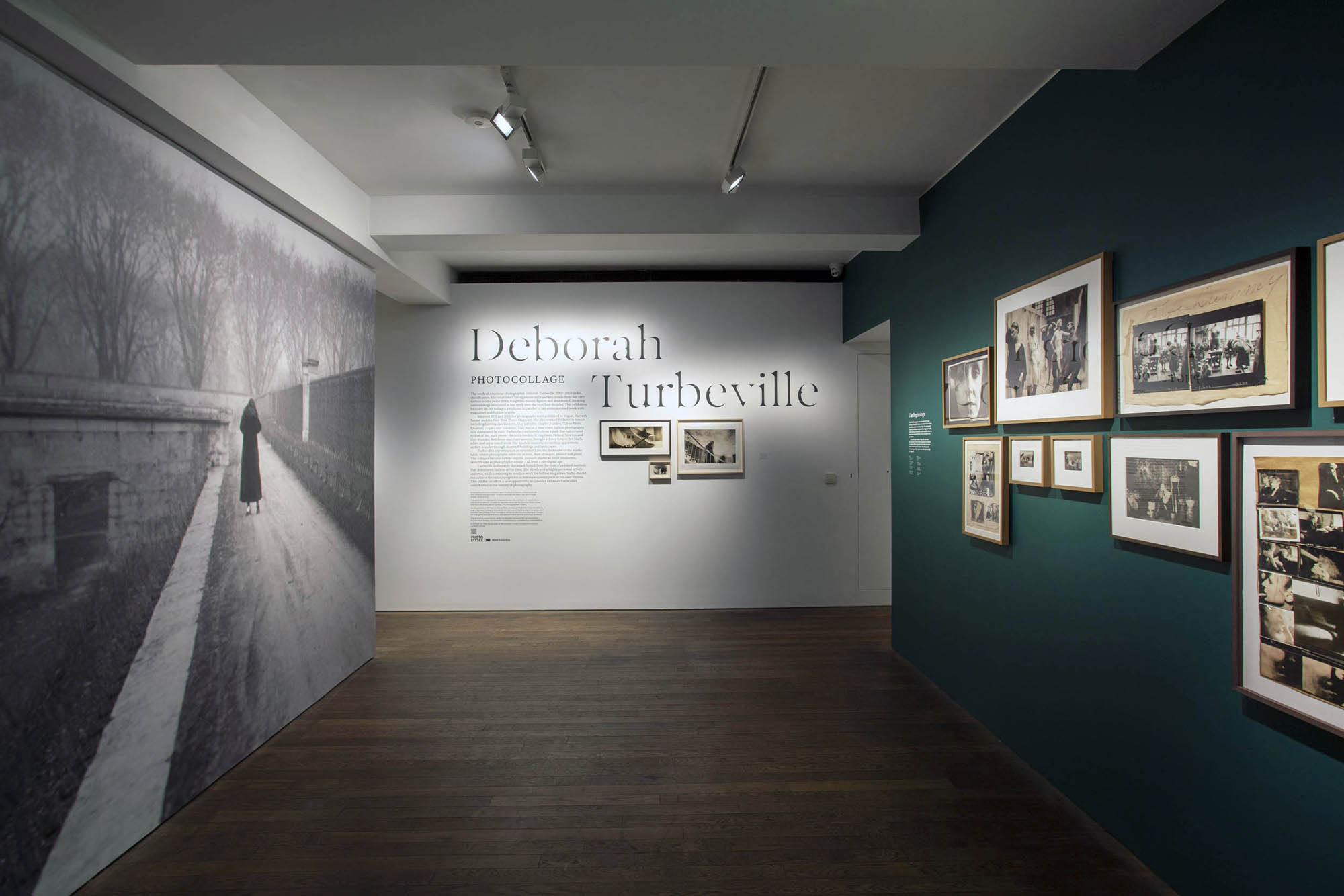
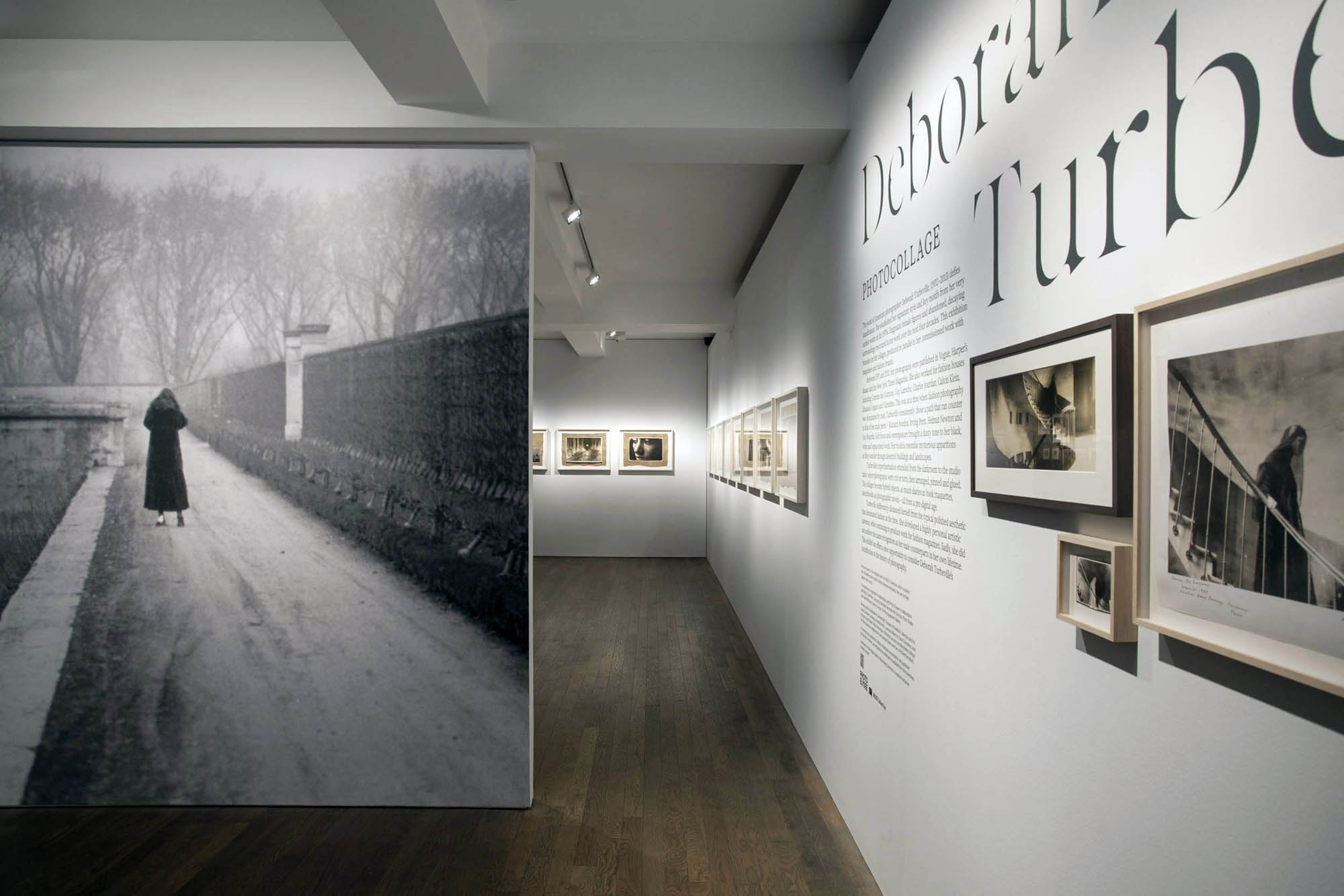
Deborah Turbeville: Photocollage highlights the work of a truly innovative, American fashion photographer, Deborah Turbeville (1932-2013) who transformed fashion imagery into avant-garde art. Her signature dreamlike and melancholic style became recognisable with her earliest works in the 1970s: enigmatic female figures, cloudy skies, wintry nature and abandoned, decaying surroundings. She deliberately distanced herself from the typical glamourous, polished aesthetic that dominated fashion at the time.


An interview on the exhibition Deborah Turbeville: Photocollage with Nathalie Herschdorfer, Exhibition Curator, and Karen McQuaid, Senior Curator, The Photographers’ Gallery.


Deborah Turbeville (American, b. 1932-2013) 'Walking down Passage Vivienne' (Escalier dans Passage Vivienne) Paris, France, November 1980  from the exhibition Deborah Turbeville: Photocollage' at The Photographers' Gallery, London


Deborah Turbeville (American, 1932-2013)
Walking down Passage Vivienne (Escalier dans Passage Vivienne)
Paris, France, November 1980
From the series Comme des Garçons
© Deborah Turbeville/MUUS Collection


Deborah Turbeville’s signature dreamlike and melancholic style became recognisable with her earliest works in the 1970s: enigmatic female figures, cloudy skies, wintry nature and abandoned, decaying surroundings. She deliberately distanced herself from the typical glamourous, polished aesthetic that dominated fashion at the time.

Deborah Turbeville: Photocollage presents Turbeville’s trailblazing photographic explorations, from fashion photos to her very personal work. Bringing together unique pieces, the exhibition reveals Turbeville’s highly personal artistic universe, which has been credited with transforming fashion imagery into avant-garde art.

She experimented with the developing process, from the darkroom to the studio table. She ripped, cut and tore her photographs; manipulated, pinned and glued them together to create unique hybrid objects. Deborah Turbeville: Photocollage is a new appreciation of Turbeville’s ground-breaking contribution to the history of photography.

Text from The Photographers’ Gallery website


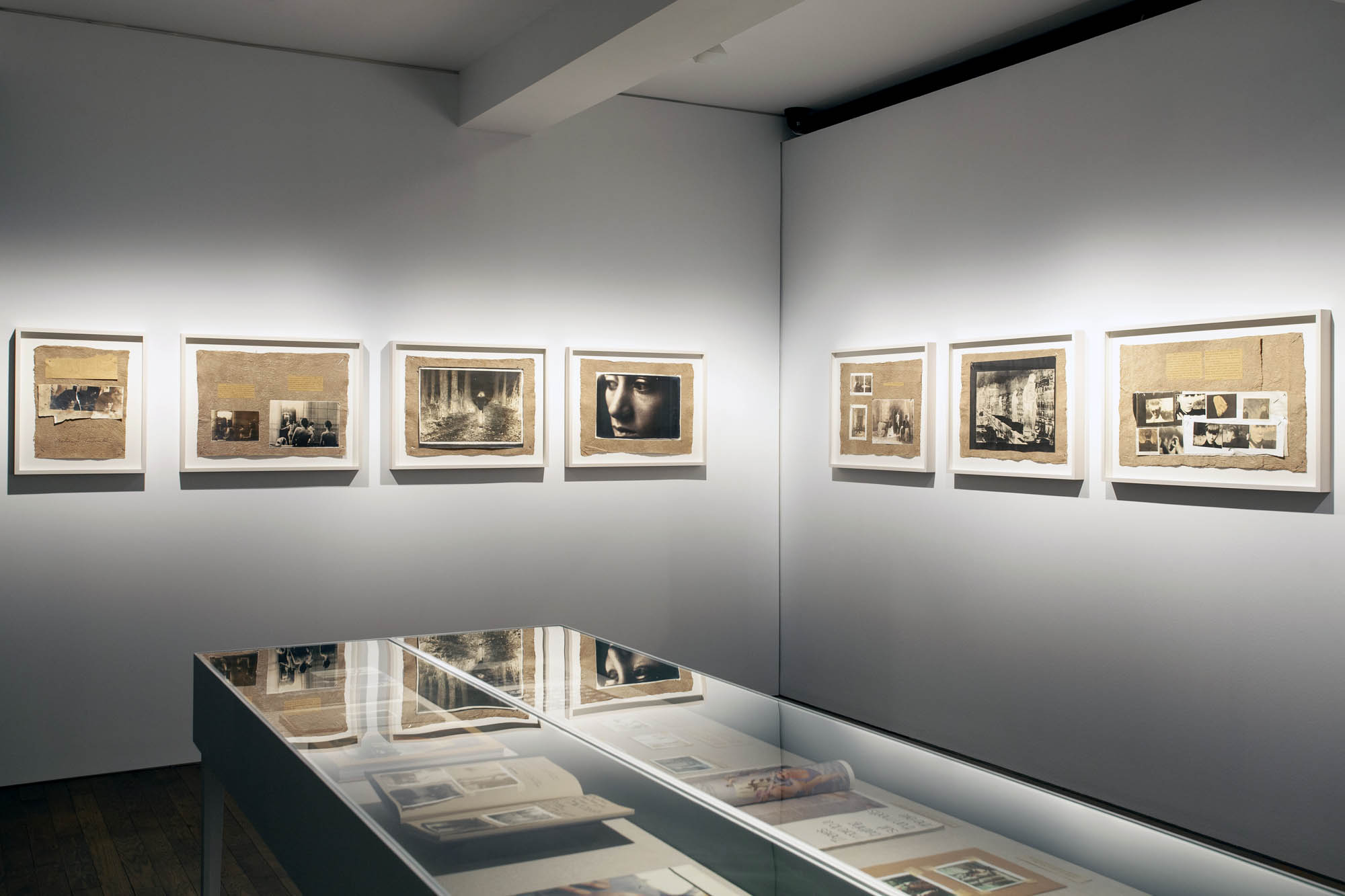
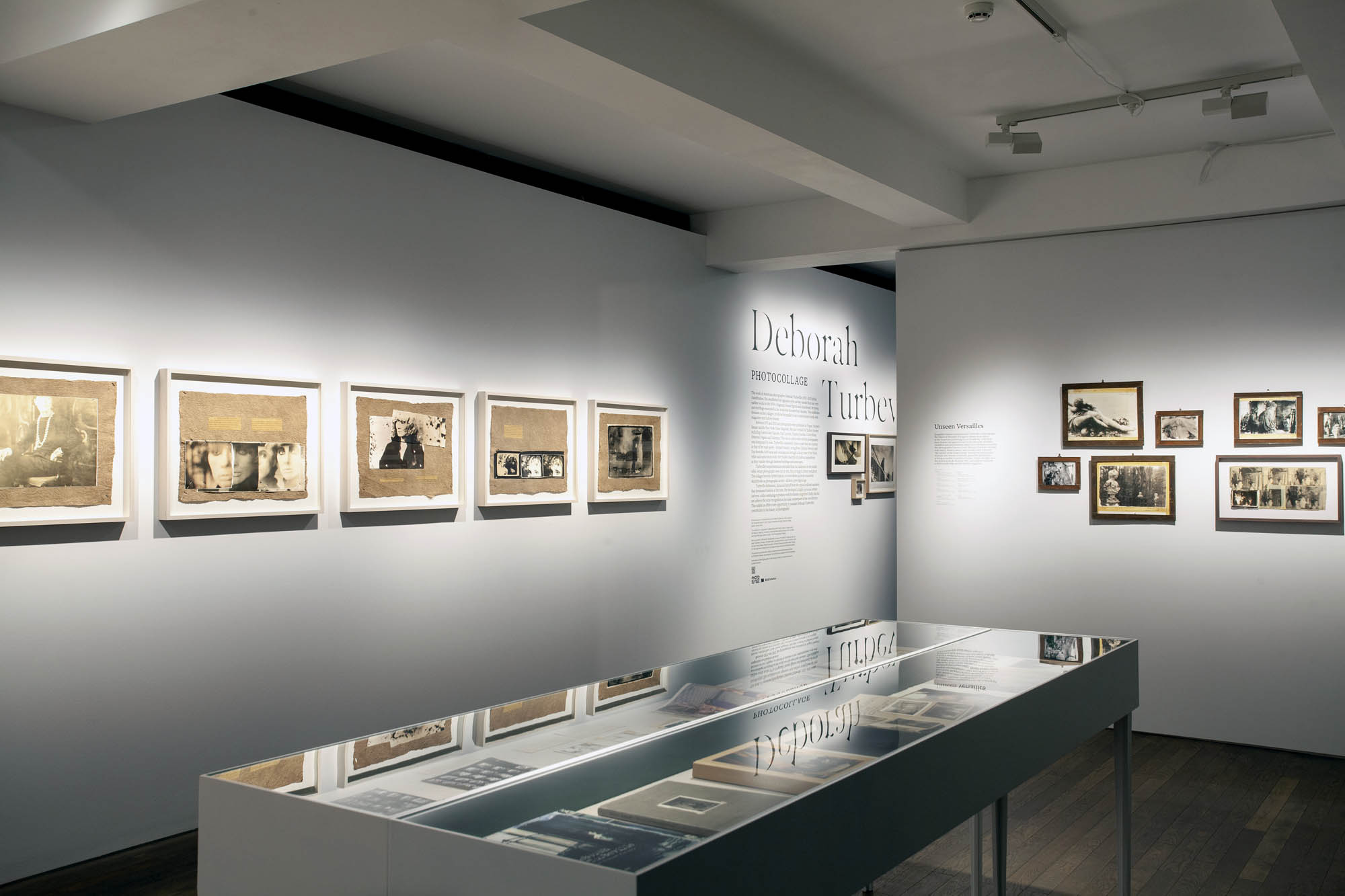
Installation view of the exhibition 'Deborah Turbeville: Photocollage' at The Photographers' Gallery, London

Installation view of the exhibition 'Deborah Turbeville: Photocollage' at The Photographers' Gallery, London

Installation view of the exhibition 'Deborah Turbeville: Photocollage' at The Photographers' Gallery, London

Installation view of the exhibition 'Deborah Turbeville: Photocollage' at The Photographers' Gallery, London


Unseen Versailles

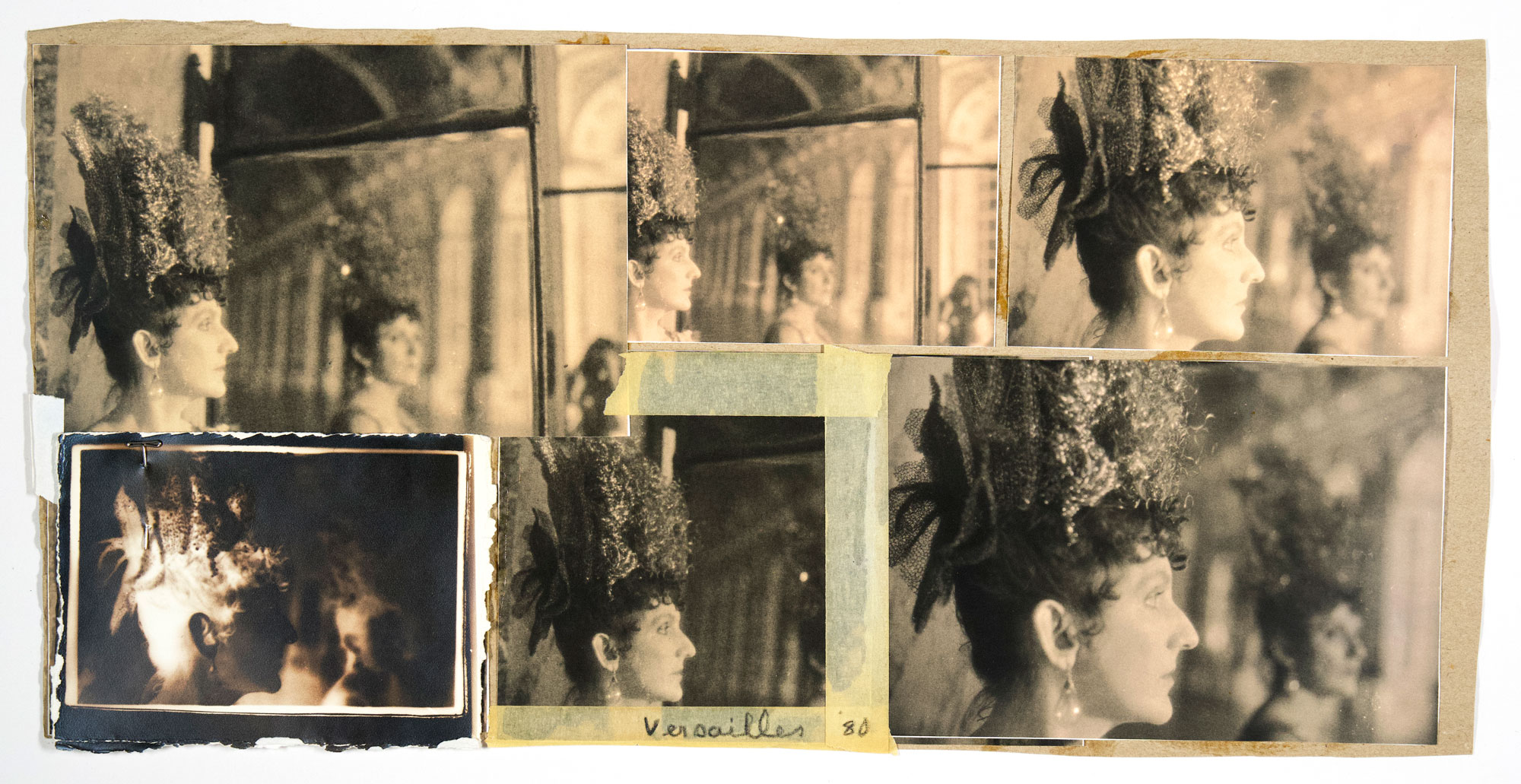
Jacqueline Onassis commissioned Turbeville to photograph the Palace of Versailles during her tenure as an editor at the American publishing house Doubleday. With help from Onassis she gained access to the labyrinth of hidden chambers and antechambers which were off limits to tourists. She photographed barren rooms, Baroque furniture covered with sheets, broken statues, and curtains thick with dust. The curator of the estate initially blocked the introduction of props, but Onassis eventually gained her permission to bring in models in period costumes. Unseen Versailles won the American Book Award in 1982 and enabled Turbeville to find a readership outside fashion magazines.

Wall text from the exhibition


Installation view of the exhibition 'Deborah Turbeville: Photocollage' at The Photographers' Gallery, London

Installation view of the exhibition 'Deborah Turbeville: Photocollage' at The Photographers' Gallery, London

Installation view of the exhibition 'Deborah Turbeville: Photocollage' at The Photographers' Gallery, London

Installation view of the exhibition 'Deborah Turbeville: Photocollage' at The Photographers' Gallery, London

Installation view of the exhibition 'Deborah Turbeville: Photocollage' at The Photographers' Gallery, London


Installation views of the exhibition Deborah Turbeville: Photocollage at The Photographers’ Gallery, London


Deborah Turbeville: Photocollage at The Photographers’ Gallery, London (until 23 February 2025), celebrates Turbeville’s trailblazing photographic explorations, from fashion photos to her very personal work. To coincide with the exhibition, we’re looking at some of her photographic series in more detail, starting with the Passport series!

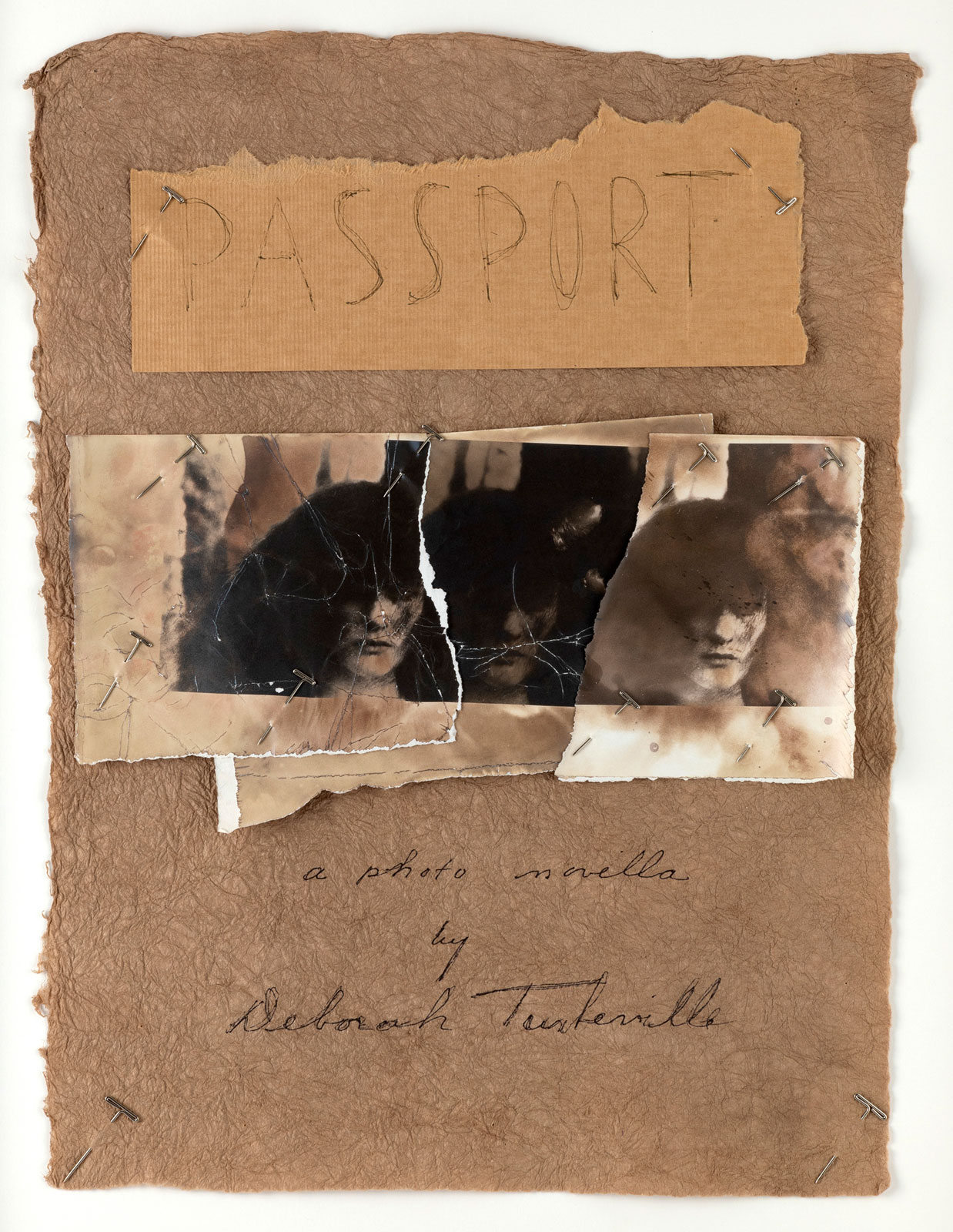
Turbeville’s Passport series of collages, which accompanied a novella she wrote with the same name, demonstrates her very cinematic, narrative approach to photography.

Fixed to wrinkled brown paper with unusually large T-pins, the series heavily features portrait photographs. The gelatin silver prints all have slightly varying hues of black and white; their torn edges overlap, each revealing a different fragment. The torn sections of women’s faces stand out against grainy backgrounds, like a ghostly white sky. Turbeville selected images, largely from her archives, showing repeated shots positioned together, repurposing her work to create new experimental compositions that felt cinematic in style. Alongside the images, fragments of her unpublished novella are cut out and pasted, so that the series can be read narratively as well as visually.

Unlike many of her contemporaries, Turbeville considered photography to be more than just a means of pictorial representation. Curious about the materials and nature of photography, she was inescapably interested in its fragility. Her photocollages suggested new possibilities for photography, which had, until then, cleaved very closely to reality. Collage became a form of manual work which allowed her to create three-dimensional objects and a chance to gather up her own images and give them new depth. She embraced the visible imperfections in a handmade, narrative style that gives her work a unique stylistic voice.

Text from The Photographers’ Gallery Instagram page


Deborah Turbeville (American, 1932-2013) 'Maquillage' 1975  from the exhibition Deborah Turbeville: Photocollage' at The Photographers' Gallery, London


Deborah Turbeville (American, 1932-2013)
Maquillage
1975
© Deborah Turbeville/MUUS Collection


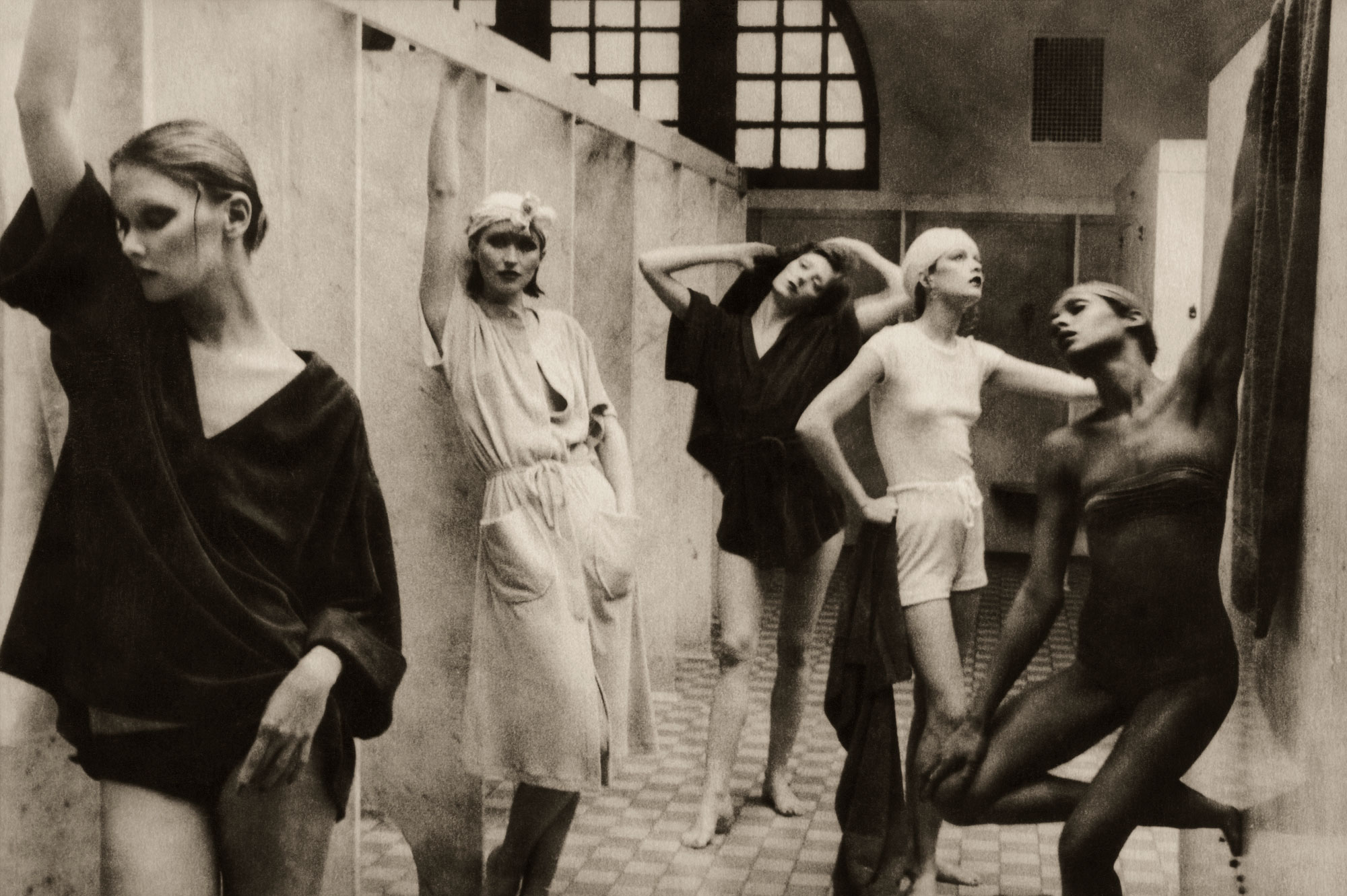
Deborah Turbeville (American, 1932-2013) 'Bathhouse, New York' New York, 1975  from the exhibition Deborah Turbeville: Photocollage' at The Photographers' Gallery, London


Deborah Turbeville (American, 1932-2013)
Bathhouse, New York
New York, 1975
From the series Bathhouse
© Deborah Turbeville/MUUS Collection


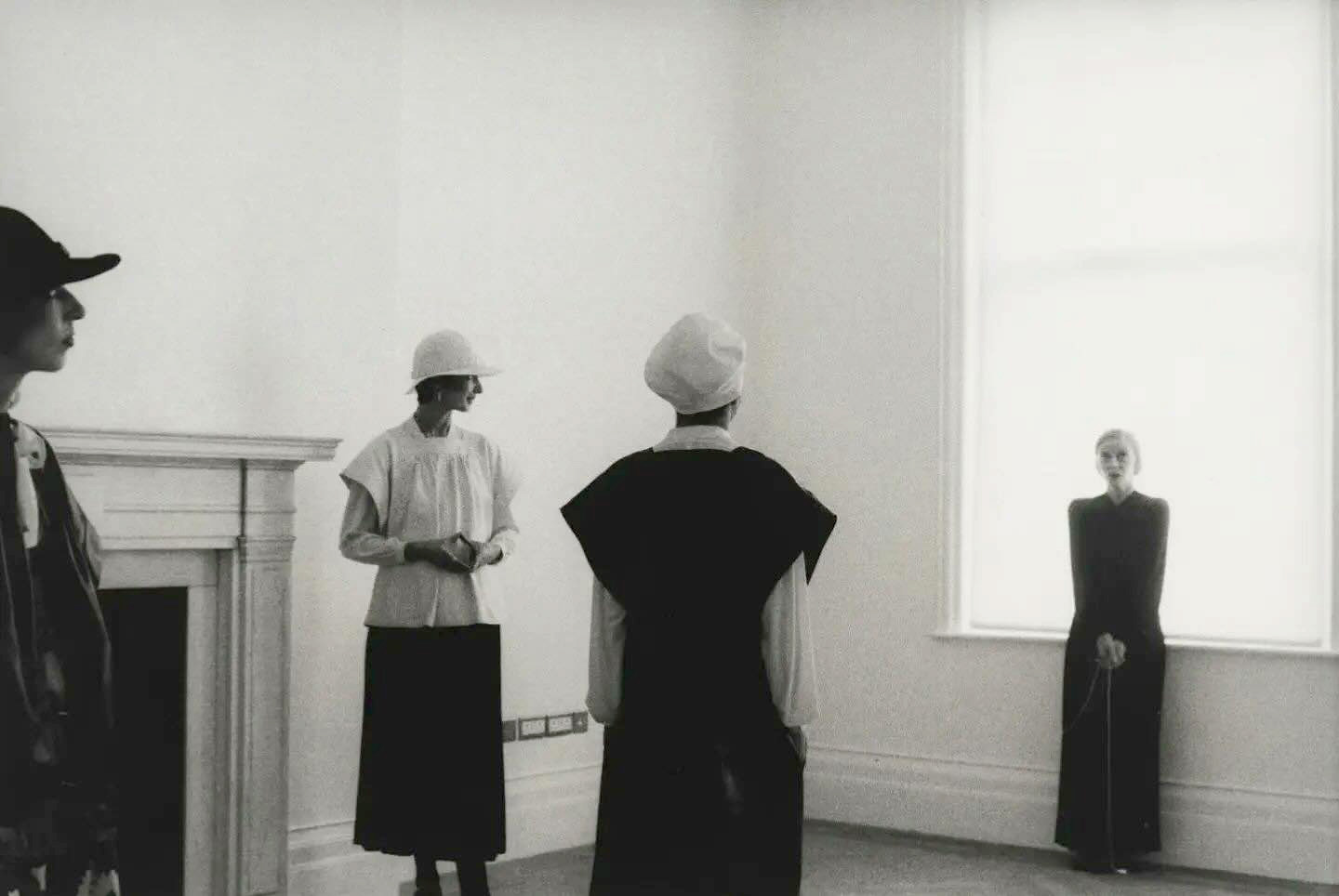
Deborah Turbeville (American, 1932-2013) 'Jean Muir and Three Unknown Models' 1975  from the exhibition Deborah Turbeville: Photocollage' at The Photographers' Gallery, London


Deborah Turbeville (American, 1932-2013)
Jean Muir and Three Unknown Models
1975
© The Estate of Deborah Turbeville


For her second spread in Vogue Magazine, Deborah Turbeville photographed designers with their models and muses in a February 1975 editorial titled “European Fashion: The Movers”. Here, she captured the British doyenne of dressmaking, Jean Muir, with her friends modelling her designs.


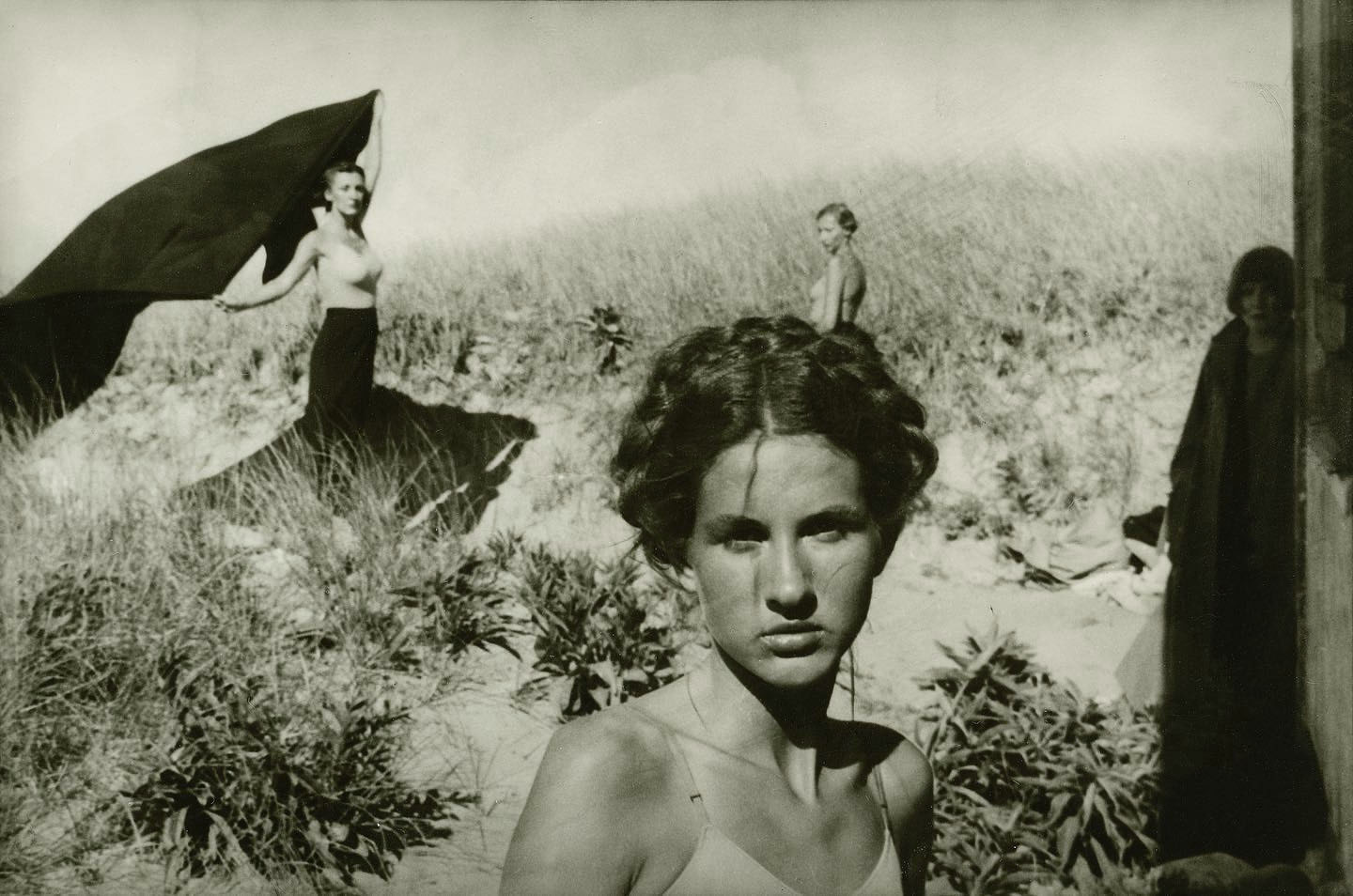
Deborah Turbeville (American, 1932-2013) 'Untitled' Block Island, Rhode Island, 1976  from the exhibition Deborah Turbeville: Photocollage' at The Photographers' Gallery, London


Deborah Turbeville (American, 1932-2013)
Untitled
Block Island, Rhode Island, 1976
From the series Block Island
© Deborah Turbeville/MUUS Collection


Deborah Turbeville (American, 1932-2013) 'Untitled' Block Island, Rhode Island, 1976  from the exhibition Deborah Turbeville: Photocollage' at The Photographers' Gallery, London


Deborah Turbeville (American, 1932-2013)
Untitled
Block Island, Rhode Island, 1976
From the series Block Island
© Deborah Turbeville/MUUS Collection


Deborah Turbeville (American, 1932-2013) 'Versailles' Versailles, France 1980  from the exhibition Deborah Turbeville: Photocollage' at The Photographers' Gallery, London


Deborah Turbeville (American, 1932-2013)
Versailles
Versailles, France, 1980
From the series Unseen Versailles
© Deborah Turbeville/MUUS Collection


How Deborah Turbeville tore up the rules

Deborah Turbeville is remembered today as a pioneering figure in fashion photography, known for her melancholic, dreamlike imagery that diverged from conventional standards. Born in 1932 in Stoneham, Massachusetts, USA, she initially pursued acting before being discovered by fashion designer Claire McCardell, who employed her as an assistant and model. Through McCardell, Turbeville met Diana Vreeland, then editor of Harper’s Bazaar, which launched her editorial career. However, she soon lost interest in conventional editorial work, turning instead to photography as an outlet for artistic expression and experimentation.

In the 1960s, after buying her first camera, Turbeville began early experimentation in photography. Her creative direction was refined through a workshop with photographer Richard Avedon and art director Marvin Israel. Moving from fashion editing to photography, she worked for magazines like Vogue and Harper’s Bazaar, though she always insisted she was not a traditional fashion photographer. Rather, she used fashion within her work to tell emotionally charged stories, setting herself apart from the industry’s glamorous norms.

One of her most iconic works is the Bathhouse series for Vogue in 1975, featuring models posed in a dilapidated bathhouse. The images conveyed vulnerability, decay and isolation, starkly contrasting with the glossy fashion photography of the time. Although controversial, the series exemplified Turbeville’s atmospheric aesthetic – soft focus, grainy textures and muted tones. She often distressed her photographs to give them an aged appearance, blurring the lines between fashion photography and fine art.

Turbeville’s work rejected the conventions of fashion industry ideals, choosing instead to explore themes of memory, loss and feminine vulnerability. Her approach stood in contrast to contemporaries like Helmut Newton and Guy Bourdin, whose images typically celebrated female sensuality. In contrast, Turbeville’s subjects appeared introspective and distant, encouraging viewers to engage with them on a deeper, emotional level.

In 1981, Turbeville was commissioned by Jacqueline Kennedy Onassis to photograph the abandoned rooms of the Palace of Versailles, which resulted in the book Unseen Versailles. The images of faded grandeur reflected her fascination with decay and received critical acclaim, winning an American Book Award.

Her body of work extended beyond fashion to other notable publications, including Studio St. Petersburg, The Voyage of the Virgin Maria Candelaria, and Newport Remembered. Throughout her career, she consistently merged fashion with fine art, creating images defined more by atmosphere and emotion than style alone.

Her photocollages show her experimental approach to constructing compositions. Her photographs are just one element among several. She builds up mysterious narratives through overlapping layers of pinned, ripped, cut, creased and taped images, found objects and printed texts. These layers are built up on heavy brown paper – a complete departure from the glossy white pages of fashion magazines. Her Passport series of collages, which accompanied a novella she wrote with the same name, demonstrates her very cinematic, narrative approach to photography.

Turbeville’s influence on future generations of photographers is significant. She opened doors for more experimental, avant-garde approaches to fashion photography, transforming it from a commercial medium into a space for artistic exploration. Her rejection of industry norms allowed her to create a distinctive visual language that continues to inspire photographers and artists today.

Turbeville once remarked that she was more interested in creating “atmosphere and mood” than simply photographing clothes, a sentiment that underpinned her career. By embracing imperfection, decay and the passage of time, she redefined fashion photography as more than a vehicle for selling clothes.

Turbeville’s career represents a turning point in fashion photography. Her dreamlike, melancholic style and innovative approach broke industry conventions, transforming fashion photography into a medium for personal and artistic expression. Her legacy continues to inspire, and her influence remains enduring long after her death in 2013.

Anonymous. “How Deborah Turbeville tore up the rules,” on The Photographers’ Gallery website Nd [Online] Cited 16/01/2025


Deborah Turbeville (American, 1932-2013) 'Page from Passport' c. 1990  from the exhibition Deborah Turbeville: Photocollage' at The Photographers' Gallery, London


Deborah Turbeville (American, 1932-2013)
Page from Passport
c. 1990
© Deborah Turbeville/MUUS Collection 


Deborah Turbeville (American, 1932-2013) 'Page from Passport' c. 1990 from the exhibition Deborah Turbeville: Photocollage' at The Photographers' Gallery, London


Deborah Turbeville (American, 1932-2013)
Page from Passport
c. 1990
© Deborah Turbeville/MUUS Collection


Deborah Turbeville (American, 1932-2013) 'Page from Passport' c. 1990 from the exhibition Deborah Turbeville: Photocollage' at The Photographers' Gallery, London


Deborah Turbeville (American, 1932-2013)
Page from Passport
c. 1990
© Deborah Turbeville/MUUS Collection


Deborah Turbeville (American, 1932-2013) 'Page from Passport' c. 1990 from the exhibition Deborah Turbeville: Photocollage' at The Photographers' Gallery, London


Deborah Turbeville (American, 1932-2013)
Page from Passport
c. 1990
© Deborah Turbeville/MUUS Collection 


Deborah Turbeville (American, 1932-2013) 'Luisa, Posos, January 1991' 1991 from the exhibition Deborah Turbeville: Photocollage' at The Photographers' Gallery, London


Deborah Turbeville (American, 1932-2013)
Luisa, Posos, January 1991
1991
© Deborah Turbeville/MUUS Collection


“Fashion takes itself more seriously than I do. I’m not really a fashion photographer.”


Deborah Turbeville in The New Yorker


Deborah Turbeville: Photocollage opens at The Photographers’ Gallery this Autumn, from 9 October 2024 – 23 February 2025. Presenting the work of the truly innovative American photographer, Deborah Turbeville (1932-2013), the exhibition will feature a selection of her personal vintage photocollages and editorial work.

Deborah Turbeville revolutionised the world of fashion photography, transforming it from its commercial clean standard into an art form. Turbeville deliberately distanced herself from the typical glamorous, polished aesthetic that dominated fashion at the time. Her signature dreamlike and melancholic style became recognisable with her earliest works in the 1970s: enigmatic female figures, cloudy skies, wintry nature and abandoned, decaying surroundings.

Turbeville’s work for the fashion industry launched her career, which lasted over four decades. Between 1975 and 2013, her photographs were published in Vogue, Harper’s Bazaar and New York Times Magazine. She also worked for fashion houses including Comme des Garçons, Guy Laroche, Charles Jourdan, Calvin Klein, Emanuel Ungaro and Valentino. At a time when fashion photography was dominated by men, Turbeville chose a path that ran counter to that of her male peers, like Richard Avedon, Irving Penn, Helmut Newton and Guy Bourdin.

Soft focus and overexposure brought a surreal and dusty tone to her black, white and sepia-toned work. Her models resemble ghostly apparitions as they wander through deserted buildings and landscapes. The exhibition includes her most controversial photograph, Bath House, New York City, 1975, part of a swimsuit photoshoot for Vogue, which featured five models, slouching and stretching in an abandoned bathhouse. The picture was so unlike the traditional fashion imagery of the time it prompted a public outcry.

Turbeville was undeterred and continued to produce images with an element of decay, saying “the idea of disintegration is really the core of my work.”

Other works on show include images from Turbeville’s 1981 American Book Award-winning series Unseen Versailles, and her first photocollage magazine, Maquillage (1975).

Turbeville’s experimentation extended from the darkroom to the studio table as she unpicked the developing process. She ripped, cut and tore her photographs; manipulated, pinned and glued them. Her handmade collages are hybrid objects – as much diaries as book maquettes, sketchbooks as photographic novels – all from a pre-digital age.

Describing her work, she said “I destroy the image after I’ve made it, obliterate it a little so you never have it completely there.”

Turbeville developed a highly personal artistic universe, which has been credited with transforming fashion imagery into avant-garde art. Although she did not achieve the same recognition as her male counterparts in her lifetime. Deborah Turbeville: Photocollage is a new opportunity to consider and celebrate Turbeville’s ground-breaking contribution to the history of photography.

Deborah Turbeville: Photocollage is organised by The Photographers’ Gallery, produced by Photo Elysée in collaboration with MUUS Collection. The exhibition is curated by Nathalie Herschdorfer, Director of Photo Elysée, and Karen McQuaid, Senior Curator at The Photographers’ Gallery.

The accompanying catalogue Deborah Turbeville: Photocollage is published by Thames & Hudson and available at The Photographers’ Gallery’s bookshop at £55.

Deborah Turbeville short biography

Deborah Turbeville was born in Stoneham, Massachusetts, USA in 1932. She moved to New York with ambitions to study drama when she was 19. Instead she was discovered by the fashion designer Claire McCardell, who hired Turbeville as an assistant and house model. While working for McCardell, she met Diana Vreeland, the famed editor of Harper’s Bazaar. Their introduction led to Turbeville being offered a job as an editor at the magazine.

Disinterested in her editorial work at Harper’s Bazaar and later at Mademoiselle, she began experimenting with photography in the 1960s. She took part in a workshop led by Richard Avedon and art director Marvin Israel in 1966. From there, she began her photographic career, mainly working for magazines like Vogue, Harper’s Bazaar and Mirabella.

In 1981, Turbeville was commissioned by Jaqueline Onassis, then an editor at Doubleday, to photograph disused rooms in the Palace of Versailles. The book, Unseen Versailles, won an American Book Award, for its rare look into the Palace’s off-limits decaying grandeur.

Turbeville published many books of her photography, including Studio St. Petersburg, The Voyage of the Virgin Maria Candelaria and Newport Remembered. Posthumous publications include Comme des Garçons 1981, a series of photographs she took during the 1980s in collaboration with the fashion house and its designer, Rei Kawakubo.

Turbeville died in 2013, having left an indelible mark on the world of photography. Her work is collected by major institutions worldwide, including the National Portrait Gallery, Metropolitan Museum of Art, the Museum of Modern Art, the Getty Museum, the Art Institute of Chicago, the Los Angeles County Museum of Art and the Whitney Museum of American Art.

Press release from The Photographers’ Gallery


Deborah Turbeville (American, 1932-2013) 'Untitled (Metamorphosis of Ella M.)' Paris, France, early 1990s from the exhibition Deborah Turbeville: Photocollage' at The Photographers' Gallery, London


Deborah Turbeville (American, 1932-2013)
Untitled (Metamorphosis of Ella M.)
Paris, France, early 1990s
From the series L’École des Beaux Arts
© Deborah Turbeville/MUUS Collection


Stephan Lupino (Croatian, b. 1952)
'Portrait of Deborah Turbeville' Nd


Stephan Lupino (Croatian, b. 1952)
Portrait of Deborah Turbeville
Nd
Gelatin silver print
© Stephan Lupino


The Photographers’ Gallery
16-18 Ramillies Street
London
W1F 7LW

Opening hours:
Mon – Wed: 10.00 – 18.00
Thursday – Friday: 10.00 – 20.00
Saturday: 10.00 – 18.00
Sunday: 11.00 – 18.00

The Photographers’ Gallery website

LIKE ART BLART ON FACEBOOK

Back to top

Exhibition: ‘Baldwin Lee’ at the Ogden Museum of Southern Art, New Orleans

Exhibition dates: 5th October, 2024 – 16th February, 2025


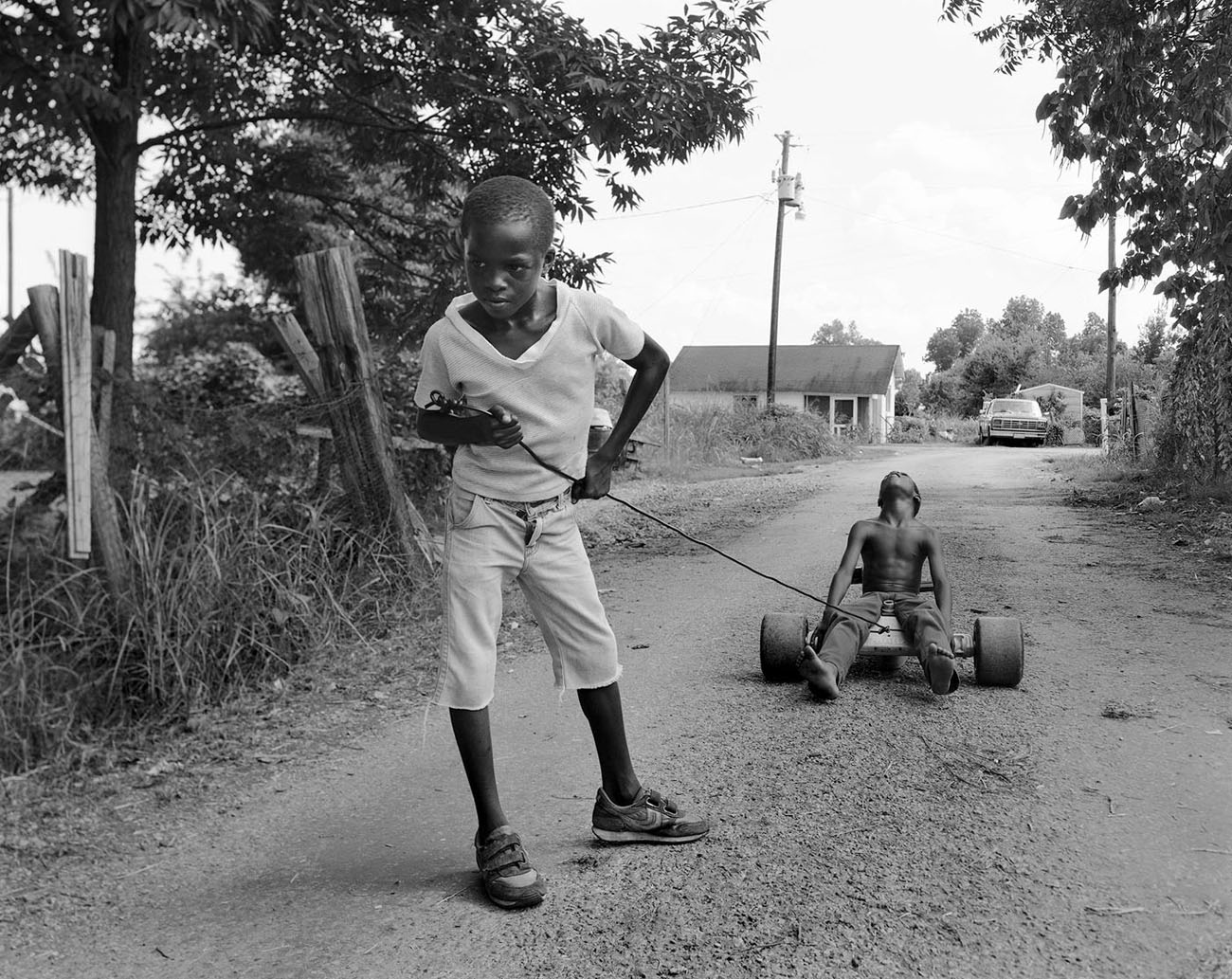
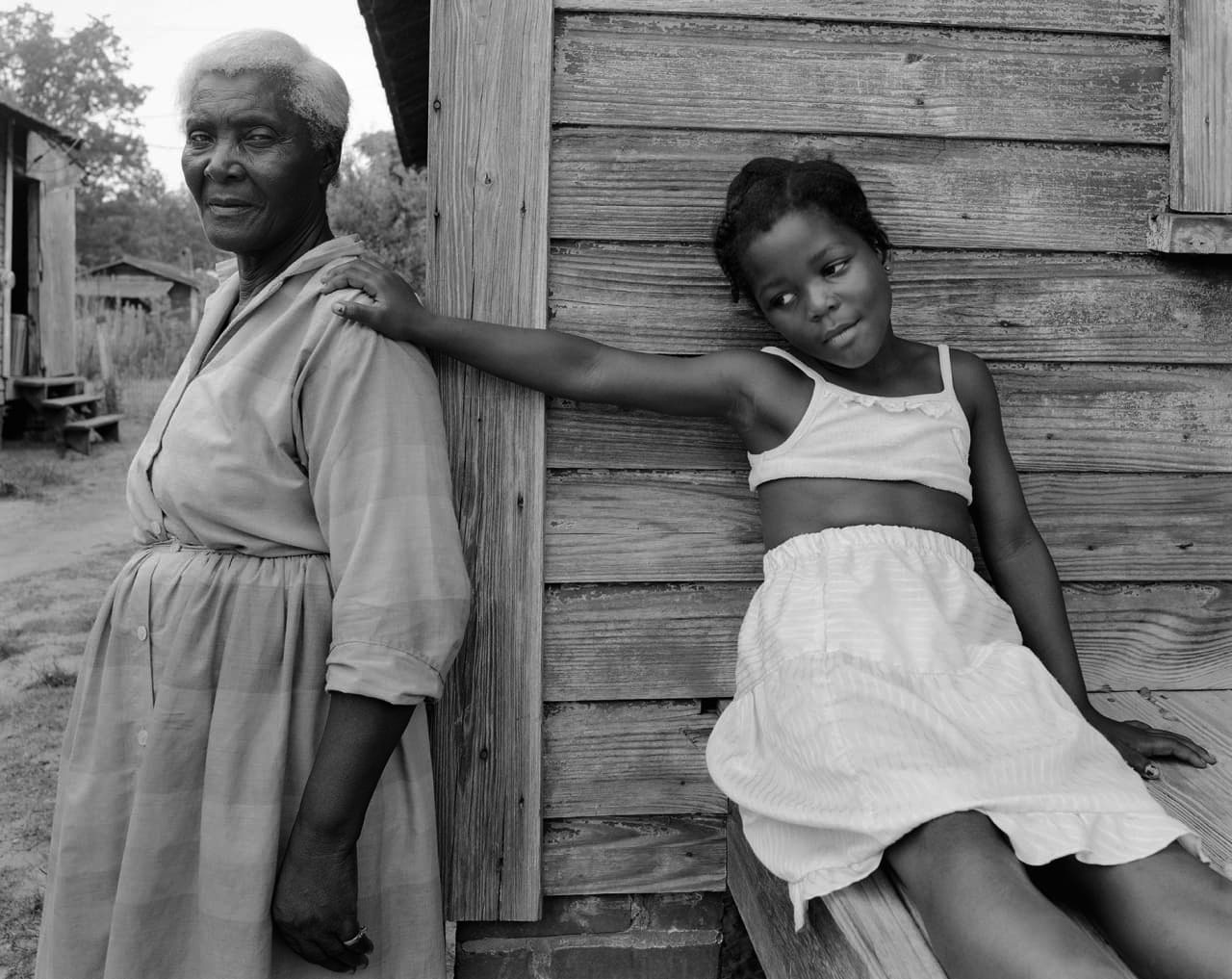
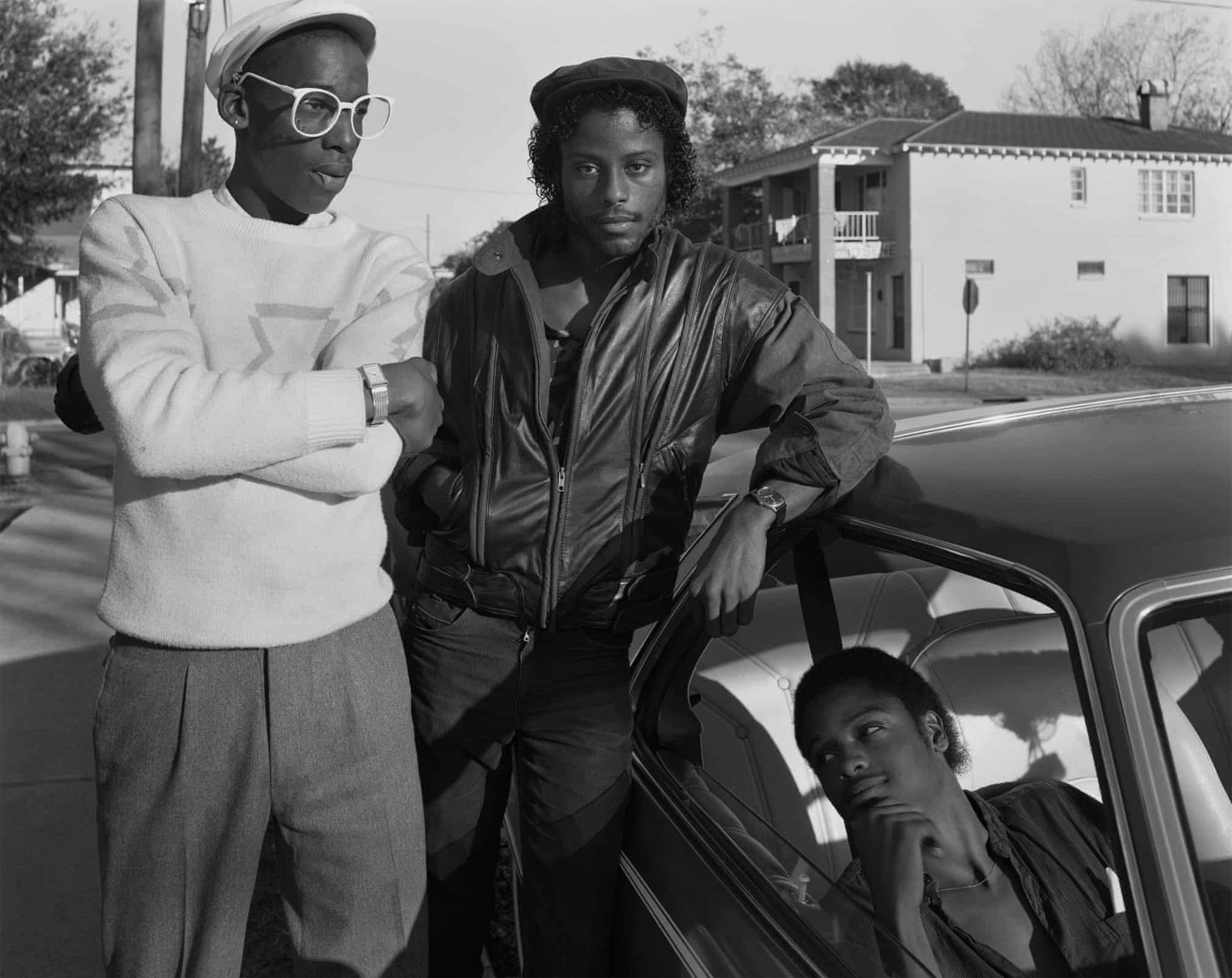
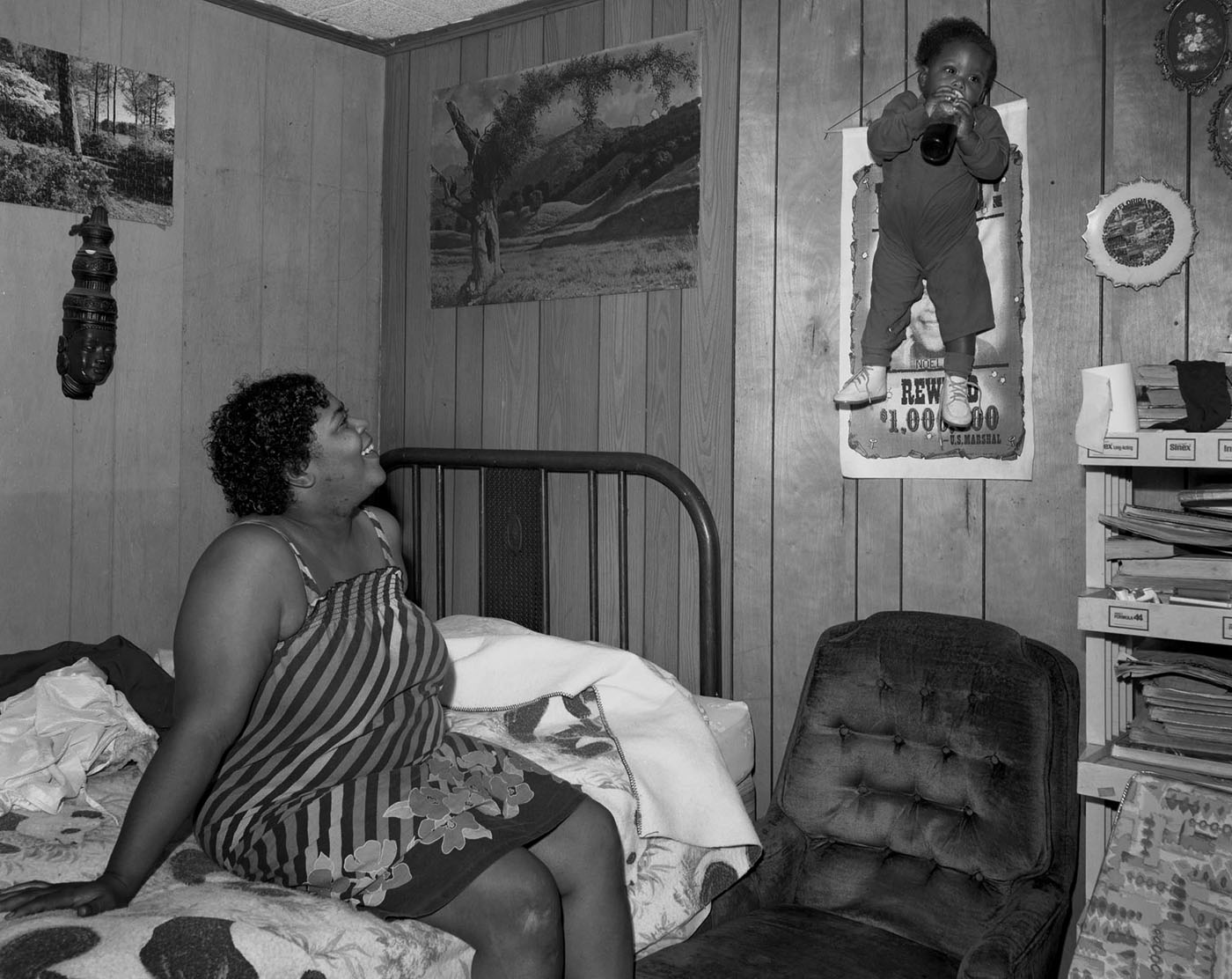
Baldwin Lee (Chinese-American, b. 1951) 'Untitled' 1983-1989 from the exhibition 'Baldwin Lee' at the Ogden Museum of Southern Art, New Orleans


Baldwin Lee (Chinese-American, b. 1951)
Untitled
1983-1989
Vintage gelatin silver print
16 x 20 inches
Collection of the artist, Courtesy of Howard Greenberg Gallery


“A good image is created by a state of grace. Grace expresses itself when it has been freed from conventions, free like a child in his early discovery of reality. The game is then to organise the rectangle.”


Chilean photographer Sergio Larraín Echeñique


figure ground

I have written previously on the excellent work of the Chinese-American photographer Baldwin Lee in his eponymously named exhibition at Joseph Bellows Gallery in 2022. Since then I have spent further time with his photographs, specifically during recent research for my posting on the exhibition A Long Arc: Photography and the American South since 1845 at the Virginia Museum of Fine Arts, Richmond (October 2024 – January 2025) and then again for this posting.
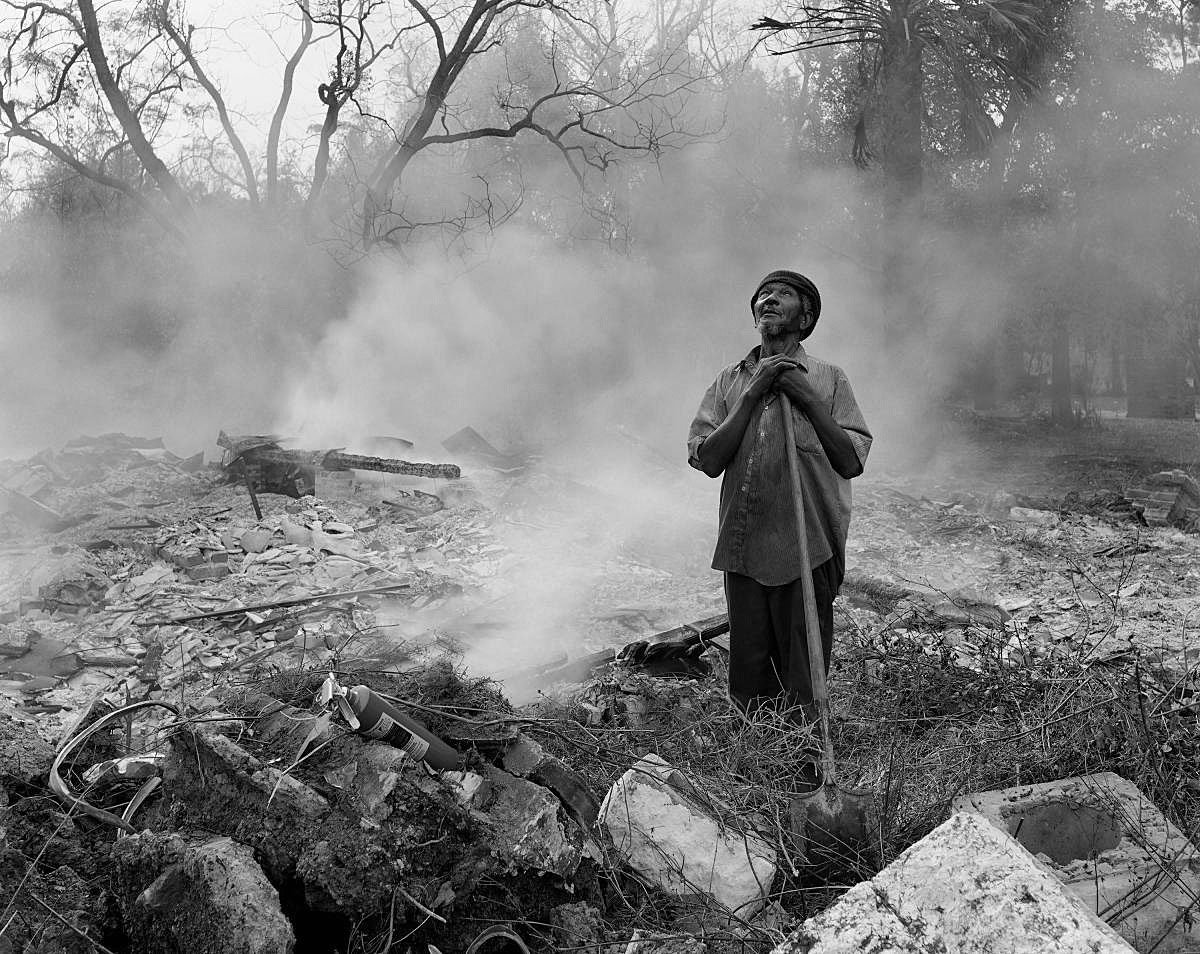
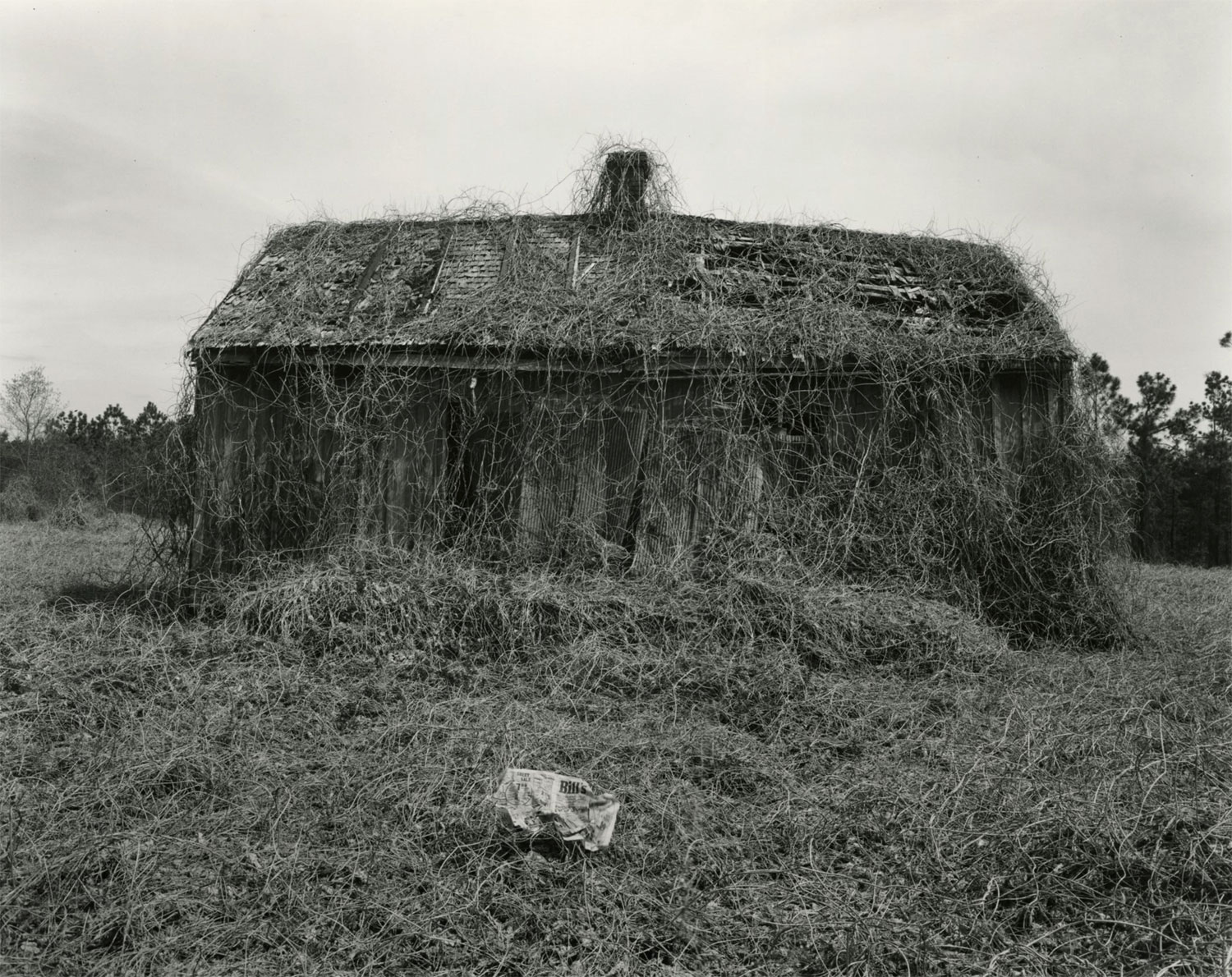
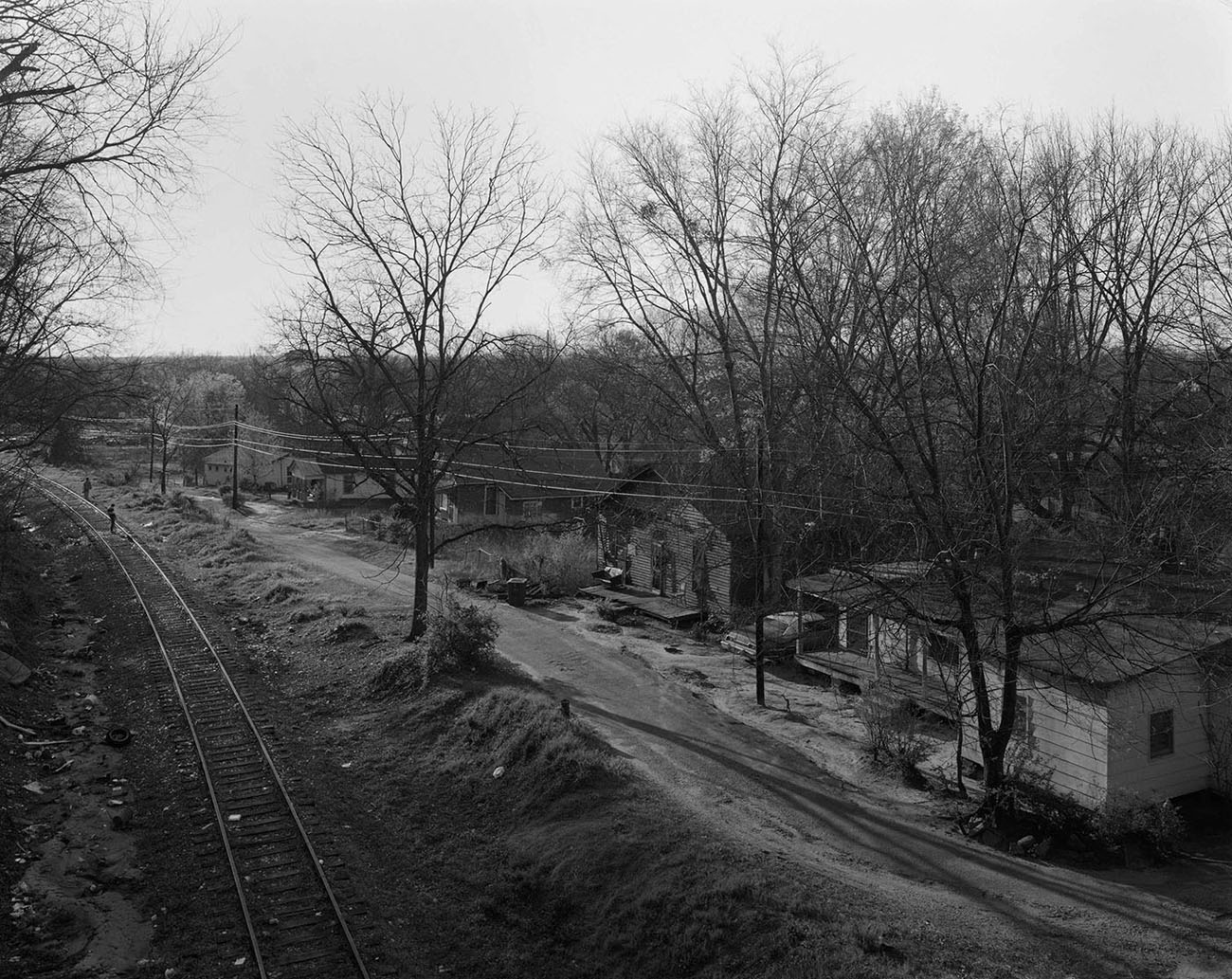
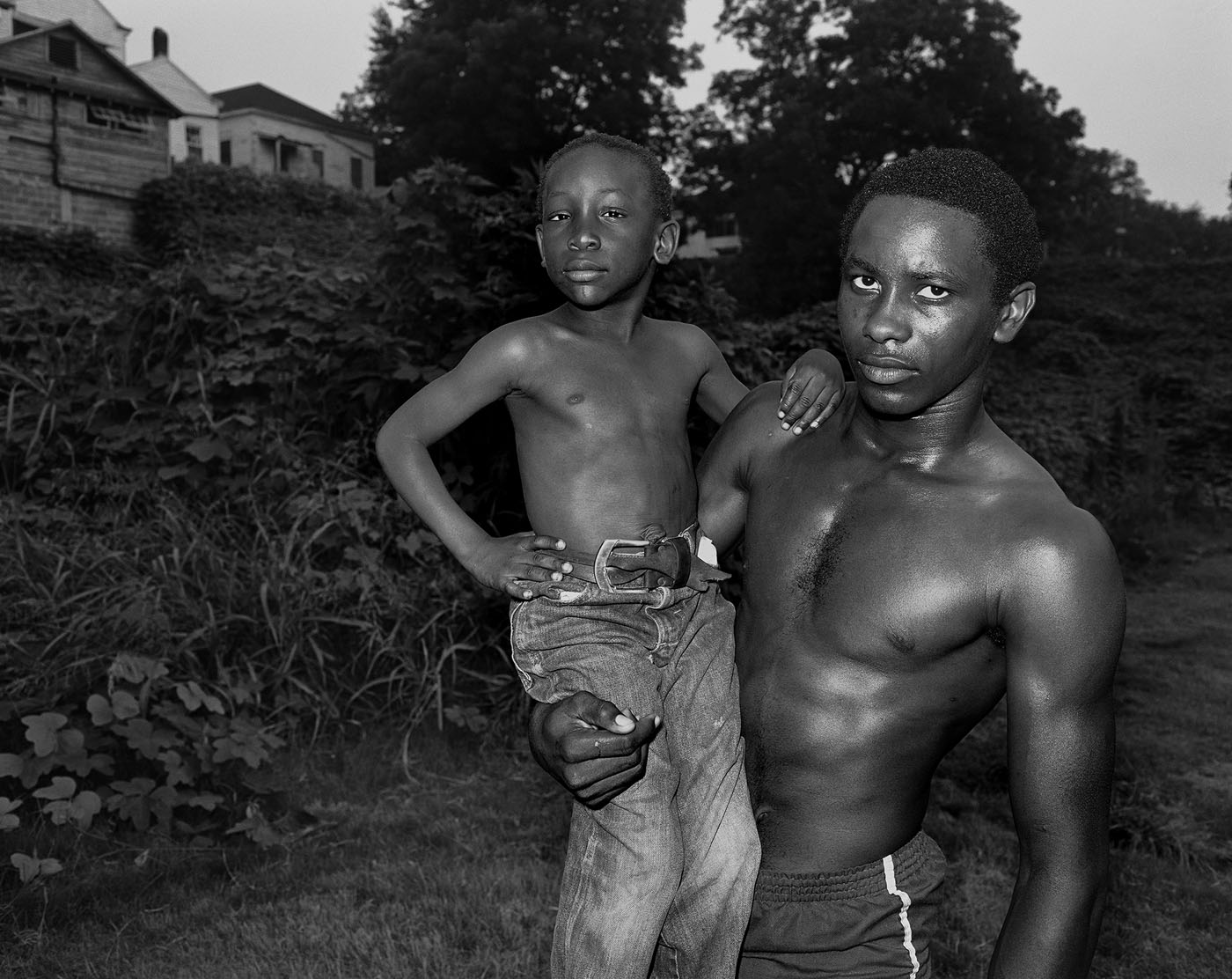
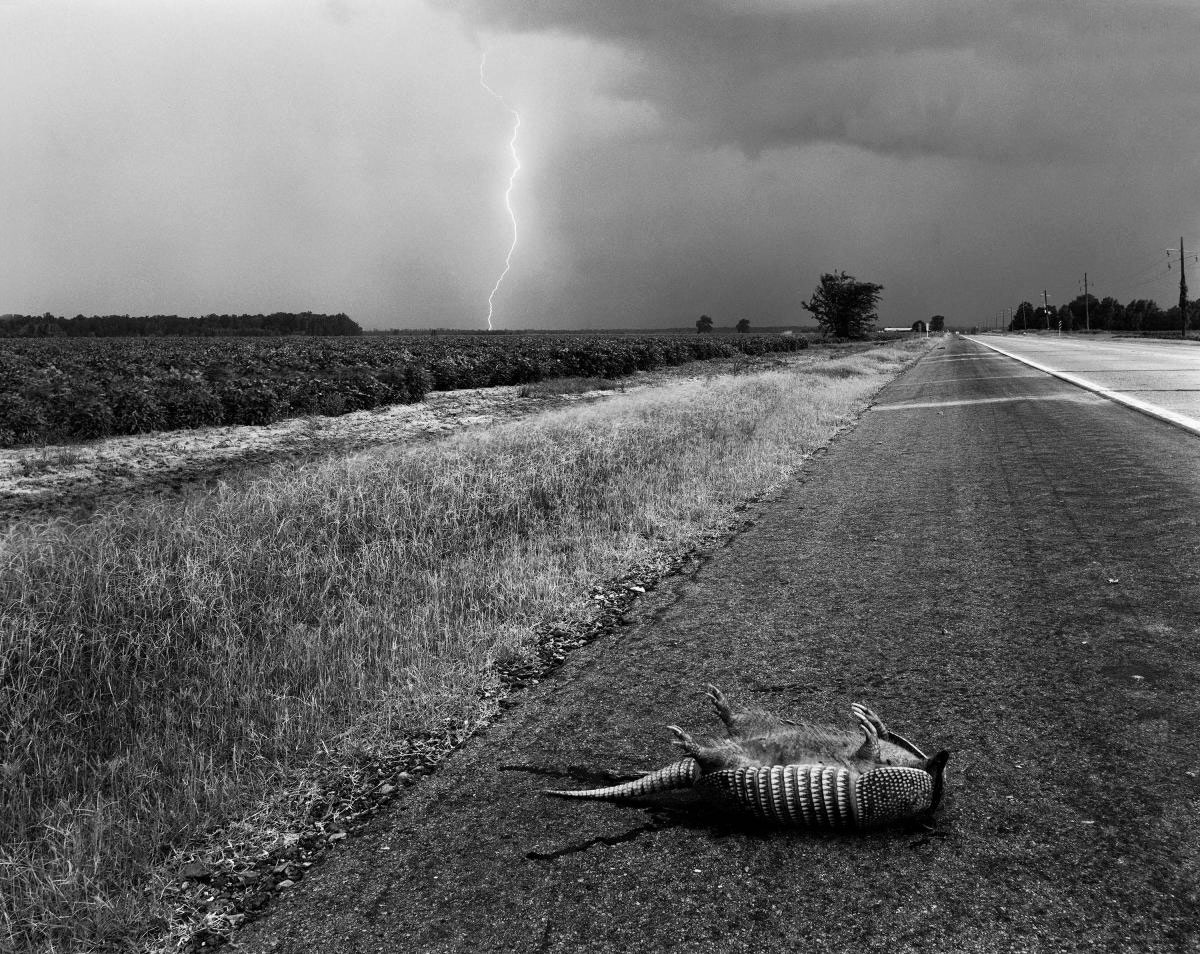
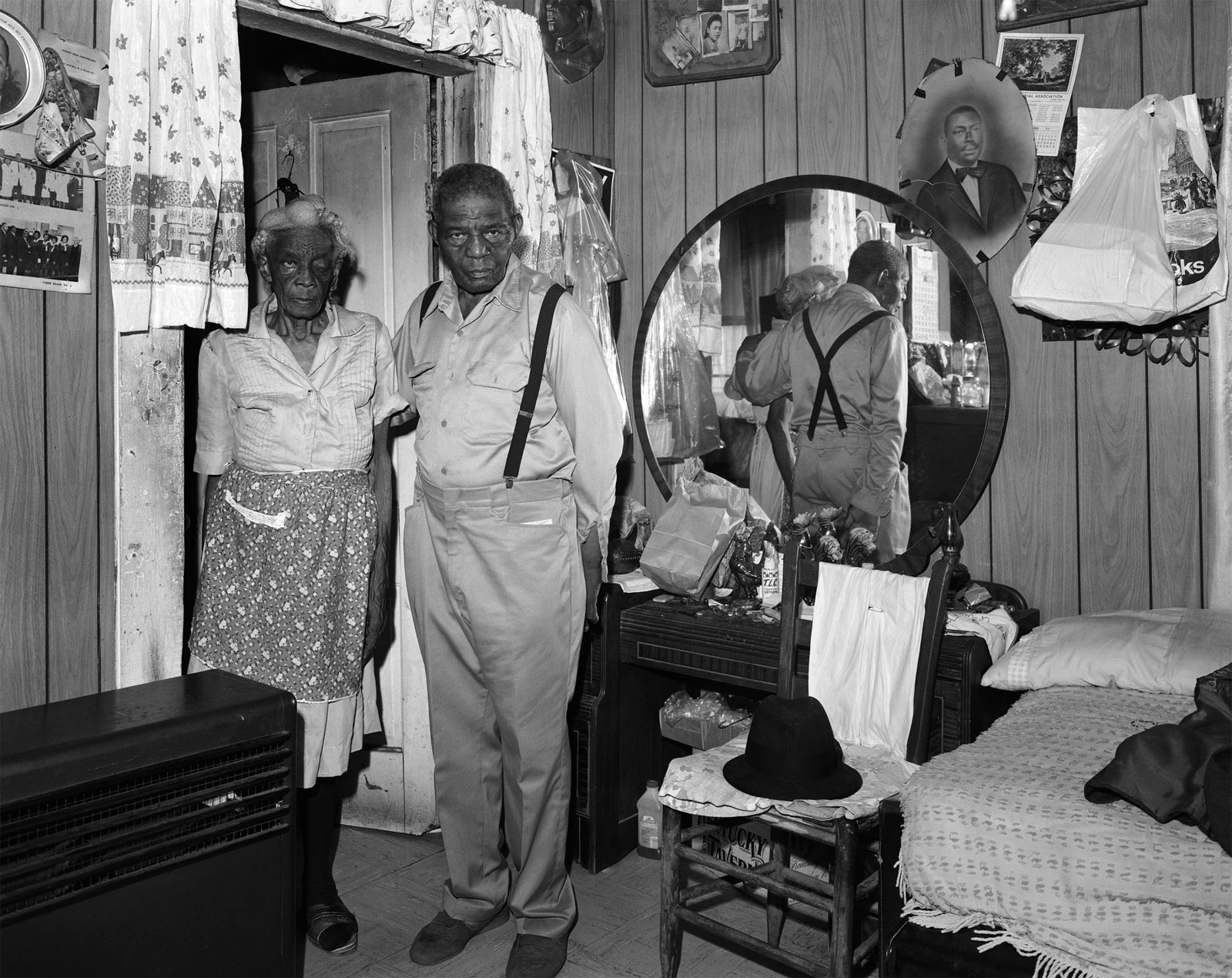
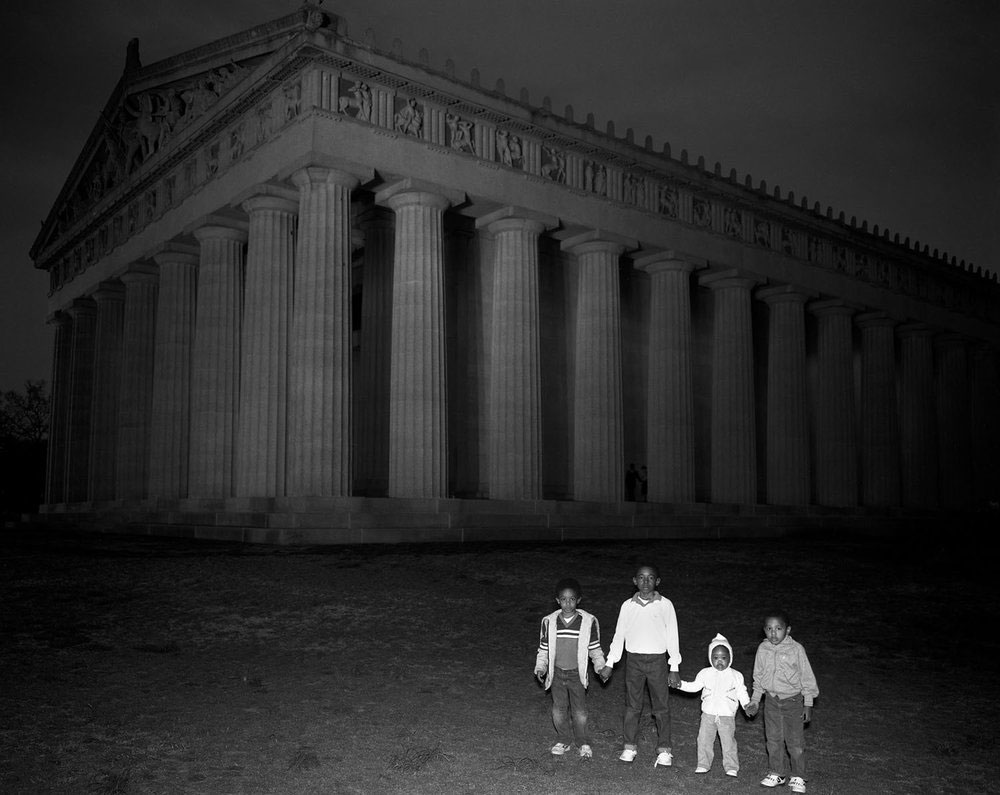
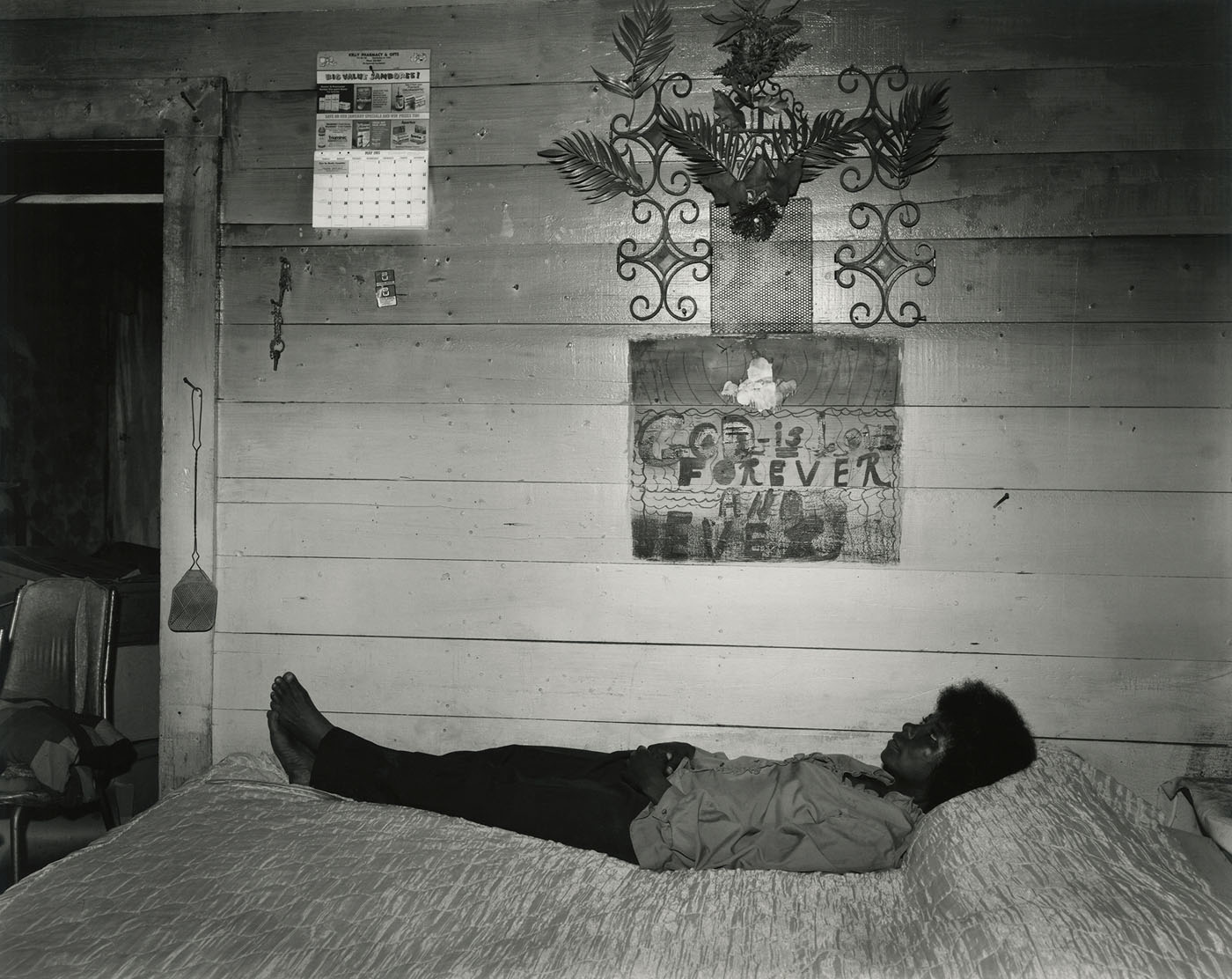
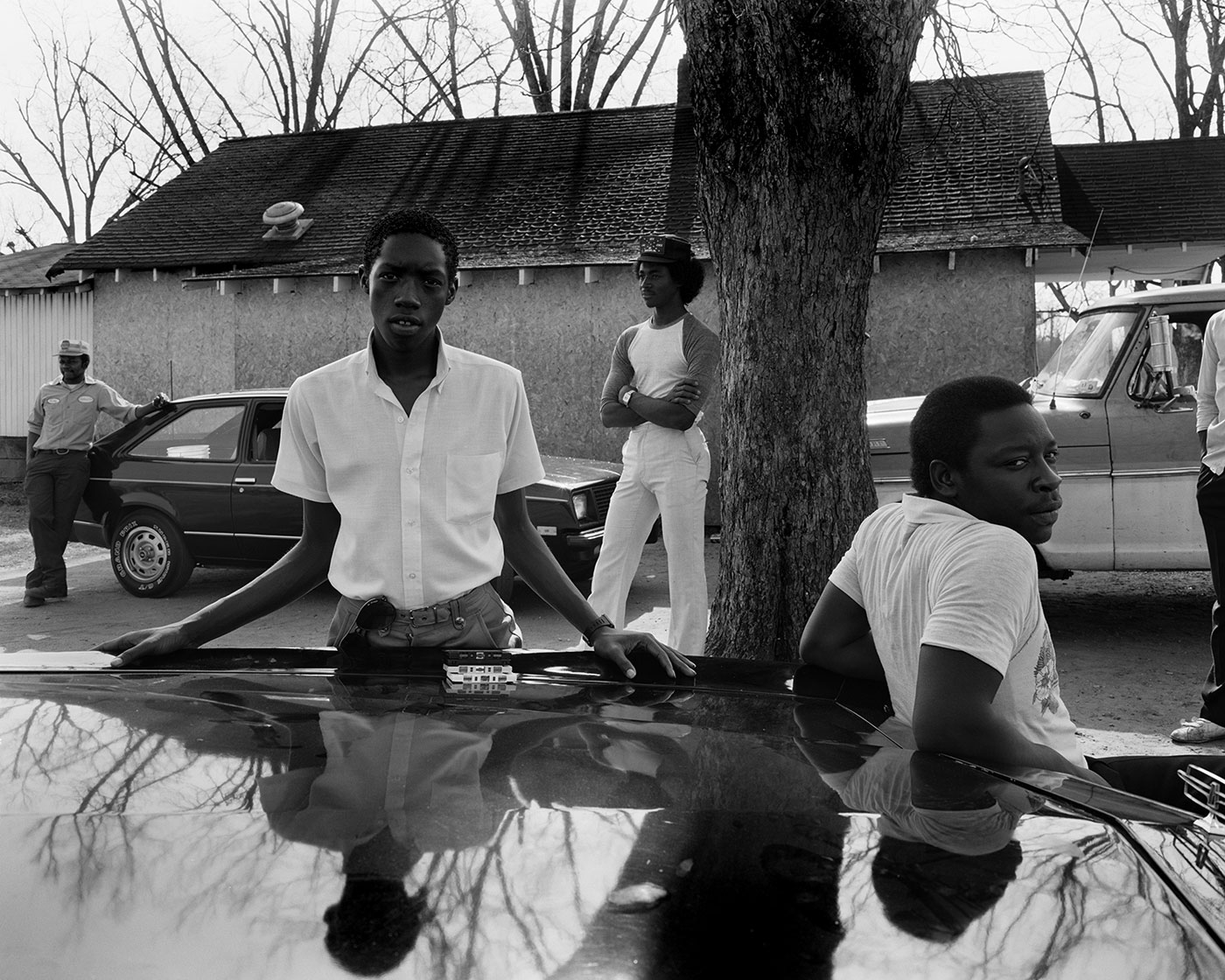
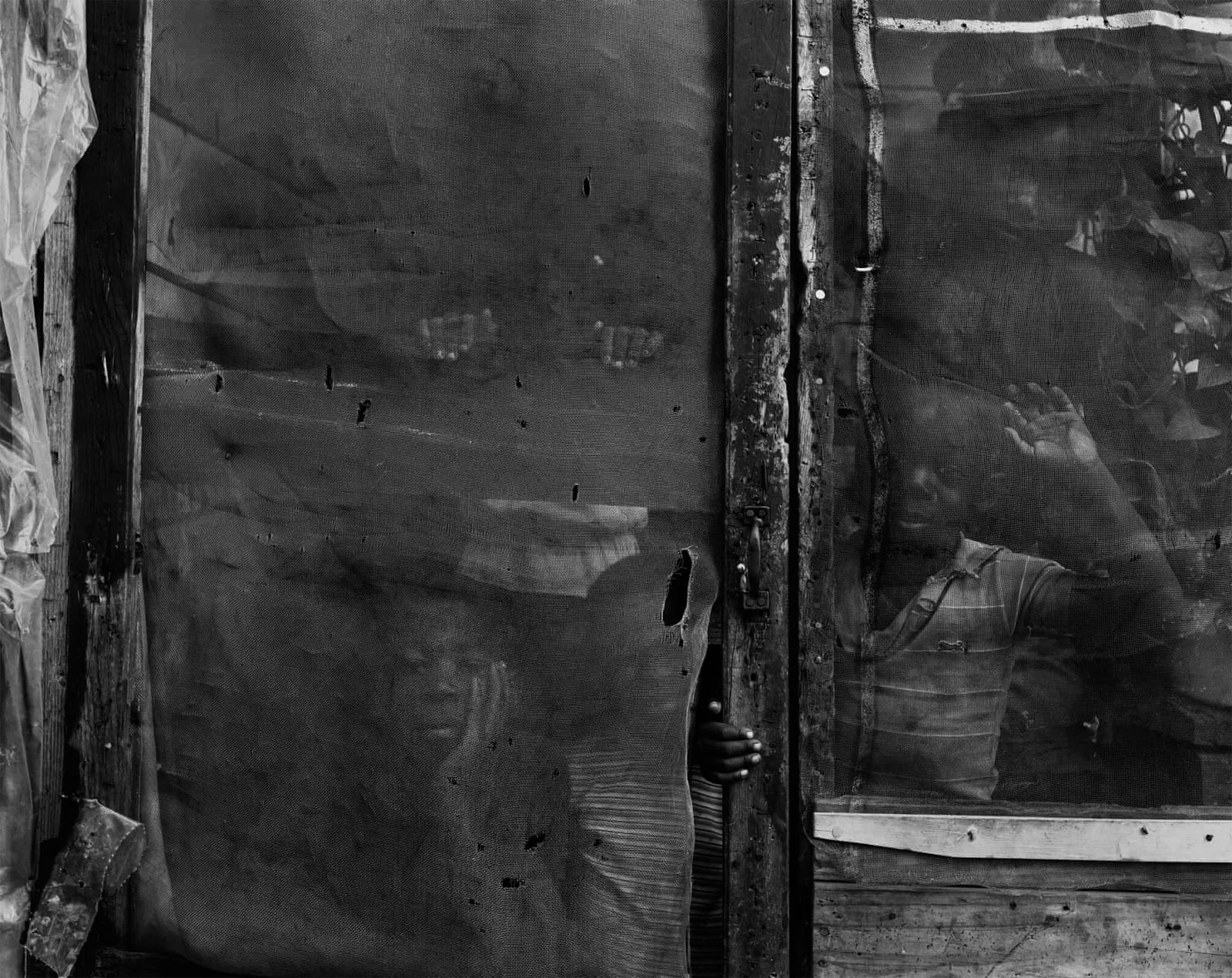
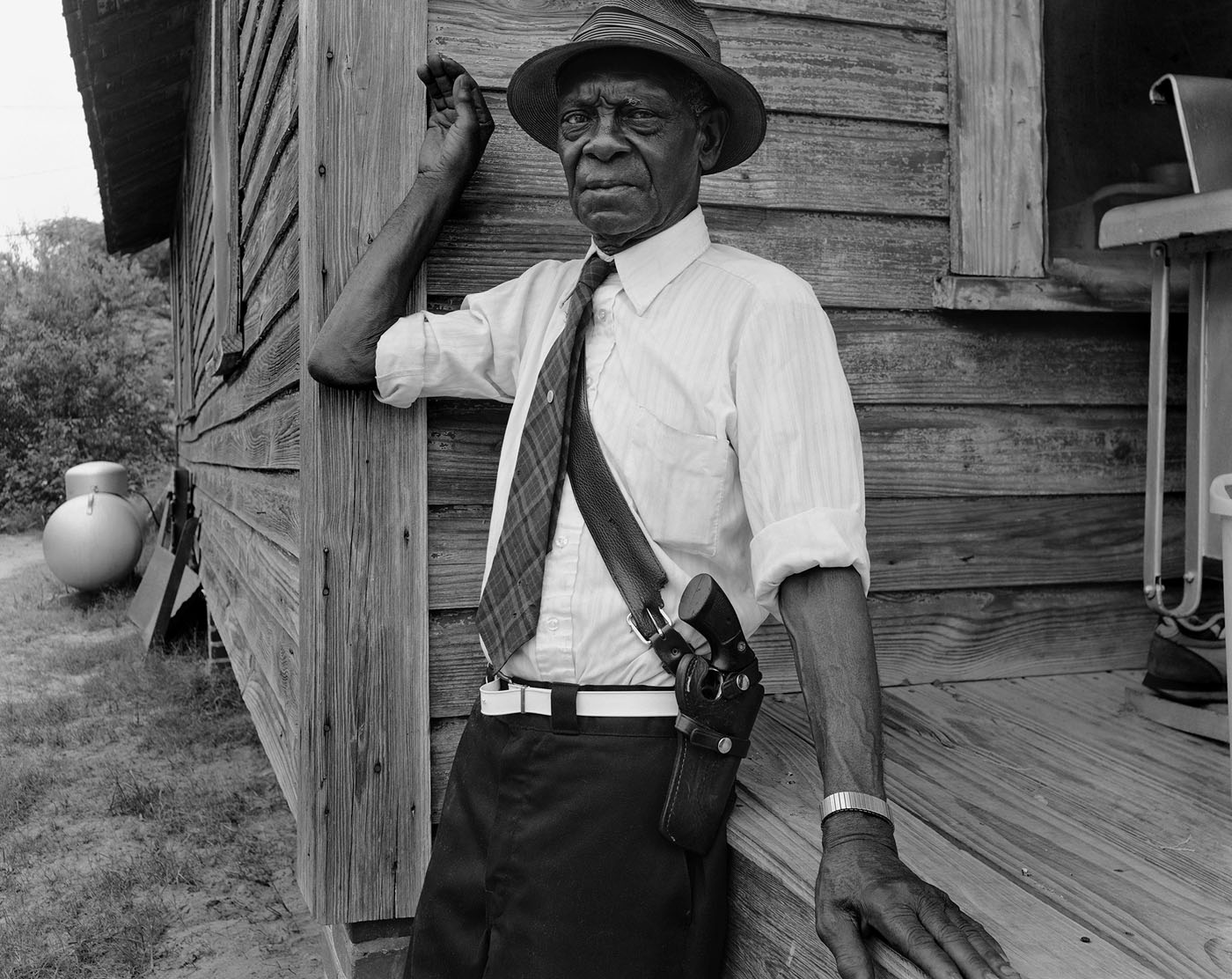
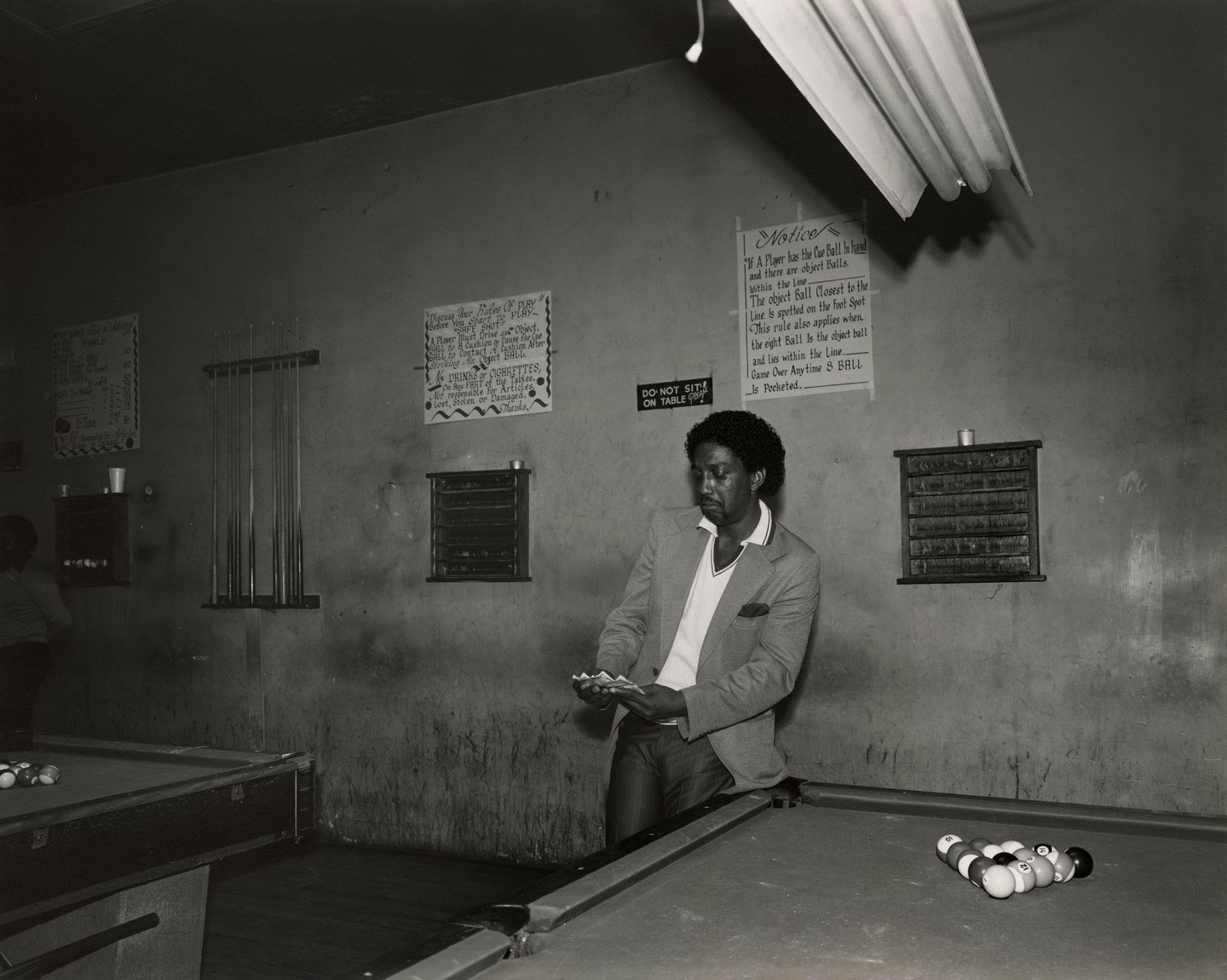
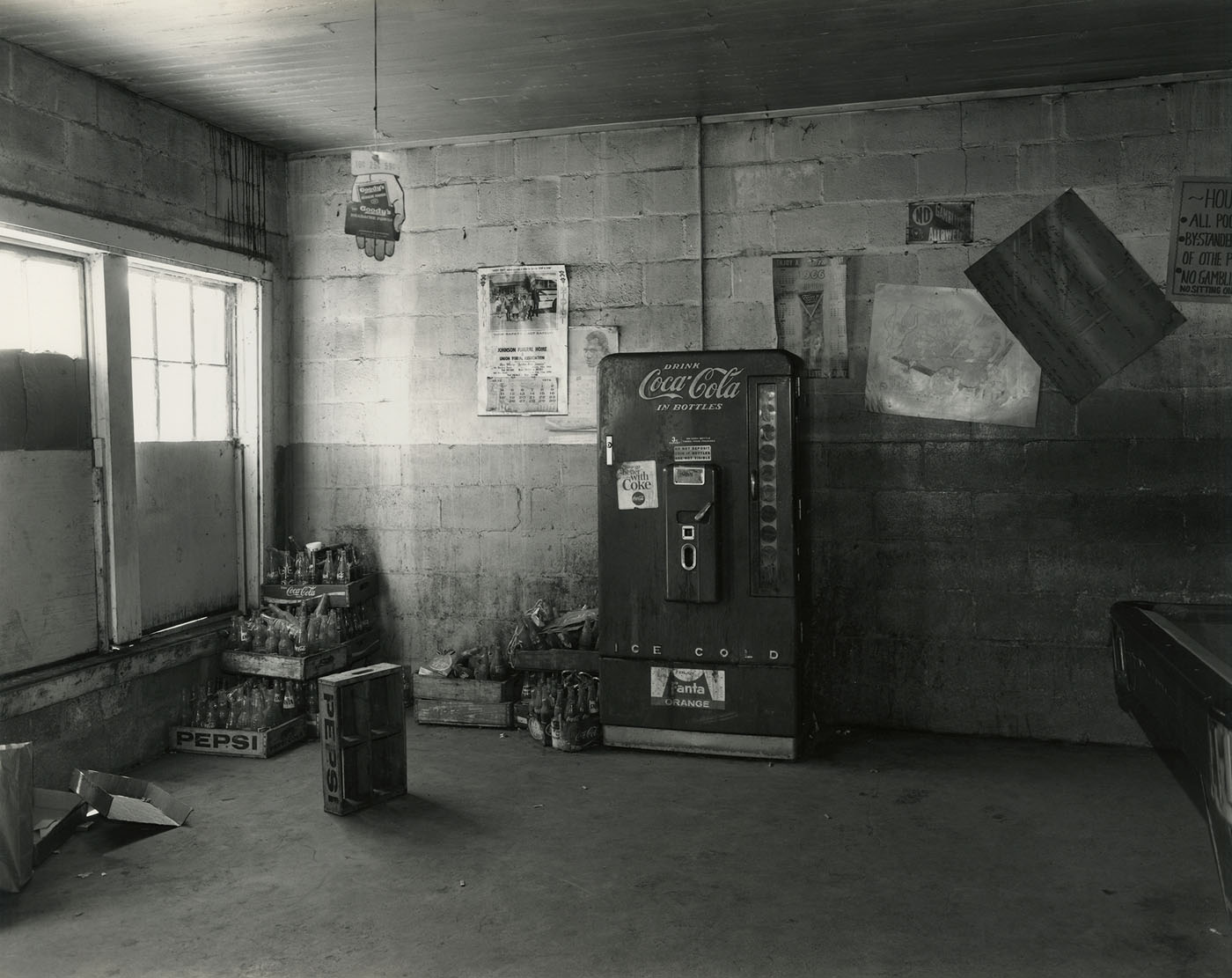
There are more photographs in this posting from Lee’s journey of discovery through the American South in the 1980s photographing Black communities with this 4 x 5 view camera, a journey that was as much a revelation for the people of those communities (literally, shining a light on their existence) as it was for the photographer himself (a self-reflective understanding of what was important to the photographer, discovering his subject).
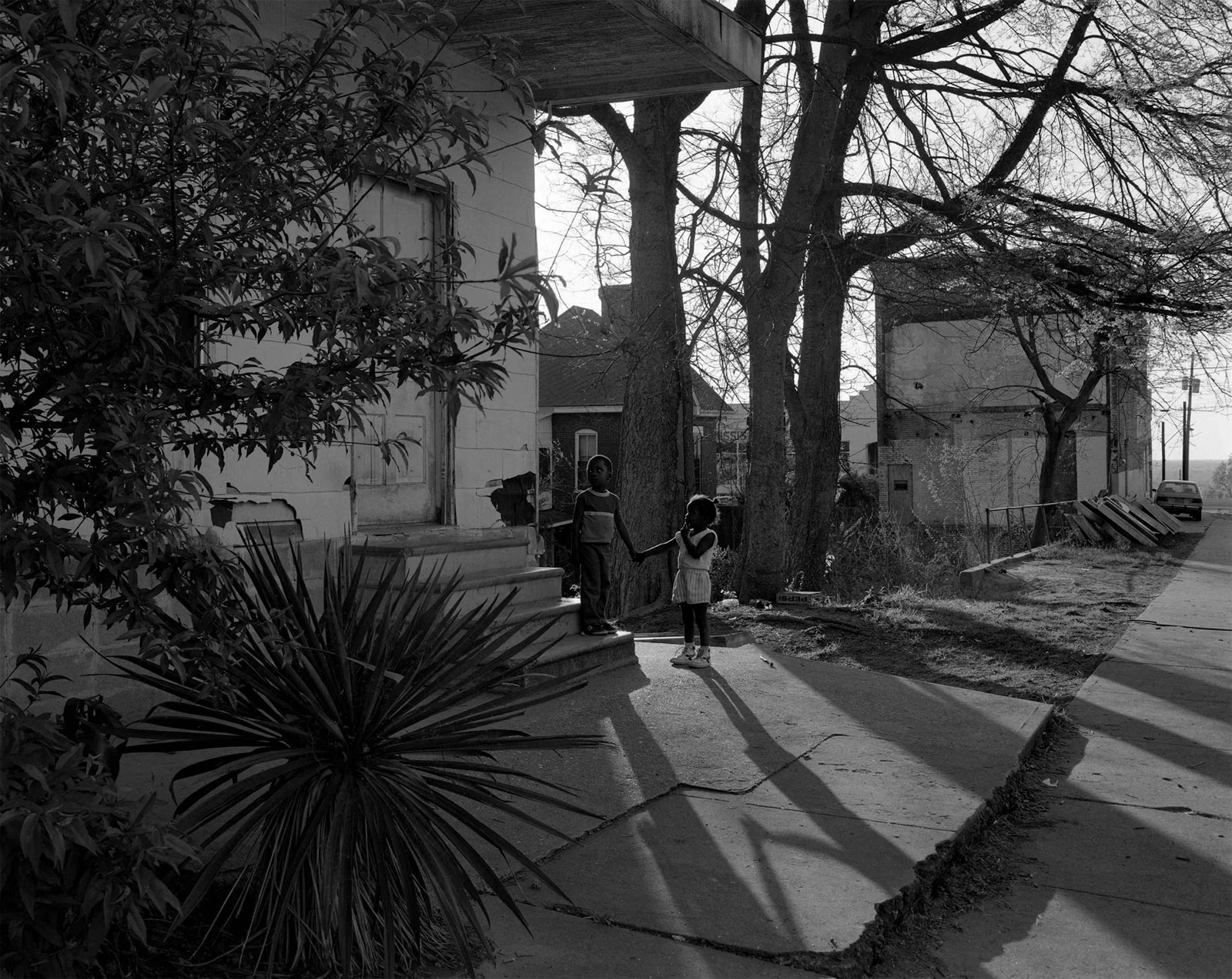
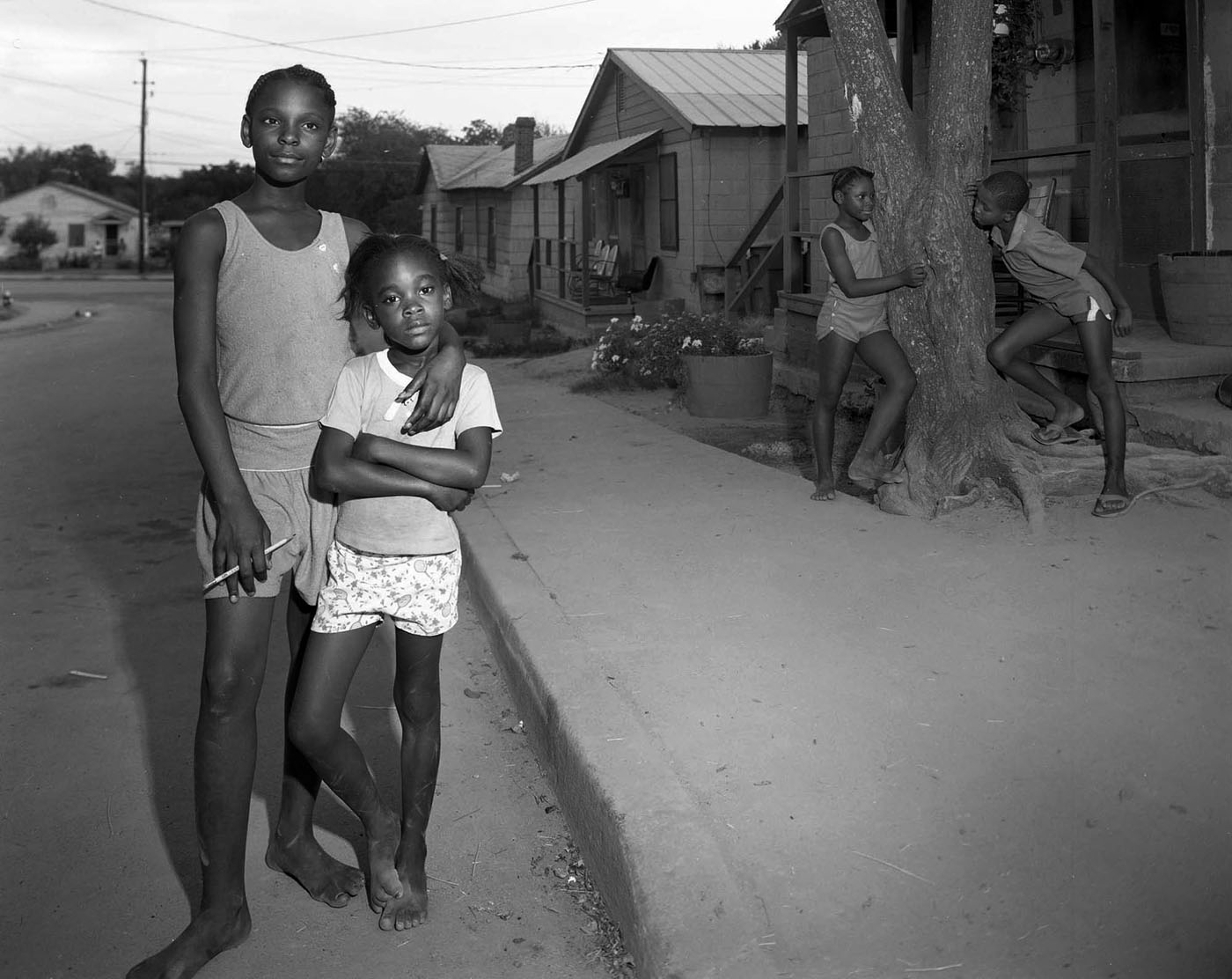
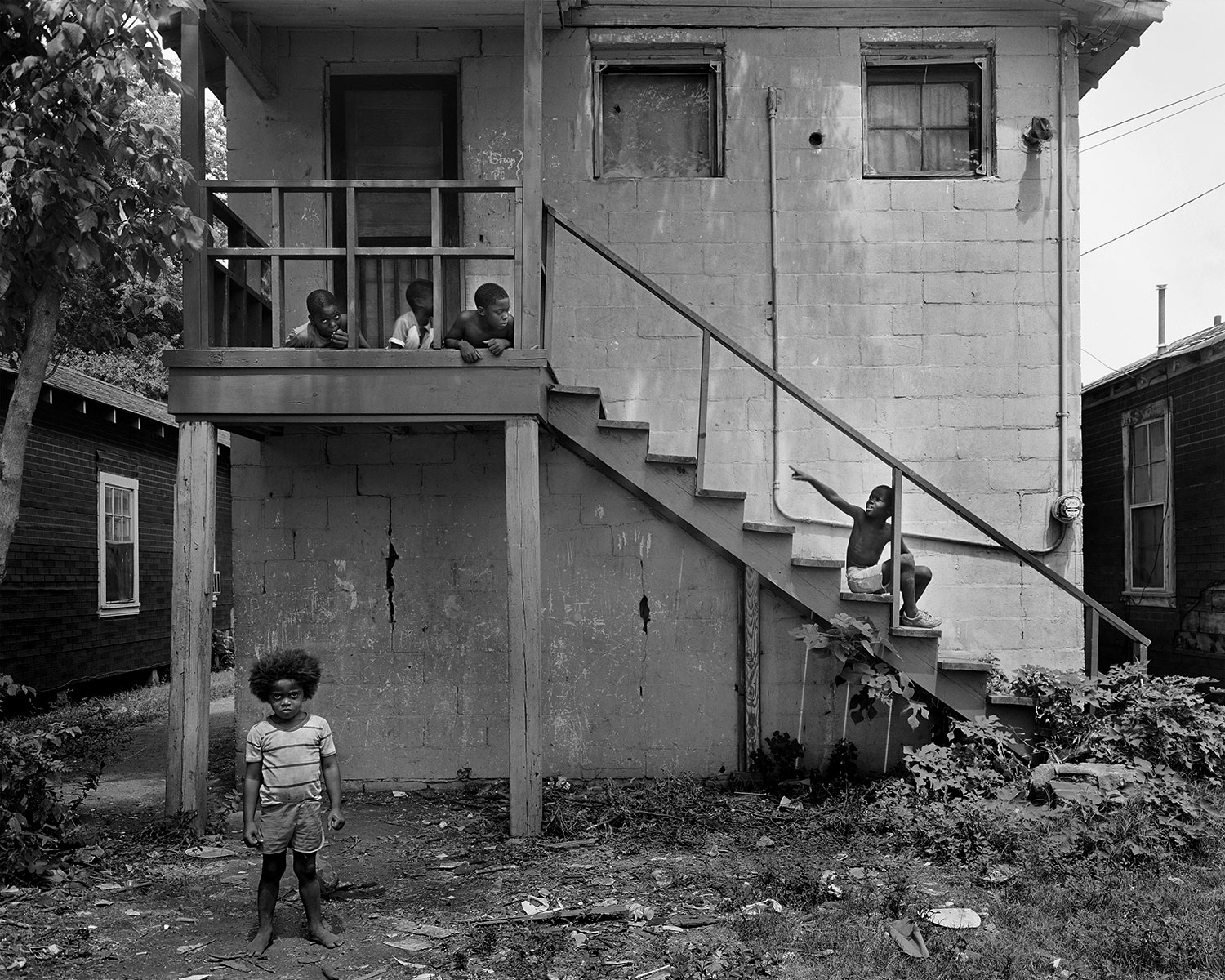
“The process I adopted in successive road trips during my seven-year project involved splitting time between revisiting places I had previously photographed and seeking out new locations. The families who lived on this street in Rosedale, Mississippi, knew me from prior visits. Children were always thrilled at my arrival, and they delighted in taking turns shrouding their heads under my black focusing cloth that allowed them to peer at the dim image projected on the ground glass of my view camera.” (Text from the Guardian website)

This is what is so important about Baldwin Lee’s photographs. He grounds the figures in his photographs in the glass of his large format camera (standing proud) even as he grounds his figures in the history and culture of the American South, its Black history, its joy and impoverishment. As he himself says, his photographs are “personal stories about events that are momentous”, events in the lives of the participants inflected by how the photographer approaches his subject matter, how he interacts with what is in front of him, influenced by his own history of growing up a Chinese-American and by what he had already thought and felt about the subject, the American South.

Lee’s pictorial compositions, his “photographic seeing” (John Szarkowski’s phrase) is concerned with a felt response to a visual problem… how to conceive a cogent, empathetic picture structure both choreographically and visually. Adapting Szarkowski we could say that in Lee’s photographs the relationship of figure to figure is as centrally important as the relationship of figure to ground and frame.

Here is compassion, here is empathy, here is focus, stillness, culture, humanity. Here is a “state of grace” existing between the mind and feelings of the photographer and the organisation of the people and stories within the image… so much so that there is often a “revelation of spirit” in the subsequent prints by Lee (after Minor White, one of Baldwin Lee’s teachers).

Thus, Lee’s photographs show an impeccable “balance” in the image between figure and ground (touching the earth) – whether that be compositionally, emotionally or historically.

Dr Marcus Bunyan


Many thankx to the Ogden Museum of Southern Art for allowing me to publish the photographs in the posting. Please click on the photographs for a larger version of the image.


Baldwin Lee (Chinese-American, b. 1951) 'Natchez, Mississippi' 1984 from the exhibition 'Baldwin Lee' at the Ogden Museum of Southern Art, New Orleans


Baldwin Lee (Chinese-American, b. 1951)
Natchez, Mississippi
1984
Vintage gelatin silver print
16 x 20 inches
Collection of the artist
Courtesy of Joseph Bellows Gallery


Is there an image of yours that stands out or is a favourite?

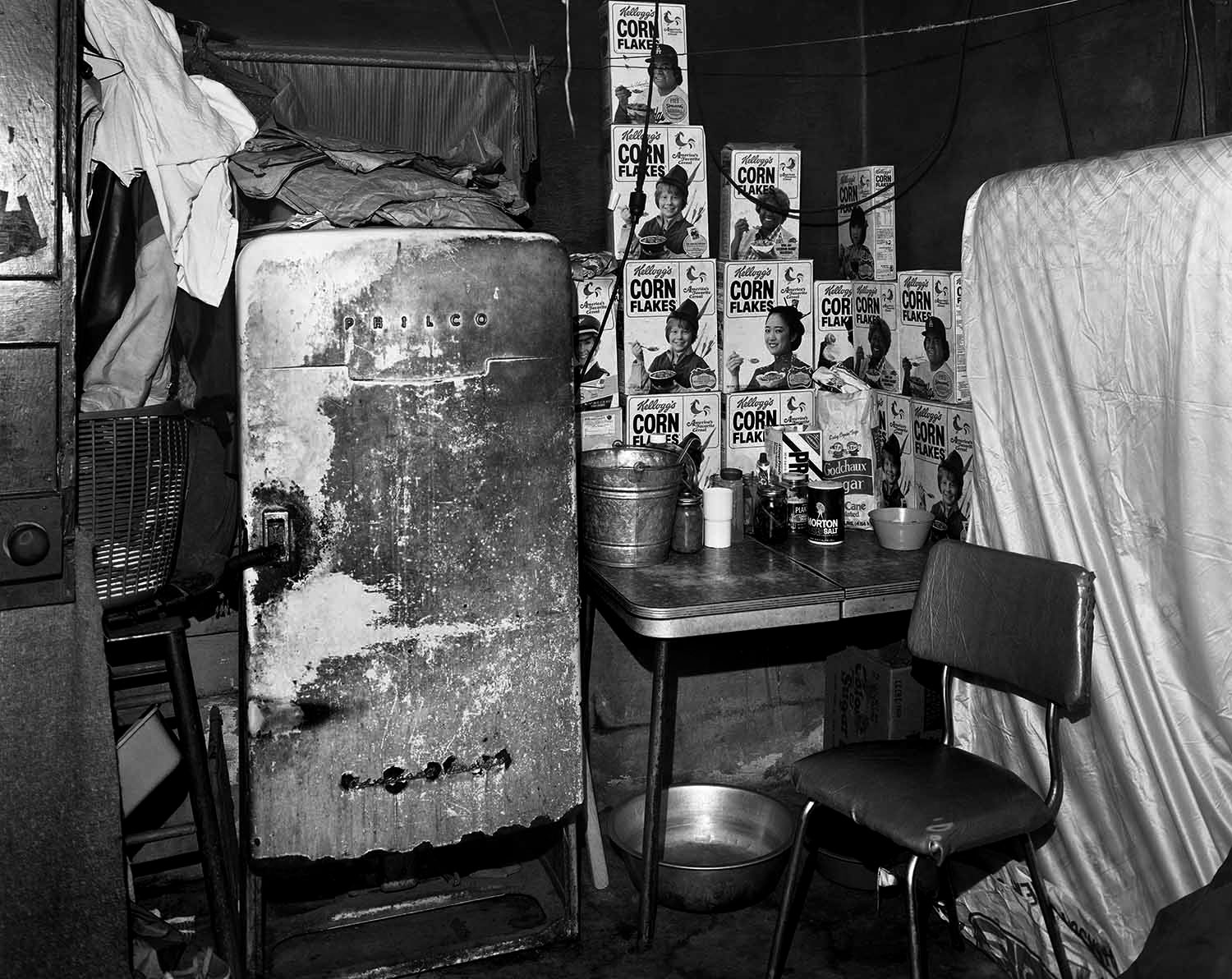
“As I rounded a corner several miles north of Natchez, Mississippi, a stunning sight – a brilliant pink stucco house framed by a blooming wisteria arbor caused me to pull over. I was compelled to knock on the door and found myself and Mr. and Mrs. Fulton, an elderly black couple standing in the cramped dimly lit kitchen whose illumination came from a bare-bulb hanging from the ceiling. Pushed up against a tattered refrigerator was a Formica table upon which provided a foundation for structure made of Kellog Cornflakes boxes. Each box bore a photograph of a beaming face. Boneheadedly I asked Mrs. Fulton if she liked cornflakes. With her gaze lowered she replied no. She then told me she disliked taking meals by herself now that her children had grown and gone.”

Anonymous. “Baldwin Lee,” on the PhotoWork Foundation website Nd [Online] Cited 06/01/2025


Curated Conversation with Baldwin Lee

On Saturday, October 5, Ogden Museum of Southern Art celebrated the opening of “Baldwin Lee” with a free Curated Conversation.

Taking place in the Museum’s historic Patrick F. Taylor Library, Prospect New Orleans’ Director of Curatorial Affairs, Andrew Rebatta, and photographer Baldwin Lee engaged in a lively conversation celebrating “Baldwin Lee,” a landmark solo exhibition at Ogden Museum of Southern Art highlighting Lee’s work.

Lee shared stories from his 5 decade career as a student, educator and practicing artist. Topics of discussion include Lee’s formal education with Minor White and Walker Evans (two of the 20th centuries’ most influential photographers) and his 1980s journey of self-discovery photographing the American South – which resulted in making nearly 10,000 photographs and producing one of the most important visual documents of and about the American South in the past half century.


Baldwin Lee (Chinese-American, b. 1951) 'Columbia, South Carolina' 1984 from the exhibition 'Baldwin Lee' at the Ogden Museum of Southern Art, New Orleans


Baldwin Lee (Chinese-American, b. 1951)
Columbia, South Carolina
1984
Vintage gelatin silver print
16 x 20 inches
Collection of the artist, Courtesy of Howard Greenberg Gallery


‘Dusty streets and bare feet coexist alongside the South Carolina Statehouse on Gervais Street. A short focal length lens emphasised the difference in scale between the foreground and background figures. An archaic flash bulb, a sealed glass orb containing spun magnesium and pure oxygen, ignited during the exposure illuminating the children closest to the camera. It was positioned higher than the camera and to its right’

Text from The Guardian website


Baldwin Lee (Chinese-American, b. 1951) 'Untitled' 1983-1989 from the exhibition 'Baldwin Lee' at the Ogden Museum of Southern Art, New Orleans


Baldwin Lee (Chinese-American, b. 1951)
Untitled
1983-1989
Gelatin silver print
16 x 20 inches
Collection of the artist


Baldwin Lee (Chinese-American, b. 1951) 'Montgomery, Alabama' 1984 from the exhibition 'Baldwin Lee' at the Ogden Museum of Southern Art, New Orleans


Baldwin Lee (Chinese-American, b. 1951)
Montgomery, Alabama
1984
Vintage gelatin silver print
16 x 20 inches
Collection of the artist
Courtesy of Joseph Bellows Gallery


Baldwin Lee (Chinese-American, b. 1951) 'Untitled' 1983-1989 from the exhibition 'Baldwin Lee' at the Ogden Museum of Southern Art, New Orleans


Baldwin Lee (Chinese-American, b. 1951)
Untitled
1983-1989
Gelatin silver print
16 x 20 inches
Collection of the artist


Baldwin Lee (Chinese-American, b. 1951) 'Monroe, Louisiana' 1985 from the exhibition 'Baldwin Lee' at the Ogden Museum of Southern Art, New Orleans


Baldwin Lee (Chinese-American, b. 1951)
Monroe, Louisiana
1984
Gelatin silver print
16 x 20 inches
Collection of the artist


Baldwin Lee (Chinese-American, b. 1951) 'Vicksburg, Mississippi' 1984 from the exhibition 'Baldwin Lee' at the Ogden Museum of Southern Art, New Orleans


Baldwin Lee (Chinese-American, b. 1951)
Monroe, Louisiana
1983
Gelatin silver print
16 x 20 inches
Collection of the artist


Baldwin Lee (Chinese-American, b. 1951) 'Untitled' 1983-1989 from the exhibition 'Baldwin Lee' at the Ogden Museum of Southern Art, New Orleans


Baldwin Lee (Chinese-American, b. 1951)
Untitled
1983-1989
Gelatin silver print
16 x 20 inches
Collection of the artist


Baldwin Lee (Chinese-American, b. 1951) 'Montgomery, Alabama' 1984


Baldwin Lee (Chinese-American, b. 1951)
Montgomery, Alabama
1984
Gelatin silver print
16 x 20 inches
Collection of the artist


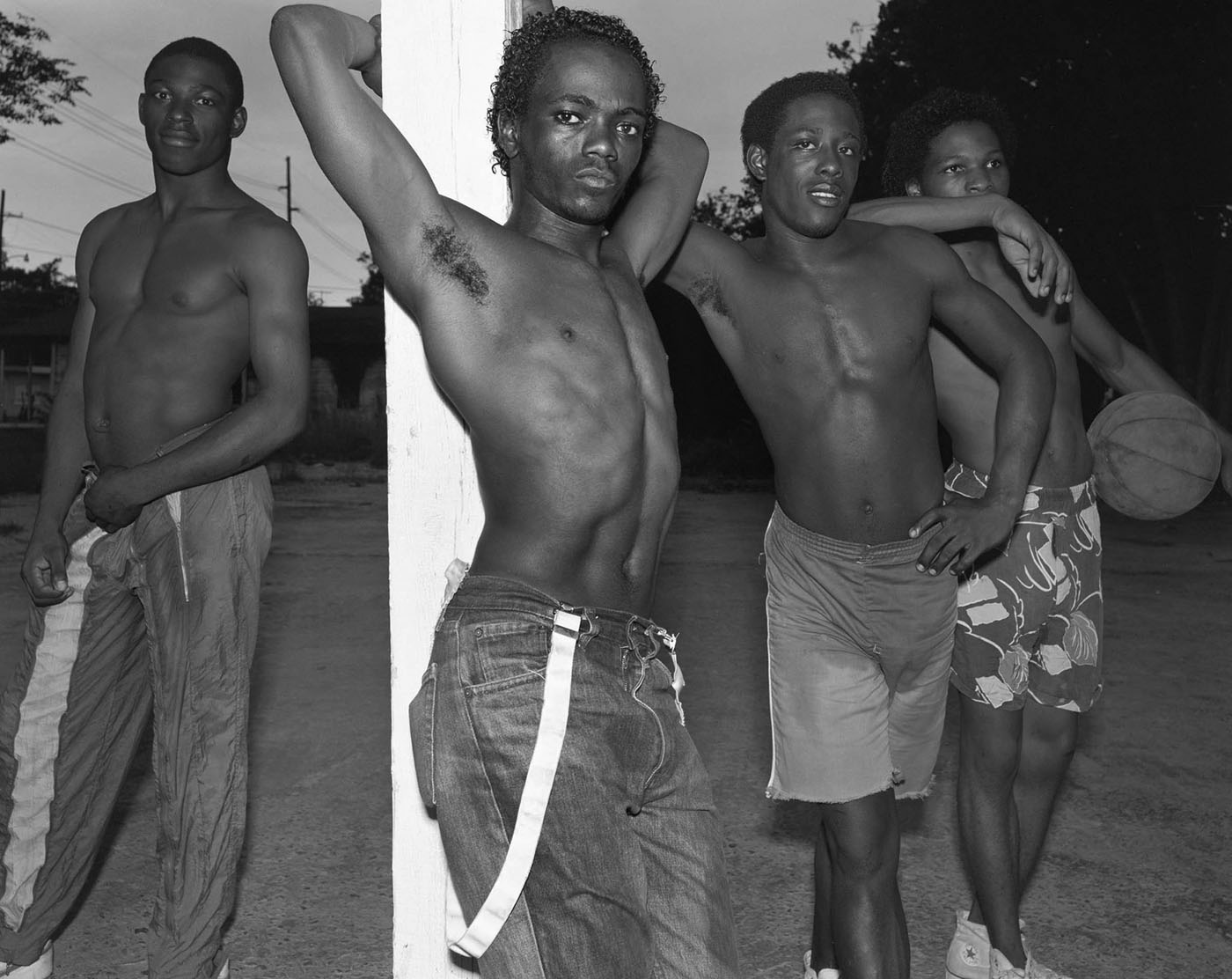
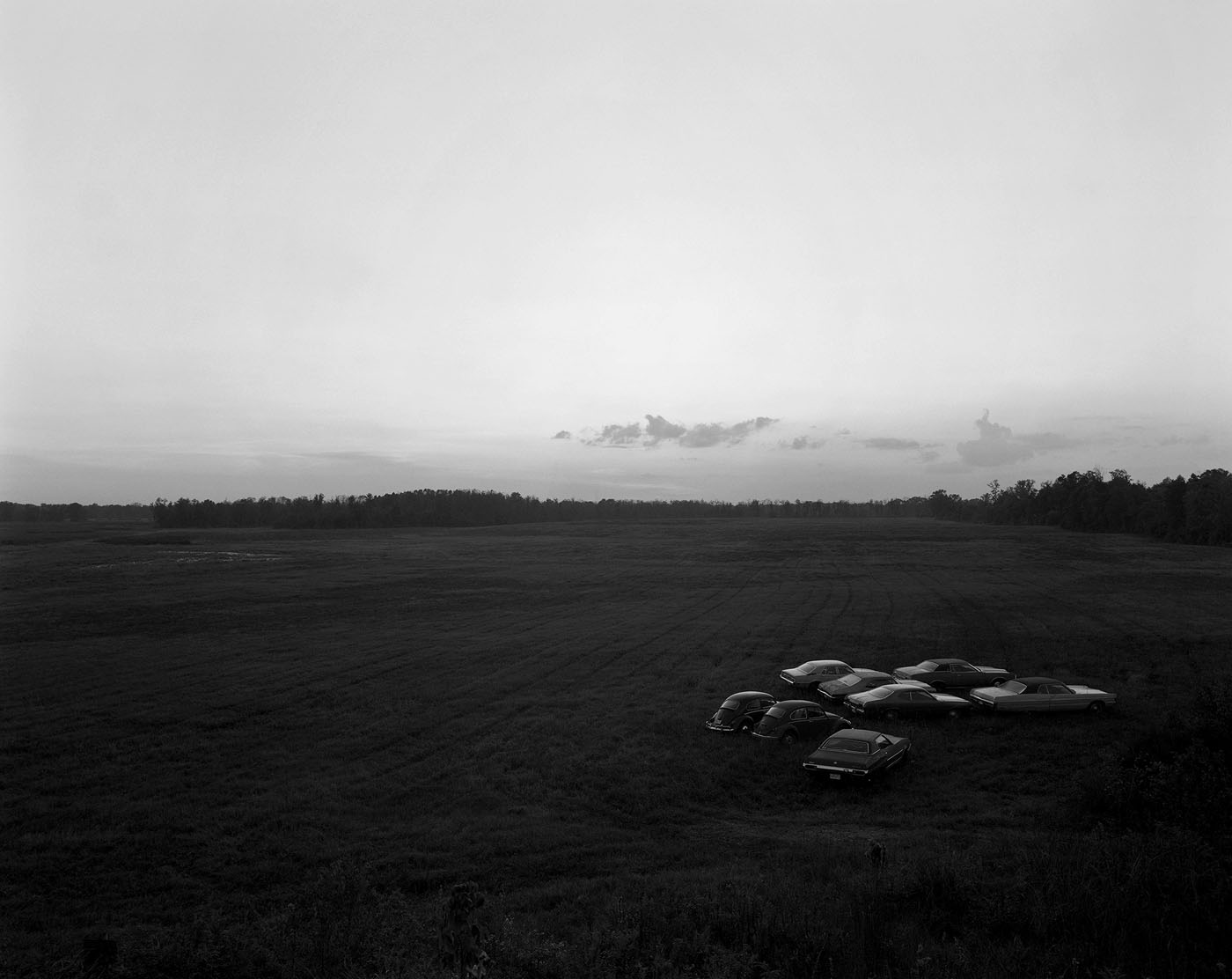
‘Southerners savour the sweetness and solace that comes at the end of searingly hot summer days at twilight. The quiet ushers in a deep peace. The other side of tranquility and beauty is ominousness and menace. The viewers of this photograph are invited to interpret its meaning. If there is an inclination toward wholeness this is a scene of contentment. Southerners approach this image with caution. Black southerners would probably not gather so publicly for fear of retributive reactions. White southerners probably have their own reasons to meet’

Text from The Guardian website


Baldwin Lee (Chinese-American, b. 1951) 'Untitled' 1983-1989


Baldwin Lee (Chinese-American, b. 1951)
Untitled
1983-1989
Gelatin silver print
16 x 20 inches
Collection of the artist


Baldwin Lee (Chinese-American, b. 1951) 'Vicksburg, Mississippi' 1983


Baldwin Lee (Chinese-American, b. 1951)
Vicksburg, Mississippi
1983
Gelatin silver print
20 x 16 inches
Collection of the artist


Baldwin Lee was born in Brooklyn, New York and raised in Manhattan’s Chinatown. He studied photography at the Massachusetts Institute of Technology (M.I.T.) with photographer Minor White. Later, he would receive an MFA from Yale School of Art, where he studied with photographer Walker Evans. In 1982, Lee became the first Director of Photography within the Art department at the University of Tennessee. The following year, he set out from Knoxville with a 4 x 5 view camera on a journey of self-discovery photographing his adopted homeland – the American South.

Lee’s artistic goal was to partially re-trace and re-photograph the 1930s-40s routes made across the South by his mentor Walker Evans. Unlike Evans’ iconic depression-era photographs, Lee would eventually focus on documenting Black Americans, many of whom were living in poverty on the fringes of society. Over the next seven years, Lee traveled thousands of miles crisscrossing the South, making nearly 10,000 photographs – producing one of the most important visual documents of and about the American South in the past half century.

With this work, Lee had found his primary subject, and credits his many years of working within Black communities throughout the South as having a “political” effect on his life and art. The compassion Lee felt for those he photographed resonates within his work. Although, Lee’s 1980s photographs were known and respected by his fellow photographers and collectors, until recently this work has remained largely unknown and under-appreciated by a wider public.

In the fall of 2022, Hunter’s Point Press published “Baldwin Lee,” a book consisting of the artist’s 1980s Southern photographs. The book has since become an instant classic and was shortlisted as one of the best photo books of 2022 by “Aperture Magazine,” “TIME” and the International Center for Photography. The first edition of “Baldwin Lee” sold out in less than a month and is presently on its third edition of publication. The book’s success led to solo exhibitions at Howard Greenberg Gallery, New York City, Joseph Bellows Gallery, La Jolla, California and David Hill Gallery, London, England. After nearly 40 years, Baldwin Lee is finally being recognized for his groundbreaking work.

The exhibition Baldwin Lee will feature a selection of over 50 gelatin silver prints culled from thousands of images Lee made across the South in the 1980s. Many of these photographs will be exhibited for the first time. The exhibition will include compelling portraits of Black Americans, as well as a collection of landscape, cityscape and still-life images that visually encapsulate the Reagan-era American South.

Text from the Ogden Museum of Southern Art website


Baldwin Lee (Chinese-American, b. 1951) 'Lakeland, Florida' 1984


Baldwin Lee (Chinese-American, b. 1951)
Lakeland, Florida
1984
Vintage gelatin silver print
16 x 20 inches
Collection of the artist
Courtesy of Howard Greenberg Gallery


Baldwin Lee (Chinese-American, b. 1951) 'Richmond, Virginia' 1986


Baldwin Lee (Chinese-American, b. 1951)
Richmond, Virginia
1986
Gelatin silver print
16 x 20 inches
Collection of the artist


Baldwin Lee (Chinese-American, b. 1951) 'Vicksburg, Mississippi' 1984


Baldwin Lee (Chinese-American, b. 1951)
Vicksburg, Mississippi
1984
Gelatin silver print
16 x 20 inches, Collection of the artist


Baldwin Lee (Chinese-American, b. 1951) 'Waterproof, LA' 1986


Baldwin Lee (Chinese-American, b. 1951)
Waterproof, LA
1986
Gelatin silver print
16 x 20
Collection of the artist


Baldwin Lee (Chinese-American, b. 1951) 'Lula, Mississippi' 1984


Baldwin Lee (Chinese-American, b. 1951)
Lula, Mississippi
1984
Vintage gelatin silver print
16 x 20 inches
Collection of the artist
Courtesy of Joseph Bellows Gallery


Baldwin Lee (American, b. 1951) 'Nashville, Tennessee' 1983


Baldwin Lee (Chinese-American, b. 1951)
Nashville, Tennessee
1983
Gelatin silver print
16 x 20 inches
Collection of the artist


Baldwin Lee (Chinese-American, b. 1951) 'Untitled' 1983-1989


Baldwin Lee (Chinese-American, b. 1951)
Untitled
1983-1989
Gelatin silver print
16 x 20 inches
Collection of the artist


Baldwin Lee (Chinese-American, b. 1951) 'Plain Dealing, Louisiana' 1985


Baldwin Lee (Chinese-American, b. 1951)
Plain Dealing, Louisiana
1984
Gelatin silver print
16 x 20 inches
Collection of the artist


Baldwin Lee (Chinese-American, b. 1951) 'Mobile, Alabama' 1983


Baldwin Lee (Chinese-American, b. 1951)
Mobile, Alabama
1985
Gelatin silver print
16 x 20 inches
Collection of the artist


Baldwin Lee (American, b. 1951) 'DeFuniak Springs, Florida' 1984


Baldwin Lee (Chinese-American, b. 1951)
Defuniak Springs, Florida
1984
Gelatin Silver Print
16 x 20 inches
Collection of the Artist


Baldwin Lee (Chinese-American, b. 1951) 'Untitled' 1983-1989


Baldwin Lee (Chinese-American, b. 1951)
Untitled
1983-1989
Gelatin silver print
16 x 20 inches
Collection of the artist


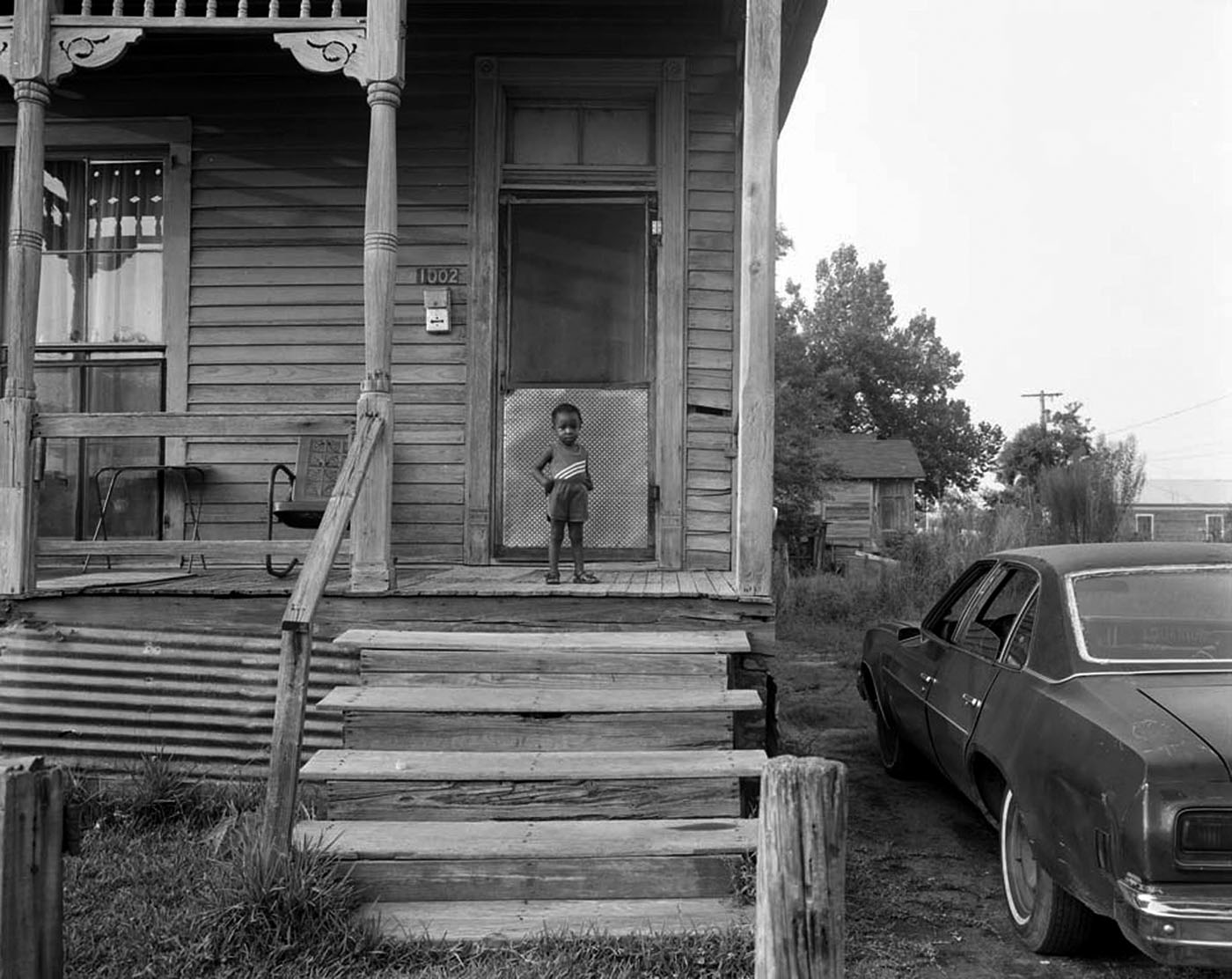
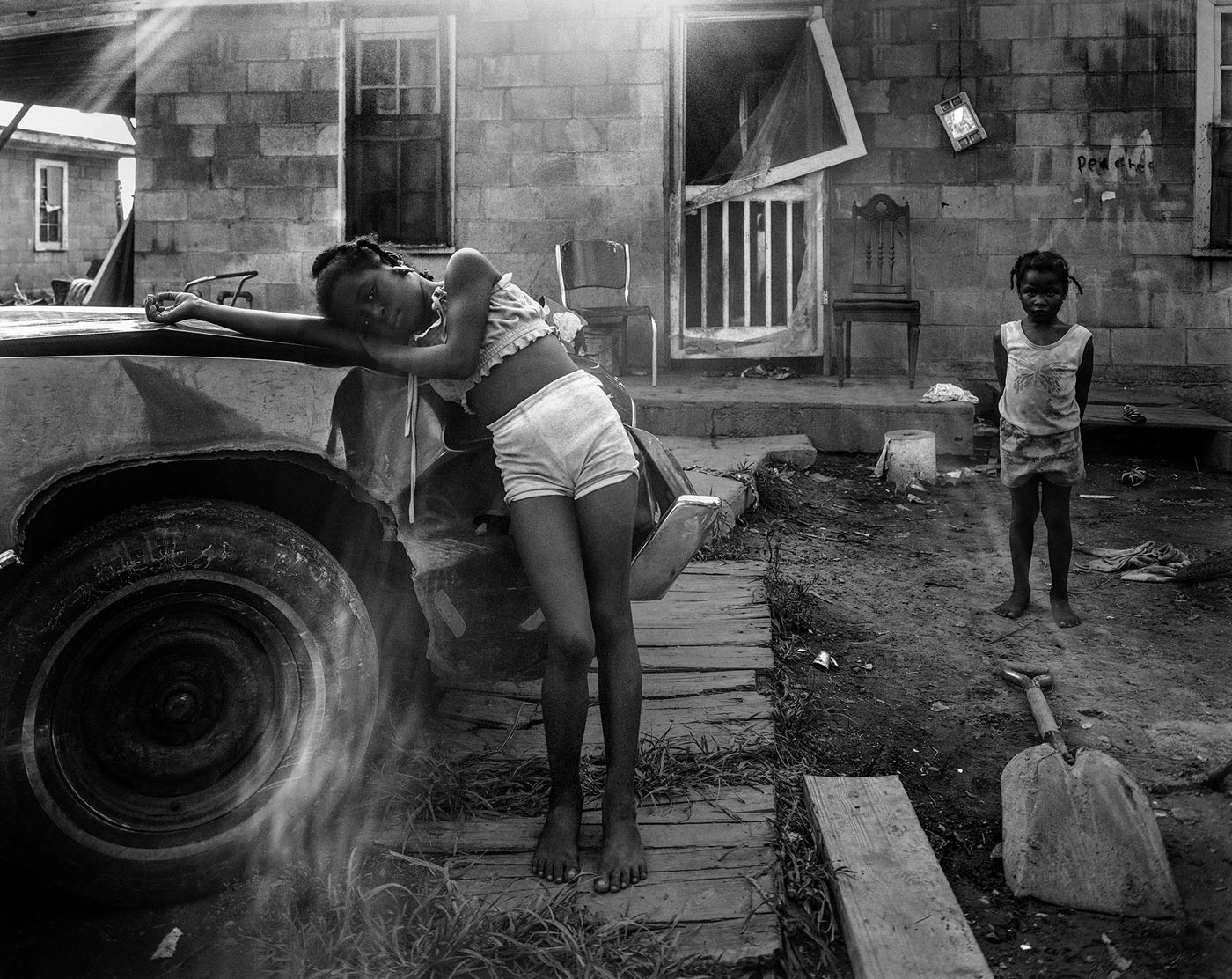
Baldwin Lee (Chinese-American, b. 1951) 'Rosedale, Mississippi' 1984


Baldwin Lee (Chinese-American, b. 1951)
Rosedale, Mississippi
1984
Archival pigment print
40 x 50 inches
Collection of the artist


‘The process I adopted in successive road trips during my seven-year project involved splitting time between revisiting places I had previously photographed and seeking out new locations. The families who lived on this street in Rosedale, Mississippi, knew me from prior visits. Children were always thrilled at my arrival, and they delighted in taking turns shrouding their heads under my black focusing cloth that allowed them to peer at the dim image projected on the ground glass of my view camera. They were more than eager to arrange themselves for this photograph’

Text from The Guardian website


Baldwin Lee (Chinese-American, b. 1951) 'Valdosta, Georgia' 1984


Baldwin Lee (Chinese-American, b. 1951)
Valdosta, Georgia
1985
Archival pigment print
40 x 50 inches
Collection of the artist


Baldwin Lee (Chinese-American, b. 1951) 'Chattanooga, Tennessee' 1983


Baldwin Lee (Chinese-American, b. 1951)
Chattanooga, Tennessee
1983
Vintage gelatin silver print
16 x 20 inches
Collection of the artist


Baldwin Lee (Chinese-American, b. 1951) 'Untitled' 1983-1989


Baldwin Lee (Chinese-American, b. 1951)
Untitled
1983-1989
Gelatin silver print
16 x 20 inches
Collection of the artist


Baldwin Lee (Chinese-American, b. 1951) 'Rosedale, Mississippi' 1985


Baldwin Lee (Chinese-American, b. 1951)
Rosedale, Mississippi
1985
Gelatin silver print
16 x 20 inches
Museum Purchase with Funds Provided by The Charles D. Urstadt Chairman Emeritus Acquisition Fund


Baldwin Lee (Chinese-American, b. 1951) 'Walls, Mississippi' 1984


Baldwin Lee (Chinese-American, b. 1951)
Walls, Mississippi
1984
Gelatin silver print
16 x 20 inches


Ogden Museum of Southern Art
925 Camp Street, New Orleans, LA

Opening hours:
Monday: 10.00am – 5.00pm
Tuesday: 10.00am – 5.00pm
Wednesday: 10.00am – 5.00pm
Thursday: 10.00am – 5.00pm
Friday: 10.00am – 5.00pm
Saturday: 10.00am – 5.00pm
Sunday: 10.00am – 5.00pm

Ogden Museum of Southern Art website

LIKE ART BLART ON FACEBOOK

Back to top

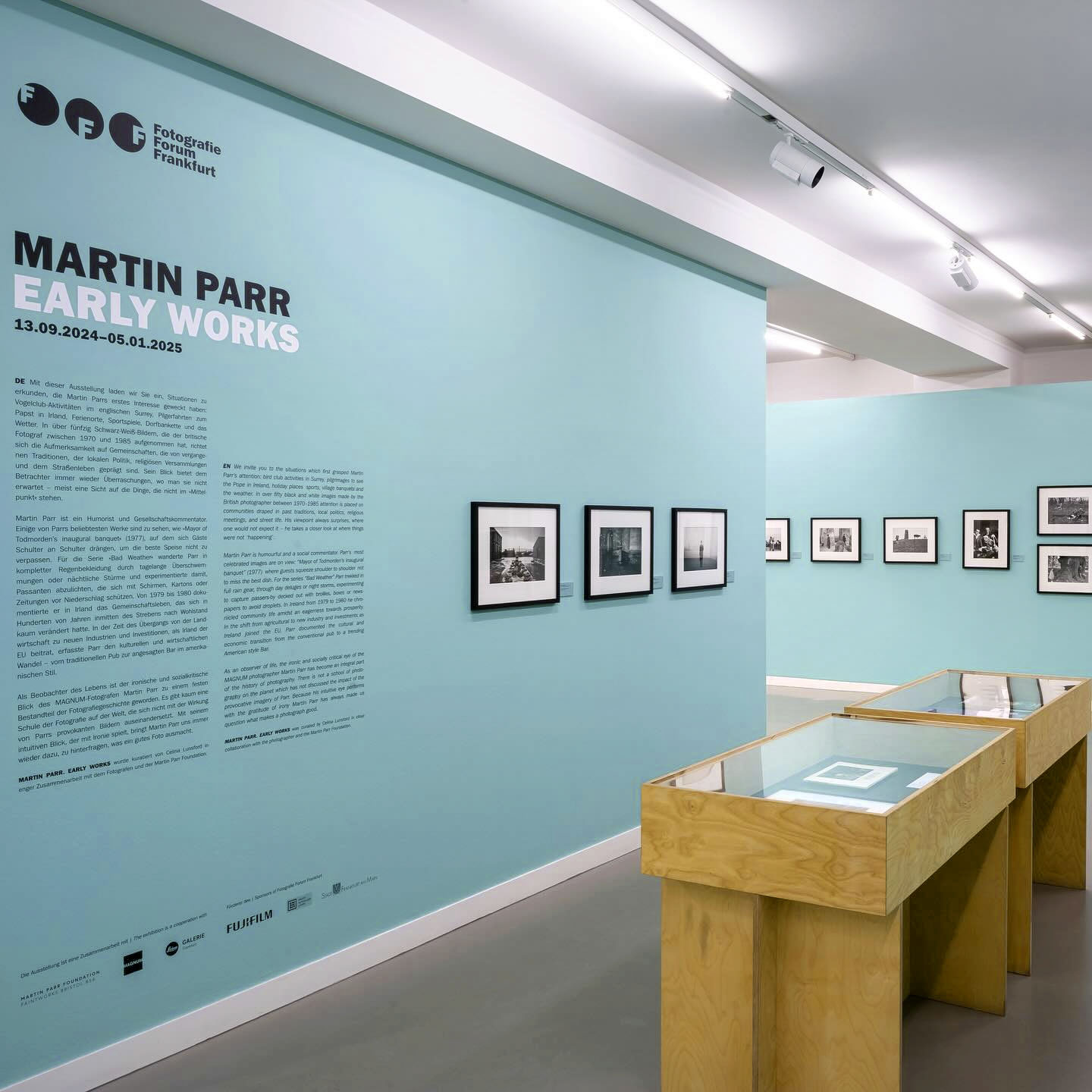
Exhibition: ‘Martin Parr. Early Works’ at Fotografie Forum Frankfurt (FFF)

Exhibition dates: 13th September, 2024 – 16th February, 2025


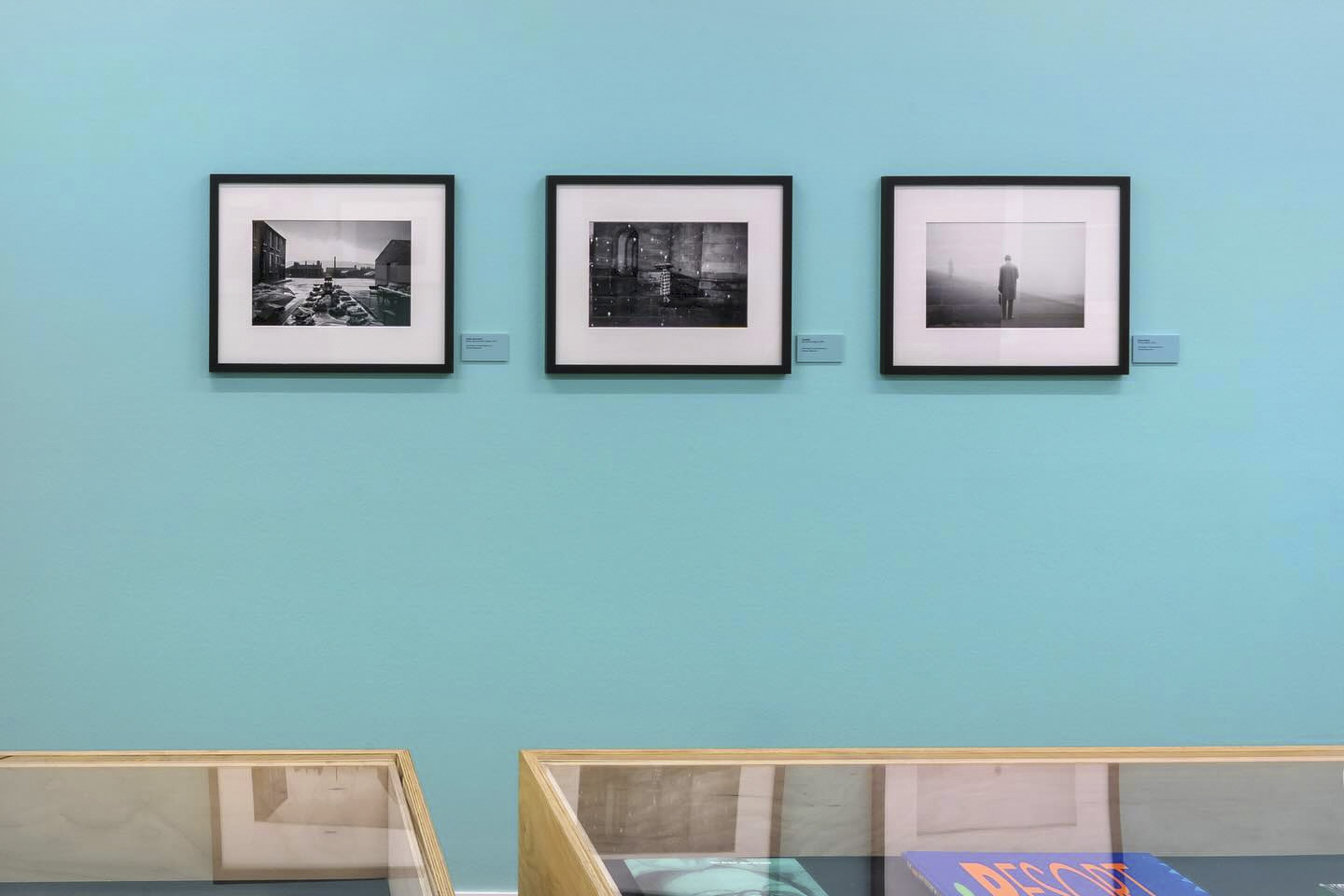
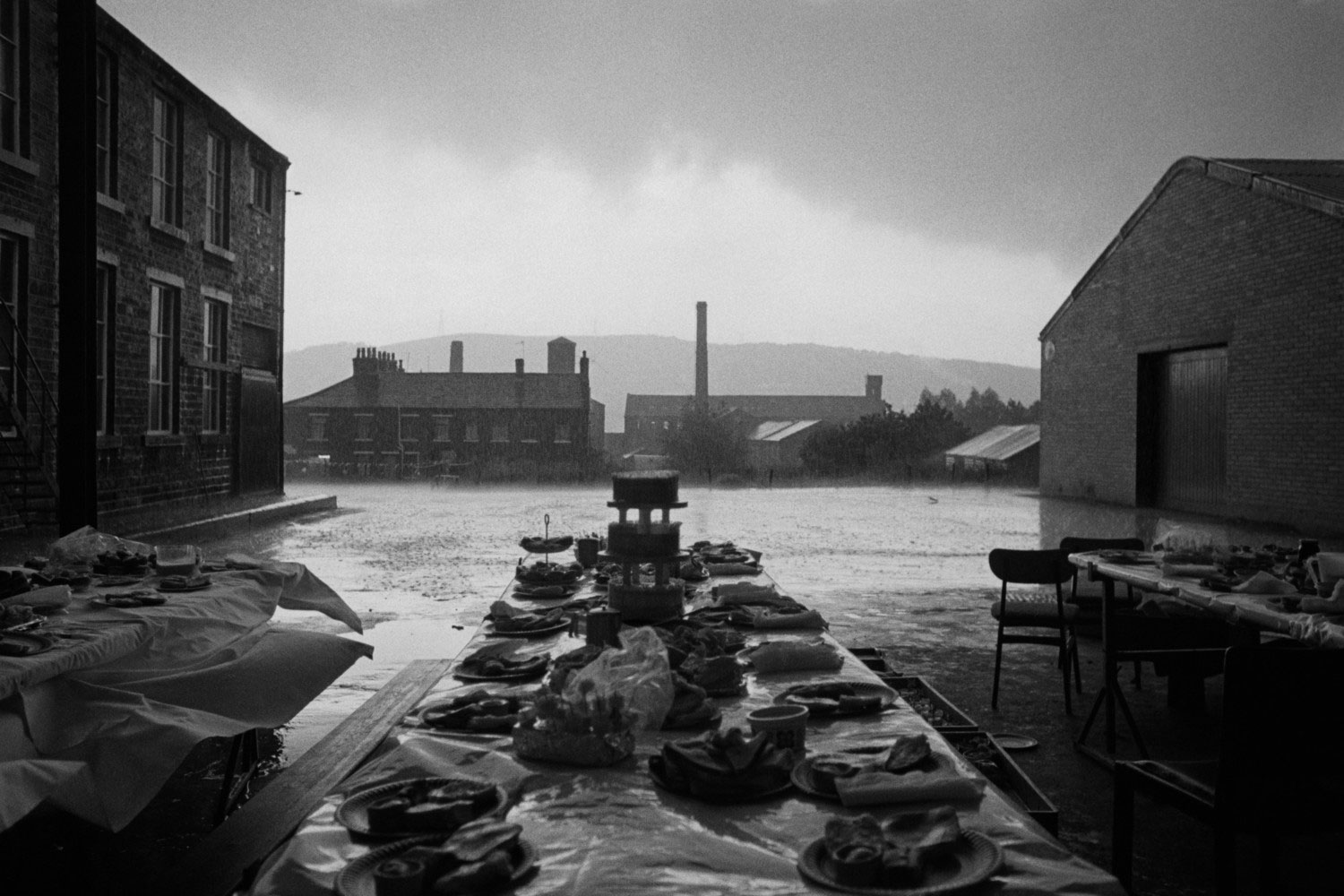
Martin Parr (British, 1952-2025) 'Elland, West Yorkshire, England, 1978' 1978 from the series 'Bad Weather' from the exhibition 'Martin Parr. Early Works' at Fotografie Forum Frankfurt (FFF)


Martin Parr (British, 1952-2025)
Elland, West Yorkshire, England, 1978
1978
From Bad Weather
Gelatin silver print
© Martin Parr | Magnum Photos


Out in the midday sun

I watch a lot of the TV program Antiques Roadshow and in the early episodes you see British people of a certain age, people who lived through the Second World War and their children, salt of the earth people who inherited objects from their mother-in-law or father-in-law because they couldn’t dust them anymore. These are British people who have a down-to-earthness and ordinariness about them… people who went to church on Sunday, went to working-class seaside resort Butlins with their family for a holiday (as I did as a child) and loved the royal family. These people project a certain consciousness, a wonderful quirky character, sense of humour and regional dialect that is uniquely British.

People such as these have always been pictured in British photography, historically through the lineage of artists such John Thomson (1837-1921) and Richard Jenkins (1890-1964) through Christina Broom (1862-1939) in the 1920s and on to Edith Tudor-Hart (1908-1973) and Bill Brandt (1904-1983) in the 1930s-1940s. These photographers were followed in the 1950s-1990s by a pantheon of strong, gritty and revelatory social documentary photographers. Indeed, this aspect of British photography has been particularly blessed by talented artists whose work focuses on “ordinary people and their surroundings – often in suburban or working-class environments.”

Artists I can mention include, but are not limited to, photographers such as Chris Killip (1946-2020), Brenda Prince (b. 1950), Roger Mayne (1929-2014), Anna Fox (b. 1961), Tony Ray-Jones (1941-1972), Colin Jones (1936-2021), Graham Smith (b. 1947), Paul Graham (b. 1956), Paul Trevor (b. 1947), James Barnor (b. 1929), Colin Jones (1936-2021), Syd Shelton (b. 1947), John Bulmer (b. 1938), Peter Mitchell (b. 1943), Don McCullin (b. 1935), Daniel Meadows (b. 1952), Neil Kenlock (b. 1950), Bandele Ajetunmobi (1921-1994), Dennis Morris (b. 1960) to name but a few: apologies if I have missed anybody for I am still learning about the many and various photographers in this field.

Into this heady mix can be added the name of that legendary British photographer Martin Parr (b. 1952). Better known for his later colour photographs of British rituals and everyday conversations – “candid and often humorous depictions of everyday life” captured with visual deftness and containing a wry sense of humour mirroring the British character – these early black and white photographs proffer the path of development for this artist.

“Shot between 1970 and 1985, the images document the subtleties and eccentricities of everyday British life from that era, spanning local traditions, holiday resorts and of course the weather, among many other things.”1 As Val Williams has insightfully observed, “Martin Parr’s early black and white photographs of the North of England are a remarkable record of an all-but disappeared society.”2

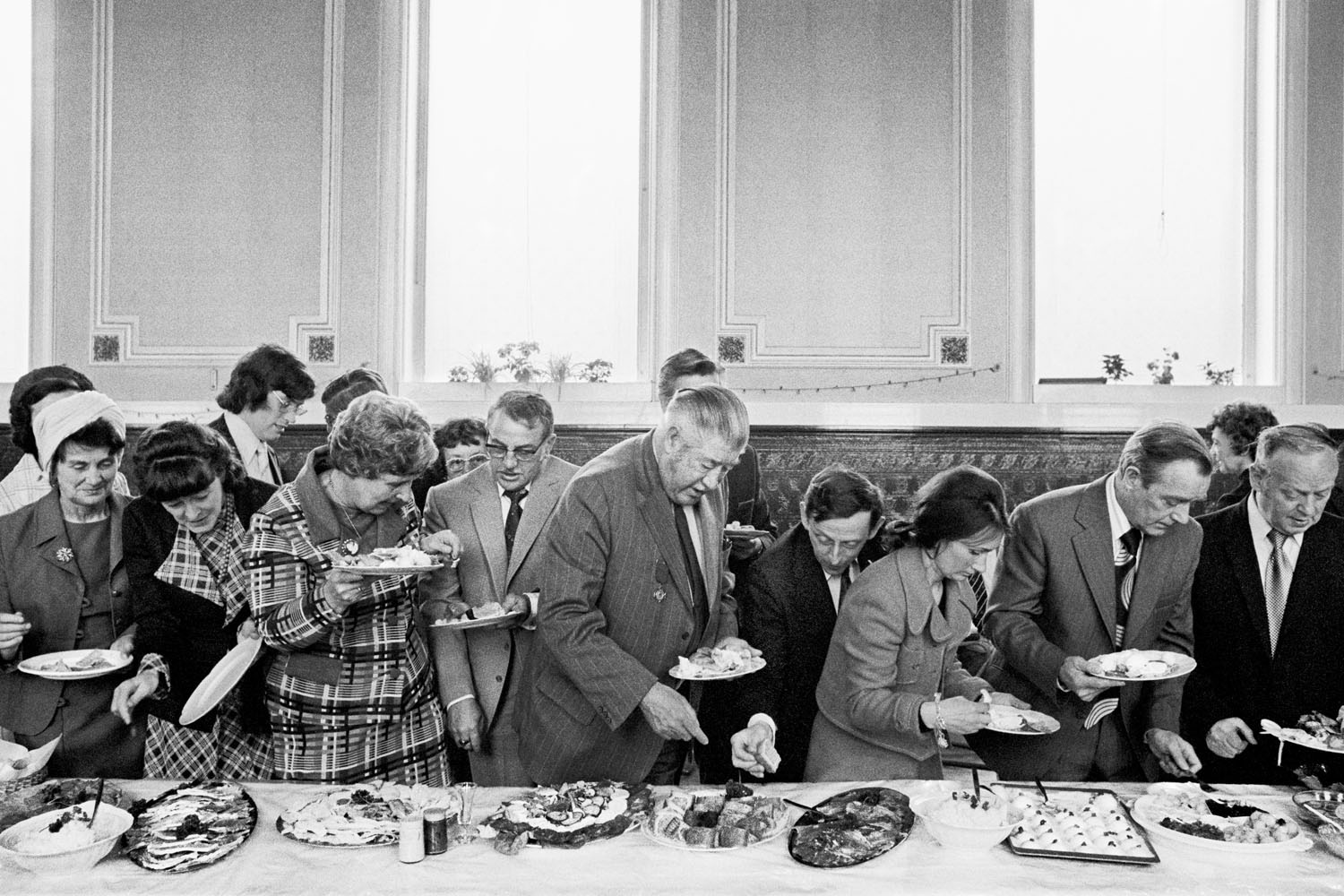
I am always fascinated with the early work of an artist. In essence, the photographs tell you what are the primary concerns for the artist and these themes usually remain with them for the rest of their career. These early black and white photographs provide a window into that ongoing investigation, that golden path. They are more subtle in their modulation of British life than in the later colour work – it’s as though the artist had to change gears with the use of colour developing a more ironic way of seeing British life through a different spatial relationship to his subjects – but in these photographs there is still that deprecating humour that is often missing in the work of his contemporaries: the barren tree emerging from the seemingly abandoned, frost covered, three-wheeler “bubble car” parked on the pavement; the seemingly abandoned Jubilee street party destroyed by rain in a desolate mining town; the contortions and consequences of grasping for food at the mayor’s inaugural banquet; the incongruity of man balancing at the top of a ladder to reach around to clean the outside of his front door window; or the implied racism as a coloured British family observes the “whites” of a different generation from afar, the space between them as wide as an ocean.

Through his beautifully observed and humorous photographs Martin Parr has become a national treasure.

My only wish… why I didn’t have more media images to show you!?

Dr Marcus Bunyan


1/ Text from the Martin Parr Studio Instagram page

2/ Val Williams. “The Ordinary Made Extraordinary: Martin Parr in Black and White,” on the Magnum website Oct 14, 2019 [Online] Cited 30/12/2024


Many thankx to Fotografie Forum Frankfurt for allowing me to publish the photographs in the posting. Please click on the photograph for a larger version of the image.


Installation view of the exhibition 'Martin Parr. Early Works' at Fotografie Forum Frankfurt (FFF)

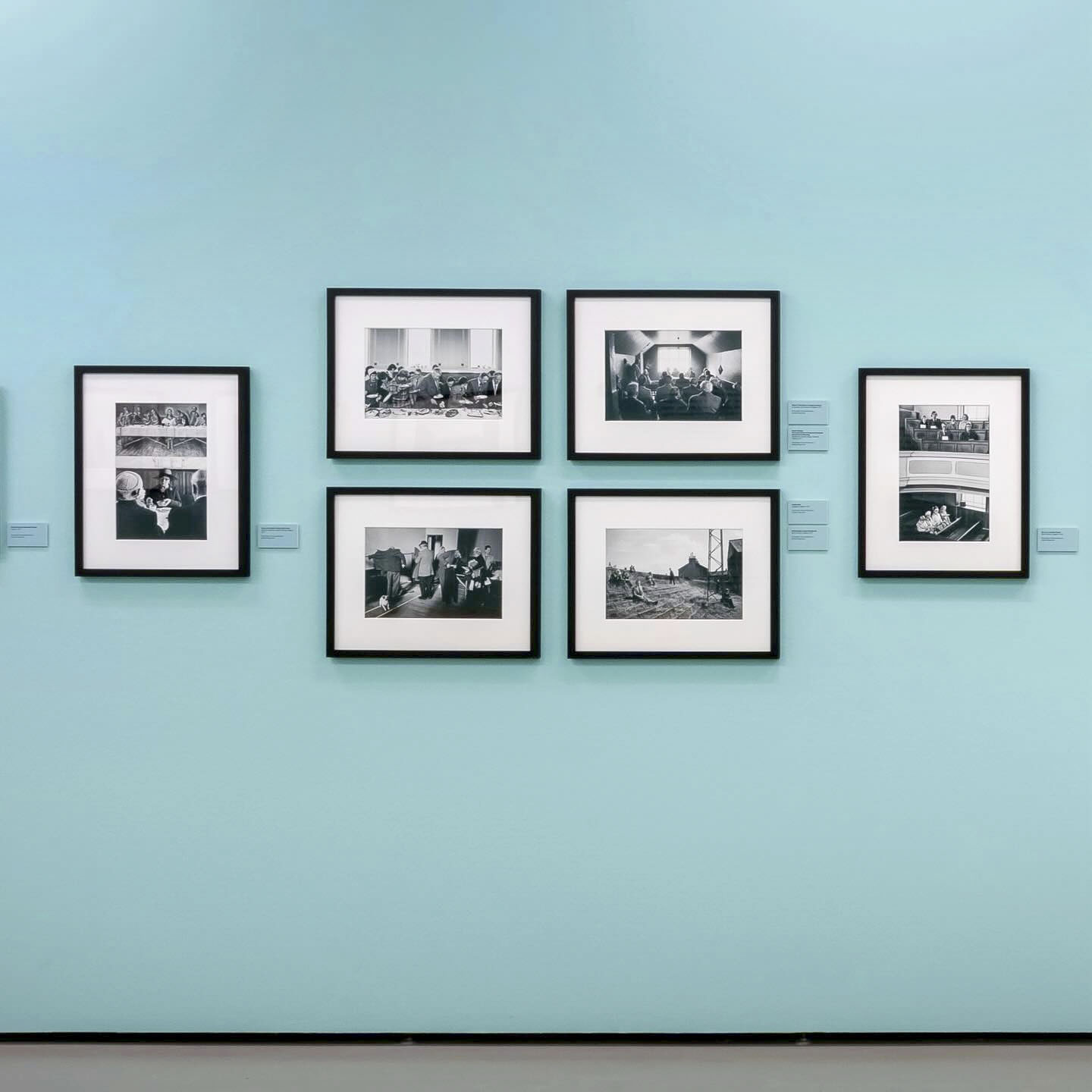
Installation view of the exhibition 'Martin Parr. Early Works' at Fotografie Forum Frankfurt (FFF) showing at left Parr's photograph 'Jubilee street party, Elland, West Yorkshire, England, GB, July 1977'


Installation views of the exhibition Martin Parr. Early Works at Fotografie Forum Frankfurt (FFF) showing at left in the bottom image, Parr’s photograph Jubilee street party, Elland, West Yorkshire, England, GB, July 1977


Martin Parr (British, 1952-2025) 'Jubilee street party, Elland, West Yorkshire, England, GB, July 1977' 1977 from the exhibition 'Martin Parr. Early Works' at Fotografie Forum Frankfurt (FFF)


Martin Parr (British, 1952-2025)
Jubilee street party, Elland, West Yorkshire, England, GB, July 1977
1977
From Bad Weather
Gelatin silver print
© Martin Parr | Magnum Photos


Installation view of the exhibition 'Martin Parr. Early Works' at Fotografie Forum Frankfurt (FFF)


Installation view of the exhibition Martin Parr. Early Works at Fotografie Forum Frankfurt (FFF) showing works from West Yorkshire including at left, Steep Lane Baptist Chapel buffet lunch. Doris Wilson (centre). Sowerby. Calderdale. West Yorkshire. England. GB. 1977;  at second left top, Mayor of Todmorden’s inaugural banquet, Todmorden, West Yorkshire, England, 1977; and at right, Steep Lane Baptist Chapel. West Yorkshire. England. GB. 1977


Martin Parr (British, 1952-2025) 'Steep Lane Baptist Chapel buffet lunch, Sowerby, Calderdale, West Yorkshire, England, 1977' 1977 from the exhibition 'Martin Parr. Early Works' at Fotografie Forum Frankfurt (FFF)


Martin Parr (British, 1952-2025)
Steep Lane Baptist Chapel buffet lunch, Sowerby, Calderdale, West Yorkshire, England, 1977
1977
Gelatin silver print
© Martin Parr | Magnum Photos


Installation view of the exhibition 'Martin Parr. Early Works' at Fotografie Forum Frankfurt (FFF) showing an enlargement of Parr's photograph 'Mayor of Todmorden's inaugural banquet, Todmorden, West Yorkshire, England, 1977' (detail)


Installation view of the exhibition Martin Parr. Early Works at Fotografie Forum Frankfurt (FFF) showing an enlargement of Parr’s photograph Mayor of Todmorden’s inaugural banquet, Todmorden, West Yorkshire, England, 1977 (detail)


Martin Parr (British, 1952-2025) 'Mayor of Todmorden's inaugural banquet, Todmorden, West Yorkshire, England, 1977' 1977 from the exhibition 'Martin Parr. Early Works' at Fotografie Forum Frankfurt (FFF)


Martin Parr (British, 1952-2025)
Mayor of Todmorden’s inaugural banquet, Todmorden, West Yorkshire, England, 1977
1977
Gelatin silver print
© Martin Parr | Magnum Photos


Installation view of the exhibition 'Martin Parr. Early Works' at Fotografie Forum Frankfurt (FFF) showing at left, Parr's photograph 'Hebden Bridge', England, 1979; and at top right, the cover of Parr's book 'Bad Weather' (Zwemmer, 1982)


Installation view of the exhibition Martin Parr. Early Works at Fotografie Forum Frankfurt (FFF) showing at left, Parr’s photograph Hebden Bridge, England, 1979; and at top right, the cover of Parr’s book Bad Weather (Zwemmer, 1982)


In 1972, he settled to the north east of Manchester, in the west Yorkshire mill town of Hebden Bridge. Though the mills were rapidly closing, the back-to-back houses and the social fabric of the smaller mill towns remained.

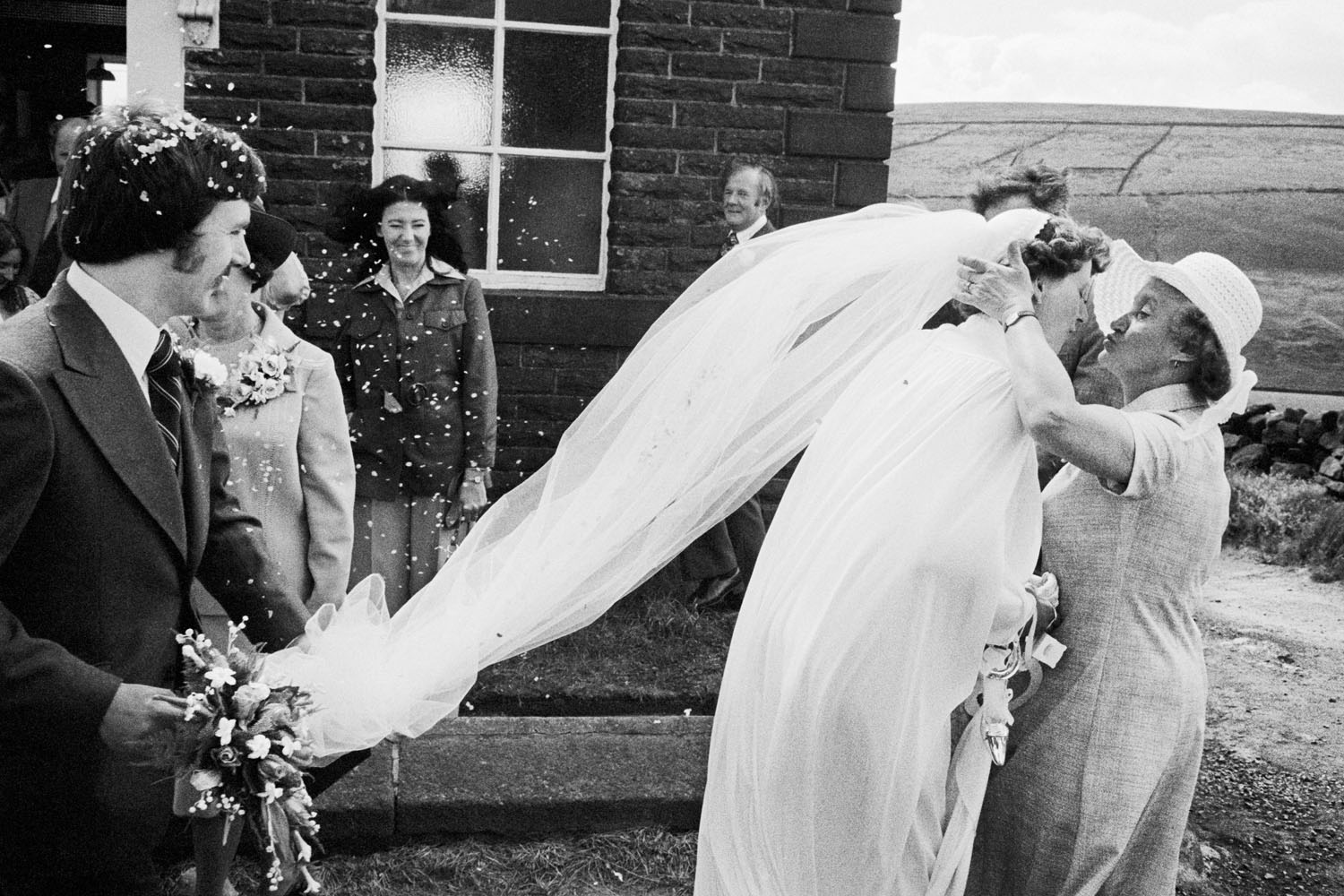
Hebden Bridge was an intricate fabric of social organisation, and Parr was fascinated by the many clubs and societies which flourished there. With some fellow ex-students, he rented a small shop and set up the Albert Street Workshop, which showed photographs, paintings and ceramics. Though he photographed Hebden Bridge life with great enthusiasm (one of his favorite subjects was the Ancient Order of Henpecked Husbands) and produced many memorable images in the town, the great achievement of his Hebden Bridge years was his documentation of Crimsworth Dean Methodist Chapel, high up on the moors above the town. Together with his future partner Susie Mitchell, Parr immersed himself in the life of the chapel, photographing, interviewing and taking part in events there. For him, the chapel was ‘the icon of Hebden Bridge’s dark and gloomy, rather miserable past’ and the photographs he made at Crimsworth Dene and other Methodist chapels were an elegy to a passing way of life, somber and poetic, with an occasional whisper of humour.

Val Williams. “The Ordinary Made Extraordinary: Martin Parr in Black and White,” on the Magnum website Oct 14, 2019 [Online] Cited 30/12/2024


Martin Parr (British, 1952-2025) 'Rugby League Club ground, West Yorkshire, England, 1977' 1977 from the exhibition 'Martin Parr. Early Works' at Fotografie Forum Frankfurt (FFF)


Martin Parr (British, 1952-2025)
Rugby League Club ground, West Yorkshire, England, 1977
1977
Gelatin silver print
© Martin Parr | Magnum Photos


With the exhibition Martin Parr. Early Works on view from September 13, 2024 to February 16, 2025 the Fotografie Forum Frankfurt (FFF) shows another highlight in its 40th anniversary year. As an observer of life, the ironic and socially critical eye of Magnum photographer Martin Parr has become an integral part of the history of photography. This exhibition of rarely seen black and white images made by the British photographer between 1970 and 1985 is on view for the first time in Germany.

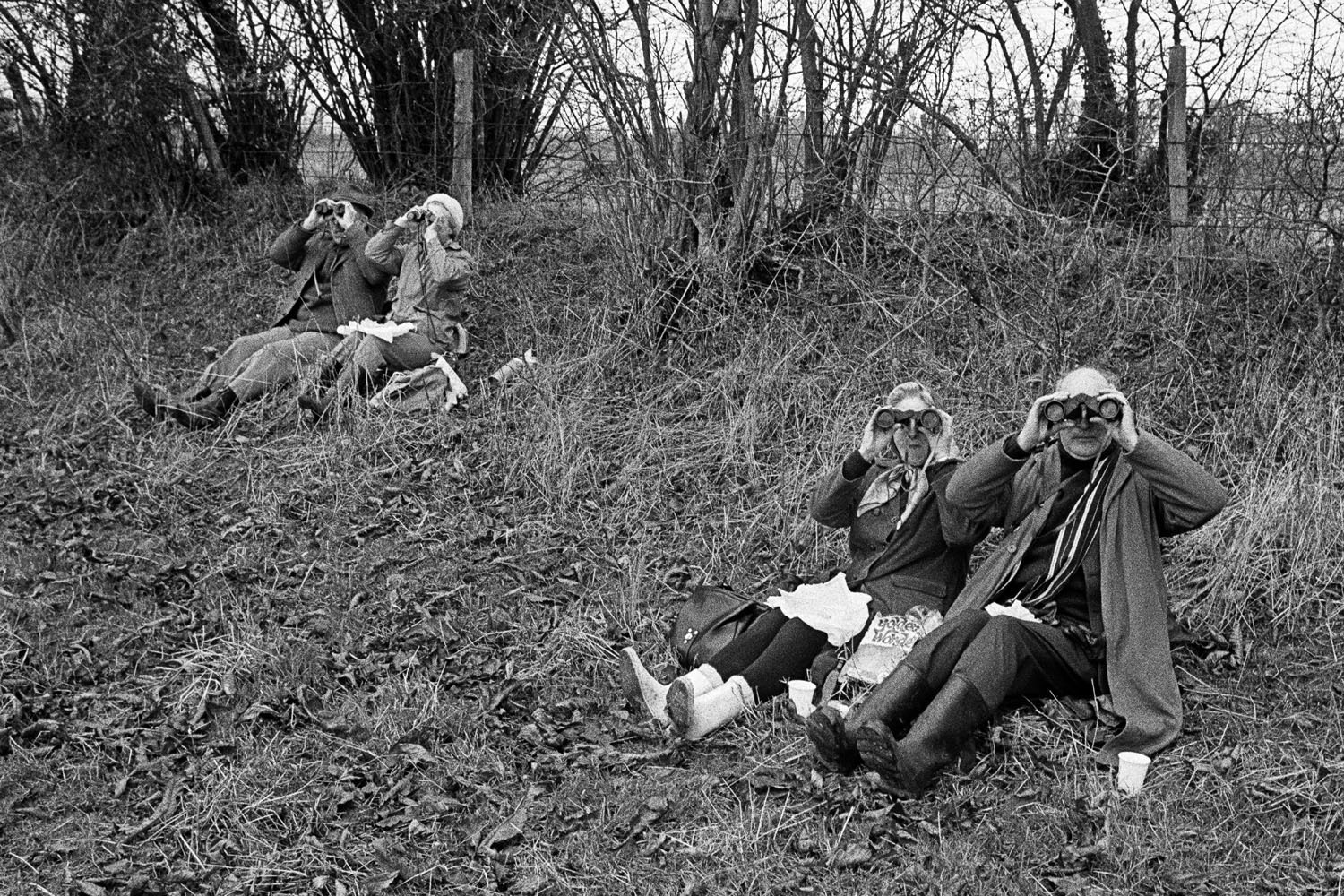
Bird clubs in Surrey, pilgrimages to see the Pope in Ireland, holiday resorts, sports and village banquets are only a few of the places and social activities which first grasped Martin Parr’s attention. In a special selection of fifty-eight black and white images, this show focuses on the subtleties of the unnoticed episodes found in the everyday: be it in communities draped in local traditions, street life and in the unforgettable fluctuating island weather, Parr makes us always look twice, to cherish the funny sides of life.

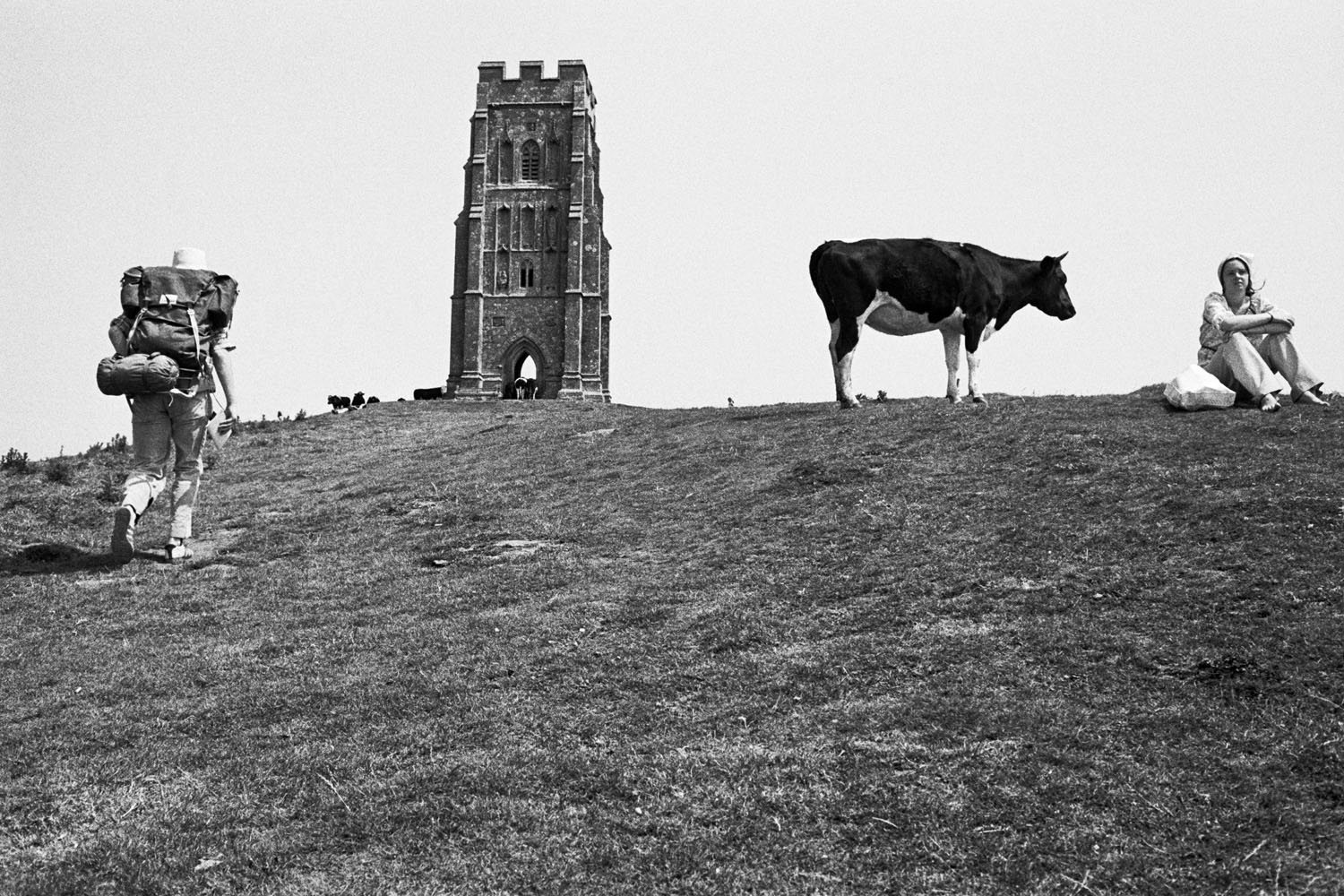
Included are some of Parr’s encompassing views such as The Mayor of Todmorden’s inaugural Banquette, from 1977, where hungry guests squeeze shoulder to shoulder, not to miss the best dish; or two devout Catholics anxiously awaiting a glimpse of Pope John Paul II, Dublin, 1979 a-top their kitchen ladder; as well as the animal protagonists, such as a cow posed like a day-tripper on the hillside of Glastonbury Tor.

Martin Parr. Early Works was curated by Celina Lunsford in close collaboration with the photographer and the Martin Parr Foundation. Simultaneously, the Leica Galerie Frankfurt is showing with Martin Parr in Colour (14.09.2024 – 05.01.2025), a selection of photographs in colour made by the British documentary photographer.

Known for his bold colours and everyday scenes, Parr’s famous classics are included such as the image of a woman with her face obscured by an English flag, and the view of a postcard of a crowded beach with a price tag. Equally iconic is the image of the swan looking directly into the camera, as if posing for the photograph.

Martin Parr’s colour photographs also show excerpts from everyday life in an exaggerated and sometimes absurd way. At first glance, nostalgia or romanticism seem to be at the forefront, but his works have a questioning character. As documentations of society, they contribute to its reflection, revealing the complexity and absurdity of modern life in a comical and critical way.

Together, these two exhibitions provide a complementary overview of the wide range of Martin Parr’s work. Exaggeration and hyperbole – his key elements – run like a thread through his early and late photographs, encouraging the viewer to reflect on social and cultural issues and to enjoy more than just the aesthetic aspects of photography.

Martin Parr (b. 1952 in Epsom, Surrey, GB) is a British photographer known for his perceptive and often ironic documentation of everyday life. Parr studied photography at Manchester Polytechnic and began his career in the 1970s. His work is characterised by its humorous depiction of social issues. Initially working in black and white, he switched to colour photography in the mid-1980s. He has been a member of the renowned Magnum photo agency since 1994. Parr has published numerous books and his work is exhibited and collected worldwide. In addition to his work as a photographer, he is active as a curator and a collector. The Martin Parr Foundation was established in 2014 and is based in Bristol since 2017.

Press release from Fotografie Forum Frankfurt


Martin Parr (British, 1952-2025) 'Surrey Bird Club, Surrey, England, 1972' 1972 from the exhibition 'Martin Parr. Early Works' at Fotografie Forum Frankfurt (FFF)


Martin Parr (British, 1952-2025)
Surrey Bird Club, Surrey, England, 1972
1972
Gelatin silver print
© Martin Parr | Magnum Photos


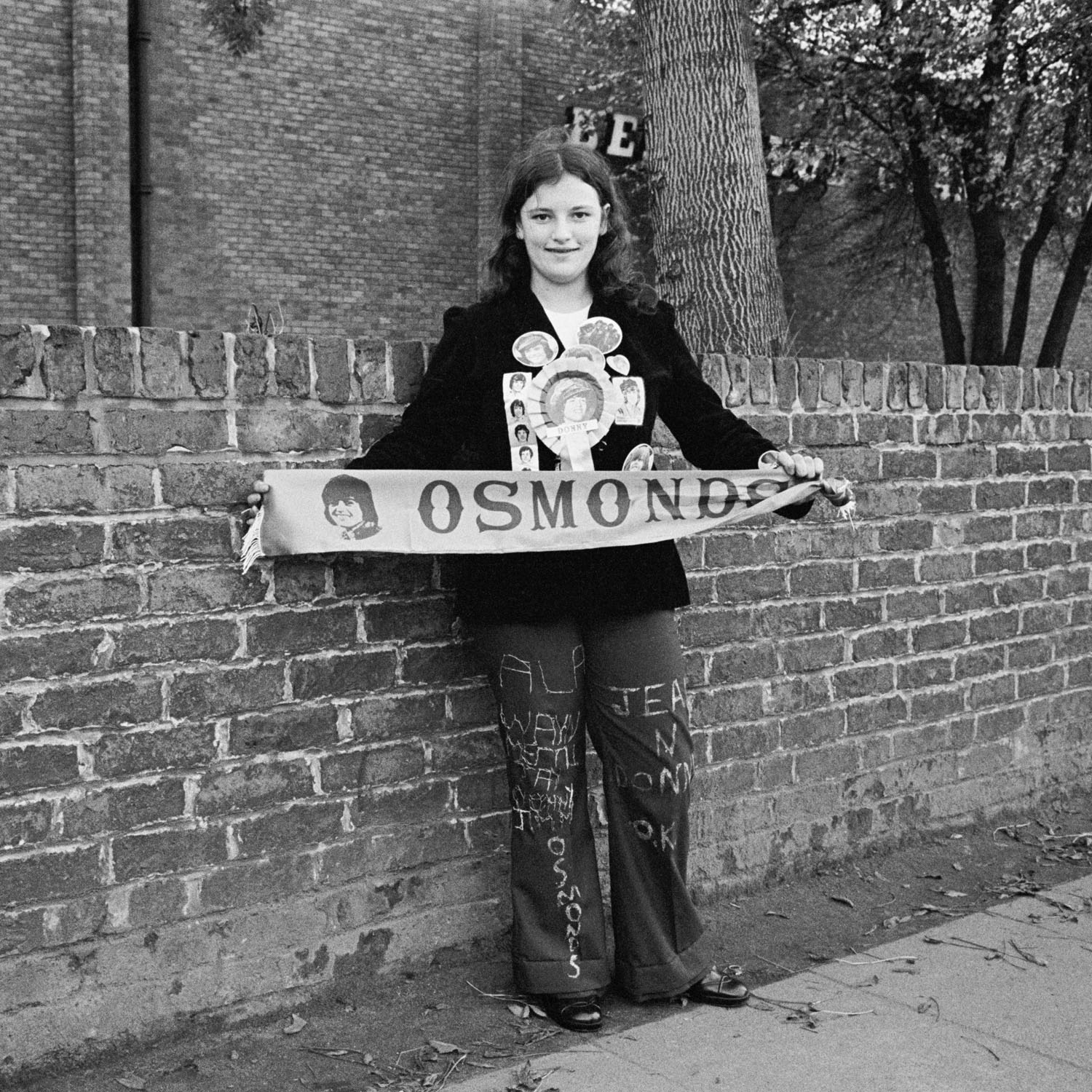
Martin Parr (British, 1952-2025) 'Osmond Fan, Manchester, England, 1973' 1973


Martin Parr (British, 1952-2025)
Osmond Fan, Manchester, England
1973
Gelatin silver print
© Martin Parr | Magnum Photos


Martin Parr (British, 1952-2025) 'Tom Greenwood, Hangingroyd Road, Hebden Bridge, Yorkshire, England, 1975' 1975


Martin Parr (British, 1952-2025)
Tom Greenwood, Hangingroyd Road, Hebden Bridge, Yorkshire, England, 1975
1975
Gelatin silver print
© Martin Parr / Magnum Photos


Martin Parr (British, 1952-2025) 'Wedding at Crimsworth Dean Methodist Chapel, Hebden Bridge, Calderdale, West Yorkshire, England, 1977' 1977


Martin Parr (British, 1952-2025)
Wedding at Crimsworth Dean Methodist Chapel, Hebden Bridge, Calderdale, West Yorkshire, England, 1977
1977
Gelatin silver print
© Martin Parr / Magnum Photos


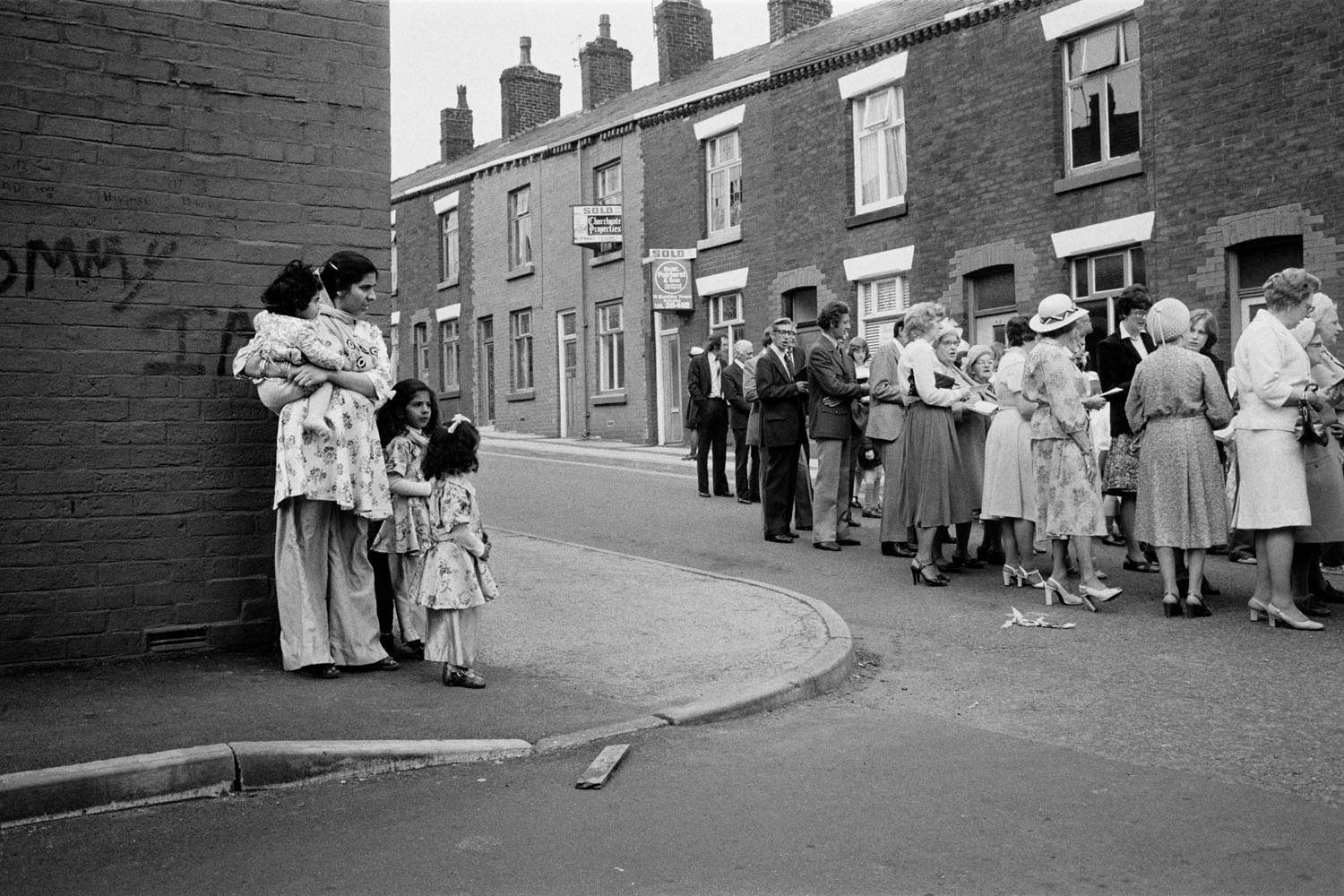
Martin Parr (British, 1952-2025) 'St Peter's Walks, Bolton, Greater Manchester, England, 1979' 1979


Martin Parr (British, 1952-2025)
St Peter’s Walks, Bolton, Greater Manchester, England, 1979
1979
Gelatin silver print
© Martin Parr / Magnum Photos


Martin Parr (British, 1952-2025) 'Glastonbury Tor, Somerset, England, 1975' 1975


Martin Parr (British, 1952-2025)
Glastonbury Tor, Somerset, England, 1975
1975
From Beauty Spots
Gelatin silver print
©
Martin Parr | Magnum Photos


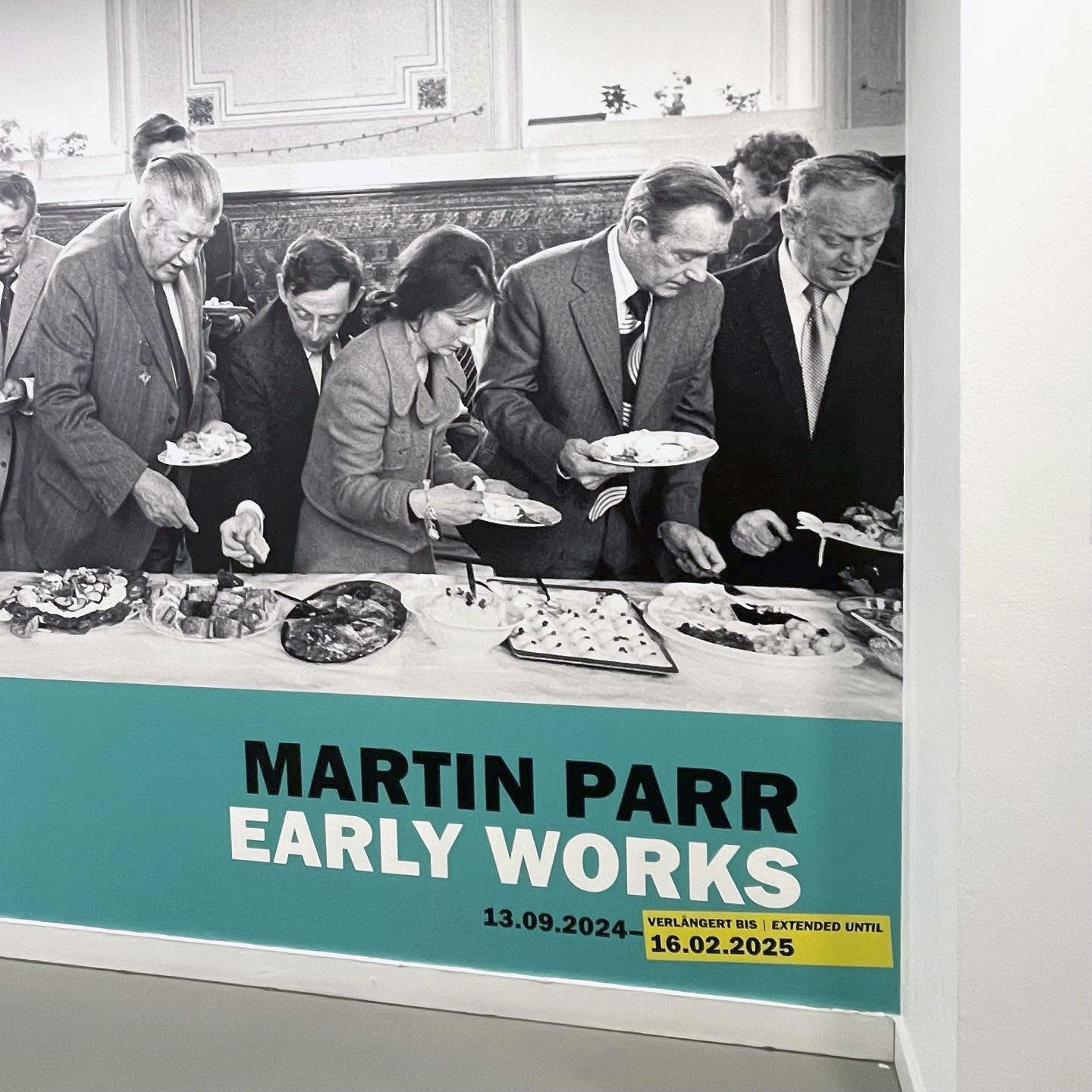
'Martin Parr. Early Works' poster for the exhibition at Fotografie Forum Frankfurt (FFF)


Martin Parr. Early Works poster for the exhibition at Fotografie Forum Frankfurt (FFF)


Fotografie Forum Frankfurt
e.V. Braubachstraße 30-32,
60311 Frankfurt am Main
Phone: +49 (0) 69 29 17 26

Fotografie Forum Frankfurt website

LIKE ART BLART ON FACEBOOK

Back to top