Marcus Bunyan (Australian, b. 1958) Untitled 2021 From the series Resonance
In 2021, I celebrate 30 years of art practice with the creation of a new website, the first to contain all my bodies of work since 1991 (note: more bodies of work still have to be added between 1996-1999).
My first solo exhibition was in a hair dressing salon in High Street, Prahran, Melbourne in 1991, during my second year of a Bachelor of Arts (Fine Art Photography) at RMIT University (formerly Phillip Institute out in Bundoora). Titled Of Magic, Music and Myth it featured black and white medium format photographs of the derelict Regent Theatre and the old Victorian Railway’s Newport Workshops.
The concerns that I had at the time in my art making have remained with me to this day: that is, an investigation into the boundaries between identity, space and environment. Music and “spirit” have always been an abiding influence – the intrinsic music of the world and the spirit of objects, nature, people and the cosmos … in a continuing exploration of spaces and places, using found images and digital and film cameras to record glances, meditations and movement through different environments.
30 years after I started I hope I have learnt a lot about image making … and a lot about myself. I also hope the early bodies of my work are still as valid now as they were when I made them. In the 30 years since I became an artist my concerns have remained constant but as well, my sense of exploration and joy at being creative remains undimmed and an abiding passion.
Now, with ego integrated and the marching of the years I just make art for myself, yes, but the best reason to make art is … for love and for the cosmos. For I believe any energy that we give out to the great beyond is recognised by spirit. Success is fleeting but making art gives energy to creation. We all return to the great beyond, eventually.
Dr Marcus Bunyan
Unknown photographer Opening of Marcus Bunyan’s exhibition The Naked Man Fears No Pickpockets at The Photographers’ Gallery and Workshop, Melbourne, 1993 showing at left (behind the crowd) the photograph Richmond Steps 1993 1993 Polaroid
Ian Lobb (Australian, b. 1948) Marcus 31/8/92 Taken by Ian Lobb at Phillip [Institute] 1992 Polaroid
Jeff Whitehead (Australian) Marcus in his Fred Perry and Doc Martens with his Mamiya RZ67 on tripod with Pelican case on Jeff’s car, Studley Park, Melbourne 1991-1992 Colour photograph
The only photograph of me with my camera 30 years ago!
Each photograph from a body of work in this posting (below) links to the body of work on my new website. Please click on the photographs to see the work.
Unknown photographer Ruth Bader as a child August 2, 1935 Collection of the Supreme Court of the United States
The future Justice Ginsburg was born Joan Ruth Bader on March 15, 1933. Nicknamed “Kiki,” she grew up in Flatbush, a working-class neighbourhood in Brooklyn, New York. Her parents, Celia and Nathan Bader, rented a small first-floor apartment in a grey stucco row house. Many of her neighbours were immigrants or first- and second-generation Americans whose families had come from Ireland, Italy, and Eastern Europe in search of a better life.
Hero
The courage of her love, intelligence and convictions.
Dr Marcus Bunyan
Many thankx to the New-York Historical Society for allowing me to publish the art work in the posting. Please click on the art work for a larger version of the image.
The New-York Historical Society honours the late Ruth Bader Ginsburg (RBG) – the trailblazing Supreme Court justice and cultural icon – with a special exhibition. Notorious RBG: The Life and Times of Ruth Bader Ginsburg is based on the popular Tumblr and bestselling book of the same name. A traveling exhibition organised by the Skirball Cultural Center in Los Angeles, the show takes an expansive and engaging look at the justice’s life and work, highlighting her ceaseless efforts to protect civil rights and foster equal opportunity for all Americans. Notorious RBG features archival photographs and documents, historical artefacts, contemporary art, media stations, and gallery interactives spanning RBG’s varied roles.
On what makes a meaningful life:
“If you want to be a true professional, you will do something outside yourself. Something to repair tears in your community. Something to make life a little better for people less fortunate than you. That’s what I think a meaningful life is – living not for oneself, but for one’s community.”
On social change:
“Real change, enduring change, happens one step at a time.”
On being an advocate:
“Fight for the things that you care about, but do it in a way that will lead others to join you.”
On relationships:
“Marty was most unusual. He was the first boy I ever met who cared that I had a brain. And he always thought I was better than I thought I really was.”
On speaking out:
“The number of women who have come forward as a result of the #MeToo movement has been astonishing. My hope is not just that it is here to stay, but that it is as effective for the woman who works as a maid in a hotel as it is for Hollywood stars.”
~ Ruth Bader Ginsburg
Justice Ruth Bader Ginsburg rare interview: ‘It’s not the best of times’ – BBC Newsnight
In a rare interview, US Supreme Court Justice Ruth Bader Ginsburg says the US is “not experiencing the best of times” – but the “pendulum” will swing back. For Newsnight, she spoke to filmmaker Olly Lambert at the final dress rehearsal of Dead Man Walking at the Kennedy Center in Washington, DC.
Rathbun Visiting Fellow 2017, Ruth Bader Ginsburg, Associate Justice of the Supreme Court of the United States, shares her vision for a meaning life while in conversation with The Rev. Professor Jane Shaw, Dean for Religious Life, on February 6, 2017 in Stanford Memorial Church. The Rathbun Lecture on a Meaningful Life honours the late Stanford Law School Professor Harry Rathbun.
Ruth Bader Ginsburg on Same-Sex Marriage, Women’s Rights, Health
U.S. Supreme Court Justice Ruth Bader Ginsburg talks about efforts to improve women’s rights and the outlook for legalising same-sex marriage. Ginsburg, speaking with Bloomberg’s Greg Stohr and Matthew Winkler in Washington on Wednesday, also discusses the her career, health and relationship with President Barack Obama.
Unknown photographer The Alpha Epsilon Phi sorority at Cornell University in 1953, featuring Ruth Bader, class of 1954, pictured third from right standing in front of the porch Published in The Cornellian, 1953 Division of Rare and Manuscript Collections, Cornell University Library
“I got the idea that being a lawyer was a pretty good thing because in addition to practicing a profession, you could do something good for your society.” RBG began at Cornell University on a full scholarship in the fall of 1950. There, she began to view lawyers as vanguards against injustice.
Unknown photographer Ruth as a bride June 1954 Courtesy of Justice Ginsburg’s Personal Collection
Ruth Bader married Martin “Marty” D. Ginsburg (1932-2010) in 1954. Their marriage defied gender expectations of the period and embodied her belief that “men, women, and families are better when both partners share their lives and goals on equal footing.” For nearly 60 years, RBG and her husband worked as equals raising a family and practicing law. Marty was a passionate supporter of his life partner’s legal career and shared in child-rearing and household responsibilities long before men were expected to do so.
Unknown photographer RBG and Marty with their daughter, Jane 1958 Collection of the Supreme Court of the United States
In 1957, Marty was diagnosed with testicular cancer. The doctor prescribed radical surgery and radiation for six weeks. The prognosis was grim. RBG poured her heart into making sure he remained on track with his studies, staying up all night to type his papers and class notes. When Marty fell asleep around 2 am, RBG would begin her own work. Her hours with their daughter Jane before bed helped leaven the library time.
The New-York Historical Society honours the late Ruth Bader Ginsburg (RBG) – the trailblazing Supreme Court justice and cultural icon – with a special exhibition this fall. On view October 1, 2021 – January 23, 2022, Notorious RBG: The Life and Times of Ruth Bader Ginsburg is based on the popular Tumblr and bestselling book of the same name. A traveling exhibition organised by the Skirball Cultural Center in Los Angeles, the show takes an expansive and engaging look at the justice’s life and work, highlighting her ceaseless efforts to protect civil rights and foster equal opportunity for all Americans.
“It is a great honour that we celebrate Ruth Bader Ginsburg, a native New Yorker whose impact on the lives of contemporary Americans has been extraordinary,” said Dr. Louise Mirrer, president and CEO of New-York Historical. “Justice Ginsburg fought hard to achieve justice and equality for all, inspiring us with her courage and tenacity in upholding our fundamental American ideals. A special friend to New-York Historical, in 2018 she presided over a naturalisation ceremony in our auditorium. The exhibition is a memorial tribute to her achievements and legacy.”
Notorious RBG features archival photographs and documents, historical artefacts, contemporary art, media stations, and gallery interactives spanning RBG’s varied roles as student, wife to Martin “Marty” Ginsburg, mother, lawyer, judge, women’s rights pioneer, and internet phenomenon. Highlights include a robe and jabot from RBG’s Supreme Court wardrobe; the official portraits of RBG and Sandra Day O’Connor – the first two women to serve on the Supreme Court – on loan from the National Portrait Gallery; and QR-code listening stations where visitors can hear RBG’s delivery of oral arguments, majority opinions, and forceful dissents in landmark Supreme Court cases on their own devices.
The exhibition also displays 3D re-imaginations of key places in RBG’s life – such as her childhood Brooklyn apartment; the kitchen in RBG and Marty’s home, with some of Marty’s favourite recipes and cooking utensils; and the Supreme Court bench and the desk in her chambers.
Personal materials range from home movies of RBG with Marty on their honeymoon and in the early years of their marriage to yearbooks from RBG’s academic life – from her Brooklyn high school to Harvard, Columbia, and Rutgers Universities – to a paper that she wrote as an eighth grader exploring the relationship between the Ten Commandments, the Magna Carta, the Bill of Rights, the Declaration of Independence, and the recently formed United Nations Charter.
Special to New-York Historical’s presentation are remembrances from RBG’s visit to the Museum in 2018 to officiate a naturalisation ceremony of new citizens after she learned about New-York Historical’s Citizenship Project which teaches U.S. history and civics to green card holders, a video featuring a map and photographs of key places in her life as a New Yorker, and an overview of the memorials that cropped up around her hometown in the wake of her passing. As part of New-York Historical’s upcoming public program series, on December 8, Supreme Court expert Linda Greenhouse looks at where the courts stand following Justice Ginsburg’s death. Families can explore the exhibition with a specially created family guide, and themed story times will take place throughout the exhibition’s run.
After debuting at the Skirball Cultural Center in 2018, Notorious RBG: The Life and Times of Ruth Bader Ginsburg has toured the country. After its New York run, the exhibition will travel to the Holocaust Museum Houston in Houston (March 2022) and the Capital Jewish Museum in Washington, D.C. (September 2022).
Notorious RBG: The Life and Times of Ruth Bader Ginsburg has been coordinated at New-York Historical by Valerie Paley, senior vice president and Sue Ann Weinberg Director, Patricia D. Klingenstein Library; Laura Mogulescu, curator of women’s history collections; and Anna Danziger Halperin, Andrew W. Mellon Postdoctoral Fellow in Women’s History and Public History, Center for Women’s History.
Press release from the New-York Historical Society
About Ruth Bader Ginsberg
Ruth Bader Ginsburg was born in Brooklyn, New York, on March 15, 1933.
Ginsburg was born in 1933 in Flatbush, and her stoicism was forged in a childhood spent in a house that, she said, bore “the smell of death.” When she was 2, her only sister died of meningitis; one day short of her high-school graduation, her mother died of cervical cancer. Celia Bader, who had once broken her nose reading while walking down the street but whose sweatshop wages had gone to her brother’s education, left behind secret college savings for her daughter and a will to accomplish what Celia had been denied.
She received her BA from Cornell University, attended Harvard Law School, and received her LLB from Columbia Law School. Ginsburg served as a law clerk to Judge Edmund L. Palmieri of the United States District Court for the Southern District of New York from 1959 to 1961. She then became associate director of the comparative law project sponsored by Columbia University, where she studied the Swedish legal system and produced the first official English language book on the subject. In 1963 Ginsburg joined the faculty of Rutgers Law School in Newark, New Jersey. In 1972 she was hired by Columbia Law School, where she taught until 1980. Ginsburg served as a fellow at the Center for Advance Study in the Behavioral Sciences in Stanford, California, from 1977 to 1978. In the 1970s Ginsburg litigated sex discrimination cases from the American Civil Liberties Union (ACLU) and was instrumental in launching its Women’s Rights Project in 1973. She served as general counsel of the ACLU from 1973 to 1980 and on the National Board of Directors from 1974 to 1980. President Jimmy Carter appointed Ginsburg to the United States Court of Appeals from the District of Colombia Circuit in 1980. On June 14, 1993, Ginsburg accepted President Bill Clinton’s nomination to the Supreme Court and took her seat on August 10, 1993.
Unknown photographer Ruth Bader Ginsburg teaching at Columbia Law School 1972 Courtesy of Columbia Law School
Ruth Bader Ginsburg ’59 is appointed the first female member of the Columbia Law School faculty in 1972. She had taught previously at Columbia in International Civil Procedure with Prof. Hans Smit ’58 LL.B. in 1961. She is the first female candidate to earn tenure at Columbia Law School.
In 1972, RBG become Columbia Law School’s first tenured female professor, which she juggled with her responsibilities at the Women’s Rights Project. Almost immediately, the women at Columbia began contacting RBG for help. Did RBG know that Columbia employees didn’t have pregnancy coverage and that women got lower pension benefits and lower pay? Now that she did, RBG helped file a class-action lawsuit.
RBG strongly preferred the prefix “Ms.” to “Mrs.” However, there is no information about how she felt when this 1972 Harvard Law School yearbook misidentified her as “Mr. Ginsburg.”
Unknown photographer RBG and Marty taking a break from work 1972 Collection of the Supreme Court of the United States
With the same fondly amused grin he usually wore, Marty (1932-2010) would portray himself as the lucky guy who came along for the ride of a lifetime, who moved to Washington when his wife got a “good job.” In fact, Marty was a superstar in his own right, whose tax law chops earned him clients like Ross Perot, the adulation of his peers, and millions of dollars. But he was proudest of the accomplishments of his wife, saying, “I think that the most important thing I have done is enable Ruth to do what she has done.”
Unknown photographer RBG as a federal appeals court judge 1980 Collection of the Supreme Court of the United States
President Jimmy Carter nominated Ruth Bader Ginsburg to the United States Court of Appeals for the District of Columbia Circuit on April 14, 1980. RBG saw the role of an appeals court judge as fundamentally different than her old job at the ACLU; she was to follow precedent, not try to change it. As a judge, she looked for consensus.
Unknown photographer RBG and Marty travel to Paris 1988 Courtesy of Justice Ginsburg’s Personal Collection
Unknown photographer Justice Antonin Scalia and RBG riding an elephant February 1994 Collection of the Supreme Court of the United States
Some liberals found the Scalia-Ginsburg friendship hard to grapple with. Even their clerks were mystified by the relationship. But clerks work at the court for only a year. Justices work there for life. Whatever their disagreements, they stuck together. The two shared a love of opera, and RBG liked people who could make her laugh.
RBG wasn’t President Bill Clinton’s first choice for the Supreme Court in 1993 – he came close to offering the position to several men. But RBG had the backing of key women in the administration and a tireless lobbying campaign by her husband in her favour. Above all, she dazzled the president in their first meeting. “She got the actual human impact of these decisions,” Clinton later recalled.
Frank Chi and Aminatou Sow Can’t Spell Truth Without Ruth 2013 Poster
In July 2013, after a flurry of important SCOTUS decisions, along with dissents authored by Justice Ginsburg, Chi and his friend Aminatou Sow created a poster, “Can’t Spell Truth Without Ruth,” celebrating Ginsburg. They shared it online, where Shana Knizhnik – who created the blog “The Notorious RBG” (and who would go on to coauthor a New York Times best-selling book of the same title) – saw the poster and wrote about it, and then the internet did its thing. The three artists, who became friends, gifted a print of the poster to Justice Ginsburg in December 2014, when she invited them to the Supreme Court. “The internet brought it together into this meme, initially, and then into something that became a phenomenon,” said Chi. “And, Justice Ginsburg embraced it. If she hadn’t, ‘Notorious RBG’ would’ve been something that was cool on the internet for a few months. That’s what I think is amazing – she had such a long, celebrated career, and she finally got to be the presence she was obviously comfortable being, and the internet allowed that to happen.”
Anonymous text. “More than a Meme,” on the Bowdoin Magazine website, November 17, 2020 [Online] Cited 29/10/2021
Art Lien Courtroom sketch of Justice Ginsburg’s dissent in Shelby County v. Holder June 25, 2013
In Shelby County v. Holder, the Supreme Court voted 5-4 to strike down a portion of the Voting Rights Act. In his majority opinion, Chief Justice John Roberts said the provision was no longer needed. “Any racial discrimination in voting is too much, but our country has changed in the last 50 years,” he declared. In her dissent, which inspired the nickname Notorious RBG, RBG compared getting rid of the provision to “throwing away your umbrella in a rainstorm because you’re not getting wet.”
In 2013 RBG wrote a fiery response (officially known as a dissent) disagreeing with the Supreme Court’s decision in Shelby County v. Holder. This bold dissent (and a few others made around the same time) earned her the nickname “Notorious RBG” in reference to the Brooklyn-born rapper Christopher Wallace, also known as “The Notorious B.I.G.” and “Biggie Smalls.”
With Shelby County v. Holder, the Supreme Court decided to end part of the Voting Rights Act of 1965. This Act prohibited states from having laws that made it harder for Black Americans to vote. The Voting Rights Act also made it harder for states with a history of racial discrimination to make future changes to their voting laws–but Shelby County v. Holder reversed that.
RBG felt strongly that this ruling could lead to more restrictions in voting, negatively impacting Black and minority communities.
In her ringing dissent, RBG compared getting rid of pre-clearance to “throwing away your umbrella in a rain storm because you’re not getting wet.” She quoted Martin Luther King Jr.’s famous dictum, “The arc of the moral universe is long, but it bends toward justice,” and added, “if there is a steadfast commitment to see the task through to completion. That commitment has been disturbed by today’s decision.” We have seen the destructive swath strewn across our electoral process in almost every election since, which of course was the intent of the decision. Yes, there is election fraud in this country, and it comes directly from the highest court in the land!
Erica A. Gordon. “The glorious, notorious Ruth Bader Ginsburg in a traveling exhibition,” on the Peoplesworld Social Media website, Oct 30, 2018 [Online] Cited 28/10/2021
Steve Petteway (American) Official portrait of United States Supreme Court Justice Ruth Joan Bader Ginsburg 2013 Courtesy Steve Petteway Collection of the Supreme Court of the United States
At the age of 80, Supreme Court Associate Justice Ruth Bader Ginsburg was reborn as the “Notorious RBG.” She earned the admiring, tongue-in-cheek nickname after a series of fiery, record-breaking dissents she gave from the Supreme Court bench in 2013 on voting rights, affirmative action, and workplace discrimination. Behind the nickname was a woman with a lifelong commitment to equality, justice, and the ideals of American law.
RBG became an icon to millions of people around the globe. All this is – to use the court’s language – without precedent, especially in a society that tends to dismiss the contributions of women as they age. Bestselling books about RBG for all age groups – including the 2015 book Notorious RBG: The Life and Times of Ruth Bader Ginsburg that inspired the exhibition – could fill a bookshelf.
Roxana Alfer Geffen (American) Dissent Collar #9 2016 Courtesy of the artist
The signature dissent collar, a glinty Banana Republic affair she got in a Glamour Women of the Year gift bag, came in 2012. She broke the record for dissenting from the bench – the once rare act of making everyone at the opinion announcements listen to your protest – and a thousand memes were born.
Moved by her anger over the 2016 presidential election, Roxana Alger Geffen created a series of imaginative jabots in honour of RBG. Geffen was inspired by RBG’s choice to wear her famous dissent collar the day after the election.
Roxana Alfer Geffen (American) Dissent Collar #13 2016 Courtesy of the artist
Washington National Opera: The Daughter of the Regiment – Ruth Bader Ginsburg’s first appearance
RBG was known to be a major opera fan. In 2016 the Washington National Opera surprised its audience by featuring her in a cameo appearance as the Duchess of Krakenthorp in Gaetano Donizetti’s The Daughter of the Regiment at the Kennedy Center.
At the top of Act 2, the Duchess of Krakenthorp meets with the Marquise of Berkenfield to arrange the marriage of the opera’s heroine Marie with the Duke of Krakenthorp. Ruth Bader Ginsburg plays the non-singing role of the Duchess, and mezzo-soprano Deborah Nansteel is the Marquise.
Ari Richter (American, b. 1983) RBG Tattoo II 2018 Pigmented human skin on glass Courtesy of the artist
RBG’s life and work have inspired unending creativity, including literally thousands of examples of fan-created RBG memorabilia. You can find RBG’s likeness on T-shirts, nail decals, and even as tattoos.
Nelson Shanks (American, 1937-2015) The Four Justices 2012 Oil on canvas 216.0 x 169.2cm Ian and Annette Cumming Collection, on loan to the Smithsonian’s National Portrait Gallery
Counterclockwise from bottom left: Sandra Day O’Connor born 1930; Ruth Bader Ginsburg born 1933; Elena Kagan born 1960; and Sonia Sotomayor born 1954
In 1880, Belva Lockwood became the first woman to argue before the Supreme Court. Distinguished jurist Florence Allen was considered for the Supreme Court in the 1940s, but opposition, including from the sitting justices, precluded her nomination. It was not until 1981 that Sandra Day O’Connor became the first woman to serve as a Supreme Court justice. Over ten years later, in 1993, Ruth Bader Ginsburg was nominated by President Clinton. Today, Ginsburg serves alongside Sonia Sotomayor and Elena Kagan, who were nominated to the Supreme Court in 2009 and 2010, respectively.
The Cummings commissioned this portrait to recognise the accomplishments of all four justices. Justice O’Connor’s office arranged their busy schedules so that they could pose at the same time for Nelson Shanks and his camera. The artist drew on the traditions of Dutch group portraiture, and the setting is based on interiors and a courtyard within the Supreme Court Building in Washington, D.C.
Installation view of Nelson Shanks’ The Four Justices (2012)
A major step in women’s struggle for equality came on March 3, 1879, when Belva Lockwood became the first woman to argue before the Supreme Court. In the 1940s, distinguished jurist Florence Allen was considered for the Court, but opposition, including from the sitting justices, precluded her nomination.
In 1981 Sandra Day O’Connor (born 1930) became the first woman to serve on the Court. O’Connor, a graduate of Stanford Law School, was serving on the Arizona Court of Appeals when President Ronald Reagan nominated her as an associate justice. O’Connor retired from the Court in 2006.
Ruth Bader Ginsburg (born 1933) graduated from Columbia Law School. She was serving on the U.S. Court of Appeals for the District of Columbia when President Bill Clinton nominated her as an associate justice of the Supreme Court in 1993.
Sonia Sotomayor (born 1954) received her J.D. from Yale Law School. She was serving on the United States Court of Appeals, Second Circuit, when President Barack Obama nominated her as an associate justice in 2009. She became the first Latino to sit on the Supreme Court.
Elena Kagan (born 1960) graduated from Harvard Law School. She was President Obama’s solicitor general when the president nominated her as an associate justice of the Supreme Court in 2010.
Nelson Shanks was commissioned to create this portrait to recognise the accomplishments of all four justices. He has drawn on the traditions of Dutch group portraiture for his composition, and the setting is based on interiors and a courtyard within the Supreme Court Building in Washington.
“Sandra Day O’Connor and Ruth Bader Ginsburg paved the way for me and so many other women in my generation. Their pioneering lives have created boundless possibilities for women in the law. I thank them for their inspiration and also for the personal kindnesses they have shown me.”
~ Elana Kagan, June 28, 2010, in her opening statement at her confirmation hearing
The Four Justices: Justice Ruth Bader Ginsburg
Justice Ruth Bader Ginsburg was interviewed by Jan Smith, for the Smithsonian’s National Portrait Gallery. Justice Ginsburg is depicted in the “The Four Justices” painting by artist Nelson Shanks, along with Justices Sandra Day O’Connor, Sonia Sotomayor and Elena Kagan.
On October 28, 2013, the National Portrait Gallery celebrated the arrival of Nelson Shanks’s “The Four Justices,” a tribute to the four female justices who have served on the U.S. Supreme Court. The work is monumental; it measures approximately seven feet by five-and-a-half feet (in its custom-made frame it is almost nine-and-a-half feet by eight feet) and holds the west wall of the National Historic Landmark Building’s second-floor rotunda. Of the work, NPG Chief Curator Brandon Fortune noted, “The National Portrait Gallery is honoured to have such an ambitious group portrait on loan to the museum.”
The work is based on sittings the justices had with Shanks; the two senior justices are seated and the recent appointees standing. Although the logistics of bringing three active and one retired justice into his studio was challenging, Shanks prefers to draw from life, which he feels brings each sitter’s distinct presence into his work. “If you can imagine a painting – no matter how facile – that doesn’t show character, something is missing,” Shanks noted in an interview with NPG. “Representation of character is really what counts to me.”
Only men had sat on the bench of the Supreme Court until President Ronald Reagan appointed Sandra Day O’Connor in 1981. After O’Connor, the next woman to receive an appointment was Ruth Bader Ginsburg, a nominee of President Bill Clinton in 1993. President Barack Obama appointed Justices Sonia Sotomayor and Elena Kagan. Ginsburg, Sotomayor, and Kagan are still on the bench; O’Connor retired in 2006.
REUTERS/Andrew Kelly RBG image projected onto New York State Civil Supreme Court building in Manhattan September 19, 2020 Courtesy Reuters/Andrew Kelly/Alamy Photo
An image of Associate Justice of the Supreme Court of the United States Ruth Bader Ginsburg is projected onto the New York State Civil Supreme Court building in Manhattan, New York City, U.S. after she passed away September 18, 2020. REUTERS/Andrew Kelly
Supreme Court Justice Ruth Bader Ginsburg wasn’t just a titan whose life and career revealed many of the legal and historical developments of the 20th century. She also was a New Yorker. Her hometown viscerally felt her loss upon her death in September 2020.
Adrian Wilson and Matt Duncan 50th Street subway stop altered in tribute to RBG 2020 Courtesy Adrian Wilson and Matt Duncan
The 50th Street ACE subway station sign in Manhattan was famously altered with a tribute sticker by Adrian Wilson and Matt Duncan on the day RBG passed.
Jennifer M. Mason (American) Fearless Girl with jabot September 22, 2020 Courtesy Jennifer M. Mason / Shutterstock.com
The memory of the justice’s life and work fuelled activism during the ensuing presidential election season across the city and beyond. The ‘Fearless Girl’ statue by Kristen Visbal in front of the New York Stock Exchange wearing a lace collar in tribute to Justice Ruth Bader Ginsburg.
Cristian Petru Panaite (American) RBG memorial outside Columbia University 2020 Courtesy of Cristian Petru Panaite
Memorials sprung up spontaneously and organically across the city.
New-York Historical Society 170 Central Park West at Richard Gilder Way (77th Street) New York, NY 10024 Phone: (212) 873-3400
A magnificent posting on the work of John Coplans whose art practice resulted in a photo essay, an extended, creative “body” of work (pardon the pun) which investigated the form, mass, volume and shape of the ageing human body – namely his own (as an auteur) – resulting in the most significant representation of the older human body in the history of photography.
Referencing the abstractions of Aaron Siskind’s Martha’s Vineyard rock formations and Bill Brandt’s nudes on the coast of East Sussex, Coplans abstracts the human body into singular and overlapping forms using shape, multiple self-portrait, multiple prints as frieze and mismatched dissections. As seen in the installation photographs in the video below, Coplans also pulls and pushes at the viewers perception of the scale of representation, the orientation of the body and the physicality of the photograph in the gallery space: a fragmented hand is larger and more imposing than a dissected foot; the body “lies” vertically upside down in Upside down No. 1 (1992, below); and the mass of the back overwhelms the viewer in Back with Arms Above (1984, below). Coplans depictions of large buttocks and back confront the viewer at eye level, much as Carravagio’s use of foreshortening in his paintings disturbed the status quo of the pictorial space in a church especially when seen by candlelight.
The artist frees the body from aesthetics – and the body becomes an/other structure, free of architecture.
This is not a degraded body but another body that just is… not the physicality of the body and certainly not my body as a temple, but an anti-commercial body, one that states that this is what we inevitably will become, despite our attempts to keep our beauty and attain immortality. This is about a recognition of the body as being undeniably present accepting an entire range of corpo/reality. While movement and action are suppressed (in stillness), change is the problem that Coplans has attempted to re/present – that is, “an attempt to capture a moment of transformation. In this case, it is both a physical change and a psychological set of responses…”1 Old age and mortality, age and youth, beauty.
I can also feel – sense, that Coplans work of the body is a tone poem, a piece of music (typically of one movement) on a descriptive theme. Tone is “often described as a “mood” that pervades the experience of reading the poem [as interpreted by the reader], it is created by the poem’s vocabulary, metrical regularity or irregularity, use of figurative language, and rhyme.”2 Here, Coplans figurative language (his life of forms) creates comparisons by linking the senses and the concrete to abstract ideas: the concreteness of the photograph to how we feel about an ageing body or, indeed, our own ageing body; the time freeze of the photograph to the feeling of lost youth; the immortality of the photograph to the knowledge that the artist is alive and dead – we have his preserved, embalmed, dissected body before us but what about his other, spirit?
We can know the phenomenal (the world of representation) but all we can ever do is intimate the noumenal world, the unknowable noumenon as an entity to which we can directly relate but can never know (we can know of death but never experience it).
Dr Marcus Bunyan
Footnotes
1/ Christopher P. Jones. “Great Paintings: Caravaggio’s ‘The Supper at Emmaus’,” on the Thinksheet magazine website Aug 30, 2019 [Online] Cited 14/11/2021
2/ Unknown author. “Tone,” in Glossary of Poetic Terms on the Poetry Foundation website Nd [Online] Cited 14/11/2021
Many thankx to the Fondation Henri Cartier-Bresson for allowing me to publish the photographs in the posting. Please click on the photographs for a larger version of the image.
In early October, the new exhibition on John Coplans will open at Fondation Henri Cartier-Bresson, curated by Jean-François Chevrier and Élia Pijollet. It stands out through its selection and conversations with artists that Coplans admired, such as Brancusi, Weegee, Walker Evans, Lee Friedlander, Philip Guston and Jan Groover.
A formal and fearless photographer, Coplans uses his naked body as the sole material for his sensual, disconcerting, radical and personal compositions. Comprised of original works on loan from numerous French institutions and private lenders, this exhibition breaks new ground for the Fondation HCB, with a rare bird from the history of photography.
Teaser de l’exposition John Coplans – La vie des formes
Exhibition
Fondation HCB is presenting a remarkable exhibition on the oeuvre of John Coplans (1920-2003), in collaboration with Le Point du Jour, Centre d’Art Éditeur in Cherbourg-en-Cotentin. Works on show here, on loan from French collections, testify to the audacity of this British artist, known for uncompromising representations of his body.
Coplans, who emigrated to the United States at the start of the 1960s, was at first painter, art critic, museum director and curator before devoting himself fully to photography in the early 1980s. At sixty years old, after twenty years of promoting the work of other artists, he retired to take up a life in art. He then developed a photography practice in which he represented himself nude, in black and white and often fragmented, his head always out of frame. To all these images, produced between 1984 and 2002, he attributed the generic title Self Portrait; descriptive titles and subtitles specify the body part depicted or the posture.
As a primary, unique and impersonal object, the body is a medium for jubilant, ever-renewed explorations of the life of form. Coplans’ work, often reductively seen as a representation of the ageing body, has lighter, more universal ambitions and inscribes in a long history of art forms through its metaphorical connections to nature or sculpture. His oeuvre redefines the meaning of age, no longer a progression towards the end of life, instead, an opportunity for a long-term record of humankind and an initiative for recollecting primitive forms.
The absence of the face, and the choice of the fragment as plastic element released a flood of inventions and formal analogies that seemed inexhaustible, only stopping with the artist’s passing. Coplans’ images are by turns subdued and explosive, funny, provocative and always carefully considered. They answer to a demand for clarity that transfigures expressionist pathos.
The exhibition La Vie des Formes (Life of Forms) is structured in three sets presented chronologically. First, small prints made at the start of Coplans’ career in photography (Torso, Back, Hands, Feet…); followed by, in 1988, large formats and montage combining several body fragments to create a single but disjointed image; and finally, as a great connoisseur of art history, Coplans integrated research on artists he studied, exhibited and knew into his own work, and a selection of works by these artists (Brancusi, Carleton Watkins, Walker Evans, Lee Friedlander, Jan Groover, Weegee…) is presented.
Biography
John Coplans was born in London in 1920. The son of a doctor in medicine and art amateur, he spent most of his childhood between London and South Africa. In 1937, aware of the global danger posed by Nazi Germany, he joined the British army. He fought until 1945 in East Africa, then in India and Burma.
In 1946, John Coplans started an art degree but quickly gave up. He moved to London. For ten years or so, he has painted and contributed to the rise of abstract art, in the wake of lyrical abstraction, then Hard Edge. In 1960, Coplans emigrated to the United States and moved to San Francisco. In 1962, he participated in the creation of Artforum. The magazine quickly established itself as a monthly reference for art and creative news. The first of its kind on the West Coast, it supported and united artists, helping to bring out the “Los Angeles scene” and “West Coast art”. Coplans was its editor from 1971 to 1977 (in New York, where the magazine moved in 1967).
John Coplans was also a curator, director of the Art Gallery of the University of California at Irvine (1965-1967) and Senior Curator of the Pasadena Art Museum in (1967-1970). From 1978 to 1980, he directed the Akron Art Museum, Ohio. At this time, he began his first photographic experiments.
In 1980, he decided to cease these activities to become an artist again and to devote himself to photography. He moved to New York. From 1985 onwards, he exhibited regularly in France and Europe. In 1988, the San Francisco Museum of Modern Art (SFMOMA) set up the first major exhibition of the photographer, which was then presented at the MoMA in New York the same year. John Coplans died in New York on August 21, 2003.
Publication
The exhibition will be accompanied by a book published by Le Point du Jour: John Coplans. Un corps, under the guidance of Jean-François Chevrier.
Press release from the Fondation Henri Cartier-Bresson
Emigrating to the United States in the early 1960s, John Coplans was first a painter, art critic, museum director and curator, before devoting himself fully to photography in the early 1980s. At the age of sixty, after having spent twenty years promoting the work of other artists, he retires to reconnect with the experience of creation. He then developed a photographic practice in which he represented his naked body, in black and white, often fragmented, his head always out of view. He used for all these images made between 1984 and 2002 the generic title Self Portrait; descriptive titles and sub-titles specify the body part or posture depicted.
Artists represented in the exhibition: Anna Boberg, Helmer Bäckström, Julia Margaret Cameron, Uno Falkengren, Gustaf Fjæstad, Ferdinand Flodin, Henry B. Goodwin, John Hertzberg, Gösta Hübinette, Eugène Jansson, Nicola Perscheid and Ture Sellman.
Otto Girl in Chair c. 1892 Reproduction photo: Prallan Allsten/Moderna Museet
Apologies, a short text today… my lower back is not very good and I am not feeling that well.
Another “niche” exhibition that Art Blart likes to promote, one that fills a gap in our greater knowledge of world art and artists. But why the distinction in the title of the exhibition between art and photography? That old chestnut rears its ugly head again… why not just ‘art around 1900’?
My particular favourites in the posting are the muscular yet translucent Anna Boberg painting A Quiet Evening. Study from North Norway (Nd); the gossamer wispiness and beauty of Ferdinand Flodin’s Portrait of a young lady (1922); and the velvety softness and light of Ture Sellman’s Untitled landscape (c. 1915).
I have added detail of the artists and sitters where possible and information on early photographic processes.
Enjoy!
Dr Marcus Bunyan
Many thankx to the Moderna Museet for allowing me to publish the photographs and the text in the posting. Please click on the photographs for a larger version of the image.
Moderna Museet highlights Pictorialism – a movement in photography that arose around 1900. The exhibition In Lady Barclay’s Salon – Art and Photography Around 1900 also includes paintings from the same period, treating visitors to a selection of nearly 300 works from the collections of Moderna Museet and Nationalmuseum.
This exhibition is based on the rich collections of Moderna Museet and Nationalmuseum, with art and photography dating from the late 1800s to the First World War. During this period, pictorialism was a style that many prominent photographers worked in; it was inspired by impressionism, symbolism and naturalism.
Pictorialism was the first international art photography movement, with many active practitioners throughout Europe and the USA. Sweden was on the periphery of this movement, but the style became popular here too among several influential amateur and professional photographers. This was a pivotal period in painting, where the younger artists who went abroad and were inspired by a freer approach broke with the more conservative academic painters. This exhibition will highlight works by famous photographers and painters from the years around the turn of the century.
Dark haired, almond eyed, and irresistibly charming, Lady Sarita Enriqueta Barclay was an influential figure of Stockholm’s Pictorialism movement. Captivated by the experimental nature of Swedish art during the fin de siècle, she hosted elaborate viewings and events, and was photographed often. Known for diffused light, sepia tones, and romanticism, the impressionistic photographs of the era capture a cultural moment in Swedish history.
Look into Lady Barclays Salon: Live curator talk
Look into Lady Barclay’s salon and discover Pictorialism, the first art photo stream. Many prominent photographers worked in the style that prevailed from the 1890s and a few decades onwards. Anna Tellgren, curator and Karin Malmquist, program curator, talk about Pictorialism and some of the approximately 300 paintings and photographs that you can see in the exhibition “In Lady Barclays Salon”.
August Strindberg (Swedish, 1849-1912) Underlandet (The Wonderland) 1894 Oil on cardboard 72.5cm (28.5 in) x 52cm (20.4 in) Nationalmuseum (Stockholm)
Johan August Strindberg
Johan August Strindberg (22 January 1849 – 14 May 1912) was a Swedish playwright, novelist, poet, essayist and painter. A prolific writer who often drew directly on his personal experience, Strindberg’s career spanned four decades, during which time he wrote more than sixty plays and more than thirty works of fiction, autobiography, history, cultural analysis, and politics. A bold experimenter and iconoclast throughout, he explored a wide range of dramatic methods and purposes, from naturalistic tragedy, monodrama, and history plays, to his anticipations of expressionist and surrealist dramatic techniques. From his earliest work, Strindberg developed innovative forms of dramatic action, language, and visual composition. He is considered the “father” of modern Swedish literature and his The Red Room (1879) has frequently been described as the first modern Swedish novel. In Sweden, Strindberg is known as an essayist, painter, poet, and especially as a novelist and playwright, but in other countries he is known mostly as a playwright. …
Strindberg, something of a polymath, was also a telegrapher, theosophist, painter, photographer and alchemist. Painting and photography offered vehicles for his belief that chance played a crucial part in the creative process.
Strindberg’s paintings were unique for their time, and went beyond those of his contemporaries for their radical lack of adherence to visual reality. The 117 paintings that are acknowledged as his were mostly painted within the span of a few years, and are now seen by some as among the most original works of 19th-century art.
Today, his best-known pieces are stormy, expressionist seascapes, selling at high prices in auction houses. Though Strindberg was friends with Edvard Munch and Paul Gauguin, and was thus familiar with modern trends, the spontaneous and subjective expressiveness of his landscapes and seascapes can be ascribed also to the fact that he painted only in periods of personal crisis.
Joseph Mallard William Turner (British, 1775-1851) A View of Deal Nd Oil on paper on panel 32 x 24cm (12.6 x 9.6 inches) Nationalmuseum (Stockholm)
The years from 1890 to the first World War were a golden era for the arts in Sweden. This exhibition presents beautiful Pictorialist photographs and selected paintings from this period. The more than 300 works from the rich collections of Moderna Museet and Nationalmuseum give us an insight into art at the time. In Lady Barclay’s Salon, we imagine a meeting between photographers and painters, their friends and the public. Lady Sarita Enriqueta Barclay (1891-1985) was married to a British diplomat, and they both lived in Stockholm for a few years around 1921. She was portrayed several times in the studio of the photographer Henry B. Goodwin. We can assume that she was prominent in the city’s social life and went to previews, dinners and other events.
This exhibition is an opportunity to see a selection of some 300 works by famous photographers and painters in the Moderna Museet and Nationalmuseum collections, including Anna Boberg, Helmer Bäckström, Julia Margaret Cameron, Uno Falkengren, Gustaf Fjæstad, Ferdinand Flodin, Henry B. Goodwin, John Hertzberg, Gösta Hübinette, Eugène Jansson, Nicola Perscheid and Ture Sellman.
Around the end of the previous century
In the years around 1900, a number of colourful personalities emerged in literature, music, art and architecture, and patrons such as Prince Eugen and Ernest Thiel were building major art collections. The Art and Industry Exhibition in Stockholm in 1897 and the Baltic Exhibition in Malmö in 1914 had sections for art and photography.
The exhibition “In Lady Barclay’s Salon” gives a picture of the visual culture at the time. It features mainly Swedish material, with a few international highlights. The works date from the late-19th century to 1930, a period when Pictorialism was emerging in photography. The style was inspired by impressionism, symbolism and naturalism, and there were lively debates on how to make photography more artistic.
Unlike the increasing number of amateur and professional photographers – who had gained access to the medium thanks to technological progress – the Pictorialists emphasised craftsmanship. Their images are characterised by soft focus and with colours ranging from brown, earthy tones to strong reds and blues. They worked with a variety of processes with the purpose of creating or “painting” on light-sensitive paper. This was the first international art photography movement, and it had many prominent practitioners throughout Europe and the USA.
A pivotal time for painting
This was a pivotal period in painting, when the younger artists who travelled abroad and were inspired by a freer approach broke with the more conservative academic painters. The French painter Paul Gauguin and the Pont-Aven school had a strong influence on Swedish artists who adopted symbolist or synthetist approaches. Images were reproduced and distributed more widely in books, posters and magazines, making it easier to share ideas. No longer was it necessary to visit other countries to see the latest art, but Paris was still a mecca for art students. Towards the end of the century, however, Paris was rivalled by Berlin, Munich, Dresden and Hamburg. Copenhagen, with its international relations and exhibitions, also offered a natural meeting place for Swedes.
Text from the Moderna Museet website
Ferdinand Flodin (Swedish, 1863-1935) View from My Window over Skeppsholmen, Stockholm 1929 Bromoil print mounted on board Moderna Museet Reproduction photo: Prallan Allsten/Moderna Museet
Eugène Jansson (Swedish, 1862-1915) Hornsgatan nattetid (Hornsgatan at night) 1902 Oil on canvas 152cm (59.8 in) x 182cm (71.6 in) National Museum (Stockholm)
Moderna Museet highlights Pictorialism – a movement in photography that arose around 1900. The exhibition In Lady Barclay’s Salon – Art and Photography Around 1900 also includes paintings from the same period, treating visitors to a selection of nearly 300 works from the collections of Moderna Museet and Nationalmuseum.
Lady Sarita Enriqueta Barclay (1891-1985) became a prominent figure on the Stockholm arts scene after her husband, a British diplomat, had been posted to Stockholm. Lady Barclay frequently hosted cultural gatherings and events in the five years following the end of the First World War when she lived here. The photographer Henry B. Goodwin (1878-1931) portrayed Lady Barclay on several occasions, and his pictures show her as a stylish woman with a cosmopolitan air – an emblem of Sweden’s flourishing arts scene at the time.
In the years around 1900, a number of colourful personalities emerged in literature, music, art and architecture, and patrons such as Prince Eugen and Ernest Thiel were building major art collections. The Art and Industry Exhibition in Stockholm in 1897, and the Baltic Exhibition in Malmö in 1914, included separate sections for art and photography.
The exhibition In Lady Barclay’s Salon gives a picture of the visual culture at the time, and consists mainly of Swedish material, with a few international highlights. The works date from the late-19th century to 1930, a period when Pictorialism was emerging in photography. The style embraced inspiration from impressionist, symbolist and naturalism, and there was a lively debate on how to make photography more artistic. Unlike the increasing number of amateur and professional photographers – who had gained access to the medium thanks to technological progress – the Pictorialists emphasised craftsmanship. Their images are characterised by soft focus and with colours ranging from brown, earthy tones to strong reds and blues. They worked with a variety of processes with the purpose of creating or “painting” on light-sensitive paper.
Painting also moved into a new phase around 1900. While the older members of the artist federation Konstnärsförbundet, founded in 1886, maintained their dominance, a younger generation was beginning to step in at the turn of the century. The French artist Paul Gauguin and the Pont-Aven school had a strong influence on Swedish artists who adopted symbolist or synthetist approaches. Ideas could be shared more easily with mass-produced images in books, posters and magazines.
In Lady Barclay’s Salon presents a fictive encounter between photographers and painters, their friends and the audience. The exhibition features some 300 works from the collections of Moderna Museet and Nationalmuseum, including works by Anna Boberg, Helmer Bäckström, Julia Margaret Cameron, Uno Falkengren, Gustaf Fjæstad, Ferdinand Flodin, Henry B. Goodwin, John Hertzberg, Gösta Hübinette, Eugène Jansson, Nicola Perscheid and Ture Sellman.
“This is an opportunity to discover a less well-known part in the history of photography, where the artistic aspects of the medium were discussed fervently, and where there are many intriguing links to painting at the time,” says the exhibition’s curator, Anna Tellgren. “The exhibition highlights both famous and unknown photographers and artists who were practising around 1900, and reveals some fantastic visual treasures from our collection.”
Press release from Moderna Museet
Prince Eugen, Duke of Närke (Swedish, 1865-1947) Tidig vintermorgon (Early winter morning) 1906-1907 Oil on canvas 77cm (30.3 in) x 89cm (35 in) Nationalmuseum (Stockholm)
Prince Eugen
After finishing high school, Prince Eugen studied art history at Uppsala University. Although supported by his parents, Prince Eugen did not make the decision to pursue a career in painting easily, not least because of his royal status. He was very open-minded and interested in the radical tendencies of the 1880s. The Duke became one of the era’s most prominent landscape painters. He was first trained in painting by Hans Gude and Wilhelm von Gegerfelt.
Between 1887 and 1889, he studied in Paris under Léon Bonnat, Alfred Philippe Roll, Henri Gervex and Pierre Puvis de Chavannes. Puvis de Chavannes’s classical simplicity had the greatest influence on Prince Eugen’s work. The Duke devoted himself entirely to landscape painting. He was mainly interested in the lake Mälaren, the countryside of Stockholm (such as Tyresö, where he spent his summers), Västergötland (most notably Örgården, another summer residence) and Skåne (especially Österlen).
Henry B. Goodwin (Swedish born Germany, 1878-1931) Bragevägen Stockholm’s loveliest street 1917 Reproduction photo: Prallan Allsten/Moderna Museet
About the exhibition In Lady Barclay’s Salon
The exhibition “In Lady Barclay’s Salon – Art and Photography around 1900” highlights the period from 1890 and up to the First World War. It was a golden age for the arts in Sweden. A number of noteworthy figures appear within the fields of literature, music, art and architecture. Among them are Verner von Heidenstam, Ellen Key, Selma Lagerlöf and August Strindberg.
Art patrons Prince Eugen and Ernest Thiel acquired large art collections, that can still be admired in their respective homes: Waldermarsudde and Thielska Galleriet on Djurgården. Both buildings were designed by the architect Ferdinand Boberg, who included Renaissance, oriental and late Jugend style elements.
The renowned artist Eva Bonnier was another important figure. Better communications in the form of railways and telephone networks contributed to the development of cities, and a growing, export-oriented industry in Sweden. The 1897 Art and Industry Exposition in Stockholm and, a few years later, the 1914 Baltic Exhibition in Malmö, were manifestations of this progressive outlook. Both included sections that showed art and photography.
It was a time of Scandinavianism, and many Nordic collaborations and groups were formed. The women’s movement gained momentum, and in 1919 women were finally given the right to vote. For the first time, after a long struggle, they were able to cast their vote in the 1921 lower house election – exactly one hundred years ago.
Pictorialism developed as a photographic movement
This exhibition offers a glimpse of visual culture from this period by means of some 300 works from the rich collections of Moderna Museet and National museum. While most of these are Swedish in origin, there are some international examples.
The works span a period from the late 19th century to 1930. During this period, Pictorialism developed as a distinct movement that took a different direction from amateur and professional photography. Technical advances, the arrival of roll film for example, made photography accessible to a wider circle of practitioners. The Pictorialists, however, were interested in the craft of photography.
The style was inspired by impressionism, symbolism and naturalism, and there was a heated debate on how to develop photography as an art form. The monochrome portrait paintings of the symbolist Eugène Carrière, for example, clearly influenced art photography around 1900.
The Pictorialists’ images are characterised by soft focus and a palette that ranges from brown, earthy tones to strong reds and blues. They worked with a variety of processes such as gum bichromate, platinum and bromoil printing with the purpose of creating or “painting” on light-sensitive paper.
This was the first international art photography movement to have a large number of prominent practitioners across Europe and the United States. Clubs were formed to promote this new art photography, among them were the Wiener Camera-Club, the Photo-Club de Paris and the Photo-Secession in New York, with famous members such as Alfred Stieglitz and Edward Steichen. The works were judged in competitions and shown in galleries and museums and at international salons. The style thus spread to Belgium, Holland, Italy, Poland, Russia, Spain and the Nordic countries.
The artistic period
Sweden was on the periphery of this movement, but it found a following here too, with a number of talented photographers. This period is known as the “artistic period” (konstnärstiden), a term coined in an article by the keen Pictorialist Professor Helmer Bäckström. Bäckström was also an active member of Fotografiska Föreningen (the Photographic Association), a Swedish version of the clubs abroad. The association was established in 1888. Its purpose was to organise meetings and dinners where photography was discussed.
In the 1890s, the professional photographer Herman Hamnqvist was an important introducer of Pictorialism. He promoted artistic photography in his many articles and lectures. Other colourful representatives were Uno Falkengren, Ferdinand Flodin, John Hertzberg, Gösta Hübinette and Ture Sellman.
In Sweden, these new ideas were first picked up by the older generation. They were followed by a younger generation of photographers who introduced and disseminated Pictorialism. This second wave includes Henry B. Goodwin, a major figure in Sweden and the Nordic countries. Goodwin was renowned for his expressive, subdued portraits and his many Stockholm cityscapes.
He also kept up with what went on abroad; among his contacts was the well-known portrait photographer Nicola Persheid, who was active in Berlin for many years. Women photographers disappeared from the history of photography during this period. The networking that took place in clubs and associations seems to have excluded many women, even if they had their own successful studios.
Atmospheric style typical of the period
Around 1900, painters entered a new, exciting era. The older members of Konstnärsförbundet (the Artists’ Association), established in 1886, continued to dominate, but a new generation came to the fore around the turn of the century. The French artist Paul Gaugin and the Pont-Aven school were important influences among the Swedish artists.
Helmer Osslund was able to visit Gauguin’s studio, and he later put this experience to practice in his northern landscapes. Carl Wilhelmson was known for his many portraits with motifs from his native West Coast. He taught at the Valand art school in Gothenburg and had a major influence on many artists. Maja and Gustaf Fjæstad founded an artists’ colony by Lake Racken in Värmland where a style in line with current national romanticism tendencies developed. Several local circles or schools in a similar vein were formed across Sweden.
Other important artists at the time were Richard Bergh, Eugène Jansson, Nils Kreuger and Karl Nordström, who all represented and developed an atmospheric style typical of the period. New ideas were now rapidly disseminated via mass-produced pictures in books, volumes of prints and magazines. The artists did not always have to travel abroad in order to find inspiration. However, study trips to Paris, the current art hub, were still important, although Berlin, Munich, Dresden and Hamburg were taking over that role at the end of the 1800s. To Swedish artists, Copenhagen, with its international outlook and exhibitions, became a natural place to gather.
New ways of framing and cropping
Japanese art, especially colour woodcuts, which reached Europe via the impressionists were fashionable and encouraged painters and photographers to try new ways of cropping and framing their motifs. The ornamental details and undulating lines that are typical of the Jugend (Art Noveau) period also inspired many painters. Eccentrics such as Ivar Arosenius and Olof Sager-Nelson (see below) were renowned for their sensitive, almost fairy tale-like portraits.
The author August Strindberg (see above) experimented with both painting and photography, which has been studied closely in recent years. Around the turn of the last century, an intermediary generation were overshadowed by great national artists such as Bruno Liljefors, Carl Larsson and Anders Zorn. However, they became an important link to the emerging expressionism and other modernist movements that came to the fore in the first decades of the 20th century.
Lady Barclay’s Salon
In Lady Barclay’s Salon we have created a fictional encounter between photographers, painters, their friends and audiences. Sarita Barclay was married to a British diplomat, and the couple lived in Stockholm for a few years around 1921. During these years she attended several portrait sittings with Henry B. Goodwin. We can assume she visited exhibition openings, dinners and other society events.
Social circles do not seem to have mixed a great deal, but there is clear evidence of links between painting and photography. Portraits are a common motif, but the many landscapes, cityscapes, dancers and nudes also offer us information about and a glimpse of the past.
Text from the Moderna Museet website
Ferdinand Flodin (Swedish, 1863-1935) Greta Gustavsson Garbo 1923 Reproduction photo: Prallan Allsten/Moderna Museet
Greta Garbo
Greta Garbo (born Greta Lovisa Gustafsson 18 September 1905 – 15 April 1990) was a Swedish-American actress. She was known for her melancholic, somber persona due to her many portrayals of tragic characters in her films and for her subtle and understated performances. In 1999, the American Film Institute ranked Garbo fifth on its list of the greatest female stars of classic Hollywood cinema. She was nicknamed “The Divine” because of her whimsical attitude and her willingness to avoid the press. Garbo launched her career with a secondary role in the 1924 Swedish film The Saga of Gösta Berling.
James Bourn (Swedish, Gothenburg) No title 1905
Herrman Sylwander (Swedish, 1883-1948) Tora Teje in ‘Inom lagens gränser’ (Tora Teje in ‘Within the Limits of the Law’) 1914
Tora Teje (17 January 1893 – 30 April 1970) was a Swedish theatre and silent film actress. She appeared in ten films between 1920 and 1939.
Photographic Processes and Materials around 1900
In 1888, Kodak launched the first roll-film hand camera. It revolutionised the market and turned photography into something everyone could enjoy. The specially constructed cameras were sent back to the factory where the pictures were processed. In 1900, Kodak introduced the popular Brownie, a classic box camera. Another aspect of the increased interest in and use of photographs was that mass produced pictures were now easy to publish in books, volumes of prints and magazines. One example is photogravure, but there were many other processes. The Pictorialists used various processing methods and materials, some of which were closer to printmaking and painting, and they avoided regular photographic materials. The craft of making photographs was important, which was in line with an interest in and revival of older techniques as industrialism gained momentum during the Jugend period.
Professional photographers engaged in portrait photography and took on other commissions for their customers. Among the most prominent Pictorialists, many had second jobs. The tension between, or the different preconditions for photographers who embraced a more artistic form of expression and those who were forced to earn a living from selling their photographs is relevant to this day. There were many conflicts between members of Fotografiska Föreningen (the Photographers’ Association) – which to begin with only accepted amateurs – and the industry association Svenska Fotografers Förbund (the Association of Professional Photographers). At the same time, there are many examples of contacts and collaborations between different types of photographers around the turn of the last century.
Terminology was often translated from German and English, and in older literature you often find processes described in Swedish as gummitryck (gum print), pigmenttryck (pigment print) or oljetryck (oil print). However, the process is not strictly “printing”; the images were developed on light-sensitive paper. Instead of using the most common type of photographic paper with light-sensitive coating of silver salts in gelatine or albumin, the Pictorialists worked with other light-sensitive solutions. The image was often contact printed under a negative, which resulted in a picture with the same dimensions as the negative. The Pictorialists’ images are characterised by soft focus and often a grainy, print-like texture in hues that go from earthy browns to strong reds and blues.
Carbon print
A pigment, potassium bichromate and gelatine emulsion on thin paper is subjected to natural light in contact with a negative. The image is formed with the help of pigment in the desired colour. After exposure, the image is transferred to a new paper. This is the original. The image stands out in clear relief and is reversed, which can be corrected by repeating the transfer process onto a new paper. The tone is often dark brown or black, but it varies depending on the type of pigment used. Factory-made paper by Bühler and Höchheimer were sensitised in alcohol. This process is called carbon print, especially when it features black pigment. It was in use between 1864 until the end of the 1930s.
John Hertzberg (Swedish, 1871-1935) No title 1903 Gum Bichromate Print
Gum Bichromate print
The gum bichromate process was invented in 1894. It is achieved by applying a solution of pigment, potassium bicharbonate and gum arabic to paper. The components are mixed in water and brushed on. When the coat has dried, it is light-sensitive, and the areas under the negative that are not exposed to light is stabilised. The rest is rinsed off in water. The colour range is very limited. The motif is often built up through multiple coats, erasures and applications of colour. The images are generally monochrome, reminiscent of charcoal or pastels. It is necessary to use a coarse-grained or uneven paper for the emulsion to adhere, which enhances the graphic qualities of the image. Custom-made paper for this method was marketed by Höchheimer, Bühler and Fresson.
Ture Sellman (Swedish, 1888-1969) Landskap (Landscape) c. 1913 Pigment print mounted on board 27.5 × 21.4cm
Oil print
An emulsion consisting of potassium bichromate and gelatine is applied to paper and exposed to light. It results in an almost invisible gelatine image in relief. The gelatine absorbs and repels greasy pigments, which can be fixed by means of a rubber roller or brush. This method gives a grainy image that resembles art prints and drawings.
Olof Sager-Nelson (Swedish, 1868–1896) Flickhuvud II (A Girl’s Head II) 1902 Oil on canvas 41cm (16.1 in) x 33cm (12.9 in) Nationalmuseum (Stockholm)
Ebba-Lisa Roberg (Swedish, 1904-1993) No title 1927 Bromoil print
Bromoil print
Colour pigments on a silver, potassium bichromate and gelatine emulsion on paper. A silver bromide image on paper is sensitised by means of potassium bichromate with an addition of copper sulphate and potassium bromide, then fixer is added. The image is soaked in water, and a gelatine relief is produced, which can be coloured multiple times by brushing or rolling on greasy ink. The tone is determined by the pigments in the ink. A variation is achieved when the wet, tinted gelatine relief is pressed against a paper and the ink is transferred. The image is reversed with a matt finish and pressure marks from the original print. This method was used between 1907 and the 1940s.
Uno Falkengren (Swedish, 1889-1964) Nöd. Arranged dance group with Anna Behle in the middle, Stockholm 1917 Sepia platinum type mounted on paper 23.7 x 24.2cm
Platinum print
A paper is given a coat of a potassium chloropatinate and iron oxalate. It is then exposed to daylight through a negative. The image is developed as potassium oxalate dissolves the iron salts and transform the platinum salts to metallic platinum embedded in the paper fibres. This process offers few opportunities for manual manipulation. Platinum prints are characterised by a smooth, neutral greyscale. Platinum was relatively inexpensive before the First World War, and prepared papers were readily available. Today, platinum is used in combination with palladium. The method was used as far back as in 1873.
Photogravure
Colour pigment on paper. A paper base coated in potassium bichromates in gelatine are exposed to UV light in contact with a transparent positive. The gelatine coating is thereby stabilised and is then transferred face down to a copper plate. When ink is applied to the plate, it adheres to the etched areas after which the image is printed on paper in a printing press. Photogravures have a clearly defined depression from the edges of the plate, and each print is an original. Shadows are similar to charcoal pigment and highlights match the colour of the paper. This method is classified as a photomechanical print and is not in fact a true photograph. It has been used since the 1880s.
Nils Kreuger (Swedish, 1838-1930) Vårafton (Spring evening) 1896 Oil on mahogany panel 48.5cm (19 inches) x 60.1cm (23.6 inches) Nationalmuseum (Stockholm)
Nils Edvard Kreuger
Nils Edvard Kreuger (11 October 1858 – 11 May 1930) was a Swedish painter. He specialised in landscapes and rural scenes.
In 1874, he began his studies at the Royal Swedish Academy of Fine Arts, but was forced to discontinue them due to illness. In 1878, he was able to resume studying at the private painting school of Edvard Perséus. He then went to Paris, in 1881, and studied with Jean-Paul Laurens at the Académie Colarossi. Much of his time was spent painting en plein air in Grez-sur-Loing. As his style progressed, he showed a preference for painting at dawn or dusk, in haze or rain. His first exhibition at the Salon came in 1882.
After 1885, he was a supporter of the “Opponenterna [sv]”, a group that was opposed to the outmoded teaching methods at the Royal Academy. He was also active in creating the Konstnärsförbundet [sv] (Artists’ Union). At this time, he abandoned painting en plein air in favour of Romantic nationalism. In 1886, he married Bertha Elisabeth von Essen (1857-1932), the daughter of an army officer, and settled in Bourg-la-Reine.
In 1887, he returned to Sweden, looking for a quiet place to paint, and chose Varberg, where he worked with Richard Bergh and Karl Nordstrom to establish what came to be known as the Varbergsskolan [sv]; a term coined by Prince Eugen, himself an amateur artist. It was a reaction to the prevailing realistic style of landscape painting and may have been inspired by Bergh’s attraction to the works of Paul Gauguin. He was also influenced by Van Gogh, whose paintings were exhibited in Copenhagen in 1893.
In 1896, he moved to Stockholm, but visited Öland in the summers, where he painted cows and horses. After 1900, his palette lightened and he began adding dots to his work. He also did illustrations, designed furniture and produced some humorous paintings called the “historiska baksidor” (historic backs), showing famous rulers from behind. Between 1904 and 1905, he executed some large wall paintings at the Engelbrektsskolan [sv]. In his final years, he had problems with his eyesight, but was able to continue painting.
The most common form of black and white photography in the 20th century. A photo paper with a coating of light-sensitive silver halogens in gelatine are exposed and developed. There are many varieties of this process with different texture and glossiness, dynamic range and contrast. The result depends on the types of paper, developer and additive tones that are used.
Bibliography
Håkan Petersson, “Photographic materials”, Another Story. Photography from the Moderna Museet Collection, ed. Anna Tellgren, Stockholm: Moderna Museet and Göttingen: Steidl, 2011, pp. lxi-lxiii.
Pär Rittsel and Rolf Söderberg, “Konstnärstidens metoder”, Den svenska fotografins historia 1840–1940, Stockholm: Bonnier Fakta Bokförlag AB, 1983, p. 240-241.
Lena Johannesson, Den massproducerade bilden. Ur bildindustrialismens historia, Stockholm: Almqvist & Wiksell Förlag AB, 1978.
Impressionist Camera. Pictorial Photography in Europe, 1889-1918, ed. Philip Prodger, London/New York: Merrell Publishers Limited, 2006, pp. 322-324.
Text from the Moderna Museet website
Henry B. Goodwin (Swedish born Germany, 1878-1931) Carin 1920 Reproduction photo: Prallan Allsten/Moderna Museet
Henry B. Goodwin (Swedish born Germany, 1878-1931)
Henry B. Goodwin, born in Munich as Henry Buergel, was the most successful representative of Pictorialism. He arrived in Sweden in 1905 in order to teach German at Uppsala University. Some ten years later, in 1914, he moved to Stockholm where he opened a studio, Kamerabilder, which was popular with painters and artists.
His many superb portraits were achieved with small means: the subject is captured against a dark, neutral backdrop. His soft, smoky Stockholm cityscapes have been collected in a series of special editions, and Goodwin’s keen interest in gardening was expressed through meticulously arranged close-ups of plants.
Goodwin enjoyed a large, international network and launched the term bildmässig (pictorial) photography as an alternative to artistic photography. It was a term that came to be used frequently in the photographic debate.
Text from the Moderna Museet website
Julia Margaret Cameron (British, 1815-1879) The Mountain Nymph, Sweet Liberty 1866
Julia Margaret Cameron (British, 1815-1879)
A small pioneering group of photographers in Victorian England were the first to experiment with, and who attempted to formulate, an aesthetic around artistic photography. Julia Margaret Cameron was part of this group. She left behind a wonderful collection of intimate portraits of members of her family and large circle of friends. She was an amateur, predominantly active during the 1860s and 1870s.
Cameron specialised in expressive soft-focus photographs of staged motifs borrowed from mythology, the Bible or English literature, as in her rendering of Alfred Tennyson’s famous poem “Maud” from 1855.
Cameron’s photographs evoke the Pre-Raphaelites with their penchant for the Middle Ages and Renaissance painting. She was a precursor of the photographers that a few decades later formed part of the pictorial movement.
Text from the Moderna Museet website
Helmer Bäckström (Swedish, 1891-1964) Segel till tork (Drying sails) 1923
Helmer Bäckström (Swedish, 1891-1964)
Helmer Bäckström was an important member of Fotografiska Föreningen (the Photographic Association). The association, which was formed in 1888, organised meetings where photography was discussed. A library of books on photography was accumulated, but most important were the photo competitions. Bäckström was a researcher, collector, historian and photographer. In 1948, he was appointed professor of photography at the Royal Institute of Technology. Throughout his career, he wrote about early photography and technical innovations in a series of articles entitled “Samlingar till kamerans och fotografins svenska historia” (Collections of the Swedish History of Cameras and Photography). They were published in the association’s journal, “Nordisk Tidskrift för Fotografi”.
Bäckström was also a Pictorialist; studies of flora and fauna were his favourite motifs. His large collection of photographs was acquired by the Swedish state in 1965. It has been part of the Moderna Museet collection since 1971.
Text from the Moderna Museet website
Anna Boberg (Swedish, 1864-1935) Stilla afton. Studie från Nordlandet (A Quiet Evening. Study from North Norway) Nd 40.5 x 70.5cm Nationalmuseum (Stockholm)
Anna Boberg (Swedish, 1864-1935)
Anna Scholander’s family was part of the Stockholm elite. She was well educated and moved with ease in the salons of Paris and other cities. In Paris she met Ferdinand Boberg, who was to become one of Sweden’s leading architects. They were married in 1888. The couple dedicated their lives to work and travel.
Anna Boberg was highly versatile. She designed textiles, glass and Jugend pottery – one example is the elegant peacock vase from around 1897 for Rörstrand. In 1901, she made a life-changing trip to northern Norway where she fell in love with the rocky landscape around Lofoten, which seemed to rise out of the sea. It woke in her an irresistible urge to paint.
Anna Boberg returned to this location over a period of thirty years. Contrary to her life as a society lady, she embarked on strenuous expeditions on foot and by sea, and she made oil sketches of what she saw which she later used as inspiration in her studio.
Text from the Moderna Museet website
Ferdinand Flodin (Swedish, 1863-1935) Portrait of a young lady 1922
Ferdinand Flodin (Swedish, 1863-1935)
One of the foremost portrait photographers of the period was Ferdinand Flodin. During his long career he tried all the different processes that were typical of Pictorialism, and he became a highly skilled photographer. As a young man, he travelled to the United States, and for a number of years he worked in Worcester near Boston. After his return in 1889, he opened a studio in Stockholm where he received celebrities associated with the theatre, art, politics and science.
Besides portraits, his large body of work includes a number of beautiful cityscapes in different colour tones. Flodin continued to travel; he was interested in the international scene and he knew a great deal about early photography. He went on to build a collection of historical photographs, later acquired by Helmer Bäckström. Flodin was active in Svenska Fotografers Förbund (the Swedish Association of Professional Photographers) for many years, and he regularly wrote about technical and financial matters in the association’s journal.
Text from the Moderna Museet website
Gösta Hübinette (Swedish, 1897-1980) Japanskt c. 1925
Gösta Hübinette (Swedish, 1897-1980)
With their more independent position and experimental approach, amateur photographers were fundamental to the development of the pictorial movement in Sweden and internationally. Gösta Hübinette was interested in art from an early age, but on his family’s advice he studied business administration, and he worked at the carpet business, Myrstedts Matthörna, until he retired. He practiced several disciplines, including painting, but he was most successful as a photographer. Hübinette was part of the circle around Henry B. Goodwin, and in the 1920s he often took part in exhibitions and the important photo competitions.
Hübinette’s photographs are testament to his proficiency in painting, drawing and printmaking. With delicate works such as “Japanskt” (c. 1925) he is also one of the Swedish photographers for whom Japanese woodcuts served as inspiration.
Text from the Moderna Museet website
Ture Sellman (Swedish, 1888-1969) No title c. 1915
Ture Sellman (Swedish, 1888-1969)
As an architect, Ture Sellman had his own approach to photography. He was well acquainted with the compositional and technical aspects and was therefore an important figure who also gave lectures. He later became an astute critic. Sellman was among the most vociferous advocates of photography as an artistic medium. His early Bromoil prints are some of the most graphic examples of Swedish Pictorialism.
After having experimented with different artisan processes, Sellman did a complete U-turn in 1920 and became a supporter of the straight photography expression, but his interest in tonality and composition are still visible in his soft-focus photographs from the 1920s.
Sellman designed some seventy buildings, and many of his photographs are testament to his eye for architecture.
Text from the Moderna Museet website
Nicola Perscheid (German, 1864-1930) No title c. 1920
Nicola Perscheid (German, 1864-1930)
Nicola Perscheid was one of the international figures that came to have a major influence on Pictorialism in Sweden. In the autumn of 1913, he arrived in Stockholm in order to conduct what we would today call a workshop. It was enormously popular. His fame had reached Sweden partly via his former pupil, Henry B. Goodwin.
Perscheid was against retouching, which meant he spend a great deal of time on preparations. Among his portraits are many full-length and half-length photographs of distinguished men and nameless women. Especially his expansive, pared down photographs of women with their soft lines and ornamental jewellery and flowers evoke the pictorial language of symbolism, but also older painting practices.
The Perscheid lens was launched in 1920. This soft-focus lens became especially popular in Europe and Japan.
Text from the Moderna Museet website
Uno Falkengren (Swedish, 1889-1964) Nöd. Arranged dance group with Anna Behle in the middle, Stockholm 1917 Sepia platinum type mounted on paper 23.7 x 24.2cm
Uno Falkengren (Swedish, 1889-1964)
Uno Falkengren belonged to the inner circle around Henry B. Goodwin. Goodwin was also instrumental in allowing Falkengren to study under the distinguished German photographer Nicola Perscheid in Berlin. It was a formative period during which Falkengren developed a minimalistic, elegant style. Among his works are a number of interesting portraits of famous dancers in expressive scenes and groups.
In 1916, he was appointed head of the Nordiska Kompaniet studio. He then worked at his own studio for a few years until he moved to Berlin in 1924. Only a year later, he returned to Stockholm and gave up photography completely. On account of his homosexuality, Falkengren lived an itinerant, partly secret, life. There are elements of queer culture within Pictorialism, as practitioners were often attracted to alternative settings or artists’ communities.
Text from the Moderna Museet website
Anna Behle (Swedish, 1876-1966)
Anna Charlotta Behle (Stockholm, August 9, 1876 – Gothenburg, October 2, 1966) was a Swedish dancer and dance teacher. Considered a pioneer of modern dance in Sweden, she first became interested in the art after watching Isadora Duncan perform. She was born to unwed parents, and was adopted, along with her brother August, by the Granbäck family, who ensured that she had a full education. After initial studies in singing with Eugène Crosti and Emile Wartel in Paris, she studied dance with Duncan and with Emile Jacques-Dalcroze; later she would open her own school in Stockholm.
John Hertzberg (Swedish, 1871-1935) No title 1903 Gum Bichromate Print
John Hertzberg (1871-1935)
John Hertzberg was a technically accomplished photographer. He developed colour photography in Sweden. He was educated in Vienna and was later offered to teach at the Royal Institute of Technology where he was later senior lecturer in photography. He was thereby a key figure in photographic circles.
When Nils Strindberg’s rolls of film were discovered on Kvitøya in the Svalbard archipelago thirty years after S. A. Andrée’s failed balloon Arctic Expedition in 1897, Hertzberg was given the prestigious task of developing the exposed films. He was also editor of the journal “Nordisk Tidskrift för Fotografi” for many years and chairman of Fotografiska Föreningen.
He experimented with different techniques and groups of motifs in a style typical of the time. These include pictures of Stockholm from the water as well as compositions of clouds and shadows.
Text from the Moderna Museet website
Eugène Jansson (Swedish, 1862-1915) Hornsgatan nattetid (Hornsgatan at night) 1902 Oil on canvas 152cm (59.8 in) x 182cm (71.6 in) National Museum (Stockholm)
Eugène Jansson (Swedish, 1862-1915)
Eugène Jansson became a member of the Konstnärsförbundet association of artists in 1886. Inspired by periods spent in France, they painted plein air, impressionist landscapes. Jansson was influenced by these movements from early on. However, he soon progressed to depicting moods rather than the concrete objects he observed.
Many know him from his blue, early evening panoramas of south Stockholm, where he moved in the mid-1890s. In “Hornsgatan nattetid” (1902), everything seems to merge into a blue vision where houses, gas lights and sky form a synthesis.
When Eugène Jansson embarked on a new phase a few years into the 20th century, his motifs were athletic, sun-lit, bathing men. Many found these paintings offensive. Eugène Jansson was a homosexual man at a time when sexual activity between men was against the law.
Text from the Moderna Museet website
Gustaf Fjæstad (Swedish, 1868-1948) Vinterafton vid en älv (Winter evening by a river) 1907 Oil on canvas 150cm (59 in) x 185cm (72.8 in) Nationalmuseum (Stockholm)
Gustaf Fjæstad (Swedish, 1868-1948)
After having attended art school in Stockholm, Gustaf Fjæstad settled by Lake Racken in Värmland where he founded an artists’ colony. The collective had no common programme, but they supported each other and exhibited their work together. There was also an idea of not distinguishing art from craft.
Fjæstad was not only a painter, he also designed furniture and textiles. “Vinterafton vid en älv” (Winter Evening at the River Bank, 1907) is testament to Fjæstad’s interest in Japanese woodcuts. The painting communicates a strong sense of nature and existential intensity. The surface is accentuated by fields of colour and a Jugend-inspired linear pattern. The motif is a seemingly random section of the river. The trees are cropped at the top of the canvas but touch the water where the eddies evoke the growth rings of the wood.
Text from the Moderna Museet website
Henry B. Goodwin (Swedish born Germany, 1878-1931) Lady Barclay 1921
Lady Sarita Enriqueta Barclay (British, 1891-1985)
The portraits that Henry B. Goodwin took of Lady Barclay between 1920 and 1922 show a fashion-conscious society woman. Sarita Barclay moved to Stockholm just after the end of the First World War with her husband, Sir Colville Barclay, and their three children. Her husband was Minister to Sweden, a high-ranking British diplomat.
During the five years that Lady Barclay lived in Stockholm she hosted various events, including a dinner in conjunction with an exhibition of French art at the Liljevalchs art gallery at the initiative of Prince Eugen in 1923. Sarita was the daughter of the British sculptor Herbert Ward.
After the death of her first husband, she married Robert Vansittart, a diplomat who spoke out against Nazism before and during the Second World War.
Text from the Moderna Museet website
Moderna Museet, Stockholm
Moderna Museet is ten minutes away from Kungsträdgården, and twenty minutes from T-Centralen or Gamla Stan. Walk past Grand Hotel and Nationalmuseum on Blasieholmen, opposite the Royal Palace. After crossing the bridge to Skeppsholmen, continue up the hill. The entrance to Moderna Museet and Arkitekturmuseet is on the left-hand side.


![Ian Lobb (Australian, b. 1948) 'Marcus 31/8/92 Taken by Ian Lobb at Phillip [Institute]' 1992](https://artblart.com/wp-content/uploads/2021/11/ian-lobb-marcus-phillip-institute-1992.jpg "Ian Lobb (Australian, b. 1948) 'Marcus 31/8/92 Taken by Ian Lobb at Phillip [Institute]' 1992")






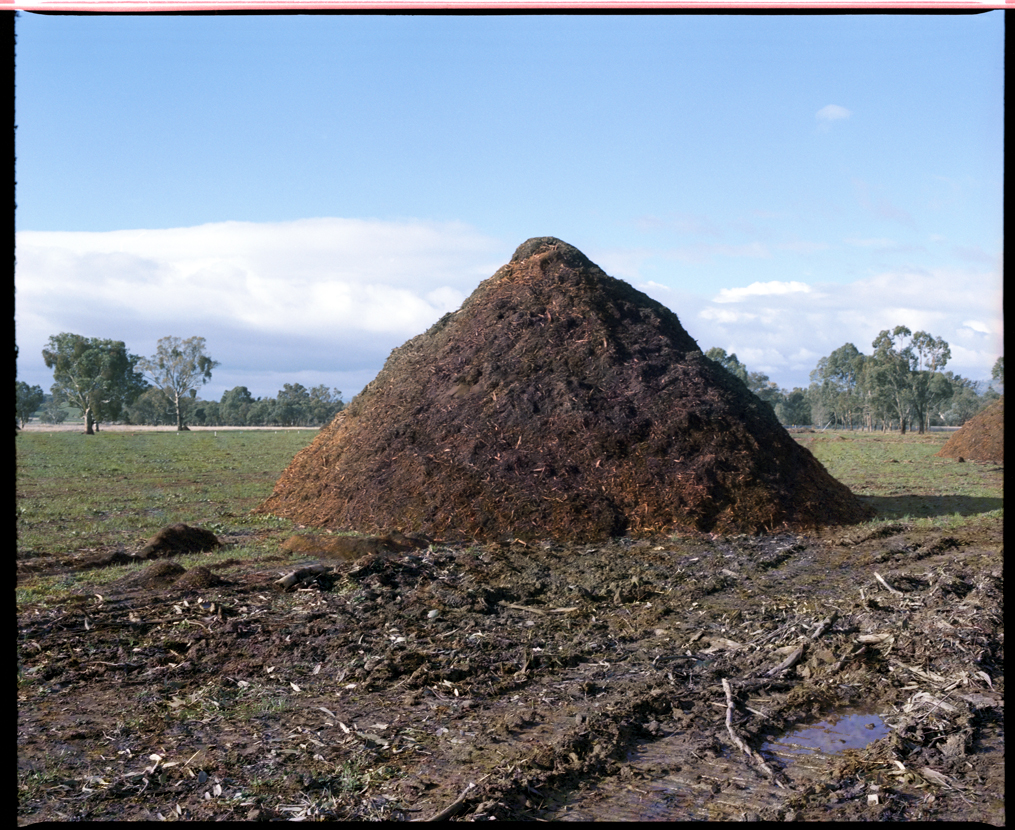
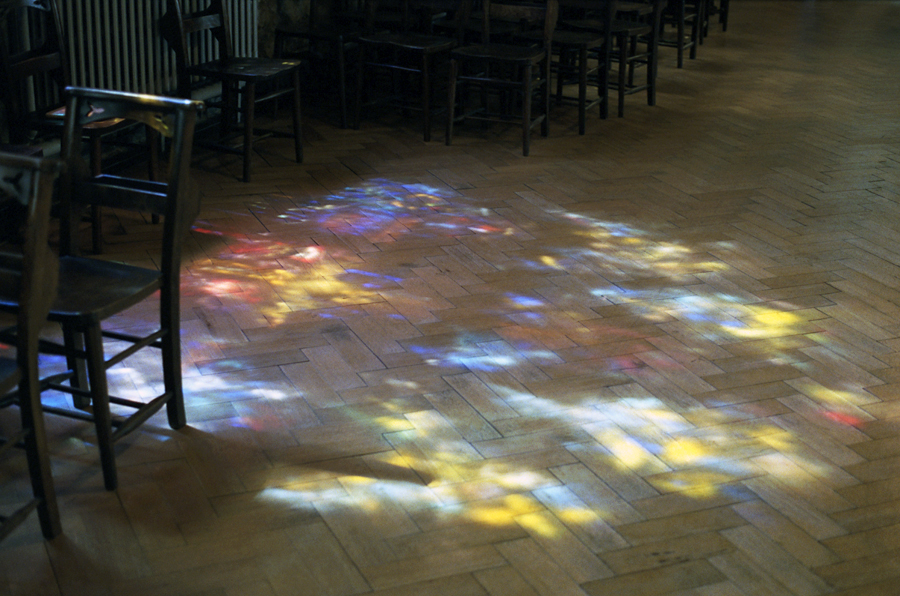

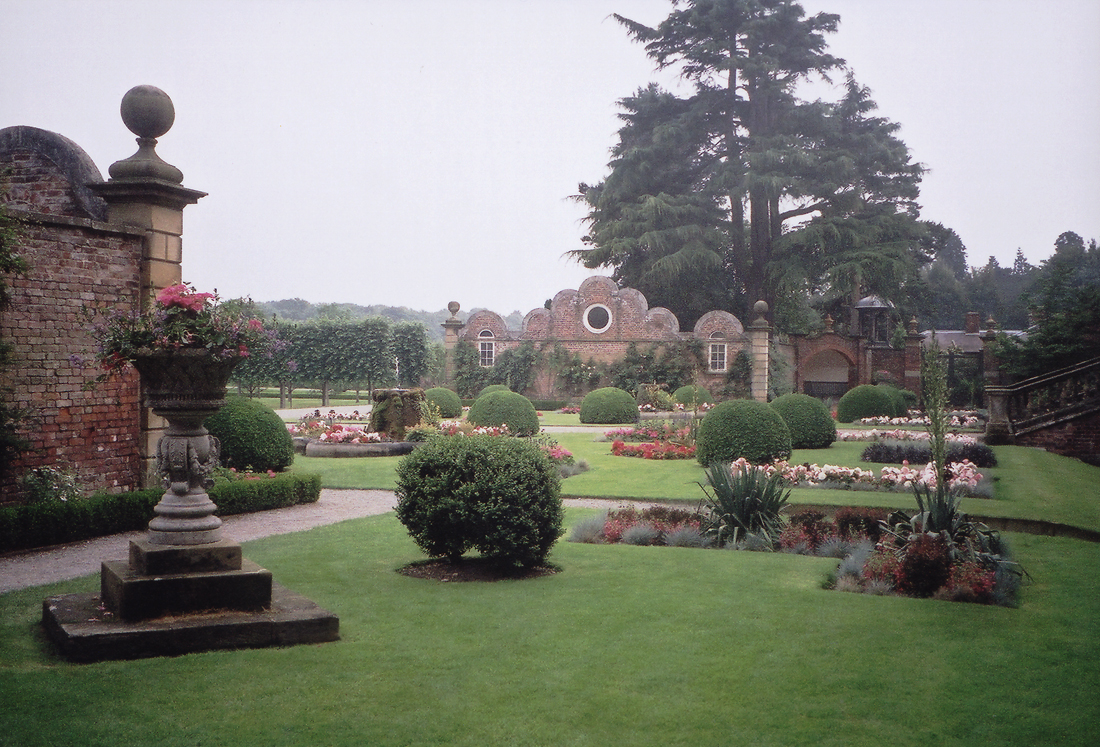

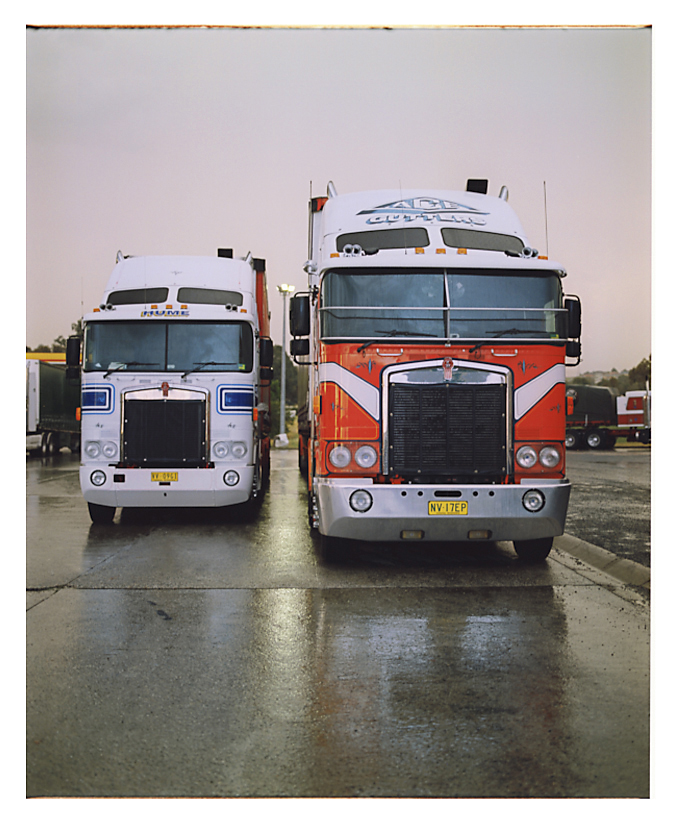
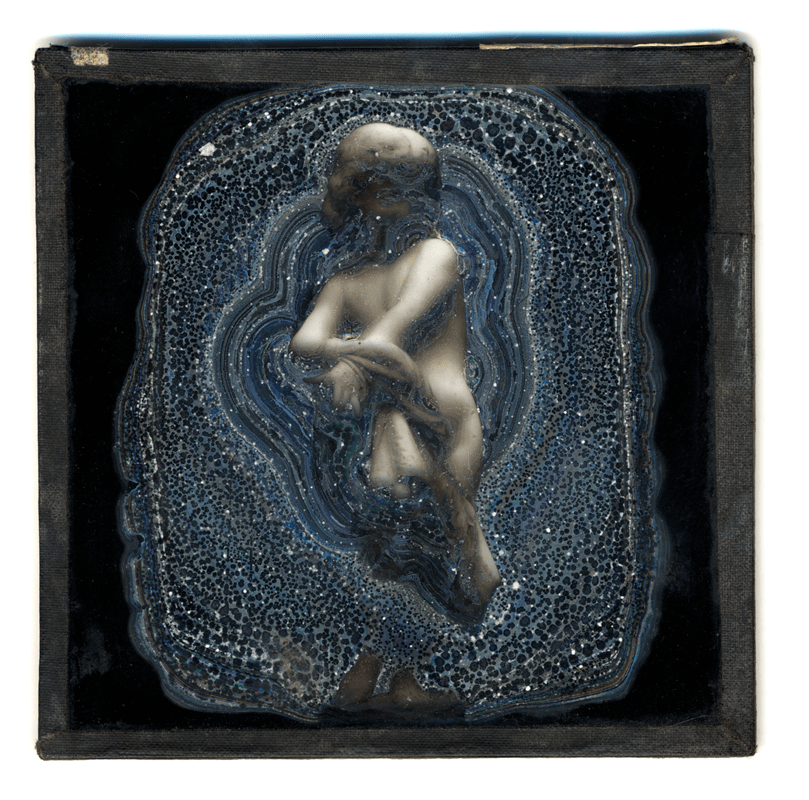
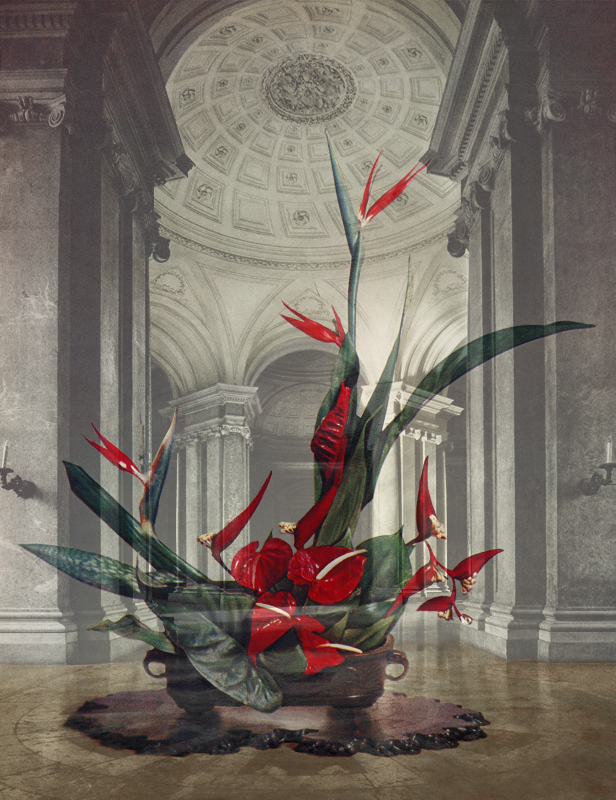
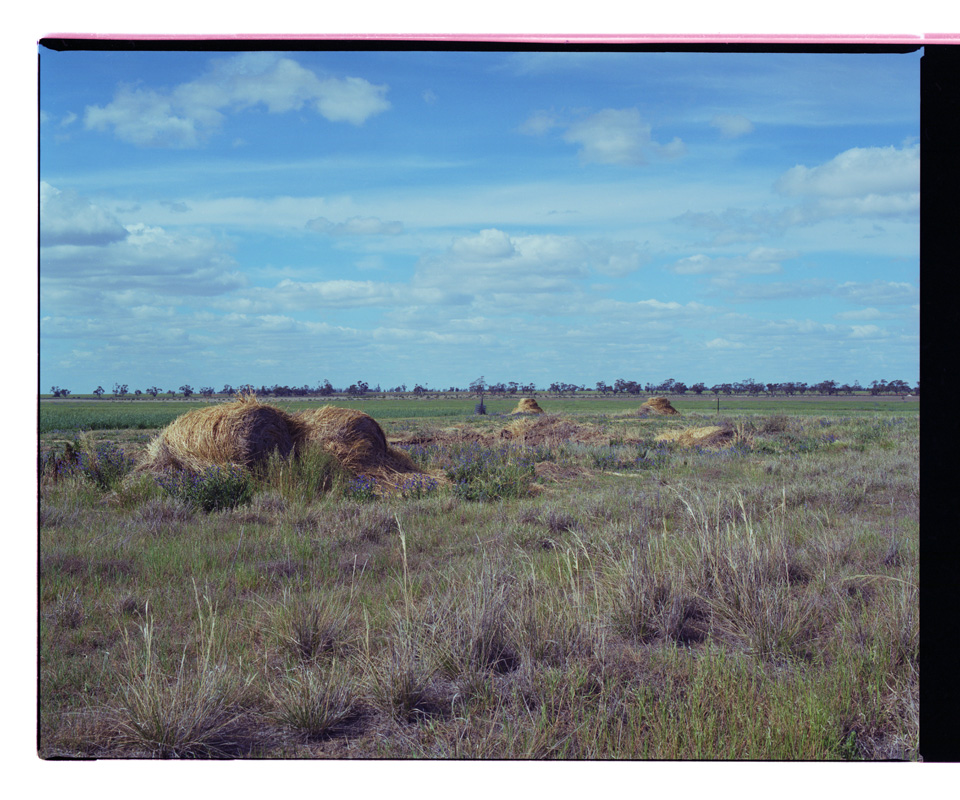
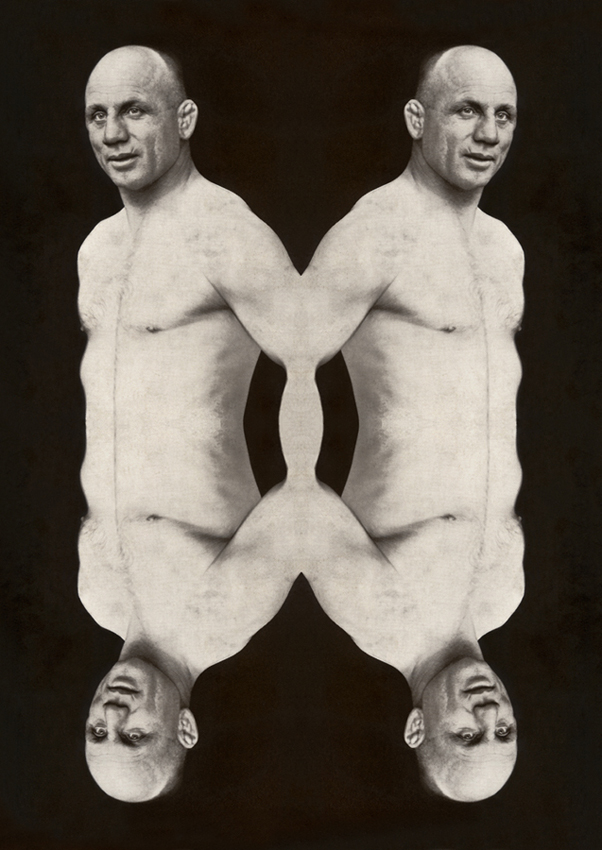
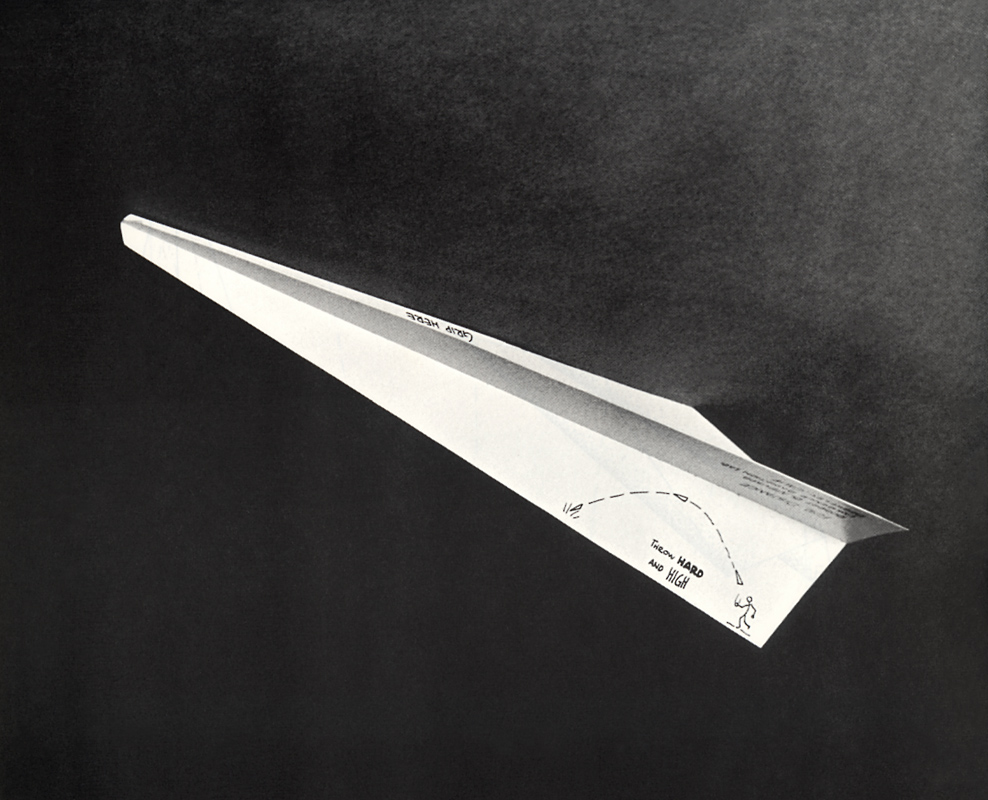
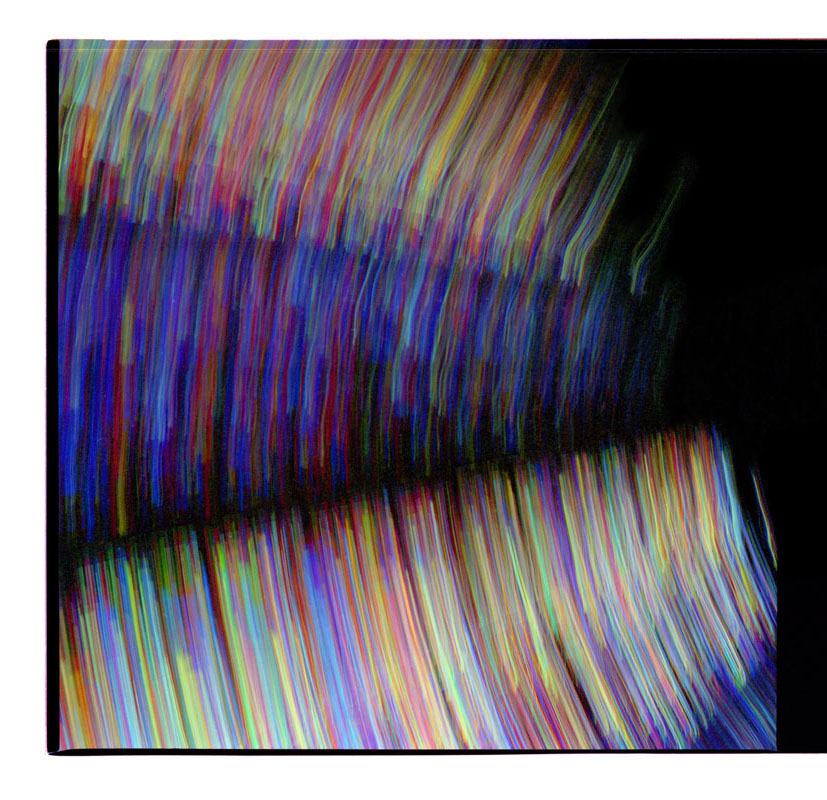

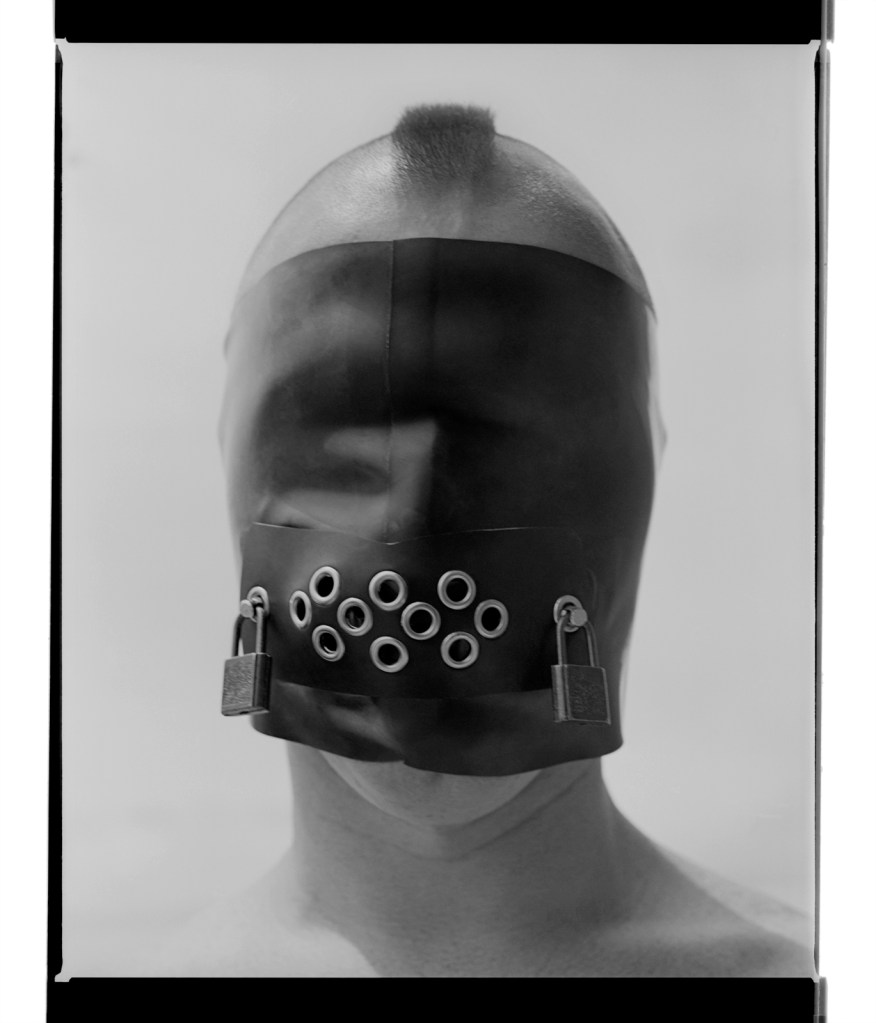
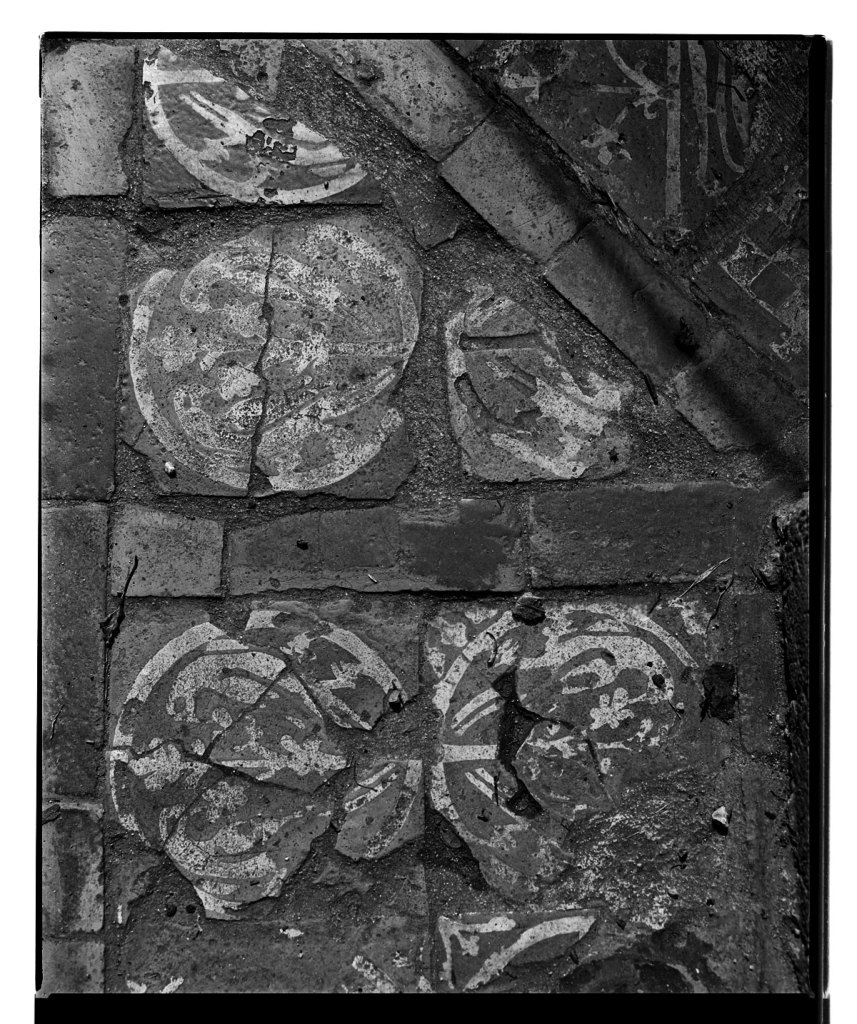
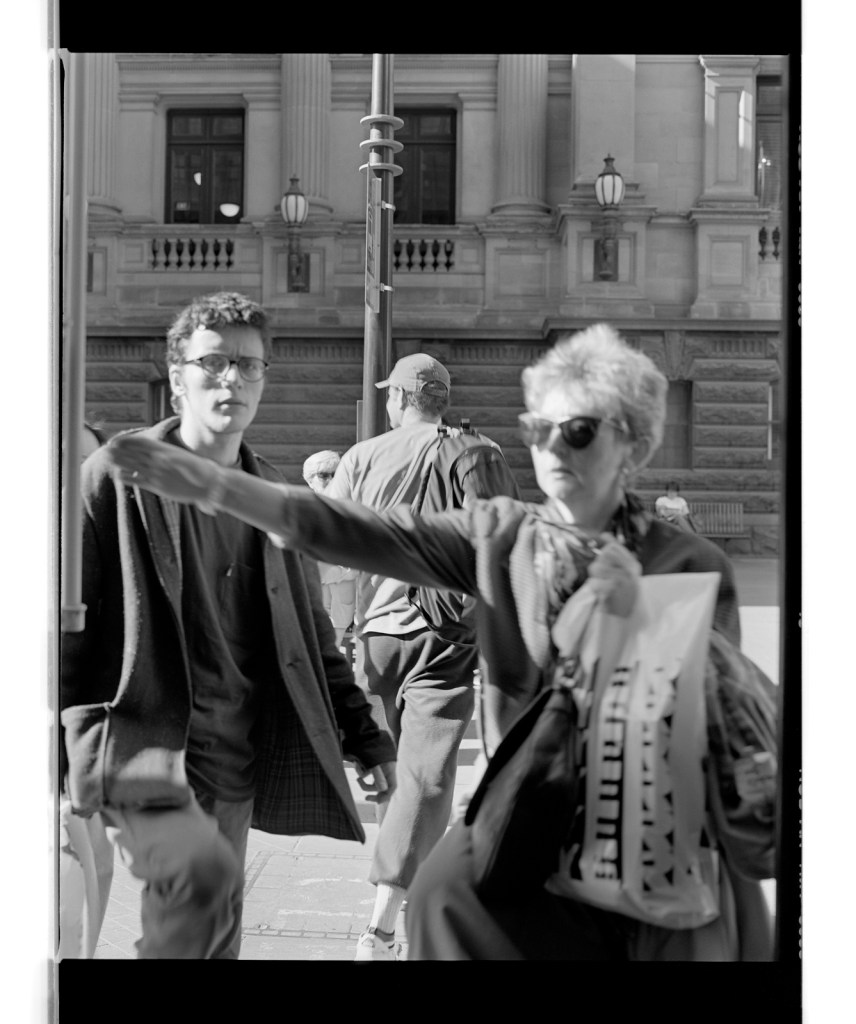

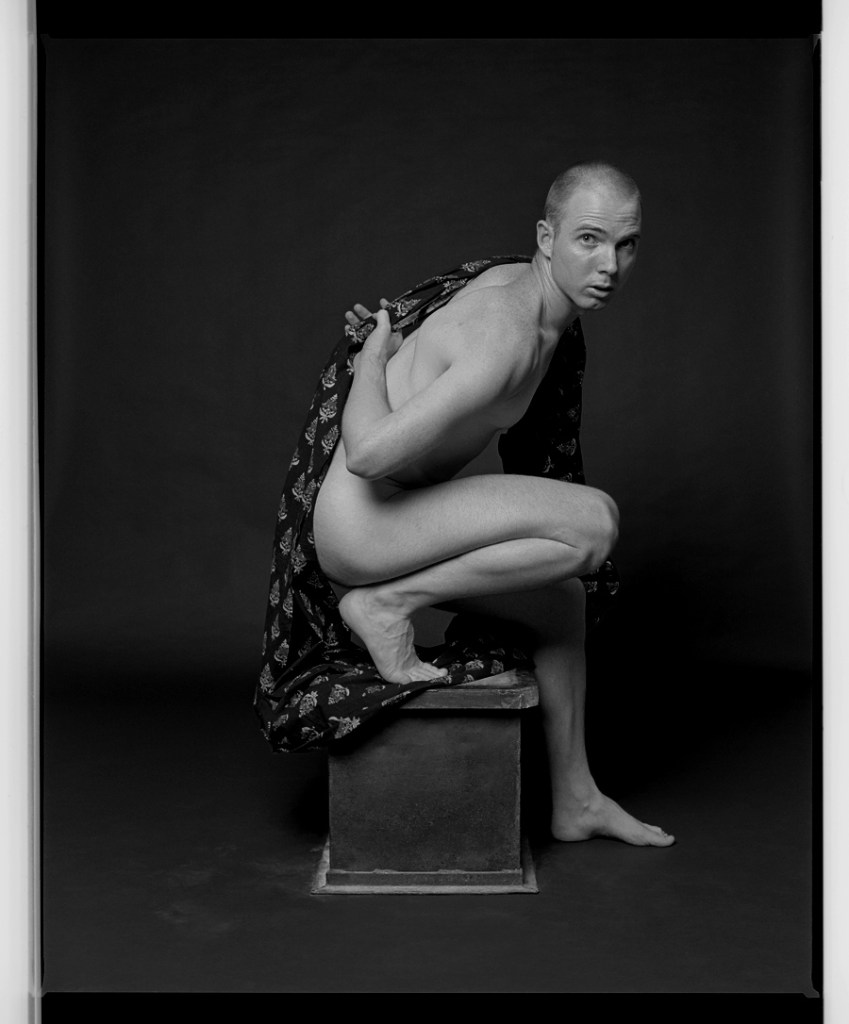
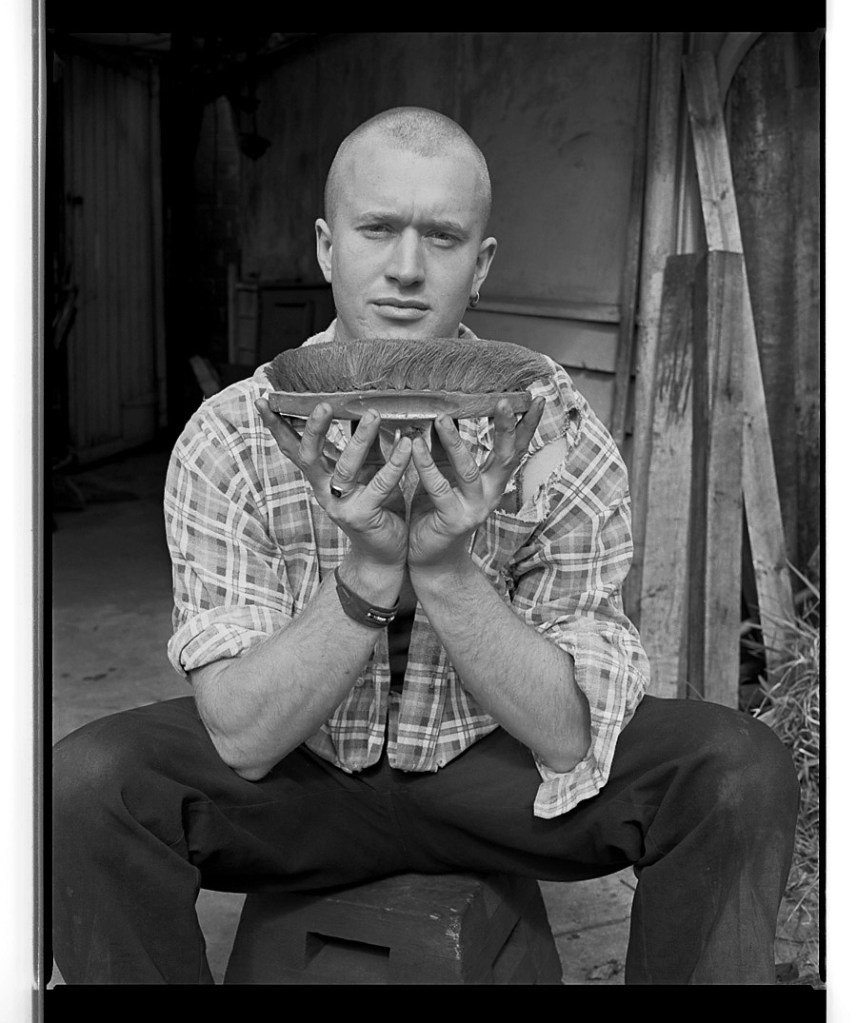
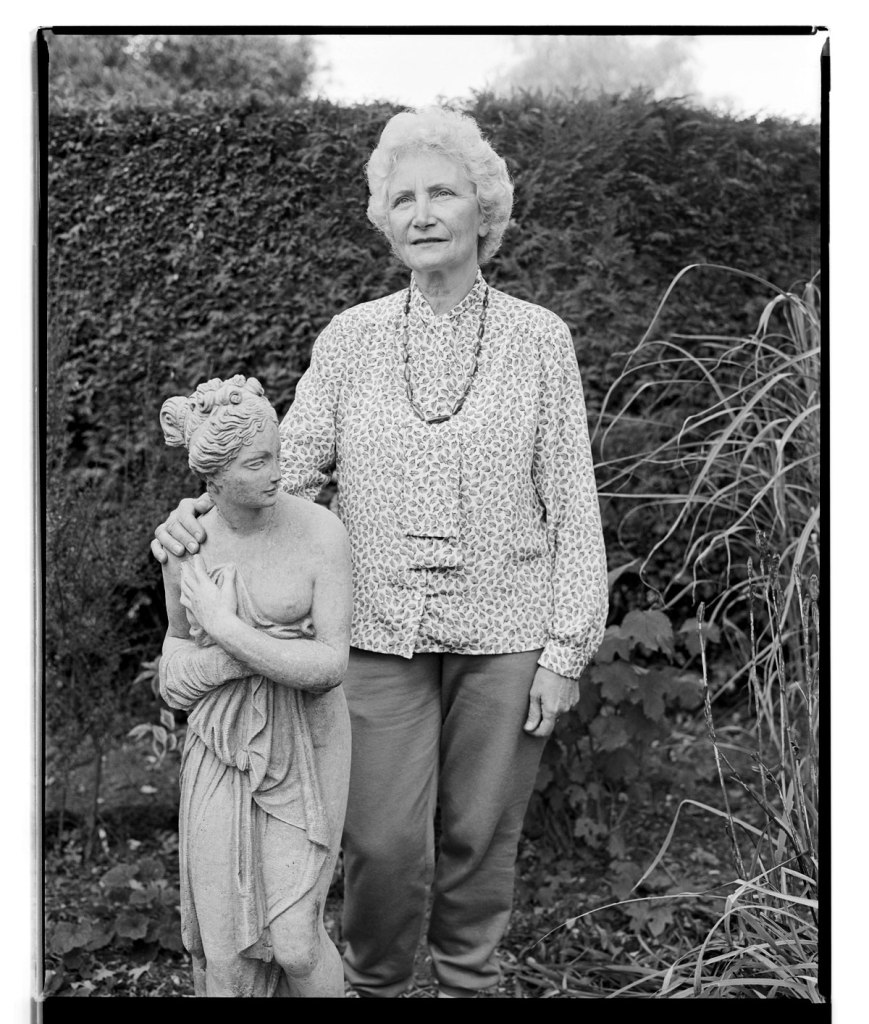
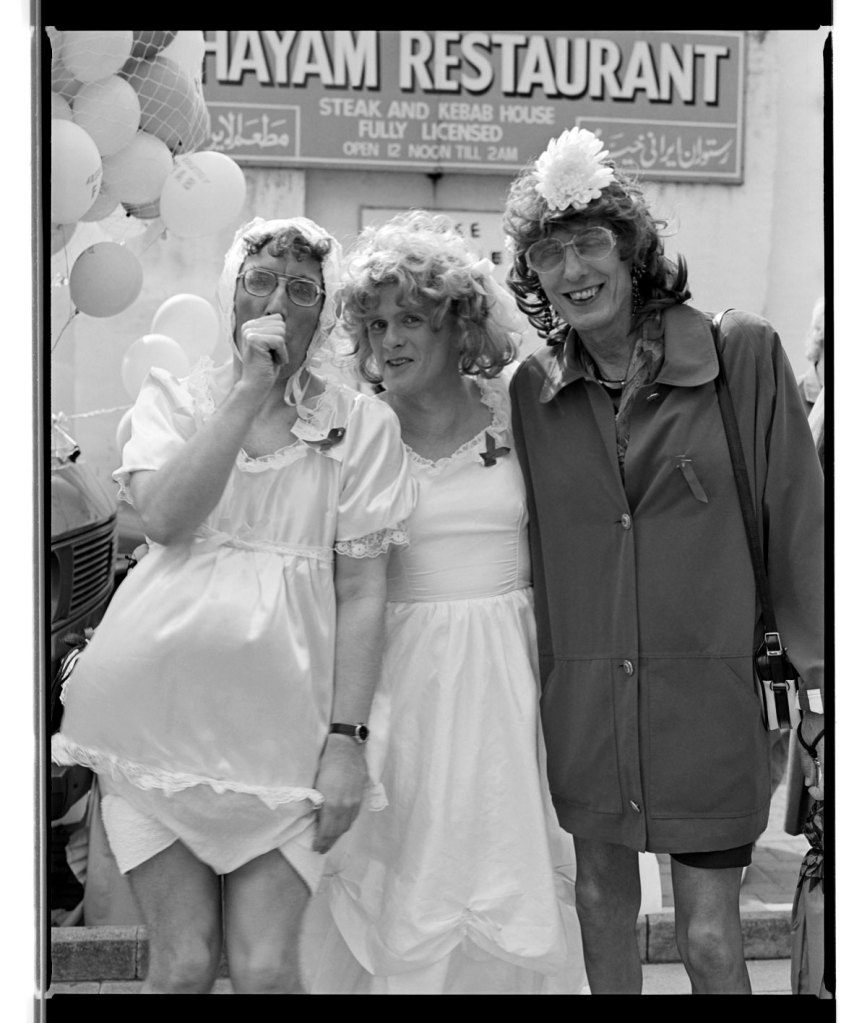
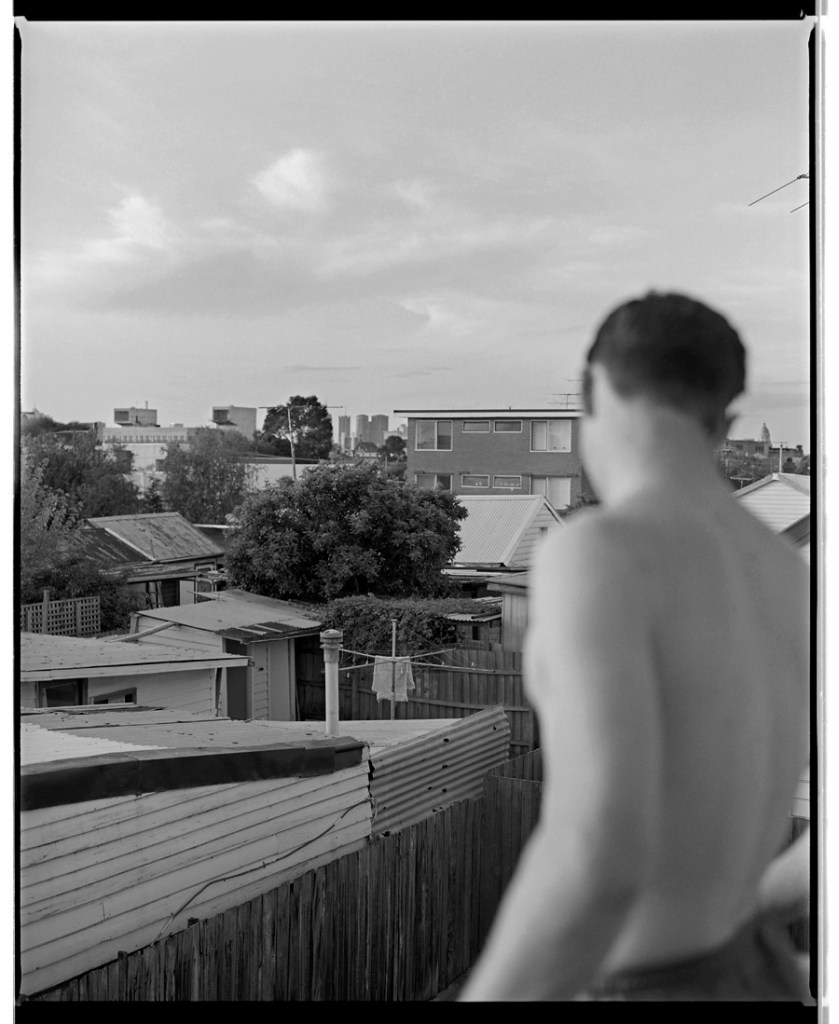

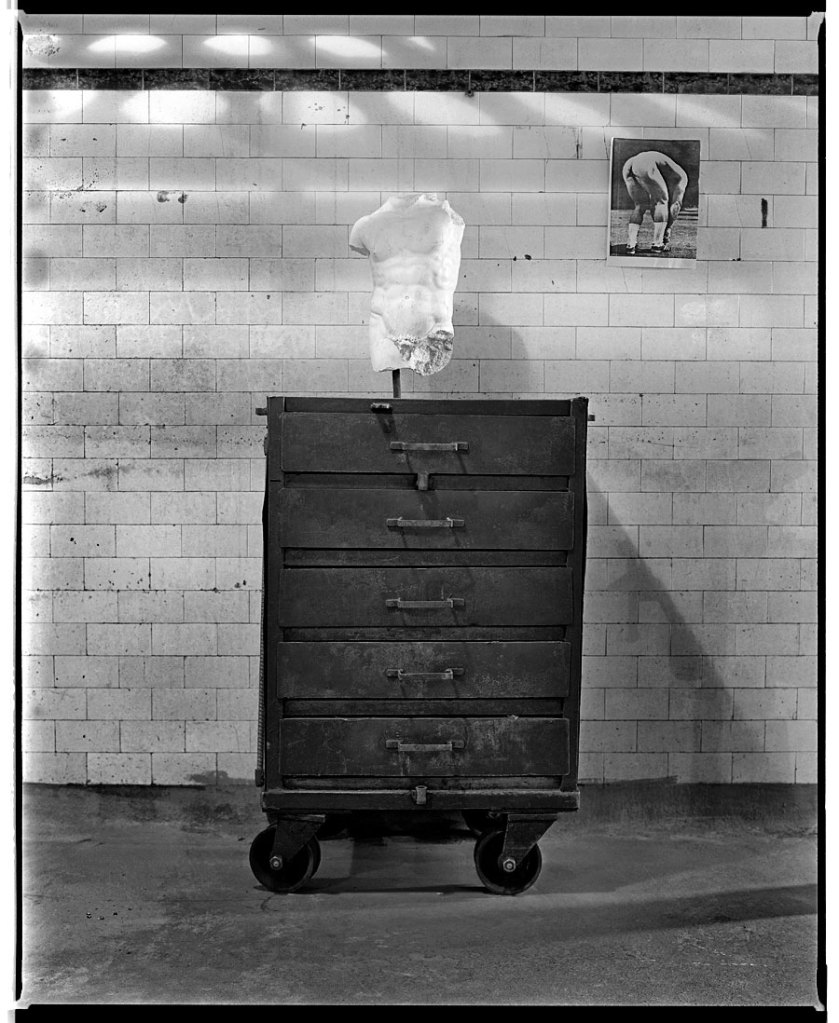

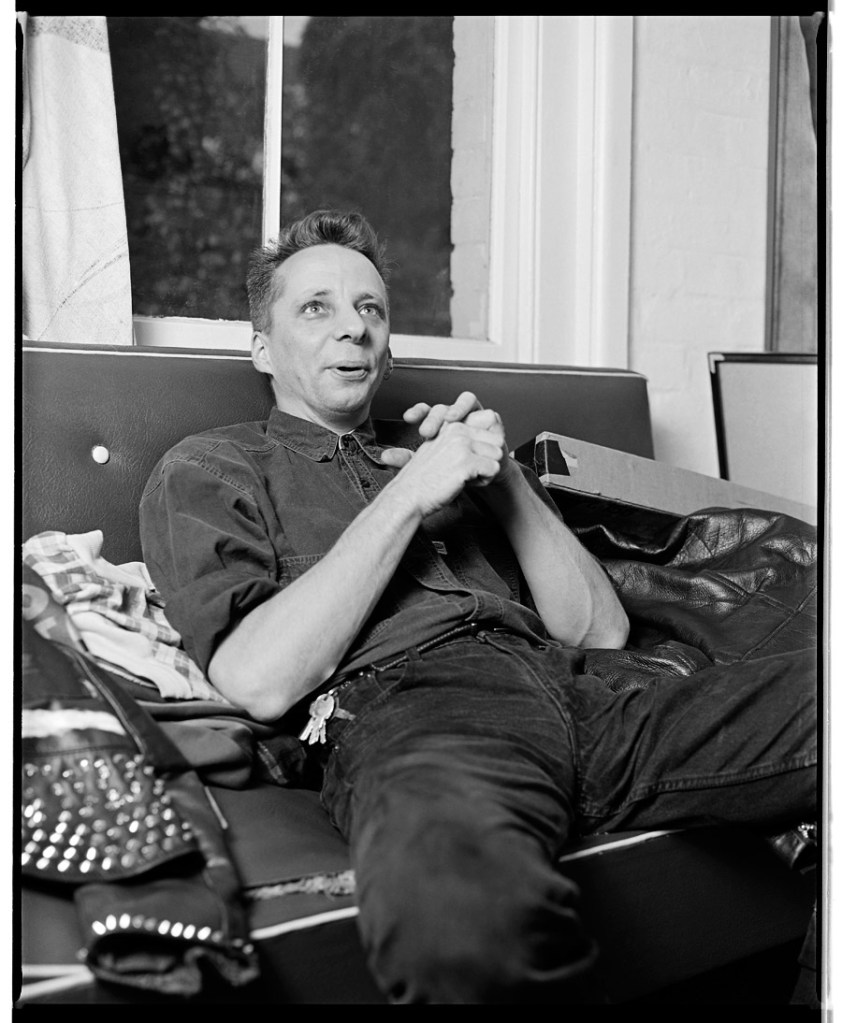


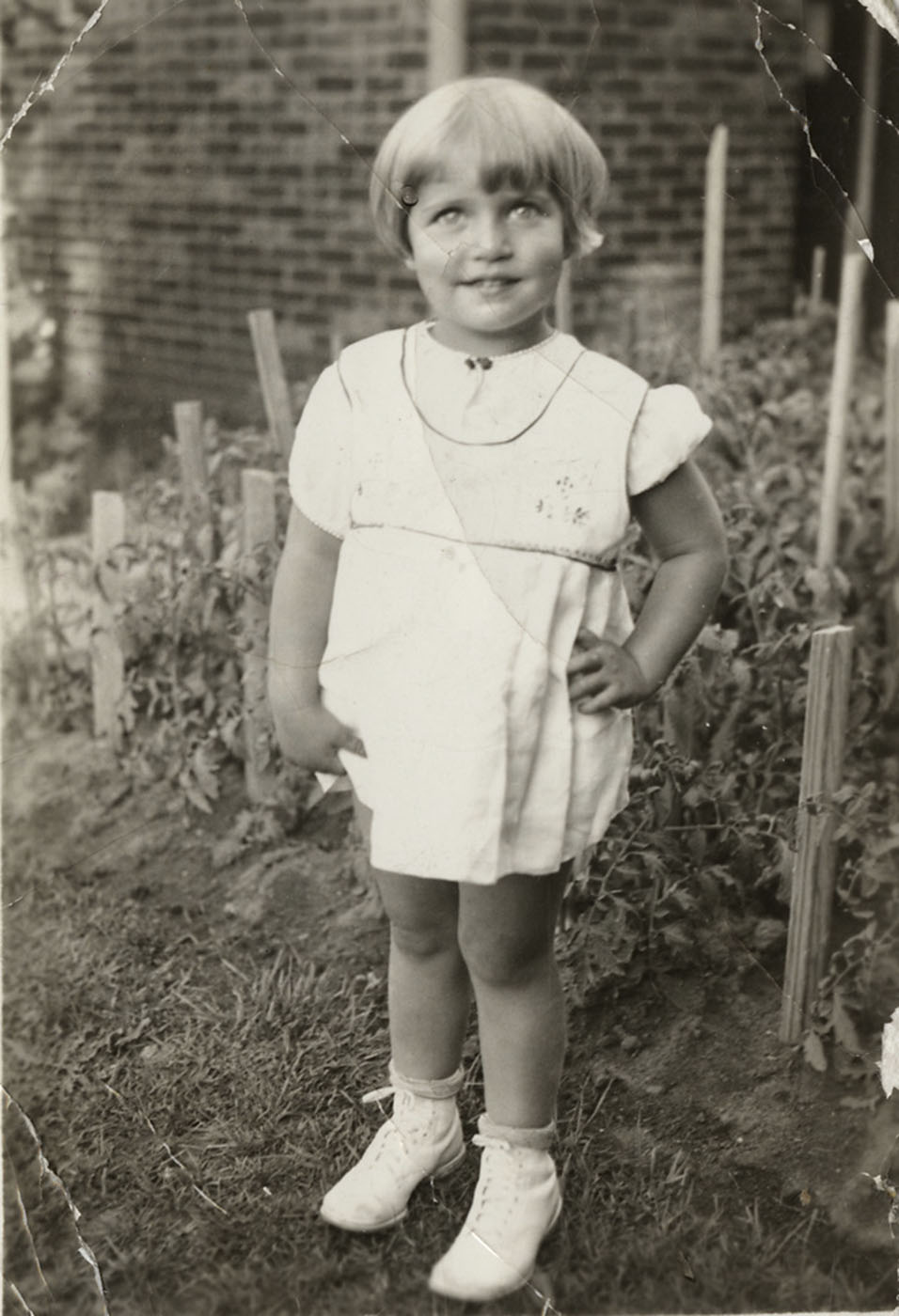
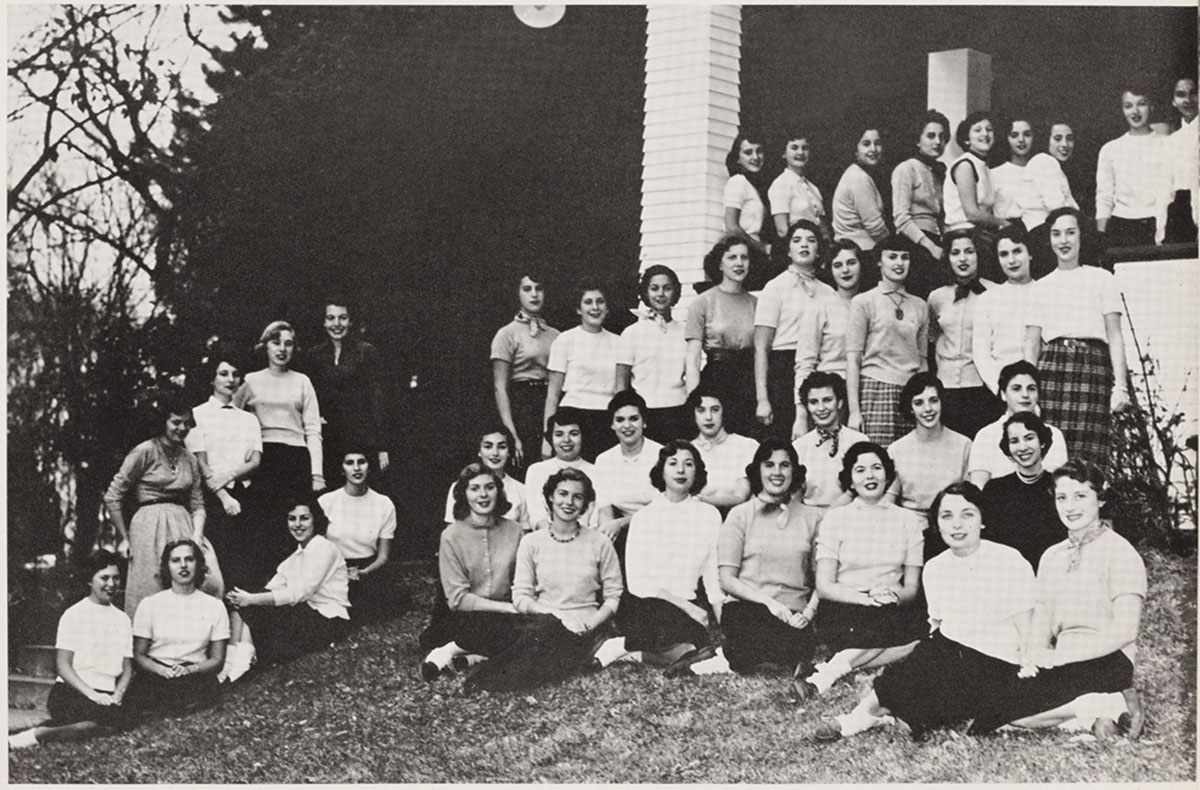
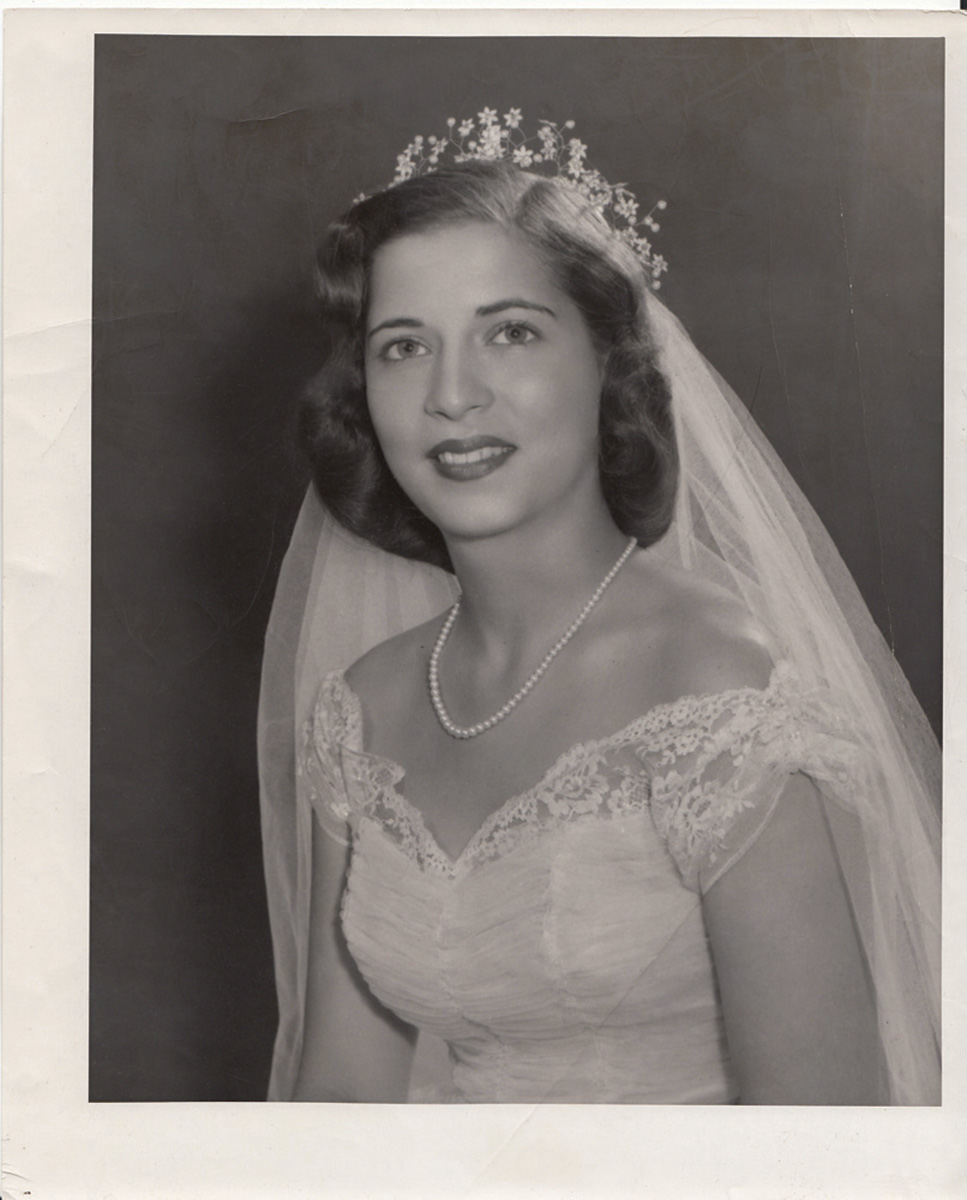
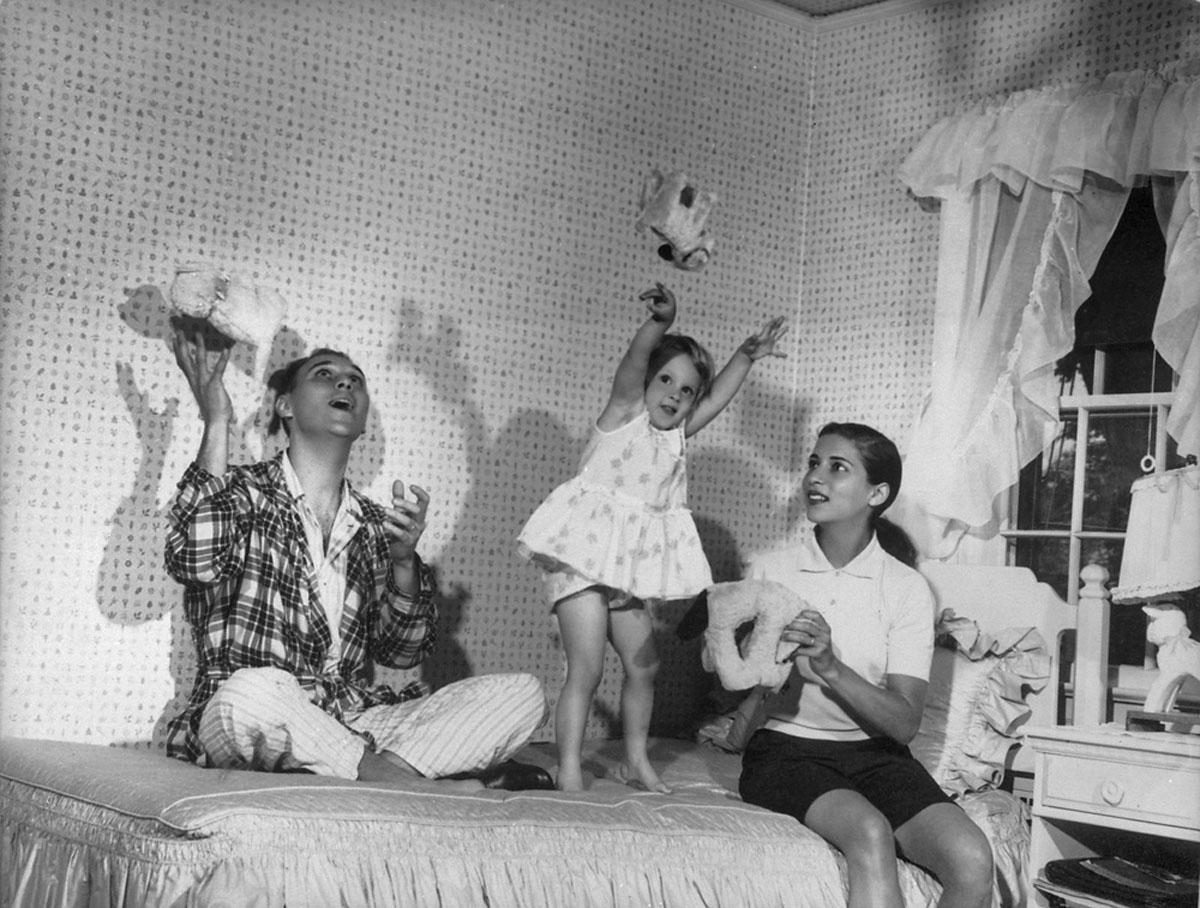
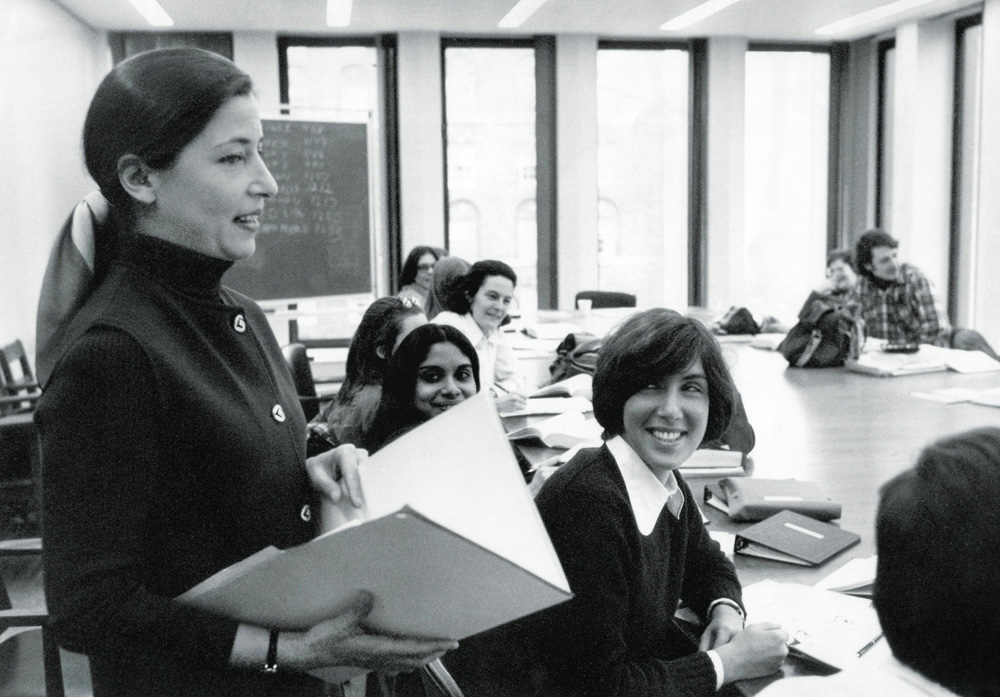
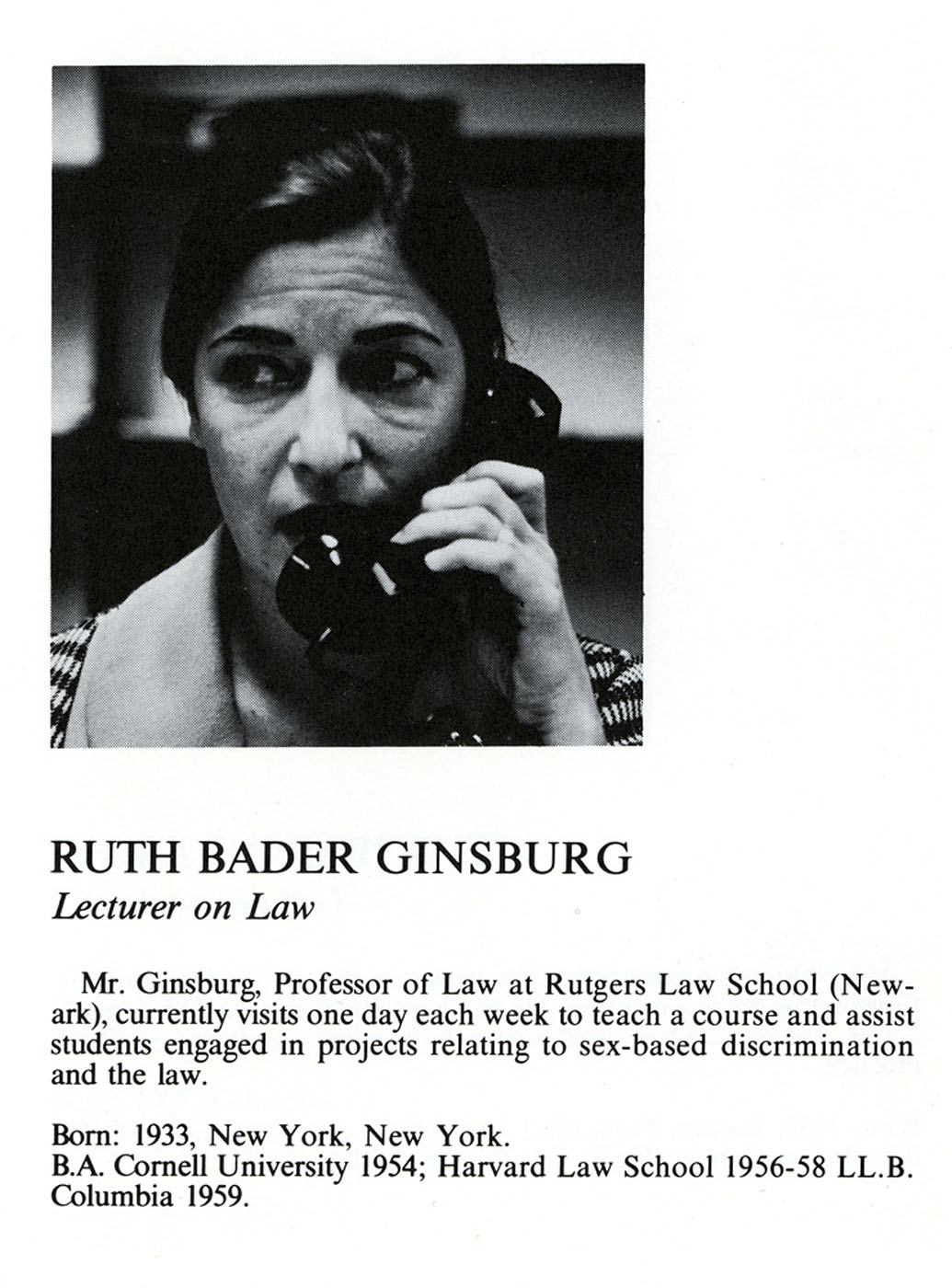
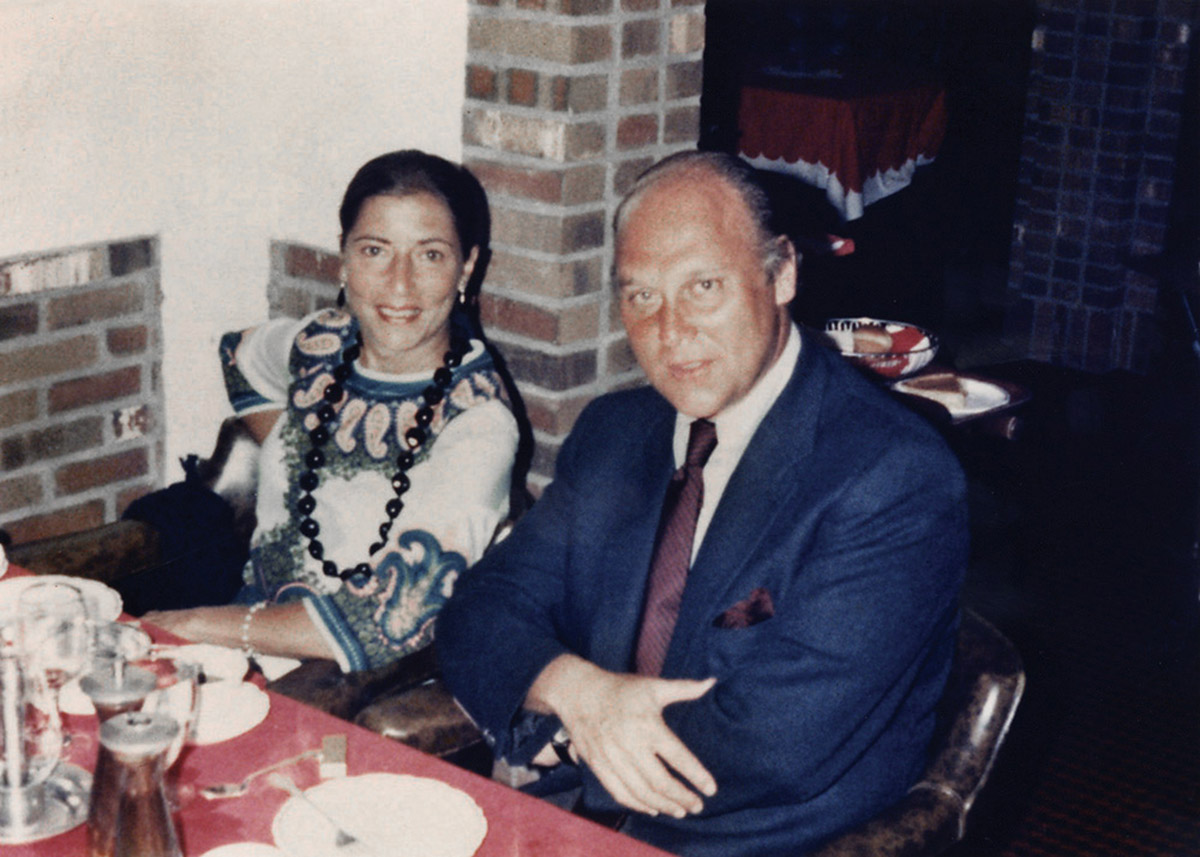
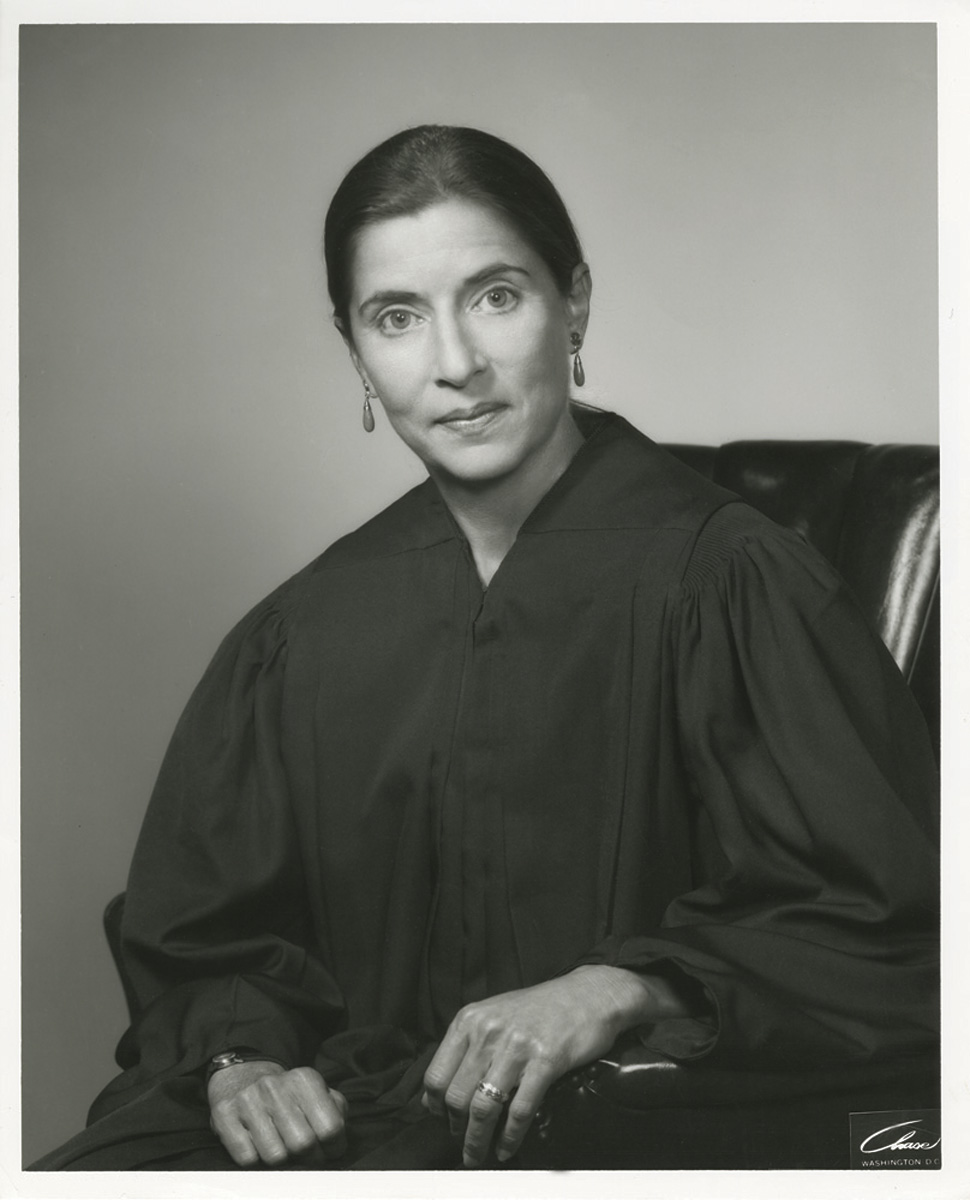
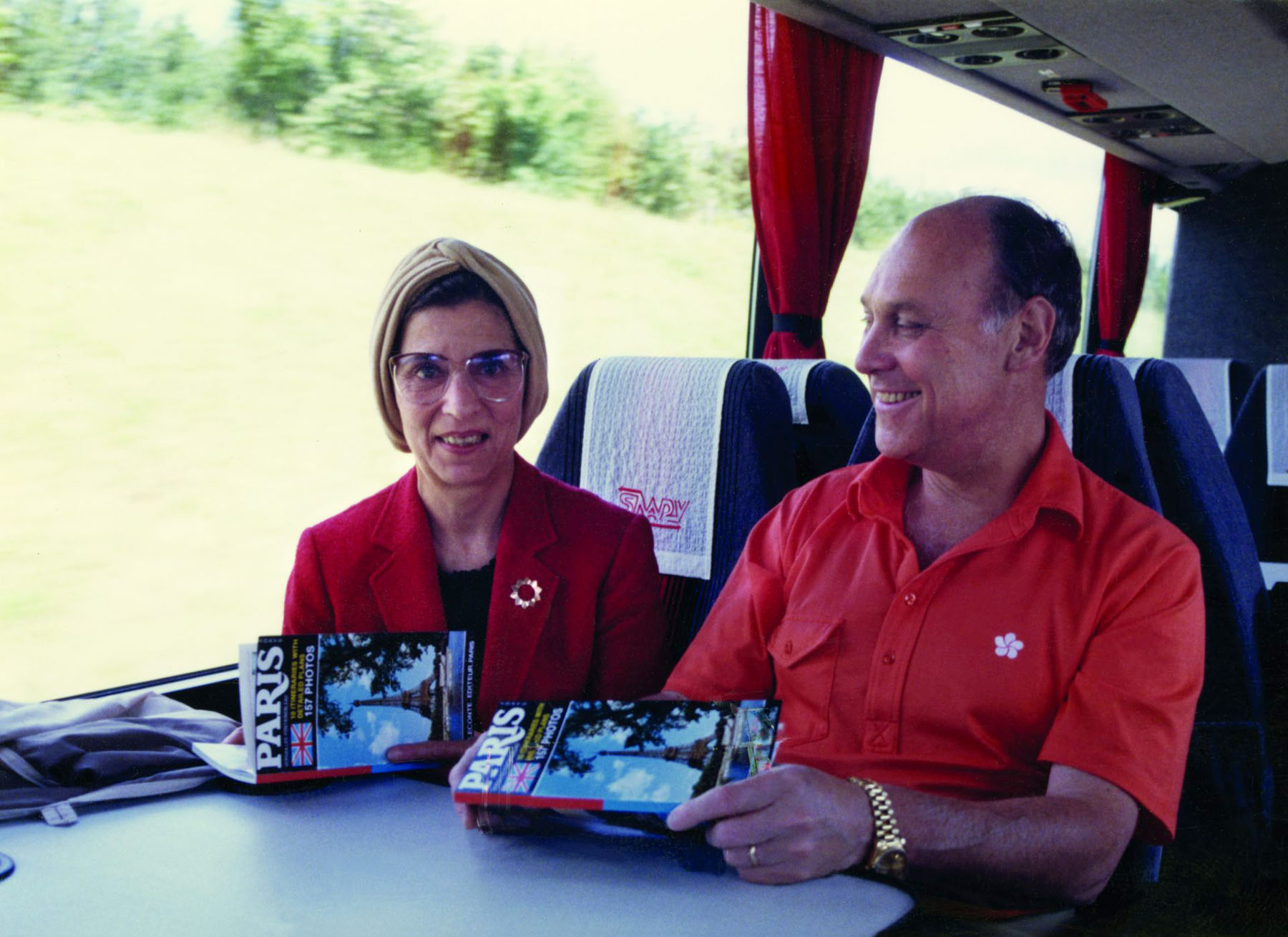
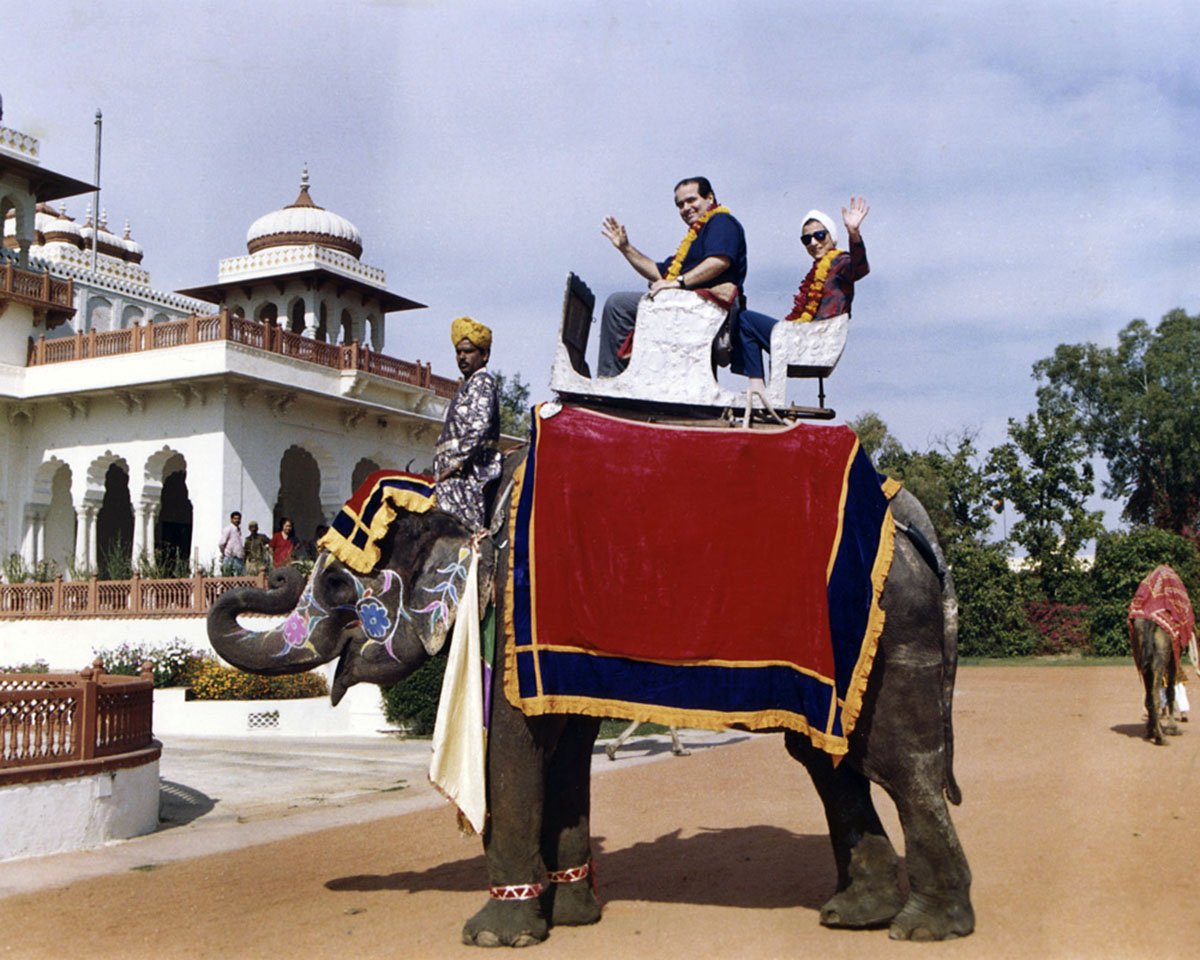
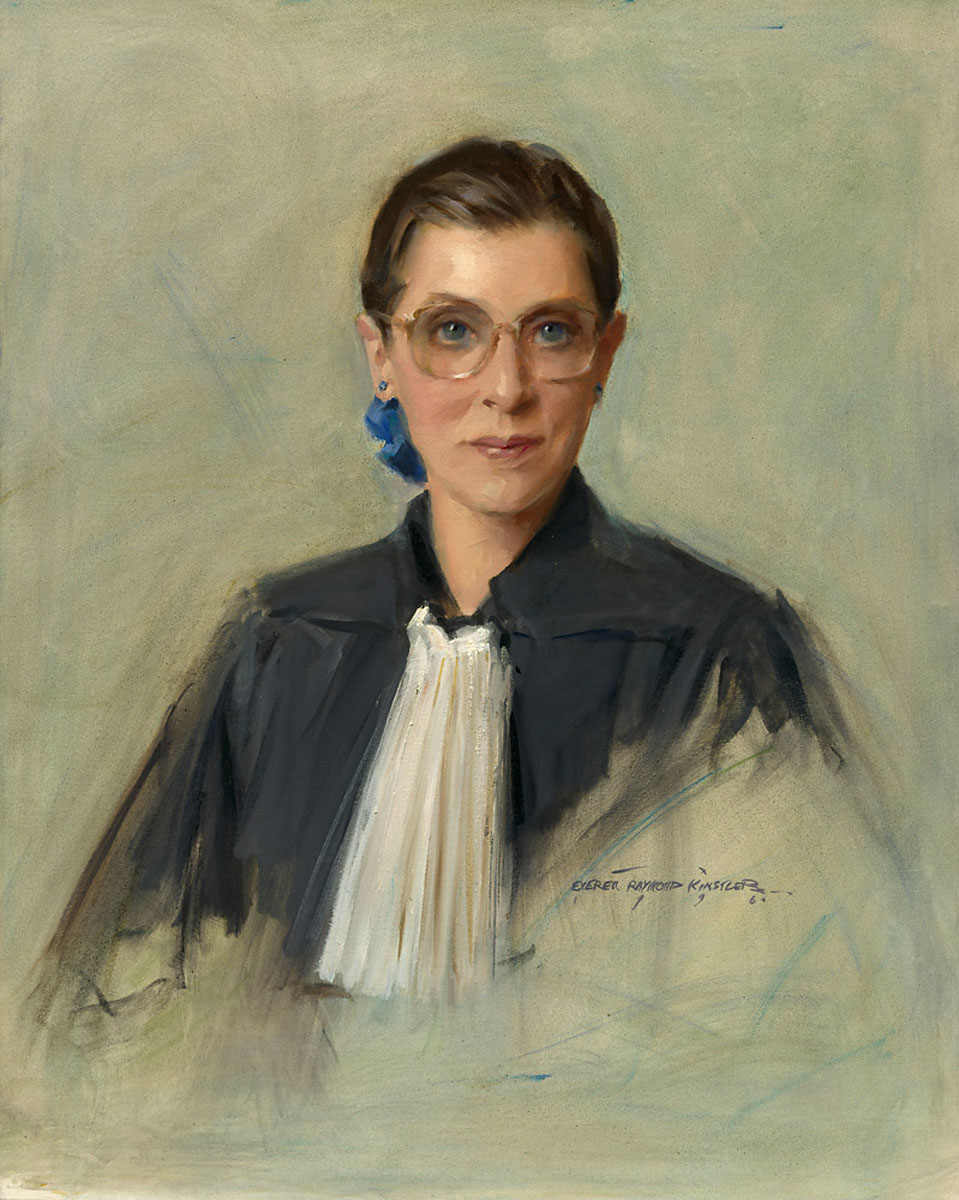
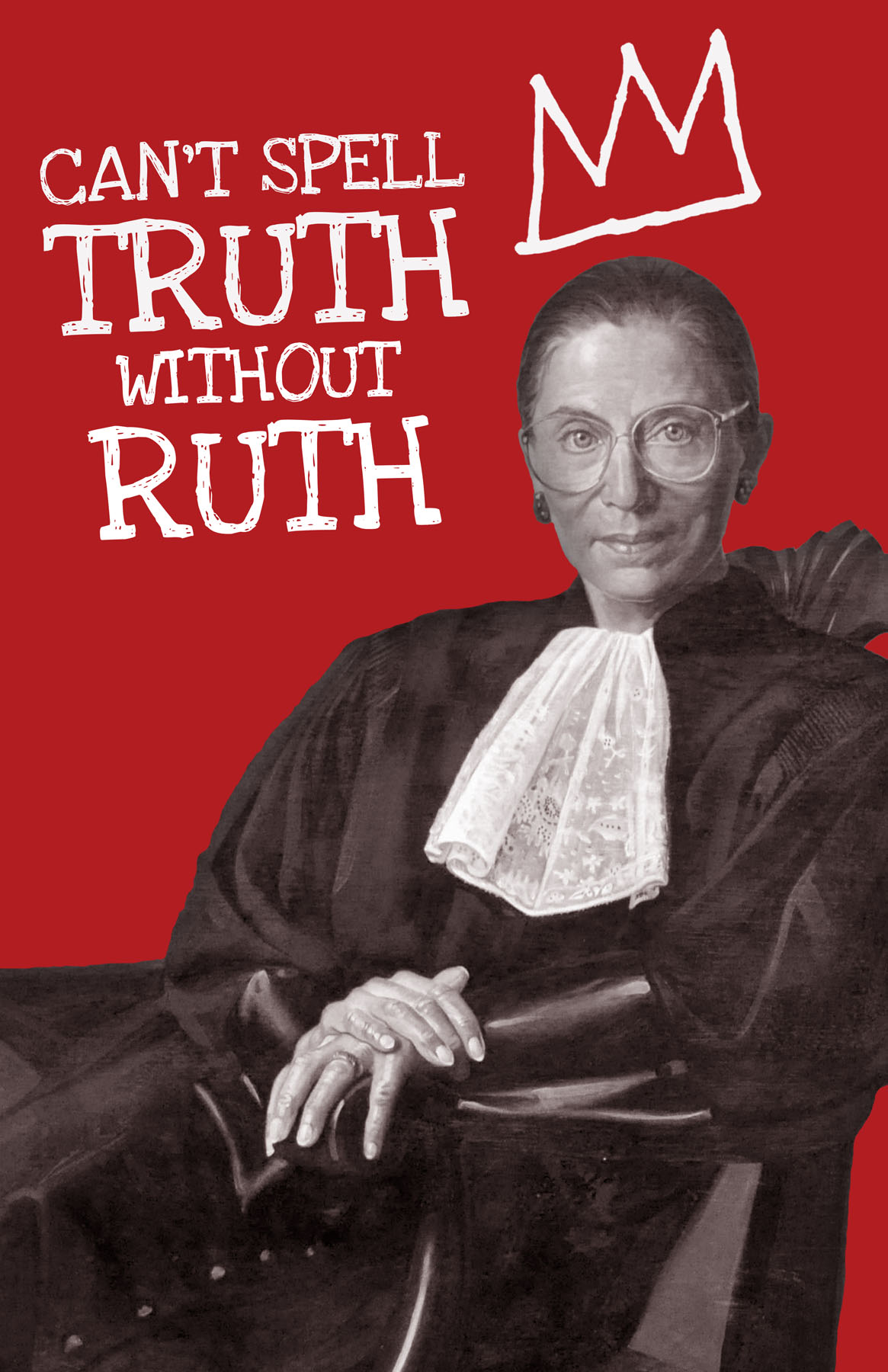
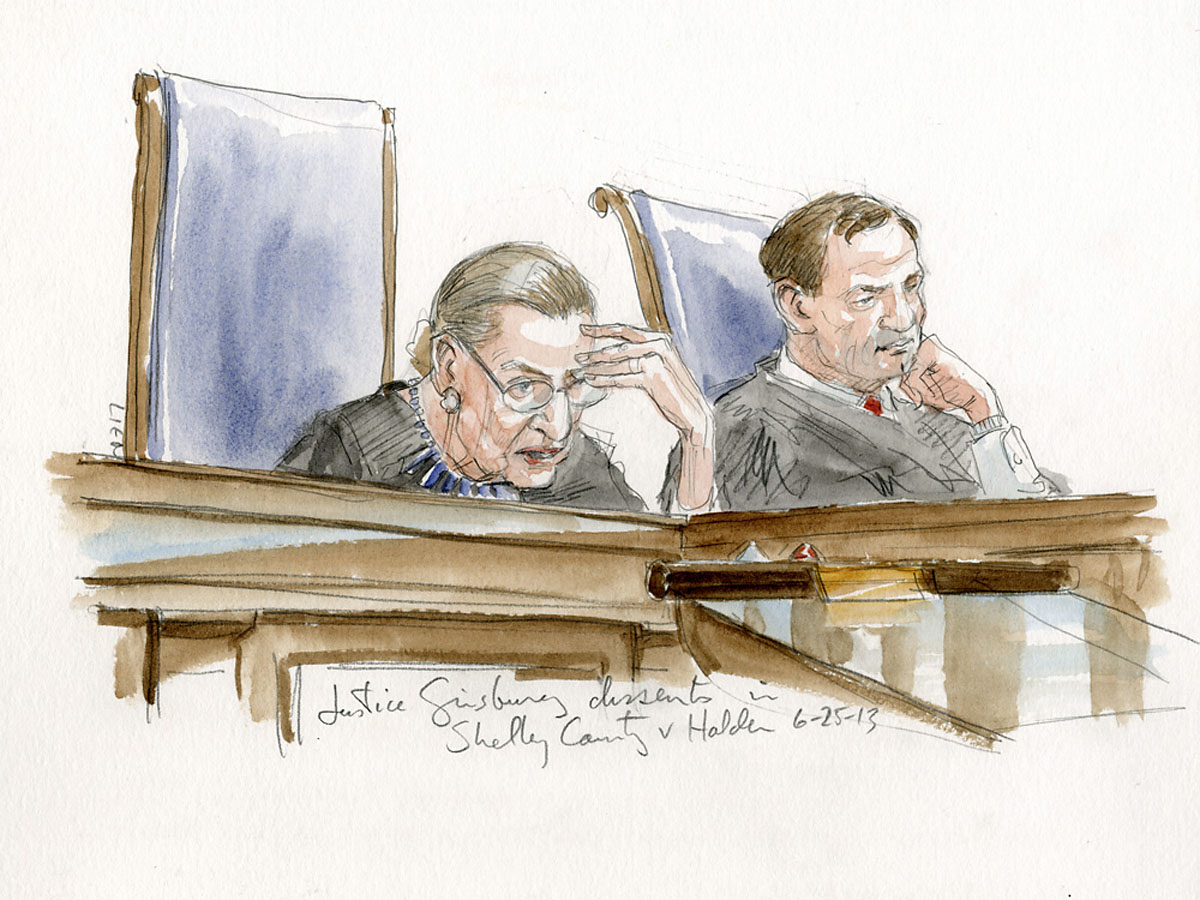
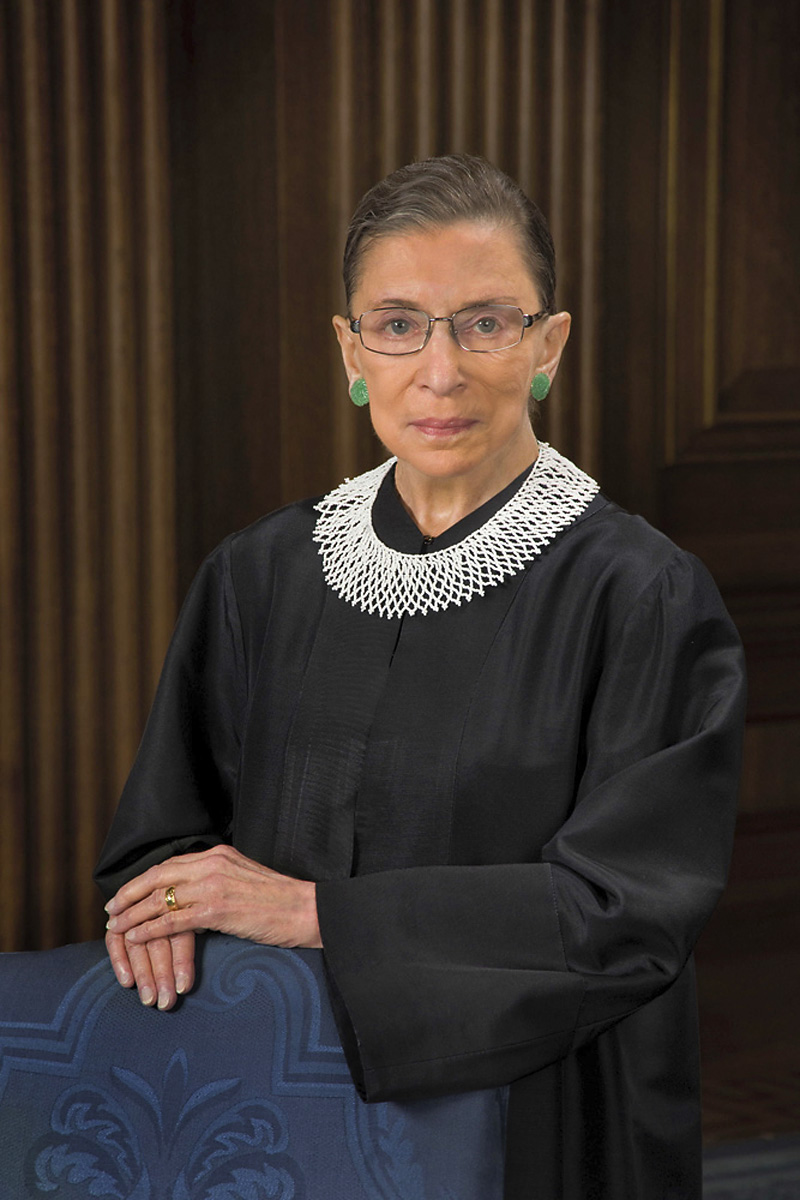
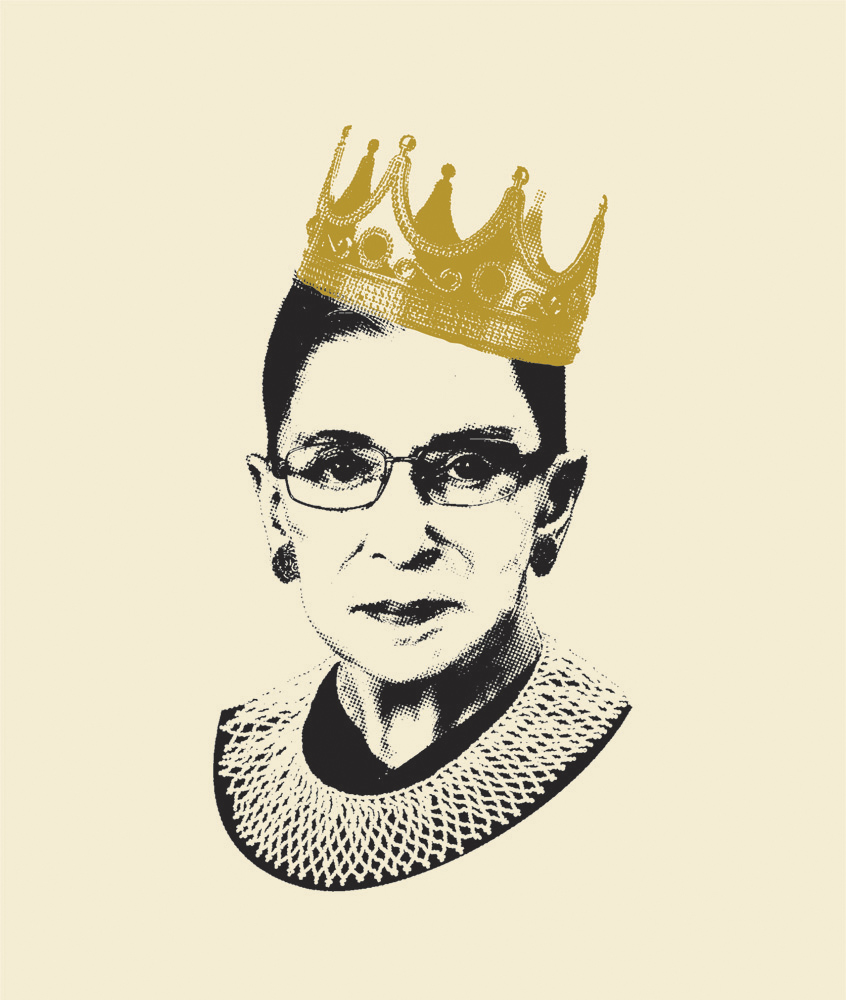
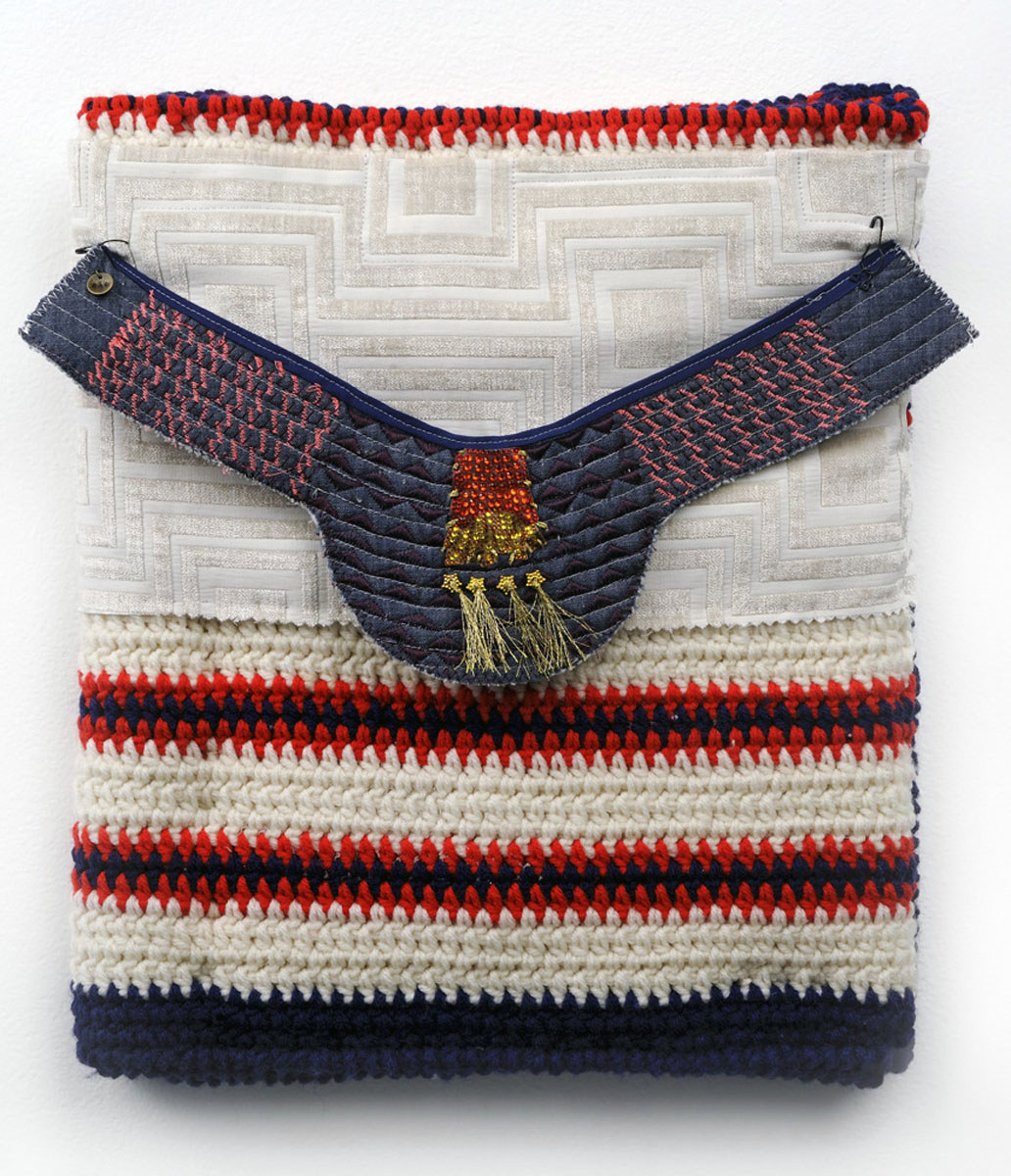
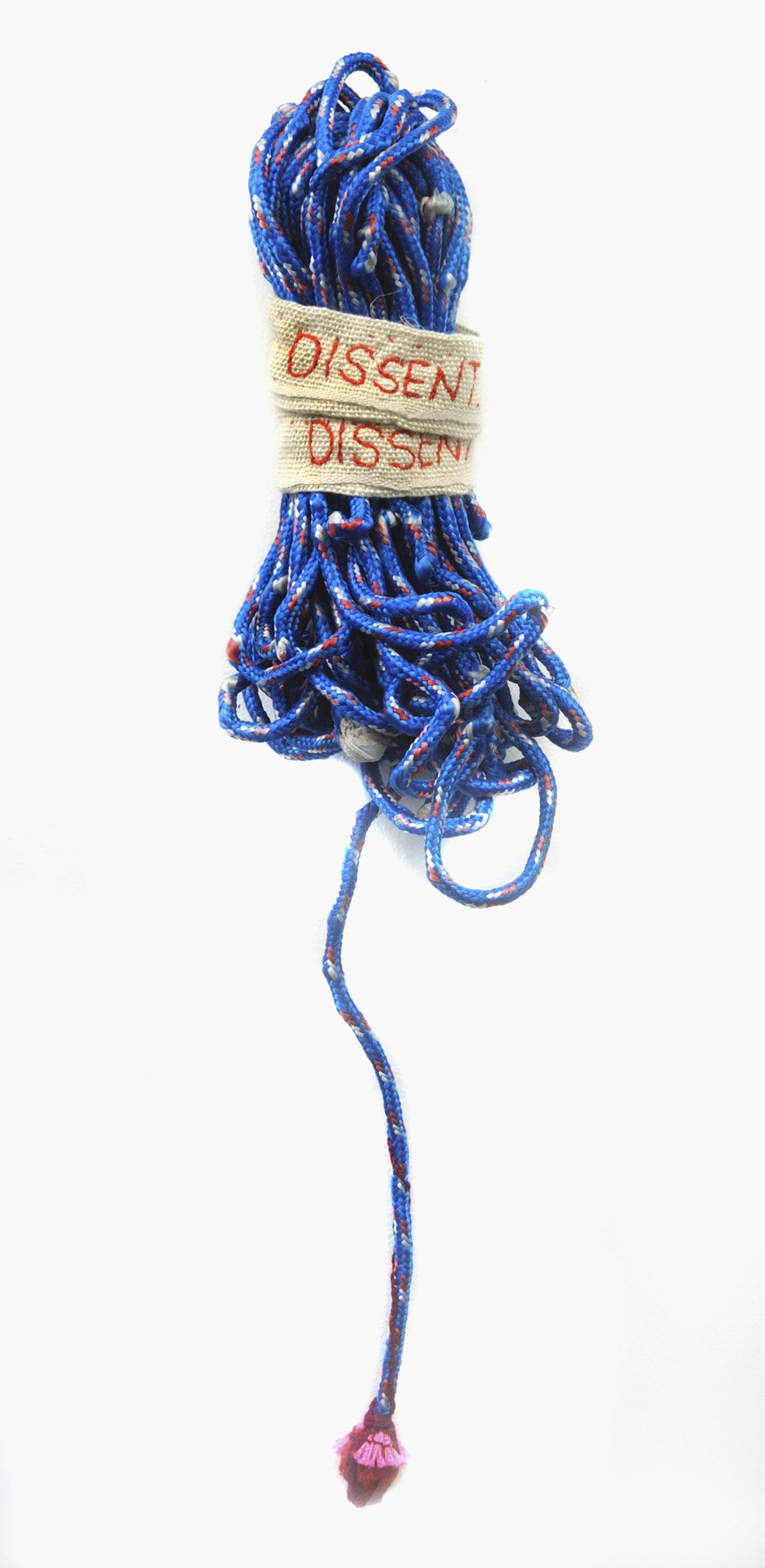
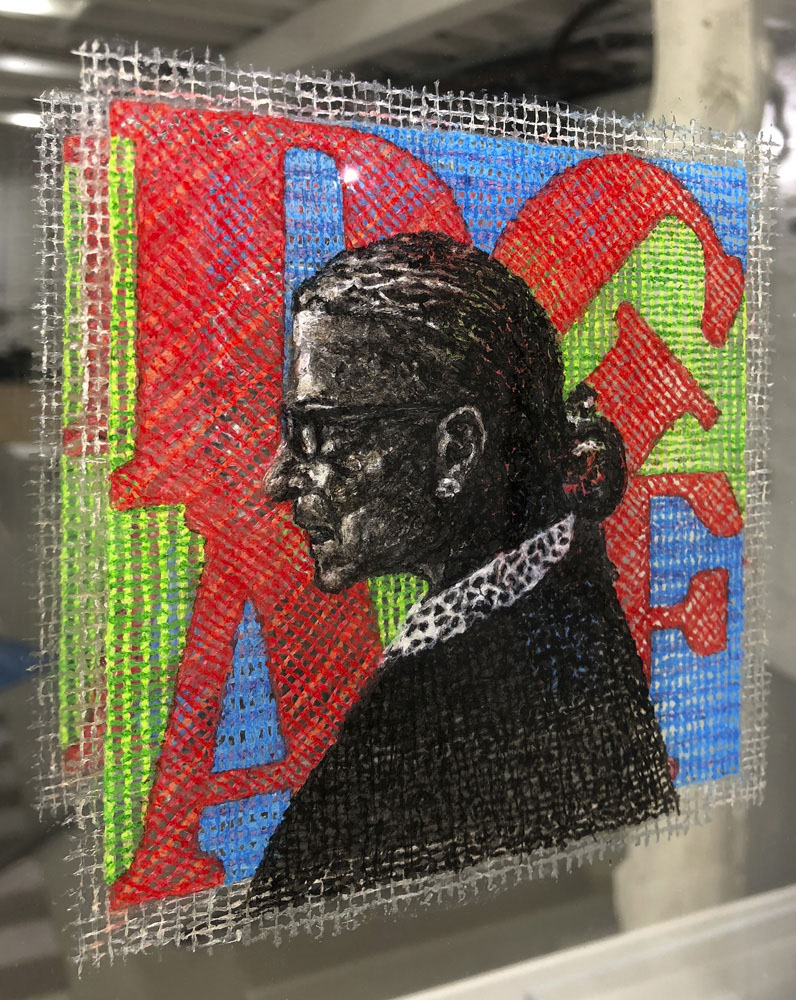
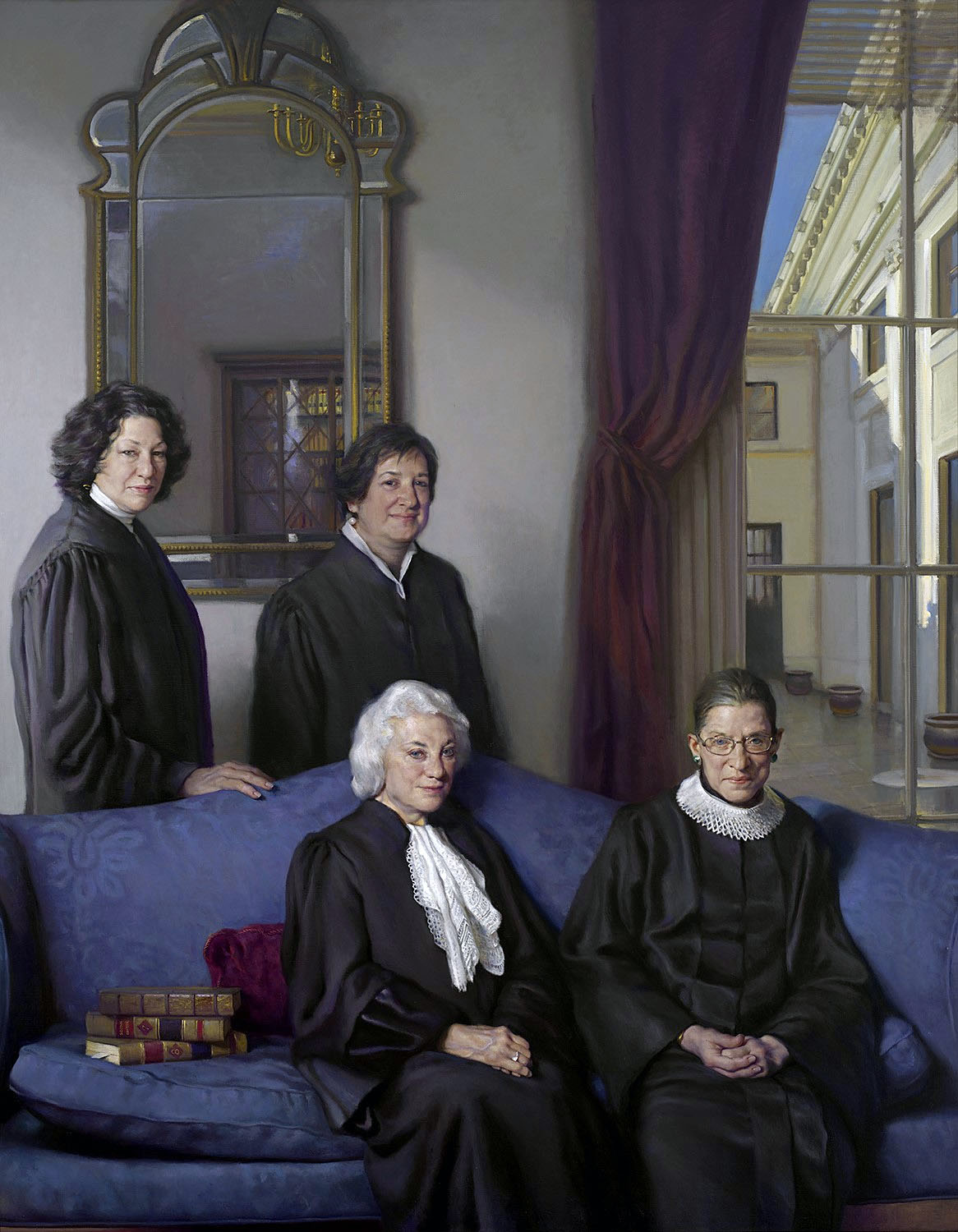
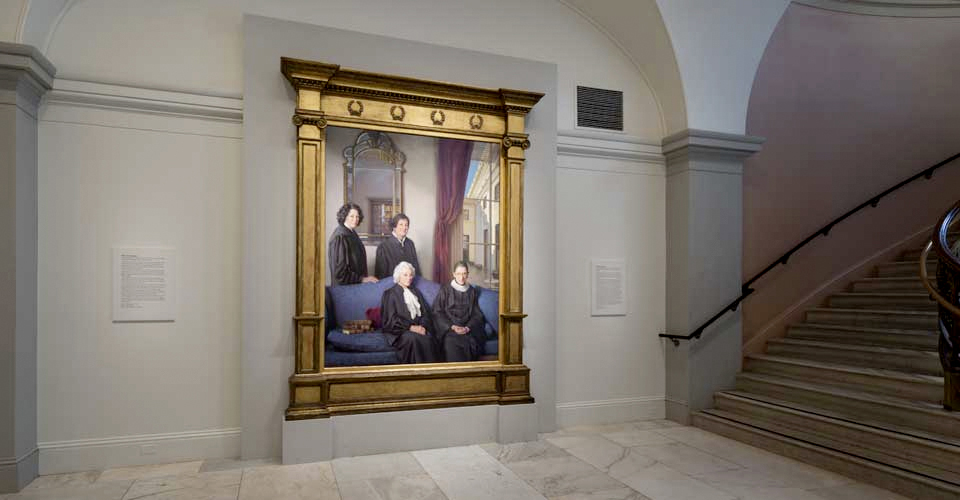
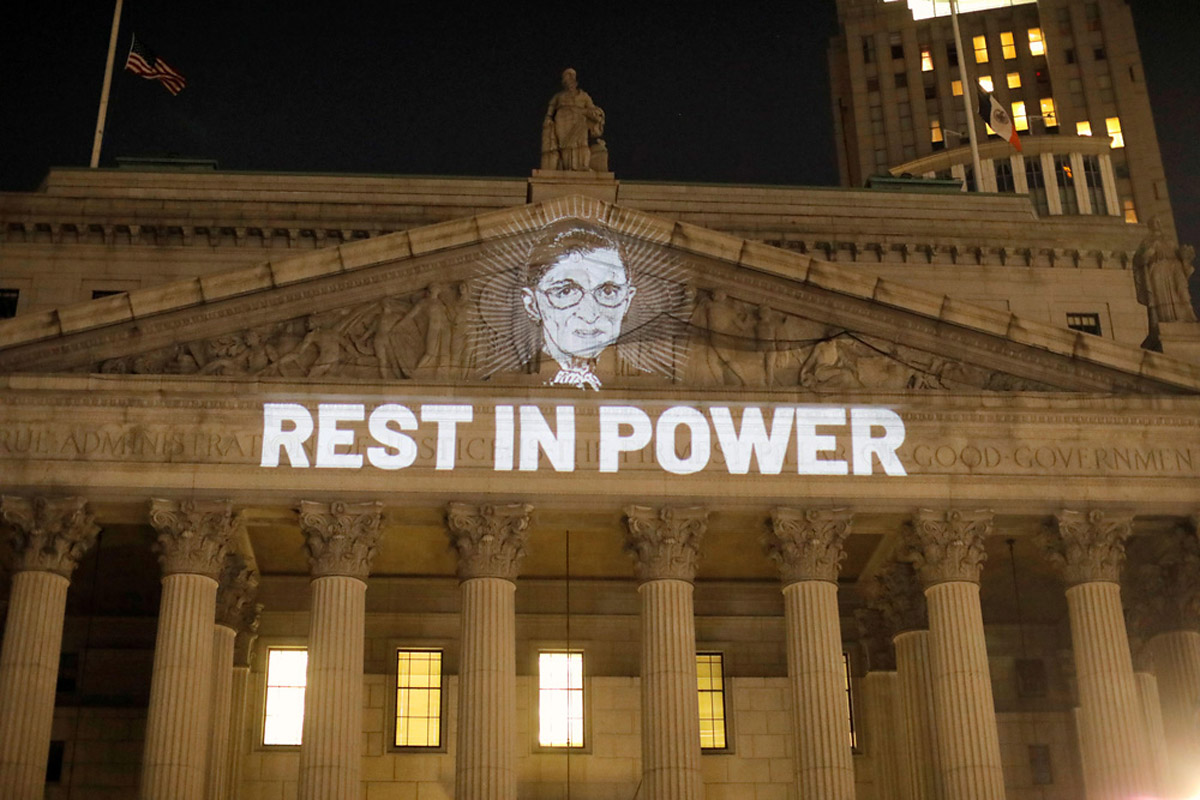
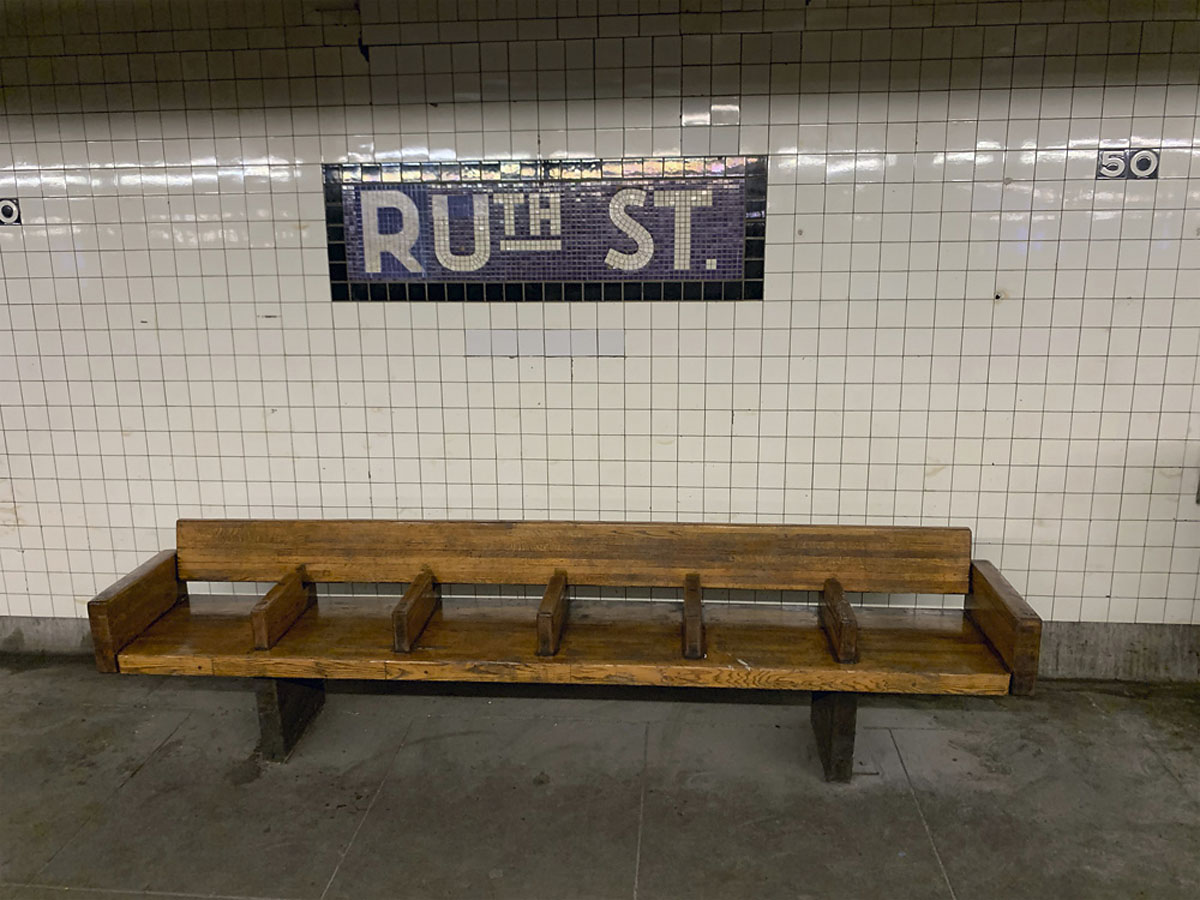
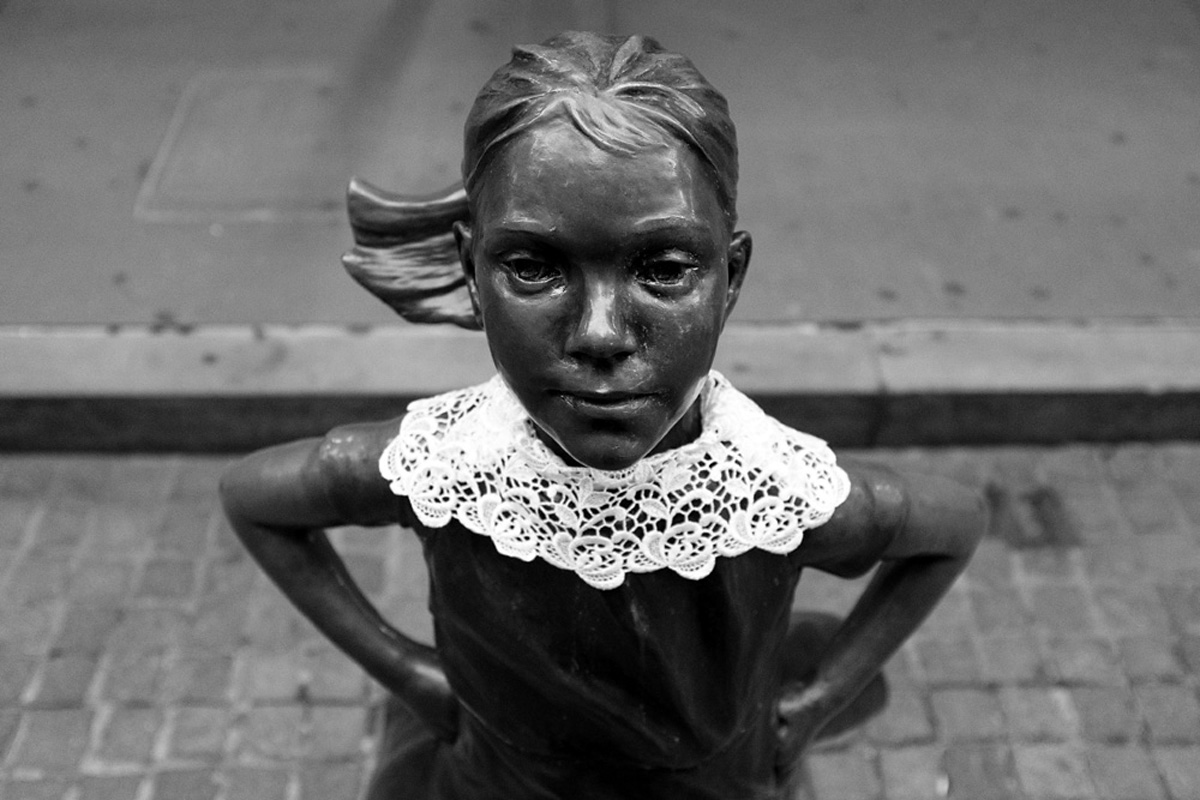
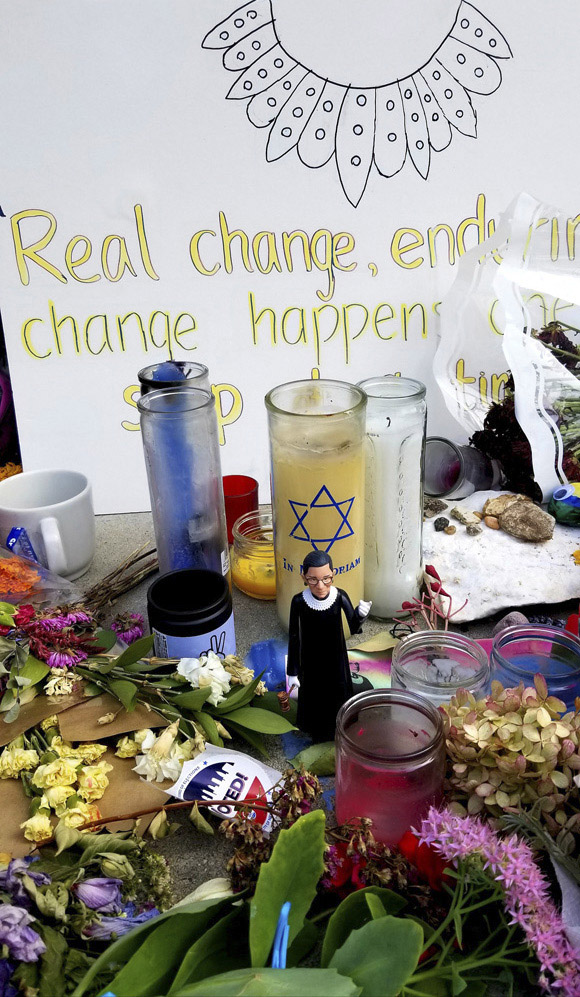

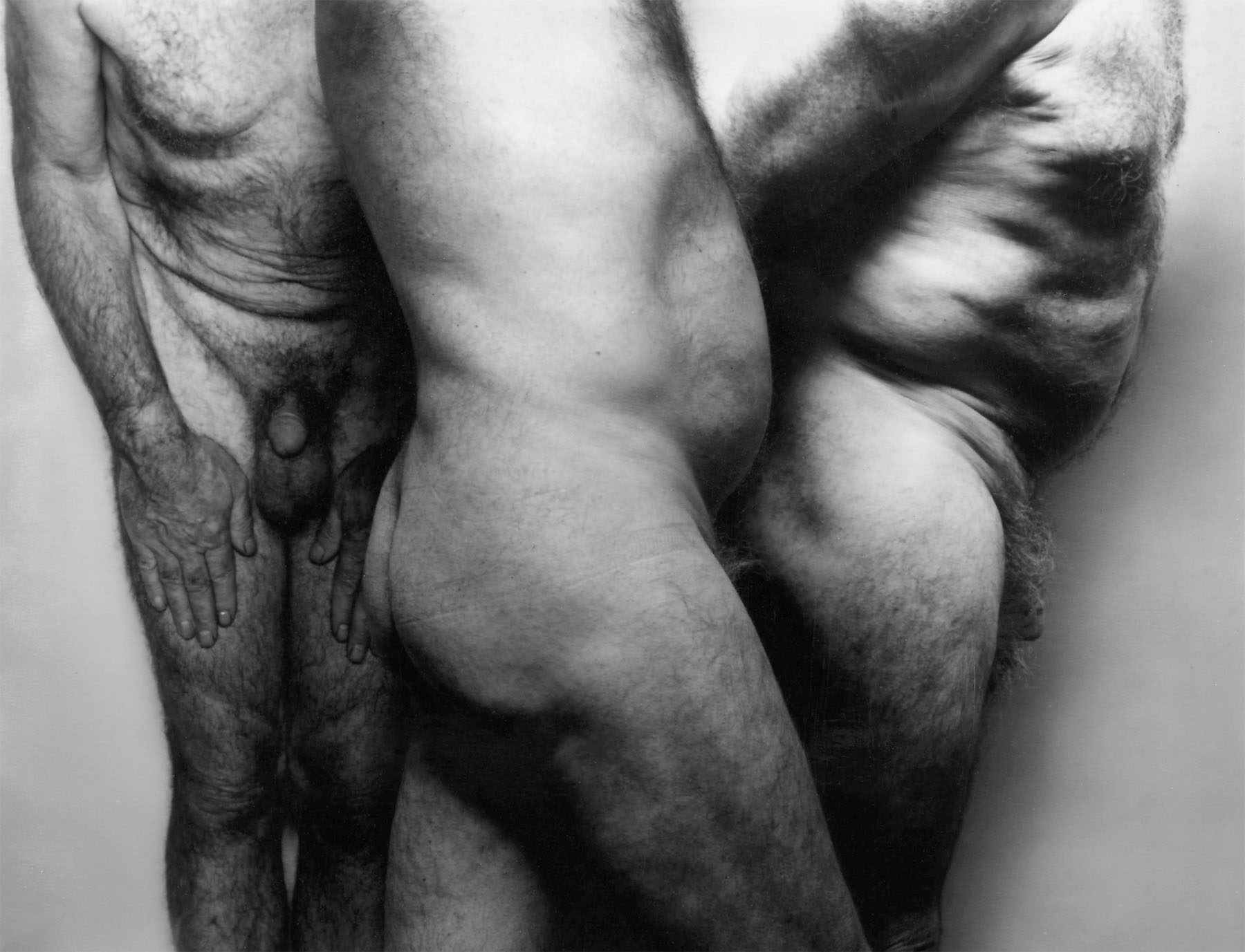
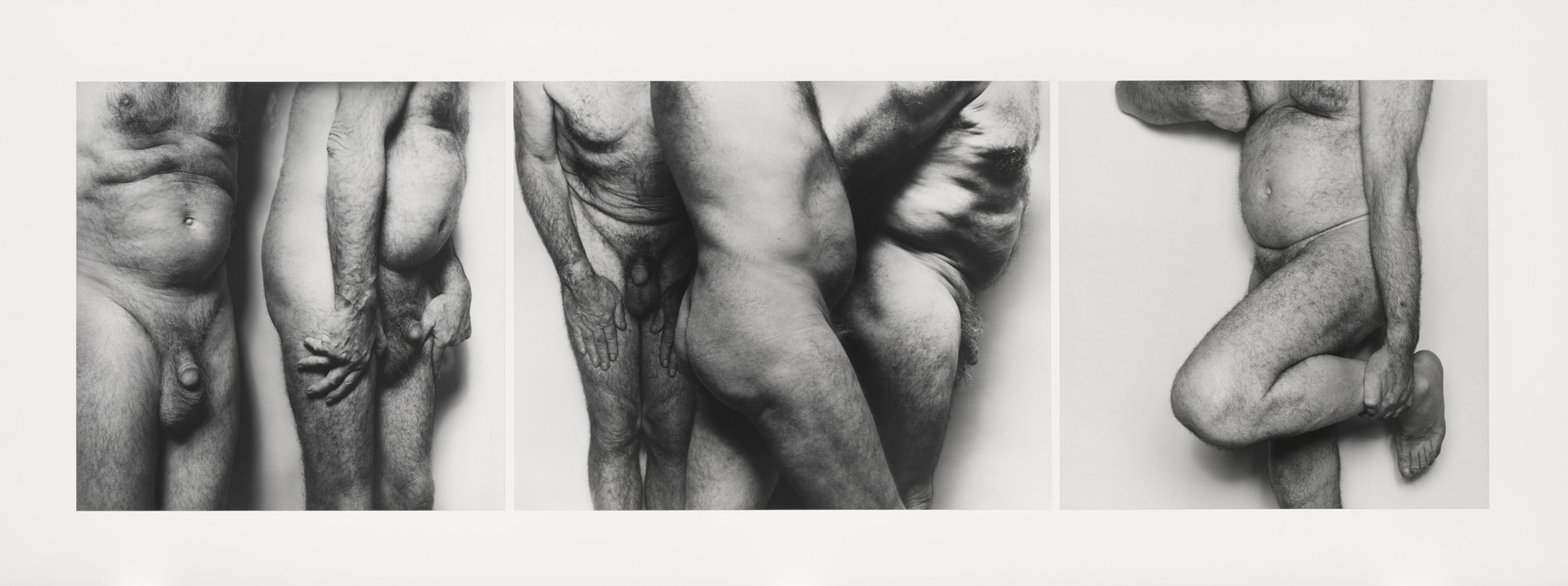
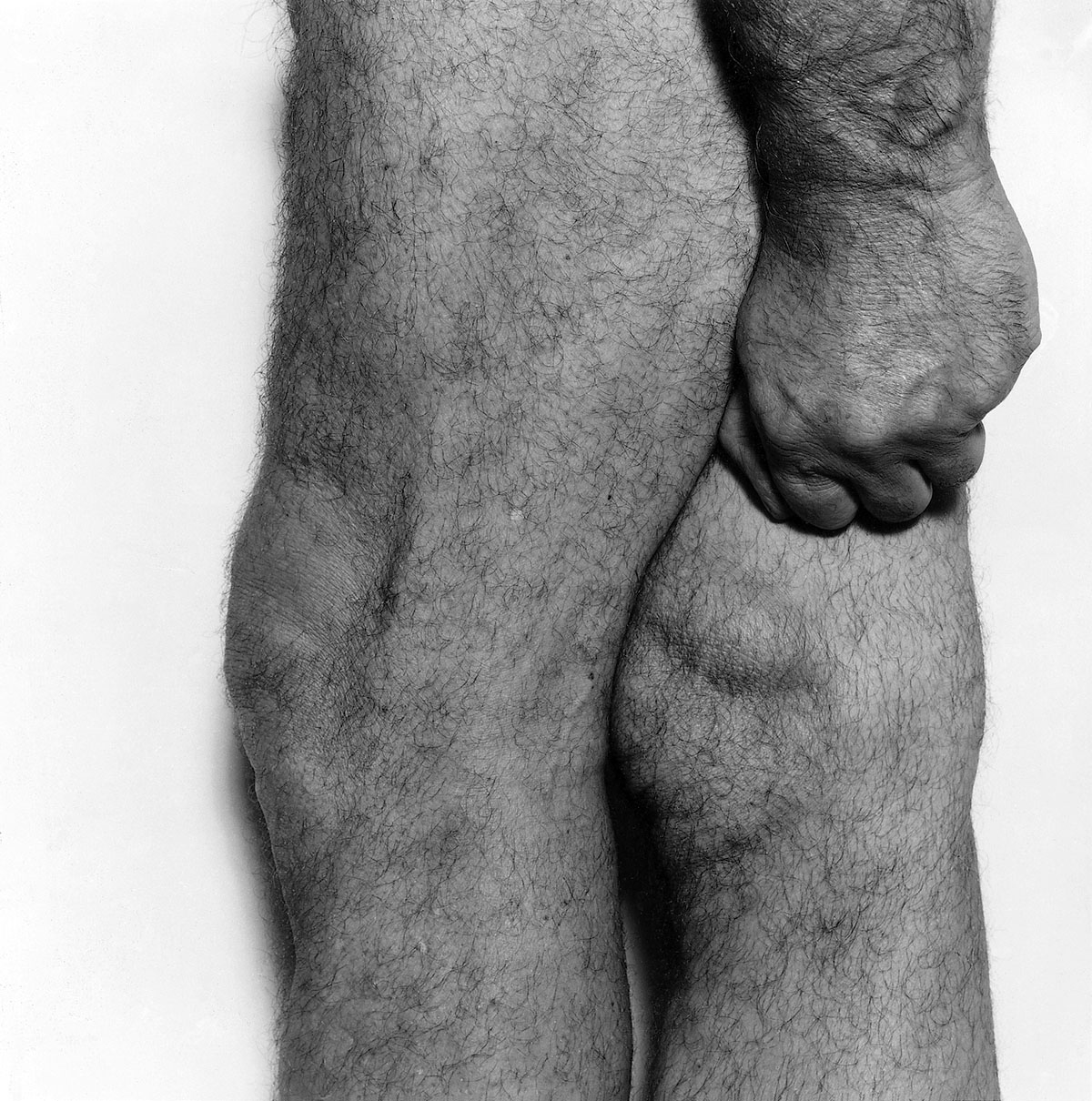
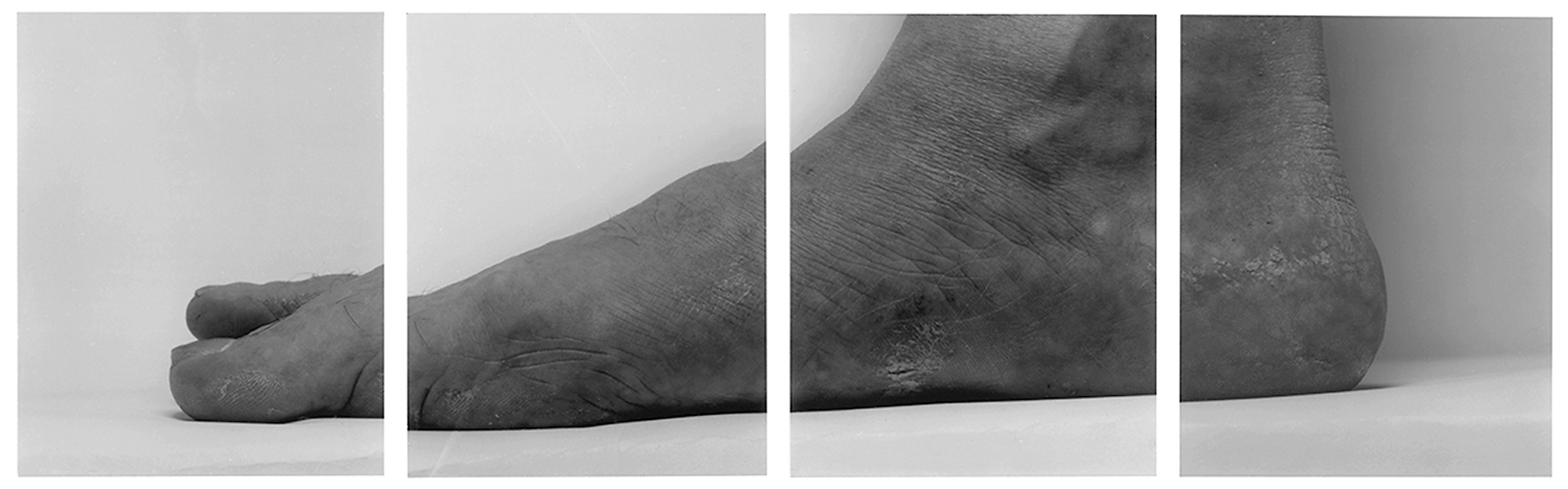
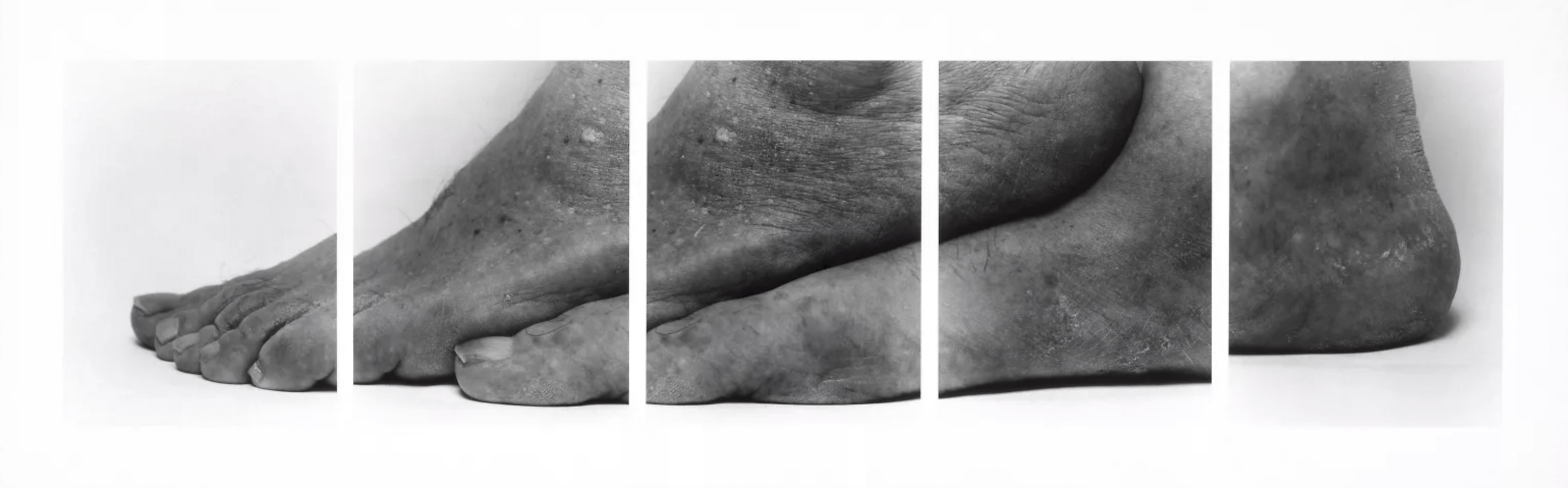

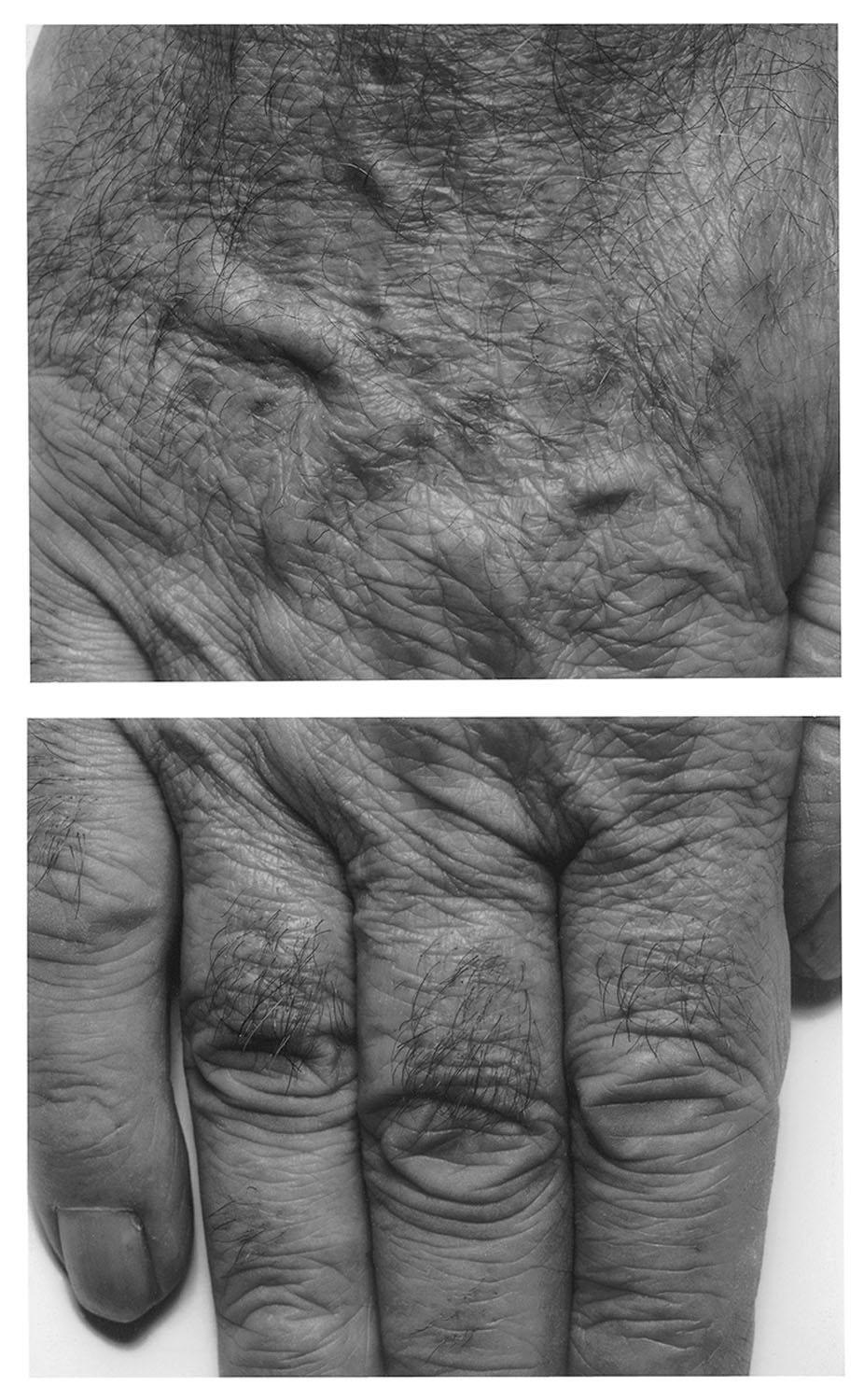
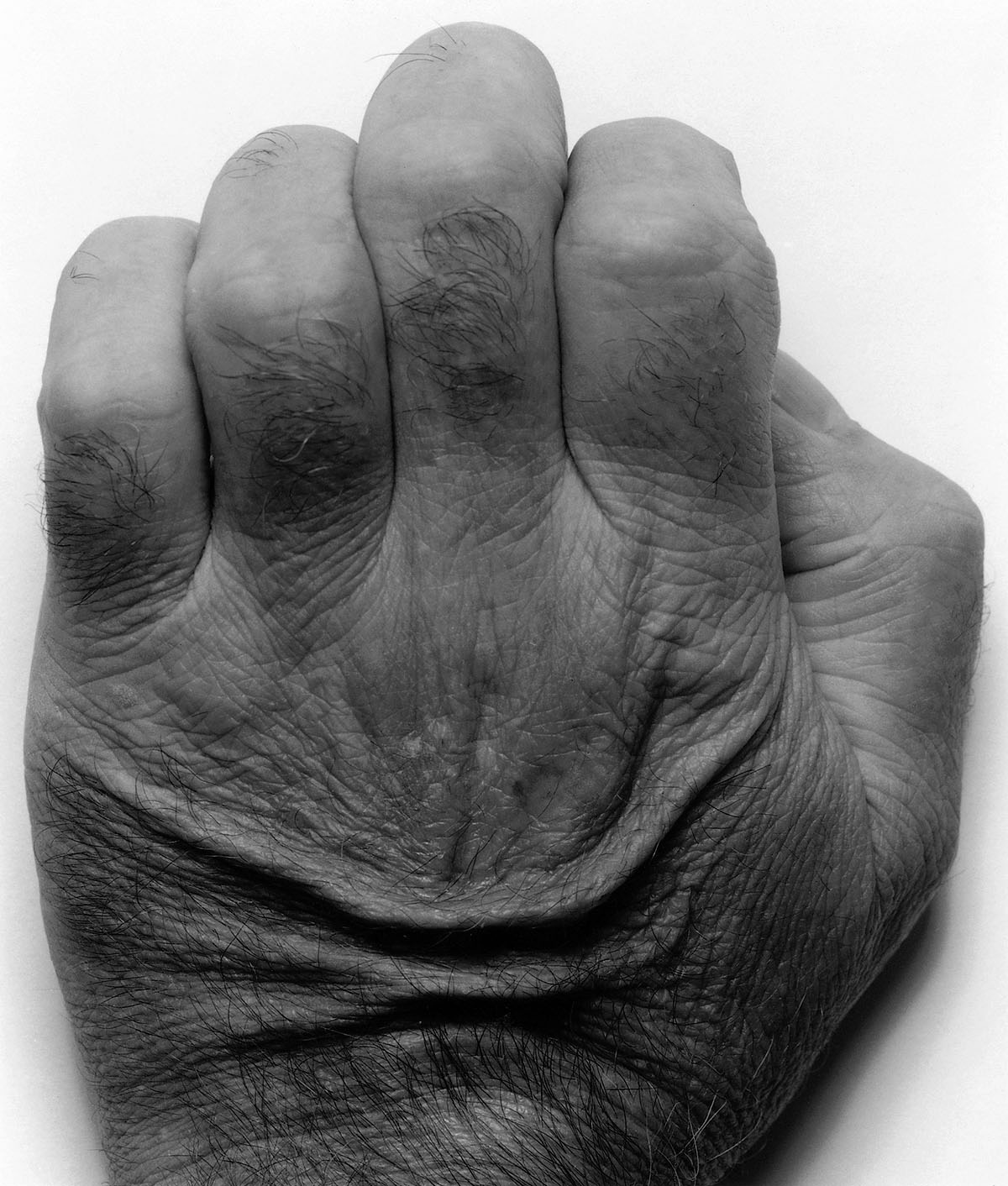
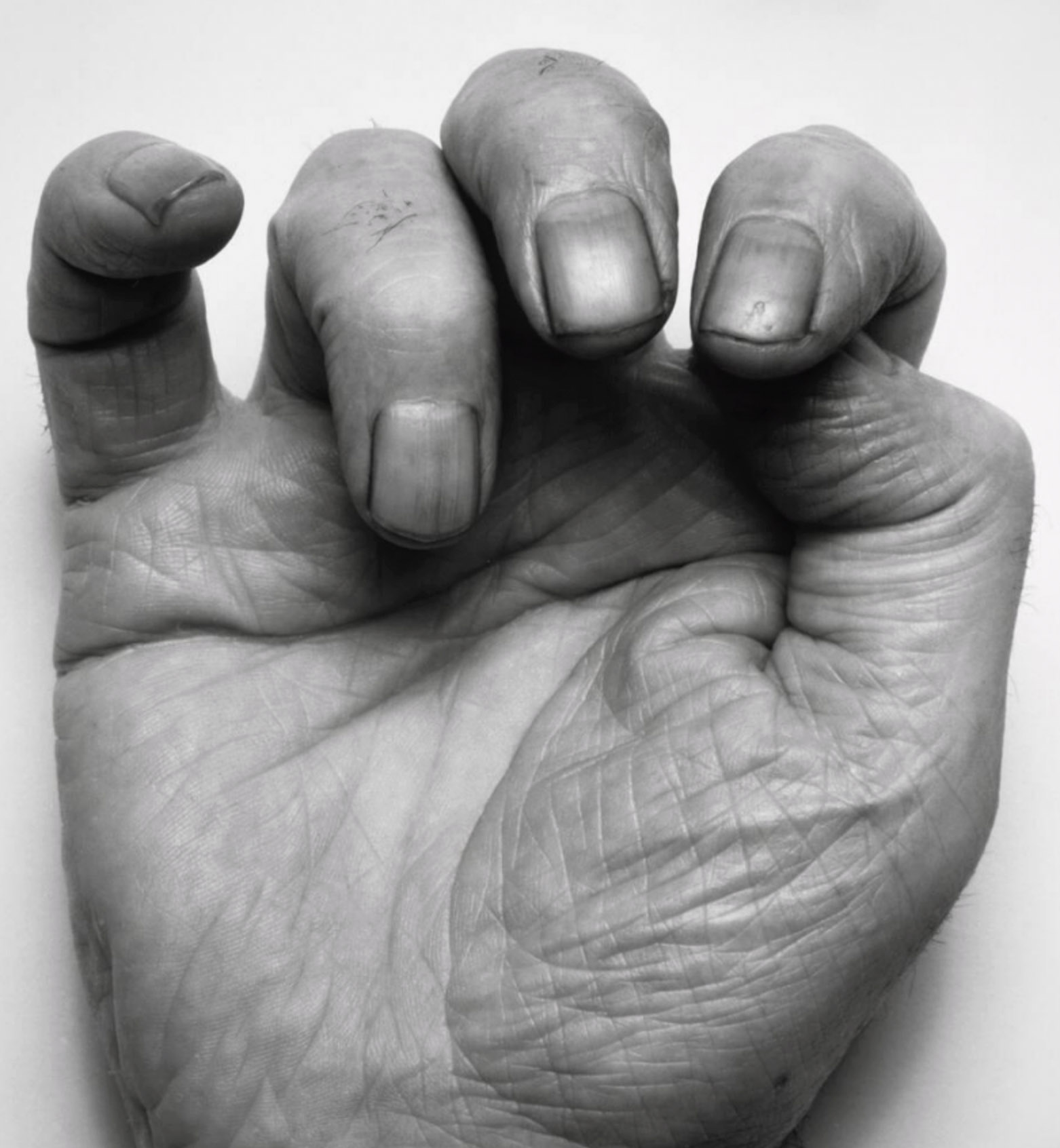
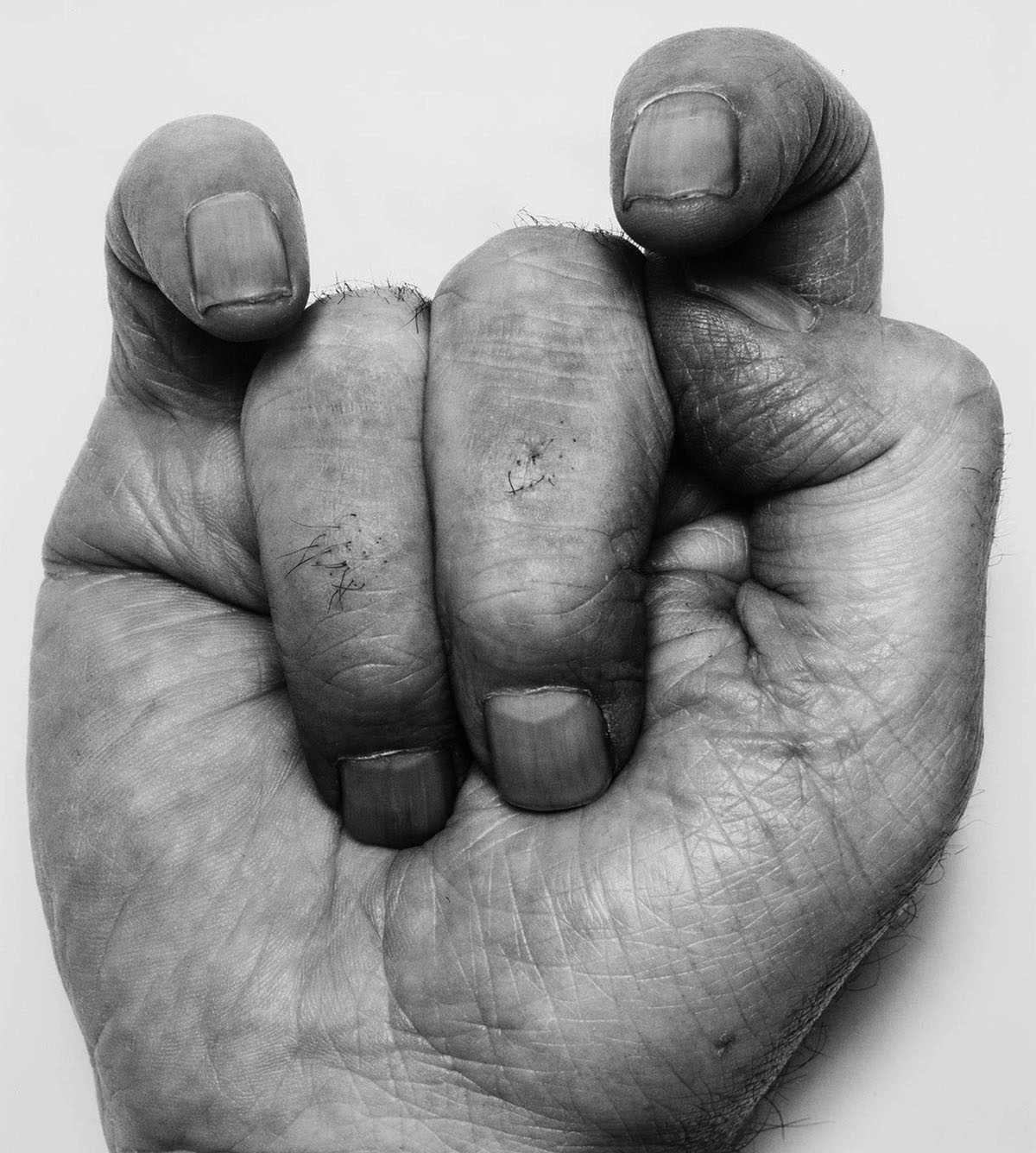
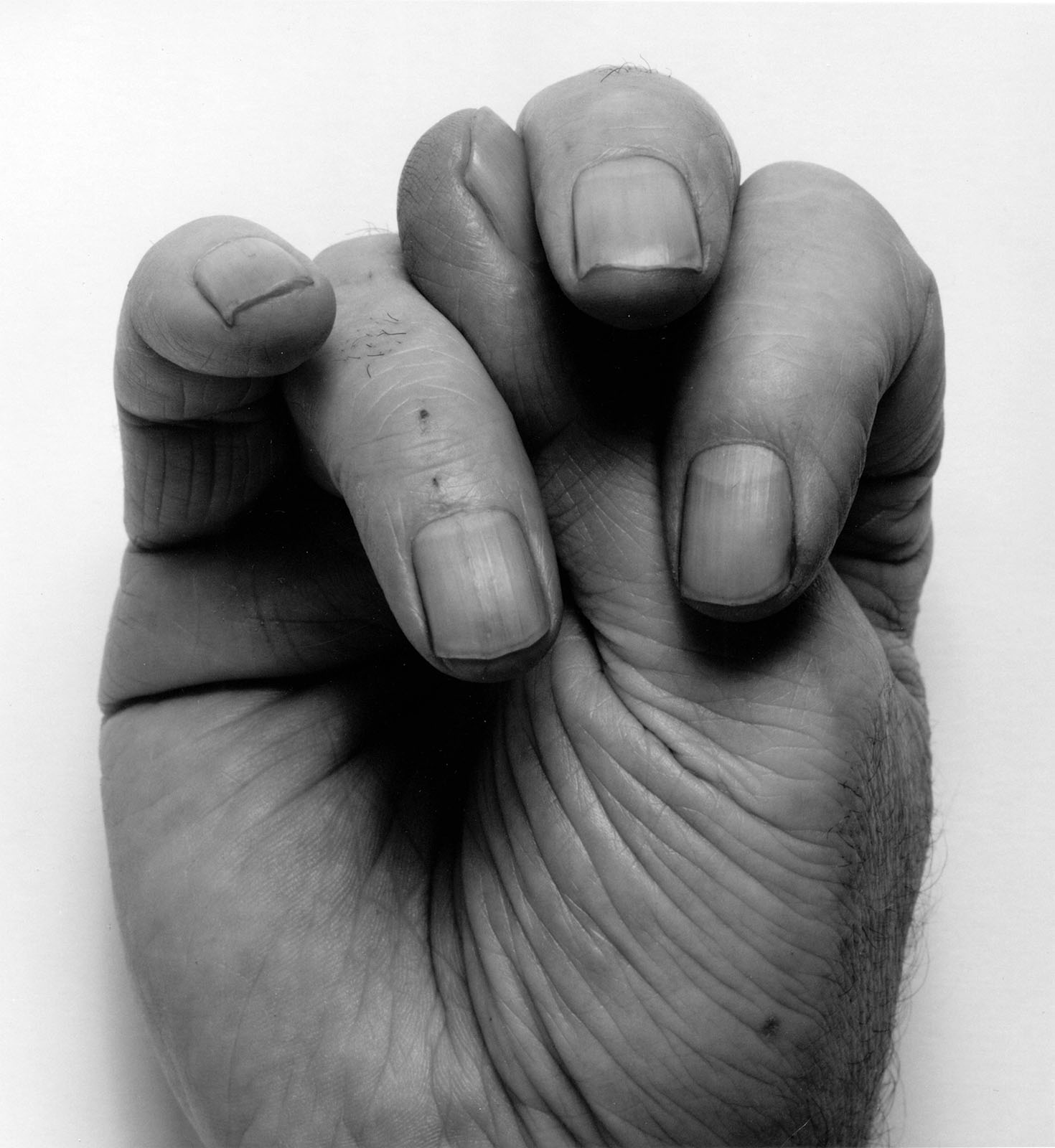
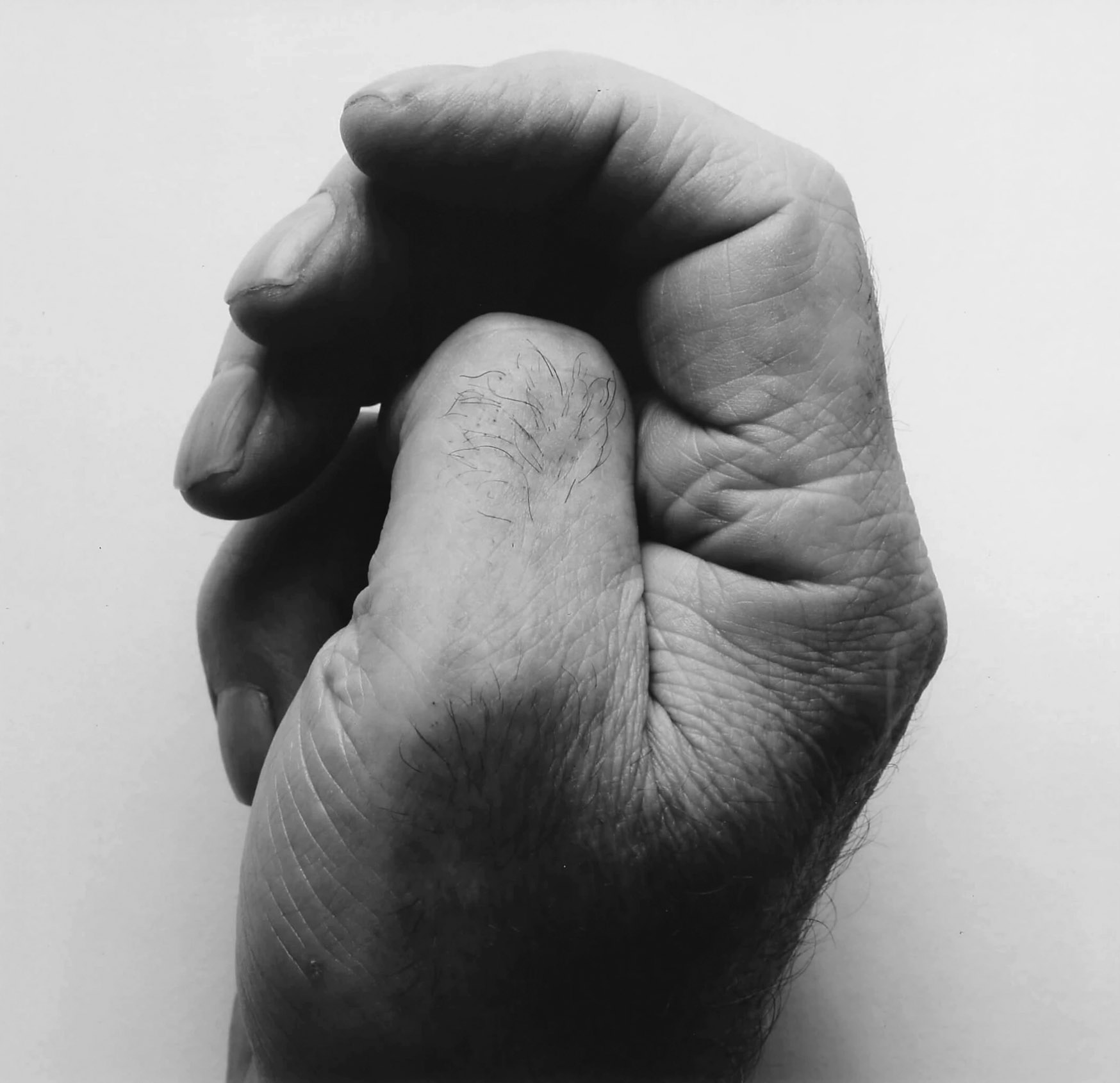
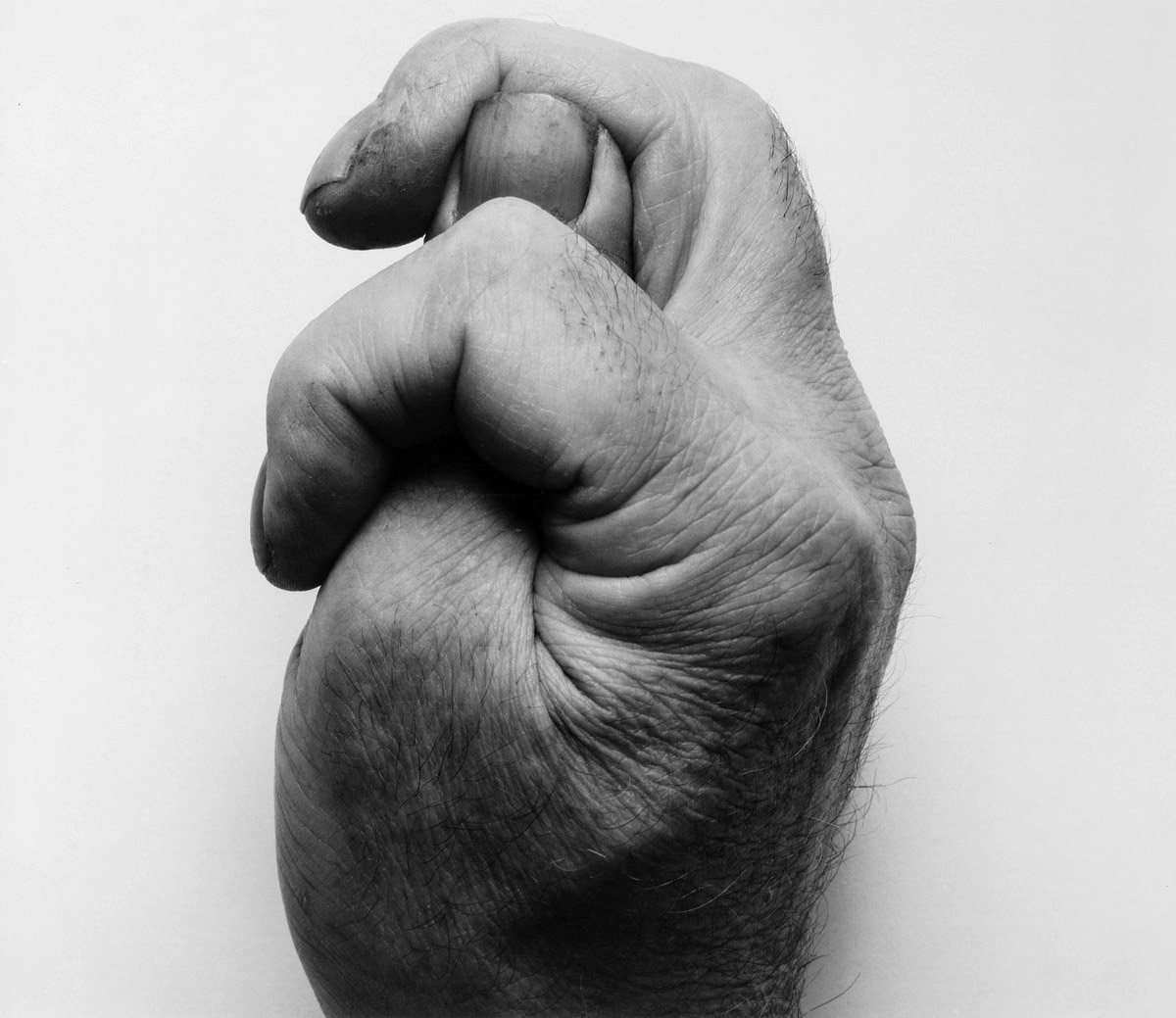
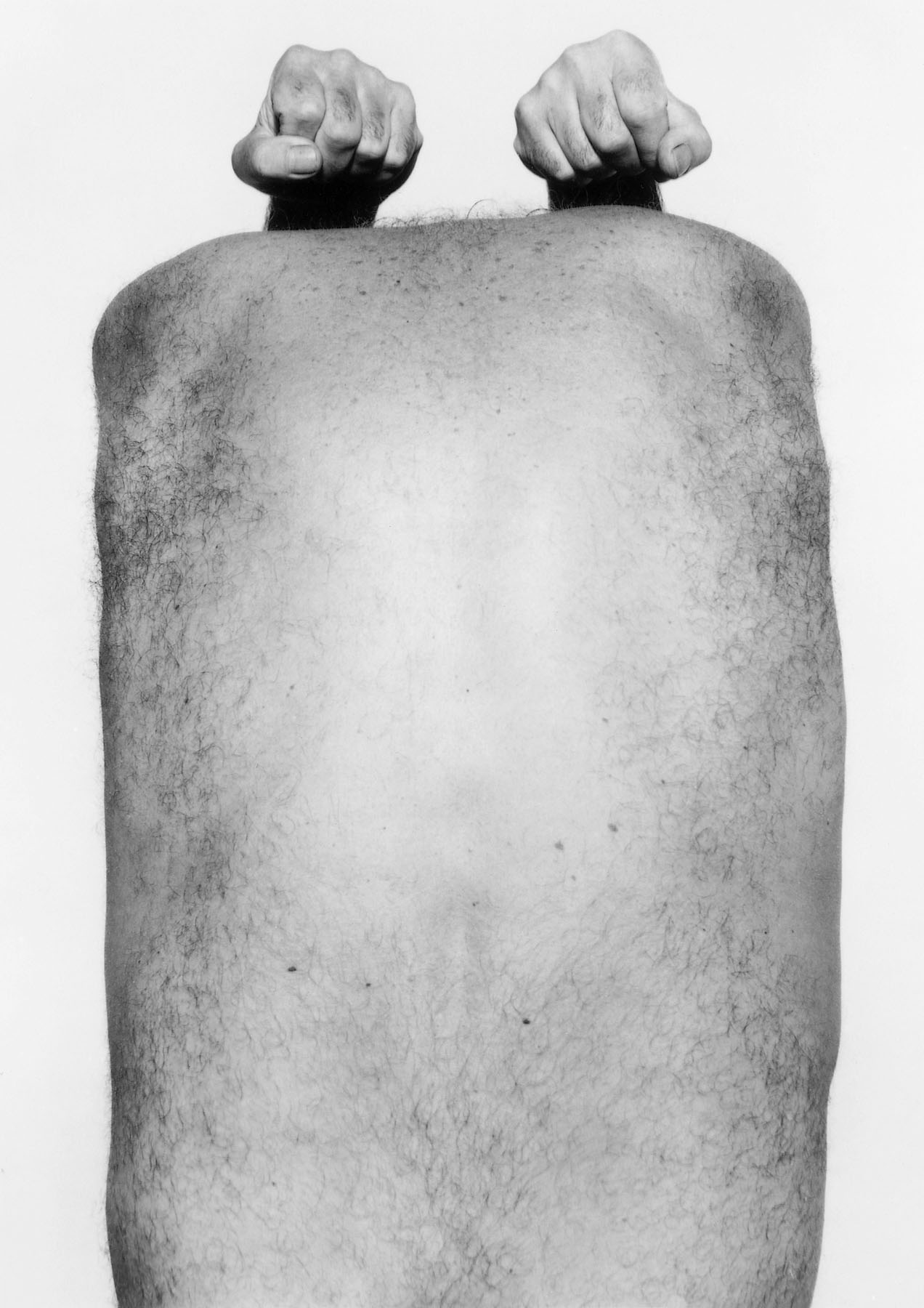
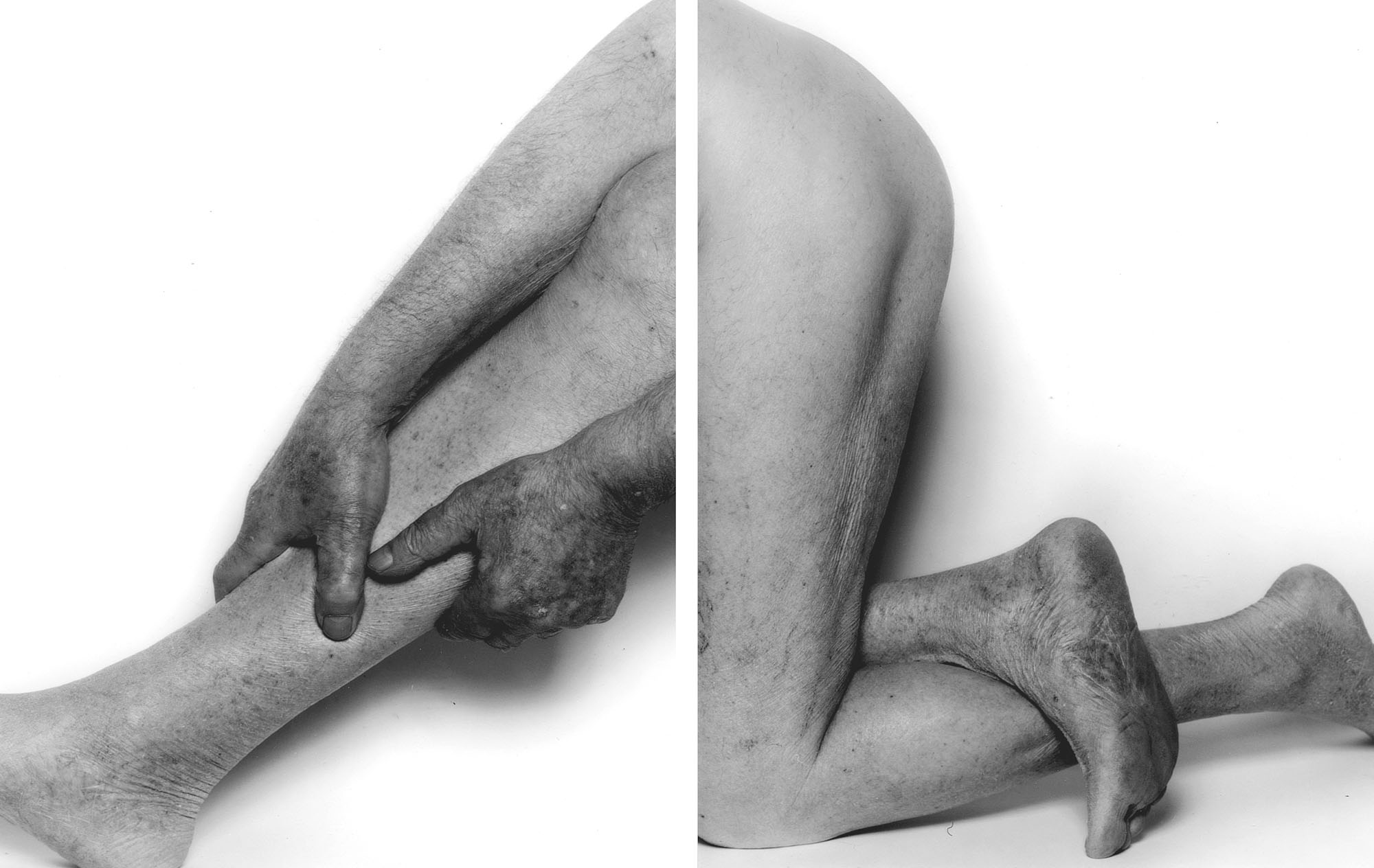
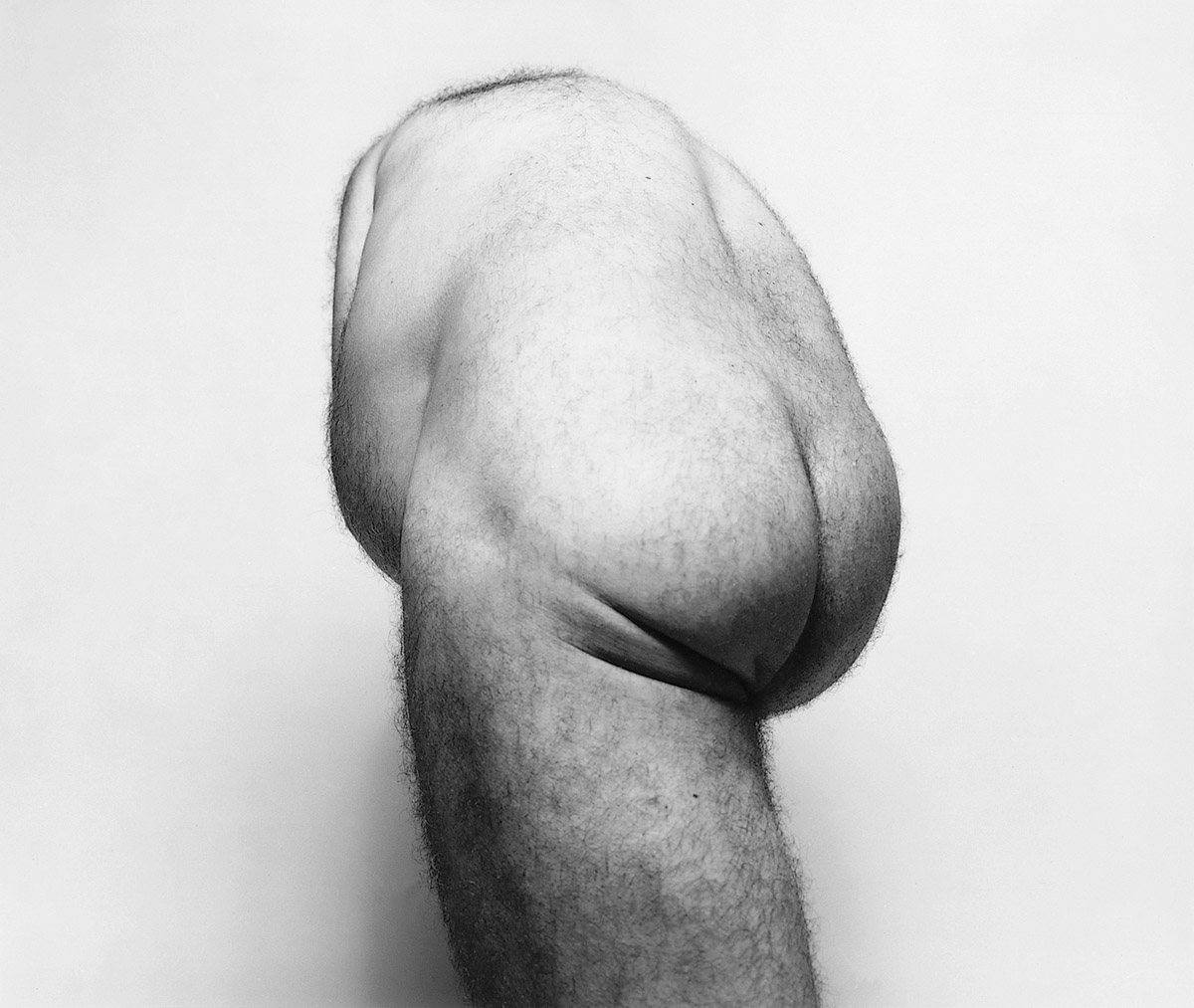
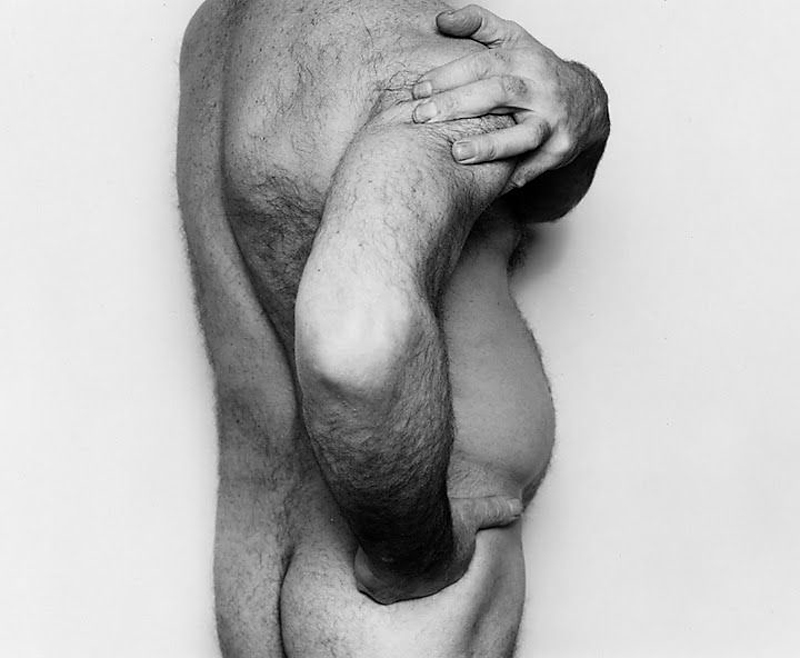
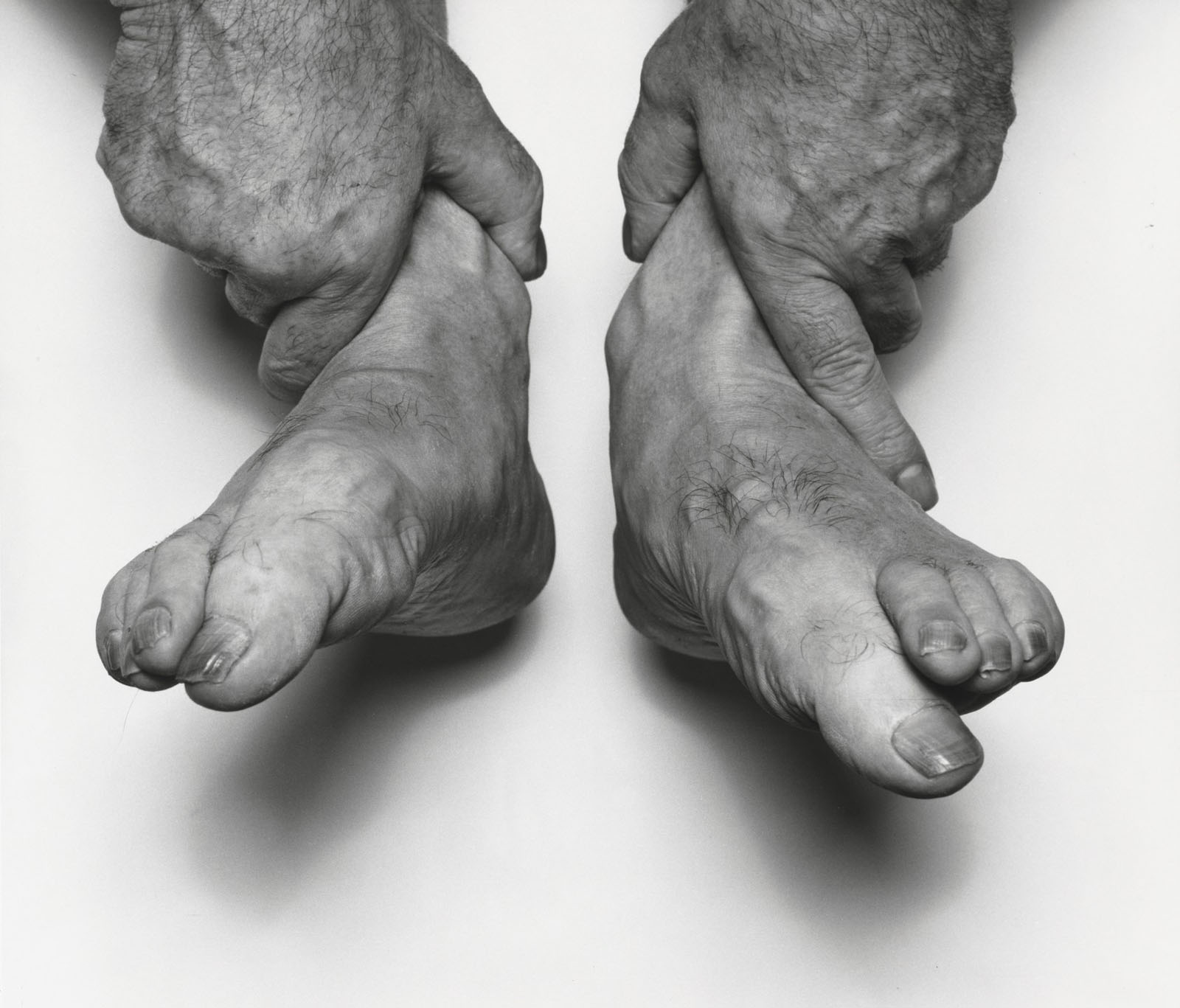
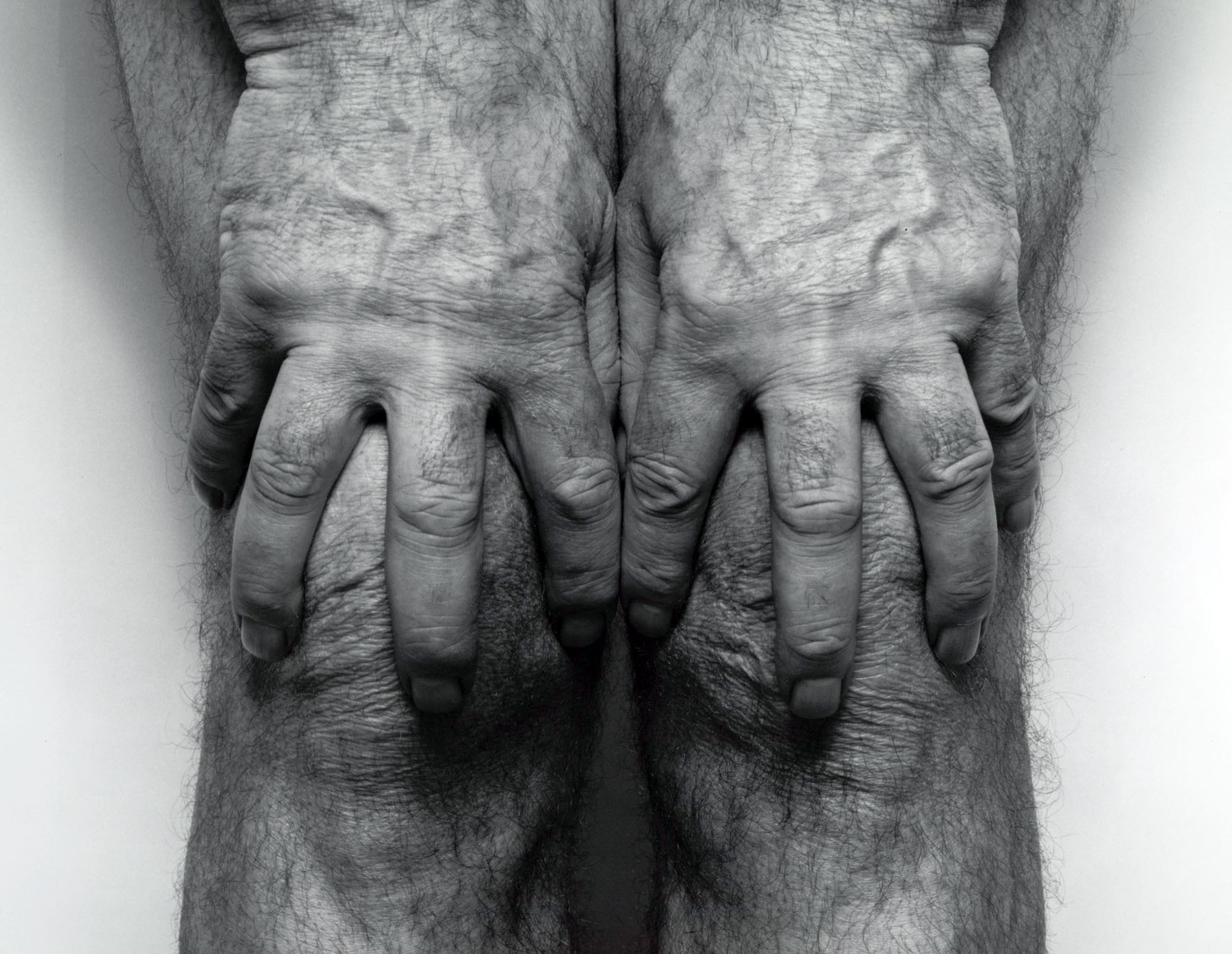
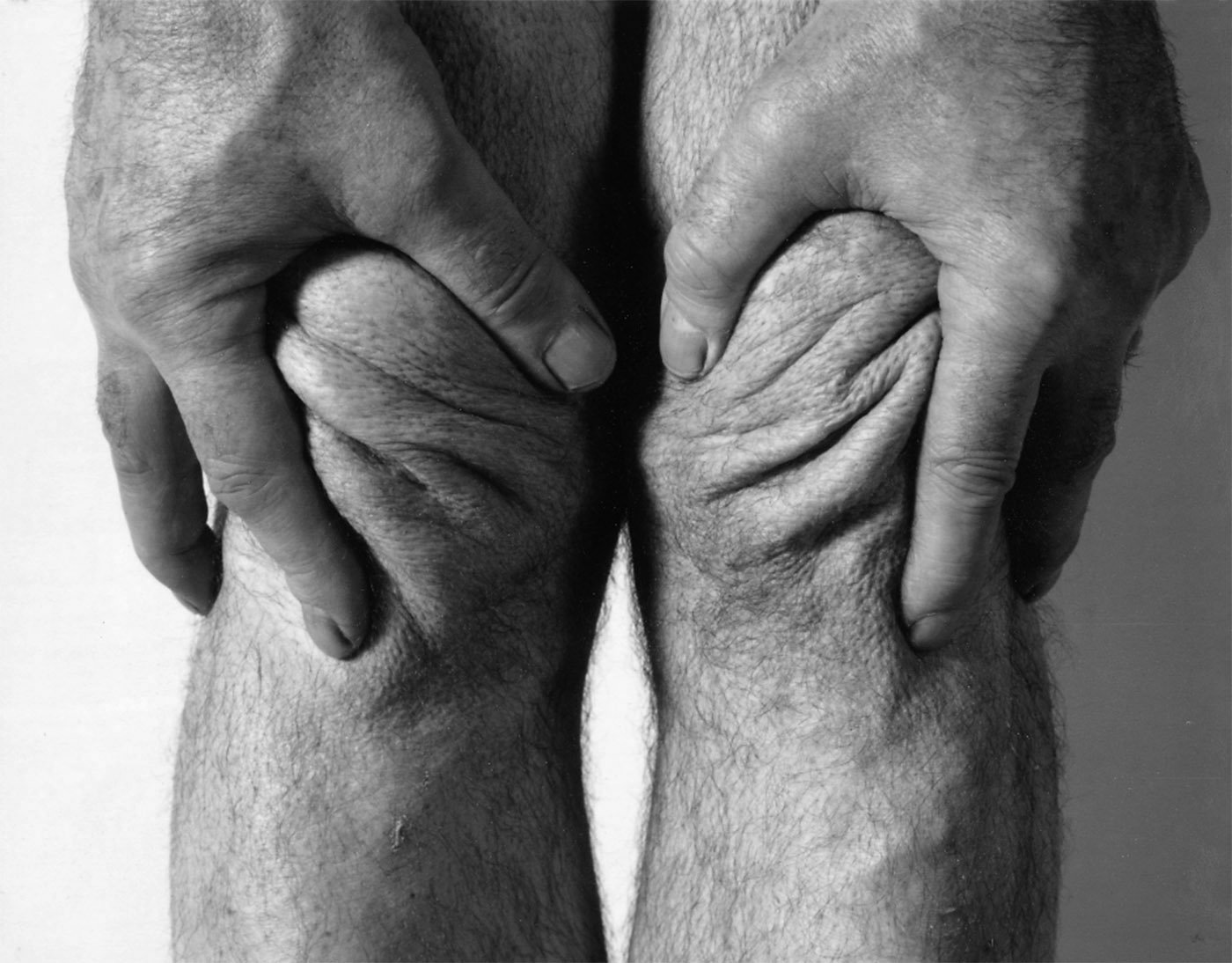
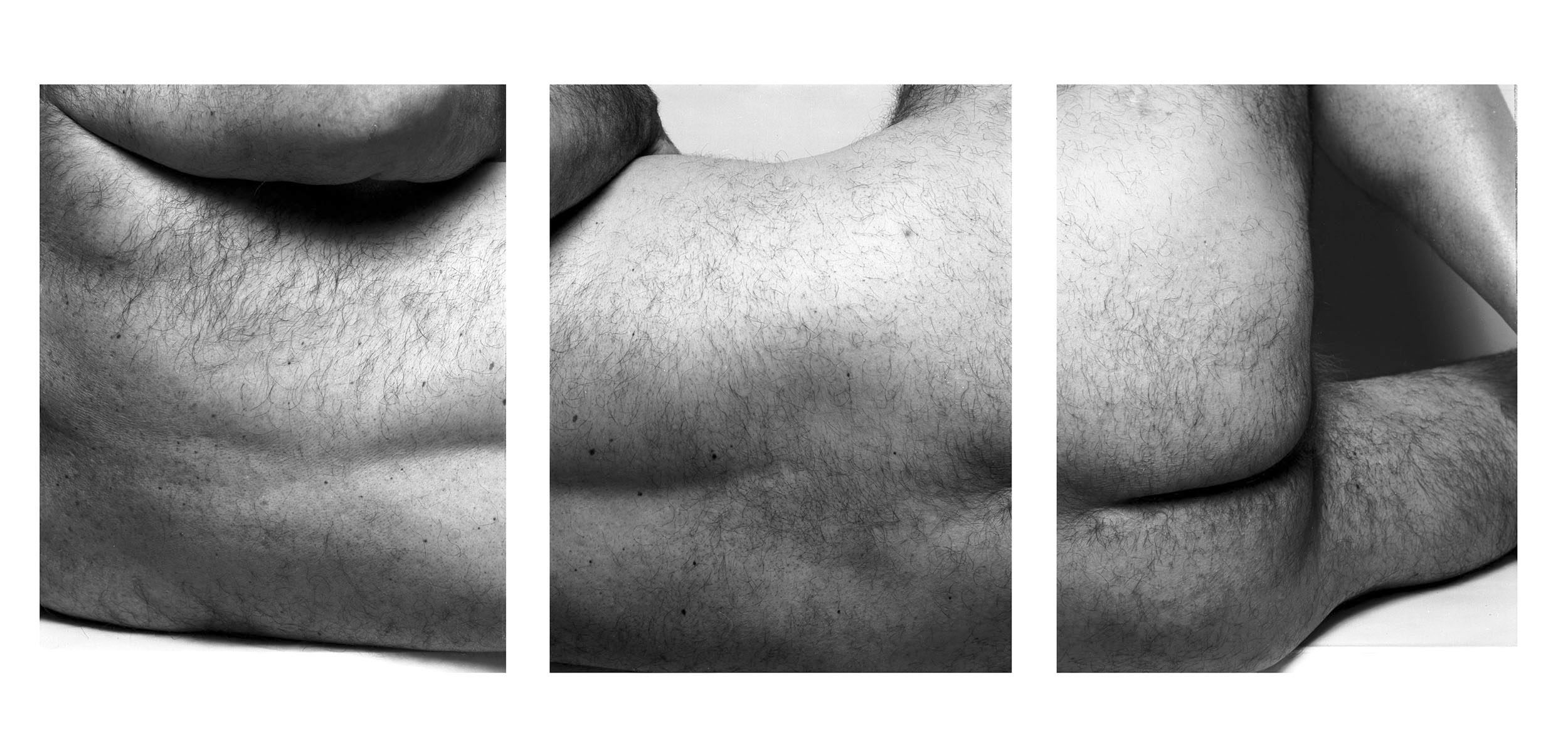
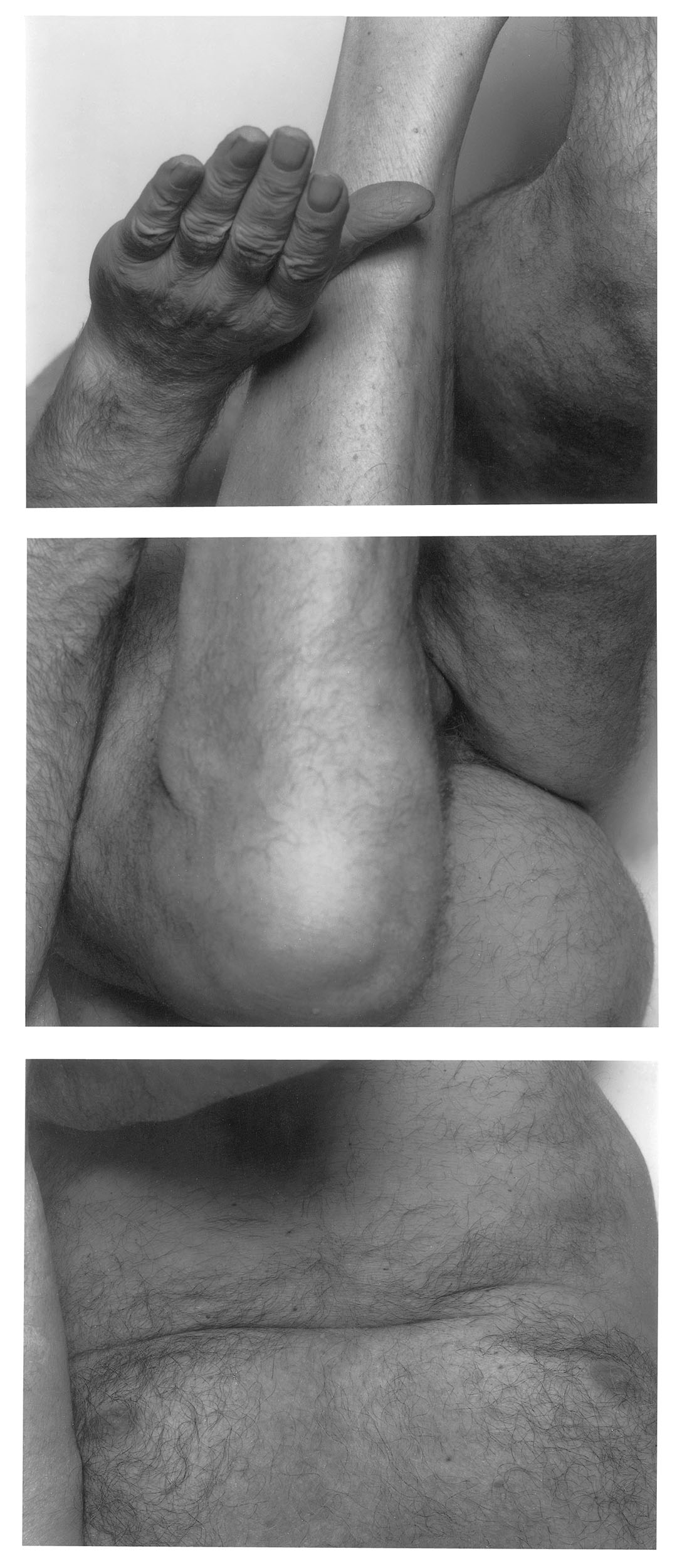
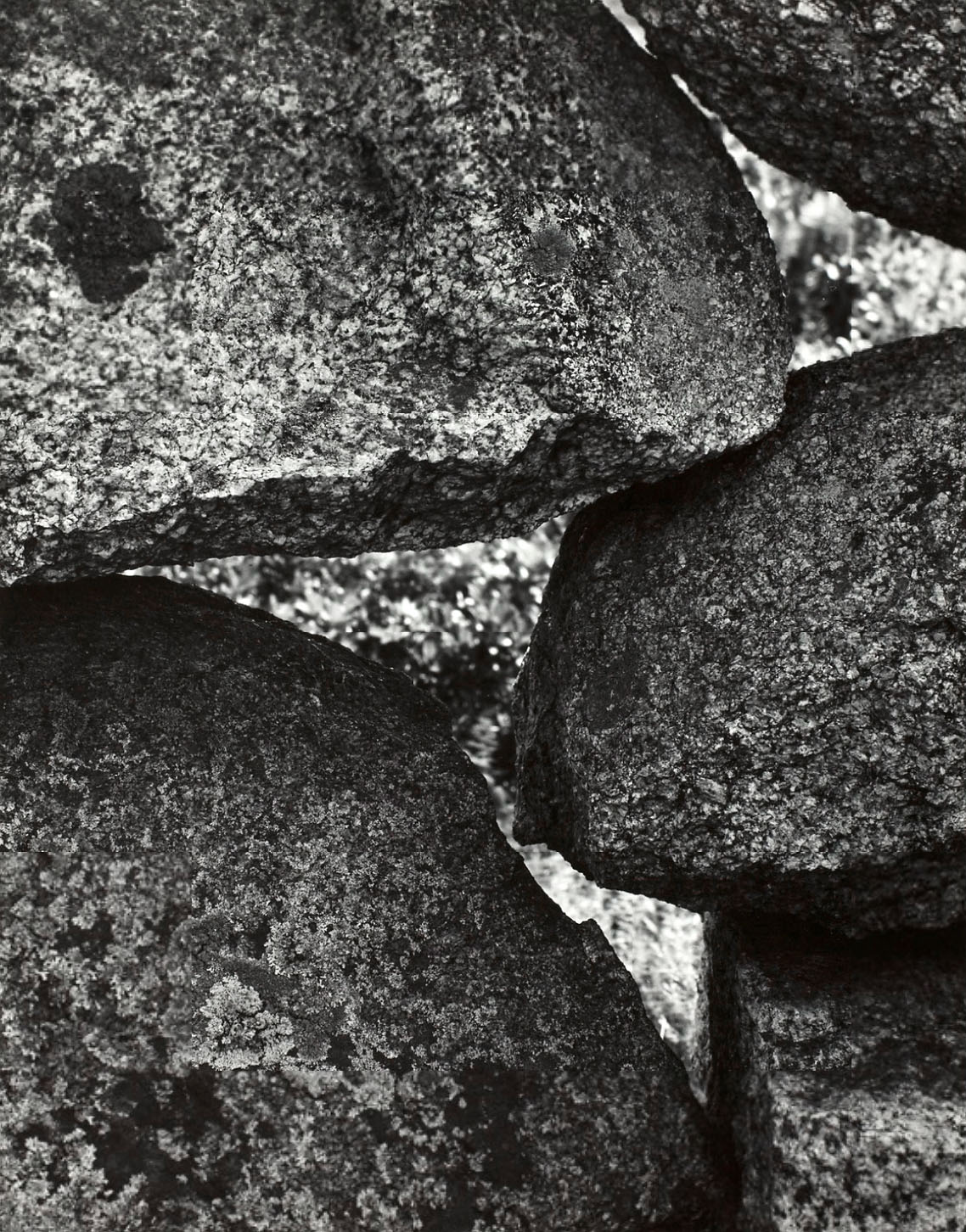
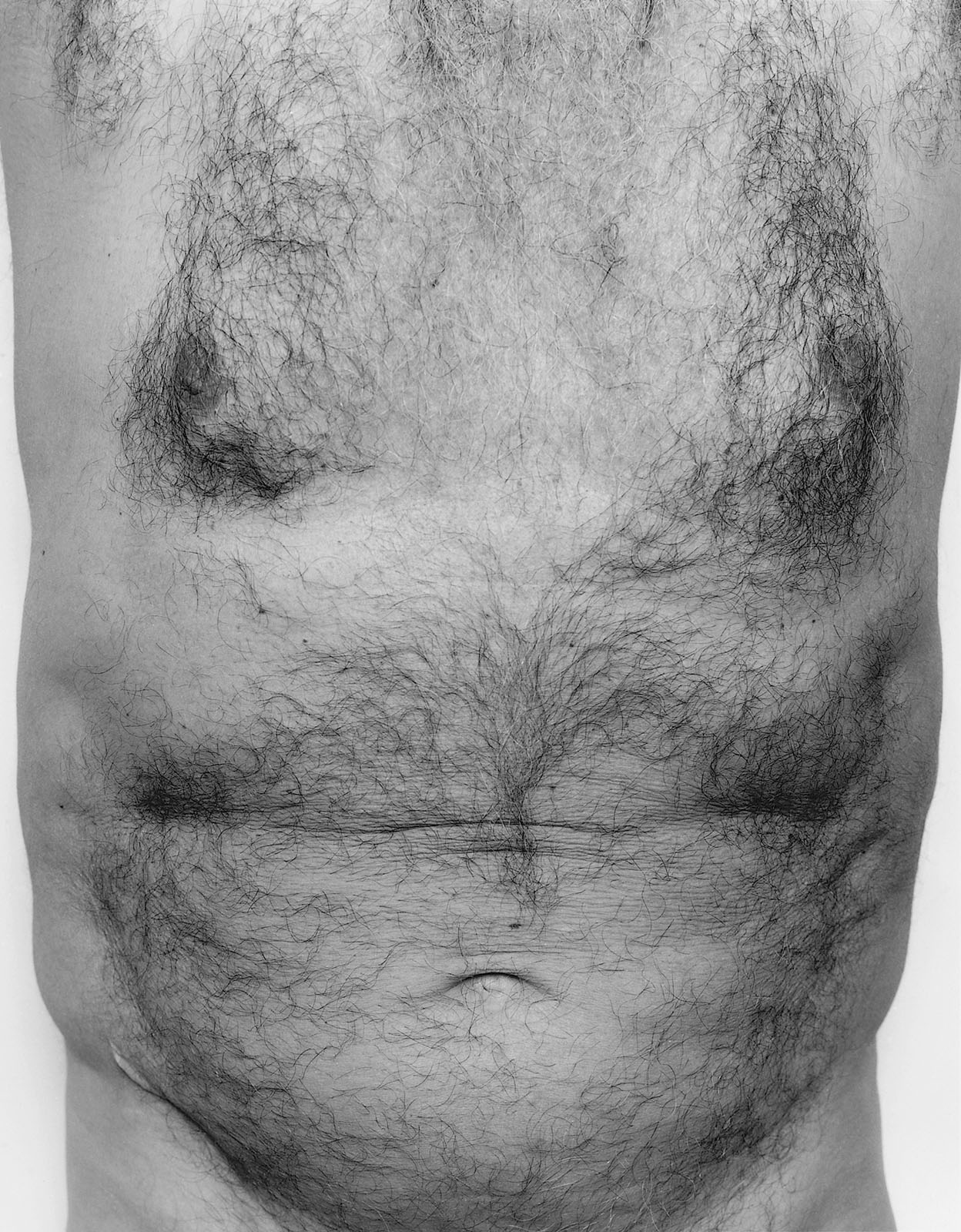

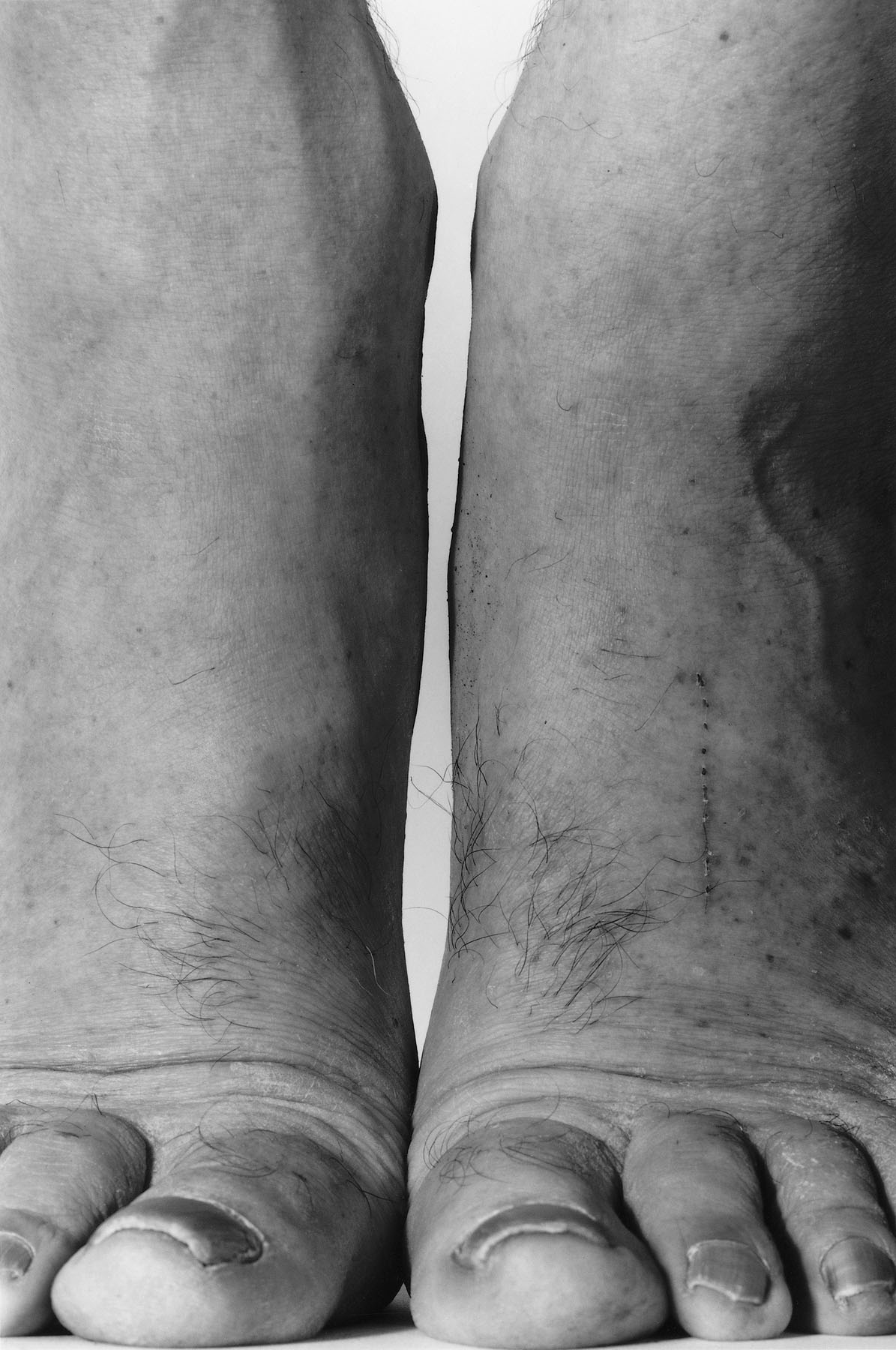


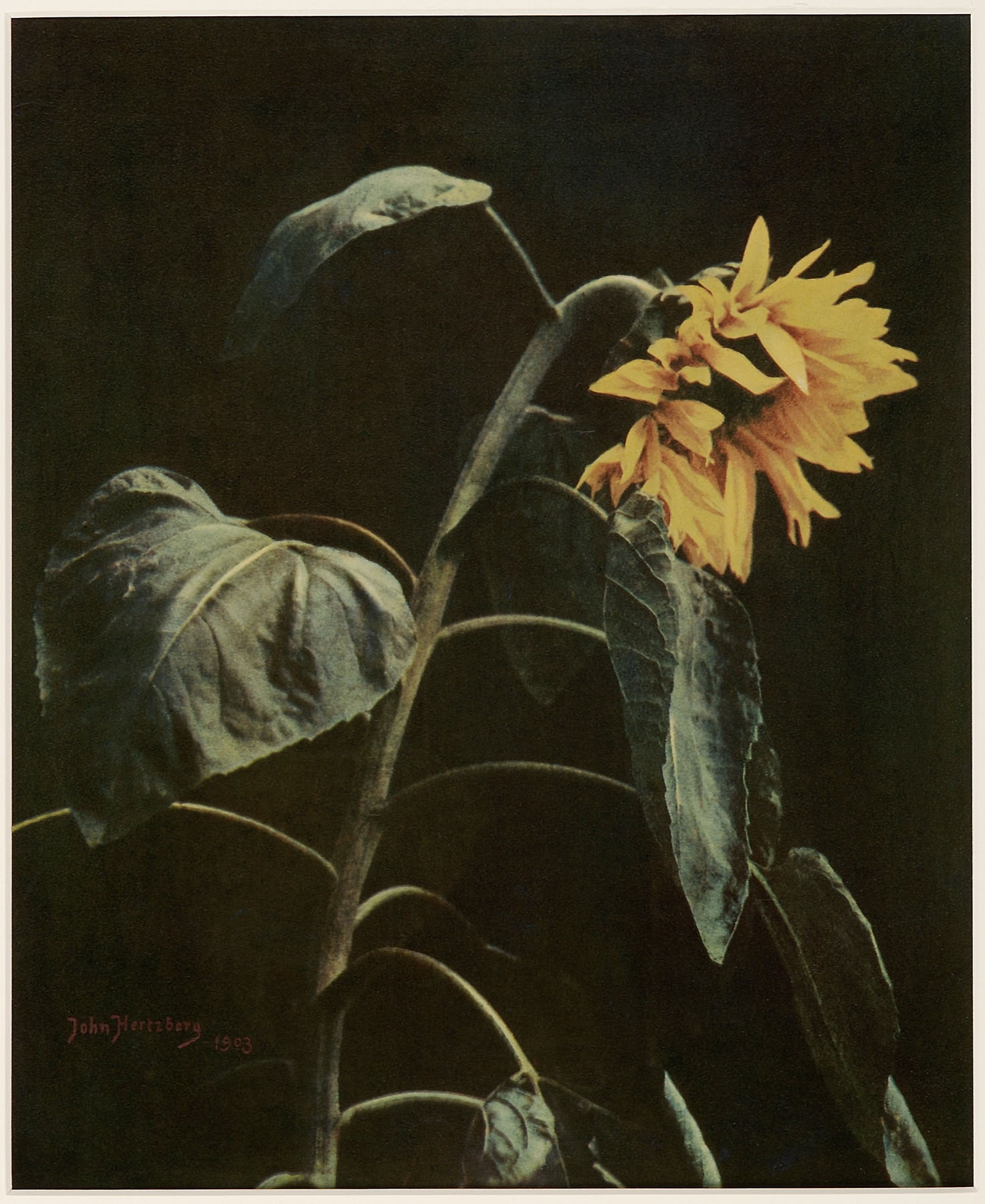


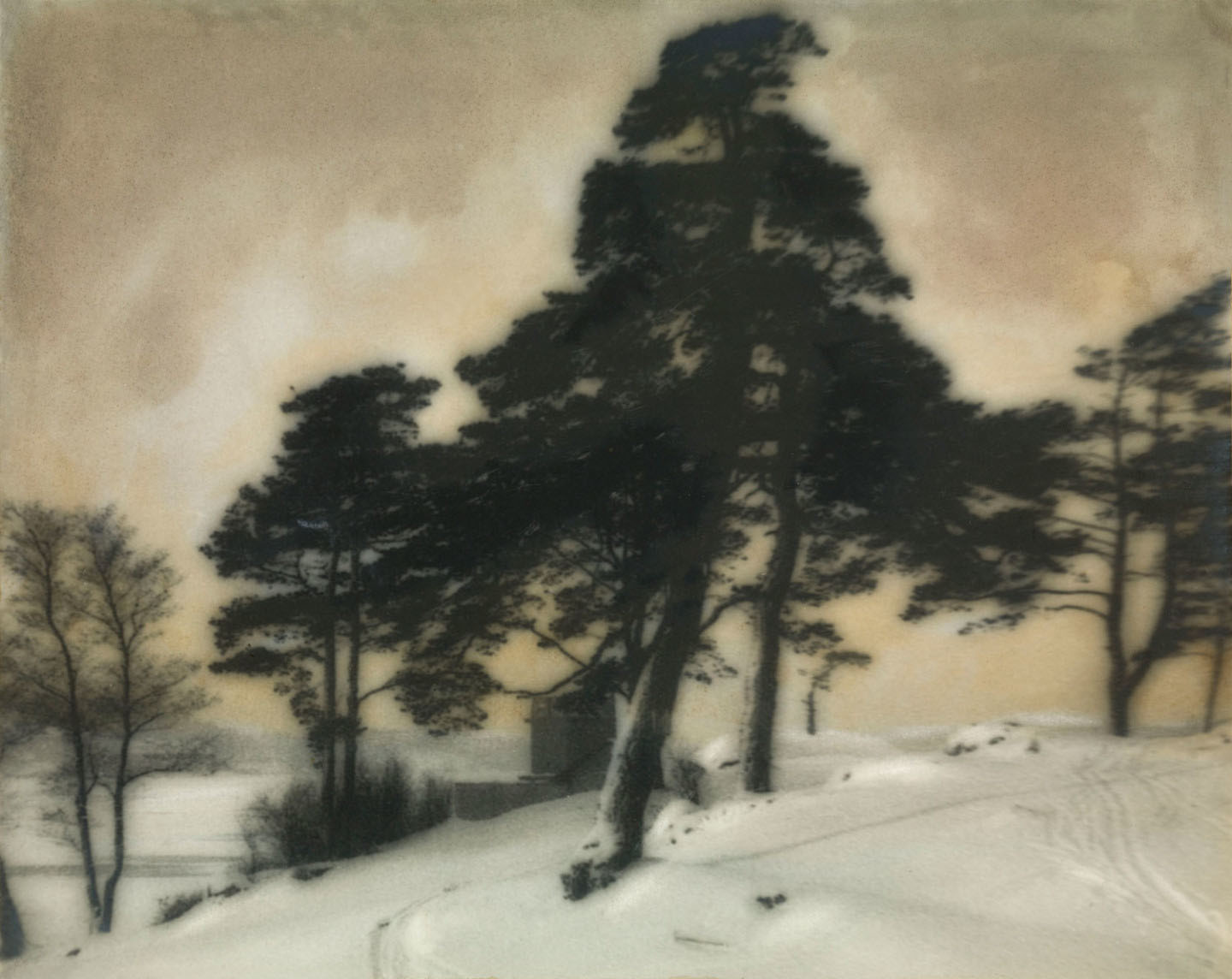
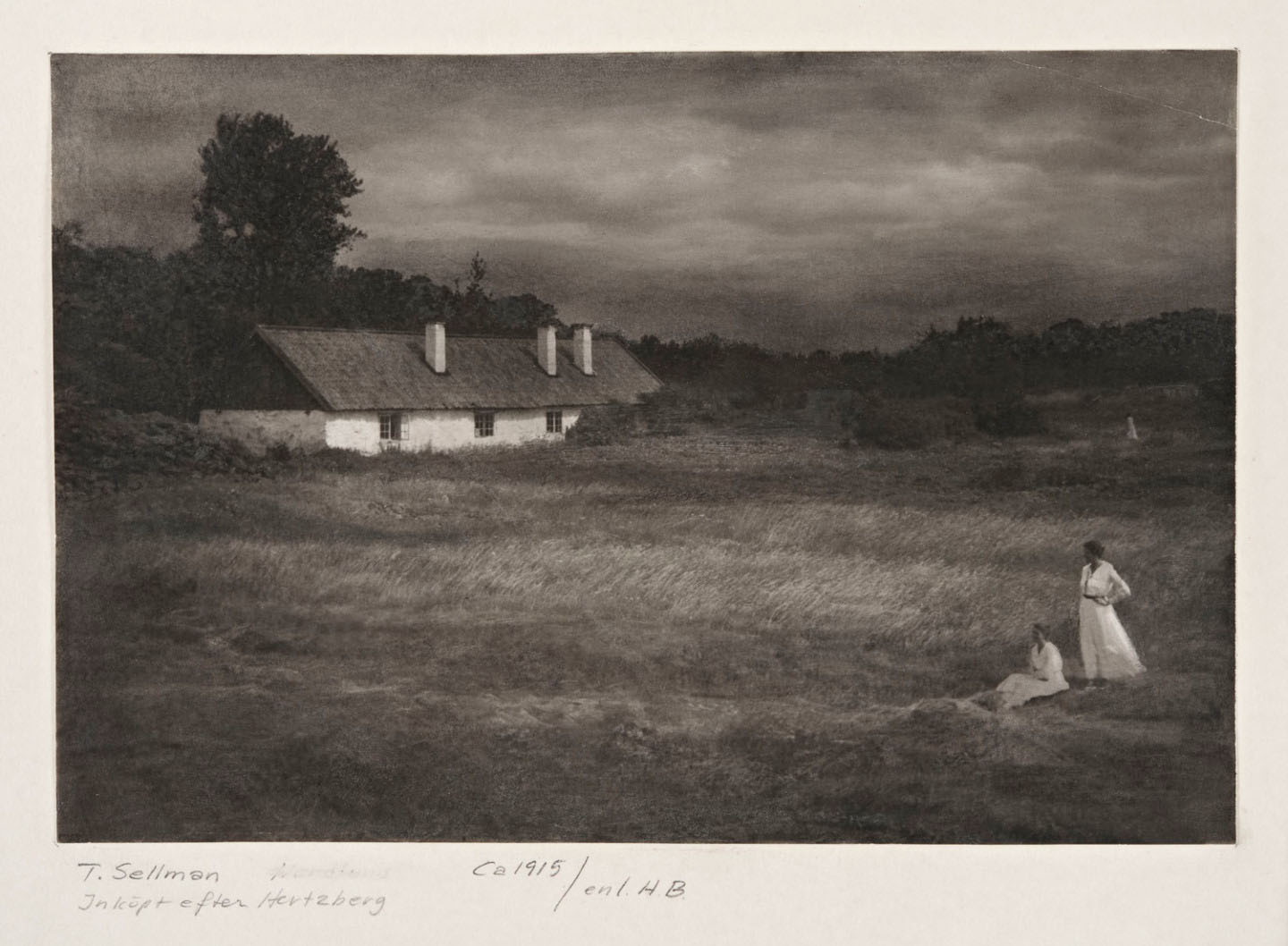


 Art Blart _ art and cultural memory archive
You must be logged in to post a comment.