Review: ‘Scott’s Last Expedition’ at the Australian National Maritime Museum, Sydney

Exhibition dates: 17th June – 16th October 2011
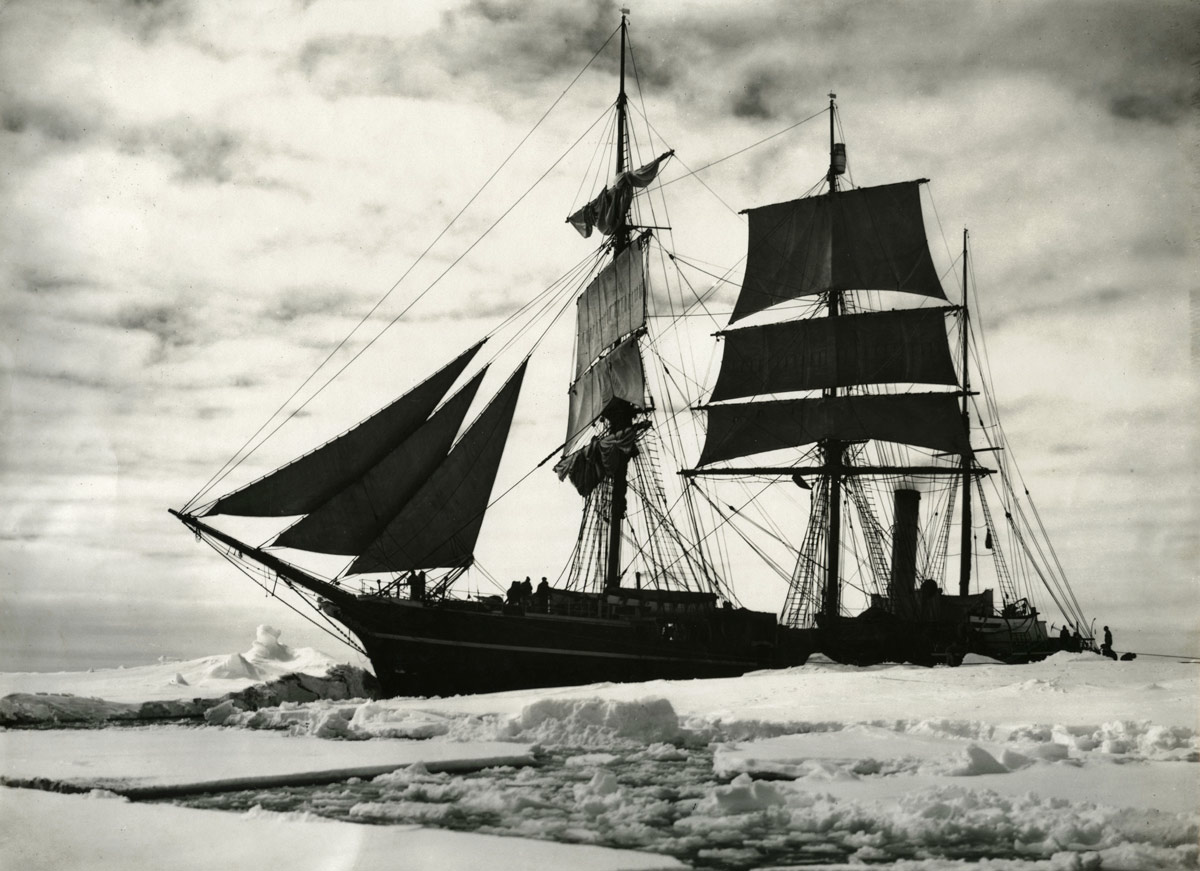
 

Herbert Ponting (British, 1870-1935) 'The former whaling ship, the 'Terra Nova'' 1911


Herbert Ponting (British, 1870-1935)
The former whaling ship, the ‘Terra Nova’
1911
Gelatin silver print
Canterbury Museum NZ


“Greater love hath no man than this, that a man lay down his life for his friends.”


John 15:13


It is difficult to describe how heroic a figure Robert Scott, ‘Scott of the Antarctic’ was to a child of the Empire growing up in the 1960s. He and his doomed party were, and still are, the quintessential heroes of my youth. Despite what we now know of Scott’s failures in leadership and organisation, he and his comrades remain embedded in English consciousness as all that is noble about the explorers of the time. They may have failed to become the first to reach the South Pole and died on the return journey but what a magnificent effort it was, what camaraderie and fortitude they showed in the face of adversity.

At the centre of the exhibition at the Australian National Maritime Museum, Sydney is a representation of Scott’s base camp at Cape Evans. Visitors can walk inside the life-size hut and get a sense of the everyday realities for the 25 expedition members, from the cramped conditions and homeliness of the hut, to the wealth of specimens collected and experiments conducted. The exhibition also reunites the artefacts used by Scott and his team together with scientific specimens collected during the 1910-1913 expedition for the first time since their use in Antarctica. The exhibition uses life-size reproductions of the photographs of Herbert Ponting. At this scale it enables the viewer to inspect in intimate detail the habitus of their lives.

What a master of photography Ponting was. His photographs are classically framed and formally restrained; his use of light is magical. The camera always seems to be in the perfect position to capture the subject, neither too high or low but beautifully balanced so that the eye is led into the photograph, to investigate those wonderful nooks and crannies of the image plane. Because of the excellent quality press images I have been able to close in on details of the photographs (a la Ken Burns). The receding row of male faces to the left of Scott’s birthday dinner, June 1911 (below) that lead to Scott as the focal point at the head of the table, flags of St. George flying above, the two standing men acting as vertical counterpoints to the equipoise of the horizontal perspectival point – and then we glimpse the punctum of the piece of bread held between darkened fingers and thumb of the man caught in mid-conversation with his neighbour. Also note the framed images on the wall behind at top left, bearing witness to the fact that living is more civilised in such a desolate place if you are surrounded by images of culture and home.

This remembrance becomes poignant in the photograph Scott writing in his area of the expedition hut, Scott’s cubicle (below). In the detail of the image we observe candid photographs of what are presumably Scott’s wife in two photographs that are slightly different from each other, his wife and child, his father and small photographs of his children pinned to the hut’s wall. Memories of home and family that become multiple momenti mori – the death of the people in the images pinned to the wall, the death present in Pontings’ photograph (the little death at the point in time that the photograph was taken) and the death of Scott himself. The pocket watch hung from a wooden post only adds to this sense of refractive timelessness.

The sense of these men living in close quarters in this community is beautifully captured in Ponting’s photograph The Tenements, 9 October 1911 (below). Three vertical lozenges project into the space from the bottom of the image, each containing its own theatrical diorama. The balance and space between the men looking across, down, up and out of the image is outstanding. The distance between Oates in the top centre and the man on the right seems somehow infinite in the photograph, like the distance in Alfred Hitchcock’s film North by Northwest where Cary Grant is waiting for the bus in the middle of nowhere and on the other side of the road is another man, also waiting. The spatial tension between the two men in the photograph is palpable, emphasised by the stacked horizontal shelf behind them. The gaze of the man at bottom left allows the viewer some room for escape from the confines of the tenements and the confines of the image plane, for without that gaze the viewer would be caught with no way out. In the detail of this man we can, as before, note the importance of personal remembrances of home with a picture pinned on the wall behind his bunk and a Fry’s Cocoa box stored underneath.

And so to the final few photographs in the posting: the famous photograph of Scott and the Polar Party at the South Pole (below) taken by Henry Bowers. Taken the day after the party had arrived at the South Pole, only to discover that Roald Amundsen had beaten them to their goal by five weeks, Bowers (seated at bottom left) used a string to release the shutter of the camera that can just be seen in his right hand in the photograph – a photograph that was then printed by Herbert Ponting from the recovered glass plate negative. In the detail of Scott and Oates in this photograph you can see the weariness, anguish and defeat in faces that are sun and wind damaged, knowing that they had to trek all the way back from this awful place (as Scott himself said, “Great God! This is an awful place”).

I have put a photograph by Herbert Ponting, Captain Lawrence Edward Grace Oates during the British Antarctic Expedition of 1911-1913, below the detail of him at the South Pole. The face is almost unrecognisable from the strong, handsome face in Ponting’s picture, the prominent nose now blackened and dark being the only thing that make it recognisably the same person. In the detail of Ponting’s photograph, if you enlarge it, you can see two small points of light in his eyes, probably the light of the polar sun when Ponting took the photograph. For me these two spots of light become portents of what was to come as Oates walked out into a blizzard saying those immortal words, “I am just going outside and may be some time”. To me these points of light seared into his retina are like the driving snow that he walked out into in such a selfless act. It is very emotional for me as an Englishman and as a human being to look into the face of this man knowing what he was eventually to go through.

Though they failed in their quest to become the first to the South Pole, for this child, for this man they will forever remain my heroes.

Dr Marcus Bunyan


Many thankx to the Australian National Maritime Museum for allowing me to publish the photographs in the posting. Please click on the photographs for a larger version of the image.
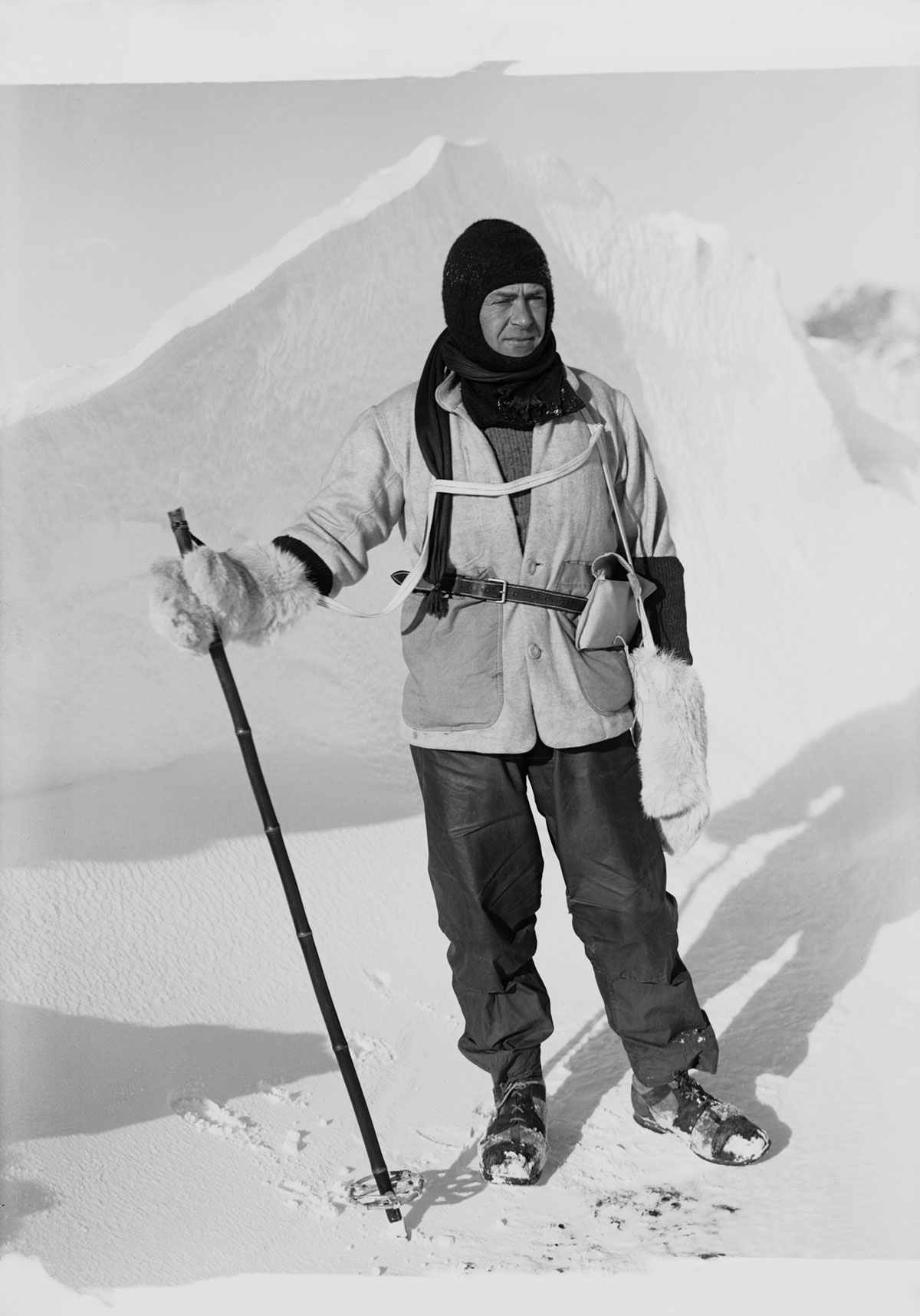


Anonymous photographer. 'Captain Robert Falcon Scott' Nd


Anonymous photographer
Captain Robert Falcon Scott
Nd
Gelatin silver print
Licensed with permission of the Scott Polar Research Institute, University of Cambridge
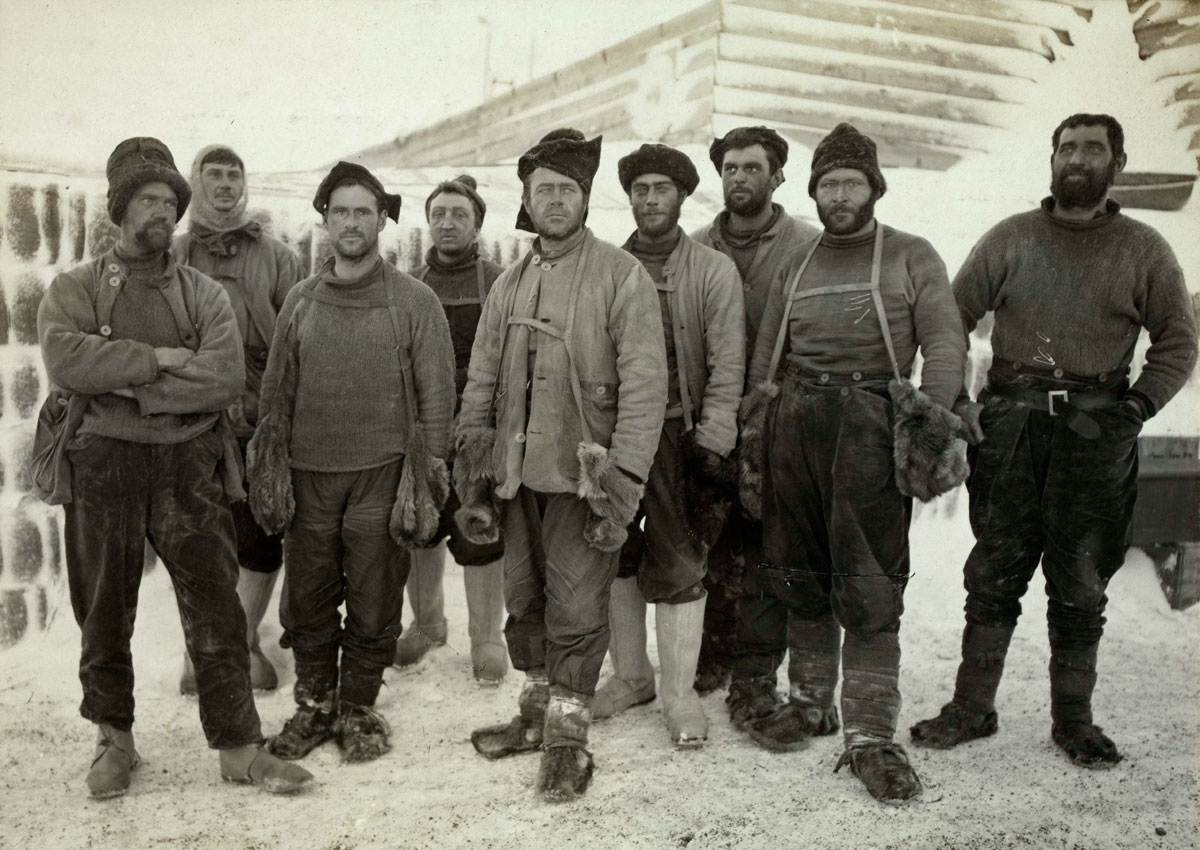
 

Herbert Ponting (British, 1870-1935) 'Members of the 'Terra Nova' expedition with Scott in the centre' 1911


Herbert Ponting (British, 1870-1935)
Members of the ‘Terra Nova’ expedition with Scott in the centre
1911
Gelatin silver print
Canterbury Museum NZ
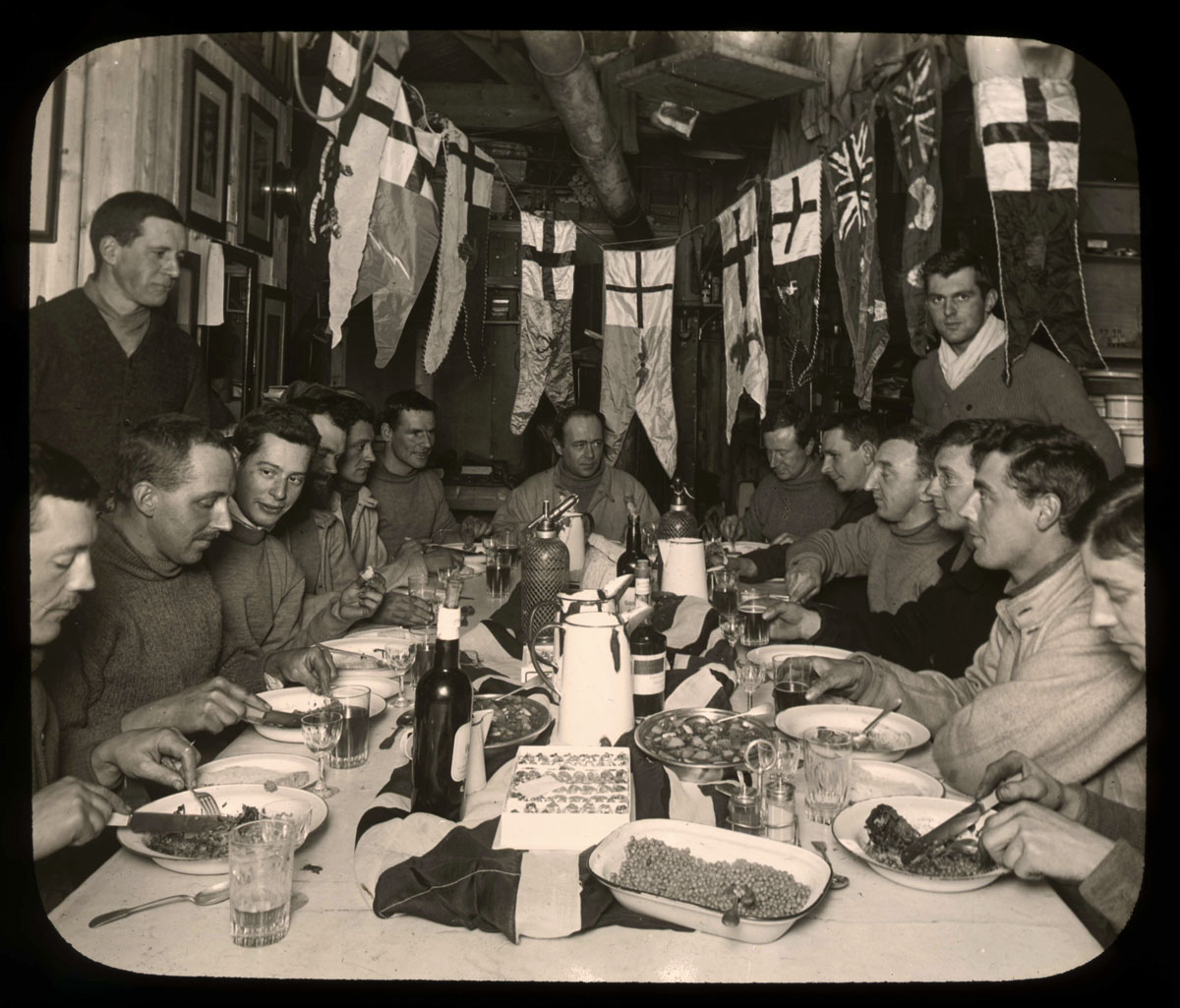
 

Herbert Ponting (British, 1870-1935) 'Scott’s birthday dinner, June 1911'


Herbert Ponting (British, 1870-1935)
Scott’s birthday dinner, June 1911
1911
Gelatin silver print
Canterbury Museum NZ
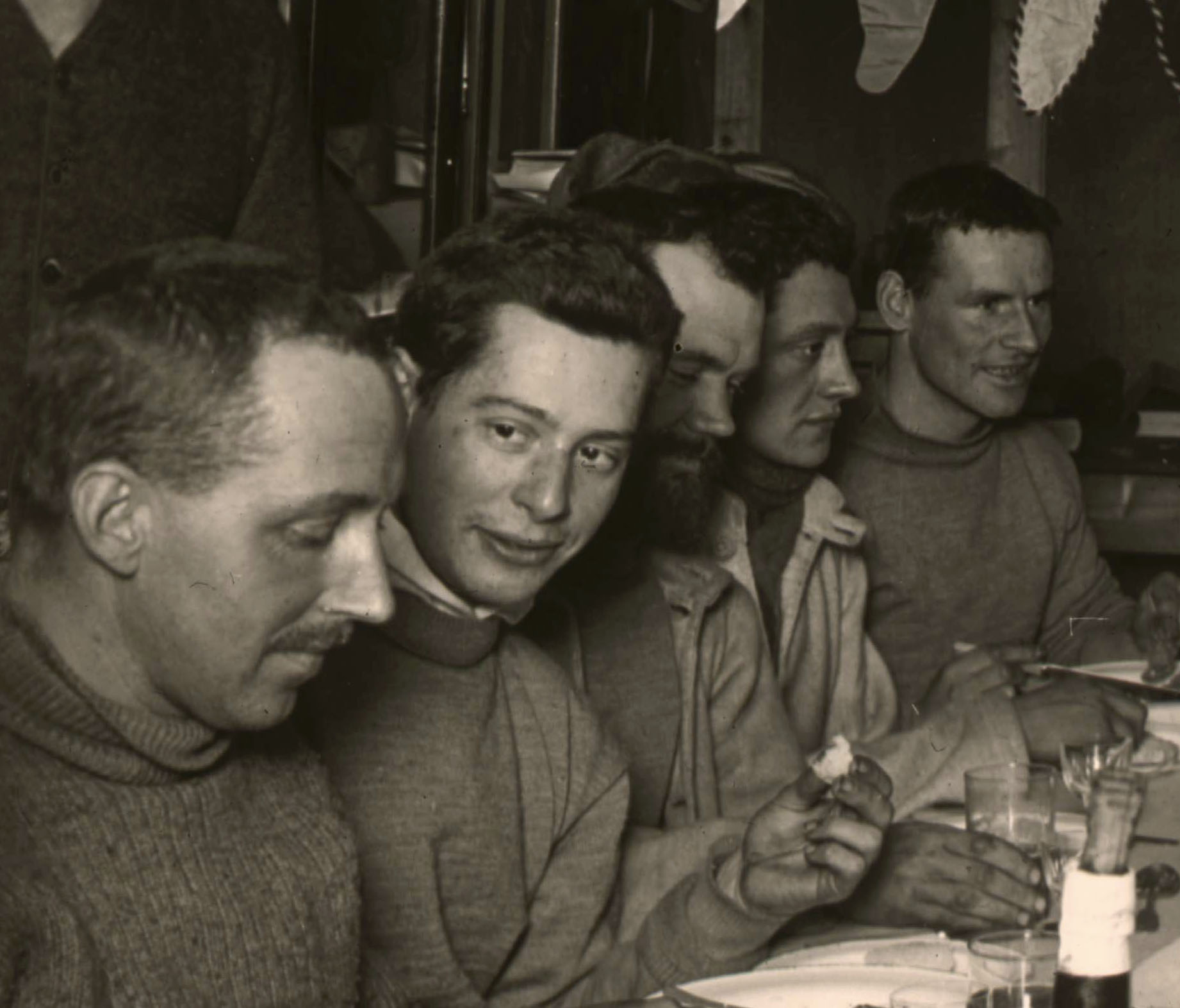
 

Herbert Ponting (British, 1870-1935) 'Scott’s birthday dinner, June 1911' 1911 (detail)


Herbert Ponting (British, 1870-1935)
Scott’s birthday dinner, June 1911 (detail)
1911
Gelatin silver print
Canterbury Museum NZ
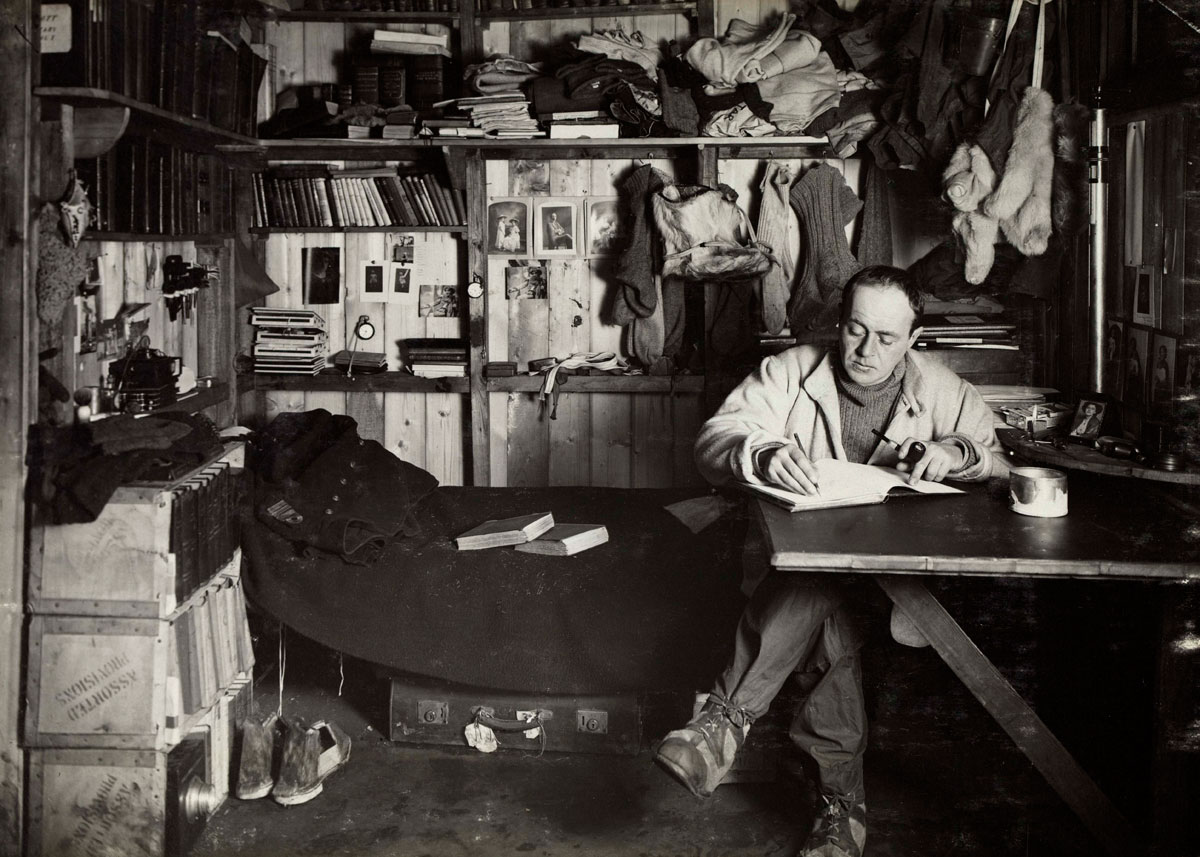
 

Herbert Ponting (British, 1870-1935) 'Scott writing in his area of the expedition hut, Scott's cubicle' 1911


Herbert Ponting (British, 1870-1935)
Scott writing in his area of the expedition hut, Scott’s cubicle
1911
Gelatin silver print
Pennell Collection, Canterbury Museum NZ
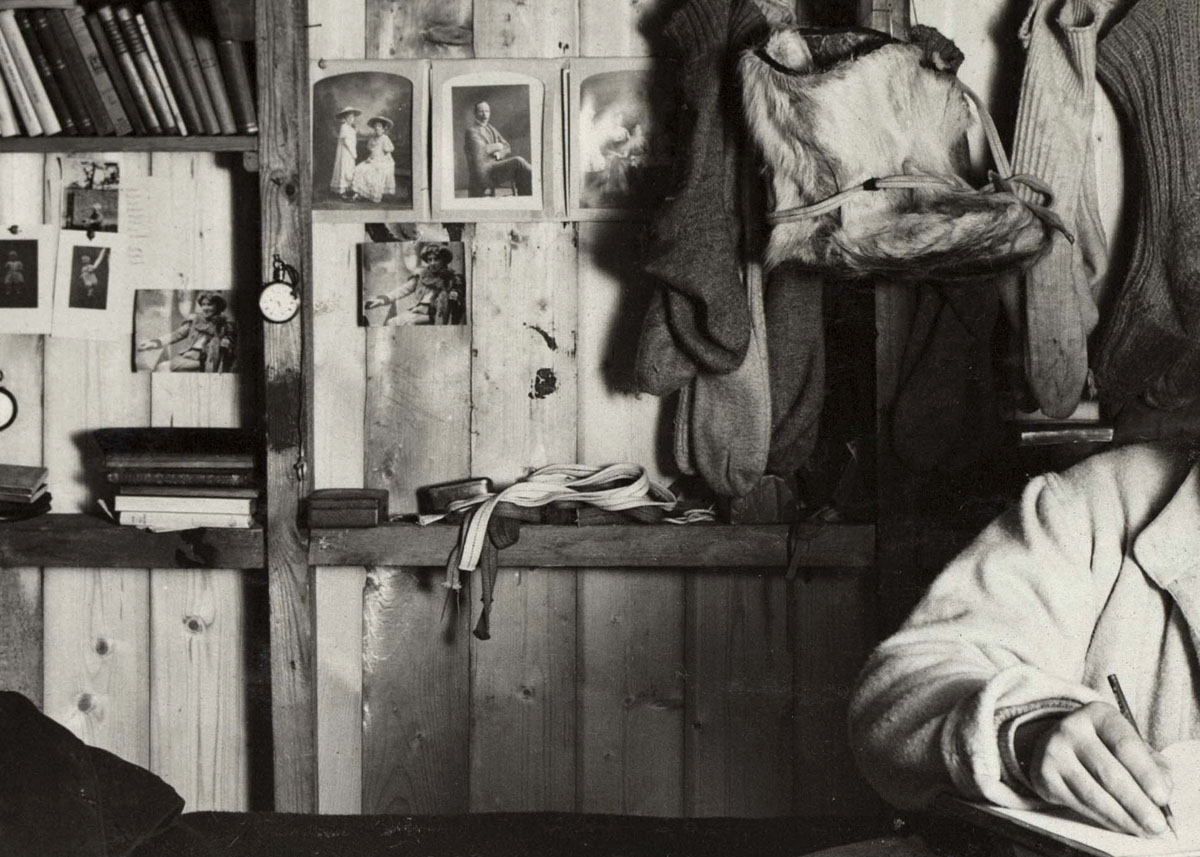
 

Herbert Ponting (British, 1870-1935) 'Scott writing in his area of the expedition hut, Scott's cubicle' 1911 (detail)


Herbert Ponting (British, 1870-1935)
Scott writing in his area of the expedition hut, Scott’s cubicle (detail)
1911
Gelatin silver print
Pennell Collection, Canterbury Museum NZ
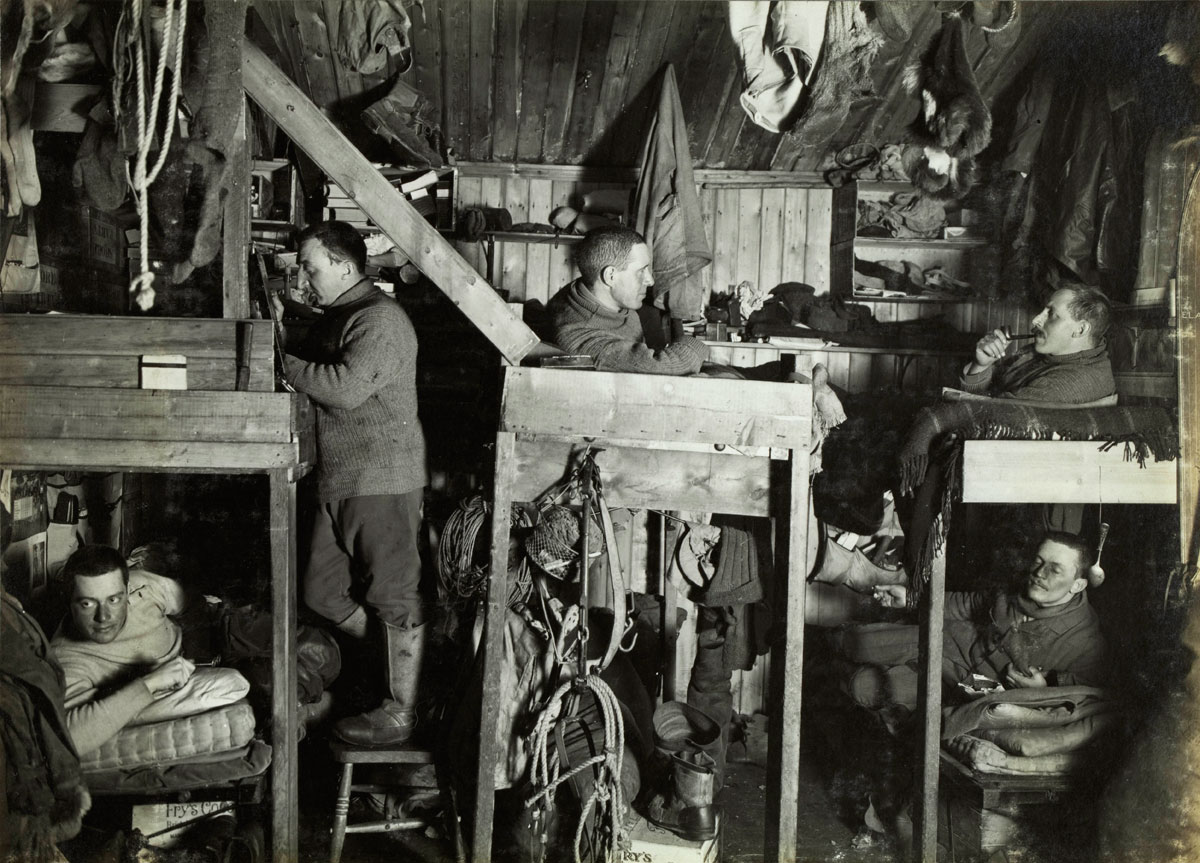
 

Herbert Ponting (British, 1870-1935) 'The Tenements, 9 October 1911' 1911


Herbert Ponting (British, 1870-1935)
The Tenements, 9 October 1911
1911
Gelatin silver print
Pennell Collection, Canterbury Museum NZ
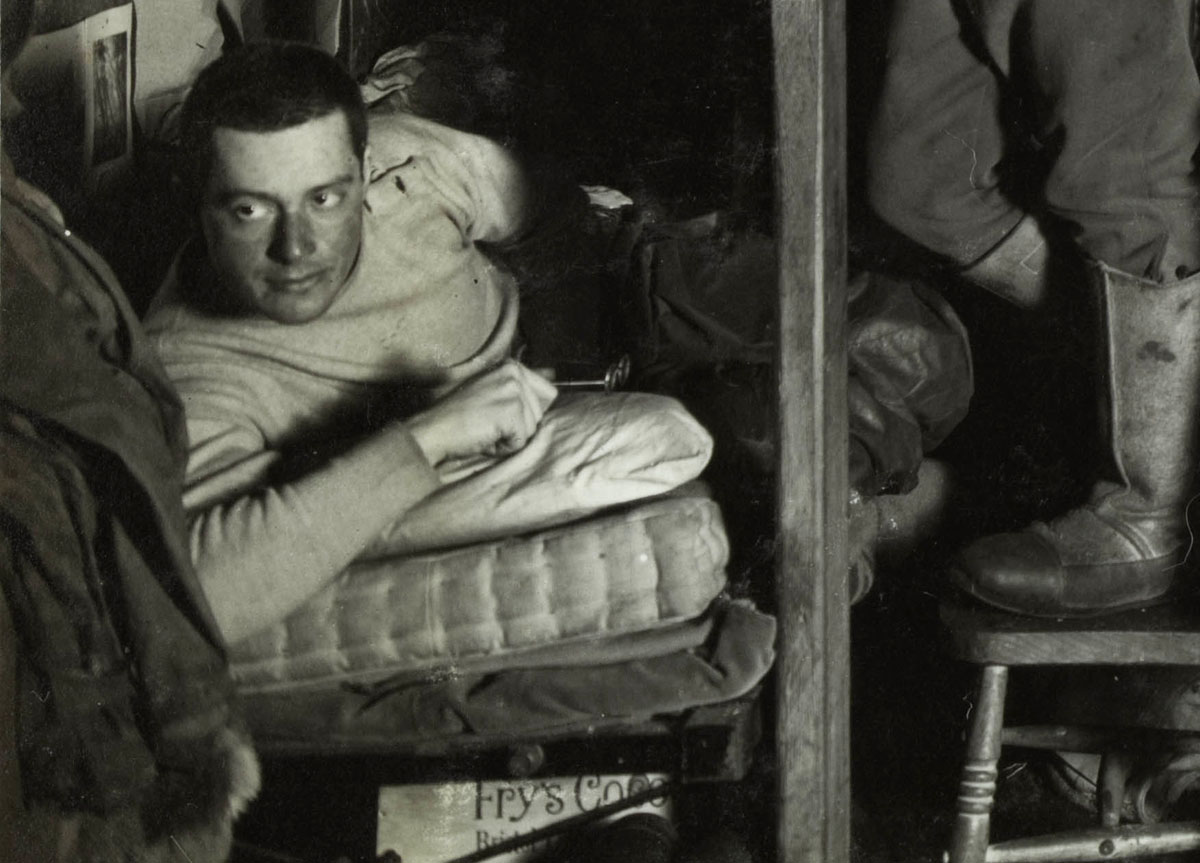
 

Herbert Ponting (British, 1870-1935) 'The Tenements, 9 October 1911' 1911 (detail)


Herbert Ponting (British, 1870-1935)
The Tenements, 9 October 1911 (detail)
1911
Gelatin silver print
Pennell Collection, Canterbury Museum NZ
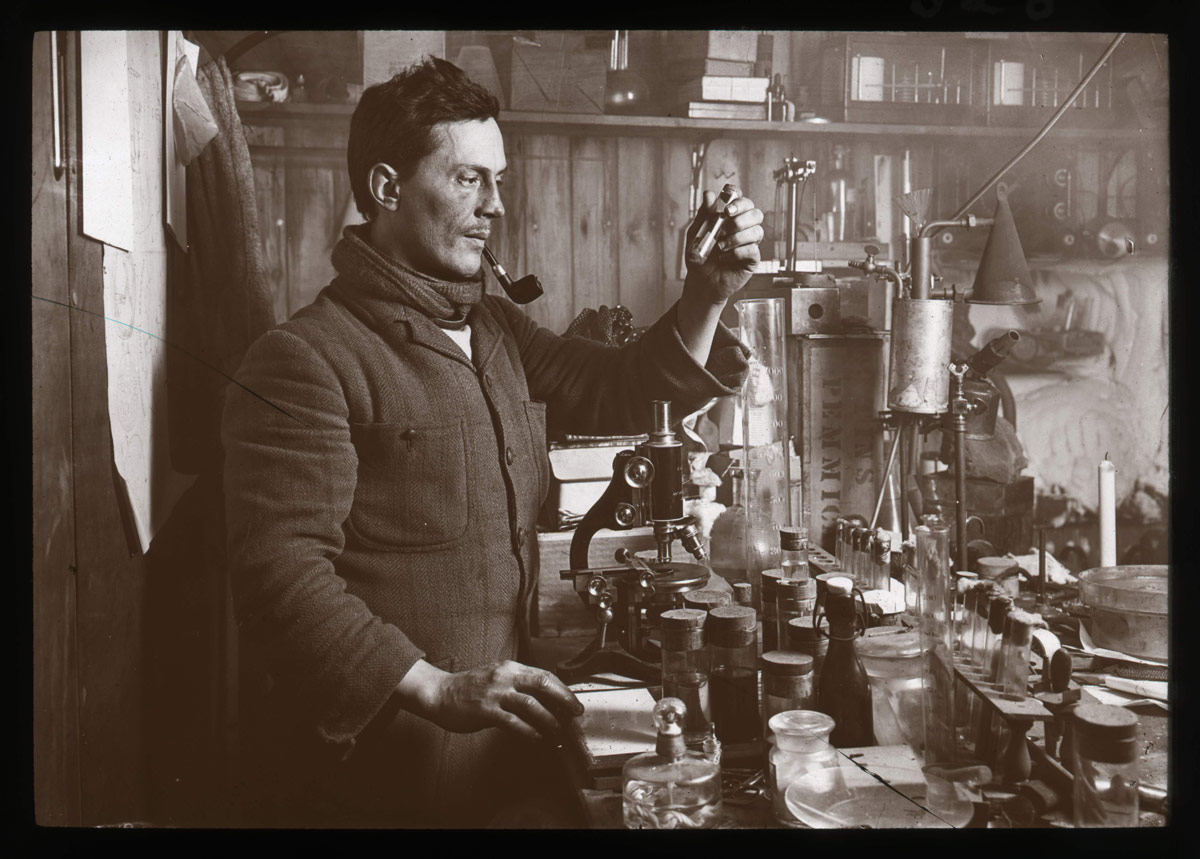
 

Herbert Ponting (British, 1870-1935) 'Edward Atkinson in the laboratory' 1911


Herbert Ponting (British, 1870-1935)
Edward Atkinson in the laboratory
1911
Silver gelatin print
Canterbury Museum NZ
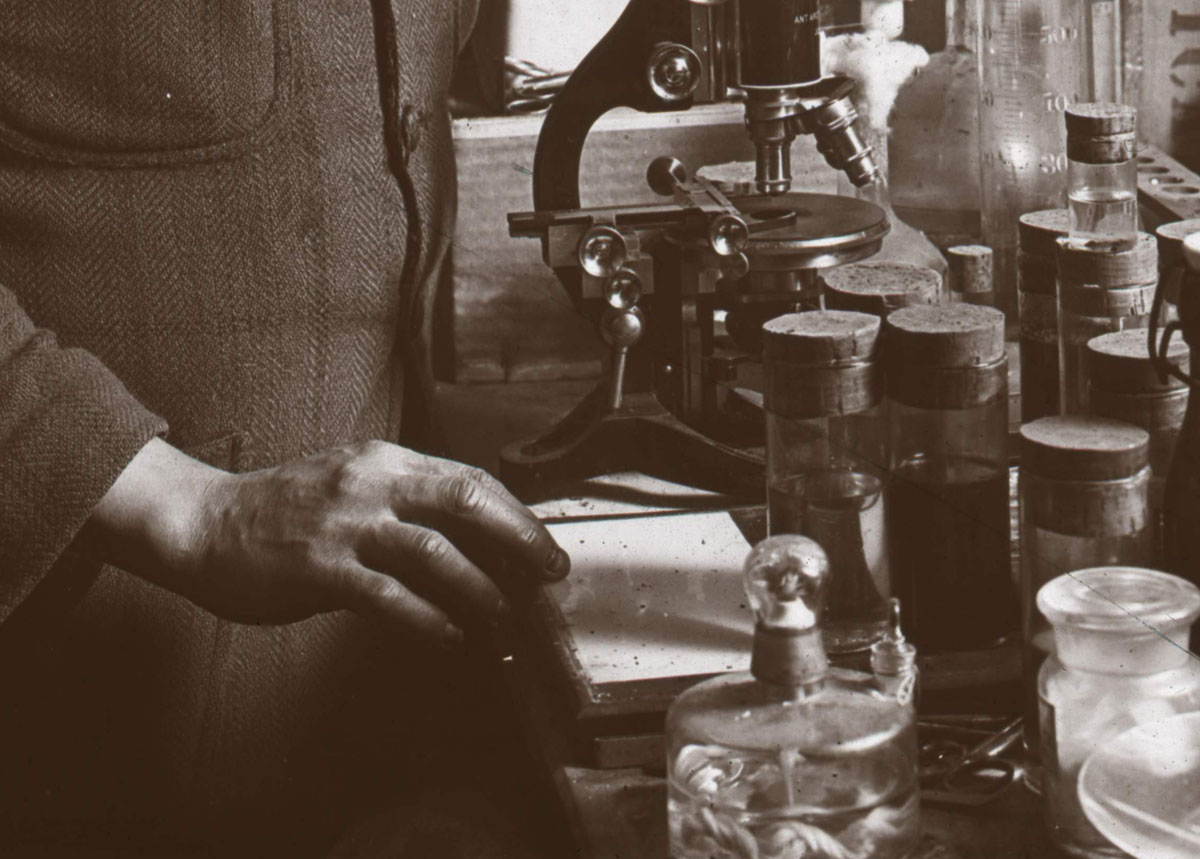
 

Herbert Ponting (British, 1870-1935) 'Edward Atkinson in the laboratory' 1911 (detail)


Herbert Ponting (British, 1870-1935)
Edward Atkinson in the laboratory (detail)
1911
Silver gelatin print
Canterbury Museum NZ


One hundred years after its tragic end, the definitive story of British explorer Captain Robert Falcon Scott’s Terra Nova expedition to Antarctica is being told in a major international exhibition coming to the Australian National Maritime Museum this June.

Scott’s Last Expedition will reunite real artefacts used by Scott and his team together with rare scientific specimens collected during the 1910-1913 expedition for the first time since their use in Antarctica.

When Scott set off on what was his second journey to explore the Antarctic on board the former whaling ship Terra Nova, he could not have predicted it would be his last. Tragically he and four of his colleagues died on the return trek to the South Pole two years later, having lost the race to be first. The exhibition however will go beyond the familiar tales of the journey to the Pole and the death of the Polar party to explore the Terra Nova expedition from every angle.

“Over the years public perceptions of Scott have varied greatly, from hero to flawed leader, and discussions of what really happened still captivate people,” said museum director Mary-Louise Williams today. “This exhibition will give visitors a unique opportunity to immerse themselves in this epic journey and the remarkable landscape of Antarctica,” she said.

Visitors will uncover Scott the man, learn more about the people who made up the expedition and explore every fascinating detail of this historic journey. At the centre of the exhibition will be a life-size representation of Scott’s Cape Evans’ base camp. Visitors can walk inside and get a sense of the everyday realities for the expedition’s members… from the cramped conditions and homeliness of the hut to the wealth of specimens collected and scientific investigations conducted.

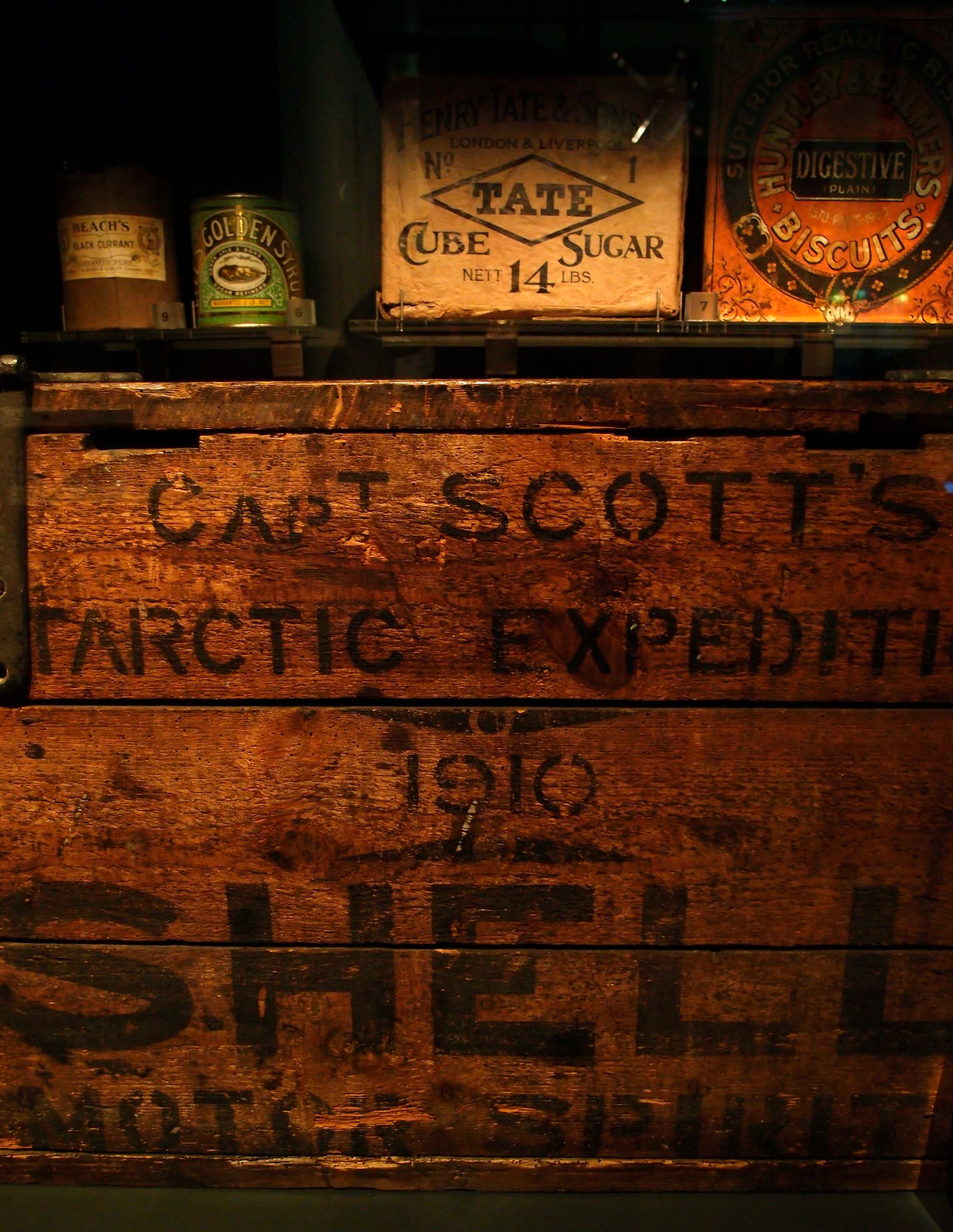
Original artefacts, equipment, clothes, and personal effects will be displayed for the first time in Australia and show the group’s attempts to make life in one of the most hostile environments on Earth as bearable as possible. Food tins including Fry’s Cocoa, Trufood Trumilk, and Symington’s Pea Flour recovered from the hut will be on display together with instruments, a microscope, and even Scott’s gramophone.

Photographs of the environment and life in camp taken by expedition photographer Herbert Ponting and poignant letters and diaries by various expedition members create a vivid picture of what life was like… working in hostile conditions, the struggles for survival and the strength of human endurance and courage.

Scott’s Terra Nova expedition made a significant contribution to Antarctic science. The expedition included a full scientific program with a large team of scientists making new discoveries which directly led to a greater understanding of Antarctica. The scientists had to endure harsh Antarctic conditions to carry out their work. It was cold, windy and completely dark in winter and, if not careful, the scientists could easily get frostbitten. And yet despite the conditions, the expedition left a rich legacy that continues to inspire and inform today.

Natural History Museum, London, the Canterbury Museum, Christchurch, New Zealand and the Antarctic Heritage Trust, New Zealand, have collaborated to create this exhibition to commemorate the centenary of the expedition and celebrate its achievements.

Press release from the Australian National Maritime Museum
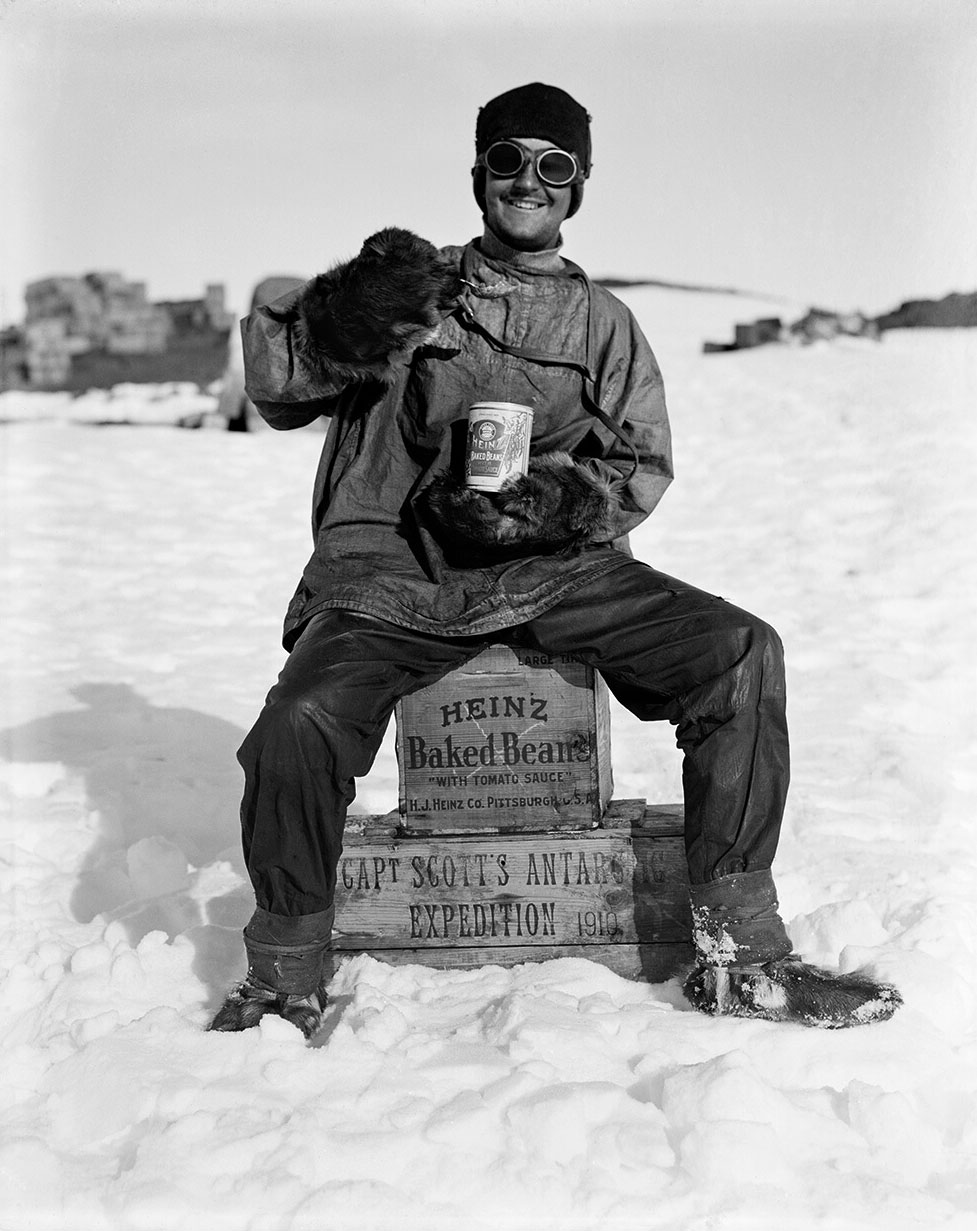
 

Herbert Ponting (British, 1870-1935) 'A member of the team tucks into a tin of Heinz baked beans in the Ross Dependency, during Captain Robert Falcon Scott’s Terra Nova Expedition to the Antarctic, January 1912' 1912


Herbert Ponting (British, 1870-1935)
A member of the team tucks into a tin of Heinz baked beans in the Ross Dependency, during Captain Robert Falcon Scott’s Terra Nova Expedition to the Antarctic, January 1912
1912
Silver gelatin print
Canterbury Museum NZ
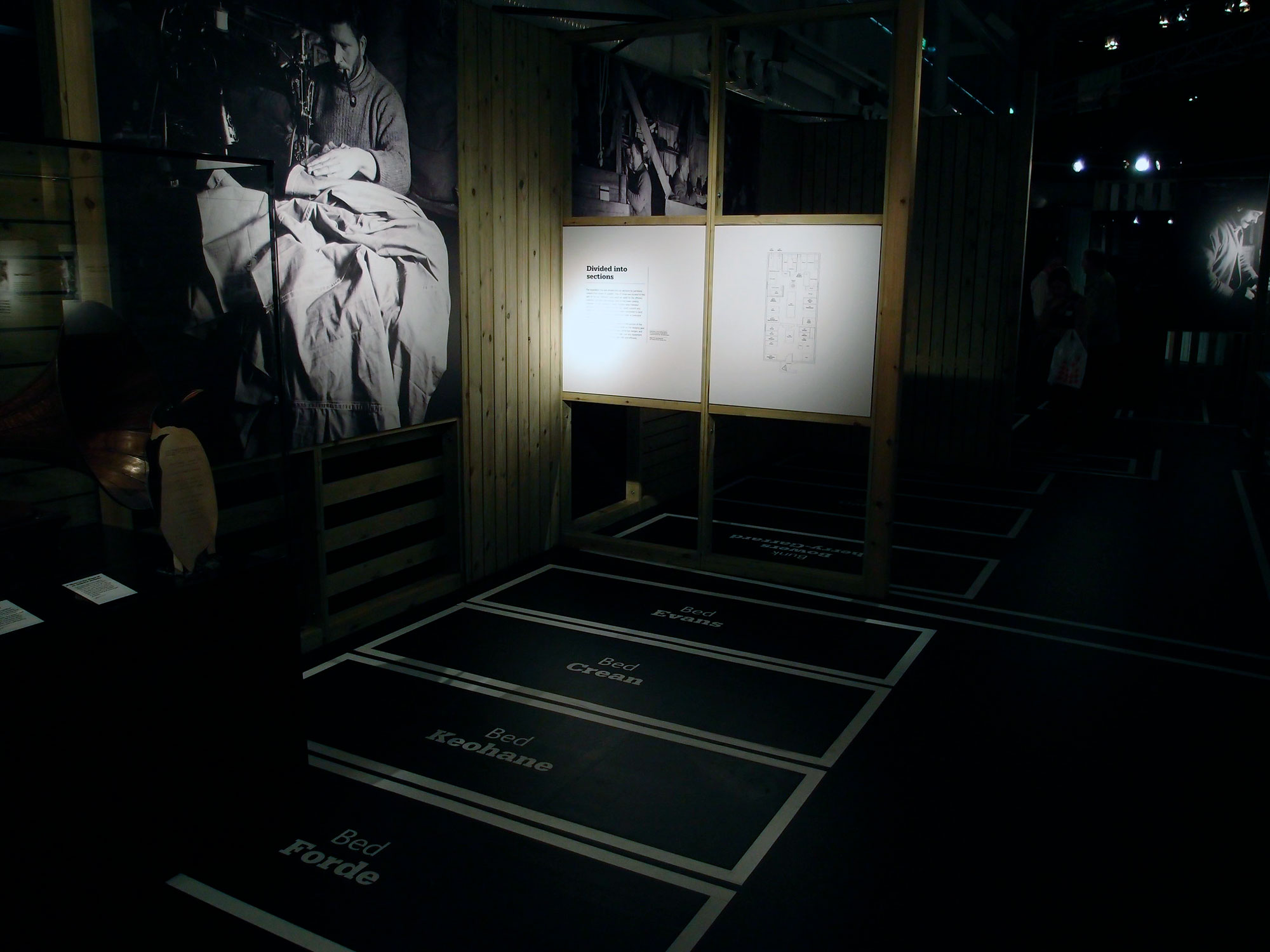
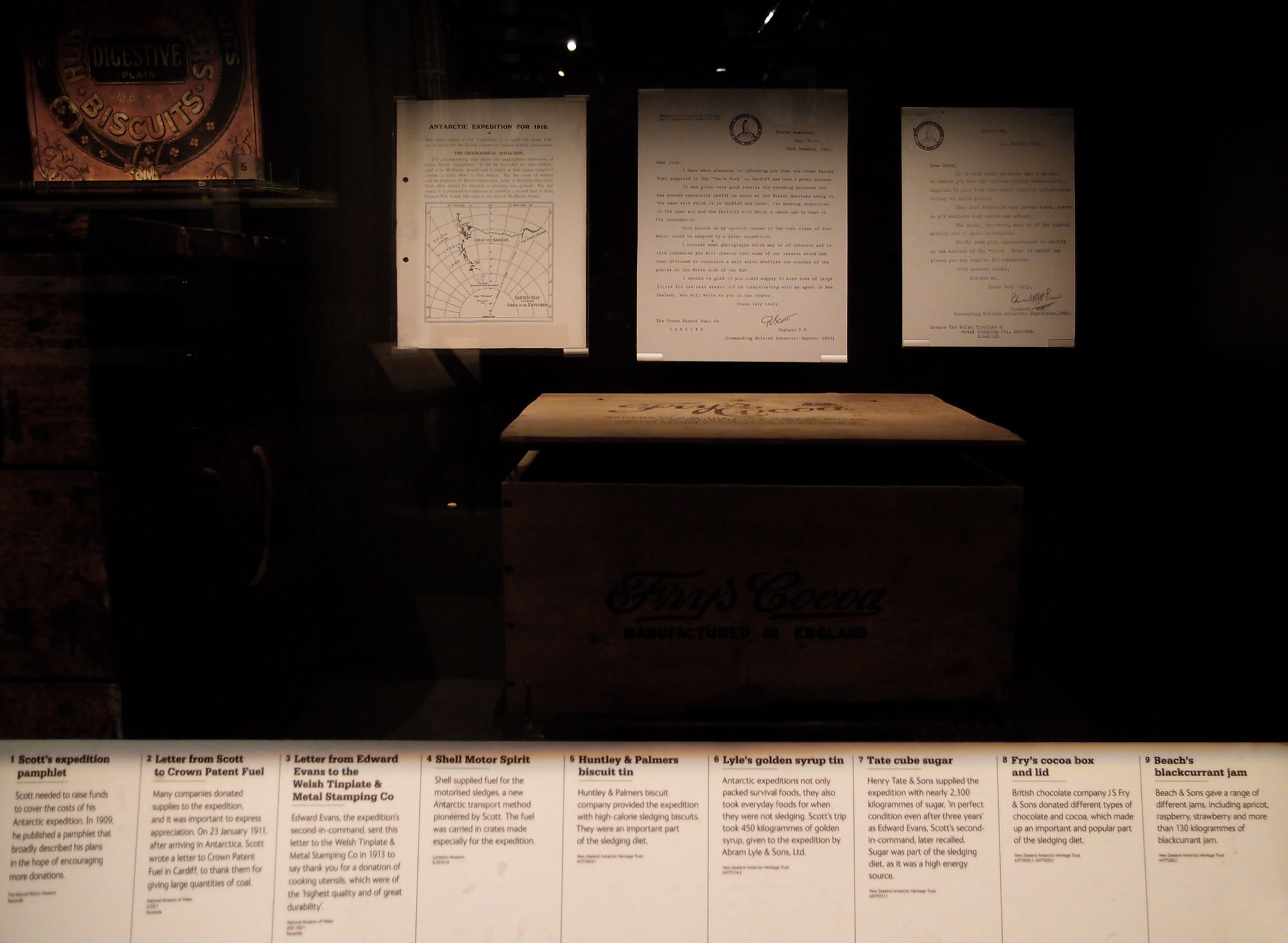
 

Neerav Bhatt (photographer) Installation view of the exhibition 'Scott's Last Expedition' at the Australian National Maritime Museum, Sydney, June - October 2011

Neerav Bhatt (photographer) Installation view of the exhibition 'Scott's Last Expedition' at the Australian National Maritime Museum, Sydney, June - October 2011

Neerav Bhatt (photographer) Installation view of the exhibition 'Scott's Last Expedition' at the Australian National Maritime Museum, Sydney, June - October 2011

Neerav Bhatt (photographer) Installation view of the exhibition 'Scott's Last Expedition' at the Australian National Maritime Museum, Sydney, June - October 2011

Neerav Bhatt (photographer) Installation view of the exhibition 'Scott's Last Expedition' at the Australian National Maritime Museum, Sydney, June - October 2011


Neerav Bhatt (photographer)
Installation view of the exhibition Scott’s Last Expedition at the Australian National Maritime Museum, Sydney, June – October 2011
CC BY-NC-SA 2.0
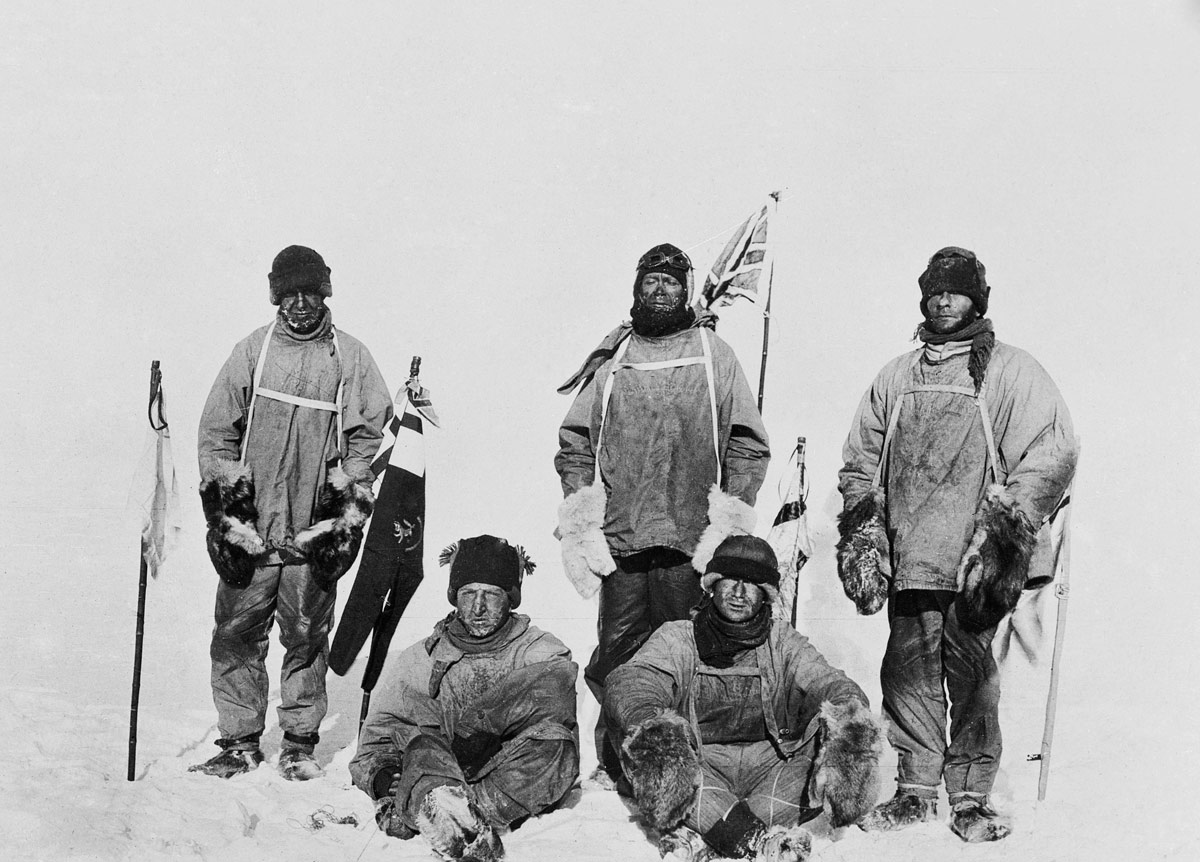
 

Scott and the Polar Party at the South Pole 1912


Scott and the Polar Party at the South Pole
Left to right: Captain Lawrence Oates, Lieutenant Henry Bowers (seated), Captain Robert Falcon Scott, Dr Edward Wilson (Seated), Petty Officer Edgar Evans
1912
Licensed with permission of the Scott Polar Research Institute, University of Cambridge.


Notice the camera release cord in the right hand of Lieutenant Henry Bowers.


The fatal journey

Scott’s 1,450 km journey to the geographic South Pole began on 1 November 1911, two weeks after the Norwegian polar explorer Roald Amundsen left his base camp at the Bay of Whales. Amundsen reached the pole first – on 14 December 1911 – and then raced back to tell the world their news. Scott and his team reached the Pole a month later on 17 January 1912 having been beset by fierce weather conditions. The disappointment was immense. The return journey was undertaken in horrid weather with harsh, intense cold and violent blizzards that, in the end, defeated them. Evans failed first, suffering concussion from a fall; Oates suffered dramatic frostbite to his feet – gangrene had set in – and he crawled out of the tent saying the now famous words, “I am just going outside and may be some time”. The remaining men – Scott, Wilson and Bowers – were weak with malnutrition, starvation and exhaustion and perished on or around 29/30 March 1912 – some three weeks after the world learned that Amundsen had reached the Pole first.
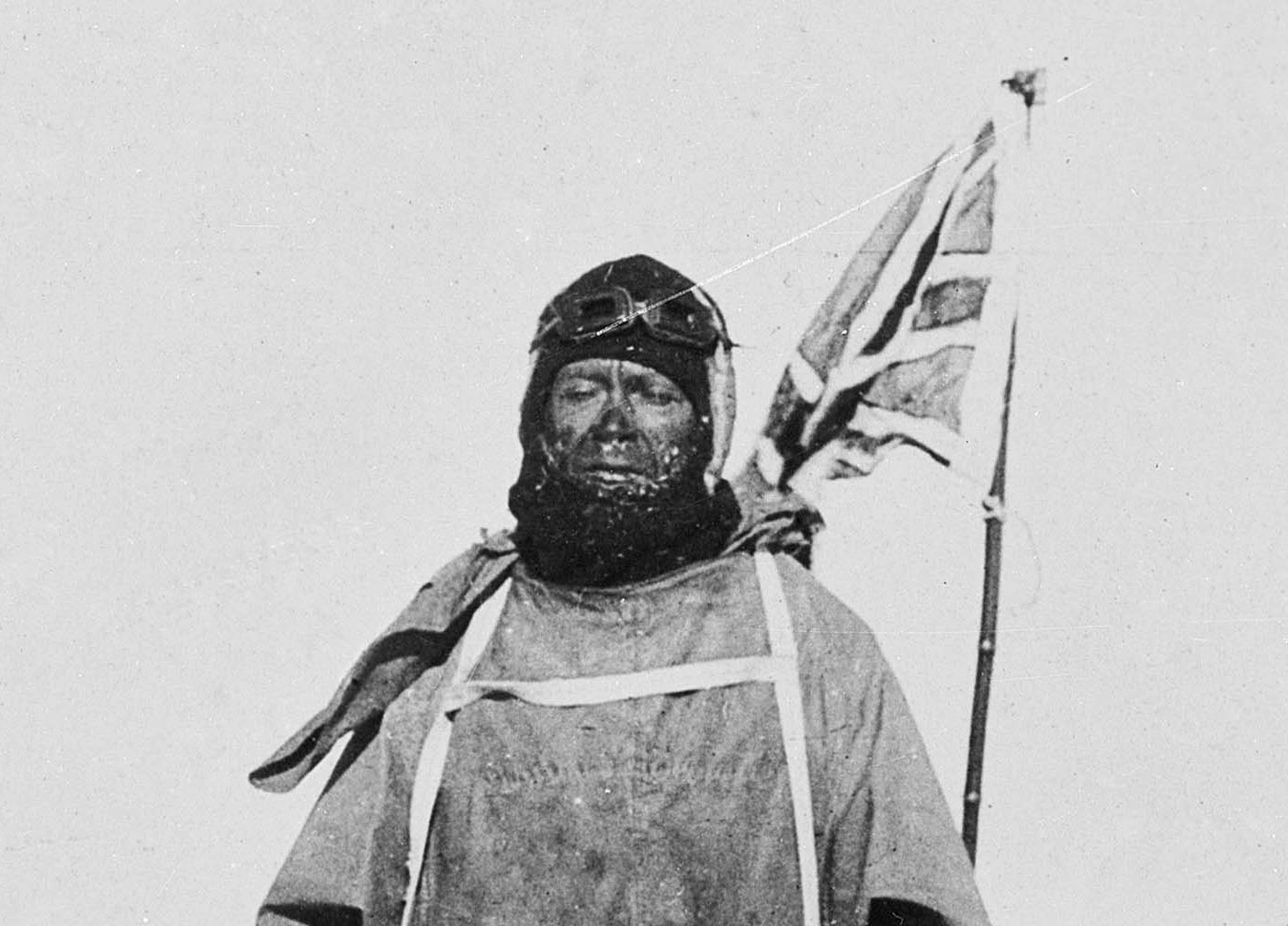
 

Captain Robert Falcon Scott at the South Pole (detail)
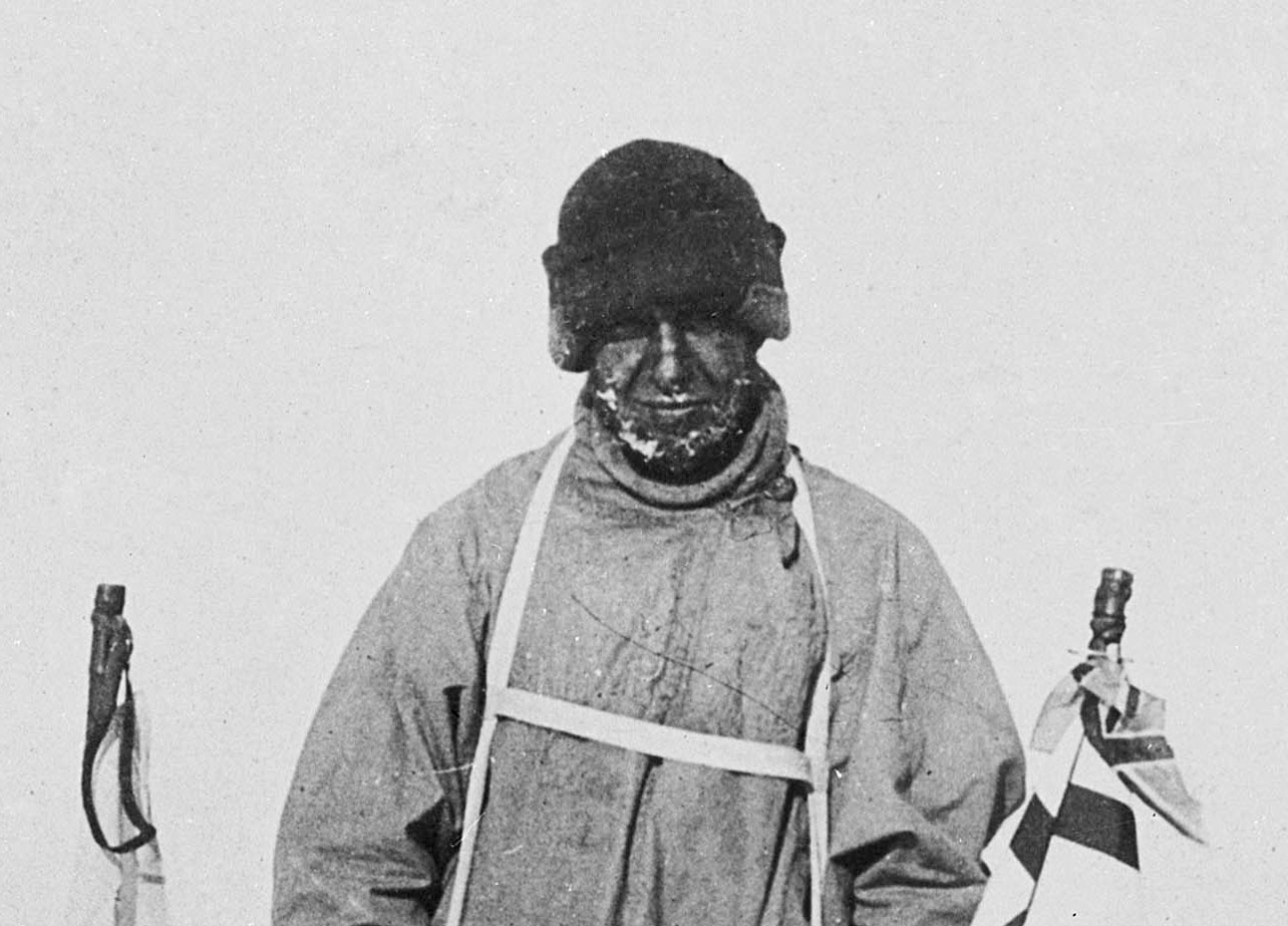
 

Captain Robert Falcon Scott at the South Pole (detail)


Captain Lawrence Oates at the South Pole (detail)
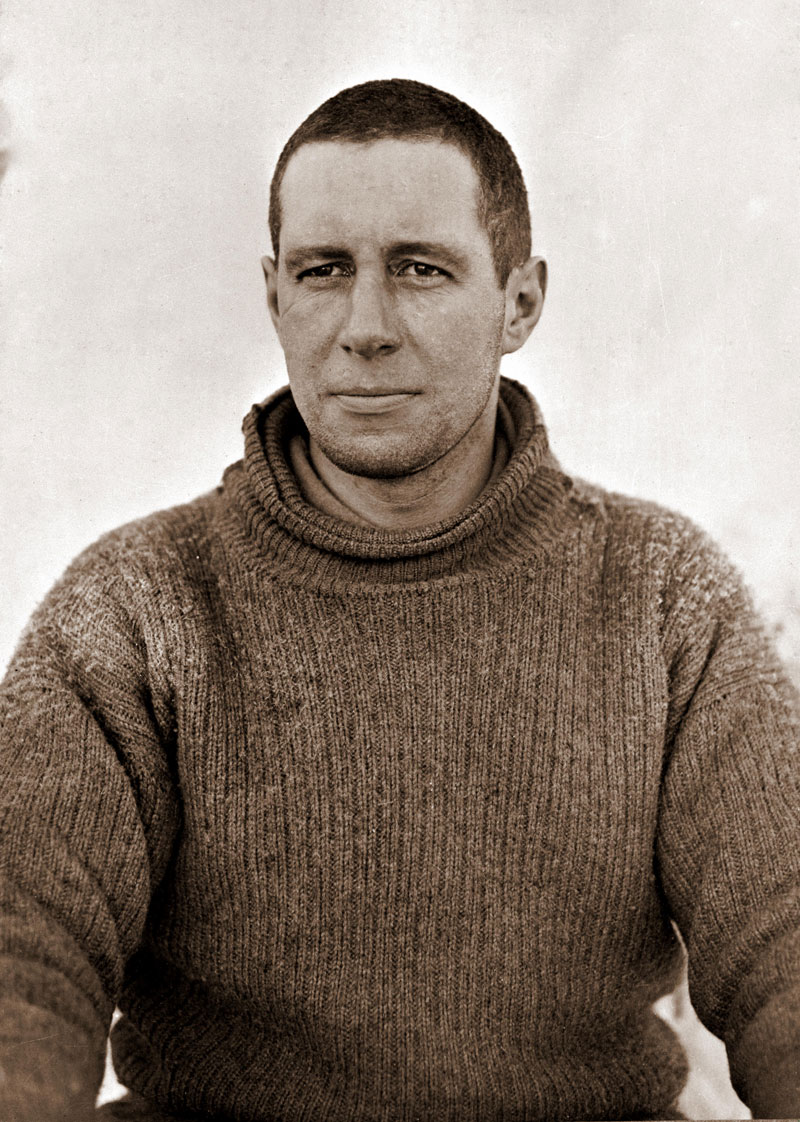
 

Captain Lawrence Oates at the South Pole (detail)


Herbert Ponting. 'Lawrence Oates' c. 1911


Herbert Ponting (British, 1870-1935)
Captain Lawrence Edward Grace Oates during the British Antarctic Expedition of 1911-1913
c. 1911
Silver gelatin print
Photographic Archive, Alexander Turnbull Library
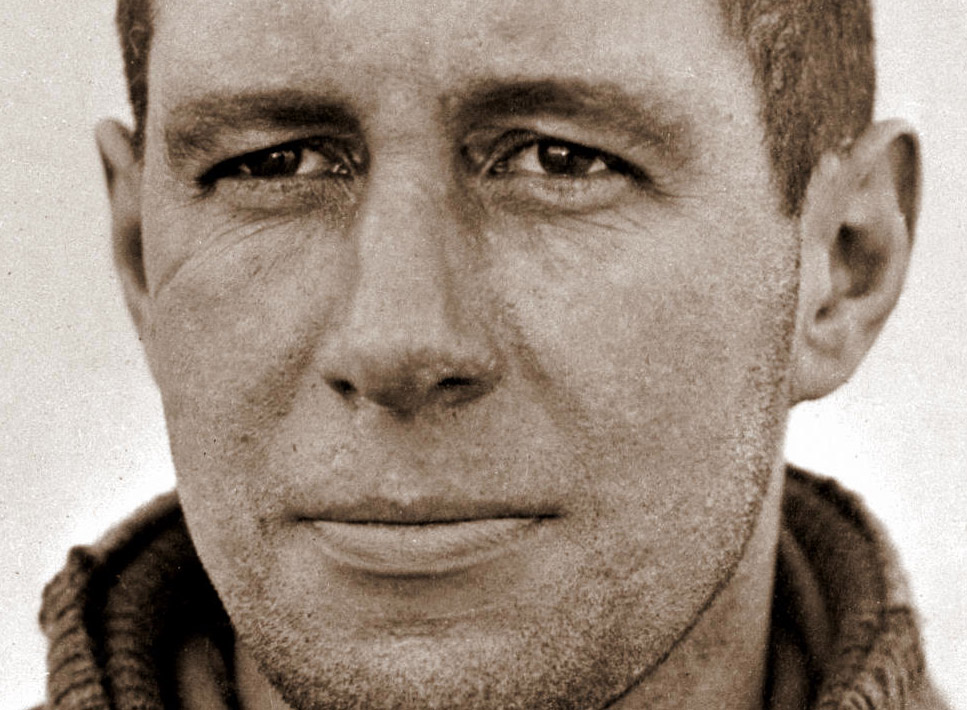
 

Herbert Ponting. 'Captain Lawrence Edward Grace Oates during the British Antarctic Expedition of 1911-1913' c. 1911 (detail)


Herbert Ponting (British, 1870-1935)
Captain Lawrence Edward Grace Oates during the British Antarctic Expedition of 1911-1913 (detail)
c. 1911
Silver gelatin print
Photographic Archive, Alexander Turnbull Library
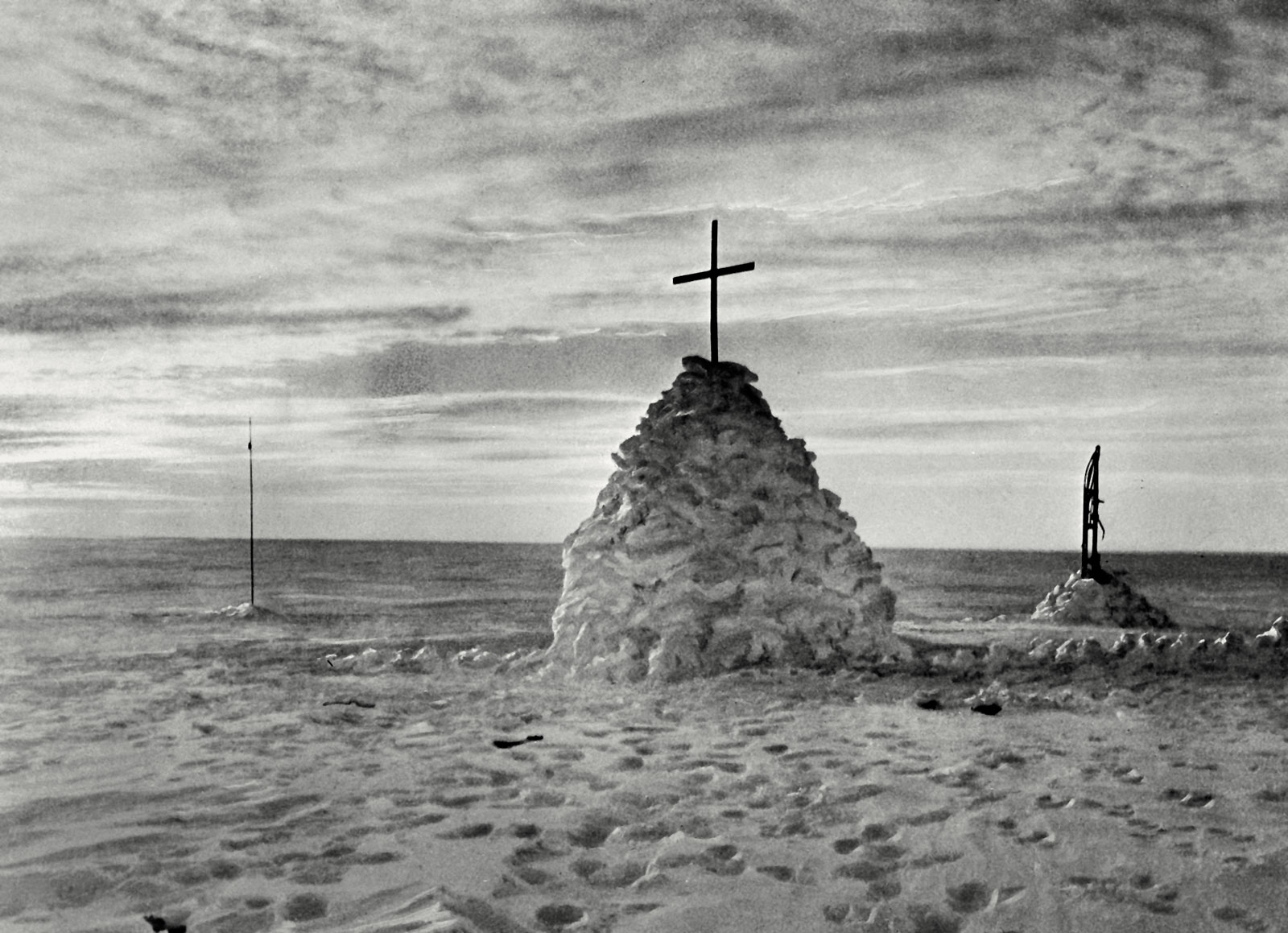
 

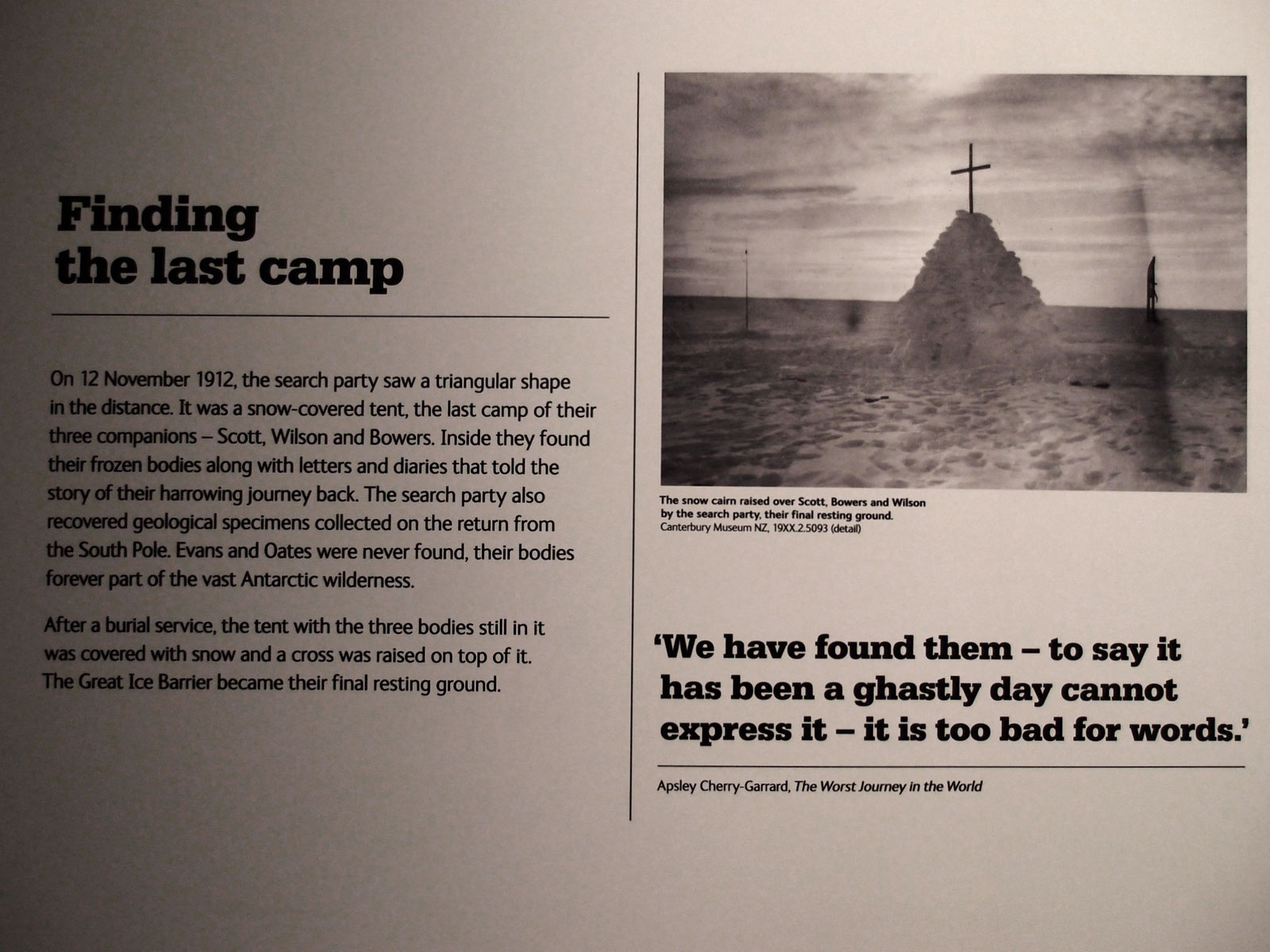
Anonymous photographer. 'The snow cairn raised over Scott, Bowers and Wilson by the search party, their final resting ground' 1912 (detail)


Anonymous photographer
The snow cairn raised over Scott, Bowers and Wilson by the search party, their final resting ground (detail)
1912
Silver gelatine print
Canterbury Museum NZ


Australian National Maritime Museum
2 Murray Street
Darling Harbour
Sydney NSW 2000
Australia

Opening hours:
Every day 10am – 4.00pm

Australian National Maritime Museum website

LIKE ART BLART ON FACEBOOK

Back to top

Exhibition: ‘Boris Mikhailov: Case History’ at The Museum of Modern Art (MoMA), New York

Exhibition dates: 26th May – 5th September 2011


Many thankx to The Museum of Modern Art for allowing me to publish the photographs in the posting. Please click on the photographs for a larger version of the image.


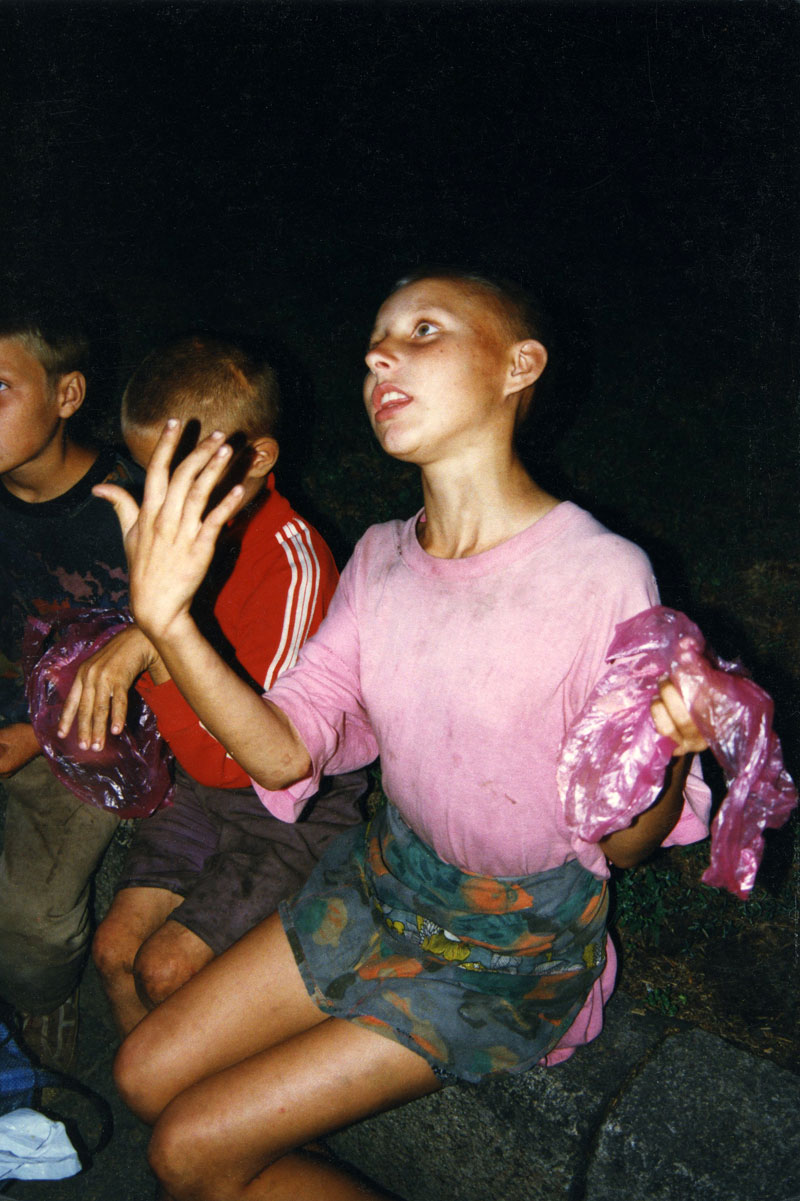
Boris Mikhailov (Ukrainian, born 1938) 
'Untitled', from the series 'Case History' 
1997-98


Boris Mikhailov (Ukrainian, b. 1938)
Untitled
1997-1998
From the series Case History
Chromogenic colour print
93″ x 49 15/16″ (236.2 x 126.8cm)
Courtesy the artist, Pace/MacGill Gallery, New York, and Galerie Barbara Weiss, Berlin
© 2011 Boris Mikhailov


The demise of the Soviet Union in 1991 spelled disaster for many citizens of Mikhailov’s native Kharkov, in Ukraine. As the state apparatus collapsed, bleak predictability rapidly gave way to chaos and want. The photographer, whose earlier work includes sympathetic records of communal pastimes, responded with a bitter series that starkly evokes the squalor of desperation, drink, and despair. In the same years, but in another photographic mode altogether, he experimented with flagrantly staged political and sexual satires.

A decade later, as a few made millions, the least fortunate Ukrainians were more desperate still. This untitled work (above) belongs to Mikhailov’s bold and risky series Case History, for which he paid Kharkov’s outcasts to pose and perform. The best of his new photographs improbably blend the opposing poles of his art. No-nonsense realism and impromptu playacting seamlessly conspire in a persuasive theater of wrenching misery.

Publication excerpt from The Museum of Modern Art, MoMA Highlights, New York: The Museum of Modern Art, revised 2004, originally published 1999, p. 357.


With Case History, Boris Mikhailov confronts viewers with the effects of the Soviet Union’s collapse on the homeless and marginalised people of Ukraine. To create these raw, colour-saturated, large-scale photographs, Mikhailov paid his subjects and worked with them to stage poses inspired by religious and historical paintings. “This is the first time I paid my models,” he explains. “I don’t think this is an issue. If models get paid to appear in an advertisement, nobody cares. Why can’t I? This gave me the possibility to photograph them, and gave them the possibility to live.”

Additional text from Seeing Through Photographs online course, Coursera, 2016

Mikhailov’s Case History series examines the social oppression and devastating poverty of a disenfranchised community in Kharkiv, Ukraine: those who had been left homeless by the rise of the capitalist oligarchy following the collapse of the Soviet Union. “The rich and the homeless – the new classes of a new society – this was, as we had been taught, one of the features of capitalism,” Mikhailov observed. A haunting document of post-Soviet urban conditions, the series captures the failed promise of capitalism with poetry and grit.

Gallery label from 2020


Case History / Boris Mikhailov


Boris Mikhailov (Ukrainian, born 1938) 
'Untitled', from the series 'Case History' 
1997-98


Boris Mikhailov (Ukrainian, b. 1938)
Untitled
1997-1998
From the series Case History
Chromogenic colour print
93″ x 49 15/16″ (236.2 x 126.8cm)
Courtesy the artist, Pace/MacGill Gallery, New York, and Galerie Barbara Weiss, Berlin
© 2011 Boris Mikhailov


Boris Mikhailov (Ukrainian, born 1938) 
'Untitled', from the series 'Case History' 
1997-1998


Boris Mikhailov (Ukrainian, b. 1938)
Untitled
1997-1998
From the series Case History
Chromogenic colour print
93″ x 49 15/16″ (236.2 x 126.8cm)
Courtesy the artist, Pace/MacGill Gallery, New York, and Galerie Barbara Weiss, Berlin
© 2011 Boris Mikhailov


Boris Mikhailov (Ukrainian, b. 1938) '
Untitled', from the series 'Case History' 
1997-98


Boris Mikhailov (Ukrainian, b. 1938)
Untitled
1997-1998
From the series Case History
Chromogenic colour print
93″ x 49 15/16″ (236.2 x 126.8cm)
Courtesy the artist, Pace/MacGill Gallery, New York, and Galerie Barbara Weiss, Berlin
© 2011 Boris Mikhailov


The Museum of Modern Art presents Boris Mikhailov: Case History, the first presentation dedicated entirely to the artist’s seminal series Case History (1997-98) in an American museum, from May 26 to September 5, 2011. Ukrainian-born Mikhailov (b. 1938) is one of the leading photographers from the former Soviet Union. For over 40 years, Mikhailov has explored the position of the individual within the mechanisms of public ideology, touching on such subjects as Ukraine under Soviet rule, the living conditions in post-communist Eastern Europe, and the fallen ideals of the Soviet Union. Although deeply rooted in a historical context, his work incorporates profoundly engaging and personal narratives of humour, lust, vulnerability, ageing, and death. The exhibition is organised by Eva Respini, Associate Curator of Photography, The Museum of Modern Art.

This exhibition, which features some 20 works, is selected from the larger body of work of Case History, which comprises 400 photographs and was published as a book in 1999. Arguably his most challenging body of work, it explores the deeply troubling circumstances of bomzhes – the homeless – a new class that emerged after the collapse of the Soviet Union in 1991. In 1996, after spending time abroad, he returned to Kharkov, which seemed like a changed city, with foreign ads and the glitz of a new western capitalist façade. Whereas most mainstream media focused on the new capitalists and rising oligarchs of the former Soviet republics, Mikhailov’s pictures describe the circumstances of a largely invisible underclass. Set against the bleak backdrop of the industrial city of Kharkov, his life-size colour photographs chronicle the oppression, devastating poverty, and everyday reality of a disenfranchised community living on the margins of the Ukraine’s new economic regime. Many of his subjects display their wounds, rashes, tattoos, and growths.

For Mikhailov the act of photographing was partly born out of a sense of responsibility: Case History records post-Soviet realities, in stark contrast to the previous histories of the Ukraine (1930s famine, war, Soviet losses in World War II) that went undocumented. One of the most haunting documents of post-Soviet urban conditions, these unforgettable pictures capture this new reality with poetry, clarity, and grit. The large size of Mikhailov’s pictures is in keeping with the scale of contemporary photography, creating a visceral and immersive viewing experience. Ms. Respini states, “Mikhailov inhabits the worlds of social documentarian and contemporary artist. It is partly the tension between these two roles that makes the work so complex and powerful.”

Case History also explores the complicated relationship between photographer and subject. The photographs are collaborations, sometimes the result of a spontaneous moment, other times directed by the artist. Central to the exhibition is the seven-part work the artist calls “requiem.” The mannered posing of the people in his pictures exposes the constructed nature of the photographs, challenging the idea of objective truth and authenticity implied by documentary photography. For Mikhailov, photographic seeing is an accountable act, and viewers participate in this act. With these pictures, Mikhailov implicates himself – and the viewers – in the act of looking.

Press release from The Museum of Modern Art website


Installation view of the exhibition 'Boris Mikhailov: Case History' at The Museum of Modern Art (MoMA), New York


Installation view of the exhibition Boris Mikhailov: Case History at The Museum of Modern Art (MoMA), New York


Boris Mikhailov (Ukrainian, b. 1938) '
Untitled', from the series 'Case History' 
1997-98


Boris Mikhailov (Ukrainian, b. 1938)
Untitled
1997-1998
From the series Case History
Chromogenic colour print
93″ x 49 15/16″ (236.2 x 126.8cm)
Courtesy the artist, Pace/MacGill Gallery, New York, and Galerie Barbara Weiss, Berlin
© 2011 Boris Mikhailov


Boris Mikhailov (Ukrainian, b. 1938) 'Untitled' 1997-1998


Boris Mikhailov (Ukrainian, b. 1938)
Untitled
1997-1998
From the series Case History
Chromogenic colour print
93″ x 49 15/16″ (236.2 x 126.8cm)
Courtesy the artist, Pace/MacGill Gallery, New York, and Galerie Barbara Weiss, Berlin
© 2011 Boris Mikhailov


Boris Mikhailov (Ukrainian, b. 1938) '
Untitled', from the series 'Case History' 
1997-1998


Boris Mikhailov (Ukrainian, b. 1938)
Untitled
1997-1998
From the series Case History
Chromogenic colour print
93″ x 49 15/16″ (236.2 x 126.8cm)
Courtesy the artist, Pace/MacGill Gallery, New York, and Galerie Barbara Weiss, Berlin
© 2011 Boris Mikhailov


What does it mean to present images like these as art in a museum? In one respect, they carry on a tradition of picturing the downtrodden exemplified in photographs by countless artists from Walker Evans to Andres Serrano, who has made studio images of homeless people resembling the heroic portraits of American Indians by the 19th century photographer Edward S. Curtis. Works like those tell us that, whatever their outward appearances and circumstances, the poor have souls that are worthy of respect.

Mr. Mikhailov’s photographs are not so ennobling. They render their subjects as exotic and even demonic. Specimens in a Boschian freak show, they elicit sympathy, revulsion or amazement but not admiration or empathy. Because there are no titles or captions, you don’t know who the people are or anything about their lives. Maybe some were research scientists or university professors fired for not toeing party lines or for crossing paths with a ruthless plutocrat at the wrong place and time; maybe they were all rounded up from an insane asylum or an alcoholic detox center. …

All seem to belong to a tribe or extended family of outcasts. But “the homeless,” you might want to object, is not a homogeneous population. It includes alcoholics, drug addicts, criminals, prostitutes, con artists, people with mental illnesses and hard-working citizens going through rough patches. Mr. Mikhailov is not concerned with personal particulars. Under his direction the subjects are, above all, actors who function mainly as allegorical symbols. They are metonyms for the underbelly of society, and their challenging revelations of their own usually hidden body parts is a metaphor for the whole project of exposing what polite society would prefer to keep under wraps. To the extent that they appear everywhere around the world, including in New York City, they are universal signs of capitalism’s failure to care for the less fortunate.

Ken Johnson. “Behold the Anonymous Downtrodden,” on The New York Times website June 2, 2011 [oNline] Cited 08/01/2025


Boris Mikhailov (Ukrainian, b. 1938) 'Untitled' 1997-1998


Boris Mikhailov (Ukrainian, b. 1938)
Untitled
1997-1998
From the series Case History
Chromogenic colour print
93″ x 49 15/16″ (236.2 x 126.8cm)
Courtesy the artist, Pace/MacGill Gallery, New York, and Galerie Barbara Weiss, Berlin
© 2011 Boris Mikhailov


Boris Mikhailov (Ukrainian, b. 1938) 'Untitled' 1997-1998


Boris Mikhailov (Ukrainian, b. 1938)
Untitled
1997-1998
From the series Case History
Chromogenic colour print
93″ x 49 15/16″ (236.2 x 126.8cm)
Courtesy the artist, Pace/MacGill Gallery, New York, and Galerie Barbara Weiss, Berlin
© 2011 Boris Mikhailov


Boris Mikhailov (Ukrainian, b. 1938) '
Untitled', from the series 'Case History' 
1997-98


Boris Mikhailov (Ukrainian, b. 1938)
Untitled
1997-1998
From the series Case History
Chromogenic colour print
93″ x 49 15/16″ (236.2 x 126.8cm)
Courtesy the artist, Pace/MacGill Gallery, New York, and Galerie Barbara Weiss, Berlin
© 2011 Boris Mikhailov


Boris Mikhailov (Ukrainian, b. 1938) '
Untitled', from the series 'Case History' 
1997-98


Boris Mikhailov (Ukrainian, b. 1938)
Untitled
1997-1998
From the series Case History
Chromogenic colour print
93″ x 49 15/16″ (236.2 x 126.8cm)
Courtesy the artist, Pace/MacGill Gallery, New York, and Galerie Barbara Weiss, Berlin
© 2011 Boris Mikhailov


The Museum of Modern Art
11 West 53 Street
New York, NY 10019
Phone: (212) 708-9400

Opening hours:
10.30am – 5.30pm
Open seven days a week

MoMA website

LIKE ART BLART ON FACEBOOK

Back to top

Exhibition: ‘The Lives of Great Photographers’ at The National Media Museum, Bradford

Exhibition dates: 15th April – 4th September 2011


Many thankx to The National Media Museum for allowing me to publish the photographs in the posting. Please click on the photographs for a larger version of the image.


Lady Clementina Hawarden (British, 1822-1865) 'Self Portrait' c. 1864


Lady Clementina Hawarden (British, 1822-1865)
Self Portrait
c. 1864
Albumen print
Courtesy of the National Media Museum/SSPL


Clementina, Lady Hawarden, is a poetic, if elusive, presence among nineteenth-century photographers. As a devoted mother, her life revolved around her eight children. She took up photography in 1857; using her daughters as models, she created a body of work remarkable for its technical brilliance and its original depiction of nascent womanhood.
Lady Hawarden showed her work in the 1863 and 1864 exhibitions of the Photographic Society. With the exception of a few rare examples, her photographs remained in the possession of her family until 1939, when the more than eight hundred images were donated to the Victoria and Albert Museum. Only recently have they been the objects of research, publication, and exhibition.

Text from The Metropolitan Museum of Art website


John Moffat (Scottish, 1819-1894) 'William Henry Fox Talbot with camera and lens' 1864


John Moffat (Scottish, 1819-1894)
William Henry Fox Talbot with camera and lens
1864


Julia Margaret Cameron (British born India, 1815-1879) 'Carlyle like a rough block of Michael Angelo's sculpture' 1867


Julia Margaret Cameron (British born India, 1815-1879)
Carlyle like a rough block of Michael Angelo’s sculpture
1867
Albumen print
Courtesy The Royal Photographic Society Collection at the National Media Museum/SSPL


Henry Herschel Hay Cameron (British born India, 1852-1911) 'Mrs Julia Margaret Cameron' 1870


Henry Herschel Hay Cameron (British born India, 1852-1911)
Mrs Julia Margaret Cameron
1870
Albument print
Courtesy of the National Media Museum/SSPL


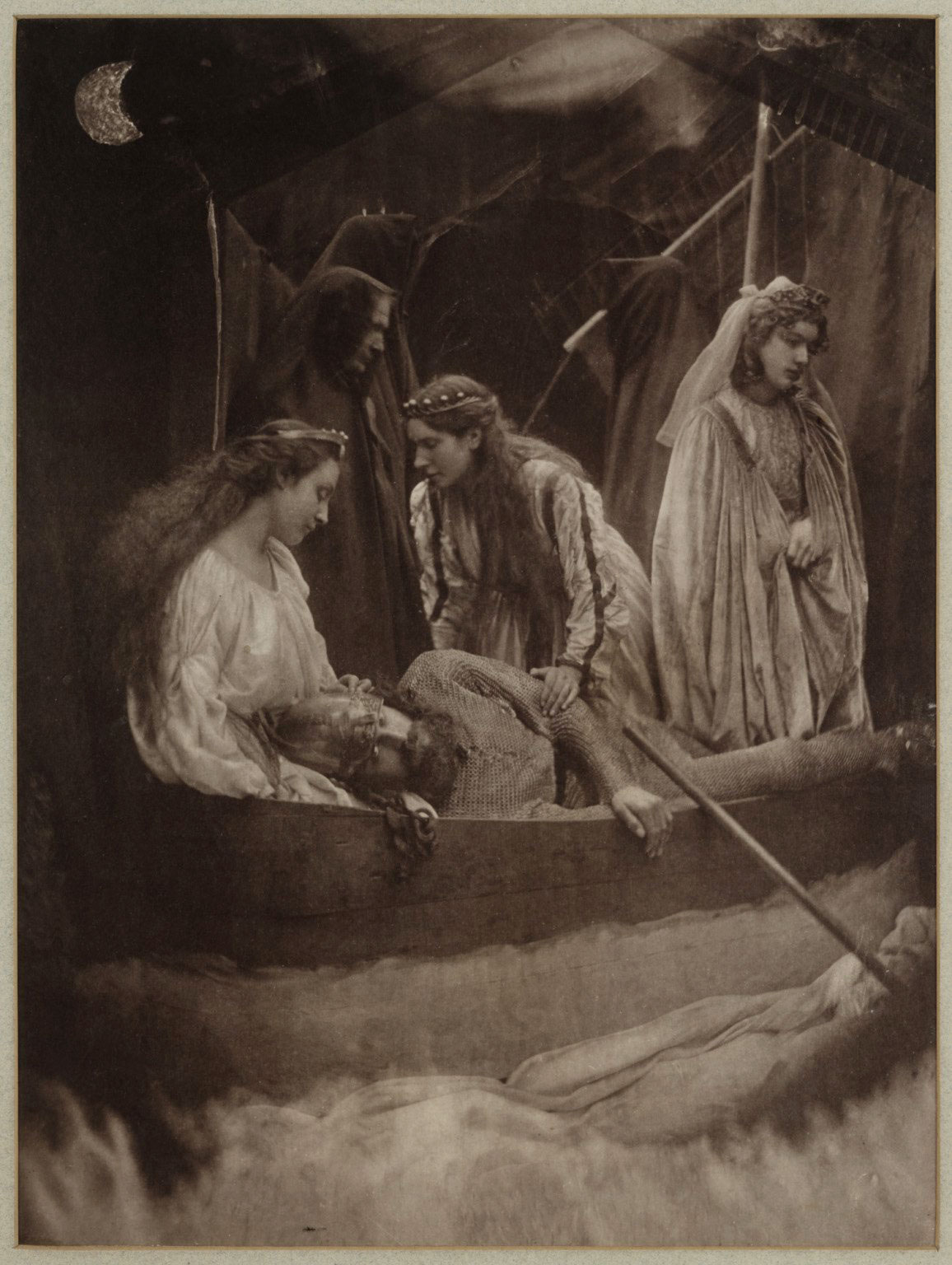
Julia Margaret Cameron (British born India, 1815-1879) 'So Like a Shatter'd Column Lay the King' 1875


Julia Margaret Cameron (British born India, 1815-1879)
So Like a Shatter’d Column Lay the King
1875
Albumen print
Courtesy of The Royal Photographic Society Collection at the National Media Museum


Photographers have created some of the most famous and memorable images ever produced, combining science and art since 1839. The Lives of Great Photographers, a free to enter exhibition at the National Media Museum in Bradford, draws on the Museum’s renowned collection to focus on the pioneers behind the camera, exploring the extraordinary stories surrounding some of photography’s most important innovators and artists.

Featuring Henri Cartier-Bresson, Julia Margaret Cameron, Robert Capa, William Henry Fox Talbot, Weegee, Tony Ray-Jones, Fay Godwin and Eadweard Muybridge, the exhibition will display iconic images and artefacts from these and other great names, selected exclusively from the National Collection of Photography.

Exhibition curator Brian Liddy said: “Photography has been with us for more than 170 years, and in that time countless famous photographs have been taken by many famous photographers. Often we may think we know these men and women because we know their work so well, but over time so many photographers’ personal stories have become overshadowed by their most famous pictures. This major exhibition aims to redress the balance.”

The show begins with an investigation into the rivalry between two of the medium’s earliest pioneers. Without Louis Jacques Mandé Daguerre and William Henry Fox Talbot, photography as it known today would not exist. Daguerre, a former theatrical designer, presented the photographic process to France and the world in 1839. Working in parallel and in competition, Talbot, who became an MP for Chippenham, went on to create the first negative from which multiple copy photographs could be produced.

As technology evolved, the breadth and range of photography increased, and the methods by which it could provide a source of income, or artistic expression, became more diverse. Julia Margaret Cameron, although primarily considered an artist, copyrighted her work and attempted to make a living by selling copies. Her personal connections gave her the opportunity to produce some of the first celebrity photographs in existence. Olive Edis employed photography as a serving war artist during the First World War and Edward Steichen’s career was remarkable for its variety as he moved effortlessly from art, to fashion, to advertising.

Photography also proved an ideal medium when it came to documenting world events. Lewis Hine and Dorothea Lange were both driven by their social consciences to record the Great Depression in America. Photojournalism, the cousin of documentary photography, is represented in the exhibition by names such as Henri Cartier-Bresson and Robert Capa, founding members of the world’s first photographic agency, Magnum. Both served in the Second World War and produced images that helped define an era.

One of the most notorious life stories is that of the English photographer Eadweard Muybridge. His pioneering work in chronophotography, whereby movement is captured by a sequence of photographic exposures, famously demonstrated that all four legs of a horse left the ground as it galloped. Until then the motion of a horse’s hooves were too quick for the human eye to determine. Perhaps less well known is the fact that Muybridge murdered his wife’s lover in cold blood but was later acquitted with a verdict of ‘justifiable homicide’.

The exhibition also includes Roger Fenton, Lady Clementina Hawarden, Alfred Stieglitz, André Kertész, and Larry Burrows. Each photographer is represented by their photographic portrait and a selection of their images. None is living, as only those whose lives and work can be evaluated in their entirety have been selected.

Brian Liddy added: “This exhibition shows just how rich the museum’s collections are. The work of some of the best-known photographers in history will be shown alongside the kinds of cameras they would have had to carry and use in the course of their work. We’ve also taken the opportunity to show rarely seen material, such as pages from the notebooks of Tony Ray-Jones detailing what was going through his mind when he was thinking about how to get the pictures he wanted.”

“By recounting the lives of these great photographers, we hope to provide an insight into what led them to produce some of the greatest photographs ever taken.”

Press release from The National Media Museum


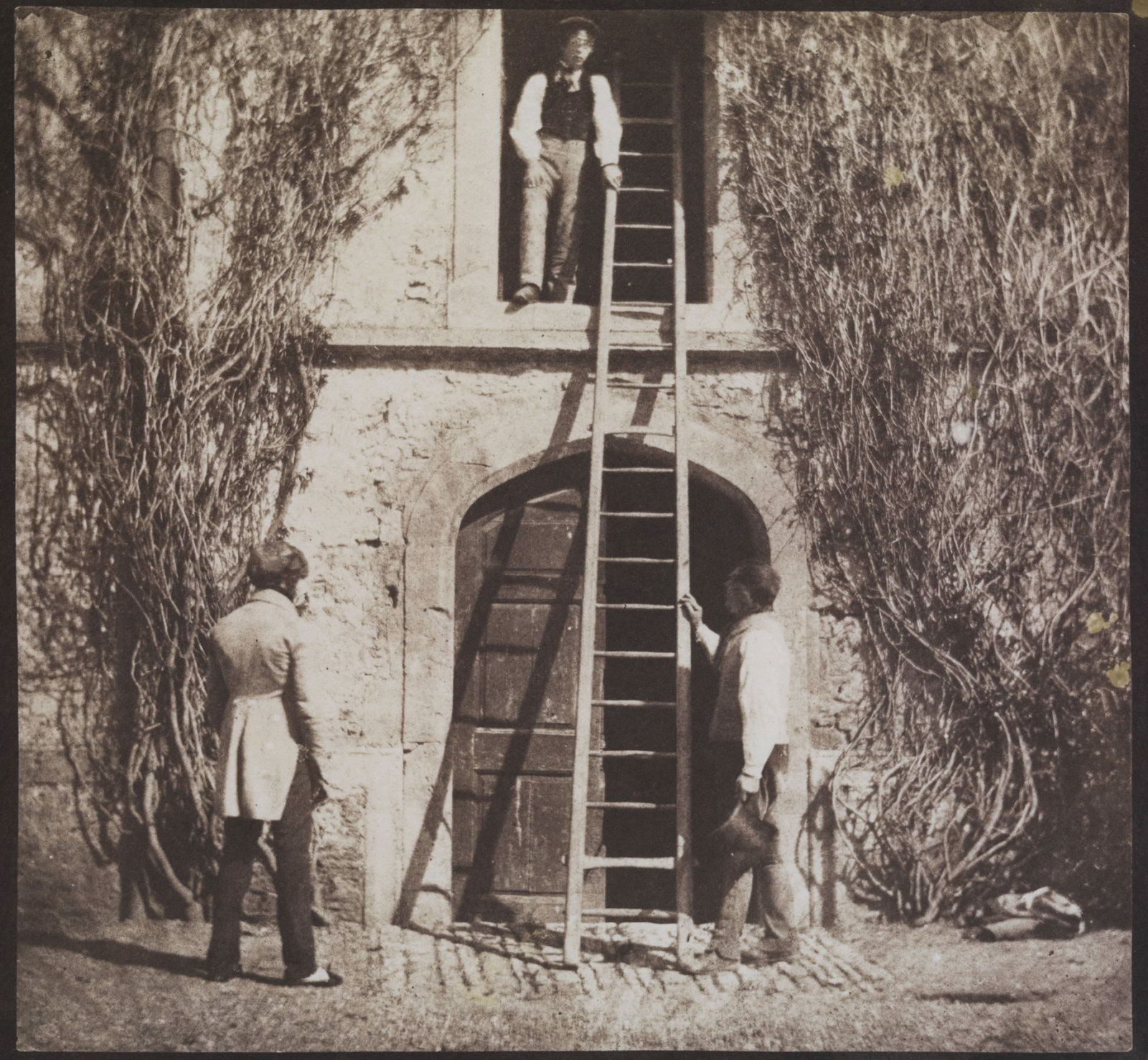
Henry Fox Talbot (British, 1800-1877) 'The Ladder' 1844


Henry Fox Talbot (British, 1800-1877)
The Ladder
1844
Salted paper print from paper negative
Courtesy of the National Media Museum/SSPL


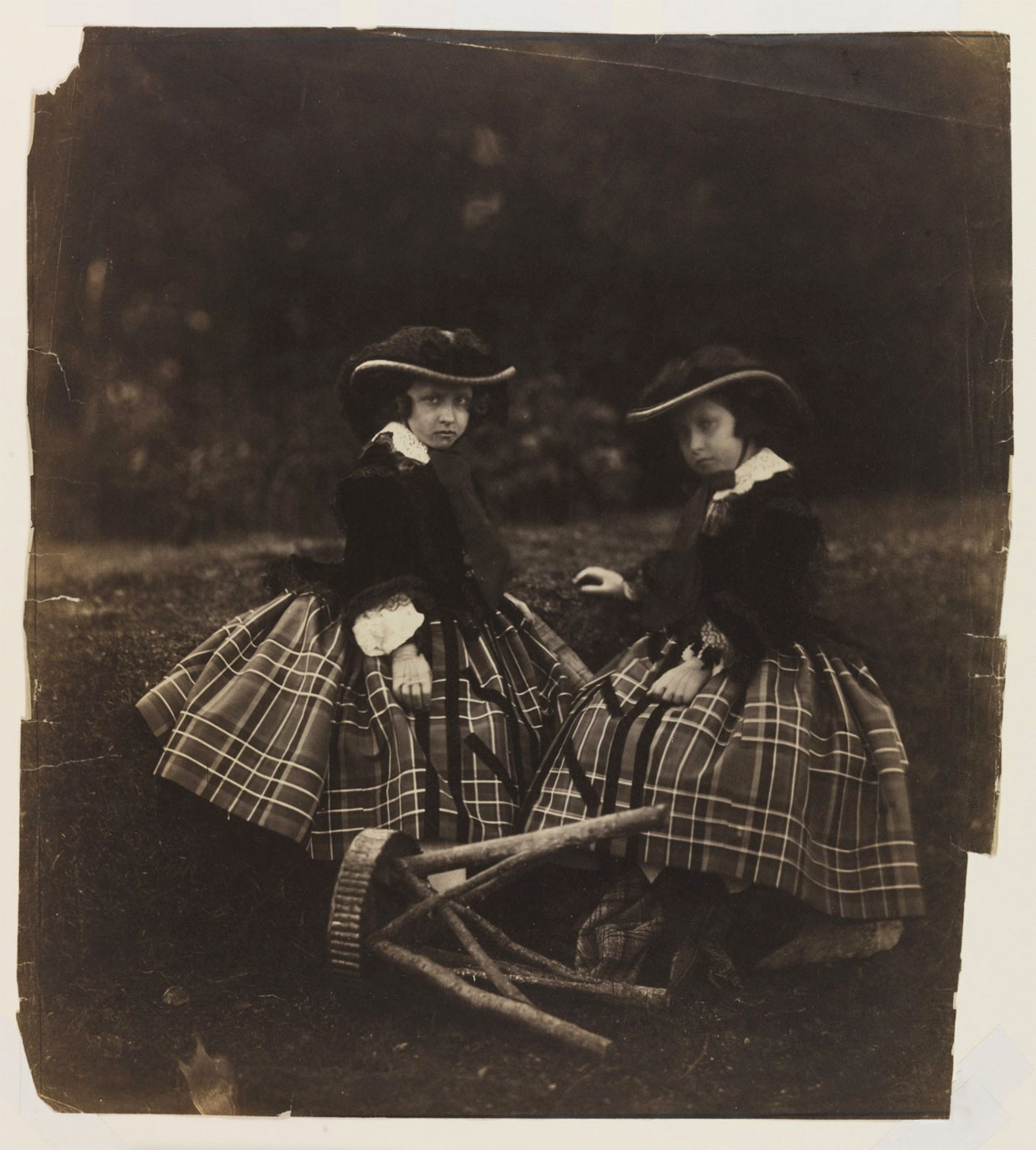
Roger Fenton (British, 1819-1869) 'Princesses Helena and Louise' 1856


Roger Fenton (British, 1819-1869)
Princesses Helena and Louise
1856
Albumen print
Courtesy of The Royal Photographic Society Collection at the National Media Museum


Photograph of Princess Helena and Princess Louise, seated outside together wearing identical outfits, including hats. Both look to front. Upturned stool in foreground.

The two princesses look straight at the camera in what is an unusually direct pose. Princess Helena (1846-1923) and Princess Louise (1848-1939) were the fifth and six children of Queen Victoria and Prince Albert. Princess Helena was herself a keen collector of photographs and compiled a number of albums commemorating her many visits to Balmoral

Text adapted from Roger Fenton – Julia Margaret Cameron: Early British photographs from the Royal Collection, London, 2010 on the Royal Collection Trust website


Eadweard Muybridge (English, 1830-1904) Man (Muybridge) throwing discus walking up steps walking Plate 519 Animal Locomotion


Eadweard Muybridge (English, 1830-1904)
Man (Muybridge) throwing discus walking up steps walking
Plate 519 Animal Locomotion
1887
Collotype
Courtesy of the National Media Museum/SSPL


Unknown photographer. 'Eadweard Muybridge' date unknown


Unknown photographer
Eadweard Muybridge
Date unknown
Courtesy of The Royal Photographic Society Collection at the National Media Museum


Alvin Langdon Coburn (American, 1882-1966) 'Alfred Stieglitz' 1905


Alvin Langdon Coburn (American, 1882-1966)
Alfred Stieglitz
1905
Courtesy of the National Media Museum/SSPL


Lewis Hine (American, 1874-1940) 'Albanian woman Ellis Island' 1905


Lewis Hine (American, 1874-1940)
Albanian woman Ellis Island
1905
Gelatin silver print
Courtesy of the National Media Museum/SSPL


At the Ethical Culture School in New York Lewis Hine taught photography to teenagers, encouraging them to observe others. He took his classes to Ellis Island to see arriving immigrants. “At times it looked like a costume ball,” he wrote, “with the multicoloured, many-styled national costumes,” This is one of over 200 photographs that Hine made himself at Ellis Island, representing an Albanian immigrant, wearing her best clothes, cleaned and immaculately pressed. Hine’s empathy with the neglected him led to a job with the National Child Labor Committee. He traveled the country photographing children at work in factories in New England, at coal mines in Pennsylvania, and canneries on the Gulf Coast. Hine’s photographs helped secure child labor laws in this country.

From Touchstones of the Twentieth Century: A History of Photography at the University of Notre Dame (exhibition, 2020-21)


Unknown photographer. 'Lewis Hine photographing children in a slum' c. 1910


Unknown photographer
Lewis Hine photographing children in a slum
c. 1910
Gelatin silver print
Courtesy of the National Media Museum/SSPL


Alvin Langdon Coburn (American, 1882-1966) 'George Davison' 1918


Alvin Langdon Coburn (American, 1882-1966)
George Davison
1918
Gelatin silver print
Courtesy of the National Media Museum/SSPL


George Davison (19 September 1854 – 26 December 1930) was an English photographer, a proponent of impressionistic photography, a co-founder of the Linked Ring Brotherhood of British artists and a managing director of Kodak UK. He was also a millionaire, thanks to an early investment in Eastman Kodak.


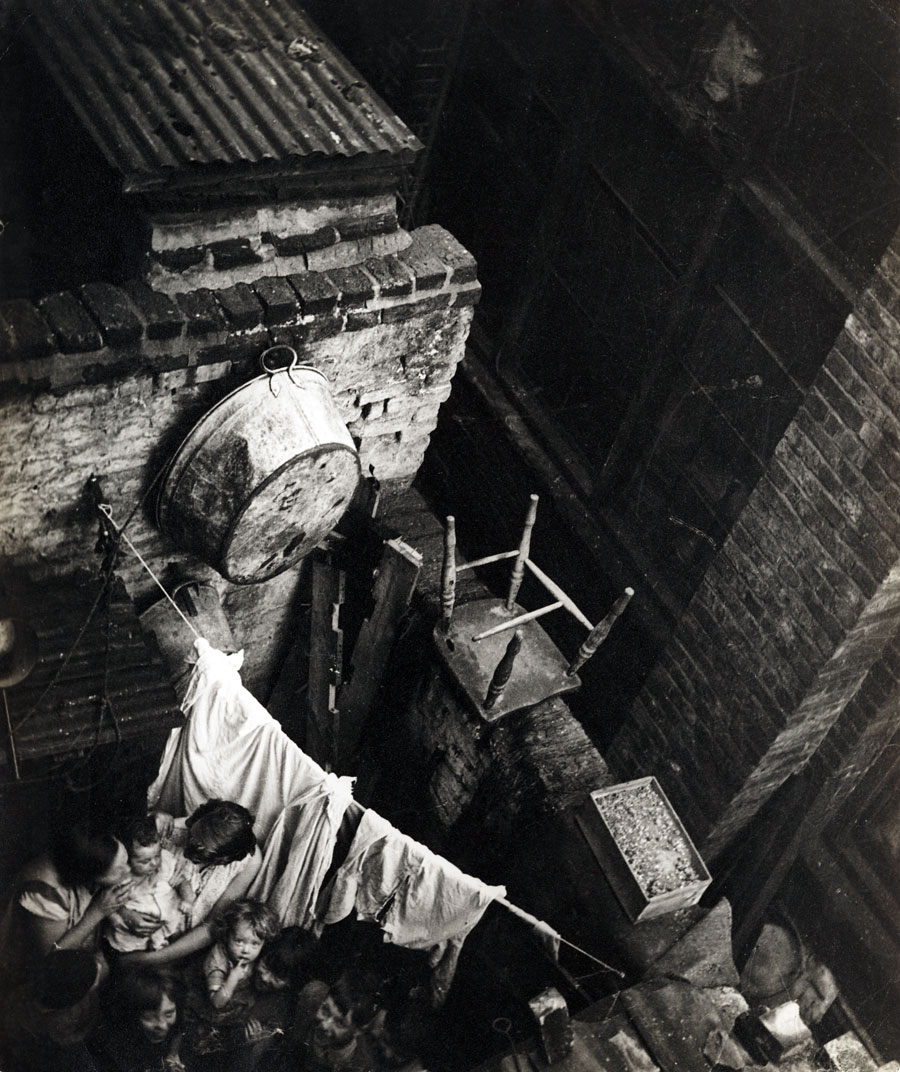
Edith Tudor Hart (Austrian-British, 1908-1973) 'Gee Street, Finsbury' 1936


Edith Tudor Hart (Austrian-British, 1908-1973)
Gee Street, Finsbury
1936
Courtesy of the National Media Museum/SSPL
© Wolfgang Suschitzky


This photograph was published alongside Poodle Parlour, London (PGP 279.33B) in the satirical magazine Lilliput in 1939, offering a comparison between the living conditions of the urban poor and the care lavished on pets by their wealthy owners. The juxtaposition made a simple political point and encouraged the viewer to think about the unequal organisation of society. This was a rhetorical technique common in left-wing illustrated journals on the Continent. The Austrian magazine, Der Kuckuck, had published a similar story in 1931 comparing the living conditions of the Berlin poor with the more salubrious accommodation of the city’s dog home.

Text from the National Galleries of Scotland website


Henri Cartier-Bresson (French, 1908-2004) 'Dessau, Germany' 1945


Henri Cartier-Bresson (French, 1908-2004)
Dessau, Germany
1945
Gelatin silver print
Courtesy of the National Media Museum/SSPL
© Henri Cartier-Bresson, Magnum, HCB Fondation


Cartier-Bresson had been a prisoner of war in Germany for nearly three years. He tried to escape two times, and then on the third time was successful. And partly because of that experience he was commissioned by the US Office of War Information to make a film about the return of displaced persons and prisoners of war.

And this incident appears in the film. The cameraman is filming this scene, and Cartier-Bresson, is right next to him making his own pictures. This is at a displaced person’s camp. And the woman in the black dress had been denounced to the Gestapo by the woman she’s about to hit. And here they’re both telling their stories to the man on the right who’s obviously the man in authority.

And what’s typical in this picture of Cartier-Bresson’s best work after the war, is that it’s all boiled down to these three protagonists. The anger of the woman who had been betrayed totally saturates her body, just the way the shame and the guilt of the woman who had done the betraying occupies her body, right down to where she’s got her thumb inside her fist.

Peter Galassi on the Museum of Modern Art website


Richard Sadler (British, 1927-2020) Weegee in Coventry, "Weegee the Famous" 1963


Richard Sadler (British, 1927-2020)
Weegee in Coventry, “Weegee the Famous”
1963
Gelatin silver print
Courtesy of the National Media Museum/SSPL


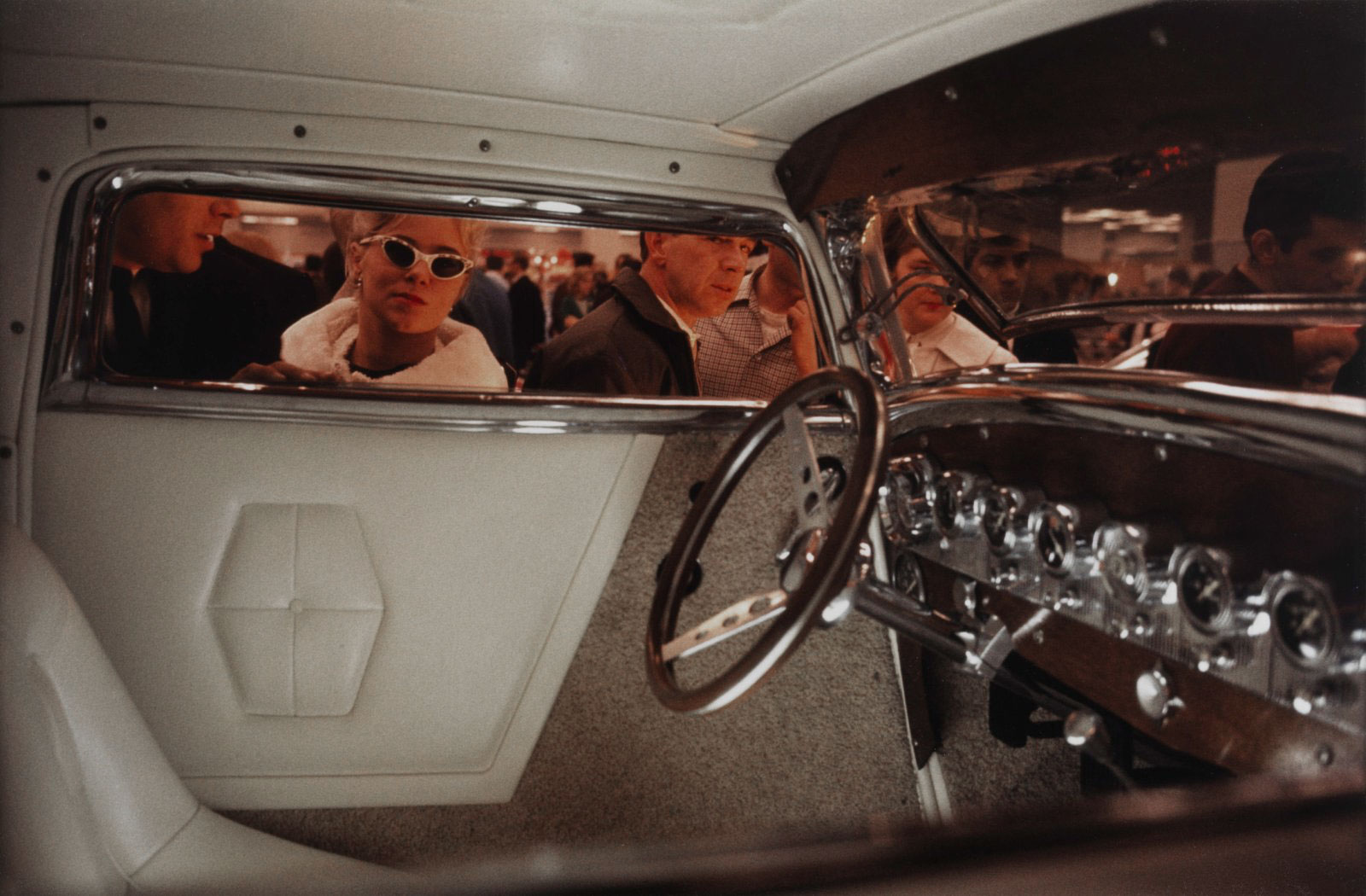
Tony Ray-Jones (English, 1941-1972) 'Auto Show, Daytona' 1965


Tony Ray-Jones (English, 1941-1972)
Auto Show, Daytona
1965
Gelatin silver print
Courtesy of the National Media Museum/SSPL


Unknown photographer. 'Portrait of Bill Brandt' c. 1979


Unknown photographer
Portrait of Bill Brandt
c. 1979
Gelatin silver print
Courtesy of the National Media Museum/SSPL


National Media Museum
Bradford,
West Yorkshire,
BD1 1NQ

Opening hours:
Wednesday – Sunday 10.00 – 17.00

National Media Museum website

LIKE ART BLACK ON FACEBOOK

Back to top