Exhibition: ‘Luces y Sombras: Images of Mexico | Photographs from the Bank of America Collection’ at the Tacoma Art Museum

Exhibition dates: 15th October 2022 – 5th February 2023
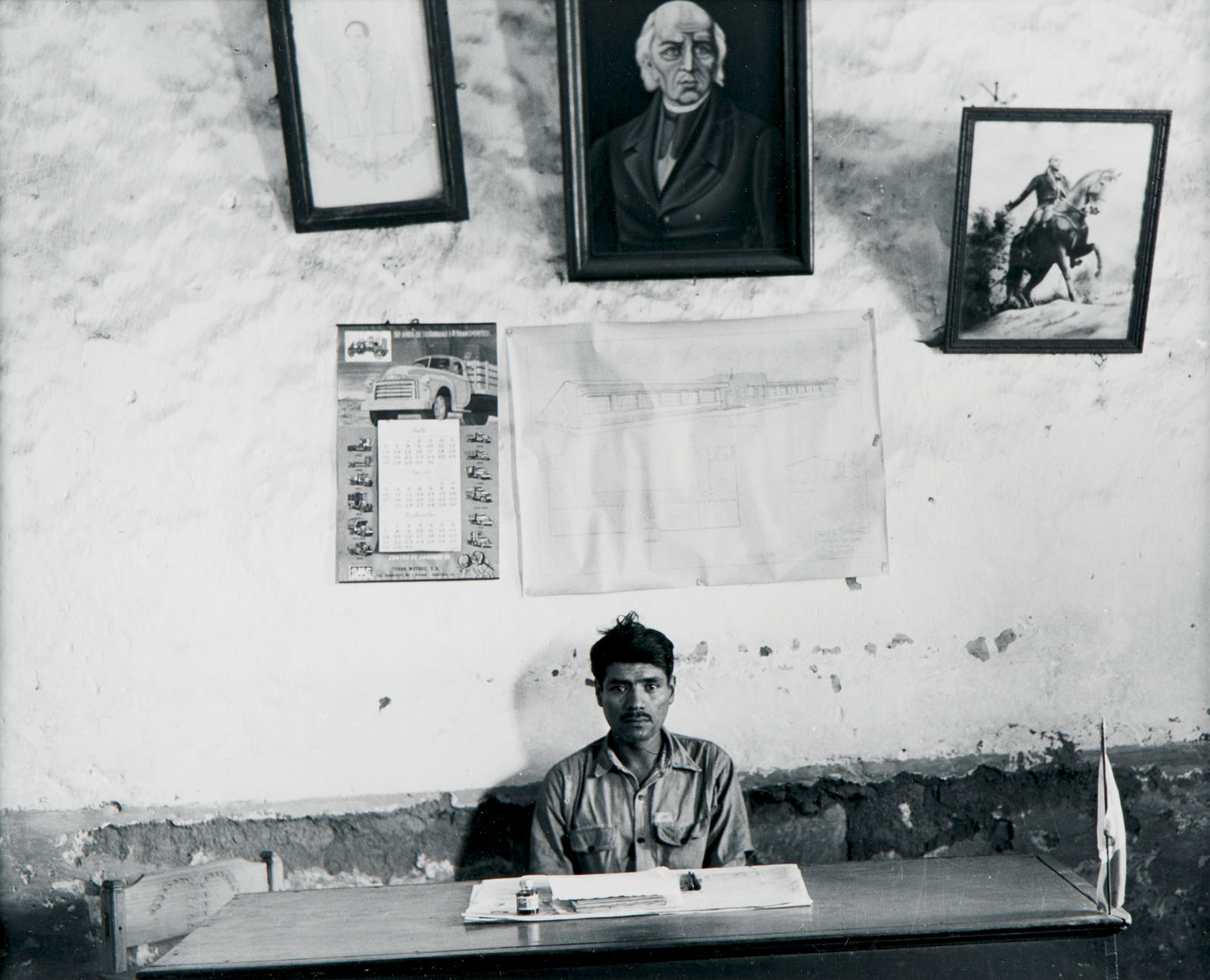
 

Manuel Álvarez Bravo (Mexican, 1902-2002) 'Mr. Municipal President' (Señor presidente municipal) 1947 from the exhibition 'Luces y Sombras: Images of Mexico | Photographs from the Bank of America Collection' at the Tacoma Art Museum, Oct 2022 - Feb 2023


Manuel Álvarez Bravo (Mexican, 1902-2002)
Mr. Municipal President (Señor presidente municipal)
1947 (negative); printed before 1975
Gelatin silver print
Image Overall: 7 3/8 x 9 1/8 inches (18.7 x 23.1cm)
Bank of America Collection
© Archivo Manuel Álvarez Bravo, S.C


After last week’s long piece of writing something more succinct this week…

Luces y Sombras translates as Lights and Shadows. The exhibition reflects many themes: the landscape, urban life, fantasy and, especially among younger generations, gender and invented situations infused with symbolism. It begins with works by photographers active at the conclusion of the Mexican Revolution (1910-1920), notably Manuel Álvarez Bravo, considered Mexico’s first truly modern photographer. It also includes visiting artists such as the Americans Paul Strand and Edward Weston.

Later works by such figures as Manuel Carrillo, Mariana Yampolsky, and Graciela Iturbide reveal the ongoing emphasis by Mexican photographers on everyday life and Mexico’s Indigenous communities. Recent generations of photographers have found new purpose in documenting how ways of life in Mexico continue to be changed by urbanisation, migration, and the pervasive influence of popular Western culture and mass media.” (Exhibition text from the TAM)

It is interesting to hear British photographer Chris Killip’s thoughts on Mexico through a foreign lens. This quote from an upcoming posting on Killip’s work:

He says he stayed [in Newcastle] because he liked it, and that he might never have left had the Harvard job not come along – but he was also inspired by the Magnum photographer Josef Koudelka, who came to visit him early on and “talked about the importance of being in one place, to get under the surface of things”. He was also interested in how differently Paul Strand and Manuel Alvarez Bravo photographed Mexico, he says, despite Strand’s sympathetic, card-carrying Communist credentials.

“Strand beautifies poverty and simplifies the Mexican people into ‘the poor Mexicans, but isn’t this wonderful visually’,” he says. “But Alvarez Bravo was Mexican, his pictures are very complicated because he was able to accept ambiguities and contradictions, which Strand couldn’t… I think because I lived in Newcastle for so long I was able to accept ambiguities and not worry about them, just accept them and show them. I wanted to be there and be more accepting.”1


As I have said in a previous posting on Mexican photography there is something so essential and grounded, so darkly soulful about Mexican photography. They never pull their punches, not just interested in the beauty of people and place but also the rituals, traditions and politics of Mexican society.

As ever, it is the work of Mexican artist Manuel Álvarez Bravo that steals my heart. His work exudes the spirit of the country through its sensitivity and connection to the earth from which he was born. The light and form in Bravo La Siesta de los Peregrinos; the light and form in Retrato de lo Eterno (1935, below). I have studied his work quite closely. He is the blessed one. Through his music, he captures the light and life of Mexico, the spirit of the eternal, “the sunlight [as] a discreet veil that turns the shadows into velvet.” His work is the art of the People.

Further,

“One of my early heroes in photography was Manuel Alvarez Bravo whom I rate as one of the best photographers that has ever lived, up there with Atget and Sudek. His photograph Parabola optica (Optical Parable, 1931, below) lays the foundation for an inherent language of Mexican photography: that of a parable, a short allegorical story designed to illustrate or teach some truth, religious principle, or moral lesson. Many Mexican photographs tell such stories based on the mythology of the country: there are elements of the absurd, surrealism, macabre, revolution, political and socio-economic issues, also of death, violence, beauty, youth, sexuality and religion to name but a few – a search for national identity that is balanced in the photographs of Bravo by a sense of inner peace and redemption. This potent mix of issues and emotions is what makes Mexican photography so powerful and substantive. In the “presence” (or present, the awareness of the here and now) of Mexican photography there is a definite calligraphy of the body in space in most of the work. This handwriting is idiosyncratic and emotive; it draws the viewer into an intimate narrative embrace.

Unlike most Australian documentary photography where there is an observational distance present in the photographs – a physical space between the camera/photographer and the subject – Mexican documentary photography is imbued with a revolutionary spirit and validated by the investment of the photographer in the subject itself, as though the image is the country is the photographer. There is an essence and energy to the Mexican photographs that seems to turn narrative on its head, unlike the closed loop present in the tradition of Australian story telling. The intimate, swirling narratives of Mexican photography could almost be termed lyrical socio-realist.”2


What is a revelation to me in this posting is work by two Mexican photographers who I have never heard of before and I should have because they are very good: Manuel Carrillo and Flor Garduño. Carillo joined the Club Fotográfico de México at the age of 49. As James McArdle observes the politics of Carrillo’s photographic work is anchored to his own cultural identity as a Mexican by birth and his time spent in America.

“He quickly found his voice by making images of everyday life throughout Mexico, celebrating local culture and the human spirit. His work is an extension of Mexicanidad, a movement begun in the 1920s to forge a Mexican national identity free of foreign influence… His interest in indigenous cultures and his use of bright sunlight to create compositions with dramatic shadows and bold geometric forms has roots in the photographic work of Edward Weston and Paul Strand, American modernist photographers active in Mexico in the 1920s and 1930s. Rather than idealising, aestheticising, or moralising, Carrillo portrays Mexico from the perspective of an affectionate observer, transforming ordinary moments into expressions of quiet eloquence.”3


A certain paradox can be noted here: the wish for a Mexican identity free of foreign influence and photographs forged in the American modernist tradition. Interesting. It doesn’t stop the visceral photographs being very “Mexican” for all that.

“Garduño’s photographs create a bridge between the present and the past by portraying natural elements such as water, trees, earth, animals, and atmosphere. Garduño worked for the Department of Public Education in her native Mexico, traveling to rural areas to work with indigenous communities. From this she developed her style and got to know what she has referred to as the “profound truth” of the countryside in the Americas. Her work was also influenced by artists Kati Horna, who worked in a surrealistic vein, and Manuel Álvarez Bravo, who attended carefully to the tonal qualities of his photographs. Garduño similarly uses compositional and darkroom techniques to achieve moody, evocative images.”4


In the work of Mexican photographers – Manuel Álvarez Bravo, Graciela Iturbide, Manuel Carrillo and Flor Garduño – you can palpably feel the essentialness of the Mexican people and begin to understand their connection to the land from which they come. Much as in the work of Chris Killip in England with his embeddedness5 with the people of North Yorkshire … there is an honesty, integrity and openness to their work which, in the case of Mexican photography, has continuous strands (like a river) running through it: that is, a synthesis of aesthetics, politics, land and spirit. Their work is of the people for the people offering a “profound truth” about the nature of their existence in the countryside in the Americas.

Dr Marcus Bunyan


Footnotes

1/ Diane Smyth. “Now Then: Chris Killip and the Making of In Flagrante, on the British Journal of Photography website 6 June 2017 [Online] Cited 26/01/2023

2/ Marcus Bunyan. “Photography in Mexico: Selected Works from the Collections of SFMOMA and Daniel Greenberg and Susan Steinhauser,” on the Art Blart website 4th July 2012 [Online] Cited 28/01/2023

3/ Anonymous. “Manuel Carrillo: Mexican Modernist,” on the New Mexico Museum of Art website Nd [Online] Cited 28/01/2023. No longer available online

4/ Anonymous. “Get to know the work of Flor Garduño,” on the Getty Twitter website Oct 6, 2021 [Online] Cited 28/01/2023

5/ Embeddedness: an exchange that takes place within and is regulated by society rather than being located in a social vacuum.


Many thankx to the Tacoma Art Museum, Mark I. Chester and Steven Miller for allowing me to publish the photographs in the posting. Please click on the photographs for a larger version of the image.


Manuel Álvarez Bravo (Mexican, 1902-2002) 'In the Temple of Red Tiger' (En el templo del tigre rojo) 1949 from the exhibition 'Luces y Sombras: Images of Mexico | Photographs from the Bank of America Collection' at the Tacoma Art Museum, Oct 2022 - Feb 2023


Manuel Álvarez Bravo (Mexican, 1902-2002)
In the Temple of Red Tiger (En el templo del tigre rojo)
1949 (negative); print before 1975
Gelatin silver print
Image overall: 9 3/4 × 6 3/4 in. (24.8 x 17.1cm)
Bank of America Collection
© Archivo Manuel Álvarez Bravo, S.C


Manuel Álvarez Bravo (Mexican, 1902-2002) 'Portrait of the Eternal' (Retrato de lo eterno) 1935 from the exhibition 'Luces y Sombras: Images of Mexico | Photographs from the Bank of America Collection' at the Tacoma Art Museum, Oct 2022 - Feb 2023


Manuel Álvarez Bravo (Mexican, 1902-2002)
Portrait of the Eternal (Retrato de lo eterno)
1935 (negative); print before 1975
Gelatin silver print
Image Overall: 9 5/8 × 7 3/8in. (24.4 x 18.7cm)
Bank of America Collection
© Archivo Manuel Álvarez Bravo, S.C


Manuel Álvarez Bravo (Mexican, 1902-2002) 'The Daydream' (El ensueño) 1931


Manuel Álvarez Bravo (Mexican, 1902-2002)
The Daydream (El ensueño)
1931 (negative); print before 1975
Gelatin silver print
Image Overall: 9 1/4 × 7 in. (23.5 x 17.8cm)
Bank of America Collection
© Archivo Manuel Álvarez Bravo, S.C


Manuel Álvarez Bravo (Mexican, 1902-2002) 'Optic Parable' (Parábola óptica) 1931


Manuel Álvarez Bravo (Mexican, 1902-2002)
Optic Parable (Parábola óptica)
1931 (negative); print before 1975
Gelatin silver print
Image Overall: 9 1/4 × 7 in. (23.5 x 17.8cm)
Bank of America Collection
© Archivo Manuel Álvarez Bravo, S.C


Manuel Álvarez Bravo (Mexican, 1902-2002) 'The Big Fish Eats the Little Ones' (El pez grande se come a los chicos) 1932


Manuel Álvarez Bravo (Mexican, 1902-2002)
The Big Fish Eats the Little Ones (El pez grande se come a los chicos)
1932 (negative); print before 1975
Gelatin silver print
Image Overall: 9 × 7 in. (22.9 x 17.8cm)
Bank of America Collection
© Archivo Manuel Álvarez Bravo, S.C


Graciela Iturbide on Manuel Álvarez Bravo

Graciela Iturbide, Hasselblad Award Winner in 2008, talks about her friend and teacher Manuel Álvarez Bravo who received the Hasselblad Award in 1984.
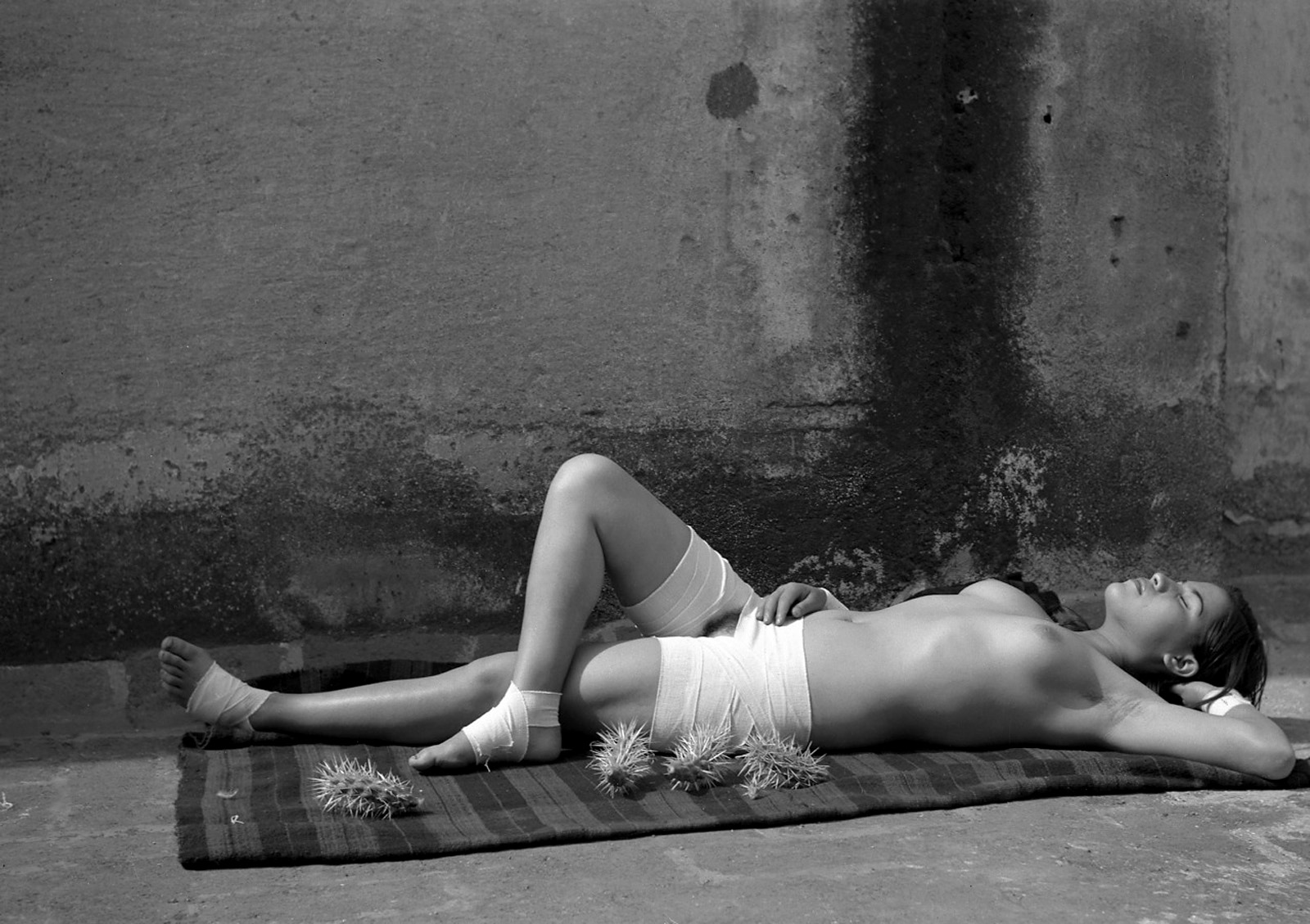
 

Manuel Alvarez Bravo (Mexican, 1902-2002) 'La Buena Fama Durmiendo (The Good Reputation Sleeping)' 1939, printed c. 1970s


Manuel Álvarez Bravo (Mexican, 1902-2002)
The Good Reputation, Sleeping (La buena fama, durmiendo)
1938 (negative); print before 1975
Gelatin silver print
Image Overall: 7 3/8 × 9 5/8 in. (18.7 x 24.4cm)
Bank of America Collection
© Archivo Manuel Álvarez Bravo, S.C
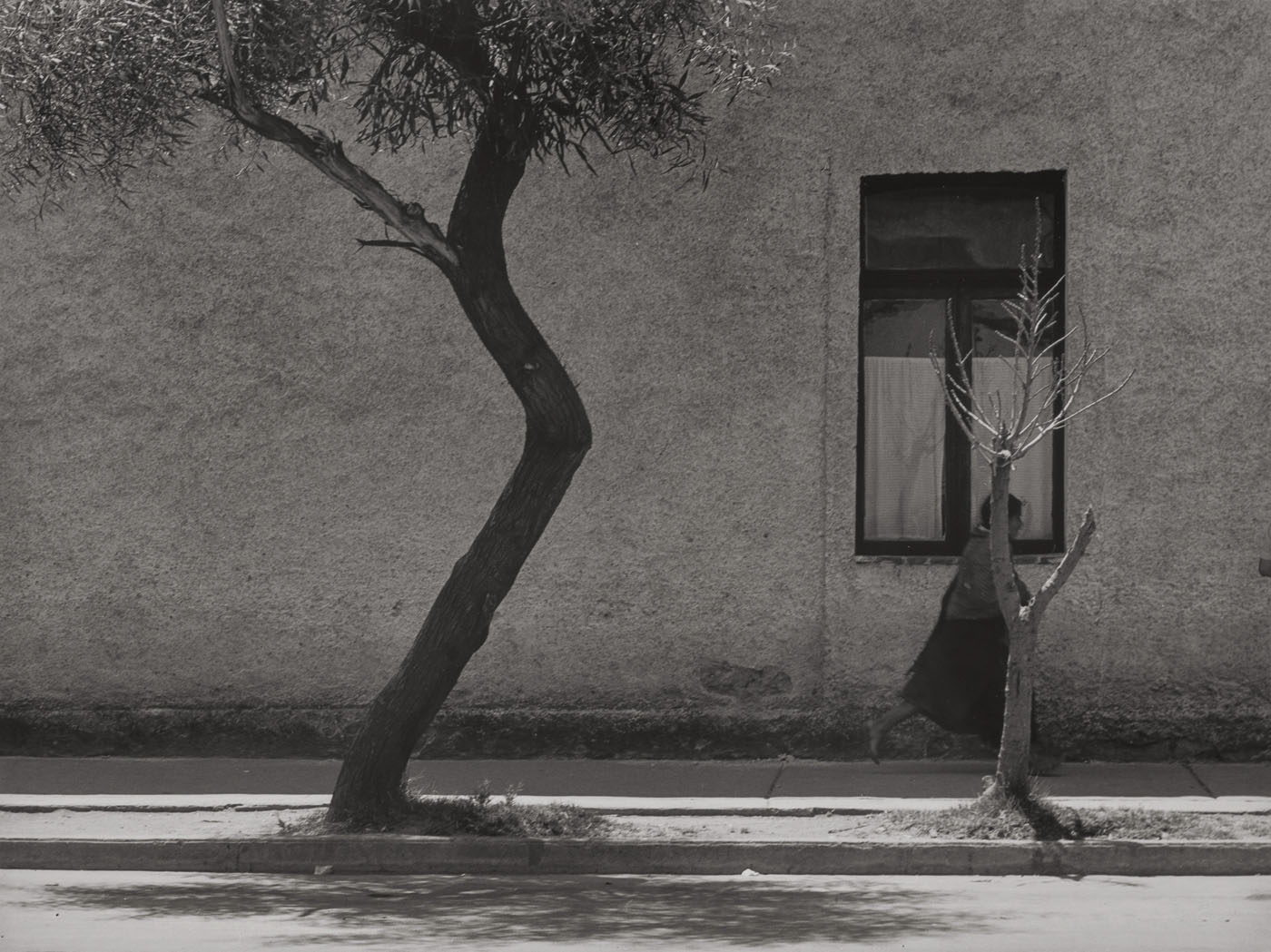
 

Manuel Álvarez Bravo (Mexican, 1902-2002) 'The Maria' (La María) 1972


Manuel Álvarez Bravo (Mexican, 1902-2002)
The Maria (La María)
1972
Gelatin silver print
Image Overall: 7 × 9 1/4 in. (17.8 x 23.5 cm)
Bank of America Collection
© Archivo Manuel Álvarez Bravo, S.C


Manuel Álvarez Bravo. 'Las lavanderas sobreentendidas / The Washerwomen Implied' 1932


Manuel Álvarez Bravo (Mexican, 1902-2002)
The Washerwomen Implied (Las lavanderas sobreentendidas)
1932 (negative); print before 1975
Gelatin silver print
Image Overall: 9 1/2 × 6 in. (24.1 x 15.2cm)
Bank of America Collection
© Archivo Manuel Álvarez Bravo, S.C


Manuel Álvarez Bravo (Mexican, 1902-2002) 'The Obstacles' (Los obstáculos) 1929


Manuel Álvarez Bravo (Mexican, 1902-2002)
The Obstacles (Los obstáculos)
1929 (negative); print before 1975
Gelatin silver print
Image Overall: 7 1/4 × 9 1/4 in. (18.4 x 23.5cm)
Bank of America Collection
© Archivo Manuel Álvarez Bravo, S.C


Manuel Álvarez Bravo (Mexican, 1902-2002) 'Frida Kahlo with Globe' (Frida Kahlo con globo) c. 1930s


Manuel Álvarez Bravo (Mexican, 1902-2002)
Frida Kahlo with Globe (Frida Kahlo con globo)
c. 1930s (negative); print before 1992
Gelatin silver print
Image Overall: 9 3/8 × 7 1/4 in. (23.8 x 18.4cm)
Bank of America Collection
© Archivo Manuel Álvarez Bravo, S.C
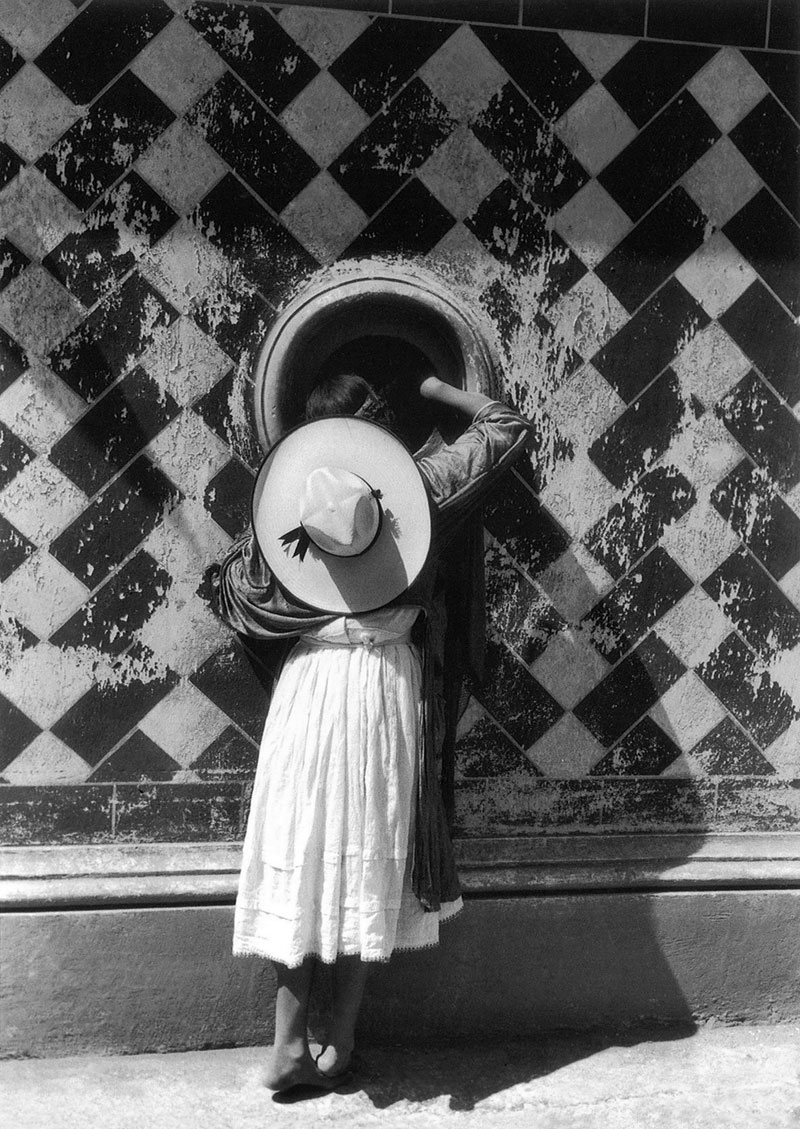
 

Manuel Álvarez Bravo (Mexican, 1902-2002) 'The Daughter of the Dancers' (La hija de los danzantes) 1933


Manuel Álvarez Bravo (Mexican, 1902-2002)
The Daughter of the Dancers (La hija de los danzantes)
1933
Gelatin silver print
Image Overall: 9 × 6 1/2 in. (22.9 x 16.5cm)
Bank of America Collection
© Archivo Manuel Álvarez Bravo, S.C


More than 100 photographs spanning more than 85 years of Mexican culture and history are coming to Tacoma Art Museum in the exhibition Luces y Sombras: Images of Mexico I Photographs from the Bank of America Collection.

Luces y Sombras reflects a broad span of Mexico’s modern history, beginning with work by photographers active in the 1920s, not long after the conclusion of the Mexican Revolution. A struggle for political power that began with the overthrow in 1911 of Mexico’s authoritarian president, Porfirio Díaz, became the catalyst for a popular uprising of campesinos, agrarian indigenous and mestizo (mixed race) people who fought for agrarian and social reform. Revolutionary leader Emiliano Zapata’s rallying cry, “Tierra y Libertad” (Land and Liberty), not only galvanised the hundreds of thousands of campesinos who joined the revolt but in its wake, came to represent the affirmation of rural people, whose lives were inextricably tied to the land.

Many images in this exhibition manifest the cultural values that came to the fore in the decades following the Revolution, when politicians and intellectuals alike endeavoured to reconstruct and, indeed, re-envision their nation. In the cultural sphere, Mexico’s new leadership sought to purge the nation of the European influence favoured by the Díaz regime. Nationalist ideals and a broad-based exploration of Mexicanidad (the quality of being Mexican) were accompanied by a new reverence for Mexico’s indigenous roots and for everyday men and women. Photographs made throughout the last century of indigenous and mestizo people reflect not only the survival of indigenous communities and traditions, but also the realities of poverty and social marginalisation that persist for a large lower class up to the present day.

Luces y Sombras reflects many other themes embraced by photographers in Mexico, both native and foreign-born – the landscape, urban life and, especially among younger generations, gender and invented situations infused with symbolism. The inclusion of such foreign photographers as Paul Strand, Elliott Erwitt, Aaron Siskind, Danny Lyon, and Nan Goldin speaks to another key component of the history of photography in Mexico – the significance of a nation seen through foreign eyes.

In gathering work by such a diversity of voices, Luces y Sombras provides vivid testimony to the character of life in a nation in the throes of reinvention, modernisation and continued change over the course of the last century.

Text from the TAM website


Ana Casas Broda (Mexican born Spain, b. 1965) 'Milk III (2)' (Leche III (2)) 2010


Ana Casas Broda (Mexican born Spain, b. 1965)
Milk III (2) (Leche III (2))
2010
from the series Kinderwunsch (The Desire to Have Children)(El deseo de tener hijos)
Inkjet print on cotton paper
Image Overall: 23 5/8 × 35 1/2 in. (60 x 90.2cm)
Bank of America Collection


Manuel Carrillo (Mexican, 1906-1989) 'Mendicant girl – close up, Guanajuato, Guanajuato' (Sin título (Pordiocerita – close up, Guanajuato, Guanajuato)) 1930


Manuel Carrillo (Mexican, 1906-1989)
Mendicant girl – close up, Guanajuato, Guanajuato (Sin título (Pordiocerita – close up, Guanajuato, Guanajuato))
1930
Gelatin silver print
Image Overall: 7 1/2 × 9 1/4 in. (19.1 x 23.5cm)
Bank of America Collection


Manuel Carrillo (Mexican, 1906-1989) 'Untitled (Man inside store, contrasted, baskets on the wall, Zacapoaxtla, Pueblo)' (Sin título (Hombre dentro tienda, contrastada, canastas, pared, Zacapoaxtla, Pueblo)) 1975


Manuel Carrillo (Mexican, 1906-1989)
Untitled (Man inside store, contrasted, baskets on the wall, Zacapoaxtla, Pueblo) (Sin título (Hombre dentro tienda, contrastada, canastas, pared, Zacapoaxtla, Pueblo))
1975
Gelatin silver print
Image Overall: 7 3/4 × 10 in. (19.7 x 25.4cm)
Bank of America Collection


Manuel Carrillo worked in Mexico in the middle of the 20th century, a time in Mexico that witnessed great political changes and social transformations and a moment in the country’s history when it was establishing its strong cultural identity.

Carrillo’s work, along with the well-known Manuel Alvarez Bravo, Tina Modotti and the American photographer Edward Weston, among others, was a contributing force as to how Mexico saw itself and how the rest of the world came to perceive that complex country. A bit of the understanding and empathy for the daily life of the Mexican people seen in Carrillo’s work would be of great help in how Mexico is perceived today.


Manuel Carrillo (Mexican, 1906-1989) 'Untitled (Seller of ropes and belts, Oaxaca, Oaxaca)' (Sin título (Vendedor reatas y cinturónes, Oaxaca, Oaxaca)) Nd


Manuel Carrillo (Mexican, 1906-1989)
Untitled (Seller of ropes and belts, Oaxaca, Oaxaca) (Sin título (Vendedor reatas y cinturónes, Oaxaca, Oaxaca))
Nd
Gelatin silver print
Image Overall: 7 3/8 × 9 5/8 in. (18.7 x 24.4cm)
Bank of America Collection


Manuel Carrillo (Mexican, 1906-1989) 'Untitled (Shawl in the air, Oaxaca, Oaxaca)' (Sin título (Rebozo al aire, Oaxaca, Oaxaca)) 1958


Manuel Carrillo (Mexican, 1906-1989)
Untitled (Shawl in the air, Oaxaca, Oaxaca) (Sin título (Rebozo al aire, Oaxaca, Oaxaca))
1958
Gelatin silver print
Image Overall: 9 1/2 × 8 5/8 in. (24.1 x 21.9cm)
Bank of America Collection


Manuel Carrillo (Mexican, 1906-1989) 'Untitled (Dog on grave, cemetery, Dolores, Mexico City)' (Sin título (Perro sobre tumba, panteon, Dolores, México D.F.) 1930


Manuel Carrillo (Mexican, 1906-1989)
Untitled (Dog on grave, cemetery, Dolores, Mexico City) (Sin título (Perro sobre tumba, panteon, Dolores, México D.F.)
1930
Gelatin silver print
Image Overall: 8 × 10 3/4 in. (20.3 x 27.3cm)
Bank of America Collection


Mexican photographer Manuel Carrillo (1906-1989) turned to the camera fairly late in life, joining the Club Fotográfico de México at the age of 49. He quickly found his voice by making images of everyday life throughout Mexico, celebrating local culture and the human spirit. His work is an extension of Mexicanidad, a movement begun in the 1920s to forge a Mexican national identity free of foreign influence. Stylistically, however, Carrillo was inspired by Mexican artists trained abroad and international artists who converged on Mexico during that fertile period. His interest in indigenous cultures and his use of bright sunlight to create compositions with dramatic shadows and bold geometric forms has roots in the photographic work of Edward Weston and Paul Strand, American modernist photographers active in Mexico in the 1920s and 1930s. Rather than idealising, aestheticising, or moralising, Carrillo portrays Mexico from the perspective of an affectionate observer, transforming ordinary moments into expressions of quiet eloquence.

Anonymous. “Manuel Carrillo: Mexican Modernist,” on the New Mexico Museum of Art website Nd [Online] Cited 28/01/2023. No longer available online


Manuel Carrillo (Mexican, 1906-1989) 'Untitled (Sick woman on bench, San Miguel Allende)' (Sin título (Enferma en banca, San Miguel Allende)) 1970


Manuel Carrillo (Mexican, 1906-1989)
Untitled (Sick woman on bench, San Miguel Allende) (Sin título (Enferma en banca, San Miguel Allende))
1970
Gelatin silver print
Image Overall: 8 × 10 3/4 in. (20.3 x 27.3cm)
Bank of America Collection


Manuel Carrillo (Mexican, 1906-1989) 'Untitled (Camila from above, two faces – close up), Mexico City' (Sin título (Camila desde arriba, dos cars – close up), México D.F.)) 1961


Manuel Carrillo (Mexican, 1906-1989)
Untitled (Camila from above, two faces – close up), Mexico City (Sin título (Camila desde arriba, dos cars – close up), México D.F.))
1961
Gelatin silver print
Image Overall: 7 3/4 × 7 in. (19.7 x 17.8cm)
Bank of America Collection


By contrast, one might consider the mobility of framing in the work of Mexican Manuel Carrillo (b. 1906) who died on this date in 1989. The influence of American Modernist photographers and artists of his time, and of his better-known compatriot and contemporary Manuel Álvarez Bravo (1902-2002), is evident in this extreme point of view.

The aerial angle presents the tops of subjects’ heads, but with sufficient offset to allow a reading of the faces; the curiosity of the young boy and the protectiveness of the mother, both enclosed within a continuous ribbon of cloth and embraced by the square camera frame. The top-down view gives privileged entrée into that intense maternal relationship, encompassed by the geometry of the tiled background that contrasts with the cloth, set at an angle that enhances the figures’ complementary emotional impulses.

Aside from aesthetics, the politics of Carrillo’s photographic work is anchored to his own cultural identity as a Mexican by birth and as an American through his crossing into that country at the age of 16, when in 1922 he left Mexico for New York, becoming an Arthur Murray waltz and tango champion. When in 1930 he returned to Mexico City, he remained until his retirement. Taking up photography in 1955, he joined, at age 49, the Club Fotografico de Mexico and the Photographic Society of America, and within 5 years held his first international exhibition titled, Mi Pueblo (“My People”) in 1960 at the Chicago Public Library. Like influential writers, photographers, and artists, such as Frida Kahlo and Diego Rivera, Carrillo identified with Mexicanidad, a nationalist and anti-colonial cultural movement that emerged in the 1920s after Mexico’s Revolution. He was inducted as an honorary citizen of EL Paso, Texas in 1980 by the Photographic Society of America.

James McArdle. “January 20: Angle,” on the On This Date in Photography website 20/01/2018 [Online] Cited 31/12/2022


Manuel Carrillo (Mexican, 1906-1989) 'Untitled (Cross, human shadow, Tepeapulco, Mexico)' (Sin título (Cruz, sombra humana, Tepeapulco, México)) 1973


Manuel Carrillo (Mexican, 1906-1989)
Untitled (Cross, human shadow, Tepeapulco, Mexico) (Sin título (Cruz, sombra humana, Tepeapulco, México))
1973
Gelatin silver print
Image Overall: 9 × 7 in. (22.9 x 17.8cm)
Bank of America Collection


Manuel Carrillo (Mexican, 1906-1989) 'Untitled (Old lady, alley, pyramidal shadows, Guanajuato)' (Sin título (Viejita, callejón, sombras piramidales, Guanajuato)) Nd


Manuel Carrillo (Mexican, 1906-1989)
Untitled (Old lady, alley, pyramidal shadows, Guanajuato) (Sin título (Viejita, callejón, sombras piramidales, Guanajuato))
Nd
Gelatin silver print
Image Overall: 9 × 7 in. (22.9 x 17.8cm)
Bank of America Collection


Manuel Carrillo (Mexican, 1906-1989) 'Untitled (Toluca pulque bar (Drunken Barrels)), Toluca, Mexico)' (Sin título (Pulquería de Toluca Barriles beodos)), Toluca, México)) 1970


Manuel Carrillo (Mexican, 1906-1989)
Untitled (Toluca pulque bar (Drunken Barrels)), Toluca, Mexico) (Sin título (Pulquería de Toluca Barriles beodos)), Toluca, México))
1970
Gelatin silver print
Image Overall: 7 3/4 × 9 3/4 in. (19.7 x 24.8cm)
Bank of America Collection


The photographs in Luces y Sombras span the post-Revolutionary era of the 1920s up until the present day. With work by 28 photographers, both Mexican and other nationalities, this exhibition provides vivid testimony to the character of life in a nation in the throes of reinvention, modernisation and continued change, over the course of the last century. …

Luces y Sombras reflects a wide range of modern Mexican history, beginning with the works of photographers active in the 1920s, shortly after the conclusion of the Mexican Revolution. A struggle for political power that began with the 1911 overthrow of Mexico’s authoritarian President Porfirio Díaz and became a catalyst for a popular uprising of peasants, agrarian Indians, and mestizos (of mixed race) who fought for land and social reform. The rallying cry of peasant leader Emiliano Zapata, “Land and Liberty,” not only galvanised the hundreds of thousands of peasants who joined the revolt, but became the affirmation of the rural people, whose lives were inextricably linked to the earth.

Many images in this exhibition manifest the cultural values ​​that emerged in the decades after the Revolution, as politicians and intellectuals strove to rebuild, and indeed, disimagine their nation. In the cultural sphere, Mexico’s new leadership sought to purge the nation of the European influence favored by the Díaz regime. Nationalist ideals and a broad exploration of mexicanidad (the quality of being Mexican), were accompanied by a new reverence for Mexico’s indigenous roots and for ordinary men and women. The photographs taken throughout the last century of indigenous and mestizo peoples reflect not only the survival of indigenous communities and traditions, but also the reality of poverty and social marginalisation that persist for a large lower class to this day.

Luces y Sombras translates as Lights and Shadows. The exhibition reflects many themes: the landscape, urban life, fantasy and, especially among younger generations, gender and invented situations infused with symbolism. It begins with works by photographers active at the conclusion of the Mexican Revolution (1910-1920), notably Manuel Álvarez Bravo, considered Mexico’s first truly modern photographer. It also includes visiting artists such as the Americans Paul Strand and Edward Weston.

Later works by such figures as Manuel Carrillo, Mariana Yampolsky, and Graciela Iturbide reveal the ongoing emphasis by Mexican photographers on everyday life and Mexico’s Indigenous communities. Recent generations of photographers have found new purpose in documenting how ways of life in Mexico continue to be changed by urbanisation, migration, and the pervasive influence of popular Western culture and mass media. Alongside these images, photographs by artists such as Alejandra Laviada, Karina Juárez, and Humberto Ríos explore contemporary issues or convey the artist’s personal reactions to the world around them.

This exhibition and gallery texts have been provided by the Bank of America Art in our Communities® program.


Luces y Sombras refleja una amplia gama de la historia moderna de México, comenzado con las obras de fotógrafos activos en la década de 1920, poco después de la conclusión de la Revolución Mexicana. Una lucha por el poder político que comenzó con el derrocamiento en 1911 del presidente autoritario de México, Porfirio Díaz, y que se convirtió en catalizador de un levantamiento popular de campesinos, indígenas agrarios y mestizos (de raza mixta) que lucharon por la reforma agraria y social. El grito de guerra del líder campesino Emiliano Zapata, “Tierra y Libertad“, no solo galvanizó a los cientos de miles de campesinos que se unieron a la revuelta, sino que se convirtió en la afirmación de la gente rural, cuyas vidas estaban inextricablemente vinculadas a la tierra.

Muchas imágenes en esta exposición manifiestan los valores culturales que surgieron en las décadas posteriores a la Revolución, cuando políticos e intelectuales se esforzaron por reconstruir, y de hecho, desimaginar su nación. En la esfera cultural, el nuevo liderazgo de México busco purgar la nación de la influencia europea favorecida por el régimen de Díaz. Los ideales nacionalistas y una amplia exploración de la mexicanidad (la cualidad de ser mexicano), fueron acompañados por una nueva reverencia por las raíces indígenas de México y por los hombres y mujeres comunes. Las fotografías realizadas a lo largo del último siglo de los pueblos indígenas y mestizos refleja no solo la supervivencia de las comunidades y tradiciones indígenas, sino también la realidad de la pobreza y marginación social que persisten para una gran clase baja hasta el presente día.

Luces y Sombras refleja muchos otros temas abarcados por los fotógrafos en México, tanto nativos como extranjeros: el paisaje, la vida urbana y, especialmente entre las generaciones mas jóvenes, el género y situaciones inventadas infundidas de simbolismo. La inclusión de fotógrafos extranjeros como Paul Strand, Elliot Erwitt, Aaron Siskind, Danny Lyon y Nan Goldin habla de otro componente clave de la historia de la fotografía en México: el significado de una nación vista a travéz de ojos extranjeros.

Al recopilar las obras de una diversidad de voces, Luces y Sombras brinda un testimonio vívido del carácter de la vida en una nación en pleno proceso de invención, modernización y cambio continuo a lo largo del siglo pasado.

Esta exhibición y los textos de esta galería fueron brindados por el programa Bank of America Art in our Communities®.


Mexico Through a Foreign Lens

Mexico became a magnet for American artists and photographers in the post-Revolutionary era, an idealistic period when artists, musicians, writers and other intellectuals sought to forge a cohesive nationalist identity through the arts. This cultural renaissance, led by such celebrated figures as Diego Rivera and Frida Kahlo, if not for the country’s sheer exoticism to foreigners, endowed Mexico with an allure similar to that of Paris for earlier generations of artists.

Mexico held great appeal for figures such as Edward Weston and his partner, the Italian Tina Modotti, who arrived in Mexico City in 1923 in search of bohemian freedom and new creative possibilities. During his few years in Mexico, Weston transformed his artistic vision, articulating a modernist aesthetic that veered away from the picturesque, soft-focus style of photography prevalent at the turn of the century, in favour of an approach that emphasised sharp resolution and form. the details, or as he once wrote, “the quintessence of the thing itself.” Both photographers had a lasting impact in Mexico – Weston by promoting an aesthetic that decisively influenced the course of modern photography, and Modotti, as a pioneering photographer and model of the socially and politically engaged artist.

Another key early figure in Mexico is Paul Strand, who took a deeply humanistic approach in photographing indigenous people and their environments while traveling around the country in the 1930s. This exhibition also contains work by American photographers active in the 1950s and 1960s. Mexico remained a destination for artists and free spirits in these years, including members of the Beat Generation, counter-culture writers and musicians active at mid-century who found in Mexico ample opportunity for both creative inspiration and debauchery. Such photographers who are now considered leading figures of this era, including Elliott Erwitt, Aaron Siskind, Harry Callahan and Danny Lyon, spent extended time in Mexico and created significant bodies of work.

México a travéz de una lente extranjera

México se convirtió en un imán para los artistas y fotógrafos americanos en la era posrevolucionaria, un período idealista en el que artistas, músicos, escritores y otros intelectuales buscaron forjar una identidad nacionalista cohesiva a través de las artes. Este renacimiento cultural, liderado por figuras tan célebres como Diego Rivera y Frida Kahlo – sino fuera por el exotismo del país para los extranjeros – dotó a México un atractivo similar al de París para los artistas de generaciones anteriores.

México tuvo un gran atractivo para figuras como Edward Weston y su compañera, la italiana Tina Modotti, que llegaron a la Ciudad de México en 1923 en busca de libertad bohemia y nuevas posibilidades creativas. Durante sus pocos años en México, Weston transformó su visión artística, articulando una estética modernista que se apartó del estilo pintoresco de enfoque suave de la fotografía que prevalecía a principios del siglo, en favor de un enfoque que enfatizaba la forma y la resolución nítida de los detalles, o como escribió una vez, “la quintaesencia de la cosa misma.” Ambos fotógrafos tuvieron un impacto duradero en México – Weston al promover una estética que influyó decisivamente en el curso de la fotografía moderna, y Modotti, como una fotógrafa pionera y modelo del artista social y políticamente comprometido.

Otra figura clave en México es Paul Strand, quien adoptó un enfoque profundamente humanista al fotografiar a los indígenas y sus entornos mientras viajaba por el país en la década de 1930. Esta exposición también contiene las obras de fotógrafos americanos activos en las décadas de 1950 y 1960. México siguió siendo un destino para artistas y espíritus libres en estos años, incluidos los miembros de Beat Generation, escritores de contracultura y músicos activos a mediados de siglo que encontraron en México una gran oportunidad tanto de inspiración creativa. Tales fotógrafos que ahora se consideran figuras destacadas de esta era como Elliott Erwitt, Aaron Siskind, Harry Callahan y Danny Lyon, pasaron mucho tiempo en México y crearon importantes obras.

Contemporary Voices

Photography made in Mexico over the last twenty years or so encompasses distinct tendencies. There exists, on the one hand, the continued vitality of an aesthetic that can be traced as far back as the 1920s, favouring sharp-focus black-and-white photography and a preoccupation with recording everyday life. But especially since the 1980s, photographers have approached the medium with a sense of freedom, embracing forms of image that radically depart from long-established modes. This kind of experimentation with the medium, although a lesser recognised aspect of photography in Mexico, is not new. As early as the 1920s, smaller numbers of photographers created images with unconventional approaches, whether through darkroom manipulation, photomontage or constructing scenes for the camera. Younger generations have extended this spirit of experimentation, deploying the medium in conceptual projects and elaborately staging images to craft pointed statements about race, gender and political issues. As a result, the current photography scene in Mexico is remarkably diverse. Its practitioners respect the medium’s remarkable history in their country while illuminating timely subject matter and devising new modes of working with the camera and with digital means.

This exhibition contains the work of younger photographers whose work examines the complex construction of identity in the millennial era, whether with Ana Casas Broda’s idiosyncratic explorations of childhood, or portrayals of gender by Luis Arturo Aguirre, Nelson Morales and Roberto Tondopó. Photographs by Alejandra Laviada and Humberto Ríos reflect another mode in contemporary photography: to stage scenes, whether with individuals or with objects, for the camera – often a means of evoking dreams, the subconscious and psychological states.

Voces contemporáneas

La fotografía realizada en México durante los últimos veinte años abarca distintas tendencias. Por un lado, existe le vitalidad continúa de una estética que se remonta a la década de 1920, favoreciendo la fotografía en blanco y negro con enfoque nítido y la preocupación por la grabación de la vida cotidiana. Pero especialmente desde la década de 1980, los fotógrafos se ha acercado al medio con un sentido de libertad, abrazando formas de imagen que se alejan radicalmente de los modos establecidos desde hace mucho tiempo. Este tipo de experimentación con el medio, aunque es un aspecto menos reconocido de la fotografía en México, no es nuevo. Ya en la década de 1920, un número menor de fotógrafos crearon imágenes con enfoques no convencionales, ya sea a través de la manipulación en el cuarto oscuro, el fotomontaje o la construcción de escenas para la cámara. Las generaciones más jóvenes han ampliado este espíritu de experimentación, desplegando el medio en proyectos conceptuales y elaborando imágenes para hacer declaraciones puntuales sobre cuestiones de raza, género y problemas políticos. Como resultado, la escena fotográfica actual en México es notablemente diversa. Sus profesionales respetan la extraordinaria historia del medio en su país al tiempo que ilustran temas oportunos y diseñan nuevos modos de trabajar con la cámara y con medios digitales.

Esta exposición contiene las obras de fotógrafos mas jóvenes, que examina la compleja construcción de la identidad en la era del milenio, ya sea con las idiosincrásicas exploraciones de la infancia de Ana Casas Broda, o representaciones del género de Luis Arturo Aguirre, Nelson Morales y Roberto Tondopó. Las fotografías de Alejandra Laviada y Humberto Ríos reflejan otro modo en la fotografía contemporánea: crear escenas, ya sea con individuos o con objetos, para la cámara, a menudo un medio de evocar sueños, estados subconscientes y psicológicos.

Before the Conquest, all art was of the people, and popular art has never ceased to exist in Mexico. The art called popular is fugitive in character, with less of the impersonal and intellectual characteristics of the schools. It is the work of talent nourished by personal experience and that of the community – rather than being taken from the experiences of painters in other times and other cultures. ~ Manuel Álvarez Bravo


The perspective of Mexicanidad, the quality of being Mexican, sought to remove colonial influences from Mexican art. After the Mexican Revolution of 1910–1920, artists and intellectuals came together to forge a new Mexican culture, one that placed new value on Mexico’s indigenous, working-class and agrarian roots as a repudiation of dictator Porfirio Díaz’s focus on wealthy, powerful and often white individuals. Known as the Mexican Cultural Renaissance, this movement gave rise to art that defined a new sense of Mexican identity. Manuel Álvarez Bravo, Latin America’s best-known photographer, made visually sophisticated photographs with a formally complex approach often including symbolic elements. He didn’t identify as such, but many viewers have seen surrealist aspects in his work. His work often looks at Mexico’s traditional cultures as they experience significant and rapid change.

Artists active in the decades after the Mexican Revolution, examined what it meant to be Mexican, without the colonial, European focus of the dictatorship. Manuel Carrillo documented street scenes, workers and children with empathy and care, seeking to record a cultural identity with attention to form and composition. Graciela Iturbide makes documentary photographs that are rich with metaphor and grace, finding spirituality and beauty in traditions and everyday life.

Antes de la Conquista, todo el arte era popular. El arte nunca ha dejado de existir en México. El arte llamado popular es de carácter fugitivo, con menos de las características impersonales e intelectuales de las escuelas. Son obras de talento alimentado por la experiencia personal y la de la comunidad – en lugar de ser tomado de las experiencias de los pintores en otros tiempos y otras culturas. ~ Manuel Álvarez Bravo


La perspectiva de la mexicanidad, la cualidad de ser mexicano, buscaba eliminar las influencias coloniales del arte mexicano. Después de la revolución mexicana de 1910-1920, los artistas e intelectuales se unieron creando una nueva cultura mexicana dieron un nuevo valor a las raíces indígenas, de la clase trabajadora y agrarias de México como un repudio al enfoque del dictador Porfirio Díaz en los individuos ricos, poderosos y a menudo blancos. Este movimiento, conocido como el Renacimiento Cultural Mexicano, dio lugar a un arte que le atribuyó un nuevo sentido a la identidad mexicana. Manuel Álvarez Bravo, el fotógrafo mas conocido de América Latina, hizo fotografías visualmente sofisticadas con un enfoque formalmente complejo que a menudo incluye elementos simbólicos. No se identificó como tal, pero muchos espectadores han visto elementos surrealistas en sus obras. Estas a menudo analizan las culturas tradicionales de México a medida que experimentan un cambio significativo y rápido.

Artistas activos en las décadas posteriores a la Revolución Mexicana, examinaron lo que significaba ser mexicano, sin el enfoque colonial y europeo de la dictadura. Manuel Carrillo documentó escenas callejeras, trabajadores y niños con empatía y cuidado, buscando registrar una identidad cultural con atención a la forma y composición. Graciela Iturbide hace fotografías documentales que son ricas en metáfora y gracia, encontrando espiritualidad y belleza en las tradiciones y en la vida cotidiana.

Exhibition text from the TAM
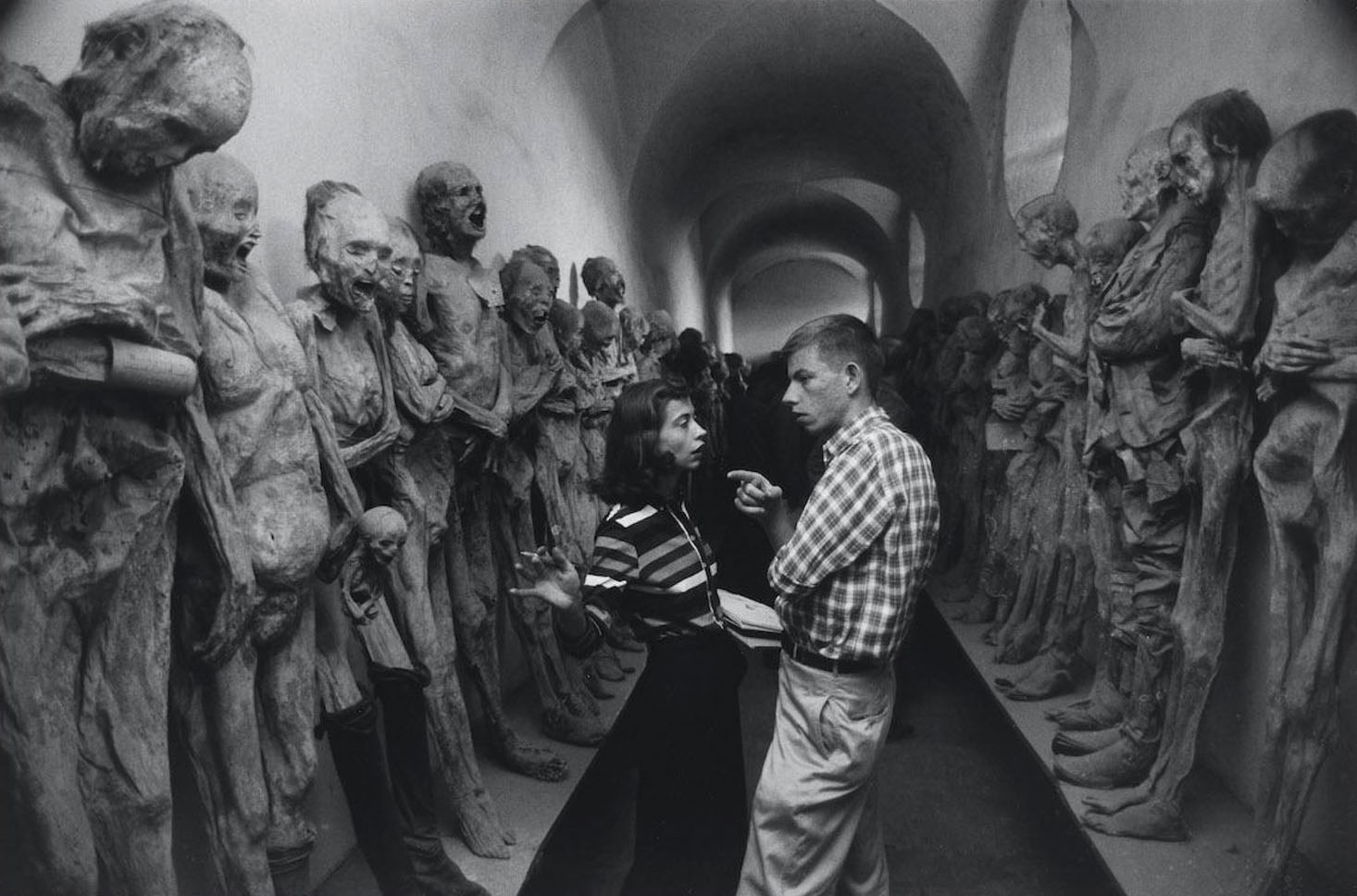
 

Elliott Erwitt (American, 1928-2023) 'Guanajuato, Mexico' 1957


Elliott Erwitt (American, 1928-2023)
Guanajuato, Mexico
1957
Gelatin silver print
Image Overall: 8 1/2 × 13 1/2 in. (21.6 x 34.3cm)
Bank of America Collection
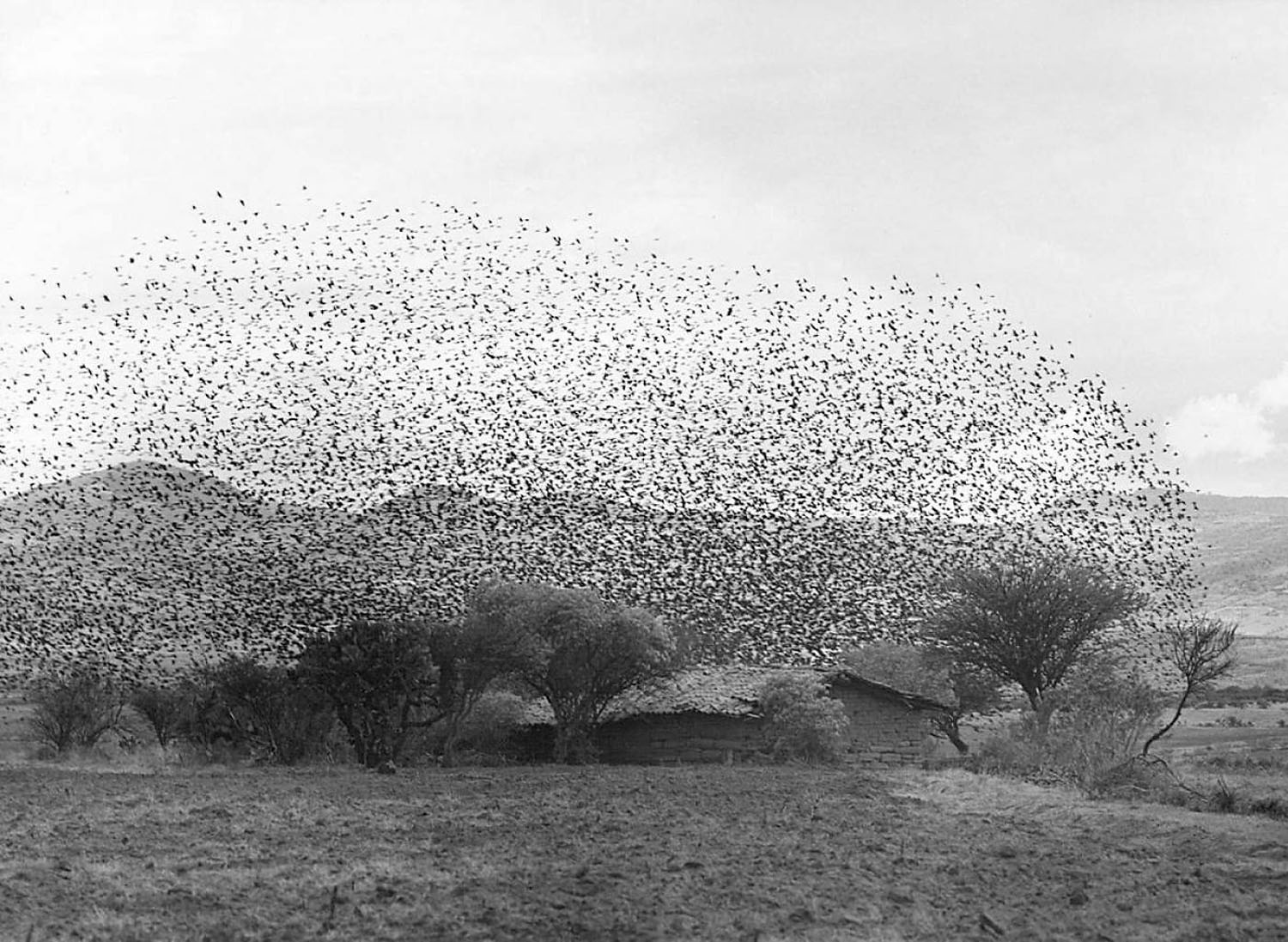
 

Flor Garduño (Mexican, b.1957) 'Cloud, Mexico' (Nube, México) 1982


Flor Garduño (Mexican, b.1957)
Cloud, Mexico (Nube, México)
1982
Gelatin silver print
Image Overall: 13 × 17 in. (33 x 43.2cm)
Bank of America Collection


Flor Garduño (Mexican, b. 1957) 'Tree of Life, Mexico' (Arbol de la vida, México) 1982


Flor Garduño (Mexican, b. 1957)
Tree of Life, Mexico (Arbol de la vida, México)
1982
Gelatin silver print
Image Overall: 13 × 17 in. (33 x 43.2cm)
Bank of America Collection


Garduño’s photographs create a bridge between the present and the past by portraying natural elements such as water, trees, earth, animals, and atmosphere. Garduño worked for the Department of Public Education in her native Mexico, traveling to rural areas to work with indigenous communities. From this she developed her style and got to know what she has referred to as the “profound truth” of the countryside in the Americas. Her work was also influenced by artists Kati Horna, who worked in a surrealistic vein, and Manuel Álvarez Bravo, who attended carefully to the tonal qualities of his photographs. Garduño similarly uses compositional and darkroom techniques to achieve moody, evocative images.

Anonymous. “Get to know the work of Flor Garduño,” on the Getty Twitter website Oct 6, 2021 [Online] Cited 28/01/2023
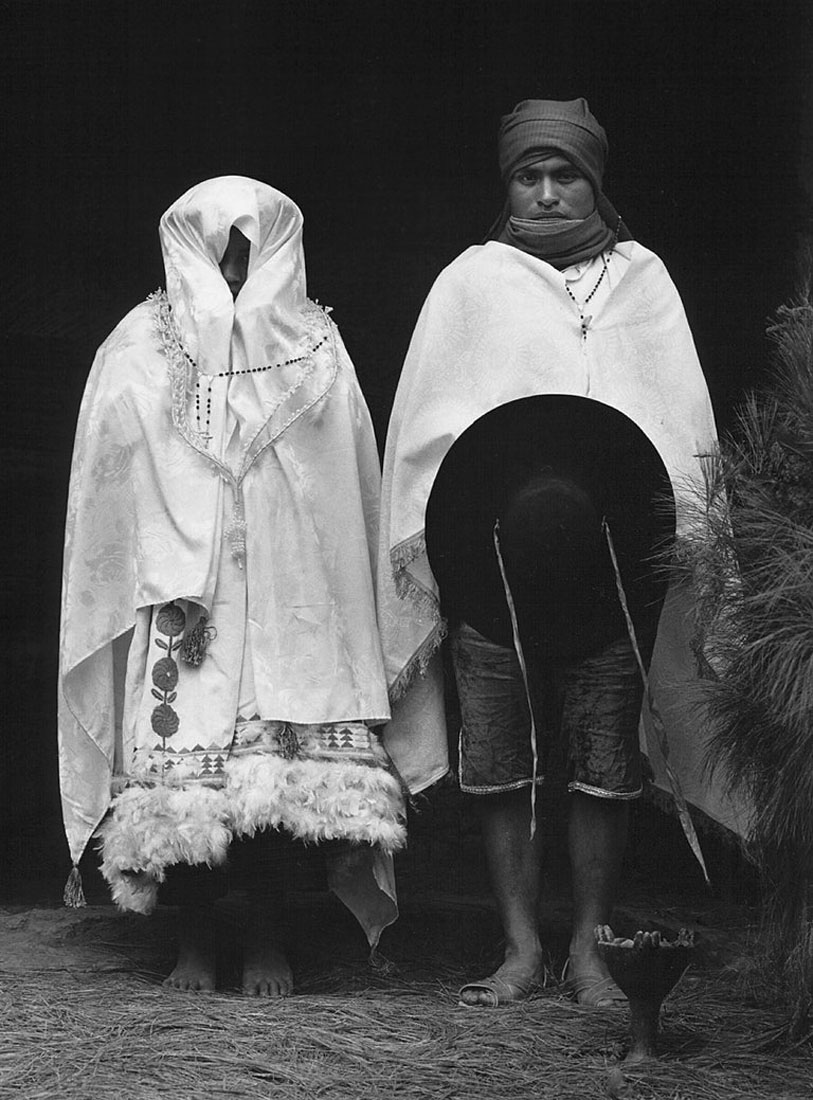
 

Flor Garduño (Mexican, b. 1957) 'Zinacantec Wedding, Mexico' (Matrimonio Zinacanteco, México) 1987


Flor Garduño (Mexican, b. 1957)
Zinacantec Wedding, Mexico (Matrimonio Zinacanteco, México)
1987
Gelatin silver print
Image Overall: 17 5/8 × 13 1/2 in. (44.8 x 34.3cm)
Bank of America Collection


Graciela Iturbide’s Mexico

The photographs of Graciela Iturbide not only bear witness to Mexican society but express an intense personal and poetic lyricism about her native country. One of the most influential photographers active in Latin America today, Iturbide captures everyday life and its cultures, rituals, and religions, while also raising questions about paradoxes and social injustice in Mexican society. Her photographs tell a visual story of Mexico since the late 1970s – a country in constant transition, defined by the coexistence of the historical and modern as a result of the culture’s rich amalgamation of cultures. For Iturbide, photography is a way of life and a way of seeing and understanding Mexico and its beauty, challenges, and contradictions.

In the summer of 2018, Kristen Gresh, Estrellita and Yousuf Karsh Senior Curator of Photographs, and members of the exhibition team visited Graciela Iturbide at her home and studio in Mexico City. In this documentary, produced by the MFA, the artist discusses the different series and themes explored in this exhibition, as well as her creative process.
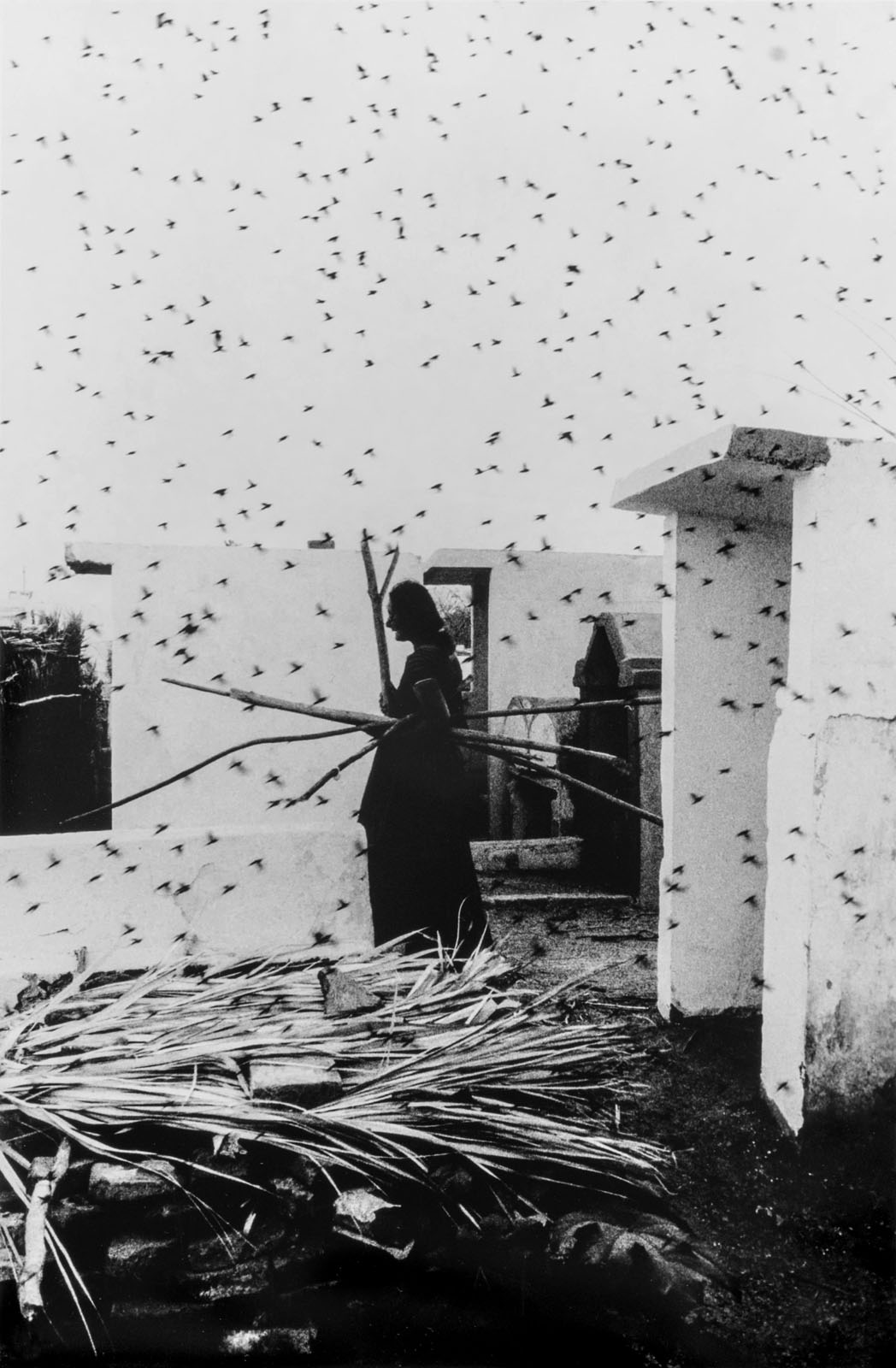
 

Graciela Iturbide (Mexican, b. 1942) 'Cemetery, Juchitán, Oaxaca' (Cementerio, Juchitán, Oaxaca) 1992


Graciela Iturbide (Mexican, b. 1942)
Cemetery, Juchitán, Oaxaca (Cementerio, Juchitán, Oaxaca)
1992
Gelatin silver print
Image Overall: 12 1/4 × 8 3/4 in. (31.1 x 22.2cm)
Bank of America Collection


Graciela Iturbide (Mexican, b. 1942) 'Los Pollos, Juchitán, México' (Chickens, Juchitán, Mexico) 1979


Graciela Iturbide (Mexican, b. 1942)
The Chickens, Juchitán, México (Los pollos, Juchitán, México)
1979 (negative); print c. 1992
Image Overall: 11 3/4 × 7 3/4 in. (29.8 x 19.7cm)
Bank of America Collection


Graciela Iturbide (Mexican, b. 1942) 'Sponge Vendor, Oaxaca' (Vendedora de zacate, Oaxaca) 1974


Graciela Iturbide (Mexican, b. 1942)
Sponge Vendor, Oaxaca (Vendedora de zacate, Oaxaca)
1974 (negative); print 1992
Gelatin silver print
Image Overall: 18 1/8 × 12 1/2 in. (46 x 31.8cm)
Bank of America Collection


Graciela Iturbide (Mexican, b. 1942) 'The Sacrifice, La Mixteca, Oaxaca' (El sacrificio, la Mixteca, Oaxaca) 1992


Graciela Iturbide (Mexican, b. 1942)
The Sacrifice, La Mixteca, Oaxaca (El sacrificio, la Mixteca, Oaxaca)
1992
Gelatin silver print
Image Overall: 16 7/8 × 12 1/4 in. (42.9 x 31.1cm)
Bank of America Collection


Graciela Iturbide (Mexican, b. 1942) 'Angel Woman, Sonora Desert, Mexico' (Mujer ángel, desierto de Sonora, México) 1979


Graciela Iturbide (Mexican, b. 1942)
Angel Woman, Sonora Desert, Mexico (Mujer ángel, desierto de Sonora, México)
1979 (negative); printed later
Gelatin silver print
Image Overall: 9 1/2 × 13 in. (24.1 x 33cm)
Bank of America Collection


Kenro Izu (Japanese, b. 1949) 'Tajín #13' 1987


Kenro Izu (Japanese, b. 1949)
Tajín #13
1987 (negative and print)
From the series Sacred Places
Platinum palladium print
Image Overall: 7 3/4 × 9 3/4 in. (19.7 x 24.8cm)
Bank of America Collection


Alejandra Laviada (Mexican, b. 1980) 'Stacking' (Apilado) 2007


Alejandra Laviada (Mexican, b. 1980)
Stacking (Apilado)
2007
From the series Juarez 56
Pigment print on lustre paper
24 x 20 inches (60.9 x 50.8cm)
Bank of America Collection
© 2022 Alejandra Laviada


Danny Lyon (American, b. 1942) 'Truck in Nueva Casas Grandes, Chihuahua, Mexico' (Camión en nuevas casas grandes, Chihuahua, México) 1975


Danny Lyon (American, b. 1942)
Truck in Nueva Casas Grandes, Chihuahua, Mexico (Camión en nuevas casas grandes, Chihuahua, México)
1975 (negative and print)
Gelatin silver print
Image Overall: 8 × 12 in. (20.3 x 30.5cm)
Bank of America Collection


Paul Strand (American, 1890-1976) 'Church, Cuapiaxtla, Mexico' (Iglesia, Cuapiaxtla, México) 1933


Paul Strand (American, 1890-1976)
Church, Cuapiaxtla, Mexico (Iglesia, Cuapiaxtla, México)
1933 (negative); print 1967
from The Mexican Portfolio
Photogravure
Image Overall: 6 1/4 × 4 7/8 in. (15.9 x 12.4cm)
Bank of America Collection


Paul Strand (American, 1890-1976) 'Woman, Pátzcuaro, Michoacán, Mexico' (Mujer, Pátzcuaro, Michoacán, México) 1933


Paul Strand (American, 1890-1976)
Woman, Pátzcuaro, Michoacán, Mexico (Mujer, Pátzcuaro, Michoacán, México)
1933 (negative); print 1967
from The Mexican Portfolio
Photogravure
Image Overall: 6 3/8 × 5 in. ( 16.2 x 12.7cm)
Bank of America Collection


Paul Strand (American, 1890-1976) 'Women of Santa Ana, Michoacán, Mexico' (Mujeres de Santa Ana, Michoacán, México) 1933


Paul Strand (American, 1890-1976)
Women of Santa Ana, Michoacán, Mexico (Mujeres de Santa Ana, Michoacán, México)
1933 (negative); print 1967
From The Mexican Portfolio
Photogravure
Image Overall: 5 5/8 × 6 1/8 in. (14.3 x 15.6cm)
Bank of America Collection


Paul Strand (American, 1890-1976) 'Woman and Baby, Hidalgo, Mexico' (Mujer y bebe, Hidalgo, México) 1933


Paul Strand (American, 1890-1976)
Woman and Baby, Hidalgo, Mexico (Mujer y bebe, Hidalgo, México)
1933 (negative); print 1967
from The Mexican Portfolio
Photogravure
Image Overall: 5 1/2 × 6 1/2 in. (14 x 16.5cm)
Bank of America Collection


Paul Strand (American, 1890-1976) 'Near Saltillo, Mexico' (Cerca de Saltillo, Mexico) 1933


Paul Strand (American, 1890-1976)
Near Saltillo, Mexico (Cerca de Saltillo, Mexico)
1933 (negative); print 1967
From The Mexican Portfolio
Photogravure
Image Overall: 5 3/8 × 6 3/4 in. (13.7 x 17.1cm)
Bank of America Collection


Paul Strand (American, 1890-1976) 'Young Woman and Boy, Toluca de Lerdo, Mexico' (Mujer joven y niño, Toluca de Lerdo, México) 1933


Paul Strand (American, 1890-1976)
Young Woman and Boy, Toluca de Lerdo, Mexico (Mujer joven y niño, Toluca de Lerdo, México)
1933 (negative); print 1967
from The Mexican Portfolio
Photogravure
Image Overall: 5 1/2 × 6 1/2 in. (14 x 16.5 cm)
Bank of America Collection
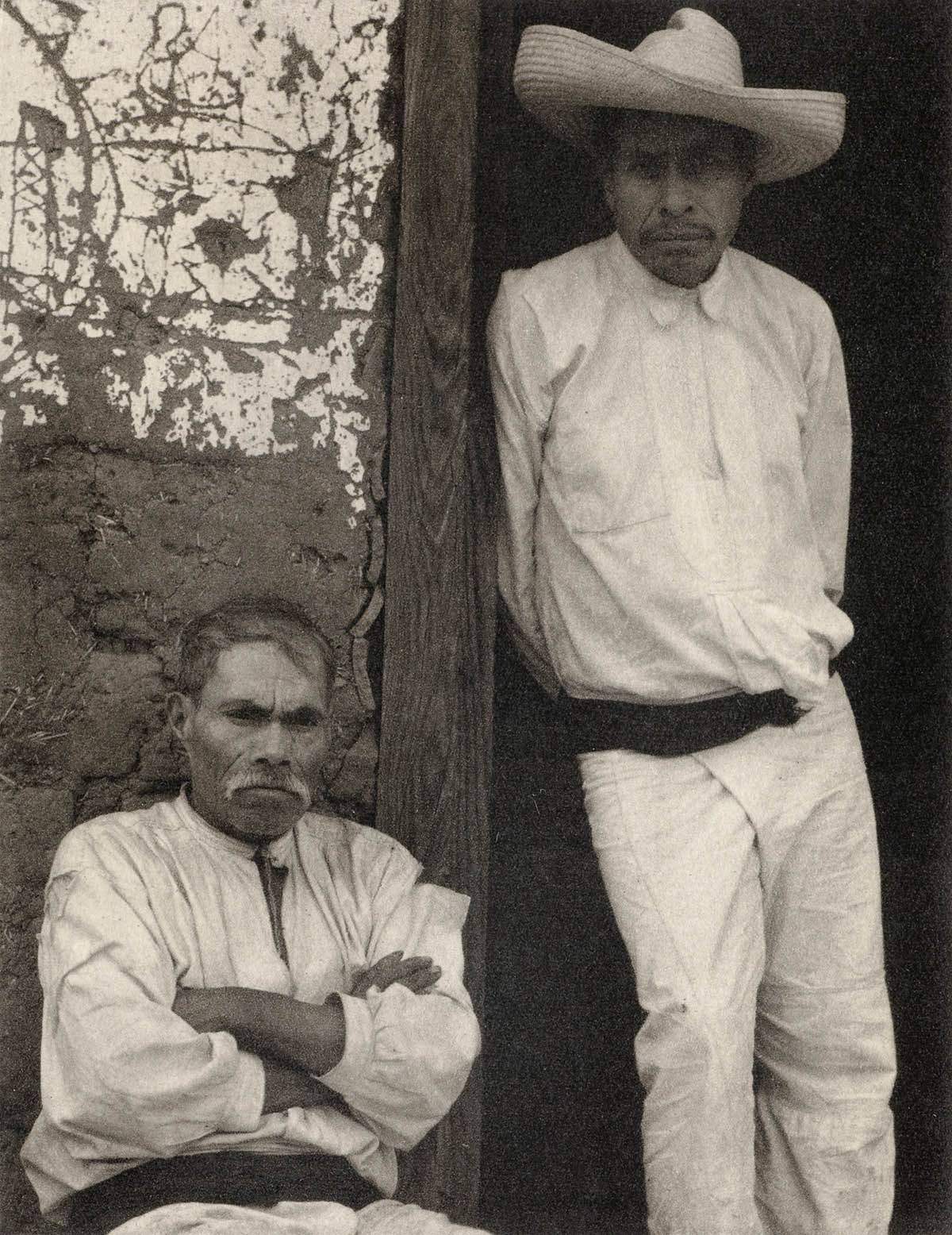
 

Paul Strand (American, 1890-1976) 'Men of Santa Ana, Lake Pátzcuaro, Michoacán' (Hombres de Santa Ana, Lake Pátzcuaro, Michoacá) 1933


Paul Strand (American, 1890-1976)
Men of Santa Ana, Lake Pátzcuaro, Michoacán (Hombres de Santa Ana, Lake Pátzcuaro, Michoacá)
1933 (negative); print 1967
from The Mexican Portfolio
Photogravure
Image Overall: 6 7/8 × 5 1/4 in. (17.5 x 13.3cm)
Bank of America Collection
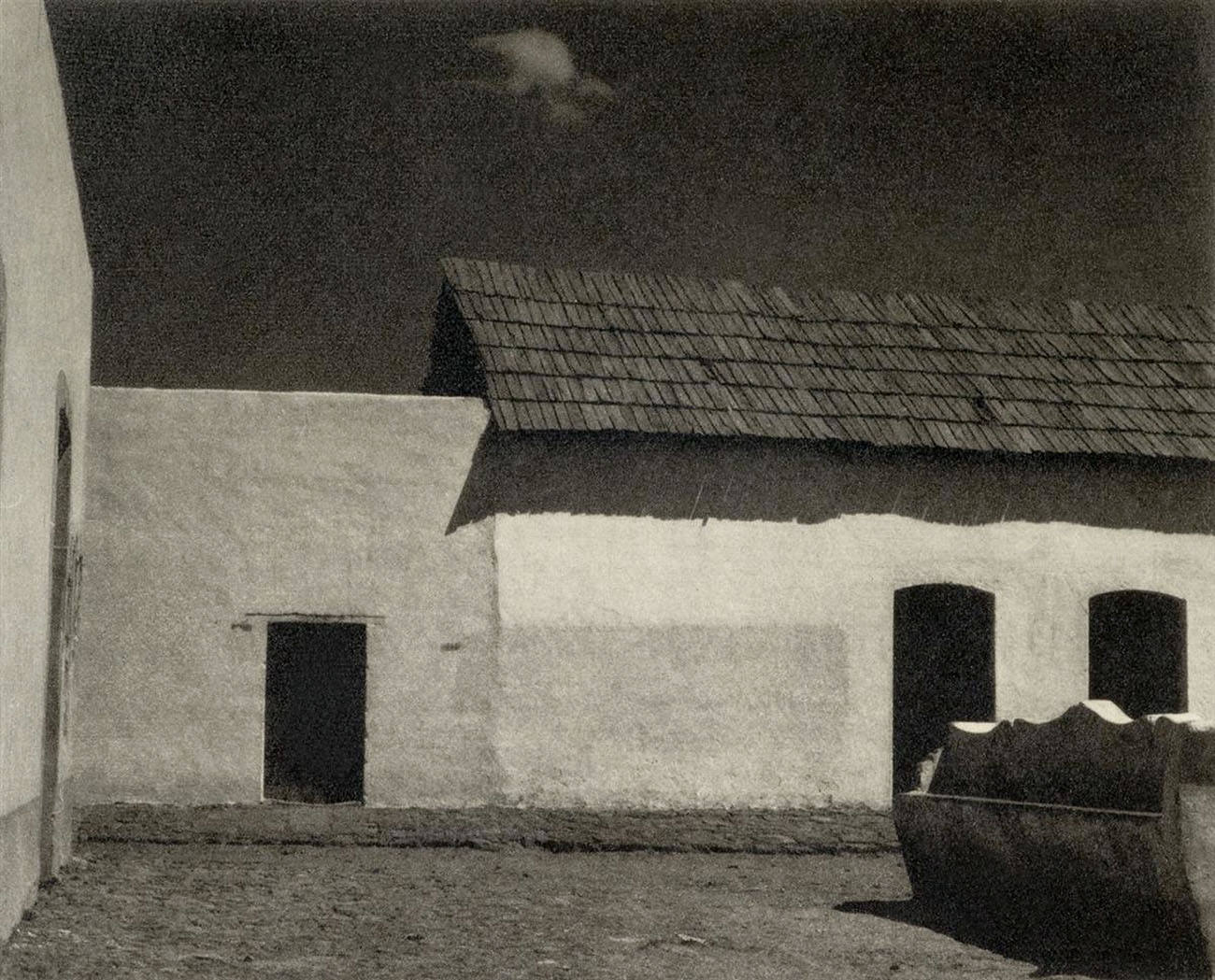
 

Paul Strand (American, 1890-1976) 'White Plaza, Puebla, Mexico' (Plaza blanca, Puebla, México) 1933


Paul Strand (American, 1890-1976)
White Plaza, Puebla, Mexico (Plaza blanca, Puebla, México)
1933 (negative); print 1967
from The Mexican Portfolio
Photogravure
Image Overall: 5 1/2 × 6 1/2 in. (14 x 16.5cm)
Bank of America Collection


Paul Strand (American, 1890-1976) 'Boy, Uruapan, Michoacán, Mexico' (Niño, Uruapan, Michoacán, México) 1933


Paul Strand (American, 1890-1976)
Boy, Uruapan, Michoacán, Mexico (Niño, Uruapan, Michoacán, México)
1933 (negative); print 1967
From The Mexican Portfolio
Photogravure
Image Overall: 10 × 7 7/8 in. (25.4 x 20cm)
Bank of America Collection


Paul Strand. 'Man - Tenancingo' 1933 


Paul Strand (American, 1890-1976)
Man, Tenancingo de Degollado, Mexico (Hombre, Tenancingo de Degollado, México)
1933 (negative); print 1967
From The Mexican Portfolio
Photogravure
Image Overall: 6 3/8 × 5 in. (16.2 x 12.7cm)
Bank of America Collection


Paul Strand (American, 1890-1976) 'Boy, Uruapan, Michoacán, Mexico' (Niño, Uruapan, Michoacán, México) 1933 (negative); print 1967


Paul Strand (American, 1890-1976)
Boy, Uruapan, Michoacán, Mexico (Niño, Uruapan, Michoacán, México)
1933 (negative); print 1967
From The Mexican Portfolio
Photogravure
Image Overall: 6 1/2 × 5 1/4 in. (16.5 x 13.3cm)
Bank of America Collection


Paul Strand (American, 1890-1976) 'Virgin San Felipe, Oaxaca, Mexico' (Virgen San Felipe, Oaxaca, Mexico) 1933


Paul Strand (American, 1890-1976)
Virgin San Felipe, Oaxaca, Mexico (Virgen San Felipe, Oaxaca, Mexico)
1933 (negative); print 1967
From The Mexican Portfolio
Photogravure
Image Overall: 10 1/4 × 7 7/8 in. (26 x 20cm)
Bank of America Collection


Paul Strand (American, 1890-1976) 'Cristo, Oaxaca, Mexico' (Cristo, Oaxaca, México) 1933


Paul Strand (American, 1890-1976)
Cristo, Oaxaca, Mexico (Cristo, Oaxaca, México)
1933 (negative); print 1967
From The Mexican Portfolio
Photogravure
Image Overall: 11 × 8 1/2 in. (27.9 x 21.6cm)
Bank of America Collection


Paul Strand (American, 1890-1976) 'Church Gateway, Hidalgo, Mexico' (Puerta de iglesia, Hidalgo, México) 1933


Paul Strand (American, 1890-1976)
Church Gateway, Hidalgo, Mexico (Puerta de iglesia, Hidalgo, México)
1933 (negative); print 1967
From The Mexican Portfolio
Photogravure
Image Overall: 10 1/2 × 8 1/4 in. (26.7 x 21cm)
Bank of America Collection


Paul Strand. 'Cristo with Thorns - Huexotla' 1933


Paul Strand (American, 1890-1976)
Cristo with Thorns, Huexotla, Mexico (Cristo con espinas, Huexotla, México)
1933 (negative); print 1967
From The Mexican Portfolio
Photogravure
Image Overall: 10 1/8 × 7 7/8 in. (25.7 x 20cm)
Bank of America Collection
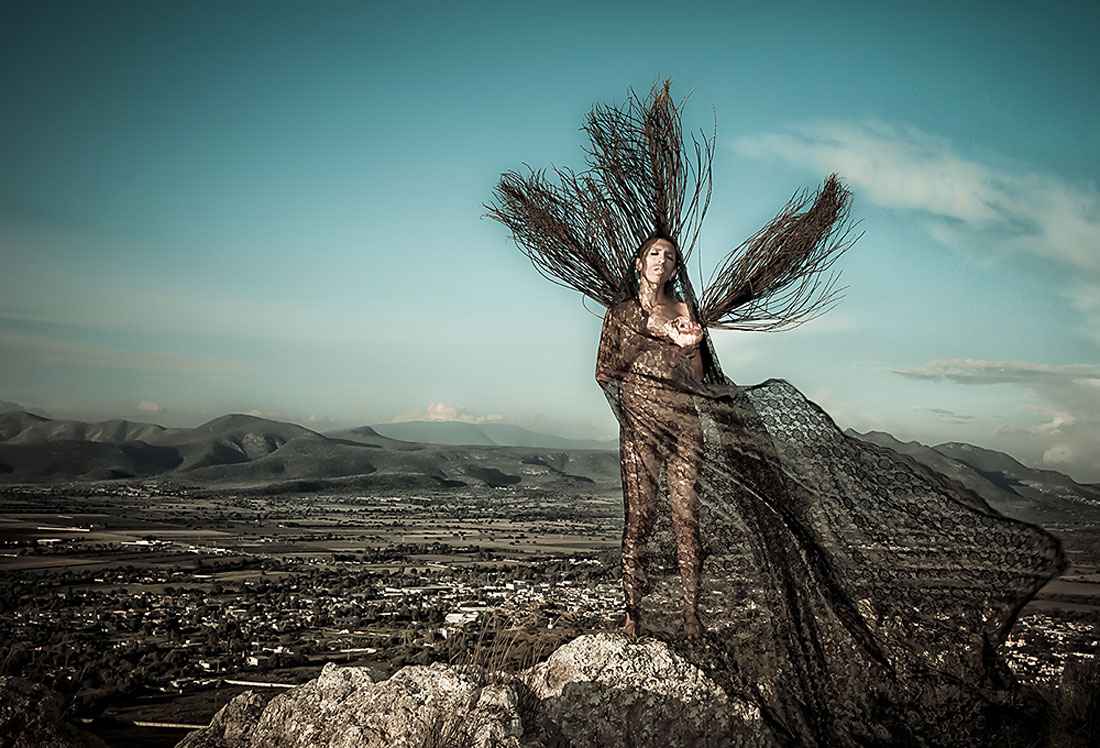
 

Andrés Juárez Troncoso (Mexicano, b. 1972) 'The Virgin of the Heights' (La virge n de las alturas) 2016


Andrés Juárez Troncoso (Mexicano, b. 1972)
The Virgin of the Heights (La virge n de las alturas)
2016
From the series The Spotless Others
Digital print
Image Overall: 20 1/8 × 29 1/2 in. (51.1 x 74.9cm)
Bank of America Collection


Edward Weston (American, 1886-1958) 'Pyramid of the Sun, Mexico' (Pirámide del Sol, México) 1923


Edward Weston (American, 1886-1958)
Pyramid of the Sun, Mexico (Pirámide del Sol, México)
1923
Gelatin silver print
Image Overall: 7 1/2 × 9 3/8 in. (19.1 x 23.8cm)
Bank of America Collection


Mariana Yampolsky (Mexican, 1925-2002) 'Stable' (Caballeriza) 1982


Mariana Yampolsky (Mexican, 1925-2002)
Stable (Caballeriza)
1982 (negative); print c. 1992
Gelatin silver print
Image Overall: 13 × 17 3/4 in. (33 x 45.1cm)
Bank of America Collection


Mariana Yampolsky (Mexican, 1925-2002) 'Caress, San Simón de la Laguna' (Caricia, San Simón de la Laguna) 1989


Mariana Yampolsky (Mexican, 1925-2002)
Caress, San Simón de la Laguna (Caricia, San Simón de la Laguna)
1989
Gelatin silver print
Image Overall: 9 × 12 1/4 in. (22.9 x 31.1cm)
Bank of America Collection
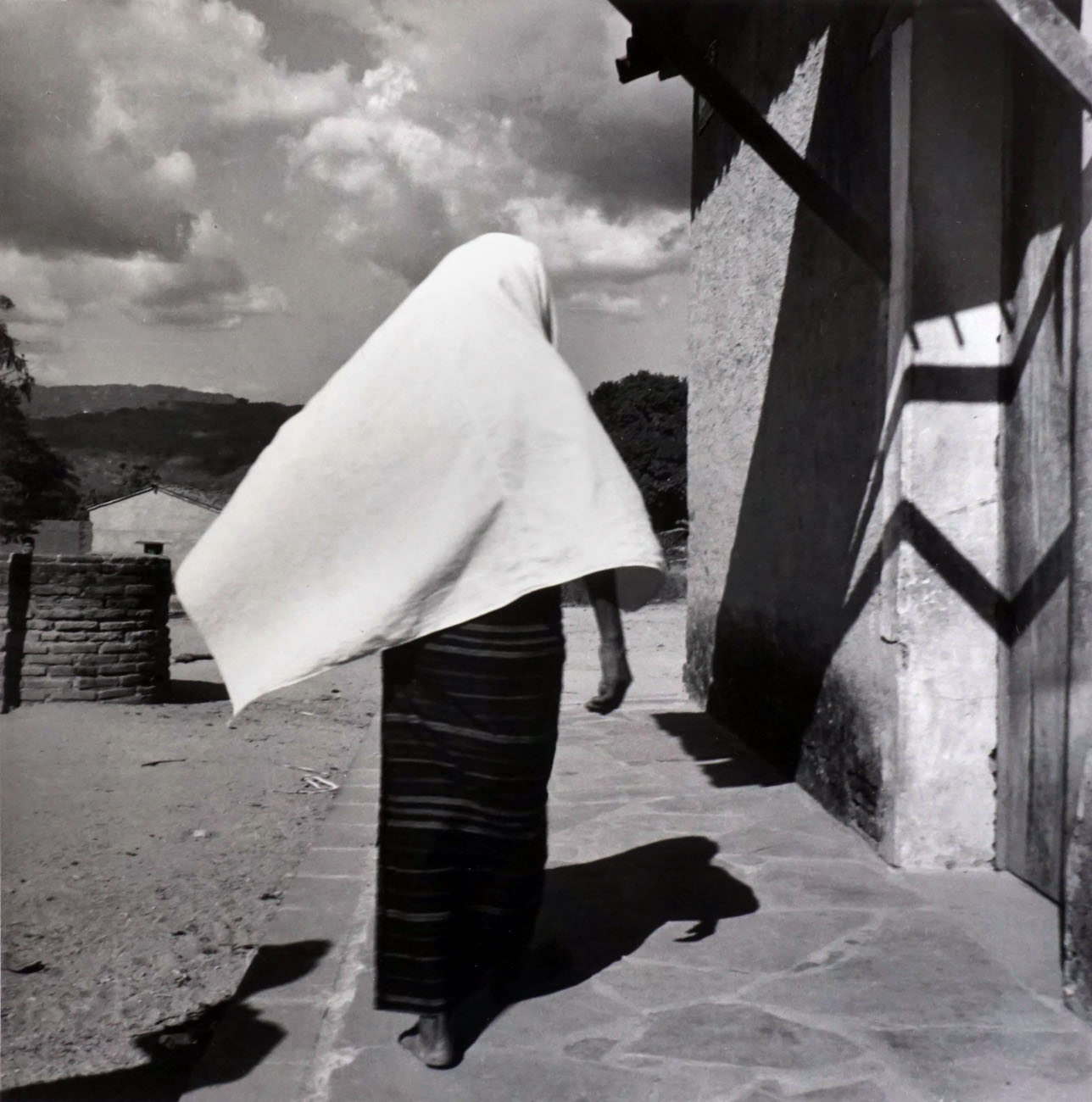
 

Mariana Yampolsky (Mexican, 1925-2002) 'Head Cover, Pinotepa Nacional, Oaxaca' (Huipil de tapar, Pinotepa Nacional, Oaxaca) 1989


Mariana Yampolsky (Mexican, 1925-2002)
Head Cover, Pinotepa Nacional, Oaxaca (Huipil de tapar, Pinotepa Nacional, Oaxaca)
1989
Gelatin silver print
Image Overall: 13 1/2 × 13/12 in. (34.3 x 34.3cm)
Bank of America Collection


Tacoma Art Museum
1701 Pacific Avenue
Tacoma, WA 98402

Opening hours:
Wednesday – Sunday 10am – 5pm
Tacoma Art Museum website

LIKE ART BLART ON FACEBOOK

Back to top

Exhibition: ‘Art AIDS America’ at Tacoma Art Museum, Tacoma

Exhibition dates: 3rd October 2015 – 10th January 2016


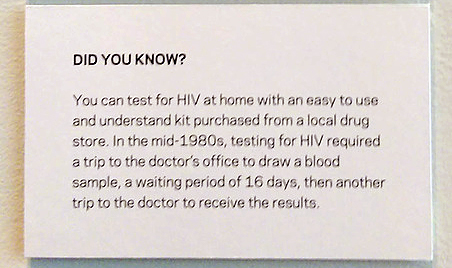
Did You Know?


This is the biggest exhibition on art relating to HIV/AIDS since the seminal exhibition Art in the Age of AIDS at the National Gallery of Australia, Canberra in 1995, which I was a part of.

I was lucky to survive the initial wave of HIV/AIDS infections. The Centers for Disease Control issued its first statement about a cluster of 19 cases of Kaposi’s sarcoma (a rare skin cancer most common in elderly men from southern Italy) and Pneumocystis carinii pneumonia in young, gay men in New York, Los Angeles, and San Francisco in July 1981… and I had my first HIV test in London in 1983. In those days, as the wall text from the exhibition spells out above, you had to wait 16 days to get the result of a blood test. I vividly remember sitting outside a doctor’s office knowing that when I went in, if he said yes you have it, it was a death sentence. In those early days, there was no treatment. You were going to die. I only survived by luck. Many of my friends and lovers didn’t.

“Art reflects and reacts to social, cultural, and political climates, and in the past 30 years, HIV and AIDS has been a constant presence,” says exhibition co-curator Rock Hushka. “So many of us recall friends, family, and partners we have lost and the terror of the early years of the crisis, while younger people are just learning this story. We seek to create a deeper understanding of the legacy of HIV / AIDS in contemporary American art, and encourage our visitors to see their experiences in these works.”

This deep understanding can be supplemented by this posting. I spent many hours securing more images than were sent to me in the press pack, because I think it is really important to have as great a cross-section as possible of work online from this exhibition, as a record of this time and space in the ongoing HIV / AIDS story.

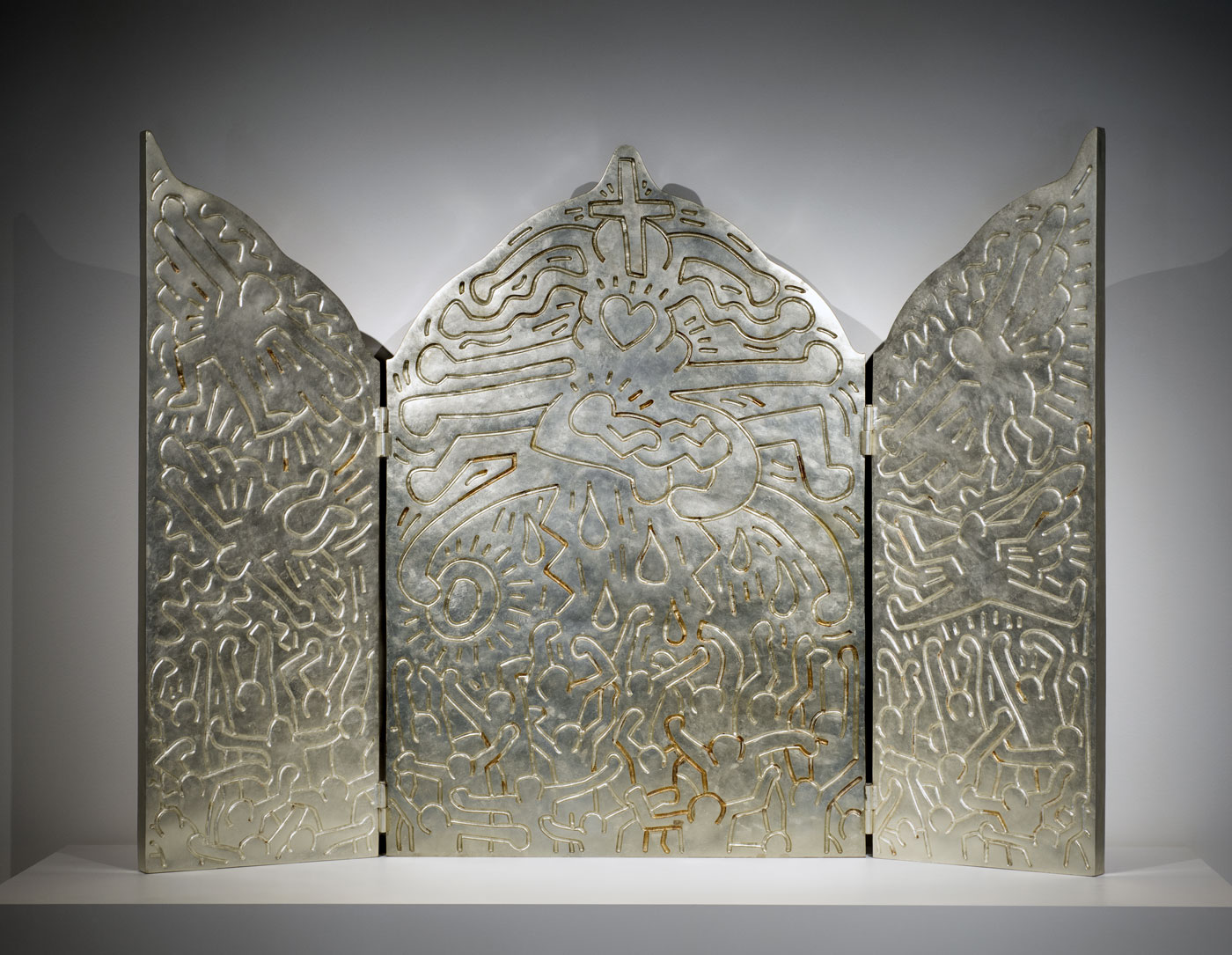
In terms of the art, I find the earlier narratives are much more powerful and focused than the contemporary work. One of the most moving of these, and one that I have never seen before, is Keith Haring’s Altar Piece (1990, cast 1996, below). Can you imagine being an artist, being Haring, working on the wax mould in hospital being treated for AIDS-related illness, thinking that this could possibly be the last art work that you would ever complete. That you would never see it produced. And then to make something that is so compassionate, so beautiful that it is almost beyond belief… my heart is full of admiration and, like the crowd in the triptych, I am washed with tears.

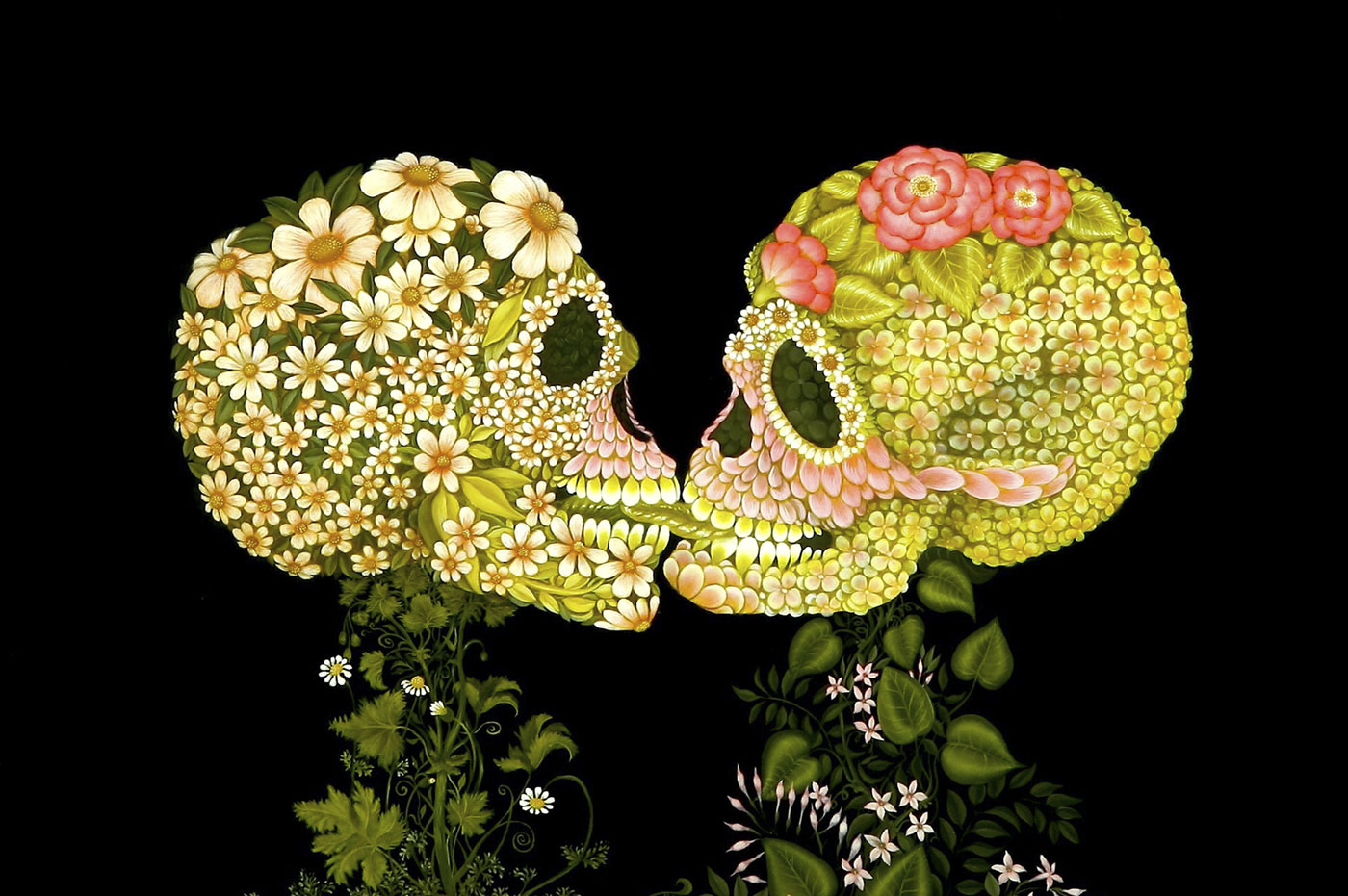
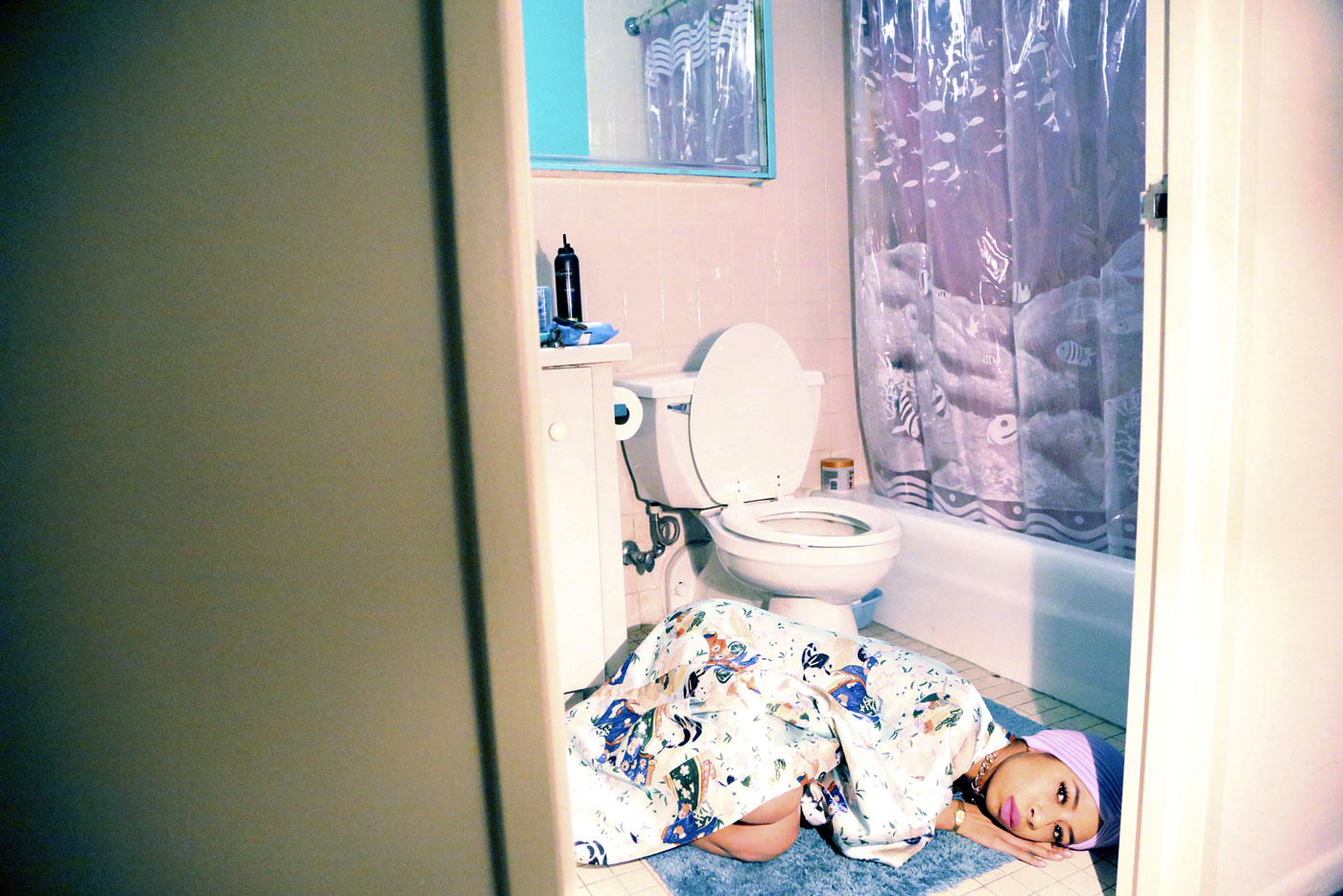
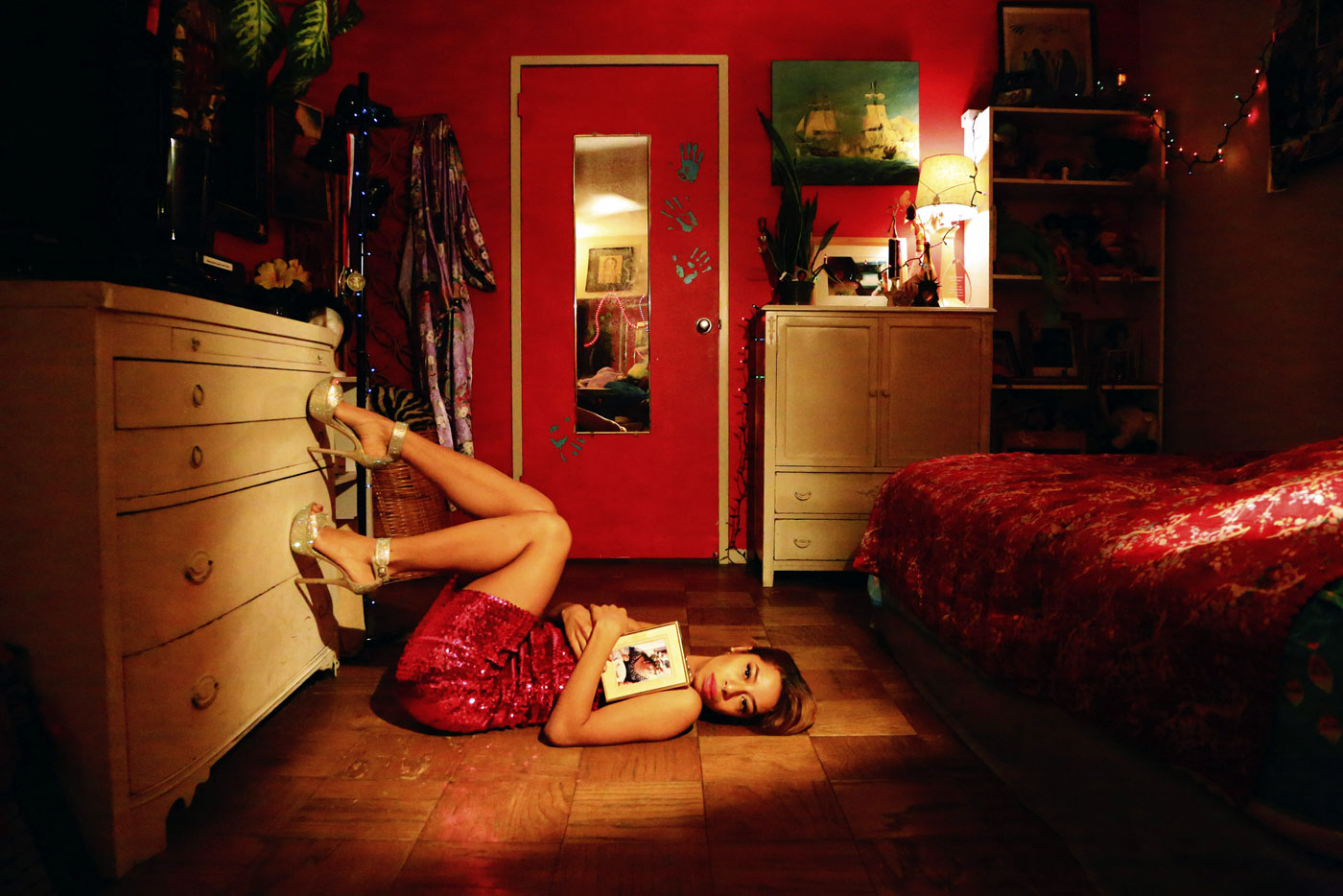
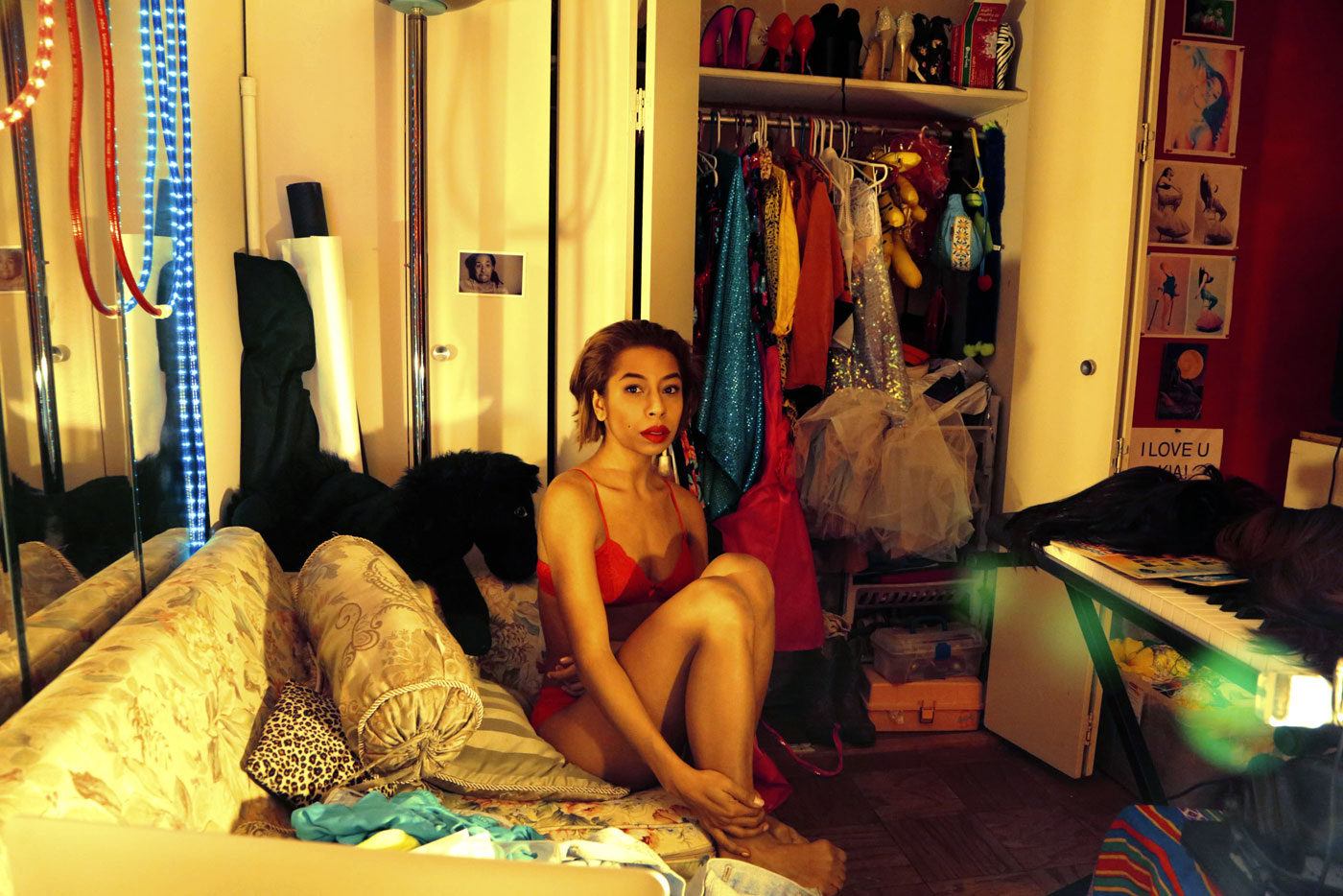
By comparison, some of the contemporary works seem to have become mere graphic symbolism (leaves, milk and flowers) rather than engaging activism. For example, Tino Rodriguez’s Eternal Lovers (2010, below) – while referencing his Mexican heritage through skull imagery from Dia de los Muertos, the Day of the Dead – is not about loss with presence but loss without presence: a febrile graphic activity that is pure decoration. Other works such as Derek Jackson’s Perfect Kiss (2007, below) or LADZ’s Eden #31 (2012, below) enact only the most tenuous link to HIV/AIDS and only when it is spelled out in text. Again, while not denying the pain of the death of her mother, her persecution when growing up or the problems with living with HIV, Kia Labeija’s 24 (Mourning Sickness; Kia and Mommy; In my room) (2014, below) propositions us with a women photographed in deadpan photography style as glamorous mother with vivid pink lipstick or a Beyonce music star in sequin dress and 6 inch heels. Only in the last photograph is there any hint of vulnerability and, funnily enough, it is the only photograph that I care about and engage with.

In all of these works the key word is enact, for these works are performances of gender and sexuality conceptualised for the viewer, where living with HIV/AIDS is shown to us at a distance. Instead of ACTing up, unleashing the power of the oppressed, artists are now acting out in this (supposed) post-death HIV/AIDS climate. Look at me, I can be whoever I want to be (and still have HIV). Nothing wrong with that I hear you say, and you would be completely right… if only the art commenting on this post-death resurrection of the author, was memorable.

While 1,218,400 persons aged 13 years and older are living with HIV infection in the USA and an estimated 47, 352 people were diagnosed with the disease in 2013, people are still dying by the thousands in America (an estimated 13,712 people died in 2012 of an AIDS related disease – source Centers for Disease Control and Prevention website). This is not pretty pink lipstick and sequin dresses, this is 13 thousand people a year still DYING from this disease.

Just think about that for a while.

Dr Marcus Bunyan


Many thankx to the Tacoma Art Museum, Mark I. Chester and Steven Miller for allowing me to publish the photographs in the posting. Please click on the photographs for a larger version of the image.


ACT UP NY/Gran Fury (active New York, New York, 1987–1995), Let the Record Show… 1987/recreated 2015


ACT UP NY/Gran Fury (active New York, New York, 1987-1995)
Let the Record Show…
1987/recreated 2015
Mixed media installation, dimensions variable
Courtesy of Gran Fury and the New Museum, New York
Photo courtesy of the artists


In 1987, the New Museum’s curator William Olander invited ACT UP (the AIDS Coalition to Unleash Power) to create a work about AIDS. ACT UP, a diverse, nonpartisan, grassroots organisation, responded with Let the Record Show… providing information about the crisis.

At the time, the only visual presence of AIDS activism was the Silence=Death stickers. Let the Record Show… recreated here in full for the first time, included an LED reader board with statistics about the unfolding medical and political crisis, the neon pink triangle with “Silence=Death,” a photomural from the Nuremberg trials, and photographs of contemporary public figures with their statements about AIDS.

Using the 1986 graphics from the Silence=Death Project, ACT UP appropriated the pink triangle from the badges assigned to gay prisoners in Nazi Germany during World War II. The artists combined this historic symbol of powerlessness along with the photomural of the Nuremberg courtroom to make an explicit comparison between the severity of the AIDS crisis and government inaction and the Holocaust.

The complicated installation asked whether simple silence in a crisis is as culpable as actively encouraging one. The anonymous collective Gran Fury formed as a committee of ACT UP, as a result of Olander’s invitation. Gran Fury continued to make provocative and important works about the AIDS crisis.

For the installation of Let the Record Show… at the New Museum, quotes were cast in concrete under the photograph of the irresponsible speaker:

“The logical outcome of testing is a quarantine of those infected.”
Jesse Helms, U.S. Senator

“It is patriotic to have the AIDS test and be negative.”
Cory Servass, Presidential AIDS Commission

“We used to hate faggots on an emotional basis. Now we have a good reason.”
Anonymous Surgeon

“AIDS is God’s judgment of a society that does not live by His rules.”
Jerry Falwell, Televangelist

“Everyone detected with AIDS should be tattooed in the upper forearm to protect common needle users, and on the buttocks to prevent the victimization of other homosexuals.”
William F. Buckley, Columnist

” …”
Ronald Reagan, President of the United States


ACT UP NY/Gran Fury (active New York, New York, 1987-1995) 'Let the Record Show…' (detail) 1987/recreated 2015


ACT UP NY/Gran Fury (active New York, New York, 1987-1995)
Let the Record Show… (detail)
1987/recreated 2015
Mixed media installation, dimensions variable
Courtesy of Gran Fury and the New Museum, New York
Photo courtesy of the artists


Carrie Yamaoka (American, born Glen Cove, New York, 1957) 'Steal This Book #2' 1991


Carrie Yamaoka (American, born Glen Cove, New York, 1957)
Steal This Book #2
1991
Unique chemically altered gelatin silver print
Courtesy of the artist


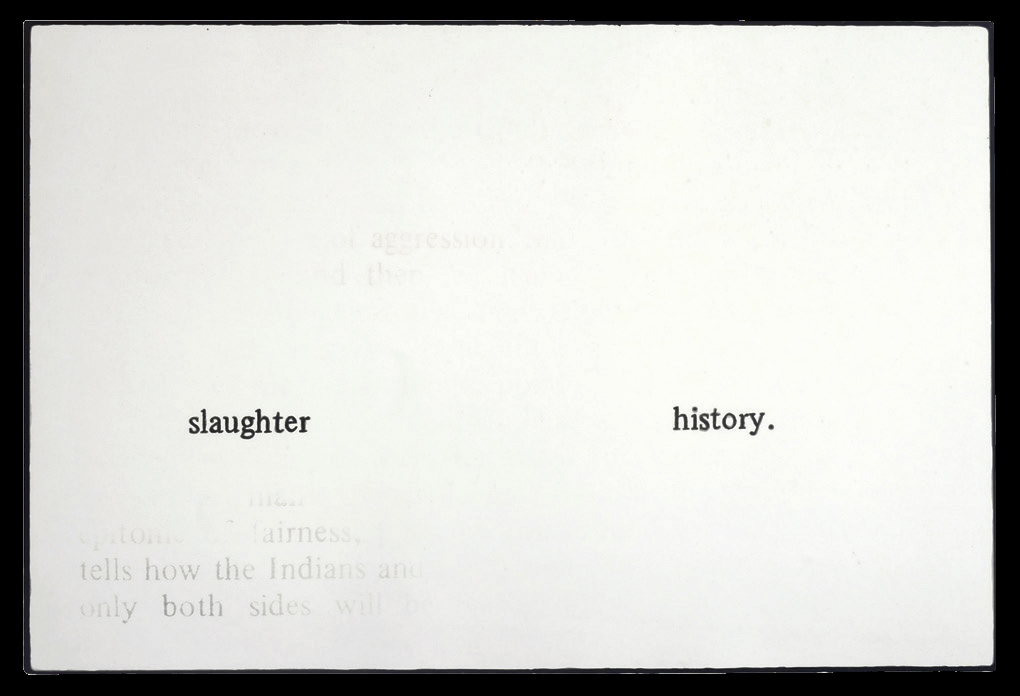
Carrie Yamaoka takes inspiration from Abbie Hoffman’s iconic Steal This Book, a counterculture manual for social revolution. By photographing a page spread and then obliterating all of the words except “slaughter” and “history,” Yamaoka rejects any passive understanding of history. As an activist and artist, Yamaoka will use any means necessary to affect change. Steal This Book #2 may be considered as referring to Yamaoka’s experience as an AIDS activist and her desire to reshape our understanding of our relations with HIV.


Jerome Caja (American, 1958-1995) 'Bozo Fucks Death' 1988


Jerome Caja (American, 1958-1995)
Bozo Fucks Death
1988
Nail polish on plastic tray
Collection of Ed Frank and Sarah Ratchye


One of Jerome Caja’s alter egos was the clown Bozo. Here Caja aggressively turns the tables on death and seeks to gain some control and power over the inevitable, even if only a transgressive, psychological fantasy.


Niki de Saint Phalle (French-American, 1930-2002) 'AIDS, you can't catch it holding hands' 1987


Niki de Saint Phalle (French-American, 1930-2002)
AIDS, you can’t catch it holding hands
1987
Book, 52 pages 8 × 10 inches
The Lapis Press, San Francisco
© 2015 Niki Charitable Art Foundation, All rights reserved / ARS, NY / ADAGP, Paris


Working with collaborator Professor Silvio Barandun, Niki de Saint Phalle wrote and illustrated AIDS: You Can’t Catch It Holding Hands for young adults. Using her characteristically colourful and joyous style, de Saint Phalle offers unusually straightforward information about the transmission of HIV from unprotected sex and unclean needles in intravenous drug use. She also uses the same frank approach to assuring her readers that casual contact from flowers, doorknobs, and toilet seats does not transmit AIDS, notions that were not widely understood in the early years of the AIDS crisis.


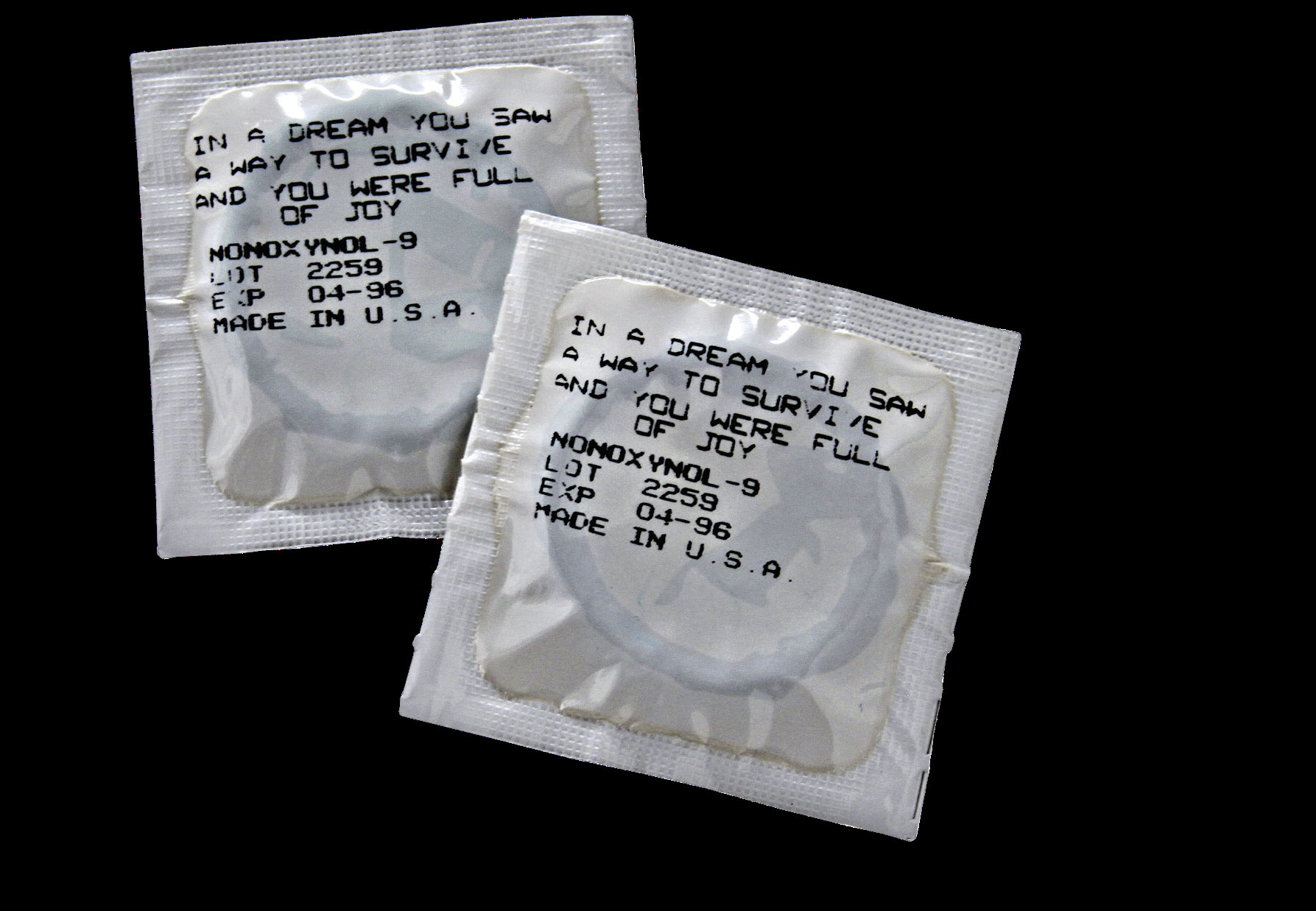
Jenny Holzer (American, born Gallipolis, Ohio, 1950) 'Untitled (In a Dream You Saw a Way To Survive and You Were Full of Joy)' 1983-1985


Jenny Holzer (American, born Gallipolis, Ohio, 1950)
Untitled (In a Dream You Saw a Way To Survive and You Were Full of Joy)
1983-1985
Packaged latex condoms with printed text, each is 2 x 2 inches
Mildred Lane Kemper Art Museum, Washington University in St. Louis, Anonymous gift, 2001


Jenny Holzer (American, born Gallipolis, Ohio, 1950) 'Untitled (Expiring for Love Is Beautiful but Stupid)' 1983-1985


Jenny Holzer (American, born Gallipolis, Ohio, 1950)
Untitled (Expiring for Love Is Beautiful but Stupid)
1983-1985
Packaged latex condoms with printed text, each is 2 x 2 inches
Mildred Lane Kemper Art Museum, Washington University in St. Louis, Anonymous gift, 2001


Art AIDS America aims to abolish the silence about the pervasive presence of HIV / AIDS in American art and open meaningful and respectful dialogues about our experiences with the ongoing epidemic. For too long, we have considered art about AIDS as a tragic, closed chapter in the history of American art. This exhibition demonstrates the deep and continued impact of the AIDS crisis on American art from the early 1980s and continuing to today.

For more than thirty years, artists have actively responded with exquisite sensitivity to HIV / AIDS. They have adopted a broad spectrum of styles and messages from politically activist to quietly mournful art that nonetheless thrums with political content. Through poignant portraits, some artists brought much needed attention to personal suffering and loss from the AIDS crisis. Others employed abstraction and coded imagery to reveal the social and political factors that exacerbated the spread of HIV / AIDS. Artists also widely appropriated various art historical traditions to speak about the devastating impact of the epidemic. Art AIDS America offers an overview of how these various approaches redirected the course of American art from postmodern “art for art’s sake” formulas to art practice that highlights the personal experience and expertise of the artist.

Since the first reports of mysterious illnesses in the early 1980s, HIV and AIDS have touched nearly every American in some way, and operated as an undeniable (though often unacknowledged) force in shaping politics, medicine, and culture. Art AIDS America presents the full spectrum of artistic responses to AIDS, from the politically outspoken to the quietly mournful. HIV and AIDS are not just past-tense problems. As we persist in the struggle with HIV/AIDS, these artworks remind us of humanity’s resilience, responsibility, and history. The legacy of the AIDS crisis and our new relationships with the virus continue to inform contemporary art and American culture.

Text from the Tacoma Art Museum website


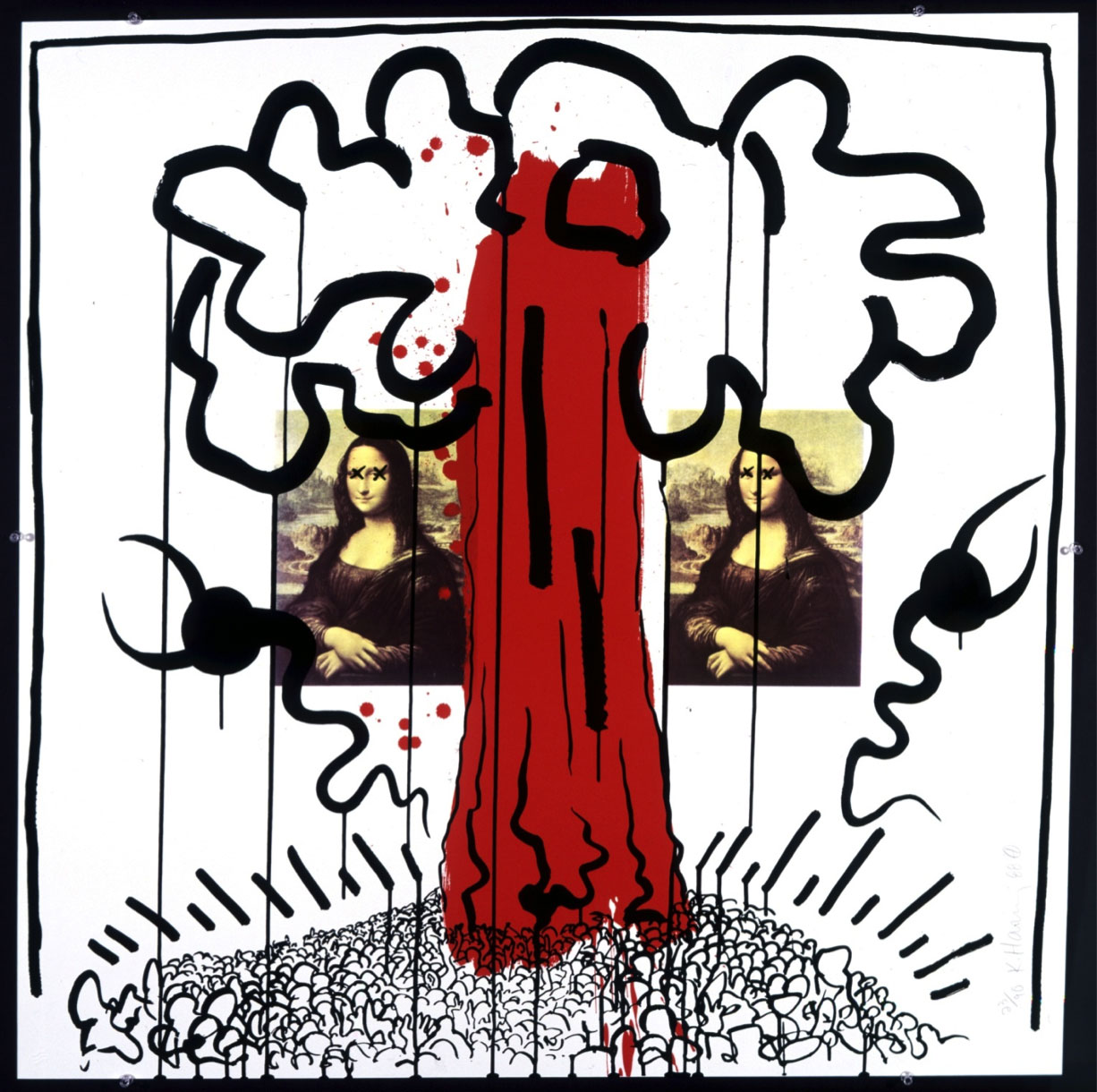
Keith Haring (American, 1958-1990) 'Apocalypse I' 1988


Keith Haring (American, 1958-1990)
Apocalypse I
1988
From the series Apocalypse, 1988
Silkscreen, Edition of 90
Courtesy of the Keith Haring Foundation


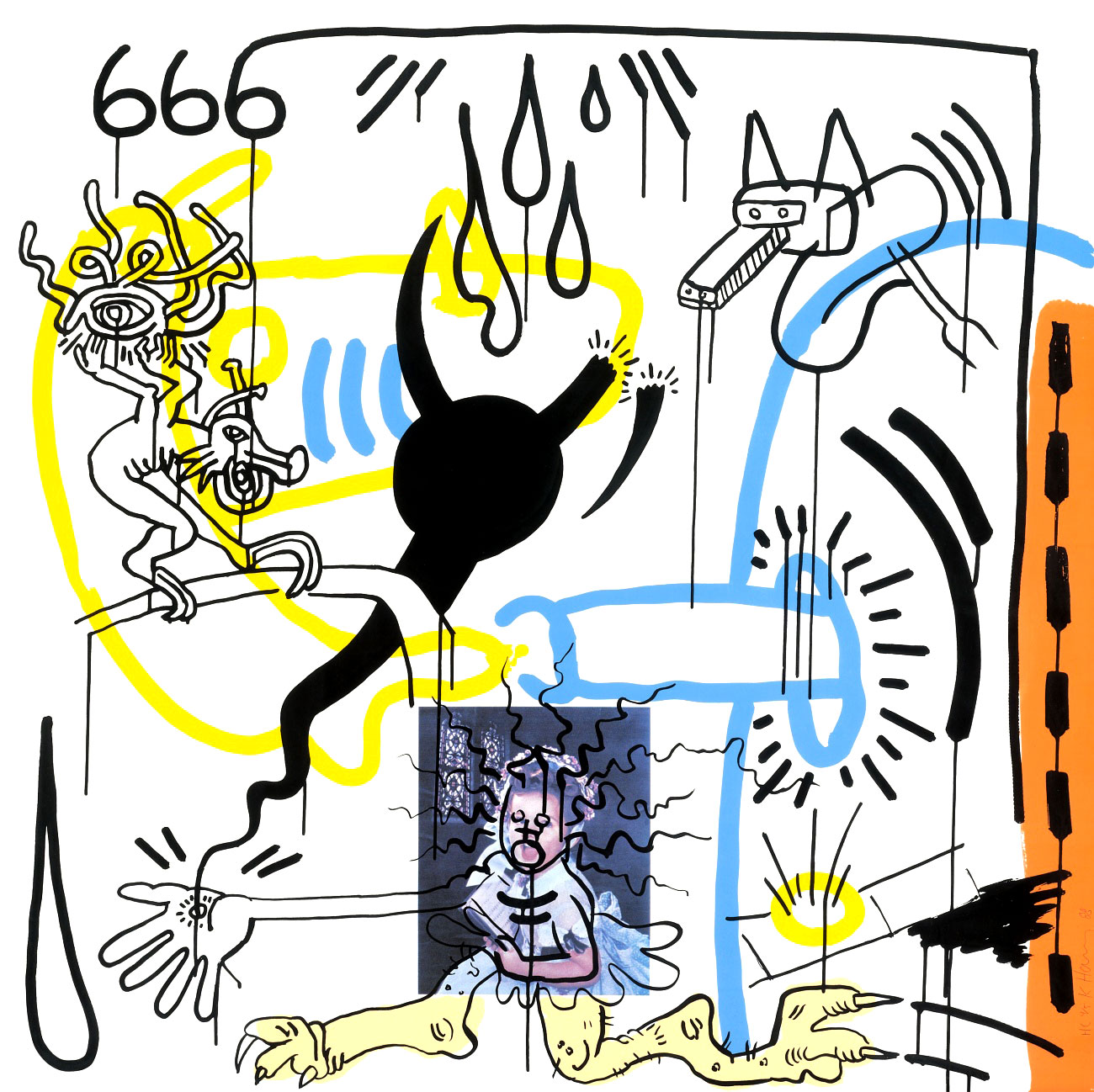
In their first collaboration, Keith Haring illustrated William S. Burroughs’ dystopic poem Apocalypse by mixing references to advertising, art history, and Catholic theology. Haring included his “devil sperm,” the black, horned symbol he created to give shape to HIV and its reign of death and terror.

Burroughs introduced the chaos unfolding:

“The final Apocalypse is when every man sees what he sees, feels what he feels, and hears what he hears. The creatures of all your dreams and nightmares are right here, right now, solid as they ever were or ever will be, electric vitality of careening subways faster faster faster stations flash by in a blur.”


Keith Haring (American, 1958-1990) 'Apocalypse III' 1988


Keith Haring (American, 1958-1990)
Apocalypse III
1988
From the series Apocalypse, 1988
Silkscreen, Edition of 90
Courtesy of the Keith Haring Foundation


Grassroots Activism

Artists provided the early warnings of the AIDS crisis with their artworks deployed at the street level. Posters, stickers, T-shirts and other projects made it impossible to ignore messages about AIDS. These activist artists were informed by earlier precedents of feminist art and artists working on issues of identity politics. Communities coalesced around the calls to action.

The most prominent group to address the AIDS crisis was the anonymous artist collective Gran Fury in New York, a committee of ACT UP (the AIDS Coalition to Unleash Power). The collective used techniques and ideas from advertising, marketing, and the art world to raise awareness and affect political change. Their bold graphic style and refined text continues to influence politically-themed art.

Gran Fury and other activists changed how Americans thought about AIDS. The political and social pressure instigated by their actions and artworks played important roles in changing the approval process for AIDS drugs and treatment protocols. Women’s health issues were brought to the forefront. As a result, American society positively changed their opinions about HIV / AIDS when they had correct information.

Memento Mori

The AIDS crisis compelled contemporary American artists to address death with urgency. Artists witnessed a plague sweep through their communities and wipe out their friends, colleagues, and lovers. They used art to express their rage and terror when AIDS had no effective treatment. Their artwork provided a vitally important way to mourn their losses and share their sorrow.

Artists looked back to European and American artistic traditions of memento mori, Latin for “Remember that you must die,” to share their experiences, feelings, and stories. They adapted symbols like skulls and flowers to depict the fragility and fleeting nature of life.

Artists in this section shifted the intent of memento mori away from concepts of death and the afterlife. They refocused on the preciousness and precariousness of life, without forgetting the political and social realities behind the massive wave of death. Nayland Blake’s clock marks the passing of so many individuals with a call to action. David Wojnarowicz rages against the senseless death of Peter Hujar. Bill Jacobson and Karen Finley give form to the fragility of memory. Latino folk traditions connect the living and the dead in the paintings of Tino Rodriguez and Thomas Woodruff.

Poetic Postmodernism

In the early 1980s, American art was dominated by a new, postmodern theory. It held that meaning belongs not to the artist who made the work but to their audiences who interpret the works. Called “the death of the author,” the theory was named after a 1967 essay by the French postmodernist thinker Roland Barthes.

As AIDS actually caused the death of thousands of authors and artists by the late 1980s, this metaphor became a terrifying reality. At the same time, a powerful Christian conservative movement aggressively politicised AIDS. Using homophobia and fear of the disease, these politicians passed Federal laws that made it illegal to “promote, encourage, or condone homosexual sexual activities or the intravenous use of illegal drugs” in an AIDS awareness and education bill.

The ramifications for artists and art exhibitions were equally prohibitive. Federal laws were passed that made it impossible for museums to receive government support if an exhibition included obscene content, which was understood to mean gay themes among others, including AIDS-specific art. In this climate, artists knew that overt political content would result in censorship. So they developed a new way to smuggle political meaning into art.

In his research for Art AIDS America, Jonathan David Katz named this new approach “poetic postmodernism.” Artists used the postmodern theory “death of the author” to camouflage their own personal, expressive meanings. Many of the works in this exhibition have the same title format, the word “untitled” followed by a more specific description in parentheses such as in “Untitled” (Water), Untitled (Hujar Dead), or Untitled (Corrupt HIV Activism). The first term, “untitled,” signals the prevailing postmodernist idea that all meanings come from the audience. But the phrase inside the parentheses reveals clues to the artist’s associations and intentions. Because recognition of AIDS content was a product of the viewer’s thought and not the artist’s explicit claim, such works could be shown in museums without fear of being censored under the new laws.


Andres Serrano (American, b. 1950) 'Milk/Blood' 1989, printed 2015


Andres Serrano (American, b. 1950)
Milk/Blood
1989, printed 2015
Chromogenic colour print
Exhibition print
Courtesy of the artist


Milk/Blood recall the pure, flat colour of hard edged abstract painters such as Ellsworth Kelly. But the simple saturated colour fields in Serrano’s photograph bear the evocative title Milk / Blood, the two main body fluids that transmit HIV. Serrano appropriates the formal language of modernism for political purposes, a means of potentially slipping AIDS consciousness into a museum context without fear of exclusion or censure. As with HIV infection itself, the photograph underscores how our key sense, vision, is unreliable in the face of AIDS.


Andres Serrano (American, b. 1950) 'Blood and Semen III' 1990


Andres Serrano (American, b. 1950)
Blood and Semen III
1990
Chromogenic colour print, edition 1 of 4
40 × 60 inches
Courtesy of the artist
Photo courtesy of the artist


Like his Milk/Blood in this exhibition, Blood and Semen III also appears to be a rigorously formal composition, this time evoking the gestural appearance of an abstract expressionist painting. Again, the title references two body fluids that transmit HIV. As examples of poetic postmodernism, Serrano activates meaning in Blood and Semen III and Milk / Blood using formal arrangements and references to earlier artistic styles to inform his photographs with personal and potentially political content.


Shimon Attie (American, b. 1957) 'Untitled Memory (projection of Axel H.)' 1998


Shimon Attie (American, b. 1957)
Untitled Memory (projection of Axel H.)
1998
Ektacolor photograph, edition 1 of 3
32 × 38 3/4 inches
Courtesy of the artist and Jack Shainman Gallery, New York
© 2015 Artists Rights Society (ARS), New York / VG Bild-Kunst, Bonn
Photo courtesy of the artist


Shimon Attie (American, b. 1957) 'Untitled Memory (projection of Axel H.)' 1998 (detail)


Shimon Attie (American, b. 1957)
Untitled Memory (projection of Axel H.) (detail)
1998
Ektacolor photograph, edition 1 of 3
32 × 38 3/4 inches
Courtesy of the artist and Jack Shainman Gallery, New York
© 2015 Artists Rights Society (ARS), New York / VG Bild-Kunst, Bonn
Photo courtesy of the artist


After an extensive period working in Europe memorialising the Holocaust, Shimon Attie returned to San Francisco in 1996 and began his series Untitled Memory. Attie projected old photographs of his friends and lovers onto places with special meaning to him, including this room of a former apartment. His photographs of these projections became personal studies of loss and melancholy.


David Wojnarowicz (American, 1954-1992) 'Untitled (Hujar Dead)' 1988-1989


David Wojnarowicz (American, 1954-1992)
Untitled (Hujar Dead)
1988-89
Black and white photograph, acrylic, text and collage on Massonite
Collect of Steven Johnson and Walter Sudol
Courtesy Second Ward Foundation


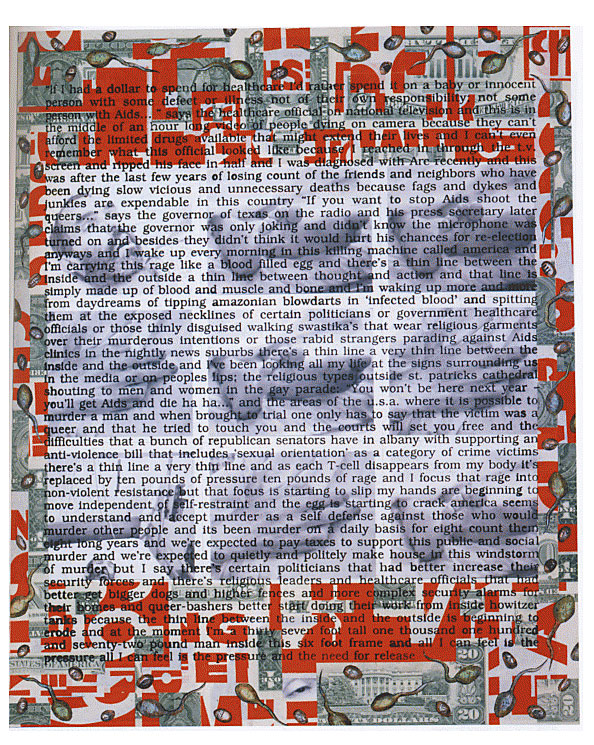
Wojnarowicz was briefly lovers with and then became a close friend of the famous photographer Peter Hujar, who died of AIDS-related causes in 1987. Untitled (Hujar Dead) incorporates still images from a film by Wojnarowicz of Hujar’s lifeless body on his hospital bed. Wojnarowicz then overprinted the text of one of his famous “rants.” In these politically-charged performances and texts, he laid blame for the AIDS crisis squarely on the conservative right-wing demagogues who politicised the disease and continually spewed homophobic rhetoric which only exacerbated the crisis.


Tino Rodriguez (Mexican-American born Guadalajara, Mexico, b. 1965) 'Eternal Lovers' 2010


Tino Rodriguez (Mexican-American born Guadalajara, Mexico, b. 1965)
Eternal Lovers
2010
Oil on wood
Private collection


Tino Rodriguez (Mexican-American, born Guadalajara, Mexico, b. 1965) 'Eternal Lovers' 2010 (detail)


Tino Rodriguez (Mexican-American, born Guadalajara, Mexico, b. 1965)
Eternal Lovers (detail)
2010
Oil on wood
Private collection


Tino Rodriguez’s Eternal Lovers incorporates aspects of his Mexican heritage, and especially the tradition of skull imagery from Dia de los Muertos, the Day of the Dead. This family-oriented celebration of ancestors brings the living and dead into affectionate proximity. Rodriguez here exuberantly conflates familiar American oppositions such as death and life, growth and decay, and even good and evil. Inherently androgynous, the gender of the skulls remains unknown as does their cause of death. But as in the Dia de los Muertos celebration itself, Rodriguez’s image supplants horror with humour and loss with presence, offering the triumph of love and memory over death in the age of AIDS.


David Wojnarowicz (American, 1954-1992) 'Untitled (Buffalo)' 1988-1989


David Wojnarowicz (American, 1954-1992)
Untitled (Buffalo)
1988-1989
Vintage gelatin silver print, signed on verso
Collection of Michael Sodomick


For Untitled (Buffalo), David Wojnarowicz simply photographed a diorama in a museum in Washington, DC. This image of buffalo being herded off a cliff served as a chilling metaphor of the politics of AIDS in the US in the late 1980s. Rather than an illustration of traditional Native American hunting techniques, Wojnarowicz eloquently expressed his rage, desperation, and helplessness through the great symbol of American identity. His shifting and layering of meaning onto this symbol is a classic example of poetic postmodernism.

One example of how artists hid their message is David Wojnarowicz’s Untitled (Buffalo). It’s a diorama of a buffalo fall, a traditional method of harvesting large numbers of buffalo by chasing herds off cliffs. The buffalo are made from plastic. Wojnarowicz photographed the diorama and cropped it. “This is appropriation,” Hushka said. “He used it as this extraordinarily eloquent cry about the state of American politics at the time.” Katz added, “It’s telling that even an artist of Wojnarowicz’s activist fervour engaged in a metaphor that only cohered in the mind’s eye. You needed to be attentive to what it might be saying to read it. There’s nothing specifically AIDS about it.”

Spiritual Forces

Because of the overwhelming number of deaths, the unspeakable losses, and the constant presence of disease, it should not be surprising that artists also turned to issues of spirituality. Yet, the art history of AIDS often neglects this important aspect. Across the United States, faith communities tended to the spiritual needs of people with AIDS and provided critical services for them. These communities continue to support people living with HIV.

The AIDS crisis exposed deep division within many spiritual traditions. Artists such as Jerome Caja, Robert Gober, and Barbara Kruger expressed discomfort and displeasure in how some religious ideologies oppressed gays and lesbians and worsened the AIDS crisis. Others made inspiring works within long-established traditions like Keith Haring’s altar piece. In other artworks, artists created symbols for the dignity of people suffering from AIDS, ranging from Christian saints and Biblical texts to imagery inspired by Buddhism and healing traditions from India.


Keith Haring (American, 1958-1990) 'Altar Piece' 1990 (cast 1996)


Keith Haring (American, 1958-1990)
Altar Piece
1990 (cast 1996)
Bronze with white gold leaf patina, edition 2 of 9
60 × 81 x 2 inches
Denver Art Museum, Gift of Yoko Ono, 1996.204A-C.
© Keith Haring Foundation
Photo © Denver Art Museum


This altar piece by Keith Haring is the last work the artist completed. He worked on the wax mould while he was hospitalised for AIDS-related illnesses. The triptych format echoes traditional Roman Catholic altar pieces. The image of the crying mother holding an infant speaks to the inconsolable losses from AIDS. The mother’s tears fall on the crowds, seeking solace and mercy from the AIDS epidemic.


Barbara Kruger (American, born Newark, New Jersey, 1945) 'Untitled (It's our pleasure to disgust you)' 1991


Barbara Kruger (American, born Newark, New Jersey, 1945)
Untitled (It’s our pleasure to disgust you)
1991
Photographic silkscreen on vinyl
The Museum of Contemporary Art, Los Angeles, Gift of Eric and Nannette Brill


Despite provocative imagery and text, Barbara Kruger intends no specific meaning to her artworks. Rather, Kruger wants to demonstrate how the reader generates meaning each time the text is read. She activates ambiguity and political charge with the phrase “It’s our pleasure to disgust you.” Kruger underscores the gulf between and image and its possible meanings, an issue brought into high relief in the culture wars promoted by religious conservatives, during the period when this work was made.

The work may be interpreted as evidence that artists like Kruger were deliberately insensitive to cultural norms. Alternatively, it could be read as proof that artworks were deliberately manipulated for political purpose by others. Because AIDS was framed in political terms from its earliest moment, Kruger’s Untitled (It’s our pleasure to disgust you) reflects the complexity and deliberate uses of language about AIDS.


Robert Gober (American, born Wallingford, Connecticut, 1954) 'Drains' 1990


Robert Gober (American, born Wallingford, Connecticut, 1954)
Drains
1990
Cast pewter Edition of 8, with 2 artist’s proofs, artist’s proof 1 of 2
Collection of the artist


Robert Gober’s Drains is meticulously handcrafted to resemble a mass-produced consumer good. Because we think about drains primarily as a tool to remove waste often associated with personal hygiene and cleaning, connections to HIV/AIDS are obvious. By placing the sculpture in an unexpected position on a gallery wall, Gober seeks to generate unanswerable, metaphorical questions about the functions of a drain and the unknown space behind it. The cruciform shape at the back of the drain recalls his childhood and his complicated relationship with Catholicism.


Izhar Patkin (American born Israel, b. 1955) 'Unveiling of a Modern Chastity' 1981


Izhar Patkin (American born Israel, b. 1955)
Unveiling of a Modern Chastity
1981
Rubber paste, latex theatrical wounds, and
printing ink on a stretched linen canvas
Courtesy of the artist


Izhar Patkin painted Unveiling of a Modern Chastity one year before there was any public announcement about a new disease striking formerly healthy young men. This is the earliest work in the exhibition, and, in retrospect, one of the earliest AIDS paintings ever. Troubled by the sight of a group of such young men with similar dark purple skin lesions waiting in his dermatologist’s office, he presciently titled the work to reflect what he felt might be a forthcoming change in sexual culture. The painting’s skin-like surface erupts in what looks like Kaposi’s sarcoma lesions.

Patkin’s heavily textured surface and use of artificial wounds was his effort to destroy minimalism and other traditions of pure abstraction. He wanted to expose the inability of modernist art to contain pressing social and contextual significance.

DID YOU KNOW? The Centers for Disease Control issued its first statement about a cluster of 19 cases of Kaposi’s sarcoma (a rare skin cancer most common in elderly men from southern Italy) and Pneumocystis carinii pneumonia in young, gay men in New York, Los Angeles, and San Francisco in July 1981.


Albert J. Winn (American, 1947-2014) 'Akedah' 1995


Albert J. Winn (American, 1947-2014)
Akedah
1995
Gelatin silver print
171/2 × 21 3/4 inches
Courtesy of Scott R. Portnoff
Photo courtesy of the Estate of Albert J. Winn


In the artist’s own words: “Every month, because of my illness, I need to undergo a blood test. During the process, a tourniquet is bound tightly about my upper arm. At times when I’ve been on a study protocol for an experimental medicine, I’ve had my blood drawn every day. Having my blood drawn has become a ritual in what sometimes seems is a new religious practice, an AIDS ritual.

“Over time, I’ve transformed this ritual in relation to my Judaism. I wonder if like Isaac, I am being sacrificed. This time to science. I pray that an angel will intercede and spare my life. When my arm is bound with a tourniquet and the veins bulge, I am reminded that I am bound to my illness. I look at the rubber strap and see tefillin. Sometimes the impression of the leather straps from the tefillin are still visible on my skin by the time the tourniquet is wrapped around my arm. The binding of the tefillin is a reminder of being bound to my heritage. The straps also make my veins bulge. Except for the needle stick the binding feels the same.”


Art AIDS America at the Tacoma Art Museum

Politics, sex, religion, loss, and beauty – all of the topics that you can’t talk about over dinner but can at a museum – are open for discussion in Art AIDS America, an exhibition that reveals for the first time how the AIDS crisis forever changed American art. Since the first reports of mysterious illnesses in the early 1980s, HIV and AIDS have touched nearly every American in some way, and operated as an undeniable (though often unacknowledged) force in shaping politics, medicine, and culture. Art AIDS America presents the full spectrum of artistic responses to AIDS, from the politically outspoken to the quietly mournful.

Art AIDS America is a story of resilience and beauty revealed through art, and the community that gathered to bring hope and change. While recognising and honouring loss and grief, it refutes the narrative that AIDS is only a tragic tangent in American art, exploring how artists’ responses to the crisis and its legacy continue to inform contemporary American art. These artworks offer a vibrant representation of community, caring, creativity and activism. And, Art AIDS America will serve as a vivid reminder that the crisis is not over; HIV infections are increasing. According to the Centers for Disease Control and Prevention (CDC), more than 1.2 million Americans are living with HIV.

A decade in the making, this exhibition is co-curated by TAM’s Chief Curator, Rock Hushka, and Jonathan D. Katz, PhD, Director, Visual Studies Doctoral Program, University at Buffalo.

“AIDS fundamentally changed American art, remaking its communicative strategies, its market, its emotional pitch and – not least – its political possibilities. But we’ve repressed the role of AIDS in the making of contemporary American culture, as we’ve repressed the role of AIDS in every other aspect of our lives. This exhibition underscores how powerfully a plague that is still with us has changed us,” says Katz. “Art AIDS America creates spaces for mourning and loss, yes, but also for anger and for joy, for political resistance and for humor, for horror, and for eroticism.”

The exhibition assembles 125 significant works in a wide range of media. The artists are diverse, including the internationally acclaimed such as Robert Gober, Felix Gonzalez-Torres, Keith Haring, Jenny Holzer, Annie Leibovitz, Robert Mapplethorpe, and Martin Wong, and those not yet as widely celebrated such as Luis Cruz Azaceta, Chloe Dzubilo, Derek Jackson, Kia Labeija, and Joey Terrill. The works date from 1981 to today, and some, like Catherine Opie’s photographs of the 1986 AIDS / ARC vigil in San Francisco, will be on public view for the first time.

“Art reflects and reacts to social, cultural, and political climates, and in the past 30 years, HIV and AIDS has been a constant presence,” says Hushka. “So many of us recall friends, family, and partners we have lost and the terror of the early years of the crisis, while younger people are just learning this story. We seek to create a deeper understanding of the legacy of HIV / AIDS in contemporary American art, and encourage our visitors to see their experiences in these works.”

Works in the exhibition will generally fall into two categories: art with a clear tie to AIDS, and art that requires the viewer to look beyond the surface to understand its connection to HIV / AIDS. Some artists addressed the AIDS crisis through activist works, community projects, graphics, and direct political statements. For example, the collective ACT UP NY / Gran Fury’s installation Let the Record Show… sears the words of public officials whose actions inflamed the crisis, including the silence of President Ronald Reagan, who would not speak publicly about AIDS until 1987. Other artists use camouflage, coding, misdirection, symbols, or other covert strategies to address the social, political, and physical impacts of HIV. An example is Robert Sherer’s beautifully rendered Sweet Williams, a basket of cut flowers, painted in HIV-negative and HIV-positive blood, about the untimely deaths of so many young men. The exhibition will be organised roughly by works created pre- and post-cocktail (in this case, ‘cocktail’ refers to the combination of drugs and therapies used to manage HIV and prevent the development of AIDS).

“Tacoma Art Museum is a safe space where people are able to address important and challenging issues. We are proud to present Art AIDS America. It is fitting that the exhibition debuts in Tacoma, the city that established the nation’s first government-sanctioned needle exchange program in a proactive approach toward controlling the spread of AIDS,” said Stephanie Stebich, TAM’s Executive Director. “TAM also has the scholarship to support this exhibition through our chief curator Rock Hushka and the exhibition’s co-curator Dr. Jonathan D. Katz, who also co-curated the award-winning Hide/Seek: Difference and Desire in American Portraiture, which we brought to TAM in 2012.”

The Art AIDS America catalogue is a significant component of the exhibition, with 15 contributors, nearly 300 pages, and more than 200 illustrations. It is published in association with the University of Washington Press of Seattle and London and designed by Marquand Books, Seattle. Art AIDS America is organised by TAM in partnership with the Bronx Museum of the Arts and will tour nationally. See it first at TAM, on view October 3, 2015 through January 10, 2016. The exhibition will then travel to Zuckerman Museum of Art, Kennesaw State University, GA; and The Bronx Museum of the Arts, NY.

Press release from the Tacoma Art Museum website


Bill Jacobson (American, b. 1955) 'Interim Portrait #373' 1992


Bill Jacobson (American, b. 1955)
Interim Portrait #373
1992
Chromogenic colour print
24 × 20 inches
Courtesy of the artist
Photo courtesy of the artist


Alon Reininger (American born Tel Aviv, Israel, b. 1947) 'Ken Meeks, PWA' 1985


Alon Reininger (American born Tel Aviv, Israel, b. 1947)
Ken Meeks, PWA
1985
Archival pigment print
Courtesy of Contact Press Images, New York


Mark I. Chester (American, born Milwaukee, Wisconsin, 1950) 'Robert Chesley - ks portraits with harddick & superman spandex, #1–#6' 1989, printed 2015


Mark I. Chester (American, born Milwaukee, Wisconsin, 1950)
Robert Chesley – ks portraits with harddick & superman spandex, #1-#6
from the series Diary of a Thought Criminal
1989, printed 2015
Pigment print
Courtesy of the artist


Mark I. Chester gives us the first portrait of a sexually active person with AIDS. Robert Chesley (1943-1990) was a playwright, theatre critic for the San Francisco Bay Guardian, and music composer. Perhaps his most celebrated play was Jerker, or The Helping Hand: A Pornographic Elegy with Redeeming Social Value and a Hymn to the Queer Men of San Francisco in Twenty Telephone Calls, Many of Them Dirty. At a time when many gay men had come to associate their own sexuality with death, the artist showed Chesley as a vibrant, active person with AIDS, intended as a rebuke to the routine AIDS portraits of mortally ill people. With this series, Chester rewrote the late-1980s codes for representing gay male sexuality from sexlessness and death towards a renewed embrace of life and its pleasure.


Steven Miller (American, b. 1968) 'Robert' from the series 'Milky' 2004


Steven Miller (American, b. 1968)
Robert from the series Milky
2004
Inkjet print
Edition 2 of 10
Tacoma Art Museum, Museum purchase with funds from Curtis Man


For his series Milky, photographer Steven Miller asked his friends if he could photograph them as he poured milk over their heads. These portraits capture the different reactions to the sensation and convey a sense of discomfort from being drenched by fluids like milk. Miller likens these two aspects to a symbolic infection of HIV. For many gay artists of his generation, HIV looms as a constant presence, and body fluids remain deeply ingrained as transmitters of the virus.


Portraiture

Artists used portraits to directly convey the devastating effects of the crisis on individuals. Even if we do not know the subject, portraits remind us that someone we know was likely affected by AIDS. Because the science about the retrovirus was new and extremely complicated and frightening, such portraits humanised the disease so it could be understood through personal stories.

Early portraits brought attention to the physical symptoms of AIDS such as the deep purple lesions of the skin cancer Kaposi’s sarcoma and the devastating weakness caused by AIDS-related wasting syndrome. Artists soon refocused on portraits of defiant individuals living with HIV. Refusing to show people as victims of an incurable disease, these portraits depicted fighters and survivors.

From pure abstract representations to straightforward photographic likenesses, portraits continue to illuminate how individuals respond to and overcome even the most complex aspects of HIV/AIDS such as stigma, racism, sexism, and poverty.

The Legacy of the AIDS Crisis

HIV is no longer an immediate life-or-death issue facing American artists, but one that quietly and continually persists in intriguing ways. The legacy of the AIDS crisis can be traced either through the motifs and influences of earlier artists or by understanding the psychological trauma and challenges that result from living in a world with HIV.

Artworks made after antiretroviral medicines became available in the mid-1990s beg the questions: If HIV is undetectable in a body and all but invisible in society, why should visibility in art be any different? How do you identify HIV if an artist is unwilling to speak about it but doesn’t live a moment of his or her intimate life without being aware of its near-certain presence?

Artists such as John Arsenault, Kalup Linzy, Patte Loper, and Donald Moffett bring their personal histories as activists and care givers into their artwork. They also use their art to express the discomfort and complexities of living in a world with the constant presence of HIV.

Works of art should be read with empathy and compassion to understand the fullness and richness of the artist’s experience. We need to remind ourselves of the stresses, anxieties, fears, and realities caused by the burden of HIV. To honor these artists’ experiences, we must insist that HIV inform at least part of the meaning of their work. This will ensure an understanding of their art as part of an art history of deep social engagement and connection.


Julie Tolentino (American, b. 1964) 'THE SKY REMAINS THE SAME: Tolentino Archives Ron Athey's Self-Obliteration #1' 2008


Julie Tolentino (American, b. 1964)
THE SKY REMAINS THE SAME: Tolentino Archives Ron Athey’s Self-Obliteration #1
2008
Chromogenic colour print
Edition 1 of 5
Documentation courtesy of Leon Mostovoy
Courtesy of the artist and Commonwealth & Council, Los Angeles


These three photographs capture moments in the archival performance of THE SKY REMAINS THE SAME: Tolentino Archives Ron Athey’s Self-Obliteration #1.

Section 1 (left): The work begins with Athey’s solo performance of Self-Obliteration #1 while Tolentino, from a nearby platform, aims to capture his performance movements and affect (a reading of tones, gestures, and movements) as an archival action.

This work involves a long blond wig pierced onto the scalp with hidden needles. The needles are removed, causing blood to stream and pool onto two panes of glass. Ultimately, these glass pieces are positioned to encase the individual body.

Section 2 (center and right): Tolentino and Athey “repeat” his performance, a true impossibility in the live form – displaying a disrupted mirroring of the other.

Like a low current running throughout the work, THE SKY REMAINS THE SAME‘s tension opens to the spectator’s subjectivity. A range of issues are activated: Athey’s openly HIV positive status; the actions performed on a differently-gendered person of colour; and the intimate act of bleeding. This becomes entangled with Tolentino’s practice, history of activism and advocacy, caregiving and artist-to-artist relations as a living archive.


Catherine Opie (American, b. 1961) 'Ron Athey/The Sick Man (from Deliverance)' 2000


Catherine Opie (American, b. 1961)
Ron Athey/The Sick Man (from Deliverance)
2000
Polaroid
Private collection


This work by Catherine Opie, taken with the world’s largest polaroid camera, was made in collaboration with the performance artist Ron Athey. Athey achieved both fame and censure as an HIV positive performance artist whose work involved physical and psychic trials, along with, on occasion, blood.

Clearly a response to AIDS, the pose of Ron Athey/The Sick Man recalls the traditional iconography of the Pieta, in which the Virgin Mary supports the body of the dead Christ. Athey is held by his performance partner Darryl Carlton (a.k.a. Divinity Fudge), two heavily tattooed men in place of the holy family. The implications of self-sacrifice and transcendence through pain and suffering animate both the original scene and this more contemporary incarnation. Opie situated the figures in a beautiful, richly saturated black space. She offers a contemporary allegory of the excluded sufferer whose exile and death can be laid at the feet of those who consider themselves pious.


Eric Rhein (American, b. 1961) 'Life Altering Spencer from Leaves' 2013


Eric Rhein (American, b. 1961)
Life Altering Spencer from Leaves
2013
Wire and paper
Addison Gallery of American Art, Phillips Academy, Andover, Massachusetts
Purchased as the gift of Louis Wiley, Jr. (PA 1963) in Memory of Paul Monette (PA 1963) and his partner Roger Horwitz


Eric Rhein began The Leaf Project in 1996 to raise awareness around HIV/AIDS and chose to memorialise his friends who had died of AIDS-related causes. He selected the leaf motif to honour the individuality of each person, while also evoking the countless leaves shed by trees in autumn. Life Altering Spencer honours AIDS activist Spencer Cox (1968-2012), a member of ACT UP, Treatment Action Group, and the Food and Drug Administration’s Anti-Viral Advisory Committee. In this capacity, Cox and others became experts on drug trials and approval, successfully lobbying to hasten the approval time for new HIV medications. Cox and his group thus changed the course of medicine in America – the first non-physicians to do so – and, not coincidentally, these new treatments saved the life of artist Eric Rhein.


fierce pussy (formed New York, New York, 1991) 'For the Record' 2013


fierce pussy (formed New York, New York, 1991)
For the Record
2013
Two offset prints on newsprint, two panels, installed: 22⅝ x 70 inches
Courtesy of the artists
Photo courtesy of the artists


The collaborative group fierce pussy created this work for the organisation Visual AIDS in New York City. Playing off Gran Fury’s 1987 Let the Record Show… and evoking postmodern text based art, fierce pussy asks that we remember the thousands of people who died of HIV-related causes before antiretroviral drugs became available to control the virus. They insist that we continue the work to end HIV/AIDS despite these new drugs.


Thomas Haukaas (American, b. 1950) Tribal Affiliation: Sicangu Lakota 'More Time Expected' 2002


Thomas Haukaas (American, b. 1950)
Tribal Affiliation: Sicangu Lakota
More Time Expected
2002
Handmade ink and pencil on antique ledger paper, 161/2 x 271/2 inches
Tacoma Art Museum, Gift of Greg Kucera and Larry Yocom in honour of Rock Hushka, 2008.10
Photo by Richard Nicol
© TAM


Thomas Haukaas (American, b. 1950) Tribal Affiliation: Sicangu Lakota 'More Time Expected' 2002 (detail)


Thomas Haukaas (American, b. 1950)
Tribal Affiliation: Sicangu Lakota
More Time Expected (detail)
2002
Handmade ink and pencil on antique ledger paper, 161/2 x 271/2 inches
Tacoma Art Museum, Gift of Greg Kucera and Larry Yocom in honour of Rock Hushka, 2008.10
Photo by Richard Nicol
© TAM


The horse with no rider at the centre of the composition represents individuals on the reservation who have died of AIDS-related causes. Using the 19th-century tradition of ledger drawing, with a riderless horse as symbolic of a warrior who fell in battle, Haukaas weaves together the complicated issues of stigma surrounding HIV / AIDS and the Native American experience with the disease.


Robert Sherer (American, b. 1957) 'Sweet Williams' 2013


Robert Sherer (American, b. 1957)
Sweet Williams
2013
HIV- and HIV+ blood on paper
Courtesy of the artist


The title Sweet Williams comes from Robert Sherer’s childhood. His grandmother, an avid gardener, often asked him to help gather flowers from her garden and instructed, “Now, honey, cut down the most beautiful ones first.” Upon reflection, Sherer realised that AIDS was deeply correlated to beauty and sexual attraction. He remembers his many handsome friends and acquaintances who died too early – the Williams, the Billys, the Wills, the Willies – memorialising them in an image drawn in HIV negative and positive blood. Of all his colleague friends, two of whom were named William, only Sherer is still alive.


Joey Terrill (American, b. 1955) 'Still-Life with Forget-Me-Nots and One Week's Dose of Truvada' 2012


Joey Terrill (American, b. 1955)
Still-Life with Forget-Me-Nots and One Week’s Dose of Truvada
2012
Mixed media on canvas
Leslie-Lohman Museum of Gay and Lesbian Art, Foundation purchase


Long-time Latino queer rights and AIDS activist Joey Terrill makes paintings that resemble the work of such well-known pop artists as Tom Wesselmann. Departing from Wesselmann’s 1960s pop still-life paintings, Terrill subverts the genre through his many queer references, not least the regular inclusion of the HIV medication Truvada. In these his appropriations of the American dream, Terrill shows himself to be a political activist – a role he has inhabited since the 1970s.

Terrill’s addition of the forget-me-nots at the centre of the composition pays homage to his artistic hero David Wojnarowicz. He also alludes to the daily routine of the antiviral medicine Truvada and pointedly questions why changes in the social and political realms have allowed this to be a normal part of so many people’s lives.


Derek Jackson (American, b. 1972) 'Perfect Kiss' 2007


Derek Jackson (American, b. 1972)
Perfect Kiss
2007
Slideshow with found music and original still imagery
Courtesy of the artist


Derek Jackson enacts a series of “hookups” in which his sexual activity should necessarily raise issues of HIV. Although not explicitly mentioned, HIV is evoked by the lyrics of his soundtrack. Jackson relies on New Order’s 1987 hit Perfect Kiss to equate unsafe sex with a suicide. The lyrics of the chorus plead with a suicidal friend, “I know, you know, you believe in a land of love.” Jackson’s hookups demonstrate how self-esteem, mutual respect, and communication are necessary to avoid becoming HIV positive.


LADZ (John Arsenault and Adrian Gilliland) John Arsenault, Born Haverhill, Massachusetts, 1971 Adrian Gilliland, Born Douglas, Arizona, 1980 'Eden #31' 2012


LADZ (John Arsenault and Adrian Gilliland)
John Arsenault, b. 1971
Adrian Gilliland, b. 1980
Eden #31
2012
Chromogenic colour print
Courtesy of the artists


LADZ coined their name after a humorous autocorrect of “ladies” while texting on their smart phones. The artist group finds virtually abandoned industrial spaces where they enact elaborate scenarios reflecting the complexities of life in Los Angeles. The heightened sexual tension combined with the boxing gloves provides a glimpse into the daily navigation of sexual activity and HIV.


Kalup Linzy (American, born Stuckey, Florida, 1977) 'Lollypop' 2006


Kalup Linzy (American, born Stuckey, Florida, 1977)
Lollypop
2006
Single-channel video
3 minutes, 24 seconds
Collection of Driek and Michael Zirinsky


Kalup Linzy and his friend, artist Shaun Leonardo, lip sync the 1933 Hunter & Jenkins tune. Laden with the sexual innuendo of the song’s lyrics, Linzy attempts to coax treats from Leonardo. The artist playfully raises issues of gender and performance.

Given the high rates of HIV infection of men of colour who have sex with men particularly in urban centres, a viewer should keep in mind that individuals like Linzy continually navigate HIV in all their sexual encounters. Unlike a generation ago, young men and women have come to have a different relationship with HIV and no longer fear the virus as a death sentence. Empathy toward their experiences is key to understanding how they cope and survive.


Deborah Kass (American, b. 1952) 'Still Here' 2007


Deborah Kass (American, b. 1952)
Still Here
2007
Oil and acrylic on canvas
45 × 63 inches
Private collection
© 2015 Deborah Kass / Artists Rights Society (ARS), New York
Photo courtesy of Paul Kasmin Gallery


Deborah Kass painted Still Here as part of a group of paintings called Feel Good Paintings for Feel Bad Times, beginning in 2006. A response to the ongoing foreign wars and domestic political issues after the second election of George W. Bush, Kass underscored the gulf between the literal and metaphorical significance of the phrases she painted. Still Here comes from the Stephen Sondheim musical Follies in which a faded film star recalls how she persevered. The song opens “Good times and bum times, I’ve seen them all, and, my dear, I’m still here.”

The sentiment of the song speaks to the resilience of the many people who lived through the AIDS crisis and those who continue the struggle against the virus and social injustice. Kass’s title may also recall Still/Here, a dance about perseverance, dying, and HIV by the HIV positive choreographer Bill T. Jones.


Kia Labeija (American, b. 1990) '24' 2014

Kia Labeija (American, b. 1990) '24' 2014

Kia Labeija (American, b. 1990) '24' 2014


Kia Labeija (American, b. 1990)
24 (Mourning Sickness; Kia and Mommy; In my room)
2014
Inkjet prints
13 × 19 inches
Courtesy of the artist


Artist and performer Kia Labeija was born HIV positive. She struggled with HIV throughout her childhood, including the side effects of the medications, the stigma associated with the disease, and the death of her mother. In her three photographs titled 24, she celebrates coming to terms with the disease and her new-found role as advocate and spokesperson for AIDS awareness. The title also commemorates her 24th birthday and her home on the 24th floor of a Manhattan apartment building.


Tacoma Art Museum
1701 Pacific Avenue
Tacoma, WA 98402

Opening hours:
Wednesday – Sunday 10am – 5pm

Tacoma Art Museum website

LIKE ART BLART ON FACEBOOK

Back to top

Exhibition: ‘A Turbulent Lens: The Photographic Art of Virna Haffer’ at Tacoma Art Museum

Exhibition dates: 2nd July – 16th October 2011


Virna Haffer (American, 1899-1974) 'Eleventh Street Bridge' c. 1930s


Virna Haffer (American, 1899-1974)
Eleventh Street Bridge
c. 1930s
Woodblock print
Tacoma Art Museum, Gift of Carolyn Schneider


It is such a joy constructing this blog. I get to educate myself on these wonderful, half-forgotten photographers and then bring their photographs to you. What a life Haffer must have had: she found success as a photographer, printmaker, painter, musician, sculptor, and published writer. Independent-minded and self-sufficient, as most artists are, this is an artist I would have liked to have met!

Dr Marcus Bunyan


Many thankx to the Tacoma Art Museum for allowing me to publish the photographs in the posting. Please click on the photographs for a larger version of the image.


Virna Haffer (American, 1899-1974) 'Abstract #2' c. 1960s


Virna Haffer (American, 1899-1974)
Abstract #2
c. 1960s
Photogram
Collection of the Washington State Historical Society, gift of the estate of Virna Haffer


Virna Haffer (American, 1899-1974) 'Untitled [tree and chair]' c. 1962


Virna Haffer (American, 1899-1974)
Untitled [tree and chair]
c. 1962
From the series Aftermath
Photogram
50.8 x 40.6cm
National Gallery of Australia
Gift of the Estate of Virna Haffer 2011


Virna Haffer (American, 1899-1974) 'Swirl' c. 1940


Virna Haffer (American, 1899-1974)
Swirl
c. 1940
Gelatin silver print
39.4 x 31.8cm
National Gallery of Australia
Gift of the Estate of Virna Haffer 2011


Virna Haffer (American, 1899-1974) 'Aftermath' c. 1962


Virna Haffer (American, 1899-1974)
Aftermath
c. 1962
Photogram
Collection of the Washington State Historical Society, gift of the estate of Virna Haffer


One of the most inventive Northwest artists of her time, Virna Haffer was an internationally recognised and respected Tacoma photographer who has slipped from both regional and national art history books. This summer, Tacoma Art Museum uncovers her innovative artwork.

In a career spanning more than six decades, Haffer found success as a photographer, printmaker, painter, musician, sculptor, and published writer, though she is known first and foremost as a photographer. Self-taught, she began her ambitious career in the early 1920s, both running a successful portrait studio (where she photographed the likes of the Weyerhaeuser and Chihuly families) and also exhibiting her unique artistic images around the world.

The curatorial team of Margaret Bullock, Christina Henderson, and David Martin searched through more than 30,000 of Virna Haffer’s photographic negatives, prints, and woodblocks at the Washington State Historical Society and Tacoma Public Library’s Special Collections to create this exhibition and its accompanying catalogue.

“It is an amazing opportunity to be able to bring the life and work of Virna Haffer to light once again,” said Margaret Bullock, Tacoma Art Museum’s Curator of Collections and Special Exhibitions, and a co-curator of the Haffer exhibition. “Her artistic curiosity is palpable in her work, which in itself is staggering in its volume, diversity, and range. Her role in and impact on the Northwest photographic community is just beginning to be uncovered and understood as we explore her unrivalled photographic legacy.”

Raised in the utopian community of Home Colony in South Puget Sound in the early 1900s, Haffer’s love of photography was sparked when she was just ten years old. Raised to be independent-minded and self-sufficient, she left school at the age of 15 to become a professional photographer. In 1914 she apprenticed herself to Tacoma photographer Harriette H. Ihrig where she absorbed the necessary technical skills along with the business know-how to run a commercial studio. She started exhibiting her fine art photographs in 1924.

Haffer tirelessly experimented with techniques and evolved her own rules, pushing beyond the boundaries of her medium to methodically master a variety of photographic styles and techniques. Her body of work includes images that can be classified as Pictoralist, surrealist, documentary, and modernist. She experimented with a wide range of imagery, such as multiple overlapping exposures, eccentric viewpoints, composite images, and a non-mechanical photographic process called the photogram.

“Virna Haffer has been an all too well kept Tacoma secret,” said Stephanie A. Stebich, Director of Tacoma Art Museum. “Her work has been quietly appreciated for decades awaiting reconsideration. Given her Tacoma roots, pivotal role in Tacoma’s art community throughout her career, and diverse and stunning body of work, Virna Haffer is a perfect subject for the museum’s Northwest Perspective Series, which celebrates the work of regional artists.”

Haffer’s passion for photography not only brought her success in business with her own portrait photography studio, but also international recognition. Her commercial portrait work can be found in homes all over Tacoma, while her fine art photographs can be found in the permanent collections of institutions as prestigious as the Metropolitan Museum of Art in New York City.

Text from the Tacoma Museum of Art website


Virna Haffer (American, 1899-1974) 'Mina Quevli' c. 1930


Virna Haffer (American, 1899-1974)
Mina Quevli
c. 1930
Gelatin silver print
Collection of the Washington State Historical Society, gift of the estate of Virna Haffer


Virna Haffer (American, 1899-1974) 'Franz Brasz, The Artist' c. 1937


Virna Haffer (American, 1899-1974)
Franz Brasz, The Artist
c. 1937
Gelatin silver print
Collection of the Washington State Historical Society, gift of the estate of Virna Haffer


Franz Brasz

Arnold Franz Brasz (July 19, 1888 – April 1, 1966) was an American painter, sculptor, and printmaker who was born in Polk County, Wisconsin on July 19, 1888. He studied at the Minneapolis School of Fine Arts and also with Robert Henri in New York. By the early 1920s, he was dividing his time between southern California and Wisconsin. He is considered a member of the Ashcan School, and his public commissions include Fruit Pickers, a 1940 mural in the city hall of Redlands, California showing four Native American farm workers. Brasz died at his home in Glendale, California on April 1, 1966.

Virna Haffer

Virna Haffer (1899-1974) was an American photographer, printmaker, painter, musician, and published author.

Born in 1899 in Aurora, Illinois, Haffer and her family moved to the utopian community of Home in South Puget Sound in Washington State in 1907. When she was 15 years old Haffer became the apprentice of the photographer Harriette H. Ihrig. She opened her own portrait photography studio in Tacoma, Washington and began publishing her photographs in 1924. Haffer was known for experimenting with unusual, quirky techniques and created her own artistic style that stretched the boundaries of artistic classifications in the early twentieth century. Haffer’s work was eccentric; she produced Pictorialist, modern, surreal, and documentary style work.

Haffer was married three times, the second time to socialist and labor advocate Paul Raymond Haffer, with whom she had one son, Jean Paul Haffer. One of her works as a commercial photographic portraitist was a childhood picture of future glass artist Dale Chihuly.

Haffer’s work was first exhibited in 1924 in the Fifth Annual F&N Salon of Pictorial Photography, and in 1928 at the Seattle Camera Club’s Fourth International Exhibition. By 1930 her work was internationally recognised, and often appeared in publications such as the American Annual of Photography. In addition, she won recognition and prizes in photographic competitions in the United States in the 1930s. In the 1960s she took an interest in producing photograms, and in 1969 she published a book about the process called Making Photograms: The Creative Process of Painting With Light. Haffer’s work was also the subject of several solo exhibitions at locations including the Massachusetts Institute of Technology, 1960; California Museum of Science and Industry, Los Angeles, 1964; New York Camera Club, 1967 and the Museum of Contemporary Crafts, NYC, 1968. A posthumous retrospective of her work, A Turbulent Lens: The Photographic Art of Virna Haffer, was produced at the Tacoma Art Museum in 2011.

Text from the Wikipedia website


Virna Haffer (American, 1899-1974) 'Old Tacoma Hotel Fire' c. 1935


Virna Haffer (American, 1899-1974)
Old Tacoma Hotel Fire
c. 1935
Gelatin silver print
Collection of the Washington State Historical Society, gift of the estate of Virna Haffer


Virna Haffer (American, 1899-1974) 'The Family' 1929


Virna Haffer (American, 1899-1974)
The Family
1929
Woodblock print
Collection of the Washington State Historical Society, gift of the estate of Virna Haffer


Virna Haffer (American, 1899-1974) 'Hooverville' c. 1936


Virna Haffer (American, 1899-1974)
Hooverville
c. 1936
Gelatin silver print
Collection of the Washington State Historical Society, gift of the estate of Virna Haffer


Virna Haffer (American, 1899-1974) 'Self Portrait' 1929


Virna Haffer (American, 1899-1974)
Self Portrait
1929
Gelatin silver print with added pigmentation
Private collection


'A Turbulent Lens: The Photographic Art of Virna Haffer' catalogue cover

'A Turbulent Lens: The Photographic Art of Virna Haffer' catalogue pages

'A Turbulent Lens: The Photographic Art of Virna Haffer' catalogue pages

'A Turbulent Lens: The Photographic Art of Virna Haffer' catalogue pages

'A Turbulent Lens: The Photographic Art of Virna Haffer' catalogue pages


A Turbulent Lens: The Photographic Art of Virna Haffer catalogue cover and pages


Tacoma Art Museum
1701 Pacific Avenue
Tacoma, WA 98402

Opening hours:
Wednesday – Sunday 10am – 5pm

Tacoma Art Museum website

LIKE ART BLART ON FACEBOOK

Back to top