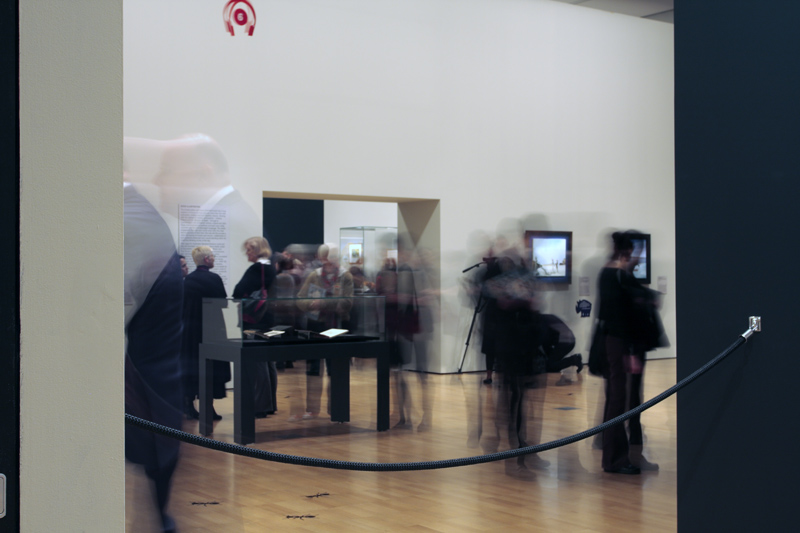
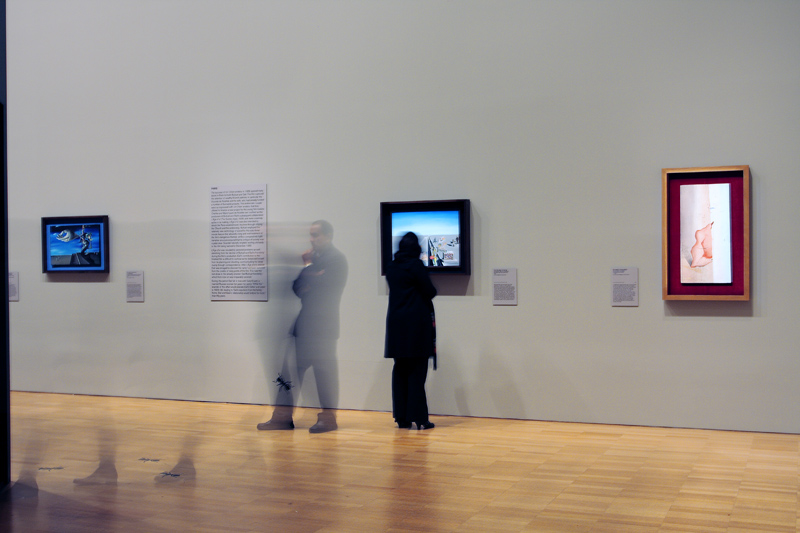
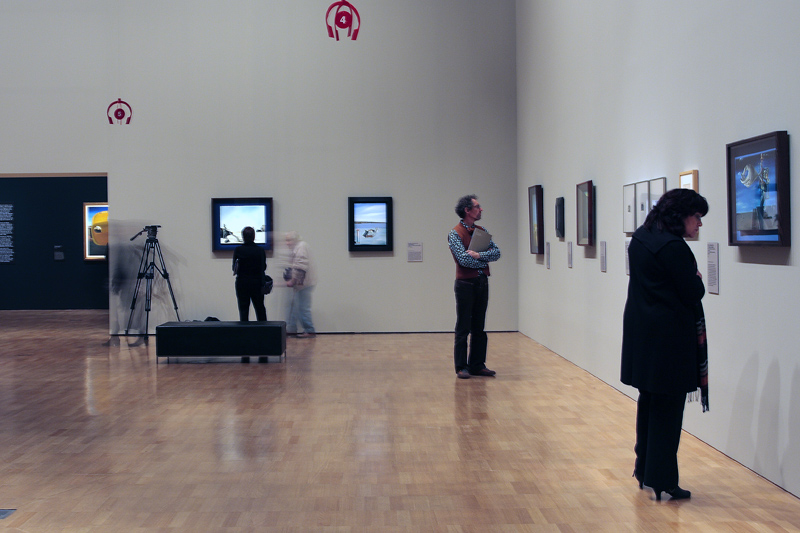
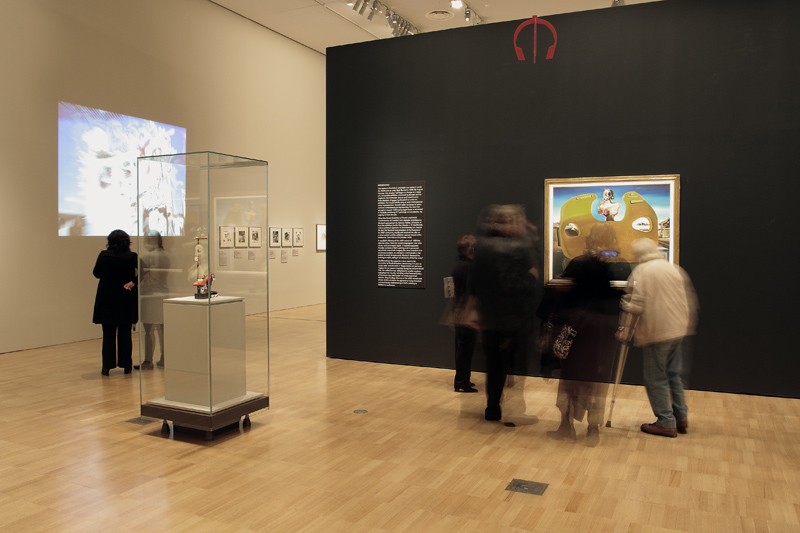
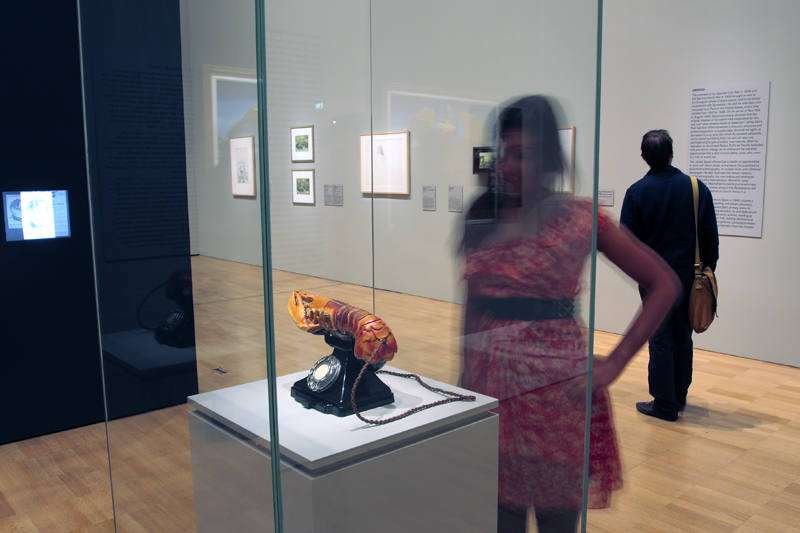
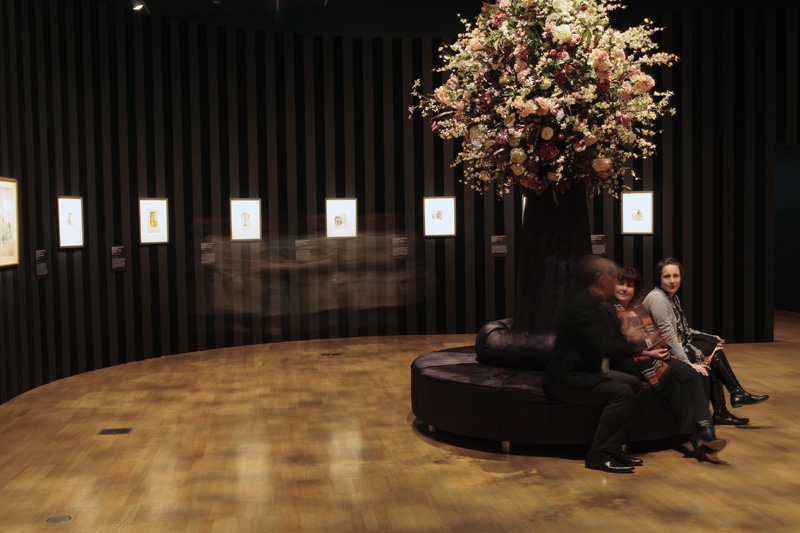
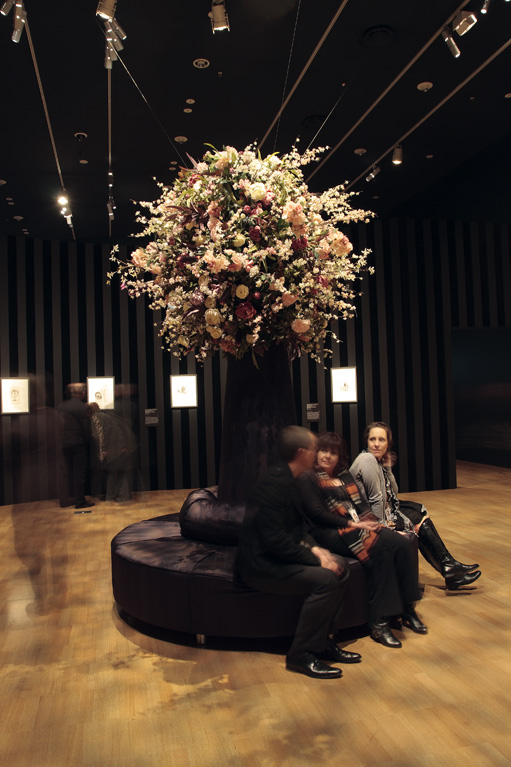
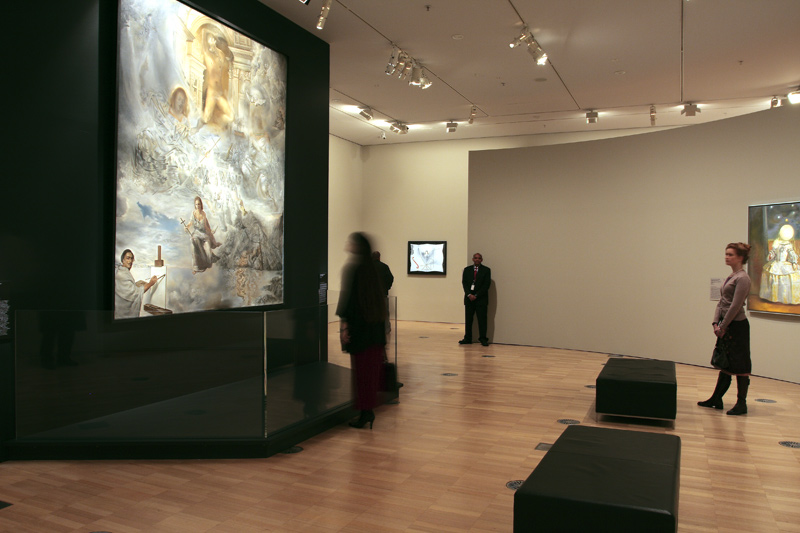
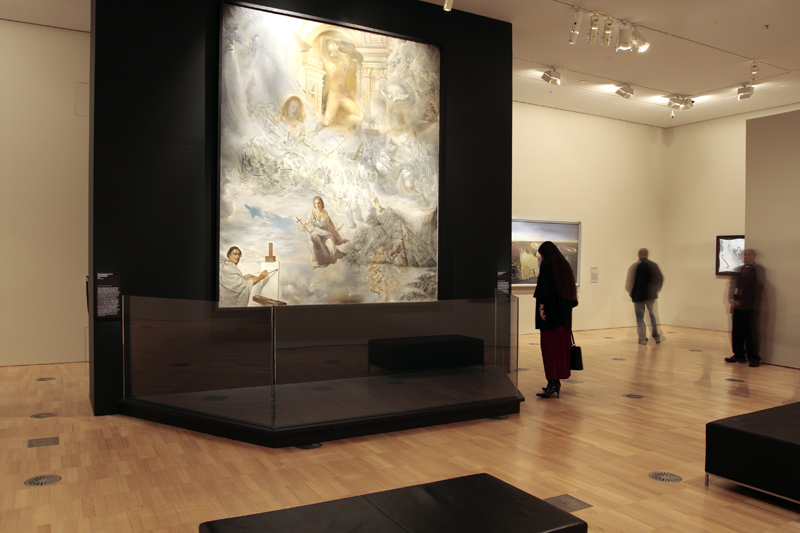
Exhibition: ‘Surreal Encounters: Collecting the Marvellous: Works from the Collections of Roland Penrose, Edward James, Gabrielle Keiller and Ulla and Heiner Pietzsch’ at the Scottish National Gallery of Modern Art, Edinburgh

Exhibition dates: 4th June – 11th September, 2016

Curator: Keith Hartley


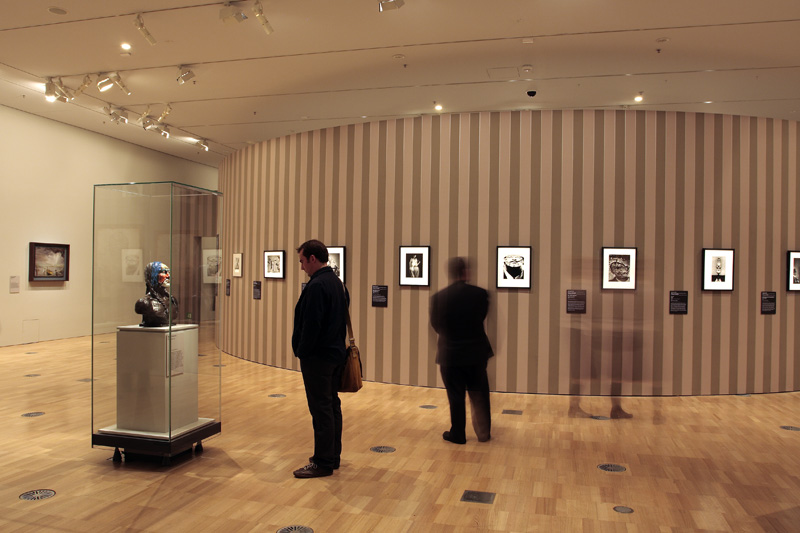
Marcus Bunyan (Australian, b. 1958) 'Self-portrait with gryphon and Joan Miro (Head of a Catalan Peasant) tattoo' 1998


Marcus Bunyan (Australian, b. 1958)
Self-portrait with gryphon and Joan Miró (Head of a Catalan Peasant) tattoo, both by Alex Binnie, London
1998


I have the five elements in tattoos. In the Head of a Catalan Peasant by Joan Miró featured in the posting, the red hat – in the form of a triangle – signifies ‘fire’ in Western occult mythology.


“Surrealism is not a movement. It is a latent state of mind perceivable through the powers of dream and nightmare.”

~ Salvador Dalí

 
“As beautiful as the chance encounter of a sewing machine and an umbrella on an operating table.”

~ Comte de Lautréamont

 
“A constant human error: to believe in an end to one’s fantasies. Our daydreams are the measure of our unreachable truth. The secret of all things lies in the emptiness of the formula that guard them.”

~ Floriano Martins


Many thankx to the Scottish National Gallery of Modern Art for allowing me to publish the art work in the posting. Please click on the photographs for a larger version of the image.


Joan Miró (Spanish, 1893-1983) 'Tête de Paysan Catalan' [Head of a Catalan Peasant] 1925 from the exhibition 'Surreal Encounters: Collecting the Marvellous: Works from the Collections of Roland Penrose, Edward James, Gabrielle Keiller and Ulla and Heiner Pietzsch' at the Scottish National Gallery of Modern Art, Edinburgh, June-  Sept, 2016


Joan Miró (Spanish, 1893-1983)
Tête de Paysan Catalan [Head of a Catalan Peasant]
1925
Oil on canvas
92.4 x 73cm
Collection: Scottish National Gallery of Modern Art
Purchased jointly with Tate, with the assistance of the Art Fund 1999


Francis Picabia (French, 1879-1953) 'Fille née sans mère' [Girl Born without a Mother] c. 1916-1917 from the Collections of Roland Penrose, Edward James, Gabrielle Keiller and Ulla and Heiner Pietzsch' at the Scottish National Gallery of Modern Art, Edinburgh, June-  Sept, 2016


Francis Picabia (French, 1879-1953)
Fille née sans mère [Girl Born without a Mother]
c. 1916-1917
Gouache and metallic paint on printed paper
50 x 65cm
Collection: Scottish National Gallery of Modern Art, purchased 1990


René Magritte (Belgian, 1898-1967) 'Au seuil de la liberté' (On the Threshold of Liberty) 1930


René Magritte (Belgian, 1898-1967)
Au seuil de la liberté (On the Threshold of Liberty)
1930
Oil on canvas
114 x 146cm
Collection: Museum Boijmans Van Beuningen, Rotterdam (Formerly collection of E. James), purchased 1966


André Masson (French, 1896-1987) 'Massacre' 1931


André Masson (French, 1896-1987)
Massacre
1931
Oil on canvas
Collection: Hamburger Kunsthalle, Hamburg/ Pietzsche Collection


Max Ernst (German, 1891-1976) 'La Joie de vivre' [The Joy of Life] 1936


Max Ernst (German, 1891-1976)
La Joie de vivre [The Joy of Life]
1936
Oil on canvas
73.5 x 92.5cm
Collection: National Galleries of Scotland
Purchased with the assistance of the Heritage Lottery Fund and the Art Fund 1995


Max Ernst (German, 1891-1976) 'The Fireside Angel' (The Triumph of Surrealism) 1937


Max Ernst (German, 1891-1976)
The Fireside Angel (The Triumph of Surrealism)
L’ange du foyer (Le triomphe du surréalisme)
1937
Oil on canvas
114 cm x 146cm


Dorothea Tanning (American, 1910-2012) 'Eine Kleine Nachtmusik' [A Little Night Music] 1943


Dorothea Tanning (American, 1910-2012)
Eine Kleine Nachtmusik [A Little Night Music]
1943
Oil on canvas
40.7 x 61cm
Collection: Tate (formerly collection of R. Penrose)
Purchased with assistance from the Art Fund and the American Fund for the Tate Gallery 1997


Apart from three weeks she spent at the Chicago Academy of Fine Art in 1930, Tanning was a self-taught artist. The surreal imagery of her paintings from the 1940s and her close friendships with artists and writers of the Surrealist Movement have led many to regard Tanning as a Surrealist painter, yet she developed her own individual style over the course of an artistic career that spanned six decades.

Tanning’s early works – paintings such as Birthday and Eine kleine Nachtmusik (1943, Tate Modern, London) – were precise figurative renderings of dream-like situations. Like other Surrealist painters, she was meticulous in her attention to details and in building up surfaces with carefully muted brushstrokes. Through the late 1940s, she continued to paint depictions of unreal scenes, some of which combined erotic subjects with enigmatic symbols and desolate space. During this period she formed enduring friendships with, among others, Marcel Duchamp, Joseph Cornell, and John Cage; designed sets and costumes for several of George Balanchine’s ballets, including The Night Shadow (1945) at the Metropolitan Opera House; and appeared in two of Hans Richter’s avant-garde films.

Over the next decade, Tanning’s painting evolved, becoming less explicit and more suggestive. Now working in Paris and Huismes, France, she began to move away from Surrealism and develop her own style. During the mid-1950s, her work radically changed and her images became increasingly fragmented and prismatic, exemplified in works such as Insomnias (1957, Moderna Museet, Stockholm). As she explains, “Around 1955 my canvases literally splintered… I broke the mirror, you might say.”

Text from the Wikipedia website


Marcel Duchamp (French, 1887-1968) 'La Boîte-en-valise (Box in a Suitcase) 1935-1941


Marcel Duchamp (French, 1887-1968)
La Boîte-en-valise (Box in a Suitcase)
1935-1941
Sculpture, leather-covered case containing miniature replicas and photographs of Duchamp’s works
10 x 38 x 40.5cm
Collection: Scottish National Gallery of Modern Art, presented anonymously 1989


Paul Delvaux (Belgian, 1897-1994) 'L'Appel de la Nuit (The Call of the Night)' 1938


Paul Delvaux (Belgian, 1897-1994)
L’Appel de la Nuit (The Call of the Night)
1938
Oil on canvas
110 x 145cm
Collection: Scottish National Gallery of Modern Art
Purchased with the support of the Heritage Lottery Fund and the Art Fund 1995


Delvaux’s paintings of the late 1920s and early 1930s, which feature nudes in landscapes, are strongly influenced by such Flemish Expressionists as Constant Permeke and Gustave De Smet. A change of style around 1933 reflects the influence of the metaphysical art of Giorgio de Chirico, which he had first encountered in 1926 or 1927. In the early 1930s Delvaux found further inspiration in visits to the Brussels Fair, where the Spitzner Museum, a museum of medical curiosities, maintained a booth in which skeletons and a mechanical Venus figure were displayed in a window with red velvet curtains. This spectacle captivated Delvaux, supplying him with motifs that would appear throughout his subsequent work. In the mid-1930s he also began to adopt some of the motifs of his fellow Belgian René Magritte, as well as that painter’s deadpan style in rendering the most unexpected juxtapositions of otherwise ordinary objects.

Delvaux acknowledged his influences, saying of de Chirico, “with him I realised what was possible, the climate that had to be developed, the climate of silent streets with shadows of people who can’t be seen, I’ve never asked myself if it’s surrealist or not.” Although Delvaux associated for a period with the Belgian surrealist group, he did not consider himself “a Surrealist in the scholastic sense of the word.” As Marc Rombaut has written of the artist: “Delvaux … always maintained an intimate and privileged relationship to his childhood, which is the underlying motivation for his work and always manages to surface there. This ‘childhood,’ existing within him, led him to the poetic dimension in art.”

The paintings Delvaux became famous for usually feature numbers of nude women who stare as if hypnotised, gesturing mysteriously, sometimes reclining incongruously in a train station or wandering through classical buildings. Sometimes they are accompanied by skeletons, men in bowler hats, or puzzled scientists drawn from the stories of Jules Verne. Delvaux would repeat variations on these themes for the rest of his long life…

Text from the Wikipedia website


Photograph album: International Surrealist Exhibition, London 1936, made 1936-1939 Images taken by Chancery. Images titled by Roland Penrose

Photograph album: International Surrealist Exhibition, London 1936, made 1936-1939 Images taken by Chancery. Images titled by Roland Penrose


Photograph album: International Surrealist Exhibition, London 1936
Made 1936-1939
Images taken by Chancery. Images titled by Roland Penrose
32.00 x 26.00cm
Collection: Scottish National Gallery of Modern Art
Photo: Antonio Reeve


Salvador Dalí (Spanish, 1904-1989) 'Mae West Lips Sofa' 1937-1938


Salvador Dalí (Spanish, 1904-1989)
Mae West Lips Sofa
1937-1938
Wood, wool
92 x 215 x 66cm
Museum Boijmans Van Beuningen, Rotterdam © Fundacion Gala – Salvador Dalí, Beeldrecht Amsterdam 2007.
© Salvador Dali, Fundació Gala-Salvador Dalí, DACS, 2015


Salvador Dalí (Spanish, 1904-1989) 'Couple aux têtes pleines de nuages' [Couple with their Heads Full of Clouds] 1936


Salvador Dalí (Spanish, 1904-1989)
Couple aux têtes pleines de nuages [Couple with their Heads Full of Clouds]
1936
Oil on canvas
Left figure: 82.5 x 62.5cm; right figure: 92.5 x 69.5cm
Collection: Museum Boijmans Van Beuningen, Rotterdam (Formerly collection of E. James)
Purchased with the support of The Rembrandt Association (Vereniging Rembrandt) 1979
© Salvador Dali, Fundació Gala-Salvador Dalí, DACS, 2015


Salvador Dalí (Spanish, 1904-1989) 'Impressions d'Afrique' (Impressions of Africa) 1938


Salvador Dalí (Spanish, 1904-1989)
Impressions d’Afrique (Impressions of Africa)
1938
Oil on canvas
91.5 x 117.5cm
Collection: Museum Boijmans Van Beuningen, Rotterdam (Formerly collection of E. James)
Purchased with the support of The Rembrandt Association (Vereniging Rembrandt), Prins Bernhard Fonds, Erasmusstichting, Stichting Bevordering van Volkskracht Rotterdam and Stichting Museum Boijmans Van Beuningen 1979
© Salvador Dali, Fundació Gala-Salvador Dalí, DACS, 2015


Leonora Carrington (Mexican born Britain, 1917-2011) 'The House Opposite' 1945


Leonora Carrington (Mexican born Britain, 1917-2011)
The House Opposite
1945
Tempera on board
33 x 82cm
West Dean College, part of the Edward James Foundation


“I painted for myself… I never believed anyone would exhibit or buy my work.”

Leonora Carrington was not interested in the writings of Sigmund Freud, as were other Surrealists in the movement. She instead focused on magical realism and alchemy and used autobiographical detail and symbolism as the subjects of her paintings. Carrington was interested in presenting female sexuality as she experienced it, rather than as that of male surrealists’ characterisation of female sexuality. Carrington’s work of the 1940s is focused on the underlying theme of women’s role in the creative process.

Text from the Wikipedia website


Masterpieces from four of the finest collections of Dada and Surrealist art ever assembled will be brought together in this summer’s major exhibition at the Scottish National Gallery of Modern Art (SNGMA). Surreal Encounters: Collecting the Marvellous will explore the passions and obsessions that led to the creation of four very different collections, which are bound together by a web of fascinating links and connections, and united by the extraordinary quality of the works they comprise.

Surrealism was one of the most radical movements of the twentieth century, which challenged conventions through the exploration of the subconscious mind, the world of dreams and the laws of chance. Emerging from the chaotic creativity of Dada (itself a powerful rejection of traditional values triggered by the horrors of the First World War) its influence on our wider culture remains potent almost a century after it first appeared in Paris in the 1920s. World-famous works by Salvador Dalí, Joan Miró, René Magritte, Leonora Carrington, Giorgio de Chirico, André Breton, Man Ray, Pablo Picasso, Max Ernst, Dorothea Tanning, Yves Tanguy, Leonor Fini, Marcel Duchamp and Paul Delvaux will be among the 400 paintings, sculptures, prints, drawings, artist books and archival materials, to feature in Surreal Encounters. The exhibition has been jointly organised by the SNGMA, the Museum Boijmans Van Beuningen, Rotterdam and the Hamburger Kunsthalle, where it will be shown following its only UK showing in Edinburgh.

Dalí’s The Great Paranoiac (1936), Lobster Telephone (1938) and Impressions of Africa (1938); de Chirico’s Two Sisters (1915); Ernst’s Pietà or Revolution by Night (1923) and Dark Forest and Bird (1927), and Magritte’s The Magician’s Accomplice (1926) and Not to be Reproduced (1937) will be among the highlights of this exceptional overview of Surrealist art. The exhibition will also tell the personal stories of the fascinating individuals who pursued these works with such dedication and discernment.

The first of these – the poet, publisher and patron of the arts, Edward James (1907-84) and the artist, biographer and exhibition organiser, Roland Penrose (1900-84) – acquired the majority of the works in their collections while the Surrealist movement was at its height in the interwar years, their choices informed by close associations and friendships with many of the artists. James was an important supporter of Salvador Dalí and René Magritte in particular, while Penrose was first introduced to Surrealism through a friendship with Max Ernst. The stories behind James’s commissioning of works such as Dalí’s famous Mae West Lips Sofa (1938) and Magritte’s The Red Model III (1937) and the role of Penrose in the production of Ernst’s seminal collage novel Une Semaine de Bonté (1934) will demonstrate how significant these relationships were for both the artists and the collectors. Other celebrated works on show that formed part of these two profoundly important collections include Tanning’s Eine Kleine Nachtmusik (1943); Magritte’s On the Threshold of Liberty (1937); Miró’s Head of a Catalan Peasant (1925); and The House Opposite (c. 1945) by Leonora Carrington

While the Penrose and James collections are now largely dispersed, the extraordinary collection of Dada and Surrealist art put together by Gabrielle Keiller (1908-95), was bequeathed in its entirety to the SNGMA on her death in 1995, the largest benefaction in the institution’s history. Keiller devoted herself to this area following a visit to the Venice home of the celebrated American art lover Peggy Guggenheim in 1960, which proved to be a pivotal moment in her life. She went on to acquire outstanding works such as Marcel Duchamp’s La Boîte-en-Valise (1935-41), Alberto Giacometti’s Disagreeable Object, to be Thrown Away (1931) and Girl Born without a Mother (c. 1916-17) by Francis Picabia. Recognizing the fundamental significance of Surrealism’s literary aspect, Keiller also worked assiduously to create a magnificent library and archive, full of rare books, periodicals, manifestos and manuscripts, which makes the SNGMA one of the world’s foremost centres for the study of the movement.

The exhibition will be brought up to date by the inclusion of works from the collection of Ulla and Heiner Pietzsch, who have spent more than 40 years in their quest to build up an historically balanced collection of Surrealism, which they have recently presented to the city of Berlin, where they still live. The collection features many outstanding paintings by Francis Picabia, Pablo Picasso, André Masson, Leonor Fini, Ernst, Tanguy, Magritte and Miró; sculptures by Hans Arp and Hans Bellmer; and works by André Breton, the leader of the Surrealists. Highlights include Masson’s Massacre (1931), Ernst’s Head of ‘The Fireside Angel’ (c. 1937), Picasso’s Arabesques Woman (1931) and Arp’s sculpture Assis (Seated) (1937).

The exhibition’s curator in Edinburgh, Keith Hartley, who is Deputy Director of the SNGMA, has said, “Surrealist art has captured the public imagination like perhaps no other movement of modern art. The very word ‘surreal’ has become a by-word to describe anything that is wonderfully strange, akin to what André Breton, the chief theorist of Surrealism, called ‘the marvellous’. This exhibition offers an exceptional opportunity to enjoy art that is full of ‘the marvellous’. It brings together many important works which have rarely been seen in public, by a wide range of Surrealist artists, and creates some very exciting new juxtapositions.”

Press release from SNGMA


Pablo Picasso (Spanish, 1881-1973) 'Tête' [Head] 1913


Pablo Picasso (Spanish, 1881-1973)
Tête [Head]
1913
Drawing, papiers collés with black chalk on card
43.5 x 33cm
Collection: Scottish National Gallery of Modern Art
Purchased with assistance from the Heritage Lottery Fund and the Art Fund 1995
Photo: Antonia Reeve
© DACS / Estate of Pablo Picasso


Max Ernst (German, 1891-1976) 'Pieta or Revolution by Night' 1923


Max Ernst (German, 1891-1976)
Pieta or Revolution by Night
1923
Oil on canvas


René Magritte (Belgian, 1898-1967) 'The Magician's Accomplice' 1926


René Magritte (Belgian, 1898-1967)
The Magician’s Accomplice
1926
Oil on canvas
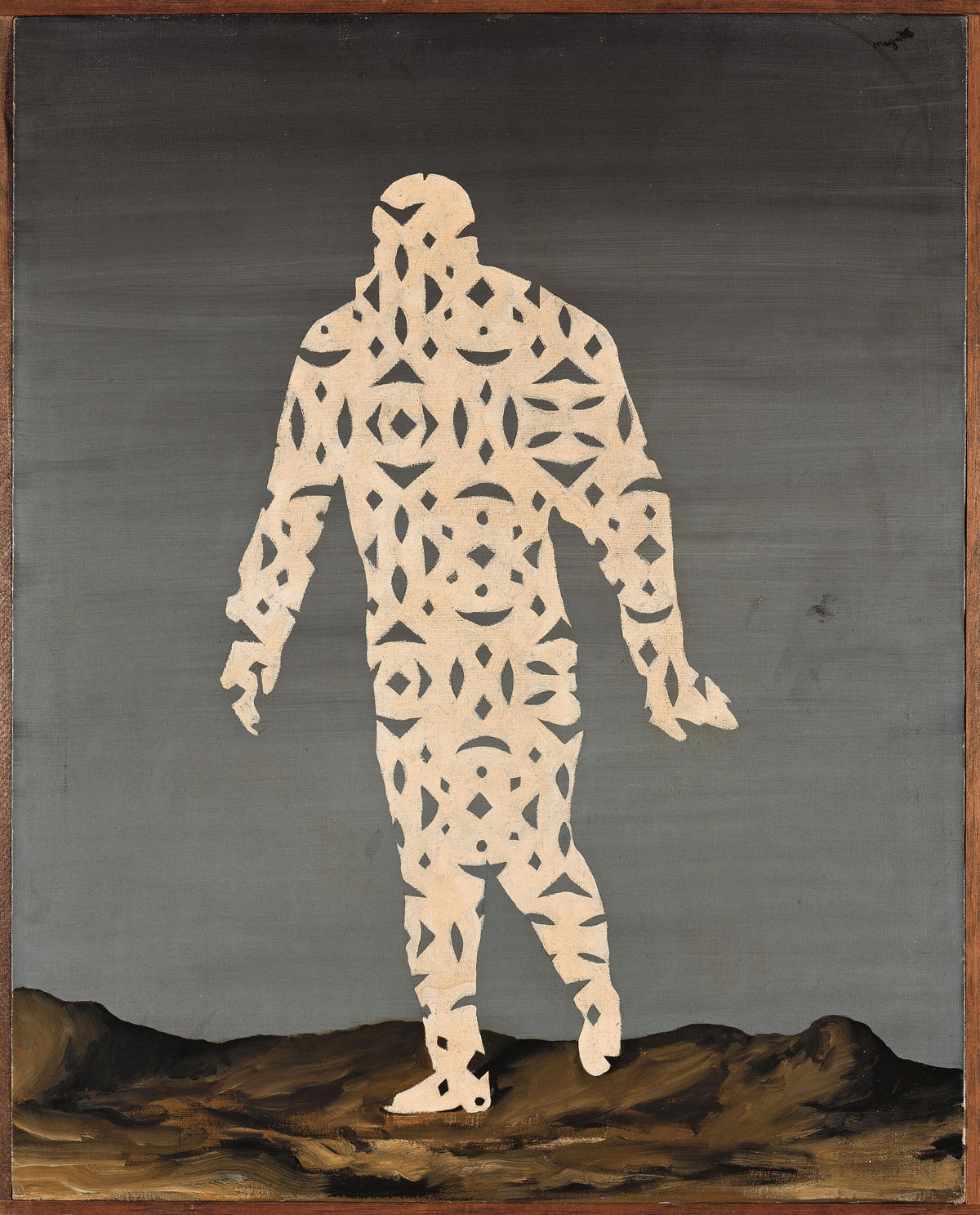
 

René Magritte (Belgian, 1898-1967) 'L’Esprit comique (The Comic Spirit)' 1928


René Magritte (Belgian, 1898-1967)
L’Esprit comique (The Comic Spirit)
1928
Oil on canvas
75 x 60cm
Collection: Hamburger Kunsthalle, Hamburg/ Pietzsche Collection
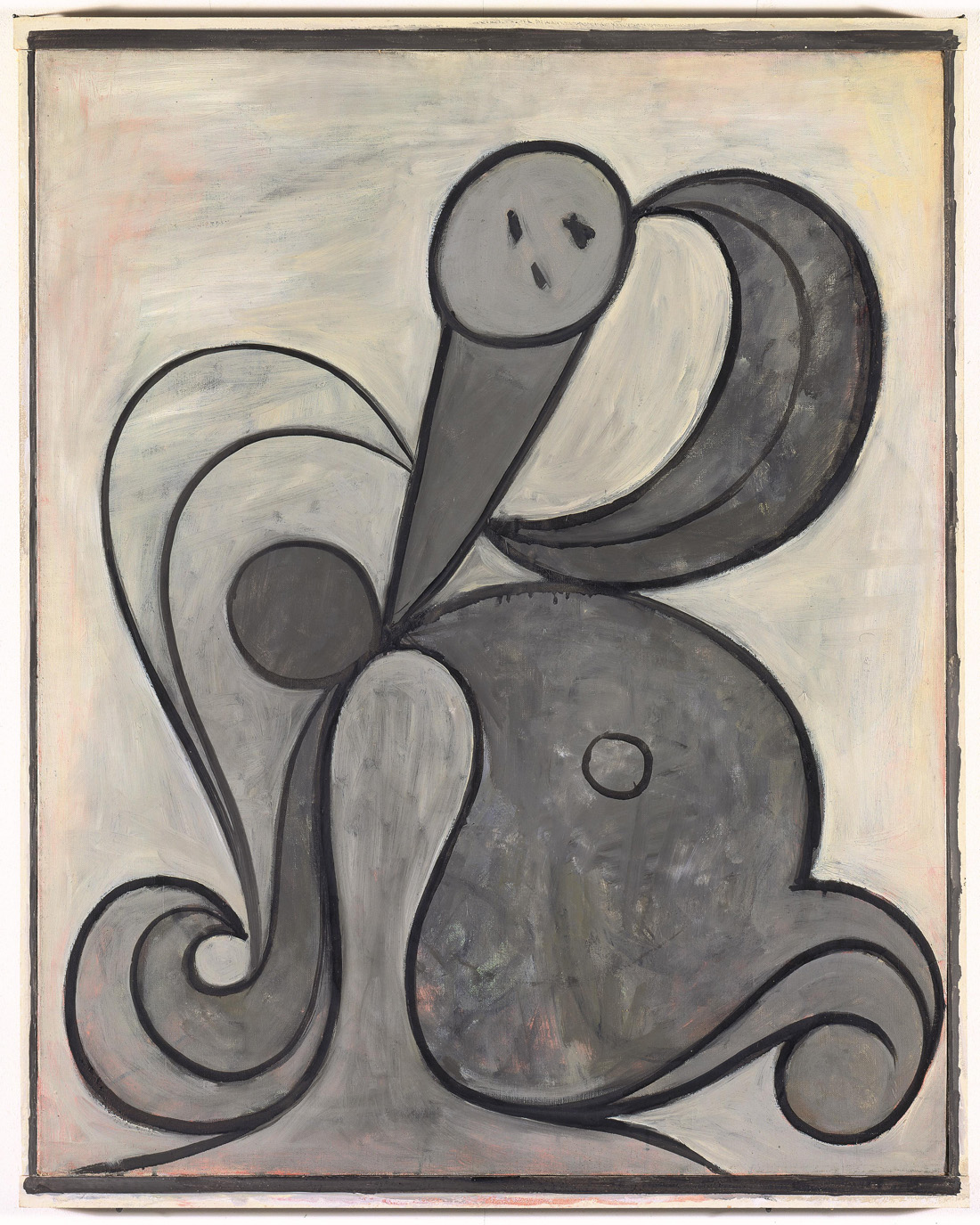
 

Pablo Picasso (Spanish, 1881-1973) 'Femme aux arabesques (Arabesque Woman)' 1931


Pablo Picasso (Spanish, 1881-1973)
Femme aux arabesques (Arabesque Woman)
1931
Oil on canvas, 100 x 81cm
Hamburger Kunsthalle, Hamburg/ Pietzsche Collection


Max Ernst (German, 1891-1976) 'Jeune homme intrigué par le vol d’une mouche non-euclidienne' [Young Man Intrigued by the Flight of a Non-Euclidean Fly] 1942–1947


Max Ernst (German, 1891-1976)
Jeune homme intrigué par le vol d’une mouche non-euclidienne [Young Man Intrigued by the Flight of a Non-Euclidean Fly]
1942-1947
Oil and paint on canvas
82 x 66cm
Collection: Hamburger Kunsthalle, Hamburg/ Pietzsche Collection


Max Ernst (German, 1891-1976) 'Une semaine de bonté' [A Week of Kindness] 1934

Max Ernst (German, 1891-1976) 'Une semaine de bonté' [A Week of Kindness] 1934


Max Ernst (German, 1891-1976)
Une semaine de bonté [A Week of Kindness]
1934
Collage graphic novel


Une semaine de bonté [A Week of Kindness] is a graphic novel and artist’s book by Max Ernst, first published in 1934. It comprises 182 images created by cutting up and re-organising illustrations from Victorian encyclopaedias and novels.

The 184 collages of Une semaine de bonté [A Week of Kindness] were created during the summer of 1933 while Max Ernst was staying at Vigoleno, in northern Italy. The artist took his inspiration from wood engravings, published in popular illustrated novels, natural science journals or 19th century sales catalogues. With infinite care, he cut out the images that interested him and assembled them with such precision as to bring his collage technique to a level of incomparable perfection. Without seeing the original illustrations, it is difficult to work out where Max Ernst intervened. In the end, each collage forms a series of interlinked images to produce extraordinary creatures which evolve in fascinating scenarios and create visionary worlds defying comprehension and any sense of reality.

After La Femme 100 têtes [The Woman with one Hundred Heads] (1929) and Rêve d’une petite fille qui voulut entrer au Carmel [A Little Girl dreams of taking the Veil] (1930), Une semaine de bonté was Max Ernst’s third collage-novel. Ernst had originally intended to publish it in seven volumes associating each book with a day of the week. Moreover, the title referred to the seven days in Genesis. Yet it was also an allusion to the mutual aid association ‘La semaine de la bonté’ [The Week of Kindness], founded in 1927 to promote social welfare. Paris was flooded with posters from the organisation seeking support from everyone. Like the elements making up the collages, the title was also “borrowed” by Max Ernst.

The first four publication deliveries did not, however, achieve the success that had been anticipated. The three remaining ‘days’ were therefore put together into a fifth and final book. The books came out between April and December 1934, each having been bound in a different colour: purple, green, red, blue and yellow. In the final version, two works were taken out. The edition therefore consists of only 182 collages.

Anonymous text from the Musée D’Orsay website [Online] Cited 07/09/2016. No longer available online


Yves Tanguy (French, 1900-1955) 'Sans titre, ou Composition surréaliste' (Untitled, or Surrealist Composition) 1927


Yves Tanguy (French, 1900-1955)
Sans titre, ou Composition surréaliste (Untitled, or Surrealist Composition)
1927
Oil on canvas
54.5 x 38cm
Hamburger Kunsthalle, Hamburg/ Pietzsche Collection


Tanguy’s paintings have a unique, immediately recognisable style of nonrepresentational surrealism. They show vast, abstract landscapes, mostly in a tightly limited palette of colours, only occasionally showing flashes of contrasting colour accents. Typically, these alien landscapes are populated with various abstract shapes, sometimes angular and sharp as shards of glass, sometimes with an intriguingly organic look to them, like giant amoebae suddenly turned to stone.

Text from the Wikipedia website


Dorothea Tanning (American, 1910-2012) 'Voltage' 1942


Dorothea Tanning (American, 1910-2012)
Voltage
1942
Oil on canvas
29 x 30.9cm
Collection: Hamburger Kunsthalle, Hamburg/ Pietzsche Collection


Alberto Giacometti (Italian, 1901-1966) 'Objet désagréable, à jeter' [Disagreeable Object, to be Thrown away] 1931


Alberto Giacometti (Italian, 1901-1966)
Objet désagréable, à jeter [Disagreeable Object, to be Thrown away]
1931
Wood
19.6 x 31 x 29 cm
Collection: Scottish National Gallery of Modern Art, purchased 1990
© Bridgeman Art Library
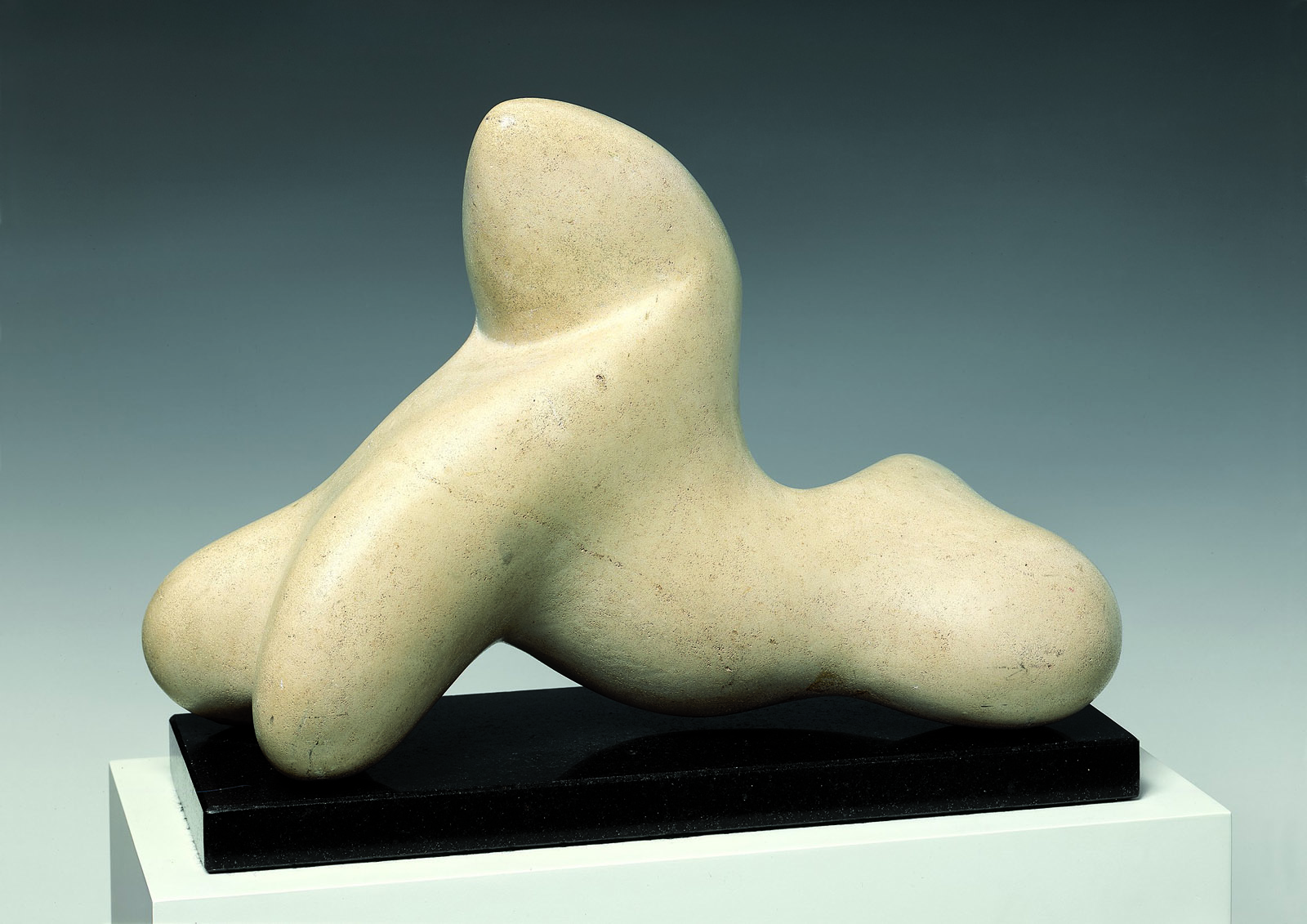
 

Jean (Hans) Arp (French-German, 1886-1996) 'Assis' (Seated) 1937


Jean (Hans) Arp (French-German, 1886-1996)
Assis (Seated)
1937
Limestone
29.5 x 44.5 x 16cm
Collection: Hamburger Kunsthalle, Hamburg/ Pietzsche Collection


Joan Miró (Spanish, 1893-1983) 'Peinture' (Painting) 1925


Joan Miró (Spanish, 1893-1983)
Peinture (Painting)
1925
Oil on canvas
130 x 97cm
Hamburger Kunsthalle, Hamburg/ Pietzsche Collection


Joan Miró (Spanish, 1893-1983) 'Peinture' 1927


Joan Miró (Spanish, 1893-1983)
Peinture [Painting]
1927
Oil on canvas
33 x 24.1 cm
Collection: National Galleries of Scotland
Bequeathed by Gabrielle Keiller 1995


René Magritte (Belgian, 1898-1967) 'Le Modèle rouge III' (The Red Model III) 1937


René Magritte (Belgian, 1898-1967)
Le Modèle rouge III (The Red Model III)
1937
Oil on canvas
206 x 158 x 5cm
Collection: Museum Boijmans Van Beuningen, Rotterdam (Formerly collection of E. James)
Purchased with the support of The Rembrandt Association (Vereniging Rembrandt), Prins Bernhard Fonds, Erasmusstichting, Stichting Bevordering van Volkskracht Rotterdam Museum Boymans-van Beuningen Foundation 1979


René Magritte (Belgian, 1898-1967) 'La reproduction interdite' (Not to be Reproduced) 1937


René Magritte (Belgian, 1898-1967)
La reproduction interdite (Not to be Reproduced)
1937
Museum Boijmans Van Beuningen, Rotterdam
© Beeldrecht Amsterdam 2007
Photographer: Studio Tromp, Rotterdam
© ADAGP, Paris and DACS, London 2015


Scottish National Gallery of Modern Art
75 Belford Road
Edinburgh EH4 3DR
Phone: 0131 624 6200

Opening hours:
Daily 10am – 6pm
Scottish National Gallery of Modern Art website

LIKE ART BLART ON FACEBOOK

Back to top

Exhibition: ‘Goya: The Portraits’ at the National Gallery, London

Exhibition dates: 7th October 2015 – 10th January 2016

Curator: Dr Xavier Bray


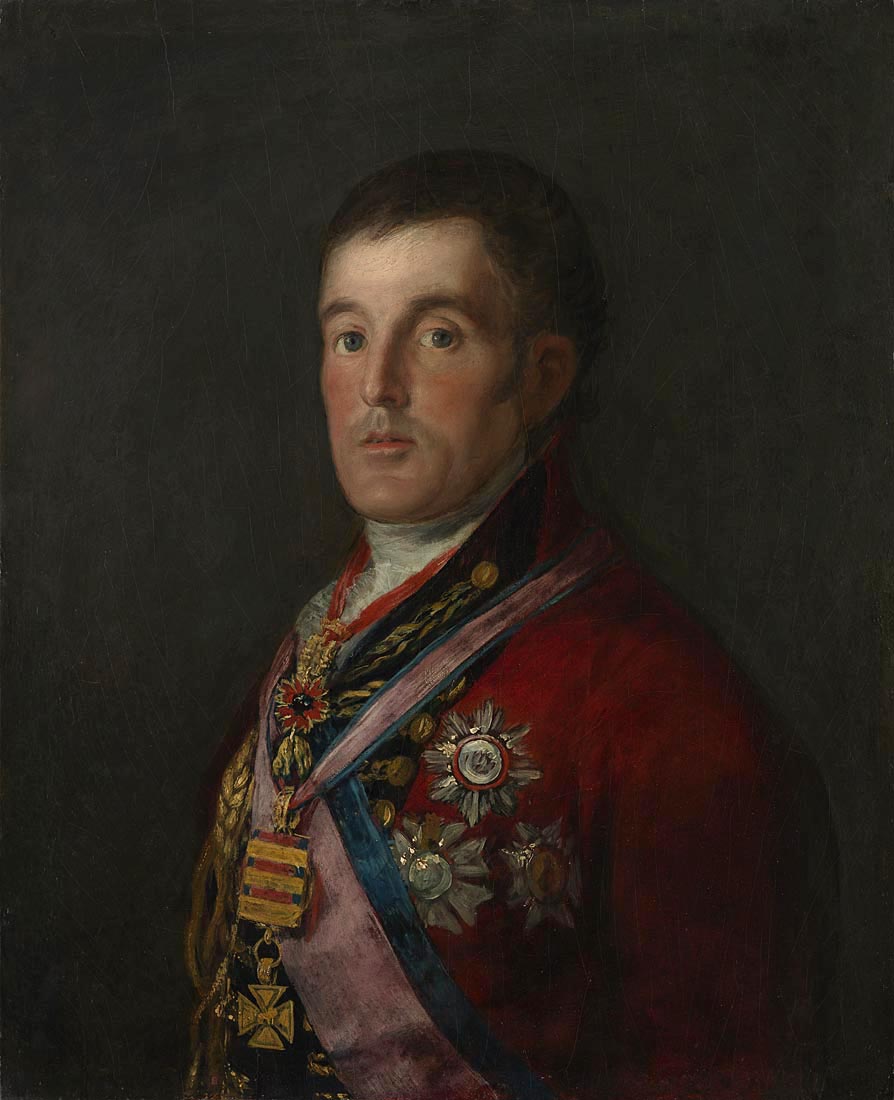
Francisco de Goya (Spanish, 1746-1828) 'The Duke of Wellington' 1812-1814


Francisco de Goya (Spanish, 1746-1828)
The Duke of Wellington
1812-1814
Oil on mahogany
64.3 x 52.4cm
© The National Gallery, London


Rushing through a dimly lit gallery I remember stumbling upon my first, larger than life, full length Goya portrait in the Louvre, a portrait of a women in a pale blue dress. It literally stopped me in my tracks, the visceral affect was so powerful. There was a certain tactility to the painting, a presence to the figure that produced this emotive response. And the light that emanated from the painting. I think my jaw dropped to the floor.

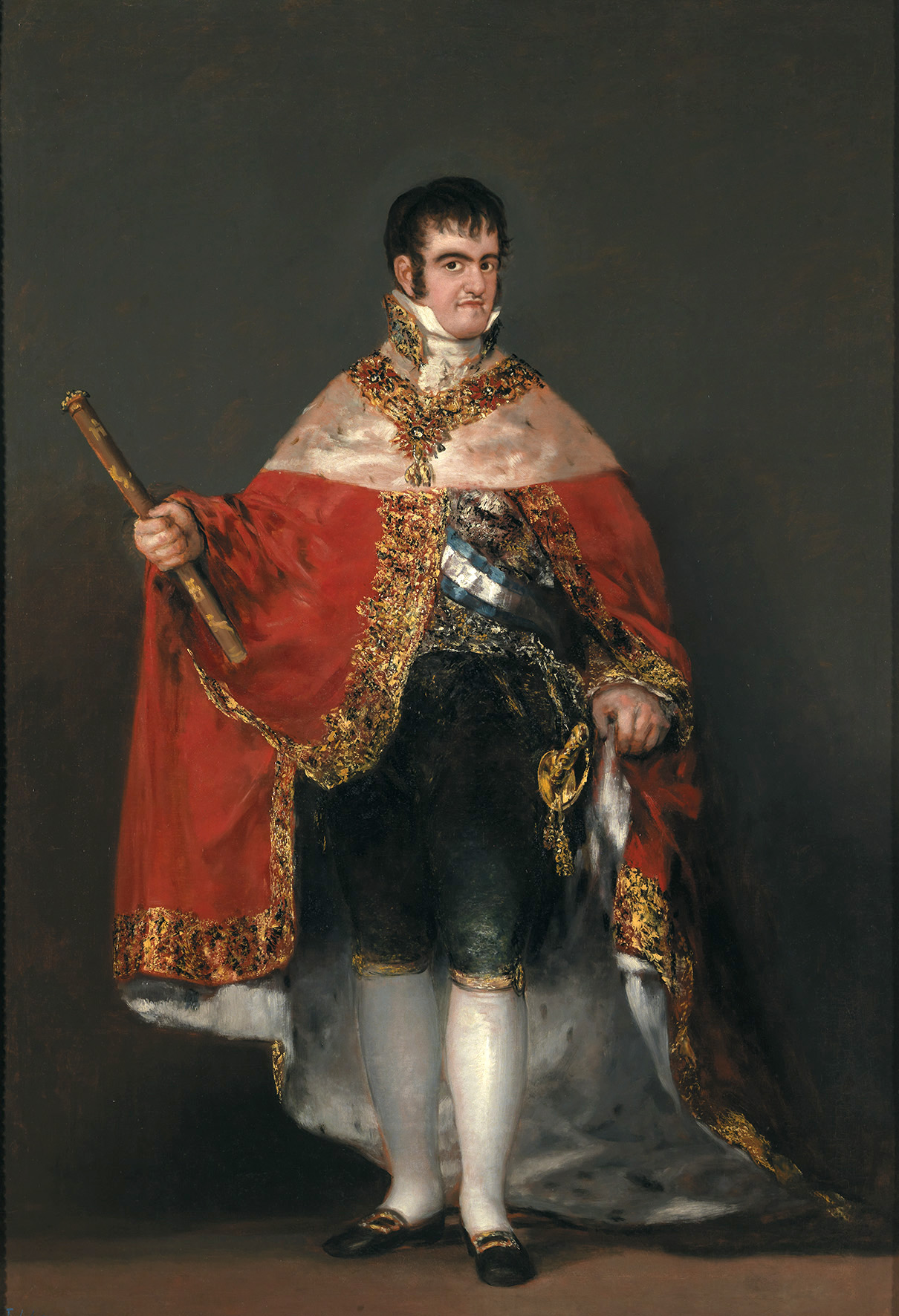
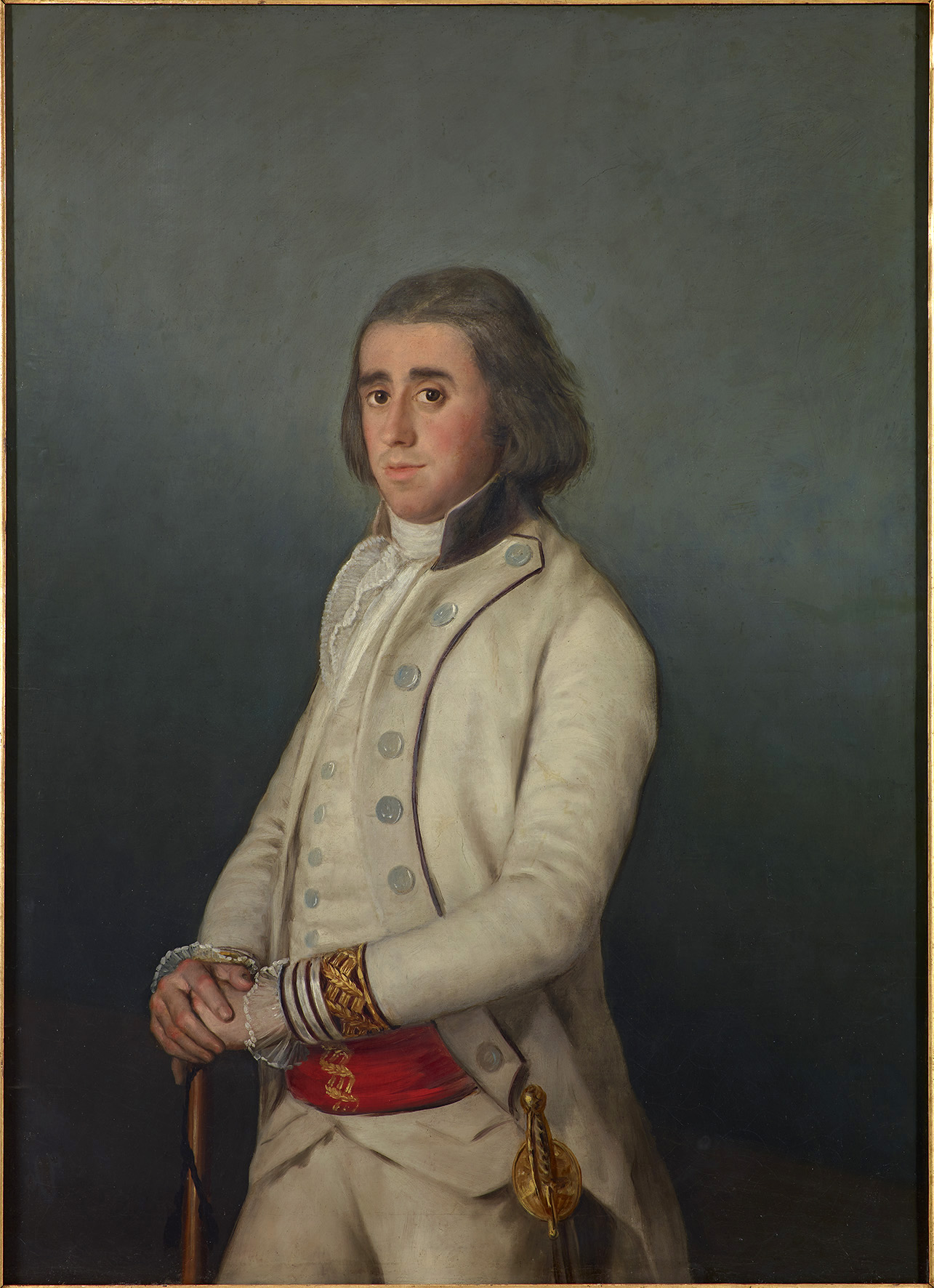
Goya can be cutting when he wants to be, as in the pompous portrait of the buffoon Ferdinand VII in Court Dress (1814-1815, below); he can be precise and reserved as in Don Valentín Bellvís de Moncada y Pizarro (around 1795, below) where the eyes are the key to the portrait; he can be strong and forthright as in the muscular portrait of Martín Zapater (1797, below); or he can be inscrutably honest Self Portrait before an Easel (1792-1795, below) and loving Mariano Goya y Goicoechea (the artist’s grandson) (1827, below). But above all, he is human.

The richness and combination of colours, the sense of space that surrounds the sitter (with their mainly contextless backgrounds and the isolation of the figure in pictorial space), their power – both personal and political – and the certain wariness, weariness and insouciance of their expressions… are just a marvel to behold. It’s as though the sitters had just stopped for a moment to ponder their lives. Almost as though they had conjured or envisaged their own visage, as if from a dream.

Dr Marcus Bunyan


Many thankx to the National Gallery, London for allowing me to publish the photographs in the posting. Please click on the photographs for a larger version of the image.


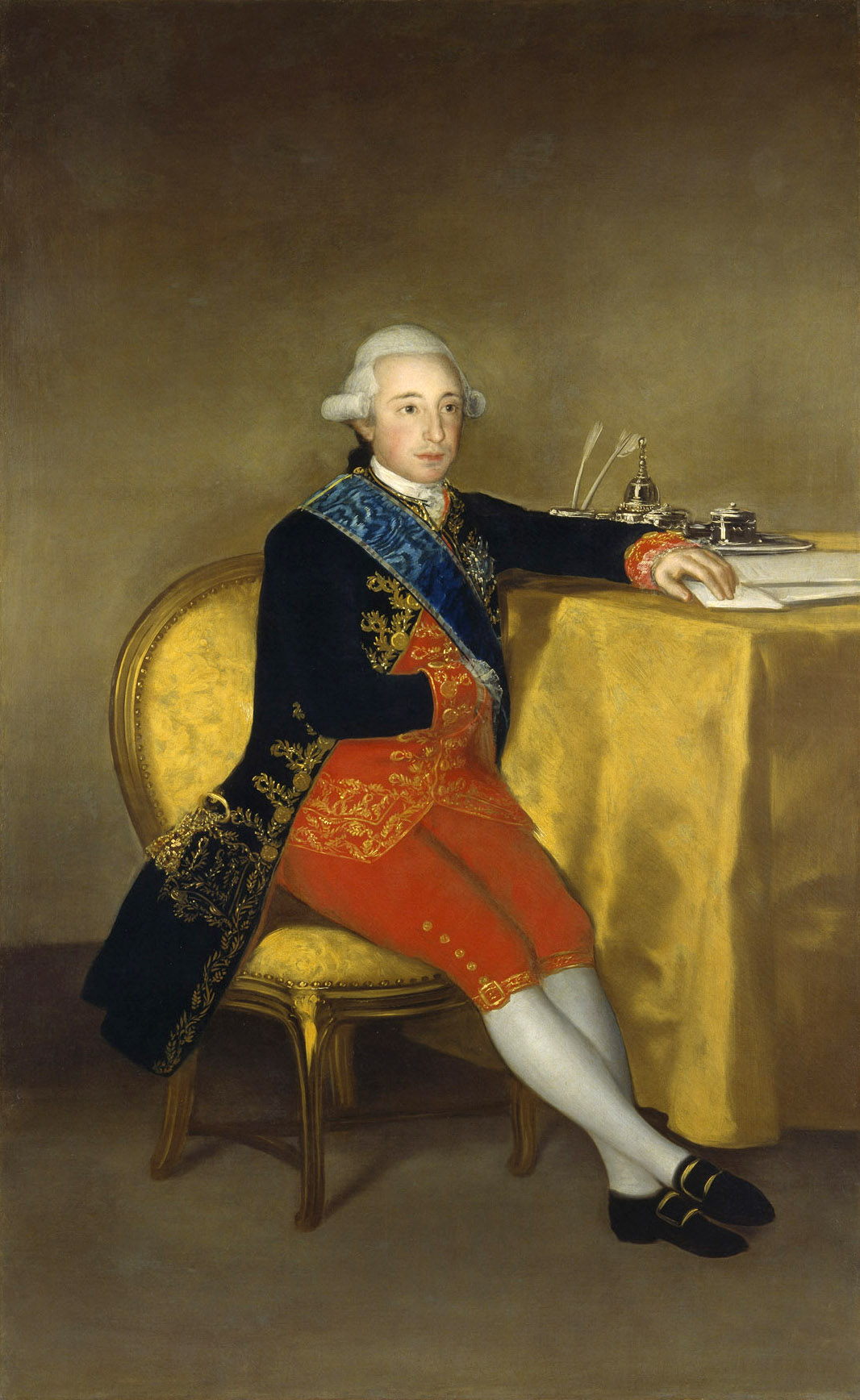
Francisco de Goya (Spanish, 1746-1828) 'The Count of Altamira' 1787


Francisco de Goya (Spanish, 1746-1828)
The Count of Altamira
1787
Oil on canvas
177 x 108cm
Colección Banco de España
© Colección Banco de España


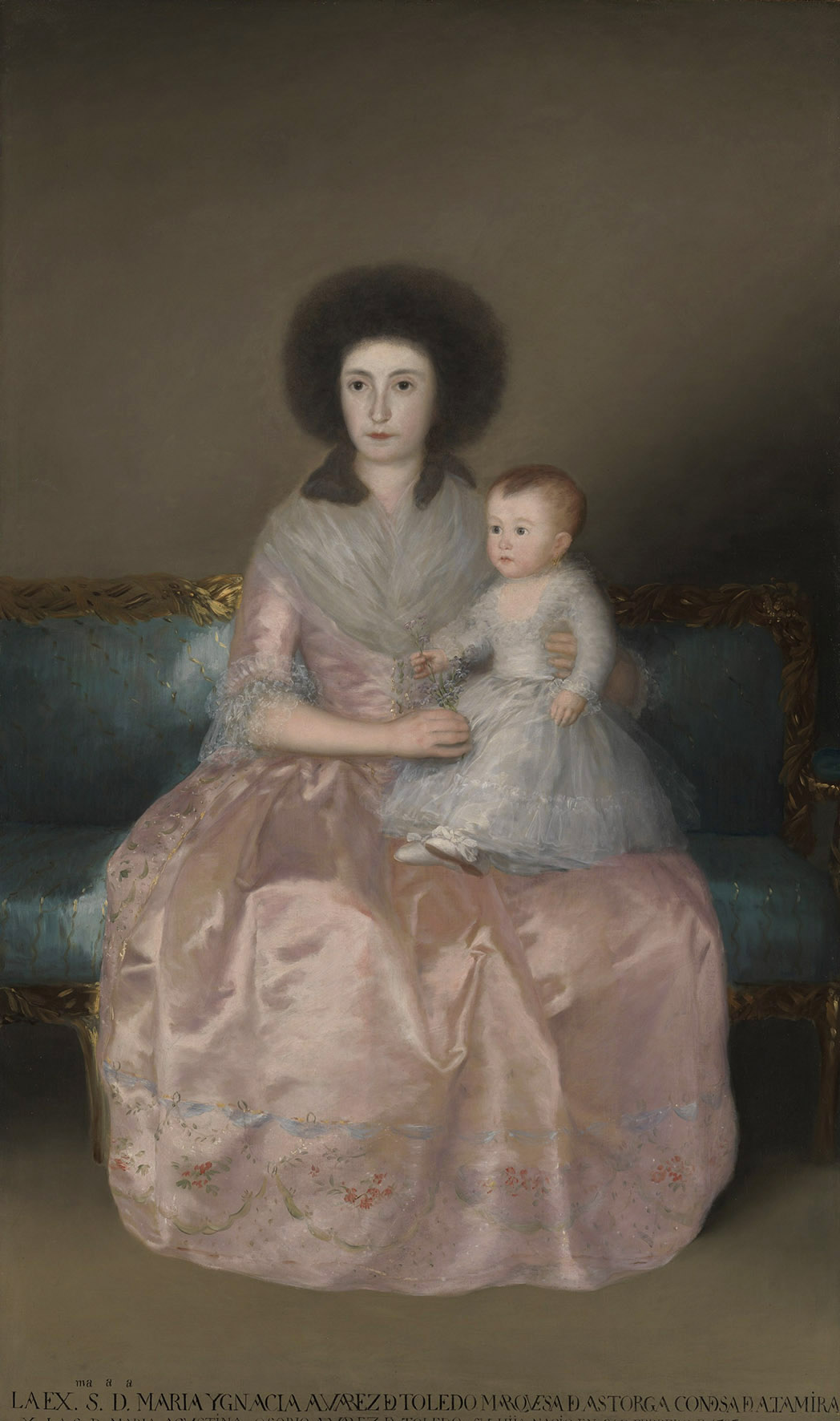
Francisco de Goya (Spanish, 1746-1828) 'Countess of Altamira with her daughter' 1787-1788


Francisco de Goya (Spanish, 1746-1828)
The Countess of Altamira and Her Daughter, María Agustina
1787-1788
Oil on canvas
195 x 115cm
Lent by The Metropolitan Museum of Art, Robert Lehman Collection, 1975
© The Metropolitan Museum of Art, New York


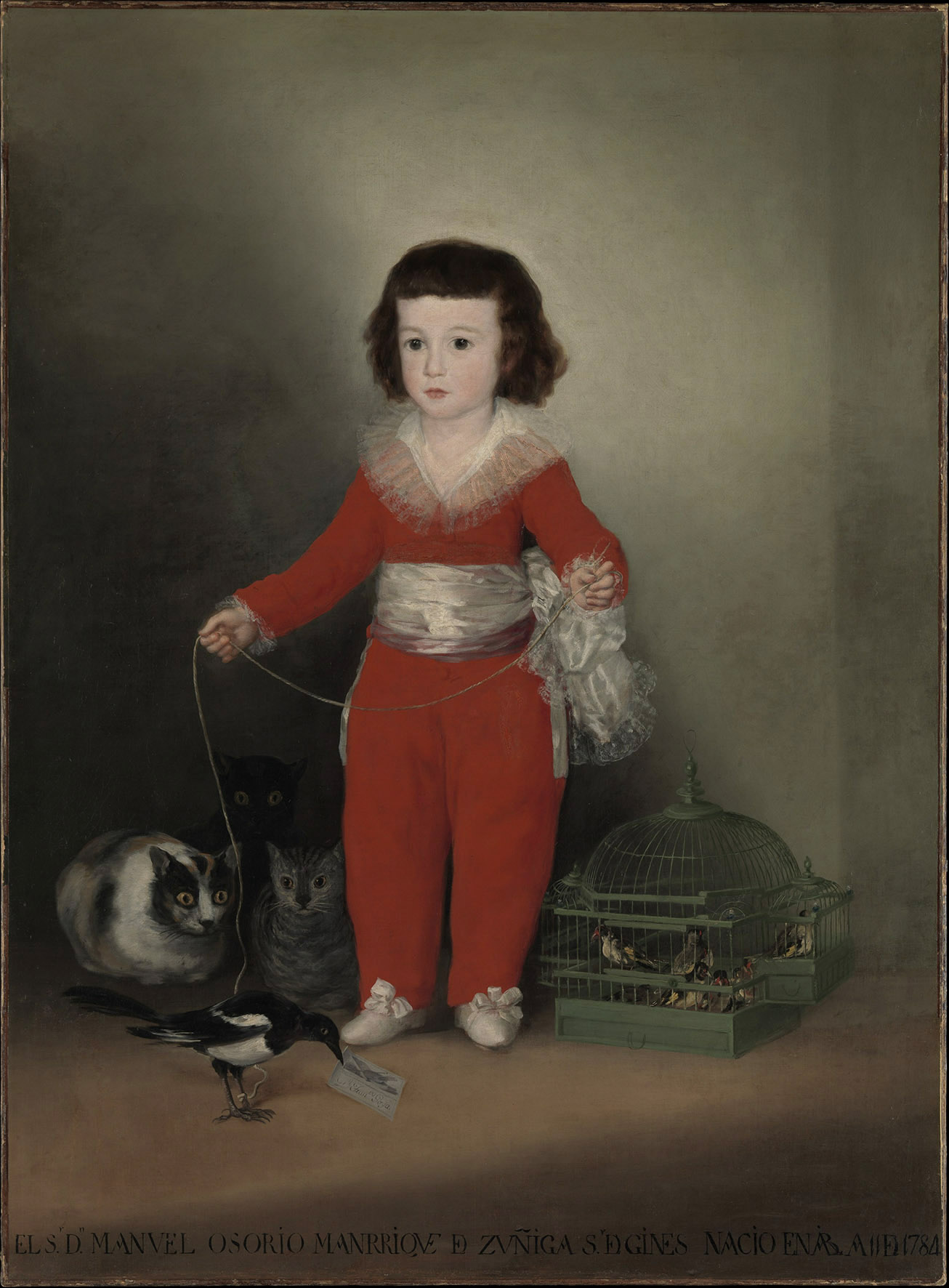
Francisco de Goya (Spanish, 1746-1828) 'Manuel Osorio Manrique de Zuñiga' 1788


Francisco de Goya (Spanish, 1746-1828)
Manuel Osorio Manrique de Zuñiga
1788
Oil on canvas
127 x 101.6cm
Lent by The Metropolitan Museum of Art, The Jules Bache Collection, 1949
© The Metropolitan Museum of Art, New York


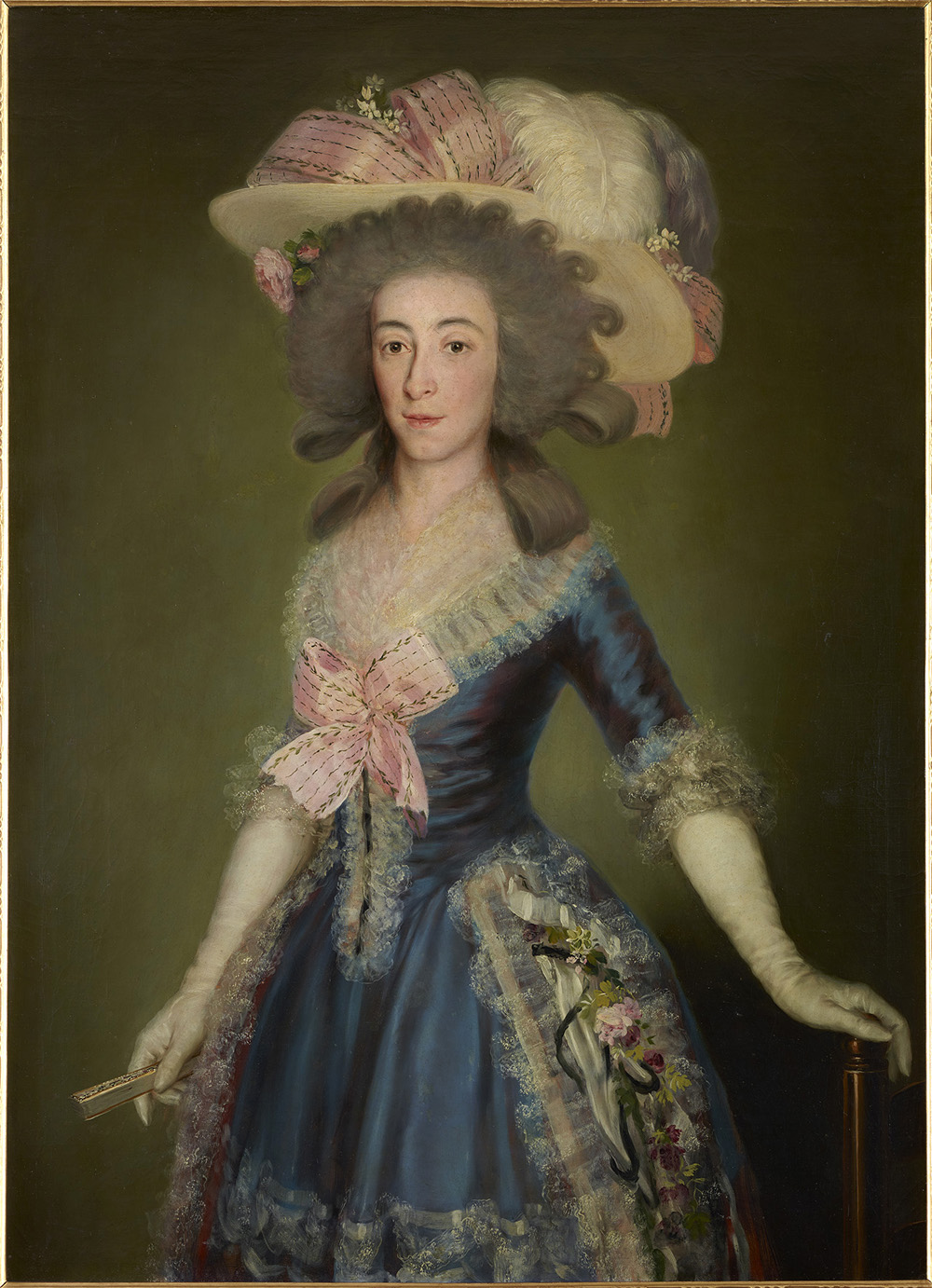
Francisco de Goya (Spanish, 1746-1828) 'Countess-Duchess of Benavente' 1785


Francisco de Goya (Spanish, 1746-1828)
The Countess-Duchess of Benavente
1785
Oil on canvas
105 × 78cm
Private Collection, Spain
© Joaquín Cortés


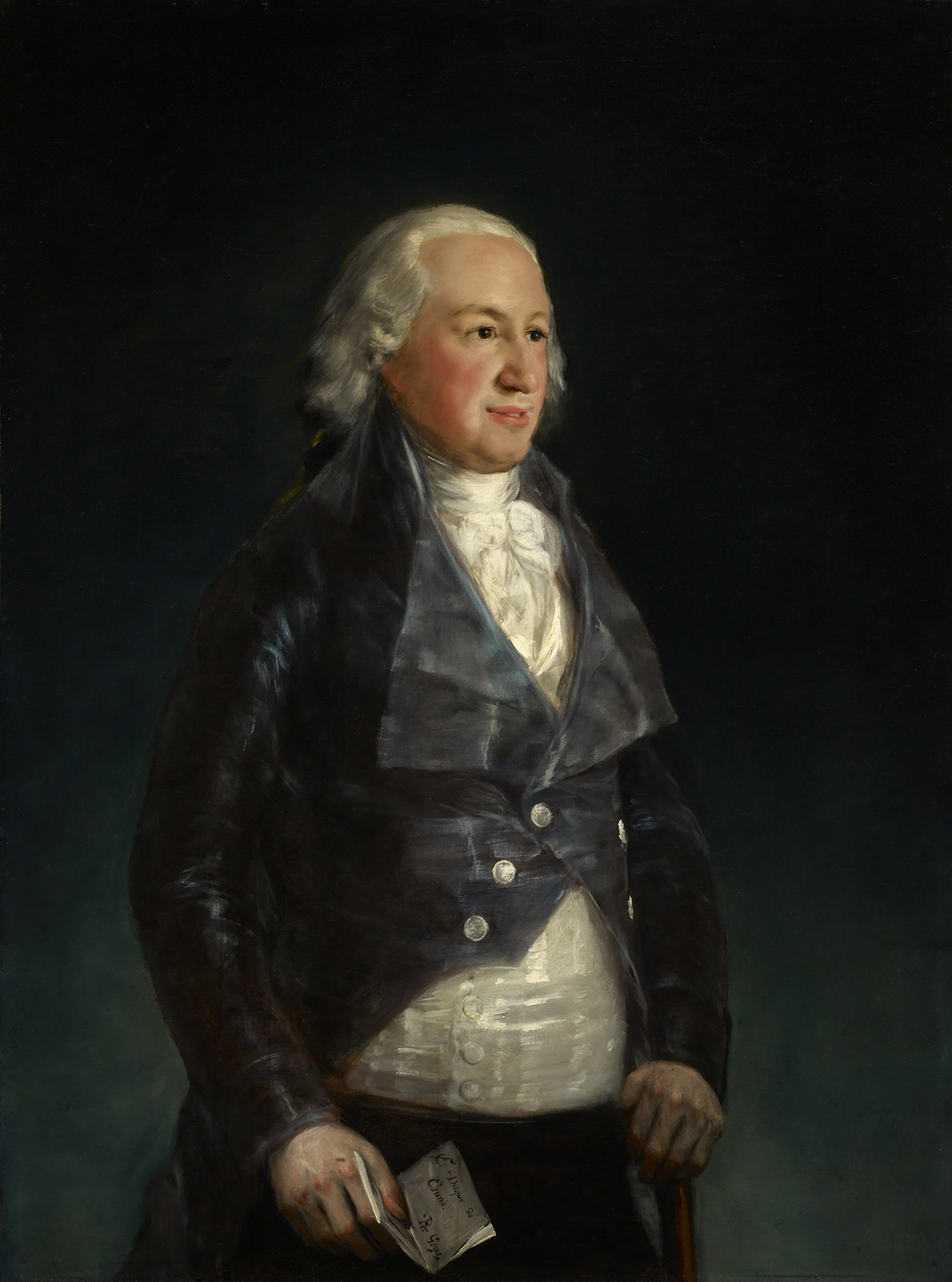
Francisco de Goya (Spanish, 1746-1828) 'Don Pedro, Count of Osuna' 1797-1799


Francisco de Goya (Spanish, 1746-1828)
The Duke of Osuna
1797-1799
Oil on canvas
113 x 83.2cm
The Frick Collection, New York, Purchase, 1943
© The Frick Collection


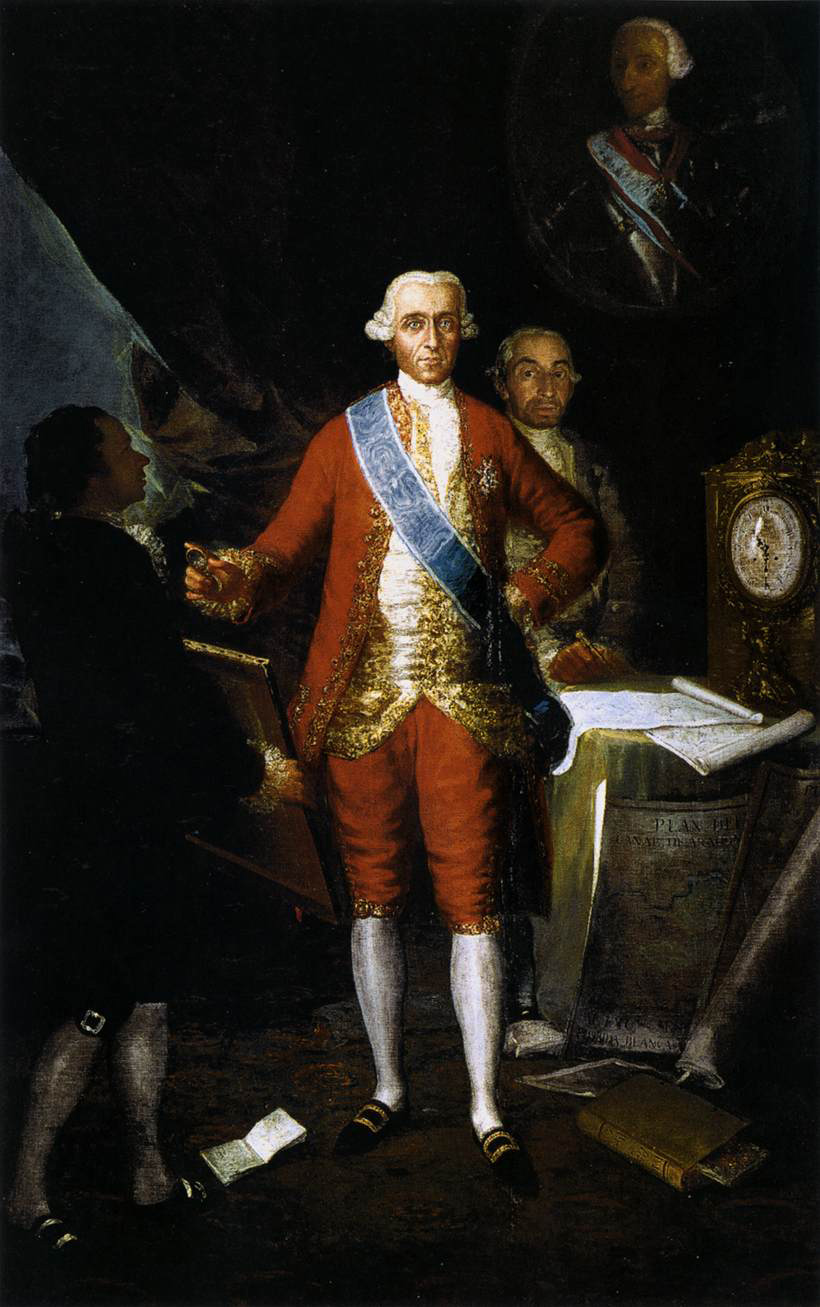
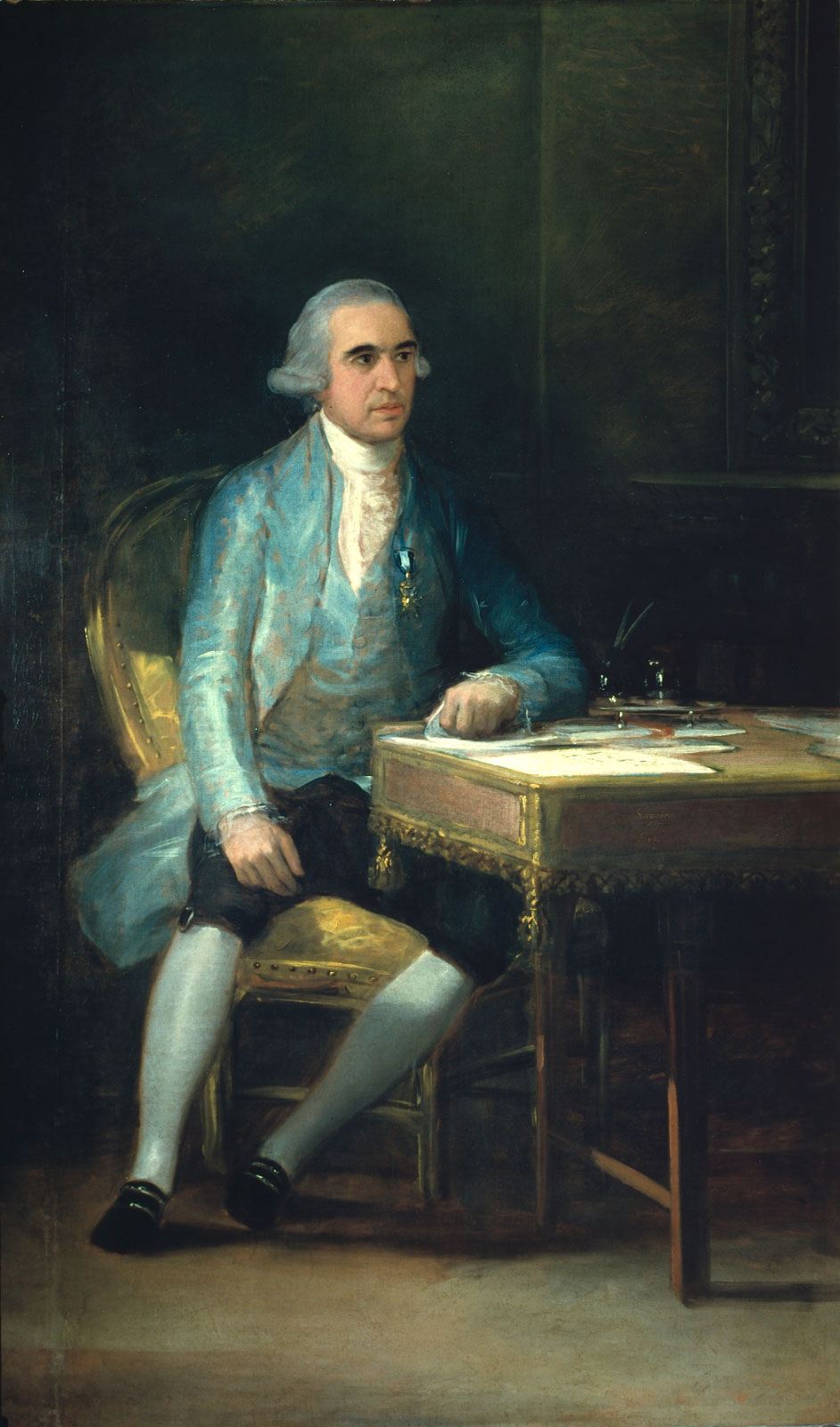
Francisco de Goya (Spanish, 1746-1828) 'Portrait of the Count of Floridablanca' 1783


Francisco de Goya (Spanish, 1746-1828)
Portrait of the Count of Floridablanca
1783
Oil on canvas
262cm (103.1 in). Width: 166cm (65.4 in).
Colección del Banco de España, Madrid


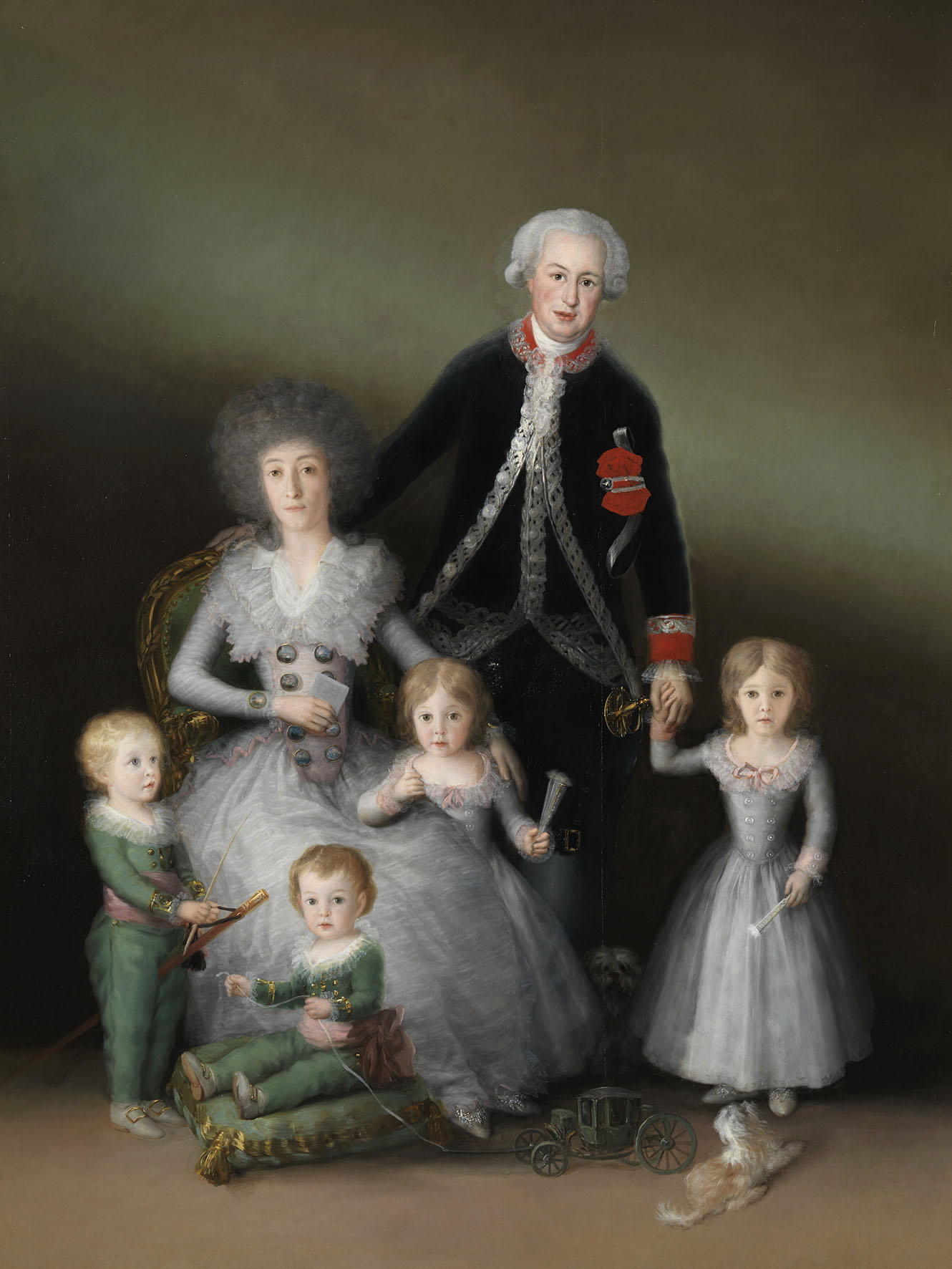
Francisco de Goya (Spanish, 1746-1828) 'The Osuna Family' 1788


Francisco de Goya (Spanish, 1746-1828)
The Duke and Duchess of Osuna and their Children
1788
Oil on canvas
225 x 174cm
Museo Nacional del Prado, Madrid
© Madrid, Museo Nacional del Prado


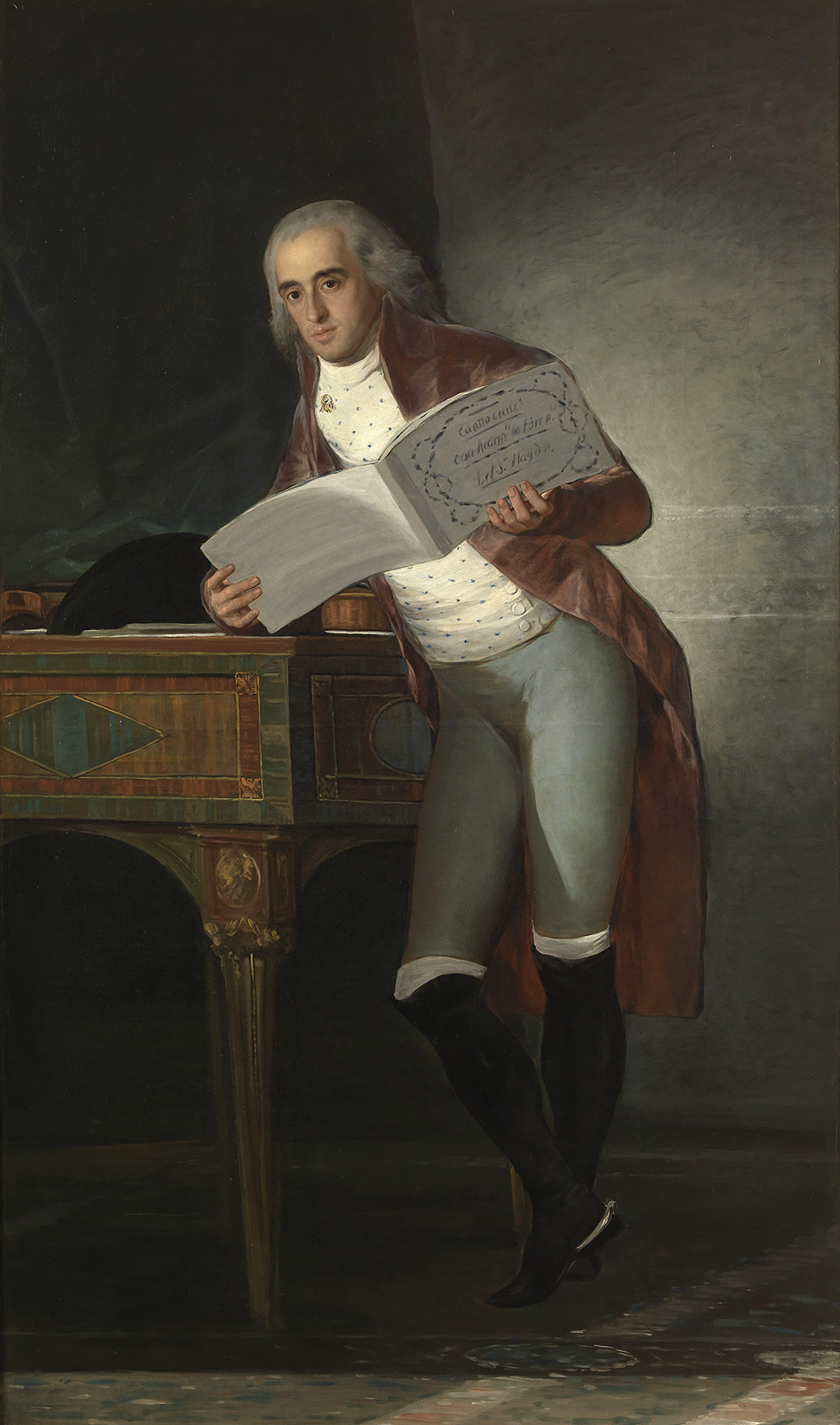
Francisco de Goya (Spanish, 1746-1828) 'The Marquis of Villafranca and Duke of Alba' 1795


Francisco de Goya (Spanish, 1746-1828)
The Marquis of Villafranca and Duke of Alba
1795
Oil on canvas
195 x 126cm
Museo Nacional del Prado, Madrid
© Madrid, Museo Nacional del Prado


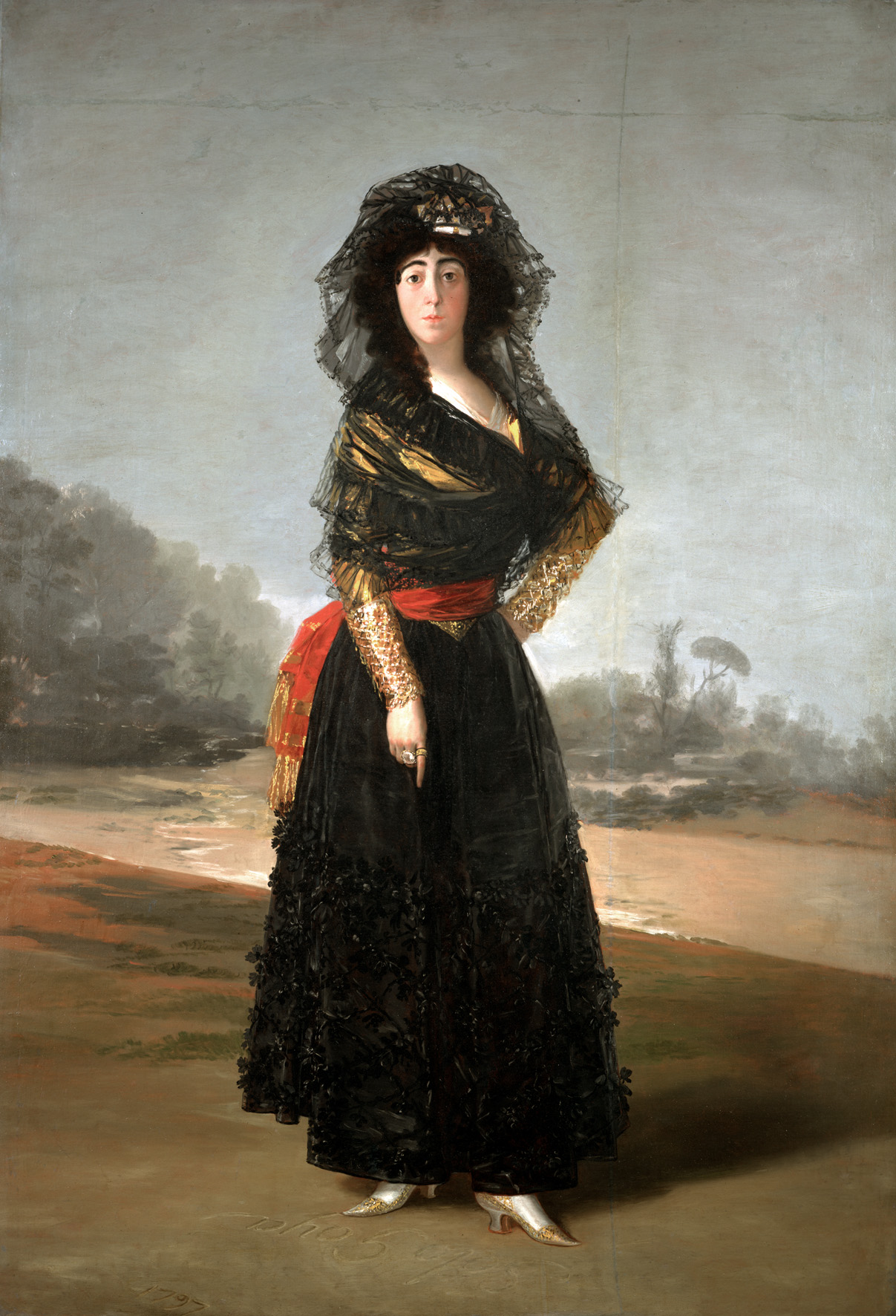
Francisco de Goya (Spanish, 1746-1828) 'The Duchess of Alba' 1797


Francisco de Goya (Spanish, 1746-1828)
The Duchess of Alba
1797
Oil on canvas
210.1 × 149.2cm
On loan from The Hispanic Society of America, New York, NY
© Courtesy of The Hispanic Society of America, New York


Francisco de Goya y Lucientes (1746-1828) is one of Spain’s most celebrated artists. He was an incisive social commentator, considered (even during his own lifetime) as a supremely gifted painter who took the genre of portraiture to new heights. Goya saw beyond the appearances of those who sat before him, subtly revealing their character and psychology within his portraits.

Born before Mozart and Casanova, and surviving Napoleon, Goya’s life spanned more than 80 years during which he witnessed a series of dramatic events that changed the course of European history. Goya: The Portraits will trace the artist’s career, from his early beginnings at the court in Madrid to his appointment as First Court Painter to Charles IV, and as favourite portraitist of the Spanish aristocracy. It will explore the difficult period under Joseph Bonaparte’s rule and the accession to the throne of Ferdinand VII, before concluding with his final years of self-imposed exile in France. Exhibition curator Dr Xavier Bray says:

“The aim of this exhibition is to reappraise Goya’s status as one of the greatest portrait painters in art history. His innovative and unconventional approach took the art of portraiture to new heights through his ability to reveal the inner life of his sitters, even in his grandest and most memorable formal portraits.”

This landmark exhibition will bring to Trafalgar Square more than 60 of Goya’s most outstanding portraits from both public and private collections around the world. These include works that are rarely lent, and some which have never been exhibited publicly before, having remained in possession of the descendants of the sitters. The exhibition will show the variety of media Goya used for his portraits; from life-size paintings on canvas, to the miniatures on copper and his fine black and red chalk drawings. Organised chronologically and thematically, we will for the first time be able to engage with Goya’s technical, stylistic, and psychological development as a portraitist.

From São Paulo to New York, and Mexico to Stockholm, private and institutional lenders have been outstandingly generous, including 10 exceptional loans from the Museo del Prado, Madrid. One of the stars of the show will undoubtedly be the iconic Duchess of Alba (The Hispanic Society of America Museum & Library) which has only once left the United States and has never travelled to Britain. Painted in 1797, this portrait of Goya’s close friend and patron shows the Duchess dressed as a ‘maja’, in a black costume and ‘mantilla’ pointing imperiously at the ground where the words ‘Solo Goya’ (‘Only Goya’) are inscribed.

Other patrons who assisted Goya on his upward trajectory to become First Court Painter, as Velázquez had done more than 150 years before him, are well represented: these include The Count of Floridablanca (Banco de España, Madrid) and The Duke and Duchess of Osuna and their Children (Museo Nacional del Prado, Madrid) – both key and influential patrons. The immense group portrait of The Family of the Infante Don Luis de Borbón (Magnani-Rocca Foundation, Parma), will be reunited with some of the other portraits Goya painted of the Infante’s young family who were living in exile from the Spanish court.

Other highlights will include the charismatic portrait of Don Valentin Bellvís de Moncada y Pizarro (Fondo Cultural Villar Mir, Madrid) which is unpublished and has never been seen before in public, and the rarely exhibited Countess-Duchess Benavente (Private Collection, Spain). The recently conserved 1798 portrait of Government official Francisco de Saavedra (Courtauld Gallery, London) will be exhibited for the first time in more than 50 years alongside its pendant painted in the same year, showing his friend and colleague Gaspar Melchor de Jovellanos (Museo del Prado, Madrid).

The Countess of Altamira and her daughter, María Agustina, which has never been lent internationally from the Lehman Collection at the Metropolitan Museum of Art, New York, will come to Europe for the very first time to be reunited with her husband The Count of Altamira (Banco de España, Madrid) and their son Manuel Osorio Manrique de Zuñiga (The Metropolitan Museum of Art, New York), wearing a fashionably expensive red costume and playing with a pet magpie (which holds the painter’s calling card in its beak). It was shortly after completing his imposing portrait of the Countess, wearing a shimmering embroidered silk gown and shown with an introspective expression, that Goya was appointed court painter to Charles IV, King of Spain.

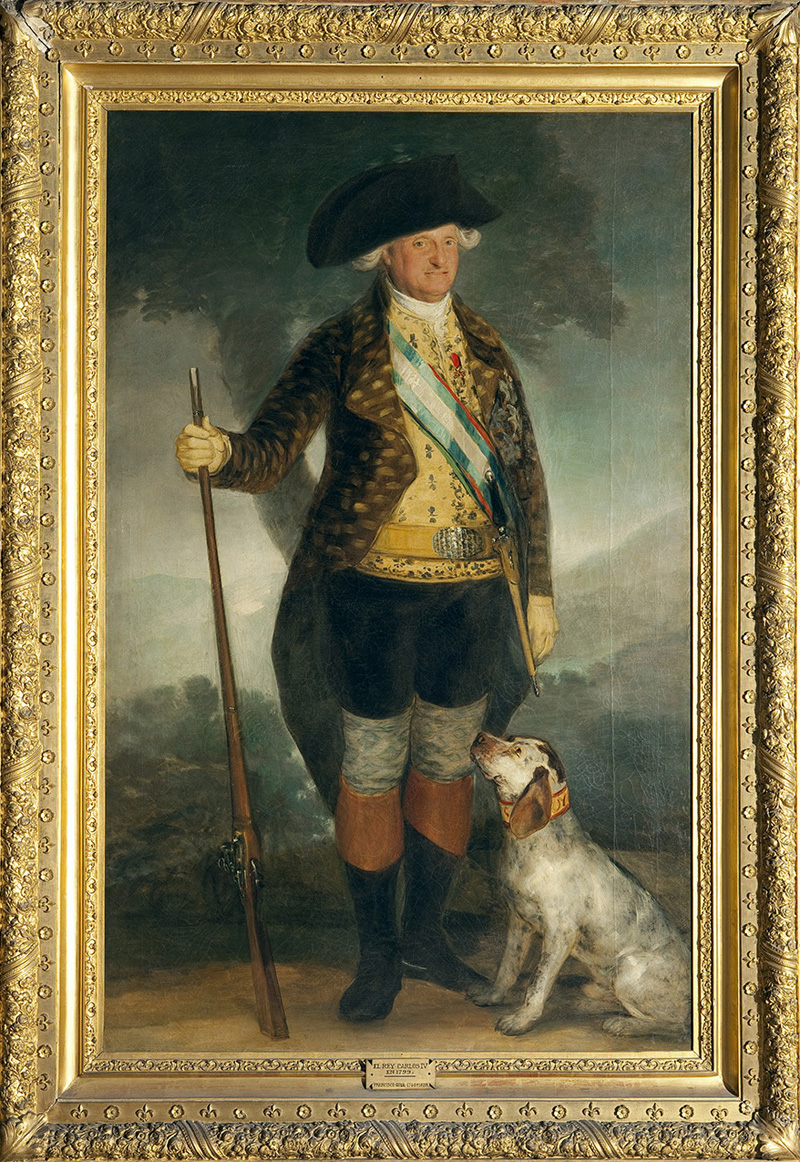
It was in his royal portraits in particular that Goya managed to combine his insightful observation and technical refinement to create unique, memorable portraits; in these he condensed the various aspects of his sitter’s personality into a subtle look or gesture, which often did not flatter his sitters. Charles III in Hunting Dress (Duquesa del Arco) stands in a pose directly inspired by Velázquez’s hunting portraits of the Spanish royal family in the previous century, but the candid portrayal of a weather-beaten face with its marked wrinkles and a somewhat ironic gesture is unique to Goya, clearly revealing to us the personality of the King – an enlightened man, a lover of nature and his people, who wished to be approached as ‘Charles before King’. Similarly, in the portrait of Ferdinand VII (Museo del Prado, Madrid) we can imagine Goya’s mistrust of the pompous and selfish monarch who abolished the constitution and reintroduced the Spanish Inquisition.

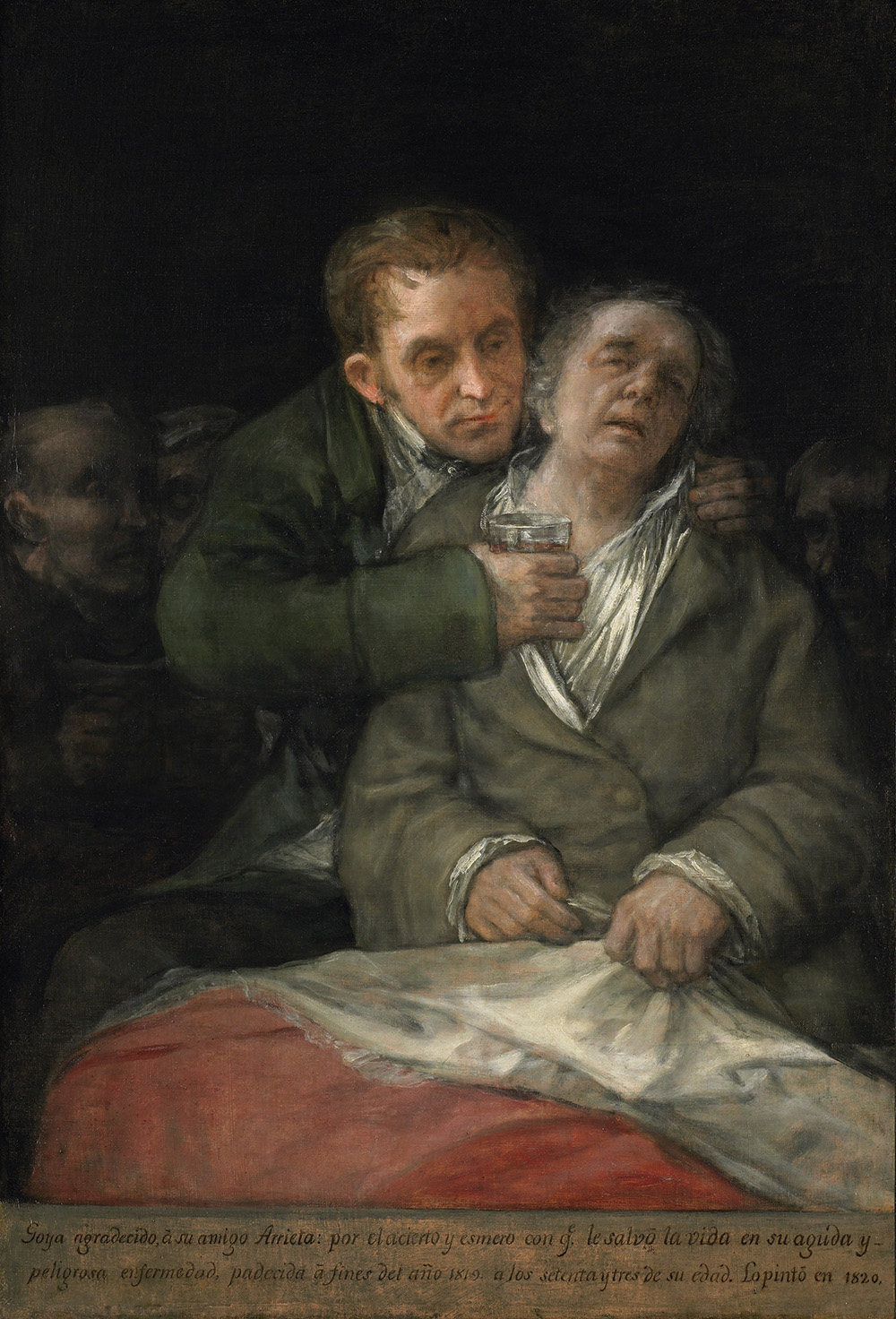
In contrast to the formality of his royal portraits, the exhibition also features more personal works by Goya, including a number of self-portraits in different media, and depictions of his friends and family. 47 years lie between the first Self Portrait (about 1773, Museo Goya, Colección Ibercaja, Zaragoza) in the show, completed when Goya was in his late 20s, and the last, the poignant Self Portrait with Doctor Arrieta (1820, The Minneapolis Institute of Art) painted after an illness from which he almost died when he was 74 years old. There will also be a chance to ‘meet’ the people who were closest to Goya; his wife Josefa Bayeu (Abelló Collection, Madrid), his son Javier Goya (Courtesy of The Metropolitan Museum of Art, Private Collection; Museo de Bellas Artes, Zaragoza) and his best friend and life-long correspondent Martin Zapater (Bilboko Art Eder Museoa / Museo de Bellas Artes de Bilbao). The exhibition also includes the last work Goya ever painted, of his only, beloved grandson Mariano Goya (Meadows Museum, SMU, Dallas) – painted just months before Goya’s death on 16 April, 1828, this portrait is a testament to the genius, skill, and unfaltering creativity of an artist who persevered with his craft to his very last days.

Press release from the National Gallery website


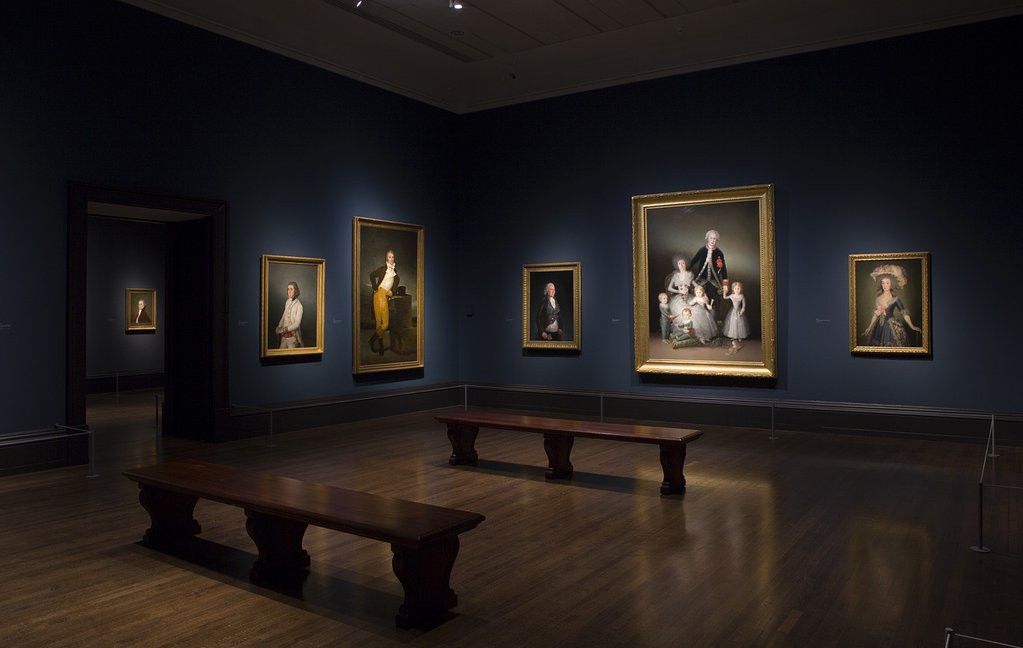
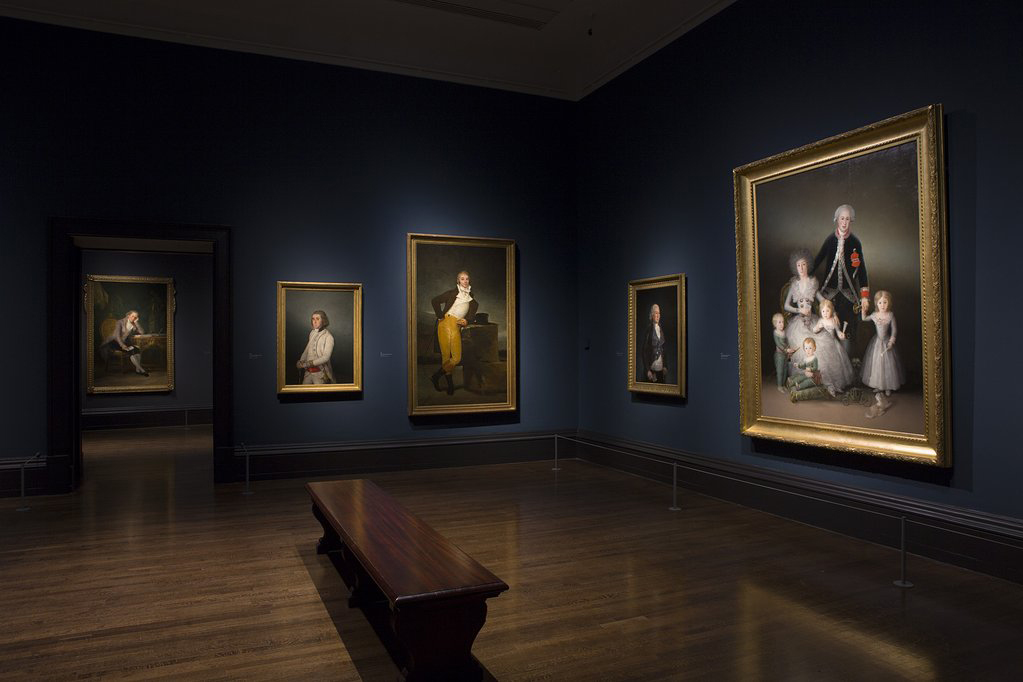
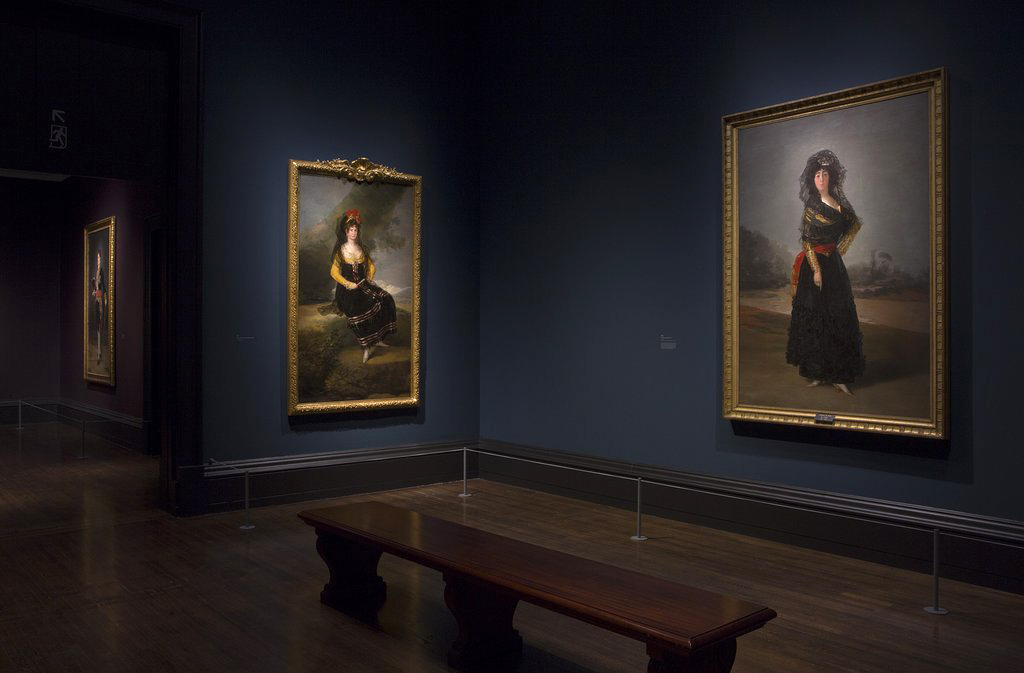
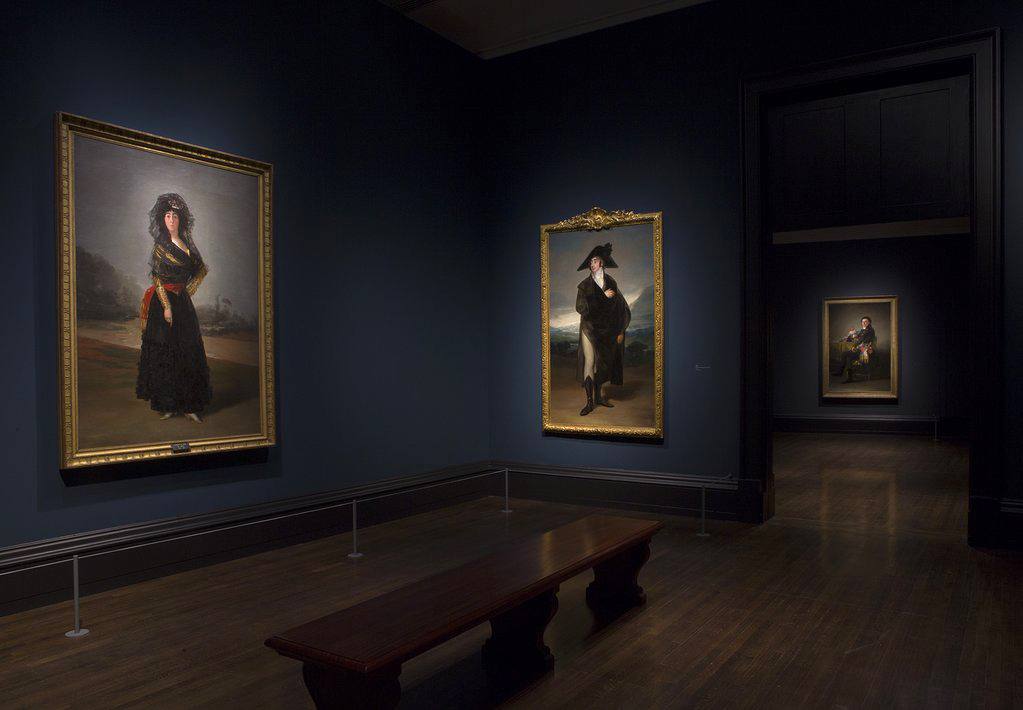
Installation photograph of the exhibition 'Goya: The Portraits' at the National Gallery, London

Installation photograph of the exhibition 'Goya: The Portraits' at the National Gallery, London

Installation photograph of the exhibition 'Goya: The Portraits' at the National Gallery, London

Installation photograph of the exhibition 'Goya: The Portraits' at the National Gallery, London


Installation photographs of the exhibition Goya: The Portraits at the National Gallery, London


Francisco de Goya (Spanish, 1746-1828) 'The Marchioness of Santa Cruz' 1805


Francisco de Goya (Spanish, 1746-1828)
The Marchioness of Santa Cruz
1805
Oil on canvas
124.7 × 207.7cm
Museo Nacional del Prado, Madrid
© Madrid, Museo Nacional del Prado


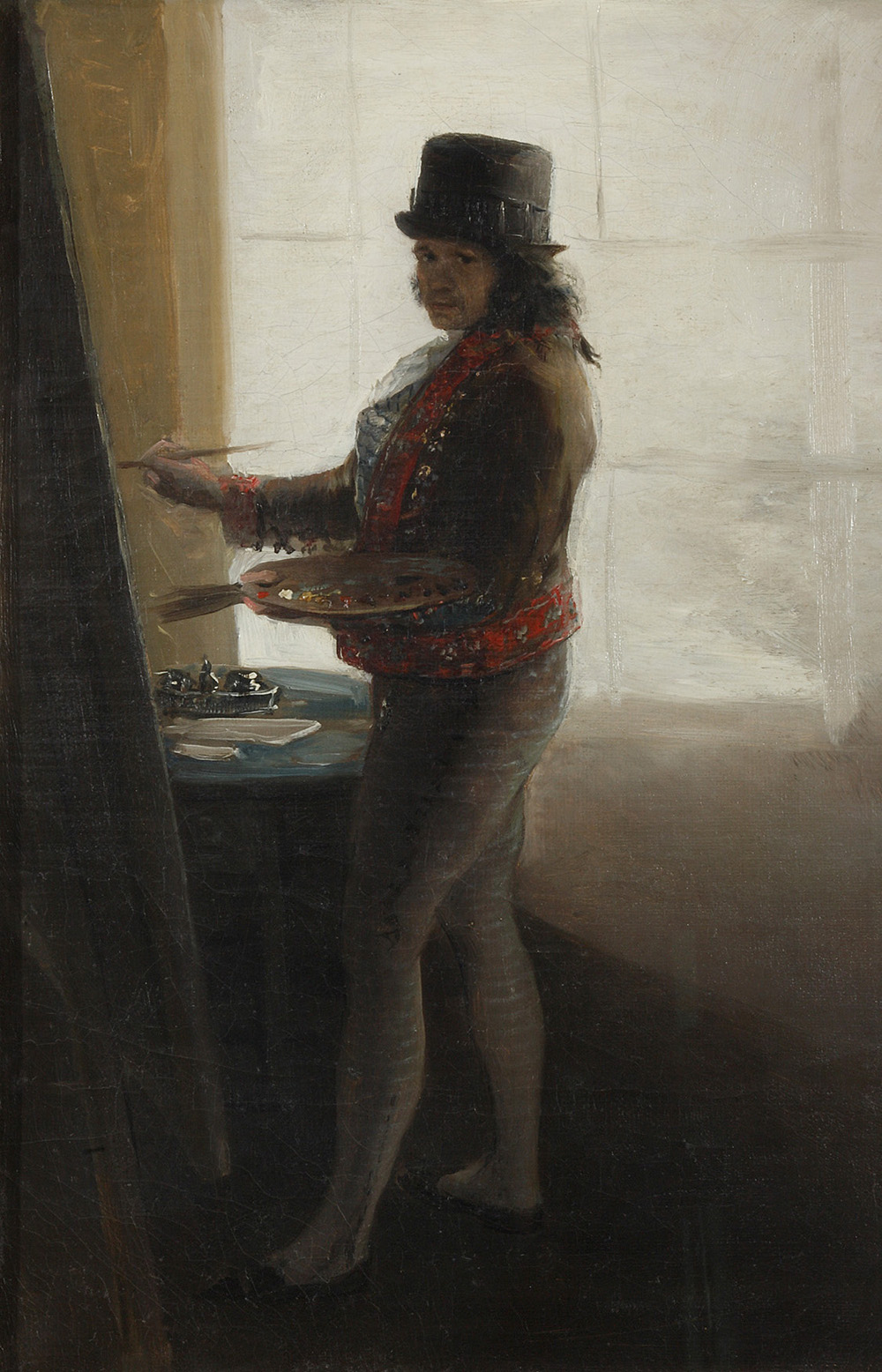
Francisco de Goya (Spanish, 1746-1828) 'Self Portrait before an Easel' 1792-1795


Francisco de Goya (Spanish, 1746-1828)
Self Portrait before an Easel
1792-1795
Oil on canvas
42 x 28cm
Museo de la Real Academia de Bellas Artes de San Fernando, Madrid
© Museo de la Real Academia de Bellas Artes de San Fernando, Madrid


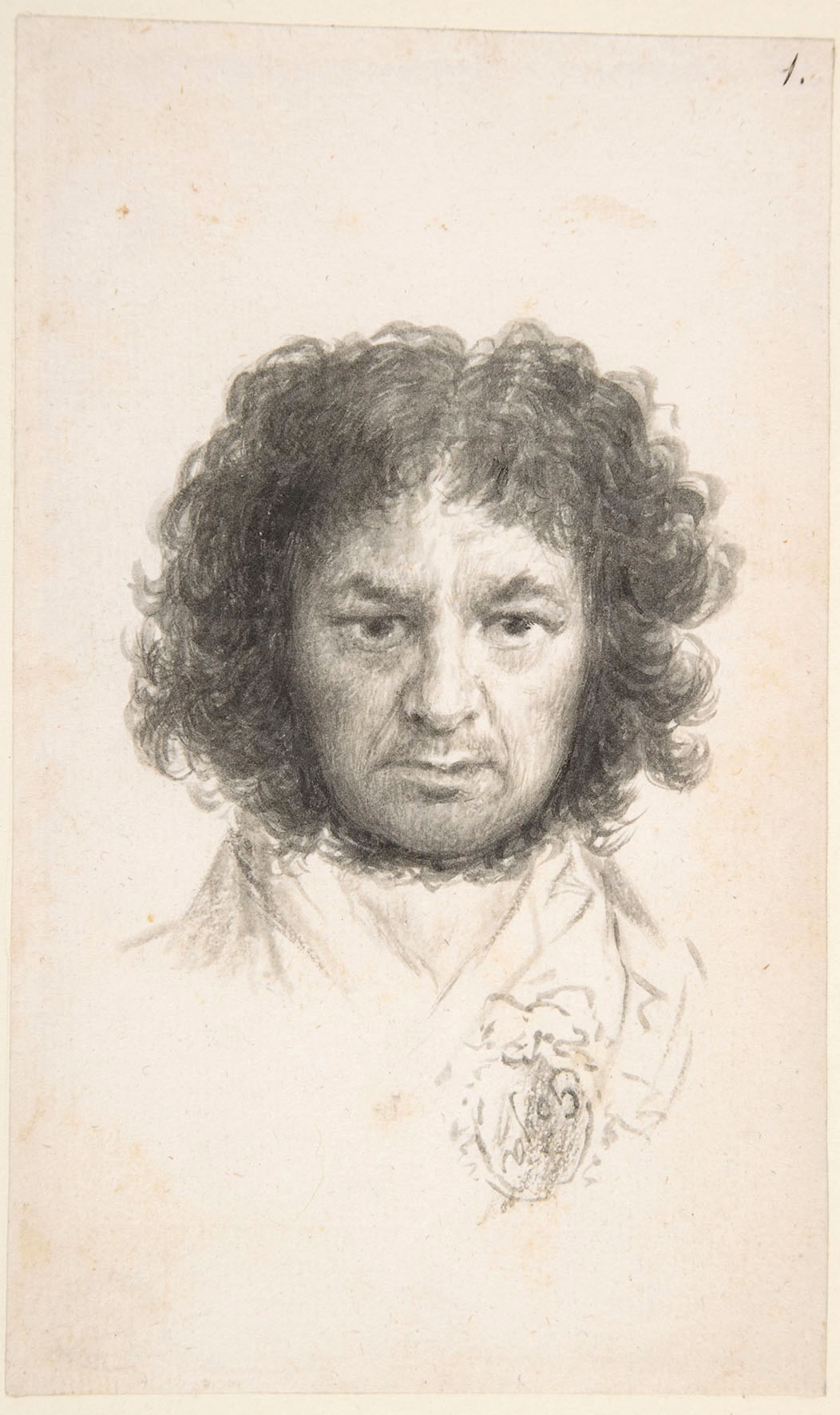
Francisco de Goya (Spanish, 1746-1828) 'Self Portrait after Illness of 1792-1793' 1795-1797


Francisco de Goya (Spanish, 1746-1828)
Self Portrait after Illness of 1792-1793
1795-1797
Brush and grey wash on laid paper
15.3 x 9.1cm
Lent by The Metropolitan Museum of Art, Harris Brisbane Dick Fund, 1935
© The Metropolitan Museum of Art, New York


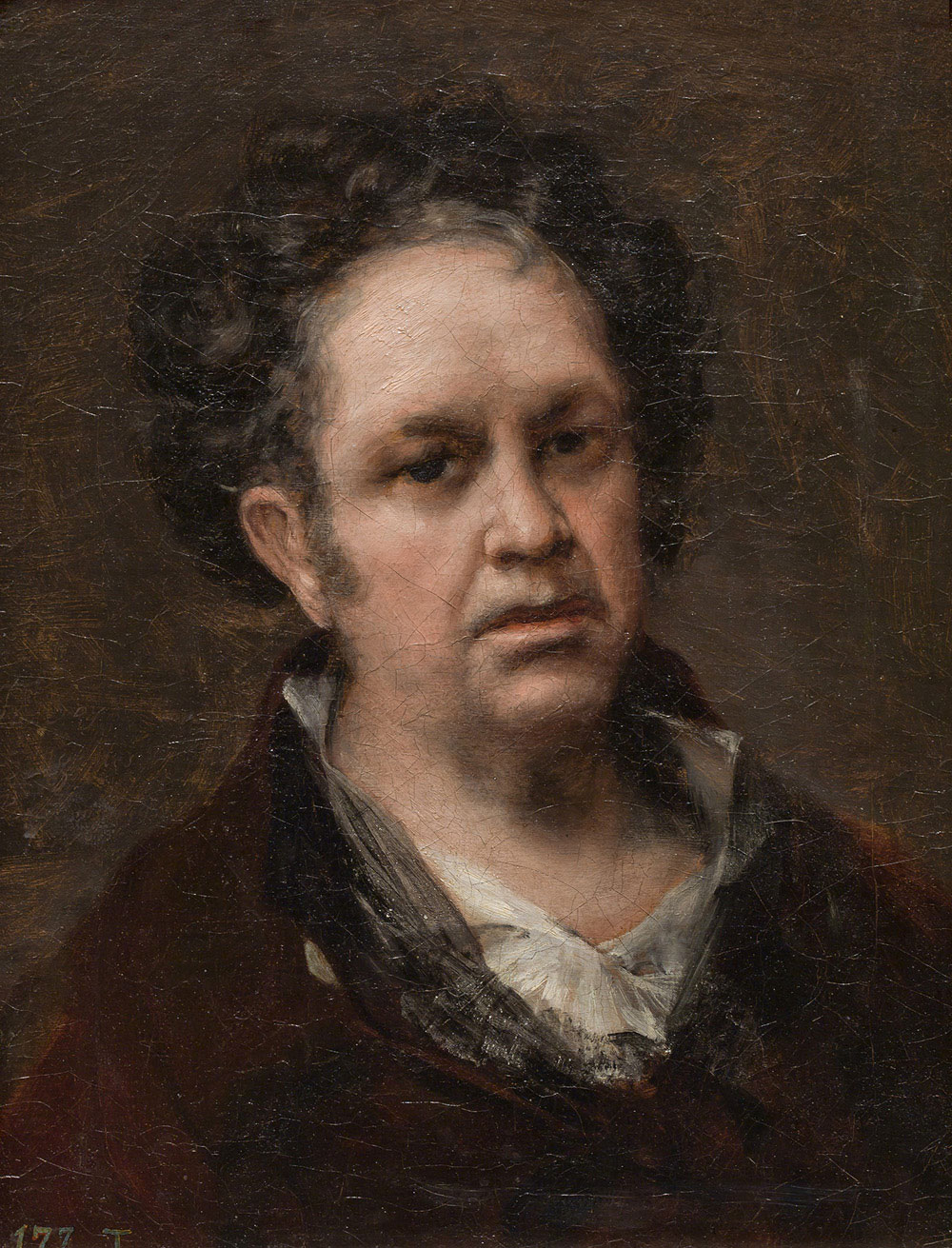
Francisco de Goya (Spanish, 1746-1828) 'Self Portrait' 1815


Francisco de Goya (Spanish, 1746-1828)
Self Portrait
1815
Oil on canvas
45.8 × 35.6cm
Museo Nacional del Prado, Madrid
© Madrid, Museo Nacional del Prado


Francisco de Goya (Spanish, 1746-1828) 'Self Portrait with Doctor Arrieta' 1820


Francisco de Goya (Spanish, 1746-1828)
Self Portrait with Doctor Arrieta
1820
Oil on canvas
114.6 × 76.5cm
Lent by The Minneapolis Institute of Art, The Ethel Morrison Van Derlip Fund
© Minneapolis Institute of Art


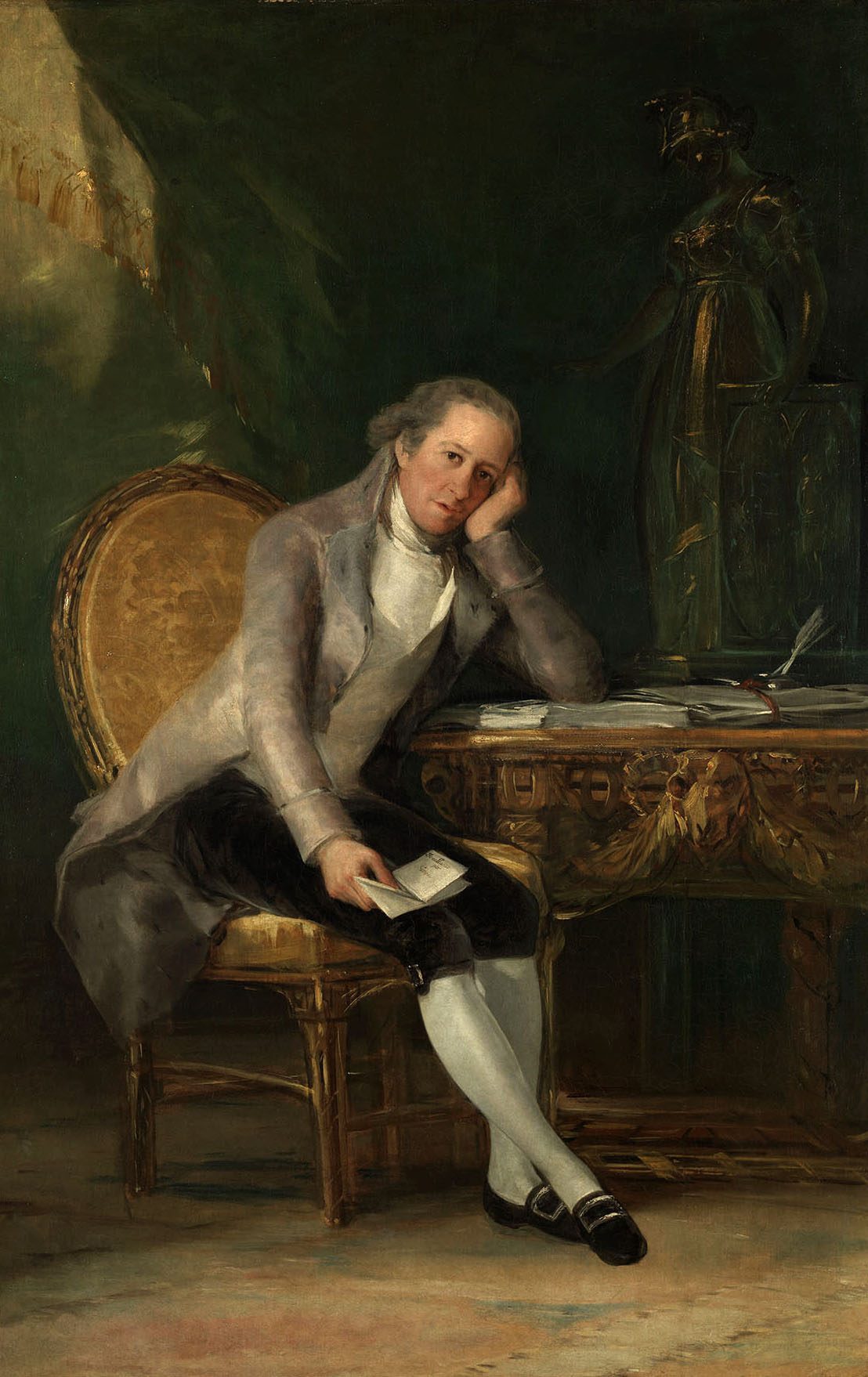
Francisco de Goya (Spanish, 1746-1828) 'Gaspar Melchor de Jovellanos' 1798


Francisco de Goya (Spanish, 1746-1828)
Gaspar Melchor de Jovellanos
1798
Oil on canvas
205 x 133cm
Museo Nacional del Prado, Madrid
© Madrid, Museo Nacional del Prado


Francisco de Goya (Spanish, 1746-1828) 'Portrait of Don Francisco de Saavedra' 1798


Francisco de Goya (Spanish, 1746-1828)
Portrait of Don Francisco de Saavedra
1798
The Samuel Courtauld Trust, The Courtauld Gallery, London


The Spanish politician Francisco de Saavedra was noted for his integrity. In late 1798 Saavedra and his great friend and ally, Gaspar de Jovellanos, were appointed to the two highest political offices in Spain: Minister of Finance and Minister of State. Jovellanos was one of Goya’s most consistent supporters, and the two men commissioned a pair of portraits from him.

The two pictures are closely related. In each, the sitter faces to the right, and sits on a round-backed chair beside a table. But while Jovellanos is thoughtful, Saavedra seems about to leave his paper-strewn desk having decided on a course of action. The simplicity of the background may be influenced by Goya’s knowledge of eighteenth-century English portraiture. It could, however, have been chosen by Saavedra, who was known for the well ordered and ‘English’ character of his household.


Francisco de Goya (Spanish, 1746-1828) 'Charles IV in Hunting Dress' 1799


Francisco de Goya (Spanish, 1746-1828)
Charles IV in Hunting Dress
1799
Oil on canvas
205 x 129cm
Colecciones Reales, Patrimonio Nacional, Palacio Real de Madrid
© Patrimonio Nacional


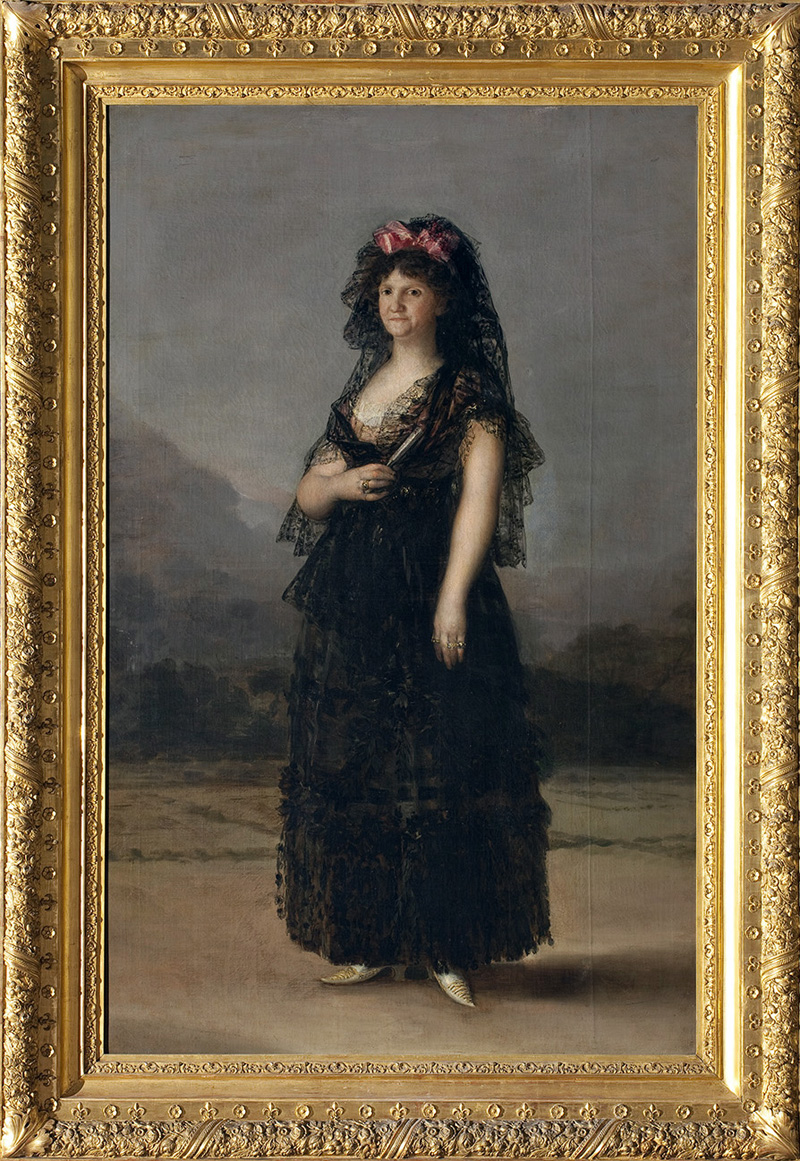
Francisco de Goya (Spanish, 1746-1828) 'María Luisa wearing a Mantilla' 1799


Francisco de Goya (Spanish, 1746-1828)
María Luisa wearing a Mantilla
1799
Oil on canvas
205 x 130cm
Colecciones Reales, Patrimonio Nacional, Palacio Real de Madrid
© Patrimonio Nacional


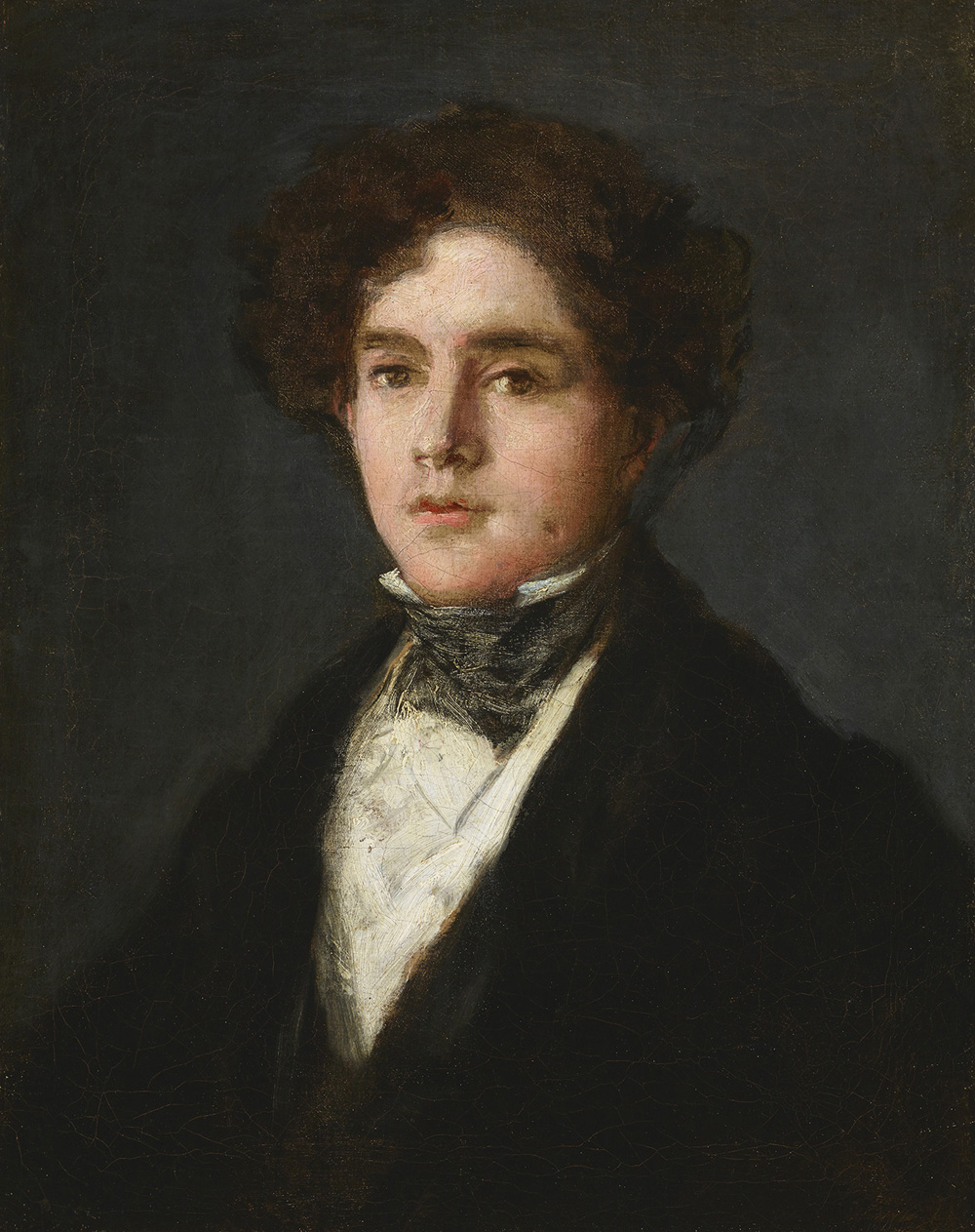
Francisco de Goya (Spanish, 1746-1828) 'Portrait of Mariano Goya, the Artist's Grandson' 1827


Francisco de Goya (Spanish, 1746-1828)
Mariano Goya y Goicoechea (the artist’s grandson)
1827
Oil on canvas
52.1 x 41.3cm
Meadows Museum, SMU, Dallas. Museum Purchase with Funds Donated by the Meadows Foundation and a Gift from Mrs Eugene McDermott, in honour of the Meadows Museum’s 50th Anniversary
© Photograph by Michael Bodycomb


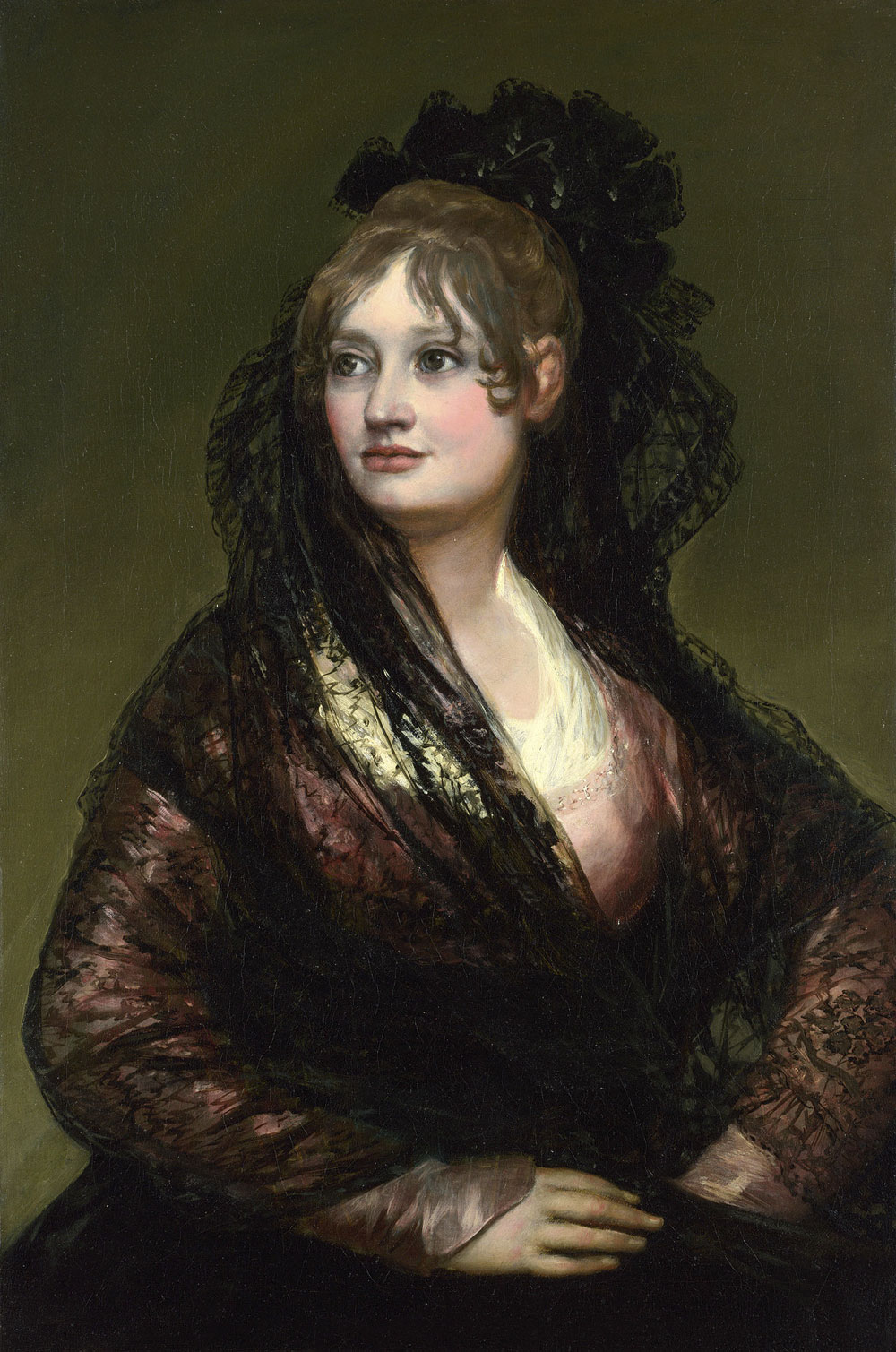
Francisco de Goya (Spanish, 1746-1828) 'Doña Isabel de Porcel' before 1805


Francisco de Goya (Spanish, 1746-1828)
Doña Isabel de Porcel
before 1805
Oil on canvas
82 x 54.6cm
The National Gallery, London, bought, 1896
© The National Gallery, London


The exhibition Goya: The Portraits includes around 70 works unquestionably by his hand, provides us with a unique opportunity to look more closely at Portrait of Doña Isabel de Porcel and ask the question: is she really by Goya? This Room 1 display will present historical information surrounding the portrait and its acquisition by the National Gallery in 1896, together with technical evidence, including an X-ray image which reveals an earlier portrait painted underneath.

Who was Doña Isabel de Porcel?

The sitter has long been identified as Doña Isabel Lobo de Porcel on account of an inscription on the back of the original canvas. Goya exhibited a portrait of Doña Isabel Lobo de Porcel in Madrid in 1805, and this has traditionally been linked to the National Gallery painting. Isabel married Antonio Porcel (Secretary of State for Spain’s American Colonies) in 1802 and the couple had four children. Isabel died in 1842, surviving her husband by 10 years. Antonio, who was a political associate of Goya’s friend and patron Gaspar Melchor de Jovellanos (whose portrait can be seen in Goya: The Portraits), was also painted by Goya in 1806, but his portrait was destroyed by fire in 1953.

The National Gallery’s purchase of Portrait of Doña Isabel de Porcel

The National Gallery bought Portrait of Doña Isabel de Porcel in June 1896 for just over £404. It was among the first pictures by the artist – and the very first portrait by Goya – to enter the National Gallery collection, having made its first Goya purchases (A Picnic and A Scene from ‘The Forcibly Bewitched’) the previous month. The portrait was no longer owned by the sitter’s descendants when the Gallery acquired it, having been sold by the Porcel y Zayas family from Granada, in whose possession it had apparently remained until around 1887, to Don Isidro de Urzáiz Garro (d. 1894). It was from the latter’s heir, Andrés de Urzáiz (1866-1912), that the Gallery acquired the portrait about 10 years later.

A question of attribution

The glamorous sitter is shown wearing a black lace ‘mantilla’, a traditional headdress which became fashionable among the Spanish aristocracy in the late 18th century. Although painted with tremendous flair, the picture’s brushwork – when compared with Goya’s other portraits – lacks his customary subtlety in describing transparencies and textures. Isabel is extremely charismatic but we struggle to grasp her psychological state – something in which Goya invariably excelled.

The hidden portrait

When an X-ray image was made of the Portrait of Doña Isabel de Porcel during conservation treatment in 1980, another portrait was unexpectedly found underneath. The head and striped jacket of the underlying figure are clearly visible in the X-ray, and Doña Isabel de Porcel was painted directly on top of the initial portrait, without first hiding it with new priming. Although perhaps surprising, this is not unique in Goya’s work. During the period of political upheaval in Spain at the turn of the 19th century, Goya – and other artists – had to be resourceful and adapt to circumstance, recycling canvases as their patrons fell in and out of political favour. Doña Isabel de Porcel must have been painted soon after the underlying portrait, since no dirt is visible between the paint layers of the two figures. A clearer image of the underlying portrait has recently been obtained by using an X-ray fluorescence scanning spectrometer, a cutting-edge piece of analytical technology on loan to the National Gallery through collaboration with Delft University of Technology, which maps the chemical elements in the paint.

Letizia Treves, National Gallery Curator of Italian and Spanish Paintings 1600-1800, says:

“Goya is one of the most admired and imitated painters in the history of art. Pastiches and forgeries of his works proliferated on the European and American art market in the second half of the 19th and early 20th centuries. The technical studies and provenance information regarding the Portrait of Doña Isabel de Porcel are inconclusive so far as Goya’s authorship is concerned, and the attributional status of the painting rests largely on perceptions of quality and on how close it comes to works that are indisputably by the artist – something we all have a unique opportunity to explore during the exhibition Goya: The Portraits. If it is a pastiche, it has been carried out with such impressive skill that its long-standing attribution to Goya has convinced several generations of specialists and gallery visitors.”


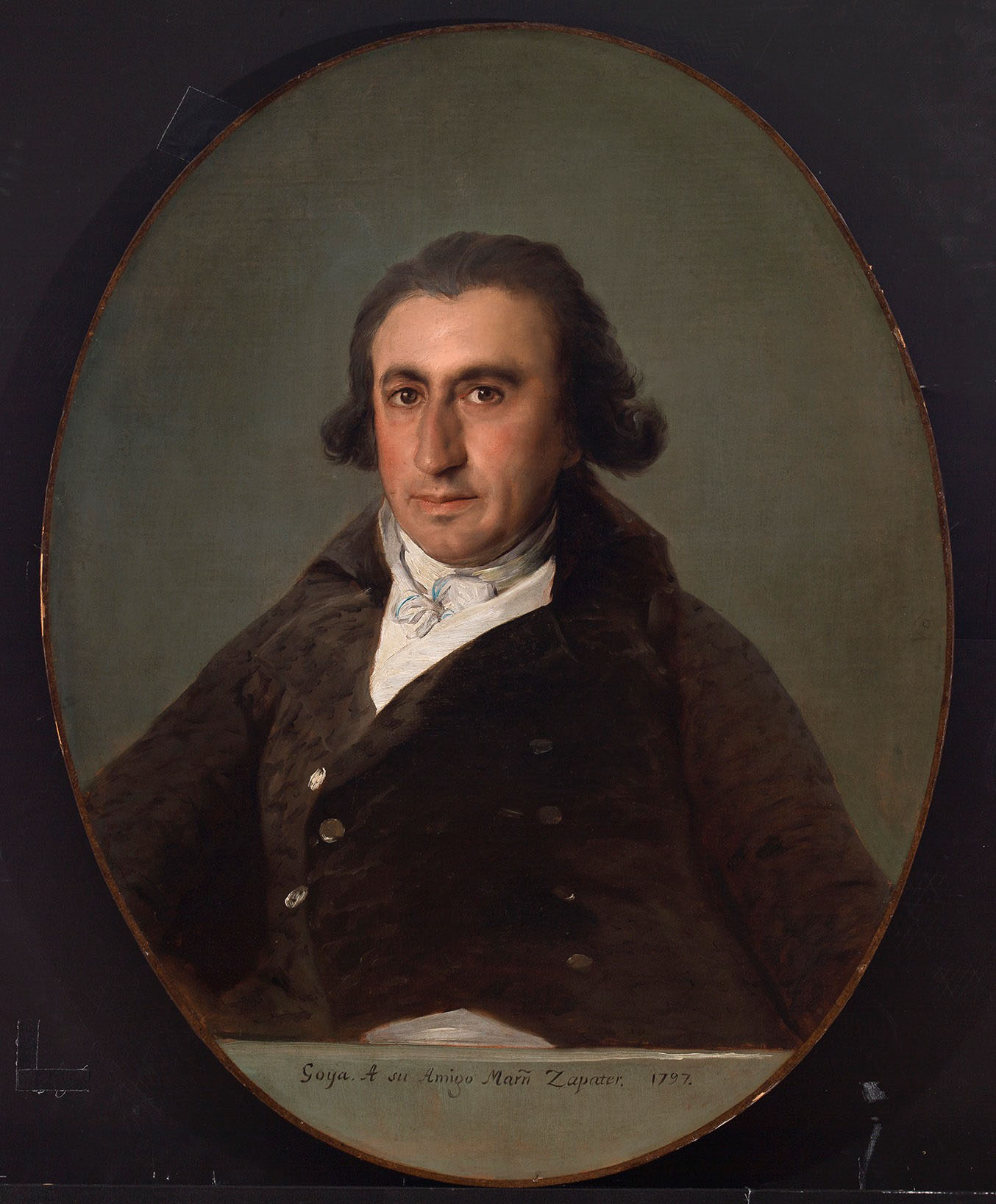
Francisco de Goya (Spanish, 1746-1828) 'Martín Zapater' 1797


Francisco de Goya (Spanish, 1746-1828)
Martín Zapater
1797
Oil on canvas
83 x 65cm
Bilbao Fine Arts Museum
© Bilboko Arte Ederren Museoa-Museo de Bellas Artes de Bilbao


Francisco de Goya (Spanish, 1746-1828) 'Ferdinand VII in Court Dress' 1814-1815


Francisco de Goya (Spanish, 1746-1828)
Ferdinand VII in Court Dress
1814-1815
Oil on canvas
208 x 142.5cm
Museo Nacional del Prado. Madrid
© Madrid, Museo Nacional del Prado


Francisco de Goya (Spanish, 1746-1828) 'Don Valentín Bellvís de Moncada y Pizarro' around 1795


Francisco de Goya (Spanish, 1746-1828)
Don Valentín Bellvís de Moncada y Pizarro
around 1795
Oil on canvas
115 x 83cm
Fondo Cultural Villar Mir, Madrid
© Fondo Cultural Villar Mir, Madrid


The National Gallery
Trafalgar Square, London WC2N 5DN

Opening hours:
Daily 10am – 6pm
Friday 10am – 9pm

The National Gallery website

LIKE ART BLART ON FACEBOOK

Back to top

Exhibition: ‘Goya: Order and Disorder’ at the Museum of Fine Arts, Boston

Exhibition dates: 12th October 2014 – 19th January 2015

Curators: Stephanie Loeb Stepanek, Curator of Prints and Drawings; Frederick Ilchman, Chair, Art of Europe; and Mrs. Russell W. Baker Curator of Paintings.


Francisco Goya (Spanish, 1746-1828) 'The Parasol' 1777


Francisco Goya (Spanish, 1746-1828)
The Parasol
1777
Oil on canvas, tapestry cartoon
Museo Nacional del Prado, Madrid, España
Photograph © Museum of Fine Arts, Boston


This one is for me, this man of darkness and light.

Marcus


Many thankx to the Museum of Fine Arts, Boston for allowing me to publish the art work in the posting. Please click on the images for a larger version of the art.


Francisco Goya (Spanish, 1746-1828) 'The Family of the Infante Don Luis' 1784


Francisco Goya (Spanish, 1746-1828)
The Family of the Infante Don Luis
1784
Oil on canvas
630 x 838cm
Fondazione Magnani Rocca, Parma, Italy


Francisco Goya (Spanish, 1746-1828)  'Attack on a Military Camp' about 1808-1810


Francisco Goya (Spanish, 1746-1828) 
Attack on a Military Camp
c. 1808-1810
Oil on canvas
Colección Marqués de la Romana
Photograph © Museum of Fine Arts, Boston


Francisco Goya (Spanish, 1746-1828) 'One Can't Look (No se puede mirar), Disasters of War 26' c. 1811-1812


Francisco Goya (Spanish, 1746-1828)
One Can’t Look (No se puede mirar), Disasters of War 26
c. 1811-1812
Etching, direct etching, and drypoint (working proof)
1951 Purchase Fund
Photograph © Museum of Fine Arts, Boston


Francisco Goya (Spanish, 1746-1828) 'A heroic feat! With dead men! (Grande hazaña! Con muertos!)' c.1810-1813


Francisco Goya (Spanish, 1746-1828)
A heroic feat! With dead men! (Grande hazaña! Con muertos!), Disasters of War 39
c. 1810-1813
Etching, direct etching, and drypoint


Francisco Goya (Spanish, 1746-1828) 'Unfortunate events in the front seats of the ring of Madrid, and the death of the Mayor of Torrejón' (Desgracias acaecidas en el tendido de la plaza de Madrid, y muerte del alcalde de Torrejón) 1815-1816


Francisco Goya (Spanish, 1746-1828)
Unfortunate events in the front seats of the ring of Madrid, and the death of the Mayor of Torrejón (Desgracias acaecidas en el tendido de la plaza de Madrid, y muerte del alcalde de Torrejón)
1815-1816
From the 35 etchings making up the Tauromaquia (“Art of Bullfighting”) series
Etching with burnished aquatint, drypoint and burin on paper


Francisco Goya (Spanish, 1746-1828) 'The Agility and Audacity of Juanito Apiñani in the Ring at Madrid' (Ligereza y atrevimiento de Juanito Apiñani en la de Madrid) (Tauromaquia 20) 1815-1816


Francisco Goya (Spanish, 1746-1828)
The Agility and Audacity of Juanito Apiñani in the Ring at Madrid (Ligereza y atrevimiento de Juanito Apiñani en la de Madrid) (Tauromaquia 20)
1815-1816
Etching with burnished aquatint, drypoint and burin on paper
© Museum of Fine Arts, Boston


Francisco Goya (Spanish, 1746-1828) 'Feminine Absurdity (Disparate femenino) Disparates 1' 1815-1817


Francisco Goya (Spanish, 1746-1828)
Feminine Absurdity (Disparate femenino) Disparates 1
1815-1817
Fundación Lázaro Galdiano


This fall, the Museum of Fine Arts, Boston (MFA), presents Goya: Order and Disorder, a landmark exhibition dedicated to Spanish master Francisco Goya (1746-1828). The largest retrospective of the artist to take place in America in 25 years features 170 paintings, prints and drawings – offering the rare opportunity to examine Goya’s powers of observation and invention across the full range of his work. The MFA welcomes many loans from Europe and the US, including 21 works from the Museo Nacional del Prado in Madrid, along with loans from the Musée du Louvre, the Galleria degli Uffizi, The Metropolitan Museum of Art, the National Gallery of Art (Washington) and private collections. Goya: Order and Disorder includes some 60 works from the MFA’s collection of Goya’s works on paper, one of the most important in the world. Many of these prints and drawings have not been on view in Boston in 25 years. Employed as a court painter by four successive rulers of Spain, Goya managed to explore an extraordinarily wide range of subjects, genres and formats. From the striking portrait Duchess of Alba (1797) from the Hispanic Society of America, to the tour de force of Goya’s Seated Giant (by 1818) in the MFA’s collection, to his drawings of lunacy, the works on view demonstrate the artist’s fluency across media. On view in the Museum’s Ann and Graham Gund Gallery from October 12, 2014 – January 19, 2015, the MFA is the only venue for the exhibition, which is accompanied by a publication revealing fresh insights on the artist.

“This exhibition offers a once-in-a-generation look at one of the greatest, most imaginative artists of all time,” said Malcolm Rogers, Ann and Graham Gund Director at the MFA. “Goya: Order and Disorder reflects the Museum’s close collaboration with the Prado, and builds on our proud tradition of Goya scholarship.”

As 18th-century culture gave way to the modern world, little escaped Goya’s penetrating gaze. Working with equal prowess in painting, drawing and printmaking, he was the portraitist of choice for the royal family as well as aristocrats, statesmen and intellectuals – counting many as acquaintances or friends. Living in a time of revolution and radical social and political transformations, Goya witnessed drastic shifts between “order” and “disorder,” from relative prosperity to wartime chaos, famine, crime and retribution. Among the works he created – some 1,800 oil paintings, frescoes, miniatures, etchings, lithographs and drawings – many are not easy to look at, or even to understand. With a keen sensitivity to human nature, Goya could portray the childhood innocence of Manuel Osorio Manrique de Zuñiga (about 1788, The Metropolitan Museum of Art, New York) – his most famous portrait of a child – or the deviance of the Witches’ Sabbath (1797-1798, Fundación Lázaro Galdiano, Madrid).

The full arc of Goya’s creativity is on display in the exhibition, from the elegant full-length portraits of Spanish aristocrats that first brought the artist fame, to caustic drawings of beggars and grotesque witches, to his series of satirical etchings targeting ignorance and superstition, known as the Caprichos. Rather than a chronological arrangement, exhibition curators Stephanie Loeb Stepanek, Curator of Prints and Drawings, and Frederick Ilchman, Chair, Art of Europe and Mrs. Russell W. Baker Curator of Paintings, grouped the works in Goya: Order and Disorder, and its accompanying publication, into eight categories highlighting the significant themes that captured Goya’s attention and imagination. From tranquil to precarious, Goya’s art made the diversity of life, and the conflicting emotions of the human mind, comprehensible to the viewer – and to himself.

“We decided to juxtapose similar subjects or compositions in different media in order to allow visitors to examine how Goya’s choice of technique informed and transformed his ideas, since the characteristics of each medium – and the intended audience – influenced the final appearance of the work,” said Stepanek.

Noted for his satirical eye, Goya reserved his closest scrutiny for himself. The first section of the exhibition, Goya Looks at Himself, is a sweeping group of self-portraits. In the MFA’s etching, The Sleep of Reason Produces Monsters (El sueño de la razon produce monstruos), Caprichos 43 (1797-1799), Goya offers himself as a universal artist sleeping at a desk, while the creatures of his dreams swirl about his head. This print is grouped with two loans from Madrid, The Artist Dreaming (about 1797), a drawing from the Prado that preceded the famous print, and Self-Portrait while Painting (about 1795), from the Museo de la Real Academia de Bellas Artes de San Fernando. Together, these works reflect Goya’s tendency to insert his persona into allegories and fantasies. At the entrance of this section is an imposing group portrait of The Family of the Infante Don Luis (1784, Fondazione Magnani Rocca, Parma, Italy) – the brother of King Charles III – which features 14 figures, including Goya, who depicts himself working on a sizeable canvas on an easel.

“Just as Goya’s imagery is determined by whether he painted, drew or made a print, he also reconsidered certain favoured subjects, reviving them from his memory and returning to them again and again during his long career,” said Ilchman. “Examining his compositional preoccupations across decades – often in the same room of the exhibition – reveals the continuity of Goya’s imagination.”

Through his art, Goya sought to describe, catalogue and satirise the breadth of human experience – embracing both its pleasures and discomforts. The artist tackled the nurturing of children, the pride and infirmity of old age, the risks of romantic love, and all types of women – from young beauties to old women. In the section dedicated to Goya’s depictions of the stages of life, Life Studies, the exhibition explores how the artist transformed observations of human frailty, creating allegories of vanity and the passage of time. A wizened woman, who is unsuccessfully attempting to adopt youthful styles in Until Death (Hasta la muerte), Caprichos 55 (1797-1799, The Boston Athenaeum), is revived in one of Goya’s most haunting monumental paintings – Time (Old Women) (about 1810-1812, Palais des Beaux-Arts de Lille). The aged woman is now decayed and diseased, but still clings to her outdated fashions, and is soon to be swept away by the broom of Time. Goya’s tapestry designs frequently depict young people, with relationships between men and women marked by affection, disaffection and tension. The Parasol (1777, Museo Nacional del Prado) presents a young woman who poses under a parasol with her docile lapdog – she seems to ignore her male companion in favour of engaging viewers who would look up at this tapestry, which was meant to hang over a door.

In the Play and Prey section, Goya’s creative process is revealed through representations of a popular game in which young women toss a well-dressed mannequin in a blanket. In Straw Mannequin, this carnivalesque reversal of class and gender roles is seen in a tapestry (1792-1793, Patrimonio Nacional, Spain), as well as two preparatory paintings (1791, Hammer Museum, Los Angeles and Museo Nacional del Prado). A late print, Feminine Absurdity (Disparate femenino) Disparates 1 (1815-1817, Fundación Lázaro Galdiano), imparts new meaning to the previously simple image of young women at play, as the women now strain to lift several figures, including a peasant and donkey. This more sinister vein is reflected in many of the subjects the artist returned to later in life, following the devastation of the Peninsular War and its political reversals. “Play and Prey” also explores Goya’s famous images of men engaging in hunting (his own favourite pastime) and the bullfight. In these works, including examples from the series of prints, the Tauromaquia and the Bulls of Bordeaux, Goya celebrates both activities while also subtly portraying their darker sides.

The precarious relationship between order and discord, balance and imbalance, is fundamental to Goya’s work, and the subject of the section In the Balance. The theme appears vividly in images of the punishing forces of nature, figures losing their balance and others fighting. This topic is particularly noteworthy given the tumultuous social and political change during Goya’s lifetime, as well as the artist’s own struggles with illness, dizzy spells and deafness. The MFA’s print, The Agility and Audacity of Juanito Apiñani in the Ring at Madrid (Ligereza y atrevimiento de Juanito Apiñani en la de Madrid (Tauromaquia 20) (1815-1816) depicts a precarious matador, who is poised midair as he vaults over a charging bull, anchored only by his upright pole.

Goya earned widespread fame through grand portraits executed in the 1780s and 1790s, and the exhibition displays some of these masterpieces alongside more intimate likenesses of his artistic and family circle. Focusing on the painter’s approach to portraiture – from relations with sitters to his handling of paint – Portraits explores the discipline that remained central to his reputation as Spain’s leading painter and helped sustain him financially throughout his career. Paintings of the Duke of Alba (1795, Museo Nacional del Prado) and Duchess of Alba (1797, Hispanic Society of America), shown together for the first time since the early 19th century, are superb examples of his aristocratic portraits and illustrate two of his most important patrons. In the Duchess of Alba, the darkly clothed sitter points a finger to the ground, where the words “Solo Goya” are written in the sand. The assertion that only Goya was worthy of this commission and that only he could have pulled off such a dramatic likeness, changes the painting’s focus from the aristocrat to the artist.

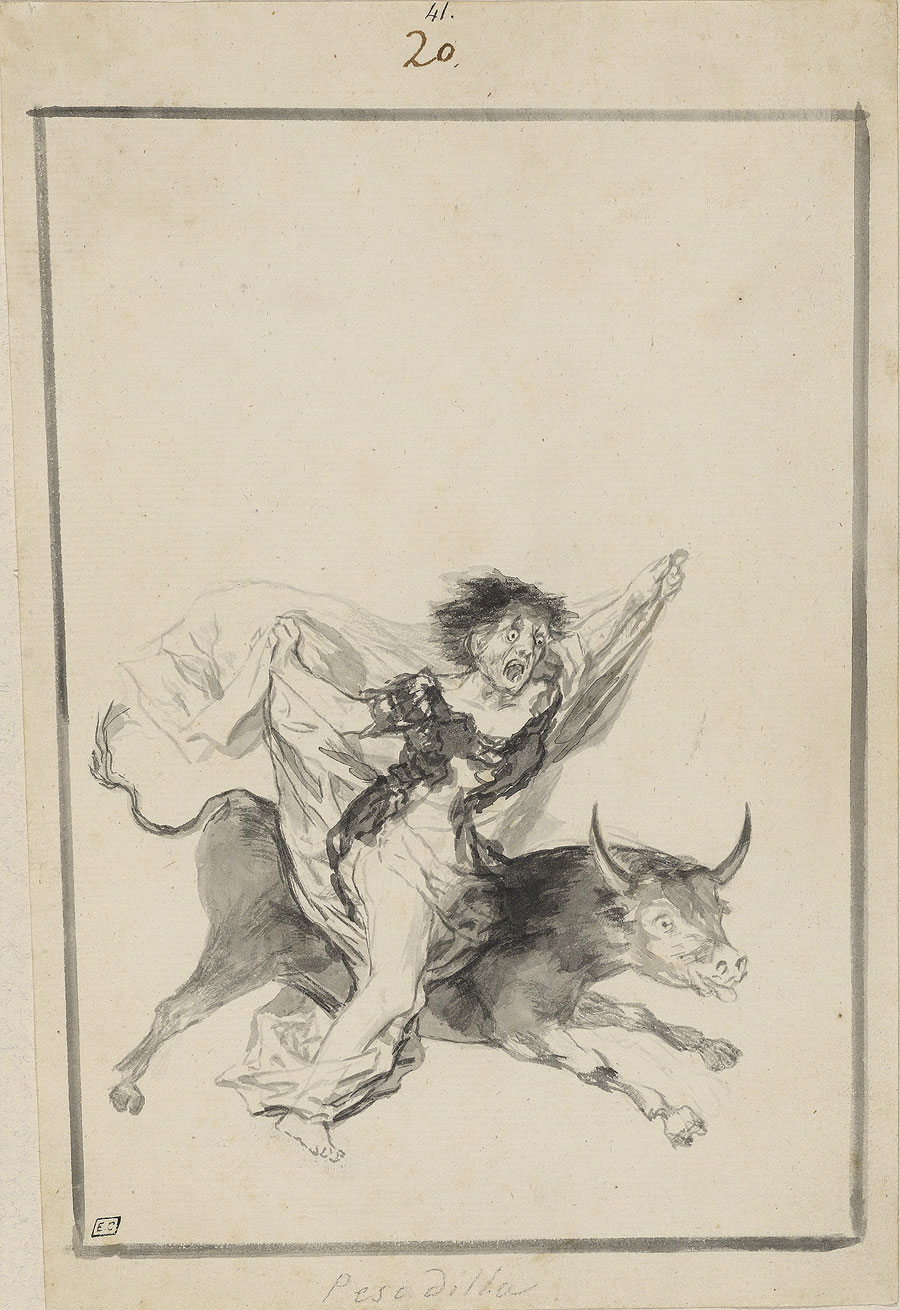
Other Worlds, Other States features two facets of Goya’s spiritual explorations – Christian religious belief and its opposite, superstition. While Goya frequently focused on clerical abuses, religious commissions helped pay the bills throughout his life, and there is no evidence that he lacked personal piety. One of Goya’s greatest legacies is his ability to represent mental and psychological conditions. His depictions of illusions and inner reality are also on view in this section, and include visions, nightmares and the deluded mind of the insane. An imaginative rendering of a particular Spanish nightmare – a witch riding a bull through the air – is depicted in the drawing Pesadilla (Nightmare) (1816-1820).

Many of Goya’s deranged characters highlight the fragile boundary between lunacy and sanity. A luminous painting on copper from the Meadows Museum in Dallas, Yard with Madmen of 1794 – which shows distressed and helpless lunatics – anticipates a sequence of black crayon drawings made three decades later. In these later works, the individuals, whom Goya labeled as “locos,” are in even more desperate condition, restrained in straitjackets or trapped behind bars. Also in this gallery, a “learning space” offers additional educational materials and a timeline that provides context and insight into the mind of the Spanish Master.

A keen awareness of the weight of historical events pervades Goya’s work. Although he belongs in the ranks of great history painters who narrated courageous acts, he is not preoccupied with generals, patriots and battles. Instead, he focuses attention on the anonymous victims of the horrors of war or the Spanish Inquisition, and rarely fails to raise moral questions in these works. In Capturing History, works that blend the epic and mundane include a painting of an imagined scene, Attack on a Military Camp (about 1808-1810, Colección Marqués de la Romana), in which a woman holds a screaming infant as she runs from assailants who have already wounded several people. In One Can’t Look (No se puede mirar), Disasters of War 26 (1810-1814), the viewer is only a step or two away from the victims and the advancing bayonets of the print’s aggressors. The work is part of the wrenching print series, Disasters of War, which depict the artist’s thoughts on violence during the Peninsular War that ripped Spain apart from 1808 to 1814.

The final section of the exhibition, Solo Goya, summarises the characteristics that establish the artist’s greatness – exploring themes such as Goya’s imagery of swarms of human figures as well as his periodic reflection on the concept of redemption. The same artist who took on the abuses of war could also evoke the most sympathetic and poignant moments of human experience, such as the Last Communion of Saint Joseph of Calasanz (1819, Collection of the Padres Escolapios). The altarpiece depicts Joseph of Calasanz, from Goya’s home region of Aragón, who founded the order of the Padres Escolapios (Piarists) to educate poor children. Goya may have attended one of the order’s schools, known as the Escuelas Pías, and might have felt a personal connection to the protagonist of the painting – his final major religious work – which comes to the US for the first time in this exhibition.

One of Goya’s most resonant themes addresses the problem with power, embodied by a central character: the giant. Conditioned by the events of his day, particularly the sudden rise and fall of military and institutional fortunes, Goya explores how power is not necessarily inherent, but comes with a cost. Goya’s Seated Giant (by 1818), from the MFA’s renowned collection of Goya prints and drawings, is among the most enigmatic and compelling of the artist’s graphic works, depicting a looming figure immobilised by the burden of power. While no single work can epitomise an artist’s achievement, this figure embodies the grandest of Goya’s great themes.

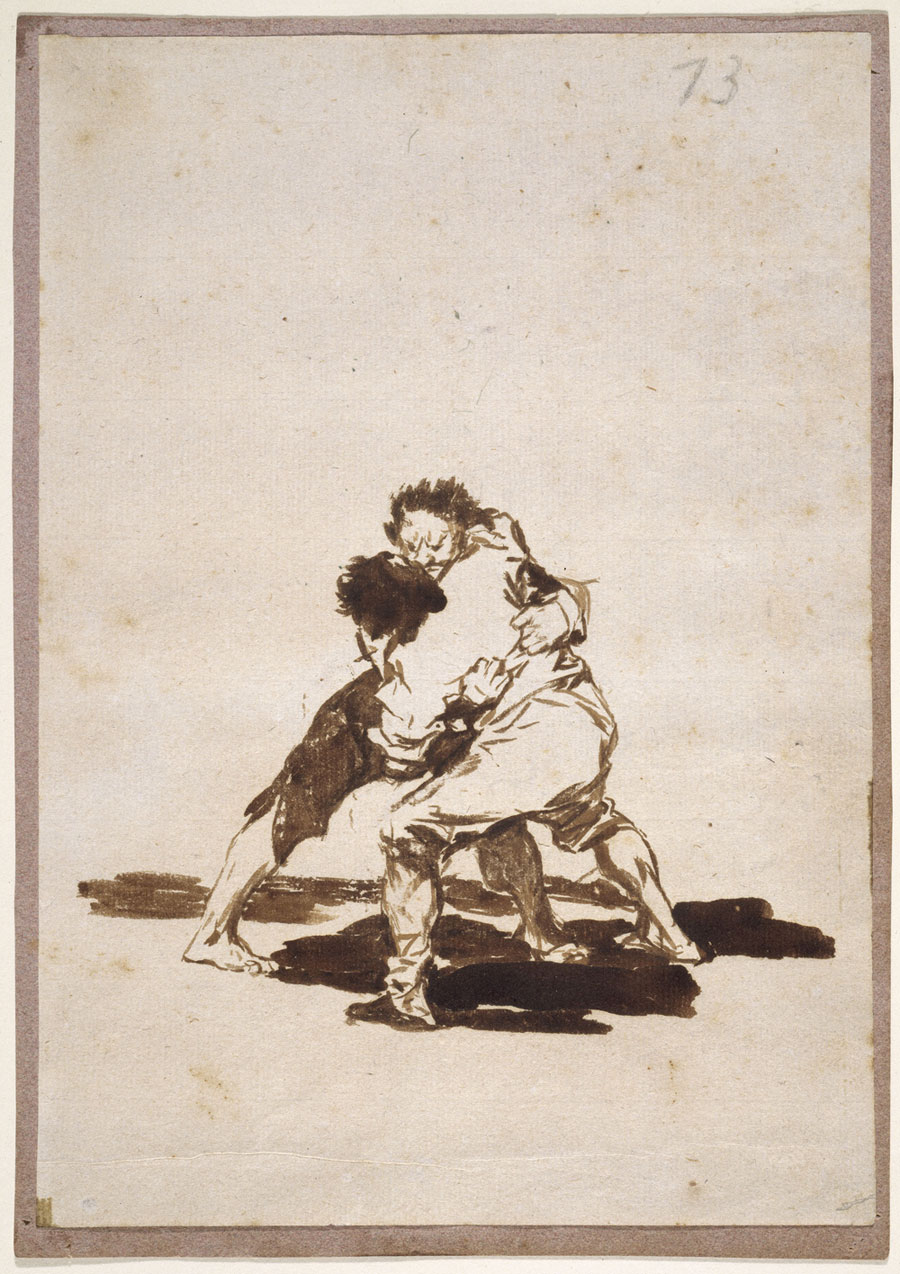
The MFA’s Goya collection owes a great debt to former MFA Curator of Prints and Drawings, and esteemed Goya scholar, Eleanor A. Sayre, who worked on the exhibitions The Changing Image: Prints by Francisco Goya (1974) and Goya and the Spirit of Enlightenment (1989) at the MFA. Many of the works on view in Goya: Order and Disorder were acquired by the Museum during her tenure, including the Seated Giant; Woman Reading to Two Children (about 1819); Resignation (La resignacion) (1816-1820); Merry Absurdity (Disparate alegre) (1816-1819); and the oil sketch on canvas of the Annunciation (1785). The Sleep of Reason Produces Monsters (El sueño de la razon produce monstruos), Caprichos 43 (1797-1799) and the drawing of Two Men Fighting (1812-1820) were part of Sayre’s bequest to the MFA after she passed away in 2001.

Press release from the Museum of Fine Arts, Boston website


Francisco Goya (Spanish, 1746-1828) 'Duke of Alba' 1795


Francisco Goya (Spanish, 1746-1828)
Duke of Alba
1795
Oil on canvas
195 x 126cm
Museo del Prado, Madrid, Spain


Francisco Goya (Spanish, 1746-1828) 'María del Pilar Teresa Cayetana de Silva Álvarez de Toledo y Silva, Thirteenth Duchess of Alba' 1797


Francisco Goya (Spanish, 1746-1828)
María del Pilar Teresa Cayetana de Silva Álvarez de Toledo y Silva, Thirteenth Duchess of Alba
1797
Oil on canvas
On loan from The Hispanic Society of America, New York, NY
Photograph © Museum of Fine Arts, Boston


Francisco Goya (Spanish, 1746-1828) 'Self-Portrait While Painting' c. 1795


Francisco Goya (Spanish, 1746-1828)
Self-Portrait While Painting
c. 1795
Oil on canvas
Museo de la Real Academia de Bellas Artes de San Fernando, Madrid
Photograph © Museum of Fine Arts, Boston


The most inquiring self-portraits often display a cool detachment almost to the point of impersonality. These are the real backstage revelations, where the painter’s high seriousness and insight are as palpable as the flaws exposed by these virtues.

Goya in his studio is dressed like a matador or majo, a wideboy, a mistake as he himself owns: his jacket is too tight and the trousers are straining around his bulging thighs. At nearly fifty he is too old and too stout for such clothes, as he very well knows, for in letters to his boyhood friend, Martin Zapater, Goya periodically laments his snub nose, and increasing girth. Yet he chose to paint himself in the least flattering position – side on – and the worst possible light, silhouetted against a whiteness so shattering that every contour is emphasised. He might as well have stood there naked.

It is high noon in the studio. The light is so bright that nothing is visible beyond the window as reflected in the mirror, and you need to squint to see this man of darkness. The brim of his hat is ringed with candleholders; according to his son Javier, Goya preferred to paint in the clear morning light but give ‘the final touches at night in artificial light’. He may not have been the only painter to get a close glow by turning his hat into a lamp stand but he is the only artist to paint himself wearing one of the candle-hats and thus revealing a trick of the trade. Presumably it is acting as an eye-shade at this moment, though he could have taken it off in the final painting for the sake of vanity, this cumbersome pot that’s too tall for his head. But size is a running gag here. Look at the tiny brush he is using to prod away at a painting so big it makes the artist look even smaller beneath his outsize headgear (matador and bull), a painting that is too large to correspond to this one for the self-portrait is surprisingly small – not quite two feet tall.

So small and yet strong enough to carry the full force of the scene, the stark light and the stark disenchantment of a man who turns upon himself very suddenly out of a spell of protracted thought. Just as in his portraits of the Spanish royal family – like the corner barker and his wife, as the French writer Théophile Gautier once described them – Goya doesn’t lay a gloss upon the facts. He is a fat man, quite probably a small fat man, tousled, unshaven, unsuitably dressed and able to see the truth quite clearly. That is what his look declares: I see how I look, I know what I am doing and who I am in this world.

Goya is probably stone-deaf by the time he painted himself in his studio at number 1 calle del Desengano, Madrid, the final cruelty of a long and mysterious illness. And the world is shut out of this picture, the window a white-out, the artist all alone in the little kingdom of his studio. The solo studio – as opposed to the buzzing workshop or atelier – was still quite a recent luxury in Goya’s day, only just becoming a place of withdrawal. It plays its part in the history of self-portraiture not just as a room of one’s own, or a refuge from society; but as the cell that throws you back on yourself and your misfortunes.

Laura Cummings. A Face to the World: On Self-Portraits. London: Harper Press, 2009, pp. 110-111.


Francisco Goya (Spanish, 1746-1828) 'Manuel Osorio Manrique de Zuñiga' c. 1788


Francisco Goya (Spanish, 1746-1828)
Manuel Osorio Manrique de Zuñiga
c. 1788
Oil on canvas
Lent by The Metropolitan Museum of Art, The Jules Bache Collection, 1949
Photograph © Museum of Fine Arts, Boston


Francisco Goya (Spanish, 1746-1828) 'Manuel Osorio Manrique de Zuñiga' c. 1788 (detail)


Francisco Goya (Spanish, 1746-1828)
Manuel Osorio Manrique de Zuñiga (detail)
c. 1788
Oil on canvas
Lent by The Metropolitan Museum of Art, The Jules Bache Collection, 1949
Photograph © Museum of Fine Arts, Boston


Francisco Goya (Spanish, 1746-1828) 'Witches' Sabbath' 1797-1798


Francisco Goya (Spanish, 1746-1828)
Witches’ Sabbath
1797-1798
Oil on canvas
Fundación Lázaro Galdiano, Madrid, España
Photograph © Museum of Fine Arts, Boston


Francisco Goya (Spanish, 1746-1828) 'Last Communion of Saint Joseph of Calasanz' 1819


Francisco Goya (Spanish, 1746-1828)
Last Communion of Saint Joseph of Calasanz
1819
Oil on canvas
Collection of the Padres Escolapios, Madrid, España
Photograph © Museum of Fine Arts, Boston


Francisco Goya (Spanish, 1746-1828) 'Self-Portrait with Doctor Arrieta' 1820


Francisco Goya (Spanish, 1746-1828)
Self-Portrait with Doctor Arrieta
1820
Oil on canvas
Lent by The Minneapolis Institute of Arts, The Ethel Morrison Van Derlip Fund
Photograph © Museum of Fine Arts, Boston


Francisco Goya (Spanish, 1746-1828) 'Seated Giant' by 1818


Francisco Goya (Spanish, 1746-1828)
Seated Giant
by 1818
Burnished aquatint (first state)
Katherine E. Bullard Fund in memory of Francis Bullard
Photograph © Museum of Fine Arts, Boston


Francisco Goya (Spanish, 1746-1828) 'Pesadilla' (Nightmare) 1816-1820


Francisco Goya (Spanish, 1746-1828)
Pesadilla (Nightmare)
1816-1820


Francisco Goya (Spanish, 1746-1828) 'Raging Lunatic (Loco furioso), Bordeaux Album I, G, 3[4?]' 1824-1828


Francisco Goya (Spanish, 1746-1828)
Raging Lunatic (Loco furioso), Bordeaux Album I, G, 3[4?]
1824-1828
Black crayon on laid paper
Collection Andrea Woodner
Photographer: Jim Strong. Courtesy of The Frick Collection.
Photograph © Museum of Fine Arts, Boston


Francisco Goya (Spanish, 1746-1828) 'Two Men Fighting', Album F, 73 1812-1820


Francisco Goya (Spanish, 1746-1828)
Two Men Fighting, Album F, 73
1812-1820
Brush and brown ink, with scraping
Bequest of Eleanor A. Sayre
Photograph © Museum of Fine Arts, Boston


Francisco Goya (Spanish, 1746-1828) 'Old Man on a Swing', Bordeaux Album II, H, 58 1824-1828


Francisco Goya (Spanish, 1746-1828)
Old Man on a Swing, Bordeaux Album II, H, 58
1824-1828
Black crayon on laid paper
On loan from The Hispanic Society of America, New York, NY
Photograph © Museum of Fine Arts, Boston


Francisco Goya (Spanish, 1746-1828) 'The Sleep of Reason Produces Monsters' (El sueño de la razon produce monstruos), Caprichos 43 1797-1799


Francisco Goya (Spanish, 1746-1828)
The Sleep of Reason Produces Monsters (El sueño de la razon produce monstruos), Caprichos 43
1797-1799
Etching and burnished aquatint (first edition)
Bequest of Eleanor A. Sayre
Photograph © Museum of Fine Arts, Boston


Francisco Goya (Spanish, 1746-1828) 'Until Death' (Hasta la muerte), Caprichos 55 1797-1799


Francisco Goya (Spanish, 1746-1828)
Until Death (Hasta la muerte), Caprichos 55
1797-1799
Burnished aquatint etching with drypoint
The Boston Athenaeum


Francisco Goya (Spanish, 1746-1828) 'Time (Old Women)' c. 1810-1812


Francisco Goya (Spanish, 1746-1828)
Time (Old Women)
c. 1810-1812
Oil on canvas
Palais des Beaux-Arts de Lille


Francisco Goya (Spanish, 1746-1828) 'Straw Mannequin' 1791


Francisco Goya (Spanish, 1746-1828)
Straw Mannequin
1791
Oil on canvas


Museum of Fine Arts, Boston
Avenue of the Arts
465 Huntington Avenue
Boston, Massachusetts

Opening hours:
Wednesday – Monday 10am – 5pm

Museum of Fine Arts, Boston website

LIKE ART BLART ON FACEBOOK

Back to top

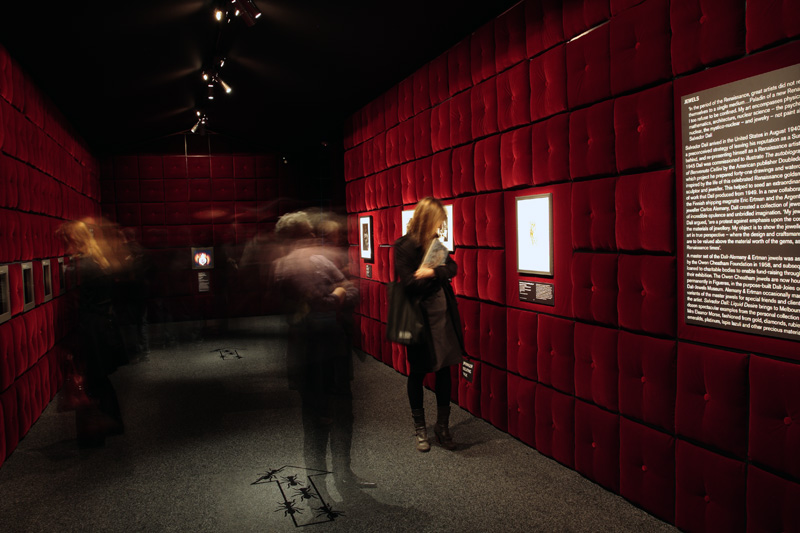
Exhibition photographs: ‘Salvador Dalí: Liquid Desire’ Melbourne Winter Masterpieces at the National Gallery of Victoria, Melbourne

Exhibition dates: 13th June – 4th October, 2009


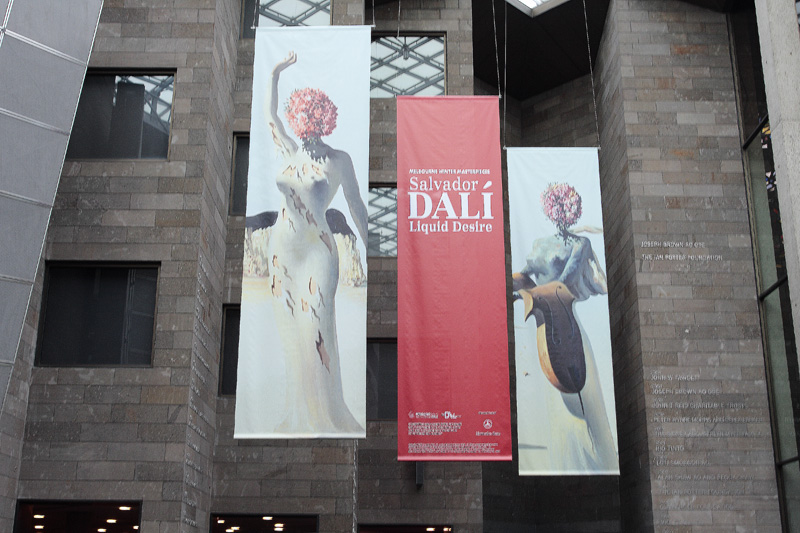
Installation view of the interior forecourt of the National Gallery of Victoria showing banners for the exhibition Salvador Dalí: Liquid Desire


Installation view of the interior forecourt of the National Gallery of Victoria showing banners for the exhibition Salvador Dalí: Liquid Desire
Photo: Marcus Bunyan


Installation photographs from the latest Winter Masterpieces blockbuster Salvador Dalí: Liquid Desire from the media preview on the day the exhibition opened at NGV International, Melbourne. Thank you to Jemma Altmeier, Media and Public Affairs Administrator at the NGV for the invitation. Photographs were taken using a digital camera, tripod and available light.

Fantastic to see my friend and curator of the exhibition, Dr Ted Gott, at the opening. Congratulations on a wonderful show!

Dr Marcus Bunyan


© All photographs copyright Dr Marcus Bunyan 2009 and the National Gallery of Victoria. All rights reserved. Photographs may not be reproduced without permission.

Photographs proceed from the beginning to the end of the exhibition in chronological order.


Many thankx to the National Gallery of Victoria for allowing me to publish the photographs in the posting. Please click on the photographs for a larger version of the image.


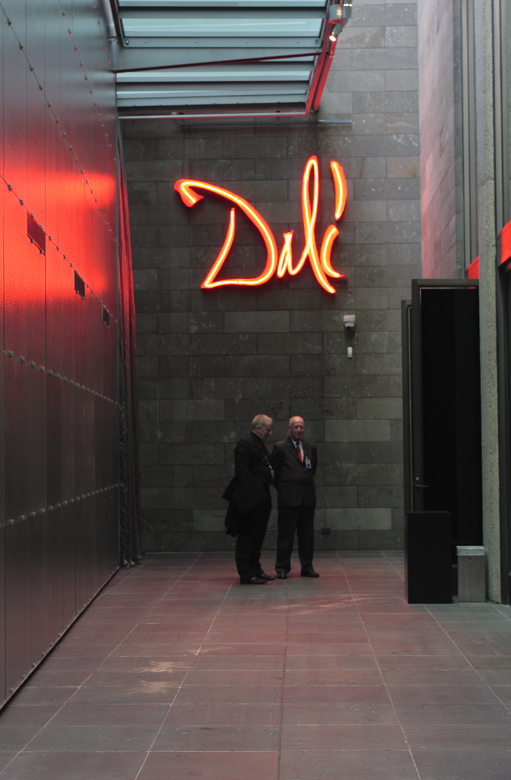
Entrance to the 'Salvador Dali: Liquid Desire' Winter Masterpieces exhibition at NGV International, Melbourne


Entrance to the Salvador Dalí: Liquid Desire Winter Masterpieces exhibition at the National Gallery of Victoria, Melbourne
Photo: Marcus Bunyan


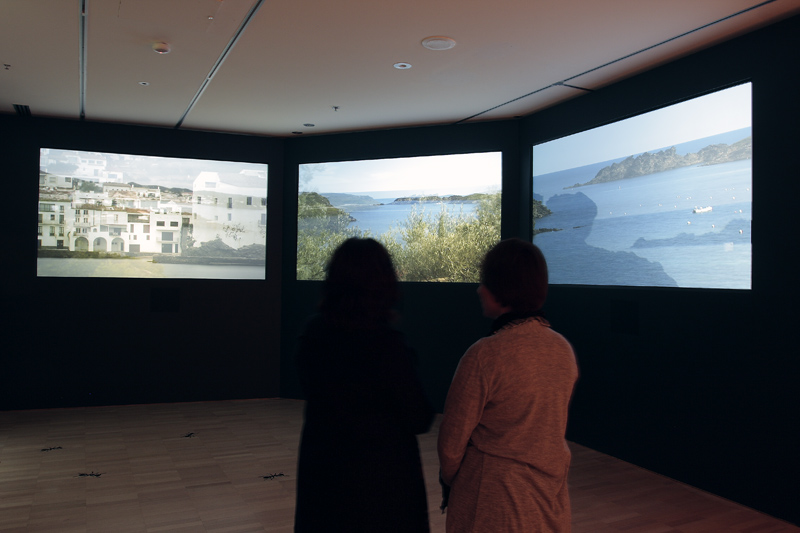
3 panel video installation of the Catalan countryside around where Salvador Dali lived from the exhibition 'Salvador Dalí: Liquid Desire Winter Masterpieces' at the National Gallery of Victoria, Melbourne


3 panel video installation of the Catalan countryside where Salvador Dali lived. 13 minutes duration from the exhibition Salvador Dalí: Liquid Desire Winter Masterpieces at the National Gallery of Victoria, Melbourne
Photo: Marcus Bunyan


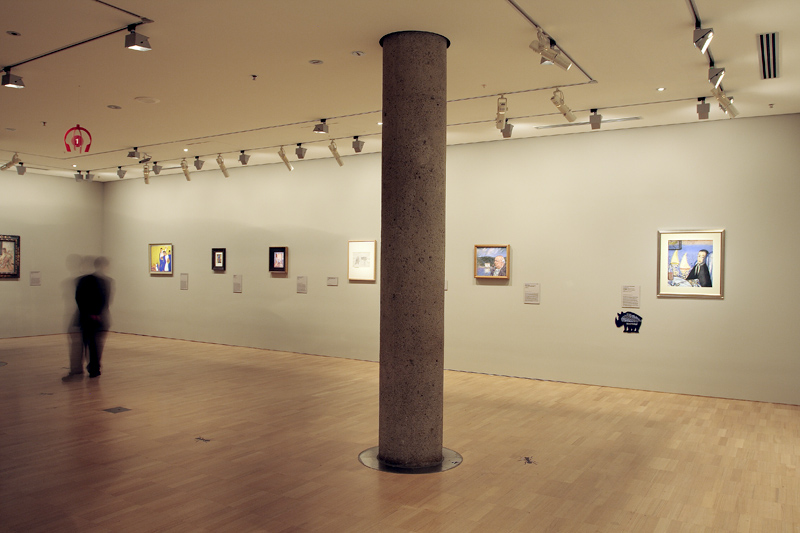
Early work from the 'Salvador Dali: Liquid Desire' Winter Masterpieces exhibition at NGV International, Melbourne


Early work from the Salvador Dalí: Liquid Desire Winter Masterpieces exhibition at the National Gallery of Victoria, Melbourne
Photo: Marcus Bunyan


'Salvador Dali: Liquid Desire' Winter Masterpieces exhibition at NGV International, Melbourne

To the left 'View of the Cadaques from the Creus Tower' 1923; to the right 'Table in front of the Sea. Homage to Eric Satie' 1926 from the 'Salvador Dalí: Liquid Desire' Winter Masterpieces exhibition at the National Gallery of Victoria, Melbourne


To the left View of the Cadaques from the Creus Tower 1923; to the right Table in front of the Sea. Homage to Eric Satie 1926 from the Salvador Dalí: Liquid Desire Winter Masterpieces exhibition at the National Gallery of Victoria, Melbourne
Photos: Marcus Bunyan


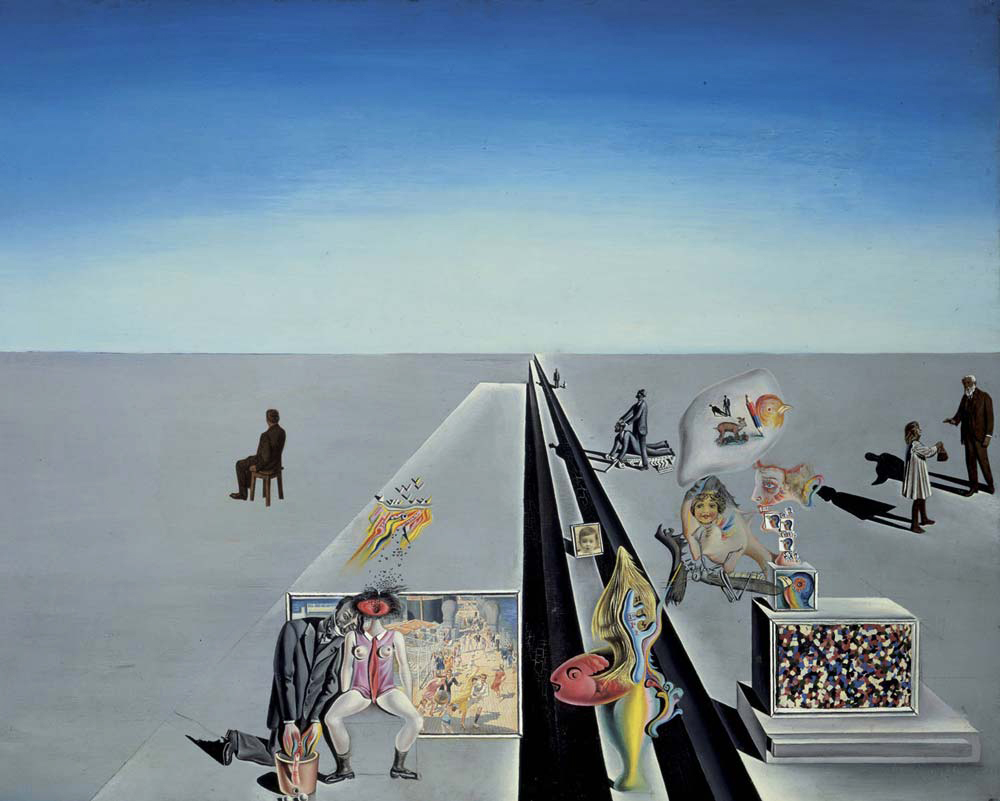
In the centre 'The First Days of Spring' 1929; to the right 'Surrealist composition' 1928 from the 'Salvador Dalí: Liquid Desire' Winter Masterpieces exhibition at the National Gallery of Victoria, Melbourne


In the centre The First Days of Spring 1929; to the right Surrealist composition 1928 from the Salvador Dalí: Liquid Desire Winter Masterpieces exhibition at the National Gallery of Victoria, Melbourne
Photo: Marcus Bunyan


Salvador Dalí (Spanish 1904-1989, worked in United States 1940-1948) 'The First Days of Spring' 1929


Salvador Dalí (Spanish 1904-1989, worked in United States 1940-1948)
The First Days of Spring
1929
Oil on canvas
The Salvador Dalí Museum, St Petersburg, Florida
Worldwide Rights: © Salvador Dalí, Fundació Gala-Salvador Dalí, VISCOPY, 2009
In the USA: © Salvador Dalí Museum Inc., St. Petersburg, FL, 2009


Installation view with 'The Age' art critic Associate Professor Robert Nelson at centre right and 'The hand. The remorse of conscience' 1930 at far right, from the 'Salvador Dalí: Liquid Desire' Winter Masterpieces exhibition at the National Gallery of Victoria, Melbourne


Installation view with The Age art critic Associate Professor Robert Nelson at centre right and The hand. The remorse of conscience 1930 at far right, from the Salvador Dalí: Liquid Desire Winter Masterpieces exhibition at the National Gallery of Victoria, Melbourne
Photo: Marcus Bunyan


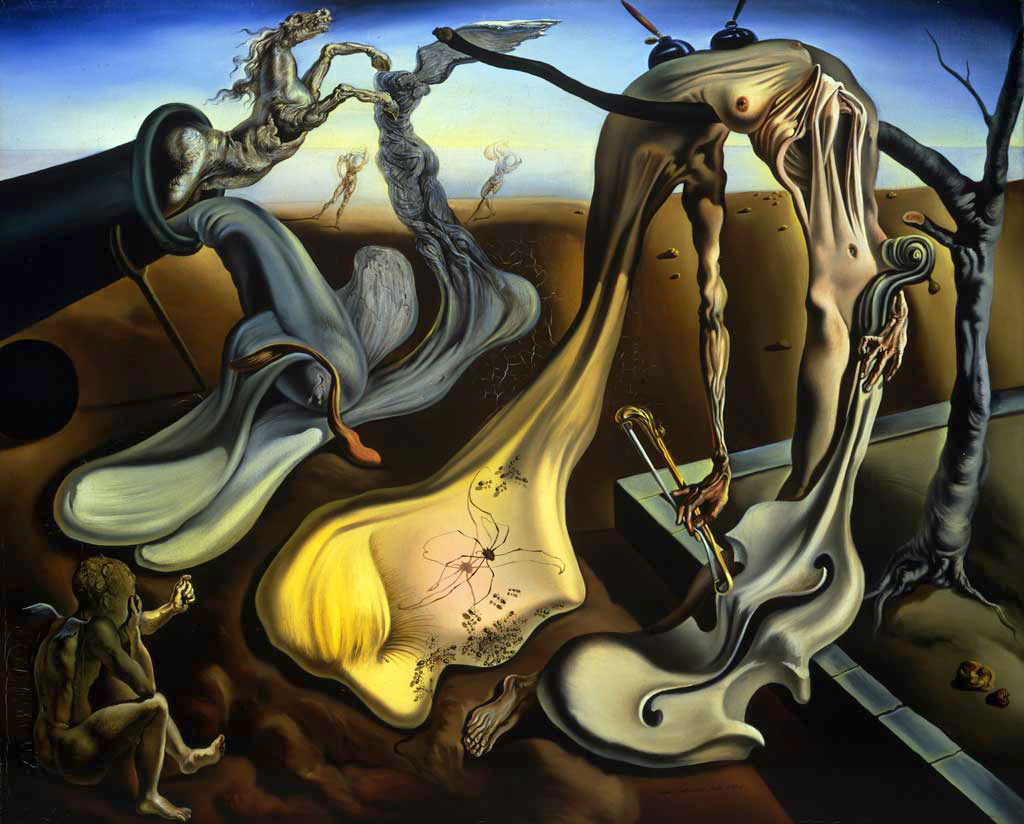
Salvador Dalí (Spanish 1904-1989, worked in United States 1940-1948) 'Daddy Longlegs of the evening - Hope!' 1940


Salvador Dalí (Spanish 1904-1989, worked in United States 1940-1948)
Daddy Longlegs of the evening – Hope!
1940
Oil on canvas
40.6 x 50.8cm
The Salvador Dalí Museum, St Petersburg, Florida
Worldwide Rights: © Salvador Dalí, Fundació Gala-Salvador Dalí, VISCOPY, 2009
In the USA: © Salvador Dalí Museum Inc., St. Petersburg, FL, 2009


Salvador Dalí (Spanish 1904-1989, worked in United States 1940-1948) 'The disintegration of The persistence of memory' 1952-1954


Salvador Dalí (Spanish 1904-1989, worked in United States 1940-1948)
The disintegration of The persistence of memory
1952-54
Oil on canvas
25.4 x 33.0cm
The Salvador Dalí Museum, St Petersburg, Florida
Worldwide Rights: © Salvador Dalí, Fundació Gala-Salvador Dalí, VISCOPY, 2009.
In the USA: © Salvador Dalí Museum Inc., St. Petersburg, FL, 2009


Salvador Dalí (Spanish 1904-1989, worked in United States 1940-1948) 'Soft self-portrait with grilled bacon' 1941


Salvador Dalí (Spanish 1904-1989, worked in United States 1940-1948)
Soft self-portrait with grilled bacon
1941
Oil on canvas
61.0 x 51.0cm
Fundació Gala-Salvador Dalí, Figueres (0043)
© Salvador Dalí, Fundació Gala- Salvador Dalí, VISCOPY, 2009


Salvador Dalí (Spanish 1904-89, worked in United States 1940-48) 'Memory of the child-woman' 1932


Salvador Dalí (Spanish 1904-1989, worked in United States 1940-1948)
Memory of the child-woman
1932
Oil on canvas
99.1 x 120.0cm
The Salvador Dalí Museum, St Petersburg, Florida
Worldwide Rights: © Salvador Dalí, Fundació Gala-Salvador Dalí, VISCOPY, 2009
In the USA: © Salvador Dalí Museum Inc., St. Petersburg, FL, 2009


Installation view with 'Memory of the child-woman' 1932 at right from the 'Salvador Dalí: Liquid Desire' Winter Masterpieces exhibition at the National Gallery of Victoria, Melbourne


Installation view with Memory of the child-woman 1932 at right from the Salvador Dalí: Liquid Desire Winter Masterpieces exhibition at the National Gallery of Victoria, Melbourne
Photo: Marcus Bunyan


Salvador Dalí (Spanish 1904-1989, worked in United States 1940-1948) 'Lobster Telephone' 1936 (installation view)


Salvador Dalí (Spanish 1904-1989, worked in United States 1940-1948)
Lobster Telephone (installation view)
1936
Photo: Marcus Bunyan


Installation view of the exhibition 'Salvador Dali: Liquid Desire' Winter Masterpieces exhibition at NGV International, Melbourne

Installation view of the exhibition 'Salvador Dali: Liquid Desire' Winter Masterpieces exhibition at NGV International, Melbourne


Jewellery gallery at the 'Salvador Dalí: Liquid Desire' Winter Masterpieces exhibition at the National Gallery of Victoria, Melbourne


Jewellery gallery at the Salvador Dalí: Liquid Desire Winter Masterpieces exhibition at the National Gallery of Victoria, Melbourne
Photos: Marcus Bunyan


Salvador Dalí (Spanish 1904-89, worked in United States 1940-48)Alemany and Ertman Incorporated (New York, manufacturer United States late 1940s) 'Bleeding world, pendant' 1953


Salvador Dalí (Spanish 1904-1989, worked in United States 1940-1948)
Alemany and Ertman Incorporated (New York, manufacturer United States late 1940s)
Bleeding world, pendant
1953
Gold, rubies, pearls, diamonds
The Salvador Dalí Museum, St Petersburg, Florida
Worldwide Rights: © Salvador Dalí, Fundació Gala-Salvador Dalí, VISCOPY, 2009
In the USA: © Salvador Dalí Museum Inc., St. Petersburg, FL, 2009


Television with film installation at 'Salvador Dali: Liquid Desire' Winter Masterpieces exhibition at NGV International, Melbourne


Televisions with film installation from the Salvador Dalí: Liquid Desire Winter Masterpieces exhibition at the National Gallery of Victoria, Melbourne
Photo: Marcus Bunyan


Salvador Dalí (Spanish 1904-89, worked in United States 1940-48) Philippe Halsman (Latvian / American 1906-79, worked in France 1931-40) 'Dalí Atomicus' 1948, printed 1981


Salvador Dalí (Spanish 1904-1989, worked in United States 1940-1948)
Philippe Halsman (Latvian/American 1906-1979, worked in France 1931-1940)
Dalí Atomicus
1948, printed 1981
Gelatin silver photograph
26.7 x 34.3cm
Image rights of Salvador Dalí reserved. Fundació Gala-Salvador Dalí, Figueres, 2009
© Philippe Halsman / Magnum


Installation of black and white photography from the exhibition 'Salvador Dalí: Liquid Desire' Winter Masterpieces exhibition at the National Gallery of Victoria, Melbourne with Dr Ted Gott, curator of the exhibition, with back to camera at centre


Installation of black and white photography from the exhibition Salvador Dalí: Liquid Desire Winter Masterpieces exhibition at the National Gallery of Victoria, Melbourne with Dr Ted Gott, curator of the exhibition, with back to camera at centre
Photo: Marcus Bunyan


Reproduction of 'Gala foot. Stereoscopic paintings' 1975-1976 in an installation using mirrors that would have been originally used to obtain the stereoscopic effect


Reproduction of Gala foot. Stereoscopic paintings 1975-1976 in an installation using mirrors that would have been originally used to obtain the stereoscopic effect
Photo: Marcus Bunyan


Final exhibition space from the 'Salvador Dalí: Liquid Desire' Winter Masterpieces exhibition at the National Gallery of Victoria, Melbourne


Final exhibition space from the Salvador Dalí: Liquid Desire Winter Masterpieces exhibition at the National Gallery of Victoria, Melbourne
Photo: Marcus Bunyan


Salvador Dalí (Spanish 1904-1989, worked in United States 1940-1948) 'The Ecumenical Council' 1960


Salvador Dalí (Spanish 1904-1989, worked in United States 1940-1948)
The Ecumenical Council
1960
Oil on canvas
299.7 x 254.0cm
The Salvador Dalí Museum, St Petersburg, Florida
Worldwide Rights: © Salvador Dalí, Fundació Gala-Salvador Dalí, VISCOPY, 2009
In the USA: © Salvador Dalí Museum Inc., St. Petersburg, FL, 2009


Final gallery space from the 'Salvador Dalí: Liquid Desire' Winter Masterpieces exhibition at the National Gallery of Victoria, Melbourne featuring 'The Ecumenical Council' 1960

Final gallery space from the 'Salvador Dalí: Liquid Desire' Winter Masterpieces exhibition at the National Gallery of Victoria, Melbourne featuring 'The Ecumenical Council' 1960


Final gallery space from the Salvador Dalí: Liquid Desire Winter Masterpieces exhibition at the National Gallery of Victoria, Melbourne featuring The Ecumenical Council 1960
Photos: Marcus Bunyan


National Gallery of Victoria (International)
180 St Kilda Road, Melbourne

Opening hours: Salvador Dalí: Liquid Desire is open 7 days a week and until 9pm every Wednesday from 17 June

Tickets
Adult: $23
Concession: $18
Child: $11 (ages 5-15)
Family (2 adults + 3 children): $60
NGV Member Adult: $16
NGV Member Family: $40

Unlimited entry tickets
Adult: $55
Concession: $45
NGV Member Adult: $40

National Gallery of Victoria Dali website

LIKE ART BLART ON FACEBOOK

Back to top