
Exhibition dates: 29th May – 2nd October, 2022
Curator: Sarah Greenough, senior curator and head of the department of photographs, National Gallery of Art
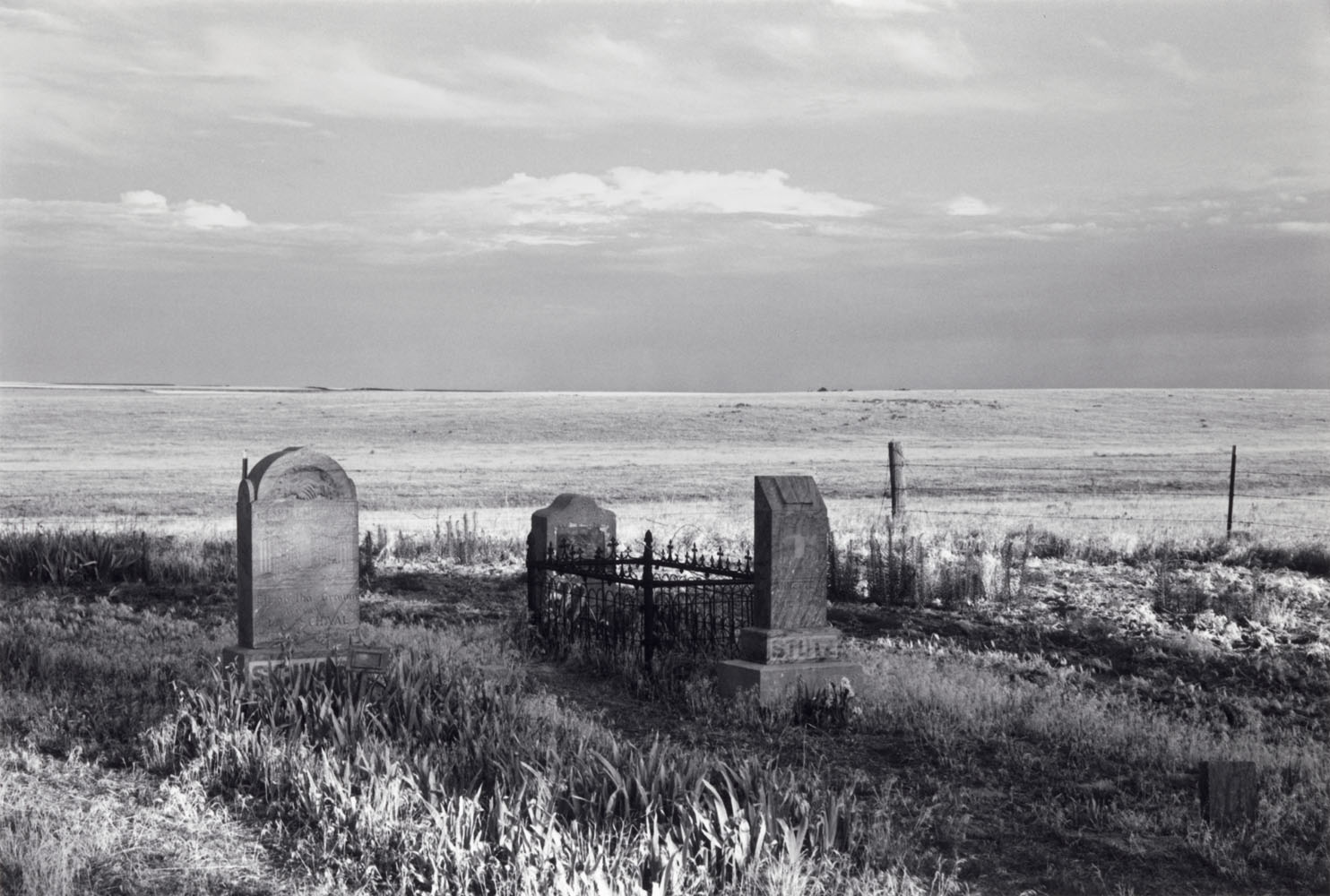
Robert Adams (American, b. 1937)
Summer, Early Morning, Immigrant Cemetery, North of Bethune, Colorado
1965
Gelatin silver print
Image: 10.4 x 15.2 cm (4 1/8 x 6 in.)
National Gallery of Art, Washington, Pepita Milmore Memorial Fund and Gift of Robert and Kerstin Adams
© Robert Adams, Courtesy Fraenkel Gallery, San Francisco
The quiet of the great beyond
With gratitude, I admire the photographs of Robert Adams. I admire their perspicuous (“clear, lucid”, able to be seen through) and perspicacious (“keen, astute,” able to see through) nature.
They imbibe (“absorb, assimilate,” ideas or knowledge) in us “the wonder and fragility of the American landscape, its inherent beauty, and the inadequacy of our response to it… [they] capture the sense of peace and harmony that the beauty of nature can instill in us – “the silence of light,” as he calls it… [and they] question our silent complicity in the desecration of that beauty by consumerism, industrialisation, and lack of environmental stewardship… While these photographs lament the ravages that have been inflicted on the land, they also pay homage to what remains.”
Like so many photographers of the American landscape, Adams’ debt to the vision of Walker Evans can be seen in his early work, in images such as Movie Theater, Otis, Colorado (1965, below) and Catholic Church, Summer, Ramah, Colorado (1965, below) – but even in images such as Wheat Stubble, South of Thurman, Colorado (1965, below) we can begin to see the beginnings of Adams personal artistic signature, the quiet of “the great beyond” (both physically and spiritually).
In modernist photographs that step off from Walker Evans’ legacy, Adams quiet, still photographs require of the viewer contemplation and reflection… reflection on the isolation of tract housing seemingly dropped into the vast American landscape. In these photographs (such as the two photographs Newly Occupied Tract Houses, Colorado Springs, 1968 below) Adams’ use of near/far is exemplary, with the nearness of the new excavation, the new scarring of the earth, contrasting with the sublime majesty of the mountains beyond. Other more personal psychological scarring can be seen in the two photographs Colorado Springs (1968-1971, below) where single, isolated, anonymous human beings are occluded in silhouette or shadow, damned by the hot sun.
In other photographs houses become like fossilised dinosaur skeletons, their graves marked by ironic street names such as Darwin Pl. (Frame for a Tract House, Colorado Springs, 1969 below), or multiply across the landscape, breeding like some genetically identical sequence (Pikes Peak Park, Colorado Springs, 1969, below). Even petrol stations blare out the name “Frontier” as though to irrevocably define that here we live on the edge of nowhere. And so it goes in Adams’ work… isolated people living in a barren landscape being colonised and inhabited without much thought for the beauty or the destruction of the landscape.
From the mid-1970s onwards, Adams’ landscape photographs begin to eschew all but the smallest pointers to human habitation, but this makes these human marks on the landscape all the more intrusive because of it. For example, in the photograph of the vast landscape South of the Rocky Flats Nuclear Weapons Plant, Jefferson County, Colorado (1976, below) the only markings of human activity are the tyre marks in the foreground and the telegraph poles, road and cars at far right… and then the title hits you with a double-whammy, “Rocky Flats Nuclear Weapons Plant”, not present in the photograph but present in our consciousness (of the landscape). Even less evidence of human existence is signalled in the photograph Missouri River, Clay County, South Dakota (1977, below), but then we notice at bottom left a discarded tin can, just a discarded tin can, but this one tin can says so much about our use and abuse of our only habitable planet, earth.
In image after image, roads scar the landscape, planes fly overhead, industry and housing colonise the sublime, and human beings hug and are alienated amongst concrete jungles and car parks. New development erodes the earth leaving behind the detritus of human existence. Old growth trees are slaughtered in clearcut operations in which every tree has been cut down and removed. A dead albatross rots on an expanse of beach (The Sea Beach, Albatross, 2015 below) while in the distance the photographer picks out 4 ghosts of human beings (The Sea Beach, 2015 below).
Adams’ photographic vision is extra ordinary and I cannot fault his individual photographs. I become engrossed in them. I breathe their atmosphere. He has a resolution, both in terms of large format aesthetic, the aesthetic of beauty and of using materials, light and composition… that seems exactly right. He possesses that superlative skill of few great photographers, and by that I mean: sometimes he has true compassion** / parallel to a religious compassion, but not based on something higher / just perfect human. In some of his photographs (such as East from Flagstaff Mountain, Boulder County, Colorado 1975, below) he possesses real forgiveness, in others there is the perfection of cruel, the perfection of de/composition.
** achieved by Arbus, Atget and sometimes by Clift, Gowin.
And then, each image holds small clues vital to the overall conversation that is the accumulation of his work and it is in their collective accumulation of meaning that Adams’ photographs grow and build to shatter not just the American silence on environmental issues, but the deafening silence of the whole industrialised world. In their holistic nature, Adams’ body of work becomes punctum and because of this his work produces other “things”, things as great as anything the French literary theorist, essayist, philosopher, critic, and semiotician Roland Barthes wrote about. As in Barthes’ seminal work Camera Lucida, Adams’ work reminds us that the “photograph is evidence of ‘what has ceased to be’. Instead of making reality solid, it reminds us of the world’s ever changing nature.”1
Human beings can never leave anything as they find it, they always have to possess and change whatever they see in a form of desecration (the action of damaging or showing no respect toward something holy or very much respected). Except human beings do not respect the only place that have to live on, this earth. When will it change?
As Alain de Botton observes on the importance of the sublime places to the human psyche,
“If the world is unfair or beyond our understanding, sublime places suggest it is not surprising things should be thus. We are the playthings of the forces that laid out the oceans and chiselled the mountains. Sublime places acknowledge limitations that we might otherwise encounter with anxiety or anger in the ordinary flow of events. It is not just nature that defies us. Human life is as overwhelming, but it is the vast spaces of nature that perhaps provide us with the finest, the most respectful reminder of all that exceeds us. If we spend time with them, they may help us to accept more graciously the great unfathomable events that molest our lives and will inevitably return us to dust.”2
We loose these places at our peril and the peril of the entire human race.
Dr Marcus Bunyan
1/ Anonymous. “Roland Barthes,” on the Wikipedia website Nd [Online] Cited 23/09/2022
2/ Alain de Botton. The Art of Travel. London: Penguin, 2002, pp. 178-179.
Many thankx to the National Gallery of Art for allowing me to publish the photographs in the posting. Please click on the photographs for a larger version of the image.
“Robert Adams’s photographs often seem to demand that viewers do a double-take. Seemingly ordinary subjects like tree stumps, tract housing or the moon seen from a parking lot “require very careful looking and careful consideration,” says curator Sarah Greenough, before they reveal the photographer’s deeply personal visions of nature – and, sometimes, his despair at what humans have done with it.”
Peter Saenger. “Robert Adams Takes Photos That Face Facts,” on The Wall Street Journal website May 13, 2022 [Online] Cited 23/06/2022
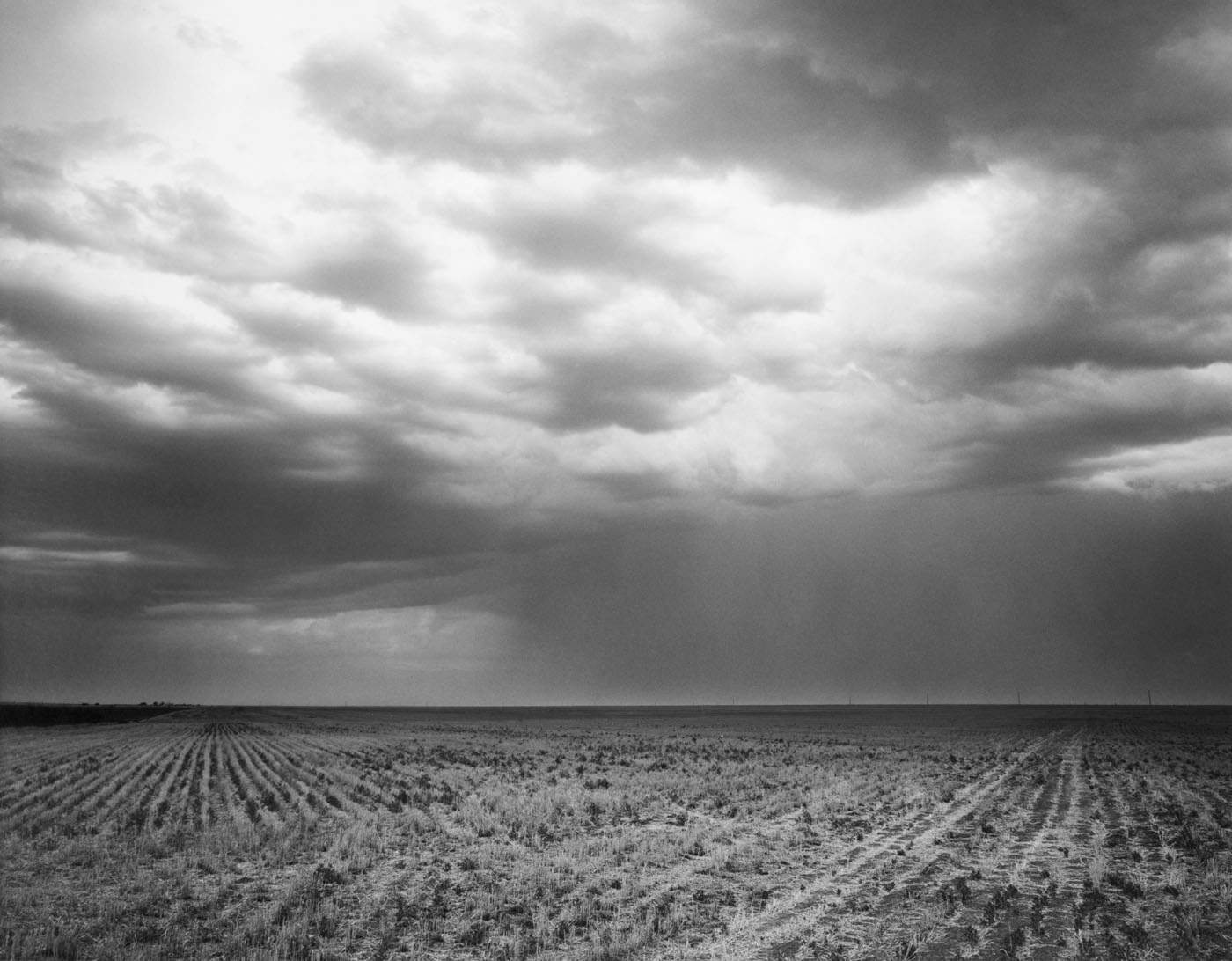
Robert Adams (American, b. 1937)
Wheat Stubble, South of Thurman, Colorado
1965, printed 1988
Gelatin silver print
Image: 22.9 x 27.9cm (9 x 11 in.)
Collection of Jeffrey Fraenkel and Alan Mark
© Robert Adams, Courtesy Fraenkel Gallery, San Francisco
For 50 years, Robert Adams (b. 1937) has made compelling, provocative, and highly influential photographs that show us the wonder and fragility of the American landscape, its inherent beauty, and the inadequacy of our response to it. This exhibition explores the reverential way he looks at the world around him and the almost palpable silence of his work.
Many of these photographs of the American West capture the sense of peace and harmony that the beauty of nature can instill in us – “the silence of light,” as he calls it, that he sees on the prairie, in the woods, and by the ocean. Other pictures question our silent complicity in the desecration of that beauty by consumerism, industrialisation, and lack of environmental stewardship. Divided into three sections – The Gift, Our Response, and Tenancy – the exhibition features some 175 works from the artist’s most important projects and includes pictures of suburban sprawl, strip malls, highways, homes, and stores, as well as rivers, skies, the prairie, and the ocean.
While these photographs lament the ravages that have been inflicted on the land, they also pay homage to what remains.
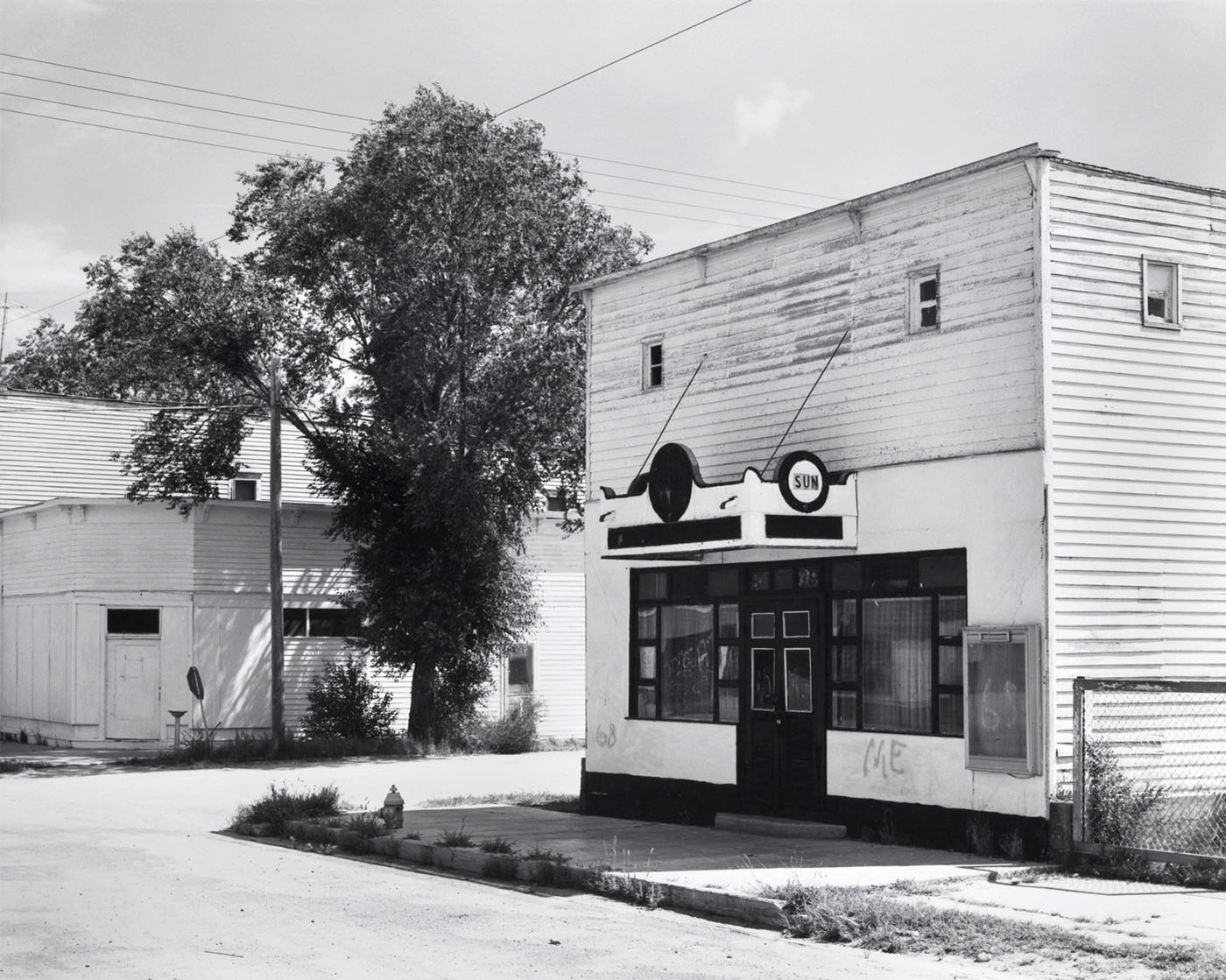
Robert Adams (American, b. 1937)
Movie Theater, Otis, Colorado
1965, printed c. 1977
Gelatin silver print
Image: 16.3 x 20.3cm (6 7/16 x 8 in.)
National Gallery of Art, Washington, Pepita Milmore Memorial Fund and Gift of Robert and Kerstin Adams
© Robert Adams, Courtesy Fraenkel Gallery, San Francisco
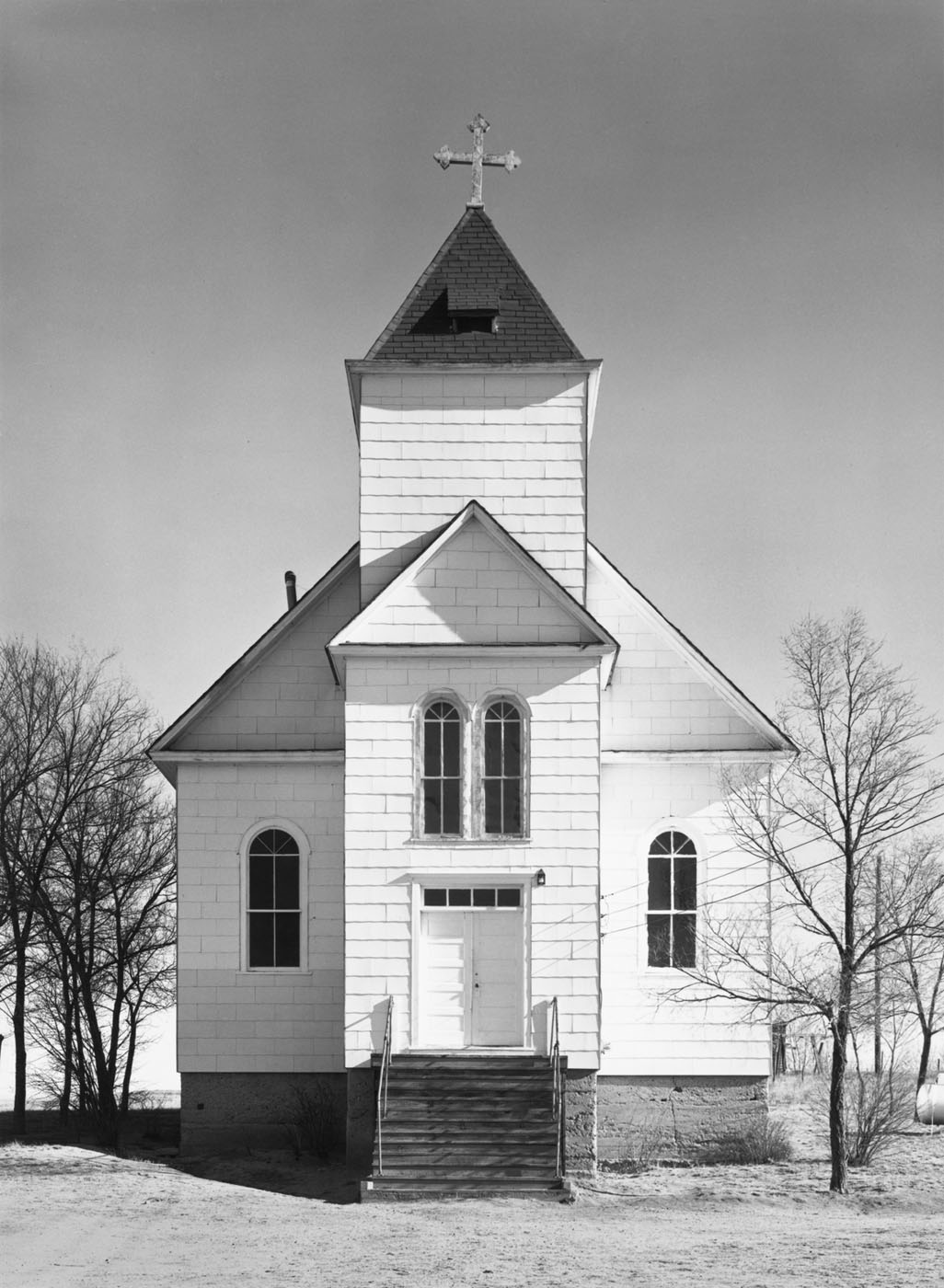
Robert Adams (American, b. 1937)
Catholic Church, Winter, Ramah, Colorado
1965, printed 1982
Gelatin silver print
Image: 22.3 x 16.4cm (8 3/4 x 6 7/16 in.)
National Gallery of Art, Washington, Pepita Milmore Memorial Fund and Gift of Robert and Kerstin Adams
© Robert Adams, Courtesy Fraenkel Gallery, San Francisco
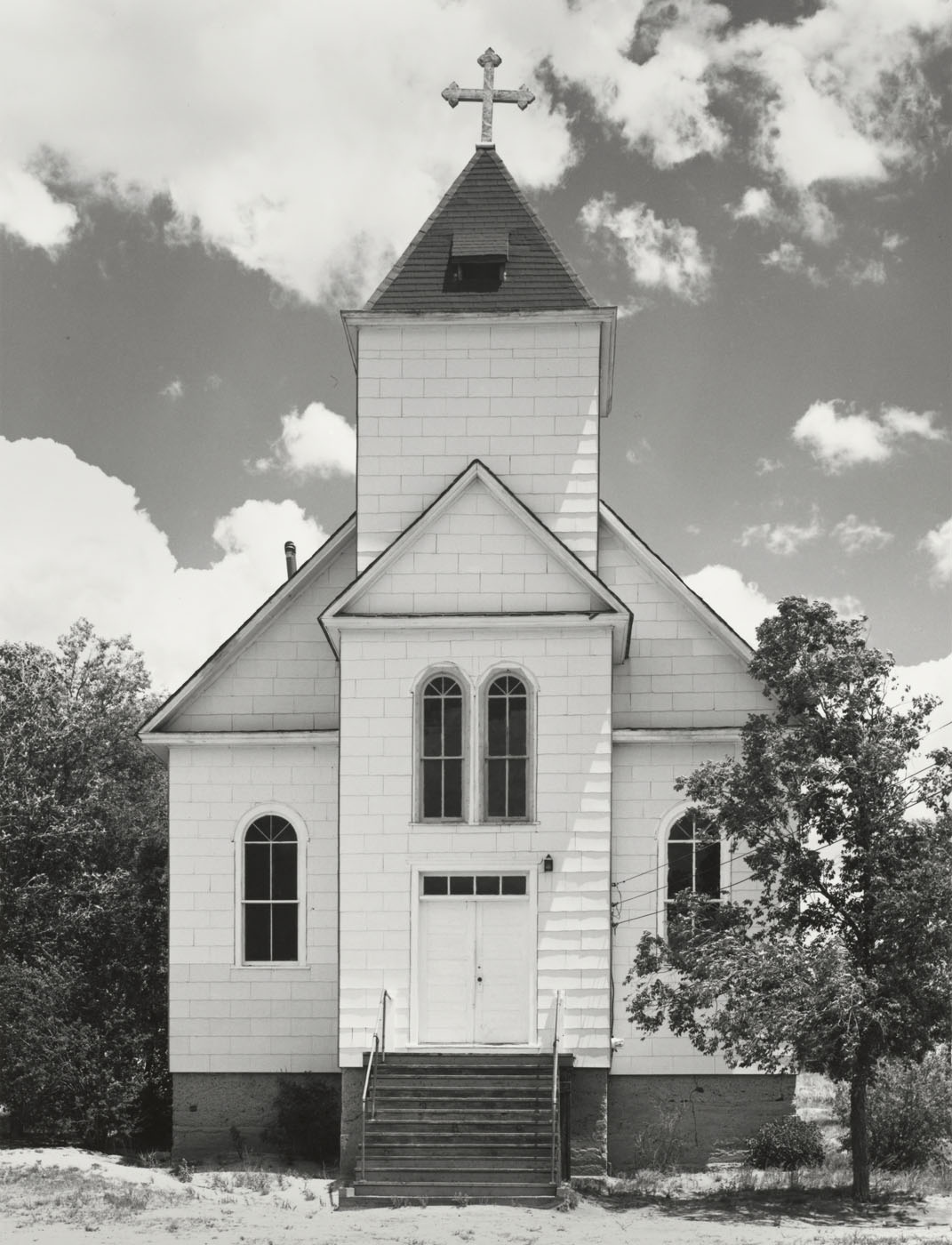
Robert Adams (American, b. 1937)
Catholic Church, Summer, Ramah, Colorado
1965, printed 1981
Gelatin silver print
Image: 21.5 x 16.4cm (8 7/16 x 6 7/16 in.)
National Gallery of Art, Washington, Pepita Milmore Memorial Fund and Gift of Robert and Kerstin Adams
© Robert Adams, Courtesy Fraenkel Gallery, San Francisco
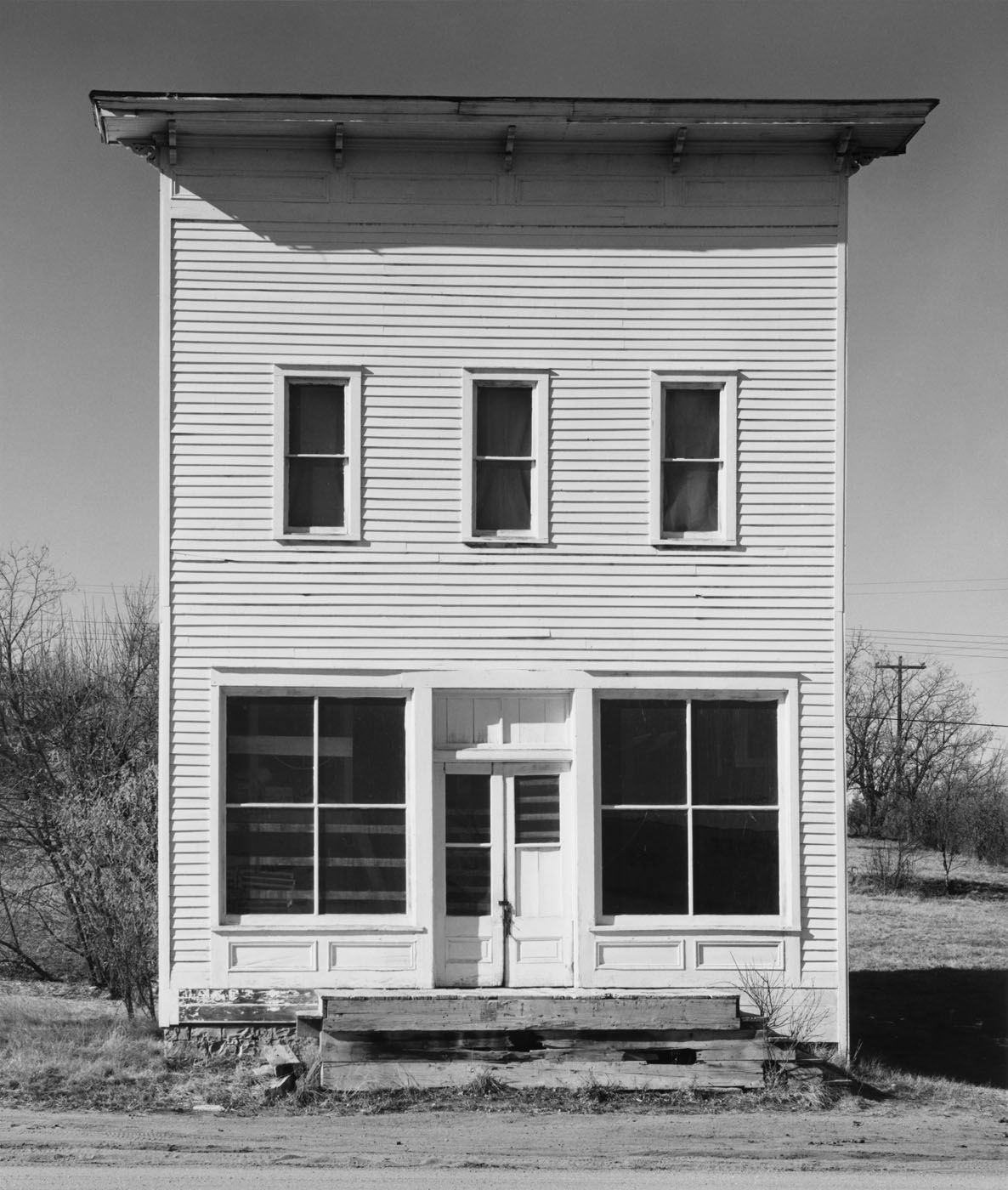
Robert Adams (American, b. 1937)
Store, Elizabeth, Colorado
1965, printed 1988
Gelatin silver print
Image: 26.9 x 22.8cm (10 9/16 x 9 in.)
National Gallery of Art, Washington, Pepita Milmore Memorial Fund and Gift of Robert and Kerstin Adams
© Robert Adams, Courtesy Fraenkel Gallery, San Francisco
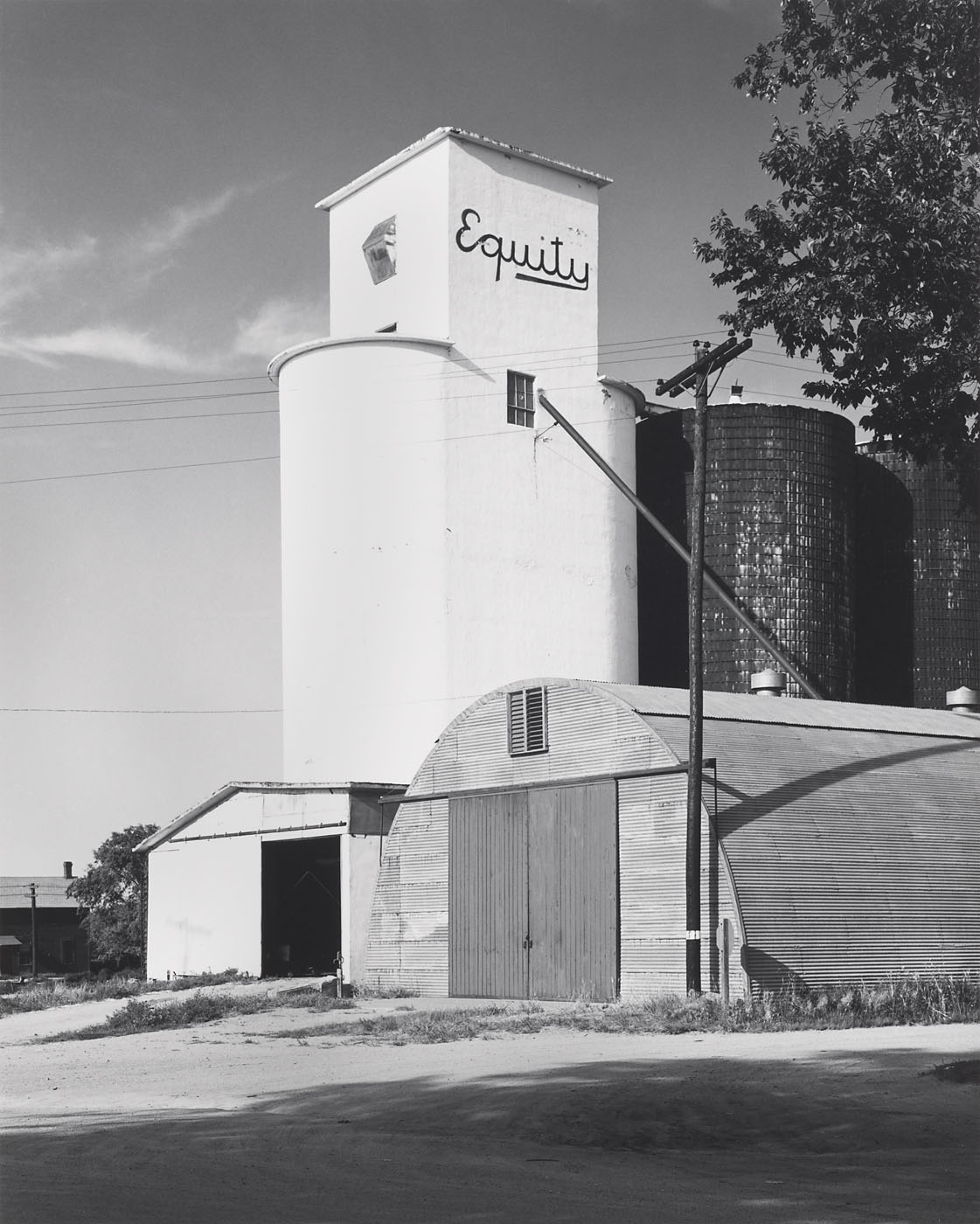
Robert Adams (American, b. 1937)
Arriba, Colorado
1966, printed 1981
Gelatin silver print
Image: 28.4 x 22.7cm (11 3/16 x 8 15/16 in.)
National Gallery of Art, Washington, Pepita Milmore Memorial Fund and Gift of Robert and Kerstin Adams
© Robert Adams, Courtesy Fraenkel Gallery, San Francisco
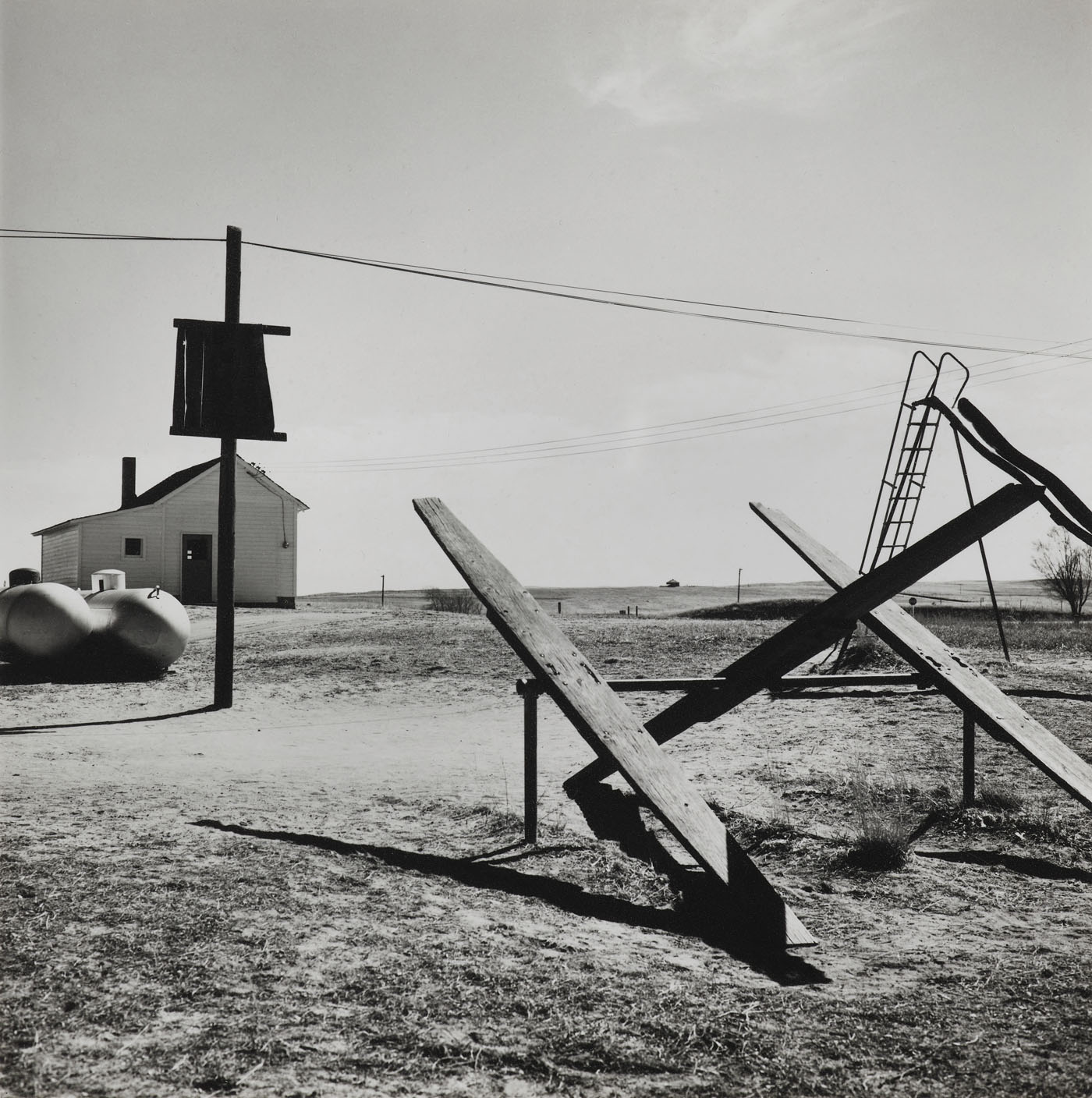
Robert Adams (American, b. 1937)
Schoolyard, Ramah, Colorado
1968
Gelatin silver print
Image: 15.2 x 15.2 cm (6 x 6 in.)
Private collection, San Francisco
© Robert Adams, Courtesy Fraenkel Gallery, San Francisco
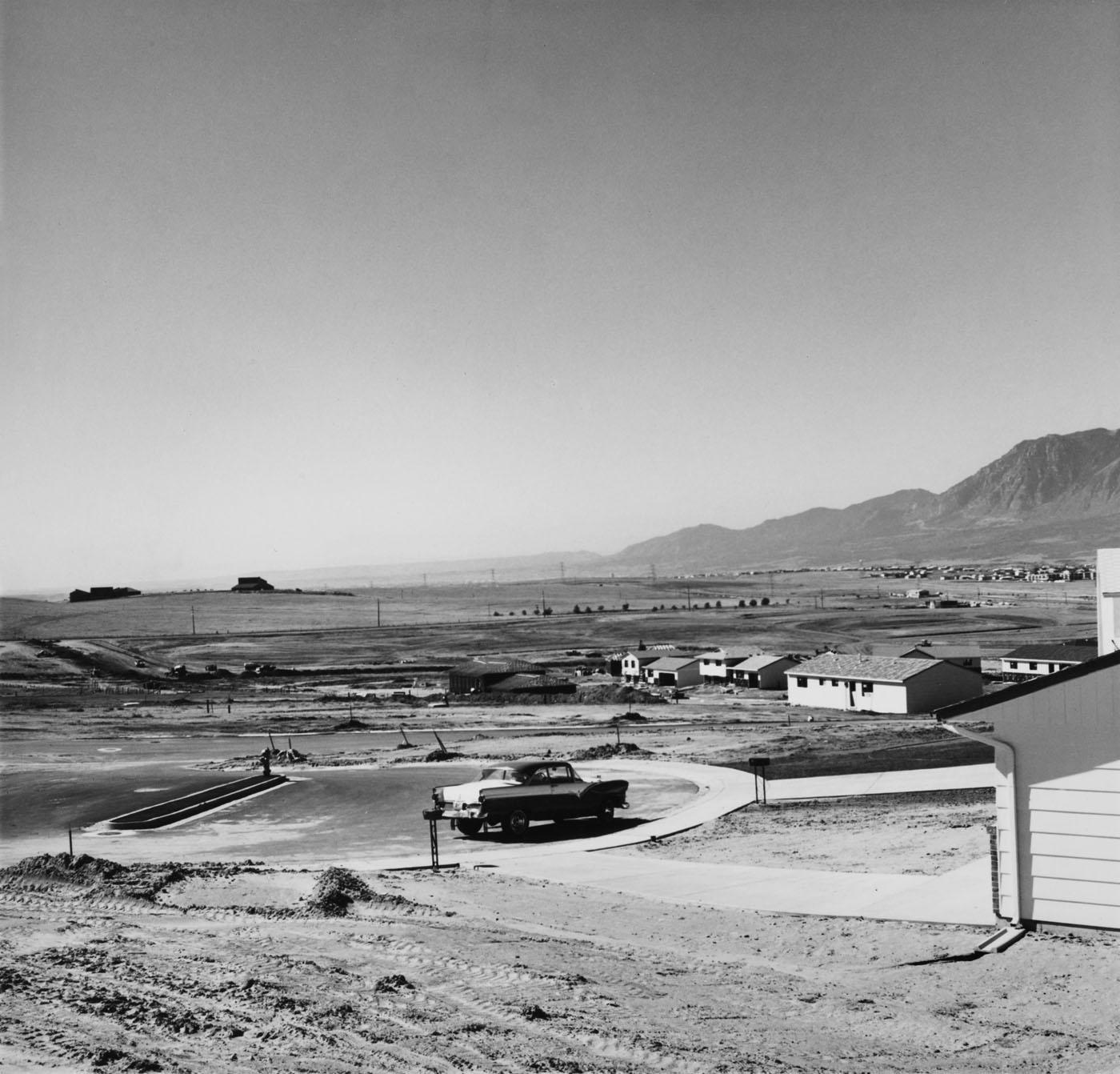
Robert Adams (American, b. 1937)
Newly Occupied Tract Houses, Colorado Springs
1968
Gelatin silver print
Image: 12.7 x 13.3cm (5 x 5 1/4 in.)
Private collection, San Francisco
© Robert Adams, Courtesy Fraenkel Gallery, San Francisco
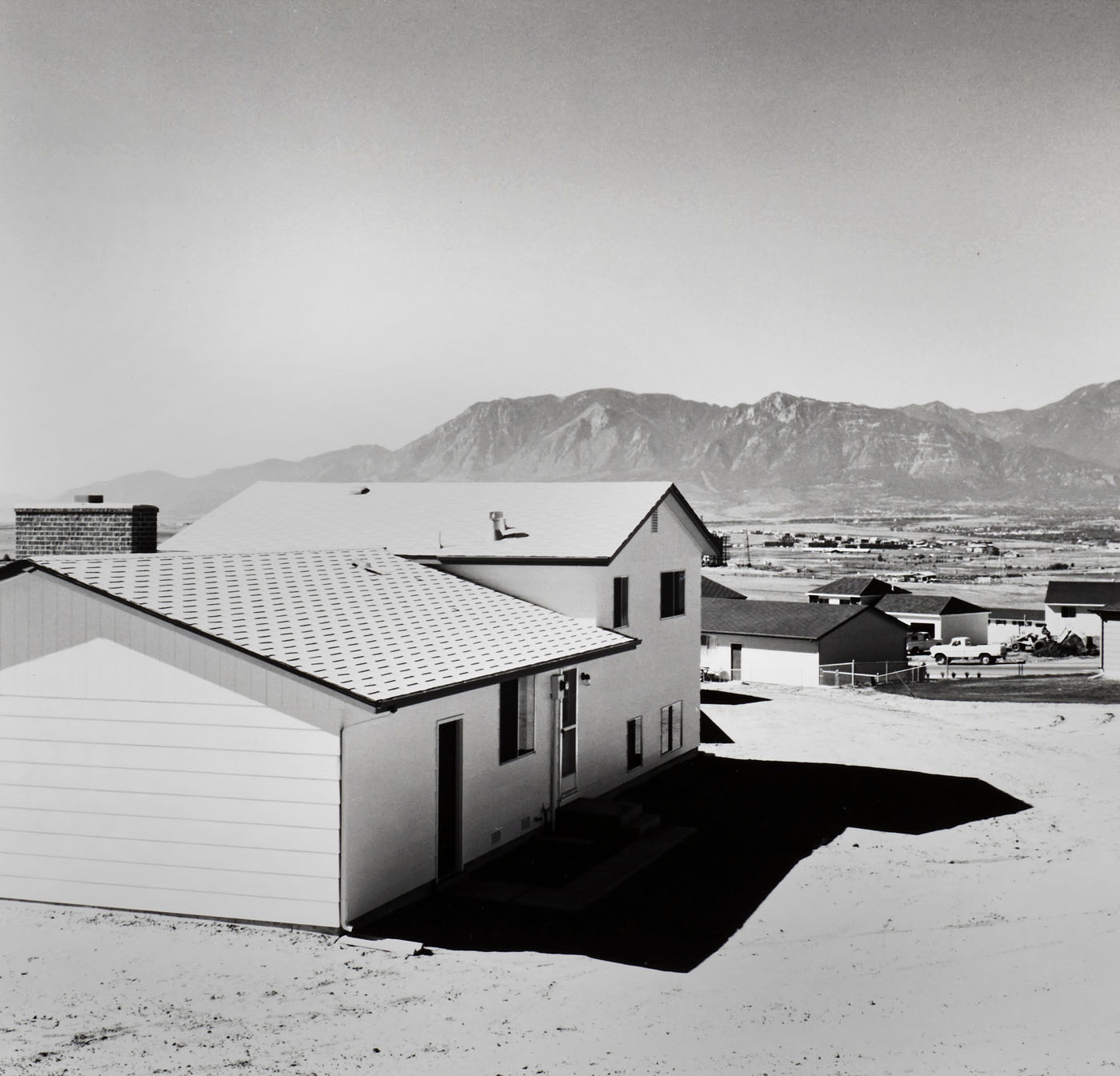
Robert Adams (American, b. 1937)
New Tract Housing, Colorado Springs
1968, printed 1981
Gelatin silver print
Image: 14.4 x 15cm (5 11/16 x 5 7/8 in.)
Philadelphia Museum of Art, Purchased with the Alice Newton Osborn Fund, 1982
Courtesy of the Philadelphia Museum of Art
© Robert Adams, Courtesy Fraenkel Gallery, San Francisco
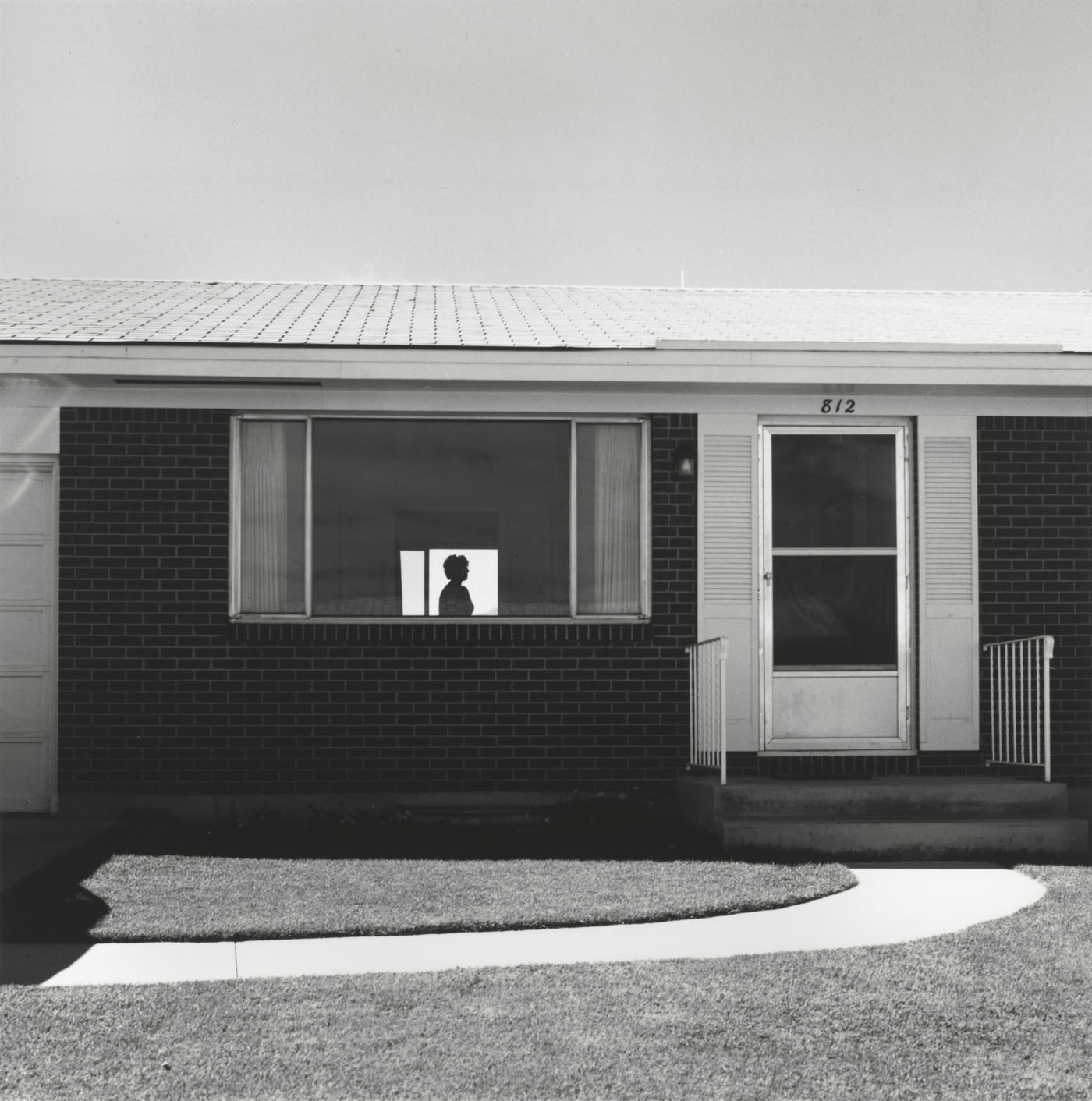
Robert Adams (American, b. 1937)
Colorado Springs
1968, printed 1983
Gelatin silver print
Image: 15.2 x 15.2cm (6 x 6 in.)
National Gallery of Art, Washington, Gift of Mary and Dan Solomon and Patrons’ Permanent Fund
© Robert Adams, Courtesy Fraenkel Gallery, San Francisco
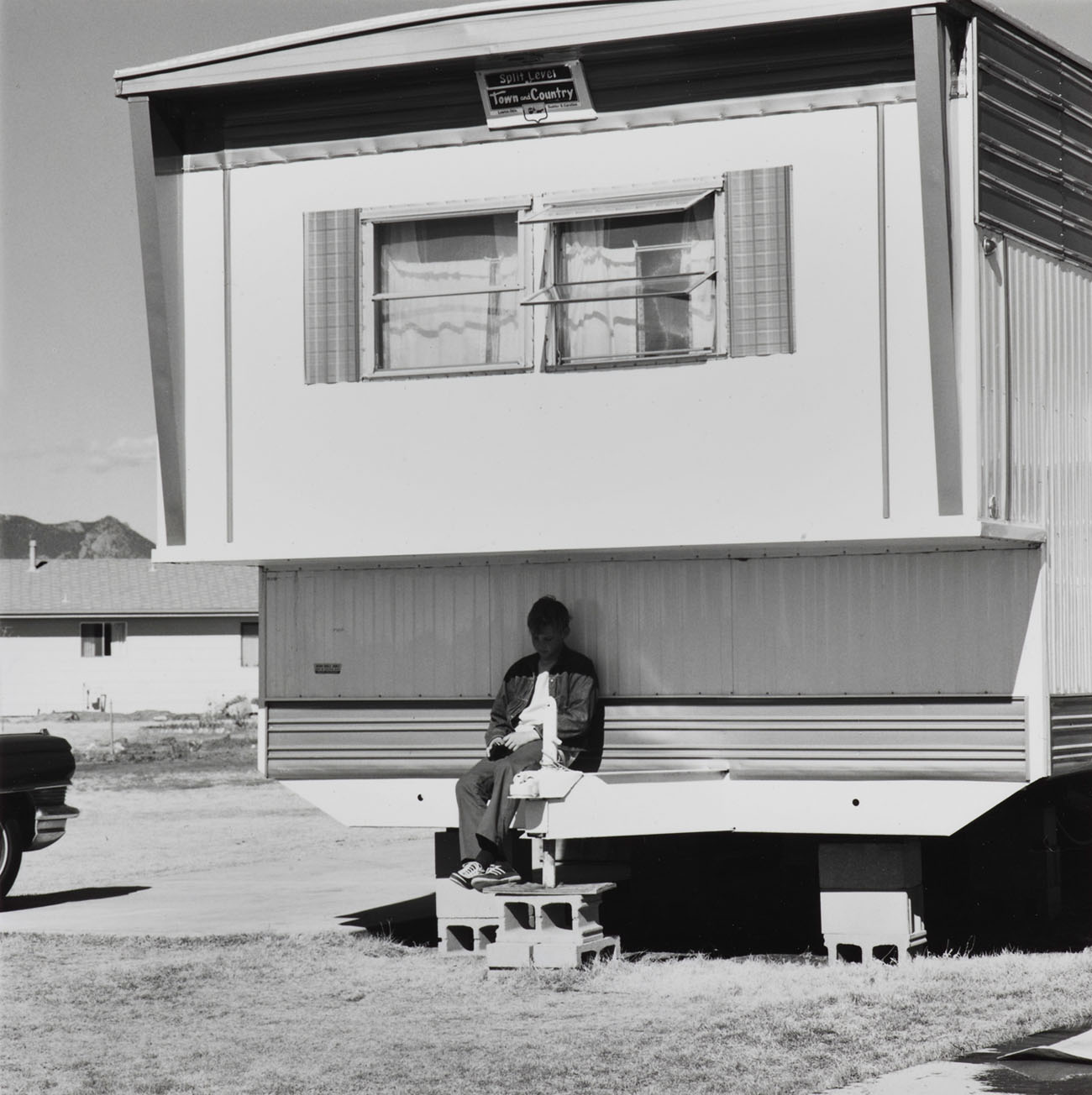
Robert Adams (American, b. 1937)
Colorado Springs
1968-1971
Gelatin silver print
Image: 15.2 x 15.2cm (6 x 6 in.)
Private collection, San Francisco
© Robert Adams, Courtesy Fraenkel Gallery, San Francisco
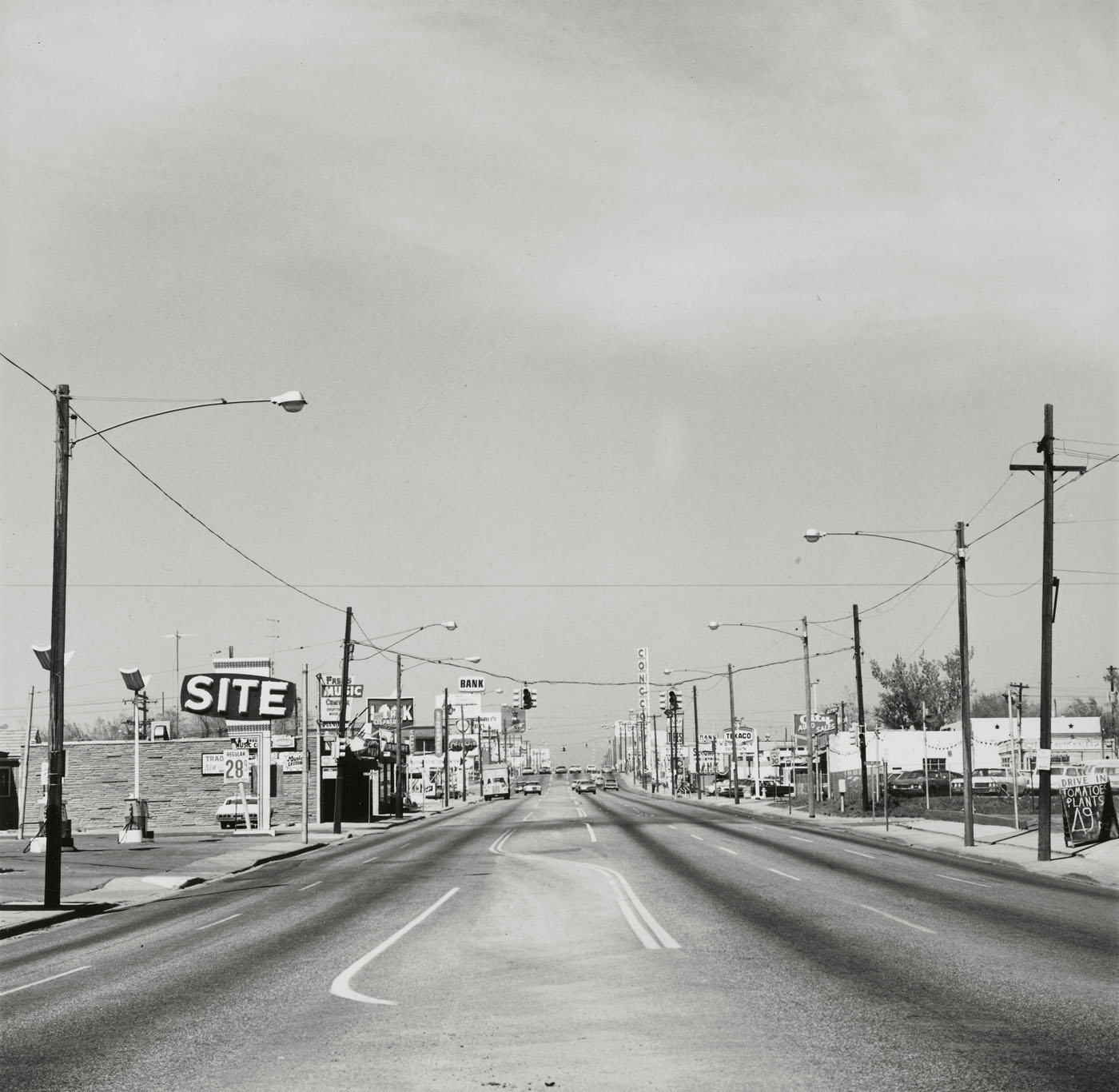
Robert Adams (American, b. 1937)
Alameda Avenue, Denver
1968-1971
Gelatin silver print
Image: 15.2 x 15.2cm (6 x 6 in.)
Private collection, San Francisco
© Robert Adams, Courtesy Fraenkel Gallery, San Francisco
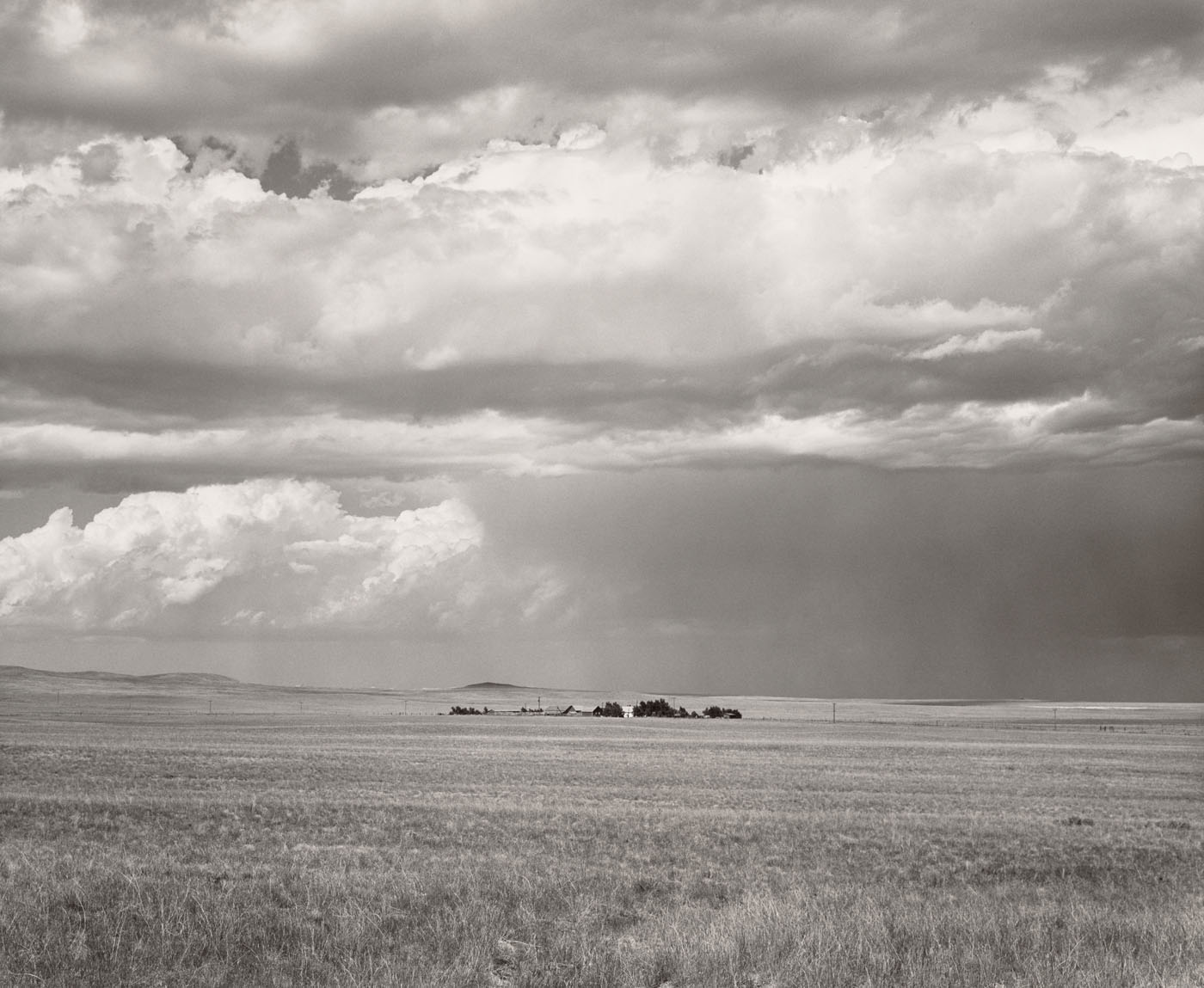
Robert Adams (American, b. 1937)
Northeast of Keota, Colorado
1969, printed 1981
Gelatin silver print
Image: 39.2 x 47.8cm (15 7/16 x 18 13/16 in.)
National Gallery of Art, Washington, Pepita Milmore Memorial Fund and Gift of Robert and Kerstin Adams
© Robert Adams, Courtesy Fraenkel Gallery, San Francisco
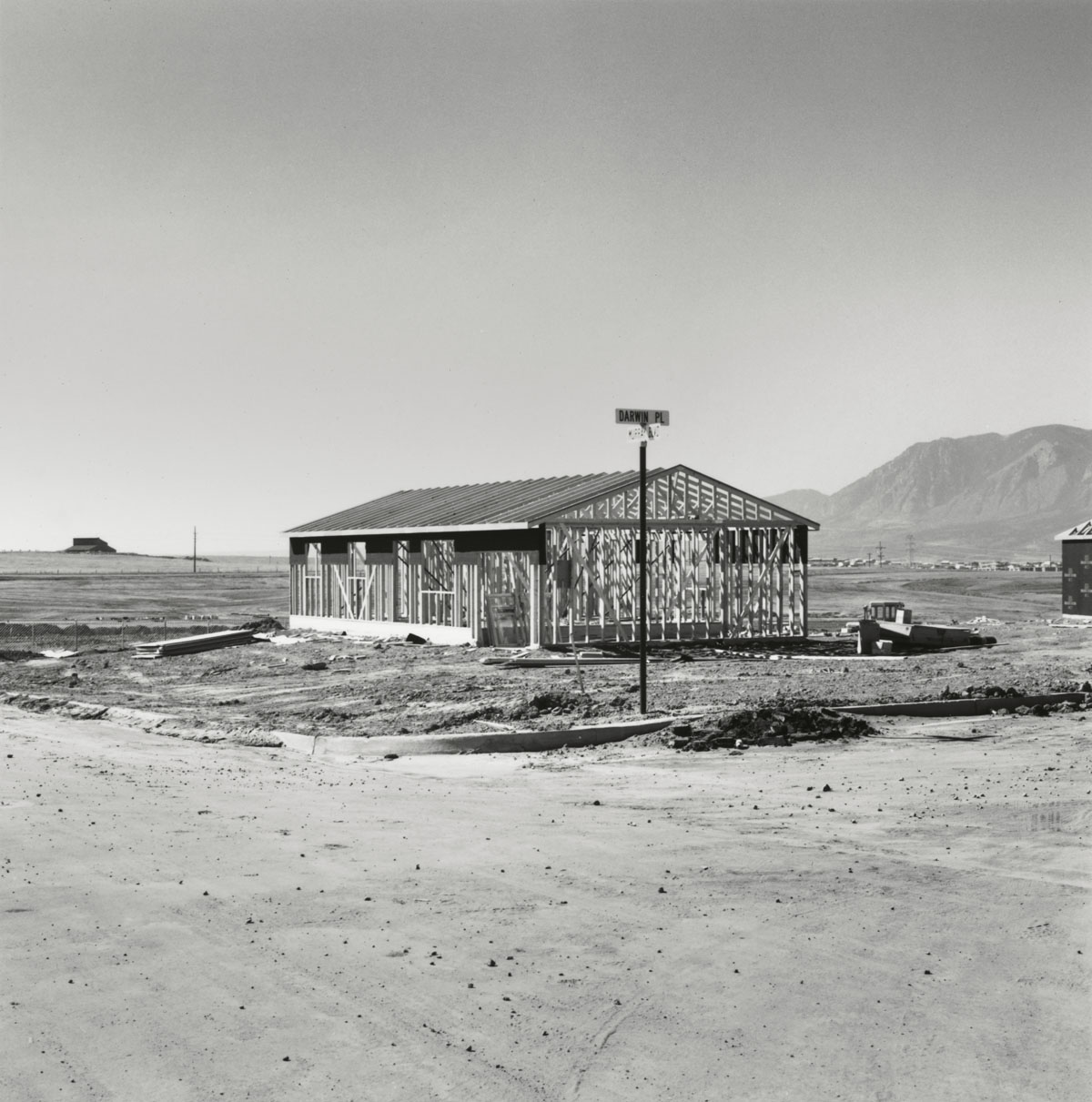
Robert Adams (American, b. 1937)
Frame for a Tract House, Colorado Springs
1969, printed 1984
Gelatin silver print
Image: 15.1 x 15cm (5 15/16 x 5 7/8 in.)
National Gallery of Art, Washington, Gift of Mary and David Robinson
© Robert Adams, Courtesy Fraenkel Gallery, San Francisco
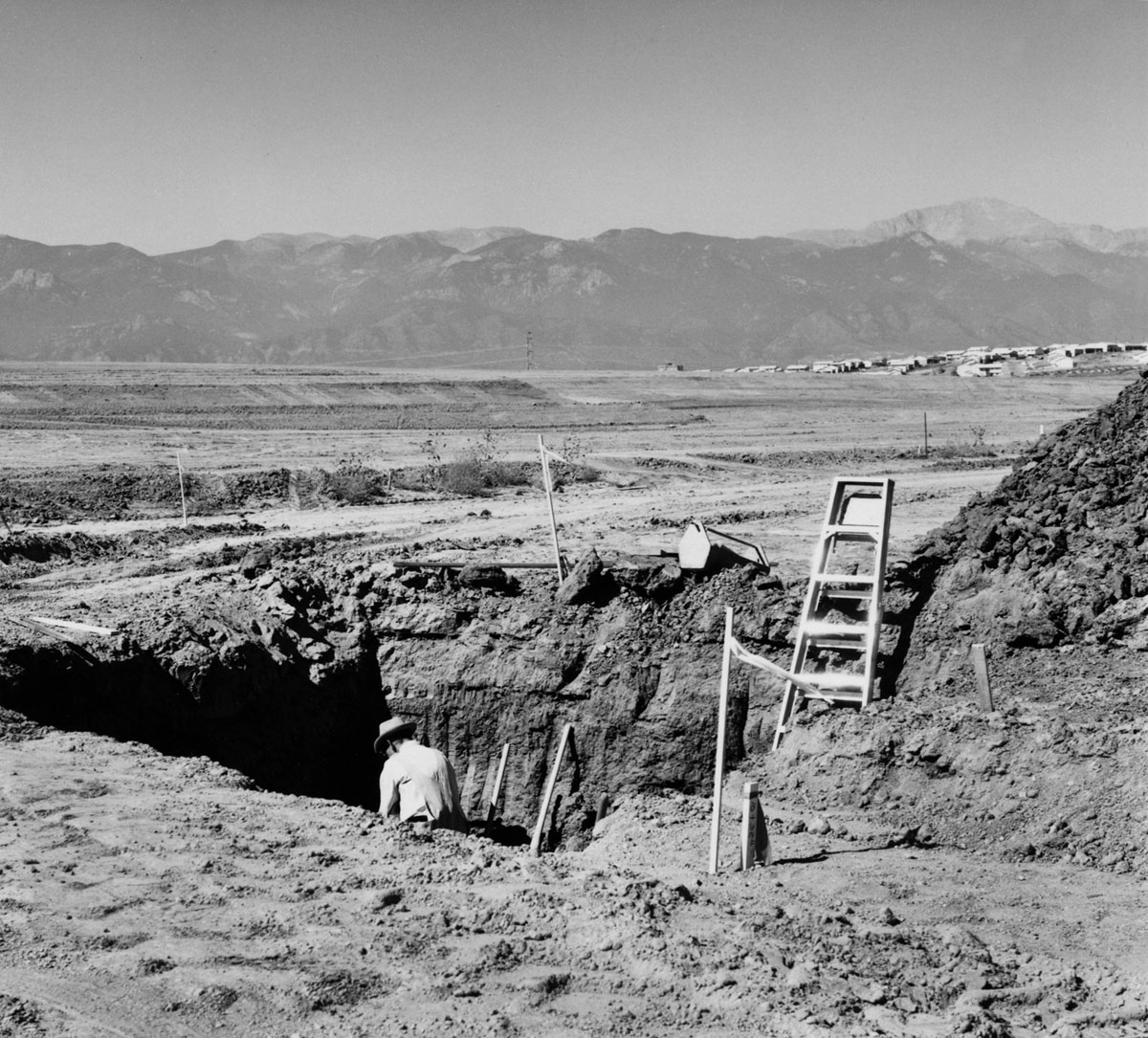
Robert Adams (American, b. 1937)
Basement for a Tract House, Colorado Springs
1969
Gelatin silver print
Image: 26.6 x 27.6cm (10 1/2 x 10 7/8 in.)
National Gallery of Art, Washington, Gift of Robert and Kerstin Adams
© Robert Adams, Courtesy Fraenkel Gallery, San Francisco
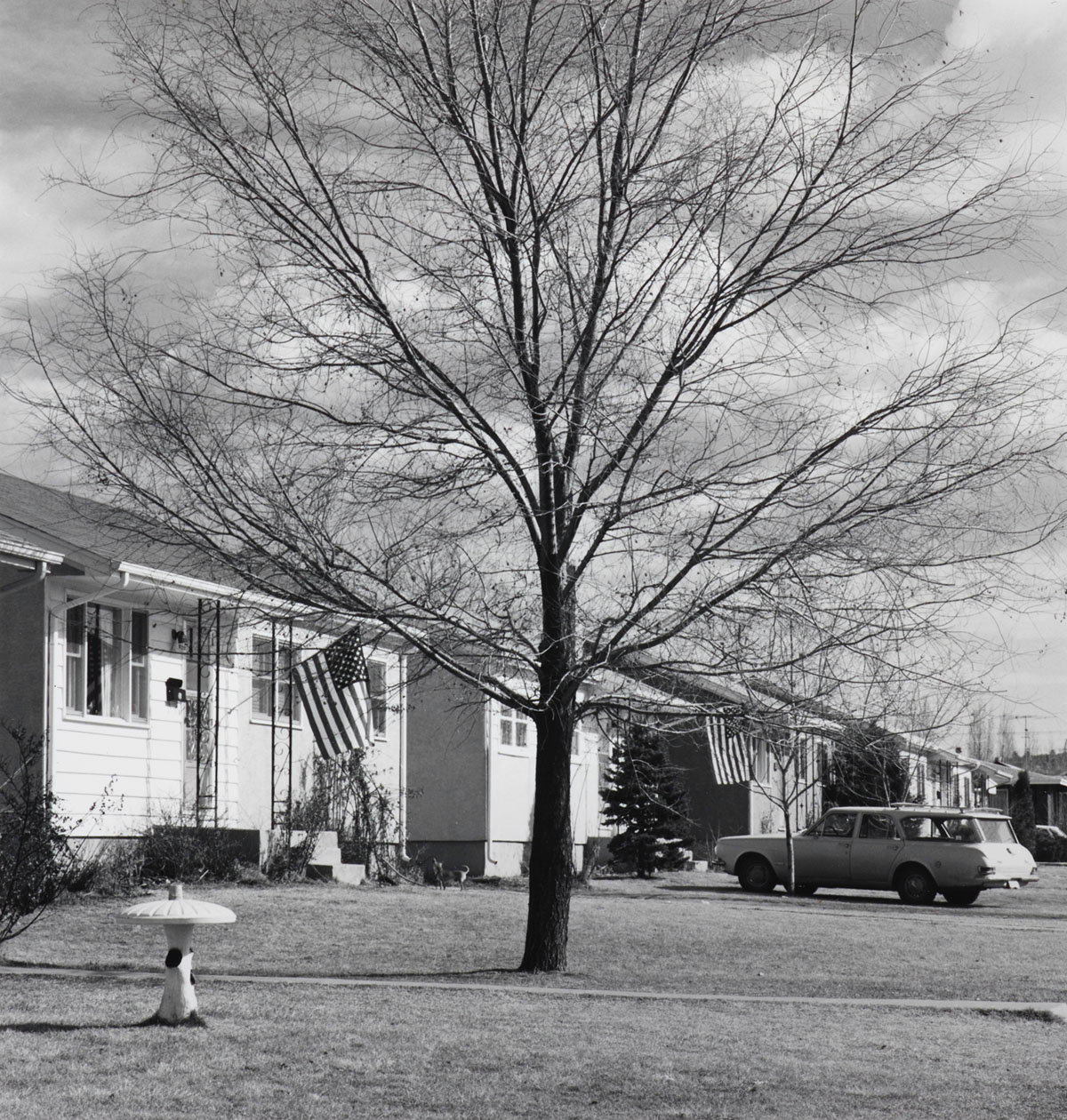
Robert Adams (American, b. 1937)
Colorado Springs
1969
Gelatin silver print
Image: 15.6 x 15.2cm (6 1/8 x 6 in.)
Private collection, San Francisco
© Robert Adams, Courtesy Fraenkel Gallery, San Francisco
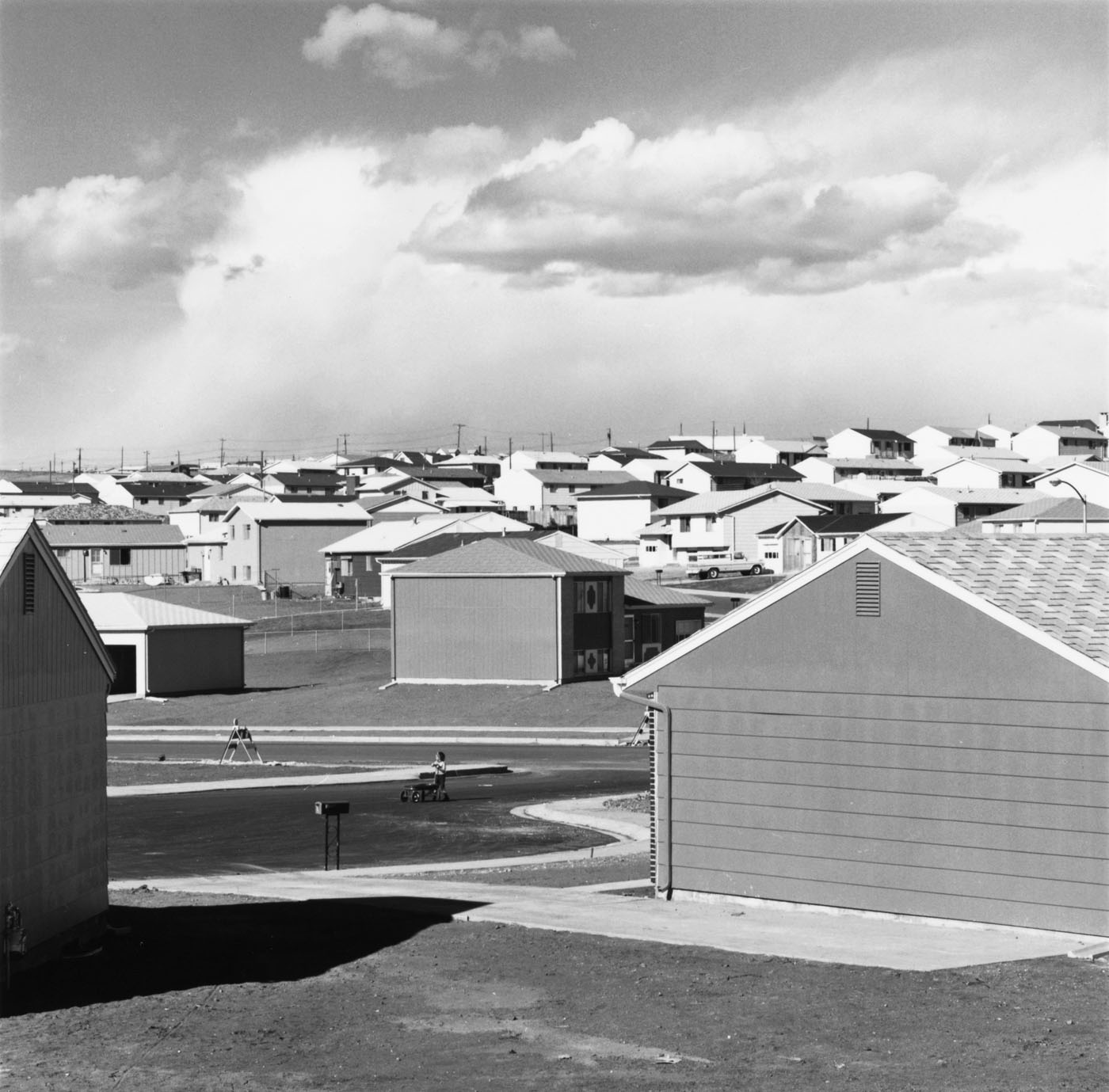
Robert Adams (American, b. 1937)
Pikes Peak Park, Colorado Springs
1969
Gelatin silver print
Image: 15.1 x 15.2cm (5 15/16 x 6 in.)
Yale University Art Gallery, Purchased with a gift from Saundra B. Lane, a grant from the Trellis Fund, and the Janet and Simeon Braguin Fund
© Robert Adams, Courtesy Fraenkel Gallery, San Francisco
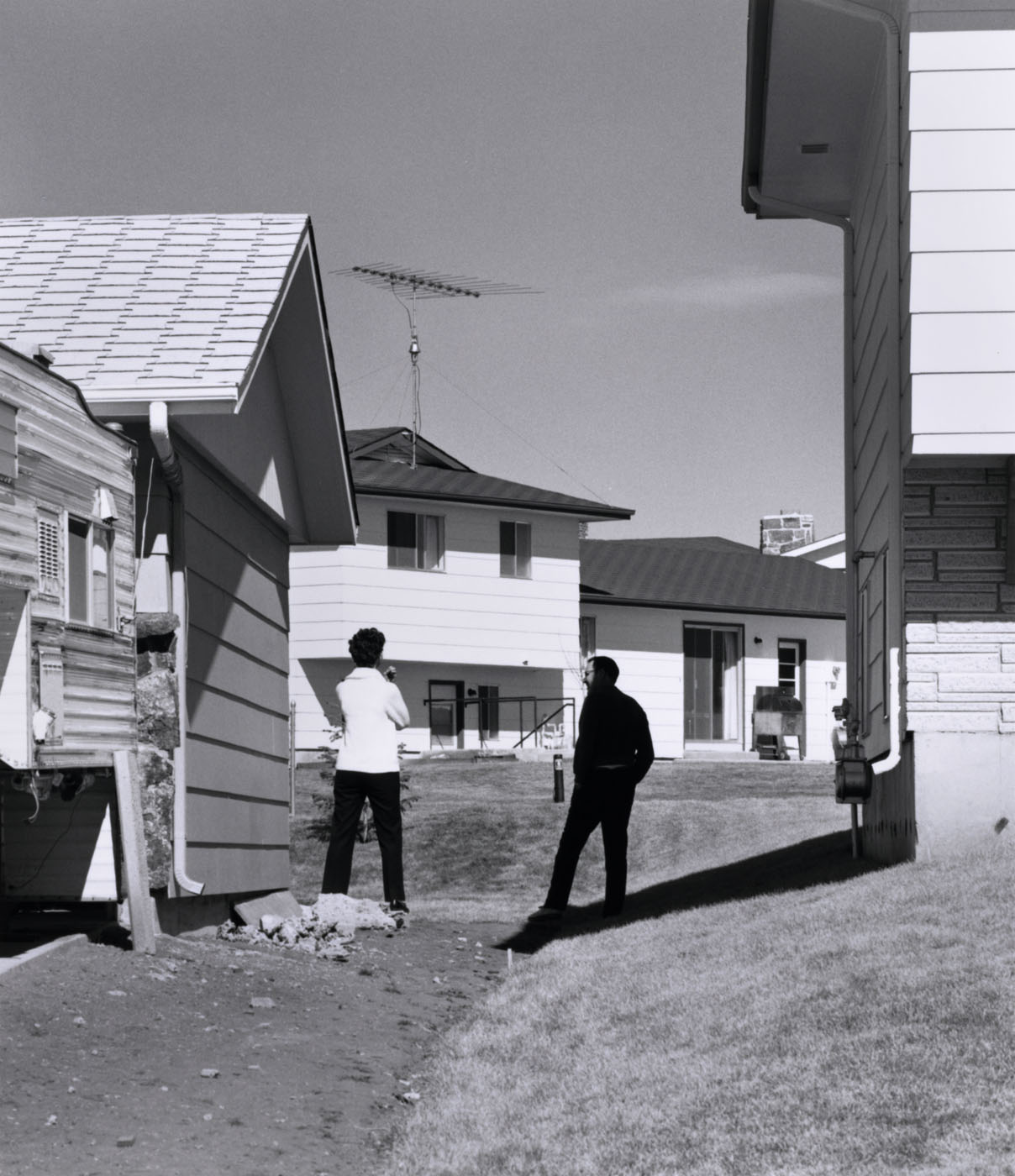
Robert Adams (American, b. 1937)
New Housing, Colorado Springs
1969, printed 2005
Gelatin silver print
Image: 17.5 x 15.1cm (6 7/8 x 5 15/16 in.)
National Gallery of Art, Washington, Pepita Milmore Memorial Fund and Gift of Robert and Kerstin Adams
© Robert Adams, Courtesy Fraenkel Gallery, San Francisco
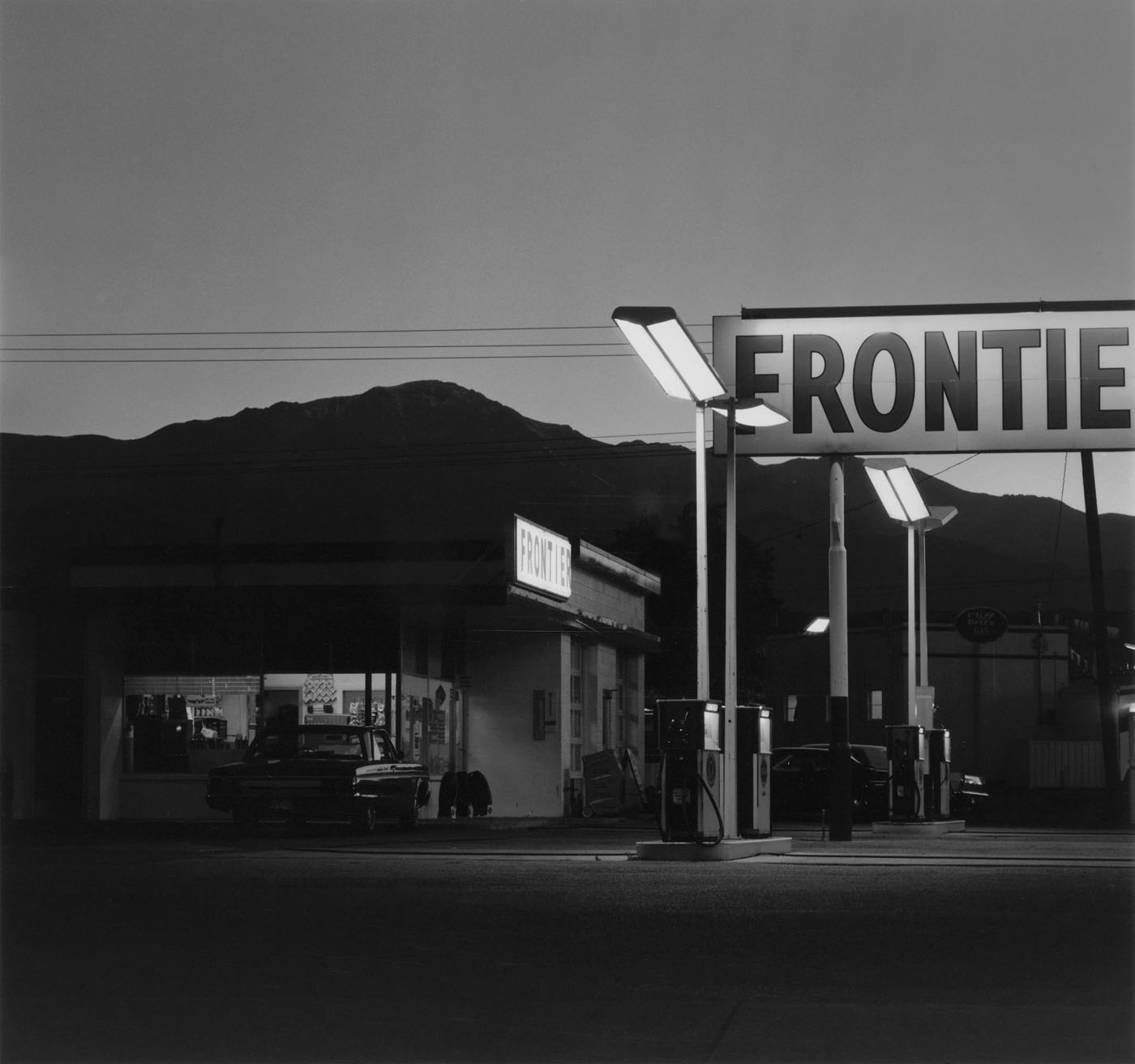
Robert Adams (American, b. 1937)
Pikes Peak, Colorado Springs
1969
Gelatin silver print
Image: 14 x 14.9cm (5 1/2 x 5 7/8 in.)
Private collection, San Francisco
© Robert Adams, Courtesy Fraenkel Gallery, San Francisco
For 50 years, Robert Adams (b. 1937) has made compelling, provocative, and highly influential photographs that show the wonder and fragility of the American landscape, its inherent beauty, and the inadequacy of our response to it. American Silence: The Photographs of Robert Adams celebrates the art of this seminal American photographer and explores the reverential way he looks at the world around him and the almost palpable silence of his work. Organised in cooperation with the artist, the exhibition is accompanied by a fully illustrated catalog. American Silence: The Photographs of Robert Adams is on view from May 29 through October 2, 2022, in the West Building of the National Gallery of Art.
Capturing the sense of peace and harmony created through what Adams calls “the silence of light” that can be seen on the prairie, in the woods, and by the ocean, American Silence features some 175 pictures from 1965 to 2015. Other images on view question our moral silence to the desecration of that beauty by consumerism, industrialisation, and lack of environmental stewardship. Divided into three sections – The Gift, Our Response, and Tenancy – the exhibition includes works from not only the artist’s most important projects but also lesser-known ones that depict suburban sprawl, strip malls, highways, homes, and stores, as well as rivers, skies, the prairie, and the ocean. While these photographs lament the ravages that have been inflicted on the land, they also pay homage to what remains.
“The photographs in this exhibition encourage us to experience the sense of silence that the beauty of nature can inspire while asking us to question our own silent complicity in the face of its desecration,” said Kaywin Feldman, director of the National Gallery of Art. “We are deeply grateful to Robert Adams and his wife, Kerstin, for their steadfast commitment to this endeavour and for their many donations to the National Gallery. I would like to extend our thanks to the Trellis Fund, Jane P. Watkins, The Shared Earth Foundation, Randi and Bob Fisher, Wes and Kate Mitchell, Nion McEvoy, Greg and Aline Gooding, and the James D. and Kathryn K. Steele Fund for Photography whose generous support has made this exhibition possible as well as to all our lenders for their willingness to share their treasured works of art with our public.”
About the exhibition
The exhibition begins with The Gift, which presents selected works that reveal the silence, beauty, peace, and spiritual harmony found in the landscape itself. Spanning three decades, this section includes photographs from Prairie (1978), Perfect Times, Perfect Places (1988), Listening to the River (1994), Pine Valley (2005), and This Day (2011). These pictures demonstrate the artist’s exceptional ability to find the sublime in the vast vistas and quiet, often overlooked, corners of the sparse and fragile American West, particularly in Colorado and Oregon, two areas of the country that Adams knows intimately. Infused with a deep understanding of the way light articulates forms, these photographs illuminate the natural world and demonstrate how Adams seeks to illustrate, in his own words, “a quiet so absolute that it allows one to begin again, to love the future.”
The largest section of the exhibition, Our Response examines how Americans have dealt with both the potential and the vulnerability of the West. Divided into six thematic subjects arranged chronologically, this section begins with “Early Hispanic and Plains Communities,” including work from some of the artist’s earliest publications: White Churches of the Plains (1970), The Architecture and Art of Early Hispanic Colorado (1974), and Prairie (1978). These pictures portray the respectful nature of older settlements in the West and acknowledge the importance of the gravel roads, farmhouses, furrowed fields, stores, and churches. They also demonstrate how early settlers attempted to achieve a unity with nature, rather than dominate over it.
“Our Imprint on the Land” and “A New West” feature works from seminal early publications by Adams: The New West: Landscapes along the Colorado Front Range (1974), denver: A Photographic Survey of the Metropolitan Area (1977), From the Missouri West (1980), and What We Bought: The New World, Scenes from the Denver Metropolitan Area, 1970-1974 (1995). “Our Imprint on the Land” includes pictures made along the Missouri River around the time of the 1976 bicentennial of the United States, a moment of national reflection on the past and assessment of the present. The photographs in “A New West” address the construction of a new kind of American environment. Dominated by cars, highways, cheaply fabricated homes, and commercial developments, these pictures emphasise the lack of community and the great isolation that grew in these new suburban communities.
“Our Lives and Our Children” depicts the area near Rocky Flats, a nuclear weapons plant northwest of Denver, where Adams photographed the simple dignity of everyday people to illustrate what would be lost in a nuclear disaster. Our Response ends with “Southern California” and “A Mythic Forest,” drawing works from two of his sharpest critiques: Los Angeles Spring (1986), depicting the destruction of the fragile landscape around Los Angeles in the early 1980s, and Turning Back: A Photographic Journal of Re-exploration (2005), illustrating the American timber industry’s exploitation of the Northwest forests.
American Silence concludes with a selection of works from one of the artist’s recent books, Tenancy: Between the River and the Sea; The Nehalem Spit, the Coast of Oregon (2017). Divided into three parts, this series of photographs was made between 2013 and 2015 along a two-mile promontory on the Oregon coast, the Nehalem Spit. The first examines the eastern edge of the spit where massive tree stumps washed up on the shore reveal the brutality of the clearcutting done farther up the Nehalem River. The second part looks at the spit itself, a sanctuary of small trees, meadows, and dunes resting near a large geologic fault, and the third depicts the ever-changing beauty and wonder of the ocean to the west, as well as the people who seek “to escape illusion and to be reconciled,” as Adams noted. Tenancy illustrates his belief that we are only temporary occupants of the land that nourishes and sustains us, and it reveals the strength of his convictions, his deep spirituality, and the eloquent power of his vision.
Exhibition Catalog
Published by the National Gallery of Art and Aperture, New York, American Silence: The Photographs of Robert Adams traces the evolution of his work, highlighting the importance of faith to his art and – through his elegant visual reckonings – how “what was” has become “what is.” It is richly illustrated, with over 200 compelling photographs that explore the profound questions of our responsibility to the land and the moral dilemmas of progress. This extensive 332-page monograph includes award-winning curator Sarah Greenough’s in-depth examination of the evolution of his art as well as personal reflections by the celebrated nonfiction author Terry Tempest Williams and writings by Adams himself, along with a timeline of the artist’s life.
Press release from the National Gallery of Art, Washington
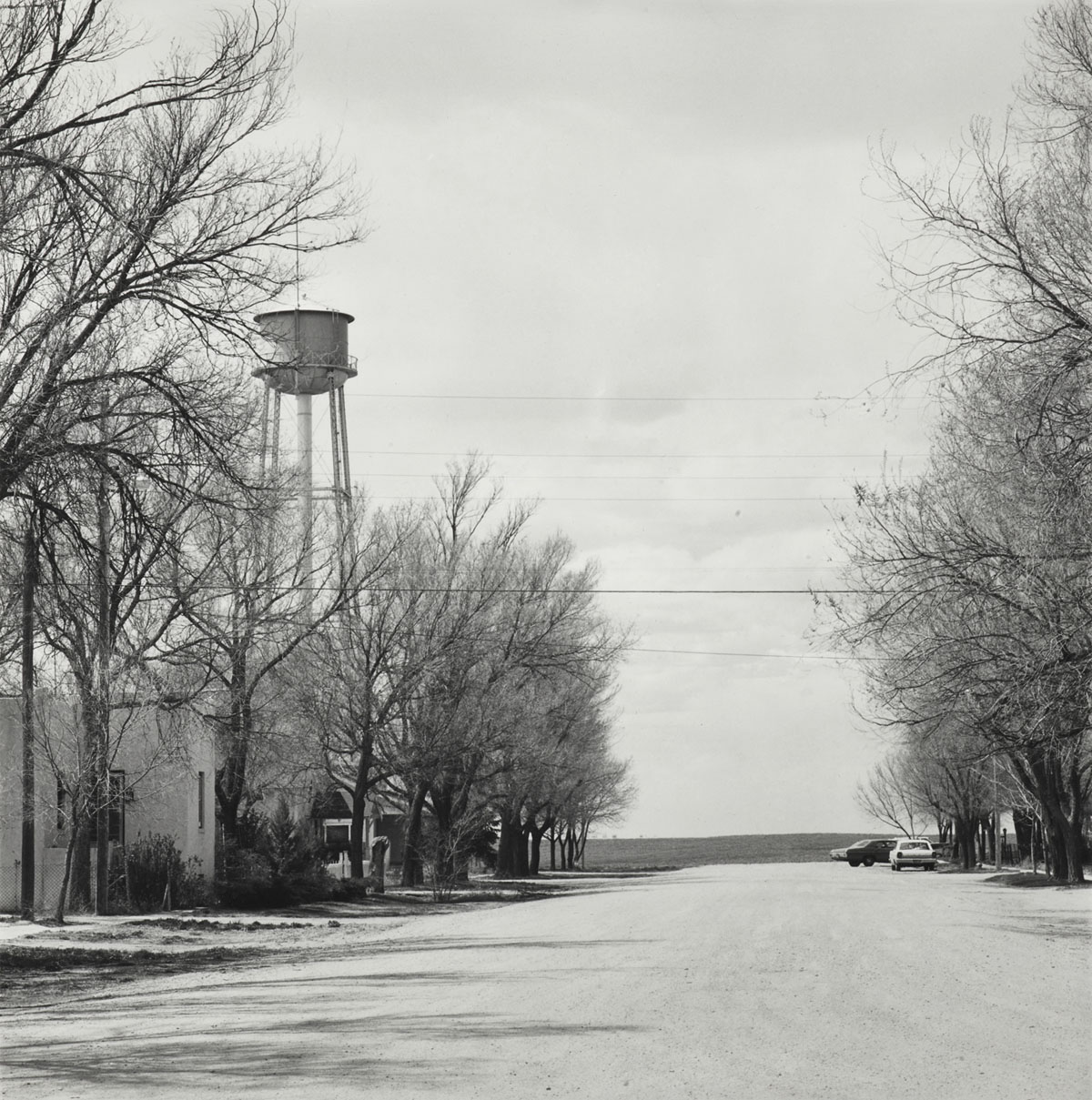
Robert Adams (American, b. 1937)
Genoa, Colorado
1970
Gelatin silver print
Image: 19.1 x 19.1cm (7 1/2 x 7 1/2 in.)
Private collection, San Francisco
© Robert Adams, Courtesy Fraenkel Gallery, San Francisco
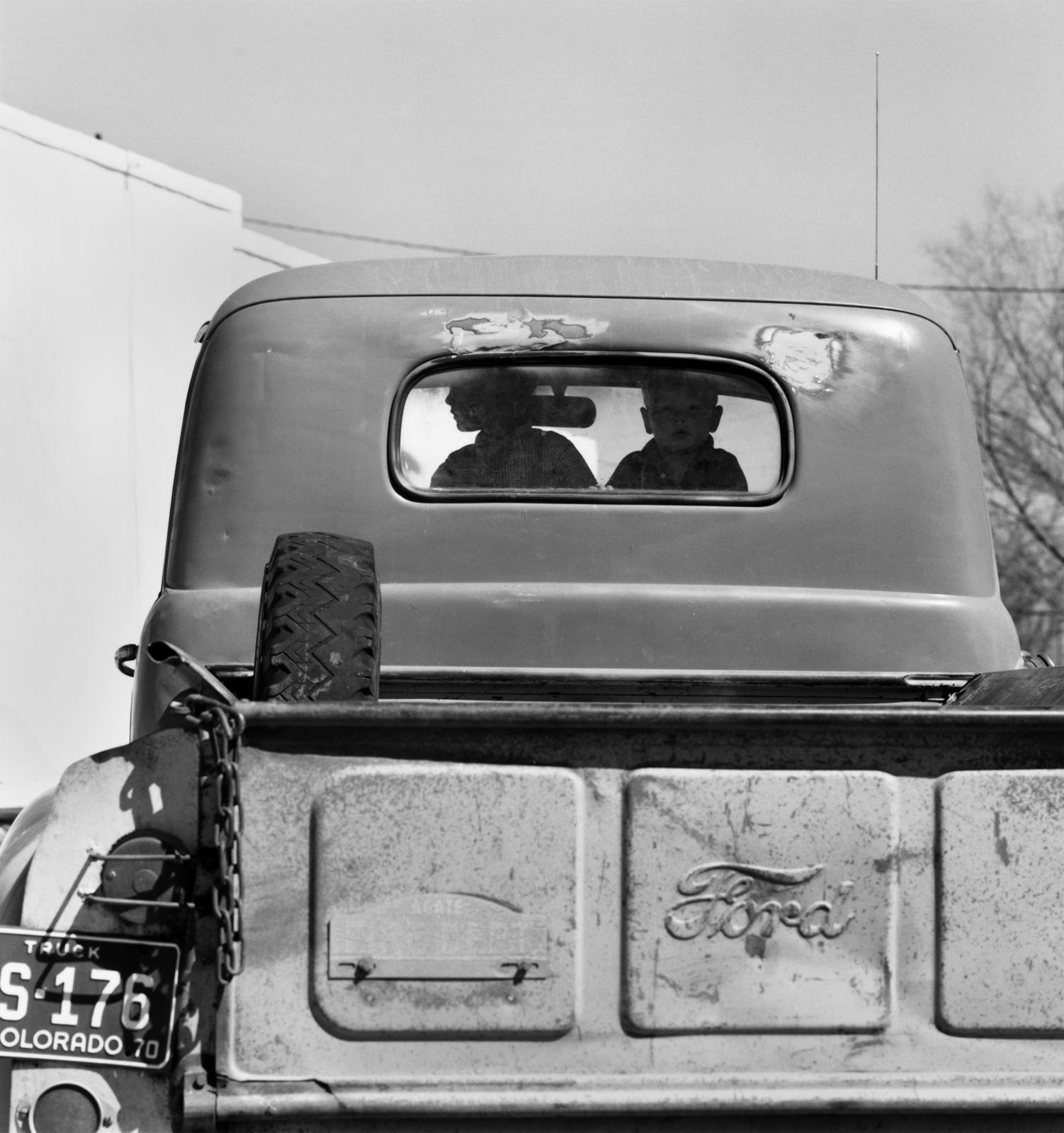
Robert Adams (American, b. 1937)
Boys in a Pickup, Simla, Colorado
1970, printed 1991
Gelatin silver print
Image: 15.1 x 14.2cm (5 15/16 x 5 9/16 in.)
National Gallery of Art, Washington, Pepita Milmore Memorial Fund and Gift of Robert and Kerstin Adams
© Robert Adams, Courtesy Fraenkel Gallery, San Francisco
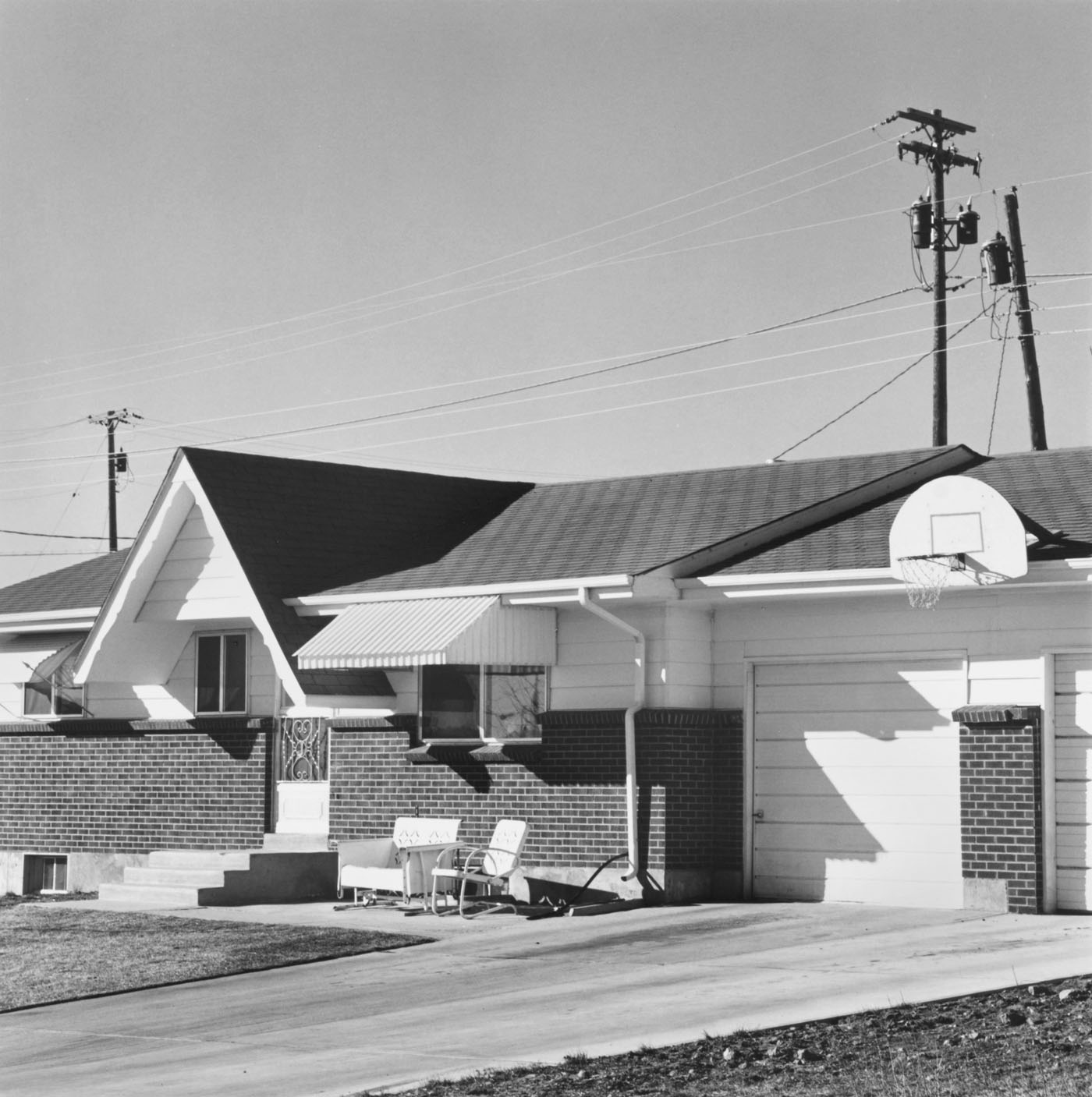
Robert Adams (American, b. 1937)
Lakewood, Colorado
1970, printed 1981
Gelatin silver print
Image: 15.1 x 15cm (5 15/16 x 5 7/8 in.)
Philadelphia Museum of Art, Purchased with the Alice Newton Osborn Fund, 1982
Courtesy of the Philadelphia Museum of Art
© Robert Adams, Courtesy Fraenkel Gallery, San Francisco
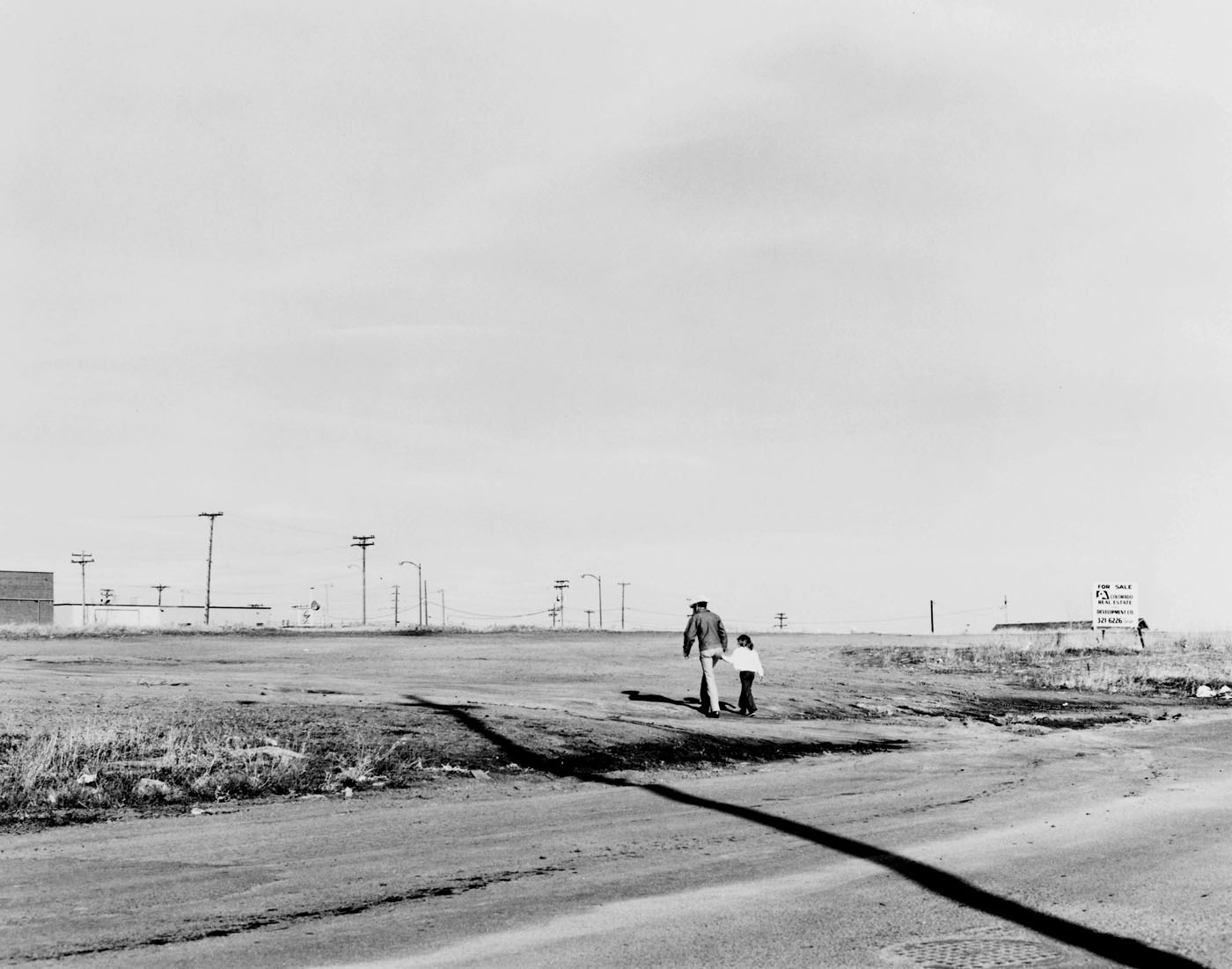
Robert Adams (American, b. 1937)
Walking to a Shopping Center, North Edge of Denver
1970-1974
Gelatin silver print
Image: 15.1 x 19.2cm (5 15/16 x 7 9/16 in.)
Philadelphia Museum of Art, Purchased with the Alice Newton Osborn Fund, 1982
Courtesy of the Philadelphia Museum of Art
© Robert Adams, Courtesy Fraenkel Gallery, San Francisco
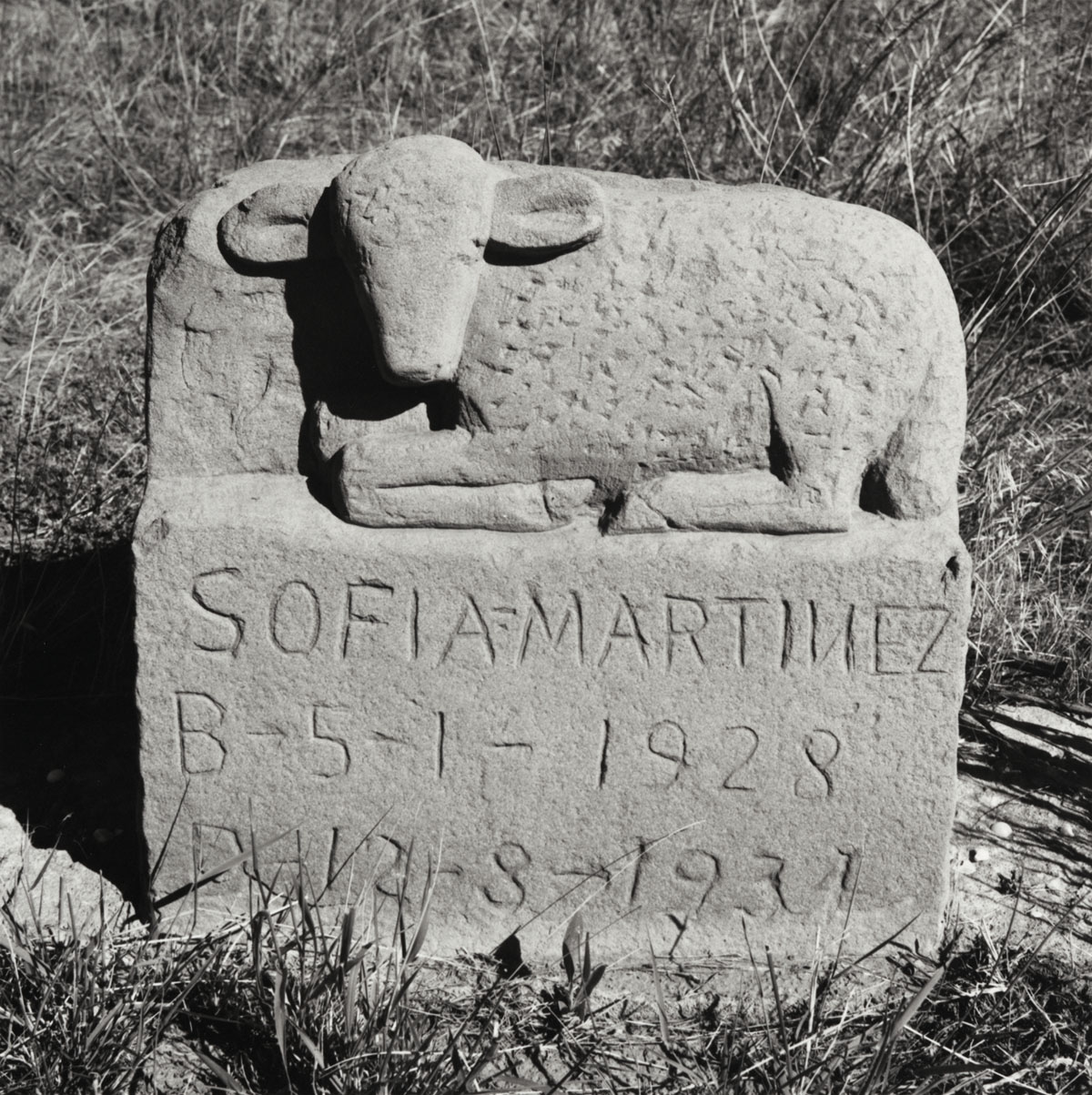
Robert Adams (American, b. 1937)
Sandstone Grave Marker, Walsenburg, Colorado
1972
Gelatin silver print
Image: 15.2 x 15.2cm (6 x 6 in.)
National Gallery of Art, Washington, Pepita Milmore Memorial Fund and Gift of Robert and Kerstin Adams
© Robert Adams, Courtesy Fraenkel Gallery, San Francisco
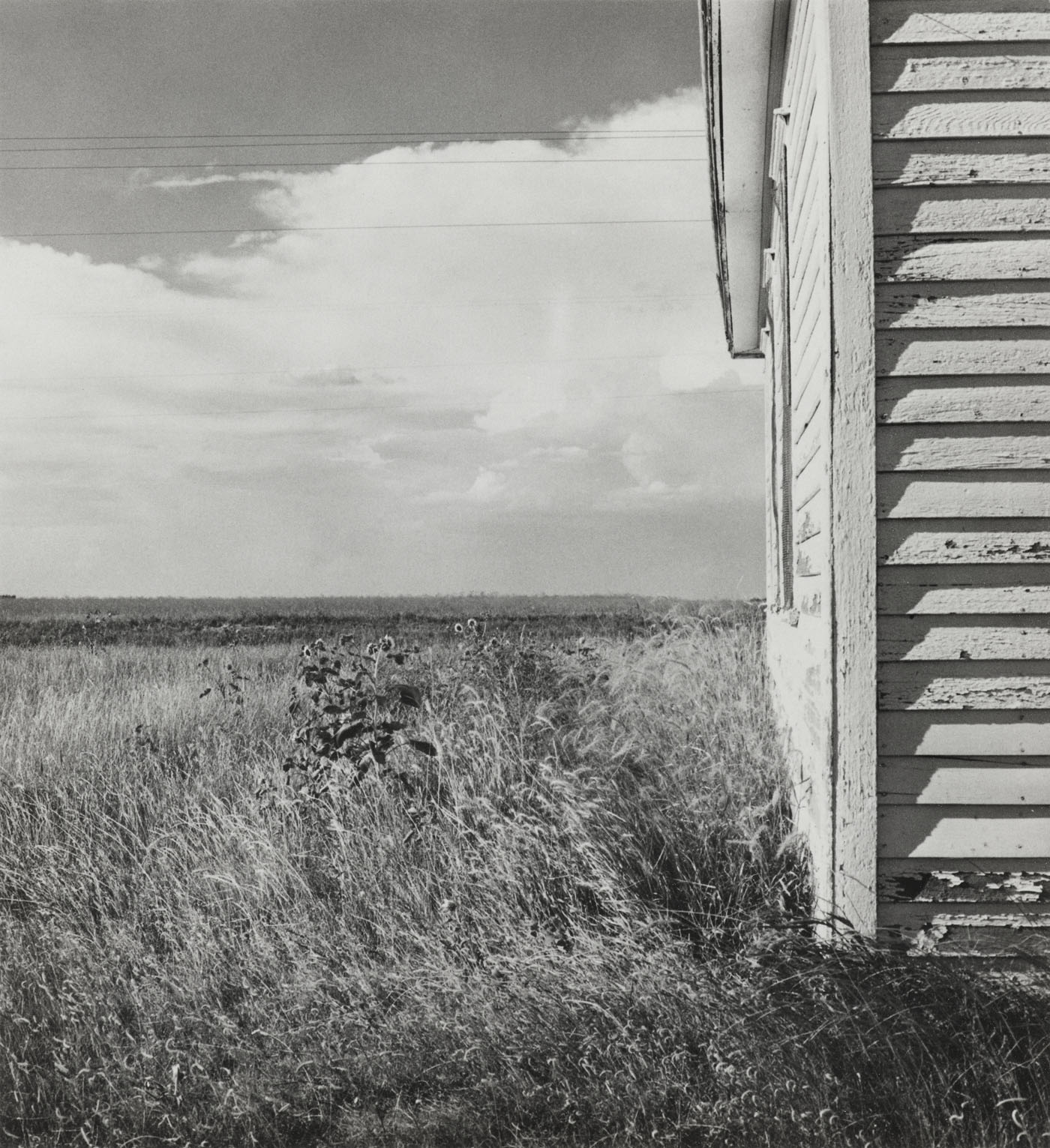
Robert Adams (American, b. 1937)
Clarkville, Colorado
1972
Gelatin silver print
Image: 18.4 x 16.5cm (7 1/4 x 6 1/2 in.)
Private collection, San Francisco
© Robert Adams, Courtesy Fraenkel Gallery, San Francisco
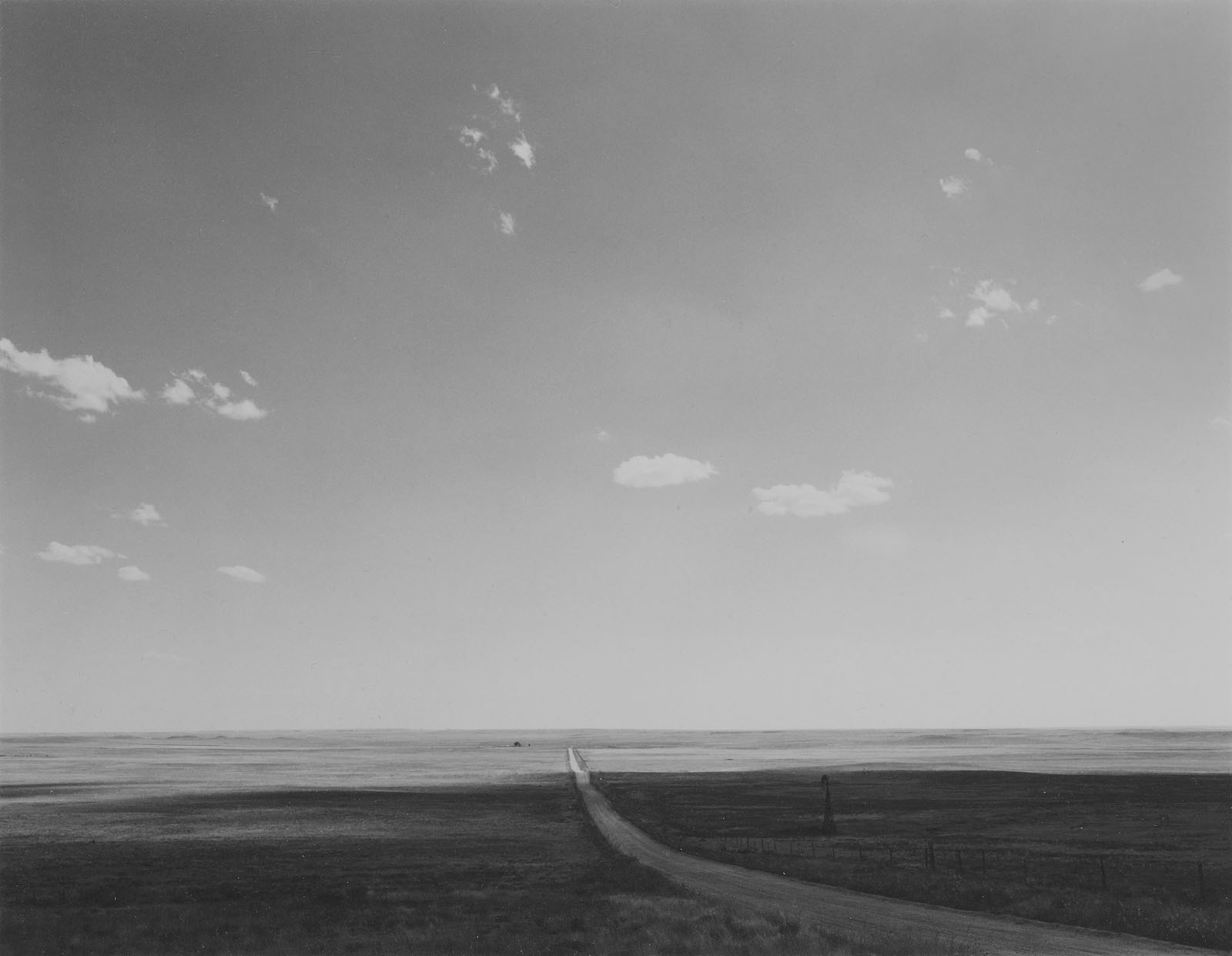
Robert Adams (American, b. 1937)
North of Keota, Colorado
1973
Gelatin silver print
Image: 15.2 x 19cm (6 x 7 1/2 in.)
Private collection, San Francisco
© Robert Adams, Courtesy Fraenkel Gallery, San Francisco
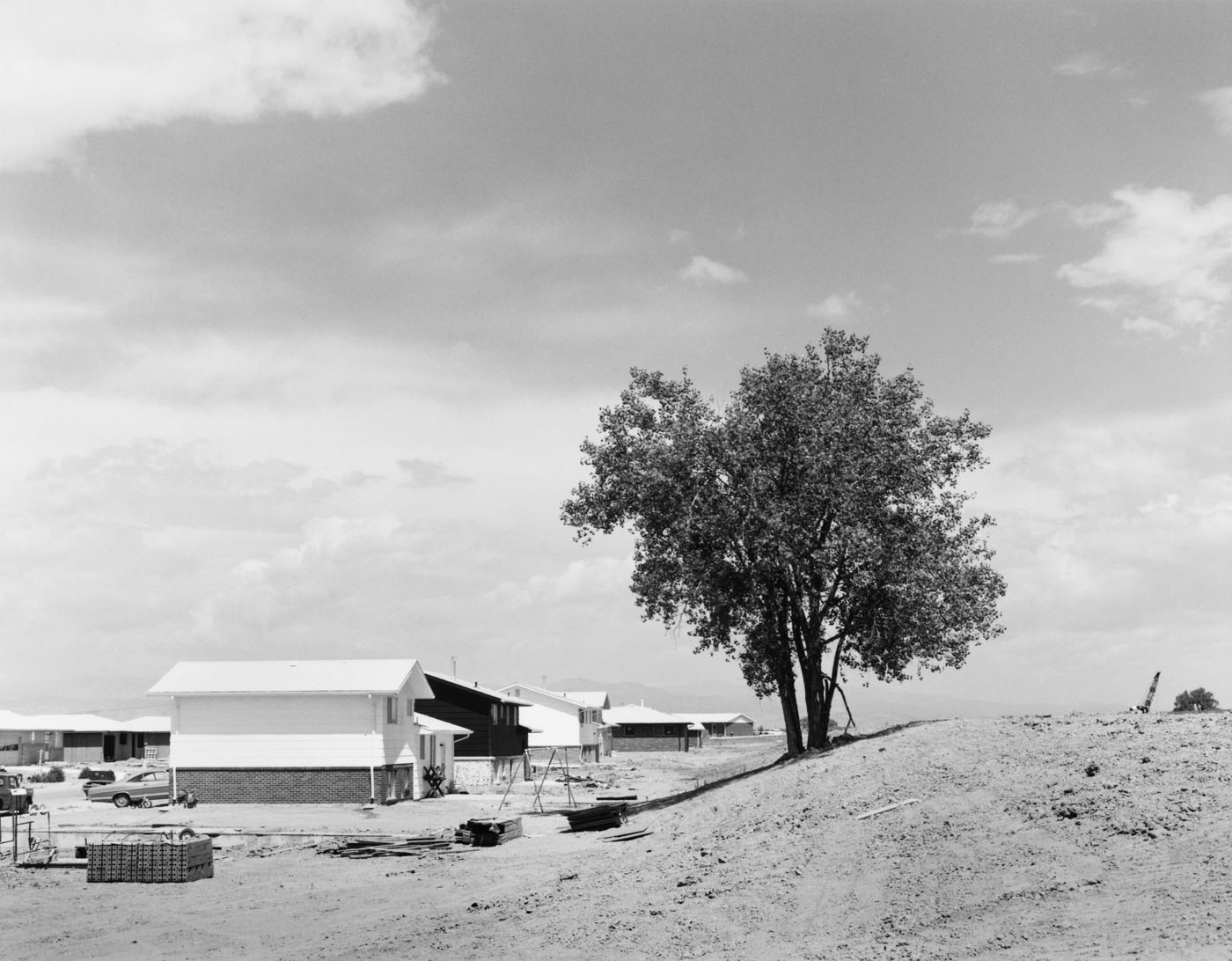
Robert Adams (American, b. 1937)
Longmont, Colorado
1973, printed 1988
Gelatin silver print
Image: 15.1 x 19.3cm (5 15/16 x 7 5/8 in.)
National Gallery of Art, Washington, Pepita Milmore Memorial Fund and Gift of Robert and Kerstin Adams
© Robert Adams, Courtesy Fraenkel Gallery, San Francisco
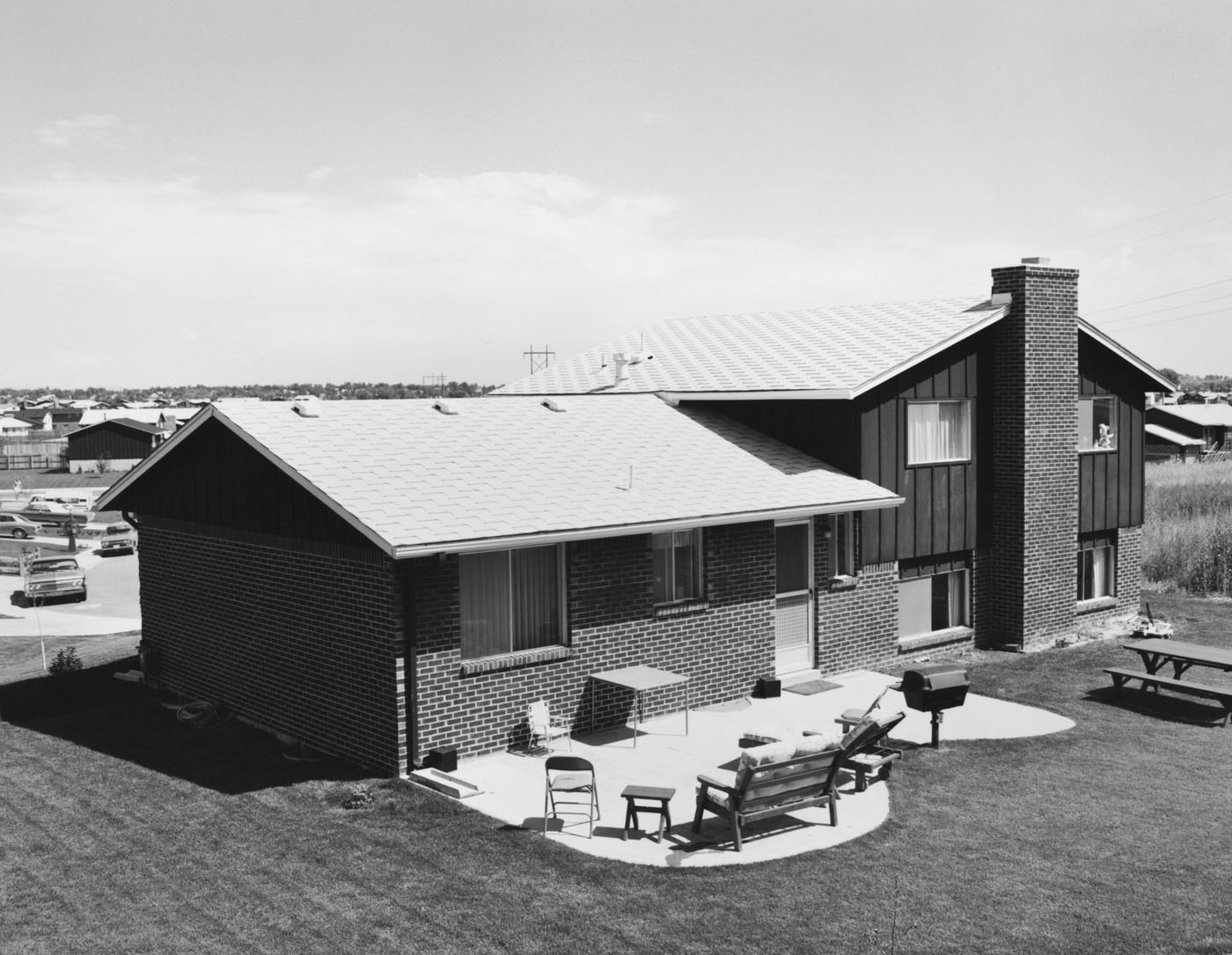
Robert Adams (American, b. 1937)
Tract House, Longmont, Colorado
1973
Gelatin silver print
Image: 15.6 x 19.4cm (6 1/8 x 7 5/8 in.)
Collection of Frish Brandt and August Fischer
© Robert Adams, Courtesy Fraenkel Gallery, San Francisco
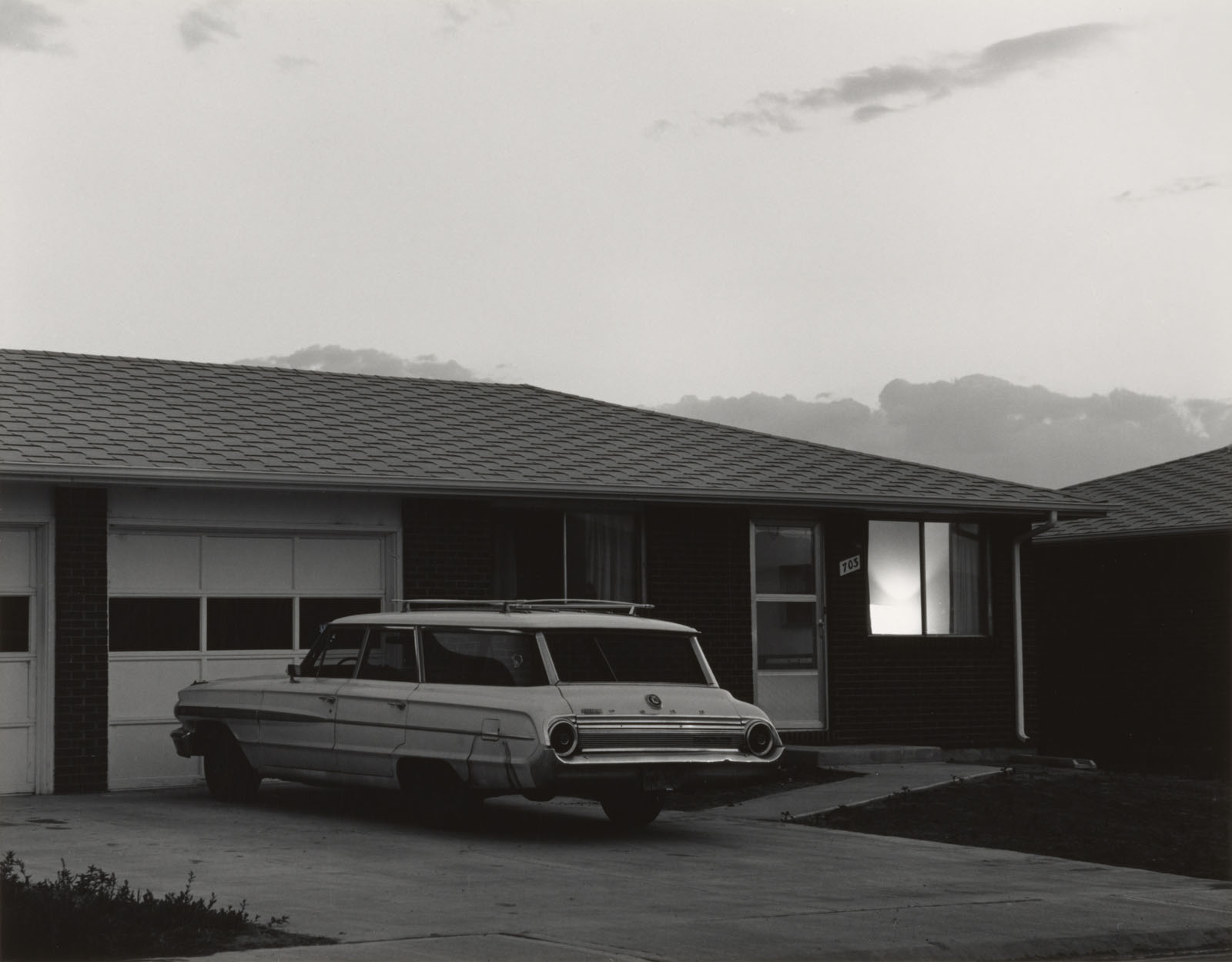
Robert Adams (American, b. 1937)
Longmont, Colorado
1973, printed 1981
Gelatin silver print
Image: 15.2 x 19.4cm (6 x 7 5/8 in.)
Philadelphia Museum of Art, Purchased with the Alice Newton Osborn Fund, 1982
Courtesy of the Philadelphia Museum of Art
© Robert Adams, Courtesy Fraenkel Gallery, San Francisco
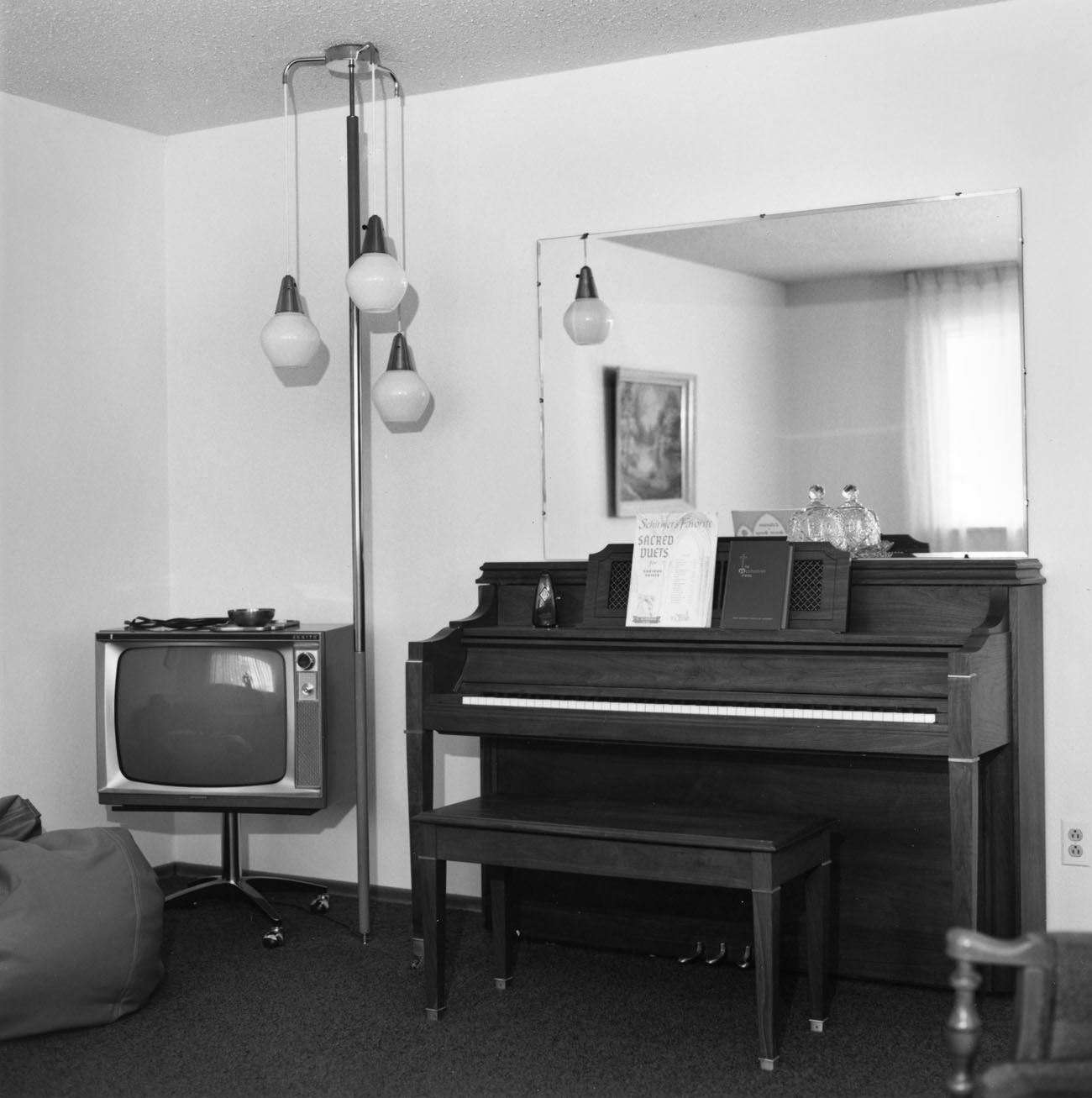
Robert Adams (American, b. 1937)
Lakewood, Colorado
1973-1974, printed 2008
Gelatin silver print
Image: 15.2 x 15.1cm (6 x 5 15/16 in.)
National Gallery of Art, Washington, Pepita Milmore Memorial Fund and Gift of Robert and Kerstin Adams
© Robert Adams, Courtesy Fraenkel Gallery, San Francisco
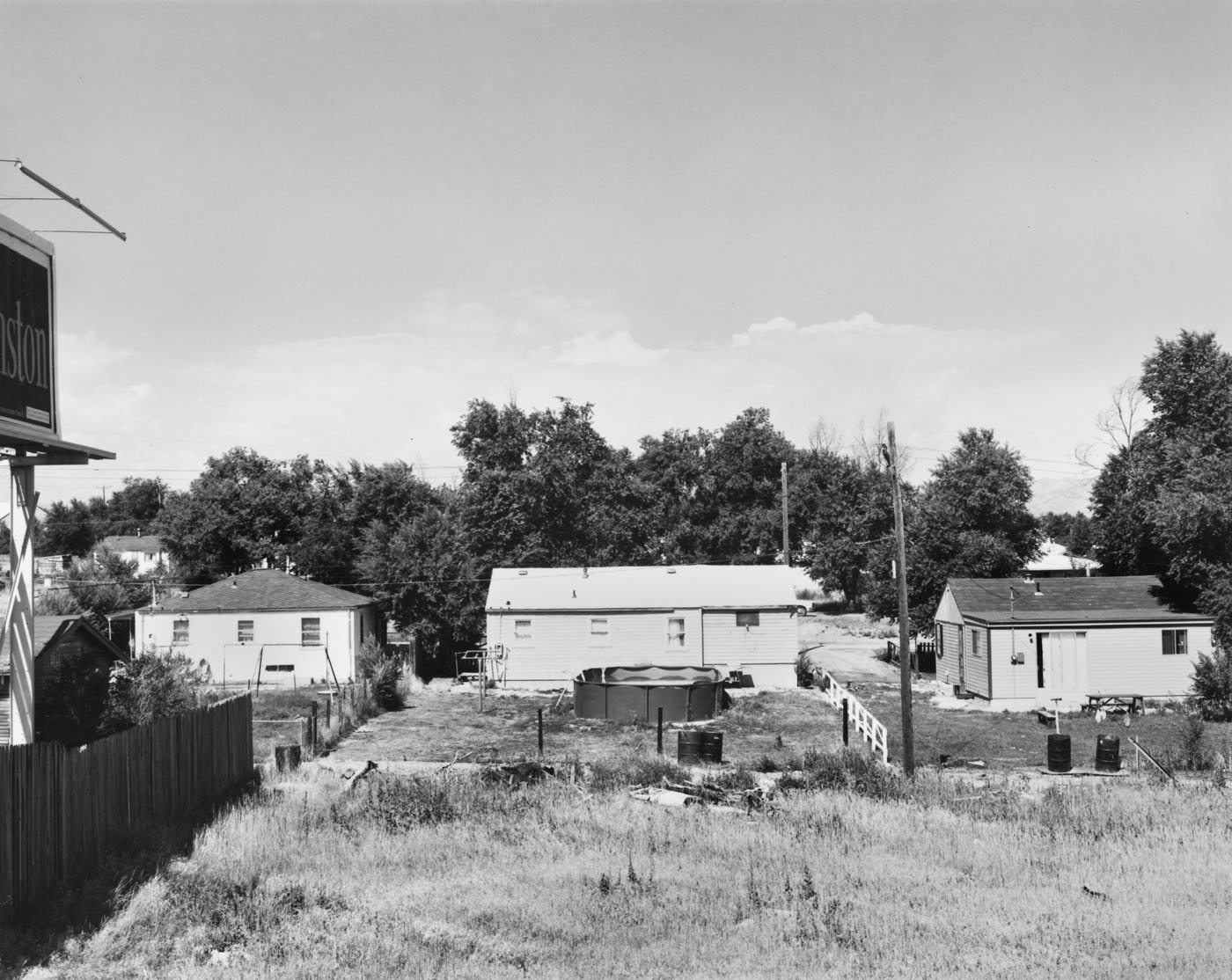
Robert Adams (American, b. 1937)
From Interstate 25, North Edge of Denver
1973
Gelatin silver print
Image: 15.2 x 19.1cm (6 x 7 1/2 in.)
National Gallery of Art, Washington, Pepita Milmore Memorial Fund and Gift of Robert and Kerstin Adams
© Robert Adams, Courtesy Fraenkel Gallery, San Francisco
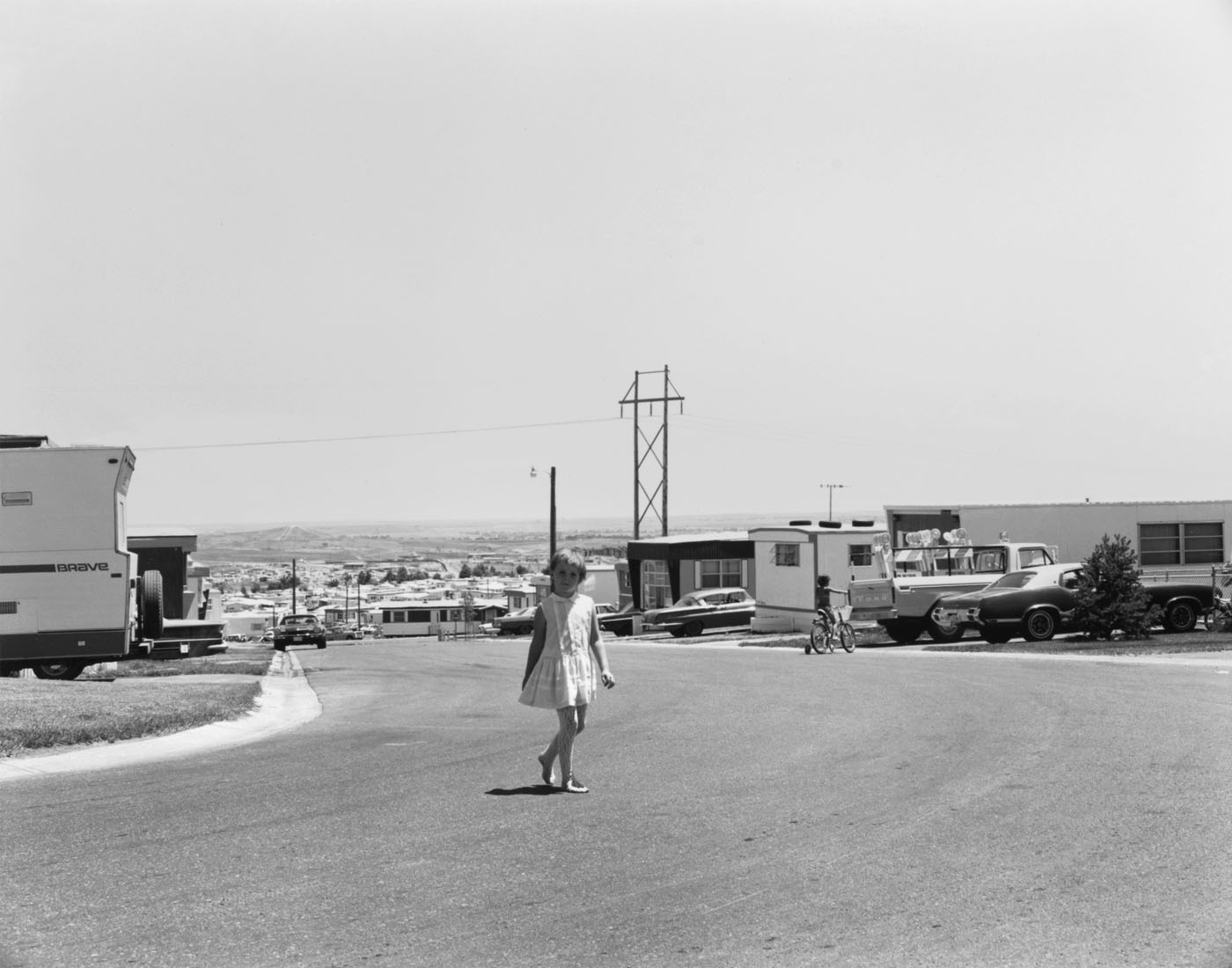
Robert Adams (American, b. 1937)
Mobile Home Park, North Edge of Denver
1973, printed 2005
Gelatin silver print
Image: 15.2 x 19.8cm (6 x 7 13/16 in.)
National Gallery of Art, Washington, Gift of Mary and Dan Solomon and Patrons’ Permanent Fund
© Robert Adams, Courtesy Fraenkel Gallery, San Francisco
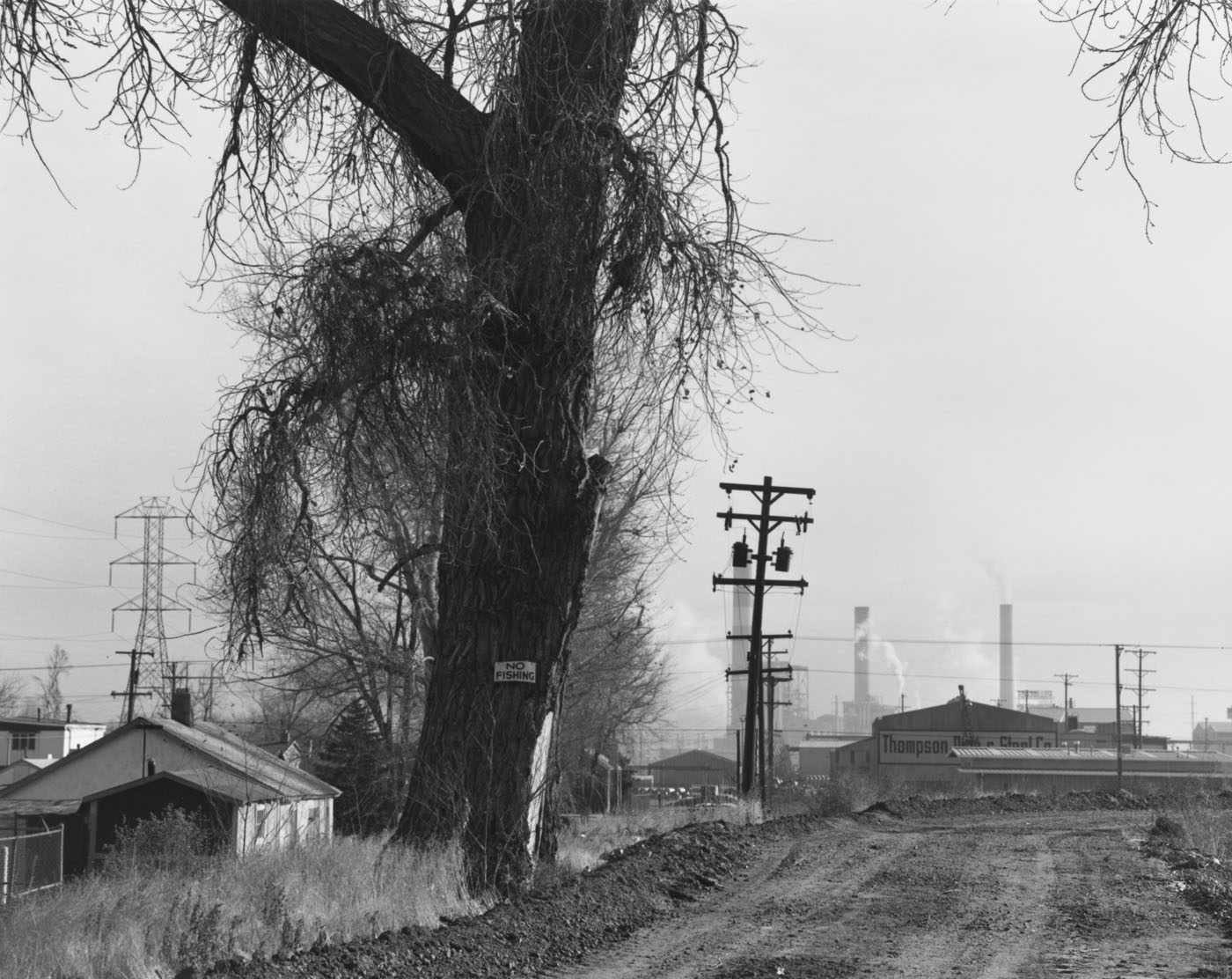
Robert Adams (American, b. 1937)
North Edge of Denver
1973-1974, printed 2008
Gelatin silver print
Image: 15.2 x 19.2cm (6 x 7 9/16 in.)
National Gallery of Art, Washington, Gift of Robert and Kerstin Adams
© Robert Adams, Courtesy Fraenkel Gallery, San Francisco
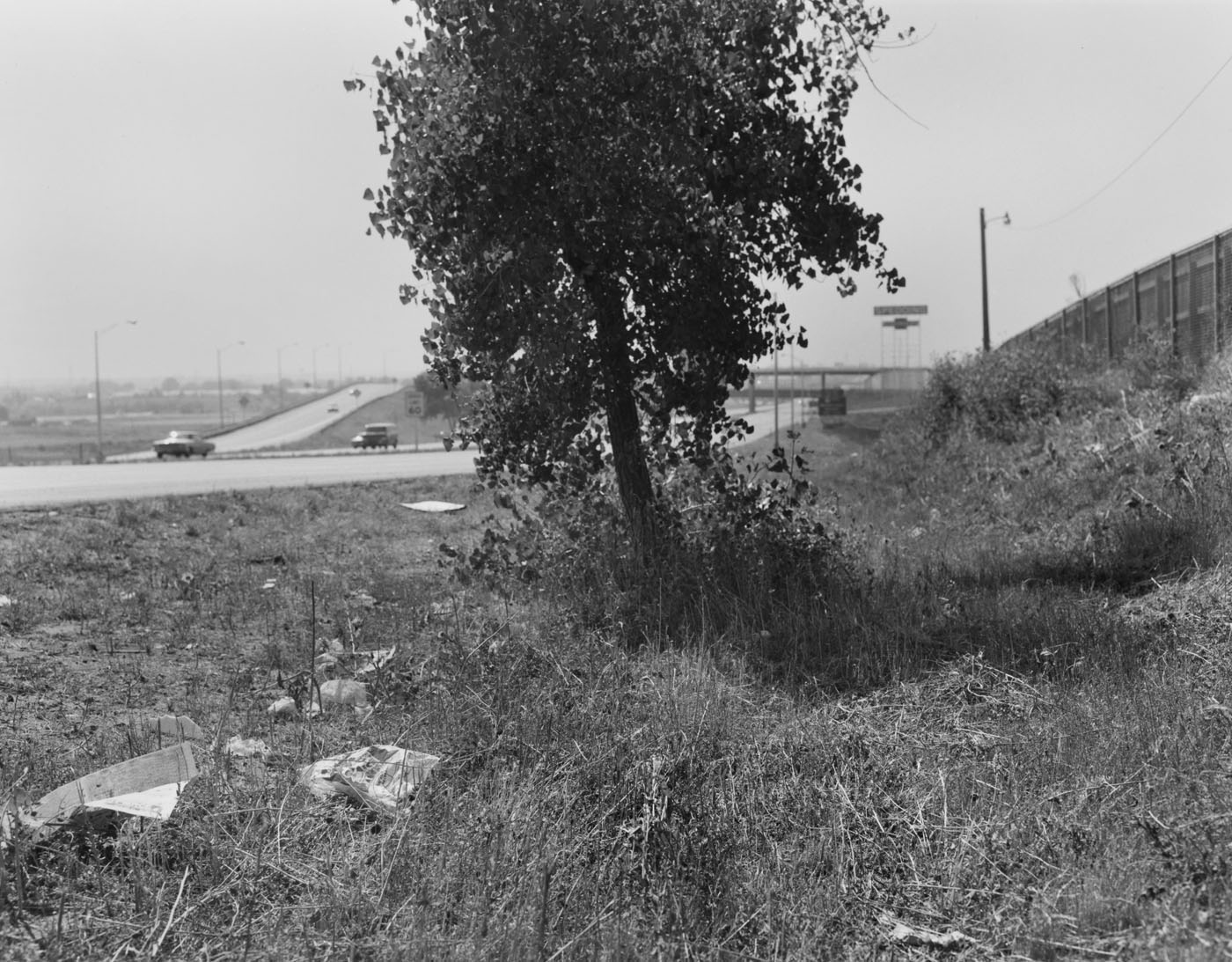
Robert Adams (American, b. 1937)
Next to Interstate 25, Denver
1973, printed 1991
Gelatin silver print
Image: 15.2 x 19.3cm (6 x 7 5/8 in.)
National Gallery of Art, Washington, The Ahmanson Foundation and Gift of Robert and Kerstin Adams
© Robert Adams, Courtesy Fraenkel Gallery, San Francisco
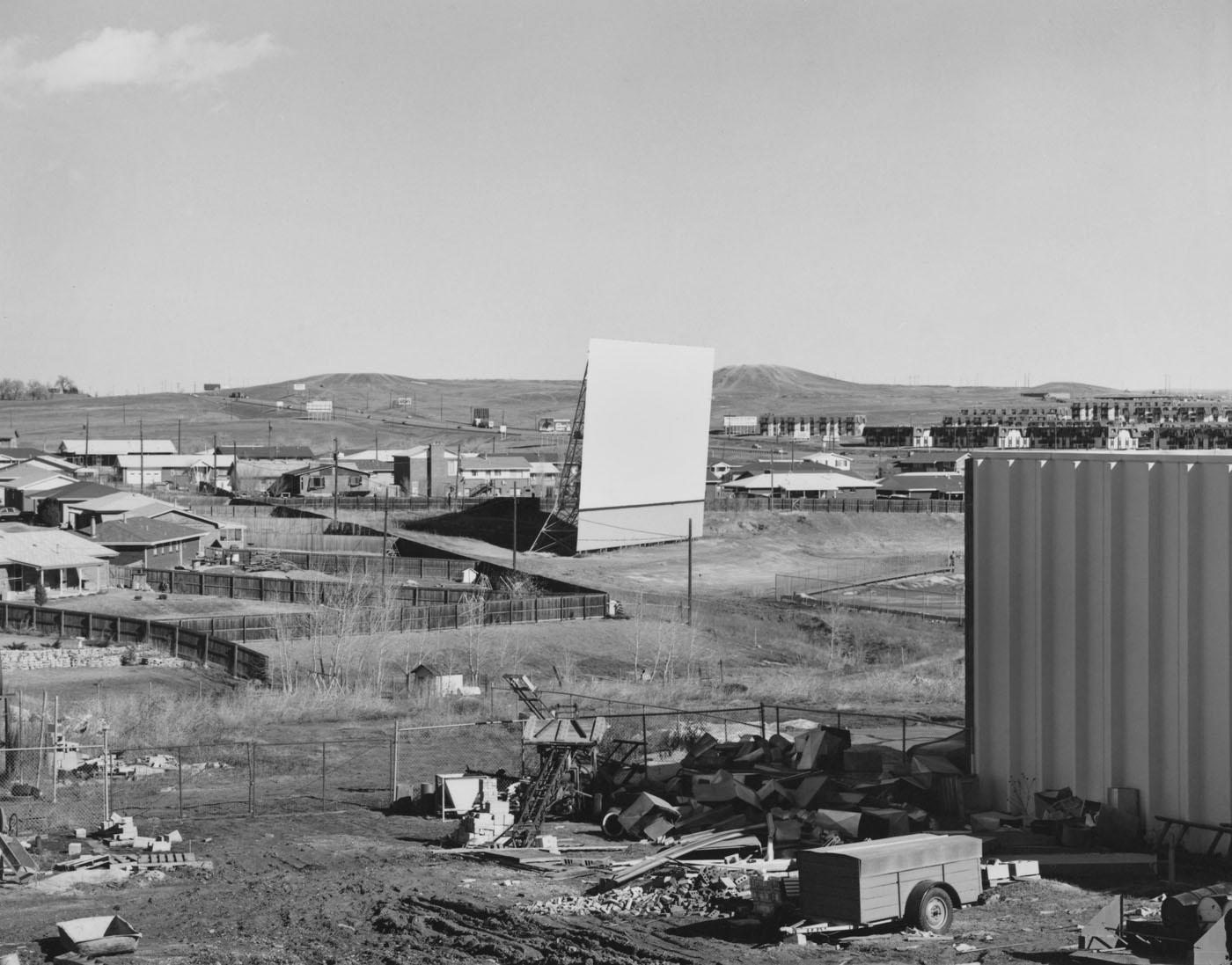
Robert Adams (American, b. 1937)
Outdoor Theater, North Edge of Denver
1973-1974
Gelatin silver print
Image: 15.6 x 19.7cm (6 1/8 x 7 3/4 in.)
National Gallery of Art, Washington, Gift of Robert and Kerstin Adams
© Robert Adams, Courtesy Fraenkel Gallery, San Francisco
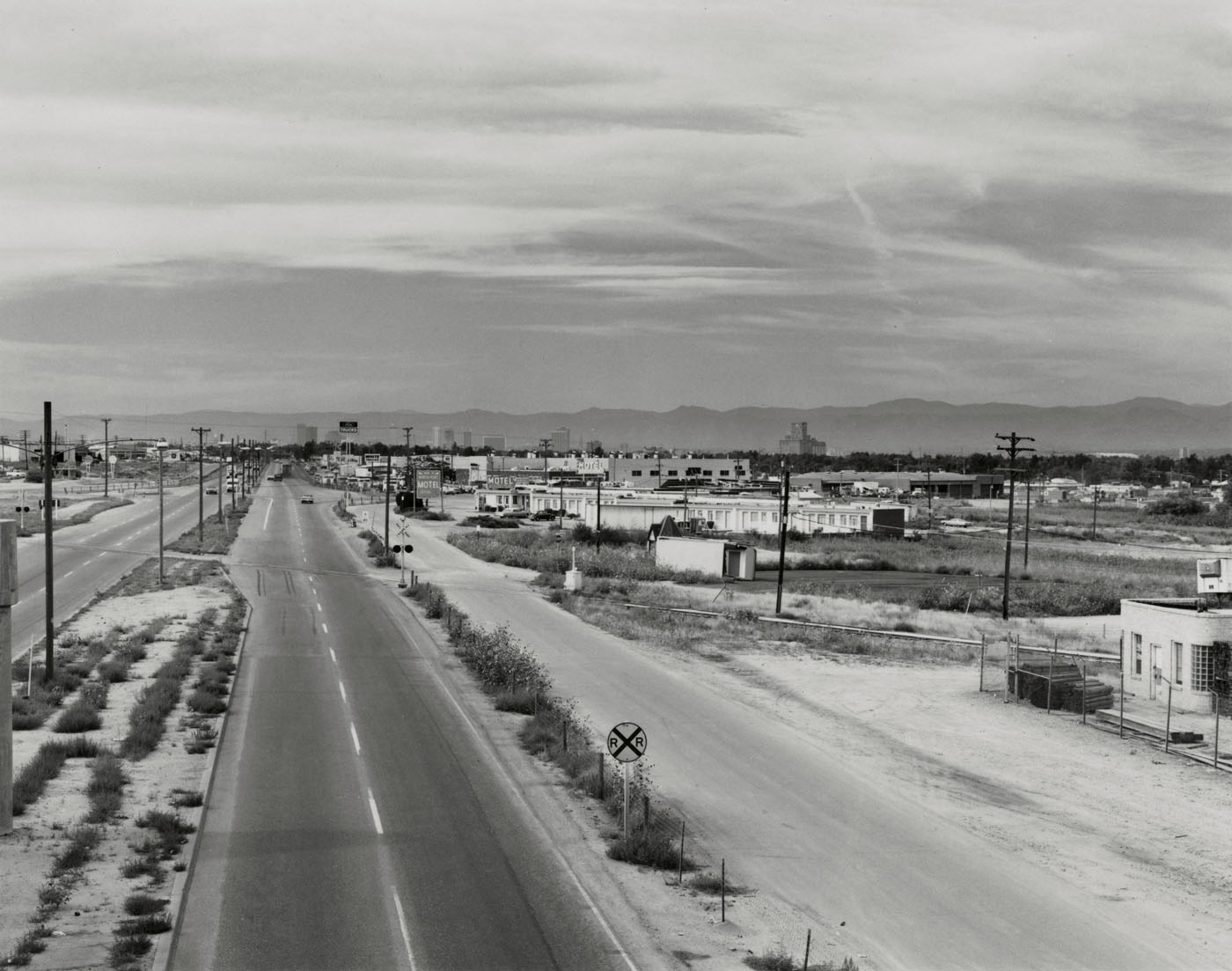
Robert Adams (American, b. 1937)
Highway, Northeast Denver
1973
Gelatin silver print
Image: 15.1 x 19.1cm (5 15/16 x 7 1/2 in.)
Stephen G. Stein Employee Benefit Trust
© Robert Adams, Courtesy Fraenkel Gallery, San Francisco
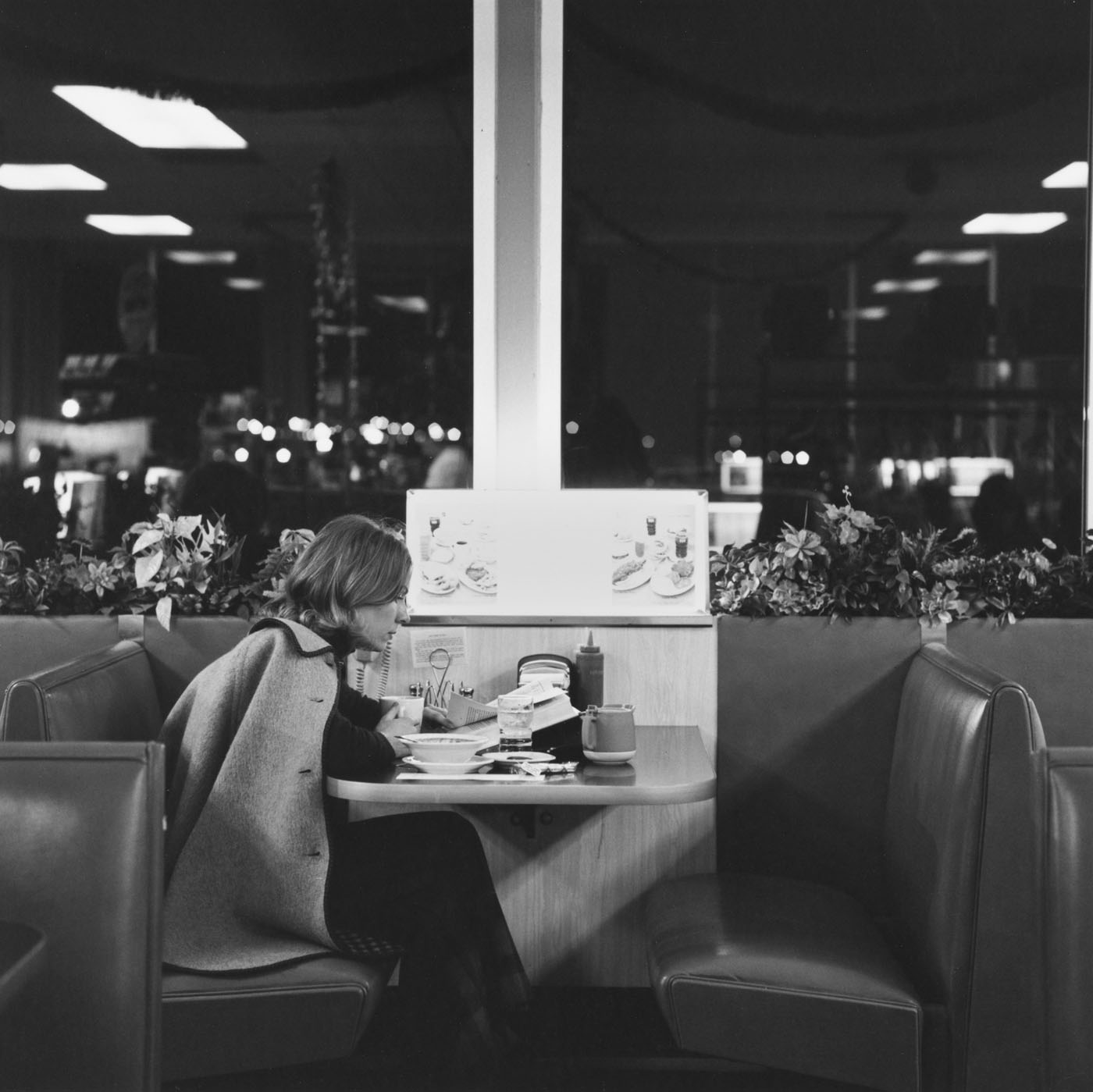
Robert Adams (American, b. 1937)
Longmont, Colorado
1973-1974, printed 2001
gelatin silver print
Image: 16.8 x 17.2cm (6 5/8 x 6 3/4 in.)
Private collection
© Robert Adams, Courtesy Fraenkel Gallery, San Francisco
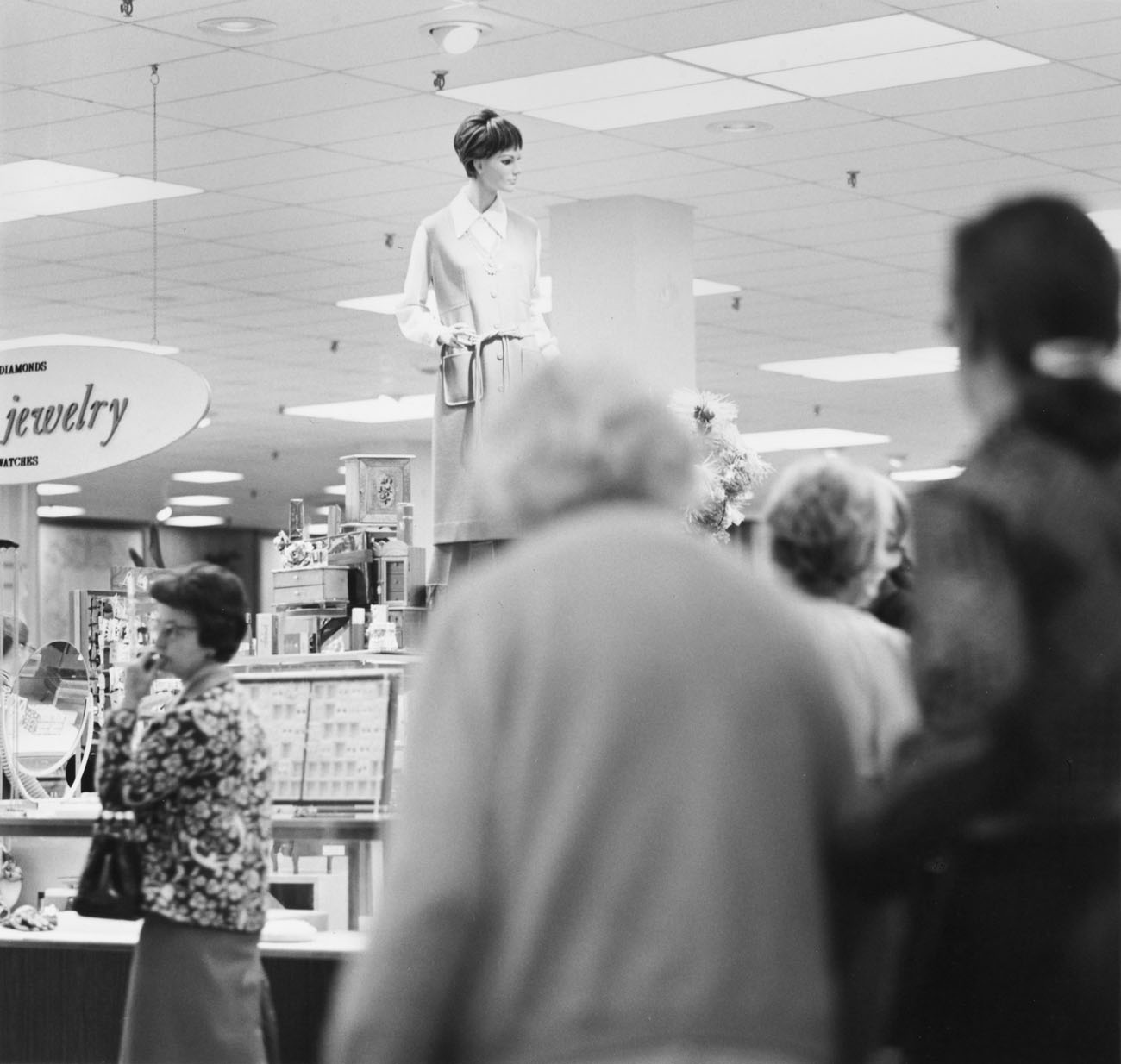
Robert Adams (American, b. 1937)
Lakewood, Colorado
1973
Gelatin silver print
Image: 14.3 x 15.1cm (5 5/8 x 5 15/16 in.)
National Gallery of Art, Washington, Pepita Milmore Memorial Fund and Gift of Robert and Kerstin Adams
© Robert Adams, Courtesy Fraenkel Gallery, San Francisco
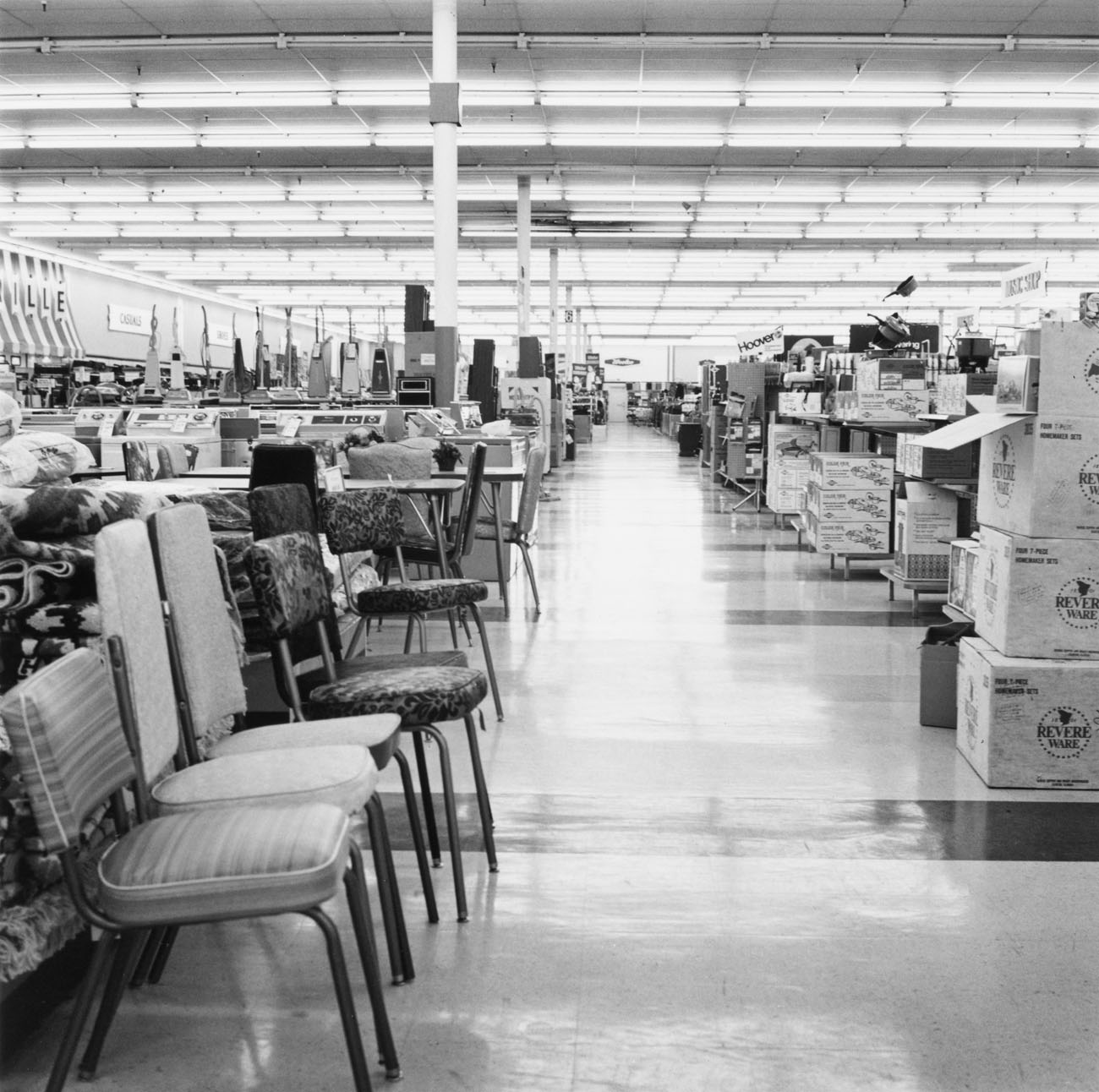
Robert Adams (American, b. 1937)
Lakewood, Colorado
1973, printed 1979
gelatin silver print
Image: 15.2 x 15.2cm (6 x 6 in.)
National Gallery of Art, Washington, Pepita Milmore Memorial Fund and Gift of Robert and Kerstin Adams
© Robert Adams, Courtesy Fraenkel Gallery, San Francisco
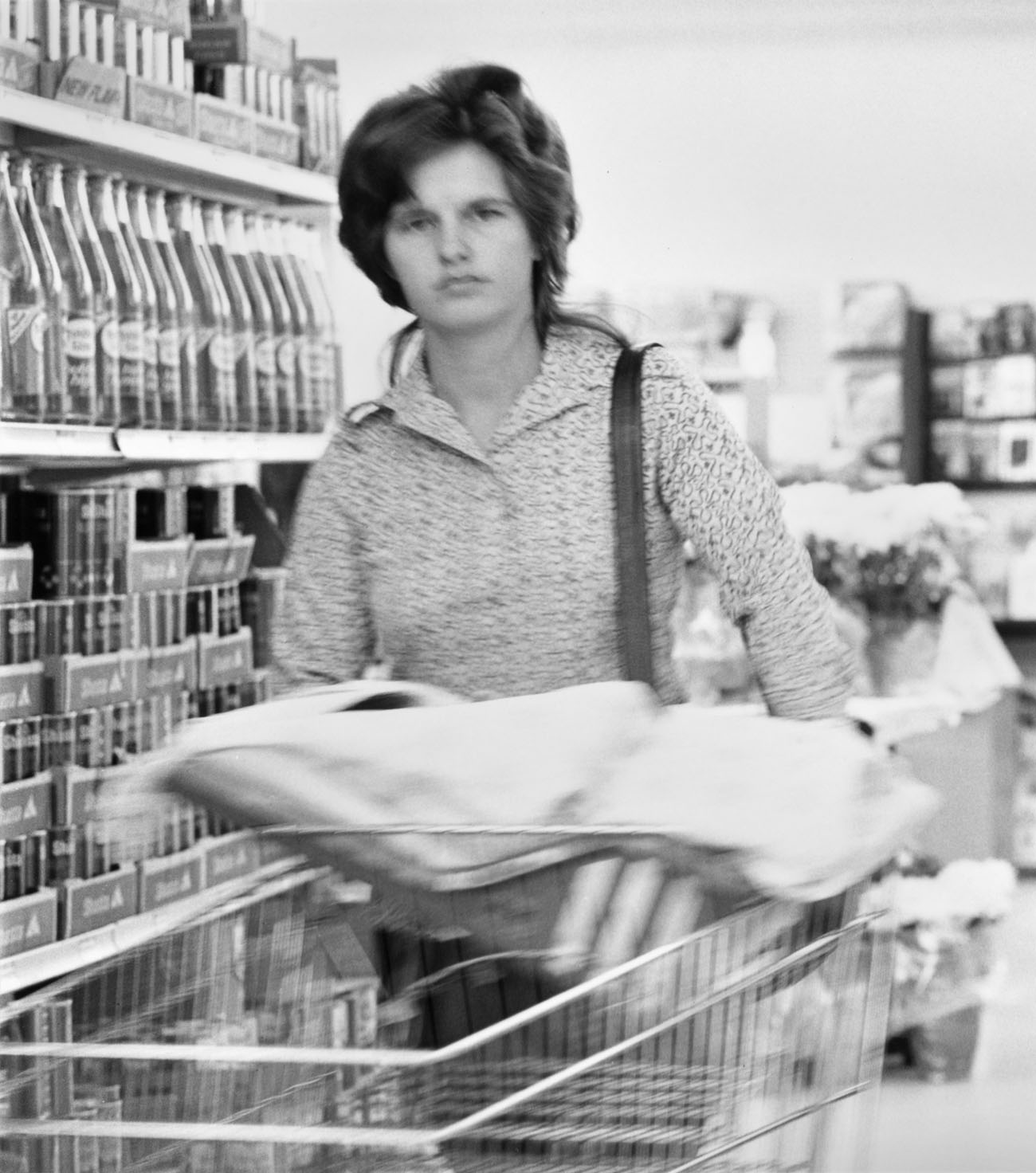
Robert Adams (American, b. 1937)
Longmont, Colorado
1973
Gelatin silver print
Image: 17.2 x 15.2cm (6 3/4 x 6 in.)
National Gallery of Art, Washington, Pepita Milmore Memorial Fund and Gift of Robert and Kerstin Adams
© Robert Adams, Courtesy Fraenkel Gallery, San Francisco
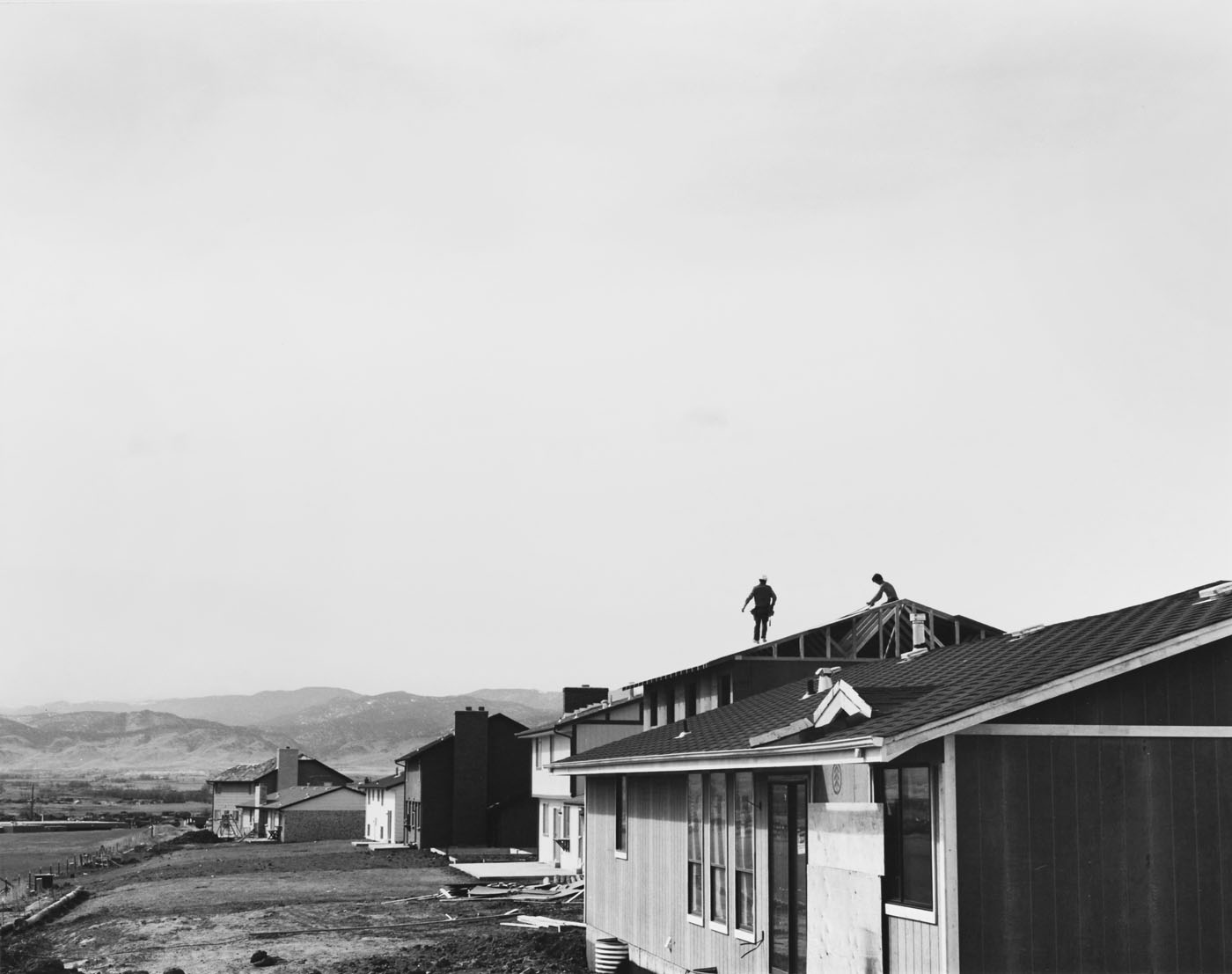
Robert Adams (American, b. 1937)
Boulder County, Colorado
1974
Gelatin silver print
Image and sheet: 15.2 x 19.2cm (6 x 7 9/16 in.)
Philadelphia Museum of Art, Purchased with the Alice Newton Osborn Fund, 1982
Courtesy of the Philadelphia Museum of Art
© Robert Adams, Courtesy Fraenkel Gallery, San Francisco
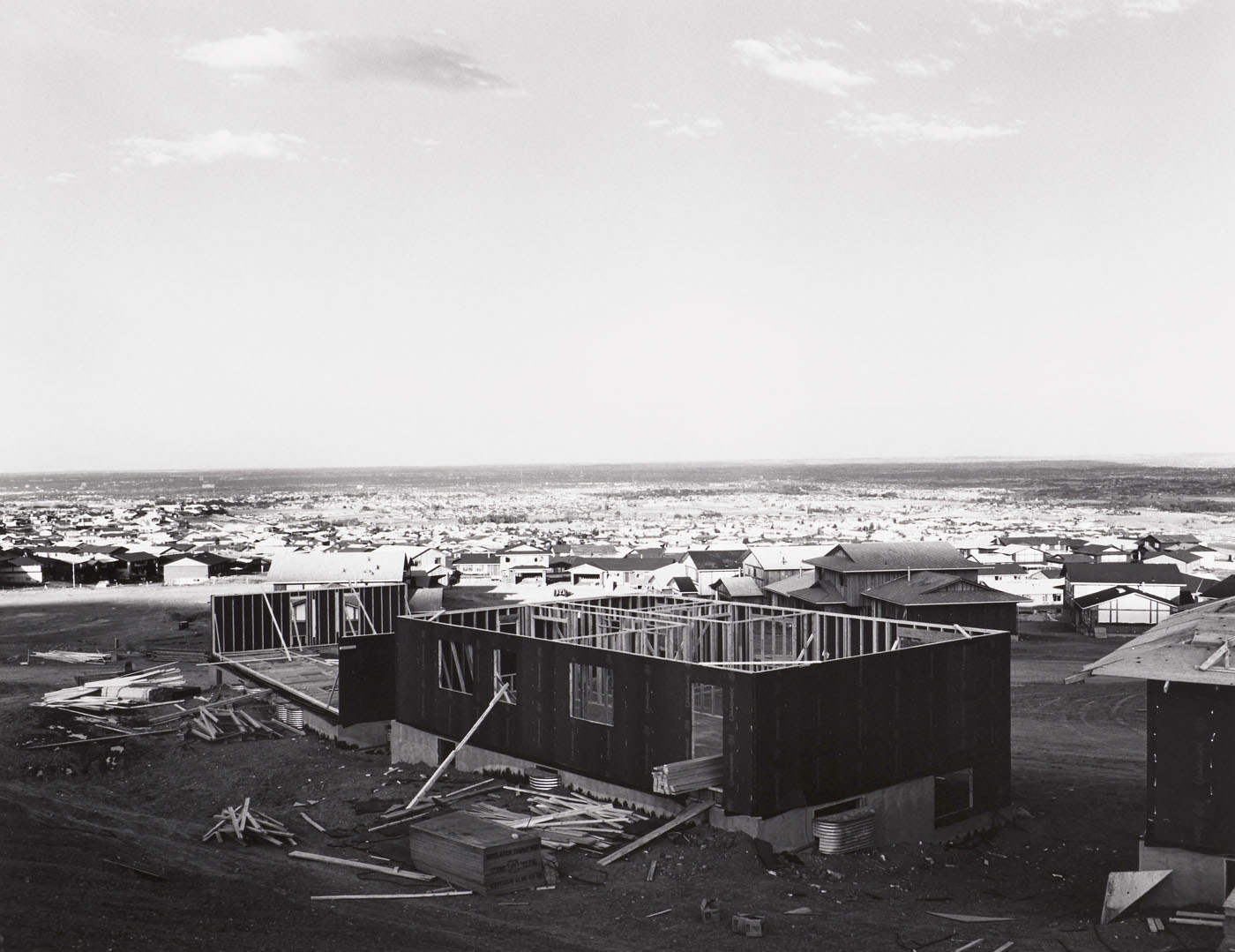
Robert Adams (American, b. 1937)
Lakewood, Colorado
1974, printed 1981
Gelatin silver print
Image: 22.8 x 29.2cm (9 x 11 1/2 in.)
Philadelphia Museum of Art, Purchased with the Alice Newton Osborn Fund, 1982
Courtesy of the Philadelphia Museum of Art
© Robert Adams, Courtesy Fraenkel Gallery, San Francisco
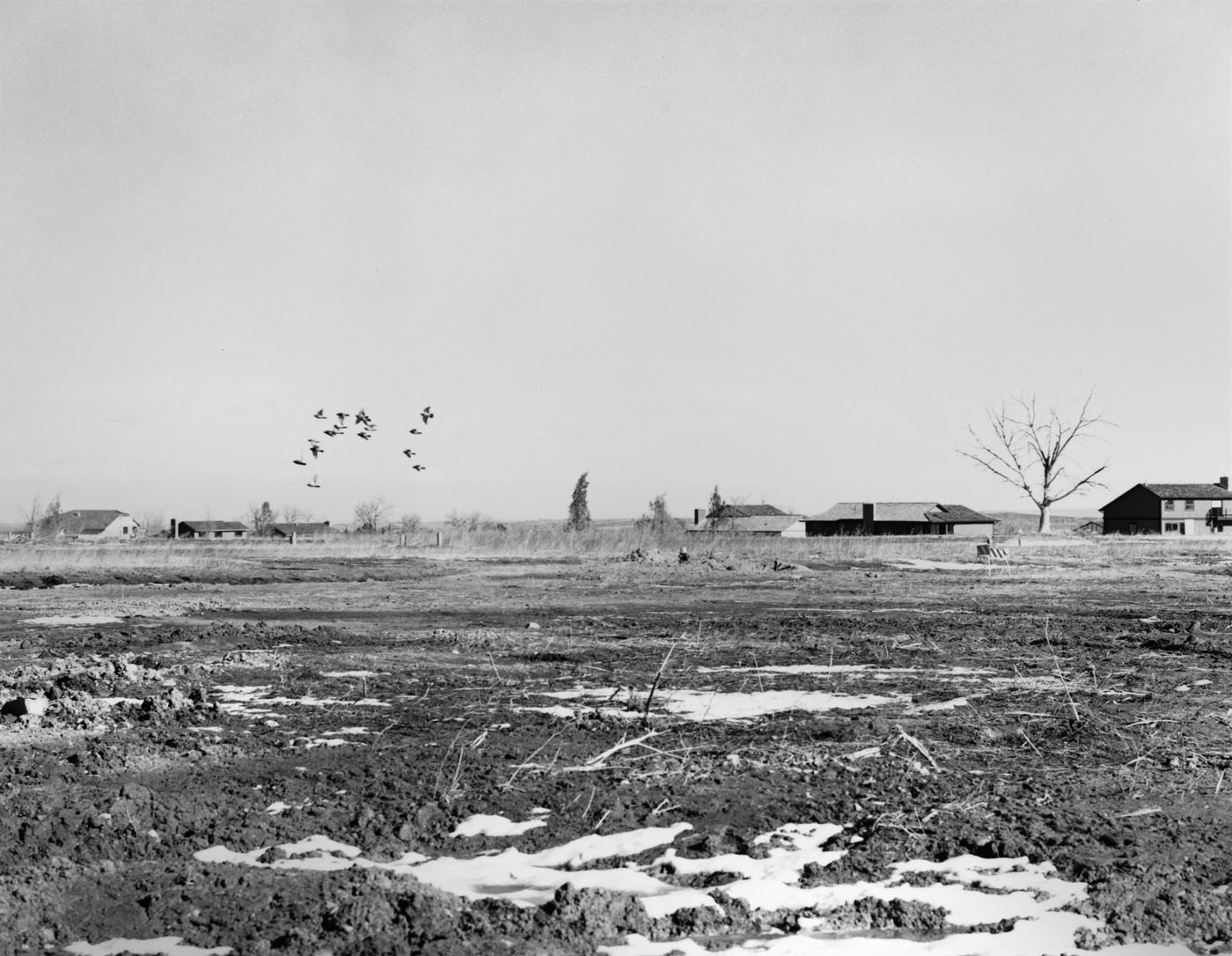
Robert Adams (American, b. 1937)
Arvada, Colorado
1974
Gelatin silver print
Image: 15.2 x 19.7cm (6 x 7 3/4 in.)
National Gallery of Art, Washington, The Ahmanson Foundation and Gift of Robert and Kerstin Adams
© Robert Adams, Courtesy Fraenkel Gallery, San Francisco
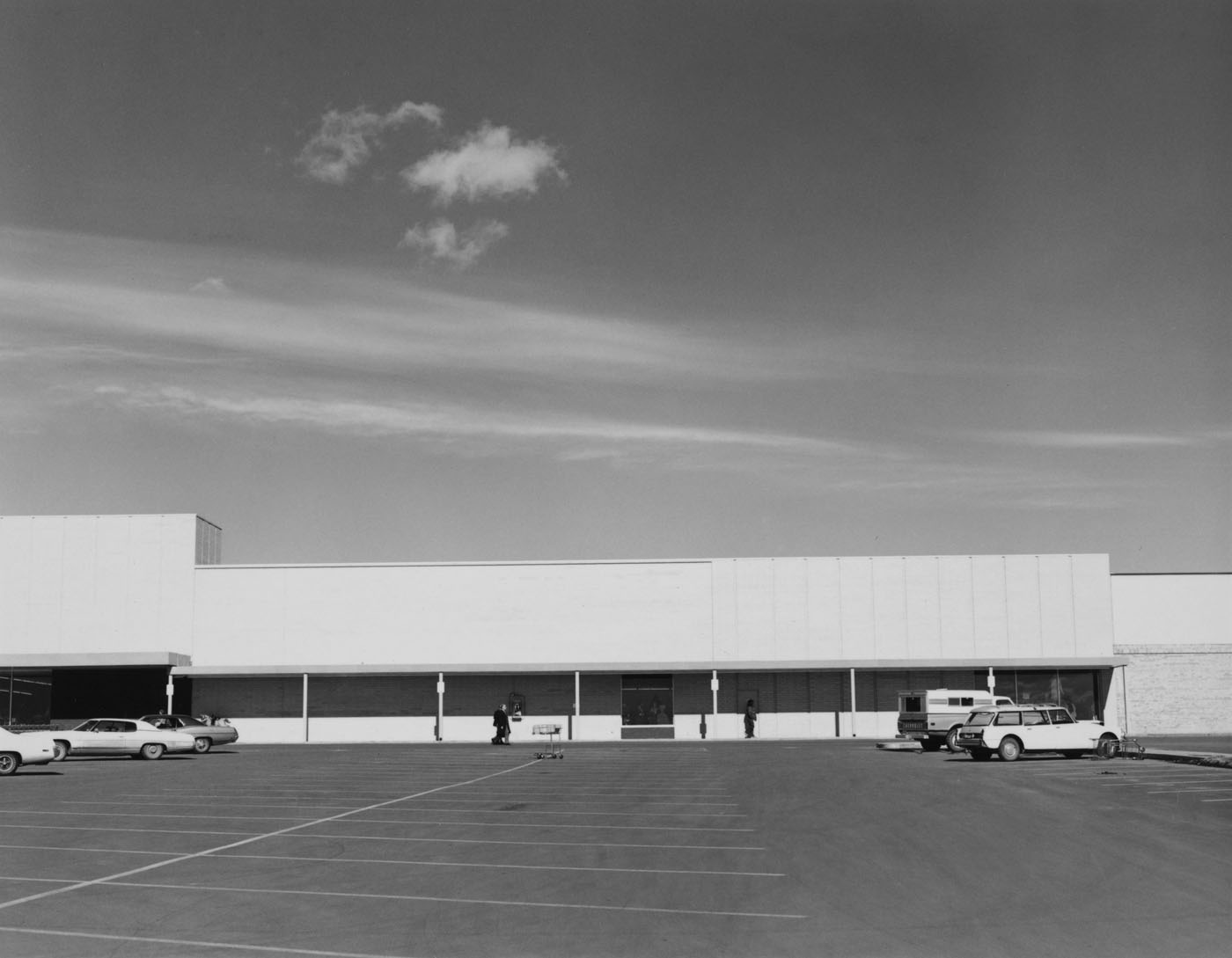
Robert Adams (American, b. 1937)
Shopping Mall and Parking Lot, Denver
1974, printed 1980s
Gelatin silver print
Image: 15.2 x 19.4cm (6 x 7 5/8 in.)
National Gallery of Art, Washington, Gift of Robert and Kerstin Adams
© Robert Adams, Courtesy Fraenkel Gallery, San Francisco
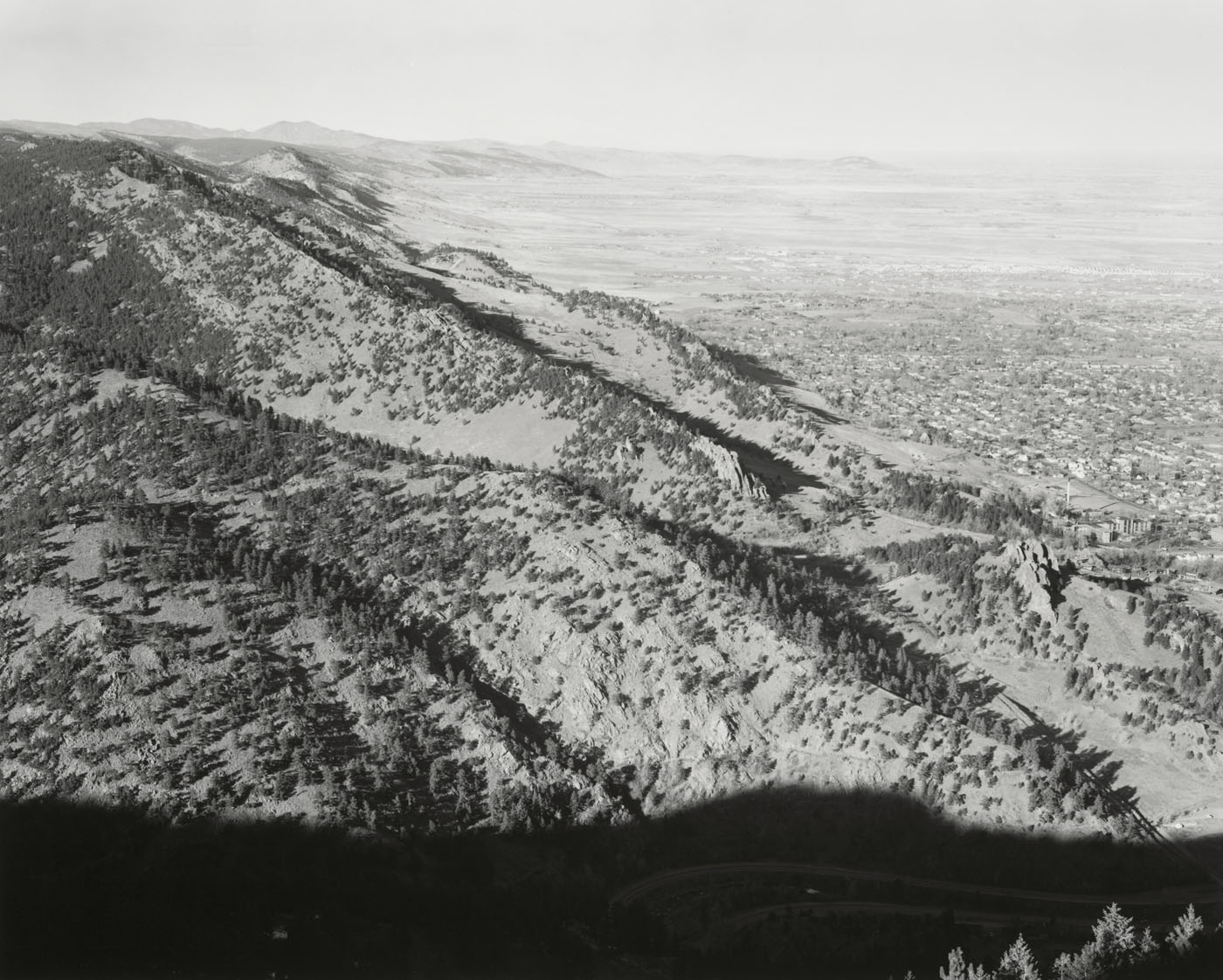
Robert Adams (American, b. 1937)
Northeast from Flagstaff Mountain, Boulder County, Colorado
1975
Gelatin silver print
Image: 38.1 x 47.9cm (15 x 18 7/8 in.)
National Gallery of Art, Washington, Gift of Robert and Kerstin Adams
© Robert Adams, Courtesy Fraenkel Gallery, San Francisco
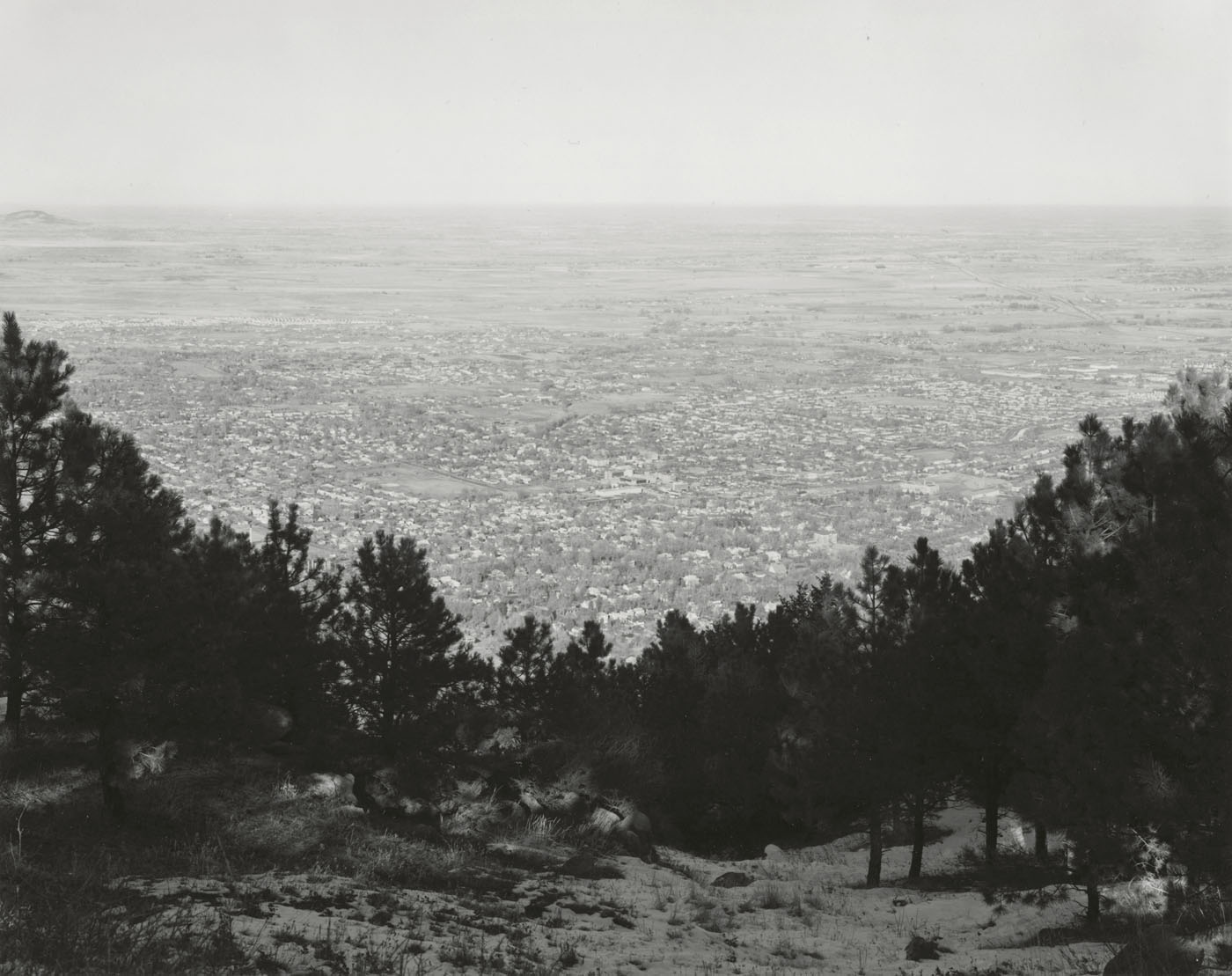
Robert Adams (American, b. 1937)
East from Flagstaff Mountain, Boulder County, Colorado
1975
Gelatin silver print
Image: 22.9 x 28.6cm (9 x 11 1/4 in.)
Fraenkel Gallery, San Francisco
© Robert Adams, Courtesy Fraenkel Gallery, San Francisco
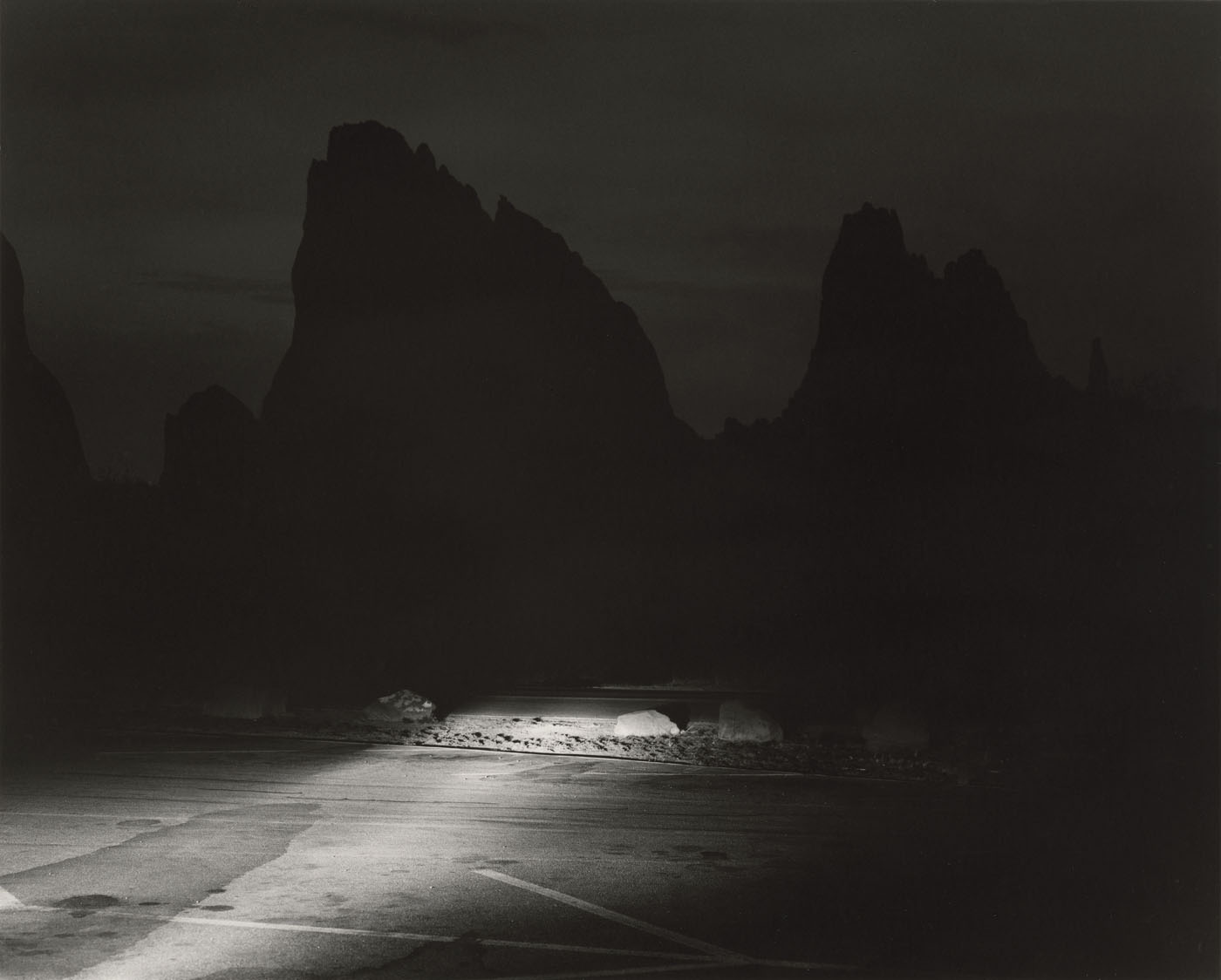
Robert Adams (American, b. 1937)
Garden of the Gods, El Paso County, Colorado
1976
Gelatin silver print
Image: 22.9 x 28.3cm (9 x 11 1/8 in.)
National Gallery of Art, Washington, Pepita Milmore Memorial Fund and Gift of Robert and Kerstin Adams
© Robert Adams, Courtesy Fraenkel Gallery, San Francisco
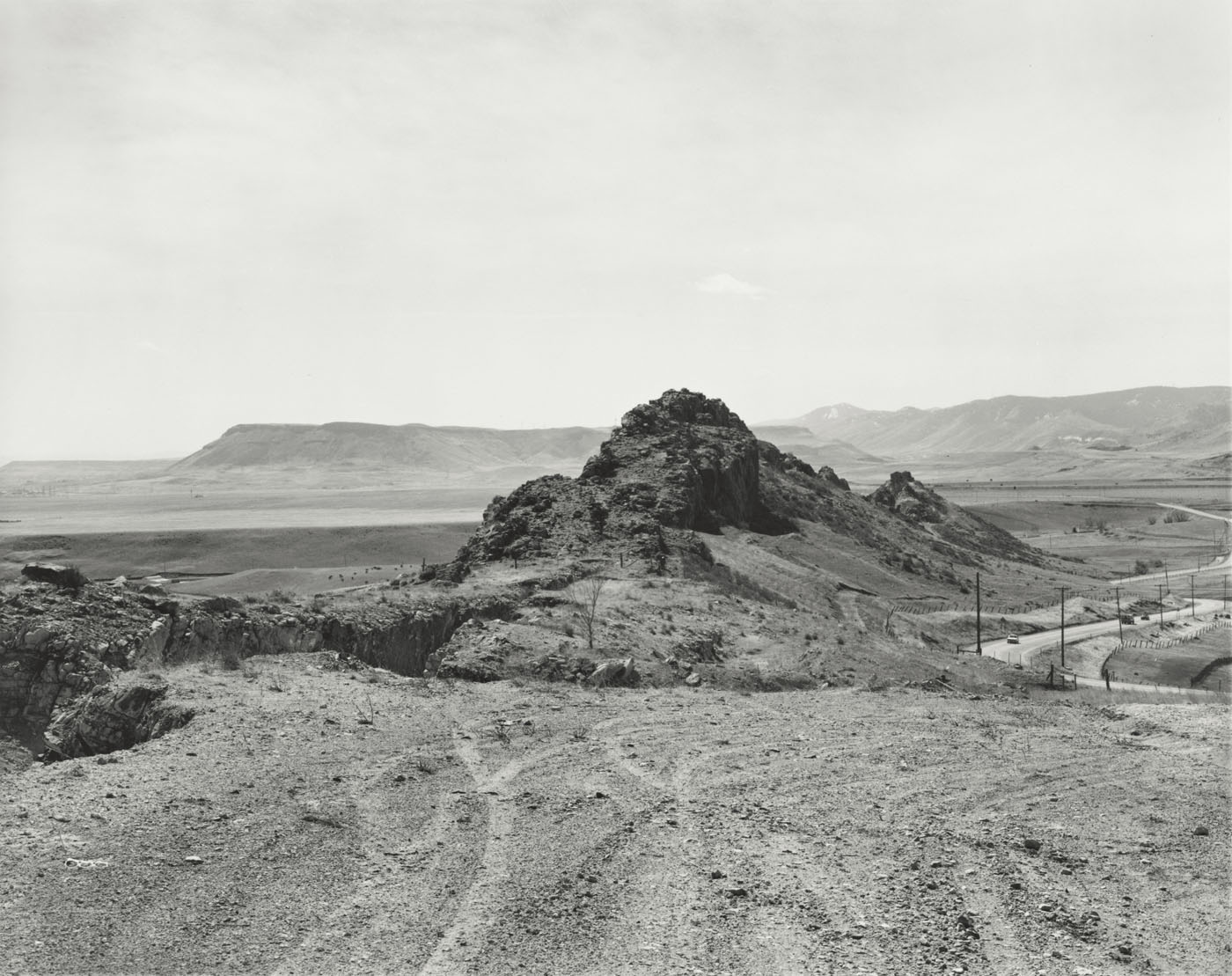
Robert Adams (American, b. 1937)
South of the Rocky Flats Nuclear Weapons Plant, Jefferson County, Colorado
1976
Gelatin silver print
Image: 17.4 x 21.8cm (6 7/8 x 8 9/16 in.)
National Gallery of Art, Washington, Pepita Milmore Memorial Fund and Gift of Robert and Kerstin Adams
© Robert Adams, Courtesy Fraenkel Gallery, San Francisco
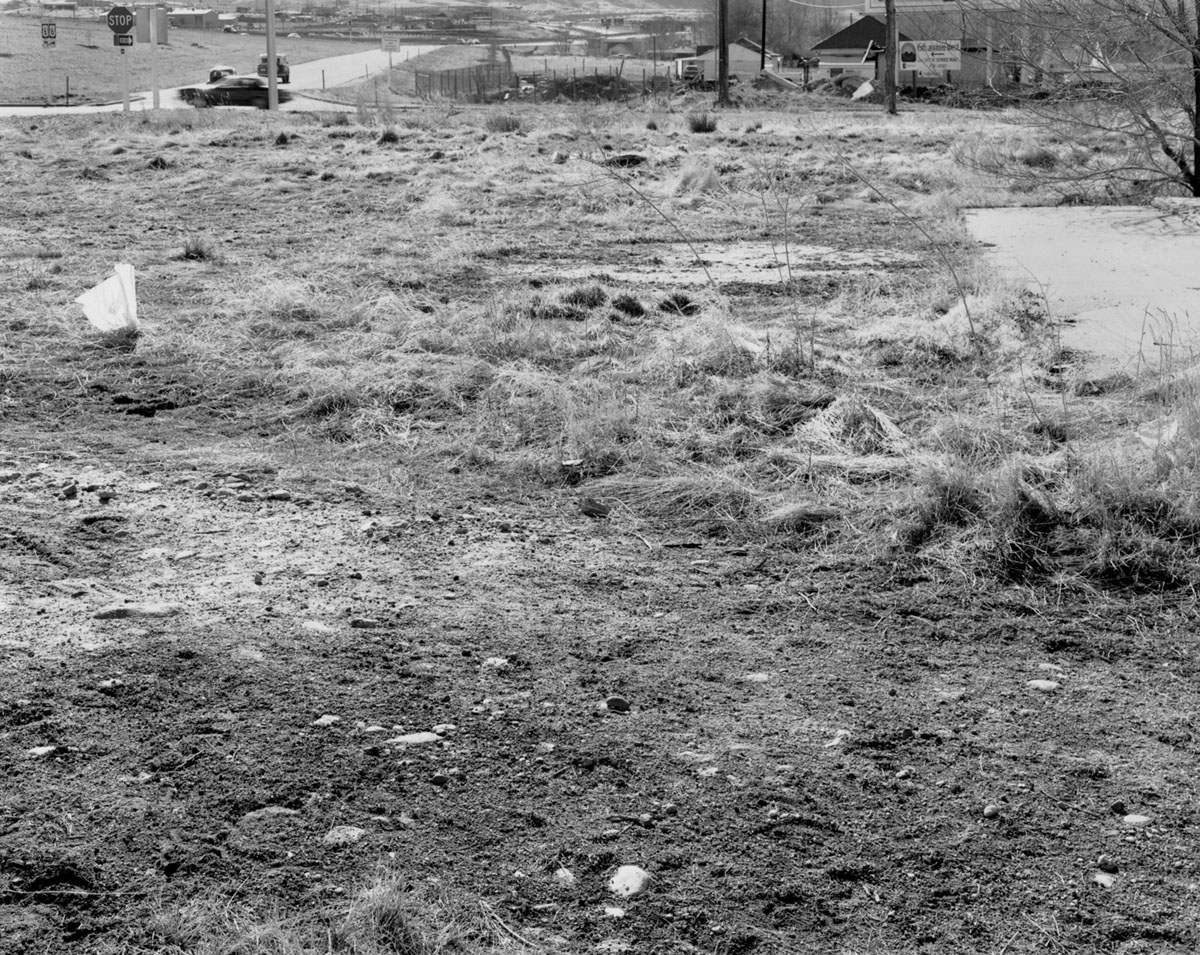
Robert Adams (American, b. 1937)
Lakewood, Jefferson County, Colorado
1976
Gelatin silver print
Image: 22.9 x 28.6cm (9 x 11 1/4 in.)
National Gallery of Art, Washington, Gift of Robert and Kerstin Adams
© Robert Adams, Courtesy Fraenkel Gallery, San Francisco
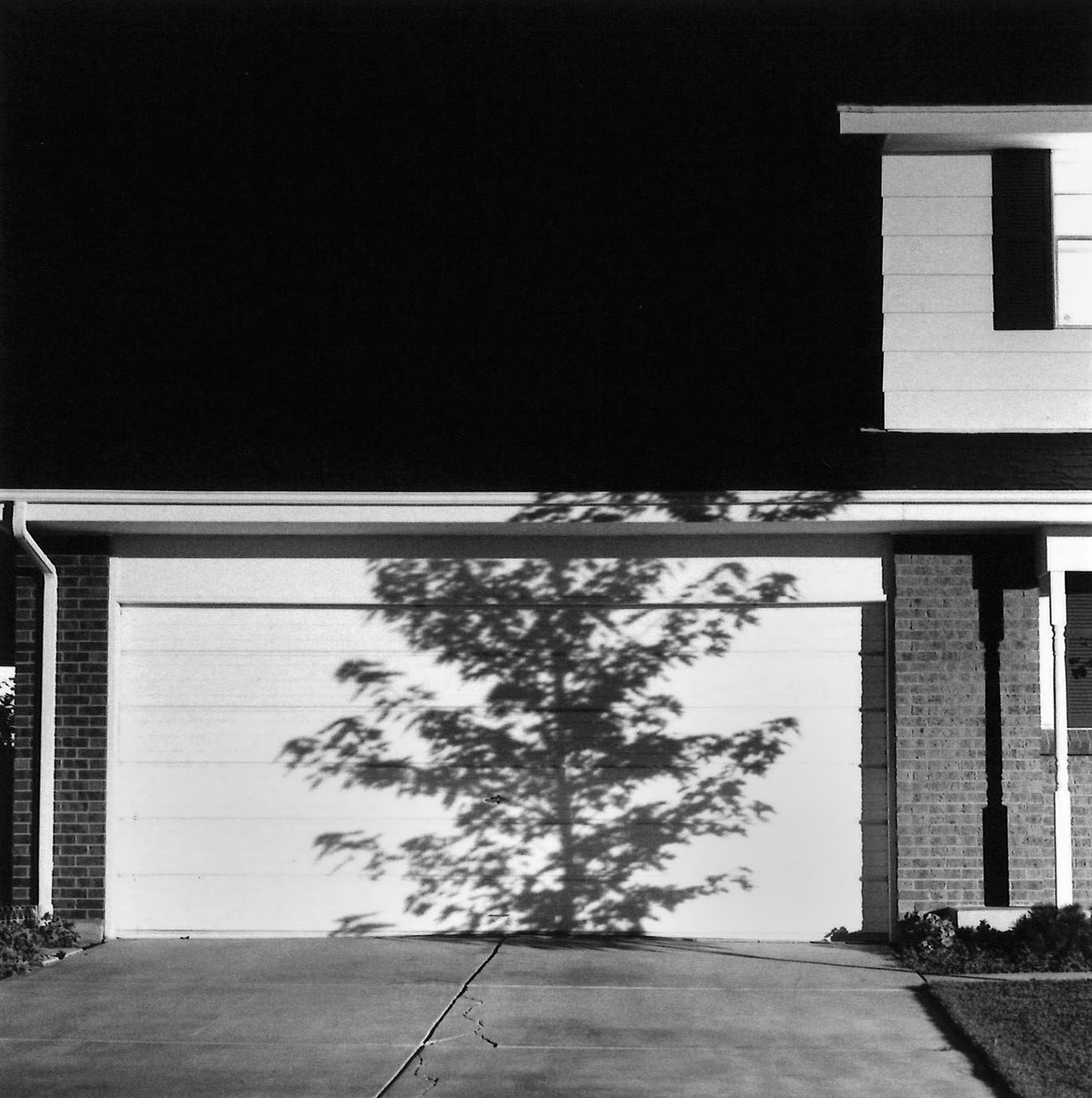
Robert Adams (American, b. 1937)
Longmont, Colorado
1976
Gelatin silver print
Image: 17.8 x 17.8cm (7 x 7 in.)
Private collection, San Francisco
© Robert Adams, Courtesy Fraenkel Gallery, San Francisco
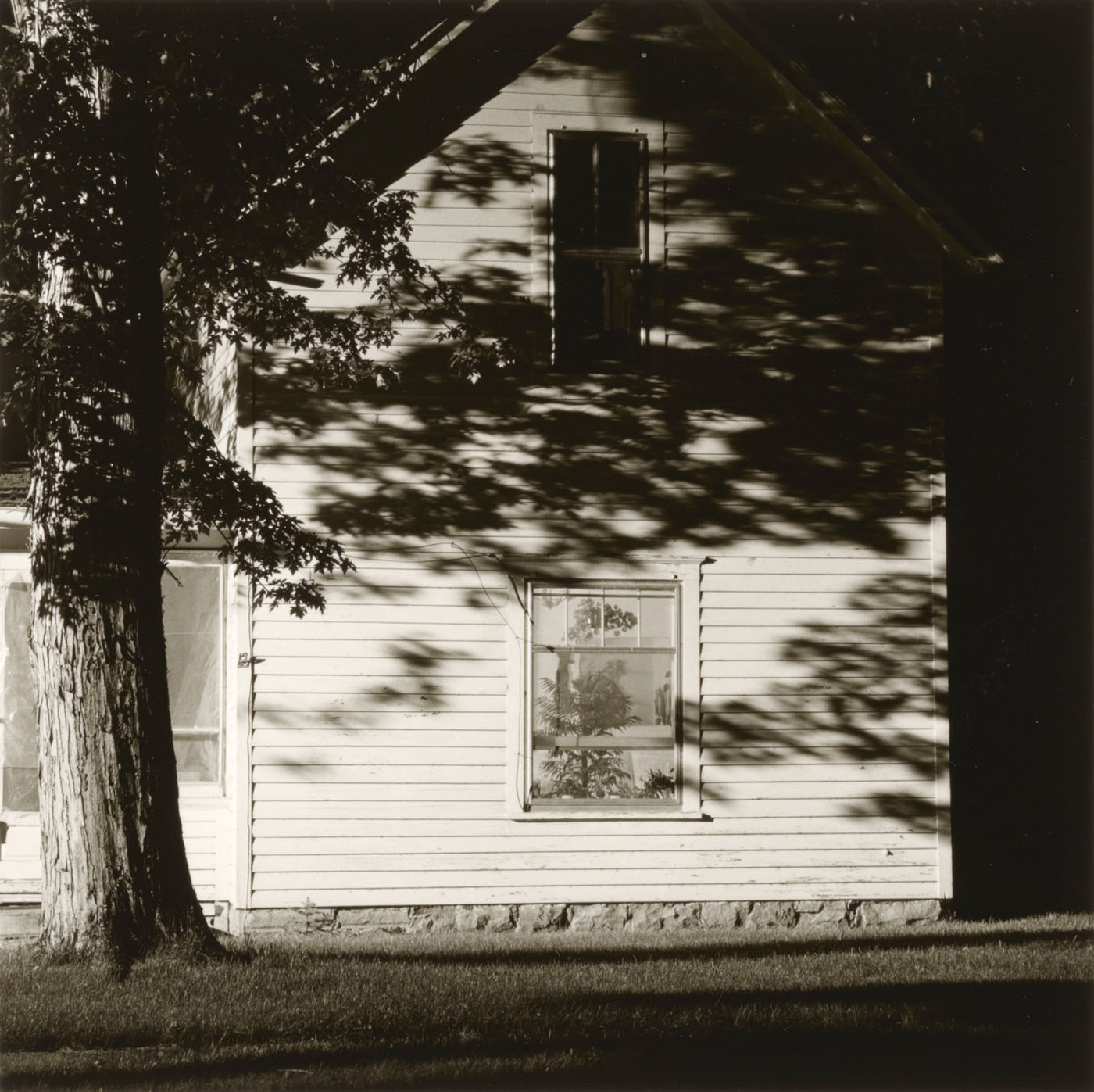
Robert Adams (American, b. 1937)
Berthoud, Colorado
1976
Gelatin silver print
Image: 12.7 x 12.7 cm (5 x 5 in.)
Philadelphia Museum of Art, Purchased with funds contributed by Marilyn L. Steinbright, 1985
Courtesy of the Philadelphia Museum of Art
© Robert Adams, Courtesy Fraenkel Gallery, San Francisco
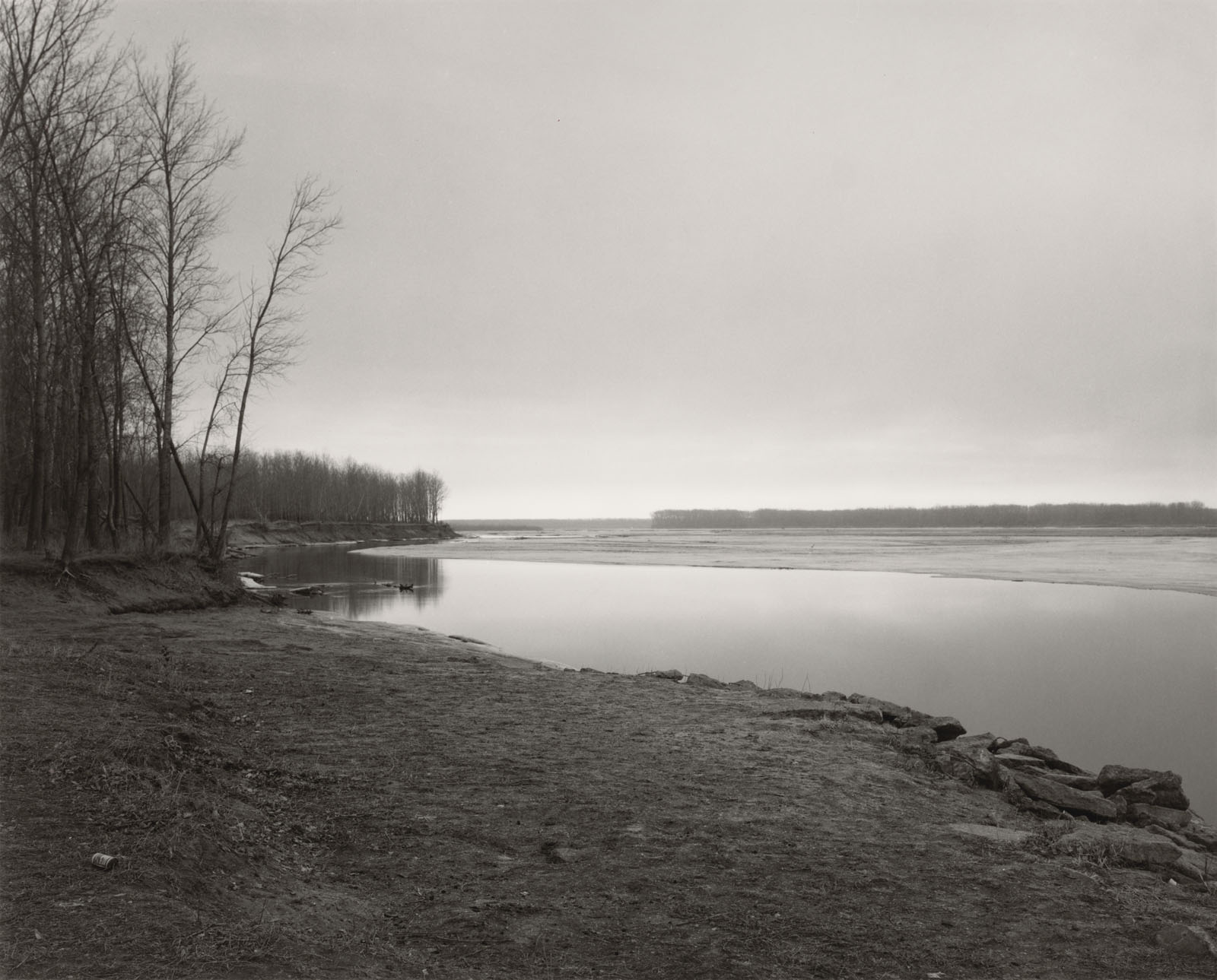
Robert Adams (American, b. 1937)
Missouri River, Clay County, South Dakota
1977
Gelatin silver print
Image: 22.7 x 28.1cm (8 15/16 x 11 1/16 in.)
National Gallery of Art, Washington, Gift of Mary and Dan Solomon and Patrons’ Permanent Fund
© Robert Adams, Courtesy Fraenkel Gallery, San Francisco
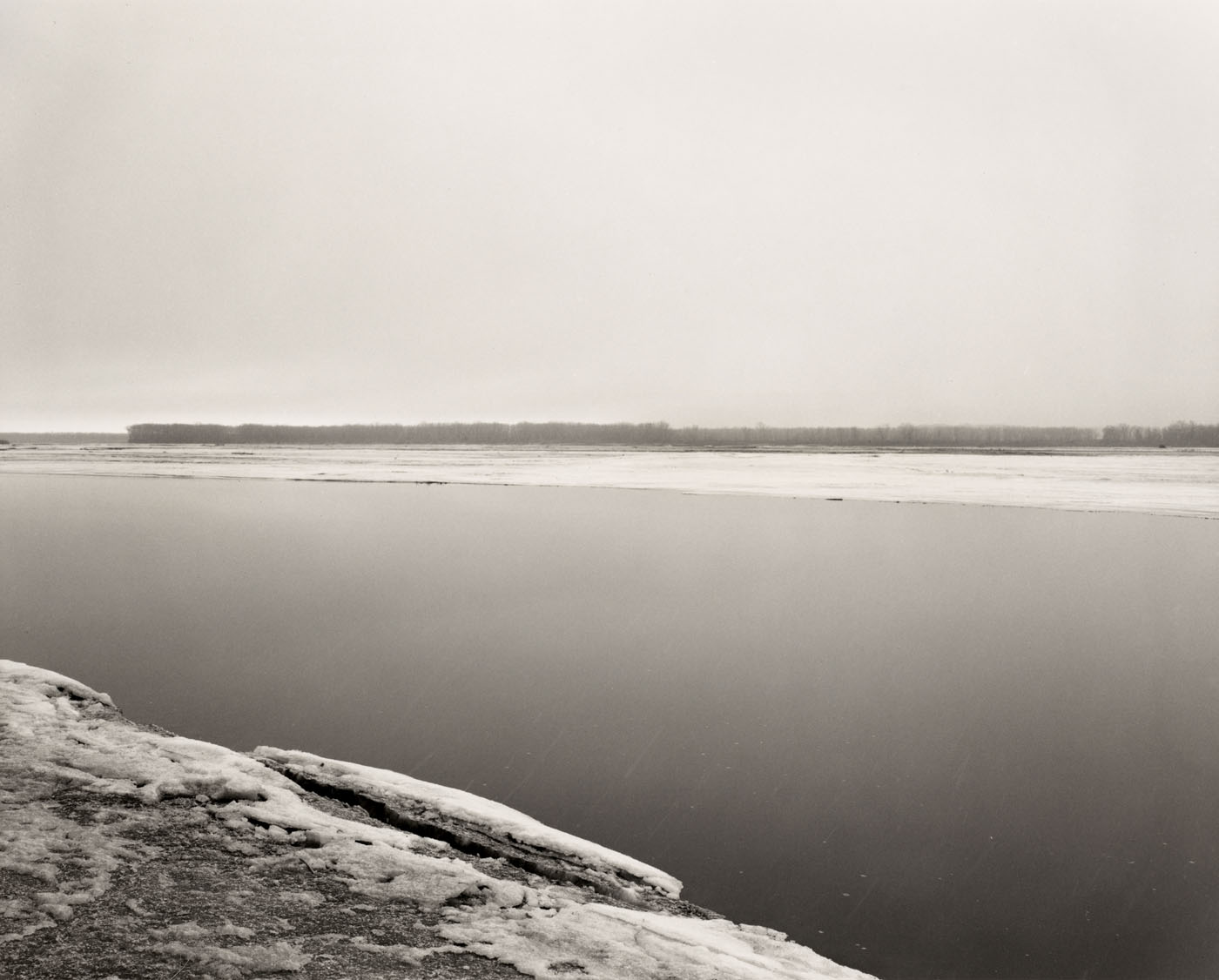
Robert Adams (American, b. 1937)
Concrete and Ice, Missouri River, Clay County, South Dakota
1977
Gelatin silver print
Image: 18 x 22.2cm (7 1/16 x 8 3/4 in.)
National Gallery of Art, Washington, Pepita Milmore Memorial Fund and Gift of Robert and Kerstin Adams
© Robert Adams, Courtesy Fraenkel Gallery, San Francisco
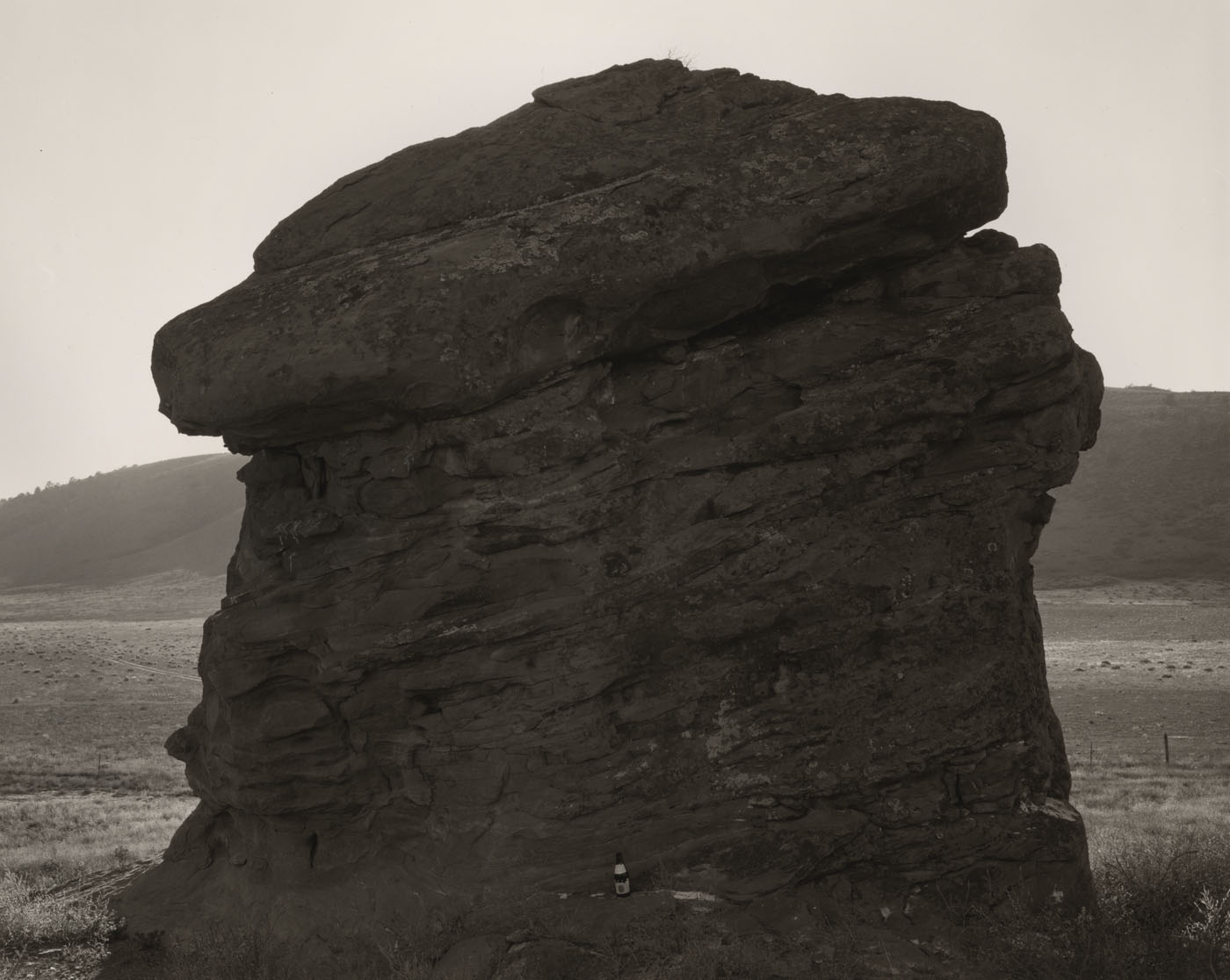
Robert Adams (American, b. 1937)
Larimer County, Colorado
1977
Gelatin silver print
Image: 22.5 x 28.1cm (8 7/8 x 11 1/16 in.)
National Gallery of Art, Washington, Gift of Jeffrey Fraenkel and Alan Mark
© Robert Adams, Courtesy Fraenkel Gallery, San Francisco
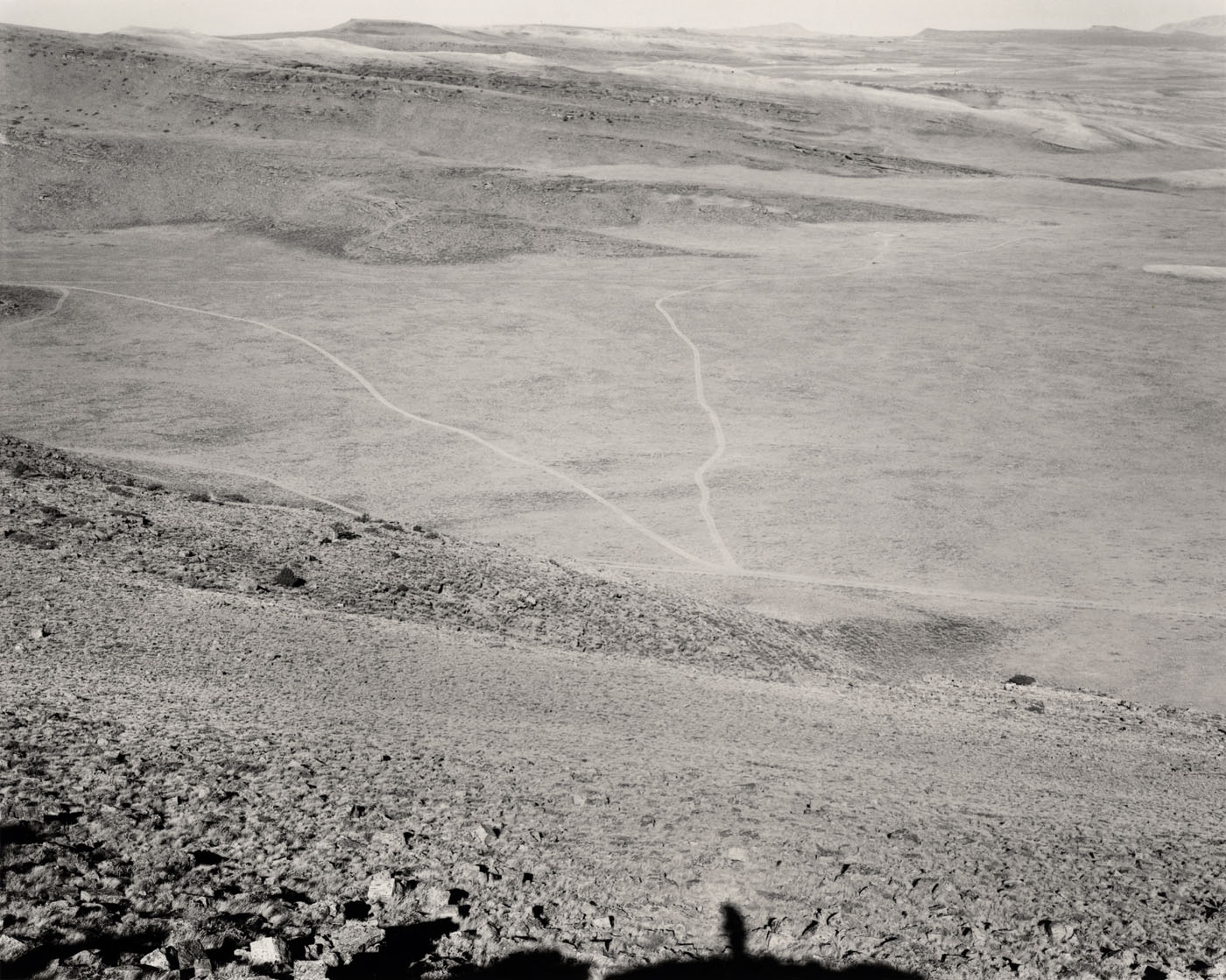
Robert Adams (American, b. 1937)
Abandoned Car, Carbon County, Wyoming
1977
Gelatin silver print
Image: 22.8 x 28.5cm (9 x 11 1/4 in.)
National Gallery of Art, Washington, Pepita Milmore Memorial Fund and Gift of Robert and Kerstin Adams
© Robert Adams, Courtesy Fraenkel Gallery, San Francisco
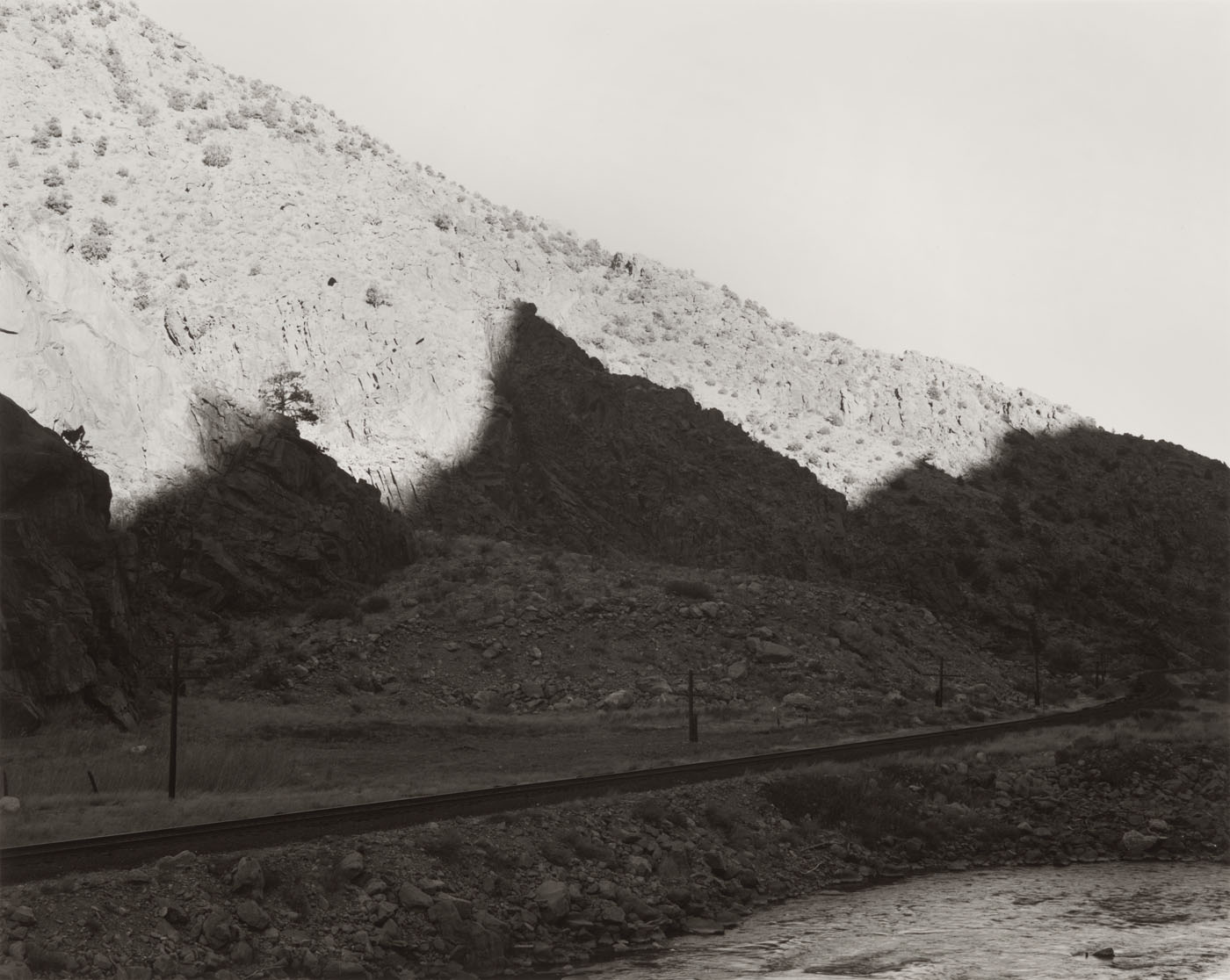
Robert Adams (American, b. 1937)
Arkansas River Canyon, Colorado
1977
Gelatin silver print
Image: 22.7 x 28.5cm (8 15/16 x 11 1/4 in.)
National Gallery of Art, Washington, Gift of Lou and Di Stovall
© Robert Adams, Courtesy Fraenkel Gallery, San Francisco
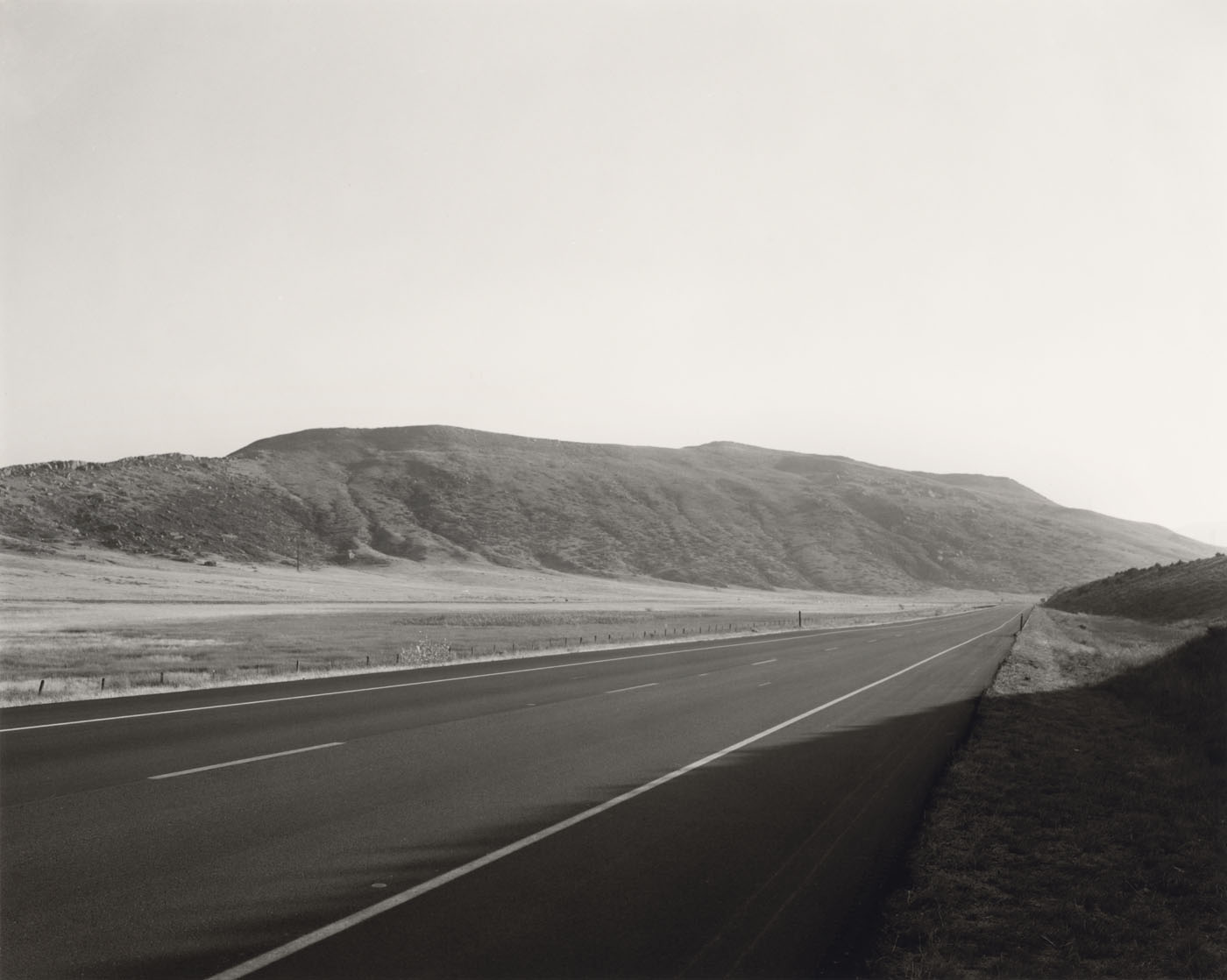
Robert Adams (American, b. 1937)
Highway 287, Larimer County, Colorado
1977
Gelatin silver print
Image: 22.3 x 28.5cm (8 3/4 x 11 1/4 in.)
National Gallery of Art, Washington, Pepita Milmore Memorial Fund and Gift of Robert and Kerstin Adams
© Robert Adams, Courtesy Fraenkel Gallery, San Francisco
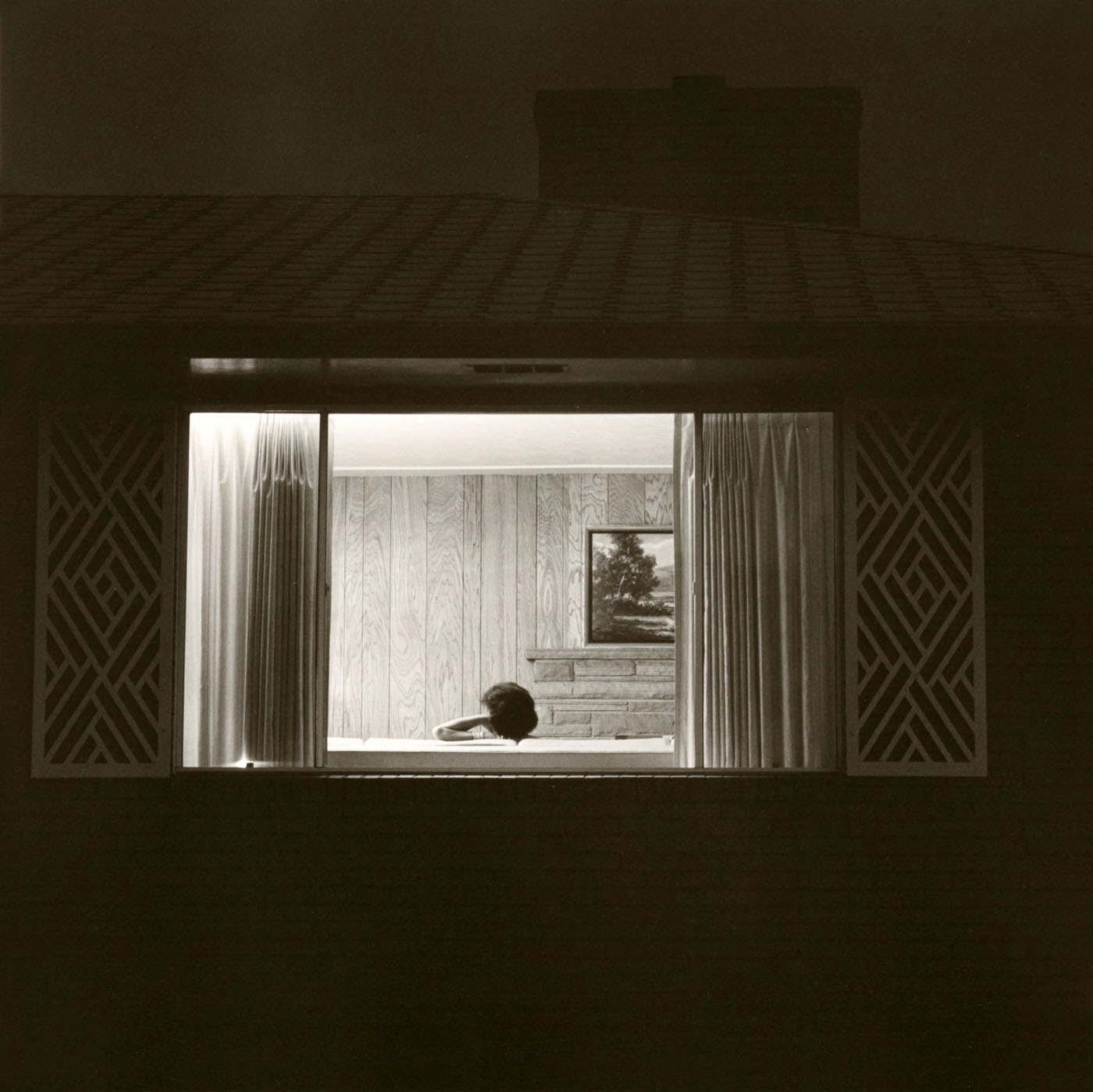
Robert Adams (American, b. 1937)
Longmont, Colorado
1977
Gelatin silver print
Image: 12.7 x 12.7cm (5 x 5 in.)
Philadelphia Museum of Art, Purchased with the Alice Newton Osborn Fund, 1982
Courtesy of the Philadelphia Museum of Art
© Robert Adams, Courtesy Fraenkel Gallery, San Francisco
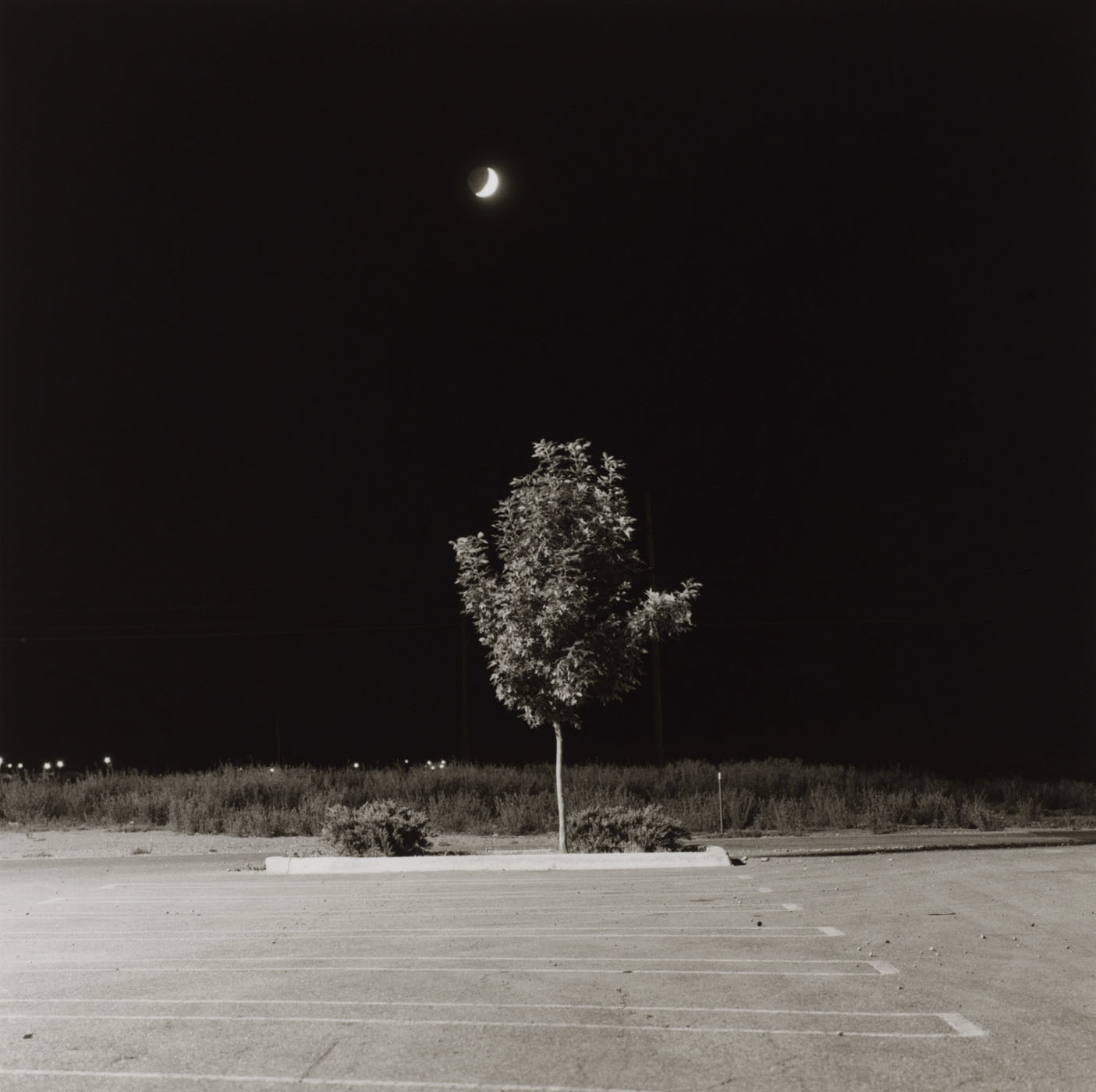
Robert Adams (American, b. 1937)
Fort Collins, Colorado
1977, printed 1985
Gelatin silver print
Image: 12.7 x 12.7cm (5 x 5 in.)
Philadelphia Museum of Art, Purchased with funds contributed by Marilyn L. Steinbright, 1985
Courtesy of the Philadelphia Museum of Art
© Robert Adams, Courtesy Fraenkel Gallery, San Francisco
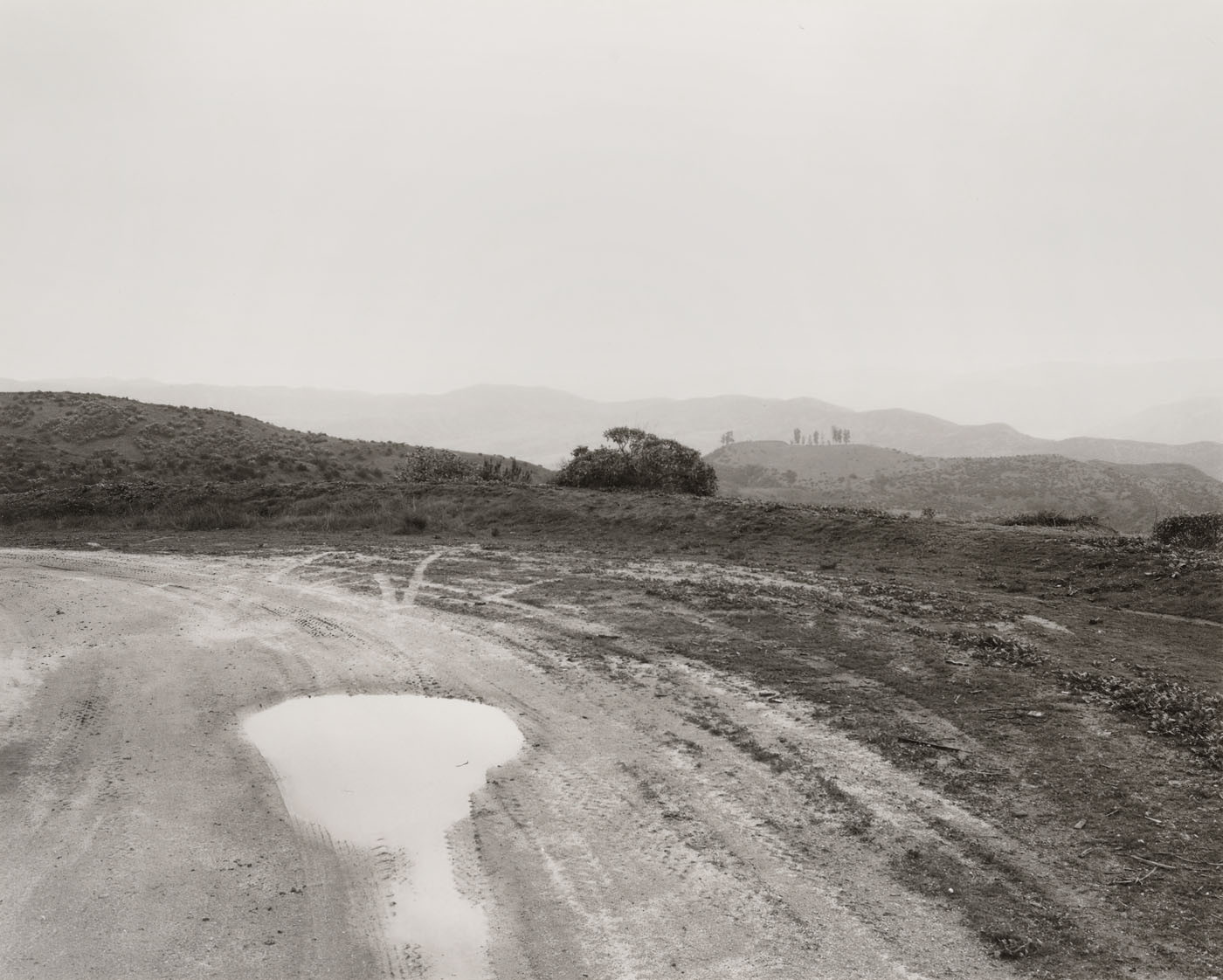
Robert Adams (American, b. 1937)
Development Road, San Timoteo Canyon, Redlands, California
1977
Gelatin silver print
Image: 17.8 x 22.2cm (7 x 8 3/4 in.)
Philadelphia Museum of Art, Purchased with a grant from the National Endowment for the Arts and with matching funds contributed by Mr. and Mrs. Robert A. Hauslohner and Harvey S. Shipley Miller, 1980
Courtesy of the Philadelphia Museum of Art
© Robert Adams, Courtesy Fraenkel Gallery, San Francisco
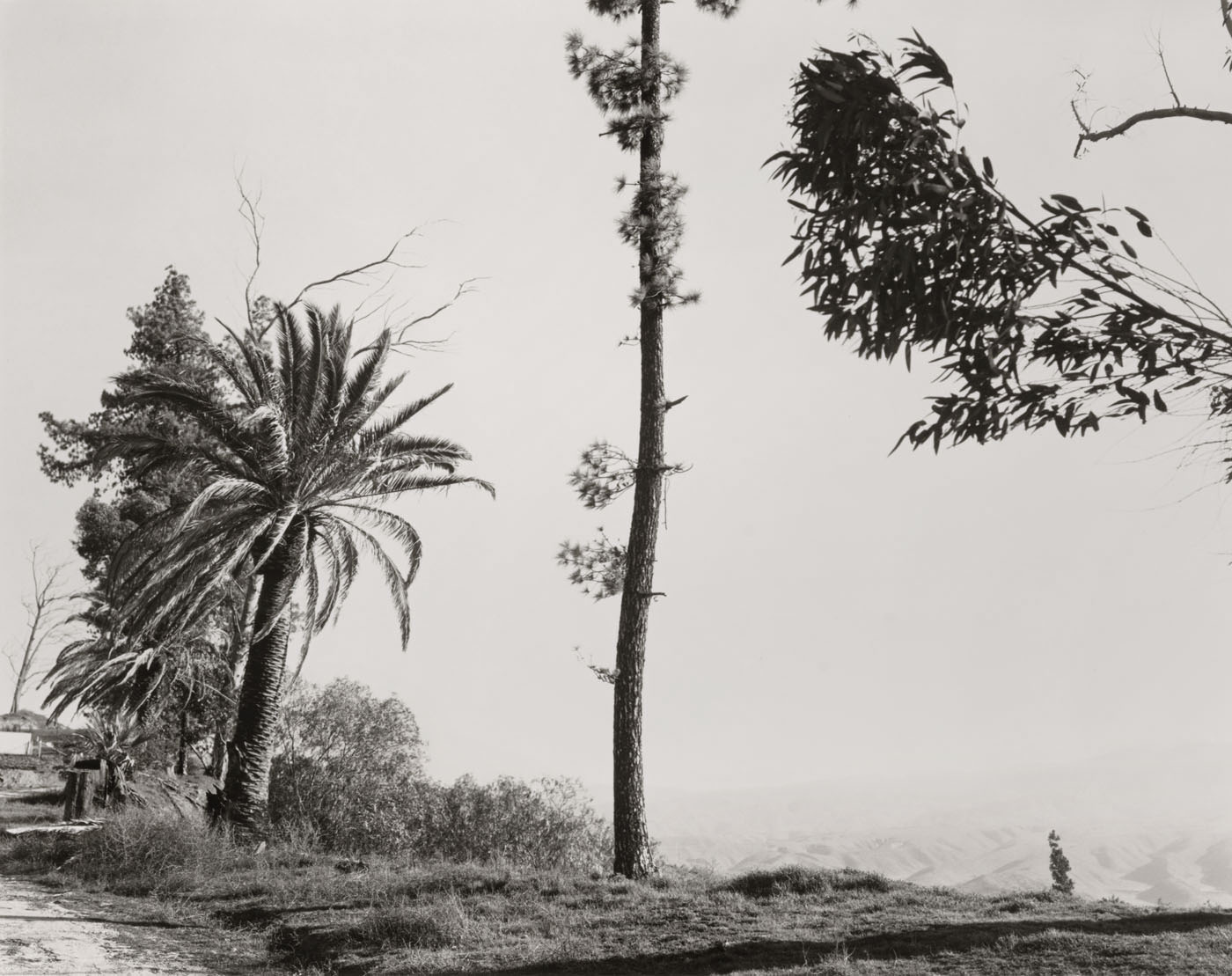
Robert Adams (American, b. 1937)
Edge of San Timoteo Canyon, Redlands, California
1977-1978
Gelatin silver print
Image: 17.8 x 22.5cm (7 x 8 7/8 in.)
Philadelphia Museum of Art, Purchased with a grant from the National Endowment for the Arts and with matching funds contributed by Mr. and Mrs. Robert A. Hauslohner and Harvey S. Shipley Miller, 1980
Courtesy of the Philadelphia Museum of Art
© Robert Adams, Courtesy Fraenkel Gallery, San Francisco
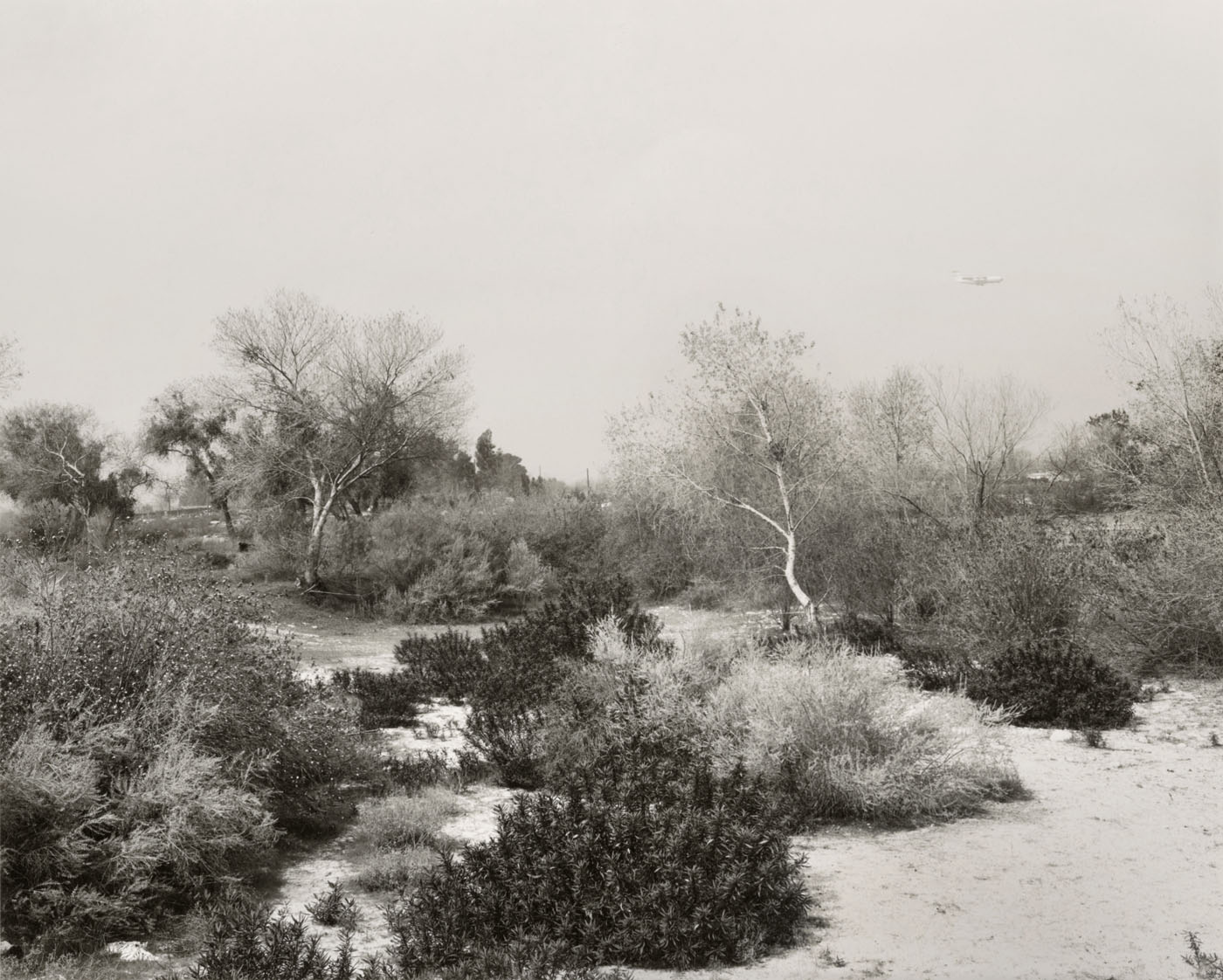
Robert Adams (American, b. 1937)
Santa Ana Wash, Norton Air Force Base, San Bernardino County, California
1977-1978
Gelatin silver print
Image: 17.8 x 22.2cm (7 x 8 3/4 in.)
Philadelphia Museum of Art, Purchased with a grant from the National Endowment for the Arts and with matching funds contributed by Mr. and Mrs. Robert A. Hauslohner and Harvey S. Shipley Miller, 1980
Courtesy of the Philadelphia Museum of Art
© Robert Adams, Courtesy Fraenkel Gallery, San Francisco
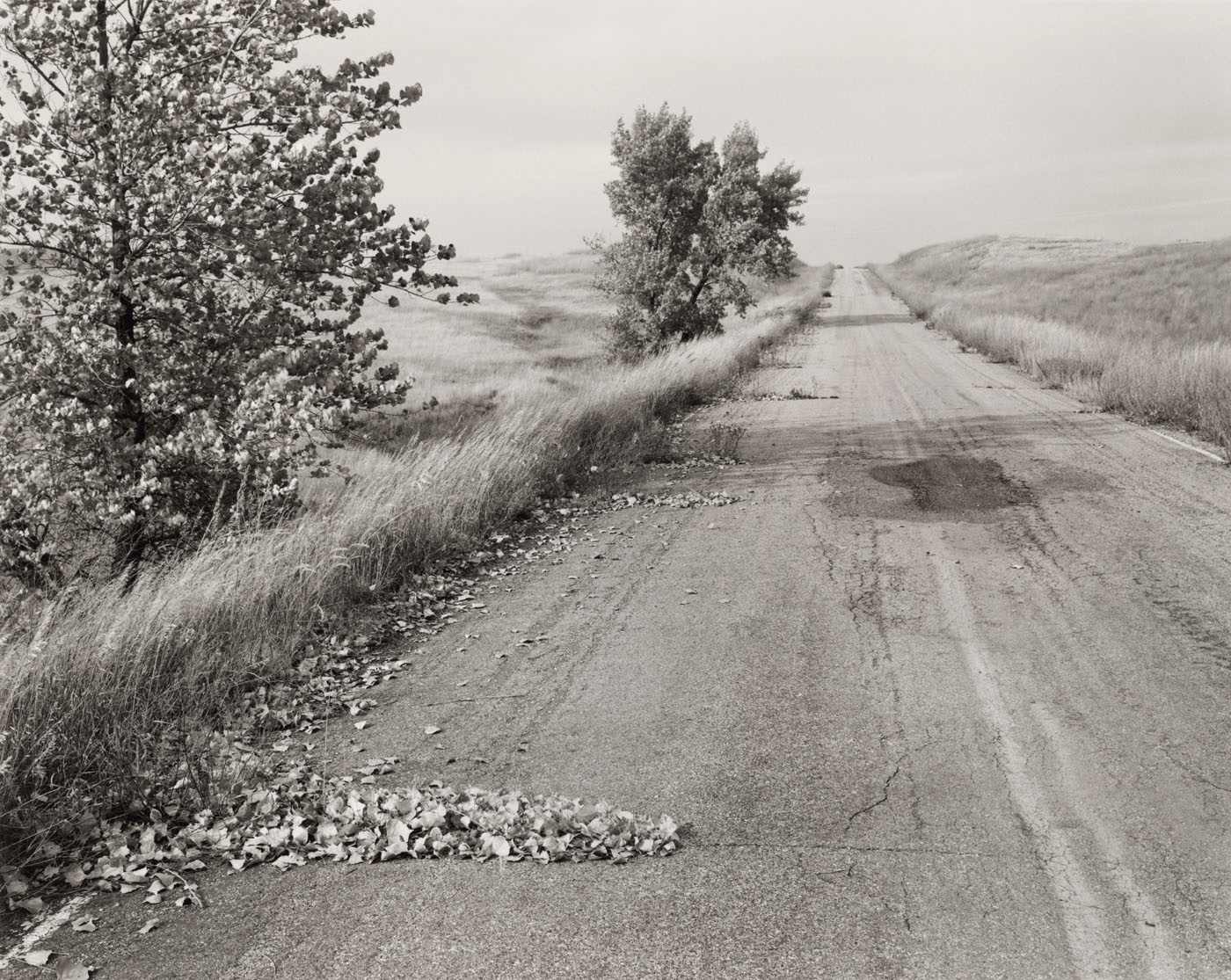
Robert Adams (American, b. 1937)
Nebraska State Highway 2, Box Butte County, Nebraska
1978, printed 1991
Gelatin silver print
Image: 22.2 x 27.8cm (8 3/4 x 10 15/16 in.)
National Gallery of Art, Washington, The Ahmanson Foundation and Gift of Robert and Kerstin Adams
© Robert Adams, Courtesy Fraenkel Gallery, San Francisco
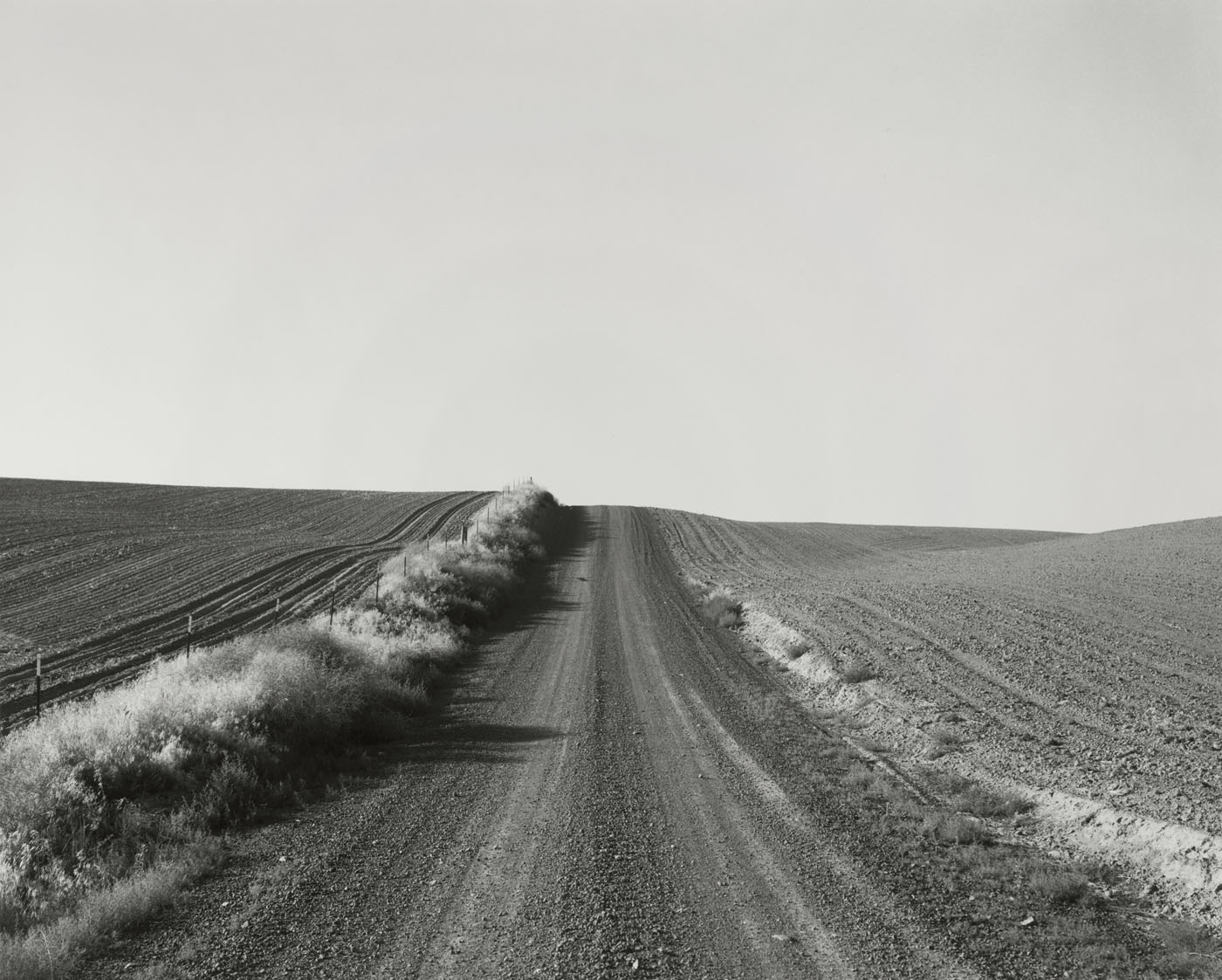
Robert Adams (American, b. 1937)
Umatilla County, Oregon
1978
Gelatin silver print
Image: 38.2 x 47.6cm (15 1/16 x 18 3/4 in.)
National Gallery of Art, Washington, Patrons’ Permanent Fund
© Robert Adams, Courtesy Fraenkel Gallery, San Francisco
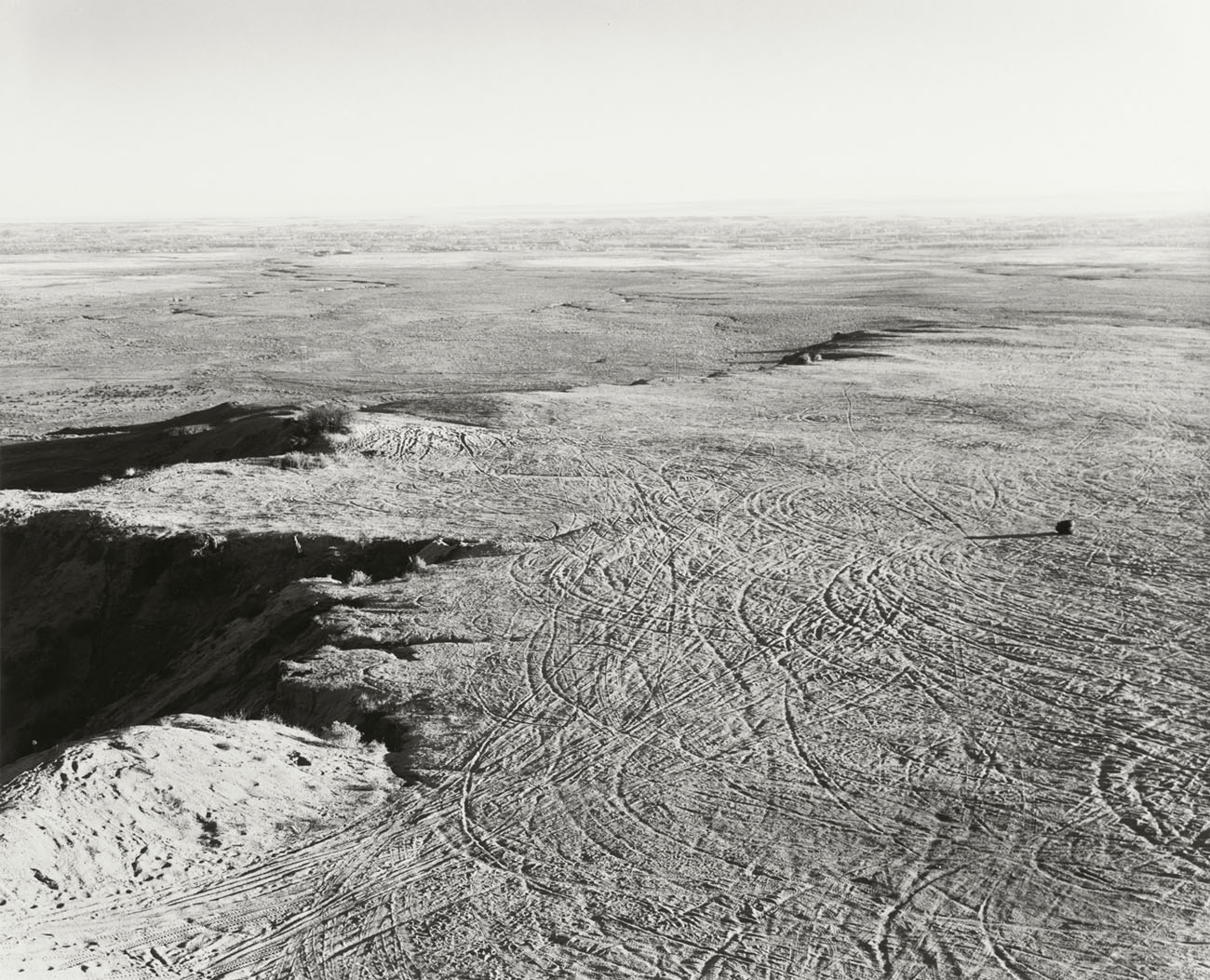
Robert Adams (American, b. 1937)
Quarried Mesa Top, Pueblo County, Colorado
1978
Gelatin silver print
Image: 38 x 47cm (14 15/16 x 18 1/2 in.)
National Gallery of Art, Washington, Patrons’ Permanent Fund
© Robert Adams, Courtesy Fraenkel Gallery, San Francisco
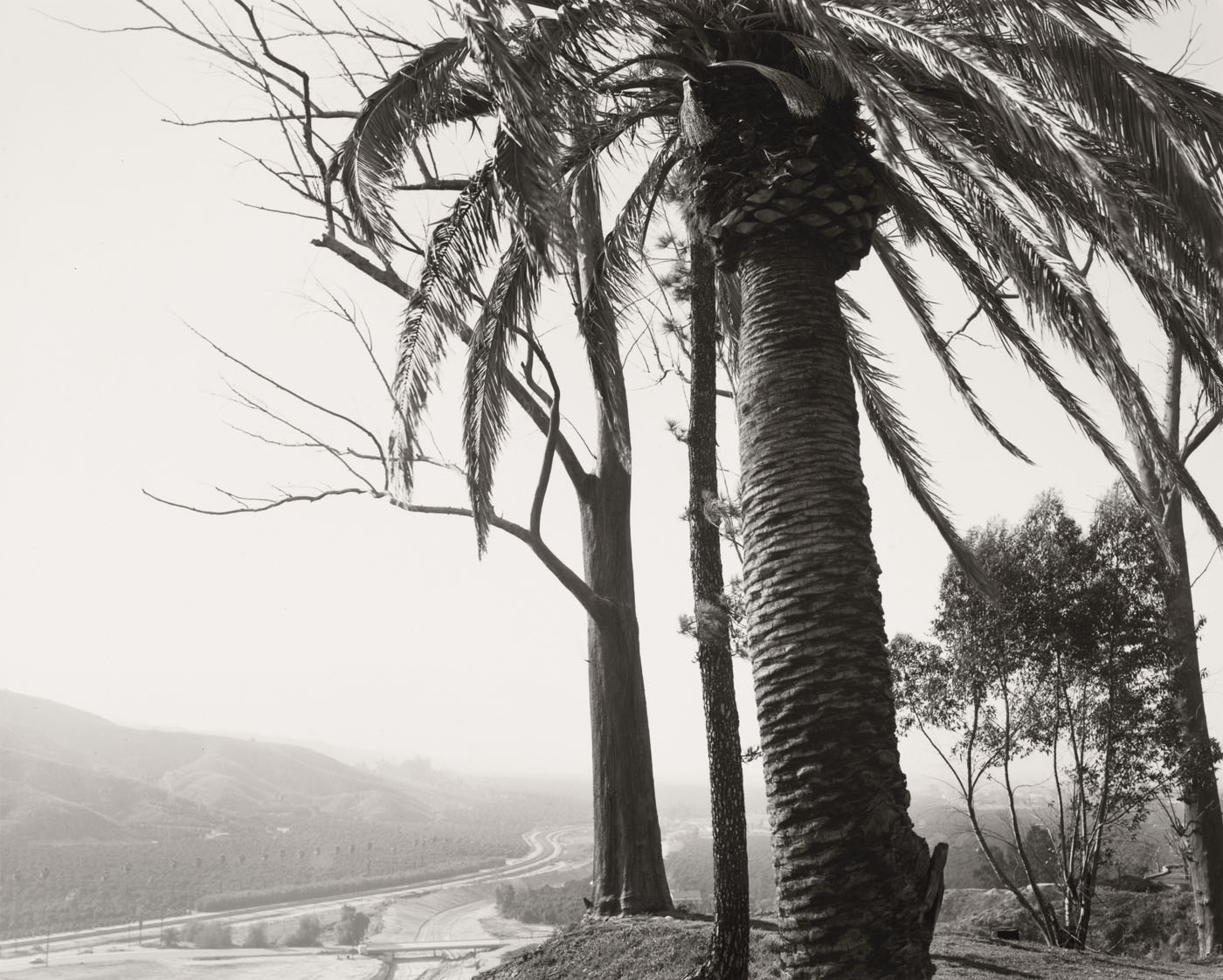
Robert Adams (American, b. 1937)
Edge of San Timoteo Canyon, Redlands, California
1978
Gelatin silver print
Image: 22.7 x 28.3cm (8 15/16 x 11 1/8 in.)
National Gallery of Art, Washington, Gift of Mary and Dan Solomon and Patrons’ Permanent Fund
© Robert Adams, Courtesy Fraenkel Gallery, San Francisco
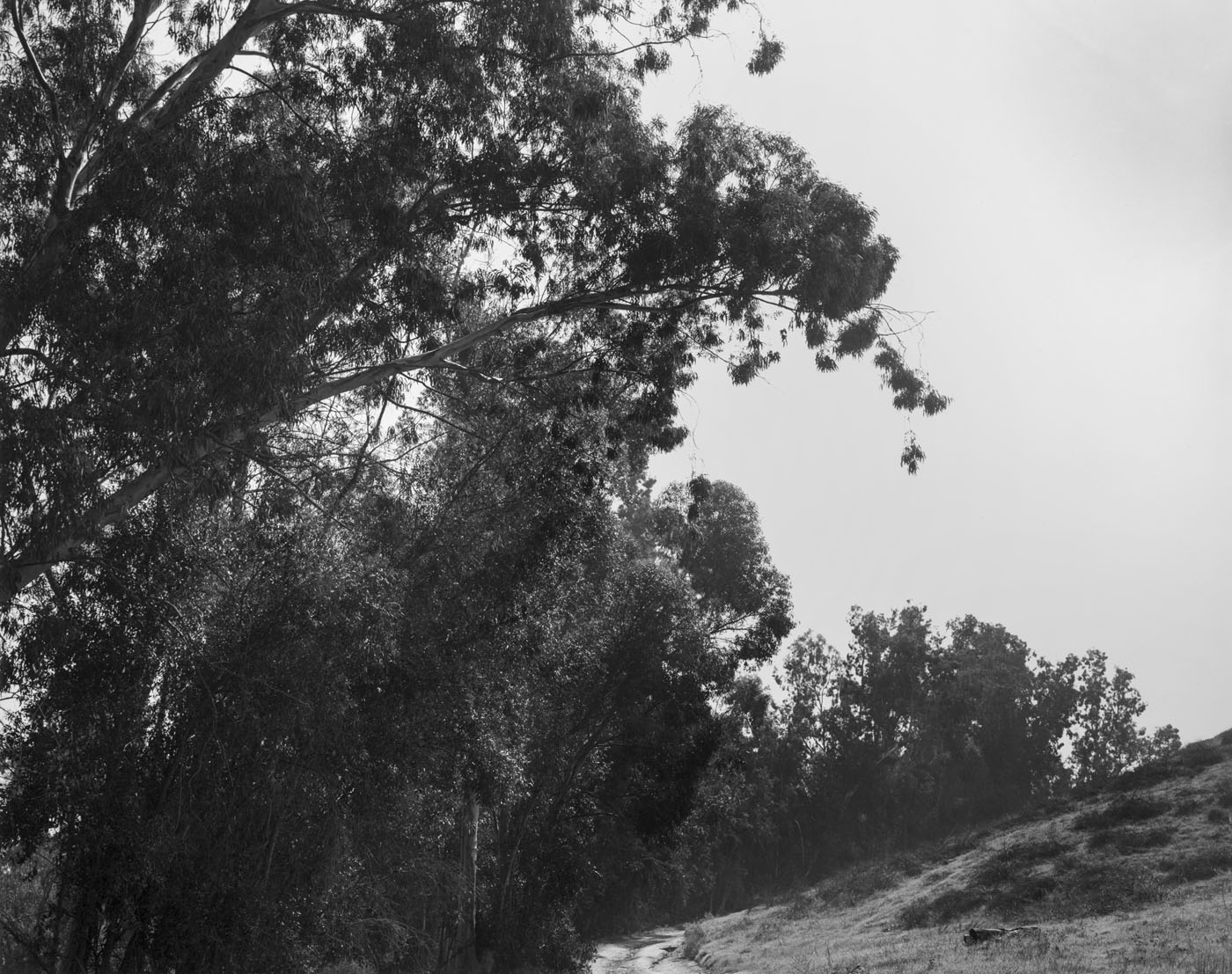
Robert Adams (American, b. 1937)
Eucalyptus along Interstate 10, Redlands, California
1978
Gelatin silver print
Image: 22.9 x 28.3cm (9 x 11 1/8 in.)
Collection of Frish Brandt and August Fischer
© Robert Adams, Courtesy Fraenkel Gallery, San Francisco
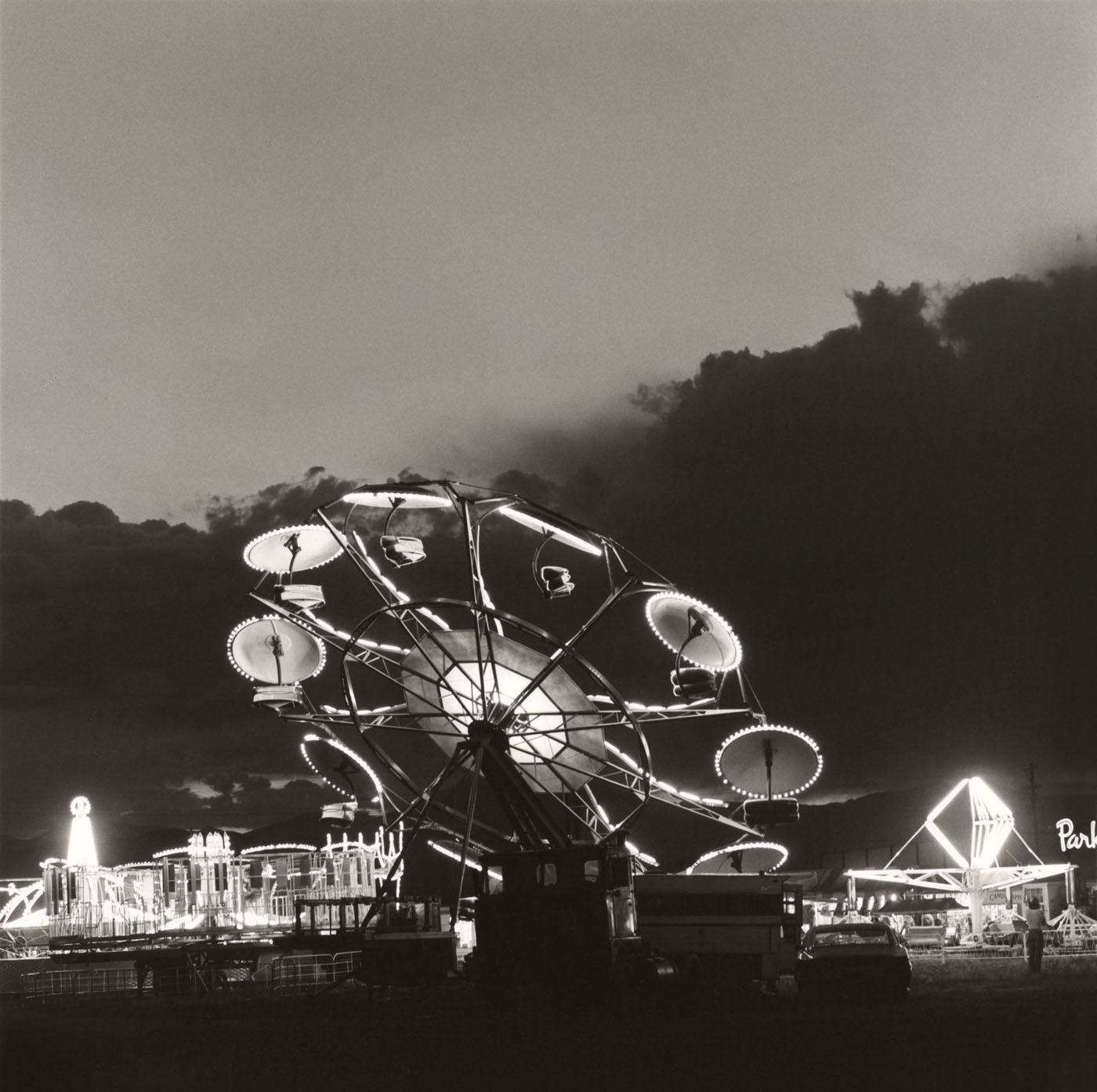
Robert Adams (American, b. 1937)
Longmont, Colorado
1979, printed 1985
Gelatin silver print
Image: 12.7 x 12.7cm (5 x 5 in.)
National Gallery of Art, Washington, Gift of Mary and David Robinson
© Robert Adams, Courtesy Fraenkel Gallery, San Francisco
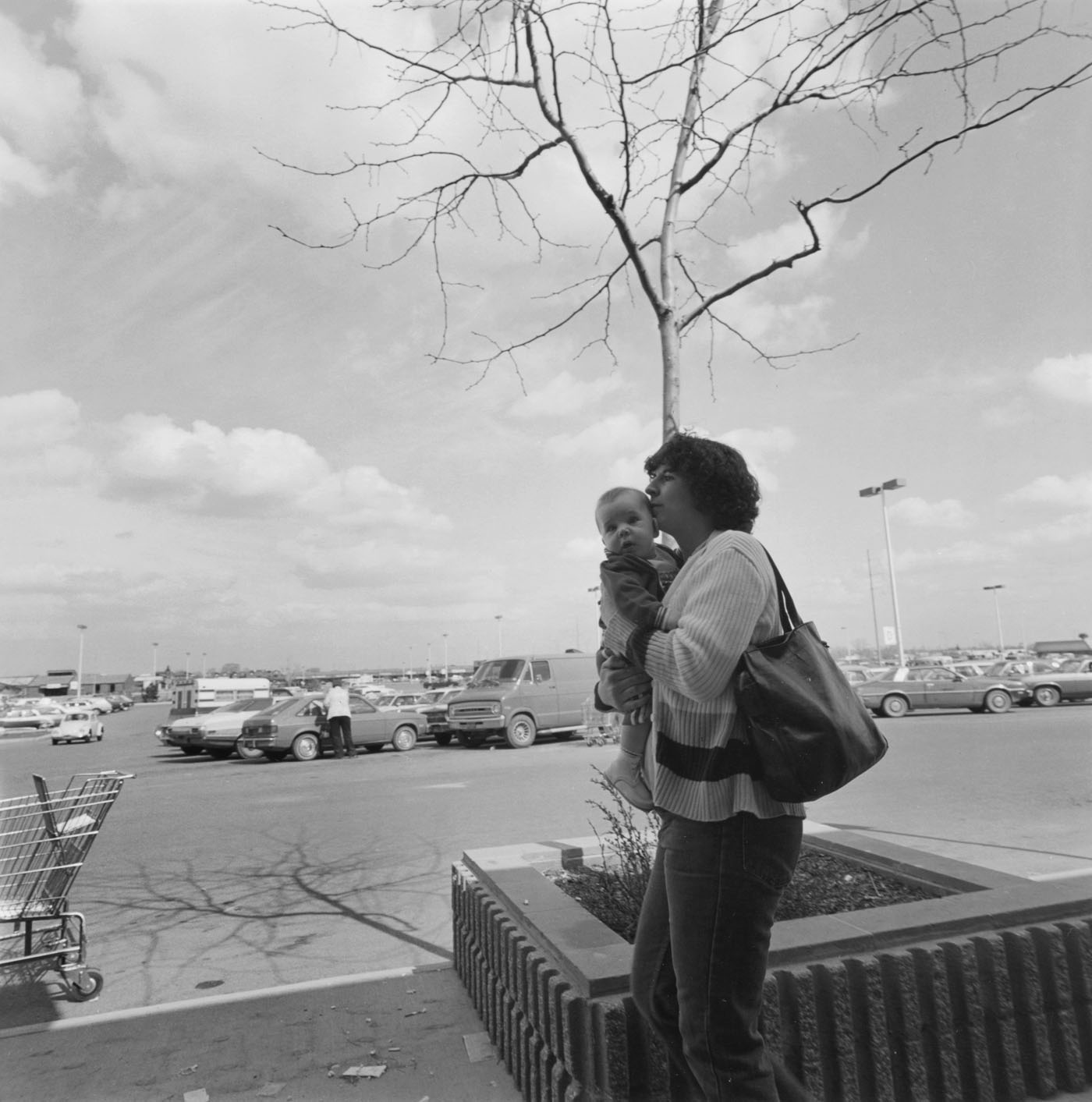
Robert Adams (American, b. 1937)
Longmont, Colorado
1979
Gelatin silver print
Image: 22.9 x 22.5cm (9 x 8 7/8 in.)
Robert and Kerstin Adams, Courtesy Fraenkel Gallery, San Francisco
© Robert Adams, Courtesy Fraenkel Gallery, San Francisco
Robert Adams is a man who walks with silences. I feel the pace of his stride in the quiet, acute considerations of his photographs of the American West. That he is drawn to sources of light in darkness, be it the moon, the shimmering light on poplar leaves, or the lonely lamp radiating on to the streets from a house in the suburbs, inspires me to pursue my own night walks in summer. In the embrace of the night, my own darkness is absorbed into an uncommon stillness that does not frighten me. I see the eye-shine of other creatures and it is a comfort to know we are not alone.
The stillness married to loneliness in Adams work is something I understand as a westerner born in the suburbs of 1955. Though we have never met, he photographed my mother on one of his walks in Colorado Springs (1968) even though she was sitting in a different living room on Moor Mont Drive in Salt Lake City, Utah. …
The silhouette of the woman I see in the window, facing the door that is closed, in a red brick house, with a putting-green lawn, where a gentle curve of concrete leads to the entrance, is the home I was raised in as a child. I write this long sentence intentionally, because those were the days of my childhood that felt languid and secure.
This was the New West that Robert Adams captured in the middle of construction. We lived inside the green square houses used in the game Monopoly. But what we always knew was that beyond the dust of development and the play money that became real, wildness awaited us – even if it was the empty lot next door or the dirt road nearby that led to the creek shaded by cottonwoods.
Cottonwoods were the guardians of our childhood. They were deemed safe by our parents. They sheltered us from the heat of summer and the claustrophobia of winter. We knew their secrets. Inside their tangled skirts of lower branches families of house wrens lived and in the upper branches, great horned owls could be heard. The cottonwoods’ massive fluted trunks were our hide-and-seek. And if we gave our siblings a hand-stirrup up, we could climb into the large embrace of the trees. Once in the cottonwood’s arms, we were camouflaged in its rustling leaves – we would simply listen. It’s where I learned to trust other species more than my own. My love of solitude was nurtured inside these cathedral groves of cottonwoods.
The cottonwoods that appear in Weld County, Colorado (1992) and reappear throughout Adams’ work are emblematic of his intimacy and understanding of the American West. Cottonwoods root themselves near water. They are the wanderer’s hope in arid country. Water is the difference between living and dying in the West. And when Adams speaks of his affection toward one particular cottonwood in a field in Colorado, photographing it over many years, only to return one day to see it cut down – he faced what remained of the beloved tree as grieving kin. The body of a man, the body of a tree, there is no separation in the shared reach of a relationship. …
Robert Adams has been led by Beauty on what could be seen as the spiritual path of the artist as he followed forms of light again and again through the depths of darkness, even his own. Never easy, but often, glorious. We are the beneficiaries of his focus. He is a trustworthy companion. I choose to walk with him. Perhaps, he learned something about tenacious love as a form of being on those solitary summer nights as he walked in moonlight with an eye toward stillness.
Terry Tempest Williams. “Terry Tempest Williams on Walking with Robert Adams,” on the National Gallery of Art website May 19, 2022 [Online] Cited 31/05/2022, excerpted from the afterword by Terry Tempest Williams in the book American Silence: The Photographs of Robert Adams.
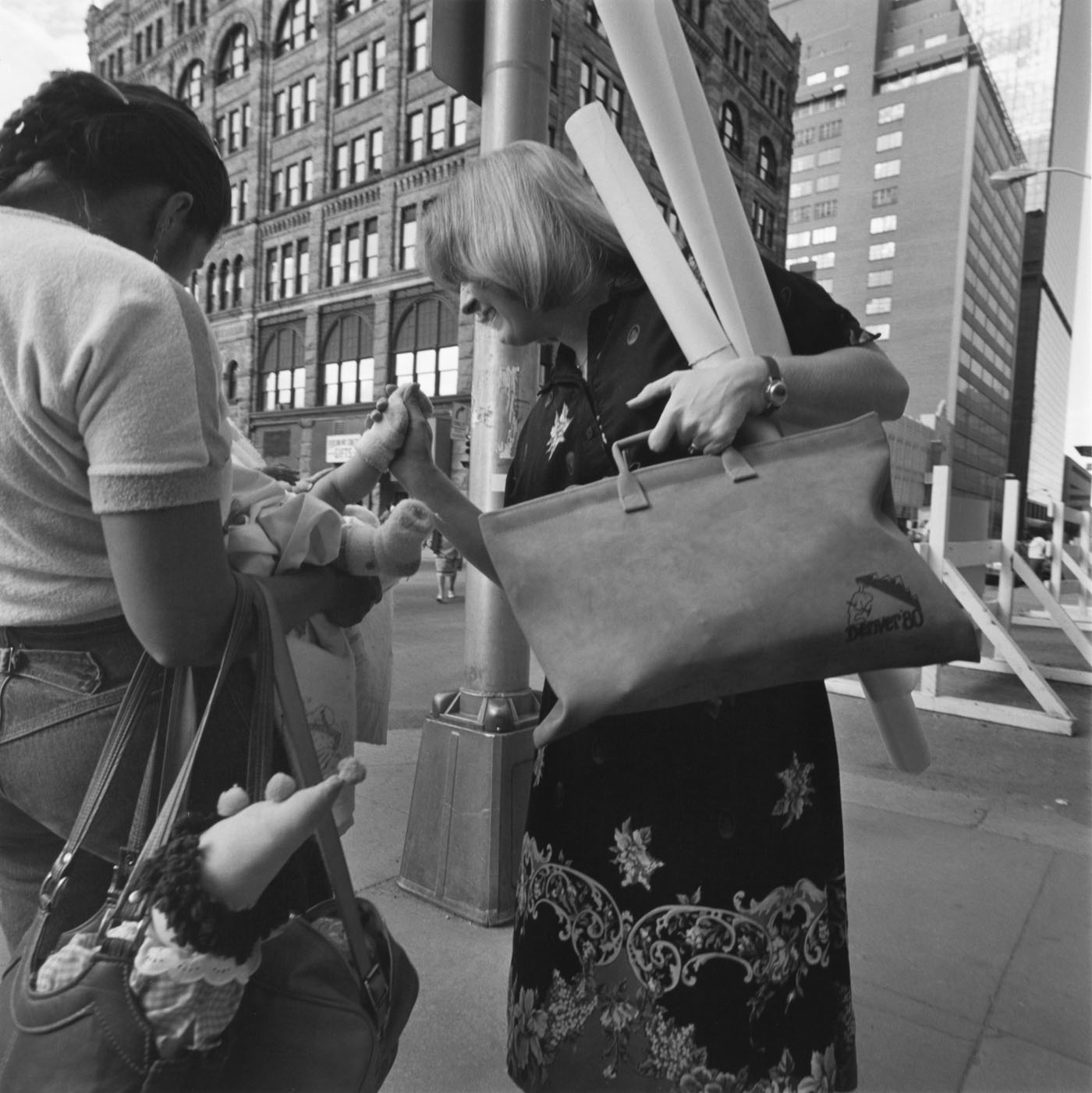
Robert Adams (American, b. 1937)
Denver
1980
Gelatin silver print
Image: 16.8 x 17.2cm (6 5/8 x 6 3/4 in.)
Robert and Kerstin Adams, Courtesy Fraenkel Gallery, San Francisco
© Robert Adams, Courtesy Fraenkel Gallery, San Francisco
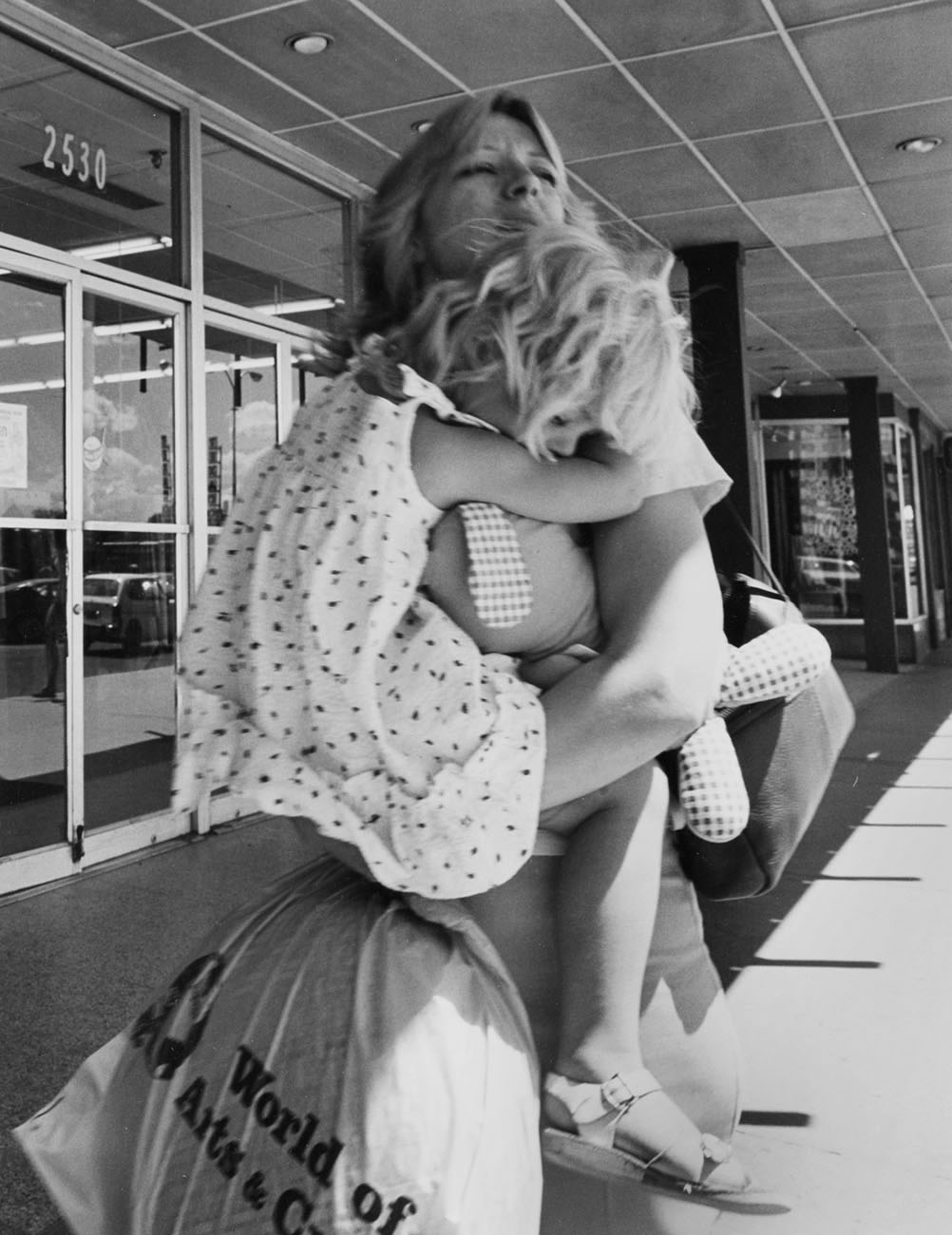
Robert Adams (American, b. 1937)
Denver
1980
Gelatin silver print
Image: 20.3 x 15.9cm (8 x 6 1/4 in.)
Robert and Kerstin Adams, Courtesy Fraenkel Gallery, San Francisco
© Robert Adams, Courtesy Fraenkel Gallery, San Francisco
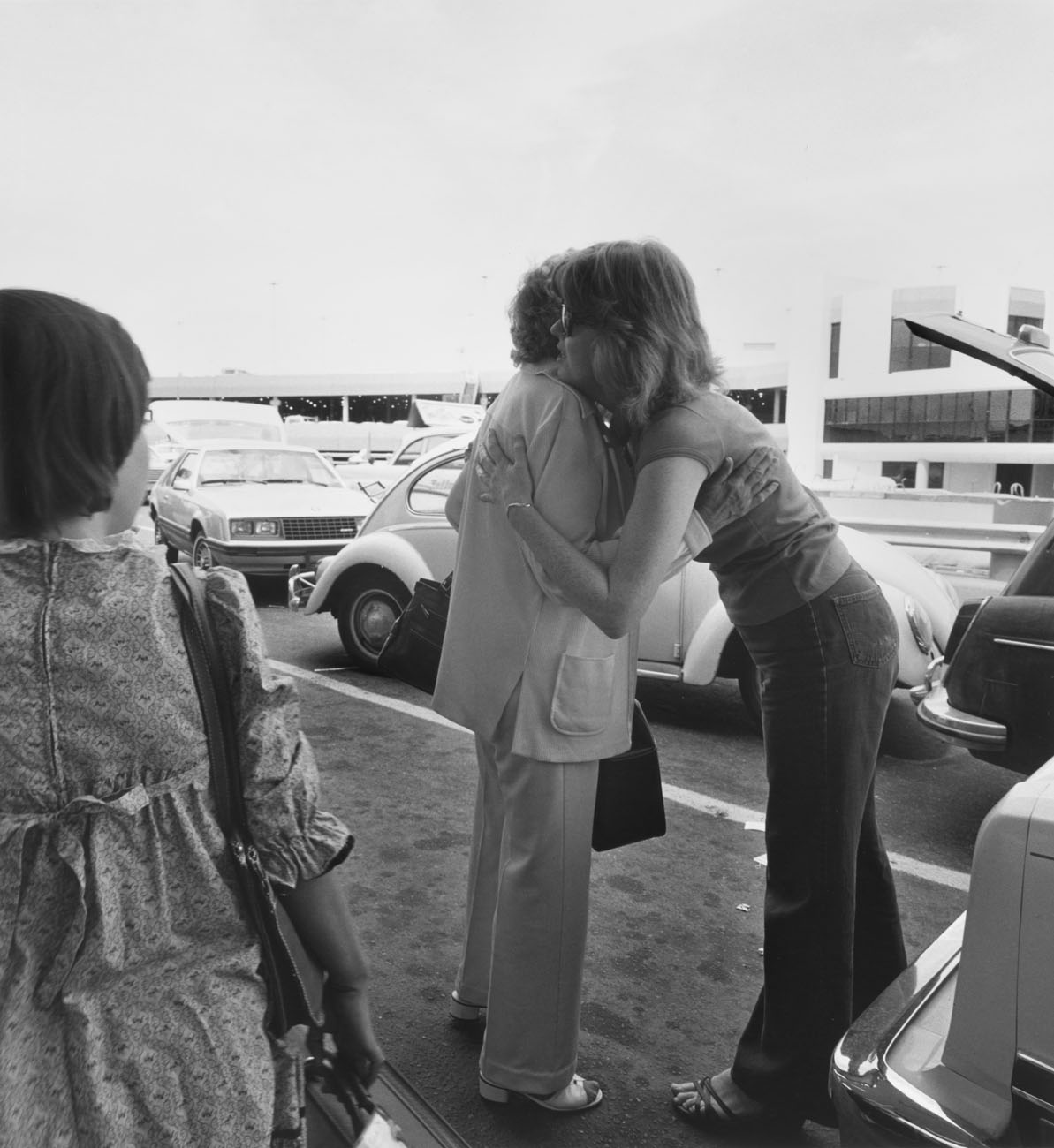
Robert Adams (American, b. 1937)
Denver
1980
Gelatin silver print
Image: 24.6 x 22.7cm (9 11/16 x 8 15/16 in.)
National Gallery of Art, Washington, Pepita Milmore Memorial Fund and Gift of Robert and Kerstin Adams
© Robert Adams, Courtesy Fraenkel Gallery, San Francisco
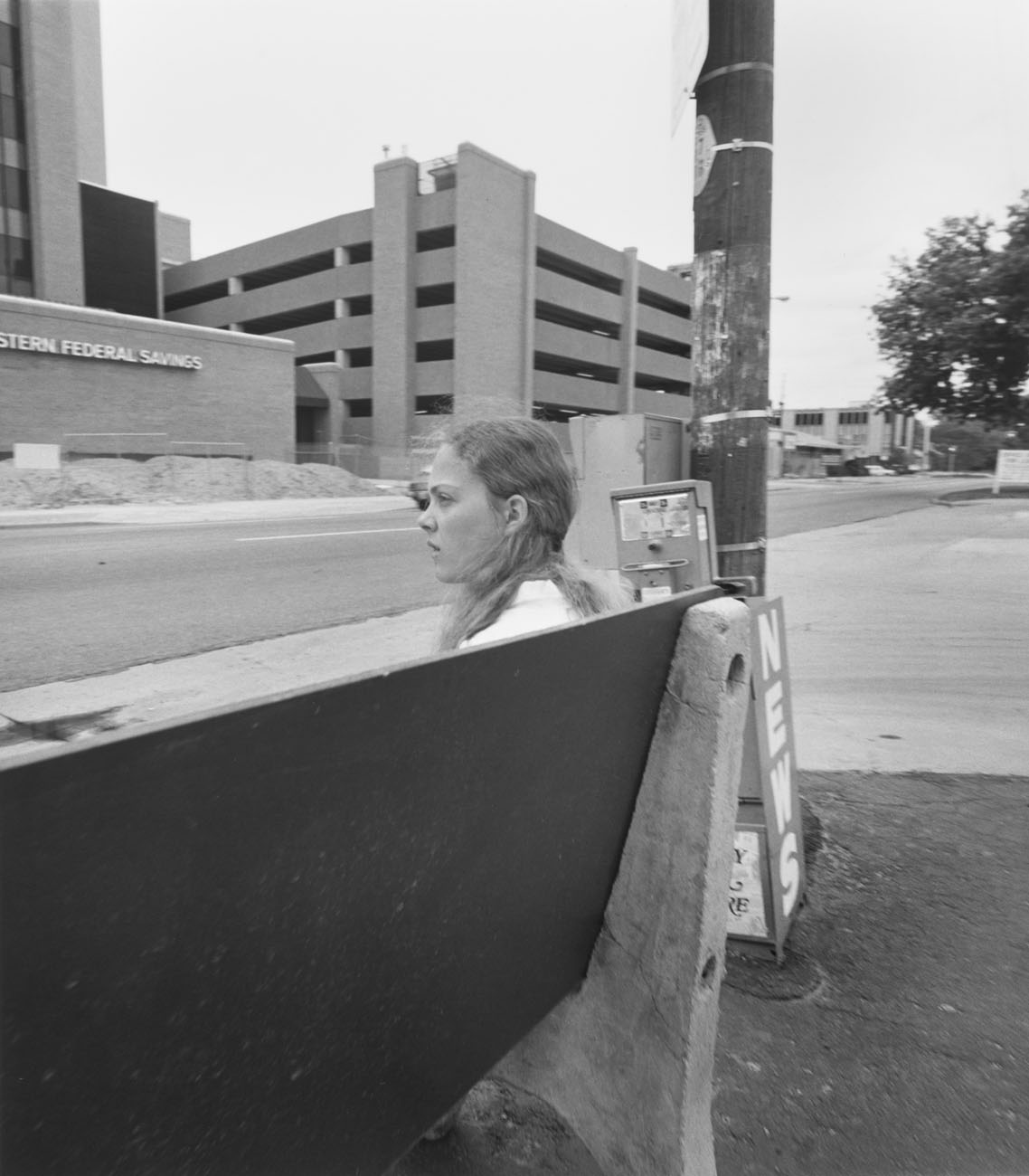
Robert Adams (American, b. 1937)
Denver
1980
Gelatin silver print
Image: 26 x 22.6cm (10 1/4 x 8 7/8 in.)
National Gallery of Art, Washington, Pepita Milmore Memorial Fund and Gift of Robert and Kerstin Adams
© Robert Adams, Courtesy Fraenkel Gallery, San Francisco
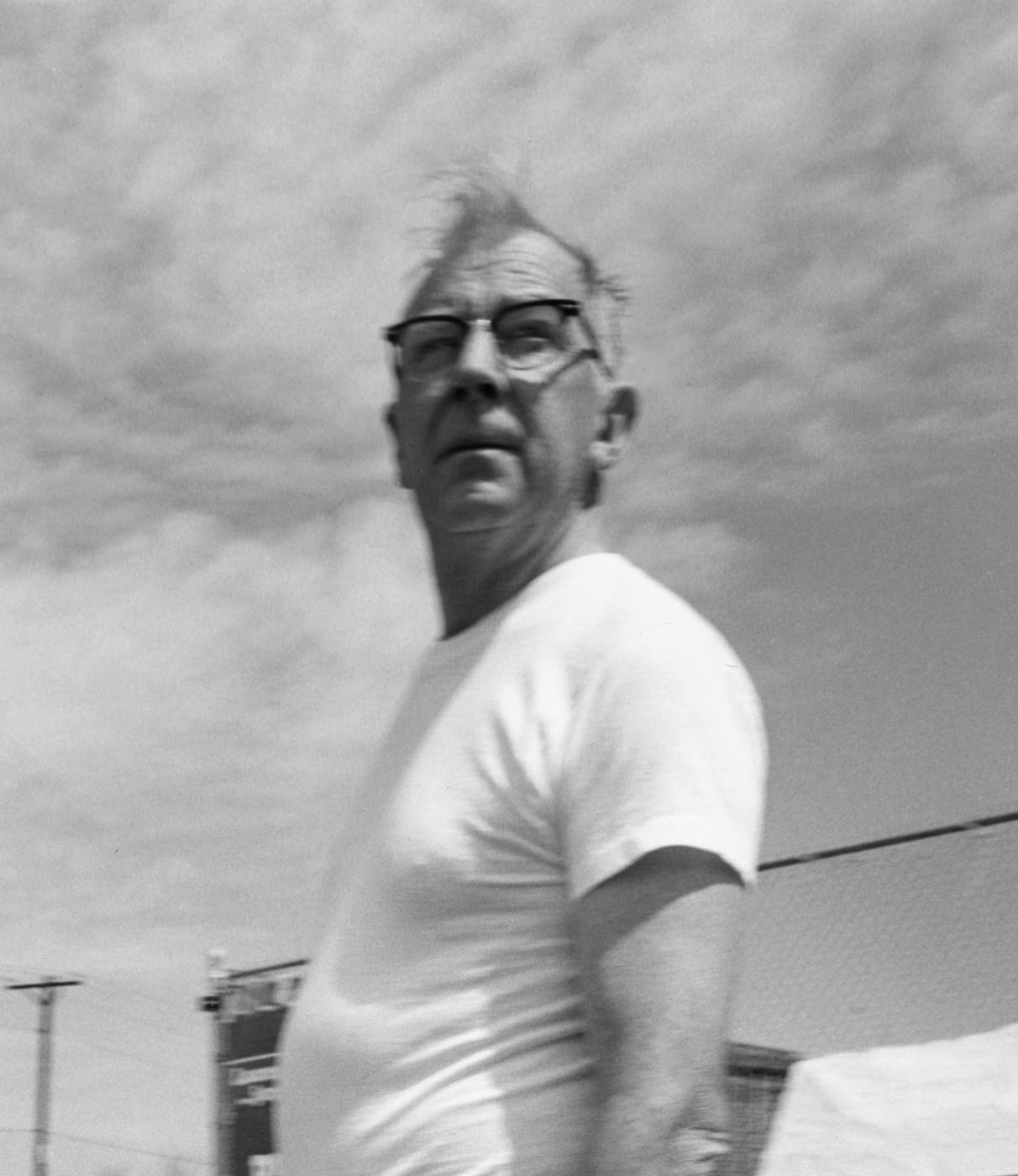
Robert Adams (American, b. 1937)
Longmont, Colorado
1980
Gelatin silver print
Image: 18.1 x 15.6cm (7 1/8 x 6 1/8 in.)
Robert and Kerstin Adams, Courtesy Fraenkel Gallery, San Francisco
© Robert Adams, Courtesy Fraenkel Gallery, San Francisco
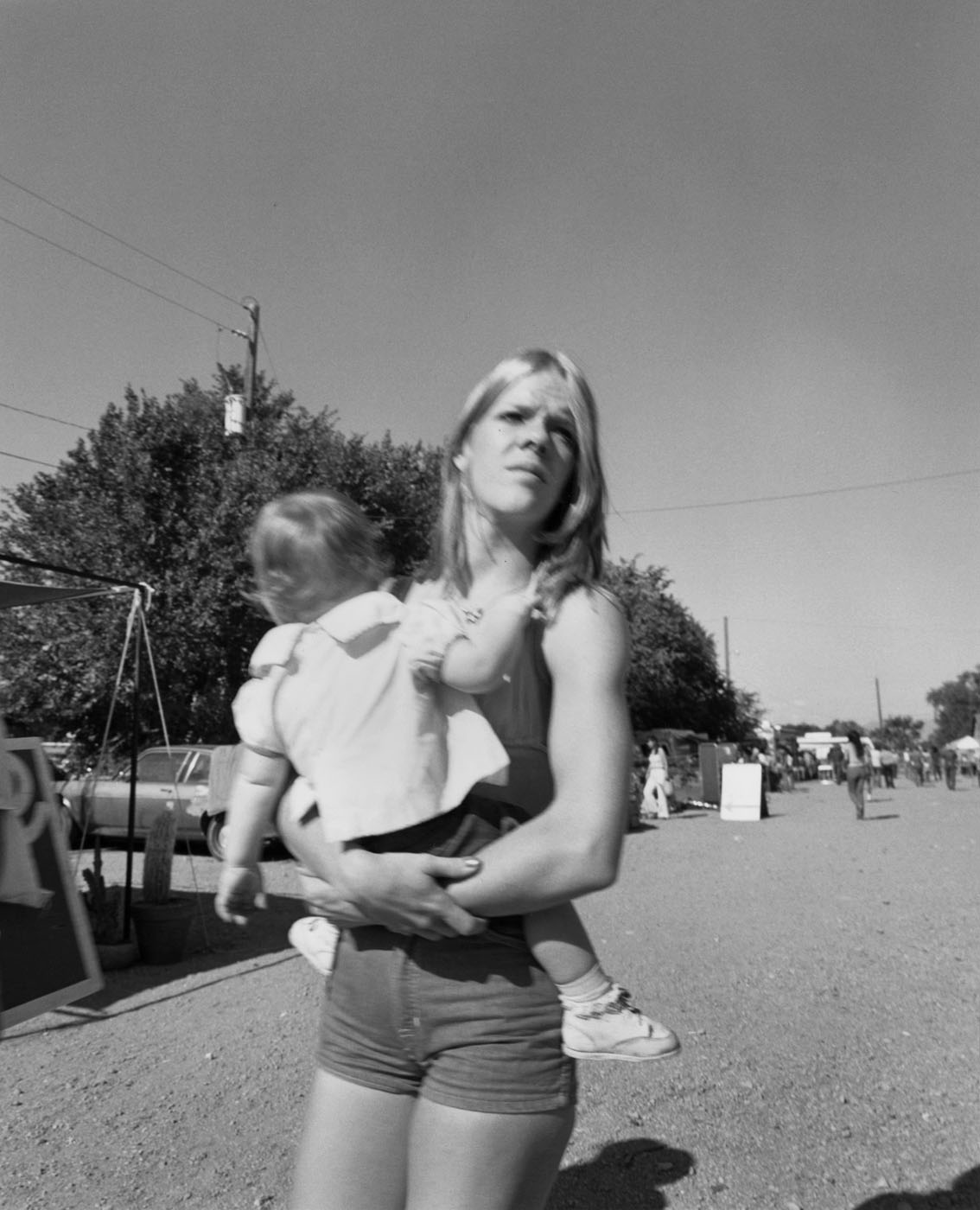
Robert Adams (American, b. 1937)
Denver
1980
Gelatin silver print
Image: 27.9 x 22.5cm (11 x 8 7/8 in.)
Robert and Kerstin Adams, Courtesy Fraenkel Gallery, San Francisco
© Robert Adams, Courtesy Fraenkel Gallery, San Francisco
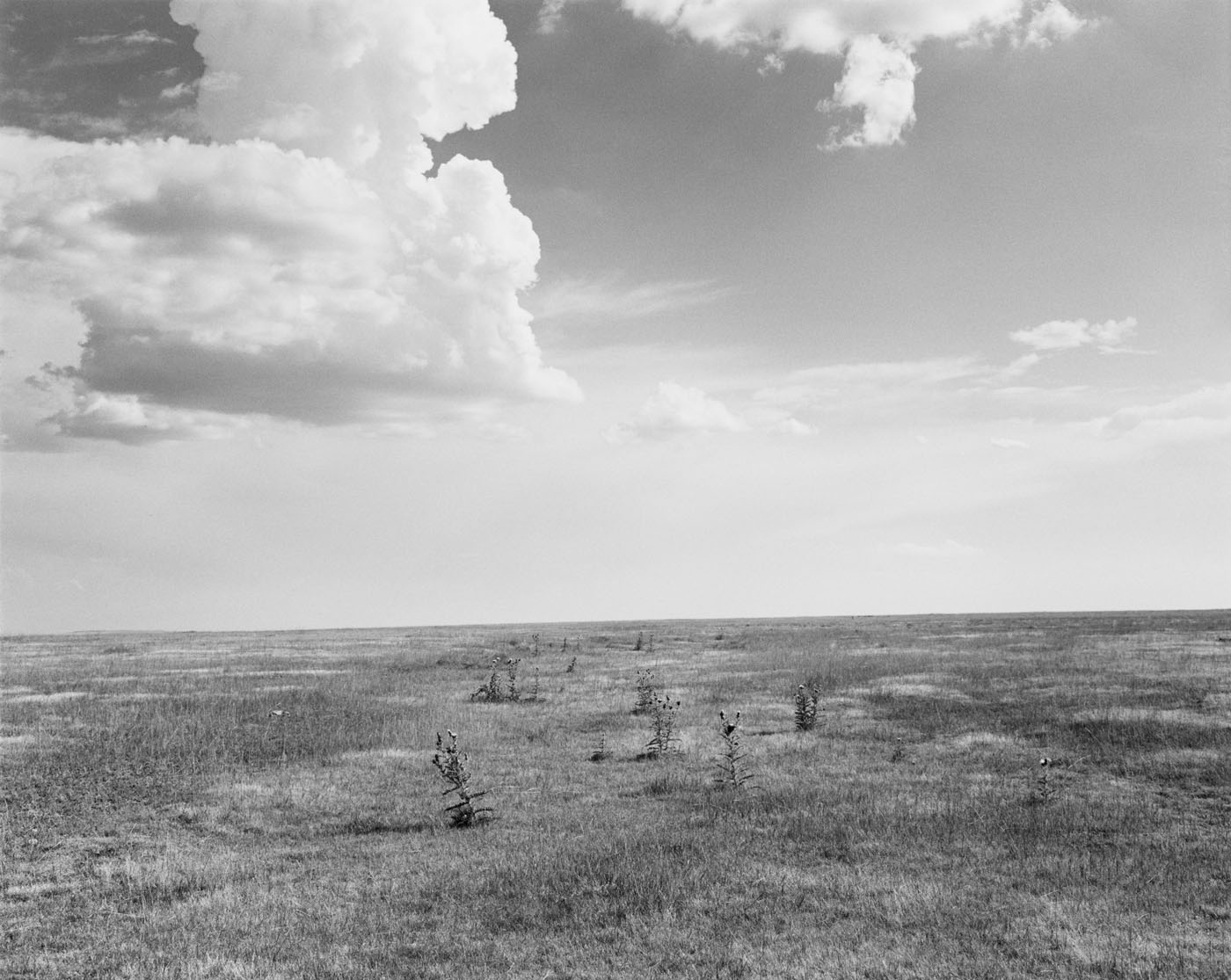
Robert Adams (American, b. 1937)
Weld County, Colorado
1981, printed 1987
Gelatin silver print
Image: 38 x 47.6cm (14 15/16 x 18 3/4 in.)
National Gallery of Art, Washington, Pepita Milmore Memorial Fund and Gift of Robert and Kerstin Adams
© Robert Adams, Courtesy Fraenkel Gallery, San Francisco
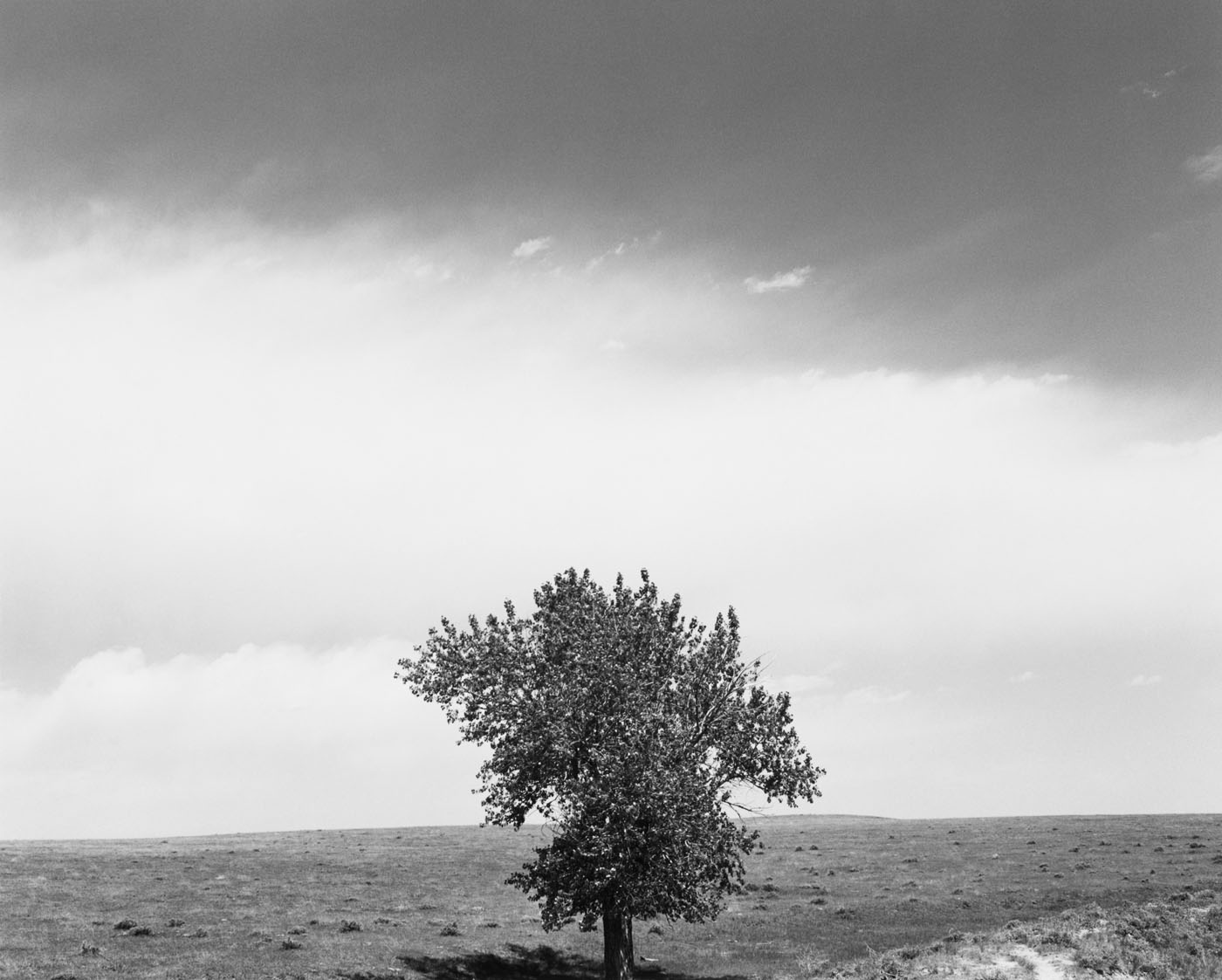
Robert Adams (American, b. 1937)
Weld County, Colorado
1981, printed 1988
Gelatin silver print
Image: 37.8 x 47cm (14 7/8 x 18 1/2 in.)
National Gallery of Art, Washington, Pepita Milmore Memorial Fund and Gift of Robert and Kerstin Adams
© Robert Adams, Courtesy Fraenkel Gallery, San Francisco
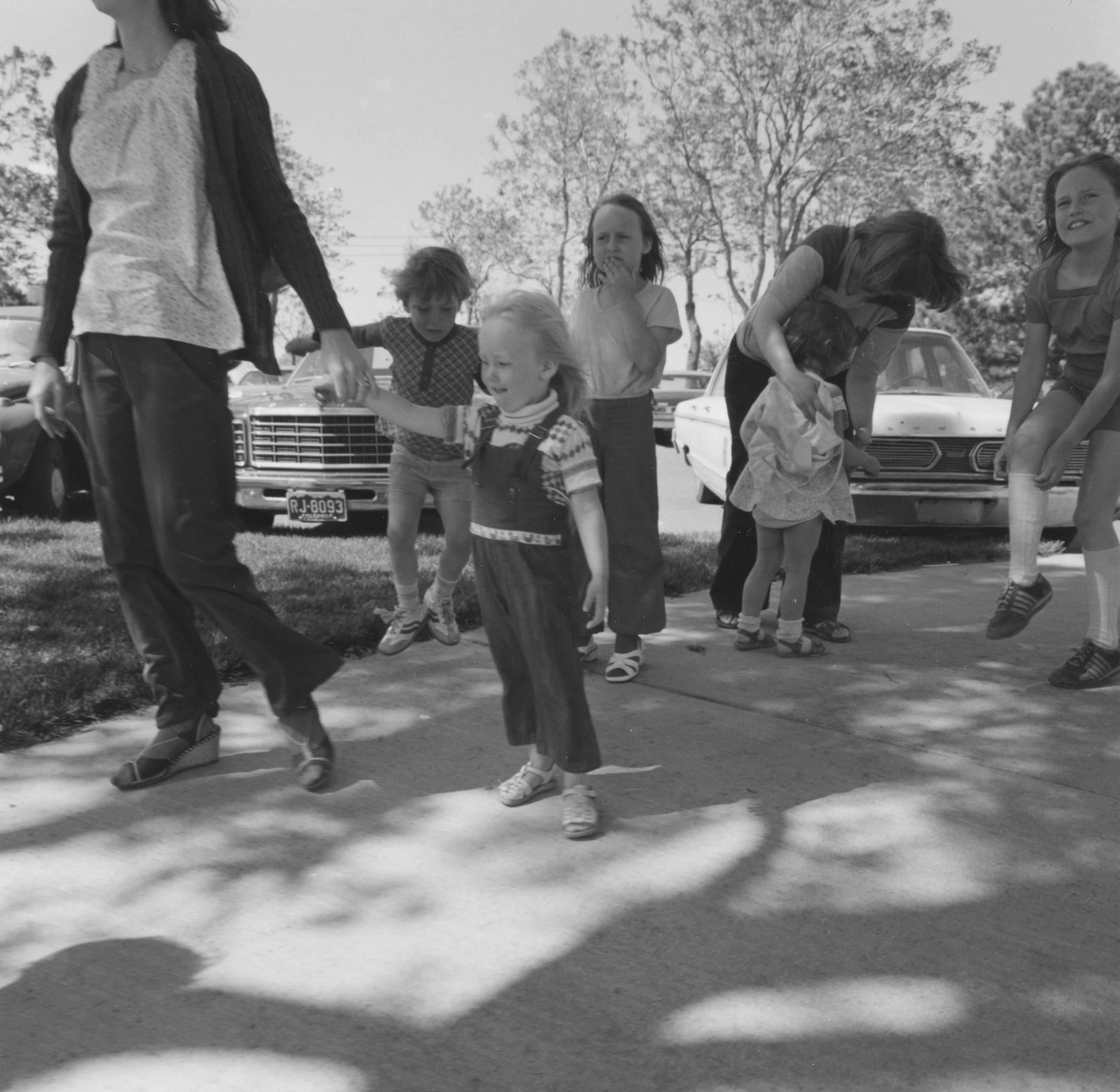
Robert Adams (American, b. 1937)
Denver
1981
Gelatin silver print
Image: 14.6 x 15.2cm (5 3/4 x 6 in.)
Robert and Kerstin Adams, Courtesy Fraenkel Gallery, San Francisco
© Robert Adams, Courtesy Fraenkel Gallery, San Francisco
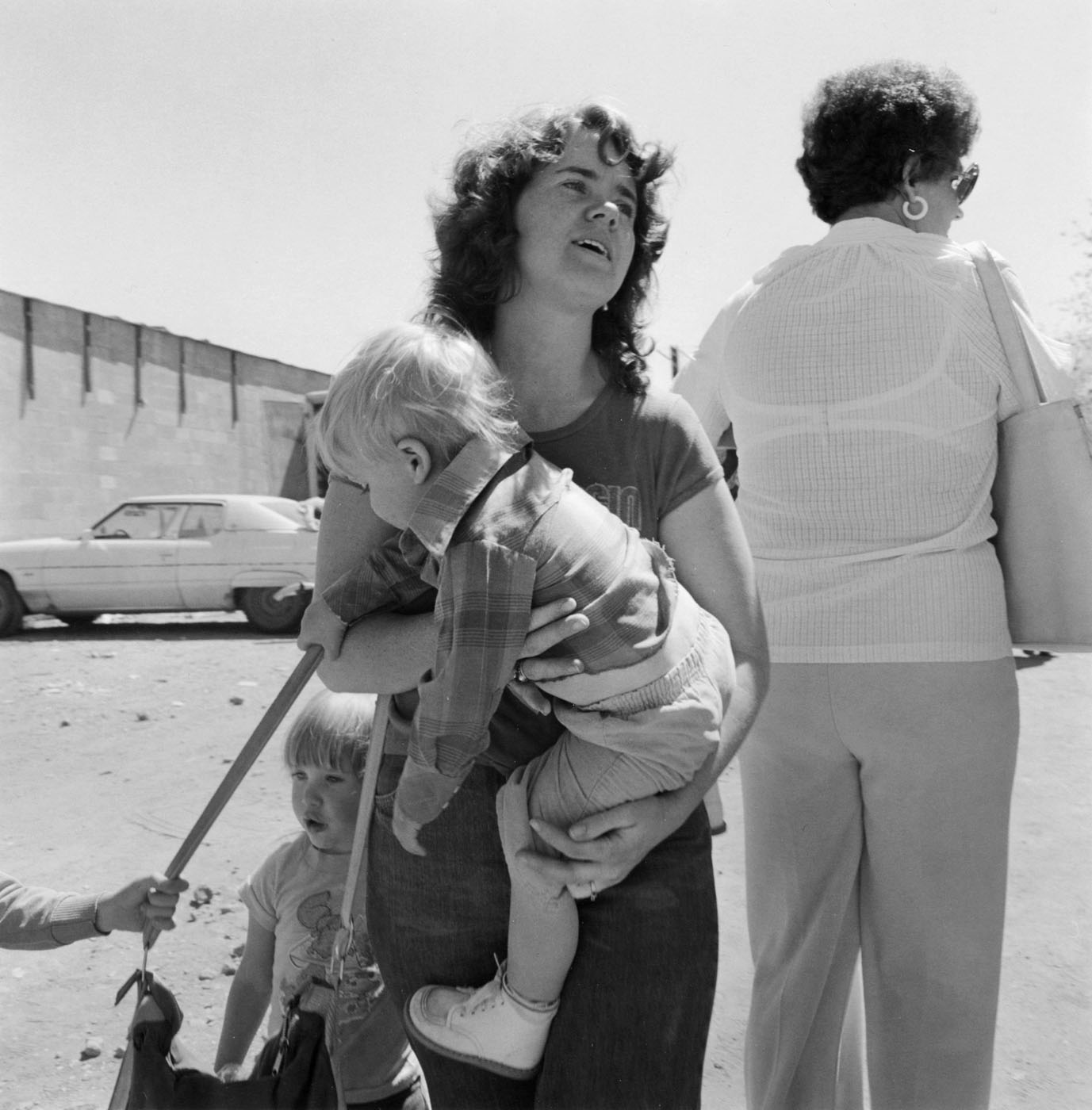
Robert Adams (American, b. 1937)
Denver
1981
Gelatin silver print
Image: 17.15 x 16.83cm (6 3/4 x 6 5/8 in.)
Robert and Kerstin Adams, Courtesy Fraenkel Gallery, San Francisco
© Robert Adams, Courtesy Fraenkel Gallery, San Francisco
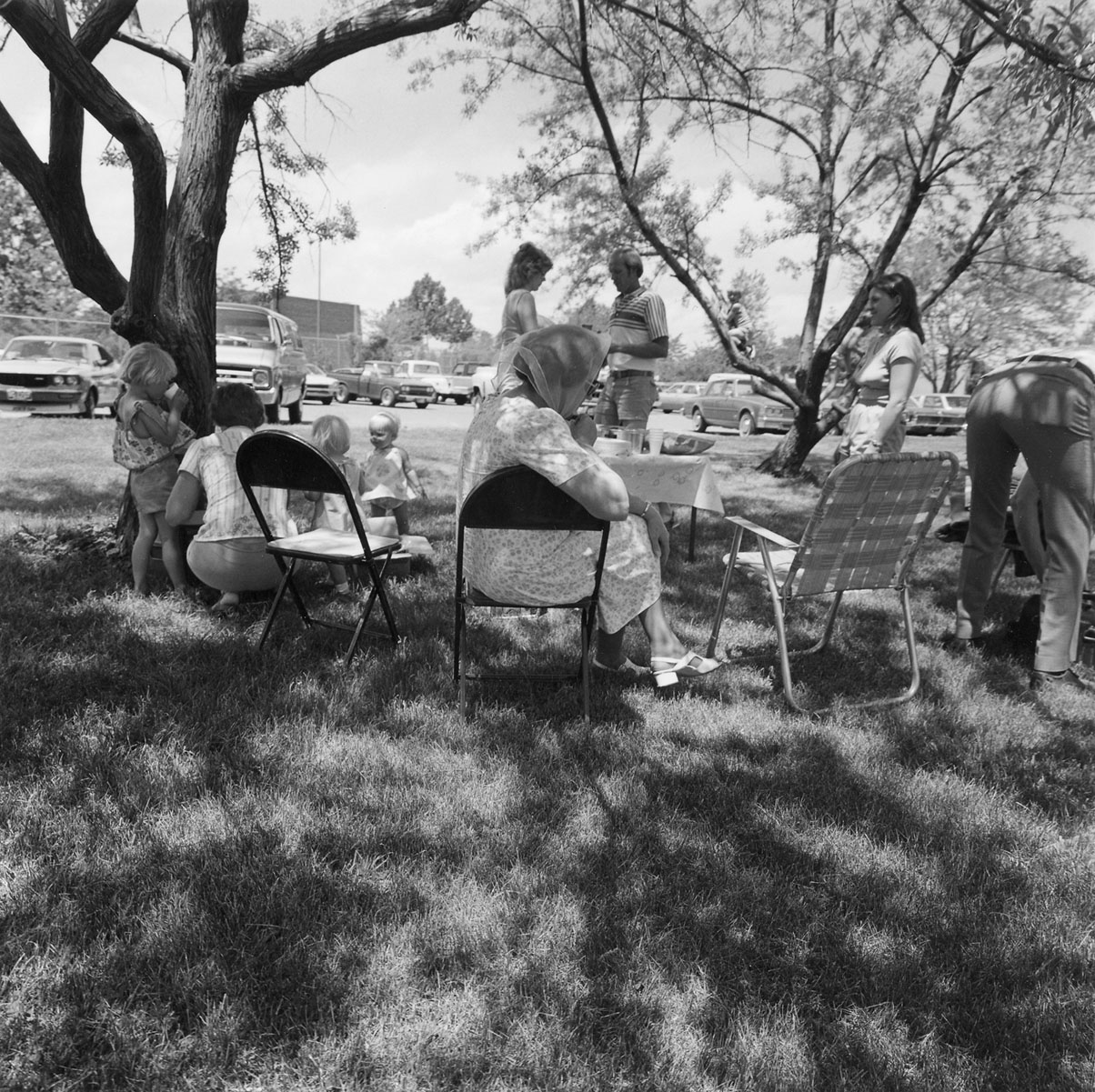
Robert Adams (American, b. 1937)
Denver
1981
Gelatin silver print
Image: 17.2 x 17.2cm (6 3/4 x 6 3/4 in.)
Robert and Kerstin Adams, Courtesy Fraenkel Gallery, San Francisco
© Robert Adams, Courtesy Fraenkel Gallery, San Francisco
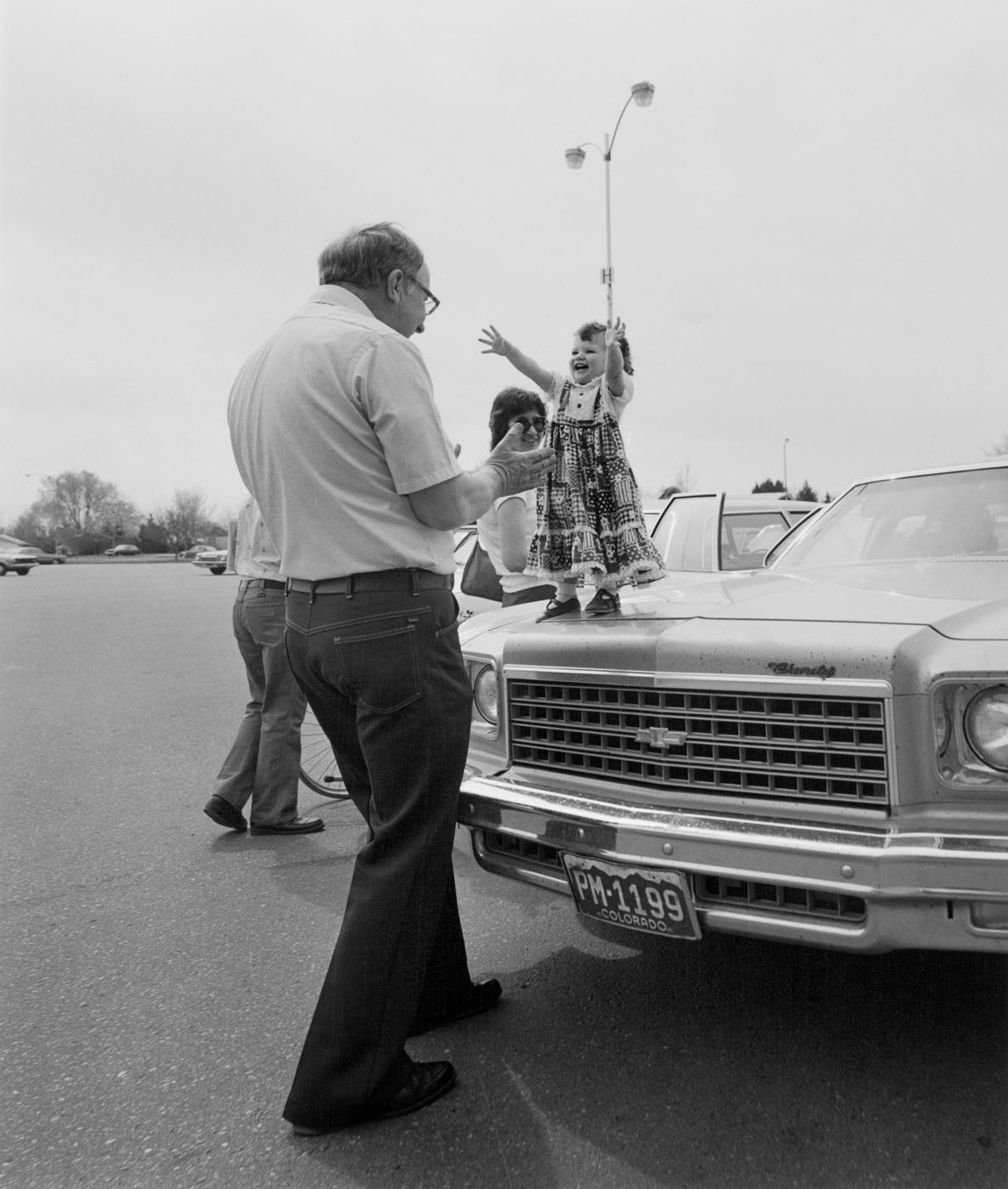
Robert Adams (American, b. 1937)
Denver
1981
Gelatin silver print
Image: 18.4 x 15.7cm (7 1/4 x 6 3/16 in.)
Yale University Art Gallery, Purchased with a gift from Saundra B. Lane, a grant from the Trellis Fund, and the Janet and Simeon Braguin Fund
© Robert Adams, Courtesy Fraenkel Gallery, San Francisco
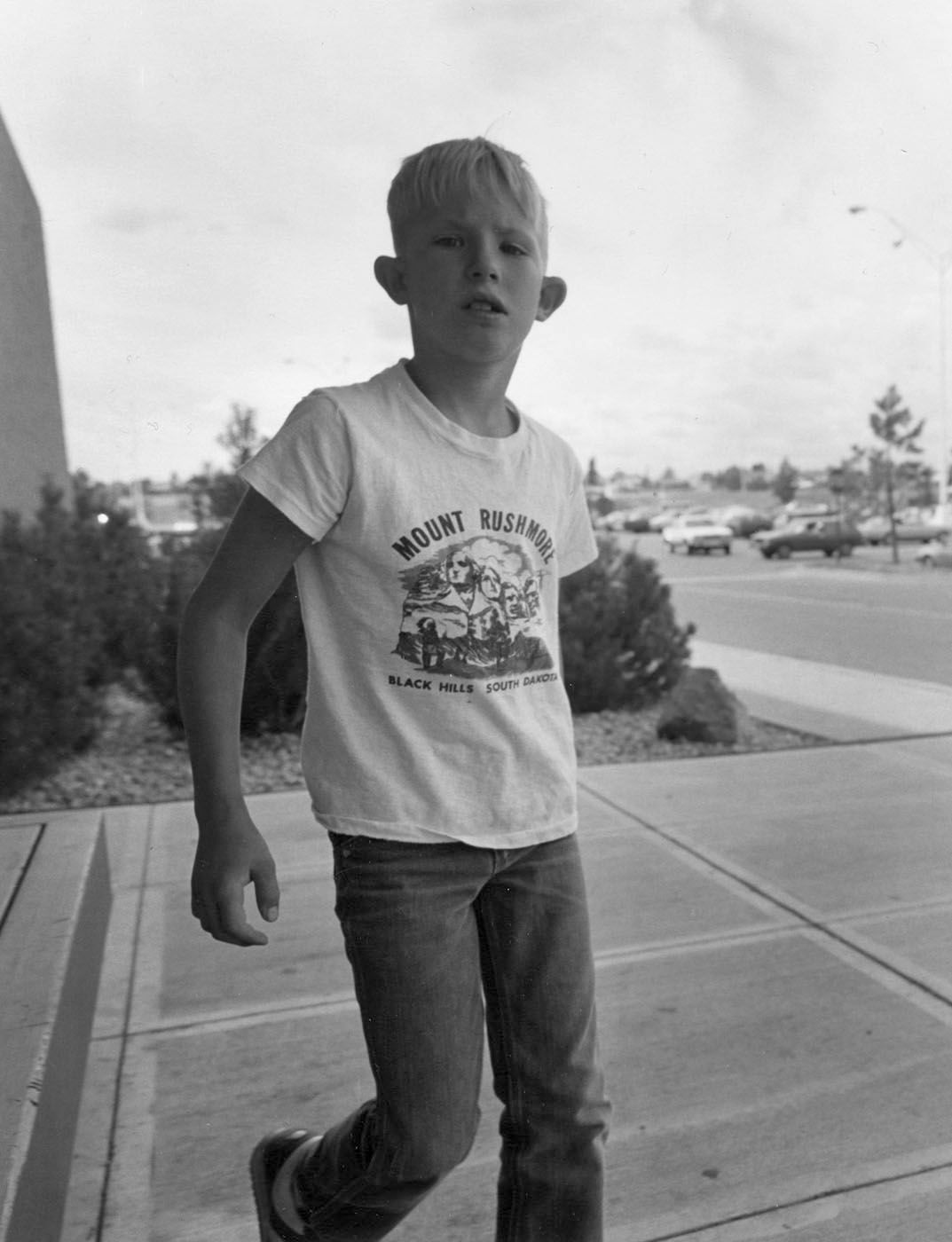
Robert Adams (American, b. 1937)
Denver
1981
Gelatin silver print
Image: 20.6 x 15.9cm (8 1/8 x 6 1/4 in.)
Robert and Kerstin Adams, Courtesy Fraenkel Gallery, San Francisco
© Robert Adams, Courtesy Fraenkel Gallery, San Francisco
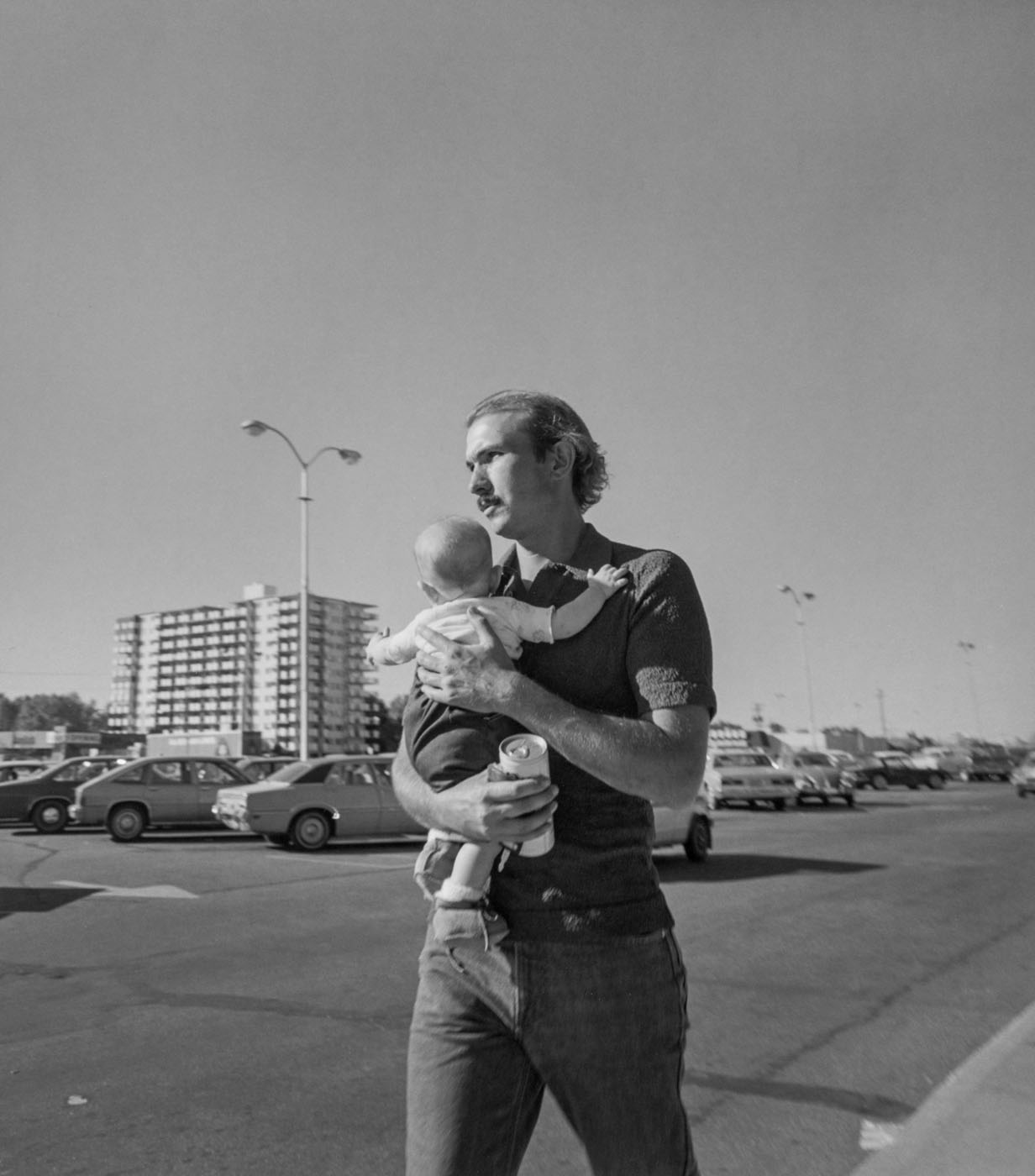
Robert Adams (American, b. 1937)
Denver
1981
Gelatin silver print
Image: 17.8 x 15.9cm (7 x 6 1/4 in.)
Fraenkel Gallery, San Francisco
© Robert Adams, Courtesy Fraenkel Gallery, San Francisco
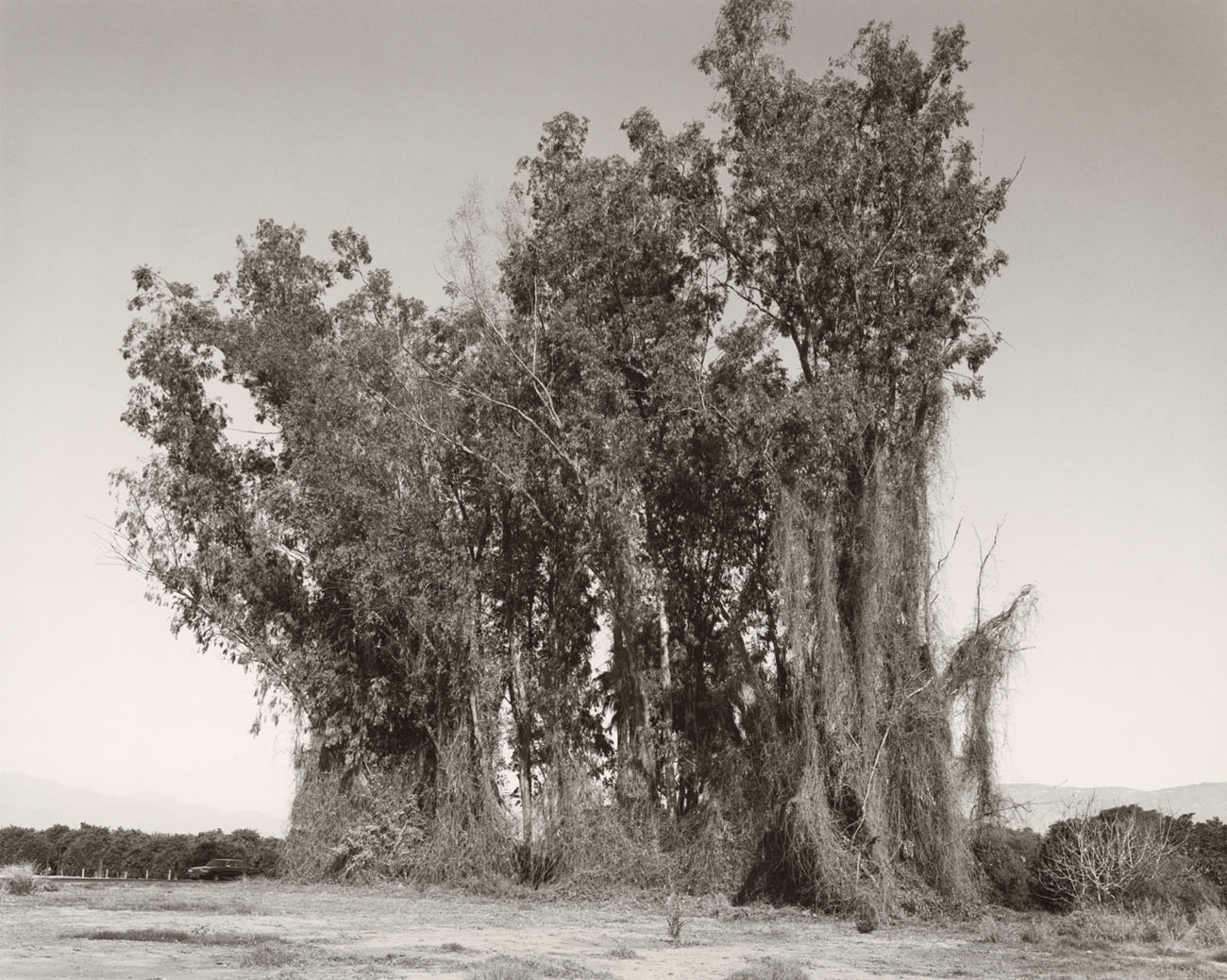
Robert Adams (American, b. 1937)
Remains of a Eucalyptus Windbreak, Redlands, California
1982, printed 1990
Gelatin silver print
Image: 38.1 x 47.5cm (15 x 18 11/16 in.)
National Gallery of Art, Washington, Pepita Milmore Memorial Fund and Gift of Robert and Kerstin Adams
© Robert Adams, Courtesy Fraenkel Gallery, San Francisco
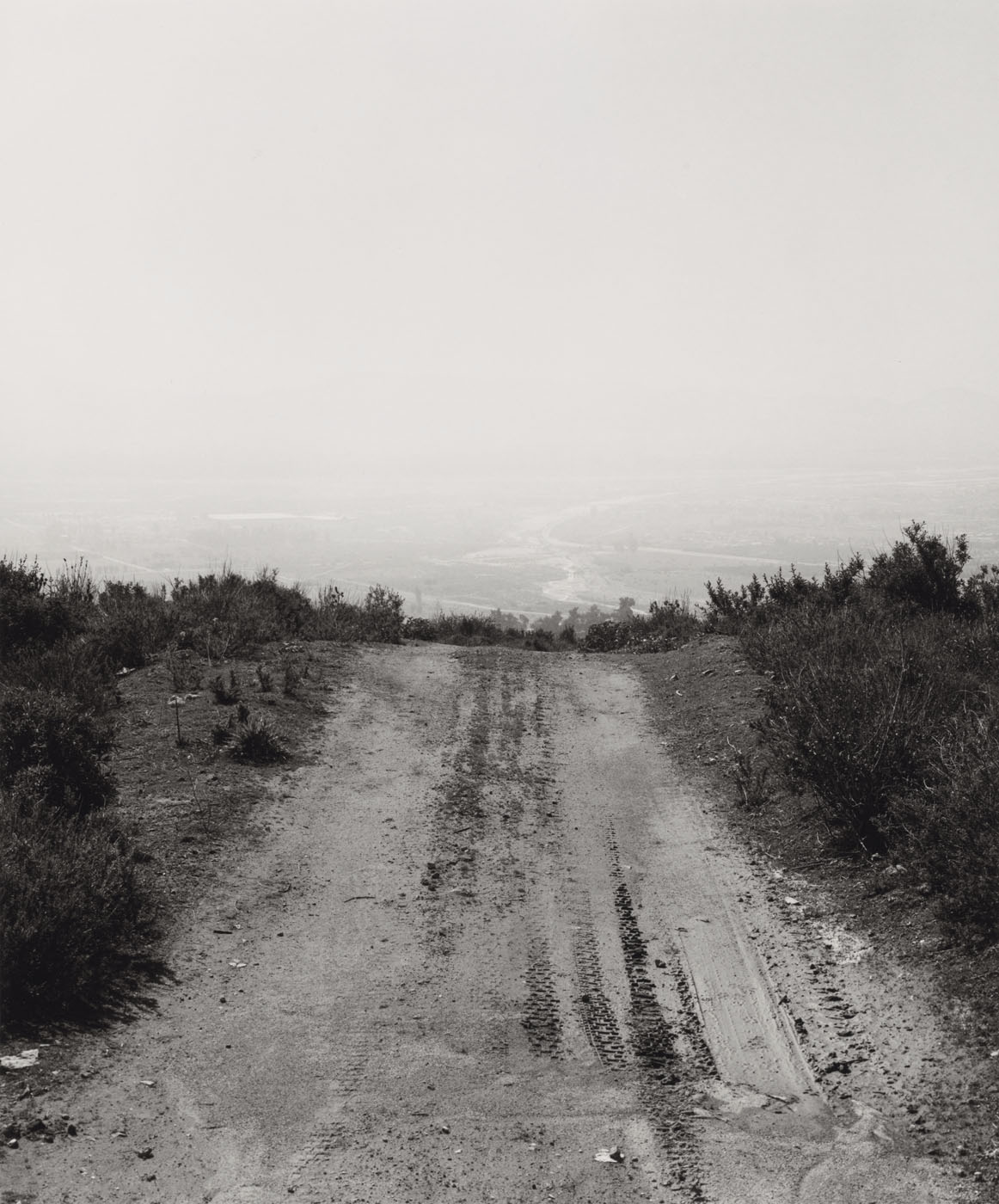
Robert Adams (American, b. 1937)
Firebreak, above East Highland, California
1982
Gelatin silver print
Image: 27.4 x 22.8cm (10 13/16 x 9 in.)
National Gallery of Art, Washington, The Ahmanson Foundation and Gift of Robert and Kerstin Adams
© Robert Adams, Courtesy Fraenkel Gallery, San Francisco
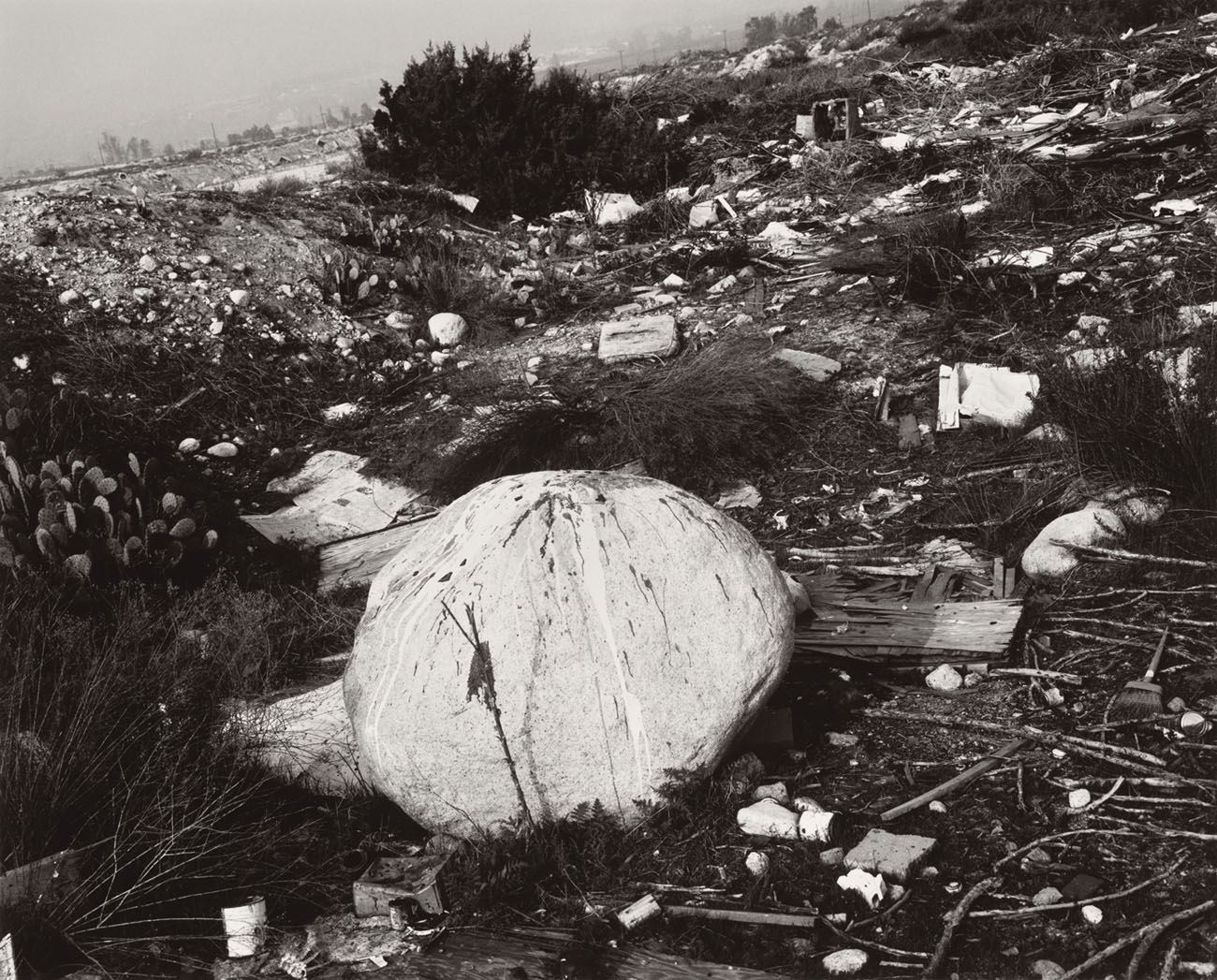
Robert Adams (American, b. 1937)
Santa Ana Wash, Redlands, California
1982
Gelatin silver print
Image: 38 x 47.1cm (14 15/16 x 18 9/16 in.)
National Gallery of Art, Washington, Pepita Milmore Memorial Fund and Gift of Robert and Kerstin Adams
© Robert Adams, Courtesy Fraenkel Gallery, San Francisco
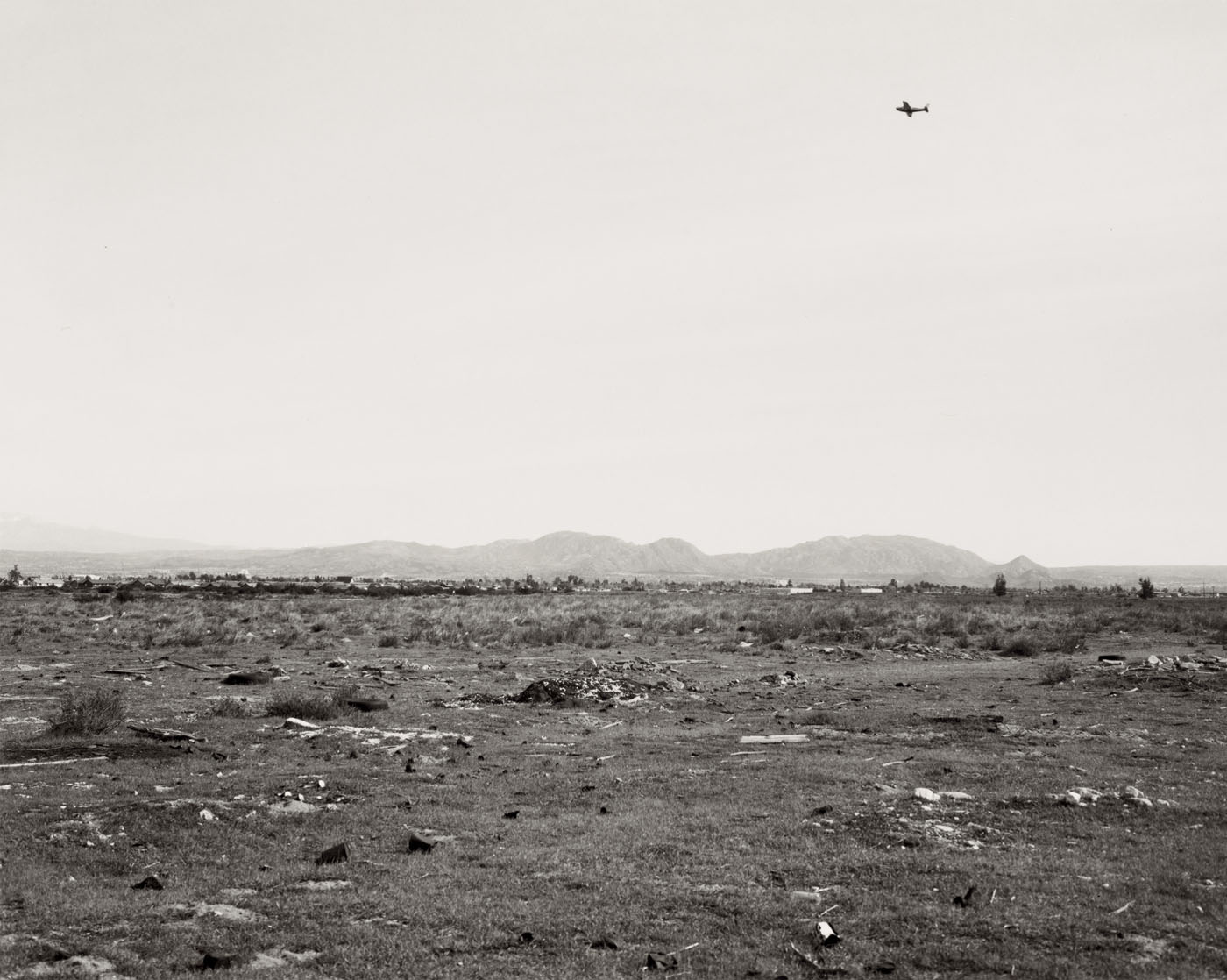
Robert Adams (American, b. 1937)
Rialto, California
1982
Gelatin silver print
Image: 22.8 x 28.6cm (9 x 11 1/4 in.)
National Gallery of Art, Washington, The Ahmanson Foundation and Gift of Robert and Kerstin Adams
© Robert Adams, Courtesy Fraenkel Gallery, San Francisco
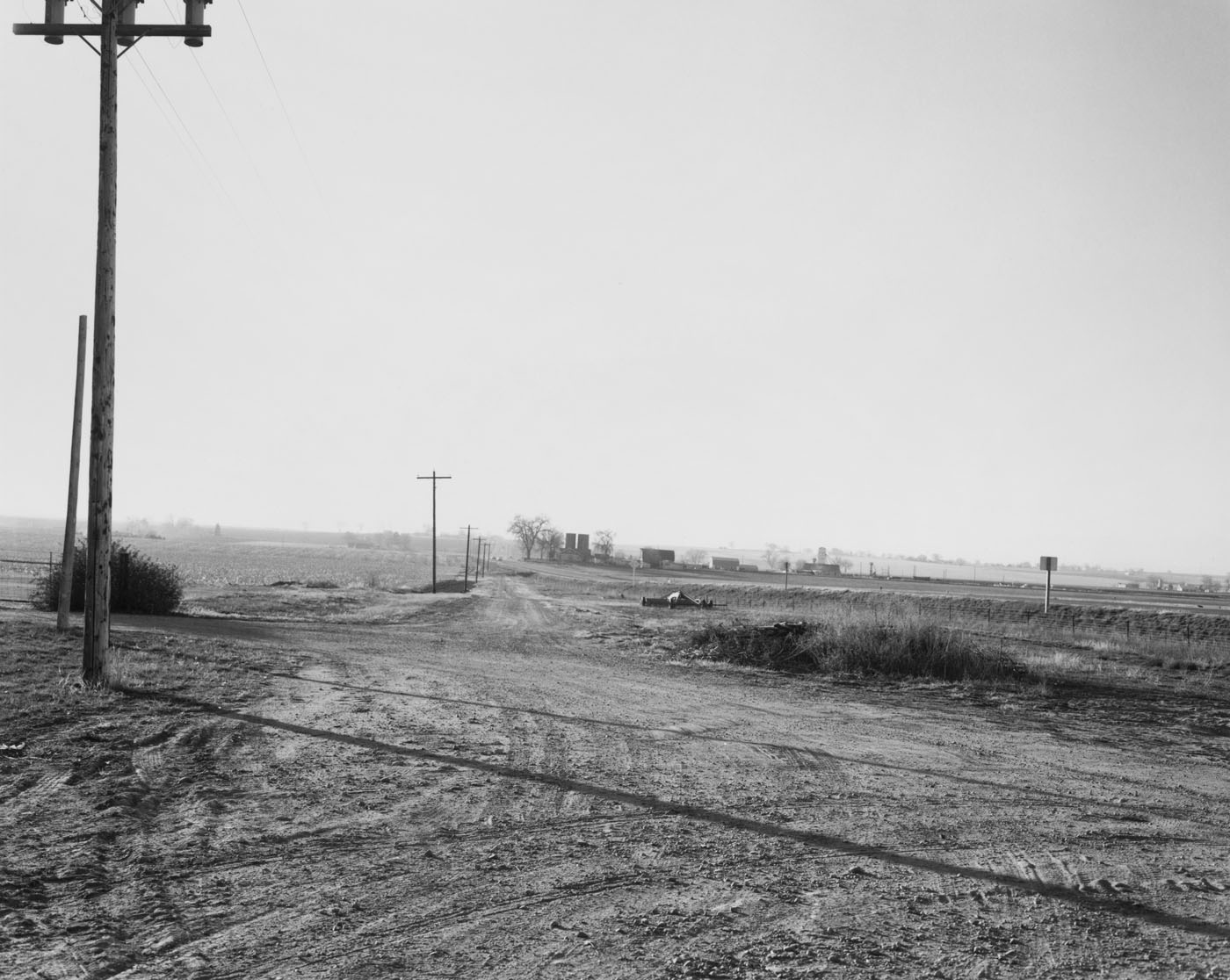
Robert Adams (American, b. 1937)
Looking toward the Mountains in Smog, Weld County, Colorado
1983
Gelatin silver print
Image: 37.8 x 47cm (14 7/8 x 18 1/2 in.)
National Gallery of Art, Washington, Gift of Robert and Kerstin Adams
© Robert Adams, Courtesy Fraenkel Gallery, San Francisco
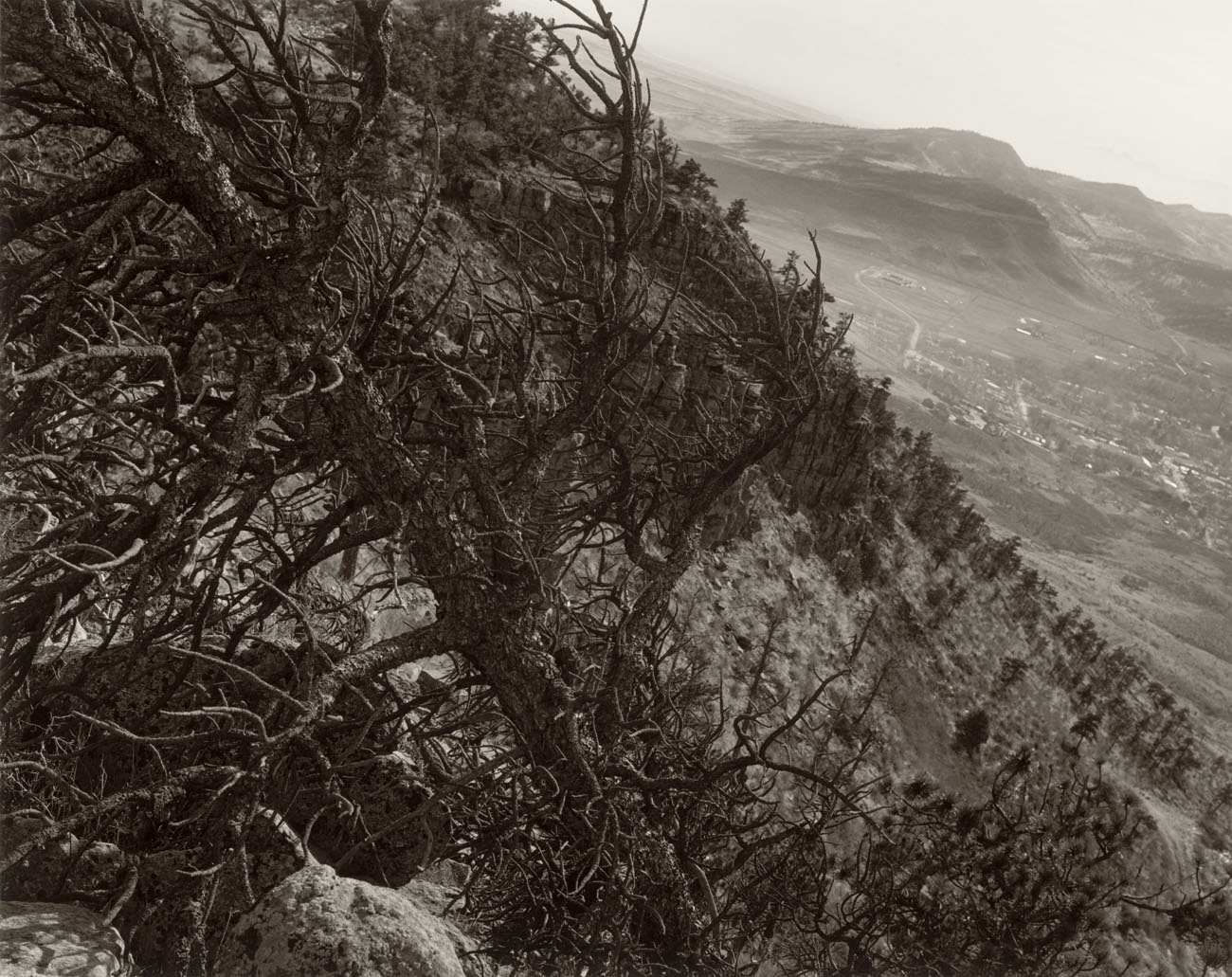
Robert Adams (American, b. 1937)
Boulder County, Colorado
1983
Gelatin silver print
Image: 37.8 x 47.5cm (14 7/8 x 18 11/16 in.)
National Gallery of Art, Washington, Pepita Milmore Memorial Fund and Gift of Robert and Kerstin Adams
© Robert Adams, Courtesy Fraenkel Gallery, San Francisco
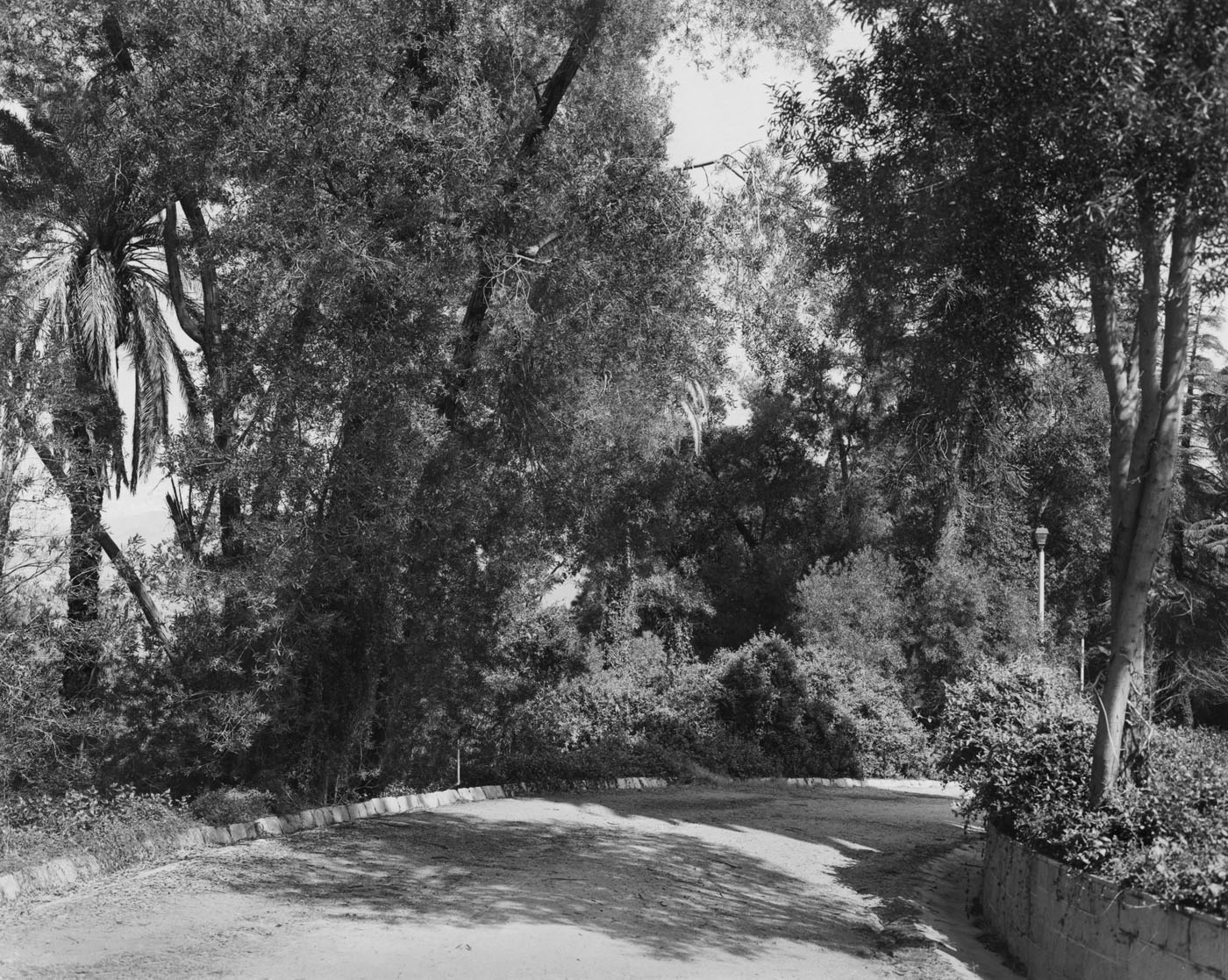
Robert Adams (American, b. 1937)
Old Estate Road, Redlands, California
1983
Gelatin silver print
Image: 22.9 x 28.6cm (9 x 11 1/4 in.)
National Gallery of Art, Washington, Gift of Robert and Kerstin Adams
© Robert Adams, Courtesy Fraenkel Gallery, San Francisco
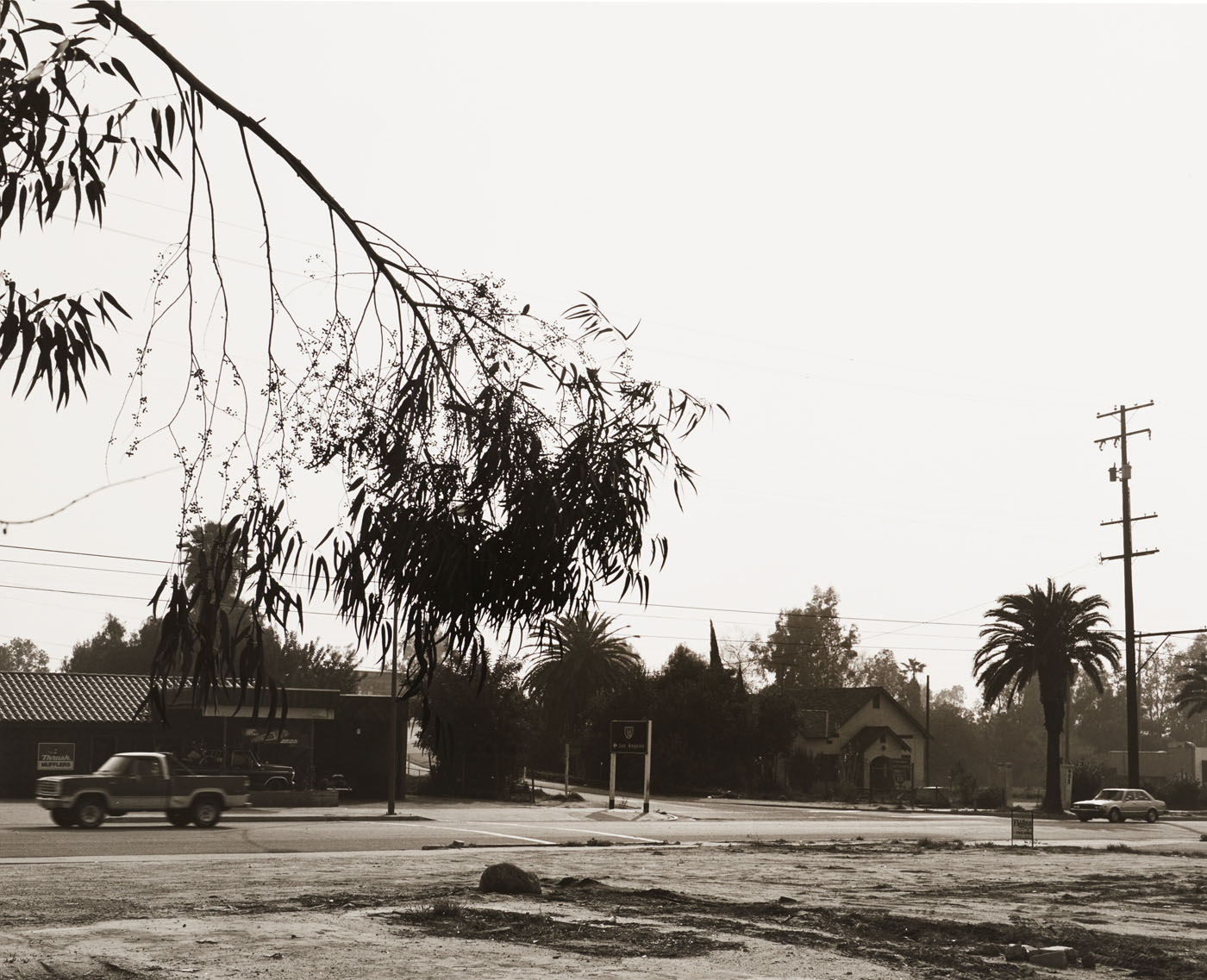
Robert Adams (American, b. 1937)
Eucalyptus Branch, Redlands, California
1983
Gelatin silver print
Image: 37.9 x 47.1cm (14 15/16 x 18 9/16 in.)
Philadelphia Museum of Art, Gift of the Friends of the Philadelphia Museum of Art, 1986
Courtesy of the Philadelphia Museum of Art
© Robert Adams, Courtesy Fraenkel Gallery, San Francisco
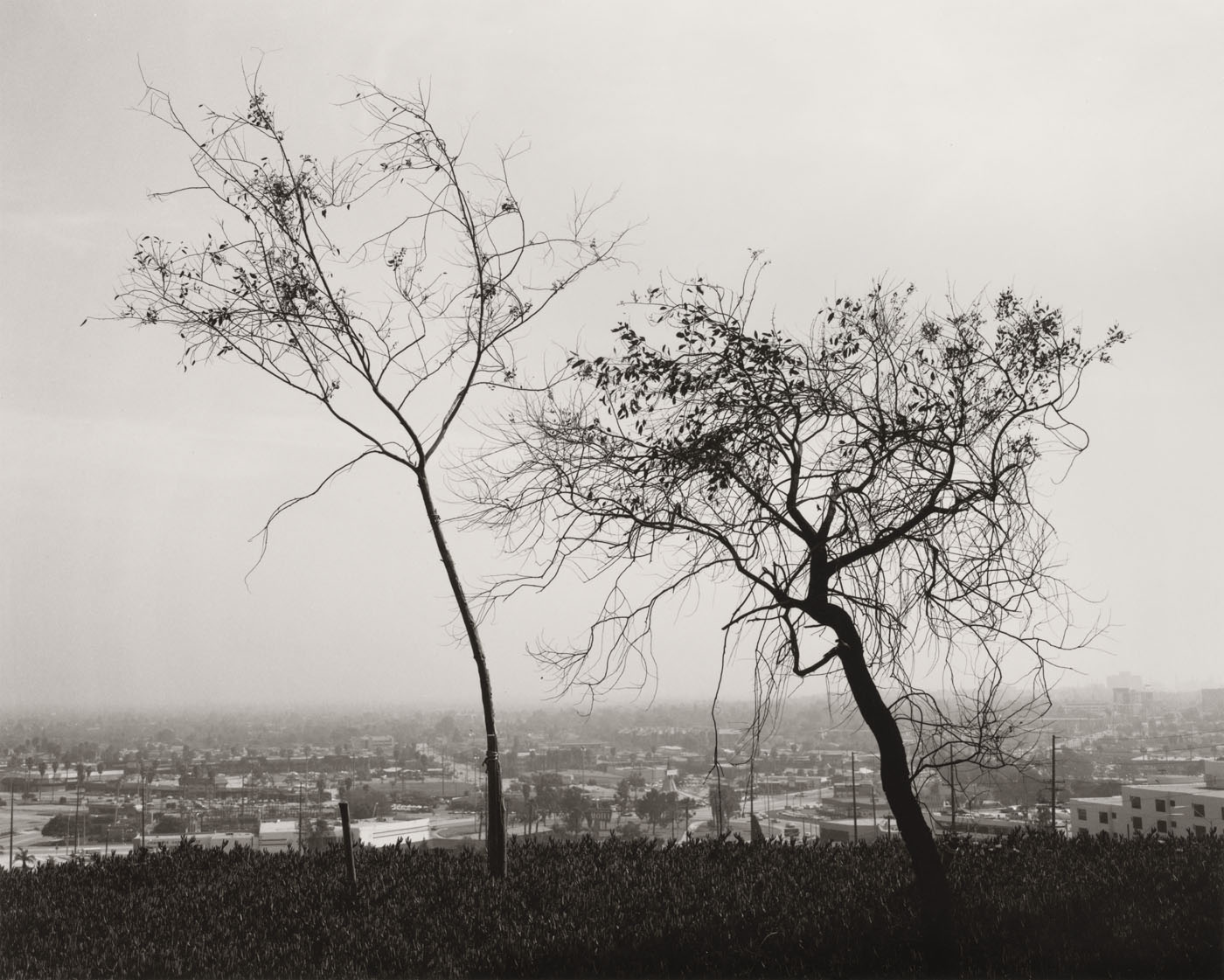
Robert Adams (American, b. 1937)
On Signal Hill, Overlooking Long Beach, California
1983, printed 1990
Gelatin silver print
Image: 22.9 x 28.5cm (9 x 11 1/4 in.)
National Gallery of Art, Washington, Gift of Mary and Dan Solomon and Patrons’ Permanent Fund
© Robert Adams, Courtesy Fraenkel Gallery, San Francisco
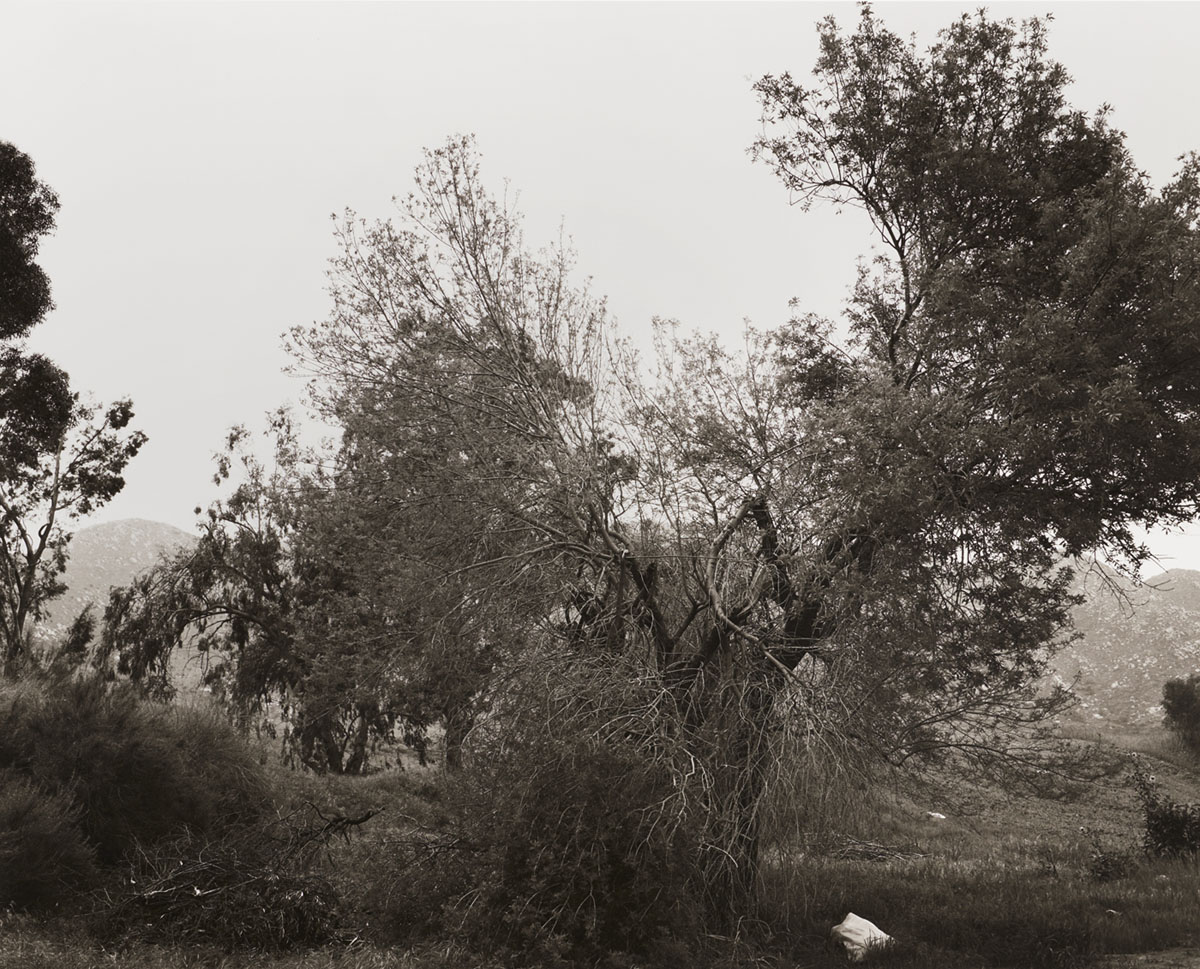
Robert Adams (American, b. 1937)
Broken Trees, East of Riverside, California
1983
Gelatin silver print
Image: 37.6 x 46.7cm (14 13/16 x 18 3/8 in.)
Philadelphia Museum of Art, Purchased with the Alice Newton Osborn Fund, 1986
Courtesy of the Philadelphia Museum of Art
© Robert Adams, Courtesy Fraenkel Gallery, San Francisco
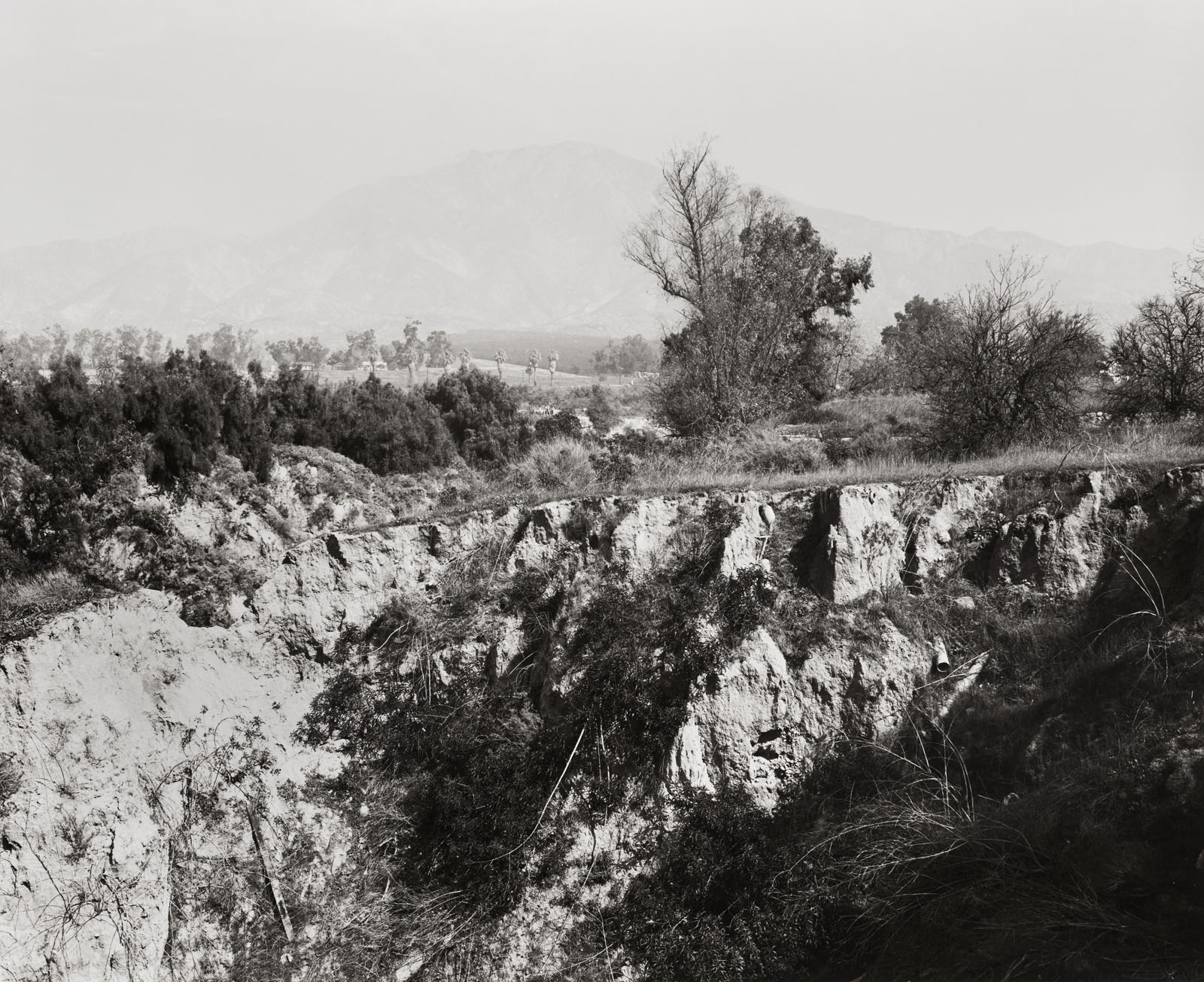
Robert Adams (American, b. 1937)
Eroding Edge of a Former Citrus-Growing Estate, Highland, California
1983
Gelatin silver print
Image: 38 x 46.7cm (14 15/16 x 18 3/8 in.)
Philadelphia Museum of Art, Purchased with the Alice Newton Osborn Fund, 1986
Courtesy of the Philadelphia Museum of Art
© Robert Adams, Courtesy Fraenkel Gallery, San Francisco
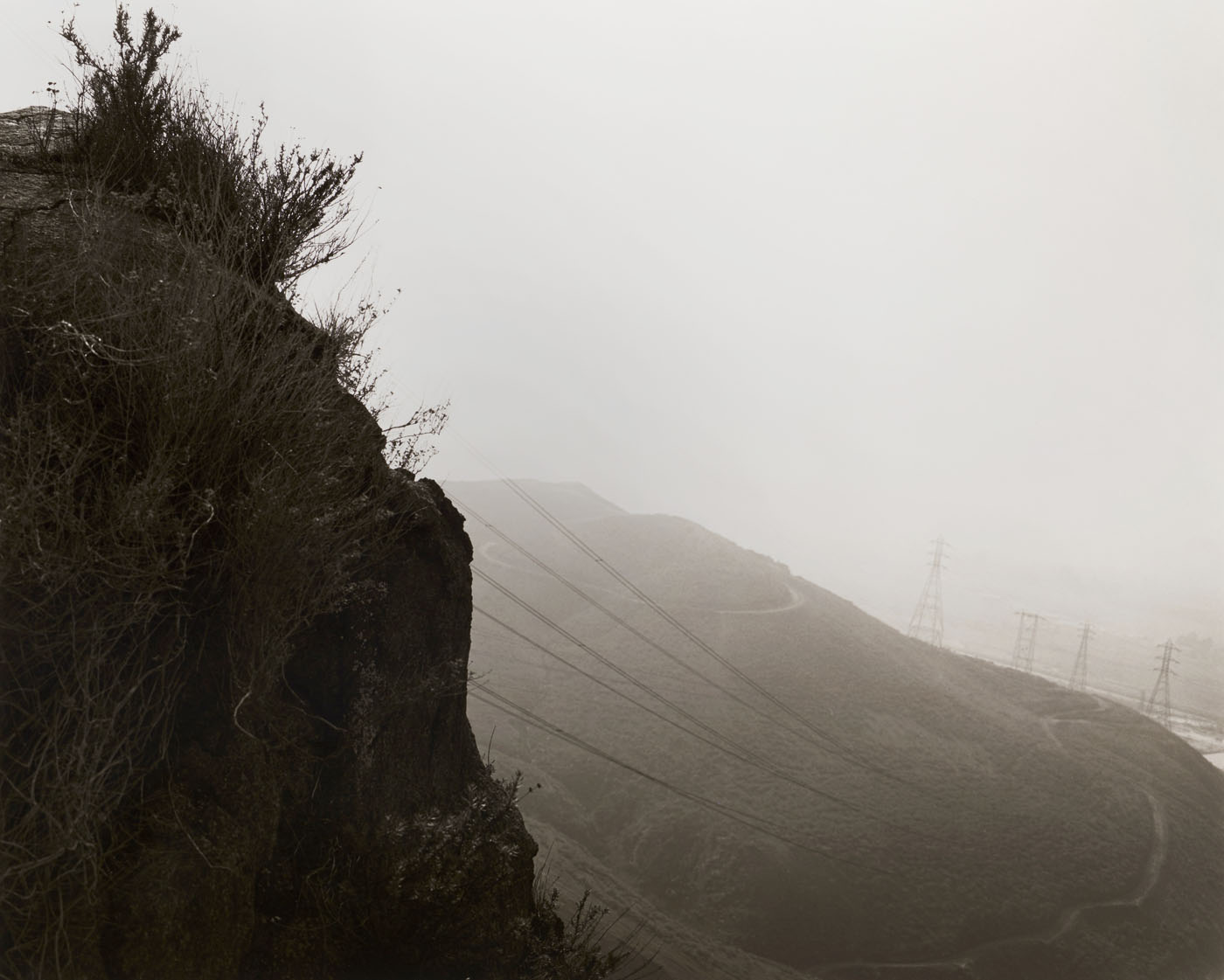
Robert Adams (American, b. 1937)
On Top of the La Loma Hills, Colton, California
1983
Gelatin silver print
Image: 38 x 47cm (14 15/16 x 18 1/2 in.)
Philadelphia Museum of Art, Purchased with the Alice Newton Osborn Fund, 1986
Courtesy of the Philadelphia Museum of Art
© Robert Adams, Courtesy Fraenkel Gallery, San Francisco
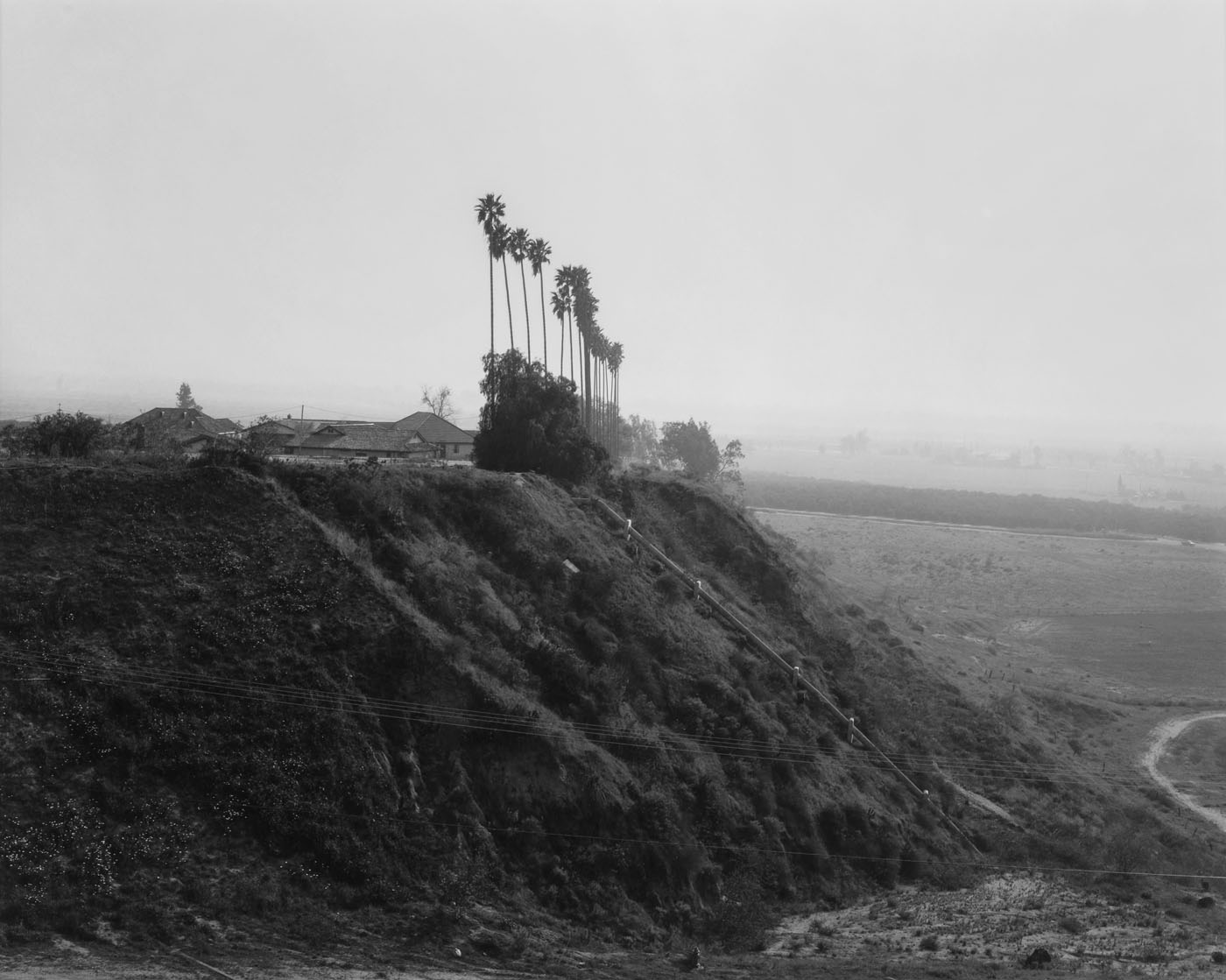
Robert Adams (American, b. 1937)
New Development on a Former Citrus-Growing Estate, Highland, California
1983
Gelatin silver print
Image: 38.1 x 47cm (15 x 18 1/2 in.)
Andrew Szegedy-Maszak and Elizabeth Bobrick
© Robert Adams, Courtesy Fraenkel Gallery, San Francisco
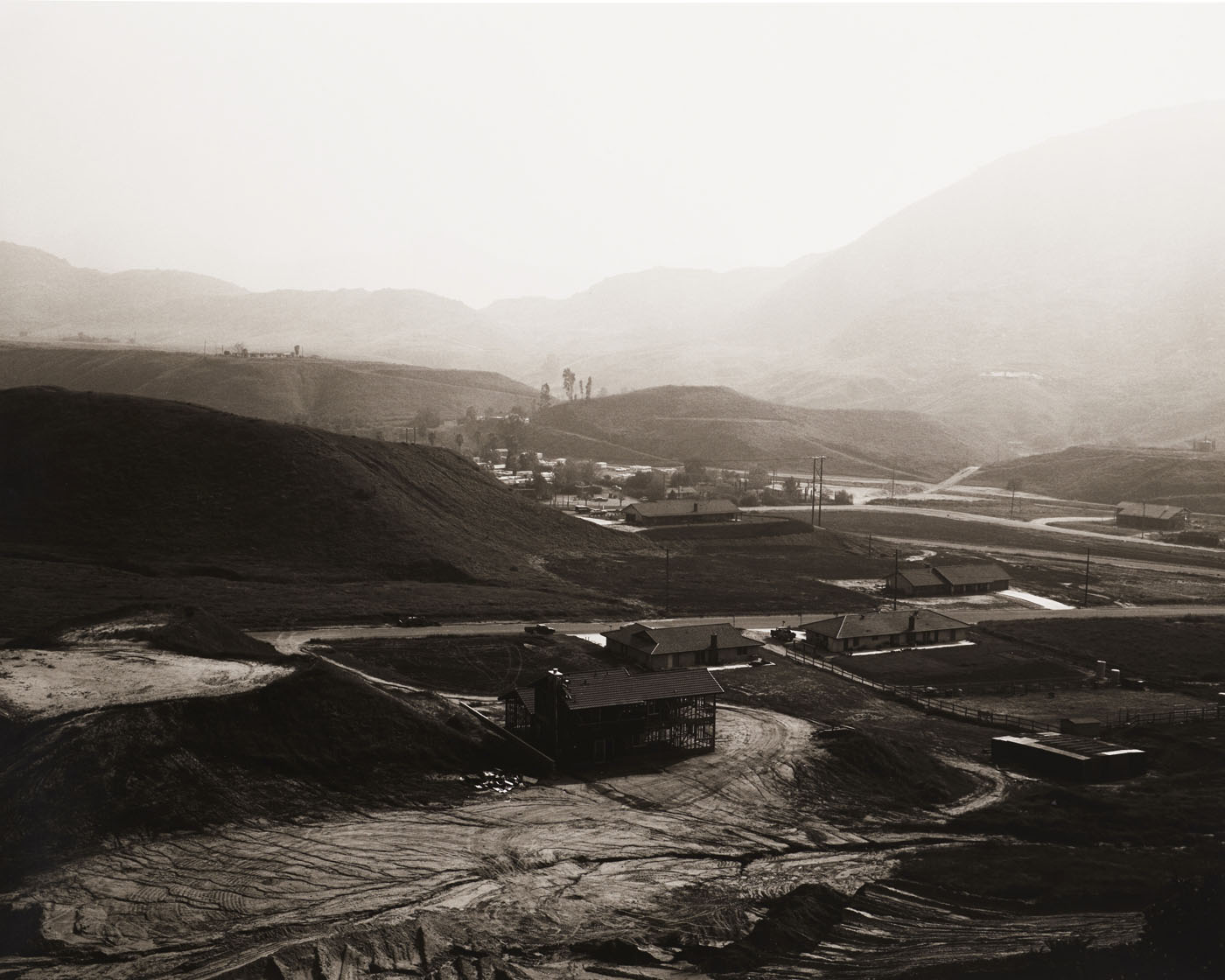
Robert Adams (American, b. 1937)
New Housing, Reche Canyon, San Bernardino County, California
1983
Gelatin silver print
Image: 37.9 x 47.8cm (14 15/16 x 18 13/16 in.)
Philadelphia Museum of Art, Purchased with funds contributed by Ann and Donald W. McPhail and the Atlantic Richfield Foundation, 1986
Courtesy of the Philadelphia Museum of Art
© Robert Adams, Courtesy Fraenkel Gallery, San Francisco
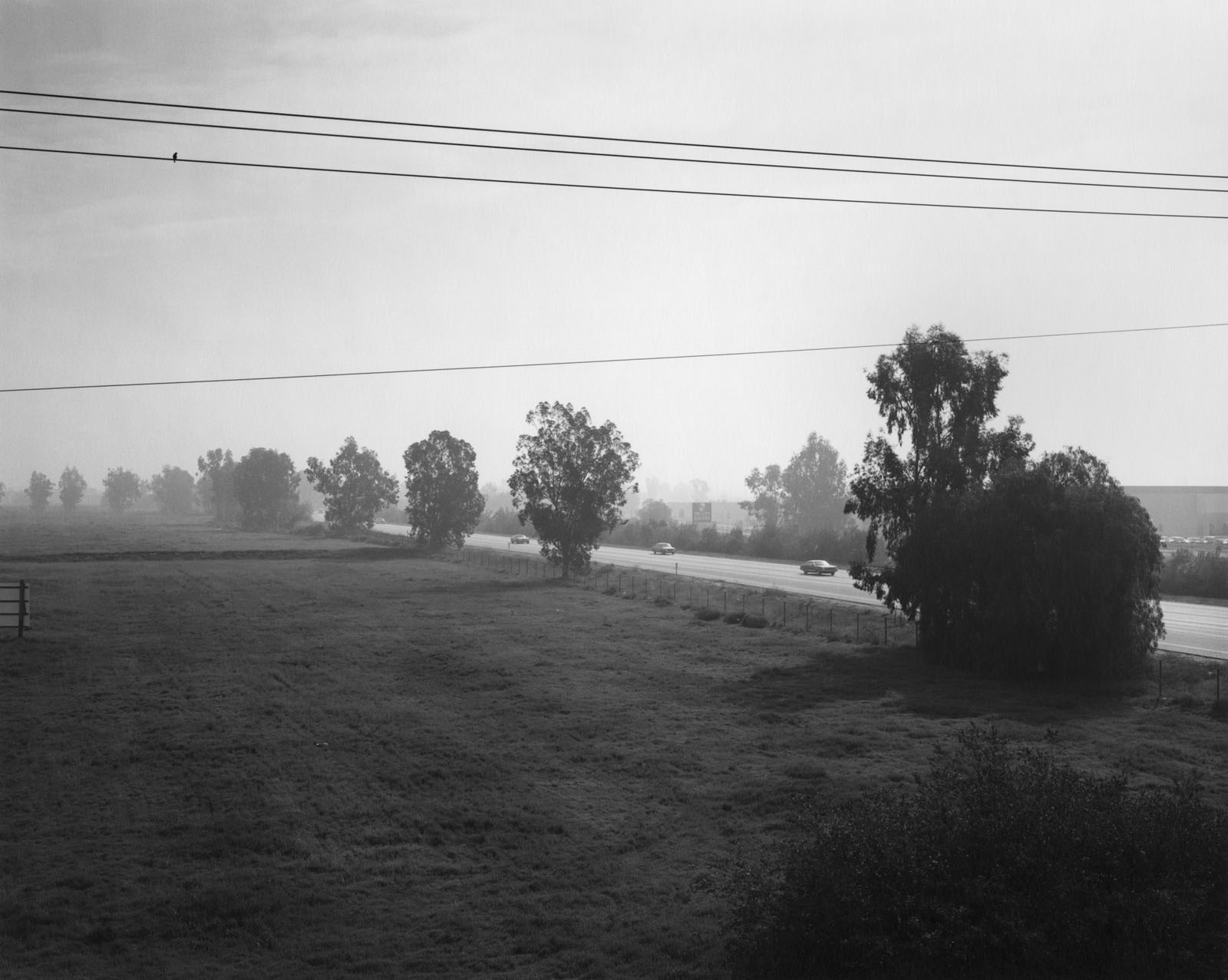
Robert Adams (American, b. 1937)
Interstate 10, West Edge of Redlands, California
1983
Gelatin silver print
Image: 37.5 x 45.7cm (14 3/4 x 18 in.)
Christine and Michael J. Murray
© Robert Adams, Courtesy Fraenkel Gallery, San Francisco
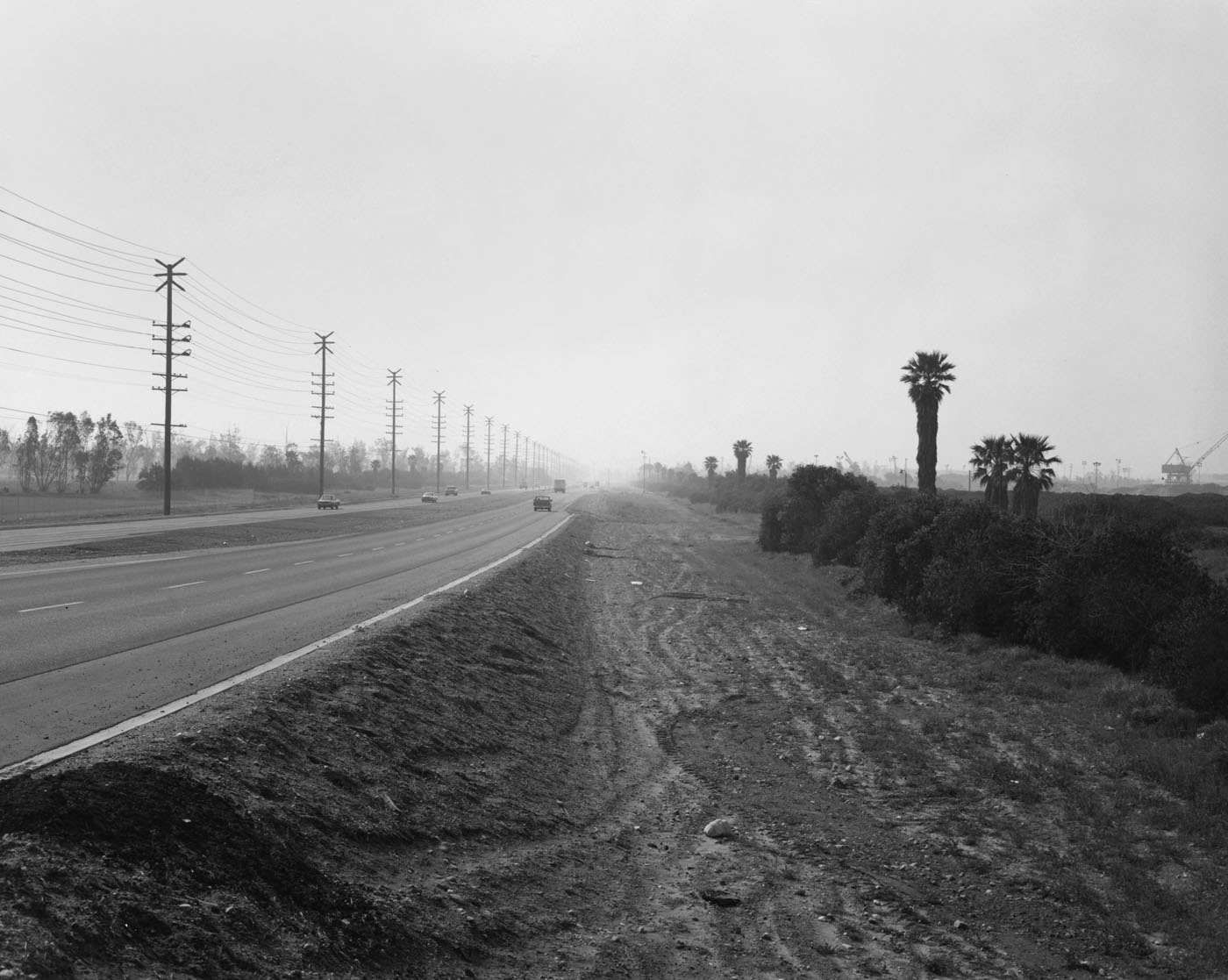
Robert Adams (American, b. 1937)
Fontana, California
1983
Gelatin silver print
Image: 22.9 x 28.6cm (9 x 11 1/4 in.)
National Gallery of Art, Washington, Gift of Robert and Kerstin Adams
© Robert Adams, Courtesy Fraenkel Gallery, San Francisco
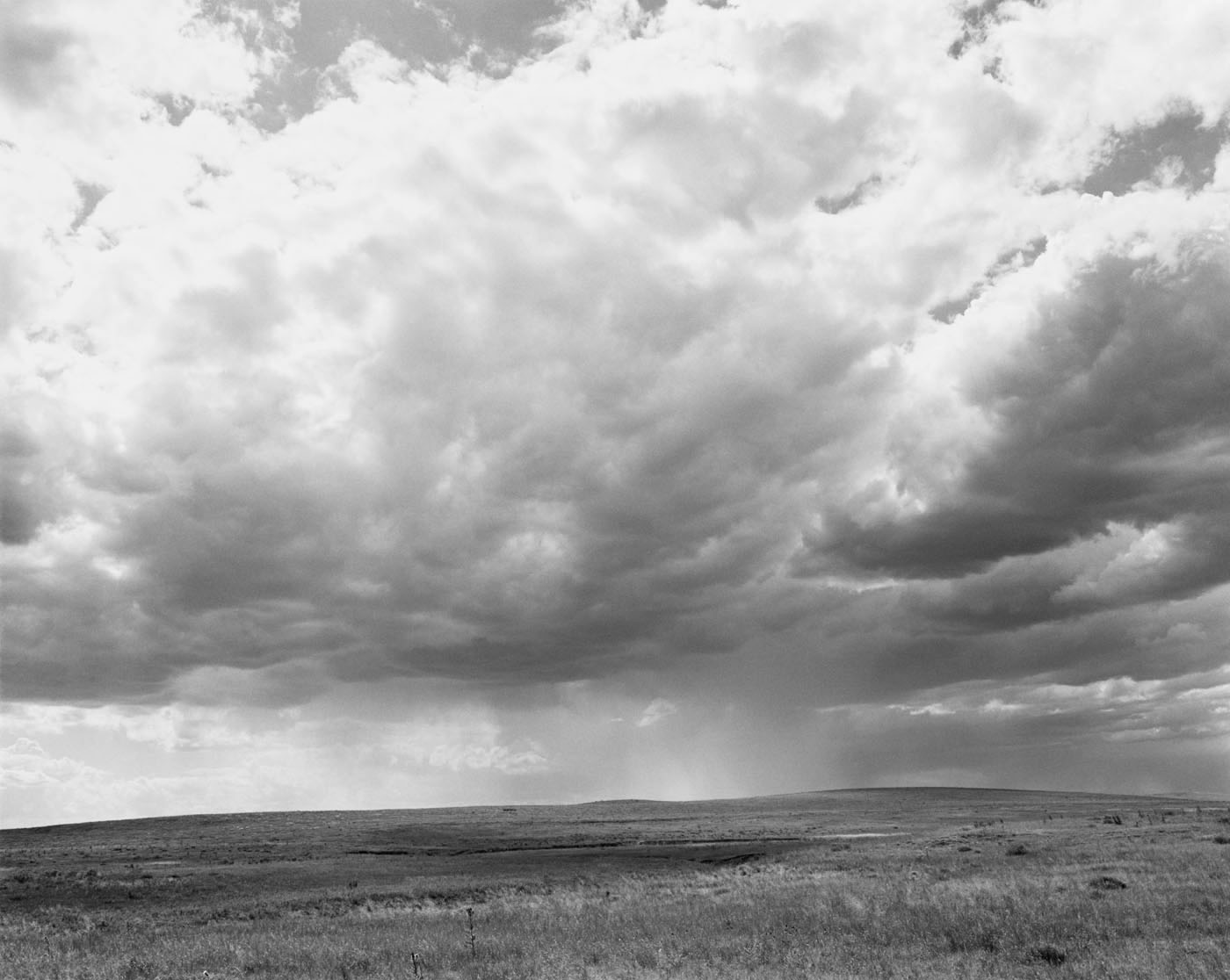
Robert Adams (American, b. 1937)
Weld County, Colorado
1984
Gelatin silver print
Image: 38 x 47.7cm (14 15/16 x 18 3/4 in.)
National Gallery of Art, Washington, The Ahmanson Foundation and Gift of Robert and Kerstin Adams
© Robert Adams, Courtesy Fraenkel Gallery, San Francisco
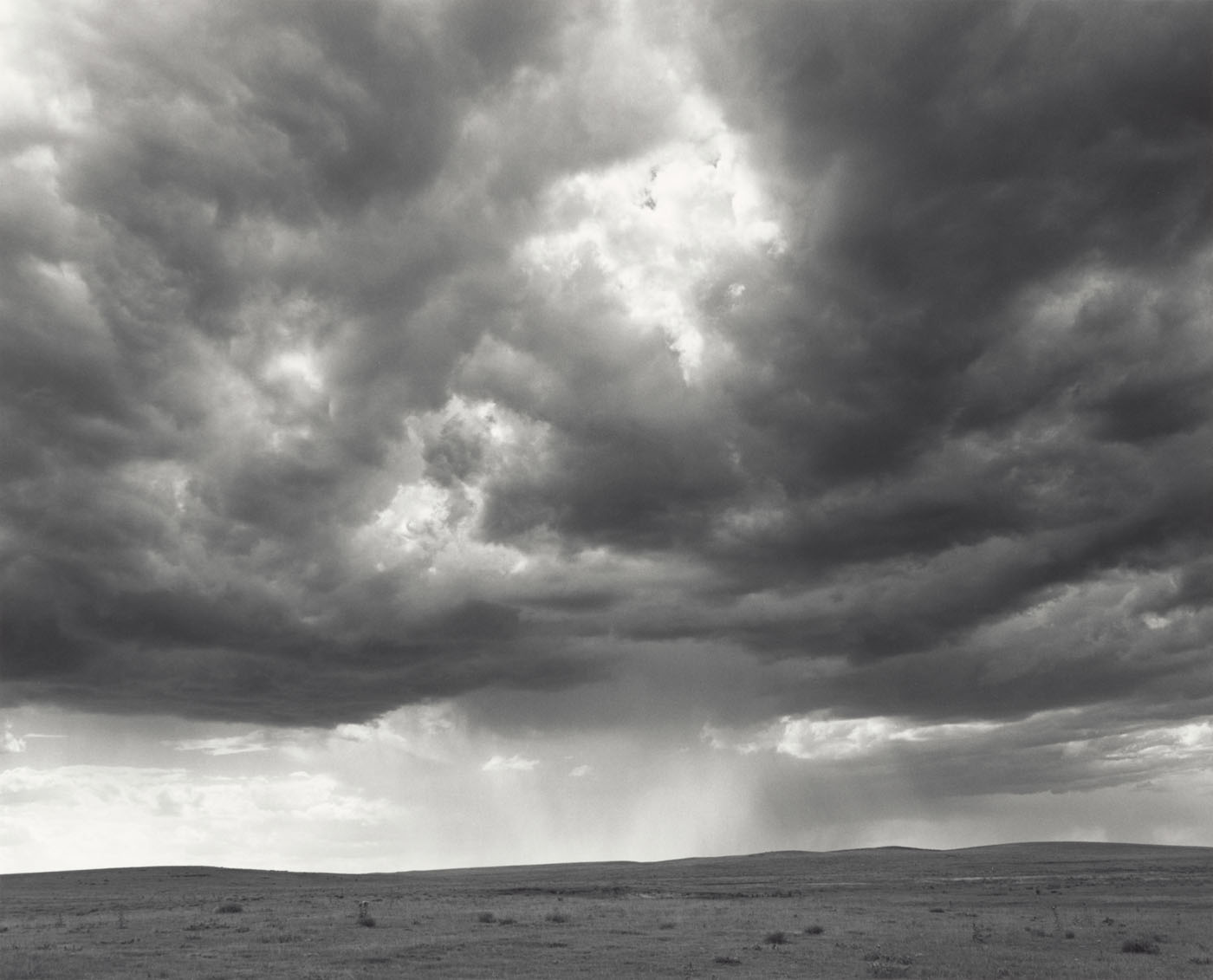
Robert Adams (American, b. 1937)
Weld County, Colorado
1984
Gelatin silver print
Image: 37.9 x 46.8cm (14 15/16 x 18 7/16 in.)
National Gallery of Art, Washington, The Ahmanson Foundation and Gift of Robert and Kerstin Adams
© Robert Adams, Courtesy Fraenkel Gallery, San Francisco
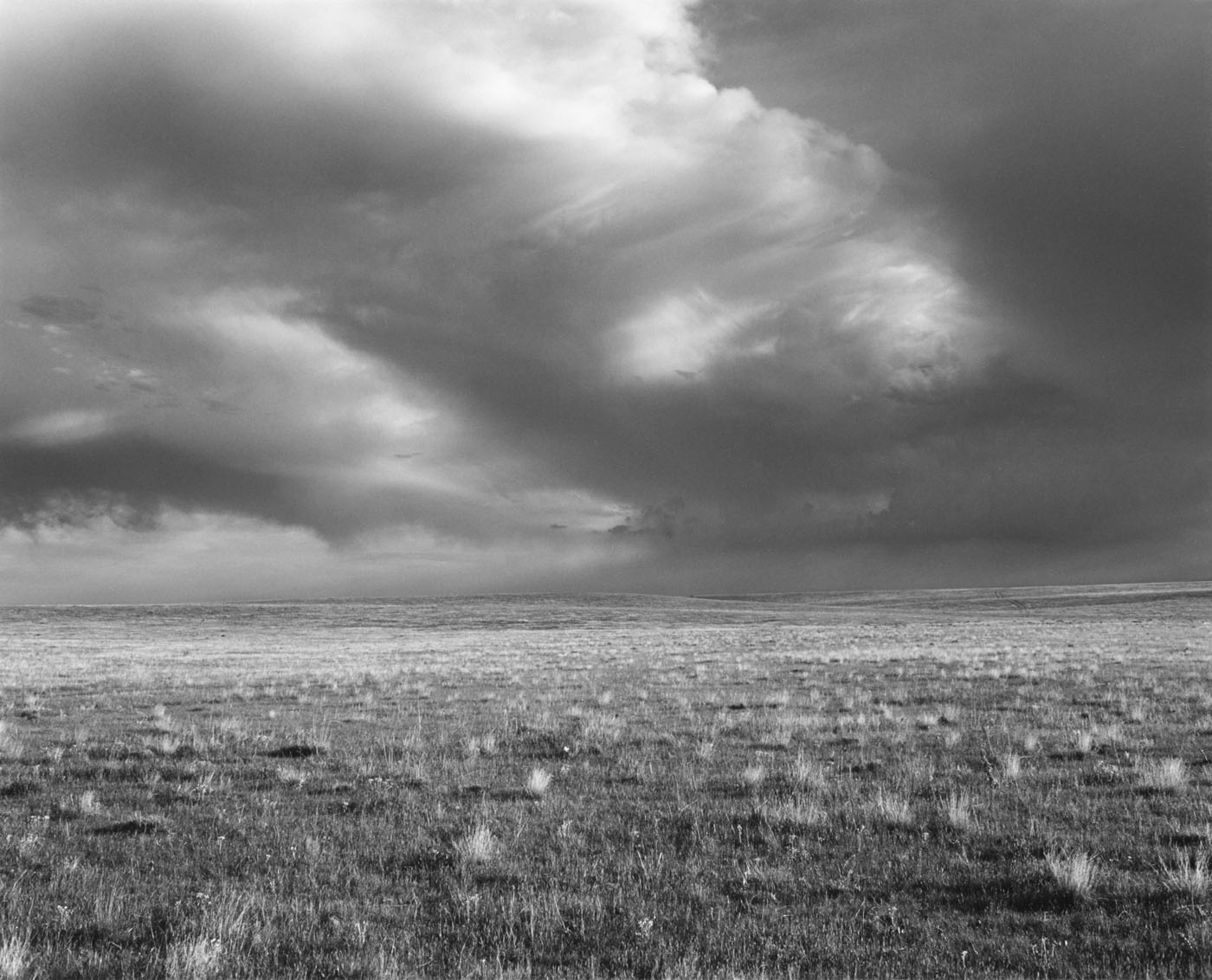
Robert Adams (American, b. 1937)
Weld County, Colorado
1984
Gelatin silver print
Image: 38.1 x 47.3cm (15 x 18 5/8 in.)
National Gallery of Art, Washington, Gift of Robert and Kerstin Adams
© Robert Adams, Courtesy Fraenkel Gallery, San Francisco
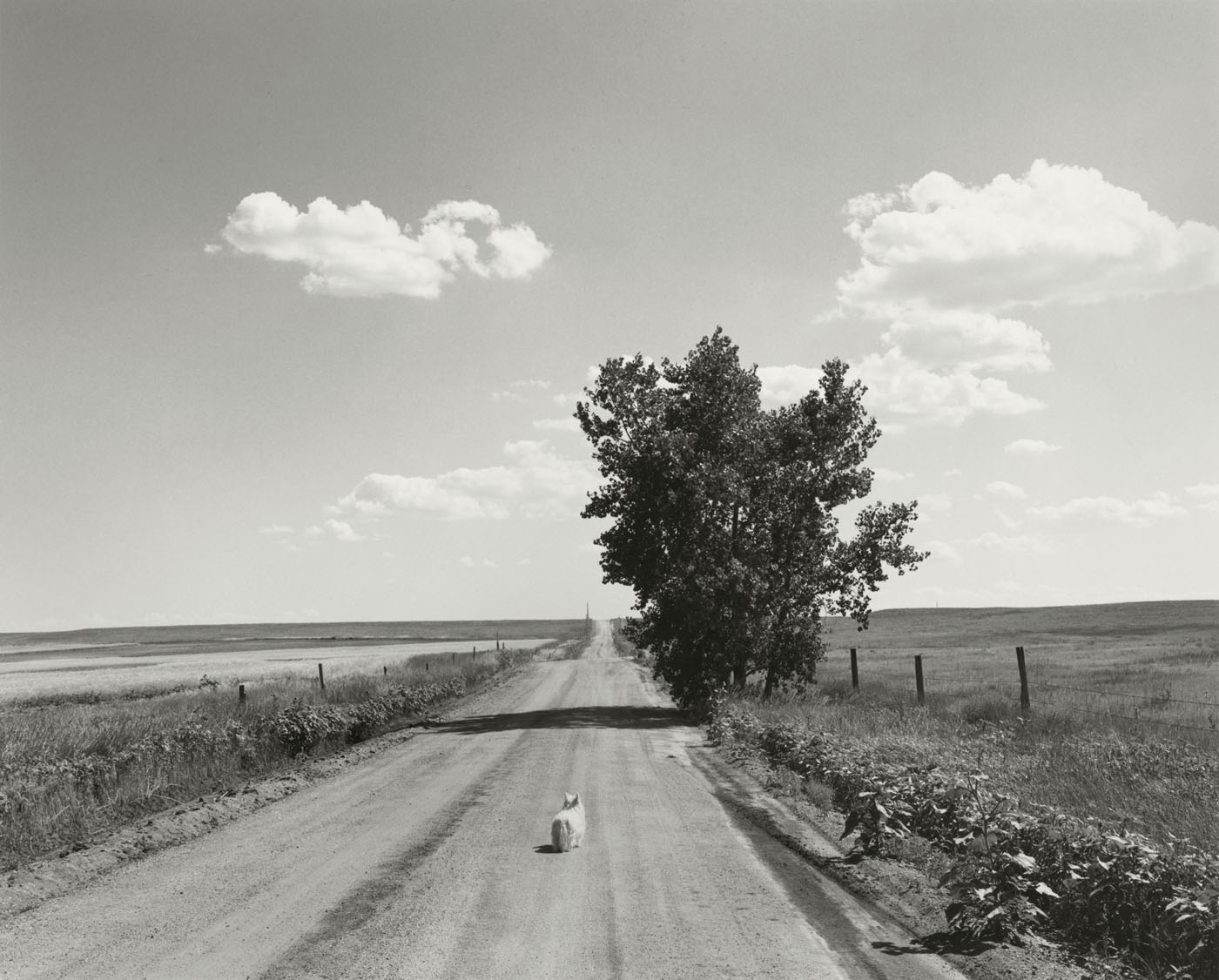
Robert Adams (American, b. 1937)
Sally, Weld County, Colorado
1984, printed 1990
Gelatin silver print
Image: 22.7 x 28.2cm (8 15/16 x 11 1/8 in.)
National Gallery of Art, Washington, Gift of Mary and David Robinson
© Robert Adams, Courtesy Fraenkel Gallery, San Francisco
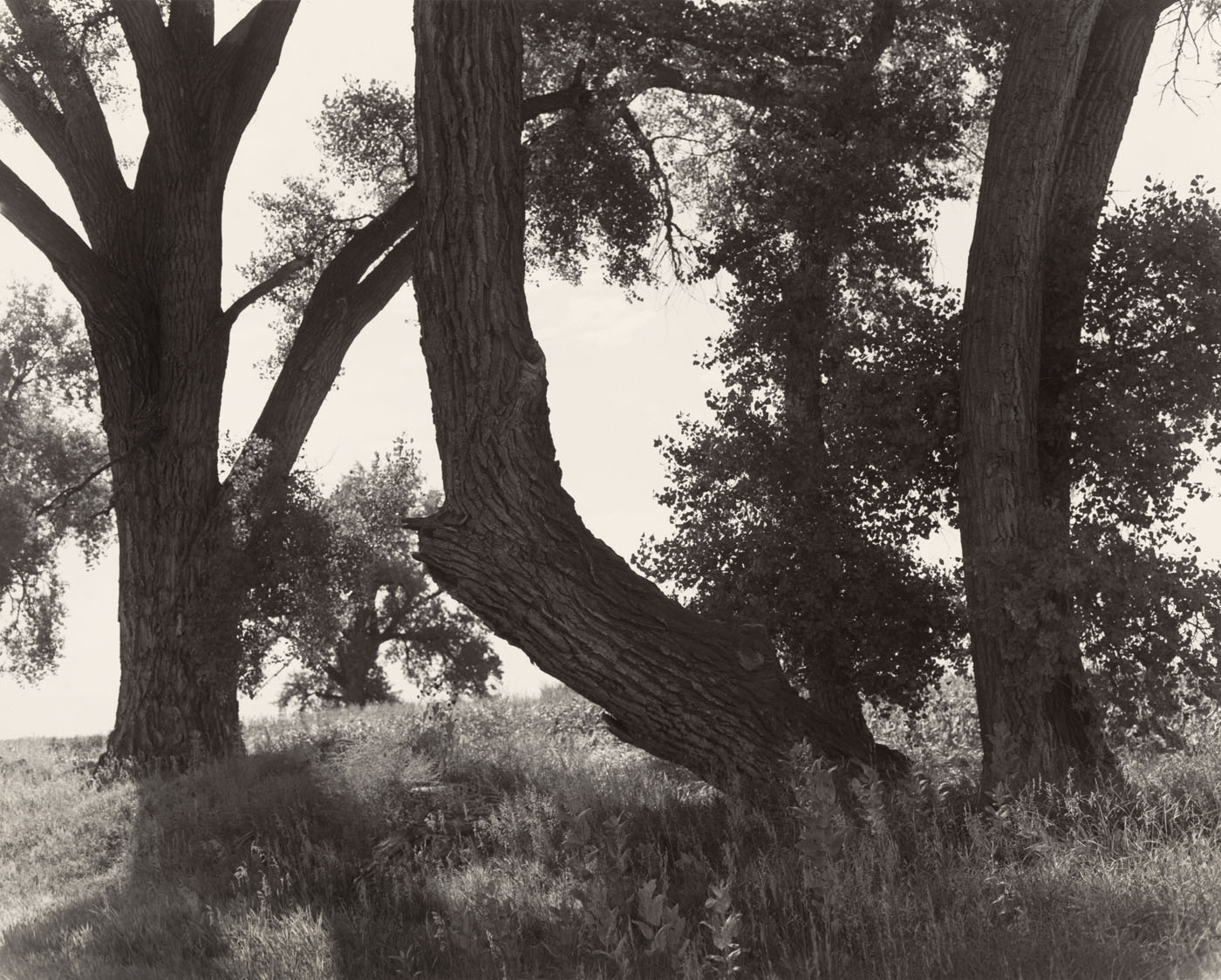
Robert Adams (American, b. 1937)
Weld County, Colorado
1992
Gelatin silver print
Image: 37 x 46cm (14 9/16 x 18 1/8 in.)
National Gallery of Art, Washington, Pepita Milmore Memorial Fund and Gift of Robert and Kerstin Adams
© Robert Adams, Courtesy Fraenkel Gallery, San Francisco
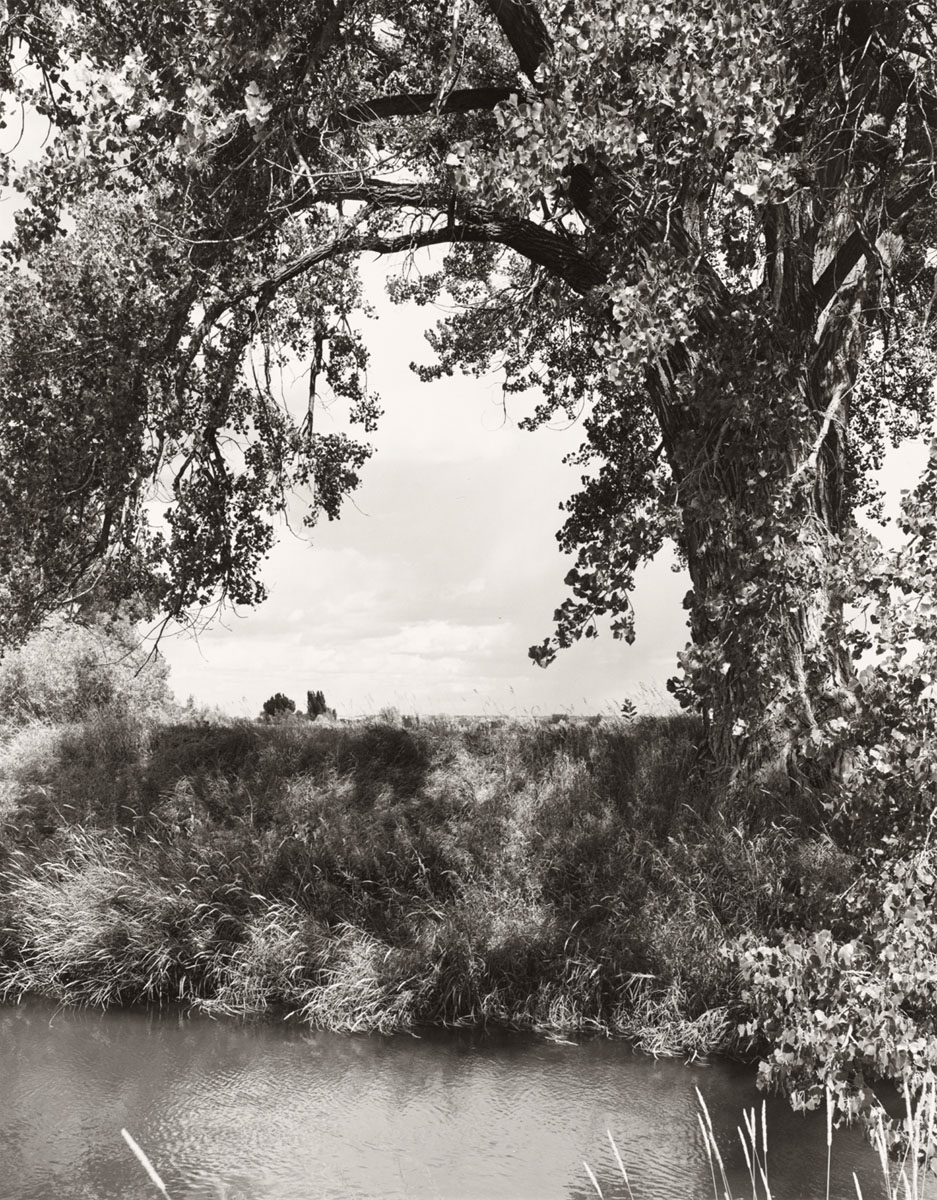
Robert Adams (American, b. 1937)
Irrigation Canal, Larimer County, Colorado
1995
Gelatin silver print
Image: 29 x 22.8cm (11 7/16 x 9 in.)
National Gallery of Art, Washington, Pepita Milmore Memorial Fund and Gift of Robert and Kerstin Adams
© Robert Adams, Courtesy Fraenkel Gallery, San Francisco
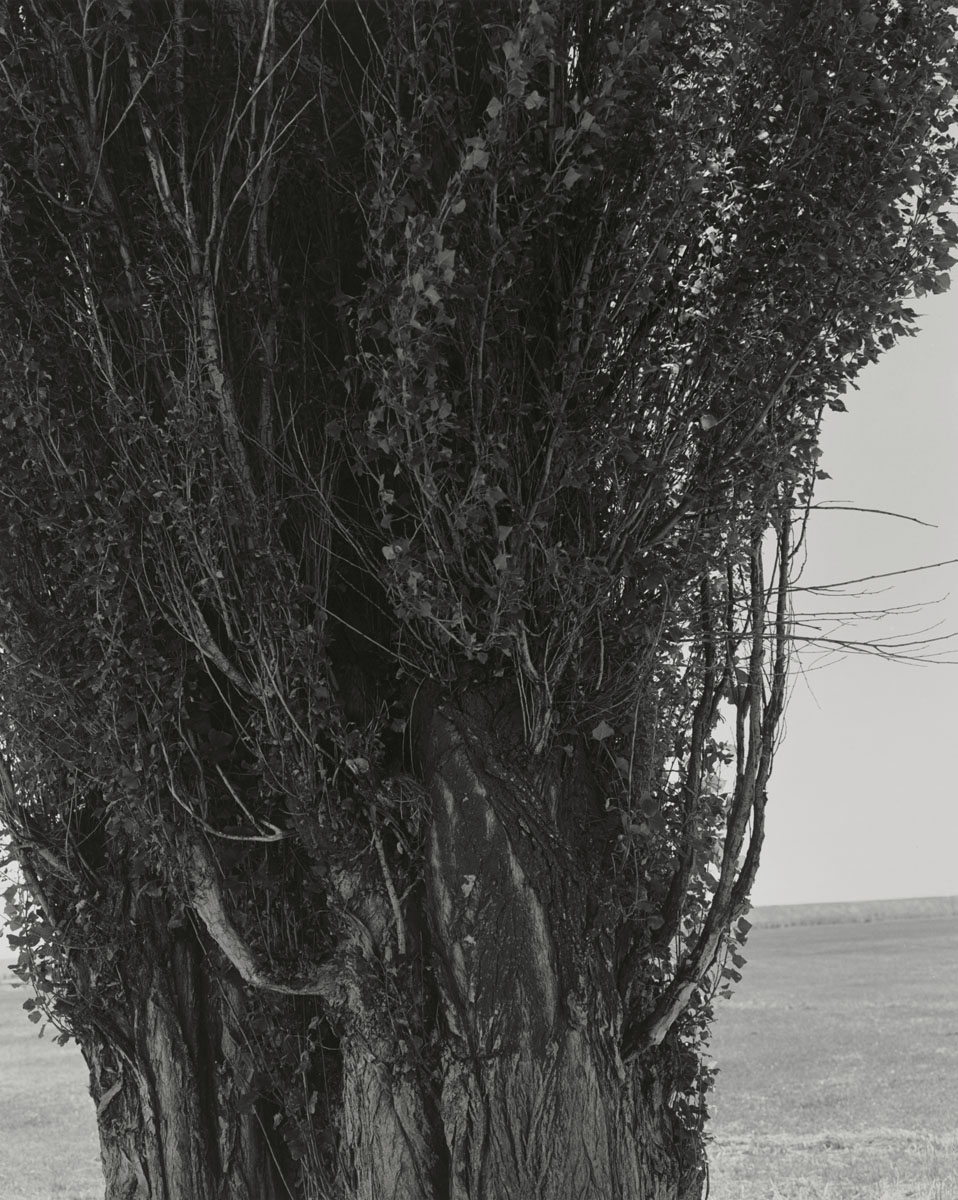
Robert Adams (American, b. 1937)
Poplars, Harney County, Oregon
1999
Photogravure
Image: 50.5 x 40cm (19 7/8 x 15 3/4 in.)
National Gallery of Art, Washington, Linda Hackett and Russell Munson Fund and Alfred H. Moses and Fern M. Schad Fund
© Robert Adams, Courtesy Fraenkel Gallery, San Francisco
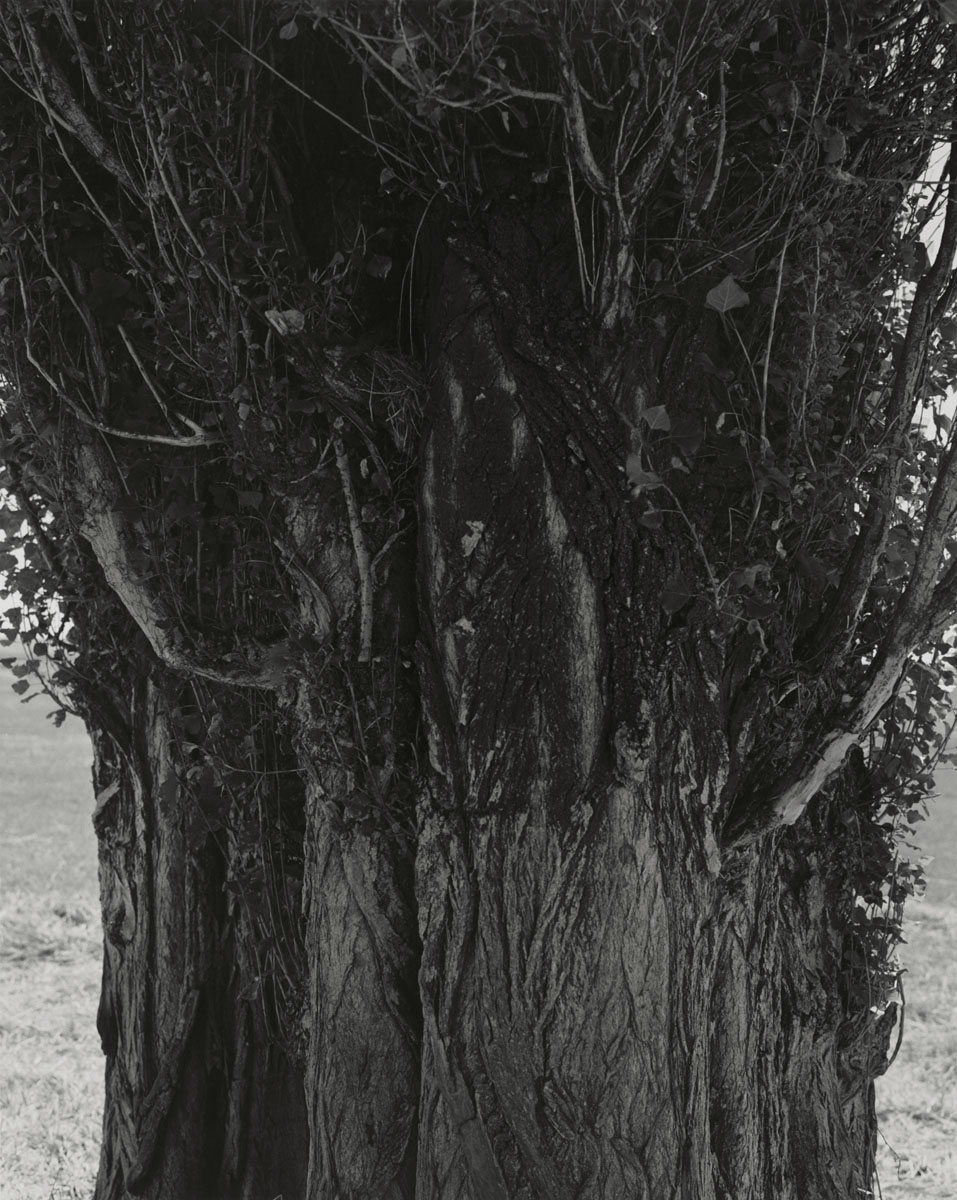
Robert Adams (American, b. 1937)
Poplars, Harney County, Oregon
1999
Photogravure
Image: 49.3 x 40cm (19 7/16 x 15 3/4 in.)
National Gallery of Art, Washington, Linda Hackett and Russell Munson Fund and Alfred H. Moses and Fern M. Schad Fund
© Robert Adams, Courtesy Fraenkel Gallery, San Francisco
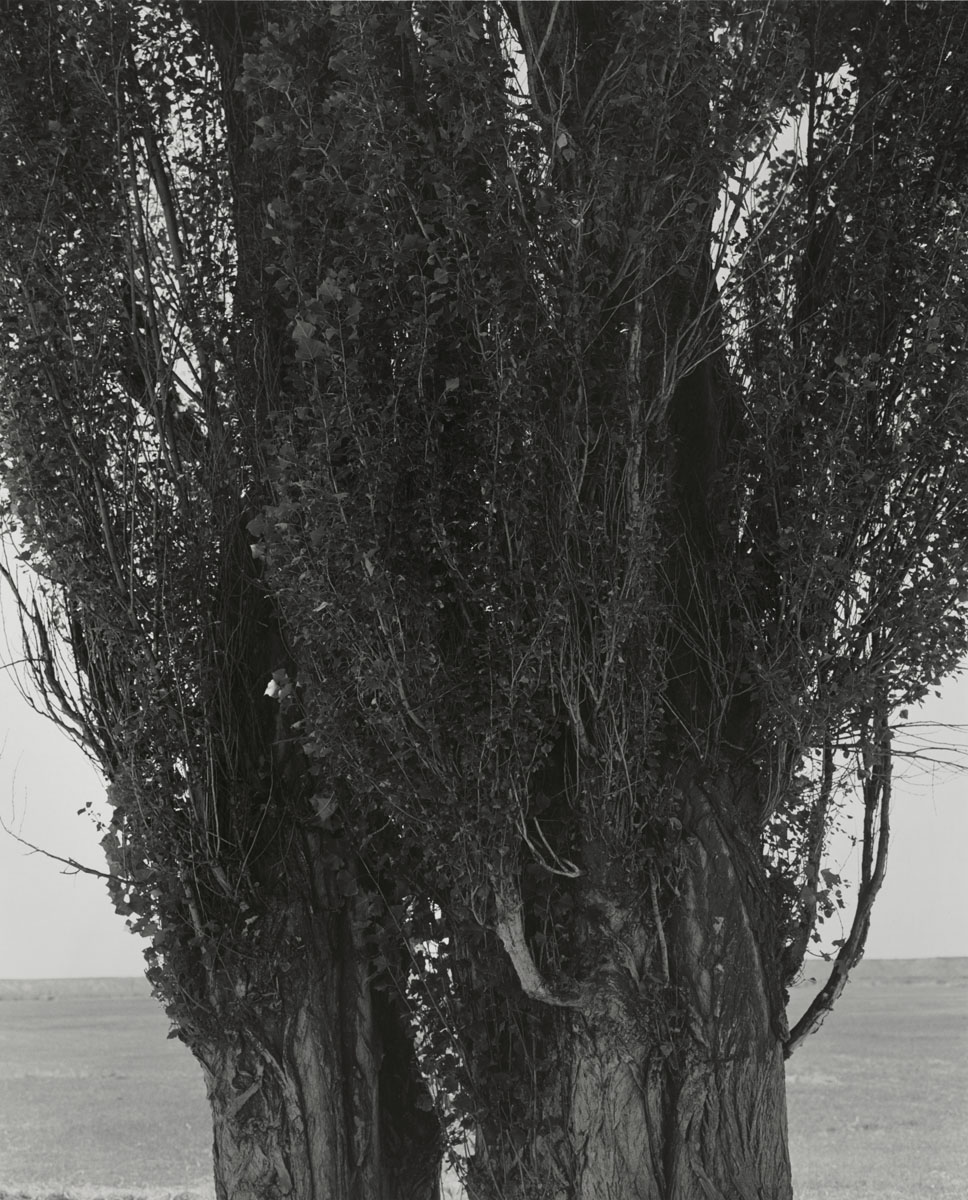
Robert Adams (American, b. 1937)
Poplars, Harney County, Oregon
1999
Photogravure
Image: 50.5 x 40cm (19 7/8 x 15 3/4 in.)
National Gallery of Art, Washington, Linda Hackett and Russell Munson Fund and Alfred H. Moses and Fern M. Schad Fund
© Robert Adams, Courtesy Fraenkel Gallery, San Francisco
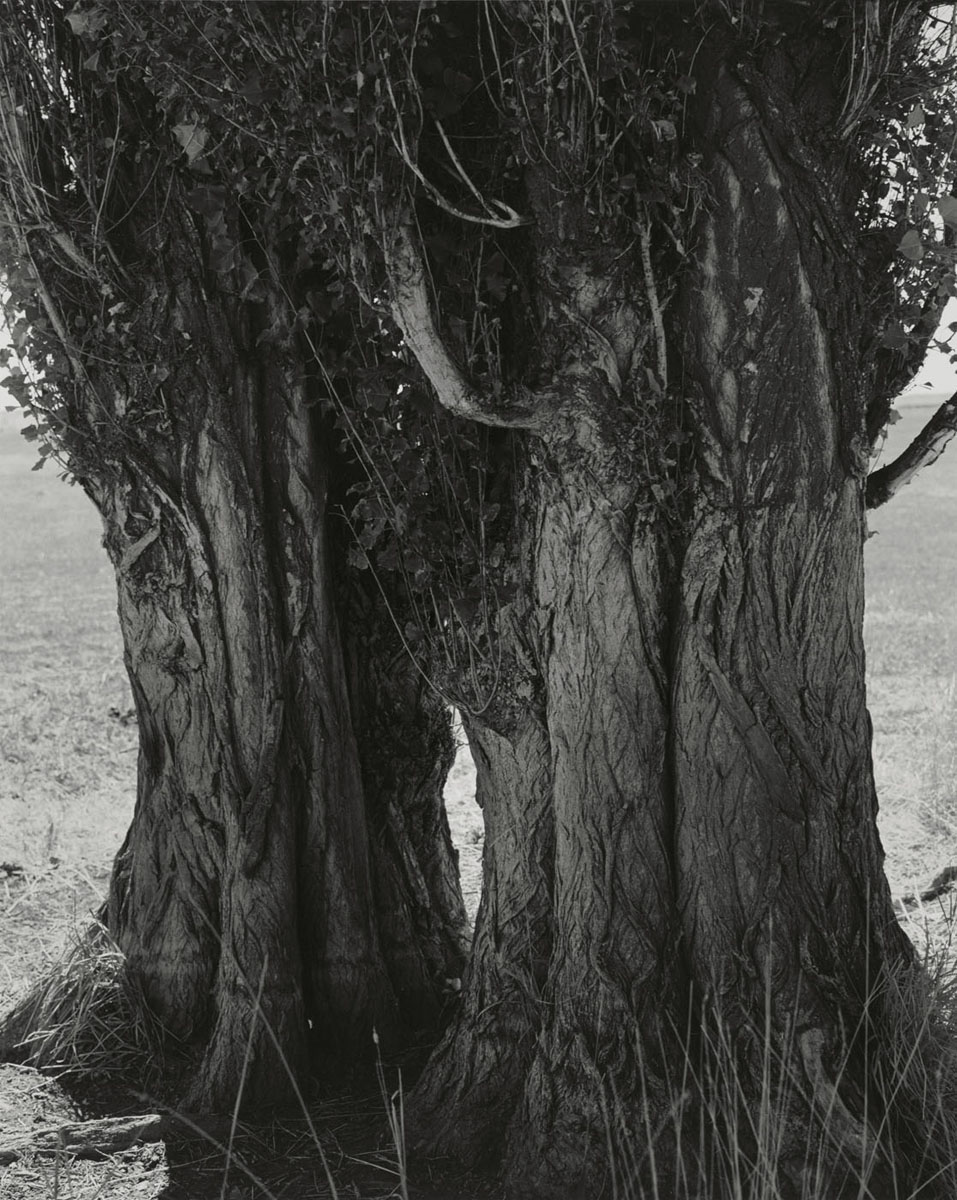
Robert Adams (American, b. 1937)
Poplars, Harney County, Oregon
1999
Photogravure
Image: 50 x 40cm (19 11/16 x 15 3/4 in.)
National Gallery of Art, Washington, Linda Hackett and Russell Munson Fund and Alfred H. Moses and Fern M. Schad Fund
© Robert Adams, Courtesy Fraenkel Gallery, San Francisco
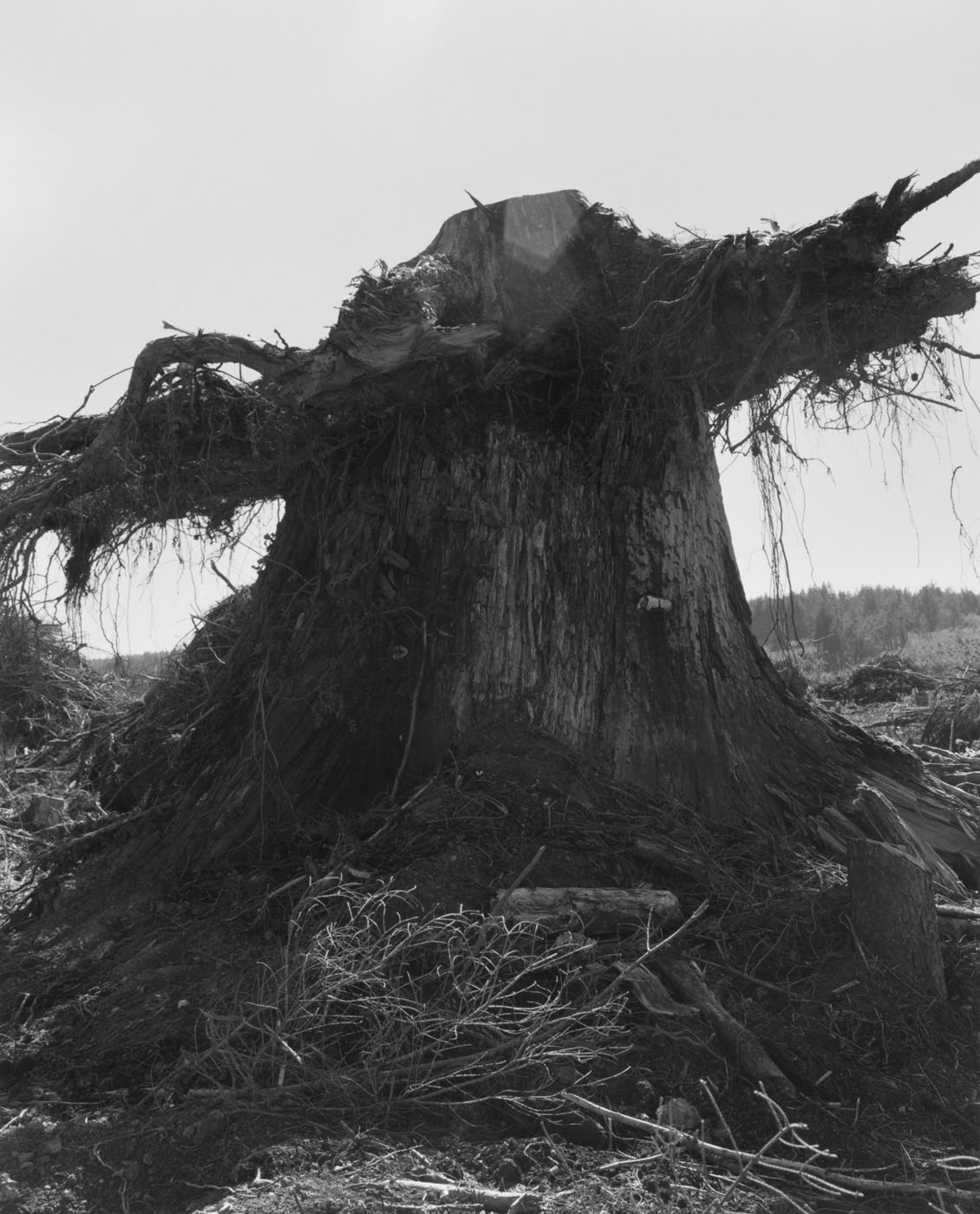
Robert Adams (American, b. 1937)
Clearcut, Coos County, Oregon
1999
Gelatin silver print
Image: 28.2 x 22.7cm (11 1/8 x 8 15/16 in.)
National Gallery of Art, Washington, Pepita Milmore Memorial Fund and Gift of Robert and Kerstin Adams
© Robert Adams, Courtesy Fraenkel Gallery, San Francisco
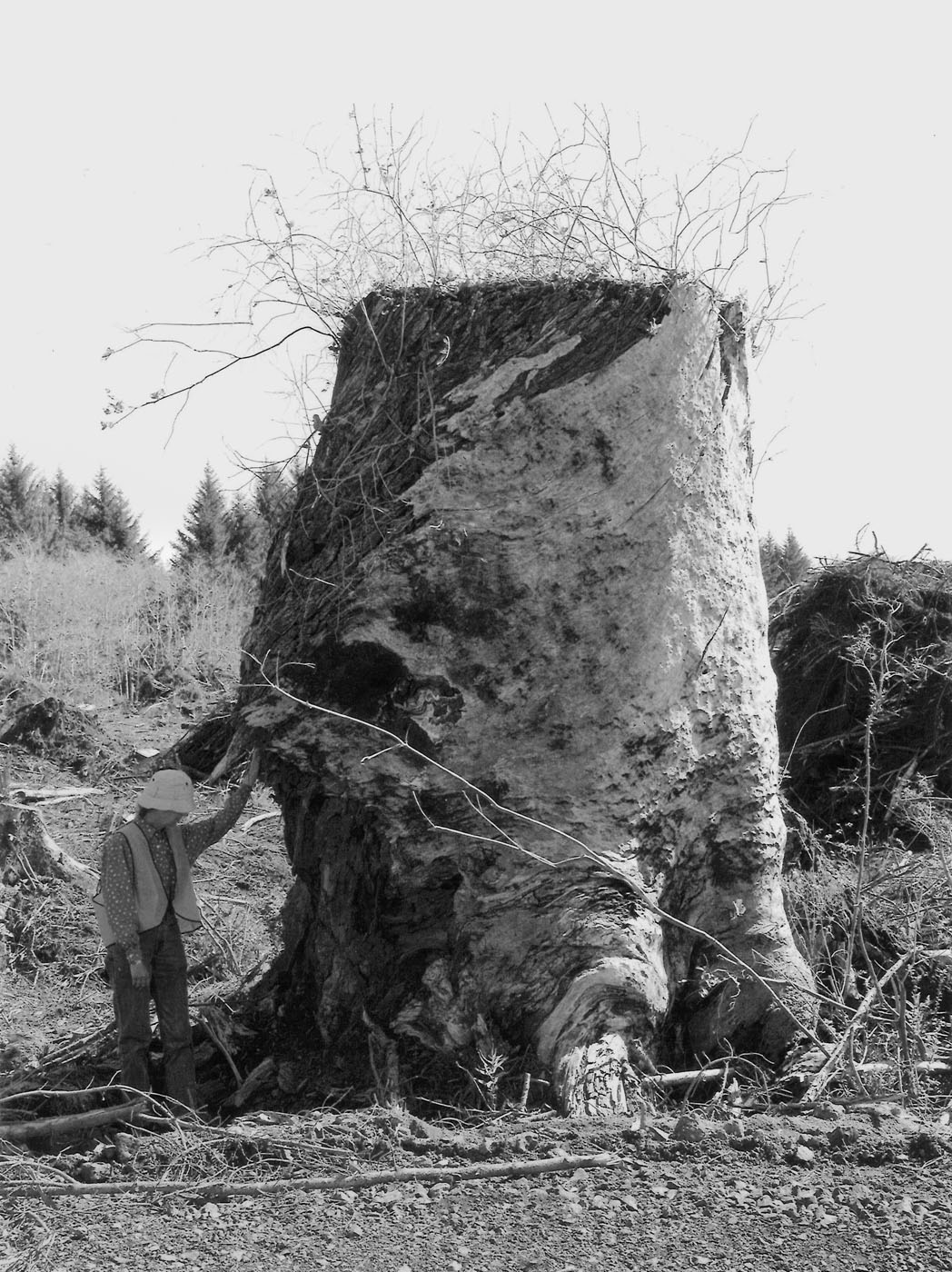
Robert Adams (American, b. 1937)
Kerstin next to an Old-Growth Stump, Coos County, Oregon
1999
Gelatin silver print
Image: 27.9 x 22.9cm (11 x 9 in.)
San Francisco Museum of Modern Art, Gift of Daniel Greenberg and Susan Steinhauser
© Robert Adams, Courtesy Fraenkel Gallery, San Francisco
Photograph: Don Ross
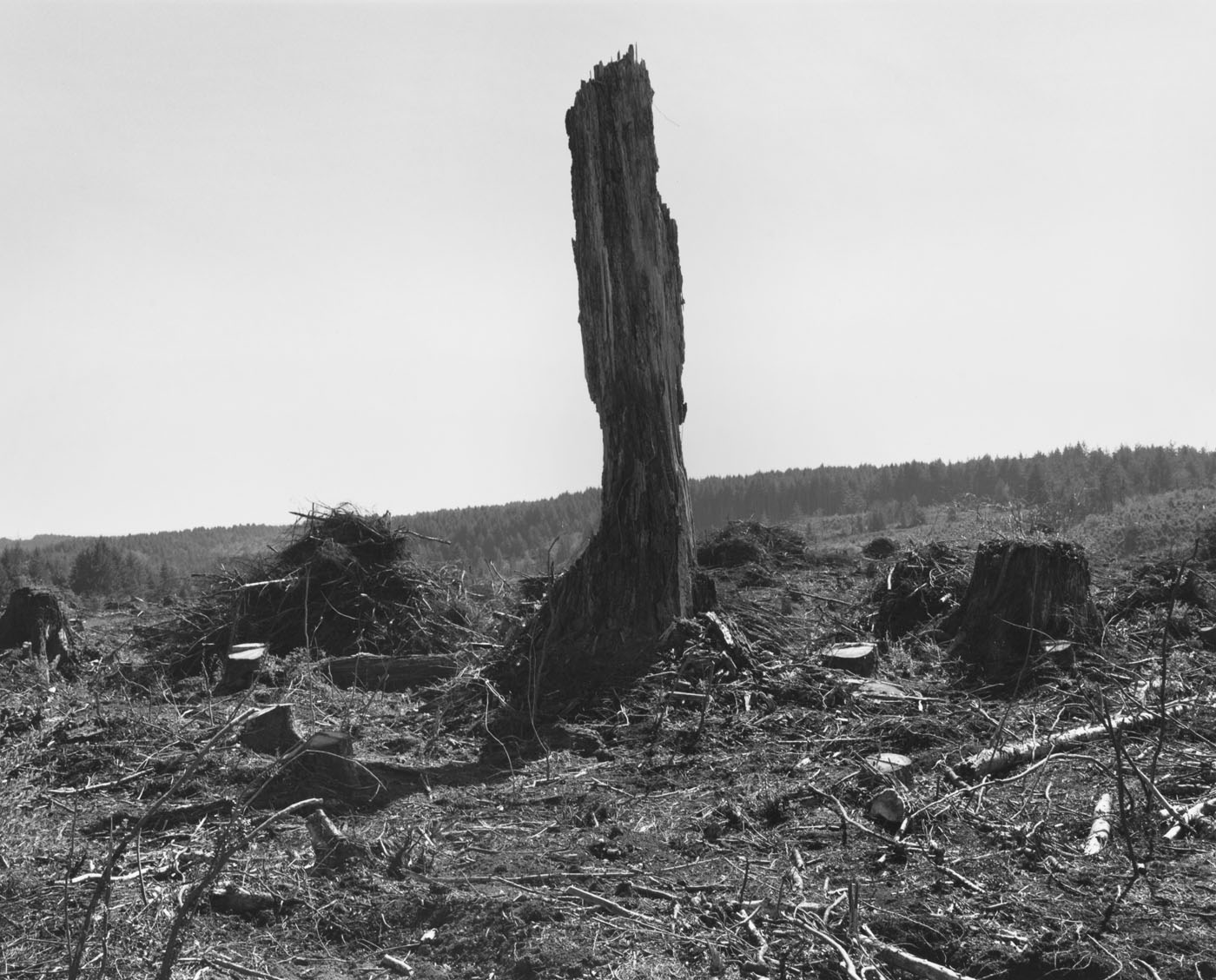
Robert Adams (American, b. 1937)
Clearcut, Coos County, Oregon
1999
Gelatin silver print
Image: 22.7 x 28.2cm (8 15/16 x 11 1/8 in.)
National Gallery of Art, Washington, Pepita Milmore Memorial Fund and Gift of Robert and Kerstin Adams
© Robert Adams, Courtesy Fraenkel Gallery, San Francisco
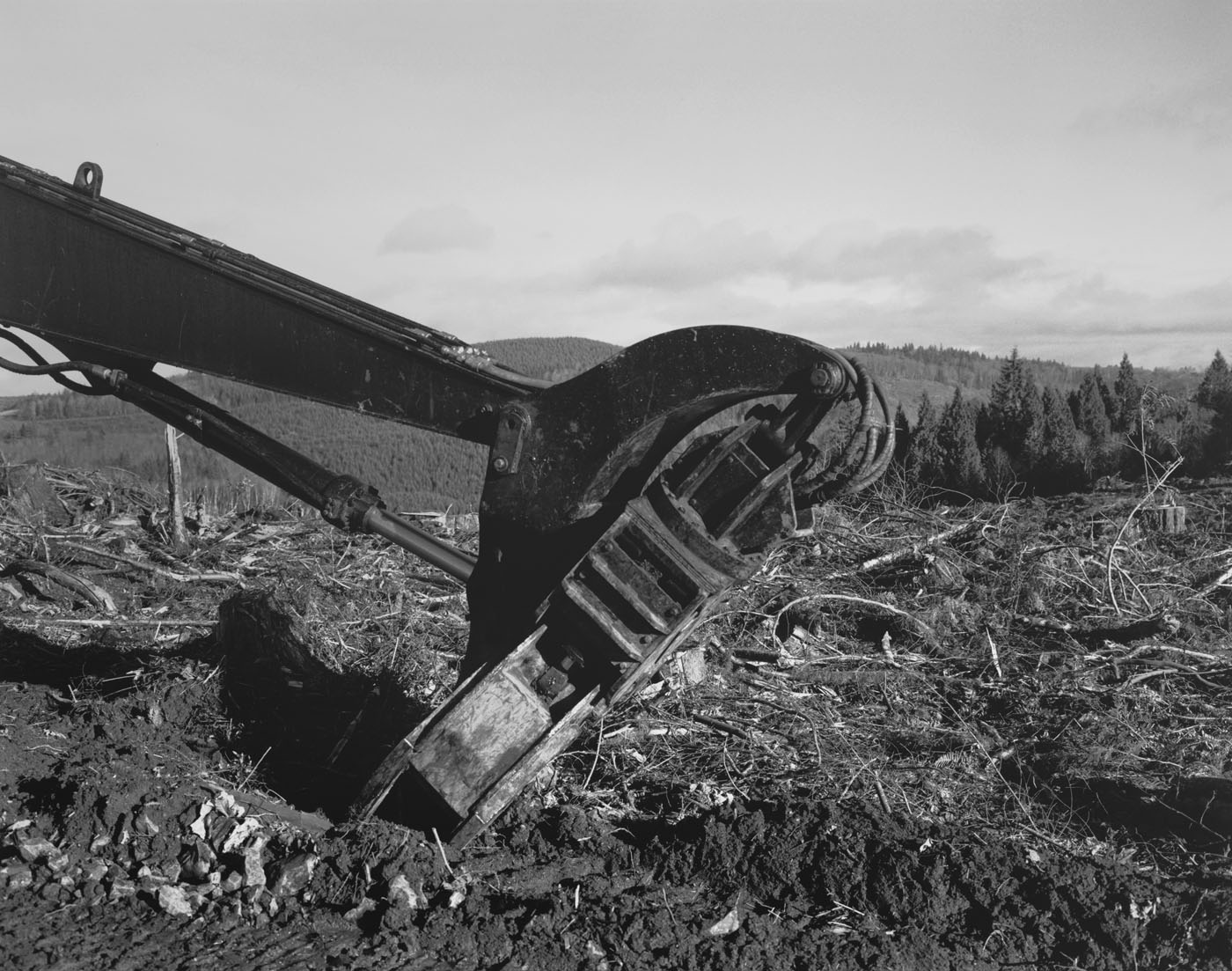
Robert Adams (American, b. 1937)
Columbia County, Oregon
1999-2001
Gelatin silver print
Image: 31.3 x 39.7cm (12 5/16 x 15 5/8 in.)
San Francisco Museum of Modern Art, Purchase through a gift of an anonymous donor
© Robert Adams, Courtesy Fraenkel Gallery, San Francisco
Photograph: Don Ross
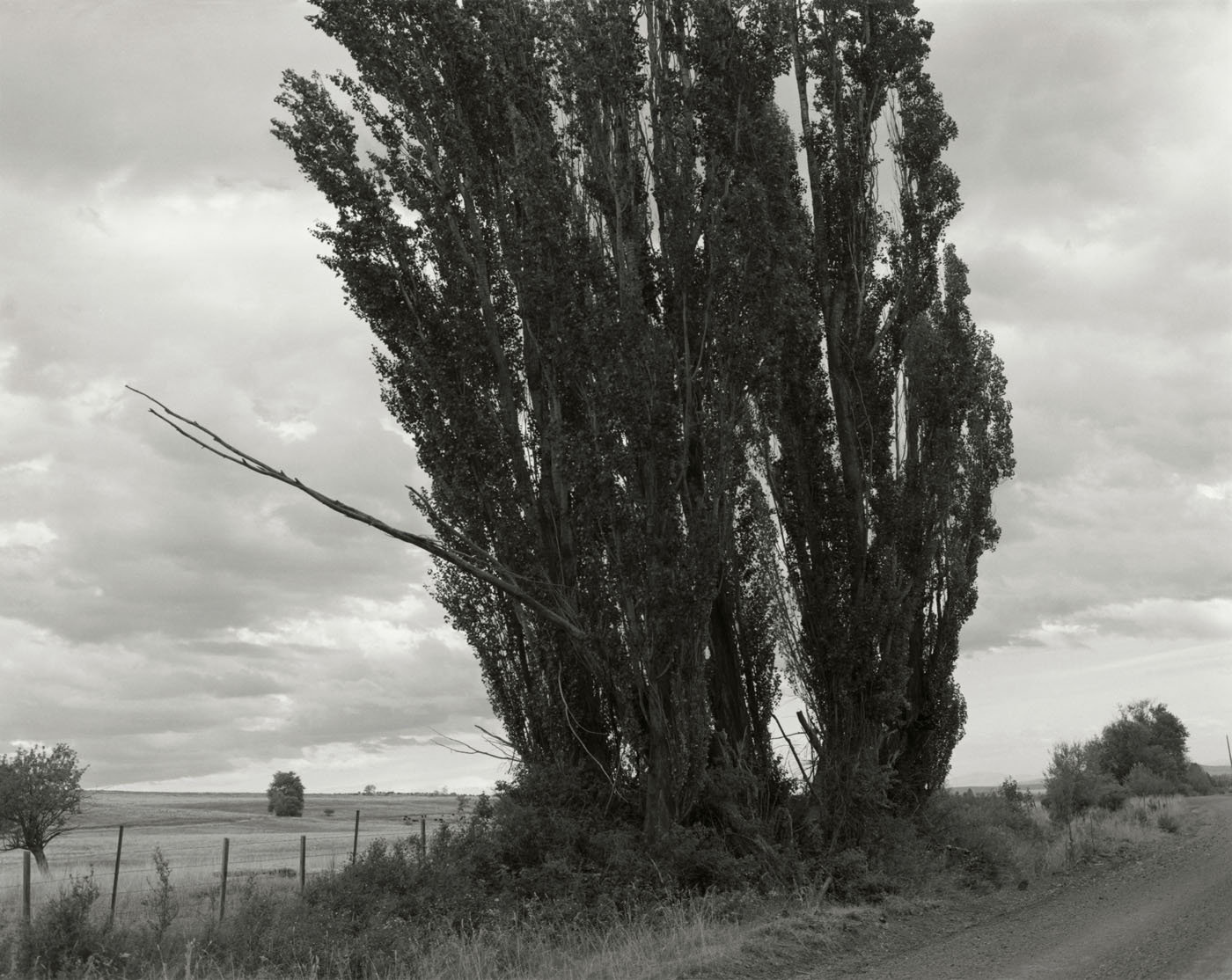
Robert Adams (American, b. 1937)
Baker County, Oregon
2000
Gelatin silver print
Image: 20.6 x 26.1cm (8 1/8 x 10 1/4 in.)
National Gallery of Art, Washington, Gift of Robert and Kerstin Adams
© Robert Adams, Courtesy Fraenkel Gallery, San Francisco
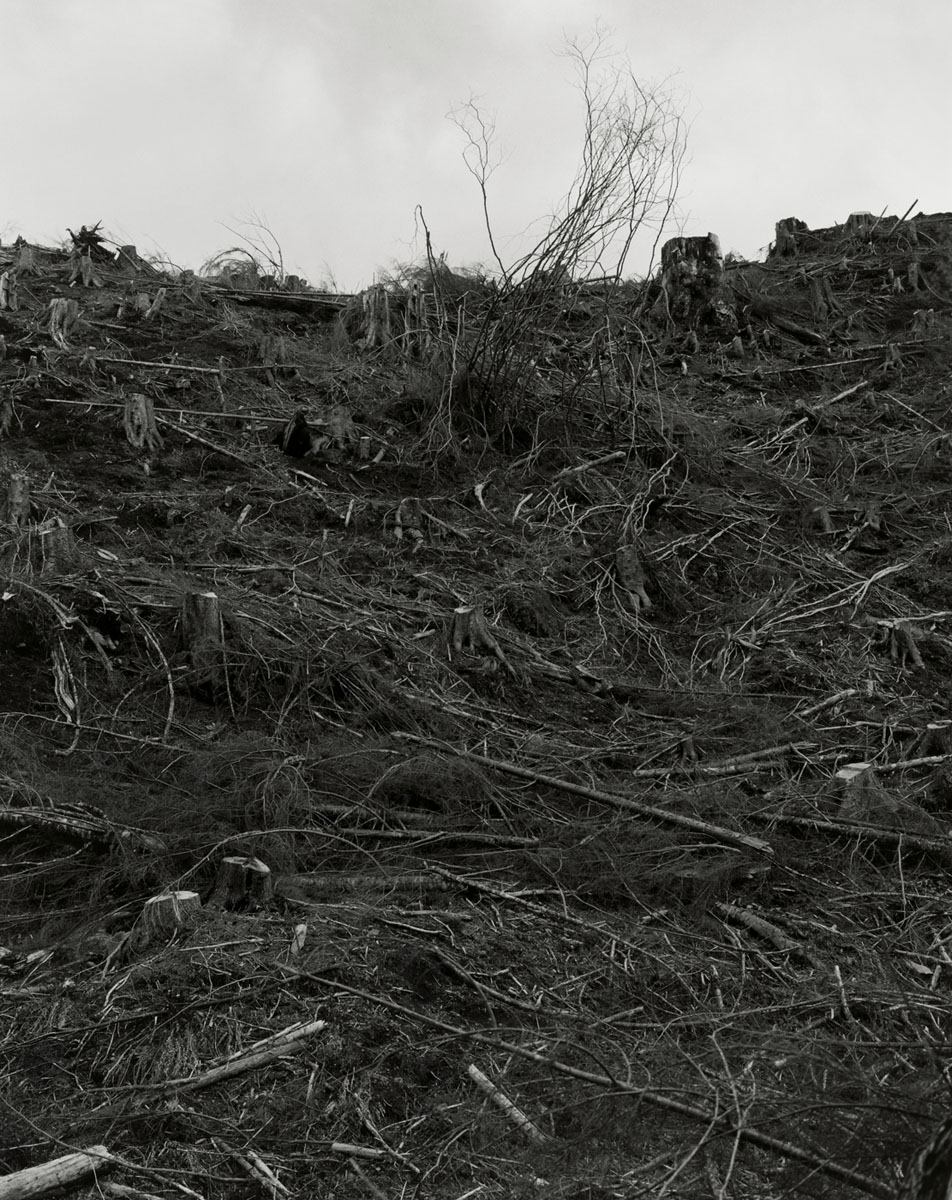
Robert Adams (American, b. 1937)
Clearcut, Coos County, Oregon
c. 2000
Gelatin silver print
Image: 39.4 x 31.3cm (15 1/2 x 12 5/16 in.)
San Francisco Museum of Modern Art, Gift of Daniel Greenberg and Susan Steinhauser
© Robert Adams, Courtesy Fraenkel Gallery, San Francisco
Photograph: Don Ross
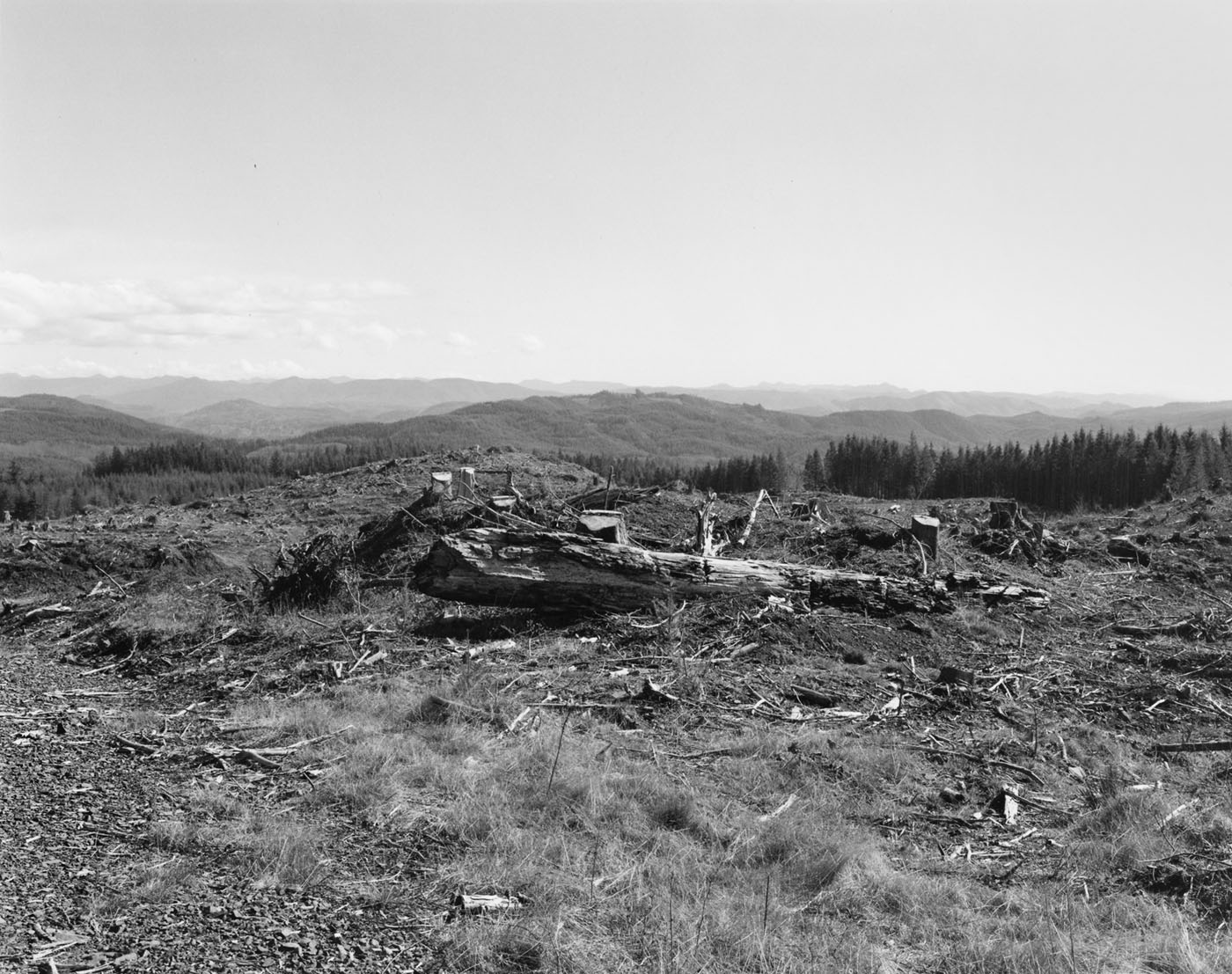
Robert Adams (American, b. 1937)
Clearcut, Clatsop County, Oregon
c. 2000
Gelatin silver print
Image: 22.8 x 28.6cm (9 x 11 1/4 in.)
National Gallery of Art, Washington, Gift of Robert and Kerstin Adams
© Robert Adams, Courtesy Fraenkel Gallery, San Francisco
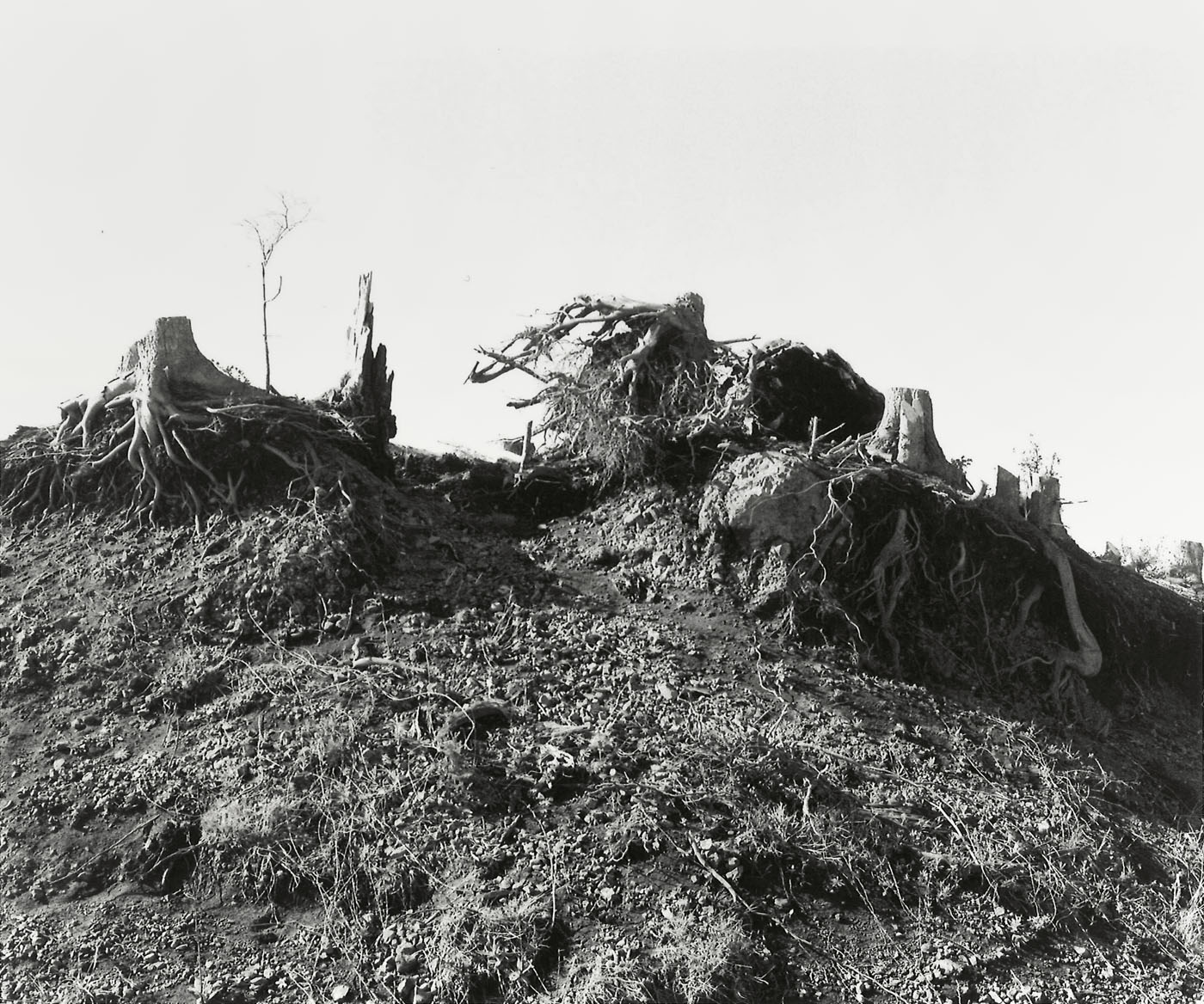
Robert Adams (American, b. 1937)
Clearcut, Clatsop County, Oregon
c. 2000
Gelatin silver print
Image: 22.5 x 28.6cm (8 7/8 x 11 1/4 in.)
San Francisco Museum of Modern Art, Purchase through a gift of an anonymous donor
© Robert Adams, Courtesy Fraenkel Gallery, San Francisco
Photograph: Don Ross
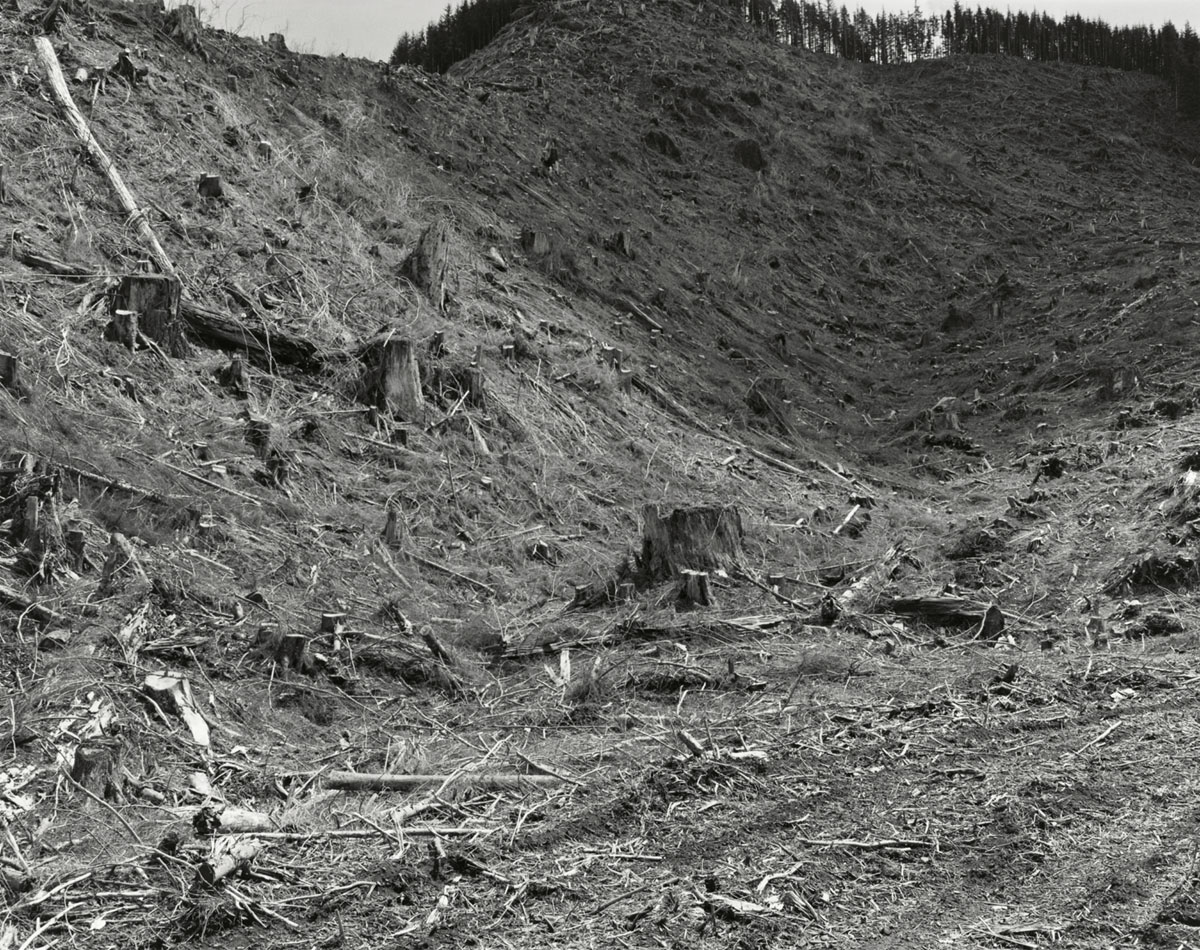
Robert Adams (American, b. 1937)
Clearcut, Clatsop County, Oregon
2001
Gelatin silver print
Image: 22.8 x 28.9cm (9 x 11 3/8 in.)
National Gallery of Art, Washington, Pepita Milmore Memorial Fund and Gift of Robert and Kerstin Adams
© Robert Adams, Courtesy Fraenkel Gallery, San Francisco
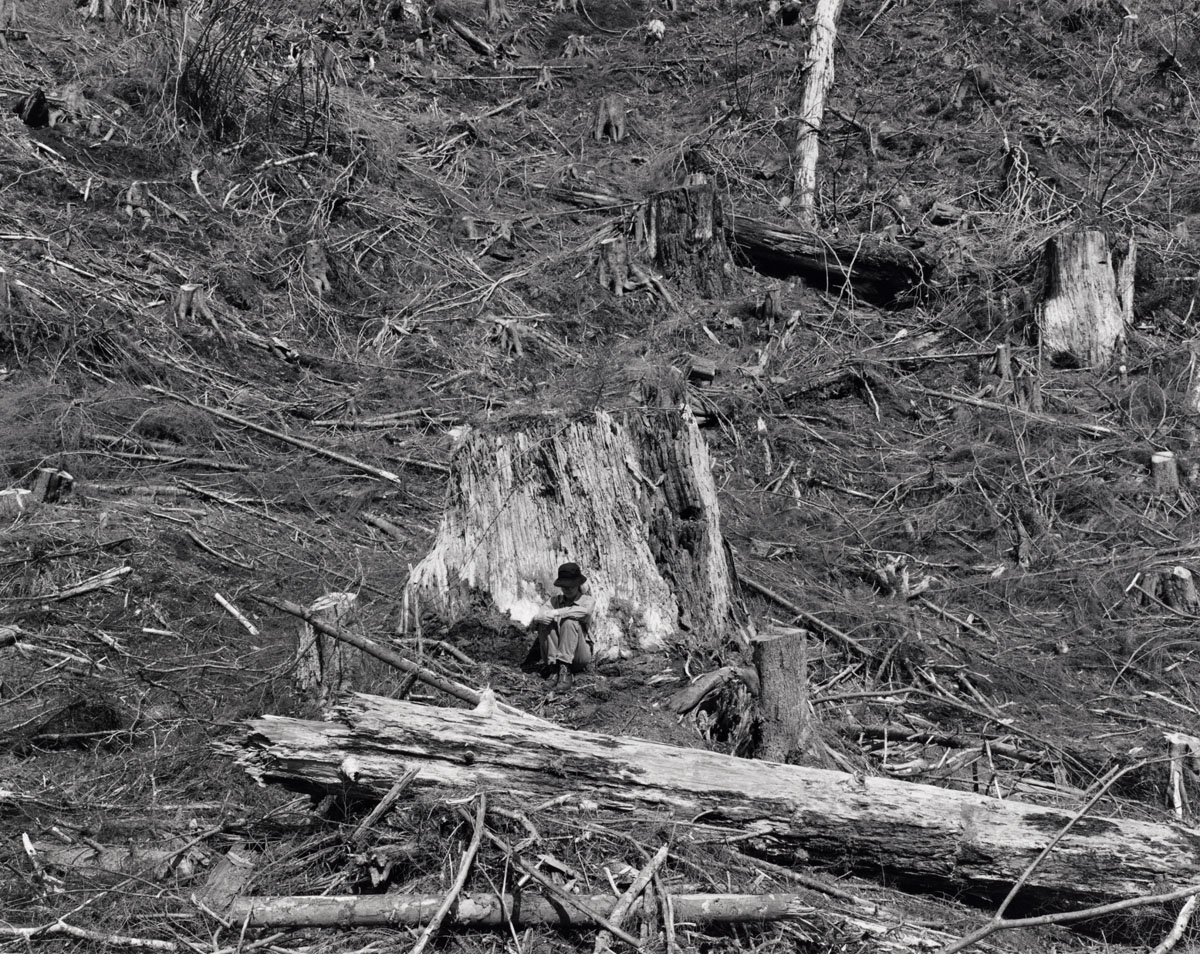
Robert Adams (American, b. 1937)
Kerstin, Old-Growth Stump, the Last Evidence of the Original Forest, Clatsop County, Oregon
c. 2001
Gelatin silver print
Image: 22.8 x 28.7cm (9 x 11 5/16 in.)
National Gallery of Art, Washington, Pepita Milmore Memorial Fund and Gift of Robert and Kerstin Adams
© Robert Adams, Courtesy Fraenkel Gallery, San Francisco
These views of the American West evoke a wide range of memories, myths, and regrets associated with America’s final frontier. In the nineteenth century, that frontier began at the Missouri River. Beyond it lay a landscape of natural grandeur and purity, challenging the spirit and promising redemption. At the time the pictures were made, the hand of man had not so much disfigured as domesticated that paradise, leaving its mark of intrusion almost casually, with the assurance of absolute triumph. Adams recorded this intrusion with neither judgment nor irony; the land he shows has simply been changed, reduced, made ordinary. Yet a second look makes it apparent that the hand of man has, after all, its limitations. The simple natural facts imposed upon by civilization still exert a mysterious counterforce: they abide, in a kind of triumph of resignation. That counterforce is present in all of Adams’s images, recognizable as the same silence and stillness that once summoned pioneers into a wilderness, and now summon their descendants to remember.
~ from the book Robert Adams: From the Missouri West
9.5 x 11.5 in, Hardcover
First edition, 46 b&w photographs
Aperture
1980
denver and What We Bought, together with The New West, form a loose trilogy of Robert Adams’s work exploring the rapidly developing landscape of the Denver metropolitan area from 1968 through 1974. In the former two books, Adams created a comprehensive document that was resolute in its avoidance of romantic notions of the American West and dispassionately honest about man’s despoliation of the land. Both books demonstrate the artist at the height of his powers as a documentary photographer and a poetic sequencer of images.
The photographs featured in denver and What We Bought show tract housing with mountain ranges in the distance, trailer lots devoid of people, suburban streets through generic windows, shopping mall interiors, and parking lots: subjects distinctly unspectacular, familiar, and banal. Adams’s compositions are straightforward and democratic, and it is this precise turn from sentimentality that has made Adams one of the most influential figures in the history of American photography.
~ the publisher
8 x 9.25 in., Hardbound
136 pages, 117 tritone illustrations
Yale University Press
2009
Listening to the River is a celebration of anonymous places where we can still find nature’s beauty. Robert Adams first visited these particular locations as a boy, when the West seemed unchanging. Now in his fifties, he returns to them with the affection of a longtime acquaintance. The book records hushed walks when irrelevancies are forgotten, when sunlight makes the fields, hills, and roads new. Adams has chosen twelve poems by William Stafford to accompany the pictures. Both photographer and poet observe a practice of quiet in the out-of-doors, and both discover there a promise.
This is an optimistic book, though not a sentimental one: a number of the photographs record views of the suburban West. “Any tree in the path of development appears to have an uncertain future,” Adams observes. Listening to the River affirms, however, that trees and other elements of nature are ultimately protected. “Part of what their beauty means,” says the photographer, “is that they are safe.”
In 1989 Adams spoke at the Philadelphia Museum of Art about his enjoyment of the landscape, citing as an example his experiences at rural crossroads on the plains: “Sometimes there doesn’t seem to be anything there at all – just two roads, four fields, and sky. Small things, however, can become important – a lark or a mailbox or sunflowers. And if I wait I may see the architecture – the roads and the fields and the sky. Were you and I to drive the prairie together, and the day turned out to be a good one, we might not say much. We might get out of the truck at a crossroads, stretch, walk a little ways, and then walk back. Maybe the lark would sing. Maybe we would stand for a while, all views to the horizon, all roads interesting. We might find there a balance of form and openness, even of community and freedom. It would be the world as we had hoped, and we would recognize it together.”
~ the publisher
10 x 13 in, Hardcover
Featuring poems by William Stafford; 176 plates
Aperture
1994
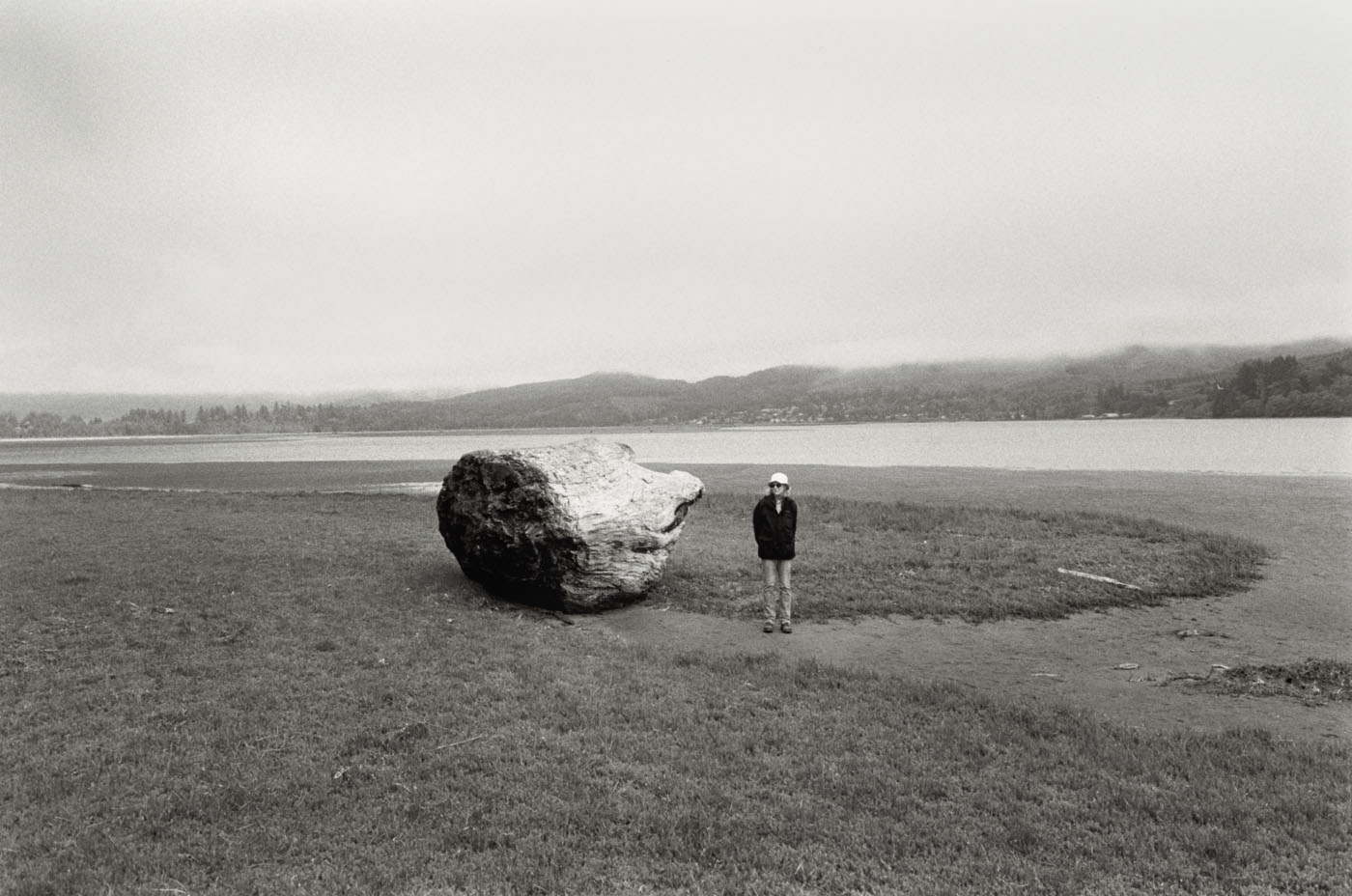
Robert Adams (American, b. 1937)
The River’s Edge
2015
Gelatin silver print
Image: 19.8 x 29.9cm (7 13/16 x 11 3/4 in.)
National Gallery of Art, Washington, Gift of Stephen G. Stein
© Robert Adams, Courtesy Fraenkel Gallery, San Francisco
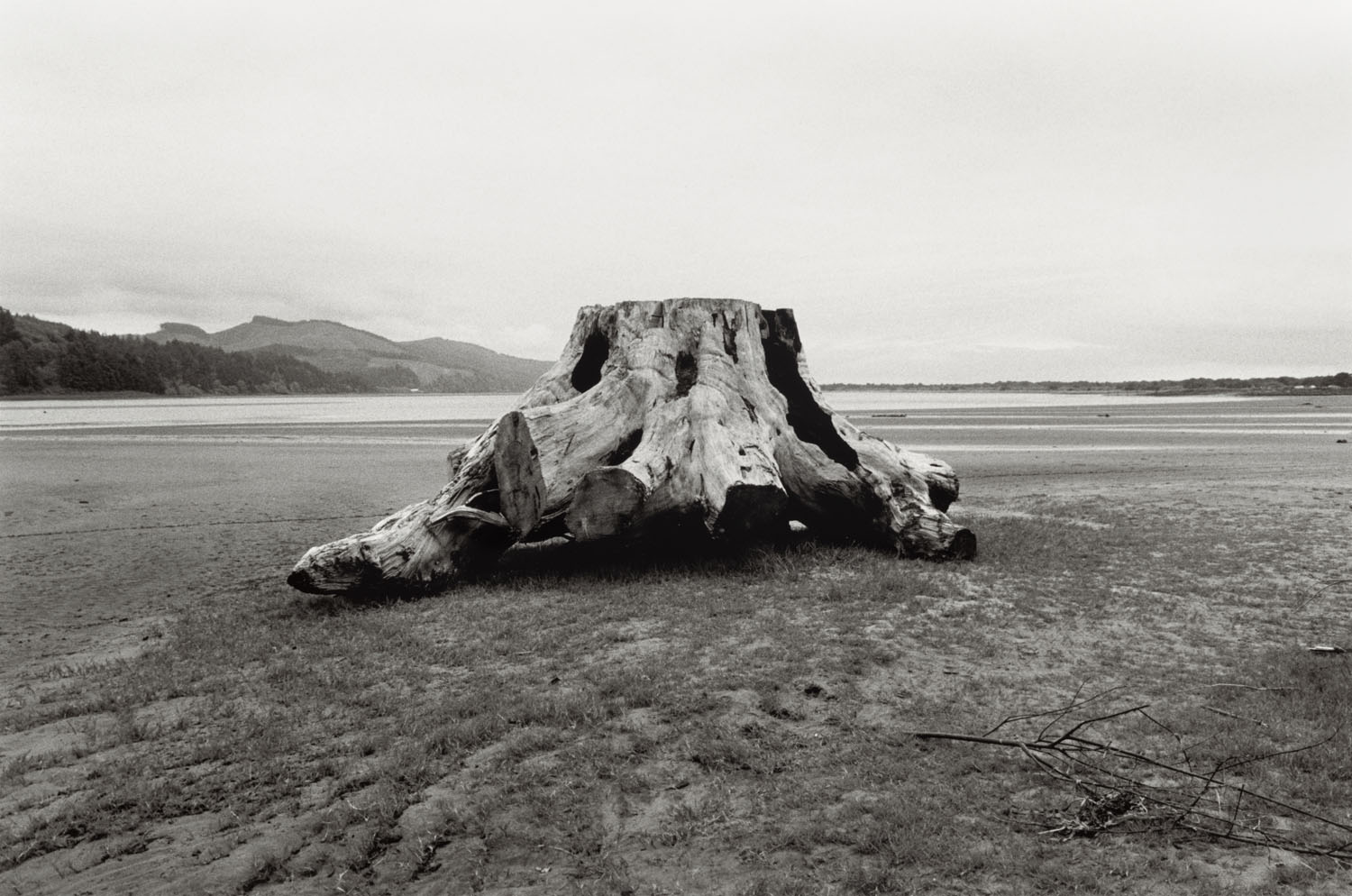
Robert Adams (American, b. 1937)
The River’s Edge
2015
Gelatin silver print
Image: 19.7 x 29.8cm (7 3/4 x 11 3/4 in.)
National Gallery of Art, Washington, Gift of Stephen G. Stein
© Robert Adams, Courtesy Fraenkel Gallery, San Francisco
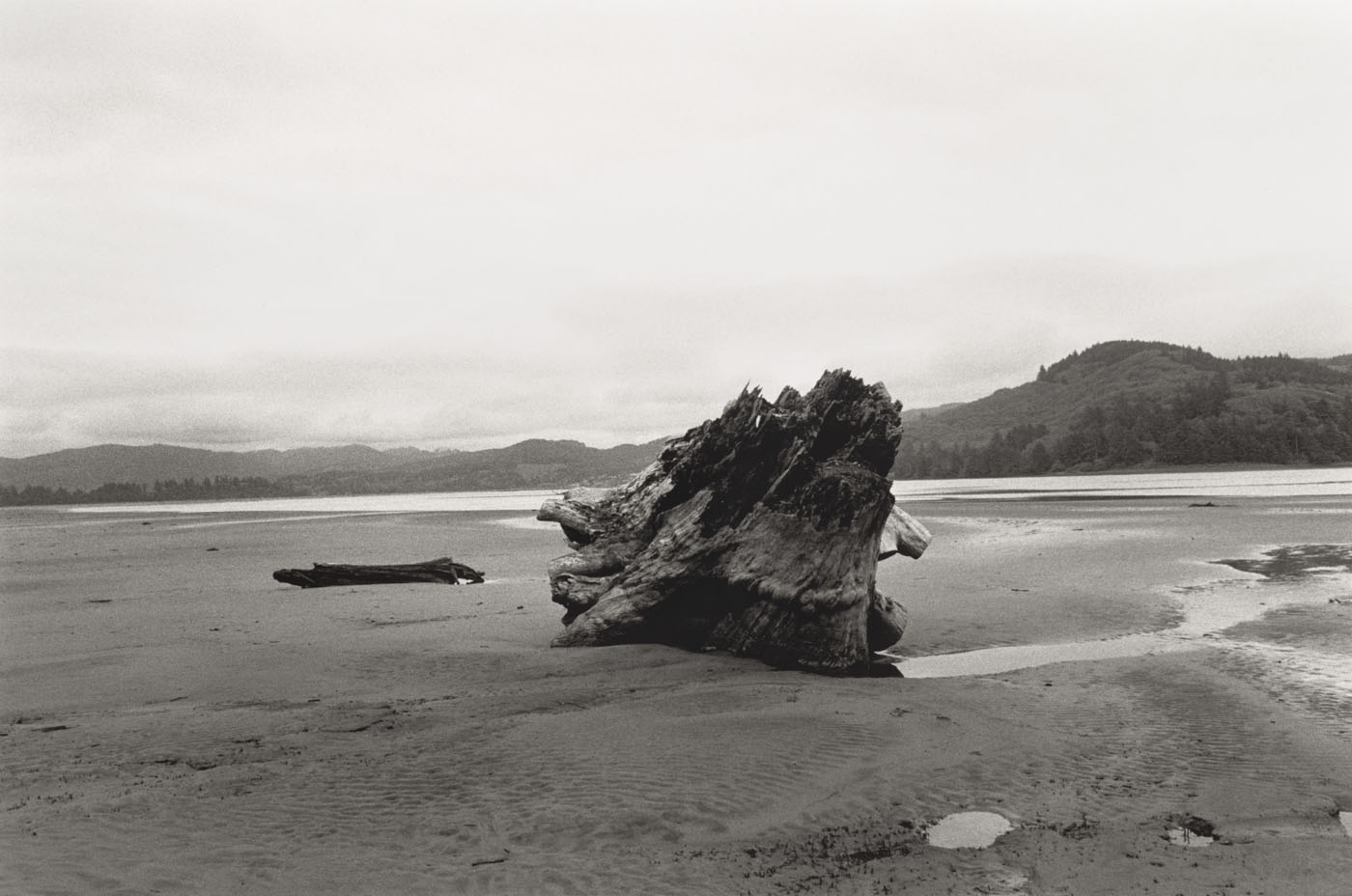
Robert Adams (American, b. 1937)
The River’s Edge
2015
Gelatin silver print
Image: 19.9 x 29.9cm (7 13/16 x 11 3/4 in.)
National Gallery of Art, Washington, Gift of Stephen G. Stein
© Robert Adams, Courtesy Fraenkel Gallery, San Francisco
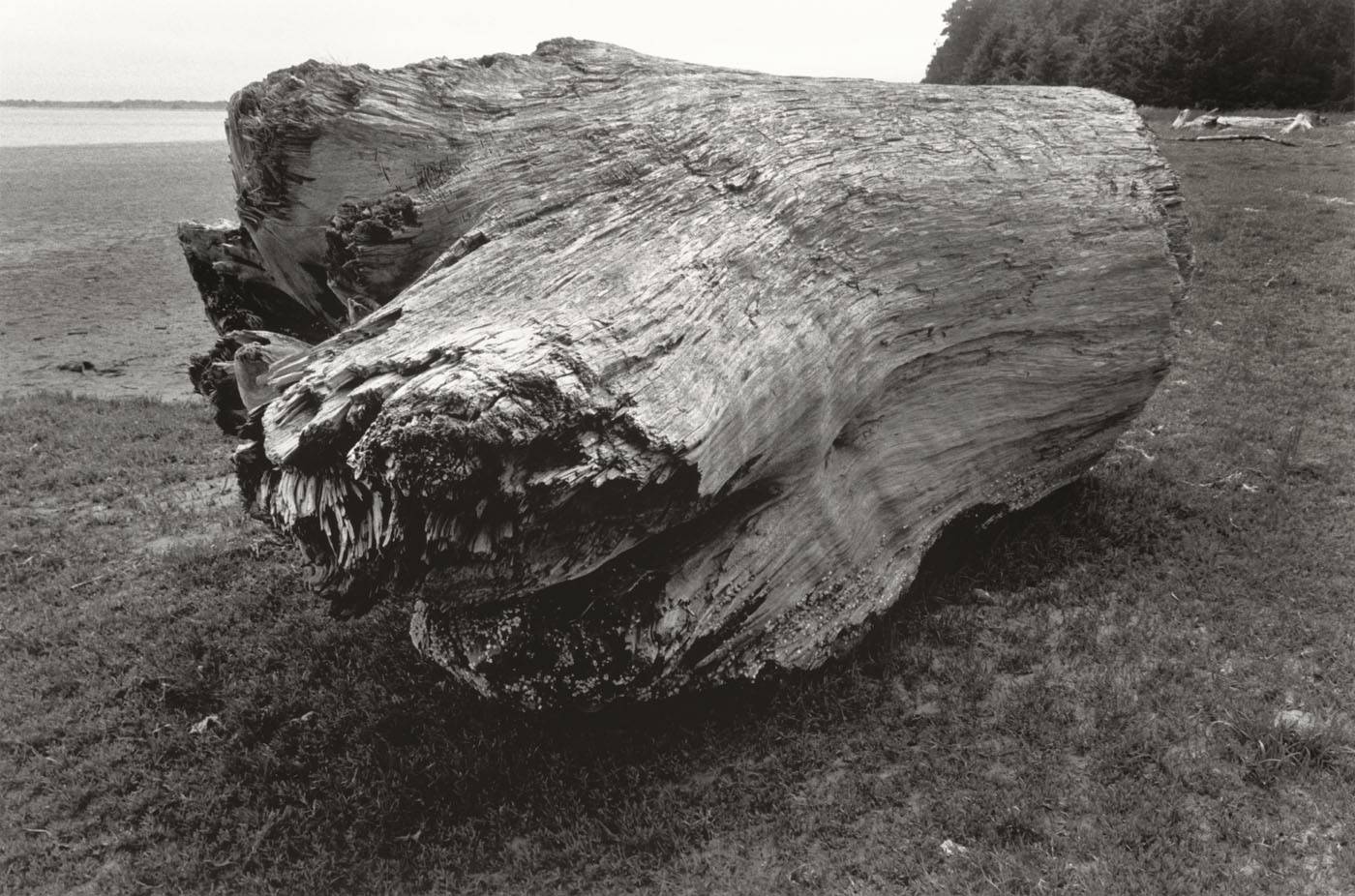
Robert Adams (American, b. 1937)
The River’s Edge
2015
Gelatin silver print
Image: 19.8 x 30cm (7 13/16 x 11 13/16 in.)
National Gallery of Art, Washington, Gift of Stephen G. Stein
© Robert Adams, Courtesy Fraenkel Gallery, San Francisco
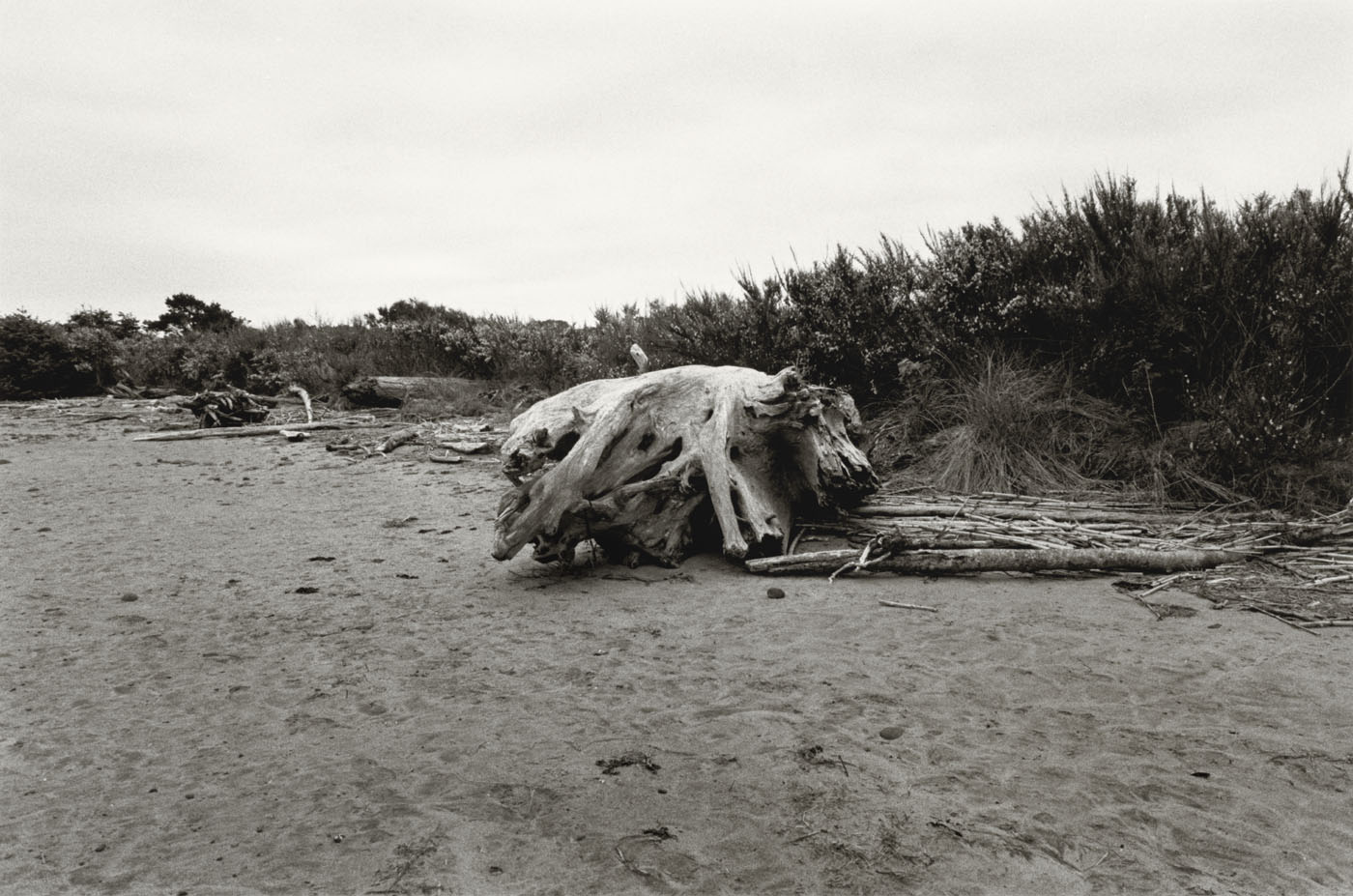
Robert Adams (American, b. 1937)
The River’s Edge
2015
Gelatin silver print
Image: 19.8 x 29.8cm (7 13/16 x 11 3/4 in.)
National Gallery of Art, Washington, Gift of Stephen G. Stein
© Robert Adams, Courtesy Fraenkel Gallery, San Francisco
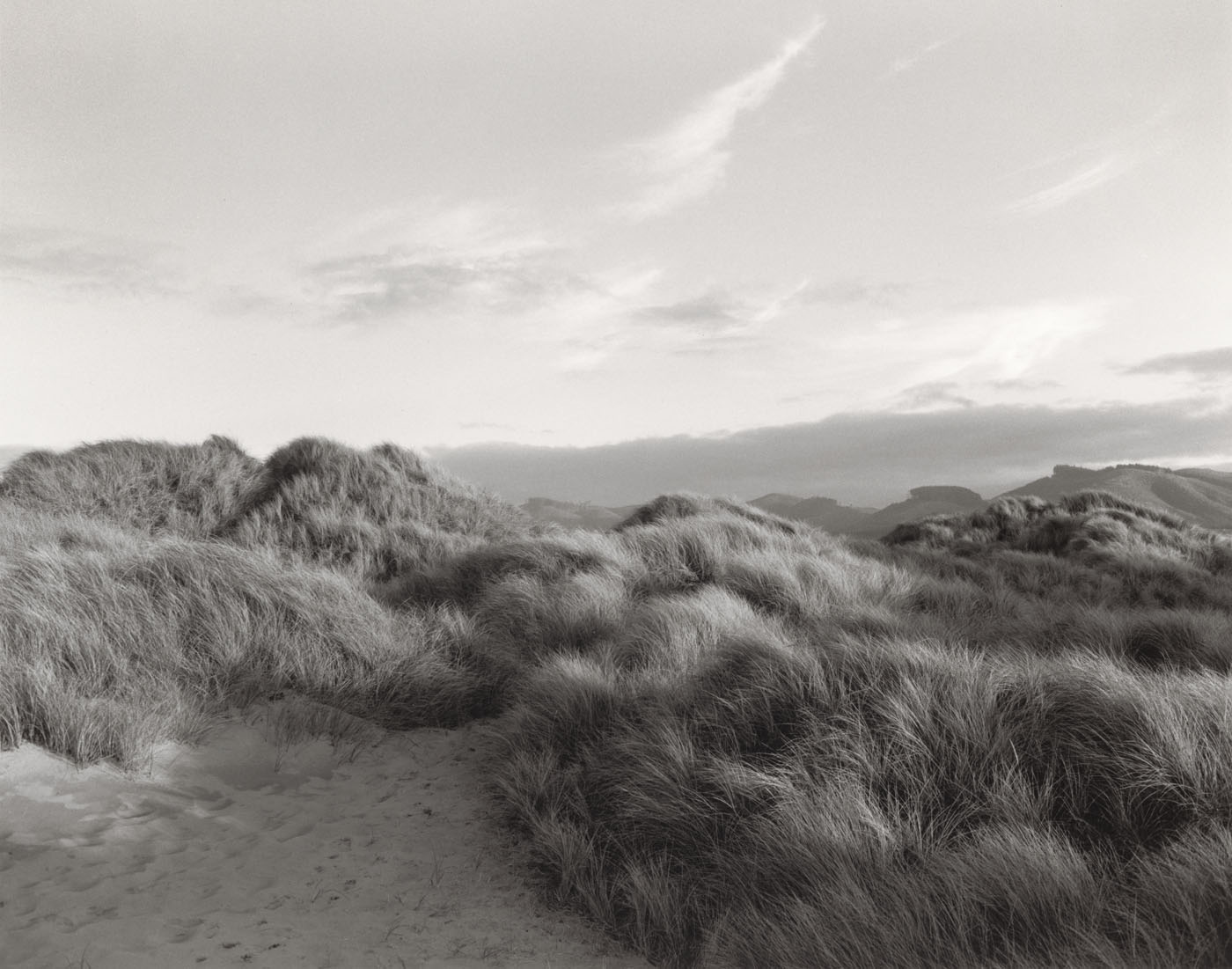
Robert Adams (American, b. 1937)
The Interior of the Spit
2015
Gelatin silver print
Image: 22.5 x 28.7cm (8 7/8 x 11 5/16 in.)
National Gallery of Art, Washington, Gift of Stephen G. Stein
© Robert Adams, Courtesy Fraenkel Gallery, San Francisco
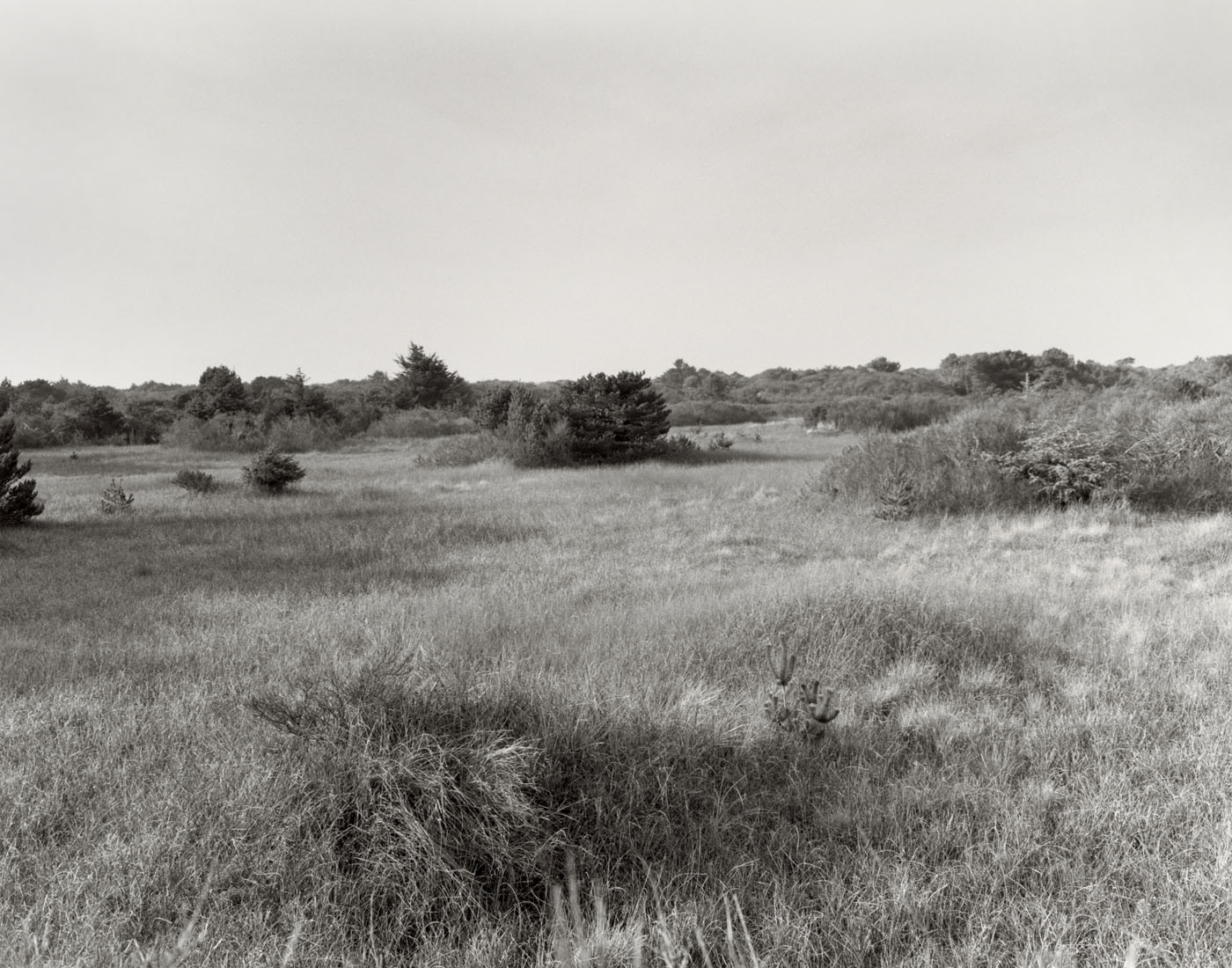
Robert Adams (American, b. 1937)
The Interior of the Spit
2015
Gelatin silver print
Image: 22.6 x 28.8cm (8 7/8 x 11 5/16 in.)
National Gallery of Art, Washington, Gift of Stephen G. Stein
© Robert Adams, Courtesy Fraenkel Gallery, San Francisco
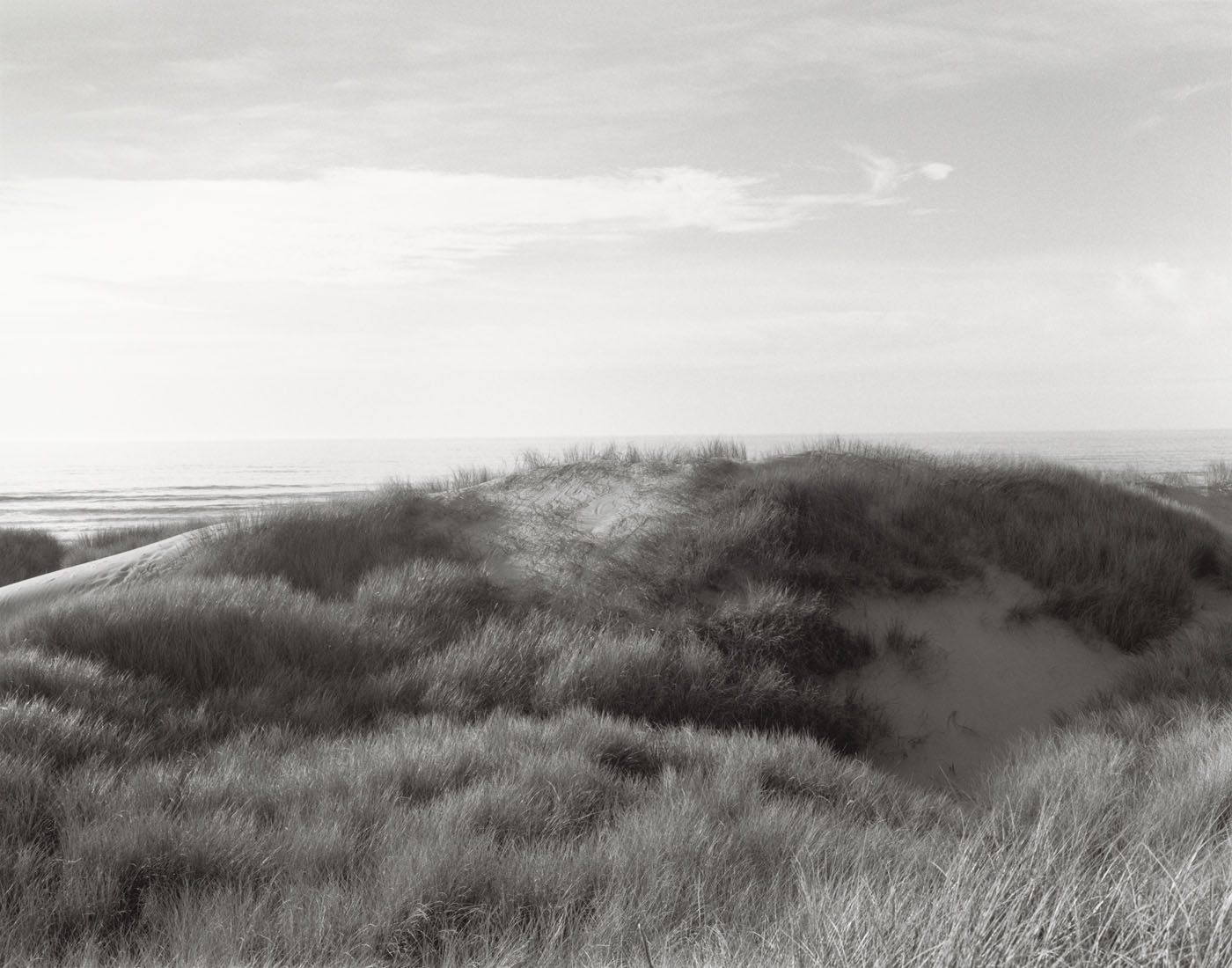
Robert Adams (American, b. 1937)
The Interior of the Spit
2015
Gelatin silver print
Image: 22.6 x 28.8cm (8 7/8 x 11 5/16 in.)
National Gallery of Art, Washington, Gift of Stephen G. Stein
© Robert Adams, Courtesy Fraenkel Gallery, San Francisco
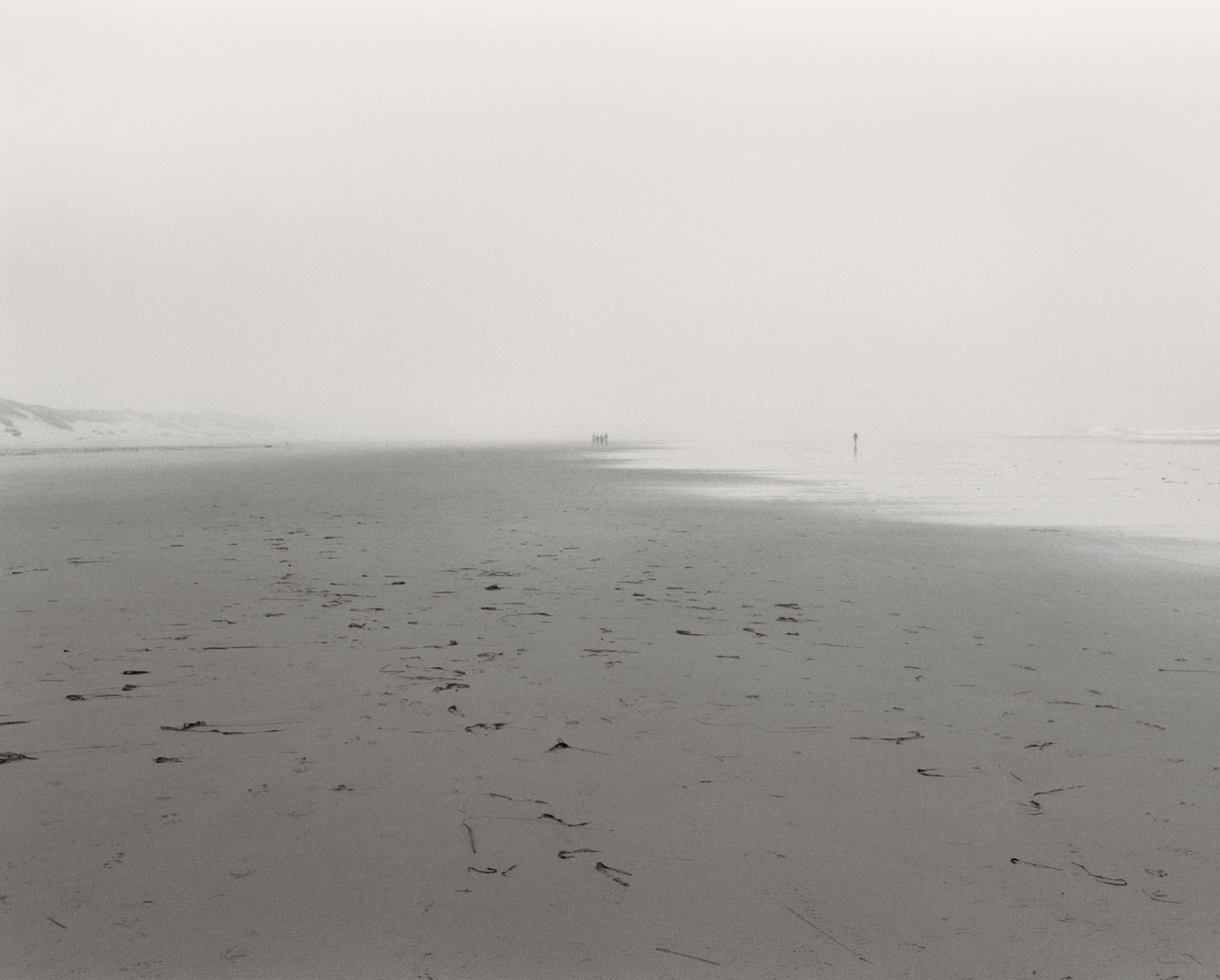
Robert Adams (American, b. 1937)
The Sea Beach
2015
Gelatin silver print
Image: 22.6 x 28.2cm (8 7/8 x 11 1/8 in.)
National Gallery of Art, Washington, Gift of Stephen G. Stein
© Robert Adams, Courtesy Fraenkel Gallery, San Francisco
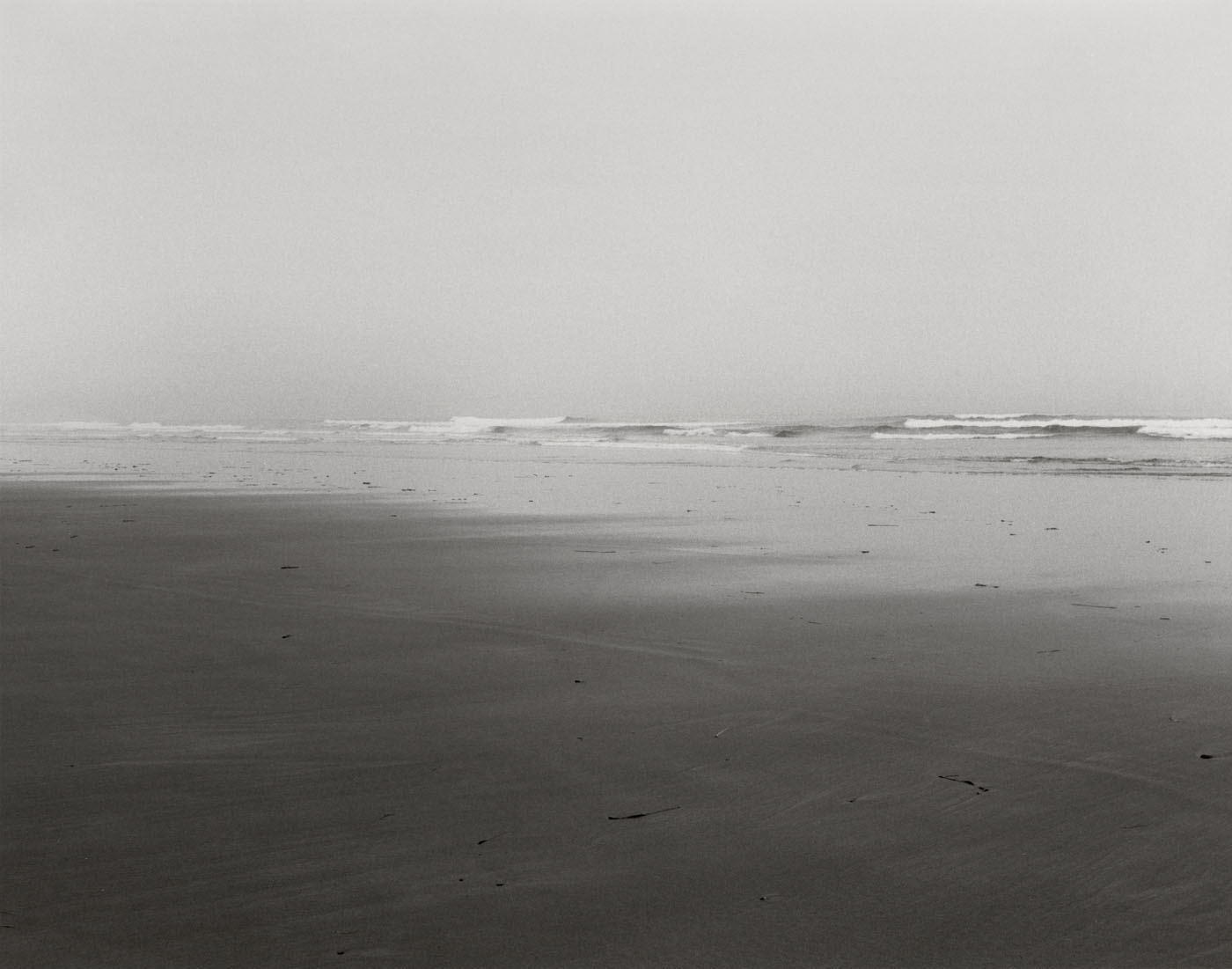
Robert Adams (American, b. 1937)
The Sea Beach
2015
Gelatin silver print
Image: 22.7 x 28.8cm (8 15/16 x 11 5/16 in.)
National Gallery of Art, Washington, Gift of Stephen G. Stein
© Robert Adams, Courtesy Fraenkel Gallery, San Francisco
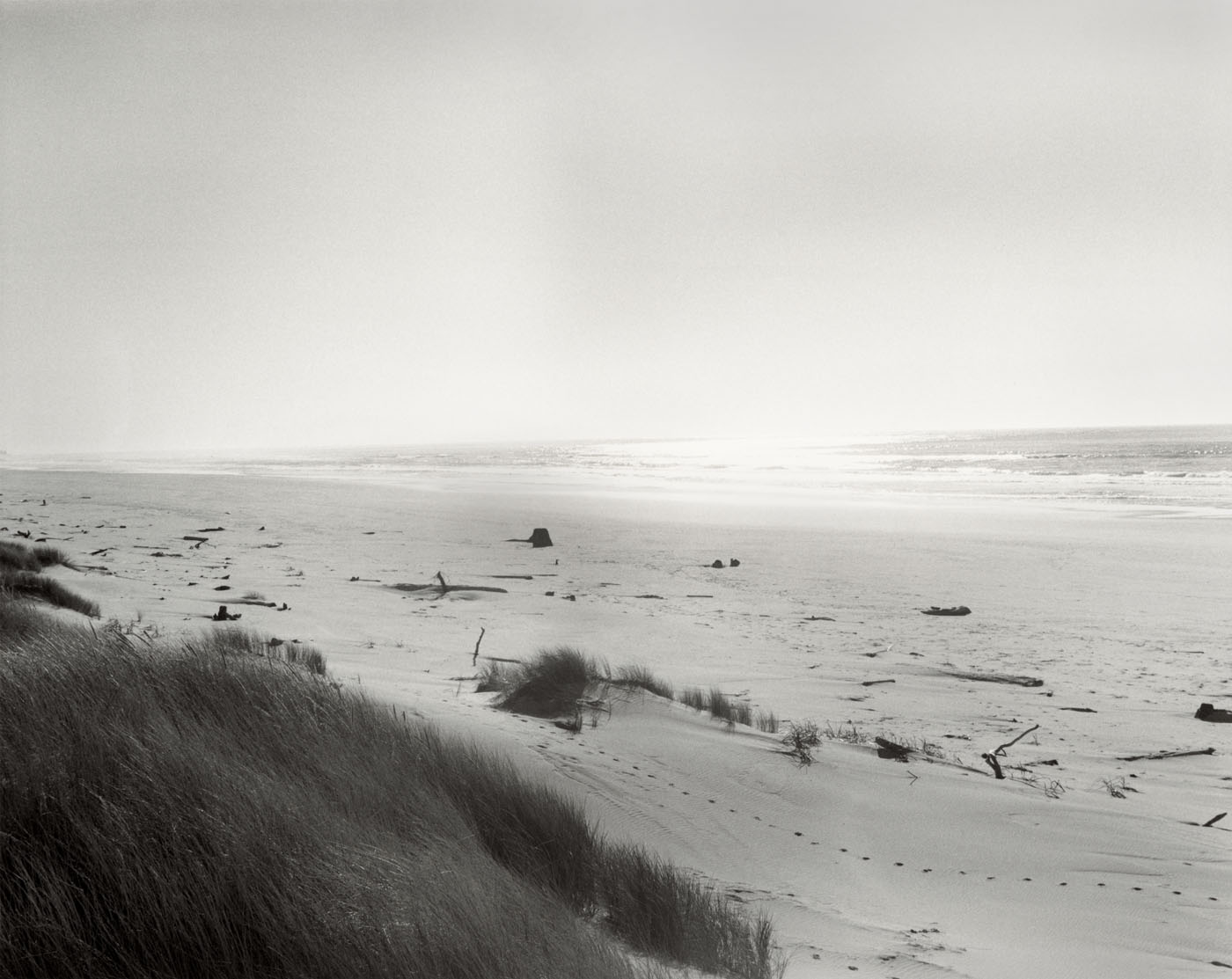
Robert Adams (American, b. 1937)
The Sea Beach
2015
Gelatin silver print
Image: 22.5 x 28.5cm (8 7/8 x 11 1/4 in.)
National Gallery of Art, Washington, Gift of Stephen G. Stein
© Robert Adams, Courtesy Fraenkel Gallery, San Francisco
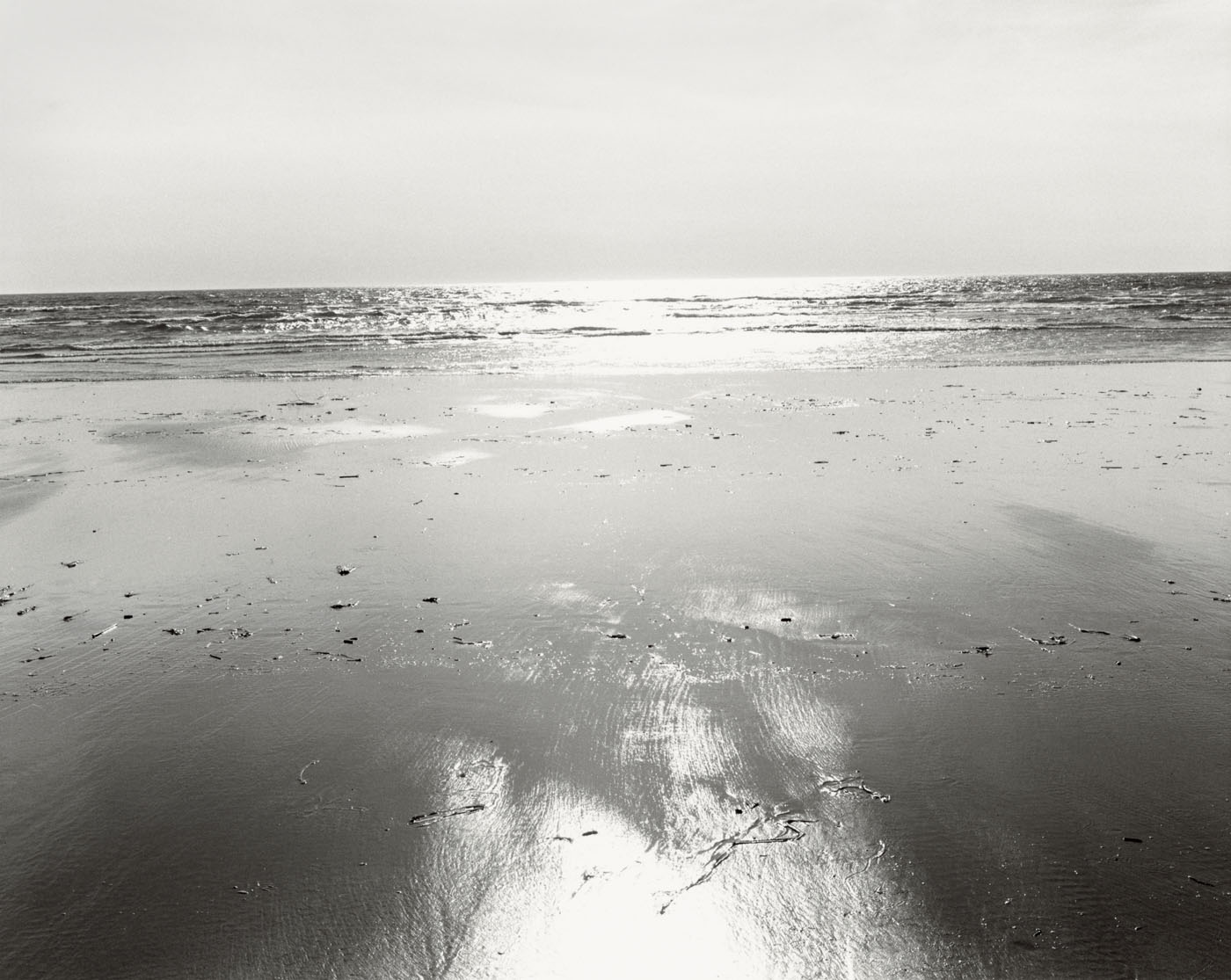
Robert Adams (American, b. 1937)
The Sea Beach
2015
Gelatin silver print
Image: 22.5 x 28.3cm (8 7/8 x 11 1/8 in.)
National Gallery of Art, Washington, Gift of Stephen G. Stein
© Robert Adams, Courtesy Fraenkel Gallery, San Francisco
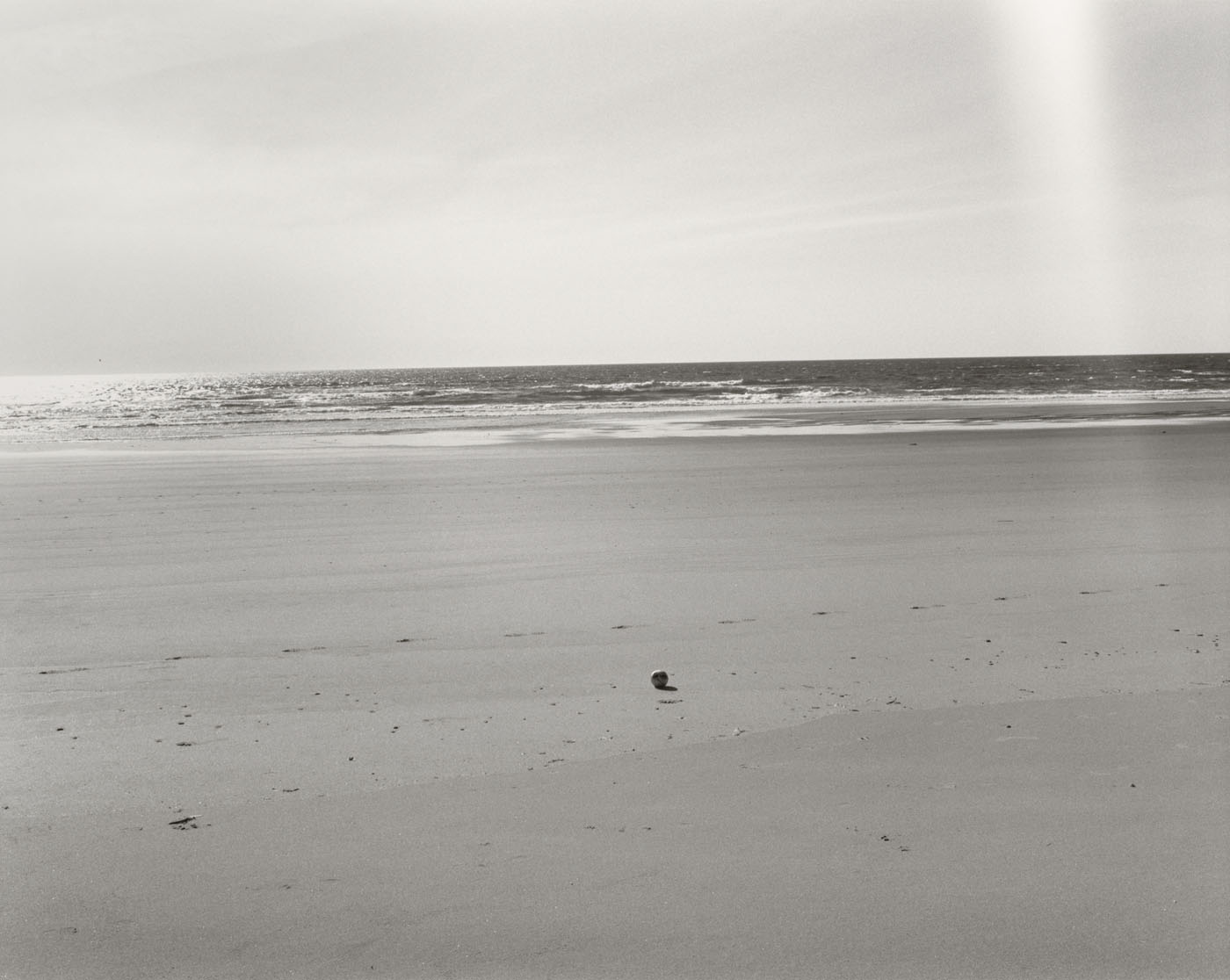
Robert Adams (American, b. 1937)
The Sea Beach
2015
Gelatin silver print
Image: 22.6 x 28.2cm (8 7/8 x 11 1/8 in.)
National Gallery of Art, Washington, Gift of Stephen G. Stein
© Robert Adams, Courtesy Fraenkel Gallery, San Francisco
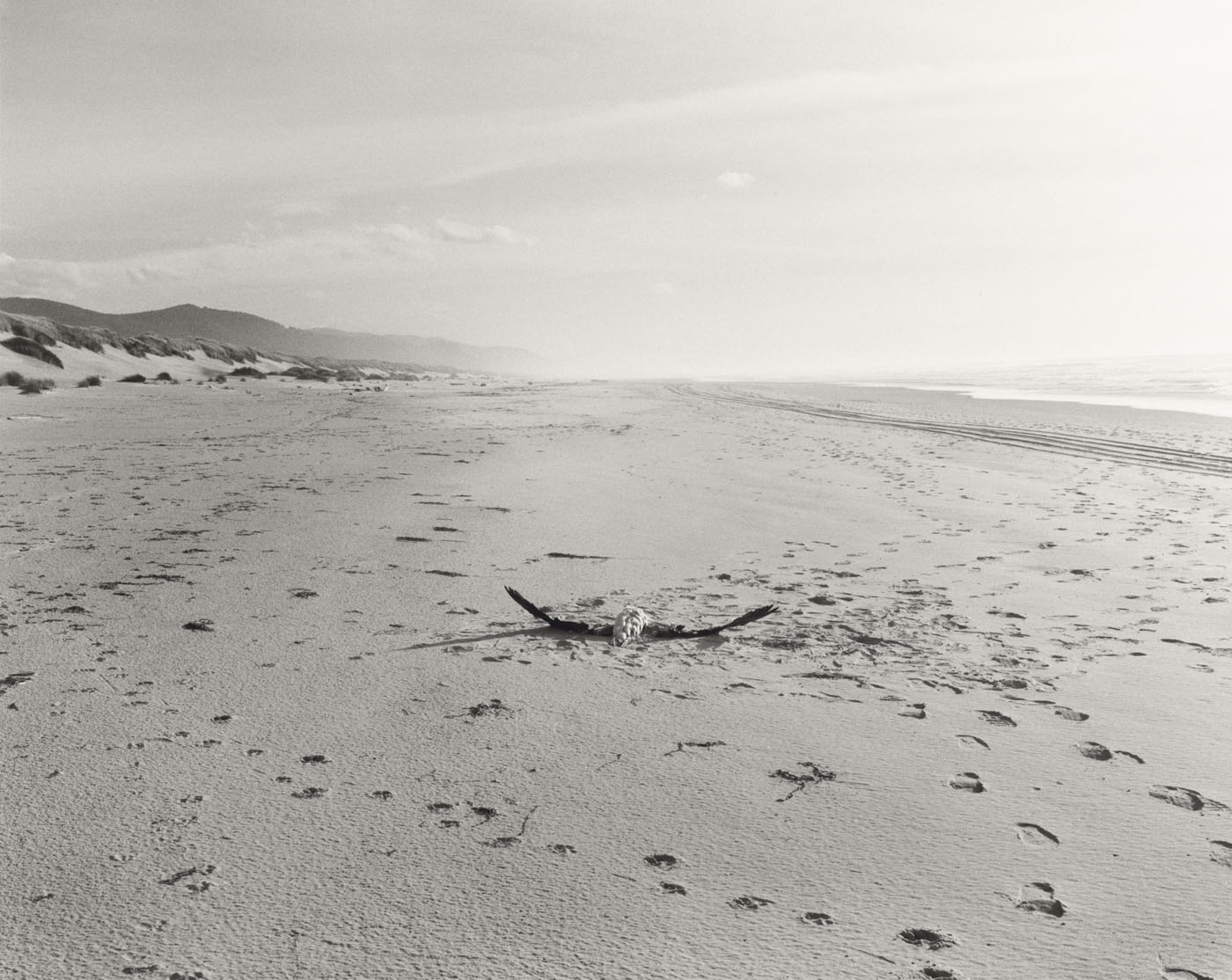
Robert Adams (American, b. 1937)
The Sea Beach, Albatross
2015
Gelatin silver print
Image: 22.5 x 28.2cm (8 7/8 x 11 1/8 in.)
National Gallery of Art, Washington, Gift of Stephen G. Stein
© Robert Adams, Courtesy Fraenkel Gallery, San Francisco
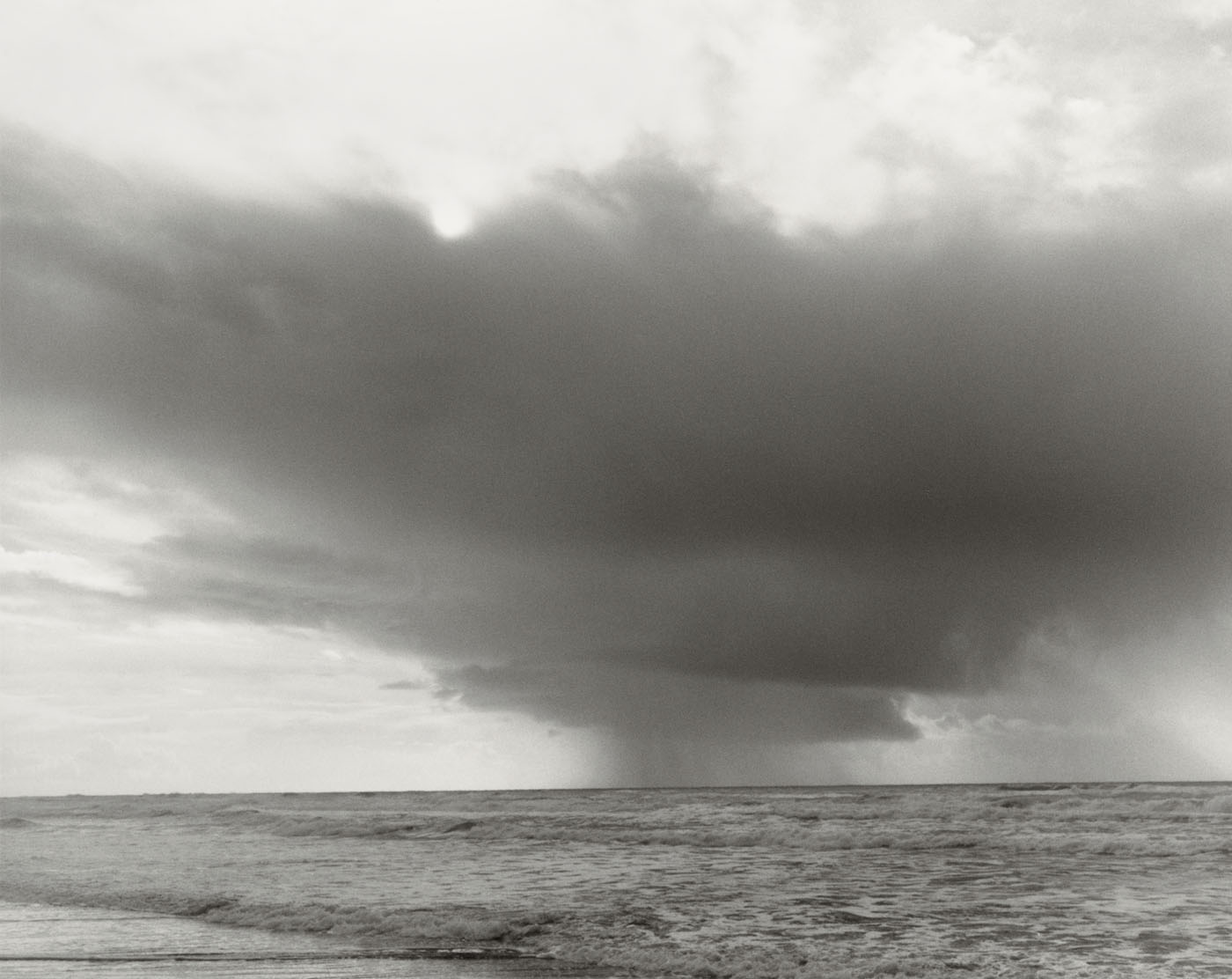
Robert Adams (American, b. 1937)
The Sea Beach
2015
Gelatin silver print
Image: 22.5 x 28.5cm (8 7/8 x 11 1/4 in.)
National Gallery of Art, Washington, Gift of Stephen G. Stein
© Robert Adams, Courtesy Fraenkel Gallery, San Francisco
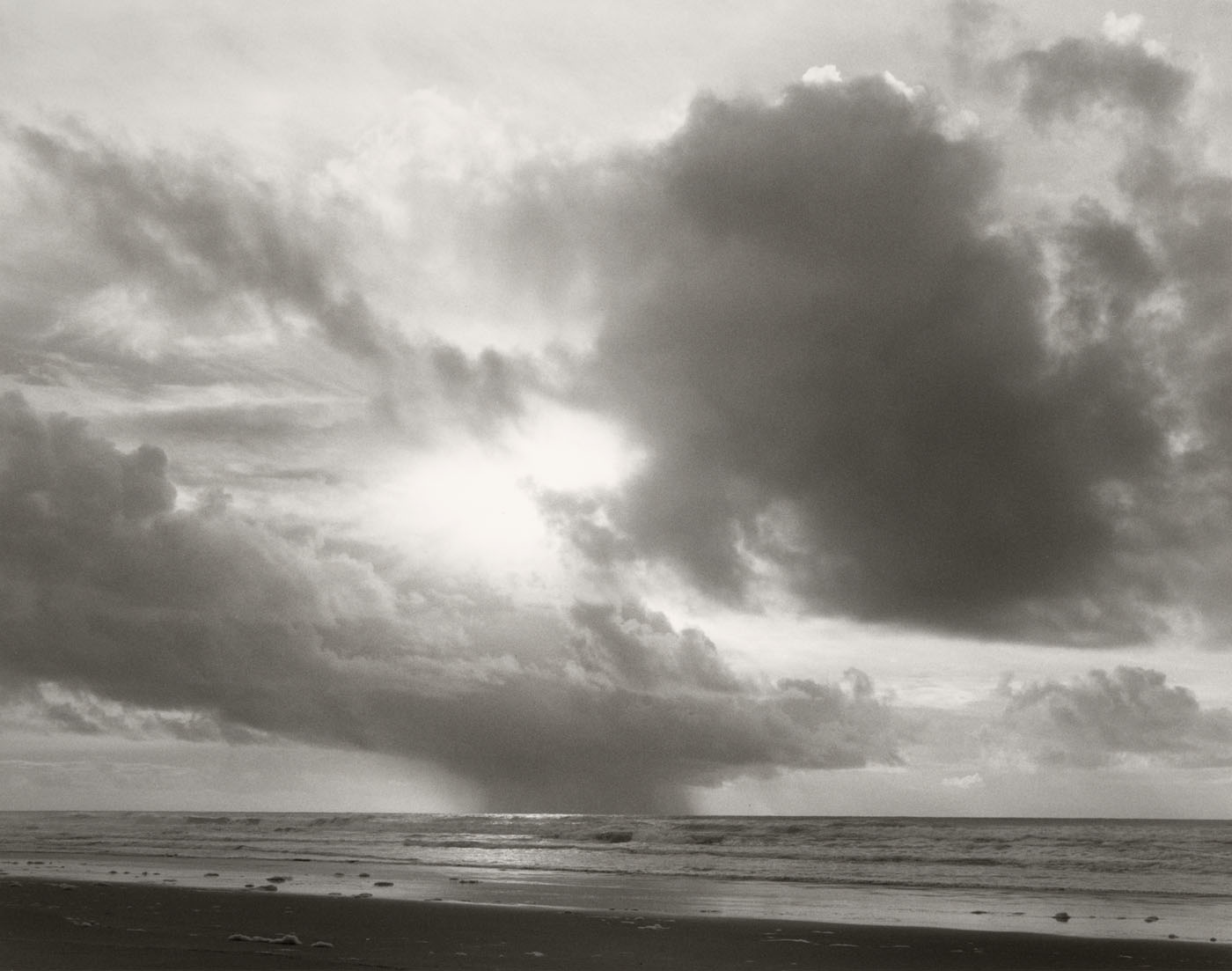
Robert Adams (American, b. 1937)
The Sea Beach
2015
Gelatin silver print
Image: 22.8 x 28.8cm (9 x 11 5/16 in.)
National Gallery of Art, Washington, Gift of Stephen G. Stein
© Robert Adams, Courtesy Fraenkel Gallery, San Francisco
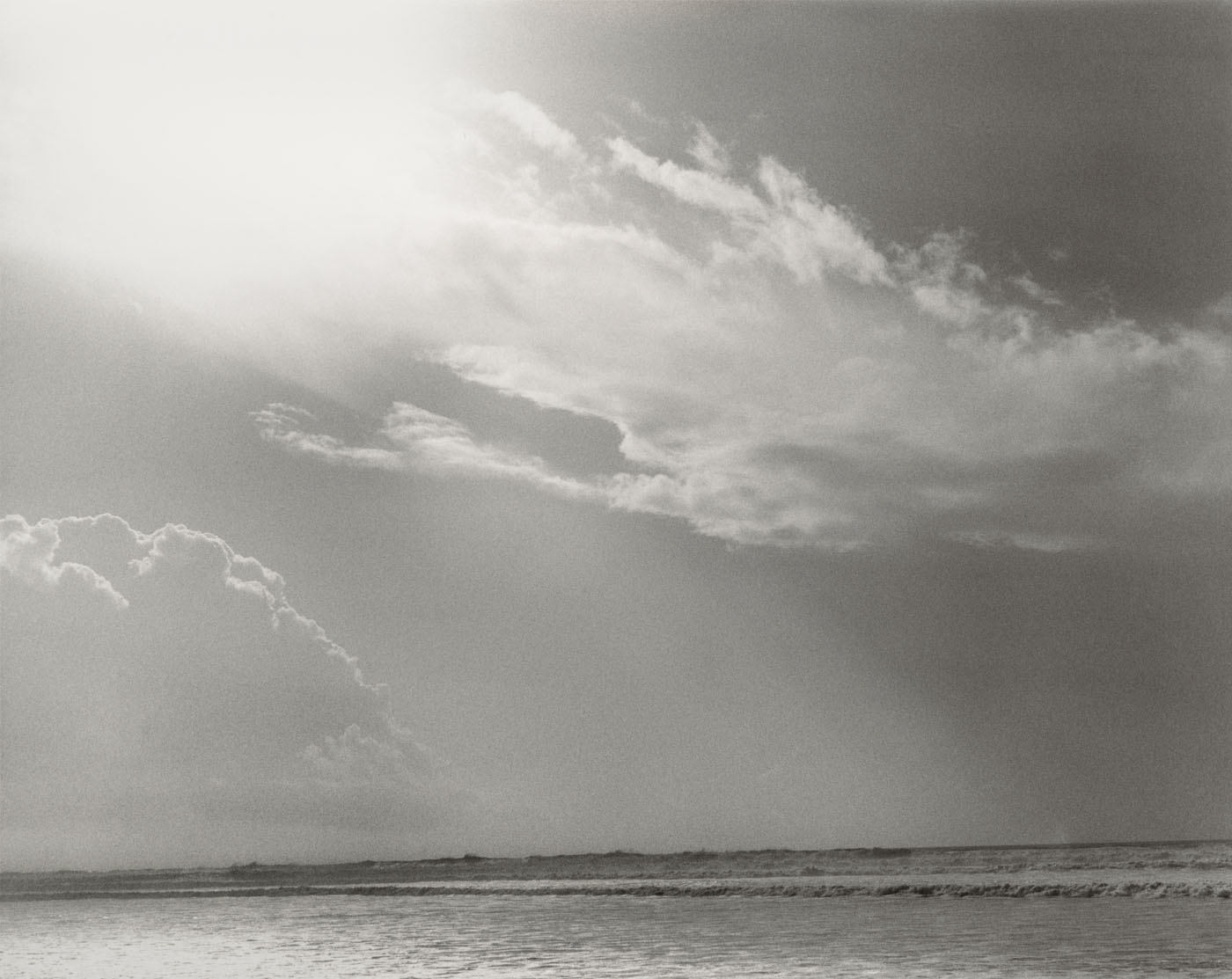
Robert Adams (American, b. 1937)
The Sea Beach
2015
Gelatin silver print
Image: 22.5 x 28.4cm (8 7/8 x 11 3/16 in.)
National Gallery of Art, Washington, Gift of Stephen G. Stein
© Robert Adams, Courtesy Fraenkel Gallery, San Francisco
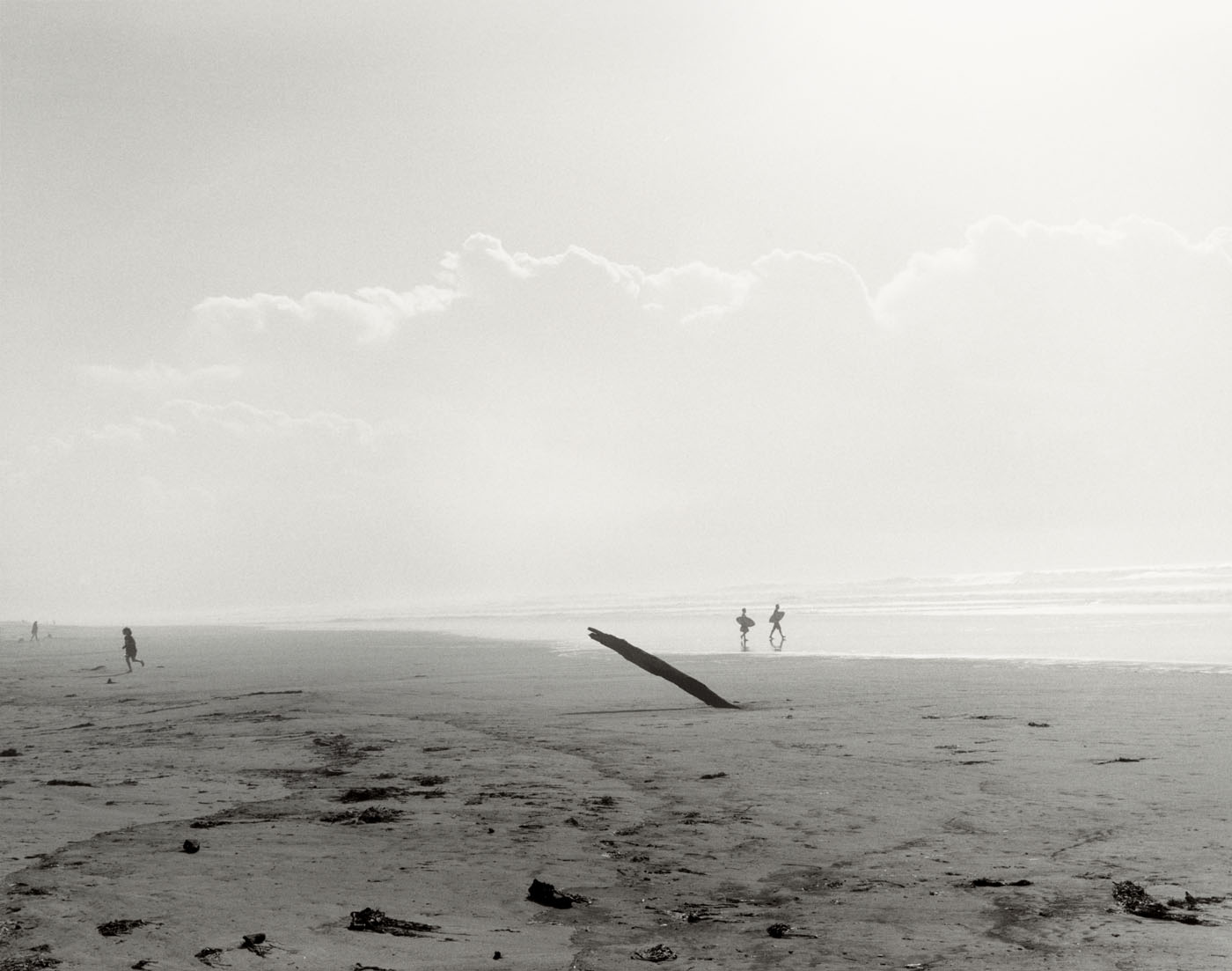
Robert Adams (American, b. 1937)
The Sea Beach
2015
Gelatin silver print
Image: 22.7 x 28.9cm (8 15/16 x 11 3/8 in.)
National Gallery of Art, Washington, Gift of Stephen G. Stein
© Robert Adams, Courtesy Fraenkel Gallery, San Francisco
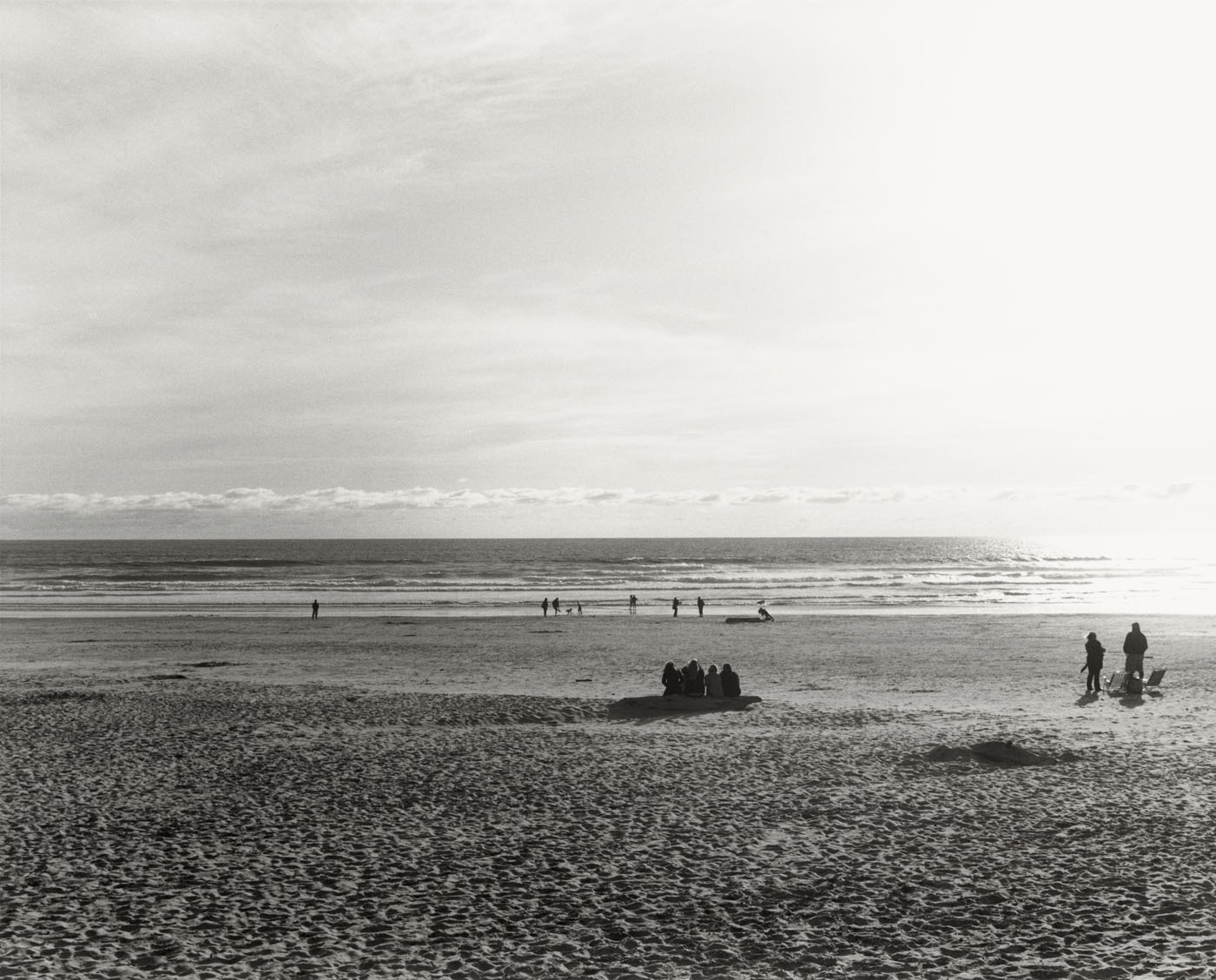
Robert Adams (American, b. 1937)
The Sea Beach
2015
Gelatin silver print
Image: 22.5 x 28cm (8 7/8 x 11 in.)
National Gallery of Art, Washington, Gift of Stephen G. Stein
© Robert Adams, Courtesy Fraenkel Gallery, San Francisco
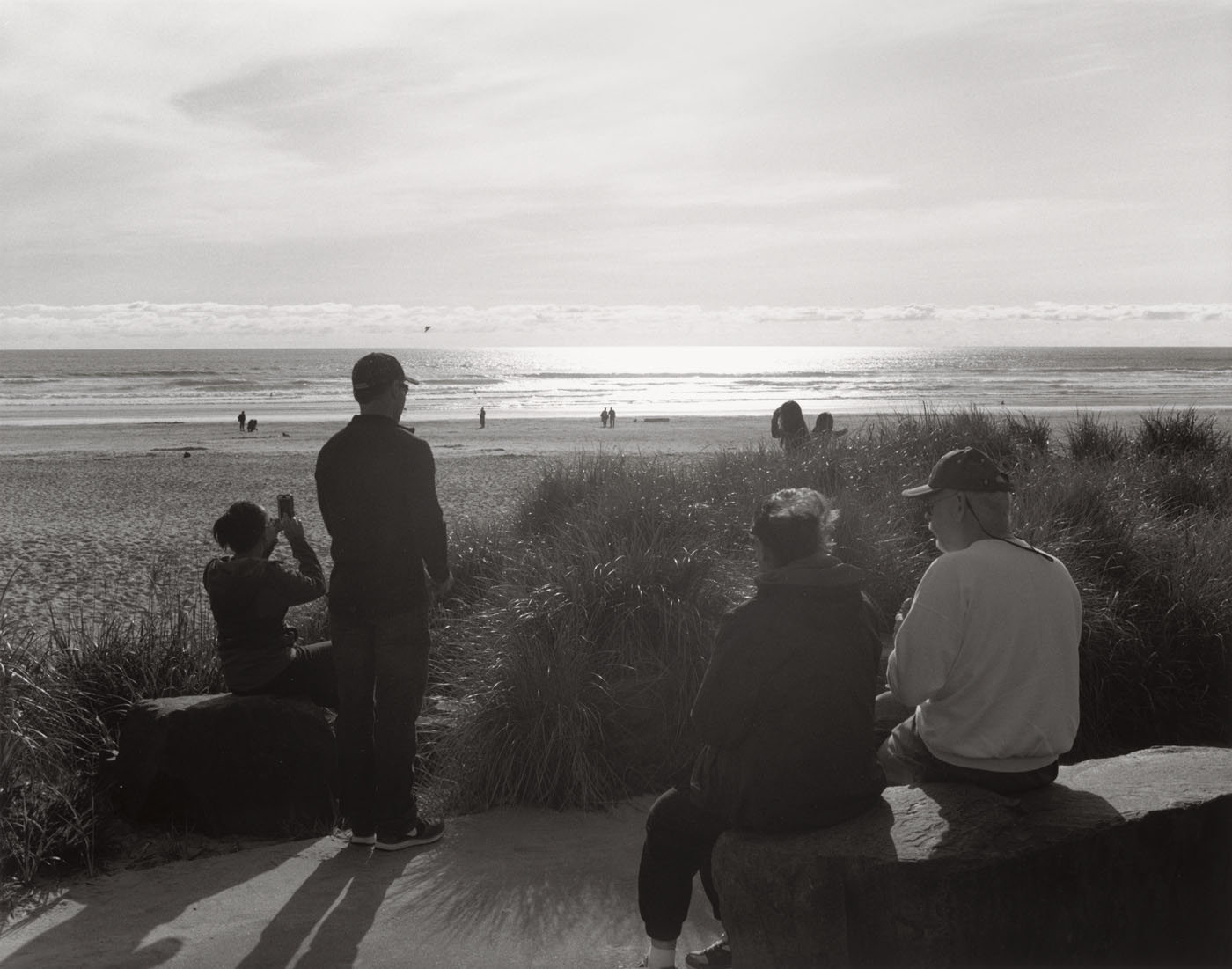
Robert Adams (American, b. 1937)
The Sea Beach
2015
Gelatin silver print
Image: 22.8 x 28.9cm (9 x 11 3/8 in.)
National Gallery of Art, Washington, Gift of Stephen G. Stein
© Robert Adams, Courtesy Fraenkel Gallery, San Francisco
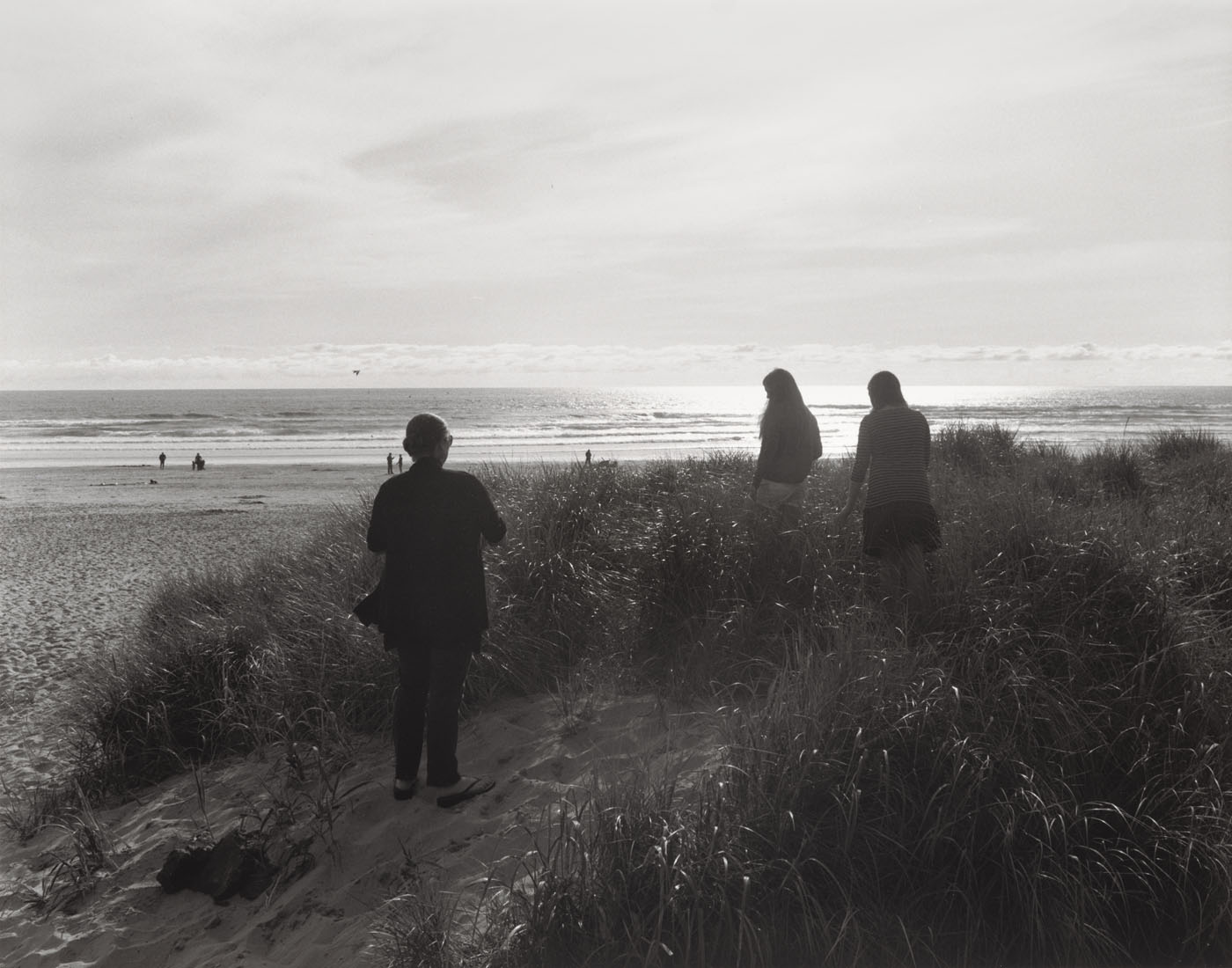
Robert Adams (American, b. 1937)
The Sea Beach
2015
Gelatin silver print
Image: 22.7 x 28.9cm (8 15/16 x 11 3/8 in.)
National Gallery of Art, Washington, Gift of Stephen G. Stein
© Robert Adams, Courtesy Fraenkel Gallery, San Francisco
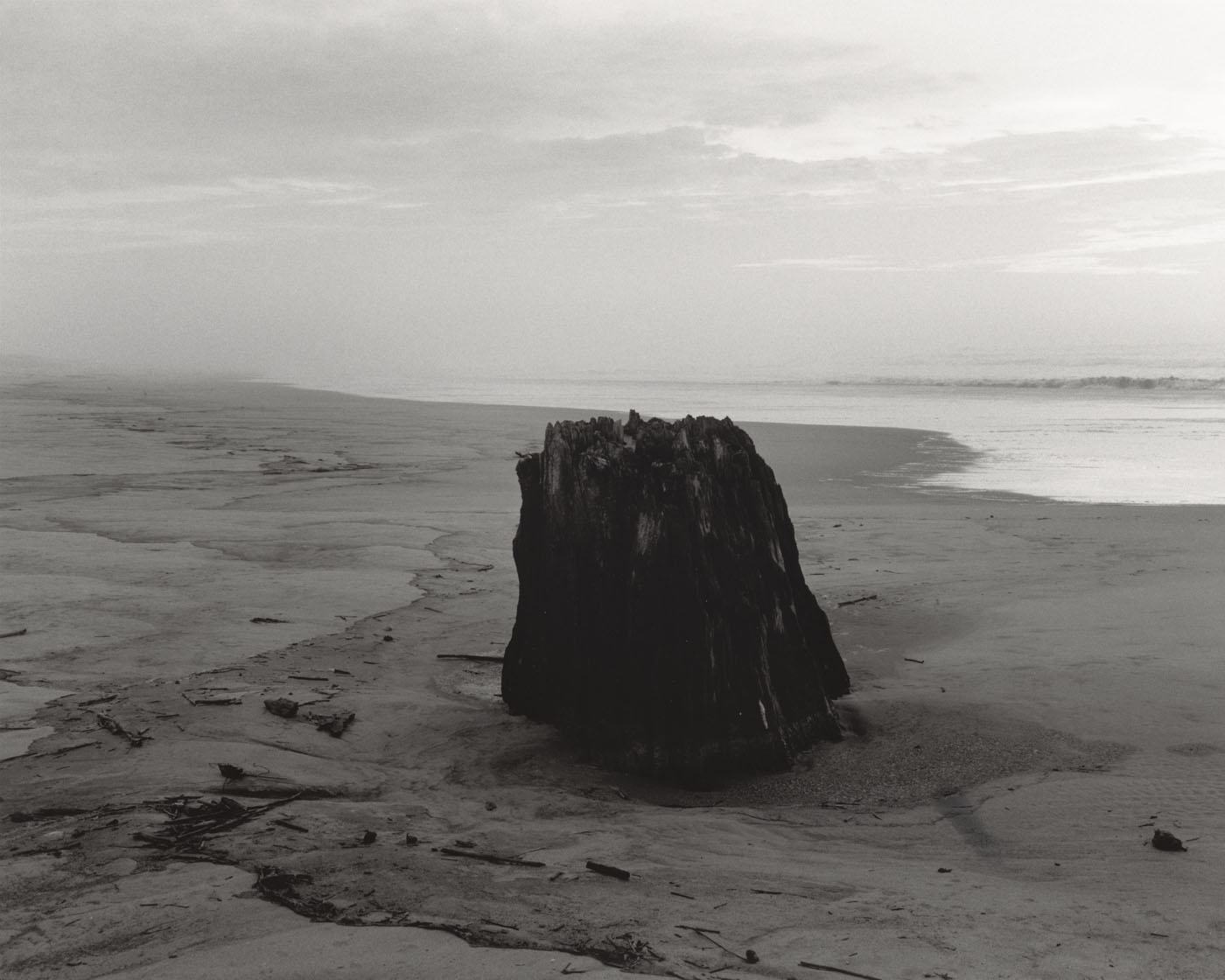
Robert Adams (American, b. 1937)
The Sea Beach
2015
Gelatin silver print
Image: 22.6 x 28.3cm (8 7/8 x 11 1/8 in.)
National Gallery of Art, Washington, Gift of Stephen G. Stein
© Robert Adams, Courtesy Fraenkel Gallery, San Francisco
National Gallery of Art
National Mall between 3rd and 7th Streets
Constitution Avenue NW, Washington
Opening hours:
Daily 10am – 5pm





















 Art Blart _ art and cultural memory archive
You must be logged in to post a comment.