Exhibition: ‘Monika Tichacek, To all my relations’ at Karen Woodbury Gallery, Richmond

Exhibition dates: 4th May – 28th May 2011
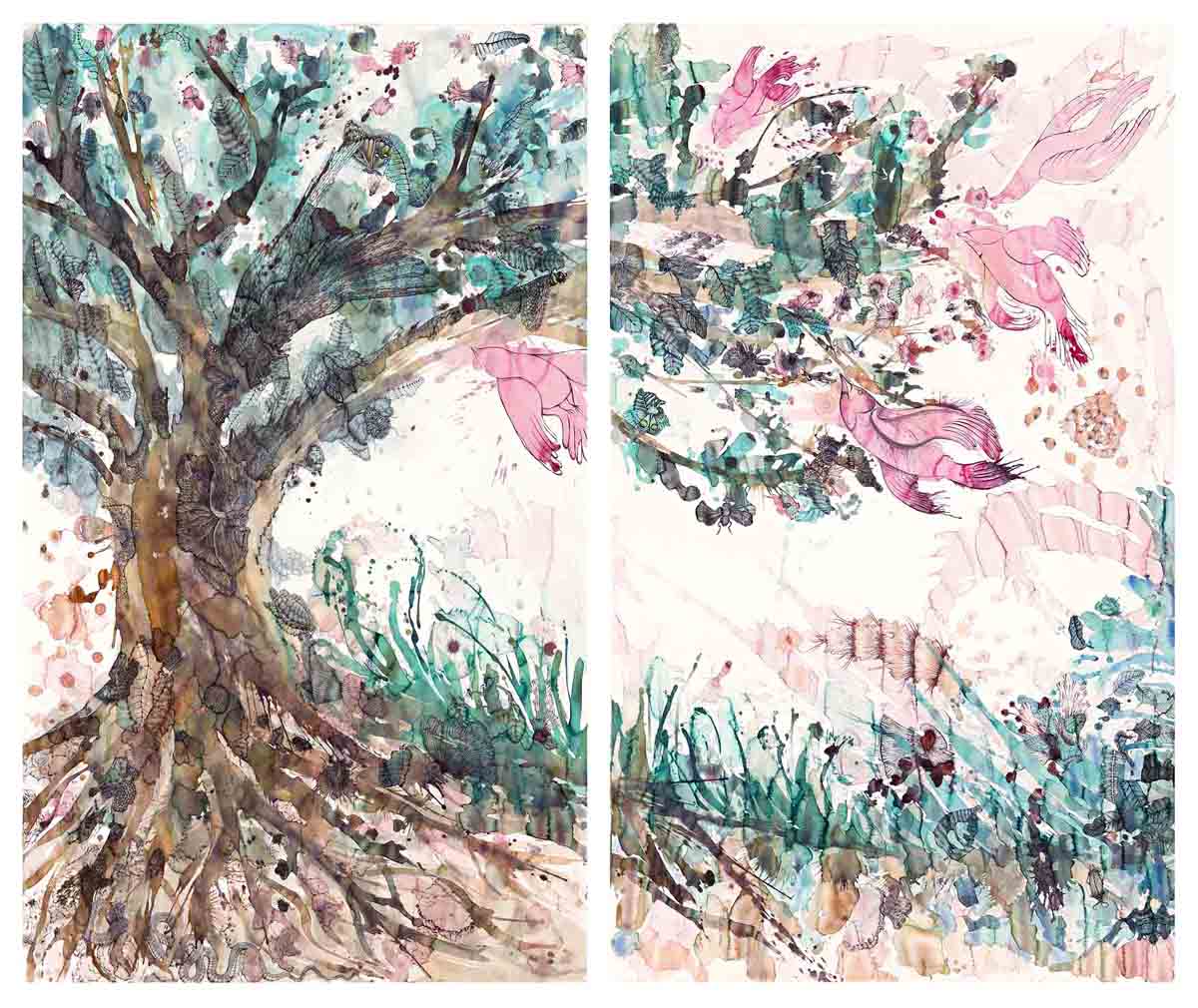
 

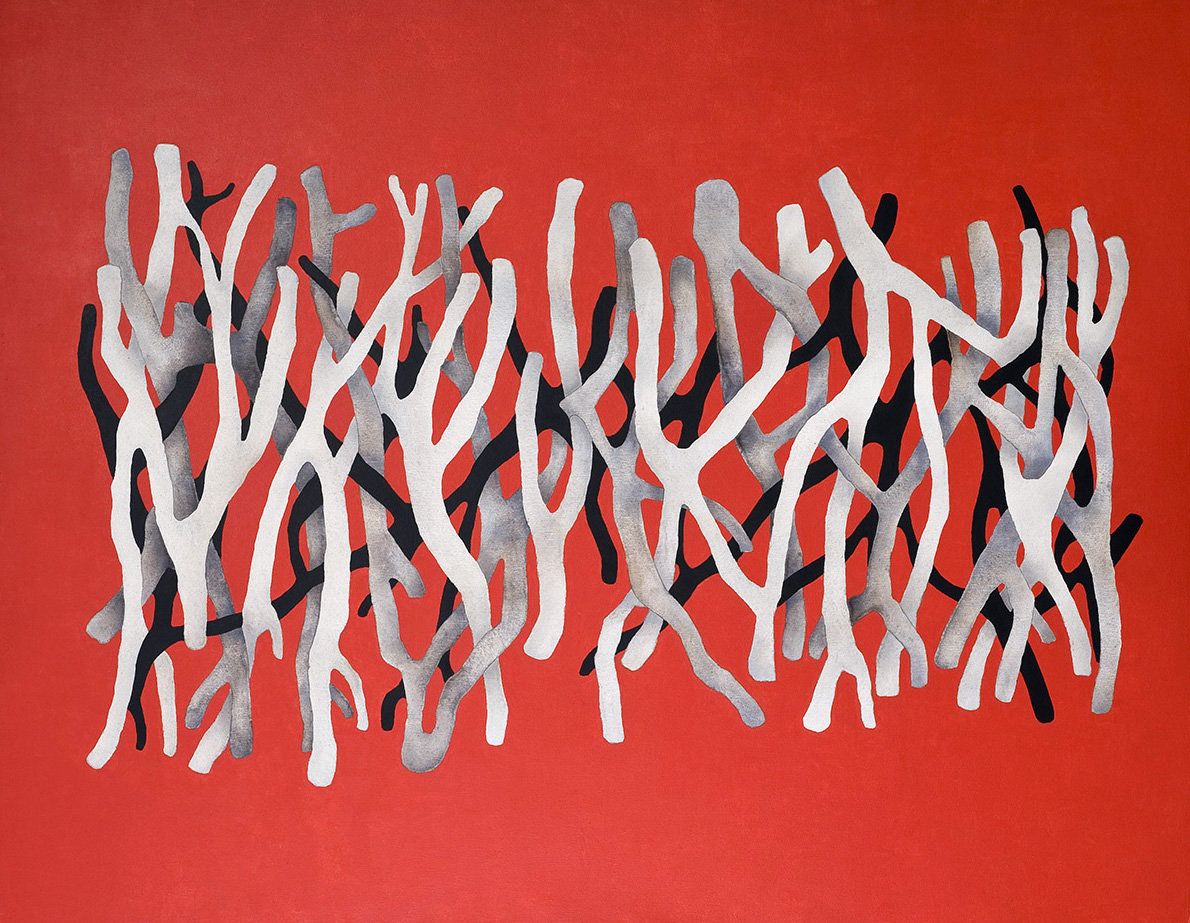
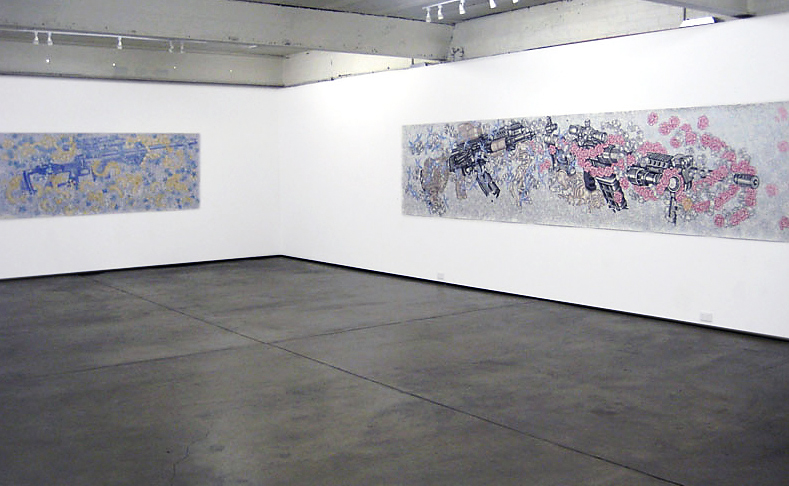
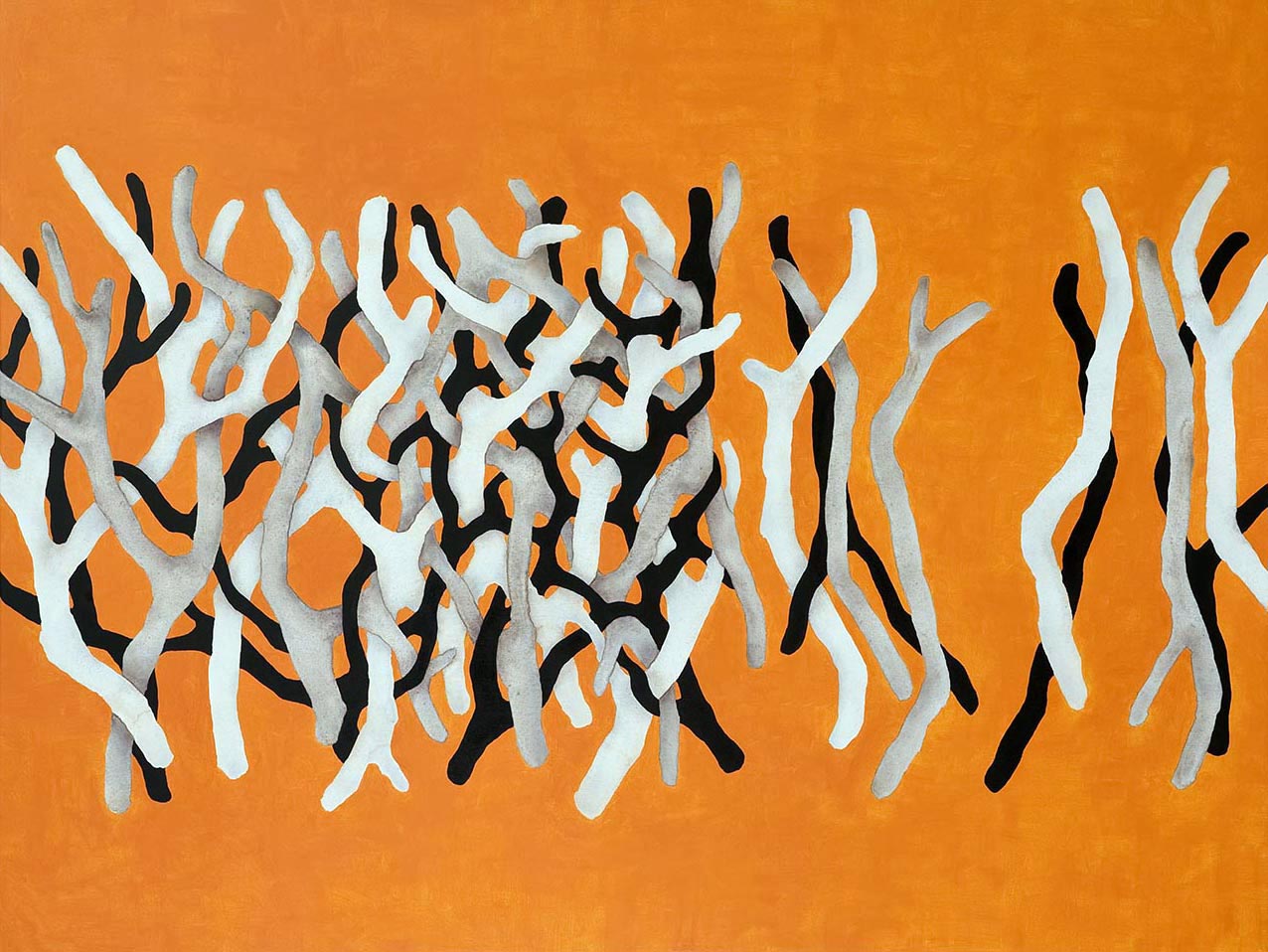
Monika Tichacek (Australian, b. 1975 Switzerland) 'To all my relations' 2011


Monika Tichacek (Australian, b. 1975 Switzerland)
To all my relations
2011
Diptych
Gouache, pencil and watercolour on paper
244 x 300cm overall


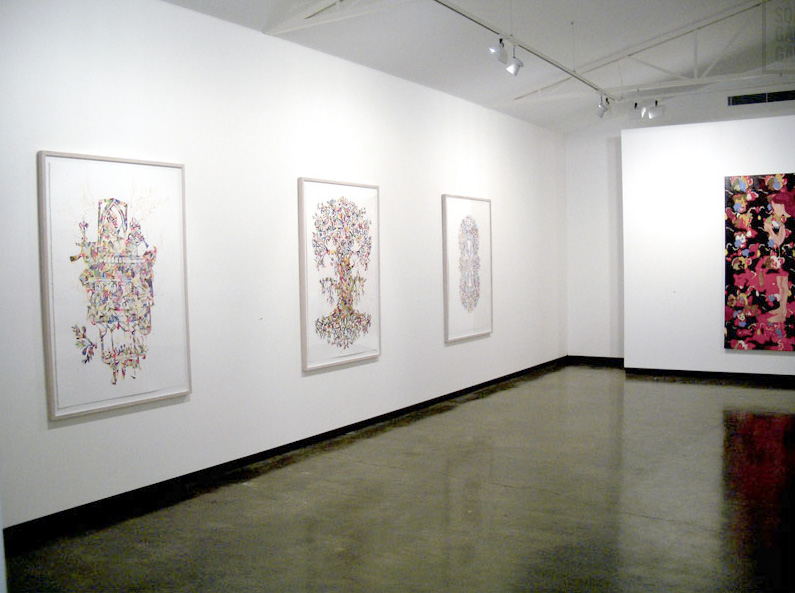
This is a stupendous exhibition by Monika Tichacek, at Karen Woodbury Gallery. One of the highlights of the year, this is a definite must see!

The work is glorious in it’s detail, a sensual and visual delight (make sure you click on the photographs to see the close up of the work!). The riotous, bacchanalian density of the work is balanced by a lyrical intimacy, the work exploring the life cycle and our relationship to the world in gouache, pencil & watercolour. Tichacek’s vibrant pink birds, small bugs, flowers and leaves have absolutely delicious colours. The layered and overlaid compositions show complete control by the artist: mottled, blotted, bark-like wings of butterflies meld into trees in a delicate metamorphosis; insects are blurred becoming one with the structure of flowers in a controlled effusion of life. The title of the exhibition, To all my relations,

“has inspired an understanding that all animist cultures’ peoples have who live in close relationship to the earth. We are all related, we all exist in an interdependent system. The ecosystem is such an unbelievably complex, harmonious system. Every drop of rain, every insect, every micro-organism has its place for the perfect functioning and health of nature… The title is an acknowledgement and honouring of all that is live-giving, every little element that makes up the big picture of life on earth.”1

It was very difficult to pull myself away from the beauty and intimate polyphony of voices contained within the work. I loved it!

Dr Marcus Bunyan


1/ O’Sullivan, Jane. “Artist Interview: Monika Tichacek,” on Australian Art Collector website, 19th May 2011 [Online] Cited 21/05/2010 no longer available online


Many thankx to Karen Woodbury Gallery for allowing me to publish the photographs and Art Guide Australia for allowing me to publish the text in the posting. The text by Dylan Rainforth was commissioned by Art Guide Australia and appears in the May/June 11 issue of Art Guide Australia magazine. Please click on the photographs for a larger version of the image.


Monika Tichacek (Australian, b. 1975 Switzerland) 'To all my relations' 2011 (detail)


Monika Tichacek (Australian, b. 1975 Switzerland)
To all my relations (detail)
2011
Diptych
Gouache, pencil and watercolour on paper
244 x 300cm overall


Monika Tichacek (Australian, b. 1975 Switzerland) 'To all my relations' 2011 (detail)


Monika Tichacek (Australian, b. 1975 Switzerland)
To all my relations (detail)
2011
Diptych
Gouache, pencil and watercolour on paper
244 x 300cm overall
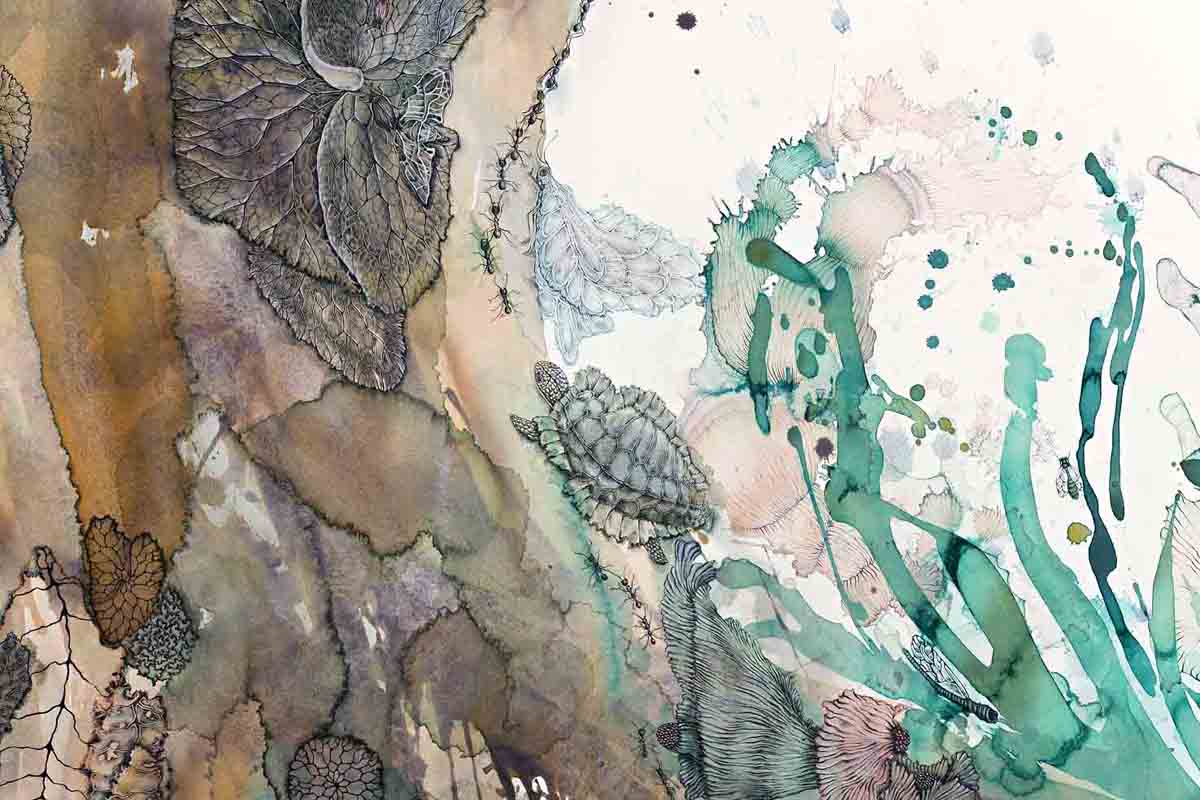
 

Monika Tichacek (Australian, b. 1975 Switzerland) 'To all my relations' 2011 (detail)


Monika Tichacek (Australian, b. 1975 Switzerland)
To all my relations (detail)
2011
Diptych
Gouache, pencil and watercolour on paper
244 x 300cm overall


The Cycle of Nature – Monika Tichacek’s To All My Relations

Dylan Rainforth

Anyone used to the immaculately controlled, exactingly lit photographic and video mise en scène that Swiss-born artist Monika Tichacek presented in such series as The Shadowers, for which she won the prestigious Anne Landa Award for Video and New Media Arts in 2007, may be surprised by the direction her work has taken in her latest exhibition. To All My Relations consists entirely of works on paper – watercolour and ink drawings that evince a tension between abstract, gestural shapes and bleeds of colour, recalling (just for convenience’s sake) Kandinsky, and intricately rendered natural forms that owe more to the scientific, zoological and botanical narratives of the Endeavour voyages of Captain Cook, Joseph Banks and the artist Sydney Parkinson.

The work has come out of an intensive period over the last few years in which Tichacek spent considerable time in the jungles of South America and the deserts of the United States, as well as time spent in the New South Wales bush and studying nature books. “I’m getting more and more interested in the cellular, microscopic imagery that you get when you enlarge something and peer deeper into the structure of how material elements are composed, and that really coincides with my interest in Eastern philosophies of Buddhism and many other things too. I guess I’m looking as deeply into the nature of something as is possible but I’m trying not to do it so much with my mind – but of course that’s very challenging,” she says, laughing lightly.

“The exploration of feeling is quite important to me – it’s quite a departure from what I used to do, which were certainly works that came from a very inner landscape but then the execution would be very conceptual, obviously – it had to be and this new work is much more intimate.”

That challenge to the rational, objective Western subject is informed by Tichacek’s exposure to indigenous traditions in South America and other places.

“In 2006 I had a research grant and I went to the Amazon because I wanted to look more deeply into animist cultures, meaning cultures that really see the land as living and as alive with energy and with spirit or ‘beingness’. So I went to the Amazon and spent quite a long time there and also in the mountains in Peru and saw a little bit of Central America and also North America in the desert. I spent time there and really learnt a lot about their indigenous ways and got to participate in a lot of things and experience a lot of things. In the Amazon shamanic tradition there is a process – they call it dieting – you spend a few months more or less alone, existing on very limited foods. You get very little, limited food and very little contact and they give you different traditional plants that, through the communion they do, they are ‘told’ to give you. And you are encouraged to connect with this plant for its healing properties to come through. So that was quite an amazing time to get quite still…”

The exhibition title comes from a Native American ceremony. According to Tichacek, “It’s always said when entering the sweat lodge and it’s an acknowledgement of being related to everything in nature, every being, the understanding that without all these other relations one wouldn’t exist. In those cultures it’s much more understood – we’ve lost that understanding because we can just buy things in the supermarket and eat them but if we lived that way we would probably remember a lot more that we are closely related to everything around us.”

From this perspective we can see that this new work is not a complete departure from Tichacek’s earlier work after all, yet its intentions are radically different. Both the natural world and shamanistic knowledge played their part in The Shadowers. Professor Anne Marsh has described Tichacek’s video, played out in a violent scene occurring between three women (one of whom Marsh characterises as a witch doctor or shaman) in a forest environment, as stretch[ing] the boundaries between body art, ritual and sado-masochism by assaulting the senses and transgressing the social realm. In psychoanalytic terms it tears at the screen of the real and immerses the viewer into the abject world of instinctual response where language has no authority.” [i]

Pain, sado-masochism, ritual and endurance certainly have their place in shamanistic traditions – one need only think of any number of initiation rites – but now Tichacek is looking for a less conflicted relationship with nature. “The work has always been very personal and I guess in The Shadowers that nature relationship was starting to come in but it was very tense and very violent and very confused. The continuation of that theme is still there – the exploration of how to understand the experience of the self and what we are doing here and how we come to exist. That’s definitely been there before but this new work is more in the realm of psychology and the previous works are more in the realm of the female body.”

To All My Relations will present several drawings, with one in particular being conceived on a massive scale that Tichacek intends to convey the sense of awe we experience when surrounded by nature. The artist will also stage a performance – something her interdisciplinary practice has always embraced – at the opening. Although she had not completely determined the details when I spoke to her the performance was inspired by a drawing she made a few years ago and will symbolically connect the artist’s body to the roots of a tree.

“I always feel like [performance serves] to bring my body into it. Although I feel like my body’s very much in these drawings there’s something about performance that’s really physically present.”

Dylan Rainforth.


Monika Tichacek (Australian, b. 1975 Switzerland) 'To all my relations' 2011 (detail)


Monika Tichacek (Australian, b. 1975 Switzerland)
To all my relations (detail)
2011
Diptych
Gouache, pencil and watercolour on paper
244 x 300cm overall


Monika Tichacek (Australian, b. 1975 Switzerland) 'To all my relations' 2011 (detail)


Monika Tichacek (Australian, b. 1975 Switzerland)
To all my relations (detail)
2011
Diptych
Gouache, pencil and watercolour on paper
244 x 300cm overall
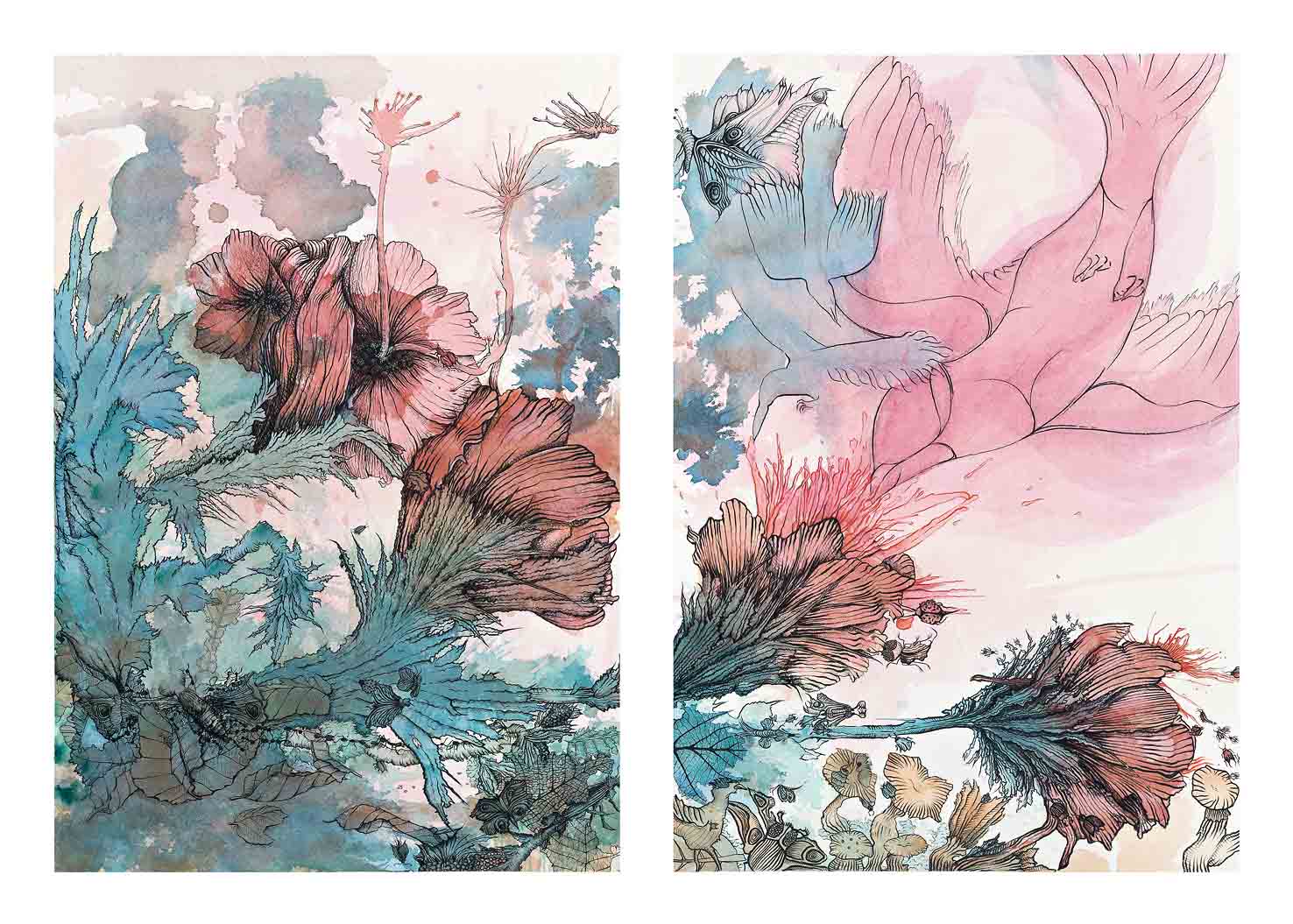
 

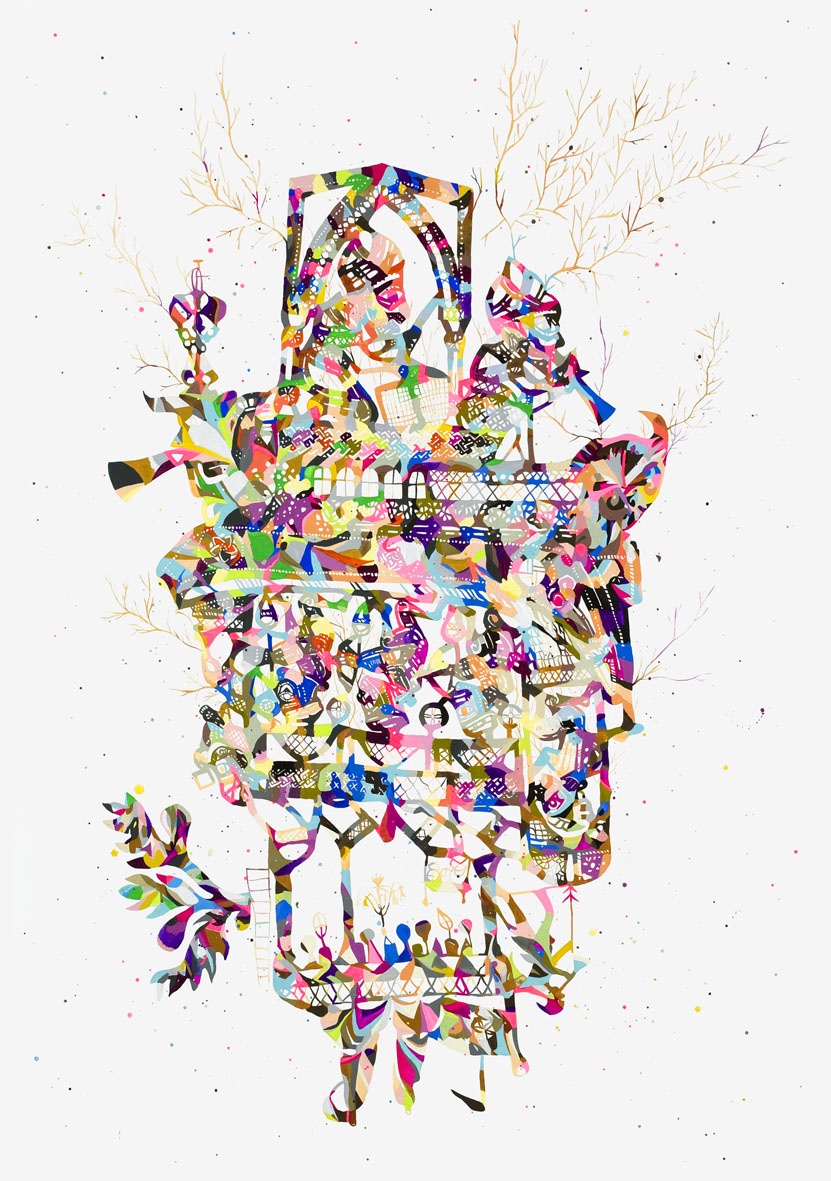
Monika Tichacek (Australian, b. 1975 Switzerland) 'Birth of generosity' 2011


Monika Tichacek (Australian, b. 1975 Switzerland)
Birth of generosity
2011
Diptych
Pencil and watercolour on paper
70 x 114cm overall
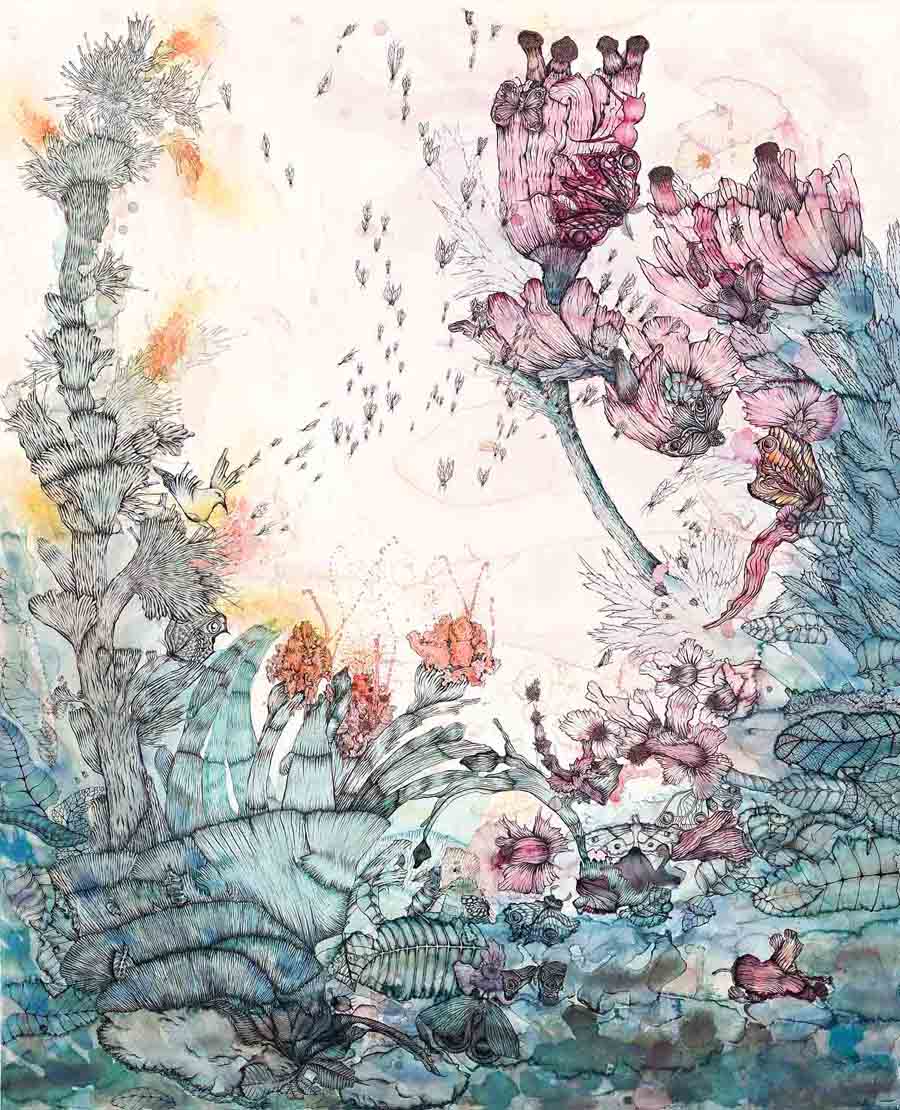
 

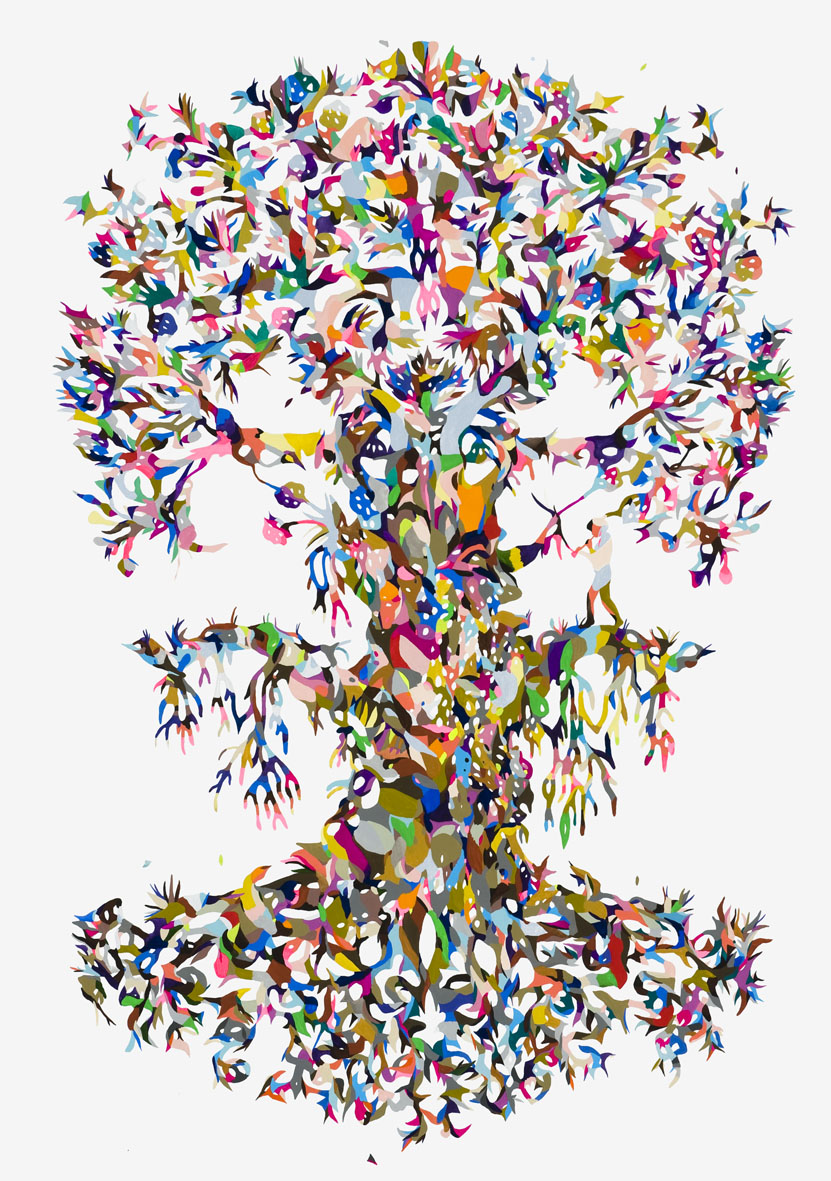
Monika Tichacek (Australian, b. 1975 Switzerland) 'Transmission' 2011


Monika Tichacek (Australian, b. 1975 Switzerland)
Transmission
2011
Pencil and watercolour on paper
150 x 125cm


Karen Woodbury Gallery

This gallery has now closed
LIKE ART BLART ON FACEBOOK

Back to top

Exhibitions: ‘The Other’ by Titania Henderson at Karen Woodbury Gallery, Richmond, ‘Halftone’ by John Nicholson at Sophie Gannon Gallery, Richmond

Exhibition dates: 19/20th October – 13th November 2010


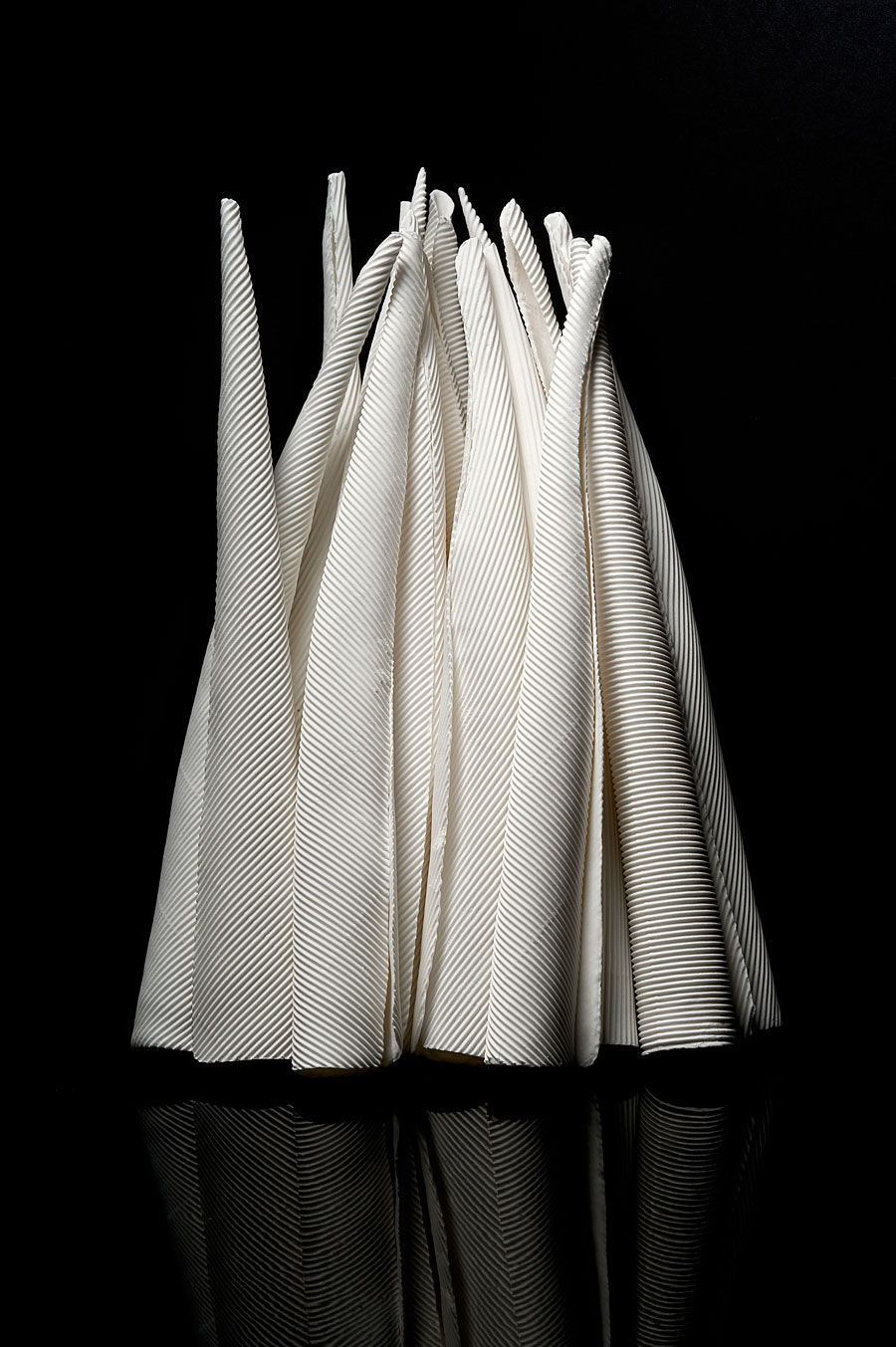
Titania Henderson (Dutch, b. 1945 emigrated Australia 1956) 'Together II' 2010


Titania Henderson (Dutch, b. 1945 emigrated Australia 1956)
Together II
2010
Images courtesy of the artist and Karen Woodbury Gallery


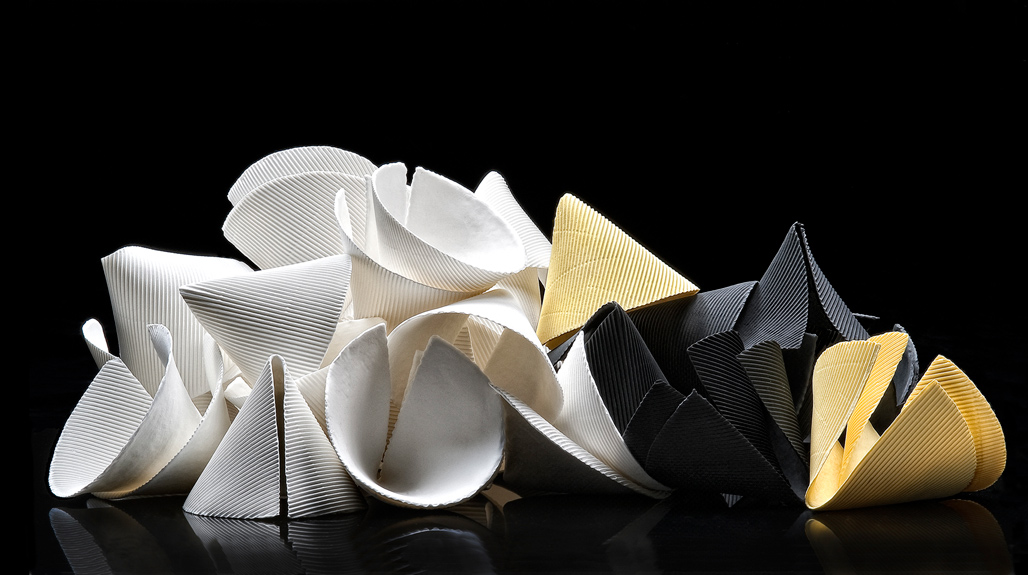
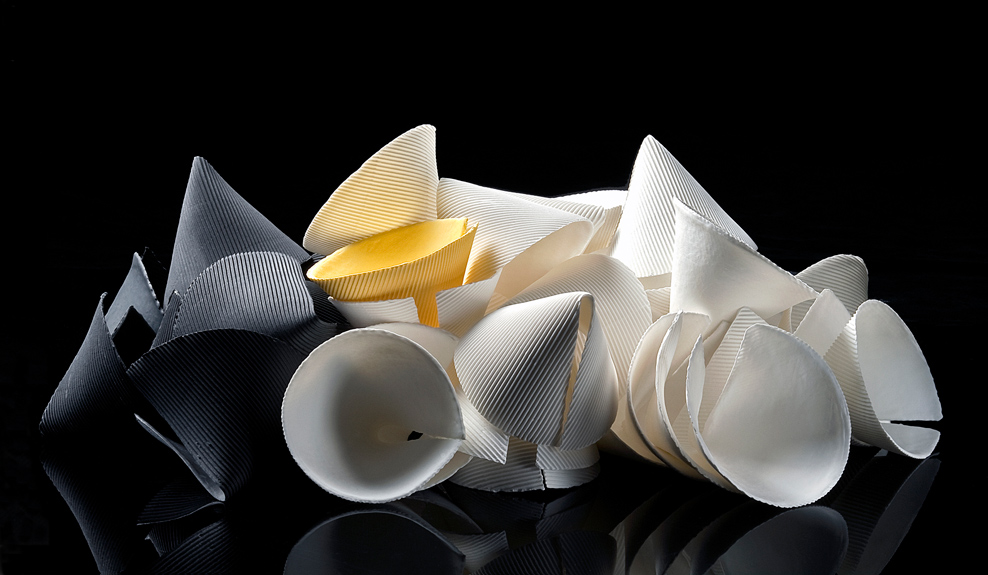
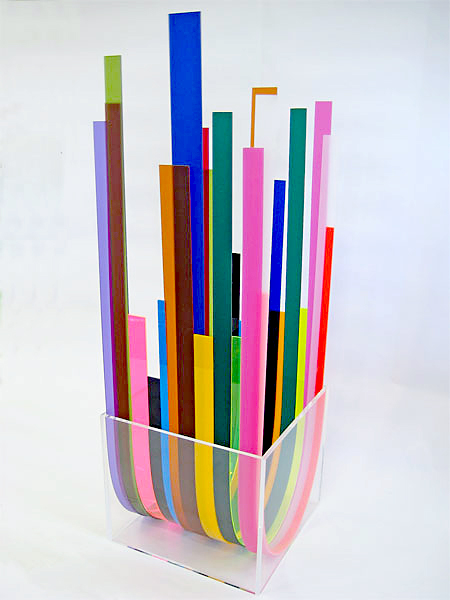
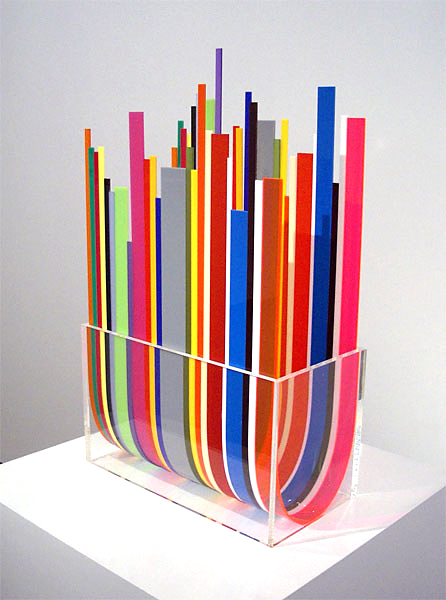
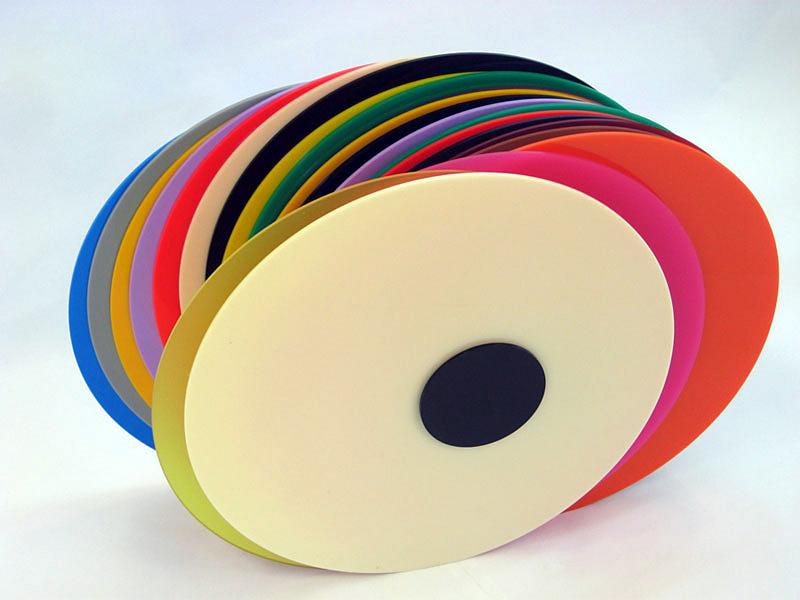
Two solid exhibitions, ceramics by Titania Henderson at Karen Woodbury Gallery and sculpture by John Nicholson at Sophie Gannon Gallery. Both exhibitions benefit from a straight forward approach to craft – elegant, refined sensibilities that are free from an overly conceptual rendering of ideas; stillness, of form in style, inhabits both bodies of work.

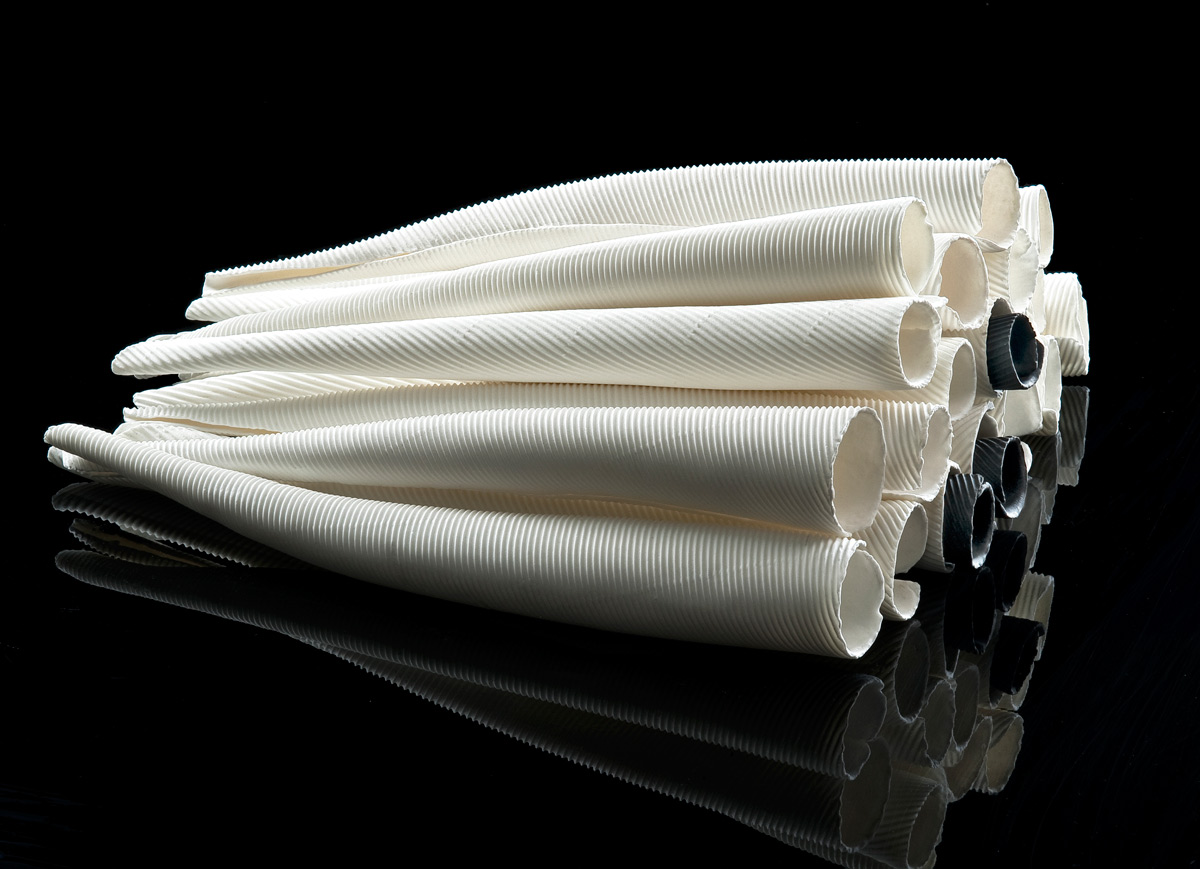
Contemplation is of the essence – in the beautiful, delicate, seemingly fragile shell and tubular mollusc-like bone china structures that, conversely, are physically strong; in the tonal colours of woven amoebic, disc and U-shaped constructions (the Halftone of the exhibition title referring to the loss of colour in digital printing, the longing for sumptuous analogue markings). I liked both exhibitions for the paring down of elements to essentials forming a basis for quiet reflection, a grounding in texture, colour and lightness of form.

Dr Marcus Bunyan


Many thankx to Karen Woodbury Gallery and Sophie Gannon Gallery for allowing me to publish the photographs in the posting. Please click on the photographs for a larger version of the image.


Titania Henderson (Dutch, b. 1945 emigrated Australia 1956) 'Silence' 2010


Titania Henderson (Dutch, b. 1945 emigrated Australia 1956)
Silence
2010
Images courtesy of the artist and Karen Woodbury Gallery


Titania Henderson (Dutch, b. 1945 emigrated Australia 1956) 'Remembering' 2010


Titania Henderson (Dutch, b. 1945 emigrated Australia 1956)
Remembering
2010
Images courtesy of the artist and Karen Woodbury Gallery


Titania Henderson (Dutch, b. 1945 emigrated Australia 1956) 'Piled up 1 (yellow)' 2009/10


Titania Henderson (Dutch, b. 1945 emigrated Australia 1956)
Piled up 1 (yellow)
2009/10
Images courtesy of the artist and Karen Woodbury Gallery


Titania Henderson (Dutch, b. 1945 emigrated Australia 1956) 'Piled up 2 (yellow)' 2009/10


Titania Henderson (Dutch, b. 1945 emigrated Australia 1956)
Piled up 2 (yellow)
2009/10
Images courtesy of the artist and Karen Woodbury Gallery


Titania Henderson’s exhibition The Other presents a range of ceramic sculptural installations in pure white Bone China that convey a three-dimensional engagement. A fragility and vulnerability resonate through these poignant paper-thin configurations, bringing a sense of clarity and freedom. These hand built works challenge the conception of Bone China as a material only suited for slip casting while also incorporating the use of French Limoges. Henderson’s method involves perseverance, technical proficiency and precision, as she creates her own language of rhythmic ceramic art. There is an inherent translucent character that appeals to elements of shadow and light within the works. This new body of work is based on ideas of the human conscience and larger philosophical ideas beyond the objects themselves and beyond language.

Text from the Karen Woodbury Gallery website


John Nicholson (Australian, b. 1970) 'Cloudpopper' 2010


John Nicholson (Australian, b. 1970)
Cloudpopper
2010
Plastic
110 x 38 x 38cm
Photo: Marcus Bunyan


John Nicholson (Australian, b. 1970) 'Scan' 2010


John Nicholson (Australian, b. 1970)
Scan
2010
Plastic
72 x 128cm
Photo: Marcus Bunyan


John Nicholson (Australian, b. 1970) 'Asymmetric' 2010


John Nicholson (Australian, b. 1970)
Asymmetric
2010
Plastic
29 x 70 x 29cm
Photo: Marcus Bunyan


John Nicholson (Australian, b. 1970) 'Concept 101' 2010


John Nicholson (Australian, b. 1970)
Concept 101
2010
Plastic
35 x 46 x 40cm
Photo: Marcus Bunyan


John Nicholson (Australian, b. 1970) Installation view of 'Halftone' 2010


John Nicholson (Australian, b. 1970)
Installation view of Halftone
2010
Photo: Marcus Bunyan


Karen Woodbury Gallery

This gallery has now closed.

Sophie Gannon Gallery
2, Albert Street
Richmond, Melbourne

Opening hours: Tues – Saturday 11 – 5pm

Sophie Gannon Gallery website

LIKE ART BLART ON FACEBOOK

Back to top

Review: ‘How To Comfort Your Father’ by Martin Smith at Sophie Gannon Gallery, Richmond

Exhibition dates: 24th August – 18th September 2010


Martin Smith (Australian, b. 1971) 'Enough' 2010 from the exhibition 'How To Comfort Your Father' by Martin Smith at Sophie Gannon Gallery, Richmond, Aug - Sept, 2010


Martin Smith (Australian, b. 1971)
Enough
2010


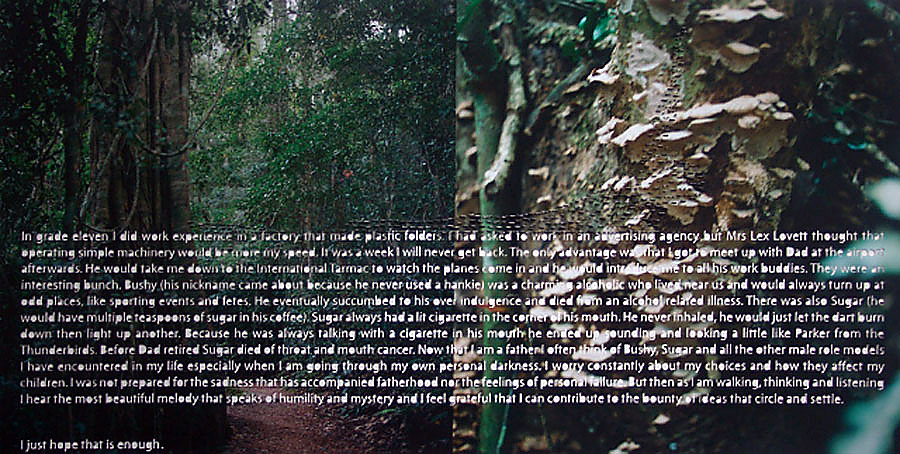
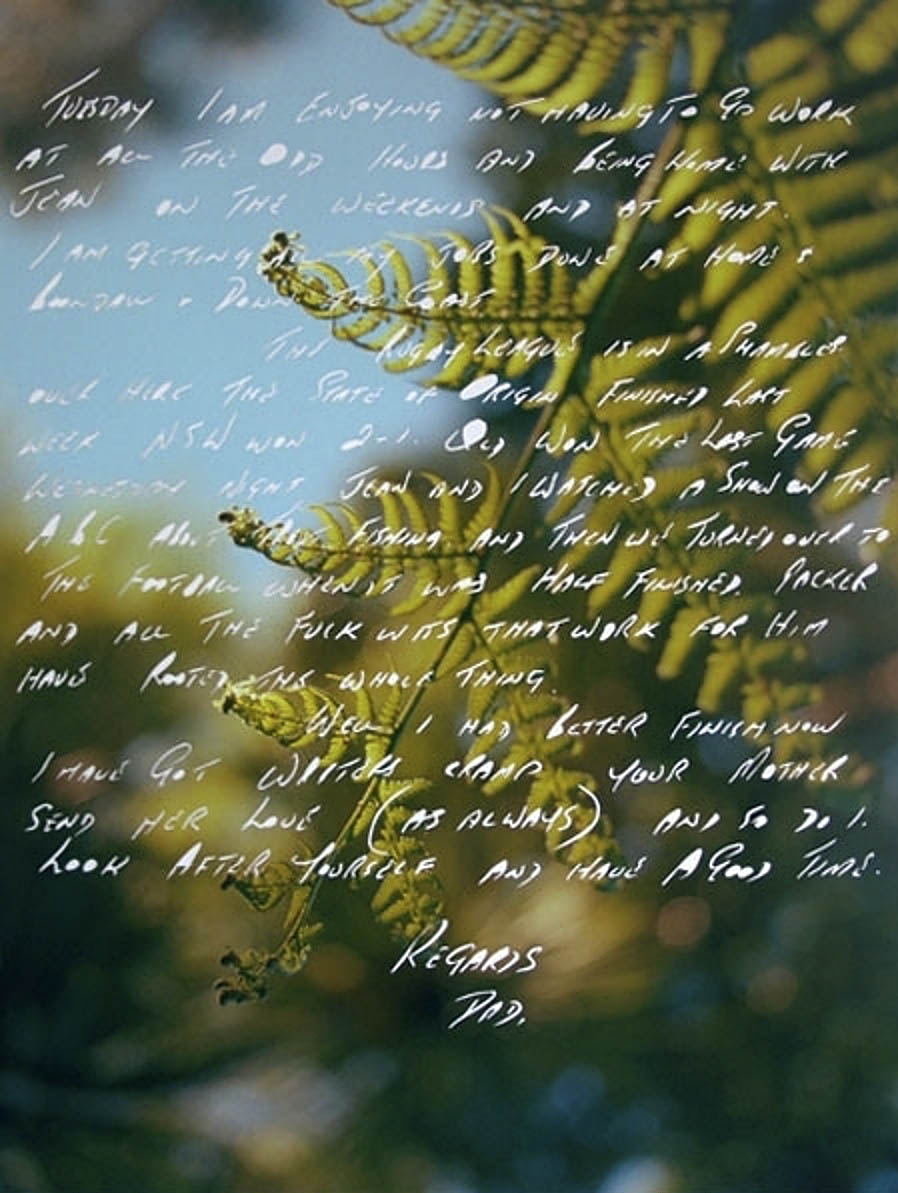
Following on from last year’s exhibition My Jesus Lets Me Rub His Belly that examined issues of place and faith when the artist was growing up, Martin Smith now presents a slice of poignant son father love at Sophie Gannon Gallery, Richmond. The combination of images and text create narratives on growing up, life, male bonding and mortality.

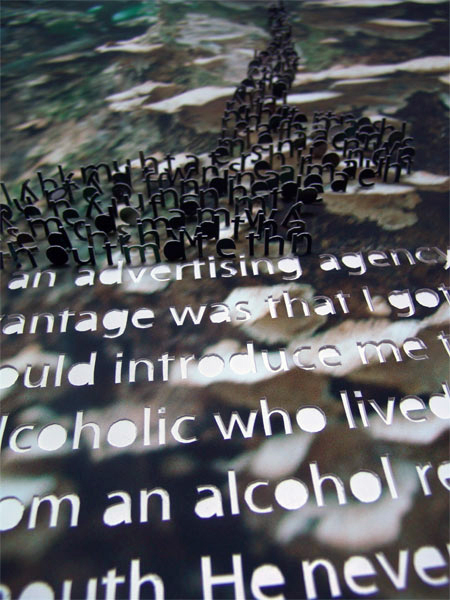
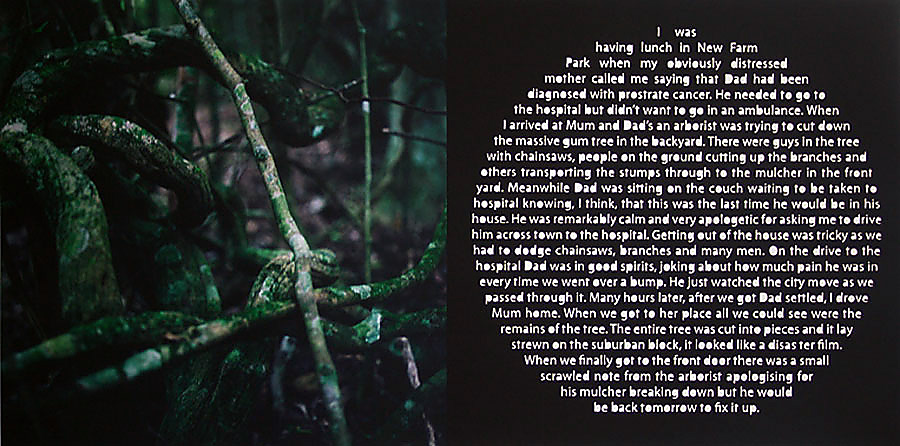
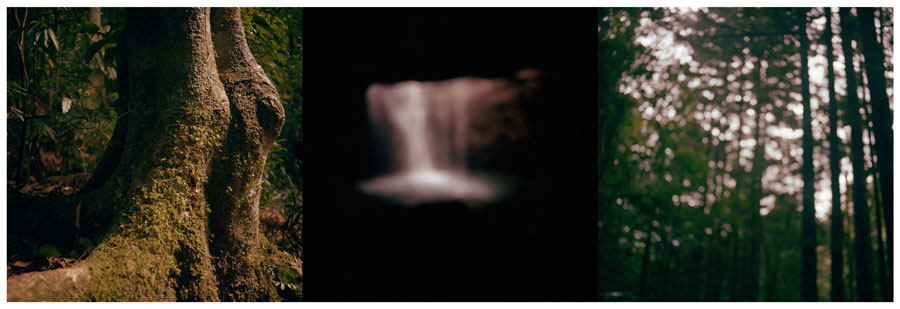
In Fix It Up (2010, below) the use of a circle of text on black (the circle of life) in this image paired with a dark photograph of moss covered twigs and branches is exemplary, the metaphor of the arborist chopping down a gum tree in the backyard as his father is waiting to be taken to hospital by ambulance with prostrate cancer, the last time he will be present in his house, incredibly moving. The use of blurred images, such as the central panel in the triptych Sydney (2010, below) adds emotional weight to the narratives, as though the stories told can only be fragmentary memories, as all memories are, of the events that have passed. The feeling of an excavation of the meaning of life and death is further enhanced by the incision of the letters into the photographs surface and the extrusion of the letters to form three-dimensional sculptural forms, as in the work Enough (2010, see photograph and detail below). The letters shape references the fungi on the tree behind, new life growing out of old, as though the words were being extruded out of the forest, archives of communal memory.

My favourite image in the exhibition didn’t have any words at all, not even piled as detritus at the bottom of the frame as many of Smith’s works do. It didn’t need them. The triptyph Untitled 1 (2010, below) is simple and eloquently beautiful and almost brought me to tears. When read in combination with the other works and their texts, the moss covered trees on the left become two wrinkled elbows, the image on the right the wandering mind and the image in the centre – for me, the feeling of life force as it flows in the darkness. As my yoga teacher says to me, “You must learn to navigate the dazzling darkness.”

This illumination of the mind, body, memory and spirit is what Smith’s work is all about. I adore it.

Dr Marcus Bunyan


Many thankx to Edwin and Sophie at Sophie Gannon Gallery for allowing me to publish the photographs in the posting. All photographs © and courtesy of the artist and Sophie Gannon Gallery. Please click on the photographs for a larger version of the image as it is important to read the text with the larger horizontal works (in some you can’t read the text, it is too small – apologies).


Martin Smith (Australian, b. 1971) 'Regards Dad' 2010 from the exhibition 'How To Comfort Your Father' by Martin Smith at Sophie Gannon Gallery, Richmond, Aug - Sept, 2010

Martin Smith (Australian, b. 1971)
Regards Dad
2010


Martin Smith (Australian, b. 1971) 'Enough' 2010 (detail) from the exhibition 'How To Comfort Your Father' by Martin Smith at Sophie Gannon Gallery, Richmond, Aug - Sept, 2010


Martin Smith (Australian, b. 1971)
Enough (detail)
2010


Martin Smith (Australian, b. 1971) 'Fix it up' 2010


Martin Smith (Australian, b. 1971)
Fix it up
2010


Martin Smith (Australian, b. 1971) 'Sydney' 2010


Martin Smith (Australian, b. 1971)
Sydney
2010


Martin Smith (Australian, b. 1971) 'Untitled 1' 2010


Martin Smith (Australian, b. 1971)
Untitled 1
2010


Sophie Gannon Gallery
2, Albert Street, Richmond, Melbourne

Opening hours:
Tuesday – Saturday 11 – 5pm

Sophie Gannon Gallery website

LIKE ART BLART ON FACEBOOK

Back to top

Review: ‘Jill Orr: Vision’ at Jenny Port Gallery, Richmond, Melbourne

Exhibition dates: 2nd June – 3rd July, 2010


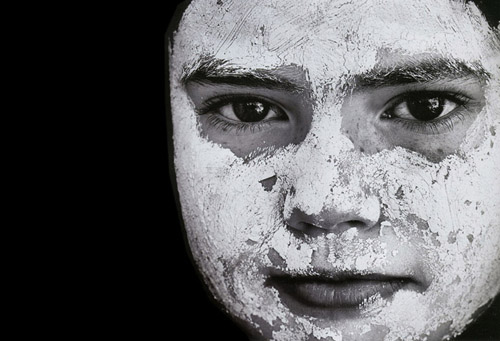
Jill Orr (Australian, b. 1952) 'Megan' 2009 from the exhibition Review: 'Jill Orr: Vision' at Jenny Port Gallery, Richmond, Melbourne, June - July, 2010


Jill Orr (Australian, b. 1952)
Megan
2009


A huge gallery crawl on Wednesday last saw me take in exhibitions at Nellie Castan Gallery (Malleus Melficarum: strong sculptural work by James and Eleanor Avery; Broken Canon: vibrant mixed media collages by Marc Freeman); Anita Traverso Gallery (Peristereonas: sculptures, photographs and mixed media by Barry Thompson); John Buckley Gallery (Perpetua by Emma can Leest, beautiful cut paper works; rather mundane paintings by Christian Lock); Karen Woodbury Gallery (Every breath you take: wonderful galaxy-like paintings, perhaps as seen by the Hubble telescope, with a geometric / cellular base by Lara Merrett); The Centre for Contemporary Photography (Event horizon: a group exhibition that “engages the horizon as a means to establish a physical locality with relation to the Earth’s surface and more broadly to the universe of which it is a miniscule component.” An exhibition that left me rather cold); and ACCA (Towards an elegant solution by Peter Cripps, again a singularly unemotional engagement with the precise, contained work: interesting for how the work explores spatial environments but in an abstract, intellectual way).

The stand out work from this mammoth day was Jill Orr: Vision at Jenny Port Gallery. Simply put, it was the strongest, most direct, most emotionally powerful work that I saw all day.

Dr Marcus Bunyan


Many thankx to Amelia Douglas and Jenny Port Gallery for allowing me to publish the photographs in this posting.


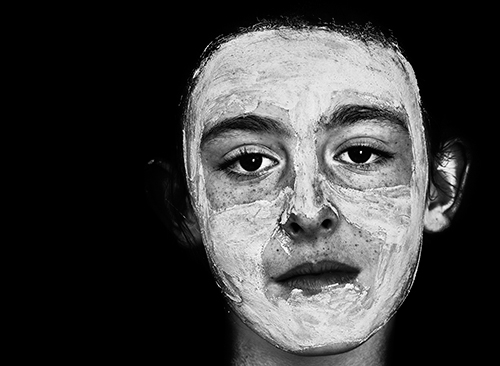
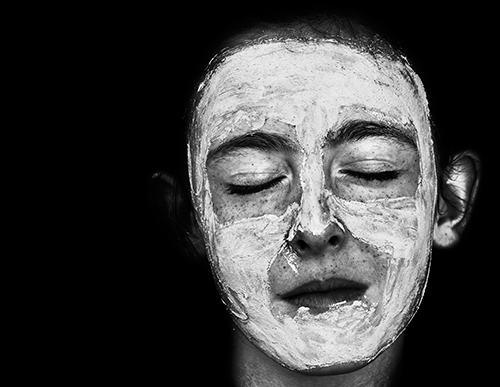
Jill Orr (Australian, b. 1952) 'Megan' 2009 from the exhibition Review: 'Jill Orr: Vision' at Jenny Port Gallery, Richmond, Melbourne, June - July, 2010


Jill Orr (Australian, b. 1952)
Megan
2009


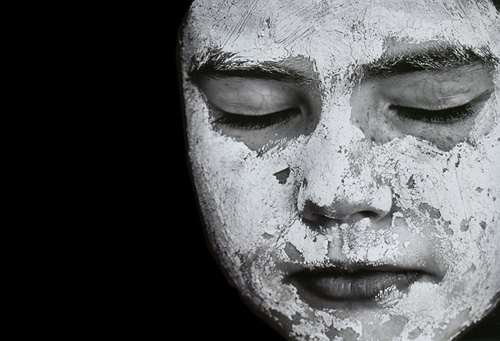
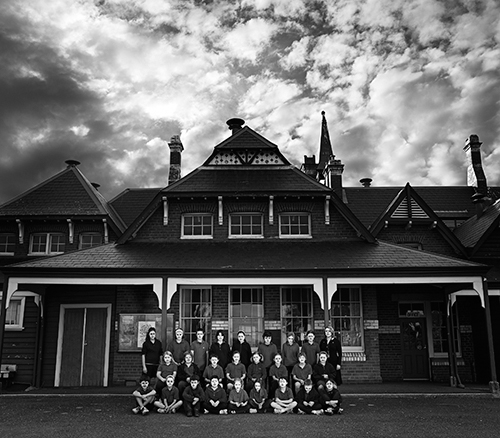
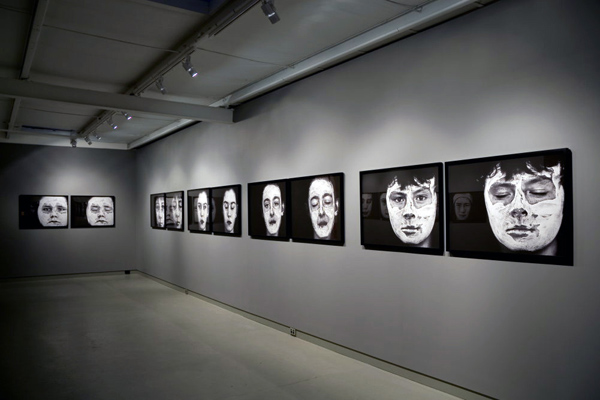
Jill Orr’s new participatory performances are photographs of children from Avoca Primary School painted with white clay from the area, displayed in pairs. The children are photographed once with eyes open, once with eyes closed. Orr asked the children to imagine their future life when they had their eyes closed. The key to the work is a group photograph of the ghostly children outside the primary school where everyone is isolated from each other (see photograph below).

“White faces loom up out of a dark ground, described by Orr as a void. On the surface these portraits are finely crafted, the skin of masked face becomes one with the digital file to create a facial landscape. The materiality of the face and the photographic file are exposed for the viewer. Titling the series ‘vision’ Orr ventures into a ‘haptic visuality’ where “vision itself can be tactile, as though one were touching a film with one’s eyes.”


From the catalogue essay by Professor Anne Marsh, Monash University


In the performance, the ritual of being photographed, Orr instructs the children who are placed under the surveillance of the camera. “We are confronted with the pose, the conscious composition of the image to be photographed, the inherent constructedness of the posed photograph.”1 The child assumes the pose by which they wish to be memorialised. The gaze (of the camera, of the viewer) is returned / or not in this spectacle.

Something happens when we look at these photographs. The text of the photographs becomes intertextual, producing as Barthes understands a “plurality of meanings and signifying / interpretive gestures that escape the reduction of knowledge to fixed, monological re-presentations, or presences.”2 This is because, as Foucault observes, texts “are caught up in a system of references to … other texts, other sentences: it is a node within a network …  Its unity is variable and relative.”3

The photographs invite us to share not only the mapping of the surface of the skin and the mapping of place (the history of white people living on the land in country Australia) and identity but the sharing of inner light, the light of the imaginary as well – and in this observation the images become unstable, open to reinterpretation. The distance between viewer and subject is transcended through an innate understanding of inner and outer light. The photographs seduce, meaning, literally, to be led astray.

As American photographer Minor White, who photographed in meditation hoping for a revelation in spirit though connection between person > subject > camera > negative > print, observes in one of his Three Canons

When the image mirrors the man
And the man mirrors the subject
Something might take over
4


Here the power of the photographer acting in isolation, the modernist tenet of authorship, is overthrown. In it’s place, “White supposes a relationship with subject that is a two way street: by granting the world some role in its own representation we create a photograph that is not so much a product solely of individual actions as it is the result of a negotiation in which the world and all its subjects might participate.”5 The autobiography of a soul born in the age of mechanical reproduction. This is the power of these photographs for something intangible within the viewer does take over. I found myself looking at the photographs again and again for small nuances, the detail of hairs on the head, the imagining of what the person was thinking about with their eyes closed: their future, their fears, their hopes, the ‘active imagination as a means to visualise sustainable futures’ (Orr, 2010).

These photographs seem to lengthen or protract time through this haptic touching of inner light. As Pablo Helguera observes in his excellent essay How To Understand the Light on a Landscape that examines different types of light (including experiental light, somber light, home light, ghost light, the light of the deathbed, protective light, artificial light, working light, Sunday light, used light, narrated light, the last light of day, hotel light, transparent light, after light, the light of the truly blind and the light of adolescence but not, strangely, inner light)

“Experience is triggered by light, but not exclusively by the visible light of the electro-magnetic spectrum. What the human eye is incapable to perceive is absorbed by other sensory parts of the body, which contribute to the perception that light causes an effect that goes beyond the merely visual …

There is the LIGHT OF ADOLESCENCE, a blinding light that is similar to the one we feel when we are asleep facing the sun and we feel its warmth but don’t see it directly. Sometimes it marks the unplace, perhaps the commonality of all places or perhaps, for those who are pessimists, the unplaceness of every location …

We may choose to openly embrace the darkness of light, and thus let ourselves through the great gates of placehood, where we can finally accept the unexplainable concreteness of our moments for what they are.”6


In the imagination of the darkness that lies behind these children’s closed eyes is the commonality of all places, a shared humanity of memory, of dreams. These photographs testify to our presence and ask us to decide how we feel about our life, our place and the relation to that (un)placeness where we must all, eventually, return.

Dr Marcus Bunyan


1/ Feiereisen, Florence and Pope, Daniel. “True Fiction and Fictional Truths: The Enigmatic in Sebald’s Use of Images in The Emigrants” in Patt, Lise (ed.,). Searching for Sebald: Photography after W.G. Sebald. Los Angeles: The Institute of Cultural Inquiry, 2007, p. 175.

2/ Barthes, Roland. “From Work to Text” in Image, Music, Text. trans. S. Heath. New York: Hill and Wang, 1977 quoted in Thumlert, Kurt. Intervisuality, Visual Culture, and Education. [Online] Cited 10/08/2006. www.forkbeds.com/visual-pedagogy.htm (link no longer active)

3/ Foucault, Michel. The Order of Things: An Archeology of the Human Sciences. New York: Vintage, 1973 quoted in Thumlert, Kurt. Intervisuality, Visual Culture, and Education. [Online] Cited 10/08/2006. www.forkbeds.com/visual-pedagogy.htm (link no longer active)

4/ White, Minor. Mirrors, Messages and Manifestations. Aperture, 1969

5/ Leo, Vince. Review of Mirrors, Messages and Manifestations on the Amazon website [Online] Cited 26/06/2010

6/ Helguera, Pablo. “How to Understand the Light on a Landscape,” in Patt, Lise (ed.,). Searching for Sebald: Photography after W.G. Sebald. Los Angeles: The Institute of Cultural Inquiry, 2007, pp. 110-119


    Jill Orr (Australian, b. 1952) 'Jacinta' 2009 from the exhibition Review: 'Jill Orr: Vision' at Jenny Port Gallery, Richmond, Melbourne, June - July, 2010

    Jill Orr (Australian, b. 1952) 'Jacinta' 2009 from the exhibition Review: 'Jill Orr: Vision' at Jenny Port Gallery, Richmond, Melbourne, June - July, 2010


    Jill Orr (Australian, b. 1952)
    Jacinta
    2009


    Jill Orr (Australian, b. 1952) 'Avoca Primary School' 2009


    Jill Orr (Australian, b. 1952)
    Avoca Primary School
    2009


    Jill Orr’s work centres on issues of the psycho-social and environmental where she draws on land and identities. Grappling with the balance and discord that exists between the human spirit, art and nature, Orr has, since the 1970s, delighted, shocked and moved audiences through her performance installations.

    This current body of work involved children from the Avoca Primary School as active participants in Orr’s performance for the camera. The result is a series of high contrast black and white photographic portraits, which are shown as diptychs portraying the different states of seeing both outwardly and inwardly. One of each pair frames the child looking directly at the camera. The gaze meets the viewer. Who is looking at whom? The second captures the child whose eyes are closed. An inner world is intimated, but not accessible to the viewer.

    In terms of the ‘gaze’, these works turn to the child as conveyer of the imaginary engaging both within and without. “I have found that creative acts require the visionary sensibilities of both the inner and outer world to operate simultaneously, consciously and unconsciously as dual aspects of the one action. In this instance the action is that of active imagination as a means to visualise sustainable futures.” (Jill Orr, 2010). The portraits also reflect the present relationship to place that is etched into the faces of youth as already kissed by the harsh Australian sun.

    Avoca is one of many townships that has been socially, economically and environmentally affected by drought and climate change. The portraits are created against this background.

    Text from the Jenny Port Gallery website [Online] Cited 26/06/2010 no longer available online


    Jill Orr (Australian, b. 1952) 'Vision' installation photograph at Jenny Port Gallery

    Jill Orr (Australian, b. 1952) 'Vision' installation photograph at Jenny Port Gallery


    Jill Orr (Australian, b. 1952)
    Vision installation photographs at Jenny Port Gallery
    June 2010
    Photos: Marcus Bunyan


    Jenny Port Gallery

    This gallery has now closed.

    Jill Orr website

    LIKE ART BLACK ON FACEBOOK

    Back to top

    Four exhibitions in Albert Street, Richmond: Pamela Rataj at Anita Traverso Gallery, Claudia Damichi at Sophie Gannon Gallery, Steve Randall at John Buckley Gallery and Robert Boynes at Karen Woodbury Gallery

    April 2010


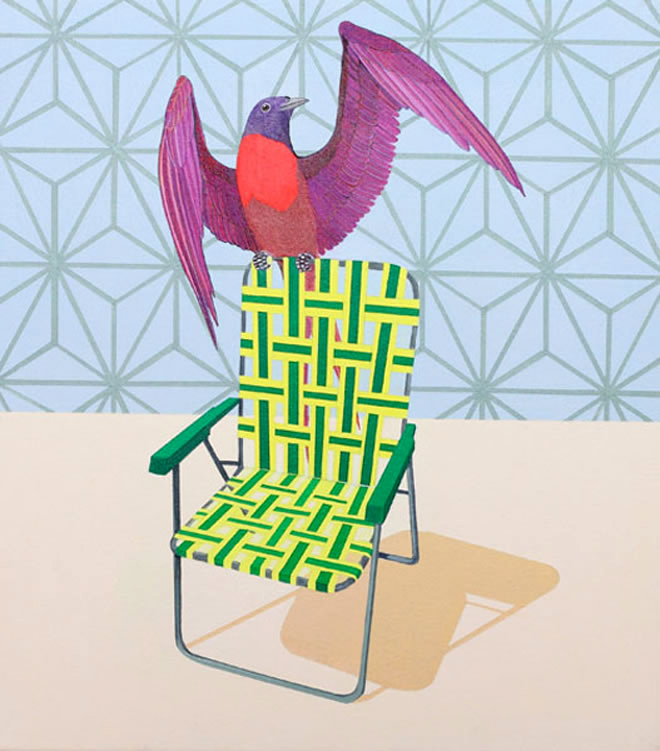
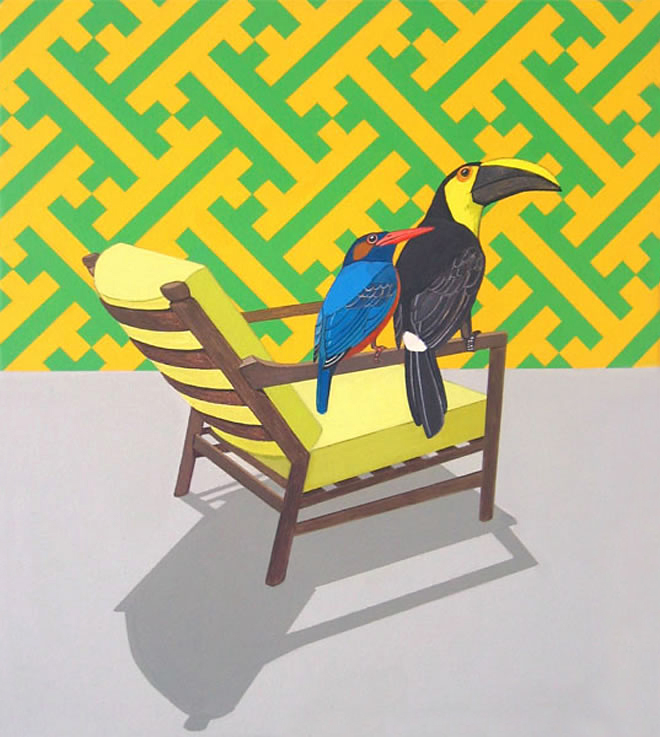
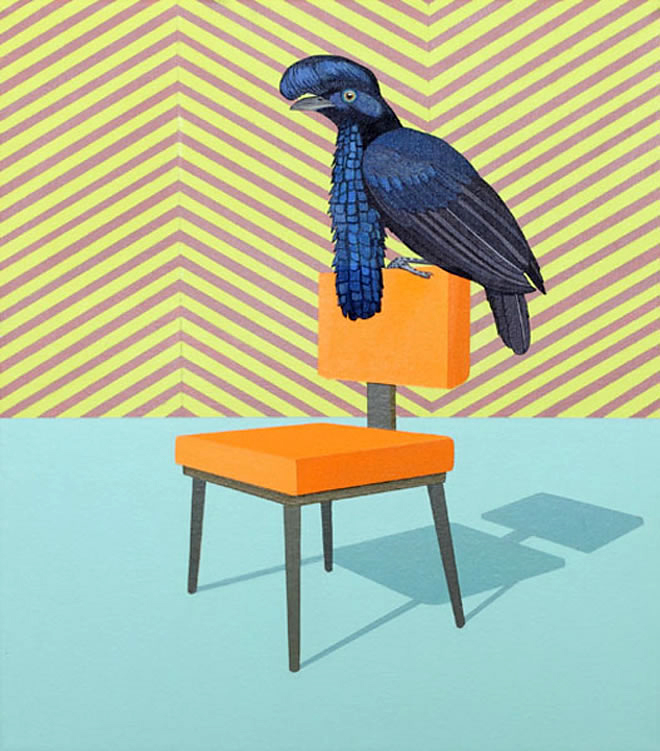
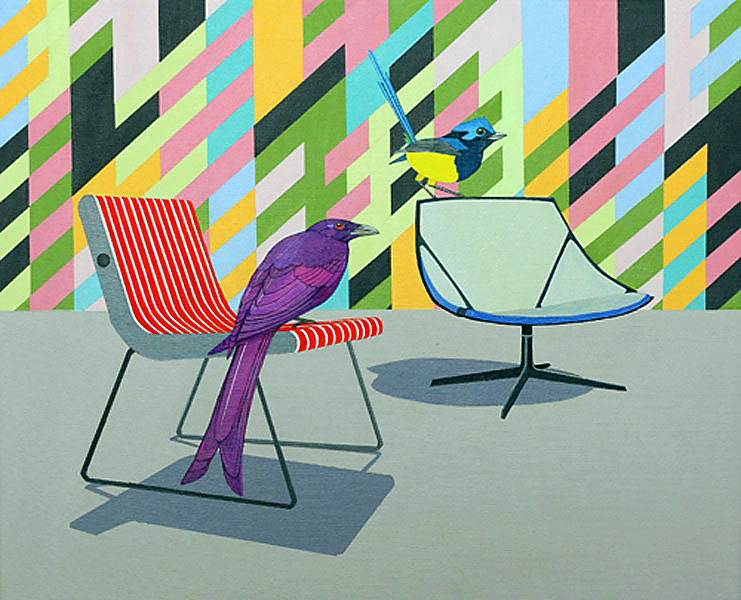
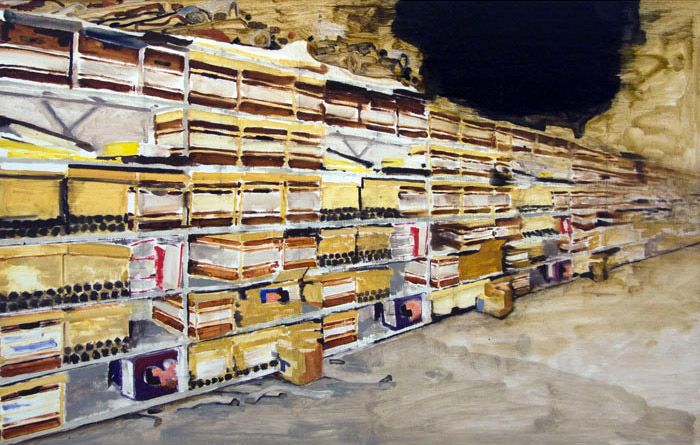
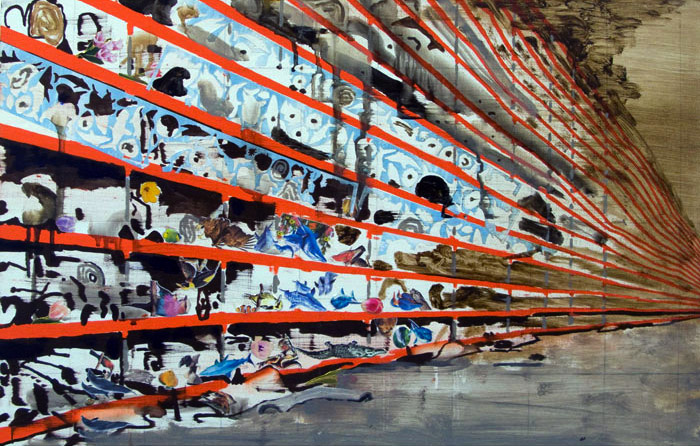
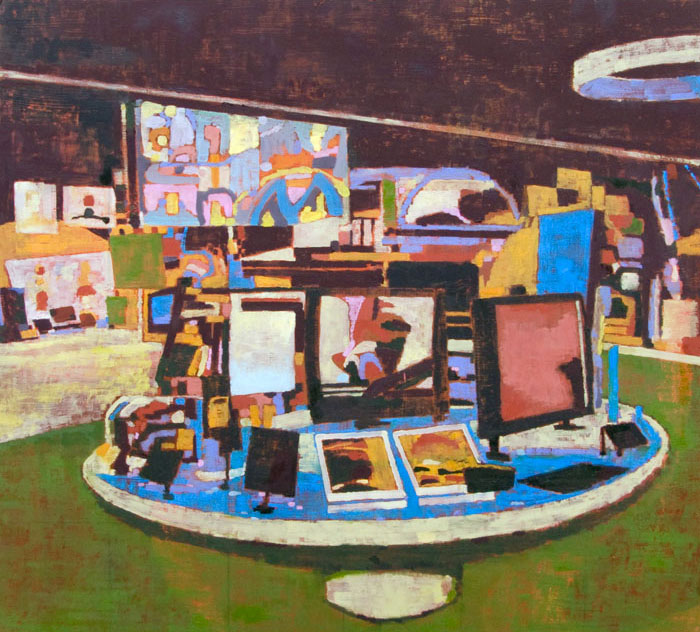
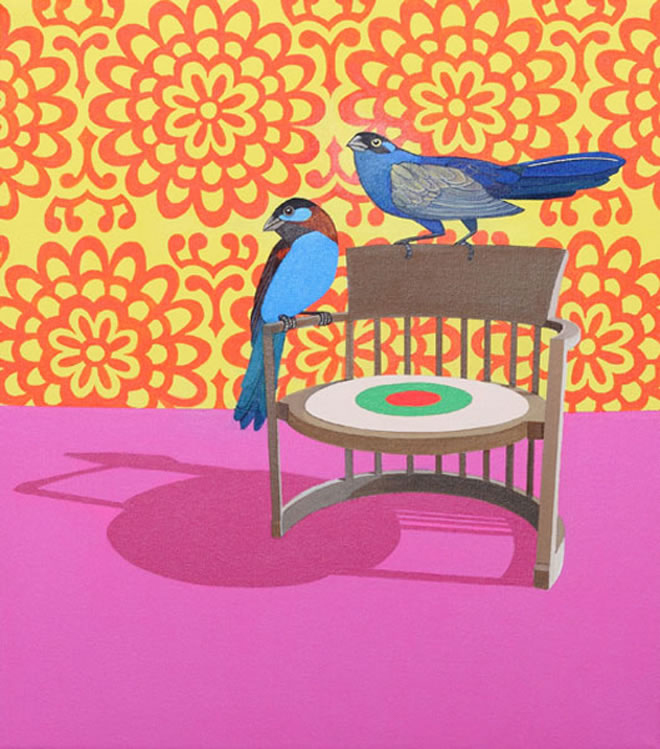
    Four interesting exhibitions in Albert Street, Richmond – from the beautiful, formed leather sculptures of Pamela Rataj to the wonderfully vibrant tropical bird, chair and decorative pattern paintings of Claudia Damichi; from the intensely observed canvas environments of Steve Randall to the post-photographic silk-screen textualisations of Robert Boynes. Well worth a visit on a Saturday afternoon!

    As always, many thankx to the galleries for allowing me to publish the images in this posting. Please click on the images for a larger version.

    ~ Pamela Rataj. The Morphology of Forgetting at Anita Traverso Gallery. 7th April – 1st May 2010

    ~ Claudia Damichi. The Bitter Sweet at Sophie Gannon Gallery. 30th March – 25th April 2010

    ~ Steve Rendall. Security, Storage and Recreation at John Buckley Gallery. 8th April – 1st May 2010

    ~ Robert Boynes. Postscript at Karen Woodbury Gallery. 7th April – 1st May 2010


    Pamela Rataj. The Morphology of Forgetting at Anita Traverso Gallery

    7th April – 1st May 2010


    Pamela Rataj. 'Tangent Bundle' 2009


    Pamela Rataj (Australian)
    Tangent Bundle
    2009


    Pamela Rataj. 'Ravel' 2009


    Pamela Rataj (Australian)
    Ravel
    2009


    Pamela Rataj. 'Kairos' 2009


    Pamela Rataj (Australian)
    Kairos
    2009


    How to draw a boundary between self and other, past time and today?

    Patterns and forms in nature often resemble one another, connecting life forms in unexpected ways. Tide lines left in the sand resemble the grains found in a piece of wood, and the veins in a leaf or those in a hand.

    The age lines in the trunk of a tree form as each outer layer covers the one preceding it and echoes its shape. This makes me think of the way past experience resurfaces as memory, receding or becoming more important at different times in our lives, as each new experience envelopes our previous states of being and yet is shaped by them.

    The wrapped and layered forms in The Morphology of Forgetting explore coexistence and connection.

    I dedicate this exhibition to my parents, whose recent deaths have helped me appreciate memory as a way to connect through time.

    Pamela Rataj 2010

    Press release from the Anita Traverso Gallery website [Online] Cited 10/04/2010. No longer available online


    Pamela Rataj (Australian) 'Faisceaux 1' 2009


    Pamela Rataj (Australian)
    Faisceaux 1
    2009


    Pamela Rataj. 'Faisceaux 4' 2009


    Pamela Rataj (Australian)
    Faisceaux 4
    2009


    Claudia Damichi. The Bitter Sweet at Sophie Gannon Gallery

    30th March – 25th April 2010


    Claudia Damichi (Australian, b. 1972) 'Birds eye' 2010


    Claudia Damichi (Australian, b. 1972)
    Birds eye
    2010
    Acrylic on canvas
    46 x 41cm


    Claudia Damichi (Australian, b. 1972) 'Star Gazer' 2009


    Claudia Damichi (Australian, b. 1972)
    Star Gazer
    2009
    Acrylic on canvas
    46 x 41cm


    Claudia Damichi (Australian, b. 1972) 'Gridlock' 2010


    Claudia Damichi (Australian, b. 1972)
    Gridlock
    2010
    Acrylic on canvas
    41 x 46cm


    Claudia Damichi (Australian, b. 1972) 'Reading between the lines' 2010


    Claudia Damichi (Australian, b. 1972)
    Reading between the lines
    2010
    Acrylic on canvas
    46 x 41cm


    Claudia Damichi’s surrealist still life paintings are characterised by vivid colours, elaborate patterns and distorted spatial proportions. In her paintings of domestic interiors, flowers, birds and furniture, colour is inflated and scale is playfully manipulated – solitary domestic interiors are reconfigured into places of fantasy and illusion. Inspired by the enduring aesthetic of modern industrial design, her surreal and theatrically staged scenarios self-consciously conjure a sense of the absurd. Graphic patterning, high-croma colour and whimsical compositions foster worlds that are at once playful and claustrophobic, satirical and real, tapping into an ambiguous nostalgia that leaves the viewer feeling that anything is possible.

    Visit the Sophie Gannon website


    Claudia Damichi (Australian, b. 1972) 'Look out' 2010


    Claudia Damichi (Australian, b. 1972)
    Look out
    2010
    Acrylic on canvas
    46 x 56cm


    Steve Rendall. Security, Storage and Recreation at John Buckley Gallery

    8th April – 1st May 2010


    Steven Rendall (Australian born Britain, b. 1969; Australia from 2000) 'Archive 1' 2010


    Steven Rendall (Australian born Britain, b. 1969; Australia from 2000)
    Archive 1
    2010
    Oil on linen


    Steven Rendall (Australian born Britain, b. 1969; Australia from 2000) 'Archive 2' 2010


    Steven Rendall (Australian born Britain, b. 1969; Australia from 2000)
    Archive 2
    2010
    Oil on linen


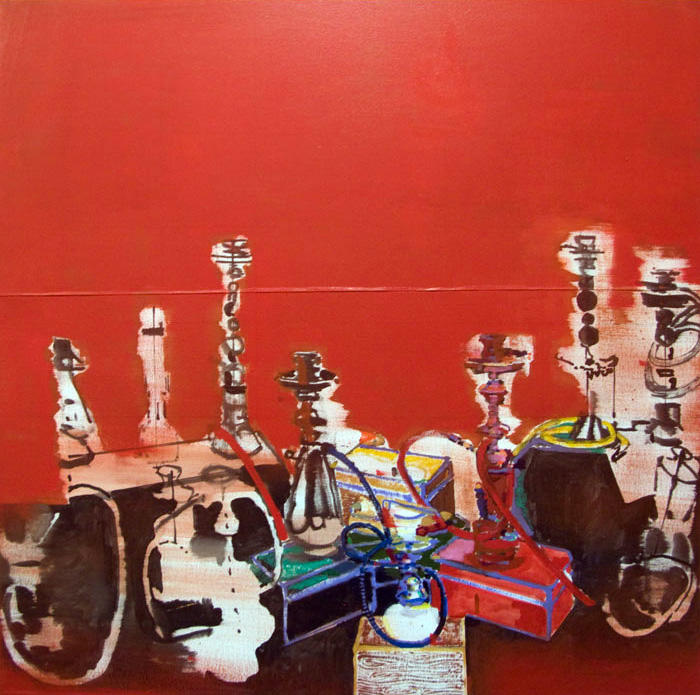
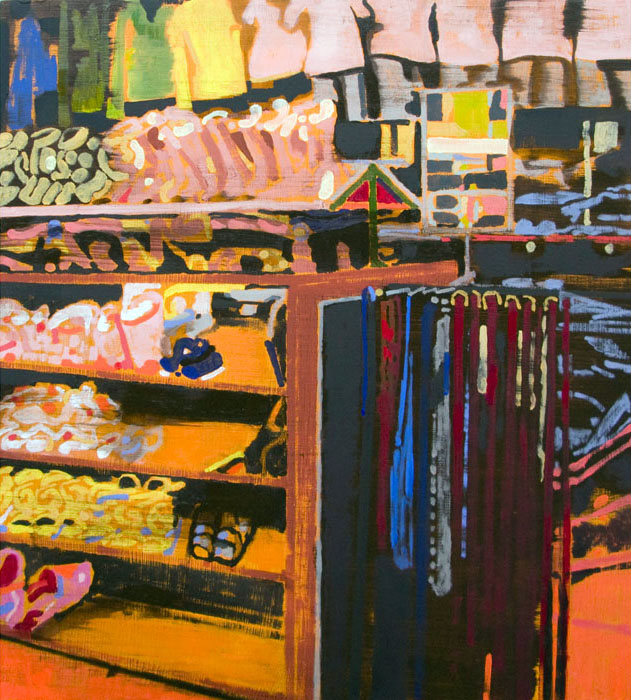
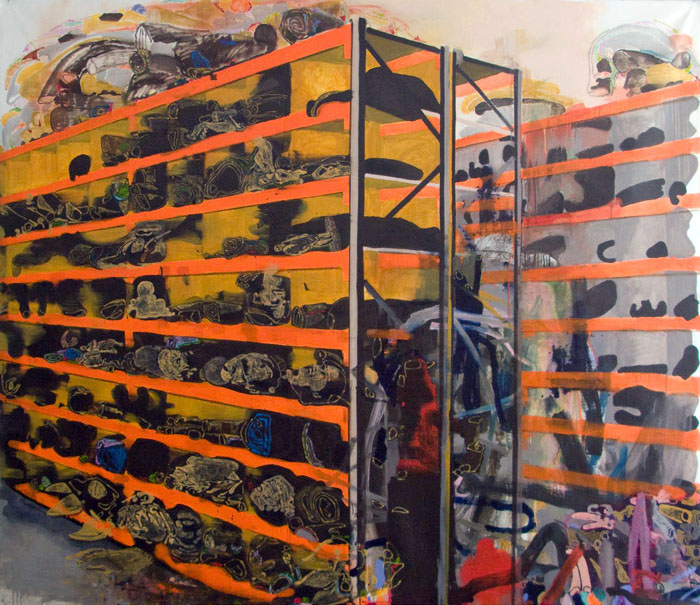
    Citing the British artist Walter Sickert as an important influence on his painterly style, Rendall’s work displays a form and content that has attracted the attention of both critics and collectors. A key work in the exhibition is a large-scale painting on un-stretched linen titled Fountain (Rosemary’s Baby) that sprawls across 4.5m. Certain fountains, along with other apparently arbitrary images of television monitors, speedboats, clothing racks, shelving units and museum interiors are recurring motifs in Rendall’s paintings.

    Rendall aims to ‘collect and synthesise’ images from around his home and en route to and from his Brunswick studio. Passing observations of window displays, charity shops and various light industrial warehouses are registered and recorded in conjunction with the accumulation of promotional flyers spruiking leisure activities and museum experiences. This shambolic collection of images is transcribed into an array of compositions in Rendall’s paintings. Images occasionally materialise in unlikely places, such as the spectral diver’s head that is resting on a warehouse shelf in the appropriately titled Storage.

    In the exhibition Security, Storage and Recreation, you are invited to enter the image bank of Steven Rendall; a ‘wake in fright’ experience where one can become immersed and caught up in the maelstrom of the artist’s visual language – a sequence of painterly dreams each similar yet different to the last.”

    Press release from the John Buckley Gallery website [Online] Cited 10/04/2010 no longer available online


    Steven Rendall (Australian born Britain, b. 1969; Australia from 2000) 'Flat Screens (Green)' 2010


    Steven Rendall (Australian born Britain, b. 1969; Australia from 2000)
    Flat Screens (Green)
    2010
    Oil on linen


    Steven Rendall (Australian born Britain, b. 1969; Australia from 2000) 'Pipes' 2010


    Steven Rendall (Australian born Britain, b. 1969; Australia from 2000)
    Pipes
    2010
    Oil on linen


    Steven Rendall (Australian born Britain, b. 1969; Australia from 2000) 'Claustrophobia' 2010


    Steven Rendall (Australian born Britain, b. 1969; Australia from 2000)
    Claustrophobia
    2010
    Oil on linen


    Steven Rendall (Australian born Britain, b. 1969; Australia from 2000) 'Redacted 2' 2010


    Steven Rendall (Australian born Britain, b. 1969; Australia from 2000)
    Redacted 2
    2010
    Oil on linen


    Robert Boynes. Postscript at Karen Woodbury Gallery

    7th April – 1st May 2010


    Robert Boynes (Australian, b. 1942) 'Street Runner' 2010


    Robert Boynes (Australian, b. 1942)
    Street Runner
    2010
    Acrylic on canvas and velvet
    120 x 242cm


    Robert Boynes (Australian, b. 1942) 'Days that we forgot' 2010


    Robert Boynes (Australian, b. 1942)
    Days that we forgot
    2010
    Acrylic on canvas


    Robert Boynes (Australian, b. 1942) 'Signal Driver' 2010


    Robert Boynes (Australian, b. 1942)
    Signal Driver
    2010
    Acrylic on canvas and velvet
    120 x 190cm


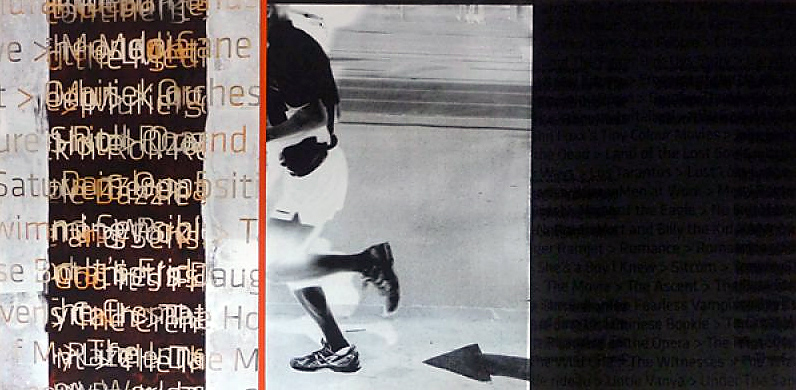
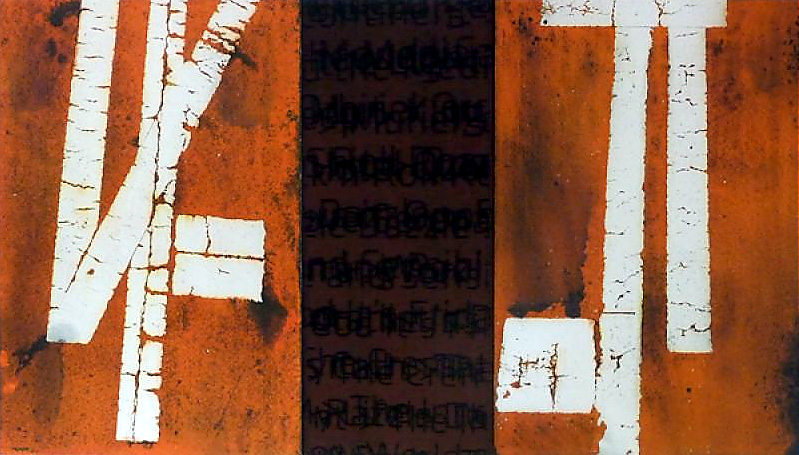
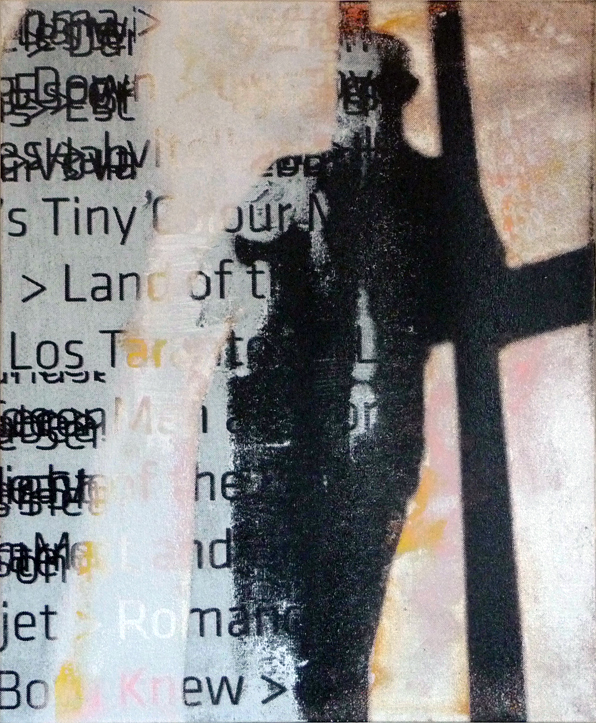
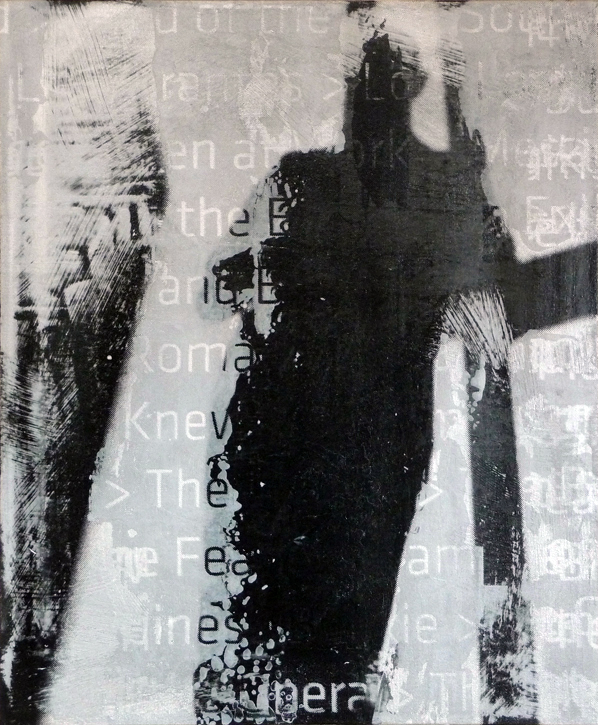
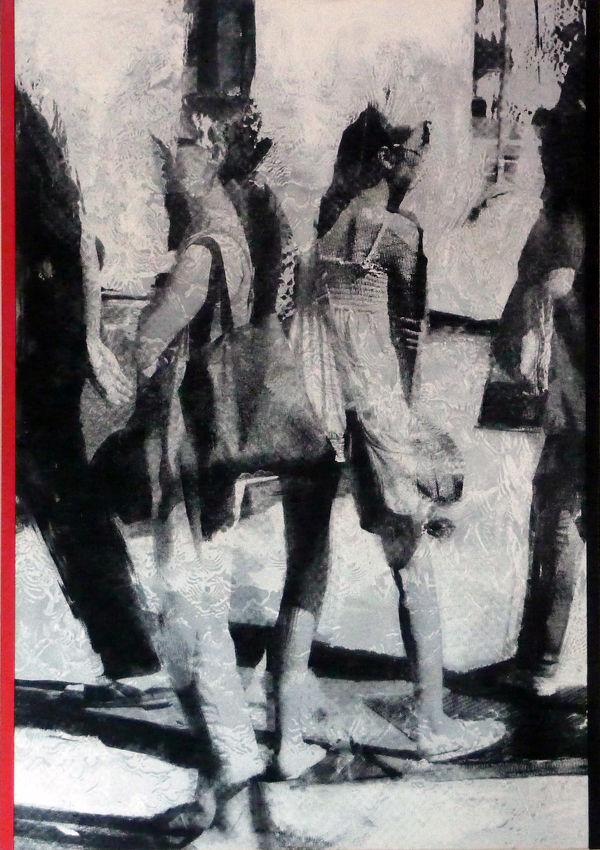
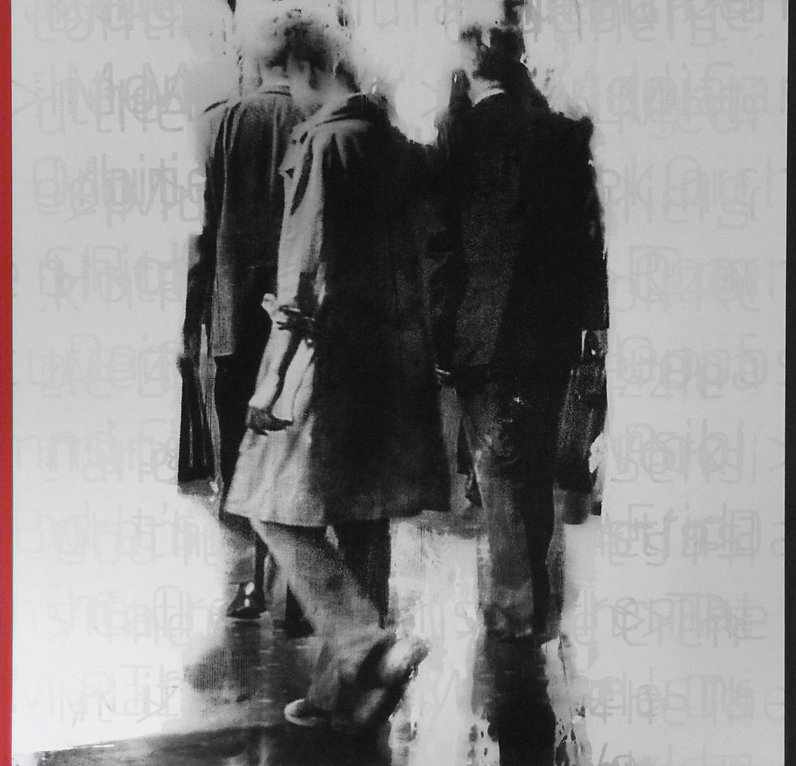
    Postscript is Robert Boynes’ second solo exhibition with Karen Woodbury Gallery. This series continues with his exploration of urban themes, contemporary experience and experimentation into ways of using paint. In this most recent body of work Robert has employed the use of text in juxtaposition to various materials such as wood and velvet. The text conveys a feeling of noise and urban clatter, acting as a context and environment for the figures within the work.

    His technique involves transferring photographic images to large silk screens and dragging paint through the mesh onto canvas. Robert thus has control in the manipulation of colour, density and translucency of the images. This process results in still moments that magnify and investigate everyday observable reality. The anonymous figures are juxtaposed with text and layering of saturated, contrasting colours, appearing objectified and ghostly.

    These works embody a filmic quality, the multi-panelled paintings signify fragmented narratives and enquire into perceptions of time and space.

    Text from the Karen Woodbury Gallery website [Online] Cited 10/04/2010 no longer available online


    Robert Boynes (Australian, b. 1942) 'Body Type' 2 2010


    Robert Boynes (Australian, b. 1942)
    Body Type 2
    2010
    Acrylic on canvas


    Robert Boynes (Australian, b. 1942) 'Body Type 3' 2010


    Robert Boynes (Australian, b. 1942)
    Body Type 3
    2010
    Acrylic on canvas


    Robert Boynes (Australian, b. 1942) 'Things we leave behind' 2009


    Robert Boynes (Australian, b. 1942)
    Things we leave behind
    2009
    Acrylic on canvas
    120 x 180cm


    Robert Boynes (Australian, b. 1942) 'The layered moment' 2009


    Robert Boynes (Australian, b. 1942)
    The layered moment
    2009
    Acrylic on canvas


    Robert Boynes (Australian, b. 1942) 'Postscript' 2009


    Robert Boynes (Australian, b. 1942)
    Postscript
    2009
    Acrylic on canvas
    120 x 124cm


    All galleries have closed except for Sophie Gannon Gallery, Richmond.

    Sophie Gannon Gallery
    2 Albert Street Richmond VIC 3121 Australia
    Phone: +61 3 9421 0857

    Sophie Gannon Gallery website

    LIKE ART BLART ON FACEBOOK

    Back to top

    Three Openings Wednesday 3rd March 2010

    March 2010

    Camilla Tadich: Slabalong and Mark Hislop: Drawing at Sophie Gannon Gallery; Simon Obarzanek at Karen Woodbury Gallery; Kent Wilson Higher Breeds and Alice Wormald Wayside and Hedgerow at Shifted


    Camilla Tadich: Slabalong and Mark Hislop: Drawing at Sophie Gannon Gallery, 2 Albert Street, Richmond
    March 2nd – March 27th 2010
    Sophie Gannon Gallery website

    Simon Obarzanek at Karen Woodbury Gallery, 4 Albert Street, Richmond
    March 3rd – March 27th 2010
    This gallery is now closed
    Kent Wilson Higher Breeds and Alice Wormald Wayside and Hedgerow at Shifted, Level 1, 15 Albert Street, Richmond
    This gallery is now closed
    All photos by Marcus Bunyan


    Sophie Gannon Gallery opening


    Sophie Gannon Gallery opening
    Photo: Marcus Bunyan


    Sophie Gannon Gallery opening - Mark Hislop 'Drawing'

    Sophie Gannon Gallery opening - Mark Hislop 'Drawing'

    Sophie Gannon Gallery opening - Mark Hislop 'Drawing'


    Sophie Gannon Gallery opening – Mark Hislop Drawing
    Photos: Marcus Bunyan


    Camilla Tadich (Australian, b. 1982) 'Bordertown' 2010


    Camilla Tadich (Australian, b. 1982)
    Bordertown
    2010
    Photo: Marcus Bunyan


    Sophie Gannon Gallery opening - Camila Tadich 'Slabalong'


    Sophie Gannon Gallery opening – Camila Tadich Slabalong
    Photo: Marcus Bunyan


    Karen Woodbury Gallery opening – Simon Obarzanek


    Karen Woodbury Gallery opening – Simon Obarzanek
    Photo: Marcus Bunyan


    Simon’s photographs come from observing the physical movements of people pushing through the space around them in a city. He senses a universal language through movement and is drawn to this rather than their faces, as he normally is.

    He noted that the “strained movements against gravity struck me with force… When I see a person creating a shape with their body in the street I do not sense the individual but a part, a piece of a larger performance. Each individual connects with others to create a visual language. I did not want faces to interrupt this larger work.”

    Simon collects the movements on his camera, as photographic sketches, then he rephotographs the movement using friends and family as models. Removed from the busy streets, dislocated, his subject is isolated and framed against a dark background. Some twist away from the camera, or stagger against an unseen wind, sheltering their face from rain that is not falling. Simon does not show their faces, which emphasises the movement and makes the figures anonymous. These photographs are theatrical and mysterious, emphasising the loneliness and alienation that can be encountered living in a big city.

    Text from the Turner Galleries website [Online] Cited 28/06/2019


    Karen Woodbury Gallery – Simon Obarzanek opening, the artist standing centre in the grey t-shirt


    Karen Woodbury Gallery – Simon Obarzanek opening, the artist standing centre in the grey t-shirt
    Photo: Marcus Bunyan


    Karen Woodbury Gallery - Simon Obarzanek opening

    Simon Obarzanek (Israel, lives and works Melbourne, b. 1968) 'Untitled movement No.2 No.7' 2010


    Simon Obarzanek (Israel, lives and works Melbourne, b. 1968)
    Untitled movement No.2 No.7
    2010
    C-Type hand print
    100 x 120cm
    Photos: Marcus Bunyan


    Shifted opening - Kent Wilson 'Higher Breeds'

    Shifted opening - Kent Wilson 'Higher Breeds'


    Shifted opening – Kent Wilson Higher Breeds
    Photos: Marcus Bunyan


    Kent Wilson (Australian) Image from the 'HoneySucker' series 2009  (detail)


    Kent Wilson (Australian)
    Image from the HoneySucker series (detail)
    2009
    Photo: Marcus Bunyan


    Shifted opening - Alice Wormald 'Wayside & Hedgerow'

    Shifted opening - Alice Wormald 'Wayside & Hedgerow'


    Shifted opening – Alice Wormald Wayside & Hedgerow
    Photos: Marcus Bunyan


    LIKE ART BLART ON FACEBOOK

    Back to top

    Review: ‘Heavenly Vaults’ by David Stephenson at John Buckley Gallery, Richmond

    Exhibition dates: 7th – 28th November, 2009


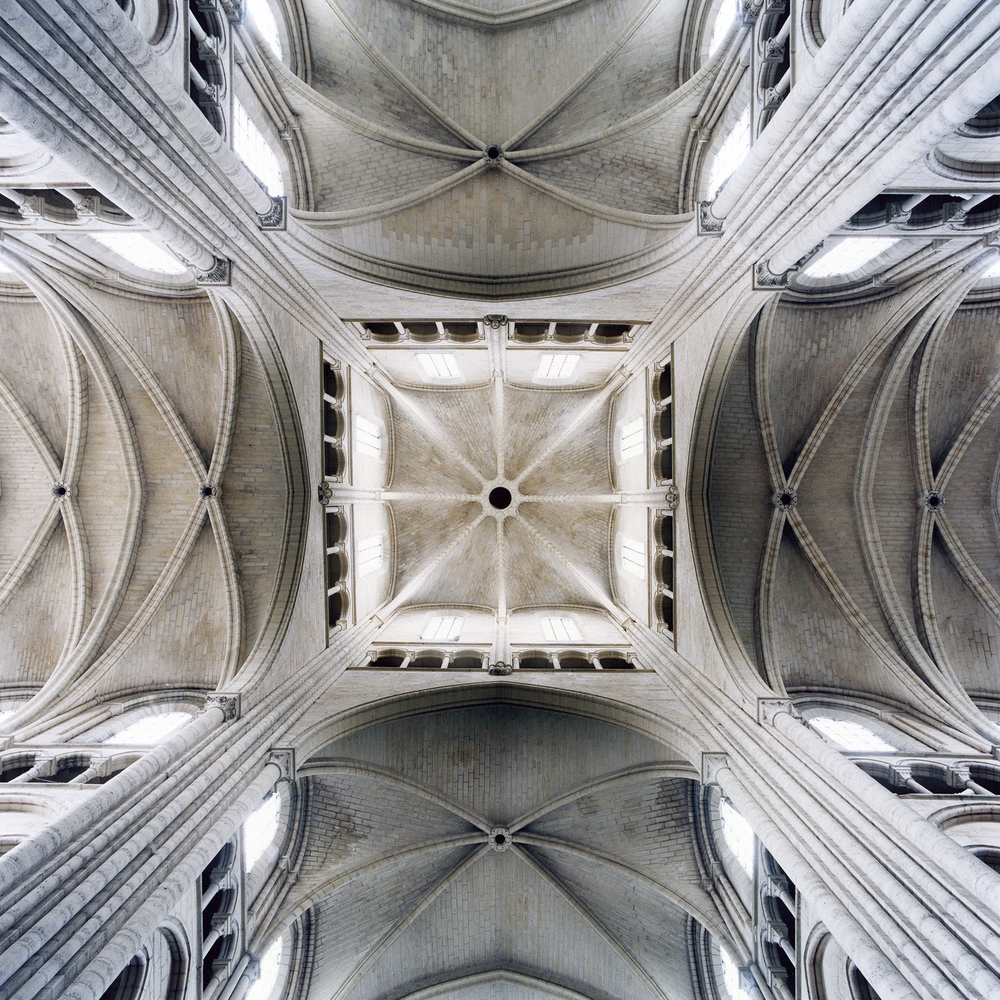
    David Stephenson (Australian born America, b. 1955) 'Nave, Laon Cathedral, Laon, France' 2006/07 from the exhibition 'Heavenly Vaults' by David Stephenson at John Buckley Gallery, Richmond, Nov 2009


    David Stephenson (Australian born America, b. 1955)
    Nave, Laon Cathedral, Laon, France
    2006/2007


    I remember many years ago, in the mid-1990’s, seeing the wonderful Domes of David Stephenson displayed in Flinders Lane in what is now fortfivedownstairs gallery. They were a revelation in this light filled space, row upon row of luminous domes seemingly lit from within, filled with the sense of the presence of divinity. On the opposite wall of the gallery were row upon row of photographs of Italian graves depicting the ceramic photographic markers of Italian dead – markers of the impermanence of life. The doubled death (the representation of identity on the grave, the momento mori of the photograph) slipped quietly into the earth while opposite the domes ascended into heaven through their numinous elevation. The contrast was sublime.

    Unfortunately the same cannot be said of the latest exhibition Heavenly Vaults by David Stephenson at John Buckley Gallery, Richmond.

    The problems start with the installation of the exhibition. As you walk into the gallery the 26 Cibachrome photographs are divided symmetrically down the axis of the gallery so that the prints reflect each other at both ends and each side of the gallery. It is like walking down the nave of a cathedral and observing the architectural restraint of the stained glass windows without their illumination. Instead of the punctum of light flooding through the stained glass windows, the varying of intensities, the equanimity of the square prints all exactly the same size, all reflecting the position of the other makes for a pedestrian installation. Some varying of the print size and placement would have added much life and movement to a static ensemble.

    Another element that needed work were the prints themselves which, with a few notable exceptions, seemed remarkably dull and lifeless (unlike their digital reproductions which, paradoxically, seem to have more life!). They fail to adequately represent the aspirations of the vaults as they soar effortlessly overhead transposing the earth bound into the heaven sent. In the earlier work on the domes (which can be found in the book Visions of Heaven: The Dome in European Architecture) the symmetry of the mandala-like domes with their light-filled inner illumination worked well with the square format of the images making the photographs stand as equivalents for something else, other ineffable states of being.

    “The power of the equivalent, so far as the expressive-creative photographer is concerned, lies in the fact that he can convey and evoke feelings about things and situations and events which for some reason or other are not or can not be photographed. The secret, the catch and the power lies in being able to use the forms and shapes of objects in front of the camera for their expressive-evocative qualities. Or to say this in another way, in practice Equivalency is the ability to use the visual world as the plastic material for the photographer’s expressive purposes. He may wish to employ the recording power of the medium, it is strong in photography, and document. Or he may wish to emphasize its transforming power, which is equally strong, and cause the subject to stand for something else too.”1

    As Minor White further observes,

    “When the image mirrors the man
    And the man mirrors the subject
    Something might take over”2


    When the distance between object and image and image and viewer collapses then something else may be revealed: Spirit.

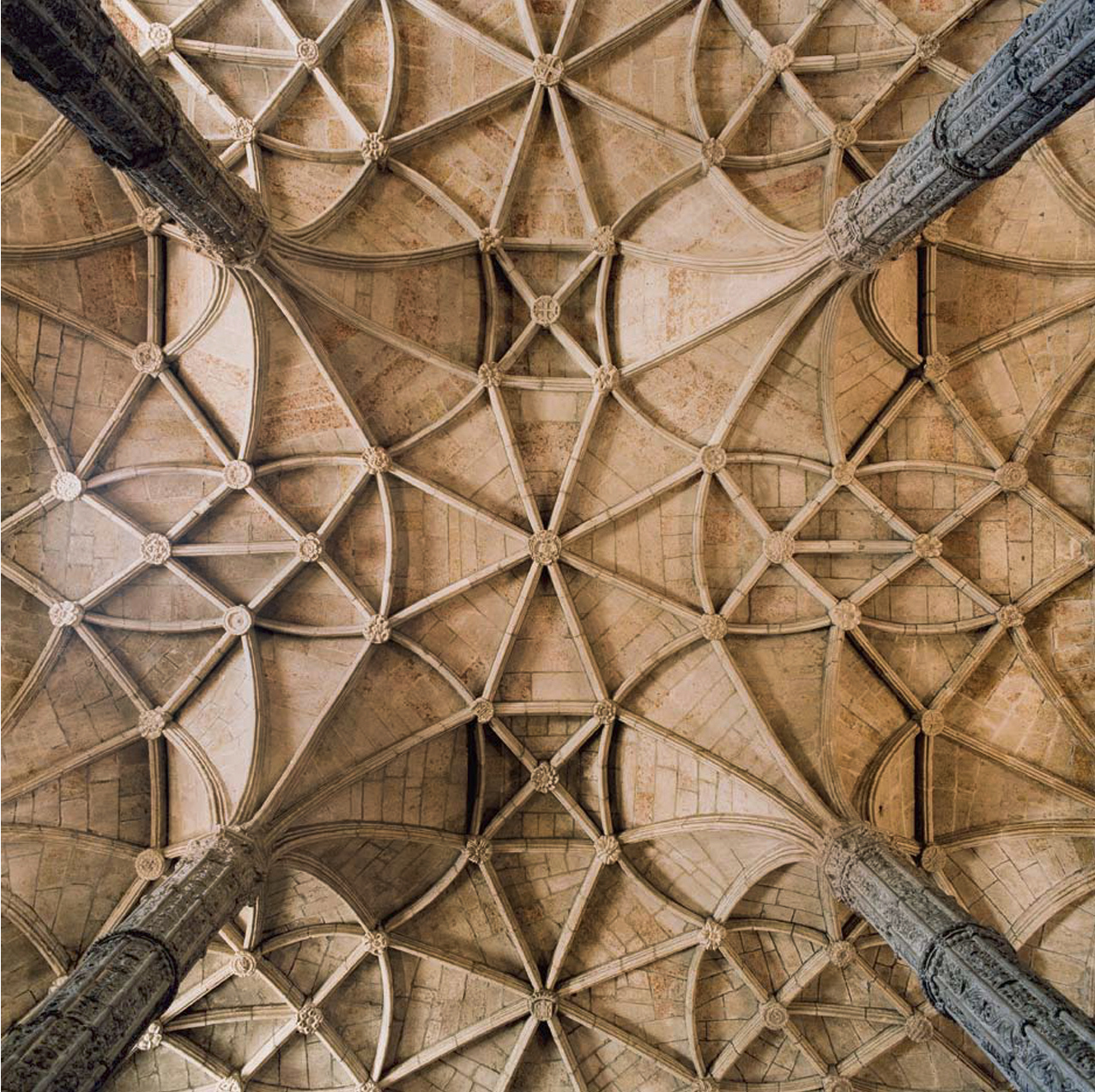
    In this exhibition some of the singular images such as the Crossings, Choirs and Nave of the Church of Santa Maria, Hieronymite Monastery, Belém, Portugal (see photograph below) work best to achieve this revelation. They transcend the groundedness of the earthly plane through their inner ethereal light using a reductive colour palette and strong highlight/shadow detail. Conversely the diptychs and triptychs of Nave and Choir (see photographs below and above) fail to impress. The singular prints pinned to the gallery wall are joined together to form pairs and trios but in this process the ‘space between’ the prints (mainly white photographic paper), the breathing space between two or more photographs that balances their disparate elements, the distance that Minor White calls ‘ice / fire’, does not work. There is no tension, no crackle, no visual crossover of the arches and vaults, spandrels and flutes. Here it is dead space that drags all down with it.

    I found myself observing without engagement, looking without wonder or feeling – never a good sign!

    The photographs of Domes and Vaults have served David Stephenson well for numerous years but the concept has become tired, the inspiration in need of refreshment through other avenues of exploration – both physical and spiritual.

    Dr Marcus Bunyan


    1/ White, Minor. “Equivalence: The Perennial Trend,” in PSA Journal, Vol. 29, No. 7, pp. 17-21, 1963 [Online] Cited 08/05/2019

    2/ White, Minor. “Three Canons,” from Mirrors, Messages, Manifestations. Viking Press, 1969


    Many thankx to Daniel and John Buckley Gallery for allowing me to reproduce the photographs from the exhibition. Please click on the photographs for a larger version of the image.


    David Stephenson (Australian born America, b. 1955) 'Choir, Laon Cathedral, Laon, France' 2006/07 from the exhibition 'Heavenly Vaults' by David Stephenson at John Buckley Gallery, Richmond, Nov 2009


    David Stephenson (Australian born America, b. 1955)
    Choir, Laon Cathedral, Laon, France
    2006/2007


    David Stephenson (Australian born America, b. 1955) 'St. Hugh’s Choir, Lincoln Cathedral, Lincoln, England' 2006/07 from the exhibition 'Heavenly Vaults' by David Stephenson at John Buckley Gallery, Richmond, Nov 2009


    David Stephenson (Australian born America, b. 1955)
    St. Hugh’s Choir, Lincoln Cathedral, Lincoln, England
    2006/2007


    Installation view of 'Heavenly Vaults' by David Stephenson at John Buckley Gallery, Richmond


    Installation view of Heavenly Vaults by David Stephenson at John Buckley Gallery, Richmond
    Photo: Marcus Bunyan


    David Stephenson (Australian born America, b. 1955) 'Nave, Cathedral of St. Barbara, Kutná Hora, Czech Republic' 2008/09


    David Stephenson (Australian born America 1955)
    Nave, Cathedral of St. Barbara, Kutná Hora, Czech Republic
    2008/2009


    David Stephenson (Australian born America, b. 1955) 'Choir, Cathedral of St. Barbara, Kutná Hora, Czech Republic' 2008/09


    David Stephenson (Australian born America 1955)
    Choir, Cathedral of St. Barbara, Kutná Hora, Czech Republic
    2008/2009


    “While the subject of my photographs has shifted… my art has remained essentially spiritual – furthermore than two decades I have been exploring a contemporary expression of the sublime – a transcendental experience of awe with the vast space and time of existence.”


    David Stephenson


    Internationally renowned photographer David Stephenson has dedicated his practice to capturing the sublime in nature and architecture. Fresh from a successful exhibition at Julie Saul Gallery in New York, Stephenson returns to John Buckley Gallery for his third highly anticipated exhibition Heavenly Vaults. The exhibition will feature 26 selected prints from his latest monograph published by Princeton Architectural Press; Heavenly Vaults: From Romanesque to Gothic in European Architecture. Shaun Lakin, Director of the Monash Gallery of Art, will launch the book and exhibition at the opening, November 7th.

    Stephenson began to photograph Gothic vaults in Spain and Portugal in 2003, while completing the work for his Domes project, and his first monograph Visions of Heaven: the Dome in European Architecture. He began to focus on the Vaults project in 2006, photographing Gothic churches and cathedrals in England, Belgium and France. With the assistance of an Australia Council Artist Fellowship in 2008-2009, Stephenson completed extensive fieldwork for the Vaults project, intensively photographing Romanesque and Gothic architecture in Italy, France, Spain, Portugal, Austria, the Czech Republic, Poland, and Germany. The exhibition at John Buckley Gallery coincides with the launch of his second monograph, Heavenly Vaults: from Romanesque to Gothic in European Architecture, published by Princeton Architectural Press, New York.

    Even though the traditional systems the underpinned church architecture have lost their unequivocal power, David Stephenson’s photographs capture the resonance of those times. More importantly his work also suggest that the feelings of aspiration, transcendence, and infinity these buildings evoke in the viewer have an ongoing relevance beyond the religious setting and help us understand who and what we are.

    Excerpt from Foreword, Heavenly Vaults, by Dr Isobel Crombie 2009


    David Stephenson’s new book of photography is a love letter to the intricate, seemingly sui generis vaults of Europe’s Romanesque and Gothic cathedrals and churches.

    Press release from the John Buckley website [Online] Cited 11/11/2009 no longer available online


    David Stephenson (Australian born America, b. 1955) 'Nave, Church of Santa Maria, Hieronymite Monastery, Belém, Portugal' 2008/09


    David Stephenson (Australian born America, b. 1955)
    Nave, Church of Santa Maria, Hieronymite Monastery, Belém, Portugal
    2008/2009


    ‘While the subject of my photographs has shifted from the landscapes of the American Southwest and Tasmania, and the minimal horizons of the Southern Ocean, and the icy wastes of Antarctica, to sacred architecture and the sky at both day and night, my art has remained essentially spiritual – for more than two decades I have been exploring a contemporary expression of the sublime – a transcendental experience of awe with the vast space and time of existence.’

    David Stephenson 1998.1


    With poetic symmetry the Domes series considers analogous ideas. It is a body of work which has been ongoing since 1993 and now numbers several hundred images of domes in countries including Italy, Spain, Portugal, Turkey, England, Germany and Russia. The typological character of the series reveals the shifting history in architectural design, geometry and space across cultures and time, demonstrating how humankind has continually sought meaning by building ornate structures which reference a sacred realm.2 Stephenson photographs the oculus – the eye in the centre of each cupola. Regardless of religion, time or place, this entry to the heavens – each with unique architectural and decorative surround – is presented as an immaculate and enduring image. Placed together, the photographs impart the infinite variations of a single obsession, while also charting the passage of history, and time immemorial.

    1. Van Wyk, S. 1998. “Sublime space: photographs by David Stephenson 1989-1998,” National Gallery of Victoria, Melbourne np
    2. Hammond, V. 2005. “The dome in European architecture,” in Stephenson, D. 2005, Visions of heaven: the dome in European architecture, Princeton Architectural Press, New York p. 190

    © Art Gallery of New South Wales Photography Collection Handbook, 2007


    David Stephenson (Australian born America, b. 1955) 'Choir, King's College Chapel, Cambridge, England' 2006/07


    David Stephenson (Australian born America, b. 1955)
    Choir, King’s College Chapel, Cambridge, England
    2006/2007


    David Stephenson (Australian born America, b. 1955) 'Crossing, York Minster, York, England' 2006/07


    David Stephenson (Australian born America, b. 1955)
    Crossing, York Minster, York, England
    2006/2007


    John Buckley Gallery

    This gallery is now closed.

    LIKE ART BLART ON FACEBOOK

    Back to top

    Review: ‘Nocturnalians and Shadow Eaters’ by Vera Möller at Sophie Gannon Gallery, Richmond, Melbourne

    Exhibition dates: 20th October – 14th November 2009


    Vera Möller (Australian, b. 1955 Germany arrived Australia 1986) 'Rabinova' 2009 from the exhibition 'Nocturnalians and Shadow Eaters' by Vera Möller at Sophie Gannon Gallery, Richmond, Melbourne, Oct - Nov, 2009


    Vera Möller (Australian, b. 1955 Germany arrived Australia 1986)
    Rabinova
    2009
    Oil on linen
    82 x 76cm


    “I am interested in this border between the real and the imagined, the constructed and the natural.”


    Vera Möller quoted in “Artist earns her stripes” on The Age newspaper website May 28, 2005 [Online] Cited 23/06/2022


    There is a lot of mutability floating around current exhibitions in Melbourne at the moment. At the National Gallery of Victoria we have the deathly, eloquent freeze frame mutability of Ricky Swallow; at Tolarno Galleries we have the genetic hyper-realist mutability of Patricia Piccinini; and at Sophie Gannon Gallery we have the surreal, spatial mutability of Vera Möller.

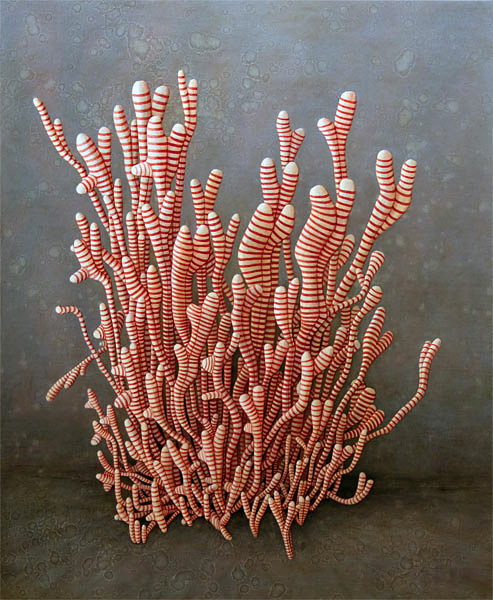
    In this exhibition the real meets the imagined and the constructed encounters the natural in delicate sculptures and beautiful paintings. Coral snake and mutated striped hydras float above Phillip Huntersque backgrounds, looking oh so innocent until one remembers that hydras are predatory animals: the stripes, like the strips of a prisoners uniform not so innocent after all.

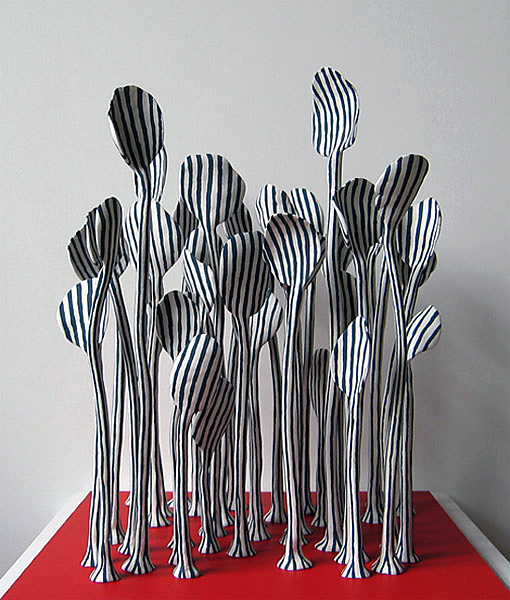
    These ‘portraits’ (for that is what they strike me as) emerge from the recesses of the subconscious, rising up like some absurd alien fish from the deep. The sculptural forests of mutated specimens waft on the breeze of the ocean current. This detritus of biotechnology, living in the dark and the shadow, emerges into the light and space of the gallery – genetic recombinations in which a strands of genetic material are broken and then joined to another DNA molecule. In Möller’s work this chromosomal crossover has led to offspring (called ‘recombinants’) that dance to a surrealist tune: genetic algorithms that use mutation to maintain genetic diversity from one generation of chromosomes to the next.1

    Spatially there is a lightness of touch and a beauty to their representation that brings the work alive within the gallery space. However, Möller’s recombinants are as deadly as they are beautiful. I really liked these creatures narcoleptic shadow dances.

    Dr Marcus Bunyan


    1/ Definition of mutation (genetic algorithm) in Wikipedia.


      Many thankx to Sophie Gannon Gallery for allowing me to publish the art work in the posting. Please click on the photographs for a larger version of the image.


      Vera Möller (Australian, b. 1955 Germany arrived Australia 1986) 'Martinette' 2009 (installation view)


      Vera Möller (Australian, b. 1955 Germany arrived Australia 1986)
      Martinette (installation view)
      2009
      Modelling material, acrylic and enamel paint, MDF, perspex cove


      Vera Möller (Australian, b. 1955 Germany arrived Australia 1986) 'Veronium' 2007 from the exhibition 'Nocturnalians and Shadow Eaters' by Vera Möller at Sophie Gannon Gallery, Richmond, Melbourne, Oct - Nov, 2009


      Vera Möller (Australian, b. 1955 Germany arrived Australia 1986)
      Veronium
      2007
      Oil on canvas
      167 x 199cm


      Vera Möller (Australian, b. 1955 Germany arrived Australia 1986) 'Shapinette' 2009 from the exhibition 'Nocturnalians and Shadow Eaters' by Vera Möller at Sophie Gannon Gallery, Richmond, Melbourne, Oct - Nov, 2009


      Vera Möller (Australian, b. 1955 Germany arrived Australia 1986)
      Shapinette
      2009
      Oil on linen
      101 x 101cm


      Vera Möller (Australian, b. 1955 Germany arrived Australia 1986) 'Telenium' 2009


      Vera Möller (Australian, b. 1955 Germany arrived Australia 1986)
      Telenium
      2009
      Oil on linen
      165 x 135cm


      Vera Möller (Australian, b. 1955 Germany arrived Australia 1986) 'Rubella' 2008-2009


      Vera Möller (Australian, b. 1955 Germany arrived Australia 1986)
      Rubella
      2008-2009


      Vera Möller (Australian, b. 1955 Germany arrived Australia 1986) 'Bureniana' 2008 (installation view)


      Vera Möller (Australian, b. 1955 Germany arrived Australia 1986)
      Bureniana (installation view)
      2008
      Modelling material, acrylic and enamel paint, MDF, perspex cover
      60 x 61 x 61cm


      Installation photo of 'Nocturnalians and Shadow Eaters' by Vera Moller at Sophie Gannon Gallery, Melbourne

      Installation photo of 'Nocturnalians and Shadow Eaters' by Vera Moller at Sophie Gannon Gallery, Melbourne


      Installation photographs of Nocturnalians and Shadow Eaters by Vera Möller at Sophie Gannon Gallery, Melbourne
      Photos: Marcus Bunyan


      Interested in the boundaries between the real and the imagined, Vera Möller creates paintings and sculptures by placing fictional hybrid plants in existing terrains. Bright colours and patterns, coral-like and succulent-plant forms and toadstool shapes describe her depictions of dreamt-up specimens that evoke the natural world. Möller’s ‘fantasy specimens’ demonstrate the way in which her science background and art practice have steadily converged.

      After training as a biologist in Germany, Möller migrated to Australia in 1986. She later completed a Bachelor of Fine Art at the Victorian College of the Arts and a PhD at Monash University. Her work has been exhibited in the USA, Japan, Finland, France, Germany and the UK, as well as throughout Australia.

      Text from the Sophie Gannon Gallery website [Online] Cited 03/05/2019


      Vera Möller (Australian, b. 1955 Germany arrived Australia 1986) 'Benthinium' 2008-2009


      Vera Möller (Australian, b. 1955 Germany arrived Australia 1986)
      Benthinium
      2008-2009
      Oil on linen
      140 x 220cm


      Vera Möller (Australian, b. 1955 Germany arrived Australia 1986) 'Tokyana' 2009


      Vera Möller (Australian, b. 1955 Germany arrived Australia 1986)
      Tokyana
      2009
      Oil on linen
      137 x 107cm


      Sophie Gannon Gallery
      2, Albert Street, Richmond, Melbourne

      Opening hours:
      Tuesday – Saturday 11am – 5pm

      Sophie Gannon Gallery website

      LIKE ART BLART ON FACEBOOK

      Back to top

      Review: ‘Sweet Complicity’ by eX de Medici at Karen Woodbury Gallery, Richmond, Melbourne

      Exhibition dates: 30th September – 24th October, 2009


      eX de Medici (Australia, b. 1959) 'Tooth and claw' 2009 from the exhibition 'Sweet Complicity' by eX de Medici at Karen Woodbury Gallery, Richmond, Melbourne, Sept - Oct, 2009


      eX de Medici (Australia, b. 1959)
      Tooth and claw
      2009
      Pen, ink and mica on archival paper
      114.0 x 521.0cm


      Is it sinful to say that an Armalite rifle can be voluptuously seductive? Not in the hands of artist eX de Medici!

      Taking a variety of contemporary military high-powered weapons (Armalite AR30 Tactical .308 Sniper, Modified AK 47, Blackwater AR15, Patriot Ordinance P45 .223 for example) eX de Medici’s armaments have a steely presence softened and consumed by multitudinous garlands of traditional tattoo ‘flash’ iconography (flowers, skulls, bows, stars, Chinese dragons, waves and swallows repeated in Escher-like patterns) and contorted skeletons. Using individual colour palettes for each of the three large pen, ink and mica on paper works in the exhibition, eX subverts the masculine symbology of gun culture and decomposes it within an ornamentation of deathly desire – new compositions in the dance of death: ‘U hurt me Baby, U Fkd me up gd, the hole tht u made (cross) me Ded …’

      In other less skilled artist’s hands the subject matter could become cliched and trite but here de Medici balances the disparate elements in her compositions and brings the subject matter alive – sinuously jumping off the paper, entwining the viewer in their delicious ironies, all of us sweetly complicit in the terror war (send more meat, send more meat!), fighting tooth and nail to keep urban realities at arm’s length. The dark desires that these works contain possess an aesthetic beauty that swallows us up so that we, too, become ‘Barbarians All’. Highly recommended!

      Dr Marcus Bunyan


      Many thankx to Karen Woodbury Gallery for allowing me to publish the art work in the posting. Please click on some of the photographs for a larger version of the image.


      eX de Medici (Australia, b. 1959) 'Tooth and Claw' 2009 (detail) from the exhibition 'Sweet Complicity' by eX de Medici at Karen Woodbury Gallery, Richmond, Melbourne, Sept - Oct, 2009


      eX de Medici (Australia, b. 1959)
      Tooth and claw (detail)
      2009
      Pen, ink and mica on archival paper
      114.0 x 521.0cm


      eX de Medici (Australia, b. 1959) 'Tooth and claw' 2009 (detail)

      eX de Medici (Australia, b. 1959) 'Tooth and claw' 2009 (detail)


      eX de Medici (Australia, b. 1959)
      Tooth and claw (details)
      2009
      Pen, ink and mica on archival paper
      114.0 x 521.0cm


      Installation view of 'Sweet Complicity' by eX de Medici at Karen Woodbury Gallery, Melbourne showing at left, 'Send more meat' (2009) and at right, 'Tooth and claw' (2009)


      Installation view of Sweet Complicity by eX de Medici at Karen Woodbury Gallery, Melbourne showing at left, Send more meat (2009) and at right, Tooth and claw (2009)
      Photo: Marcus Bunyan


      eX de Medici (Australia, b. 1959) 'Send more meat' 2009


      eX de Medici (Australia, b. 1959)
      Send more meat
      2009
      Pen, ink and mica on archival paper


      eX de Medici (Australia, b. 1959) 'Send more meat' 2009 (detail)


      eX de Medici (Australia, b. 1959)
      Send more meat (detail)
      2009
      Pen, ink and mica on archival paper


      Sweet complicity is eX de Medici’s first and much anticipated exhibition at Karen Woodbury Gallery. The exhibition will comprise of three monumental pen, ink and mica works on archival paper. These works examine recurring themes in her practice such as power, war, death and violence via a decorative feminine veneer and aesthetic.

      The recurrent use of symbolism in the form of weapons, skulls and garlands in her work re-appear with the addition of Chinese imagery (Imperial golden dragons, China’s five-pointed star, and the use of chrysanthemums). These potent works display a latent interest in scientific illustration and allude to de Medici’s characteristic stylised tattoo motifs that stems from her work as a tattooist. The almost obsessive repetition of pattern and immense detailing display eX’s dedication to her practice through the strong mental and physical commitment required to complete such awe-inspiring artworks that seduce the viewer.
      There is an unmistaken polemic tone in de Medici’s practice that cannot be ignored. Different cultures, identities, actions and consequences are represented and centred on objects of warfare, allowing for disguised and layered political and moral statements.
      de Medici lives and produces much of her work in the nation’s capital Canberra. Streams of influences inform the work; Canberra’s political and physical agendas, research resourced from various national institutions such as the CSIRO Entomological and Taxonomy Division, the National Library of Australia and the Australian War Memorial. She has recently returned from the Solomon Islands where she was chosen as an official war artist.

      Text from the Karen Woodbury Gallery website [Online] Cited 05/10/2009. No longer available online


      The defining theme in eX de Medici’s paintings is a consistent interrogation of power. The notion of ‘the personal’ doesn’t interest the artist. Instead she investigates authority and dissent through paintings of guns, surveillance devices and gas masks.


      eX de Medici (Australia, b. 1959) 'American Sex/Funky Beat Machine' 2009


      eX de Medici (Australia, b. 1959)
      American Sex/Funky Beat Machine
      2009
      Pen, ink and mica on archival paper
      Diptych, 114.0 x 249.0cm


      eX de Medici (Australia, b. 1959) 'American Sex/Funky Beat Machine' 2009 (detail)


      eX de Medici (Australia, b. 1959)
      American Sex/Funky Beat Machine (detail)
      2009
      Pen, ink and mica on archival paper
      Diptych, 114.0 x 249.0cm


      Karen Woodbury Gallery

      This gallery is now closed.

      LIKE ART BLART ON FACEBOOK

      Back to top

      Review: ‘Slow Down, You Move Too Fast’ by Kirra Jamison at Sophie Gannon Gallery, Richmond, Melbourne

      Exhibition dates: 22nd September – 17th October, 2009


      Kirra Jamison (Australian) 'Livin' on a prayer' 2009 from the exhibition 'Slow Down, You Move Too Fast' by Kirra Jamison at Sophie Gannon Gallery, Richmond, Melbourne, Sept - Oct, 2009


      Kirra Jamison (Australian)
      Livin’ on a prayer
      2009
      Gouache, pen and vinyl on paper
      160 x 114cm


      Hit, Hit, Hit with a Miss

      Although all the work in this exhibition is dated 2009 this exhibition can fairly easily be divided into what seems to be two separate bodies of work: the excellent gouache, pen and vinyl works of paper and the ‘other’ less successful large paintings of owls and raccoons and the smaller paintings of hanging flowers and tree branches on dark purple ground.

      The latter large and small paintings fail to hit the spot with the exception of Belong to me (2009, below) which has visual and conceptual links to the works on paper, the twin bodies dissolving into a kaleidoscopic dream-like effervescence of life. The paintings of the owl (Last star, 2009 below), raccoons (Can you see my aura 2009, below) together with another fairytale painting With a roof of flint and a floor of chalk (2009) fail to communicate a shared vision being disparate items that conceptually don’t seem to hang well together. They lack a certain spark, that revelatory presence and appear flat both physically and metaphorically.

      On the flip side of the equation are works that are physically complex, conceptually robust and simply beautiful in their execution: no wonder so many of them have sold already! Using basic graphic patterns repeated and inverted (Jamison has an interest in graphics fostered through textile design), Jamison constructs fantasy worlds, fairytales on paper. In Livin’ on a prayer (2009, above) we have a splendid Carnival of the Animals as monkeys and creatures inhabit a boat sprouting flowers riding upon a sea made of flowers. In Willow weep 2 (2009, above) the tree of life is inhabited by creatures and a human figure (see halfway up on the right-hand side). In Future’s lovecraft (2009, below) incredible creatures again inhabit the imagined biospheric carnivalesque worlds. As Russian theorist Mikhail Bakhtin notes,

      “The carnival offers the chance to have a new outlook on the world, to realise the relative nature of all that exists, and to enter a completely new order of things.”1

      Here the new order of things is a thing of beauty to behold; the works draw you in with their colour and detail, their presence. I can’t wait to see what possibilities unfold next for the artist from this starting point for this is the very beginning of the path, a scratching of the surface of what is possible with this technique and themes. It is almost like an emotional texture, the breathe of cool air on your lungs in the early morning mist. I await developments with interest!

      Dr Marcus Bunyan


      1/ Bakhtin, Mikhail. Rabelais and his World (trans. Hélène Iswolsky). Bloomington: Indiana University Press, 1984, p. 34.


      Many thankx to Sophie Gannon Gallery for allowing me to publish the art work in the posting. Please click on the photographs for a larger version of the image.


      Kirra Jamison (Australian) 'Willow weep 2' 2009 from the exhibition 'Slow Down, You Move Too Fast' by Kirra Jamison at Sophie Gannon Gallery, Richmond, Melbourne, Sept - Oct, 2009


      Kirra Jamison (Australian)
      Willow weep 2
      2009
      Gouache and vinyl on paper
      160 x 114cm


      Kirra Jamison (Australian) 'Future's lovecraft' 2009


      Kirra Jamison (Australian)
      Future’s lovecraft
      2009
      Gouache and vinyl on paper
      160 x 114cm


      Installation view of 'Slow down, don't run so fast' by Kirra Jamison at Sophie Gannon Gallery, Richmond


      Installation view of Slow down, you move too fast by Kirra Jamison at Sophie Gannon Gallery, Richmond
      Photo: Marcus Bunyan


      Kirra Jamison (Australian) 'Belong to me (after Delaunay)' 2009


      Kirra Jamison (Australian)
      Belong to me (after Delaunay)
      2009
      Acrylic, gouache and pen on canvas
      220 x 183cm


      Kirra Jamison (Australian) 'Last Star' 2009


      Kirra Jamison (Australian)
      Last Star
      2009
      Acrylic, gouache, pen and ink on canvas
      185 x 153cm


      Kirra Jamison (Australian) 'Can you see my aura?' 2009


      Kirra Jamison (Australian)
      Can you see my aura?
      2009


      Sophie Gannon Gallery
      2, Albert Street, Richmond, Melbourne
      Phone: +61 3 9421 0857

      Opening hours:
      Tuesday – Saturday 11am – 5pm

      Sophie Gannon Gallery website

      LIKE ART BLART ON FACEBOOK

      Back to top