
Exhibition dates: 1st March – 20th April, 2024
Curator: Matthias Flügge

Ulrich Wüst (German, b. 1949)
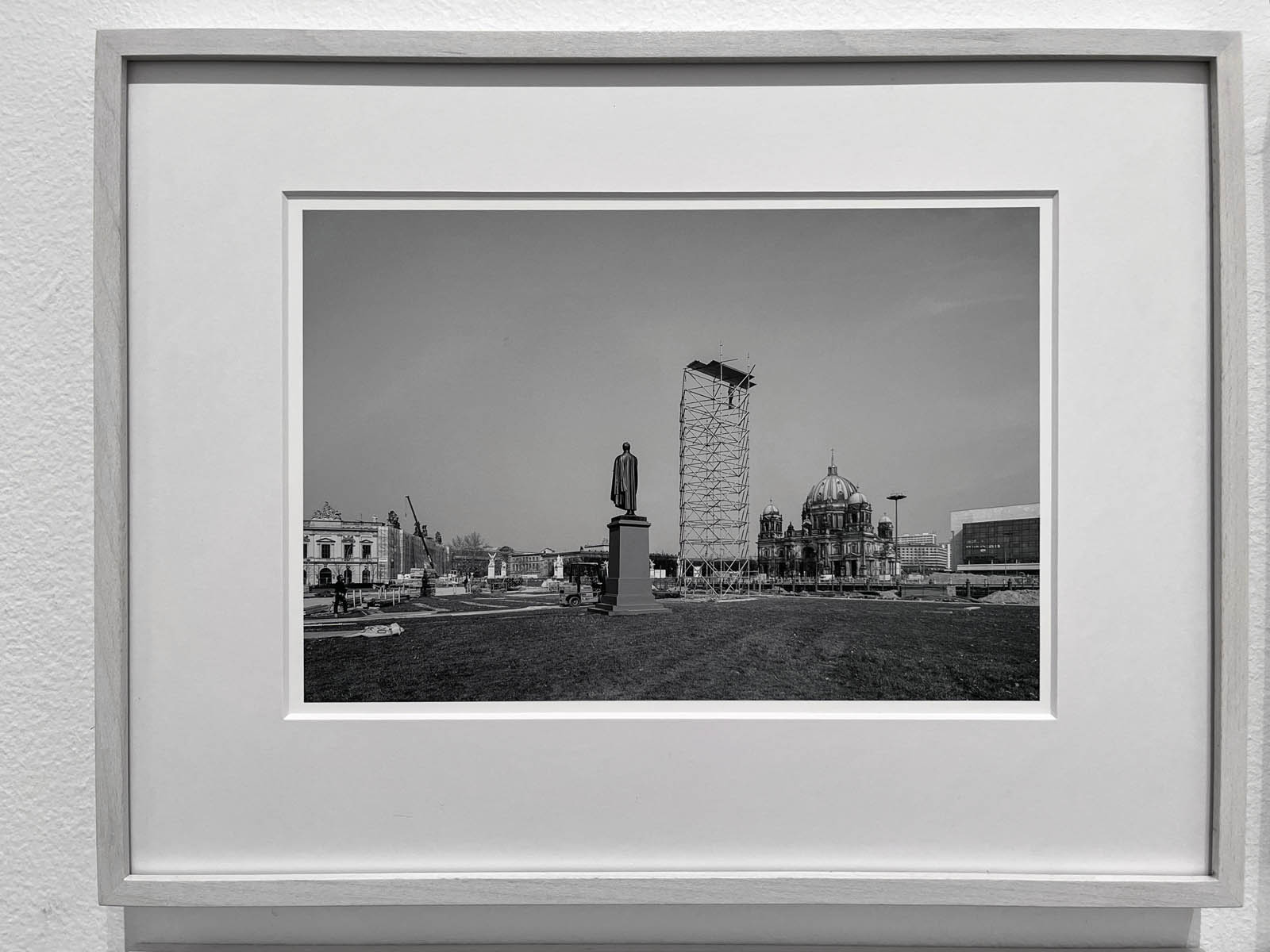
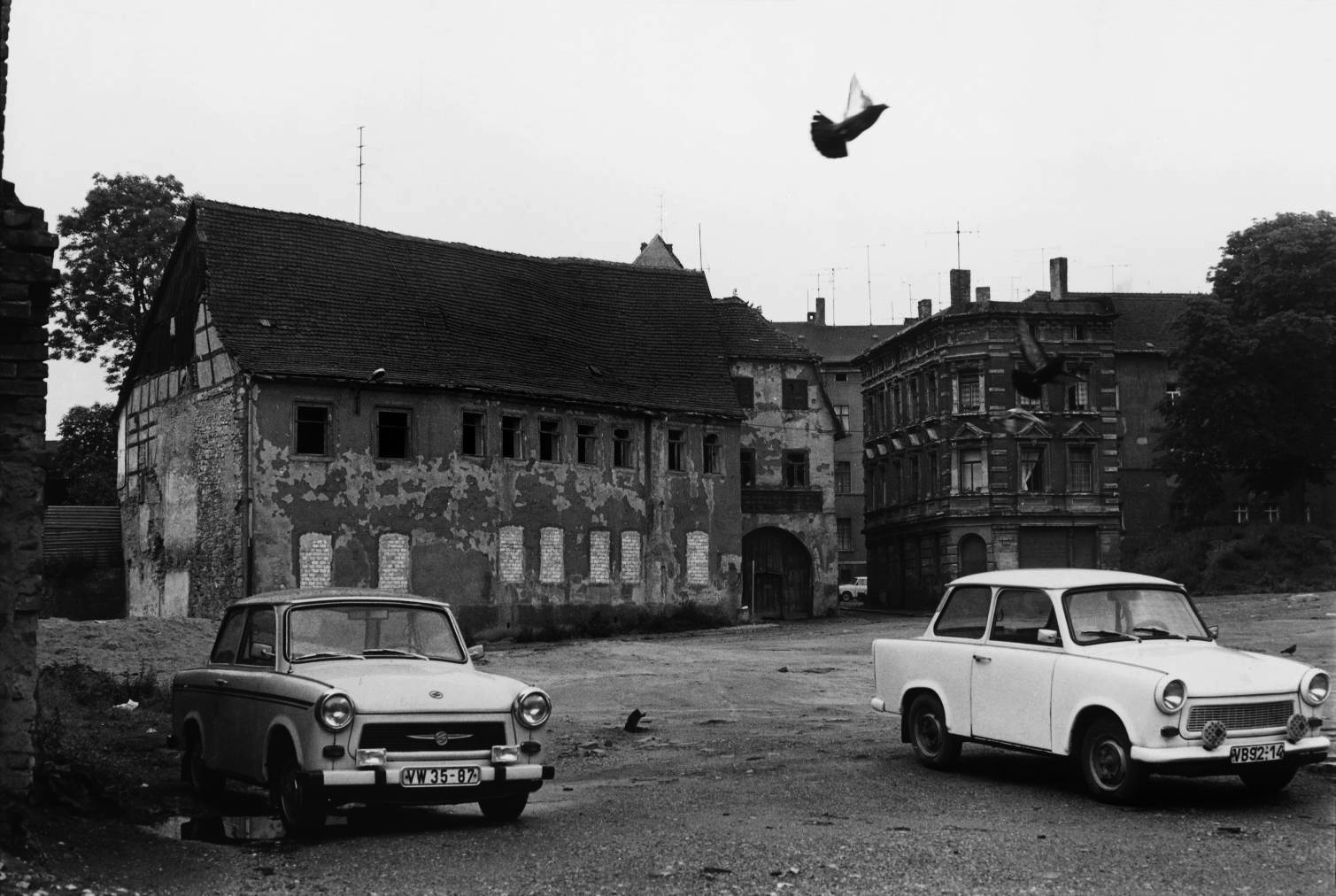
Dodendorfer Straße
1998
Aus der Serie: Morgenstraße. Magdeburg 1998-2000
From the series: Morgenstraße. Magdeburg 1998-2000
B/w archival pigment print
18 x 27cm
© Ulrich Wüst; ifa
Wondering through history
Wonder noun. a feeling of amazement and admiration, caused by something beautiful, remarkable, or unfamiliar.
As enunciated by Jake Wilson in The Age newspaper in a review of the film La Chimera, “ultimately, the problem dramatised here is the same one faced by any modern artist: how do you retain a meaningful link to your predecessors while shaping something new?”1
Further, my mentor and friend Ian Lobb would often challenge me to define what I was adding to the artistic dialogue of photography instead of repeating the language of a previous era, and I would spar with him asking him was it really necessary to constantly reinvent the wheel, was it not enough to see and feel with clarity and humour those precious moments that surround us, and insightfully photograph them. These are the questions that enliven life: is it always necessary to shape something new, or is it enough to be attentive to the moment – of your mind, heart and vision – to create spellbinding photographs that carry your own interpretation of a certain reality.
Such is the case with the stimulating, two-room exhibition of the German photographer Ulrich Wüst at RMIT Gallery, Melbourne.
Wüst’s photography shows great affinity with the work of Bernd and Hiller Becher and the Becher and Dusseldorf Schools of photography which would have been known in East Germany by the time Wüst shot the 1980s series Stadtbilder. 1979-1985 (Cityscapes. 1979-1985) that first brought Wüst to international attention (the border was very permeable to artistic ideas from the West reaching East Germany).2 Indeed, most of Wüst’s oeuvre has direct links to the aesthetic of the Bechers (with their attention to detail and “devotion to the 1920s German tradition of Neue Sachlichkeit (New Objectivity”) and photographers such as Thomas Ruff (with their surreal enlargement of scale and “fundamentally sceptical attitude towards photography’s claim to truth and documentation”).
I believe that referencing and riffing off that aesthetic as Wüst does is no bad thing … for it forms the basis for the photographer’s further take on reality. But there are plenty of other forces at play in his photographs. I observe traces of August Sander, Berenice Abbott, Robert Frank, Michael Schmidt and Eugène Atget among others, especially with the latter in the positioning of Wüst’s camera.
As he observes, “When shooting I often find that if I move just fraction away from the more customary perspective a subtle heightening of tension with take place within the image. It’s no accident that I and my camera frequently get suspicious looks when the angle of the lens shifts away from the perspective found in souvenirs and postcards.” (Wall text from the exhibition)
And this is exactly what Atget did, he moved his camera from the “normal” point of view ever so slightly so that there immediately becomes this tension within the image plane coupled to the possibility of a magical revelation of space, an ironic comment on construction, or a grotesque play of opposites. As Wüst says, his vision, his observation, contains “plenty that is comic, grotesque, ironic” which many people do not see.
If we think about the supposedly objective work of the Bechers, which they insisted was all about documenting the object and not about any type of emotion, we fail to consider, as Julia Curl opines, “that this “objectivity” is only surface-level – that the work is deeply personal, even if its apparent uniformity claims otherwise.”3 Personally, I have never bought into the cool objectification of the Becher’s work for the photographers made defined choices as to how they depicted their constructed realities, each iteration of a water tower, gravel plant or cooling tower different from the other (fragments of a whole). This was deeply personal vision of how the world is perceived.
The same can be said of the photographs of Ulrich Wüst. His photographs are entirely personal, fragmentary excavations of history. In Wüst’s works by series, his photographs – surreal, sculptural scenes absent of people, full of elemental beauty – are not just the flawed humanity of our creation / the creation of our flawed humanity … but the creation and imagination of the human mind captured by the eye of the camera. Wüst’s photographs challenge us to look closer at the reality around us not accepting the status quo, the postcard view, not walking the city as if unaware of the vistas around us, feeling the “traces, injuries, missing and empty spaces in the image, so that things begin to speak of themselves…”4
As the art historian Matthias Flügge states, Wüst’s photographs are “images of intellectual-spatial situations,” wholly a creation, an accretion, on existing forms of photography. Not something new, which is ultimately unnecessary, but a growth in “wondering” – not wandering – achieved through the gradual accumulation of additional layers of beauty, feeling, knowledge so that we are informed and fully aware of our (un)familiar surroundings.
The photographs tell a powerful story of Germany before and after the fall of communism whilst instilling in the viewer a wondering, an accumulation and visual nourishment for the senses.
Such is the photography of Ulrich Wüst.
Dr Marcus Bunyan
PS. The only down side to this exhibition is that all the black and white photographs are modern archival ink jet prints. Call me old fashioned but these pigment prints have no real “presence”. It’s like the difference between an LP and a CD, or a movie in Technicolor or 5K. One has “atmosphere”, one has mood and aura and the other just sits there in all its perfection like a dog with a bone waiting for you to go “oooh, ahhh”. There are people that say you can’t tell the difference between the two. Rubbish. Give me gelatin silver prints any day of the week.
1/ Jake Wilson. “Lost and Found while digging up the cinematic past,” in The Age newspaper, 11 April 2024, p. 24.
2/”Huyssen reveals the complexity of artistic development on both sides of the Wall and notes that “the borders between East and West became porous during the 1970s as a result of treaties between the GDR and the FRG.” His focus in this regard, however, is on those artists who left the East for the West and made an impact there, such as Georg Baselitz and Gerhard Richter; he does not acknowledge the extent to which ideas and influences went in both directions. … While it is true that West German artists showed little interest in exhibiting in the East or in the art that was created there, East German artists tended to be well informed about Western artistic developments…” p. 598
April A. Eisman. “East German Art and the Permeability of the Berlin Wall,” in German Studies Review, Vol. 38, No. 3 (October 2015), pp. 597-616. Published by The Johns Hopkins University Press on behalf of the German Studies Association
3/ Julia Curl. “Bernd and Hilla Becher’s Misunderstood Oeuvre,” on the Hyperallergic website November 2, 2022 [Online] Cited 11/04/2024
4/ Jacek Slaski. “Ulrich Wüst – Stadtbilder 1979–1985: Zwischen Kunst und Dokumentation,” on the tipBerlin website 03/02/2022 [Online] Cited 08/04/2024. Translated from the German by Google Translate
Many thankx to the RMIT Gallery and the ifa for allowing me to publish the photographs in the posting. Please click on the photographs for a larger version of the image.
An exhibition by ifa – Institut für Auslandsbeziehungen e.V., Stuttgart – in partnership with the Goethe-Institut. This project is an official exhibition of PHOTO 2024 International Festival of Photography.
“Most viewers, unfortunately, are so dreadfully serious when they look at the pictures. I have to “hammer it home” incredibly hard before anyone will allow themselves to laugh. In my works there is simply – perhaps a bit hidden – plenty that is comic, grotesque, ironic.”
~ Ulrich Wüst, wall text from the exhibition
“I’m sure I do give those power symbols the aesthetic treatment, otherwise it’s unlikely that I would have any desire or energy to photograph them. But it would also be unfair to say that these objects do not hold their own innate aesthetic fascination. All I can do is try to describe how I am torn between spontaneous fascination and rational rejection, aiming to convey that experience and make it understandable. When shooting I often find that if I move just fraction away from the more customary perspective a subtle heightening of tension with take place within the image. It’s no accident that I and my camera frequently get suspicious looks when the angle of the lens shifts away from the perspective found in souvenirs and postcards. People are very attuned to that sort of shift.”
~ Ulrich Wüst, wall text from the exhibition

Installation view, Ulrich Wüst, Flatland. Schönhof, 2013 (centre), The Pomp of Power, 1983-1990 (left) and Red October, 2018 (right) from the exhibition Wanderings About History. The Photography of Ulrich Wüst, RMIT Gallery, Melbourne, 2024
Photo: Christian Capurro
Ulrich Wüst’s photographic work captures his wanderings through German history, portraying the social and urban transformations from the GDR and its disintegration, through the German reunification to the present day. Wüst revives the German history in a new static way, where the past and present clash in a dynamic and ever-changing environment.
Wanderings About History. The Photography of Ulrich Wüst shows a selection of nine suites taken between 1978 and 2019. Ulrich Wüst’s photographic work can be contemplated from different perspectives. While the observations captured here are rooted in Germany’s division and its mending, at the same time they always relate to universal phenomena of social change and its material manifestations. The seemingly terse images, extremely precise in their composition, are the fruits of lengthy visual wanderings through present sites of recent history.
Ulrich Wüst’s photographic œuvre, which explores Eastern Germany in the broader sense, is not confined to the sunken GDR. It might be described as a pictorial archaeology of our present day. These pictures reveal the finds from his “excavations” and are at the same time tools of their conservation. Wüst has an infallible feel for the graphic quality of everyday situations, objects and materials, but also for the deeper layers of significance associated with found images. Examples are the enlarged details from East German press products that demonstrate a manipulative use of photography.
Ulrich Wüst’s photographic work can be contemplated from different perspectives. While the observations captured here are essentially rooted in Germany’s division and its mending, at the same time they always relate to universal phenomena of social change and its material manifestations. The seemingly terse images, extremely precise in their composition, are the fruits of lengthy visual wanderings through present sites of recent history.
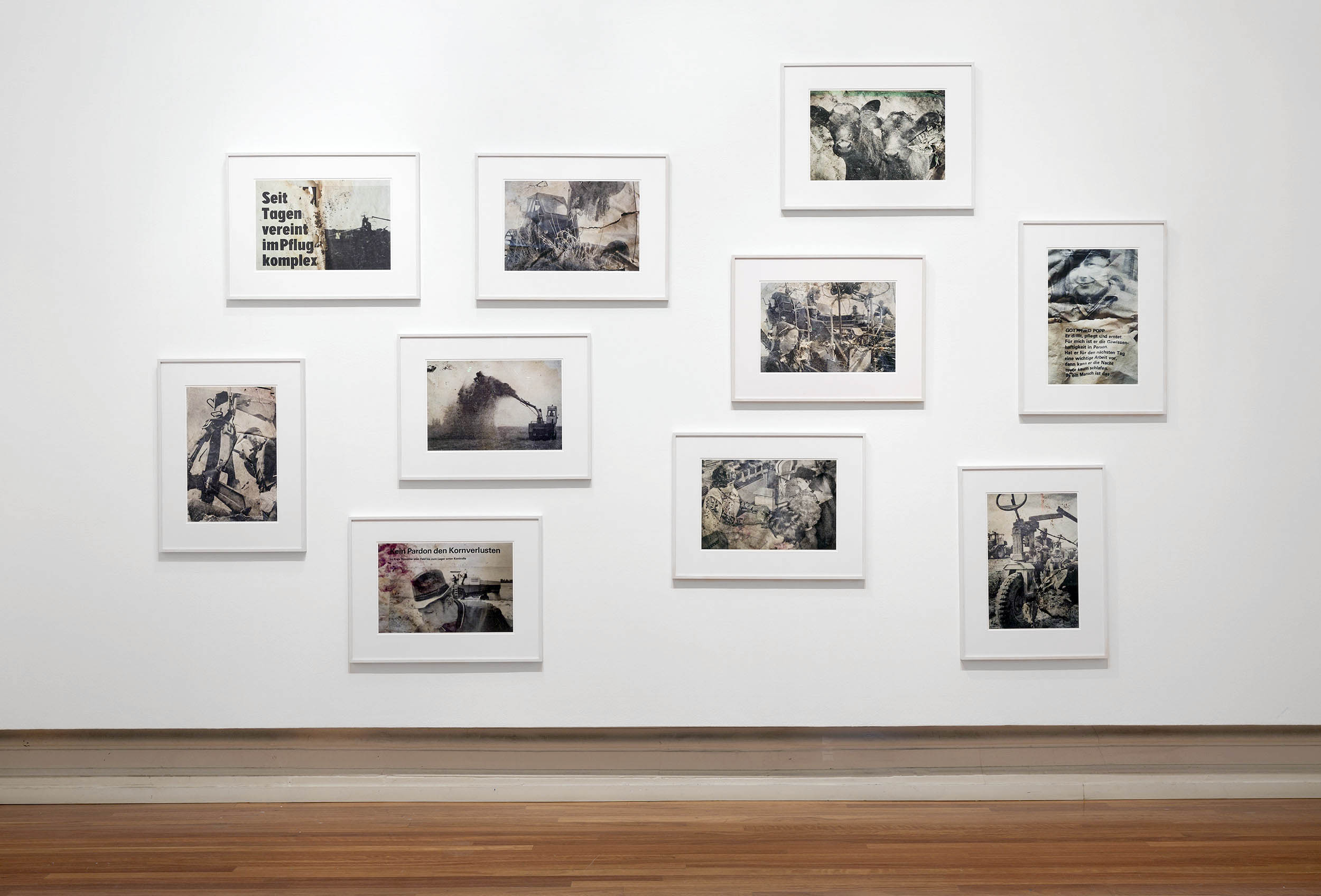
Installation view, Ulrich Wüst, Flatland. Schönhof, 2013, from the exhibition Wanderings About History. The Photography of Ulrich Wüst, RMIT Gallery, Melbourne, 2024
Photo: Christian Capurro

Ulrich Wüst (German, b. 1949)
Aus der Serie: Flatland. Schönhof
From the series: Flatland. Schönhof
2013
Colour photograph, archival pigment print
57 × 38cm
© Ulrich Wüst; ifa

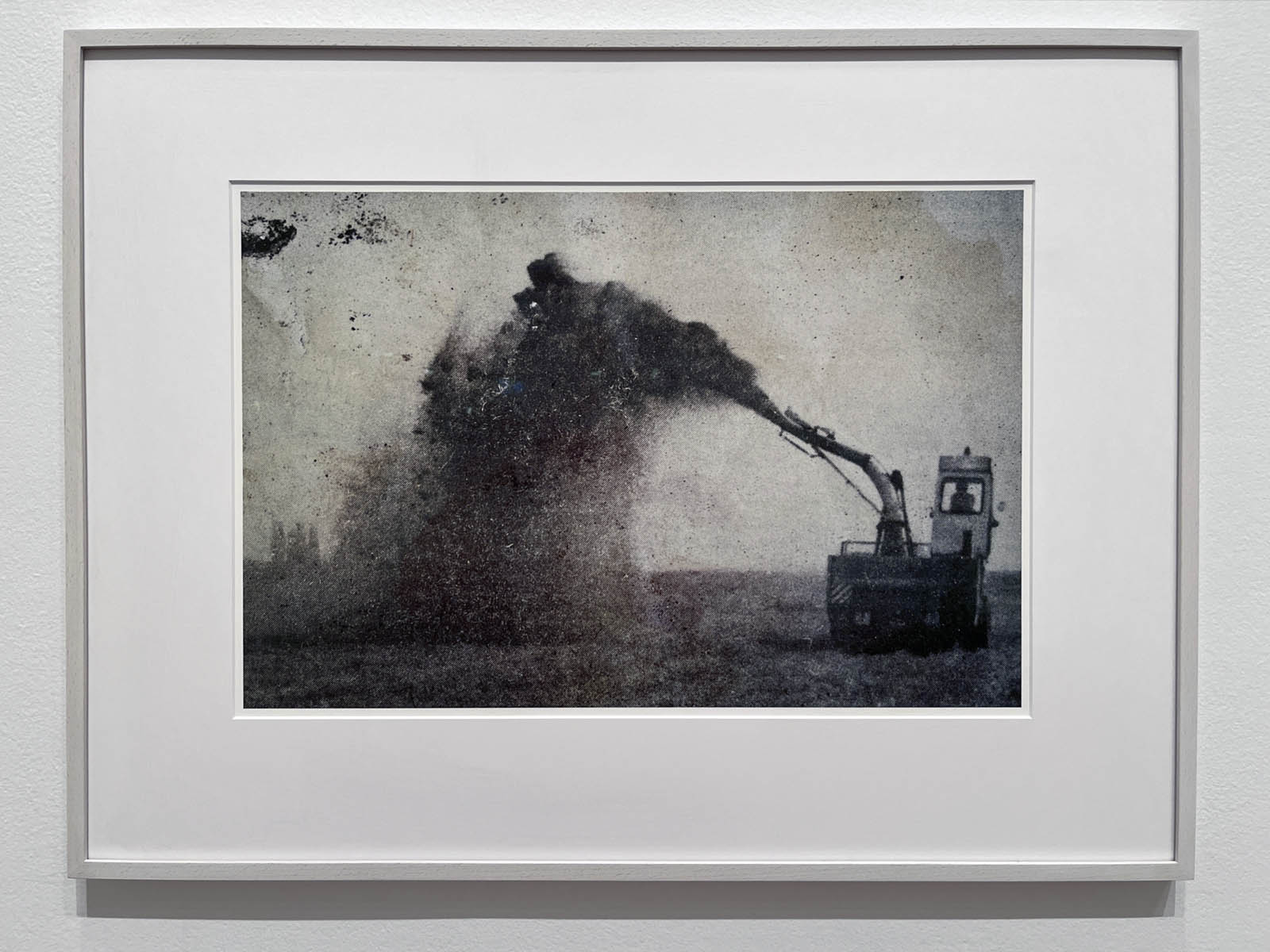
Ulrich Wüst (German, b. 1949)
Aus der Serie: Flatland. Schönhof
From the series: Flatland. Schönhof (installation views)
2013
Colour photograph, archival pigment print
57 × 38cm
© Ulrich Wüst; ifa
Photos: Marcus Bunyan
“These photographs of newspapers and magazines were taken in the countryside, things that I found within a very small radius. Previously I had always done that urban stuff but then I would go looking for contrasts, because after a while your eye becomes tired.”
~ Ulrich Wüst, wall text from the exhibition

Installation view, Ulrich Wüst, Cityscapes 1979-1985 (left) and Wiegmann Legacy. Bülowssiege 1991-1992 (right) from the exhibition Wanderings About History. The Photography of Ulrich Wüst, RMIT Gallery, Melbourne, 2024
Photo: Christian Capurro
Ulrich Wüst’s photos are “images of mental-spatial situations”
In every city there are places that have been photographed thousands of times. From tourists, amateurs and professionals. Always captured on paper or the digital matrix. Big Ben, Eiffel Tower, Alexanderplatz in the heart of Berlin. Thousands, even millions of looks at the striking symbols of a metropolis that want to capture the essence of the city. Ulrich Wüst was far away from such direct concepts. His view of Alexanderplatz is almost shy, more of a cautious approach, and yet he gets a grip on the place. But it’s not primarily about Berlin. Wüst’s city images are less studies of specific cities than “images of intellectual-spatial situations,” as the art historian and rector of the Dresden University of Fine Arts Matthias Flügge states in his insightful text for the photo book Ulrich Wüst – Stadtbilder 1979-1985 (Ulrich Wüst – City Images 1979-1985).
If you read Flügge’s text, it becomes clear once again that a picture is not just a picture and that it requires more than a fleeting observation, especially with a subject like the cityscape. Because you could easily come to the conclusion that you immediately understand the motif at hand, after all, you yourself are a city dweller and are aware of your habitat. But a photograph is also a starting point for deeper reflections. Wüst’s photographs of prefabricated buildings in East Berlin, vacancies in Magdeburg, and the central square in Karl-Marx-Stadt are not unseen motifs. Rather, they are all too well known. Such urban constellations should not be foreign to anyone who lived in the GDR in the 1970s and 1980s, or even those born later or socialised in the West. …
“Determining the status quo of the constructed, shaped, printed or otherwise produced objective world with all its traces, injuries, missing and empty spaces in the image, so that things begin to speak of themselves,” is what Wüst does, writes Flügge.
Jacek Slaski. “Ulrich Wüst – Stadtbilder 1979–1985: Zwischen Kunst und Dokumentation,” on the tipBerlin website 03/02/2022 [Online] Cited 08/04/2024. Translated from the German by Google Translate

Ulrich Wüst (German, b. 1949)
Berlin
1982
Aus der Serie: Stadtbilder. 1979-1985
From the series: Cityscapes. 1979-1985
B/w archival pigment print
16 x 24cm
© Ulrich Wüst; ifa
“For me it had always been about the built environment. […] And then I started on those rather dry Cityscapes, which always seems so objective, even though they never were and never tried to be. I wanted to take a concentrated, analytical look at the city. Back then I had a strong sense of mission; I really did want to achieve something. And the things I wanted to say about the city as space I also wanted to tell people who weren’t at all interested in photography or urban space. In some respects it was definitely intended to enlighten. Ultimately I wanted to provoke a debate about what we imagine a “city” to be and what this environment does to us.”
~ Ulrich Wüst, wall text from the exhibition

Axel Hütte (German, b. 1951)
James Hammett House
1982-1984
Silver gelatin print on baryte paper
66 x 80cm
Loan of the artist
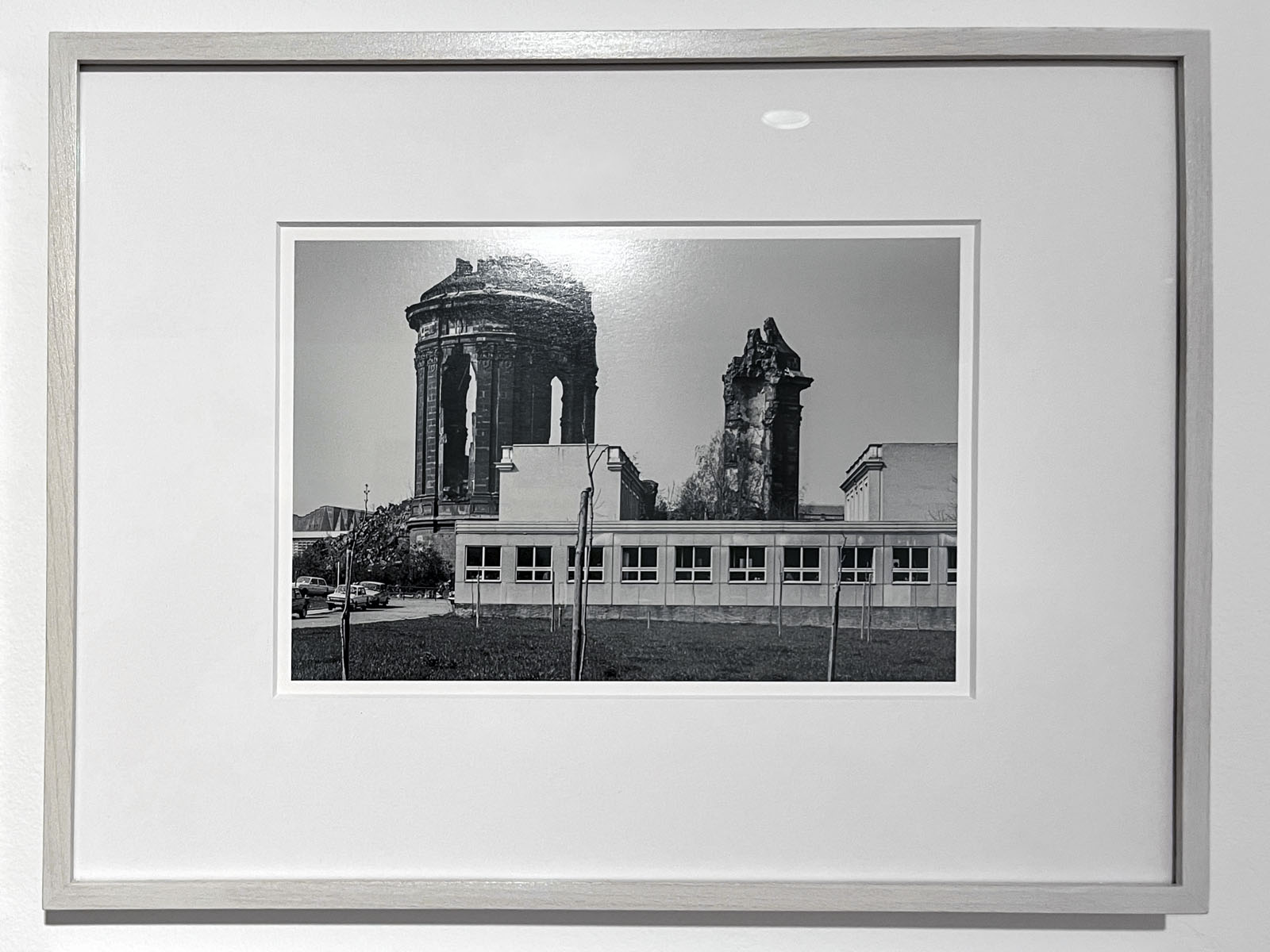
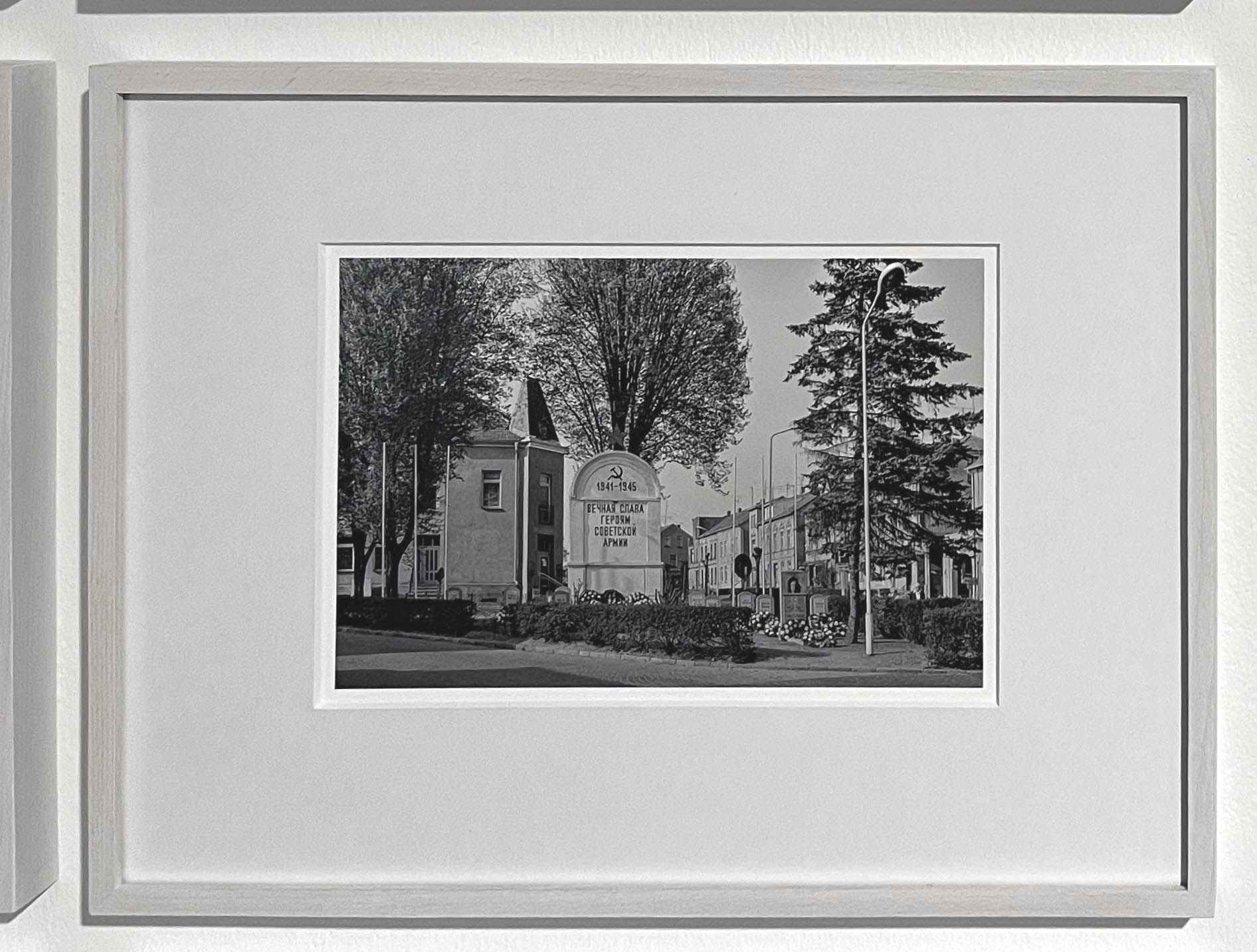

Ulrich Wüst (German, b. 1949)
Aus der Serie: Stadtbilder. 1979-1985
From the series: Cityscapes. 1979-1985 (installation views)
B/w archival pigment print
16 x 24cm
© Ulrich Wüst; ifa
Photos: Marcus Bunyan
The work of Ulrich Wüst might best be described as a pictorial archaeology of recent German history. With an unsentimental precision these photographic ‘excavations’ pivot around moments of social change; those points in history when the old and the new collide, when the seemingly endless cycle of destruction and construction can so easily relegate the present to the oblivion of the past.
Initially photographing life in the former East Germany, Wüst’s oeuvre grew to include the documentation of everyday situations, objects and materials; expanding further with the addition of found images, cropped and rephotographed by Wüst to reveal alternative readings.
In his sparse black and white Cityscapes, the 1980s series that first brought Wust to international attention, we find images of East German cities and towns still carrying scars from the Second World War – an environment formed through the combination of unchecked decay and Soviet-era reconstruction. With an interest in the absurd – those visual anomalies that arrive through accident or misguided intent – Wüst has forged a unique, non-ideological representation of that time. In a similar manner but on a different scale, Wüst’s Wiegmann Legacy. Bülowssiege (1991-1992) – a photo inventory of objects left behind by the former owner of his house – engages us with the incidental nature of history. Intimate and fragile, these ordinary objects are made monumental through Wüst’s lens, yet these discarded possessions have the same precariousness as the hastily built architecture of cities in perpetual change.
Ulrich Wüst’s photographic work exists as a registry of everyday images. It could be considered akin to the personal archive of a once divided country mending itself, wandering through time, settling upon moments and fragments that also speak to the wider, universal phenomena of social change and its material manifestations.
Wall text from the exhibition

Installation view, Ulrich Wüst, Cityscapes, 1979-1985 (right), Morgenstraße. Magdeburg, 1998-2000 (second right), Wiegmann Legacy. Bülowssiege, 1991-1992 (third right) and Red October, 2018 (left) from the exhibition Wanderings About History. The Photography of Ulrich Wüst, RMIT Gallery, Melbourne, 2024
Photo: Christian Capurro

Installation view, Ulrich Wüst, Morgenstraße. Magdeburg, 1998-2000 (right), Wiegmann Legacy. Bülowssiege, 1991-1992 (centre left) from the exhibition Wanderings About History. The Photography of Ulrich Wüst, RMIT Gallery, Melbourne, 2024
Photo: Christian Capurro
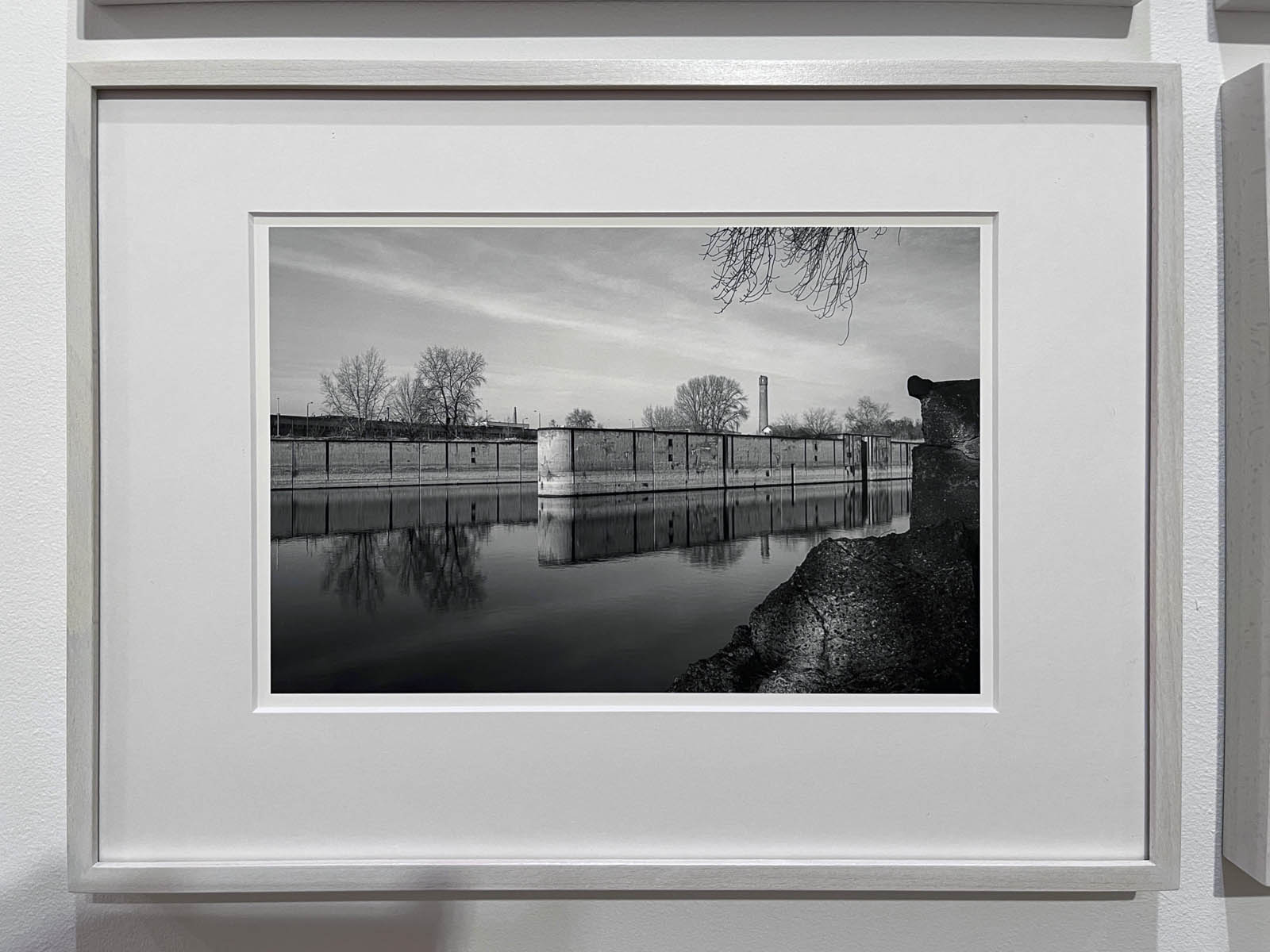
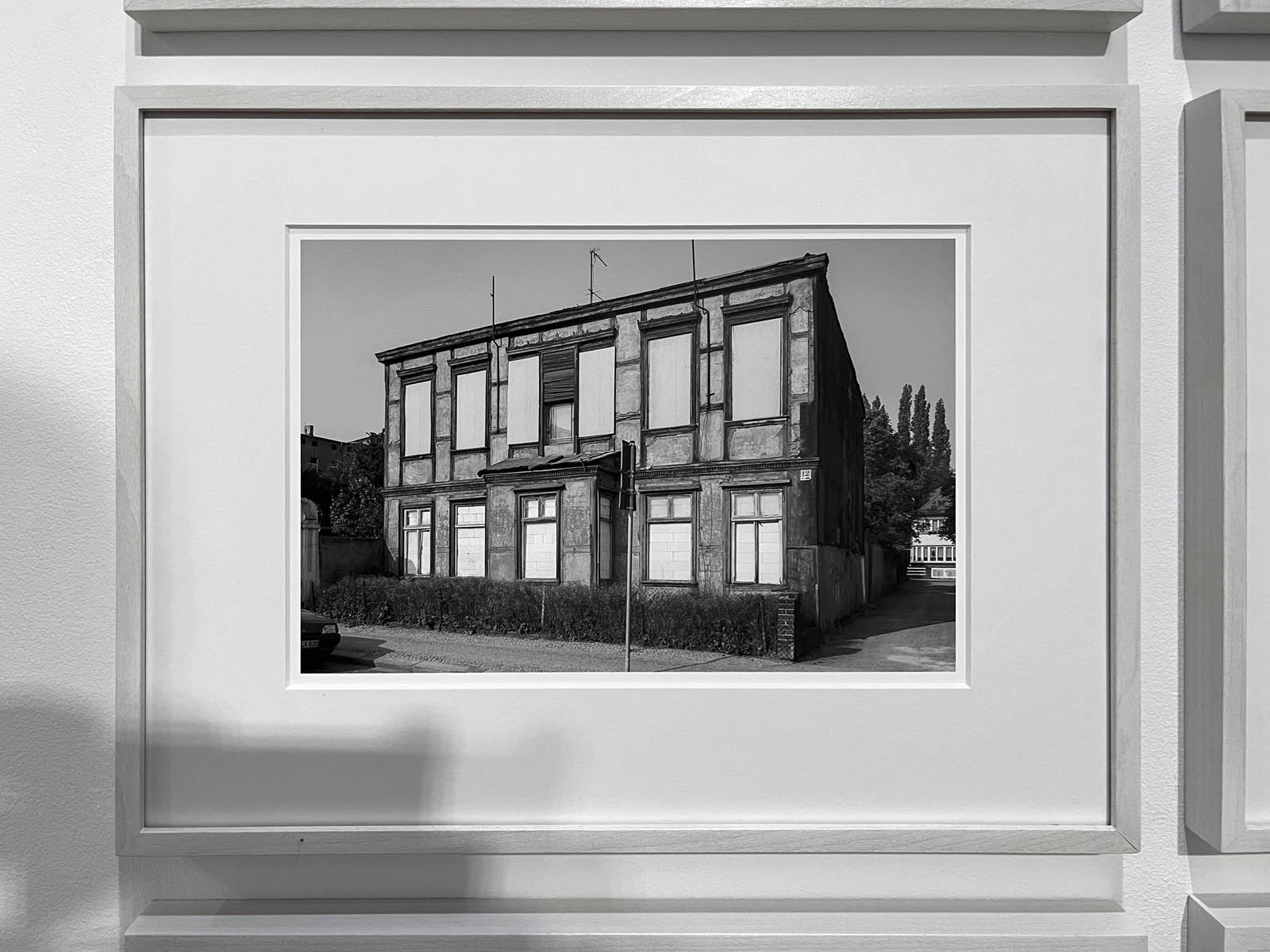
Ulrich Wüst (German, b. 1949)
Aus der Serie: Morgenstraße. Magdeburg 1998-2000
From the series: Morgenstraße. Magdeburg 1998-2000 (installation views)
B/w archival pigment print
18 x 27cm
© Ulrich Wüst; ifa
Photos: Marcus Bunyan
“As soon as we see people in pictures, we focus on those people. We seem to be fixated on that somehow and we stare at the figures depicted, however small they may be. But as I wanted to steer attention to the built environment, to what we have built for ourselves, I quite simply decided to leave the people out. If there a no people in sight in the pictures, then for one thing nobody can look at them and for another the effect is disconcerting. Disconcertion is a good opening gambit.”
~ Ulrich Wüst, wall text from the exhibition

Berenice Abbott (American, 1898-1991)
Fifth Avenue, Nos. 4, 6, 8, Manhattan
March 20, 1936
Gelatin silver print
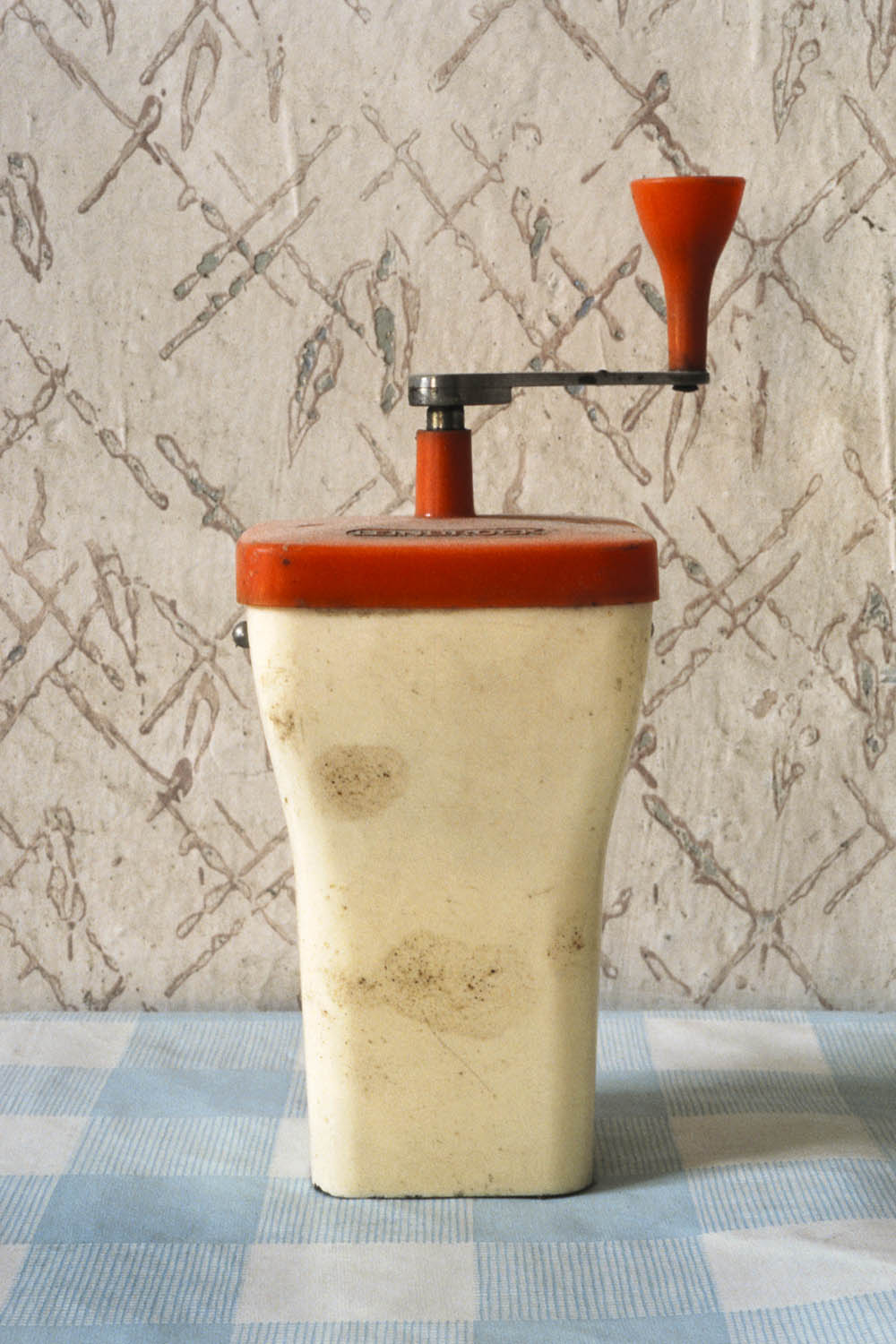
Ulrich Wüst (German, b. 1949)
Kaffemühle (Coffee grinder)
Aus der Serie: Nachlass Wiegmann. Bülowssiege 1991-1992
From the series: Wiegmann Legacy. Bülowssiege 1991-1992
Colour photograph, archival pigment print
105 cm x 70cm
© Ulrich Wüst; ifa
“I make a point of calling myself a photographer, because then the art question usually no longer arises. But if others still want to see me as an artist, I can (happily) live with that. Personally I don’t want to think about that question. The only thing I do want to stress is that my work is not documentary. I use documentary technique as a form, as a means, and in certain works I am also looking for documentary precision.”
~ Ulrich Wüst, wall text from the exhibition

Installation view, Ulrich Wüst, Wiegmann Legacy. Bülowssiege, 1991-1992 from the exhibition Wanderings About History. The Photography of Ulrich Wüst, RMIT Gallery, Melbourne, 2024
Photo: Christian Capurro

Ulrich Wüst (German, b. 1949)
Aus der Serie: Nachlass Wiegmann. Bülowssiege 1991-1992
From the series: Wiegmann Legacy. Bülowssiege 1991-1992 (installation view)
Colour photograph, archival pigment print
105 cm x 70cm
© Ulrich Wüst; ifa
Photo: Marcus Bunyan

Installation view, Ulrich Wüst, Cityscapes, 1979-1985 (left) and Wiegmann Legacy. Bülowssiege, 1991-1992 (right) from the exhibition Wanderings About History. The Photography of Ulrich Wüst, RMIT Gallery, Melbourne, 2024
Photo: Christian Capurro
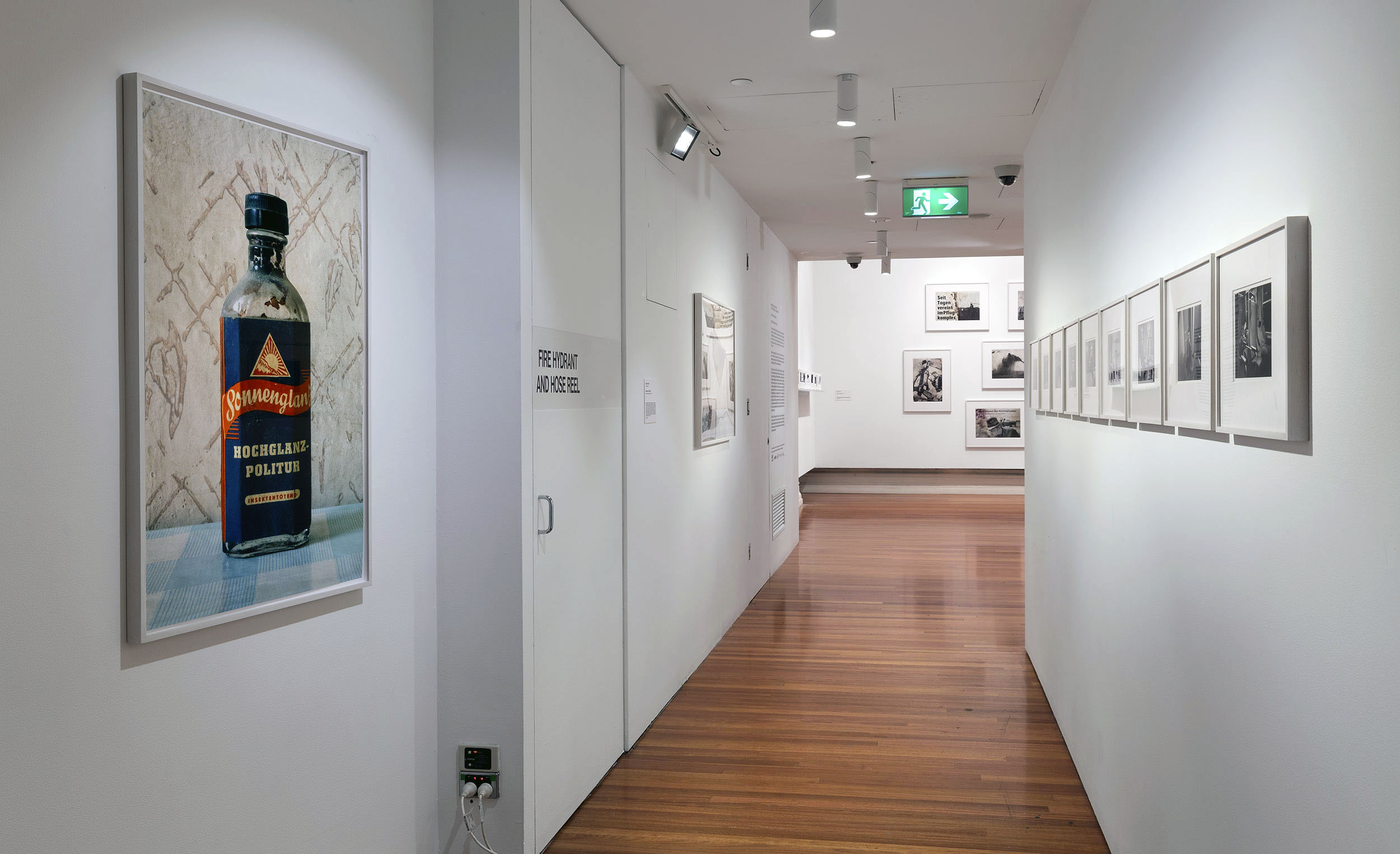
Installation view, Ulrich Wüst, Wiegmann Legacy. Bülowssiege, 1991-1992 (left) and Notations 1984-1986 (right) from the exhibition Wanderings About History. The Photography of Ulrich Wüst, RMIT Gallery, Melbourne, 2024
Photo: Christian Capurro
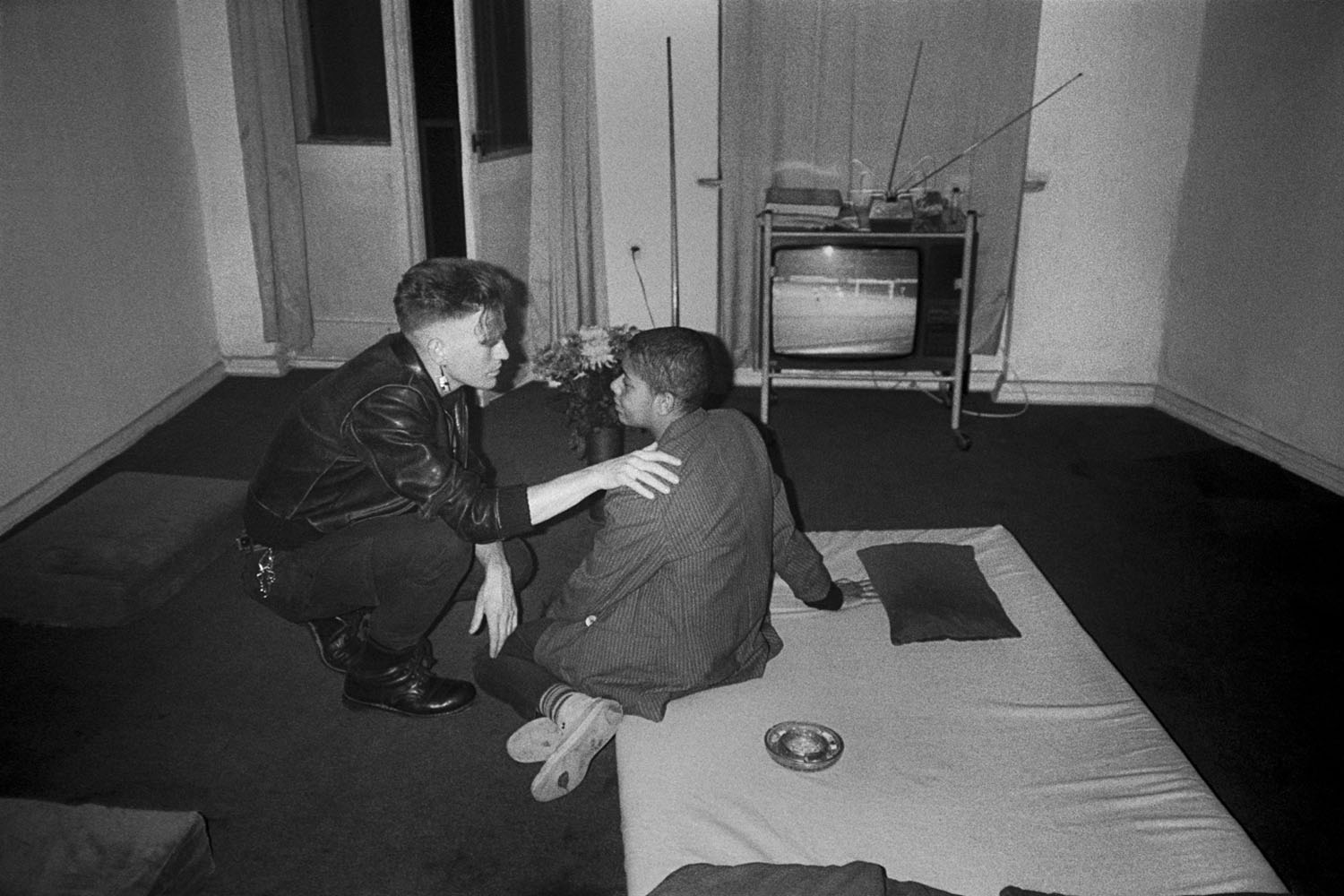
Ulrich Wüst (German, b. 1949)
Berlin, Pappelallee
September 1984
Aus der Serie: Notizen. 1984-1986
From the series: Notations. 1984-1986
B/w archival pigment print
14 x 21cm
© Ulrich Wüst; ifa


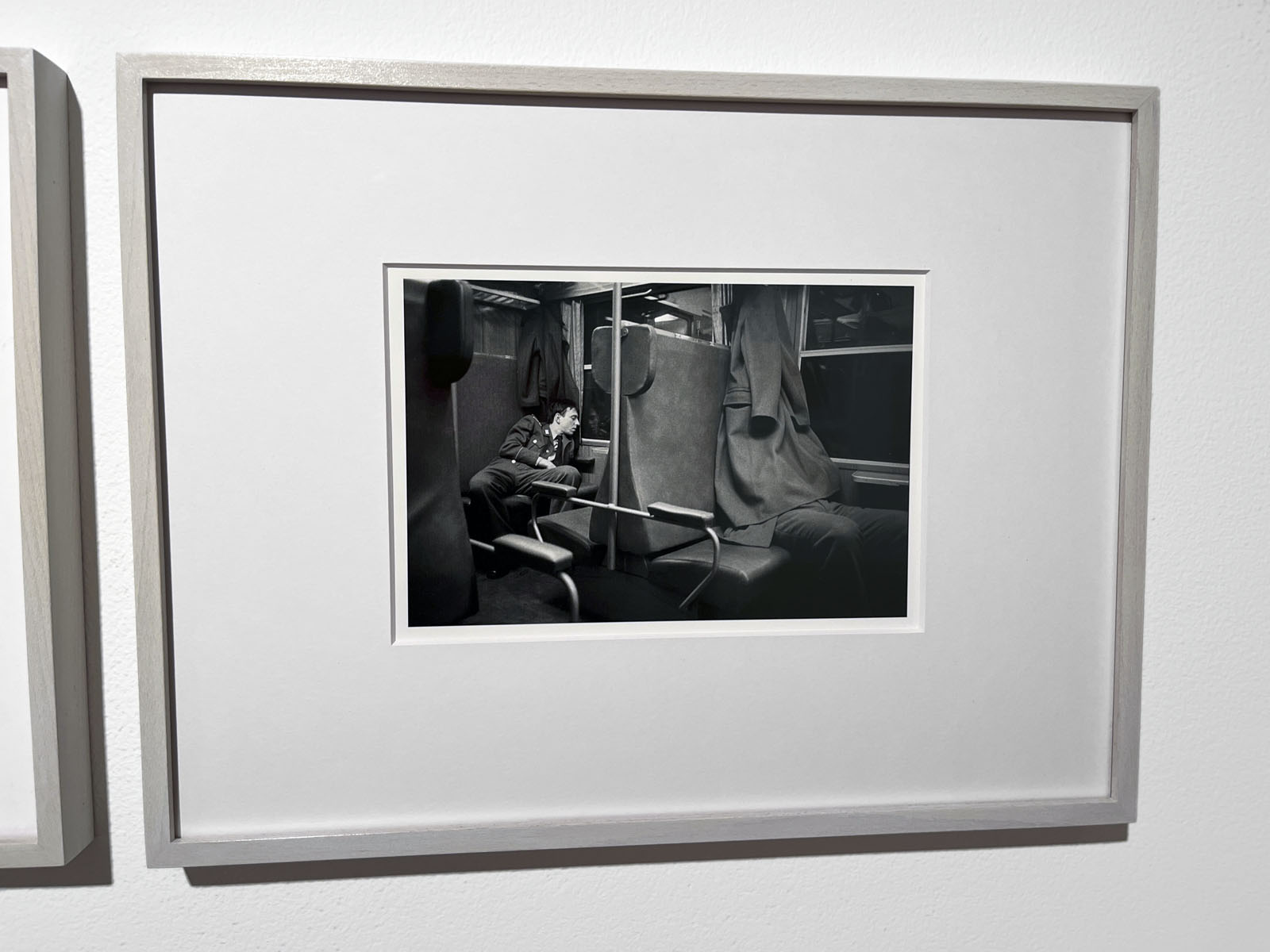
Ulrich Wüst (German, b. 1949)
Aus der Serie: Notizen. 1984-1986
From the series: Notations. 1984-1986 (installation views)
B/w archival pigment print
14 x 21cm
© Ulrich Wüst; ifa
Photos: Marcus Bunyan
“While I was still busy fine-tuning my technical skills for Cityscapes, over in West Germany very small automatic rangefinders were coming onto the market. That was in the early 1980s. […] I got hold of one of those and suddenly I could carry a camera with me all the time, take it anywhere, and I started using it like an “extended eye”. The little camera allowed me to take more intimate, more “personal” works. For me that meant talking about my own life. That was the beginning of the series Notations, as I later called it. I focused on my circle of friends and my immediate environment. And so the Notations came about and that was what I wanted to achieve, as a conscious antithesis to other series like the Cityscapes.”
~ Ulrich Wüst, wall text from the exhibition
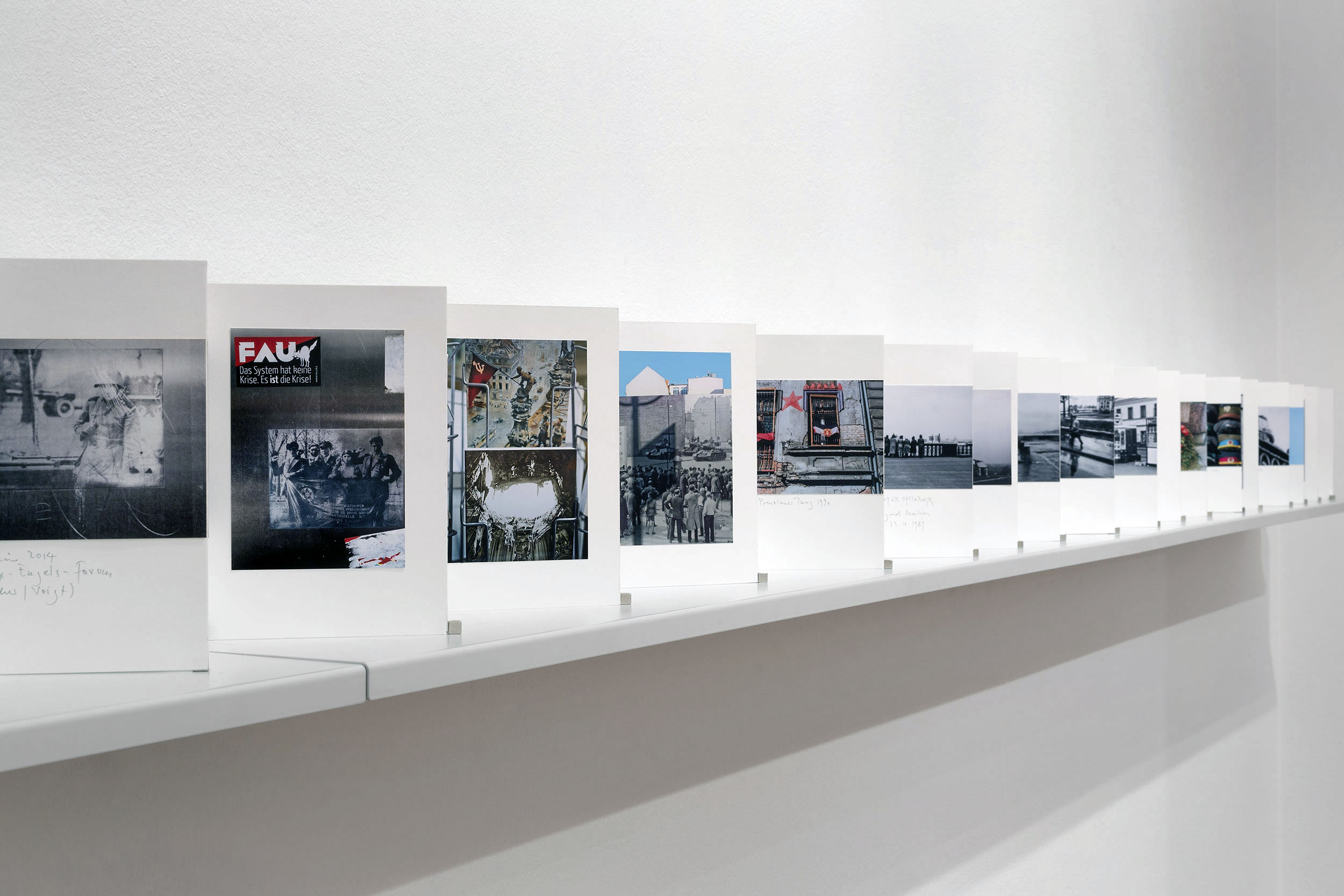
Installation view, Ulrich Wüst, Red October 2018, from the exhibition Wanderings About History. The Photography of Ulrich Wüst, RMIT Gallery, Melbourne, 2024
Photo: Christian Capurro
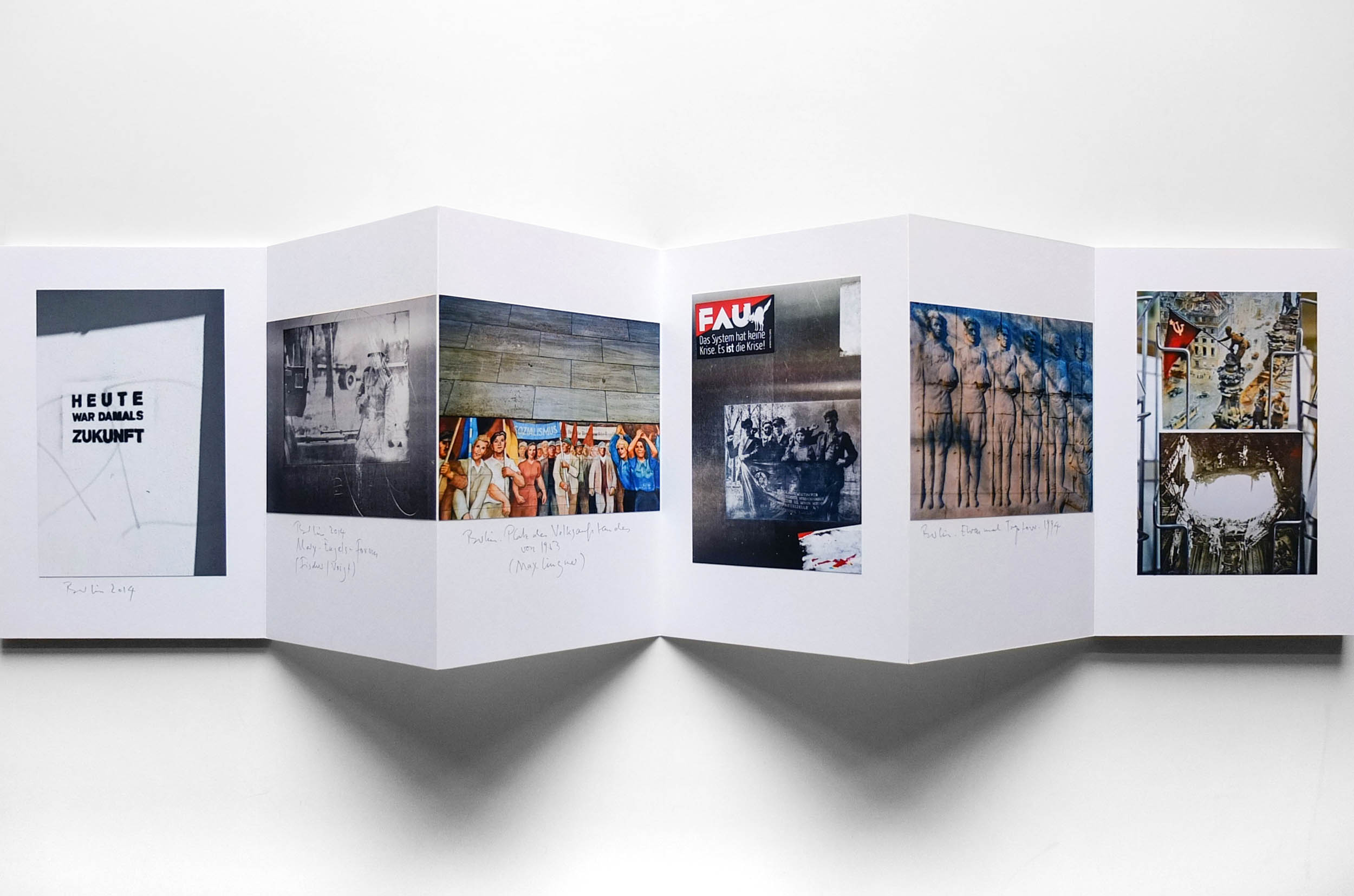
Ulrich Wüst (German, b. 1949)
Roter Oktober (Red October)
2018
Leporello with 45 b/w and colour photographs mounted on cardboard
14.8 × 21.0 × 2.0cm
© Ulrich Wüst; ifa

Michael Schmidt (German, 1945-2014)
Müller-Ecke Seestrasse, Berlin-Wedding (Berlin-Wedding)
1976-1978
© Michael Schmidt, Foundation for Photography and Media Art with the Michael Schmidt Archive
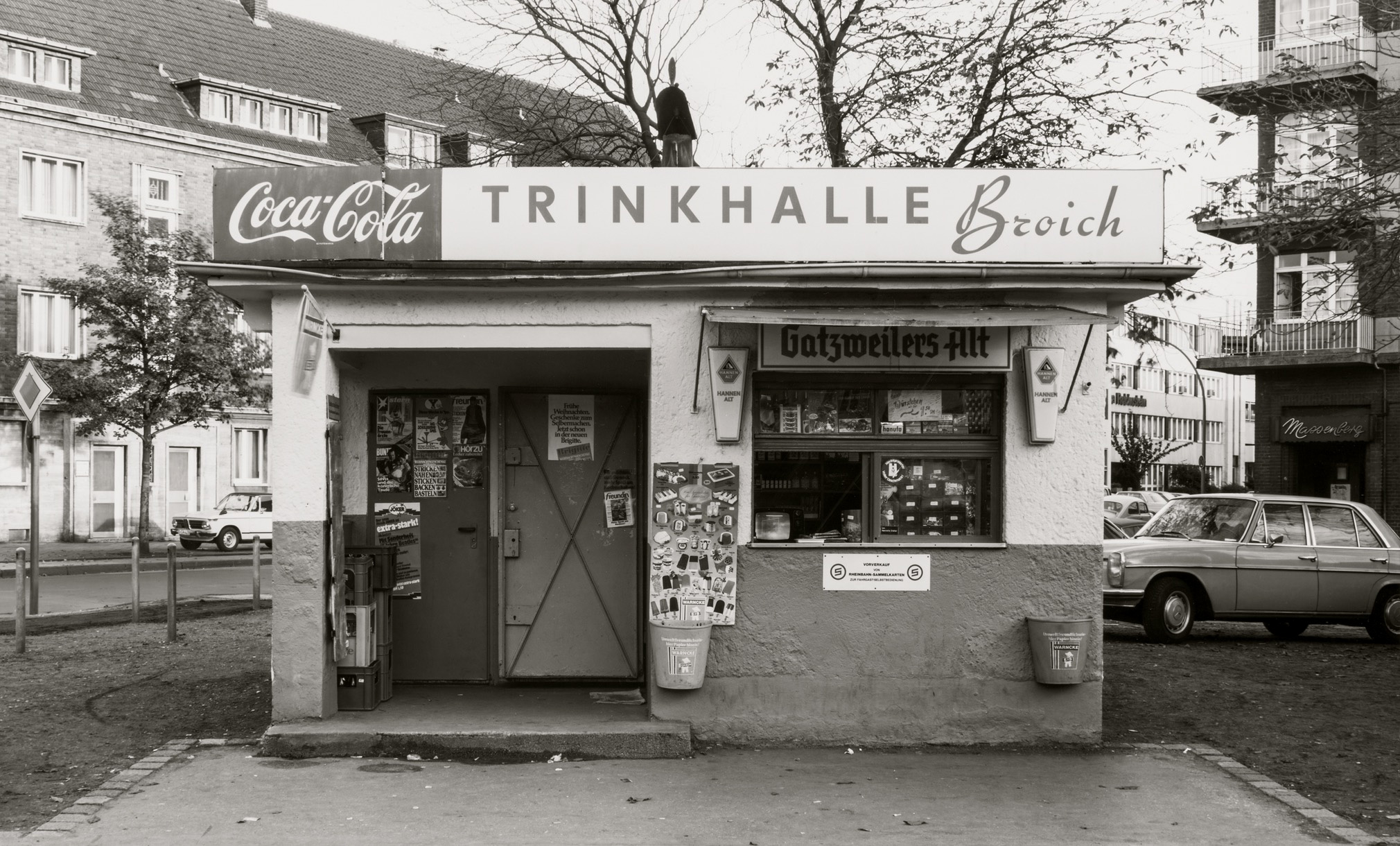
Tata Ronkholz (German, 1940-1997)
Dusseldorf, Sankt-Franziskusstraße 107
1977
Silver gelatin print on baryta paper
41.2 × 51.2cm
Courtesy The Photographische Sammlung / SK Stiftung Kultur, Cologne / Permanent Loan of the Sparkasse KölnBonn


Ulrich Wüst (German, b. 1949)
Roter Oktober (Red October) (installation views)
2018
Leporello with 45 b/w and colour photographs mounted on cardboard
14.8 × 21.0 × 2.0cm
© Ulrich Wüst; ifa
Photos: Marcus Bunyan
“Photographers love to complain about the chaos they work in and how that prevents them from keeping tabs on what they do. At some point I realised that the concertinas were a fantastic tool for tracing and recoding the progress of my work. Above all, they enabled me to locate my negatives, because I used very simple but precise captions with the place and date of the picture. I always liked the versatility of the concertina. Now, whenever I need to find a negative, I take one of these booklets of the shelf and look for the photograph. They have become a means to communicate with myself about my work and I miss them when they are being exhibition and I haven’t got them at home.”
~ Ulrich Wüst, wall text from the exhibition

Installation view, Ulrich Wüst, The Pomp of Power. 1983-1990, from the exhibition Wanderings About History. The Photography of Ulrich Wüst, RMIT Gallery, Melbourne, 2024
Photo by Christian Capurro
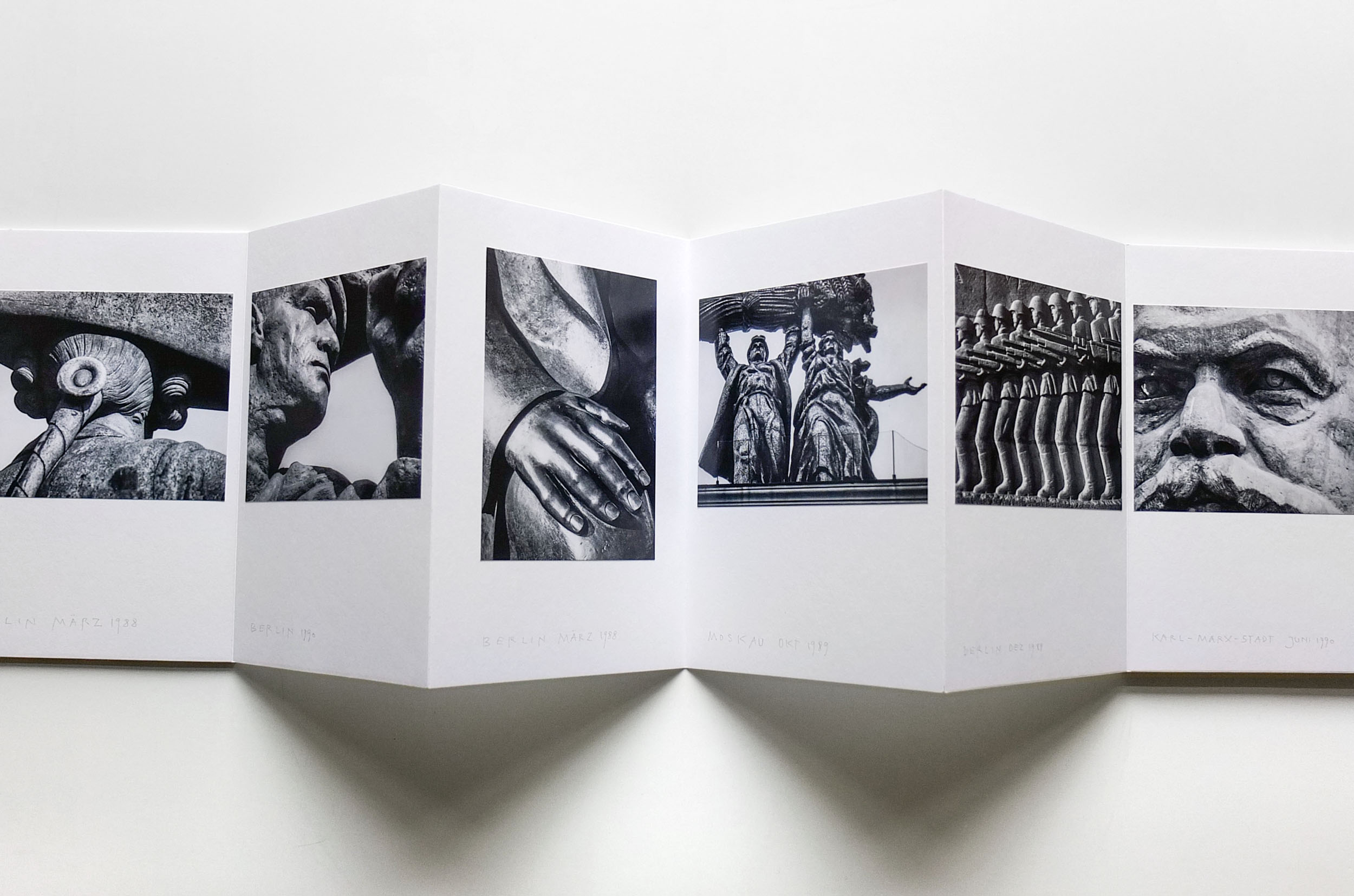
Ulrich Wüst (German, b. 1949)
Die Pracht der Macht. 1983-1990
The Pomp of Power. 1983-1990
Leporello with 30 b/w photographs mounted on cardboard
14.8 × 21.0 × 1.5cm
© Ulrich Wüst; ifa


Ulrich Wüst (German, b. 1949)
Die Pracht der Macht. 1983-1990
The Pomp of Power. 1983-1990 (installation views)
Concertina booklet with 30 b/w photographs mounted on cardboard
14.8 × 21.0 × 1.5cm
© Ulrich Wüst; ifa
Photos: Marcus Bunyan
Clarity and compositional elegance
It may also have been his professional disposition that led him to pay particular attention to the GDR city. After all, he was an expert. Wüst was an expert in the field of urban development; he knew exactly what he was photographing. In the midst of the “leaden times” of the GDR, an era shortly before the collapse in which hardly anything seemed to be moving. Mid-1970s to mid-1980s. Urban and housing construction has long since said goodbye to the promising ideals of a better, because socialist, promise. The reality was pragmatic and merciless. Dilapidated old building and decaying substance on one side and serial prefabricated building on the other.
Wüst’s pictures, which sometimes develop a peculiar irony in their clarity and compositional elegance, can also be understood as political statements. “They searched for clues in a way that was unusual in the GDR as a way of ascertaining the real perceived state of the present,” writes Flügge about the photographer, who knew exactly what he wanted to find and capture. Even the depiction of reality could be considered subversive in the workers’ and farmers’ state. It wasn’t appropriate to show things as they were. Rather, you should show things as they should be. …
By “limiting the image section, he forces reality to formulate its own,” summarizes Flügge.
Jacek Slaski. “Ulrich Wüst – Stadtbilder 1979–1985: Zwischen Kunst und Dokumentation,” on the tipBerlin website 03/02/2022 [Online] Cited 08/04/2024. Translated from the German by Google Translate

Installation view, Ulrich Wüst, Village Edge. The Municipality of Nordwestuckermark, 2014-2019 from the exhibition Wanderings About History. The Photography of Ulrich Wüst, RMIT Gallery, Melbourne, 2024
Photo: Christian Capurro
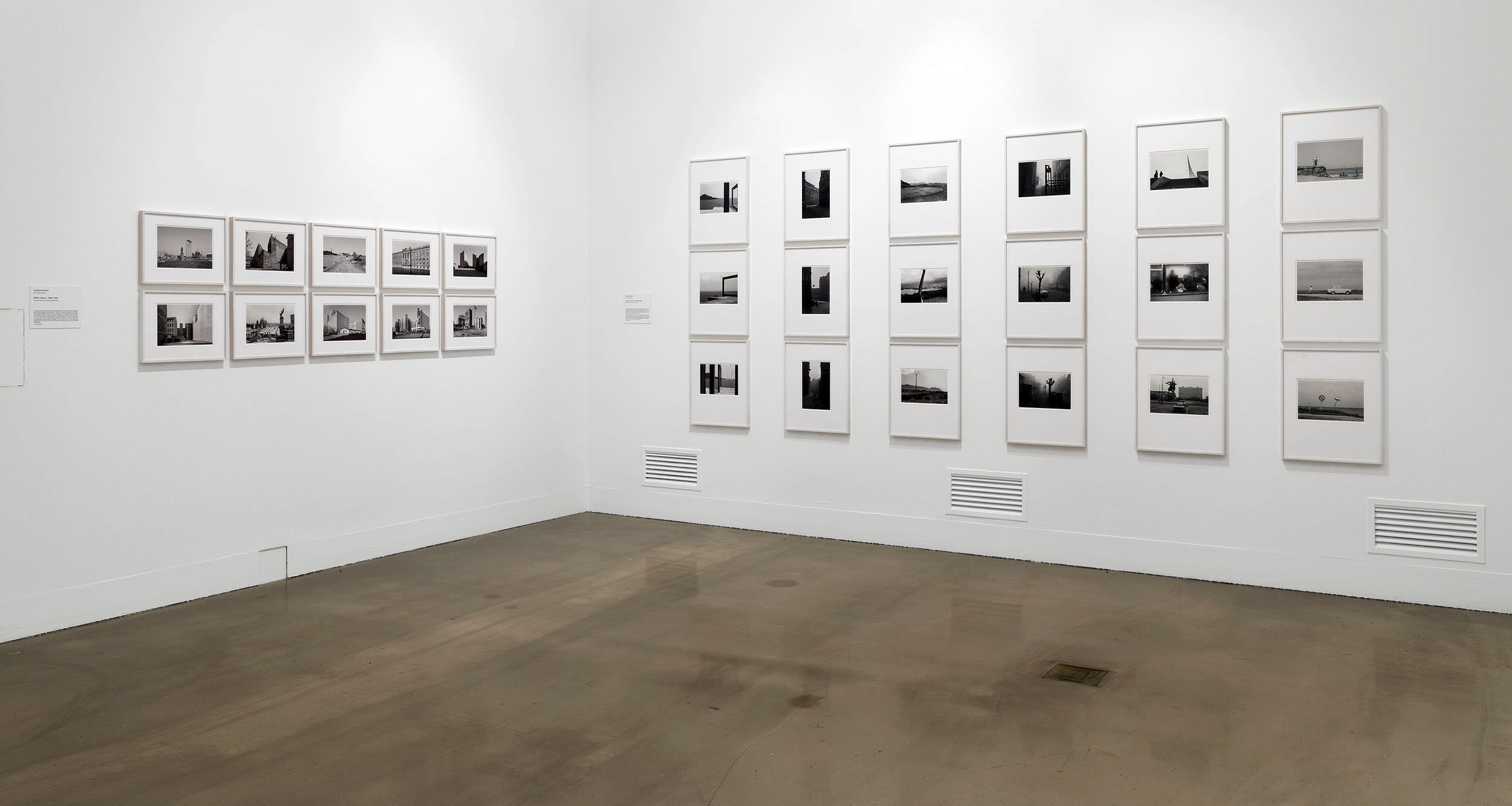
Installation view, Ulrich Wüst, Book of the Years. 1978-2008 (right) and Mitte. Berlin, 1994-1997 (left) from the exhibition Wanderings About History. The Photography of Ulrich Wüst, RMIT Gallery, Melbourne, 2024
Photo: Christian Capurro

Ulrich Wüst (German, b. 1949)
Schützenstraße / Jerusalemer Straße
1996
Aus der Serie: Mitte. Berlin 1995-1997
From the series: Mitte. Berlin 1995-1997
B/w archival pigment print
18 x 27cm
© Ulrich Wüst; ifa
The different historical eras come together in his pictures. Relics from the pre-war period, often ruins, alongside the proud examples of Eastern Modernism from the post-war period, and finally the cheap and quickly built architecture of the present day. These photos are still important today, and not just for architectural historians and photography connoisseurs. Wüst’s pictures of the GDR city are visual findings about the condition of its residents, even if the people in them are absent. In his text, Flügge quotes from Alexander Mitscherlich’s book Die Unwirtlichkeit unserer Städte. Anstiftung zum Unfrieden (The inhospitability of our cities. Incitement to Discord), in which the doctor, psychoanalyst and writer examined the West German city as early as 1965: “This city shape is regressively shaping the character of its residents.” In his book, Mitscherlich hoped that the city would one day become a “biotope for free people”. It didn’t quite turn out that way, but in a certain sense Mitscherlich wasn’t entirely wrong either. The GDR would soon disappear and with it the GDR city.
Jacek Slaski. “Ulrich Wüst – Stadtbilder 1979–1985: Zwischen Kunst und Dokumentation,” on the tipBerlin website 03/02/2022 [Online] Cited 08/04/2024. Translated from the German by Google Translate


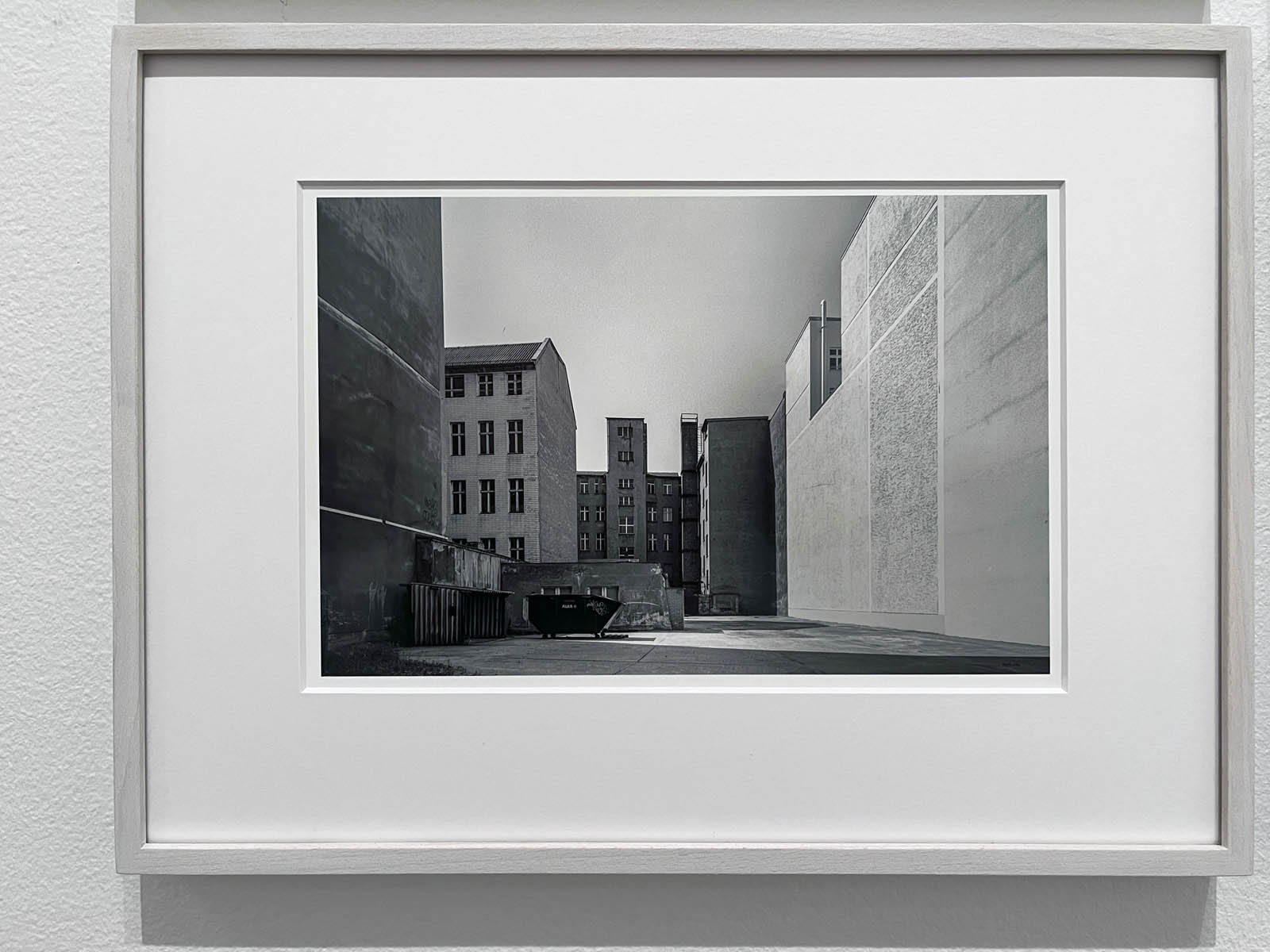

Ulrich Wüst (German, b. 1949)
Aus der Serie: Mitte. Berlin 1995-1997
From the series: Mitte. Berlin 1995-1997 (installation views)
B/w archival pigment print
18 x 27cm
© Ulrich Wüst; ifa
Photos: Marcus Bunyan
I am well aware of how ambivalent photography is. And just because photographs have a documentary air about them, I find it to some extent dubious to slap a documentary label on them. If, ten centimetres from the edge of my picture, the whole content is counteracted by something completely different, then I can no longer claim to be doing serious documentary work. Documentation as a form, in my view, is just a way to explore a theme – a means. I only want to photograph and not distort things. It’s true that there is a documentary background, but what I do with it is always something of my own and totally subjective.
Ulrich Wüst, wall text from the exhibition

Installation view, Ulrich Wüst, Mitte. Berlin 1994-1997 (right) and Prenzlau, 2018 (left) from the exhibition Wanderings About History. The Photography of Ulrich Wüst, RMIT Gallery, Melbourne, 2024
Photo: Christian Capurro
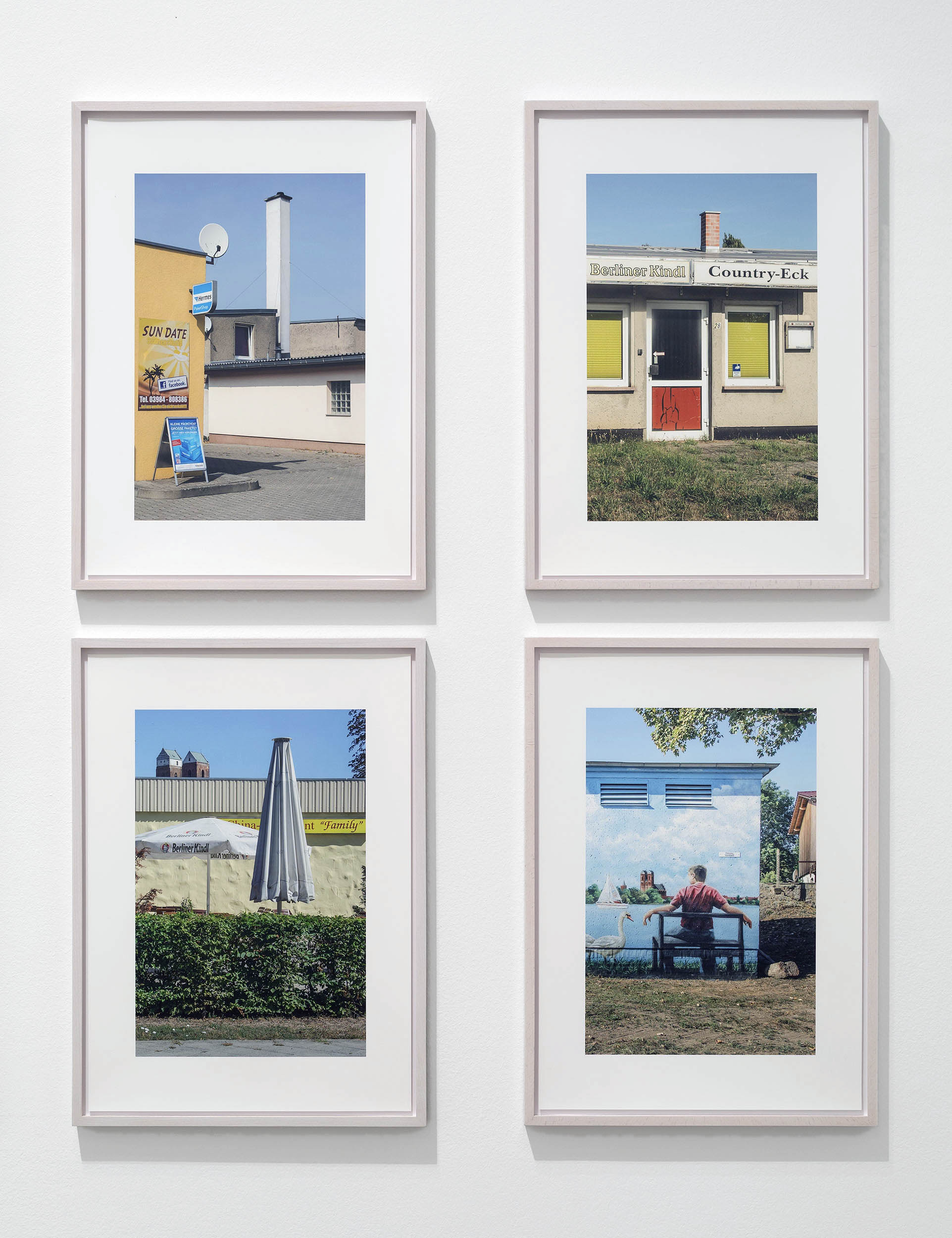
Installation view, Ulrich Wüst, Prenzlau, 2018, from the exhibition Wanderings About History. The Photography of Ulrich Wüst, RMIT Gallery, Melbourne, 2024
Photo: Christian Capurro
Ulrich Wüst (German, b. 1949)
Aus der Serie: Prenzlau
From the series: Prenzlau
2018
Colour photograph, archival pigment print
45 × 30cm
© Ulrich Wüst; ifa
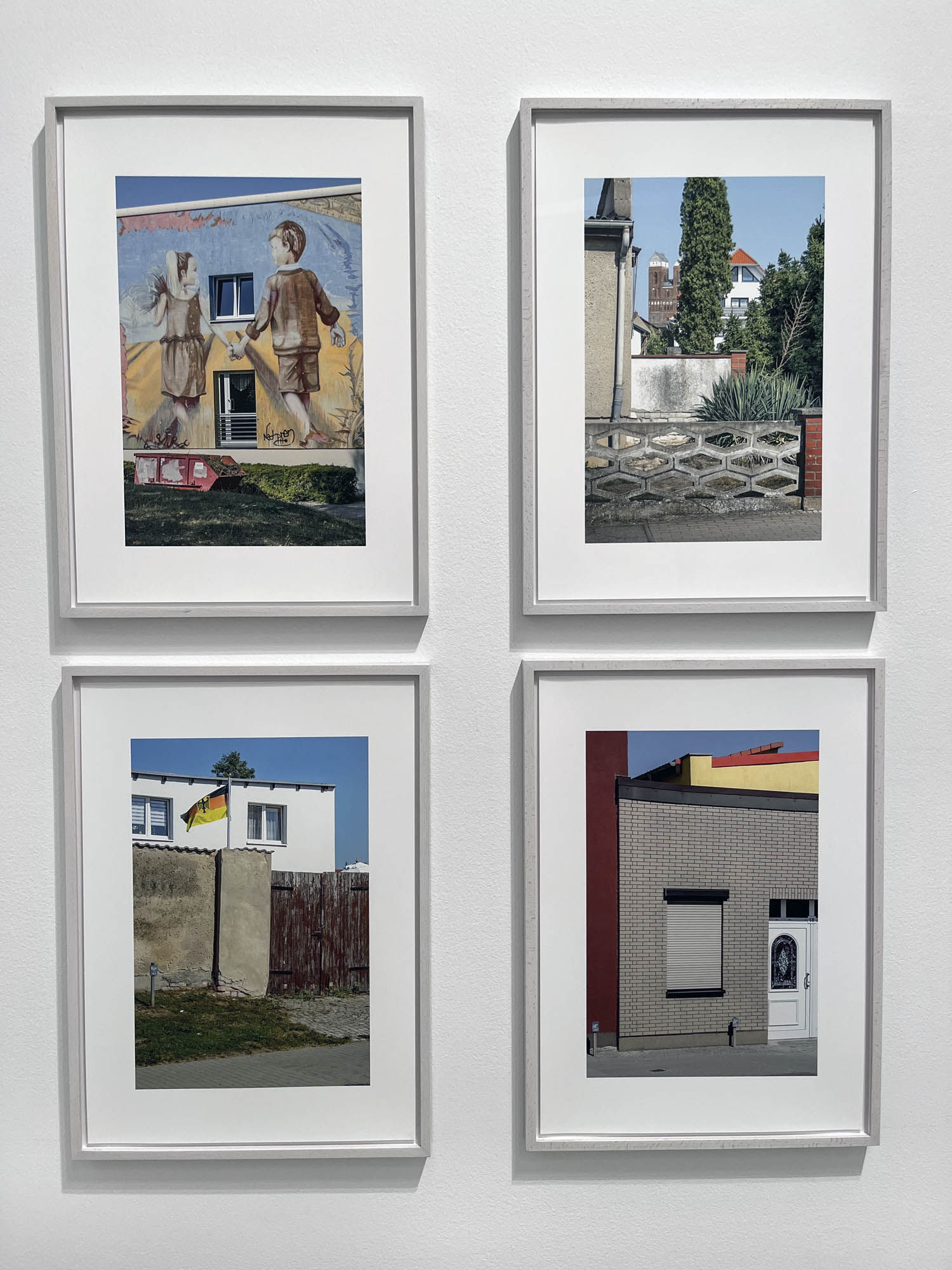


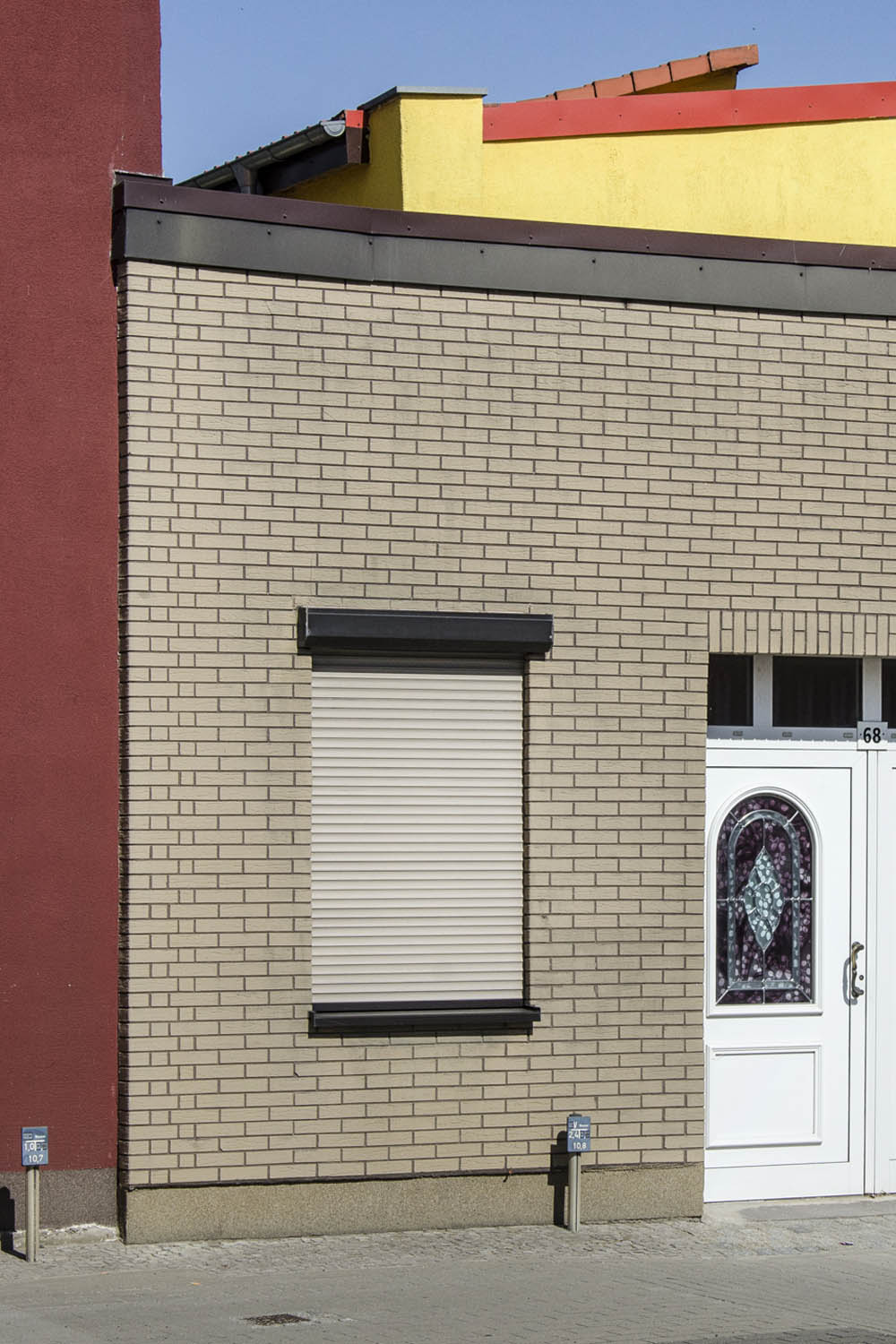
Ulrich Wüst (German, b. 1949)
Aus der Serie: Prenzlau
From the series: Prenzlau (installation views)
2018
Colour photograph, archival pigment print
45 × 30cm
© Ulrich Wüst; ifa
Photos: Marcus Bunyan

Installation view, Ulrich Wüst, Wiegmann Legacy. Bülowssiege, 1991-1992 (right) and Book of the Years. 1978-2008 (left), from the exhibition Wanderings About History. The Photography of Ulrich Wüst, RMIT Gallery, Melbourne, 2024
Photo: Christian Capurro
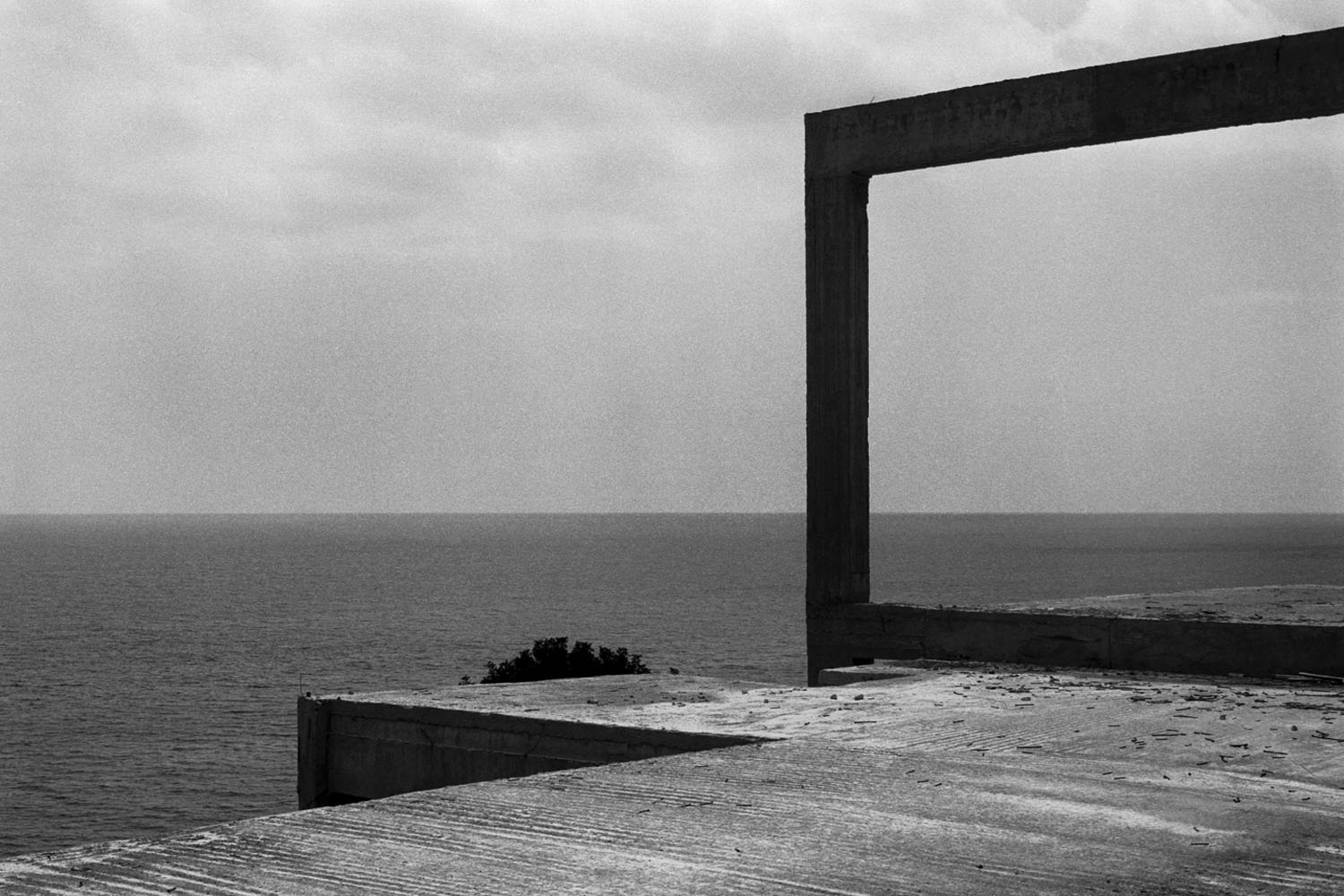
Ulrich Wüst (German, b. 1949)
Kreta (Crete)
1997
Aus der Serie: Jahrebuch. 1978-2008
From the series: Book of the Years. 1978-2008
B/w archival pigment print
18 x 27cm
© Ulrich Wüst; ifa
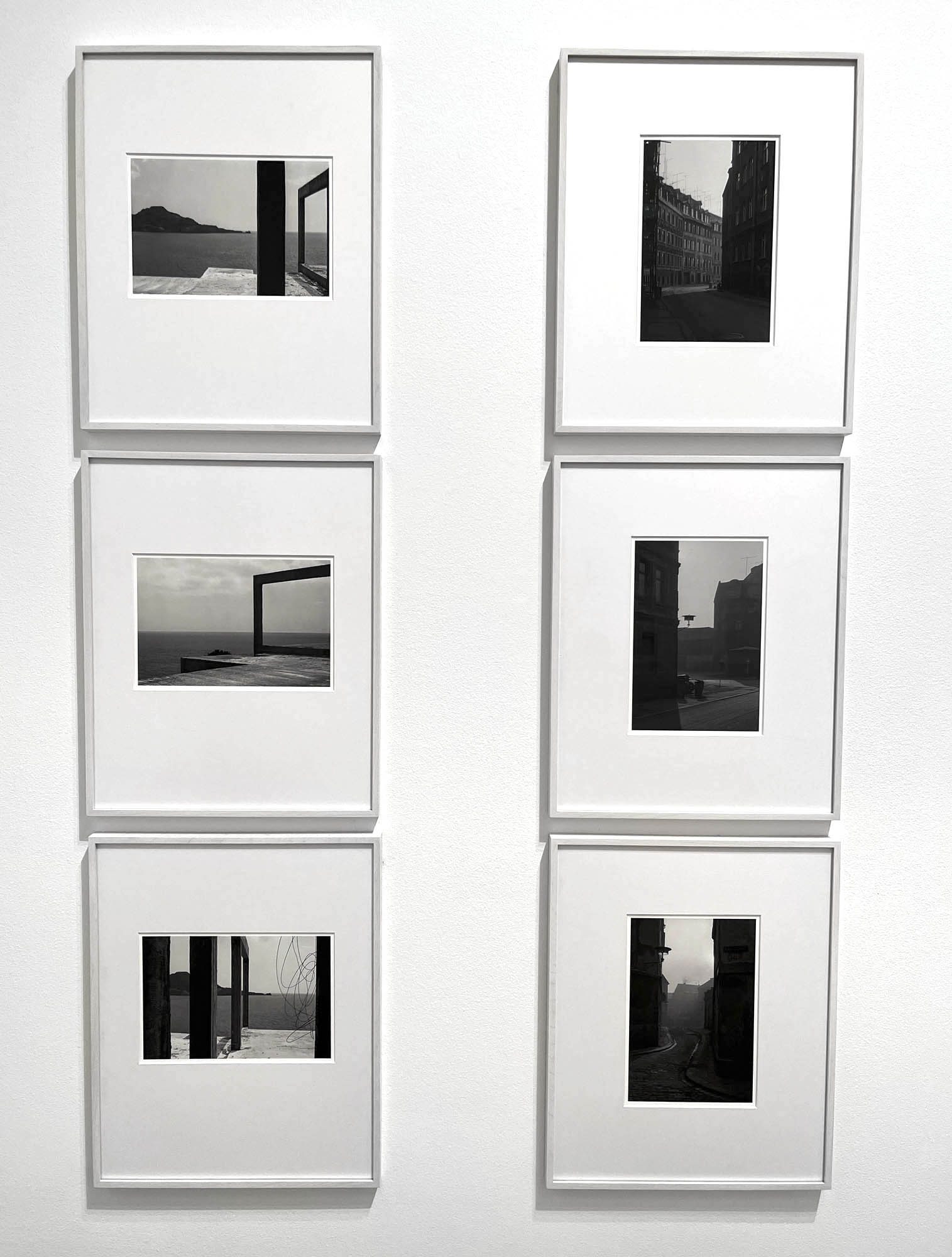

Ulrich Wüst (German, b. 1949)
Aus der Serie: Jahrebuch. 1978-2008
From the series: Book of the Years. 1978-2008 (installation views)
B/w archival pigment print
18 x 27cm
© Ulrich Wüst; ifa
Photos: Marcus Bunyan

Robert Frank (Swiss-American, 1924-2019)
London
1951
Gelatin silver print

Ulrich Wüst (German, b. 1949)
Aus der Serie: Jahrebuch. 1978-2008
From the series: Book of the Years. 1978-2008 (installation view)
B/w archival pigment print
18 x 27cm
© Ulrich Wüst; ifa
Photo: Marcus Bunyan
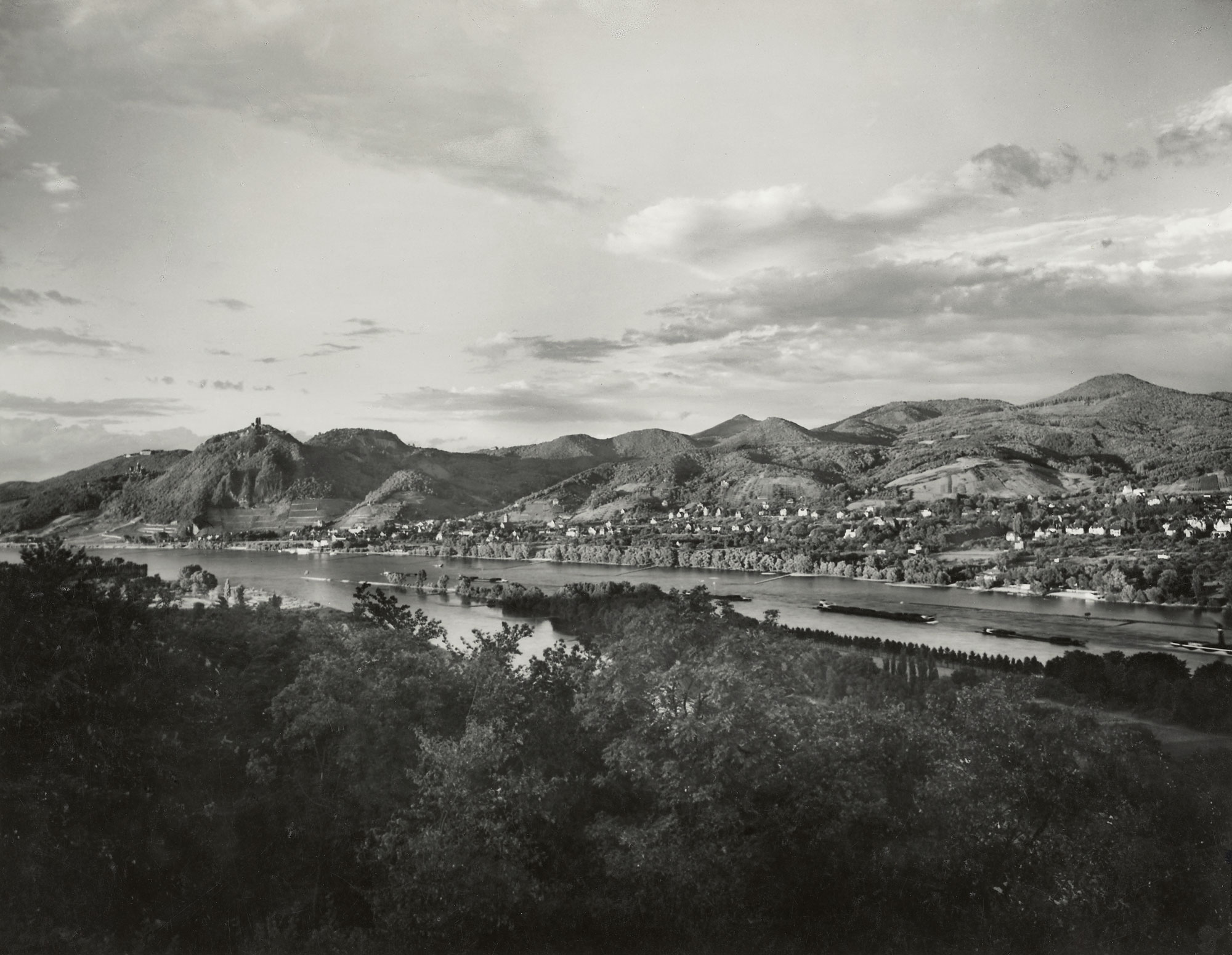
August Sander (German, 1876-1964)
Das Siebengebirge von der unteren Terrasse hin zur Löwenburg
The Siebengebirge from the lower terrace towards the Löwenburg castle
1922
Gelatin silver print
© Die Photographische Sammlung/SK Sitftung Kultur – August Sander Archiv, Köln; VG Bild-Kunst, Bonn, 2022
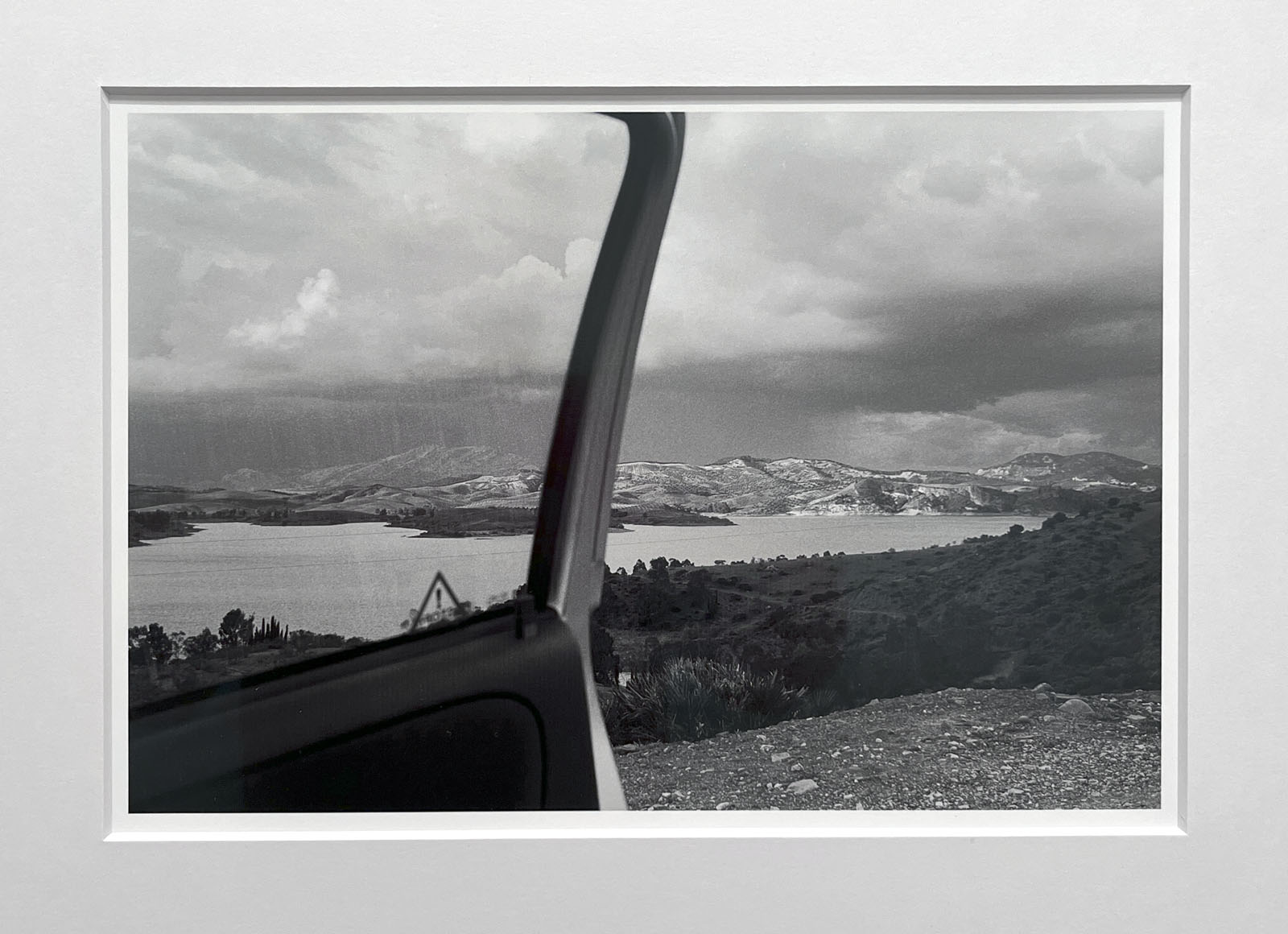
Ulrich Wüst (German, b. 1949)
Aus der Serie: Jahrebuch. 1978-2008
From the series: Book of the Years. 1978-2008 (installation view)
B/w archival pigment print
18 x 27cm
© Ulrich Wüst; ifa
Photo: Marcus Bunyan
A collection/compilation. A great deal of chance and responding to mood. The urban excursions, by contrast, followed a strict pattern. There it was about the grey cityscapes, grey “Mitte” and grey “Morgenstraße”. And yet all of them were taken in bright sunlight! Without the weather forecast promising a safe sunny day, I would probably never have been brave enough to set out on wanderings that did not augur much solace.
Most of the pictures in the book of the Years, on the other hand, really were taken in grey weather. They were done over a period of thirty years, mostly without any particular intention, straight from the experience. Later I gathered them into a kind of melancholy section through times and places. The pictures say: I was here. And I was in this or that mood. They are mood! And sometimes they flirt with the mood as well. That can happen.
~ Ulrich Wüst, wall text from the exhibition

Installation view, Ulrich Wüst, Mitte. Berlin 1994-1997 (right), Village Edge. The Municipality of Nordwestuckermark, 2014-2019 (left) and Prentzlow. Prenzlau, 2018 (centre) from the exhibition Wanderings About History. The Photography of Ulrich Wüst, RMIT Gallery, Melbourne, 2024
Photo: Christian Capurro
Ulrich Wüst’s photographic work captures his wanderings through German history, portraying the social and urban transformations from the GDR and its disintegration, through the German reunification to the present day. Wüst revives the German history in a new static way, where the past and present clash in a dynamic and ever-changing environment.
Wanderings About History. The Photography of Ulrich Wüst shows a selection of nine suites taken between 1978 and 2019. Ulrich Wüst’s photographic work can be contemplated from different perspectives. While the observations captured here are rooted in Germany’s division and its mending, at the same time they always relate to universal phenomena of social change and its material manifestations. The seemingly terse images, extremely precise in their composition, are the fruits of lengthy visual wanderings through present sites of recent history.
An exhibition by ifa – Institut für Auslandsbeziehungen e.V., Stuttgart – in partnership with the Goethe-Institut. This project is an official exhibition of PHOTO 2024 International Festival of Photography.
Text from the RMIT Gallery website

Installation view, Ulrich Wüst, Wiegmann Legacy. Bülowssiege, 1991-1992 (left) and Village Edge. The Municipality of Nordwestuckermark, 2014-2019 (right) from the exhibition Wanderings About History. The Photography of Ulrich Wüst, RMIT Gallery, Melbourne, 2024
Photo: Christian Capurro
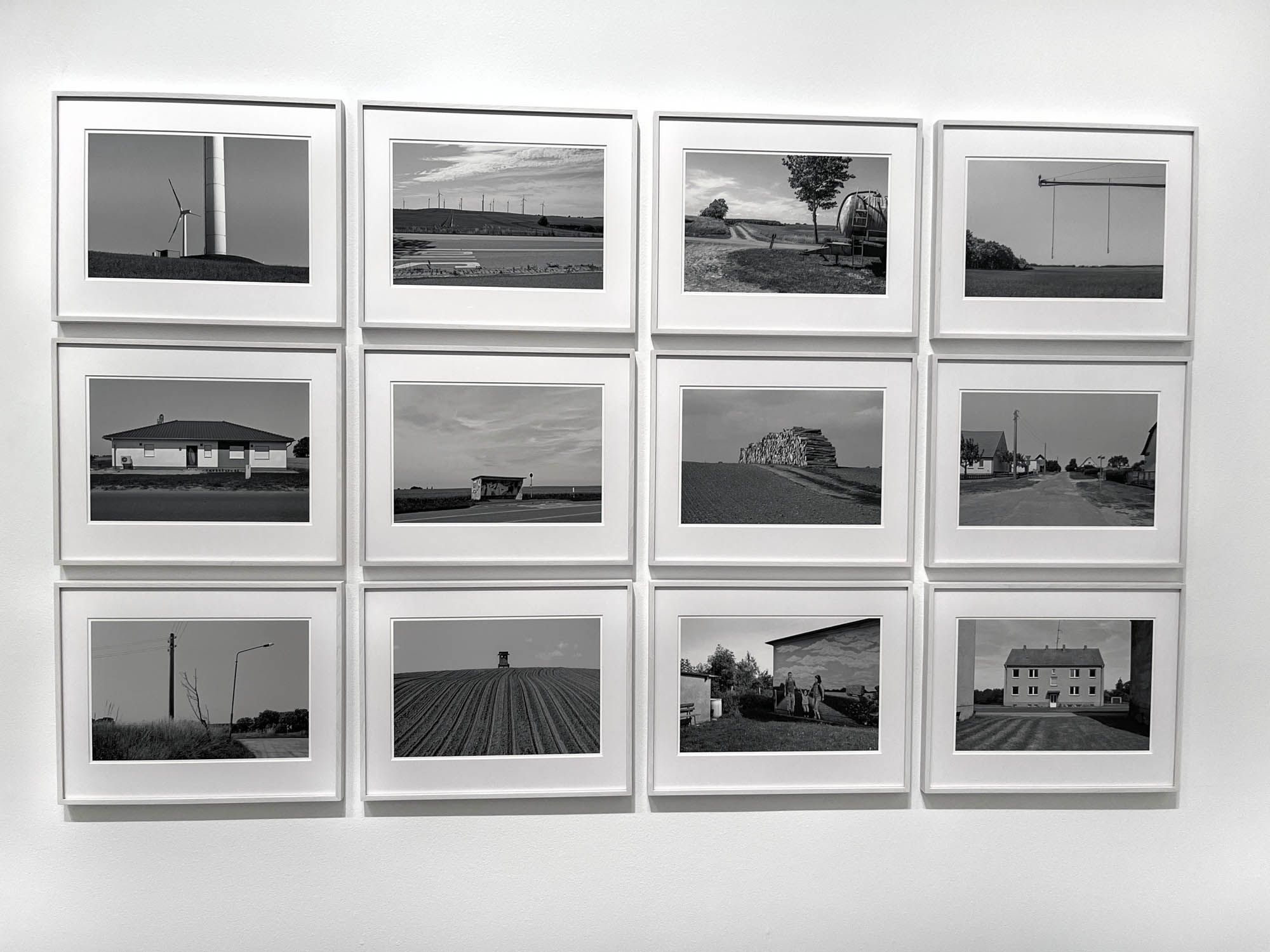
Ulrich Wüst (German, b. 1949)
Aus der Serie: Randlage. Die Gemeinde Nordwestuckermark 2014-2019
From the series: Village Edge. The Municipality of Nordwestuckermark 2014-2019 (installation view)
B/w archival pigment print
26 x 39cm
© Ulrich Wüst; ifa
Photo: Marcus Bunyan

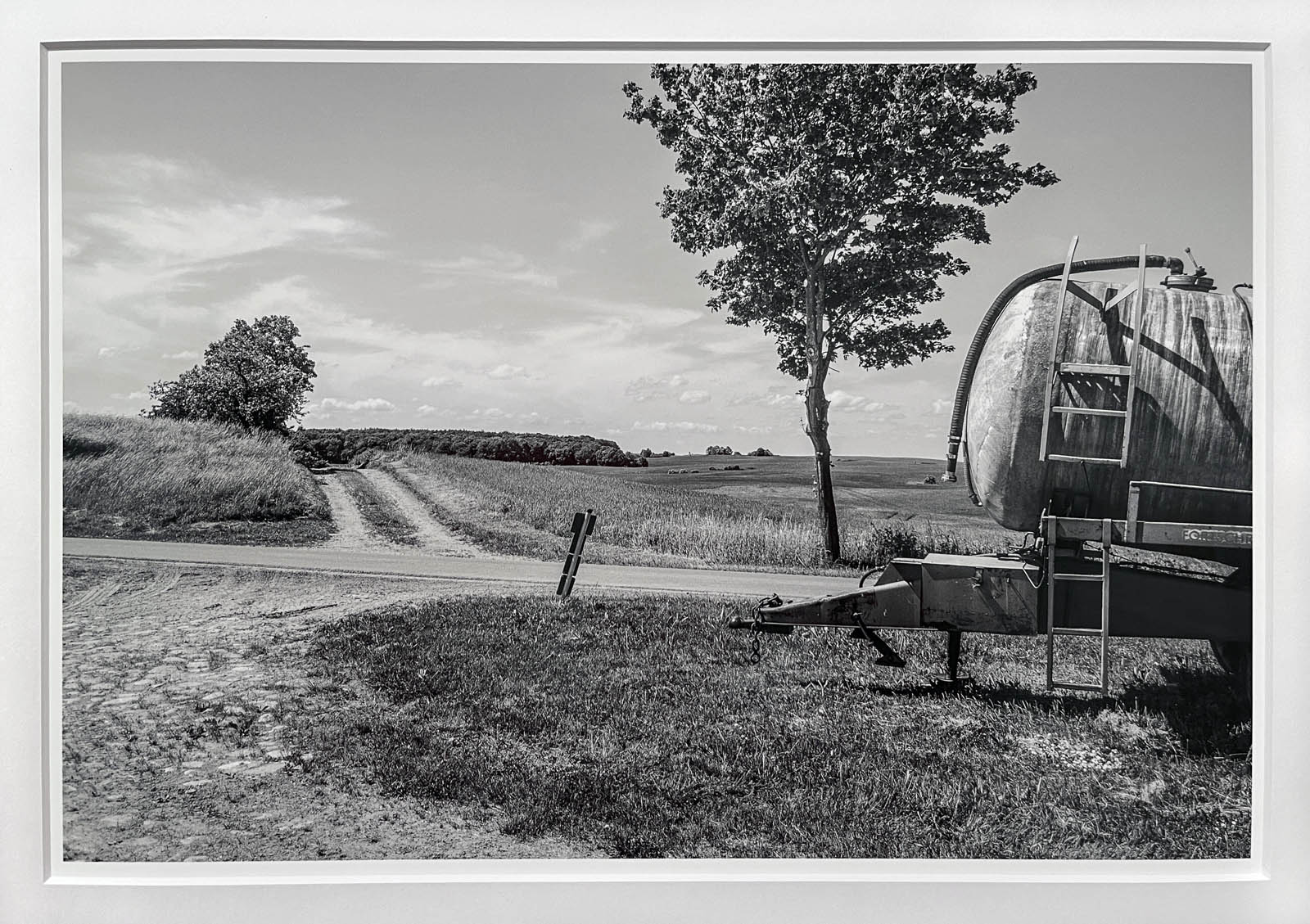
Ulrich Wüst (German, b. 1949)
Parmen
2016
Aus der Serie: Randlage. Die Gemeinde Nordwestuckermark 2014-2019
From the series: Village Edge. The Municipality of Nordwestuckermark 2014-2019
B/w archival pigment print
26 x 39cm
© Ulrich Wüst; ifa
“In the last few years I started taking pictures in the countryside again. The idea was to have photographs of villages and landscapes that were just as “dry” as my cityscape series, like Berlin, or Magdeburg. The resulting work is far removed from any sort of rural idyll, but equally as far removed from the affection I have from these landscapes. I chose not to give too much away.”
~ Ulrich Wüst, wall text from the exhibition

Ulrich Wüst (German, b. 1949)
Aus der Serie: Randlage. Die Gemeinde Nordwestuckermark 2014-2019
From the series: Village Edge. The Municipality of Nordwestuckermark 2014-2019 (installation views)
B/w archival pigment print
26 x 39cm
© Ulrich Wüst; ifa
Photos: Marcus Bunyan
RMIT Gallery
344 Swanston Street, Melbourne
Opening hours:
Tuesday to Friday 11am – 5pm
Saturday 12.30pm – 5pm










 Art Blart _ art and cultural memory archive
You must be logged in to post a comment.