Exhibition: ‘Tina Modotti’ at Fundación MAPFRE Photography Center (Barcelona)
Exhibition dates: 8th June – 3rd September 2023

Curator: Isabel Tejeda


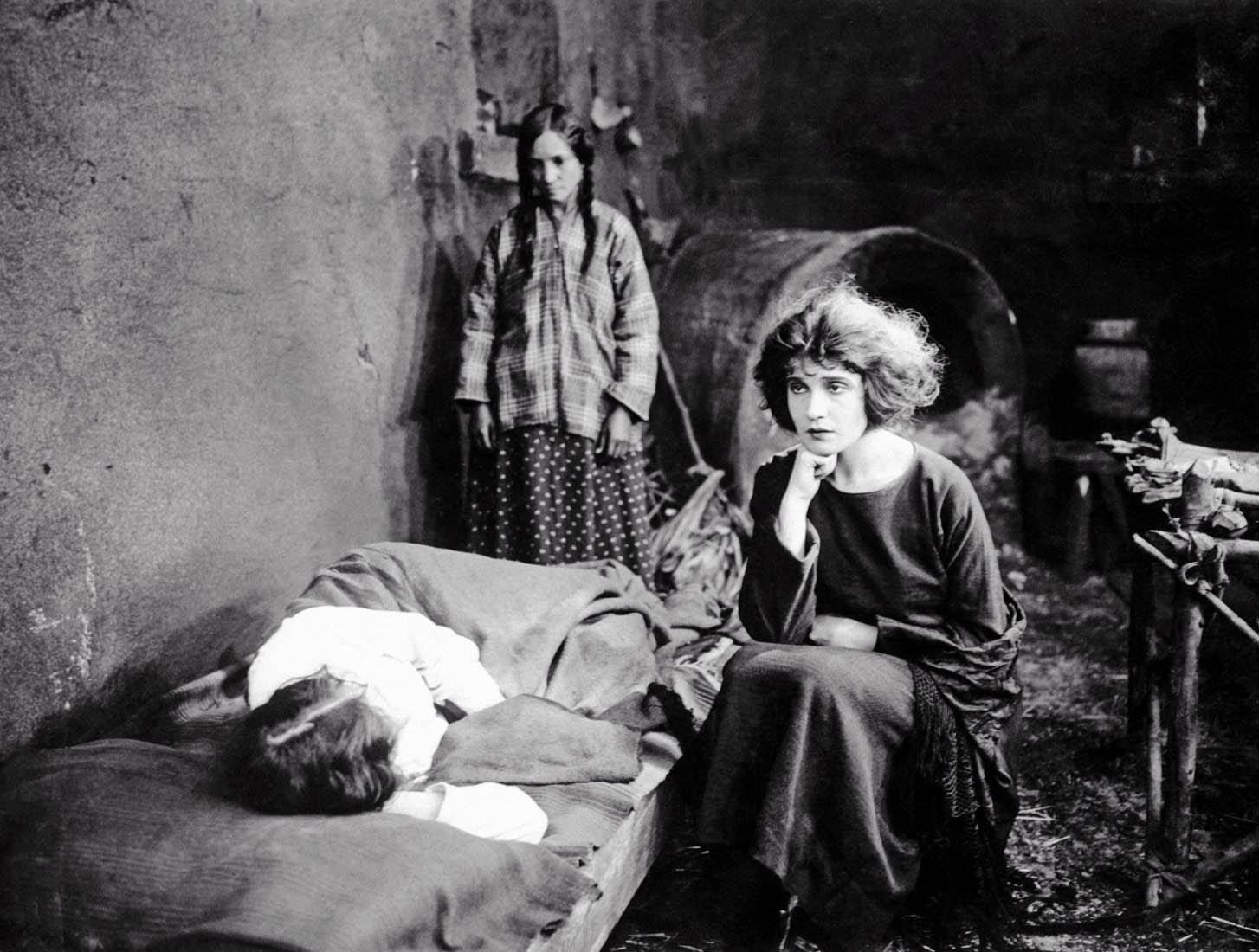
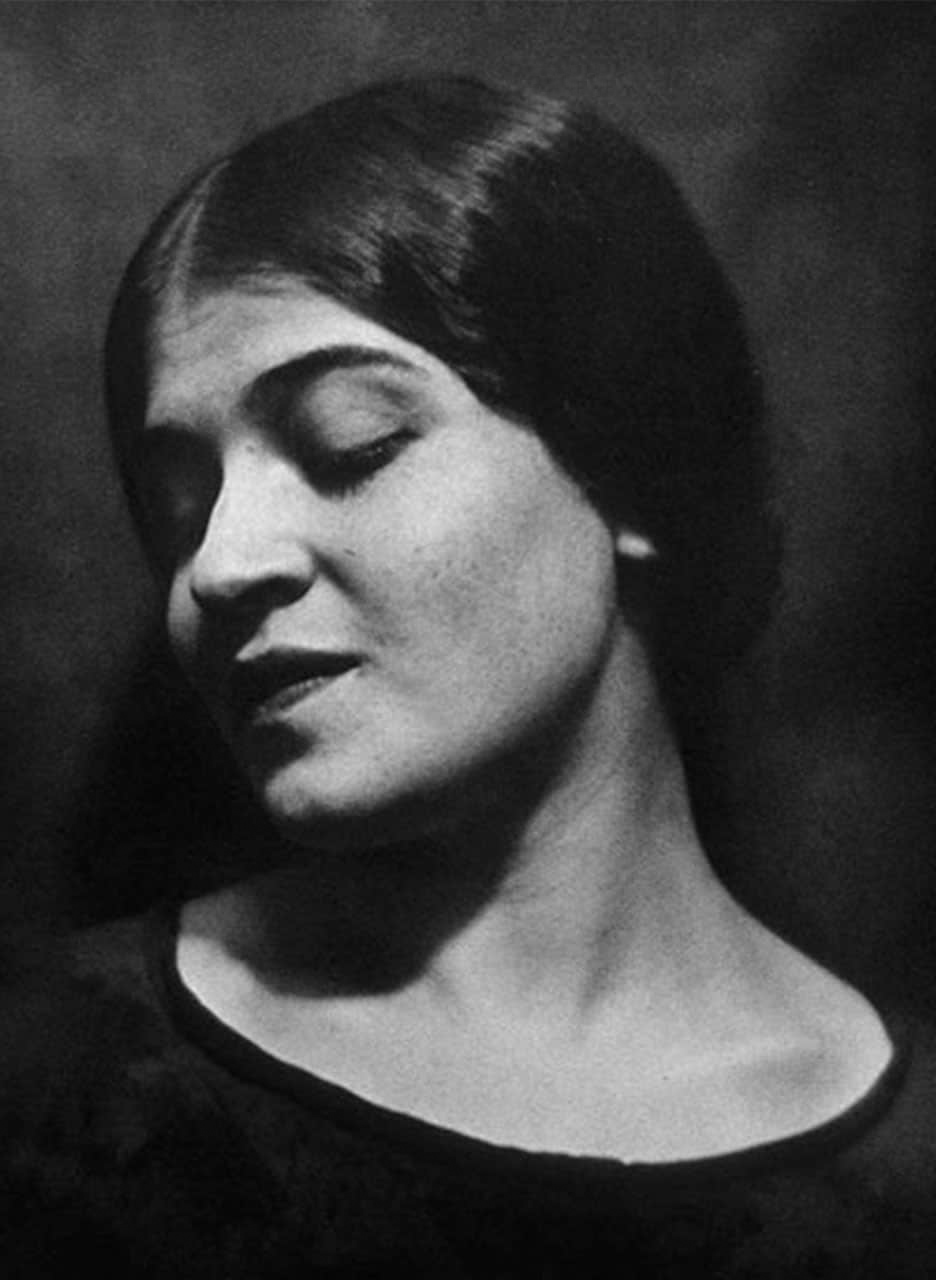
Johan Hagemeyer (Dutch, 1884-1962) 'Tina Modotti in the role of María de la Guarda in the film 'The Tiger's Coat', Hollywood' 1920 from the exhibition 'Tina Modotti' at Fundación MAPFRE Photography Center (Barcelona), June - Sept 2023


Johan Hagemeyer (Dutch, 1884-1962)
Tina Modotti in the role of María de la Guarda in the film The Tiger’s Coat, Hollywood
1920
Gelatin silver print
© Johan Hagemeyer
Courtesy: Galerie Bilderwelt, Reinhard Schultz


Tina Modotti’s first contact with the performing arts came upon her arrival in San Francisco in 1913, at just 16 years old.

After performing theatre works, in 1920 she will participate in three films: The Tiger’s Coat (1920) by Roy Clements, in which she interpreted the role of the Mexican Jean Ogilvie; Riding with Death (1921) by Jacques Jaccard, in the personage of Rosa Carilla; and I Can Explain (1922) by George D. Baker, with Carmencita Gárdez.


The I of the world

Strong fierce compassionate women! Intelligent, class-conscious human beings who embrace social and political change, with photography being the agent for that change. I would embrace Tina Modotti as this type of artist – her photography a “reflection of her way of seeing life, social sensitivity and revolutionary fervour.”

She was a surrealist/feminist artist who represented the lives and “conditions of workers, women and their role within the community” through both the forms and symbols of working class emancipation and through “honest photography” – eloquent photographs of everyday Mexican life that have a biting directness linked to a surreal reality. Surrealism does not always involve the strange and absurd.

Much as Eugène Atget’s photography “which focussed on seemingly ordinary sights on the streets of Paris – a door knocker, a mannequin, a window rail – is seen as a forerunner of Surrealist and modern approaches to photography…”1 so both Atget and Modotti’s rejection of artistic self-consciousness and “artistic effects” in favour of in Atget’s case, “simple documents”, and in Modotti’s case, “honest photography”, lead to photographs that examine the fleeting nature of material objects and reality itself.

Modotti inserts her/self into these honest photographs through an embodiment of spirit. She brings to her photography how she feels about the world, what she feels passionately about in that world, what she cares deeply about… and in the process of “capturing time, light and memory shapes new states of beings and opens possibilities where by the improbable and the impossible are envisioned as an embodiment of the photographers past, present and future imaginings.”

Through a melding of the artist’s political, social, and aesthetic ideals and through her sur/reality, she becomes the I of the world.

Dr Marcus Bunyan


1/ “Surrealism did not always involve the strange and absurd. For example, the photography of Eugène Atget (1857-1927), which focussed on seemingly ordinary sights on the streets of Paris – a door knocker, a mannequin, a window rail – is seen as a forerunner of Surrealist and modern approaches to photography… Only a year before his death, in 1926, Atget was approached by Man Ray for approval to use his photograph, L’Eclipse – Avril 1912 for the front cover of the publication La Révolution Surréaliste. Despite protestations that, “these are simply documents I make,” Atget’s rejection of artistic self-consciousness combined with his pictures of an old, often hauntingly deserted Paris, appealed to Surrealists.”

Anonymous. “Surrealist photography,” on the V&A website [Online] Cited 07/08/2020


Many thankx to Fundación MAPFRE for allowing me to publish the photographs in the posting. Please click on the photographs for a larger version of the image.


“In reality, what I try to produce is not art, but honest photography, without tricks or manipulations, while most photographers still look for “artistic effects” or the imitation of other means of graphic expression, which results a hybrid product and one that fails to impart to the work that they produce the most valuable trait that it should have: PHOTOGRAPHIC QUALITY.”


Tina Modotti quoted in “On Photography,” Mexican Folkways, Vol. 5, No. 4, 1929, reprinted in Robert Miller, Tina Modotti, and Spencer Throckmorton, Tina Modotti : Photographs (New York: Robert Miller Gallery, 1997)


Pure your gentle name, pure your fragile life,
bees, shadows, fire, snow, silence and foam,
combined with steel and wire and
pollen to make up your firm
and delicate being.


Part of the epitaph for Tina Modotti on her tomb by Chilean poet Pablo Neruda


The life of Tina Modotti (Udine, Italy, 1896 – Mexico City, 1942) was marked by some of the most important historical events of the 1920s and 1930s. Born in northern Italy, she soon emigrated to the United States, where she met Edward Weston in 1923, who will significantly influence her career. In that same year they moved together to Mexico where she developed photographic work for almost a decade that started from modernist aesthetics to immediately give way to a very personal look, a reflection of her way of seeing life. Her social sensitivity developed in parallel to her political militancy and her activism within the Communist Party, within which she will treat David Alfaro Siqueiros, Diego Rivera or Frida Kahlo. With her desire to awaken consciences, Modotti made images that denounce injustices and honour the dispossessed. Some of them, with a strong propaganda sense, were made for periodicals and magazines.

After intense research work due to the limited production of the photographer, this exhibition will bring together around 200 photographs, mostly vintage copies, and relevant documentary material. The show will also include works by photographers around her, such as Edward Weston, and one of the films that Modotti starred in in Hollywood.

Text from the Fundación MAPFRE website


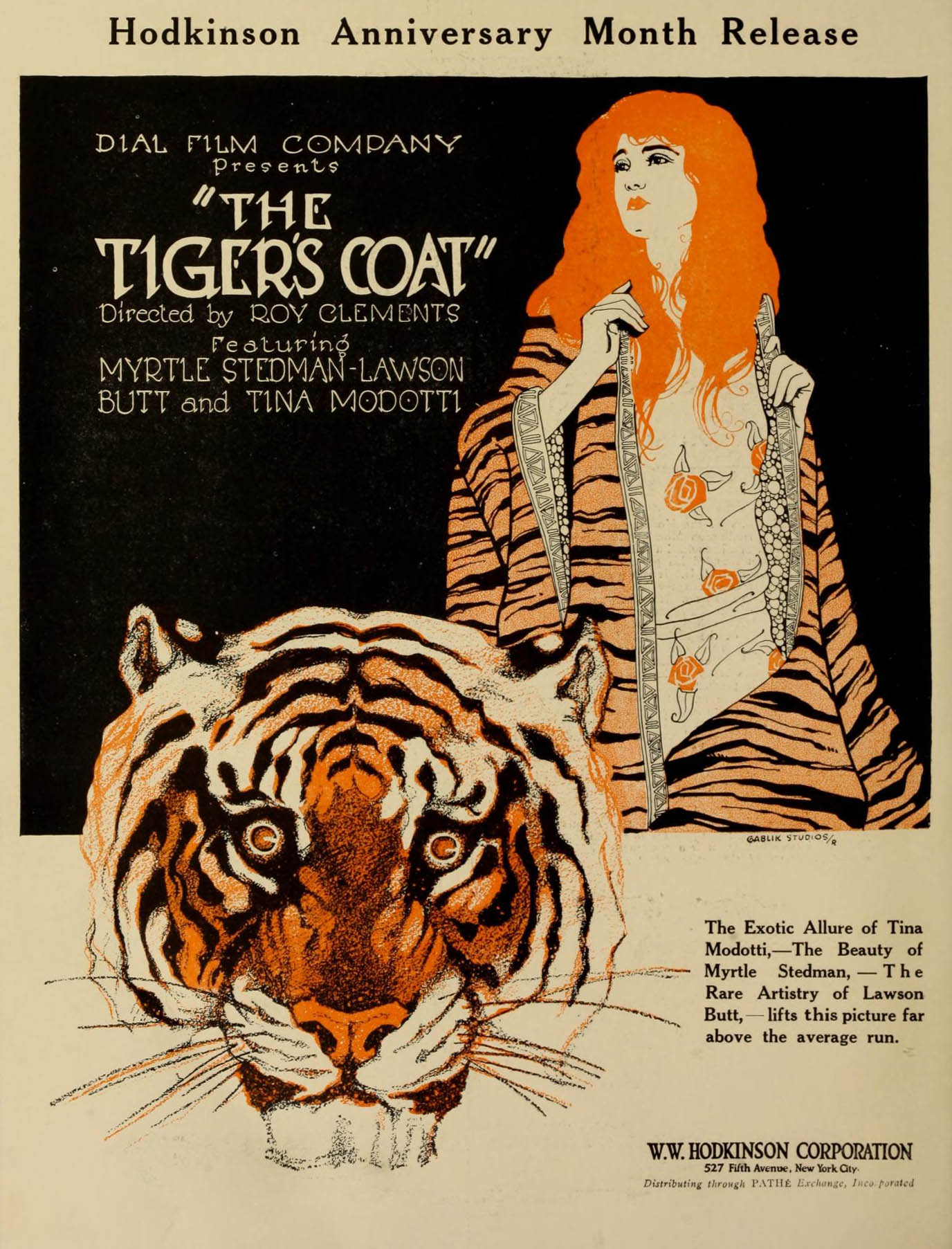
'The Tiger's Coat' movie poster 1920 from the exhibition 'Tina Modotti' at Fundación MAPFRE Photography Center (Barcelona), June - Sept 2023


The Tiger’s Coat movie poster
1920
From The Moving Picture World 1920


The Tiger’s Coat is a 1920 American silent drama film directed by Roy Clements and starring Lawson Butt, Tina Modotti and Myrtle Stedman.


Tina Modotti (Udine, 1896 – Mexico City, 1942) lived in the eye of the storm throughout her life. Her interesting life and artistic career were framed by some of the most important historical events of the 1920s and 1930s and by her constant double commitment: artist-photographer and revolutionary-anti-fascist militant.

Born into a working-class family in Udine, in northern Italy, she emigrated and grew up in the United States, where she became a film actress in Hollywood in the 1920s and met Edward Weston, who introduced her to photography and with whom she moved to Mexico in 1923.

Almost all his photographic work was produced between that date and 1930. During these Mexican years, and following her apprenticeship with Weston, Modotti evolved from an interest in abstract forms to a gaze centred on the human being and on denouncing inequality and injustice. The precarious conditions of workers, urban poverty, and the role of women in the community became, among other similar issues, the main themes of a photography conceived as political propaganda.

This exhibition, Tina Modotti’s most extensive to date, is the result of extensive research, which has made it possible to bring together many vintage prints by Modotti. In addition to the nearly 250 photographs on display, grouped chronologically into four sections, the exhibition includes documentary material, one of the films that Modotti starred in in Hollywood and some works by Edward Weston.

Text from the Fundación MAPFRE website


Tina Modotti

Tina Modotti’s life was marked by some of the most important historical events of the 1920s and 1930s. The nomadic life she led and the turbulent political militancy caused Modotti to suddenly leave many of the countries where she lived, which, as the curator of the exhibition, Isabel Tejeda points out, “decontextualizes and disarranges her production from the start, so that it is impossible to accurately date many of her images”, although it can be stated that almost all of his photographic work was produced between 1923 and 1930.

During these Mexican years, and after his apprenticeship with Weston, the artist evolved from the perfection of formalism to a different and personal perspective conditioned by his way of seeing life, as an emigrant, woman and political activist in which his attraction to the human being and social injustices stands out.

He then portrayed the precarious conditions of workers, inequalities and misery in urban areas. It also focused on women and their role within the community, and on the forms and symbols of the emancipation of the working class. In his desire to raise awareness, Modotti made images that denounce injustices and honour the dispossessed, some of which were for propaganda purposes and intended to be printed in magazines and other publications.

The exhibition presented by Fundación MAPFRE is made up of approximately 240 photographs, mostly period copies, which are grouped into four sections: Early years: from Udine to Los Angeles, Mexico on the other side of the camera, Photography and political commitment and The move to political action: Spain at war.

In addition to emphasising her relationship with Spain, the exhibition reconstructs the figure of Modotti, both as an artist / photographer and as a revolutionary / anti-fascist militant. In addition, there is an extensive amount of documentary material and one of the films that Modotti starred in in Hollywood. The tour is completed with works by photographers from his immediate surroundings, such as Edward Weston.

Text from the Fundación MAPFRE website


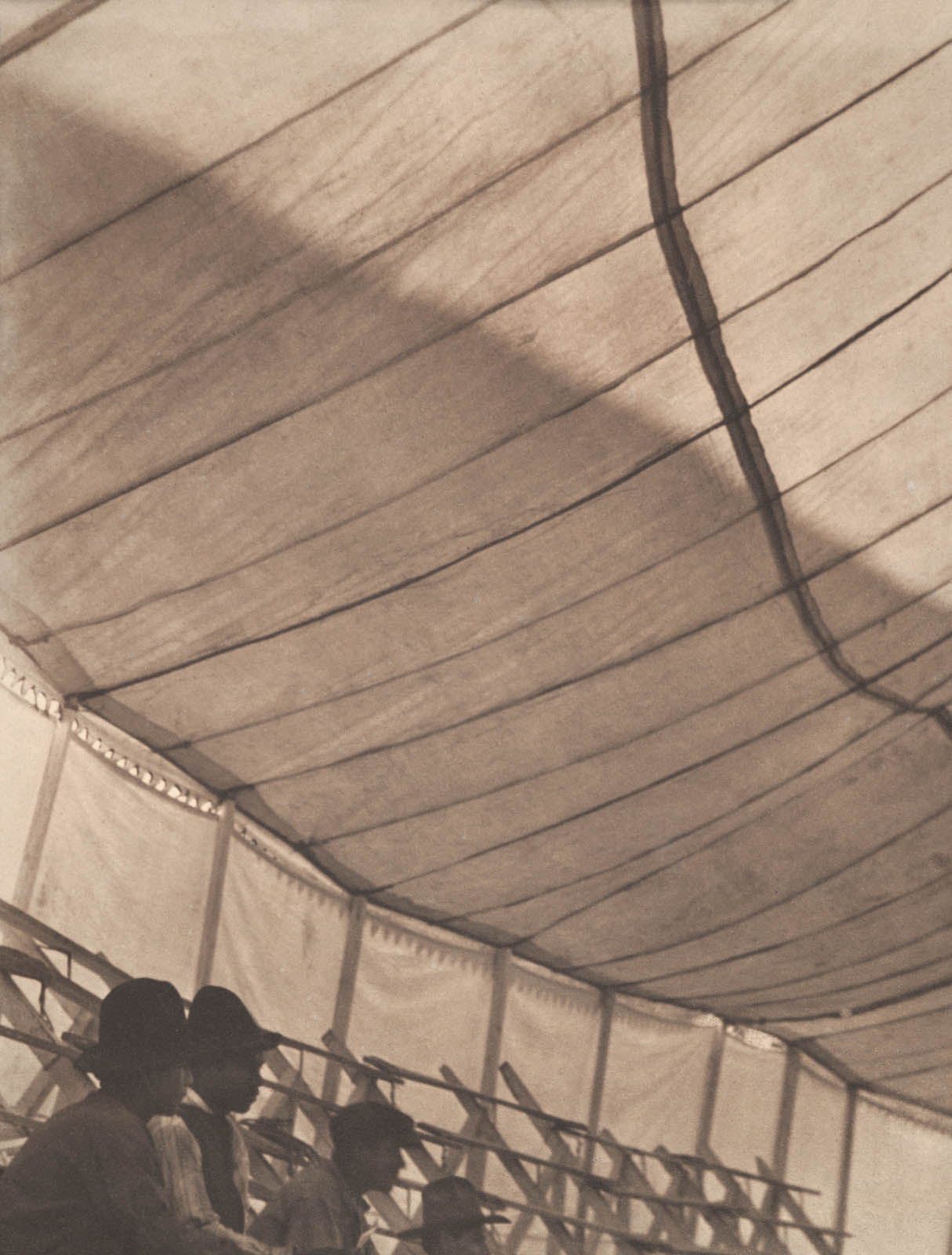
Tina Modotti (Italian, 1896-1942) 'Circus tent' Mexico, 1924 from the exhibition 'Tina Modotti' at Fundación MAPFRE Photography Center (Barcelona), June - Sept 2023


Tina Modotti (Italian, 1896-1942)
Circus tent
Mexico, 1924
Platinotype
Collection Center for Creative Photography, University of Arizona
Acquisition


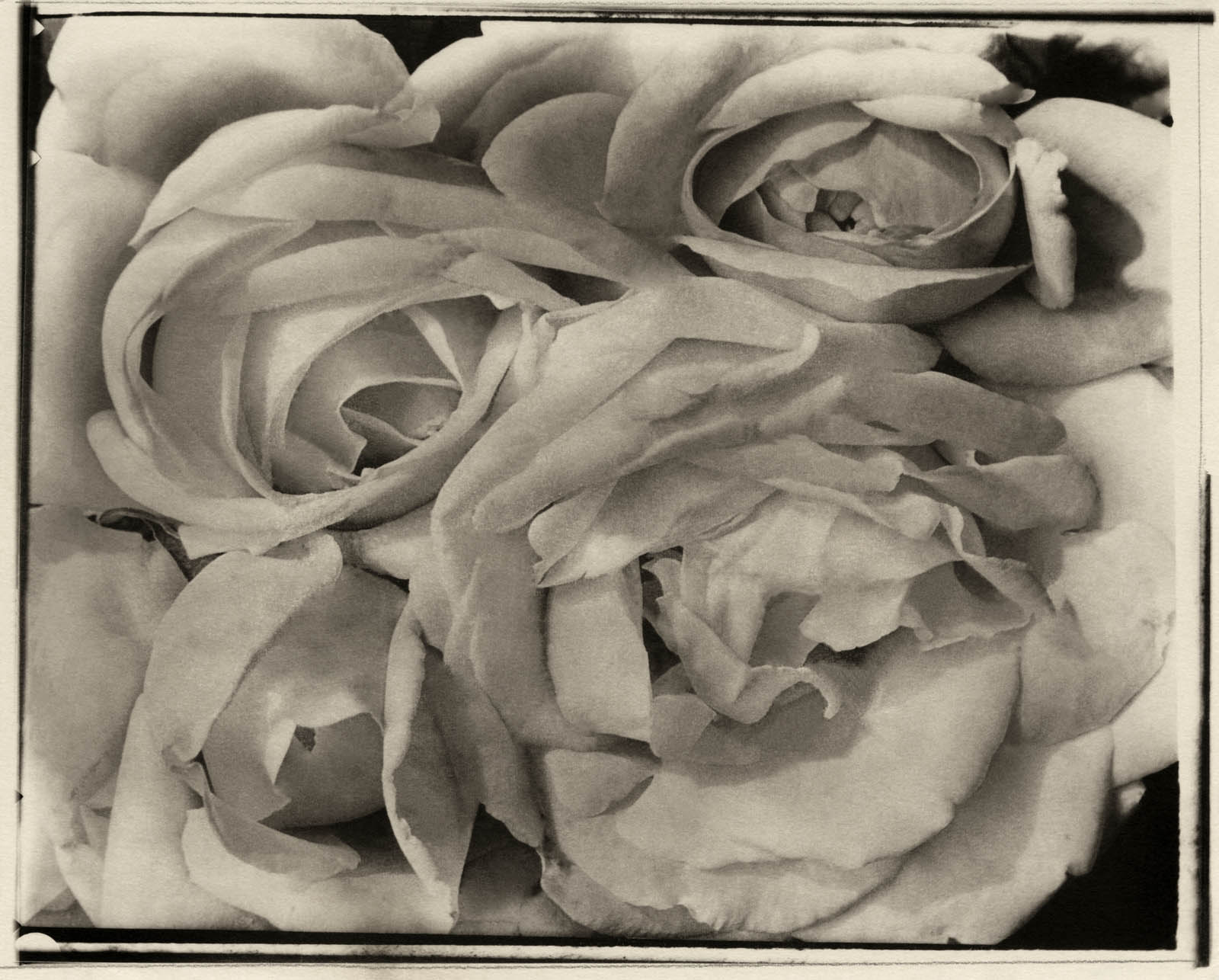
Tina Modotti (Italian, 1896-1942) 'Roses' Mexico, 1924


Tina Modotti (Italian, 1896-1942)
Roses
Mexico, 1924
Paladiotype, period or vintage impression
Fundación Televisa Collection and Archive, Mexico City


Roses, Mexico, is an extreme close-up of four roses. Cropped to fill the frame from edge to edge, this is not a traditional still-life photograph of roses arranged in a vase. Here, the roses lay prone and slightly wilted, just beyond their prime, thus reflecting the passage of time and the ephemerality of delicate blooms. Much like a traditional vanitas still life that asked the viewer to contemplate mortality by reflecting on the fleeting nature of material objects, Roses brings this subject to modern photography. As photography historian Carol Armstrong notes, Roses “calls on the line of figural abstraction identified, not with [Alfred] Stieglitz, [Paul] Strand and the ‘straight’ photograph, but with Georgia O’Keeffe and her blown-up genital flowers, which like [Edward] Weston’s single-object photographs reduced the flora still-life that had been the traditional purview of the female painter to one (or two or four) item(s), expanded to fill the entire field of the image.”

The theme of the still-life preoccupied Modotti throughout much of her brief photography career. A relative newcomer to photography, she made use of the still-life photograph as a means to work through various formal issues including composition, framing, light, pattern, and tone. At this time, she was working with a large-format camera, which was unwieldy, not easy to transport, and forced the photographer to carefully compose the image, rather than creating images on the move with a handheld camera. The still-life, which was easy to set up and did not alter, was the perfect vehicle for mastering the myriad technical complexities of a photograph.

Karen Barber. “Tina Modotti Artist Overview and Analysis,” on The Art Story website 12 Nov 2018 updated 2023 [Online] Cited 06/08/2023


Edward Weston (1886-1958) 'Portrait of Tina Modotti' 1924


Edward Weston (1886-1958)
Portrait of Tina Modotti
1924
Gelatin silver print
Fundación Televisa Collection and Archive, Mexico City


Tina Modotti (Italian, 1896-1942) 'Elisa' 1924


Tina Modotti (Italian, 1896-1942)
Elisa
1924
Palladium print
The Museum of Modern Art, New York
Donation of Edward Weston


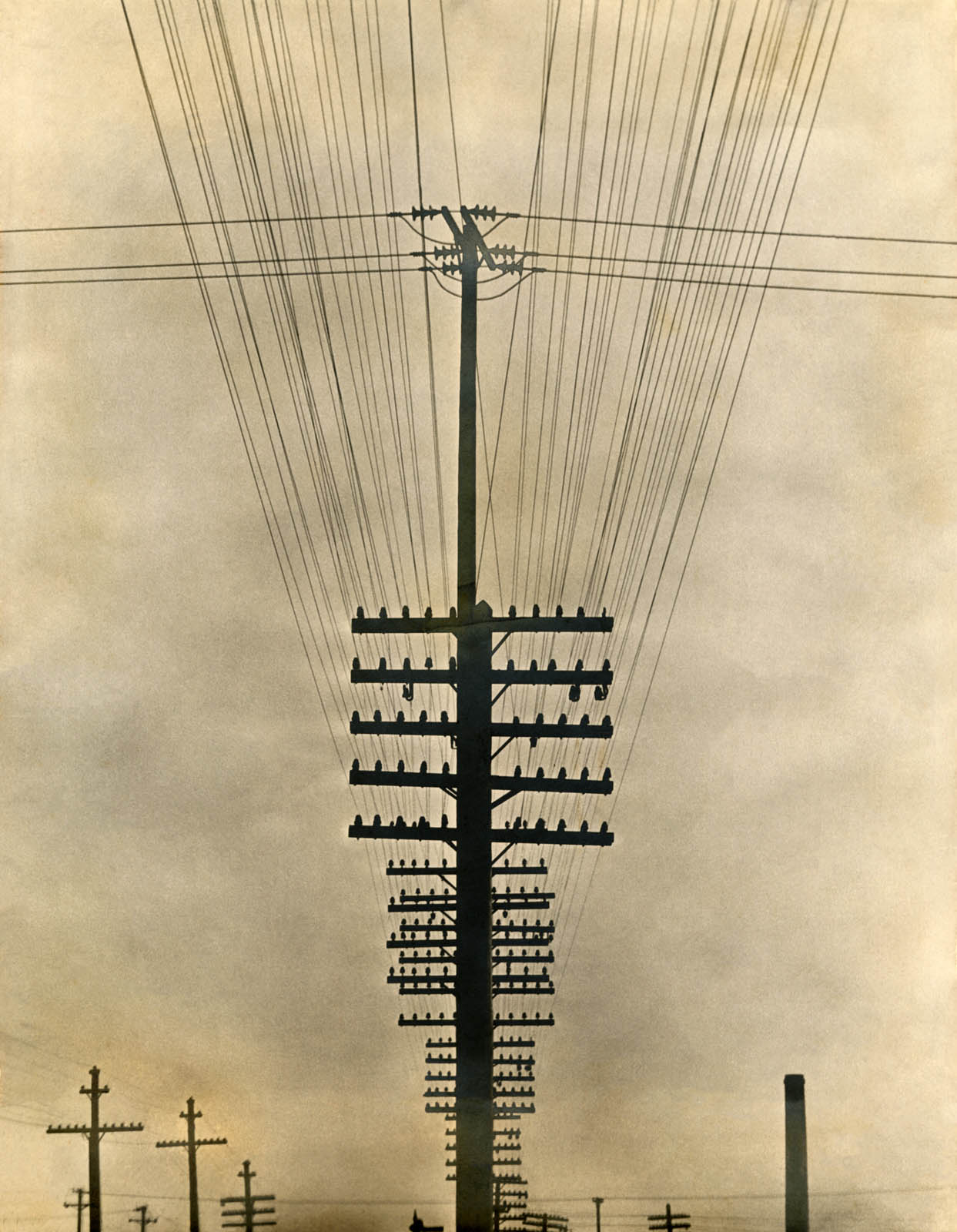
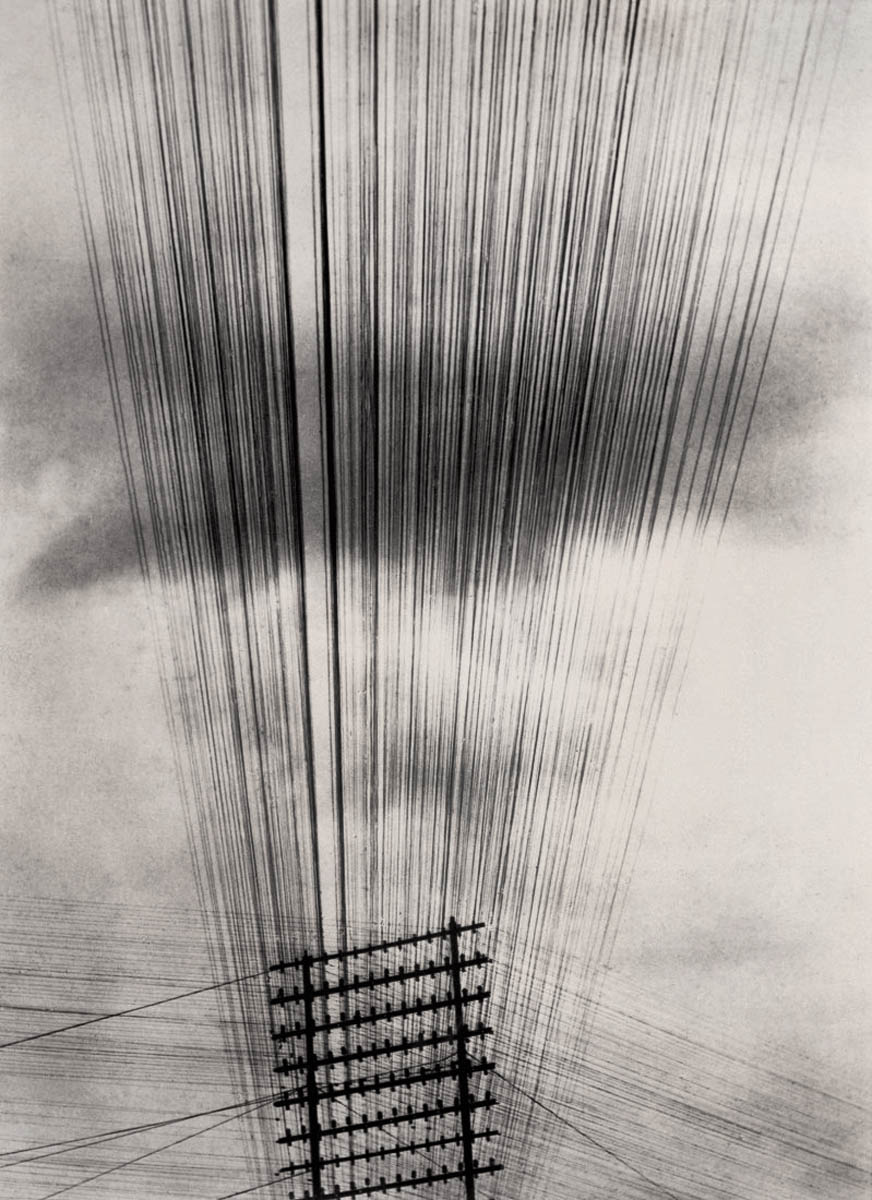
Tina Modotti (Italian, 1896-1942) 'Telegraph cables' c. 1924-1925


Tina Modotti (Italian, 1896-1942)
Telegraph cables
c. 1924-1925
Gelatin silver print
Fundación Televisa Collection and Archive, Mexico City


Tina Modotti (Italian, 1896-1942) 'Post with Cables' Mexico City, c. 1925


Tina Modotti (Italian, 1896-1942)
Post with Cables
Mexico City, c. 1925
Gelatin silver print
Fundación Televisa Collection and Archive, Mexico City


In this 1925 photograph of isolated telephone wires, Modotti shifts the perspective, removing any reference to the ground that holds the telephone poles in place. Instead, the carefully composed image focuses on the angles and patterns produced by the wires and clouds, to create a work that mingles modernism and social concerns. During this period Mexico was undergoing increased modernization and industrialization, which Modotti symbolizes in her photograph of telephone wires. Modotti thus presents an optimistic view of Mexico’s modernization and the promise of instant communication brought about by the installation of telephone systems that seemed to open up Mexico to the rest of the world.

Lauded by the Mexican avant-garde group, Estridentistas, who aligned their work with the Mexican Revolution and sought to modernize Mexico, Modotti’s photograph was included in their journal Horizonte because it represented dynamism, technology, and progress. The photograph’s framing and its use of oblique angles and unusual perspective, brought it into alignment with other modernist painters and photographers, including Paul Strand, Charles Sheeler, and Charles Demuth, but also with European avant-garde photographers like László Moholy-Nagy, Man Ray, and Albert Renger-Patzsch. Although the tendency to focus on the subject / object was characteristic of her former mentor Edward Weston’s work, Diego Rivera praised Modotti’s work as “more abstract, more ethereal, and even more intellectual” than Weston’s.

Karen Barber. “Tina Modotti Artist Overview and Analysis,” on The Art Story website 12 Nov 2018 updated 2023 [Online] Cited 06/08/2023


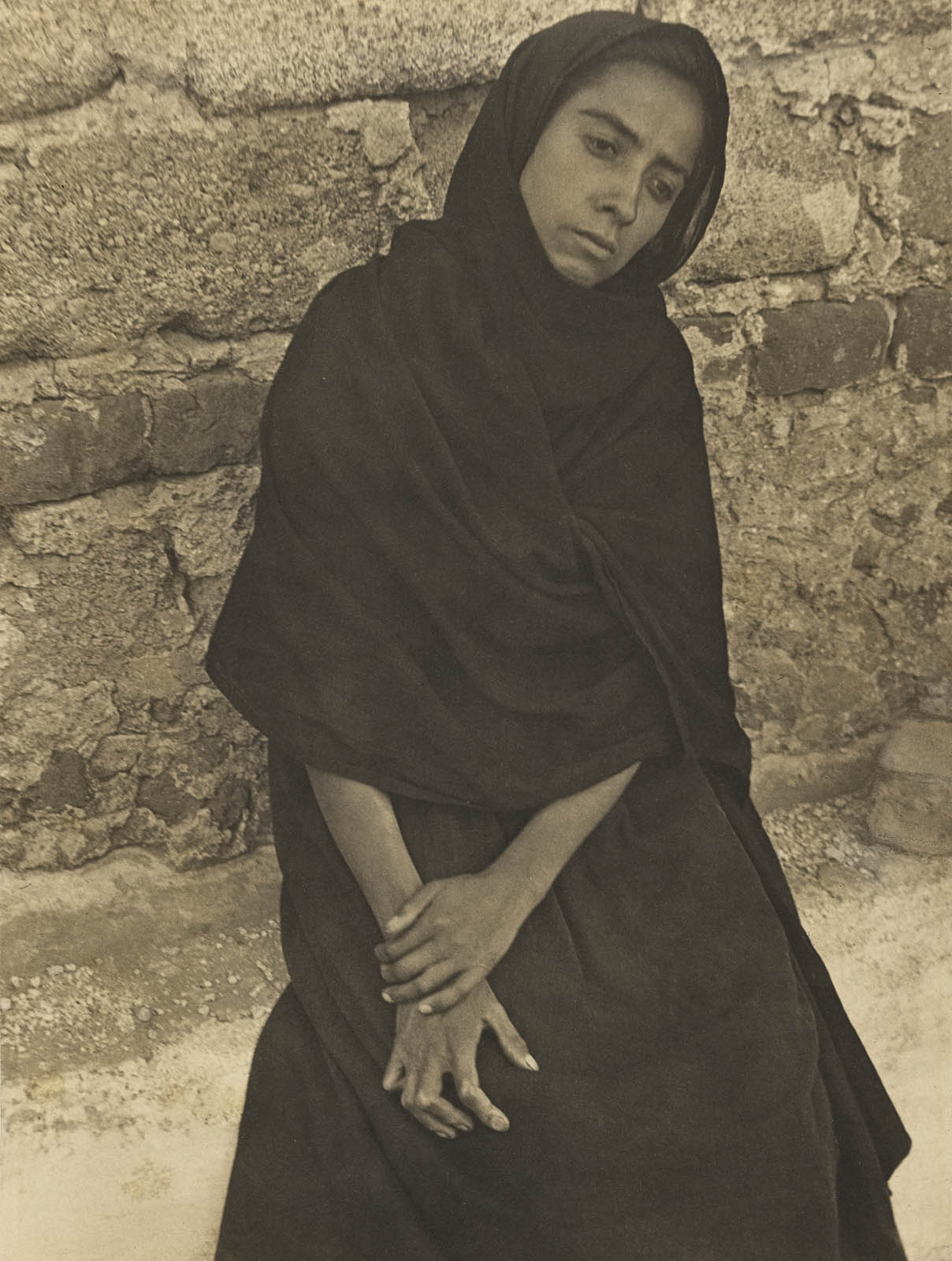
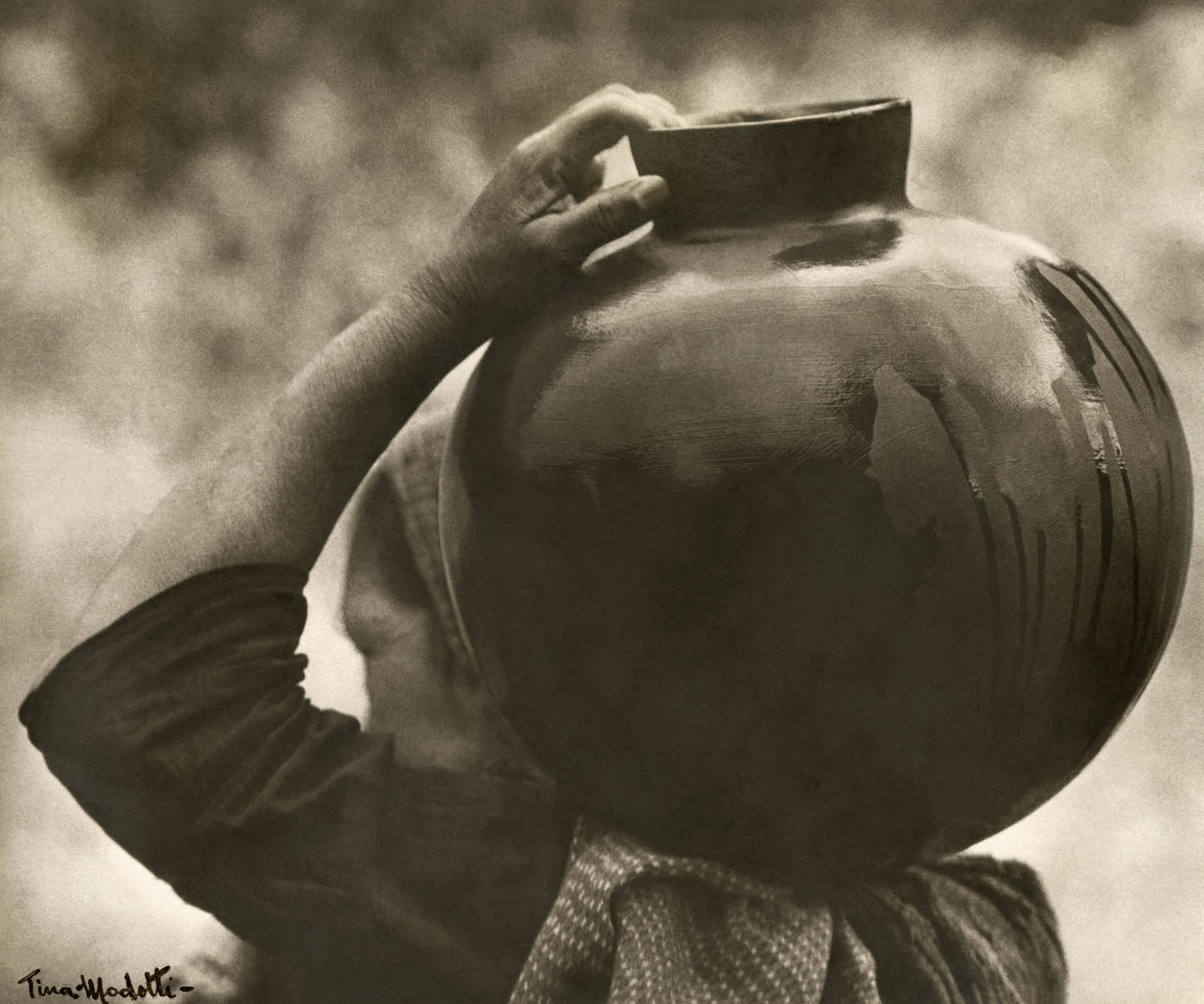
Tina Modotti (Italian, 1896-1942) 'Zapotec peasant woman with a jug on her shoulder' 1926


Tina Modotti (Italian, 1896-1942)
Zapotec peasant woman with a jug on her shoulder
1926
Platinotype
Fundación Televisa Collection and Archive, Mexico City


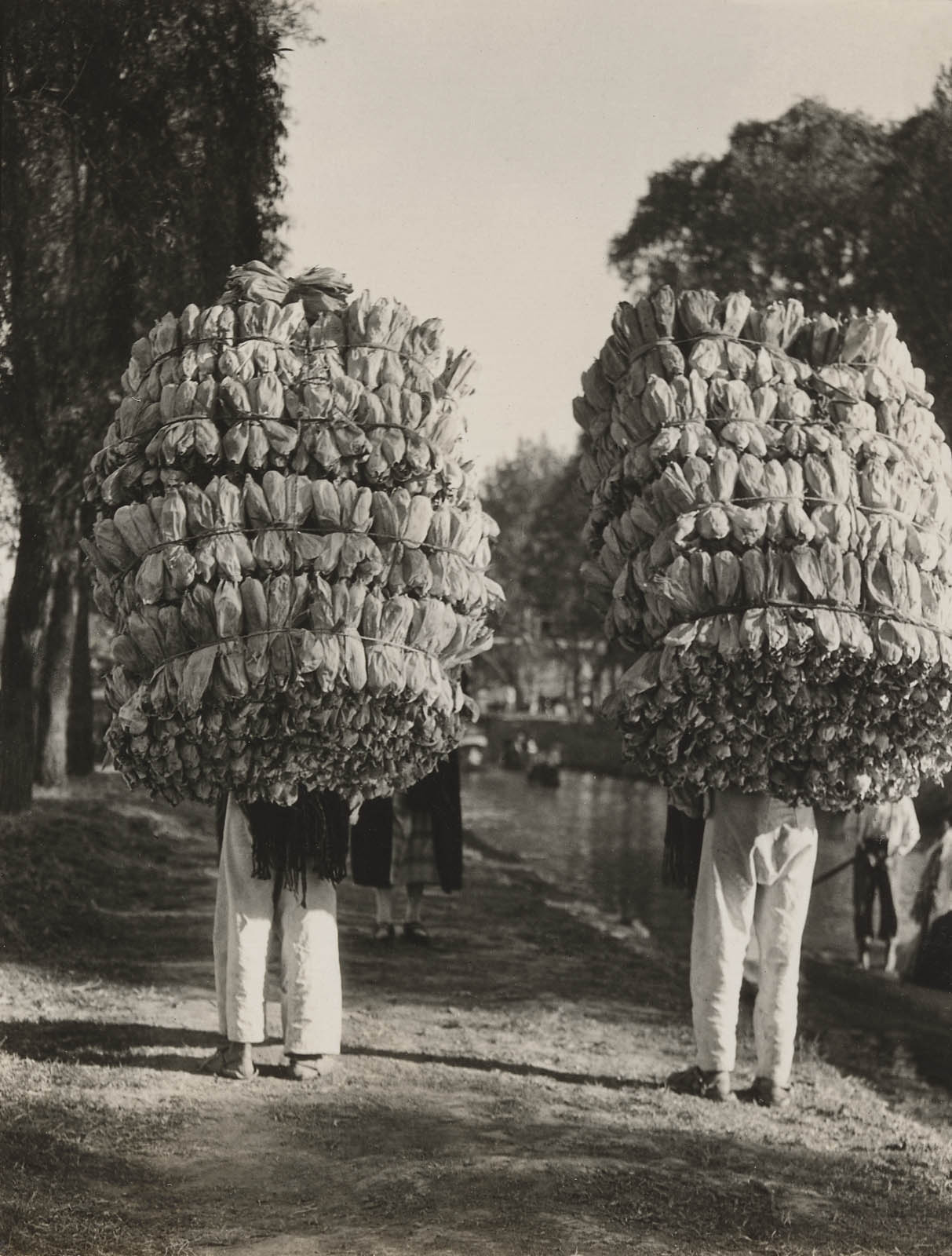
Tina Modotti (Italian, 1896-1942) 'Untitled (Indians carrying loads of corn husks for the making of "tamales")' 1926-1929


Tina Modotti (Italian, 1896-1942)
Untitled (Indians carrying loads of corn husks for the making of “tamales”)
1926-1929
Gelatin silver print
San Francisco Museum of Modern Art, San Francisco
Art Supporting Foundation donation, John “Launny” Steffens, Sandra Lloyd, Shawn and Brook Byers, Mr. and Mrs. George F. Jewett, Jr., and anonymous donors


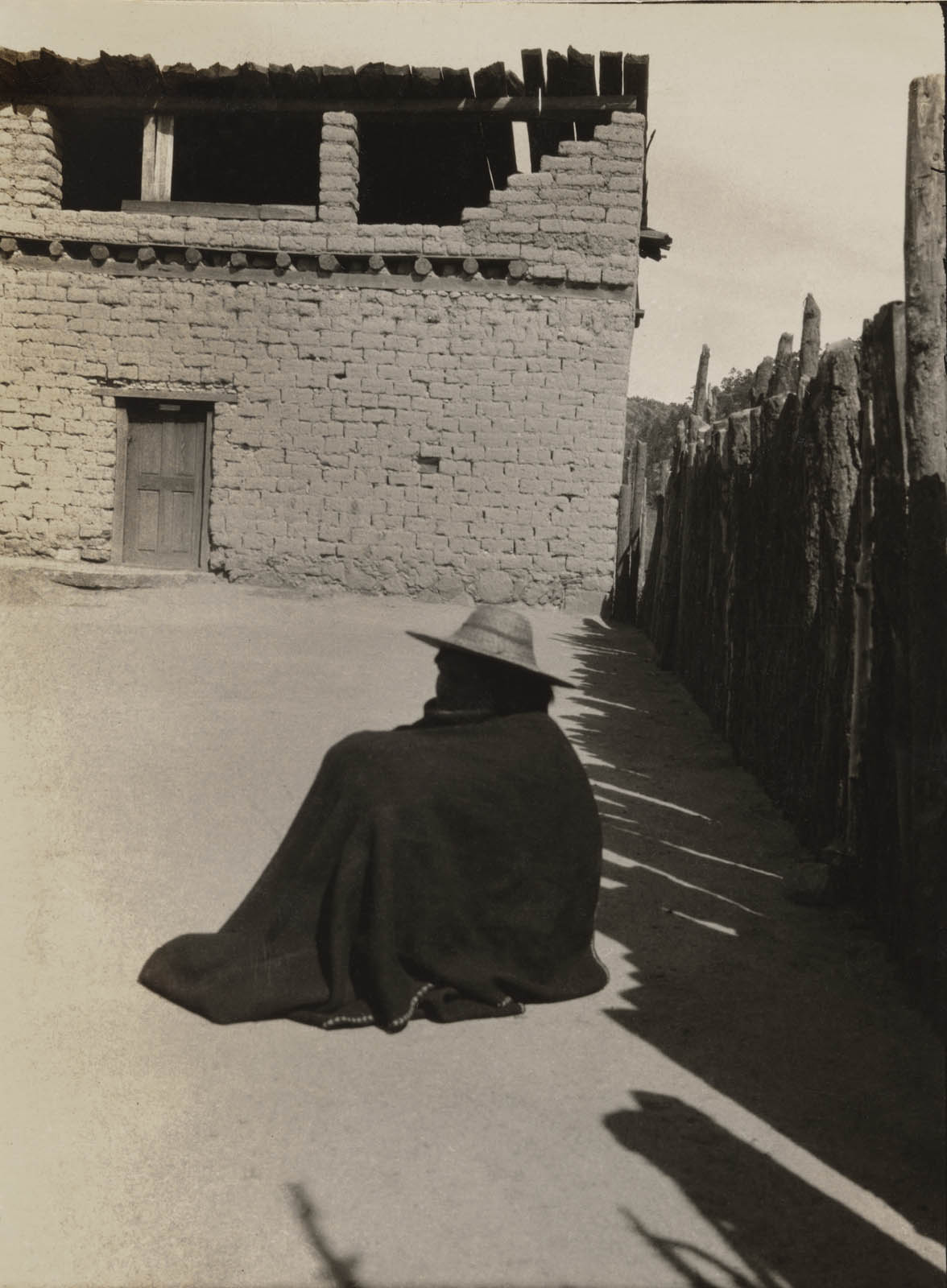
Tina Modotti (Italian, 1896-1942) 'Untitled' c. 1926-1929


Tina Modotti (Italian, 1896-1942)
Untitled
c. 1926-1929
Gelatin silver print
San Francisco Museum of Modern Art, San Francisco
Art Supporting Foundation donation, John “Launny” Steffens, Sandra Lloyd, Shawn and Brook Byers, Mr. and Mrs. George F. Jewett, Jr., and anonymous donors


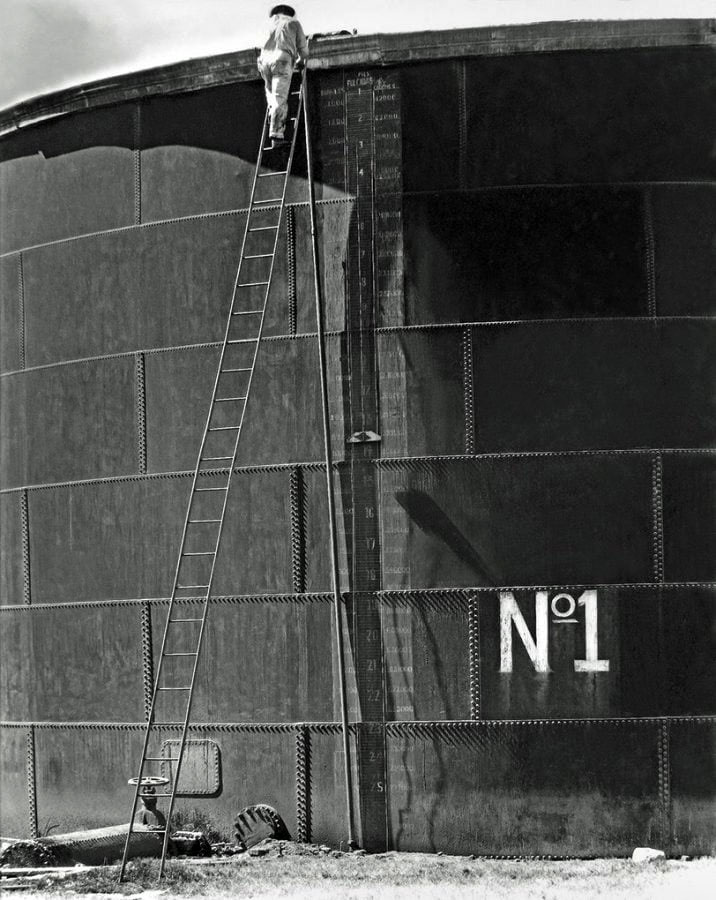
Tina Modotti (Italian, 1896-1942) 'Tank Nr. 1' 1927


Tina Modotti (Italian, 1896-1942)
Tank Nr. 1
1927
Gelatin silver print


Tina Modotti. 'Campesinos (Workers' Parade)' 1926


Tina Modotti (Italian, 1896-1942)
Workers’ Parade
1926
Gelatin silver print
Fundación Televisa Collection and Archive, Mexico City


Workers Parade

A closely cropped image of a sea of sombreros, Workers Parade, much like her earlier photograph Roses, focuses in on the subject by eliminating all extraneous information. The politically charged subject matter, along with the unusual camera angle, attention to light and dark, and the texture and pattern produced by photographing the scene from above recalls the slightly later work of Alexander Rodchenko, and in particular, his Gathering for a Demonstration (1928). The ubiquitous sombrero would have been immediately recognizable to the Mexican viewer for its connection to the campesinos and trabajadores, the Mexican workers, who were gathered for the annual May Day parade in Mexico City. May Day, traditionally celebrated on the first of May, commemorates International Workers’ Day, often with large parades and gatherings as a demonstration of solidarity among workers. This was a calendar event that Modotti had been familiar with since childhood due to her father’s involvement in these very same parades.

Among Modotti’s earliest politically motivated photographs, Workers Parade brings together her formal concerns with her interest in using art to express her political beliefs and her desire to make her photography socially relevant. On a symbolic level, as noted by Sarah Lowe, Workers Parade conveys the power of unity by “suggesting that the source of power to make political changes lies with the peasants.” This photograph signaled a turning point in Modotti’s work toward a new modern form of photography that addressed contemporary issues and events in order to instigate and effect change.

Karen Barber. “Tina Modotti Artist Overview and Analysis,” on The Art Story website 12 Nov 2018 updated 2023 [Online] Cited 06/08/2023


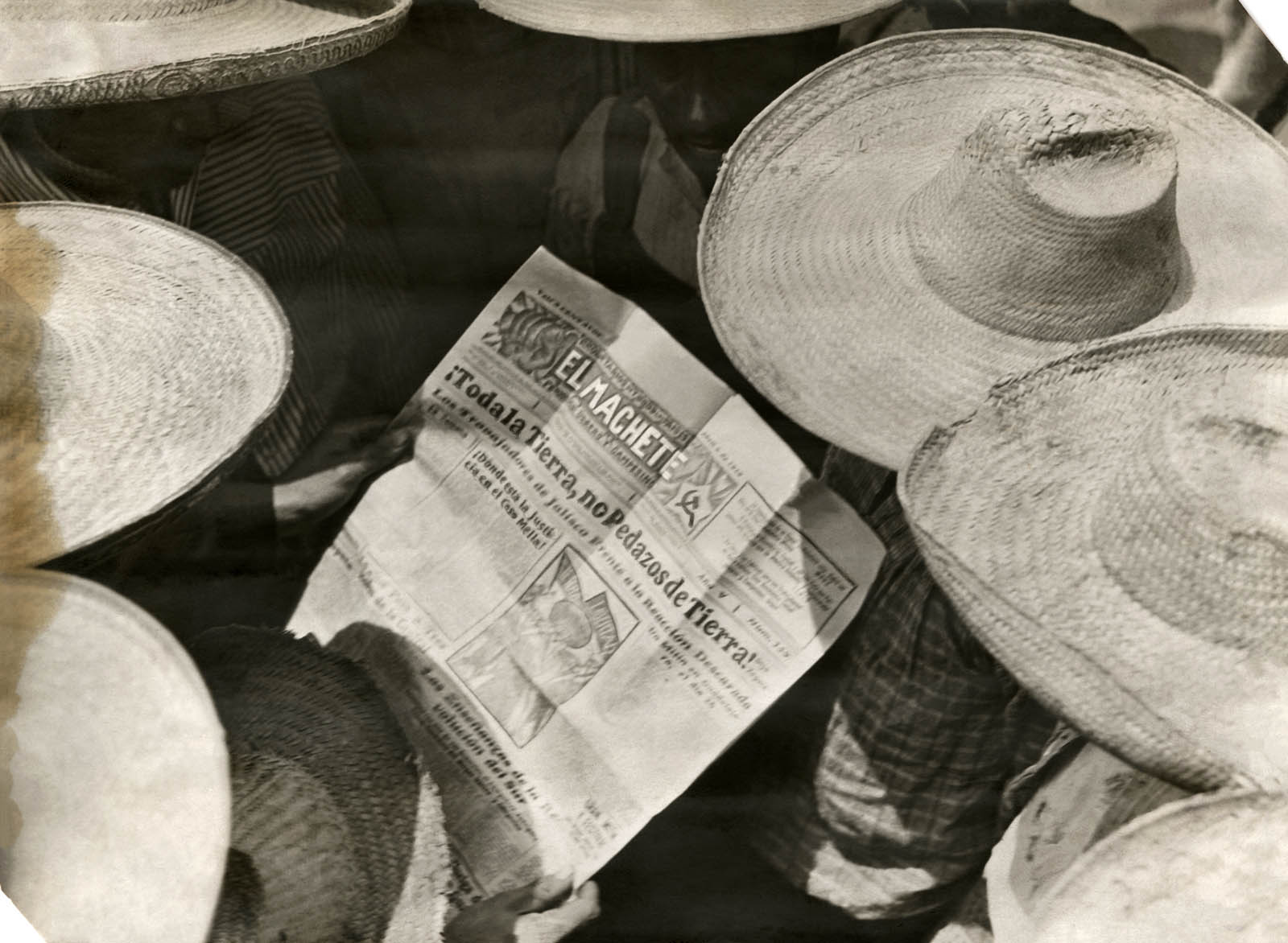
Tina Modotti (Italian, 1896-1942) 'Men reading "El Machete"' c. 1927


Tina Modotti (Italian, 1896-1942)
Men reading “El Machete”
c. 1927
Gelatin silver print
Fundación Televisa Collection and Archive, Mexico City


In this photograph of a peasant reading El Machete, the newspaper of the Mexican Communist Party, Modotti brings her careful attention surrounding composition, cropping, light and dark, and texture, to a subject with great social and political significance. Modotti had joined the Communist Party of Mexico this same year after learning that Italy had fallen to fascism. She brought her revolutionary zeal to her photographs of the late 1920s, many of which she published in Communist newspaper El Machete, a newspaper for workers and peasants. Whilst many photographers of this period, including Edward Weston and Paul Strand, were focused on a romanticized view of a timeless Mexico, Modotti turned to her camera to its people and to the real effects of its ongoing changes. She often collaborated with workers to produce photographs that were intended to raise class-consciousness and depict their daily lives.

At a moment when new governmental education reforms sought to educate the lower and working classes in Mexico, a seemingly straightforward image of a man reading a newspaper also had subversive undertones, particularly to the middle class. As Sarah Lowe notes: “The young obrero reading El Machete is a reminder that the Revolution’s promise of universal literacy would only be fulfilled by the activism of the people.” Although she viewed photography through the lens of modernism, she also believed that photography was a form of mass communication and an important means of enhancing visual literacy.

Karen Barber. “Tina Modotti Artist Overview and Analysis,” on The Art Story website 12 Nov 2018 updated 2023 [Online] Cited 06/08/2023


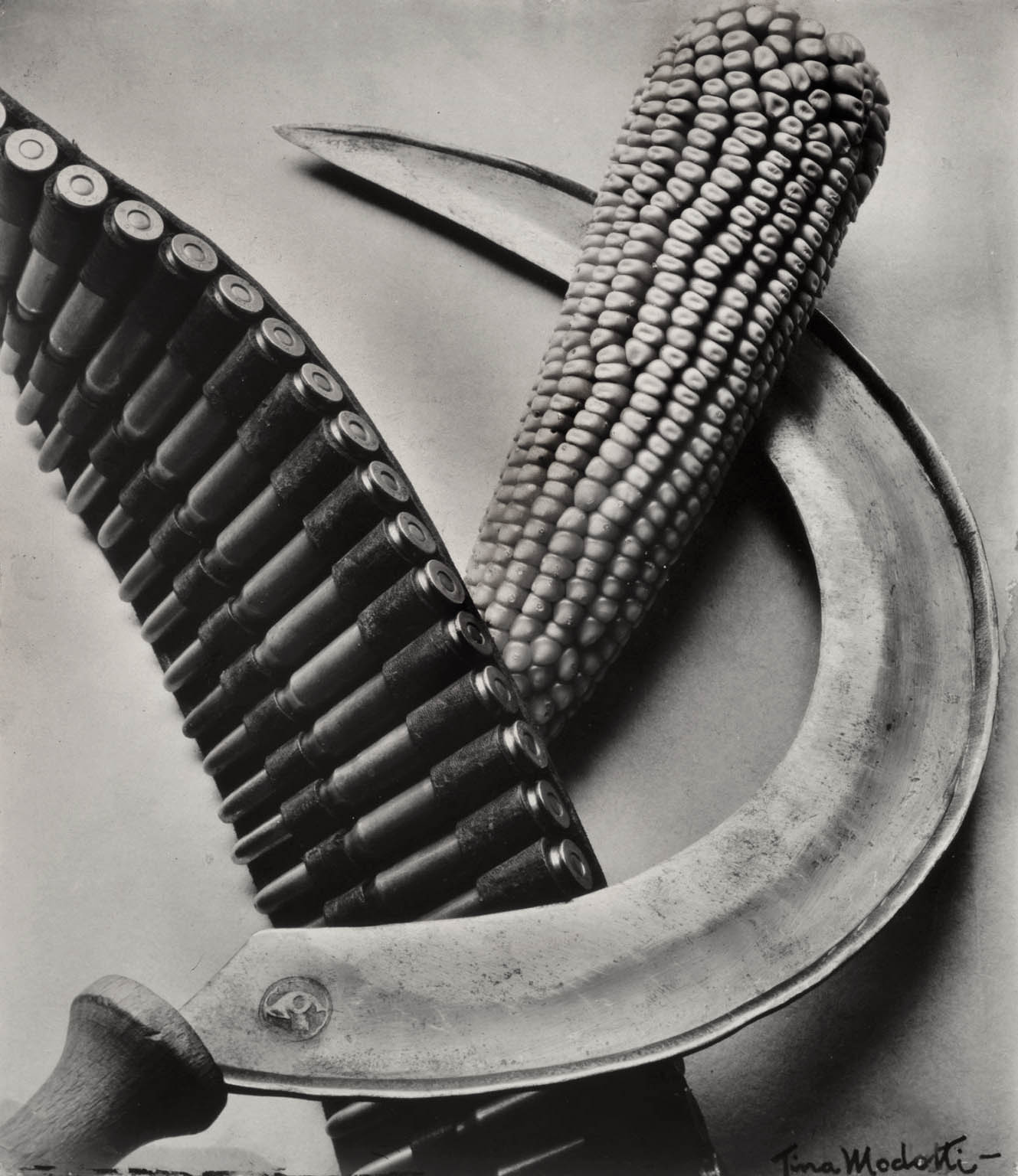
Tina Modotti (Italian, 1896-1942) 'Bandolier, Corn, Sickle' 1927


Tina Modotti (Italian, 1896-1942)
Bandolier, Corn, Sickle
1927
Gelatin silver print
Fundación Televisa Collection and Archive, Mexico City


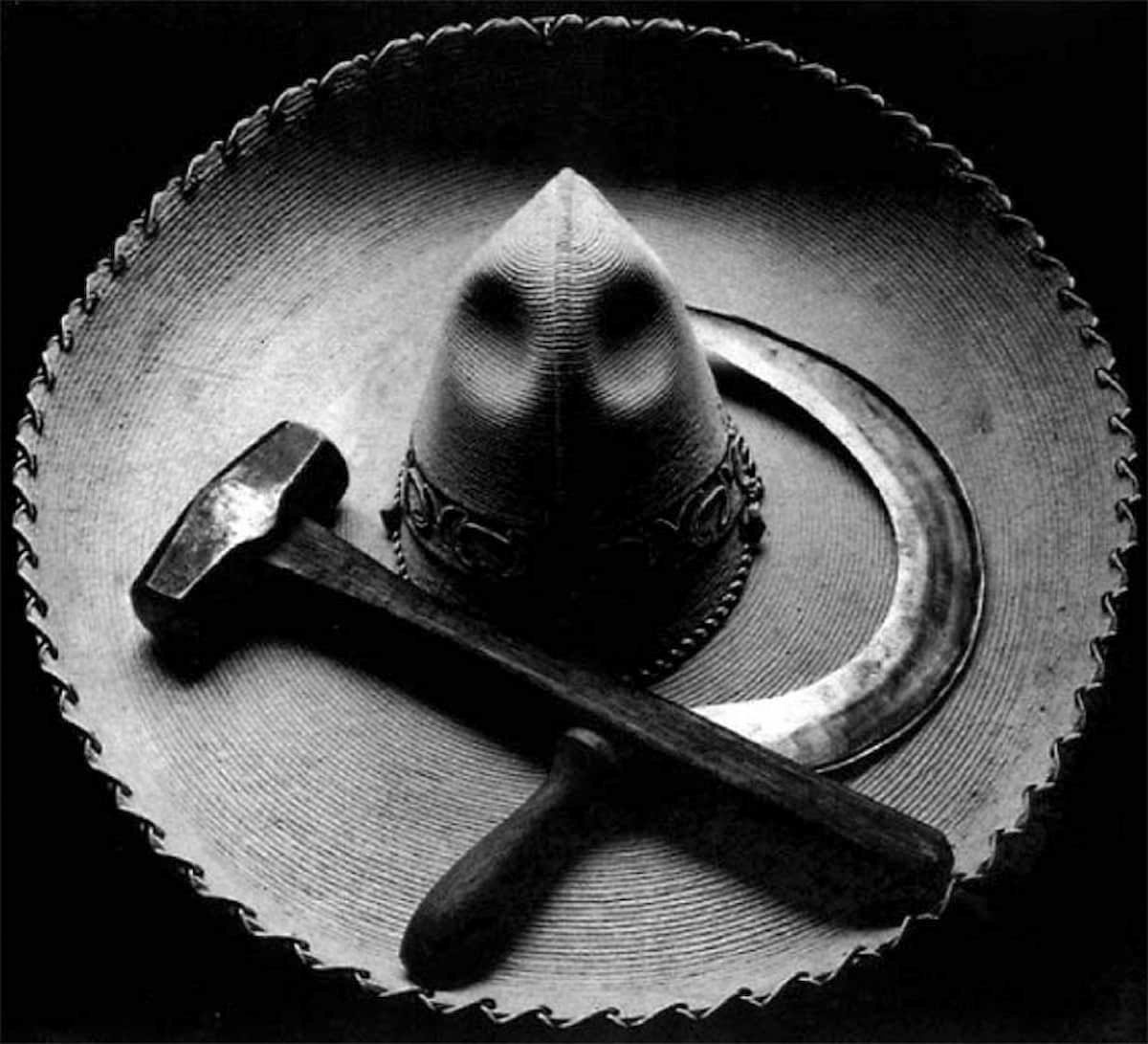
A carefully composed photograph of a bandolier, an ear of corn, and a sickle, married Modotti’s interest in the photographic still life with objects symbolic of Mexico and the revolution – the sickle, a popular Communist symbol, corn, a symbol of Mexico and its rural farmers, and the bandolier (a pocketed belt for holding ammunition), the symbol of the Mexican Revolution. Politically active after 1925, Modotti joined the Communist Party of Mexico (CPM) in 1927. Due to her Communist-inflected worldview, her photographs from the late 1920s took a decided turn toward Communist symbolism, in lieu of overt propaganda.

As Sarah Lowe has stated, “her eloquent arrangements – founded on a stringent formal control – relocates the commonplace into the realm of the symbolic. They become potent revolutionary icons, offering a metaphorical union of artista [artist], campesino [farm laborer], and soldado [soldier], thus functioning as both formal still life and propaganda.” Lowe further suggests that in so doing, Modotti created a new kind of political picture. In this respect, Modotti’s relationship with Frida Kahlo becomes more than a shared friendship, and also incorporates shared artistic practice. Kahlo also infused still-lives with political objects and slogans, and as such transforms a seemingly domestic process of making art into a highly charged political statement.

Karen Barber. “Tina Modotti Artist Overview and Analysis,” on The Art Story website 12 Nov 2018 updated 2023 [Online] Cited 06/08/2023


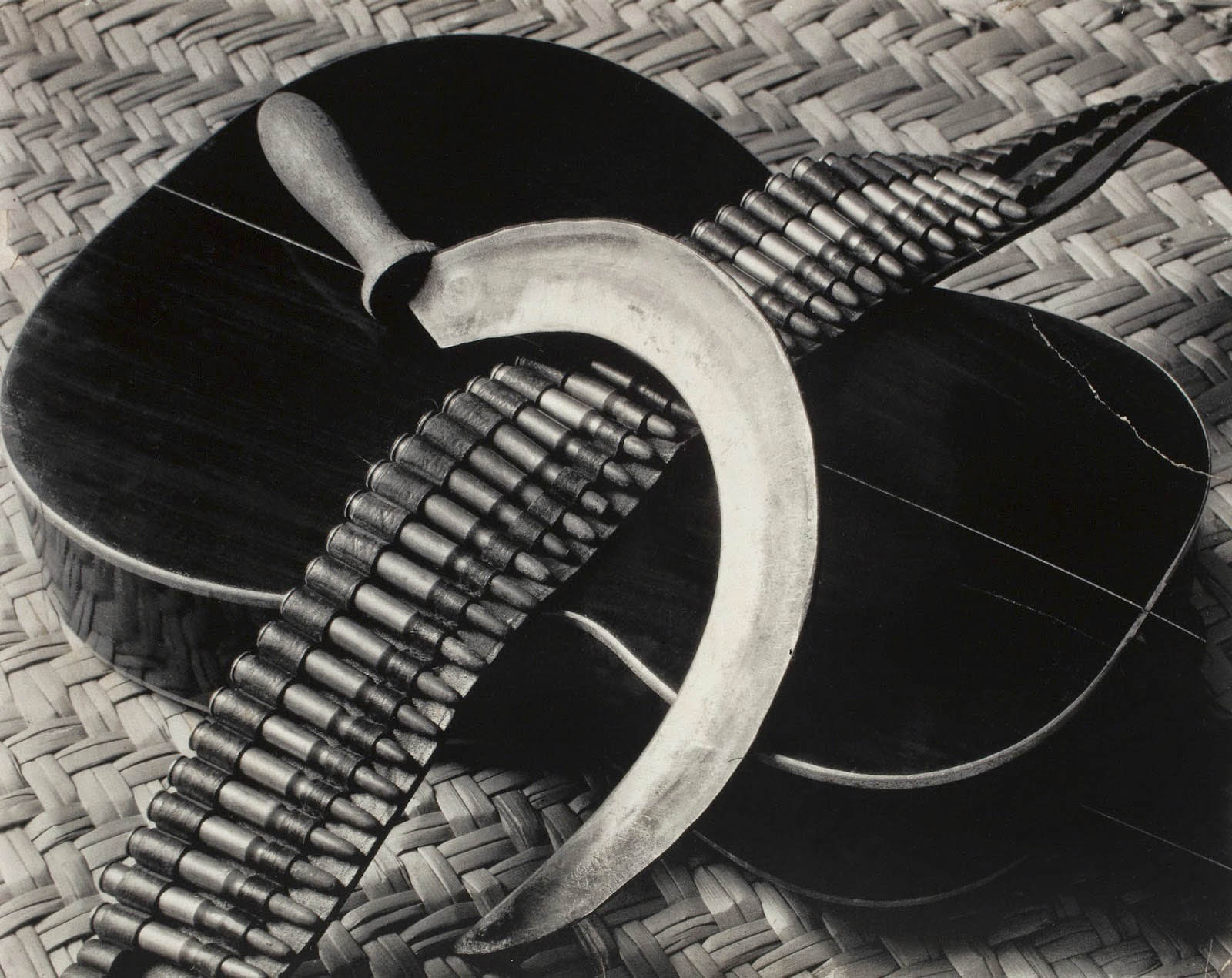
Tina Modotti (Italian, 1896-1942) 'Canana, sickle and guitar' 1927


Tina Modotti (Italian, 1896-1942)
Canana, sickle and guitar
1927
Gelatin silver print
Fundación Televisa Collection and Archive, Mexico City


Tina Modotti (Italian, 1896-1942) 'Hat, hammer and sickle México' 1927


Tina Modotti (Italian, 1896-1942)
Hat, hammer and sickle
México 1927
Gelatin silver print
Fundación Televisa Collection and Archive, Mexico City


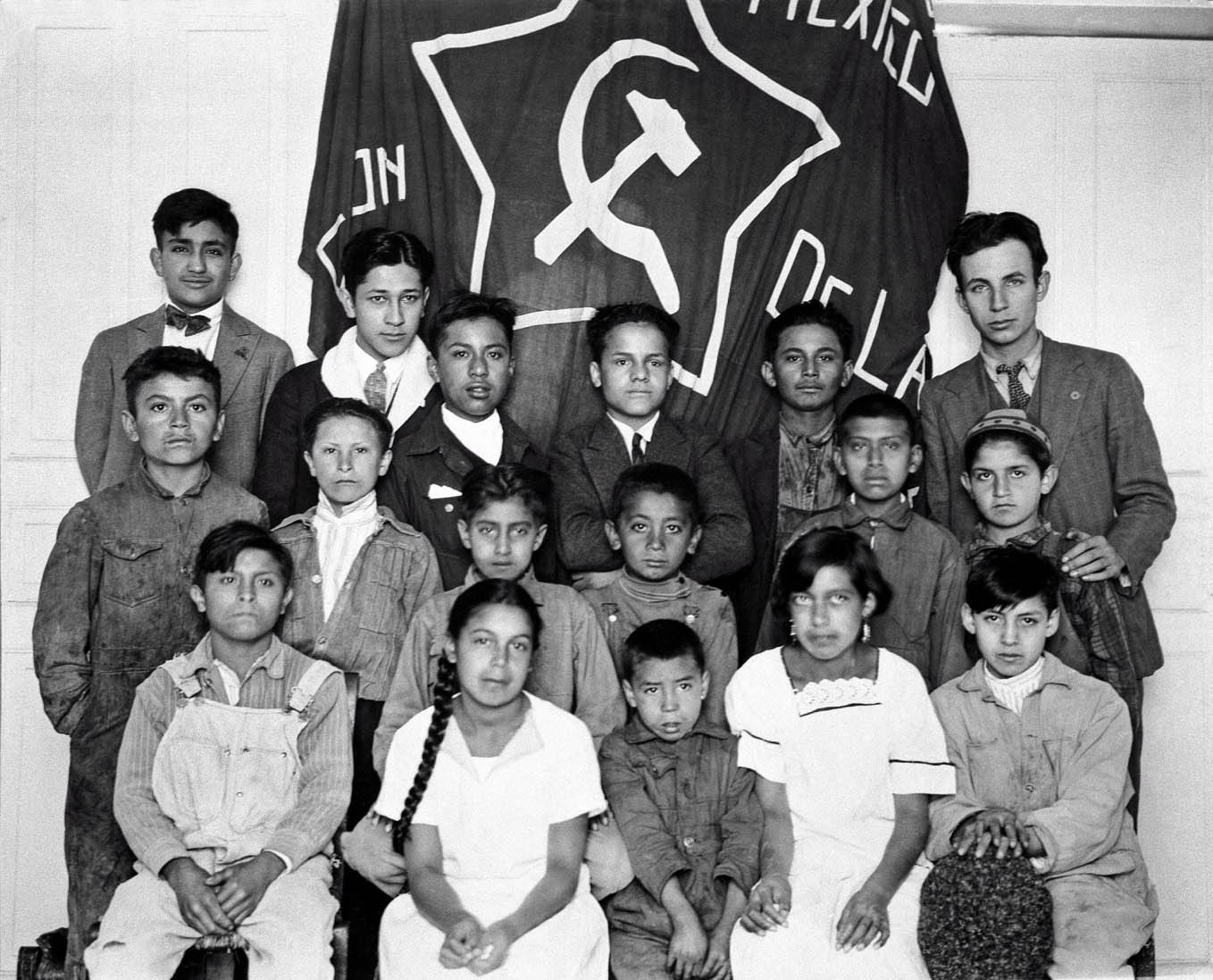
Tina Modotti (Italian, 1896-1942) 'Committee of the Organisation of the Pioneers of the Communist Party of Mexico' Mexico City, 1928


Tina Modotti (Italian, 1896-1942)
Committee of the Organisation of the Pioneers of the Communist Party of Mexico
Mexico City, 1928
Gelatin silver print


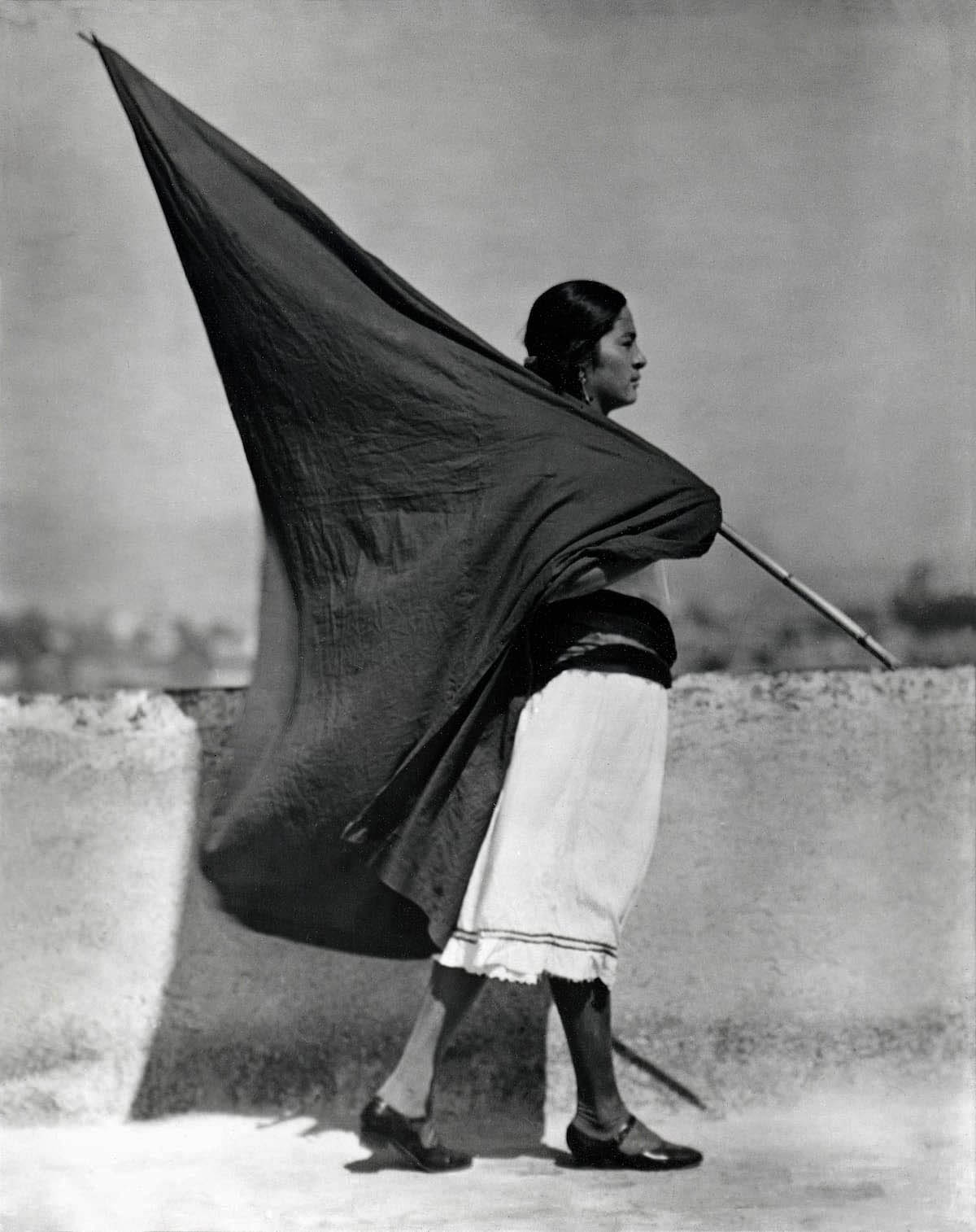
Tina Modotti (Italian, 1896-1942) 'Woman with flag' México City, c. 1928


Tina Modotti (Italian, 1896-1942)
Woman with flag
México City, c. 1928
Gelatin silver print
Fundación Televisa Collection and Archive, Mexico City


The life of Tina Modotti (Udine, August 16th 1896 – Mexico City, January 5th 1942) was influenced by some of the most important historical events of the 1920s and 30s. A citizen of the world – as many have considered her – Modotti’s work and her life have been surrounded by uncertainties that have only been resolved after in depth study, although some gaps still remain.

Modotti lived in several countries, among them Spain, which coupled with her agitated political militancy led to the dispersion of her work. Consequently, as pointed out by the show’s curator Isabel Tejeda, this “decontextualizes and disorients her production, making it impossible to date many of her images with precision.” Nevertheless, one could argue that most of her photographic work was produced between 1923 and 1930 while she was in Mexico. During those years, after her apprenticeship with Edward Weston, Modotti evolved from the perfection of abstract forms to a different and more personal gaze that was conditioned by her outlook on life and her notable attraction to human beings and social injustice. She went on to portray the precarious conditions of workers, inequalities, and misery in urban areas. Likewise, she focused on women and their role within the community as well as the forms and symbols of working class emancipation. In her eagerness to promote awareness, Modotti produced images denouncing injustice, while honouring the dispossessed; some had propagandistic purposes and were intended for publications and magazines.

The exhibition being presented at Fundación MAPFRE is the most comprehensive show dedicated to Tina Modotti to date. Thanks to the work of Isabel Tejeda, we are able to contemplate a large number of the artist’s originals that have been assembled through the curator’s research. Nearly 200 photographs (predominantly vintage prints) have been grouped chronologically into four sections. Furthermore, a wide range of documentary materials will be on display along with the projection of one of the Hollywood films Modotti featured in. The exhibition is completed with works by photographers that were closely related to her, such as Edward Weston. This exhibition reconstructs Modotti’s figure without fissures for the first time, both in terms of her facets as an artist / photographer and as a revolutionary / antifascist militant.

KEYS

Tina Modotti and film

Tina Modotti’s first contact with the performing arts took place in San Francisco, in 1913, when she was only 16 years old. In 1920, after participating in a few plays, she made her way into the world of film. At the time, actresses were sought out to embody heroines, adventurers, or femme fatales. With her dark hair and complexion, Tina seemed to fit the prototype of an exotic woman; a cliché that she would try to distance herself from shortly after. Modotti was cast in three films: Tiger’s Coat (1920) by Roy Clemens, in the role of Jean Ogilvie; Riding with Death (1921) by Jacques Jaccard, as Rosa Carilla; and I Can Explain (1922) by George D. Baker, as Carmencita Gárdez.

Ideal of beauty, social ideal, political ideal

After her instruction with Edward Weston (it should be noted that she did not receive a formal education in photography) Tina Modotti’s work developed within the group that dominated artistic life in Mexico in the 1920s. Between 1926 and 1929 Modotti dissected popular Mexican life; not only were individuals worthy of her attention, but also water tanks, houses, the corn peasants ate and the hats they wore, sickles symbolising communism, machetes, or the woman (appearing like a sculpture) who carried a flag and personified the commitment to the revolutionary struggle. All of her images possess great clarity and substance. They leave no room for rhetoric, while allowing for the artist’s political, social, and aesthetic ideals to fuse into one.

Mexican social landscape

Some authors have pointed to Tina Modotti’s proletariat origins as the basis for her way of confronting social motifs and human figures. If some have defined this part of her work as “reportage photography”, one must point out that the artist’s curiosity and will to capture a person’s life in one image separates her from simple illustrative intent. One could argue that her portrayals of indigenous Mexican people, women, babies, and children are ethnographic photographs, albeit produced in a spontaneous way without an anthropological purpose. Therefore, despite being her point of departure, Modotti distances herself from the travellers who ventured into Mexican lands with a manner of curiosity that lay between science and romanticism.

International Red Aid

The Spanish section of the MOPR (International Red Aid) was established clandestinely in 1923 with the objective of disseminating political propaganda amid the climate of Primo de Rivera’s (1923-1930) dictatorship and had as another of its objectives to defend the Spanish Republic and its anti-fascist ideals. The MOPR spread throughout the entire world after its founding in the Soviet Union in 1922. Politically, the organisation had to follow the directives of the Communist Party, but in its facet dedicated to solidarity it played a key role in humanitarian aid. In Spain, after the October Revolution in Asturias in 1934, it became the main organisation dedicated to helping and aiding political detainees and their families. However, during the Spanish Civil War, the MOPR would constitute the true basis for the medical system of the Republican military.

The exhibition

Tina Modotti’s life was marked by some of the most important historical events decades of the 1920s and 1930s. Citizen of the world, as many have considered her, both her life like her work are surrounded by gaps that only after an in-depth study have could be completed, although not entirely.

The nomadic life that she led and the agitated political militancy caused Modotti to leave with  sudden departure from many of the countries where she lived, which, as the curator of the exhibition points out, Isabel Tejeda, “decontextualizes and messes up her production from the start, so it is impossible to accurately date many of her images”, although it can be said that almost all her photographic work was produced between 1923 and 1930. During these Mexican years, and after her apprenticeship with Weston, the artist evolved from the perfection of the abstract forms to a different and personal perspective conditioned by her way of
seeing life, in which her attraction to human beings and social injustices stand out. She then portrayed the precarious conditions of workers, inequalities and misery in urban areas. She also focused on women and their role within the community, and on forms and symbols of the emancipation of the working class. In her eagerness to raise awareness, Modotti goes on to make images that denounce injustices and honour the dispossessed, some of which have a propaganda purpose and are intended to be printed in magazines and other publications.

The exhibition that Fundación MAPFRE is presenting is the most extensive that has been made of Tina Modotti until today. Thanks to the work of Isabel Tejeda, today we can see in our exhibition halls a great number of period prints (vintage copies) by the author, gathered after a deep work of research. There are about two hundred and forty photographs that are grouped together chronologically in four sections. In addition, an extensive amount of documentary material is shown and one of the films Modotti starred in in Hollywood. The selection is completed with works by photographers from her immediate environment, such as Edward Weston.

Text from Fundación MAPFRE


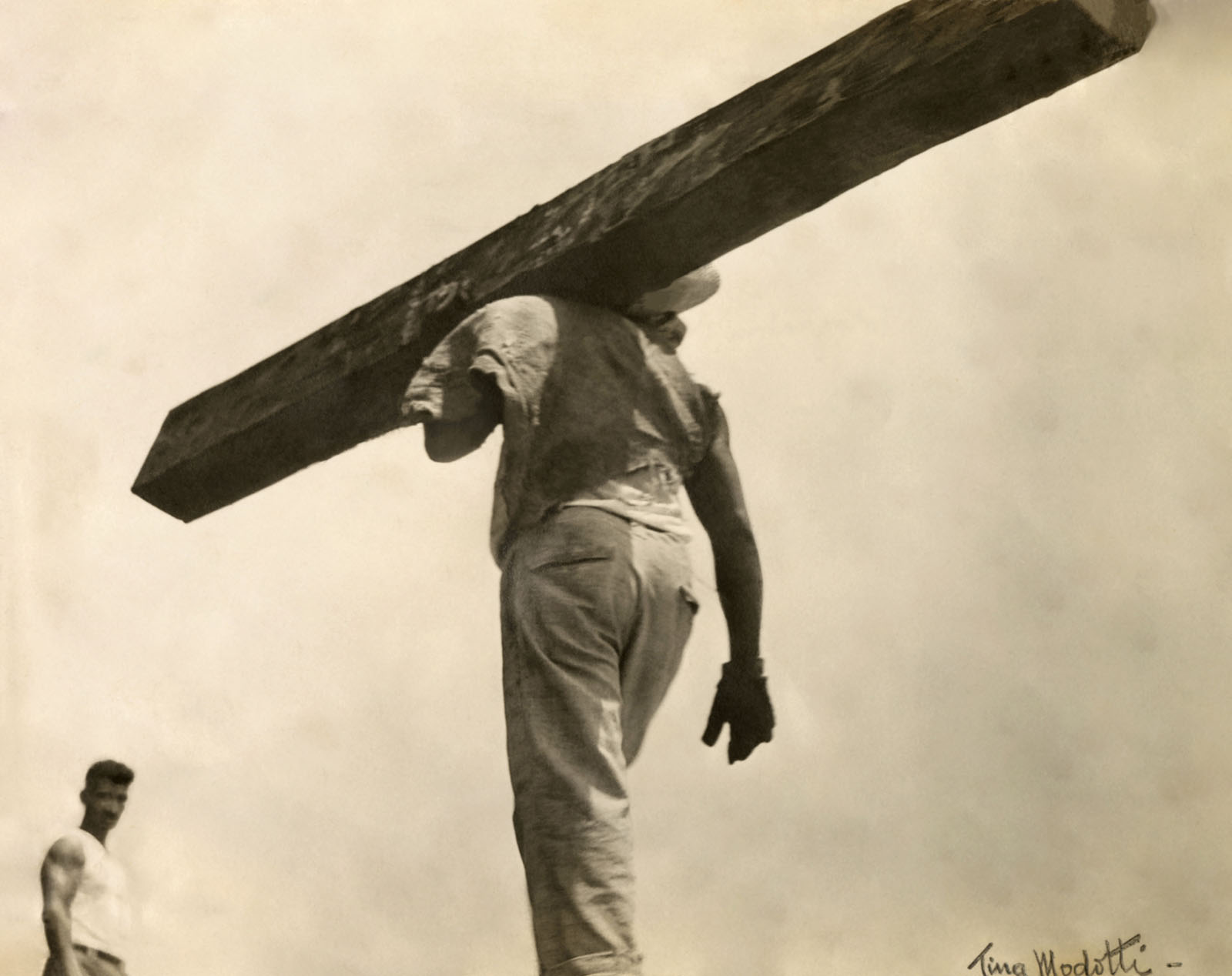
Tina Modotti (Italian, 1896-1942) 'Man with log' 1928


Tina Modotti (Italian, 1896-1942)
Man with log
1928
Gelatin silver print
Fundación Televisa Collection and Archive, Mexico City


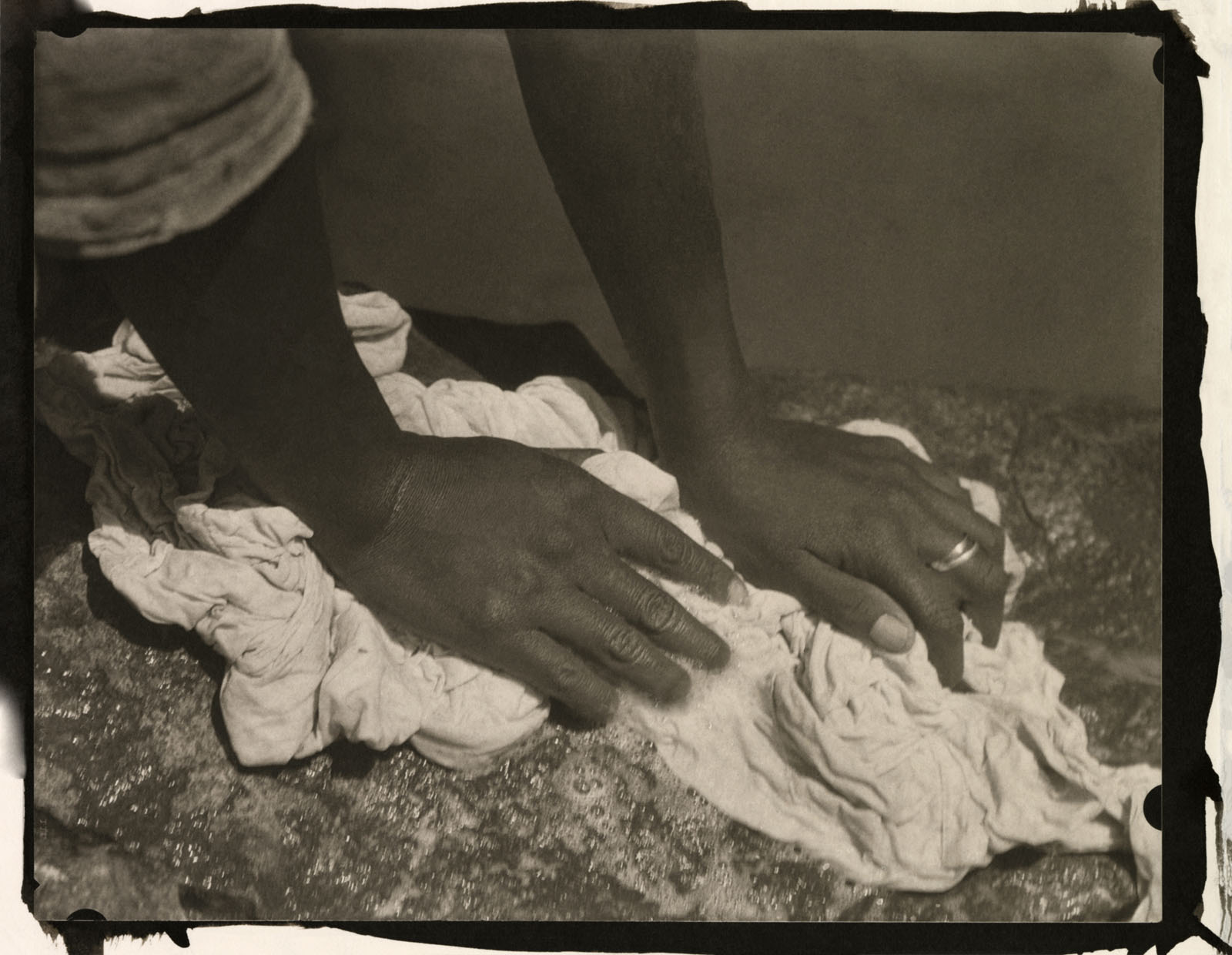
Tina Modotti (Italian, 1896-1942) 'Woman's hands washing clothes' 1928


Tina Modotti (Italian, 1896-1942)
Woman’s hands washing clothes
1928
Gelatin silver print. Later print, printed by Manuel Álvarez Bravo
Fundación Televisa Collection and Archive, Mexico City


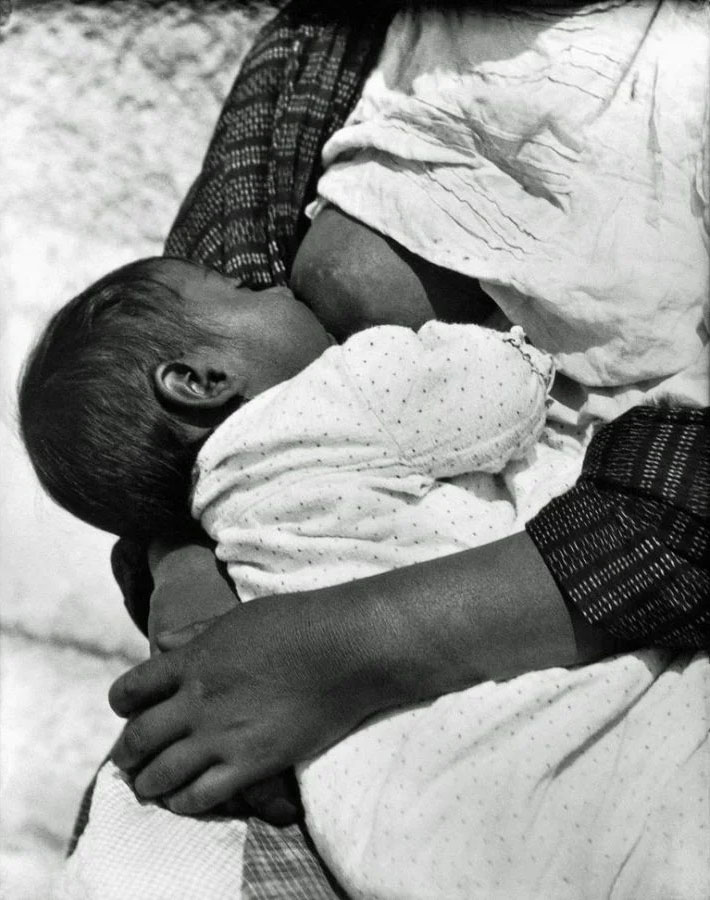
Tina Modotti (Italian, 1896-1942) 'Baby Nursing' 1926-1927


Tina Modotti (Italian, 1896-1942)
Baby Nursing
1926-1927
Gelatin silver print
Fundación Televisa Collection and Archive, Mexico City


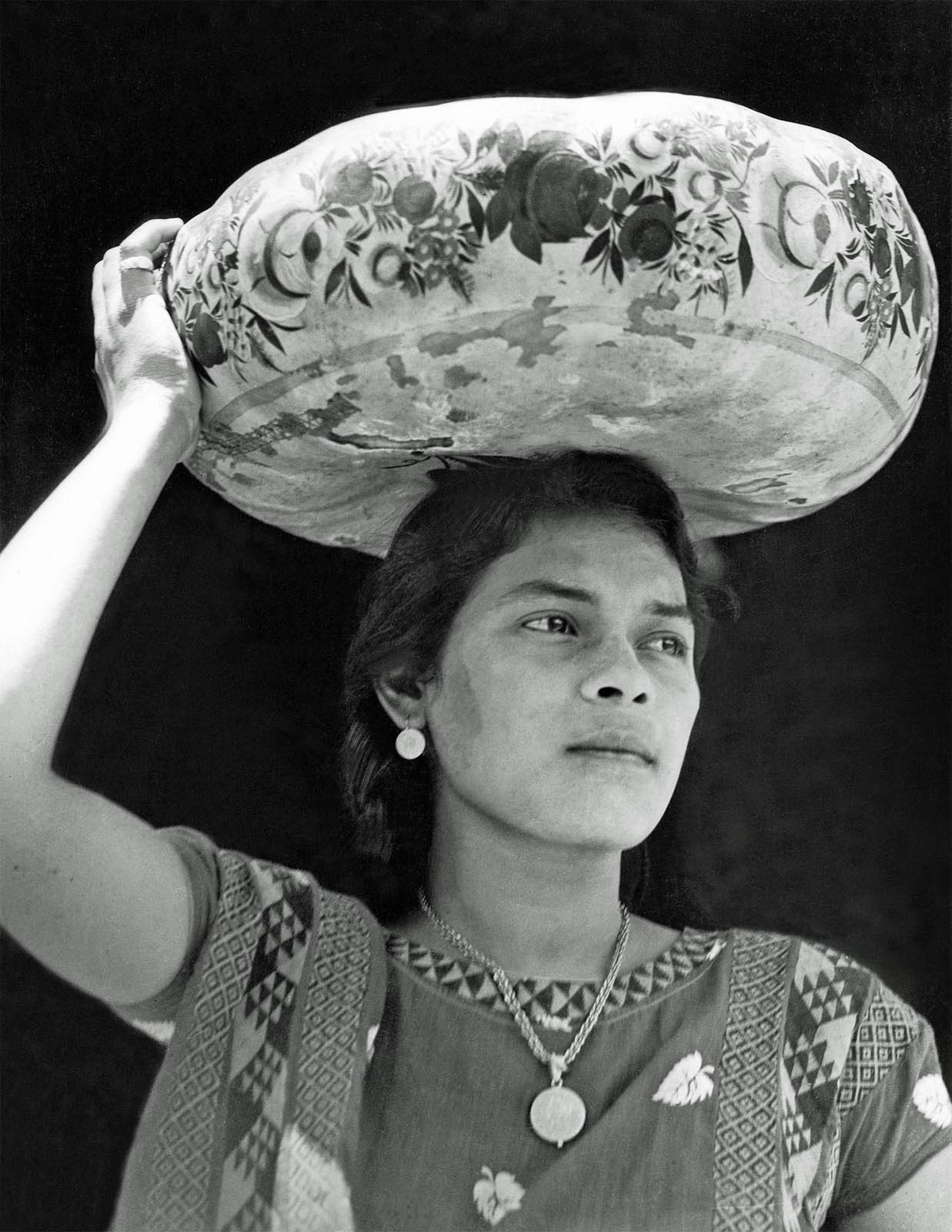
Tina Modotti (Italian, 1896-1942) 'Mujer con Jicara en la cabeza' (Woman with Jicara on her head) Juchitán, Oaxaca, 1929


Tina Modotti (Italian, 1896-1942)
Mujer con Jicara en la cabeza (Woman with Jicara on her head)
Juchitán, Oaxaca, 1929
Gelatin silver print
Fundación Televisa Collection and Archive, Mexico City


In this iconic black and white photograph, a woman dominates the picture frame. Standing with arm raised holding a large gourd on her head, she gazes off to the right, somewhere out of the picture frame. She wears a circular pendant and earrings, and a traditional Tehuana dress with geometric patterns, the costume that has been so well made visible by the work of Modotti’s friend, Frida Kahlo. The careful framing, cropping, and pose emphasize the image’s angular forms. Shot from below to emphasize the woman’s noble and heroic stature, the photograph was taken during a trip to Tehuantepec in Southern Mexico. Unlike Modotti’s earlier photographs, the photographs taken in Tehuantepec were largely unposed, typically street photographs that captured the daily lives of the women that lived there.

Like other artists and writers in Mexico, Modotti was influenced by Mexicanidad, which embraced native cultures and indigenous subjects as part of the larger renewal in Mexican art and culture in the 1920s. This interest is evident in Woman from Tehuantepec. One of Modotti’s most iconic images, it became a potent symbol of Mexicanidad and an exercise in photographic modernism. As Sarah Lowe has noted, “the image function[s] like still life, precisely because Modotti chose not just any woman, but a well-known Mexican type – the Tehuana – to photograph. As pictured by Modotti, these women of Tehuantepec were an ideal subject, and provided her with an already-given meaning since Tehuantepec is a matriarchal society, there women have a significant voice in the running of the local economy and politics. Modotti uses the Tehuana to make a powerful political point: that women were capable of independent political action.”

Karen Barber. “Tina Modotti Artist Overview and Analysis,” on The Art Story website 12 Nov 2018 updated 2023 [Online] Cited 06/08/2023


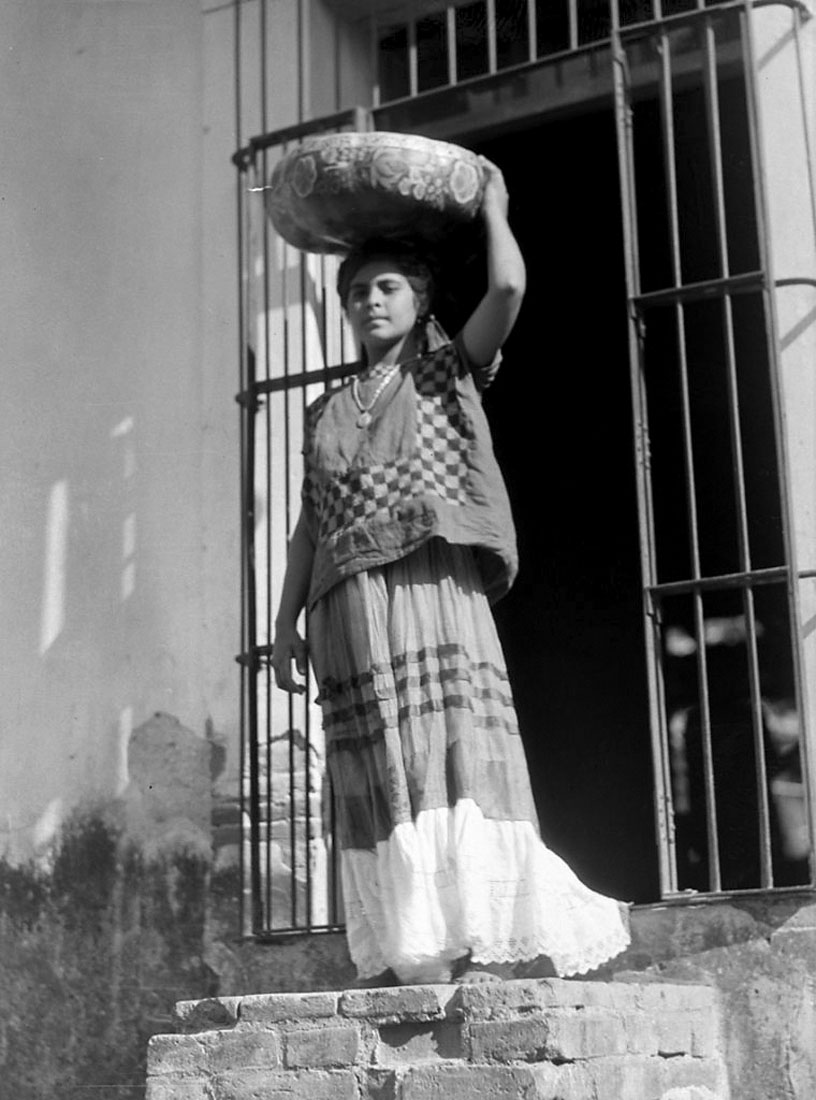
Tina Modotti (Italian, 1896-1942) 'Tehuantepec woman with jicalpextle' 1929


Tina Modotti (Italian, 1896-1942)
Tehuantepec woman with jicalpextle
1929
Gelatin silver print
Fundación Televisa Collection and Archive, Mexico City


Tina Modotti (Udine, 1896 – Mexico City, 1942) took part in some of the most relevant historical events of the first half of the 20th century, such as the economic migration of Europeans to America at the turn of the century, the birth of silent film in the West Coast of the United States, post-revolutionary agrarianism in Mexico, political muralism, the vindication of indigenous Mexican culture, the incorporation of women into the public sphere, the battle between Stalinists and Trotskyists after the revolution of 1917, International Red Aid, and the Spanish Civil War. To some degree, despite the abundance of biographies written about her, certain biographical gaps still exist that are slowly being filled. She was one of the pioneers of women’s photography during the 1920s and although nearly 400 images can be attributed to Modotti today, the number continues to rise with each new discovery; this exhibition being one example. Likewise, Tina Modotti exerted a great influence on later Mexican photography, from Manuel Álvarez Bravo to Graciela Iturbide.

Modotti took up photography through Edward Weston, although she exceeded the North American artist’s formalist teachings through the immediate construction of her own autonomous compositions that possess a unique and personal vision.

Modotti arrived in Mexico after spending her teenage years in San Francisco and Los Angeles and was part of the “Mexican Renaissance”; a time of post-revolutionary cultural splendour. Integrated within the circle of Mexican artists and muralists, her work incorporated a type of embodied photography into Weston’s formalism. Her gaze was influenced by her modest upbringing, being an economic immigrant and a woman, and by her sensibility toward social injustice. A member of the Mexican Communist Party since 1927, she denounced the situation of dispossessed people with her camera, focusing on the construction of a new imaginary for Mexican women.

After being expelled from Mexico in 1930 for being a communist, her photographic militancy soon became full-fledged activism. Apparently, Modotti abandoned photography in the 1930s to dedicate herself to political militancy. Mid-way through the decade, she was sent to Spain by the Communist Party where she would have a key role throughout the Civil War. Taking on the coordination of International Red Aid (MOPR), she organised the escape from Spain of the so-called “children of the war”, coordinated the management of military hospitals – where she also worked as a nurse – and carried out propagandistic and political tasks. At the end of the conflict she crossed the Pyrenees along with thousands of political exiles.

She died in Mexico City in 1942.

Early Years: From Udine to Los Angeles

Tina Modotti was born in 1896 into a modest family from Udine. In 1906 her father migrated to the United States in hopes of reuniting the family later. She arrived to San Francisco on her own in 1913, a city that was home to nearly twenty thousand Italians at the time. She worked in the textile industry, but also took part in the amateur theatre scene. In 1915 she met Roubaix de l’Abrie Richey (Robo) who she moved to Los Angeles with. There she met Edward Weston, modelling for him from 1920 onward. She also wrote and published her first poems and tried her luck in film, taking part in three movies. In The Tiger’s Coat, Modotti played the role of a Mexican Woman. Her physical appearance, dark hair, and Mediterranean skin typecast her into the stereotypical roles U.S. audiences associated with the exotic, romantic, and wicked myth of Latina women. Likewise, as can be observed in her family albums, she played with her ability to shift identities through clothing and costume (she posed dressed up as a ballerina in a pair of pants symbolising the empowerment of modern women and as a character from the Arabian Nights).

Mexico: On the Other Side of the Camera

In 1923 Tina Modotti moved to Mexico City with Edward Weston where they opened a portrait studio. The pair explored and took photographs of the country; this can be observed in Convent of Tepotzotlán and in Zuno’s house, the courtyard (whose exact authorship is unknown, as is the case with other photographs in this exhibition). At the time, the nation was experiencing what became known as the “Mexican Renaissance”. Modotti allowed herself to be influenced by this cultural splendour, soon becoming one of its prominent figures and transforming Mexican photography.

Her work evolved rapidly in Mexico. Modotti incorporated a personal gaze into the formalist perfection she learned from Weston that was influenced by her outlook on life and her attraction to human beings and the denouncement of social injustice (for example, in this section one can compare the photographers’ different approaches when depicting the circus tent or portraying the anthropologist Anita Brenner and the champion of the Náhuatl language Luz Jiménez).

During these early years Modotti worked on several still lives composed mainly of flowers, such as lilies, geraniums, roses, and cacti. Nevertheless, the artist also produced portraits in which she captured the powerful bond between a mother and her daughter (An aztec baby or Luz and baby) that went beyond the mere commodification of female bodies. Some of these images were later used in illustrated magazines of the time as examples of a Mexican identity whose origin was grounded in indigenous culture.

She also documented the work of Mexican muralists, such as Diego Rivera and José Clemente Orozco, among others. Modotti’s photographs were featured in some of the most important publications of the time, including Idols Behind Altars by Anita Brenner and the monograph by Ernestine Evans on muralism in Mexican Folkways magazine.

In late 1926 Weston returned to the United States. Earlier that year Modotti had acquired a new Graflex camera in San Francisco that was lighter than the Corona she previously used. With renewed energy, she set off to photograph Mexico, which for her was embodied in its people.

Photography and Political Commitment. Mexico Is Its People

After becoming affiliated to the Communist Party in 1927, Modotti’s political commitment became more accentuated. She was part of International Red Aid and also collaborated as a translator and a photographer with the newspaper El Machete, whose audience was mainly peasants. Similarly, she attended and photographed demonstrations and participated in political associations such as Manos Fuera de Nicaragua (Hands Off Nicaragua).

She avoided poses and portrayed individuals in real situations, both in the city and in countryside villages; a line of citizens at Monte de Piedad Nacional to pawn their belongings, peasants at agrarian schools, tortilla, cabbage, and hat sellers, corn porters, washerwomen, mothers carrying their children, children at Colonia de la Bolsa living in poverty, popular festivities, etc. Some of them were published in newspapers, such as El Machete, and subsequently in foreign magazines, such as AIZ, Der Arbeiter-fotograf, New Masses, and Put’ Mopr.

Modotti contemplated the dilemma of representation. How to find a visual language that was accessible to the people without betraying her aesthetic principles? She found a formula in symbolic photography. For example, Woman with flag is not merely an image about communism; instead, it expresses the ability of human beings to become empowered through willpower and political ideals. Modotti also produced still lives whose juxtaposed elements represent basic abstract concepts that speak of the people as an emancipated entity and of a communist vision of the future born from the land itself (Sickle, canana and corn cob and Guitar neck, canana and corn cob). In her photographic manifesto of 1929, coinciding with her solo exhibition at the Biblioteca Nacional, Modotti declared that she did not consider herself an “artist”, but rather a “photographer”; a trade she conceived as any other, in consonance with her proletariat ideas.

Toward Political Action: Spain at War

In 1930 Tina Modotti was expelled from Mexico and returned to Europe after having been falsely accused of taking part in an attack against Mexican president Pascual Ortiz Rubio. She spent a short time in Berlin, trying to continue her photographic pursuit unsuccessfully. However, Modotti would soon move to the Soviet Union where she focused on her activities as a member of International Red Aid (MOPR).

The Communist Party sent Modotti to Spain during the Spanish Republic. When the Civil War broke out, she coordinated MOPR under different aliases, reorganizing the Cuatro Caminos Worker’s Hospital (whose purpose was tending to injured militants), supervising, reporting, and writing articles under the names María, Carmen Ruiz, and Vera Martini for MOPR’s newspaper Ayuda. Semanario de la solidaridad [Help. Weekly of Solidarity], and supervising propaganda (in other words, the dissemination of the organisation’s activities). Politically dependent on the Communist Party, MOPR played a major role in humanitarian aid during the war, becoming the main organisation geared toward helping and aiding political detainees and their families, as well as being an important part of the Republican military health system.

In 1937 Modotti participated in the organisation of the Second International Congress for the Defense of Culture in Madrid, Valencia, and Barcelona. Among the participants were André Malraux, Anna Seghers, Ernest Hemingway, Aleksey Tolstoy, Octavio Paz, Elena Garro, Rafael Alberti, María Teresa León, Robert Capa, and Gerda Taro.

There is no trace of the photographs Modotti produced in Spain, although some authors suspect that three of the 17 images found in Viento del pueblo, poesía en la guerra [Wind of the People, Poetry in War] by Miguel Hernández might be hers. What seems to be clear is that the publication of the book of poems as a photobook was Modotti’s idea.

She returned to Mexico with Vittorio Vidali, her partner at the time, and died prematurely in 1942 due to a heart attack. After Modotti’s passing, her Mexican friends and Spanish republican exiles honoured her in Mexico City. The last photograph she produced, which will be on display for the first time in this exhibition, was of her dog Suzi.

Her work was progressively forgotten until the 1970s when it began to be exhibited and studied.

Text from Fundación MAPFRE


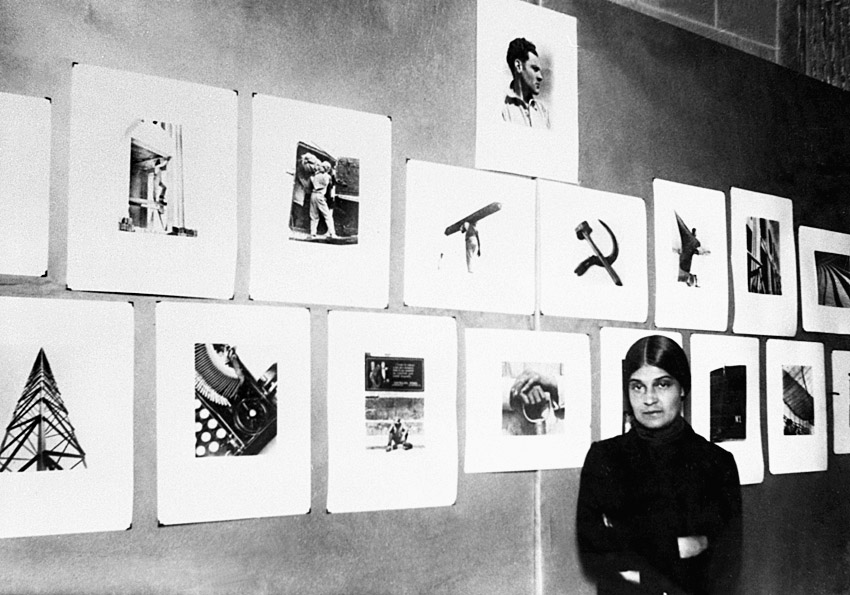
Anonymous photographer. 'Italian photographer, actress and political activist Tina Modotti (1896-1942) at an exhibition of her work at the National Library in Mexico City in December 1929'


Anonymous photographer
Italian photographer, actress and political activist Tina Modotti (1896-1942) at an exhibition of her work at the National Library in Mexico City in December 1929
1929
Gelatin silver print


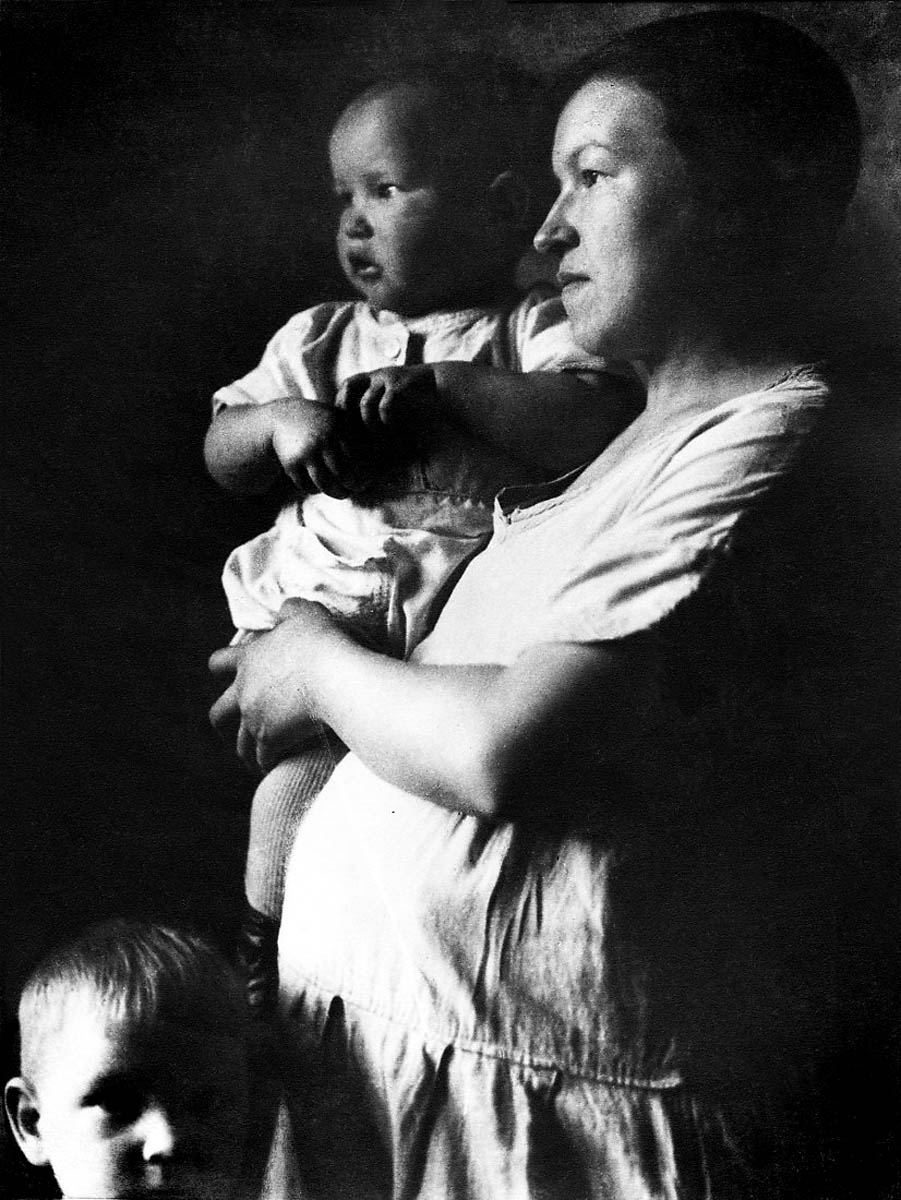
Tina Modotti (Italian, 1896-1942) 'Portrait of a Pregnant Woman' Berlin, Germany, 1930


Tina Modotti (Italian, 1896-1942)
Portrait of a Pregnant Woman
Berlin, Germany, 1930
Gelatin silver print
Fundación Televisa Collection and Archive, Mexico City


Her extensive political activism and bohemian lifestyle earned her enemies. When on January 10, 1929, Julio Antonio Mella was assassinated, and shortly thereafter an assassination attempt was made on Mexican President Pascual Ortiz Rubio, the press suspected Modotti as the perpetrator. Called “the fierce and bloody Tina Modotti,” she was expelled from the country in 1930.

First, she moved to Weimar Berlin, then, after the rise to power of Hitler, she moved to Moscow, Warsaw, Paris, and Madrid, always finding friends in Communist circles. From 1936 she participated in the Spanish Civil War using the pseudonym Maria. She stayed in Spain until the collapse of the Republican government in 1939 when she returned to Mexico. In 1942 she died in a taxi from heart failure which many described as suspicious. Diego Rivera believed that it was her lover Vittorio Vidali who orchestrated her death because Tina Modotti “knew too much.”

Magda Michalska. “Tina Modotti: Photographer Made Revolutionary,” on the Daily Art website 2 October 2022 [Online] Cited 06/08/2023


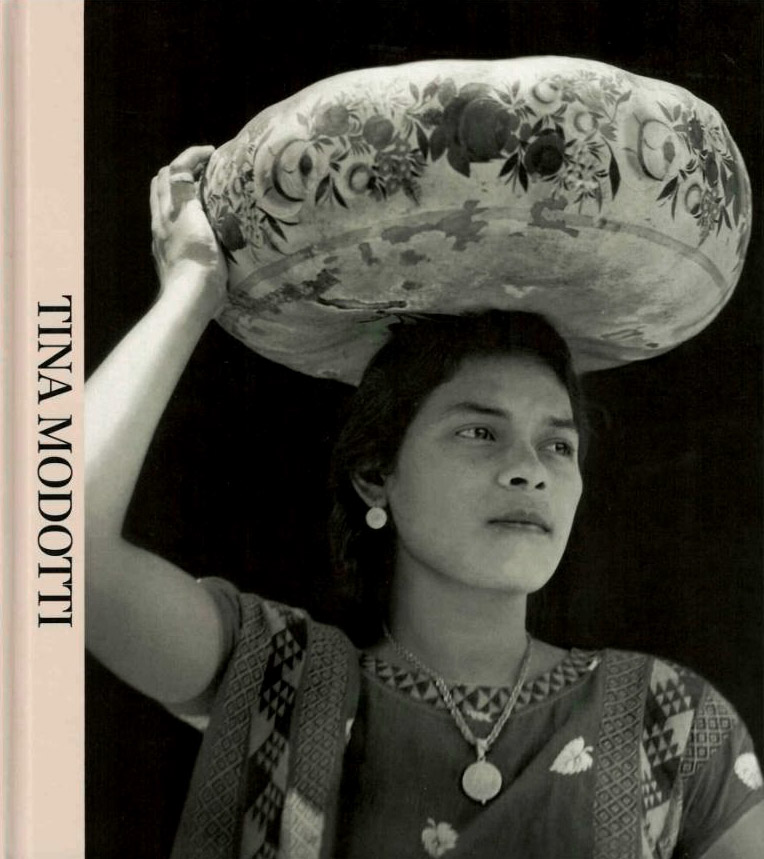
'Tina Modotti' exhibition at Fundación MAPFRE catalogue cover


Tina Modotti exhibition at Fundación MAPFRE catalogue cover


The Legacy of Tina Modotti

Her work was largely unknown until the 1990s, when a cache of her remarkable photographs was discovered in an Oregon farmhouse. Long overshadowed by her extraordinary life and her relationship with Edward Weston, she was viewed as his muse, rather than as a gifted photographer in her right. Despite a remarkably short career in photography – just seven years – she created a body of iconic images that confirmed her place in history. By fusing rigorous formalism with a desire to effect social change, she reconceived revolutionary photography through the language of modernism. Her work is now a touchstone in the history of photography, reflecting equally the tenets of modernist photography and the experience of post-revolutionary Mexico. Modotti’s photographs continue to inspire many, including many women and activists interested in making a socially and politically relevant art.

In the realms of Straight Photography, Modotti’s work is interesting to consider in comparison to that of Dorothea Lange and Imogen Cunningham, three women known to have had a dialogue in 1925 when Modotti returned to San Francisco for a short while. Like Cunningham and Lange, Modotti excelled in formal technique and as such influenced the next generation of highly skilled photographers. In subject matter and energy however, there is also a strong Surrealist and feminist edge to the work of Modotti extending her field of influence even wider. She is one of many European artists, including Leonora Carrington and Leonor Fini, who found freedom of expression in Mexico City; in this respect Modotti’s oeuvre adds to the history of a place as cultural and artistic capital for a time.

Karen Barber. “Tina Modotti Artist Overview and Analysis,” on The Art Story website 12 Nov 2018 updated 2023 [Online] Cited 06/08/2023


KBr Fundación MAPFRE
Av. del Litoral, 30 08005 Barcelona
Phone: +34 932 723 180

Opening hours:
Tuesdays – Sundays (and public holidays) 11am – 8pm

Fundación MAPFRE website

LIKE ART BLART ON FACEBOOK

Back to top

Exhibition: ‘Berlin in the revolution 1918/19’ at the Museum für Fotografie, Berlin

Exhibition dates: 9th November, 2018 – 3rd March, 2019


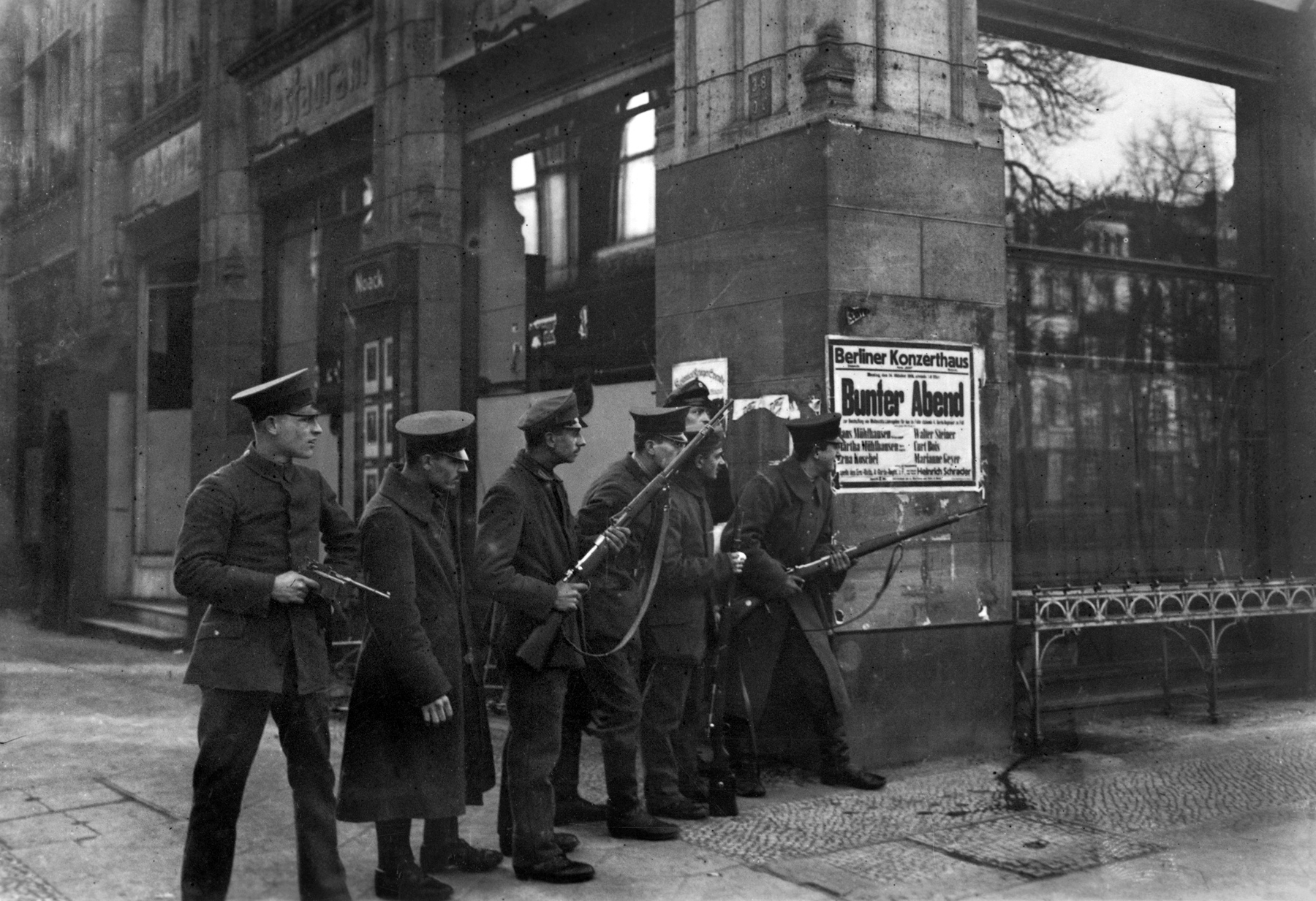
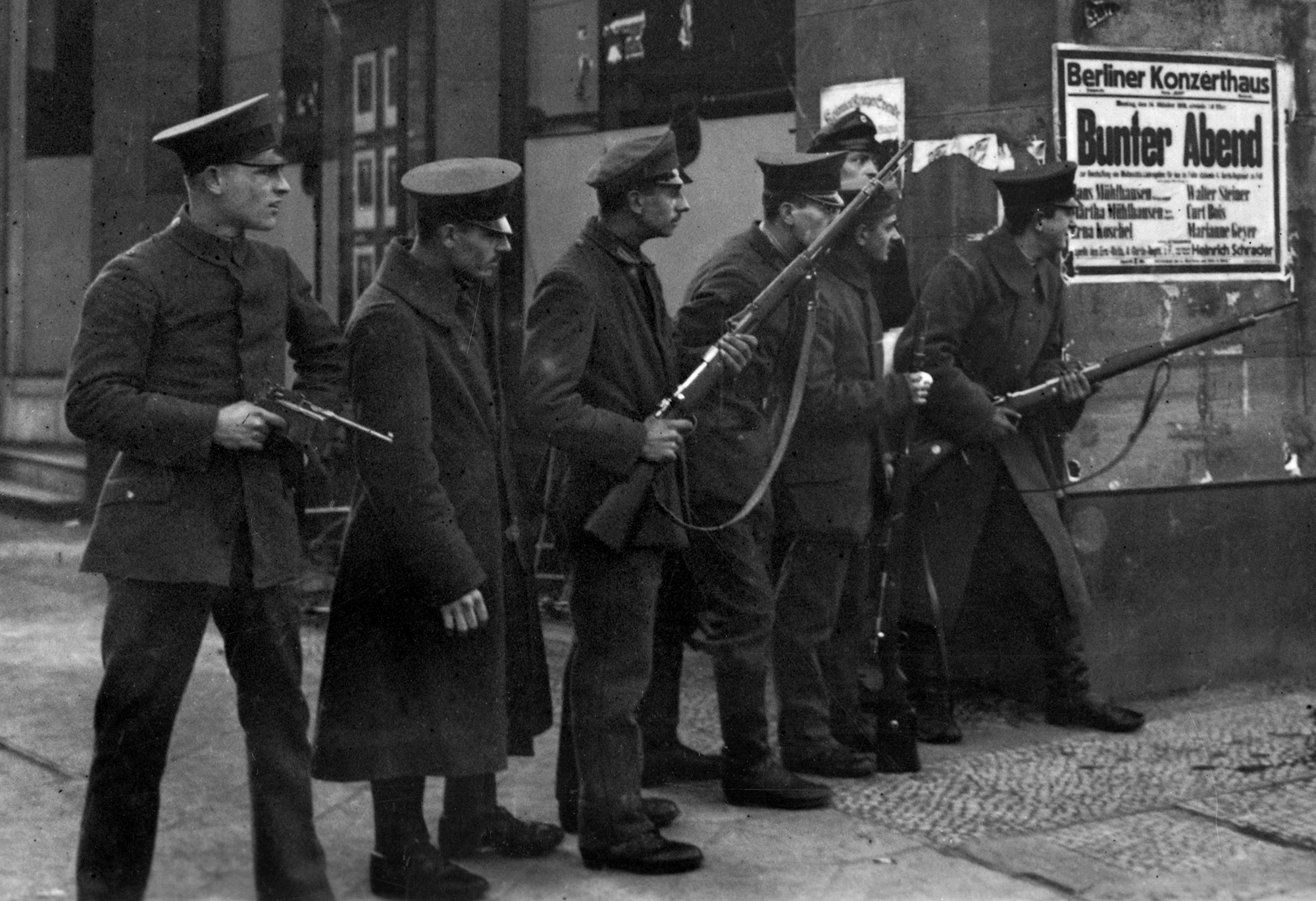
Otto Haeckel (German, 1872-1945) and Georg Haeckel (German, 1873-1942) 'Soldiers with weapons Unter den Linden, corner Charlottenstraße' November 1918 from the exhibition 'Berlin in the revolution 1918/19' at the Museum für Fotografie, Berlin, Nov 2018 - March 2019


Otto Haeckel (German, 1872-1945) and Georg Haeckel (German, 1873-1942)
Soldiers with weapons Unter den Linden, corner Charlottenstraße
November 1918
Gelatin silver print
© Staatliche Museen zu Berlin, Art Library – Photothek Willy Römer / Gebrüder Haeckel


Today, revolution is in the air around the world, just like it was in 1968 (a posting on this year to follow soon) and in 1918. I hope this wonderful posting of photographs, posters, films, murders, bombings, funerals, detailed close ups of the barricades and the people manning them gives you some of the flavour of the times. This was the order of the day in Berlin in 1918/19. Revolution.

What we must not forget is out of this revolution, out of this ferment of creativity, uncertainty, “liberal” democracy and militaristic society emerged the seeds of its downfall: the beginnings of the National Socialist Party (the Nazis).

“In July 1919 Hitler was appointed Verbindungsmann (intelligence agent) of an Aufklärungskommando (reconnaissance unit) of the Reichswehr, assigned to influence other soldiers and to infiltrate the German Workers’ Party (DAP). At a DAP meeting on 12 September 1919, Party Chairman Anton Drexler was impressed with Hitler’s oratorical skills. He gave him a copy of his pamphlet My Political Awakening, which contained anti-Semitic, nationalist, anti-capitalist, and anti-Marxist ideas. On the orders of his army superiors, Hitler applied to join the party, and within a week was accepted as party member 555 (the party began counting membership at 500 to give the impression they were a much larger party). …

At the DAP, Hitler met Dietrich Eckart, one of the party’s founders and a member of the occult Thule Society. Eckart became Hitler’s mentor, exchanging ideas with him and introducing him to a wide range of Munich society. To increase its appeal, the DAP changed its name to the Nationalsozialistische Deutsche Arbeiterpartei (National Socialist German Workers Party; NSDAP). Hitler designed the party’s banner of a swastika in a white circle on a red background.” (Text from the Wikipedia website)

Rising to prominence through his demagogic beer hall speeches on populist themes, Hitler would attempt a coup known as the “Beer Hall Putsch” in 1923, a stepping stone on his rise to becoming the dictator of Nazi Germany.

The flowering of German Expressionism (modern art labelled by Hitler Entartete Kunst or “Degenerate Art” in the 1920s) and a society which proposed the first advocacy for homosexual and transgender rights, were both positives of the interwar period. A prominent advocate for sexual minorities was the German sexologist Magnus Hirschfeld.

“In 1920, Hirschfeld was very badly beaten up by a group of völkisch activists who attacked him on the street; he was initially declared dead when the police arrived. In 1921, Hirschfeld organised the First Congress for Sexual Reform, which led to the formation of the World League for Sexual Reform. Congresses were held in Copenhagen (1928), London (1929), Vienna (1930), and Brno (1932)… Hirschfeld co-wrote and acted in the 1919 film Anders als die Andern (“Different From the Others”) [see below], in which Conrad Veidt played one of the first homosexual characters ever written for cinema. The film had a specific gay rights law reform agenda; after Veidt’s character is blackmailed by a male prostitute, he eventually comes out rather than continuing to make the blackmail payments. His career is destroyed and he is driven to suicide.” (Text from the Wikipedia website)

Of course these small, hard won freedoms, this cabaret of life, and the more liberal atmosphere of the newly founded Weimar Republic were all swept away by the Nazis in the 1930s.

How quickly it can turn. Today, as then, we must be ever vigilant to guard our freedom against the power of conservative forces that seek to do us harm. Brothers, never again!

Dr Marcus Bunyan


Many thankx to the Museum of Photography, Berlin for allowing me to publish the photographs in the posting. All the photographs have been digitally cleaned. Please click on the photographs for a larger version of the image.


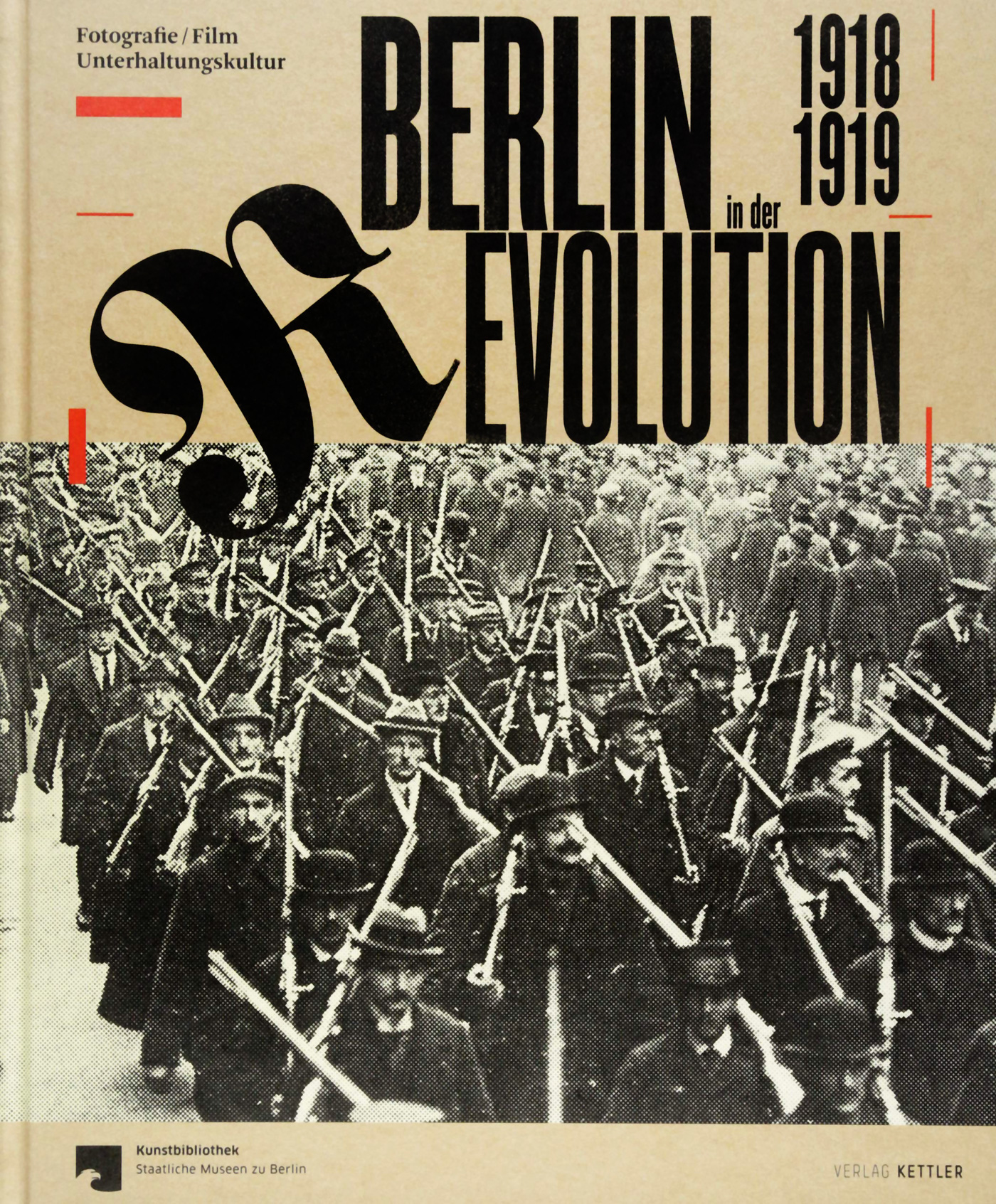
In November 1918, exactly 100 years ago, the old regime of Kaiser Wilhelm II was swept away by a revolution. It ended the First World War and led to the establishment of democracy in Germany. The Weimar Republic was born out of the struggle for a new social order and political system. The upheavals that occurred in 1918/19 were captured on camera, sometimes by renowned press photographers such as Willy Römer; their works are crucial for historians today. For the first time ever, this book investigates the role of film and entertainment in the Weimar Republic and includes it in the historical analysis. What do the street fights in the first months following the First World War have in common with the people’s recreational pleasures? How did photographers record the political turmoil, the demonstrations, strikes, shootings, and fights for control of the palace and the newspaper district? And, at the same time, what distractions were offered in Berlin’s cinemas and revue shows? How did the entertainment industry react to the revolution? Examining photos, films, and poster art, this book presents a dense and previously unseen portrait of German history.

Text from the catalogue


“So ends this first day of the revolution, which in just a few hours has witnessed the downfall of the House of Hohenzollern, the dissolution of the German army, and the demise of the old German social order. One of the most memorable and dreadful days in German history.”


Harry Graf Kessler, diary entry from November 9, 1918


“The Christmas fair carries on blithely throughout all of these bloody events. Hurdy-gurdies play on Friedrichstraße, street vendors peddle indoor fireworks, gingerbread, and silver tinsel, the jewellery shops on Unter den Linden remain unheedingly open, their brightly lit display windows glittering. On Leipziger Strasse, the usual Christmas crowds throng toward Wertheim, Kayser, and the other big stores. It is safe to say that in thousands of homes, Christmas trees are lit and children are playing around them with presents from Daddy, Mummy and dear Aunty. The dead lie in the royal stables, and on Holy Night, the wounds freshly inflicted on the palace and on Germany gape wide.”


Harry Graf Kessler, diary entry, December 24, 1918


“I cannot get out of head the execution of 24 sailors on Französische Strasse, where during all of these days, there has been no trouble. It is one of the most abominable civil war crimes I know of in history. This evening I tried to watch Reinhardt’s production of ‘As You Like It’, but was not in the mood. I cannot stop thinking about these murders and shootings, which are the order of the day in Berlin.”


Harry Graf Kessler: diary entry, March 14, 1919


Otto Haeckel (German, 1872-1945) and Georg Haeckel (German, 1873-1942) 'Soldiers with weapons Unter den Linden, corner Charlottenstraße' November 1918 (detail)


Otto Haeckel (German, 1872-1945) and Georg Haeckel (German, 1873-1942)
Soldiers with weapons, Unter den Linden, corner Charlottenstraße (detail)
November 1918
Gelatin silver print
© Staatliche Museen zu Berlin, Art Library – Photothek Willy Römer / Gebrüder Haeckel


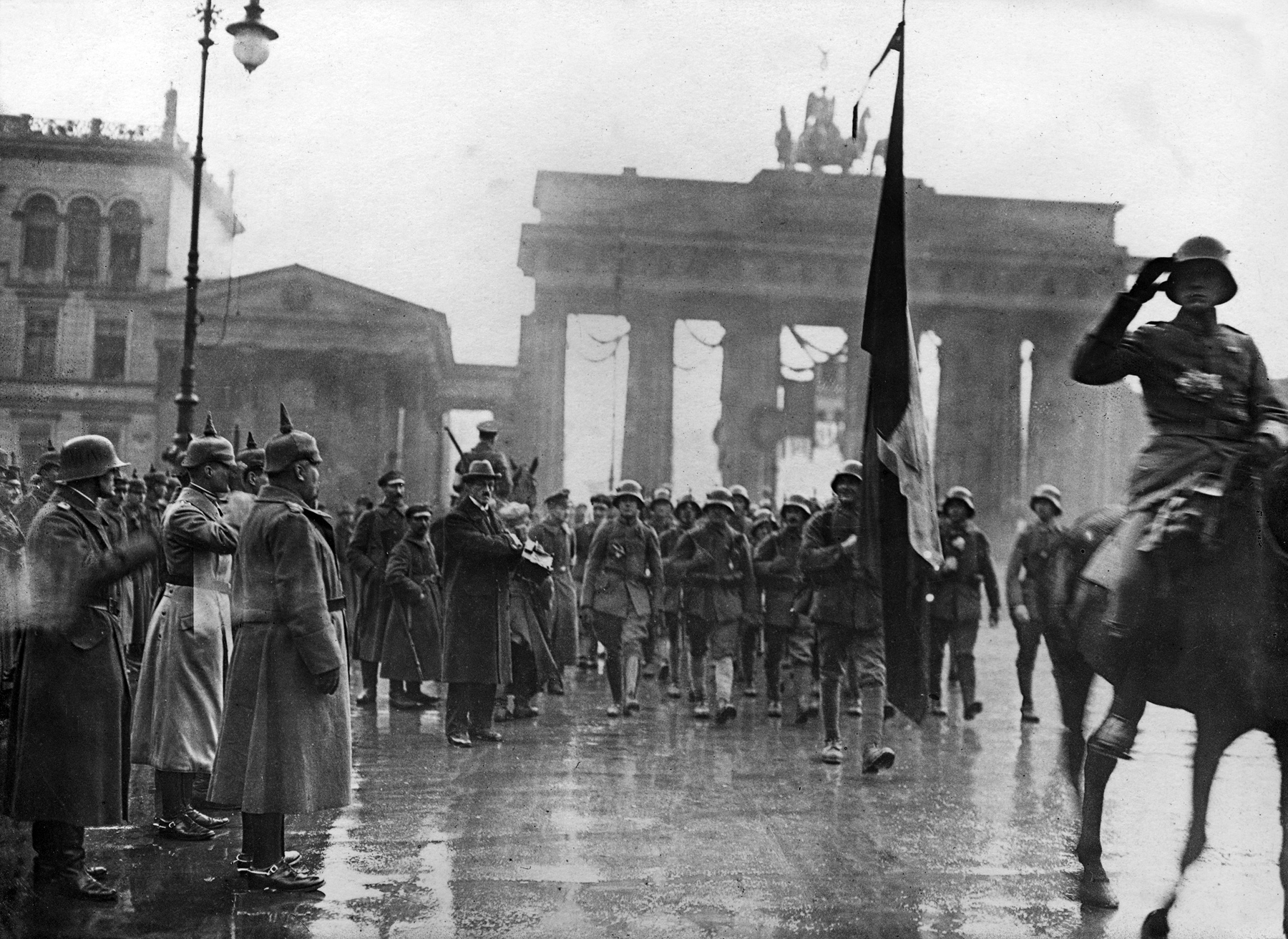
Willy Römer (German, 1887-1979) '"The Guards Ranger Battalion marching past General Lequis"; on the left, next to the Brandenburg Gate, the photographer Walter Gircke with camera' 10/11 December 1918 from the exhibition 'Berlin in the revolution 1918/19' at the Museum für Fotografie, Berlin, Nov 2018 - March 2019


Willy Römer (German, 1887-1979)
“The Guards Ranger Battalion marching past General Lequis”; on the left, next to the Brandenburg Gate, the photographer Walter Gircke with camera
10/11 December 1918, old contact print
Gelatin silver print
Kunstbibliothek
© Staatliche Museen zu Berlin, Art Library – Photothek Willy Römer / Willy Römer


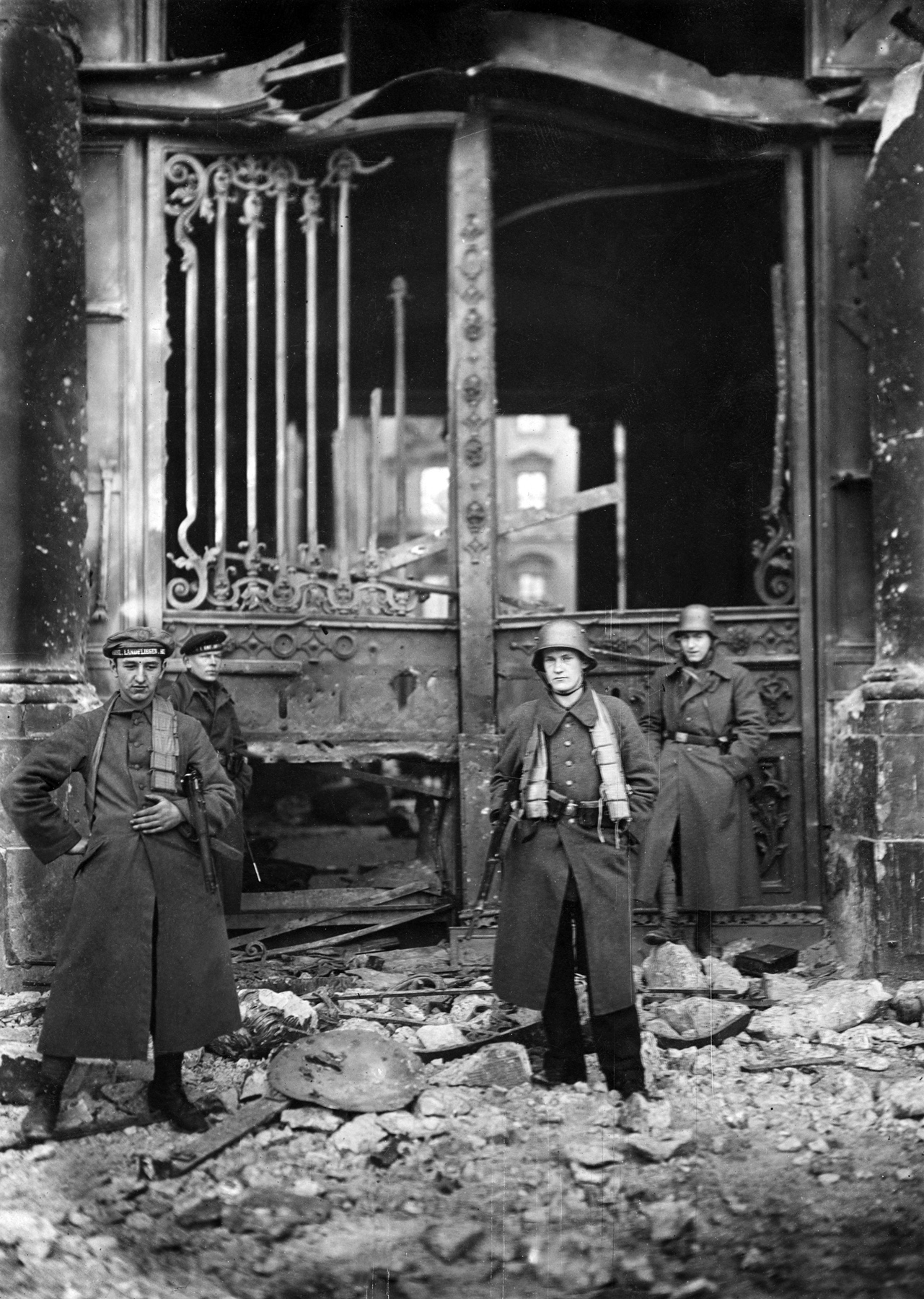
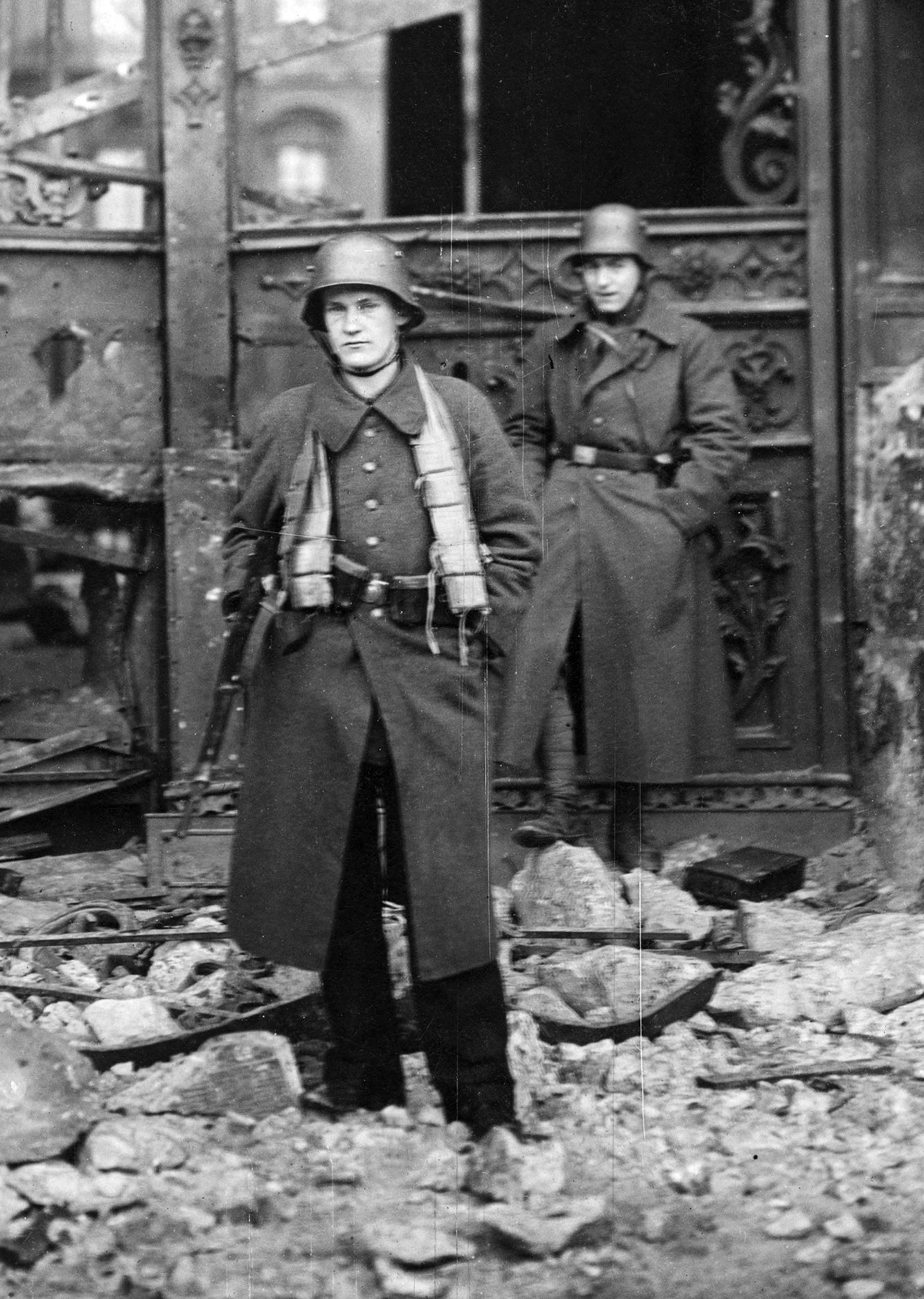
Willy Römer (German, 1887-1979) 'Street battles on Christmas Eve in Berlin. Naval ratings in front of the ruined Palace entrance after bombardment by artillery' 24.12.1918


Willy Römer (German, 1887-1979)
Street battles on Christmas Eve in Berlin. Naval ratings in front of the ruined Palace entrance after bombardment by artillery
24.12.1918, old contact print
Gelatin silver print
Kunstbibliothek
© Staatliche Museen zu Berlin, Art Library – Photothek Willy Römer / Willy Römer


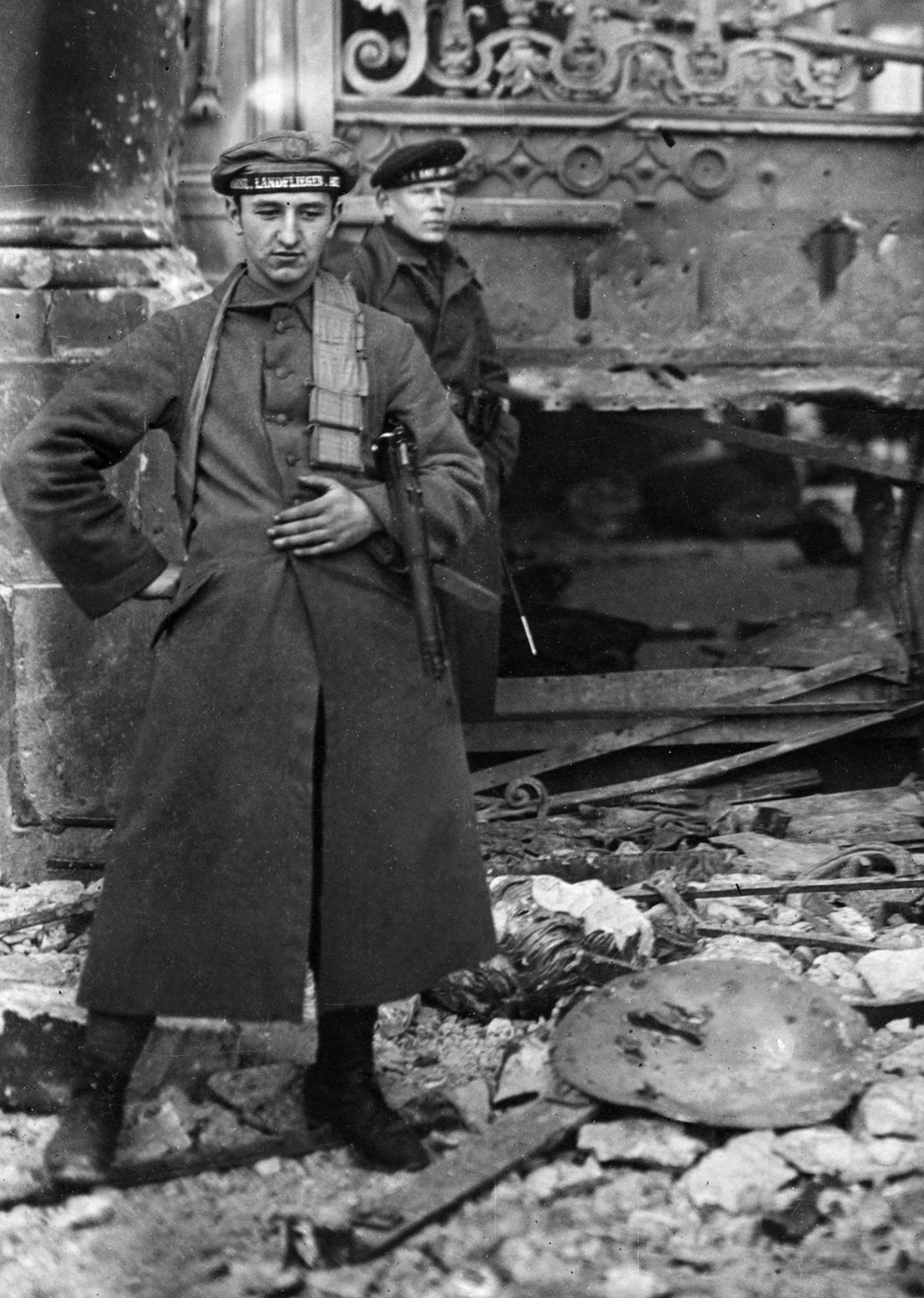
Willy Römer (German, 1887-1979) 'Street battles on Christmas Eve in Berlin. Naval ratings in front of the ruined Palace entrance after bombardment by artillery' 24.12.1918 (detail)


Willy Römer (German, 1887-1979)
Street battles on Christmas Eve in Berlin. Naval ratings in front of the ruined Palace entrance after bombardment by artillery (detail)
24.12.1918, old contact print
Gelatin silver print
Kunstbibliothek
© Staatliche Museen zu Berlin, Art Library – Photothek Willy Römer / Willy Römer


Willy Römer (German, 1887-1979) 'Street battles on Christmas Eve in Berlin. Naval ratings in front of the ruined Palace entrance after bombardment by artillery' 24.12.1918 (detail)


Willy Römer (German, 1887-1979)
Street battles on Christmas Eve in Berlin. Naval ratings in front of the ruined Palace entrance after bombardment by artillery (detail)
24.12.1918, old contact print
Gelatin silver print
Kunstbibliothek
© Staatliche Museen zu Berlin, Art Library – Photothek Willy Römer / Willy Römer


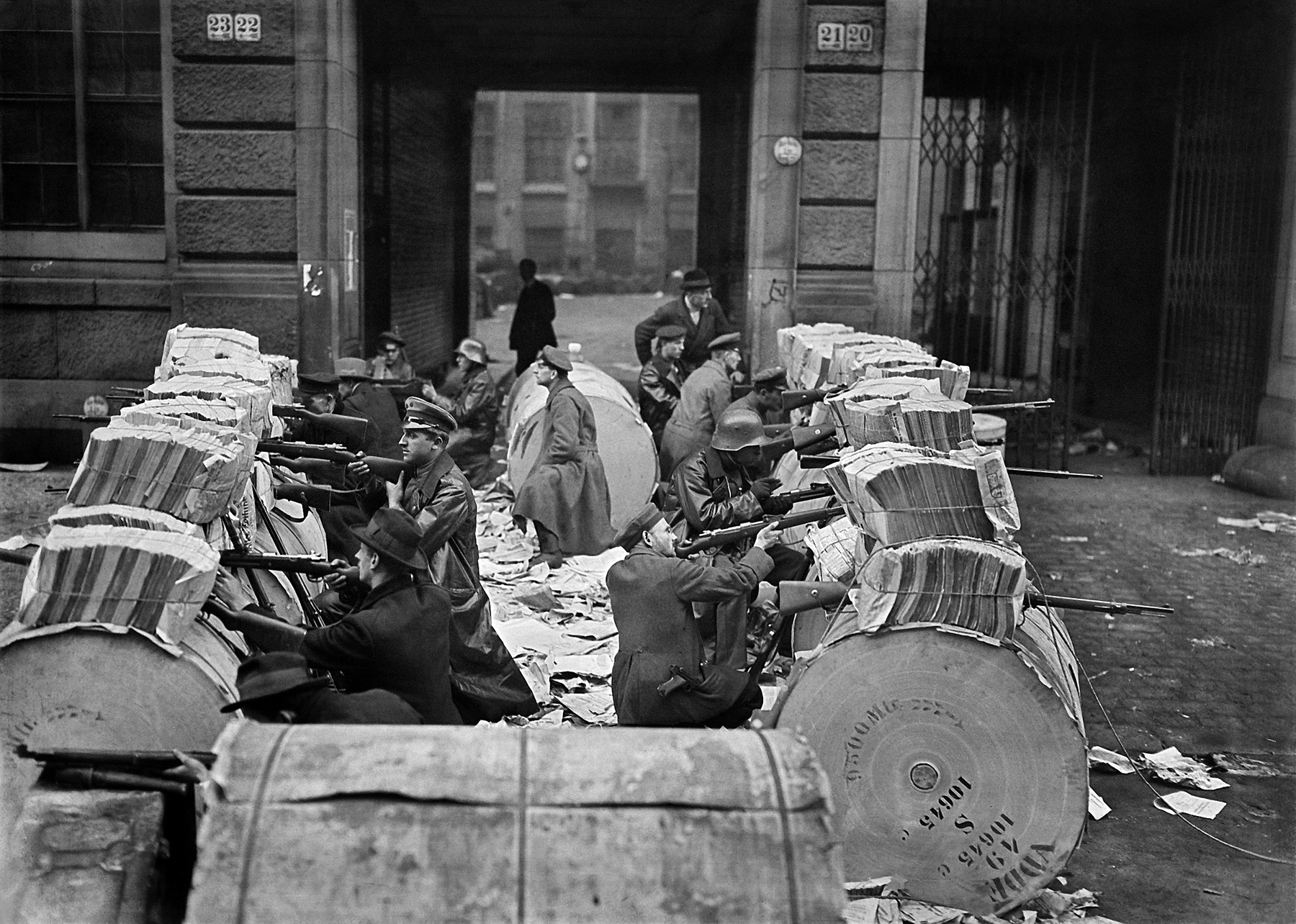
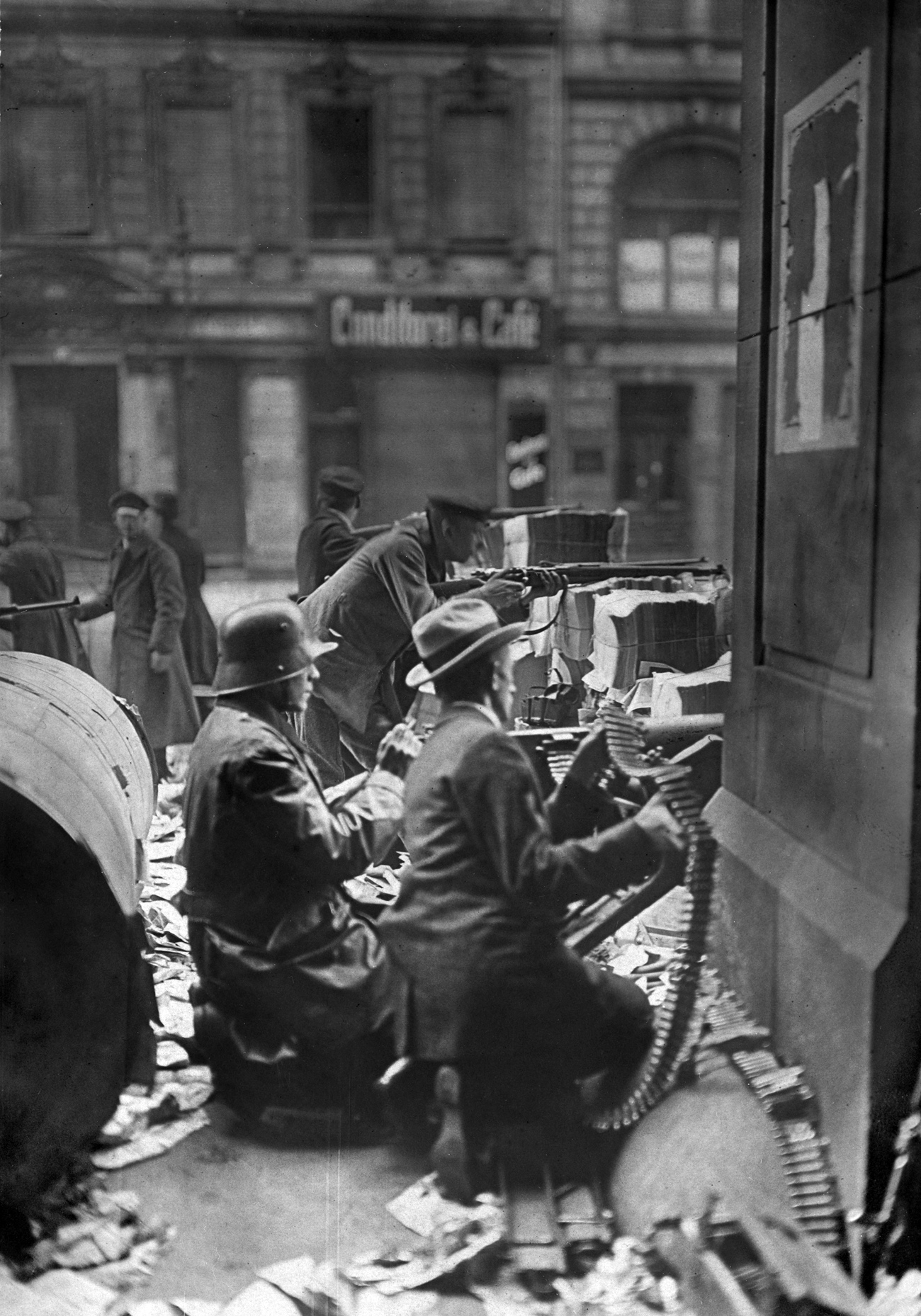
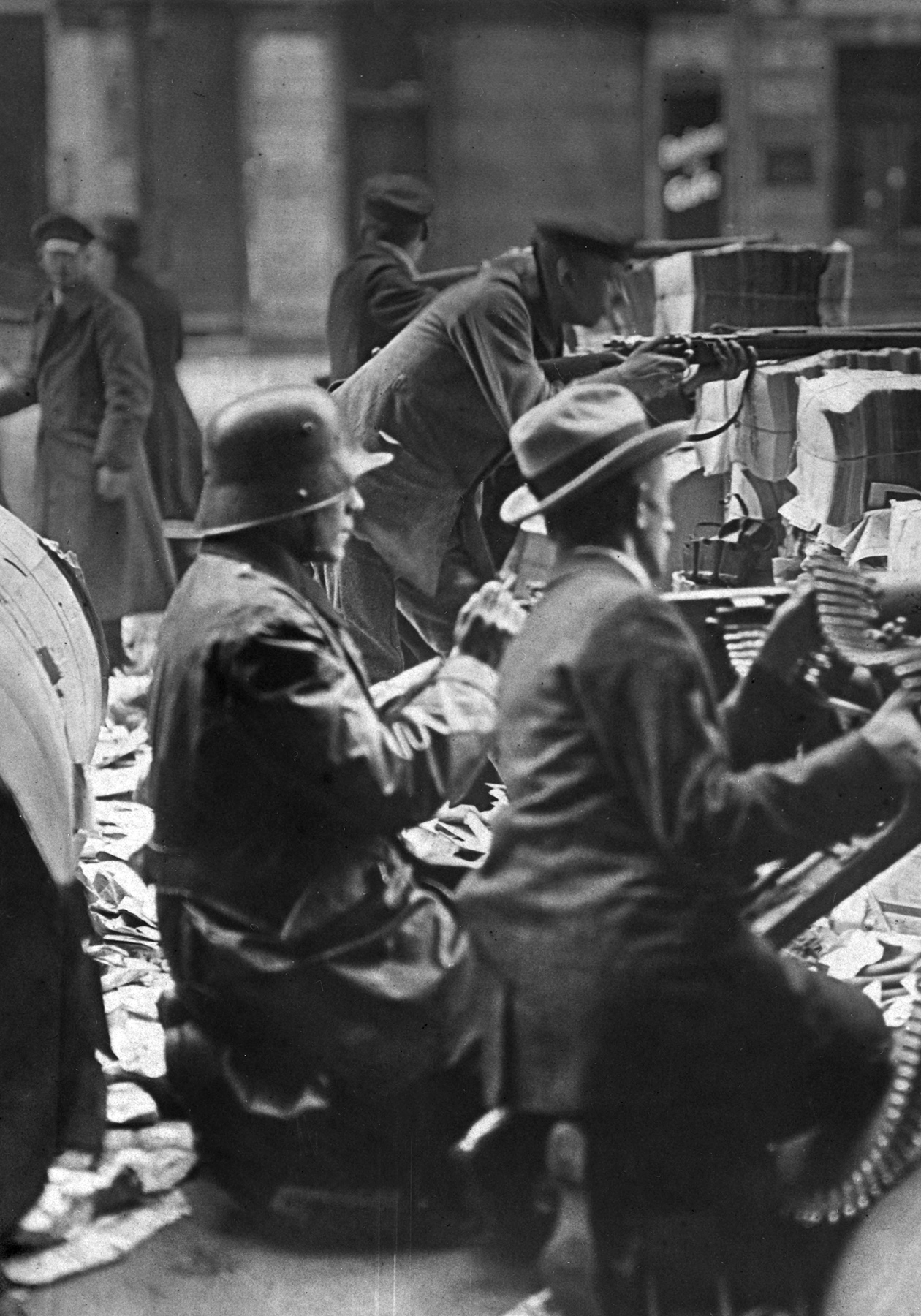
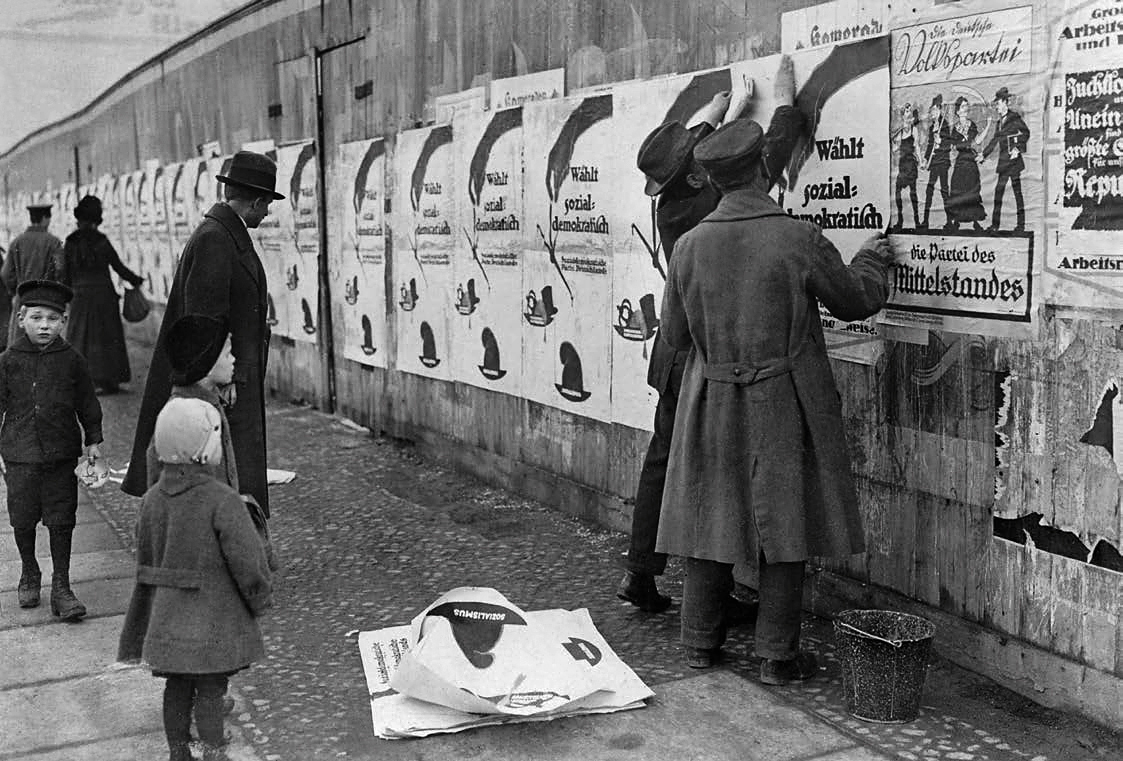
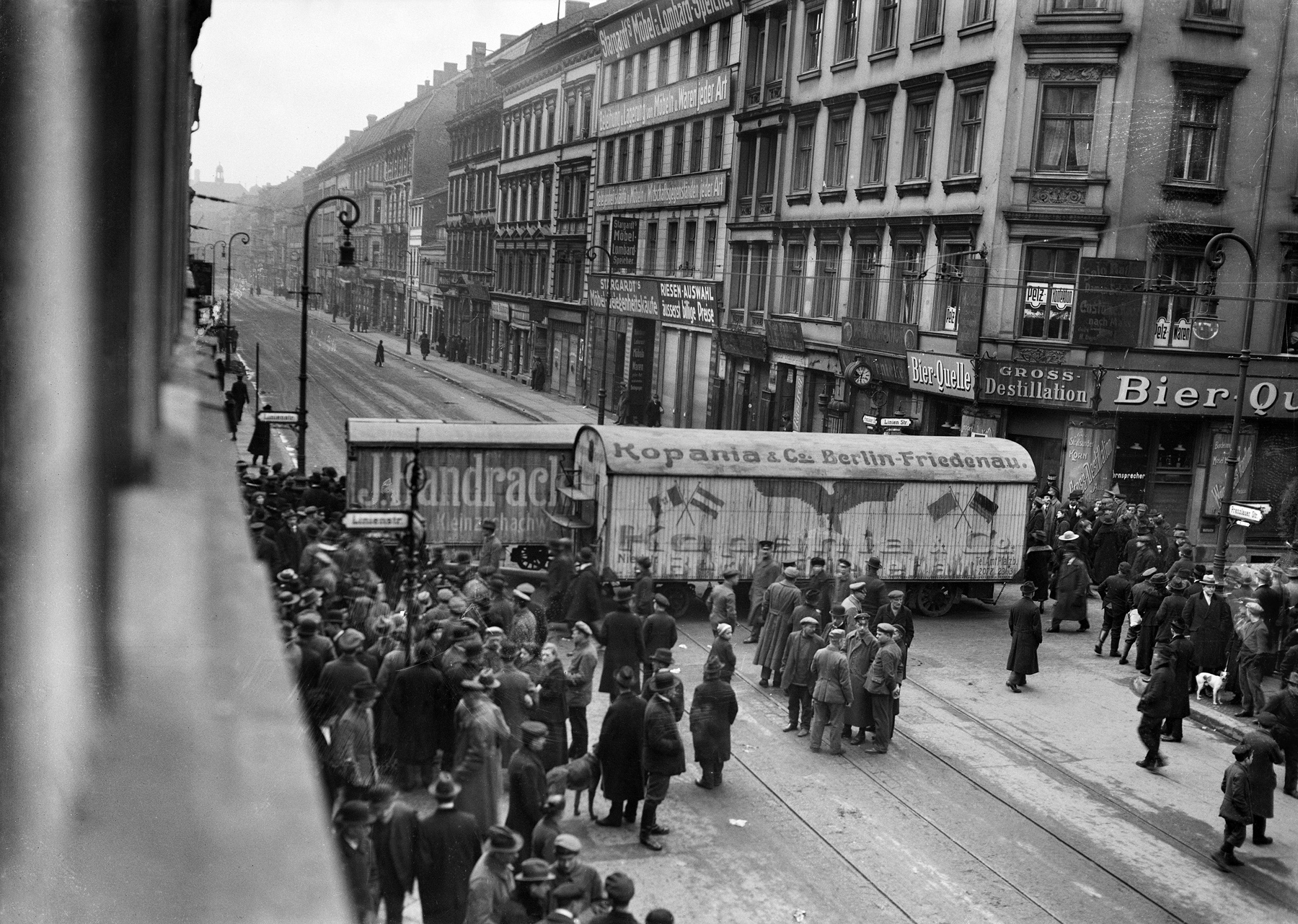
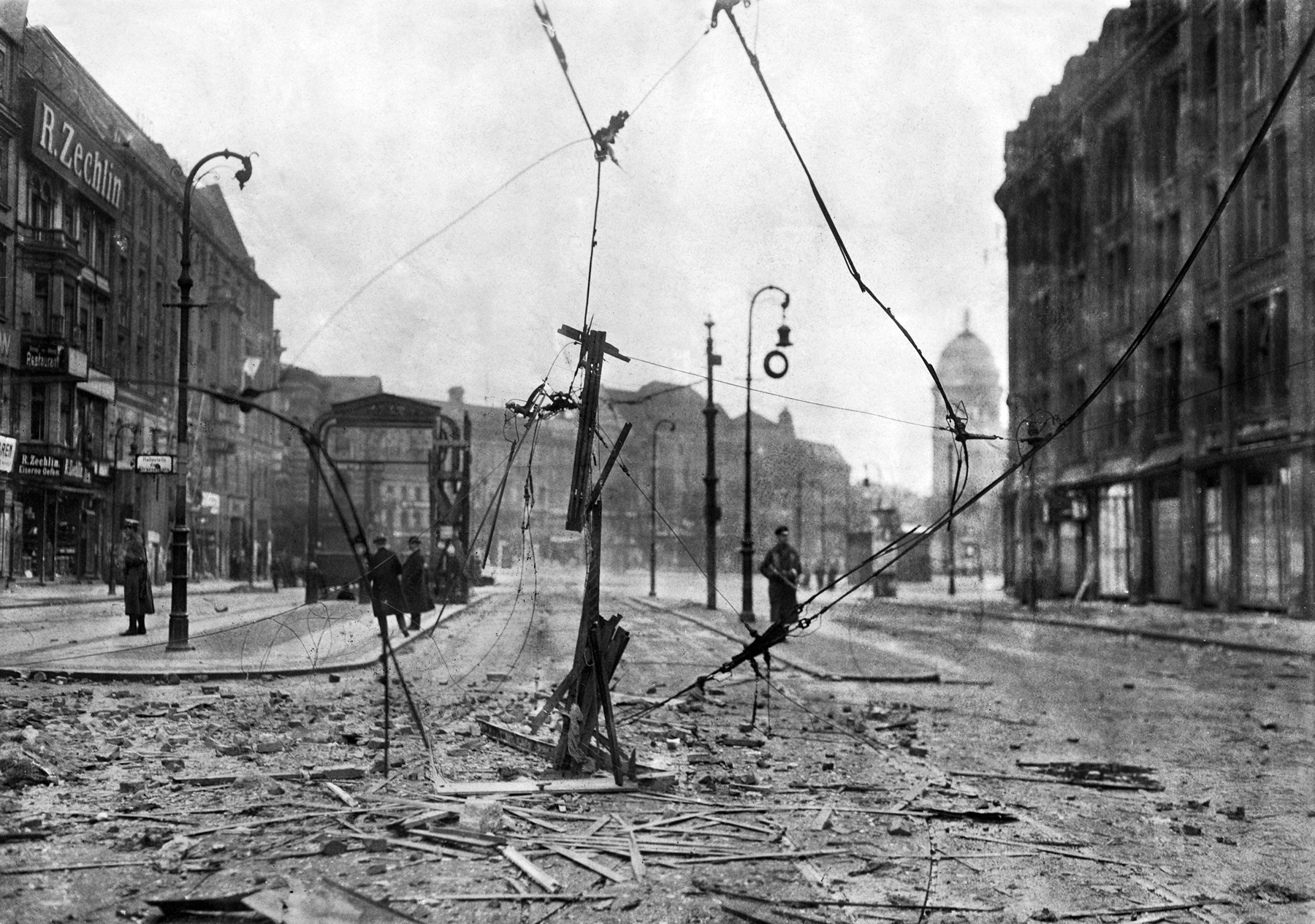
The revolution in winter and spring 1918/19 was decided in the streets of the imperial capital, Berlin. Berliners celebrated the abdication of the German Emperor with demonstrations in front of the Reichstag and the palace on November 9th, 1918, in the newspaper quarter in January 1919 rolls of printing paper were used by the Spartacists to erect barricades against approaching government troops, after fighting had ceased, a large funeral procession crossed Frankfurter Allee to the cemetery in Friedrichsfelde. Press photographers were omnipresent with their big plate cameras, taking shots of orators in the crowd, soldiers behind machine-guns, vehicles carrying party posters in the National Assembly election campaign, and destroyed buildings and ravaged squares. At the same time, everyday life in the city went on. People went to the numerous cinemas with their expanding repertoire of films, enjoyed themselves at revues and cabarets, and danced the two-step and the foxtrot. The exhibition in the Museum für Fotografie shows both a photographic visual history of the revolution in Berlin and a panorama of the entertainment culture of those months.

The brothers Otto and Georg Haeckel were the most important press photographers during the first days of the revolution. As experienced war reporters, they reacted quickly to cover the spontaneous rallies on Unter den Linden and in front of the palace. The photographers worked without assignment and offered their images to publishers like Mosse or Ullstein. There are few visual records of the fighting itself. Rather, photographers took advantage of breaks in the fighting to recreate scenes on the barricades or with soldiers with readied weapons. The largest group of photos of the revolution of which the original contact prints survive is by Willy Römer. One of his photographs was even taken immediately before his own arrest by a troop of Spartacists.

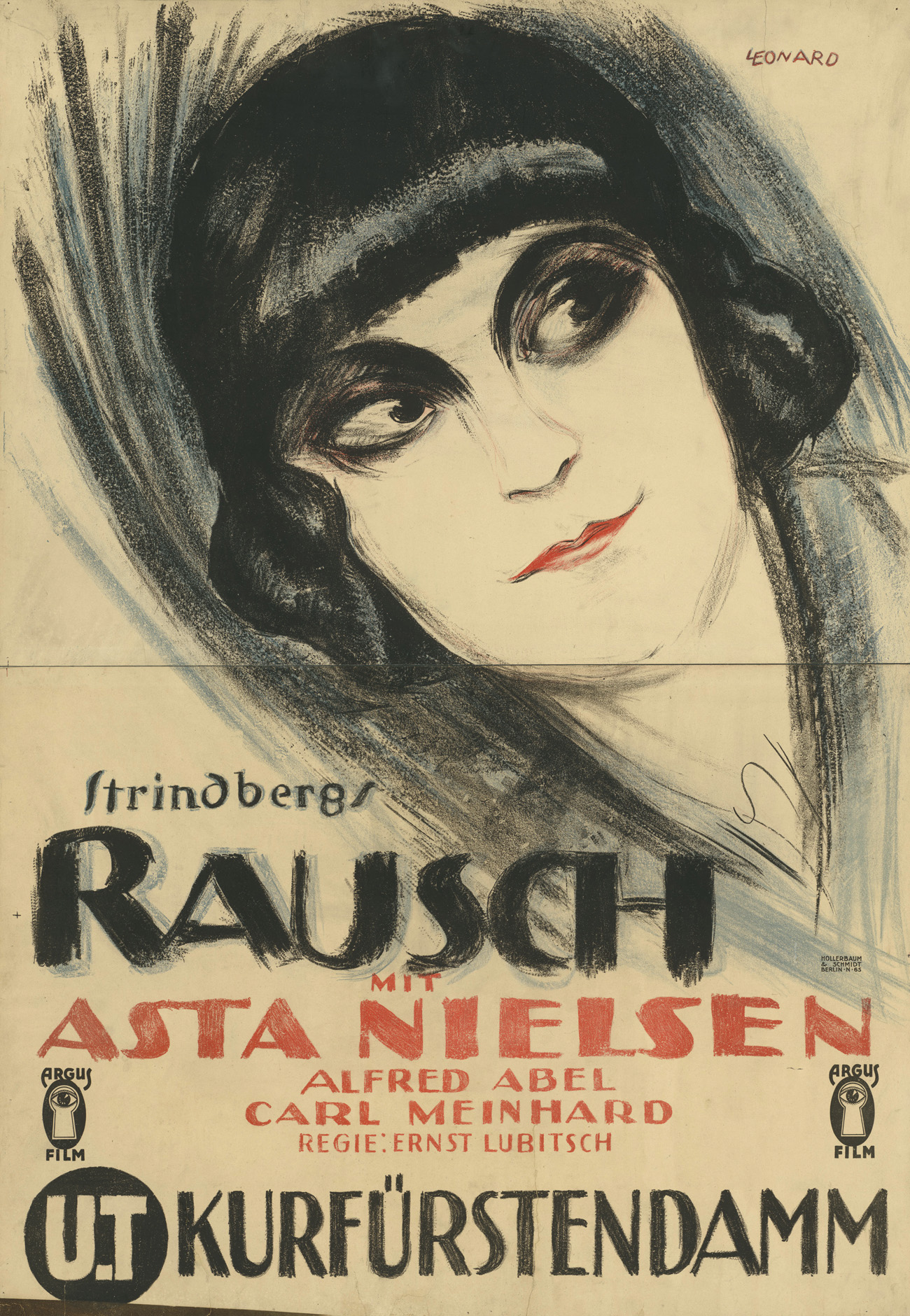
Weekly newsreels in cinemas across Germany reported on the rallies and demonstrations in Berlin, showed film portraits of the ministers of the new imperial government, and confirmed the restoration of order by showing scenes from everyday life in the streets of the capital. At the same time, they solicited votes for the National Assembly. Given lengthy production times, the feature films of winter 1918/19 do not yet reflect the revolution in any way. But the suspension of censorship enabled the production of new, more daring films, which, for example, opposed the criminal persecution of homosexuals.

As a reaction to the end of the war and without as yet reckoning with the dangers of the revolution and its fighting, an unprecedented desire for pleasure-seeking reigned in Berlin during the winter and spring of 1918/19. Besides opera houses and straight theatres, Berliners frequented the popular operetta and revue theatres, as well as cinemas; they also went to ballrooms and drinking holes to dance. Some revues reacted to current issues like the housing shortage and the strikes. The poverty of war invalids was also a subject of popular music. The song ‘Bein ist Trumpf’ from 1919 alludes to the fate of four men maimed in the war: the dance with a wooden leg or prosthesis amid the workings of a world-apparatus that turns and turns without end.

Anonymous text from the Museum of Photography, Berlin website [Online] Cited 08/02/2019


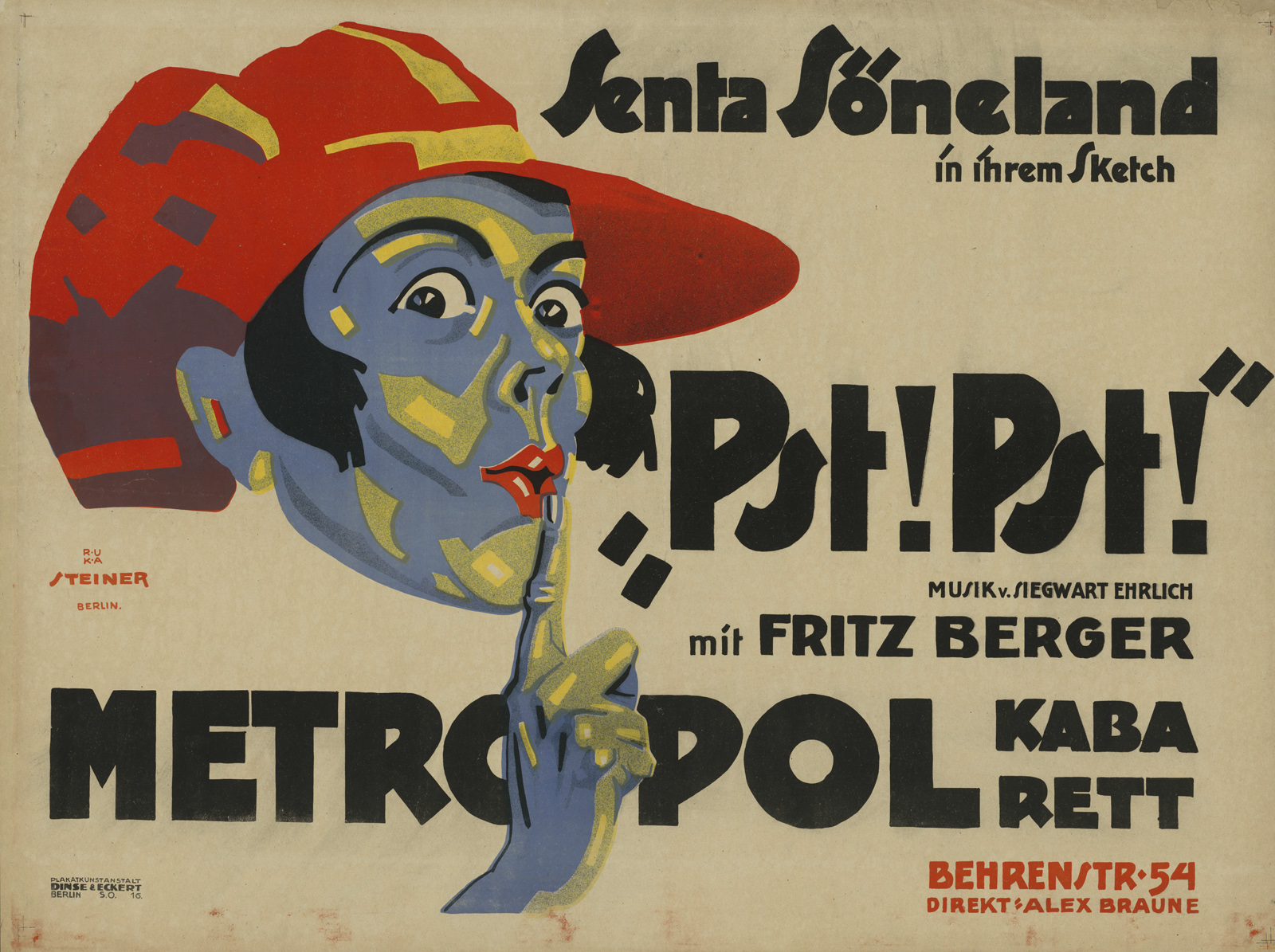
Josef Steiner (German, 1899-1977) 'Senta Söneland in her sketch "Pst! Pst!"'


Josef Steiner (German, 1899-1977)
Senta Söneland in her sketch “Pst! Pst!”
Nd
Poster for the performance in the Metropolitan Cabaret
Kunstbibliothek
© Staatliche Museen zu Berlin, Kunstbibliothek


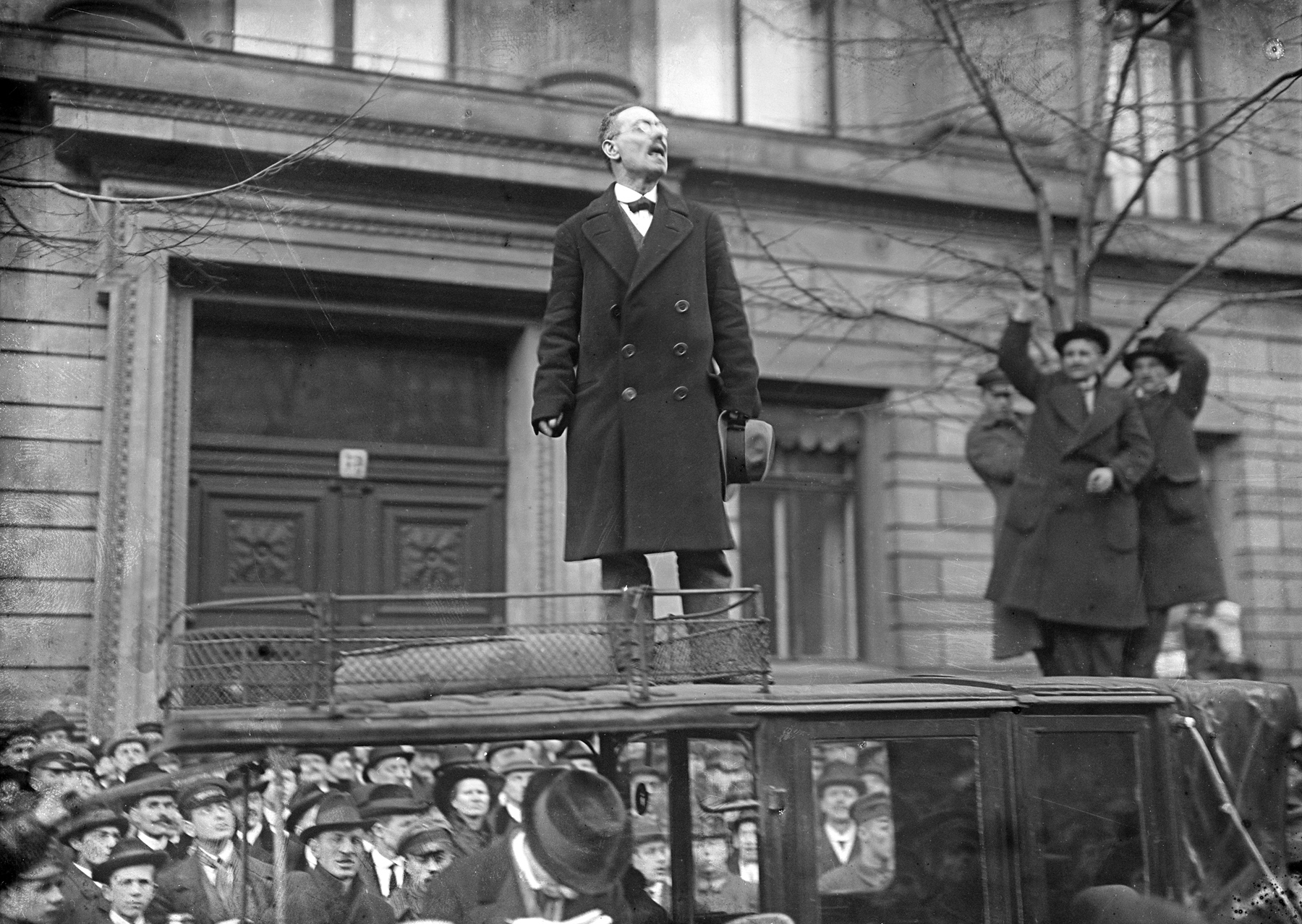
Willy Römer (German, 1887-1979) 'Demonstration of the soldiers for immediate demobilisation: Karl Liebknecht speaks in front of the Ministry of the Interior on Unter den Linden' 4.1.1919


Willy Römer (German, 1887-1979)
Demonstration of the soldiers for immediate demobilisation: Karl Liebknecht speaks in front of the Ministry of the Interior on Unter den Linden
4.1.1919
Gelatin silver print
© Staatliche Museen zu Berlin, Art Library – Photothek Willy Römer / Willy Römer


Karl Liebknecht

Karl Paul August Friedrich Liebknecht (German 13 August 1871 – 15 January 1919) was a German socialist, originally in the Social Democrat (SPD) and later a co-founder with Rosa Luxemburg of the Spartacist League and the Communist Party of Germany which split way from the SPD. He is best known for his opposition to World War I in the Reichstag and his role in the Spartacist uprising of 1919. The uprising was crushed by the Social Democrat government and the Freikorps (paramilitary units formed of World War I veterans). Liebknecht and Luxemburg were executed.

After their deaths, Karl Liebknecht and Rosa Luxemburg became martyrs for Socialists. According to the Federal Office for the Protection of the Constitution, commemoration of Liebknecht and Luxemburg continues to play an important role among the German left, including Die Linke (The Left). …

Revolution and death

Liebknecht was released again in October 1918, when Prince Maximilian of Baden granted an amnesty to all political prisoners. Upon his return to Berlin on 23 October he was escorted to the Soviet embassy by a crowd of workers. Following the outbreak of the German Revolution, Liebknecht carried on his activities in the Spartacist League. He resumed leadership of the group together with Luxemburg and published its party organ, Die Rote Fahne (The Red Flag).

On 9 November, Liebknecht declared the formation of a Freie Sozialistische Republik (Free Socialist Republic) from a balcony of the Berliner Stadtschloss, two hours after Philipp Scheidemann’s declaration of a German Republic from a balcony of the Reichstag. On 31 December 1918/1 January 1919, Liebknecht was involved in the founding of the Communist Party of Germany (KPD). Together with Luxemburg, Jogiches and Zetkin, Liebknecht was also instrumental in the January 1919 Spartacist uprising in Berlin. Initially he and Luxemburg opposed the revolt, but they joined it after it had begun. The uprising was brutally opposed by the new German government under Friedrich Ebert with the help of the remnants of the Imperial German Army and militias called the Freikorps. By 13 January, the uprising had been extinguished. Liebknecht and Luxemburg were captured by Freikorps troops on 15 January 1919 and brought to the Eden Hotel in Berlin, where they were tortured and interrogated for several hours. Following this, Luxemburg was beaten with rifle butts and afterwards shot, and her corpse thrown into the Landwehr Canal, while Liebknecht was forced to step out of the car in which he was being transported, and he was then shot in the back. Official declarations said he had been shot in an attempt to escape. Although the circumstances were disputed by the perpetrators at the time, the Freikorps commander, Captain Waldemar Pabst, later claimed, “I had them executed”.

Text from the Wikipedia website


Willy Römer (German, 1887-1979) 'Election propaganda with car, flags and posters "Vote List 4"' [Election propaganda automobile of the German National Party on the streets of Berlin] January 1919


Willy Römer (German, 1887-1979)
Election propaganda with car, flags [red] and posters “Vote List 4” [Election propaganda automobile of the German National Party on the streets of Berlin]
January 1919, later contact print
Gelatin silver print
Kunstbibliothek
© Staatliche Museen zu Berlin, Art Library Willy Römer / Willy Römer


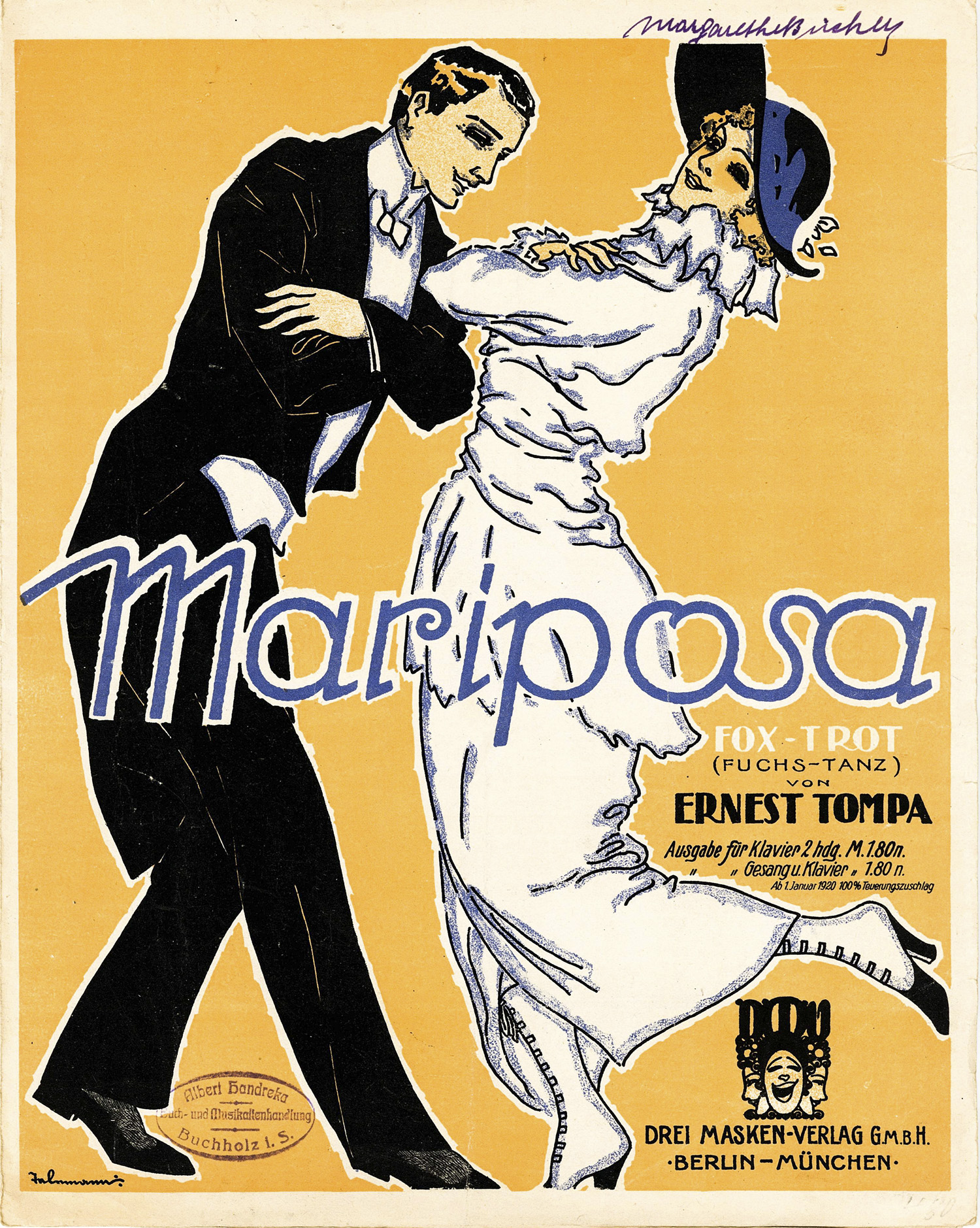
Paul Telemann (German, 1883-1968) 'Mariposa. Fox-trot (Fuchs Dance)' 1919


Paul Telemann (German, 1883-1968)
Mariposa. Fox-trot (Fuchs Dance)
Music by Ernest Tompa
Berlin 1919
Sheet music, private collection
© Drei Masken-Verlag, Berlin-Munich


Fox Trot

“The new flu is here – and it is not Spanish, but English in origin, and it is known as “the new popular dance” […]. In Berlin, “Fox Trot steps” are applied to any old melody […]. Outside, they are banging away at the Palace […]. Machine-gun fire rattles around the advertising pillars, whose colourful posters bear invitations to Fox Trot teas.”

F.W. Koebner, in: Der Roland von Berlin, 1919

Film

In the years 1918 and 1919, the German film industry experienced pronounced growth tendencies. Among the most successful production firms of the era alongside Universum Film AG (Ufa), established in 1917 as a propaganda establishment by the Supreme Army Command, were the Projektions-AG Union (PAGU), the Decla-Film-Gesellschaft-Holz & Co. (later Decla-Bioskop), and the Deutsche Lichtspiel-Gesellschaft (Deulig, DLG). Alongside new, advantageous financing possibilities, it was the announcement of the abolition of film censorship in November of 1918 that inaugurated rising production figures. At the same time, lowered admission prices allowed cinema to become a leisure activity for broad social strata.

More than in any other German city, these developments were observable in Berlin: the greater part of the film industry was headquartered here, and accordingly, this continuously growing metropolis, with approximately 200 cinemas, became a centre of attraction for representatives of all cinematic branches.

Immediately after November 9, 1918, the revolution played virtually no role in the city’s multifarious cinematic program – primarily responsible for this was production scheduling for most films, which usually entailed intervals of many months. In the course of 1919, the film industry responded emphatically to current political events, releasing a series of feature films that either thematised the revolutionary goings-on explicitly or at least alluded to them.

Newsreel 1918/19

With their compilations of up-to-date documentary film footage, the Wochenschauen (weekly newsreels) were able to convey impressions of revolutionary events in Berlin to a contemporary public more quickly than other film genres. Launched during World War I, this format – which was screened in cinemas before main features – soon became the most important medium of information for large segments of the population.

Only a portion of the newsreel editions produced by German firms and pertaining to the revolutionary events of 1918-19 in Berlin have survived, and in many instances only as fragments. Among them are numbered editions of the Messter-Woche, named for their initiator, the film pioneer Oskar Messter. With the aid of these 5-15-minute short films, produced under time pressure and with minimal technical expenditures or design features, it becomes possible to reconstruct central stages of the revolution – and the perspectives of contemporary film journalists of these events.

Joe May

Among the most productive directors in Berlin at the time was the Austrian Joe May, who – like the majority of participants in Berlin’s film world – observed the revolutionary events in the city only from a distance. In his monumental films, his wife Mia May played the main role. Veritas vincit, premiered in April of 1919, is an elaborately outfitted historical film whose episodic plot revolves around the transmigration of souls. During 1919, Joe May intensified his cinematic approach, oriented toward spectacular entertainments, with the production of an eight-part adventure film entitled The Mistress of the World, outfitted with an exotic flair.

Wall texts


Willy Römer (German, 1887-1979) 'Spartacists behind barricades made from rolled newspaper in front of the Mosse building (Berliner Tageblatt) on Schützenstraße at the corner of Jerusalemerstraße' 11.1.1919


Willy Römer (German, 1887-1979)
Spartacists behind barricades made from rolled newspaper in front of the Mosse building (Berliner Tageblatt) on Schützenstraße at the corner of Jerusalemerstraße
11.1.1919, later contact print
Gelatin silver print
© Staatliche Museen zu Berlin, Art Library – Photothek Willy Römer / Willy Römer


The Spartacists

A member of a group of German radical socialists formed in 1916 and in 1919 becoming the German Communist Party, led by Karl Liebknecht and Rosa Luxemburg. In December 1918, some of the Spartacists – including Luxemburg and Liebknecht – founded the German Communist Party. Luxemburg had written numerous pamphlets about Lenin and how his leadership of theRussian Revolution would be of such great value to Russia.

While her political philosophy may well have merited such pamphlets, many Germans (and Europeans in general) were terrified of the ‘Red Plague’ in Russia and the adoption of the name ‘communist’ was fraught with danger. Many soldiers had returned from the war fronts massively disillusioned with the German government and hugely suspicious of anything that smacked of left-wing political beliefs. Many who had quit the German Army joined the right wing Free Corps (Freikorps). These would have been battle-hardened men who had been subjected to military discipline.

In January 1919, the Communists rose up in revolt in Berlin. In every sense it was a futile gesture against the government. Ebert withdrew his government to the safety of Weimar and allowed the Freikorps and what remained of the regular army to bring peace and stability back to Berlin once again. No mercy was shown to the Spartacists / Communists whose leaders were murdered after being arrested. The Freikorps was better organised and armed – they also had a military background. The majority of the Spartacists were civilians. No-one doubted who would win.

C. N. Trueman. “The Spartacists,” on The History Learning Site, 22 May 2015 [Online] Cited 09/02/2019


Spartacist uprising

The Spartacist uprising (German: Spartakusaufstand), also known as the January uprising (Januaraufstand), was a general strike (and the armed battles accompanying it) in Germany from 5 to 12 January 1919. Germany was in the middle of a post-war revolution, and two of the perceived paths forward were either social democracy or a council republic similar to the one which had been established by the Bolsheviks in Russia. The uprising was primarily a power struggle between the moderate Social Democratic Party of Germany (SPD) led by Friedrich Ebert, and the radical communists of the Communist Party of Germany (KPD), led by Karl Liebknecht and Rosa Luxemburg, who had previously founded and led the Spartacist League (Spartakusbund). This power struggle was the result of the abdication of Kaiser Wilhelm II and the resignation of Chancellor Max von Baden, who had passed power to Ebert, as the leader of the largest party in the German parliament. Similar uprisings occurred and were suppressed in Bremen, the Ruhr, Rhineland, Saxony, Hamburg, Thuringia and Bavaria, and another round of even bloodier street battles occurred in Berlin in March, which led to popular disillusionment with the Weimar Government.

Text from the Wikipedia website


Willy Römer (German, 1887-1979) 'Machine-gun post behind barricades consisting of rolled newspaper in front of the Mosse building on Schützenstraße' 11.1.1919


Willy Römer (German, 1887-1979)
Machine-gun post behind barricades consisting of rolled newspaper in front of the Mosse building on Schützenstraße
11.1.1919, old contact print
Gelatin silver print
13 x 18cm
Ullstein picture
© Staatliche Museen zu Berlin, Art Library Willy Römer / Willy Römer


Willy Römer (German, 1887-1979) 'Machine-gun post behind barricades consisting of rolled newspaper in front of the Mosse building on Schützenstraße' 11.1.1919 (detail)


Willy Römer (German, 1887-1979)
Machine-gun post behind barricades consisting of rolled newspaper in front of the Mosse building on Schützenstraße (detail)
11.1.1919, old contact print
Gelatin silver print
13 x 18cm
Ullstein picture
© Staatliche Museen zu Berlin, Art Library Willy Römer / Willy Römer


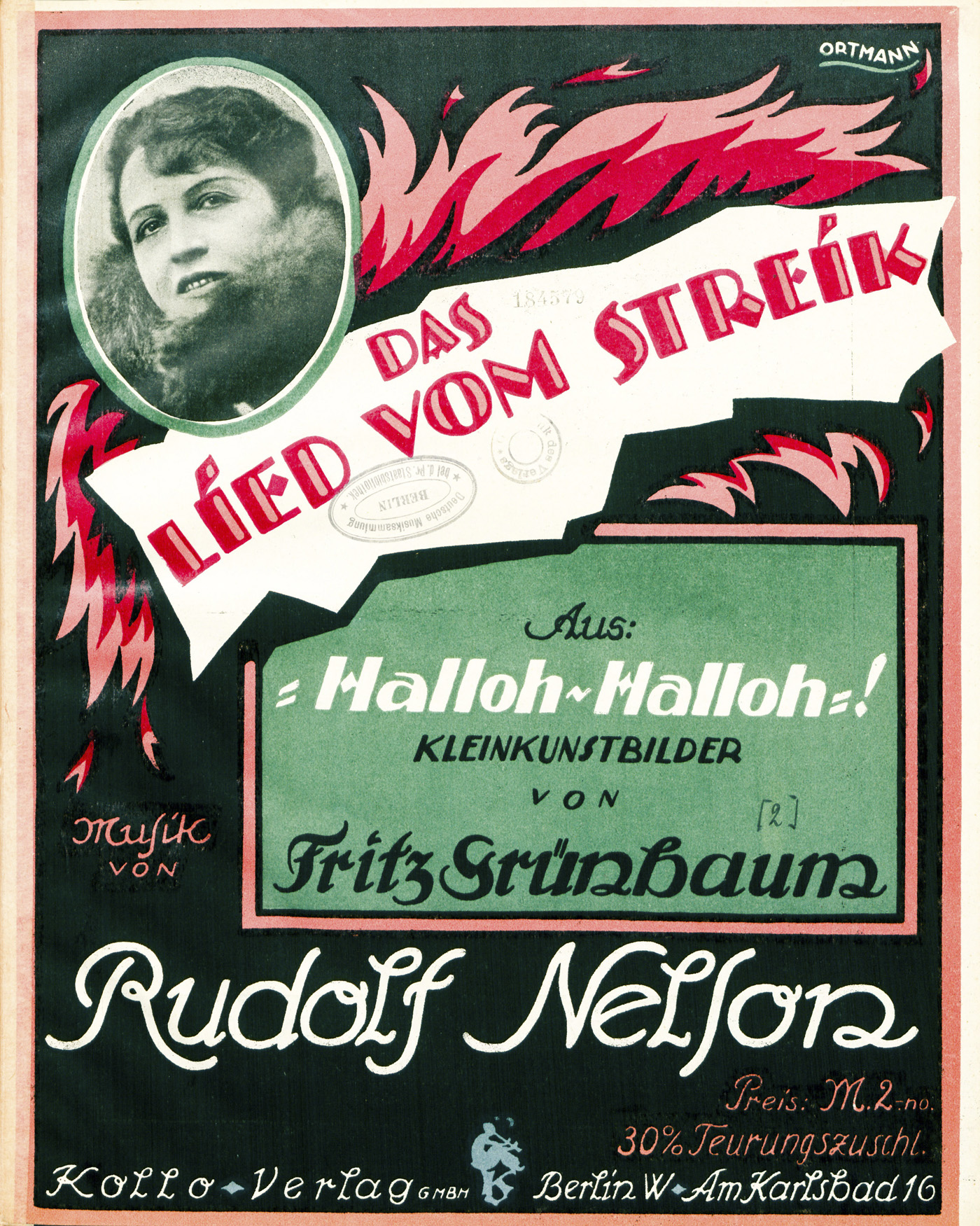
Wolfgang Ortmann (German, 1885-1967) 'Song from the Strike from Halloh! Halloh!' Berlin 1919


Wolfgang Ortmann (German, 1885-1967)
Song from the Strike from Halloh! Halloh!
Berlin 1919
Cabaret pieces by Fritz Grünbaum. Music by Rudolf Nelson
Sheet Music with Portrait of Käthe
Erlholz, Staatsbibliothek zu Berlin, Music Department
© Wolfgang Ortmann / Kollo-Verlag GmbH, Berlin


With more than 300 photographs, postcards, posters, sheet music, newspapers and magazines, film clips, newsreels and audio stations, the exhibition at the Museum of Photography shows a photographic picture of the 1918-19 revolution in Berlin as a panorama of the entertainment culture of these troubled months.

The revolution in the winter and spring of 1918-1919 and thus the struggle for the construction of the first German republic decided in the streets of the capital Berlin. Berliners celebrated the abdication of the Emperor on November 9, 2018 with demonstrations in front of the Reichstag and the castle. In January 1919, in the newspaper district, barricades of the Spartacists were erected from printing paper rolls against the advancing government troops. After the end of the fighting, the great funeral procession moved to the cemetery in Friedrichsfelde via Frankfurter Allee.

There were always press photographers recording the speakers in the crowd, the soldiers behind the machine guns, the parties’ party wagons for the National Assembly elections and the ruined houses and devastated squares. But at the same time, everyday life in the city continued, people visited the many cinemas with their expanding film offering, amused themselves in revues and cabarets, danced One-Step, Two-Step and Foxtrot.

The photographers did not provide an objective picture of the story. They could not work all focal points, so their cameras judged the events according to subjective criteria and they determined with the image what should be handed down. And yet their recordings bring the events back to life. For example, the photographs help with the reconstruction of dramatic episodes such as the Christmas battles for the castle and the stables between the Volksmarine Division and government troops.

They show the huge number of mourners around Karl Liebknecht and Rosa Luxemburg and exemplify the involvement of actress Senta Söneland as election campaign speaker for the National Assembly. The press photos also allow critical inquiries into the history of the revolution: the clothes of the demonstrators and the fighters suggest that by no means only workers and soldiers, but also employees and commoners engaged politically.

In the first days of the revolution, the brothers Otto and Georg Haeckel were the most important press photographers. As experienced war reporters, they were quick to accompany the spontaneous rallies at Unter den Linden and in front of the castle. They worked without a commission and offered publishers such as Mosse or Ullstein their photographs as contact prints in the format 13 x 18 cm for the weekly picture supplements of the daily newspapers (eg for the “Zeitbilder” of the “Vossische Zeitung”) or magazines (eg the “Berliner Illustrirte Newspaper”).

There are few photographs as evidence of the fighting itself. Rather, the photographers used the breaks in fighting to recreate scenes of soldiers with shot-guns or at the barricades. From Willy Römer most of the images of the revolution in original contact prints are handed down. One of his photographs was even made immediately before his own arrest by a squad of Spartacists. Romans had a keen eye for the special situations of everyday life, when he photographed the unusual means of transportation of the Berliners during the general strike in January.

In the cinemas, the newsreels throughout Germany reported on the rallies and demonstrations in Berlin, produced film portraits of the ministers of the new Reich government and, as proof of the restored order, showed everyday scenes from the streets of the capital. At the same time, they campaigned for the National Assembly. The humorous short film “Anna Müller-Lincke kandidiert” (“Anna Müller-Lincke is a candidate”) presented the colourful range of candidates and challenged the population to make their own electoral decision. Due to the longer production processes, the feature films offered no reflection on the revolution in the winter of 1918-1919. However, the lifting of censorship enabled the production of new, daring films that were directed against the criminal prosecution of homosexuals. Immediately after the revolutionary event in Berlin, Richard Oswald‘s work “Anders als die Andern” (“Different from the Others”) began, the first film explicitly referring to Paragraph 175.

One of the most significant feature films on the revolution and at the same time a representative example of the socio-democratic values supported by the film industry is “Die entfesselte Menschheit” (“Unleashed humanity”) by Joseph Delmont, which was released in cinemas in 1920. Willy Römer was a press photographer during filming of barricades in Kreuzberg in autumn. His photographs are more dramatic than many photographs of the revolution the year before.

In response to the end of the war and without first taking into account the dangers of the revolutionary struggles, an unprecedented desire for pleasure prevailed in Berlin during the winter and spring of 1918-1919. In addition to opera houses and straight theatres, the Berliners frequented the more popular operetta and revue theatres, the cinemas, as well as ballrooms and Kaschemmen (bars) to dance there. Operettas like “Schwarzwaldmädel” (“Black forest girl”) in the Komische Oper (Comic Opera) were supposed to transport the audience into an ideal world and distract them from the everyday life of war and revolution.

But there were also revues that responded daily to topics such as the housing problem and the strikes like “Halloh! Halloh!” by Rudolf Nelson (music) and Fritz Grünbaum (text). The misery of war invalids was also a subject of popular music. In the song “Bein ist Trumpf” from the year 1919, the fate of many war-injured men is addressed: the dance with the wooden leg or the prosthesis in the transmission of an ever-rotating world structure. At the same time, the footage of the press photographers showed them with crutches and tied to wheelchairs and their protests against the insufficient supply.

The exhibition in the Museum of Photography is essentially based on the archive of Willy Römers, which is preserved in the Photography Collection of the Art Library – National Museums in Berlin. The comprehensive holdings of the bpk-Bildagentur and ullstein bild offer valuable additions. For the field of film and entertainment culture, exhibits from the graphic design collection of the Art Library have be used. Important loans come from the Music Department of the National Museums in Berlin, from the Deutsche Kinemathek Foundation, the Falkensee Museum and Gallery, and from private collections.

Press release from the Museum of Photography, Berlin translated from the German by Google Translate Cited 08/02/2019


With more than 300 photographs, postcards, posters, sheet music, newspapers and magazines, film clips, newsreels and audio stations, the exhibition at Museum für Fotografie shows both a photographic history of the 1918-19 revolution in Berlin as a panorama of the entertainment culture of these troubled months.

The revolution in winter and spring 1918/19 was decided in the streets of the imperial capital, Berlin. Berliners celebrated the abdication of the German Emperor with demonstrations in front of the Reichstag and the palace on November 9th, 1918, in the newspaper quarter in January 1919 rolls of printing paper were used by the Spartacists to erect barricades against approaching government troops, after fighting had ceased, a large funeral procession crossed Frankfurter Allee to the cemetery in Friedrichsfelde. Press photographers were omnipresent with their big plate cameras, taking shots of orators in the crowd, soldiers behind machine-guns, vehicles carrying party posters in the National Assembly election campaign, and destroyed buildings and ravaged squares. At the same time, everyday life in the city went on. People went to the numerous cinemas with their expanding repertoire of films, enjoyed themselves at revues and cabarets, and danced the two-step and the foxtrot. The exhibition in the Museum für Fotografie shows both a photographic visual history of the revolution in Berlin and a panorama of the entertainment culture of those months.

The brothers Otto and Georg Haeckel were the most important press photographers during the first days of the revolution. As experienced war reporters, they reacted quickly to cover the spontaneous rallies on Unter den Linden and in front of the palace. The photographers worked without assignment and offered their images to publishers like Mosse or Ullstein. There are few visual records of the fighting itself. Rather, photographers took advantage of breaks in the fighting to recreate scenes on the barricades or with soldiers with readied weapons. The largest group of photos of the revolution of which the original contact prints survive is by Willy Römer. One of his photographs was even taken immediately before his own arrest by a troop of Spartacists.

Weekly newsreels in cinemas across Germany reported on the rallies and demonstrations in Berlin, showed film portraits of the ministers of the new imperial government, and confirmed the restoration of order by showing scenes from everyday life in the streets of the capital. At the same time, they solicited votes for the National Assembly. Given lengthy production times, the feature films of winter 1918/19 do not yet reflect the revolution in any way. But the suspension of censorship enabled the production of new, more daring films, which, for example, opposed the criminal persecution of homosexuals.

As a reaction to the end of the war and without as yet reckoning with the dangers of the revolution and its fighting, an unprecedented desire for pleasure-seeking reigned in Berlin during the winter and spring of 1918/19. Besides opera houses and straight theatres, Berliners frequent-ed the popular operetta and revue theatres, as well as cinemas; they also went to ballrooms and drinking holes to dance. Some revues reacted to current issues like the housing shortage and the strikes. The poverty of war invalids was also a subject of popular music. The song ‘Bein ist Trumpf’ from 1919 alludes to the fate of four men maimed in the war: the dance with a wooden leg or prosthesis amid the workings of a world-apparatus that turns and turns without end.

Press release from the Museum of Photography, Berlin in English [Online] Cited 08/02/2019


Walter Gircke (German, 1885-1974) 'Elections to the National Assembly in Berlin. Agitation by the actress Senta Söneland in front of the Zoologischer Garten station' [National Assembly in Berlin: agitation by the actress Senta Söneland] January 1919


Walter Gircke (German, 1885-1974)
Elections to the National Assembly in Berlin. Agitation by the actress Senta Söneland in front of the Zoologischer Garten station [National Assembly in Berlin: agitation by the actress Senta Söneland]
January 1919
Postcard
© bpk / Walter Gircke


Senta Söneland

Senta Söneland (née Werder) was born in 1882 the daughter of a Prussian officer. She attended a higher girls’ school and then a teacher seminar, but also took additional training courses at the Berlin Schiller Theater.

In 1910 she received her first engagement at the Hoftheater Meiningen. In 1912 she returned to Berlin and in the following years appeared on various stages such as the Komödienhaus, the Theater am Kurfürstendamm and the Metropol-Theater. As at the beginning of the war in 1914, when theatre life was severely impaired, she sought like many other actors of the time their chance in film.

Söneland was known primarily as a comedian in film comedies. After a long absence from the screen in the 1920s, she had many performances as a supporting actress at the beginning of the sound film era after 1930. She also participated in entertainment evenings on the radio. So she was heard in the program Kunterbunt with the Berlin Radio Chapel.

The artist was politically involved in women’s suffrage, and her fiery speech on 19 January 1919 at the Berlin Zoo Station on the occasion of the election to the National Assembly (see photograph above) is remembered above all.

After the sudden death of her husband, Söneland said goodbye in 1934 and took her own life a little later. She was buried in the cemetery Wilmersdorf in Berlin.

Text from the Wikipedia website translated from the German


Unknown photographer. 'Hoardings with SPD election posters' before 19.1.1919


Unknown photographer
Hoardings with SPD election posters
before 19.1.1919
Old contact print
Gelatin silver print
bpk


Anders als die Andern (Different from the Others) 1919 Homosexuality Advocacy Film

Different from the Others (German: Anders als die Andern, literally ‘Other than the Others’) is a German film produced during the Weimar Republic. It was first released in 1919 and stars Conrad Veidt and Reinhold Schünzel. The story was co-written by Richard Oswald and Magnus Hirschfeld, who also had a small part in the film and partially funded the production through his Institute for Sexual Science. The film was intended as a polemic against the then-current laws under Germany’s Paragraph 175, which made homosexuality a criminal offence. It is believed to be the first pro-gay film in the world.

The cinematography was by Max Fassbender, who two years previously had worked on Das Bildnis des Dorian Gray, one of the earliest cinematic treatments of Oscar Wilde’s The Picture of Dorian Gray. Director Richard Oswald later became a director of more mainstream films, as did his son Gerd. Veidt became a major film star the year after Anders was released, in The Cabinet of Dr. Caligari.

Anders als die Andern is one of the first sympathetic portrayals of homosexuals in the cinema. The film’s basic plot was used again in the 1961 UK film, Victim, starring Dirk Bogarde. Censorship laws enacted in reaction to films like Anders als die Andern eventually restricted viewing of this movie to doctors and medical researchers, and prints of the film were among the many “decadent” works burned by the Nazis after they came to power in 1933.

Text from the Wikipedia website


Paragraph 175

Paragraph 175 (known formally as §175 StGB; also known as Section 175 in English) was a provision of the German Criminal Code from 15 May 1871 to 10 March 1994. It made homosexual acts between males a crime, and in early revisions the provision also criminalised bestiality as well as forms of prostitution and underage sexual abuse. All in all, around 140,000 men were convicted under the law.

The statute drew legal influence from previous measures, including those undertaken by the Holy Roman Empire and Prussian states. It was amended several times. The Nazis broadened the law in 1935; in the prosecutions that followed, thousands died in concentration camps as a widespread social persecution of homosexuals took place.

Text from the Wikipedia website

Different from the Others

The director and producer Richard Oswald (1880-1863) is regarded as the founder of the so-called Sitten – or Aufklärungsfilm (i.e. a film concerned with public morals or sex education) – a genre that took up socially taboo themes such as the spread of sexually transmitted diseases, drug consumption, or topics such as abortion and homosexuality, activities still subject to criminal prosecution at that time. The production of such films, propelled by an educational impetus, was intimately bound up with the abolition of censor-ship in Germany, announced in November of 1918. For Anders als die Andern (Different from the Others), the first film to take an explicit stand against Paragraph 175, which made homosexual acts between males a crime, Oswald called upon the expertise of the sexologist Magnus Hirschfeld as his advisor.

The film narrates the story of the violinist Paul Körner, who is blackmailed by a male prostitute who threatens to reveal his homosexuality, and is finally charged with violating Paragraph 175. In a central scene of the film, Magnus Hirschfeld – who plays himself – delivers a plea for tolerance of homosexuals. To be sure, the blackmailer is condemned, but so too is Körner, found guilty of infringing Paragraph 175. In despair over the social ruin brought about by the verdict, he commits suicide.

Folkets Ven, Die entfesselte Menschheit, and Irrwahn (Mania)

The Danish film Folkets Ven arrived in German cinemas in December of 1918 under the distribution title Söhne des Volkes (Sons of the People). In Berlin, the production of films about the political upheavals had just be-gun, necessitating a recourse to import films in order to entertain – and to influence – Berlin cinema-goers. In the magazine Der Kinematograph, the film was promoted as “a new film for a new time” with the message: “For the unification of the socialist groups, against Bolshevism.”

One of the most important feature films dating from around the time of the revolution, and at the same time a typical document of the (social) democratic values reinforced by the film industry, is Die entfesselte Menschheit (Humanity Unchained). Narrated in this “key work of anti-Bolshevist film” is the story of a group of German prisoners of war who return to a Berlin that has been convulsed by Spartacist battles, and are steered toward participation in a bloody civil war by the Bolshevist fanatic Karenow. Approximately 17,000 extras took part in this ambitious undertaking, part of it filmed on Am Tempelhofer Berg, a street in Kreuzberg.

Along with their anti-Bolshevist tendencies, the principal characteristic of the “political problem films” produced around 1919 and 1922, with their references to the revolution, was a deliberate renunciation of any explicit identification of the location of the events. In Irrwahn (Mania), filmed in Berlin in 1919 and heralded in the press as a “socialist-revolutionary drama,” the director Hans Werckmeister maintains a certain ambiguity about whether the events are taking place in Germany, Russia, or in some imaginary fantasy land.

Nerven (Nerves)

Robert Reinert’s influential silent film drama Nerven (Nerves) had only a brief reception among the contemporary cinema public: after its premiere in December of 1919, a number of spectators are said to have developed symptoms of madness. As a consequence, the censors resolved upon radical interventions which left the film in an utterly mutilated state. The story of Roloff, a wealthy factory owner who loses his faith in technological progress during the revolutionary turmoil occurring at the end of World War I, his sister Marja, who is committed to armed struggle against the ruling powers, and the teacher Johannes, who calls for social reforms at the people’s assembly, offers a multifaceted description of the traumatic impact of war and revolution on the psychological states of human individuals. Observable in Nerven are design elements that are immediately reminiscent of Expressionism: close-up shots of faces registering intense emotion, gloomy, oversized buildings, dissolves suggestive of menace, as well as striking effects of light and shadow. This fateful historic document has now been successfully reconstructed from fragments.

Wall texts


Nerves (Germany, 1919)

The films tells the political disputes of an ultraconservative factory owner Herr Roloff and Teacher John, who feels a compulsive but secret love for Roloff’s sister, a left-wing radical. They are all driven psychologically and morally to the borderline, tormented souls living their lives in a tormented country.

Duration: 110 Minutes
Director, Producer, Screenplay: Robert Reinert
Starring: Eduard von Winterstein, Lia Borré, Erna Morena, Paul Bender, Lili Dominici, Rio Ellbon, Margarete Tondeur, Paul Burgen Reconstruction
Producer: Stefan Drössler
Cinematography: Helmar Lerski


Willy Römer (German, 1887-1979) 'Fighting in the Berlin newspaper district. The Vorwärts building after being bombarded by government troops' [The Spartacist had barricaded themselves inside the Vorwärts building. The photo shows the Vorwärts building after an artillery assault by government troops] 11.1.1919


Willy Römer (German, 1887-1979)
Fighting in the Berlin newspaper district. The Vorwärts building after being bombarded by government troops [The Spartacist had barricaded themselves inside the Vorwärts building. The photo shows the Vorwärts building after an artillery assault by government troops]
11.1.1919, old contact print
Gelatin silver print
Kunstbibliothek
© Staatliche Museen zu Berlin, Art Library – Photothek Willy Römer / Willy Römer


Willy Römer (German, 1887-1979) 'General strike in Berlin. Moving van as barricade on Prenzlauer Straße' 7.3.1919


Willy Römer (German, 1887-1979)
General strike in Berlin. Moving van as barricade on Prenzlauer Straße
7.3.1919, old contact print
Gelatin silver print
Kunstbibliothek
© Staatliche Museen zu Berlin, Art Library – Photothek Willy Römer / Willy Römer


Willy Römer (German, 1887-1979) 'Street battles in Berlin. Battleplace Alexanderplatz with the downed lines of the tram' 8.3.1919


Willy Römer (German, 1887-1979)
Street battles in Berlin. Battleplace Alexanderplatz with the downed lines of the tram
8.3.1919, old contact print
Gelatin silver print
Kunstbibliothek
© Staatliche Museen zu Berlin, Art Library Willy Römer / Willy Römer


Willy Römer (German, 1887-1979) 'View of the funeral procession in the Frankfurter Allee on the occasion of the funeral of Rosa Luxemburg' [Funeral of Liebknecht and Rosa Luxemburg. Funeral procession on Große Frankfurter Strasse] 13.6.1919


Willy Römer (German, 1887-1979)
View of the funeral procession in the Frankfurter Allee on the occasion of the funeral of Rosa Luxemburg [Funeral of Liebknecht and Rosa Luxemburg. Funeral procession on Große Frankfurter Strasse]
13.6.1919
Gelatin silver print
© Staatliche Museen zu Berlin, Art Library Willy Römer / Willy Römer


Artistic Dance

During the revolutionary period of 1918-19, artistic or expressive dance – whose best-known exponent, Mary Wigman, was accorded considerable acclaim even before World War I – was characterised by heightened variety and intensity. The aim of the tendency was to generate a new conception of humanity through the unity of music, movement, costume, and stage design. Expressive rhythm and a natural approach to bodily experience harmonised well with the expressive forms of the artistic avant-gardes, in particular Expressionist painting. The search for modern expressive resources that were remote from classical balletic conventions was spearheaded by renowned dance reformers. Among them were Valeska Gert, with her grotesque caricature dances, Anita Berber, with her eccentric and erotic performances, and Gret Palucca, with her powerful leaps. But Hannelore Ziegler – no longer a familiar figure today – too numbered among the representatives of these new, contemporary dance forms.

Erna Offeney

Erna Offeney (1888-1977), one of the less-known erotic dancers and ballet mistresses, who is presented here in a larger context for the first time, headed her own touring ballet company, with up to 150 ensemble members, which made acclaimed guest performances throughout Germany and Switzerland, as well as Vienna. In a way that is characteristic of the pre-revolutionary era, she wrote in her diary: “It was 1918, the final year of the war, the theatre was full of soldiers on leave who wanted to forget the miseries of war during this brief intermezzo, and were delighted with every diversion and pleasure. Most were invalids, cripples who had been obliged to sacrifice arms or legs for the Fatherland. They were scattered throughout every town, and nearly every family lamented the presence of a member in such a state, and depending upon temperament, those affected – or those who were more foreseeing – were suffused with hate or gloomy resignation […] And then came the applause, which never seemed to end. In the orchestra area, I saw two soldiers, each one-armed, slapping their single hands together in order to applaud. Seeing this, I nearly wept.”

‘Nude’ and Erotic Dance

During the revolutionary period of 1918/1919, ‘nude’ dance, erotic ballet, and erotic dance enjoyed a decided popularity. At the same time, the war wounded and war cripples filled the streets of Berlin. “The sheer profusion of erotic dance performances – appearing in every cabaret, in every better dance club, in every bar that offered the public music and entertainment, were nude dancers or groups of dancers – this mass phenomenon only became possible after the war,” wrote Hans Ostwald in 1931. “Favouring the movement was a lust for life that sprang from sheer misery, and the greater general freedom.” But the abolition of censorship also promoted the proliferation of such offerings. Although the dancers were for the most part clad in gossamer fabrics, with breasts and privates veiled, they appeared to be naked. Performances by dancers such as Olga Desmond and Celly de Rheydt belonged in the context of the movement toward naturism and nudism.

Ballroom Dancing

The great dance wave, the dance frenzy, the dance craze – all referred to the mass phenomenon of dance as a form of participatory entertainment among the populace of Berlin after World War I. This form of enjoyment was ubiquitous, with each dancer dancing for a different reason: for one, dancing compensated for the general misery. Another enjoyed the license to dance when and where it pleased – a freedom that accompanied the demise of the Wilhelminian moral codex. Depending upon the financial resources available, people met in the elegant dance clubs in the city centre, or instead shook a leg in dives found in the northern and eastern districts of Berlin. The new popular dances – ragtime, jazz, the Boston waltz, the shimmy, but first and foremost the foxtrot – found their ways into dance clubs, dance halls and ballrooms, dance floors, and hotel lobbies, and were an essential component of the amusement and entertainment industry that expanded explosively after the war. The rapidly growing number of performances of operettas and revues meant that a public hungry for diversion was continuously exposed to new hit tunes. Thus primed, they spread out onto the dance floor, with dance bands providing the requisite atmosphere of exuberance.

Sheet Music Cover Pages

Originally, sheet music cover pages were little more than decorative ‘accessories’ accompanying printed music. At the same time, they mirror contemporary social and political life. Observable around 1918/19 are topical foci such as emancipation and the pleasures of dance, eroticism, fashion, beauty, and film. In some instances, sheet music cover pages were furnished with portraits of interpreters whose names were familiar through the advertisements that appeared in the daily press. Like the artist’s postcards so widely disseminated at the time, these images allowed the public to see the stars at least in picture form – not everyone could afford tickets to live operetta or revue appearances.

Domestic music-making, including light music, was widespread. Inseparable from such activities were the countless popular dance forms. And all of this required accessible sheet music. With the growing vogue for revues, operettas, film operettas, and burlesques after the end of World War I, the circulation figures of printed music rose quickly. After the recent horrors, there title motifs satisfied a yearning for togetherness, harmony, happiness, and a peaceful life.

Places of Entertainment and Amusement

In 1918/19, entertainment was of paramount importance. As much can be gathered from numerous travel guides intended for visitors to Berlin, such as those by Grieben. These supplied tips for performances of operettas, burlesques, revues, promoted information on which cabarets and coffee-houses provide live music, recommended dance halls, and offered general information on other entertainment options. Providing guidance is well were the advertising pages of daily newspapers such as the Vossische Zeitung, the Berliner Tageblatt, and the Berliner Volkszeitung. Found in particular on Friedrichstraße, Behrensstraße, and Jägerstraße alongside theatres and operetta stages were ballrooms, dance clubs, dance cafés, concert houses, cabarets, and coffeehouses. Advertised as well were summer theatre performances and garden concerts where military bands supplied the music. With seating for up to 3000 people, they were frequented by numerous visitors. In the working class district of Prenzlauer Berg, there was the Prater Summer Garden; in Treptow, the Zenner Beer Garden – every urban district had its entertainment establishments featuring concert and dance. And all promoted themselves through specially printed postcards, so that today, we have a detailed picture of the sheer variety that prevailed at the time.

Wall texts from the exhibition


Robert L. Leonard (German, 1879-1943) '"Strindberg's intoxication" with Asta Nielsen' 1.8.1919


Robert L. Leonard (German, 1879-1943)
“Strindberg’s intoxication” with Asta Nielsen
1.8.1919
Poster for the premiere of the film in UT Kurfürstendamm
Actors: Alfred Abel, Carl Meinhard
Director: Ernst Lubitsch
Kunstbibliothek
© Staatliche Museen zu Berlin, Art Library


Willy Römer (German, 1887-1979) 'Dismissed soldiers and unemployed. The gaming tables in front of the employment office in Gormannstraße' [Gambling den in front of the employment agency on Gormannstraße. For strengthening during the game, there is coffee and cake at the next table] 24.11.1919


Willy Römer (German, 1887-1979)
Dismissed soldiers and unemployed. The gaming tables in front of the employment office in Gormannstraße [Gambling den in front of the employment agency on Gormannstraße. For strengthening during the game, there is coffee and cake at the next table]
24.11.1919, later contact print
Gelatin silver print
Kunstbibliothek
© Staatliche Museen zu Berlin, Art Library – Photothek Willy Römer / Willy Römer


'Berlin in the revolution 1918/19' catalogue cover


Berlin in the revolution 1918/19 catalogue cover


Museum für Fotografie
Jebensstraße 2, 10623 Berlin, Germany
Phone: +49 30 266424242

Opening hours:
Tues – Sunday 11am – 7pm

Museum für Fotografie website

LIKE ART BLART ON FACEBOOK

Back to top

Exhibition: ‘Photography in Argentina, 1850-2010: Contradiction and Continuity’ at The J. Paul Getty Museum, Los Angeles

Exhibition dates: 16th September, 2017 – 28th January, 2018


Charles DeForest Fredricks (American, 1823-1894) 'Inmigrantes alemanes en Buenos Aires jugando cartas' / 'German Immigrants in Buenos Aires Playing Cards' c. 1852 from the exhibition 'Photography in Argentina, 1850-2010: Contradiction and Continuity' at The J. Paul Getty Museum, Los Angeles, Sept 2017 - Jan 2018


Charles DeForest Fredricks (American, 1823-1894)
Inmigrantes alemanes en Buenos Aires jugando cartas / German Immigrants in Buenos Aires Playing Cards
c. 1852
Daguerreotype
Courtesy of Carlos G. Vertanessian


Charles DeForest Fredricks (American, 1823-1894)

Charles DeForest Fredricks (December 11, 1823 – May 25, 1894) was an American photographer.

Charles D. Fredricks was born in New York City on December 11, 1823. He learned the art of the daguerreotype from Jeremiah Gurney in New York, while he worked as a casemaker for Edward Anthony. In 1843, at the suggestion of his brother, Fredricks sailed for Angostura, today Ciudad Bolívar, Venezuela. His business took him to Pará, Rio Grande do Sul, Montevideo, Buenos Aires. He enjoyed great success in South America, remaining there until some time in the early 1850s.

Following a brief period in Charleston, South Carolina, Fredricks moved to Paris in 1853. Here he became the first photographer to create life-sized portraits, which artists (like Jules-Émile Saintin) were hired to colour using pastel.

On his return to New York City, he rejoined Jeremiah Gurney, though it is not clear whether he was initially a partner or an employee. By 1854, he had developed an early process for enlarging photographs. His partnership with Gurney ended in 1855.

During the latter half of the decade he operated a studio in Havana. Here he received awards for his photographic oil colours and watercolours. During the 1860s he operated a studio on Broadway that was noted for its cartes de visites. In the early 1860s, Charles Fredricks personally photographed John Wilkes Booth (the assassin of President Lincoln) on several occasions at his studio.

He retired from photography in 1889 and died in Newark, New Jersey, five years later, on May 25, 1894.

Text from the Wikipedia website


Charles DeForest Fredricks (American, 1823-1894) 'Inmigrantes alemanes en Buenos Aires jugando cartas' / 'German Immigrants in Buenos Aires Playing Cards' c. 1852 (detail)


Charles DeForest Fredricks (American, 1823-1894)
Inmigrantes alemanes en Buenos Aires jugando cartas / German Immigrants in Buenos Aires Playing Cards (detail)
c. 1852
Daguerreotype
Courtesy of Carlos G. Vertanessian


I knew very little about Argentinian photography before researching for this posting.

Such a rich historical photographic archive – Indigenous, political, activist, performative – engaged in the dissection of national identity construction. Lots of German émigrés, lots of strong women photographers e.g. Grete Stern, Annemarie Heinrich, Julio Pantoja and Graciela Sacco.

There is a deep probing in Argentinian photography. There is the irony of the not quite right and an investigation of the dark side, of danger, fear and violence, of loss, grief, rage and resignation. As one of the sections of the exhibition is titled, of Civilisation and Barbarism. A quotation in the posting observes, “One of the most effective means to exercise control of populations in contemporary capitalism is the production of fear.” Drop dead fear.

The bloodlines of the collective consciousness of the Argentinian people run very deep. The dead ones are still there…

Apologies for the lack of photographs in The Aesthetic Gesture section, there were just no good images available.

Dr Marcus Bunyan


Many thankx to the J. Paul Getty Museum for allowing me to publish the photographs in the posting. Please click on the photographs for a larger version of the image.


Gustavo Di Mario (Argentine, b. 1969) 'Malambistas I' / 'Malambo Dancers I' Negative 2014, print 2016 from the exhibition 'Photography in Argentina, 1850-2010: Contradiction and Continuity' at The J. Paul Getty Museum, Los Angeles, Sept 2017 - Jan 2018


Gustavo Di Mario (Argentinian, b. 1969)
Malambistas I / Malambo Dancers I
Negative 2014, print 2016
Chromogenic print
60 x 50cm
Courtesy of Gustavo Di Mario
© Gustavo Di Mario


Gustavo Di Mario (Argentinian, b. 1969) 'Carnaval' Negative 2005, printed 2015


Gustavo Di Mario (Argentinian, b. 1969)
Carnaval
Negative 2005, printed 2015
Chromogenic print
50 x 63.1cm
The J. Paul Getty Museum, purchased with funds provided by the Photographs Council
© Gustavo Di Mario


From its independence in 1810 until the economic crisis of 2001, Argentina was perceived as a modern country with a powerful economic system, a strong middle class, a large European-immigrant population, and an almost nonexistent indigenous culture. This perception differs greatly from the way that other Latin American countries have been viewed, and underlines the difference between Argentina’s colonial and postcolonial process and those of its neighbours. Comprising three hundred works by sixty artists, this exhibition examines crucial periods and aesthetic movements in which photography had a critical role, producing – and, at times, dismantling – national constructions, utopian visions, and avant-garde artistic trends.

This exhibition is part of Pacific Standard Time: LA/LA, a far reaching and ambitious exploration of Latin American and Latino art in dialogue with Los Angeles, taking place from September 2017 through January 2018 at more than 70 cultural institutions across Southern California. Pacific Standard Time is an initiative of the Getty. The presenting sponsor is Bank of America.

Contradiction and Continuity examines the complexities of Argentina’s history over 160 years, stressing the creation of contradictory narratives and the role of photography in constructing them. The exhibition concentrates on photographs that are fabricated rather than found, such as narrative tableaux and performances staged for the camera. However, it also includes examples of what has been considered documentary photography but can be interpreted as imagery intended as political propaganda or expressions of personal ideology.

The exhibition comprises seven sections: Civilization and Barbarism; National Myths: The Indigenous People; National Myths: The Gaucho; National Myths: Evita and the Modern City; The Aesthetic Gesture; The Political Gesture; and Fissures. These themes were chosen to emphasise crucial historical moments and aesthetic movements in Argentina in which photography played a critical role.

Civilisation and Barbarism

In 1845 Domingo Sarmiento (1811-1888), a prominent Argentine intellectual, published the novel Facundo, subtitled Civilization and Barbarism. Sarmiento, who would later be elected president, presented his political ideas in terms of an opposition between civilisation, represented by the capital city of Buenos Aires and European culture, and barbarism, represented by colonial customs, the gauchos, and the indigenous peoples. This section of the exhibition employs these antagonistic themes to introduce some of the complexities of Argentina’s history and culture. Nineteenth-century albums show the growth and advancement of the country through views of Buenos Aires and images that refer to progressive strategies initiated during this period, including railroad construction and the development of the educational system. In contrast, the work of several contemporary artists embodies the lifestyle and popular culture of the vast interior provinces of Argentina.

Like Sarmiento, Juan Bautista Alberdi (1810-1884), another influential intellectual, viewed immigration as a definitive measure for modernising the country. In Bases, published in 1853, he addressed the necessity of implementing policies to encourage immigration. The studio photographs in this section depict the growing presence of immigrant communities. Immigration is a key component to understanding Argentine society that continues to inspire contemporary artists.


Esteban Gonnet (French, 1830-1868) 'Recuerdos de Beunos Ayres' / 'Memories of Beunos Aires' 1864


Esteban Gonnet (French, 1830-1868)
Recuerdos de Beunos Ayres / Memories of Beunos Aires
1864
Page opening: La pirámide / The Pyramid
Albumen print


Benito Panunzi (Italian, 1835-1896) 'Monument to General San Martín' c. 1860-1869


Benito Panunzi (Italian, 1835-1896)
Monument to General San Martín
c. 1860-1869
Albumen print


National Myths: The Gaucho

The National Myths section of the exhibition focuses on the construction of specific state symbols, including indigenous people, the gaucho, First Lady Eva Perón, and the city of Buenos Aires. Around 1880, coinciding with increasing waves of immigration and efforts at modernisation, an avid debate on national identity arose among Argentine intellectuals and politicians.

By 1910, when the Centennial of Independence was celebrated, the gaucho emerged as an emblematic figure in the national iconography. The gaucho was already a common theme in Costumbrista (customs and character types) paintings of the eighteenth and nineteenth centuries. Criollismo (native culture), a movement of the late nineteenth century, stimulated a wider interest in gaucho-themed art, fiction, theatre, and photographs.

José Hernández’s epic narrative poem Martín Fierro (1872) and Eduardo Gutiérrez’s novel Juan Moreira (1879) were major influences. About 1890, amateur photographer Francisco Ayerza staged a series of romanticised photographs meant to illustrate a later edition of Fierro. Commercial studios accommodated women and children who wanted to be pictured as gauchos. More than a national symbol, the gaucho embodied the idealised masculinity of the virile Argentine man; the contemporary fashion photographs of Gustavo Di Mario present a queer interpretation of the gauchesque.


Francisco Ayerza (Argentinian, 1860-1901) 'Estudio para la edición de "Martín Fierro," gaucho con caballo' / 'Study for an edition of Martín Fierro, Gaucho with Horse' c. 1890, print about 1900-1905


Francisco Ayerza (Argentinian, 1860-1901)
Estudio para la edición de “Martín Fierro,” gaucho con caballo / Study for an edition of Martín Fierro, Gaucho with Horse
c. 1890, print about 1900-1905
Gelatin silver print
Courtesy of a private collection


Francisco Ayerza (1860 – Buenos Aires, Argentina – 1901), was a photographic artist founding member of the Argentine Photographic Society. He formed an artistic movement in Latin America .

At the end of the 19th century, Doctor Francisco Ayerza cultivated the still new photographic art as an amateur. He was one of the organizers of the Argentine Amateur Photographic Society, the first entity of the genre created in that country.

It was at Francisco Ayerza’s house (1266 Piedad Street) where a group of gentlemen met “with the aim of forming a society of photography amateurs”, which ultimately constituted the Argentine Amateur Photographic Society (1889). The following participated in the first session: Leonardo Pereyra, who was elected president; Germán Kühr, Francisco Ayerza (secretary), José María Gutiérrez, Roberto Wernicke, Ricardo N. Murray, Fritz Büsch, Juan Quevedo, Isidro Calderón de la Barca Piñeyro, Daniel MacKinglay, Leonardo Pereyra Iraola, Fernando Steinius and Fernando Denis. …

An aspect of the immediate reality that seduced Francisco Ayerza and his friends for its picturesque appearance was the Pampa, whose geography began to be altered by machinism and immigration, as documented by some prints. From this interest in the Argentine countryside and its customs was born the idea of ​​photographically illustrating the Martín Fierro and, although they made many shots, it could not be finished, despite the efforts made by the authors in such an exhausting task, and although the selected field to photograph was the Estancia San Juan de Pereyra, very close to Buenos Aires.

Text translated from the Spanish Wikipedia website


Gustavo Di Mario (Argentinian, b. 1969) 'Malambistas IV' / 'Malambo Dancers IV' Negative 2014, print 2016


Gustavo Di Mario (Argentinian, b. 1969)
Malambistas IV / Malambo Dancers IV
Negative 2014, print 2016
Chromogenic print
60 x 50cm
Courtesy of Gustavo Di Mario
© Gustavo Di Mario


Malambo was born in the Pampas around the 1600. Malambo is a peculiar native dance that is executed by men only. Its music has no lyrics and it is based entirely on rhythm. The malambo dancer is a master of tap dancing wearing gaucho’s boots. Among the most important malambo moves are: “la cepillada” (the foot sole brushes the ground), “el repique” (a strike to the floor using the back part of the boot) and the “floreos”. Malambo dancers’ feet barely touch the ground but all moves are energetic and complex. Together with tap dancing, malambo dancers use “boleadoras” and other aids such as “lazos”. Like “Payadas” for gauchos (improve singing), malambo was *the* competition among gaucho dancers.

Read more about the Malambo dance


Nicola Constantino (Argentinian, b. 1964) 'Nicola alada, inspirado en Bacon inspirado en Rembrandt' / 'Winged Nicola, Inspired by Bacon Inspired by Rembrandt' 2010


Nicola Constantino (Argentinian, b. 1964)
Nicola alada, inspirado en Bacon inspirado en Rembrandt / Winged Nicola, Inspired by Bacon Inspired by Rembrandt
2010
Inkjet print
173 x 135cm
Courtesy of Nicola Constantino
© Nicola Constantino


Marcos López (Argentinian, b. 1958) 'Reina del trigo. Gálvez, Provincia de Santa Fe' (Queen of Wheat, Gálvez, Santa Fe Province) 1997


Marcos López (Argentinian, b. 1958)
Reina del trigo. Gálvez, Provincia de Santa Fe (Queen of Wheat, Gálvez, Santa Fe Province)
1997, printed 2017
Hand-coloured inkjet print
50 × 70cm (19 11/16 × 27 9/16 in.)
Courtesy of the artist and Rolf Art, Buenos Aires
© Marcos López


Marcos López (Argentinian, b. 1958) 'Gaucho Gil. Buenos Aires' 2009, print 2017


Marcos López (Argentinian, b. 1958)
Gaucho Gil. Buenos Aires
2009, printed 2017
Hand-coloured inkjet print
144 × 100cm
Courtesy of Rolf Art and Marcos López
© Marcos López


National Myths: The Indigenous People

While the gaucho became a national myth, “official” images rarely addressed the existence of indigenous peoples. The practice of recording their presence in photography, however, was well established by the late nineteenth century. It began in the portrait studios of Buenos Aires when native caciques (chiefs) visited the capital for peaceful negotiations, or when they were brought in as prisoners and made to pose in traditional garb. Later, photographers would travel by train or wagon to Native American settlements or plantations where indigenous people worked.

These staged compositions, as in the rest of Latin America, portrayed indigenous people as exotic and passive, objectifying them and emphasising their “otherness.” Sitters were always isolated from signs of the “civilised” or “Christian” world. The iconography found in these nineteenth- and early twentieth century photographs corresponds to a nostalgic image of a backward and subjugated group ignored by progress. Modernist and contemporary artists, such as Grete Stern and Guadalupe Miles, presented a different and more accurate view of these people. Both Stern and Miles immersed themselves in indigenous communities, portraying their subjects as individuals rather than stereotypes.


Esteban Gonnet (French, 1830-1868) 'Cacique Tehuelche Casimiro Biguá' / 'Tehuelche Chief, Casimiro Biguá' 1864


Esteban Gonnet (French, 1830-1868)
Cacique Tehuelche Casimiro Biguá / Tehuelche Chief, Casimiro Biguá
1864
Albumen print
14.1 x 9.7cm
Courtesy of the Daniel Sale Collection
Photo: Javier Augustín Rojas


Born in Grenoble, France, Esteban Gonnet moved to Argentina from Newcastle, England, in 1857. Gonnet became a photographer after arriving in Buenos Aires in 1857. He was a surveyor, working with his cousin Hippolyte Gaillard, also a surveyor.

Gonnet’s work reflected the rural lifetime and customs, showing the life and customs of Aboriginal people and paisanos of that era, although Gonnet also took photographies in urban places. In most of his photography he tried to show the typical image of the creole, stereotyping Argentine customs, and using objects as symbols that would create iconic images of the era. His photos were then sold abroad (mostly in Europe), when photography of travels or distant places where gaining in popularity. Gonnet’s innovative style of work consisted of the use of negative system rather than daguerreotype (that was the most common technique by then). Furthermore, Gonnet usually chose to take pictures outdoors instead of working at a studio, which was also his hallmark.

Text from Wikipedia website


Antonio Pozzo (Argentinian born Italy, 1829-1910) 'Cacique Pincén' (Chief Pincén) 1878


Antonio Pozzo (Argentinian born Italy, 1829-1910)
Cacique Pincén (Chief Pincén)
1878
Printed by Samuel Rimathé, Swiss, born Italy, 1863-unknown
Albumen print
20.2 x 14cm (7 15/16 x 5 1/2 in.)
Collection of Diran Sirinian


Antonio Pozzo (Argentinian born Italy, 1829-1910) 'Cacique Pincén' (Chief Pincén) negative 1878; print c. 1900


Antonio Pozzo (Argentinian born Italy, 1829-1910)
Cacique Pincén (Chief Pincén)
Negative 1878; print c. 1900
Unknown printer, active Argentina, c. 1900
Hand-coloured halftone postcard
13.7 x 8.7cm
Courtesy of the Daniel Sale Collection
Photo: Javier Augustín Rojas


Sociedad Fotográfica Argentina de Aficionados (Argentine, active 1889-1926) 'India yagán u ona tejiendo una canasta' / 'Yagán or Ona Woman Weaving a Basket' c. 1890s


Sociedad Fotográfica Argentina de Aficionados (Argentine, active 1889-1926)
India yagán u ona tejiendo una canasta / Yagán or Ona Woman Weaving a Basket
c. 1890s
Printing-out paper
21 x 17cm
Courtesy of the Daniel Sale Collection
Photo: Javier Augustín Rojas


Attributed to Carlos R. Gallardo (Argentinian, 1855-1938) 'Esperando el ataque' / 'Waiting for the Attack' 1902


Attributed to Carlos R. Gallardo (Argentinian, 1855-1938)
Esperando el ataque / Waiting for the Attack
1902
Gelatin silver print
15.5 x 22cm
Courtesy of the Diran Sirinian
Photo: Javier Augustín Rojas


Grete Stern (Argentinian born Germany, 1904-1999) 'Mujer pilagá con sus hijos. Los Lomitas, Formosa' / 'Pilagá Woman with her Kids. Las Lomitas, Formosa' 1964


Grete Stern (Argentinian born Germany, 1904-1999)
Mujer pilagá con sus hijos. Los Lomitas, Formosa / Pilagá Woman with her Kids. Las Lomitas, Formosa
1964
From the series Aborígenes del gran Chaco argentine / Indigenous People from the Argentine Gran Chaco
Gelatin silver print
30 x 38cm
Courtesy of a private collection
© Estate of Grete Stern courtesy Galería Jorge Mara – La Ruche, Buenos Aires, 2016


Grete Stern (9 May 1904 – 24 December 1999) was a German-Argentinian photographer. Like her husband Horacio Coppola, she helped modernise the visual arts in Argentina, and in fact presented the first exhibition of modern photographic art in Buenos Aires, in 1935. (Wikipedia)

In Berlin in 1927, Stern began taking private classes with Walter Peterhans, who was soon to become head of photography at the Bauhaus. A year later, in Peterhans’s studio, she met Ellen (Rosenberg) Auerbach, with whom she opened a pioneering studio specialising in portraiture and advertising. Named after their childhood nicknames, the studio ringl + pit embraced both commercial and avant-garde loyalties, creating proto-feminist works. In Buenos Aires during the same period, Coppola initiated his photographic experimentations, exploring his surroundings and contributing to the discourse on modernist practices across media in local cultural magazines. In 1929 he founded the Buenos Aires Film Club to introduce the most innovative foreign films to Argentine audiences. His early works show the burgeoning interest in new modes of photographic expression that led him to the Bauhaus in 1932, where he met Stern and they began their joint history.

Following the close of the Bauhaus and amid the rising threat of the Nazi powers in 1933, Stern and Coppola fled Germany. Stern arrived first in London, where her friends included activists affiliated with leftist circles and where she made her now iconic portraits of German exiles, including those of Bertolt Brecht and Karl Korsch. After traveling through Europe, camera in hand, Coppola joined Stern in London, where he pursued a modernist idiom in his photographs of the fabric of the city, tinged alternately with social concern and surrealist strangeness.

In the summer of 1935, Stern and Coppola embarked for Buenos Aires [the had married in the same year, divorcing in 1943], where they mounted an exhibition in the offices of the avant-garde magazine Sur, announcing the arrival of modern photography in Argentina. The unique character of Buenos Aires was captured in Coppola’s photographic encounters from the city’s centre to its outskirts, and in Stern’s numerous portraits of the city’s intelligentsia, from feminist playwright Amparo Alvajar to essayist Jorge Luis Borges to poet-politician Pablo Neruda.

Text from the MoMA website


Leonel Luna (Argentinian, b. 1965) 'El rapto de Guinnard' / 'The Kidnap of Guinnard' 2002; print, 2017


Leonel Luna (Argentinian, b. 1965)
El rapto de Guinnard / The Kidnap of Guinnard
2002; print, 2017
Inkjet print on vinyl
112 x 72cm
Courtesy of a private collection
© Leonel Luna


National Myths: Evita and the Modern City

Photography contributed substantially to the construction of the myths of Buenos Aires as the “Modern City” and Evita as the symbol of Peronism. From the 1930s into the 1950s, the capital, like other advanced cosmopolitan metropolises, continued to expand. Some of the emblematic streets and monuments of the city, such as the Obelisk (1936), Avenida 9 de Julio (begun 1935), and Avenida Corrientes (1936), were built or renovated during this period. Buenos Aires became a model of progress for photographers like Horacio Coppola and Sameer Makarius, who produced series reinforcing this view.

Photography was among the propagandistic strategies deployed by the populist Perón administration (1946-1955). Eva Duarte de Perón (1919-1952), known as Evita, had an important role during the first presidency of her husband, Juan Perón (1895-1974), and became the most enduring image of Peronist ideology. Numerous photographers contributed to building an image of Evita as both an elegant celebrity and a compassionate politician. While Juan Di Sandro, considered the father of photojournalism in Argentina, made her political life accessible through views of official events, Annemarie Heinrich helped create her “new” femininity in glamorous studio portraits. Jaime Davidovich’s installation Evita, Then and Now: A Video Scrapbook (1984) and Santiago Porter’s Evita (2008) offer contrasting – critical as well as multidimensional – views of this complex figure.


Annemarie Heinrich (Argentinian born Germany, 1912-2005) 'Eva Perón' Negative 1944, print 1995


Annemarie Heinrich (Argentinian born Germany, 1912-2005)
Eva Perón
Negative 1944, print 1995
Gelatin silver print
32.5 x 27cm
Courtesy of Galería Vasari
© Archivo Heinrich Sanguinetti


Annemarie Heinrich (9 January 1912 – 22 September 2005) was a German-born naturalised Argentine photographer, who specialised in portraits and nudity. She is known for having photographed various celebrities of Argentine cinema, such as Tita Merello, Carmen Miranda, Zully Moreno and Mirtha Legrand; as well as other cultural personalities like Jorge Luis Borges, Pablo Neruda and Eva Perón.

Heinrich was born in Darmstadt and moved to Larroque, Entre Ríos Province, with her family in 1926, her father having been injured during the First World War. In 1930 she opened her first studio in Buenos Aires. Two years later she moved to a larger studio, and began photographing actors from the Teatro Colón. Her photos were also the cover of magazines such as El Hogar, Sintonía, Alta Sociedad, Radiolandia and Antena for forty years.

Heinrich’s work was shown in New York for the first time in 2016 at Nailya Alexander Gallery in the show “Annemarie Heinrich: Glamour and Modernity in Buenos Aires.” Heinrich is considered one of Argentina’s most important photographers.

Text from the Wikipedia website


Annemarie Heinrich (Argentinian born Germany, 1912-2005) 'Veraneando en la ciudad' / 'Spending the Summer in the City' 1959


Annemarie Heinrich (Argentinian born Germany, 1912-2005)
Veraneando en la ciudad / Spending the Summer in the City
1959
Gelatin silver print
18 x 18cm
Courtesy of the Guillermo Navone Collection
© Archivo Heinrich Sanguinetti


Juan Di Sandro (Argentinian born Italy, 1898-1988) 'Avenida 9 de julio con obelisco. Vista panorámica' / 'Avenida 9 de Julio with Obelisk. Panoramic View' 1956


Juan Di Sandro (Argentinian born Italy, 1898-1988)
Avenida 9 de julio con obelisco. Vista panorámica / Avenida 9 de Julio with Obelisk. Panoramic View
1956
Gelatin silver print
29 x 42cm
Courtesy of Galería Vasari
© Familia Di Sandro


Sameer Makarius (Argentinian born Egypt, 1924-2009) 'Obelisco' / 'Obelisk' 1957


Sameer Makarius (Argentinian born Egypt, 1924-2009)
Obelisco / Obelisk
1957
Gelatin silver print
Courtesy of Diran Sirinian
Photo: Javier Agustin Rojas
© Throckmorton Fine Arts


Sameer Makarius was without doubt one of the most prolific photographers in Buenos Aires during the 1950s and 60s. Almost every weekend, he ventured out taking along with him his two cameras, a Leica and an Olympus, to record his new home town. Makarius arrived in Buenos Aires in 1953 and the city must have made a real impact on him. Europe was scarred and slowly recuperating, but things were completely different here. A bustling, modern, elegant plus very confident capital was waiting to be explored. Taking photographs probably helped him to find his bearings and get to know the customs of the city’s inhabitants really well. But then, everybody’s past often determines both their present and their future. Makarius had studied art in Hungary and – being an artist – was inclined to a visual approach. He started out as a painter and abstraction, in all its various ramifications, was one of the main tendencies at the time, with Makarius following suit. Still, when he came to Argentina he was already principally interested in photography. At some stage, probably between the mid and late nineteen forties, a major shift had thus taken place and it is interesting to speculate why. Maybe, Makarius switched to photography because of practical reasons. Cameras were not only widely available at the time, but also coincided perfectly with his wandering life after the end of the war. Before moving to Argentina, he visited and lived in many countries, for example France and Switzerland. And, last but not least, because of his artistic background, he already knew how to deal with composition, light and shadow.

Marjan Groothuis. “Sameer Makarius,” on the Arte Aldia website Nd [Online] Cited 03/02/2022


Santiago Porter (Argentine, b. 1971) 'Evita' 2008


Santiago Porter (Argentinian, b. 1971)
Evita
2008
From the series Bruma II / Mist II
Inkjet print
154 x 123.5cm
Courtesy of the Collection Malba, Museo de Arte Latinoamericano de Buenos Aires
© Santiago Porter


The Political Gesture

The gesture of “pointing out” had its origin in conceptual Argentine photography of the 1960s and 1970s. The artistic act evolved into radical actions as the sociopolitical situation in Argentina deteriorated. This section of the exhibition investigates photographs of political gestures provoked by the last dictatorship of 1976-83, in relation to the earlier conceptual practice presented in the adjacent gallery, “The Aesthetic Gesture.”

The action of showing a photograph of a person who was kidnapped or “disappeared” during the dictatorship was employed by the activist group Madres de Plaza de Mayo. In their weekly marches, the Mothers always wore white head scarves and carried photographs of their children on homemade signs demanding they “Return Alive.” With the arrival of democracy and Nunca Más (Never Again), the official 1984 report of crimes against humanity, trials of the military leaders began. However, over the next fifteen years, many of those who were culpable operated with impunity due to such regulations as the Full Stop Law (1986), the Law of Due Obedience (1987), and the Pardons Act (1990). During this time, activist artist groups, such as Grupo Etcétera… and Escombros, emerged to remind the public of crimes and atrocities, pointing out those assassins who had hoped to remain anonymous.


Nicolás García Uriburu (Argentinian, 1937-2016) 'Le Geste - Coloration Du Grand Canale - Venise 1968-1970' / 'The Gesture - Colouring the Grand Canal - Venice 1968-70' 1968-1970


Nicolás García Uriburu (Argentinian, 1937-2016)
Le Geste – Coloration Du Grand Canale – Venise 1970 / The Gesture – Colouring the Grand Canal – Venice 1970
1968-70
Chromogenic print, stencil and ink
67 x 101cm
Courtesy of Rubén and Agustina Esposito
© Nicolás García Uriburu


Born in Buenos Aires in 1937, García Uriburu began painting at an early age and, in 1954, secured his first exhibition at the local Müller Gallery. He enrolled at the University of Buenos Aires, where he received a degree in architecture, and relocated to Paris with his wife, Blanca Isabel Álvarez de Toledo, in 1965. He would later father a child named “Azul” with Blanca. His Three Graces, a sculpture in the pop art style, earned him a Grand Prize at the National Sculpture Salon in 1968. Venturing into conceptual art, he mounted an acrylic display at the Iris Clert Gallery, creating an artificial garden that set a new direction for García Uriburu’s work towards environmental activism.

He was invited to the prestigious Venice Biennale in June 1968, where García Uriburu dyed Venice’s Grand Canal using fluorescein, a pigment which turns a bright green when synthesised by microorganisms in the water. Between 1968 and 1970, he repeated the feat in New York’s East River, the Seine, in Paris, and at the mouth of Buenos Aires’ polluted southside Riachuelo.

A pioneer in what became known as land art, he created a montage in pastel colours over photographs of the scenes in 1970, allowing the unlimited photographic reproduction of the work for the sake of raising awareness of worsening water pollution, worldwide. In addition to environmental conservation he also produced works of art that showcased humanistic naturalism and an antagonism between society and nature, such as: Unión de Latinoamérica por los ríos (Latin America Union for Rivers), and No a las fronteras políticas (No to Political Borders).

Text from the Wikipedia website


Eduardo Longoni (Argentinian, b. 1959) 'Madres de Plaza de Mayo durante su habitual ronda' / 'Mothers of Plaza de Mayo during Their Customary March' 1981


Eduardo Longoni (Argentinian, b. 1959)
Madres de Plaza de Mayo durante su habitual ronda / Mothers of Plaza de Mayo during Their Customary March
1981
Gelatin silver print
Courtesy of and © Eduardo Longoni


Eduardo Gil (Argentinian, b. 1948) 'Siluetas y canas. El Siluetazo. Buenos Aires 21-22 de setiembre, 1983' / 'Silhouettes and Cops. El Siluetazo. Buenos Aires, September 21-22, 1983' 1983


Eduardo Gil (Argentinian, b. 1948)
Siluetas y canas. El Siluetazo. Buenos Aires 21-22 de setiembre, 1983 / Silhouettes and Cops. El Siluetazo. Buenos Aires, September 21-22, 1983
1983
Gelatin silver print
17.5 x 24.5cm
Courtesy of a private collection
© Eduardo Gil


Adriano Lestido (Argentinian, b. 1955) 'Madre e hija de Plaza de Mayo' / 'Mother and Daughter from Plaza de Mayo' 1982, printed 1984


Adriano Lestido (Argentinian, b. 1955)
Madre e hija de Plaza de Mayo / Mother and Daughter from Plaza de Mayo
1982, printed 1984
Gelatin silver image
16.5 x 21.2cm
Courtesy of Rolf Art and Adriana Lestido
© Adriana Lestido


Grupo Escombros (Argentine, active since 1988) 'Mariposas' (Butterflies) 1988


Grupo Escombros (Argentine, active since 1988)
Mariposas (Butterflies)
1988
Pancartas (Signs) series
Chromogenic print (printed in monochrome) mounted on wood
40 × 60cm (15 3/4 × 23 5/8 in.)
Courtesy of the artists and WALDEN, Buenos Aires
© Grupo Escombros / WALDEN


Grupo Escombros was born in 1988, in full hyperinflation, as a group of street art or public art as it is usually defined. In that Argentina where the economic value of things changed hour by hour, everything seemed to collapse, including democracy reconquered at the cost of 30,000 missing and collective wounds that may never close.

When analysing this social, political and economic situation, the founding artists of the group asked themselves what would be left of the country. The answer was: “the rubble.” That day the group acquired its name. A name that today is more current than ever, because Argentina continues to collapse, relentlessly. Next to the name, and beyond the inevitable changes, there are characteristics that remained intact:

Most of the works were made outdoors, one street, a square, a cellar, an urban stream

They always express the sociopolitical reality that the country lives at that moment

It is expressed through all possible forms of communication: installations, manifestos, murals, objects, posters, poems, prints, talks, visual poems, graffiti, postcards, net art

Its members come from various disciplines: plastic, journalism, design, architecture. Their works are always collective, annulling the individualities that compose it. They do not belong to any political party or religious creed in particular. Despite constantly denouncing the conditions of absolute injustice in which the men, women and children of Argentina and Latin America live, it is a mistaken simplification to say that it is only a protest group.

Anonymous text from the Grupo Escombros website Nd [Online] 24/01/2018. No longer available online


Grupo Etcétera (Argentine, active since 1997) 'MÁSCARAS DESINHIBIDORAS - Escraches a los militares Riverso y Peyón' / 'UNINHIBITING MASKS - Escraches to (Former) Military Officers Riverso and Peyón (2)' 1998


Grupo Etcétera (Argentine, active since 1997)
MÁSCARAS DESINHIBIDORAS – Escraches a los militares Riverso y Peyón / UNINHIBITING MASKS – Escraches to (Former) Military Officers Riverso and Peyón (2)
1998
Chromogenic print
15 x 21.5cm
Courtesy of Archivo Etcétera
© Etcétera Archive


Etcétera is a multi-disciplinary collective created in Buenos Aires in 1997. It is made up of artists with a background in poetry, theater, visual arts and music. Its original purpose was to bring artistic expression closer to places of social conflict and shift these problems to cultural production spaces. These experiences take place at contemporary art venues such as museums, galleries and cultural centres, but also in the streets, at festivals, during protests and demonstrations, using different strategies including contextual and ephemeral public interventions. They consider themselves part of the “committed art” movement. In 2005, they created the Fundación del Movimiento Internacional Errorista (International Errorist Movement Foundation) with other artists and activists. This international organisation seeks to consolidate error as a life philosophy. The co-founders of the collective, Loreto Garín Guzmán y Federico Zukerfeld, are responsible for coordinating all activities, archives and other initiatives since 2007.


Grupo Etcétera (Argentine, active since 1997) 'ARGENTINA VS. ARGENTINA. Escrache to General Galtieri' 1998


Grupo Etcétera (Argentine, active since 1997)
ARGENTINA VS. ARGENTINA. Escrache to General Galtieri
1998
Chromogenic print
15 x 21.5cm
Courtesy of Archivo Etcétera
© Etcétera Archive


Escrache: Intimidatory action by citizens against persons in the political, administrative or military sphere, which consists in disseminating information about the abuses committed during their administration to their private homes or to any public place where they are identified.


Florencia Blanco (French, b. 1971) 'María y Andrés Pedro. Lobería, Buenos Aires' 2008


Florencia Blanco (French, b. 1971)
María y Andrés Pedro. Lobería, Buenos Aires
2008
From the series Donde están los muertos? / Where Are the Dead Ones?
Chromogenic print
70 x 70cm
Courtesy of Florencia Blanco
© Florencia Blanco


Julio Pantoja (Argentinian, b. 1961) 'Laura Romero, 26 años, estudiante de artes de la serie Los hijos. Tucumán, veinte años despues' / 'Laura Romero, 26 Years Old, Art Student from the series The Sons and Daughters. Tucumán, Twenty Years Later' 1996


Julio Pantoja (Argentinian, b. 1961)
Laura Romero, 26 años, estudiante de artes de la serie Los hijos. Tucumán, veinte años despues /
Laura Romero, 26 Years Old, Art Student from the series The Sons and Daughters. Tucumán, Twenty Years Later

1996
Gelatin silver print
20.7 x 20.7cm
The J. Paul Getty Museum, purchased with funds provided by the Photographs Council
© Julio Pantoja


Julio Pantoja (Argentinian, b. 1961) 'Natalia Ariñez, 23 años, esudiante de arquitectura' / 'Natalia Ariñez, 23 Years Old, Architecture Student' 1999


Julio Pantoja (Argentinian, b. 1961)
Natalia Ariñez, 23 años, esudiante de arquitectura / Natalia Ariñez, 23 Years Old, Architecture Student
1999
From the series The Sons and Daughters. Tucumán, Twenty Years Later
Gelatin silver print
20.7 x 20.7cm
The J. Paul Getty Museum, purchased with funds provided by the Photographs Council
© Julio Pantoja


Graciela Sacco (Argentinian, b. 1956) 'Untitled (#2)' 1993


Graciela Sacco (Argentinian, b. 1956)
Untitled (#2)
1993
From the series Bocanada
Heliography on paper
72.1 x 50.1cm
The J. Paul Getty Museum purchase with funds provided by the Photographs Council
© Graciela Sacco


Graciela Sacco (Argentina, Rosario, 1956 – November 5, 2017) was a visual artist and teacher from Argentina. She worked mainly with photography, video and installation.She received great recognition for the wide participation of his work in individual and collective exhibitions in his country, fairs and international biennials as those in Mexico, Venice and Shanghai , the most important worldwide… She was an artist committed to the problems of her country. …

Through light, shadows, space, time and movement, she captures the themes he addresses, builds, dialogues and discusses in his works; her first technical interest was photography as a visual language to portray time in a certain space, a certain context lived in a fixed image, navigating analogue and digital media, working with techniques such as Heliography , through which she transfers images to the surface of objects chosen for their compositions, which have been previously emulsified with photosensitive substances which allows their printing and thus provide wooden blocks, acrylic sheets, PVC, paintings, windows, suitcases, dishes, spoons, knives of new meanings and meanings that speak beyond their own meaning; how to use an empty spoon with the “reflection” of the mouth that will eat from it to talk about a society that goes hungry and needs, because as she herself has said: “we are individuals different from each other in their personal growth, but with shared or unresolved needs that unite us and relate”. For this reason Bocanada (1993-2014) and “Body to Body” (1996-2014) become an active work as long as the situation is repeated or is not solved (societies with hunger and ignored basic needs), will remain valid, in force and it can be traced and displayed as many times as necessary.

The first was a set of images reproduced and multiplied, a technique that took from the media and its means to advertise and promote ideas, events, news and products, but through art, taking advantage of the reproducibility of the same product, worth the redundancy, of modernity in the technification and technological evolution of the visual arts. It was born from the urban interventions that Sacco practiced in schools and public squares in Argentina, Brazil and European cities, in which she painted the streets with the image repeated hundreds of times of open mouths, which portray the hunger of the world, the poverty, the need, humility, problems that affect much of the world and that are of human and universal interest, anyone can understand or arouse.

Hence, the work can be reinterpreted anywhere in the world, alluding to the context in which it is presented. As in the second work mentioned in which is not hunger but protests and public demonstrations to claim rights and welfare of student and civil communities, then take advantage of public space as the space of free thought where they can be transformed, evidence and manifest the plurality of ideas and get the support or rejection of their listeners.

Google Translate from the Spanish Wikipedia entry


The Aesthetic Gesture

During the 1960s and 1970s, the art scene in Argentina fostered a radical break with traditional forms of art. The opening of new spaces dedicated to experimental art, most notably the Instituto Torcuato di Tella and CAyC (Centro de Arte y Comunicación), gave rise to conceptual art and the engagement of intellectual artists, who began to generate works in unconventional forms, including performances, actions, and installations.

Among these innovations was the “aesthetic gesture,” in which artists used actions and performances to “point out” or signal everyday life events, objects, and people, thus transforming them into works of art. Documented primarily with photographs, these pieces sought to invoke viewers as active participants in artistic actions, erasing the divisions between art and life. In his 1962 Vivo-Dito manifesto, for example, Alberto Greco advocated for “a living art”; and in his Signaling series of 1968, Edgardo Antonio Vigo “pointed out” common objects and events with the intention of producing aesthetic experiences. The difficult political climate of repression in the early 1970s, which culminated in the dictatorship period, provoked artists to undertake increasingly political productions.


Jaime Davidovich (Argentine-American, 1936-2016) 'Tape Project: Sidewalk 1' 1971


Jaime Davidovich (Argentine-American, 1936-2016)
Tape Project: Sidewalk 1
1971
Gelatin silver print
The J. Paul Getty Museum
© Jaime Davidovich


Fissures

The democracy restored to Argentina in 1983 followed a neoliberal model, one that favoured free-market capitalism. The implementation of neoliberalism, during the presidency of Carlos Menem (1989-99), together with the catastrophic economic collapse of 2001, provoked the questioning of long-held national ideals. The works in this section utilise architecture to highlight aspects of national history in relation to current sociopolitical issues. Santiago Porter’s photographs reflect the prosperity of the past in contrast to the present fiscal situation. Similarly, Nuna Mangiante’s graphite-altered pictures revolve around the 2001 crisis and, specifically, the corralito (when citizens were not allowed to withdraw their money from banks).

The works in this section stress inequality and its consequences in contemporary Argentina. SUB, Photographic Cooperative’s series A puertas cerradas (Behind Closed Gates) documents the comfortable life of a wealthy family in a gated neighbourhood outside Buenos Aires, while Gian Paolo Minelli’s photographs focus on people living in Barrio Piedrabuena, an impoverished neighbourhood in the capital city. Ananké Asseff’s portraits of middle-class citizens with their guns attest to rising fear and paranoia in contemporary Argentine society.


Santiago Porter (Argentinian, b. 1971) 'Casa de Moneda de la serie Bruma' / 'The Mint' Negative, 2007; print, 2015


Santiago Porter (Argentinian, b. 1971)
Casa de Moneda de la serie Bruma / The Mint
Negative, 2007; print, 2015
From the series Mist
inkjet print
The J. Paul Getty Museum, purchased with funds provided by the Photographs Council
© Santiago Porter


Martín Weber (Argentinian-Chilean, b. 1868) 'El jugador' / 'The Chess Player' 1999


Martín Weber (Argentinian-Chilean, b. 1868)
El jugador / The Chess Player
1999
From the series Ecos del interior / Echoes from the Interior
Silver dye bleach print
84 x 99cm framed
Courtesy and © Martín Weber


In the mid-nineteenth century, Argentina opened up to several waves of immigration, mostly European, which arrived through the port of Buenos Aires. The country also experienced strong waves of emigration: the first was in the 40s and was followed by two of a more political nature. One during the political persecution at universities under the dictatorship of Juan Carlos Onganía and the second following the coup in 1976. None however compared with the emigration that took place as from December 2001, when unemployment reached 22%.


Martín Weber (Argentinian-Chilean, b. 1868) 'Barras de colores' / 'Color Bars' 1996


Martín Weber (Argentinian-Chilean, b. 1868)
Barras de colores / Color Bars
1996
From the series Ecos del interior / Echoes from the Interior
Silver dye bleach print
84 x 99cm framed
Courtesy and © Martín Weber


Black-and-white TV began to be broadcast during Peron’s regime. The inaugural transmission showed Evita’s speaking from Plaza de Mayo. Color TV arrived under the military dictatorship of 1978, in time to broadcast soccer’s World Cup.


Guadalupe Miles (Argentinian, b. 1971) 'Sin título' (Untitled) 2001


Guadalupe Miles (Argentinian, b. 1971)
Sin título (Untitled)
2001, printed 2017
Chaco series
Inkjet print
100 × 100cm (39 3/8 × 39 3/8 in.)
Courtesy of the artist
© Guadalupe Miles


Guadalupe Miles (Argentinian, b. 1971) 'Untitled' 2001


Guadalupe Miles (Argentinian, b. 1971)
Sin título (Untitled)
2001, printed 2017
Chaco series
Inkjet print
100 × 100cm (39 3/8 × 39 3/8 in.)
Courtesy of the artist
© Guadalupe Miles


Alessandra Sanguinetti (American, b. 1968) 'Untitled' 1996-2004


Alessandra Sanguinetti (American, b. 1968)
Untitled
1996-2004
From the series En el sexto día / On the Sixth Day
Chromogenic (FujiFlex) print
73.7 x 73.7cm
Courtesy of Yossi milo Gallery, New York
© Alessandra Sanguinetti, Courtesy of Yossi milo Gallery, New York


Alessandra Sanguinetti (1968, New York, New York) is an American photographer. Born in New York, Sanguinetti moved to Argentina at the age of two and lived there until 2003. Sanguinetti has stated that she began taking photographs to create a sense of permanence in her life after realising that “everything is transitory.” Currently, she lives in San Francisco, California.

Her most involved project is a documentary photography project about two cousins – Guillermina and Belinda – as they grow up outside of Buenos Aires. The project began in 1999 when Sanguinetti visited her grandmother, Juana, in Argentina. She intended to take pictures of the animals which occupied her grandmother’s rural farm. However, she saw potential in her cousins, whom she had previously disregarded. Sanguinetti recounts this, “I was shooting them without even thinking it was work. My first idea was to just do a single story trying to figure out what they imagined life to be, just so I could get into their world.” Titled The Adventures of Guille and Belinda and the Enigmatic Meaning of their Dreams, the project follows them as they fantasise about becoming adults, early motherhood, and becoming young women while their relationship changes. In this particular collection of photographs, Alessandra makes commentaries about feminine conventions of beauty and behaviour, as well as gender roles and gender identity. She occasionally ridicules social expectations through her images, which are often satirical in nature.  These commentaries are best typified in Petals (2000) and The Couple (1999). Her images focus on the lives of young women and children. Sanguinetti told Vice reporter, Bruno Bayley, “Children are fascinating… As a society, we project so much of our hopes, frustrations, denials, and aspirations on children, and they are so transparent in how they reflect everything that is thrust upon them. How could I not photograph them?”

Text from the Wikipedia website


Alessandra Sanguinetti (American, b. 1968) 'Untitled' 1996-2004


Alessandra Sanguinetti (American, b. 1968)
Untitled
1996-2004
From the series En el sexto día / On the Sixth Day
Chromogenic (FujiFlex) print
73.7 x 73.7cm
Courtesy of Yossi milo Gallery, New York
© Alessandra Sanguinetti, Courtesy of Yossi milo Gallery, New York


Sebastián Friedman (Argentinian, b. 1973) 'Segurismos #7' c. 2010-11, printed 2016


Sebastián Friedman (Argentinian, b. 1973)
Segurismos #7
c. 2010-2011, printed 2016
From the series Segurismos
Chromogenic print
59.7 x 80cm
Courtesy of Sebastián Friedman
© Sebastián Friedman


SUB, Photographic Cooperative (Argentine, active since 2004) 'Titi (She Has the Same Name as Her Mother, Silvina) and Lili, One of the Maids, Share Moments of Relaxation. Titi Was Born in San Jorge Village and Her Relationship with Liliana Has developed since Birth' 2012, printed in 2017


SUB, Photographic Cooperative (Argentine, active since 2004)
Titi (She Has the Same Name as Her Mother, Silvina) and Lili, One of the Maids, Share Moments of Relaxation. Titi Was Born in San Jorge Village and Her Relationship with Liliana Has developed since Birth
2012, printed 2017
From the series A puertas cerradas (Behind Closed Gates)
Inkjet print
60 x 80cm
Courtesy of SUB, Photographic Cooperative
© Sub. Coop Todos los derechos reservados


Ananké Asseff (Argentinian, b. 1971) 'Luis' c. 2005-07, printed 2015


Ananké Asseff (Argentinian, b. 1971)
Luis
c. 2005-07, printed 2015
From the series Potential
198.6 x 129.2cm
Courtesy of Rolf Art and Ananké Asseff
© Ananké Asseff


One of the most effective means to exercise control of populations in contemporary capitalism is the production of fear.

To talk about one of my projects, in “Potential” I worked on the reaction of contemporary society when facing fear, and I got involved with Argentinian society more directly when I photographed the middle and upper classes with weapons in their houses. In this country, this is not something socially accepted, on the contrary. The embedded image of people carrying weapons is something associated with low-income earners and criminals. I put into question the prototype of the “suspect” that is generated by each society, but this issue, like all the other aspects that make up this project, goes beyond Argentinian society. It is something that involves us on a global level. At the time I made this work, people talked exhaustively about the lack of safety in Argentina and terrorism around the world. At the time I lived in Germany for a while (I got a scholarship from KHM) and the sense of insecurity was evident there as well, the weariness before someone unknown approaching or the presence of a stranger (a feeling that was much stronger if the other person looked like they were from the Middle East). Everything was exacerbated and worsened by the obsession of the mass media which propagated fear and terror in society. How awake we had to be (and still have to be) to avoid succumbing to these manipulations!

As Leonor Arfuch says, “certain registers of contemporary communication, certain topics and media obsessions allow the defining, and building, of tendentious trends and consensus, shared beliefs and feelings that invade our intimate and family structures, thus spreading easily into our personal history.”

Fear is a feeling that’s experienced individually but built within a society.

Anonymous text. “Argentina Notebook: Interview with Ananké Asseff,” on the Fototazo website 30/10/2015 [Online] Cited 03/02/2022


Ananké Asseff (Argentinian, b. 1971) 'Alberto de la serie (POTENCIAL)' / 'Alberto from the series (POTENTIAL)' c. 2005-2007; print, 2015


Ananké Asseff (Argentinian, b. 1971)
Alberto de la serie (POTENCIAL) / Alberto from the series (POTENTIAL)
c. 2005-2007; printed 2015
Inkjet print
The J. Paul Getty Museum, purchased with funds provided by the Photographs Council
© Ananké Asseff


Gian Paolo Minelli (Swiss, b. 1968) 'Milton' 2009, printed 2016


Gian Paolo Minelli (Swiss, b. 1968)
Milton
2009, printed 2016
From the series Zona Sur Barrio Piedrabuena
54 x 66cm
Courtesy of Dot Fiftyone Gallery and the artist
© Gian Paolo Minelli


Gian Paolo Minelli (Swiss, b. 1968) 'Luciano con tatuaje' / 'Luciano with Tatoo' 2009, printed 2016


Gian Paolo Minelli (Swiss, b. 1968)
Luciano con tatuaje / Luciano with Tatoo
2009, printed 2016
From the series Zona Sur Barrio Piedrabuena
54 x 66cm
Courtesy of Dot Fiftyone Gallery and the artist
© Gian Paolo Minelli


The J. Paul Getty Museum
1200 Getty Center Drive
Los Angeles, California 90049

Opening hours:
Daily 10am – 5pm

The J. Paul Getty Museum website

LIKE ART BLART ON FACEBOOK

Back to top