Exhibition: ‘Zofia Rydet: Sociological Record’ at The Photographers’ Gallery, London

Exhibition dates: 10th October, 2025 – 22nd February, 2026

Poland 1978-1990

Co-curators: Clare Grafik and Karol Hordziej
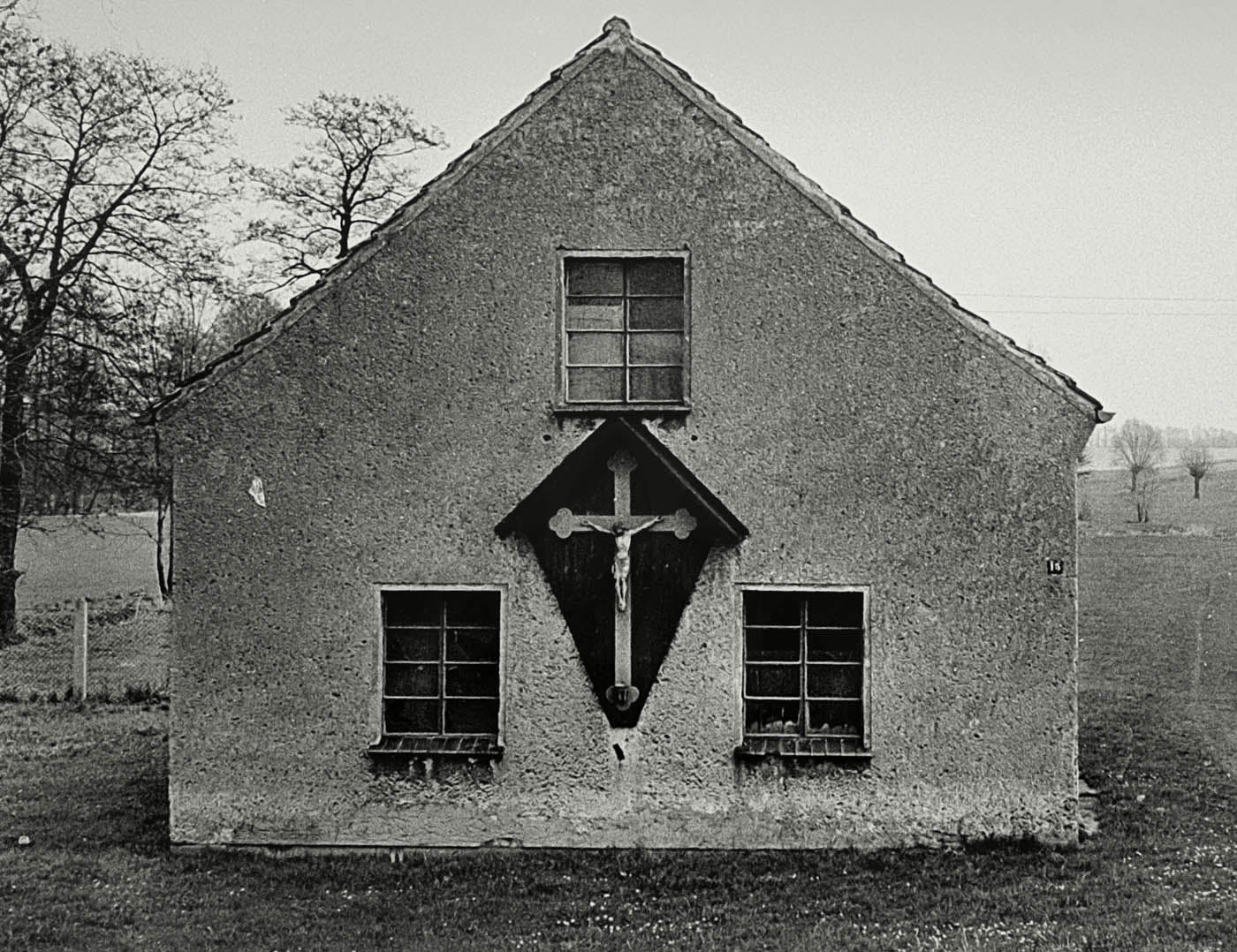
 

Zofia Rydet (Polish, 1911-1997) From 'Sociological Record' 1978-1990


Zofia Rydet (Polish, 1911-1997)
From Sociological Record
1978-1990
© Zofia Rydet, courtesy of the Zofia Rydet Foundation


Photo-gene(ic)

I profoundly admire the work of Polish social documentary photographer Zofia Rydet.

There are no ‘look at me I’m the photographer’ flourishes to her photographs, no egotistical excess, just a version of reality pictured through direct flash photography – rural Polish life, interiors and ancestors, families and marriages, portraits of younger self, older self and the transience of time.

Here lives religion, wallpaper, stencils pasted directly onto thick, rough hewn walls, patterned, fabrics, youth and old age. A boy in his flat with a racing helmet and a poster of Brazilian Formula 1 driver Carlos Reutemann on the wall, bottles of gin and brandy above the door; a young girl, wall plastered with posters of Sting and the band The Police; a woman sitting on a chair, bare feet, rickety bed to left, portraits of wedding day and husband and life behind her. Ancient and modern.

Like August Sander’s unfinished magnum opus People of the 20th Century in which the photographer attempted “to produce a definitive atlas of the German people over the course of his lifetime” (Getty), Zofia Rydet’s archive, record, document, is “an unfinished atlas of memory” of a Polish way of life that is fast disappearing. Her stories of Polish humanity with their huts and habitations speaks to the essential nature, the rootedness, of a people and culture.

The souls are not photogenic, but through Rydet’s direct, engaging process they become photo-gene(ic), archetypes and representatives of ancestors past, present and future which together form the genetic make-up of Polish society. Rydet tells their stories with empathy and compassion, the artist “captivated by something worth preserving – especially the wonderful human stories I hear during these visits.”

These photographs hold the viewers attention because they mean something in this transient world of facile images. As Youssra Manlaykhaf cogently observes,

“Today, in an age when we document ourselves endlessly but often forget what those images mean, Rydet’s work feels newly vital. Her archive is a reminder that photography can still be an act of devotion, a way of saying I see you, and you matter. Rydet didn’t just photograph people; she photographed the fragile dignity of being human. And in doing so, she built a record not just for Poland, but for all of us; an unfinished atlas of memory, tender and eternal.”1

Dr Marcus Bunyan


1/ Youssra Manlaykhaf. “The Unfinished Archive,” on The Photographers’ Gallery website Nd [Online] Cited 05/02/202. Used under fair use conditions for the purposes of education and research


Many thankx to The Photographers’ Gallery for allowing me to publish the photographs in the posting. Please click on the photographs for a larger version of the image.


“I knock on the door, I say ‘hello’, and I shake hands.”


“Even if they don’t publish it… this will remain, not art perhaps, but a document of the times.”


“For me, photography is not just a visual image, but above all, a language I’d like to speak to ordinary people, not great artists. Photography’s greatest value lies in its informative role, its content – not in its transient artistic endeavours. The more my “Record” grows, the more I believe it will have lasting value. I’m convinced I’m on the right track – I still have so many plans, just not enough life ahead of me…”


“I know some people think I’m hypocritical, self-serving, telling these people they’re beautiful. But I truly see something interesting, beautiful in every person, and I’m captivated by something worth preserving – especially the wonderful human stories I hear during these visits. Each person is a story in itself, some very interesting, some instructive, sometimes moving…”


Zofia Ryde


Interview with the Zofia Rydet Foundation | The Photographers’ Gallery

Delve into the life and work of the warmly remembered Polish social documentarian, Zofia Rydet in an interview with the Zofia Rydet Foundation and Clare Grafik, Head of Exhibitions, The Photographers’ Gallery.

Sociological Record by Zofia Rydet is a sweepingly comprehensive documentary portrait of Polish domestic life which spans decades, eras, regions and cultures.


Head curator and art historian Karolina Ziębińska explorie the work and legacy of Zofia Rydet (1911-1997), one of Poland’s most significant post-war photographers.

Best known for her lifelong project The Sociological Record (1978-1990), Rydet sought to systematically document the interiors and inhabitants of Polish homes, creating a vast visual archive of everyday life during a time of profound social and political transformation.

In this talk, ZiÄ™biÅ„ska introduce Rydet’s distinctive approach to photography, situating her practice within the shifting cultural, historical and ideological contexts of 20th-century Poland. It also spotlights other areas of Rydet’s practice and is an opportunity to consider how Rydet’s work resonates within broader conversations about identity, memory and the role of the photograph as social document.
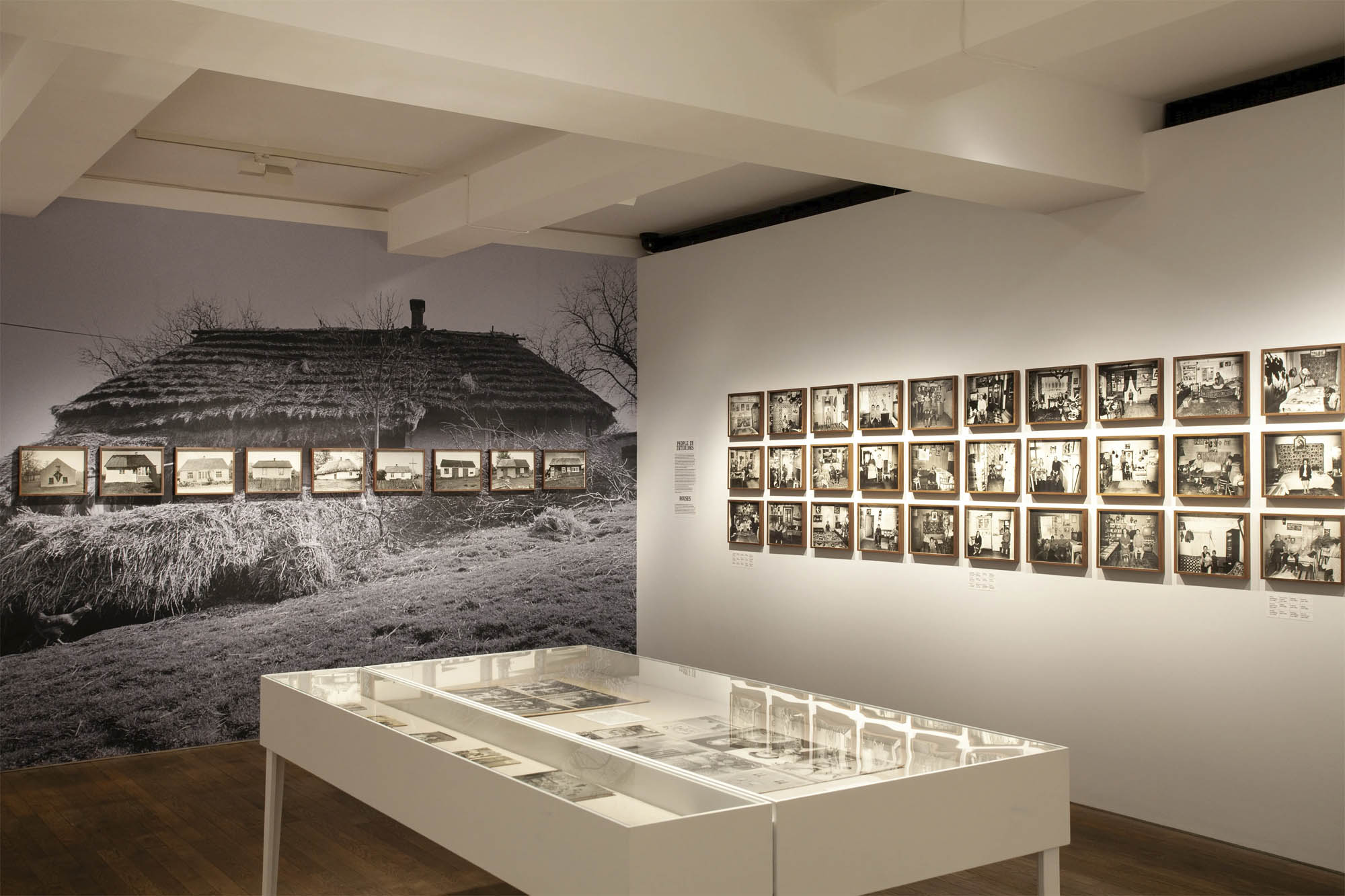
 

Installation view of the exhibition 'Zofia Rydet Sociological Record' at The Photographers' Gallery, London


Installation view of the exhibition Zofia Rydet: Sociological Record at The Photographers’ Gallery, London


From 1978, when she was 67, Zofia Rydet (1911-1997) set out to photograph the inside of every Polish household. She would approach a home unannounced, knock, and warmly introduce herself and ask the people living there if they would like to take part in her project.

Rydet was always on the road, with a camera in her hand. For nearly three decades, she photographed people in their homes, still lives, building exteriors and landscapes. She also returned to the same houses several years after she first visited to document the transformation of rural Poland. The result – Sociological Record – is a monumental project and one of the most important achievements in 20th century Polish photography.

Rydet used photography to express everyday stories and capture the essence of what it meant to be human. Despite the project’s epic scope, the individual portraits often feel intimate and revealing. Her careful and considered practice spans decades and she worked on the project until her death in 1997.

Text from The Photographers’ Gallery website
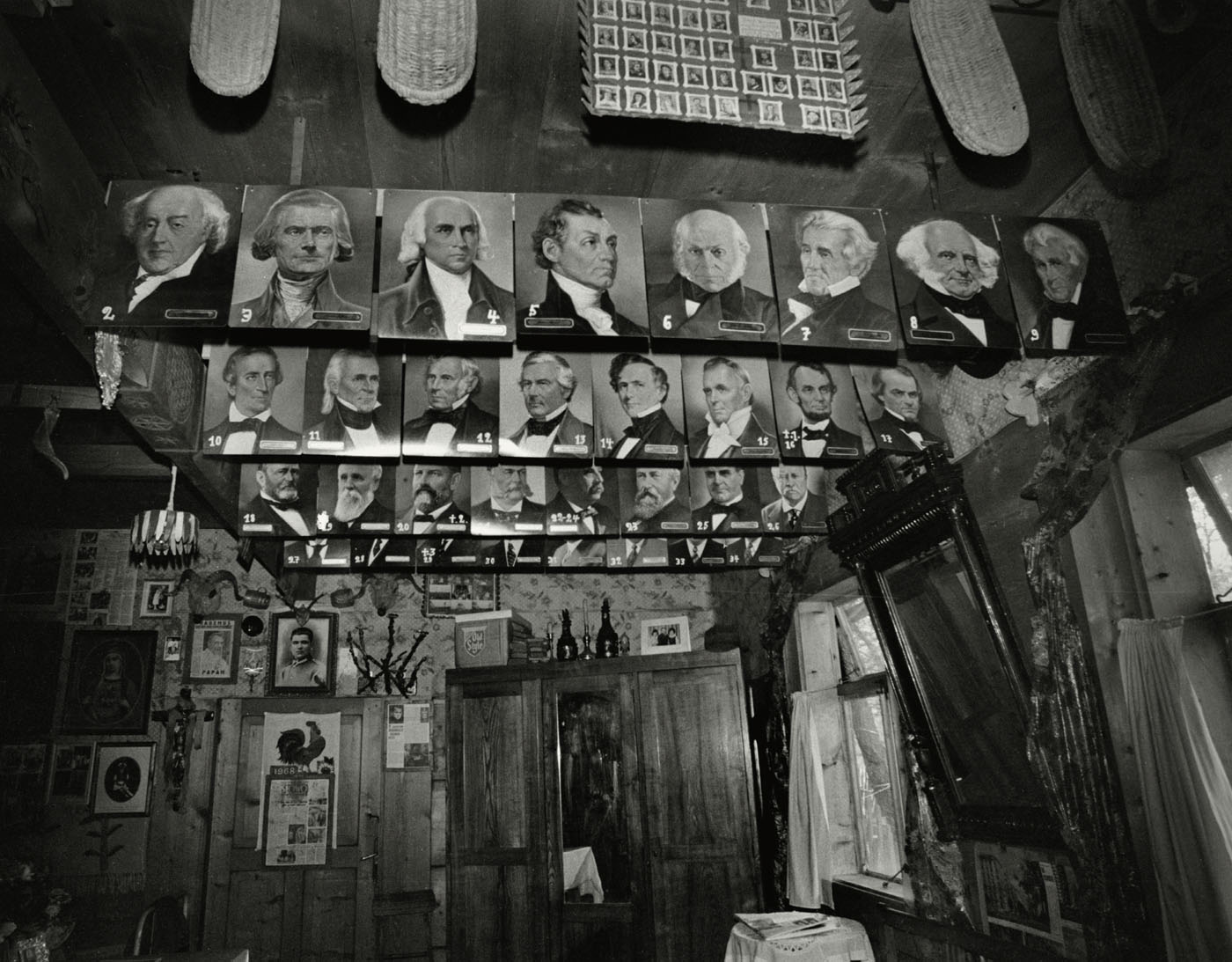
 

Zofia Rydet (Polish, 1911-1997) From 'Sociological Record' 1978-1990


Zofia Rydet (Polish, 1911-1997)
From Sociological Record
1978-1990
© Zofia Rydet, courtesy of the Zofia Rydet Foundation
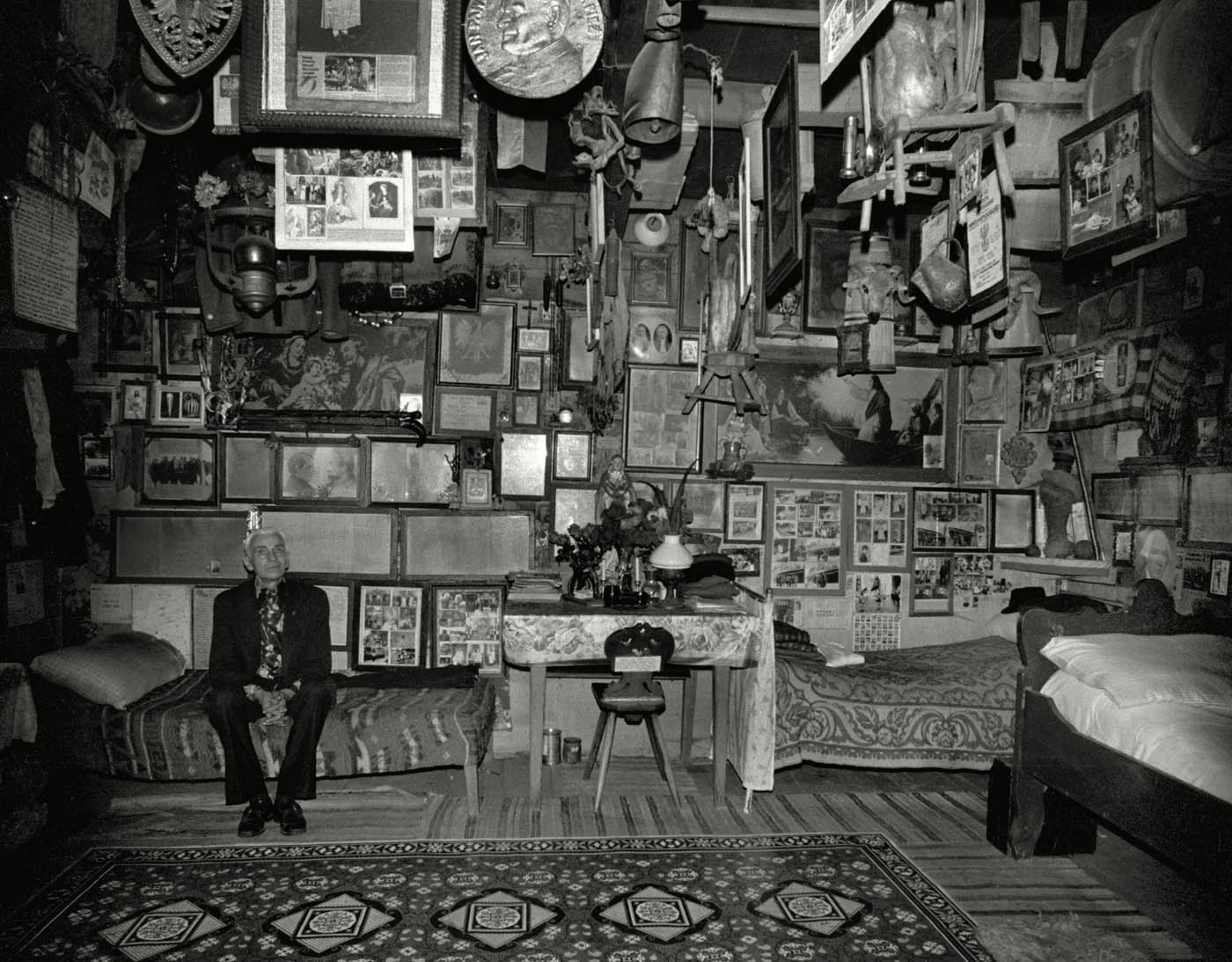
 

Zofia Rydet (Polish, 1911-1997) From 'Sociological Record' 1978-1990


Zofia Rydet (Polish, 1911-1997)
From Sociological Record
1978-1990
© Zofia Rydet, courtesy of the Zofia Rydet Foundation
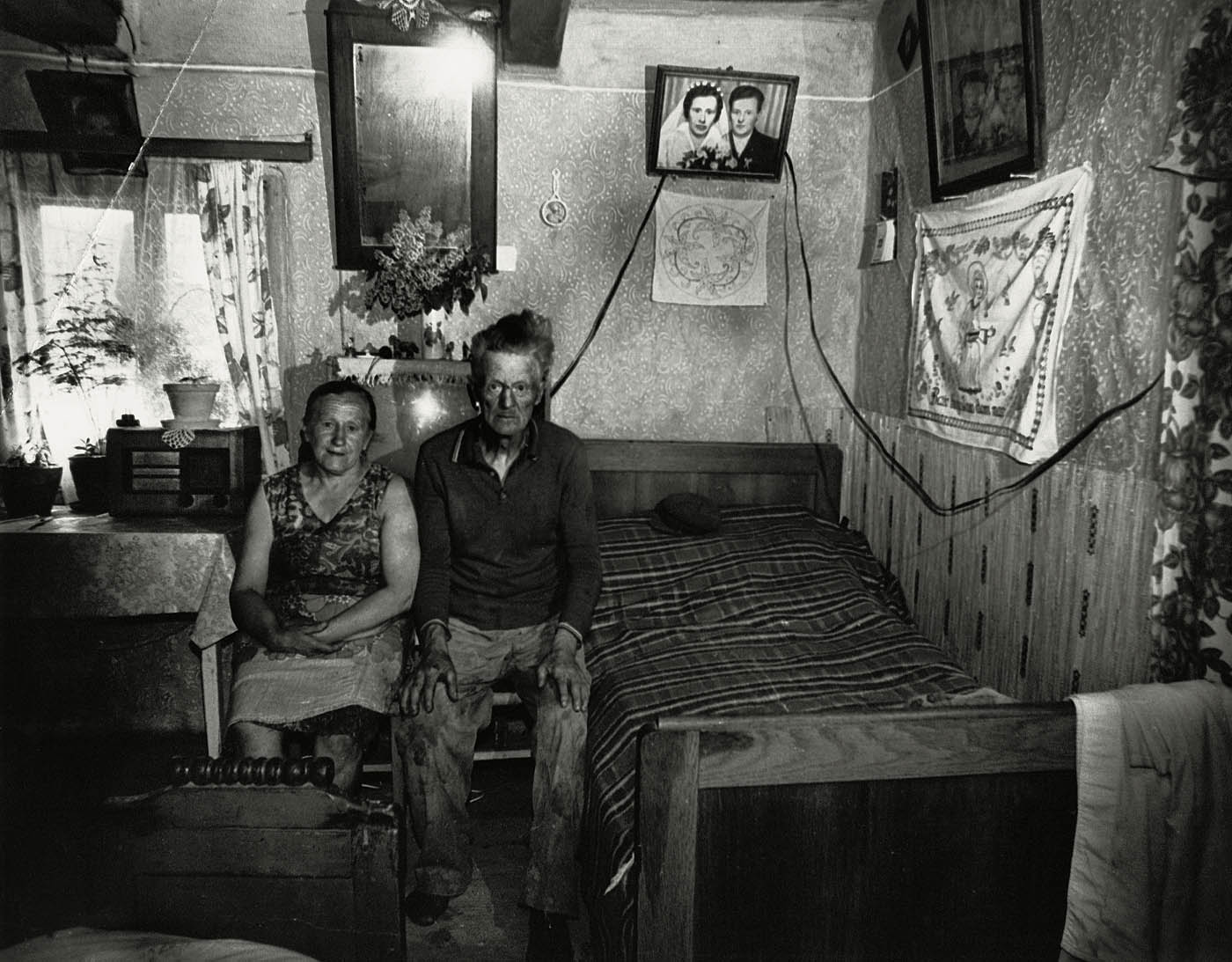
 

Zofia Rydet (Polish, 1911-1997) From 'Sociological Record' 1978-1990


Zofia Rydet (Polish, 1911-1997)
From Sociological Record
1978-1990
© Zofia Rydet, courtesy of the Zofia Rydet Foundation


Rydet is best known for The Sociological Record â€“ an extraordinary lifelong project documenting thousands of domestic interiors and portraits across Poland from the late 1970s onwards. Her work captured the nuances of everyday life during a time of rapid social and political change, revealing how identity, class and belonging were expressed within the home. For me, Rydet’s photographs are a commentary on a particular period in time, a transition from communism to capitalism, a shift from rural to the urban and a way of seeing that span the personal and the collective. …

I discussed Sociological Record with my mum who also visited the exhibition. We were both deeply moved by the large vinyl image of a straw house surrounded by smaller photographs of other homes. It is heartwarming to see such intimate, everyday experiences documented and acknowledged in the Gallery – moments that resonate deeply with many Polish people living in the UK. …

The recurring presence of John Paul II in Rydet’s work also struck a familiar chord; his image continues to appear in Polish households both in the UK and in Poland, carrying with it layers of cultural memory, belonging, but also conflict. Some of Rydet’s portraits – with their lace curtains, tablecloths, patterned rugs and carefully arranged family photographs – reminded me of our own home in Poland. They share an aesthetic and emotional language that feels instantly recognisable: the way ancestors’ portraits watch quietly from the walls, the mix of pride and modesty in how people present their space. To see this visual culture acknowledged and valued within a major British art institution feels both affirming and long awaited – a recognition of a Polish history that has long existed yet has rarely been seen.

Zula Rabikowska. “Zula Rabikowska responds to Zofia Rydet’s Sociological Record,” on The Photographers’ Gallery website Nd [Online] Cited 06/02/2026. Used under fair use conditions for the purposes of education and research
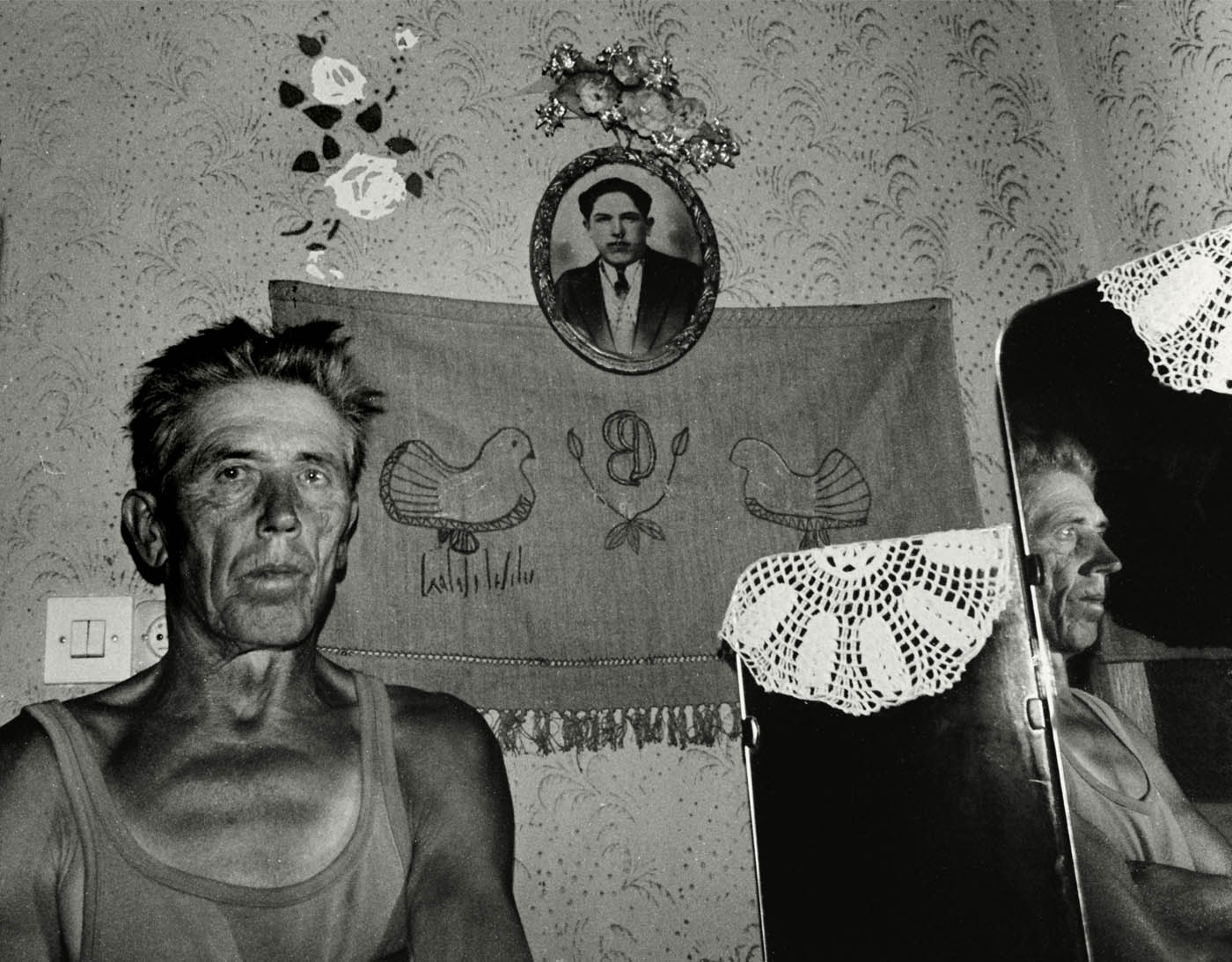
 

Zofia Rydet (Polish, 1911-1997) From 'Sociological Record' 1978-1990


Zofia Rydet (Polish, 1911-1997)
From Sociological Record
1978-1990
© Zofia Rydet, courtesy of the Zofia Rydet Foundation
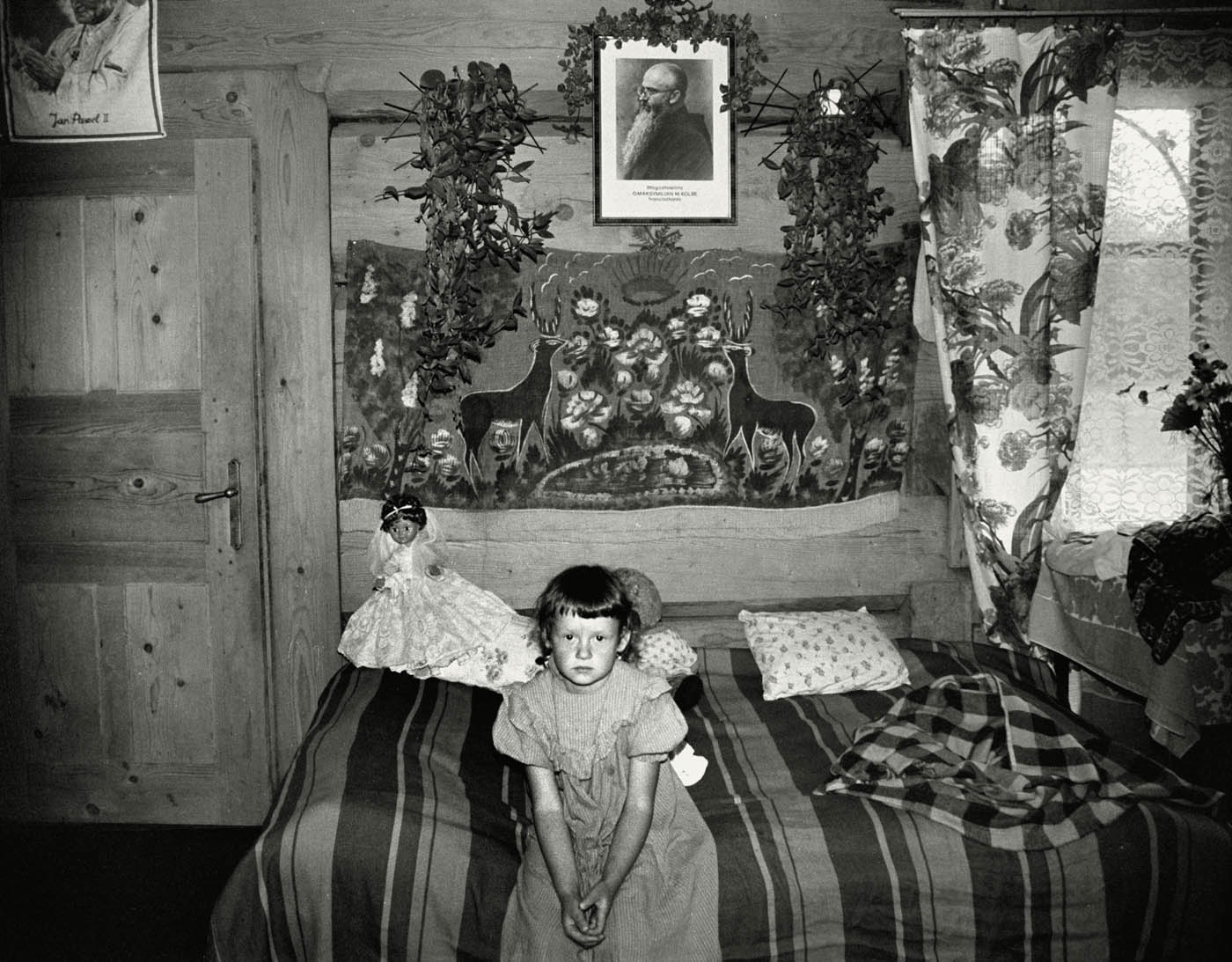
 

Zofia Rydet (Polish, 1911-1997) From 'Sociological Record' 1978-1990


Zofia Rydet (Polish, 1911-1997)
From Sociological Record
1978-1990
© Zofia Rydet, courtesy of the Zofia Rydet Foundation
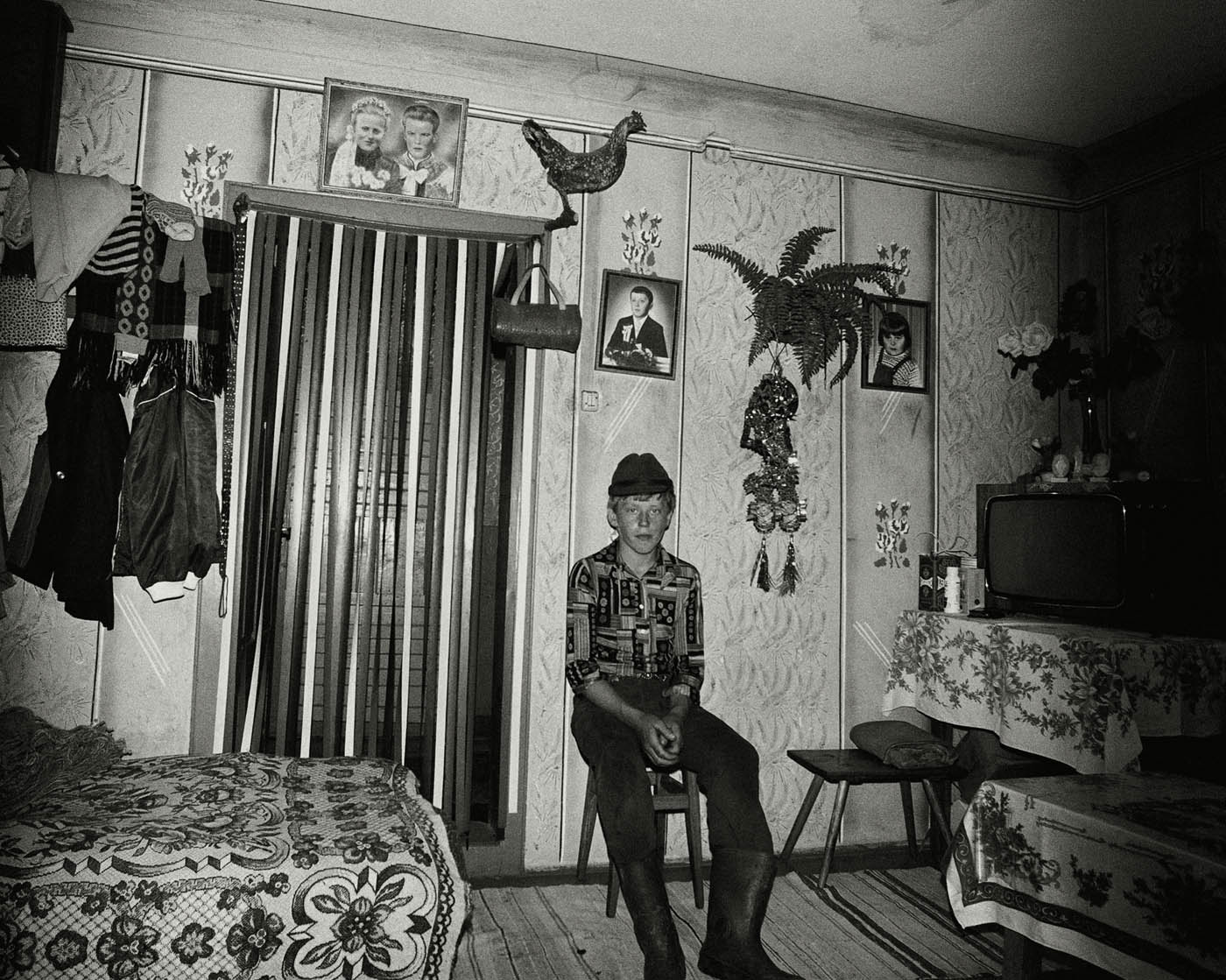
 

Zofia Rydet (Polish, 1911-1997) From 'Sociological Record' 1978-1990


Zofia Rydet (Polish, 1911-1997)
From Sociological Record
1978-1990
© Zofia Rydet, courtesy of the Zofia Rydet Foundation
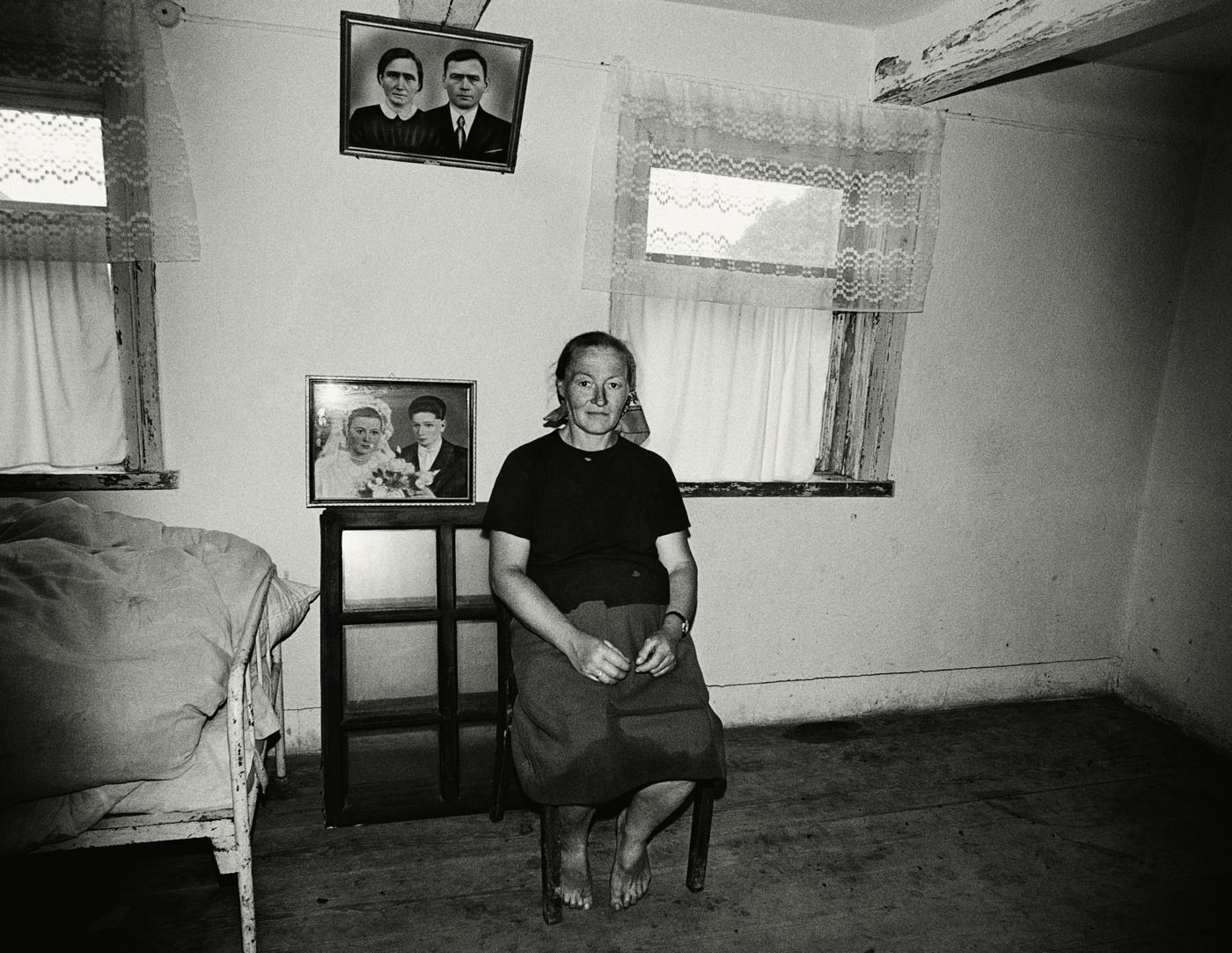
 

Zofia Rydet (Polish, 1911-1997) From 'Sociological Record' 1978-1990


Zofia Rydet (Polish, 1911-1997)
From Sociological Record
1978-1990
© Zofia Rydet, courtesy of the Zofia Rydet Foundation


The Unfinished Archive

Delve into the life and work of the warmly remembered Polish social documentarian, Zofia Rydet

By the time Zofia Rydet began her greatest work, she was already in her sixties, an age when most photographers might be reflecting on what they’ve accomplished, not setting out to capture an entire nation. Yet that’s exactly what she did. From the late 1970s until a few years before the end of her life, Rydet roamed through towns and villages across Poland, camera in hand, knocking on doors and asking to come inside. 

Her project, Sociological Record (Zapis socjologiczny), became one of the most extraordinary photographic archives of the twentieth century: over 20,000 black-and-white portraits, most taken inside a person’s home. The format rarely changed. Her subjects stand in their living rooms, surrounded by furniture, family photos, crucifixes, embroidery, clocks and wallpaper that tells as much of a story as their faces do. Every image is composed with the same direct flash, the same square frame, and the same feeling that time has briefly stood still. 

At first glance, Rydet’s portraits might seem uniform, almost bureaucratic in their repetition. But look longer, and the sameness dissolves. You begin to notice the delicate individuality in each frame: the proud tilt of a chin, a mismatched chair, a child’s toy tucked behind an armchair. Each photograph becomes a world of its own.

Rydet was born in 1911 in StanisÅ‚awów, a city that no longer exists as it once did. Over her lifetime, Poland’s borders shifted, wars came and went, and entire ways of life vanished. Perhaps that’s why she photographed with such urgency. She once said she wanted to “save people from disappearing,” and in Sociological Record, that impulse becomes visible. Her archive reads like a collective portrait of Poland on the brink of transformation, the last breaths of a rural and domestic culture before modernity swept through. “I can already see the difference now, three or four years later – the huts are disappearing, being rebuilt… I miss the houses near Warsaw, but I’m afraid to go there…” 

Before she began this monumental project, Rydet had already spent two decades photographing daily life: children playing in the streets, fishermen, women at markets. Her early images are tender and human, often filled with humour. But in the late 1970s, she found her true calling. Carrying her medium-format camera and a small flash, she entered the homes of strangers, sometimes by invitation, sometimes by bold insistence, and created what she saw as a kind of “photographic sociology.”

What’s remarkable is that Rydet’s approach, while systematic, never feels cold. Her use of flash flattens space so that every detail, faces, furniture, wallpaper and light becomes equally significant. It’s as if she believed that the soul of a person might just as easily reside in the pattern of a curtain as in their expression.

Her images speak not only of individuals but of collective identity: Polish Catholic iconography, working-class aspiration, domestic pride. And beneath it all, the quiet ache of time passing. In one photo, a couple stands shoulder to shoulder beneath their wedding portrait, two images separated by decades, yet bound by the same gaze. In another, a young boy stares directly at the camera, his future still unwritten.

Rydet continued photographing well into the 1980s, often assisted by younger artists who recognised the importance of what she was building. She never considered the project finished; how could she? The very premise, recording the human condition through its domestic spaces, was infinite by nature. When she died in 1997, she left behind a sprawling, incomplete monument to ordinary lives.

Today, in an age when we document ourselves endlessly but often forget what those images mean, Rydet’s work feels newly vital. Her archive is a reminder that photography can still be an act of devotion, a way of saying I see you, and you matter. Rydet didn’t just photograph people; she photographed the fragile dignity of being human. And in doing so, she built a record not just for Poland, but for all of us; an unfinished atlas of memory, tender and eternal.

Youssra Manlaykhaf. “The Unfinished Archive,” on The Photographers’ Gallery website Nd [Online] Cited 05/02/202. Used under fair use conditions for the purposes of education and research
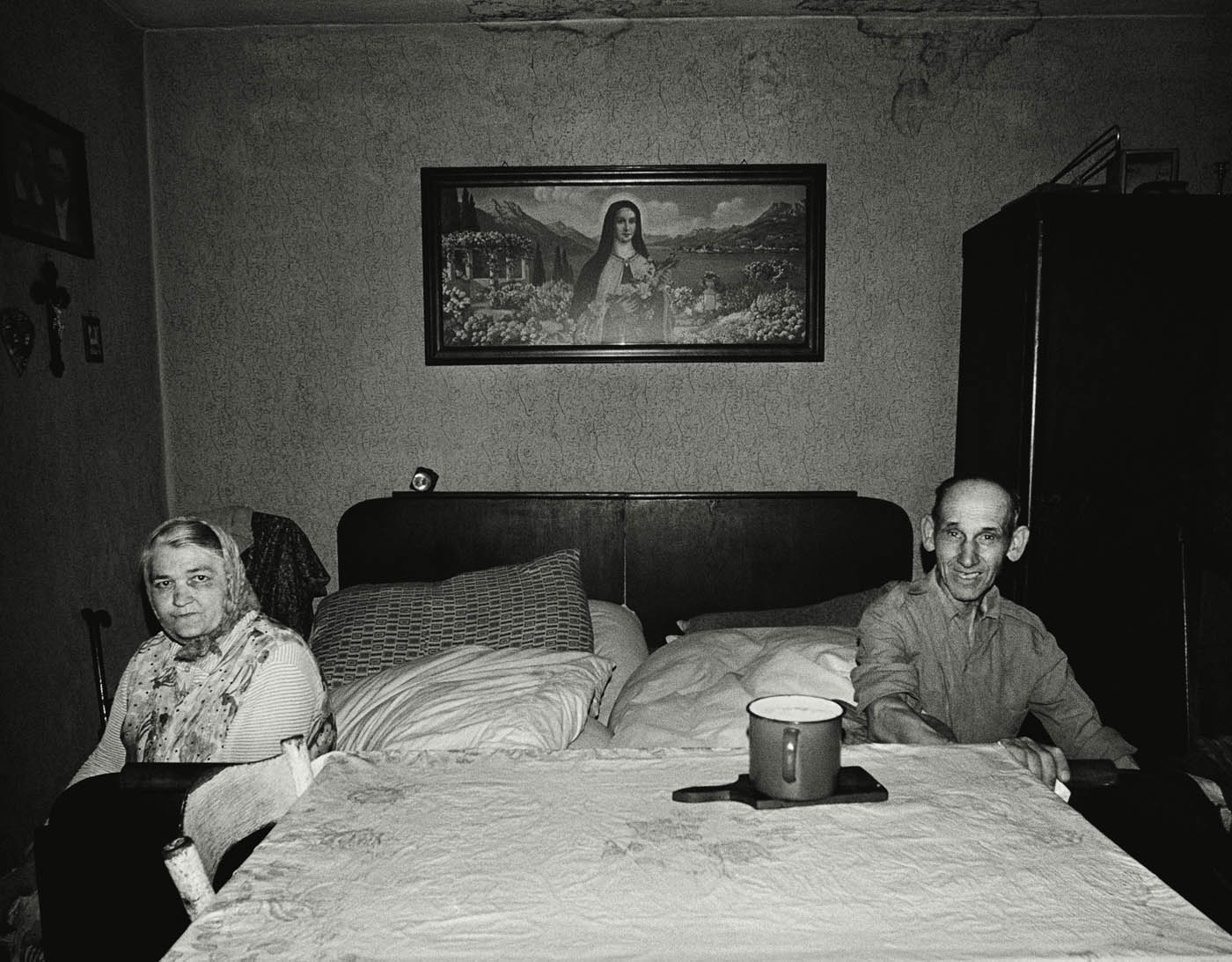
 

Zofia Rydet (Polish, 1911-1997) From 'Sociological Record' 1978-1990


Zofia Rydet (Polish, 1911-1997)
From Sociological Record
1978-1990
© Zofia Rydet, courtesy of the Zofia Rydet Foundation
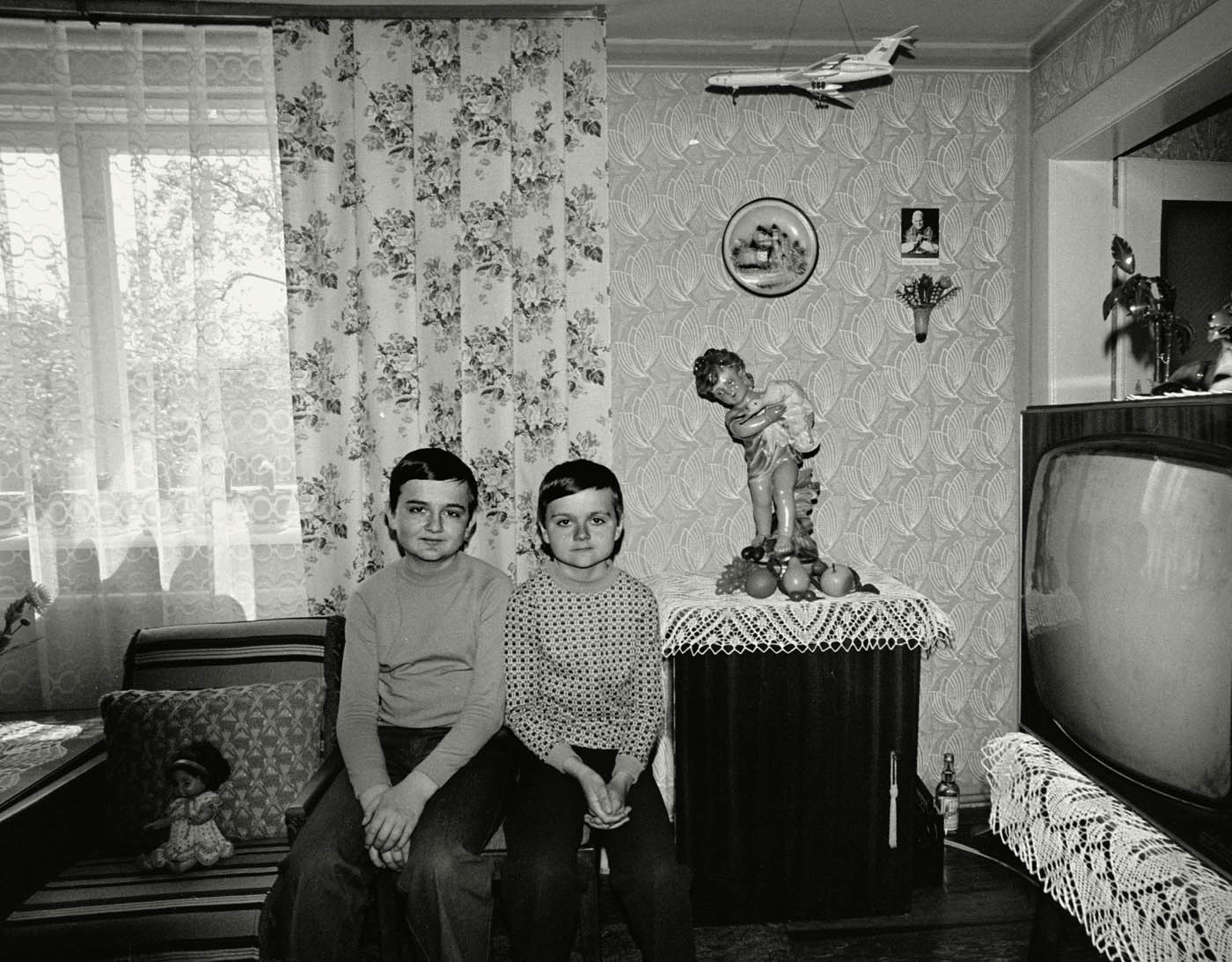
 

Zofia Rydet (Polish, 1911-1997) From 'Sociological Record' 1978-1990


Zofia Rydet (Polish, 1911-1997)
From Sociological Record
1978-1990
© Zofia Rydet, courtesy of the Zofia Rydet Foundation
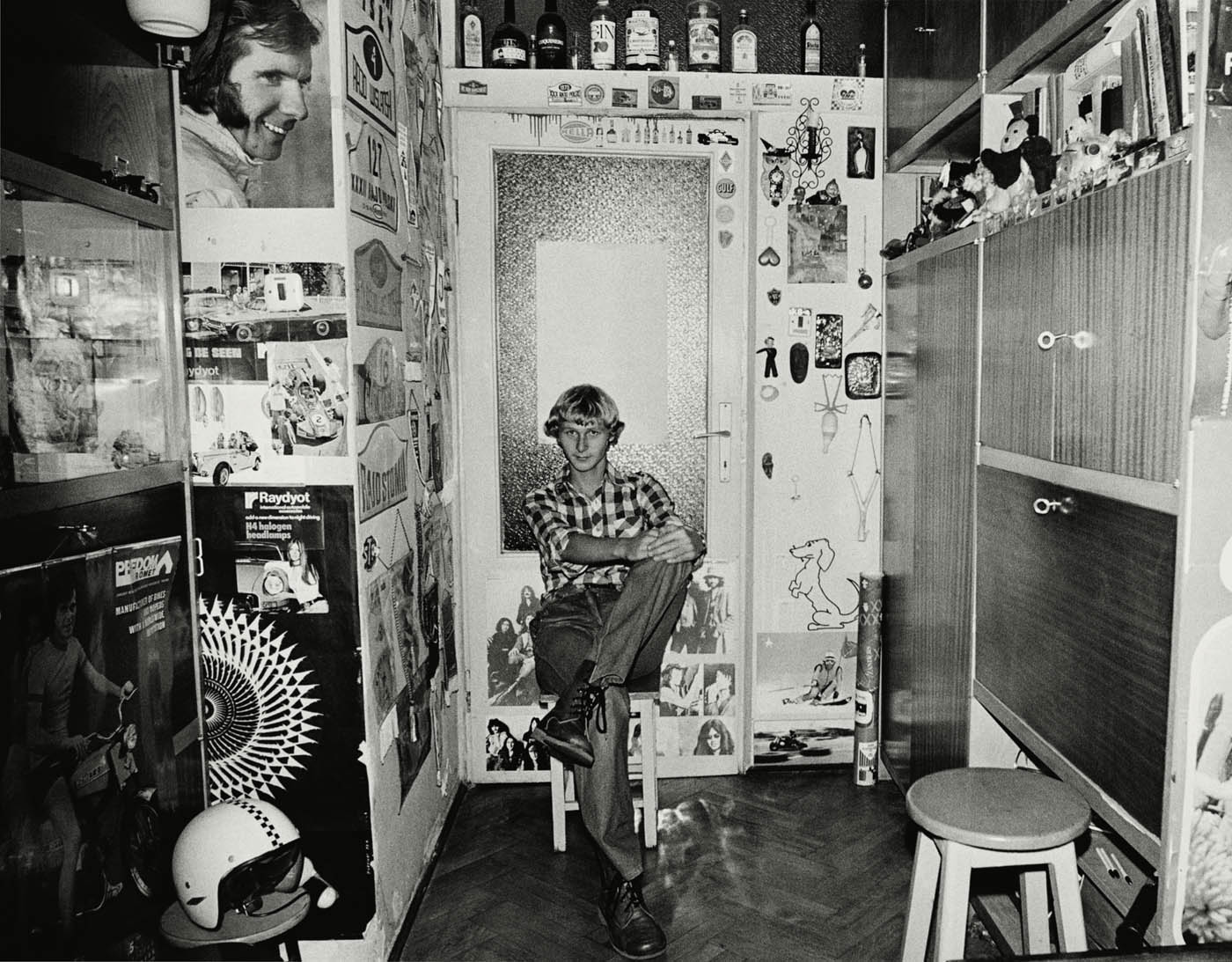
 

Zofia Rydet (Polish, 1911-1997) From 'Sociological Record' 1978-1990


Zofia Rydet (Polish, 1911-1997)
From Sociological Record
1978-1990
© Zofia Rydet, courtesy of the Zofia Rydet Foundation
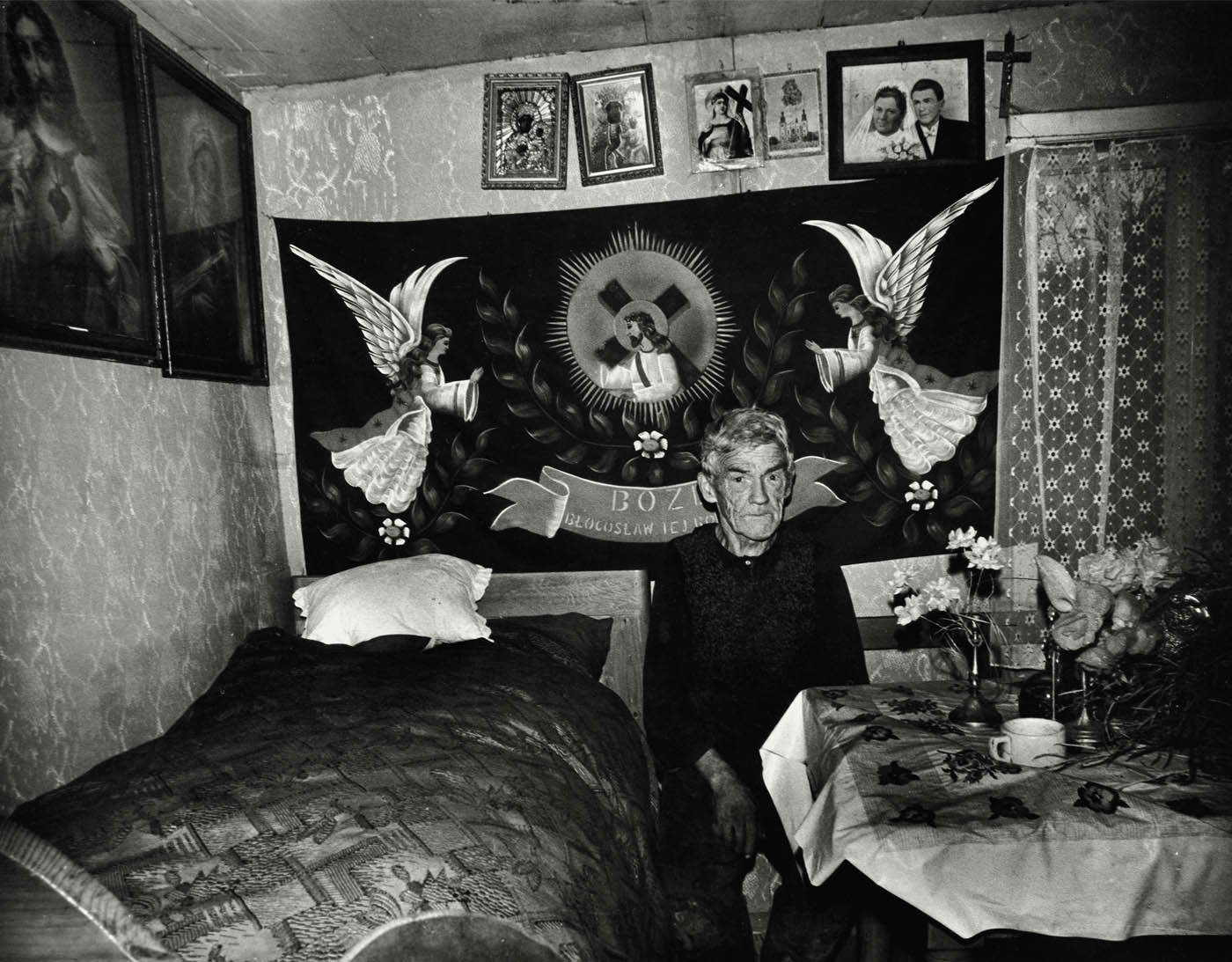
 

Zofia Rydet (Polish, 1911-1997) From 'Sociological Record' 1978-1990


Zofia Rydet (Polish, 1911-1997)
From Sociological Record
1978-1990
© Zofia Rydet, courtesy of the Zofia Rydet Foundation
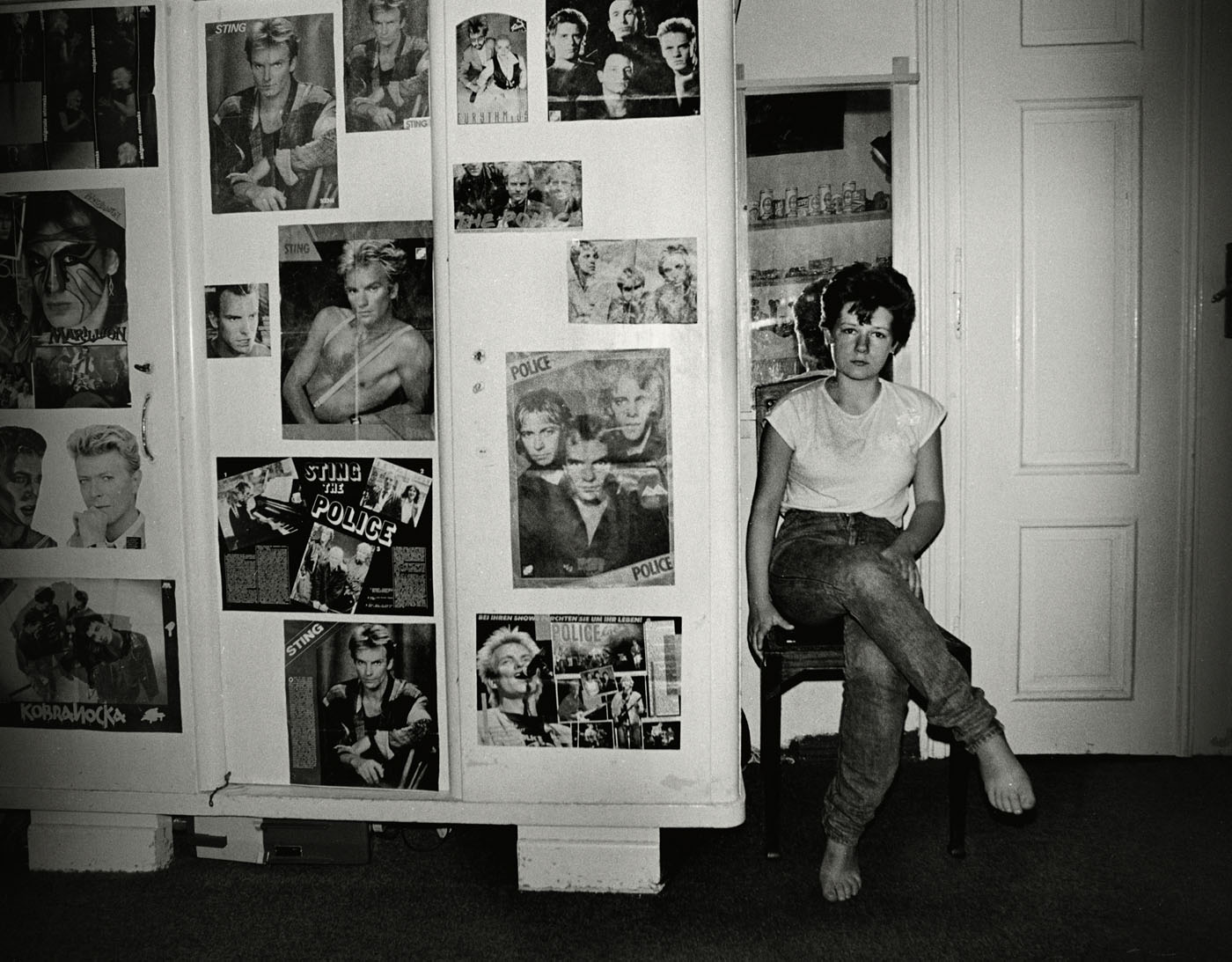
 

Zofia Rydet (Polish, 1911-1997) From 'Sociological Record' 1978-1990


Zofia Rydet (Polish, 1911-1997)
From Sociological Record
1978-1990
© Zofia Rydet, courtesy of the Zofia Rydet Foundation
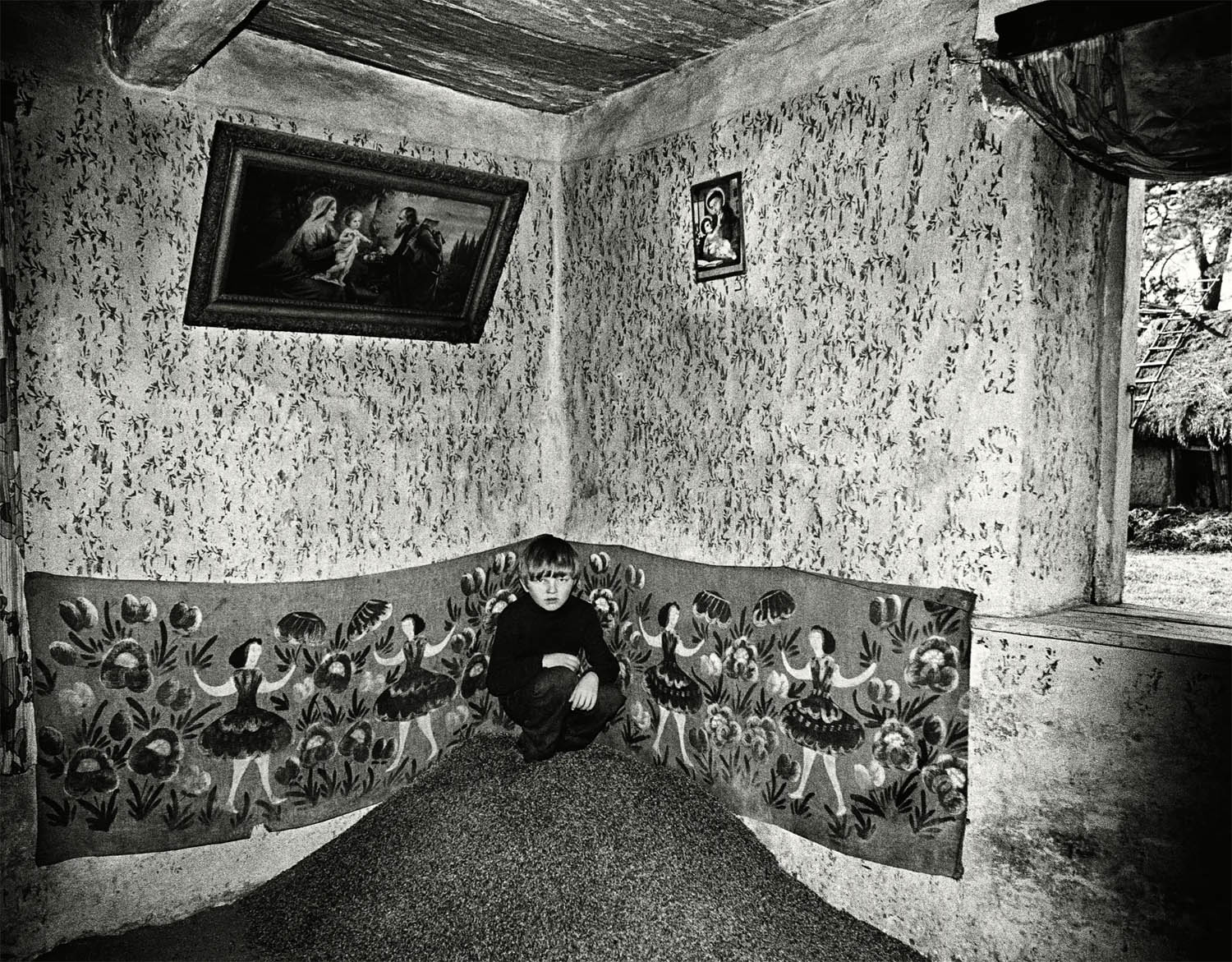
 

Zofia Rydet (Polish, 1911-1997) From 'Sociological Record' 1978-1990


Zofia Rydet (Polish, 1911-1997)
From Sociological Record
1978-1990
© Zofia Rydet, courtesy of the Zofia Rydet Foundation


Opening this October at The Photographers’ Gallery, as part of the UK/Poland Season 2025, Sociological Record is a landmark photographic project undertaken by Polish photographer Zofia Rydet. The series is a comprehensive documentary portrait of Polish domestic life which spans decades, eras, regions and cultures.

Starting in 1978, aged 67 years old, Zofia Rydet (1911-1997) set out on a mammoth task to photograph the inside of ‘every’ Polish household. Motivated by a desire to capture the ordinary, unsung populations, particularly of the countryside – but also covering towns and cities – Rydet would become increasingly obsessed with her mission to record the cultures and people that she sought out.

Rydet cut an unlikely figure on her field trips to different regions, a diminutive woman travelling by bus or with the help of friends who could drive her. Approaching households unannounced, she would knock and warmly introduce herself, asking those living there if they would like to take part in her project. Using a newly acquired wide angle lens and flash, Rydet was able to capture often darkened interiors of homes and their inhabitants in great detail. Asking her sitters not to smile and look straight ahead into the camera lens, her subjects are posed in their homes, rich in personal histories.

As the series progressed, Rydet would identify different categories within the Sociological Record such as ‘Women on Doorsteps’, ‘Professions’, ‘The Ill’, ‘Road Signs’, ‘Windows’, ‘Houses’ and ‘Televisions’. She would also come to identify more philosophical themes such as ‘Presence’ – noting the omniscience of the Polish Pope John Paul II’s image (inaugurated the same year Rydet started the Record in 1978) within Polish households. Others included ‘The Myth of Photography’ focusing on the central position and significance of family photographs within the home, such as traditional, hand-painted studio photographs of married couples in homes with little or no other decoration.

Through the cumulative interactions with her sitters, sometimes returning to households more than once over time, Rydet identified a change in her own personal and artistic journey and the role photography played within it. Creating over 20,000 images, many of which by the end of the project were never printed – Sociological Record is a monumental project and one of the most important achievements in 20th century Polish photography.

Rydet said of her hopes for the work: “Even if they don’t publish it… this will remain, not art perhaps, but a document of the times.” Rydet continued working on the Record until 1990, seven years before she died aged 86 years old.

This is the first substantial exhibition of Zofia Rydet’s Sociological Record in the UK. It focuses on the small proportion of rare prints she made from the series in her home darkroom, including the significant ‘People in Interiors’ works, and other sub-series such as ‘Women on Doorsteps’ and ‘Presence’. It will also feature ephemera from Rydet’s archives and original publications. Polish filmmaker Andrzej Różycki’s 1989 documentary film about Rydet, ‘Endlessly Distant Roads’, as well as Polish photographer Anna Beata Bohdziewicz’s documentary portraits of Rydet at work will also be on show.

Zofia Rydet: Sociological Record is part of the UK/Poland Season 2025. It is produced by The Photographers’’’ Gallery in partnership with the Adam Mickiewicz Institute (co-financed by the Ministry of Culture and National Heritage), Poland, and the Zofia Rydet Foundation.

A new English catalogue will accompany the exhibition featuring texts by Zofia Rydet and 100 images from the Sociological Record series. Edited by co-curators of the exhibition, Clare Grafik and Karol Hordziej, image edit with the collaboration of Wojciech Nowicki. Produced by Lola Paprocki and designed by Brian Kanagaki / Kanagaki Studio. Co-published by The Photographers’ Gallery and Palm* Studios, with support from the Adam Mickiewicz Institute.

About Zofia Rydet

Zofia Rydet was born in 1911 in Stanisławów, Galicia – then part of the Austro-Hungarian Empire, later Poland, now Ivano-Frankivsk, Ukraine. The daughter of a Polish lawyer and judge who served the rural populations of the area, her first photographs were in the regions of south-eastern Polish borderlands.

Following the brutal and tumultuous occupation of Nazi Germany in World War II and the region’s absorption into the Ukrainian Soviet Socialist Republic, her family fled into the newly defined borders of Poland at the end of the war to Rabka and then Bytom in Upper Silesia. There she would focus on her passion for photography, as one of the few women members of the Gliwice Photography Society, which she joined in 1954. She met other avant-garde photographers, became a photography teacher and began sending her photographs to international and national competitions.

Her artistic career developed through many distinct but overlapping phases which included the seminal series and photobook Little Man (Mały Człowiek), which drew on her many photographs of children taken during her national and international travels, highlighting humanist approaches to documentary photography and emphasising the complexities and challenges of childhood. Her long-standing surrealist collage series The World of Feelings and Imagination (Świat uczuć i wyobraźni) also marked an important expressive phase in her creative practice. Sociological Record (Zapis socjologiczny) would become her final and largest artistic project.

About Adam Mickiewicz Institute

The Adam Mickiewicz Institute (AMI) brings Polish culture to people around the world. Being a state institution, it creates lasting interest in Polish culture and art through strengthening the presence of Polish artists on the global stage. It initiates innovative projects, supports international cooperation and cultural exchanges. It promotes the work of both established and promising artists, showing the diversity and richness of our culture. The Adam Mickiewicz Institute is also responsible for the Culture.pl website, a comprehensive source of knowledge about Polish culture. For more information please visit: www.iam.pl.

Press release from The Photographers’ Gallery
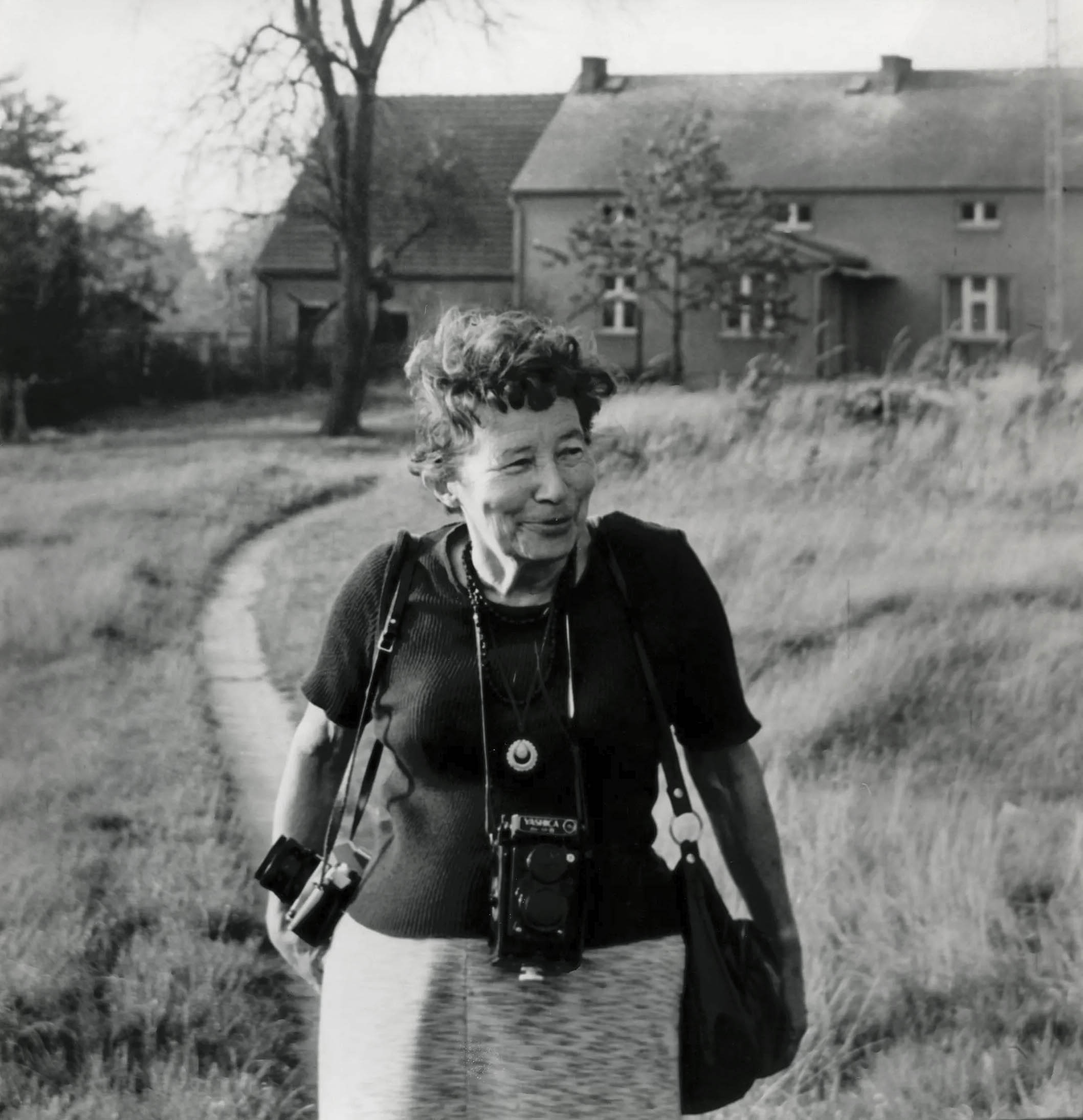
 

Portrait of Zofia Rydet Nd
 

Portrait of Zofia Rydet Nd


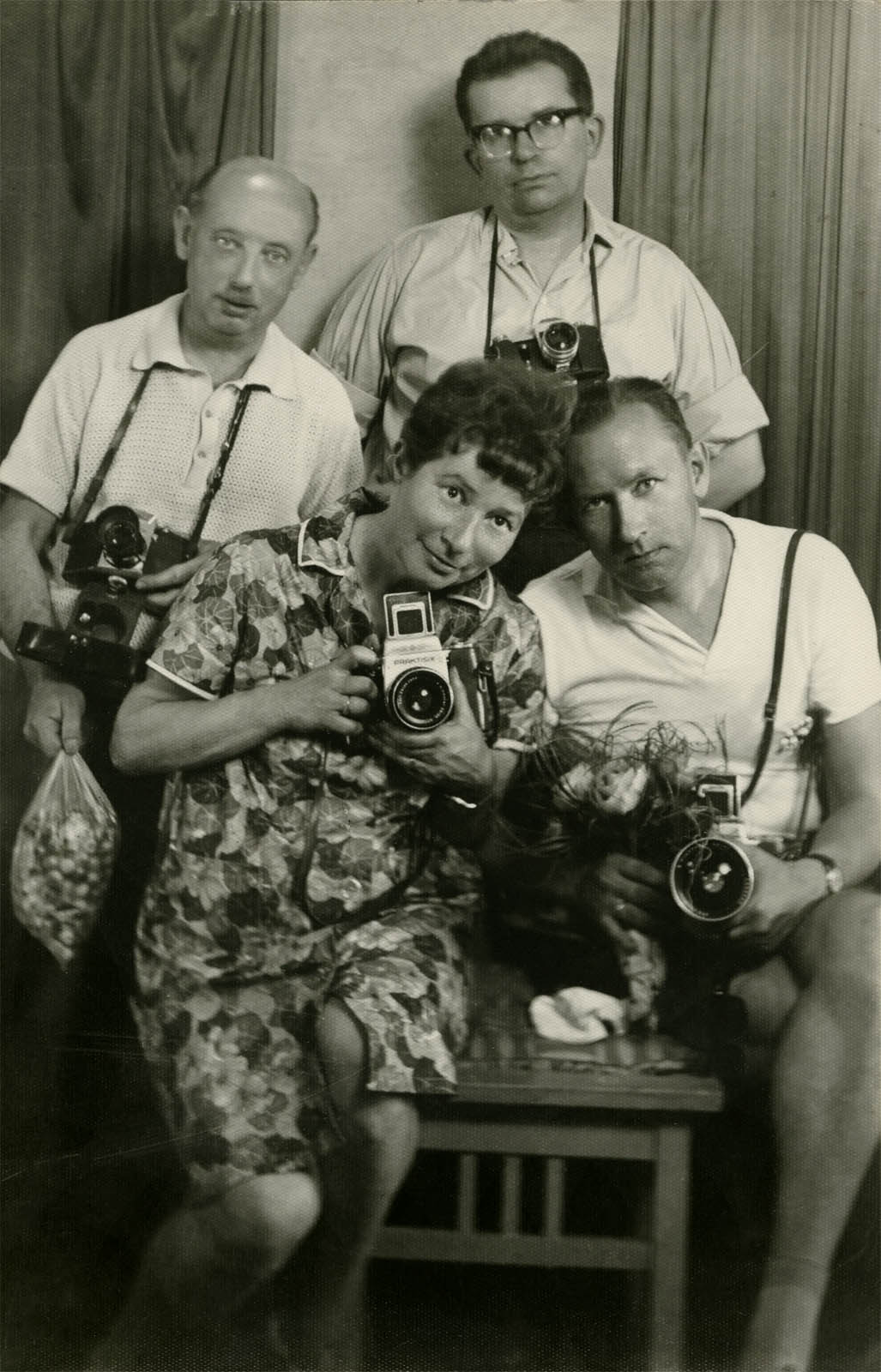
Zofia Rydet and photographer friends Nd
 

Zofia Rydet and photographer friends Nd


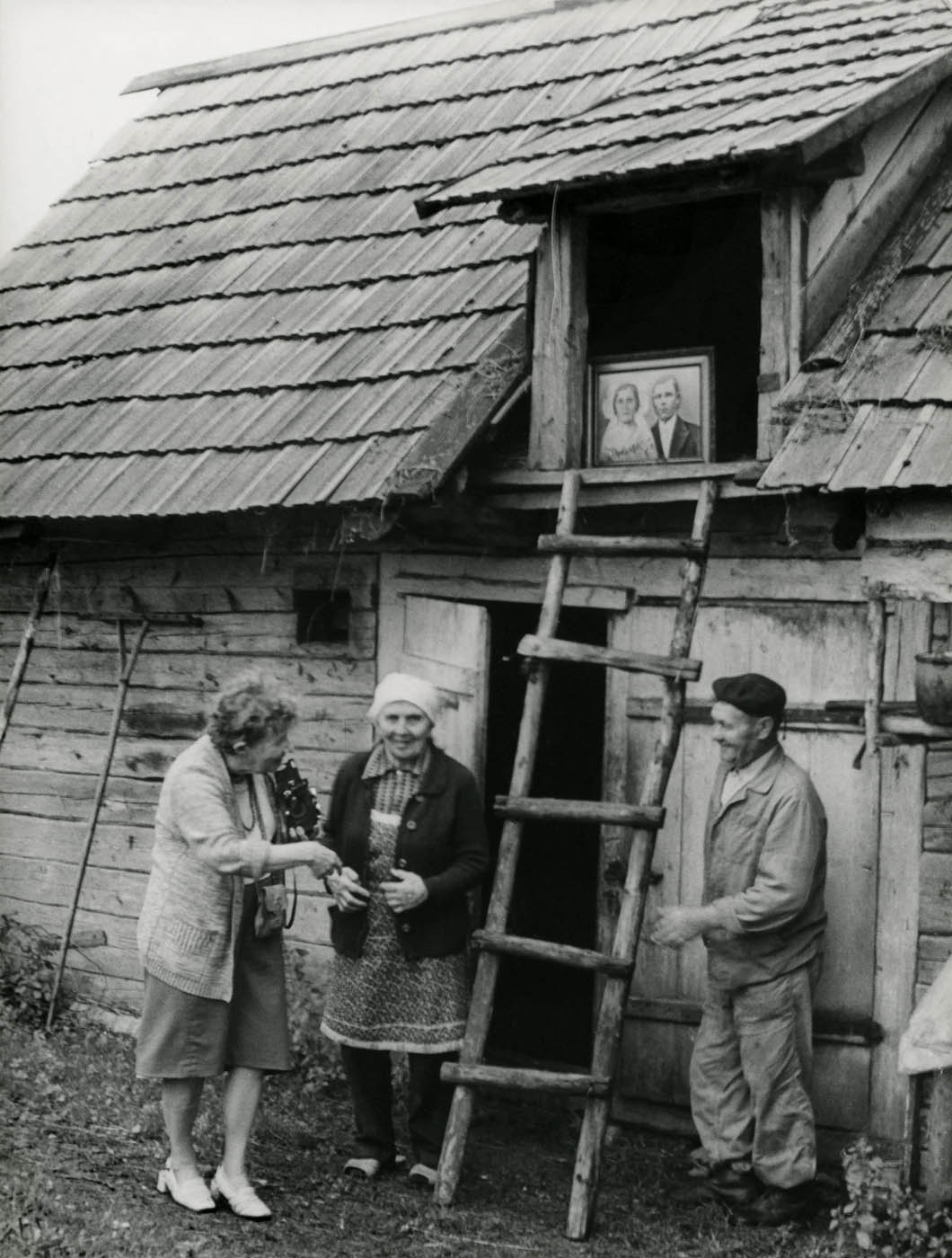
Zofia Rydet with camera and subjects Nd


Zofia Rydet with camera and subjects Nd


The Photographers’ Gallery
16-18 Ramillies Street
London
W1F 7LW

Opening hours:
Mon – Wed: 10.00 – 18.00
Thursday – Friday: 10.00 – 20.00
Saturday: 10.00 – 18.00
Sunday: 11.00 – 18.00

The Photographers’ Gallery website

LIKE ART BLART ON FACEBOOK

Back to top

Exhibition: ‘Zbigniew DÅ‚ubak – Heir of the Avant-Garde’ at Fondation Henri Cartier-Bresson, Paris

Exhibition dates: 17th January – 29th April, 2018

Curator: The exhibition is curated by Karolina Ziebinska-Lewandowska, curator at the Centre Pompidou.


Zbigniew Dłubak (Polish, 1921-2005) 'Untitled' c. 1946 from the exhibition 'Zbigniew Dłubak – Heir of the Avant-Garde' at Fondation Henri Cartier-Bresson, Paris, Jan - April, 2018


Zbigniew Dłubak (Polish, 1921-2005)
Untitled
c. 1946
© Armelle Dłubak/Archeology of Photography Foundation, Warsaw


Photography, the object, conceptual art, reality and the empty sign.

An interesting artist who warrants further investigation. The text and images provide an introduction, but I really need further evidence before I can make informed comment.

Dr Marcus Bunyan


Many thankx to the Fondation HCB for allowing me to publish the photographs in the posting. Please click on the photographs for a larger version of the image.


“I’m not interested in stylistic effects, whether they’re derived from modern art or conceptualism. I use shapes, ideas, colours, words, photographs and actions as my materials in a way that best suits my art, to create an empty sign in the context of the reality I live in.”


“The social role of art consists in introducing the factor of negation into the human consciousness, it challenges the rigidity of systems and conventions in the rendering of reality. Art itself is evolution, it’s the introduction of all new means of expression.”


“Photography is in phase with the rhythm of life. It impatiently looks for new images. The more effigies it accumulates, the greater its appetite; it’s increasingly obsessive. Not only does it record but, subject to the imagination, it also creates new phenomena. It constantly takes us on new adventures, it shakes us up, and does not allow us to rest.”


Zbigniew Dłubak


Zbigniew Dłubak (Polish, 1921-2005) 'I recall the solitude of the straits' 1948 from the exhibition 'Zbigniew Dłubak – Heir of the Avant-Garde' at Fondation Henri Cartier-Bresson, Paris, Jan - April, 2018


Zbigniew Dłubak (Polish, 1921-2005)
I recall the solitude of the straits
1948
Illustration for Pablo Neruda’s poem “Le coeur magellanique”
© Armelle Dłubak / Archeology of Photography Foundation, Warsaw


Zbigniew Dłubak (Polish, 1921-2005) 'The streets are for the sun and not for people' 1948


Zbigniew Dłubak (Polish, 1921-2005)
The streets are for the sun and not for people
1948
© Armelle Dłubak / Archeology of Photography Foundation, Warsaw


In the post-war period, Zbigniew Dłubak (1921-2005) was one of the driving forces behind the profound changes in the Polish artistic scene. A great experimenter of photographic forms, he was also a painter, art theoretician, teacher and editor of the Fotografia magazine for twenty years, introducing into this publication a robust photographic critique and interdisciplinary approach to the medium.

Although Dłubak was primarily known as a photographer, he initially aspired to become a painter, tirelessly searching for materials for drawing during the war. Very active in these two traditionally separate disciplines, he greatly influenced the decompartmentalisation of artistic forms. He also defended the right of photography to exist as a completely separate discipline. His first photographic experiments reveal a diversity of inspirations characteristic of pre-war practices, stemming from constructivist and surrealist traditions.

This exhibition proposes to highlight the similarities and complementary focuses on two decisive periods in the artist’s life: the year 1948, which marks the beginning of his career and places it within the avant-garde movement, and the 1970s, which symbolise his ambiguous position regarding conceptual art. The selection presents iconic works and hitherto unseen photographs.

Curated by Karolina Ziebinska-Lewandowska, a specialist in DÅ‚ubak’s work, the exhibition is accompanied by a book published by Éditions Xavier Barral under the direction of Karolina Ziebinska-Lewandowska. The exhibition is being organised in collaboration with the Fundacja Archaeologia Fotografii in Warsaw, with the support of the Adam Mickiewicz Institute and the Polish Institute in Paris.

Text from the Fondation Henri Cartier-Bresson


Zbigniew Dłubak (Polish, 1921-2005) 'Untitled' c. 1950


Zbigniew Dłubak (Polish, 1921-2005)
Untitled
c. 1950
© Armelle Dłubak


Zbigniew Dłubak (Polish, 1921-2005) Sketch for the series 'Ammonites' 1959-1961


Zbigniew Dłubak (Polish, 1921-2005)
Sketch for the series Ammonites
1959-1961
© Armelle Dłubak


The Zbigniew Dłubak – Héritier des avant-gardes exhibition is being held at the Fondation Henri Cartier-Bresson between January 17 and April 29, 2018. In the post-war period, Zbigniew Dłubak (1921-2005) was one of the driving forces behind the profound changes in the Polish artistic scene. A great experimenter of photographic forms, he was also a painter, art theoretician, teacher and editor of the Fotografia magazine for twenty years, introducing into this publication a robust photographic critique and interdisciplinary approach to the medium. He enjoyed a certain notoriety in Poland during his lifetime. Several monographic exhibitions were dedicated to him and some of his major works are part of Polish public collections.

Although Dłubak was primarily known as a photographer, he initially aspired to become a painter, tirelessly searching for materials for drawing during the war. Very active in these two traditionally separate disciplines, he greatly influenced the decompartmentalisation of artistic forms. He also defended the right of photography to exist as a completely separate discipline.

His first photographic experiments reveal a diversity of inspirations characteristic of pre-war practices, stemming from constructivist and surrealist traditions. Fascinated by linguistics, Dłubak then moves towards the mechanisms of a systematic approach and then onto the disappearance and fading of signs.

The work carried out by the Fundacja Archaeologia Fotografii where his archives have been deposited offers a new insight into his oeuvre and a new way of looking at it. Continuing in this vein of offering a different reading, this exhibition proposes to highlight the similarities and complementary aspects of photography and painting in his work. It focuses on two decisive periods in the artist’s life: the year 1948, which marks the beginning of his career and places it within the avant-garde movement, and the 1970s, which symbolise his ambiguous position regarding conceptual art. The selection presents iconic works and hitherto unseen photographs.

Press release from the Fondation Henri Cartier-Bresson


Zbigniew Dłubak (Polish, 1921-2005) From the series 'Existences' 1959-1966


Zbigniew Dłubak (Polish, 1921-2005)
From the series Existences
1959-1966
© Armelle Dłubak / Archeology of Photography Foundation, Warsaw


Zbigniew Dłubak (Polish, 1921-2005) From the series 'Existences' 1959-1966


Zbigniew Dłubak (Polish, 1921-2005)
From the series Existences
1959-1966
© Armelle Dłubak / Archeology of Photography Foundation, Warsaw


Zbigniew Dłubak (Polish, 1921-2005) Study for 'Iconosphere I' 1967


Zbigniew Dłubak (Polish, 1921-2005)
Study for Iconosphere I
1967
© Armelle Dłubak / Archeology of Photography Foundation, Warsaw


Extracts from the book

Éditions Xavier Barral

The first photographic images created by DÅ‚ubak, who taught himself to paint and draw in the early 1940s, were undoubtedly strictly utilitarian: they documented the activities of the clandestine army he joined and then, when he was deported to the Mauthausen concentration camp after his participation in the Warsaw uprising in 1944, they were dictated by the tasks the Nazis assigned to him in the camp’s photography studio (touchups and perhaps portraits or reproductions). The images he shows in Krakow1 were however preceded by a few more artistic attempts, created in 1947 and early 1948, which show the desire to understand from within two significant trends of what photographic modernism might have constituted in the eyes of a Polish novice. On the one hand, DÅ‚ubak creates images of trees using a low-angle shot or fragments of ground using a sharp high-angle shot, stemming from a sort of Pictorialism marked by a superficial link with the Germanic New Vision, in keeping with Jan BuÅ‚hak, then considered the father of Polish modern photography. On the other hand, he arranges compositions of insignificant little objects (like matches, springs, buttons, screws and so on) on tables, which he photographs like abstract not-to-scale landscapes, as practised by constructivists and notably Florence Henri (some of whose images he might have known, even though he never seems to have mentioned them). However, nothing in these two series really prepares for what can be seen in the photographs shown in 1948. […]

DÅ‚ubak’s key originality comes from the fact that he focuses less on producing the supernatural and more on finding it, by blurring the too-certain habits of ordinary vision but without the factual origin of his image obscuring its poetic efficacy. […]

So, for DÅ‚ubak, it’s not just about reconciling previously separate artistic traditions, but dismantling the traditional opposition between abstraction and figuration. The use of the extreme close-up (on the scale of macro photography) and technical manipulations (solarisation or pseudo-solarisation, presentation of the negative as a positive) must not be seen as a distancing from external reality but, on the contrary, as a way of penetrating its core; less like a hidden thing than a spiritual vision, and less like burying than a revelation of what is latent within, giving us a subtler understanding of it. As DÅ‚ubak writes in 1948 in an article on method called “Reflections on photography”: “Photographic realism is a different kind of realism and, fittingly, the faithfulness and attachment to the object, which has the nature of a raw material here, prohibits any artifice, because it is immediately unmasked. Such realism requires one to rely essentially on nature avoiding any narration.”2

Éric de Chassey
Extracts from “1948-1949: un réalisme de l’extrême proximité”


1/ At the “1st Exhibition of Modern Art” (I Wystawa Sztuki Nowoczesnej) opened on 19 December 1948. This exhibition included artists from across the country, often young (the vast majority were under thirty): painters, sculptors but also, and this was a huge novelty in Poland, photographers. Zbigniew DÅ‚ubak was even one of the key organisers of the event

2/ Zbigniew DÅ‚ubak, “RozmyÅ›lania o fotografii II,” Åšwiat fotografii, no 11, January-February 1949, reproduced in Lech Lechowicz and Jadwiga Janik (dir.), cat. exp. DÅ‚ubak, fotografie photographs, 1947-1950, Lodz, Muzeum Sztuki, 1995, p. 47


Two events occurred in 1970 which are traditionally considered by Polish historiography as key manifestations of conceptual art: the WrocÅ‚aw Symposium ’70 and the Åšwidwin-Osieki ’70 (Osieki open air events). It would of course be illusory to bring the appearance of conceptual art in Poland down to this one year, since it was a much more complex process, as demonstrated by Piotr Piotrowski and Luiza Nader in particular. However, referring to these events helps explain the work and engagement of Zbigniew DÅ‚ubak during these years. Organised thanks to a close collaboration between local authorities and artistic circles, they brought together artists and art critics, representing various experimental trends in Polish art. The aim of the WrocÅ‚aw Symposium was to attract an audience not accustomed to experimental art. The primary idea, justifying the participation of local organisations, was to bring contemporary art into the public space, particularly social housing areas, squares and undefined suburban sites. […]

Finally, for DÅ‚ubak, 1970 marks the beginning of a series to which he is to dedicate the next eight years: Systems – Gesticulations. This series which, at first glance perfectly conforms to the codes of conceptual art, in reality indicates DÅ‚ubak’s break from conceptualism. Although he saw theoretical activity as an integral part of his artistic practice, he was convinced of the need to preserve a role of mediation in the artistic object. So why did Zbigniew DÅ‚ubak, one of the ardent protagonists of the development of conceptualism in Poland, finally break away from the movement?

His writings suggest some answers to this question. In 1977, when the movement was still very much alive, he wrote: “In aspiring to total purification, conceptual art has created a list of ‘don’ts’ regarding methods of recording and transmission. […] But conceptualism immediately developed a morphology of its own means [of expression] and became frozen.”1 In an (undated) manuscript, he added: “The causes of the failure of conceptualism: an erroneous interpretation of art (false models of ancient art); an under-estimation of the fight against aestheticism in the first half of the 20th century; too much attention paid to ways of recording ideas; unjustified faith in the existence of the idea outside its recording; the belief in the advent of a new era of art through the choice of another material for realising ideas.”2 He too relied on this new morphology but tried nevertheless to preserve his autonomy. He didn’t believe in the annihilation of the artistic object, considering the work of art as the result of an encounter. The object started the social dialogue.

Karolina Ziebinska-Lewandowska
Extracts from “1970: l’art du concept (non) assimilé”


1/ Uwagi o sztuce i fotografii (Comments about art and photography), 1977, Fotografia, no 8, 1969

2/ Untitled text, reproduced in Teoria sztuki Zbigniewa Dłubaka (Theory of art of Zbigniew Dłubak), Magdalena Ziółkowska (dir.), Warsaw, Fundacja Archeologia Fotografii, 2013, p. 145


Zbigniew Dłubak (Polish, 1921-2005) 'Untitled' c. 1970


Zbigniew Dłubak (Polish, 1921-2005)
Untitled
c. 1970
© Armelle Dłubak / Archeology of Photography Foundation, Warsaw


Zbigniew Dłubak (Polish, 1921-2005) 'Tautologies' 1971


Zbigniew Dłubak (Polish, 1921-2005)
Tautologies
1971
© Armelle Dłubak / Archeology of Photography Foundation, Warsaw


Zbigniew Dłubak (Polish, 1921-2005) 'Gesticulations' 1970-1978


Zbigniew Dłubak (Polish, 1921-2005)
Gesticulations
1970-1978
© Armelle Dłubak / Archeology of Photography Foundation, Warsaw


Zbigniew Dłubak (Polish, 1921-2005) 'Desymbolisations' 1978


Zbigniew Dłubak (Polish, 1921-2005)
Desymbolisations
1978
© Armelle Dłubak / Archeology of Photography Foundation, Warsaw


Fondation Henri Cartier-Bresson
79 rue des Archives
75003 Paris

Opening hours:
Tuesday – Sunday 11am – 7pm
Closed on Mondays

Fondation Henri Cartier-Bresson website

LIKE ART BLART ON FACEBOOK

Back to top

Exhibition: ‘Shatter Rupture Break’ at the Art Institute of Chicago

Exhibition dates: 15th February – 3rd May, 2015

Co-curators: Elizabeth Siegel, Associate Curator of Photography, and Sarah Kelly Oehler, Gilda and Henry Buchbinder Associate Curator of American Art at the Art institute of Chicago


Ivan Albright (American, 1897-1983) 'Medical Sketchbook' 1918 from the exhibition 'Shatter Rupture Break' at the Art Institute of Chicago, February - May, 2025


Ivan Albright (American, 1897-1983)
Medical Sketchbook
1918
The Art Institute of Chicago
Gift of Philip V. Festoso
© The Art Institute of Chicago


Again, I am drawn to these impressive avant-garde works of art. I’d have any of them residing in my flat, thank you very much. The Dalí, Delaunay and Léger in painting and drawing for me, and in photography, the muscular Ilse Bing, the divine Umbo and the mesmeric, disturbing can’t take your eyes off it, Witkiewicz self-portrait.

Dr Marcus Bunyan


Many thankx to the Art Institute of Chicago for allowing me to publish the art works in the posting. Please click on the photographs for a larger version of the image.


“Everything had broken down in any case, and new things had to be made out of the fragments.”


Kurt Schwitters, 1930


Salvador Dalí (Spanish, 1904-1989) 'City of Drawers' 1936 from the exhibition 'Shatter Rupture Break' at the Art Institute of Chicago, February - May, 2025


Salvador Dalí (Spanish, 1904-1989)
City of Drawers
1936
The Art Institute of Chicago
Gift of Frank B. Hubachek
© Salvador Dalí, Fundació Gala-Salvador Dalí / Artists Rights Society (ARS), New York, 2014


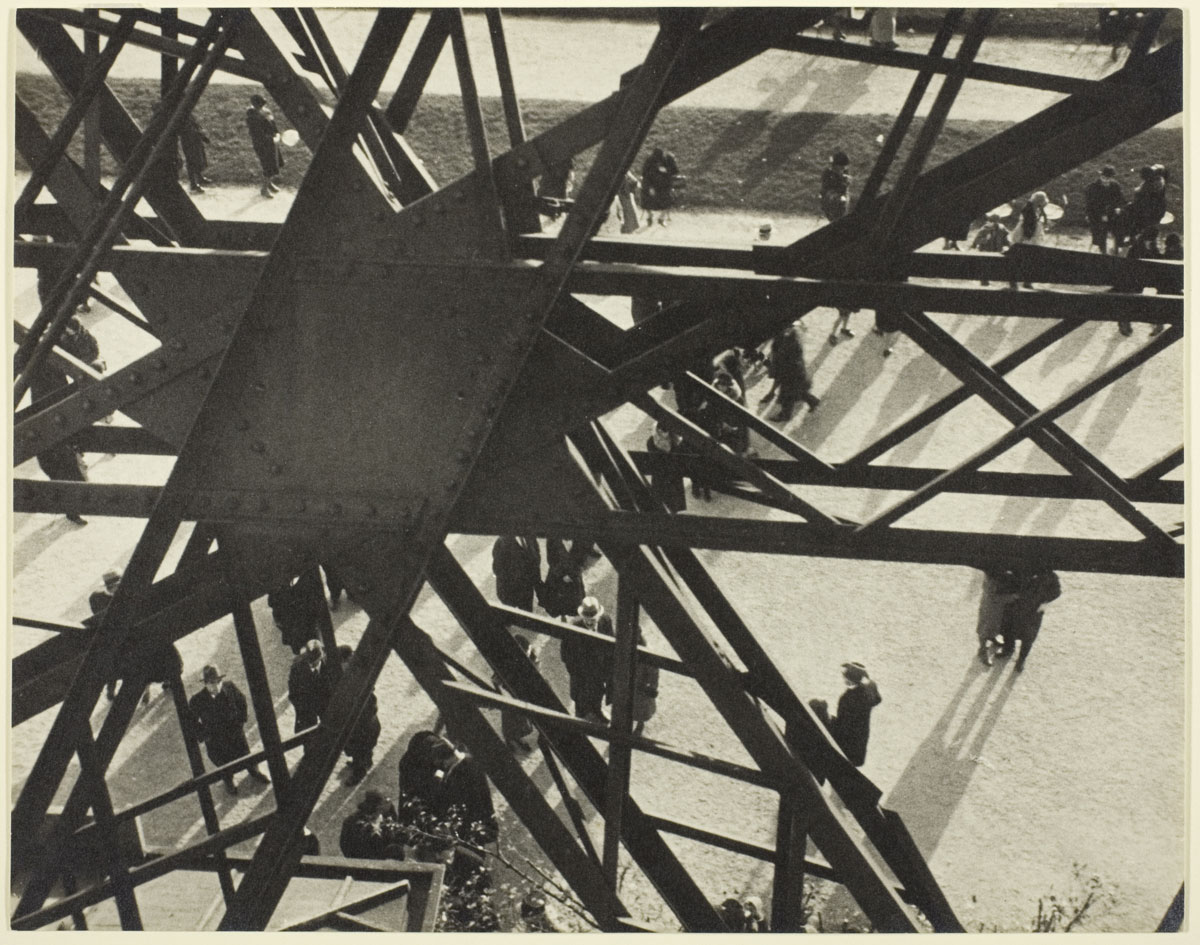
Ilse Bing (German, 1899-1998) 'Eiffel Tower, Paris, 1931' 1931


Ilse Bing (German, 1899-1998)
Eiffel Tower, Paris, 1931
1931
Julien Levy Collection, Gift of Jean and Julien Levy
© Estate of Ilse Bing


Luis Buñuel (Spanish, 1900-1983) and Salvador Dalí (Spanish, 1904-1989)
Un Chien Andalou
1929

Director – Luis Buñuel
Writers – Salvador Dali, Luis Buñuel
Cast – Simone Mareuil, Pierre Batcheff


Un Chien Andalou (An Andalusian Dog) is a 1929 Franco-Spanish silent surrealist short film by Spanish director Luis Buñuel and artist Salvador Dalí. Buñuel’s first film, it was initially released in a limited capacity at Studio des Ursulines in Paris, but became popular and ran for eight months.

Un Chien Andalou has no plot in the conventional sense of the word. With disjointed chronology, jumping from the initial “once upon a time” to “eight years later” without events or characters changing, it uses dream logic in narrative flow that can be described in terms of the then-popular Freudian free association, presenting a series of tenuously related scenes.


Fernand Léger (French, 1881-1955) and Dudley Murphy (American, 1897-1968)
Ballet Mécanique
1924


Ballet Mécanique (1923-1924) is a Dadaist post-Cubist art film conceived, written, and co-directed by the artist Fernand Léger in collaboration with the filmmaker Dudley Murphy (with cinematographic input from Man Ray). It has a musical score by the American composer George Antheil. However, the film premiered in silent version on 24 September 1924 at the Internationale Ausstellung neuer Theatertechnik (International Exposition for New Theater Technique) in Vienna presented by Frederick Kiesler. It is considered one of the masterpieces of early experimental filmmaking.


Ballet mécanique (1924) | MoMA

Ballet mécanique, conceived by painter Fernand Léger and photographed by filmmaker Dudley Murphy (possibly with some involvement from Man Ray), is a rhythmic interplay between human and object. Affected by his experience of fighting in World War I, and in particular by the mustard gas attack that left him hospitalised for a year, Léger became fascinated with mechanical technology, which would feature heavily in his post-1917 art. Ballet mécanique, his only film, is an example of this juxtaposition of man and machine: gears and pendulums vs. eyes and mouths, pistons pumping vs. a woman’s endless climb up the stairs, clocks vs. legs. A kaleidoscopic combination of faces and kitchen utensils, Ballet mécanique was completely unlike contemporary commercial movies, and would pave the way for other revolutionary films like Metropolis and Limite.

If you were to see Ballet mécanique installed in one of our galleries or projected in one of our theaters, it would look a little different than it does here – the frameline would be stabilised and the edges of the picture would either be cropped or camouflaged with masking around the screen. However, we are presenting this version the way a scholar visiting the Film Study Center would see it on a flatbed viewing machine, with a slight bounce to the image and the sprocket holes visible, and without live musical accompaniment. (The score, composed by George Antheil and usually performed as a separate concert piece, was finished several years after Ballet mécanique premiered and is significantly longer than the film.)

MoMA text from the YouTube website


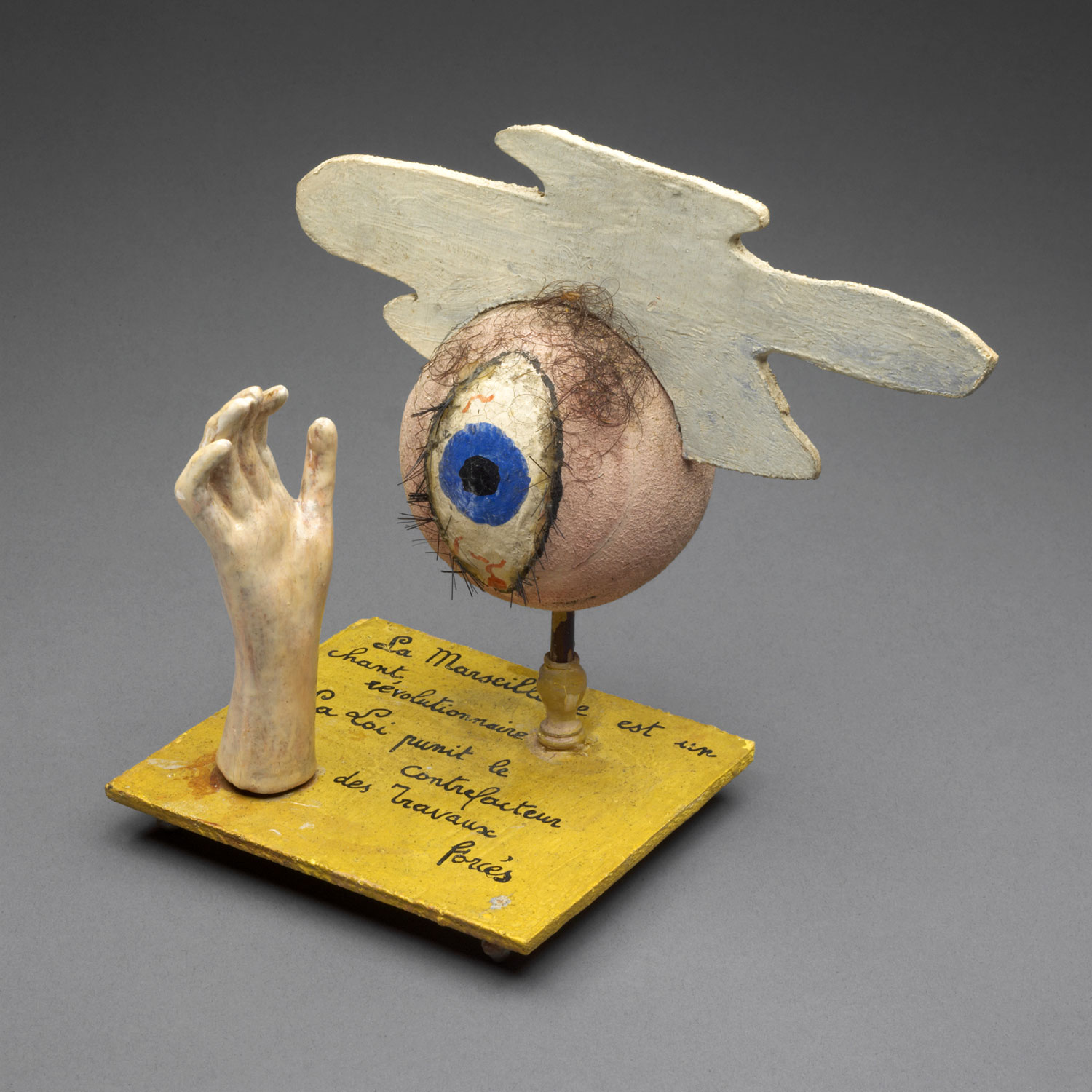
Claude Cahun (French, 1894-1954) 'Object' 1936


Claude Cahun (French, 1894-1954)
Object
1936
The Art Institute of Chciago
Through prior gift of Mrs. Gilbert W. Chapman


A century ago, society and life were changing as rapidly and radically as they are in today’s digital age. Quicker communication, faster production, and wider circulation of people, goods, and ideas – in addition to the outbreak of World War I – produced a profoundly new understanding of the world, and artists in the early years of the 20th century responded to these issues with both exhilaration and anxiety. Freeing themselves from the restraints of tradition, modern artists developed groundbreaking pictorial strategies that reflect this new shift in perception.

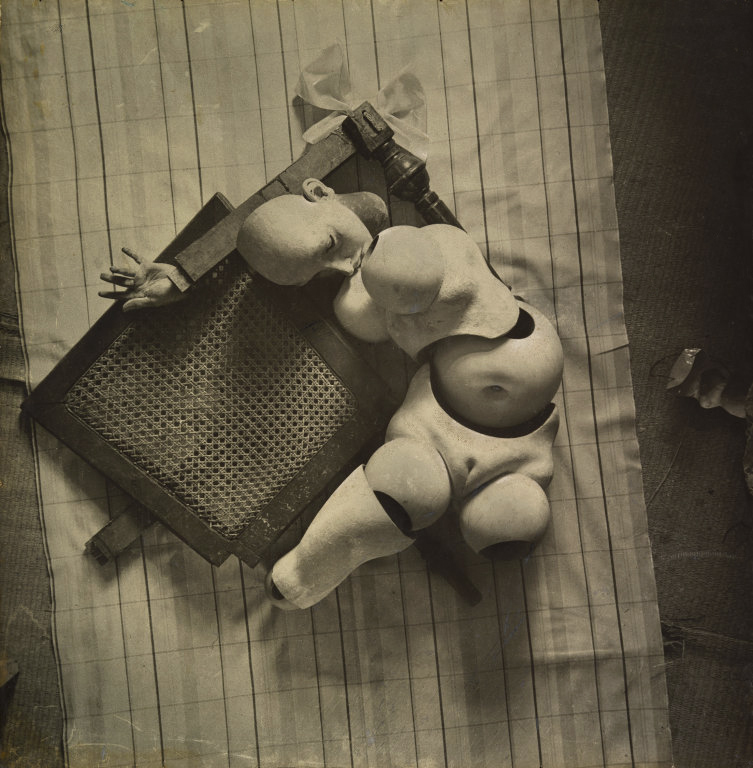
Shatter Rupture Break, the first exhibition in The Modern Series, explores the manifold ways that ideas of fragmentation and rupture, which permeated both the United States and Europe, became central conceptual and visual themes in art of the modern age. Responding to the new forms and pace of the metropolis, artists such as Robert Delaunay and Gino Severini disrupted traditional conventions of depth and illusionism, presenting vision as something fractured. Kurt Schwitters and George Grosz explored collage, using trash and bits and pieces of printed material in compositions to reflect social and political upheaval and produce something whole out of fragments. In the wake of new theories of the mind as well as the literal tearing apart of bodies in war, artists such as Hans Bellmer, Salvador Dalí, and Stanisław Witkiewicz produced photographs and objects revealing the fractured self or erotic dismemberment. The theme of fragmentation was ubiquitous as inspiration for both the formal and conceptual revolutions in art making in the modern age.

Shatter Rupture Break unites diverse objects from across the entire holdings of the Art Institute – paintings, sculpture, works on paper, photographs, decorative arts and designed objects, textiles, books, and films – to present a rich cacophony that exemplifies the radical and generative ruptures of modern art.

The Modern Series

A quintessentially modern city, Chicago has been known as a place for modern art for over a century, and the Art Institute of Chicago has been central to this history. The Modern Series exhibitions are designed to bring together the museum’s acclaimed holdings of modern art across all media, display them in fresh and innovative ways within new intellectual contexts, and demonstrate the continued vitality and relevance of modern art for today.

Text from the Art Institute of Chicago website


Robert Delaunay (French, 1885-1941) 'Champs de Mars: The Red Tower' 1911/1923


Robert Delaunay (French, 1885-1941)
Champs de Mars: The Red Tower
1911/1923
The Art Institute of Chicago
Joseph Winterbotham Collection


Fernand Léger (French, 1881-1955) 'Composition in Blue' 1921-1927


Fernand Léger (French, 1881-1955)
Composition in Blue
1921-1927
The Art Institute of Chicago
Charles H. and Mary F. S. Worcester Collection
© 2014 Artists Rights Society (ARS), New York / ADAGP, Paris


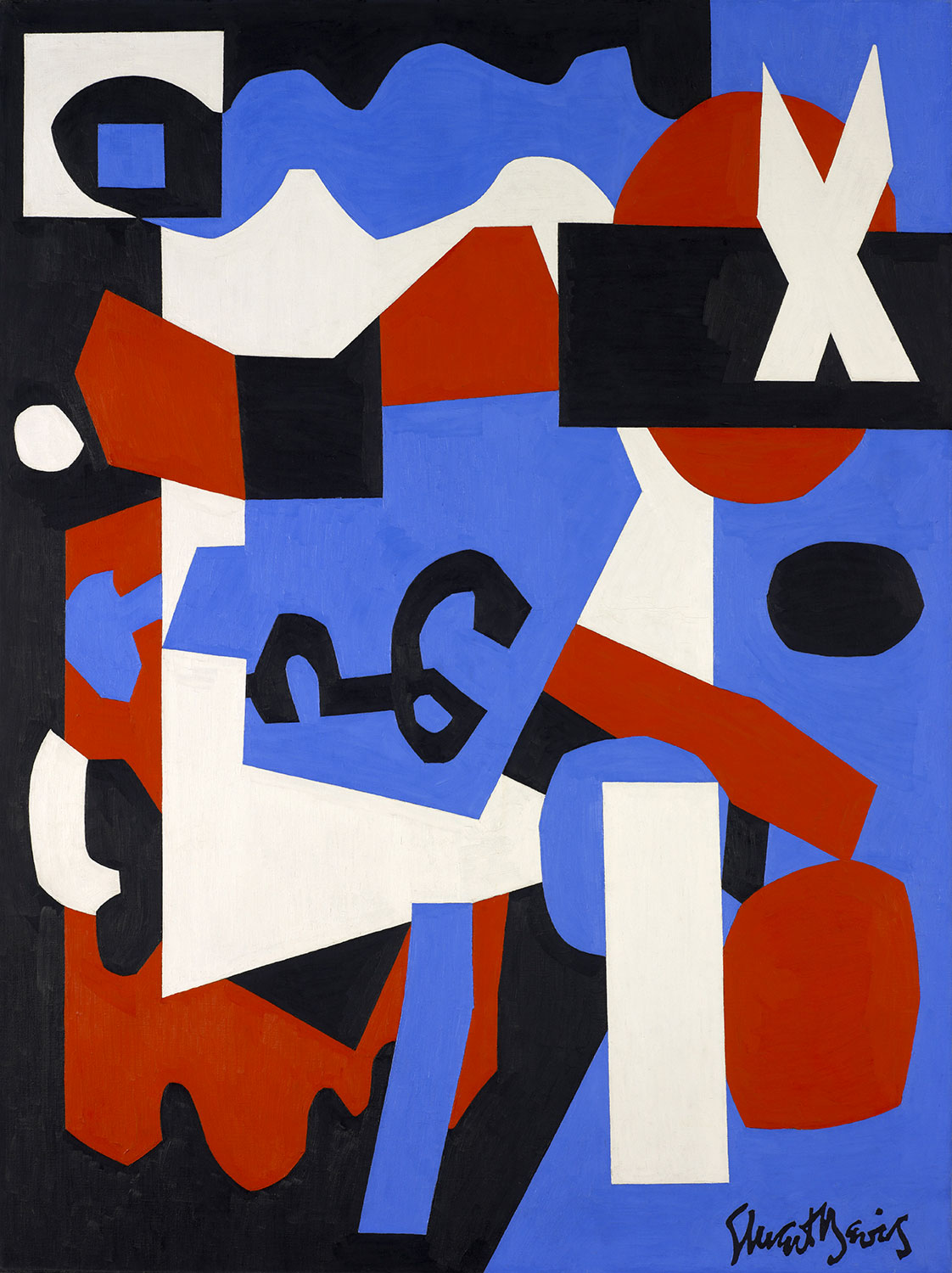
Stuart Davis (American, 1892-1964) 'Ready-to-Wear' 1955


Stuart Davis (American, 1892-1964)
Ready-to-Wear
1955
The Art Institute of Chicago
Restricted gift of Mr. and Mrs. Sigmund W. Kunstadter; Goodman Endowment


Designed by Ruben Haley, Made by Consolidated Lamp and Glass Company. "Ruba Rombic" Vase, 1928/1932


Designed by Ruben Haley
Made by Consolidated Lamp and Glass Company
“Ruba Rombic” Vase
1928/1932
Art Institute of Chicago
Raymond W. Garbe Fund in honor of Carl A. Erikson; Shirley and Anthony Sallas Fund


Kurt Schwitters (German, 1887-1948) 'Mz 13 Call' 1919


Kurt Schwitters (German, 1887-1948)
Mz 13 Call
1919
The Art Institute of Chicago
Gift of Mr. and Mrs. Maurice E. Culberg
© 2014 Artists Rights Society (ARS), New York / VG Bild-Kunst, Bonn


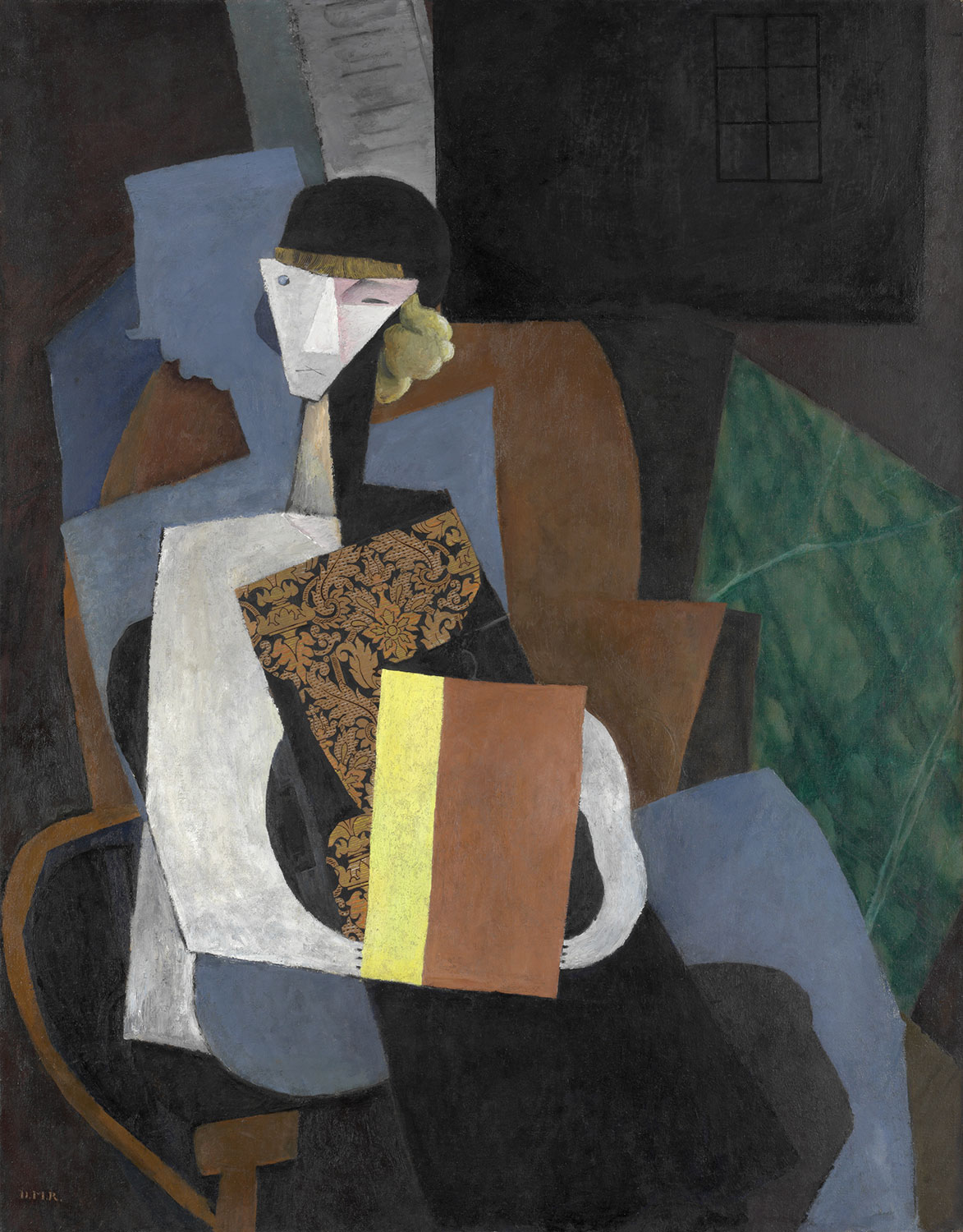
Diego Rivera (Mexican, 1886-1957) 'Portrait of Marevna' c. 1915


Diego Rivera (Mexican, 1886-1957)
Portrait of Marevna
c. 1915
The Art Institute of Chicago
Alfred Stieglitz Collection, gift of Georgia O’Keeffe
© 2014 Banco de México Diego Rivera Frida Kahlo Museums Trust, Mexico, D.F. / Artists Rights Society (ARS), New York


The Art Institute of Chicago is introducing an innovative new series of exhibitions that presents works from the museum’s acclaimed collection of modern art in reimagined ways that demonstrate the continued vitality and significance these works have today.

The Modern Series debuts with Shatter Rupture Break, opening Sunday, February 15, in Galleries 182 and 184 of the museum’s Modern Wing. The exhibition unites such diverse objects as paintings, sculpture, works on paper, photographs, decorative arts and designed objects, textiles, books, and films.

“We wanted to explore how the idea of rupture permeated modern life in Europe and the Americas,” said Elizabeth Siegel, Associate Curator of Photography, who, with Sarah Kelly Oehler, the Gilda and Henry Buchbinder Associate Curator of American Art, took the lead in organising the first exhibition. “It served as an inspiration for revolutionary formal and conceptual developments in art making that remain relevant today.”

A century ago, society was changing as rapidly and radically as it is in today’s digital age. Quicker communication, faster production, and wider circulation of people, goods, and ideas – in addition to the outbreak of World War I – produced a profoundly new understanding of the world, and artists responded with both anxiety and exhilaration. Freeing themselves from the restraints of tradition, modern artists developed groundbreaking pictorial strategies that reflected this new shift in perception.

Responding to the new forms and pace of cities, artists such as Robert Delaunay (French, 1885-1941) and Gino Severini (Italian, 1883-1966) disrupted traditional conventions of depth and illusionism, presenting vision as something fractured. Delaunay’s Champs de Mars: The Red Tower fragments the iconic form of the Eiffel Tower, exemplifying how modern life – particularly in an accelerated urban environment – encouraged new and often fractured ways of seeing. Picturesque vistas no longer adequately conveyed the fast pace of the modern metropolis.

The human body as well could no longer be seen as intact and whole. A devastating and mechanised world war had returned men from the front with unimaginable wounds, and the fragmented body became emblematic of a new way of understanding a fractured world. Surrealists such as Hans Bellmer (German, 1902-1975), Claude Cahun (French, 1894-1954) and Salvador Dalí (Spanish, 1904-1989) fetishised body parts in images, separating out eyes, hands, and legs in suggestive renderings. A more literal representation of the shattered body comes from Chicago’s own Ivan Albright, who was a medical draftsman in World War I. In his rarely shown Medical Sketchbook, he created fascinatingly gruesome watercolours that documented injured soldiers and the x-rays of their wounds.

Just as with the body, the mind in the modern era also came to be seen as fragmented. Stanislaw Witkiewicz (Polish, 1885-1939) produced a series of self-portraits as an act of psychological exploration. His work culminated in one stunning photograph made by shattering a glass negative, which he then reassembled and printed, thus conveying an evocative sense of a shattered psyche. The artistic expression of dreams and mental imagery perhaps reached a pinnacle not in a painting or a sculpture, but in a film. Luis Buñuel and Salvador Dalí’s film Un chien andalou (An Andalusian Dog) mystified viewers with its dreamlike narrative, dissolves from human to animal forms, dismembered body parts, and shockingly violent acts in an attempt to translate the unconscious mind onto a celluloid strip.

Kurt Schwitters (German, 1887-1948) and George Grosz (German, 1893-1959) explored collage, which took on new importance for avant-garde artists thanks to the aesthetic appeal and widespread availability of mass-produced media. Schwitters used the ephemera of German society to create what he called Merz, an invented term signifying an artistic practice that included collage, assemblage, painting, poems, and performance. The Art Institute owns a significant group of these collages by Schwitters, and six will appear in the exhibition. The use of thrown-away, ripped up, and scissored-out pieces of paper, divorced from their original meaning and reassembled with nails and glue into new objects, was an act that exposed the social and political disruptions of a German society that seemed broken and on the edge of collapse in the aftermath of World War I.

Shatter Rupture Break is unusual in that it unites objects from across the entire museum – from seven curatorial departments as well as the library. This multiplicity is significant because modern artists did not confine themselves to one medium, but explored different visual effects across a variety of media. As well, the show prominently features the voices of artists, writers, scientists, and other intellectuals of the period. The goal is to create a dynamic space that evokes the electrifying, disruptive, and cacophonous nature of modern art at the time.

“We hope to excite interest in the modern period as a crucial precursor to the changes of our own time, to show how what might seem old now was shockingly fresh then,” said Oehler.

Considered one of the finest and most comprehensive in the world, the Art Institute’s collection of modern art includes nearly 1,000 works by artists from Europe and the Americas. The museum was an early champion of modern artists, from its presentation of the Armory Show in 1913 to its early history of acquiring major masterpieces. This show highlights some recent acquisitions of modern art, but also includes some long-held works that have formed the core of the modern collection for decades. Shatter Rupture Break celebrates this history by bringing together works that visitors may know well, but have never seen in this context or with this diverse array of objects.”

Press release from the Art Institute of Chicago


Hans Bellmer (German born Poland, 1902-1975) 'The Doll (La Poupée)' 1935


Hans Bellmer (German born Poland, 1902-1975)
The Doll (La Poupée)
1935
Gelatin silver print overpainted with white gouache
65.6 x 64cm
Anonymous restricted gift; Special Photography Acquisition Fund; through prior gifts of Boardroom, Inc., David C. and Sarajean Ruttenberg, Sherry and Alan Koppel, the Sandor Family Collection, Robert Wayne, Simon Levin, Michael and Allison Delman, Charles Levin, and Peter and Suzann Matthews; restricted gift of Lynn Hauser and Neil Ross
© 2015 Artists Rights Society (ARS), New York / ADAGP, Paris


Umbo (Otto Umber) (German, 1902-1980) 'Untitled' 1928


Umbo (Otto Umber) (German, 1902-1980)
Untitled
1928
Julien Levy Collection, Gift of Jean and Julien Levy
© 2014 Phyllis Umbehr/Galerie Kicken Berlin/ Artists Rights Society (ARS), New York


Stanisław Ignacy Witkiewicz (Polish, 1885-1939) 'Self-Portrait, Zakopane [Broken Glass]' 1910


StanisÅ‚aw Ignacy Witkiewicz (Polish, 1885-1939)
Self-Portrait, Zakopane [Broken Glass]
1910
Promised Gift of a Private Collection


The Art Institute of Chicago
111 South Michigan Avenue
Chicago, Illinois 60603-6404
Phone: (312) 443-3600

Opening hours:
Thursday – Monday 11am – 5pm
Closed Tuesday and Wednesday
The museum is closed Thanksgiving, Christmas, and New Year’s days.

The Art Institute of Chicago website

LIKE ART BLART ON FACEBOOK

Back to top

Book: ‘Negatives Are To Be Stored’ photographs by Stefania Gurdowa 2008

2009


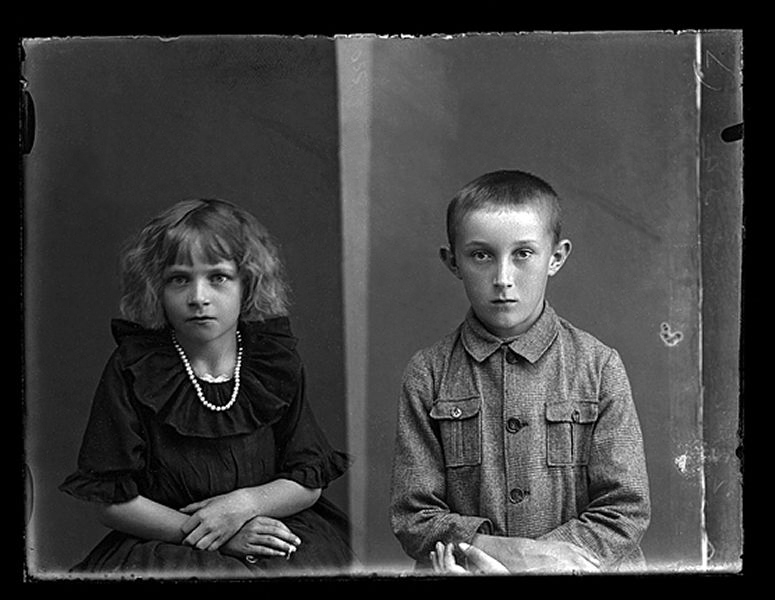
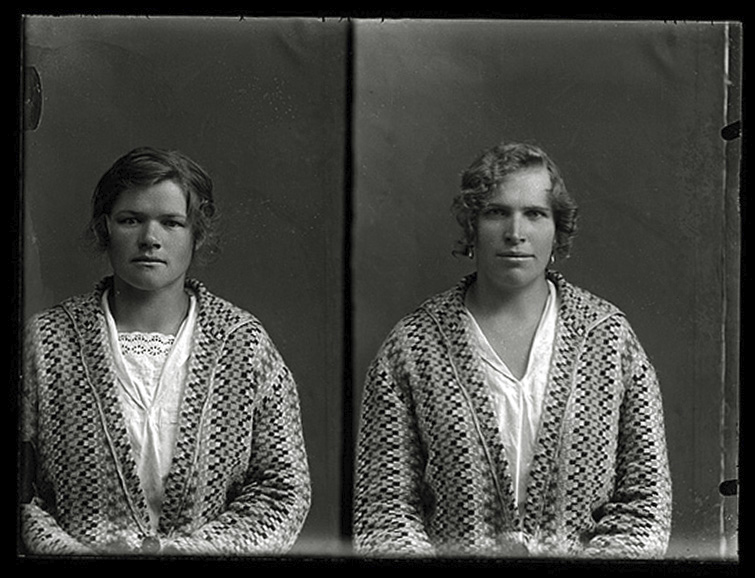
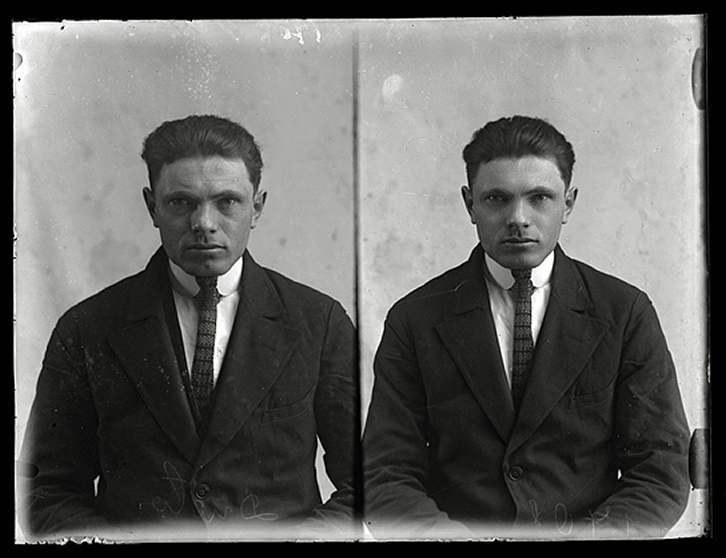
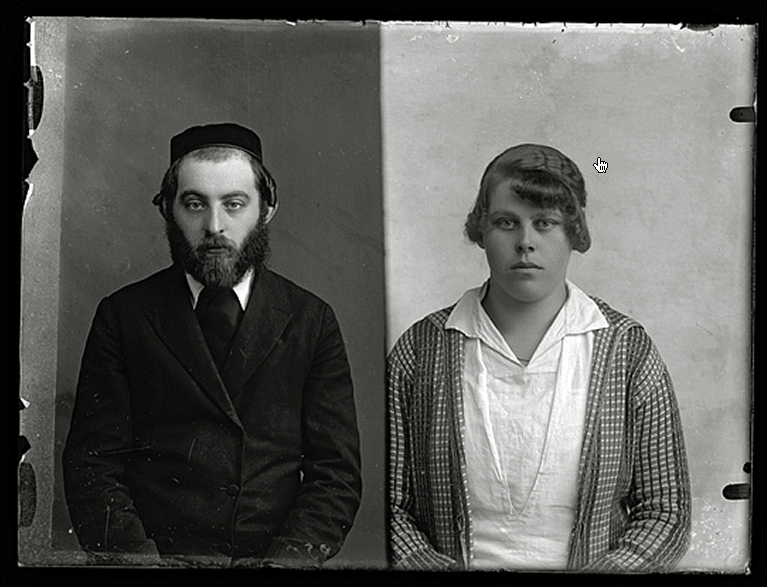
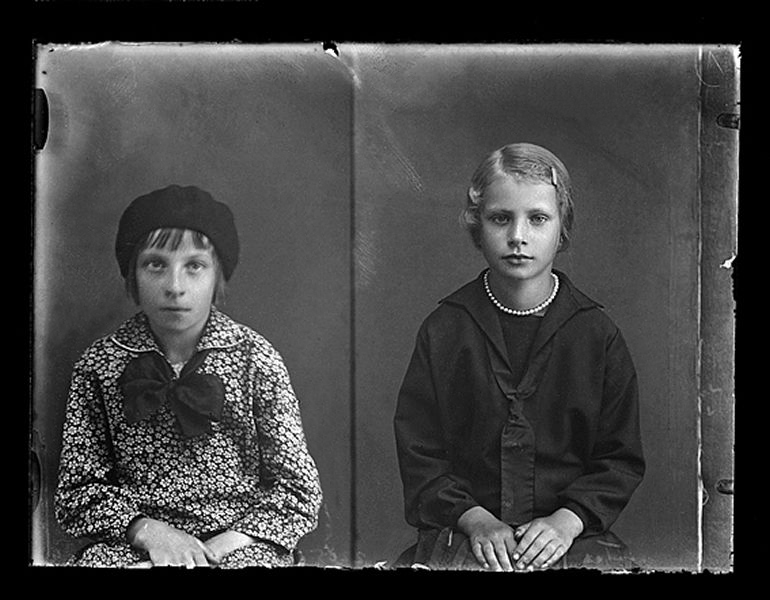
Stefania Gurdowa (Polish, 1888-1968) 'Untitled' Nd from the series 'Negatives Are To Be Stored'


Stefania Gurdowa (Polish, 1888-1968)
Untitled (anonymous individuals)
Nd
From the series Negatives Are To Be Stored
Glass plate negative


The presence of these photographs marks your consciousness indelibly, for the artist has made marks that cannot easily be removed.

Dr Marcus Bunyan


All images by Stefania Gurdowa from the series Negatives Are To Be Stored.
All images © Imago Mundi

Klisze przechowuje sie (Negatives are to be stored)
Photographs by Stefania Gurdowa
Text by Jerzy Lewczynski and Dariusz Czaja
Hardcover: 218 pages
22 x 28.5cm

Publisher: Fundacja Imago Mundi / Muzeum Etnograficzne w Krakowie.
ISBN 978-83-925914-4-3


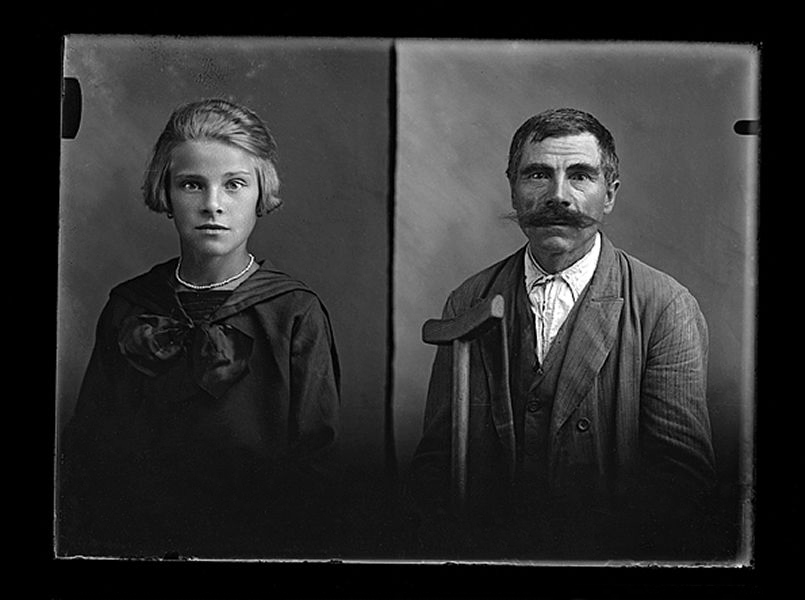
Stefania Gurdowa (Polish, 1888-1968) 'Untitled' Nd from the series 'Negatives Are To Be Stored'


Stefania Gurdowa (Polish, 1888-1968)
Untitled (anonymous individuals)
Nd
From the series Negatives Are To Be Stored
Glass plate negative


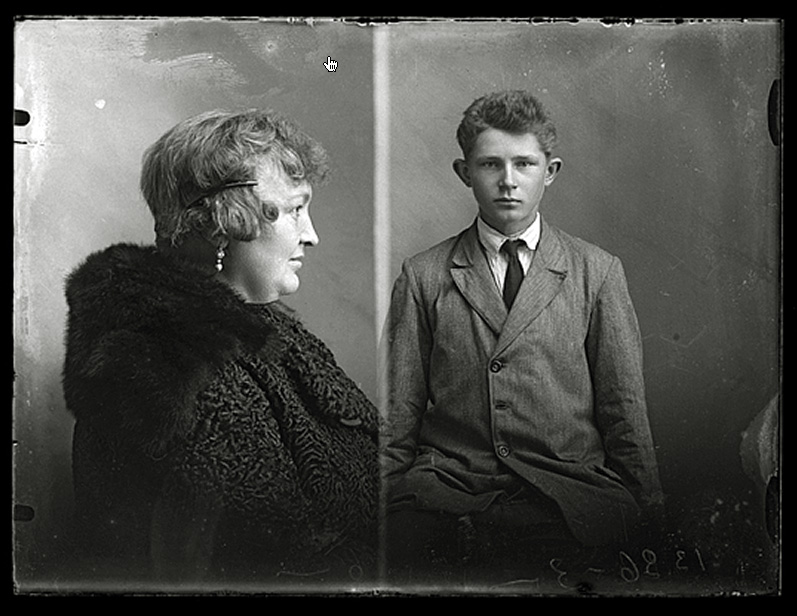
Stefania Gurdowa (Polish, 1888-1968) 'Untitled' Nd from the series 'Negatives Are To Be Stored'


Stefania Gurdowa (Polish, 1888-1968)
Untitled (anonymous individuals)
Nd
From the series Negatives Are To Be Stored
Glass plate negative


Stefania Gurdowa (Polish, 1888-1968) 'Untitled' Nd from the series 'Negatives Are To Be Stored'


Stefania Gurdowa (Polish, 1888-1968)
Untitled (anonymous individuals)
Nd
From the series Negatives Are To Be Stored
Glass plate negative


Stefania Gurdowa (Polish, 1888-1968) 'Untitled' Nd from the series 'Negatives Are To Be Stored'


Stefania Gurdowa (Polish, 1888-1968)
Untitled (anonymous individuals)
Nd
From the series Negatives Are To Be Stored
Glass plate negative


Eleven years ago, in the attic of a tenement house in the town of Debica, more than 1,000 damaged glass negative plates were discovered. Most of them depicted expressive portraits of anonymous individuals who lived in the neighbourhood during the 20s and 30s.

At first sight, we could guess hardly anything about the author of the plates, although her name appeared on them. But our deepening research shed light upon someone extraordinary for her time: an independent, gifted woman of consequence whose workshops existed far away from the grand cultural capitals, and whose art lay in taking orderly portraits of her neighbours: shopkeepers, craftsmen, peasants, priests and Jews.

Stefania Gurdowa (née Czerny) was born in Bochnia in 1888. Her father was the bandmaster of a salt-mine orchestra. She herself played the zither. She gained her photographic education in Bochnia, and then in Lwow (Lemberg). From 1921 to 1937 she ran her own photographic workshop in Debica (and established branches in Mielec and Ropczyce for a time). It was unusual for a woman to run a business like hers in this era, yet it appears Gurdowa also hired a number of employees – Feliks Adam Czelny among them, a man who found fame after 1945, when he published a documentary report on the ruined city of Wroclaw.

Stefania and Kazimierz Gurda divorced, and from her home in Debica, the photographer took only her daughter, Zosia – and the piano. In the late 30s she settled in Silesia. Under Nazi occupation her business was taken over by the Germans, and she found herself a paid worker in her own workshop.

After the end of the war, Zosia migrated to France. Stefania Gurdowa decided to stay in Poland, and once more she started all over again – this time in Lodygowice, near Zywiec. She took care of her granddaughter, Basia for some years, until the girl was reunited with her mother in France. And she established yet another photographic workshop. Her former clients remember that there were always fresh flowers in her chilly rented flat-and-atelier – as well as a permanent Christmas tree!

Gurdowa, the distinguished artist, died in 1968. Her apartment was cleaned after she passed away, and her immense photographic archive was disposed of and lost. Only a fragment of her art endures, together with a question without an answer: who hid a collection of glass plates behind a wall in the attic of her workshop in Debica? Perhaps it was her own decision to preserve them this way. As a responsible professional, she must have been aware of the rule that “negatives are to be stored.”

Agnieszka Sabor

Text from the Lens Culture website [Online] Cited 22/03/2019


Stefania Gurdowa (Polish, 1888-1968) 'Untitled' Nd from the series 'Negatives Are To Be Stored'


Stefania Gurdowa (Polish, 1888-1968)
Untitled (anonymous individuals)
Nd
From the series Negatives Are To Be Stored
Glass plate negative


Stefania Gurdowa (Polish, 1888-1968) 'Untitled' Nd from the series 'Negatives Are To Be Stored'


Stefania Gurdowa (Polish, 1888-1968)
Untitled (anonymous individuals)
Nd
From the series Negatives Are To Be Stored
Glass plate negative


Stefania Gurdowa (Polish, 1888-1968) 'Untitled' Nd from the series 'Negatives Are To Be Stored'


Stefania Gurdowa (Polish, 1888-1968)
Untitled (anonymous individuals)
Nd
From the series Negatives Are To Be Stored
Glass plate negative


Stefania Gurdowa (Polish, 1888-1968) 'Untitled' Nd from the series 'Negatives Are To Be Stored'


Stefania Gurdowa (Polish, 1888-1968)
Untitled (anonymous individuals)
Nd
From the series Negatives Are To Be Stored
Glass plate negative


Stefania Gurdowa (Polish, 1888-1968) 'Untitled' Nd from the series 'Negatives Are To Be Stored'


Stefania Gurdowa (Polish, 1888-1968)
Untitled (anonymous individuals)
Nd
From the series Negatives Are To Be Stored
Glass plate negative


Stefania Gurdowa (Polish, 1888-1968) 'Untitled' Nd from the series 'Negatives Are To Be Stored'


Stefania Gurdowa (Polish, 1888-1968)
Untitled (anonymous individuals)
Nd
From the series Negatives Are To Be Stored
Glass plate negative


Stefania Gurdowa (Polish, 1888-1968) 'Untitled' Nd from the series 'Negatives Are To Be Stored'


Stefania Gurdowa (Polish, 1888-1968)
Untitled (anonymous individuals)
Nd
From the series Negatives Are To Be Stored
Glass plate negative


LIKE ART BLART ON FACEBOOK

Back to top