
Exhibition dates: 27th June – 6th December, 2026
Curator: Judy Ditner, the Richard Benson Curator of Photography and Digital Media, with Paulina Choh, the Marcia Brady Tucker Postdoctoral Fellow
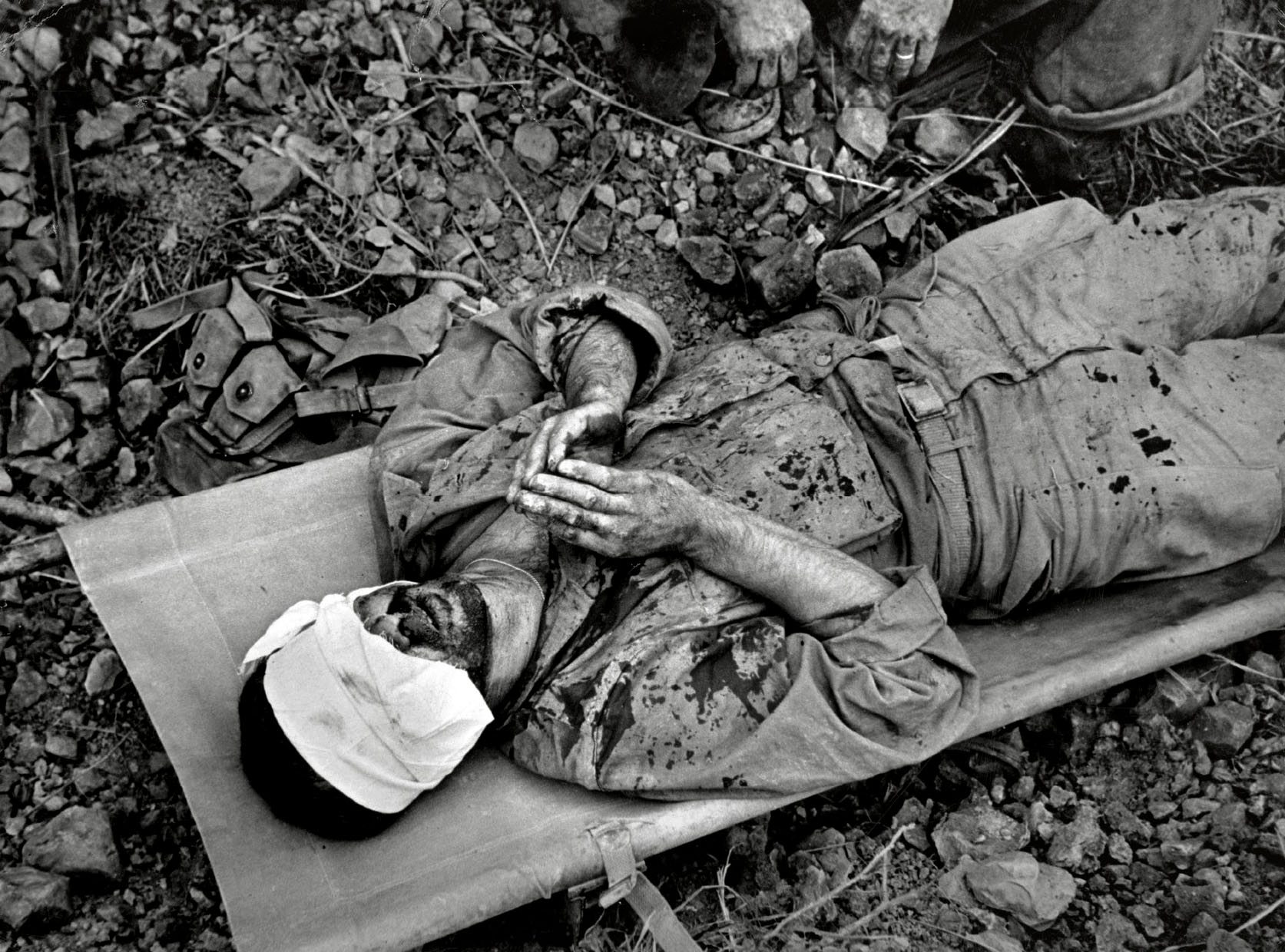
W. Eugene Smith (American, 1918-1978)
Wounded Soldier Praying
1944
Gelatin silver print, mounted to board
Image: 5 3/4 x 7 7/8 in. (14.6 x 20cm)
Sheet: 5 3/4 x 7 7/8 in. (14.6 x 20cm)
Support: 15 15/16 x 19 7/8 in. (40.5 x 50.5cm)
Collection of H. Christopher Luce
William Eugene
The force is strong in this one.
But which side of the line (of light and dark) does he fall?
While there is no doubt that W. Eugene Smith is a superb photographer with a natural eye for theatrical composition, the dramatic photograph, the bankable story – “perhaps the single most important American photographer in the development of the editorial photo essay” – creating photo-essays grounded in lived experience, I never think of him as one of my favourite photographers. Why is that?
I know his photographs deal with birth and death, life stories, contain empathy paired with a social conscience … but there is some ‘other’ force at work here that seems to have a darkness of spirit, a brooding energy that I don’t find attractive.
Is it the cut-up nature of his compositions, the fractured image plane; is it the angular perspective, the camera thrust up close and personal; is it the heavy use of chiaroscuro in nearly all his photographs to create depth and heighten drama in the composition; or the high contrast treatment of the final print?
Perhaps it is all of these things and more – the inflection in his photographs of the horrors that he saw when photographing the tragedies of World War II (he was critically wounded while covering the invasion of Okinawa in 1945. During the next two years he underwent 32 operations); the format of the stories needed for LIFE magazine; and the desire (there we go!) to get the best shot, to push yourself to the absolute limit to get the story. There may be empathy but there is also a brooding darkness as well.
Witness the dark energy of Dance of the Flaming Coke (1955, below) and Steelworker with Goggles, Pittsburgh (1955-1956, below) with their Hadean atmosphere of grime and desolation, with their lyrical rhythm and grim, subterranean feeling for the plight of the working man. Compare these with the photographs of Milton Rogovin and his sympathetic portraits of working-class people. Similarly, Smoky City (1955-1956, below), a city of the underworld, a city of the Industrial Revolution from the Victorian era. Observe that Pittsburgh street, Pride Street Scene, Pittsburgh (1955-1956, below) with its triangular compositional construction, ironic “Pride St” topping, and darkness so dark before the eyes you can hardly distinguish the figures from the background. Then you look at the photographs of street scenes in New York by Helen Levitt … and you wonder who is more empathetic, to the worker, to the street urchin.
Only in moments of Renaissance repose, as in the photographs The Wake (1950, below) and Smith’s most famous photograph Tomoko Uemura Bathed by Her Mother (1972, below) does there seem to be some element of peace and acceptance, of light conquering the tortured soul of darkness.
I understand that I’m probably in the 1% here but that’s ok, it’s just my feeling about the work … for Smith’s photographs, except for a small number, never fully stay in my consciousness. They exist, and are gone.
Dr Marcus Bunyan
Please click on the photographs for a larger version of the image.
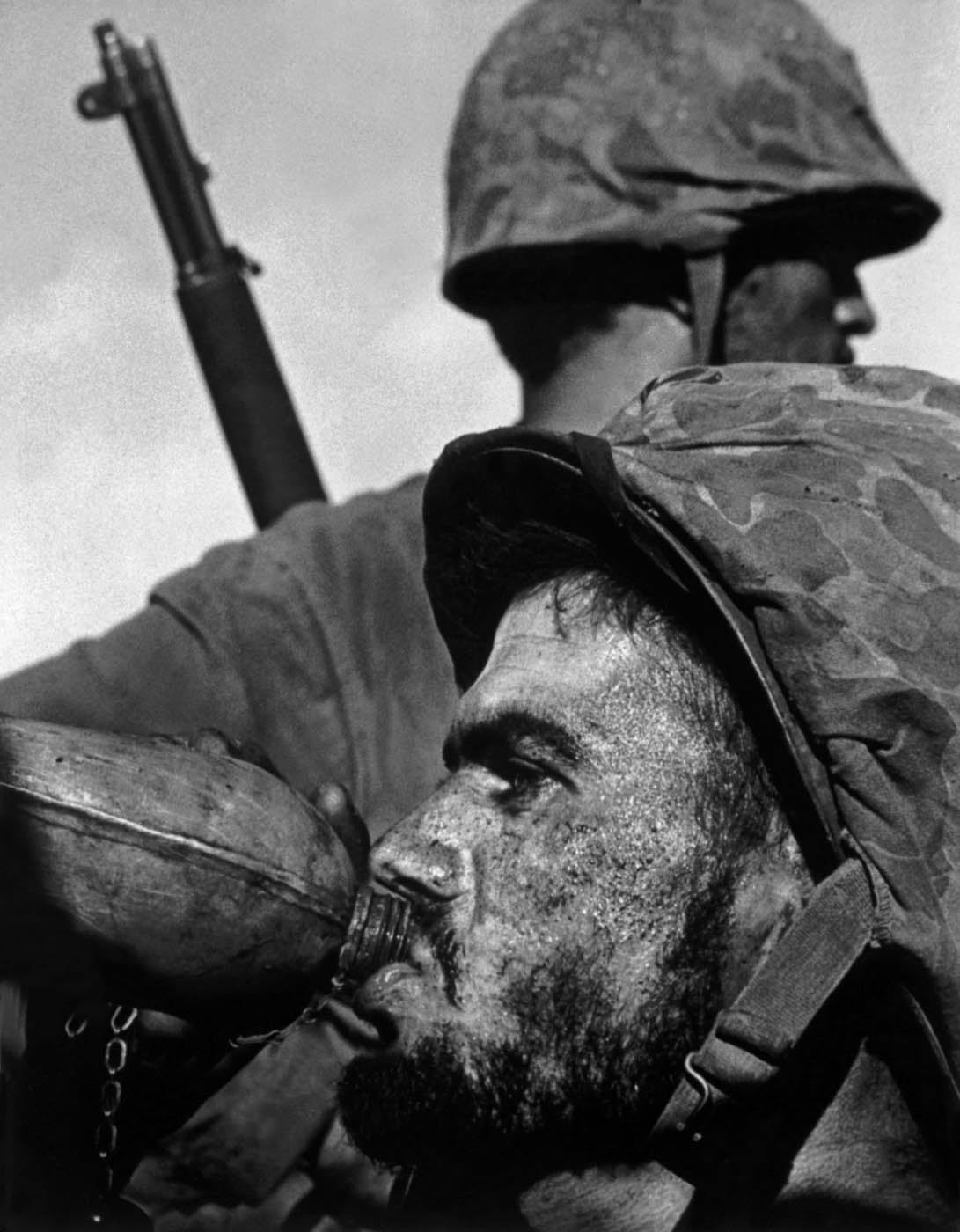
W. Eugene Smith (American, 1918-1978)
Frontline Soldier, Battle for Saipan
1944
Gelatin silver print, mounted to board
Image: 13 3/16 x 10 7/16 in. (33.5 x 26.5cm)
Sheet: 13 3/16 x 10 7/16 in. (33.5 x 26.5cm)
Support: 19 7/8 x 15 15/16 in. (50.5 x 40.5cm)
Collection of H. Christopher Luce
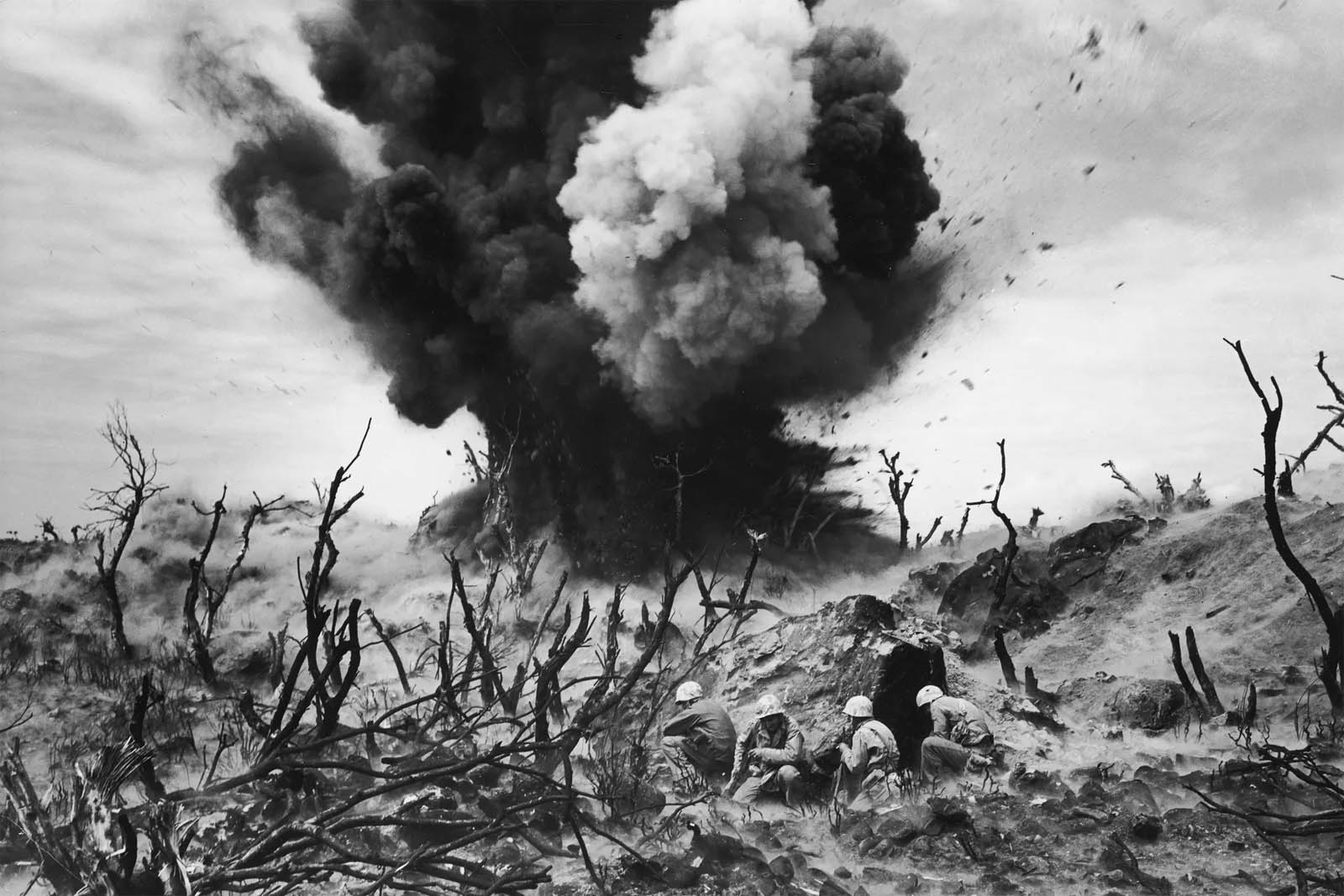
W. Eugene Smith (American, 1918-1978)
Marine Demolition Team Blasting Out a Cave on Hill 382, Iwo Jima (Sticks and Stones, Bits of Human Bones)
1945
Gelatin silver print, mounted to board
Image: 9 15/16 x 12 13/16 in. (25.3 x 32.6cm)
Sheet: 9 15/16 x 12 13/16 in. (25.3 x 32.6cm)
Support: 16 x 19 15/16 in. (40.6 x 50.6cm)
Collection of H. Christopher Luce
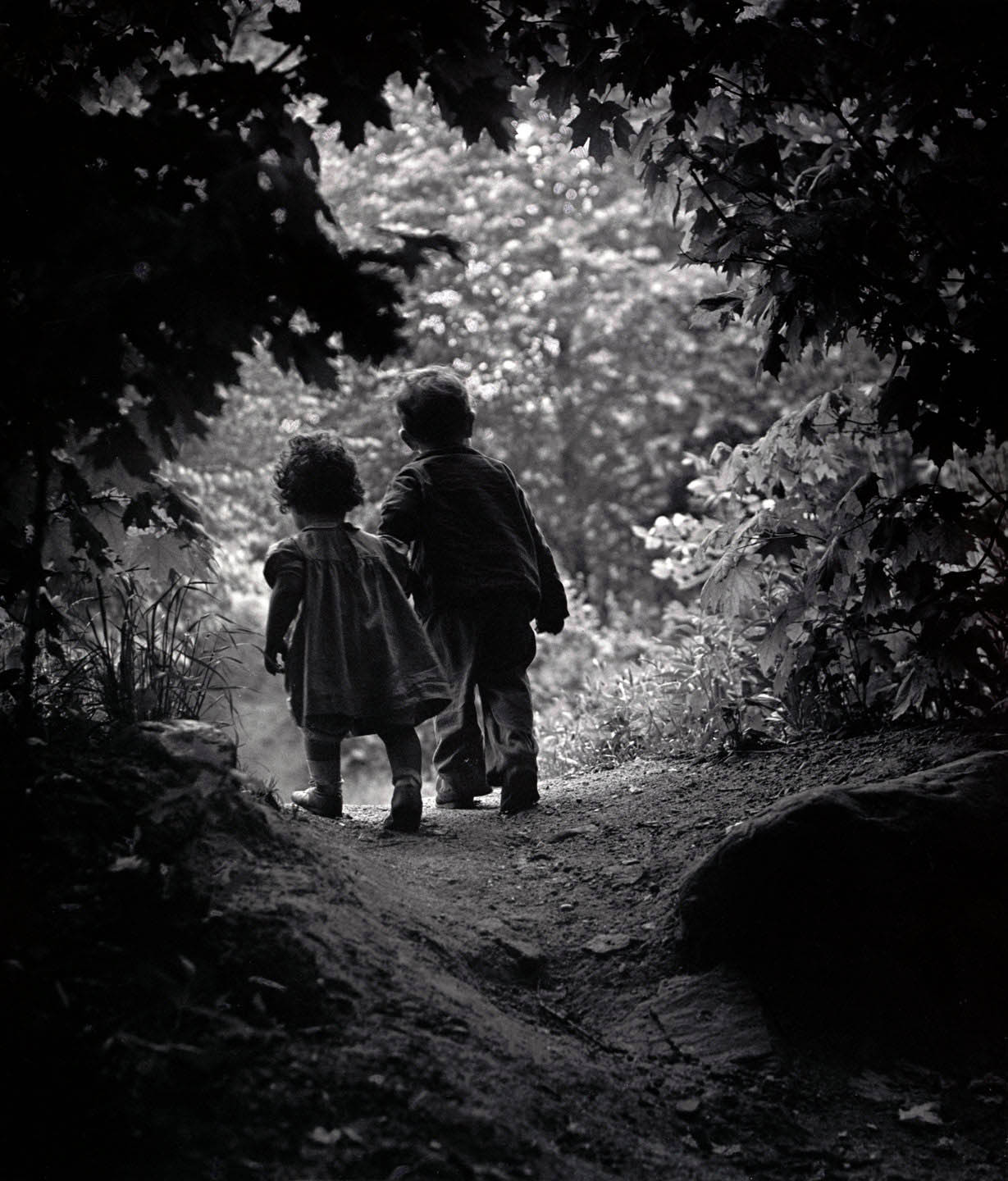
W. Eugene Smith (American, 1918-1978)
A Walk in Paradise Garden
1946, printed 1970
Gelatin silver print
Image: 16 5/16 x 14 3/16 in. (41.5 x 36cm)
Sheet: 16 5/16 x 14 3/16 in. (41.5 x 36cm)
Gift of the Doris Bry Trust, Inadvertent Collection in honor of Richard Benson

W. Eugene Smith (American, 1918-1978)
Dr. Ceriani Has Coffee and a Cigarette in the Hospital Kitchen, 2:00 am
1948
Gelatin silver print, mounted to board
Image: 8 3/8 x 5 7/8 in. (21.3 x 15cm)
Sheet: 8 3/8 x 5 7/8 in. (21.3 x 15cm)
Support: 19 11/16 x 15 3/4 in. (50 x 40cm)
Collection of H. Christopher Luce
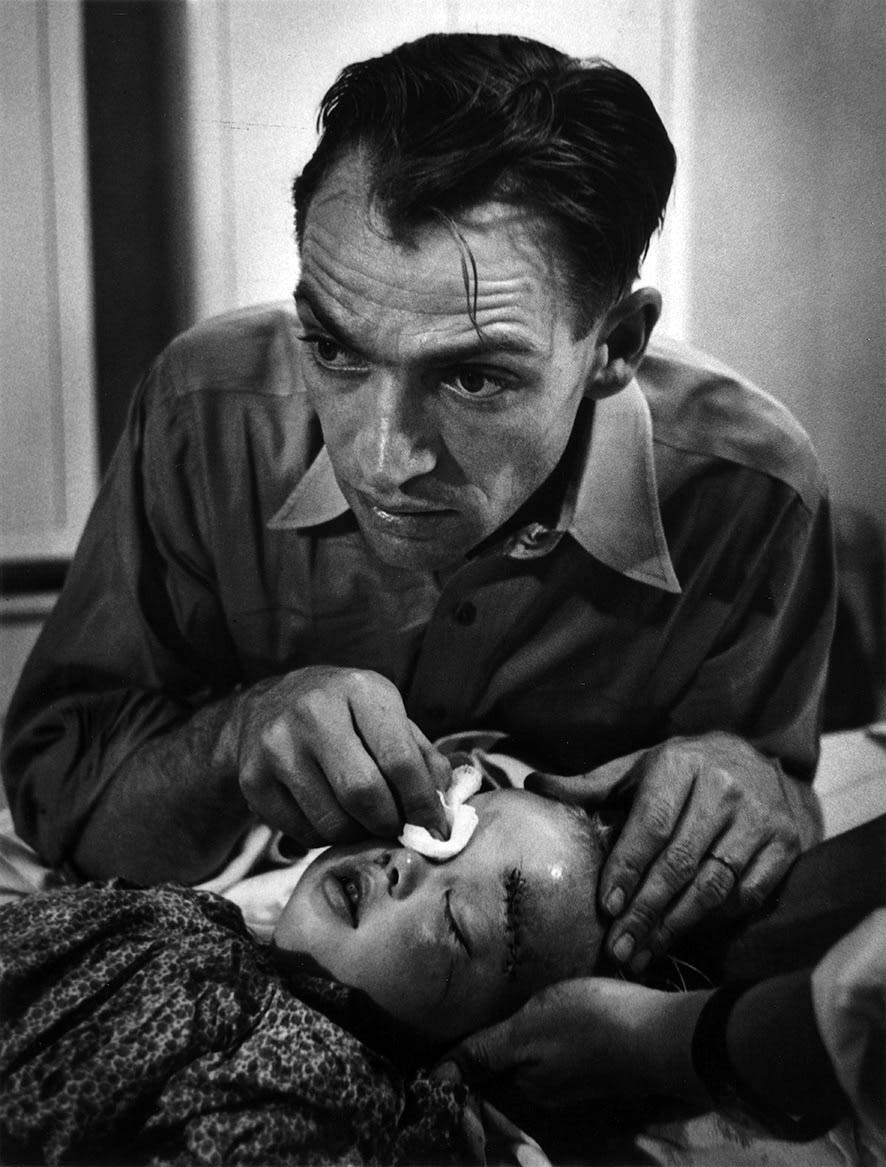
W. Eugene Smith (American, 1918-1978)
Dr. Ceriani Sewing Stitches
1948
Gelatin silver print, mounted to board
Image: 12 13/16 x 9 3/4 in. (32.5 x 24.8cm)
Sheet: 12 13/16 x 9 3/4 in. (32.5 x 24.8cm)
Support: 19 7/8 x 15 15/16 in. (50.5 x 40.5cm)
Collection of H. Christopher Luce
This installation offers a focused look at American photographer W. Eugene Smith’s landmark career in photojournalism. Smith set a new standard for photo-essays grounded in lived experience, capturing moments of daily labor, birth, and death with fierce empathy and social conscience.
Called “perhaps the single most important American photographer in the development of the editorial photo essay,” Smith made his name through his work for LIFE magazine. The exhibited photos range from his coverage of World War II (1939-45) to the postwar essays that secured his reputation: Country Doctor (1948), Spanish Village (1951), Nurse Midwife (1951), and his independent project Pittsburgh (1955-56). His final major series, Minamata (1975), documented a Japanese fishing village devastated by industrial mercury poisoning and stands as one of photography’s most powerful acts of witness.
The installation is drawn primarily from the generous gifts and promised gifts of H. Christopher “Kit” Luce, B.A. 1972.
Press release from Yale University Art Gallery

W. Eugene Smith (American, 1918-1978)
The Wake
1950
Gelatin silver print
Image: 18 5/8 x 27 9/16 in. (47.3 x 70cm)
Sheet: 18 5/8 x 27 9/16 in. (47.3 x 70cm)
Support: 26 15/16 x 37 in. (68.5 x 94cm)
Collection of H. Christopher Luce
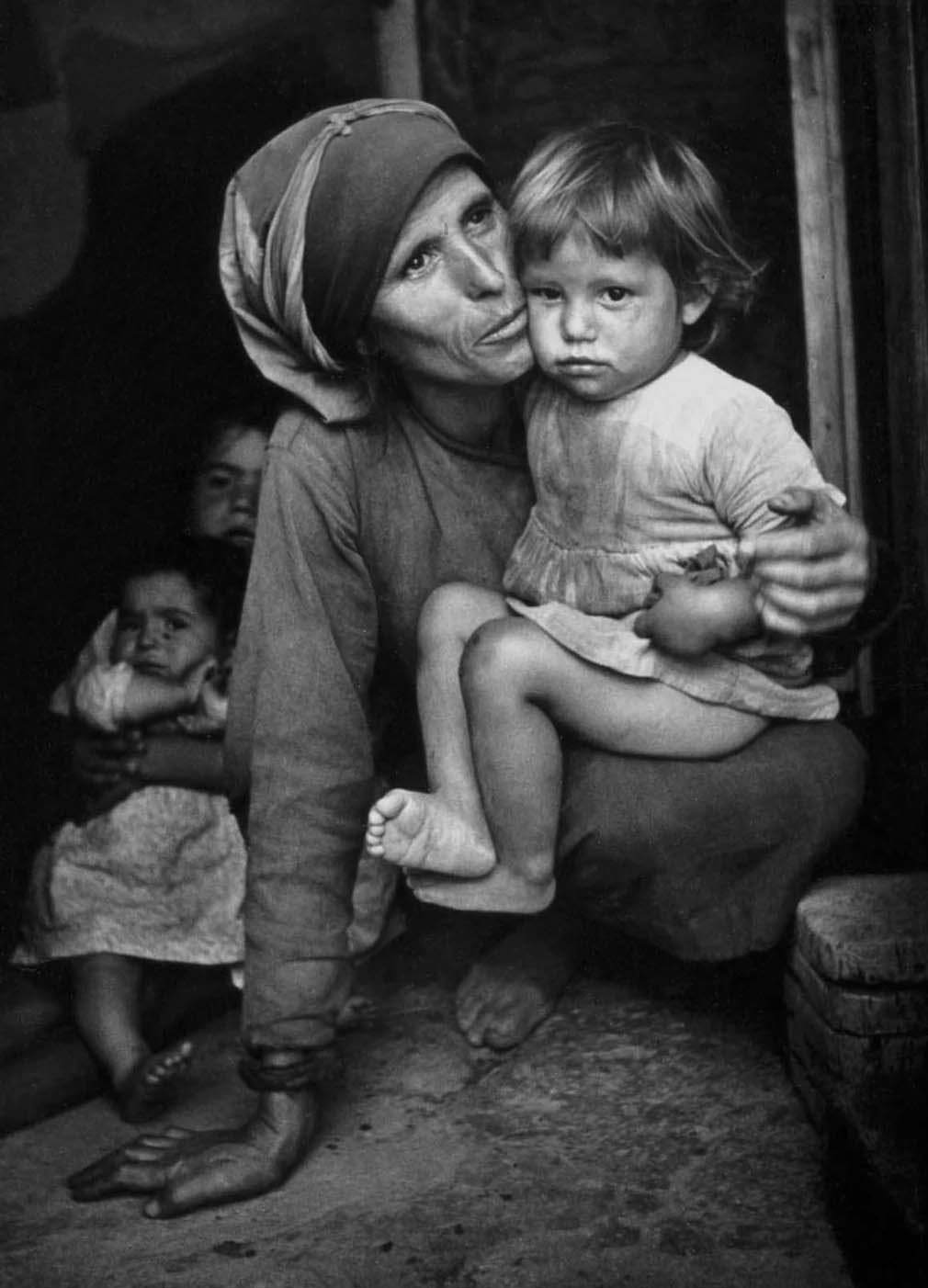
W. Eugene Smith (American, 1918-1978)
A Mother Cradling Her Child
1950
Gelatin silver print
Image: 8 x 5 11/16 in. (20.3 x 14.5cm)
Sheet: 9 15/16 x 8 in. (25.2 x 20.3cm)
Collection of H. Christopher Luce

W. Eugene Smith (American, 1918-1978)
Three Spanish Soldiers from the \r\nGuardia Civil
1951
Gelatin silver print, mounted to board
Image: 14 3/16 x 18 5/16 in. (36 x 46.5cm)
Sheet: 14 3/16 x 18 5/16 in. (36 x 46.5cm)
Support: 18 1/8 x 22 1/16 in. (46 x 56cm)
Collection of H. Christopher Luce
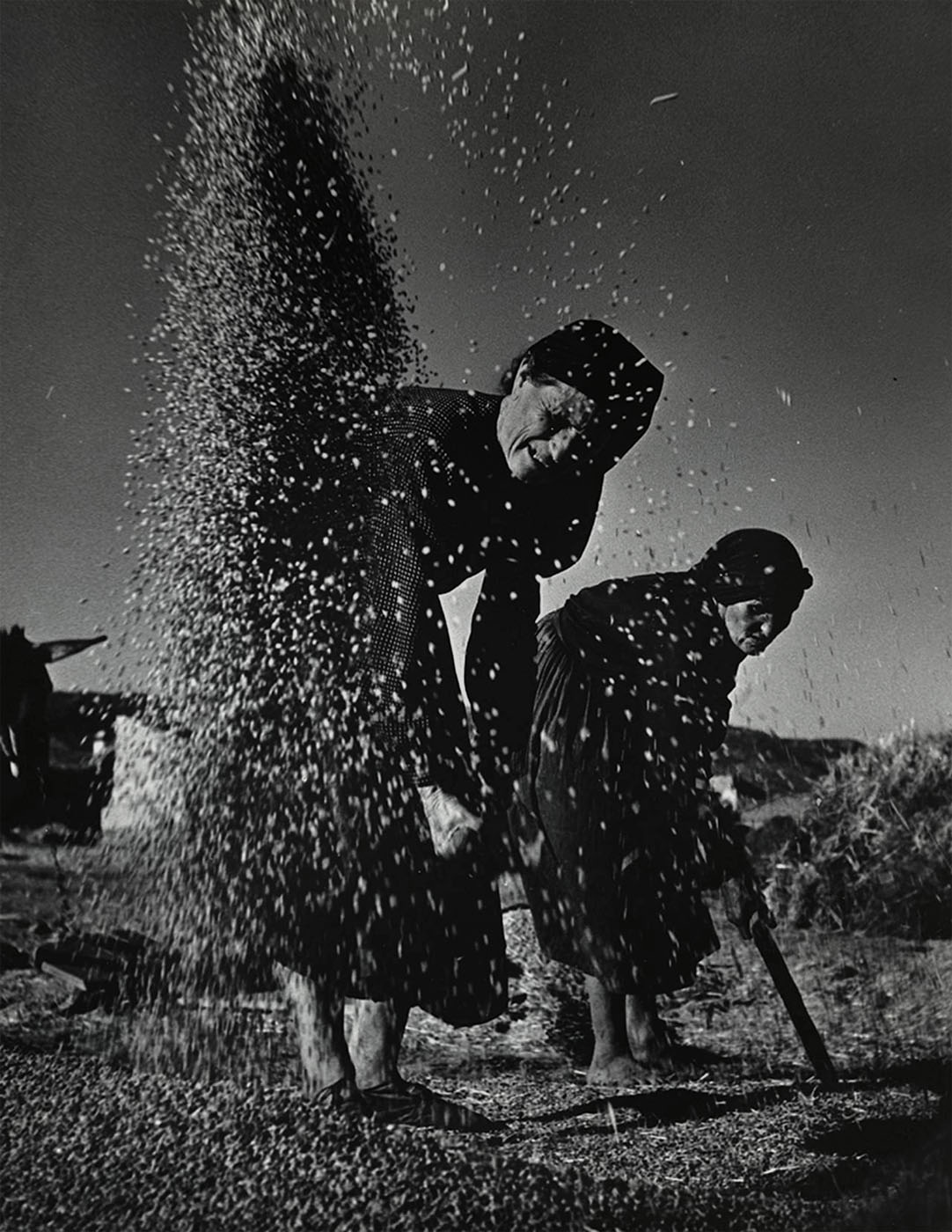
W. Eugene Smith (American, 1918-1978)
Threshing Wheat
1951
Gelatin silver print
Image: 13 5/8 x 10 5/8 in. (34.6 x 27cm)
Sheet: 14 x 11 in. (35.5 x 28cm)
Collection of H. Christopher Luce

W. Eugene Smith (American, 1918-1978)
Dance of the Flaming Coke
1955
Gelatin silver print, mounted to board
Image: 8 3/16 x 13 in. (20.8 x 33cm)
Sheet: 8 3/16 x 13 in. (20.8 x 33cm)
Support: 15 15/16 x 19 7/8 in. (40.5 x 50.5cm)
Collection of H. Christopher Luce
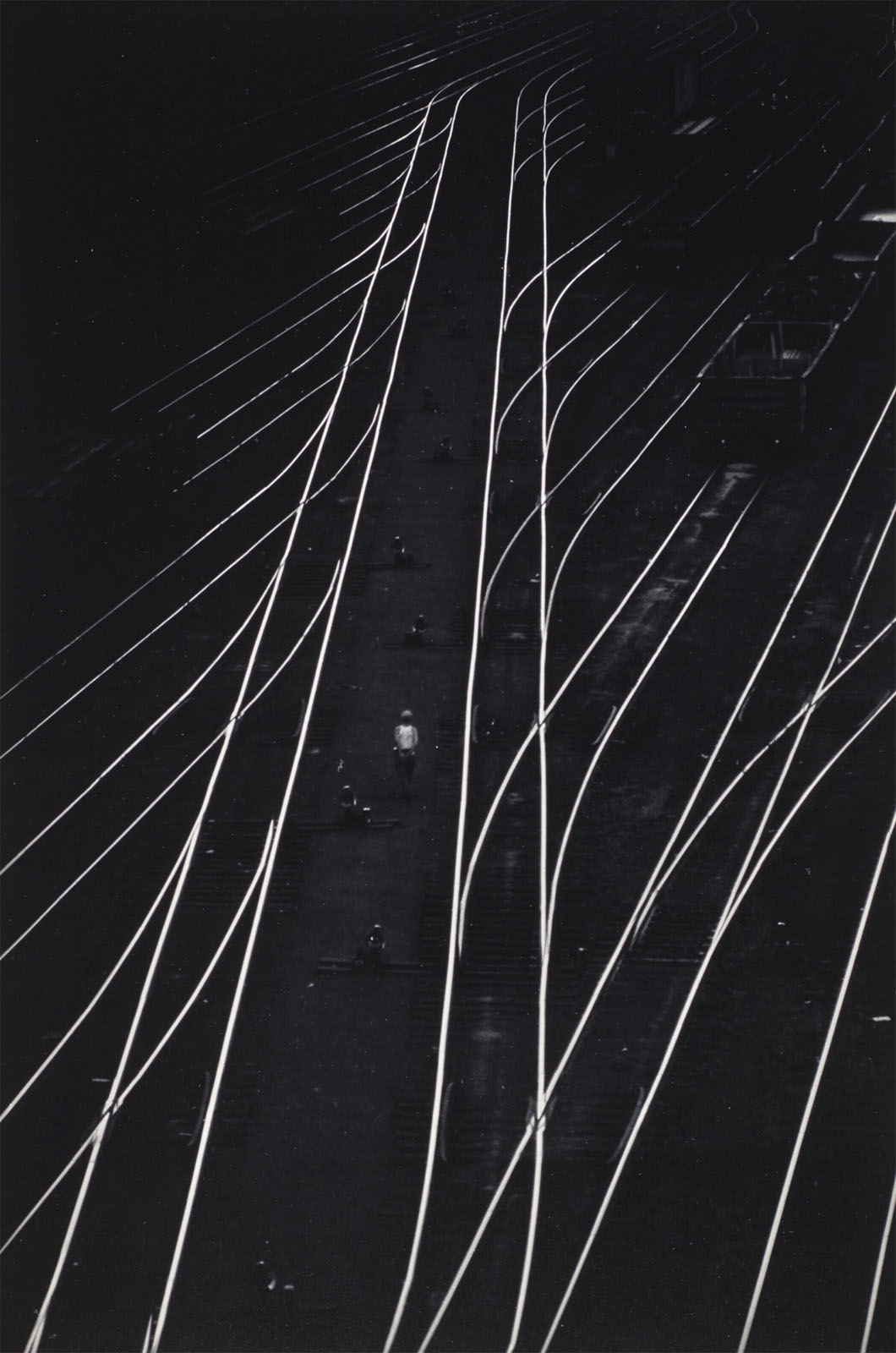
W. Eugene Smith (American, 1918-1978)
A Man Lost in a Maze of Railroad Tracks
1955
Gelatin silver print, mounted to board
Image: 13 9/16 x 8 in. (34.4 x 20.3cm)
Sheet: 13 9/16 x 8 in. (34.4 x 20.3cm)
Support: 19 11/16 x 13 15/16 in. (50 x 35.4cm)
Collection of H. Christopher Luce
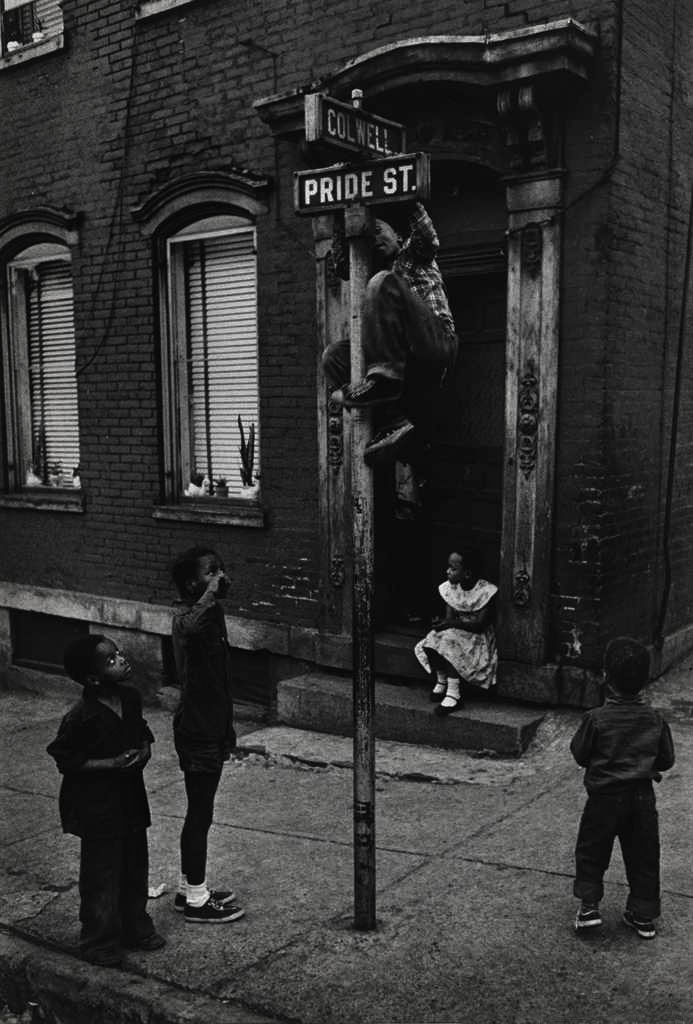
W. Eugene Smith (American, 1918-1978)
Pride Street Scene, Pittsburgh
1955-1956
Gelatin silver print
Image: 13 3/4 x 9 1/4 in. (34.9 x 23.5cm)
Sheet: 13 15/16 x 11 in. (35.4 x 28cm)
Gift of H. Christopher Luce
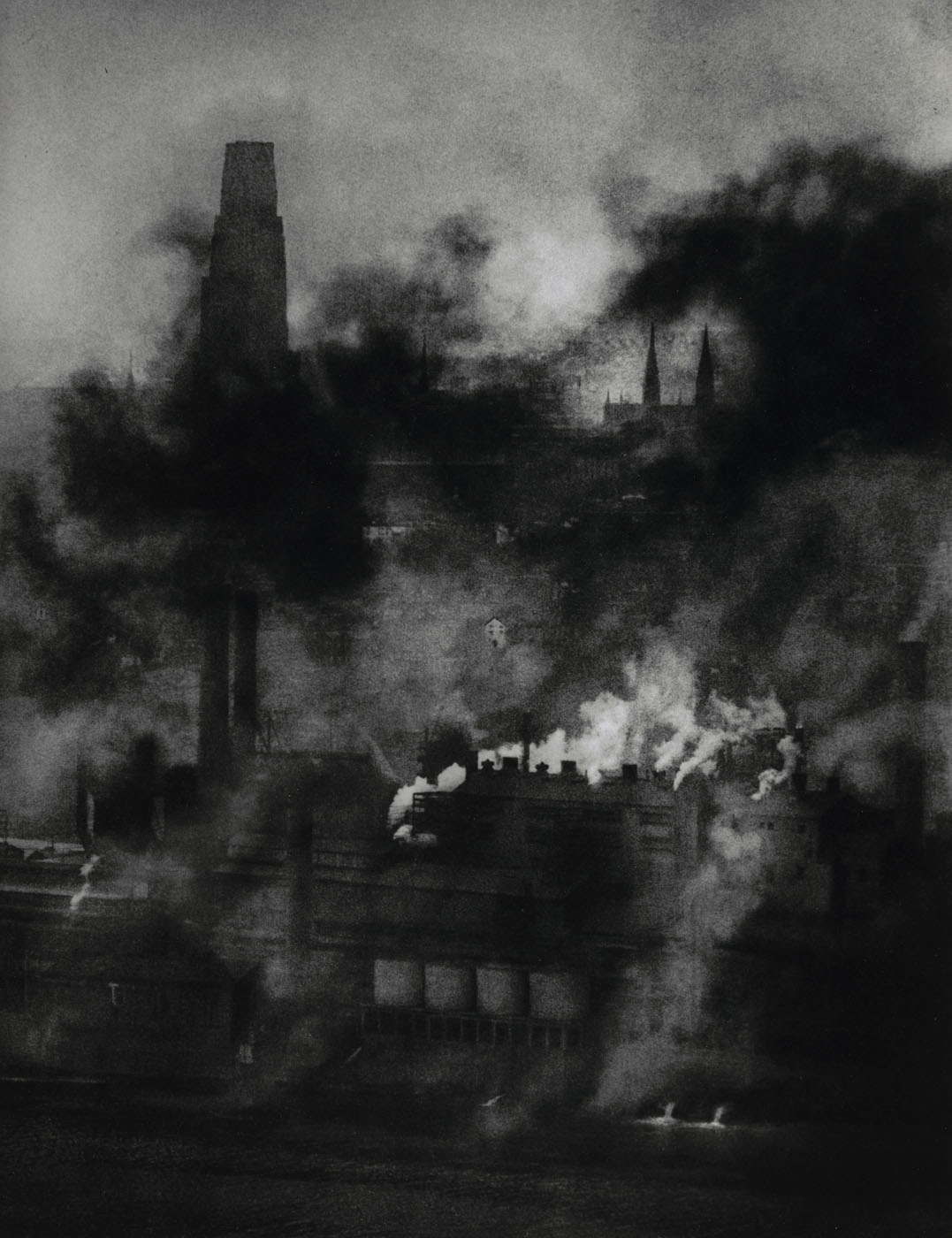
W. Eugene Smith (American, 1918-1978)
Smoky City
1955-1956
Gelatin silver print mounted on board
Image: 13 3/8 x 10 1/4 in. (34 x 26cm)
Sheet: 13 3/8 x 10 1/4 in. (34 x 26cm)
Support: 19 7/8 x 15 15/16 in. (50.5 x 40.5cm)
Collection of H. Christopher Luce

W. Eugene Smith (American, 1918-1978)
Steelworker with Goggles, Pittsburgh
1955-1956
Gelatin silver print, mounted to board
Image: 9 1/4 x 13 3/16 in. (23.5 x 33.5cm)
Sheet: 9 1/4 x 13 3/16 in. (23.5 x 33.5cm)
Support: 15 15/16 x 19 7/8 in. (40.5 x 50.5cm)
Collection of H. Christopher Luce
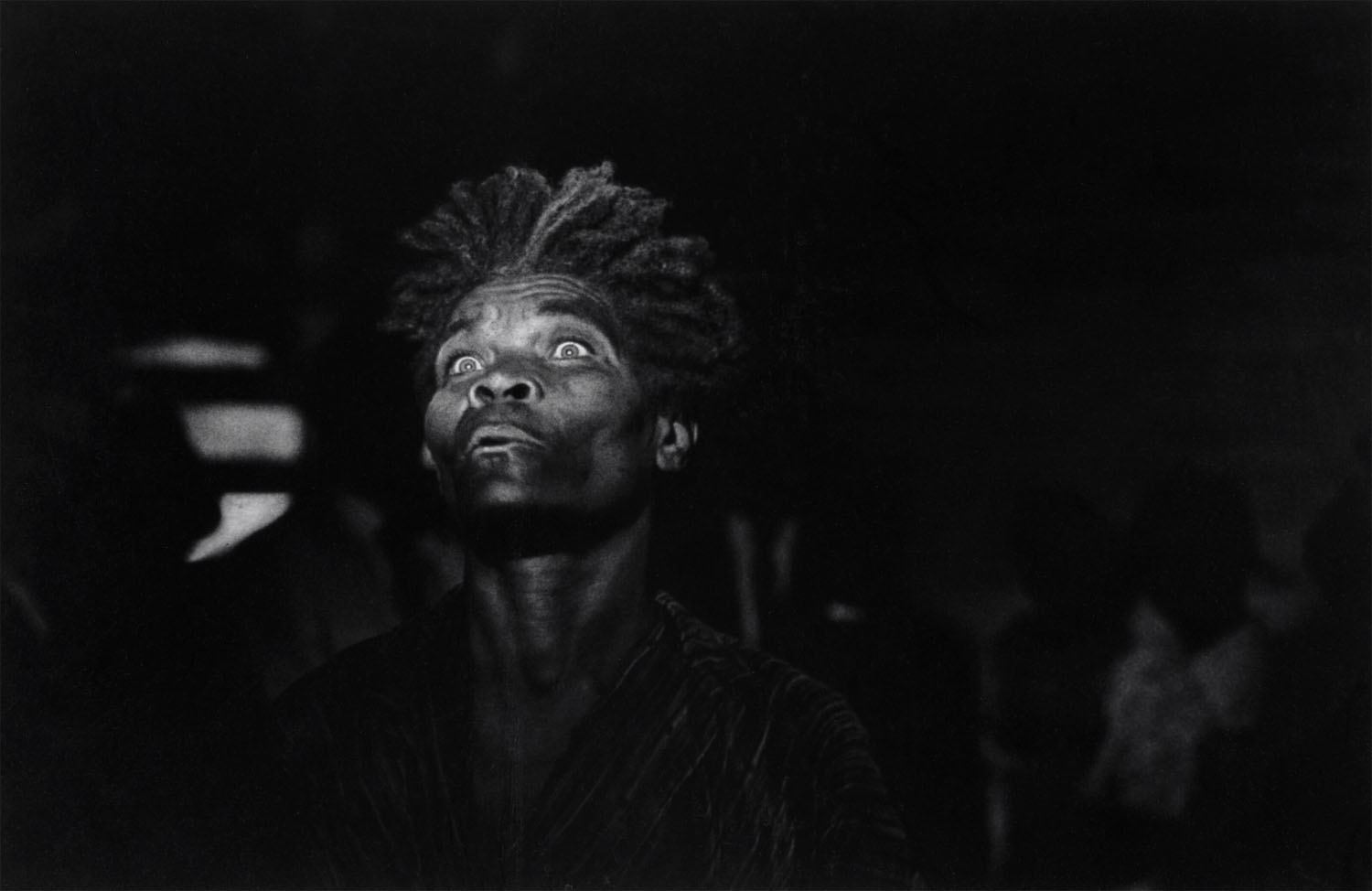
W. Eugene Smith (American, 1918-1978)
Mad Eyes, Haiti
1959
Gelatin silver print mounted on board
Image: 12 1/8 x 16 1/8 in. (30.8 x 41cm)
Sheet: 12 1/8 x 16 1/8 in. (30.8 x 41cm)
Support: 15 15/16 x 19 7/8 in. (40.5 x 50.5cm)
Collection of H. Christopher Luce
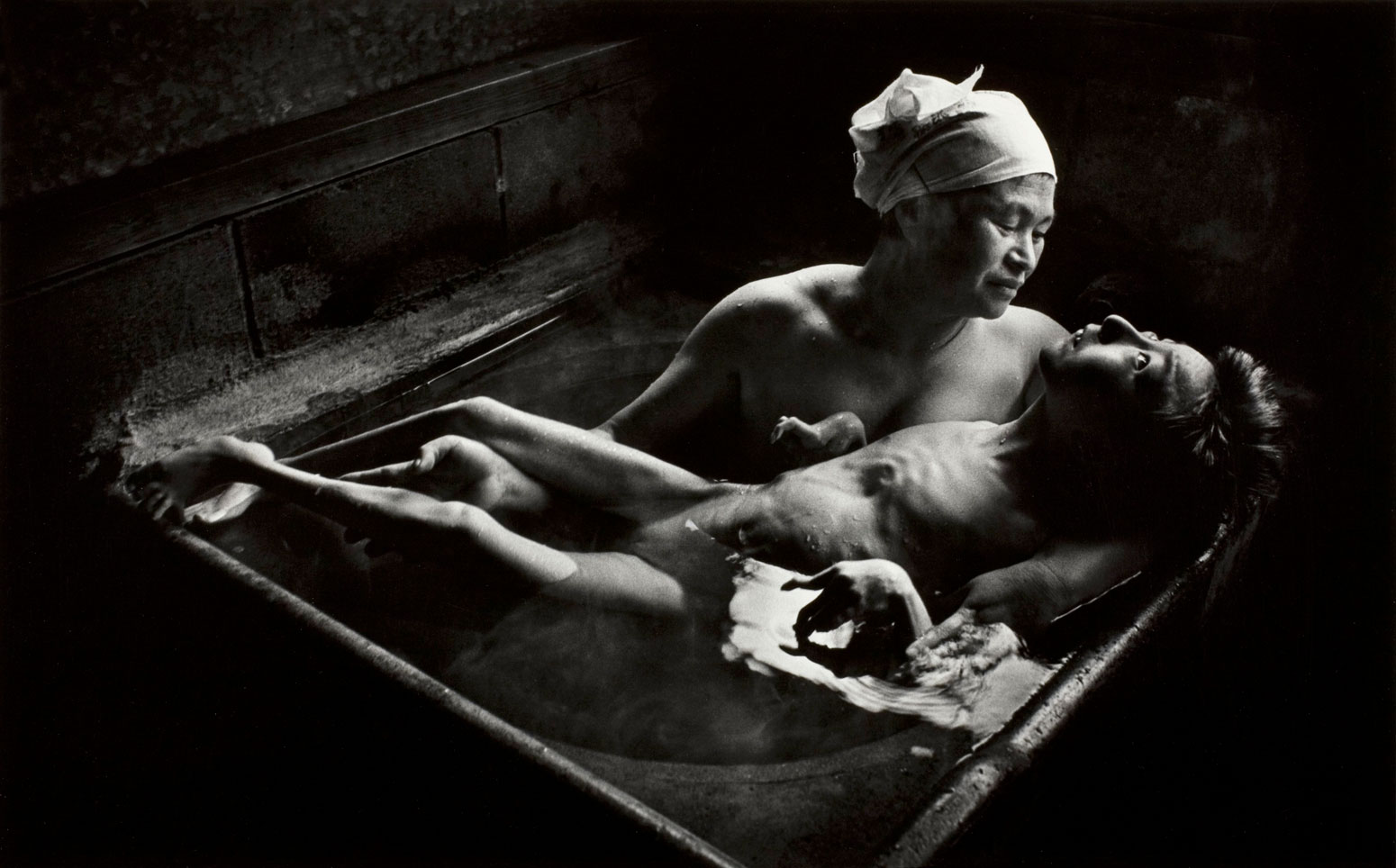
W. Eugene Smith (American, 1918-1978)
Tomoko Uemura Bathed by Her Mother
1972
Gelatin silver print
Image: 11 1/2 x 18 3/8 in. (29.2 x 46.7cm)
Sheet: 15 7/8 x 19 7/8 in. (40.4 x 50.5cm)
Purchased with the aid of funds from the National Endowment for the Arts and the S. Sidney Kahn, B.A. 1959, Matching Fund
The Minamata Pietà and the Ethical Dilemma
The image of Tomoko Uemura in her bath is, quite possibly, the most powerful photograph in the history of photojournalism. In it, a mother cradles her teenage daughter, whose limbs were deformed by Minamata syndrome, in a traditional bathtub. The light, shaped by Smith with the precision of a Renaissance master, transforms the scene into a modern “Pietà”.
Here lies the great debate that every documentary photographer must face: to what extent is the aestheticization of pain ethical? Smith believed that beauty in composition served to force the viewer to look at what they would otherwise reject. However, the fate of this image brings a contemporary lesson on the Right to be Forgotten. In 1997, at the request of Tomoko’s family, the circulation of the photograph was restricted. This teaches us that, in documentary photography, the author’s ultimate commitment is not to the work, but to the human being photographed.
The Photographer’s Blood: The Body as Evidence
Smith’s commitment to Minamata cost him dearly. In 1972, during a protest against Chisso at a factory in Goi, he was brutally beaten by company employees. The attack left him nearly blind and worsened the pain he would carry for the rest of his life.
This episode elevates Minamata to a rare echelon. Smith was not just documenting a crime; he became part of the evidence. His injured body was physical proof of the corporate violence he sought to expose. For the FotoDoc audience, the reflection remains: the documentary photographer is not a neutral spectator. He is a political agent who puts his own skin between injustice and the world.
FotoDoc. “W. Eugene Smith and Minamata: Photography as a Cry for Justice and the Limit of Documentary Ethics,” on the FotoDoc website, 28th April, 2026 [Online] Cited 20/11/2026. Used under fair use conditions for the purposes of education and research
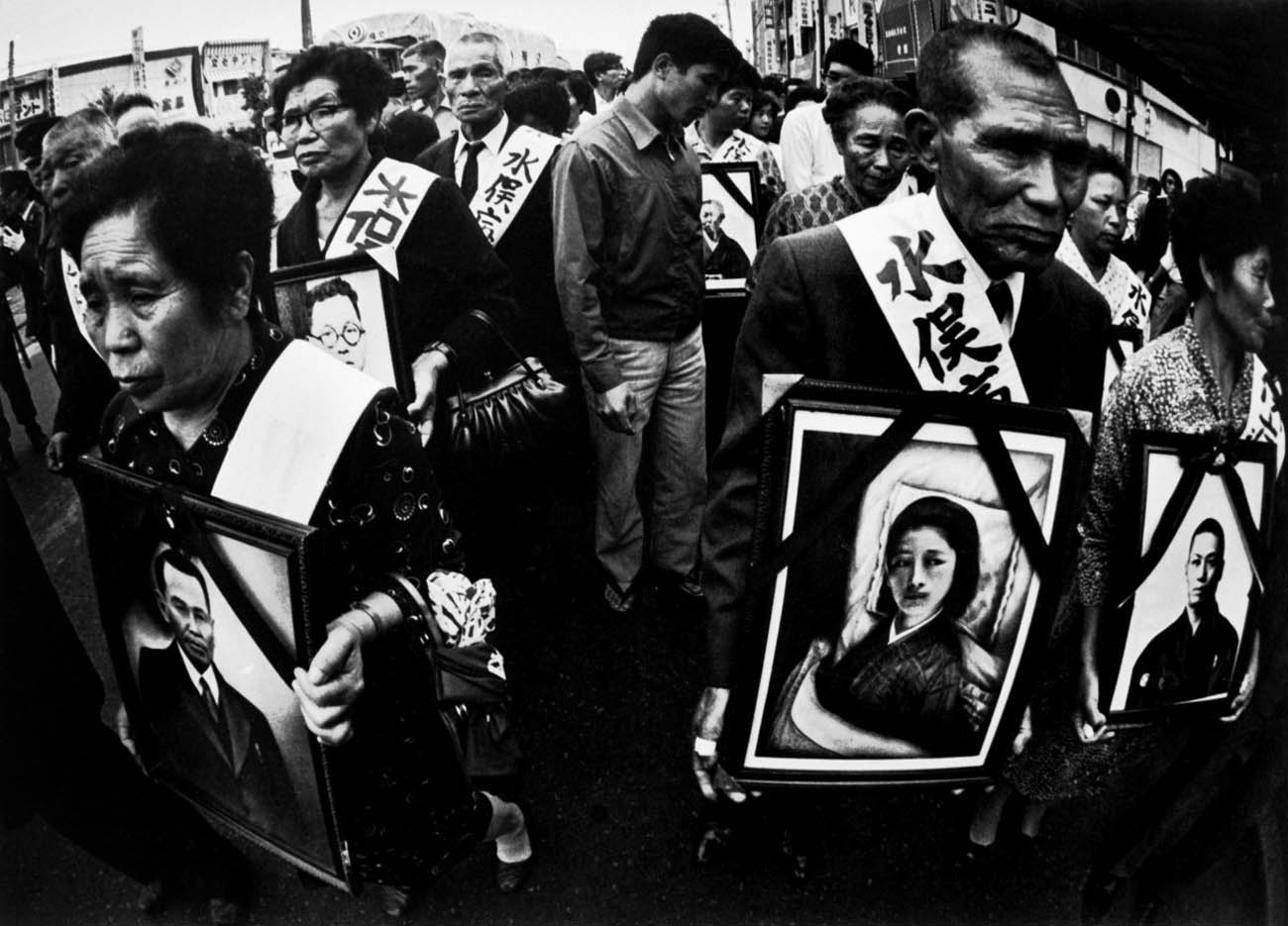
W. Eugene Smith (American, 1918-1978)
Demonstrators at the Courthouse (Patients and Relatives Carry Photographs of Their “Verified” Dead during the Minamata Trial), Minamata Bay, Japan
1972
Gelatin silver print, mounted to board
Image: 6 5/16 x 8 7/16 in. (16 x 21.4cm)
Sheet: 6 5/16 x 8 7/16 in. (16 x 21.4cm)
Support: 15 3/4 x 19 7/8 in. (40 x 50.5cm)
Collection of H. Christopher Luce
JAPAN. Mercury poisoning. Minamata Bay. Patients and relatives carry photographs of the ‘verified’ dead on the last day of the Minimata Trial (victims of the disease against the Chisso Plant).
Minamata is both a fishing village and a “one company” industrial city in the Kyushu district of Japan. It is also the setting for a historic confrontation; the victims of Minamata disease versus the Chisso Corporation. The causal agent of the disease is “methyl-mercury chloride (organic) mercury. Mercury (inorganic) was used as a catalyst in manufacturing acetaldehyde from acethylene. Small amounts left the plant as waste, the rest of the organic mercury was created in the ocean from dumped inorganic mercury. The toxic waste discharged into the water, consumed by fish, then found itself by nutrition into the human body.
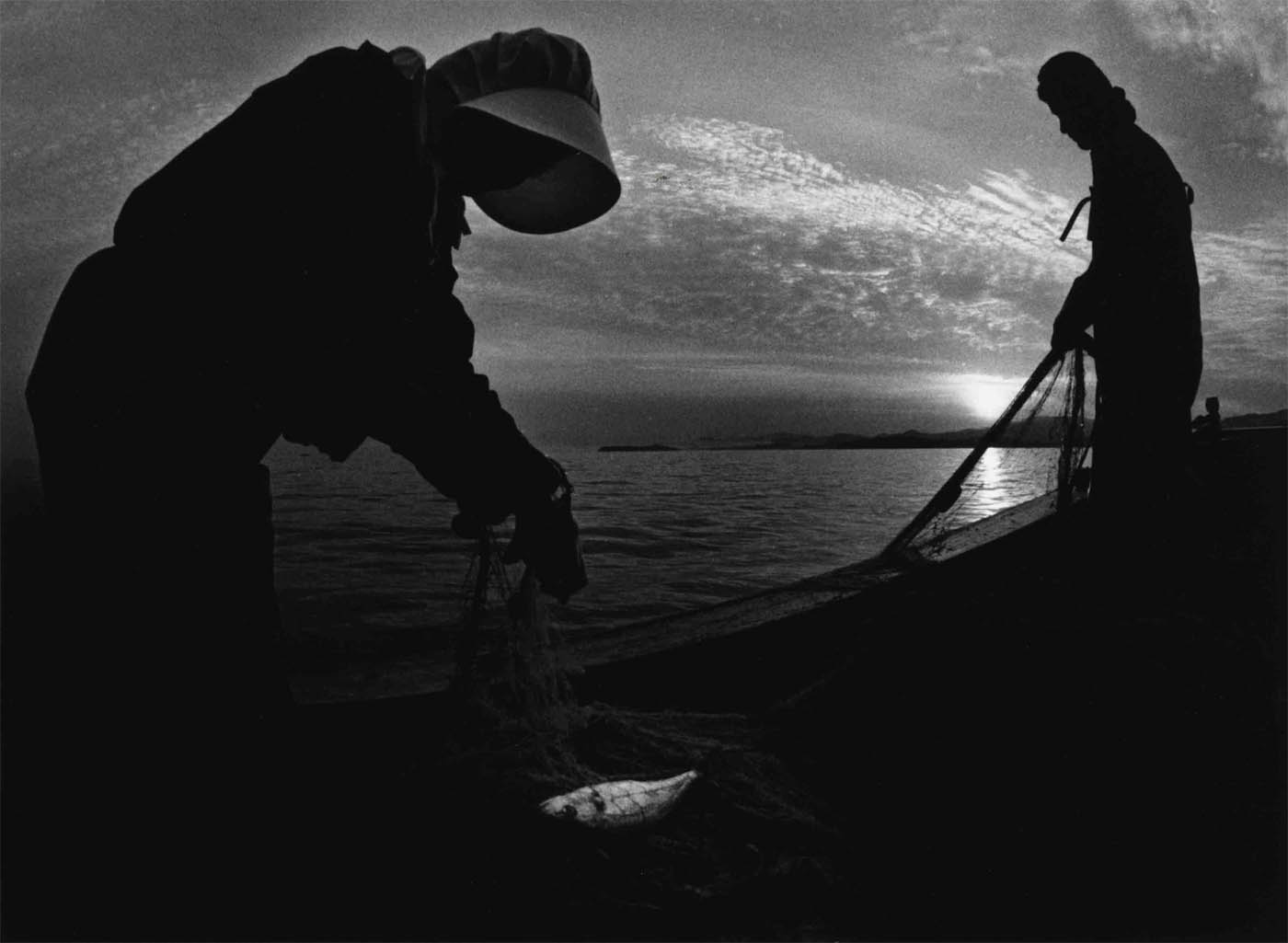
W. Eugene Smith (American, 1918-1978)
Fisherwomen of Minamata
1972
Gelatin silver print
Image: 9 1/2 x 13 1/16 in. (24.1 x 33.2cm)
Sheet: 9 1/2 x 13 1/16 in. (24.1 x 33.2cm)
Support: 15 15/16 x 19 7/8 in. (40.5 x 50.5cm)
Lent by H. Christopher Luce, B.A. 1972
Yale University Art Gallery
1111 Chapel Street (at York Street)
New Haven, CT
Opening hours:
Tuesday – Friday 10.00am – 5.00pm
Thursday (Sept. – June) 10.00am – 8.00pm
Saturday – Sunday 11.00am – 5.00pm
Closed Mondays


You must be logged in to post a comment.