Exhibition: ‘Film Stills: Photography between Advertising, Art and the Cinema’ at Albertina, Vienna

Exhibition dates: 4th November, 2016 – 26th February, 2017
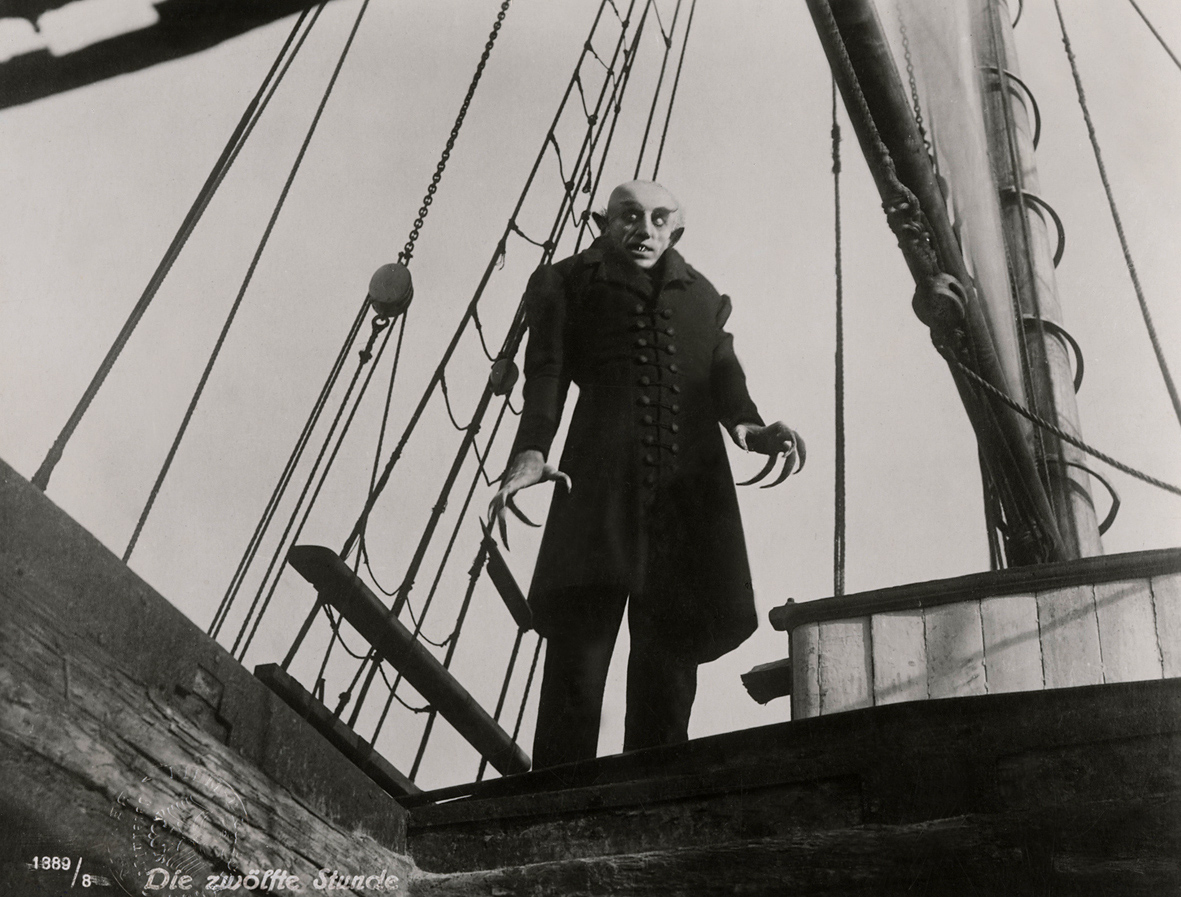


Anonymous photographer. Still from 'Nosferatu, a Symphony of Horror' 1922 from the exhibition 'Film Stills: Photography between Advertising, Art and the Cinema' at Albertina, Vienna, Nov 2016 - Feb 2017


Anonymous photographer
Still from Nosferatu, a Symphony of Horror
1922
Director: Friedrich Wilhelm Murnau (German, 1888-1931)
Gelatin silver print
© Deutsche Kinemathek


I seem to have a bit of a thing for film and photography at the moment!

More delicious film fascination, this time for the still camera. German Expressionism, film noir, science-fiction, horror, murder and mayhem – photographers using all manner of artistic techniques to get their message across. Now often found in fine art auction houses.

I love the heading “Intermediality and Self-Reflexivity” … “intermediate images” that unite aspects of both media (film and photography) and self-reflexive images that take on a life of their own, developing “a filmic work further in an independent manner, thereby allowing it to be regarded from new perspectives. Such stills often contain self-reflexive commentary on the work’s specifically “filmic” aspects.”

Sensitive, sensual, snapshot; stars and auteurism; murder and mayhem; avant-garde, beauty and sex – it has it all. Great stuff.

Dr Marcus Bunyan

PS. Look at the amazing colours in Horst von Harbou’s stills for Metropolis (1927) which were produced as transparent foils and elaborately coloured by hand. Never heard of such a thing before, coloured transparent foils.


Many thankx to the Albertina for allowing me to publish the photographs in the posting. Please click on the photographs for a larger version of the image.


Anonymous photographer. 'La Passion de Jeanne d'Arc' 1927 from the exhibition 'Film Stills: Photography between Advertising, Art and the Cinema' at Albertina, Vienna, Nov 2016 - Feb 2017


Anonymous photographer
La Passion de Jeanne d’Arc
1927
Karl Theodor Dreyer (Danish, 1889-1968) (director)


Carl Theodor Dreyer (3 February 1889 – 20 March 1968), commonly known as Carl Th. Dreyer, was a Danish film director. He is regarded by many critics and filmmakers as one of the greatest directors in cinema. His best known films include The Passion of Joan of Arc (1928), Vampyr (1932), Day of Wrath (1943), Ordet (1955), and Gertrud (1964) …

As a young man, Dreyer worked as a journalist, but he eventually joined the film industry as a writer of title cards for silent films and subsequently of screenplays. He was initially hired by Nordisk Film in 1913.

His first attempts at film direction had limited success, and he left Denmark to work in the French film industry. While living in France he met Jean Cocteau, Jean Hugo and other members of the French artistic scene and in 1928 he made his first classic film, The Passion of Joan of Arc. Working from the transcripts of Joan’s trial, he created a masterpiece of emotion that drew equally on realism and expressionism.

Text from the Wikipedia website


Who doesn’t know them: that picture from The Seven-Year Itch of a smiling Marilyn Monroe with her white dress blown upward by the air from a subway grate, or the photo of a conspiratorial James Stewart in Rear Window? Regardless of whether one has seen the actual movies, such images are familiar. It’s film stills like these that have burnt themselves into the collective memory and had a major impact on how their films are perceived.

Film stills embody visual traces of films as well as independent photographic images. Taken on set during production, they are based on an elaborate process in which film photographers re-stage film scenes for the still camera.

In the first-ever major exhibition devoted to this hybrid genre, the Albertina is showing 130 film stills taken between 1902 and 1975 in cooperation with the Austrian Film Museum. That was the period during which black-and-white film stills reached their highest level of technical and aesthetic quality, simultaneously covering a sweeping cross-section of various artistic movements from photographic and cinematic history such as Pictorialism and Expressionism. Employing pictures by Deborah Imogen Beer, Horst von Harbou, Pierluigi Praturlon, Karl Struss, and others, three aspects of this genre’s intermedial relationships are highlighted: the functions performed by film stills, the interfaces between photography and film with their breaks and couplings, and the additional artistic value of still photographs as such.

For the Media and the Press

The purpose of film stills is clearly defined: as material for the press and various types of advertising, they help to market films. And alongside their use in trailers, film journalism, and other marketing tools such as posters, film stills also represent a key ingredient of audience expectations pertaining to a film upon its release. Even so, it is the production of visually appealing images – rather than authentic reproduction of the film itself – that is important, here. In display windows and the media, still images visualise different aspects of a production ranging from key scenes to the actual filming work. This motivic variety corresponds to various film still categories: portrait photos of the actors and actresses taken by in-house studio photographers, as well as scene photos and making-of photos, are used in these contexts. And fed into numerous distribution processes, such photos also serve as models for posters, lobby cards, photo books, and press materials.

Intermediality and Self-Reflexivity

Film stills unite functional requirements with photographic and filmic intentions. And in fact, still photography is the only way in which to show visual traces of a production outside of the filmic event – the screening – itself. The challenges that photographers face in taking such shots lie in the difference between the media of moving (projected) film images and static (material) photography. In a complex and laborious process, they work on set to restage film scenes specifically for the still camera, thus transforming the film from a moving to a static medium.

The employment of various photographic strategies makes possible film stills’ “filmic” reception, with momentary photos that evoke a film’s dynamics being just as exemplary here as panoramic shots that require a longer look. Still photos thus repeat a film’s constituent elements, inscribing them onto a photographic medium in various ways and thus functioning as “intermediate images” that unite aspects of both media. They can be read not only as static views of a filmic reality, but also as independent types of photographic image. This quality is reinforced by the fact that stills frequently develop a filmic work further in an independent manner, thereby allowing it to be regarded from new perspectives. Such stills often contain self-reflexive commentary on the work’s specifically “filmic” aspects.

Film Stills at the Interface to Fine Art

Being situated between film and photography, many film stills also possess artistic qualities that are clearly photographic in nature. Here, composition plays a major role as it bears witness to a pictorial conception that differs from that of a filmic image. For while moving images are designed as horizontal arrangements, with the pictorial elements sequenced one after the other to effect their visual continuation, still photographers stage still photos according to the (static) central perspective governed by the camera’s vanishing point. This positions observers at that place which has been assigned them since the Renaissance – that is, looking straight down the picture’s central axis. Correspondingly, many stills exhibit reminiscences of the proscenium stage from traditional live theatre, favouring views that render scenes more immediate and thus more easily legible.

Photographers, in composing their images, often borrow iconographic and stylistic elements from various artistic movements: Expressionism, Art Nouveau, and Pictorialism are examples of these.

And in this way, still photographers depart from the original filmic work and realise their own pictorial ideas. Their photos thus refrain from “authentic” reproduction of a film’s various aspects, instead using these aspects to realise subjective artistic practices, thereby implying a reversal of the classic hierarchy between photography and film.

Press release from the Albertina


Paul Ronald (French, 1924-2015) Edra Gale in 'Otto e mezzo' (Edra Gale in '8½') 1963


Paul Ronald (French, 1924-2015)
Edra Gale in Otto e mezzo (Edra Gale in )
1963
Director: Federico Fellini, 1963
Ekatchrome
© Archivio Storico del Cinema / AFE


(Italian title: Otto e mezzo) is a 1963 comedy-drama film directed by Federico Fellini. Co-scripted by Fellini, Tullio Pinelli, Ennio Flaiano, and Brunello Rondi, it stars Marcello Mastroianni as Guido Anselmi, a famous Italian film director. Shot in black-and-white by cinematographer Gianni di Venanzo, the film features a soundtrack by Nino Rota with costume and set designs by Piero Gherardi.
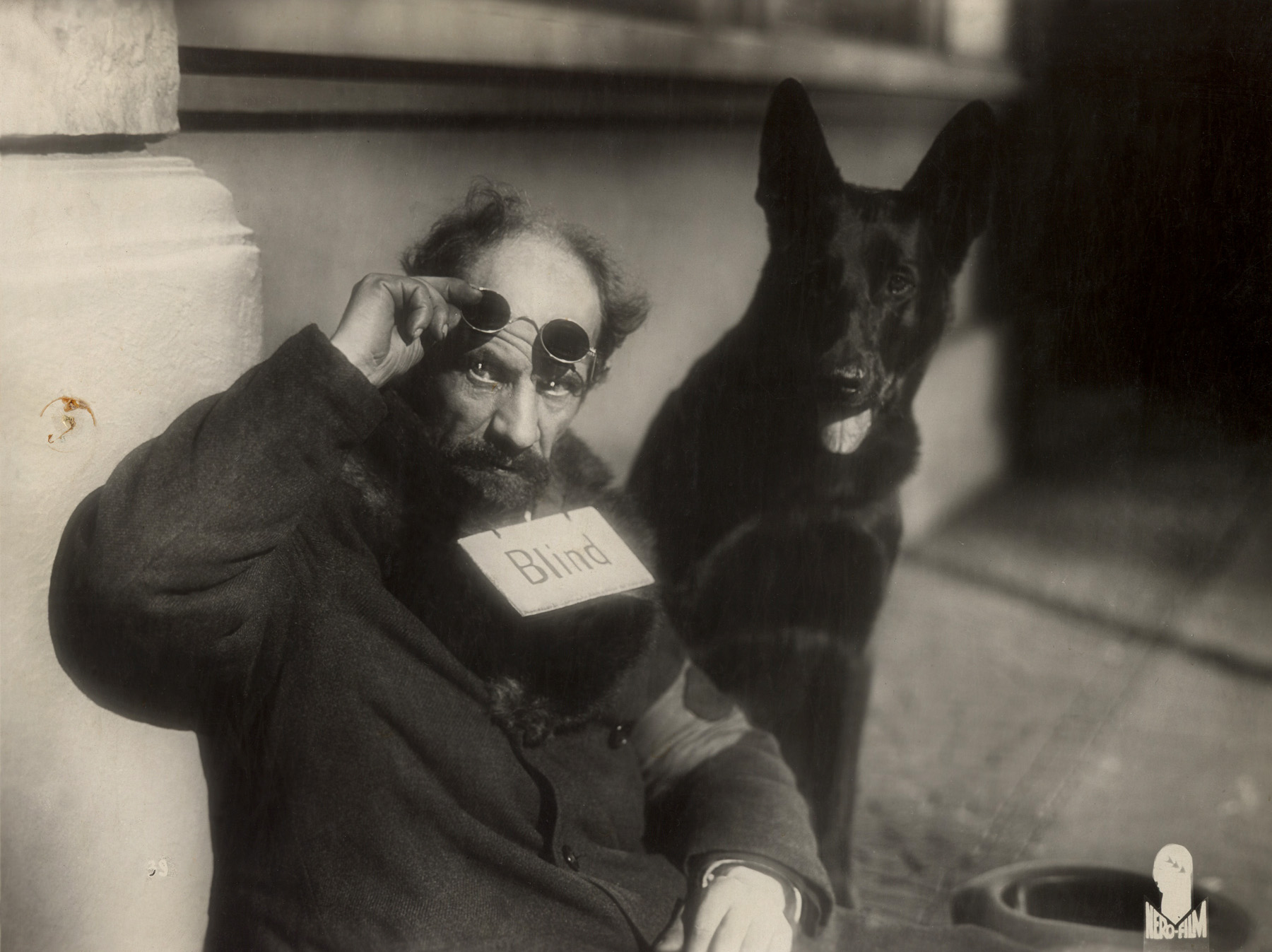
 

Horst von Harbou (German, 1879-1953) Georg John in 'M - A City searches for a Murderer' 1931


Horst von Harbou (German, 1879-1953)
Georg John in M – A City searches for a Murderer
1931
Gelatin silver print
Austrian Theatre Museum
© Horst von Harbou – Deutsche Kinemathek


M (German: M – Eine Stadt sucht einen Mörder – “M – A city looks for a murderer”) is a 1931 German drama-thriller film directed by Fritz Lang and starring Peter Lorre. It was written by Lang and his wife Thea von Harbou and was the director’s first sound film. It concerns the manhunt for a serial killer of children, conducted by both the police and the criminal underworld. Now considered a classic, the film was deemed by Fritz Lang as his finest work.

Little Elsie Beckmann leaves school, bouncing a ball on her way home. She is approached by Hans Beckert, who is whistling “In the Hall of the Mountain King” by Edvard Grieg. He offers to buy her a balloon from a blind street-vendor [above] and walks and talks with her. Elsie’s place at the dinner table remains empty, her ball is shown rolling away across a patch of grass and her balloon is lost in the telephone lines overhead.


M – A City Searches for a Murderer (M – Eine Stadt sucht einen Mörder) 1931 – Public Domain Movies

M (German: M – Eine Stadt sucht einen Mörder, lit. M – A City Searches for a Murderer) is a 1931 German thriller film directed by Fritz Lang and starring Peter Lorre in his breakthrough role as Hans Beckert, a serial killer of children. An early example of a procedural drama, the film centers on the manhunt for Lorre’s character, conducted by both the police and the criminal underworld.

The film’s screenplay was written by Lang and his wife Thea von Harbou and was the director’s first sound film. It features many cinematic innovations, including the use of long, fluid tracking shots, and a musical leitmotif in the form of “In the Hall of the Mountain King” whistled by Lorre’s character. Now considered a timeless classic, the film was deemed by Lang to be his magnum opus. It is widely considered one of the greatest films of all time, and an indispensable influence on modern crime and thriller fiction.

Anonymous text from the YouTube website [Online] Cited 20/02/2017. No longer available online.
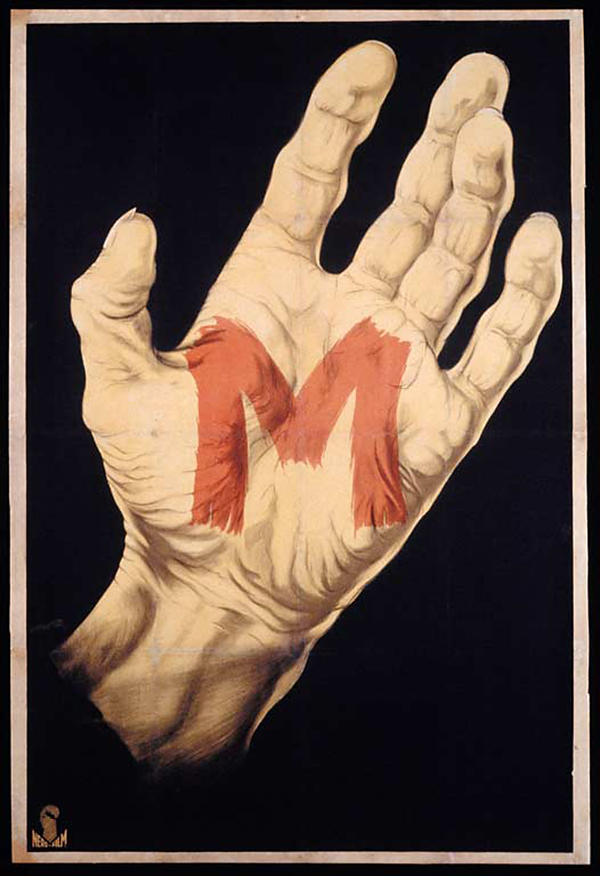
 

Unknown artist. 'Poster for "M"' 1931


Unknown artist
Poster for “M”
1931
Director: Fritz Lang (Austria, 1890-1976)
Collection of La Cinémathèque française


Wall texts

Advertising pictures

Aimed at inviting the public to buy a ticket, film stills were used as advertising photographs in cinema lobbies and as press material for the media. Directors and production companies depended on them for promoting their movies, because the film as a projected moving image is immaterial and does not exist beyond the screen. Stills comprise various types of pictures that show different aspects of a movie’s production: scenes, portraits of its actresses and actors, as well as production photographs capturing its shooting.

The production of stills was based on a division of labor. In major production companies like those of Hollywood, still photographers were assigned to the companies’ advertising or publicity departments. Sometimes involving the director, these departments selected the photographs intended for publication. The promotion photographs for the movie palaces’ lobbies were published in sets of twenty to forty pictures each, which visualised characteristic aspects of the film. A wider selection of stills was used for the press. Picture editors adapted the photographs according to their purposes. We find instructions for the material’s reproduction and cropping marks indicating new image areas; retouches deleted undesired elements and changed the motif in line with the planned layout.
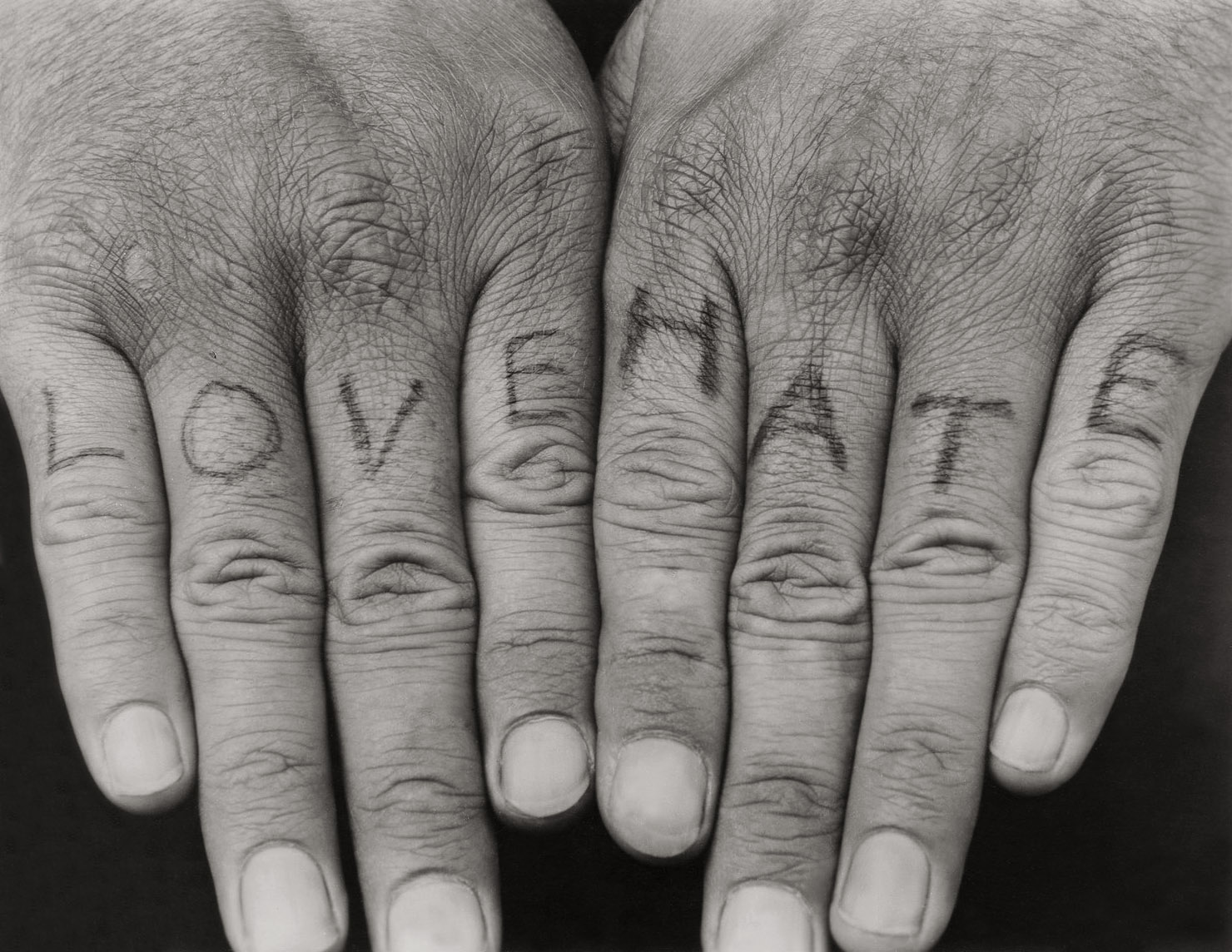
 

Anonymous photographer. Still from 'The Night of the Hunter' 1954


Anonymous photographer
Still from The Night of the Hunter
1954
Silver gelatin print


Anonymous photographer. Robert Mitchum in 'The Night of the Hunter' 1955


Anonymous photographer
Robert Mitchum in The Night of the Hunter
1955
Director: Charles Laughton (English, 1899-1962)
Gelatin silver print
© The John Kobal Collection


The Night of the Hunter is a 1955 American film noir directed by Charles Laughton and starring Robert Mitchum, Shelley Winters and Lillian Gish. The screenplay by James Agee was based on the 1953 novel of the same name by Davis Grubb. The plot focuses on a corrupt reverend-turned-serial killer who attempts to charm an unsuspecting widow and steal $10,000 hidden by her executed husband.

The novel and film draw on the true story of Harry Powers, hanged in 1932 for the murder of two widows and three children in Clarksburg, West Virginia. The film’s lyrical and expressionistic style with its leaning on the silent era sets it apart from other Hollywood films of the 1940s and 1950s, and it has influenced later directors such as David Lynch, Martin Scorsese, Terrence Malick, Jim Jarmusch, Spike Lee, and the Coen brothers.

In 1992, The Night of the Hunter was deemed “culturally, historically, or aesthetically significant” by the United States Library of Congress and was selected for preservation in the National Film Registry. The influential film magazine Cahiers du cinéma selected The Night of the Hunter in 2008 as the second-best film of all time, behind Citizen Kane.

Text from the Wikipedia website


'The Night of the Hunter' film poster 1955


The Night of the Hunter film poster 1955


Anonymous photographer. Still from the film 'Vertigo, Judy behind Madeleine' 1957/1958


Anonymous photographer
Still from the film Vertigo, Judy behind Madeleine
1957/1958
Director: Alfred Hitchcock (English, 1899-1980)
Silver gelatin print


'Vertigo' film poster 1957/1958


Vertigo film poster 1957/1958


Bud Fraker (attributed to) (American, 1916-2002) 'Janet Leigh, Vera Miles and John Gavin in 'Psycho'' 1960


Bud Fraker (attributed to) (American, 1916-2002)
Janet Leigh, Vera Miles and John Gavin in Psycho
1960
Director: Alfred Hitchcock (English, 1899-1980)
Gelatin silver print
© Berlin, Deutsche Kinemathek – Paramount Pictures


Star portraits

Regarded as the supreme discipline of still photography, the portraiture of stars was an integral part of the film industry’s elaborate promotion campaigns. Productions could be effectively marketed by using actresses and actors to project their image. With the emergence of the studio system, Hollywood perfected this business strategy from the 1920s on by employing specialised portrait photographers. These photographers worked in company-owned studios and – unlike set photographers who mostly remained anonymous – were known by name. Relying on sophisticated lighting and drastic retouching, they created the aesthetic of the glamour portrait. Don English perfectly translated the lighting as it had been exactly planned by Josef von Sternberg, the director, for his film in his portrait of Marlene Dietrich for Shanghai Express (1932). Generally, domestic production companies could not afford to run their own portrait studios and were thus unable to exercise any influence on photographic products from outside. This offered both the stars and the studios a certain degree of freedom when it came to the representation and interpretation of a certain look. The photograph taken of Hedy Kiesler (later Lamarr) in her role in Gustav Machatý’s Ecstasy (1933) by the renowned studio Manassé in Vienna is one of the rare portrait stills taken on the set at that time.


Karl Struss (American, 1886-1981) 'Gloria Swanson in 'Male and Female'' 1919


Karl Struss (American, 1886-1981)
Gloria Swanson in Male and Female
1919
Director: Cecil B. DeMille (American, 1881-1959)
Gelatin silver print
© The John Kobal Foundation
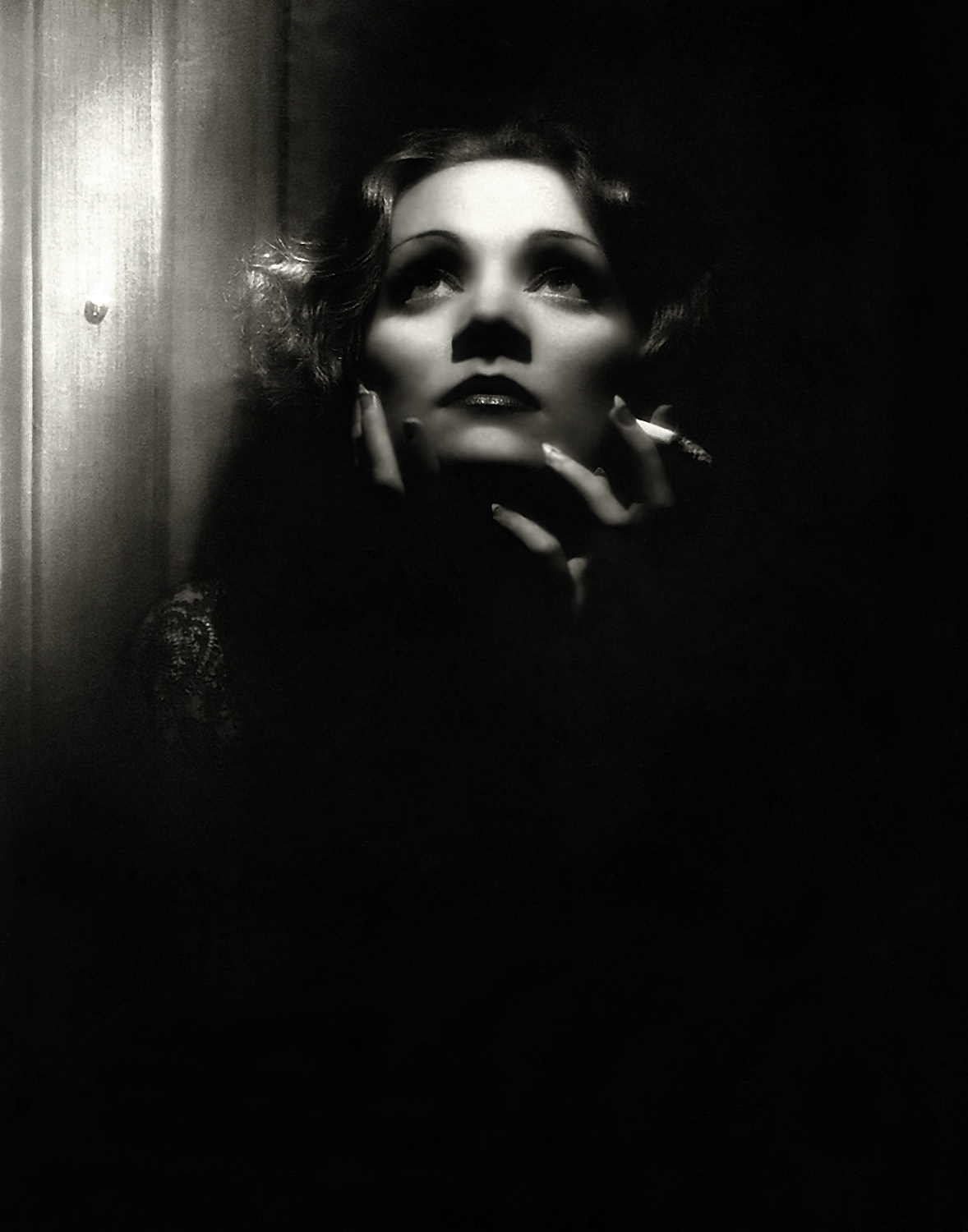
 

Don English (American, 1901-1964) 'Marlene Dietrich in 'Shanghai Express'' 1932


Don English (American, 1901-1964)
Marlene Dietrich in Shanghai Express
1932
Director: Josef von Sternberg (American born Austria, 1894-1969)
Silver gelatin print


Raymond Cauchetier (French, born 1920) 'Jean Paul Belmondo & Jean Seberg, Paris, 1959' 1959


Raymond Cauchetier (French, 1920-2021)
Jean Paul Belmondo & Jean Seberg, Paris, 1959
1959
Still from the film Breathless
Director: Jean-Luc Godard (French-Swiss, 1930-2022)
Gelatin silver print


'Breathless' film poster 1960


Breathless film poster 1960


Anonymous photographer. 'Still from the film 'Breathless'' 1959


Anonymous photographer
Still from the film Breathless
1959
Director: Jean-Luc Godard (French-Swiss, 1930-2022)
Gelatin silver print


Georges Pierre (French, 1921-2003) 'Delphine Seyrig in 'Last Year in Marienbad'' 1961


Georges Pierre (French, 1921-2003)
Delphine Seyrig in Last Year in Marienbad
1961
Director: Alain Resnais (French, 1922-2014)
Astor Pictures Corporation / Photofest
© Astor Pictures Corporation


Delphine Claire Beltiane Seyrig (10 April 1932 – 15 October 1990) was a Lebanese-born French stage and film actress, a film director and a feminist.

As a young woman, Seyrig studied acting at the Comédie de Saint-Étienne, training under Jean Dasté, and at Centre Dramatique de l’Est. She appeared briefly in small roles in the 1954 TV series Sherlock Holmes. In 1956, she returned to New York and studied at the Actors Studio. In 1958 she appeared in her first film, Pull My Daisy. In New York she met director Alain Resnais, who asked her to star in his film Last Year at Marienbad. Her performance brought her international recognition and she moved to Paris. Among her roles of this period is the older married woman in François Truffaut’s Baisers volés (1968).

During the 1960s and 1970s, Seyrig worked with directors including Truffaut, Luis Buñuel, Marguerite Duras, and Fred Zinnemann, as well as Resnais. She achieved recognition for both her stage and film work, and was named best actress at the Venice Film Festival for her role in Resnais’ Muriel ou Le temps d’un retour (1963). She played many diverse roles, and because she was fluent in French, English and German, she appeared in films in all three languages, including a number of Hollywood productions.

Text from the Wikipedia website


L’Année dernière à Marienbad (released in the US as Last Year at Marienbad and in the UK as Last Year in Marienbad) is a 1961 French-Italian film directed by Alain Resnais from a screenplay by Alain Robbe-Grillet.

Last Year at Marienbad is famous for its enigmatic narrative structure, in which truth and fiction are difficult to distinguish, and the temporal and spatial relationship of the events is open to question, even if it never quite ventures into surrealism. The film’s dreamlike nature has both fascinated and baffled viewers; many have hailed the work as a masterpiece, while others consider it incomprehensible.

At a social gathering at a château or baroque hotel, a man approaches a woman. He claims they met the year before at Marienbad and is convinced that she is waiting there for him. The woman insists they have never met. A second man, who may be the woman’s husband, repeatedly asserts his dominance over the first man, including beating him several times at a mathematical game (a version of Nim). Through ambiguous flashbacks and disorienting shifts of time and location, the film explores the relationships among the characters. Conversations and events are repeated in several places in the château and grounds, and there are numerous tracking shots of the château’s corridors, with ambiguous voiceovers. The characters are unnamed in the film; in the published screenplay, the woman is referred to as “A”, the first man is “X”, and the man who may be her husband is “M”.

Text from the Wikipedia website


'L'Année dernière à Marienbad' Japanese film poster 1961


L’Année dernière à Marienbad Japanese film poster 1961


Artistic pictures

Until the 1950s still photographers used large-format plate cameras, which projected an inverted image onto the focusing screen at the back of the body. These cameras produced technically brilliant pictures, yet were complicated to handle because of their size and comparatively long exposure times. The staging of stills had to be meticulously planned and was fundamentally different from the shooting of a film. While the film camera is geared to the story in motion and its visual continuation in the pictures to follow, actresses and actors posed for the photographer in tableaux-vivants-like arrangements using additional light. The resultant static and apparently artificial compositions mirroring the performative staging process are typical of this kind of photographs. Still photographers drew inspiration from works of art for their mise-en-scène. The anonymous photographer in charge of the stills for Henrik Galeen’s The Student of Prague (1926) quotes the Romantic painter Caspar David Friedrich’s works in his theatrical presentation of an atmospheric landscape. Horst von Harbou, who frequently worked with the director Fritz Lang, drew on Carl Otto Czeschka’s Jugendstil [Art Noveau] illustrations from 1908 for his stills accompanying the first part of Die Nibelungen (1924). Harbou translated ornamental motifs into two-dimensional pictures, as Czeschka had done before him. Presenting their pictures in exhibitions and providing fine-art prints, still photographers positioned their works as artistically independent achievements.


Anonymous photographer. 'Werner Krauss in 'The Student of Prague'' 1926


Anonymous photographer
Werner Krauss in The Student of Prague
1926
Gelatin silver print
Austrian Theatre Museum
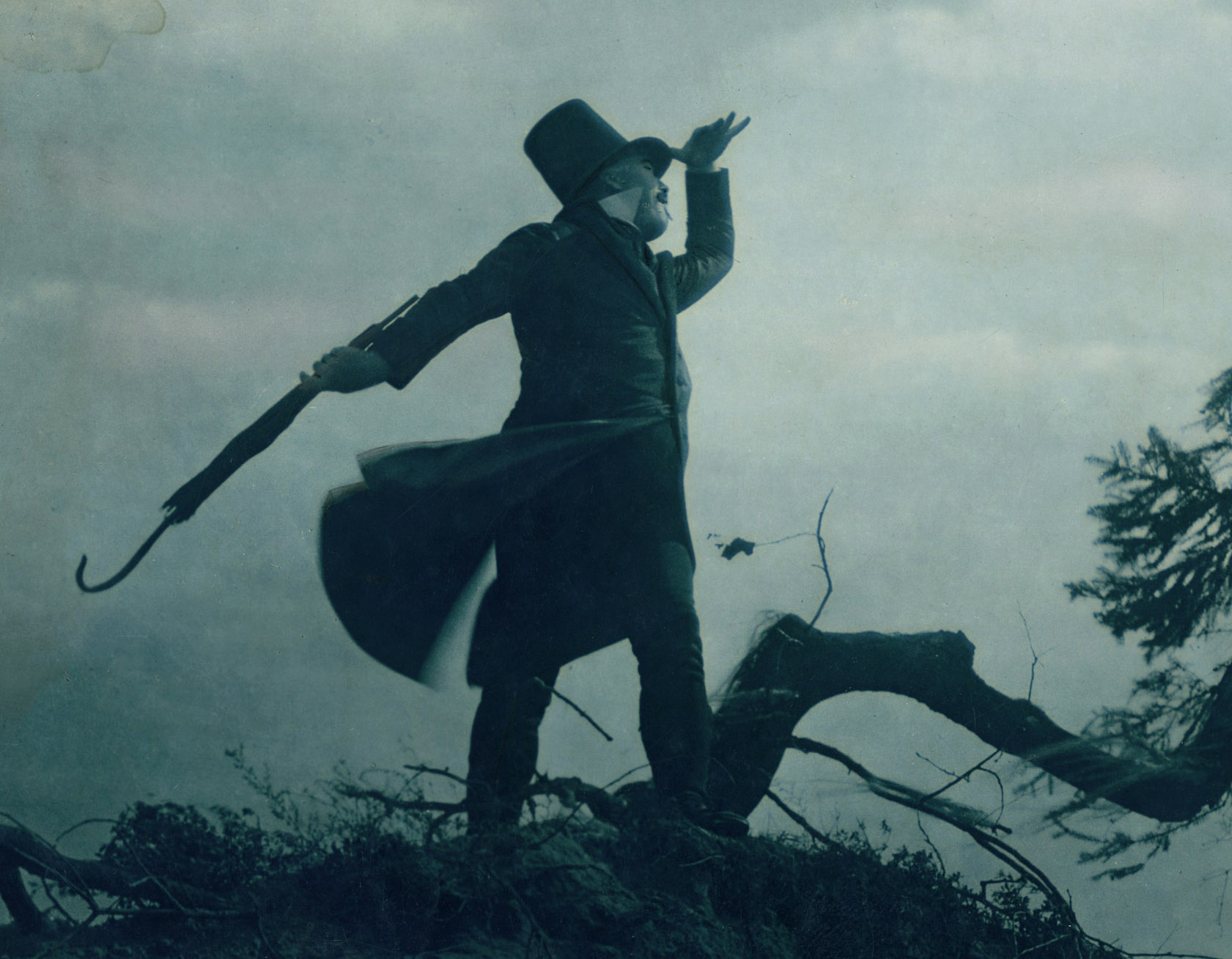
 

Anonymous photographer. 'Werner Krauss in 'The Student of Prague'' 1926 (detail)


Anonymous photographer
Werner Krauss in The Student of Prague (detail)
1926
Gelatin silver print
Austrian Theatre Museum


Intermediate pictures

The difficulty in capturing the scene of a movie in a still lies in the difference between the two media of (moving) film and (static) photograph. Still photographers employ intermedia strategies which facilitate a reading of the still in analogy to the experience of the film. Snapshots evoking the dynamics of the movie are as exemplary of this approach as are series of pictures rendering a sequence in the form of the movement’s individual phases captured at short intervals. Panorama pictures are also related to the film’s spatial and temporal dimensions, since a series of motifs resembling the chronological order of films successively “unwinds” in reading them. Informed by the interwar avant-garde, the photo montages for Walter Ruttmann’s experimental film Berlin – Symphony of a Great City (1927) show an extraordinary solution. They congenially transform the subjective modern filmic point of view by relating the motifs of the film to each other through illogical perspectives and proportions. Some of Horst von Harbou’s stills for Metropolis (1927) were produced as transparent foils and elaborately coloured by hand. Presented in backlight illumination, they established a self-reflexive reference to the cinema as films also reveal their ephemeral quality in their projection.


Anonymous photographer. 'Berlin – Symphony of a Great City' 1927


Anonymous photographer
Berlin – Symphony of a Great City
1927
Director: Walther Ruttmann (German, 1887-1941)
Gelatin silver print
© Deutsche Kinemathek, Berlin


Berlin: Symphony of a Metropolis (German: Berlin: Die Sinfonie der Großstadt) is a 1927 German film directed by Walter Ruttmann, co-written by Carl Mayer and Karl Freund.

The film is an example of the city symphony film genre. A musical score for an orchestra to accompany the silent film was written by Edmund Meisel. As a “city symphony” film, it portrays the life of a city, mainly through visual impressions in a semi-documentary style, without the narrative content of more mainstream films, though the sequencing of events can imply a kind of loose theme or impression of the city’s daily life…

The film displays the filmmaker’s knowledge of Soviet montage theory. Some socialist political sympathies, or identification with the underclass can be inferred from a few of the edits in the film, though critics have suggested that either Ruttmann avoided a strong position, or else he pursued his aesthetic interests to the extent that they diminished the potential for political content. Ruttmann’s own description of the film suggests that his motives were predominantly aesthetic: “Since I began in the cinema, I had the idea of making something out of life, of creating a symphonic film out of the millions of energies that comprise the life of a big city.”

Text from the Wikipedia website


'Berlin: Symphony of a Metropolis' poster


Berlin: Symphony of a Metropolis poster
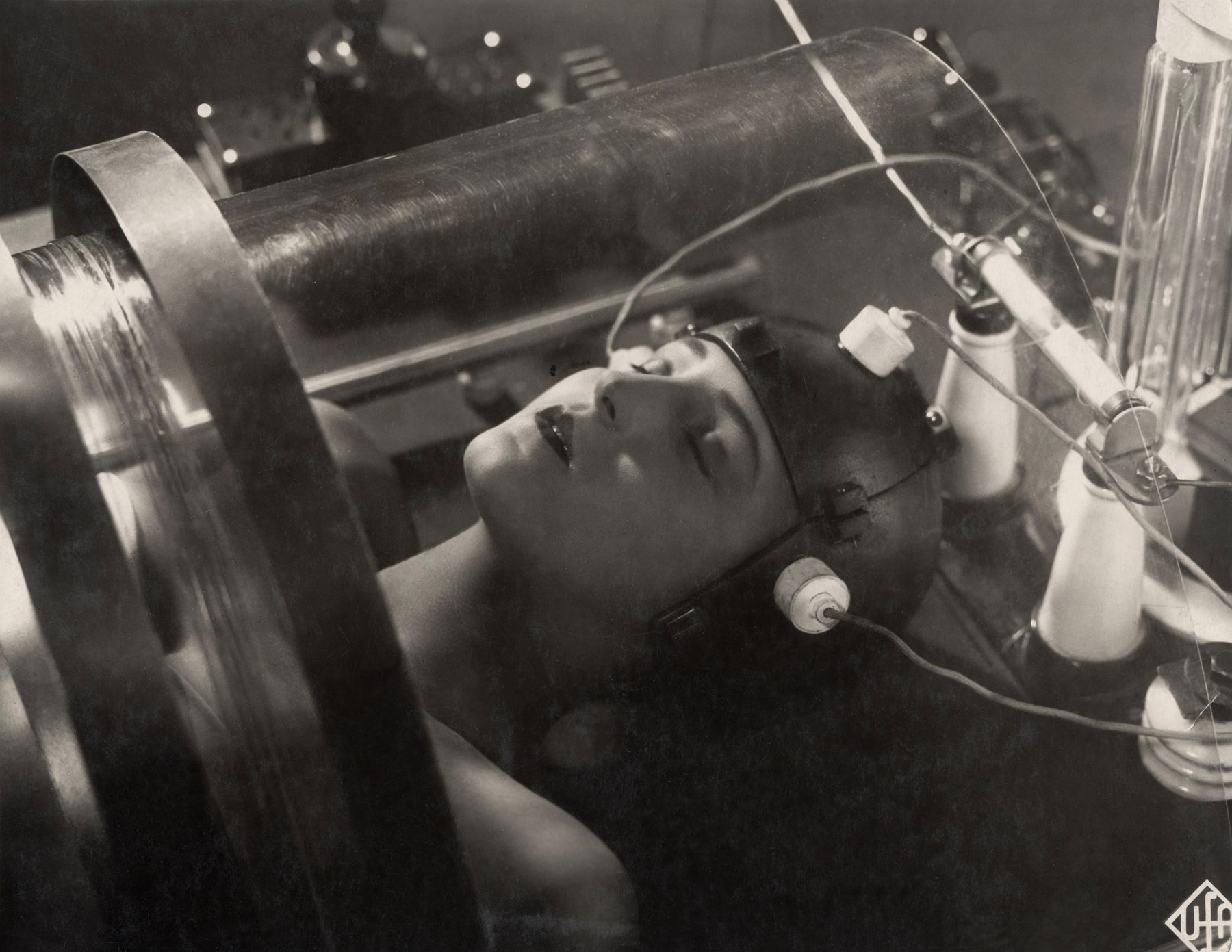
 

Horst von Harbou (German, 1879-1953) 'Brigitte Helm in 'Metropolis'' 1927


Horst von Harbou (German, 1879-1953)
Brigitte Helm in Metropolis
1927
Director: Fritz Lang (Austrian-German-American, 1890-1976)
Gelatin silver print
Austrian Theatre Museum
© Horst von Harbou – Deutsche Kinemathek


Horst von Harbou (German, 1879-1953) 'Metropolis' 1927


Horst von Harbou (German, 1879-1953)
Metropolis
1927
Director: Fritz Lang (Austrian-German-American, 1890-1976)
Coloured transparent nitrocellulose film
Austrian Theatre Museum
© Horst von Harbou – Deutsche Kinemathek


Meta-pictures

Some directors supported the production of stills that put characteristic aspects of their films into a new perspective. In his masterpiece Persona (1966) Ingmar Bergman reflects the support material of film by showing the film strip crack and burn up during the projection. This self-referentiality of the medium was visualised by adding perforations to the photographs so that they resembled film frames. The perforations only served to quote the film as a medium; the motifs were actually mounted in black frames afterwards. Elaborate montages not to be seen in the film were also produced for Alfred Hitchcock’s movies. Rear Window (1954) confronts us with a photographer who watches a man whom he suspects of having committed a murder with binoculars and through a long-focus lens. By mounting pictures of the persons in the lens whom Stewart watches from his window in the film, the still photographer emphasised the issue of voyeurism as a central subject of the movie. The Austrian silent movie director Erich von Stroheim used film stills for visualising contents of his films that were regarded as problematic. Because of their length and supposedly questionable sexual passages Stroheim’s movies were regularly cut down by censorship authorities and production companies. This is why stills continuing the movie were planned in advance. The sexual allusions in a scene of Foolish Wives (1922) in which Stroheim embodies a Don Juan figure about to indecently assault a sleeping woman, for example, manifested themselves in a still in which we see him kissing the sleeping woman’s foot.


Anonymous photographer. 'James Stewart in 'Rear Window'' 1954


Anonymous photographer
James Stewart in Rear Window
1954
Director: Alfred Hitchcock (English, 1899-1980)
Gelatin silver print
© BFI National Archive: London
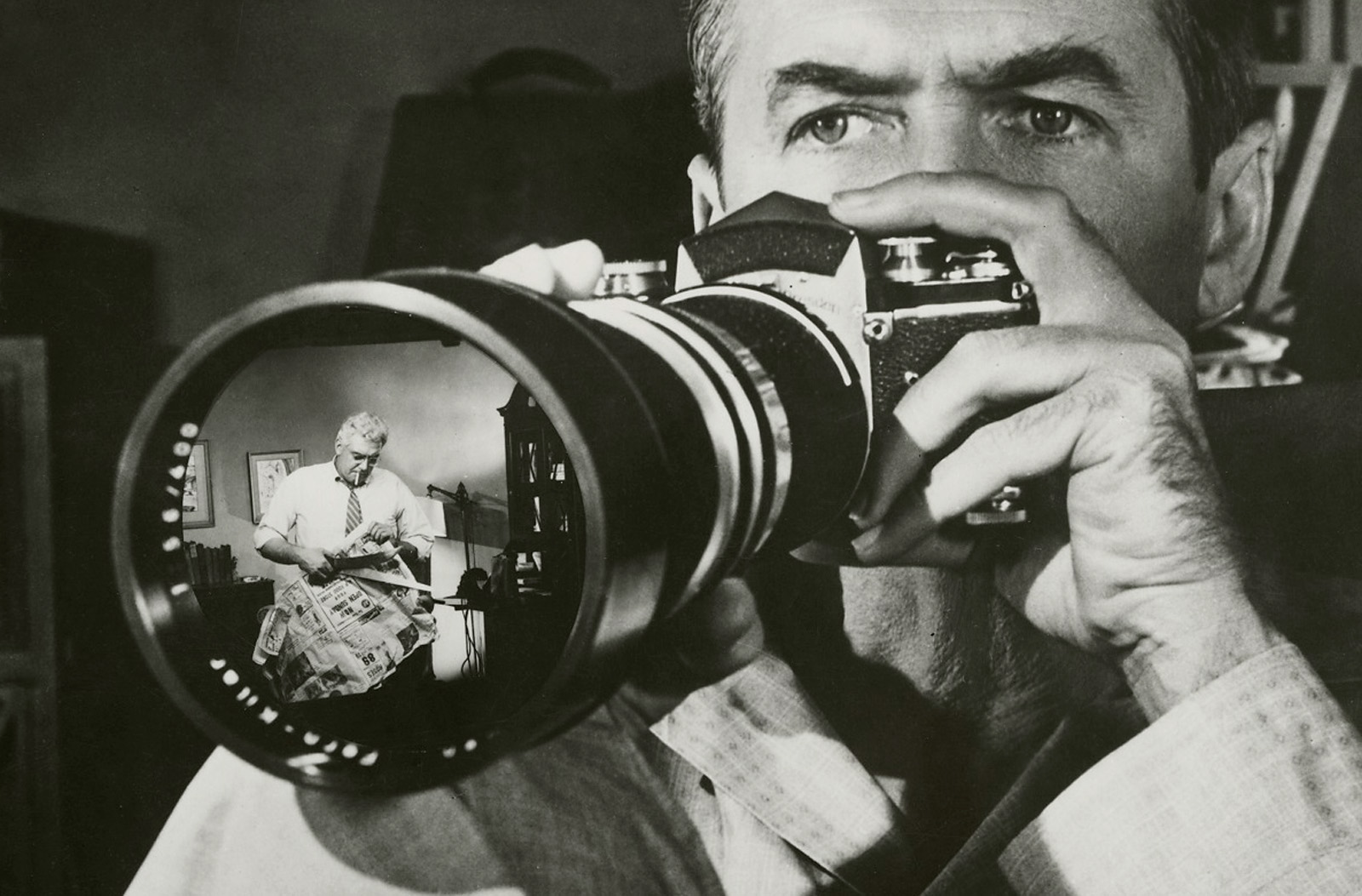
 

Anonymous photographer. 'James Stewart in 'Rear Window'' 1954 (detail)


Anonymous photographer
James Stewart in Rear Window (detail)
1954
Director: Alfred Hitchcock (English, 1899-1980)
Gelatin silver print
© BFI National Archive: London


Anonymous photographer. 'Liv Ullman in 'Persona'' 1966 (detail)


Anonymous photographer
Liv Ullman in Persona (detail)
1966
Director: Ingmar Bergman
Silver gelatin print


Persona is a 1966 Swedish psychological drama film written and directed by Ingmar Bergman and starring Bibi Andersson and Liv Ullmann. Persona’s story revolves around a young nurse named Alma (Andersson) and her patient, a well-known stage actress named Elisabet Vogler (Ullmann), who has suddenly ceased to speak. The two move to a cottage, where Alma cares for and talks to Elisabet about intimate secrets, and becomes troubled distinguishing herself from her.

Bergman wrote the film with Ullmann and Andersson in mind for the lead parts, and some idea of exploring their identities, and shot the film in Stockholm and Fårö. Often categorised as a psychological horror, Persona deals with themes of duality, insanity, and personal identity…

Persona has lent itself to a variety of interpretations, with Professor Thomas Elsaesser remarking it “has been for film critics and scholars what climbing Everest is for mountaineers: the ultimate professional challenge. Besides Citizen Kane, it is probably the most written-about film in the canon.” Much of the focus has been on the resemblance of the characters, demonstrated in shots of overlapping faces, and the possibility that the two characters are one. If they are one person, there is a question if Alma is fantasising about the actress she admires, or if Elisabet is examining her psyche, or if the boy is trying to understand who his mother is. In a question of duality, Alma represents soul while Elisabet represents a stern goddess. Susan Sontag suggests that Persona is constructed as a series of variations on a theme of “doubling”. The subject of the film, Sontag proposes, is “violence of the spirit”.

Text from the Wikipedia website


'Persona' 1966 Swedish B1 Poster


Persona 1966 Swedish B1 Poster


Anonymous photographer. 'Bibi Andersson and Liv Ullman in 'Persona'' 1966 (detail)


Anonymous photographer
Bibi Andersson and Liv Ullman in Persona (detail)
1966
Director: Ingmar Bergman (Swedish, 1918-2007)
Silver gelatin print


Key pictures

Stills precede the presentation of a film, decisively informing the expectations held by the public at the time of its release. What is important for a movie’s later success (or failure) is presenting visually enticing pictures rather than conveying an authentic picture of the movie. The most famous example in this regard is Sam Shaw’s still showing a scene of Billy Wilder’s The Seven Year Itch (1955). Shaw highlighted the moment in which Marilyn Monroe stands on a subway grating far more pointedly than Wilder in the film, which neither shows the actress’s whole figure nor the dress billowing so clearly above her waist. The production company did its best for the promotion of the scene in the media: launching an elaborate publicity campaign, it fixed a special date for reporters and journalists to capture the sequence themselves. Such key images become characteristic signatures of a film with their dissemination by the media, sometimes inscribing themselves more deeply into the collective memory than the actual film scenes because of their iconic recognition value.
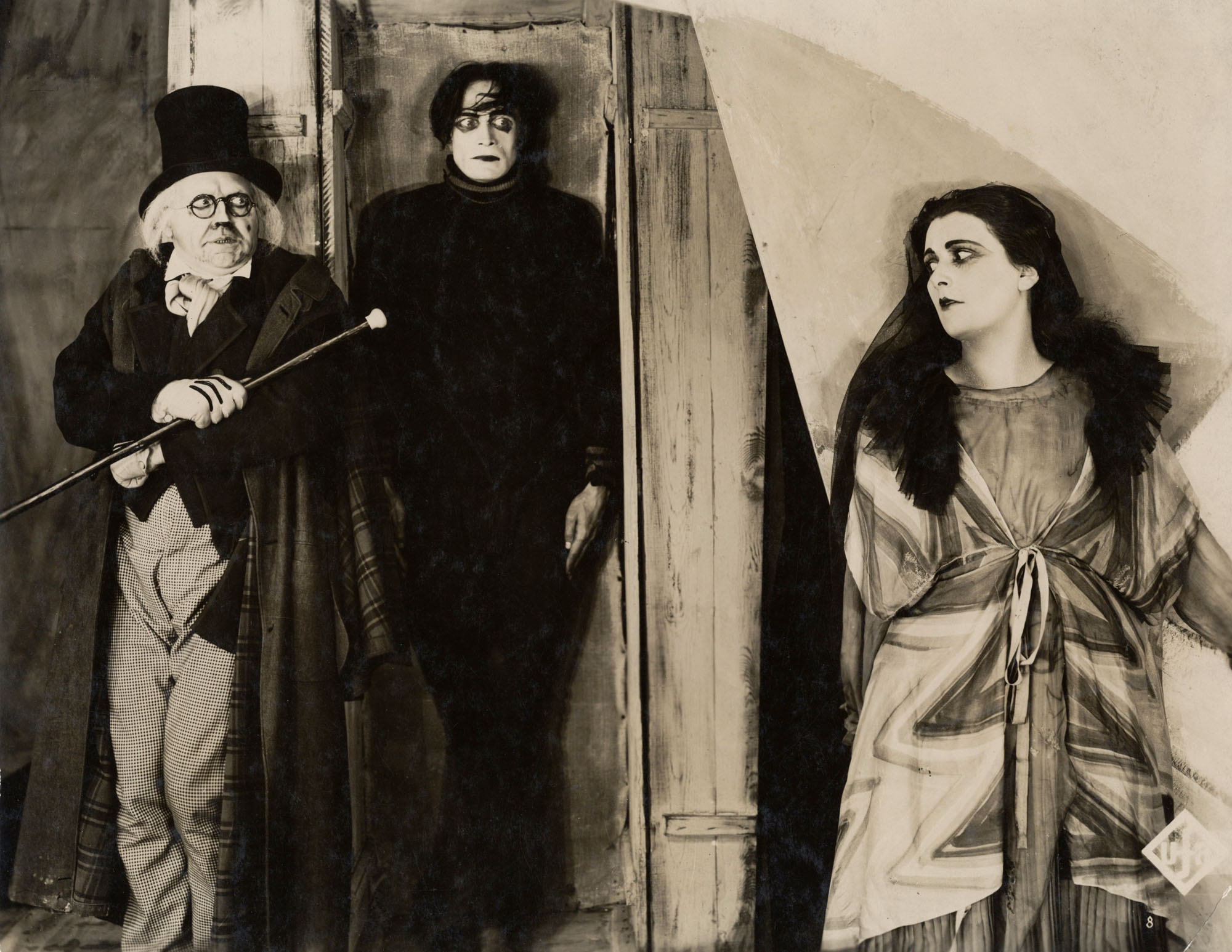
 

Anonymous photographer. 'Werner Krauss, Conrad Veidt and Lil Dagover in 'The Cabinet of Dr. Caligari'' 1919


Anonymous photographer
Werner Krauss, Conrad Veidt and Lil Dagover in The Cabinet of Dr. Caligari
1919
Director: Robert Wiene (German, 1873-1938)
Gelatin silver print
Austrian Theatre Museum
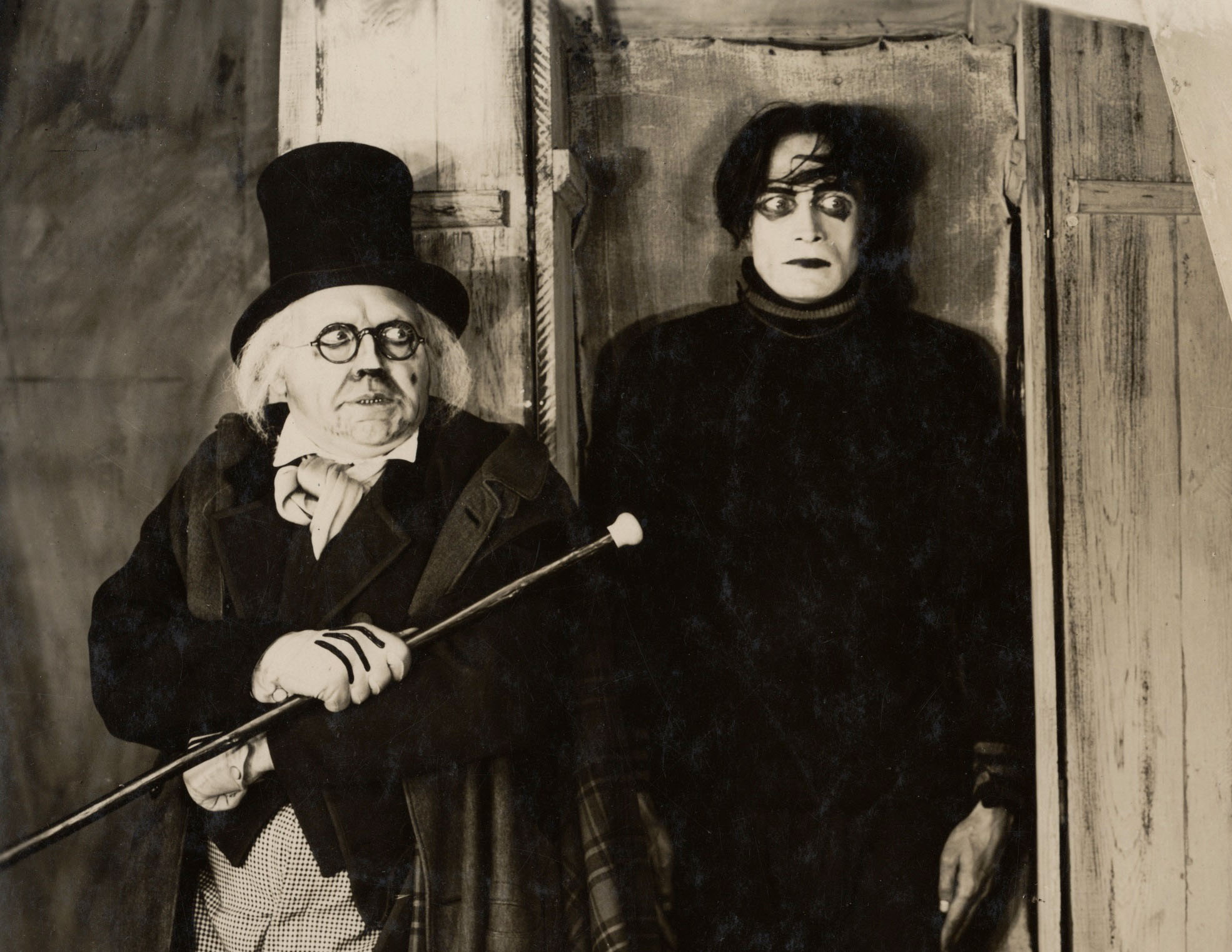
 

Anonymous photographer. Werner Krauss, Conrad Veidt and Lil Dagover in 'The Cabinet of Dr. Caligari' 1919 (detail)


Anonymous photographer
Werner Krauss, Conrad Veidt and Lil Dagover in The Cabinet of Dr. Caligari (detail)
1919
Director: Robert Wiene (German, 1873-1938)
Gelatin silver print
Austrian Theatre Museum


The Cabinet of Dr. Caligari (German: Das Cabinet des Dr. Caligari) is a 1920 German silent horror film, directed by Robert Wiene and written by Hans Janowitz and Carl Mayer. Considered the quintessential work of German Expressionist cinema, it tells the story of an insane hypnotist (Werner Krauss) who uses a somnambulist (Conrad Veidt) to commit murders. The film features a dark and twisted visual style, with sharp-pointed forms, oblique and curving lines, structures and landscapes that lean and twist in unusual angles, and shadows and streaks of light painted directly onto the sets…

The film presents themes on brutal and irrational authority; Dr. Caligari represents the German war government, and Cesare is symbolic of the common man conditioned, like soldiers, to kill. In his influential book From Caligari to Hitler, Siegfried Kracauer says the film reflects a subconscious need in German society for a tyrant, and it is an example of Germany’s obedience to authority and unwillingness to rebel against deranged authority. He says the film is a premonition of the rise of Adolf Hitler and the Nazi Party, and says the addition of the frame story turns an otherwise “revolutionary” film into a “conformist” one. Other themes of the film include the destabilised contrast between insanity and sanity, the subjective perception of reality, and the duality of human nature.

Text from the Wikipedia website


'Das Cabinet des Dr. Caligari' poster (1919)


Das Cabinet des Dr. Caligari poster (1919)
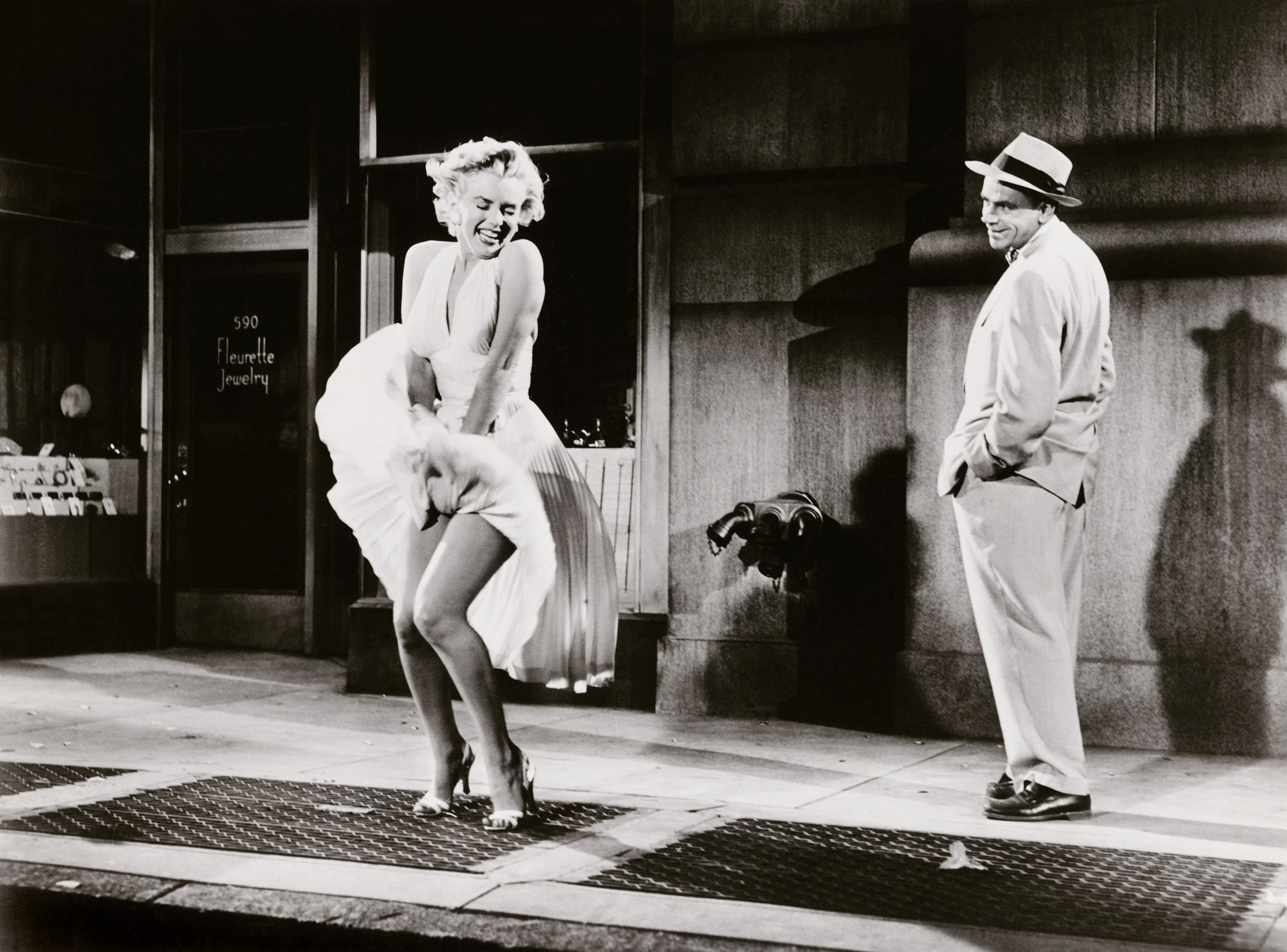
 

Sam Shaw (American, 1912-1999) 'Marilyn Monroe and Tom Ewell in 'The Seven Year Itch'' 1954


Sam Shaw (American, 1912-1999)
Marilyn Monroe and Tom Ewell in The Seven Year Itch
1954
Director: Billy Wilder (Austrian-American, 1906-2002)
Gelatin silver print
© Sam Shaw Inc. – licensed by Shaw Family Archives
Private collection


Sam Shaw (American, 1912-1999) 'Marilyn Monroe and Tom Ewell in 'The Seven Year Itch'' 1954 (detail)


Sam Shaw (American, 1912-1999)
Marilyn Monroe and Tom Ewell in The Seven Year Itch (detail)
1954
Director: Billy Wilder (Austrian-American, 1906-2002)
Gelatin silver print
© Sam Shaw Inc.- licensed by Shaw Family Archives, Private collection


Auteur pictures

The European auteur cinema of the 1950s and 1960s produced films outside the rigid studio system that had been the rule until then. Formal means such as editing and montage were used in an experimental way, and handy cameras made the shooting process more spontaneous. The changes in the production of films went hand in hand with new conditions for still photographers. As the photographers did not belong to the staff of the companies’ promotion departments like their US colleagues, most of their names are known. Whereas Hollywood photographers relied on large-format plate cameras, small-format cameras were used in Europe during the shooting of the film or directly before or after it. This resulted in spontaneous snapshots alongside traditional tableau-like stills. In the wake of Henri Cartier-Bresson’s decisive moment, the constitutive act lay in the choice of the right moment. Still photographers such as Raymond Cauchetier and Angelo Novi had already tested this approach as photojournalists in reportages and documentaries before they started working on the set.


Georges Pierre (French, 1921-2003) 'Anna Karina in 'Pierrot le fou'' 1965


Georges Pierre (French, 1921-2003)
Anna Karina in Pierrot le fou
1965
Director: Jean-Luc Godard (French-Swiss, b. 1930)
Gelatin silver print
Private collection
© Georges Pierre


Poster for 'La Dolce Vita' (The Sweet Life) 1959


Poster for La Dolce Vita (The Sweet Life) 1959


Pierluigi Praturlon (Italian, 1924-1999) 'Anita Ekberg as Sylvia in 'La Dolce Vita' (The Sweet Life)' 1959


Pierluigi Praturlon (Italian, 1924-1999)
Anita Ekberg as Sylvia in La Dolce Vita (The Sweet Life)
1959
Director: Federico Fellini (Italian, 1920-1993)
Gelatin silver print
Private Collection


La Dolce Vita (Italian for “the sweet life” or “the good life”) is a 1960 Italian comedy-drama film directed and co-written by Federico Fellini. The film follows Marcello Rubini, a journalist writing for gossip magazines, over seven days and nights on his journey through the “sweet life” of Rome in a fruitless search for love and happiness. La Dolce Vita won the Palme d’Or (Golden Palm) at the 1960 Cannes Film Festival and the Oscar for Best Costumes, and remains one of the most critically acclaimed films of all time.

Based on the most common interpretation of the storyline, the film can be divided into a prologue, seven major episodes interrupted by an intermezzo, and an epilogue. If the evenings of each episode were joined with the morning of the respective preceding episode together as a day, they would form seven consecutive days, which may not necessarily be the case.

Text from the Wikipedia website


Hans Natge

Born in Berlin, Hans Natge began his career as a theatre photographer. In the 1920s, he turned to still photography. Taking pictures of Friedrich Wilhelm Murnau’s Faust (1926), he came to test a new photographic approach which he called “snapshot photography,” which was to revolutionise the tradition of static and artificial film stills. Using small-format cameras and doing without additional light, Natge photographed during the shooting of the film right next to the cameraman, which permitted him to produce spontaneous and dynamic pictures. As this form of still photography still resulted in blurred pictures and sometimes captured the actors to their disadvantage at that time, Natge also took conventional stills in the case of Faust.
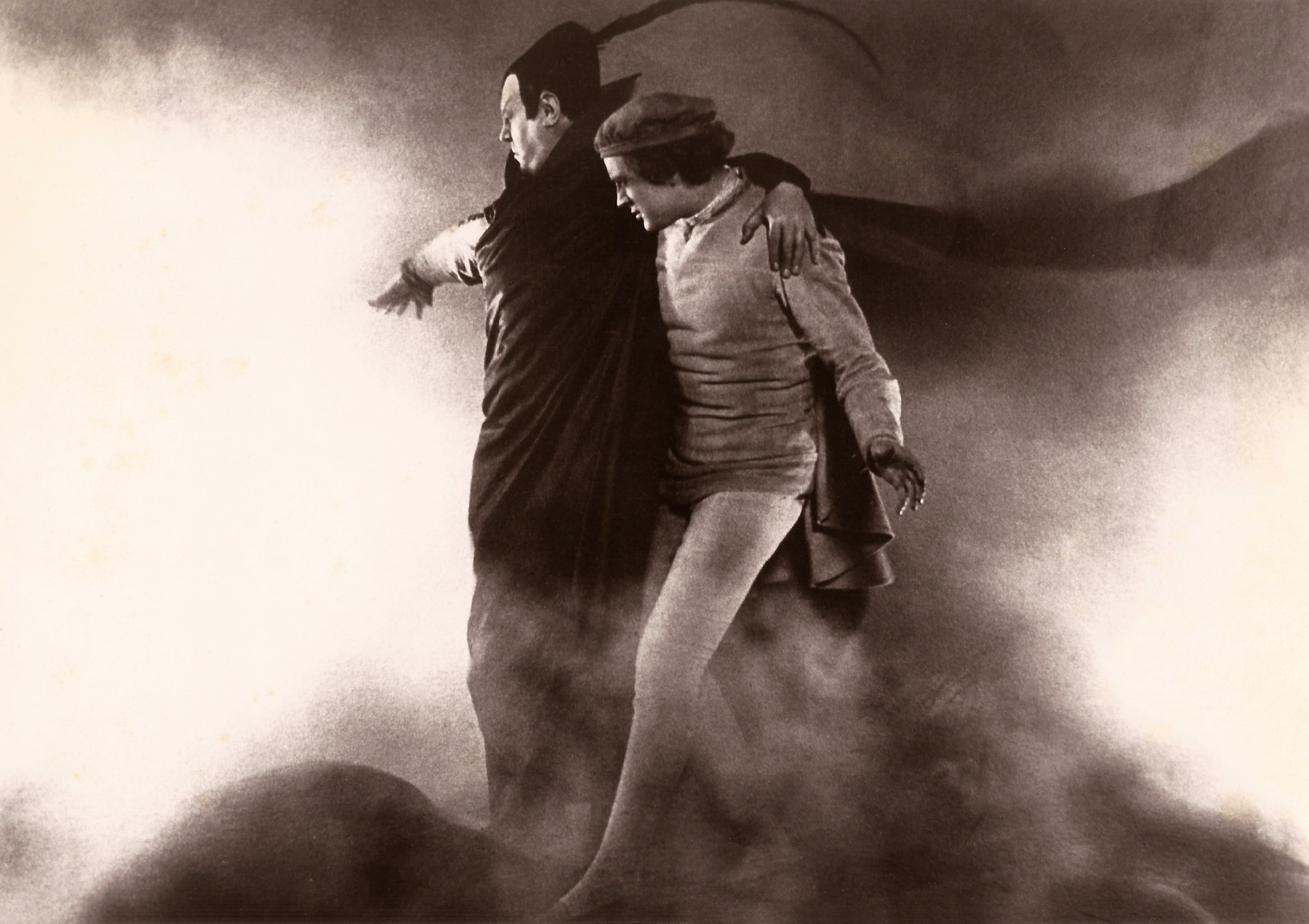
 

Hans Natge (Germany, b. 1893) 'Still from the film 'Faust'' 1926


Hans Natge (Germany, b. 1893)
Still from the film Faust
1926
Director: Friedrich Wilhelm Murnau (German, 1888-1931)
Gelatin silver print


Albertina
Albertinaplatz 1
1010 Vienna, Austria
Phone: +43 (0)1 534 83-0

Opening hours:
Daily 10am – 6pm
Wednesday and Friday 10am – 9pm
Albertina website

LIKE ART BLART ON FACEBOOK

Back to top

Exhibition: ‘Dark Romanticism. From Goya to Max Ernst’ at the Städel Museum, Frankfurt

Exhibition dates: 26th September 2012 – 20th January, 2013


Many thankx to the Städel Museum for allowing me to publish the reproductions of the artwork in the posting. Please click on the photographs for a larger version of the image.


This slideshow requires JavaScript.


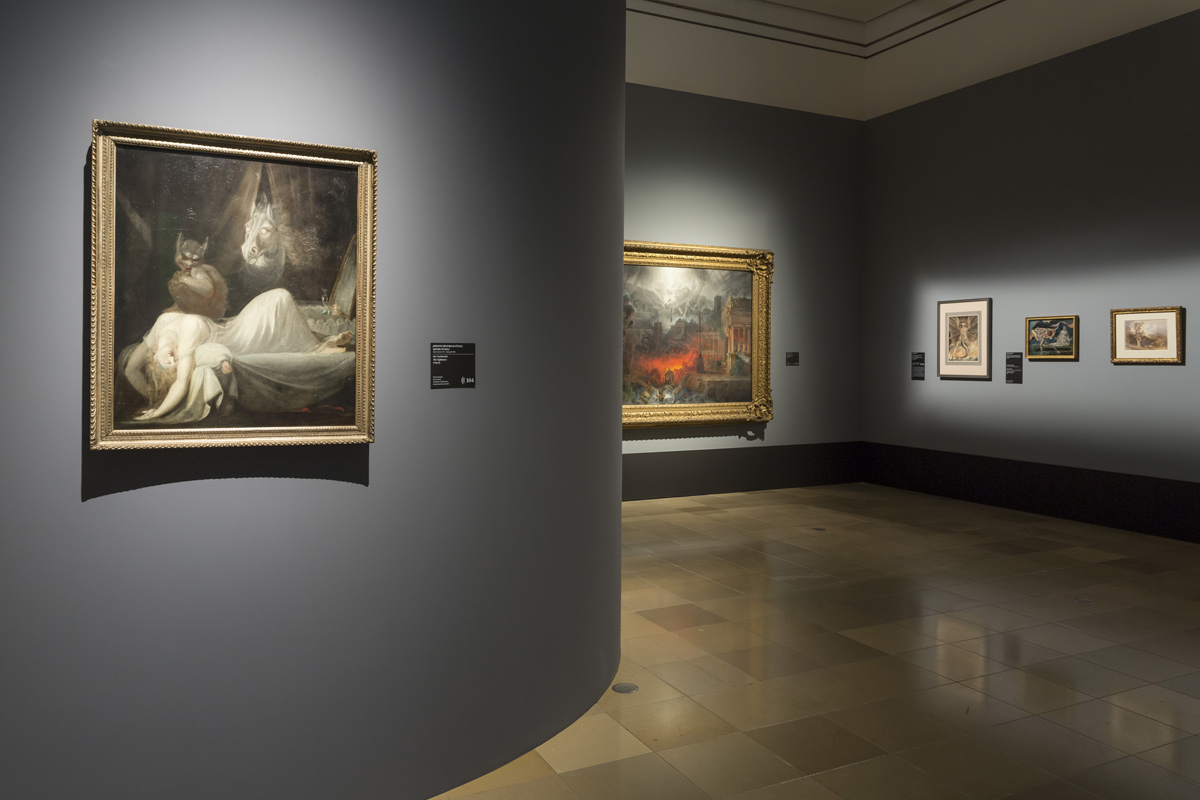
Installation photographs of the exhibition Dark Romanticism. From Goya to Max Ernst at the Städel Museum, Frankfurt
Photos: Norbert Miguletz


Installation view of the exhibition 'Dark Romanticism. From Goya to Max Ernst' at the Städel Museum, Frankfurt

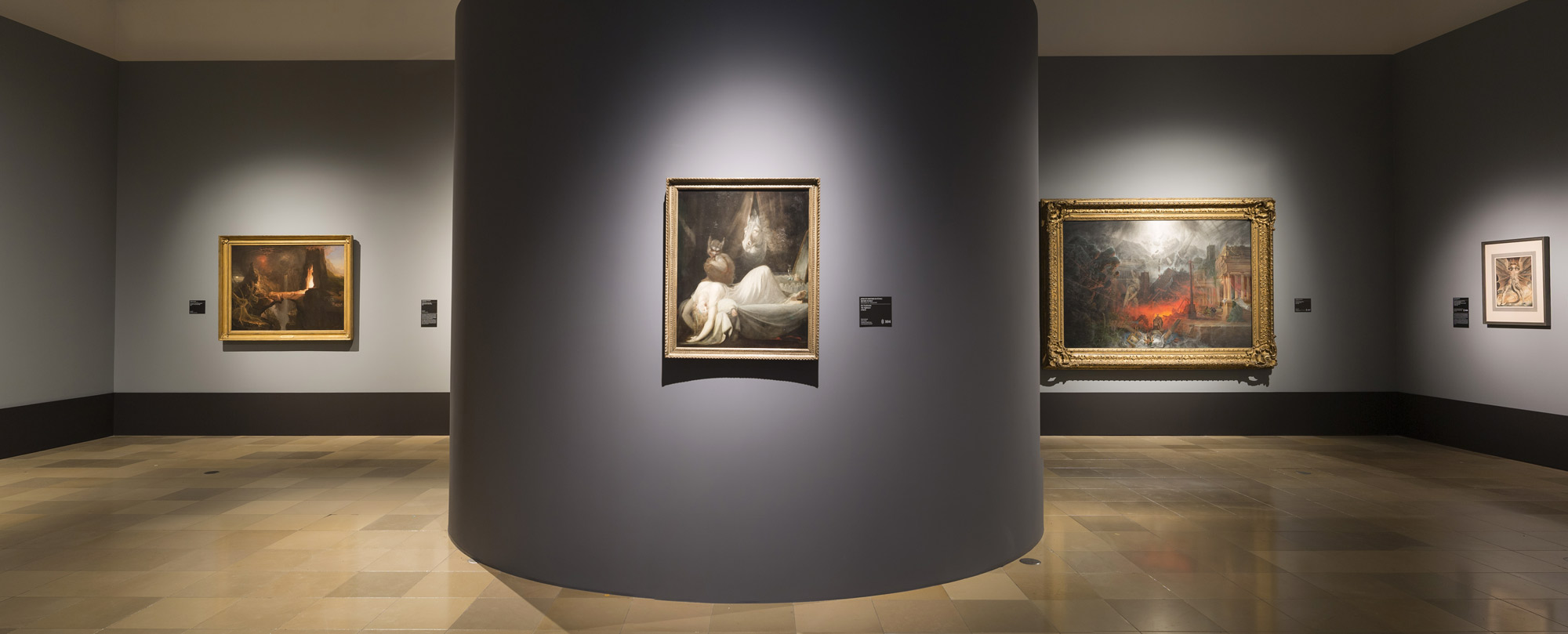
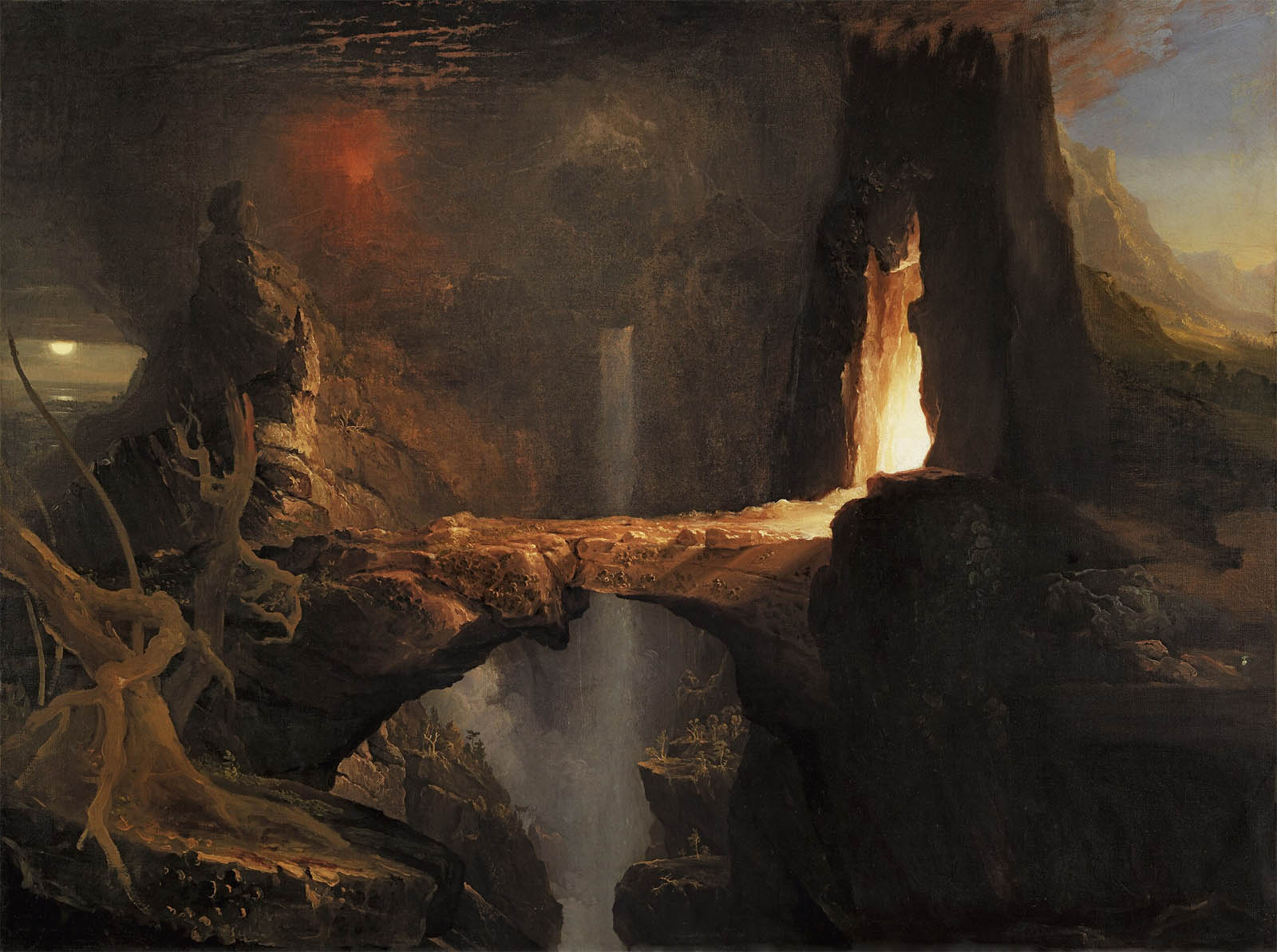
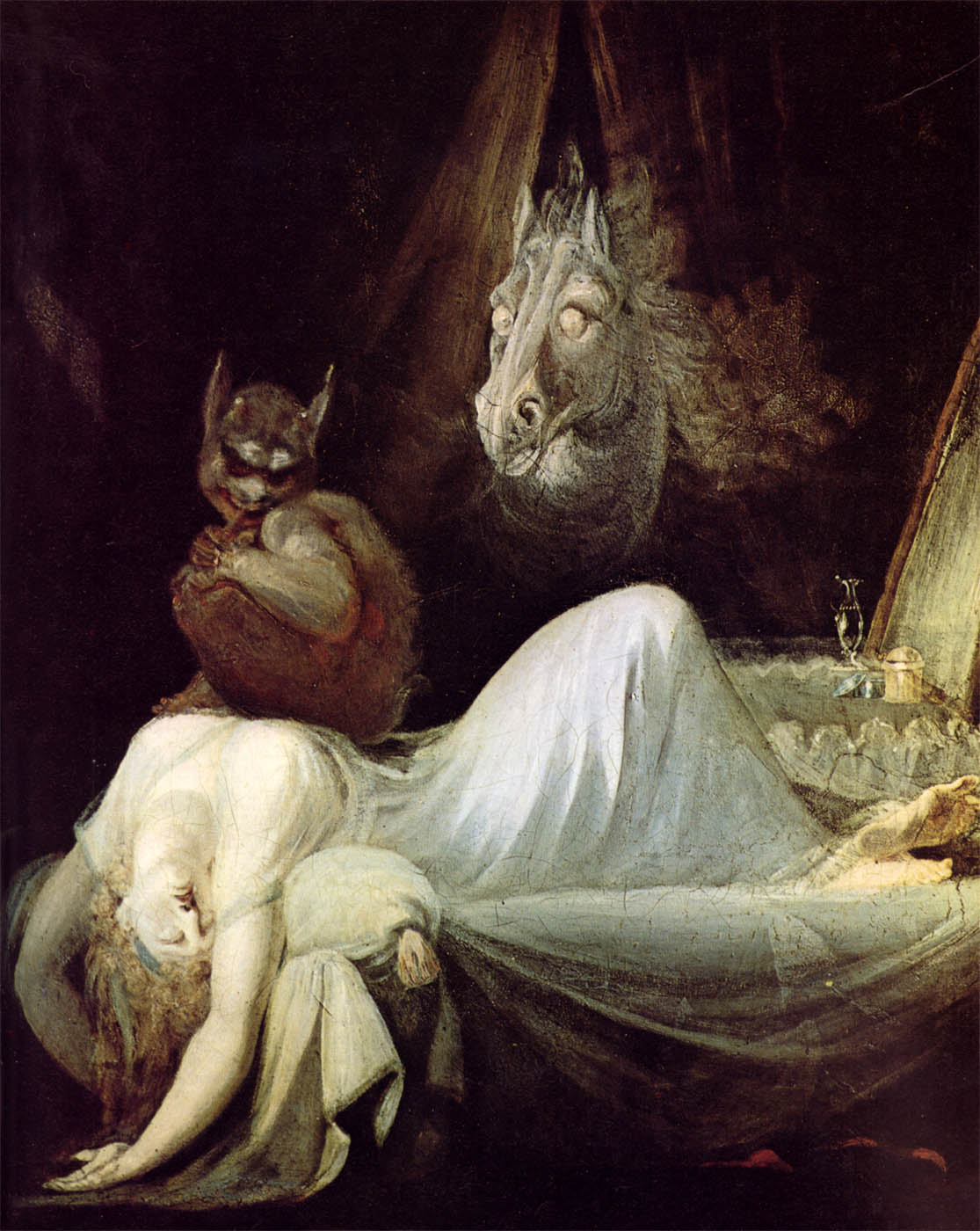
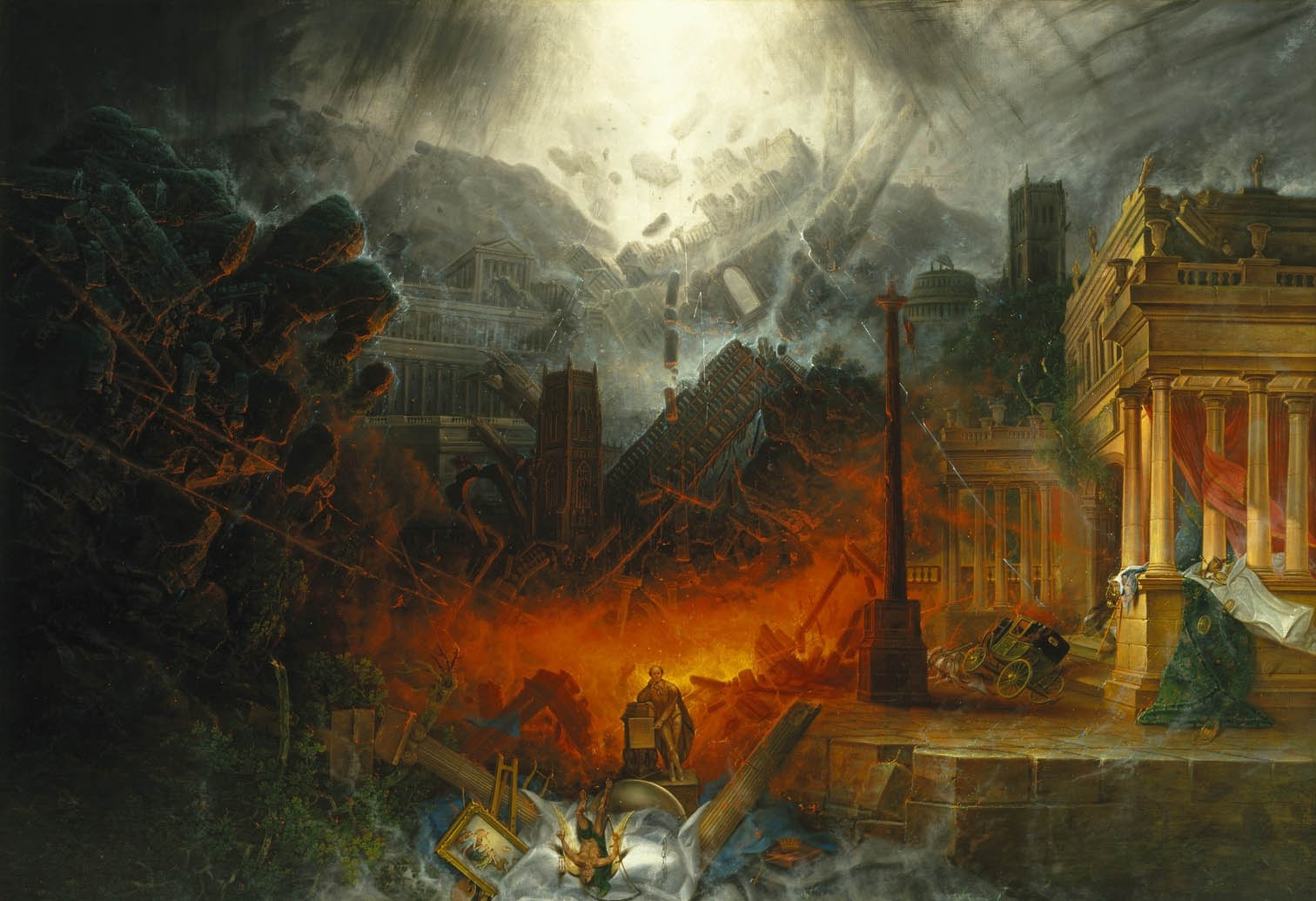
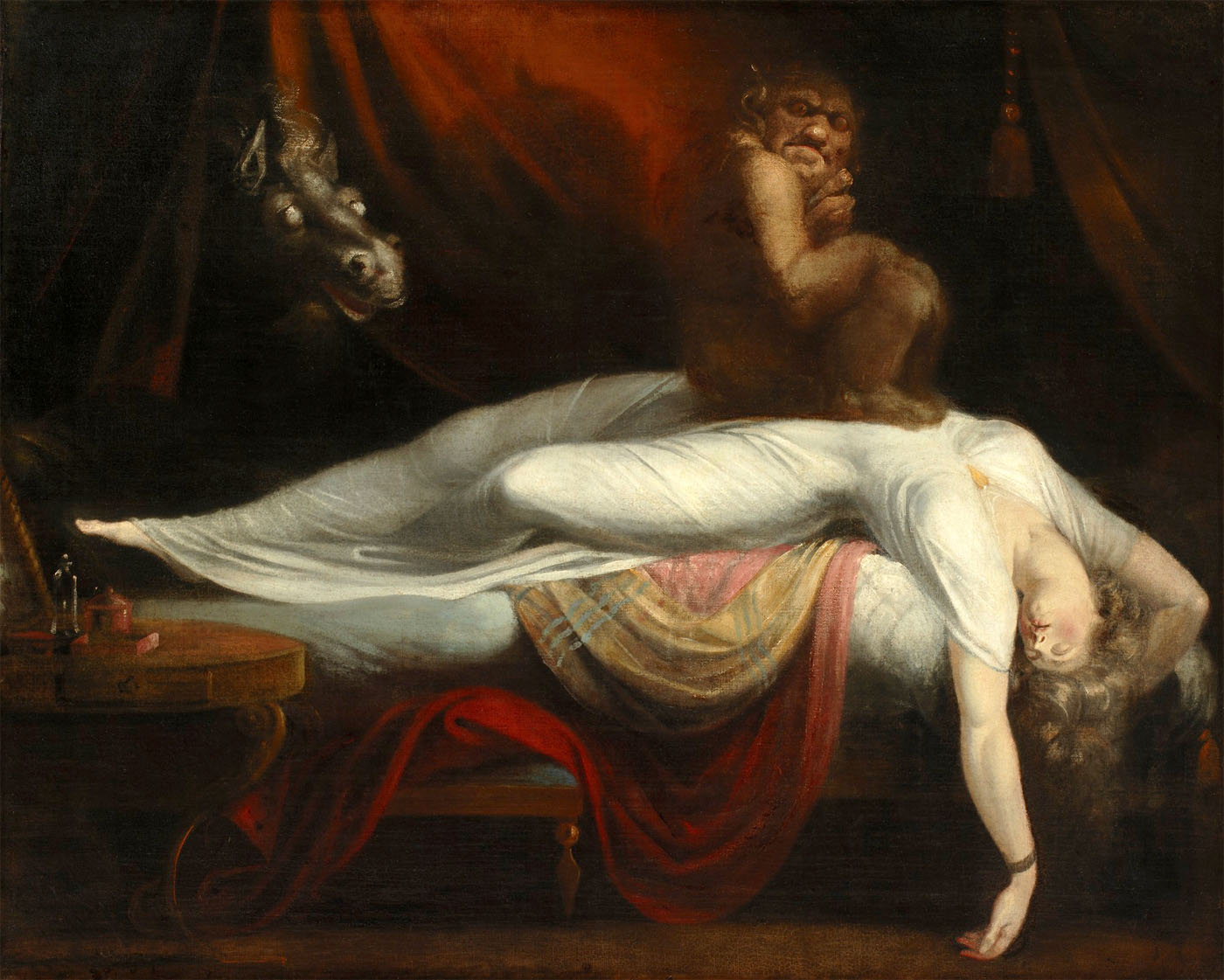
Installation view of the exhibition 'Dark Romanticism. From Goya to Max Ernst' at the Städel Museum, Frankfurt showing at left, Thomas Cole's 'Expulsion: Moon and Firelight '(c. 1828); at centre, Johann Henry Fuseli's 'The Nightmare (The Incubus)' (1781-1782); at second right, Samuel Colman's 'The Edge of Doom' (1836-1838); and at right, William Blake's 'The Great Red Dragon and the Woman Clothed with the Sun' (c. 1803-1805)


Installation views of the exhibition Dark Romanticism. From Goya to Max Ernst at the Städel Museum, Frankfurt showing at left in the bottom image, Thomas Cole’s Expulsion: Moon and Firelight (c. 1828, below); at centre, Johann Henry Fuseli’s The Nightmare (The Incubus) (1781-1782, below); at second right, Samuel Colman’s The Edge of Doom (1836-1838, below); and at right, William Blake’s The Great Red Dragon and the Woman Clothed with the Sun (c. 1803-1805, below)
Photos: Norbert Miguletz


Thomas Cole (American born England, 1801-1848) 'Expulsion: Moon and Firelight' c. 1828


Thomas Cole (American born England, 1801-1848)
Expulsion: Moon and Firelight
c. 1828
Oil on canvas
91.4 by 122cm (36.0 in × 48.0 in)
Thyssen-Bornemisza Museum, Madrid


Johann Henry Fuseli (Swiss, 1741-1825) 'The Nightmare (The Incubus)' 1781-1782


Johann Henry Fuseli (Swiss, 1741-1825)
The Nightmare (The Incubus)
1781-1782
Oil on canvas
77cm (30.3 in) x 64cm (25.1 in)
Goethehaus (Frankfurt) collection


Samuel Colman (British, 1780-1845) 'The Edge of Doom' 1836-1838


Samuel Colman (British, 1780-1845)
The Edge of Doom
1836-1838
Oil on canvas
54 x 78 1/2 in. (137.2 x 199.4cm)
Brooklyn Museum


William Blake (British, 1757-1827) 'The Great Red Dragon and the Woman Clothed with the Sun' c.1803-1805


William Blake (British, 1757-1827)
The Great Red Dragon and the Woman Clothed with the Sun
c. 1803-1805
Watercolour, graphite and incised lines
43.7 x 34.8cm
Brooklyn Museum, Gift of William Augustus White


Johann Henry Fuseli (Swiss, 1741-1825) 'The Nightmare' 1781


Johann Henry Fuseli (Swiss, 1741-1825)
The Nightmare
1781
Oil on canvas
101.6 × 126.7cm
Detroit Institute of Arts, Founders Society
© Bridgeman Art Library


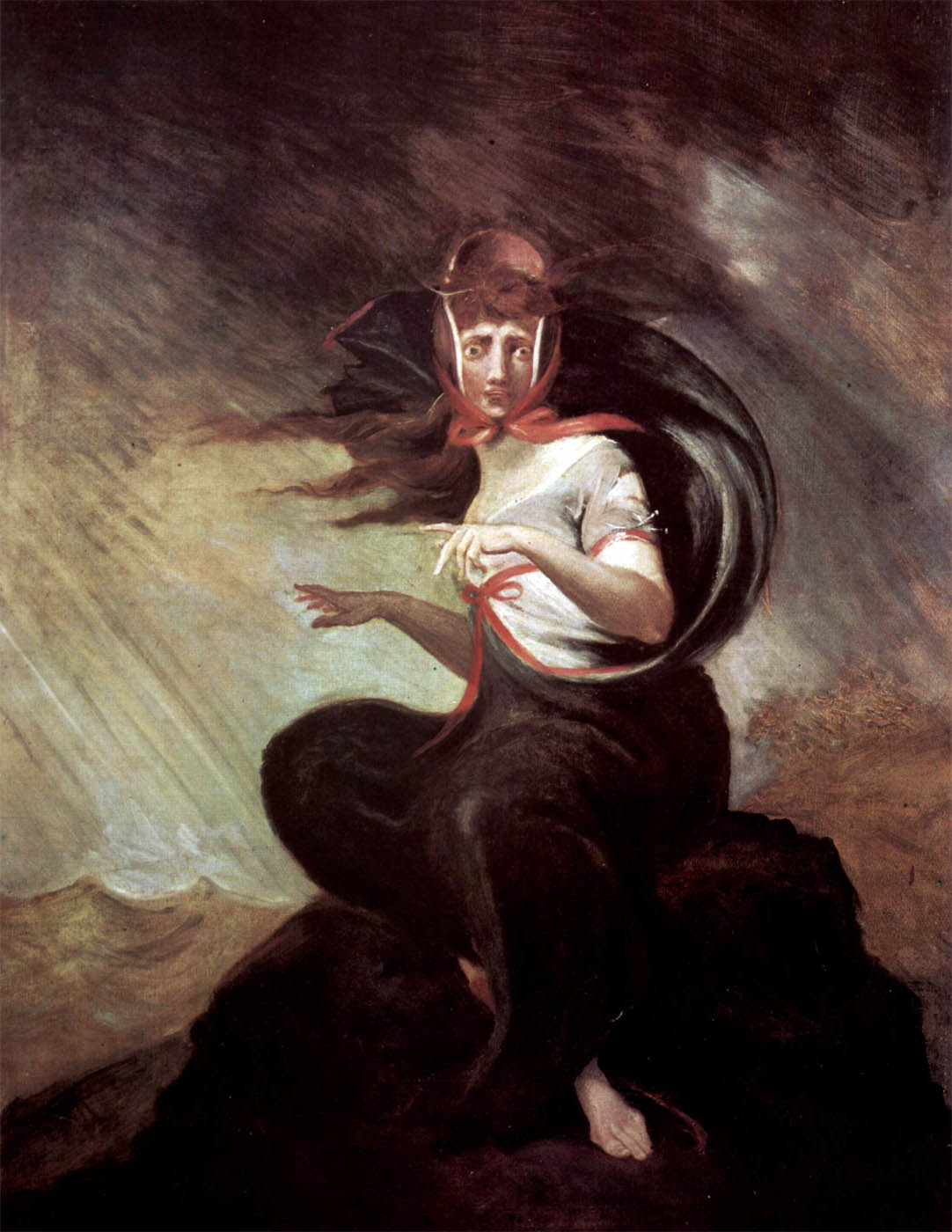
Johann Henry Fuseli (Swiss, 1741-1825) 'Die wahnsinnige Kate'(La folie de Kate) (Mad Kate) 1806-1807


Johann Henry Fuseli (Swiss, 1741-1825)
Die wahnsinnige Kate (La folie de Kate) (Mad Kate)
1806-1807
Oil on canvas
92cm (36.2 in) x 72.3cm (28.4 in)
Francfort-sur-le-Main, Frankfurter Goethe-Haus
Freies Deutsches Hochstift, inv.1955-007
© Ursula Edelmann/ARTOTHEK


Installation view of the exhibition 'Dark Romanticism. From Goya to Max Ernst' at the Städel Museum, Frankfurt showing Paul Delaroche's 'The Wife of the Artist, Louise Vernet, on her Death Bed' (1845)


Installation view of the exhibition Dark Romanticism. From Goya to Max Ernst at the Städel Museum, Frankfurt showing Paul Delaroche’s The Wife of the Artist, Louise Vernet, on her Death Bed (1845, below)
Photo: Norbert Miguletz


Paul Hippolyte Delaroche (French, 1797-1856) 'Louise Vernet, the artist's wife, on her Deathbed' 1845-46


Paul Hippolyte Delaroche (French, 1797-1856)
Louise Vernet, the artist’s wife, on her Deathbed
1845-1846
Oil on canvas
62 x 74.5cm
Musée des Beaux-Arts de Nantes
© Musée des Beaux-Arts de Nantes


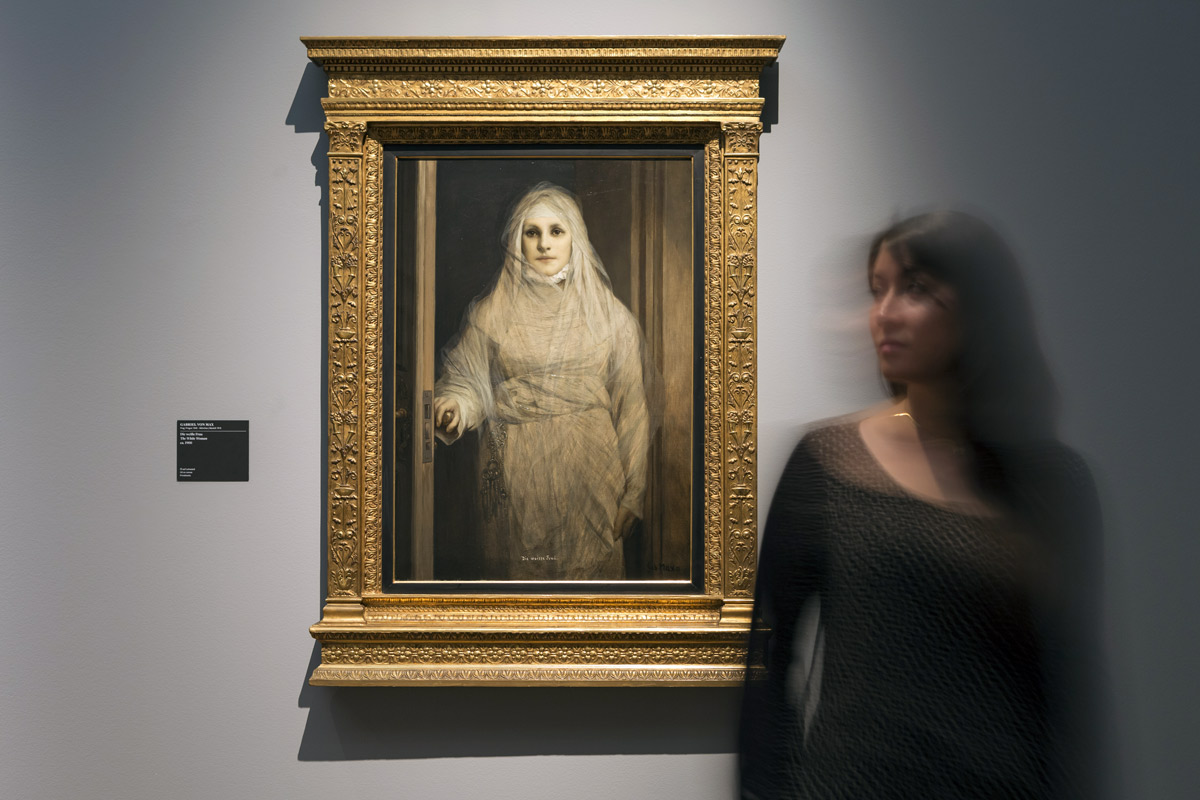
Installation view of the exhibition 'Dark Romanticism. From Goya to Max Ernst' at the Städel Museum, Frankfurt showing Gabriel von Max's 'The White Woman' (1900)


Installation view of the exhibition Dark Romanticism. From Goya to Max Ernst at the Städel Museum, Frankfurt showing Gabriel von Max’s The White Woman (1900, below)
Photo: Norbert Miguletz


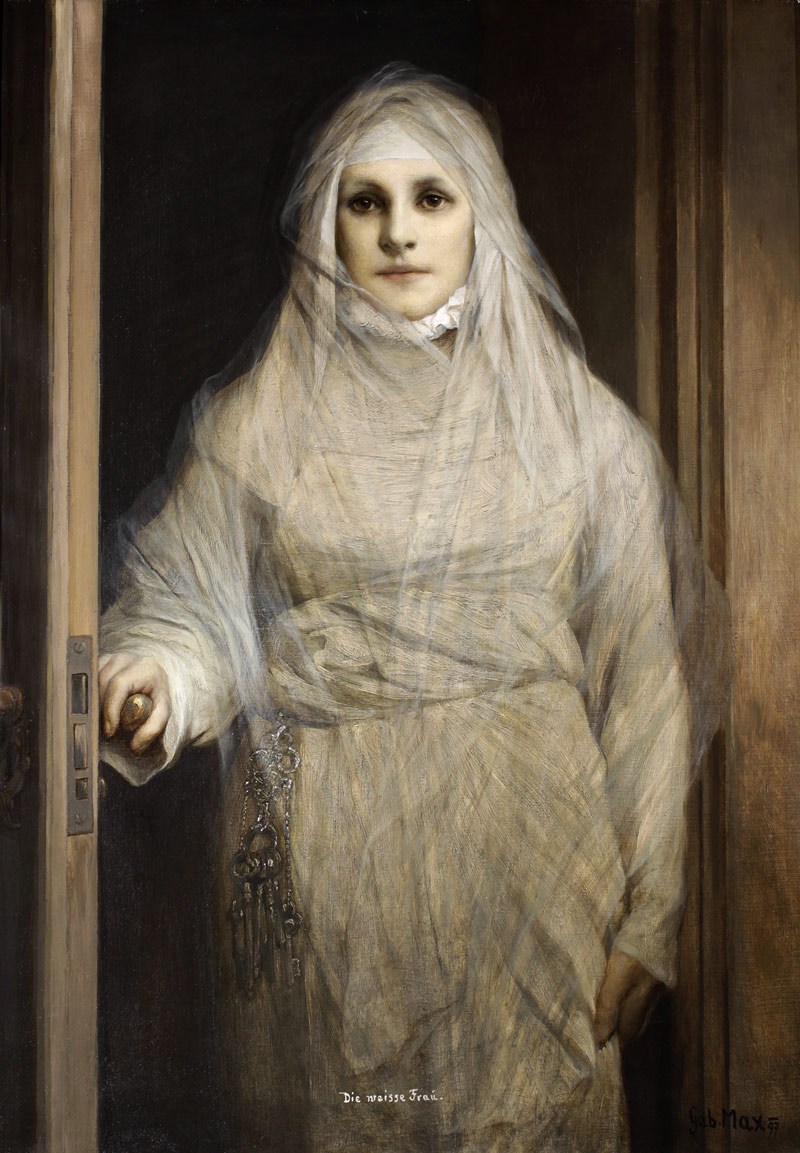
Gabriel von Max (Austrian, 1840-1915) 'The White Woman' 1900


Gabriel von Max (Austrian, 1840-1915)
The White Woman
1900
Oil on canvas
100 x 72cm
Private Collection


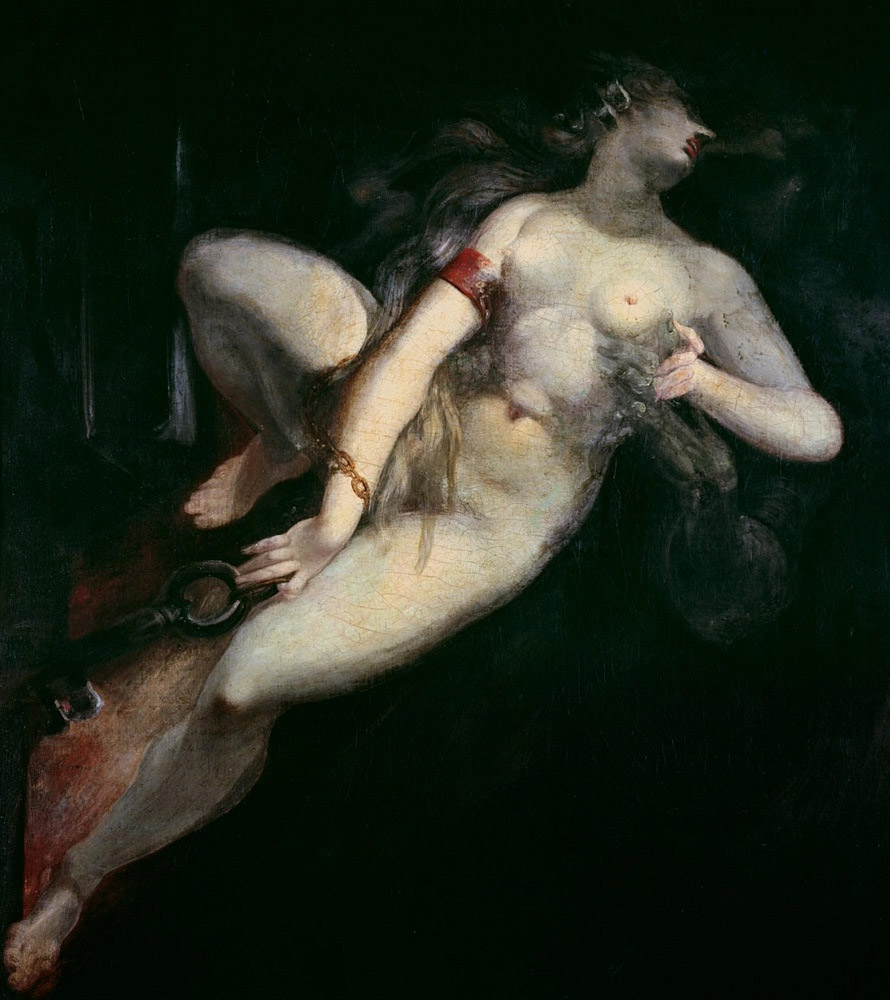
Johann Henry Fuseli (Swiss, 1741-1825) 'Sin Pursued by Death' 1794-1796


Johann Henry Fuseli (Swiss, 1741-1825)
Sin Pursued by Death
1794-1796
Oil on canvas
Kunsthaus, Zürich


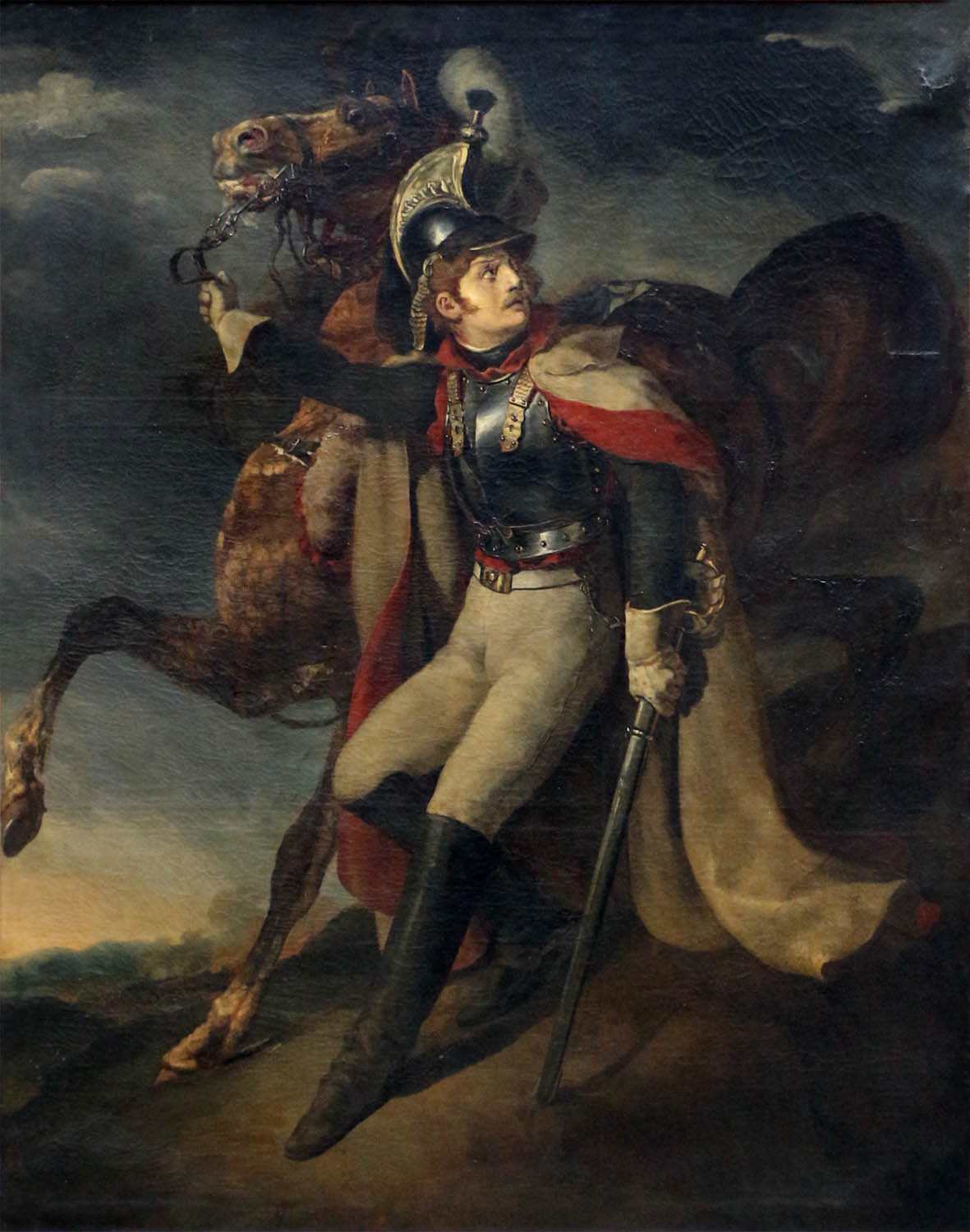
Théodore Géricault (French, 1791–1824) Cuirassier blessé quittant le feu / The Wounded Cuirassier 1814


Théodore Géricault (French, 1791–1824)
Cuirassier blessé quittant le feu / The Wounded Cuirassier
1814
Oil on canvas
358cm (11.7 ft) x 294cm (115.7 in)
Louvre Museum


The Wounded Cuirassier (French: Le Cuirassier blessé quittant le feu) is an oil painting of a single anonymous soldier descending a slope with his nervous horse by the French Romantic painter and lithographer Théodore Géricault (1791–1824). In this 1814 Salon entry, Géricault decided to turn away from scenes of heroism in favour of a subject that is on the losing side of the battle. On display in the aftermath of France’s disastrous military campaign in Russia, this life-size painting captured the feeling of a nation in defeat. There are no visible wounds on the figure, and the title has sometimes been interpreted to refer to soldier’s injured pride. The painting stood in stark contrast with Géricault’s Charging Chasseur, as it didn’t focus on glory or the spectacle of battle. Only his Signboard of a Hoofsmith, which is currently in a private collection, bears any resemblance in form or function to this painting.

The final salon version of The Wounded Cuirassier is at the Musée du Louvre and the smaller, study version, is located at the Brooklyn Museum.

Text from the Wikipedia website


Caspar David Friedrich (German, 1774-1840) 'Kügelgen's Tomb' 1821-1822


Caspar David Friedrich (German, 1774-1840)
Kügelgen’s Tomb
1821-1822
Oil on canvas
41.5 x 55.5cm
Die Lübecker Museen, Museum Behnhaus Drägerhaus, on loan from private collection


Ernst Ferdinand Oehme (German, 1797-1855) 'Procession in the Fog' 1828


Ernst Ferdinand Oehme (German, 1797-1855)
Procession in the Fog
1828
Oil on canvas
81.5 x 105.5cm
Galerie Neue Meister, Staatliche Kunstsammlungen Dresden


Caspar David Friedrich (German, 1774-1840) Rivage avec la lune cachée par des nuages (Clair de lune sur la mer) / Mond hinter Wolken über dem Meeresufer (Meeresküste bei Mondschein) / Moon behind clouds over the seashore (seashore by moonlight) 1836


Caspar David Friedrich (German, 1774-1840)
Rivage avec la lune cachée par des nuages (Clair de lune sur la mer) / Mond hinter Wolken über dem Meeresufer (Meeresküste bei Mondschein) / Moon behind clouds over the seashore (seashore by moonlight)
1836
Hambourg, Hamburger Kunsthalle
© BPK, Berlin, dist. RMN-Grand Palais / Elke Walford


Samuel Colman (American, 1780-1845) 'The Edge of Doom' 1836-1838


Samuel Colman (American, 1780-1845)
The Edge of Doom
1836-1838
Oil on canvas
137.2 x 199.4cm
Brooklyn Museum, Bequest of Laura L. Barnes


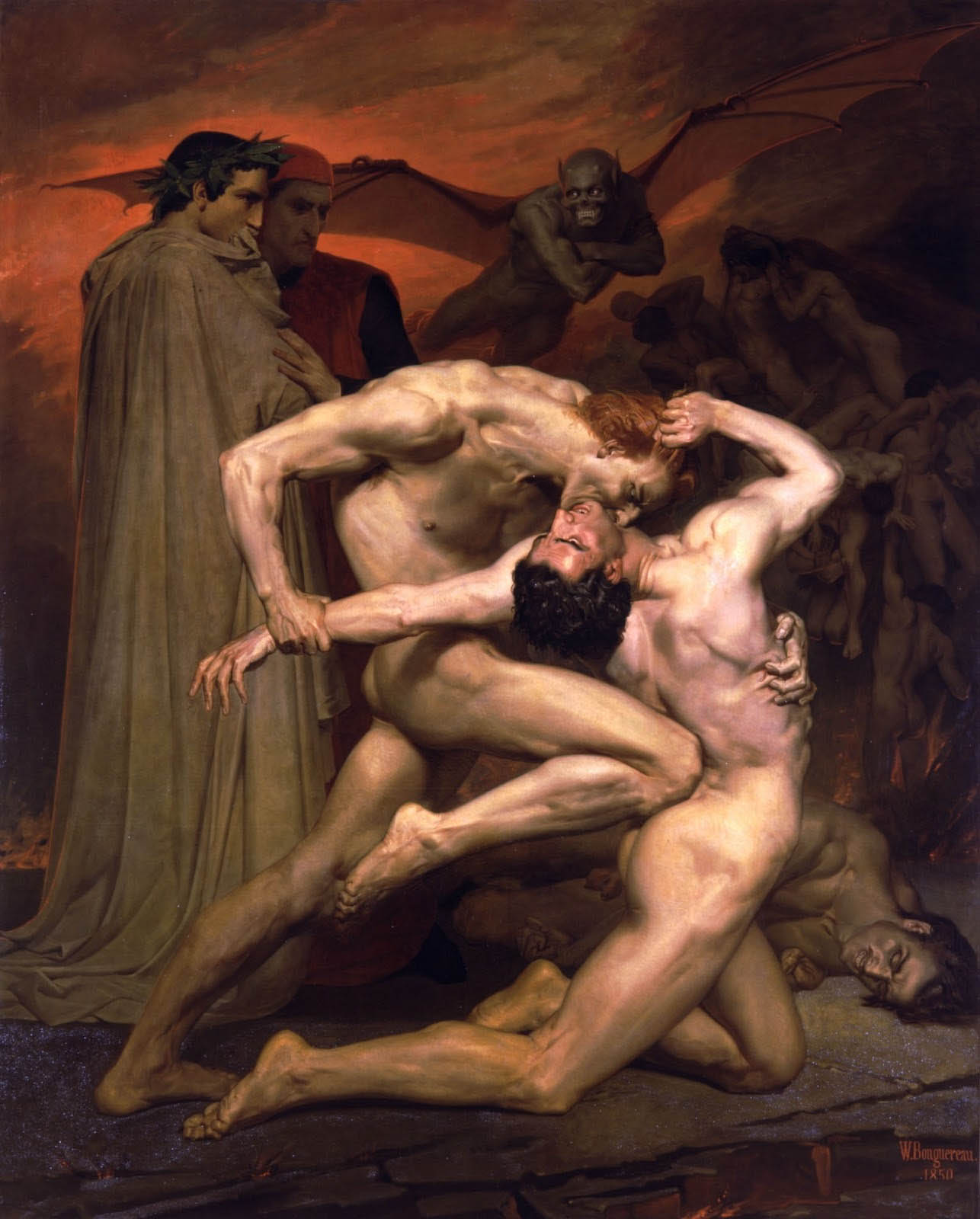
William-Adolphe Bouguereau (French, 1825-1905) 'Dante And Virgil In Hell' 1850


William-Adolphe Bouguereau (French, 1825-1905)
Dante And Virgil In Hell
1850
Oil on canvas
280.5cm (110.4 in) x 225.3cm (88.7 in)
Musée d’Orsay
© Musée d’Orsay, Dist. RMN-Grand Palais / Patrice Schmidt


Arnold Böcklin (Swiss, 1827-1901) 'Villa by the Sea' 1871-1874


Arnold Böcklin (Swiss, 1827-1901)
Villa by the Sea
1871-1874
Oil on canvas
108 x 154cm
Städel Museum, Frankfurt am Main


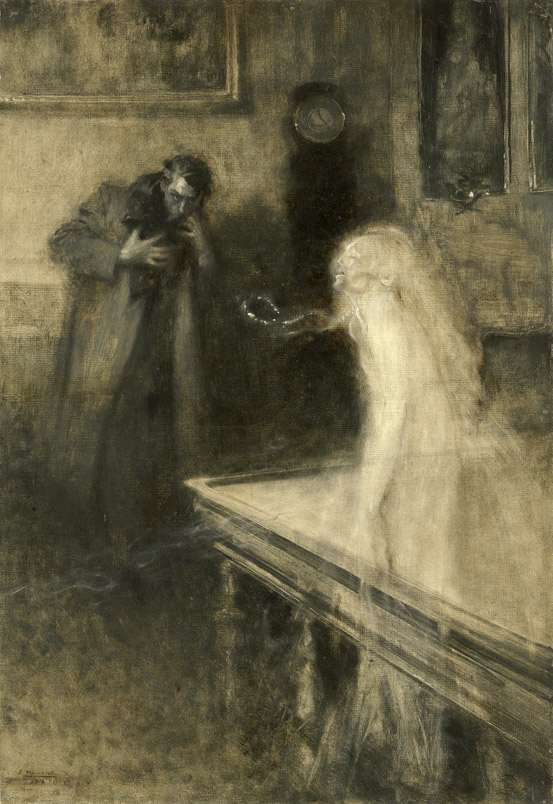
Serafino Macchiati (Italian, 1860-1916) 'Le Visionnaire' (The Visionary) 1904


Serafino Macchiati (Italian, 1860-1916)
Le Visionnaire (The Visionary)
1904
Oil on canvas
55.0 x 38.5cm
Don Serafino Macchiati, 1916
© Musée d’Orsay, Dist. RMN-Grand Palais / Patrice Schmidt


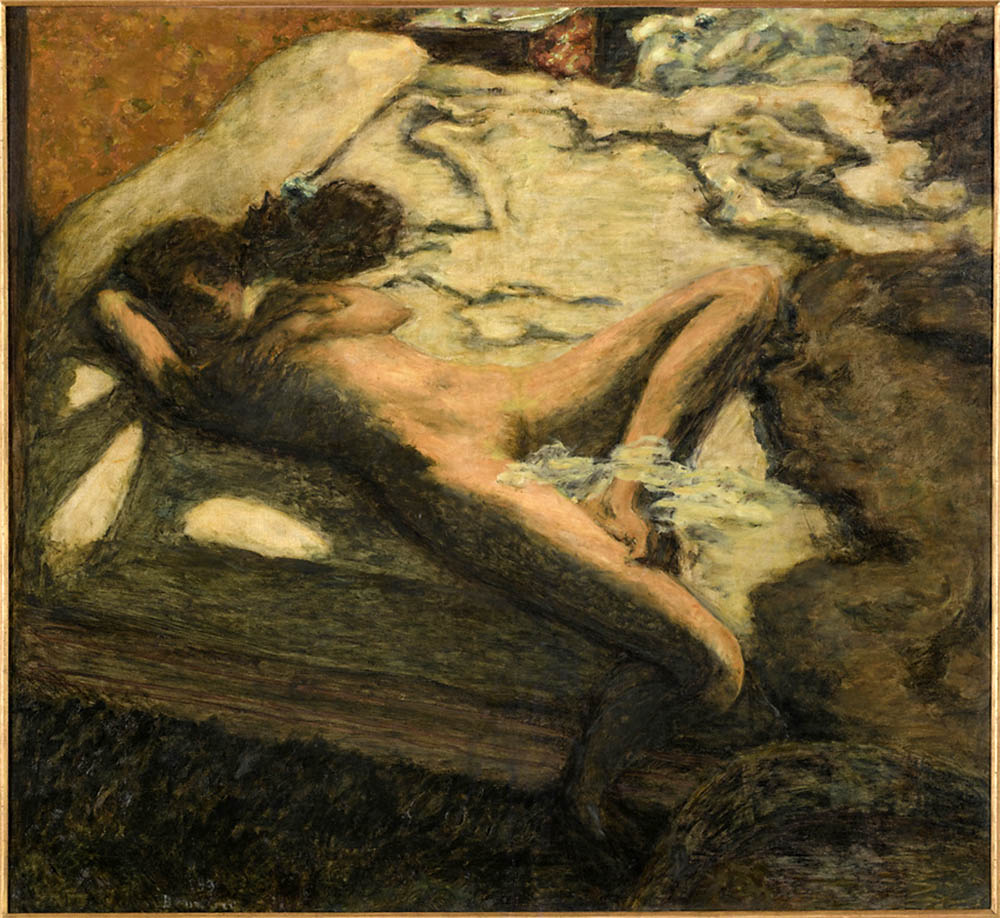
Pierre Bonnard (French, 1867-1945) 'Femme assoupie sur un lit' (Woman sleeping on a bed) 1899


Pierre Bonnard (French, 1867-1945)
Femme assoupie sur un lit (Woman sleeping on a bed)
1899
huile sur toile
96.4 x 105.2cm
Achat en vente publique, 1948
© Musée d’Orsay, Dist. RMN-Grand Palais / Patrice Schmidt


Pierre Bonnard (1867-1947)

A veritable hymn to voluptuousness, The Indolent Woman is a painting which relies on contrasts: the title already clashes with the young woman’s posture. Her body with its tense muscles – the left foot is literally hooked on to the right thigh – belies any idea of rest or laziness. Similarly, the modest gesture of the arm across the breasts is contradicted by the spread thighs. Sinuous lines run throughout the composition, materialised by the dark shadows on the sheets still bearing the undulating line of the bodies and the heavy jumble of the bedclothes. The electric blue “smoke” drifting across the woman’s thigh and ankle and the sumptuous dark hair spread across the bed accentuate the painting’s erotic charge.

This woman spread out for all to see after lovemaking is the epitome of unveiled intimacy, violent, passionate and sombre and, in the end, very “fin de siècle”. We are also struck by the modernity of the composition seen from above, with its monumental bed which seems to tip towards the viewer. The woman’s body, gnawed by shadows, has a tonic vibrant texture which gives it a strong timeless presence.

This is a crucial work in Bonnard’s career because it is one of the first nudes he painted, previously showing little interest in the theme. It can be compared with two other canvases from the same period: Blue Nude from the Kaganovitch collection and Man and Woman.

After seeing this painting, the famous art dealer and publisher Ambroise Vollard asked Bonnard to illustrate a collection of Paul Verlaine’s poetry, Parallèlement, which was published in 1900.

Text from the Musée d’Orsay website


Salvador Dalí (Spanish, 1904-1989) 'Dream caused by the Flight of a Bee around a Pomegranate a Second before Awakening' 1944


Salvador Dalí (Spanish, 1904-1989)
Dream caused by the Flight of a Bee around a Pomegranate a Second before Awakening
1944
Oil on wood
51 x 41cm
Museo Thyssen-Bornemisza, Madrid
© VG Bild-Kunst, Bonn 2012


The Städel Museum’s major special exhibition Dark Romanticism. From Goya to Max Ernst will be on view from September 26th, 2012 until January 20th, 2013. It is the first German exhibition to focus on the dark aspect of Romanticism and its legacy, mainly evident in Symbolism and Surrealism. In the museum’s exhibition house this important exhibition, comprising over 200 paintings, sculptures, graphic works, photographs and films, will present the fascination that many artists felt for the gloomy, the secretive and the evil. Using outstanding works in the museum’s collection on the subject by Francisco de Goya, Eugène Delacroix, Franz von Stuck or Max Ernst as a starting point, the exhibition is also presenting important loans from internationally renowned collections, such as the Musée d’Orsay, the Musée du Louvre, both in Paris, the Museo del Prado in Madrid and the Art Institute of Chicago. The works on display by Goya, Johann Heinrich Fuseli and William Blake, Théodore Géricault and Delacroix, as well as Caspar David Friedrich, convey a Romantic spirit which by the end of the 18th century had taken hold all over Europe. In the 20th century artists such as Salvador Dalí, René Magritte or Paul Klee and Max Ernst continued to think in this vein. The art works speak of loneliness and melancholy, passion and death, of the fascination with horror and the irrationality of dreams. After Frankfurt the exhibition, conceived by the Städel Museum, will travel to the Musée d’Orsay in Paris.

The exhibition’s take on the subject is geographically and chronologically comprehensive, thereby shedding light on the links between different centres of Romanticism, and thus retracing complex iconographic developments of the time. It is conceived to stimulate interest in the sombre aspects of Romanticism and to expand understanding of this movement. Many of the artistic developments and positions presented here emerge from a shattered trust in enlightened and progressive thought, which took hold soon after the French Revolution – initially celebrated as the dawn of a new age – at the end of the 18th century. Bloodstained terror and war brought suffering and eventually caused the social order in large parts of Europe to break down. The disillusionment was as great as the original enthusiasm when the dark aspects of the Enlightenment were revealed in all their harshness. Young literary figures and artists turned to the reverse side of Reason. The horrific, the miraculous and the grotesque challenged the supremacy of the beautiful and the immaculate. The appeal of legends and fairy tales and the fascination with the Middle Ages competed with the ideal of Antiquity. The local countryside became increasingly attractive and was a favoured subject for artists. The bright light of day encountered the fog and mysterious darkness of the night.

The exhibition is divided into seven chapters. It begins with a group of outstanding works by Johann Heinrich Fuseli. The artist had initially studied to be an evangelical preacher in Switzerland. With his painting The Nightmare (Frankfurt Goethe-Museum) he created an icon of dark Romanticism. This work opens the presentation, which extends over two levels of the temporary exhibition space. Fuseli’s contemporaries were deeply disturbed by the presence of the incubus (daemon) and the lecherous horse – elements of popular superstition – enriching a scene set in the present. In addition, the erotic-compulsive and daemonic content, as well as the depressed atmosphere, catered to the needs of the voyeur. The other six works by Fuseli – loans from the Kunsthaus Zürich, the Royal Academy London and the Staatsgalerie Stuttgart – represent the characteristics of his art: the competition between good and evil, suffering and lust, light and darkness. Fuseli’s innovative pictorial language influenced a number of artists – among them William Blake, whose famous water colour The Great Red Dragon from the Brooklyn Museum will be on view in Europe for the first time in ten years.

The second room of the exhibition is dedicated to the Spanish artist Francisco de Goya. The Städel will display six of his works – including masterpieces such as The Witches’ Flight from the Prado in Madrid and the representations of cannibals from Besançon. A large group of works on paper from the Städel’s own collection will be shown, too. The Spaniard blurs the distinction between the real and the imaginary. Perpetrator and victim repeatedly exchange roles. Good and evil, sense and nonsense – much remains enigmatic. Goya’s cryptic pictorial worlds influenced numerous artists in France and Belgium, including Delacroix, Géricault, Victor Hugo and Antoine Wiertz, whose works will be presented in the following room. Atmosphere and passion were more important to these artists than anatomical accuracy.

Among the German artists – who are the focus of the next section of the exhibition – it is Carl Blechen who is especially close to Goya and Delacroix. His paintings are a testimony to his lust for gloom. His soft spot for the controversial author E. T. A. Hoffmann – also known as “Ghost-Hoffmann” in Germany – led Blechen to paint works such as Pater Medardus (Alte Nationalgalerie, Berlin) – a portrait of the mad protagonist in The Devil’s Elixirs. The artist was not alone in Germany when it came to a penchant for dark and disturbing subjects. Caspar David Friedrich’s works, too, contain gruesome elements: cemeteries, open graves, abandoned ruins, ships steered by an invisible hand, lonely gorges and forests are pervasive in his oeuvre. One does not only need to look at the scenes of mourning in the sketchbook at the Kunsthalle Mannheim for the omnipresent theme of death. Friedrich is prominently represented in the exhibition with his paintings Moon Behind Clouds above the Seashore from the Hamburger Kunsthalle and Kügelgen’s Grave from the Lübecker Museums, as well as with one of his last privately owned works, Ship at Deep Sea with full Sails.

Friedrich’s paintings are steeped in oppressive silence. This uncompromising attitude anticipates the ideas of Symbolism, which will be considered in the next chapter of the exhibition. These ‘Neo-Romantics’ stylised speechlessness as the ideal mode of human communication, which would lead to fundamental and seminal insights. Odilon Redon’s masterpiece Closed Eyes, a loan from the Musée d’Orsay in Paris, impressively encapsulates this notion. Paintings by Arnold Böcklin, James Ensor, Fernand Khnopff or Edvard Munch also embody this idea. However, as with the Romantics, these restrained works are face to face with works where anxiety and repressed passions are brought unrestrainedly to the surface; works that are unsettling in their radicalism even today. While Gustave Moreau, Max Klinger, Franz von Stuck and Alfred Kubin belong to the art historical canon, here the exhibition presents artists who are still to be discovered in Germany: Jean-Joseph Carriès, Paul Dardé, Jean Delville, Julien-Adolphe Duvocelle, Léon Frédéric, Eugène Laermans and Lucien Lévy-Dhurmer.

The presentation concludes with the Surrealist movement, founded by André Breton. He inspired artists such as Ernst, Brassaϊ or Dalí, to create their wondrous pictorial realms from the reservoir of the subconscious and celebrated them as fantasy’s victory over the “factual world”. Max Ernst vehemently called for “the borders between the so-called inner and outer world” to be blurred. He demonstrated this most clearly in his forest paintings, four of which have been assembled for this exhibition, one of them the major work Vision Provoked by the Nocturnal Aspect of the Porte Saint-Denis (private collection). The art historian Carl Einstein considered the Surrealists to be the Romantics’ successors and coined the phrase ‘the Romantic generation’. In spite of this historical link the Surrealists were far from retrospective. On the contrary: no other movement was so open to new media; photography and film were seen as equal to traditional media. Alongside literature, film established itself as the main arena for dark Romanticism in the 20th century. This is where evil, the thrill of fear and the lust for horror and gloom found a new home. In cooperation with the Deutsches Filmmuseum the Städel will for the first time present extracts from classics such as Frankenstein (1931), Dracula (1931), Faust (1926), Vampyr (1931-32) and The Phantom Carriage (1921) within an exhibition.

The exhibition, which presents the Romantic as a mindset that prevailed throughout Europe and remained influential beyond the 19th century, is accompanied by a substantial catalogue. As is true for any designation of an epoch, Romanticism too is nothing more than an auxiliary construction, defined less by the exterior characteristics of an artwork than by the inner sentiment of the artist. The term “dark Romanticism” cannot be traced to its origins, but – as is also valid for Romanticism per se – comes from literary studies. The German term is closely linked to the professor of English Studies Mario Praz and his publication La carne, la morte e il diavolo nella letteratura romantica of 1930, which was published in German in 1963 as Liebe, Tod und Teufel. Die schwarze Romantik (literally: Love, Death and Devil. Dark Romanticism).

Press release from the Städel Museum website


Francisco de Goya (Spanish, 1746-1828) 'Witches in the Air' 1797-1798


Francisco de Goya (Spanish, 1746-1828)
Witches in the Air
1797-1798
Oil on canvas
43.5 × 30.5cm (17 1/8 in × 12 in)
Madrid, Museo Nacional del Prado
© Museo Nacional del Prado


Witches’ Flight (Spanish: Vuelo de Brujas, also known as Witches in Flight or Witches in the Air) is an oil-on-canvas painting completed in 1798 by the Spanish painter Francisco Goya. It was part of a series of six paintings related to witchcraft acquired by the Duke and Duchess of Osuna in 1798. It has been described as “the most beautiful and powerful of Goya’s Osuna witch paintings.” …

At center point are three semi-nude witches wearing penitential coroza bearing aloft a writhing nude figure, their mouths close to their victim, as if to devour him or suck his blood. Below, two figures in peasants’ garb recoil from the spectacle: one has thrown himself to the ground covering his ears, the other attempts to escape by covering himself with a blanket, making the fig hand gesture to ward off the evil eye. Finally, a donkey emerges on the right, seemingly oblivious to the rest of the scene.

The general scholarly consensus is that the painting represents a rationalist critique of superstition and ignorance, particularly in religious matters: the witches’ corozas are not only emblematic of the violence of the Spanish Inquisition (the upward flames indicate that they have been condemned as unrepentant heretics and will be burned at the stake), but are also reminiscent of episcopal mitres, bearing the characteristic double points. The accusations of religious tribunals are thus reflected back on themselves, whose actions are implicitly equated with superstition and ritualised sacrifice. The bystanders can then be understood either as appalled but unable to do anything or wilfully ignorant and unwilling to intervene.

The donkey, finally, is the traditional symbol of ignorance.

Text from the Wikipedia website


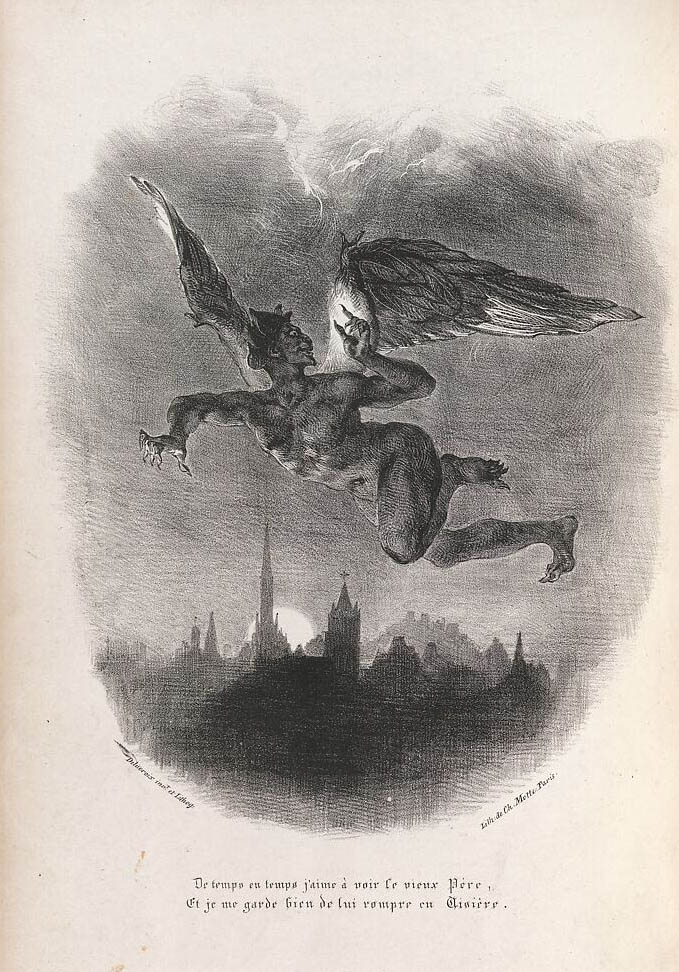
Eugène Delacroix (French, 1798-1863) 'Mephistopheles in the air, illustration from Goethe's Faust' 1828


Eugène Delacroix (French, 1798-1863)
Mephistopheles in the air, illustration for from Goethe’s Faust
1828
Lithograph
Frankfurt am Main, Städel Museum
© All rights reserved


Francisco de Goya (Spanish, 1746-1828) 'Flying Folly (Disparate Volante)' 1816-1819


Francisco de Goya (Spanish, 1746-1828)
Flying Folly (Disparate Volante)
from “The proverbs (Los proverbios)”, plate 5, 1816-1819, 1
Edition, 1864
Etching and aquatint
21.7 x 32.6cm
Städel Museum, Frankfurt am Main


“I am not afraid of witches, goblins, apparitions, boastful giants, evil spirits, leprechauns, etc., nor of any other kind of creatures except human beings.”


Francisco Goya


An enthusiastic champion of Enlightenment values, Goya was also on close terms with the progressive nobility, but his doubts and disillusionment increased as the French Revolution was succeeded by the Terror, and Europe was torn apart by warring armies.

The deceptively clear distinction between enlightenment and obscurantism was now supplanted by the vision of a new, grey, frightening and uncertain world, in which no sharp line could be drawn between good and evil, reality and fantasy, reason and absurdity, the beliefs of the past and the revolutionary fervour of the present.

But instead of living in the past or doing nothing, Goya swapped his court painter’s brush for the etcher’s unsparing needle. Black in all its shades was the keynote of the many series of engravings he now produced on freely chosen themes, with only the Inquisition’s censors to contend with.

The Caprices, a series produced at the end of the 18th century, reflects his amazement and exasperation at the imaginative wealth of Spanish popular culture, steeped in the superstition, fanaticism and ignorance promoted by the Jesuits.

Ten years later, the atrocities which marked the war against Napoleon inspired The Disasters of War – a cry of outrage and horror at the barbaric excesses of the “Grande Nation” and the terrifying emptiness of a world with no God or morality.

Anonymous. “The Angel of the Odd. Dark Romanticism from Goya to Max Ernst,” on the Musée D’Orsay website Nd [Online] Cited 12/08/2024


Louis Candide Boulanger (French, 1806-1867) 'Les Fantômes' 1829


Louis Candide Boulanger (French, 1806-1867)
Les Fantômes
1829
Oil on canvas
Maison de Victor Hugo


Carl Blechen (German, 1798-1840) 'Scaffold in Storm' 1834


Carl Blechen (German, 1798-1840)
Scaffold in Storm
1834
Oil on canvas and on board
29.5cm (11.6 in) x 46cm (18.1 in)
Galerie Neue Meister


Carl Eduard Ferdinand Blechen (29 July 1798 – 23 July 1840) was a German landscape painter and a professor at the Academy of Arts, Berlin. His distinctive style was characteristic of the Romantic ideals of natural beauty.


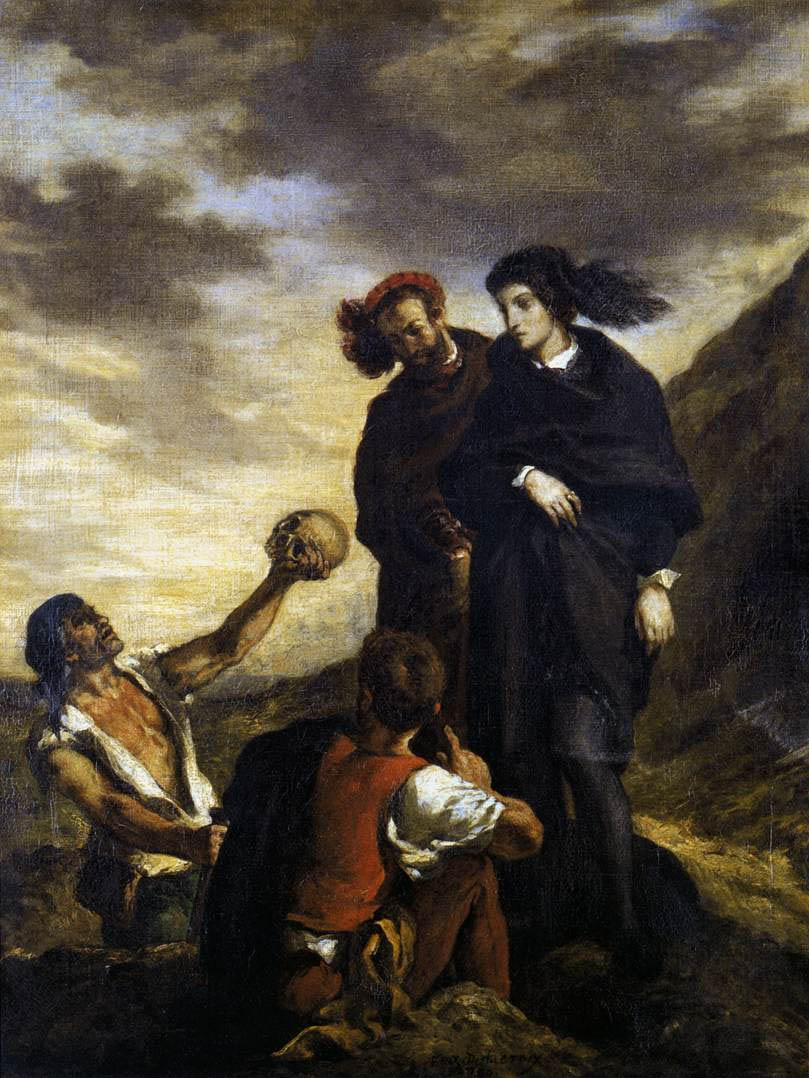
Eugène Delacroix (French, 1798-1863) 'Hamlet and Horatio in the Graveyard' 1839


Eugène Delacroix (French, 1798-1863)
Hamlet and Horatio in the Graveyard
1839
Oil on canvas
29.5cm (11.6 in) x 36cm (14.1 in)
Louvre Museum


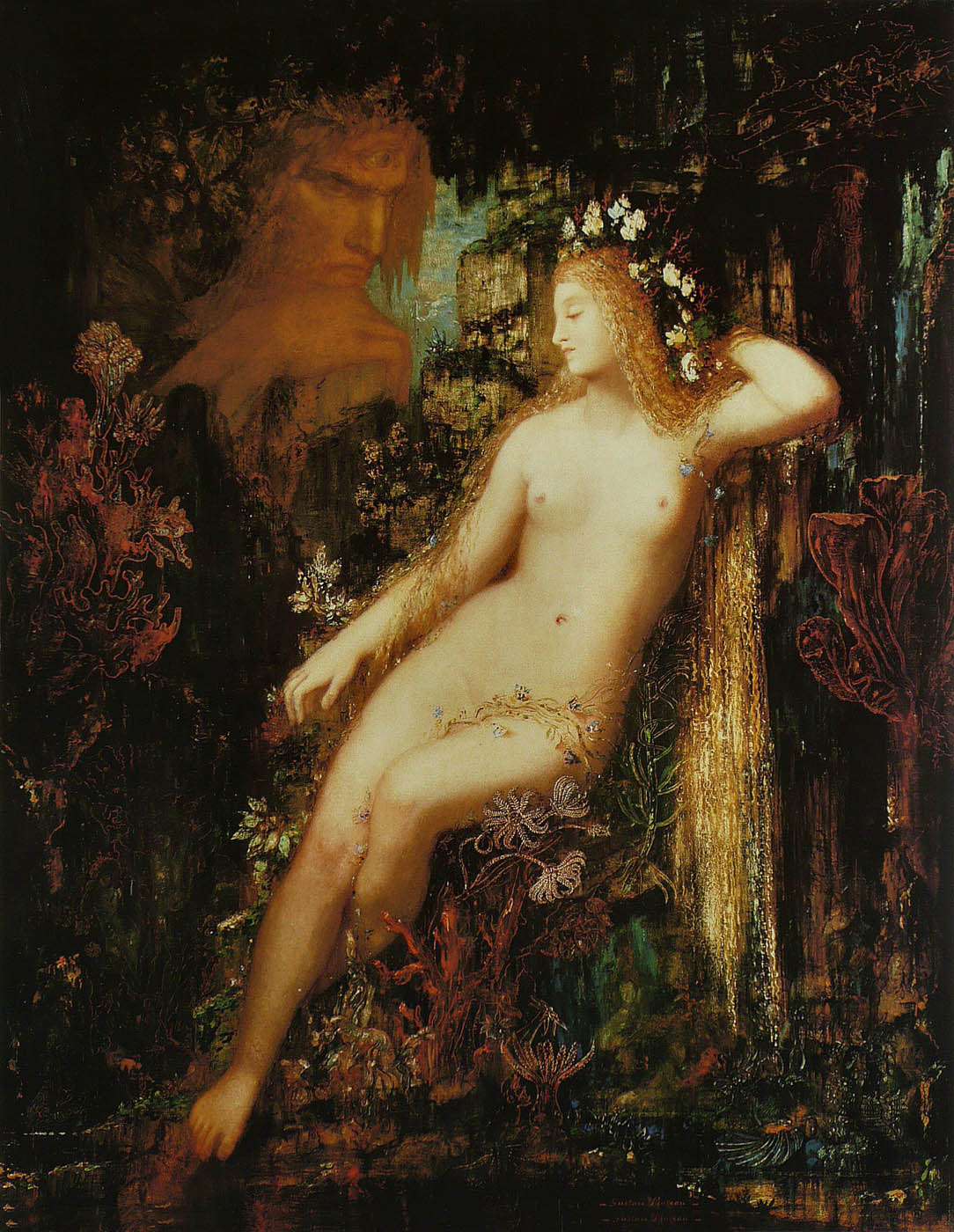
Gustave Moreau (French, 1826-1898) 'Galatea' c. 1880


Gustave Moreau (French, 1826-1898)
Galatea
c. 1880
Oil on panel
85.5cm (33.6 in) x 66cm (25.9 in)
Musée d’Orsay


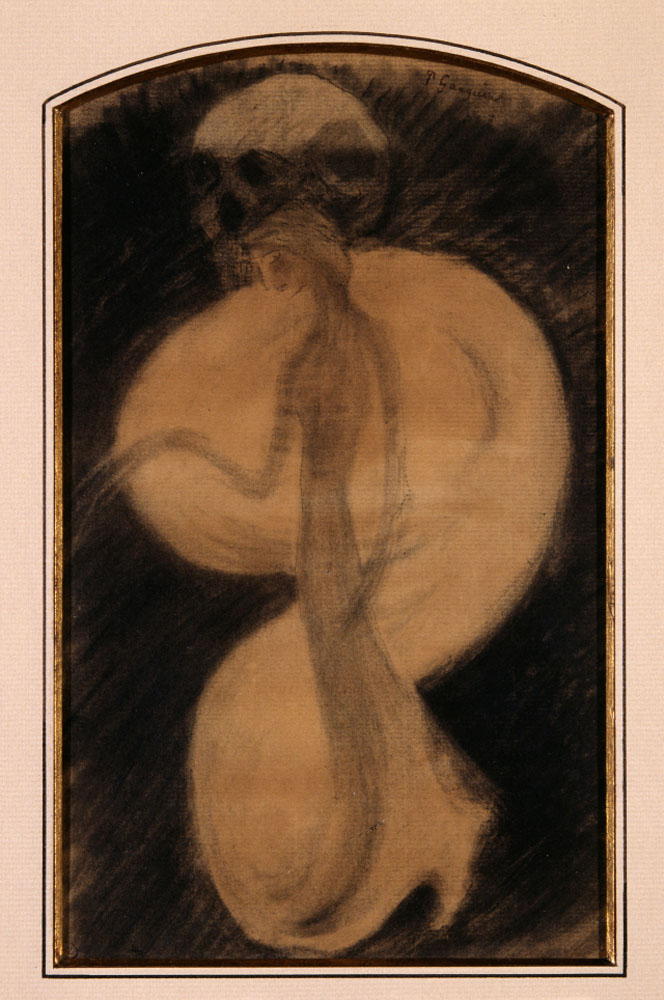
Paul Gauguin (French, 1848-1903) 'Madame la Mort' 1890-1891


Paul Gauguin (French, 1848-1903)
Madame la Mort
1890-1891
Charcoal on paper with wash highlights
33,5 x 23cm
Don de la société des Amis du musée d’Orsay, 1991
© RMN-Grand Palais (Musée d’Orsay) / Gérard Blot


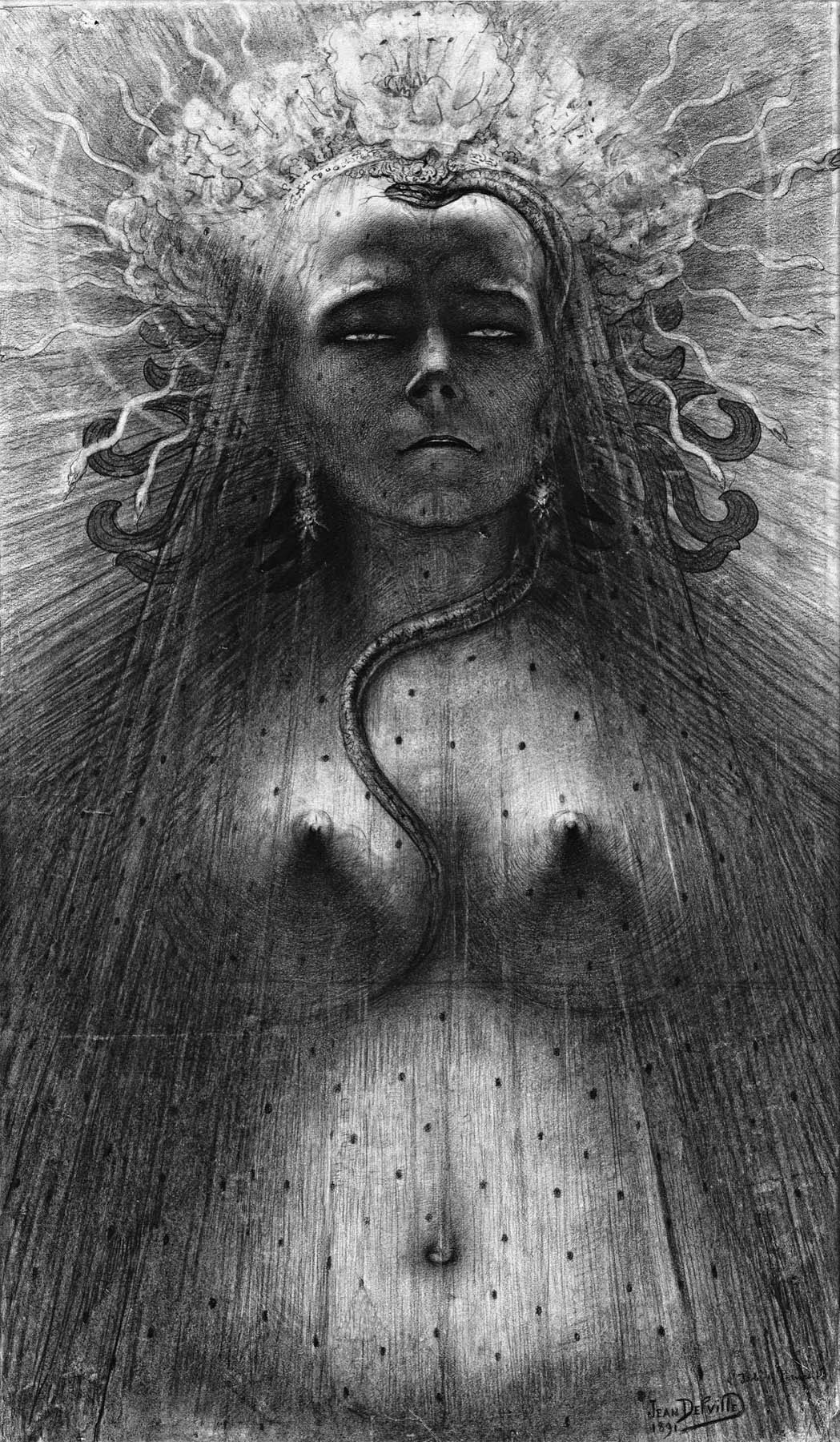
Jean Delville (Belgium, 1867-1953) 'L'Idole de la Perversité' (The Idol of Perversity) 1891


Jean Delville (Belgium, 1867-1953)
L’Idole de la Perversité (The Idol of Perversity)
1891
81.5 x 48.5cm
Museum Wiesbaden, Collection Ferdinand Wolfgang Neess


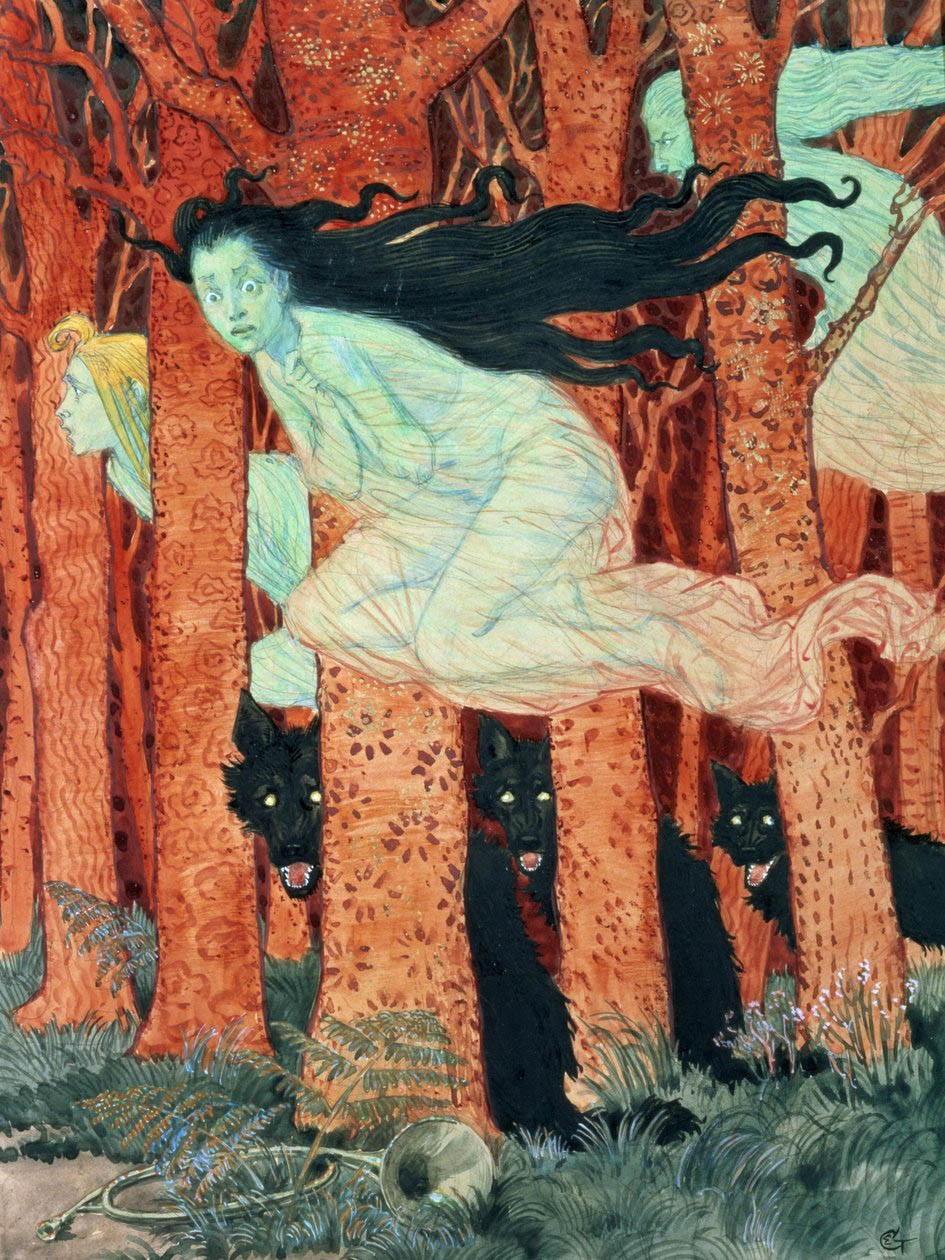
Eugène Grasset (French, 1845-1917) 'Trois Femmes et Trois Loups' 1892


Eugène Grasset (French, 1845-1917)
Trois Femmes et Trois Loups
1892
Pencil, watercolour, Indian ink and gold highlights on paper
35.3 x 27.3cm
Musée des Arts Décoratifs, Paris


Franz von Stuck (German, 1863-1928) 'Le Péché' (Die Sünde) (The Sin) 1893


Franz von Stuck (German, 1863-1928)
Le Péché (Die Sünde) (The Sin)
1893
Zurich, galerie Katharina Büttiker
© Galerie Katharina Büttiker, Zürich


Franz Stuck (German, 1863-1928) 'The Kiss of the Sphinx' (Le Baiser du Sphinx) (Der Kuss der Sphinx) 1895


Franz Stuck (German, 1863-1928)
The Kiss of the Sphinx (Le Baiser du Sphinx) (Der Kuss der Sphinx)
1895
Collection particulière
© Droits réservés


Franz Ritter von Stuck (February 23, 1863 – August 30, 1928), born Franz Stuck, was a German painter, sculptor, printmaker, and architect. Stuck was best known for his paintings of ancient mythology, receiving substantial critical acclaim with The Sin in 1892. In 1906, Stuck was awarded the Order of Merit of the Bavarian Crown and was henceforth known as Ritter von Stuck.


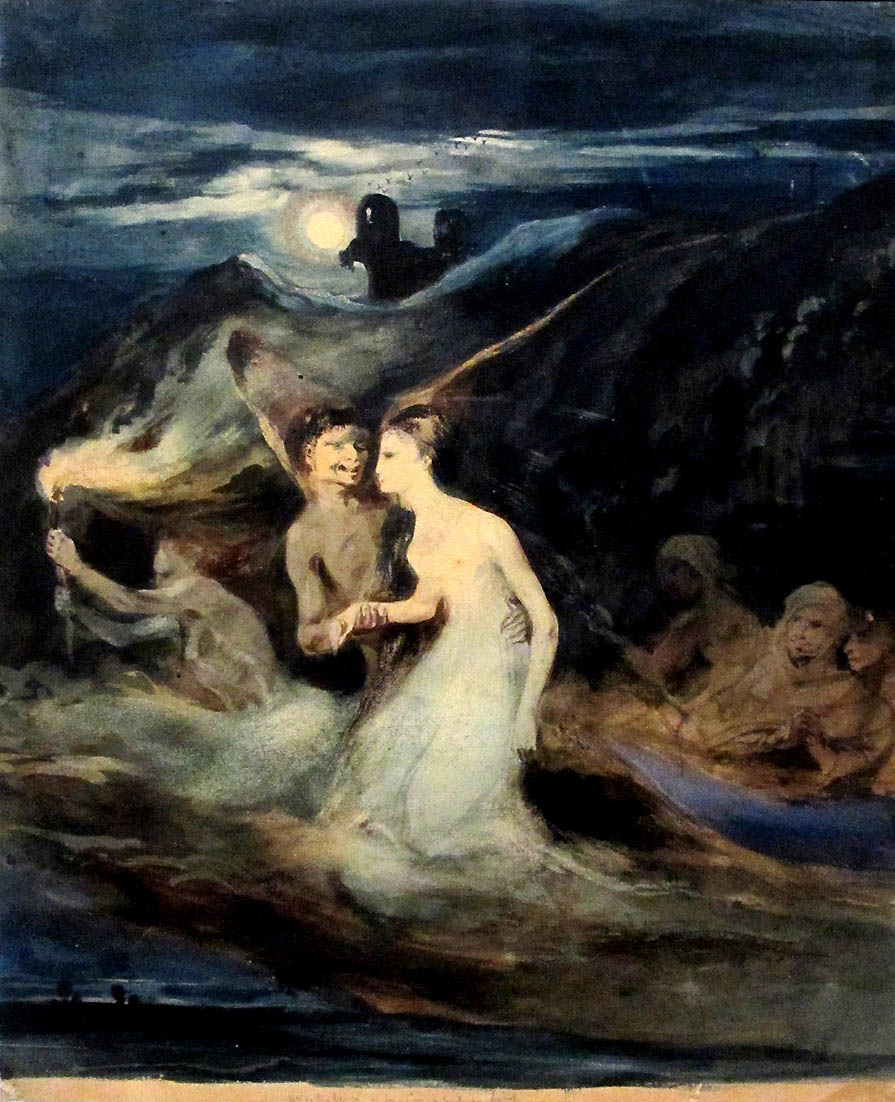
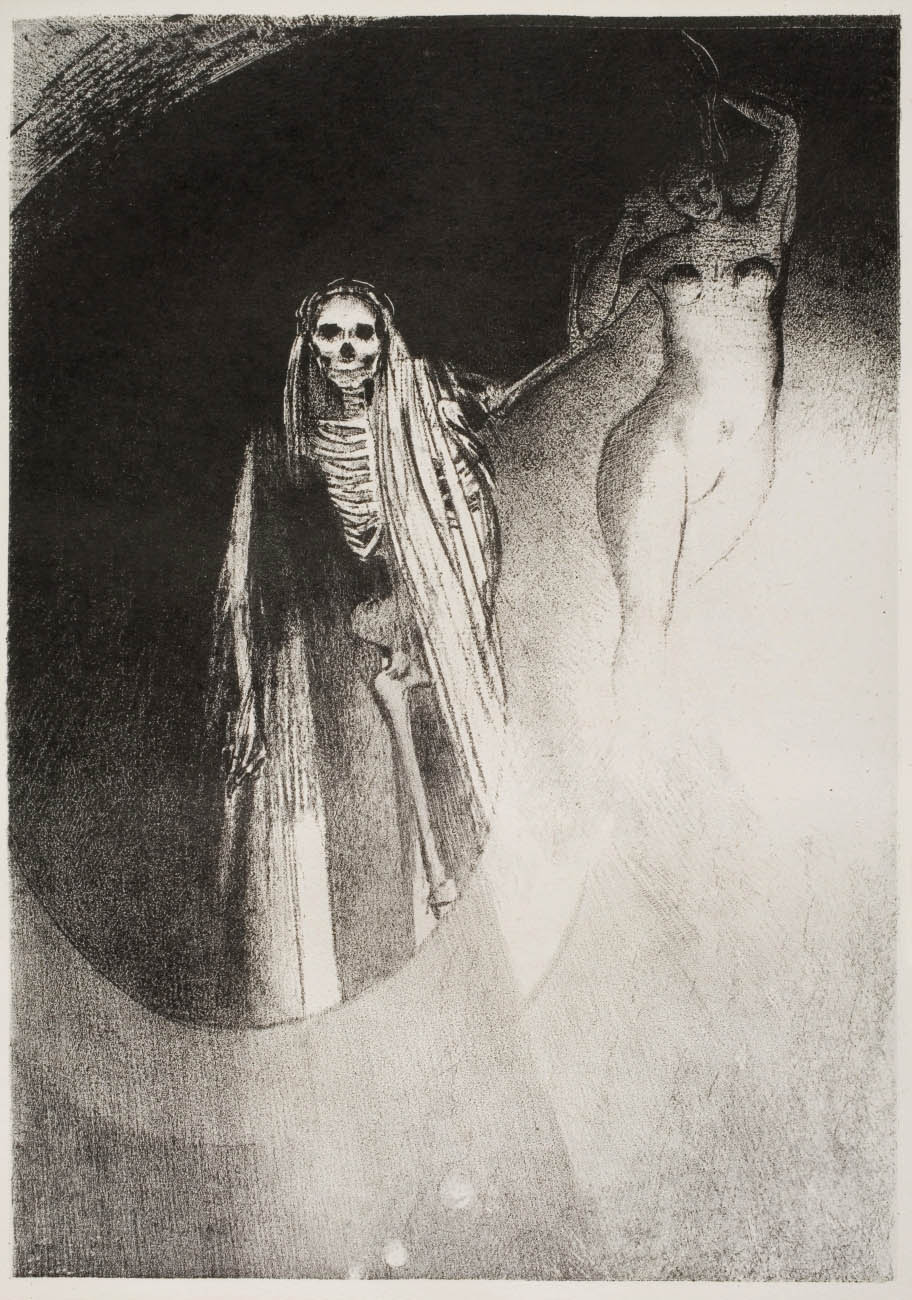
Odilon Redon (French, 1840-1916) 'La Mort: C'est moi qui te rends sérieuse: Enlaçons-nous' (Death: It is I who Makes You Serious; Let Us Embrace) 1896


Odilon Redon (French, 1840-1916)
La Mort: C’est moi qui te rends sérieuse: Enlaçons-nous (Death: It is I who Makes You Serious; Let Us Embrace)
1896
Plate 20 from the series “La Tentation de Saint-Antoine” (The Temptation of Saint Anthony)
Lithograph
Sheet: 17 1/8 in. x 13 in. (43.5 x 33cm)


La Mort: C’est moi qui te rends sérieuse: Enlaçons-nous is one of twenty-four prints by the French artist Odilon Redon (1840-1916) that illustrated Flaubert’s play Temptation of Saint Anthony, a lesser-known work of the literary giant but one that Flaubert laboured on painstakingly throughout his life. A contemporary to Flaubert, Redon had worked in lithography for about two decades when the final version of Temptation of Saint Anthony was published. Already working with a repertoire of dark and absurd subjects, Redon was drawn to the grotesque characters described by Flaubert and wrote fondly of the play, calling it “a literary marvel and a mine for me.”

La Mort depicts a scene in the play where Death and Lust, disguised respectively as an emaciated old woman and a fair young one, reveal their real likenesses after failed attempts to seduce Saint Anthony:

The winding-sheet flies open, and reveals the skeleton of Death. The robe bursts open, and presents to view the entire body of Lust, which has a slender figure, with an enormous development behind, and great, undulating masses of hair, disappearing towards the end.

Death tries to lead Saint Anthony to step into the abyss under the cliff and take his own life, thereby ending all pain. “It is I who make you serious, let us embrace each other,” she says, telling Saint Anthony that, by destroying himself, a work of God, he will become God’s equal.

Redon’s accomplished use of chiaroscuro, the sharp contrast between light and dark, underscores the dramatic nature of this moment. Death’s winding-sheet is enveloped by the dazzling rays of light radiating from the voluptuous body of Lust, and Lust’s hair vanishes into the darkness that seeps through Death;s skeletal body. Although the appearance of Lust differs greatly from that of Death, the overlap of their bodies suggests that they are but different phantoms created by the Devil.

Ningyi Xi. “Odilon Redon,” on the Davis Museum website 2017 [Online] Cited 11/08/2024


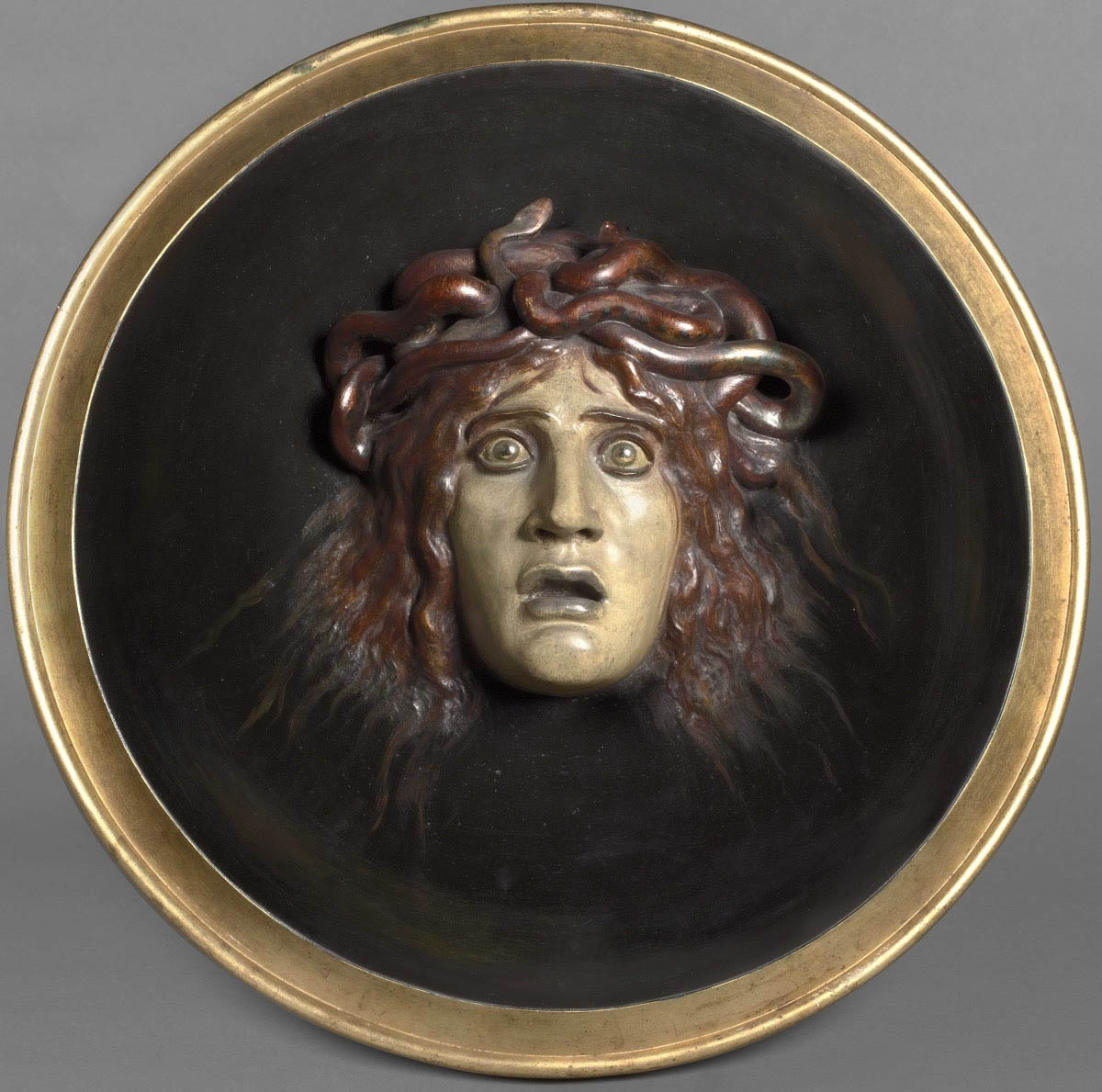
Arnold Böcklin (Swiss, 1827-1901) 'Shield with Gorgon's head' (Bouclier avec le visage de Méduse) 1897


Arnold Böcklin (Swiss, 1827-1901)
Shield with Gorgon’s head (Bouclier avec le visage de Méduse)
1897
Papier-mâché
610 x 610cm
© RMN (Musée d’Orsay) / Hervé Lewandowski


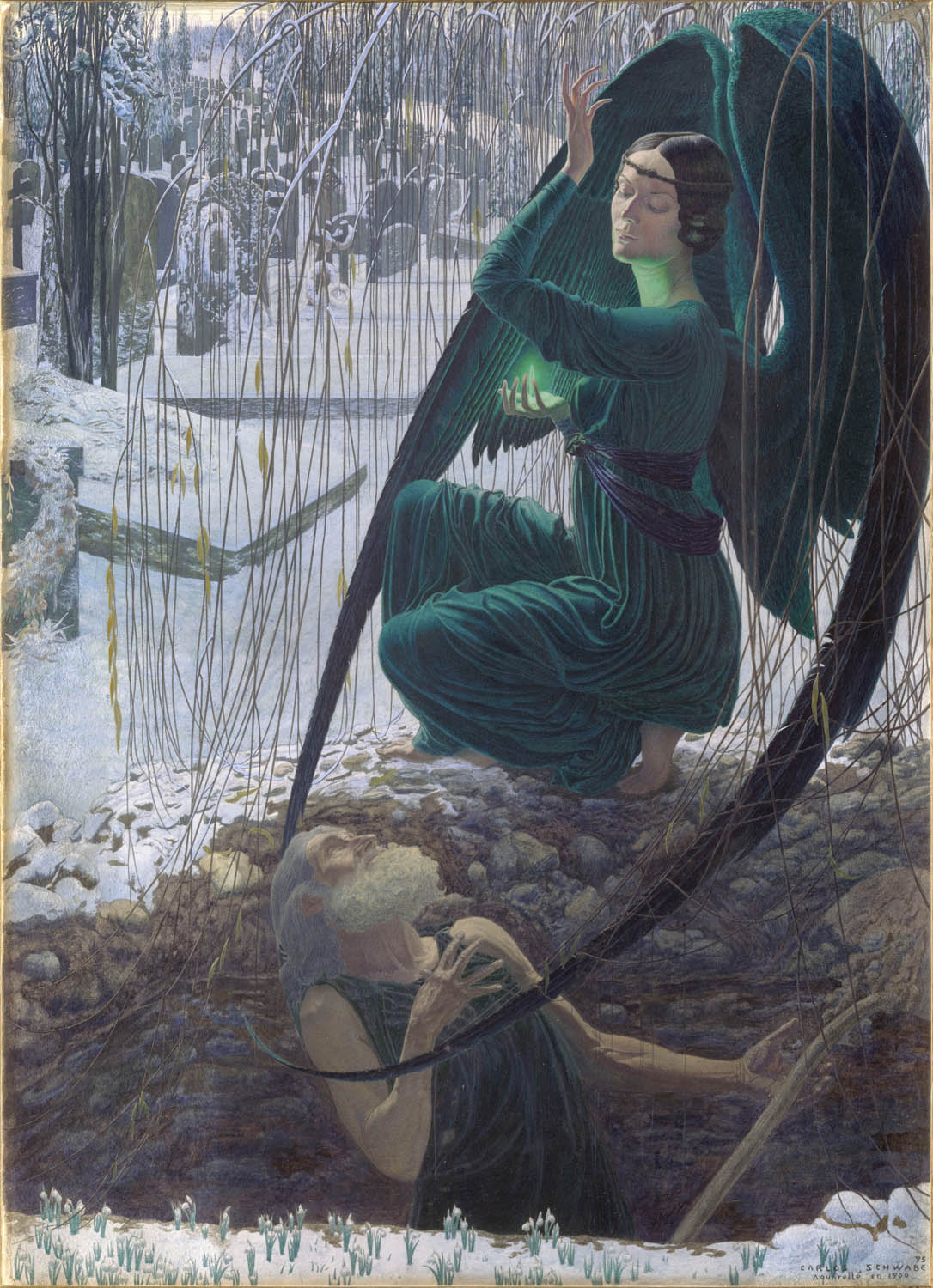
Carlos Schwabe (Swiss, 1866-1926) 'La Mort et le fossoyeur' (Death and the Gravedigger) 1900


Carlos Schwabe (Swiss, 1866-1926)
La Mort et le fossoyeur (Death and the Gravedigger)
1900
Paris, musée d’Orsay, conservé au département des Arts Graphiques du musée du Louvre
Legs Michonis, 1902
© RMN (Musée d’Orsay) / Jean-Gilles Berizzi / Patrice Schmidt


Julien Adolphe Duvocelle (French, 1873-1961) 'Crâne aux yeux exorbités et mains agrippées à un mur' (Skull with bulging eyes and hands gripping a wall) 1902


Julien Adolphe Duvocelle (French, 1873-1961)
Crâne aux yeux exorbités et mains agrippées à un mur (Skull with bulging eyes and hands gripping a wall)
1902
Pencil and charcoal mounted on a sheet blackened with charcoal
Paris, musée d’Orsay, conservé au département des Arts Graphiques du musée du Louvre
Don de Mme Fourier en souvenir de son fils, 1995
© DR – RMN-Grand Palais (Musée d’Orsay) / Jean-Gilles Berizzi


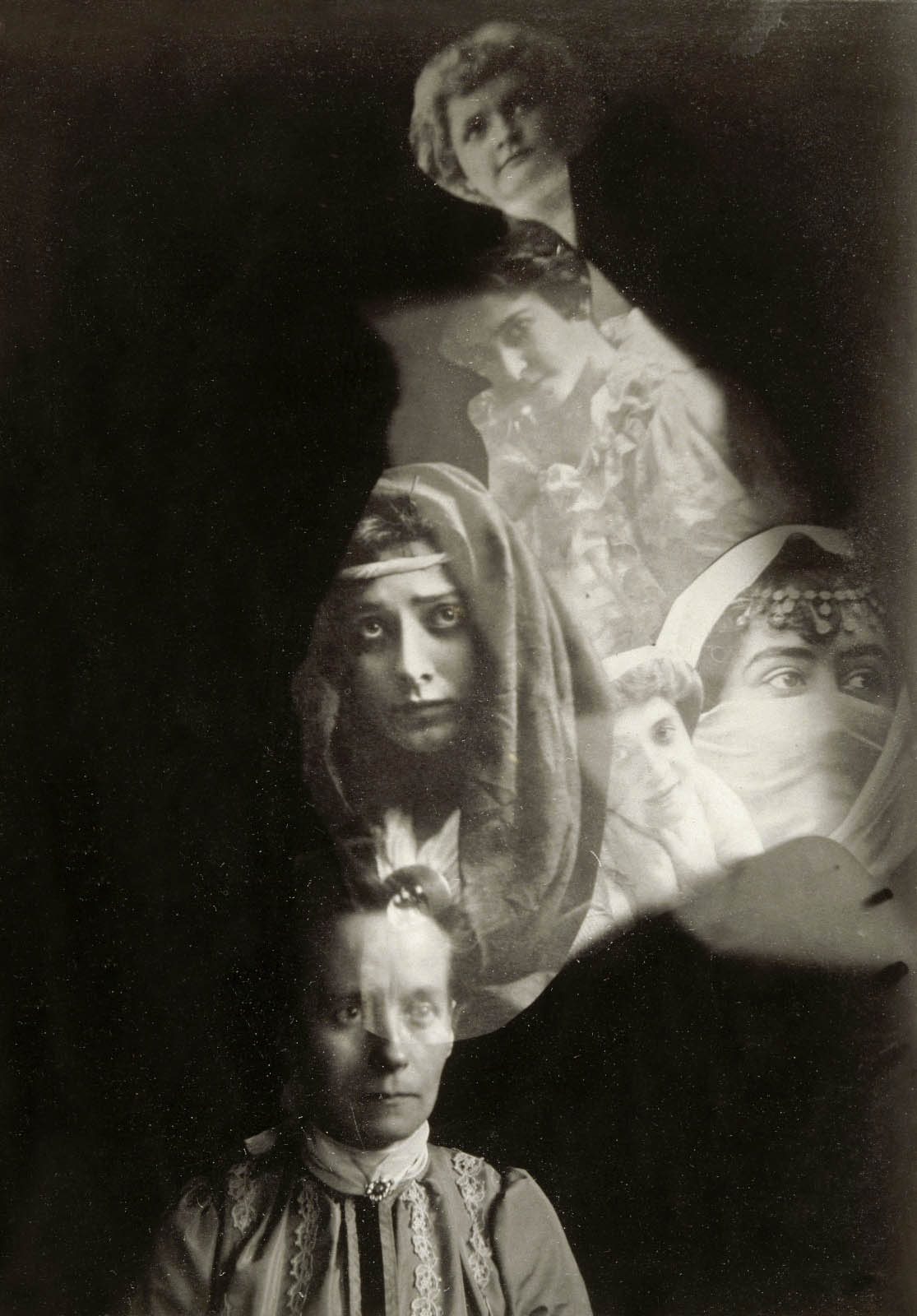
Anonymous photographer. 'Photographie spirite (médium et spectres)' / Spiritual photography (medium and ghosts) c. 1910


Anonymous photographer
Photographie spirite (médium et spectres) / Spiritual photography (medium and ghosts)
c. 1910
Musée d’Orsay
© RMN-Grand Palais (Musée d’Orsay) / Hervé Lewandowski / DR


Paul Dardé (French, 1888-1963) 'Eternelle douleur' (Eternal Pain)
1913


Paul Dardé (French, 1888-1963)
Eternelle douleur (Eternal Pain)
1913
Plaster, direct carving
50cm
Musée de Lodève


Paul Dardé created Eternal Pain at 25, even though he had only just finished his year of training. Having gone through the Paris National School of Beaux-Arts and Rodin’s workshop, it is probably his journey to Italy and his mythological reading which fixed the theme of the Medusa in the mind of the artist. Carved from a block of plaster gleaned on the heights of Lodève, the piece would be exhibited seven years later side by side with the great Faun, at the Salon of French artists in 1920.

Text from the Musée de Lodève website


Edvard Munch (Norwegian, 1863-1944) 'Vampire' 1916-1918


Edvard Munch (Norwegian, 1863-1944)
Vampire
1916-1918
Oil on canvas
85 x 110cm
Collection Würth
Photo: Archiv Würth
© VG Bild-Kunst, Bonn 2012


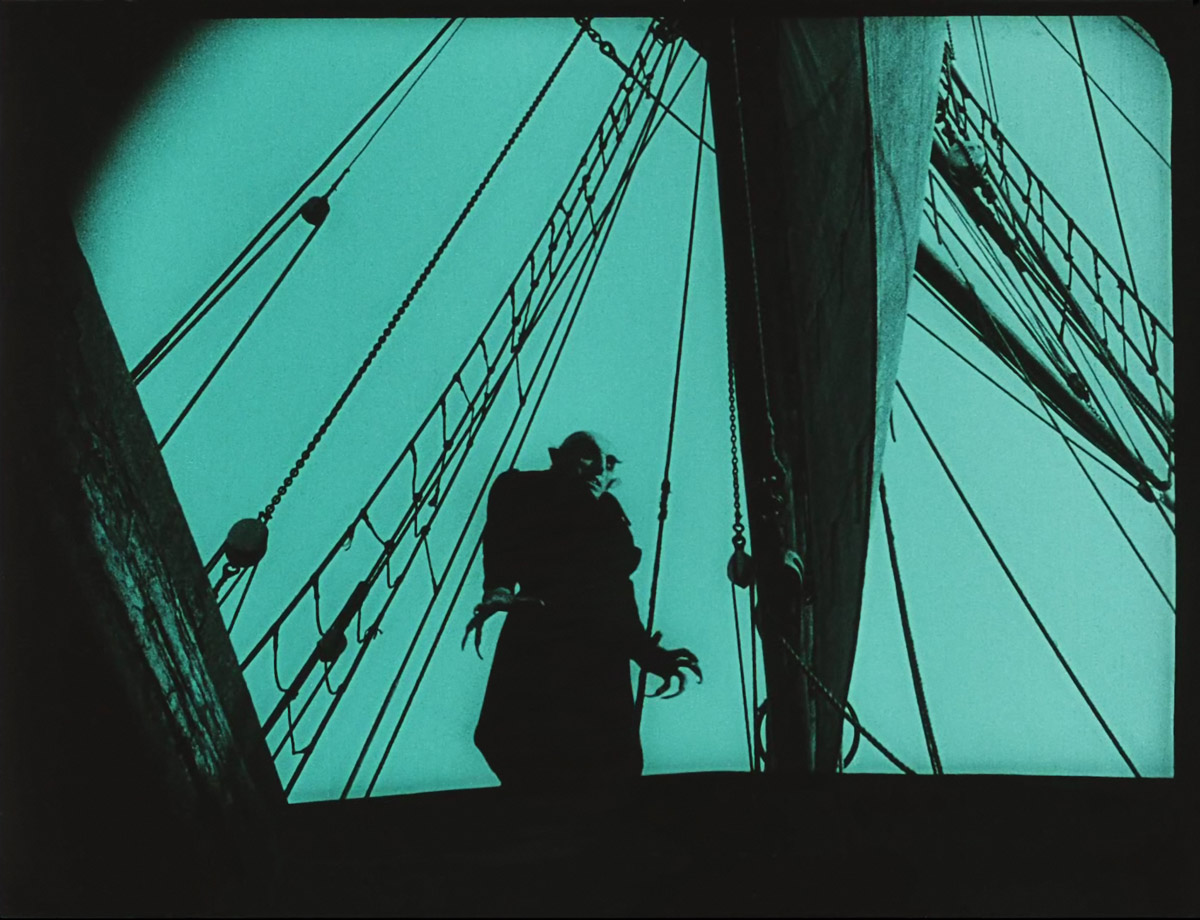
Friedrich Wilhelm Murnau (German, 1888-1931) 'Nosferatu – A Symphony of Horror' Germany 1922


Friedrich Wilhelm Murnau (German, 1888-1931)
Nosferatu – A Symphony of Horror
Germany 1922
Filmstill
Silent film
© Friedrich-Wilhelm-Murnau-Stiftung


Roger Parry (French, 1905-1977) 'Untitled' 1929


Roger Parry (French, 1905-1977)
Untitled
1929
Illustration from Léon-Paul Fargue’s “Banalité” (Paris 1930)
Gelatin silver print
21.8 x 16.5cm
Collection Dietmar Siegert
© VG Bild-Kunst, Bonn 2012


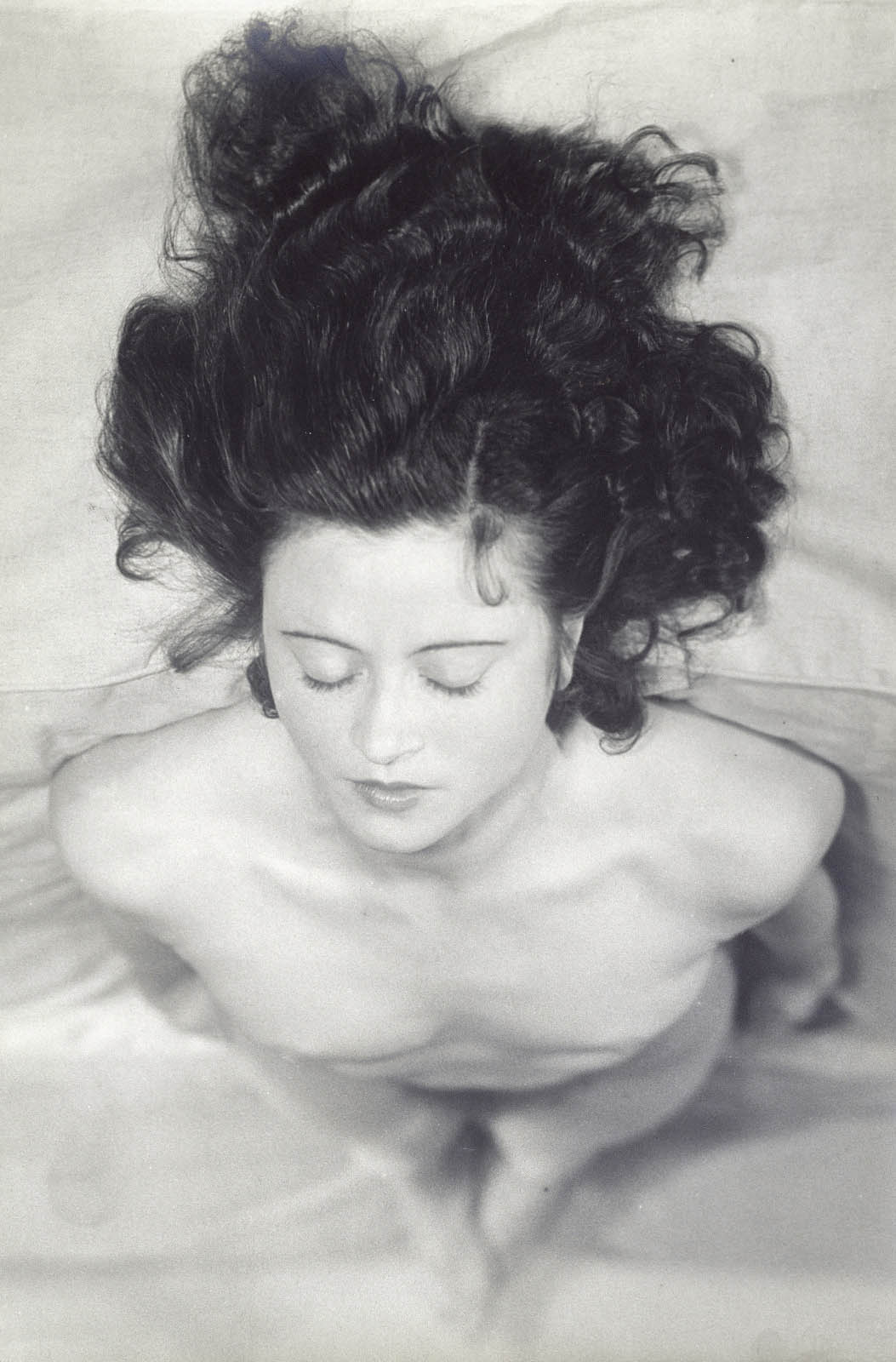
Jacques-André Boiffard (French, 1902-1961) 'Renée Jacobi' 1930


Jacques-André Boiffard (French, 1902-1961)
Renée Jacobi
1930
Paris, Centre Pompidou, musée national d’Art moderne, Centre de création industrielle
© Centre Pompidou, MNAM-CCI, dist. RMN-Grand Palais
Image: Centre Pompidou MNAM-CCI © Mme Denise Boiffard


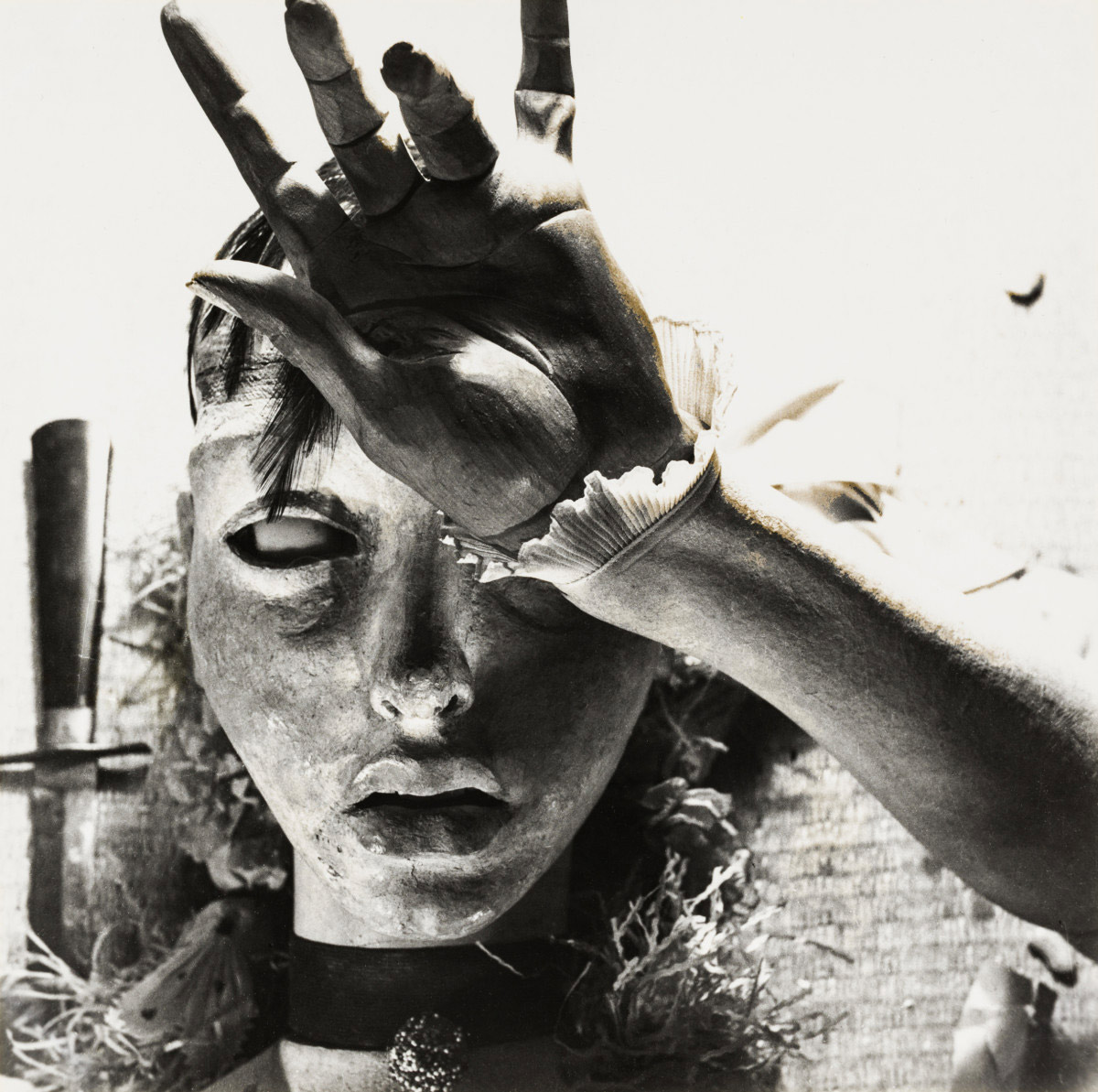
Hans Bellmer. 'La Poupée (tête et couteau)' / The Doll (head and knife) 1935


Hans Bellmer (German, 1902-1975)
La Poupée (tête et couteau) / The Doll (head and knife)
1935
Collection Dietmar Siegert
© ADAGP, Paris


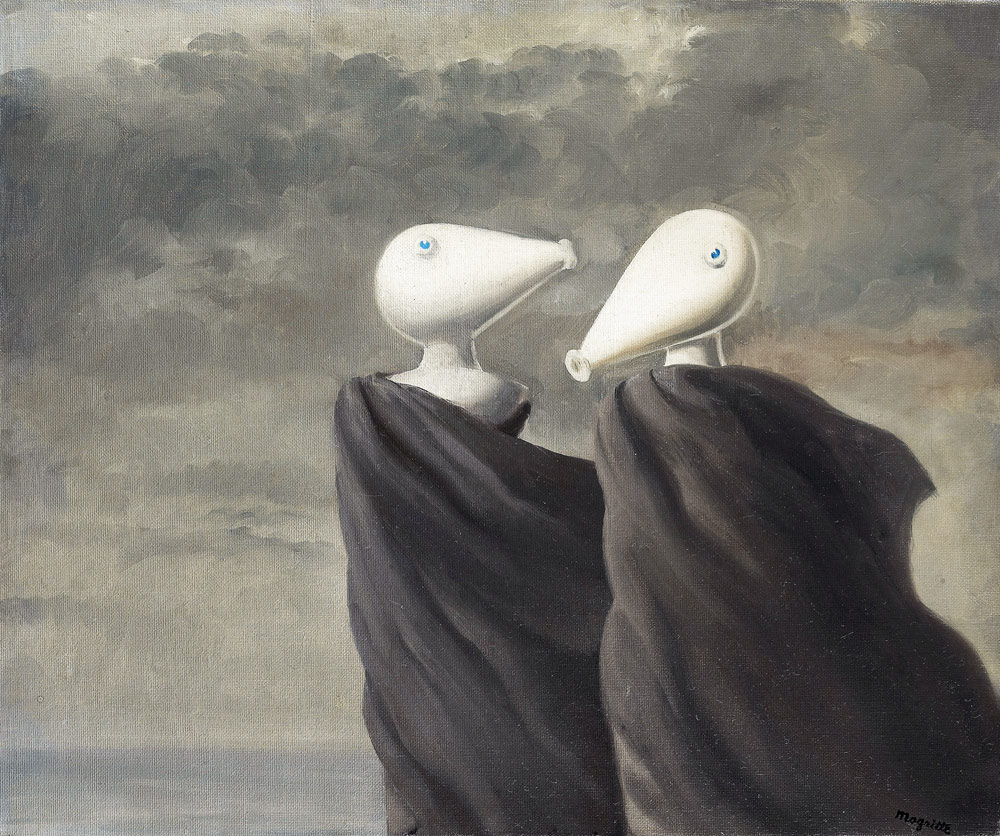
René Magritte (Belgian, 1898-1967) 'Sentimental Conversation' 1945


René Magritte (Belgian, 1898-1967)
Sentimental Conversation
1945
Oil on canvas
54 x 65cm
Private Collection
© VG Bild-Kunst, Bonn 2012


Städelsches Kunstinstitut und Städtische Galerie
Schaumainkai 63, 60596 Frankfurt
Phone: +49(0)69-605098-170

Opening hours:
Tuesday – Wednesday, Friday – Sunday 10 – 18 h
Thursday 10 – 21 h
Monday closed

Städel Museum website

LIKE ART BLART ON FACEBOOK

Back to top