Exhibition: ‘Carrie Mae Weems: The Heart of the Matter’ at Gallerie d’Italia, Turin

Exhibition dates: 17th April – 7th September, 2025

 Curator: Sarah Meister
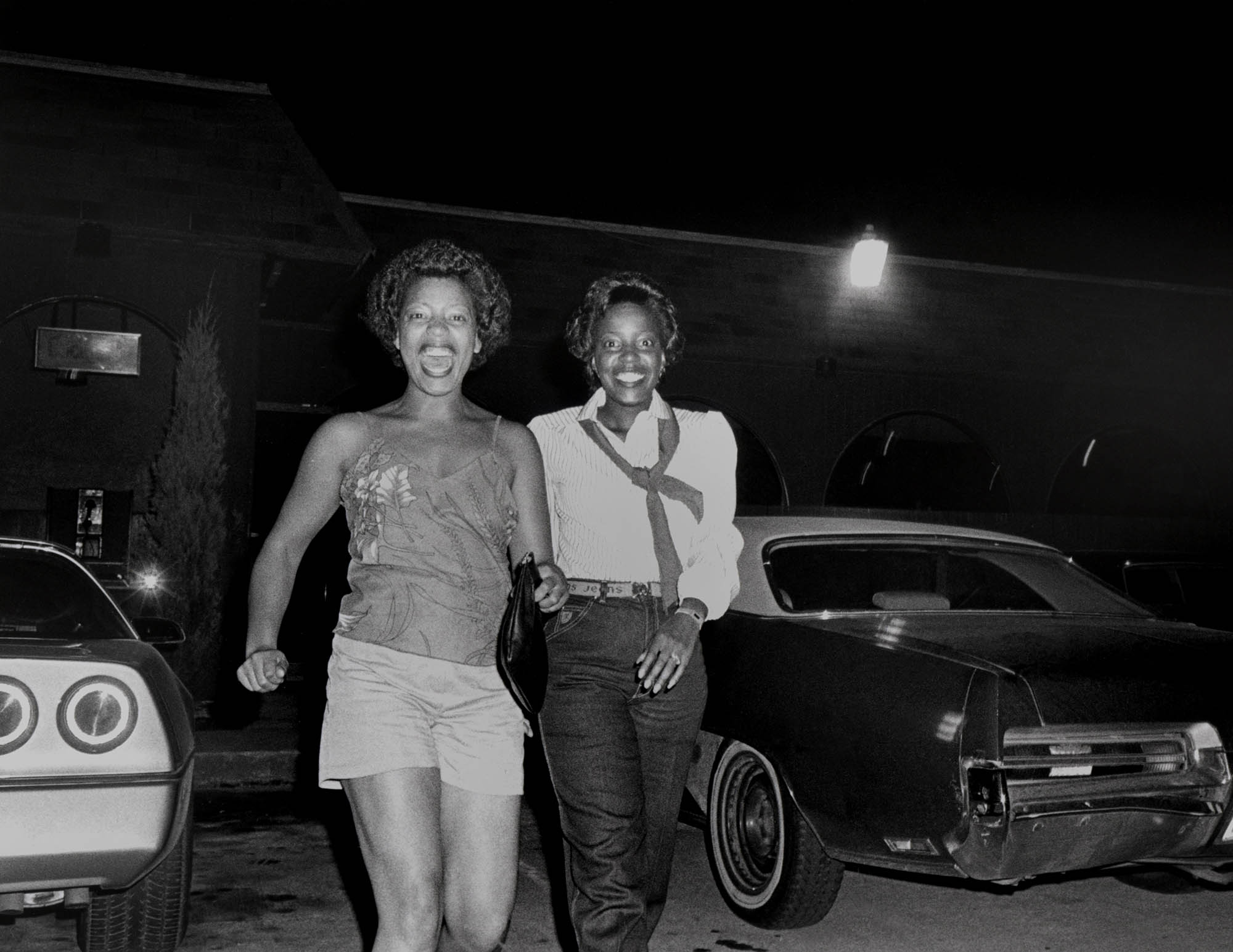


Carrie Mae Weems (American, b. 1953) 'Welcome Home' 1978-1984 From the series 'Family Pictures and Stories' from the exhibition 'Carrie Mae Weems: The Heart of the Matter' at Gallerie d'Italia, Turin, April - Sept, 2025


Carrie Mae Weems (American, b. 1953)
Welcome Home
1978-1984
From the series Family Pictures and Stories 1978-1984
© Carrie Mae Weems and reproduced courtesy of the artist and Gladstone Gallery, New York, Fraenkel Gallery, San Francisco, and Galerie Barbara Thumm, Berlin


I love artist’s that challenge your point of view, knowledge of the world, prejudices and biases – which we all have.

I love artist’s who make you think about the stories they tell, and how you relate to their intimate, constructed and memorable worlds.

Carrie Mae Weems is one such generational artist.

Weems blends the poetic and conceptual in photographs and bodies of work which investigate history, identity, racism, executive and patriarchal power from the perspectives of female / Black American.

What a fabulous artist, a guide into circumstances seldom seen, now revealed.

Dr Marcus Bunyan


Many thankx to Gallerie d’Italia, Turin for allowing me to publish the photographs in the posting. Please click on the photographs for a larger version of the image.


“I discovered that I was the reference point, and the point of view, pointing the viewer toward the likes of me in history. Later, I understood this photographic self to be a muse and a guide into the unknown.”


Carrie Mae Weems


“My work endlessly explodes the limits of tradition.”

“Weems was trained as both a dancer and a photographer before enrolling in the folklore studies program at the University of California, Berkeley, in the mid-1980s, where she became interested in the observation methods used in the social sciences. In the early 1990s, she began placing herself in her photographic compositions in an “attempt to create in the work the simultaneous feeling of being in it and of it.”2 She has since called this recurring figure an “alter-ego,” “muse,” and “witness to history” who can stand in for both the artist and audience. “I think it’s very important that as a Black woman she’s engaged with the world around her,” Weems has said, “she’s engaged with history, she’s engaged with looking, with being. She’s a guide into circumstances seldom seen.”3


Caitlin Ryan. “My work endlessly explodes the limits of tradition,” 2021 on the MoMA website [Online] Cited 06/09/2025


Carrie Mae Weems: The Heart of the Matter at Gallerie d’Italia, Turin

Installation walk through of the exhibition 17th April – 7th September, 2025


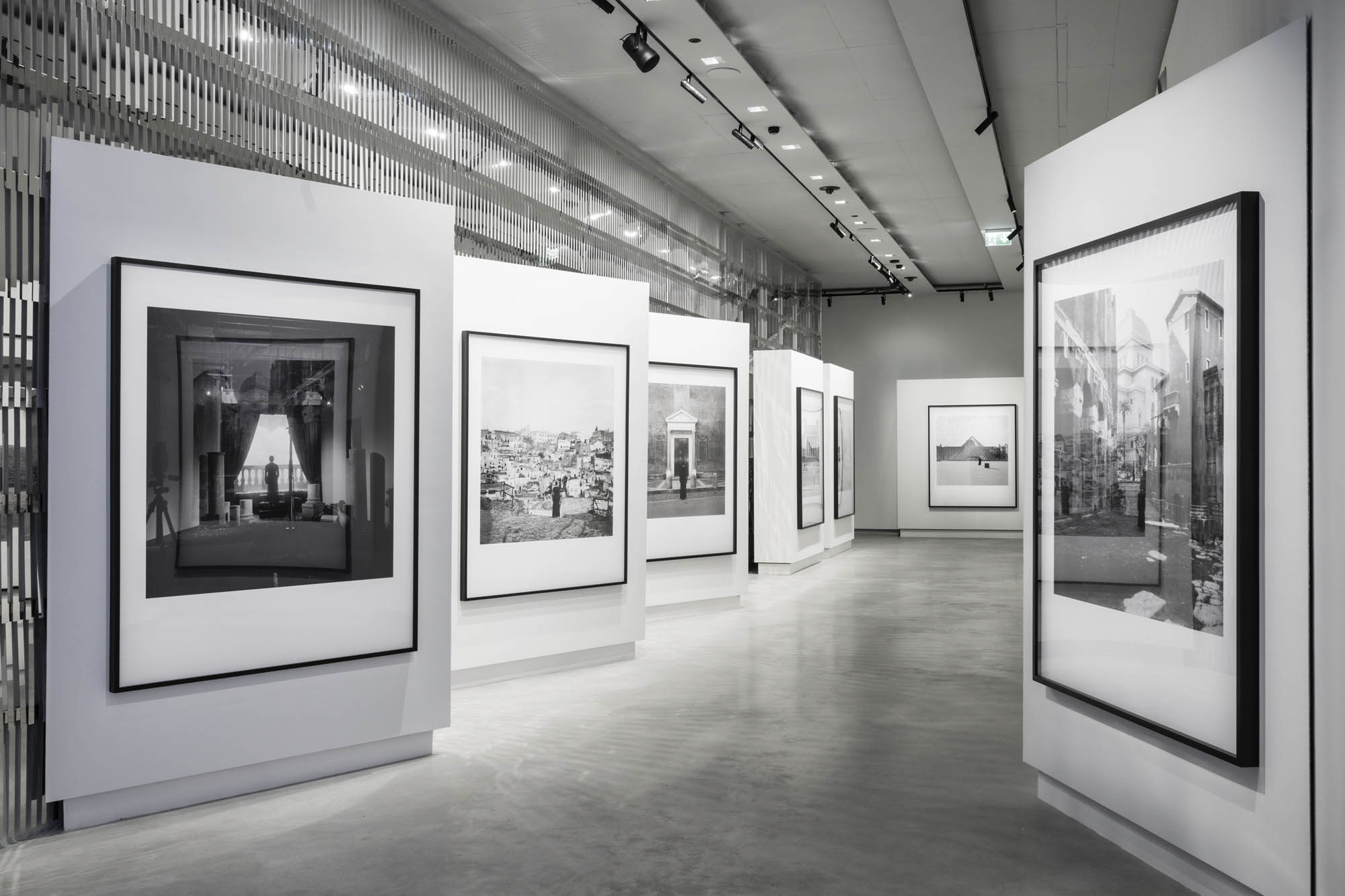
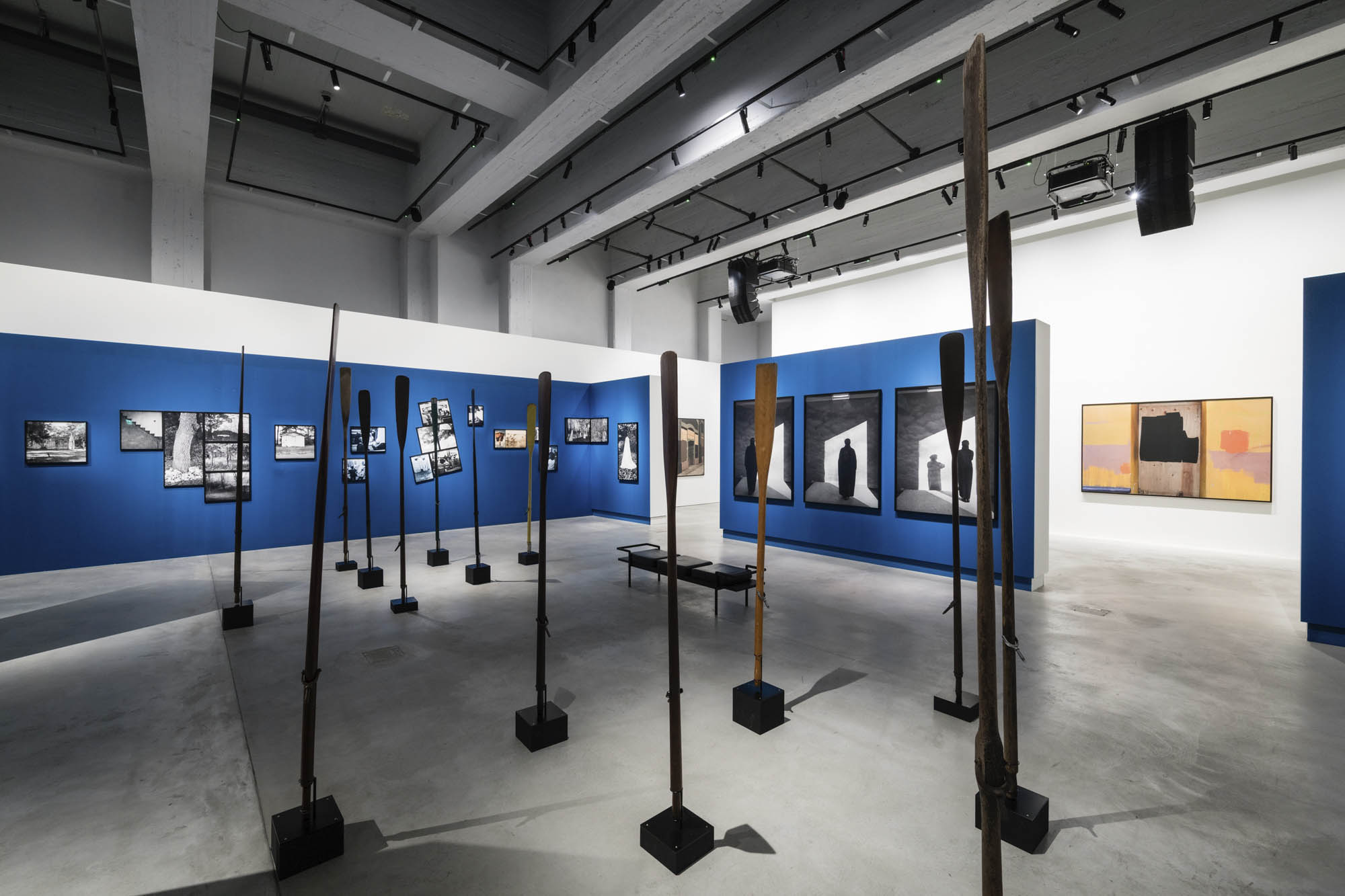
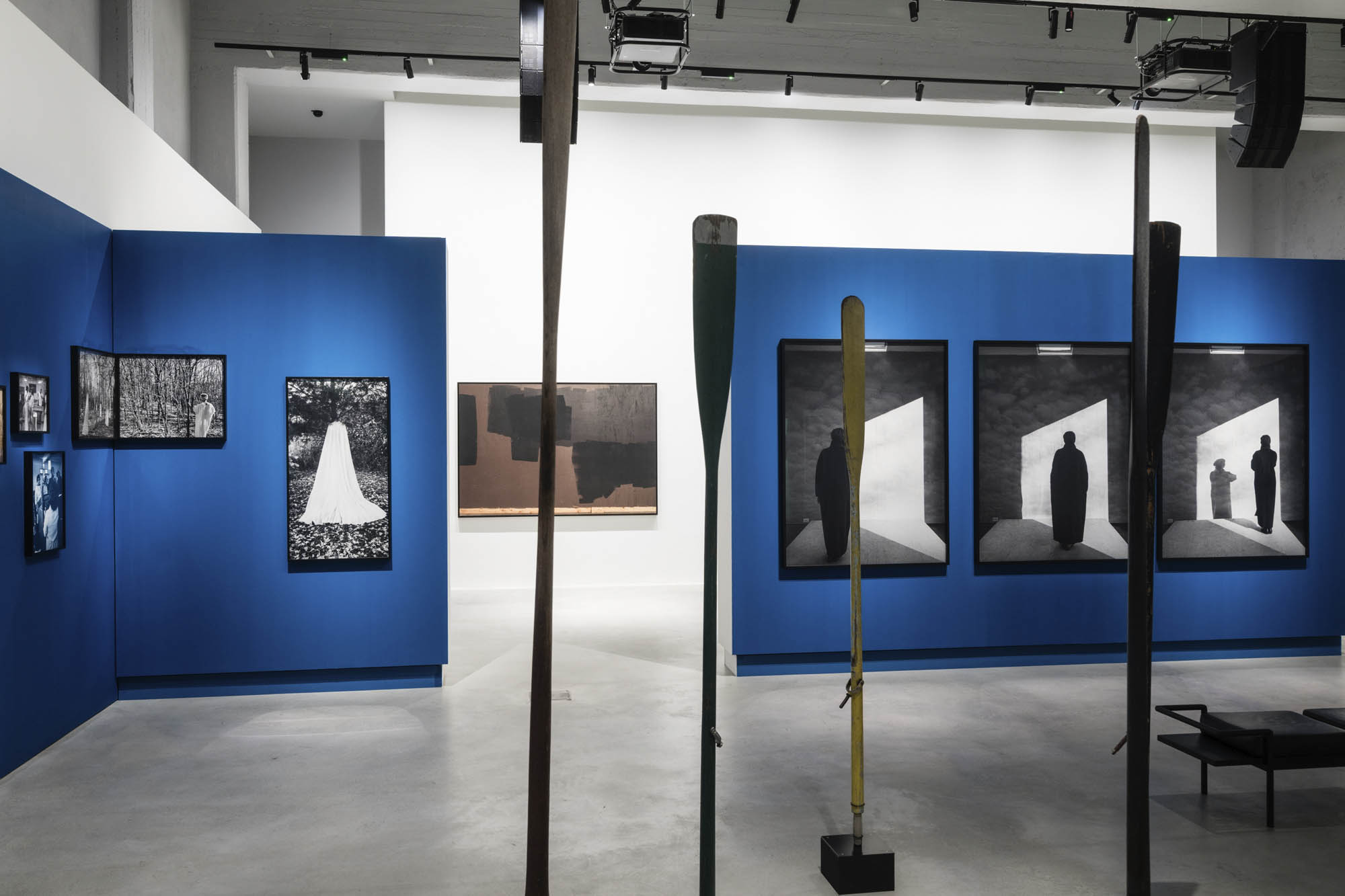
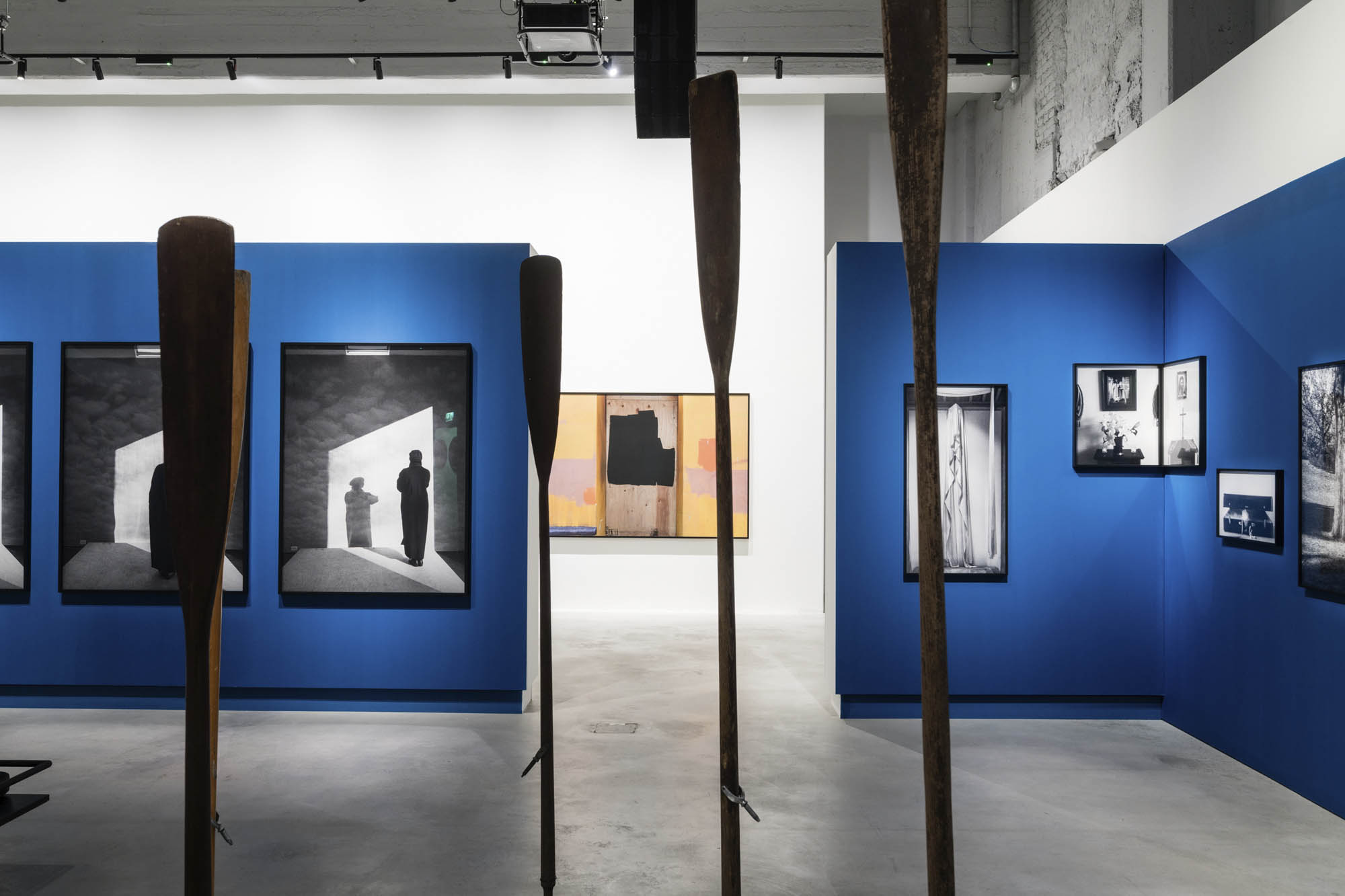
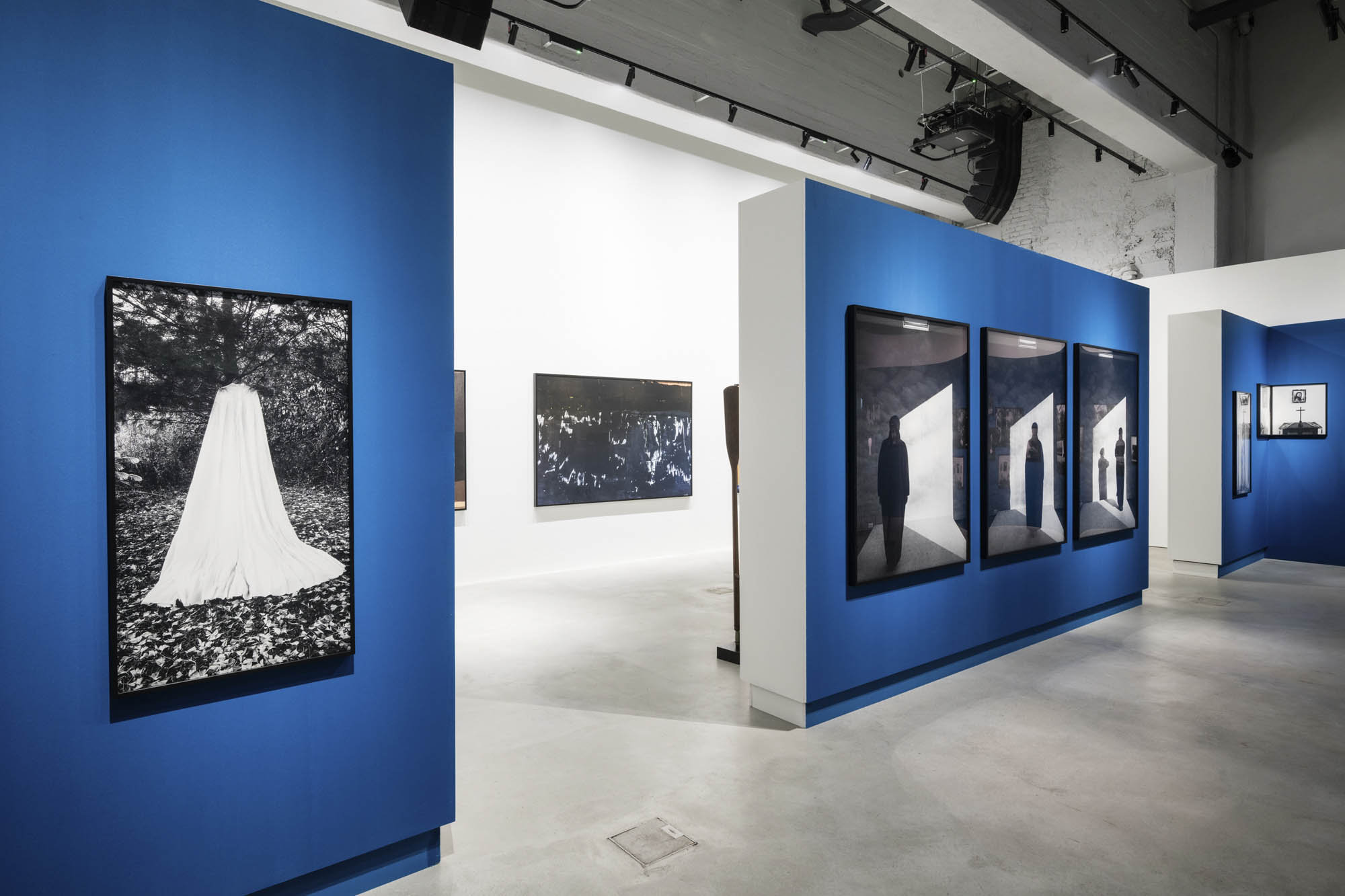
Installation view of the exhibition 'Carrie Mae Weems: The Heart of the Matter' at Gallerie d'Italia, Turin, April - September, 2025 showing work from the series 'Roaming', 2006


Installation views of the exhibition Carrie Mae Weems: The Heart of the Matter at Gallerie d’Italia, Turin showing work from the series Roaming, 2006


Transcending medium, chronology, and geography, Carrie Mae Weems: The Heart of the Matter puts the artist – as well as her spiritual and philosophical journeys – at the center of the discourse. Weems is a touchstone artist, renowned for her work investigating history, identity, and power. A comprehensive survey, The Heart of the Matter features generous presentations of landmark bodies of work, from Family Pictures and Stories (1978-1984) to her most recent series on the Black church. Throughout the exhibition and accompanying book, the artist’s spiritual musings provide critical insight into the iconic artist’s mind and eye. Newly commissioned essays and additional contributions from esteemed thinkers and scholars across generations underscore the singular value of Weems’s vision in grappling with the complexities and injustices of the world around us.

Text from the Aperture website


Carrie Mae Weems (American, b. 1953) 'The Edge of Time – Ancient Rome' 2006 from the series 'Roaming', 2006 from the exhibition 'Carrie Mae Weems: The Heart of the Matter' at Gallerie d'Italia, Turin, April - Sept, 2025


Carrie Mae Weems (American, b. 1953)
The Edge of Time – Ancient Rome
2006
From the series Roaming


Carrie Mae Weems’s “Rome Series,” titled ” Roaming” (2006), features photographs taken during her residency at the American Academy in Rome where she performed “photographic actions” contrasting her presence with grand architecture and monumental surroundings. In these works, Weems, often in her signature long black dress with her back to the camera, challenges viewers to confront power structures and historical contexts associated with the sites of Rome. The series explores themes of history, power, and the individual’s relationship to imposing edifices of authority.

AI generated text from Google
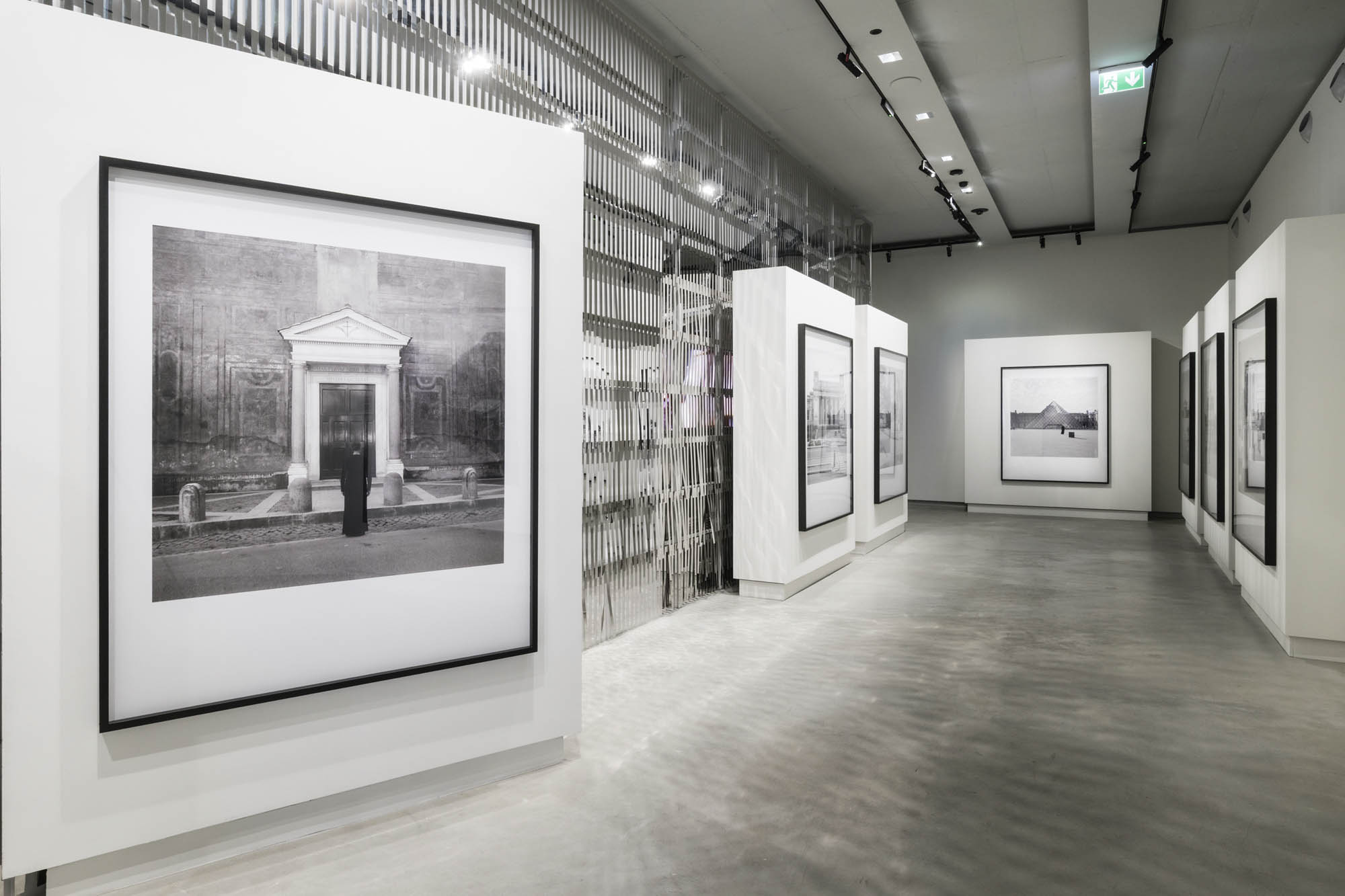
 

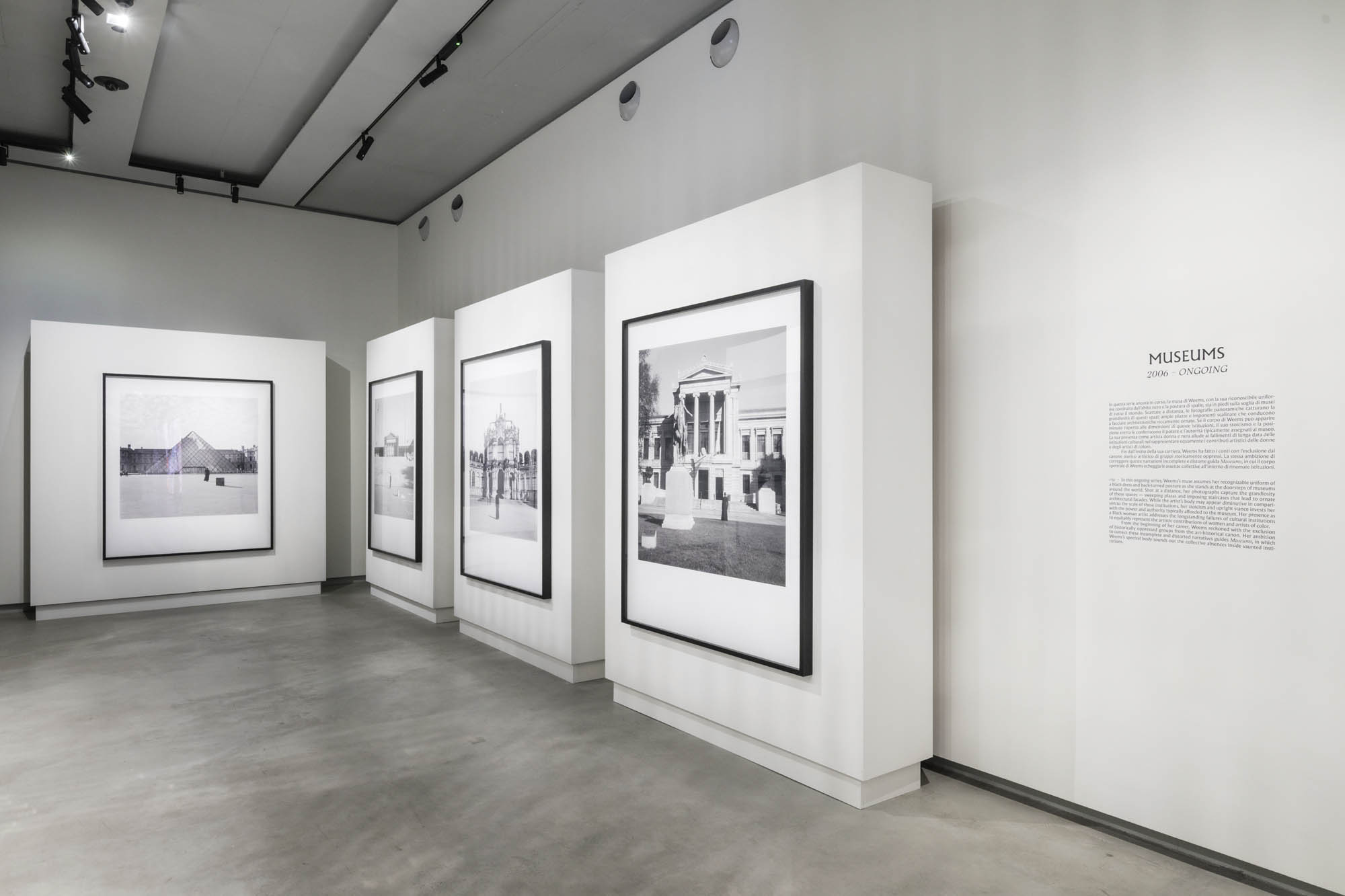
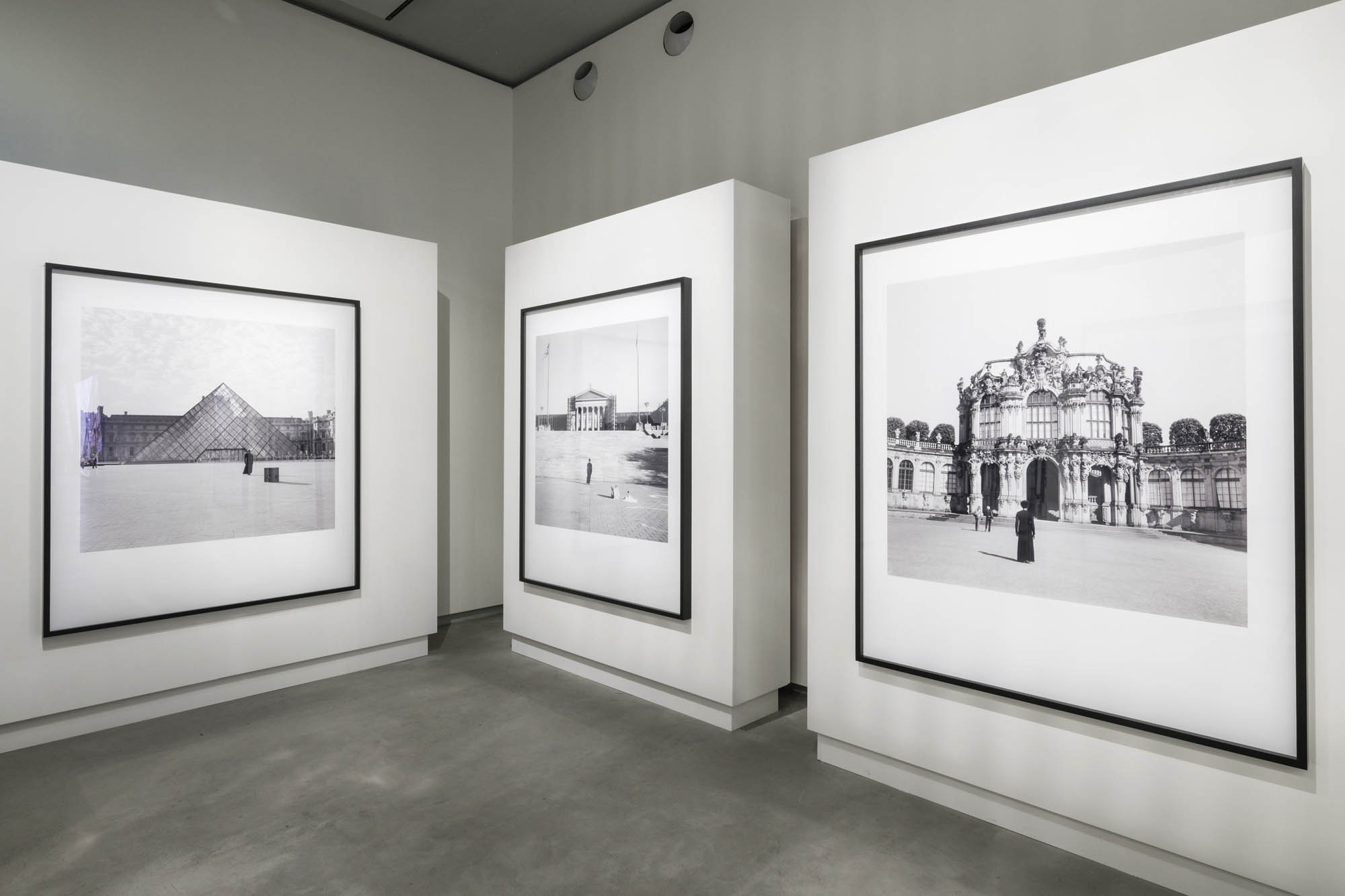
Installation view of the exhibition 'Carrie Mae Weems: The Heart of the Matter' at Gallerie d'Italia, Turin, April - September, 2025 showing work from the series 'Museums', 2006-ongoing


Installation views of the exhibition Carrie Mae Weems: The Heart of the Matter at Gallerie d’Italia, Turin showing work from the series Museums, 2006-ongoing
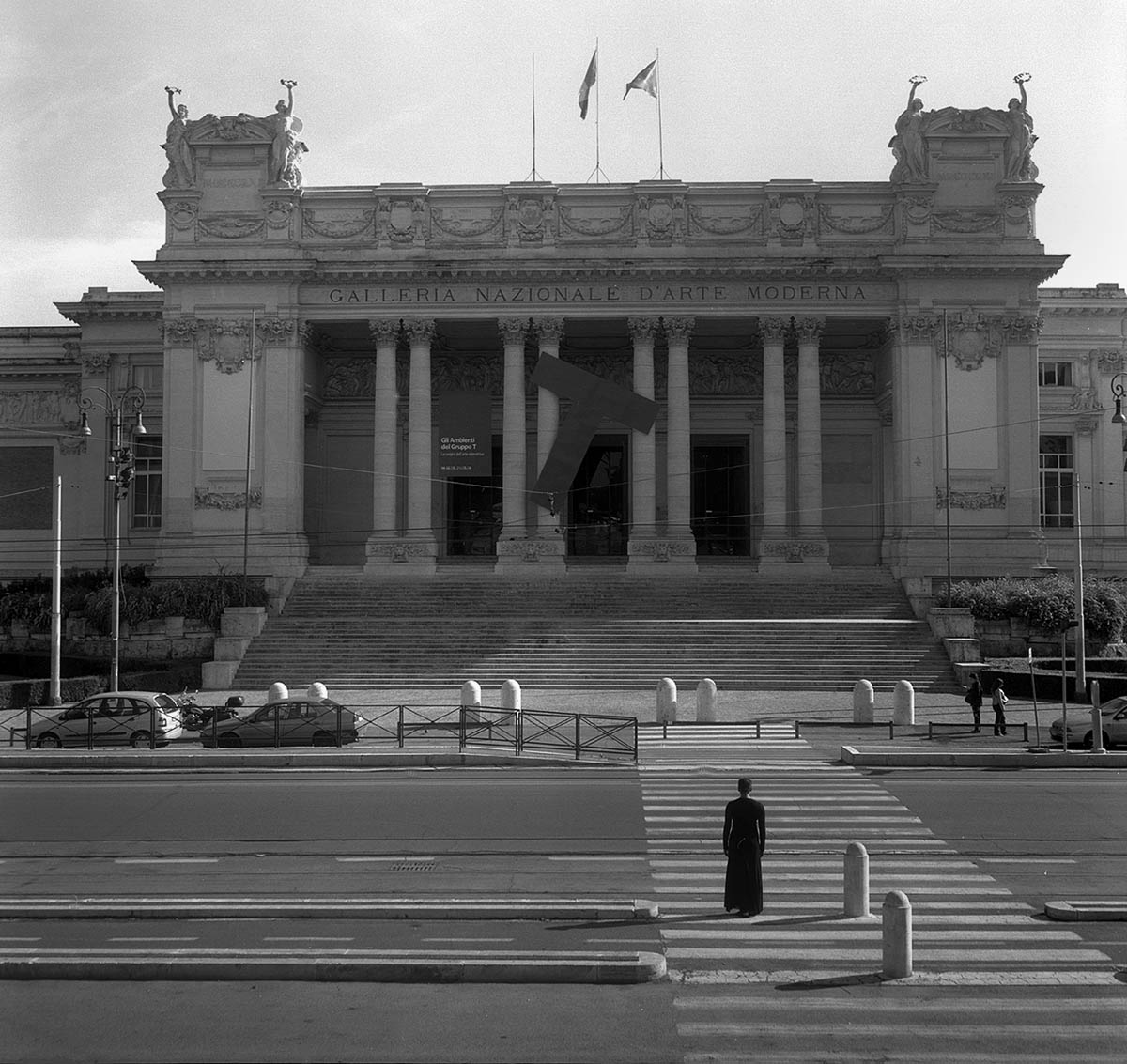
 

Carrie Mae Weems (American, b. 1953) 'Galleria Nazionale D'Arte Moderna' 2006-ongoing


Carrie Mae Weems (American, b. 1953)
Galleria Nazionale D’Arte Moderna
2006-ongoing
© Carrie Mae Weems and reproduced courtesy of the artist and Gladstone Gallery, New York, Fraenkel Gallery, San Francisco, and Galerie Barbara Thumm, Berlin
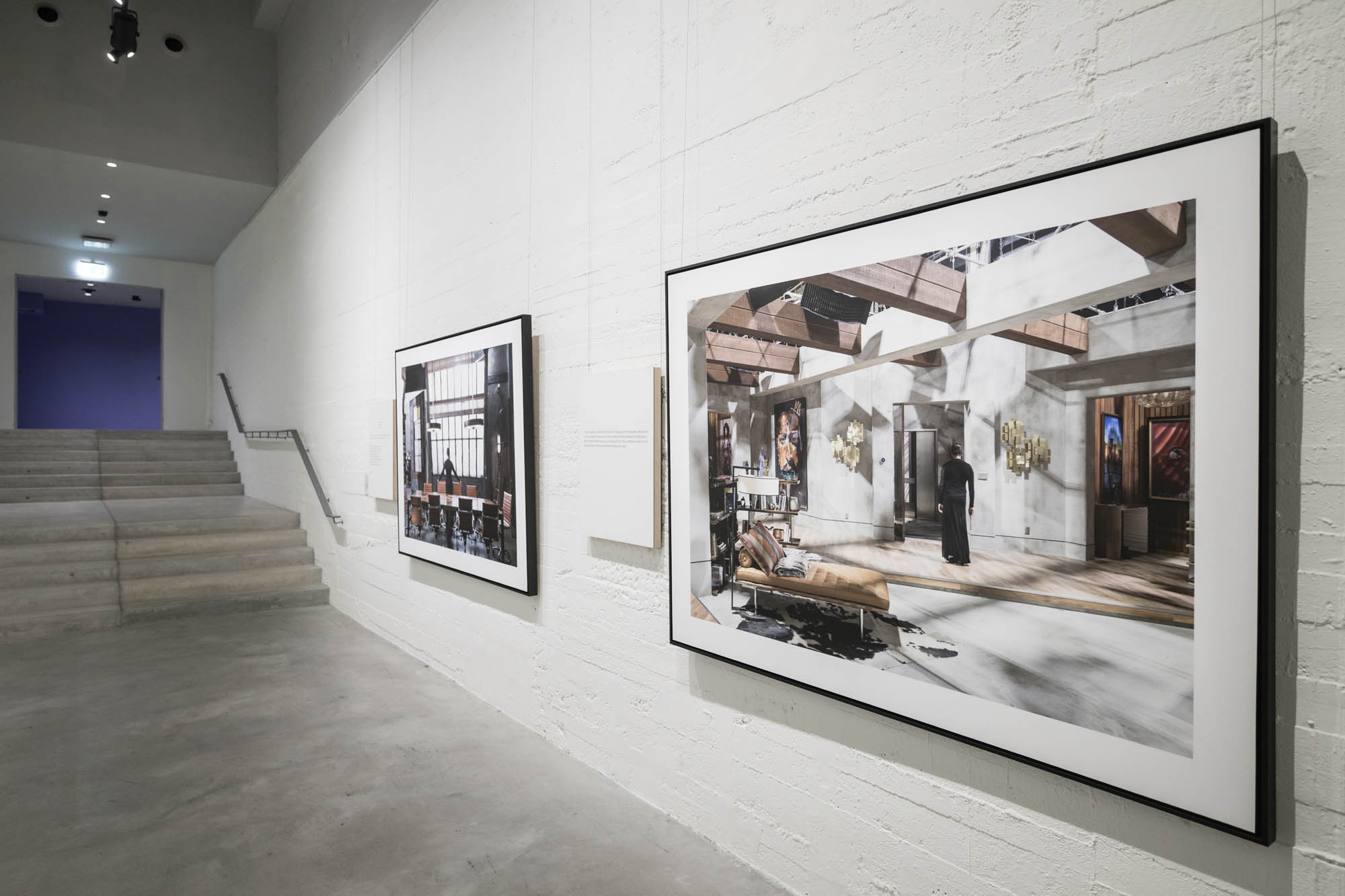
 

Installation view of the exhibition 'Carrie Mae Weems: The Heart of the Matter' at Gallerie d'Italia, Turin, April - September, 2025


Installation views of the exhibition Carrie Mae Weems: The Heart of the Matter at Gallerie d’Italia, Turin


Gallerie d’Italia – Torino presents the exhibition by American artist Carrie Mae Weems, open to the public from April 17 to September 7, 2025. The exhibition is organised in collaboration with Aperture and curated by Sarah Meister, former curator of the photography department at MoMA in New York. It is part of the main program of the second edition of EXPOSED Torino Foto Festival, titled Beneath The Surface, curated by Menno Liauw and Salvatore Vitale.

A major new exhibition dedicated to the internationally renowned artist Carrie Mae Weems, known for her photographic explorations of cultural identity, sexism, and class belonging.

The exhibition will feature a world premiere of a project commissioned by Intesa Sanpaolo specifically for this occasion, integrated into a powerful retrospective showcasing works from Weems’ most famous photographic series. Visitors will be guided through the artist’s entire career, following a deeply personal and spiritual journey.

The selected works highlight Carrie Mae Weems’ unique ability to address the complexities and injustices of the world around us. Her photography is rooted in spaces often excluded from mainstream narratives: artists’ studios, Southern U.S. plantations, domestic interiors, and the “invisible institutions” that emerged as places of worship for Black communities during times of oppression, juxtaposed with images of monuments and museums that have historically been sites of exclusion.

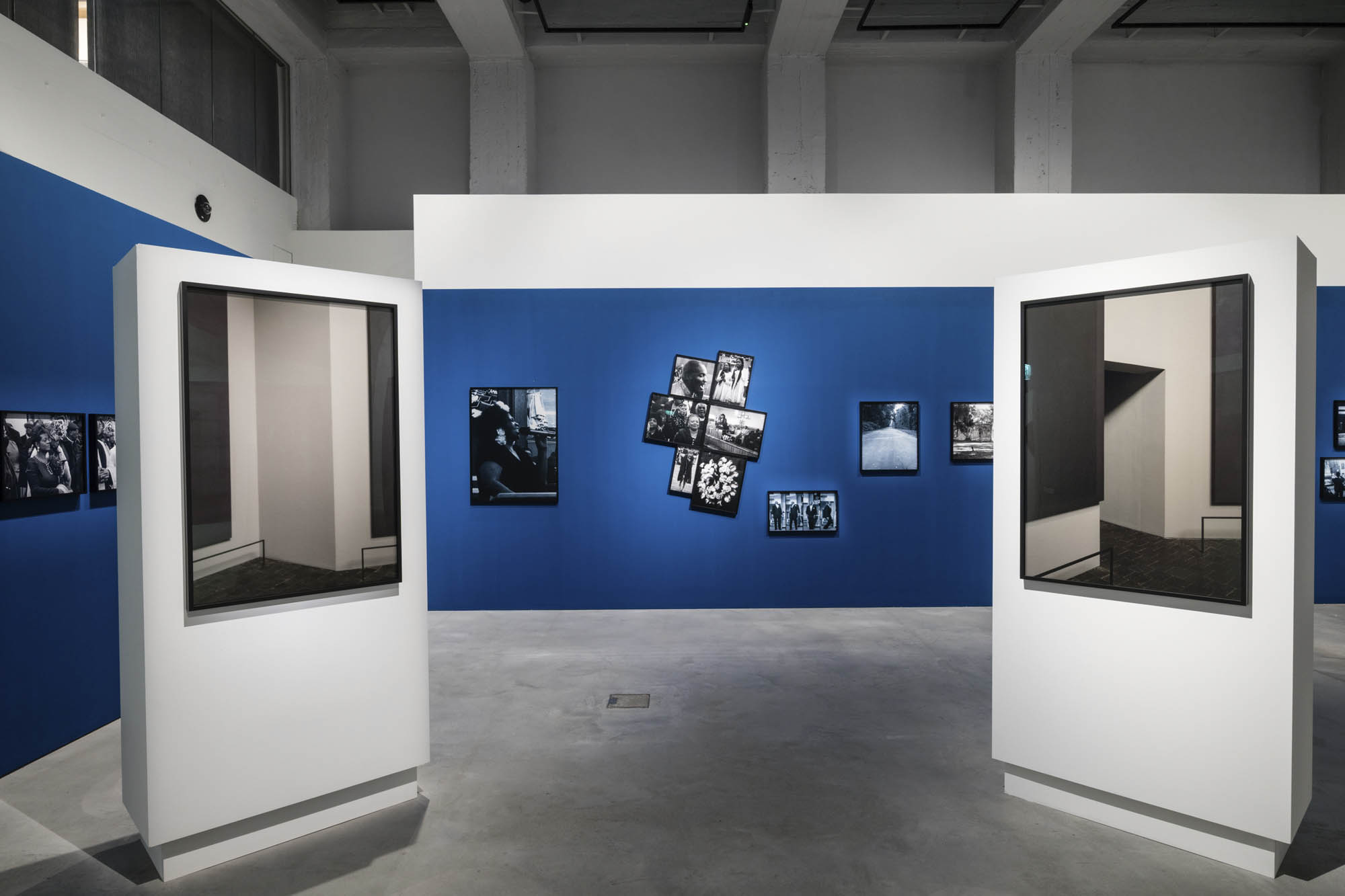
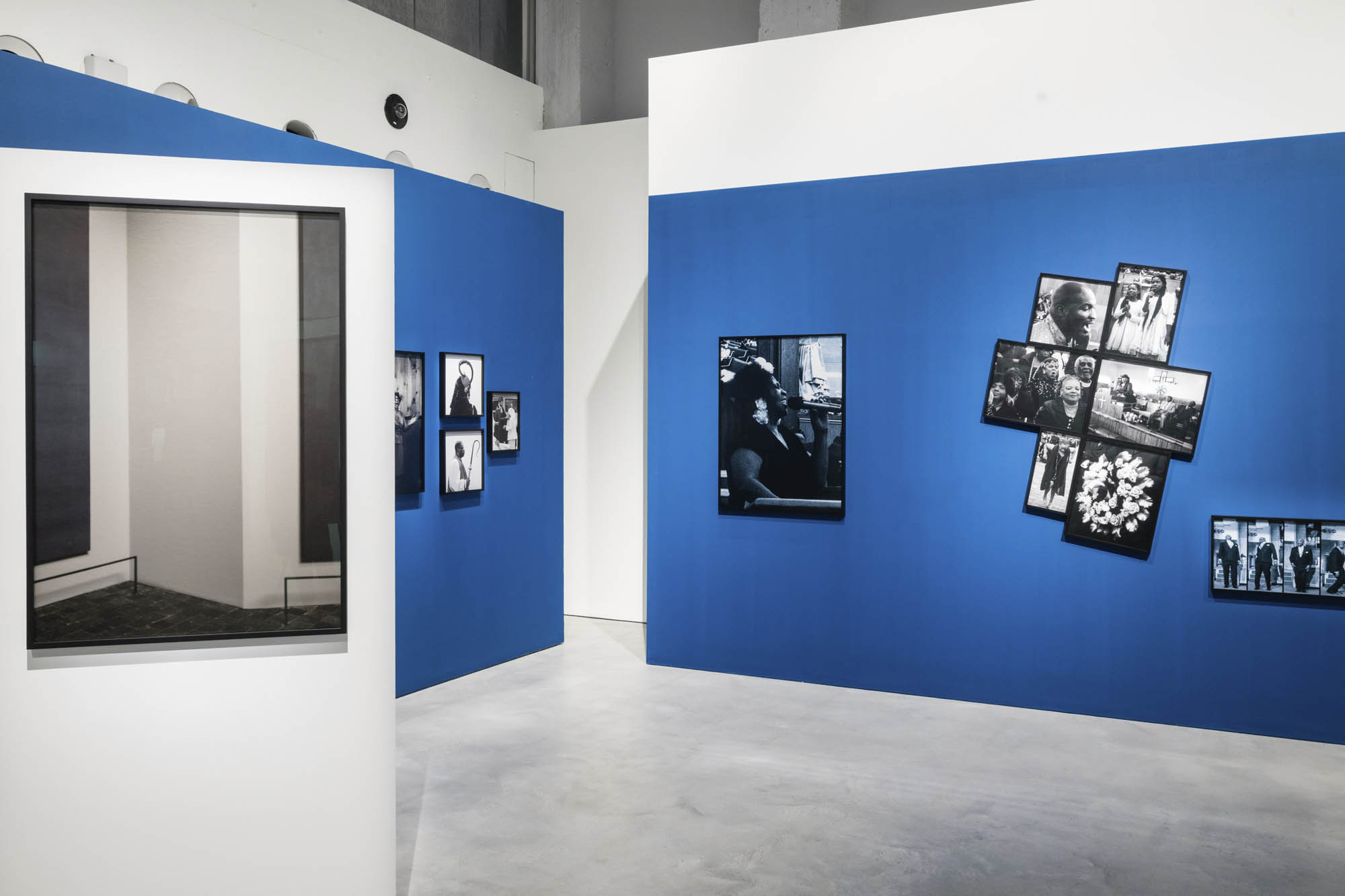
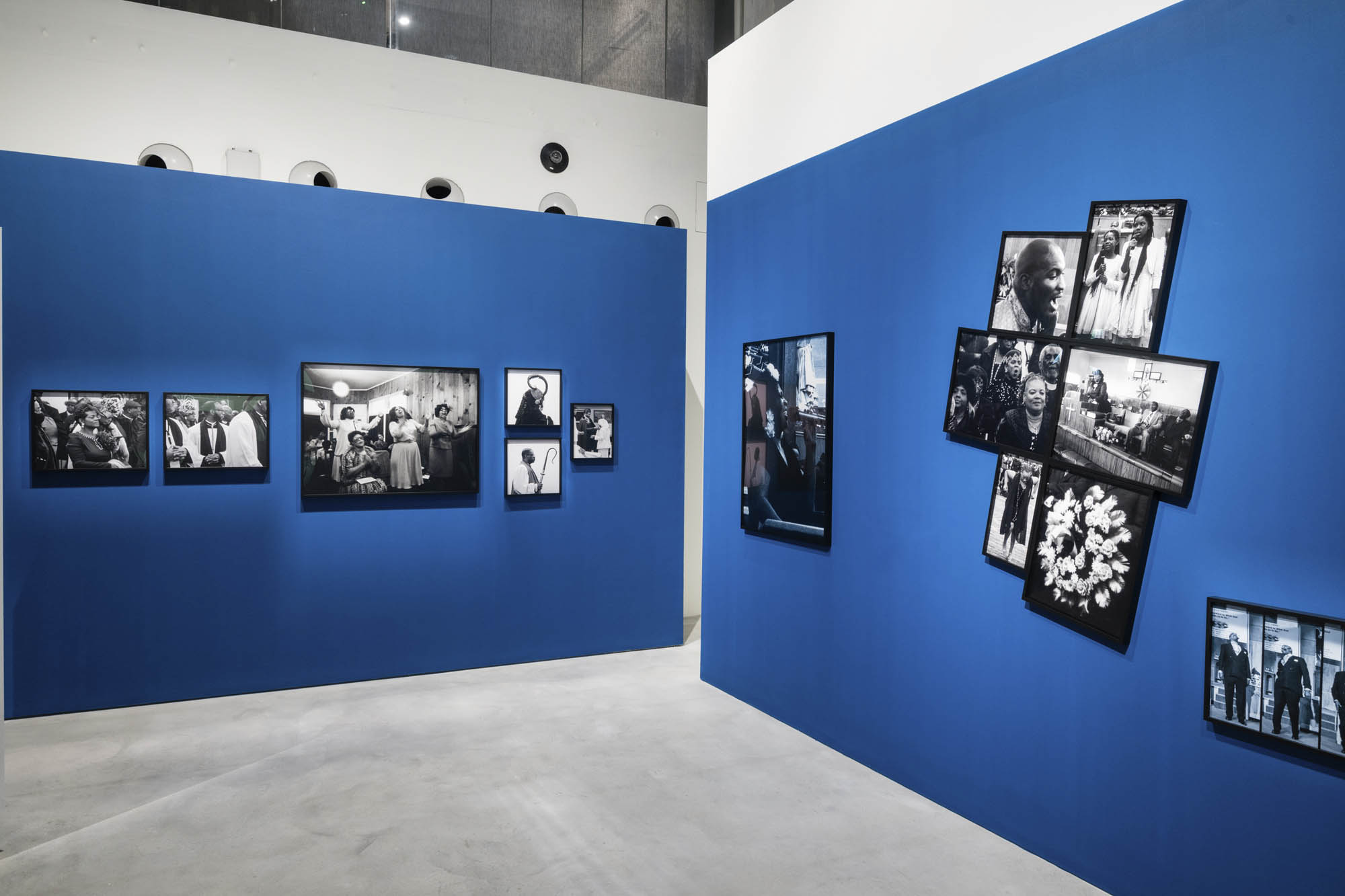
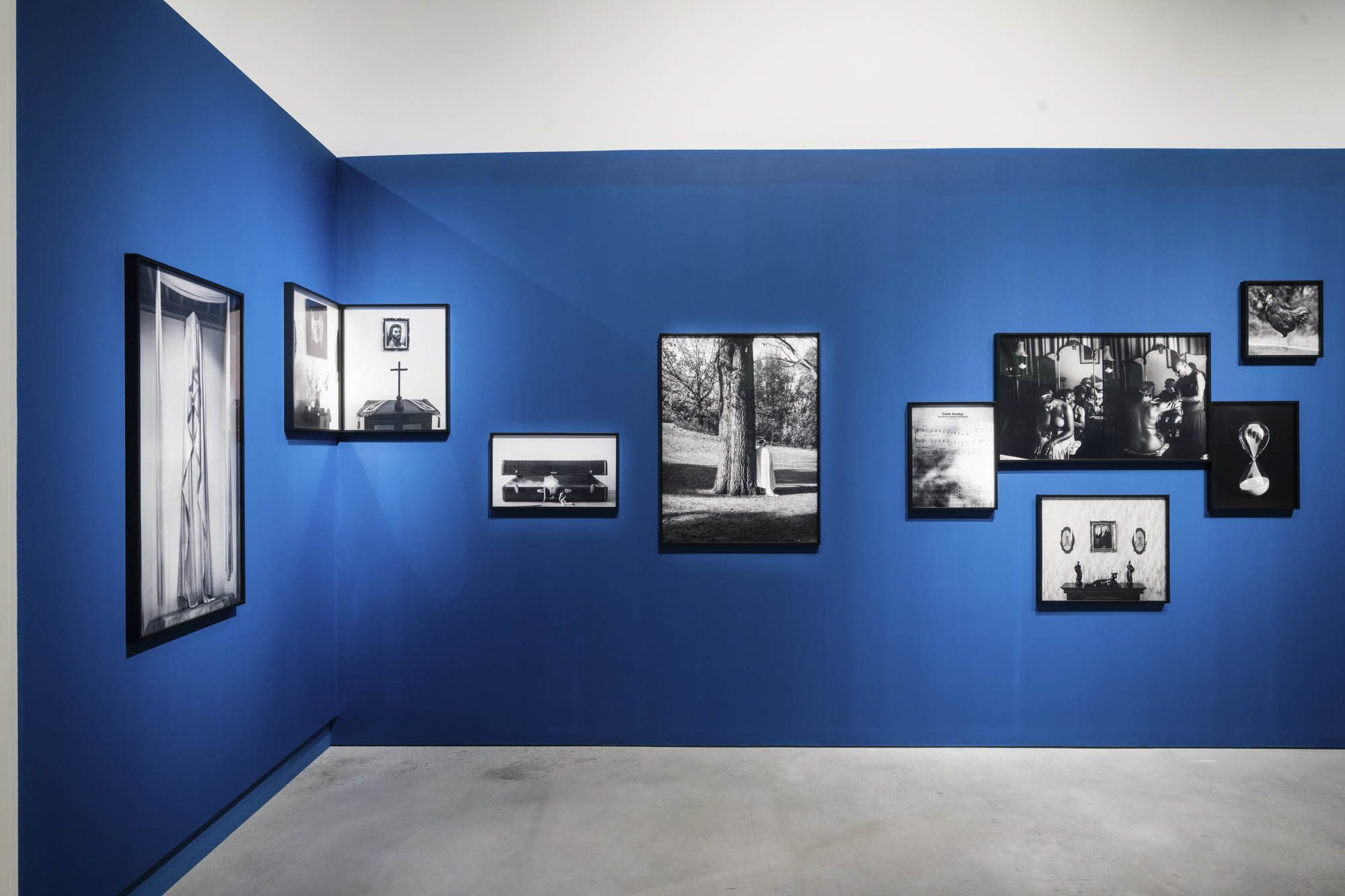
At the heart of the exhibition is Preach, a new project created specifically for this event as an original commission. This ambitious and intense installation explores religion and spirituality among African American communities across generations. The series celebrates the profound, passionate, and joyful forms of worship that define Weems’ Black Church experience while simultaneously confronting the violence and oppression that are inseparable from this history. In the new poetic text accompanying the installation, Weems writes: “Through flames and bombs, pray wherever and whenever you can, in ports and cabins, in palaces and basements, in theaters and clubs. From your secret hiding place, you have discovered new forms of worship…”. Using herself as both muse and guide, Weems invites us to join in this spiritual awakening and to condemn the persecution that has turned these sacred spaces into sites of refuge and activism. Preach intertwines early images from Harlem, San Diego, and Sea Island, Georgia, with a vast collection of new works that evoke the transcendental and secular realities of Black religious expression today.

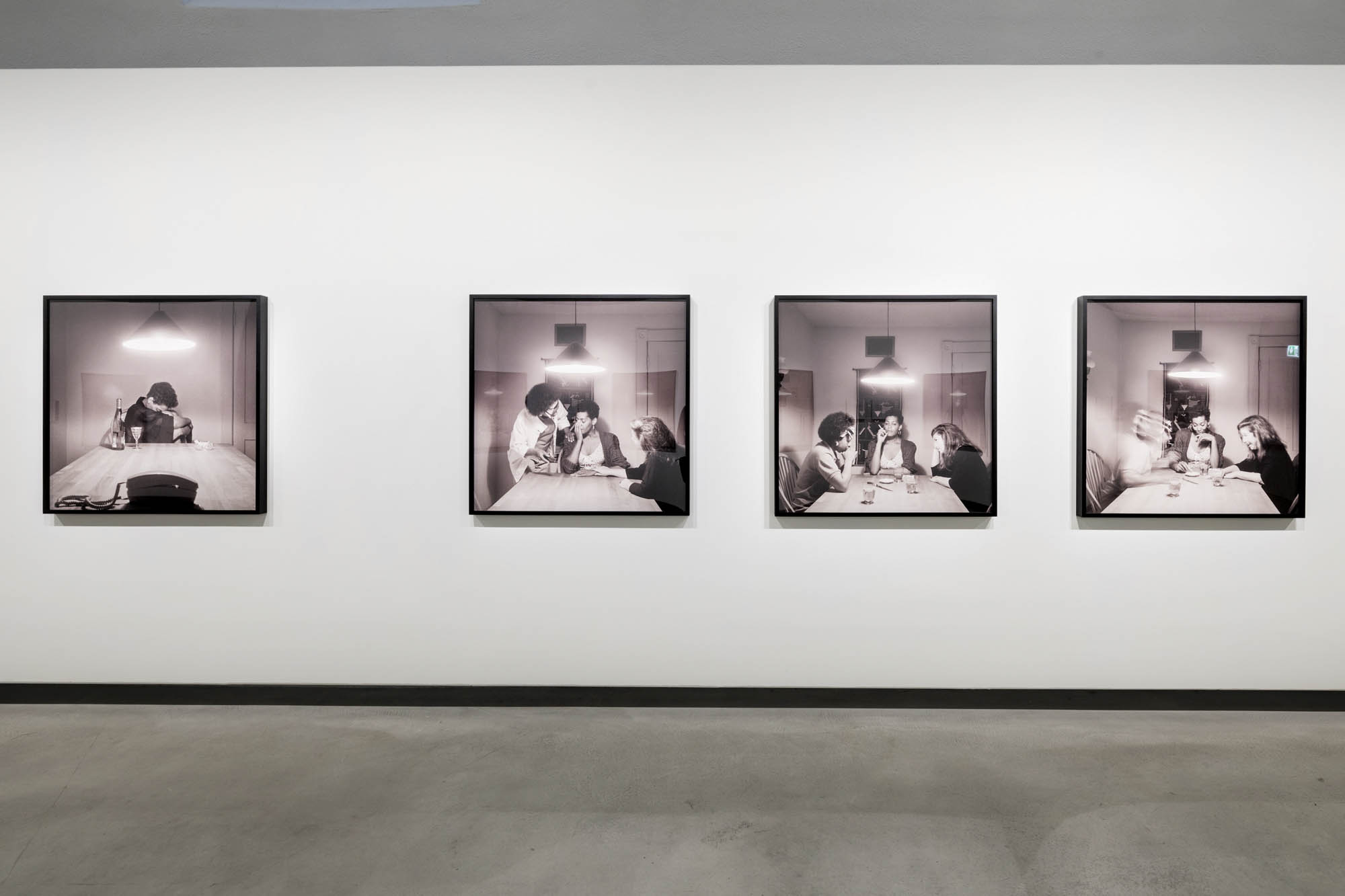
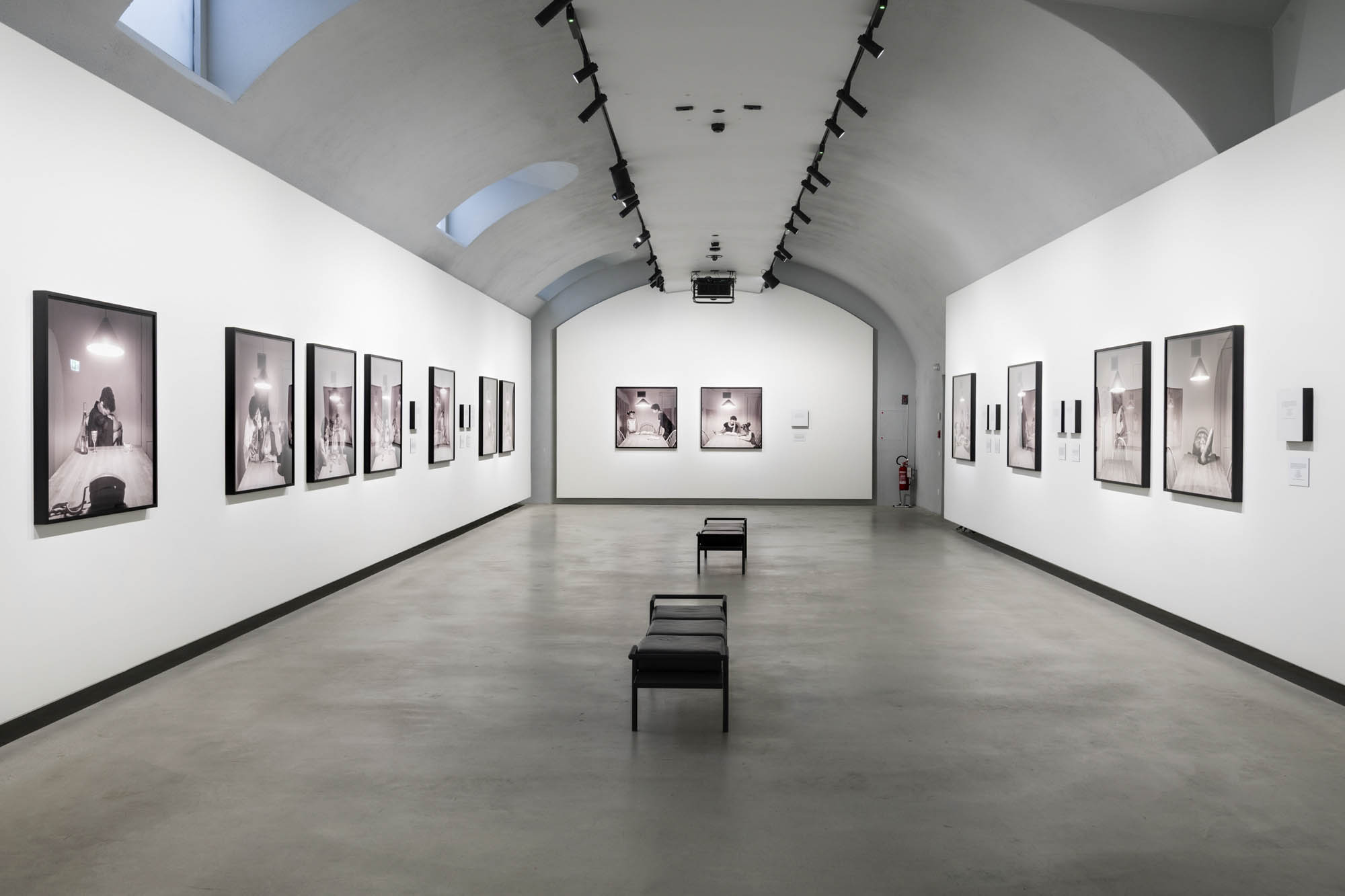
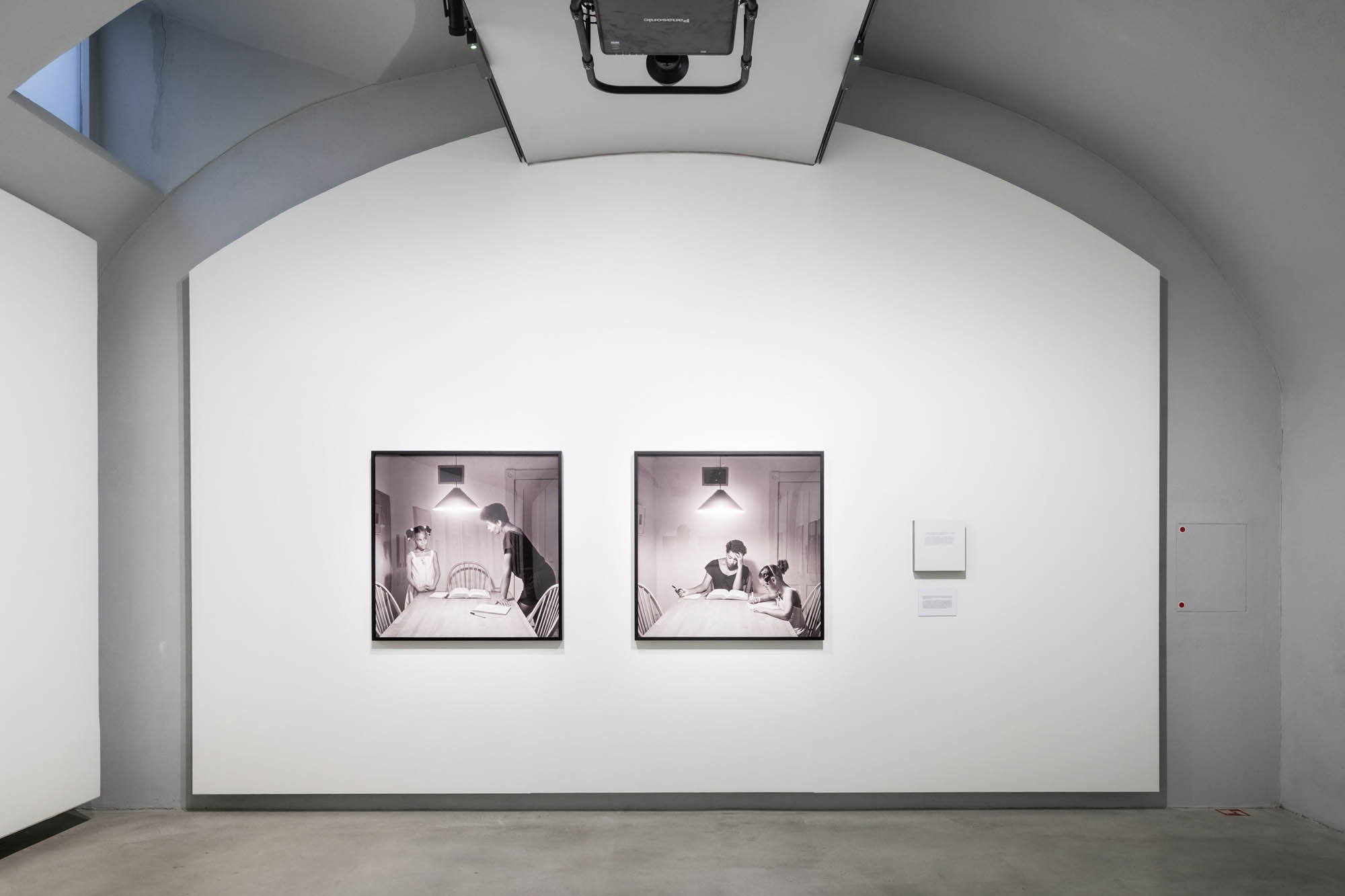
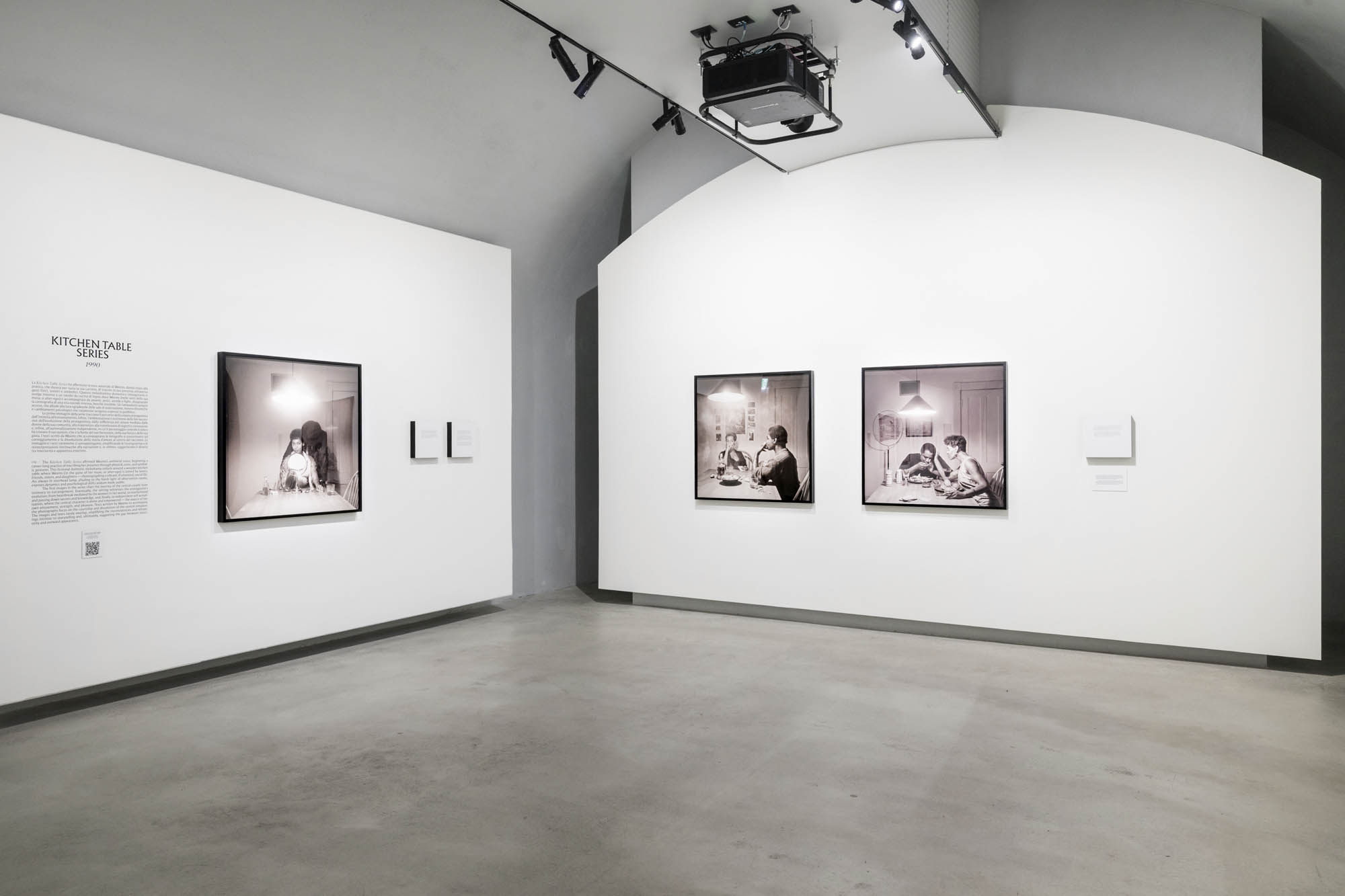
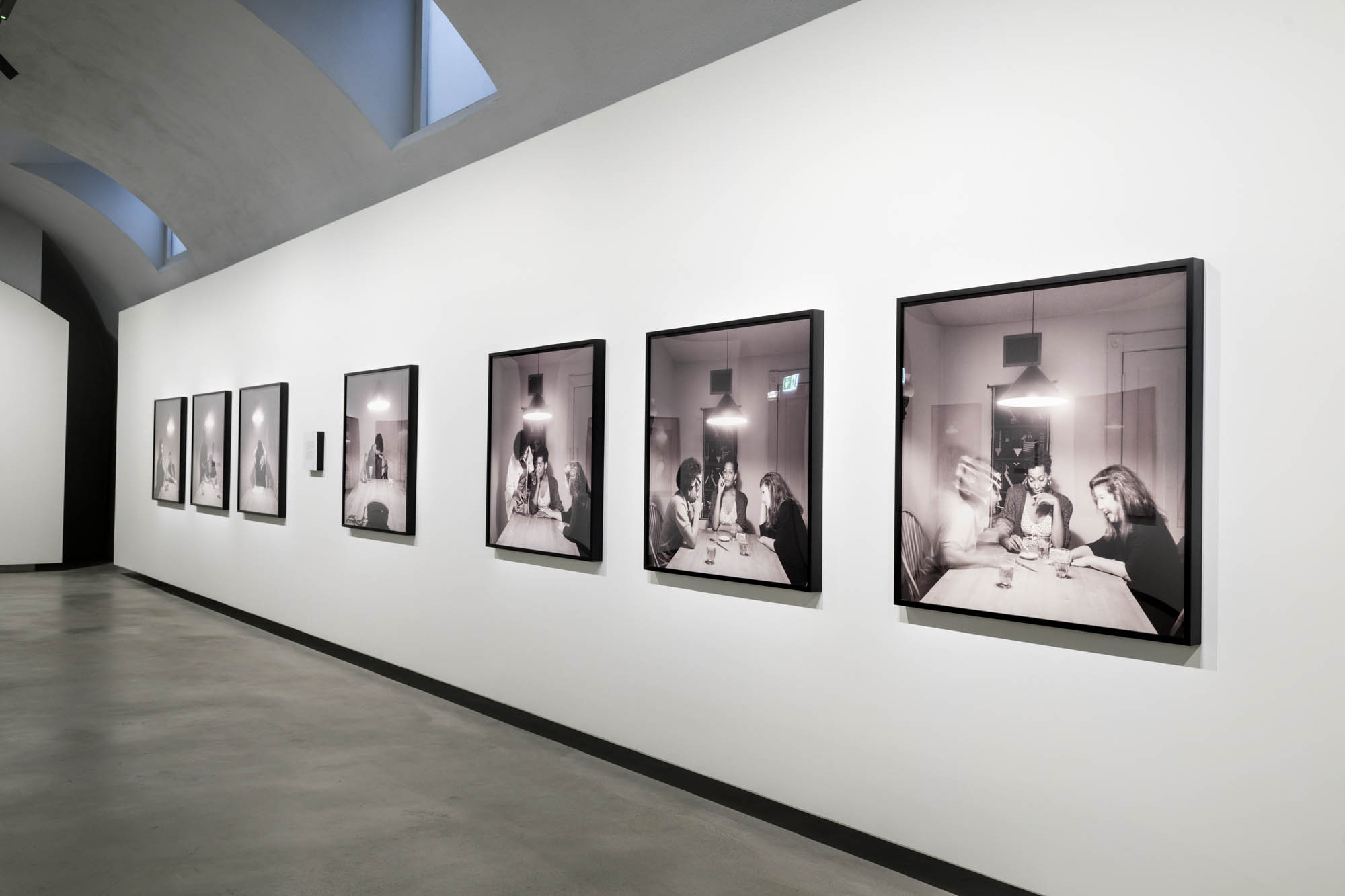
The retrospective also includes many of Weems’ early works, such as the historic Kitchen Table Series (1990) and Museums (2006-ongoing); a selection of more recent projects, such as Scenes and Takes (2016) and Painting the Town (2021); as well as significant video installations, including The Shape of Things (2021) and Leave Now! (2022). Together, these works take visitors on a journey spanning Weems’ entire career, showcasing the depth and diversity of her artistic language.

The exhibition also benefits from the collaboration of Fondazione Compagnia di San Paolo, which has developed activities inspired by the values of inclusion and the appreciation of diversity as a source of enrichment, themes that resonate with the exhibition’s content and align with the foundation’s strategic challenges. Photography serves as a tool for storytelling, documentation, and identity-building, contributing to inclusion and community formation. Through widespread urban communication campaigns and collaboration with the public program #Inside, the foundation’s initiatives aim to promote participation and extend the exhibition’s themes to increasingly diverse audiences, particularly in light of the simultaneous presence of the EXPOSED Torino Foto Festival 2025 in the city.

The exhibition Carrie Mae Weems: The Heart of the Matter will be accompanied by a catalogue co-published by Società Editrice Allemandi / Aperture. In addition to numerous images of the American artist’s works, the catalog will feature contributions from scholars of different generations, underscoring the unique value of Weems’ vision in addressing these themes.

Aperture

Aperture is a nonprofit publisher that leads conversations around photography worldwide. From its base in New York, Aperture connects global audiences and supports artists through the acclaimed quarterly magazine, books, exhibitions, digital platforms, public programs, limited-edition prints, and awards. Established in 1952 to advance “creative thinking, significantly expressed in words and photographs,” Aperture champions photography’s vital role in nurturing curiosity and encouraging a more just, tolerant society.

Carrie Mae Weems. Biography

Carrie Mae Weems, a conceptual artist, examines and challenges perceptions of race and femininity in search of new models of life. Rooted in the specificity of her experience as a Black woman yet universal in its exploration of family relationships, cultural identity, power structures, and social hierarchy, her artistic practice is primarily photographic but also incorporates text, textiles, audio, installations, and video.

Informed by storytelling, folklore traditions, and the observational methodologies of social sciences, her approach to image-making ranges from staged and serialised narratives to the appropriation and adaptation of archival and ethnographic imagery. Weems critically addresses photography’s complicity in perpetuating dehumanising representations and the historical omission of Black women from institutions and art canons.

Weems lives in Syracuse, New York, with her husband, Jeffrey Hoone. She is currently an Artist in Residence at Syracuse University.

Text from the Gallerie d’Italia website
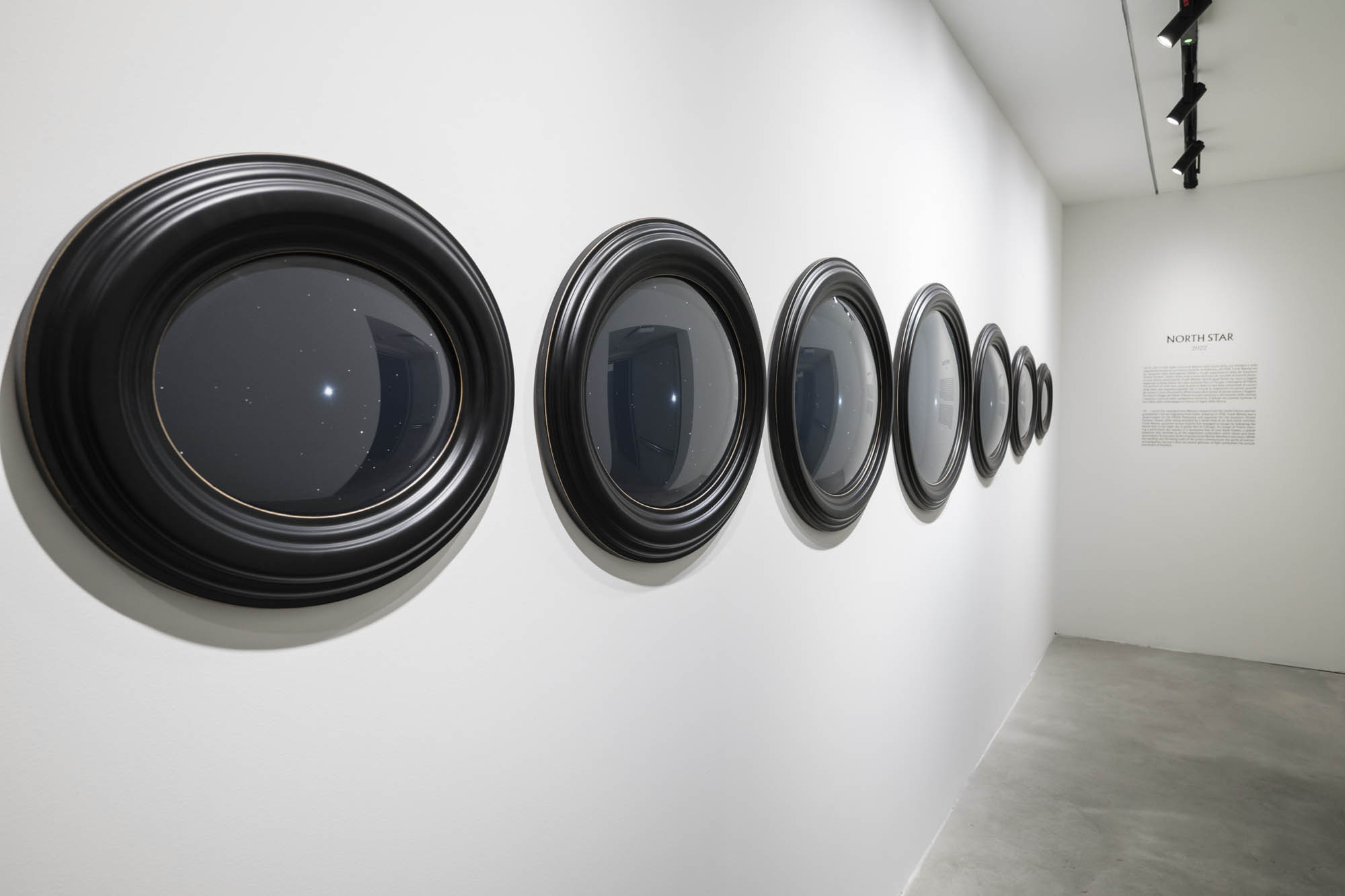
 

Installation view of the exhibition 'Carrie Mae Weems: The Heart of the Matter' at Gallerie d'Italia, Turin, April - September, 2025


Installation view of the exhibition Carrie Mae Weems: The Heart of the Matter at Gallerie d’Italia, Turin showing the work North Star, 2022


In 1936 Carrie Mae Weems’s grandfather Frank Weems traveled 550 miles to Chicago on foot from Earle, Arkansas, partly with the aid of the North Star, which appears in these seven oval photographs as a cold and abstract promise. Frank Weems had been beaten after organising a labour strike to protest abysmal wages and working conditions in the cotton fields. For the artist, the abstracted world holds a tremendous yet distant possibility that her grandfather seized step by step.

Text from the Art Institute of Chicago website


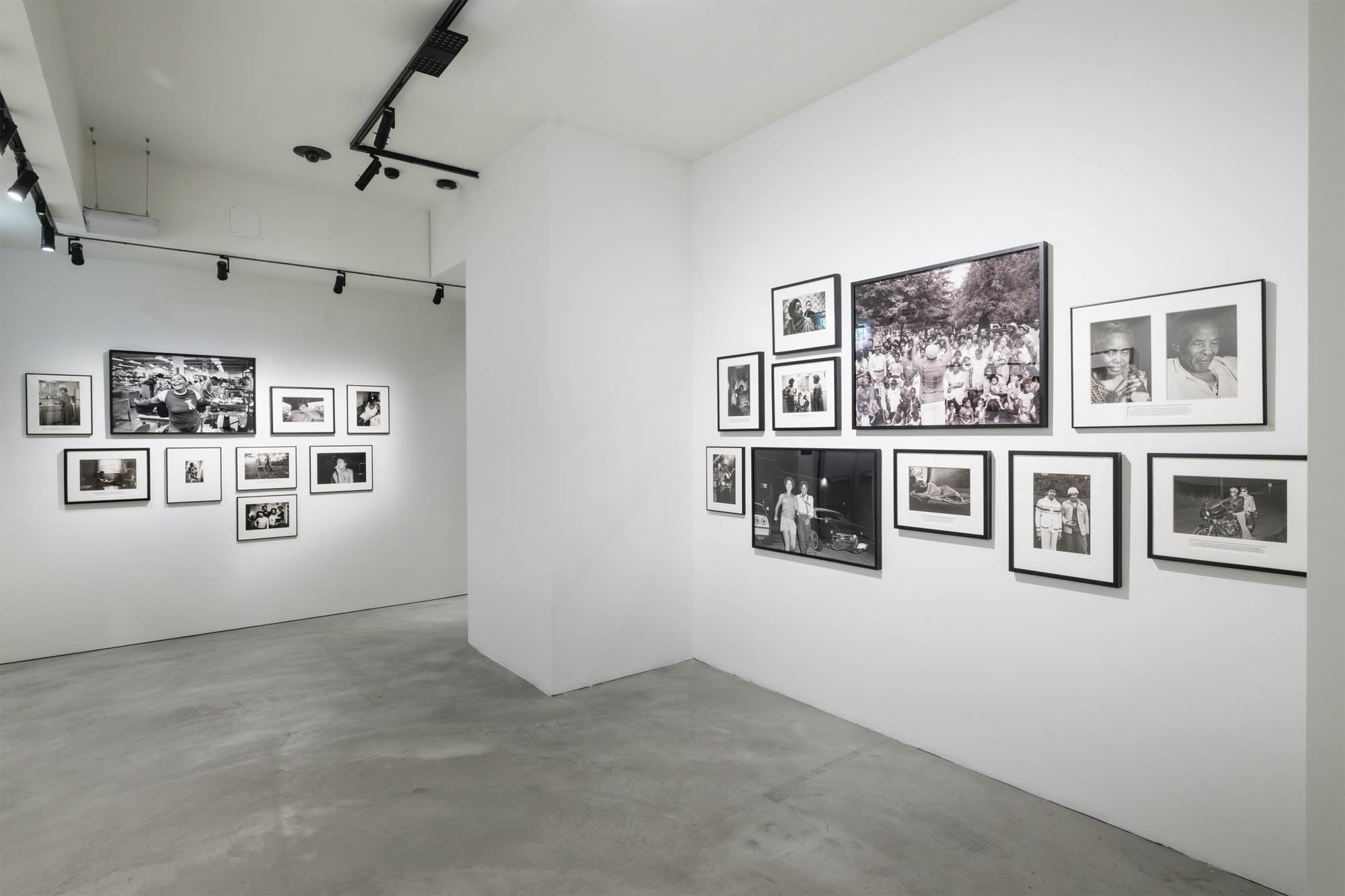
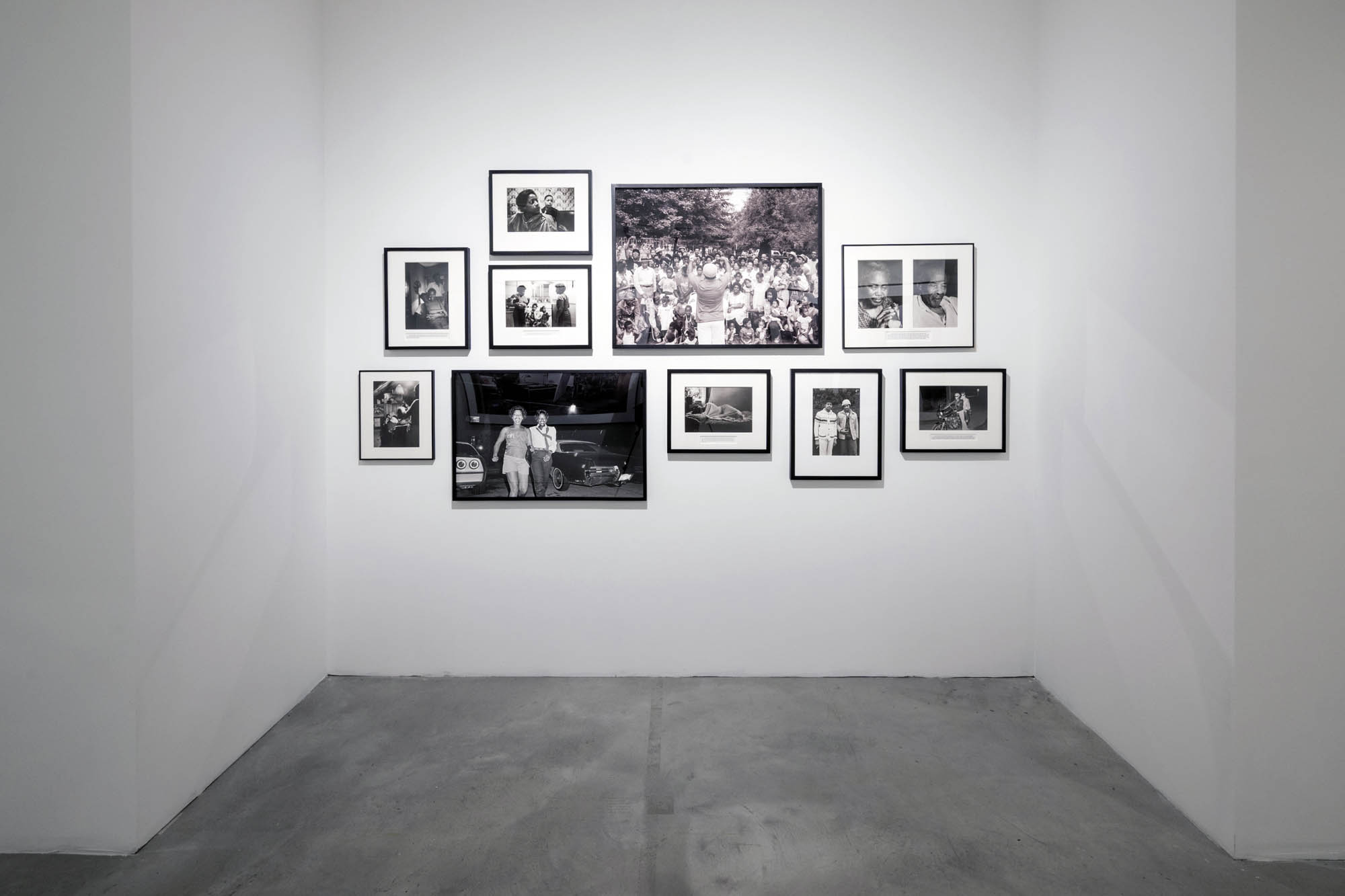
Installation view of the exhibition 'Carrie Mae Weems: The Heart of the Matter' at Gallerie d'Italia, Turin, April - September, 2025 showing at left, work from the series 'Family Pictures and Stories' 1978-1984
Installation view of the exhibition 'Carrie Mae Weems: The Heart of the Matter' at Gallerie d'Italia, Turin, April - September, 2025 showing work from the series 'Family Pictures and Stories' 1978-1984


Installation view of the exhibition Carrie Mae Weems: The Heart of the Matter at Gallerie d’Italia, Turin showing at left, work from the series Family Pictures and Stories 1978-1984

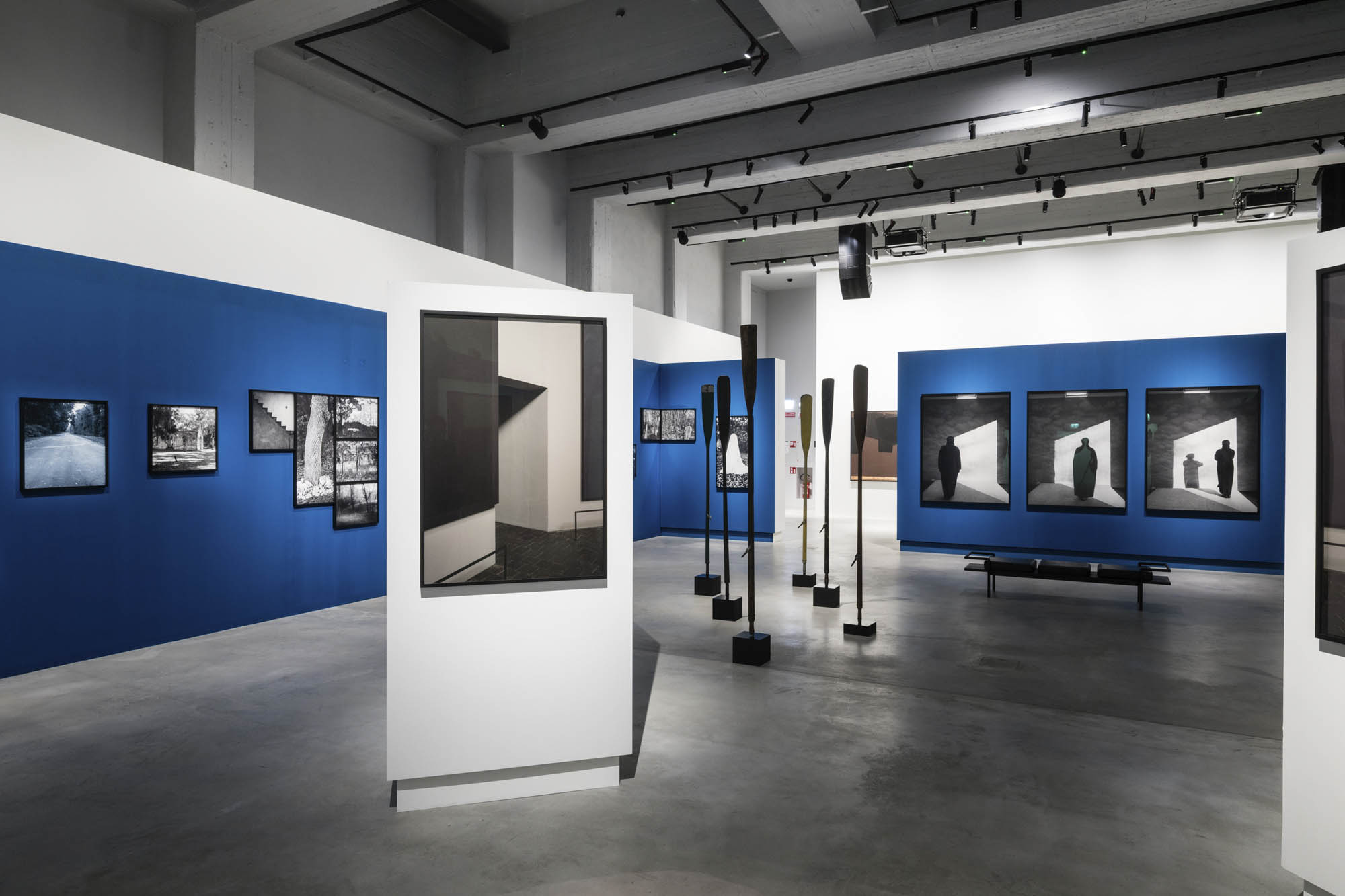
 

Installation view of the exhibition 'Carrie Mae Weems: The Heart of the Matter' at Gallerie d'Italia, Turin, April - September, 2025 showing work from the installation 'Preach' 2025


Installation view of the exhibition Carrie Mae Weems: The Heart of the Matter at Gallerie d’Italia, Turin showing the installation Preach, 2025


At the heart of the exhibition is Preach… this ambitious and intense installation explores religion and spirituality among African American communities across generations. The series celebrates the profound, passionate, and joyful forms of worship that define Weems’ Black Church experience while simultaneously confronting the violence and oppression that are inseparable from this history.

In the new poetic text accompanying the installation, Weems writes: “Through flames and bombs, pray wherever and whenever you can, in ports and cabins, in palaces and basements, in theaters and clubs. From your secret hiding place, you have discovered new forms of worship…”. Using herself as both muse and guide, Weems invites us to join in this spiritual awakening and to condemn the persecution that has turned these sacred spaces into sites of refuge and activism.

Preach intertwines early images from Harlem, San Diego, and Sea Island, Georgia, with a vast collection of new works that evoke the transcendental and secular realities of Black religious expression today.

Text from the Gallerie d’Italia Instagram web page
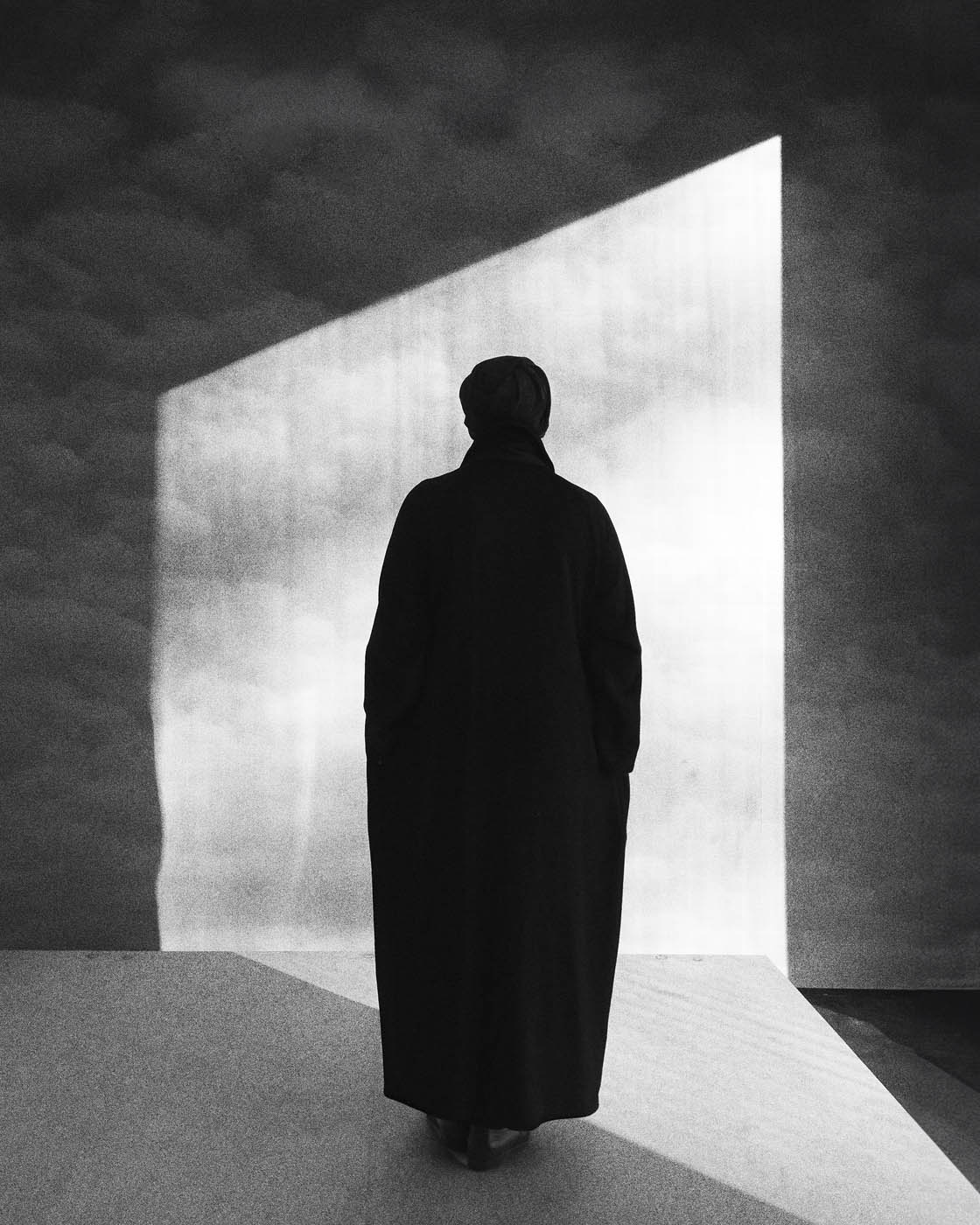
 

Carrie Mae Weems (American, b. 1953) 'Untitled' Nd from the series 'Preach' 2025


Carrie Mae Weems (American, b. 1953)
Untitled
Nd
From the series Preach
© Carrie Mae Weems and reproduced courtesy of the artist and Gladstone Gallery, New York, Fraenkel Gallery, San Francisco, and Galerie Barbara Thumm, Berlin


Carrie Mae Weems (American, b. 1953) 'Road Sign' 1991-1992


Carrie Mae Weems (American, b. 1953)
Road Sign
1991-1992
From the series Preach
© Carrie Mae Weems and reproduced courtesy of the artist and Gladstone Gallery, New York, Fraenkel Gallery, San Francisco, and Galerie Barbara Thumm, Berlin
 

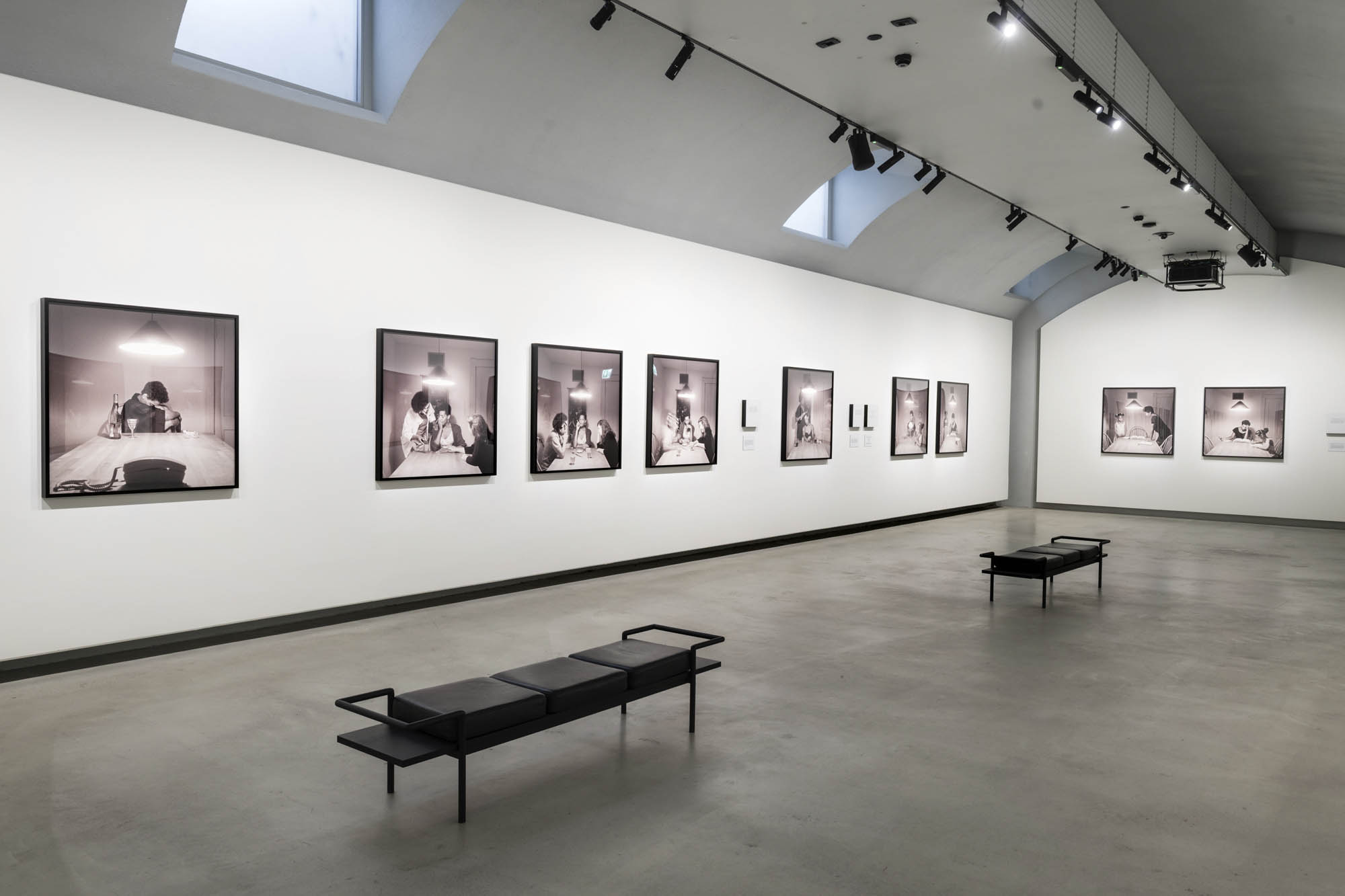
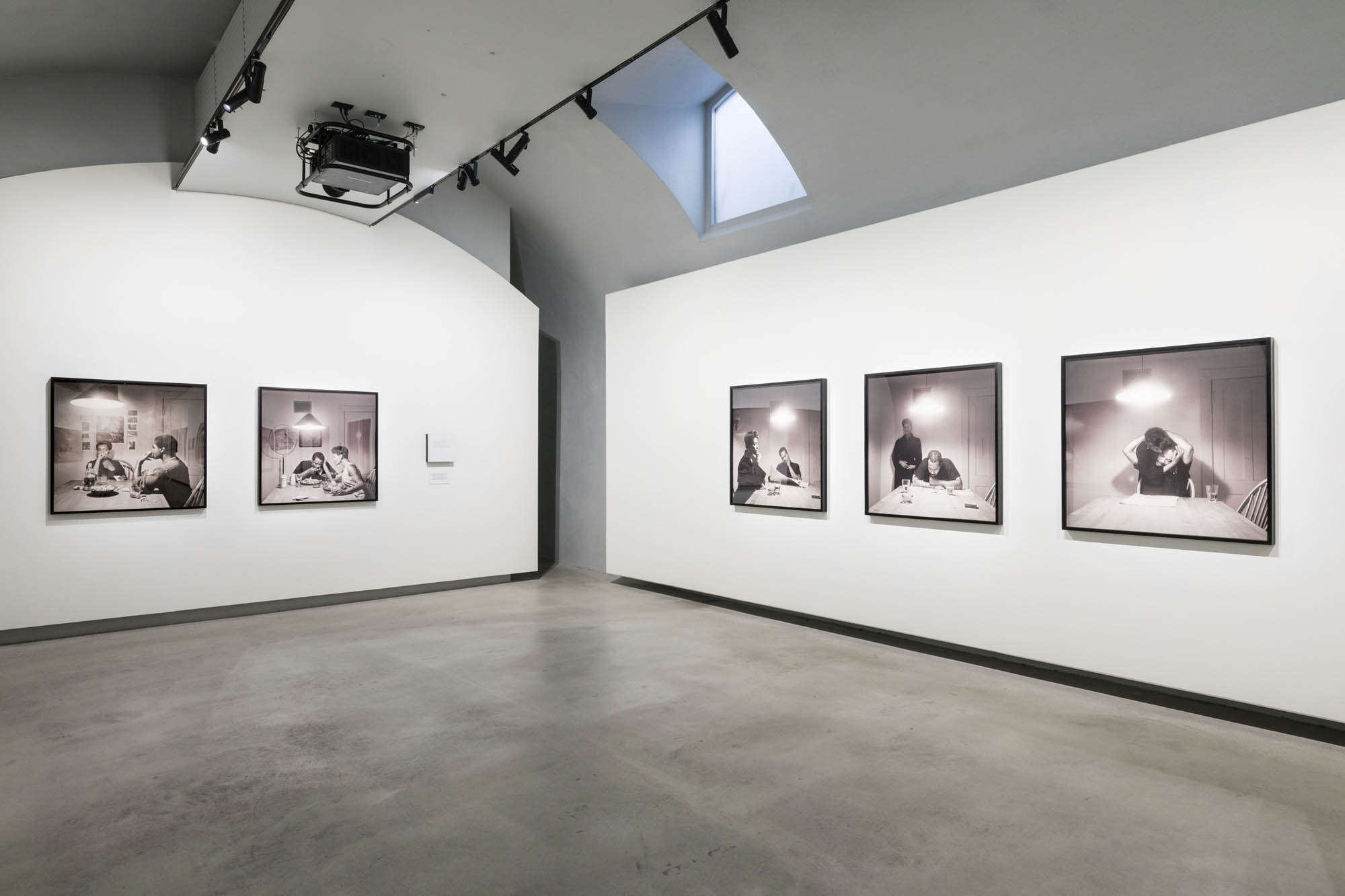
Installation view of the exhibition 'Carrie Mae Weems: The Heart of the Matter' at Gallerie d'Italia, Turin, April - September, 2025 showing work from the 'Kitchen Table Series', 1990


Installation view of the exhibition Carrie Mae Weems: The Heart of the Matter at Gallerie d’Italia, Turin showing work from the Kitchen Table Series, 1990


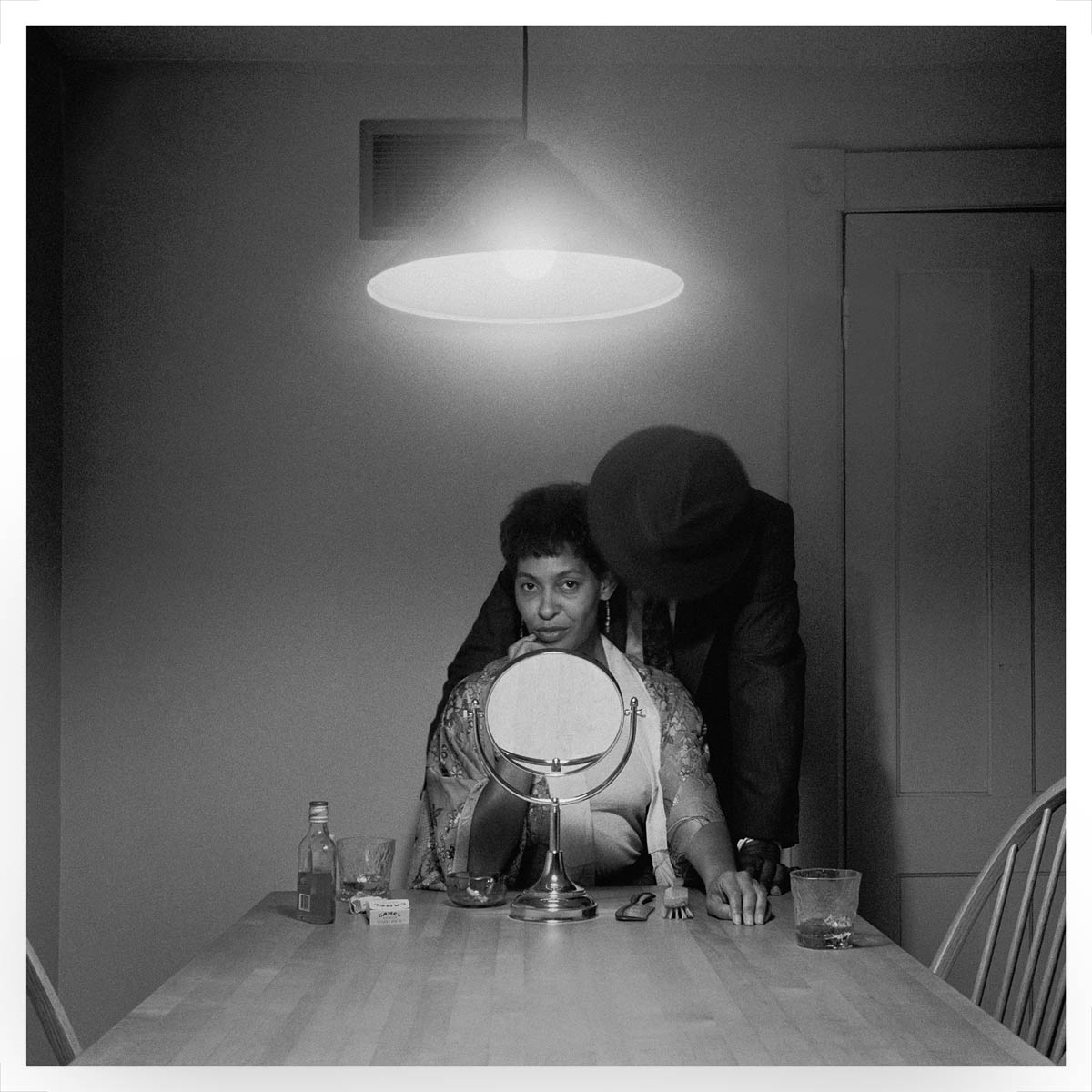
Carrie Mae Weems (American, b. 1953) 'Untitled (Man and mirror)' 1990 From the series 'Kitchen Table'


Carrie Mae Weems (American, b. 1953)
Untitled (Man and mirror)
1990
From the Kitchen Table Series
© Carrie Mae Weems and reproduced courtesy of the artist and Gladstone Gallery, New York, Fraenkel Gallery, San Francisco, and Galerie Barbara Thumm, Berlin
 

Carrie Mae Weems (American, b. 1953) 'Untitled (Woman and daughter with children)' 1990 From the series 'Kitchen Table'


Carrie Mae Weems (American, b. 1953)
Untitled (Woman and daughter with children)
1990
From the Kitchen Table Series
© Carrie Mae Weems and reproduced courtesy of the artist and Gladstone Gallery, New York, Fraenkel Gallery, San Francisco, and Galerie Barbara Thumm, Berlin
 

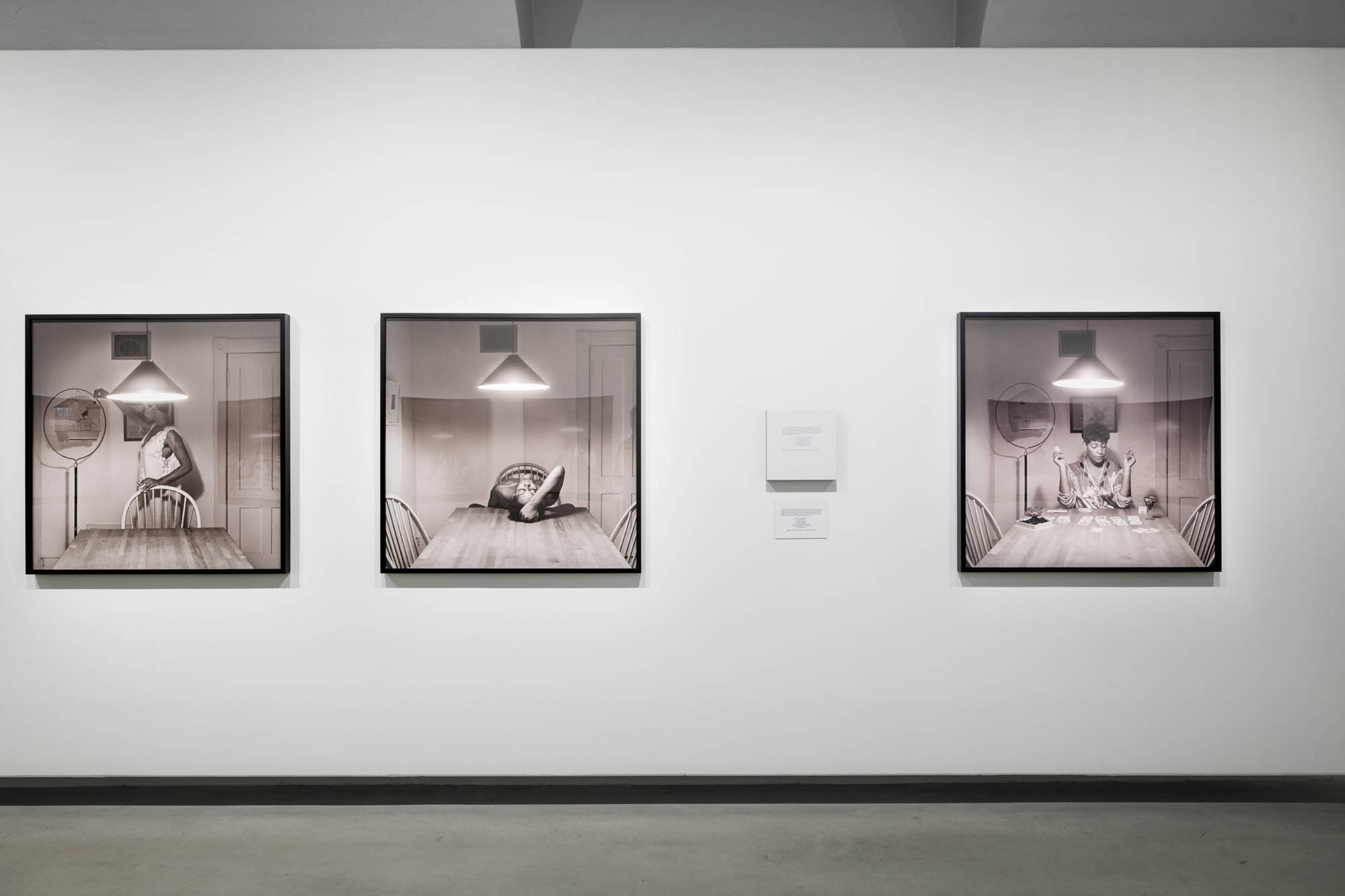
Carrie Mae Weems (American, b. 1953) 'Untitled (Woman standing alone)' 1990 from the series 'Kitchen Table'


Carrie Mae Weems (American, b. 1953)
Untitled (Woman standing alone)
1990
From the Kitchen Table Series
© Carrie Mae Weems and reproduced courtesy of the artist and Gladstone Gallery, New York, Fraenkel Gallery, San Francisco, and Galerie Barbara Thumm, Berlin
 

Carrie Mae Weems (American, b. 1953)
'Untitled' 1988 from the series 'Four Women'


Carrie Mae Weems (American, b. 1953)
Untitled
1988
From the series Four Women
© Carrie Mae Weems and reproduced courtesy of the artist and Gladstone Gallery, New York, Fraenkel Gallery, San Francisco, and Galerie Barbara Thumm, Berlin
 

Carrie Mae Weems (American, b. 1953)
'Wilfredo, Laura and Me, I' 2002 From the series 'Dreaming in Cuba'


Carrie Mae Weems (American, b. 1953)
Wilfredo, Laura and Me, I
2002
From the series Dreaming in Cuba
© Carrie Mae Weems and reproduced courtesy of the artist and Gladstone Gallery, New York, Fraenkel Gallery, San Francisco, and Galerie Barbara Thumm, Berlin


Gallerie d’Italia – Torino
Piazza San Carlo, 156
10121 Turin
Phone number: 800 167 619

Opening hours:
Tuesday, Thursday, Friday, Saturday and Sunday: 9.30 – 19.30
Wednesday: 9.30 – 20.30
Gallerie d’Italia – Torino website

LIKE ART BLART ON FACEBOOK

Back to top

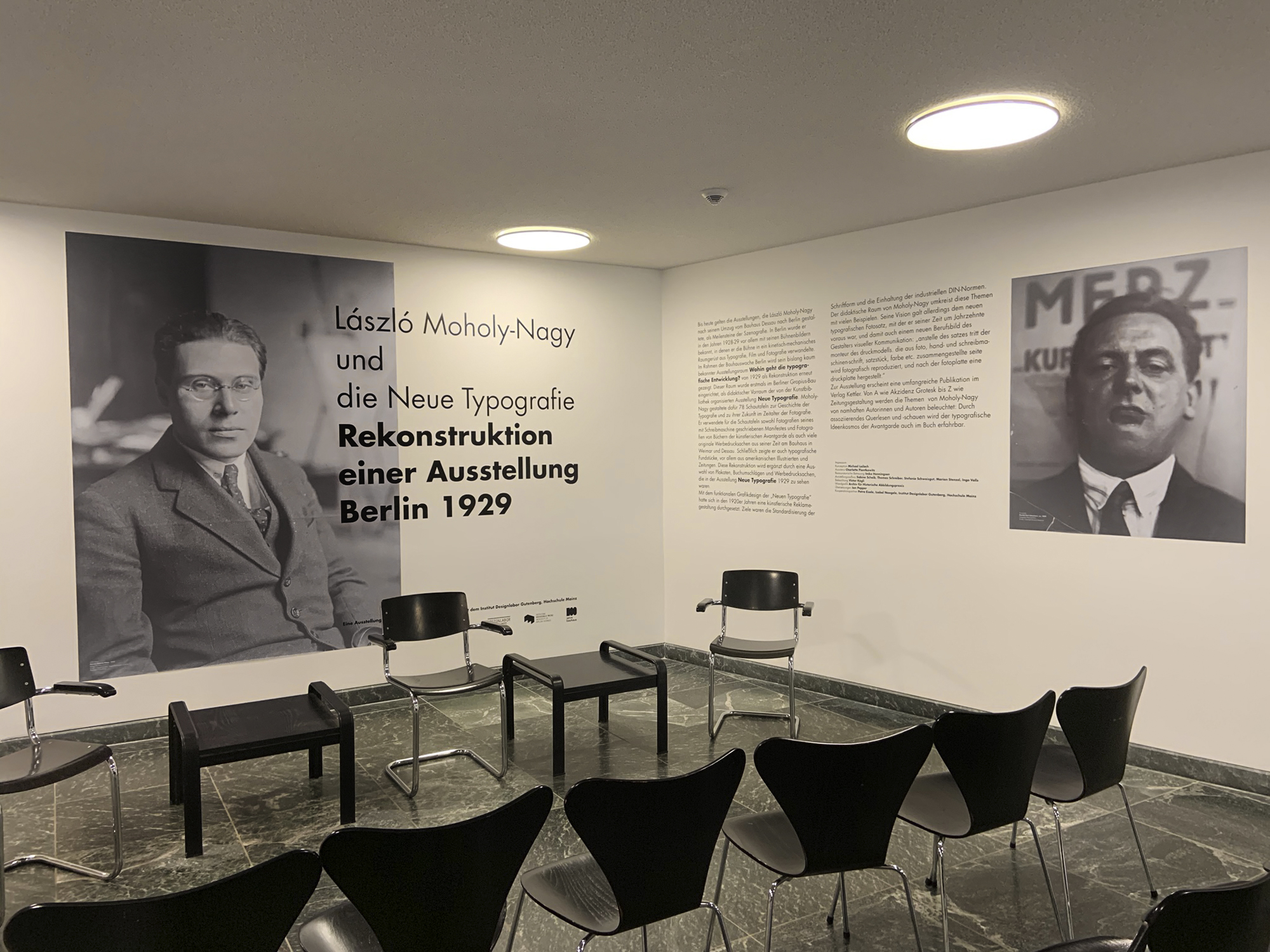
European art research tour exhibition: ‘László Moholy-Nagy and New Typography: A Reconstruction of a Berlin Exhibition from 1929’ at the Staatliche Museen zu Berlin

Exhibition dates: 29th August, 2019 – 15th September, 2019 posted November, 2020

Kunstbibliothek


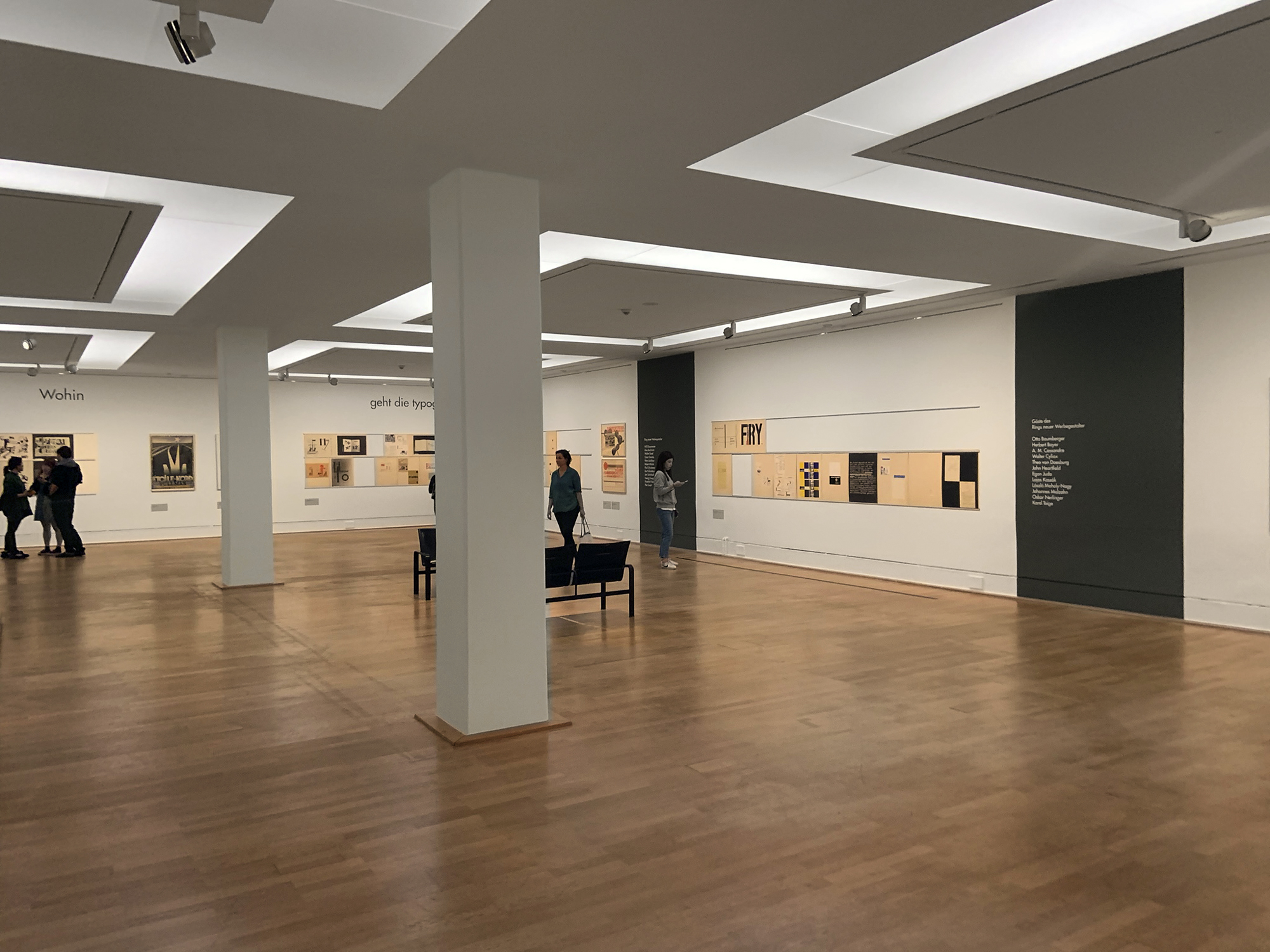
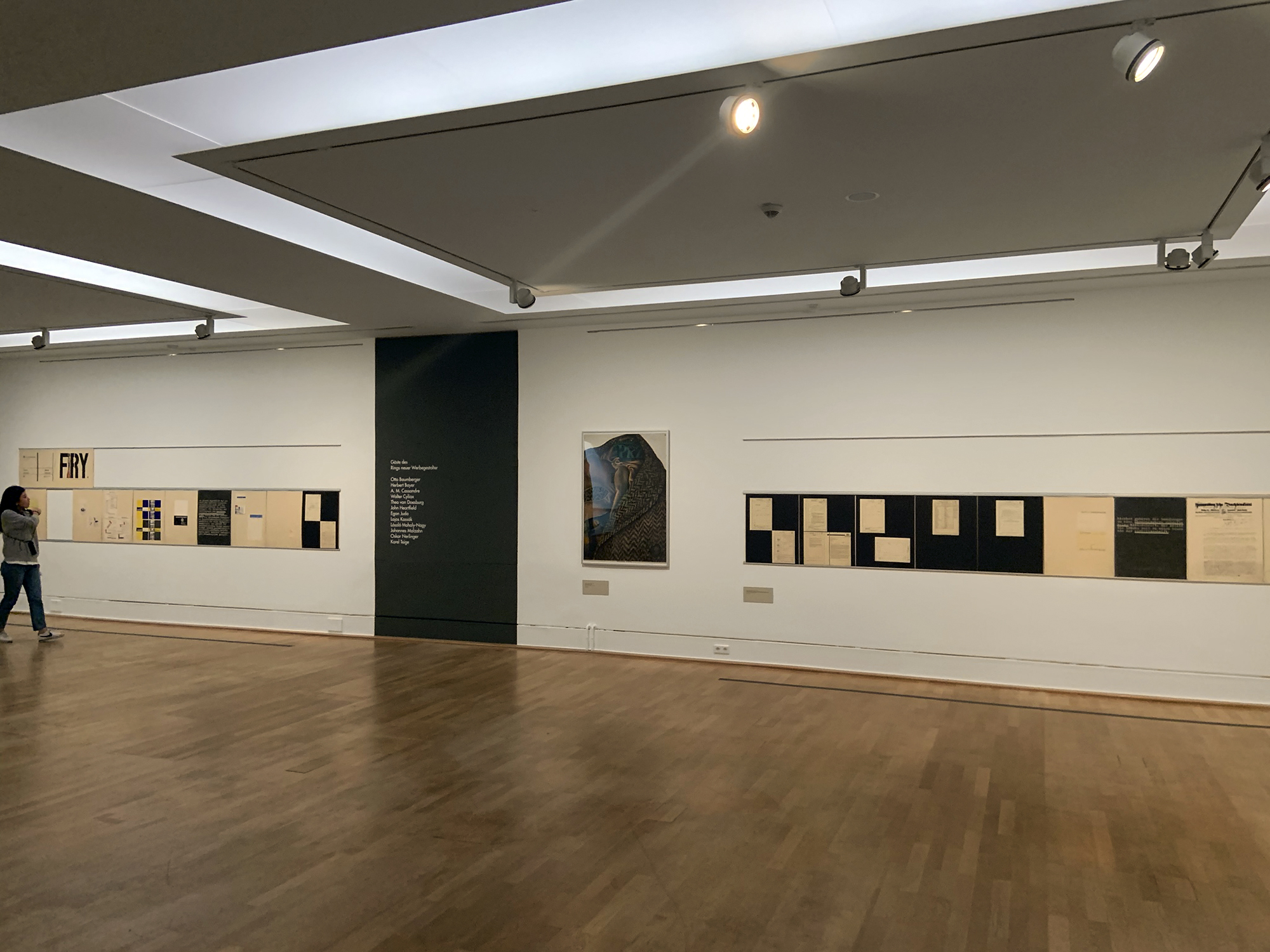
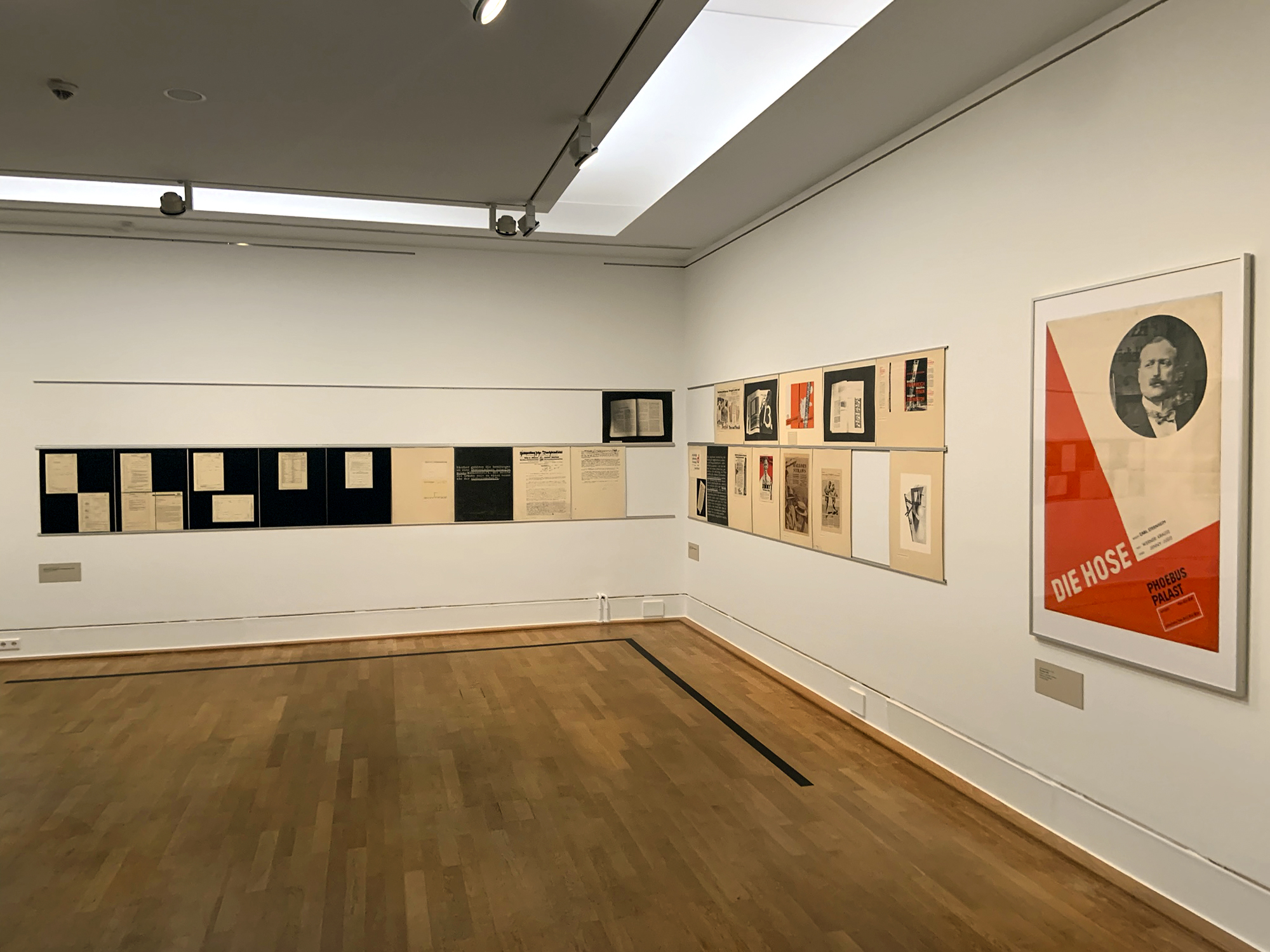
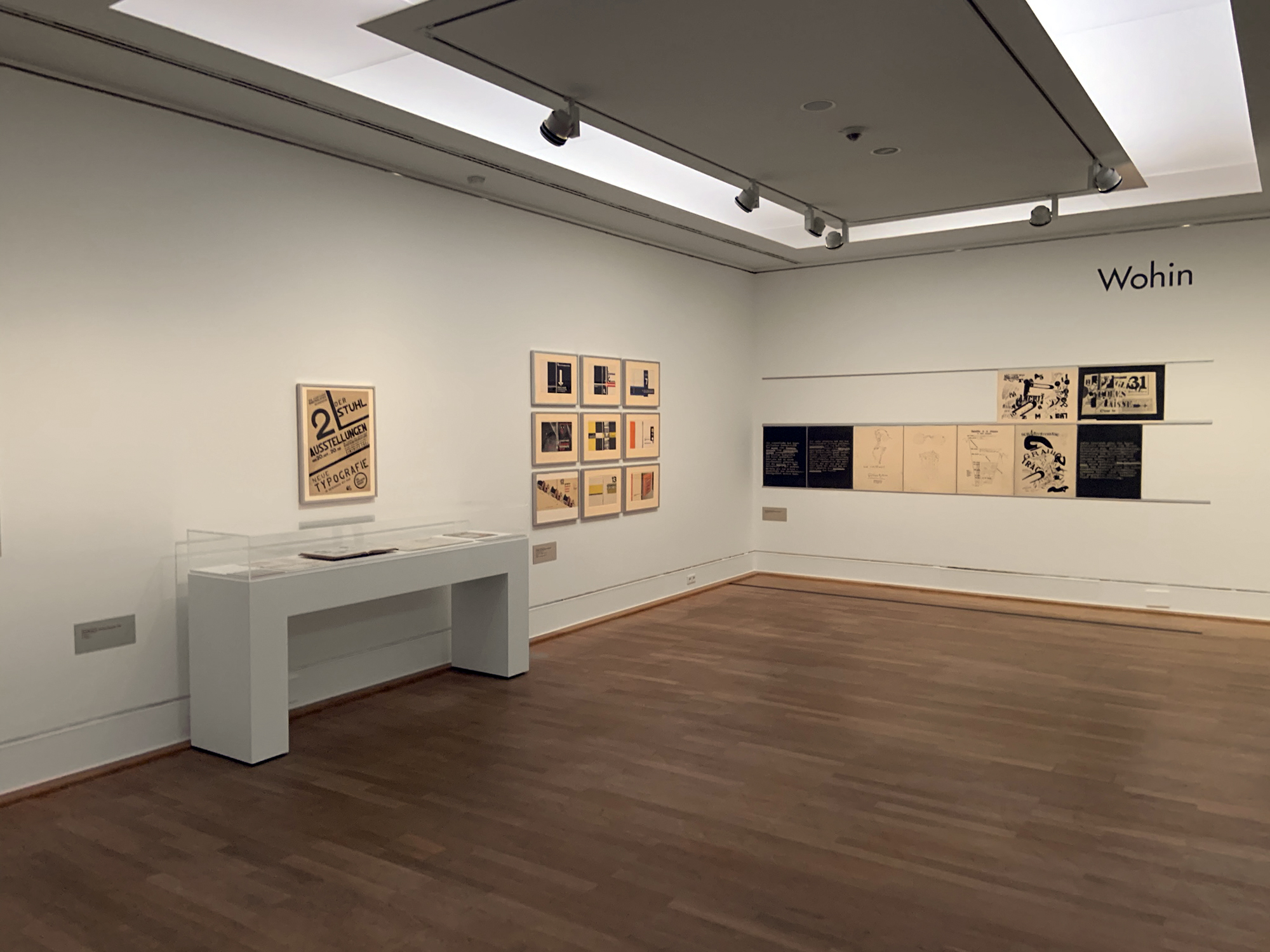
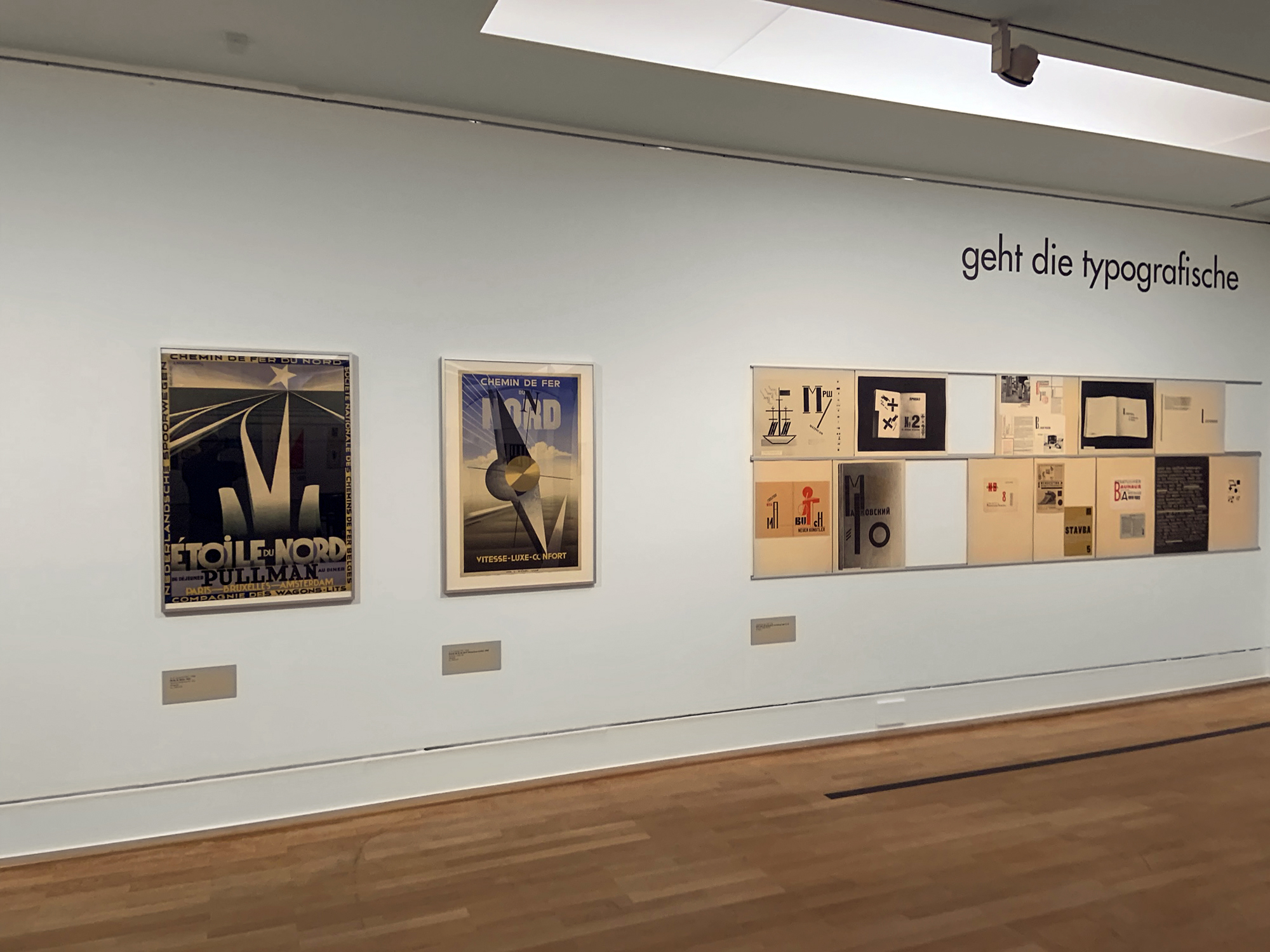
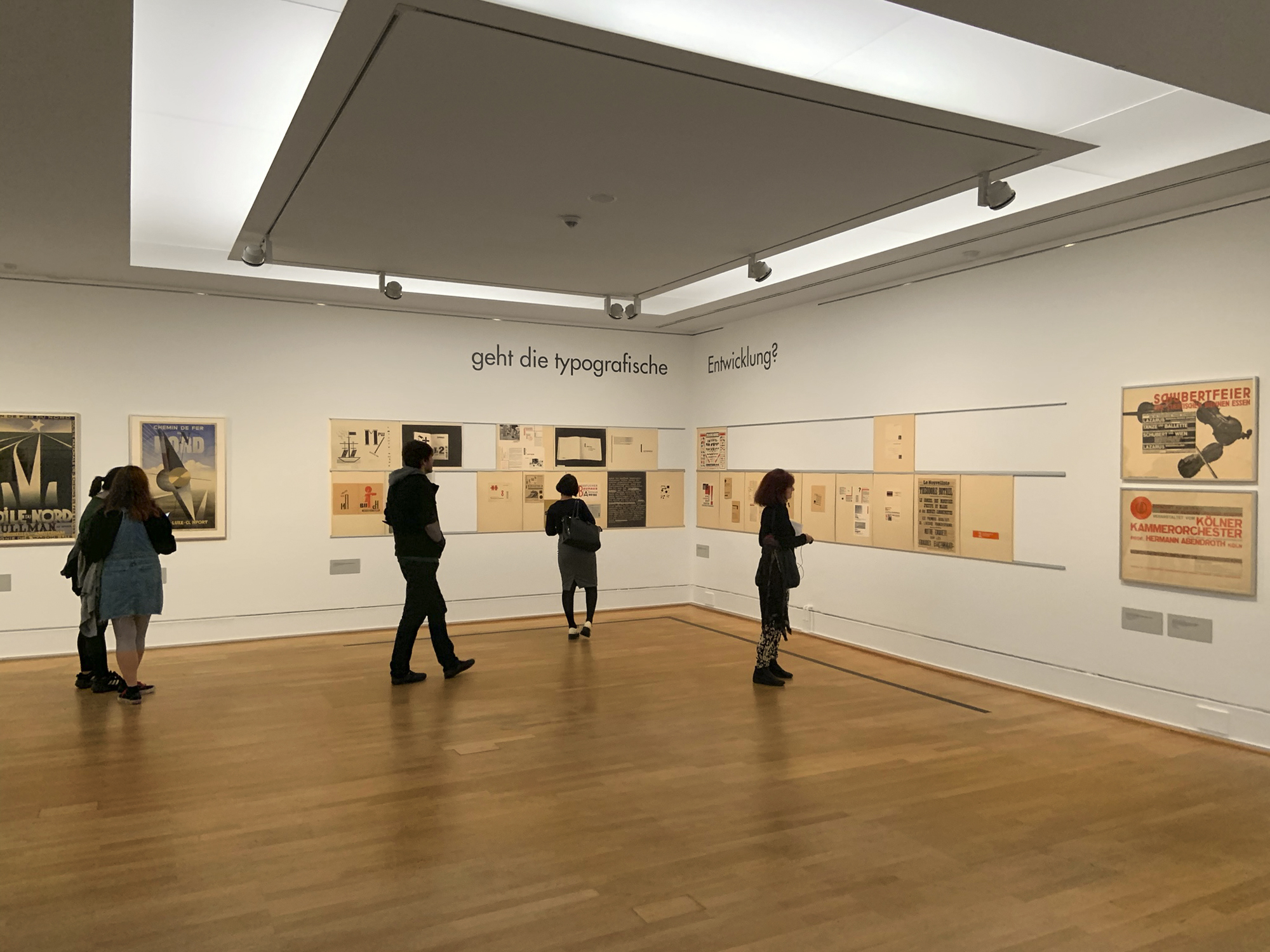
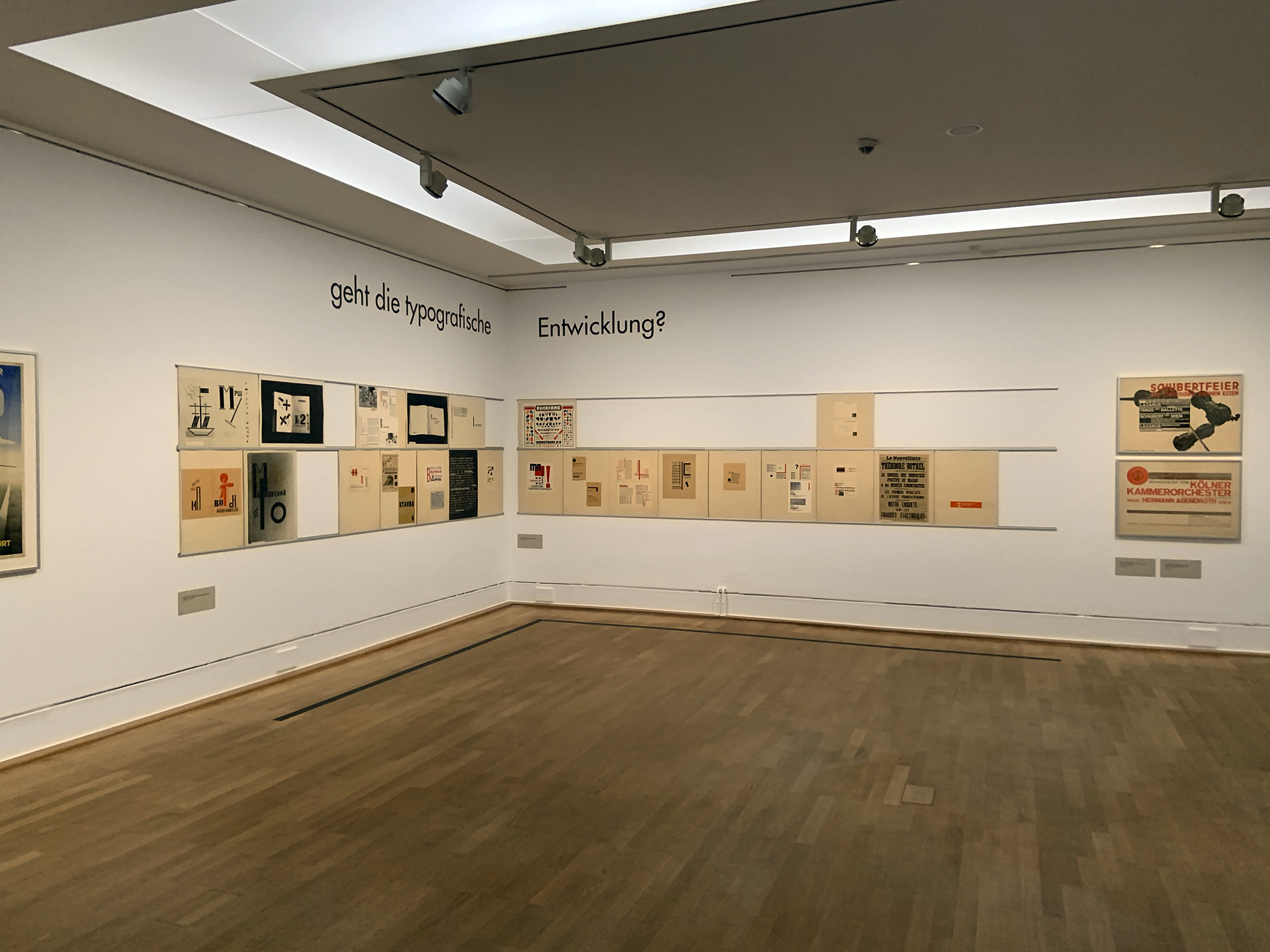
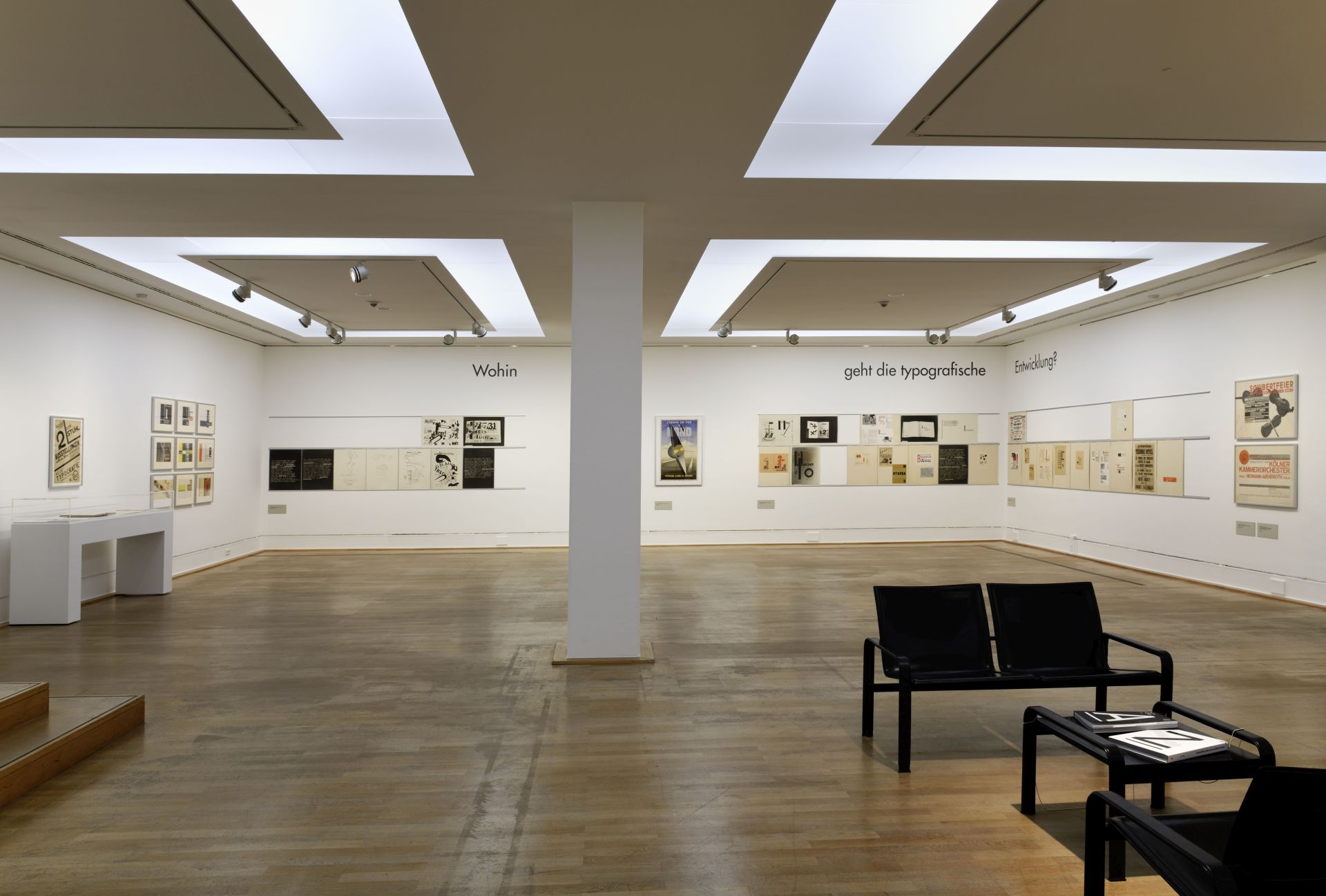
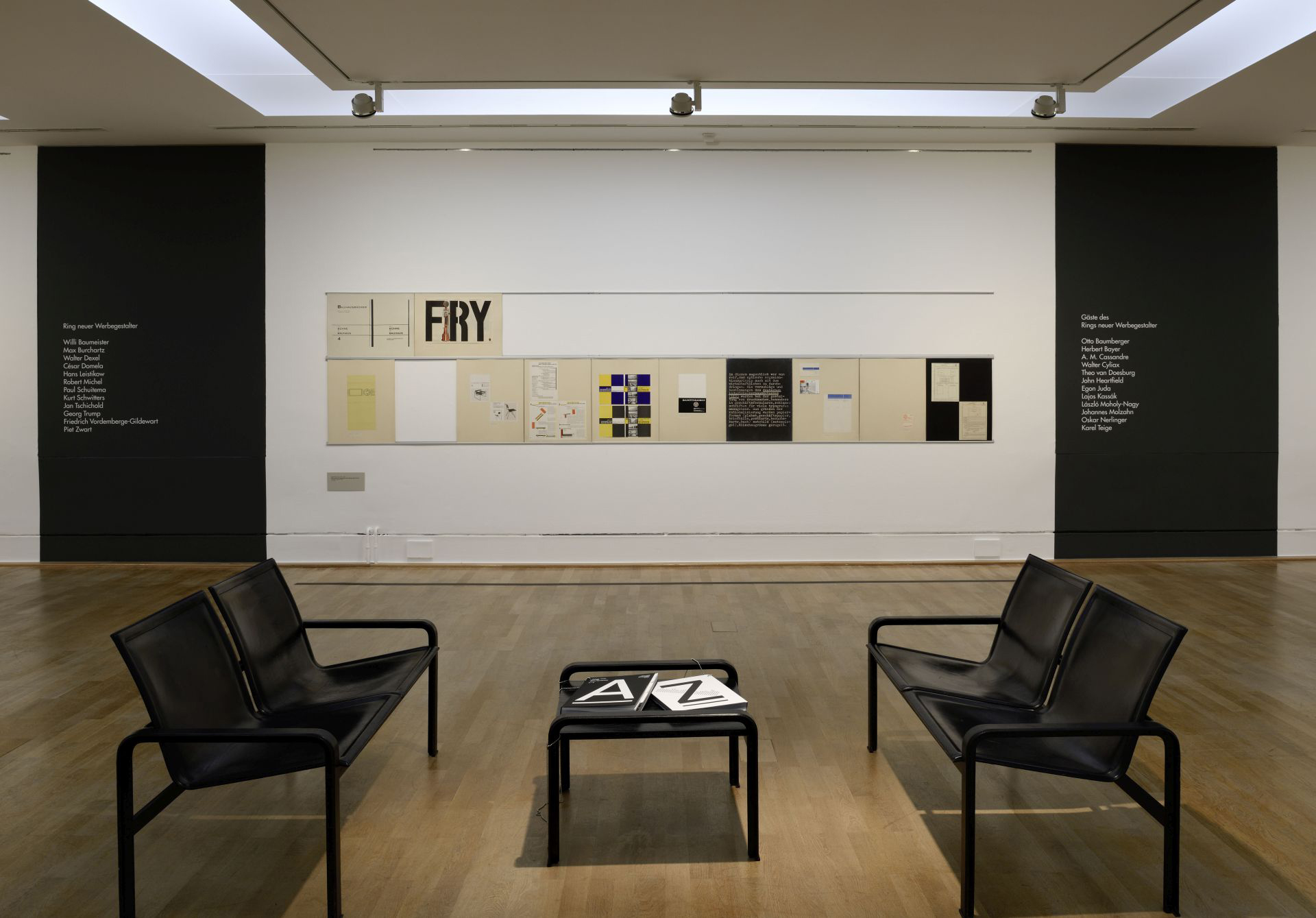
Installation view of the exhibition 'László Moholy-Nagy and New Typography: A Reconstruction of a Berlin Exhibition from 1929' at the Staatliche Museen zu Berlin


Installation view of the exhibition László Moholy-Nagy and New Typography: A Reconstruction of a Berlin Exhibition from 1929 at the Staatliche Museen zu Berlin
Photo: Marcus Bunyan


A small, tight, focused exhibition which was stimulating for anyone interested in graphic design, photography, and typography – Neue Typografie.

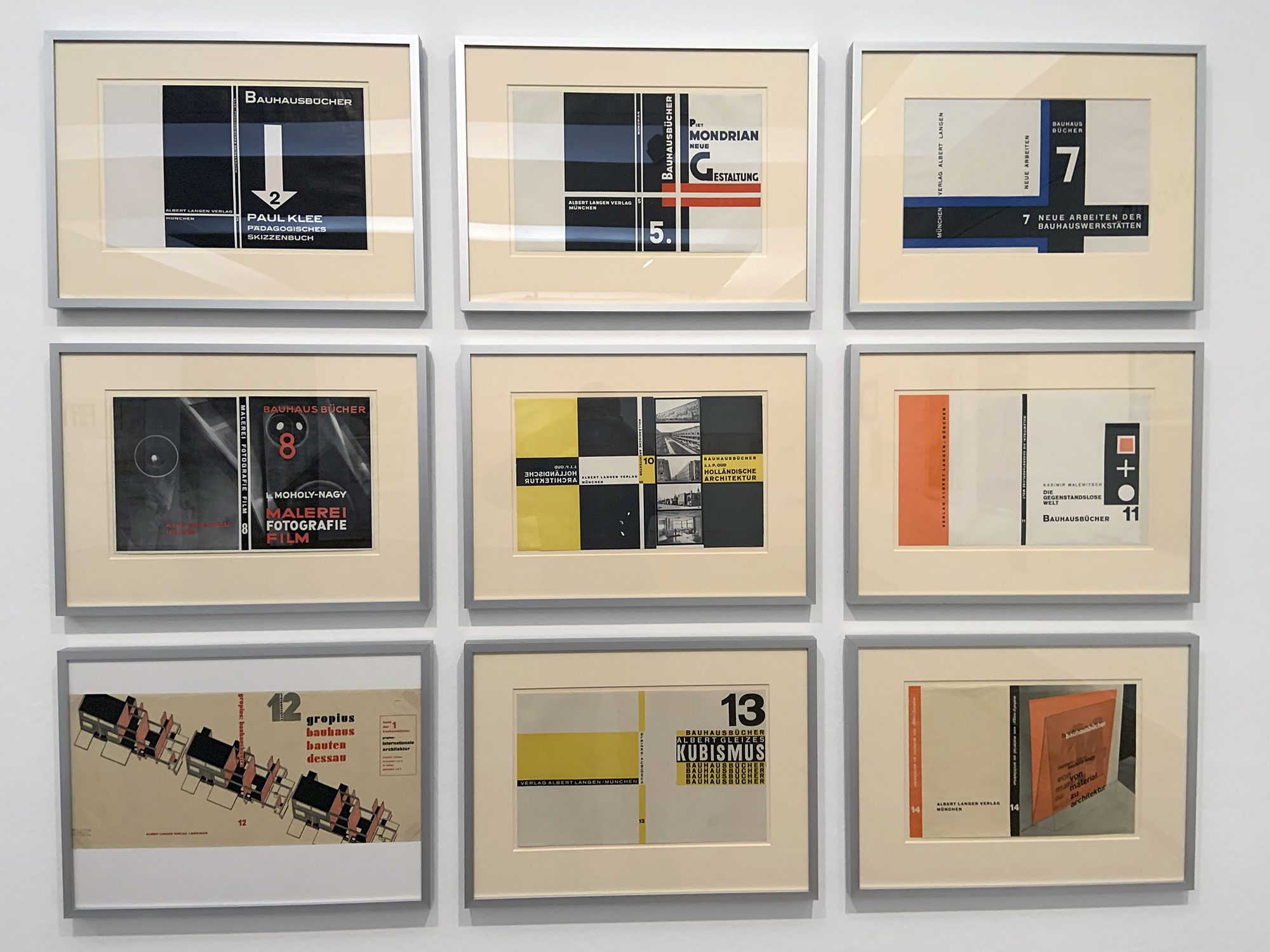
Highlights included Covers for the Bauhaus books, 1925-1930, travel posters by A. M. Cassandre, plates from Moholy-Nagy’s 1929 Wohin geht die typographische Entwicklung? (Where is typography headed?) and a poster for the 1929 exhibition film und foto.

The inventiveness and creativity with colour, collage and the use of negative and positive space was peerless, elemental.

Dr Marcus Bunyan


All iPhone photographs © Marcus Bunyan. Many thankx for all other photographs to the Staatliche Museen zu Berlin. Please click on the photographs for a larger version of the image.


Installation view of the exhibition 'László Moholy-Nagy and New Typography: A Reconstruction of a Berlin Exhibition from 1929' at the Staatliche Museen zu Berlin

Installation view of the exhibition 'László Moholy-Nagy and New Typography: A Reconstruction of a Berlin Exhibition from 1929' at the Staatliche Museen zu Berlin

Installation view of the exhibition 'László Moholy-Nagy and New Typography: A Reconstruction of a Berlin Exhibition from 1929' at the Staatliche Museen zu Berlin

Installation view of the exhibition 'László Moholy-Nagy and New Typography: A Reconstruction of a Berlin Exhibition from 1929' at the Staatliche Museen zu Berlin

Installation view of the exhibition 'László Moholy-Nagy and New Typography: A Reconstruction of a Berlin Exhibition from 1929' at the Staatliche Museen zu Berlin

Installation view of the exhibition 'László Moholy-Nagy and New Typography: A Reconstruction of a Berlin Exhibition from 1929' at the Staatliche Museen zu Berlin

Installation view of the exhibition 'László Moholy-Nagy and New Typography: A Reconstruction of a Berlin Exhibition from 1929' at the Staatliche Museen zu Berlin


Wohin geht die typographische Entwicklung?
Where is typography headed?

Installation views of the exhibition László Moholy-Nagy and New Typography: A Reconstruction of a Berlin Exhibition from 1929 at the Staatliche Museen zu Berlin
Photos: Marcus Bunyan


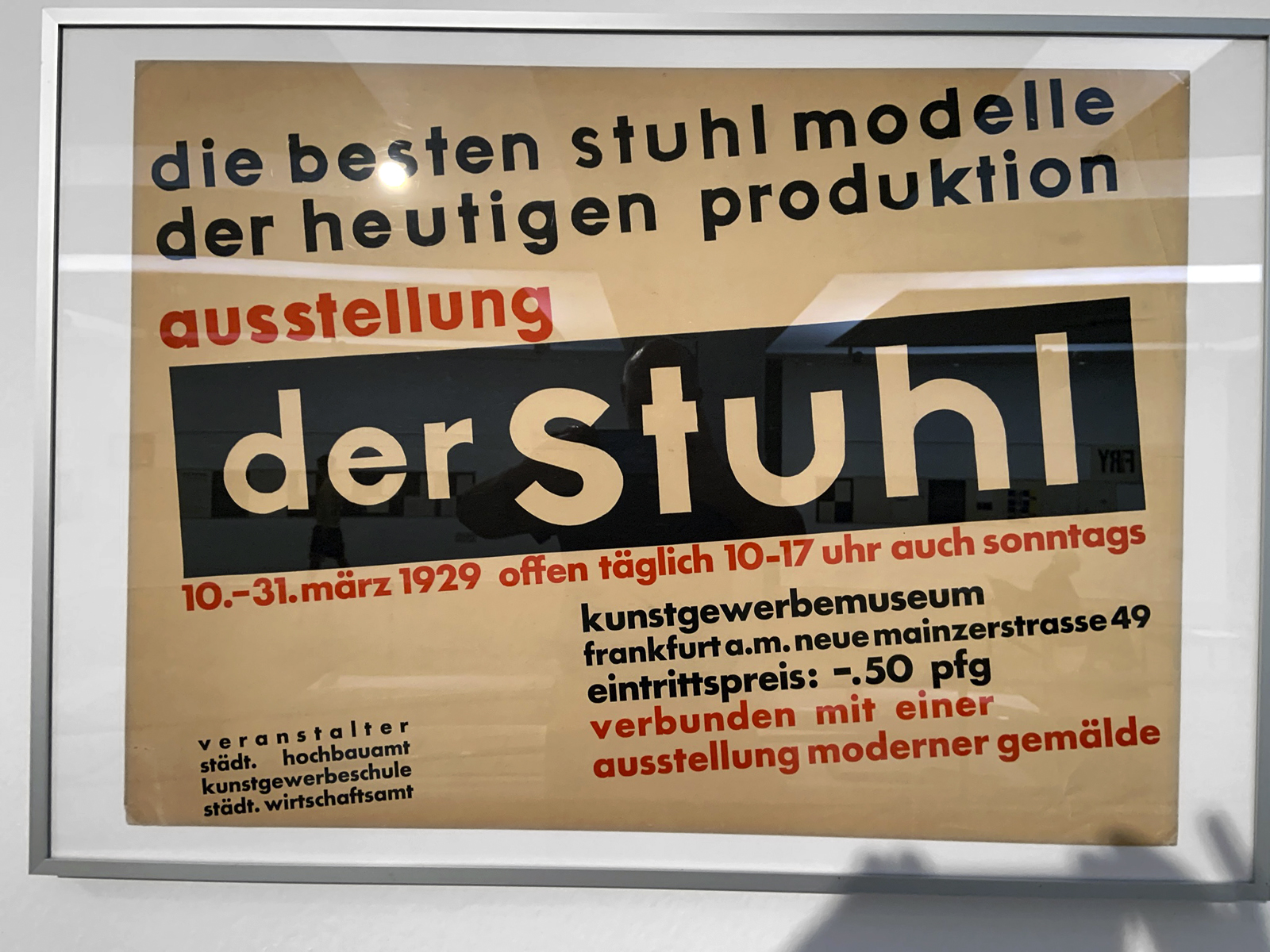
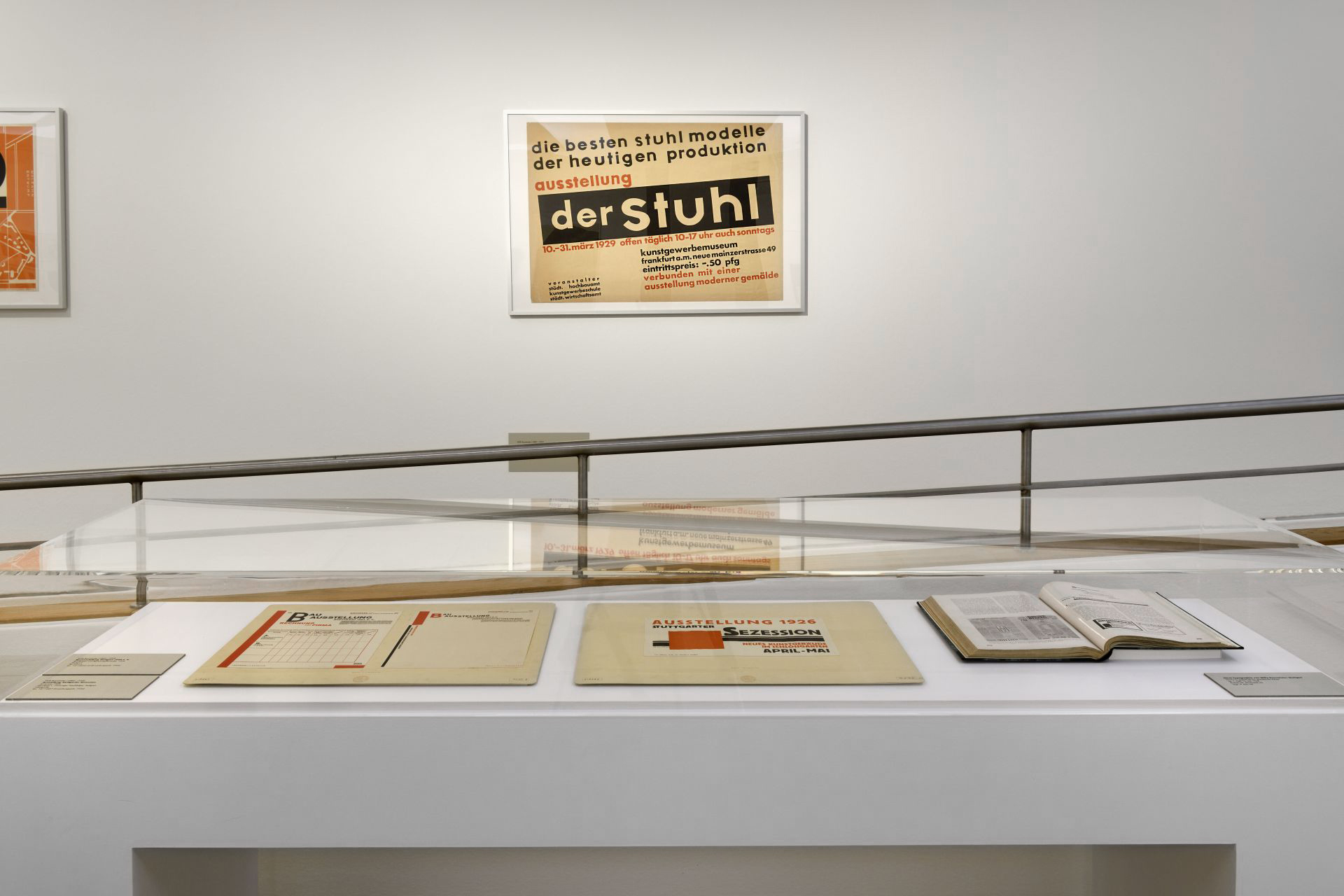
The best chair models of today's production exhibition 'the Chair' 1929 (installation view)


die besten stuhl modelle der heutigen produktion
The best models of today’s production

ausstellung
exhibition

der Stuhl (installation view)
1929
Poster
kunstgewerbemuseum
Arts and Crafts Museum
Kunstbibliothek der Staatlichen Museen zu Berlin
Photo: Marcus Bunyan


Installation view of the exhibition 'László Moholy-Nagy and New Typography: A Reconstruction of a Berlin Exhibition from 1929' at the Staatliche Museen zu Berlin


Installation view of the exhibition László Moholy-Nagy and New Typography: A Reconstruction of a Berlin Exhibition from 1929 at the Staatliche Museen zu Berlin
Photo: Staatliche Museen zu Berlin


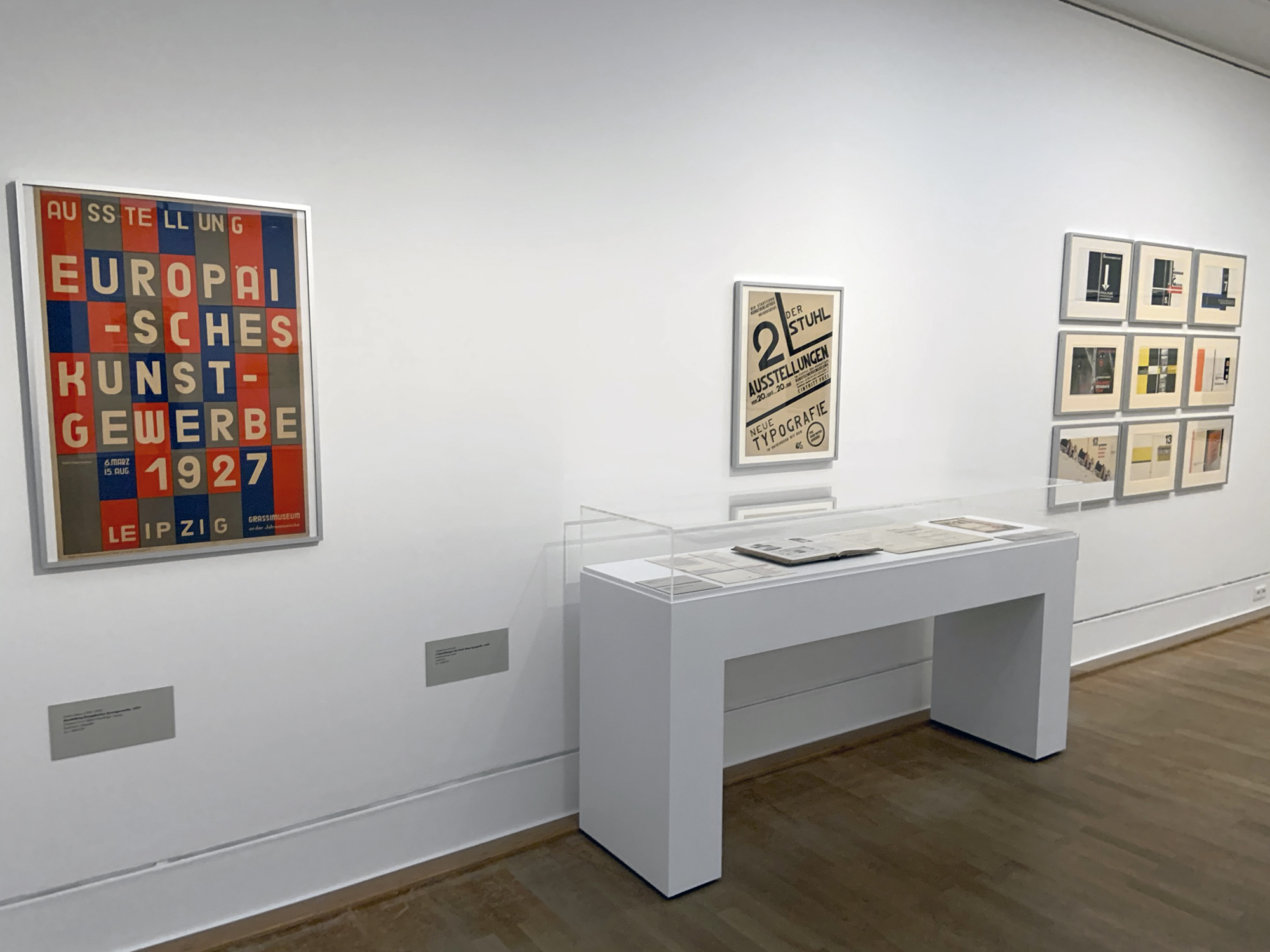
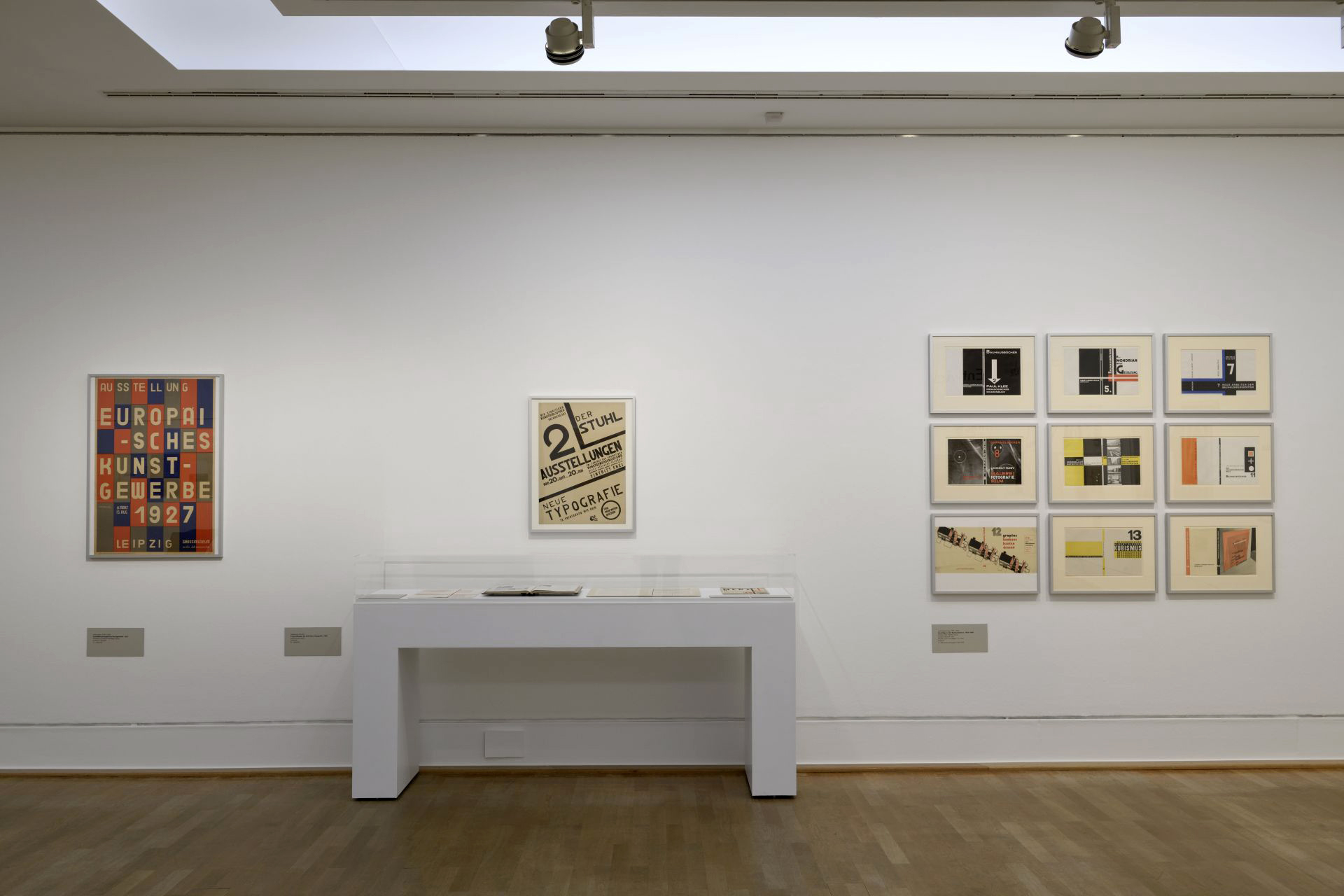
Installation view of the exhibition 'László Moholy-Nagy and New Typography: A Reconstruction of a Berlin Exhibition from 1929' at the Staatliche Museen zu Berlin showing at left, 'Ausstellung Europäisches Kunstgewerbe' (Exhibition of European applied arts) 1927; in the centre, 'Der Stuhl. Neue Typografie' (New typography) 1929; and at right, 'Umschläge zu den Bauhausbüchern, 1925-1930' (Covers for the Bauhaus books, 1925-1930) 1925-1930
 

Installation view of the exhibition László Moholy-Nagy and New Typography: A Reconstruction of a Berlin Exhibition from 1929 at the Staatliche Museen zu Berlin showing at left, Ausstellung Europäisches Kunstgewerbe (Exhibition of European applied arts) 1927; in the centre, Der Stuhl. Neue Typografie (New typography) 1929; and at right, Umschläge zu den Bauhausbüchern, 1925-1930 (Covers for the Bauhaus books, 1925-1930) 1925-1930
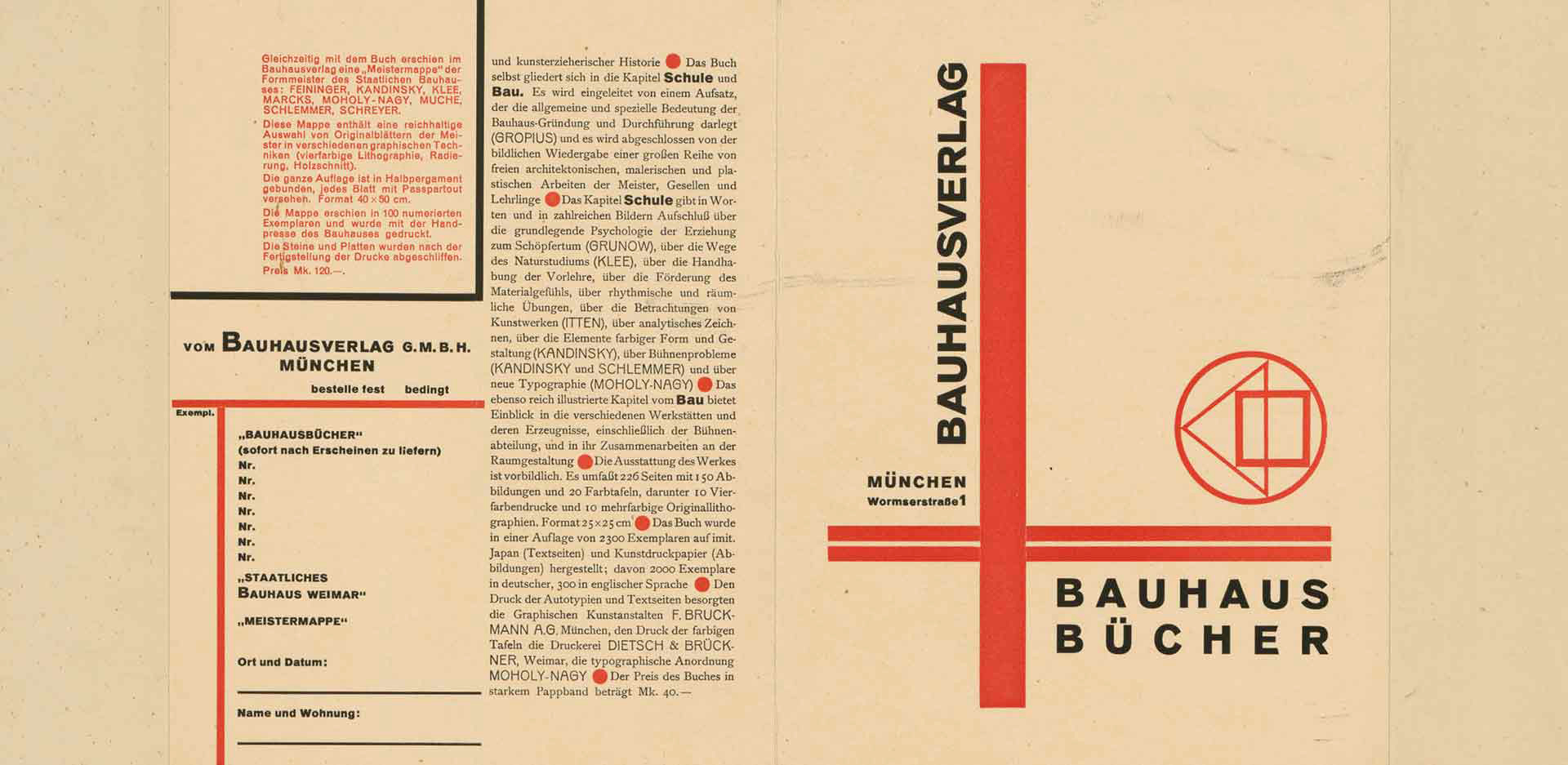
Photo: Marcus Bunyan


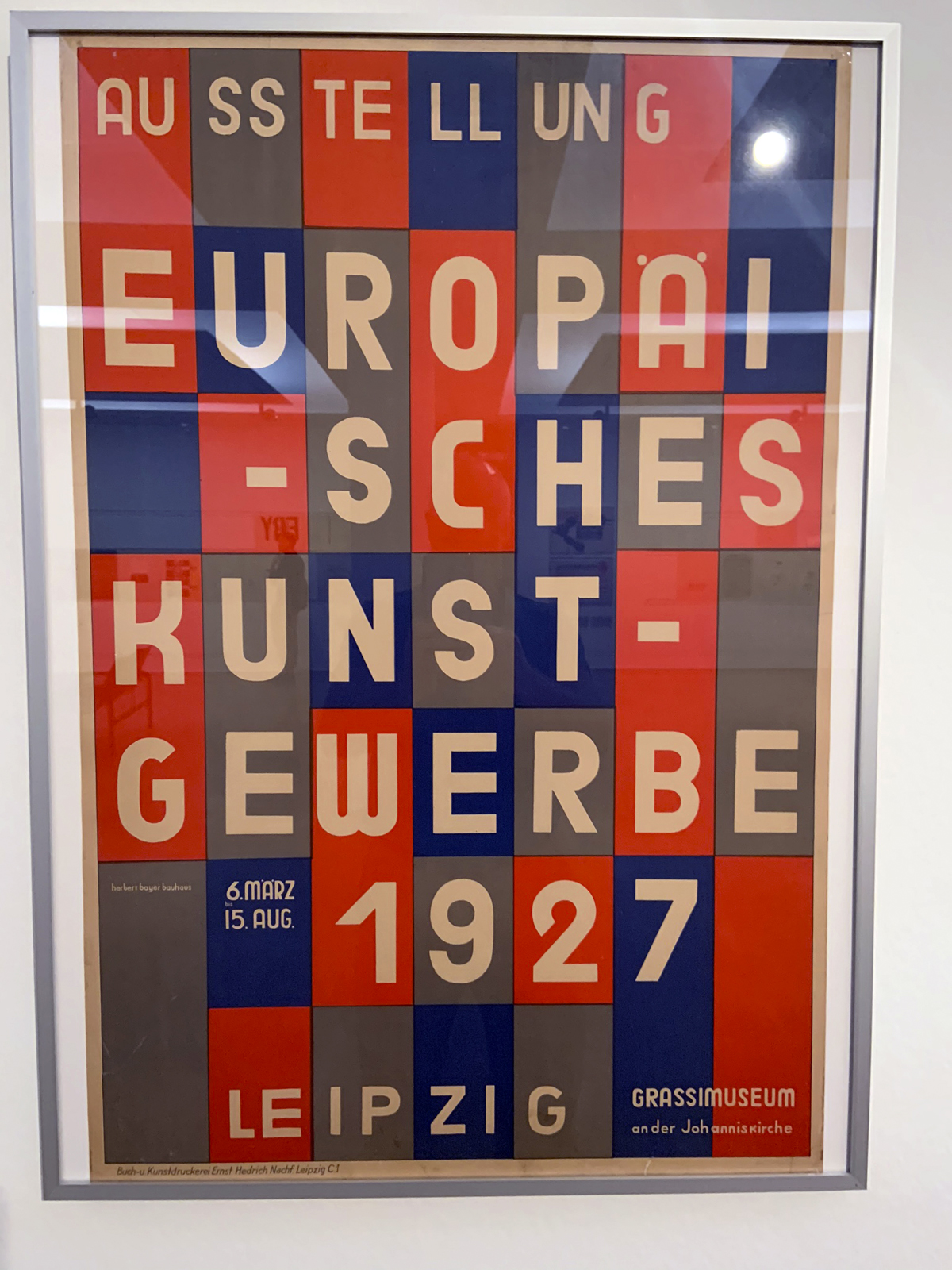
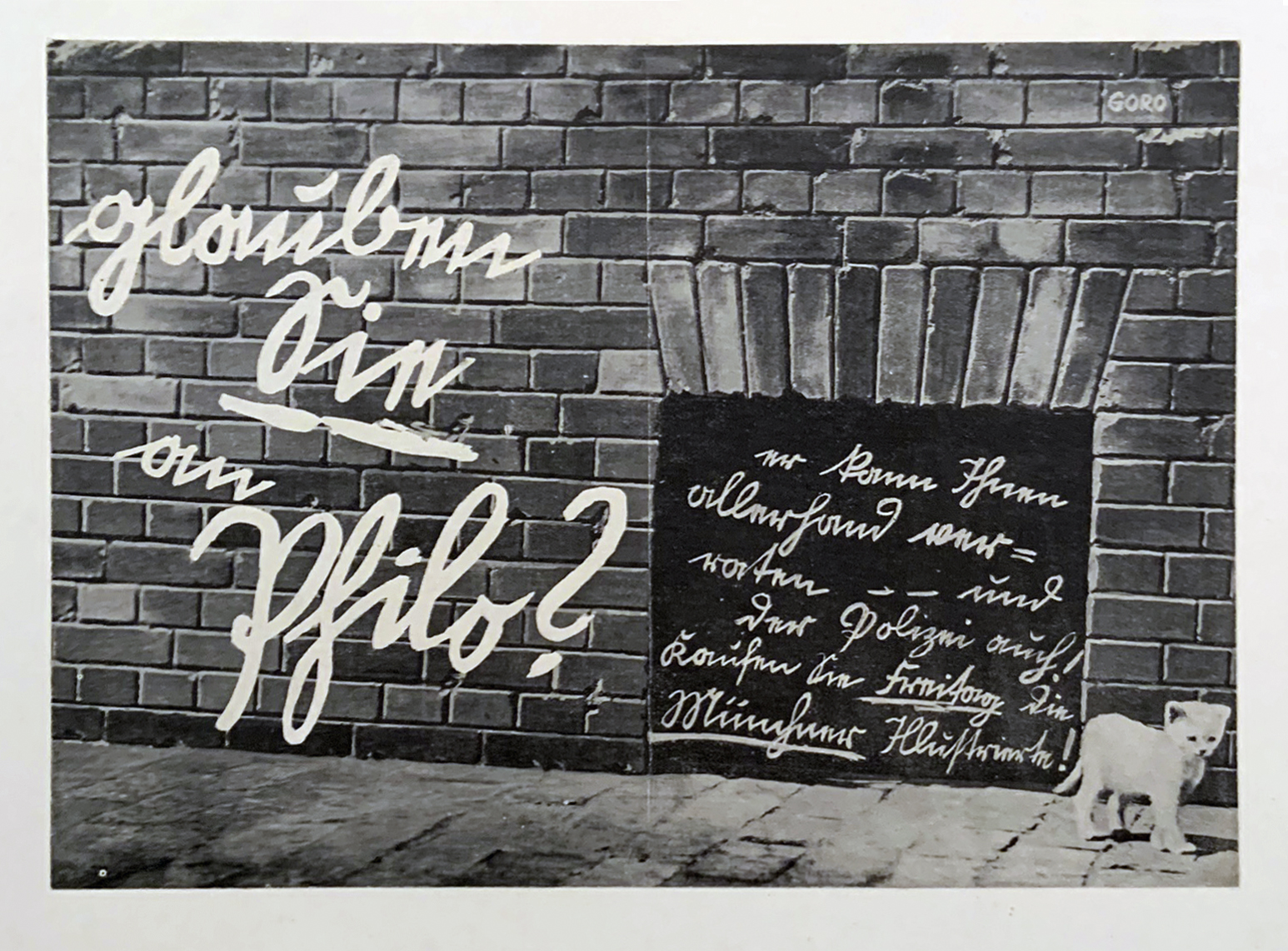
Herbert Bayer (1900-1985) 'Ausstellung Europäisches Kunstgewerbe' (Exhibition of European applied arts) 1927 (installation view)


Herbert Bayer (1900-1985)
Ausstellung Europäisches Kunstgewerbe (Exhibition of European applied arts) (installation view)
1927
Poster
Druckerei Ernst Hedrich Nachfolger, Leipzig Buchdruck
Ernst Hedrich printer, Leipzig Letterpress
Lithograph
Kunstbibliothek der Staatlichen Museen zu Berlin
Photo: Marcus Bunyan


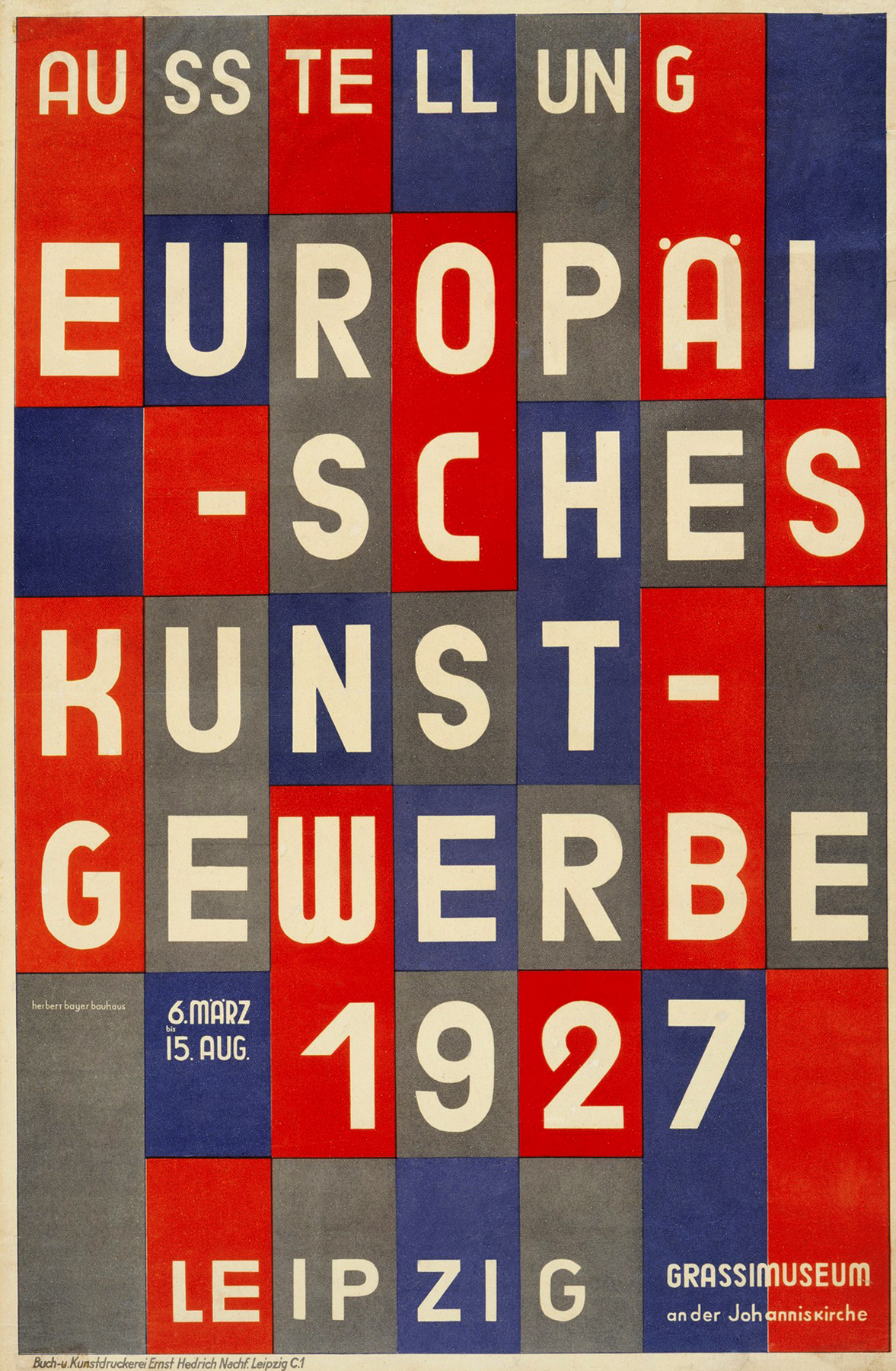
Herbert Bayer (1900-1985) 'Ausstellung Europäisches Kunstgewerbe' (Exhibition of European applied arts) 1927 from the exhibition 'László Moholy-Nagy and New Typography: A Reconstruction of a Berlin Exhibition from 1929' at the Staatliche Museen zu Berlin, Aug - Sept, 2019


Herbert Bayer (1900-1985)
Ausstellung Europäisches Kunstgewerbe (Exhibition of European applied arts)
1927
Poster
Druckerei Ernst Hedrich Nachfolger, Leipzig Buchdruck
Ernst Hedrich printer, Leipzig Letterpress
Lithograph
35 1/4 x 23 3/4″ (89.5 x 60.3cm)
Kunstbibliothek der Staatlichen Museen zu Berlin


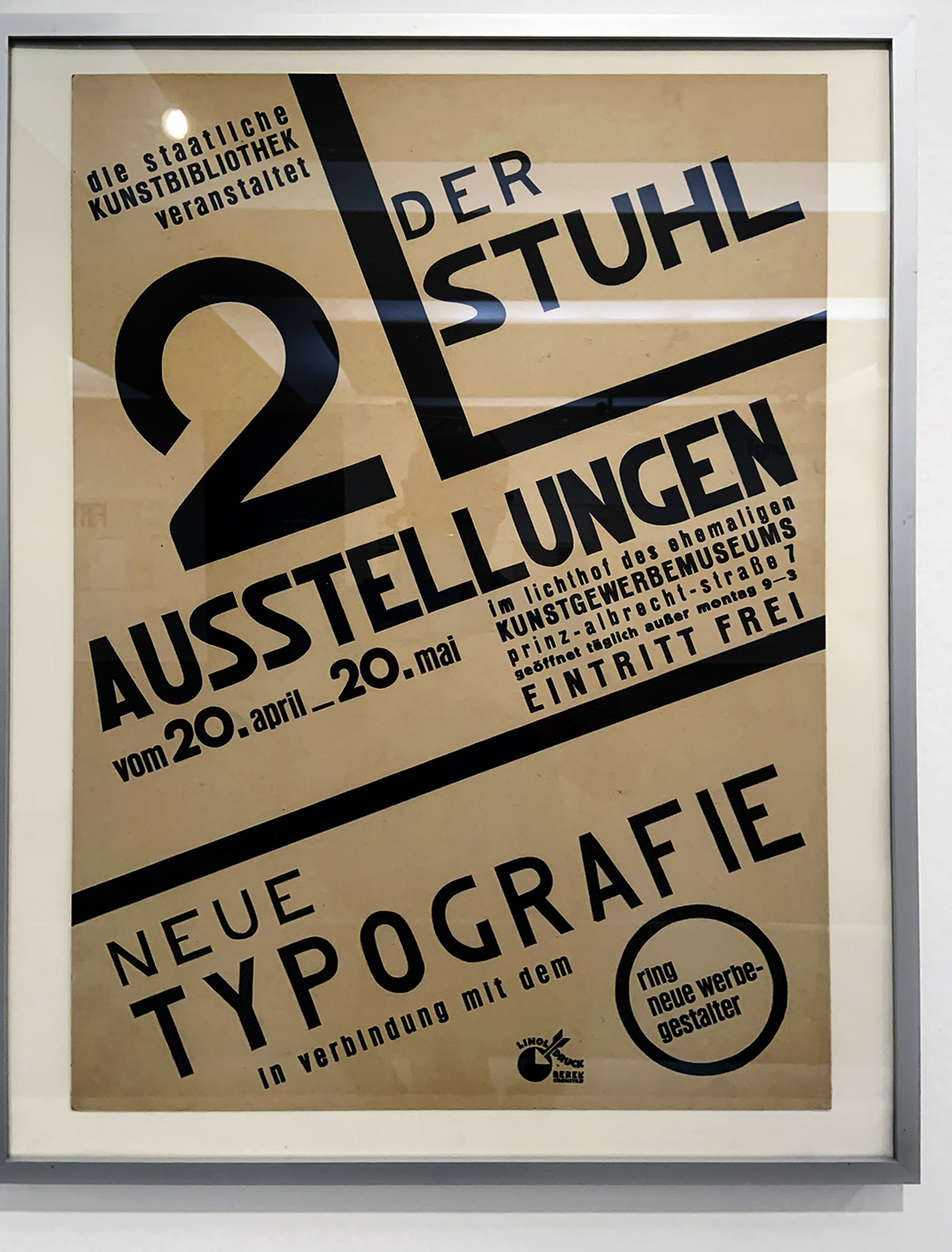
László Moholy-Nagy (Hungarian, 1895-1946) 'Der Stuhl. Neue Typografie' (New typography) 1929 (installation view)


László Moholy-Nagy (Hungarian, 1895-1946)
Der Stuhl. Neue Typografie (New typography) (installation view)
1929
Poster
Entwerfer Berek-Druck (Nachweiszeit: 1928-1940), Drucker
Designer Berek-Druck (record time: 1928-1940), printer
Printed in Berlin
Printing ink (black) & paper
Linocut
61.0 x 43.5cm
Kunstbibliothek der Staatlichen Museen zu Berlin
Photo: Marcus Bunyan


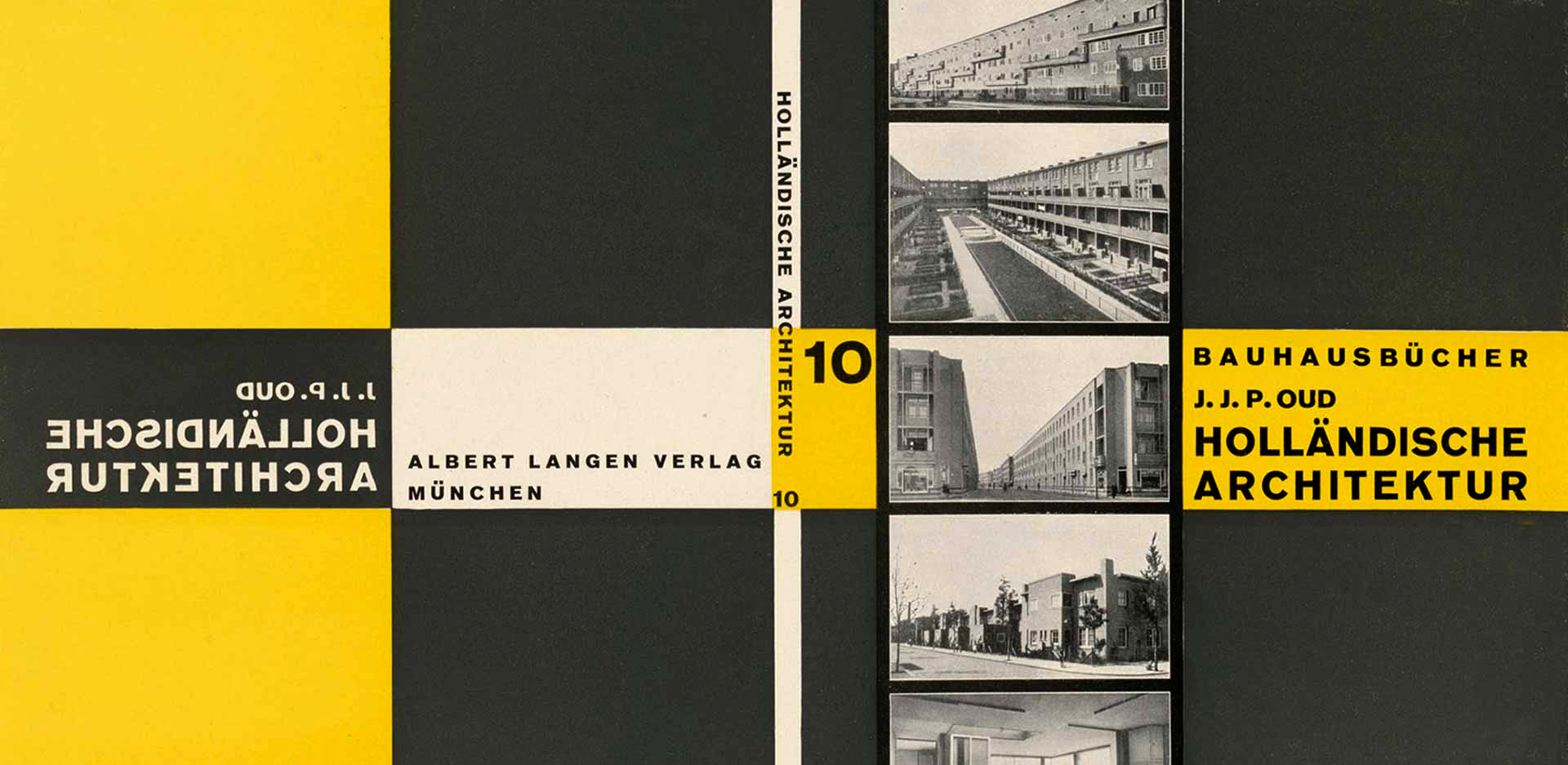
László Moholy-Nagy (Hungarian, 1895-1946) 'Umschläge zu den Bauhausbüchern, 1925-1930' (Covers for the Bauhaus books, 1925-1930) 1925-30 (installation view)


László Moholy-Nagy (Hungarian, 1895-1946)
Umschläge zu den Bauhausbüchern, 1925-1930 (Covers for the Bauhaus books, 1925-1930) (installation view)
1925-1930
Book covers
Druckerei Hesse & Becker, Leipzig
Hesse & Becker printing company, Leipzig
Druckerei Ohlenroth, Erfurt Klischees von Dr. von Löbbeke u. Co., Erfurt Buchdruck
Ohlenroth printing company, Erfurt Letterpress
Kunstbibliothek der Staatlichen Museen zu Berlin
Photo: Marcus Bunyan


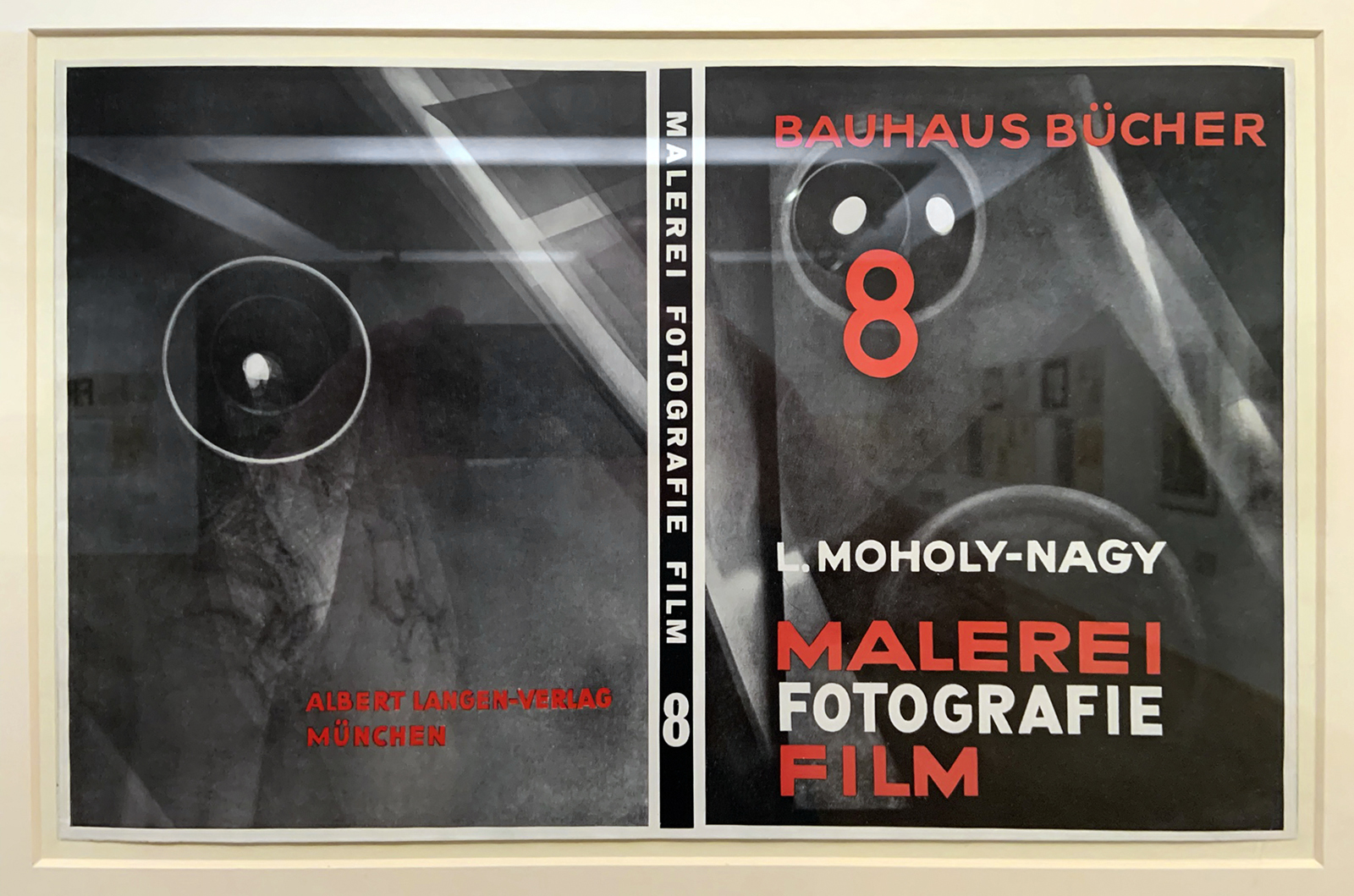
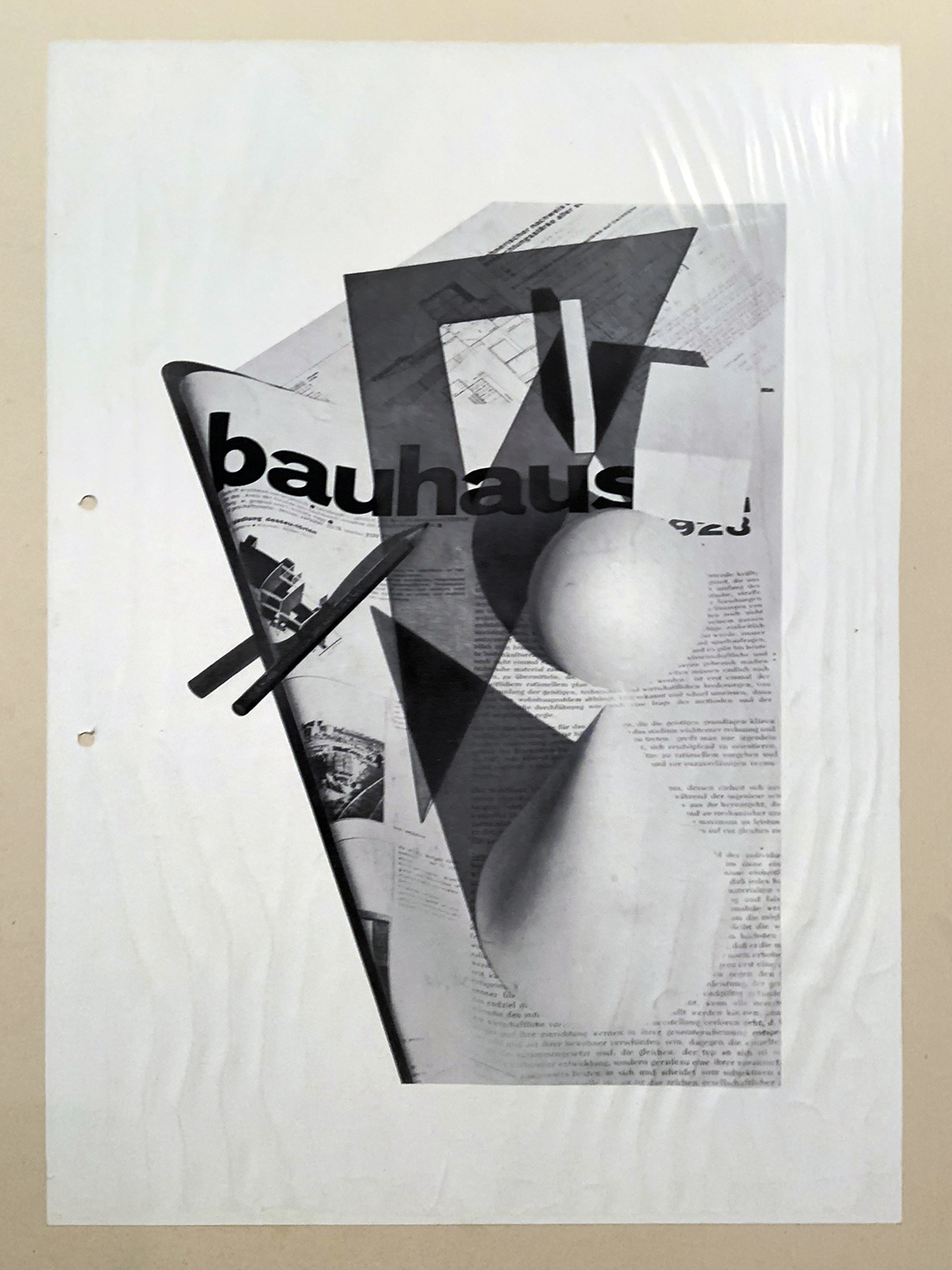
László Moholy-Nagy (Hungarian, 1895-1946) 'Bauhausbücher 8, L. Moholy-Nagy: Malerei, Fotografie, Film' 1925


László Moholy-Nagy (Hungarian, 1895-1946)
Bauhausbücher 8, L. Moholy-Nagy: Malerei, Fotografie, Film
1925
Albert Langen Verlag Herstellung, Entwerfer, Mitarbeit, Verleger
Albert Langen Verlag, Manufacture, designer, collaboration, publisher
Offset printing on paper and letterpress
Art Library / Collection of graphic design
Kunstbibliothek der Staatlichen Museen zu Berlin
Photo: Marcus Bunyan


Installation view of the exhibition 'László Moholy-Nagy and New Typography: A Reconstruction of a Berlin Exhibition from 1929' at the Staatliche Museen zu Berlin


Installation view of the exhibition László Moholy-Nagy and New Typography: A Reconstruction of a Berlin Exhibition from 1929 at the Staatliche Museen zu Berlin showing at left, Etoile du Nord 1927 (below); and at second left, Chemin de Fer du Nord. Vitesse-Luxe-Confort 1929 (below)
Photo: Marcus Bunyan


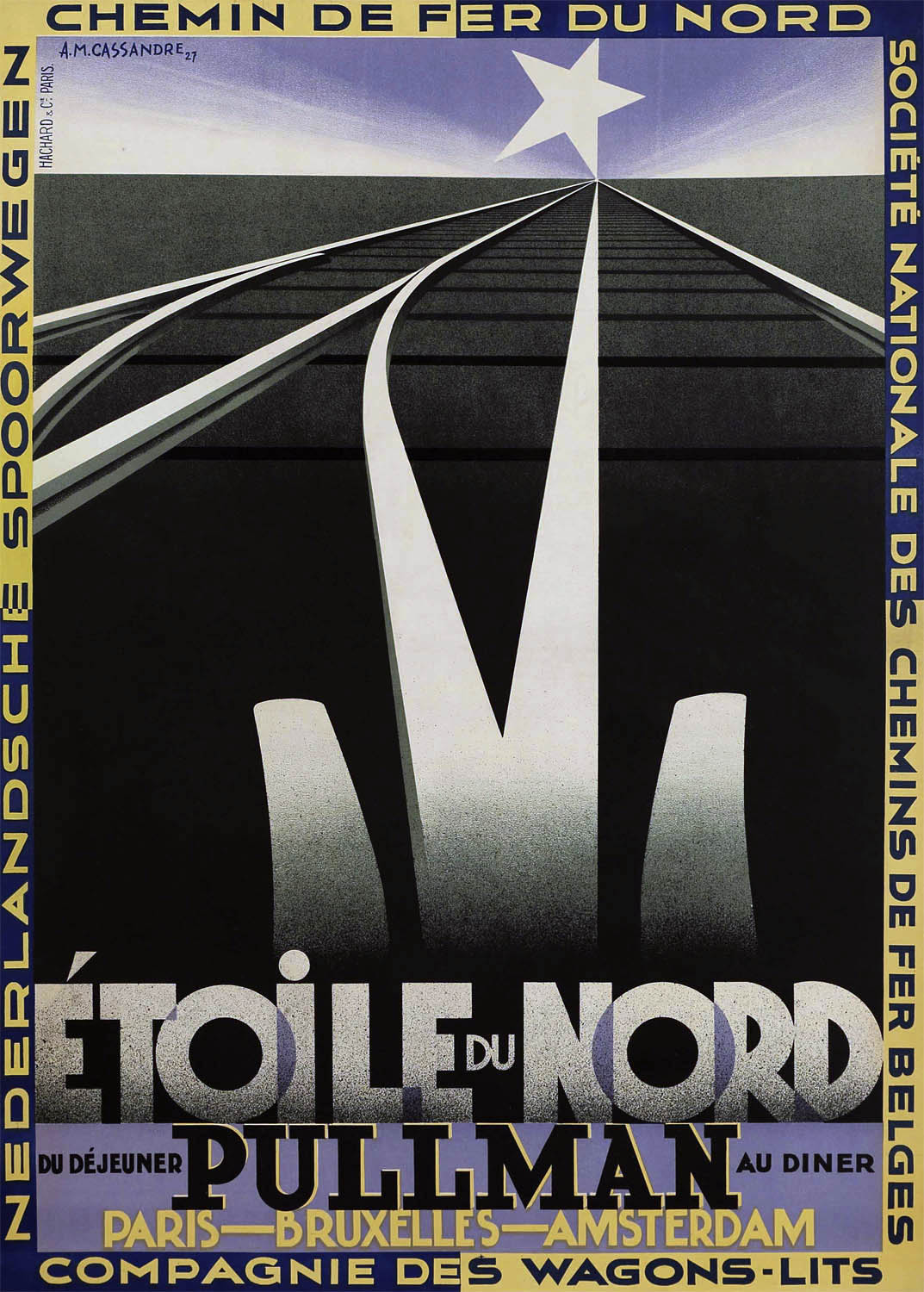
A. M. Cassandre (French, 1901-1968) 'Etoile du Nord' (North Star) 1927 from the exhibition 'László Moholy-Nagy and New Typography: A Reconstruction of a Berlin Exhibition from 1929' at the Staatliche Museen zu Berlin, Aug - Sept, 2019


A. M. Cassandre (French, 1901-1968)
Etoile du Nord (North Star)
1927
Poster
Druckerei Hachard et Cie., Paris
Hachard et Cie. Printing house, Paris
Lithograph


A. M. Cassandre (French, 1901-1968)

Cassandre, pseudonym of Adolphe Jean-Marie Mouron (24 January 1901 – 17 June 1968) was a French painter, commercial poster artist, and typeface designer.

He was born Adolphe Jean-Marie Mouron in Kharkiv, Ukraine, to French parents. As a young man, Cassandre moved to Paris, where he studied at the École des Beaux-Arts and at the Académie Julian. The popularity of posters as advertising afforded him an opportunity to work for a Parisian printing house. Inspired by cubism as well as surrealism, he earned a reputation with works such as Bûcheron (Woodcutter), a poster created for a cabinetmaker that won first prize at the 1925 Exposition Internationale des Arts Décoratifs et Industriels Modernes.

Cassandre became successful enough that with the help of partners he was able to set up his own advertising agency called Alliance Graphique, serving a wide variety of clients during the 1930s. He is perhaps best known for his posters advertising travel, for clients such as the Compagnie Internationale des Wagons-Lits. He was a pioneer on airbrush arts.

His creations for the Dubonnet wine company were among the first posters designed in a manner that allowed them to be seen by occupants in moving vehicles. His posters are memorable for their innovative graphic solutions and their frequent denotations to such painters as Max Ernst and Pablo Picasso. In addition, he taught graphic design at the École des Arts Décoratifs and then at the École d’Art Graphique.

With typography an important part of poster design, the company created several new typeface styles. Cassandre developed Bifur in 1929, the sans serif Acier Noir in 1935, and in 1937 an all-purpose font called Peignot. In 1936, his works were exhibited at the Museum of Modern Art in New York City which led to commissions from Harper’s Bazaar to do cover designs.

Text from the Wikipedia website


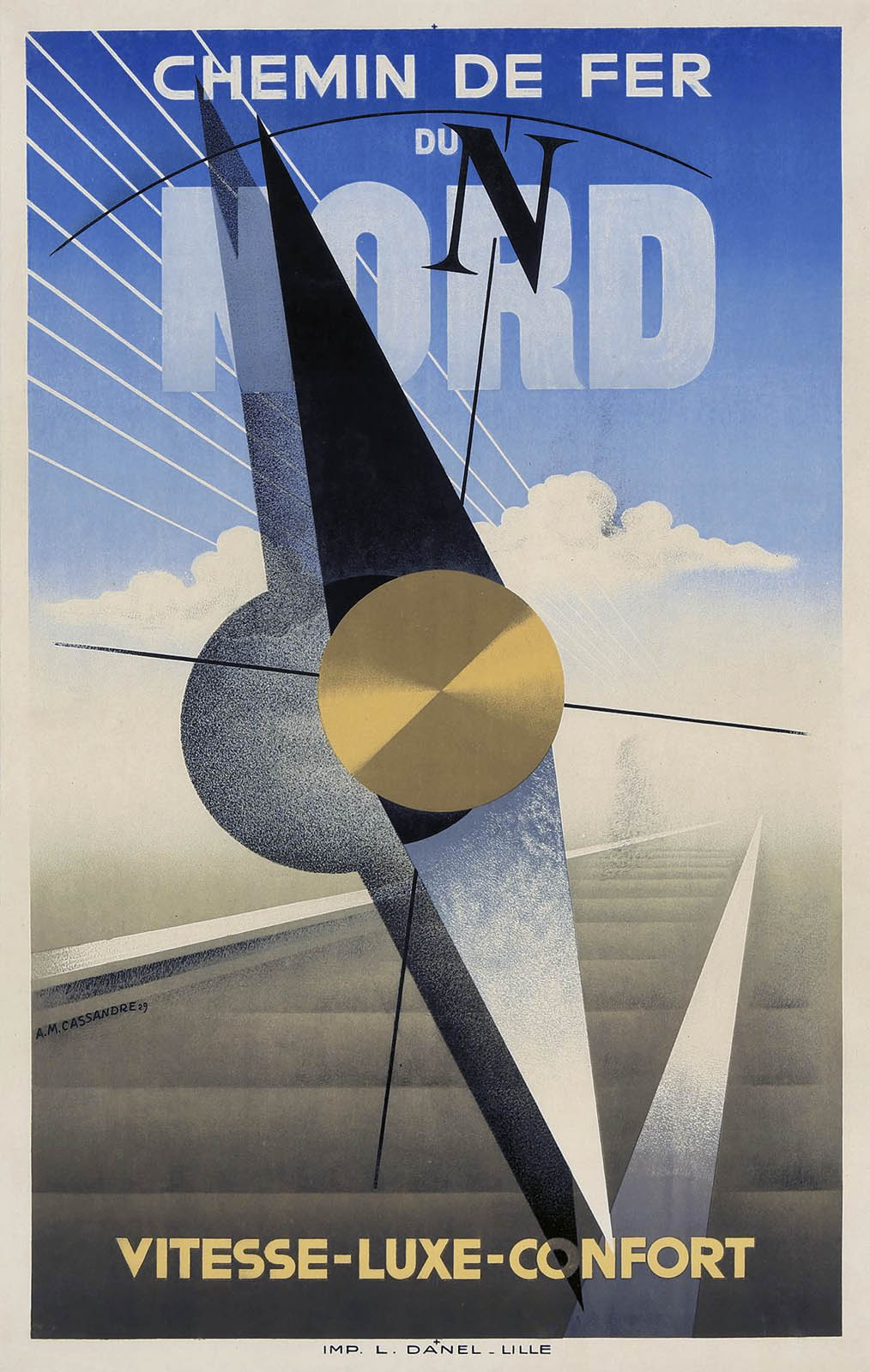
A. M. Cassandre (French, 1901-1968) 'Chemin de Fer du Nord. Vitesse-Luxe-Comfort' (Northern Railway. Speed-Luxury-Comfort) 1929


A. M. Cassandre (French, 1901-1968)
Chemin de Fer du Nord. Vitesse-Luxe-Comfort (Northern Railway. Speed-Luxury-Comfort)
1929
Poster
Druckerei L. Danel, Lille
L. Danel printing house, Lille
Lithograph


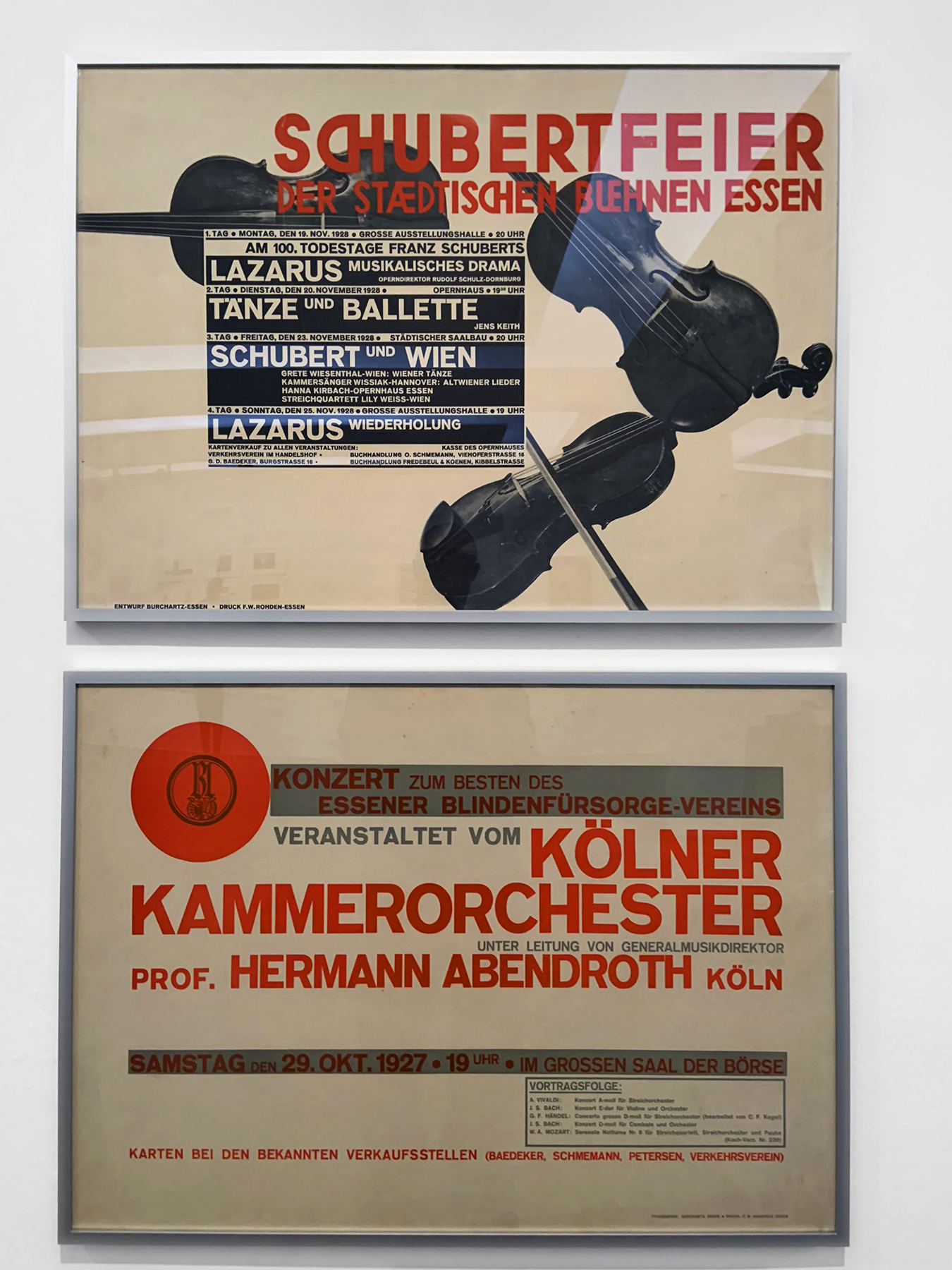
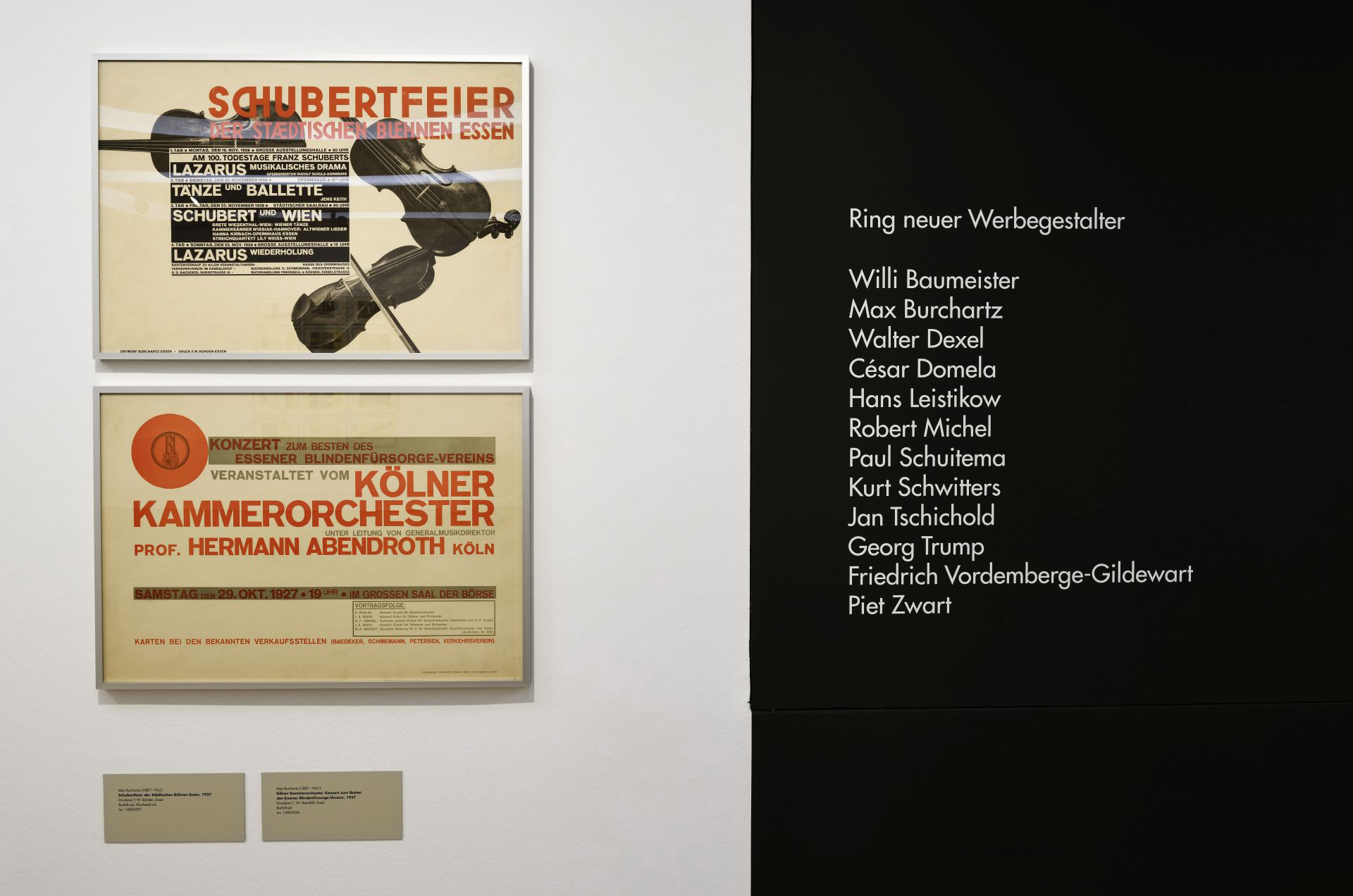
Max Burchartz (1887-1961) 'Posters' 1927


Max Burchartz (1887-1961)
Schubertfeier der Städtischen Bühnen Essen (Schubert celebration of the municipal theatres of Essen) (installation view)
1927
Poster
Druckerei F.W. Rohden Essen Buchdruck
F.W. Rohden Essen printing house
Letterpress

Max Burchartz (1887-1961)
Kölner Kammerorchester. Konzert aum Besten des Essener Blindenfürsorge-Vereins (Cologne Chamber Orchestra. Concert for the benefit of the Essen Blind Welfare Association) (installation view)
1927
Poster
Druckerei C.W. Haafeld, Essen Buchdruck
C.W. Haafeld, Essen printing house
Letterpress
Photo: Marcus Bunyan


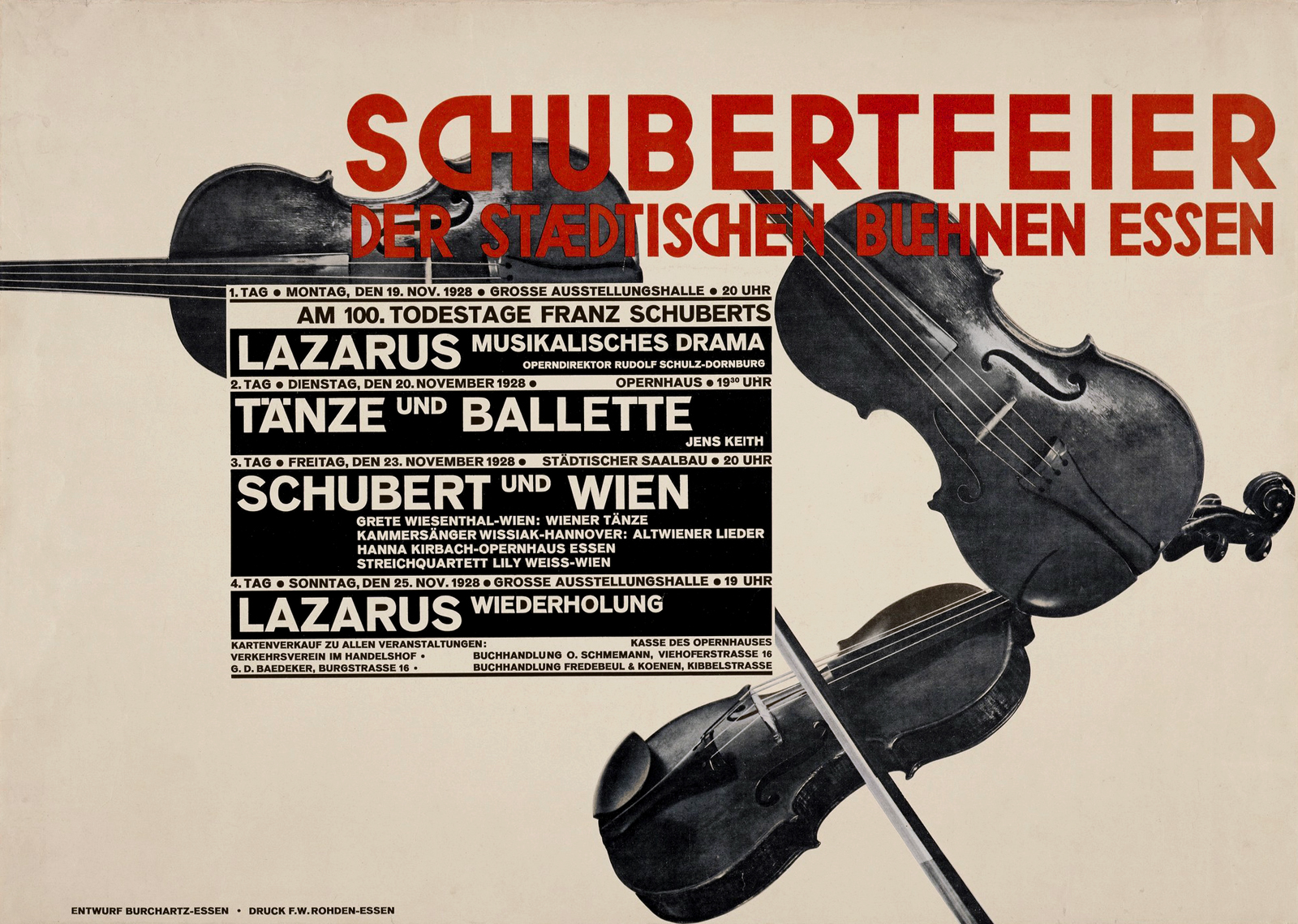
Max Burchartz (1887-1961) 'Schubertfeier der Städtischen Bühnen Essen' (Schubert celebration of the municipal theatres of Essen) 1927


Max Burchartz (1887-1961)
Schubertfeier der Städtischen Bühnen Essen (Schubert celebration of the municipal theatres of Essen)
1927
Poster
Druckerei F.W. Rohden Essen Buchdruck
F.W. Rohden Essen printing house
Letterpress


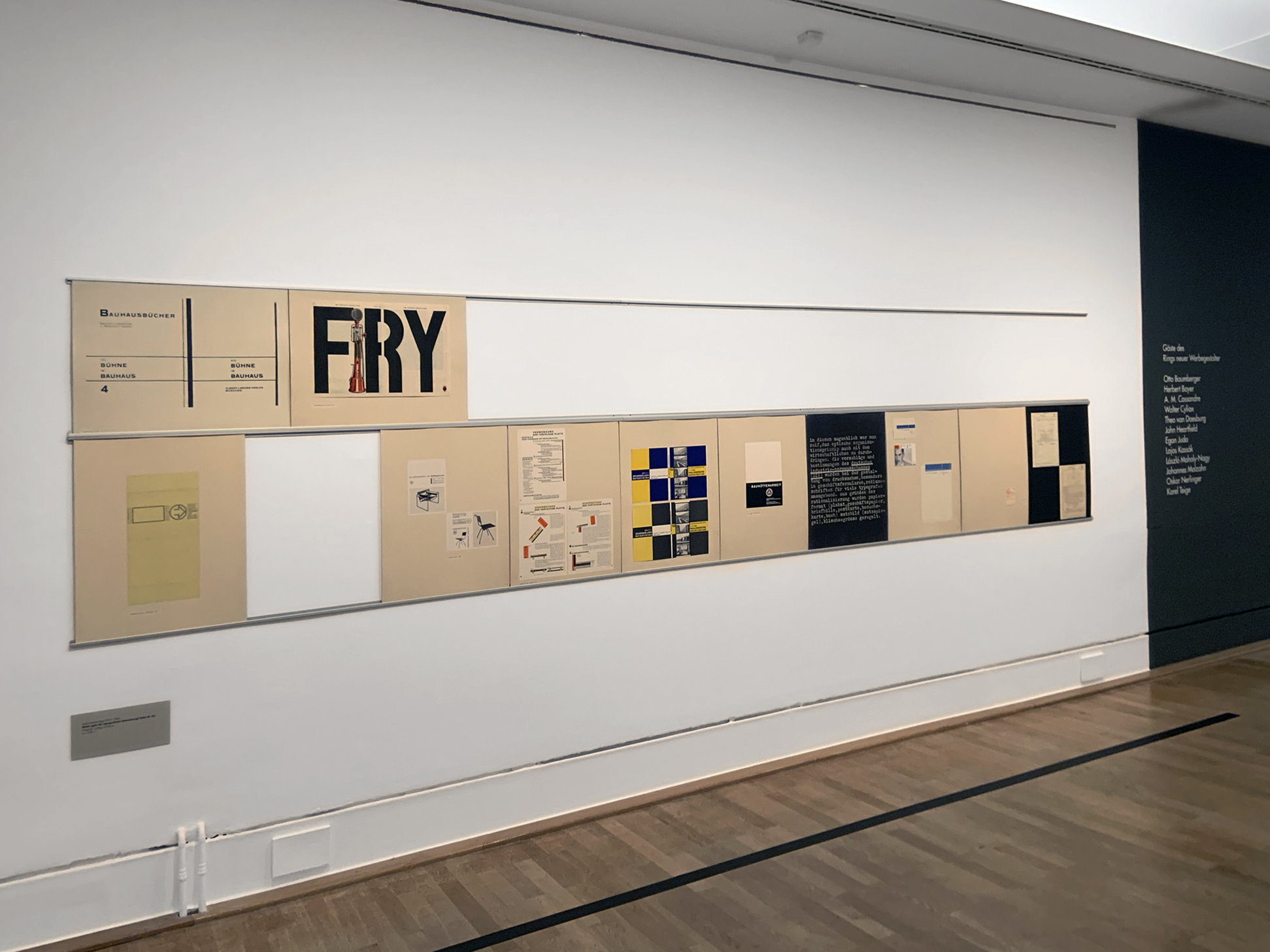
Installation view of the exhibition 'László Moholy-Nagy and New Typography: A Reconstruction of a Berlin Exhibition from 1929' at the Staatliche Museen zu Berlin

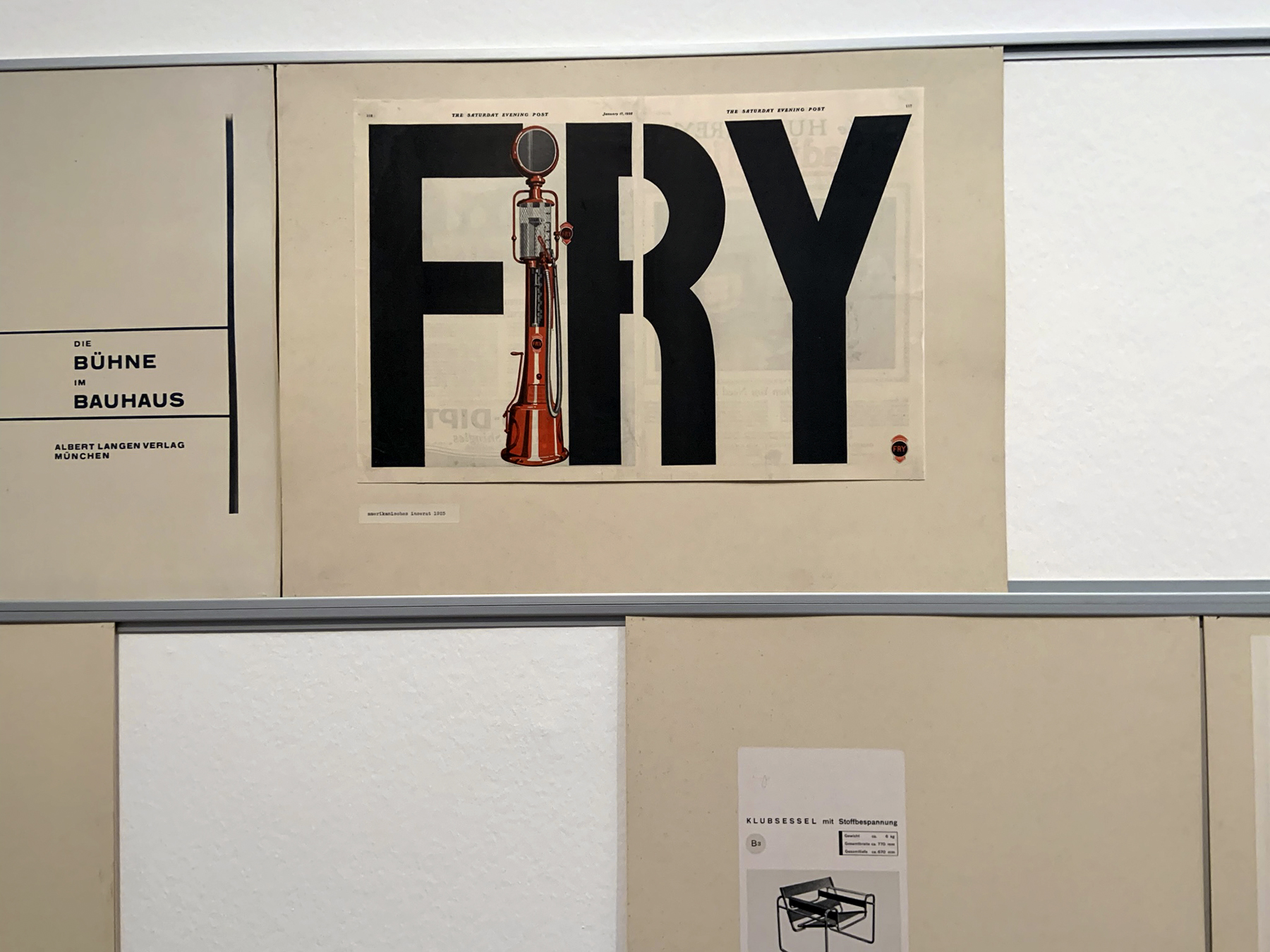
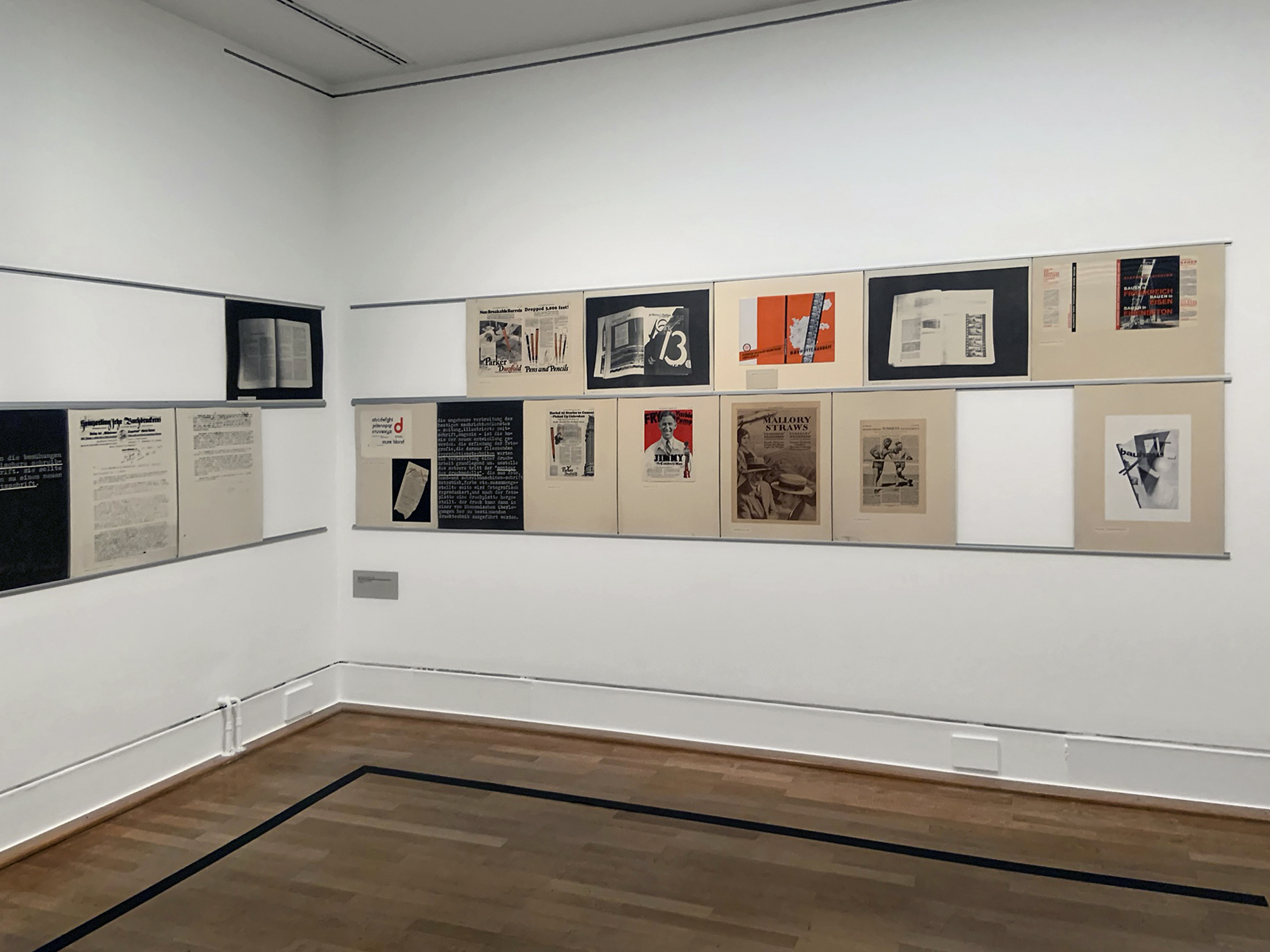
Installation view of the exhibition 'László Moholy-Nagy and New Typography: A Reconstruction of a Berlin Exhibition from 1929' at the Staatliche Museen zu Berlin showing American advertisement 1925 from 'The Saturday Evening Post'


Installation view of the exhibition László Moholy-Nagy and New Typography: A Reconstruction of a Berlin Exhibition from 1929 at the Staatliche Museen zu Berlin showing American advertisement 1925 from The Saturday Evening Post
Photos: Marcus Bunyan


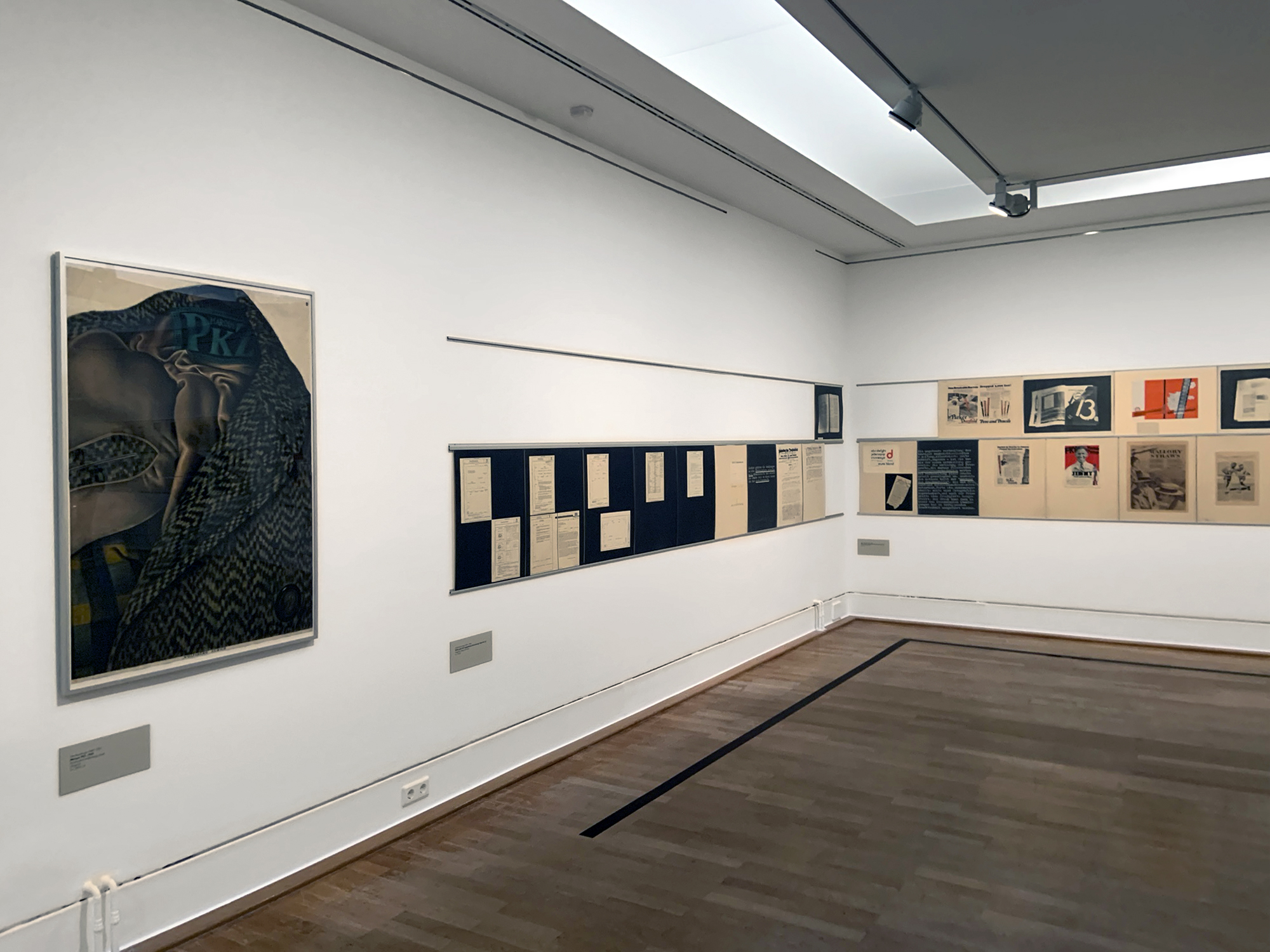
Installation view of the exhibition 'László Moholy-Nagy and New Typography: A Reconstruction of a Berlin Exhibition from 1929' at the Staatliche Museen zu Berlin showing at left, Otto Baumberger's 'Marque PKZ' 1923


Installation view of the exhibition László Moholy-Nagy and New Typography: A Reconstruction of a Berlin Exhibition from 1929 at the Staatliche Museen zu Berlin showing at left, Otto Baumberger’s Marque PKZ (1923, below)
Photo: Marcus Bunyan


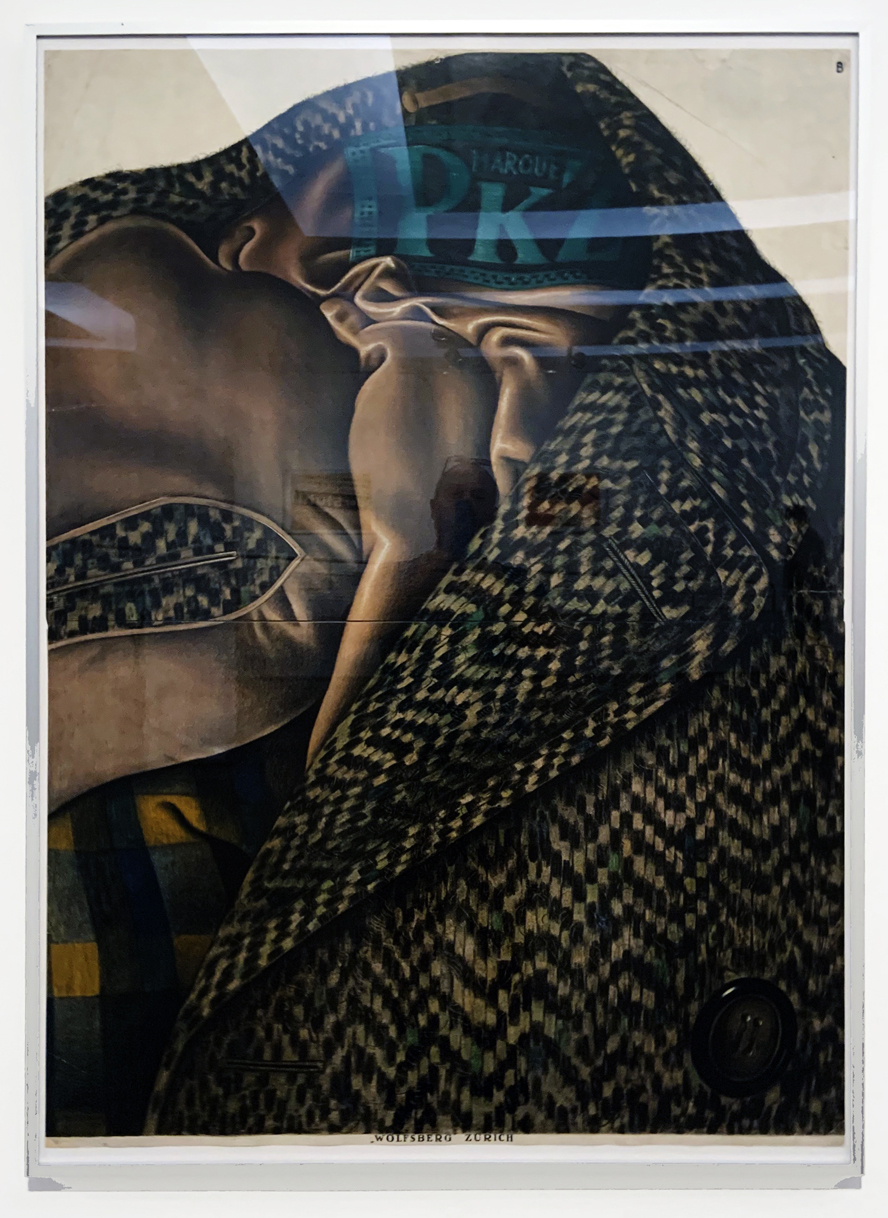
Otto Baumberger (1889-1961) 'Marque PKZ' 1923 (installation view)


Otto Baumberger (1889-1961)
Marque PKZ (installation view)
1923
Steindruckerei Wolfensberg, Zürich
Wolfensberg lithography, Zurich
Lithograph
Photo: Marcus Bunyan


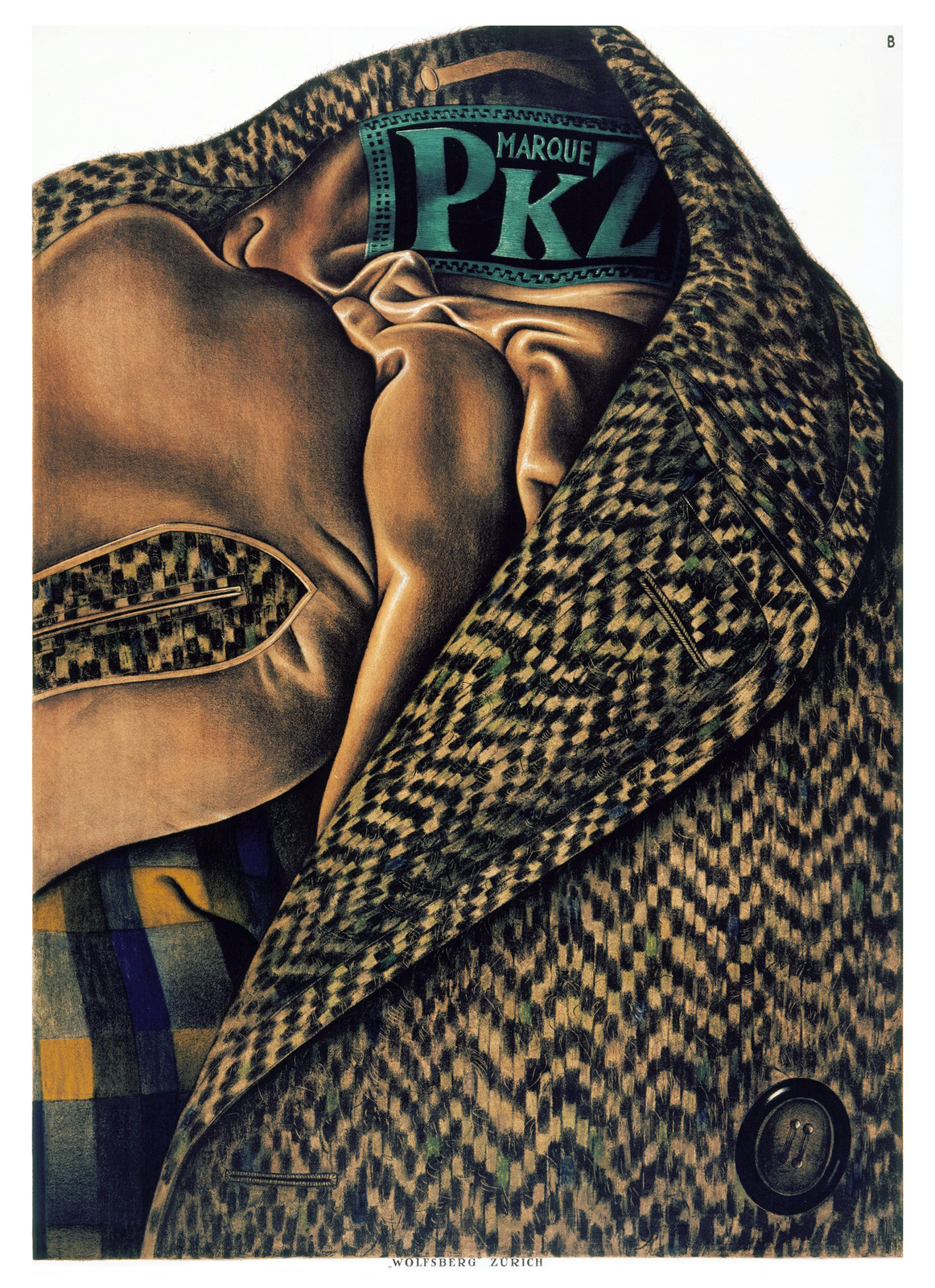
Otto Baumberger (1889-1961) 'Marque PKZ' 1923


Otto Baumberger (1889-1961)
Marque PKZ
1923
Steindruckerei Wolfensberg, Zürich
Wolfensberg lithography, Zurich
Lithograph


Otto Baumberger (21 May 1889 Altstetten, Zurich – 26 December 1961 Weiningen), was a noted Swiss painter and poster artist. Baumberger produced some 200 posters of great quality and style. His realistic rendering of a herringbone tweed coat became a classic of Swiss poster, an example of a Sachplakat (object poster).


Installation view of the exhibition 'László Moholy-Nagy and New Typography: A Reconstruction of a Berlin Exhibition from 1929' at the Staatliche Museen zu Berlin


Installation view of the exhibition László Moholy-Nagy and New Typography: A Reconstruction of a Berlin Exhibition from 1929 at the Staatliche Museen zu Berlin
Photo: Marcus Bunyan


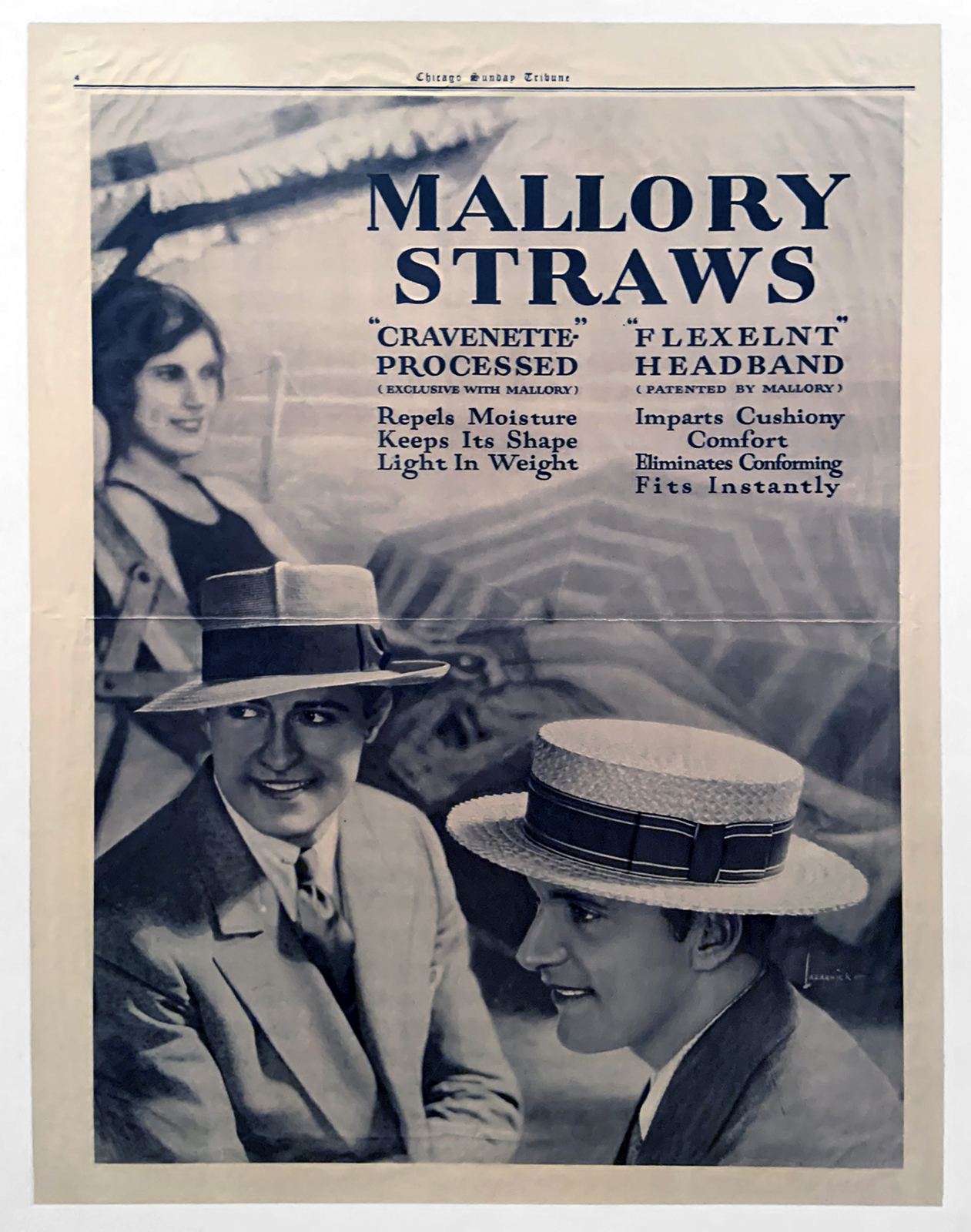
American advertisement. 'Mallory Straws' 1926


American advertisement
Mallory Straws (installation view)
1926
Chicago Sunday Tribune
Photo: Marcus Bunyan


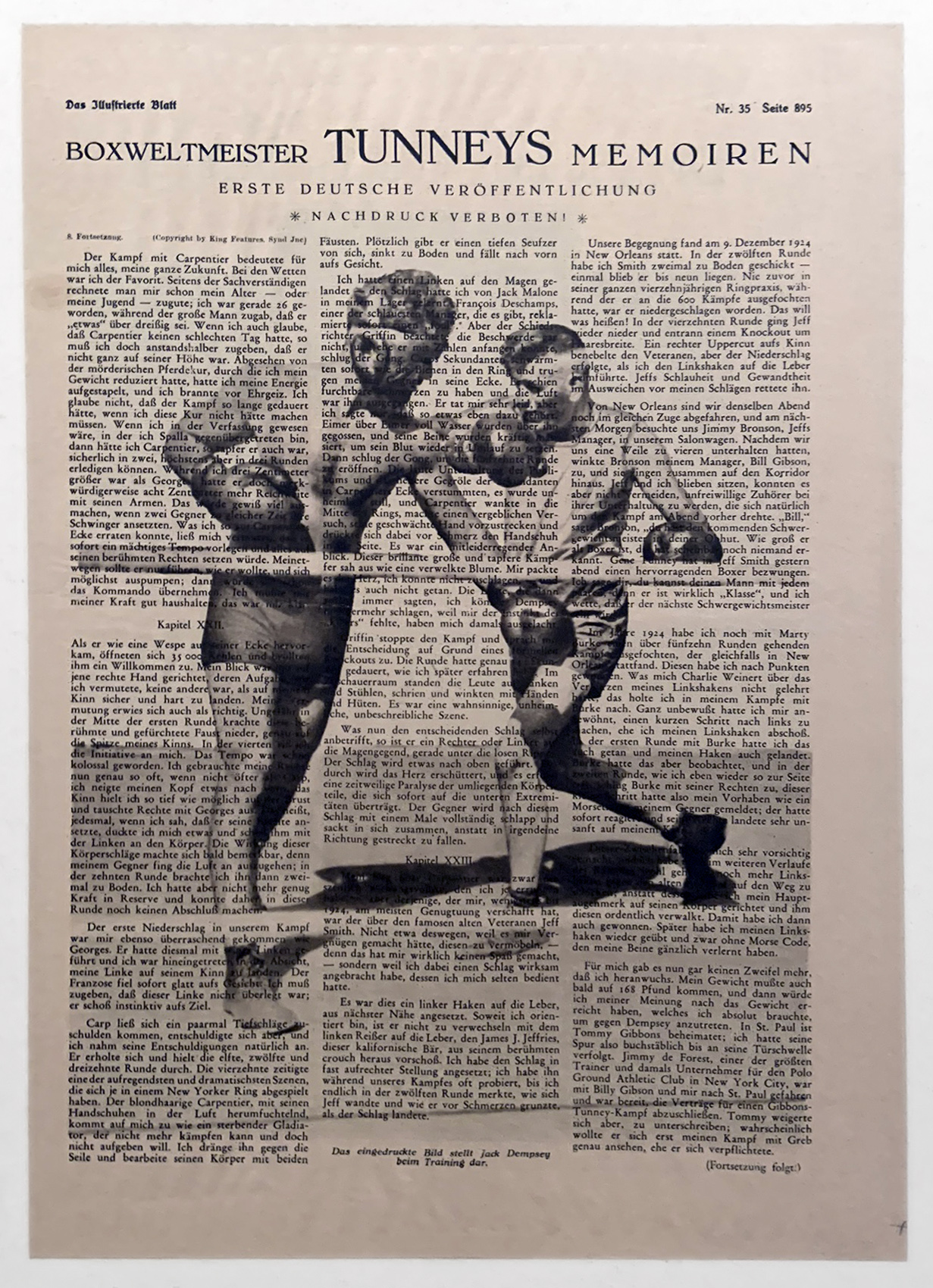
"Boxweltmeister Tunneys Memoiren (Boxing World Champion Tunney's Memoir)" 1927 (installation view)


Das Illustrierte Blatt (The Illustrated Sheet) Nr. 35, Page 895
“Boxweltmeister Tunneys Memoiren” (Boxing World Champion Tunney’s Memoir)
1927
First German publication

in

László Moholy-Nagy (Hungarian, 1895-1946)
Wohin geht die typographische Entwicklung? Tafel 55 (installation view)
Where is typography headed? Chart 55
1929
Collage
© Kunstbibliothek, Staatliche Museen zu Berlin, Herbert Bayer, VG Bild-Kunst, Bonn 2019
Photo: Marcus Bunyan


László Moholy-Nagy (Hungarian, 1895-1946) 'Where is typography headed? Chart 58' 1929 (installation view)


Herbert Bayer 1928

in

László Moholy-Nagy (Hungarian, 1895-1946)
Wohin geht die typographische Entwicklung?, Tafel 58 (installation view)
Where is typography headed? Chart 58
1929
Collage
© Kunstbibliothek, Staatliche Museen zu Berlin, Herbert Bayer, VG Bild-Kunst, Bonn 2019
Photo: Marcus Bunyan


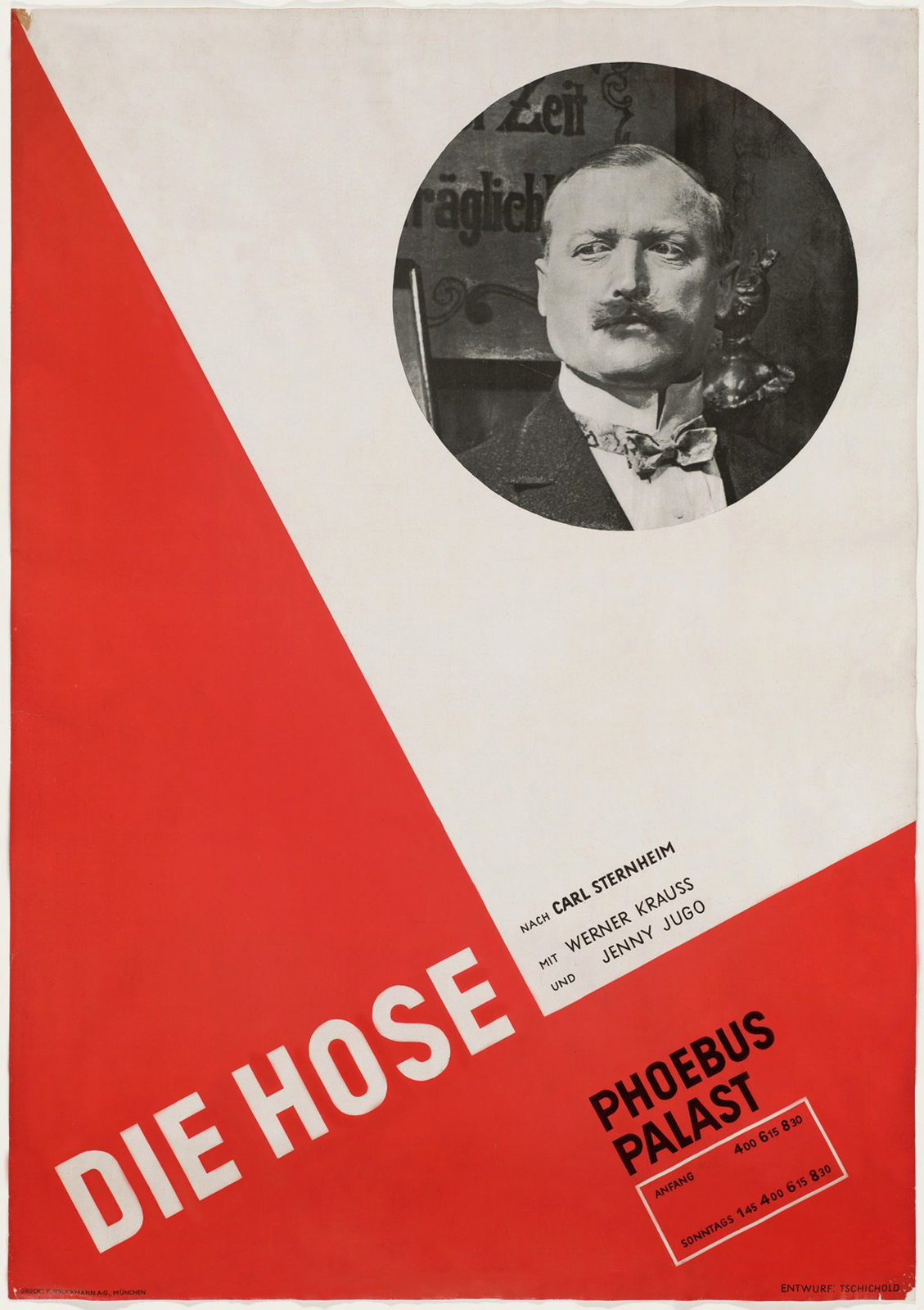
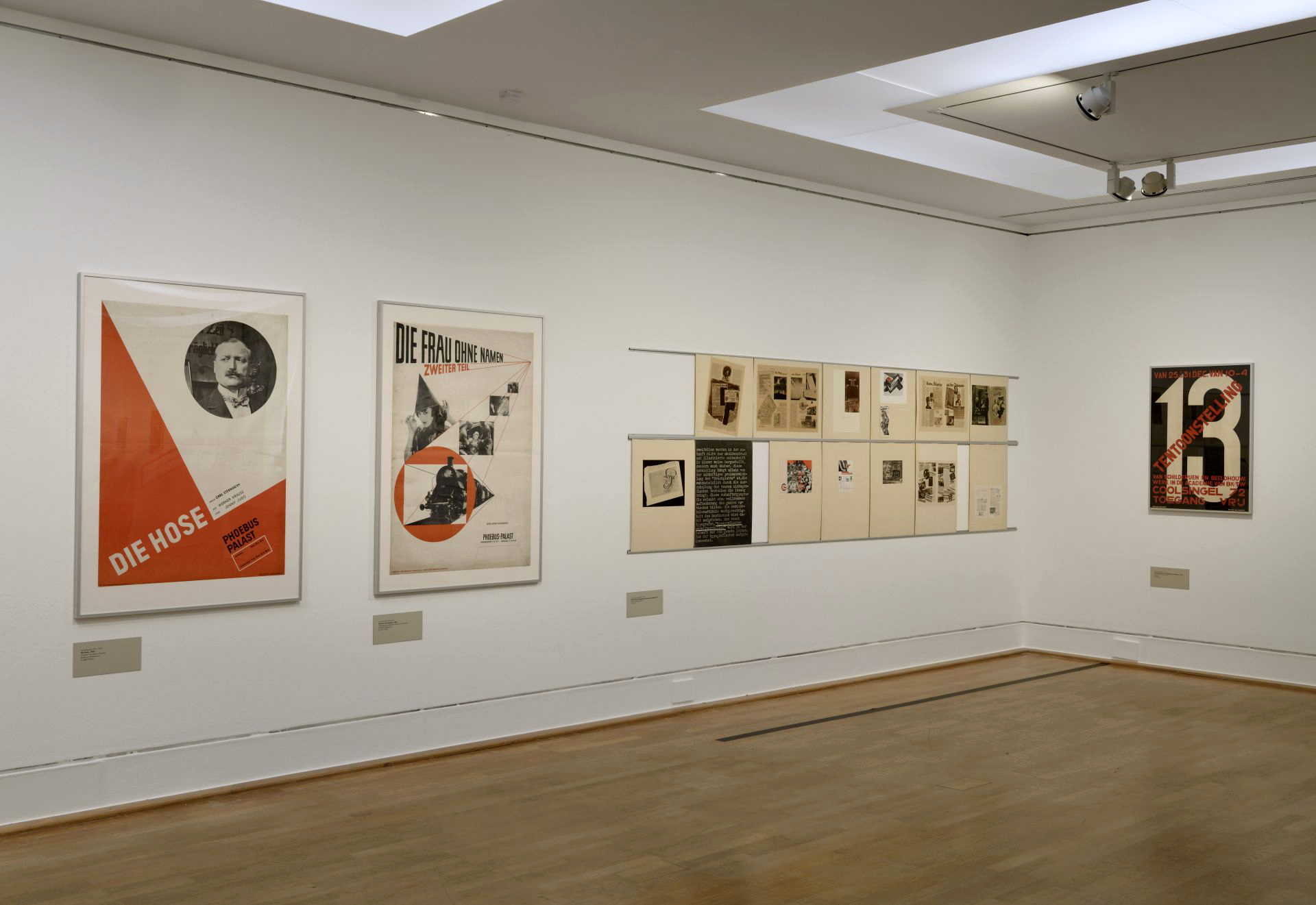
Jan Tschichold (1902-1974) 'Die Hose' (The pants) 1927 (installation view)


Jan Tschichold (1902-1974)
Die Hose (The pants) (installation view)
1927
F. Bruckmann printing house, Munich
Letterpress
Photo: Marcus Bunyan


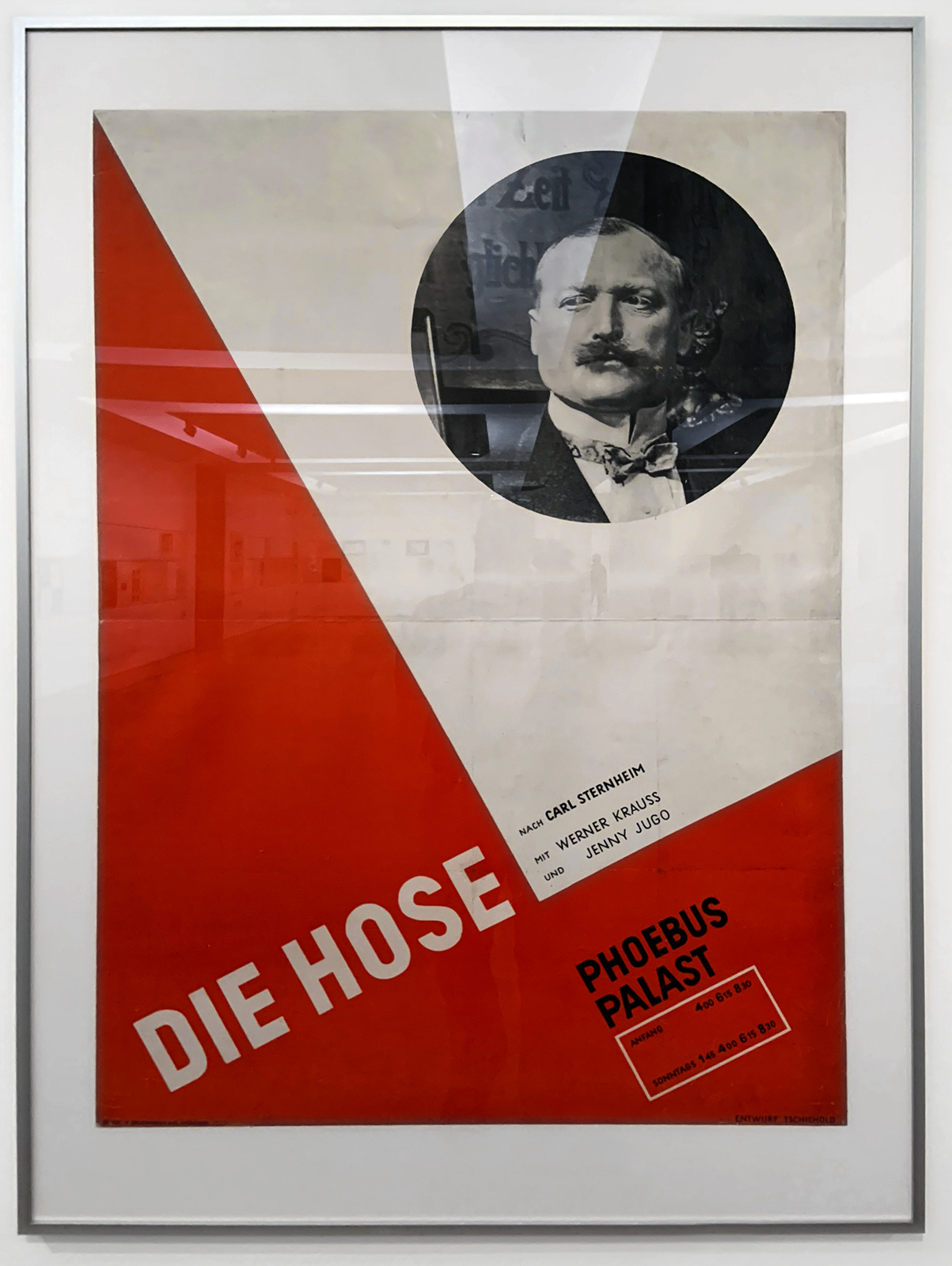
Jan Tschichold (1902-1974) 'Die Hose' (The pants) 1927


Jan Tschichold (1902-1974)
Die Hose (The pants)
1927
F. Bruckmann printing house, Munich
Letterpress


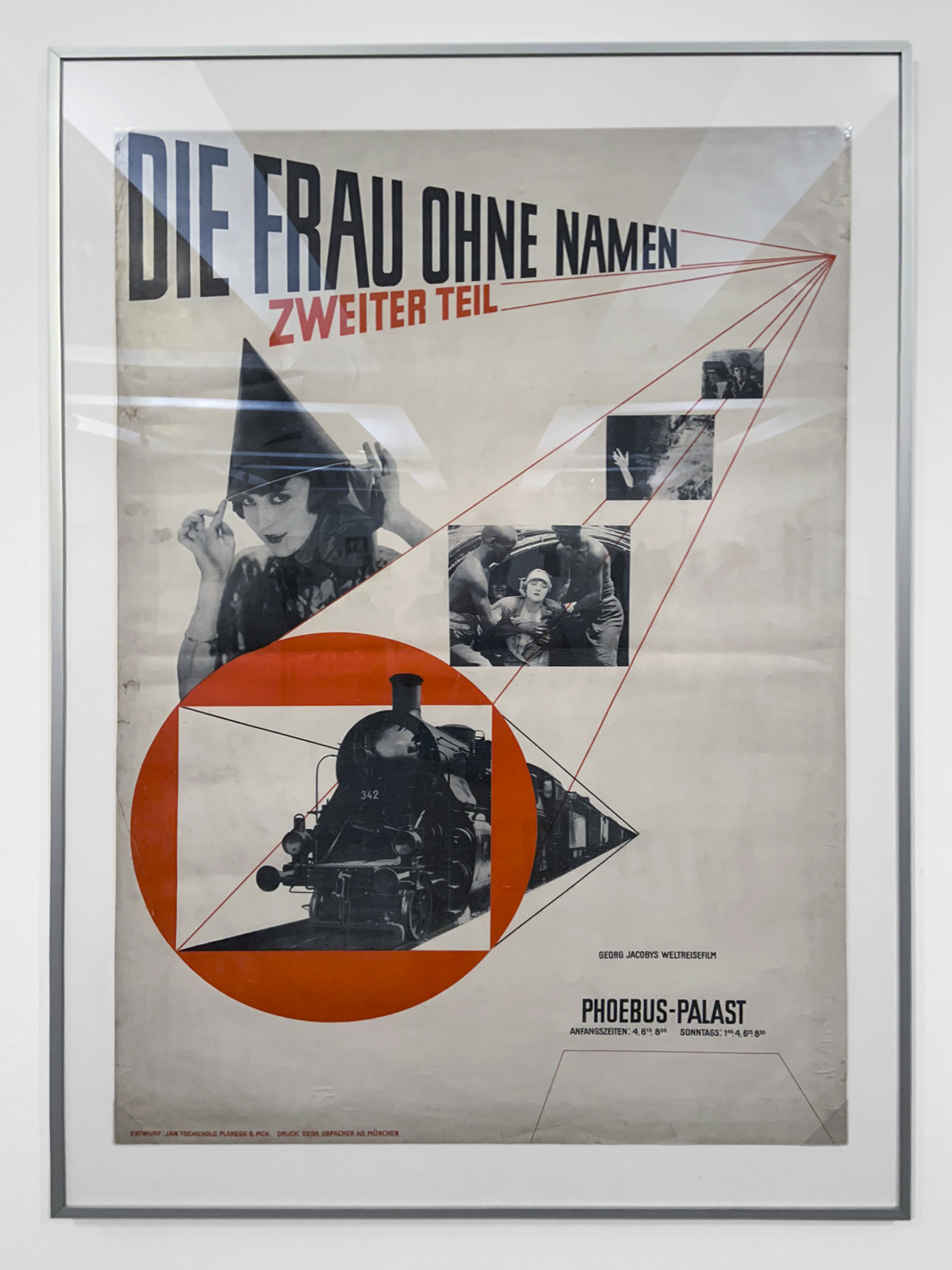
Jan Tschichold (1902-1974) 'Die Frau ohne Namen' (The woman without a name) 1927 (installation view)


Jan Tschichold (German, 1902-1974)
Die Frau ohne Namen (The woman without a name) (installation view)
1927
Lithographische Anstalt Gebr. Obpacher AG, Munich
Lithographic Institute Gebr. Obpacher AG, Munich
Letterpress
Photo: Marcus Bunyan


Jan Tschichold (German, 1902-1974)

Jan Tschichold (born Johannes Tzschichhold, also known as Iwan Tschichold, or Ivan Tschichold; 2 April 1902 – 11 August 1974) was a calligrapher, typographer and book designer. He played a significant role in the development of graphic design in the 20th century – first, by developing and promoting principles of typographic modernism, and subsequently (and ironically) idealising conservative typographic structures. His direction of the visual identity of Penguin Books in the decade following World War II served as a model for the burgeoning design practice of planning corporate identity programs. He also designed the much-admired typeface Sabon. …

This artisan background and calligraphic training set him apart from almost all other noted typographers of the time, since they had inevitably trained in architecture or the fine arts. It also may help explain why he never worked with handmade papers and custom fonts as many typographers did, preferring instead to use stock fonts on a careful choice from commercial paper stocks.

Although, up to this moment, he had only worked with historical and traditional typography, he radically changed his approach after his first visit to the Bauhaus exhibition at Weimar. After being introduced to important artists such as László Moholy-Nagy, El Lissitzky, Kurt Schwitters and others who were carrying out radical experiments to break the rigid schemes of conventional typography. He became sympathetic to this attempt to find new ways of expression and to reach a much more experimental way of working, but at the same time, felt it was important to find a simple and practical approach.

He became one of the most important representatives of the “new typography” and in a famous special issue of ‘typographic communications’ in 1925 with the title of “Elemental Typography”, he put together the new approaches in the form of a thesis.

After the election of Hitler in Germany, all designers had to register with the Ministry of Culture, and all teaching posts were threatened for anyone who was sympathetic to communism. Soon after Tschichold had taken up a teaching post in Munich at the behest of Paul Renner, they both were denounced as “cultural Bolshevists”. Ten days after the Nazis surged to power in March 1933, Tschichold and his wife were arrested. During the arrest, Soviet posters were found in his flat, casting him under suspicion of collaboration with communists. All copies of Tschichold’s books were seized by the Gestapo “for the protection of the German people”. After six weeks a policeman somehow found him tickets for Switzerland, and he and his family managed to escape Nazi Germany in August 1933.

Text from the Wikipedia website


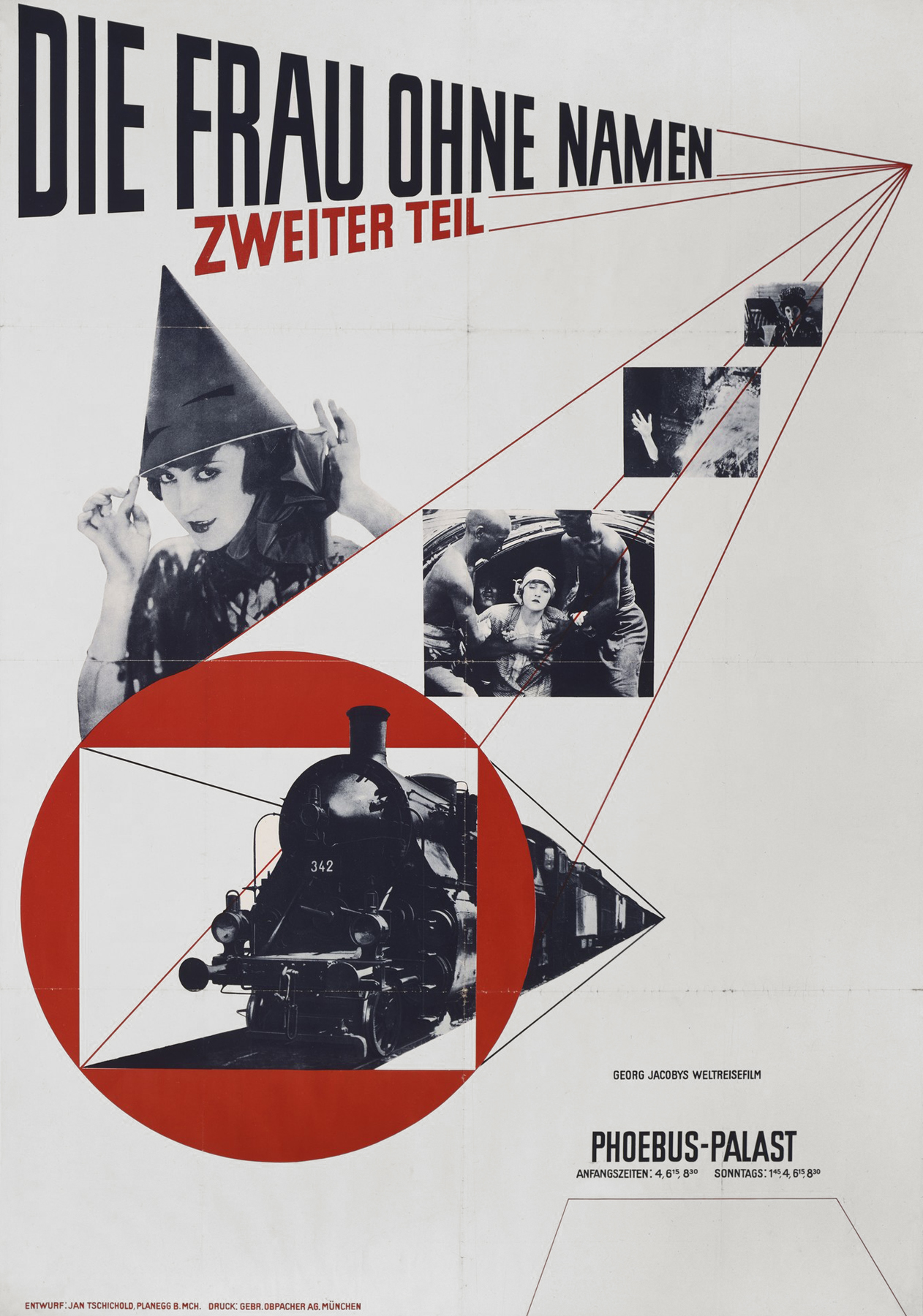
Jan Tschichold (German, 1902-1974) 'Die Frau ohne Namen' (The woman without a name) 1927


Jan Tschichold (1902-1974)
Die Frau ohne Namen (The woman without a name)
1927
Lithographische Anstalt Gebr. Obpacher AG, Munich
Lithographic Institute Gebr. Obpacher AG, Munich
Letterpress


As part of the bauhauswoche berlin 2019 (Bauhaus week Berlin 2019) the Kunstbibliothek is showing an historical exhibition room by the Bauhaus artist László Moholy-Nagy.

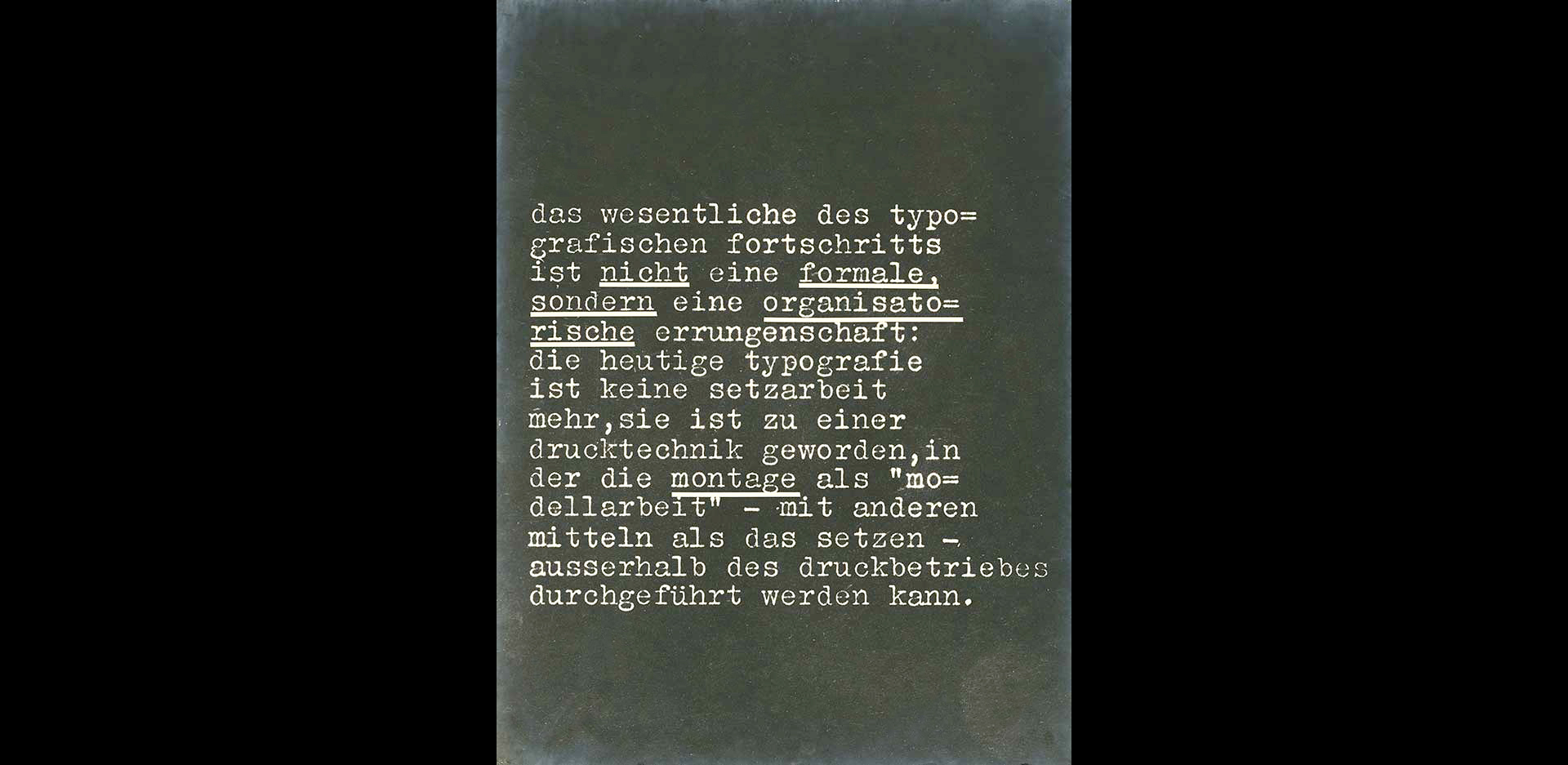
This pioneering exhibition room, entitled Wohin geht die typographische Entwicklung? (Where is typography headed?), was first shown in May 1929 in the Martin-Gropius-Bau as part of the exhibition Neue Typographie (“New Typography”), organised by the Staatliche Kunstbibliothek. Moholy-Nagy had been invited to design a room presenting the future of typography. He came up with 78 wall charts with photos, texts and pictures, all of which have been preserved. The exhibition room can therefore be shown again, complemented by additional posters, letterheads, and other specimens of New Typography from the Kunstbibliothek collection.

Moreover, well-known posters and advertisements from the Kunstbibliothek collection in the style known as New Typography augment the Moholy-Nagy exhibition. The selection includes works by Willi Baumeister, A. M. Cassandre, Walter Dexel, Johannes Molzahn, Kurt Schwitters and Jan Tschichold. The functional graphic design of New Typography, a style of advertising designed by artists that gained wide acceptance in the 1920s, broke with a long design tradition in the printing trade. Its aim was to create a contemporary design: first by propagating a standardisation of fonts and the industrial DIN norms, and second, by promoting ideals of readability, clarity and directness in keeping with the principles of Constructivist Art.

The exhibition focuses on this large-scale presentation with which artist Moholy-Nagy summed up years of his own teaching work at the Bauhaus and the ideas and visions of New Typography, ranging from Jan Tschichold and Willi Baumeister to Herbert Bayer. The exhibition programme includes evening discussions evaluating Moholy-Nagy’s ideas from a contemporary standpoint. An important part of the programme will be the launch of a new publication on Moholy-Nagy’s historical exhibition, edited in collaboration with Gutenberg Design Lab at Mainz University of Applied Sciences.

Text from the Staatliche Museen zu Berlin website


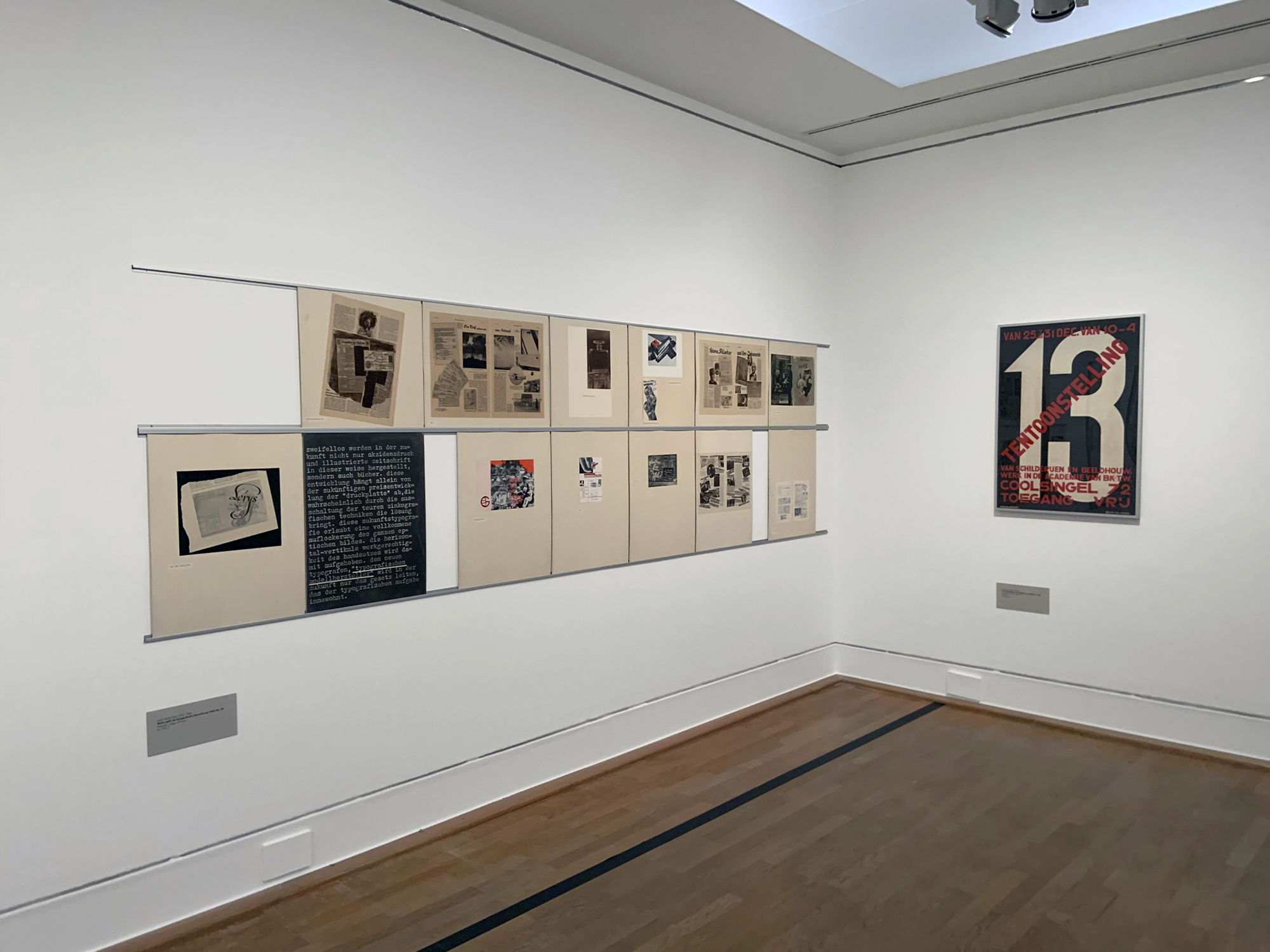
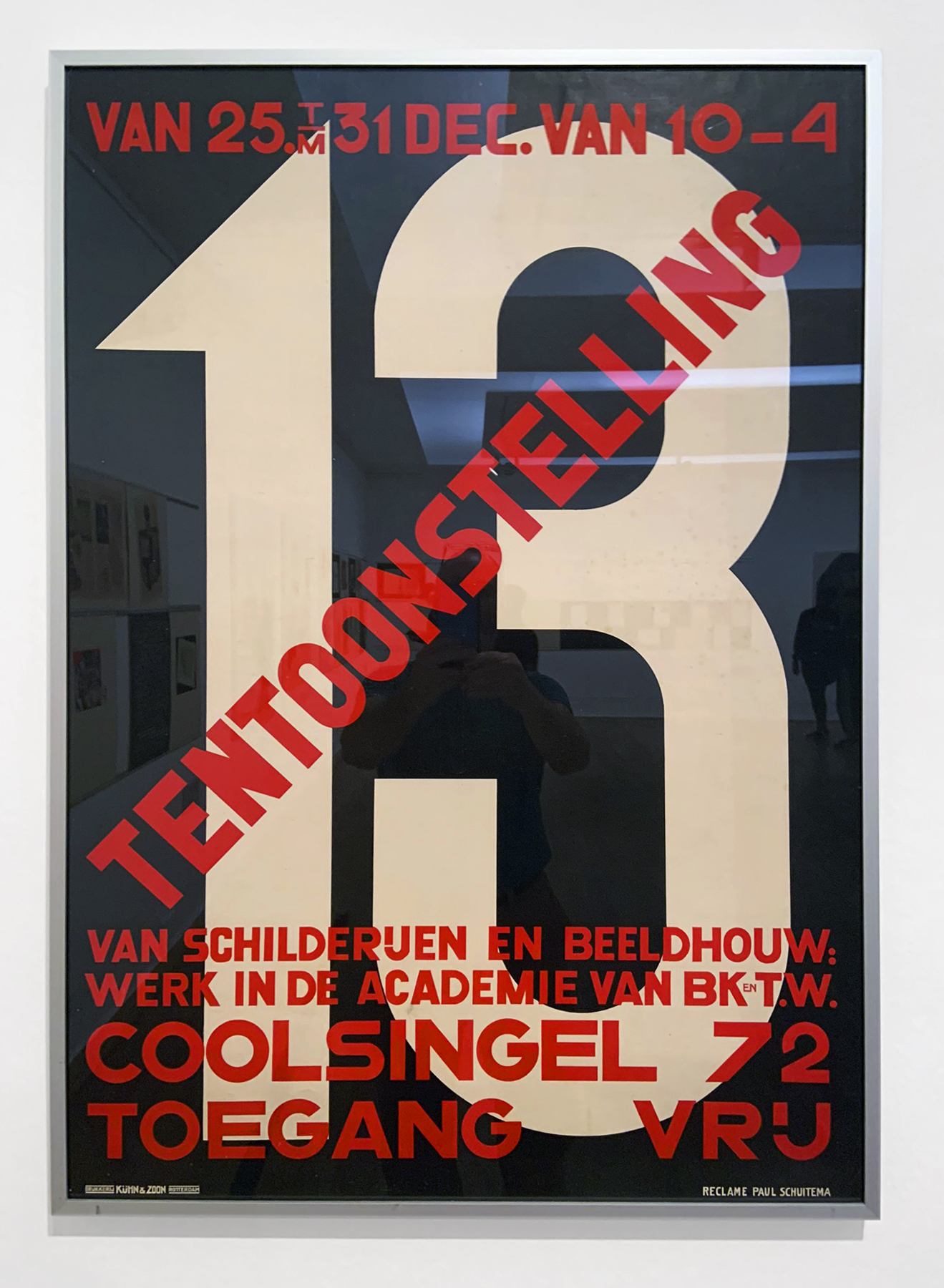
Installation view of the exhibition 'László Moholy-Nagy and New Typography: A Reconstruction of a Berlin Exhibition from 1929' at the Staatliche Museen zu Berlin showing at right, Paul Schuitema's '13 Tentoonstelling van Schilderijen en Beeldhouw' 1927


Installation view of the exhibition László Moholy-Nagy and New Typography: A Reconstruction of a Berlin Exhibition from 1929 at the Staatliche Museen zu Berlin showing at right, Paul Schuitema’s 13 Tentoonstelling van Schilderijen en Beeldhouw 1927
Photo: Marcus Bunyan


Paul Schuitema (1897-1973) '13 Tentoonstelling van Schilderijen en Beeldhouw' (13 Exhibition of Paintings and Sculptures) 1927 (installation view)


Paul Schuitema (1897-1973)
13 Tentoonstelling van Schilderijen en Beeldhouw (13 Exhibition of Paintings and Sculptures) (installation view)
1927
Kühn & Zoon printing house, Rotterdam
Lithograph
Photo: Marcus Bunyan


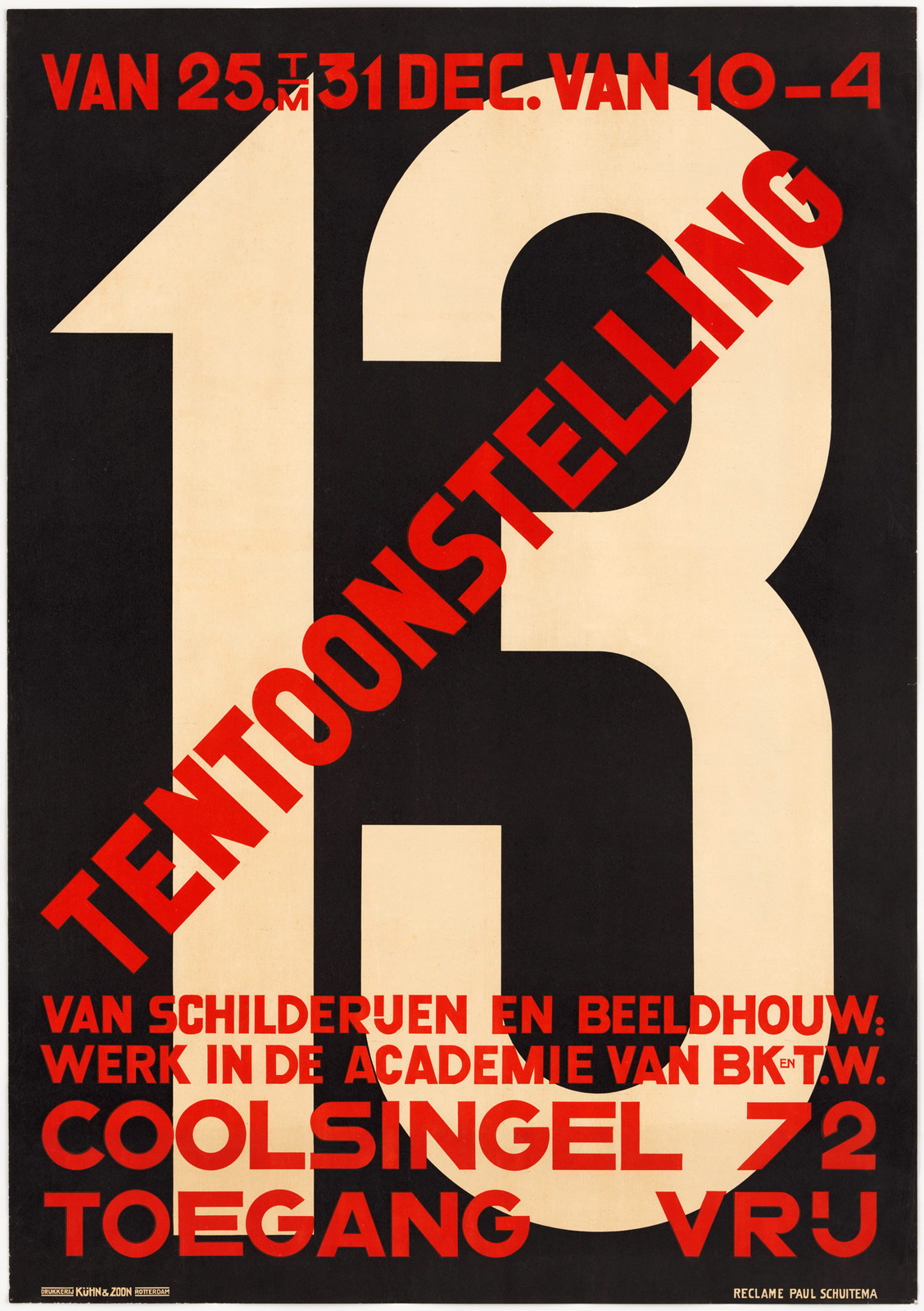
Paul Schuitema (1897-1973) '13 Tentoonstelling van Schilderijen en Beeldhouw' (13 Exhibition of Paintings and Sculptures) 1927


Paul Schuitema (Dutch, 1897-1973)
13 Tentoonstelling van Schilderijen en Beeldhouw (13 Exhibition of Paintings and Sculptures)
1927
Kühn & Zoon printing house, Rotterdam
Lithograph


Paul Schuitema (Dutch, 1897-1973)

Geert Paul Hendrikus Schuitema (February 27, 1897 in Groningen – October 25, 1973 in Wassenaar) was a Dutch graphic artist. He also designed furniture and expositions and worked as photographer, film director, painter and teacher for publicity design at the Royal Academy of Art in The Hague.

Industrial design

Schuitema studied at the Academie voor Beeldende Kunsten in Rotterdam. In the 1920s, he began to work on graphic design, applying the principles of De Stijl and constructivism to commercial advertising. Along with Gerard Kiljan and his famous colleague Piet Zwart, he followed ideas pioneered in the Soviet Union by El Lissitzky and Rodchenko, in Poland by Henryk Berlewi and in Germany by Kurt Schwitters.

During his employment at the NV Maatschappij Van Berkel Patent scale company in Rotterdam, Schuitema gained recognition for his original designs of stationery and publicity material, often using only the colours black, red and white and bold sans serif fonts. From 1926 on, he started working with photomontages, becoming one of the pioneers of this technique in the field of industrial design.

Even though he was a convinced socialist and often designed leftist publications directed at industrial workers, Schuitema also worked for major companies, such as Philips.

Text from the Wikipedia website


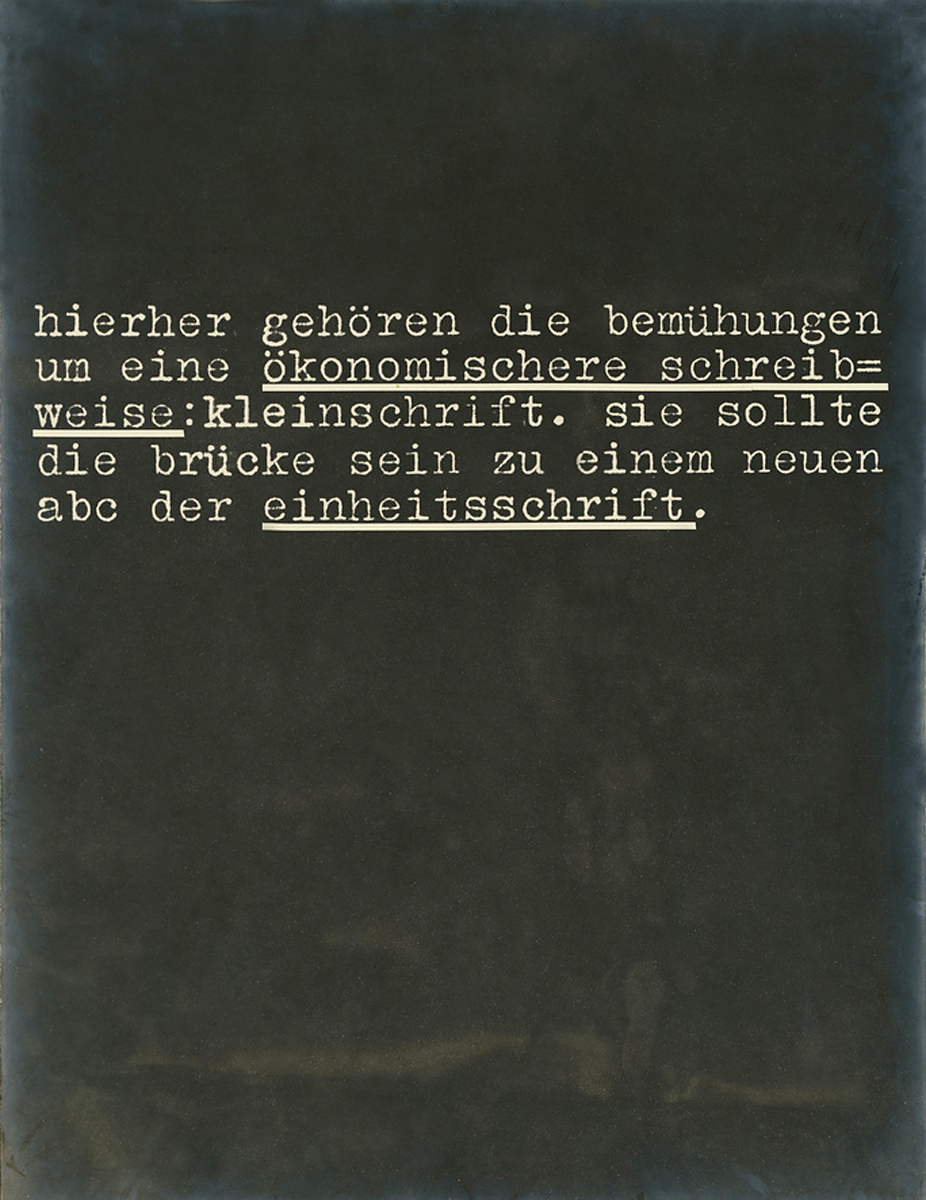
László Moholy-Nagy (Hungarian, 1895-1946) 'Where is typography headed? Chart 1' 1929


László Moholy-Nagy (Hungarian, 1895-1946)
Wohin geht die typographische Entwicklung?, Tafel 1
Where is typography headed? Chart 1

1929
Photograph on card
© Staatliche Museen zu Berlin, Kunstbibliothek


László Moholy-Nagy (Hungarian, 1895-1946) 'Where is typography headed? Chart 12' 1929


László Moholy-Nagy (Hungarian, 1895-1946)
Wohin geht die typographische Entwicklung?, Tafel 12
Where is typography headed? Chart 12

1929
Photograph on card
© Staatliche Museen zu Berlin, Kunstbibliothek


László Moholy-Nagy (Hungarian, 1895-1946) 'Where is typography headed? Chart 22' 1929


László Moholy-Nagy (Hungarian, 1895-1946)
Wohin geht die typographische Entwicklung?, Tafel 22
Where is typography headed? Chart 22

1929
Photograph on card
© Staatliche Museen zu Berlin, Kunstbibliothek


László Moholy-Nagy (Hungarian, 1895-1946) 'Where is typography headed? Chart 34' 1929


László Moholy-Nagy (Hungarian, 1895-1946)
Wohin geht die typographische Entwicklung?, Tafel 34
Where is typography headed? Chart 34

1929
Photograph on card
© Staatliche Museen zu Berlin, Kunstbibliothek


László Moholy-Nagy (Hungarian, 1895-1946) 'Where is typography headed? Chart 44' 1929


László Moholy-Nagy (Hungarian, 1895-1946)
Wohin geht die typographische Entwicklung?, Tafel 44
Where is typography headed? Chart 44

1929
Photograph on card
© Staatliche Museen zu Berlin, Kunstbibliothek


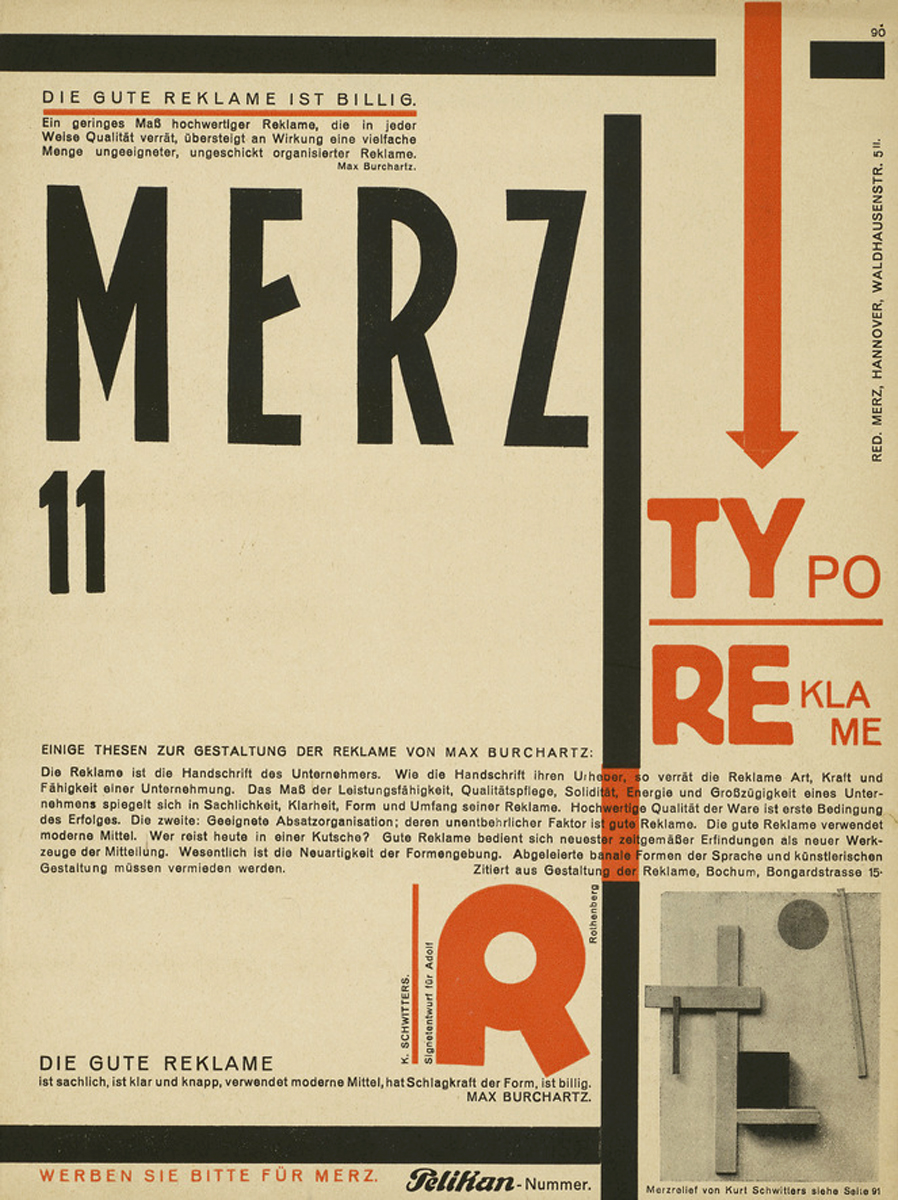
Kurt Schwitters (German, 1887-1948) 'Merz 11 Pelikan Nummer, Zeitschrift' 1924


Kurt Schwitters (German, 1887-1948)
Merz 11 Pelikan Nummer, Zeitschrift (Merz 11 Pelikan number, magazine)
1924
© Kunstbibliothek, Staatliche Museen zu Berlin


Kurt Schwitters (German, 1887-1948)

Kurt Hermann Eduard Karl Julius Schwitters (20 June 1887 – 8 January 1948) was a German artist who was born in Hanover, Germany. Schwitters worked in several genres and media, including dadaism, constructivism, surrealism, poetry, sound, painting, sculpture, graphic design, typography, and what came to be known as installation art. He is most famous for his collages, called Merz Pictures.

Internationalism, 1922-1937

Merz (periodical)

As the political climate in Germany became more liberal and stable, Schwitters’ work became less influenced by Cubism and Expressionism. He started to organise and participate in lecture tours with other members of the international avant-garde, such as Hans Arp, Raoul Hausmann and Tristan Tzara, touring Czechoslovakia, the Netherlands, and Germany with provocative evening recitals and lectures.

Schwitters published a periodical, also called Merz, between 1923 and 1932, in which each issue was devoted to a central theme. Merz 5 1923, for instance, was a portfolio of prints by Hans Arp, Merz 8/9, 1924, was edited and typeset by El Lissitsky, Merz 14/15, 1925, was a typographical children’s story entitled The Scarecrow by Schwitters, Kätte Steinitz and Theo van Doesburg. The last edition, Merz 24, 1932, was a complete transcription of the final draft of the Ursonate, with typography by Jan Tschichold.

His work in this period became increasingly Modernist in spirit, with far less overtly political context and a cleaner style, in keeping with contemporary work by Hans Arp and Piet Mondrian. His friendship around this time with El Lissitzky proved particularly influential, and Merz pictures in this period show the direct influence of Constructivism.

Thanks to Schwitters’ lifelong patron and friend Katherine Dreier, his work was exhibited regularly in the US from 1920 onwards. In the late 1920s he became a well-known typographer; his best-known work was the catalogue for the Dammerstocksiedlung in Karlsruhe. After the demise of Der Sturm Gallery in 1924 he ran an advertising agency called Merzwerbe, which held the accounts for Pelikan inks and Bahlsen biscuits, amongst others, and became the official typographer for Hanover town council between 1929 and 1934. Many of these designs, as well as test prints and proof sheets, were to crop up in contemporary Merz pictures. In a manner similar to the typographic experimentation by Herbert Bayer at the Bauhaus, and Jan Tschichold’s Die neue Typographie, Schwitters experimented with the creation of a new more phonetic alphabet in 1927. Some of his types were cast and used in his work. In the late 1920s Schwitters joined the Deutscher Werkbund (German Work Federation).

Exile, 1937-1948

Norway

As the political situation in Germany under the Nazis continued to deteriorate throughout the 1930s, Schwitters’ work began to be included in the Entartete Kunst (Degenerate Art) touring exhibition organised by the Nazi party from 1933. He lost his contract with Hanover City Council in 1934 and examples of his work in German museums were confiscated and publicly ridiculed in 1935. By the time his close friends Christof and Luise Spengemann and their son Walter were arrested by the Gestapo in August 1936 the situation had clearly become perilous.

On 2 January 1937 Schwitters, wanted for an “interview” with the Gestapo, fled to Norway to join his son Ernst, who had already left Germany on 26 December 1936. His wife Helma decided to remain in Hanover, to manage their four properties. In the same year, his Merz pictures were included in the Entartete Kunst exhibition titled in Munich, making his return impossible.

Text from the Wikipedia website


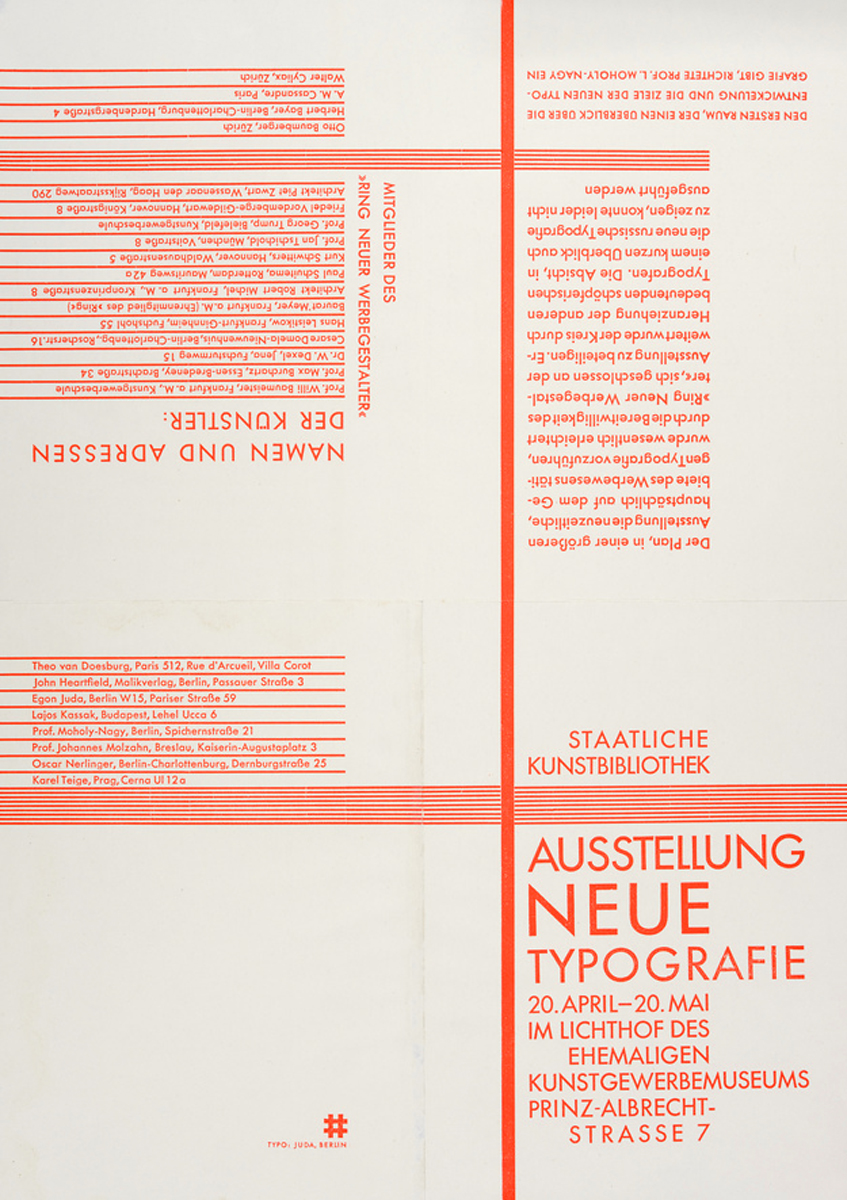
Egon Juda (German, b. 1895) 'Einladung zur Ausstellung "Neue Typographie"' (Invitation to the exhibition "New Typography") Berlin 1929


Egon Juda (German, b. 1895)
Einladung zur Ausstellung “Neue Typographie” (Invitation to the exhibition “New Typography”)
Berlin 1929
© Kunstbibliothek, Staatliche Museen zu Berlin


Installation view of the exhibition 'László Moholy-Nagy and New Typography: A Reconstruction of a Berlin Exhibition from 1929' at the Staatliche Museen zu Berlin

Installation view of the exhibition 'László Moholy-Nagy and New Typography: A Reconstruction of a Berlin Exhibition from 1929' at the Staatliche Museen zu Berlin

Installation view of the exhibition 'László Moholy-Nagy and New Typography: A Reconstruction of a Berlin Exhibition from 1929' at the Staatliche Museen zu Berlin

Installation view of the exhibition 'László Moholy-Nagy and New Typography: A Reconstruction of a Berlin Exhibition from 1929' at the Staatliche Museen zu Berlin

Installation view of the exhibition 'László Moholy-Nagy and New Typography: A Reconstruction of a Berlin Exhibition from 1929' at the Staatliche Museen zu Berlin


Installation views of the exhibition László Moholy-Nagy and New Typography: A Reconstruction of a Berlin Exhibition from 1929 at the Staatliche Museen zu Berlin showing at right,
Photos: Staatliche Museen zu Berlin


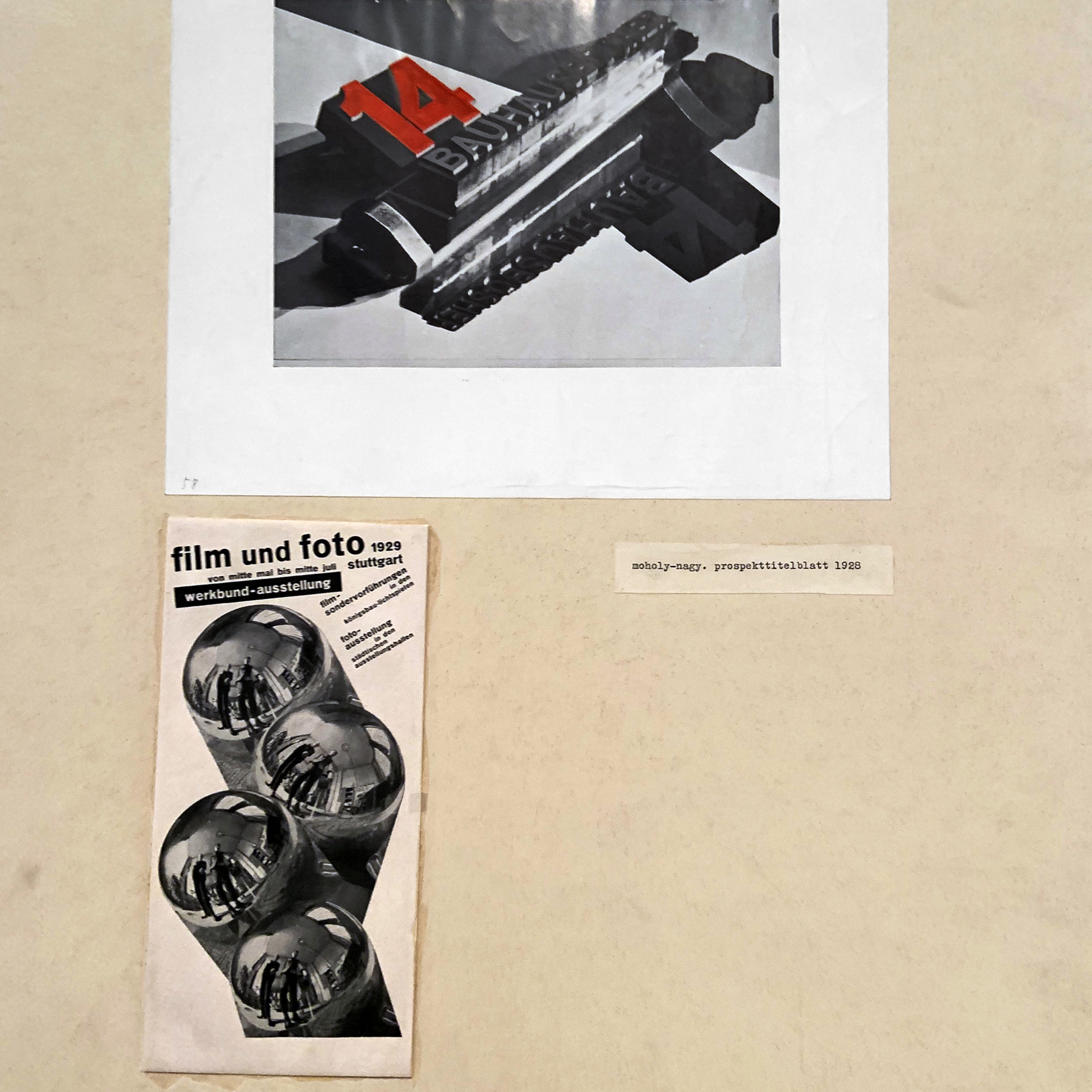
László Moholy-Nagy (Hungarian, 1895-1946) 'Prospekttitelblatt' (Prospectus title page) 1928 and 'film und foto' 1929 (installation view)


László Moholy-Nagy (Hungarian, 1895-1946)
Prospekttitelblatt (Prospectus title page) (installation view)
1928
film und foto
1929

in

László Moholy-Nagy (Hungarian, 1895-1946)
Wohin geht die typographische Entwicklung?
Where is typography headed?

1929
Photograph on card
© Staatliche Museen zu Berlin, Kunstbibliothek
Photo: Marcus Bunyan


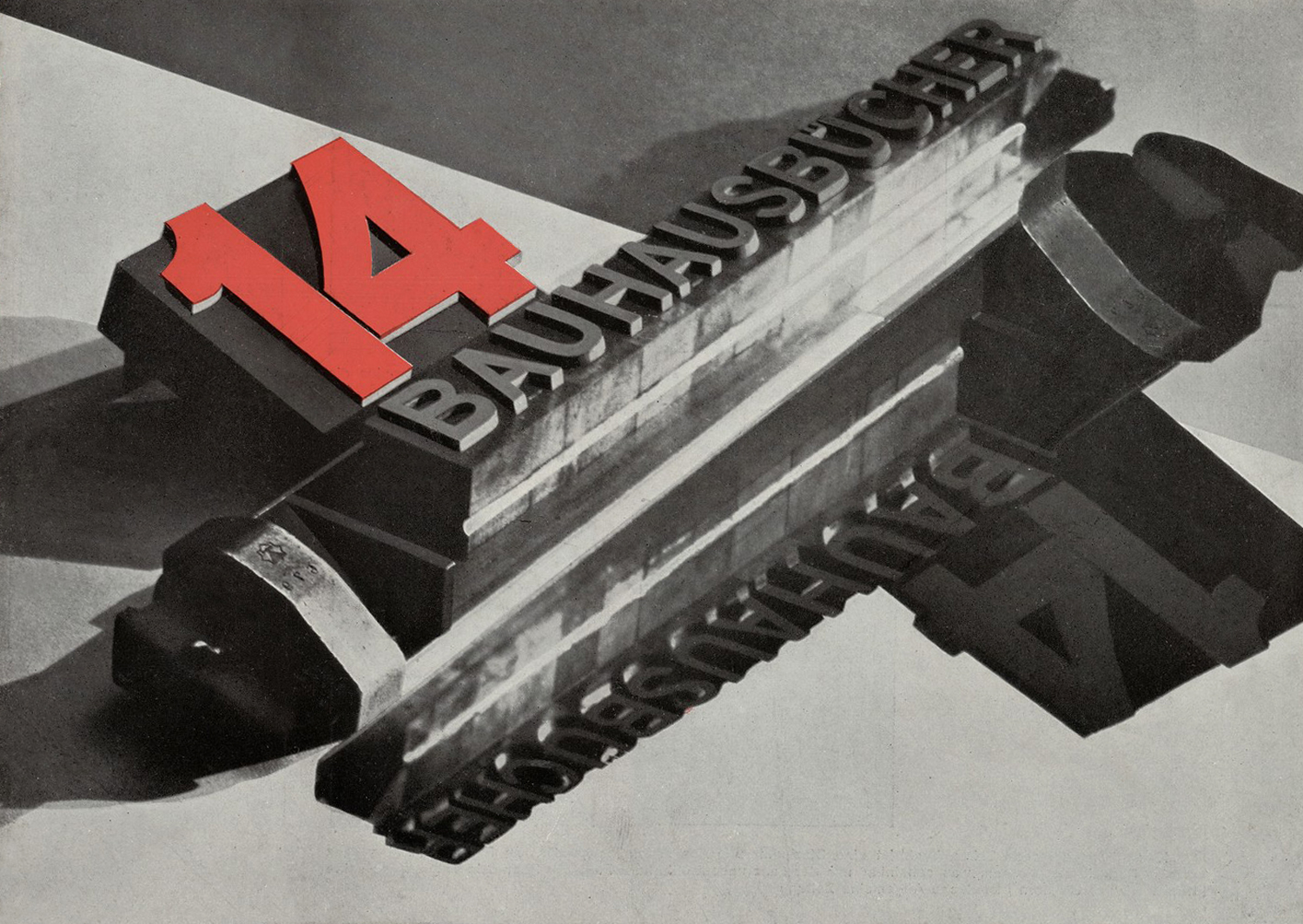
László Moholy-Nagy (Hungarian, 1895-1946) '14 Bauhausbücher' 1928


László Moholy-Nagy (Hungarian, 1895-1946)
14 Bauhausbücher
1928
Letterpress
5 7/8 x 8 1/4″ (14.9 x 21cm)


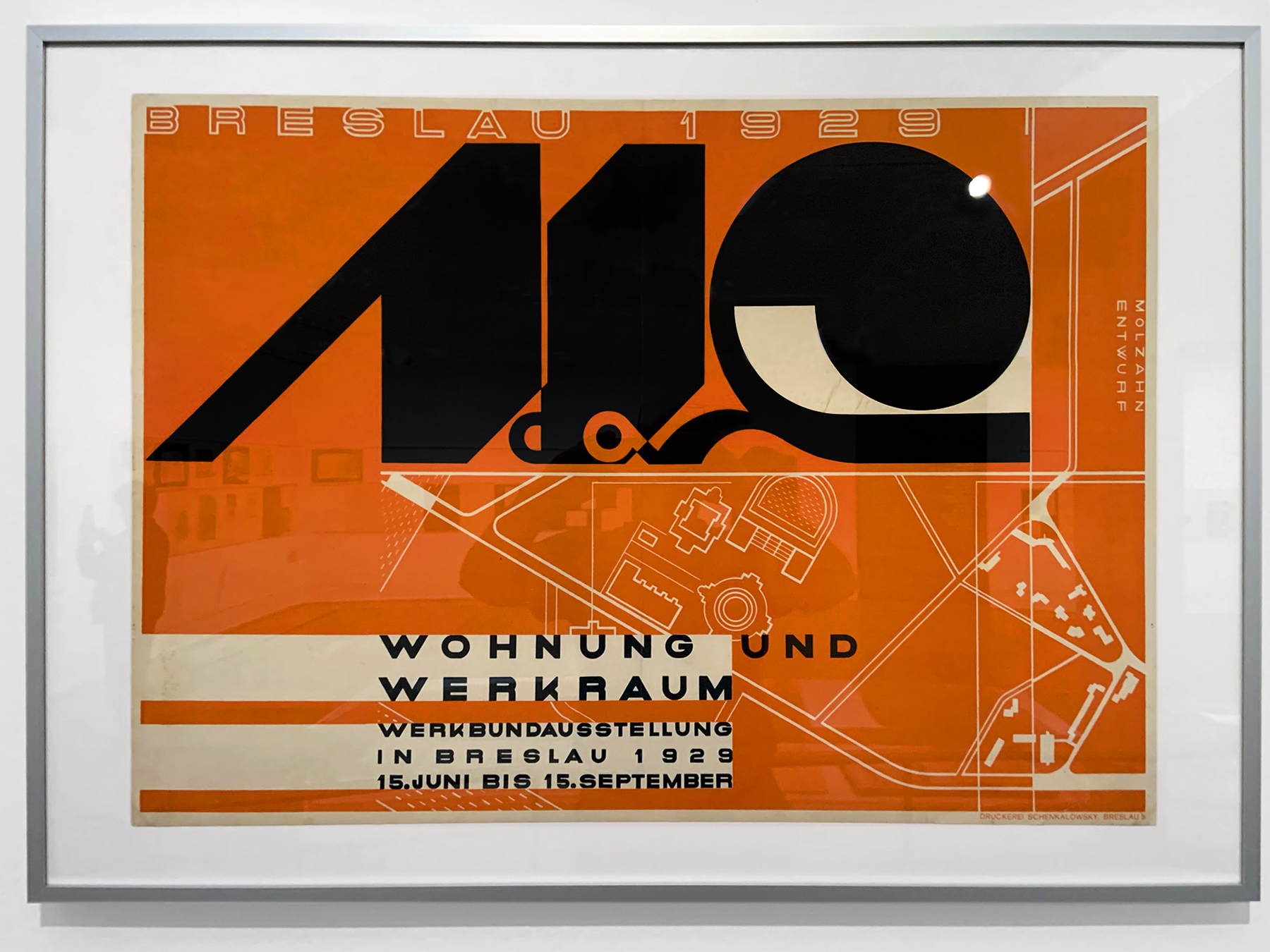
Johannes Molzahn (German, 1892-1965) 'Wohung und Werkraum, Werkbundausstellung in Breslau' (Apartment and workshop, Werkbund exhibition in Breslau) 1929 (installation view)


Johannes Molzahn (German, 1892-1965)
Wohung und Werkraum, Werkbundausstellung in Breslau (Apartment and workshop, Werkbund exhibition in Breslau) (installation view)
1929
Schenkalowsky, Breslau (Wroclaw) printing house
Lithograph
Photo: Marcus Bunyan


Johannes Molzahn (German, 1892-1965)

Johannes Ernst Ludwig Molzahn was born 21 May 1892 in Duisburg. He learned drawing and photography, but later concentrated on painting. 1908-1914 he stayed in Switzerland. Molzahn became acquainted with Herwarth Walden, Walter Gropius, Theo van Doesburg and El Lissitzky. He was a member of the Arbeitsrat für Kunst. After World War I he worked as a graphic designer and through intervention of Bruno Taut became a graphics teacher in Magdeburg. He was forbidden to work by the Nazis in 1933 and fired.Eight of his works were shown in the exhibition of entartete Kunst in 1937.

He emigrated to the United States in 1938 and returned to Germany 1959, settling in Munich. He died there 31 December 1965.

Text from the Wikipedia website


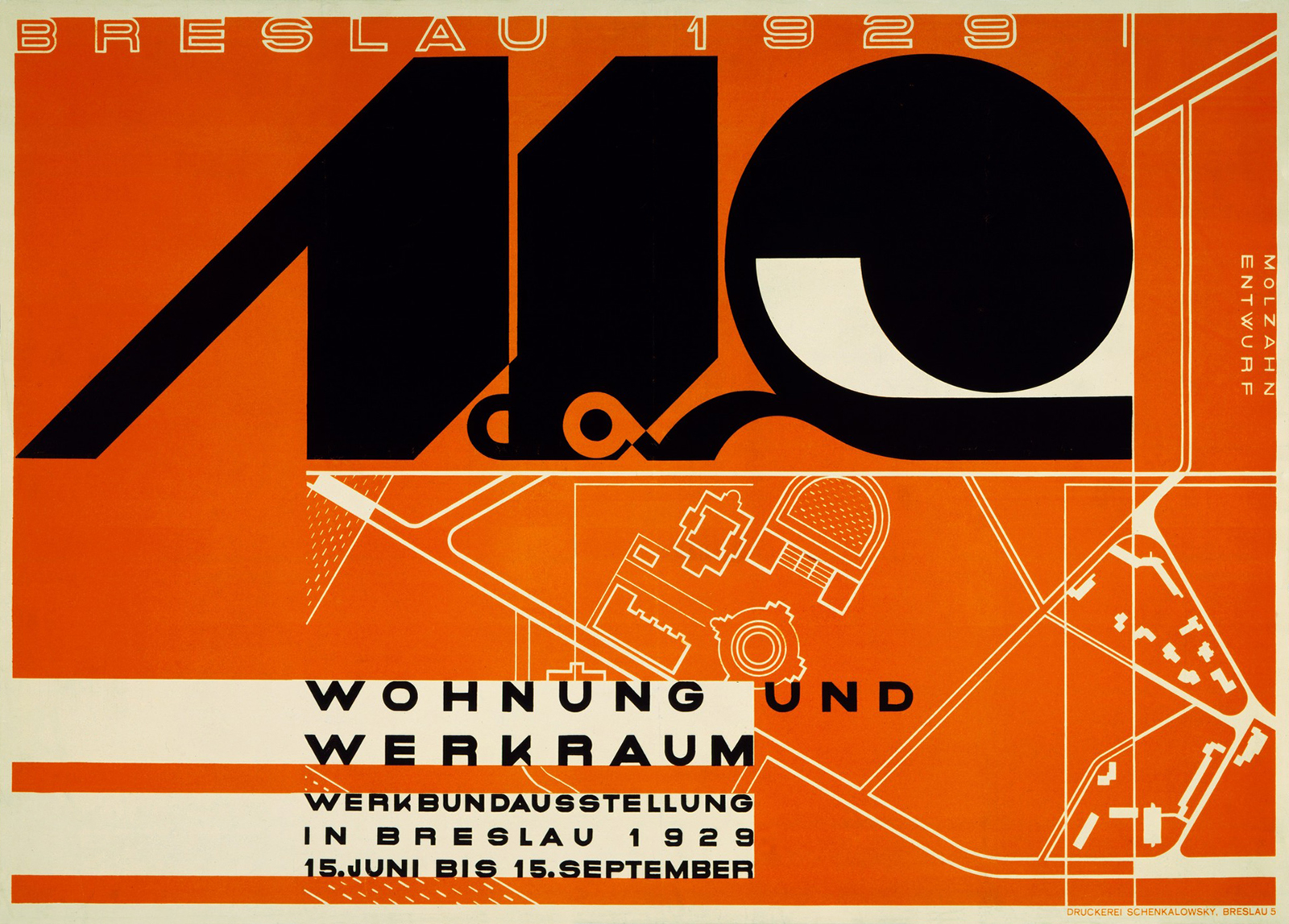
Johannes Molzahn (German, 1892-1965) 'Wohung und Werkraum, Werkbundausstellung in Breslau' (Apartment and workshop, Werkbund exhibition in Breslau) 1929


Johannes Molzahn (German, 1892-1965)
Wohung und Werkraum, Werkbundausstellung in Breslau (Apartment and workshop, Werkbund exhibition in Breslau)
1929
Schenkalowsky, Breslau (Wroclaw) printing house
Lithograph


Installation view of the exhibition 'László Moholy-Nagy and New Typography: A Reconstruction of a Berlin Exhibition from 1929' at the Staatliche Museen zu Berlin


1929 (installation view)
Photo: Marcus Bunyan


Kunstbibliothek
Matthäikirchplatz
10785 Berlin

Opening hours:
Sunday 10.00 – 18.00
Monday closed
Tuesday 10.00 – 18.00
Wednesday 10.00 – 18.00
Thursday 10.00 – 18.00
Friday 10.00 – 18.00
Saturday 10.00 – 18.00

Staatliche Museen zu Berlin website

LIKE ART BLART ON FACEBOOK

Back to top