Johannes Kuhnen (Australian born Germany, b. 1952) Rings 1971
This is a superlative exhibition, one of the highlights of the year so far in Melbourne.
The exhibition presents work from the early 1970s to contemporary work and evidences the breadth of vision of this master craftsman and artist, the arc of his investigation showing a consistency of feeling for the energy and form of his materials over many decades. Technically the work is superb; conceptually the work transcends the boundaries of jewellery and becomes something else altogether: it becomes magical.
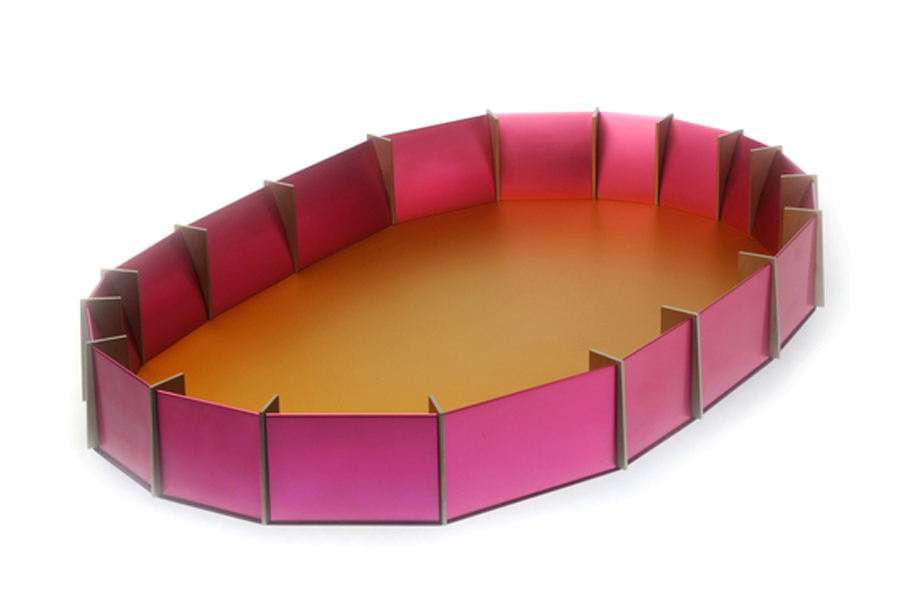
Kuhnen’s use of colour in his favoured anodised aluminium material is exquisite, the perfection of his forms flawless. His fabulous Vessels reminding me of the ancient Neolithic standing stone circles at Stonehenge in their shape and use of vertical buttresses in different materials (such stainless steel and granite) that intersect the oval forms. His Boxes are like small ancient reliquaries, objects for holding ashes worked with a delicacy, simplicity and feeling for form and colour that is absolutely beautiful and consistent with the containment of energy within their structure.
I went with Marianne Cseh a jeweller friend of mine. We stood transfixed before this work, peering closely at it and gasping in appreciation of the beauty, technical proficiency and pure poetry of the pieces. This exhibition is highly recommended and not to be missed!
Now showing with the international SCHMUCK jewellery exhibition from Germany.
A book to accompany the exhibition is available from the RMIT Gallery.
Dr Marcus Bunyan
Many thankx to RMIT Gallery for allowing me to publish the photographs in the posting. Please click on the photographs for a larger version of the image.
Johannes Kuhnen (Australian born Germany, b. 1952) Ring 1972 Stainless steel, synthetic ruby disc
Johannes Kuhnen (Australian born Germany, b. 1952)
Brooch 2003 Anodised aluminium, monel
Ring 1972 Stainless steel, synthetic ruby disc
Johannes Kuhnen (Australian born Germany, b. 1952) Boxes 1980
Johannes Kuhnen (Australian born Germany, b. 1952) Box and pendant 1980
Johannes Kuhnen (Australian born Germany, b. 1952) Tray 1986 Anodised aluminium, titanium, stainless steel
Johannes Kuhnen (Australian born Germany, b. 1952) Centrepiece 1987
Johannes Kuhnen (Australian born Germany, b. 1952) Centrepiece 1991 Anodised aluminium, silver, monel: fabricated
In his work as a jeweller, object maker and photographer, Johannes Kuhnen is engaged with the interpretation and manipulation of a precise visual language of forms. The dramatic curvilinear shape of this centrepiece has been designed to emphasise the particular visual qualities of its materials and to fulfil its role as a low, but commanding central presence on a table. The vivid, iridescent colour of its anodised aluminium rim is designed to interact with differing light conditions, while the technical and precious qualities of its monel and silver elements play against each other. This orchestration of metals is underpinned with an unseen but precise and ingenious inner structure, giving this object weight and functional strength.
Johannes Kuhnen has made a pioneering contribution to Australian design and gold and silver smithing through his commitment as a generous educator and innovative practitioner. This exhibition will create linkages between his earlier works, some of which was made in Germany prior to migrating to Australia and new work specifically produced for this exhibition and this will be done both with objects and through a catalogue / monograph to be launched at the opening venue. The exhibition will borrow from Australian public and private collections to facilitate the demonstration of connecting design elements in the work from both significant streams in Kuhnen’s work in jewellery and hollowware.
Text from the RMIT Gallery website [Online] Cited 02/07/2009. No longer available online
Johannes Kuhnen (Australian born Germany, b. 1952) Vessel 2007 Anodised aluminium, titanium, stainless steel 11.2 h x 84.5 w x 21.0 d cm Weight 14 kg
Johannes Kuhnen (Australian born Germany, b. 1952) Vessel 2008 Anodised aluminium, titanium, stainless steel
Johannes Kuhnen (Australian born Germany, b. 1952) Vessel 2009 Anodised aluminium, titanium, stainless steel
Johannes Kuhnen (Australian born Germany, b. 1952) Armring 1981 Anodised aluminium 9.8 h x 10.4 w cm
Johannes Kuhnen (Australian born Germany, b. 1952) Armring 1990 Armring, anodised aluminium, gold 750, granite
Installation view of LE MONDE v. DER MOND by Matthew Hale at The Narrows, Melbourne with n.n. (2008) centre bottom, andPage 93 of MIRIAM DIVORCEE (2008) centre right
Below is the only text I could find on the work – some of which was displayed in London earlier this year.
DER MOND v LE MONDE is Mathew Hale’s first solo exhibition in London for five years. It consists of five works: one two-projector and one three-projector slide piece; a constructed painting (that could equally be described as a wall-mounted sculpture); and two large collage works …
Hale’s work has many possible points of departure: a found photograph, a scrap of paper, a page torn from an instructive and obscure book, a bit of out-moded pornography, some anachronistic advertising from the 1970s or 1980s and so forth. Once plucked from a huge collection of such material amassed in his domestic studio space, the work evolves like an unplanned journey – both moving away and turning back on itself … The path of discovery in Hale’s work is the subject of his work, providing it with narrative and process.
With its roots in the collage traditions of political photomontage, dadaist assemblage and free associative surrealism, Hale’s work prioritises process over methodology or style. It activates a complex web of references that takes in history, politics, literature, and philosophy, as much as it does sex, religion, art, architecture and popular culture. To engage with the work is to become carried along by clues that lead to other clues and then circuitously lead somewhere else unexpected yet somehow familiar. Sometimes the clues are visual, sometimes they are language based, often they are both. Even when the work is finished and exhibited it is in a state of flux, the meaning is not fixed. Hale likes slippage of meaning and this constant state of ambiguity and openness for (mis)interpretation or confusion. He explains the title of the show as follows: ‘[in German] … and strikingly weirdly, “der Mond” means “The Moon” and, as we all know, “Le Monde” means “The Earth”. How can a word flip so totally by crossing a border? I am making a work for the show which hinges on their being apparently identical (almost) and yet meaning precisely the opposite – I wonder how it happened.’
Text from the London exhibition of this work (note with title reversed!), on the Peer website [Online] Cited 23/06/2009. No longer available online
Matthew Hale (British, b. 1962) Page 93 of MIRIAM DIVORCEE 2008 Paper collage 69 x 103cm
Matthew Hale (British, b. 1962) Page 150 of MIRIAM DIVORCEE (detail) 2008 Paper collage
Matthew Hale (British, b. 1962) n.n. 2008 Rifle, paper collage 69 x 153cm
Matthew Hale (British, b. 1962) Page 145 of MRS. GILLRAY 2009 Paper collage
Matthew Hale (British, b. 1962) Page 48 of DIE NEUE MIRIAM 2008 Paper collage
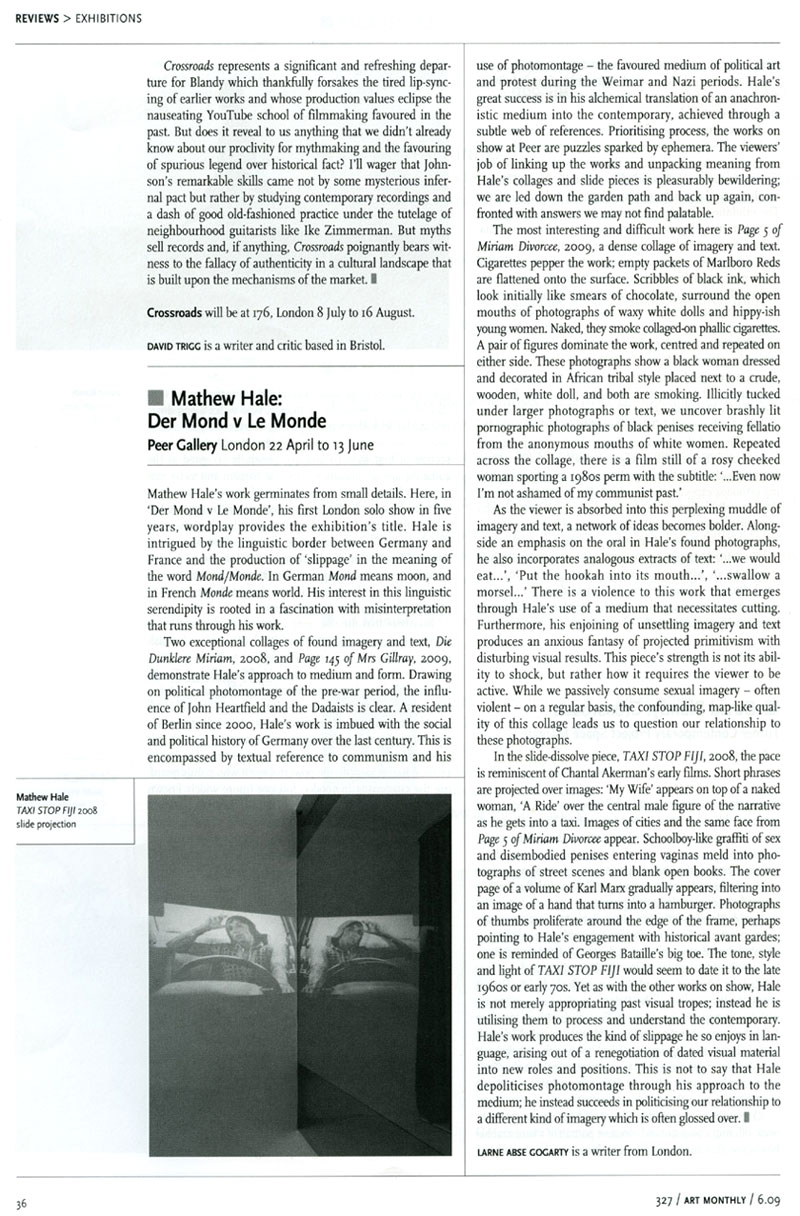
Review in Art Monthly, June 2009 from the Peer website [Online] Cited 23/06/2009. No longer available online
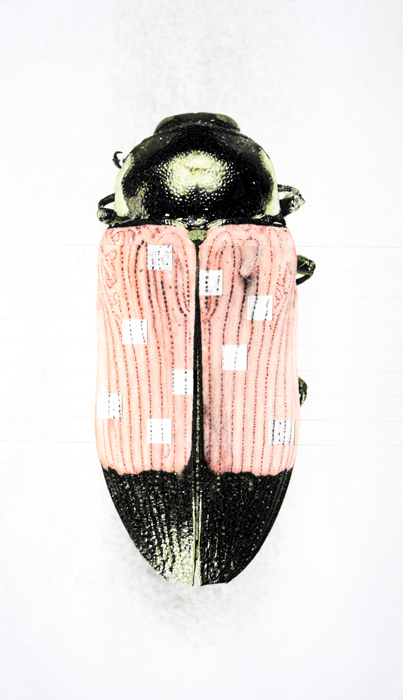
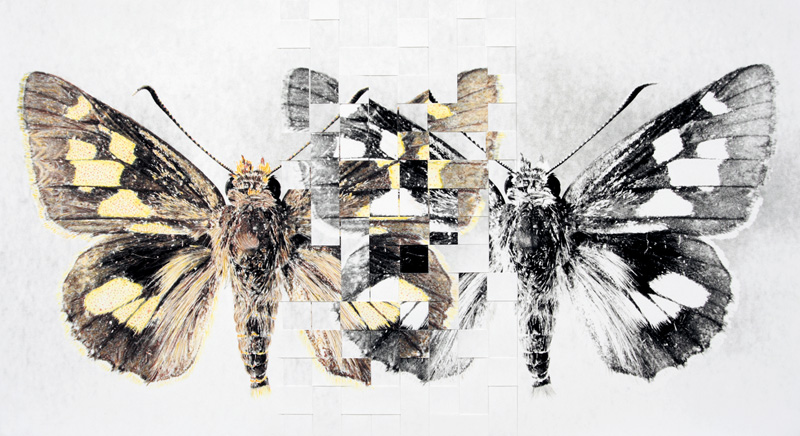
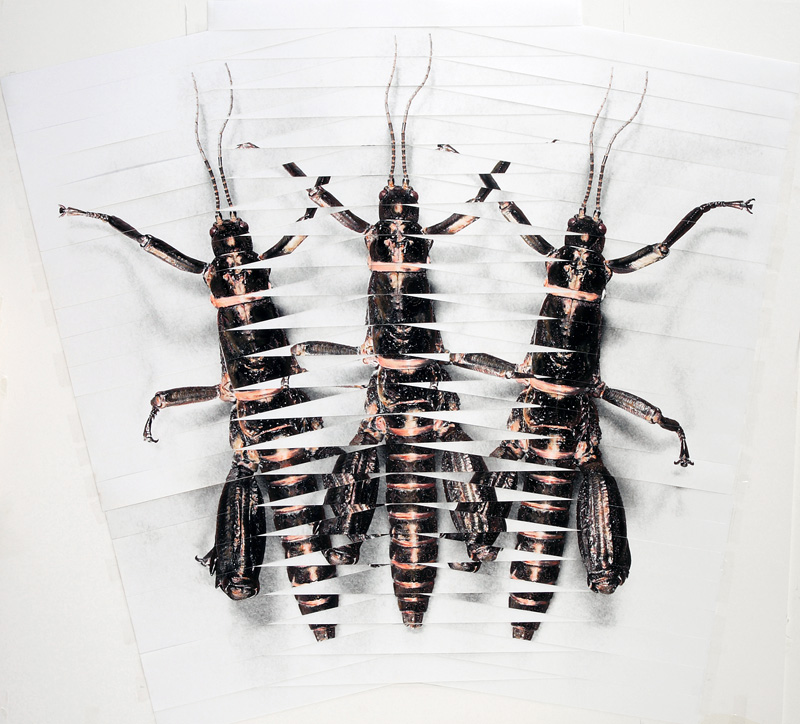
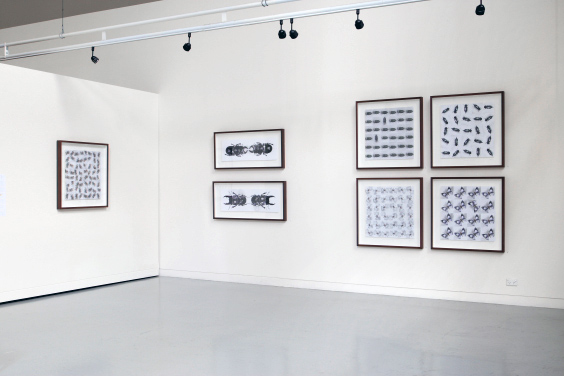
Josephine Kuperholz presents a beautifully engineered set of photographs in her exhibition Blight at Gallery 101, Melbourne. Featuring hand coloured silver gelatin photographs of endangered Australian insects sourced from the Entomology collection of the Victoria Museum, Kuperholz literally weaves multiple narratives into the photographs. The execution (an apt word for the circumstances of extinction facing these insects) of these images is fastidious, the weaving superlative, almost clinical.
The layering of the photographs disrupts their surface tension. There is a disjunction between the dead specimen and the singular photograph of it, a disruption of the smooth surface of the photograph by the hand colouring and a further fragmentation of the original photograph by cutting and weaving. Through these processes the photographs become intertextual in their construction, assemblages, creating new tissues of past citations: animal, colour, silver, artist, text, photograph, environment. At their best the work subverts the concept of the text as self-sufficient and hermetically sealed, blurring the outlines of the fixed image, “dispersing its image of totality into an unbounded, illimitable tissue of connections and associations, paraphrases and fragments, texts and con-texts.”1
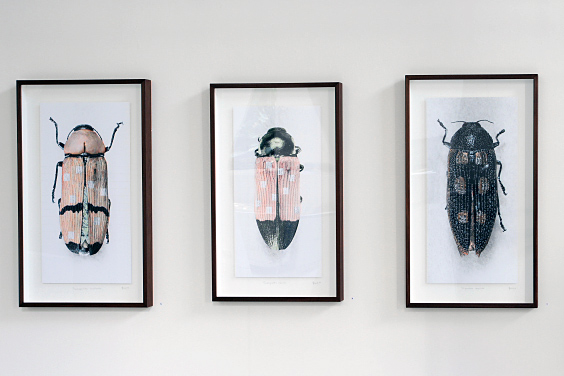
Kuperholz’s mutations, ‘differance’ in Derrida’s terminology, produce spaces that are both fluid and fixed at one and the same time; neither her nor there.Though the original specimens and photographs are already narrativised, already textualised, Kuperholz disrupts this marking, the continual reiteration of norms, by weaving a lack of fixity into her objects; in her reconceptualisations of space and matter Kuperholz redefines the significations of the body of the animal in the fold of inscription, through a process of materialisation. Kuperholz attempts to ground these re-inscriptions through the naming of these disrupted surfaces, equating the images back to the scientific labels for the original specimen, Trapezites eliena for example (see below), and through the box frames surrounding the work that are much like museum cases. Unfortunately I found the constant reference to the habitat of the insect, it’s Latin name inscribed in pencil under the images and the use of plain brown box frames somewhat irritating. These tropes are not necessary for the work is strong enough to stand on it’s own without having to tell the viewer what to think.
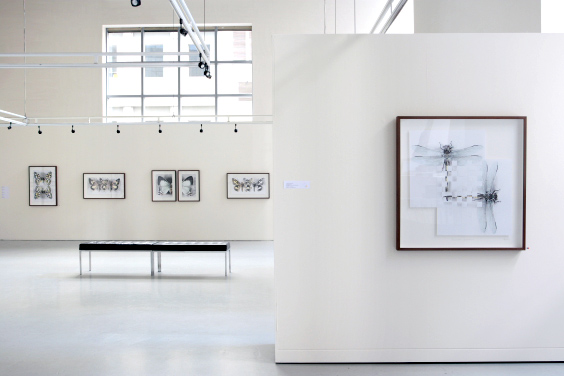
The singular beetles (as seen above) are beautiful images and the multiple images where the weaving intermingles, the self decentred and multiple, fluttering and vibrating like the strobing of a time lapse photograph caught in three-dimensional space, are fantastic. Other photographs are less successful: the reflected beetles are a little passe, while the grid photographs of insects lack presence and intensity (see bottom installation photograph below). Where the concept works it is pushed hard, the fragmentation and interweaving causes an anxiety of identity and a meditation on the problematic nature of existence, revealing the changing sizes, shapes and rhythms of space and structure.
Perhaps a loosening of the rigid structure surrounding the works (the text, the frame, the incantations) would have let the photographs ascend into the ether, further releasing the work from the constraints of author, text and earth. It will be interesting to see future developments of this work. Perhaps the incorporation of gentle, subtle physical elements into the photographs (through the sowing of patterns, through the sowing of objects directly onto the photograph?), will elevate these already beautiful photographs to an-other plane of existence.
Dr Marcus Bunyan
Many thankx to Gallery 101 for allowing me to publish the photographs in the posting. Please click on the photographs for a larger version of the image.
Josephine Kuperholz (Australian) Trapezites eliena 2008 Common name – Eliena Skipper Woven hand coloured silver gelatin photographic image
Josephine Kuperholz (Australian) Dryococelus australis 2008 Common name – Lord Howe Island Phasmid Woven hand coloured silver gelatin photographic image
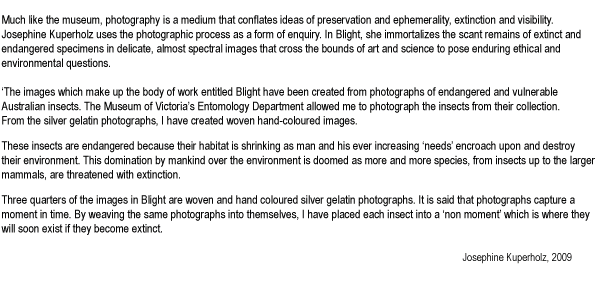
Josephine Kuperholz Blight exhibition, Gallery 101 website text
Josephine Kuperholz Blight exhibition installation views at Gallery 101, Melbourne Photos: Marcus Bunyan
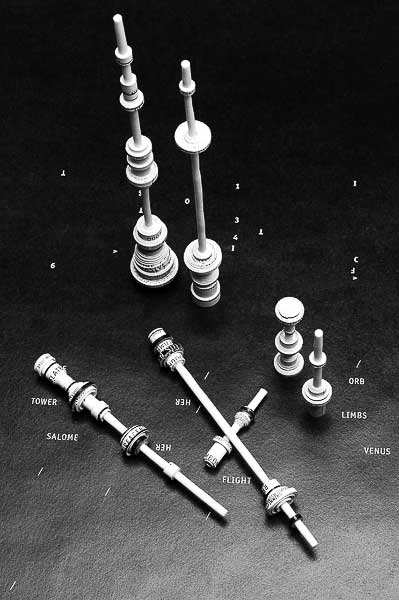
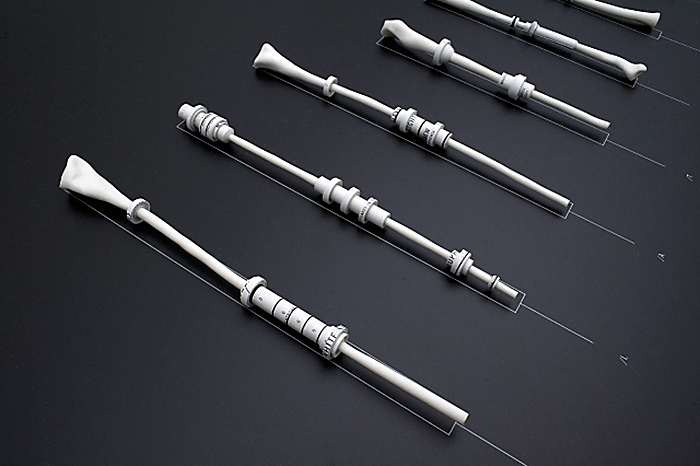
Natasha Dusenjko (Australian) Towers of Babel 2009 Mixed media
Three very interesting exhibitions at Craft Victoria at the moment: Babel by Natasha Dusenjko, Gleaning Potential by Simon Lloyd and Cycle by Liz Low. I particularly liked the delicacy and textuality of Natasha Dusenjko’s sci-fi towers and bone fragments and the wonderful box of 6 red bricks (small and large) that you can buy from the Simon Lloyd show, like blocks for a child builder.
There is an excellent and erudite review of the exhibitions at Daniel Neville’s Nevolution website.
Dr Marcus Bunyan
Many thankx to Craft Victoria for allowing me to publish the photographs in the posting. Please click on the photographs for a larger version of the image.
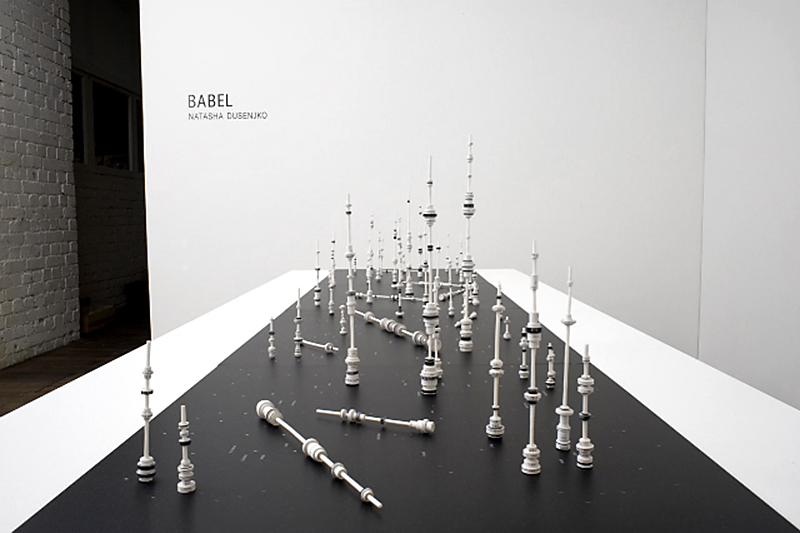
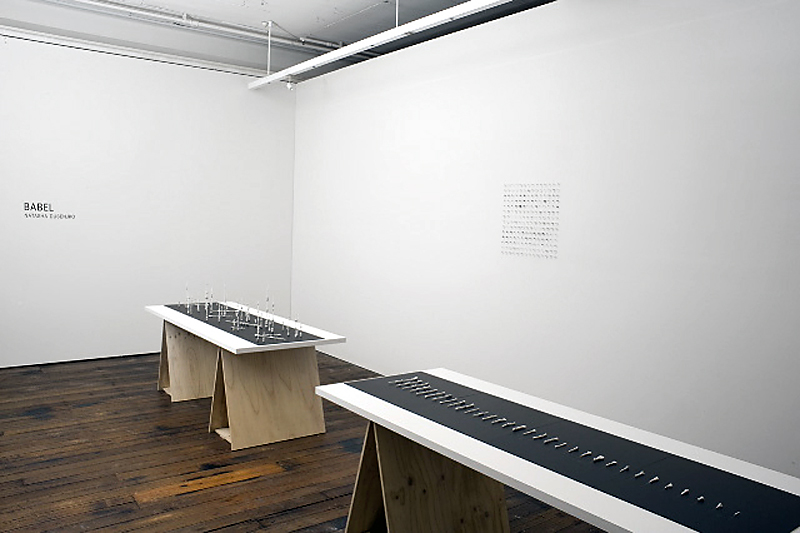
“The two tables allow for different meanings and scales when viewed in opposition. Table 1 alludes to star charts; constellations of texts hinting at importance, especially in relation to the placement of towers. The map looking up to the stars via the towers of babel, communicating unknown messages to the stars above. The cold stark forms of the towers work well with the organic forms of the bones on Table 2. Perfectly ordered and numbered archaeological bone fragments repeat the textual ciphers and codes, meticulously ordered. The jump in scale between the architectural and the archaeological is lovely; each hinting at an underlying language and mythology. Meanwhile both contain elements of each other – the towers of rationality have been placed in a seemingly random manner, while the organic forms of the bones have been laid out in perfect order ranging down in sizes.”
Daniel Neville. Extract from “On the nature of language, order and decay,” on the Nevolution website June 03, 2009 [Online] Cited 05/06/2009
Installation views of Natasha Dusenjko’s exhibition Babel at Craft Victoria, Melbourne
Babel is a word-based collection of fine porcelain and paper works. This collection of short texts constitutes a series of incantations, codes and instructions scrolled around porcelain bones or thin spines. The porcelain bones are internal structures and vessels of ancestor memory. This memory is fluid, is evasive, is aquatic. The thin spines resemble futuristic Towers of Babel reaching into space, anticipating communication and new frontiers. These towers have either an upright or collapsed form.
In the making, both forms build toward new possibility, words become obscured, resulting in a non-defined beginning or end, now replaced by chance permutations of the accumulated text.
The sculptural works are deliberately placed onto two large scale text based charts. Each chart is placed on a raised surface, analogous to work benches in an observatory or laboratory suggesting a process of decipherment. Map 1 exhibits a similarity to ancient star charts, the placement of towers alluding to significant points of a constellation. The accompanying Chart 2 resembles an organised series of archeological artefacts, each piece methodically numbered and labelled.
Ultimately, Babel evokes a spiral passage both outward and inward. To unravel the scrolls initiates a return to the spine – the axis mundi, the source of a universal native tongue – love.
Text from the Craft Victoria website [Online] 05/06/2009. No longer available online
Natasha Dusenjko (Australian) Babelbones 2009 Mixed media
Craft Victoria Watson Place, off Flinders Lane Victoria 3000 Phone: 03 9650 7775
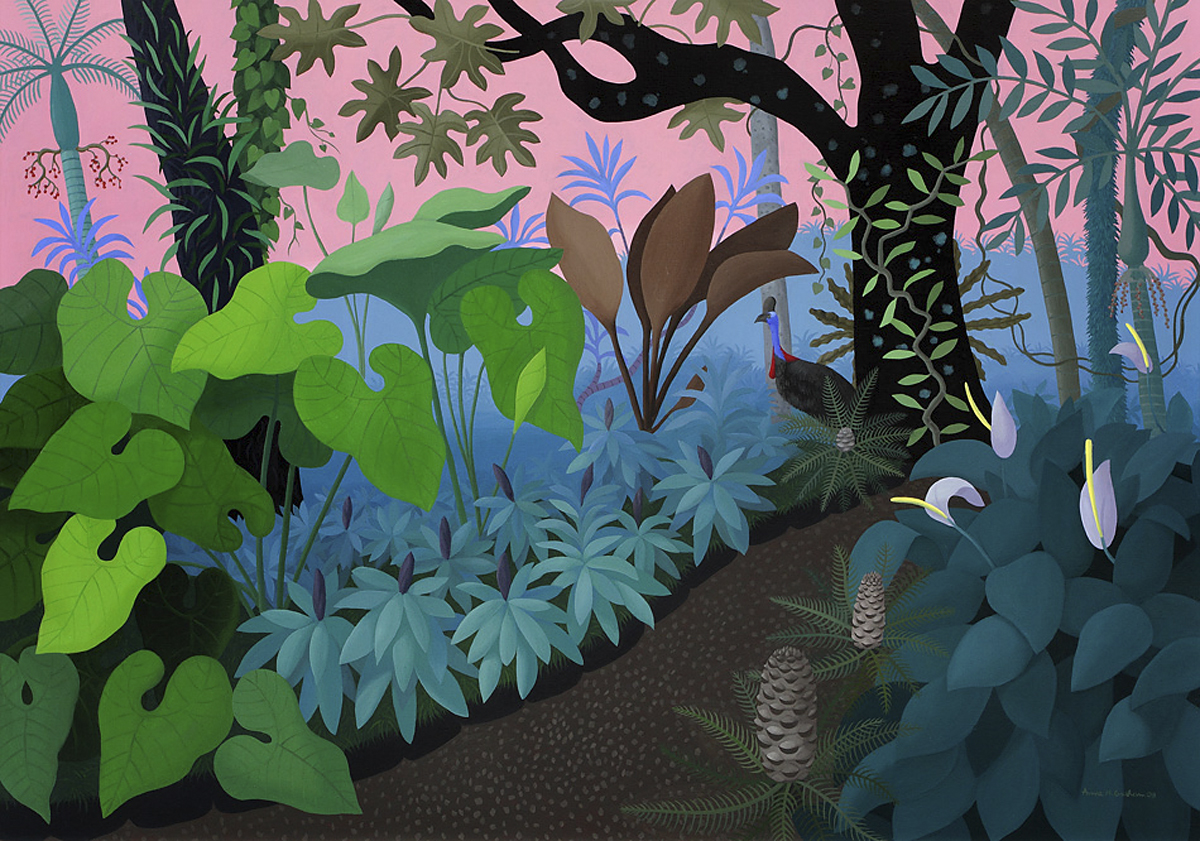
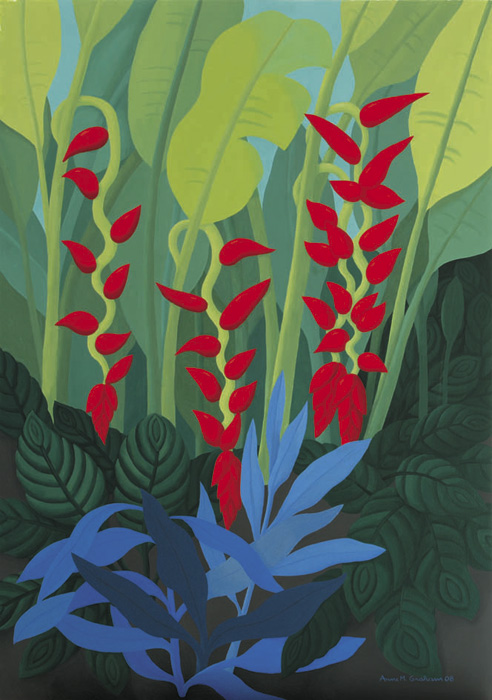
Anne Marie Graham (Australian born Austria, b. 1925) Jungle with Cassowary 2008 Oil on Linen 106 x 150cm National Museum for Women in Arts, Washington
I was walking around Anne Marie Graham’s new exhibition of painting at Gallery 101, Melbourne having read a review of her work on the gallery wall where the reviewer compared the structure of the work to the essentialness of the paintings of Giotto. A lady approached me and said, “You don’t want to believe everything that you read.”
And I said, “I don’t. I make up my own mind.”
This was the artist Anne Marie Graham.
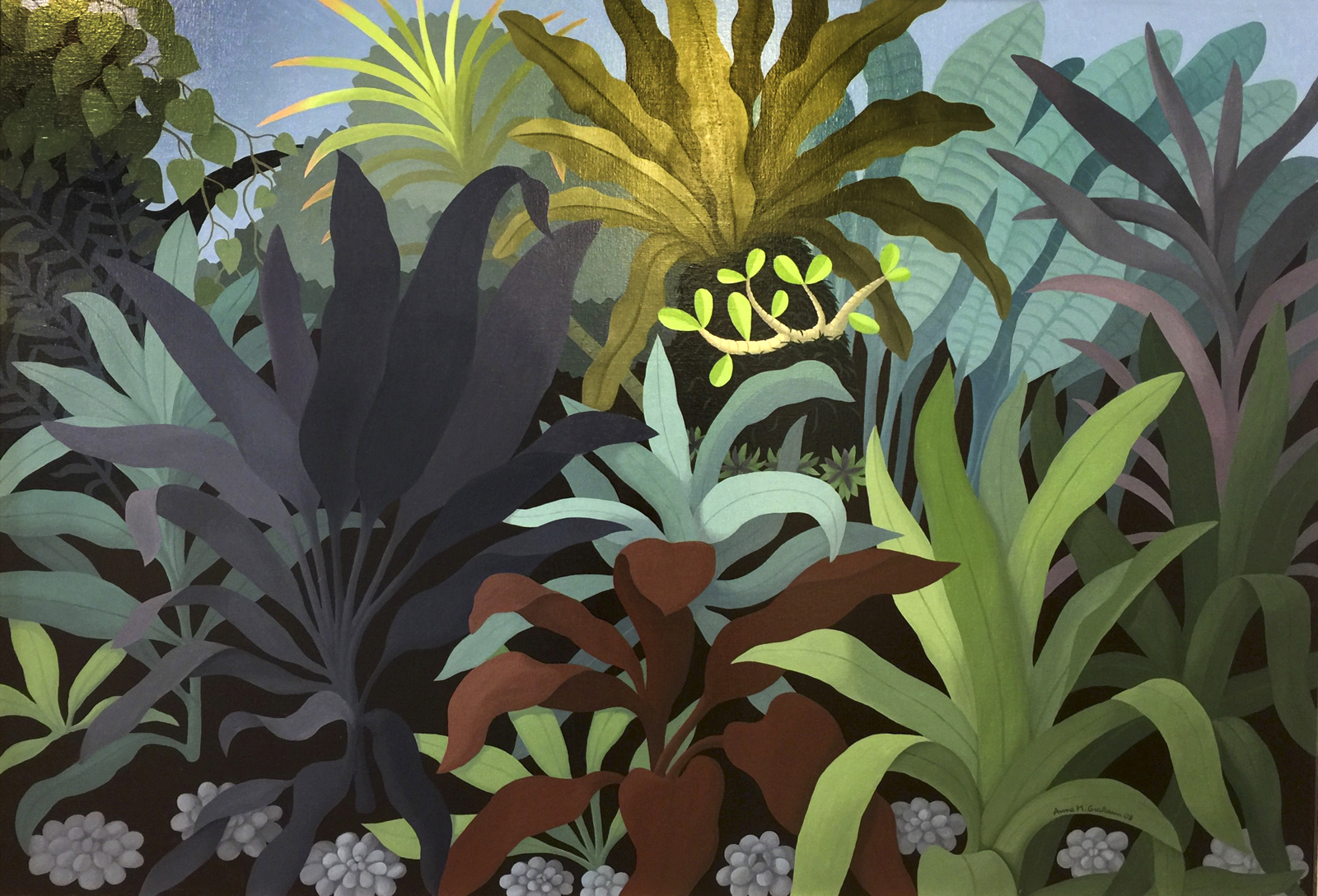
We had a wonderful conversation about her work talking about space, colour and form. This is what Graham’s work is about. No conceptual arguments are needed. The work addresses the landscape in a magical way, drawing the viewer into the compositions like a piece of music. The viewer finds entrances and passageways, spaces through the images which open up a dialogue with the landscape.
Using repeated patterns and layered construction, from bottom to top, from front to back, the images subtly push and pull the viewer: space quietly recedes and comes towards the viewer. Complimentary bands of colours are muted except for stunning highlight colours – the red of flowers, the blue of leaves or the unexpected pink or yellow of a background. The forms and textures delight. Dr Sheridan Palmer is correct, these paintings have an almost hypnotic effect, meditative and peaceful. They make you feel good!
Their presence is undeniable. For such complex paintings, which on the surface seem very simple (a difficult task to accomplish); for such essential representations that address the heart of the matter… their affect is powerful.
Graham’s refined aesthetic allows the viewer to engage with the poetic spaces she creates, allowing them to appreciate the colour fields, plants and landscapes she orchestrates and to be subsumed into their fold. Here we come to understand the diverse empathy of an artist who lays it all ‘on the line’ and knows how to do so in a brilliant way.
A talented artist and a nice lady as well – what more can you ask for!
Dr Marcus Bunyan
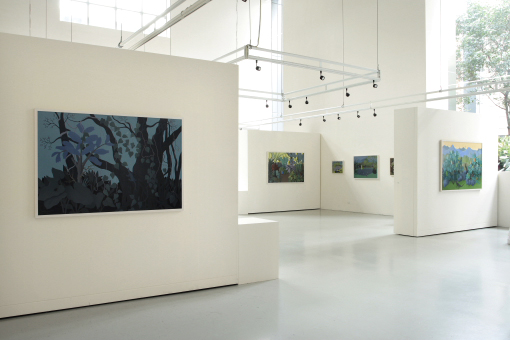
Exotic Queensland: Recent Painting installation views at Gallery 101, Melbourne
These landscapes are inspired by the areas around Noosa, the Glasshouse Mountains and the Botanic Gardens in Cairns. Look at the bromeliads, those cousins of the pineapple that store pools of water in their depths. And the helliconias – they’re also called lobster-claw plants and you can see why! Look at the massive scarlet tassels set against tropical green – and not just the one green but the subtlest of shades and tones in combination.
‘If there’s a God, it must be there’, says Anne of the Cairns Botanical Gardens. ‘The inventiveness and colours, the lushness and tropical exuberance and shapes. I still can’t overcome this enthusiasm’. There is an analogy with Eugene von Guérard here. Like Ann, he was born in Vienna and was also a precisely scientific observer of nature, ever mindful that the world is a thing far greater than us: that the hand of God (for want of a better word) can be found in very leaf and every grain of sand.
How much further in both place and mood could Anne possibly have travelled from the order and long humanist traditions of her childhood home in Austria? In these Queensland paintings you’ll discover cockatoos, a water dragon, a fat goanna, ibises in the lotus pond, and the shy endangered cassowary almost hidden in the jungle. And look at the sky in that painting – the rosiest pink of a twilight had tells us tomorrow will be a perfect day.
Jane Clark Senior Research Curator, Museum of Old and New Art, Hobart
Extract from speech given at the opening of the exhibition Exotic Queensland, Gallery 101 Melbourne May 2009
Anne Marie Graham (Australian born Austria, b. 1925) Water Dragon with Banksias 2008
Anne Marie Graham (Australian born Austria, b. 1925) Heliconia No. 1 2008 Oil on Linen 106 x 150cm
Anne Marie Graham (Australian born Austria, b. 1925) Variations in Green and Mauve 2008 Oil on linen 106 x 150cm
“Anne Marie Graham’s painting career now spans more than six decades. Observed with a penetrating and affectionate gaze, her images are beautiful records of Australia’s vast landscape. Each work is an engagingly optimistic view, evoking the mystery and fragility of Australia’s rich environment. This survey of recent paintings concentrates on the tropical Queensland landscapes around Noosa and the Cairns Botanic Gardens.
As she casts he vision over mountains, rain forests and panoramic vistas or as she leads us into an intimate world of gardens, winding pathways and potted plants, we find ourselves amongst large succulents, variegated foliage, ferns and brilliant flowers, visually engaging at a Lilliputian level in her richly orchestrated fields and forests. In these locations she constructs marvellous labyrinthine worlds that reveal layers of muted colours, folding forms and textures that induce a most extraordinary hypnotic spell.”
Dr Sheridan Palmer, Art Curator, from the catalogue essay
Anne Marie Graham (Australian born Austria, b. 1925) Heliconia No. 2 2008
Mark Strizic (Australian, 1908-2012) Eastern Market Destruction – 1 1960, printed 1996 Silver gelatin photograph 19 x 22.5cm
Social Fact and Urban Vision
This is an exhibition by the veteran Australian photographer Mark Strizic that plays like the coda at the end of a piece of music, the pensive full stop at the end of a well read book. There are some stunning highlight photographs among the 139 black and white silver gelatin prints on display, some good photographs and some fairly mundane images and prints. With some judicious editing of the photographs (perhaps by a third), the exhibition could have had a stronger artistic aesthetic and carried the voice of the photographer with greater projection. As it is the exhibition will be popular drawing in the crowds because of the photographs subject matter and their appeal to both an individual and collective nostalgia.
Examining Strizic’s photographs we note a traditional structure to the picture plane. Unlike the photographs of Eugene Atget who photographed Paris in the early 20th century there is little sublime spatial representation in Strizics photographs, that different angle of alignment that Atget achieved with the positioning of his camera. Further, we observe that unlike an immigrant to another country at around the same time, Robert Frank and America, the photographs follow traditional format: none of the revolutionary experimentation in handheld, grainy images of jukeboxes, cut up people or images of flags appear in this work. We can also say that unlike Helen Levitt’s early black and white images of New York from around the same period there is little ‘joie de vivre’, little engagement with the actual nitty gritty stuff of living in Strizic’s work. The quote below articulates what Strizic’s photographs both address and dismiss:
“To walk in the city is to experience the disjuncture of partial vision/partial consciousness. The narrativity of this walking is belied by a simultaneity we know and yet cannot experience. As we turn a corner, our object disappears around the next corner. The sides of the street conspire against us; each attention suppresses a field of possibilities. The discourse of the city is a syncretic discourse, political in its untranslatability. Hence the language of the state elides. Unable to speak all the city’s languages, unable to speak all at once, the state’s language become monumental, the silence of headquarters, the silence of the bank. In this transcendent and anonymous silence is the miming of corporate relations. Between the night workers and the day workers lies the interface of light; in the rotating shift, the disembodiment of lived time. The walkers of the city travel at different speeds, their steps like handwriting of a personal mobility. In the milling of the crowd is the choking of class relations, the interruption of speed, and the machine. Hence the barbarism of police on horses, the sudden terror of the risen animal.”1
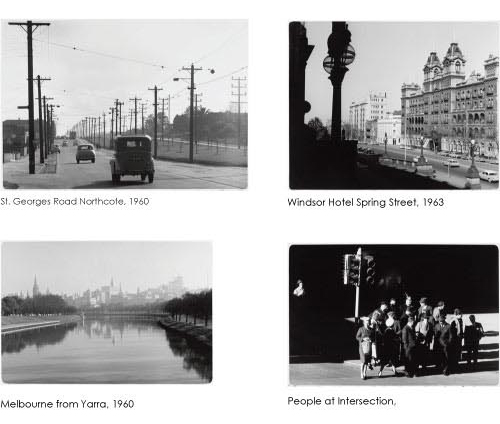
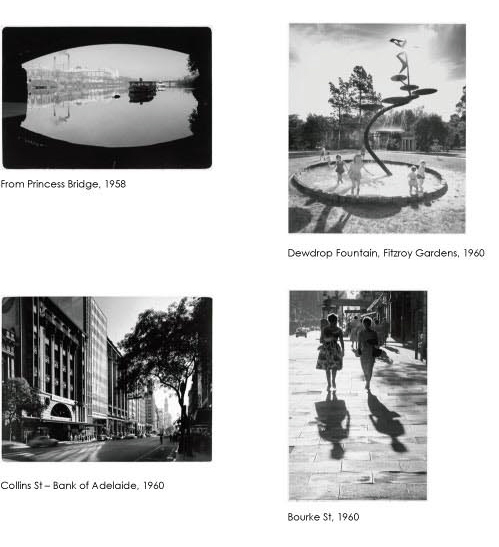
We observe in the photographs an emphasis on surfaces, on a supreme understanding of light and shade coupled with a certain distance and emotional remoteness from the frenetic hubbub of city life. Empty streets and isolated people fall into shadow and their is little evidence of ‘play’ in the photographs. This is observation not interaction or integration as an immigrant observing Melbourne life. There is no up front presence of disembodied people as in Robert Franks photographs in The Americans. Here the alienation that pervades the photographs is the alienation of the photographer from the people as much as it is the alienation of the people from themselves. People are shot in silhouette against the sun or shop windows or peering in at unobtainable goods; desolate streets and working class suburbs all express the isolation of city life but at a structured distance from them.
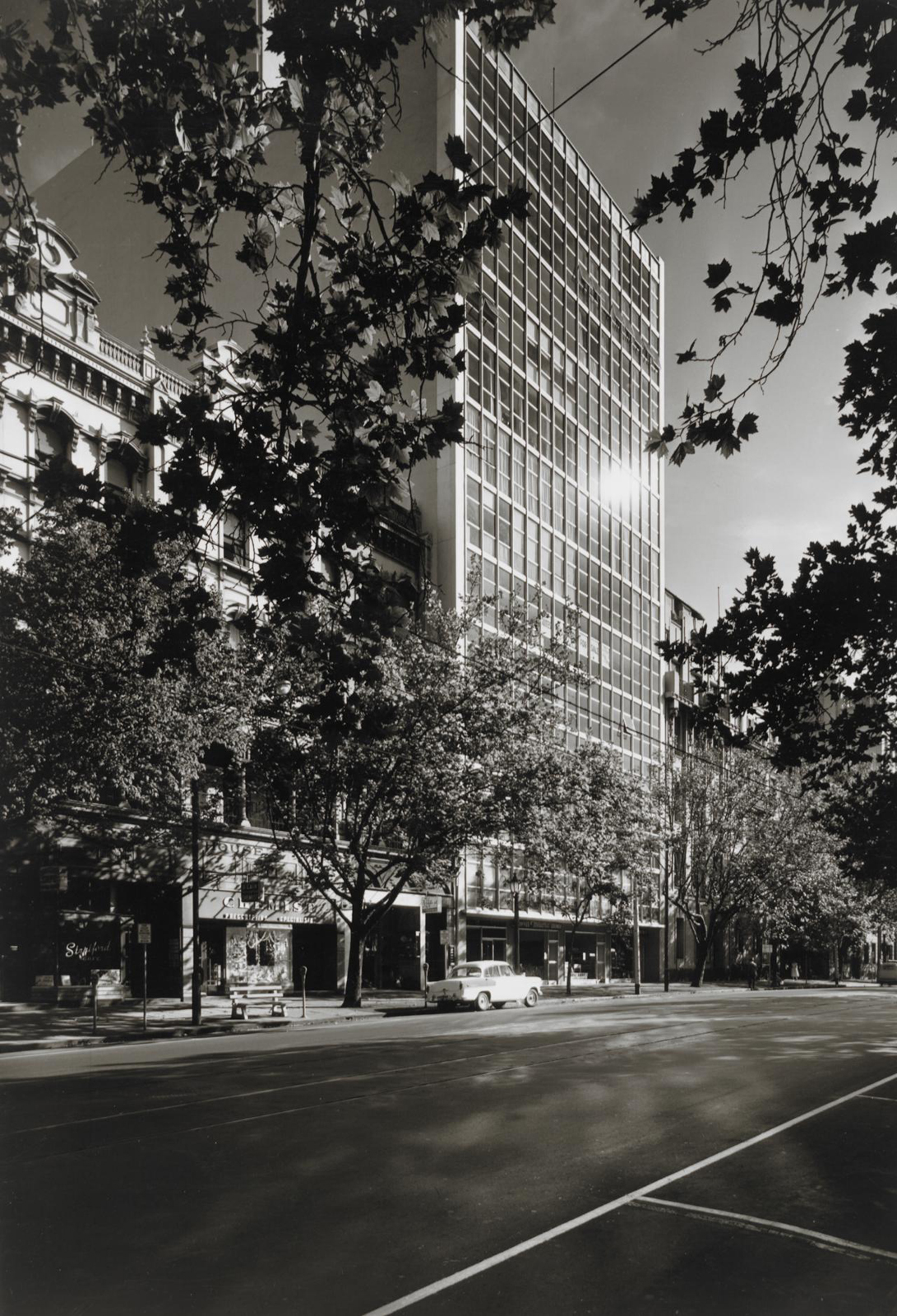
When Strizic’s photographs are good they are very good. His understanding of light is magnificent: light reflects off water, hazes and shimmers off city buildings. The mixing of shadows and sun and his use of the technique of ‘contre jour’ (shooting into the sun) the one thing Strizic does against traditional conventions works to good effect in some of the best photographs. His 1968 night time long exposure photograph of the old Gas and Fuel Building is rewarding for the black bulk of the end of the building looming over Flinders Street and the striations of car headlamps. The photograph Flinders Lane (1967, below) shows a delicate use of depth of field where the foreground of cars and person are out of focus, the light bouncing off the edges of the woman, the focus of the image in the far distance. The photograph McPhersons Building (1958, below) is one of my personal favourites in the exhibition and is a stunning photograph for the atmosphere the photographer has captured.
After a while the use of the ‘contre jour’ technique becomes tiresome. Other photographs simply document a city in transition. These photographs appeal both to an individual nostalgia (‘I used to work in that building’; ‘My grandmother used to live in that street’) and a collective nostalgia where people experience things collectively, “in the sense that [collective] nostalgia occurs when we are with others who shared the event(s) being recalled, and also in the sense that one’s nostalgia is often for the collective – the characteristics and activities of a group or institution in which the individual was a participant.”2
Collective nostalgia refers to that condition in which the symbolic objects are of a highly public, widely shared and familiar character, i.e. those symbolic resources from the past which can under proper conditions trigger off wave upon wave of nostalgic feeling in millions of persons at the same time3 and in this exhibition it is the photographs of a city in transition that trigger this nostalgia, a city now lost to the mists of time. Through these photographs we remember what Melbourne was like at this time collectively.
As Harper has observed
“Nostalgia combines bitterness and sweetness, the lost and the found, the far and near, the new and the familiar, absence and presence. The past which is over and gone, from which we have been or are being removed, by some magic becomes present again for a short while. But its realness seems even more familiar, because renewed, than it ever was, more enchanting and more lovely …”4
Does this collective nostalgia make the photographs good? This is a pertinent question.
Today, nostalgia has become a cultural phenomenon one centred on a longing for home (home is where you are happy to be!) in a collective sense and promoted through commercialisation and the realisation that nostalgia sells. The use of the value seeking word ‘rare’ in the exhibition title is instructive in this regard. Only about 25% of the photographs in this exhibition are “vintage” prints, in other words photographs printed within 3 years of the negative being taken. All other photographs have been printed within the last 15 years. Some are ‘Unique state’ gelatin photographs while others are not. What does this mean. Are they are unique state only in this size? What about the common or garden silver gelatin prints in the show? What does the status word “rare” imply for them?
I remember seeing an exhibition of the photographs of Henri Cartier-Bresson in Scotland about ten years ago. Three rooms had large prints of his work. One room just had vintage prints. The contrast was astounding. The room full of vintage prints had an intensity of vision, of his vision at the time he took the photographs evidenced in small jewel like photographs that the three other rooms photographs simply did not possess – through scale, printing and aesthetics. The same question, without any need for an answer, can be posed here. Only the word ‘rare’ demands that answer for the modern prints are just what they are and nothing more.
In conclusion this is a strong show by Strizic that could have been edited and focused in a more rewarding way. Strizic is one of Australia’s best photographers for understanding the significance of place. His use of light is superb but there always seems to be an emotional distance to his photographs. An element of collective nostalgia adds to their documentary appeal but the best photographs do not just record, they challenge and transcend the subject matter taking the work to an altogether different plane of existence.
Dr Marcus Bunyan
1/ Stewart, Susan. On Longing: Narratives of the Miniature, the Gigantic, the Souvenir, the Collection. Durham: Duke University Press, 1993, p. 2. Prologue
2/ Wilson, Janelle. “”Remember when …” a consideration of the concept of nostalgia,” in et Cetera. Concord: Fall 1999. Vol. 56, Iss. 3; pg. 296, 9 pgs
3/ Davis, F. Yearning For Yesterday: A Sociology of Nostalgia. New York: The Free Press, 1979, p. 222
4/ Harper, R. Nostalgia: An Existential Exploration of Longing and Fulfilment in the Modern Age. The Press of Western Reserve University, 1966, p. 120 quoted in Wilson, Janelle. “”Remember when …” a consideration of the concept of nostalgia,” in et Cetera. Concord: Fall 1999. Vol. 56, Iss. 3; pg. 296, 9 pgs
Many thankx to Gallery 101 for allowing me to publish the photographs in the posting. Please click on some of the photographs for a larger version of the image.
Installation views of the exhibition Mark Strizic: Melbourne – A City in Transition exhibition at Gallery 101, Melbourne Photos: Marcus Bunyan
Mark Strizic, one of Australia’s eminent photographic artists presents us with nostalgic views of Melbourne and the changing face of the city in rare silver gelatin photographs. The exhibition, Melbourne – A City in Transition will be held at Gallery 101 from 8th April – 2nd May. There will be an evening artist reception on Thursday 9th April to celebrate the opening of the exhibition. Strizic’s oeuvre represents a collection of iconic images of architecture and of life – a record of the changing face of a migrating society of new prosperity, youth and popular culture – taken with a sympathetic eye for humanistic detail.
The exhibition will coincide with the announcement of the forthcoming publication, Mark Strizic, Melbourne: Marvellous to Modern, published by Thames & Hudson in association with the State Library of Victoria. In 2007, the State Library of Victoria acquired Mark Strizic’s entire archive of approximately 5000 negatives, colour transparencies and slides. In addition, the Library holds a fine collection of Strizic photographs, including examples of all types of photographic print, from gelatin silver to digital, produced by the photographer during his long career.
Press release from Gallery 101
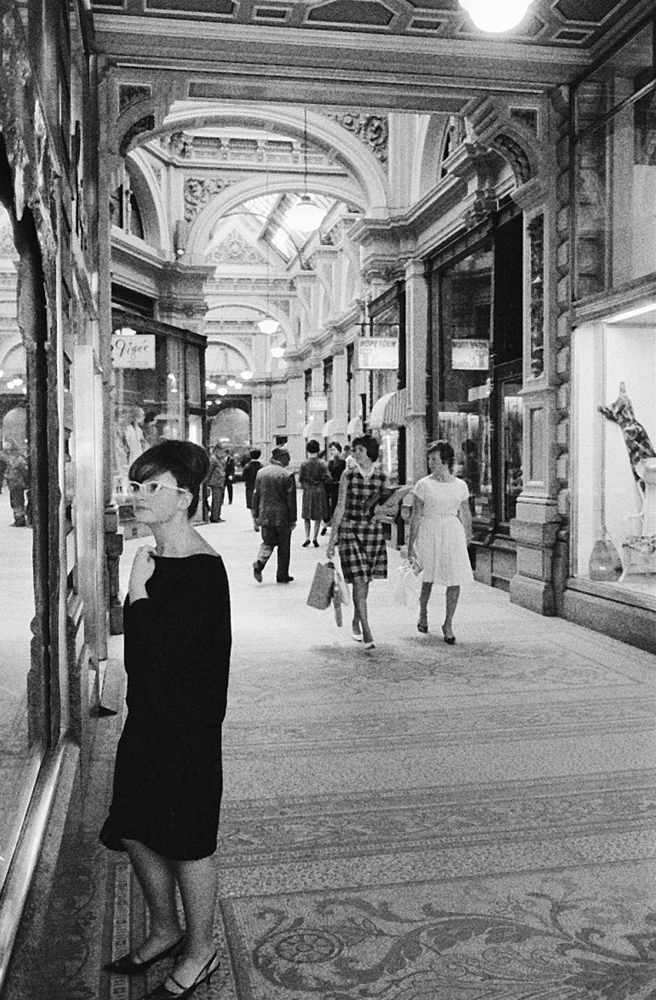
“‘Melbourne – A City in Transition’ is a collection of iconic images of Melbourne city life taken with a sympathetic eye for humanist detail. Strizic accurately depicts the joys and hardships experienced in everyday life with a fresh and living memory. He successfully captures the vicarious essence of suburban life. His portrait of Melbourne includes the city, harbour and river banks – streets and trams, pavements, arcades and lanes, stations and bridges, billboards and facades and public sculpture. We see people going about their daily activities – commuting, shopping at leisure, trading, embracing, conversing, reading the newspaper and visiting the beach. Other works record the demolition and construction of building sites and the changing face of Melbourne, both in society and the urban landscape.”
Text from the exhibition flyer
“In these eloquent studies of light and shadow, Strizic finds beauty in the commonplace – Melbourne’s desolate lanes, street paving, derelict ferries – adopting interesting camera angles, viewpoints and cropping. Through his images, this visual humanist teaches us to observe, to see our surroundings, perhaps with the intention of stimulating us to a higher level of civilisation.”
Emma Matthews. Mark Strizic, Melbourne: Marvellous to Modern. Thames & Hudson in association with the State Library of Victoria, September, 2009.
“This magnificent collection of photographs arose from the creativity of a young photographer and his adoption of his new home town, Melbourne. His pictures were taken at a time when the Victorian elegance of the city once known as ‘Marvellous Melbourne’ was being punctuated by a wave of development and the modern architectural movement. Today Mark Strizic is renowned as a photographer. In the 1950s he was a young science student from Europe playing with the possibilities of the camera. As he gained work as a professional his commercial success was accompanied by the instincts and eye of an artist. His solid technicality was accompanied by the whimsy and wit that made him the ‘poet of the fleeting movement’. The versatility of his work shows us many aspects of Melbourne – its magnificent architectural heritage, its intimate and vibrant laneways, its grand arcades counter-posed against the sudden spaces of the wrecker, the brash intrusion of the glass and concrete skyscrapers, the poignancy of poverty in the rundown inner suburbs. We see the people, on grand occasions such as the 1954 Royal Visit, or just caught in their own world of travelling, shopping, resting, walking, working.”
Mark Strizic, Melbourne: Marvellous to Modern book cover
Mark Strizic (Australian, 1908-2012) From Princes Bridge 1958, printed 2006 Silver gelatin photograph 58 x 39cm
Mark Strizic (Australian, 1908-2012) Near Spencer Street – 1 1950 Silver gelatin photograph 27.5 x 38.5cm
Mark Strizic (Australian, 1908-2012) At St. Pauls (St Paul’s Cathedral steps) 1954, printed 1999 Silver gelatin photograph 17.8 × 24.5cm
Mark Strizic (Australian, 1908-2012) St Paul’s Cathedral steps 1954, printed 1999 Silver gelatin photograph 17.8 × 24.5cm
Mark Strizic (Australian, 1908-2012) Collins Street at Russell Street 1957, printed 1997 Unique silver gelatin photograph 39 x 56cm
Mark Strizic (Australian, 1908-2012) St Georges Road, Northcote at Summer Av. 1958, printed 1998 Silver gelatin photograph
Mark Strizic (Australian, 1908-2012) St. Patrick’s Cathedral January 1967, printed 1998 Unique silver gelatin photograph 27 x 41cm
Mark Strizic (Australian, 1908-2012) Bourke Street from the Parliament – 2 1967, printed 1998 Silver gelatin photograph 38 x 27cm
Mark Strizic (Australian, 1908-2012) Russell Street Pawn Shop 1958 Silver gelatin photograph
Mark Strizic (Australian, 1908-2012) Block Arcade 1967, printed February 2008 Unique silver gelatin photograph 53.5 x 37cm
Mark Strizic (Australian, 1908-2012) From Princes Bridge (Winter moorings from Princes Bridge) 1955, printed 2006 Silver gelatin photograph 58 x 39cm
Mark Strizic (Australian, 1908-2012) Flinders Lane 1967, printed 1998 Unique silver gelatin photograph 41 x 41cm
Mark Strizic (Australian, 1908-2012) Swan Street, Richmond, at Church Street 1963 Silver gelatin photograph
Mark Strizic (Australian, 1908-2012) Queensberry Street at Errol Street, North Melbourne 1963 Silver gelatin photograph
Mark Strizic (Australian, 1908-2012) Swan Street at Church Street 1963, printed 1998 Silver gelatin photograph
Mark Strizic (Australian, 1908-2012) Coates Building 1960, printed 1961 Vintage silver gelatin photograph 23.5 x 15cm
Mark Strizic (Australian, 1908-2012) Macphersons Building – 1 1958 Silver gelatin photograph
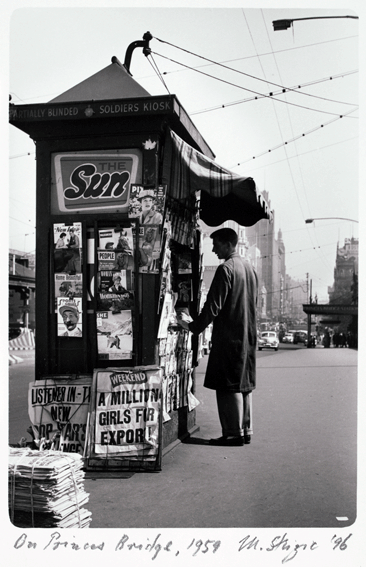
Mark Strizic (Australian, 1908-2012) On Princes Bridge 1959, printed 1996 Silver gelatin photograph 17 x 24cm















 Art Blart _ art and cultural memory archive
You must be logged in to post a comment.