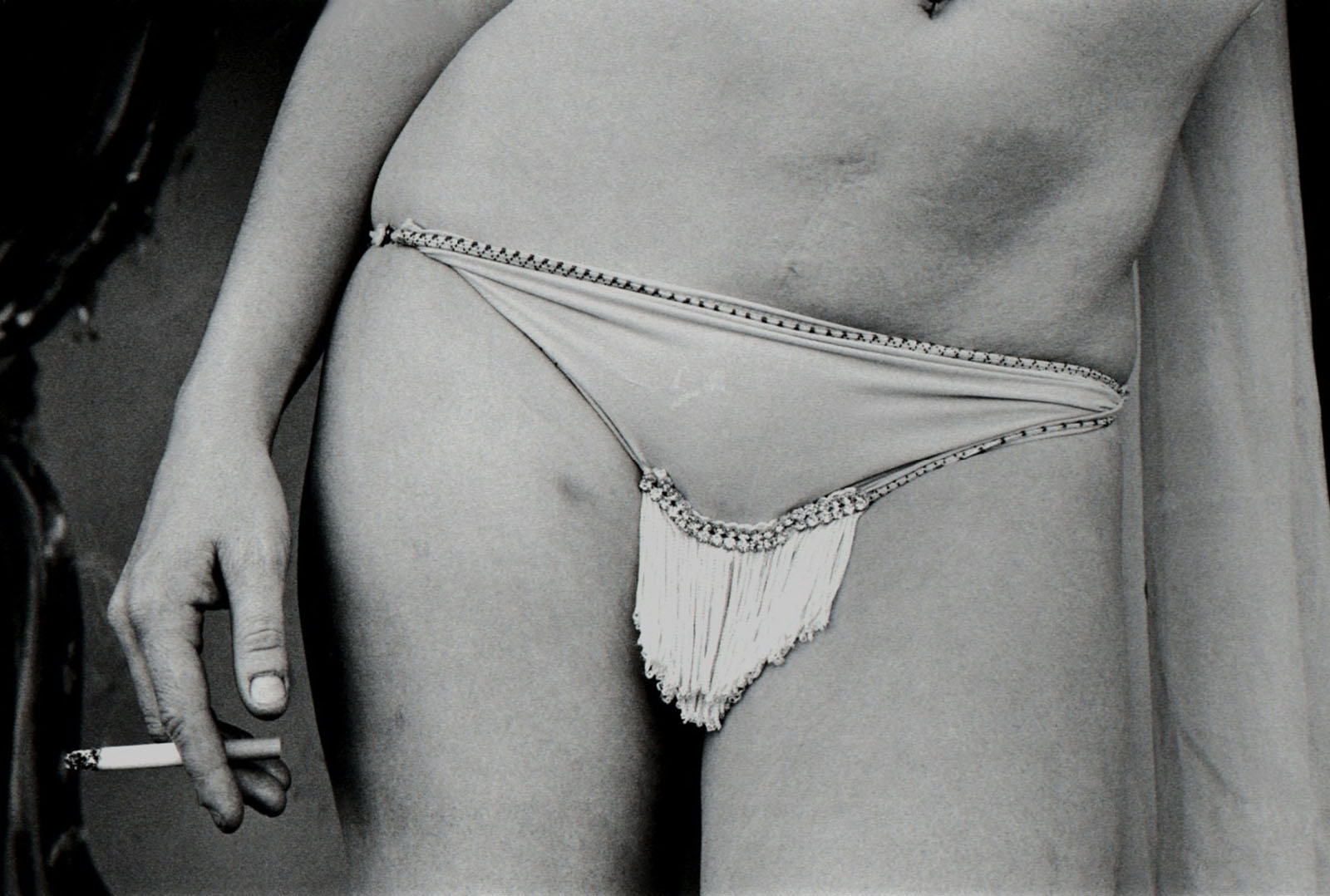
Exhibition: ‘Luces y Sombras: Images of Mexico | Photographs from the Bank of America Collection’ at the Tacoma Art Museum

Exhibition dates: 15th October 2022 – 5th February 2023
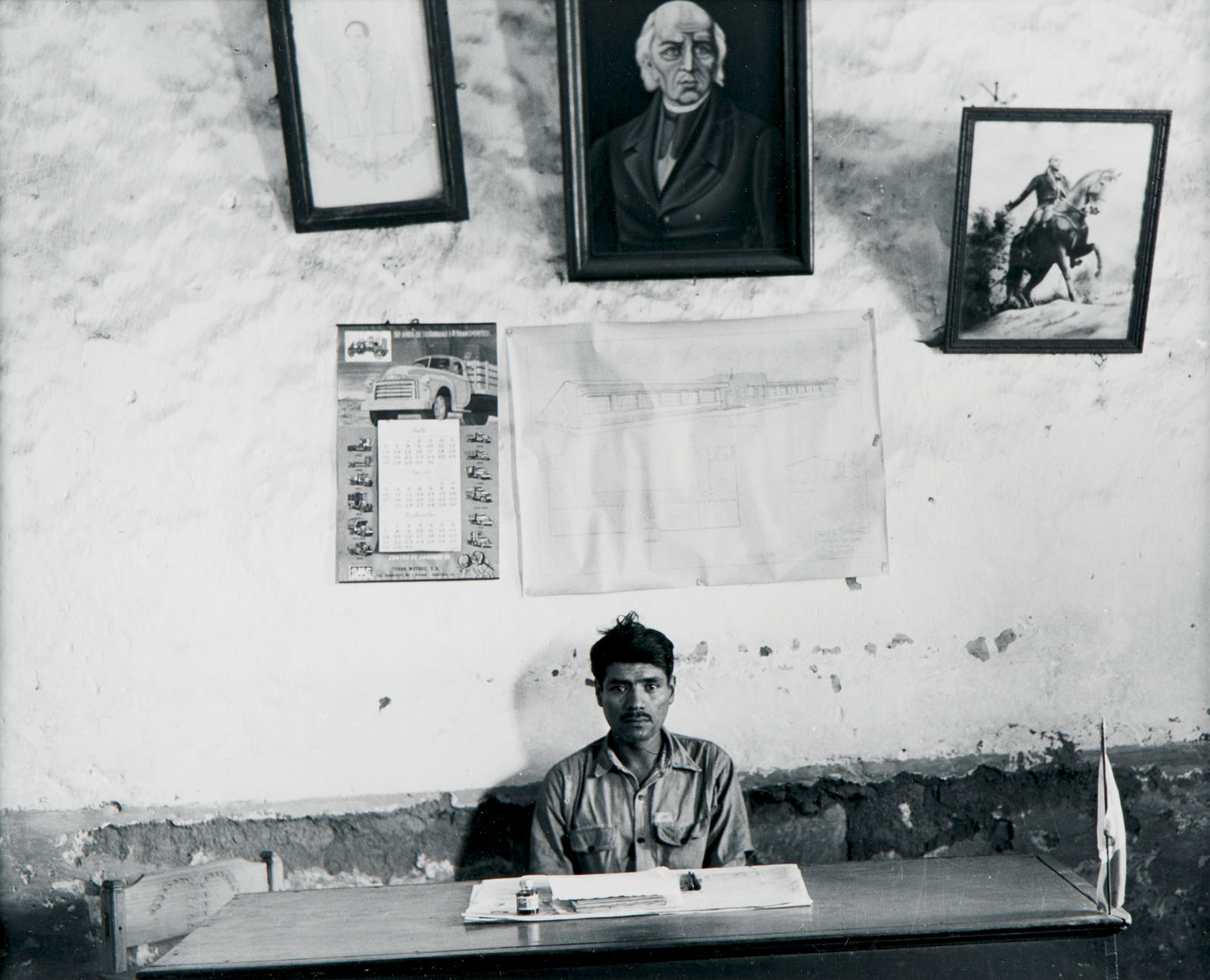
 

Manuel Álvarez Bravo (Mexican, 1902-2002) 'Mr. Municipal President' (Señor presidente municipal) 1947 from the exhibition 'Luces y Sombras: Images of Mexico | Photographs from the Bank of America Collection' at the Tacoma Art Museum, Oct 2022 - Feb 2023


Manuel Álvarez Bravo (Mexican, 1902-2002)
Mr. Municipal President (Señor presidente municipal)
1947 (negative); printed before 1975
Gelatin silver print
Image Overall: 7 3/8 x 9 1/8 inches (18.7 x 23.1cm)
Bank of America Collection
© Archivo Manuel Álvarez Bravo, S.C


After last week’s long piece of writing something more succinct this week…

Luces y Sombras translates as Lights and Shadows. The exhibition reflects many themes: the landscape, urban life, fantasy and, especially among younger generations, gender and invented situations infused with symbolism. It begins with works by photographers active at the conclusion of the Mexican Revolution (1910-1920), notably Manuel Álvarez Bravo, considered Mexico’s first truly modern photographer. It also includes visiting artists such as the Americans Paul Strand and Edward Weston.

Later works by such figures as Manuel Carrillo, Mariana Yampolsky, and Graciela Iturbide reveal the ongoing emphasis by Mexican photographers on everyday life and Mexico’s Indigenous communities. Recent generations of photographers have found new purpose in documenting how ways of life in Mexico continue to be changed by urbanisation, migration, and the pervasive influence of popular Western culture and mass media.” (Exhibition text from the TAM)

It is interesting to hear British photographer Chris Killip’s thoughts on Mexico through a foreign lens. This quote from an upcoming posting on Killip’s work:

He says he stayed [in Newcastle] because he liked it, and that he might never have left had the Harvard job not come along – but he was also inspired by the Magnum photographer Josef Koudelka, who came to visit him early on and “talked about the importance of being in one place, to get under the surface of things”. He was also interested in how differently Paul Strand and Manuel Alvarez Bravo photographed Mexico, he says, despite Strand’s sympathetic, card-carrying Communist credentials.

“Strand beautifies poverty and simplifies the Mexican people into ‘the poor Mexicans, but isn’t this wonderful visually’,” he says. “But Alvarez Bravo was Mexican, his pictures are very complicated because he was able to accept ambiguities and contradictions, which Strand couldn’t… I think because I lived in Newcastle for so long I was able to accept ambiguities and not worry about them, just accept them and show them. I wanted to be there and be more accepting.”1


As I have said in a previous posting on Mexican photography there is something so essential and grounded, so darkly soulful about Mexican photography. They never pull their punches, not just interested in the beauty of people and place but also the rituals, traditions and politics of Mexican society.

As ever, it is the work of Mexican artist Manuel Álvarez Bravo that steals my heart. His work exudes the spirit of the country through its sensitivity and connection to the earth from which he was born. The light and form in Bravo La Siesta de los Peregrinos; the light and form in Retrato de lo Eterno (1935, below). I have studied his work quite closely. He is the blessed one. Through his music, he captures the light and life of Mexico, the spirit of the eternal, “the sunlight [as] a discreet veil that turns the shadows into velvet.” His work is the art of the People.

Further,

“One of my early heroes in photography was Manuel Alvarez Bravo whom I rate as one of the best photographers that has ever lived, up there with Atget and Sudek. His photograph Parabola optica (Optical Parable, 1931, below) lays the foundation for an inherent language of Mexican photography: that of a parable, a short allegorical story designed to illustrate or teach some truth, religious principle, or moral lesson. Many Mexican photographs tell such stories based on the mythology of the country: there are elements of the absurd, surrealism, macabre, revolution, political and socio-economic issues, also of death, violence, beauty, youth, sexuality and religion to name but a few – a search for national identity that is balanced in the photographs of Bravo by a sense of inner peace and redemption. This potent mix of issues and emotions is what makes Mexican photography so powerful and substantive. In the “presence” (or present, the awareness of the here and now) of Mexican photography there is a definite calligraphy of the body in space in most of the work. This handwriting is idiosyncratic and emotive; it draws the viewer into an intimate narrative embrace.

Unlike most Australian documentary photography where there is an observational distance present in the photographs – a physical space between the camera/photographer and the subject – Mexican documentary photography is imbued with a revolutionary spirit and validated by the investment of the photographer in the subject itself, as though the image is the country is the photographer. There is an essence and energy to the Mexican photographs that seems to turn narrative on its head, unlike the closed loop present in the tradition of Australian story telling. The intimate, swirling narratives of Mexican photography could almost be termed lyrical socio-realist.”2


What is a revelation to me in this posting is work by two Mexican photographers who I have never heard of before and I should have because they are very good: Manuel Carrillo and Flor Garduño. Carillo joined the Club Fotográfico de México at the age of 49. As James McArdle observes the politics of Carrillo’s photographic work is anchored to his own cultural identity as a Mexican by birth and his time spent in America.

“He quickly found his voice by making images of everyday life throughout Mexico, celebrating local culture and the human spirit. His work is an extension of Mexicanidad, a movement begun in the 1920s to forge a Mexican national identity free of foreign influence… His interest in indigenous cultures and his use of bright sunlight to create compositions with dramatic shadows and bold geometric forms has roots in the photographic work of Edward Weston and Paul Strand, American modernist photographers active in Mexico in the 1920s and 1930s. Rather than idealising, aestheticising, or moralising, Carrillo portrays Mexico from the perspective of an affectionate observer, transforming ordinary moments into expressions of quiet eloquence.”3


A certain paradox can be noted here: the wish for a Mexican identity free of foreign influence and photographs forged in the American modernist tradition. Interesting. It doesn’t stop the visceral photographs being very “Mexican” for all that.

“Garduño’s photographs create a bridge between the present and the past by portraying natural elements such as water, trees, earth, animals, and atmosphere. Garduño worked for the Department of Public Education in her native Mexico, traveling to rural areas to work with indigenous communities. From this she developed her style and got to know what she has referred to as the “profound truth” of the countryside in the Americas. Her work was also influenced by artists Kati Horna, who worked in a surrealistic vein, and Manuel Álvarez Bravo, who attended carefully to the tonal qualities of his photographs. Garduño similarly uses compositional and darkroom techniques to achieve moody, evocative images.”4


In the work of Mexican photographers – Manuel Álvarez Bravo, Graciela Iturbide, Manuel Carrillo and Flor Garduño – you can palpably feel the essentialness of the Mexican people and begin to understand their connection to the land from which they come. Much as in the work of Chris Killip in England with his embeddedness5 with the people of North Yorkshire … there is an honesty, integrity and openness to their work which, in the case of Mexican photography, has continuous strands (like a river) running through it: that is, a synthesis of aesthetics, politics, land and spirit. Their work is of the people for the people offering a “profound truth” about the nature of their existence in the countryside in the Americas.

Dr Marcus Bunyan


Footnotes

1/ Diane Smyth. “Now Then: Chris Killip and the Making of In Flagrante, on the British Journal of Photography website 6 June 2017 [Online] Cited 26/01/2023

2/ Marcus Bunyan. “Photography in Mexico: Selected Works from the Collections of SFMOMA and Daniel Greenberg and Susan Steinhauser,” on the Art Blart website 4th July 2012 [Online] Cited 28/01/2023

3/ Anonymous. “Manuel Carrillo: Mexican Modernist,” on the New Mexico Museum of Art website Nd [Online] Cited 28/01/2023. No longer available online

4/ Anonymous. “Get to know the work of Flor Garduño,” on the Getty Twitter website Oct 6, 2021 [Online] Cited 28/01/2023

5/ Embeddedness: an exchange that takes place within and is regulated by society rather than being located in a social vacuum.


Many thankx to the Tacoma Art Museum, Mark I. Chester and Steven Miller for allowing me to publish the photographs in the posting. Please click on the photographs for a larger version of the image.


Manuel Álvarez Bravo (Mexican, 1902-2002) 'In the Temple of Red Tiger' (En el templo del tigre rojo) 1949 from the exhibition 'Luces y Sombras: Images of Mexico | Photographs from the Bank of America Collection' at the Tacoma Art Museum, Oct 2022 - Feb 2023


Manuel Álvarez Bravo (Mexican, 1902-2002)
In the Temple of Red Tiger (En el templo del tigre rojo)
1949 (negative); print before 1975
Gelatin silver print
Image overall: 9 3/4 × 6 3/4 in. (24.8 x 17.1cm)
Bank of America Collection
© Archivo Manuel Álvarez Bravo, S.C


Manuel Álvarez Bravo (Mexican, 1902-2002) 'Portrait of the Eternal' (Retrato de lo eterno) 1935 from the exhibition 'Luces y Sombras: Images of Mexico | Photographs from the Bank of America Collection' at the Tacoma Art Museum, Oct 2022 - Feb 2023


Manuel Álvarez Bravo (Mexican, 1902-2002)
Portrait of the Eternal (Retrato de lo eterno)
1935 (negative); print before 1975
Gelatin silver print
Image Overall: 9 5/8 × 7 3/8in. (24.4 x 18.7cm)
Bank of America Collection
© Archivo Manuel Álvarez Bravo, S.C


Manuel Álvarez Bravo (Mexican, 1902-2002) 'The Daydream' (El ensueño) 1931


Manuel Álvarez Bravo (Mexican, 1902-2002)
The Daydream (El ensueño)
1931 (negative); print before 1975
Gelatin silver print
Image Overall: 9 1/4 × 7 in. (23.5 x 17.8cm)
Bank of America Collection
© Archivo Manuel Álvarez Bravo, S.C


Manuel Álvarez Bravo (Mexican, 1902-2002) 'Optic Parable' (Parábola óptica) 1931


Manuel Álvarez Bravo (Mexican, 1902-2002)
Optic Parable (Parábola óptica)
1931 (negative); print before 1975
Gelatin silver print
Image Overall: 9 1/4 × 7 in. (23.5 x 17.8cm)
Bank of America Collection
© Archivo Manuel Álvarez Bravo, S.C


Manuel Álvarez Bravo (Mexican, 1902-2002) 'The Big Fish Eats the Little Ones' (El pez grande se come a los chicos) 1932


Manuel Álvarez Bravo (Mexican, 1902-2002)
The Big Fish Eats the Little Ones (El pez grande se come a los chicos)
1932 (negative); print before 1975
Gelatin silver print
Image Overall: 9 × 7 in. (22.9 x 17.8cm)
Bank of America Collection
© Archivo Manuel Álvarez Bravo, S.C


Graciela Iturbide on Manuel Álvarez Bravo

Graciela Iturbide, Hasselblad Award Winner in 2008, talks about her friend and teacher Manuel Álvarez Bravo who received the Hasselblad Award in 1984.
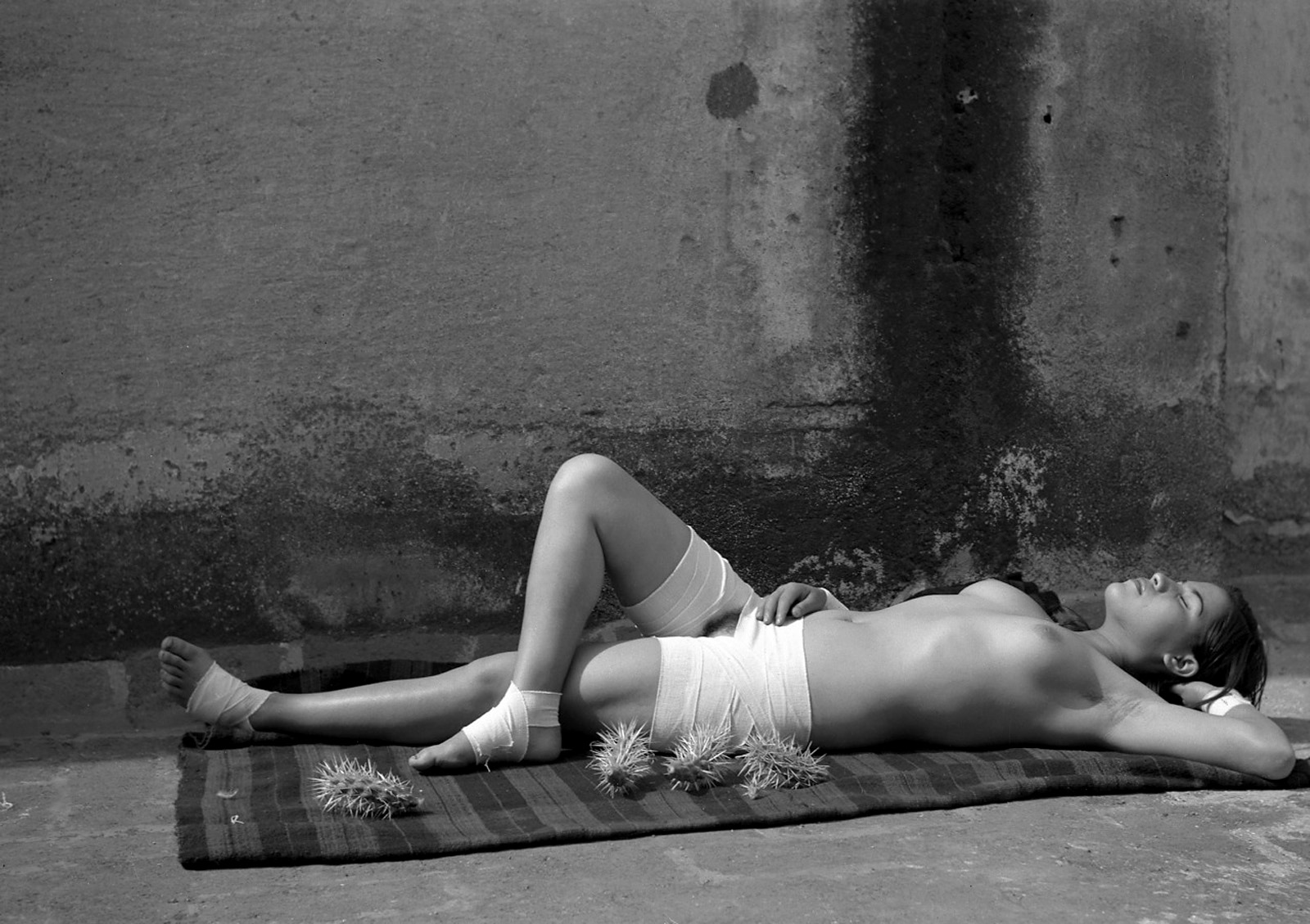
 

Manuel Alvarez Bravo (Mexican, 1902-2002) 'La Buena Fama Durmiendo (The Good Reputation Sleeping)' 1939, printed c. 1970s


Manuel Álvarez Bravo (Mexican, 1902-2002)
The Good Reputation, Sleeping (La buena fama, durmiendo)
1938 (negative); print before 1975
Gelatin silver print
Image Overall: 7 3/8 × 9 5/8 in. (18.7 x 24.4cm)
Bank of America Collection
© Archivo Manuel Álvarez Bravo, S.C
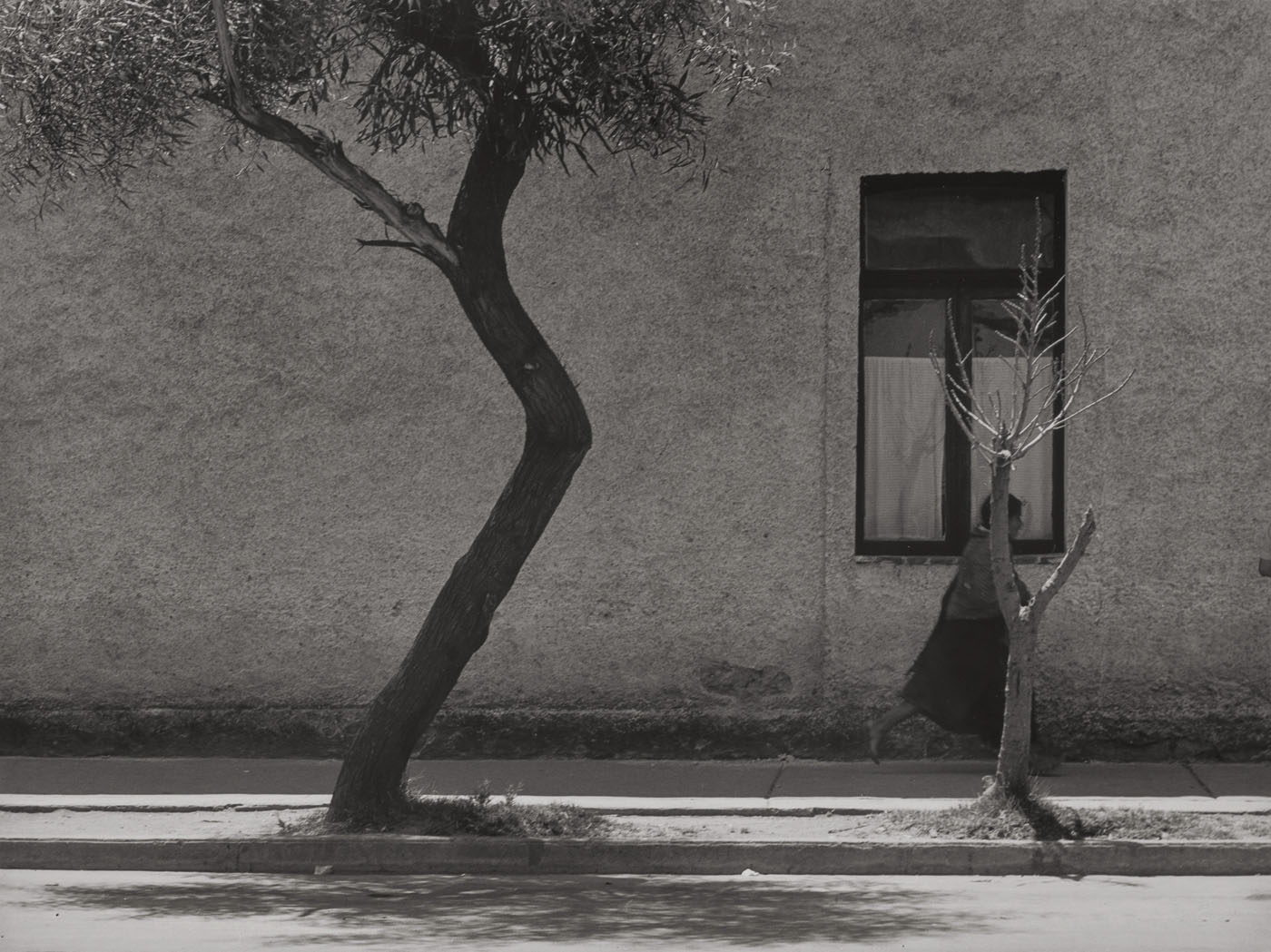
 

Manuel Álvarez Bravo (Mexican, 1902-2002) 'The Maria' (La María) 1972


Manuel Álvarez Bravo (Mexican, 1902-2002)
The Maria (La María)
1972
Gelatin silver print
Image Overall: 7 × 9 1/4 in. (17.8 x 23.5 cm)
Bank of America Collection
© Archivo Manuel Álvarez Bravo, S.C


Manuel Álvarez Bravo. 'Las lavanderas sobreentendidas / The Washerwomen Implied' 1932


Manuel Álvarez Bravo (Mexican, 1902-2002)
The Washerwomen Implied (Las lavanderas sobreentendidas)
1932 (negative); print before 1975
Gelatin silver print
Image Overall: 9 1/2 × 6 in. (24.1 x 15.2cm)
Bank of America Collection
© Archivo Manuel Álvarez Bravo, S.C


Manuel Álvarez Bravo (Mexican, 1902-2002) 'The Obstacles' (Los obstáculos) 1929


Manuel Álvarez Bravo (Mexican, 1902-2002)
The Obstacles (Los obstáculos)
1929 (negative); print before 1975
Gelatin silver print
Image Overall: 7 1/4 × 9 1/4 in. (18.4 x 23.5cm)
Bank of America Collection
© Archivo Manuel Álvarez Bravo, S.C


Manuel Álvarez Bravo (Mexican, 1902-2002) 'Frida Kahlo with Globe' (Frida Kahlo con globo) c. 1930s


Manuel Álvarez Bravo (Mexican, 1902-2002)
Frida Kahlo with Globe (Frida Kahlo con globo)
c. 1930s (negative); print before 1992
Gelatin silver print
Image Overall: 9 3/8 × 7 1/4 in. (23.8 x 18.4cm)
Bank of America Collection
© Archivo Manuel Álvarez Bravo, S.C
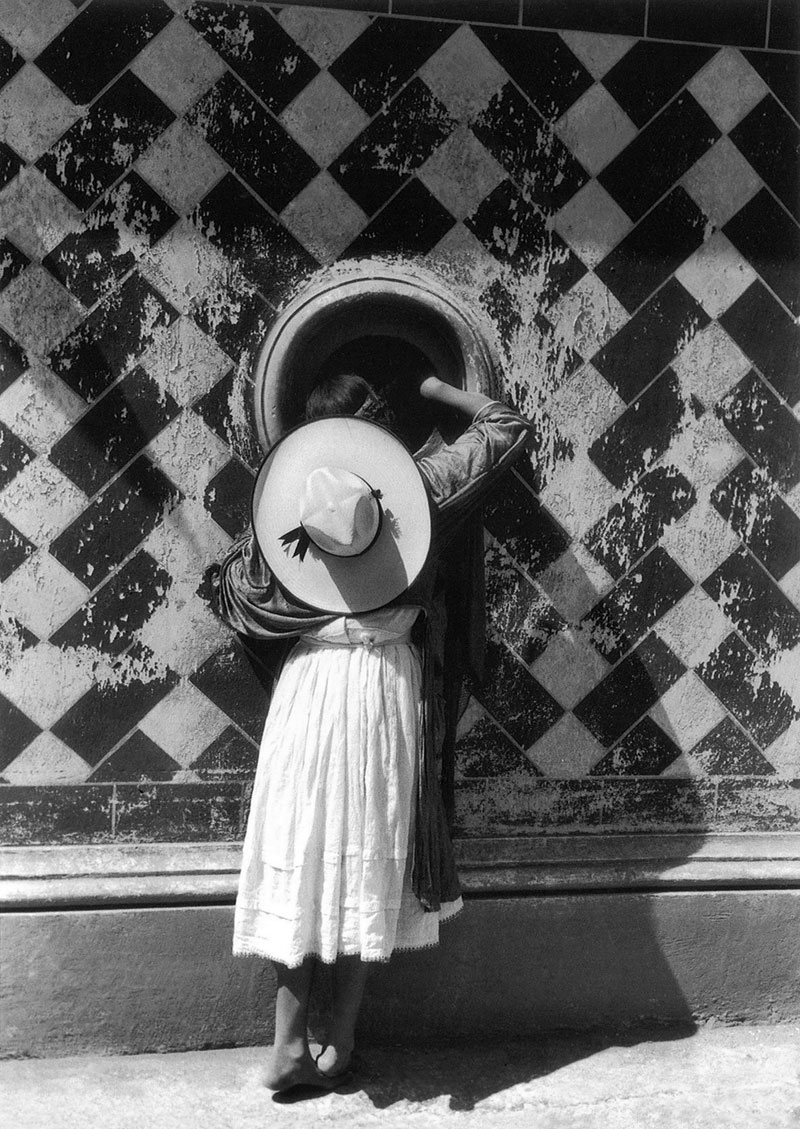
 

Manuel Álvarez Bravo (Mexican, 1902-2002) 'The Daughter of the Dancers' (La hija de los danzantes) 1933


Manuel Álvarez Bravo (Mexican, 1902-2002)
The Daughter of the Dancers (La hija de los danzantes)
1933
Gelatin silver print
Image Overall: 9 × 6 1/2 in. (22.9 x 16.5cm)
Bank of America Collection
© Archivo Manuel Álvarez Bravo, S.C


More than 100 photographs spanning more than 85 years of Mexican culture and history are coming to Tacoma Art Museum in the exhibition Luces y Sombras: Images of Mexico I Photographs from the Bank of America Collection.

Luces y Sombras reflects a broad span of Mexico’s modern history, beginning with work by photographers active in the 1920s, not long after the conclusion of the Mexican Revolution. A struggle for political power that began with the overthrow in 1911 of Mexico’s authoritarian president, Porfirio Díaz, became the catalyst for a popular uprising of campesinos, agrarian indigenous and mestizo (mixed race) people who fought for agrarian and social reform. Revolutionary leader Emiliano Zapata’s rallying cry, “Tierra y Libertad” (Land and Liberty), not only galvanised the hundreds of thousands of campesinos who joined the revolt but in its wake, came to represent the affirmation of rural people, whose lives were inextricably tied to the land.

Many images in this exhibition manifest the cultural values that came to the fore in the decades following the Revolution, when politicians and intellectuals alike endeavoured to reconstruct and, indeed, re-envision their nation. In the cultural sphere, Mexico’s new leadership sought to purge the nation of the European influence favoured by the Díaz regime. Nationalist ideals and a broad-based exploration of Mexicanidad (the quality of being Mexican) were accompanied by a new reverence for Mexico’s indigenous roots and for everyday men and women. Photographs made throughout the last century of indigenous and mestizo people reflect not only the survival of indigenous communities and traditions, but also the realities of poverty and social marginalisation that persist for a large lower class up to the present day.

Luces y Sombras reflects many other themes embraced by photographers in Mexico, both native and foreign-born – the landscape, urban life and, especially among younger generations, gender and invented situations infused with symbolism. The inclusion of such foreign photographers as Paul Strand, Elliott Erwitt, Aaron Siskind, Danny Lyon, and Nan Goldin speaks to another key component of the history of photography in Mexico – the significance of a nation seen through foreign eyes.

In gathering work by such a diversity of voices, Luces y Sombras provides vivid testimony to the character of life in a nation in the throes of reinvention, modernisation and continued change over the course of the last century.

Text from the TAM website


Ana Casas Broda (Mexican born Spain, b. 1965) 'Milk III (2)' (Leche III (2)) 2010


Ana Casas Broda (Mexican born Spain, b. 1965)
Milk III (2) (Leche III (2))
2010
from the series Kinderwunsch (The Desire to Have Children)(El deseo de tener hijos)
Inkjet print on cotton paper
Image Overall: 23 5/8 × 35 1/2 in. (60 x 90.2cm)
Bank of America Collection


Manuel Carrillo (Mexican, 1906-1989) 'Mendicant girl – close up, Guanajuato, Guanajuato' (Sin título (Pordiocerita – close up, Guanajuato, Guanajuato)) 1930


Manuel Carrillo (Mexican, 1906-1989)
Mendicant girl – close up, Guanajuato, Guanajuato (Sin título (Pordiocerita – close up, Guanajuato, Guanajuato))
1930
Gelatin silver print
Image Overall: 7 1/2 × 9 1/4 in. (19.1 x 23.5cm)
Bank of America Collection


Manuel Carrillo (Mexican, 1906-1989) 'Untitled (Man inside store, contrasted, baskets on the wall, Zacapoaxtla, Pueblo)' (Sin título (Hombre dentro tienda, contrastada, canastas, pared, Zacapoaxtla, Pueblo)) 1975


Manuel Carrillo (Mexican, 1906-1989)
Untitled (Man inside store, contrasted, baskets on the wall, Zacapoaxtla, Pueblo) (Sin título (Hombre dentro tienda, contrastada, canastas, pared, Zacapoaxtla, Pueblo))
1975
Gelatin silver print
Image Overall: 7 3/4 × 10 in. (19.7 x 25.4cm)
Bank of America Collection


Manuel Carrillo worked in Mexico in the middle of the 20th century, a time in Mexico that witnessed great political changes and social transformations and a moment in the country’s history when it was establishing its strong cultural identity.

Carrillo’s work, along with the well-known Manuel Alvarez Bravo, Tina Modotti and the American photographer Edward Weston, among others, was a contributing force as to how Mexico saw itself and how the rest of the world came to perceive that complex country. A bit of the understanding and empathy for the daily life of the Mexican people seen in Carrillo’s work would be of great help in how Mexico is perceived today.


Manuel Carrillo (Mexican, 1906-1989) 'Untitled (Seller of ropes and belts, Oaxaca, Oaxaca)' (Sin título (Vendedor reatas y cinturónes, Oaxaca, Oaxaca)) Nd


Manuel Carrillo (Mexican, 1906-1989)
Untitled (Seller of ropes and belts, Oaxaca, Oaxaca) (Sin título (Vendedor reatas y cinturónes, Oaxaca, Oaxaca))
Nd
Gelatin silver print
Image Overall: 7 3/8 × 9 5/8 in. (18.7 x 24.4cm)
Bank of America Collection


Manuel Carrillo (Mexican, 1906-1989) 'Untitled (Shawl in the air, Oaxaca, Oaxaca)' (Sin título (Rebozo al aire, Oaxaca, Oaxaca)) 1958


Manuel Carrillo (Mexican, 1906-1989)
Untitled (Shawl in the air, Oaxaca, Oaxaca) (Sin título (Rebozo al aire, Oaxaca, Oaxaca))
1958
Gelatin silver print
Image Overall: 9 1/2 × 8 5/8 in. (24.1 x 21.9cm)
Bank of America Collection


Manuel Carrillo (Mexican, 1906-1989) 'Untitled (Dog on grave, cemetery, Dolores, Mexico City)' (Sin título (Perro sobre tumba, panteon, Dolores, México D.F.) 1930


Manuel Carrillo (Mexican, 1906-1989)
Untitled (Dog on grave, cemetery, Dolores, Mexico City) (Sin título (Perro sobre tumba, panteon, Dolores, México D.F.)
1930
Gelatin silver print
Image Overall: 8 × 10 3/4 in. (20.3 x 27.3cm)
Bank of America Collection


Mexican photographer Manuel Carrillo (1906-1989) turned to the camera fairly late in life, joining the Club Fotográfico de México at the age of 49. He quickly found his voice by making images of everyday life throughout Mexico, celebrating local culture and the human spirit. His work is an extension of Mexicanidad, a movement begun in the 1920s to forge a Mexican national identity free of foreign influence. Stylistically, however, Carrillo was inspired by Mexican artists trained abroad and international artists who converged on Mexico during that fertile period. His interest in indigenous cultures and his use of bright sunlight to create compositions with dramatic shadows and bold geometric forms has roots in the photographic work of Edward Weston and Paul Strand, American modernist photographers active in Mexico in the 1920s and 1930s. Rather than idealising, aestheticising, or moralising, Carrillo portrays Mexico from the perspective of an affectionate observer, transforming ordinary moments into expressions of quiet eloquence.

Anonymous. “Manuel Carrillo: Mexican Modernist,” on the New Mexico Museum of Art website Nd [Online] Cited 28/01/2023. No longer available online


Manuel Carrillo (Mexican, 1906-1989) 'Untitled (Sick woman on bench, San Miguel Allende)' (Sin título (Enferma en banca, San Miguel Allende)) 1970


Manuel Carrillo (Mexican, 1906-1989)
Untitled (Sick woman on bench, San Miguel Allende) (Sin título (Enferma en banca, San Miguel Allende))
1970
Gelatin silver print
Image Overall: 8 × 10 3/4 in. (20.3 x 27.3cm)
Bank of America Collection


Manuel Carrillo (Mexican, 1906-1989) 'Untitled (Camila from above, two faces – close up), Mexico City' (Sin título (Camila desde arriba, dos cars – close up), México D.F.)) 1961


Manuel Carrillo (Mexican, 1906-1989)
Untitled (Camila from above, two faces – close up), Mexico City (Sin título (Camila desde arriba, dos cars – close up), México D.F.))
1961
Gelatin silver print
Image Overall: 7 3/4 × 7 in. (19.7 x 17.8cm)
Bank of America Collection


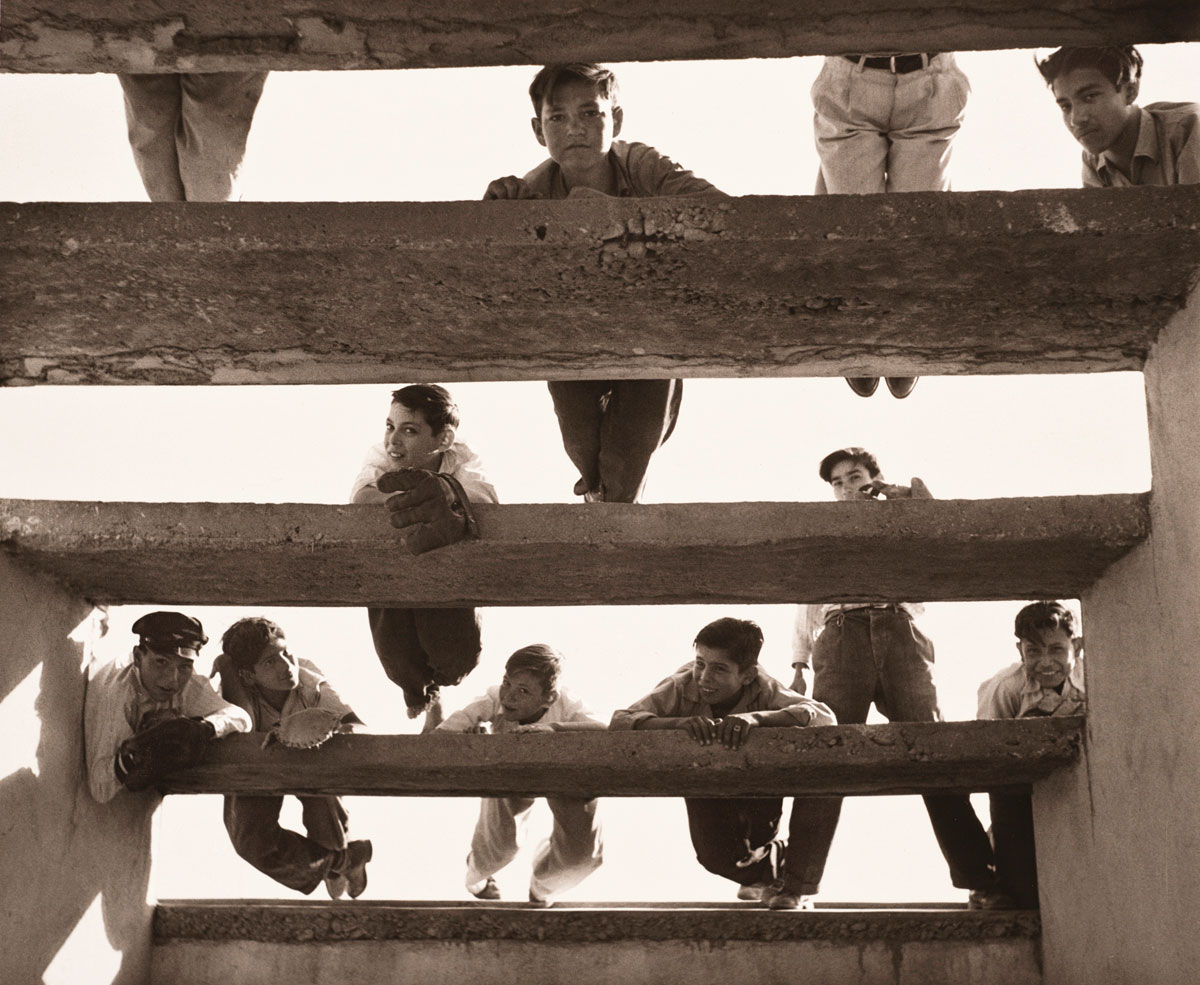
By contrast, one might consider the mobility of framing in the work of Mexican Manuel Carrillo (b. 1906) who died on this date in 1989. The influence of American Modernist photographers and artists of his time, and of his better-known compatriot and contemporary Manuel Álvarez Bravo (1902-2002), is evident in this extreme point of view.

The aerial angle presents the tops of subjects’ heads, but with sufficient offset to allow a reading of the faces; the curiosity of the young boy and the protectiveness of the mother, both enclosed within a continuous ribbon of cloth and embraced by the square camera frame. The top-down view gives privileged entrée into that intense maternal relationship, encompassed by the geometry of the tiled background that contrasts with the cloth, set at an angle that enhances the figures’ complementary emotional impulses.

Aside from aesthetics, the politics of Carrillo’s photographic work is anchored to his own cultural identity as a Mexican by birth and as an American through his crossing into that country at the age of 16, when in 1922 he left Mexico for New York, becoming an Arthur Murray waltz and tango champion. When in 1930 he returned to Mexico City, he remained until his retirement. Taking up photography in 1955, he joined, at age 49, the Club Fotografico de Mexico and the Photographic Society of America, and within 5 years held his first international exhibition titled, Mi Pueblo (“My People”) in 1960 at the Chicago Public Library. Like influential writers, photographers, and artists, such as Frida Kahlo and Diego Rivera, Carrillo identified with Mexicanidad, a nationalist and anti-colonial cultural movement that emerged in the 1920s after Mexico’s Revolution. He was inducted as an honorary citizen of EL Paso, Texas in 1980 by the Photographic Society of America.

James McArdle. “January 20: Angle,” on the On This Date in Photography website 20/01/2018 [Online] Cited 31/12/2022


Manuel Carrillo (Mexican, 1906-1989) 'Untitled (Cross, human shadow, Tepeapulco, Mexico)' (Sin título (Cruz, sombra humana, Tepeapulco, México)) 1973


Manuel Carrillo (Mexican, 1906-1989)
Untitled (Cross, human shadow, Tepeapulco, Mexico) (Sin título (Cruz, sombra humana, Tepeapulco, México))
1973
Gelatin silver print
Image Overall: 9 × 7 in. (22.9 x 17.8cm)
Bank of America Collection


Manuel Carrillo (Mexican, 1906-1989) 'Untitled (Old lady, alley, pyramidal shadows, Guanajuato)' (Sin título (Viejita, callejón, sombras piramidales, Guanajuato)) Nd


Manuel Carrillo (Mexican, 1906-1989)
Untitled (Old lady, alley, pyramidal shadows, Guanajuato) (Sin título (Viejita, callejón, sombras piramidales, Guanajuato))
Nd
Gelatin silver print
Image Overall: 9 × 7 in. (22.9 x 17.8cm)
Bank of America Collection


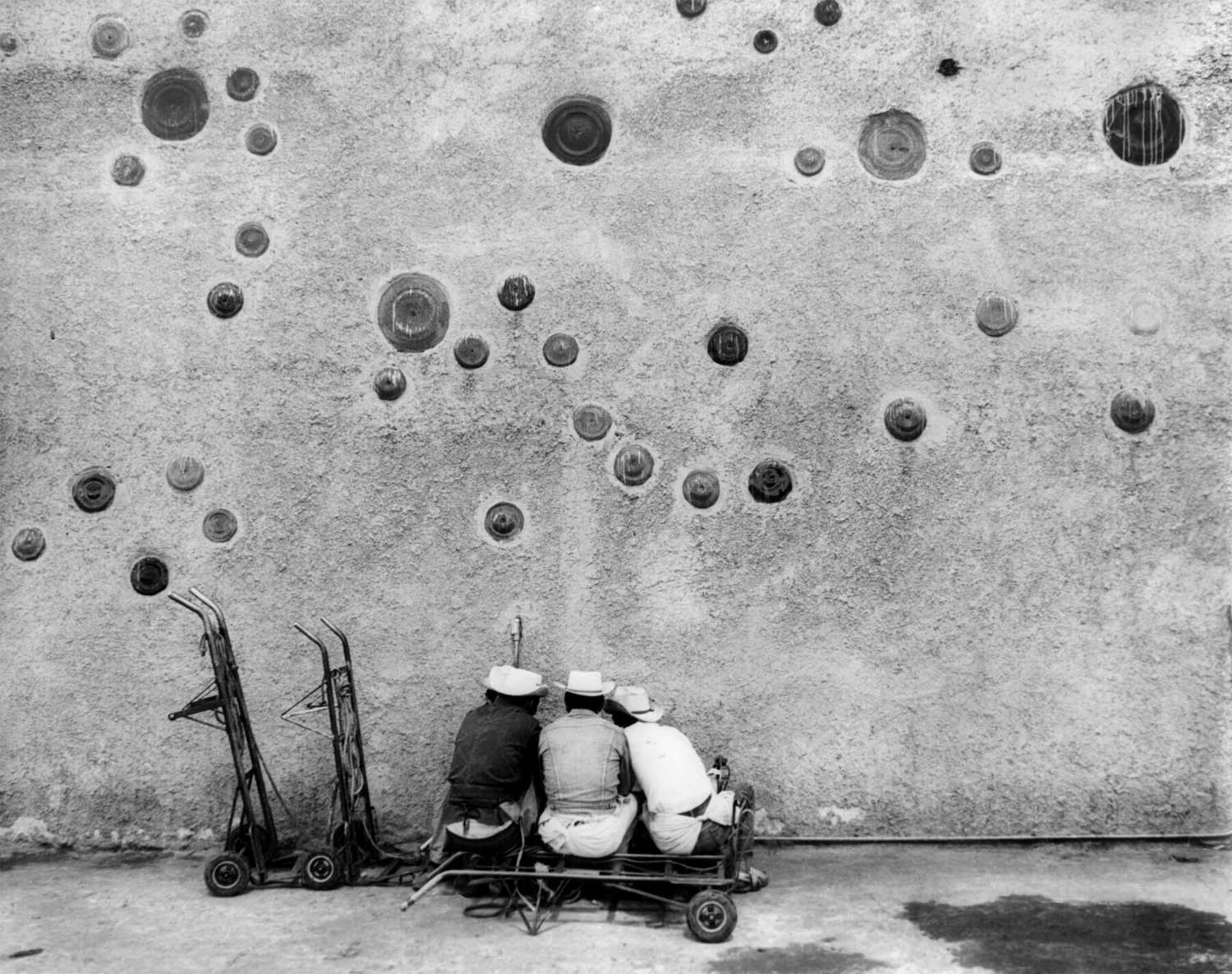
Manuel Carrillo (Mexican, 1906-1989) 'Untitled (Toluca pulque bar (Drunken Barrels)), Toluca, Mexico)' (Sin título (Pulquería de Toluca Barriles beodos)), Toluca, México)) 1970


Manuel Carrillo (Mexican, 1906-1989)
Untitled (Toluca pulque bar (Drunken Barrels)), Toluca, Mexico) (Sin título (Pulquería de Toluca Barriles beodos)), Toluca, México))
1970
Gelatin silver print
Image Overall: 7 3/4 × 9 3/4 in. (19.7 x 24.8cm)
Bank of America Collection


The photographs in Luces y Sombras span the post-Revolutionary era of the 1920s up until the present day. With work by 28 photographers, both Mexican and other nationalities, this exhibition provides vivid testimony to the character of life in a nation in the throes of reinvention, modernisation and continued change, over the course of the last century. …

Luces y Sombras reflects a wide range of modern Mexican history, beginning with the works of photographers active in the 1920s, shortly after the conclusion of the Mexican Revolution. A struggle for political power that began with the 1911 overthrow of Mexico’s authoritarian President Porfirio Díaz and became a catalyst for a popular uprising of peasants, agrarian Indians, and mestizos (of mixed race) who fought for land and social reform. The rallying cry of peasant leader Emiliano Zapata, “Land and Liberty,” not only galvanised the hundreds of thousands of peasants who joined the revolt, but became the affirmation of the rural people, whose lives were inextricably linked to the earth.

Many images in this exhibition manifest the cultural values ​​that emerged in the decades after the Revolution, as politicians and intellectuals strove to rebuild, and indeed, disimagine their nation. In the cultural sphere, Mexico’s new leadership sought to purge the nation of the European influence favored by the Díaz regime. Nationalist ideals and a broad exploration of mexicanidad (the quality of being Mexican), were accompanied by a new reverence for Mexico’s indigenous roots and for ordinary men and women. The photographs taken throughout the last century of indigenous and mestizo peoples reflect not only the survival of indigenous communities and traditions, but also the reality of poverty and social marginalisation that persist for a large lower class to this day.

Luces y Sombras translates as Lights and Shadows. The exhibition reflects many themes: the landscape, urban life, fantasy and, especially among younger generations, gender and invented situations infused with symbolism. It begins with works by photographers active at the conclusion of the Mexican Revolution (1910-1920), notably Manuel Álvarez Bravo, considered Mexico’s first truly modern photographer. It also includes visiting artists such as the Americans Paul Strand and Edward Weston.

Later works by such figures as Manuel Carrillo, Mariana Yampolsky, and Graciela Iturbide reveal the ongoing emphasis by Mexican photographers on everyday life and Mexico’s Indigenous communities. Recent generations of photographers have found new purpose in documenting how ways of life in Mexico continue to be changed by urbanisation, migration, and the pervasive influence of popular Western culture and mass media. Alongside these images, photographs by artists such as Alejandra Laviada, Karina Juárez, and Humberto Ríos explore contemporary issues or convey the artist’s personal reactions to the world around them.

This exhibition and gallery texts have been provided by the Bank of America Art in our Communities® program.


Luces y Sombras refleja una amplia gama de la historia moderna de México, comenzado con las obras de fotógrafos activos en la década de 1920, poco después de la conclusión de la Revolución Mexicana. Una lucha por el poder político que comenzó con el derrocamiento en 1911 del presidente autoritario de México, Porfirio Díaz, y que se convirtió en catalizador de un levantamiento popular de campesinos, indígenas agrarios y mestizos (de raza mixta) que lucharon por la reforma agraria y social. El grito de guerra del líder campesino Emiliano Zapata, “Tierra y Libertad“, no solo galvanizó a los cientos de miles de campesinos que se unieron a la revuelta, sino que se convirtió en la afirmación de la gente rural, cuyas vidas estaban inextricablemente vinculadas a la tierra.

Muchas imágenes en esta exposición manifiestan los valores culturales que surgieron en las décadas posteriores a la Revolución, cuando políticos e intelectuales se esforzaron por reconstruir, y de hecho, desimaginar su nación. En la esfera cultural, el nuevo liderazgo de México busco purgar la nación de la influencia europea favorecida por el régimen de Díaz. Los ideales nacionalistas y una amplia exploración de la mexicanidad (la cualidad de ser mexicano), fueron acompañados por una nueva reverencia por las raíces indígenas de México y por los hombres y mujeres comunes. Las fotografías realizadas a lo largo del último siglo de los pueblos indígenas y mestizos refleja no solo la supervivencia de las comunidades y tradiciones indígenas, sino también la realidad de la pobreza y marginación social que persisten para una gran clase baja hasta el presente día.

Luces y Sombras refleja muchos otros temas abarcados por los fotógrafos en México, tanto nativos como extranjeros: el paisaje, la vida urbana y, especialmente entre las generaciones mas jóvenes, el género y situaciones inventadas infundidas de simbolismo. La inclusión de fotógrafos extranjeros como Paul Strand, Elliot Erwitt, Aaron Siskind, Danny Lyon y Nan Goldin habla de otro componente clave de la historia de la fotografía en México: el significado de una nación vista a travéz de ojos extranjeros.

Al recopilar las obras de una diversidad de voces, Luces y Sombras brinda un testimonio vívido del carácter de la vida en una nación en pleno proceso de invención, modernización y cambio continuo a lo largo del siglo pasado.

Esta exhibición y los textos de esta galería fueron brindados por el programa Bank of America Art in our Communities®.


Mexico Through a Foreign Lens

Mexico became a magnet for American artists and photographers in the post-Revolutionary era, an idealistic period when artists, musicians, writers and other intellectuals sought to forge a cohesive nationalist identity through the arts. This cultural renaissance, led by such celebrated figures as Diego Rivera and Frida Kahlo, if not for the country’s sheer exoticism to foreigners, endowed Mexico with an allure similar to that of Paris for earlier generations of artists.

Mexico held great appeal for figures such as Edward Weston and his partner, the Italian Tina Modotti, who arrived in Mexico City in 1923 in search of bohemian freedom and new creative possibilities. During his few years in Mexico, Weston transformed his artistic vision, articulating a modernist aesthetic that veered away from the picturesque, soft-focus style of photography prevalent at the turn of the century, in favour of an approach that emphasised sharp resolution and form. the details, or as he once wrote, “the quintessence of the thing itself.” Both photographers had a lasting impact in Mexico – Weston by promoting an aesthetic that decisively influenced the course of modern photography, and Modotti, as a pioneering photographer and model of the socially and politically engaged artist.

Another key early figure in Mexico is Paul Strand, who took a deeply humanistic approach in photographing indigenous people and their environments while traveling around the country in the 1930s. This exhibition also contains work by American photographers active in the 1950s and 1960s. Mexico remained a destination for artists and free spirits in these years, including members of the Beat Generation, counter-culture writers and musicians active at mid-century who found in Mexico ample opportunity for both creative inspiration and debauchery. Such photographers who are now considered leading figures of this era, including Elliott Erwitt, Aaron Siskind, Harry Callahan and Danny Lyon, spent extended time in Mexico and created significant bodies of work.

México a travéz de una lente extranjera

México se convirtió en un imán para los artistas y fotógrafos americanos en la era posrevolucionaria, un período idealista en el que artistas, músicos, escritores y otros intelectuales buscaron forjar una identidad nacionalista cohesiva a través de las artes. Este renacimiento cultural, liderado por figuras tan célebres como Diego Rivera y Frida Kahlo – sino fuera por el exotismo del país para los extranjeros – dotó a México un atractivo similar al de París para los artistas de generaciones anteriores.

México tuvo un gran atractivo para figuras como Edward Weston y su compañera, la italiana Tina Modotti, que llegaron a la Ciudad de México en 1923 en busca de libertad bohemia y nuevas posibilidades creativas. Durante sus pocos años en México, Weston transformó su visión artística, articulando una estética modernista que se apartó del estilo pintoresco de enfoque suave de la fotografía que prevalecía a principios del siglo, en favor de un enfoque que enfatizaba la forma y la resolución nítida de los detalles, o como escribió una vez, “la quintaesencia de la cosa misma.” Ambos fotógrafos tuvieron un impacto duradero en México – Weston al promover una estética que influyó decisivamente en el curso de la fotografía moderna, y Modotti, como una fotógrafa pionera y modelo del artista social y políticamente comprometido.

Otra figura clave en México es Paul Strand, quien adoptó un enfoque profundamente humanista al fotografiar a los indígenas y sus entornos mientras viajaba por el país en la década de 1930. Esta exposición también contiene las obras de fotógrafos americanos activos en las décadas de 1950 y 1960. México siguió siendo un destino para artistas y espíritus libres en estos años, incluidos los miembros de Beat Generation, escritores de contracultura y músicos activos a mediados de siglo que encontraron en México una gran oportunidad tanto de inspiración creativa. Tales fotógrafos que ahora se consideran figuras destacadas de esta era como Elliott Erwitt, Aaron Siskind, Harry Callahan y Danny Lyon, pasaron mucho tiempo en México y crearon importantes obras.

Contemporary Voices

Photography made in Mexico over the last twenty years or so encompasses distinct tendencies. There exists, on the one hand, the continued vitality of an aesthetic that can be traced as far back as the 1920s, favouring sharp-focus black-and-white photography and a preoccupation with recording everyday life. But especially since the 1980s, photographers have approached the medium with a sense of freedom, embracing forms of image that radically depart from long-established modes. This kind of experimentation with the medium, although a lesser recognised aspect of photography in Mexico, is not new. As early as the 1920s, smaller numbers of photographers created images with unconventional approaches, whether through darkroom manipulation, photomontage or constructing scenes for the camera. Younger generations have extended this spirit of experimentation, deploying the medium in conceptual projects and elaborately staging images to craft pointed statements about race, gender and political issues. As a result, the current photography scene in Mexico is remarkably diverse. Its practitioners respect the medium’s remarkable history in their country while illuminating timely subject matter and devising new modes of working with the camera and with digital means.

This exhibition contains the work of younger photographers whose work examines the complex construction of identity in the millennial era, whether with Ana Casas Broda’s idiosyncratic explorations of childhood, or portrayals of gender by Luis Arturo Aguirre, Nelson Morales and Roberto Tondopó. Photographs by Alejandra Laviada and Humberto Ríos reflect another mode in contemporary photography: to stage scenes, whether with individuals or with objects, for the camera – often a means of evoking dreams, the subconscious and psychological states.

Voces contemporáneas

La fotografía realizada en México durante los últimos veinte años abarca distintas tendencias. Por un lado, existe le vitalidad continúa de una estética que se remonta a la década de 1920, favoreciendo la fotografía en blanco y negro con enfoque nítido y la preocupación por la grabación de la vida cotidiana. Pero especialmente desde la década de 1980, los fotógrafos se ha acercado al medio con un sentido de libertad, abrazando formas de imagen que se alejan radicalmente de los modos establecidos desde hace mucho tiempo. Este tipo de experimentación con el medio, aunque es un aspecto menos reconocido de la fotografía en México, no es nuevo. Ya en la década de 1920, un número menor de fotógrafos crearon imágenes con enfoques no convencionales, ya sea a través de la manipulación en el cuarto oscuro, el fotomontaje o la construcción de escenas para la cámara. Las generaciones más jóvenes han ampliado este espíritu de experimentación, desplegando el medio en proyectos conceptuales y elaborando imágenes para hacer declaraciones puntuales sobre cuestiones de raza, género y problemas políticos. Como resultado, la escena fotográfica actual en México es notablemente diversa. Sus profesionales respetan la extraordinaria historia del medio en su país al tiempo que ilustran temas oportunos y diseñan nuevos modos de trabajar con la cámara y con medios digitales.

Esta exposición contiene las obras de fotógrafos mas jóvenes, que examina la compleja construcción de la identidad en la era del milenio, ya sea con las idiosincrásicas exploraciones de la infancia de Ana Casas Broda, o representaciones del género de Luis Arturo Aguirre, Nelson Morales y Roberto Tondopó. Las fotografías de Alejandra Laviada y Humberto Ríos reflejan otro modo en la fotografía contemporánea: crear escenas, ya sea con individuos o con objetos, para la cámara, a menudo un medio de evocar sueños, estados subconscientes y psicológicos.

Before the Conquest, all art was of the people, and popular art has never ceased to exist in Mexico. The art called popular is fugitive in character, with less of the impersonal and intellectual characteristics of the schools. It is the work of talent nourished by personal experience and that of the community – rather than being taken from the experiences of painters in other times and other cultures. ~ Manuel Álvarez Bravo


The perspective of Mexicanidad, the quality of being Mexican, sought to remove colonial influences from Mexican art. After the Mexican Revolution of 1910–1920, artists and intellectuals came together to forge a new Mexican culture, one that placed new value on Mexico’s indigenous, working-class and agrarian roots as a repudiation of dictator Porfirio Díaz’s focus on wealthy, powerful and often white individuals. Known as the Mexican Cultural Renaissance, this movement gave rise to art that defined a new sense of Mexican identity. Manuel Álvarez Bravo, Latin America’s best-known photographer, made visually sophisticated photographs with a formally complex approach often including symbolic elements. He didn’t identify as such, but many viewers have seen surrealist aspects in his work. His work often looks at Mexico’s traditional cultures as they experience significant and rapid change.

Artists active in the decades after the Mexican Revolution, examined what it meant to be Mexican, without the colonial, European focus of the dictatorship. Manuel Carrillo documented street scenes, workers and children with empathy and care, seeking to record a cultural identity with attention to form and composition. Graciela Iturbide makes documentary photographs that are rich with metaphor and grace, finding spirituality and beauty in traditions and everyday life.

Antes de la Conquista, todo el arte era popular. El arte nunca ha dejado de existir en México. El arte llamado popular es de carácter fugitivo, con menos de las características impersonales e intelectuales de las escuelas. Son obras de talento alimentado por la experiencia personal y la de la comunidad – en lugar de ser tomado de las experiencias de los pintores en otros tiempos y otras culturas. ~ Manuel Álvarez Bravo


La perspectiva de la mexicanidad, la cualidad de ser mexicano, buscaba eliminar las influencias coloniales del arte mexicano. Después de la revolución mexicana de 1910-1920, los artistas e intelectuales se unieron creando una nueva cultura mexicana dieron un nuevo valor a las raíces indígenas, de la clase trabajadora y agrarias de México como un repudio al enfoque del dictador Porfirio Díaz en los individuos ricos, poderosos y a menudo blancos. Este movimiento, conocido como el Renacimiento Cultural Mexicano, dio lugar a un arte que le atribuyó un nuevo sentido a la identidad mexicana. Manuel Álvarez Bravo, el fotógrafo mas conocido de América Latina, hizo fotografías visualmente sofisticadas con un enfoque formalmente complejo que a menudo incluye elementos simbólicos. No se identificó como tal, pero muchos espectadores han visto elementos surrealistas en sus obras. Estas a menudo analizan las culturas tradicionales de México a medida que experimentan un cambio significativo y rápido.

Artistas activos en las décadas posteriores a la Revolución Mexicana, examinaron lo que significaba ser mexicano, sin el enfoque colonial y europeo de la dictadura. Manuel Carrillo documentó escenas callejeras, trabajadores y niños con empatía y cuidado, buscando registrar una identidad cultural con atención a la forma y composición. Graciela Iturbide hace fotografías documentales que son ricas en metáfora y gracia, encontrando espiritualidad y belleza en las tradiciones y en la vida cotidiana.

Exhibition text from the TAM
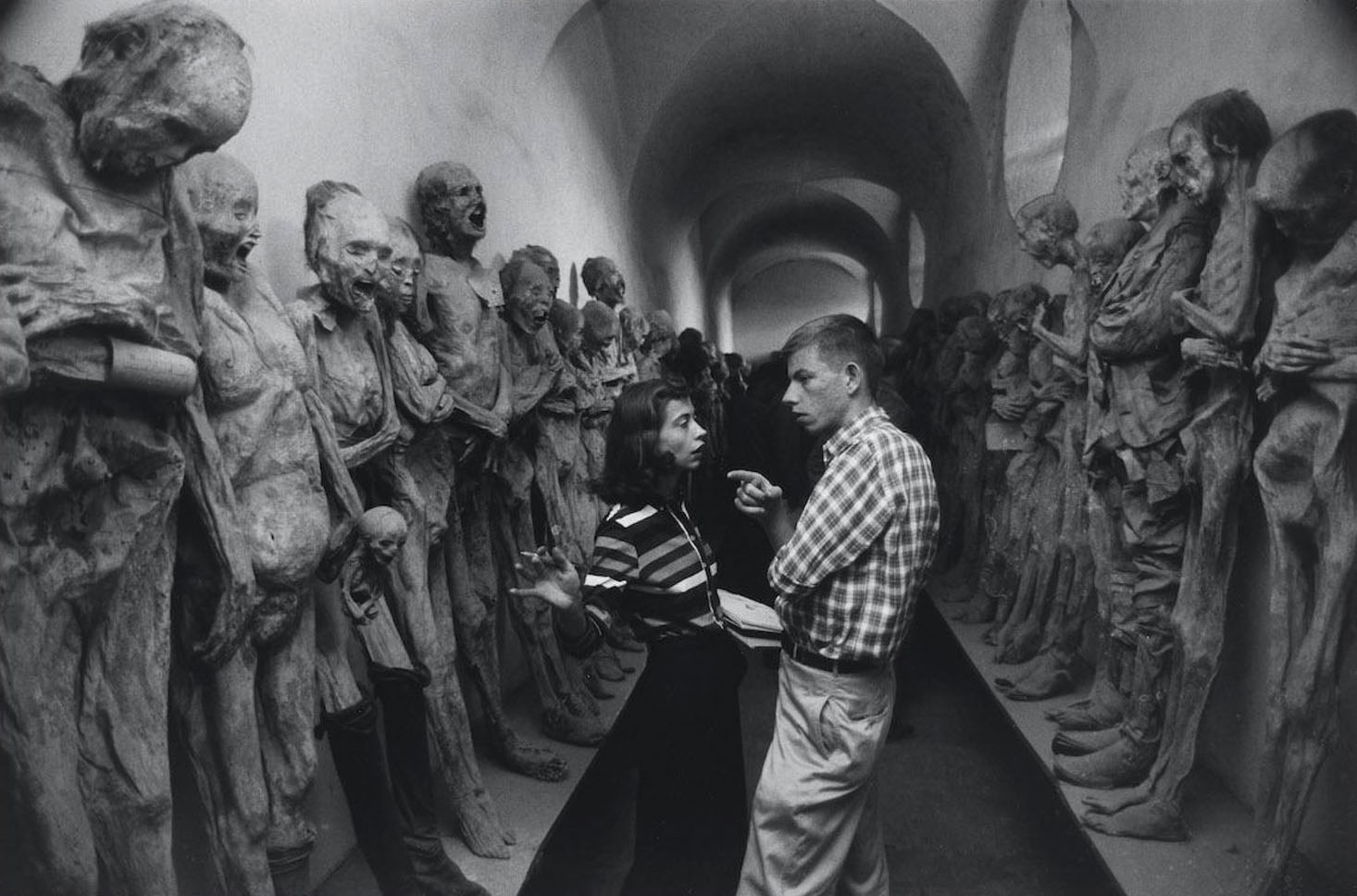
 

Elliott Erwitt (American, 1928-2023) 'Guanajuato, Mexico' 1957


Elliott Erwitt (American, 1928-2023)
Guanajuato, Mexico
1957
Gelatin silver print
Image Overall: 8 1/2 × 13 1/2 in. (21.6 x 34.3cm)
Bank of America Collection
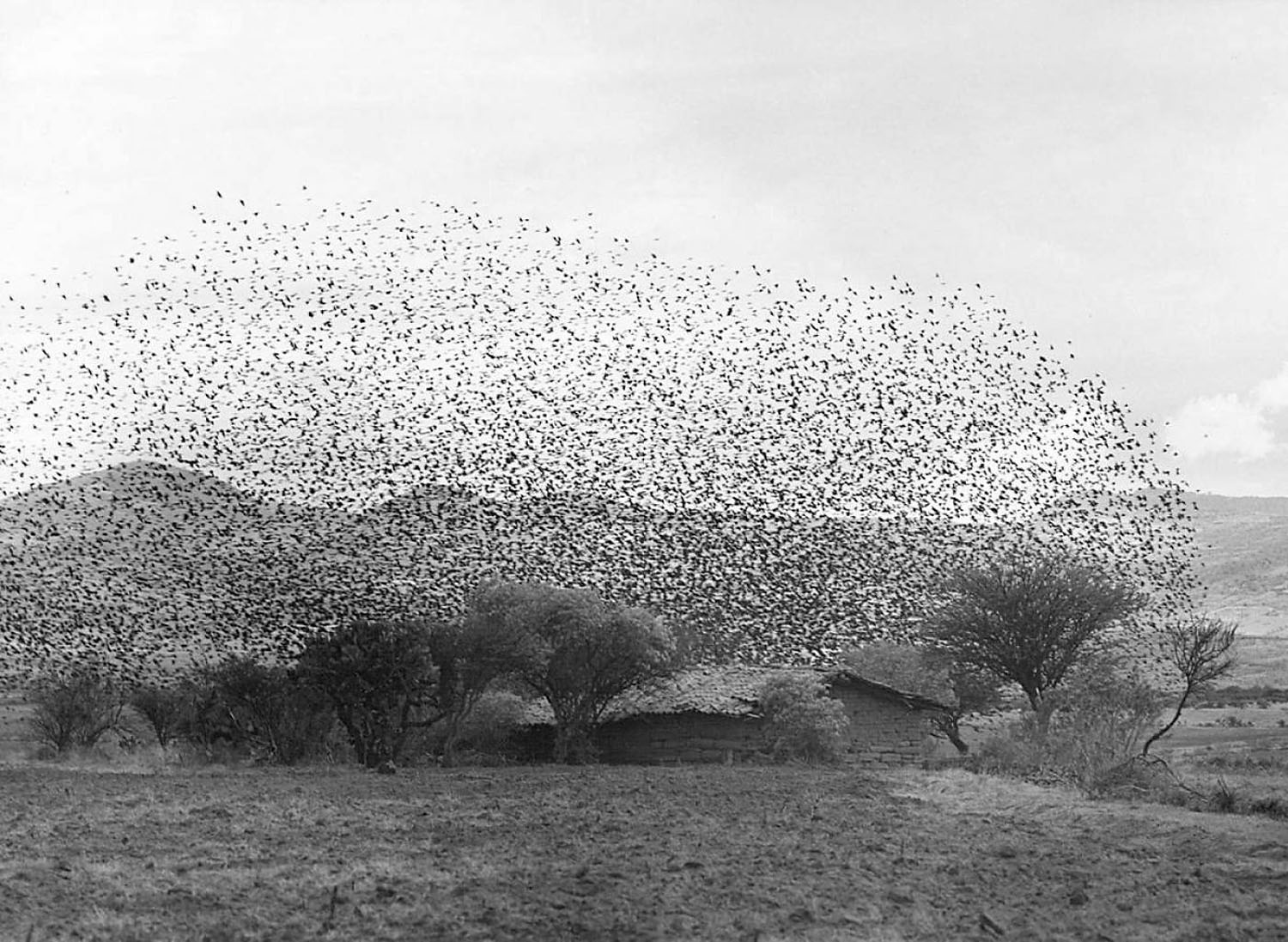
 

Flor Garduño (Mexican, b.1957) 'Cloud, Mexico' (Nube, México) 1982


Flor Garduño (Mexican, b.1957)
Cloud, Mexico (Nube, México)
1982
Gelatin silver print
Image Overall: 13 × 17 in. (33 x 43.2cm)
Bank of America Collection


Flor Garduño (Mexican, b. 1957) 'Tree of Life, Mexico' (Arbol de la vida, México) 1982


Flor Garduño (Mexican, b. 1957)
Tree of Life, Mexico (Arbol de la vida, México)
1982
Gelatin silver print
Image Overall: 13 × 17 in. (33 x 43.2cm)
Bank of America Collection


Garduño’s photographs create a bridge between the present and the past by portraying natural elements such as water, trees, earth, animals, and atmosphere. Garduño worked for the Department of Public Education in her native Mexico, traveling to rural areas to work with indigenous communities. From this she developed her style and got to know what she has referred to as the “profound truth” of the countryside in the Americas. Her work was also influenced by artists Kati Horna, who worked in a surrealistic vein, and Manuel Álvarez Bravo, who attended carefully to the tonal qualities of his photographs. Garduño similarly uses compositional and darkroom techniques to achieve moody, evocative images.

Anonymous. “Get to know the work of Flor Garduño,” on the Getty Twitter website Oct 6, 2021 [Online] Cited 28/01/2023
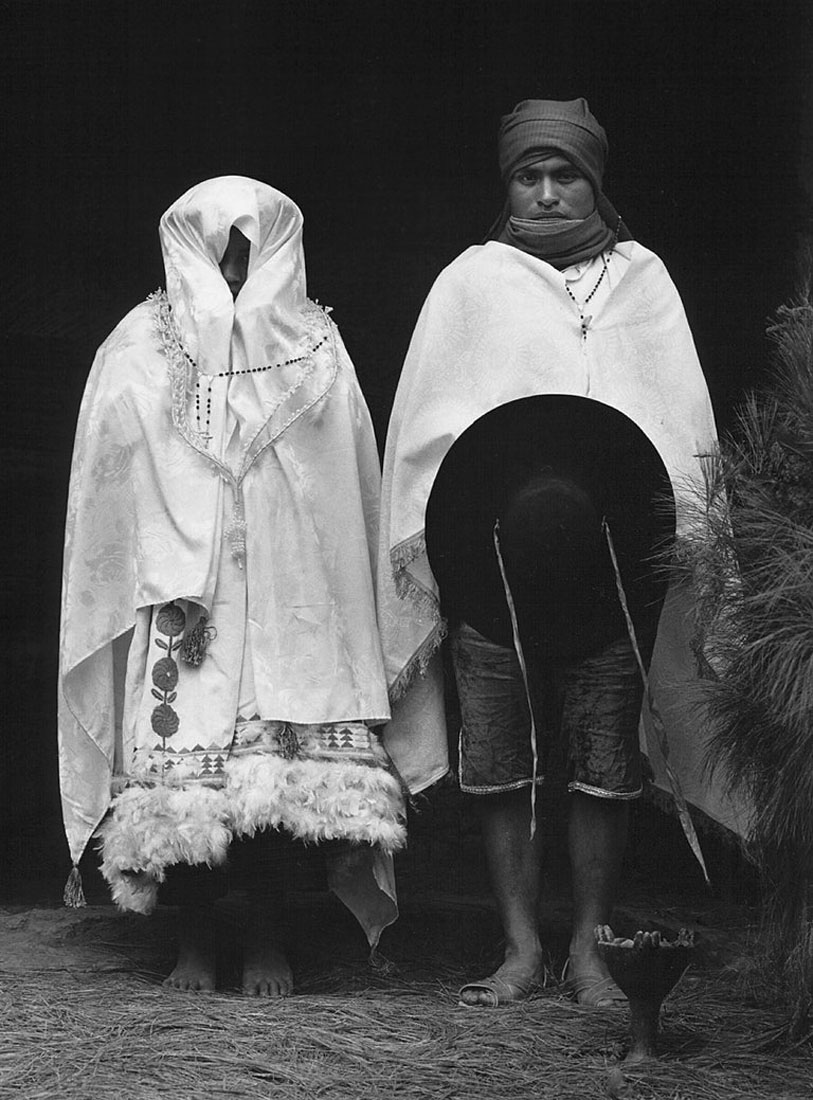
 

Flor Garduño (Mexican, b. 1957) 'Zinacantec Wedding, Mexico' (Matrimonio Zinacanteco, México) 1987


Flor Garduño (Mexican, b. 1957)
Zinacantec Wedding, Mexico (Matrimonio Zinacanteco, México)
1987
Gelatin silver print
Image Overall: 17 5/8 × 13 1/2 in. (44.8 x 34.3cm)
Bank of America Collection


Graciela Iturbide’s Mexico

The photographs of Graciela Iturbide not only bear witness to Mexican society but express an intense personal and poetic lyricism about her native country. One of the most influential photographers active in Latin America today, Iturbide captures everyday life and its cultures, rituals, and religions, while also raising questions about paradoxes and social injustice in Mexican society. Her photographs tell a visual story of Mexico since the late 1970s – a country in constant transition, defined by the coexistence of the historical and modern as a result of the culture’s rich amalgamation of cultures. For Iturbide, photography is a way of life and a way of seeing and understanding Mexico and its beauty, challenges, and contradictions.

In the summer of 2018, Kristen Gresh, Estrellita and Yousuf Karsh Senior Curator of Photographs, and members of the exhibition team visited Graciela Iturbide at her home and studio in Mexico City. In this documentary, produced by the MFA, the artist discusses the different series and themes explored in this exhibition, as well as her creative process.
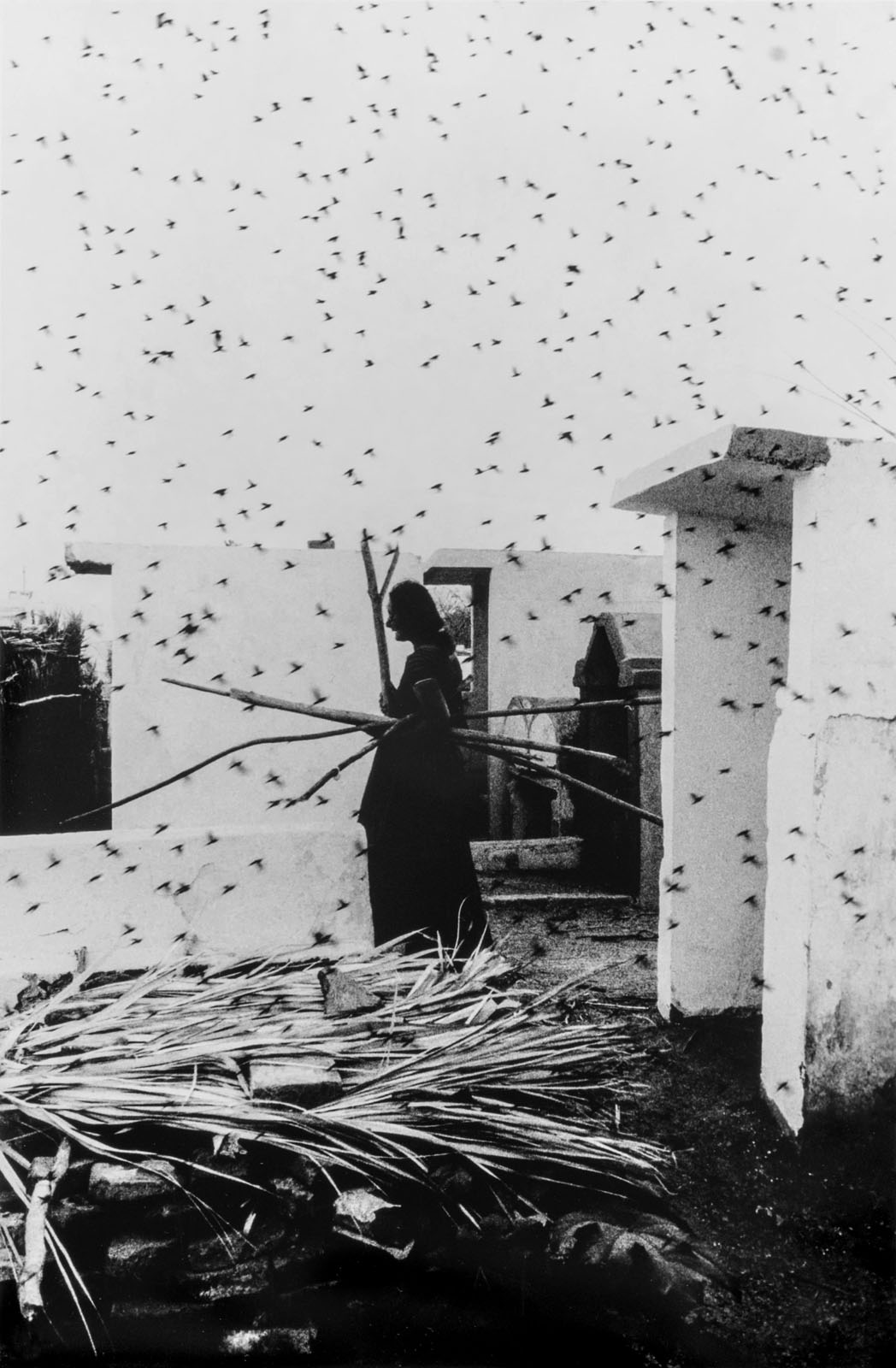
 

Graciela Iturbide (Mexican, b. 1942) 'Cemetery, Juchitán, Oaxaca' (Cementerio, Juchitán, Oaxaca) 1992


Graciela Iturbide (Mexican, b. 1942)
Cemetery, Juchitán, Oaxaca (Cementerio, Juchitán, Oaxaca)
1992
Gelatin silver print
Image Overall: 12 1/4 × 8 3/4 in. (31.1 x 22.2cm)
Bank of America Collection


Graciela Iturbide (Mexican, b. 1942) 'Los Pollos, Juchitán, México' (Chickens, Juchitán, Mexico) 1979


Graciela Iturbide (Mexican, b. 1942)
The Chickens, Juchitán, México (Los pollos, Juchitán, México)
1979 (negative); print c. 1992
Image Overall: 11 3/4 × 7 3/4 in. (29.8 x 19.7cm)
Bank of America Collection


Graciela Iturbide (Mexican, b. 1942) 'Sponge Vendor, Oaxaca' (Vendedora de zacate, Oaxaca) 1974


Graciela Iturbide (Mexican, b. 1942)
Sponge Vendor, Oaxaca (Vendedora de zacate, Oaxaca)
1974 (negative); print 1992
Gelatin silver print
Image Overall: 18 1/8 × 12 1/2 in. (46 x 31.8cm)
Bank of America Collection


Graciela Iturbide (Mexican, b. 1942) 'The Sacrifice, La Mixteca, Oaxaca' (El sacrificio, la Mixteca, Oaxaca) 1992


Graciela Iturbide (Mexican, b. 1942)
The Sacrifice, La Mixteca, Oaxaca (El sacrificio, la Mixteca, Oaxaca)
1992
Gelatin silver print
Image Overall: 16 7/8 × 12 1/4 in. (42.9 x 31.1cm)
Bank of America Collection


Graciela Iturbide (Mexican, b. 1942) 'Angel Woman, Sonora Desert, Mexico' (Mujer ángel, desierto de Sonora, México) 1979


Graciela Iturbide (Mexican, b. 1942)
Angel Woman, Sonora Desert, Mexico (Mujer ángel, desierto de Sonora, México)
1979 (negative); printed later
Gelatin silver print
Image Overall: 9 1/2 × 13 in. (24.1 x 33cm)
Bank of America Collection


Kenro Izu (Japanese, b. 1949) 'Tajín #13' 1987


Kenro Izu (Japanese, b. 1949)
Tajín #13
1987 (negative and print)
From the series Sacred Places
Platinum palladium print
Image Overall: 7 3/4 × 9 3/4 in. (19.7 x 24.8cm)
Bank of America Collection


Alejandra Laviada (Mexican, b. 1980) 'Stacking' (Apilado) 2007


Alejandra Laviada (Mexican, b. 1980)
Stacking (Apilado)
2007
From the series Juarez 56
Pigment print on lustre paper
24 x 20 inches (60.9 x 50.8cm)
Bank of America Collection
© 2022 Alejandra Laviada


Danny Lyon (American, b. 1942) 'Truck in Nueva Casas Grandes, Chihuahua, Mexico' (Camión en nuevas casas grandes, Chihuahua, México) 1975


Danny Lyon (American, b. 1942)
Truck in Nueva Casas Grandes, Chihuahua, Mexico (Camión en nuevas casas grandes, Chihuahua, México)
1975 (negative and print)
Gelatin silver print
Image Overall: 8 × 12 in. (20.3 x 30.5cm)
Bank of America Collection


Paul Strand (American, 1890-1976) 'Church, Cuapiaxtla, Mexico' (Iglesia, Cuapiaxtla, México) 1933


Paul Strand (American, 1890-1976)
Church, Cuapiaxtla, Mexico (Iglesia, Cuapiaxtla, México)
1933 (negative); print 1967
from The Mexican Portfolio
Photogravure
Image Overall: 6 1/4 × 4 7/8 in. (15.9 x 12.4cm)
Bank of America Collection


Paul Strand (American, 1890-1976) 'Woman, Pátzcuaro, Michoacán, Mexico' (Mujer, Pátzcuaro, Michoacán, México) 1933


Paul Strand (American, 1890-1976)
Woman, Pátzcuaro, Michoacán, Mexico (Mujer, Pátzcuaro, Michoacán, México)
1933 (negative); print 1967
from The Mexican Portfolio
Photogravure
Image Overall: 6 3/8 × 5 in. ( 16.2 x 12.7cm)
Bank of America Collection


Paul Strand (American, 1890-1976) 'Women of Santa Ana, Michoacán, Mexico' (Mujeres de Santa Ana, Michoacán, México) 1933


Paul Strand (American, 1890-1976)
Women of Santa Ana, Michoacán, Mexico (Mujeres de Santa Ana, Michoacán, México)
1933 (negative); print 1967
From The Mexican Portfolio
Photogravure
Image Overall: 5 5/8 × 6 1/8 in. (14.3 x 15.6cm)
Bank of America Collection


Paul Strand (American, 1890-1976) 'Woman and Baby, Hidalgo, Mexico' (Mujer y bebe, Hidalgo, México) 1933


Paul Strand (American, 1890-1976)
Woman and Baby, Hidalgo, Mexico (Mujer y bebe, Hidalgo, México)
1933 (negative); print 1967
from The Mexican Portfolio
Photogravure
Image Overall: 5 1/2 × 6 1/2 in. (14 x 16.5cm)
Bank of America Collection


Paul Strand (American, 1890-1976) 'Near Saltillo, Mexico' (Cerca de Saltillo, Mexico) 1933


Paul Strand (American, 1890-1976)
Near Saltillo, Mexico (Cerca de Saltillo, Mexico)
1933 (negative); print 1967
From The Mexican Portfolio
Photogravure
Image Overall: 5 3/8 × 6 3/4 in. (13.7 x 17.1cm)
Bank of America Collection


Paul Strand (American, 1890-1976) 'Young Woman and Boy, Toluca de Lerdo, Mexico' (Mujer joven y niño, Toluca de Lerdo, México) 1933


Paul Strand (American, 1890-1976)
Young Woman and Boy, Toluca de Lerdo, Mexico (Mujer joven y niño, Toluca de Lerdo, México)
1933 (negative); print 1967
from The Mexican Portfolio
Photogravure
Image Overall: 5 1/2 × 6 1/2 in. (14 x 16.5 cm)
Bank of America Collection
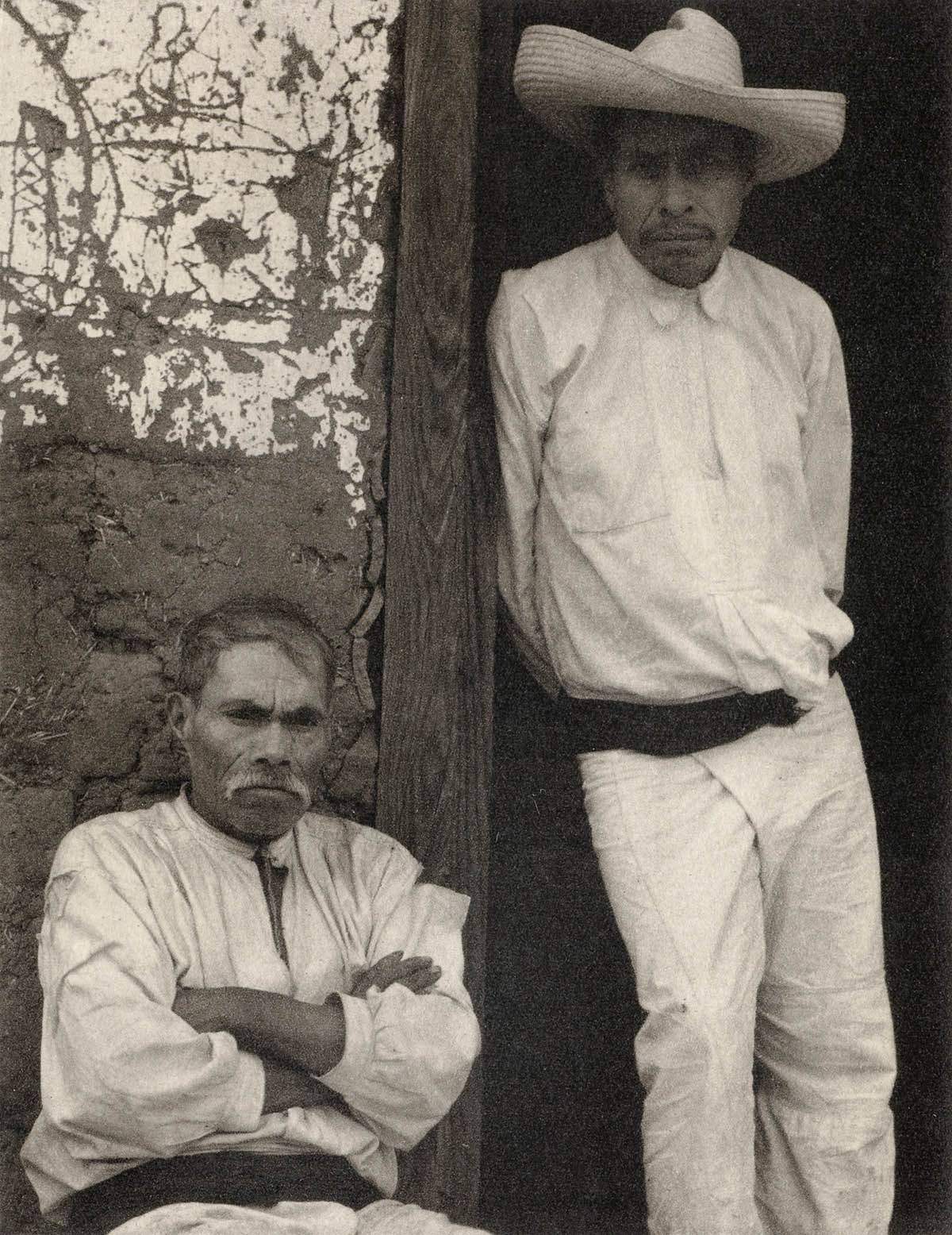
 

Paul Strand (American, 1890-1976) 'Men of Santa Ana, Lake Pátzcuaro, Michoacán' (Hombres de Santa Ana, Lake Pátzcuaro, Michoacá) 1933


Paul Strand (American, 1890-1976)
Men of Santa Ana, Lake Pátzcuaro, Michoacán (Hombres de Santa Ana, Lake Pátzcuaro, Michoacá)
1933 (negative); print 1967
from The Mexican Portfolio
Photogravure
Image Overall: 6 7/8 × 5 1/4 in. (17.5 x 13.3cm)
Bank of America Collection
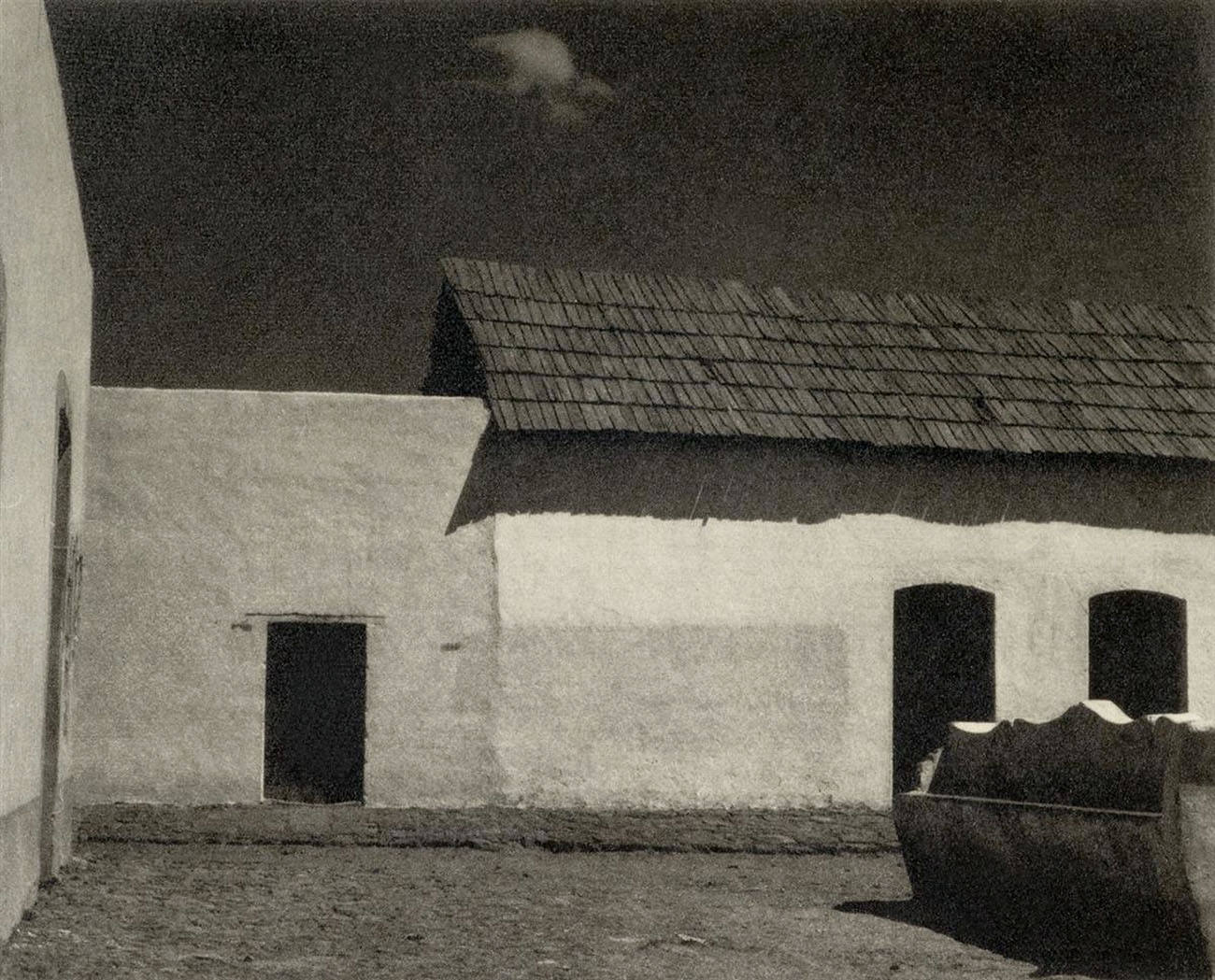
 

Paul Strand (American, 1890-1976) 'White Plaza, Puebla, Mexico' (Plaza blanca, Puebla, México) 1933


Paul Strand (American, 1890-1976)
White Plaza, Puebla, Mexico (Plaza blanca, Puebla, México)
1933 (negative); print 1967
from The Mexican Portfolio
Photogravure
Image Overall: 5 1/2 × 6 1/2 in. (14 x 16.5cm)
Bank of America Collection


Paul Strand (American, 1890-1976) 'Boy, Uruapan, Michoacán, Mexico' (Niño, Uruapan, Michoacán, México) 1933


Paul Strand (American, 1890-1976)
Boy, Uruapan, Michoacán, Mexico (Niño, Uruapan, Michoacán, México)
1933 (negative); print 1967
From The Mexican Portfolio
Photogravure
Image Overall: 10 × 7 7/8 in. (25.4 x 20cm)
Bank of America Collection


Paul Strand. 'Man - Tenancingo' 1933 


Paul Strand (American, 1890-1976)
Man, Tenancingo de Degollado, Mexico (Hombre, Tenancingo de Degollado, México)
1933 (negative); print 1967
From The Mexican Portfolio
Photogravure
Image Overall: 6 3/8 × 5 in. (16.2 x 12.7cm)
Bank of America Collection


Paul Strand (American, 1890-1976) 'Boy, Uruapan, Michoacán, Mexico' (Niño, Uruapan, Michoacán, México) 1933 (negative); print 1967


Paul Strand (American, 1890-1976)
Boy, Uruapan, Michoacán, Mexico (Niño, Uruapan, Michoacán, México)
1933 (negative); print 1967
From The Mexican Portfolio
Photogravure
Image Overall: 6 1/2 × 5 1/4 in. (16.5 x 13.3cm)
Bank of America Collection


Paul Strand (American, 1890-1976) 'Virgin San Felipe, Oaxaca, Mexico' (Virgen San Felipe, Oaxaca, Mexico) 1933


Paul Strand (American, 1890-1976)
Virgin San Felipe, Oaxaca, Mexico (Virgen San Felipe, Oaxaca, Mexico)
1933 (negative); print 1967
From The Mexican Portfolio
Photogravure
Image Overall: 10 1/4 × 7 7/8 in. (26 x 20cm)
Bank of America Collection


Paul Strand (American, 1890-1976) 'Cristo, Oaxaca, Mexico' (Cristo, Oaxaca, México) 1933


Paul Strand (American, 1890-1976)
Cristo, Oaxaca, Mexico (Cristo, Oaxaca, México)
1933 (negative); print 1967
From The Mexican Portfolio
Photogravure
Image Overall: 11 × 8 1/2 in. (27.9 x 21.6cm)
Bank of America Collection


Paul Strand (American, 1890-1976) 'Church Gateway, Hidalgo, Mexico' (Puerta de iglesia, Hidalgo, México) 1933


Paul Strand (American, 1890-1976)
Church Gateway, Hidalgo, Mexico (Puerta de iglesia, Hidalgo, México)
1933 (negative); print 1967
From The Mexican Portfolio
Photogravure
Image Overall: 10 1/2 × 8 1/4 in. (26.7 x 21cm)
Bank of America Collection


Paul Strand. 'Cristo with Thorns - Huexotla' 1933


Paul Strand (American, 1890-1976)
Cristo with Thorns, Huexotla, Mexico (Cristo con espinas, Huexotla, México)
1933 (negative); print 1967
From The Mexican Portfolio
Photogravure
Image Overall: 10 1/8 × 7 7/8 in. (25.7 x 20cm)
Bank of America Collection
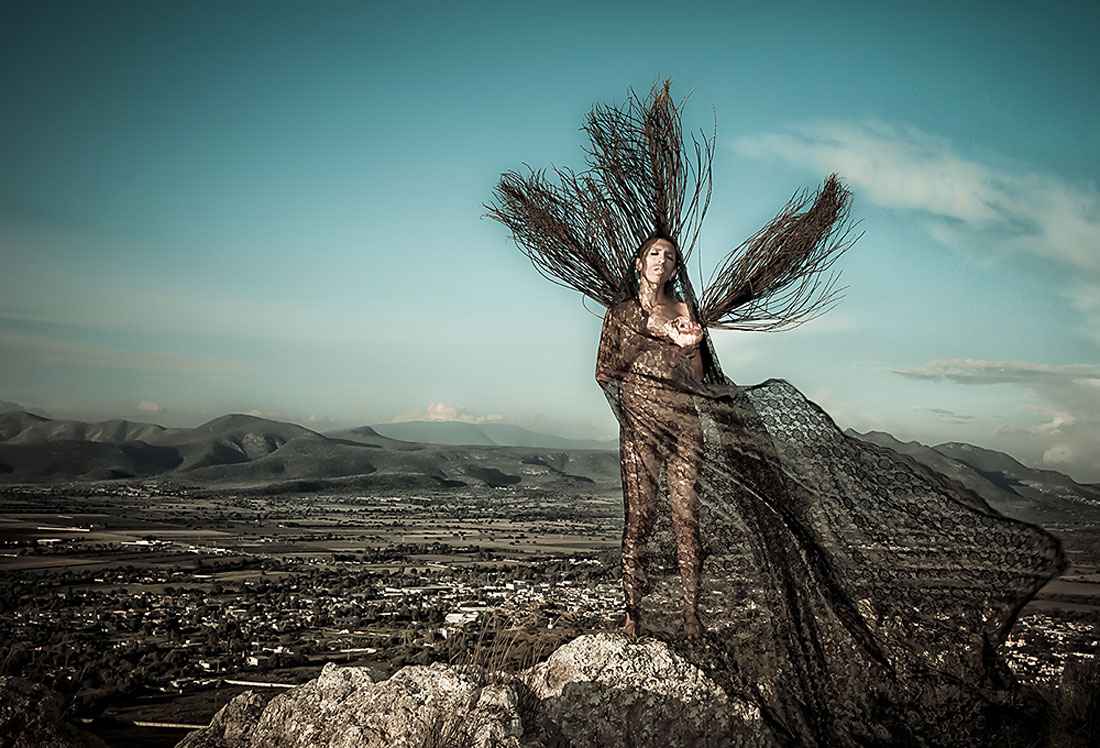
 

Andrés Juárez Troncoso (Mexicano, b. 1972) 'The Virgin of the Heights' (La virge n de las alturas) 2016


Andrés Juárez Troncoso (Mexicano, b. 1972)
The Virgin of the Heights (La virge n de las alturas)
2016
From the series The Spotless Others
Digital print
Image Overall: 20 1/8 × 29 1/2 in. (51.1 x 74.9cm)
Bank of America Collection


Edward Weston (American, 1886-1958) 'Pyramid of the Sun, Mexico' (Pirámide del Sol, México) 1923


Edward Weston (American, 1886-1958)
Pyramid of the Sun, Mexico (Pirámide del Sol, México)
1923
Gelatin silver print
Image Overall: 7 1/2 × 9 3/8 in. (19.1 x 23.8cm)
Bank of America Collection


Mariana Yampolsky (Mexican, 1925-2002) 'Stable' (Caballeriza) 1982


Mariana Yampolsky (Mexican, 1925-2002)
Stable (Caballeriza)
1982 (negative); print c. 1992
Gelatin silver print
Image Overall: 13 × 17 3/4 in. (33 x 45.1cm)
Bank of America Collection


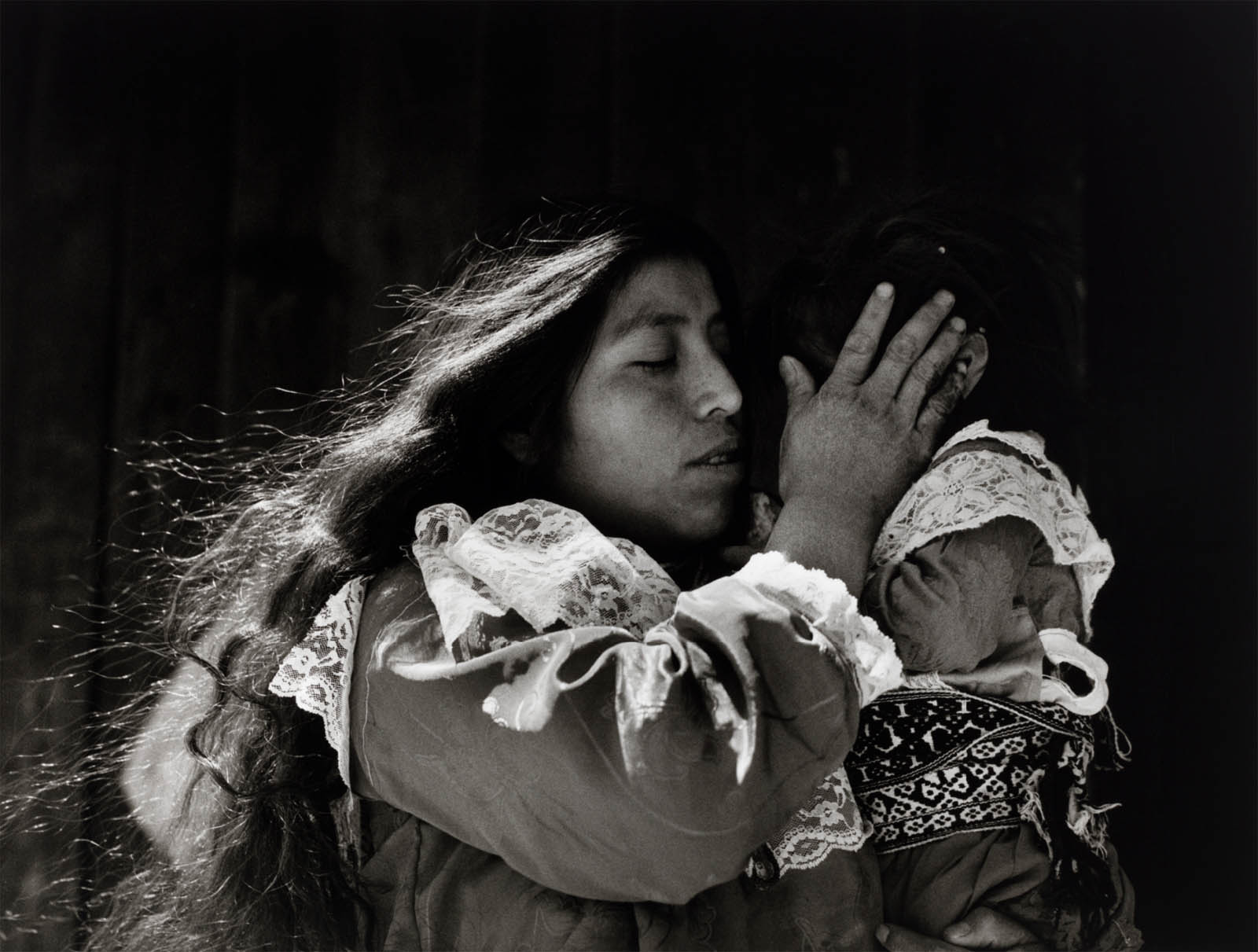
Mariana Yampolsky (Mexican, 1925-2002) 'Caress, San Simón de la Laguna' (Caricia, San Simón de la Laguna) 1989


Mariana Yampolsky (Mexican, 1925-2002)
Caress, San Simón de la Laguna (Caricia, San Simón de la Laguna)
1989
Gelatin silver print
Image Overall: 9 × 12 1/4 in. (22.9 x 31.1cm)
Bank of America Collection
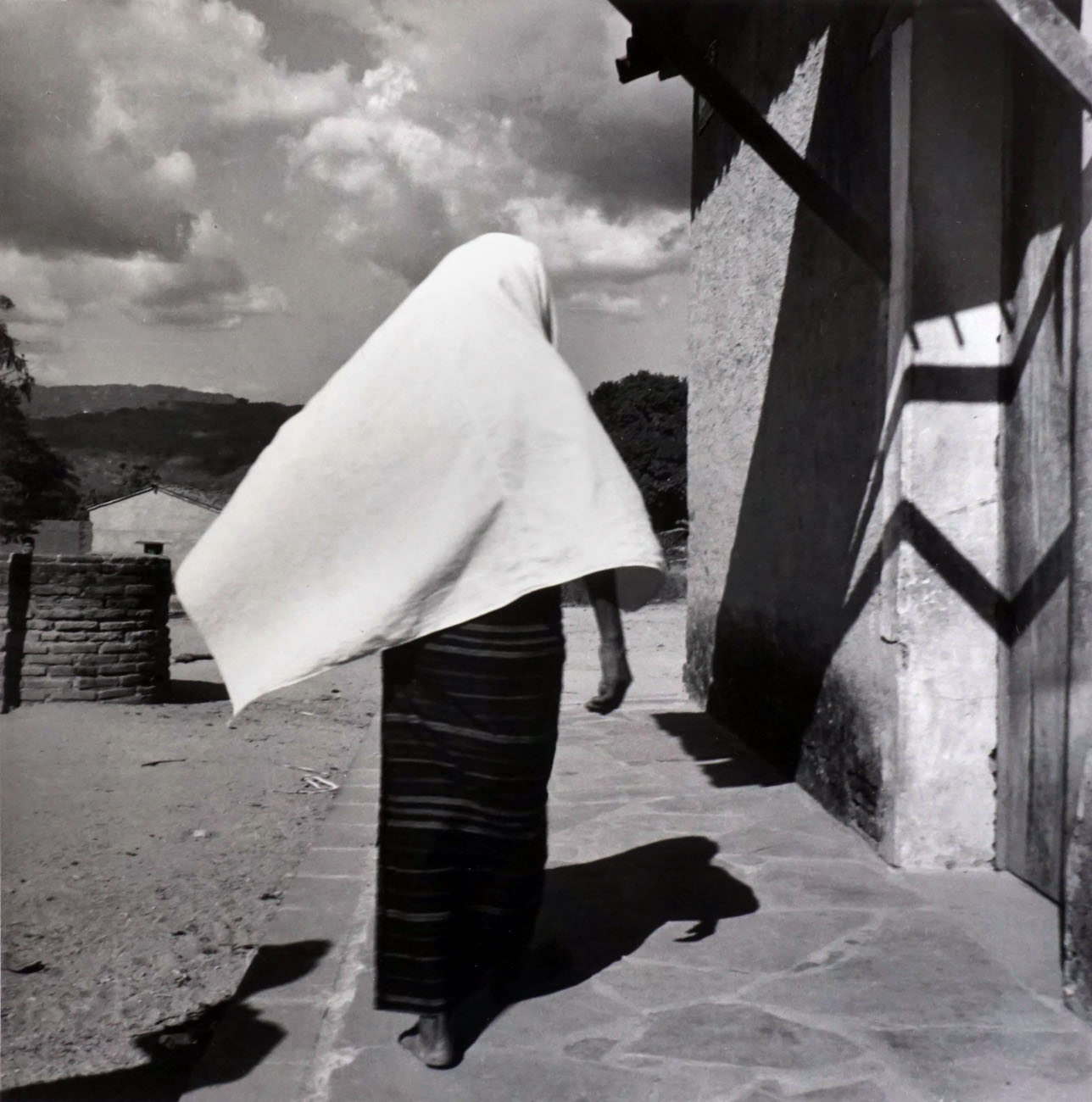
 

Mariana Yampolsky (Mexican, 1925-2002) 'Head Cover, Pinotepa Nacional, Oaxaca' (Huipil de tapar, Pinotepa Nacional, Oaxaca) 1989


Mariana Yampolsky (Mexican, 1925-2002)
Head Cover, Pinotepa Nacional, Oaxaca (Huipil de tapar, Pinotepa Nacional, Oaxaca)
1989
Gelatin silver print
Image Overall: 13 1/2 × 13/12 in. (34.3 x 34.3cm)
Bank of America Collection


Tacoma Art Museum
1701 Pacific Avenue
Tacoma, WA 98402

Opening hours:
Wednesday – Sunday 10am – 5pm

Tacoma Art Museum website

LIKE ART BLART ON FACEBOOK

Back to top

Exhibition: ‘Our Selves: Photographs by Women Artists from Helen Kornblum’ at the Museum of Modern Art (MoMA), New York

Exhibition dates: 16th April – 2nd October, 2022

Organised by Roxana Marcoci, The David Dechman Senior Curator of Photography, with Dana Ostrander, Curatorial Assistant, and Caitlin Ryan, Curatorial Assistant, Department of Photography, MoMA


Lotte Jacobi (American, 1896-1990) 'Head of the Dancer' 1929 from the exhibition 'Our Selves: Photographs by Women Artists from Helen Kornblum' at the Museum of Modern Art (MoMA), New York, April - Oct, 2022


Lotte Jacobi (American, 1896-1990)
Head of the Dancer Niura Norskaya
1929
Gelatin silver print
7 1/2 × 9 3/8″ (19.1 × 23.8cm)
The Museum of Modern Art, New York
Gift of Helen Kornblum in honour of Roxana Marcoci


With a focus on people, this is a challenging exhibition that can only scratch the surface of the importance of the photographic work of women artists to the many investigations critical to the promotion of equality and diversity in a complex and male orientated world.

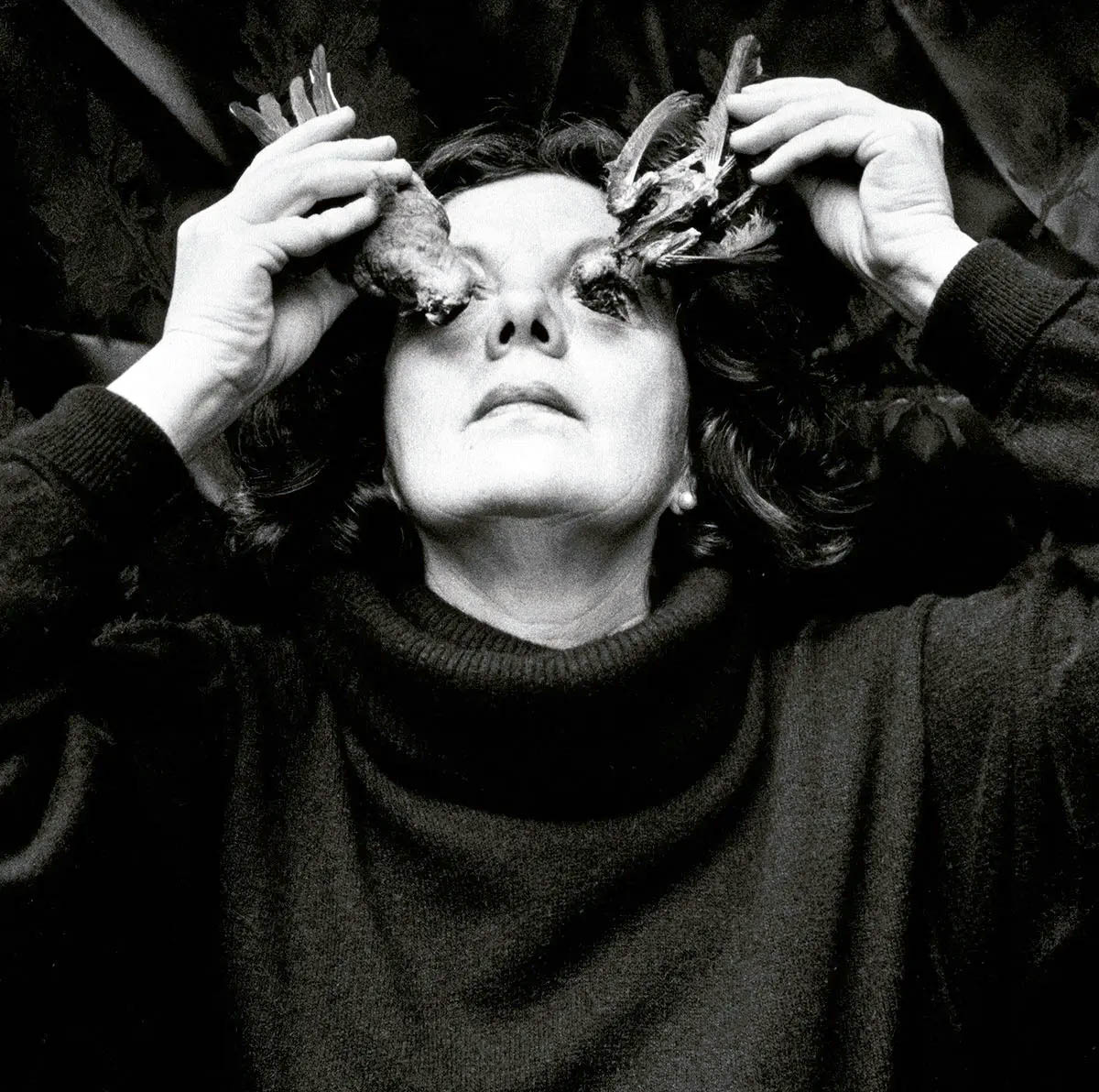
Germaine Krull is always a favourite, as is the work of neutered genius (and my hero), Claude Cahun. Susan Meiselas’s immersive work is also impressive in its “understanding of social, political and global issues and of the potentially complex ethical relationship between photographer and subject”, especially in her early work Carnival Strippers (1972-1975). I also particularly like the sensibility of the Mexican women photographers: sensitive portraits of strong women.

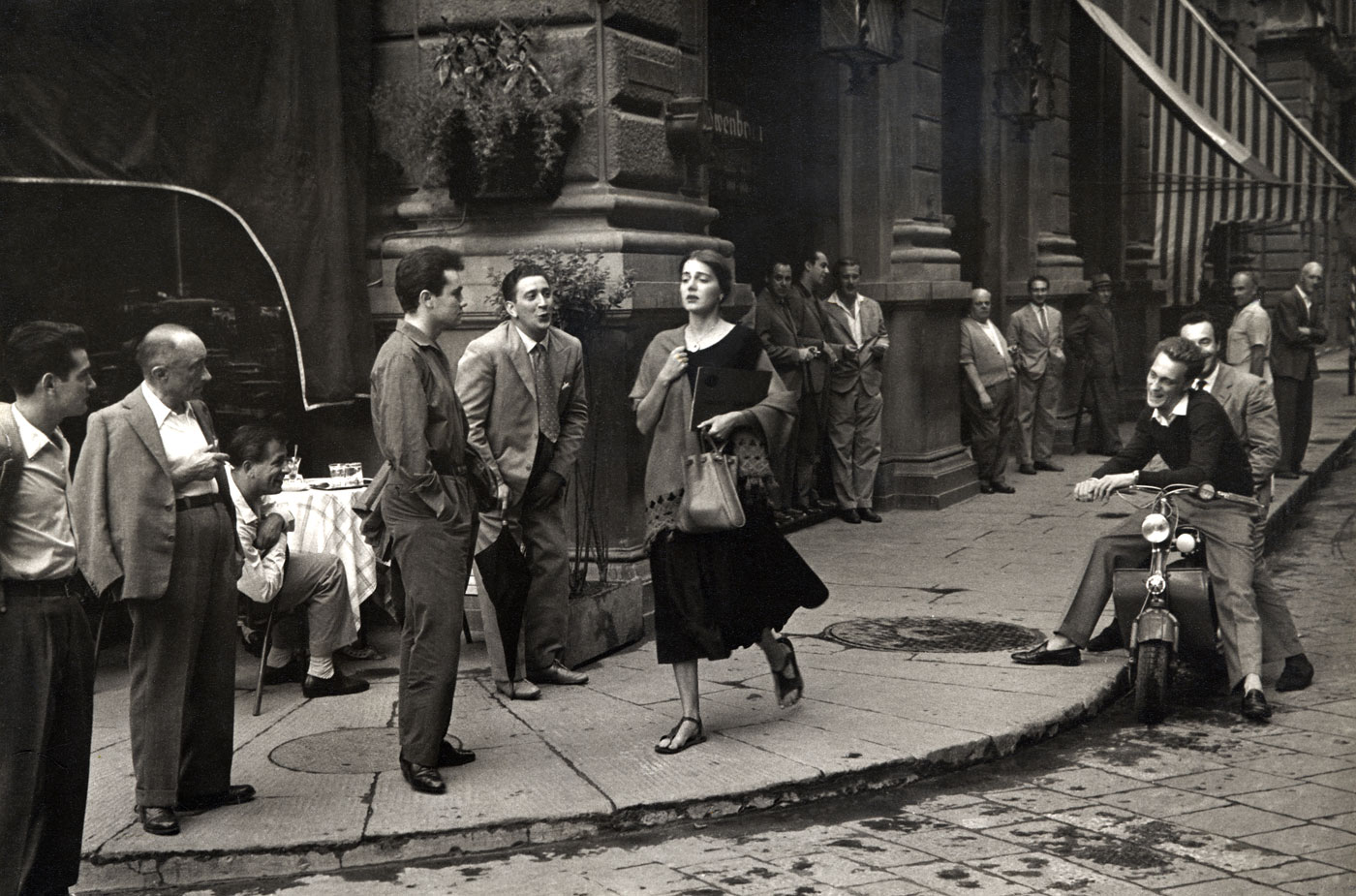
The most cringe worthy photograph that illustrates some of the ills associated with a male-orientated society is Ruth Orkin’s staged but spontaneous photograph, American Girl in Florence, Italy (1951, below) which was “an instant conversation starter about feminism and street harassment long… [and which is] more relevant now than ever for what it truly represents: independence, freedom and self-determination.”

“The photos ran in Cosmopolitan magazine in 1952 in a photo essay, “When You Travel Alone…”, offering tips on “money, men and morals to see you through a gay trip and a safe one.” The article encourages readers to buy ship and train tickets ahead of time. It reminds them to bring their birth certificate and check in with the State Department. The caption on the photo of Craig walking down the street reflects cultural mores of the era.

“Public admiration … shouldn’t fluster you. Ogling the ladies is a popular, harmless and flattering pastime you’ll run into in many foreign countries. The gentlemen are usually louder and more demonstrative than American men, but they mean no harm.”

It’s a far cry from what we tell women these days, but for its time the mere notion of encouraging women to travel alone was progressive. That’s what made the photos so special, Craig says. They offered a rare glimpse of two women – behind and in front of the camera – challenging the era’s gender roles and loving every minute of it.”1


Talking of challenging gender roles, I’m rather surprised there aren’t any photographs by Diane Arbus, Cindy Sherman or Francesca Woodman for example, critical women photographers who challenge our orientation towards our selves and the world. Many others could have been included as well. But that is the joy and paradox of collecting: what do you collect and what do you leave out. You have to focus on what you like and what is available.

“Rather than presenting a chronological history of women photographers or a linear account of feminist photography, the exhibition prompts new appraisals and compelling dialogues from a contemporary, intersectional feminist perspective. African-diasporic, queer, and postcolonial / Indigenous artists have brought new mindsets and questions to the canonical narratives of art history. Our Selves will reexamine a host of topics, countering racial and gender invisibility, systemic racial injustice, and colonialism, through a diversity of photographic practices, including portraiture, photojournalism, social documentary, advertising, avant-garde experimentation, and conceptual photography.” (Press release)

Dr Marcus Bunyan


1/ Emanuella Grinberg. “The real story behind ‘An American Girl in Italy’,” on the CNN website March 30, 2017 [Online] Cited 28/08/2022


Many thankx to the Museum of Modern Art for allowing me to publish the photographs in the posting. Please click on the photographs for a larger version of the image.


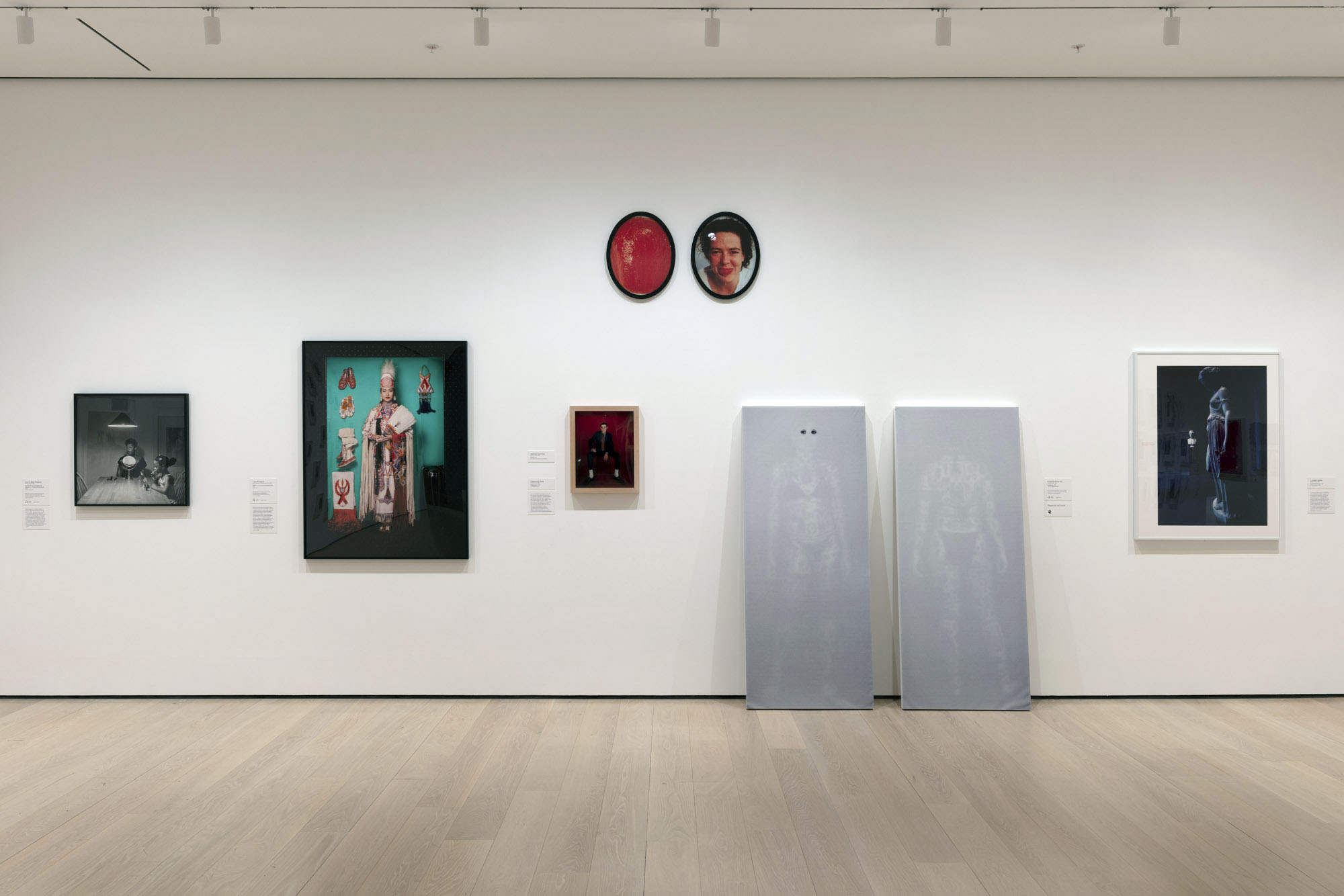
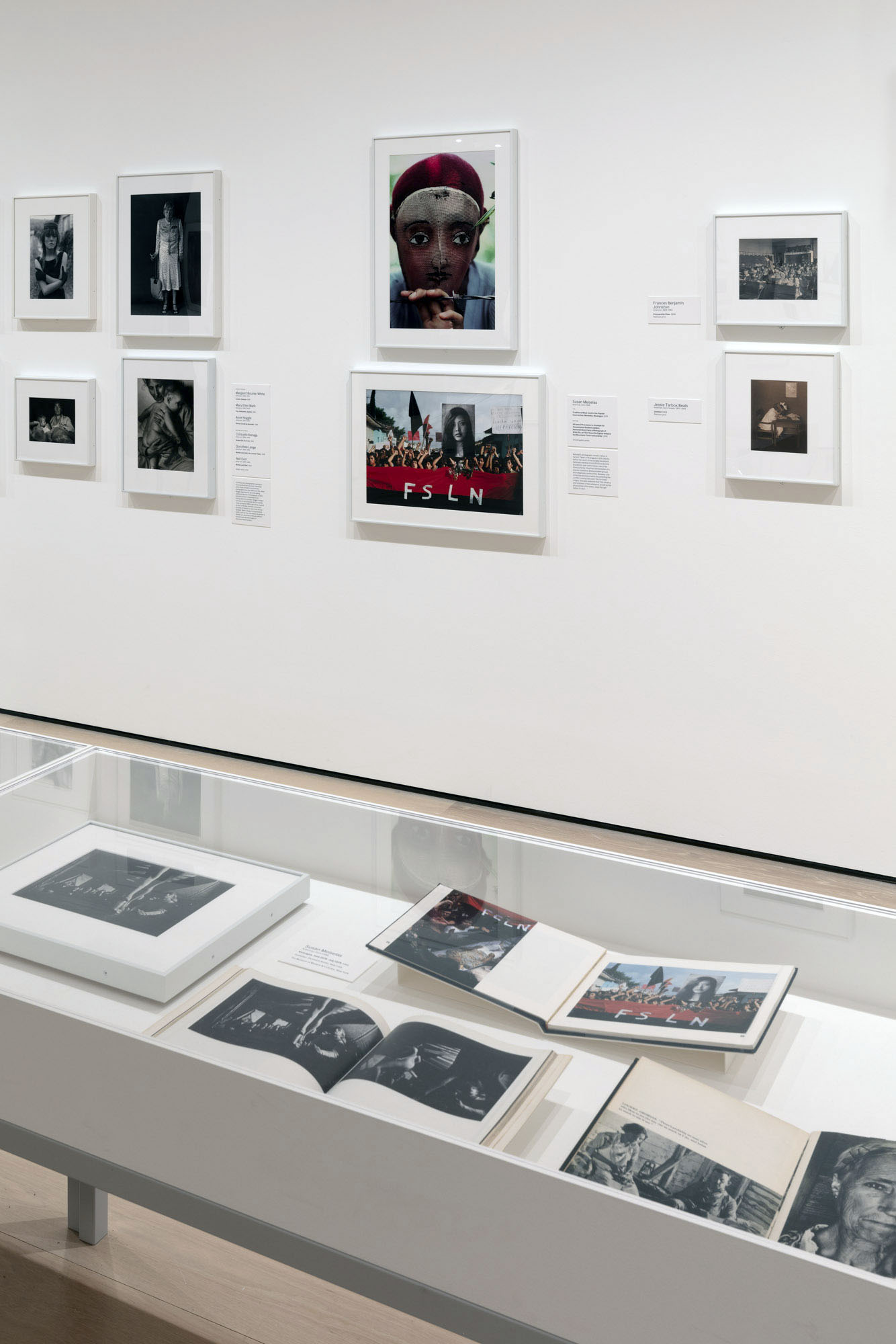
The Museum of Modern Art announces Our Selves: Photographs by Women Artists from Helen Kornblum, an exhibition that will present 90 photographic works by female artists from the last 100 years, on view from April 16 to October 2, 2022. Drawn exclusively from the Museum’s collection, thanks to a transformative gift of photographs from Helen Kornblum in 2021, the exhibition takes as a starting point the idea that the histories of feminism and photography have been intertwined.


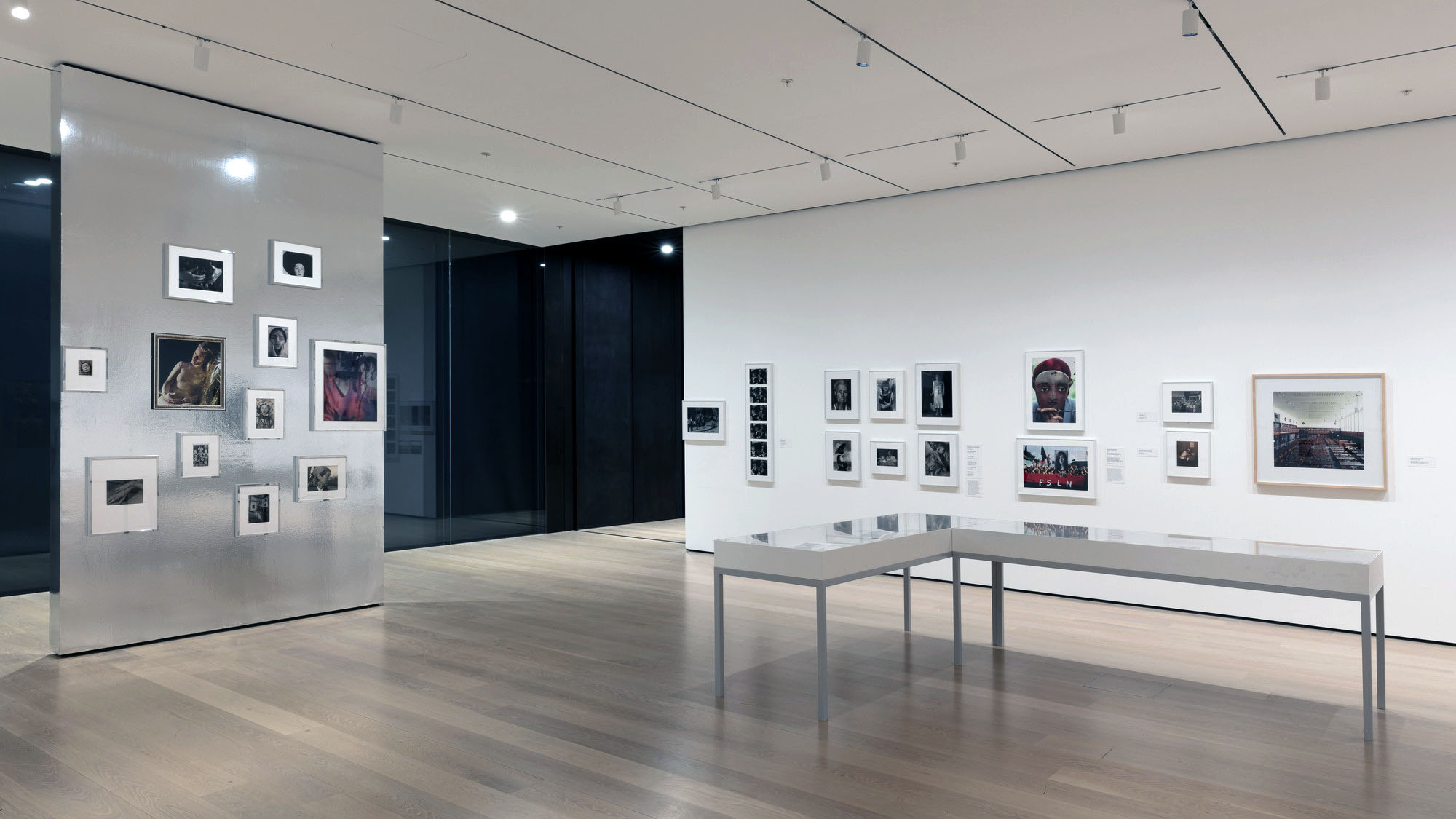
Installation view of the exhibition 'Our Selves: Photographs by Women Artists from Helen Kornblum' at the Museum of Modern Art (MoMA), New York

Installation view of the exhibition 'Our Selves: Photographs by Women Artists from Helen Kornblum' at the Museum of Modern Art (MoMA), New York

Installation view of the exhibition 'Our Selves: Photographs by Women Artists from Helen Kornblum' at the Museum of Modern Art (MoMA), New York

Installation view of the exhibition 'Our Selves: Photographs by Women Artists from Helen Kornblum' at the Museum of Modern Art (MoMA), New York

Installation view of the exhibition 'Our Selves: Photographs by Women Artists from Helen Kornblum' at the Museum of Modern Art (MoMA), New York


Installation views of the exhibition Our Selves: Photographs by Women Artists from Helen Kornblum at the Museum of Modern Art (MoMA), New York


How have women artists used photography as a tool of resistance? Our Selves: Photographs by Women Artists from Helen Kornblum reframes restrictive notions of womanhood, exploring the connections between photography, feminism, civil rights, Indigenous sovereignty, and queer liberation. “Society consumes both the good girl and the bad girl,” wrote artist Silvia Kolbowski in 1984. “But somewhere between those two polarities, space must be made for criticality.”

Spanning more than 100 years of photography, the works in this exhibition range from Frances Benjamin Johnston’s early documentary photographs of racially segregated education in turn-of-the-century United States, to a contemporary portrait by Chemehuevi artist Cara Romero that celebrates the specificity of Indigenous art forms. A tribute to the generosity of collector Helen Kornblum, Our Selves features women’s contributions to a diversity of practices, including portraiture, photojournalism, social documentary, avant-garde experimentation, advertising, and performance.

As we continue to reckon with equity and diversity, Our Selves invites viewers to meditate on the artist Carrie Mae Weems’s evocative question: “In one way or another, my work endlessly explodes the limits of tradition. I’m determined to find new models to live by. Aren’t you?”

Text from the MoMA website


Alma Lavenson (American, 1897-1989) 'Self-Portrait' 1932 from the exhibition 'Our Selves: Photographs by Women Artists from Helen Kornblum' at the Museum of Modern Art (MoMA), New York, April - Oct, 2022


Alma Lavenson (American, 1897-1989)
Self-Portrait
1932
Gelatin silver print
9 × 11 7/8″ (22.9 × 30.2cm)
The Museum of Modern Art, New York
Gift of Helen Kornblum in honour of Roxana Marcoci


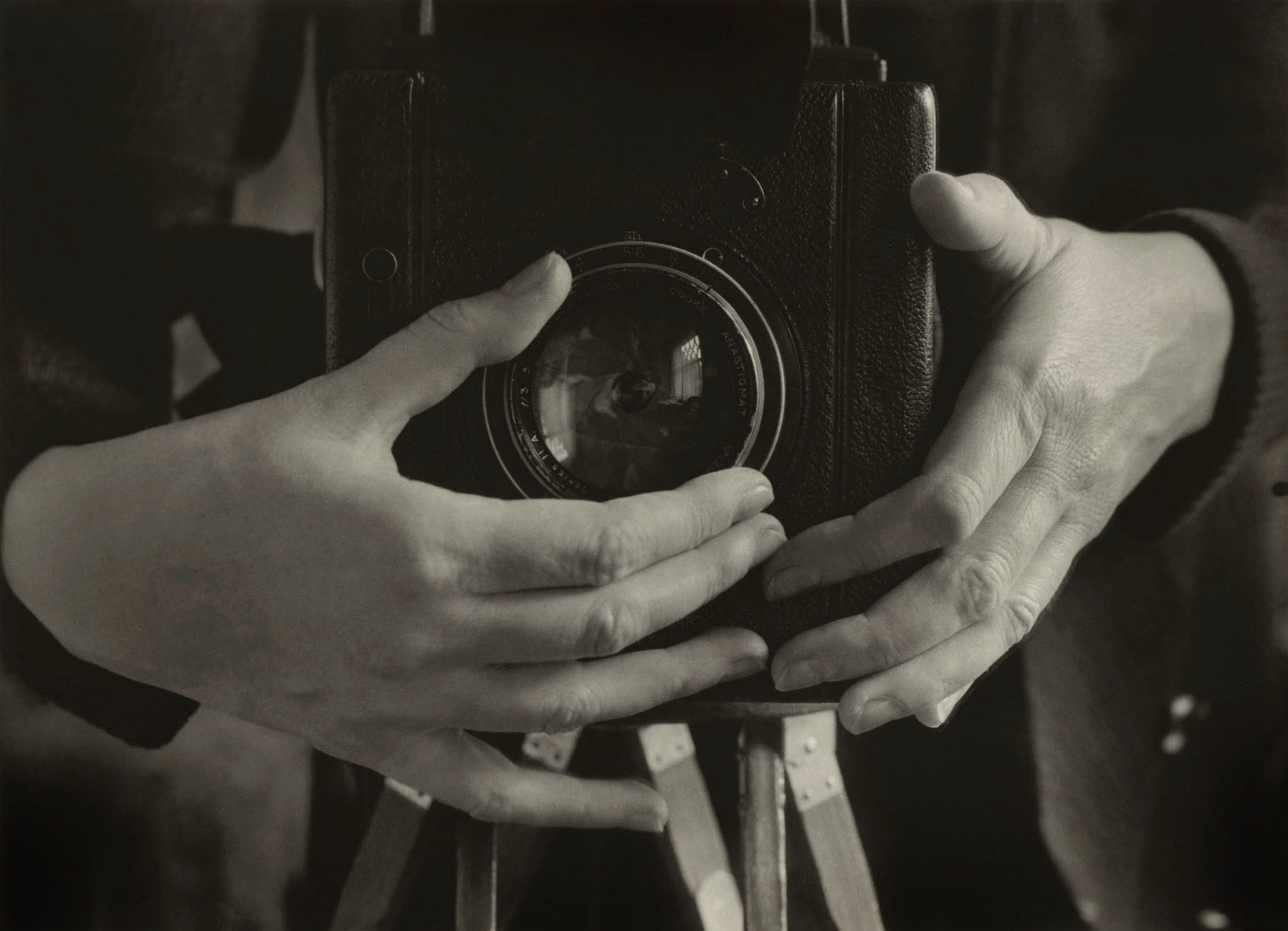
Germaine Krull (Dutch born Germany, 1897-1985) 'The Hands of the Actress Jenny Burnay' c. 1930 from the exhibition 'Our Selves: Photographs by Women Artists from Helen Kornblum' at the Museum of Modern Art (MoMA), New York, April - Oct, 2022


Germaine Krull (Dutch born Germany, 1897-1985)
The Hands of the Actress Jenny Burnay
c. 1930
Gelatin silver print
6 1/2 × 8 5/8″ (16.5 × 21.9cm)
The Museum of Modern Art, New York
Gift of Helen Kornblum in honour of Roxana Marcoci


Germaine Krull (Dutch born Germany, 1897-1985)

Germaine Krull was a pioneer in the fields of avant-garde photomontage, the photographic book, and photojournalism, and she embraced both commercial and artistic loyalties. Born in Wilda-Poznań, East Prussia, in 1897, Krull lived an extraordinary life lasting nine decades on four continents – she was the prototype of the edgy, sexually liberated Neue Frau (New Woman), considered an icon of modernity and a close cousin of the French garçonne and the American flapper. She had a peripatetic childhood before her family settled in Munich in 1912. She studied photography from 1916 to 1918 at Bayerische Staatslehranstalt für Lichtbildwesen (Instructional and Research Institute for Photography), and in 1919 opened her own portrait studio. Her early engagement with left-wing political activism led to her expulsion from Munich. Then, on a visit to Russia in 1921, she was incarcerated for her counterrevolutionary support of the Free French cause against Hitler. In 1926, she settled in Paris, where she became friends with artists Sonia and Robert Delaunay and intellectuals André Malraux, Jean Cocteau, Colette, and André Gide, who were also subjects of her photographic portraits.

Krull’s artistic breakthrough began in 1928, when she was hired by the nascent VU magazine, the first major French illustrated weekly. Along with photographers André Kertész and Éli Lotar, she developed a new form of reportage rooted in a freedom of expression and closeness to her subjects that resulted in intimate close-ups, all facilitated by her small-format Icarette, a portable, folding bed camera. During this period, she published the portfolio, Metal (Métal) (1928), a collection of 64 pictures of modernist iron giants, including cranes, railways, power generators, the Rotterdam transporter bridge, and the Eiffel Tower, shot in muscular close-ups and from vertiginous angles. Krull participated in the influential Film und Foto, or Fifo, exhibition (1929-1930), which was accompanied by two books, Franz Roh’s and Jan Tschichold’s Foto-Auge (Photo-Eye) and Werner Gräff’s Es kommt der neue Fotograf! (Here Comes the New Photographer!). Fifo marked the emergence of a new critical theory of photography that placed Krull at the forefront of Neues Sehen or Neue Optik (New Vision) photography, a new direction rooted in exploring fully the technical possibilities of the photographic medium through a profusion of unconventional lens-based and darkroom techniques. After the end of World War II, she traveled to Southeast Asia, and then moved to India, where, after a lifetime dedicated to recording some of the major upheavals of the twentieth century, she decided to live as a recluse among Tibetan monks.

Introduction by Roxana Marcoci, Senior Curator, Department of Photography, 2016


Ruth Orkin (American, 1921-1985) 'American Girl in Italy' 1951


Ruth Orkin (American, 1921-1985)
American Girl in Florence, Italy
1951
Gelatin silver print
8 1/2 × 11 15/16″ (21.6 × 30.3cm)
The Museum of Modern Art, New York
Gift of Helen Kornblum in honour of Roxana Marcoci


Although this photograph appears to be a street scene caught on the fly-an instance of what Henri Cartier-Bresson called the “decisive moment”  – it was actually staged for the camera by Orkin and her model. “The idea for this picture had been in my mind for years, ever since I had been old enough to go through the experience myself,” Orkin later wrote. While travelling alone in Italy, she met the young woman in the photograph at a hotel in Florence and together they set out to reenact scenes from their experiences as lone travellers. “We were having a hilarious time when this corner of the Piazza della Repubblica suddenly loomed on our horizon,” the photographer recalled. “Here was the perfect setting I had been waiting for all these years… And here I was, camera in hand, with the ideal model! All those fellows were positioned perfectly, there was no distracting sun, the background was harmonious, and the intersection was not jammed with traffic, which allowed me to stand in the middle of it for a moment.” The picture, with its eloquent blend of realism and theatricality, was later published in Cosmopolitan magazine as part of the story “Don’t Be Afraid to Travel Alone.”

Text from the Metropolitan Museum of Art website


Imogen Cunningham (American, 1883-1976) 'Three Harps' 1935


Imogen Cunningham (American, 1883-1976)
Three Harps
1935
Gelatin silver print
9 5/8 × 7 1/2″ (24.4 × 19.1cm)
The Museum of Modern Art, New York
Gift of Helen Kornblum in honour of Roxana Marcoci


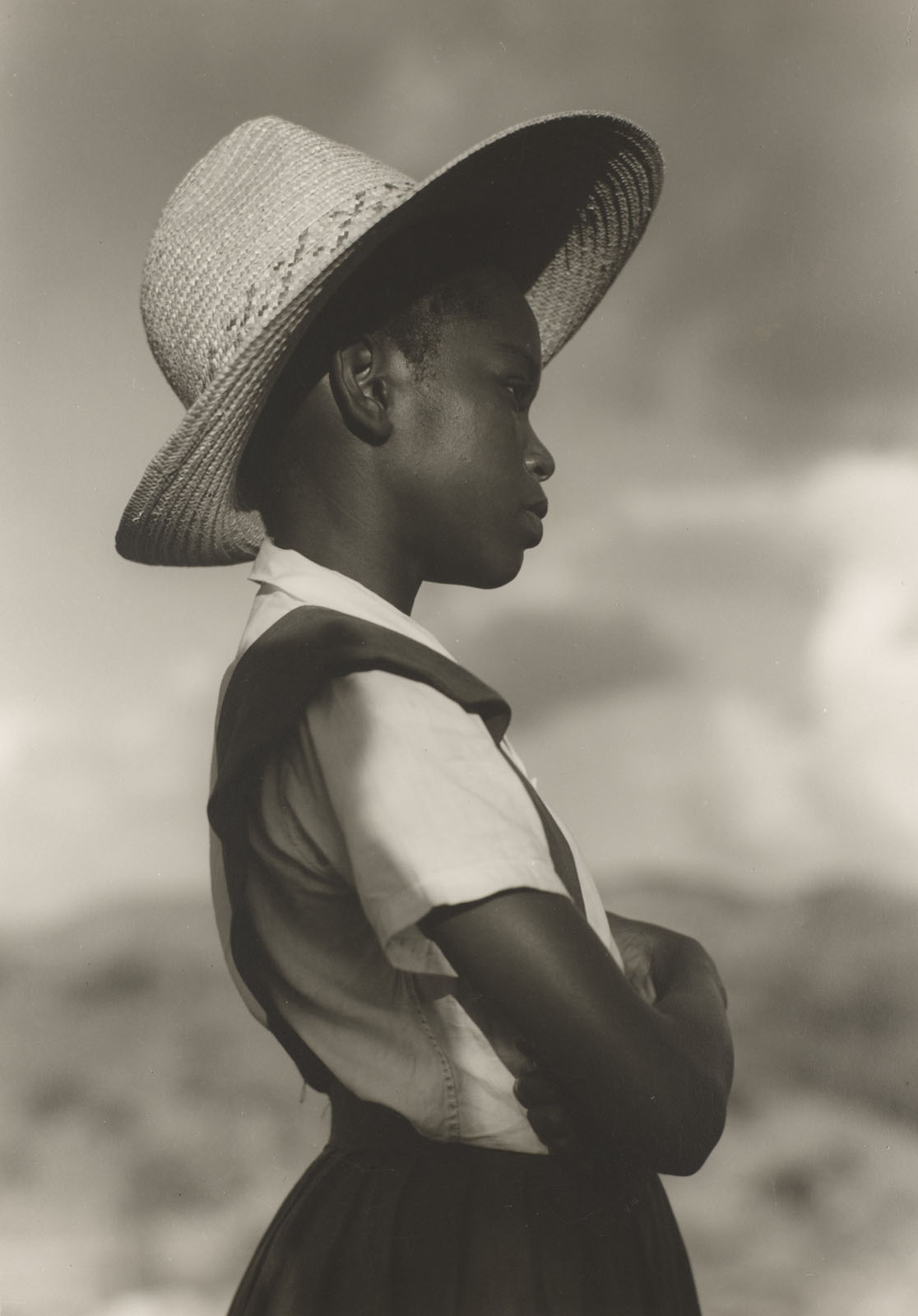
Consuelo Kanaga (American, 1894-1978) 'School Girl, St. Croix' 1963


Consuelo Kanaga (American, 1894-1978)
School Girl, St. Croix
1963
Gelatin silver print
12 13/16 × 8 15/16″ (32.5 × 22.7cm)
The Museum of Modern Art, New York
Gift of Helen Kornblum in honour of Roxana Marcoci


Gertrud Arndt (German, 1903–2000) 'Untitled (Masked Self-Portrait, Dessau)' 1930


Gertrud Arndt (German, 1903–2000)
Untitled (Masked Self-Portrait, Dessau)
1930
Gelatin silver print
9 × 5 5/8 in. (22.9 × 14.3cm)
The Museum of Modern Art, New York
Gift of Helen Kornblum in honour of Roxana Marcoci


Gertrud Arndt (German, 1903-2000)

Gertrud Arndt (born Gertrud Hantschk in Upper Silicia) set out to become an architect, beginning a three-year apprenticeship in 1919 at the architecture firm of Karl Meinhardt in Erfurt, where her family lived at the time. While there, she began teaching herself photography by taking pictures of buildings in town. She also attended courses in typography, drawing, and art history at the Kunstgewerbeschule (School of design). Encouraged by Meinhardt, a friend of Walter Gropius, Arndt was awarded a scholarship to continue her studies at the Bauhaus in Weimar. Enrolled from 1923 to 1927, Arndt took the Vorkurs (foundation course) from László Moholy-Nagy, who was a chief proponent of the value of experimentation with photography. After her Vorkurs, Georg Muche, leader of the weaving workshop, persuaded her to join his course, which then became the formal focus of her studies. Upon graduation, in March 1927, she married fellow Bauhaus graduate and architect Alfred Arndt. The couple moved to Probstzella in Eastern Germany, where Arndt photographed buildings for her husband’s architecture firm.

In 1929, Hannes Meyer invited Alfred Arndt to teach at the Bauhaus, where Arndt focused her energy on photography, entering her period of greatest activity, featuring portraits of friends, still-lifes, and a series of performative self-portraits, as well as At the Masters’ Houses, which shows the influence of her studies with Moholy-Nagy as well as her keen eye for architecture. After the Bauhaus closed, in 1932, the couple left Dessau and moved back to Probstzella. Three years after the end of World War II the family moved to Darmstadt; Arndt almost completely stopped making photographs.

Introduction by Mitra Abbaspour, Associate Curator, Department of Photography, 2014


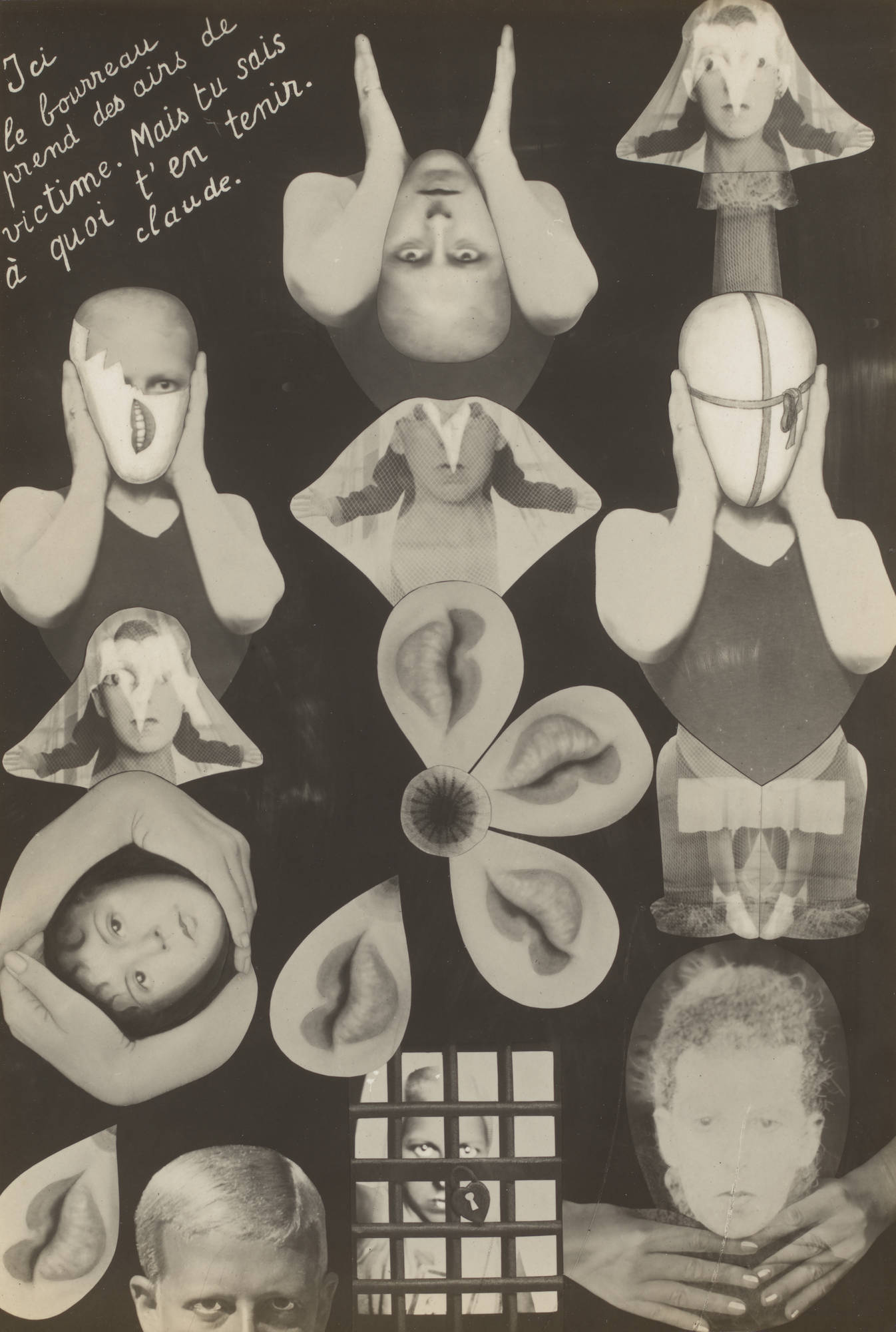
Claude Cahun (Lucy Schwob) (French, 1894-1954) 'M.R.M (Sex)' c. 1929-1930


Claude Cahun (Lucy Schwob) (French, 1894-1954)
M.R.M (Sex)
c. 1929-1930
Gelatin silver print
6 × 4 in. (15.2 × 10.2cm)
The Museum of Modern Art, New York
Gift of Helen Kornblum in honour of Roxana Marcoci


Juliet Jacques: I’m Juliet Jacques. I am a writer and filmmaker based in London. You’re looking at a photomontage by the French artist Claude Cahun, entitled M.R.M (Sex). It’s a photomontage of Cahun’s self-portraits.

Claude Cahun was born in 1894 in France into a family of prominent Jewish intellectuals and began making photomontages in 1912 when she was 18. The works were often exploring Cahun’s own identity in terms of gender and sexuality, but also this sense of a complex and fragmented personhood. Nonbinary pronouns, as we’d understand them now, weren’t officially in existence in the 1920s. Cahun actually wrote “Masculine? Feminine? It depends on the situation. Neuter is the only gender that always suits me.” So, I think either she or they is appropriate.

M.R.M was published as one of the illustrations in Cahun’s book Aveux non Avenus in 1930. Throughout the book you see this playing with the possibilities of gender expression that are kind of funny, sometimes melancholic, but are very emotionally complicated and do really speak to a sense of sometimes being trapped by the confines of gender and sometimes finding these very playful and beautiful ways to break out of it.

Artists and writers, we’re supposed to be dreamers, I think, and people who want to come up with a better world. And of course Cahun’s work is really suggesting different possibilities of free expression.

It’s hard to know how Cahun might have felt about being included in an exhibition of women artists. But, I think Cahun definitely deserves a place within this feminist canon, if not a strictly female one.

Transcript of audio from the MoMA website


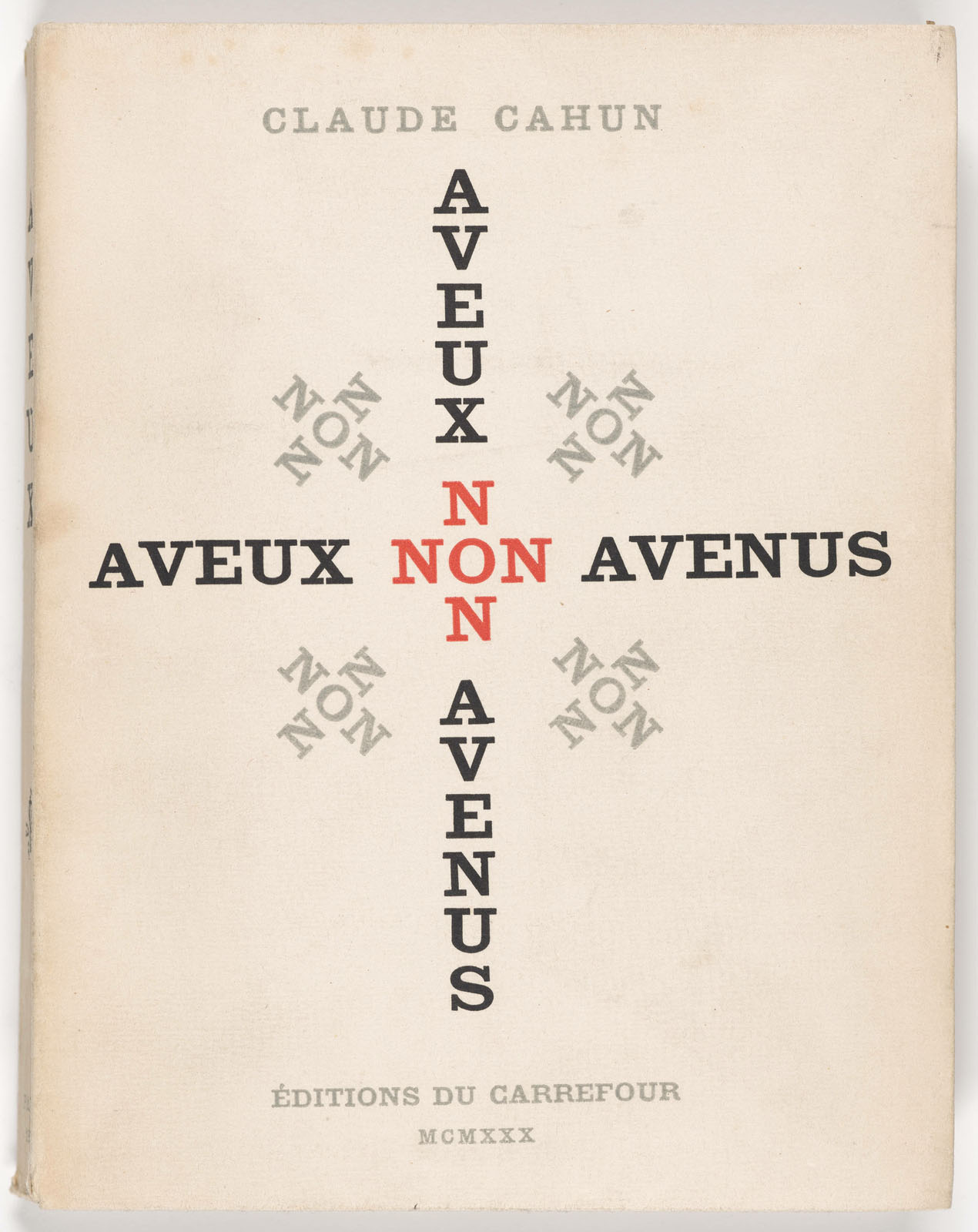
Claude Cahun (Lucy Schwob) (French, 1894-1954) 'Aveux non avenus' (Disavowals or Cancelled Confessions) 1930


Claude Cahun (Lucy Schwob) (French, 1894-1954)
Aveux non avenus (Disavowals or Cancelled Confessions)
1930
Illustrated book with photogravures
Cover (closed) approx. 8 11/16 × 6 11/16″ (22 × 17cm)
The Museum of Modern Art, New York
Gift of Helen Kornblum in honour of Roxana Marcoci


Juliet Jacques: My name is Juliet Jacques.

You’re looking at Claude Cahun’s book Aveux non Avenus, which has been translated variously as “denials” or “disavowals” or “cancelled confessions.”

It’s an autobiographical text that doesn’t just refuse the conventions of memoir, it also really refuses to open up to the reader in a clearly understandable way. It’s this mixture of photography and aphorisms and longer prose-poetic passages. It doesn’t have a formalised narrative. It’s rather just exploring the fragmented and somewhat chaotic nature of their own consciousness and what they are able to access.

I’ve just flipped to page 91. Cahun writes:

“Consciousness. The carver. My enthusiasms, my impulses, my little passions were irksome. … Come on, then. … By a process of elimination, what is necessary about me? … The material is badly cut. I want it to be straightened up. A clumsy snip with the scissors. Bach! Let’s even it up on the other side. … A stain? We’ll cover it up. Let’s trim it again. I no longer exist. Perfect. Now nothing can come between us.”


The affinity I felt with Cahun is because I ended up doing a lot of writing that got bracketed as confessional or sort of first-person autobiographical writing. You can get yourself into a situation where you’re constantly expected to give away details about your personal life. And what I have always found really interesting about Cahun is the refusal of that trap, even in the project of putting oneself on the page.

I was always looking for queer and trans writers, and Cahun’s work gave me this gender non-conforming take on art that I thought always should have been there.

Transcript of audio from the MoMA website


Hulleah J. Tsinhnahjinnie (Native American (Seminole-Muscogee-Navajo)) 'Vanna Brown, Azteca Style' 1990


Hulleah J. Tsinhnahjinnie (Native American (Seminole-Muscogee-Navajo))
Vanna Brown, Azteca Style
1990
Photocollage
15 11/16 × 22 13/16″ (39.9 × 58cm)
The Museum of Modern Art, New York
Gift of Helen Kornblum in honour of Roxana Marcoci


Veronica Passalacqua: My name is Veronica Passalacqua, and I’m a curator at the C.N. Gorman Museum at the University of California Davis. My research focus is upon contemporary Native American art with a specialty in photography. This is a work called Vanna Brown, Azteca Style by the Navajo-Tuskegee artist Hulleah Tsinhnahjinnie.

It’s a hand collage that depicts Tsinhnahjinnie’s friend, dressed in her Azteca dancing regalia within the frame of a Philco television set. It was the beginning of a series of works and videos related to a project called NTV, or Native Television. She wanted to create her own vision of what she’d like to see on television.

Curator, Roxana Marcoci: The photograph makes reference to Wheel of Fortune, a televised game show where contestants guess words and phrases one letter at a time. Vanna White has been the show’s co-host for 40 years.

Veronica Passalacqua: Vanna White was always dressed in these elaborate gowns to show the letters of the enduring game show. She was there really as a symbol of the idealised beauty that television was portraying. Tsinhnahjinnie changes the name from Vanna White to Vanna Brown, addressing the beauty that she sees in her friend. What Tsinhnahjinnie wanted to focus on was this notion that you can create these beautiful images when you have a relationship with the sitter.

I’d like to read you a quote by Tsinhnahjinnie: “No longer is the camera held by an outsider looking in, the camera is held with brown hands opening familiar worlds. We document ourselves with a humanising eye, we create new visions with ease, and we can turn the camera to show how we see you.”

Transcript of audio from the MoMA website


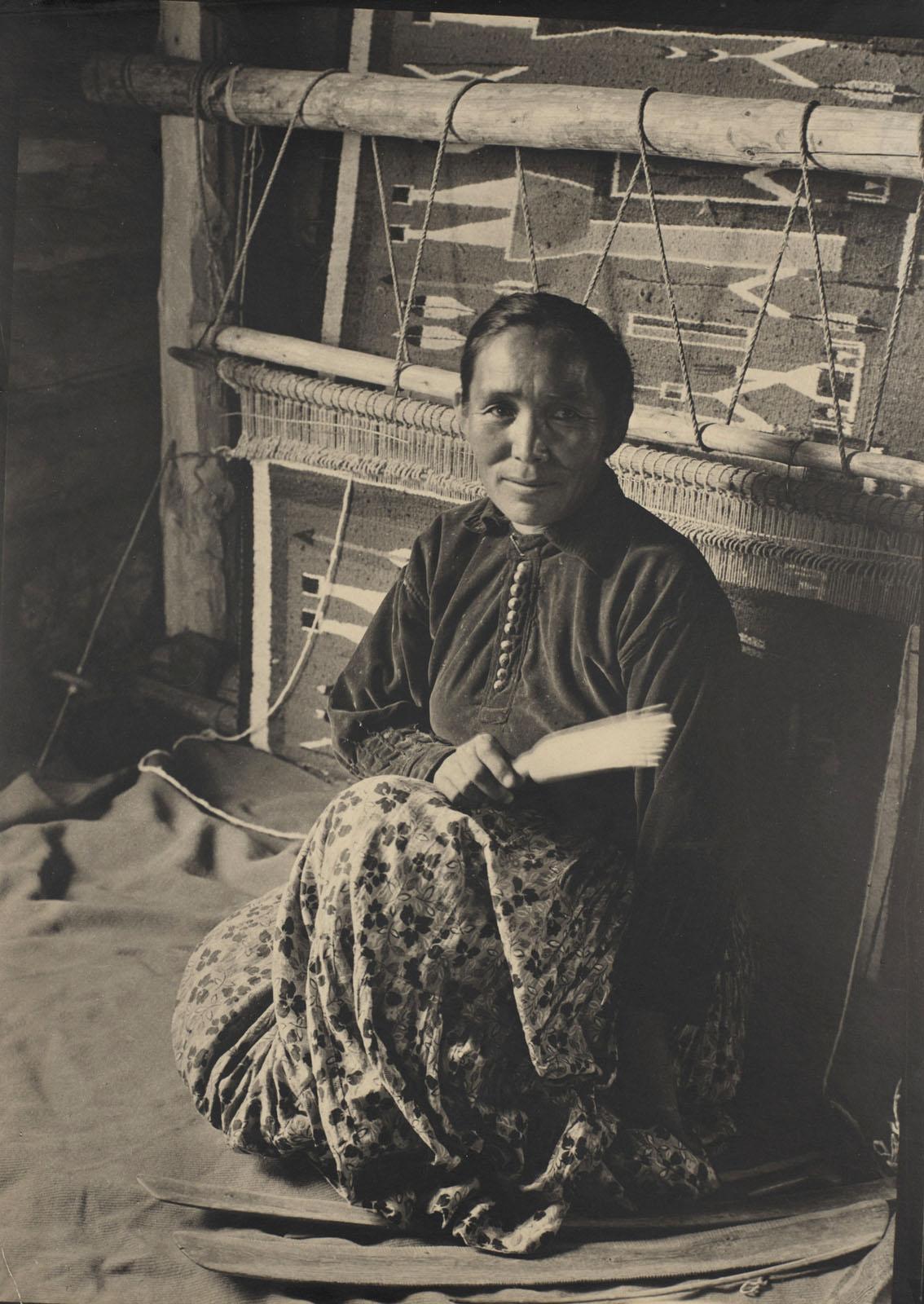
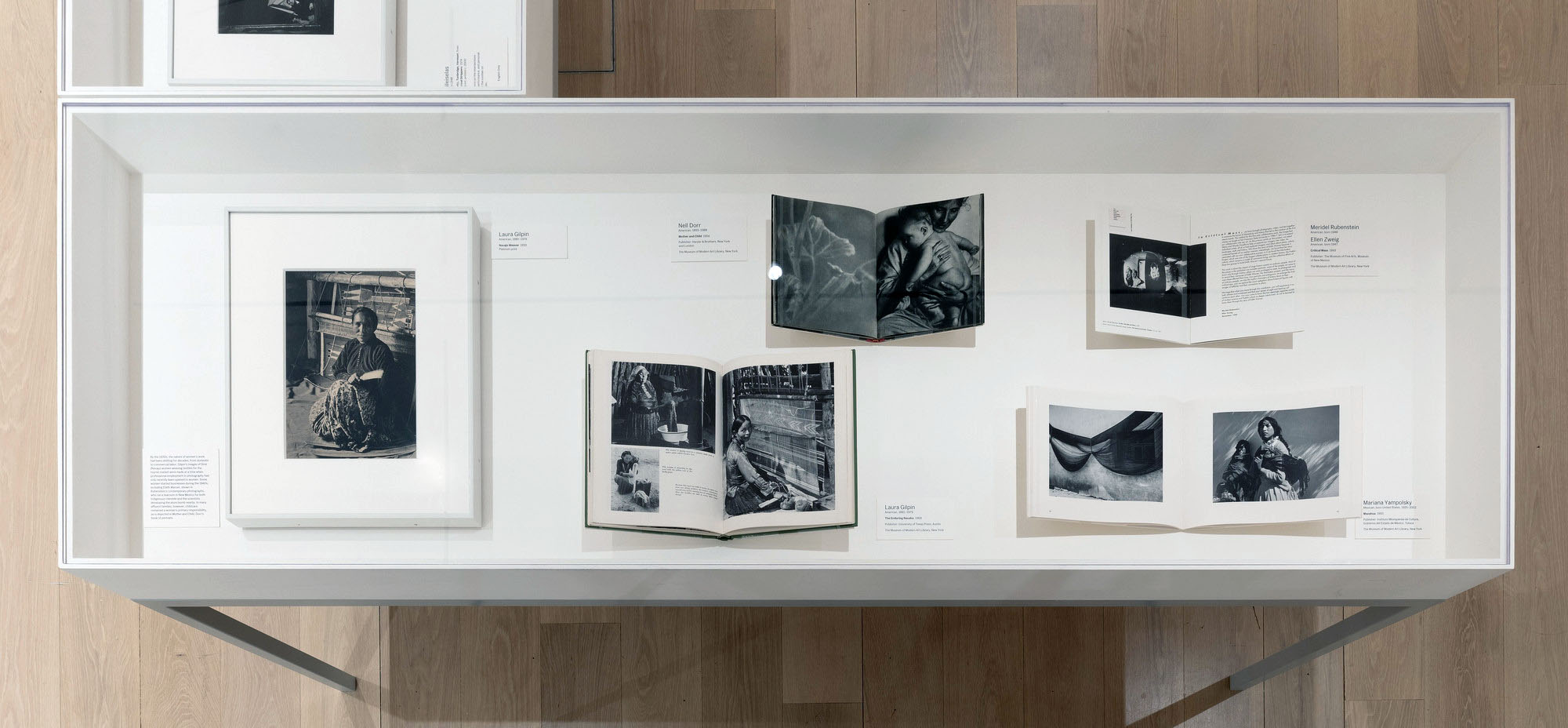
Laura Gilpin (American, 1881-1979) 'Navajo Weaver' 1933


Laura Gilpin (American, 1881-1979)
Navajo Weaver
1933
Platinum print
13 1/8 × 9 3/8 in. (33.3 × 23.8cm)
The Museum of Modern Art, New York
Gift of Helen Kornblum in honour of Roxana Marcoci


Lola Alvarez Bravo (Mexican, 1907-1993) 'Frida Kahlo' c. 1945


Lola Alvarez Bravo (Mexican, 1907-1993)
Frida Kahlo
c. 1945
Gelatin silver print
8 3/8 × 6 1/4″ (21.3 × 15.9cm)
The Museum of Modern Art, New York
Gift of Helen Kornblum in honour of Roxana Marcoci


Lucia Moholy (British born Prague, 1894-1989) 'Frau Finsler' 1926


Lucia Moholy (British born Prague, 1894-1989)
Frau Finsler
1926
Gelatin silver print
7 7/8 × 10″ (20 × 25.4cm)
The Museum of Modern Art, New York
Gift of Helen Kornblum in honour of Roxana Marcoci


Margaret Bourke-White (American, 1904-1971) 'Woman, Locket, Georgia' 1936


Margaret Bourke-White (American, 1904-1971)
Woman, Locket, Georgia
1936
Gelatin silver print
13 × 9 3/4″ (33 × 24.8cm)
The Museum of Modern Art, New York
Gift of Helen Kornblum in honour of Roxana Marcoci


Margrethe Mather (American, 1885-1952) 'Buffie Johnson, Painter' 1933


Margrethe Mather (American, 1885-1952)
Buffie Johnson, Painter
1933
Gelatin silver print
3 3/4 × 2 7/8″ (9.5 × 7.3cm)
The Museum of Modern Art, New York
Gift of Helen Kornblum in honour of Roxana Marcoci


Meridel Rubenstein (American, b. 1948) 'Fatman with Edith' 1993


Meridel Rubenstein (American, b. 1948)
Fatman with Edith
1993
Palladium print
18 1/2 × 22 1/2″ (47 × 57.2cm)
The Museum of Modern Art, New York
Gift of Helen Kornblum in honour of Roxana Marcoci


Helen Kornblum: I’m Helen Kornblum. If there’s a theme in my collection, I’d say it’s people. My interest in people, meeting people, knowing people, learning about people.

I have felt about my photographs almost like a third child. Each one actually has its own story for me. Where I found them, who led me to them. I’ve just attached myself in different ways to each one.

One, for instance, is Fatman with Edith by Meridel Rubenstein. With this photograph she conflates war with the feminine. She has the inhumanly destructive warhead, the plutonium bomb, called Fatman, dropped on Nagasaki, juxtaposed with a portrait of a woman, Edith Warner, and a nurturing, warm cup of tea.

Curator, Roxana Marcoci: In the early 1940s Robert Oppenheimer, a physicist in charge of The Manhattan Project developed the first atomic bomb.This photograph belongs to a series that explores encounters in New Mexico between indigenous communities and the scientists who created the bomb. These two worlds collided in the home of Edith Warner, who ran a tearoom in Los Alamos.

Helen Kornblum: Oppenheimer knew Edith Warner, who lived near Santa Fe. And when he came to create the bomb at Los Alamos, he asked Edith if he could bring scientists to her home for a place away from the creation of this bomb, and he would come with them for dinner, all during the Manhattan Project.

Roxana Marcoci: By pairing two seemingly dissimilar images, Rubenstein said she hopes “to enlarge the lives of ordinary people, and strip the mythic characters of history down to their ordinariness.”

Transcript of audio from the MoMA website


Edith Warner (1893-1951), also known by the nickname “The Woman at Otowi Crossing”, was an American tea room owner in Los Alamos, New Mexico, who is best known for serving various scientists and military officers working at the Los Alamos National Laboratory during the original creation of the atomic bomb as a part of the Manhattan Project. Warner’s influence on the morale and overall attitude of the people there has been noted and written about by various journalists and historians, including several books about her life, a stage play, a photography exhibition, an opera, and a dance.

Text from the Wikipedia website


Rosemarie Trockel (German, b. 1952) 'Untitled' 2004


Rosemarie Trockel (German, b. 1952)
Untitled
2004
Chromogenic print
20 3/4 × 19″ (52.7 × 48.3 cm)
The Museum of Modern Art, New York
Gift of Helen Kornblum in honour of Roxana Marcoci


Tatiana Parcero (Mexican, b. 1967) 'Interior Cartography #35' 1996


Tatiana Parcero (Mexican, b. 1967)
Interior Cartography #35
1996
Chromogenic print and acetate
9 3/8 × 6 3/16 in. (23.8 × 15.7cm)
The Museum of Modern Art, New York
Gift of Helen Kornblum in honour of Roxana Marcoci


Artist, Tatiana Parcero

My name is Tatiana Parcero. I’m from Mexico and I’m a visual artist and a psychologist. The work is called Interior Cartography #35, and belongs to the series of the same name.

Cartography is a science that deals with maps. I am interested in working with the body as a territory, where I can explore different paths at a physical and also in a symbolic level.

I am the one that appears in all the photographs. When I did this specific shot, I wanted to show a moment of introspection and calm. And when you see my hands near my cheeks, I wanted to represent a way to be in touch with myself, not just in a physical way, but in a more spiritual way.

The image superimposed on the face is from the Codex Tudela of the 16th century. The codices are documents that were created by ancient civilisations, like Mayans, Aztecs, that represent the pre-Columbian cultures of Mexico, their amazing universe, and the way that they lived.

When I moved to New York from Mexico, I was feeling a little bit out of place and I wanted to recreate a sense of belonging. The work is a way to connect myself with my country and the ancient cultures that are before me.

I decided to study psychology because I wanted to help people. I wanted to be able to understand emotions and be able to translate personal experiences into images and make them more accessible. It’s important for me to give the viewer several layers so that you can really explore the image and make your own interpretations and reflections. I think art can transform you and take you to a parallel universe. That is where I feel that you can be able to heal and to cure.

Transcript of audio from the MoMA website


Lorie Novak (American, b. 1954) 'Self-Portraits' 1987


Lorie Novak (American, b. 1954)
Self-Portraits
1987
Chromogenic print
22 1/2 × 18 9/16″ (57.2 × 47.1cm)
The Museum of Modern Art, New York
Gift of Helen Kornblum in honour of Roxana Marcoci


The Museum of Modern Art announces Our Selves: Photographs by Women Artists from Helen Kornblum, an exhibition that will present 90 photographic works by female artists from the last 100 years, on view from April 16 to October 2, 2022. Drawn exclusively from the Museum’s collection, thanks to a transformative gift of photographs from Helen Kornblum in 2021, the exhibition takes as a starting point the idea that the histories of feminism and photography have been intertwined. Our Selves: Photographs by Women Artists from Helen Kornblum is organised by Roxana Marcoci, The David Dechman Senior Curator, with Dana Ostrander, Curatorial Assistant, and Caitlin Ryan, Curatorial Assistant, Department of Photography, MoMA.

Rather than presenting a chronological history of women photographers or a linear account of feminist photography, the exhibition prompts new appraisals and compelling dialogues from a contemporary, intersectional feminist perspective. African-diasporic, queer, and postcolonial / Indigenous artists have brought new mindsets and questions to the canonical narratives of art history. Our Selves will reexamine a host of topics, countering racial and gender invisibility, systemic racial injustice, and colonialism, through a diversity of photographic practices, including portraiture, photojournalism, social documentary, advertising, avant-garde experimentation, and conceptual photography. Highlighting both iconic and rare or lesser-known images, the exhibition’s groupings and juxtapositions of modern and contemporary works will encourage unexpected connections in the Museum’s fifth-floor collection galleries, which are typically devoted to art from the 1880s through the 1940s.

Our Selves will open with a wall of self-portraits and portraits of female artists by such modernist photographers as Lola Álvarez Bravo, Gertrud Arndt, Lotte Jacobi, and Lucia Moholy, alongside contemporary practitioners including Tatiana Parcero, Rosemarie Trockel, and Lorie Novak. Inviting viewers to consider the structural relationship between knowledge and power, Frances Benjamin Johnston’s Penmanship Class (1899) – a depiction of racially segregated education at the turn of the 20th century in the United States – will hang near Candida Höfer’s Deutsche Bucherei Leipzig IX (1997) – a part of Höfer’s series documenting library interiors weighted by forms of social inequality and colonial supremacy. Lorna Simpson’s Details (1996), a portfolio of 21 found photographs, signals how both the camera and language can culturally inscribe the body and reinforce racial and gender stereotypes.

Works by Native artists including Cara Romero and Hulleah J. Tsinhnahjinnie, and non-Native practitioners such as Sharon Lockhart and Graciela Iturbide, explore indigeneity and its relationship to colonial history. Photographs by Flor Garduño, Ana Mendieta, Marta María Pérez Bravo, and Mariana Yampolsky attest to the overlapping histories of colonialism, ethnographic practice, and patriarchy in Latin America.

Our Selves is accompanied by a richly illustrated catalogue that features more than 100 colour and black-and-white photographs. A critical essay by curator Roxana Marcoci asks the question, “What is a Feminist Picture?” and a series of 12 focused essays by Dana Ostrander, Caitlin Ryan, and Phil Taylor address a range of themes, from dance to ecology to perception. The catalogue offers both historical context and critical interpretation, exploring the myriad ways in which different photographic practices can be viewed when looking through a feminist lens.

Press release from the MoMA website


Installation view of the exhibition 'Our Selves: Photographs by Women Artists from Helen Kornblum' at the Museum of Modern Art (MoMA), New York


Installation view of the exhibition Our Selves: Photographs by Women Artists from Helen Kornblum at the Museum of Modern Art (MoMA), New York.

The images below before the next installation image are left to right in the above installation image.


Graciela Iturbide (Mexican, b. 1943) 'Mujercita' 1981


Graciela Iturbide (Mexican, b. 1943)
Mujercita
1981
Gelatin silver print
10 1/8 × 6 3/4″ (25.7 × 17.1cm)
The Museum of Modern Art, New York
Gift of Helen Kornblum in honour of Roxana Marcoci


Mariana Yampolsky (Mexican, 1925-2002) 'Mujeres Mazahua' 1989


Mariana Yampolsky (Mexican, 1925-2002)
Mujeres Mazahua
1989
Gelatin silver print
13 5/8 × 18 1/2″ (34.6 × 47cm)
The Museum of Modern Art, New York
Gift of Helen Kornblum in honour of Roxana Marcoci


Flor Garduño (Mexican, b. 1957) 'Reina (Queen)' 1989


Flor Garduño (Mexican, b. 1957)
Reina (Queen)
1989
Gelatin silver print
12 1/4 × 8 3/4″ (31.1 × 22.2cm)
The Museum of Modern Art, New York
Gift of Helen Kornblum in honour of Roxana Marcoci


Barbara Morgan (American, 1900-1992) 'Corn Stalks Growing' 1945


Barbara Morgan (American, 1900-1992)
Corn Stalks Growing
1945
Gelatin silver print
12 3/16 × 9″ (31 × 22.9cm)
The Museum of Modern Art, New York
Gift of Helen Kornblum in honour of Roxana Marcoci


Sonya Noskowiak (American born Germany, 1900-1975) 'Plant Detail' 1931


Sonya Noskowiak (American born Germany, 1900-1975)
Plant Detail
1931
Gelatin silver print
9 11/16 × 7 1/2″ (24.6 × 19.1cm)
The Museum of Modern Art, New York
Gift of Helen Kornblum in honour of Roxana Marcoci


Imogen Cunningham (American, 1883-1976) 'Agave Design I' 1920s


Imogen Cunningham (American, 1883-1976)
Agave Design I
1920
Gelatin silver print
12 7/8 × 9 13/16″ (32.7 × 24.9cm)
The Museum of Modern Art, New York
Gift of Helen Kornblum in honour of Roxana Marcoci


Florence Henri (Swiss born United States, 1893-1982) 'Composition Nature Morte' 1931


Florence Henri (Swiss born United States, 1893-1982)
Composition Nature Morte
1931
Gelatin silver print
3 3/8 × 4 1/2″ (8.6 × 11.4cm)
The Museum of Modern Art, New York
Gift of Helen Kornblum in honour of Roxana Marcoci


Alma Lavenson (American, 1897-1989) 'Eucalyptus Leaves' 1933


Alma Lavenson (American, 1897-1989)
Eucalyptus Leaves
1933
Gelatin silver print
12 × 9″ (30.5 × 22.9cm)
The Museum of Modern Art, New York
Gift of Helen Kornblum in honour of Roxana Marcoci


Ruth Bernhard (American born Germany, 1905-2006) 'Angel Wings' 1943


Ruth Bernhard (American born Germany, 1905-2006)
Angel Wings
1943
Gelatin silver print
9 5/8 × 6 1/4″ (24.4 × 15.9cm)
The Museum of Modern Art, New York
Gift of Helen Kornblum in honour of Roxana Marcoci


Nelly (Elli Sougioultzoglou-Seraidari) (Greek born Turkey, 1899-1998) 'Elizaveta "Lila" Nikolska in the Parthenon, Athens, Greece' November 1930


Nelly (Elli Sougioultzoglou-Seraidari) (Greek born Turkey, 1899-1998)
Elizaveta “Lila” Nikolska in the Parthenon, Athens, Greece
November 1930
Gelatin silver print
6 × 8 1/2″ (15.2 × 21.6cm)
The Museum of Modern Art, New York
Gift of Helen Kornblum in honour of Roxana Marcoci


Installation view of the exhibition 'Our Selves: Photographs by Women Artists from Helen Kornblum' at the Museum of Modern Art (MoMA), New York


Installation view of the exhibition Our Selves: Photographs by Women Artists from Helen Kornblum at the Museum of Modern Art (MoMA), New York

The images below before the next installation image are left to right in the above installation image.


Laurie Simmons (American, b. 1949) 'Three Red Petit-Fours' 1990


Laurie Simmons (American, b. 1949)
Three Red Petit-Fours
1990
Chromogenic print
23 × 35″ (58.4 × 88.9cm)
The Museum of Modern Art, New York
Gift of Helen Kornblum in honour of Roxana Marcoci


Kati Horna (Mexican, 1912-2000) 'Figurines' c. 1933


Kati Horna (Mexican, 1912-2000)
Figurines
c. 1933
Gelatin silver print
8 1/2 × 8″ (21.6 × 20.3cm)
The Museum of Modern Art, New York
Gift of Helen Kornblum in honour of Roxana Marcoci


Dora Maar (French 1907-1997) 'Mannequin in Window' 1935


Dora Maar (French 1907-1997)
Mannequin in Window
1935
Gelatin silver print
9 1/2 × 6″ (24.1 × 15.2 cm)
The Museum of Modern Art, New York
Gift of Helen Kornblum in honour of Roxana Marcoci


Inge Morath (Austrian, 1923-2002) 'Siesta of a Lottery Ticket Vendor, Plaza Mayor, Madrid' 1955


Inge Morath (Austrian, 1923-2002)
Siesta of a Lottery Ticket Vendor, Plaza Mayor, Madrid
1955
Gelatin silver print
7 3/16 × 4 3/4″ (18.3 × 12.1cm)
The Museum of Modern Art, New York
Gift of Helen Kornblum in honour of Roxana Marcoci


Ringl + Pit (German) Grete Stern (Argentine born Germany, 1904-1999) Ellen Auerbach (German, 1906-2004) 'Columbus' Egg' 1930


Ringl + Pit (German)
Grete Stern (Argentine born Germany, 1904-1999)
Ellen Auerbach (German, 1906-2004)
Columbus’ Egg
1930
Gelatin silver print
8 3/4 × 7 1/2″ (22.2 × 19.1cm)
The Museum of Modern Art, New York
Gift of Helen Kornblum in honour of Roxana Marcoci


Yva (Else Ernestine Neuländer) (German, 1900-1942) 'Untitled' 1935


Yva (Else Ernestine Neuländer) (German, 1900-1942)
Untitled
1935
Gelatin silver print
9 1/16 × 6 11/16″ (23 × 17cm)
The Museum of Modern Art, New York
Gift of Helen Kornblum in honour of Roxana Marcoci


Marie Cosindas (American, 1923-2017) 'Masks, Boston' 1966


Marie Cosindas (American, 1923-2017)
Masks, Boston
1966
Dye transfer print
10 × 7″ (25.4 × 17.8cm)
The Museum of Modern Art, New York
Gift of Helen Kornblum in honour of Roxana Marcoci


Kati Horna (Mexican, 1912-2000) 'Man and Candlesticks' c. 1933


Kati Horna (Mexican, 1912-2000)
Man and Candlesticks
c. 1933
Gelatin silver print
8 × 7 3/4″ (20.3 × 19.7cm)
The Museum of Modern Art, New York
Gift of Helen Kornblum in honour of Roxana Marcoci


Barbara Probst (German, b. 1964) 'Exposure #78, NYC, Collister and Hubert St.' 2010


Barbara Probst (German, b. 1964)
Exposure #78, NYC, Collister and Hubert St.
2010
Two inkjet prints (diptych)
18 3/4 × 28″ (47.6 × 71.1cm)
The Museum of Modern Art, New York
Gift of Helen Kornblum in honour of Roxana Marcoci


Barbara Probst (German, b. 1964)

Artist, Barbara Probst: I am Barbara Probst. I’m an artist working with photography. I’m born in Munich, in Germany, and I live in New York.

I’m interested in photography as a phenomenon that seemingly and supposedly depicts reality. But maybe it is the subjectivity of the photographer, which determines the image. And not the objectivity of the world.

I get a set of pictures from the same moment. By comparing these pictures, it becomes quite clear that the link between reality and photography is very thin and fragile because every picture from this moment gives a different take of this moment.

None of these images is more true or more false than any others. They are equally truthful. The viewpoints and angles and settings of the cameras and the framing and all these things determine the picture.

It’s not what is in front of the camera that determines the picture. It’s the photographer behind the camera that decides how reality is translated into an image.

Audio of Barbara Probst from the video “Elles X Paris Photo: Barbara Probst.” © Fisheye l’Agence 2021

Transcript of audio from the MoMA website


Installation view of the exhibition 'Our Selves: Photographs by Women Artists from Helen Kornblum' at the Museum of Modern Art (MoMA), New York


Installation view of the exhibition Our Selves: Photographs by Women Artists from Helen Kornblum at the Museum of Modern Art (MoMA), New York

The images below before the next installation image are left to right in the above installation image.


Carrie Mae Weems (American, b. 1953) 'Untitled (Woman and Daughter with Makeup)' 1990


Carrie Mae Weems (American, b. 1953)
Untitled (Woman and Daughter with Makeup)
1990
Gelatin silver print
27 3/16 × 27 3/16″ (69.1 × 69.1cm)
The Museum of Modern Art, New York
Gift of Helen Kornblum in honour of Roxana Marcoci


“My work endlessly explodes the limits of tradition.”

~ Carrie Mae Weems


What does it mean to bear witness to history? The artist Carrie Mae Weems has asked this question for decades through photography, video, performance, installation, and social practice. For Weems, to examine the past is to imagine a different future. “In one way or another, my work endlessly explodes the limits of tradition,” she declared in an interview with her friend, the photographer Dawoud Bey. “I’m determined to find new models to live by. Aren’t you?”1

Weems was trained as both a dancer and a photographer before enrolling in the folklore studies program at the University of California, Berkeley, in the mid-1980s, where she became interested in the observation methods used in the social sciences. In the early 1990s, she began placing herself in her photographic compositions in an “attempt to create in the work the simultaneous feeling of being in it and of it.”2 She has since called this recurring figure an “alter-ego,” “muse,” and “witness to history” who can stand in for both the artist and audience. “I think it’s very important that as a Black woman she’s engaged with the world around her,” Weems has said, “she’s engaged with history, she’s engaged with looking, with being. She’s a guide into circumstances seldom seen.”3

In her 1990 Kitchen Table series – 20 gelatin silver prints and 14 texts on silkscreen panels – Weems uses her own persona to “respond to a number of issues: woman’s subjectivity, woman’s capacity to revel in her body, and the woman’s construction of herself, and her own image.”4 Weems, or rather her protagonist, inhabits the same intimate domestic interior throughout the series. Anchored around a wooden table illuminated by an overhead light, scenes such as Untitled (Man smoking) and Untitled (Woman and Daughter with Makeup) portray the protagonist alongside a rotating cast of characters (friends, children, lovers) and props (posters, books, playing cards, a birdcage). In Untitled (Woman and Daughter with Makeup), for example, the woman sits at the table with a young girl; they gaze into mirrors at their own reflections, applying lipstick in parallel gestures. The photograph shows that gender is a learned performance, at the same time tenderly centering its Black women subjects.

With projects such as From Here I Saw What Happened and I Cried (1995), the act of witnessing is suggested in the first-person title. The J. Paul Getty Museum commissioned the work in 1994, inviting the artist to respond to 19th-century photographs of African American subjects collected by the lawyer Jackie Napoleon Wilson. In 28 chromogenic photographic prints overlaid with text on glass, Weems appropriated images from a variety of sources: Wilson’s collection, museum and university archives, The National Geographic, and the work of photographers like Walker Evans, Robert Frank, and Garry Winogrand. The artist cropped and reformatted these photographs, adding blue and red tints, text, and circular mats resembling a camera lens. Through this reframing, Weems poses a question about power: Who is doing the looking, and for what reasons?

Among the rephotographed images are four daguerreotypes by photographer J. T. Zealy of enslaved men and women – two father-and-daughter pairs, named Renty, Delia, Jack, and Drana – commissioned as racial types by Swiss naturalist Louis Agassiz in 1850. Weems exposes Agassiz’s racist pseudoscience and the violence of the white Anglo-American gaze through the addition of texts that address the subjects: “You became a scientific profile,” “a negroid type,” “an anthropological debate,” “& a photographic subject.” Discussing the daguerreotypes, the artist has described the sitters as agents of resistance and refusal: “In their anthropological way, most of these photographs were meant to strip the subjects of their humanity. But if you look closely, what you see is the evidence of a contest of wills over contested territory, contested terrain – contested by the by the owner of the Black body and the photographer’s attempt to conquer it vis-à-vis the camera.”5

Caitlin Ryan, Curatorial Assistant, Department of Photography, 2021


1/ “Carrie Mae Weems by Dawoud Bey,” BOMB, July 1, 2009, https://bombmagazine.org/articles/carrie-mae-weems/
2/ Ibid.
3/ Ibid.
4/ Weems, quoted in Carrie Mae Weems: The Kitchen Table Series (Houston: Contemporary Arts Museum Houston, 1996), 6.
5/ Weems to Deborah Willis, “In Conversation with Carrie Mae Weems,” in To Make Their Own Way in the World: The Enduring Legacy of the Zealy Daguerreotypes, eds. Ilisa Barbash, Molly Rogers, and Deborah Willis (Cambridge, MA: Peabody Museum Press; New York, NY: Aperture, 2020), 397.


Curator, Roxana Marcocci: We’re looking at a photograph from Carrie Mae Weems’s larger body of work, the Kitchen Table series.

Artist, Carrie Mae Weems: About 1990, I think, I had been really thinking a lot about what it meant to develop your own voice. And so I made this body of work.

It started as a kind of response to my sense of what needed to happen, what needed to be and these ideas about the sort of spaces of domesticity that have historically belonged to women.

Roxana Marcoci: In this image, Weems applies makeup in front of a mirror while a young girl seated in front of another mirror, puts on lipstick and looks at her own reflection. The two enact beauty in a synchronised performance, through posing, mirroring, and self-empowerment.

Carrie Mae Weems: I made them all in my own kitchen, using a single light source hanging over the kitchen table. It just swung open this door of what I could actually do in my own environment. What I’m suggesting really is that the battle around the family, the battle around monogamy, the battle around polygamy, the social dynamics that happens between men and women, that war gets carried on in that space.

The Kitchen Table series would not be simply a voice for African-American women, but more generally for women.

Audio of Carrie Mae Weems in the Art21 digital series Extended Play, “Carrie Mae Weems / ‘The Kitchen Table Series.'” © Art21, Inc. 2011

Transcript of audio from the MoMA website


Cara Romero (Native American (Chemehuevi), b. 1977) 'Wakeah' 2018


Cara Romero (Native American (Chemehuevi), b. 1977)
Wakeah
2018
Inkjet print
52 × 44″ (132.1 × 111.8cm)
The Museum of Modern Art, New York
Gift of Helen Kornblum in honour of Roxana Marcoci


Artist, Cara Romero: My name is Cara Romero, and this photograph is called Wakeah.

The inspiration for the First American Girl series was a lifetime of seeing Native American people represented in a dehumanised way. My daughter was born in 2006 and I really wanted her self image to be different. But all of the dolls that depict Native American girls were inaccurate. They lacked the detail. They lacked the love. They lacked the historical accuracy. So the series began with Wakeah.

Wakeah is Wakeah Jhane Myers and she is an incredible artist in her own right. She descends from both the Kiowa and Comanche tribes of Oklahoma. We posed Wakeah in the doll box much like you would find on the store shelves, placing all of her cultural accoutrement around her. She is wearing a traditional Southern Buckskin dress. She has a change of moccasins and her fan that she uses in dance. A lot of people ask me about the suitcase, and this is an inside joke between Native people, many of us carry our regalia in a suitcase as a way to keep it safe.

It took five family members over a year to make her regalia that she wears to compete at the pow wow dance. These contemporary pieces of regalia are really here against all odds. They exist through activism, through resistance.

A lot of what I’m doing is constructing these stories about resisting these ideas of being powerless, of being gone. Instead, I’m constructing a story of power and of knowledge and of presence. I want the viewer to fall in love. I want them to see how much I love the people that I’m working with.

Transcript of audio from the MoMA website


Catherine Opie (American, b. 1961) 'Angela Scheirl' 1993


Catherine Opie (American, b. 1961)
Angela Scheirl
1993
Silver dye bleach print
19 5/16 × 15″ (49.1 × 38.1cm)
The Museum of Modern Art, New York
Gift of Helen Kornblum in honour of Roxana Marcoci


Louise Lawler (American, b. 1947) 'Sappho and Patriarch' 1984


Louise Lawler (American, b. 1947)
Sappho and Patriarch
1984
Silver dye bleach print
39 3/4 × 27 1/2″ (101 × 69.9cm)
The Museum of Modern Art, New York
Gift of Helen Kornblum in honour of Roxana Marcoci


Installation view of the exhibition 'Our Selves: Photographs by Women Artists from Helen Kornblum' at the Museum of Modern Art (MoMA), New York


Installation view of the exhibition Our Selves: Photographs by Women Artists from Helen Kornblum at the Museum of Modern Art (MoMA), New York

The images below before the next installation image are left to right in the above installation image.


Candida Höfer (German, b. 1944) 'Deutsche Bücherei Leipzig IX' 1997


Candida Höfer (German, b. 1944)
Deutsche Bücherei Leipzig IX
1997
C-print
The Museum of Modern Art, New York
Gift of Helen Kornblum in honour of Roxana Marcoci


Sharon Lockhart (American, b. 1964) 'Untitled' 2010


Sharon Lockhart (American, b. 1964)
Untitled
2010
Chromogenic print
37 × 49″ (94 × 124.5cm)
The Museum of Modern Art, New York
Gift of Helen Kornblum in honour of Roxana Marcoci


Installation view of the exhibition 'Our Selves: Photographs by Women Artists from Helen Kornblum' at the Museum of Modern Art (MoMA), New York


Installation view of the exhibition Our Selves: Photographs by Women Artists from Helen Kornblum at the Museum of Modern Art (MoMA), New York

The images below are left to right in the above installation image.


Mary Ellen Mark (American, 1940-2015) 'Tiny, Halloween, Seattle' 1983


Mary Ellen Mark (American, 1940-2015)
Tiny, Halloween, Seattle
1983
Gelatin silver print
Image: 13 5/16 × 9″ (33.8 × 22.9cm)
Sheet: 14 × 11″ (35.6 × 27.9cm)
The Museum of Modern Art, New York
Gift of Helen Kornblum in honour of Roxana Marcoci


Dorothea Lange (American, 1895-1965) 'Mother and Child, San Joaquin Valley' 1938


Dorothea Lange (American, 1895-1965)
Mother and Child, San Joaquin Valley
1938
Gelatin silver print
7 × 9 1/2″ (17.8 × 24.1cm)
The Museum of Modern Art, New York
Gift of Helen Kornblum in honour of Roxana Marcoci


Anne Noggle (American, 1922-2005) 'Shirley Condit de Gonzales' 1986


Anne Noggle (American, 1922-2005)
Shirley Condit de Gonzales
1986
Gelatin silver print
18 1/8 × 13″ (46 × 33cm)
The Museum of Modern Art, New York
Gift of Helen Kornblum in honour of Roxana Marcoci


Nell Dorr (American, 1893-1988) 'Mother and Child' 1940


Nell Dorr (American, 1893-1988)
Mother and Child
1940
Gelatin silver print
13 15/16 × 10 13/16″ (35.4 × 27.5cm)
The Museum of Modern Art, New York
Gift of Helen Kornblum in honour of Roxana Marcoci


Susan Meiselas (American, b. 1948) 'Carnival Strippers' book cover 1975


Susan Meiselas (American, b. 1948)
Carnival Strippers
1976
New York: Farrar, Straus and Giroux.
The Museum of Modern Art Library, New York


Susan Meiselas (American, b. 1948) 'Tentful of marks, Tunbridge, VT' 1974


Susan Meiselas (American, b. 1948)
Tentful of Marks, Tunbridge, Vermont
1974, printed c. 2000
Gelatin silver print
7 11/16 × 11 3/4″ (19.5 × 29.9cm)
The Museum of Modern Art, New York
Gift of Helen Kornblum in honour of Roxana Marcoci


Wary of photography’s power to shape our understanding of social, political and global issues and of the potentially complex ethical relationship between photographer and subject, Susan Meiselas has developed an immersive approach through which she gets to know her subjects intimately. Carnival Strippers is among her earliest projects and the first in which she became accepted by the community she was documenting. Over the summers of 1972 to 1975, she followed an itinerant, small-town carnival, photographing the women who performed in the striptease shows. She captured not only their public performances, but also their private lives. To more fully contextualise these images, Meiselas presents them with audio recordings of interviews with the dancers, giving them voice and a measure of control over the way they are presented.

Additional text from “Seeing Through Photographs online course”, Coursera, 2016


Susan Meiselas (American, b. 1948)

Artist, Susan Meiselas: My name is Susan Meiselas. I’m a photographer based in New York.

Carnival Strippers is my first real body of work. The idea of projecting a self to attract a male gaze was completely counter to my sense of culture, what I wanted for myself. So I was fascinated by women who were choosing to do that. I just felt, magnetically, I need to know more.

The feminists of that period were perceiving the girl shows as exploitative institutions that should be closed down. I actually was positioned in the place of feeling these voices should be heard. They should self-define as to who they are and what their economic realities are.

Getting to know the women was very much one by one, obviously I’m in the public fairgrounds making this photograph so there are many other people surrounding me. There weren’t many other cameras. I mean, if we were making this picture today, it’s interesting the differences of how many people would have been with cameras, iPhones, etc. So I don’t think she’s performing for me. She’s performing for the public.

The girl show moves around from town to town. My working process was to be somewhere on a weekend, go back to Boston, which at the time was my base, and process the work and bring back the contact sheets and show whoever was there the following weekend, what the pictures were. And they left little initials saying, I like this one, I don’t like that one.

This negotiated or collaborative space with photography really still fascinates me. It’s a kind of offering, it’s a moment in which someone says, I want you to be here with us. The challenge of making that moment, creating that moment, that’s what still intrigues me, I think, and keeps me engaged with photography.

Transcript of audio from the MoMA website


Susan Meiselas (American, b. 1948) 'Traditional Indian dance mask from the town of Monimbó, adopted by the rebels during the fight against Somoza to conceal identity, Nicaragua' 1978


Susan Meiselas (American, b. 1948)
Traditional mask used in the popular insurrection, Monimbo, Nicaragua
1978
Chromogenic print
23 1/2 × 15 3/4″ (59.7 × 40cm)
The Museum of Modern Art, New York
Gift of Helen Kornblum in honour of Roxana Marcoci


Traditional Indian dance mask from the town of Monimbó, adopted by the rebels during the fight against Somoza to conceal identity, Nicaragua


Susan Meiselas (American, b. 1948) 'A Funeral Procession in Jinotepe for Assassinated Student Leaders. Demonstrators Carry a Photograph of Arlen Siu, an FSLN Guerilla Fighter Killed in the Mountains Three Years Earlier' 1978


Susan Meiselas (American, b. 1948)
A Funeral Procession in Jinotepe for Assassinated Student Leaders. Demonstrators Carry a Photograph of Arlen Siu, an FSLN Guerilla Fighter Killed in the Mountains Three Years Earlier
1978
Chromogenic print
15 3/8 × 23 1/4″ (39.1 × 59.1cm)
The Museum of Modern Art, New York
Gift of Helen Kornblum in honour of Roxana Marcoci


“The camera…gives me both a point of connection and a point of separation.”

~ Susan Meiselas


“The camera is an excuse to be someplace you otherwise don’t belong,” said the photographer Susan Meiselas. “It gives me both a point of connection and a point of separation.” Meiselas studied anthropology before turning to teaching and photography, and her photographic work has remained firmly rooted in those early interests.

Beginning in 1972, Meiselas spent three consecutive summers documenting women who performed stripteases as part of itinerant, small-town carnivals throughout New England. She not only photographed them at work and during their down time, but she made audio recordings of interviews she conducted with the dancers (and the men who surrounded them), to add context and give her subjects a voice. Meiselas later reflected, “The feminists of that period were perceiving the girls’ shows as exploitative institutions that should be closed down, and so I actually was positioned in the place of feeling these voices should be heard, they should self-define as to who they are and what their economic realities are.”1 Meiselas travelled with the dancers from town to town, eventually becoming accepted by the community of women. This personal connection comes across in the intimacy of the scenes. Her photo book Carnival Strippers2 was published in 1976, the same year that Meiselas was invited to join the international photographic cooperative Magnum Photos.

Over the last 50 years, Meiselas has remained dedicated to getting to know her subjects, and she maintains relationships with them, sometimes returning to photograph them decades after the initial project. One place she has photographed again and again is Nicaragua, starting with the burgeoning Sandinista revolution. From June 1978 to July 1979, she documented the violent end of the regime of dictator Anastasio Somoza Debayle. In 1990 she returned to the country with her book of photographs made at that time, Nicaragua3, and used it as a tool to track down as many subjects of those photographs as she could: “Now I want to retrace my steps, to go back to the photos I took at the time of the insurrection, and search for the people in them. What brought them to cross my path at the moment they did? What’s happened to them since? What do they think now? What do they remember?”4 She gathered their testimonies and co-directed a film, Pictures from a Revolution 5, that explored the Nicaraguan people’s hardships after the revolution. She went back to Nicaragua yet again in 2004, on the 25th anniversary of Somoza’s overthrow, and worked with local communities to install murals of her photographs on the sites where they were taken.6 It is the job of a photojournalist to bear witness, but Meiselas also considers ways in which she can challenge and confront future communities with the scenes she has witnessed.

In 1997, Meiselas completed a six-year-long project about the photographic history of the Kurds, working to piece together a collective memory of people who faced extreme displacement and destruction. She gathered these memories in a book – Kurdistan: In the Shadow of History7 – an exhibition and an online archive that can still be added to today. Throughout this project Meiselas worked with both forensic and historical anthropologists who added their own specialised context; the innumerable oral accounts from the Kurdish people themselves provide a perspective often left out of history books.

Referring to her early studies in anthropology, Meiselas said, “Those very primary experiences of diversity led me to be more curious about the world, putting me into a certain mode of exploration and openness to difference at a young age.” She has long understood the importance of giving a voice to her often little-known and marginalised subjects, and through her work she draws attention to a wide variety of human rights and social justice issues. Meiselas constantly considers the challenging relationship between photographer and subject, and the relationship of images to memory and history, always looking for new cross-disciplinary and collaborative ways to evolve the medium of documentary storytelling.

Jane Pierce, Carl Jacobs Foundation Research Assistant, Department of Photography


1/ The Museum of Modern Art, New York, “Seeing Through Photographs,” YouTube video, 5:03. February 13, 2019 https://youtu.be/HHQwAkPj8Bc
2/ Susan Meiselas, Carnival Strippers (New York: Noonday Press, 1976) and a revised second edition with bonus CD (New York: Steidl, 2003).
3/ Susan Meiselas, Nicaragua (New York: Pantheon Books, 1981).
4/ Susan Meiselas, Alfred Guzzetti and Richard P. Rogers, Pictures from a Revolution, DVD (New York: Kino International Corp., 1991).
5/ Susan Meiselas, Alfred Guzzetti, and Richard P. Rogers, Pictures from a Revolution, DVD (New York: Kino International Corp., 1991).
6/ Susan Meiselas, Alfred Guzzetti, and Pedro Linger Gasiglia, Reframing History, DVD (2004).
7/ Susan Meiselas, Kurdistan: In the Shadow of History (New York: Random House, 1997).


Frances Benjamin Johnston (American, 1864-1952) 'Penmanship Class' 1899


Frances Benjamin Johnston (American, 1864-1952)
Penmanship Class
1899
Platinum print
7 3/8 × 9 3/8 in. (18.7 × 23.8cm)
The Museum of Modern Art, New York
Gift of Helen Kornblum in honour of Roxana Marcoci


Frances Benjamin Johnston (American, 1864-1952)

After setting up her own photography studio in 1894, in Washington, D.C., Frances Benjamin Johnston was described by The Washington Times as “the only lady in the business of photography in the city.”1 Considered to be one of the first female press photographers in the United States, she took pictures of news events and architecture and made portraits of political and social leaders for over five decades. From early on, she was conscious of her role as a pioneer for women in photography, telling a reporter in 1893, “It is another pet theory with me that there are great possibilities in photography as a profitable and pleasant occupation for women, and I feel that my success helps to demonstrate this, and it is for this reason that I am glad to have other women know of my work.”2

In 1899, the principal of the Hampton Normal and Agricultural Institute in Virginia commissioned Johnston to take photographs at the school for the 1900 Exposition Universelle in Paris. The Hampton Institute was a preparatory and trade school dedicated to preparing African American and Native American students for professional careers. Johnston took more than 150 photographs and exhibited them in the Exposition Nègres d’Amerique (American Negro Exhibit) pavilion, which was meant to showcase improving race relations in America. The series won the grand prize and was lauded by both the public and the press.

Years later, writer and philanthropist Lincoln Kirstein discovered a leather-bound album of Johnston’s Hampton Institute photographs. He gave the album to The Museum of Modern Art, which reproduced 44 of its original 159 photographs in a book called The Hampton Album, published in 1966. In its preface, Kirstein acknowledged the conflict inherent in Johnston’s images, describing them as conveying the Institute’s goal of assimilating its students into Anglo-American mainstream society according to “the white Victorian ideal as criterion towards which all darker tribes and nations must perforce aspire.”3 The Hampton Institute’s most famous graduate, educator, leader, and presidential advisor Booker T. Washington, advocated for black education and accommodation of segregation policies instead of political pressure against institutionalised racism, a position criticised by anti-segregation activists such as author W. E. B. Du Bois.

Johnston’s pictures neither wholly celebrate nor condemn the Institute’s goals, but rather they reveal the complexities of the school’s value system. This is especially clear in her photographs contrasting pre- and post-Hampton ways of living, including The Old Well and The Improved Well (Three Hampton Grandchildren). In both images, black men pump water for their female family members. The old well system is represented by an aged man, a leaning fence, and a wooden pump that tilts against a desolate sky, while the new well is handled by an energetic young boy in a yard with a neat fence, a thriving tree, and two young girls dressed in starched pinafores. Johnston’s photographs have prompted the attention of artists like Carrie Mae Weems, who has incorporated the Hampton Institute photographs into her own work to explore what Weems described as “the problematic nature of assimilation, identity, and the role of education.”4

Johnston’s photographs of the Hampton Institute were only a part of her long and productive career. Having started out by taking society and political portraits, she later extensively photographed gardens and buildings, hoping to encourage the preservation of architectural structures that were quickly disappearing. Her pictures documenting the changing landscape of early-20th-century America became sources for historians and conservationists and led to her recognition by the American Institute for Architects (AIA). At a time when photography was often thought of as scientific in its straightforwardness, Johnston recognised its expressive power. As she wrote in 1897, “It is wrong to regard photography as purely mechanical. Mechanical it is, up to a certain point, but beyond that there is great scope for individual and artistic expression.”5

Introduction by Kristen Gaylord, Beaumont and Nancy Newhall Curatorial Fellow, Department of Photography, 2016


1/ “Washington Women with Brains and Business,” The Washington Times, April 21, 1895, 9.
2/ Clarence Bloomfield Moore, “Women Experts in Photography,” The Cosmopolitan XIV.5 (March 1893), 586.
3/ Lincoln Kirstein, “Introduction,” in The Hampton Album: 44 photographs by Frances B. Johnston from an album of Hampton Institute (New York: The Museum of Modern Art, 1966), 10.
4/ Quoted in Denise Ramzy and Katherine Fogg, “Interview: Carrie Mae Weems,” Carrie Mae Weems: The Hampton Project (New York: Aperture, 2000), 78.
5/ Frances Benjamin Johnston, “What a Woman Can Do with a Camera,” The Ladies’ Home Journal (September 1897): 6-7.


Installation view of the exhibition 'Our Selves: Photographs by Women Artists from Helen Kornblum' at the Museum of Modern Art (MoMA), New York

Installation view of the exhibition 'Our Selves: Photographs by Women Artists from Helen Kornblum' at the Museum of Modern Art (MoMA), New York


Installation views of the exhibition Our Selves: Photographs by Women Artists from Helen Kornblum at the Museum of Modern Art (MoMA), New York


The Museum of Modern Art
11 West 53 Street
New York, NY 10019
Phone: (212) 708-9400

Opening hours:
10.30am – 5.30pm
Open seven days a week

MoMA website

LIKE ART BLART ON FACEBOOK

Back to top

Exhibition: ‘Photography in Mexico: Selected Works from the Collections of SFMOMA and Daniel Greenberg and Susan Steinhauser’ at the San Francisco Museum of Modern Art (SFMOMA)

Exhibition dates: 10th March – 8th July 2012

List of Photographers Included: Katya Brailovsky, Lola Alvarez Bravo, Manuel Alvarez Bravo, Manuel Carrillo, Alejandro Cartagena, Eduardo del Valle and Mirta Gomez, Pia Elizondo, Dave Gatley, Oscar Fernando Gomez, Héctor Garcia, Lourdes Grobet, Graciela Iturbide, Geoffrey James, Mark Klett, Pablo Lopez Luz, Elsa Medina, Susan Meiselas, Enrique Metinides, Pedro Meyer, Tina Modotti, Rodrigo Moya, Pablo Ortiz Monasterio, Paolo Pellegrin, Antonio Reynoso, Daniela Rossell, Mark Ruwedel, Victoria Sambunaris, Alec Soth, Paul Strand, Yvonne Venegas, Brett Weston, Edward Weston, and Mariana Yampolsky.


Manuel Alvarez Bravo (Mexican, 1902-2002) 'Obrero en huelga, asesinado' (Striking Worker, Assassinated) 1934 and 'La buena fama durmiendo' (The Good Reputation Sleeping) 1939


Manuel Alvarez Bravo (Mexican, 1902-2002)
Obrero en huelga, asesinado (Striking Worker, Assassinated)
1934
Gelatin silver print
19.2 x 23.8cm

Manuel Alvarez Bravo (Mexican, 1902-2002)
La buena fama durmiendo (The Good Reputation Sleeping)
1939
Gelatin silver print
20.3 x 25.4cm

Compilation by Dr Marcus Bunyan


“There is no one ‘Mexican photography,’ but one strand that runs throughout is a synthesis of aesthetics and politics. We see that with Manuel Alvarez Bravo, and we still see it in work made decades later.”


Jessica S. McDonald


One of my early heroes in photography was Manuel Alvarez Bravo whom I rate as one of the best photographers that has ever lived, up there with Atget and Sudek. His photograph Parabola optica (Optical Parable, 1931, below) lays the foundation for an inherent language of Mexican photography: that of a parable, a short allegorical story designed to illustrate or teach some truth, religious principle, or moral lesson. Many Mexican photographs tell such stories based on the mythology of the country: there are elements of the absurd, surrealism, macabre, revolution, political and socio-economic issues, also of death, violence, beauty, youth, sexuality and religion to name but a few – a search for national identity that is balanced in the photographs of Bravo by a sense of inner peace and redemption. This potent mix of issues and emotions is what makes Mexican photography so powerful and substantive. In the “presence” (or present, the awareness of the here and now) of Mexican photography there is a definite calligraphy of the body in space in most of the work. This handwriting is idiosyncratic and emotive; it draws the viewer into an intimate narrative embrace.

Two famous photographs by Bravo illustrate some of these themes (Apollonian / Dionysian; utopian / dystopian). When placed together they seem to have a strange attraction one to the other (see photographs above).

Unlike most Australian documentary photography where there is an observational distance present in the photographs – a physical space between the camera/photographer and the subject – Mexican documentary photography is imbued with a revolutionary spirit and validated by the investment of the photographer in the subject itself, as though the image is the country is the photographer. There is an essence and energy to the Mexican photographs that seems to turn narrative on its head, unlike the closed loop present in the tradition of Australian story telling. The intimate, swirling narratives of Mexican photography could almost be termed lyrical socio-realist. The halo of the golden child of Yvonne Venegas’ Nirvana (2006, below) menaced by the upturned forks is a perfect example.

Some of the themes mentioned above are evidenced in the photographs in this posting. Not the placid nude or heroic pyramid of Weston but the howl of the masked animal and surrealism of Our Lady of the Iguanas demands our close engagement. I only wish Australian photographers could be as forthright in their investigation of the morals and ethics of this country and our seemingly never ending search for a national identity (other than war, mateship, the beach, sport and the appropriation of Aboriginal painting exported as the Australian art “identity”).

Dr Marcus Bunyan


Many thankx to SFMoMA for allowing me to publish the photographs in the posting. Please click on the photographs for a larger version of the image.


Enrique Metinides (Mexican, 1934-2022) 'Retrieval of a drowned body from Lake Xochimilco with the public reflected in the water' 1960


Enrique Metinides (Mexican, 1934-2022)
Rescate de un ahogado en Xochimilco con público reflejado en el agua (Retrieval of a drowned body from Lake Xochimilco with the public reflected in the water)
1960
Gelatin silver print
13 3/4 x 20 3/4 in
San Francisco Museum of Modern Art, Anonymous Fund purchase
© Enrique Metinides


Pablo Ortiz Monasterio (Mexican, b. 1952) 'Y es plata, cemento o brisa' c. 1985


Pablo Ortiz Monasterio (Mexican, b. 1952)
Y es plata, cemento o brisa
c. 1985
Gelatin silver print
8 9/16 x 12 3/4 in (21.75 cm x 32.39cm)
Collection of Daniel Greenberg and Susan Steinhauser
© Pablo Ortiz Monasterio

Yvonne Venegas (American, b. 1970) 'Nirvana' from the series 'Maria Elvia De Hank' 2006


Yvonne Venegas (American, b. 1970)
Nirvana from the series Maria Elvia De Hank
2006
Inkjet print
19 1/2 x 24 in (49.53 cm x 60.96cm)
Collection of the San Francisco Museum of Modern Art
© Yvonne Venegas


Oscar Fernando Gómez (Mexican, b. 1970) 'Untitled' from 'The Windows Series' 2008-2010


Oscar Fernando Gómez (Mexican, b. 1970)
Untitled from the series The Windows
2008-2010
Inkjet print
17 1/4 x 24 in (43.82 cm x 60.96cm)
Collection of the San Francisco Museum of Modern Art
© Oscar Fernando Gómez


Paolo Pellegrin (Italian, b. 1964) 'USA. El Paso, Texas. May 17, 2011. Two men, who illegally attempted to enter the U.S., run across the dry Rio Grande river back to Juarez, Mexico after being spotted by the US Border Patrol' 2011


Paolo Pellegrin (Italian, b. 1964)
USA. El Paso, Texas. May 17, 2011. Two men, who illegally attempted to enter the U.S., run across the dry Rio Grande river back to Juarez, Mexico after being spotted by the US Border Patrol
2011
Inkjet print
15 3/16 x 22 3/4 in (38.58 cm x 57.79cm)
Collection of the San Francisco Museum of Modern Art
© Paolo Pellegrin


From March 10 through July 8, 2012, the San Francisco Museum of Modern Art (SFMOMA) will present the exhibition Photography in Mexico: Selected Works from the Collections of SFMOMA and Daniel Greenberg and Susan Steinhauser. Exploring the distinctively rich and diverse tradition of photography in Mexico from the 1920s to the present, the exhibition showcases works by important Mexican photographers as well as major American and European artists who found Mexico to be a place of great artistic inspiration.

Organised by SFMOMA Assistant Curator of Photography Jessica S. McDonald, the selection of more than 150 works draws from SFMOMA’s world-class photography holdings and highlights recent major gifts and loans from collectors Daniel Greenberg and Susan Steinhauser. The presentation reflects the collections’ particular strengths, featuring photographs made in Mexico by Tina Modotti, Paul Strand, and Edward Weston, along with works by key Mexican photographers including Lola Alvarez Bravo, Manuel Alvarez Bravo, Manuel Carrillo, Héctor Garcia, Lourdes Grobet, Graciela Iturbide, Enrique Metinides, Pedro Meyer, Pablo Ortiz Monasterio, and Mariana Yampolsky.

The exhibition begins with the first artistic flowering of photography in Mexico after the Mexican Revolution (1910-1920) and goes on to look at the explosion of the illustrated press at midcentury; the documentary investigations of cultural traditions and urban politics that emerged in the 1970s and 1980s; and more recent considerations of urban life, globalisation, and issues particular to the U.S.-Mexico border region. Rather than attempting to define a national style, the exhibition considers the range of approaches and concerns that photographers in Mexico have pursued over time. As McDonald notes, “There is no one ‘Mexican photography,’ but one strand that runs throughout is a synthesis of aesthetics and politics. We see that with Manuel Alvarez Bravo, and we still see it in work made decades later.”

As arts and culture flourished in Mexico after the Revolution, many European and American artists were drawn to the country. Among them were Edward Weston and Tina Modotti, who arrived in Mexico in 1923. Inspired by what they saw there, Weston and Modotti in turn motivated Mexican photographers to pursue the medium’s artistic possibilities; their influence helped “give Mexican photographers confidence that art photography was a viable path,” says McDonald. Hence, the exhibition opens with a selection of works made in Mexico by Modotti, Weston, his son Brett Weston, and Paul Strand during the 1920s and 1930s.

One of the Mexican photographers encouraged by Modotti and Weston was Manuel Alvarez Bravo, who went on to become one of the most influential photographers and teachers in the country’s history as well as a key figure in the broader international history of the medium. The exhibition features a substantial number of major works by the photographer, many of them donated or loaned to SFMOMA by Daniel Greenberg and Susan Steinhauser. In considering Alvarez Bravo’s career, the exhibition illuminates the birth and development of a tradition of art photography in Mexico. The presentation also includes a selection of works by Alvarez Bravo’s first wife, Lola Alvarez Bravo, an important photographer in her own right who established a successful commercial and artistic practice.

In mid-20th-century Mexico, as in the United States and Europe, earning an adequate income as an art photographer was an unlikely proposition. Instead, many photographers made a living through photojournalism, contributing to the numerous illustrated publications in circulation during this period. In the decades following the Revolution, there was great interest in traditional ways of life and in defining what it meant to be Mexican. Some photographers, such as Manuel Carrillo, created images documenting the nation’s traditions and celebrating its common people. Others, like Hector Garcia and Rodrigo Moya, rejected this sentimental approach, focusing instead on contemporary concerns and the political and social turbulence that continued to influence post-revolutionary Mexican life.

The late 1960s and 1970s saw the rise of critical theory and a new interest in investigating the nature of photography as a medium; in Mexico as elsewhere, there were more opportunities to study photography and to pursue noncommercial projects. A number of Mexican photographers, such as Lourdes Grobet, Graciela Iturbide, Pedro Meyer, and Pablo Ortiz Monasterio, created extended documentary series. Iturbide lived among indigenous people and recorded the details of their daily lives; Grobet focused on wrestling and the cultural concept of the mask; Ortiz Monasterio captured gritty, dystopian views of Mexico City. The exhibition draws extensively on gifts from Daniel Greenberg and Susan Steinhauser to represent directions in Mexican photography of the 1970s and 1980s.

Since the 1990s, the attention of many Mexican photographers has turned away from cultural traditions and rural landscapes and toward the cities and suburbs where many Mexicans now live. Works by Katya Brailovsky, Alejandro Cartagena, Pablo Lopez Luz, Daniela Rossell, and Yvonne Venegas reflect this interest in the changing social landscape, looking at issues of wealth and class, urbanization and land use, and the effects of the globalised economy. The exhibition closes with contemporary international photographers’ perspectives on U.S.-Mexico border issues. Images by Mark Klett, Victoria Sambunaris, and Alec Soth consider the border as landscape, while works by Elsa Medina, Susan Meiselas, and Paolo Pellegrin document the experiences of migrant workers and people trying, successfully or unsuccessfully, to cross into the United States.

About Daniel Greenberg and Susan Steinhauser

Based in Los Angeles, Daniel Greenberg and Susan Steinhauser have a deep and longstanding interest in Mexican photography, which they have been collecting since 1995. The photography department at SFMOMA has benefited greatly from their generosity: they have donated more than 175 works to the museum over the last six years. Their recent major gift of Mexican work, including over 50 photographs by Manuel Alvarez Bravo, Graciela Iturbide, and others, has created an ideal opportunity for SFMOMA to present this exhibition exploring photography in Mexico.

Press release from SFMOMA website


Edward Weston (American, 1886-1958) 'Pirámide del Sol, Teotihuacán' 1923


Edward Weston (American, 1886-1958)
Pirámide del Sol, Teotihuacán
1923
Gelatin silver print
7 9/16 x 9 1/2 in
San Francisco Museum of Modern art, gift of Brett Weston
© 1981 Center for Creative Photography, Arizona Board of Regents


Edward Weston (American, 1886-1958) 'Tina Modotti, Half-Nude in Kimono' 1924


Edward Weston (American, 1886-1958)
Tina Modotti, Half-Nude in Kimono
1924
Gelatin silver print
9 5/8 x 4 11/16 in
San Francisco Museum of Modern Art, Albert M. Bender Collection, Albert M. Bender Bequest Fund purchase
© 1981 Center for Creative Photography, Arizona Board of Regents


Manuel Alvarez Bravo (Mexican, 1902-2002) 'Parabola optica (Optical Parable)' 1931


Manuel Alvarez Bravo (Mexican, 1902-2002)
Parabola optica (Optical Parable)
1931
Gelatin silver print
9 3/4 x 7 1/4 in. (24.77 x 18.42cm)
Collection of Daniel Greenberg and Susan Steinhauser
© Colette Urbajtel / Asociación Manuel Álvarez Bravo


Lola Álvarez Bravo (Mexican, 1907-1993) 'Los gorrones' c. 1955


Lola Álvarez Bravo (Mexican, 1907-1993)
Los gorrones
c. 1955, printed later
Gelatin silver print
9 5/8 x 11 3/4 in (24.45 cm x 29.85cm)
Collection of Daniel Greenberg and Susan Steinhauser
© 1995 Center for Creative Photography, The University of Arizona Foundation


Hector Garcia (Mexican, 1923-2012) 'Aquelarre Cargadores con Diablos' 1971


Hector Garcia (Mexican, 1923-2012)
Aquelarre Cargadores con Diablos
1971
Gelatin silver print


Hector Garcia Cobo (August 23, 1923 – June 2, 2012) was a Mexican photographer and photojournalist who had a sixty-year career chronicling Mexico’s social classes, Mexico City and various events of the 20th century, such as the 1968 student uprising. He was born poor but discovered photography in his teens and early 20s, deciding to study it seriously after his attempt to photograph the death of a co-worker failed. He was sent to the Academia Mexicana de Artes y Ciencias Cinematográficas by magazine director Edmundo Valdés who recognised García’s talent. Most of García’s career was related to photojournalism, working with publications both inside and outside of Mexico. However, a substantial amount of his work had more artistic and critical qualities. Many of these were exhibited in galleries and museums, with sixty five individual exhibitions during his lifetime. This not only included portraits of artists and intellectuals (including a famous portrait of David Alfaro Siqueiros at Lecumberri Prison) but also portraits of common and poor people. He was also the first photojournalist to explicitly criticise Mexico’s elite, either making fun of them or contrasting them to the very poor.

Text from the Wikipedia website


Lourdes Grobet (Mexican, 1940-2022) 'Ponzoña, Arena Coliseo' c. 1983


Lourdes Grobet (Mexican, 1940-2022)
Ponzoña, Arena Coliseo
c. 1983
Gelatin silver print
14 x 11 in
San Francisco Museum of Modern Art, gift of Jane and Larry Reed
© Lourdes Grobet


Lourdes Grobet Argüelles (1940-2022)

Lourdes Grobet Argüelles (25 July 1940 – 15 July 2022) was a Mexican contemporary photographer, known for her photographs of Mexican lucha libre wrestlers.

Grobet spent some time as a painter before focussing on photography. Her photography led her to explore lucha libre, and she spent a lot of time getting to know the luchadores (wrestlers). Grobet did some theatre and video, and published several books. Grobet’s work has been the subject of numerous exhibitions, and she received many grants and awards for her work.

Career

Kati Horna introduced Grobet to the world of photography, though the main influences in her early career were Mathias Goeritz, Gilberto Aceves Navarro, El Santo and others. Grobet studied as a painter in Mexico for some time and then took a trip to Paris in 1968; it changed her life and the way that she viewed the art world.

While she was in Paris, Grobet visited many art galleries and discovered kinetic art; because of this, she liked working with multimedia. She spent some time working at a jazz concert, controlling lighting and kinetic projections. When Grobet returned to Mexico, she decided that she wanted to focus on photography; after she got back home, she decided to burn all of her old work and start over.

In 1981 Grobet released her first set of photographs. At the beginning of her career in photography, she was part of a group called Consejo Mexicano de Fotografía (Mexican Council of Photography), formed by Pedro Meyer in 1977. With her participation in this group, she was able to revitalise photography in Mexico,[citation needed] which led to a movement called the Grupos. Grobet was focused on establishing a community-based perspective.

Grobet spent some time with indigenous people during a time of great struggle for them. She took the time to learn more about them and photograph them in a theatrical way. She wanted to relate to indigenous people using her artistic initiative, so they made costumes and scenery of their own and she then took their photos. Later on, Grobet took interest in the Mayan culture. Wanting to learn more about the Mayans she went to the suburbs; while this was not a common thing to do, she wanted to steer clear of any tourists. She wanted to get accurate information about the people she documented and explore an area less traveled. She discovered temples that were made by an unknown civilisation and she decided they were to be called the Olmayazetec.

After her education and her travels, Grobet came back to México City. She once again started to explore her childhood interest of luchadores. She found that there was very little information pertaining to the luchadores, and so she decided that she wanted to make them more known to the world.

Grobet spent thirty years devoted to taking pictures of the luchadores and studying their way of life. She spent time photographing lucha libre wrestlers inside and outside of the ring, both in their masks, but also in their own homes. Grobet wanted to show that they lived normal lives, just like everyone else. She got very close with well known Lucha Libre wrestlers such as: El Santo, Blue Demon, Mil Mascaras, Sagrada, Octagon, Misioneros de la Muerte, Los Perros del Mal, and Los Brazos. Influenced greatly by Mathias Goeritz, the Polish sculptor from Gdańsk, and by Gilberto Aceves Navarro, a Mexican master of art murals, who were her teachers, Grobet worked on pictures of El Santo, one of the most important Mexican wrestlers, and a hero of lucha libre who starred in more than 50 films. Since 1975, she has published more than 11,000 photographs of the sport, including those on the sport in the United States since the 1930s, and as an important part of Mexican popular culture, adopting a sociological attitude. The sport involves many costumes and masks, leading it to a sport-carnival air which is much appreciated by Mexicans.

She also ventured into cinema. In her 2013 movie Bering. Balance and Resistance, Grobet questions the political separation between the Big Diomede Island (Russia) and the Little Diomede Island (USA) in the Bering Strait, a border between the United States and Russia. Showing the consequences of the separation between both Islands. After the American-Soviet conflict of the 21st century, the Beringia region was divided in two, which caused the separation of complete Nanook families and also, paradoxically, separated the place where the first human beings that populated the American continent crossed.

Grobet has had over one hundred exhibitions of her photographs, both group and solo exhibitions. She had her work exhibited at the London Mexfest festival in 2012. She won an award at the Second Biennal in Fine Art Photography. In 1975, for the exhibition Hora y media, she transformed a gallery into a photographic laboratory. She developed the photographs, but without fixing them, and displayed them on three walls. While the public looked at the photographs, the lights from the gallery made it look like they disappeared.

In 1977, Grobet presented Travelling, an exhibition of photography on an escalator. Among her other works were Paisajes pintados, Teatro campesino, Strip Tease.

Text from the Wikipedia website


Graciela Iturbide (Mexican, b. 1942) 'La Nuestra Senora de las Iguanas, Juchitan, Oaxaca, Mexico' (Our Lady of the Iguanas, Juchitan, Oxaca, Mexico) 1979


Graciela Iturbide (Mexican, b. 1942)
La Nuestra Senora de las Iguanas, Juchitan, Oaxaca, Mexico (Our Lady of the Iguanas, Juchitan, Oxaca, Mexico)
1979
Gelatin silver print
17 5/16 x 14 7/16 in
San Francisco Museum of Modern Art, gift of the artist
© Graciela Iturbide


Graciela Iturbide (Mexican, b. 1942) '¿Ojos para volar?, Coyoacán, Ciudad de México' (Eyes to Fly With?, Coyoacan, Mexico City) 1991


Graciela Iturbide (Mexican, b. 1942)
¿Ojos para volar?, Coyoacán, Ciudad de México (Eyes to Fly With?, Coyoacan, Mexico City)
1991
Platinum print
19.5 × 19.5cm
© Graciela Iturbide


Mariana Yampolsky (Mexican, 1925–2002) 'Caricia' (Caress) 1989


Mariana Yampolsky (Mexican, 1925–2002)
Caricia (Caress)
1989
Gelatin silver print
13 3/8 × 17 1/2 in (34 × 44.5cm)
San Francisco Museum of Modern Art


Susan Meiselas (American, b. 1948) 'Shortie on the Bally, Barton, VT' 1974


Susan Meiselas (American, b. 1948)
Shortie on the Bally, Barton, VT
1974
Gelatin silver print


The exhibition closes with contemporary international photographers’ perspectives on U.S.-Mexico border issues. Images by Mark Klett, Victoria Sambunaris, and Alec Soth consider the border as landscape, while works by Elsa Medina, Susan Meiselas, and Paolo Pellegrin document the experiences of migrant workers and people trying, successfully or unsuccessfully, to cross into the United States.

Anonymous. “Major Mexican Photographers at the SFMOMA,” on the Literal, Latin American Voices magazine website 15th November 2011 [Online] Cited 18/09/2024


Alejandro Cartagena (Mexican, b. 1977) 'Fragmented Cities, Juarez #2' from the series 'Suburbia Mexicana' 2007


Alejandro Cartagena (Mexican, b. 1977)
Fragmented Cities, Juarez #2
2007
From the series Suburbia Mexicana
Inkjet print
20 x 24 in
San Francisco Museum of Modern Art, Accessions Committee Fund purchase
© Alejandro Cartagena


San Francisco Museum of Modern Art (SFMOMA)
151 Third Street (between Mission + Howard)
San Francisco CA 94103

Opening hours:
Monday – Tuesday: 10am – 5pm
Wednesday: Closed
Thursday: 1 – 8pm
Fri – Sun: 10am – 5pm

San Francisco Museum of Modern Art website
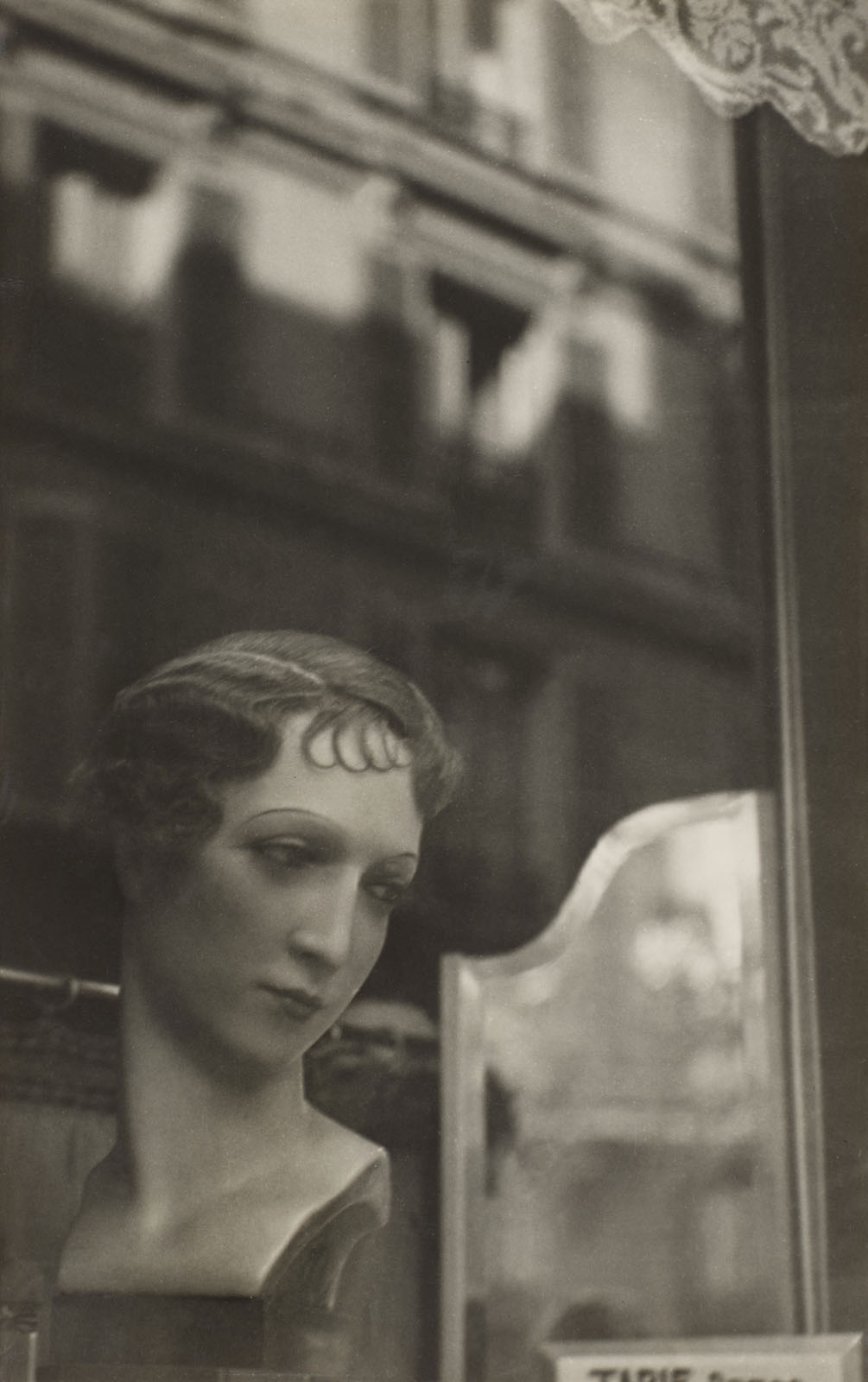
LIKE ART BLART ON FACEBOOK

Back to top