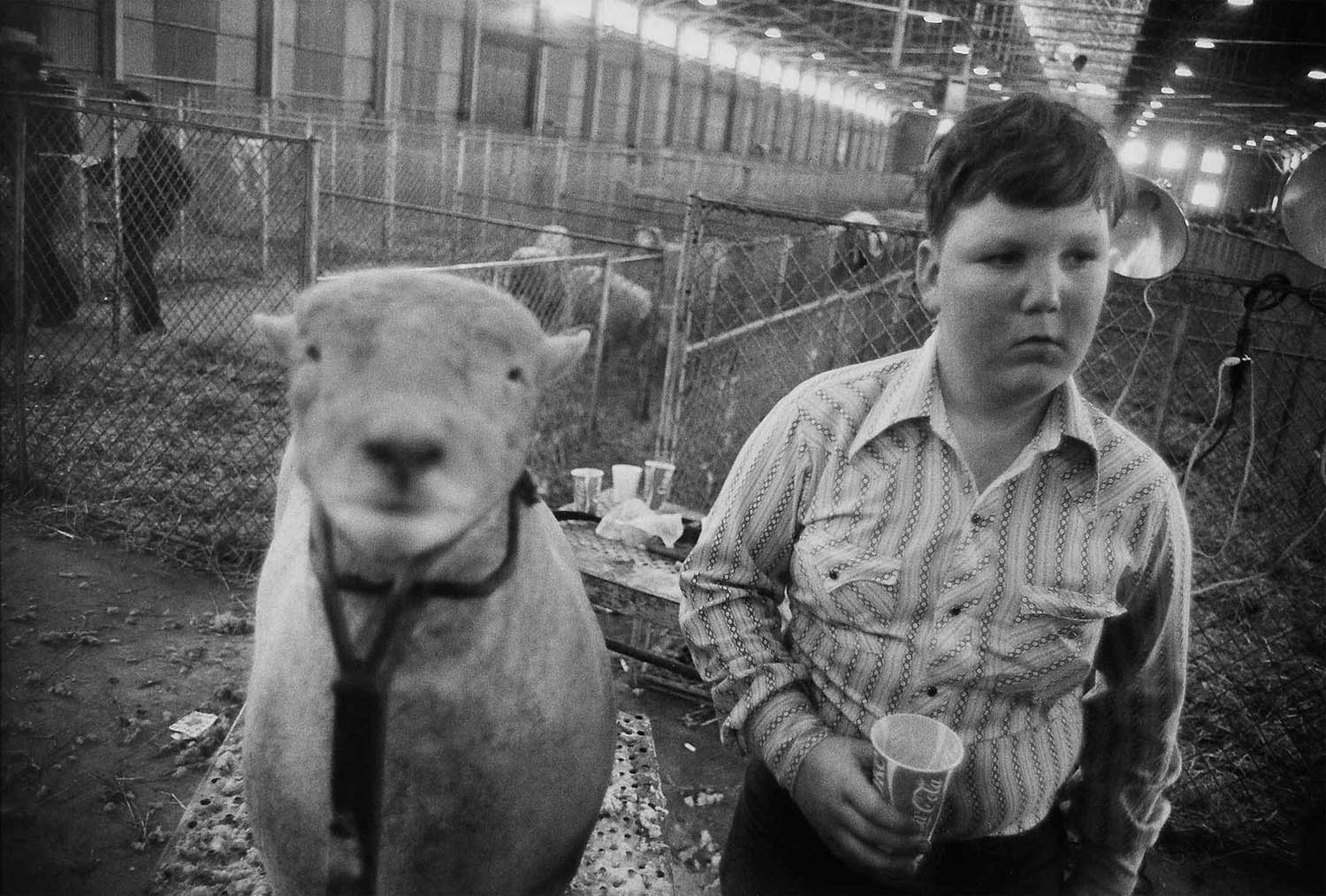
Photographs: Anonymous 1960s medium format Kodak Ektachrome slides of the United States of America, Canada and Mexico

July 2025


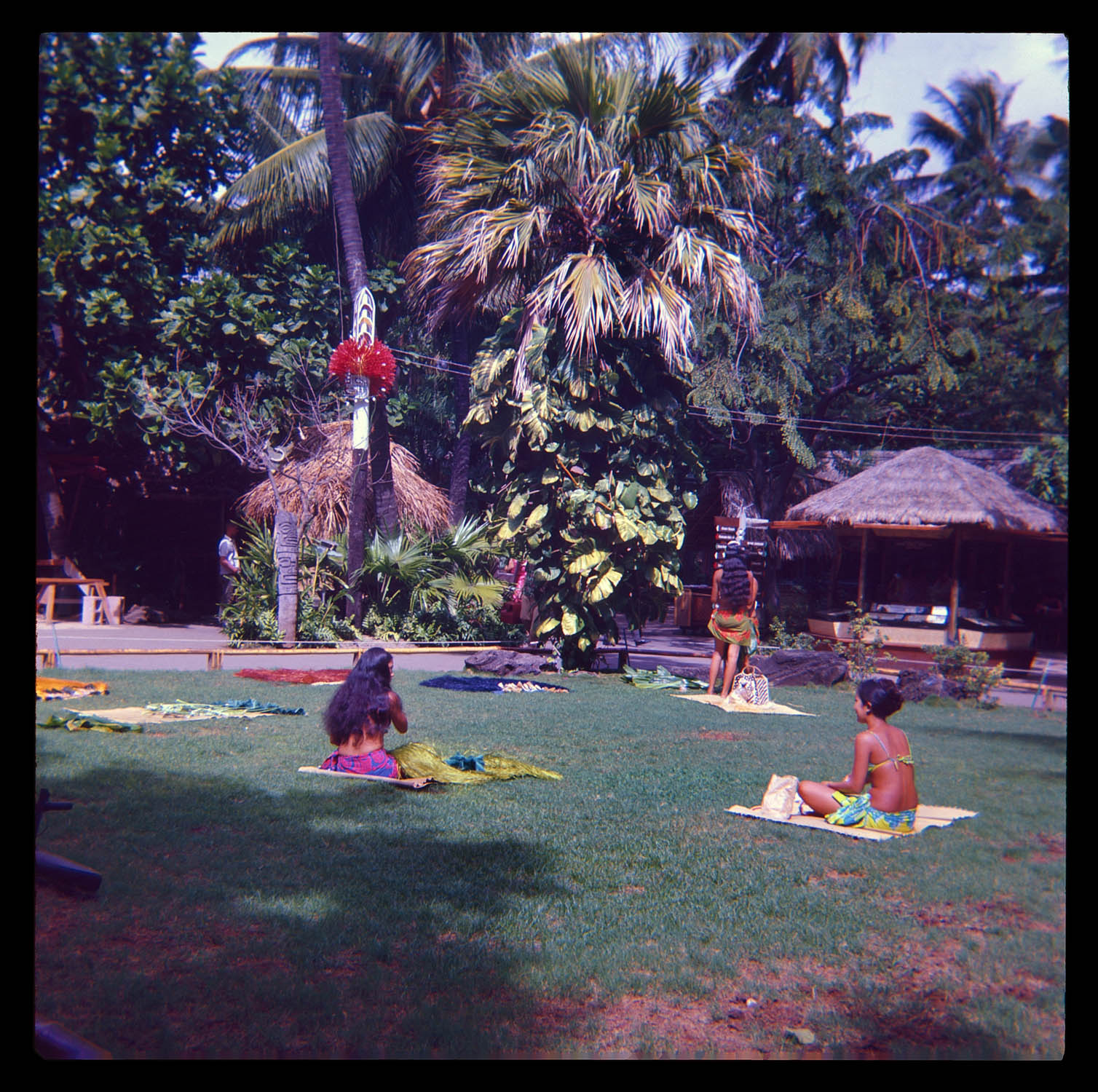
Unknown photographer (Australian) 'Hawaii' 1960s


Unknown photographer (Australian)
Hawaii
1960s
Ektachrome medium format transparency scanned


State of grace

I was very excited by the discovery in a country town in Victoria, Australia of 73 medium format Kodak Ektakchrome slides taken in Australia, Mexico, United States of America and Canada in the mid-1960s. I believe that the photographer was an Australian who was on holiday in Mexico, United States of America and Canada.

In nearly 40 years of being a photographer I have never seen colour medium format slides from the 1960s. There was no colour fading to the slides. The person who took the photographs was shooting medium format colour in the 1960s so they would have been a photographic aficionado. Just by holding the slides up to the light I could see the photographs were compositionally very interesting. Whoever the photographer was they had a great eye!

I can date the slides to late 1966 / early 1967. This is because of the unknown photograph of the construction of John F. Kennedy’s grave at Arlington National Cemetery (below). Construction began in 1965 and was completed on July 20, 1967. Since JFK’s grave is 2/3rds complete this would date the photograph to late 1966 / early 1967. This would also help date all the other Ektachrome slides that I have scanned as well.

The has been a journey of (self) discovery.

Firstly, I made the conscious decision not to look at the slides before scanning them but rather to randomly pick up whichever slide came next … then to take us on a journey in time and space from my studio in Melbourne – to Canada, Mexico, United States of America and different parts of Australia, in the mid-1960s.

Together, through these photographs, we can travel the planet, traversing time back to the 1960s where we can witness historic places of that era – John F. Kennedy’s grave under construction; George Washington’s house in Mount Vernon; the White House closer than you can ever get today in our paranoid era of protection.

In some ways it was a more open society in those days, more trusting and available; in others, it was more prejudiced against, for example, women, migrants, colour and difference. War never changes. Not everything changes for the better, but some things do.

Scanning these slides was a journey of self discovery. I immersed myself in their worlds… staring for hours at the scans and at the dots and scratches on the screen – cleaning up the slides and colour balancing them (see Metropolitan Opera House, Lincoln Center, New York City 1960s below for an example) to make them presentable. It was as much a meditative practice and an acceptance of self to keep going that was so rewarding, especially for the peace it brings my bipolar and depression. Peace and self acceptance.

I lived and breathed these images back into existence after nobody had seen them for so many years. I saved them for prosperity, from the eternity of loss of all unseen images – to not have eyes look at them for that moment of recognition, when the language of the image can be decoded and understood. When the feeling of that image impacts the senses.

I hope you enjoy this series of images, that it reaches you in all its wonderful, effervescent glory. Whoever the photographer was I want to thank them for their vision – for they have taken us to places and times we could never have gone.

Dr Marcus Bunyan

PS. Look at the two hands in the photograph Untitled (Mexican scene?) 1960s (below). It perfectly sums up a moment caught through the energy of the photographer, the camera … and the cosmos. The open hand, the shielded hand.

Just a bit about these scans: scanned at 1200dpi, 21.3Mb. Each image takes on average 1.5 hours of cleaning and balancing to achieve the end result. 300dpi jpg made from scans.


All photographs © Marcus Bunyan. Please click on the photographs for a larger version of the image. See Part 2 of the posting.


“A good image is created by a state of grace. Grace expresses itself when it has been freed from conventions, free like a child in his early discovery of reality. The game is then to organise the rectangle.” [or the square in this case!]


Sergio Larraín Echeñique
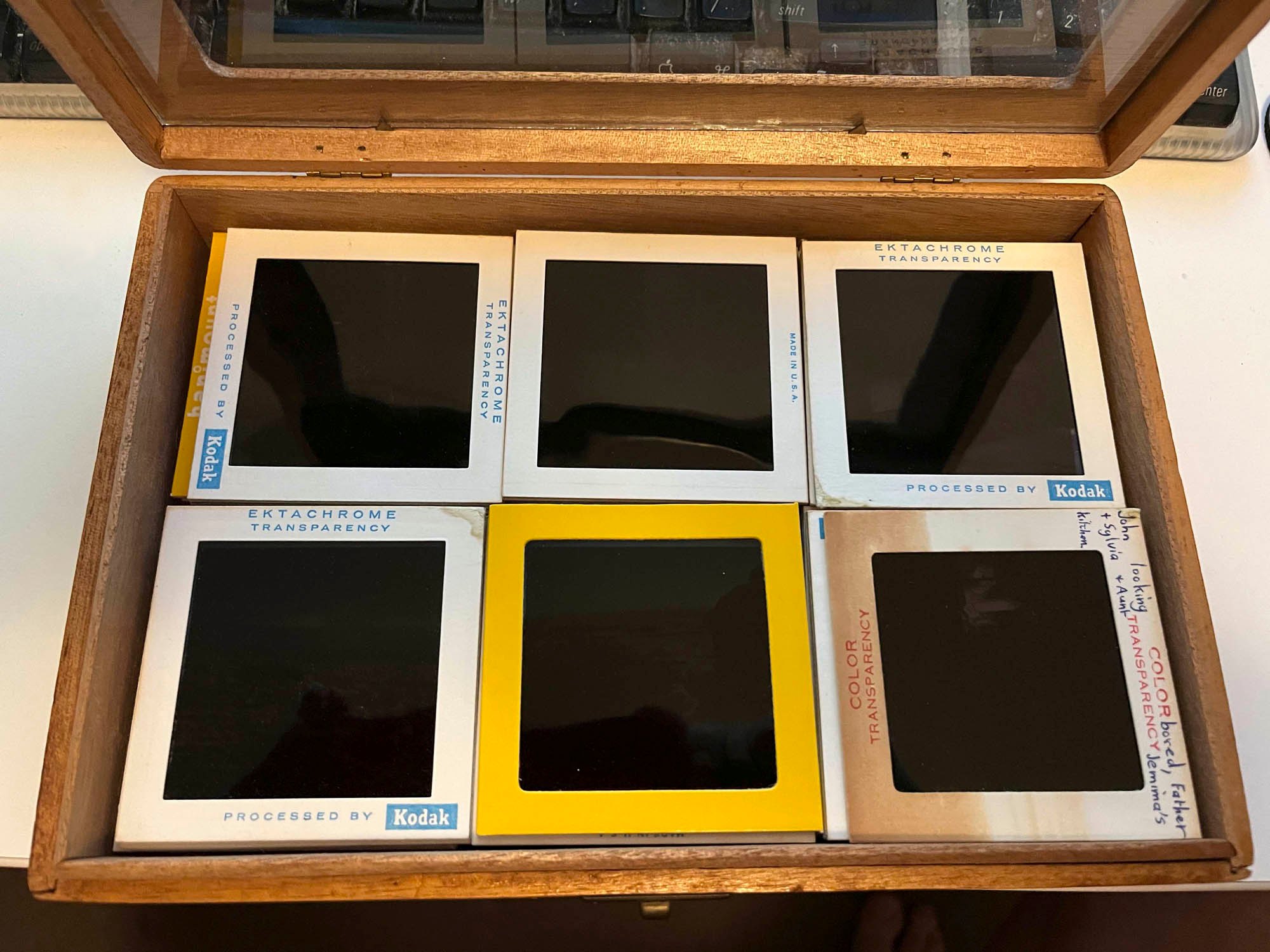


Ektachrome transparency box


Ektachrome transparency box


United States of America


Unknown photographer (Australian) 'Grand Canyon' 1960s


Unknown photographer (Australian)
Grand Canyon
1960s
Ektachrome medium format transparency scanned
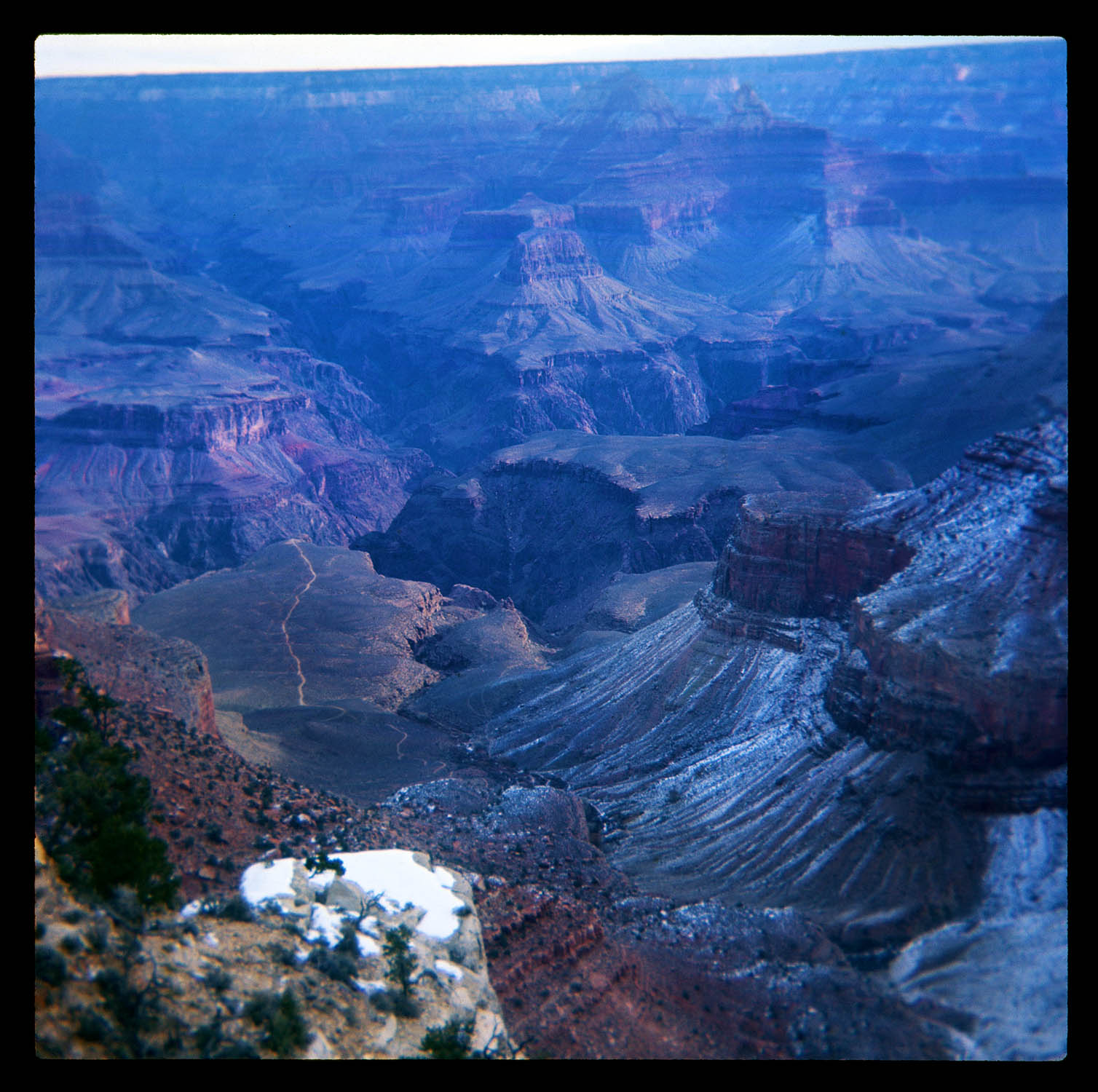
 

Unknown photographer (Australian) 'Snow in the Grand Canyon' 1960s


Unknown photographer (Australian)
Snow in the Grand Canyon
1960s
Ektachrome medium format transparency scanned
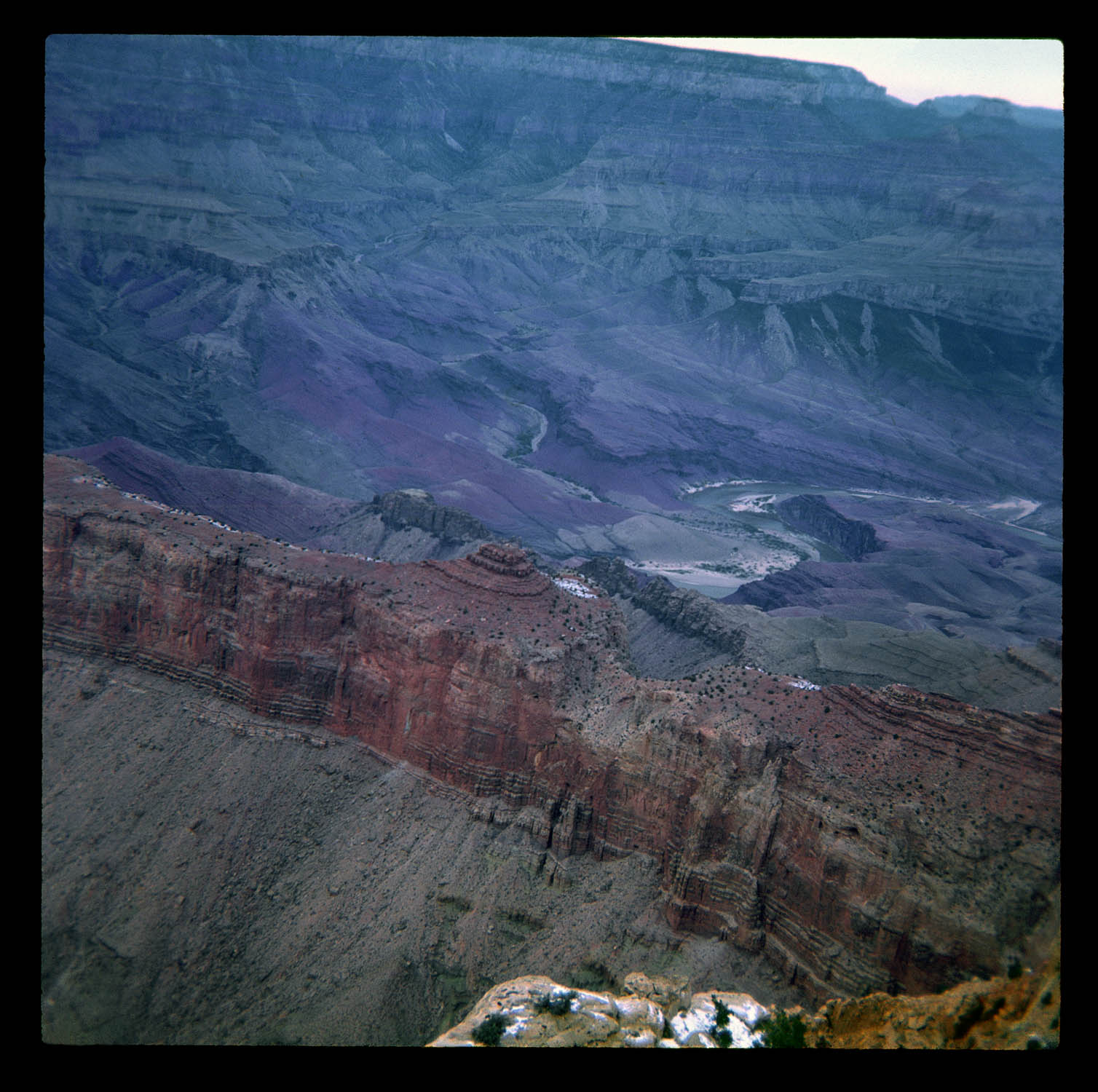
 

Unknown photographer (Australian?) 'Grand Canyon with snow' 1960s


Unknown photographer (Australian?)
Grand Canyon with snow
1960s
Ektachrome medium format transparency scanned
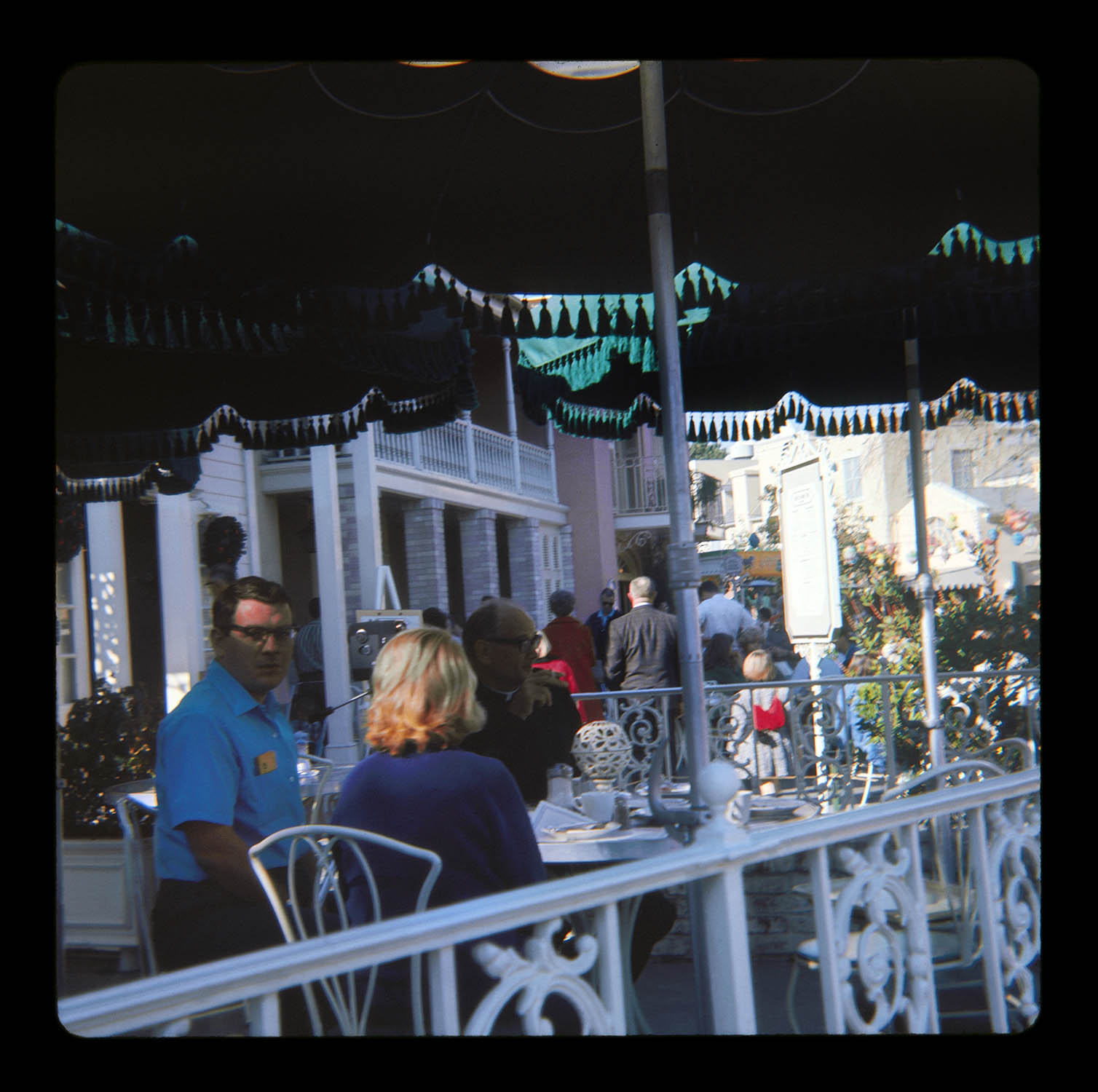
 

Unknown photographer (Australian) 'John looking bored, Father and Sylvia at Aunt Jemima's Kitchen, Disneyland' 1960s


Unknown photographer (Australian)
John looking bored, Father and Sylvia at Aunt Jemima’s Kitchen, Disneyland
1960s
Ektachrome medium format transparency scanned
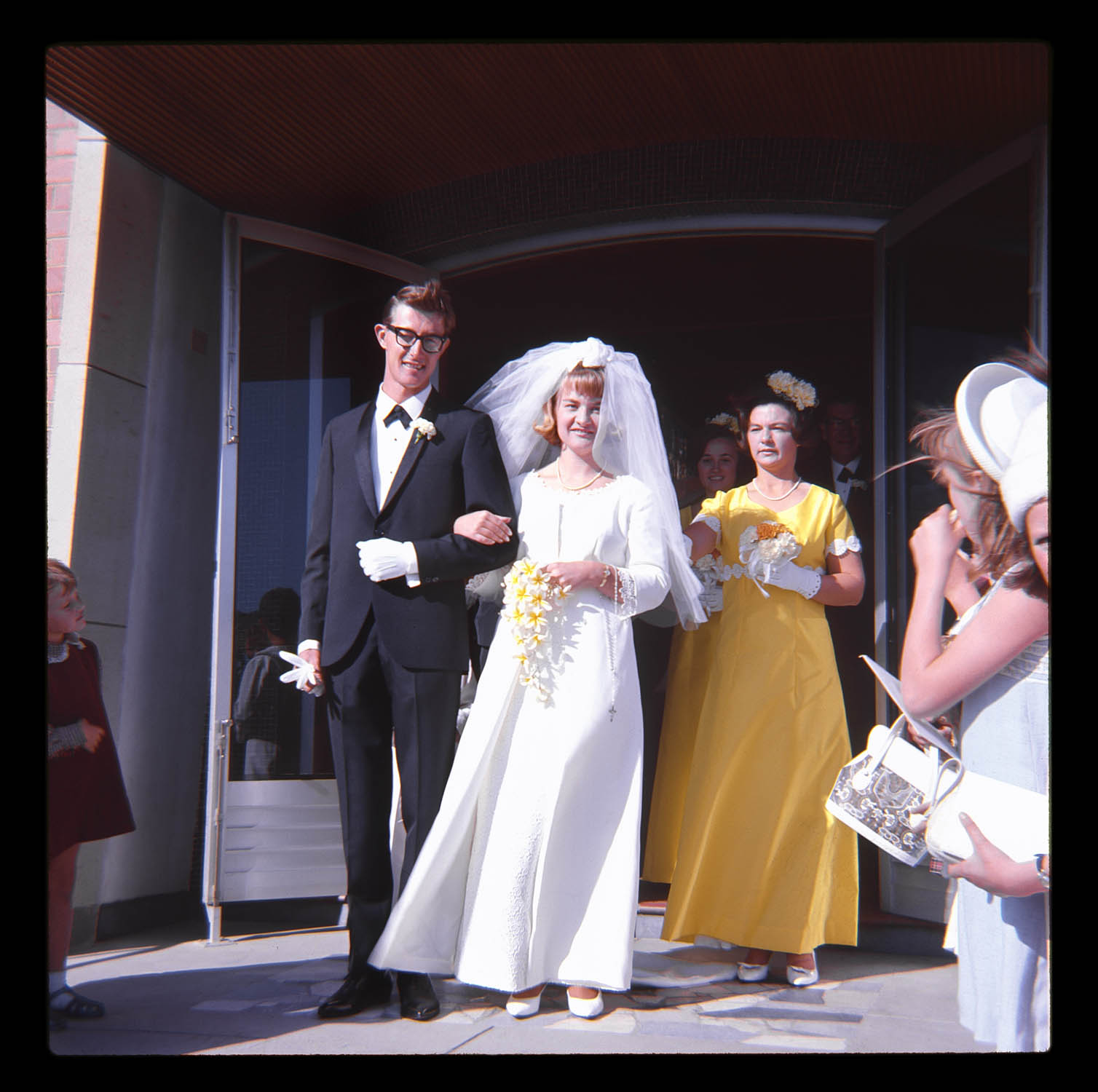
 

Unknown photographer (Australian) 'Wedding day (USA?)' 1960s


Unknown photographer (Australian)
Wedding day (USA?)
1960s
Ektachrome medium format transparency scanned


What a wonderful composition from a low vantage point. Not sure where it is but it feels USA to me…

The girl at left looking at the bride and groom, his white gloves one on one off, her yellow bride’s bouquet and the relationship to the yellow of the bridesmaid’s dress, and the two girls at right… one looking at the couple and one at the camera. Magic!

I wonder what happened to them, how long they were together. Was it a happy marriage? Did they had children and where are they now? And now all these years later to see this mnemonic device, this photograph of associations, designed to recover fragmentary memories of a happy time…
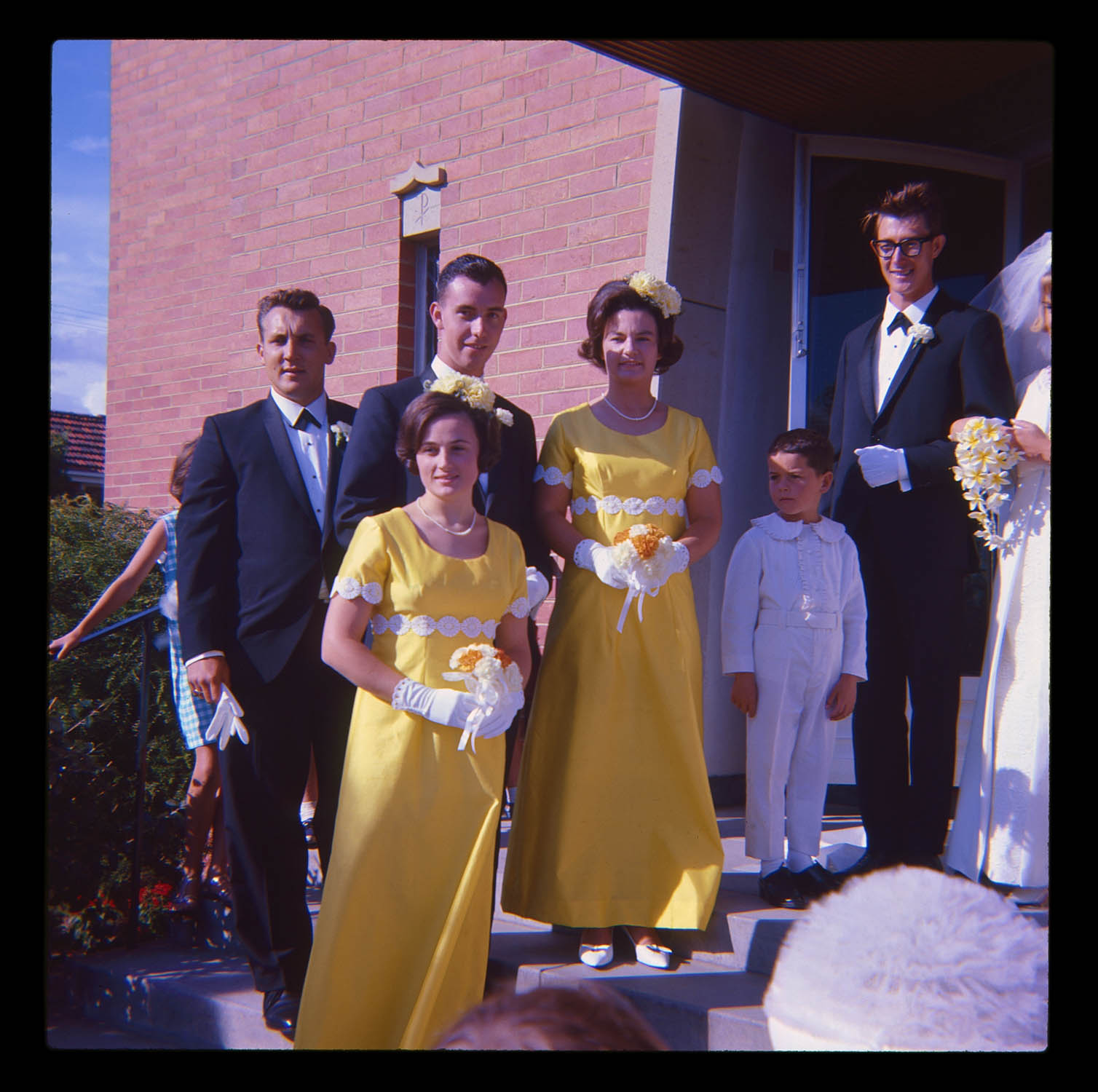
 

Unknown photographer (Australian) 'Wedding day (USA?)' 1960s


Unknown photographer (Australian)
Wedding day (USA?)
1960s
Ektachrome medium format transparency scanned
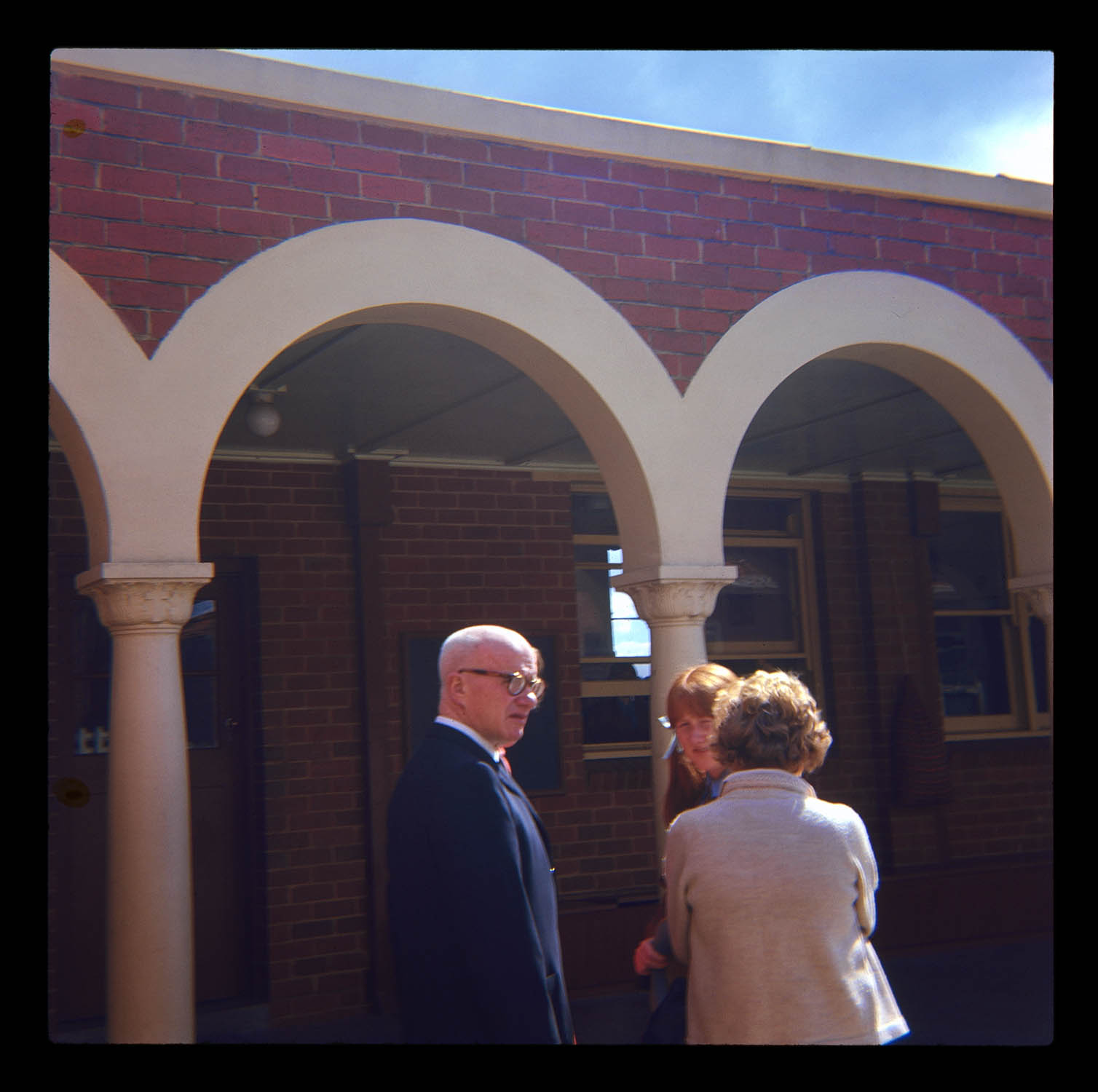
 

Unknown photographer (Australian) 'Untitled (USA)' 1960s


Unknown photographer (Australian)
Untitled (USA)
1960s
Ektachrome medium format transparency scanned


I am pretty sure this image is connected to the wedding photos above.
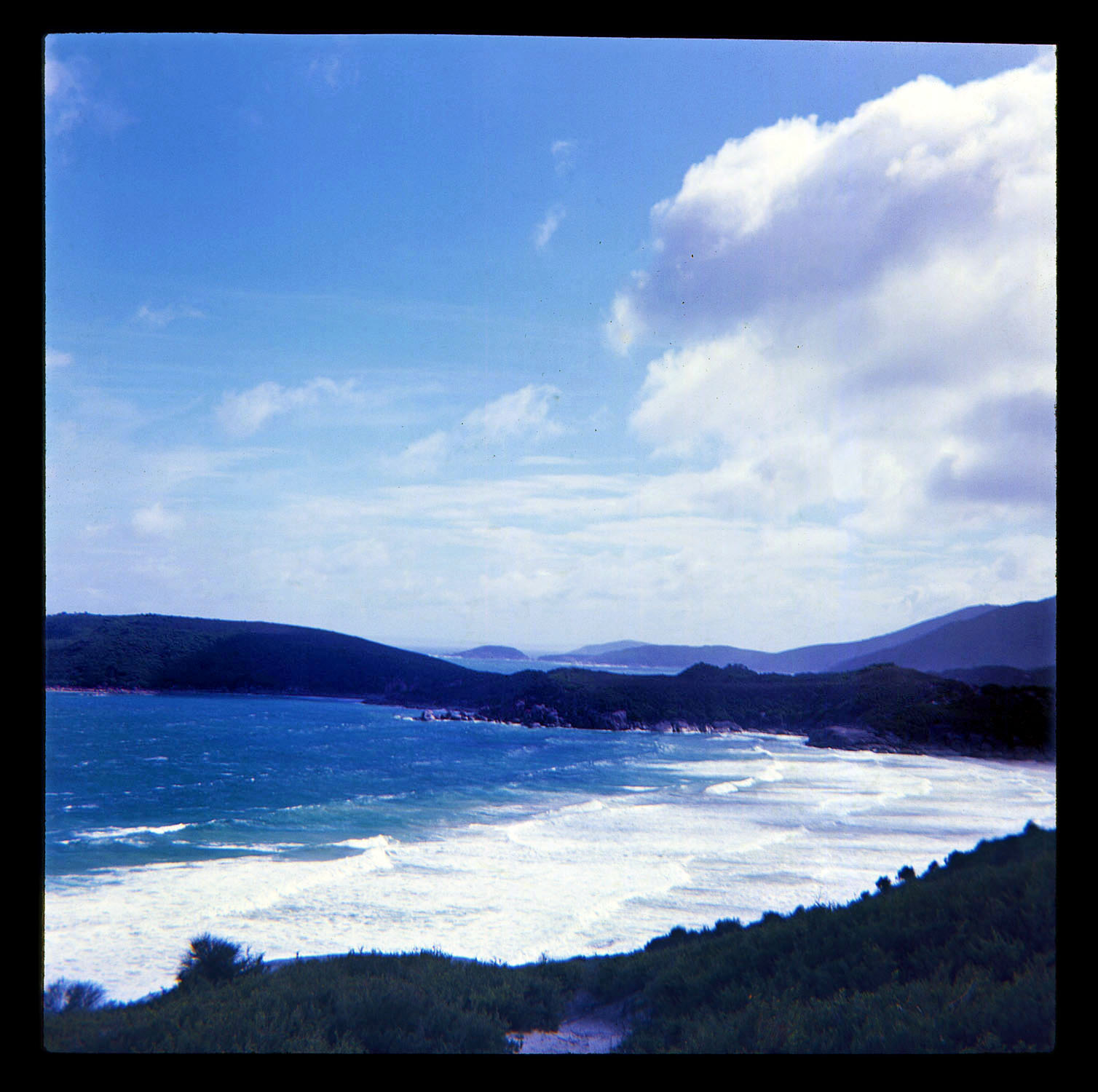
 

Unknown photographer (American) 'Hawaii? California? coastline' 1960s


Unknown photographer (American)
Hawaii? California? coastline
1960s
Ektachrome medium format transparency scanned


Definitely not Australia…
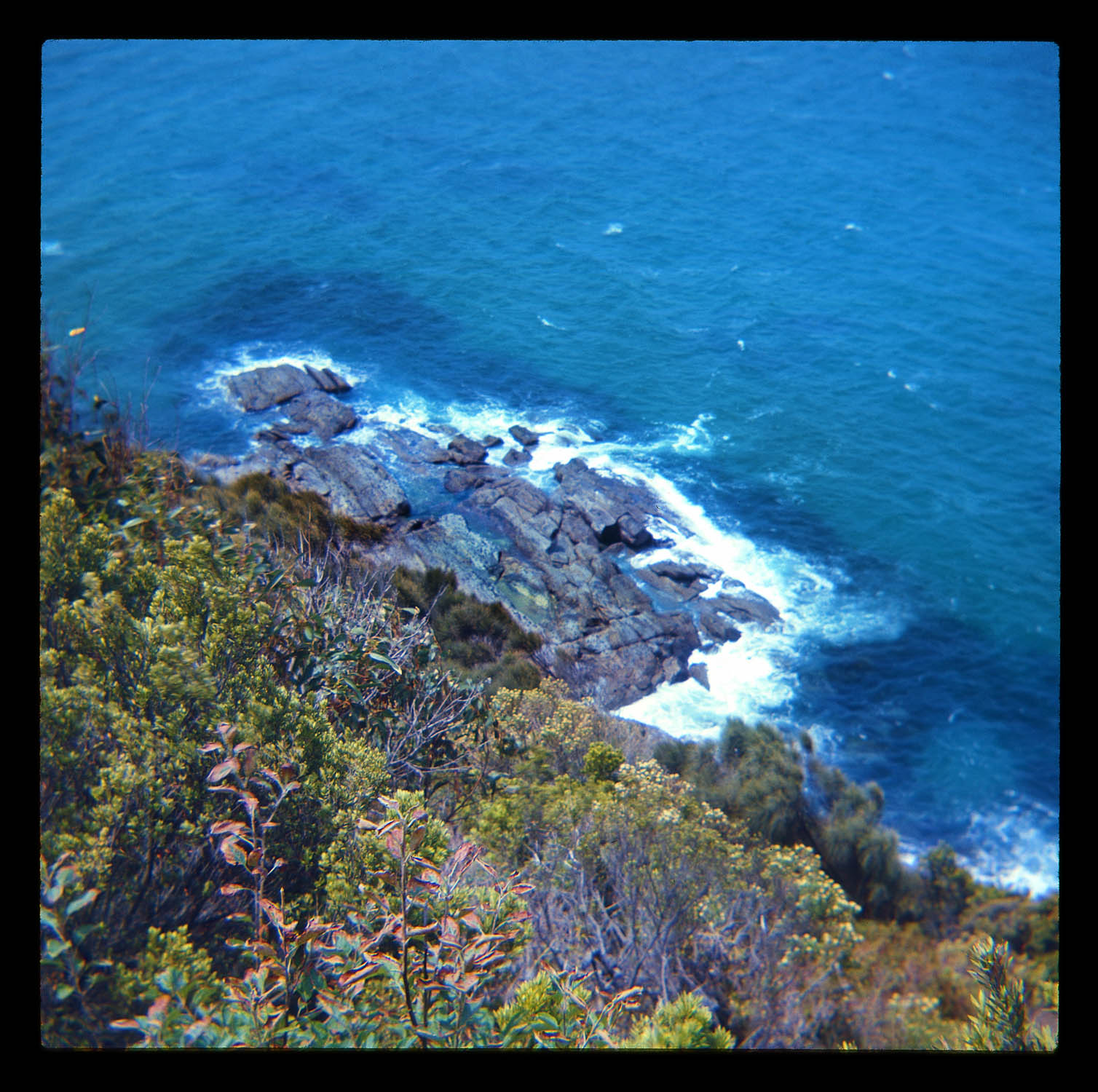
 

Unknown photographer (American) 'Hawaii? California? coastline' 1960s


Unknown photographer (American)
Hawaii? California? coastline
1960s
Ektachrome medium format transparency scanned


Unknown photographer (Australian) 'Untitled [coastline]' 1960s


Unknown photographer (Australian)
Untitled [coastline]
1960s
Ektachrome medium format transparency scanned


I think this is the Hawaiian or Californian coastline, but unsure… the telephone pole is definitely not Australian!
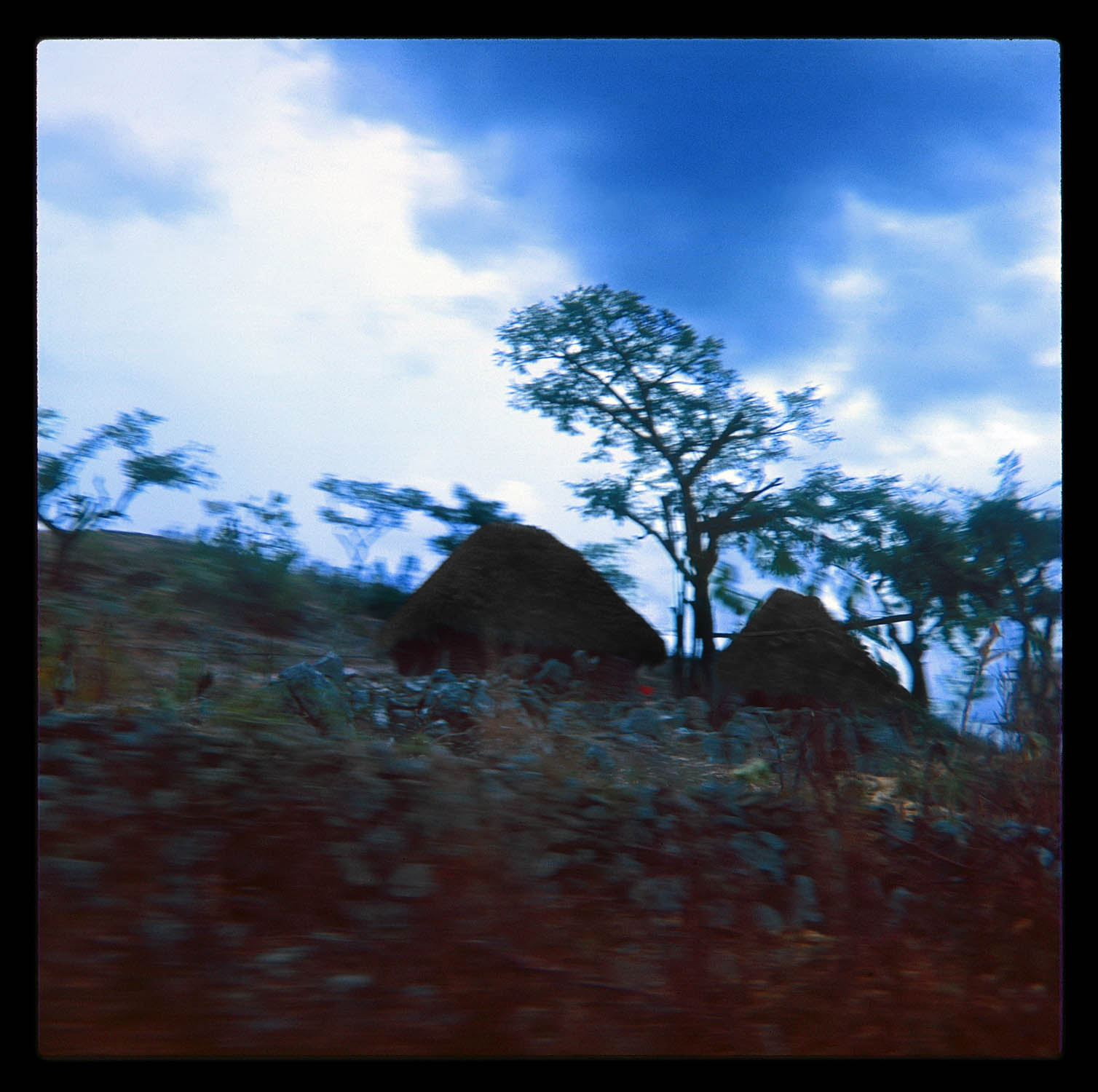
 

Unknown photographer (Australian) 'Untitled' 1960s


Unknown photographer (Australian)
Untitled
1960s
Ektachrome medium format transparency scanned


No idea where this is (not Australia!) or what the structures are. Obviously shot out of a moving car or possibly train/bus. An interesting image nonetheless.


Unknown photographer (Australian) 'Untitled [Desert scene, California?]' 1960s


Unknown photographer (Australian)
Untitled [Desert scene, California?]
1960s
Ektachrome medium format transparency scanned


Unknown photographer (Australian) 'Untitled [Desert scene, California?]' 1960s


Unknown photographer (Australian)
Untitled [Desert scene, California?]
1960s
Ektachrome medium format transparency scanned


A wonderful photograph shot contre-jour which is a photographic technique in which the camera is pointing directly toward a source of light.
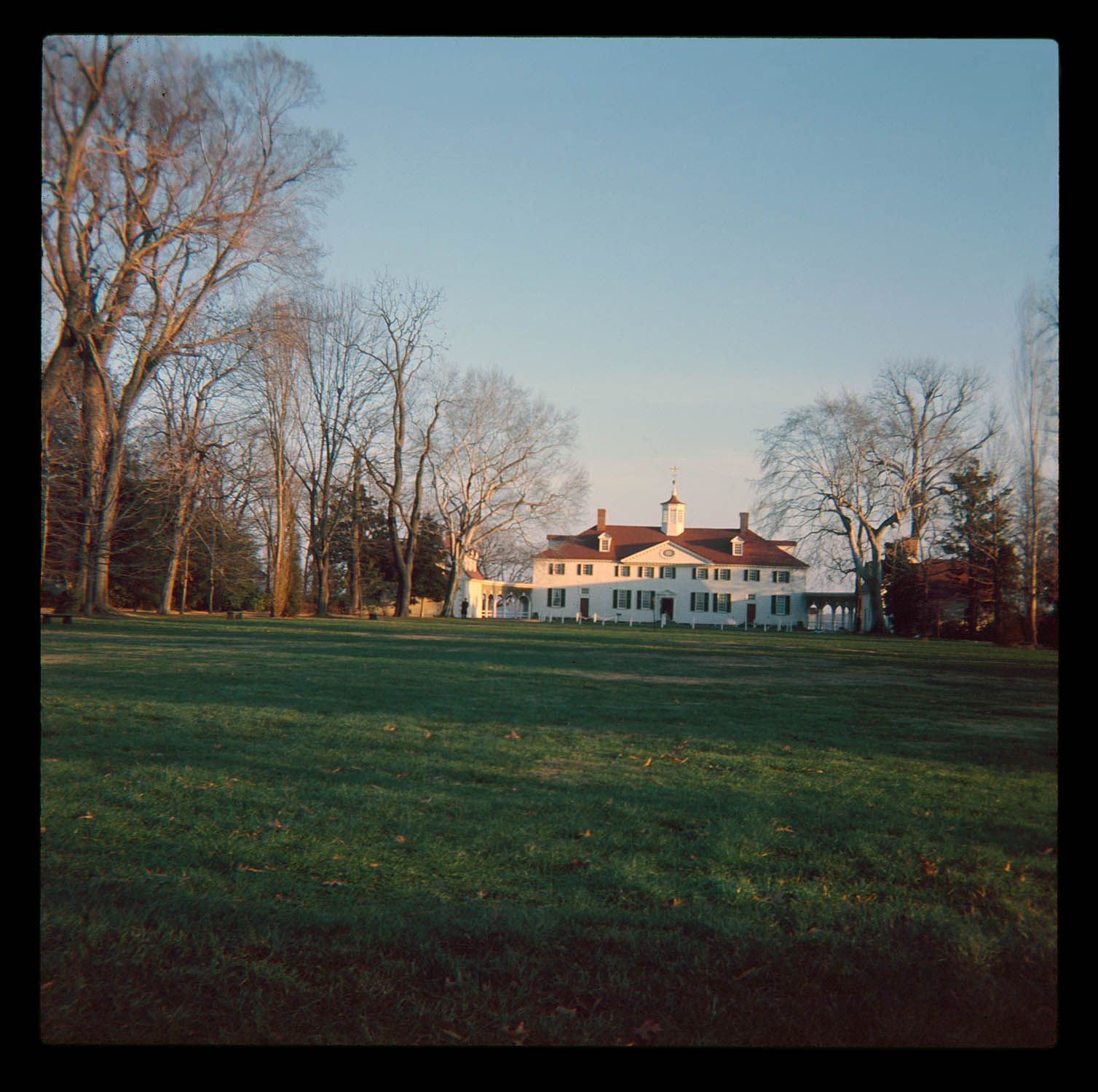
 

Unknown photographer (Australian) 'George Washington's home, Mount Vernon' 1960s


Unknown photographer (Australian)
George Washington’s home, Mount Vernon
1960s
Ektachrome medium format transparency scanned


Thank you to Colin Vickery who informed me this is George Washington’s home, Mount Vernon.


Unknown photographer (Australian) 'John F. Kennedy's gravesite under construction at Arlington Cemetery (foreground) with Memorial Bridge and the Lincoln Memorial in the background. View from Arlington House' Late 1966 / early 1967


Unknown photographer (Australian)
John F. Kennedy’s gravesite under construction at Arlington Cemetery (foreground) with Memorial Bridge and the Lincoln Memorial in the background. View from Arlington House
Late 1966 / early 1967
Ektachrome medium format transparency scanned


An important photograph! An unknown photograph of the construction of John F. Kennedy’s grave at Arlington National Cemetery.

Construction began in 1965 and was completed on July 20, 1967. Since JFK’s grave is 2/3rds complete this would date the photograph to late 1966 / early 1967. This would also help date all the other Ektachrome slides that I am scanning.
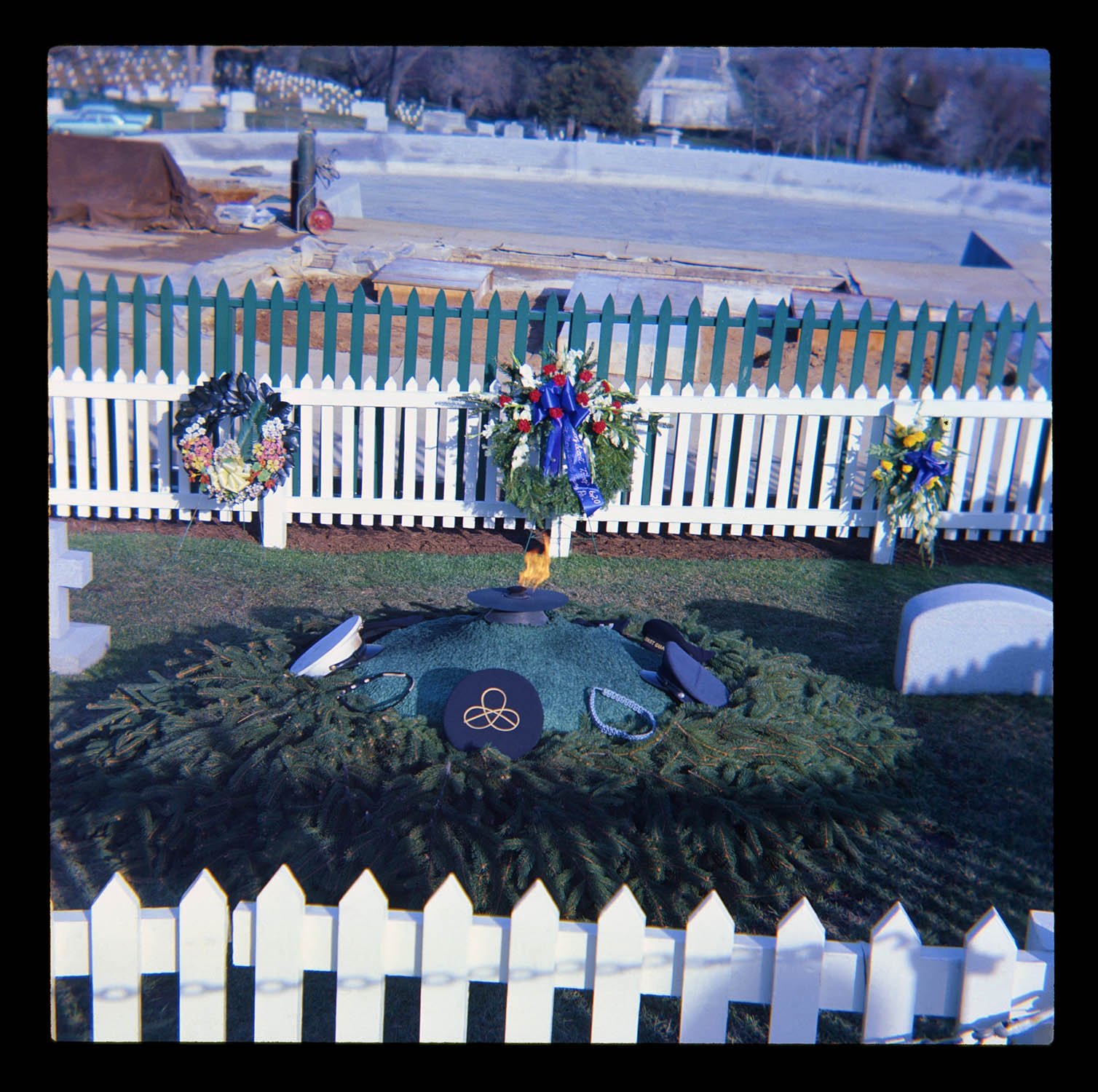
 

Unknown photographer (Australian) 'John F. Kennedy's gravesite under construction at Arlington Cemetery (foreground) with Memorial Bridge and the Lincoln Memorial in the background. View from Arlington House' Late 1966 / early 1967


Unknown photographer (Australian)
Grave of John F. Kennedy, Arlington National Cemetery, Washington
1960s
Ektachrome medium format transparency scanned


Another important photograph of the temporary grave of John F. Kennedy at Arlington National Cemetery with the construction of Kennedy’s new grave ongoing in the background.

Around the grave are the caps of the services with what I think are dog leads in between? In the background in the centre is a wreath from a Boy Scout Troop. And of course, the flame…
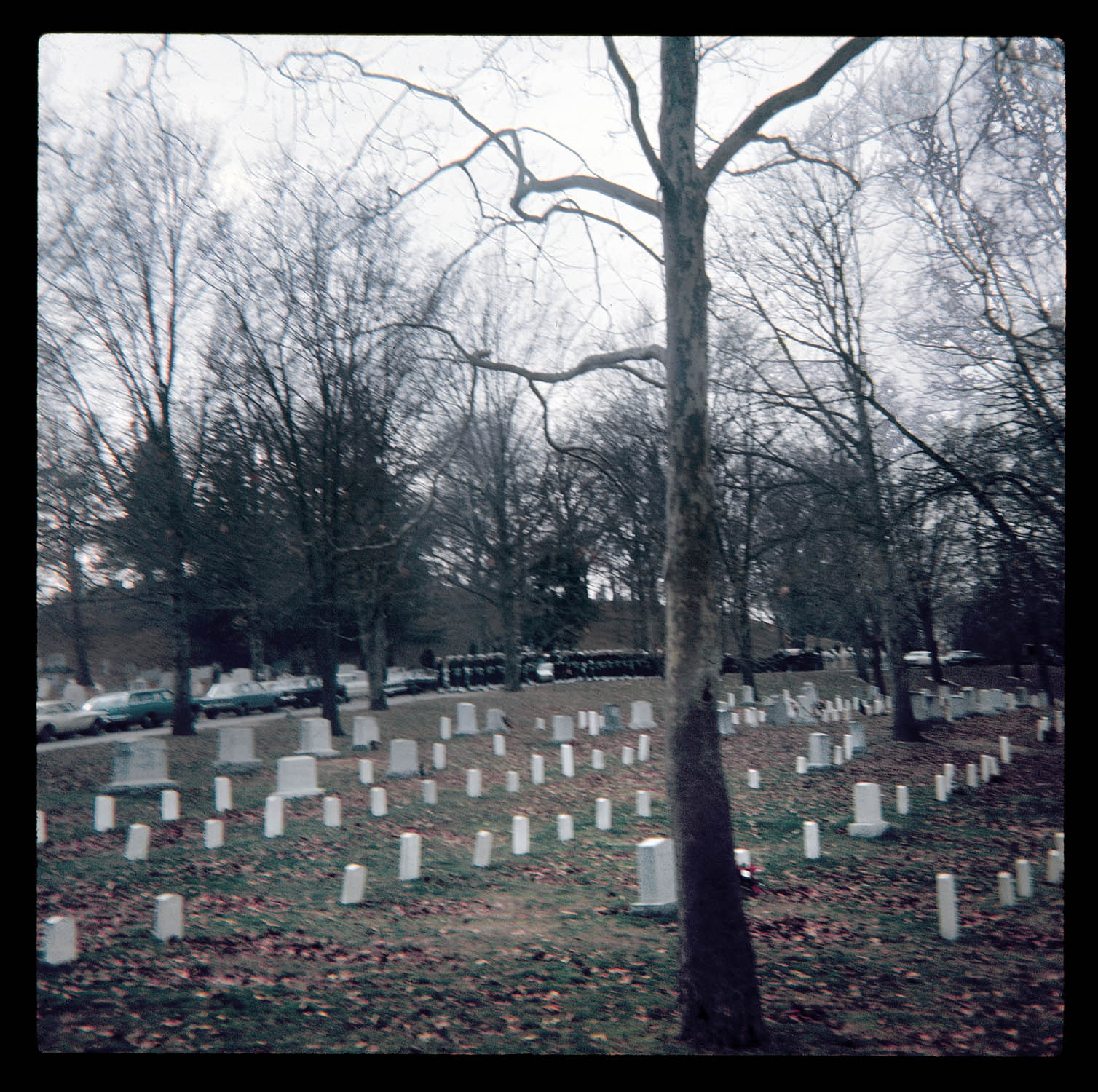
 

Unknown photographer (Australian) 'Arlington National Cemetery, Washington' 1960s


Unknown photographer (Australian)
Arlington National Cemetery, Washington
1960s
Ektachrome medium format transparency scanned


This was a poor exposure and about the best I could do with the scan.
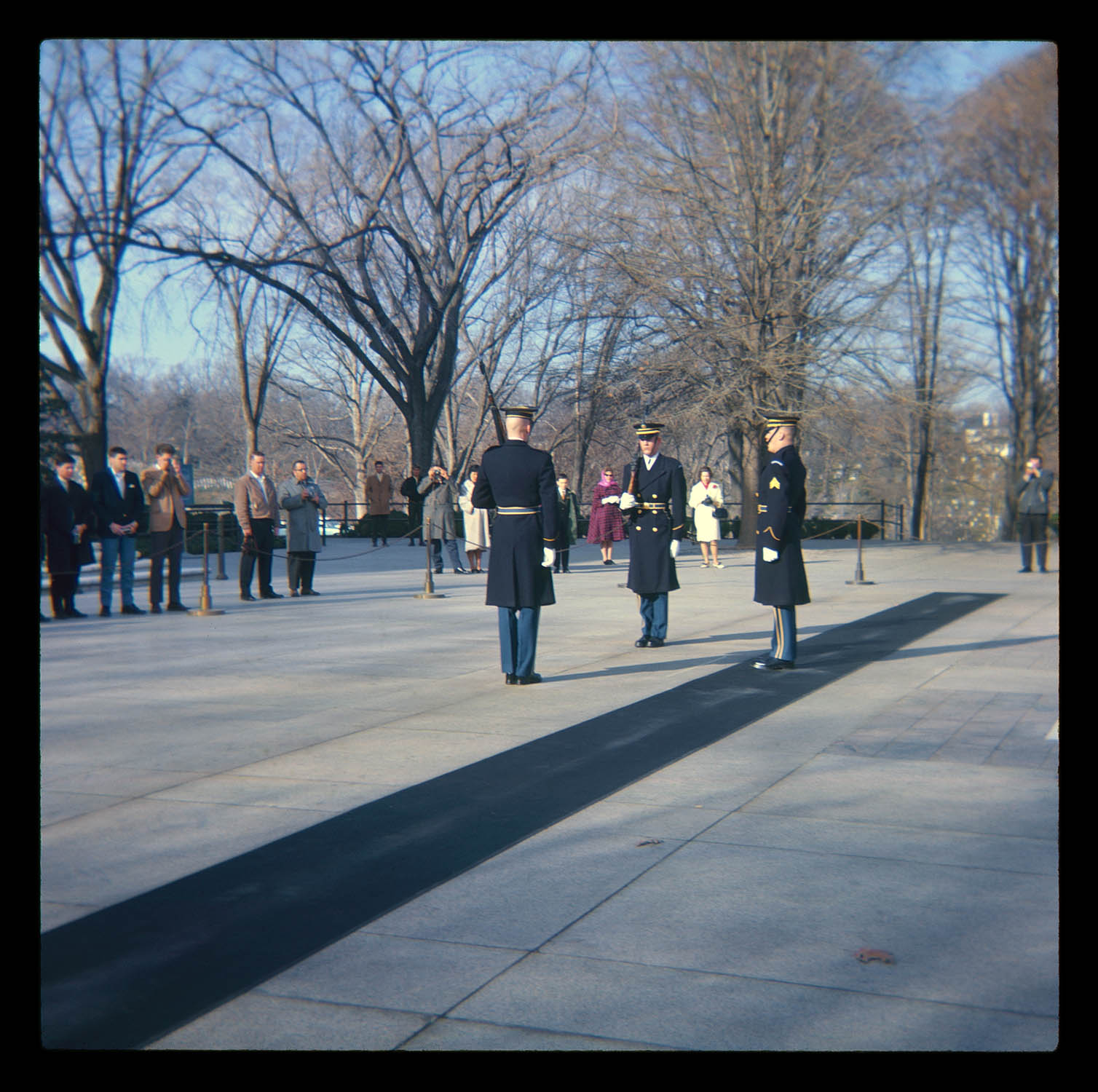
 

Unknown photographer (Australian) 'Arlington National Cemetery, Washington' 1960s


Unknown photographer (Australian)
Arlington National Cemetery, Washington
1960s
Ektachrome medium format transparency scanned
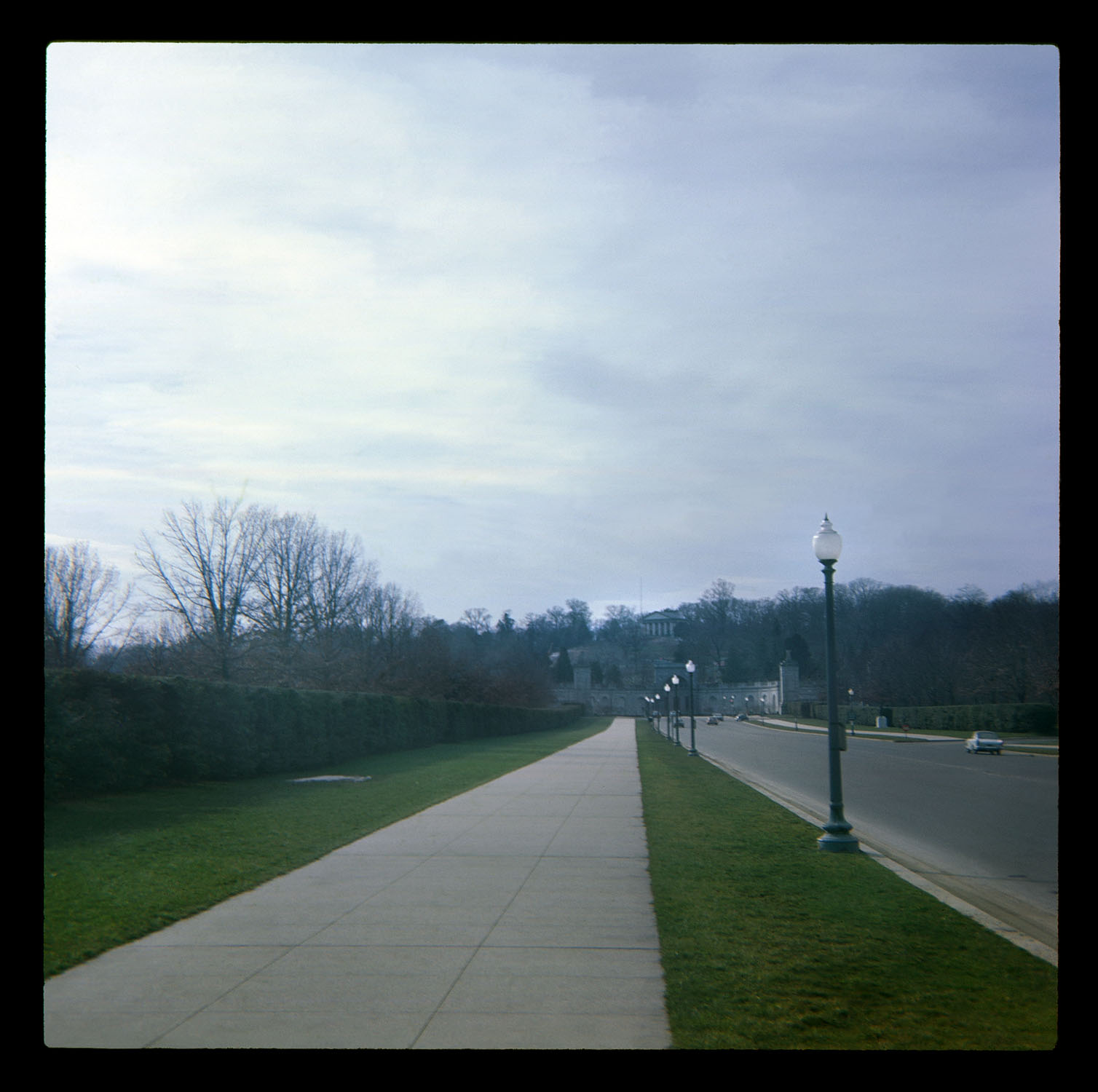
 

Unknown photographer (Australian) 'Road to Arlington National Cemetery, Washington' 1960s


Unknown photographer (Australian)
Road to Arlington National Cemetery, Washington
1960s
Ektachrome medium format transparency scanned


A wonderful vista with Arlington National Cemetery in the distance…
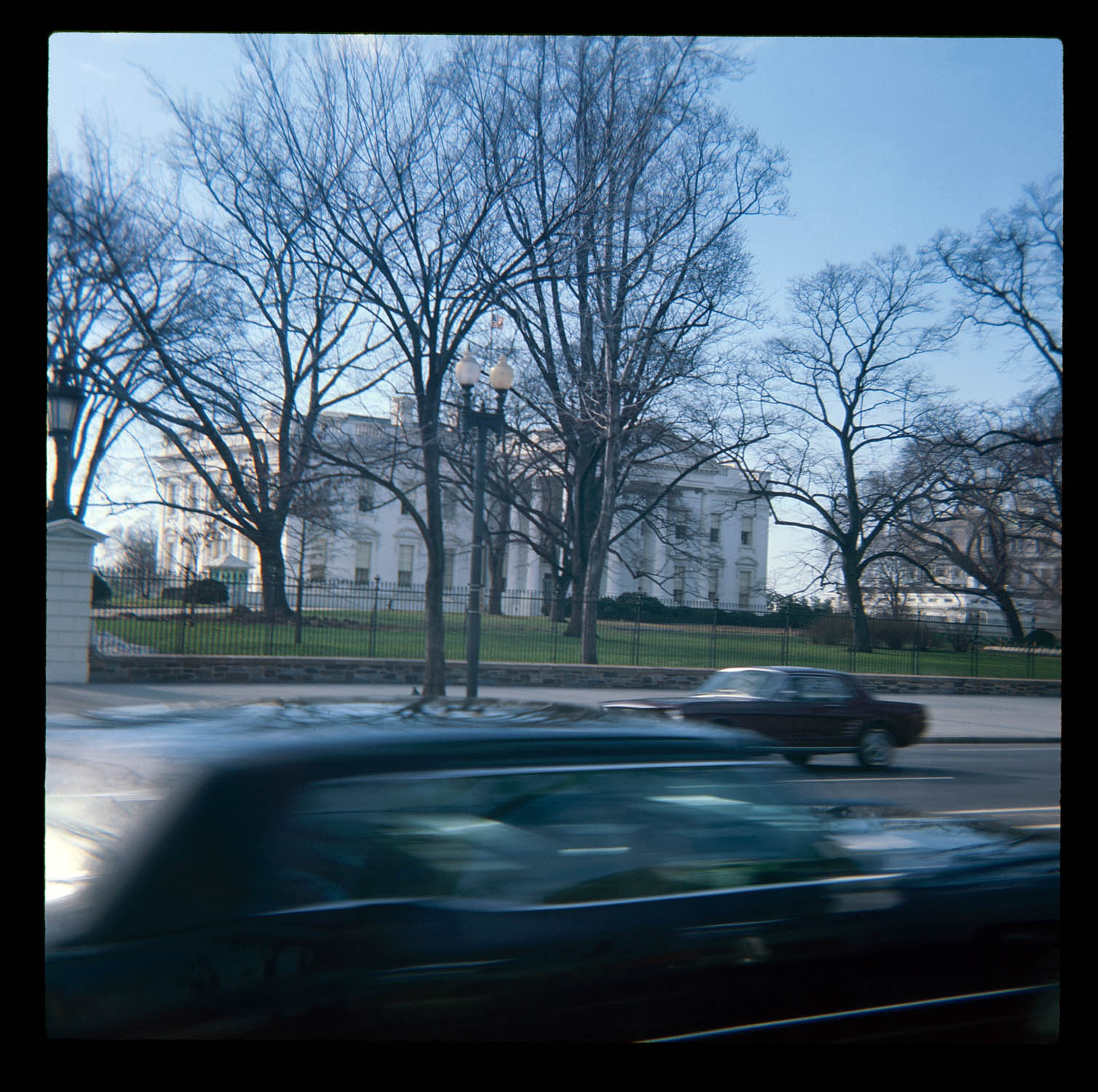
 

Unknown photographer (Australian) 'The White House, Washington, DC' 1960s


Unknown photographer (Australian)
The White House, Washington, DC
1960s
Ektachrome medium format transparency scanned
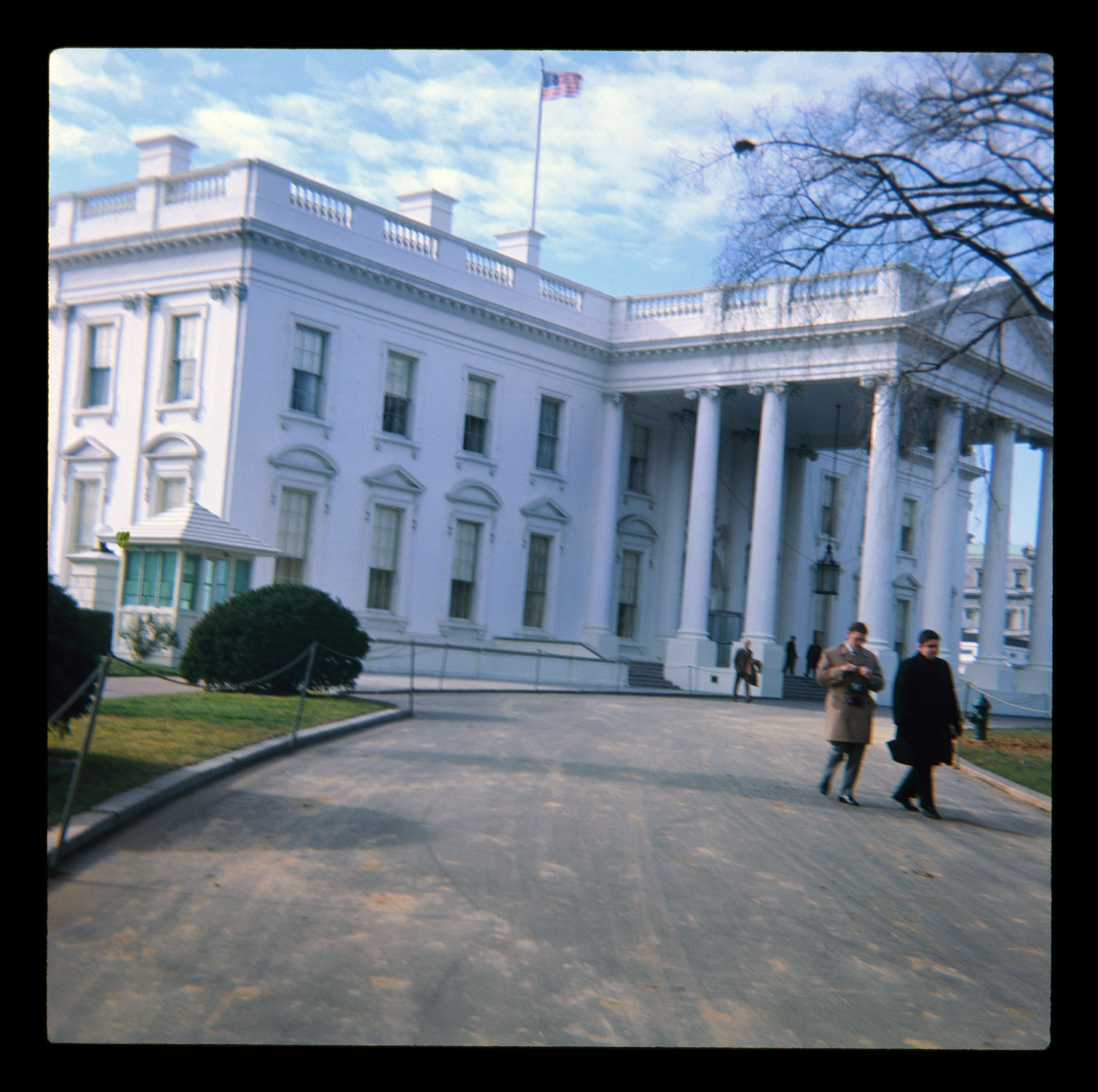
 

Unknown photographer (Australian) 'The White House, Washington, DC' 1960s


Unknown photographer (Australian)
The White House, Washington, DC
1960s
Ektachrome medium format transparency scanned
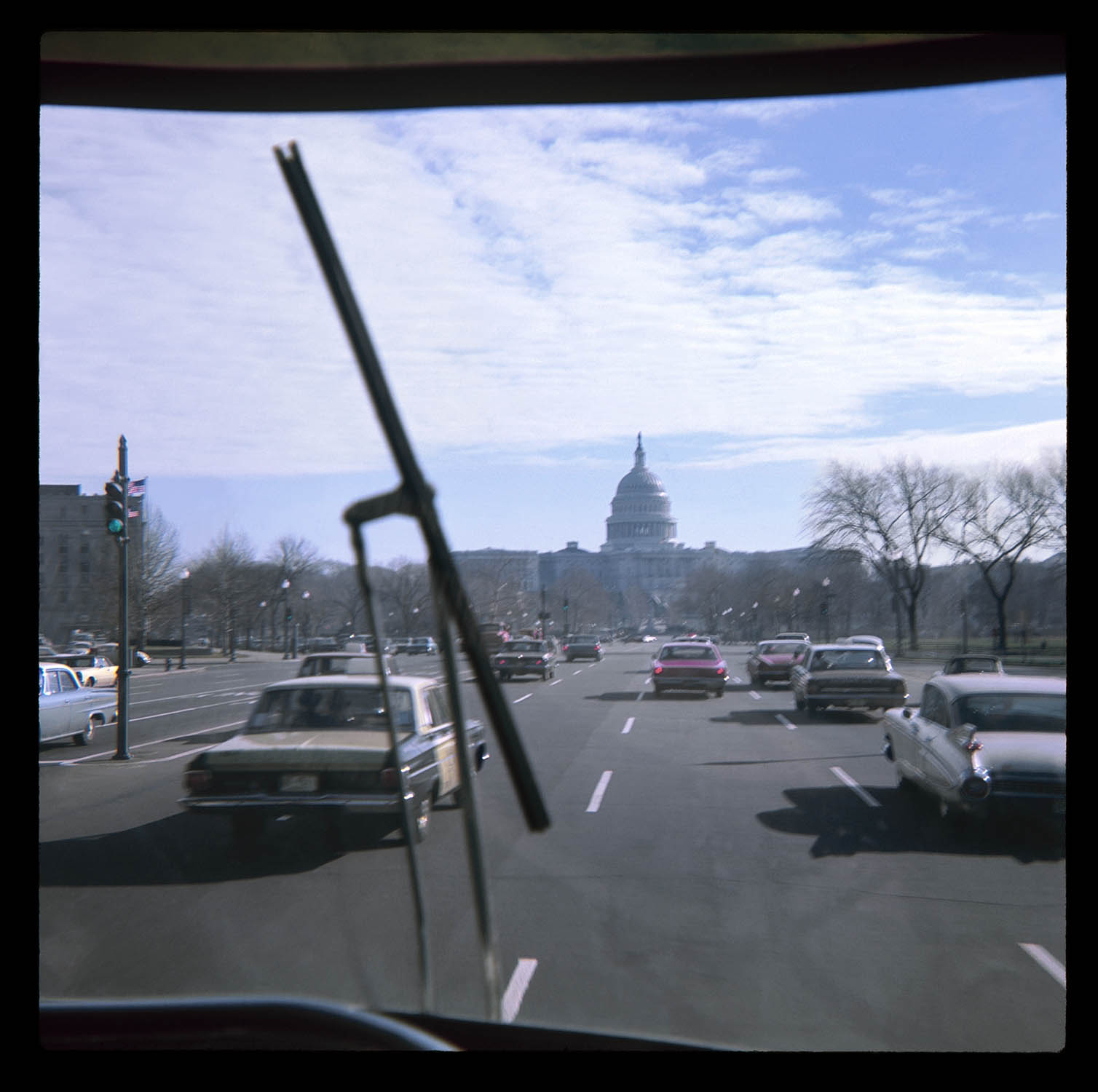
 

Unknown photographer (Australian) 'Untitled States Capitol, Washington, D.C.' 1960s


Unknown photographer (Australian)
Untitled States Capitol, Washington, D.C.
1960s
Ektachrome medium format transparency scanned


What a great image, shot out of the front of a bus driving towards the United States Capitol, love all the old cars!
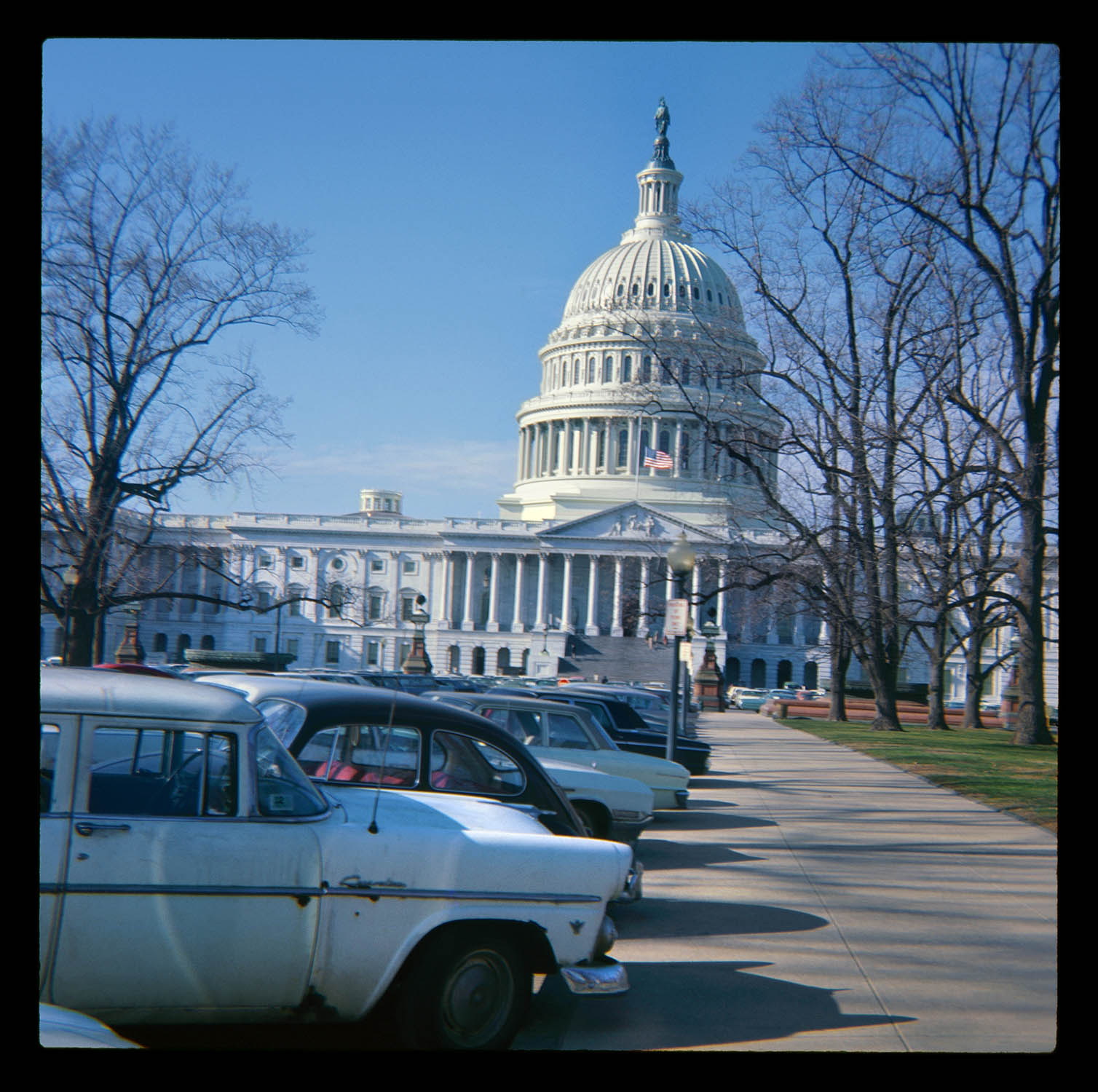
 

Unknown photographer (Australian) 'Untitled States Capitol, Washington, D.C.' 1960s


Unknown photographer (Australian)
Untitled States Capitol, Washington, D.C.
1960s
Ektachrome medium format transparency scanned


I love the perspective, the shadows of the old cars, the path leading the eye towards the building and the trees framing the vista.
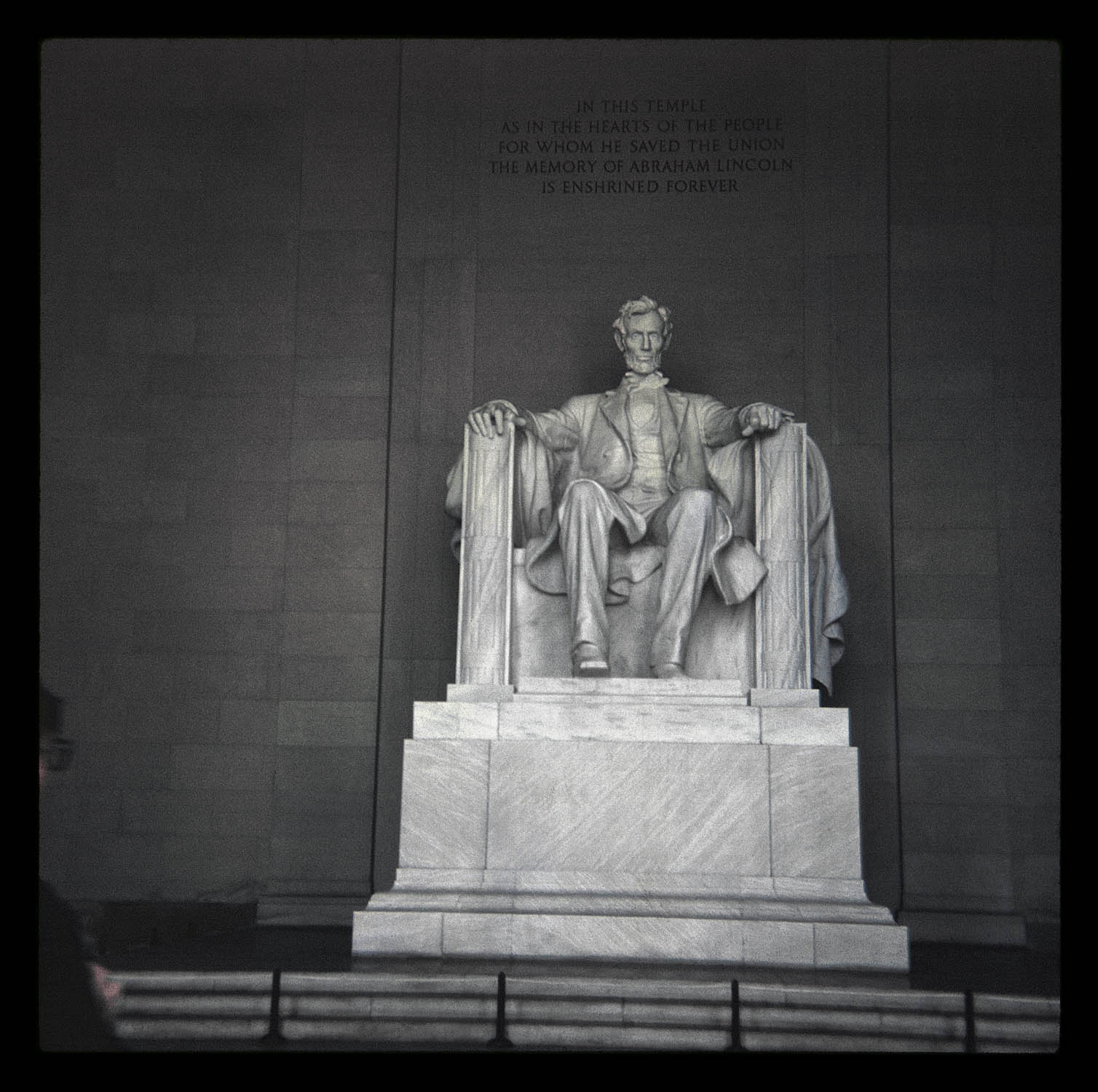
 

Unknown photographer (Australian) 'Abraham Lincoln, Lincoln Memorial, Washington, D.C.' 1960s


Unknown photographer (Australian)
Abraham Lincoln, Lincoln Memorial, Washington, D.C.
1960s
Ektachrome medium format transparency scanned
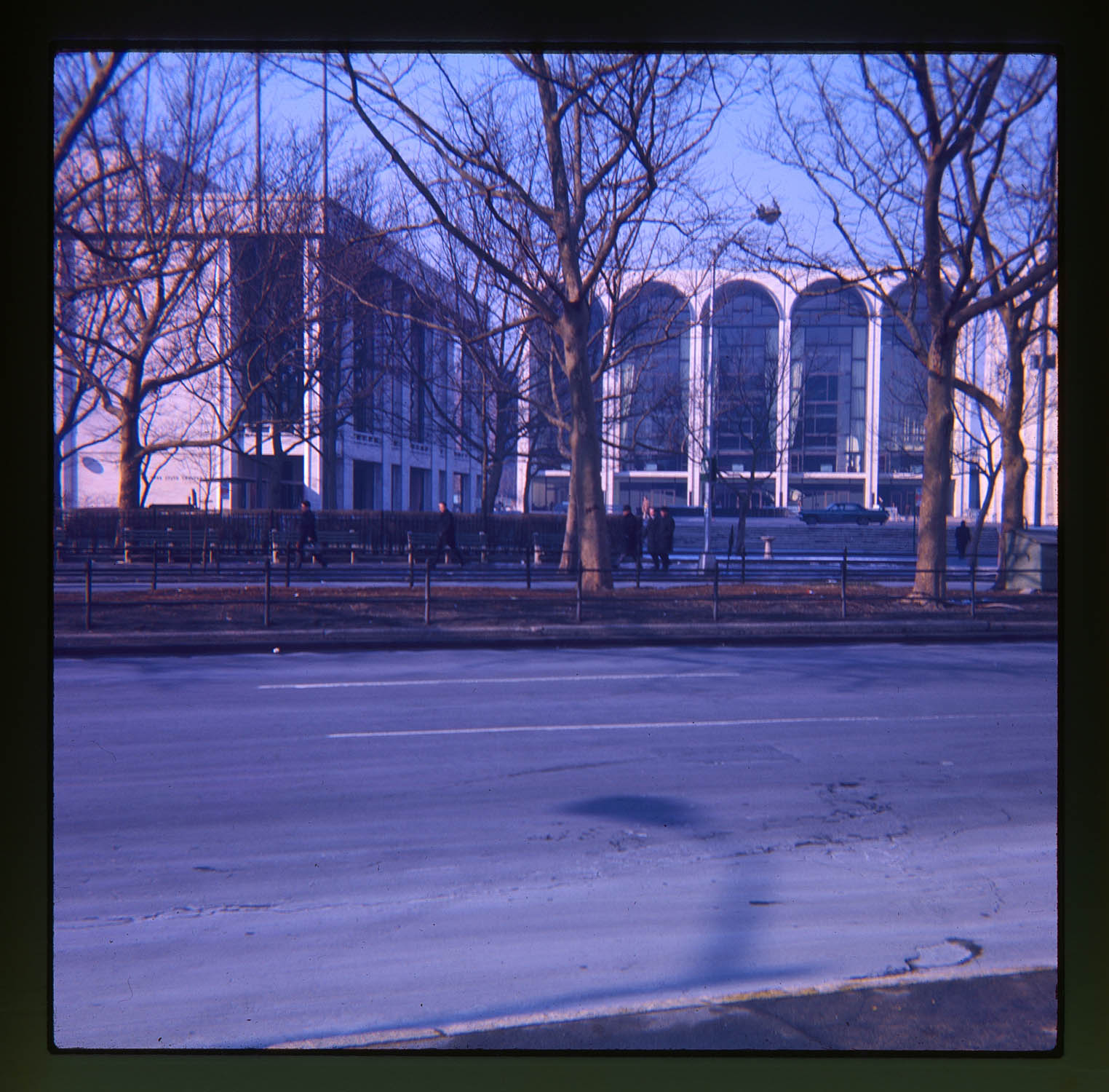
 

Unknown photographer (Australian) 'Metropolitan Opera House, Lincoln Center, New York City' 1960s


Unknown photographer (Australian)
Metropolitan Opera House, Lincoln Center, New York City
1960s
Ektachrome medium format transparency scanned


The top image has not been colour corrected, as scanned.
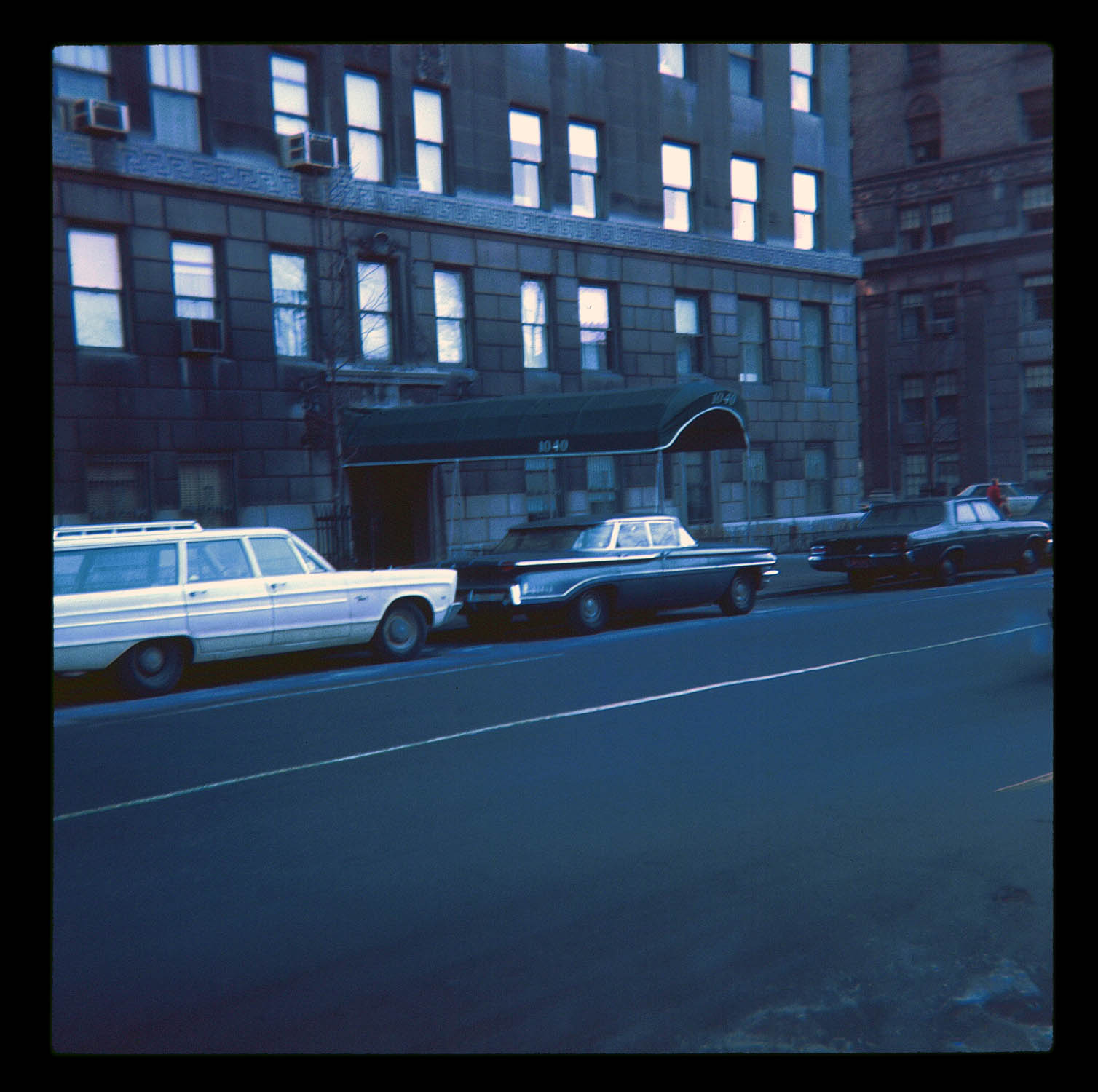
 

Unknown photographer (Australian) '1040 Fifth Avenue NY' 1960s


Unknown photographer (Australian)
1040 Fifth Avenue NY
1960s
Ektachrome medium format transparency scanned


Some photos are winners, some are losers… but they are all interesting. The fifteenth floor of 1040 Fifth Avenue NY was home to Jackie Onassis from 1964 to 1994.

The cars are a Super 88 Oldsmobile, 1965 Plymouth Fury Suburban S/W and 1964/65 Buick Special 4dr.

This slide was so underexposed it was very hard to get a usable scan. Colour correction was difficult.
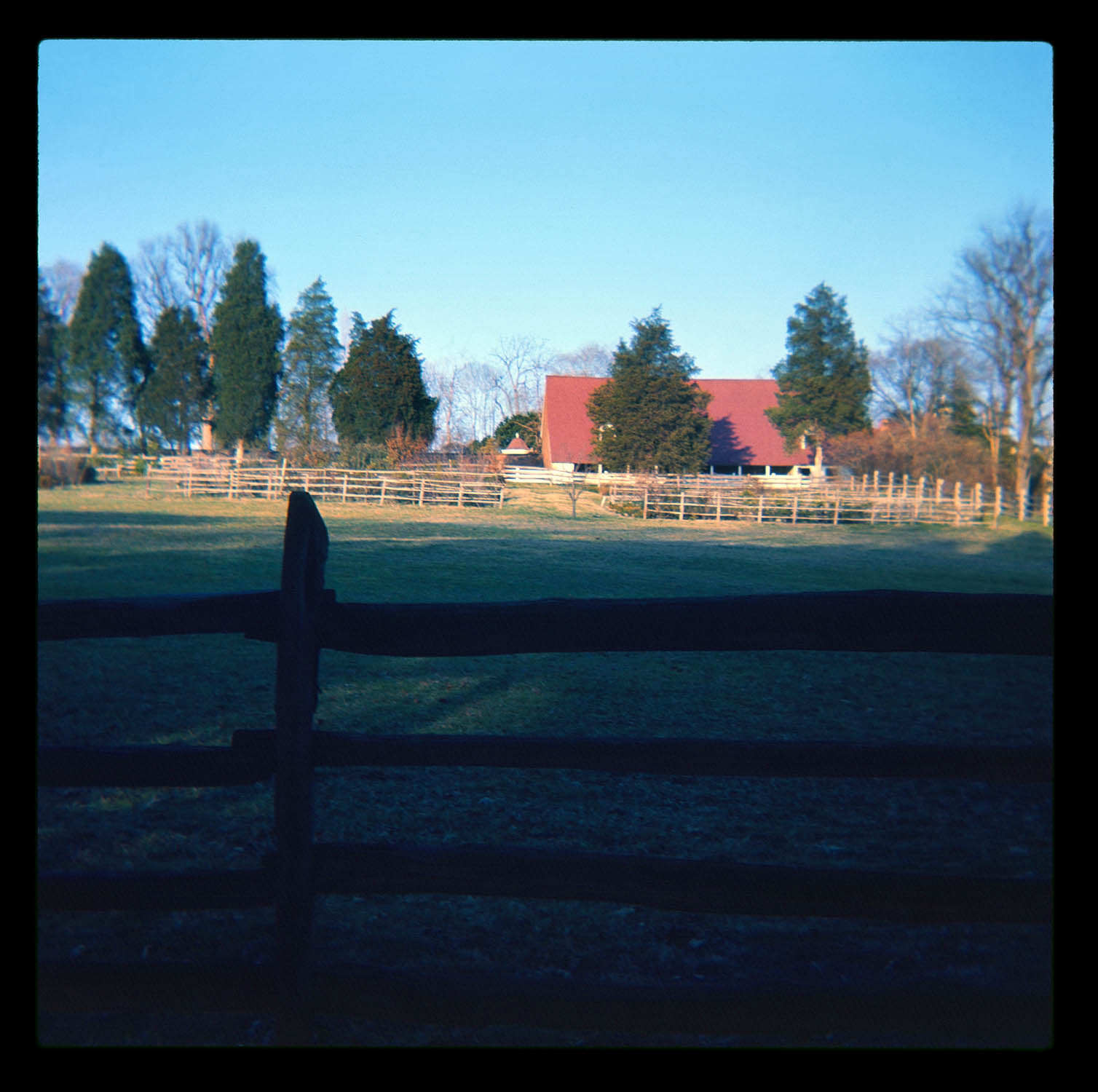
 

Unknown photographer (Australian) 'Untitled (American landscape)' 1960s


Unknown photographer (Australian)
Untitled (American landscape)
1960s
Ektachrome medium format transparency scanned


A lovely image. Whoever took these photographs had a really good eye.
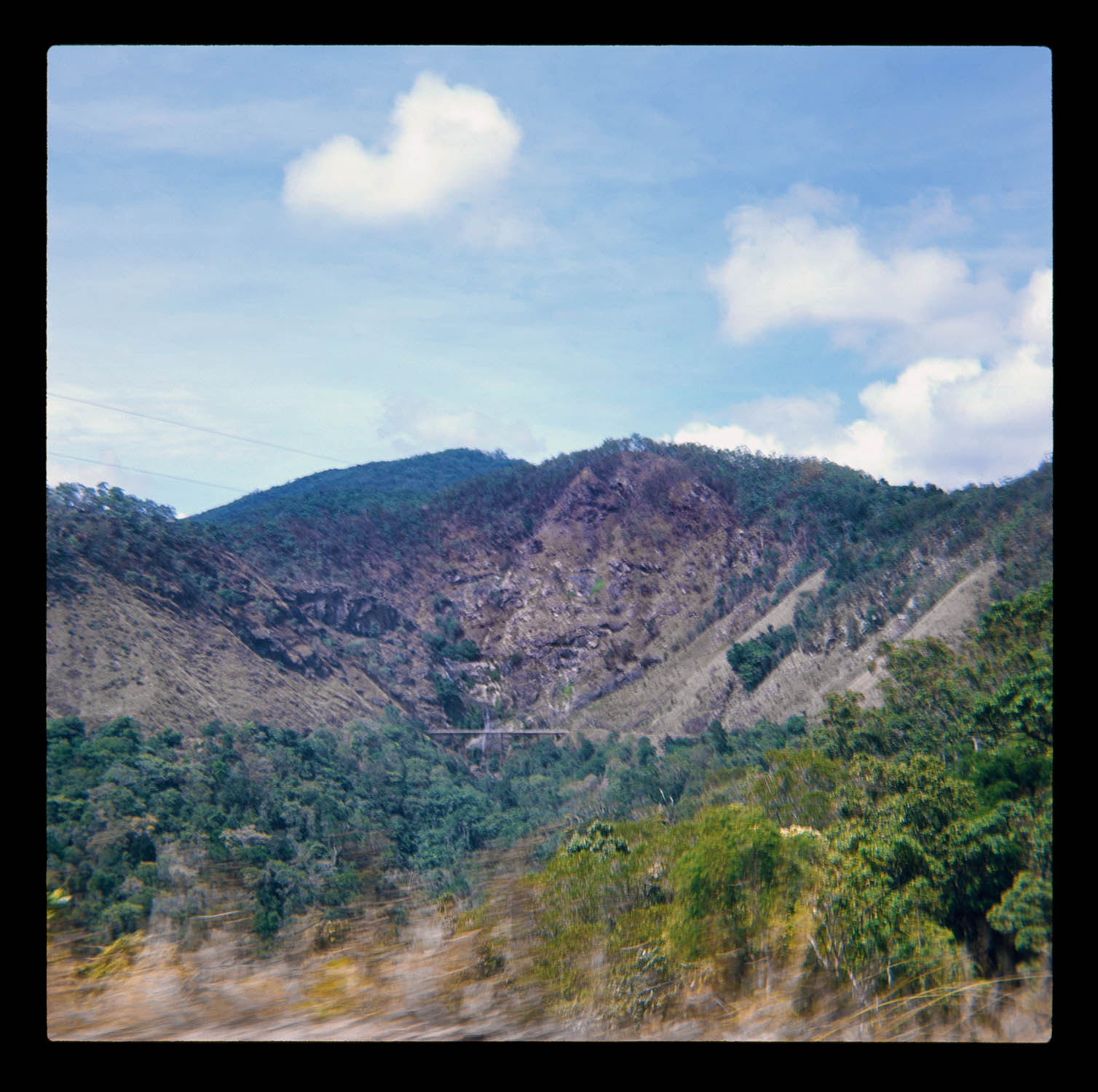
 

Unknown photographer (Australian) 'Untitled (American landscape)' 1960s


Unknown photographer (Australian)
Untitled (American landscape)
1960s
Ektachrome medium format transparency scanned
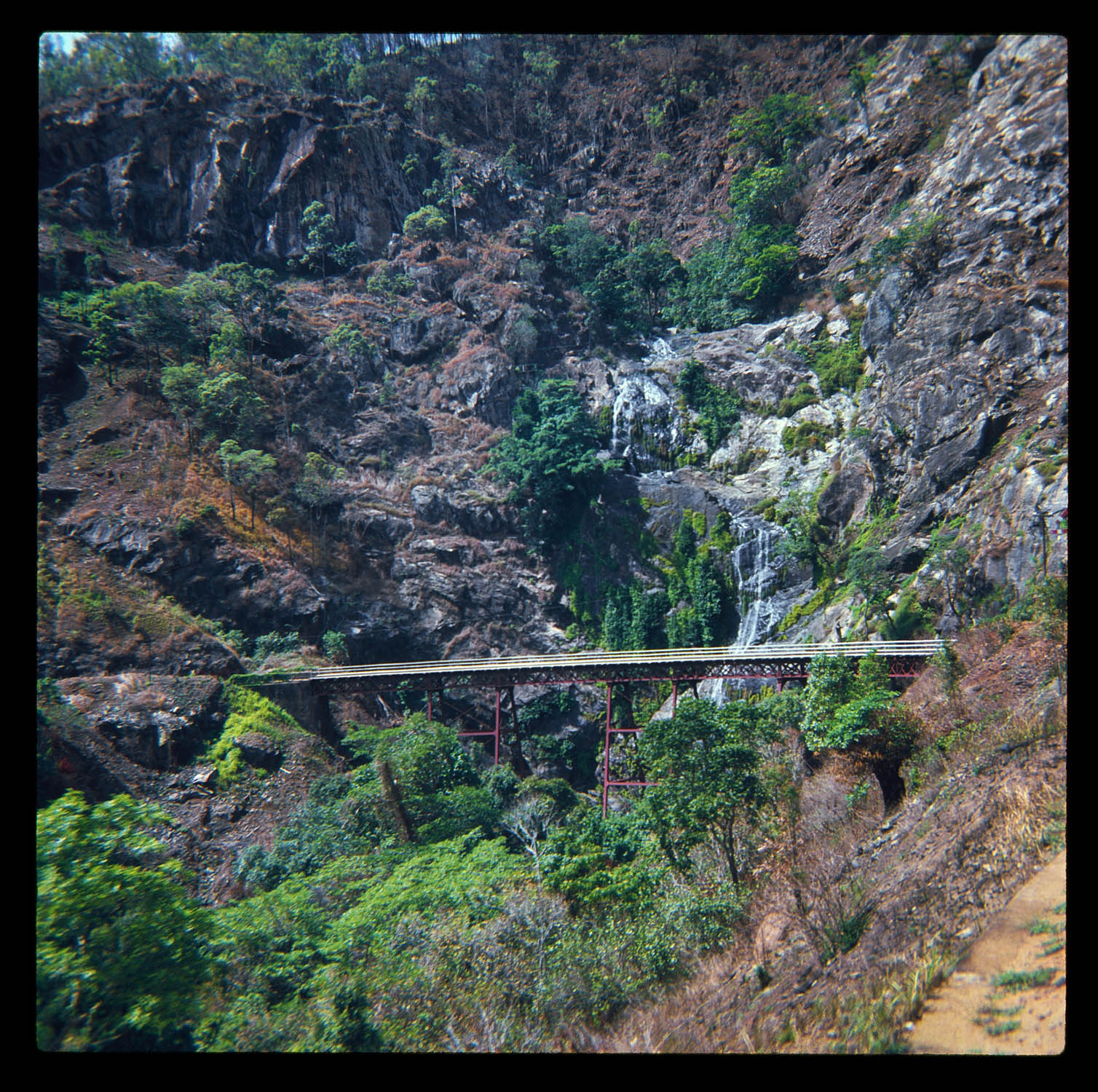
 

Unknown photographer (Australian) 'Untitled (American landscape)' 1960s


Unknown photographer (Australian)
Untitled (American landscape)
1960s
Ektachrome medium format transparency scanned
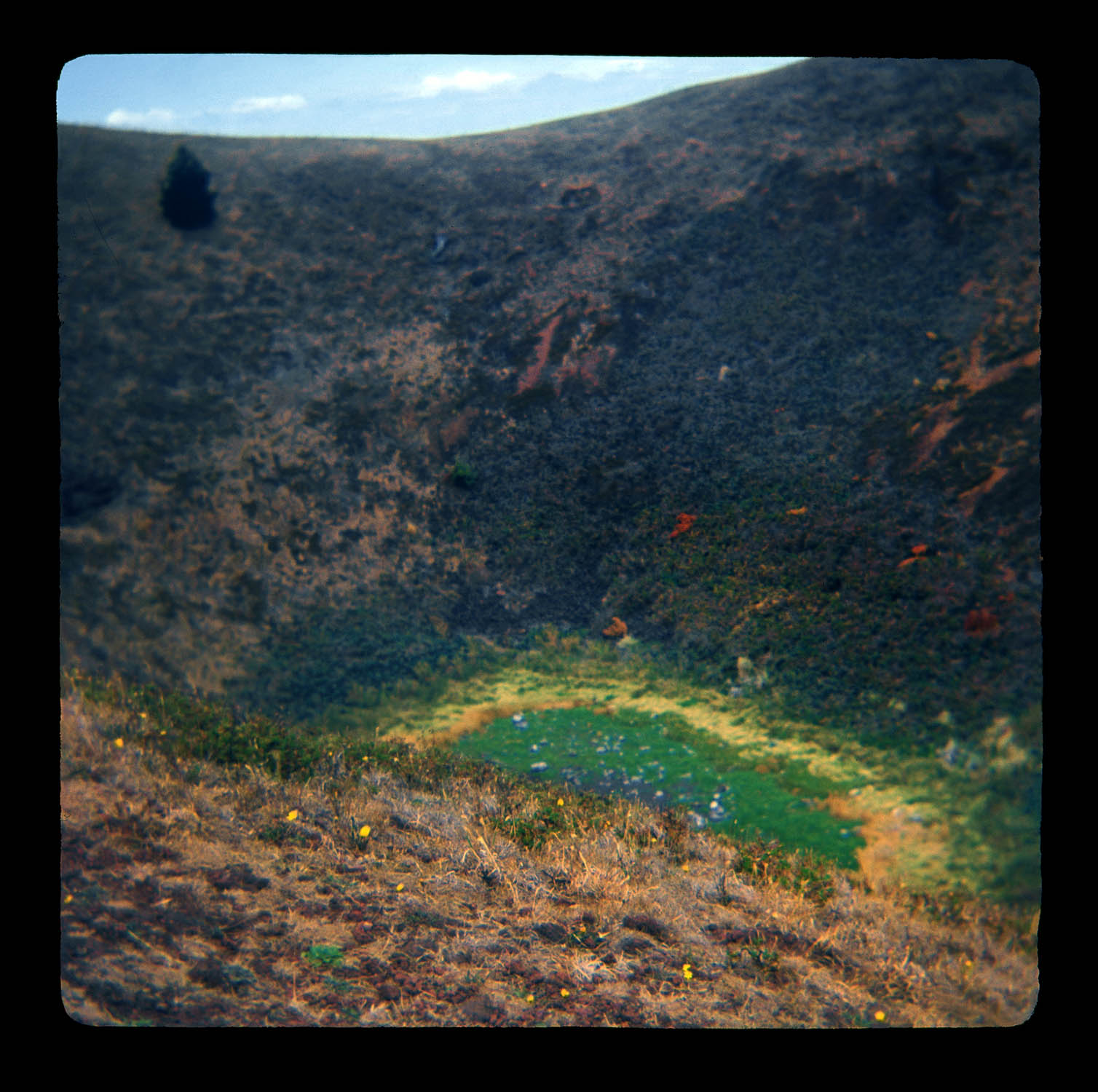
 

Unknown photographer (Australian) 'Untitled (American landscape)' 1960s


Unknown photographer (Australian)
Untitled (American landscape)
1960s
Ektachrome medium format transparency scanned


Unknown photographer (Australian) 'Untitled (California)' 1960s


Unknown photographer (Australian)
Untitled (California)
1960s
Ektachrome medium format transparency scanned


I think this is California?

A classic 1960s photograph. The photographer had a good eye. Los Castillo artesanos on the left hand side, a Kodak sign, and a Chevrolet if I’m not mistaken.
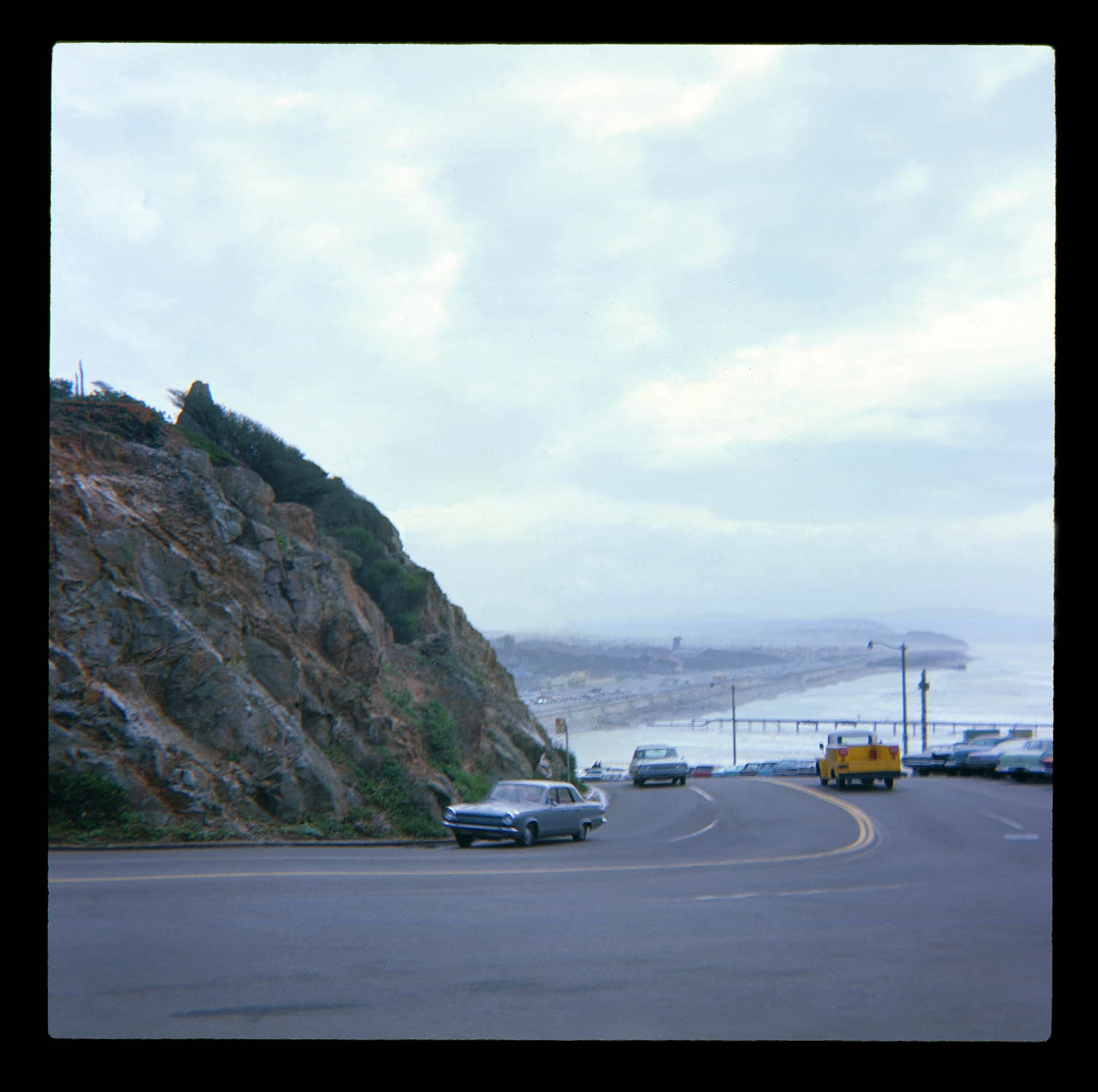
 

Unknown photographer (Australian) 'American landscape with cars, perhaps Malibu, California?' 1960s


Unknown photographer (Australian)
American landscape with cars, perhaps Malibu, California?
1960s
Ektachrome medium format transparency scanned


Great photo!


Unknown photographer (Australian) 'Main Str Cinema, Disneyland' 1960s


Unknown photographer (Australian)
Main Str Cinema, Disneyland, California
1960s
Ektachrome medium format transparency scanned


I don’t know what the fault is at top left, it’s in the transparency itself – so obviously something inside the camera got ‘recorded’ on film
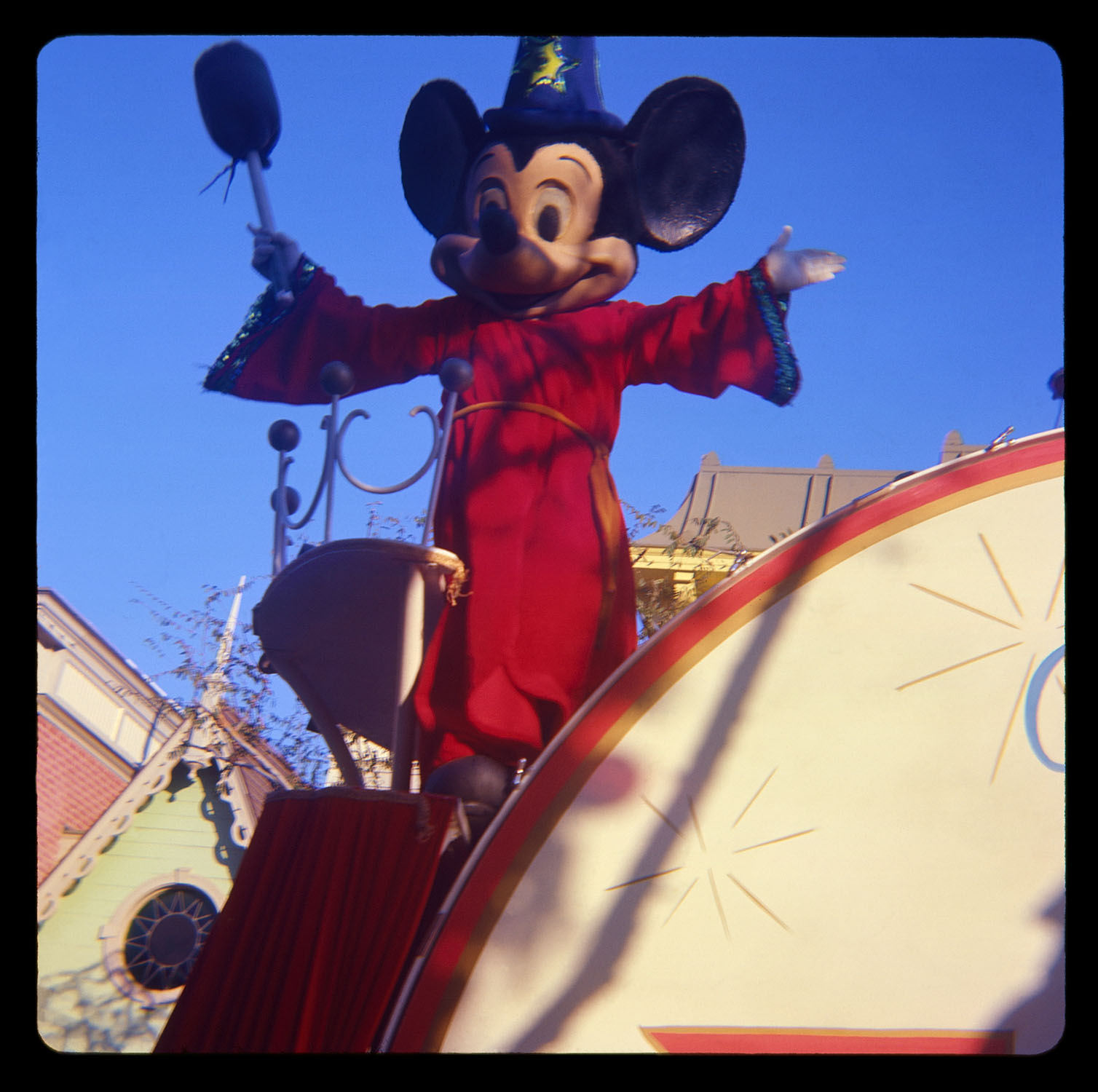
 

Unknown photographer (Australian) 'Mickey Mouse, Disneyland'
1960s


Unknown photographer (Australian)
Mickey Mouse, Disneyland, California
1960s
Ektachrome medium format transparency scanned
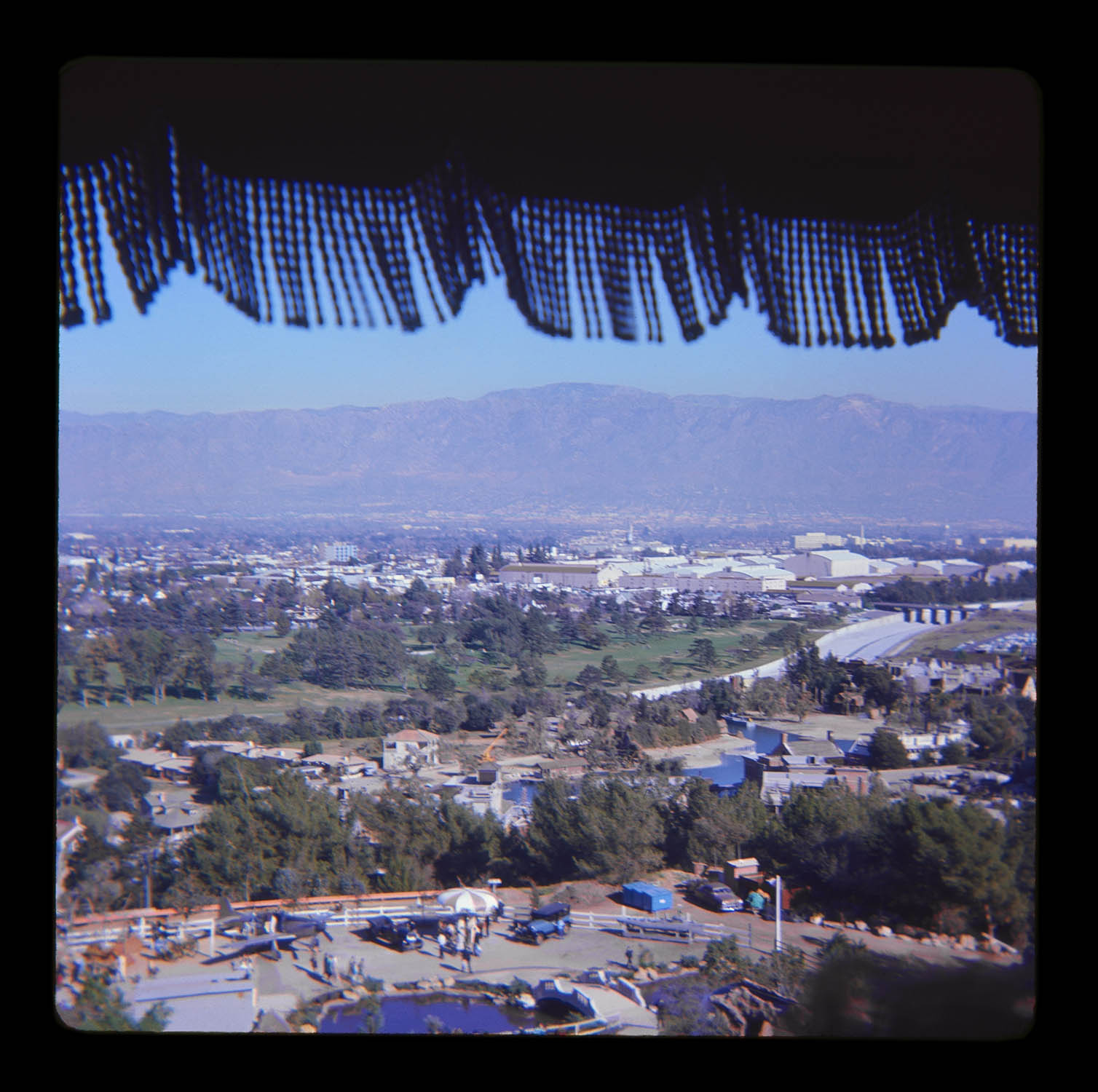
 

Unknown photographer (Australian) 'General view over Universal Studios including my plane, Tammy's houseboat, Warner Brothers in background, California' 1960s


Unknown photographer (Australian)
General view over Universal Studios including my plane, Tammy’s houseboat, Warner Brothers in background, California
1960s
Ektachrome medium format transparency scanned


The photograph was taken from a “Glamor Tram” travelling around the lot. These were introduced in July, 1964. “The iconic red and white Glamor Trams, with their ruffled awnings, were staged five times a day, each lasting just over two hours, Monday through Friday.”

The handwritten inscription on the slide reads:

“General view over Universal Studios including my plane, Tammy’s houseboat, Warner Brothers in background”

“My plane” seems to be a North American P-51 Mustang. According to John Lovaas on Facebook he is “pretty sure the green space is Lakeside Golf Club, and the plane and cars in the foreground are on Universal Studios property. How many P-51s has Universal ever had on their lot? A finite number!”

He states that the P-51 is most likely the plane 44-72739 N44727 “Man O War” which was the plane at Universal Studios between 1955-1970. I can’t see a houseboat at all!


Unknown photographer (Australian) ''Battle Hymn' North American P-51 Mustang' 1960s


Unknown photographer (Australian)
‘Battle Hymn’ North American P-51 Mustang
1960s
Ektachrome medium format transparency scanned


A closer look at the North American P-51 Mustang that featured at a distance in the slide above.

The text written on the slide reads: “Me and plane used in “Battle Hymn”.”

“‘Battle Hymn’ is a 1957 American war film directed by Douglas Sirk and starring Rock Hudson as Lieutenant Colonel Dean E. Hess, a real-life United States Air Force fighter pilot in the Korean War who helped evacuate several hundred war orphans to safety… Hess promises her he won’t see combat, since he will be the senior USAF advisor / Instructor Pilot to the Republic of Korea Air Force, only serving as a teacher and flying F-51D Mustangs. …

In order to replicate the ROK unit, the 12 F-51D Mustangs of 182nd Fighter Squadron, 149th Fighter Group of the Texas Air National Guard were enlisted by the USAF to provide the necessary authentic aircraft of the period. During filming, an additional surplus F-51 was acquired from USAF stocks to be used in an accident scene where it would be deliberately destroyed.”

Text from the Wikipedia website
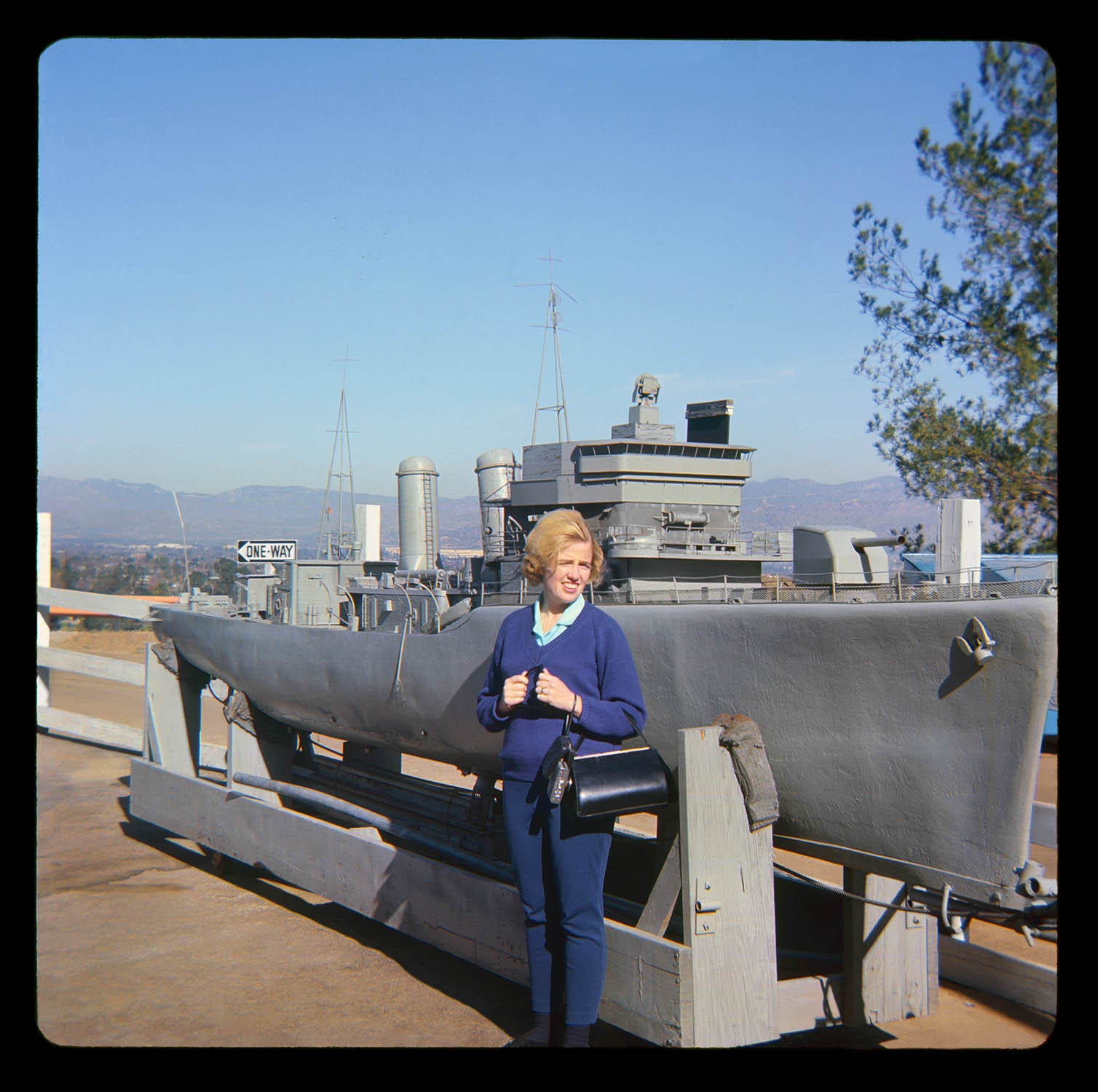
 

Unknown photographer (Australian) 'Sylvia and ship used for McHale's Navy, Universal Studios' 1960s


Unknown photographer (Australian)
Sylvia and ship used for McHale’s Navy, Universal Studios
1960s
Ektachrome medium format transparency scanned


The title was written on the slide.


Unknown photographer (Australian) 'San Francisco with Golden Gate Bridge' 1960s


Unknown photographer (Australian)
San Francisco with Golden Gate Bridge (in the background)
1960s
Ektachrome medium format transparency scanned
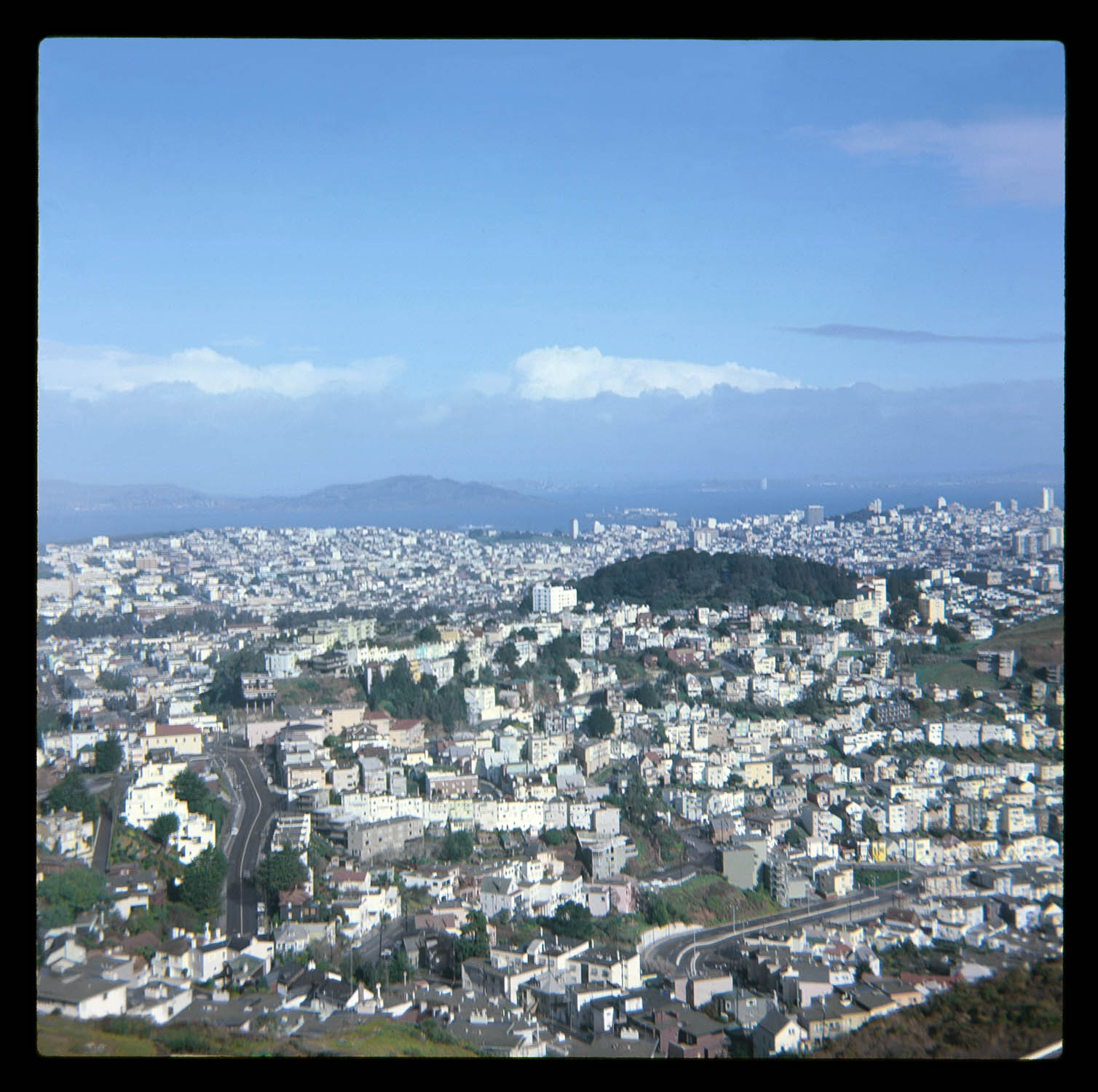
 

Unknown photographer (Australian) 'View over San Francisco' 1960s


Unknown photographer (Australian)
View over San Francisco
1960s
Ektachrome medium format transparency scanned
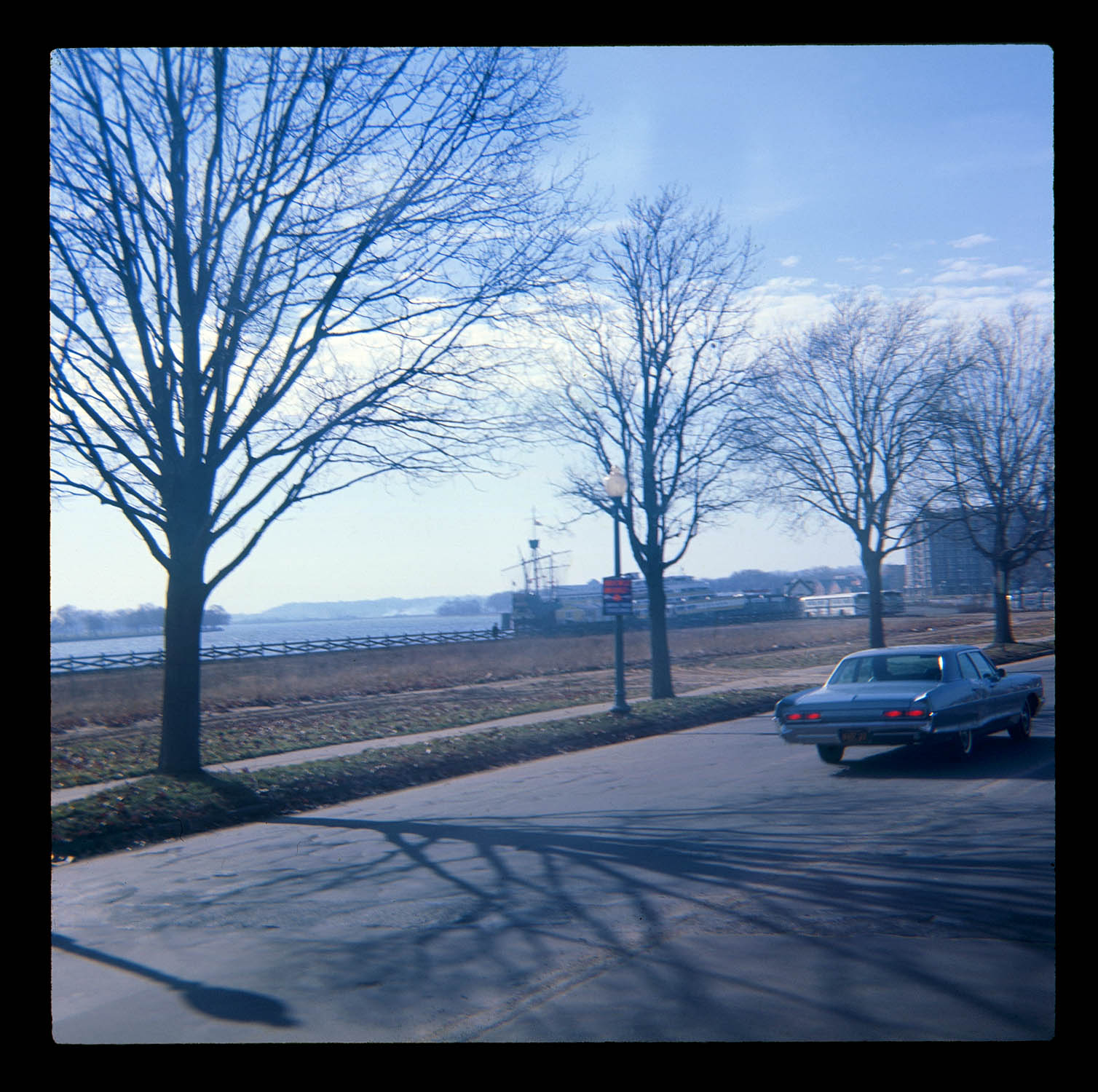
 

Unknown photographer (Australian) 'Untitled (Car and river, USA)' 1960s


Unknown photographer (Australian)
Untitled (Car and river, USA)
1960s
Ektachrome medium format transparency scanned


Lovely photo, great shadows. I have no idea where this is…
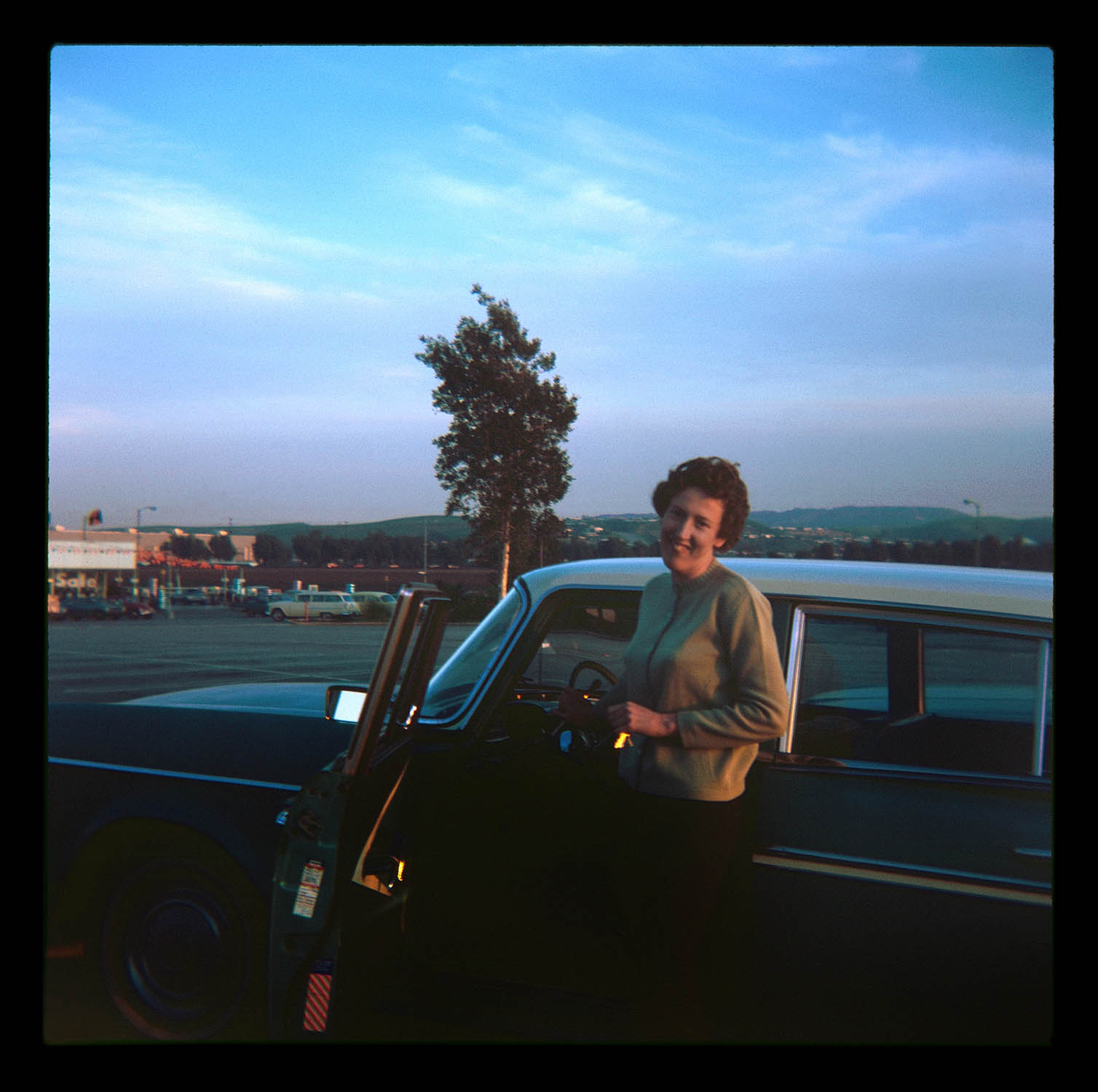
 

Unknown photographer (Australian) 'Untitled (woman and car)' 1960s


Unknown photographer (Australian)
Untitled (woman and car)
USA, 1960s
Ektachrome medium format transparency scanned


Left hand drive car so this must be the United States of America.


Canada
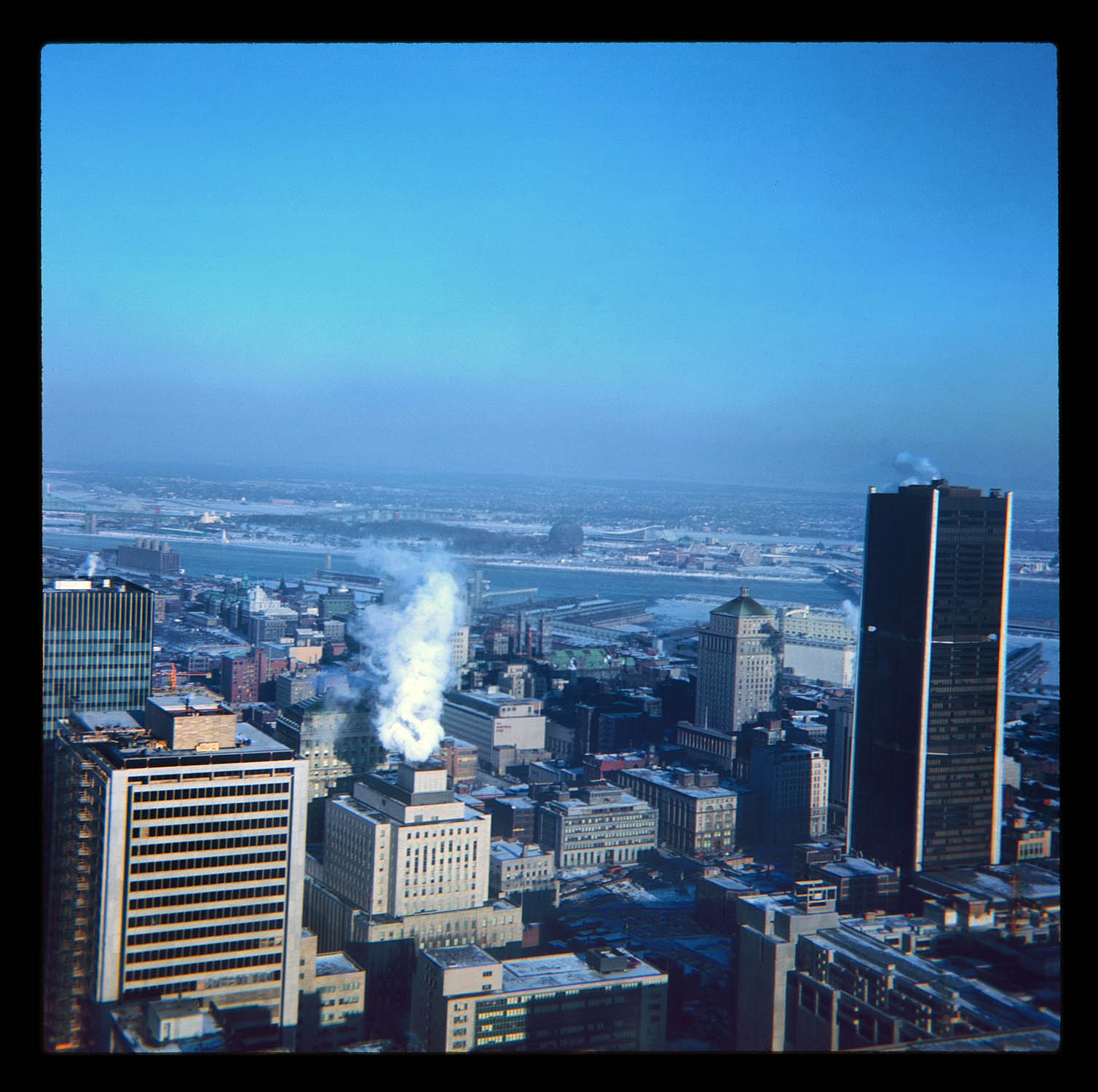
 

Unknown photographer (Australian) 'Place Ville Marie, Montreal' 1960s


Unknown photographer (Australian)
Place Ville Marie, Montreal
1960s
Ektachrome medium format transparency scanned
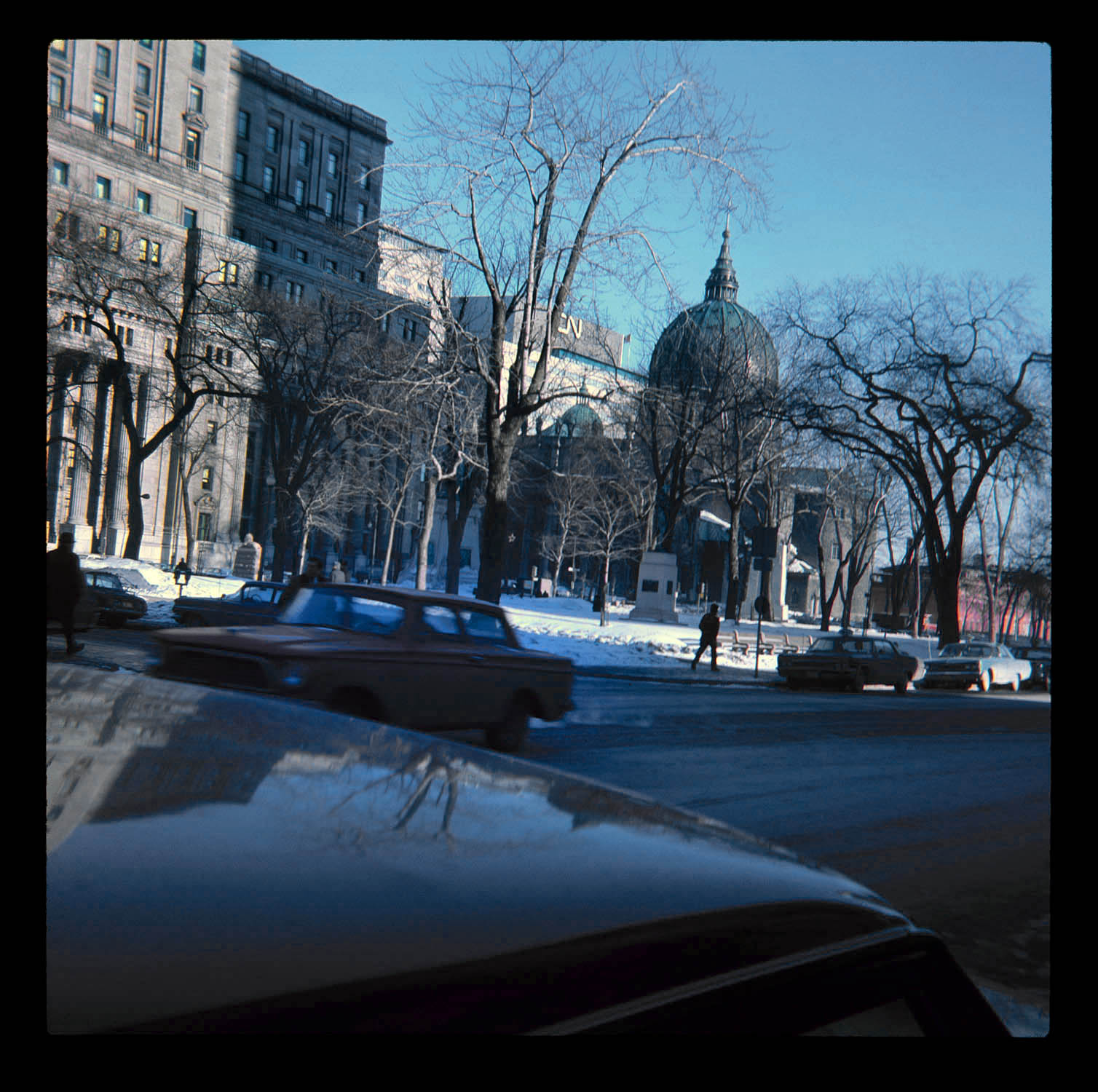
 

Unknown photographer (Australian) 'Cathédrale Basilique Marie Reine du Monde, Montreal' 1960s


Unknown photographer (Australian)
Cathédrale Basilique Marie Reine du Monde, Montreal
1960s
Ektachrome medium format transparency scanned
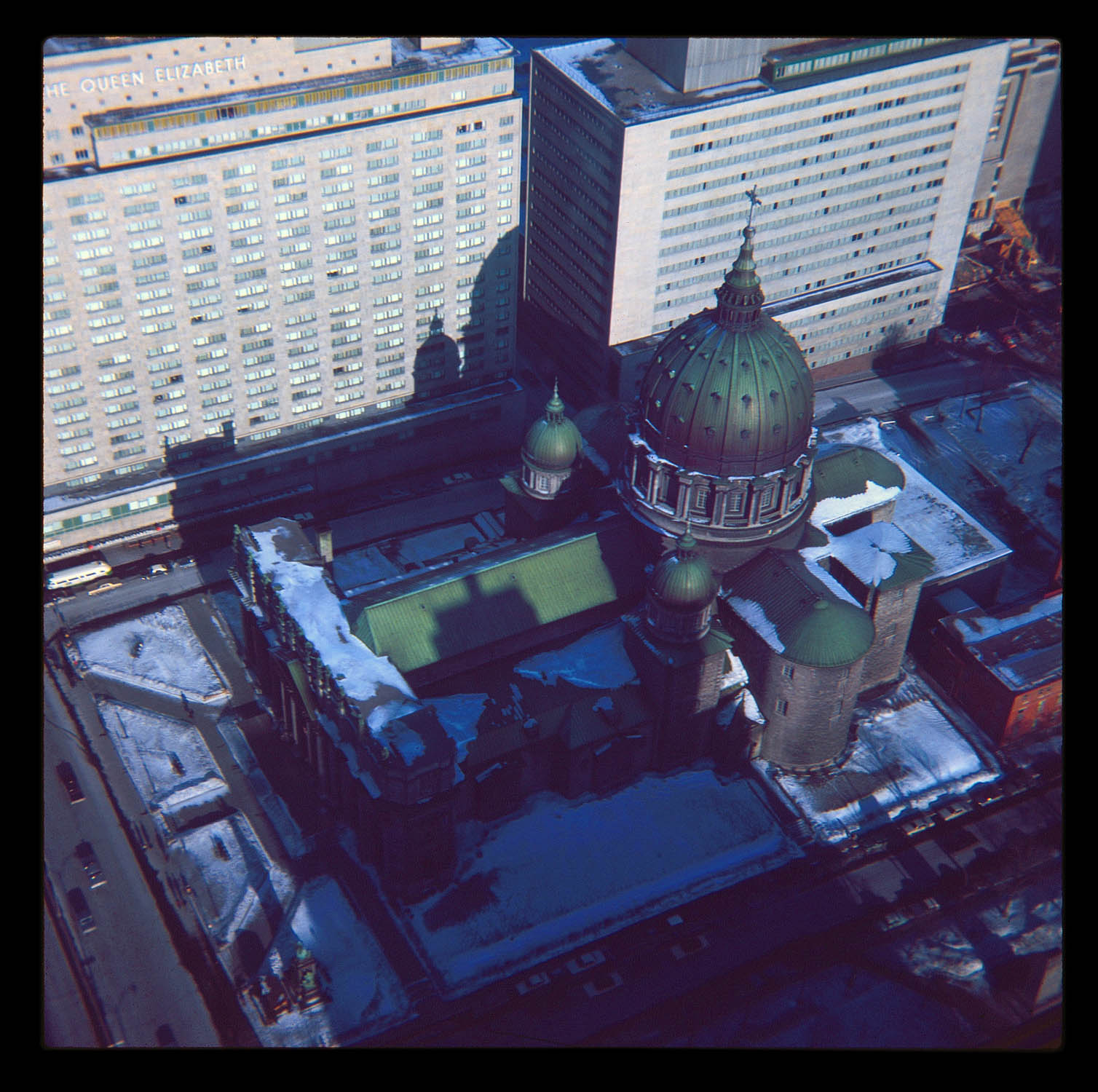
 

Unknown photographer (Australian) 'Cathédrale Basilique Marie Reine du Monde, Montreal' 1960s


Unknown photographer (Australian)
Cathédrale Basilique Marie Reine du Monde, Montreal
1960s
Ektachrome medium format transparency scanned
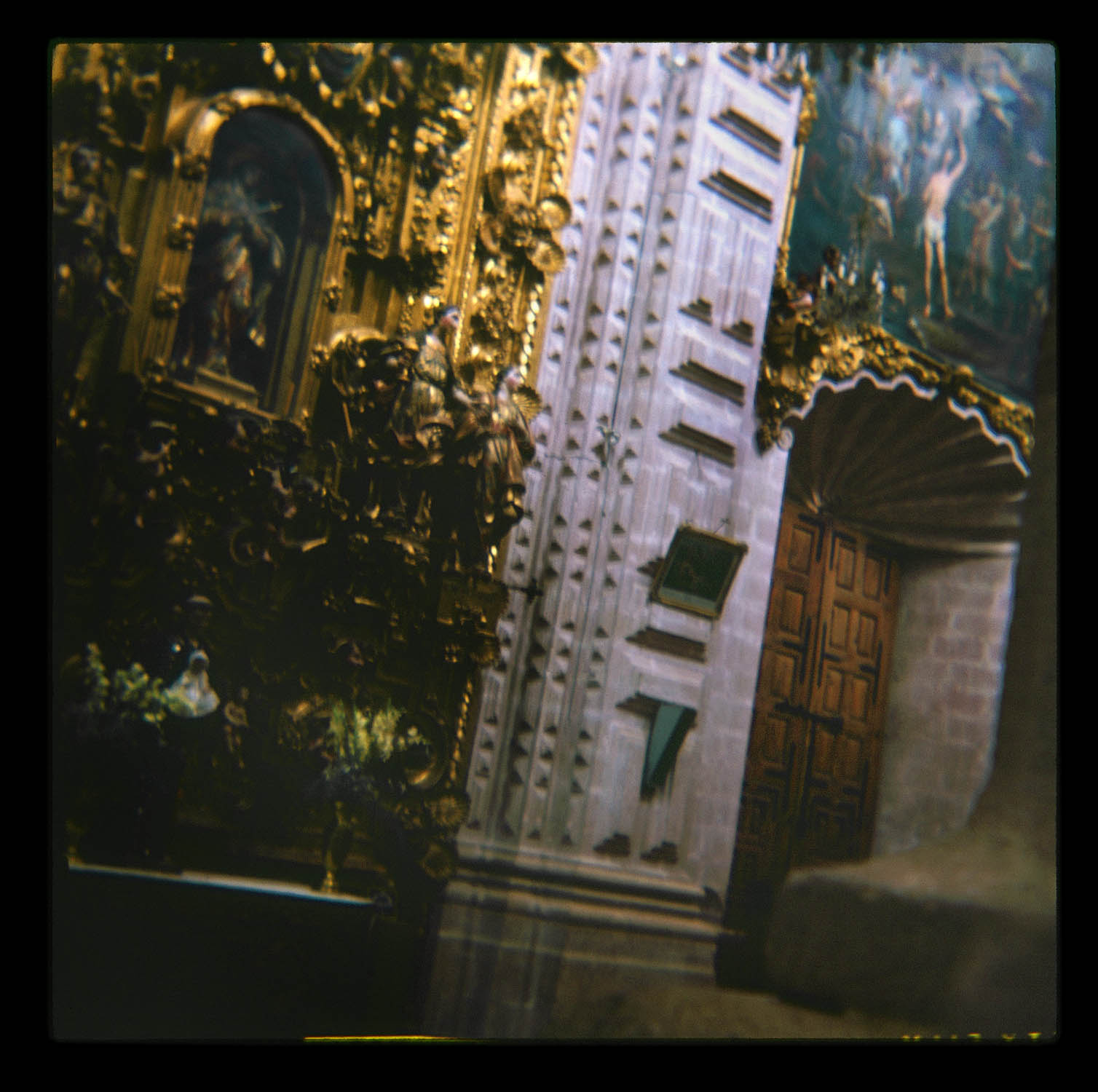
 

Unknown photographer (Australian) 'Interior, Cathédrale Basilique Marie Reine du Monde, Montreal' 1960s


Unknown photographer (Australian)
Interior, Cathédrale Basilique Marie Reine du Monde, Montreal
1960s
Ektachrome medium format transparency scanned
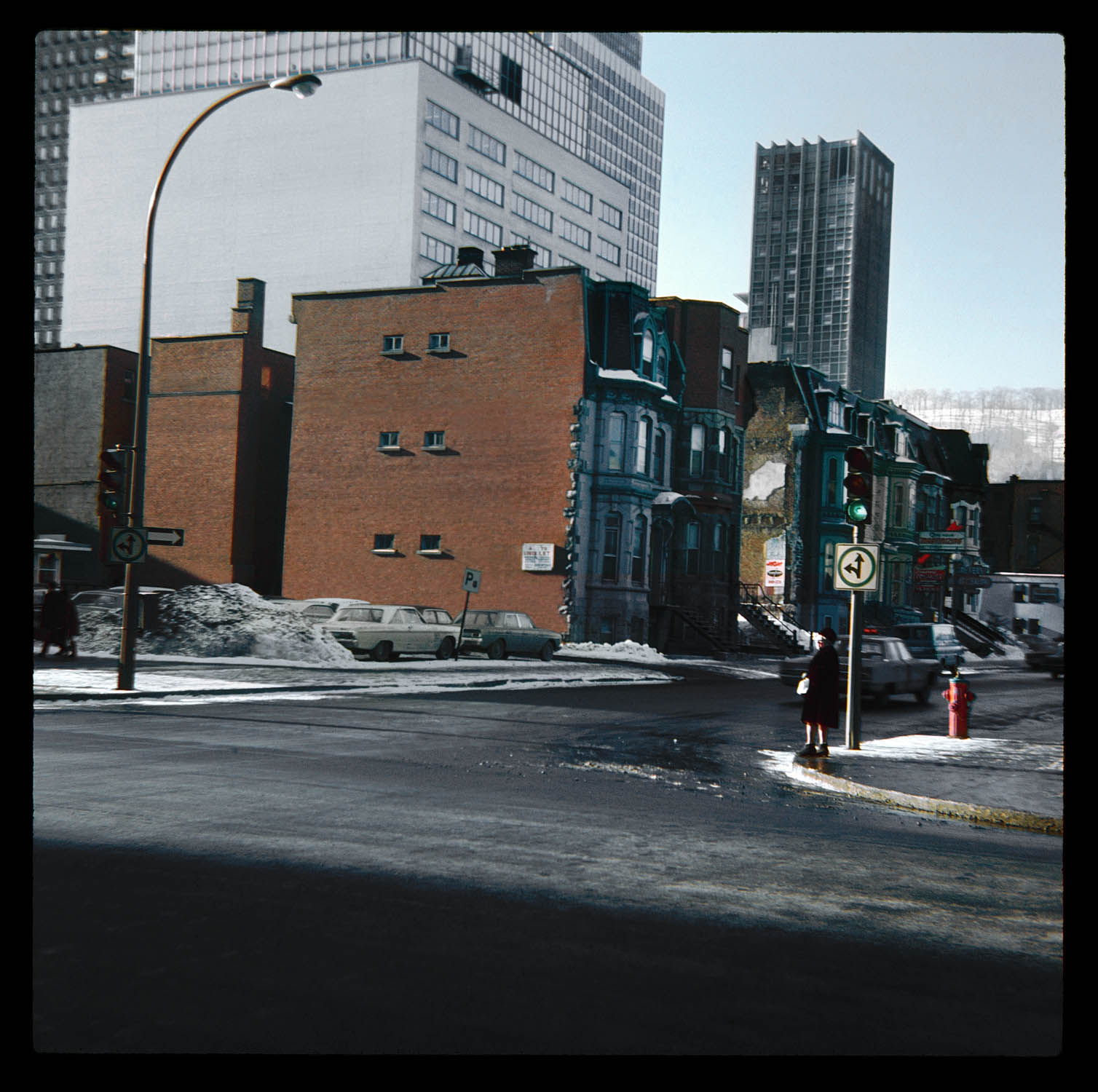
 

Unknown photographer (Australian) 'Downtown Montreal, intersection of Blvd de Maisonneuve Ouest and Metcalfe St, looking toward Mont Royal' 1960s


Unknown photographer (Australian)
Downtown Montreal, intersection of Blvd de Maisonneuve Ouest and Metcalfe St, looking toward Mont Royal
1960s
Ektachrome medium format transparency scanned


Mexico
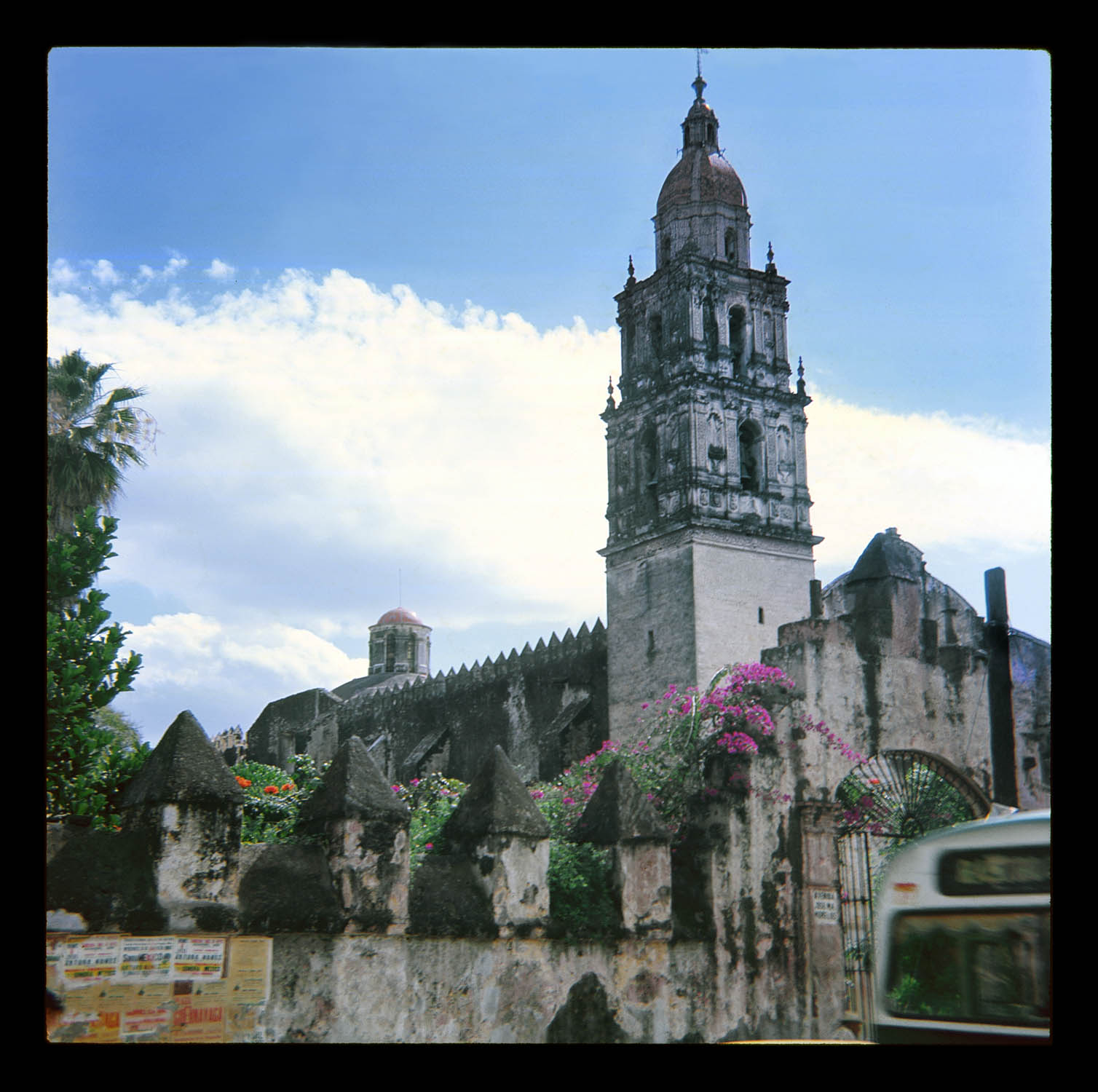
  

Unknown photographer (Australian) 'Cuernavaca Cathedral, Morelos, Mexico' 1960s


Unknown photographer (Australian)
Cuernavaca Cathedral, Morelos, Mexico
1960s
Ektachrome medium format transparency scanned


Unknown photographer (Australian) 'Chapultepec Castle, Mexico City' 1960s


Unknown photographer (Australian)
Chapultepec Castle, Mexico City
1960s
Ektachrome medium format transparency scanned


This is Chapultepec Castle, site of the National History Museum, México City. The soldiers are wearing Mexican helmets of the M1 pattern with regimental insignia on the front.
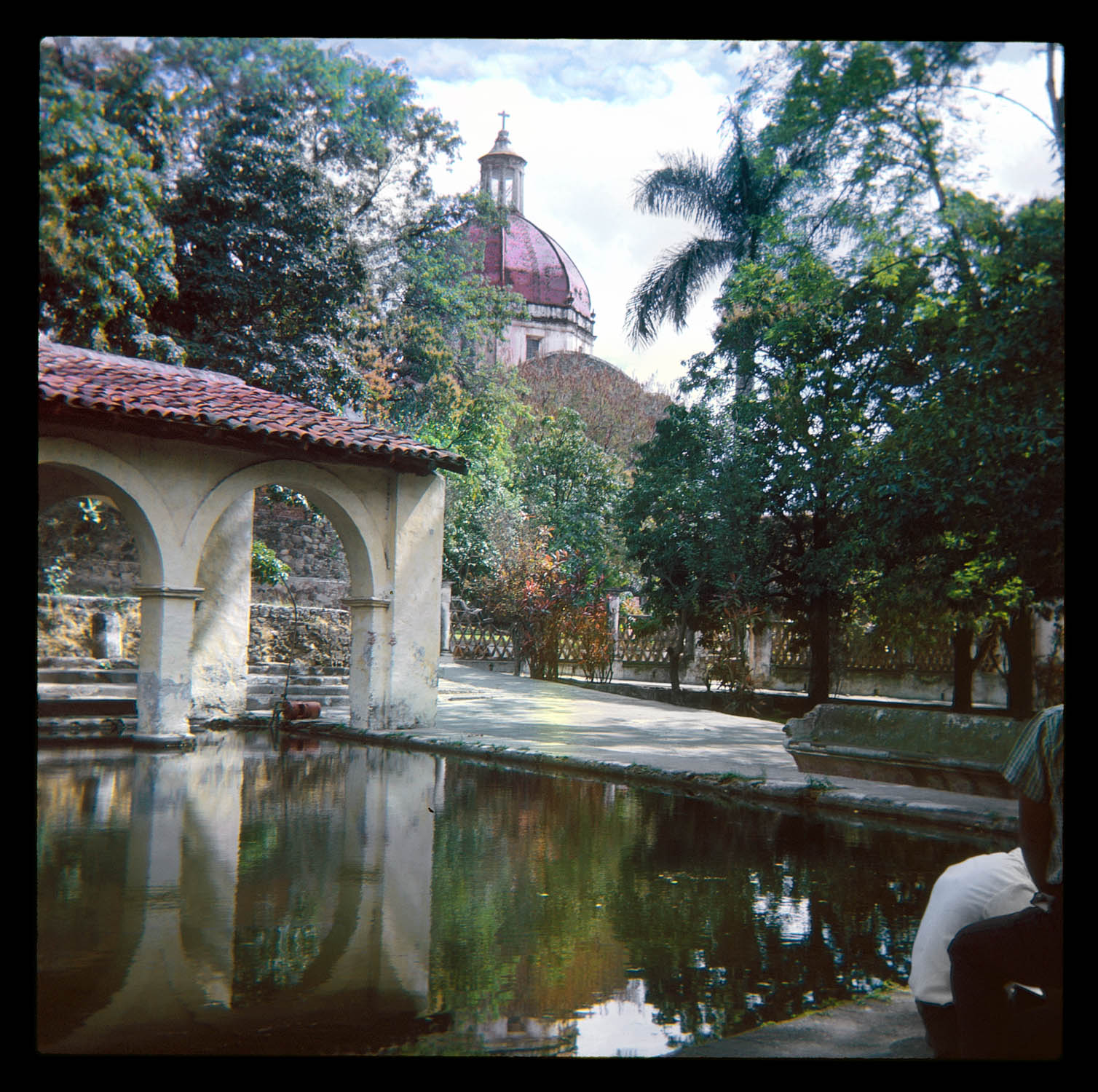
 

Unknown photographer (Australian) 'Untitled (Mexico)' 1960s


Unknown photographer (Australian)
Untitled (Mexico)
1960s
Ektachrome medium format transparency scanned
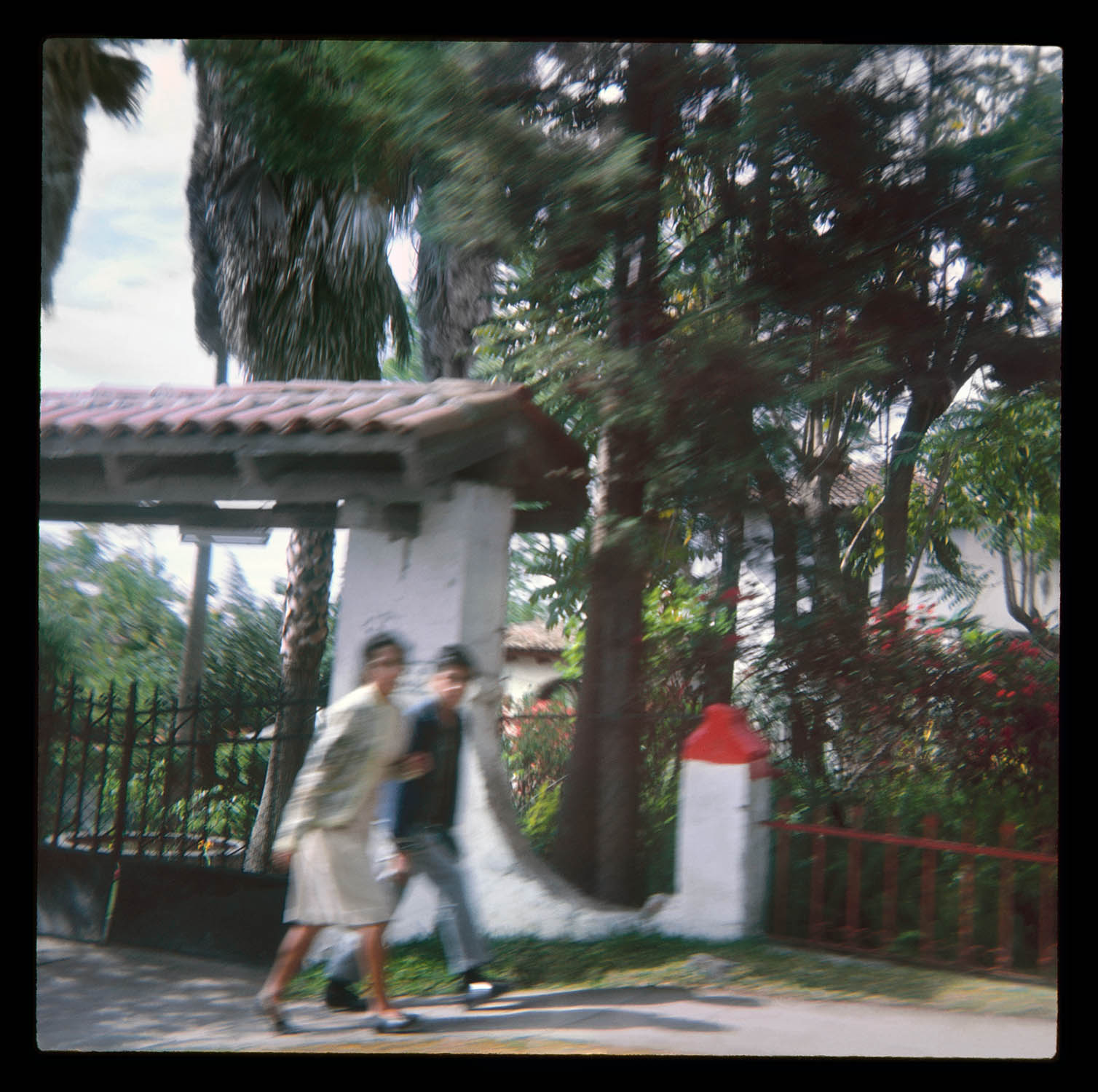
 

Unknown photographer (Australian) 'Untitled (Mexico)' 1960s


Unknown photographer (Australian)
Untitled (Mexico)
1960s
Ektachrome medium format transparency scanned
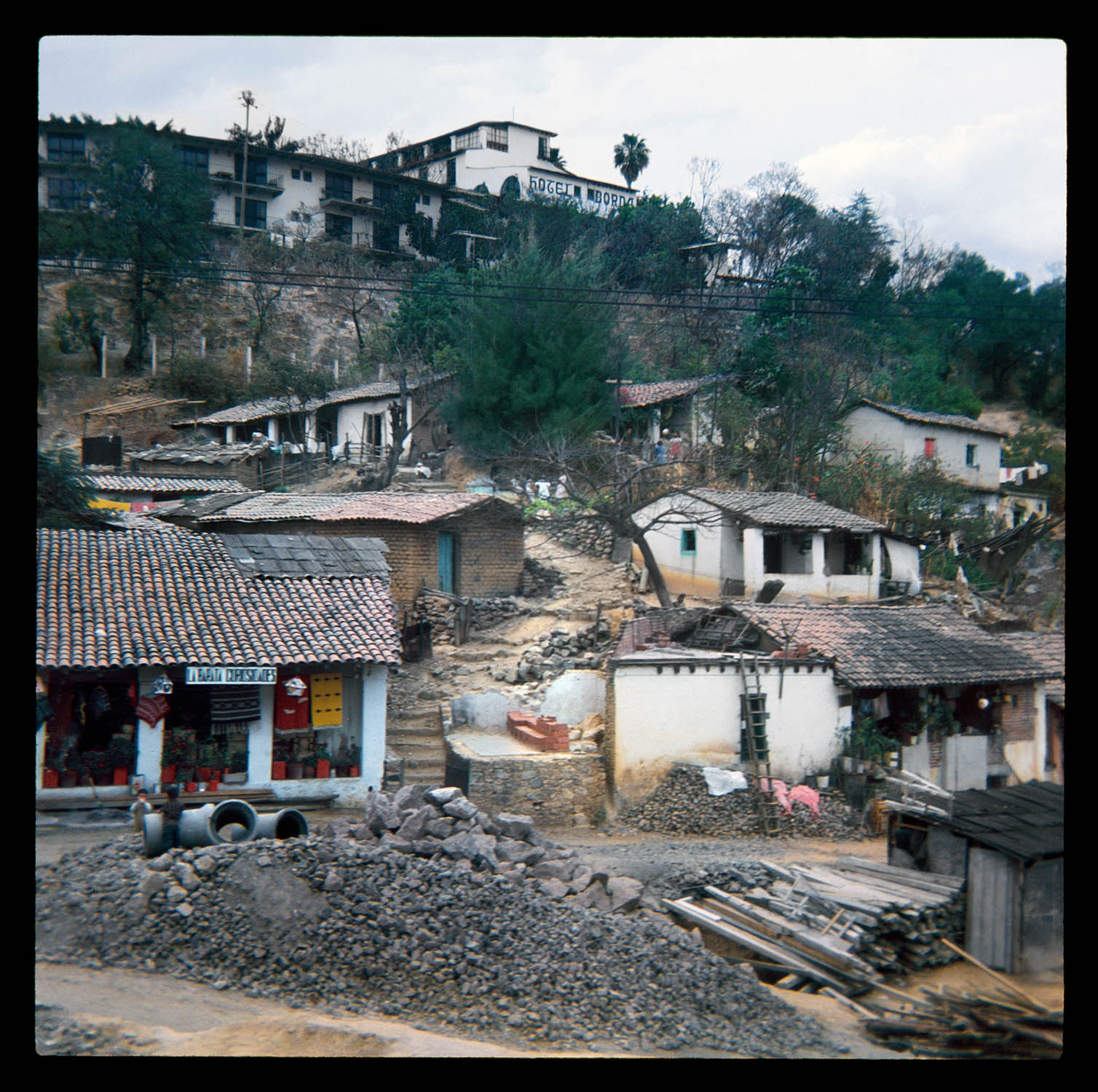
 

Unknown photographer (Australian) 'Hotel Borda, Cuernavaca' 1960s


Unknown photographer (Australian)
Hotel Borda, Cuernavaca
1960s
Ektachrome medium format transparency scanned


A view of the “Hotel Borda” which still exists in Cuernavaca a town just south of Mexico City.
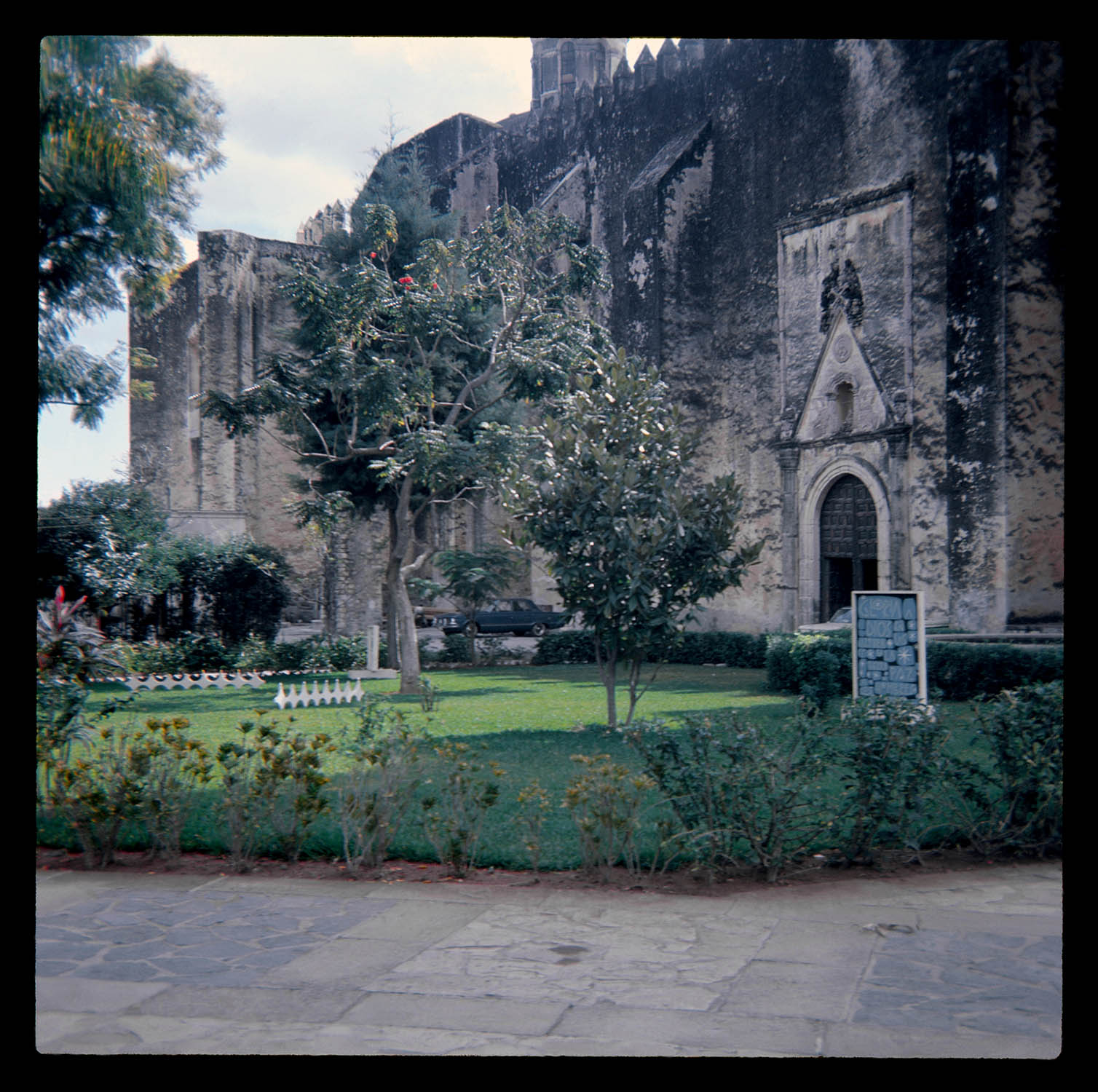
 

Unknown photographer (Australian) 'Untitled (Mexico)' 1960s


Unknown photographer (Australian)
Untitled (Mexico)
1960s
Ektachrome medium format transparency scanned


I can make out the words “Gloria”, “Dios”, and “Paz” in the sign on the right hand side.
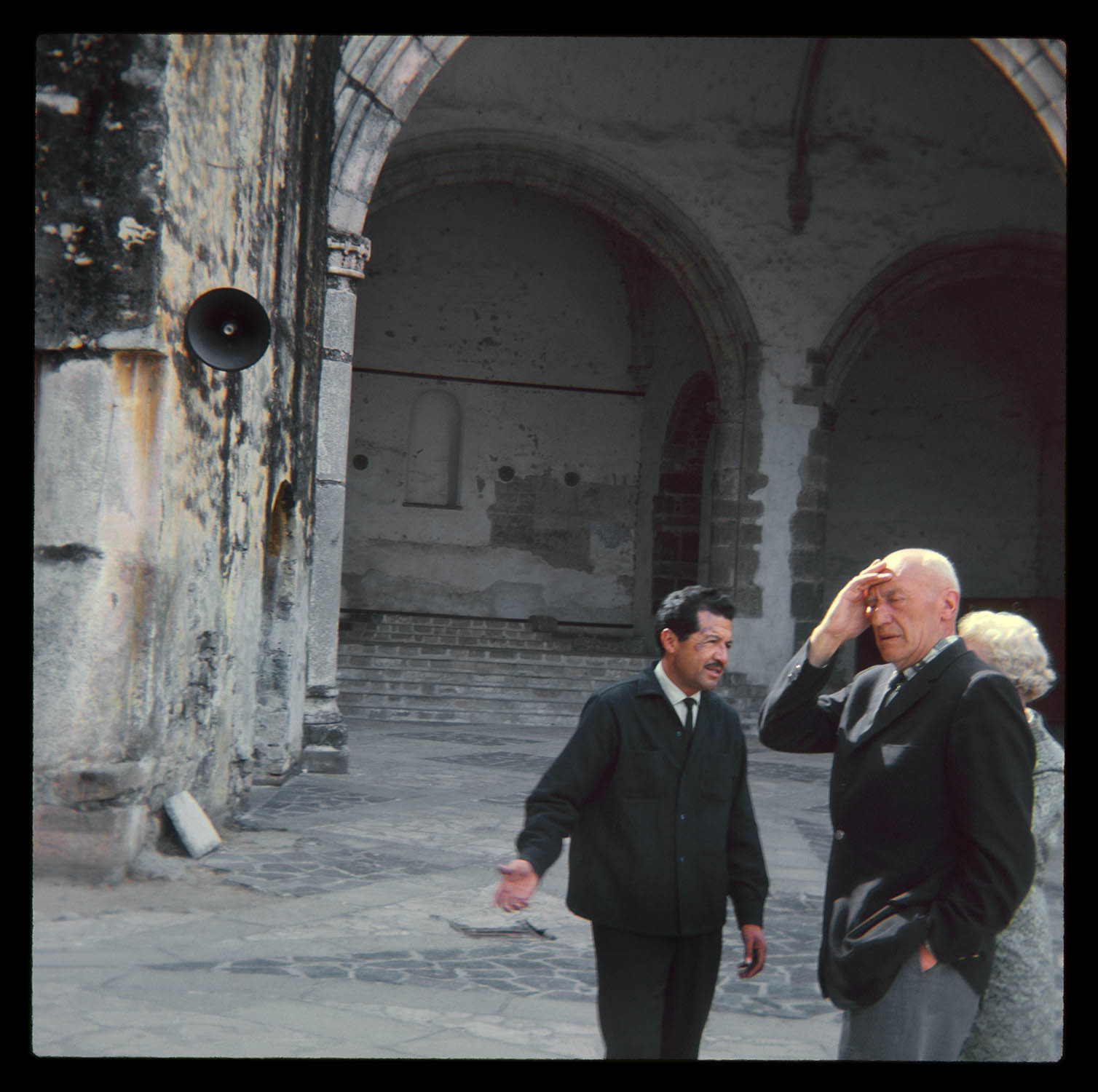
 

Unknown photographer (Australian) 'Untitled (Mexican scene?)' 1960s


Unknown photographer (Australian)
Untitled (Mexican scene?)
1960s
Ektachrome medium format transparency scanned


LIKE ART BLART ON FACEBOOK

Back to top


Exhibition: ‘Garry Winogrand’ at the National Gallery of Art, Washington

Exhibition dates: 2nd March – 8th June 2014


More photographs by Gary Winogrand.


Many thankx to the National Gallery of Art for allowing me to publish the photographs in the posting. Please click on the photographs for a larger version of the image.


Garry Winogrand (American, 1928-1984) 'New York' 1950


Garry Winogrand (American, 1928-1984)
New York
1950
Gelatin silver print
Framed: 40.64 x 50.8cm (16 x 20 in.)
San Francisco Museum of Modern Art, Fractional and promised gift of Carla Emil and Rich Silverstein
© The Estate of Garry Winogrand, courtesy Fraenkel Gallery, San Francisco


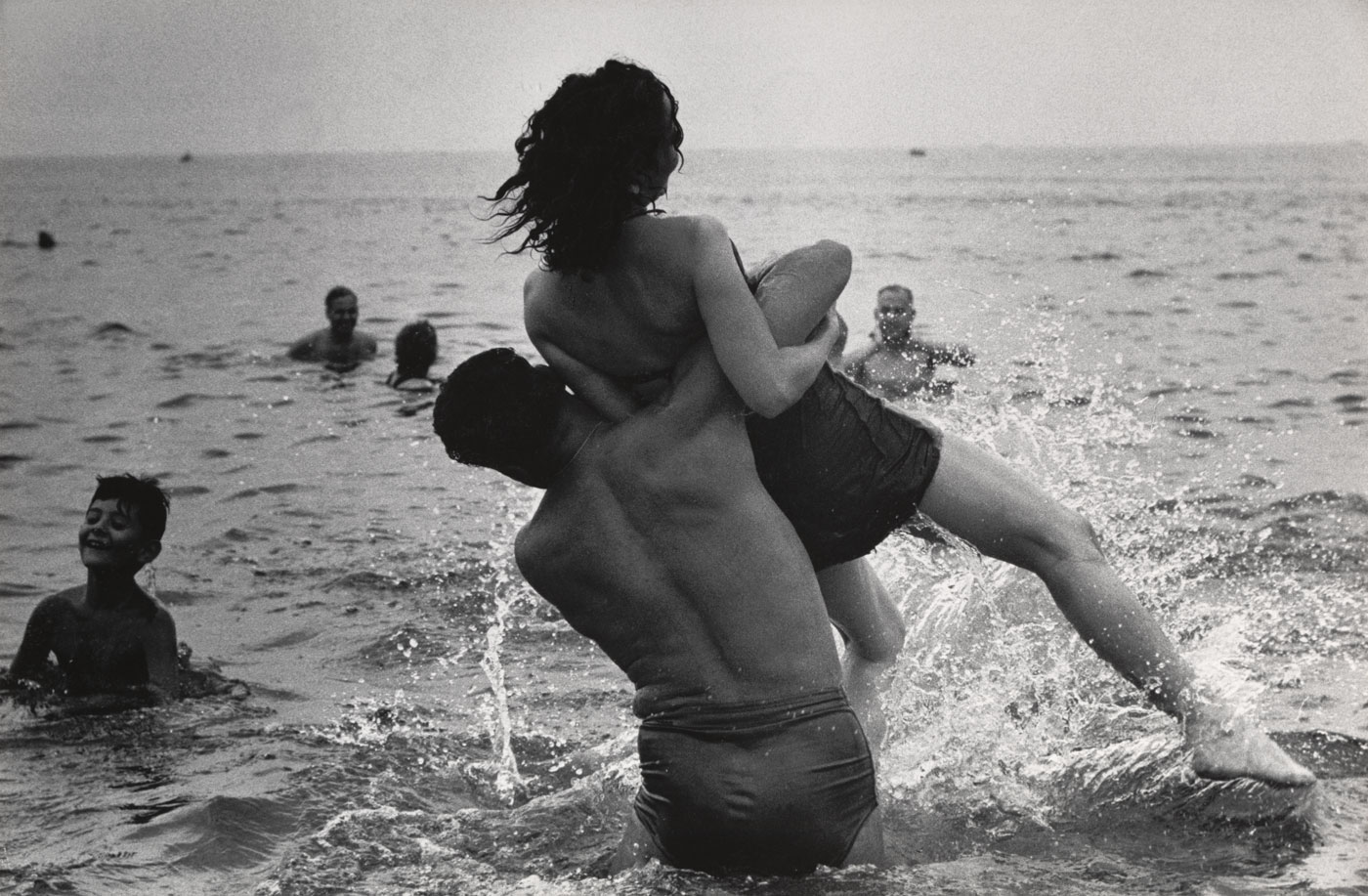
Garry Winogrand (American, 1928-1984) 'Coney Island, New York' c. 1952


Garry Winogrand (American, 1928-1984)
Coney Island, New York
c. 1952
Gelatin silver print
Framed: 40.64 x 50.8cm (16 x 20 in.)
The Museum of Modern Art, New York. Purchase and gift of Barbara Schwartz in memory of Eugene M. Schwartz
© The Estate of Garry Winogrand, courtesy Fraenkel Gallery, San Francisco


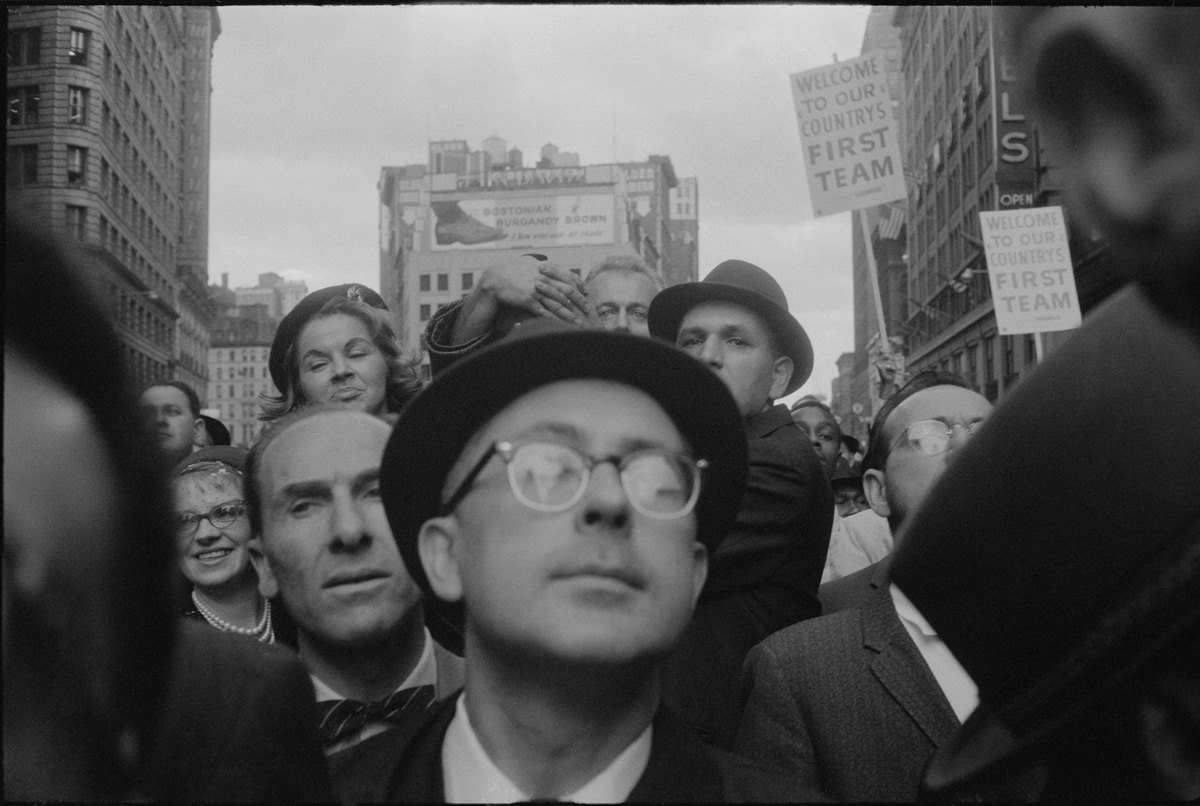
Garry Winogrand (American, 1928-1984) 'Richard Nixon Campaign Rally, New York' 1960


Garry Winogrand (American, 1928-1984)
Richard Nixon Campaign Rally, New York
1960
Gelatin silver print
Framed: 45.72 x 55.88cm (18 x 22 in.)
Posthumous print made from original negative on the occasion of the Garry Winogrand exhibition organised by the National Gallery of Art and the San Francisco Museum of Modern Art, courtesy Center for Creative Photography, The University of Arizona
© The Estate of Garry Winogrand, courtesy Fraenkel Gallery, San Francisco


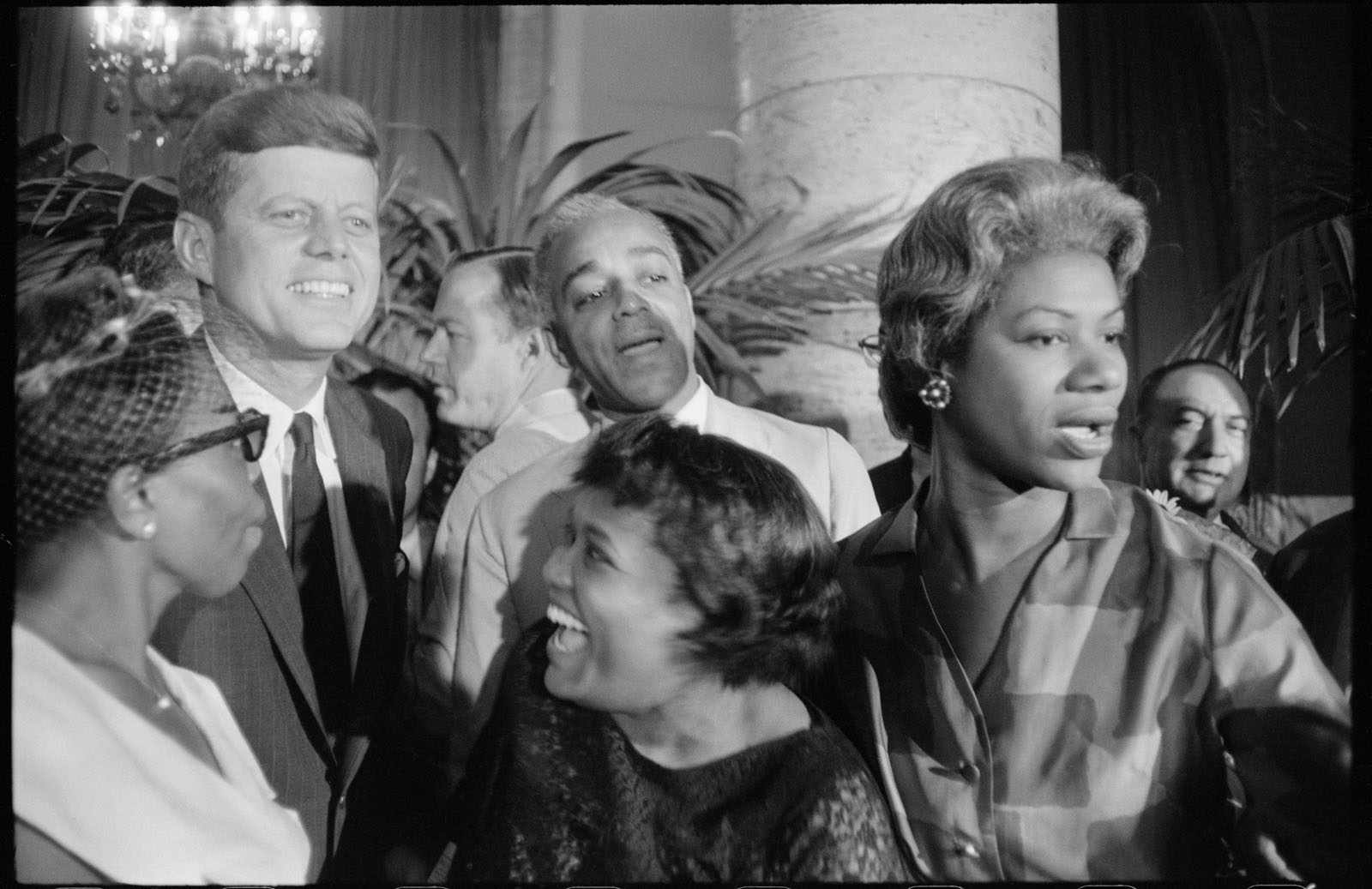
Garry Winogrand (American, 1928-1984) 'John F. Kennedy, Democratic National Convention, Los Angeles' 1960


Garry Winogrand (American, 1928-1984)
John F. Kennedy, Democratic National Convention, Los Angeles
1960
Gelatin silver print
Framed: 45.72 x 55.88cm (18 x 22 in.)
Posthumous print made from original negative on the occasion of the Garry Winogrand exhibition organised by the National Gallery of Art and the San Francisco Museum of Modern Art, courtesy Center for Creative Photography, The University of Arizona
© The Estate of Garry Winogrand, courtesy Fraenkel Gallery, San Francisco


Garry Winogrand (American, 1928-1984) 'Metropolitan Opera, New York City' c. 1951


Garry Winogrand (American, 1928-1984)
Metropolitan Opera, New York City
c. 1951
Gelatin silver print
Framed: 45.72 x 55.88cm (18 x 22 in.)
Posthumous print made from original negative on the occasion of the Garry Winogrand exhibition organised by the National Gallery of Art and the San Francisco Museum of Modern Art, courtesy Center for Creative Photography, The University of Arizona
© The Estate of Garry Winogrand, courtesy Fraenkel Gallery, San Francisco


The first retrospective in 25 years of work by artist Garry Winogrand – renowned photographer of New York City and postwar American life – will be on view at the National Gallery of Art, Washington, March 2 through June 8, 2014. Revealing the full breadth of his art for the first time, Garry Winogrand brings together some 190 of the artist’s most iconic images – many never before exhibited or reproduced.
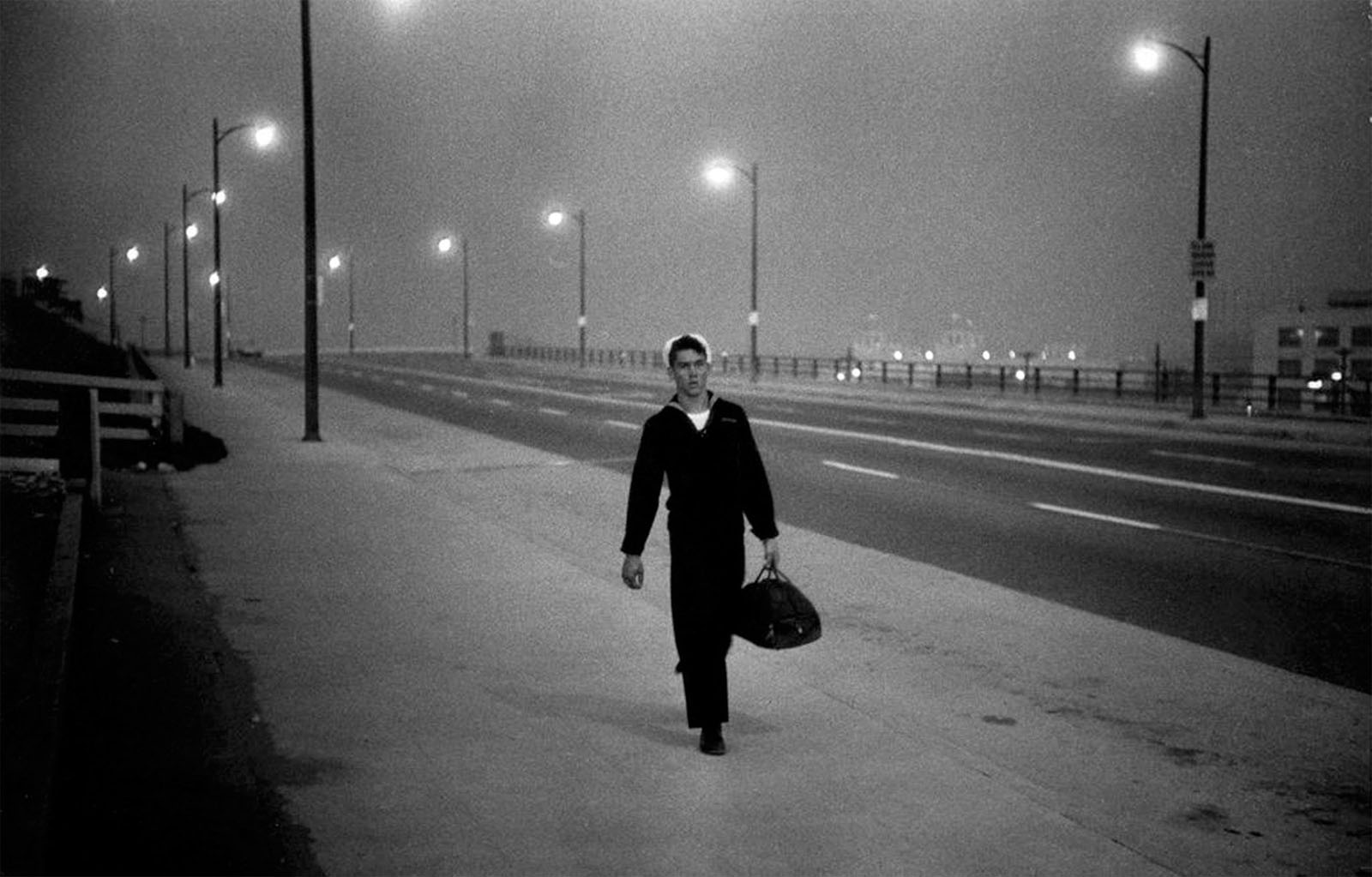
“Winogrand is widely recognised as one of the preeminent photographers of postwar America, though his work remains largely unexplored and incompletely published,” said Earl A. Powell III. “Building on several recent exhibitions of 20th-century American photographers, such as Robert Frank and Harry Callahan, the Gallery is proud to present another major American photographer to our visitors.”

The exhibition was on view at the San Francisco Museum of Modern Art (SFMOMA) from March 9 through June 2, 2013. After Washington, the exhibition will travel to the Metropolitan Museum of Art, New York (June 27 through September 21, 2014); the Jeu de Paume, Paris (October 14, 2014, through January 25, 2015); and the Fundación MAPFRE, Madrid (March 3 through May 10, 2015).

Exhibition highlights

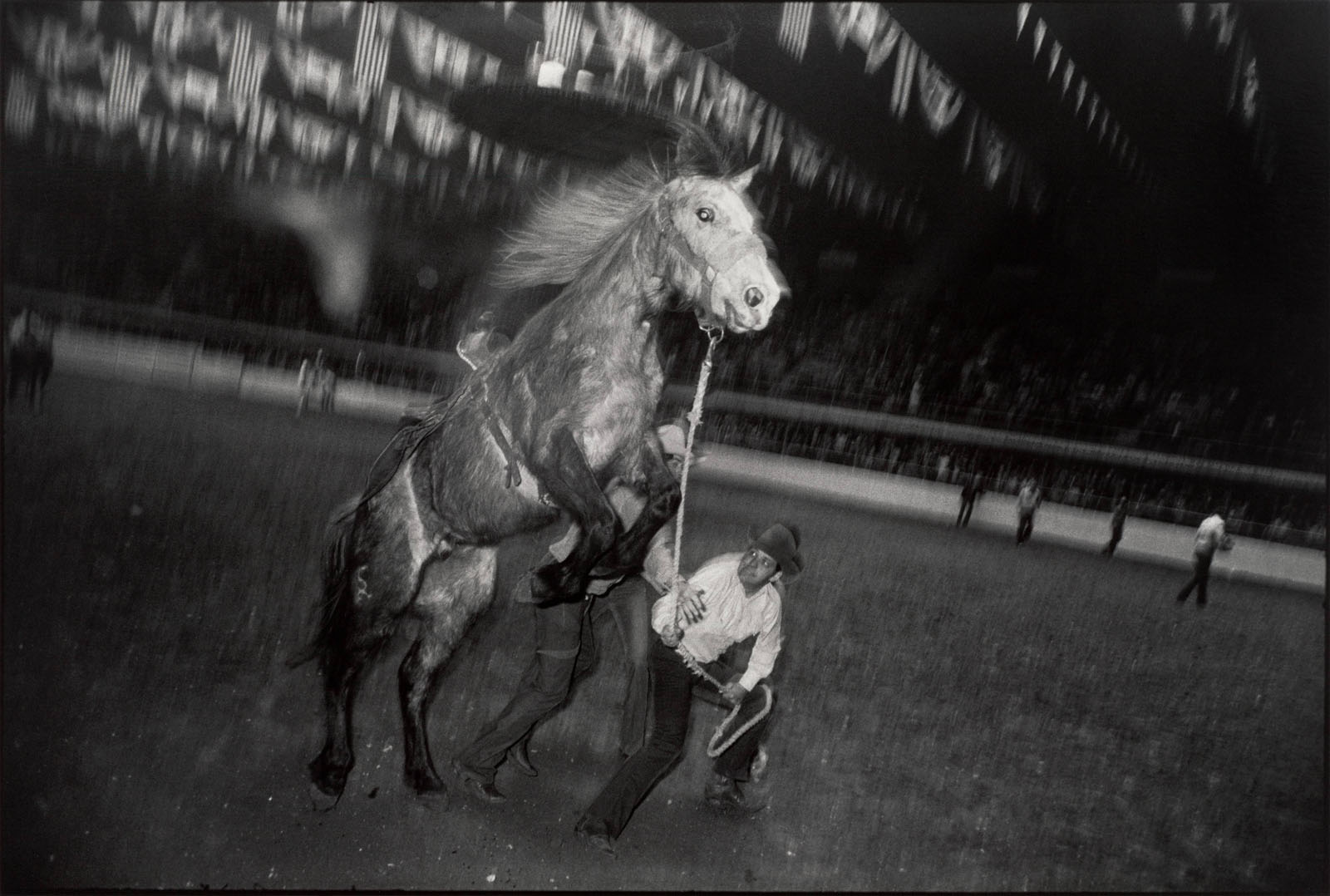
Garry Winogrand (1928-1984), a New Yorker who roamed the United States during the postwar decades, left behind a sweeping portrait of American life. His photographs powerfully combine the hope and exhilaration as well as the anxiety and turbulence that characterised America during these vital years, revealing a country that glitters with possibility but threatens to spin out of control. From Fifth Avenue to Sunset Boulevard, from Cape Kennedy to the Texas State Fair, he made the American middle class the primary subject of his pictures. Endlessly curious, Winogrand scrutinised both cities and suburbs, always on the lookout for those instants when happenstance and optics might join to make a good picture that exposes some deep current in American culture.

Working in the tumultuous postwar decades, Winogrand captured moments of everyday American life, producing an expansive picture of a nation rich with possibility yet threatening to spin out of control. He did much of his best-known work in New York City in the 1960s, but he also traveled widely around the United States, from California and Texas to Miami and Chicago. Combining hope and buoyancy with anxiety and instability, his photographs trace the mood of the country itself, from the ebullience of the postwar optimism to the chaos of the 1960s and the gloom and depression of the post-Vietnam era.

When he died suddenly at age 56, Winogrand left behind thousands of rolls of exposed but undeveloped film and unedited contact sheets – some 250,000 frames in total. Many of these pictures have been printed for the first time for this long-awaited retrospective of his work. By presenting such archival discoveries alongside celebrated pictures, Garry Winogrand reframes a career that was, like the artist’s America, both epic and unresolved.

The exhibition is divided into three sections over seven galleries, each presenting a broad variety of subjects found in Winogrand’s art. “Down from the Bronx” presents photographs taken in New York City from his start in 1950 to 1971; “A Student of America” looks at work made in the same period during journeys outside New York; and “Boom and Bust” addresses Winogrand’s late period – from 1971, when he moved away from New York, to his death in 1984 – including photographs from Texas and Southern California, as well as Chicago, Washington, and Miami. The third section also presents a small number of Manhattan photographs made during Winogrand’s return visits; like much of his later work, they express a sense of desolation unprecedented in his earlier photographs.

Plunging headlong into his work, Winogrand preferred shooting film to editing his pictures or producing books and exhibitions. As a result, many of his strongest early photographs fell into obscurity as he matured, while numerous later ones remained unprocessed at his death. Winogrand never published or exhibited approximately one-third of the photographs presented here, and more than sixty have been printed for this exhibition and are being shown in public for the first time. By presenting such discoveries alongside his celebrated pictures, Garry Winogrand reinterprets a career that was, like the artist’s America, both epic and unresolved. A video of Winogrand at Rice University in the 1970s, edited for the exhibition, allows visitors to experience rare footage of the artist talking to students in a casual, extemporaneous manner.

Garry Winogrand (1928-1984)

Born in the Bronx, Winogrand is known primarily as a New York City street photographer, often associated with famed contemporaries Diane Arbus and Lee Friedlander. Exposing some 20,000 rolls of film in his short lifetime, Winogrand photographed business moguls, everyday women on the street, famous actors and athletes, hippies, politicians, antiwar demonstrators, soldiers, animals in zoos, rodeos, car culture, and airports. He was also an avid traveler who roamed around the United States to locations that included Los Angeles, San Francisco, Dallas, Houston, Chicago, Ohio, Colorado, and the open country of the Southwest.

After serving in the military as a weather forecaster, Winogrand began working as a photographer while studying painting on the G.I. Bill at Columbia University (1948-1951). He supplied commercial photographs to such general-interest magazines as Life, Look, Sports Illustrated, Collier’s, and Pageant. His career was further shaped by the decline of these popular magazines and the rise of a new culture of photography centred in the art world.

Although Winogrand was a prolific photographer throughout his career, he largely postponed printing and editing his work, especially at the end of his life. He published five books, but they contain only a fraction of his oeuvre. In his later years he spoke of reviewing and reediting all of his photographs, but he died abruptly, leaving behind more than 6,500 rolls of film (almost 250,000 images) that he had never seen, as well as proof sheets from his earlier years that he had marked but never printed. Winogrand’s archive, including his film and proof sheets, is now housed at the Center for Creative Photography of the University of Arizona, Tucson.

Press release from the National Gallery of Art website


Garry Winogrand (American, 1928-1984) 'New York' c. 1960


Garry Winogrand (American, 1928-1984)
New York
c. 1960
Gelatin silver print
Framed: 40.64 x 50.8cm (16 x 20 in.)
The Garry Winogrand Archive, Center for Creative Photography, The University of Arizona
© The Estate of Garry Winogrand, courtesy Fraenkel Gallery, San Francisco


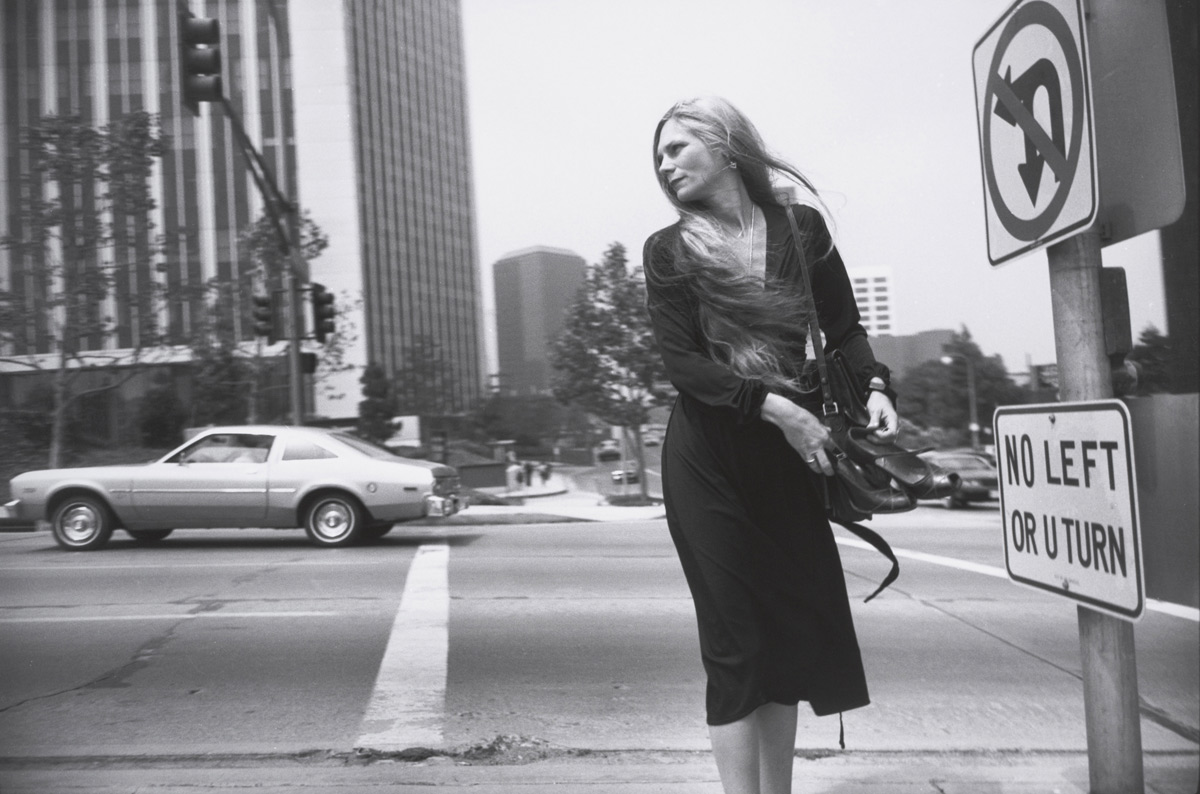
Garry Winogrand (American, 1928-1984) 'Los Angeles' 1980-1983


Garry Winogrand (American, 1928-1984)
Los Angeles
1980-1983
Gelatin silver print
Framed: 40.64 x 50.8cm (16 x 20 in.)
The Garry Winogrand Archive, Center for Creative Photography, The University of Arizona
© The Estate of Garry Winogrand, courtesy Fraenkel Gallery, San Francisco


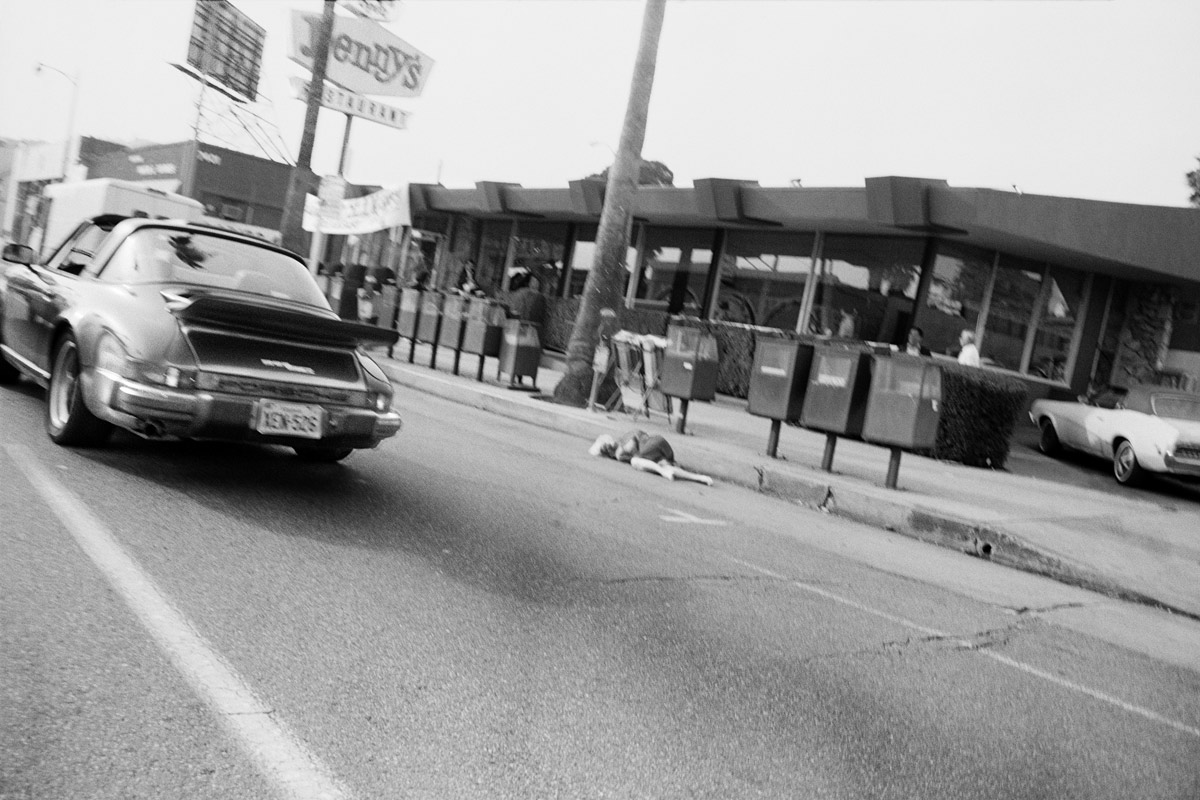
Garry Winogrand (American, 1928-1984) 'Los Angeles' 1980-1983


Garry Winogrand (American, 1928-1984)
Los Angeles
1980-1983
Gelatin silver print
Framed: 45.72 x 55.88cm (18 x 22 in.)
Posthumous print made from original negative on the occasion of the Garry Winogrand exhibition organised by the National Gallery of Art and the San Francisco Museum of Modern Art, courtesy Center for Creative Photography, The University of Arizona
© The Estate of Garry Winogrand, courtesy Fraenkel Gallery, San Francisco


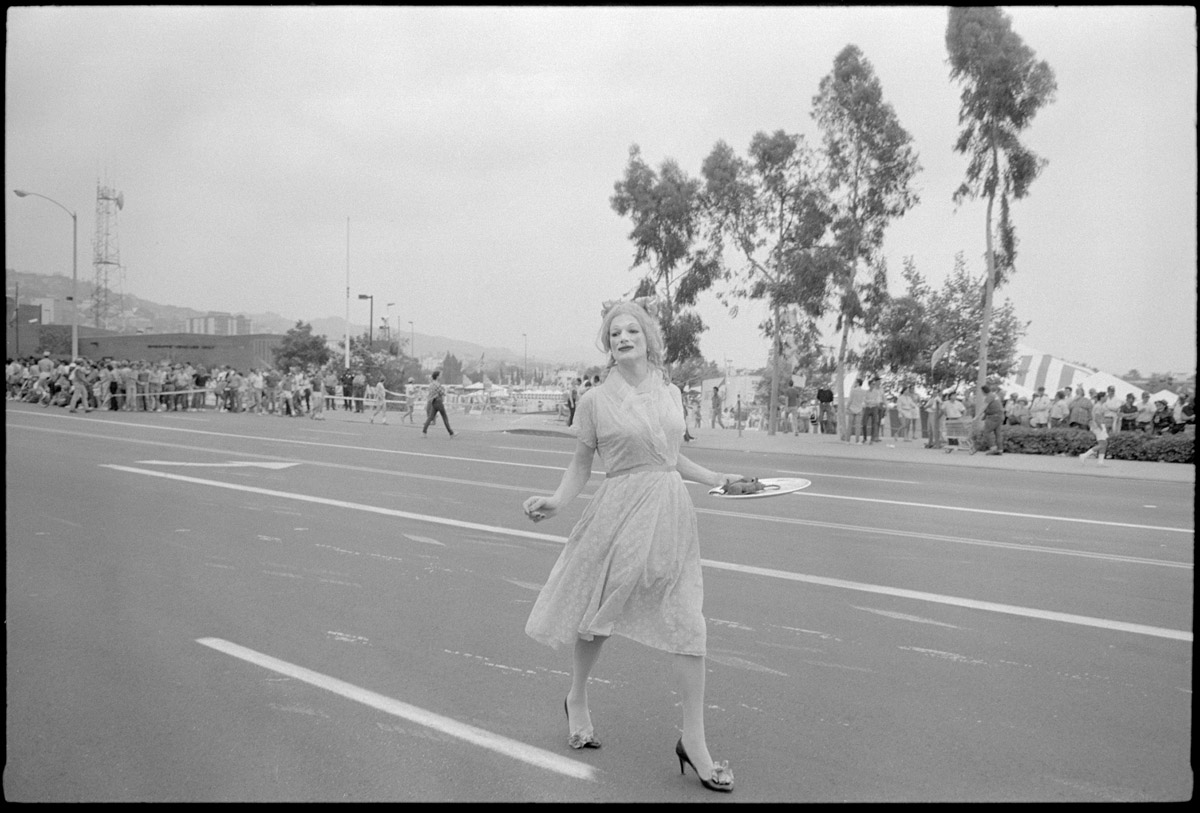
Garry Winogrand (American, 1928-1984) 'Los Angeles' 1983


Garry Winogrand (American, 1928-1984)
Los Angeles
1983
Gelatin silver print
Framed: 45.72 x 55.88cm (18 x 22 in.)
Posthumous print made from original negative on the occasion of the Garry Winogrand exhibition organised by the National Gallery of Art and the San Francisco Museum of Modern Art, courtesy Center for Creative Photography, The University of Arizona
© The Estate of Garry Winogrand, courtesy Fraenkel Gallery, San Francisco


Garry Winogrand (American, 1928-1984) 'New York' 1961


Garry Winogrand (American, 1928-1984)
New York
1961
Gelatin silver print
Framed: 50.8 x 40.64cm (20 x 16 in.)
The Museum of Modern Art, New York. Purchase and gift of Barbara Schwartz in memory of Eugene M. Schwartz
© The Estate of Garry Winogrand, courtesy Fraenkel Gallery, San Francisco


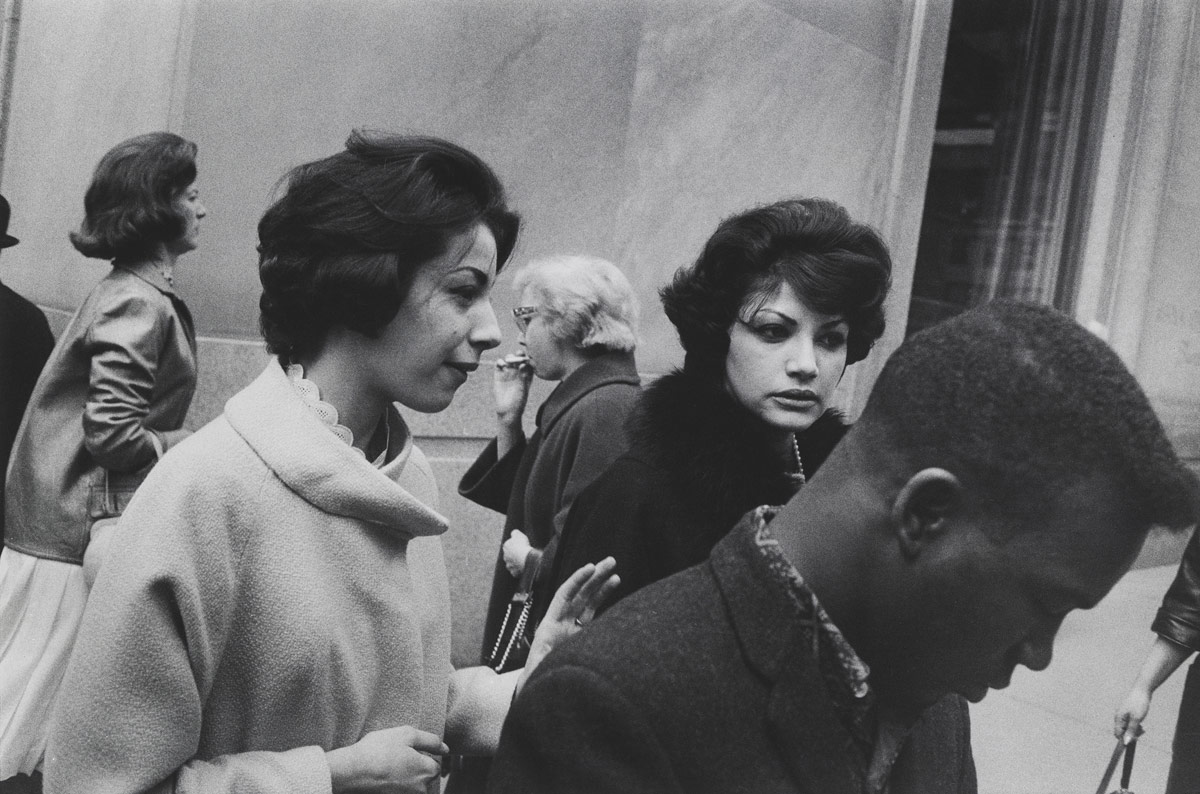
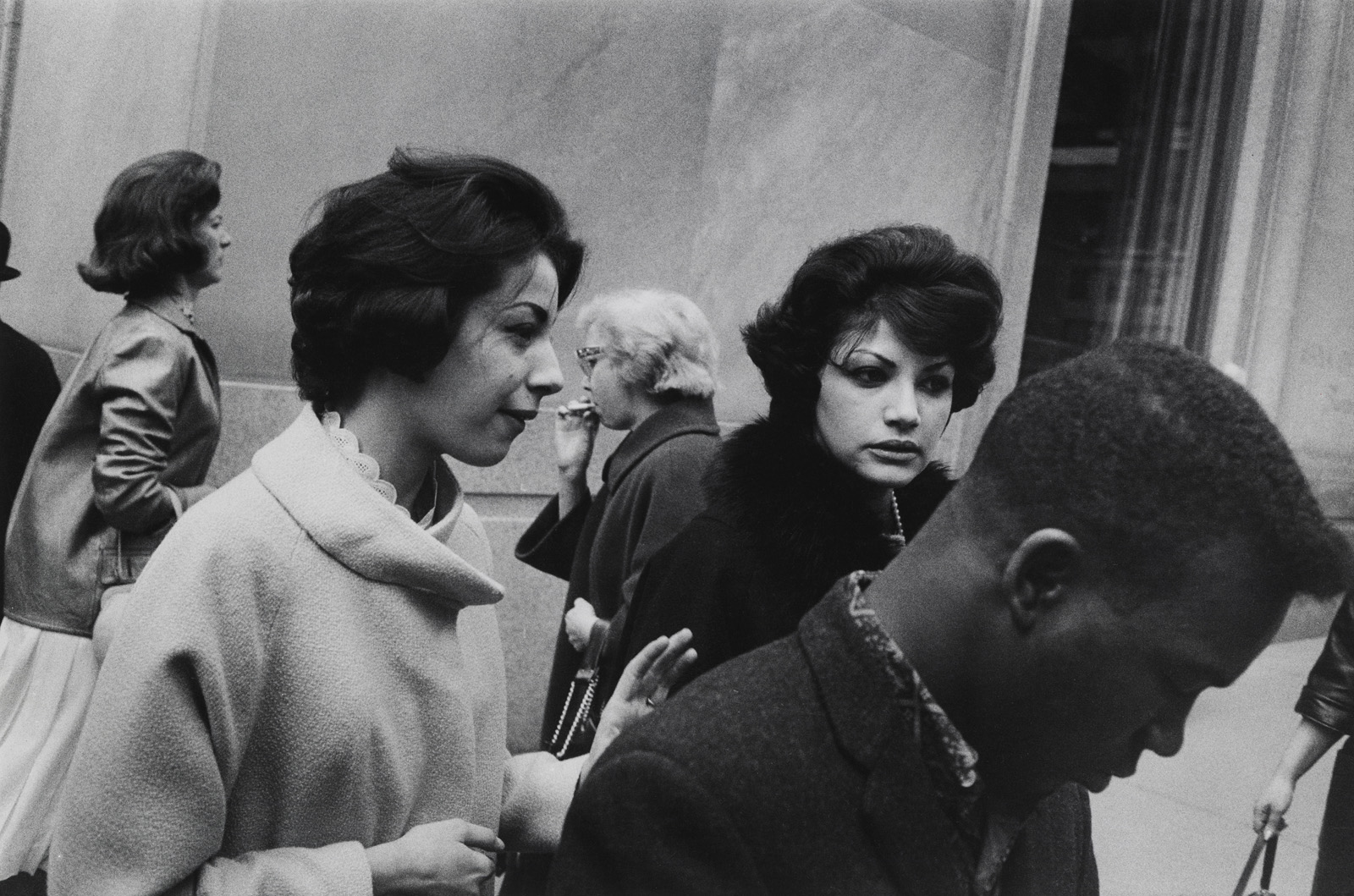
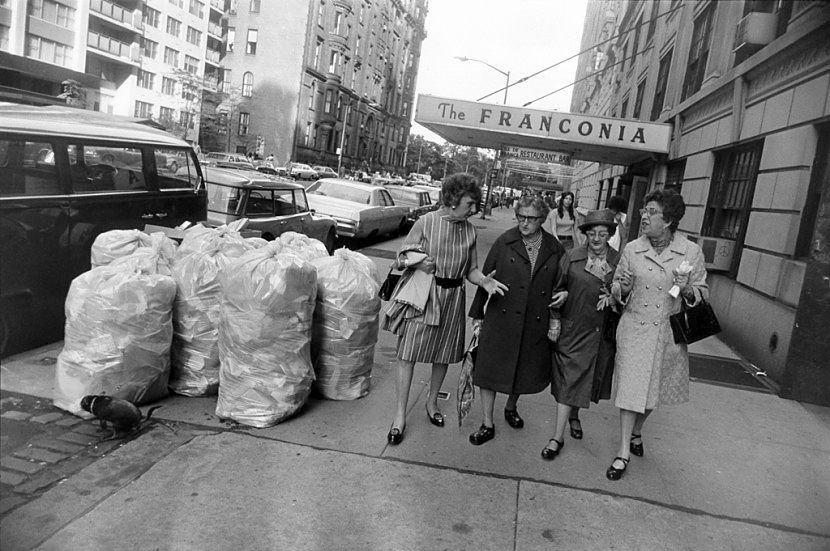
Garry Winogrand (American, 1928-1984) 'Park Avenue, New York' 1959


Garry Winogrand (American, 1928-1984)
Park Avenue, New York
1959
Gelatin silver print
Framed: 40.64x 50.8cm (16 x 20 in.)
National Gallery of Art, Patrons’ Permanent Fund
© The Estate of Garry Winogrand, courtesy Fraenkel Gallery, San Francisco


National Gallery of Art
National Mall between 3rd and 7th Streets
Constitution Avenue NW, Washington

Opening hours:
Daily 10.00am – 5.00pm

National Gallery of Art website

LIKE ART BLART ON FACEBOOK

Back to top

Exhibition: ‘Garry Winogrand’ at the San Francisco Museum of Modern Art (SFMOMA)

Exhibition dates: 9th March – 2nd June 2013


Garry Winogrand (American, 1928-1984) 'Utah (Wyoming)' 1964


Garry Winogrand (American, 1928-1984)
Utah (Wyoming)
1964
Silver gelatin photograph
© The Estate of Garry Winogrand


“Every photograph is a battle of form versus content.”


Garry Winogrand


Playing God with his film

Form and content. Form and content.

I don’t like the work of Garry Winogrand. Never have, never will. I think his work is overrated and and somewhat trite. That should stir up all the Winophiles who think that he is one of the best street photographers in the history of the medium!

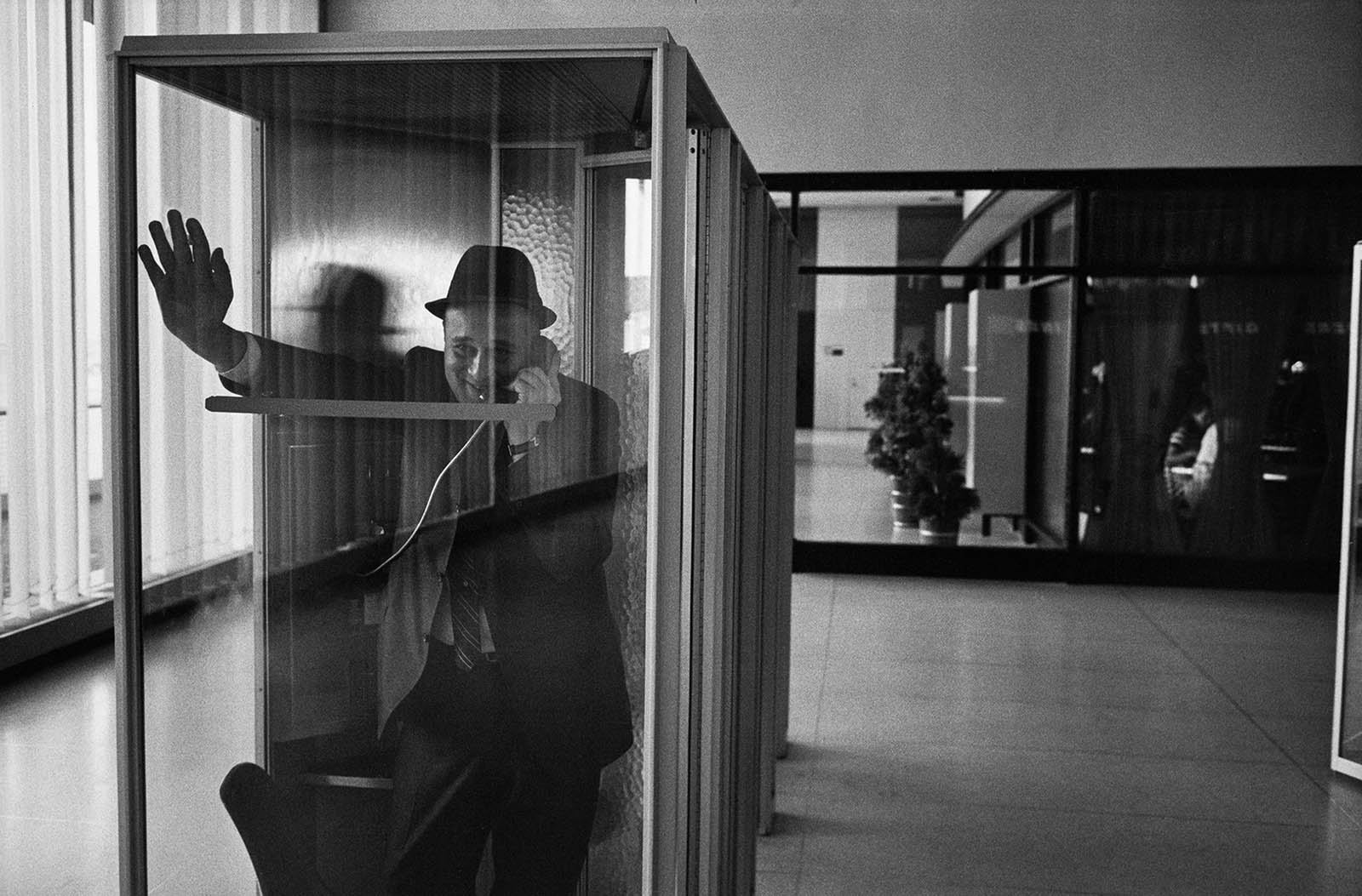
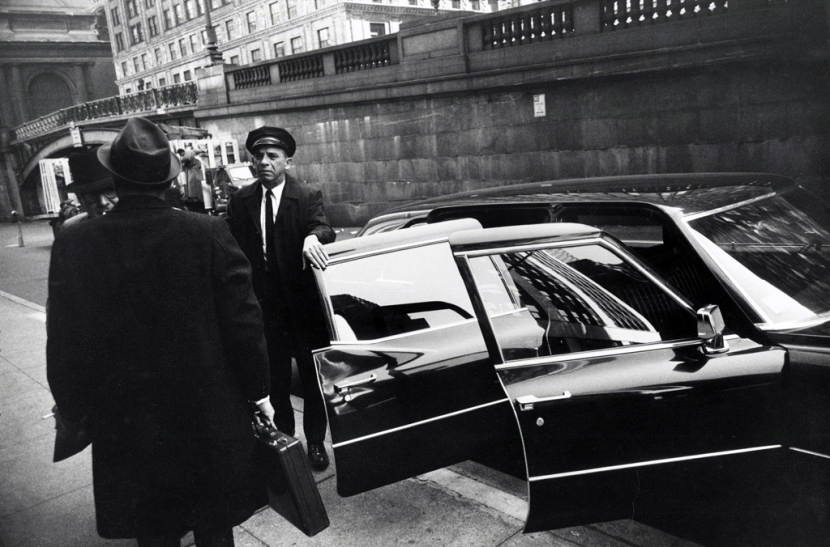
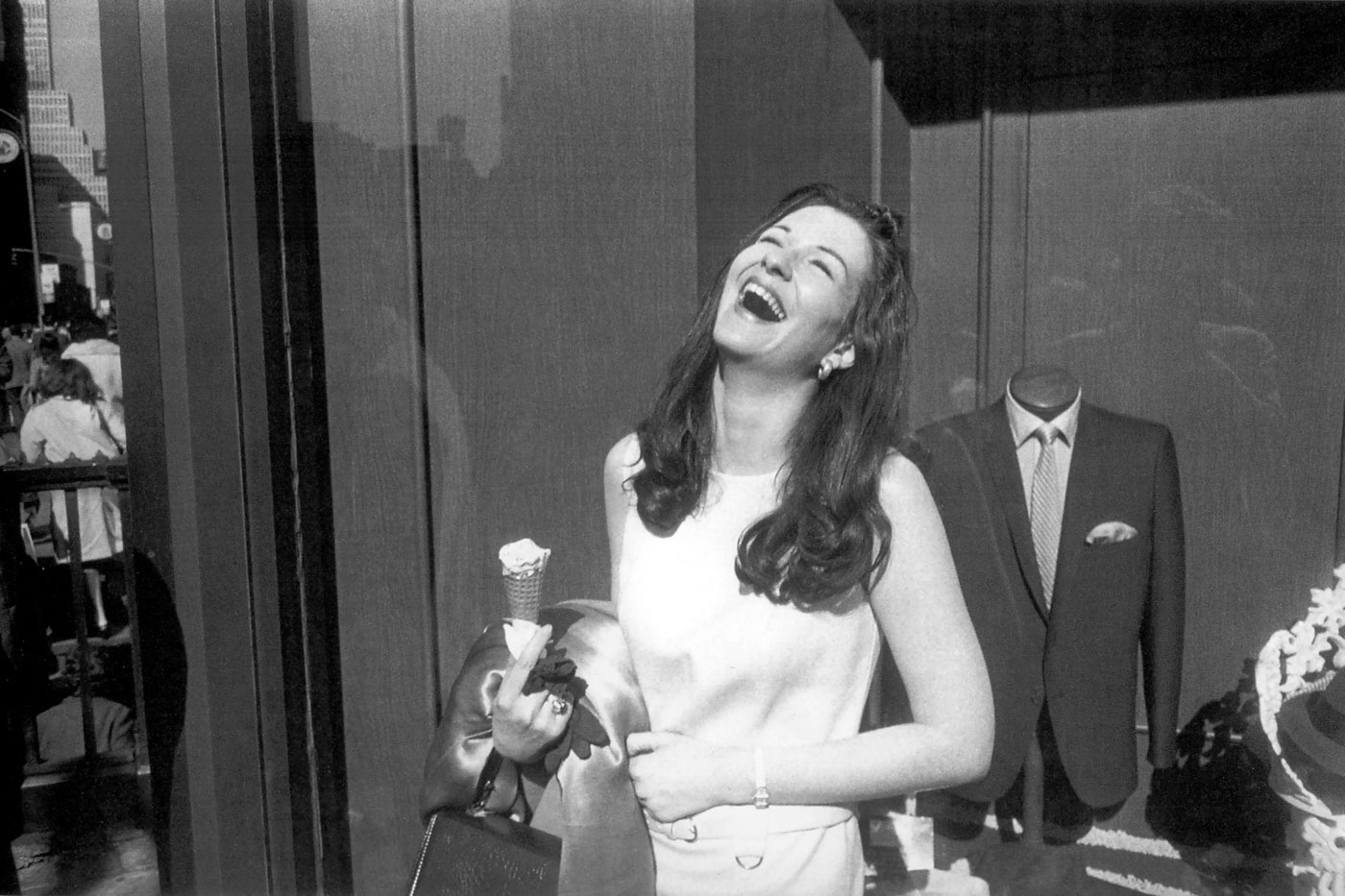
At best his form is average – technical aspects adequate; composition is pretty basic including dull use of tension points within the picture frame; and framing very bland, tilted angles not withstanding. His content is nothing special either, mainly frontal shots of people walking towards him or voyeuristic shots while mingled in crowds, or a mixture of both. As he himself says, “I don’t have anything to say in any picture. My only interest in photography is to see what something looks like as a photograph.” By letting the medium describe the world around him. And therein lies part of the problem.

Winogrand just looks – and you can’t fault someone for just looking. It’s just a not very interesting looking.

If I really look at Winogrand’s work I can see that he just states what he saw in shot after shot after shot, indiscriminately. Personally, I find there is a real cynicism in his work. The photographs “describe” his own state of mind – as much as he denies that he (or his state of mind) has anything to do with the act of describing the world through photography. You see, it’s all about how the camera sees the world and not how he sees it. Hence, Winogrand hardly embraces his feelings towards the world and if he does, it is only in a half-hearted manner. For example, he goes a certain way towards the dark (as in the photographs Utah (Wyoming), 1964 above, and Los Angeles, 1964, below) and then stops. The other part of the problem is this: what you can also fault is all the hyperbole that is laid over the top of his work by curators and museums – because on close examination the work really doesn’t justify it. It’s actually not that good.

Winogrand states and summarises but doesn’t solve. He just keeps adding to the list occasionally, under duress, ordering it (photographs of women in the book Women are Beautiful, 1975):

“During his Austin years he was preparing two books, Public Relations and Women are Beautiful. Given his method of printing every image on the contact sheet for the selection process, and given his proclivity for the physical act of shooting, no wonder he wasn’t out on the street as much as he’d like. Yes he had to print, select and publish some prints to survive unless he wanted to teach the rest of his life. I don’t believe he wanted to do that. Had there been a way, I believe he would died a blissful death had he been on the streets clicking away and either letting the exposed film rot or letting someone else process and print them, and arrange the books and shows and collect the money. That’s how much he loved the physical act of shooting.

He felt at home out there, looking for the next image to expose. He was also the boss out there, playing God with his film and deciding where to frame that next battle between form and content, then the next and the next.”1


Playing God with his film…

In some ways Winogrand reminds me of both the king and the court jester. King because he could frame the battle between form and content ad infinitum and jester because he was the fool, standing in front of people, laughing, smiling, obsequious, running hither and yon to get every shot, any shot. See the video below to understand what I mean. Unlike the photographs in Robert Frank’s The Americans, his is not a poetic understanding of the world for the difference between Robert Frank and Garry Winogrand is that the former’s photographs are undeniably poetic while the latter’s are prosaic aphorisms about the world. In Winogrand’s “describing” the social landscape he photographed is reduced to lists of things: “the dislocation of urban life, the rise of the suburb with its growing alienation, the skepticism of youth, and the collusion of the press and the powerful,” rarely pursued by any obvious means and certainly not through poetic evocation.

I think that Winogrand struggled with the question – do I add to the list or do I order the list? Obviously he chose the former, for if there is no order in life there can be no order in the archive. Hence we are left with the “Unfinished” Late Work, an archive of 250,000 images that have remained virtually unknown. A boon for researchers and curators wishing to position Winogrand’s legacy “revealing for the first time the full sweep of his career… creating a vivid portrait of the artist.”

Even when the artist could not be bothered (so why should we bother).
Even when the images were never seen or acknowledged.
The artist streetwise in his omnipotent isolation.

Dr Marcus Bunyan


1/ Garza, O. C. Class Time with Garry Winogrand. 2007, p. 19 [Online] Cited 26/05/2013
www.ocgarzaphotography.com/documents/ClassTimewithGarryWinograndfinal2.pdf


“Great photography is always on the edge of failure.”

“I photograph to see what the world looks like in photographs.”

“I like to think of photographing as a two-way act of respect. Respect for the medium, by letting it do what it does best, describe. And respect for the subject, by describing as it is. A photograph must be responsible to both.”

“I don’t have anything to say in any picture. My only interest in photography is to see what something looks like as a photograph. I have no preconceptions.”


Garry Winogrand


“We quickly learned Winogrand’s technique – he walked slowly or stood in the middle of pedestrian traffic as people went by. He shot prolifically. I watched him walk a short block and shoot an entire roll without breaking stride. As he reloaded, I asked him if he felt bad about missing pictures when he reloaded. “No,” he replied, “there are no pictures when I reload.” He was constantly looking around, and often would see a situation on the other side of a busy intersection. Ignoring traffic, he would run across the street to get the picture.”


Mason Resnick


“Form and content are two keys which make a memorable street photograph. Consider “form” as the composition, framing, and technical aspects of a photograph. Consider “content” as what is actually happening in the photograph (whether it be an old couple holding hands, a boy holding two bottles of wine, or a man looking through a peep-hole)… Garry Winogrand shot with a 28mm lens for most of his life [using a Leica M4 35mm and Tri-X film pushed to 1200 ASA], which meant that for the majority of his shots he had to be quite close to his subjects (and in front of them). Therefore Winogrand wasn’t Henri Cartier-Bresson (trying to be invisible) but was actively a part of the action and immersed in the crowds. He would be very obviously taking photographs in the streets and would stick out like a sore thumb.”


Eric Kim


Garry Winogrand – Part 1 


Garry Winogrand – Fotograf


Garry Winogrand – The Man In The Crowd


Garry Winogrand (American, 1928-1984) 'Albuquerque' 1957


Garry Winogrand (American, 1928-1984)
Albuquerque
1957
Gelatin silver print
Collection SFMOMA, gift of Dr. Paul Getz
© The Estate of Garry Winogrand, courtesy Fraenkel Gallery, San Francisco


Garry Winogrand (American, 1928-1984) 'Park Avenue, New York' 1959


Garry Winogrand (American, 1928-1984)
Park Avenue, New York
1959
Gelatin silver print
© The Estate of Garry Winogrand, courtesy Fraenkel Gallery, San Francisco


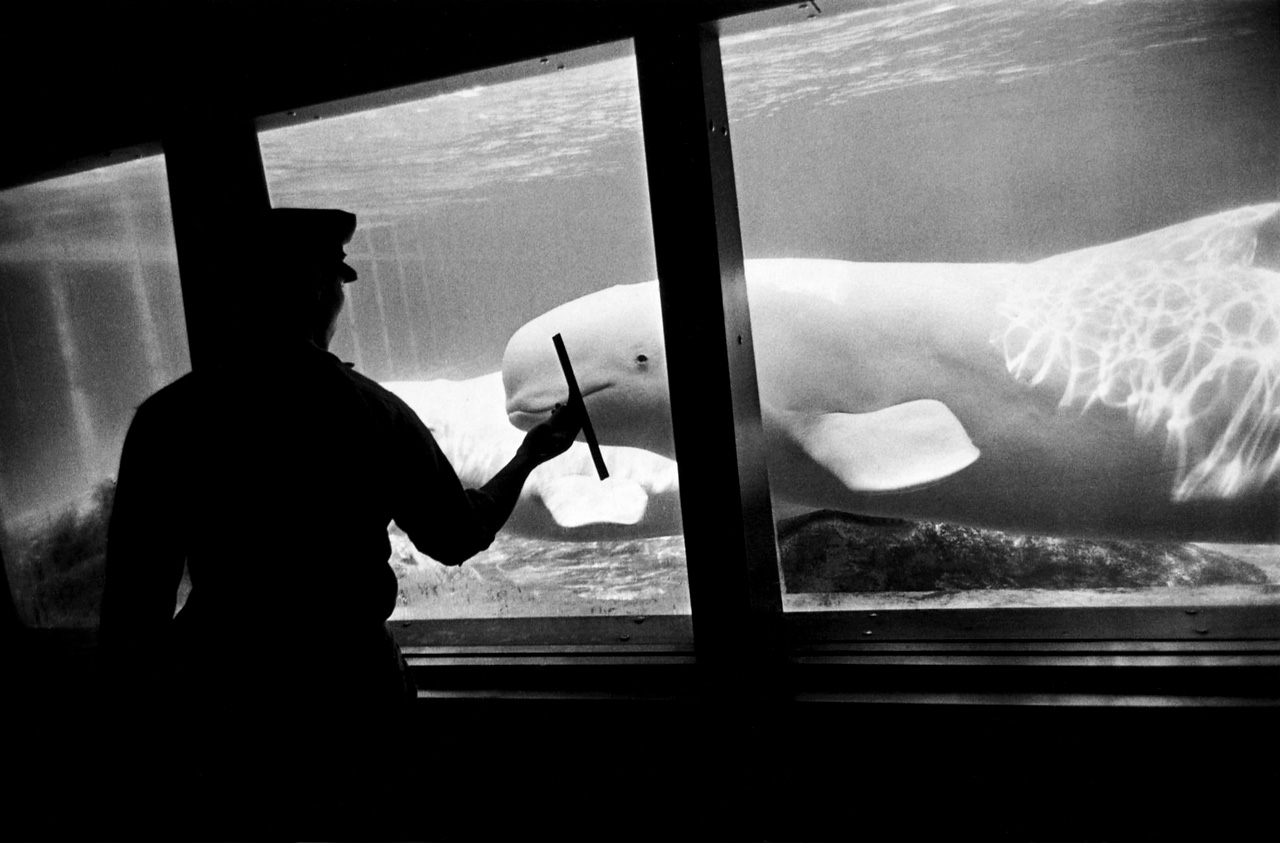
Garry Winogrand (American, 1928-1984) 'Central Park Zoo, New York' 1967


Garry Winogrand (American, 1928-1984)
Central Park Zoo, New York
1967
Gelatin silver print
© The Estate of Garry Winogrand, courtesy Fraenkel Gallery, San Francisco


Since Winogrand took this photograph of a white woman and a Black man, each holding a chimpanzee dressed in children’s clothing, many critics have noted the picture’s deliberate ambiguity – not only about the circumstances of how these figures came to be here, but also about the way Winogrand chose to frame them with his camera, cutting out most of the surrounding context.

During the 1960s, Winogrand became increasingly reluctant to speak about the “meaning” of his photographs, preferring to focus on their form and technique, in spite of their excessive narrative potential. Perhaps this was a reaction against his photojournalistic and advertising work, which was often illustrative. Winogrand would cite Susan Sontag’s influential essay “Against Interpretation” (1964), which deplored the growing impulse at the time to reduce works of art to their content in order to make them mean something. She argued, like Winogrand, in favor of the pleasure and poetry of seeing.

Anonymous. “Central Park Zoo-New York, New York,” on the Brooklyn Museum website Nd [Online] Cited 14/07/2024


Garry Winogrand (American, 1928-1984) 'Fort Worth, Texas' 1974


Garry Winogrand (American, 1928-1984)
Fort Worth, Texas
1974
Gelatin silver print
Collection SFMOMA, Accessions Committee Fund: gift of Doris and Donald Fisher and Marion E. Greene
© The Estate of Garry Winogrand, courtesy Fraenkel Gallery, San Francisco


Garry Winogrand (American, 1928-1984) 'Fort Worth, Texas' 1975


Garry Winogrand (American, 1928-1984)
Fort Worth, Texas
1975
Gelatin silver print
Collection SFMOMA, gift of Dr. Paul Getz
© The Estate of Garry Winogrand, courtesy Fraenkel Gallery, San Francisco


Garry Winogrand (American, 1928-1984) 'John F. Kennedy, Democratic National Convention, Los Angeles' 1960


Garry Winogrand (American, 1928-1984)
John F. Kennedy, Democratic National Convention, Los Angeles
1960
Posthumous digital reproduction from original negative
Garry Winogrand Archive, Center for Creative Photography, University of Arizona
© The Estate of Garry Winogrand, courtesy Fraenkel Gallery, San Francisco


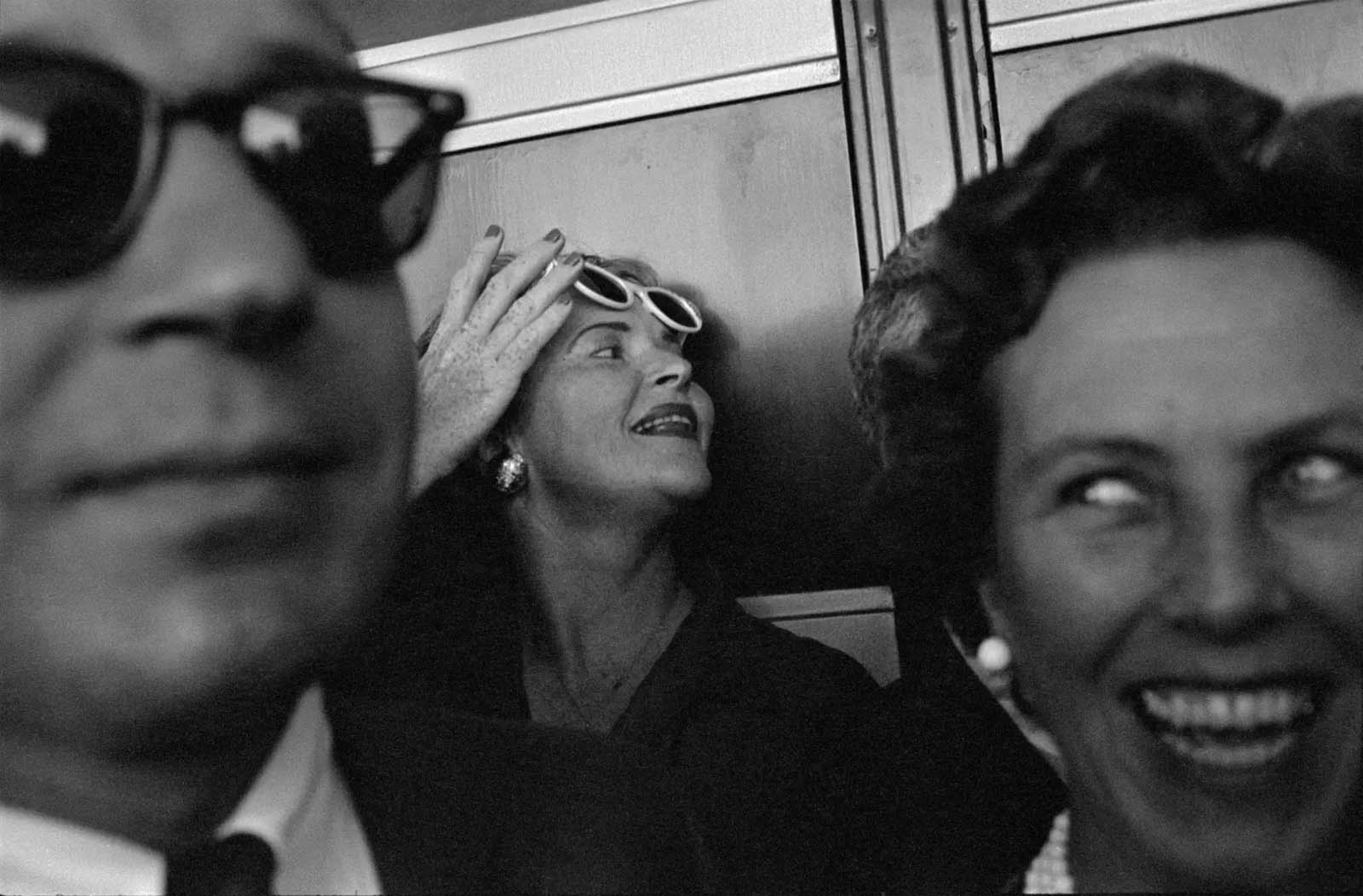
Garry Winogrand (American, 1928-1984) 'Democratic National Convention, Los Angeles' 1960


Garry Winogrand (American, 1928-1984)
Democratic National Convention, Los Angeles
1960
Silver gelatin photograph
© The Estate of Garry Winogrand


Garry Winogrand (American, 1928-1984) 'New York' c. 1960


Garry Winogrand (American, 1928-1984)
New York
c. 1960
Gelatin silver print
Garry Winogrand Archive, Center for Creative Photography, University of Arizona
© The Estate of Garry Winogrand, courtesy Fraenkel Gallery, San Francisco


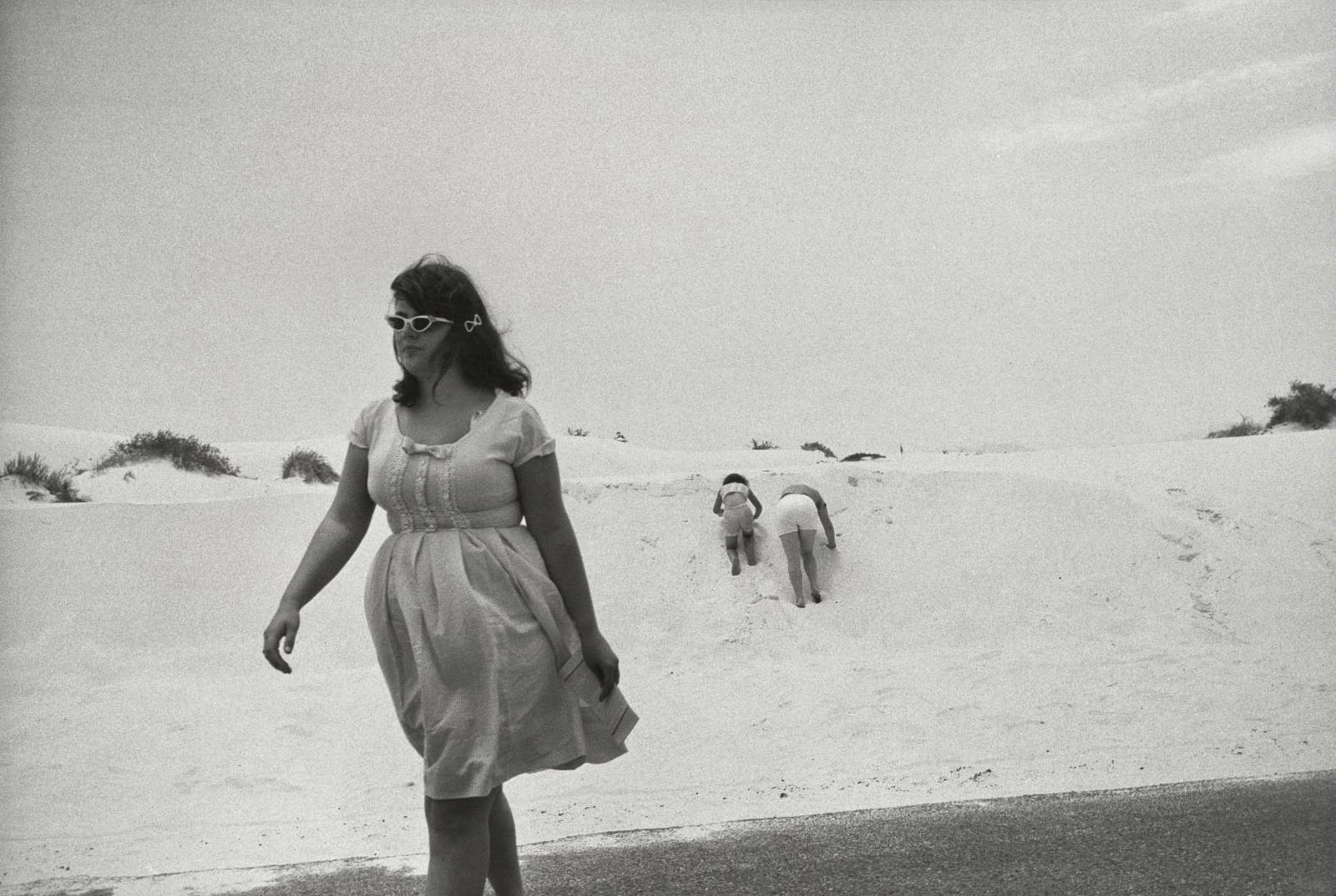
Garry Winogrand (American, 1928-1984) 'White Sands National Monument, New Mexico' 1964


Garry Winogrand (American, 1928-1984)
White Sands National Monument, New Mexico
1964
Gelatin silver print
© The Estate of Garry Winogrand, courtesy Fraenkel Gallery, San Francisco


Garry Winogrand (American, 1928-1984) 'New York' 1969


Garry Winogrand (American, 1928-1984)
New York
1969
Gelatin silver print
© The Estate of Garry Winogrand, courtesy Fraenkel Gallery, San Francisco


Garry Winogrand (American, 1928-1984) 'Elliot Richardson Press Conference, Austin, Texas' 1973


Garry Winogrand (American, 1928-1984)
Elliot Richardson Press Conference, Austin, Texas
1973
Silver gelatin photograph
© The Estate of Garry Winogrand


Elliot Lee Richardson (July 20, 1920 – December 31, 1999) was an American lawyer and politician who was a member of the cabinet of Presidents Richard Nixon and Gerald Ford. As U.S. Attorney General, he was a prominent figure in the Watergate Scandal, and resigned rather than obey President Nixon’s order to fire special prosecutor Archibald Cox.

Text from Wikipedia website


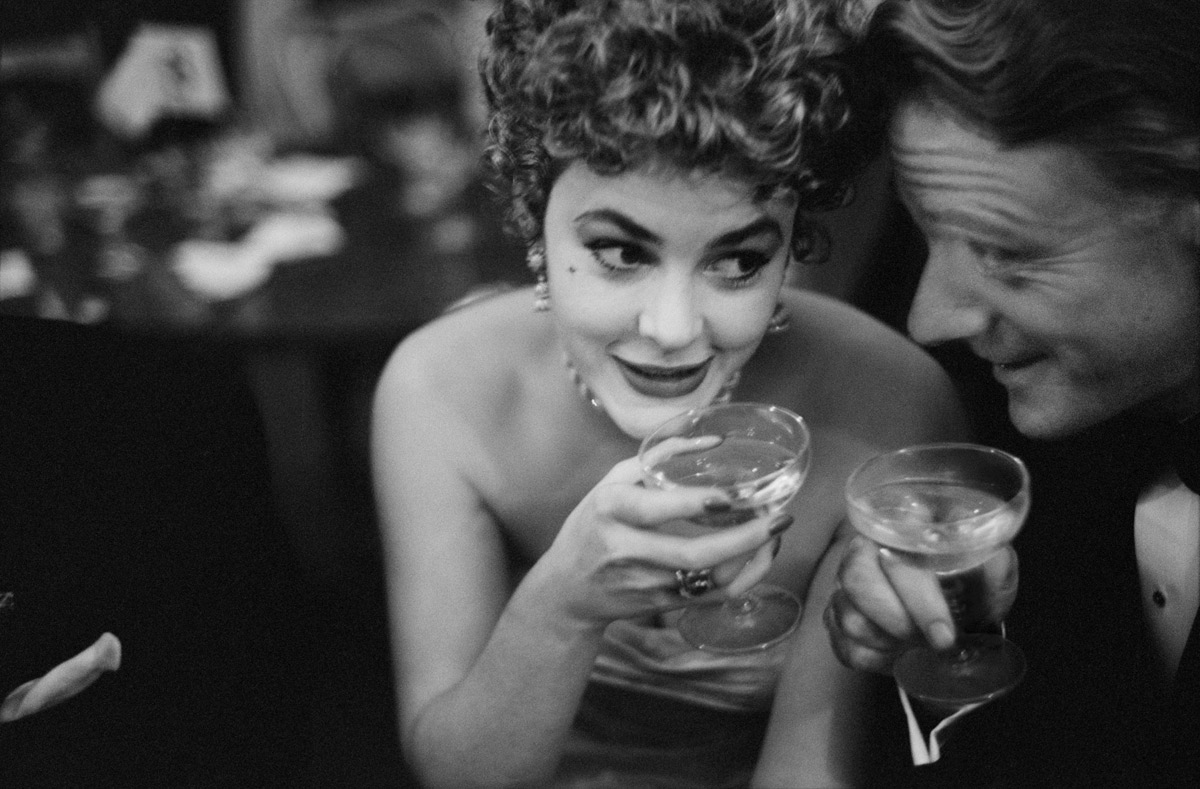
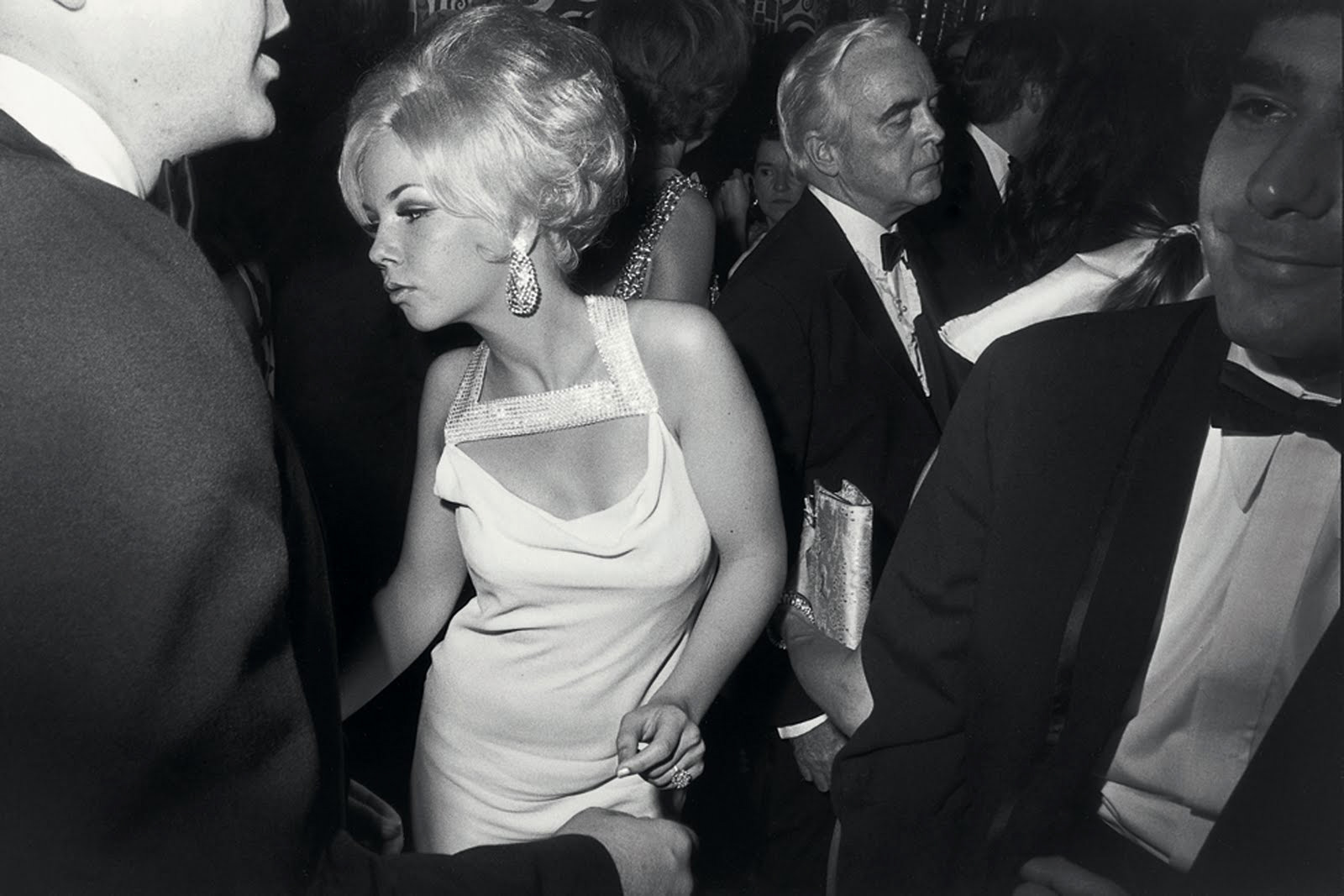
Garry Winogrand (American, 1928-1984) 'Centennial Ball, Metropolitan Museum, New York' 1969


Garry Winogrand (American, 1928-1984)
Centennial Ball, Metropolitan Museum, New York
1969
Silver gelatin photograph
© The Estate of Garry Winogrand


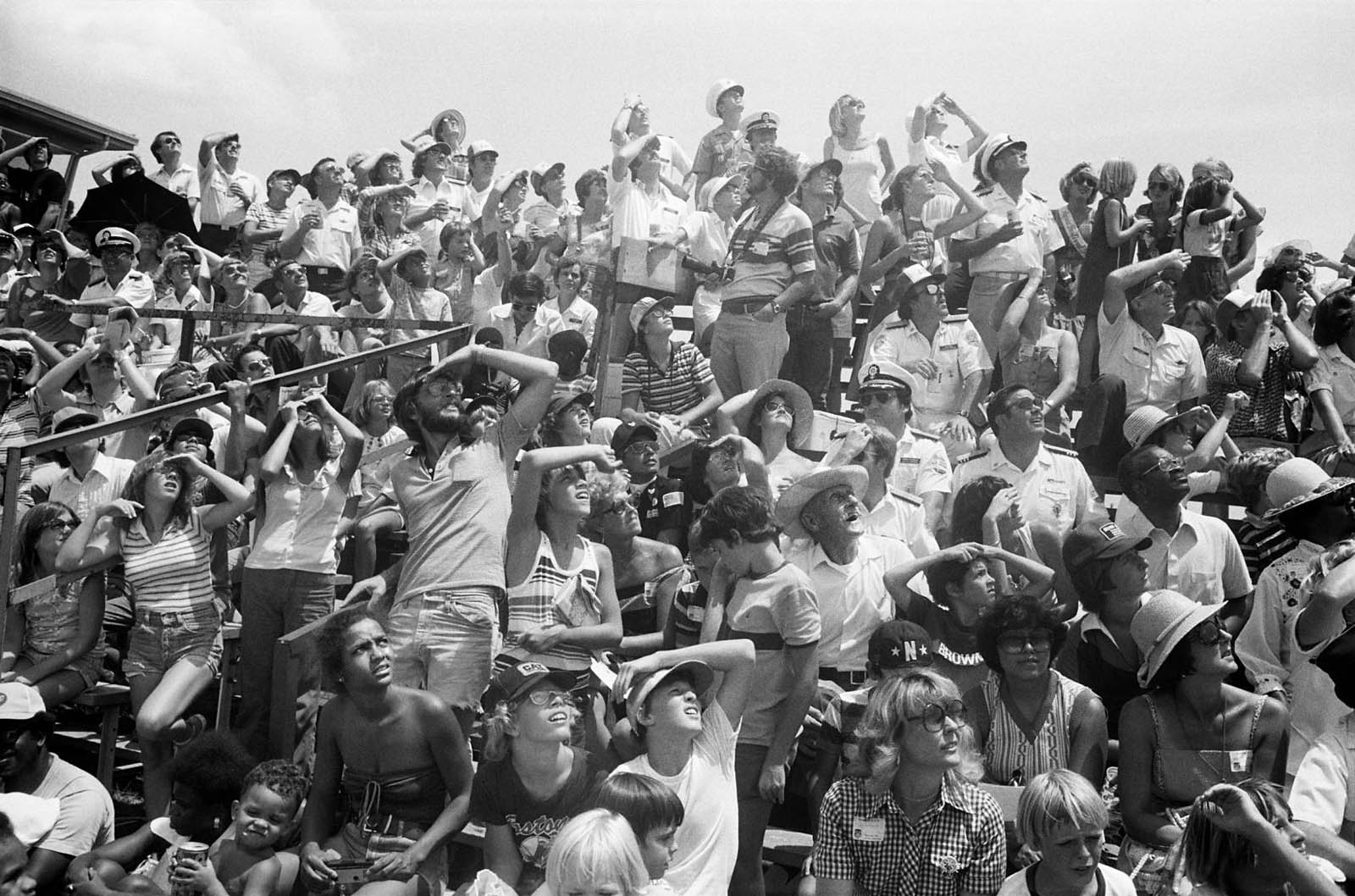
Garry Winogrand (American, 1928-1984) 'Point Mugu Naval Air-Station, California' 1979


Garry Winogrand (American, 1928-1984)
Point Mugu Naval Air-Station, California
1979
Silver gelatin photograph
© The Estate of Garry Winogrand


Garry Winogrand (American, 1928-1984) 'Untitled' 1970


Garry Winogrand (American, 1928-1984)
Untitled
1970
Silver gelatin photograph
© The Estate of Garry Winogrand


Garry Winogrand (American, 1928-1984) 'Venice Beach, Los Angeles' 1979


Garry Winogrand (American, 1928-1984)
Venice Beach, Los Angeles
1979
Silver gelatin photograph
© The Estate of Garry Winogrand


The first retrospective in 25 years of work by artist Garry Winogrand (1928-1984) – the renowned photographer of New York City and of American life from the 1950s through the early 1980s – will debut at the San Francisco Museum of Modern Art (SFMOMA) from March 9 through June 2, 2013. Jointly organised by SFMOMA and the National Gallery of Art, Washington, D.C., Garry Winogrand brings together the artist’s most iconic images with newly printed photographs from his largely unexamined archive of late work, offering a rigorous overview of Winogrand’s complete working life and revealing for the first time the full sweep of his career. More than 300 photographs in the exhibition and more than 400 in the accompanying catalogue will create a vivid portrait of the artist – a chronicler of postwar America on a par with such figures as Norman Mailer and Robert Rauschenberg who unflinchingly captured America’s wrenching swings between optimism and upheaval in the decades following World War II.

While Winogrand is widely considered one of the greatest photographers of the 20th century, his overall body of work and influence on the field remains incompletely explored. He was enormously prolific but largely postponed the editing and printing of his work. Dying suddenly at the age of 56, he left behind approximately 6,500 rolls of film (some 250,000 images) that he had never seen, as well as proof sheets from his earlier years that he had marked but never printed. Roughly half of the photographs in the exhibition have never been exhibited or published until now; over 100 have never before been printed.

“There exists in photography no other body of work of comparable size or quality that is so editorially unresolved,” says Rubinfien, who was among the youngest of Winogrand’s circle of friends in the 1970s. “This exhibition represents the first effort to comprehensively examine Winogrand’s unfinished work. It also aims to turn the presentation of his work away from topical editing and toward a freer organisation that is faithful to his art’s essential spirit, thus enabling a new understanding of his oeuvre, even for those who think they know him.”

The exhibition is divided into three parts, each covering a broad variety of subjects found in Winogrand’s art. “Down from the Bronx” presents photographs taken for the most part in New York from his start in 1950 until 1971; “A Student of America” looks at work made in the same period during journeys outside New York; and “Boom and Bust” addresses Winogrand’s late period – from when he moved away from New York in 1971 until his death in 1984 – with photographs from Texas and Southern California, as well as Chicago, Washington, Miami, and other locations. This third section also includes a small number of photographs Winogrand made on trips back to Manhattan, which express a sense of desolation unprecedented in his earlier work.

Winogrand was known as great talker with a flamboyant, forceful personality, and what he said accompanying his slide shows and lectures was often imaginative and very funny. A number of videos edited for presentation in the exhibition will allow visitors to experience the living Winogrand as audiences have rarely been able to do for 30-odd years. A short selection from Winogrand’s experimental 8mm footage taken in the late 1960s will also be on view.

After premiering at SFMOMA in spring 2013 Garry Winogrand will travel to the National Gallery of Art, Washington, D.C. (March 2 through June 8, 2014); The Metropolitan Museum of Art, New York (June 27 through September 21, 2014); the Jeu de Paume, Paris (October 14, 2014 through January 25, 2015); and the Fundacion MAPFRE, Madrid (March 3 through May 10, 2015).

An Epic Chronicler of Postwar America

Born in the Bronx, Winogrand did much of his best-known work in Manhattan during the 1960s, and in both the content of his photographs and his artistic style he became one of the principal voices of that eruptive decade – so much so that influential Museum of Modern Art curator John Szarkowski anointed him “the central photographer of his generation.”

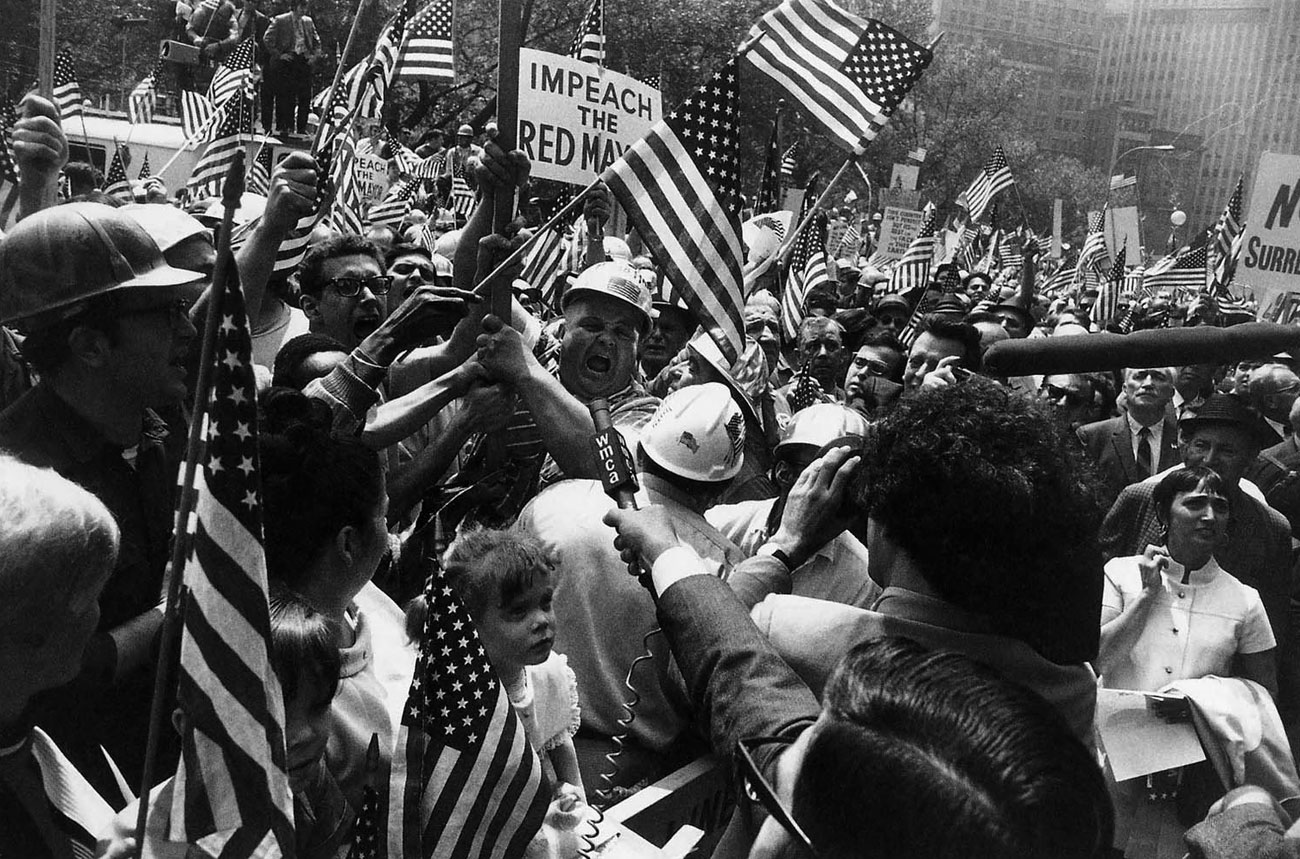
Known primarily as a street photographer, Winogrand, who is often associated with famed contemporaries Diane Arbus and Lee Friedlander, photographed with dazzling energy and incessant appetite, exposing some 20,000 rolls of film in his short lifetime. He photographed business moguls, everyday women on the street, famous actors and athletes, hippies, rodeos, politicians, soldiers, animals in zoos, car culture, airports, and antiwar demonstrators and the construction workers who beat them bloody in view of the unmoved police. Daily life in postwar America – rich with new possibility and yet equally anxious, threatening to spin out of control – seemed to unfold for him in a continuous stream.

Yet if Winogrand was one of New York City’s prime photographers, he was also an avid traveller who roamed widely around the United States, bringing exquisite work out of locations that included Los Angeles, San Francisco, Ohio, Dallas, Houston, Chicago, Colorado, and the open country of the Southwest. “You could say that I am a student of photography,” he said, “and I am; but really I’m a student of America.” Winogrand’s expansive visual catalogue of the nation’s evolving social scene has led to comparisons to Walt Whitman, who also unspooled the world in endless lists of people, places, and things.

Winogrand’s pictures often bulge with twenty or thirty figures, and are fascinating both for their dramatic foregrounds and the sub-events at their edges. Even when crowded with people or at their most lighthearted – he was fond of visual puns and was drawn to the absurd – his pictures can convey a feeling of human isolation, hinting at something darker beneath the veneer of the American dream. Early on, some critics considered his pictures formally “shapeless” and “random,” but admirers and critics later found a unique poetry in his tilted horizons and his love of the haphazard.

“Winogrand was an artistic descendant of Walker Evans and Robert Frank, but differed sharply from them,” says Rubinfien. “He admired Frank’s The Americans, but felt the work missed the main story of its time, which in his mind was the emergence of suburban prosperity and isolation. The hope and buoyancy of middle-class life in postwar America is half of the emotional heart of Winogrand’s work. The other half is a sense of undoing. The tension between these qualities gives his work its distinct character.”

After serving in the military as a weather forecaster, Winogrand first began working as a photographer while studying painting on the G.I. Bill at Columbia University (1948-1951). During that time, he also studied briefly with Alexey Brodovitch at the New School for Social Research. While pursuing his personal work, he began supplying commercial photographs to a number of general-interest magazines such as Life, Look, Sports Illustrated, Collier’s, and Pageant, which were then at the height of their power and reach. His career was further shaped by the decline of those magazines and the rise of a new culture of photography centred in the art world.

“Winogrand worked at a moment when the boundaries between journalistic and artistic photography were less certain than they had ever been, yet it was also a time when the most advanced photographers were consciously abandoning journalistic values,” says Greenough. “The social landscape he photographed – the dislocation of urban life, the rise of the suburb with its growing alienation, the skepticism of youth, and the collusion of the press and the powerful – was of concern to many Americans. Yet Winogrand rarely pursued an obvious means to explicate these ideas, preferring poetic evocation over intelligible journalism.”

Winogrand went on to exhibit widely at prominent museums and achieved renown in his lifetime. Yet despite this recognition, he is perhaps the most inadequately understood of all his contemporaries.

“Unfinished” Late Work Thoroughly Investigated for the First Time

The act of taking pictures was far more fulfilling to Winogrand than making prints or editing for books and exhibitions – he often allowed others to perform these tasks for him. Near the end of his life, he spoke of reviewing and reediting all of his photographs, but never had a chance to oversee the shaping of his legacy, or even to review much of the output of his later years. Because of his working methods and his lack of interest in developing his film toward the end of his life, he left behind more than 2,500 rolls of exposed but undeveloped film, an additional 4,100 rolls that he had processed but never seen – an estimated total of 250,000 images that have remained virtually unknown.

Furthermore, Winogrand published just five modest books during his lifetime – The Animals (1969), Women Are Beautiful (1975), Garry Winogrand (1976), Public Relations (1977), and Stock Photographs (1980) – that represent only a fraction of his work and are mainly confined to narrow topical frames that don’t suggest the full scope of his importance.

“One reason that Winogrand is only now receiving the full retrospective treatment already devoted to peers of his era, including Diane Arbus, Lee Friedlander, and Robert Frank, is that any truly comprehensive consideration of his life’s work requires contending with the practical and ethical issues surrounding the vast archive he left behind,” says O’Toole. “In the absence of explicit instructions from him regarding how he wanted his work to be handled after he was gone, its posthumous treatment has been the subject of ongoing debate and raises provocative questions about the creative process and its relationship to issues specific to the medium.”

“Some argue that what was left behind should be left alone, and that no one should intrude upon the intentions of an artist,” adds Rubinfien. “But the quantity of Winogrand’s output, the incompleteness with which he reviewed it, and the suddenness of his death create a special case in which the true scope of an eminent photographer’s work cannot be known without the intervention of an editor.”

Now housed at the Center for Creative Photography of the University of Arizona, Tucson, Winogrand’s “unfinished” work was initially organized in the years just after his death by several colleagues and friends in preparation for the artist’s first major museum retrospective, held at the Museum of Modern Art, New York (MoMA) in 1988. Exhibition curator John Szarkowski felt the quality of Winogrand’s work had significantly deteriorated in the last 15 years of his life, and included only a small group of pictures from the mysterious late work in MoMA exhibition.

Nearly 30 years have elapsed since the last attempt to grapple with the complete arc of Winogrand’s career. Benefiting from new curatorial research undertaken for this project, the current exhibition will provide a long-awaited reevaluation of his accomplishments. As one of the first museums to recognise photography as a legitimate art form, SFMOMA has collaborated with the National Gallery of Art – who, like SFMOMA, is known for its photography scholarship – in a multi-year endeavour to spearhead the presentation of this important exhibition and publication.”

Press release from the SFMOMA website


Garry Winogrand (American, 1928-1984) 'New York' 1961


Garry Winogrand (American, 1928-1984)
New York
1961
Silver gelatin photograph
© The Estate of Garry Winogrand


Garry Winogrand (American, 1928-1984) 'New York' 1963


Garry Winogrand (American, 1928-1984)
New York
1963
Silver gelatin photograph
© The Estate of Garry Winogrand


Garry Winogrand (American, 1928-1984) 'San Marcos, Texas' 1964


Garry Winogrand (American, 1928-1984)
San Marcos, Texas
1964
Silver gelatin photograph
© The Estate of Garry Winogrand


Garry Winogrand (American, 1928-1984) 'Coney Island, New York' c. 1952


Garry Winogrand (American, 1928-1984)
Coney Island, New York
c. 1952
Gelatin silver print
Collection The Museum of Modern Art, New York, purchase and gift of Barbara Schwartz in memory of Eugene M. Schwartz
© The Estate of Garry Winogrand, courtesy Fraenkel Gallery, San Francisco; digital image
© The Museum of Modern Art/ Licensed by SCALA / Art Resource, NY


Garry Winogrand (American, 1928-1984) 'Fort Worth, Texas' 1974-77


Garry Winogrand (American, 1928-1984)
Fort Worth, Texas
1974-1977
Gelatin silver print
Garry Winogrand Archive, Center for Creative Photography, University of Arizona
© The Estate of Garry Winogrand, courtesy Fraenkel Gallery, San Francisco


Garry Winogrand (American, 1928-1984) 'John F. Kennedy International Airport, New York' 1968


Garry Winogrand (American, 1928-1984)
John F. Kennedy International Airport, New York
1968
Silver gelatin photograph
© The Estate of Garry Winogrand


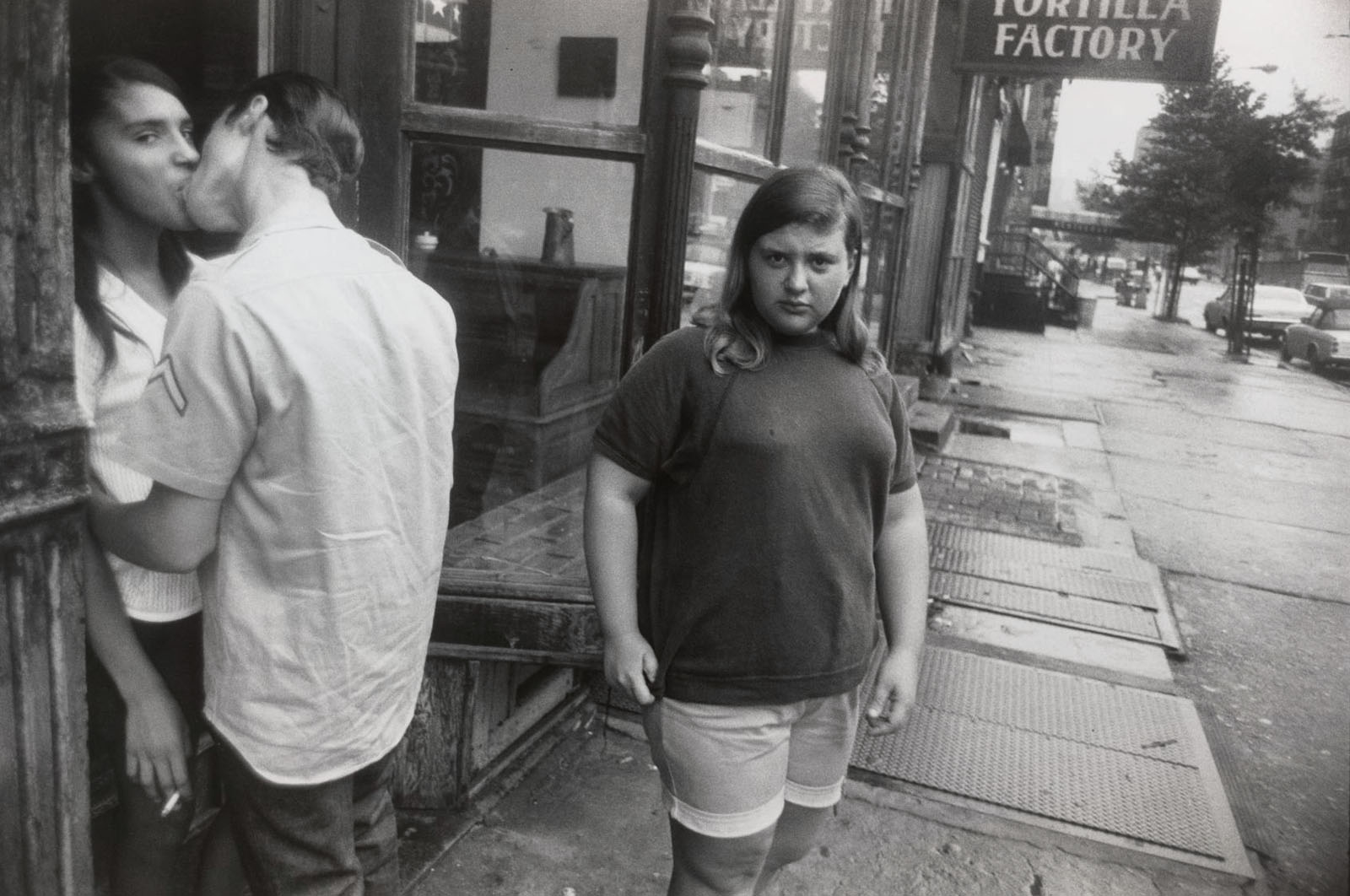
Garry Winogrand (American, 1928-1984) 'New York' 1950


Garry Winogrand (American, 1928-1984)
New York
1950
Gelatin silver print
Collection SFMOMA, fractional and promised gift of Carla Emil and Rich Silverstein
© The Estate of Garry Winogrand, courtesy Fraenkel Gallery, San Francisco


Garry Winogrand (American, 1928-1984) 'New York' c. 1962


Garry Winogrand (American, 1928-1984)
New York
c. 1962
Gelatin silver print
Garry Winogrand Archive, Center for Creative Photography, University of Arizona
© The Estate of Garry Winogrand, courtesy Fraenkel Gallery, San Francisco


Garry Winogrand (American, 1928-1984) 'Venice Beach, Los Angeles' 1980-1983


Garry Winogrand (American, 1928-1984)
Venice Beach, Los Angeles
1980-1983
Gelatin silver print
Garry Winogrand Archive, Center for Creative Photography, University of Arizona
© The Estate of Garry Winogrand, courtesy Fraenkel Gallery, San Francisco


Garry Winogrand (American, 1928-1984) 'Grand Central Station' 1968


Garry Winogrand (American, 1928-1984)
Grand Central Station
1968
Silver gelatin photograph
© The Estate of Garry Winogrand


Garry Winogrand (American, 1928-1984) 'Los Angeles' 1964


Garry Winogrand (American, 1928-1984)
Los Angeles
1964
Silver gelatin photograph
© The Estate of Garry Winogrand


Garry Winogrand (American, 1928-1984) 'New York' 1968


Garry Winogrand (American, 1928-1984)
New York
1968
Silver gelatin photograph
© The Estate of Garry Winogrand


Garry Winogrand (American, 1928-1984) 'New York' c. 1969


Garry Winogrand (American, 1928-1984)
New York
c. 1969
Silver gelatin photograph
© The Estate of Garry Winogrand


San Francisco Museum of Modern Art
151 Third Street
San Francisco, CA 94103

Opening hours:
Monday – Tuesday: 10am – 5pm
Wednesday: Closed
Thursday: 12 – 8pm
Friday – Sunday: 10am – 5pm

San Francisco Museum of Modern Art website

LIKE ART BLART ON FACEBOOK

Back to top