Exhibition: ‘Shape of Light: 100 Years of Photography and Abstract Art’ at Tate Modern, London

Exhibition dates: 2nd May – 14th October, 2018

Curators: Simon Baker, Senior Curator, International Art (Photography) and Shoair Mavlian, Assistant Curator, Tate Modern, with Emmanuelle de l’Ecotais, Curator for Photographs


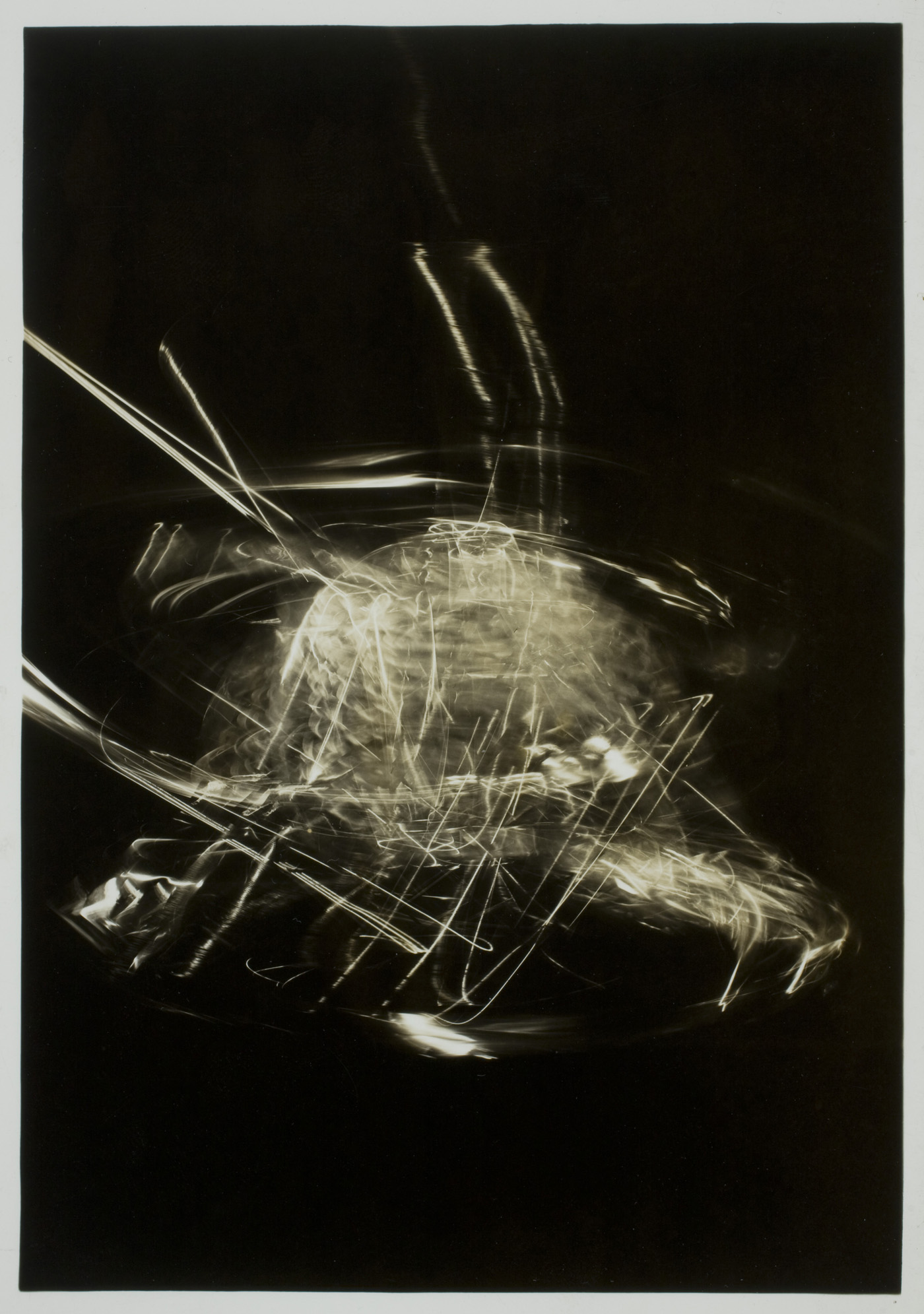
Pierre Dubreuil (French, 1872-1944) 'Interpretation of Picasso, The Railway' 1911 from the exhibition 'Shape of Light: 100 Years of Photography and Abstract Art' at Tate Modern, London, May - Oct, 2018


Pierre Dubreuil (French, 1872-1944)
Interpretation Picasso, The Railway
1911
Gelatin silver print on paper
238 x 194mm
Centre Pompidou, Paris
Musée National d’Art Moderne / Centre de Création Industrielle
Purchased, 1987


An interesting premise –

“a premise is an assumption that something is true. In logic, an argument requires a set of (at least) two declarative sentences (or “propositions”) known as the premises or premisses along with another declarative sentence (or “proposition”) known as the conclusion” (Wikipedia)

– that the stories (the declarative sentences) of abstract art and abstract photography are intertwined (the conclusion). The two premises and one conclusion forms the basic argumentative structure of the exhibition.

Unfortunately in this exhibition, the abstract art and abstract photographs (declarations), seem to add up to less than the sum of its parts (conclusion).

Why is this so?


The reason these two bedfellows sit so uncomfortably together is that they are of a completely different order, one to the other.

Take painting for example. There is that ultimate linkage between brain, eye and hand as the artist “reaches out” into the unknown, and conjures an abstract representation from his imagination. This has a quality beyond my recognition. The closest that photography gets to this intuition is the cameraless Photogram, as the artist paints with light, from his imagination, onto the paper surface, the physical presence of the print.

Conversely, we grapple with the dual nature of photography, its relation to reality, to the real, and its interpretation of that reality through a physical, mechanical process – light entering a camera (metal, glass, digital chips, plastic film) to be developed in chemicals or on the computer, stored as a physical piece of paper or in binary code – but then we LOOK and FEEL what else a photograph can be. What it is, and what else it can be.

Initially, to take a photograph is to recognise something physical in the world which can then be abstracted. Here is a tree, a Platonic ideal, now here is the bark of the tree, or cracks in dried mud, or Aaron Siskind’s Pleasures and Terrors of Levitation in which, in our imagination, the body is no longer human. This archaeology of photography is a learnt behaviour (from the world, from abstract paintings) where ones learns to turn over the truth to something else, a recognition of something else. Where one digs a clod of earth, inspects it, and then turns it over to see what else it can be.

We can look at something in the world just for what it is and take a photograph of it, but then we can look at the same object for what else it can be (for example, Man Ray’s image Dust Breeding (1920), which is actually dust motes on the top of Duchamp’s Large Glass). Photographers love these possibilities within the physicality of the medium, its processes and outcomes. Photographers love changing scale, perspective, distortion using their intuition to perhaps uncover spiritual truths. Here I are not talking about making doodles – whoopee look what I can make as a photographer! it’s important because I can do it and show it and I said it’s important because I am an artist! the problem with lots of contemporary photography – it is something entirely different. It is the integrity of the emotional and intellectual process.

Not a reaching out through the arm and hand, but an unearthing (a reaching in?) of the possibilities of what else photography can be (other than a recording process). As Stieglitz understood in his Equivalents, and so Minor White espoused through his art and in one of his three canons:

When the image mirrors the man
And the man mirrors the subject
Something might take over


And that revelation is something completely different from the revelation of abstract art.

Dr Marcus Bunyan


Many thankx to the Tate Modern for allowing me to publish the art work in the posting. Please click on the photographs for a larger version of the image.


“Despite its roll call of stellar names, the show’s adrenaline soon slumps. A rhythm sets in, as each gallery offers perhaps a single non photographic work and dozens of medium format black and white abstracts arranged on an allied theme: extreme close ups, engineered structures, worms’ and birds’ eye views, moving light, the human body, urban fabric.

Individually each photograph is quite wonderful, but they echo each other so closely in their authors’ attraction to diagonal arrangements, rich surface textures, dramatic shadows, odd perspectives and close cropping, that the same ‘point’ is being made a dozen times with little to distinguish between the variants. …

By the present day, abstract photography has given in to its already Ouroboros-like tendencies, and swallowed itself whole, offering abstract photographs about the process of photography, and the action of light on its materials. This is a gesture I relished in Wolfgang Tillmans’s show in the same space this time last year, when it was broken up by a plethora of other ideas and perspectives on photography. Here it feels like another level of earnest self-absorption with a century-long backstory.”


Hettie Judah. “By halfway round I actually felt faint,” on the iNews website May 5th 2018 [Online] Cited 14/07/2018. No longer available online


For the first time, Tate Modern tells the intertwined stories of photography and abstract art. The birth of abstract art and the invention of photography were both defining moments in modern visual culture, but these two stories are often told separately.

Shape of Light is the first major exhibition to explore the relationship between the two, spanning the century from the 1910s to the present day. It brings to life the innovation and originality of photographers over this period, and shows how they responded and contributed to the development of abstraction.

Key photographs are brought together from pioneers including Man Ray and Alfred Stieglitz, major contemporary artists such as Barbara Kasten and Thomas Ruff, right up to exciting new work by Antony Cairns, Maya Rochat and Daisuke Yokota, made especially for the exhibition.


Shape of Light | First Look

Tate Curator, Simon Baker, meets Caroline von Courten from leading photography Magazine, Foam. Together they explore the exhibition Shape of Light: 100 Years of Photography and Abstract Art at Tate Modern.


Exhibition Review – Shape of Light: 100 years of Photography and Abstract Art at Tate Modern


Wyndham Lewis (British, 1882-1957) 'Workshop' c. 1914-1915 (installation view)


Wyndham Lewis (British, 1882-1957)
Workshop (installation view)
c. 1914-1915
Tate
Purchased 1974
© Wyndham Lewis and the estate of Mrs G A Wyndham Lewis by kind permission of the Wyndham Lewis Memorial Trust (a registered charity)


Percy Wyndham Lewis (18 November 1882 – 7 March 1957) was a British writer, painter, and critic. He was a co-founder of the Vorticist movement in art and edited BLAST, the literary magazine of the Vorticists.

His novels include Tarr (1918) and The Human Age trilogy, composed of The Childermass (1928), Monstre Gai (1955) and Malign Fiesta (1955). A fourth volume, titled The Trial of Man, was unfinished at the time of his death. He also wrote two autobiographical volumes: Blasting and Bombardiering (1937) and Rude Assignment: A Narrative of my Career Up-to-Date (1950).


Paul Strand (American, 1890-1976) 'Abstraction Bowls, Twin Lakes, Connecticut' 1916 from the exhibition 'Shape of Light: 100 Years of Photography and Abstract Art' at Tate Modern, London, May - Oct, 2018


Paul Strand (American, 1890-1976)
Abstraction Bowls, Twin Lakes, Connecticut
1916
Silver gelatin print


Alvin Langdon Coburn (American, 1882-1966) 'Vortograph' 1917


Alvin Langdon Coburn (American, 1882-1966)
Vortograph
1917
Gelatin silver print on paper
283 x 214mm
Courtesy of the George Eastman Museum NY
© The Universal Order
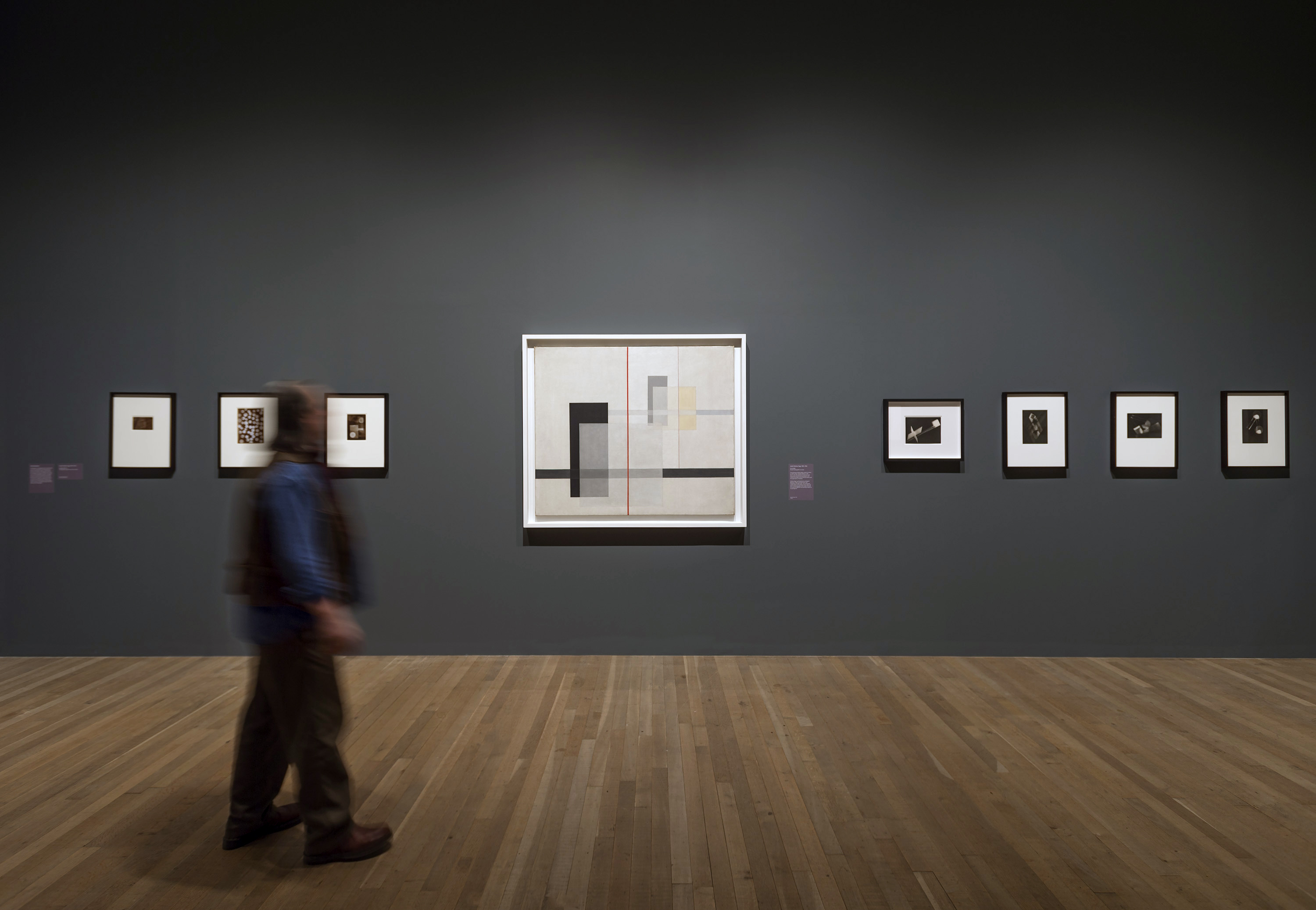
 

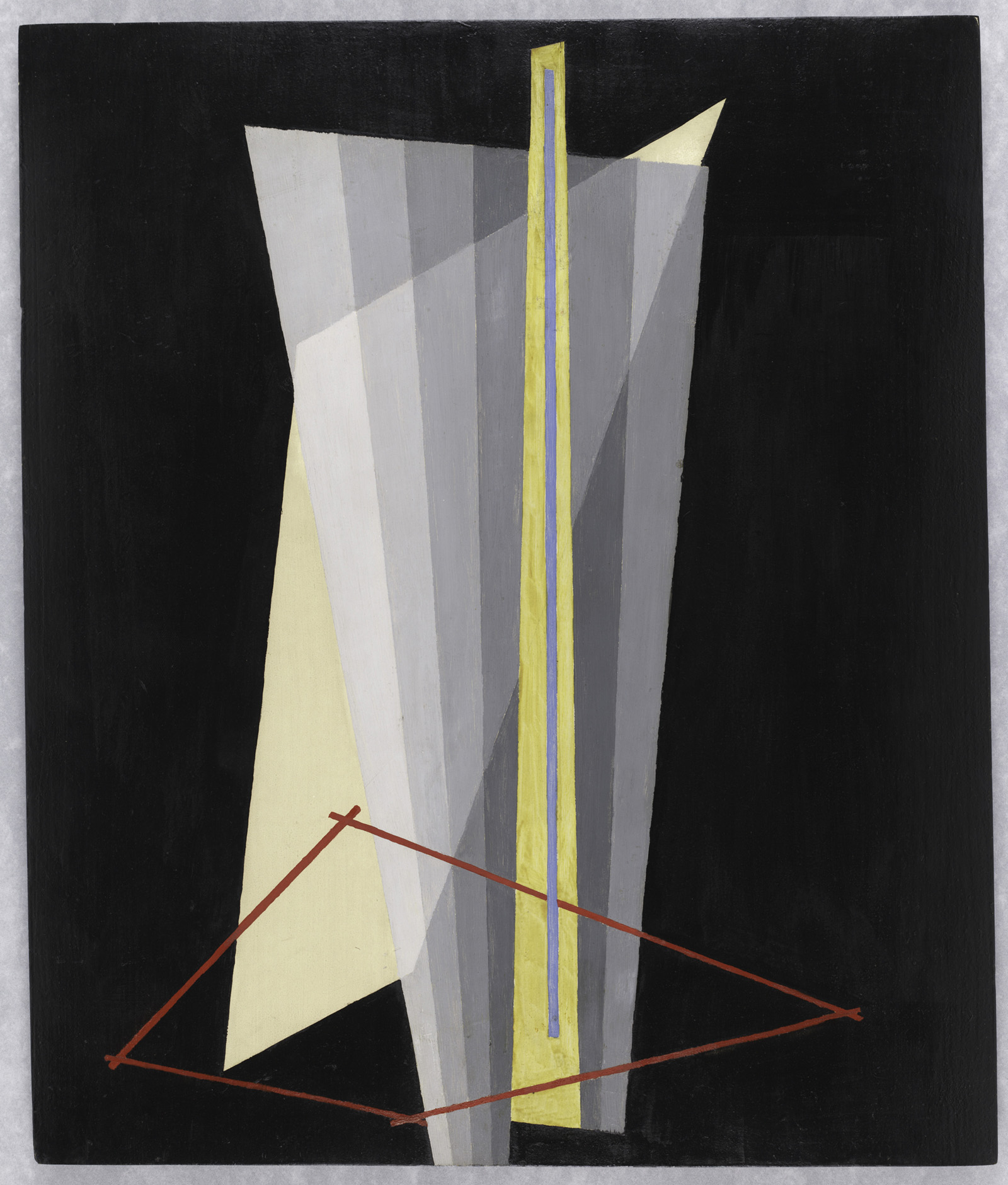
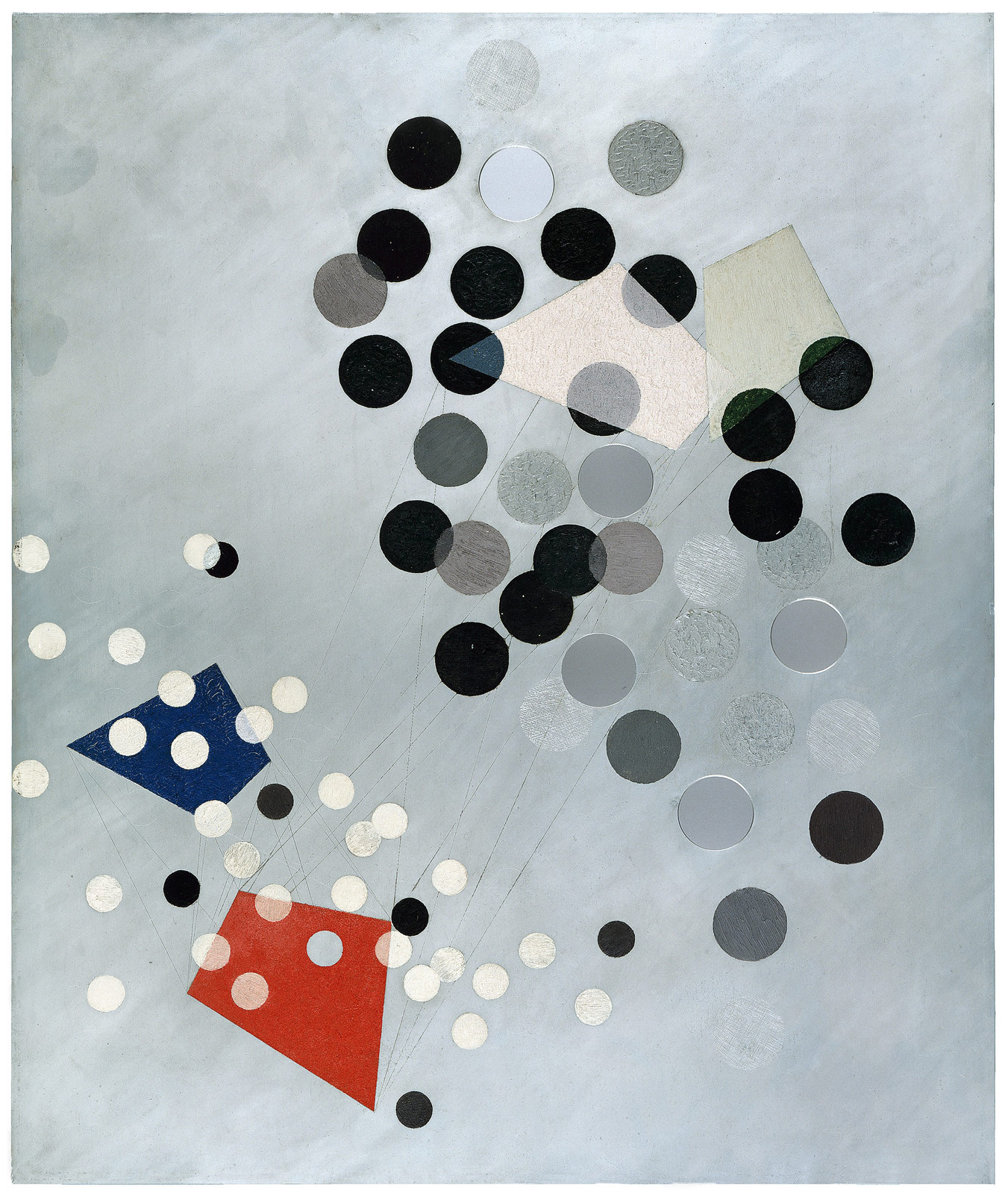
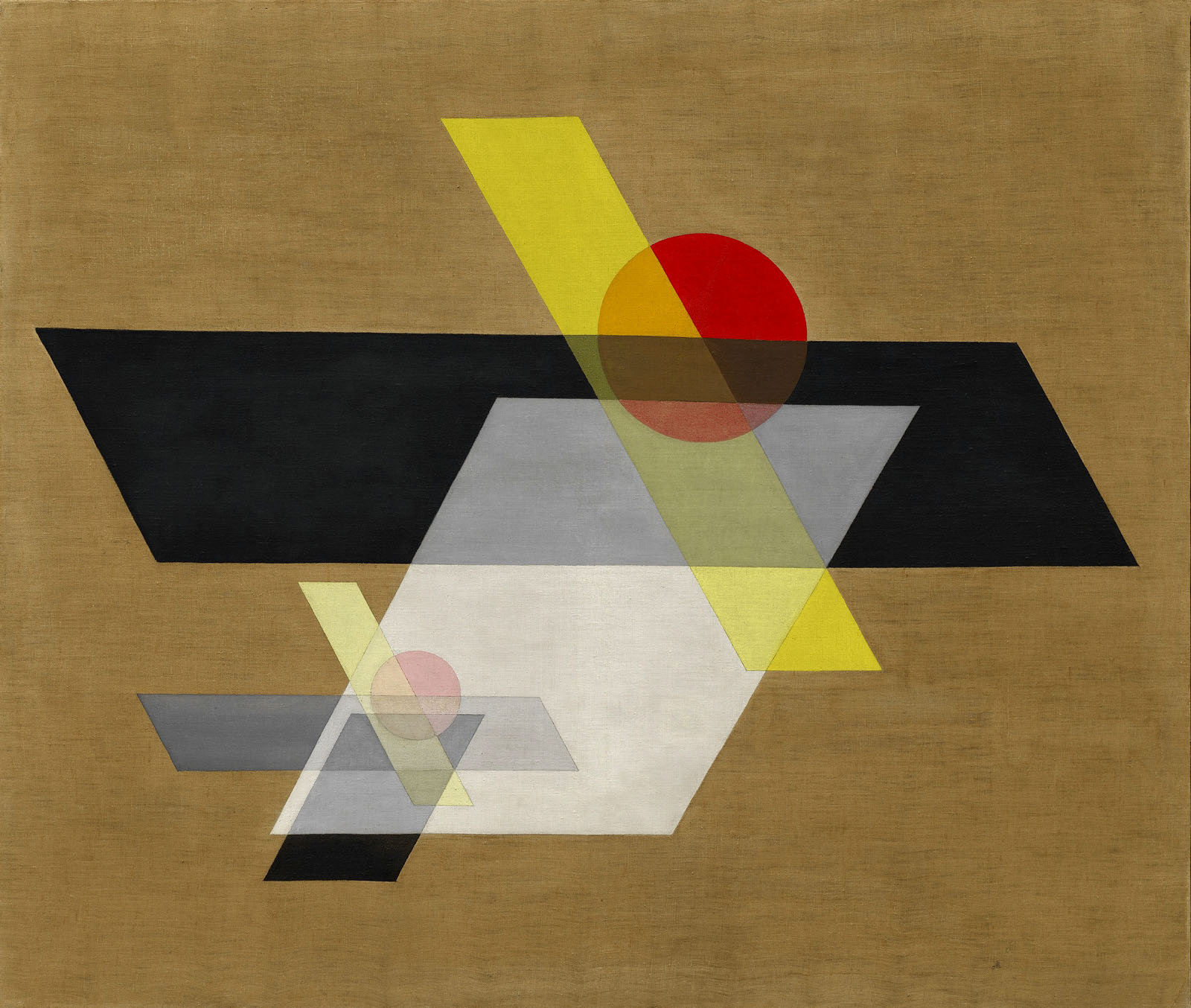
Installation view of the exhibition 'Shape of Light: 100 Years of Photography and Abstract Art' at Tate Modern, London showing László Moholy-Nagy's 'K VII' at centre


Installation view of the exhibition Shape of Light: 100 Years of Photography and Abstract Art at Tate Modern, London showing László Moholy-Nagy’s K VII at centre
Photo: © Tate / Andrew Dunkley


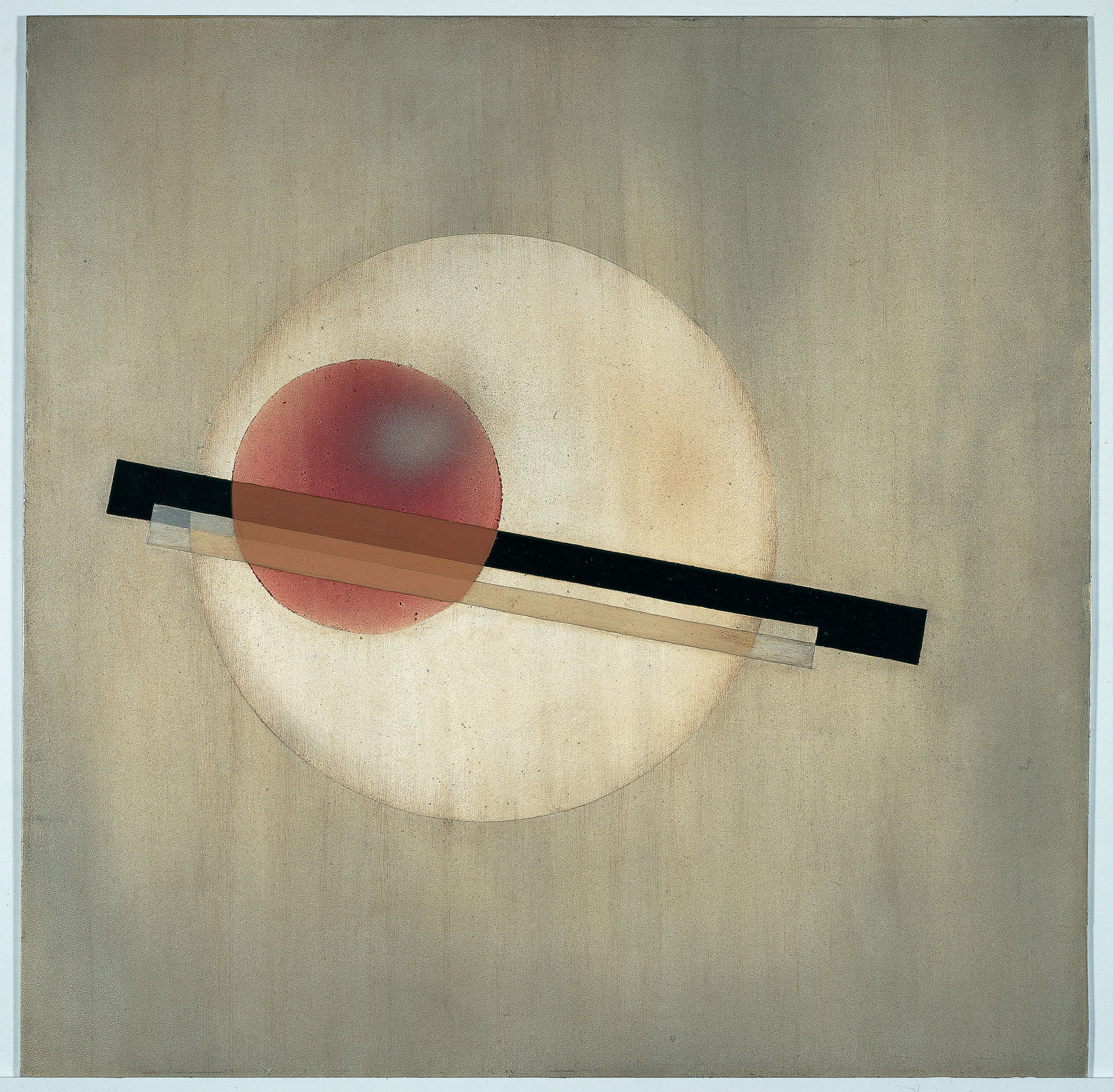
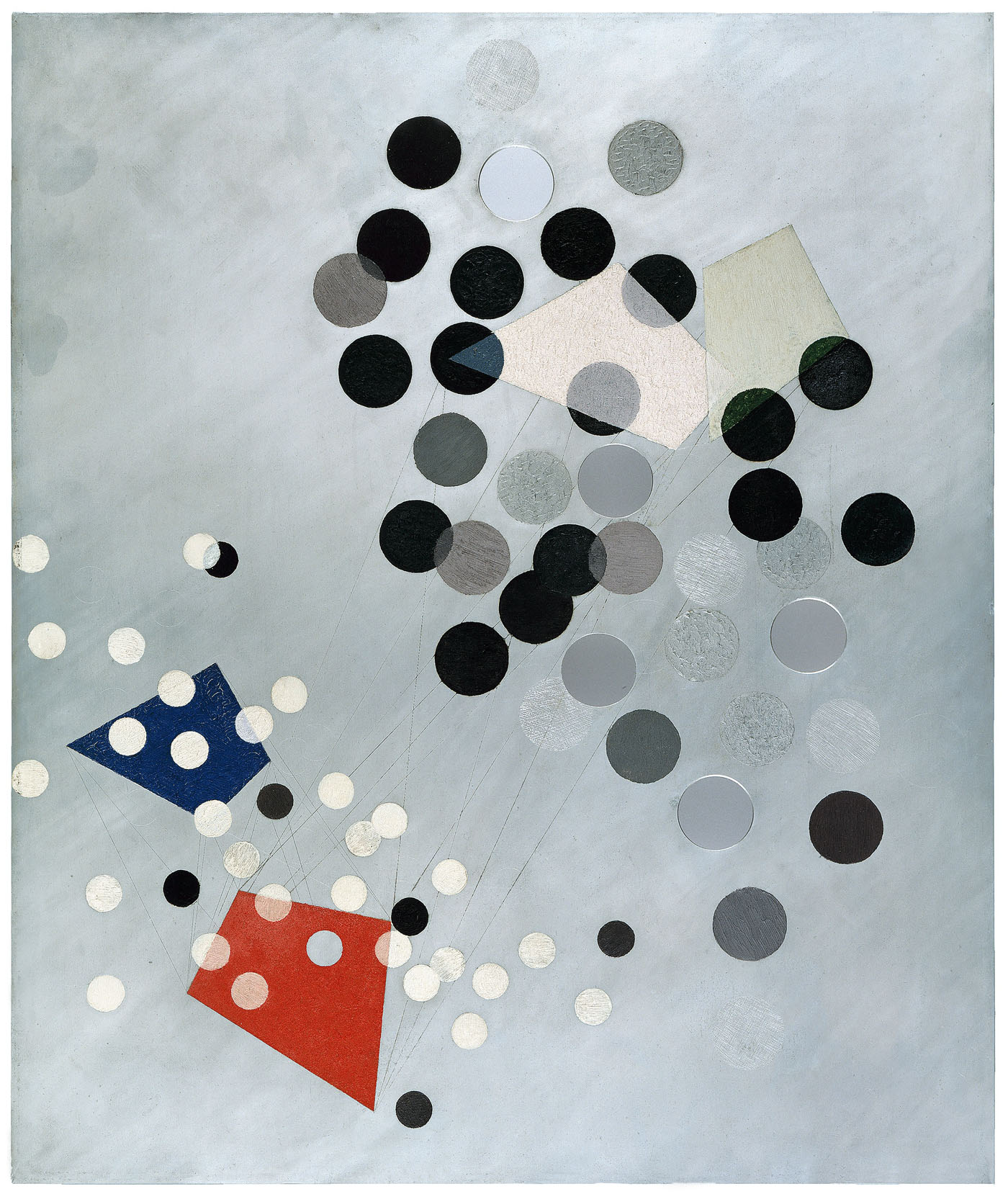
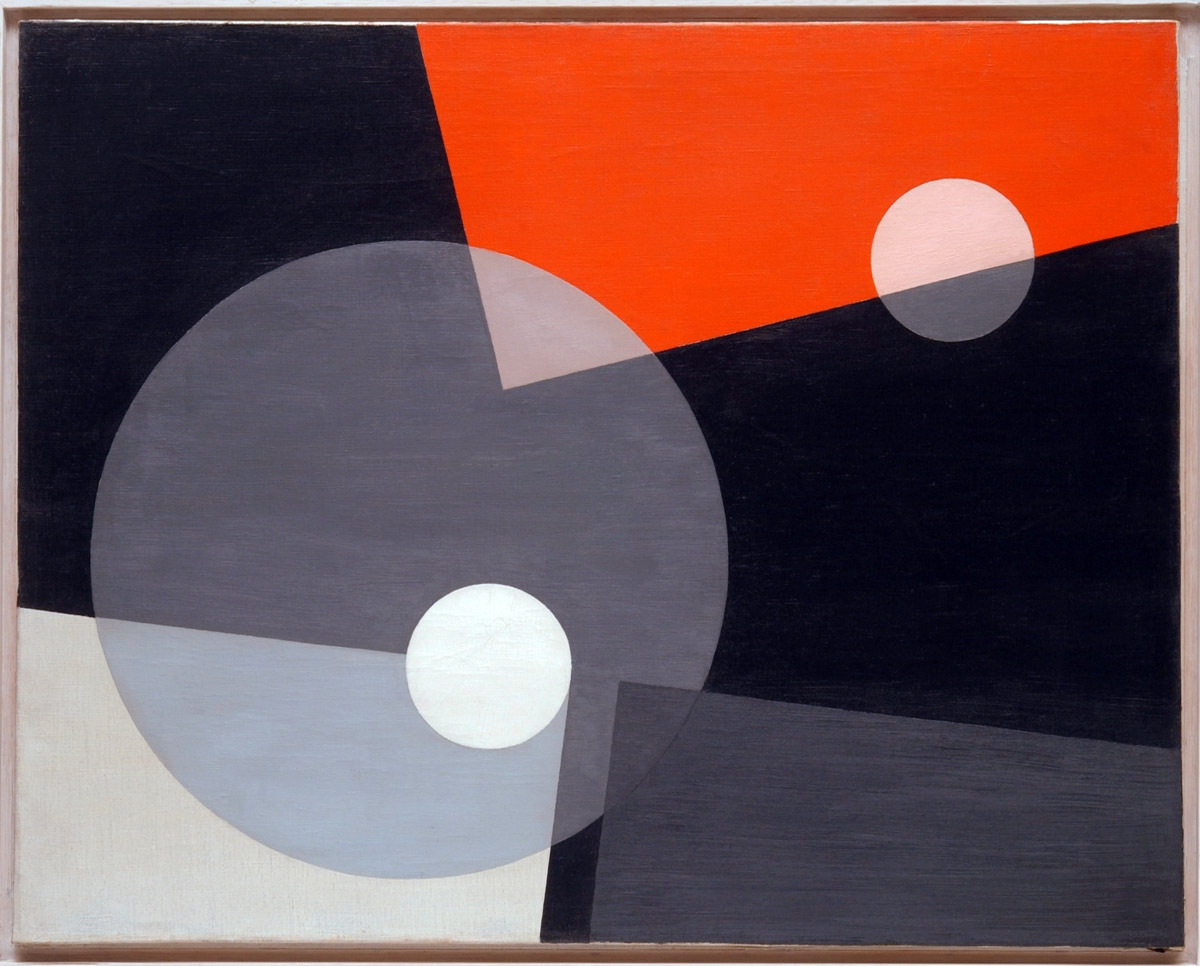
László Moholy-Nagy (Hungarian, 1895-1946) 'K VII' 1922


László Moholy-Nagy (Hungarian, 1895-1946)
K VII
1922
Oil paint and graphite on canvas
Frame: 1308 x 1512 x 80mm
Tate
Purchased 1961


The ‘K’ in the title of K VII stands for the German word Konstruktion (‘construction’), and the painting’s ordered, geometrical forms are typical of Moholy-Nagy’s technocratic Utopianism. The year after it was painted, he was appointed to teach the one year-preliminary course at the recently founded Bauhaus in Weimar. Moholy-Nagy’s appointment signalled a major shift in the school’s philosophy away from its earlier crafts ethos towards a closer alignment with the demands of modern industry, and a programme of simple design and unadorned functionalism.

Gallery label, April 2012


Man Ray (American, 1890-1976) 'Rayograph' 1922


Man Ray (American, 1890-1976)
Rayograph
1922
Gelatin silver print on paper
Private Collection
© Man Ray Trust/ADAGP, Paris and DACS, London 2018


El Lissitzky (Russian, 1890-1941) 'Proun in Material (Proun 83)' 1924


El Lissitzky (Russian, 1890-1941)
Proun in Material (Proun 83)
1924
Gelatin silver print on paper
140 x 102mm
© Imogen Cunningham Trust. All rights reserved
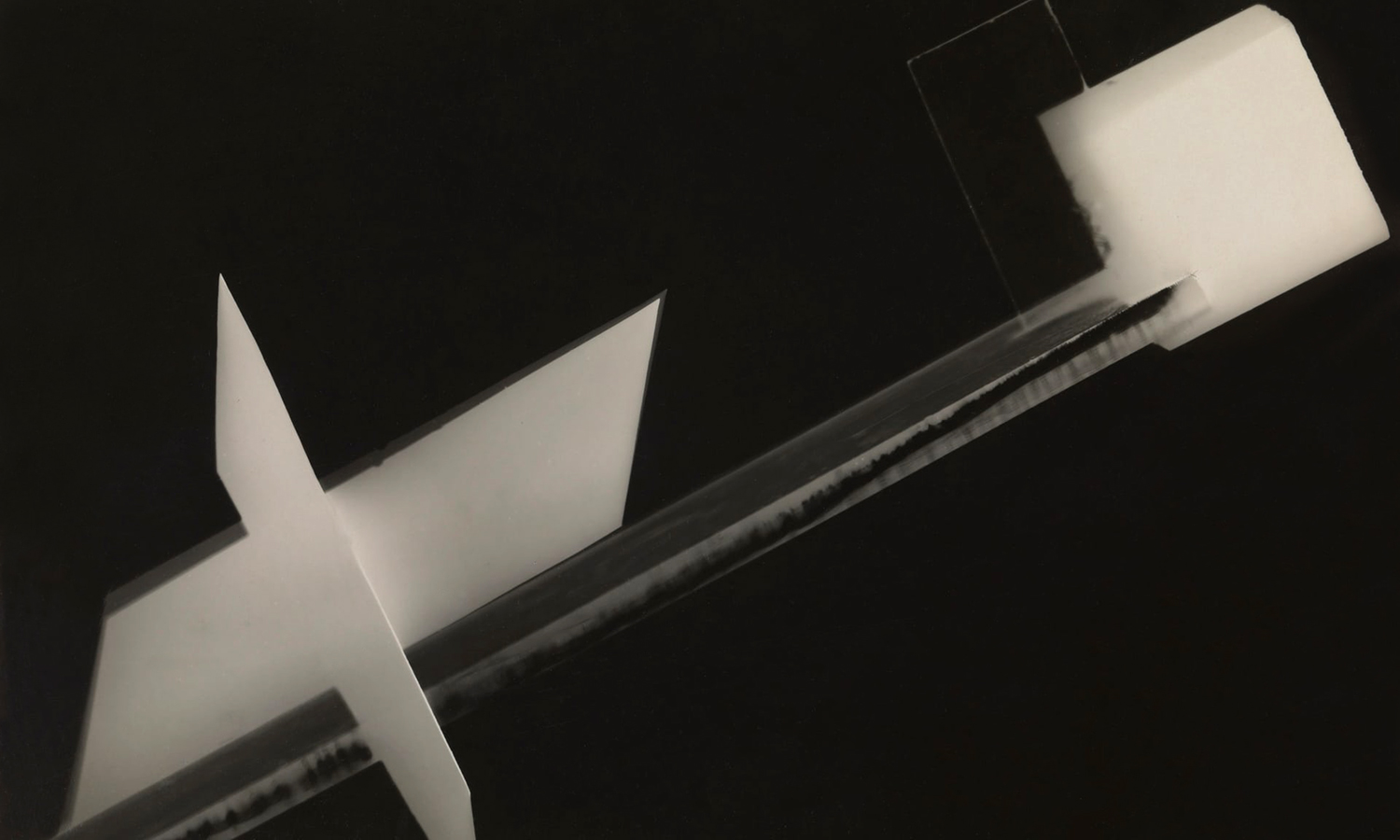
 

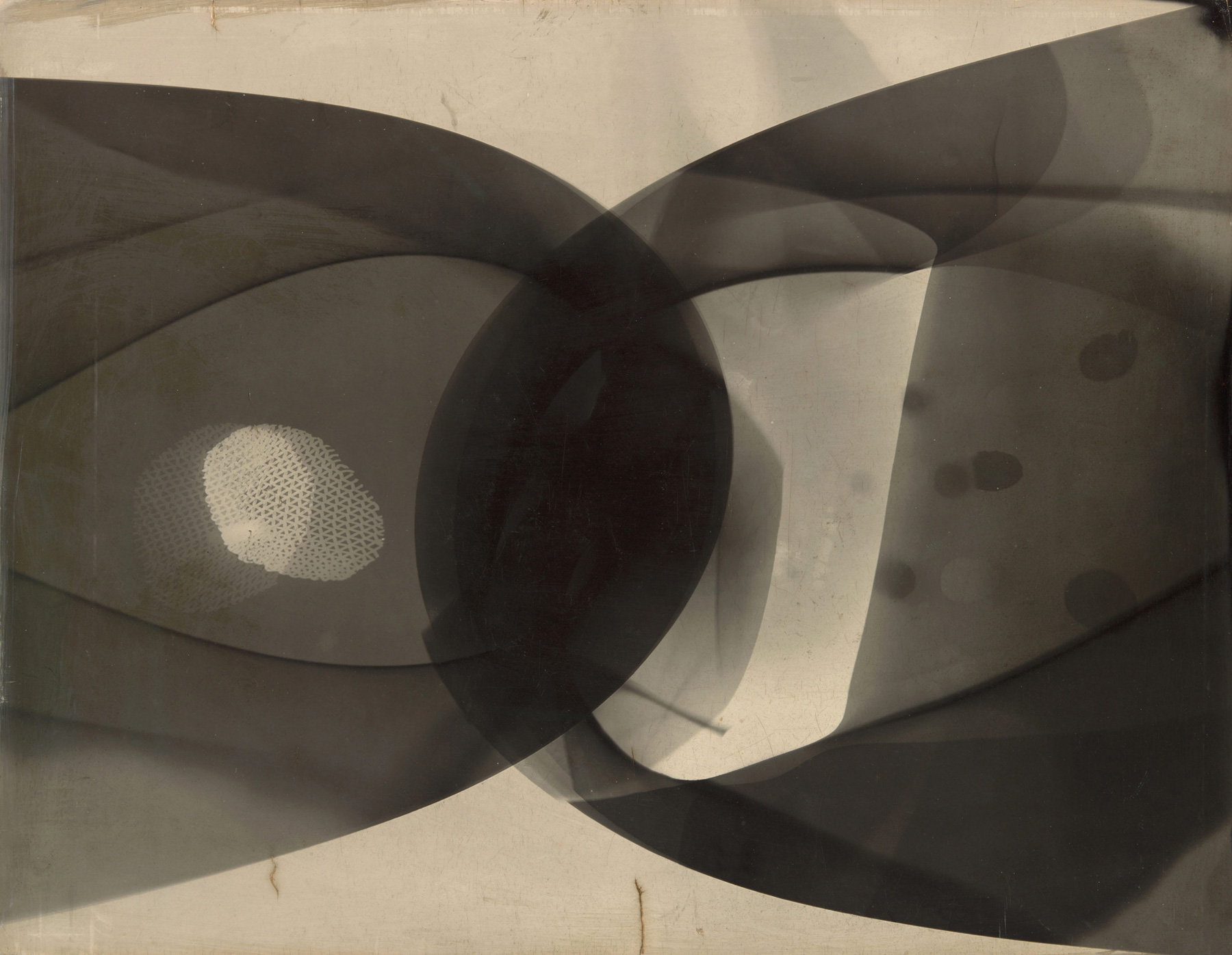
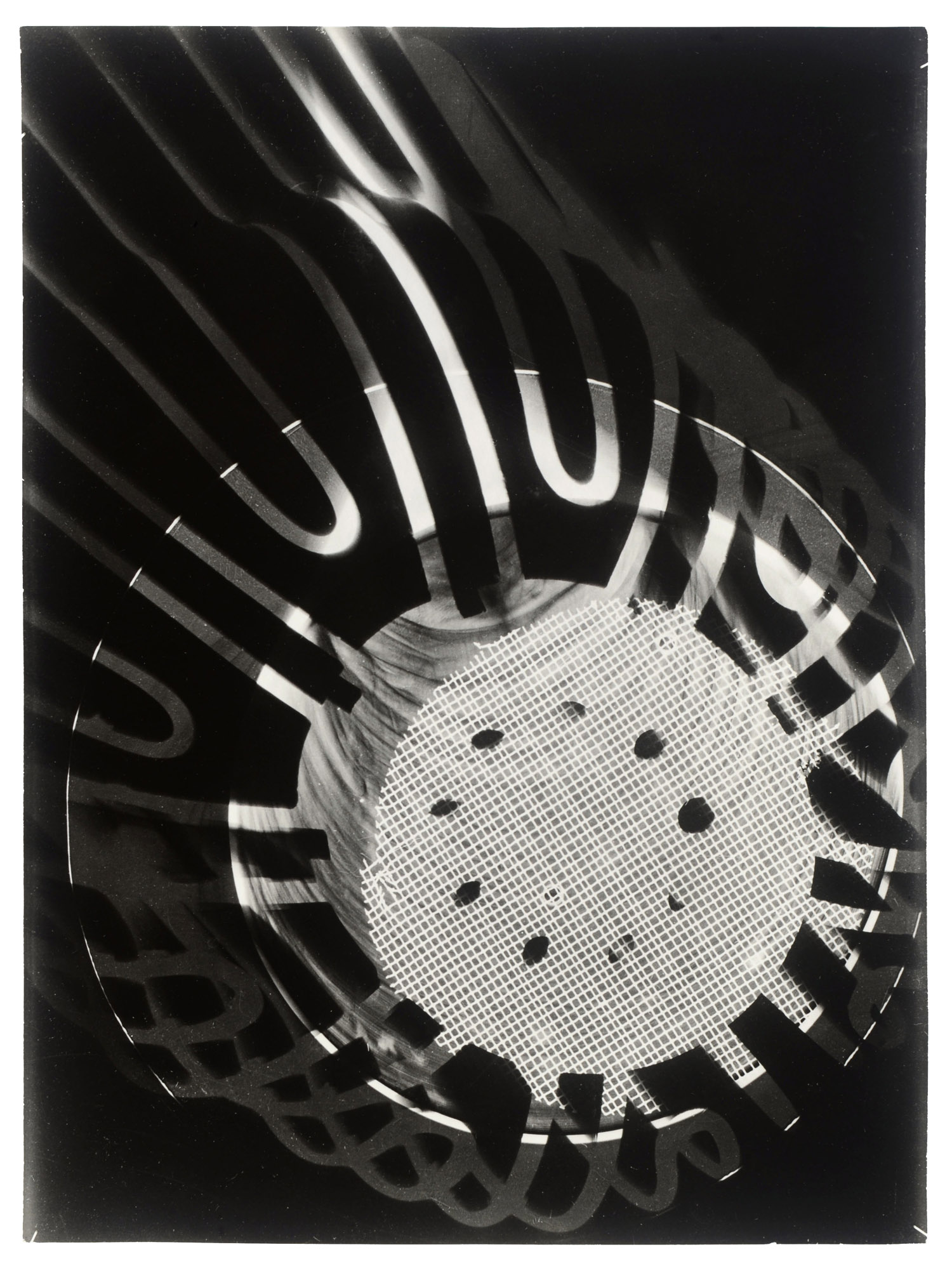
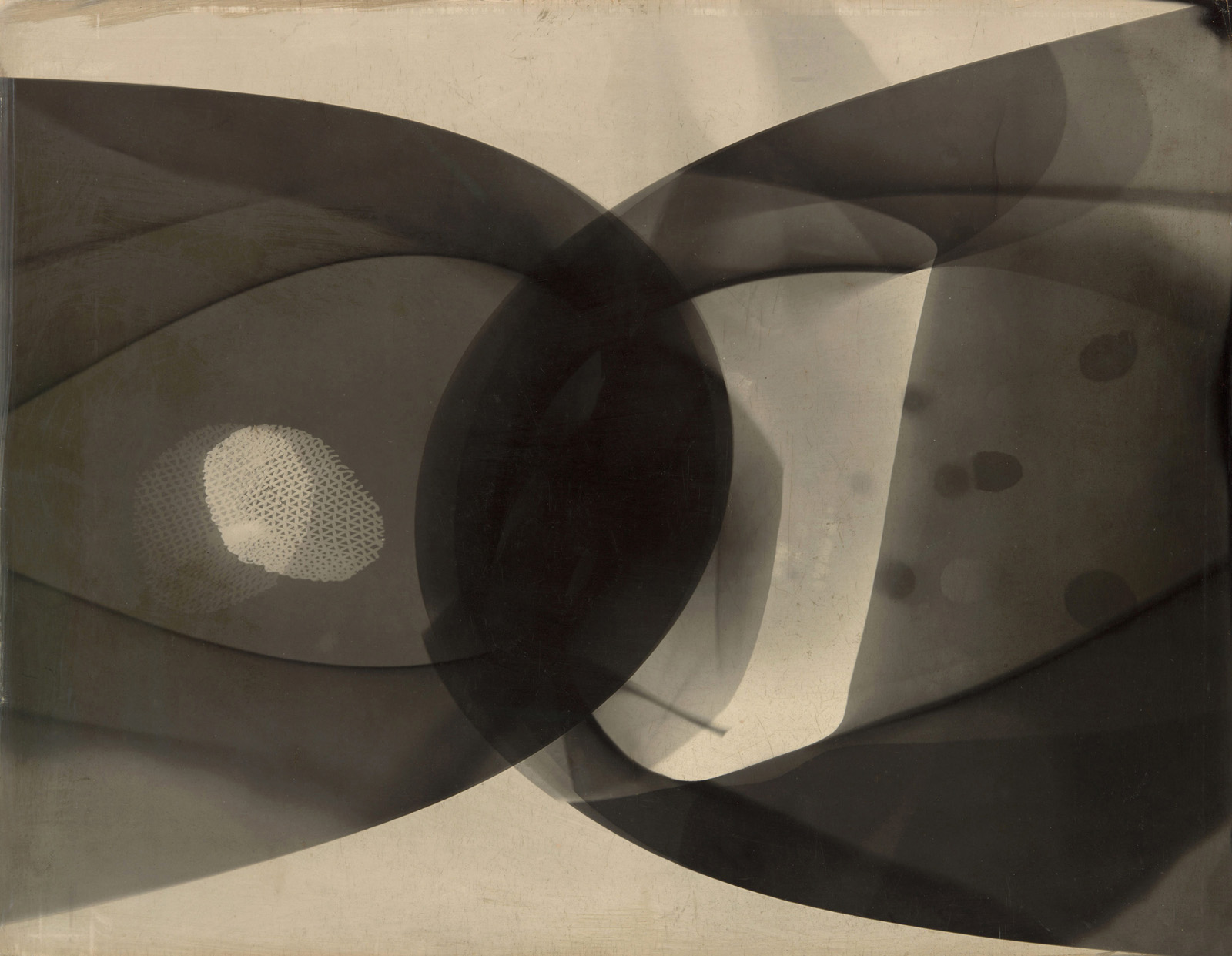
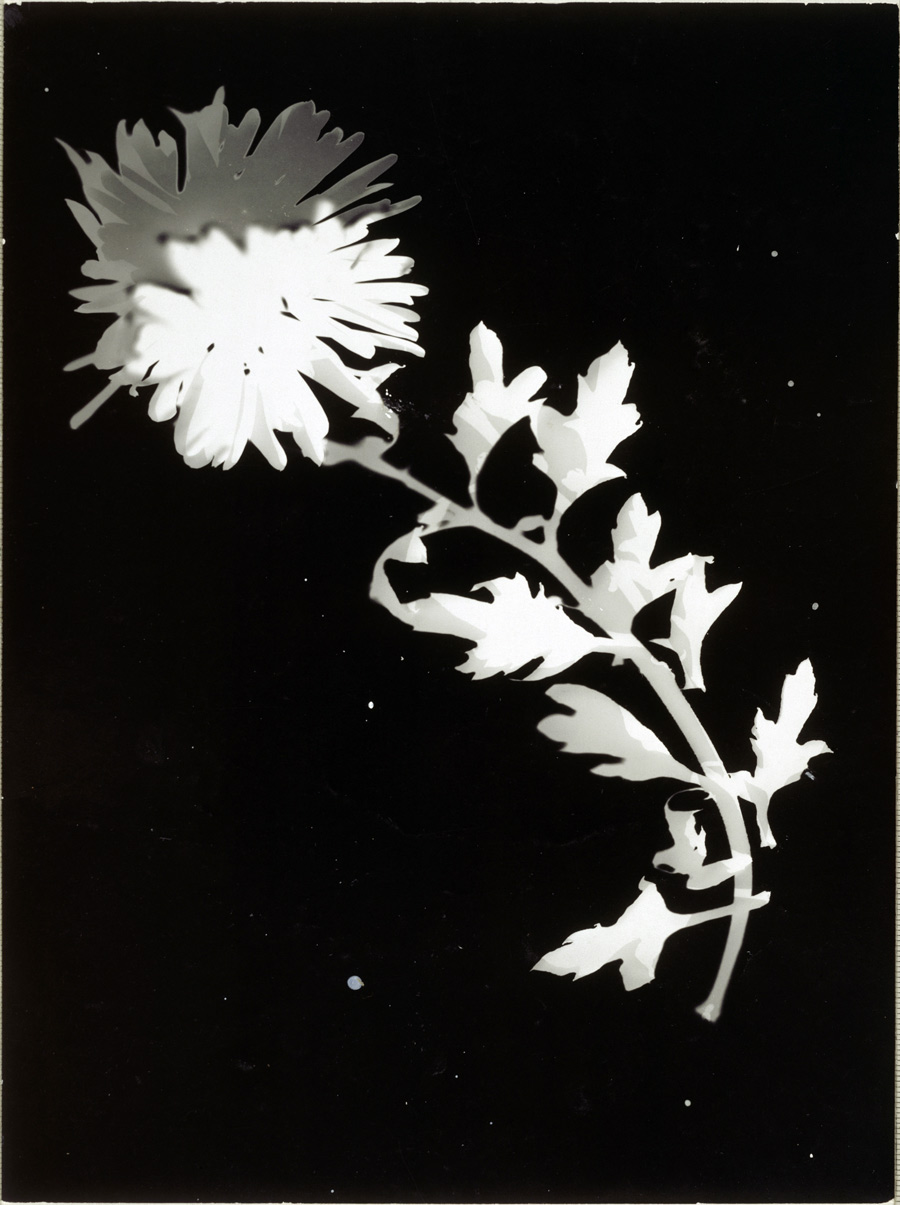
László Moholy-Nagy (Hungarian, 1895-1946) 'Photogram' c. 1925


László Moholy-Nagy (Hungarian, 1895-1946)
Photogram
c. 1925
Gelatin silver print on paper
Photo: Jack Kirkland Collection, Nottingham


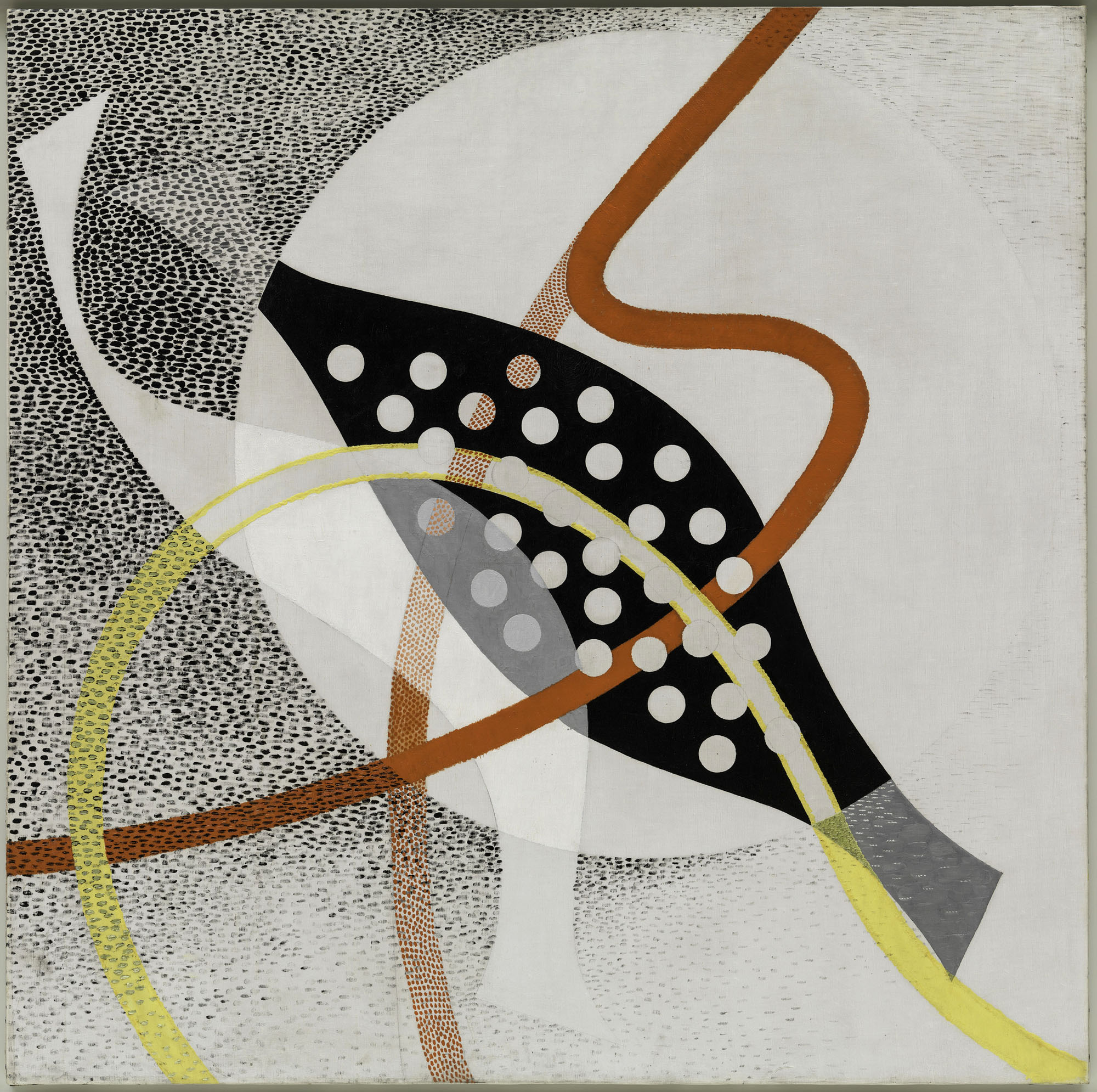
Wassily Kandinsky (Russian, 1866-1944) 'Swinging' 1925


Wassily Kandinsky (Russian, 1866-1944)
Swinging
1925
Oil paint on board
705 x 502mm
Tate


Edward Steichen (American, 1879-1973) 'Bird in Space' [L'Oiseau dans l'espace] 1926


Edward Steichen (American, 1879-1973)
Bird in Space (L’Oiseau dans l’espace)
1926
Gelatin silver print on paper
253 x 202mm
Bequest of Constantin Brancusi, 1957
Centre Pompidou, Paris
Musée National d’Art Moderne / Centre de Création Industrielle
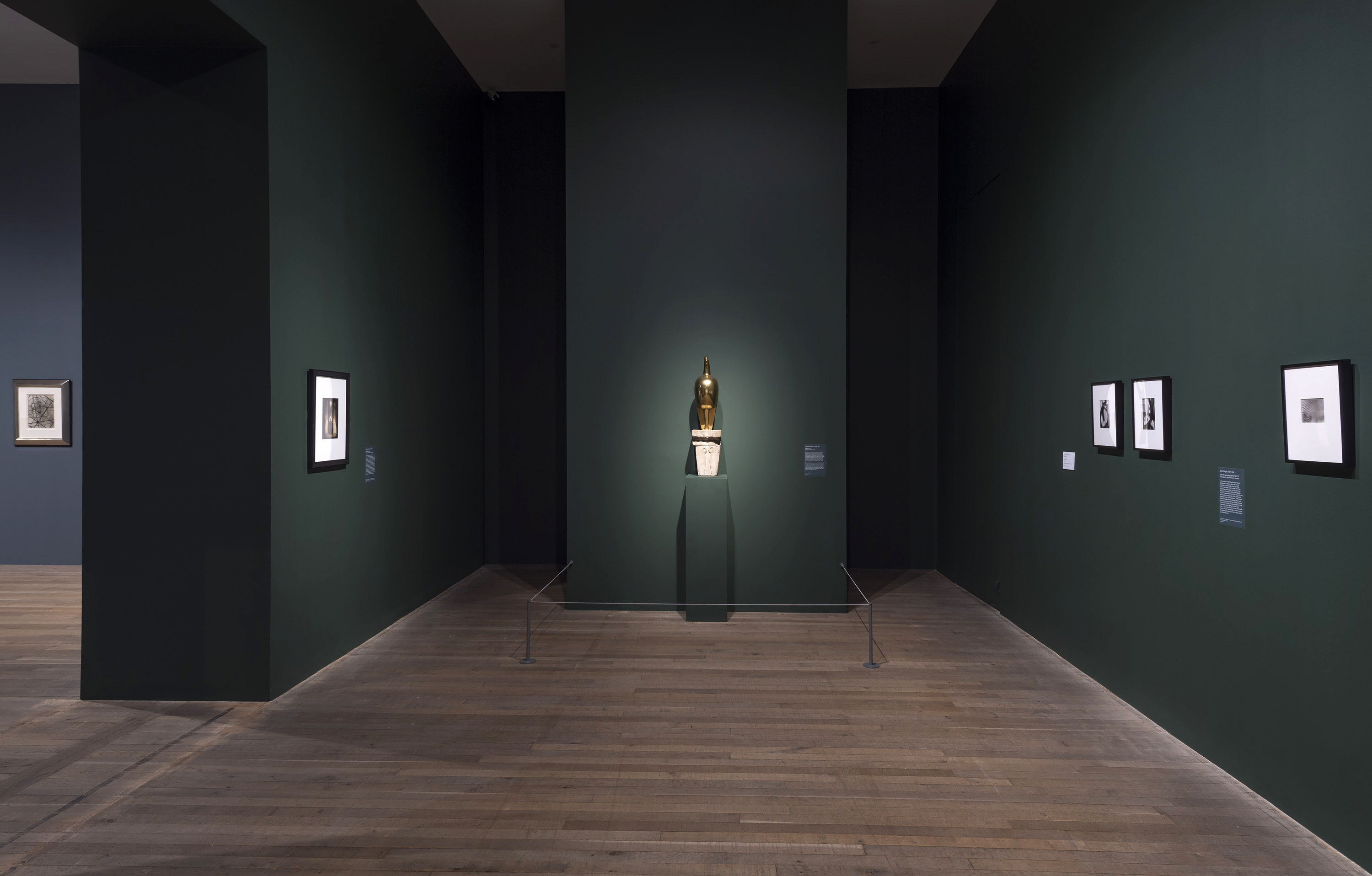
 

Installation view of the exhibition 'Shape of Light: 100 Years of Photography and Abstract Art' at Tate Modern, London showing at centre, Constantin Brancusi's bronze and stone sculpture 'Maiastra' (1911)


Installation view of the exhibition Shape of Light: 100 Years of Photography and Abstract Art at Tate Modern, London showing at centre, Constantin Brancusi’s bronze and stone sculpture Maiastra (1911)
Photo: © Tate / Andrew Dunkley


Imogen Cunningham (American, 1883-1976) 'Triangles' 1928


Imogen Cunningham (American, 1883-1976)
Triangles
1928, printed 1947-1960
Gelatin silver print on paper
119 x 93mm
Pierre Brahm
© Imogen Cunningham Trust. All rights reserved
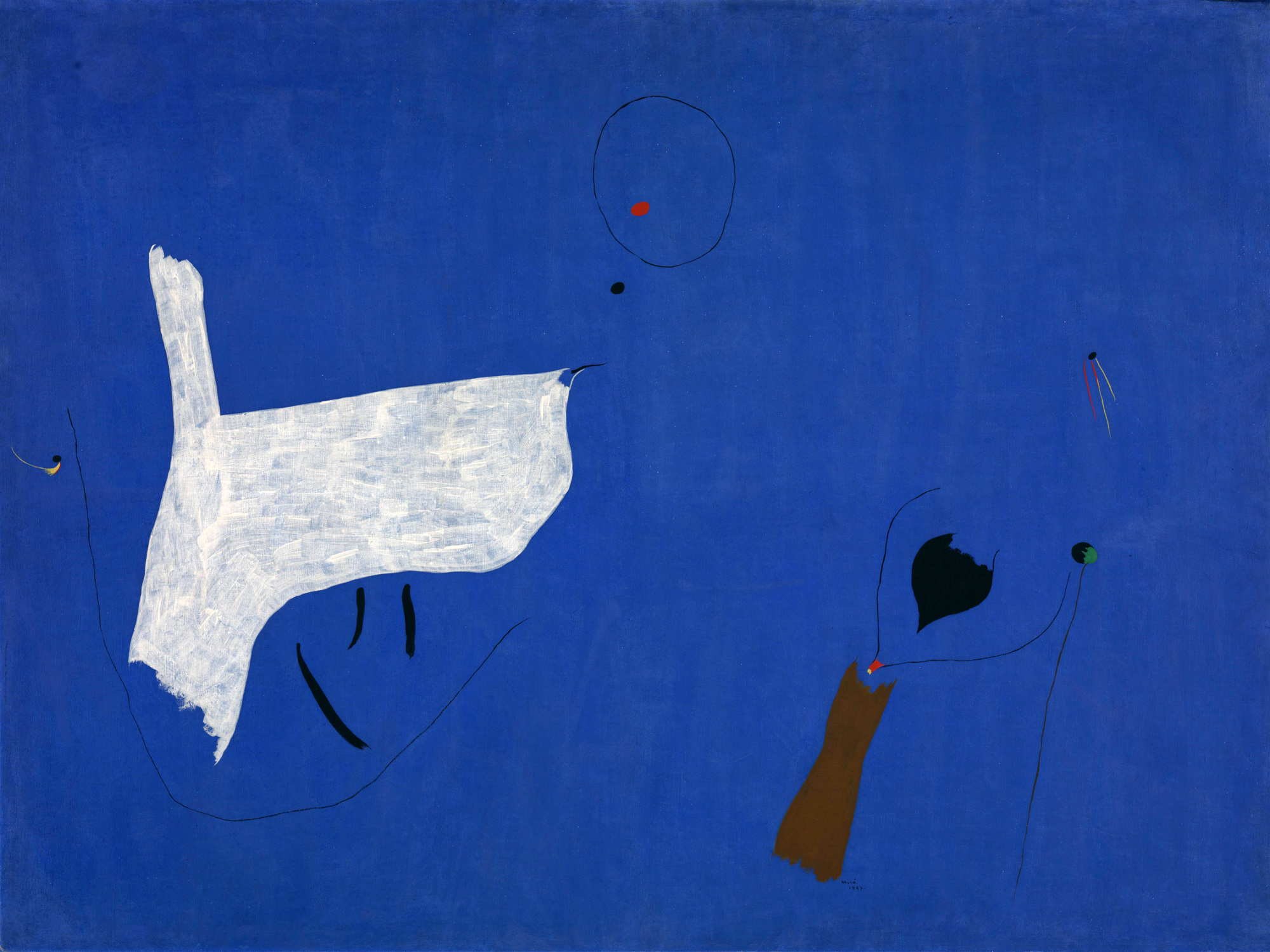
 

Joan Miró (Spanish, 1893-1983) 'Painting' 1927


Joan Miró (Spanish, 1893-1983)
Painting
1927
Tempera and oil paint on canvas
972 x 1302mm
Tate
© Succession Miro/ADAGP, Paris and DACS, London 2018


Man Ray (American, 1890-1976) 'Anatomies' 1930


Man Ray (American, 1890-1976)
Anatomies
1930
Photo: © Man Ray Trust/ADAGP, Paris and DACS, London 2016
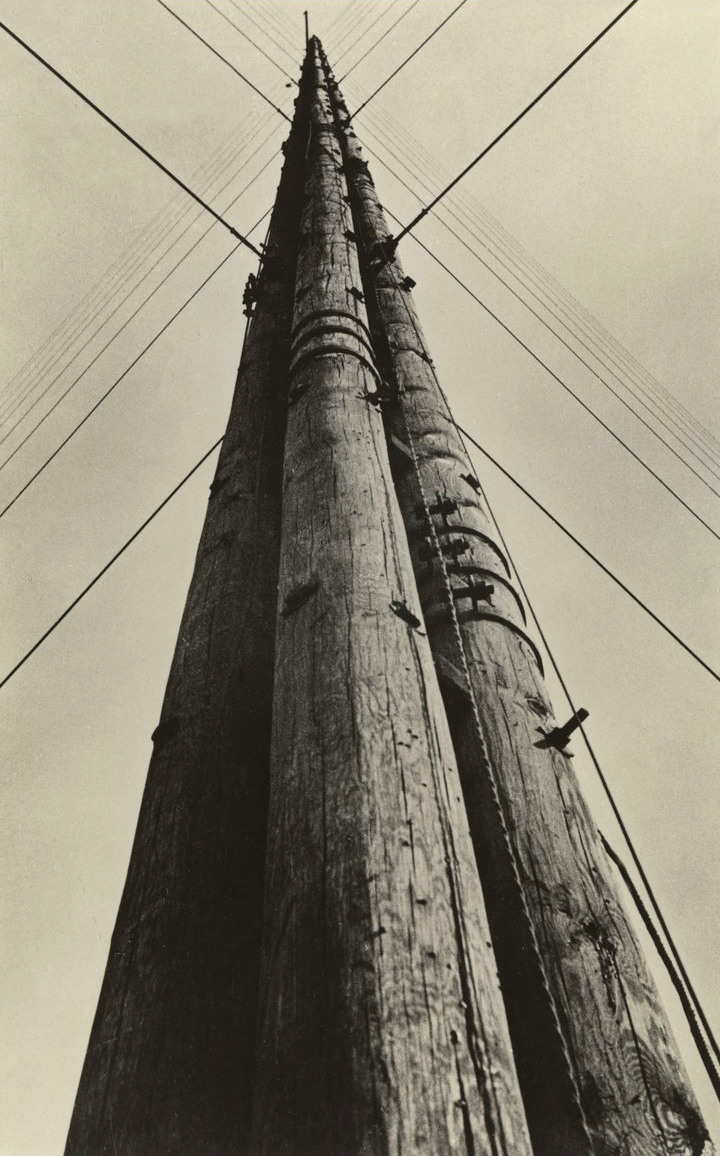
 

Aleksandr Rodchenko (Russian, 1891-1956) 'Radio Station Power' 1929


Aleksandr Rodchenko (Russian, 1891-1956)
Radio Station Power
1929
Gelatin silver print on paper
Lent by Jack Kirkland Collection, Nottingham
© A. Rodchenko and V. Stepanova Archive. DACS, RAO 2018
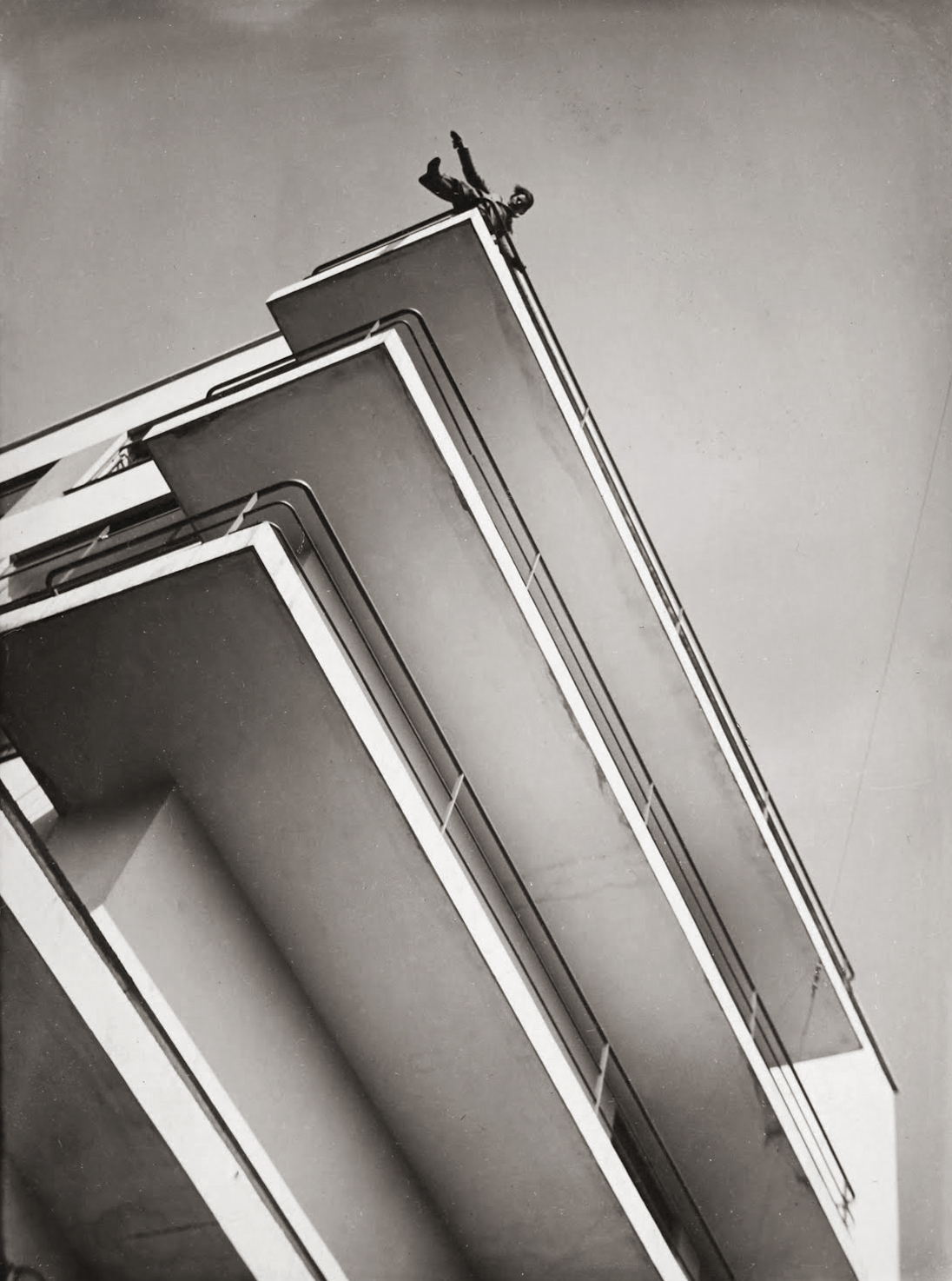
 

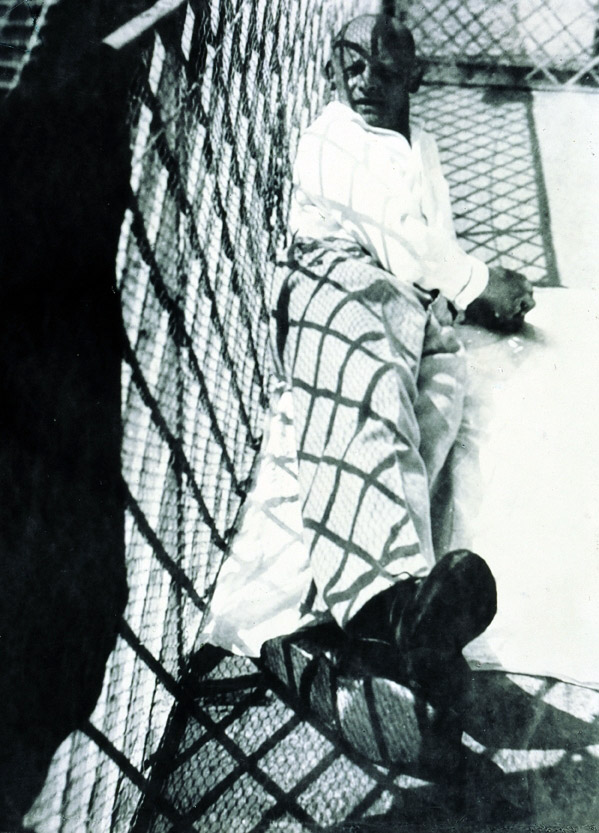
László Moholy-Nagy (Hungarian, 1895-1946) 'Xanti Schawinsky on the balcony of the Bauhaus' 1929


László Moholy-Nagy (Hungarian, 1895-1946)
Xanti Schawinsky on the balcony of the Bauhaus
1929
Gelatin silver print on paper


Luo Bonian (Chinese, 1911-2002) 'Untitled' 1930s


Luo Bonian (Chinese, 1911-2002)
Untitled
1930s
Gelatin silver print on paper
Courtesy The Three Shadows Photography Art Centre, Beijing
© Luo Bonian


Marta Hoepffner (German, 1912-2000) 'Homage to de Falla' 1937


Marta Hoepffner (German, 1912-2000)
Homage to de Falla
1937
Gelatin silver print on paper
387 x 278mm
Stadtmuseum Hofheim am Taunus
© Estate Marta Hoepffner


Nathan Lerner (American, 1913-1997) 'Light Tapestry' 1939


Nathan Lerner (American, 1913-1997)
Light Tapestry
1939
Gelatin silver print on paper
401 x 504mm
Musée d’Art Moderne de la Ville de Paris
Gift of Mrs Kiyoko Lerner, 2014
Photo: Nathan Lerner/© ARS, NY and DACS, London
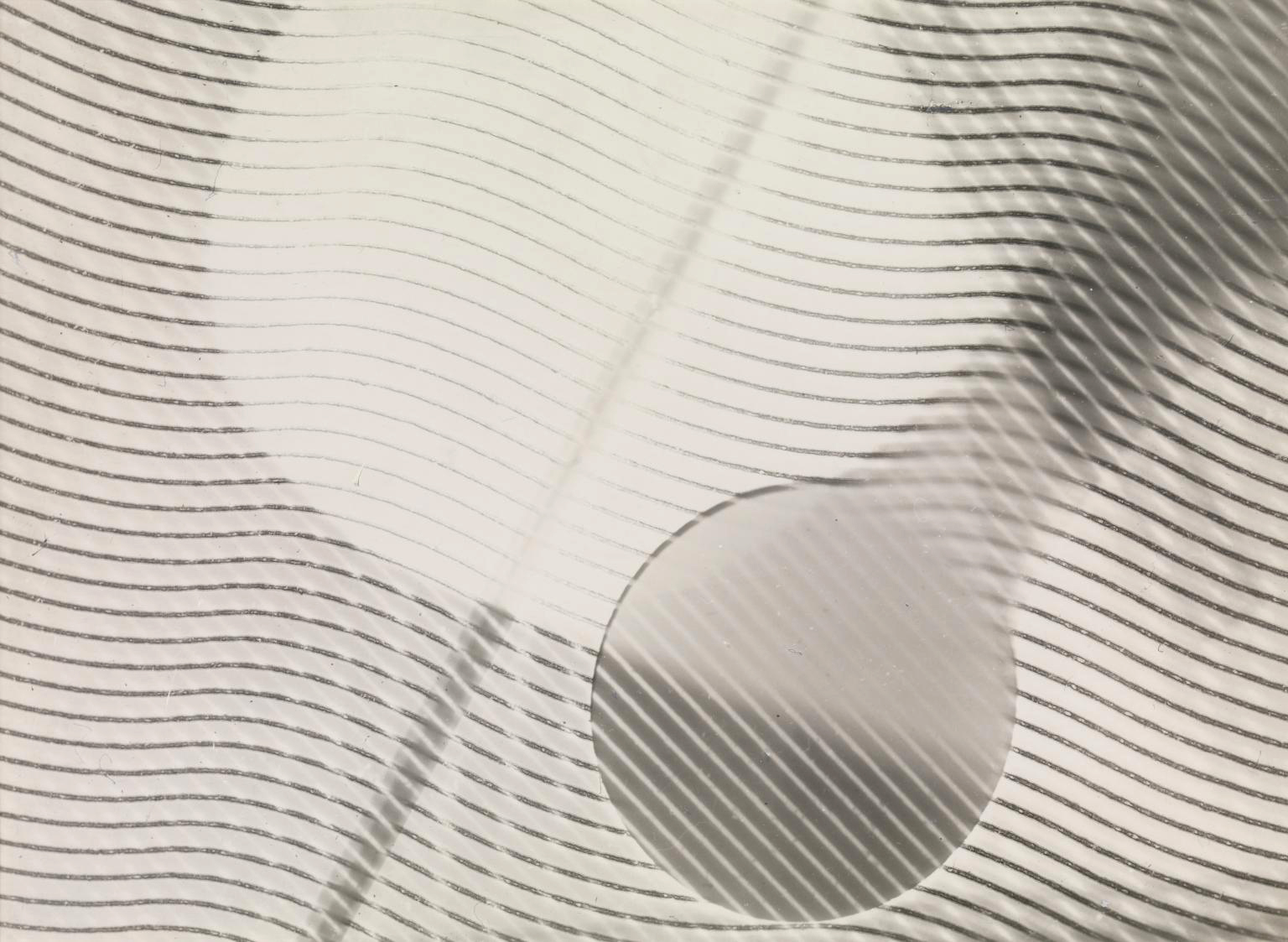
 

Luigi Veronesi (Italian, 1908-1998) 'Construction' 1938


Luigi Veronesi (Italian, 1908-1998)
Construction
1938
Gelatin silver print on paper
286 x 388mm
Tate
Accepted under the Cultural Gifts Scheme by HM Government from Massimo Prelz Oltramonti and allocated to Tate 2015


Luigi Veronesi (Italian, 1908-1998) 'Photo n.145' 1940, printed 1970s


Luigi Veronesi (Italian, 1908-1998)
Photo n.145
1940, printed 1970s
Gelatin silver print on paper
310 x 280mm
Tate
Accepted under the Cultural Gifts Scheme by HM Government from Massimo Prelz Oltramonti and allocated to Tate 2015


Luigi Veronesi (Italian, 1908-1998) 'Photo n.152' 1940, printed 1970s


Luigi Veronesi (Italian, 1908-1998)
Photo n.152
1940, printed 1970s
Gelatin silver print on paper
320 x 298mm
Tate
Accepted under the Cultural Gifts Scheme by HM Government from Massimo Prelz Oltramonti and allocated to Tate 2015


A major new exhibition at Tate Modern will reveal the intertwined stories of photography and abstract art. Shape of Light: 100 Years of Photography and Abstract Art will be the first show of this scale to explore photography in relation to the development of abstraction, from the early experiments of the 1910s to the digital innovations of the 21st century. Featuring over 300 works by more than 100 artists, the exhibition will explore the history of abstract photography side-by-side with iconic paintings and sculptures.

Shape of Light will place moments of radical innovation in photography within the wider context of abstract art, such as Alvin Langdon Coburn’s pioneering ‘vortographs’ from 1917. This relationship between media will be explored through the juxtaposition of works by painters and photographers, such as cubist works by George Braque and Pierre Dubreuil or the abstract expressionism of Jackson Pollock and Otto Steinert’s ‘luminograms’. Abstractions from the human body associated with surrealism will include André Kertesz’s Distorsions, Imogen Cunningham’s Triangles and Bill Brandt’s Baie des Anges, Frances 1958, exhibited together with a major painting by Joan Miró. Elsewhere the focus will be on artists whose practice spans diverse media, such as László Moholy-Nagy and Man Ray.

The exhibition will also acknowledge the impact of MoMA’s landmark photography exhibition of 1960, The Sense of Abstraction. Installation photographs of this pioneering show will be displayed with some of the works originally featured in the exhibition, including important works by Edward Weston, Aaron Siskind and a series by Man Ray that has not been exhibited since the MoMA show, 58 years ago.

The connections between breakthroughs in photography and new techniques in painting will be examined, with rooms devoted to Op Art and Kinetic Art from the 1960s, featuring striking paintings by Bridget Riley and installations of key photographic works from the era by artists including Floris Neussis and Gottfried Jaeger. Rooms will also be dedicated to the minimal and conceptual practices of the 1970s and 80s. The exhibition will culminate in a series of new works by contemporary artists, Tony Cairns, Maya Rochat and Daisuke Yokota, exploring photography and abstraction today.

Shape of Light is curated by Simon Baker, Senior Curator, International Art (Photography) and Shoair Mavlian, Assistant Curator, Tate Modern, with Emmanuelle de l’Ecotais, Curator for Photographs, Musée d’Art Moderne de la Ville de Paris. The exhibition will be accompanied by a fully illustrated catalogue from Tate Publishing and a programme of talks and events in the gallery.

Press release from Tate Modern
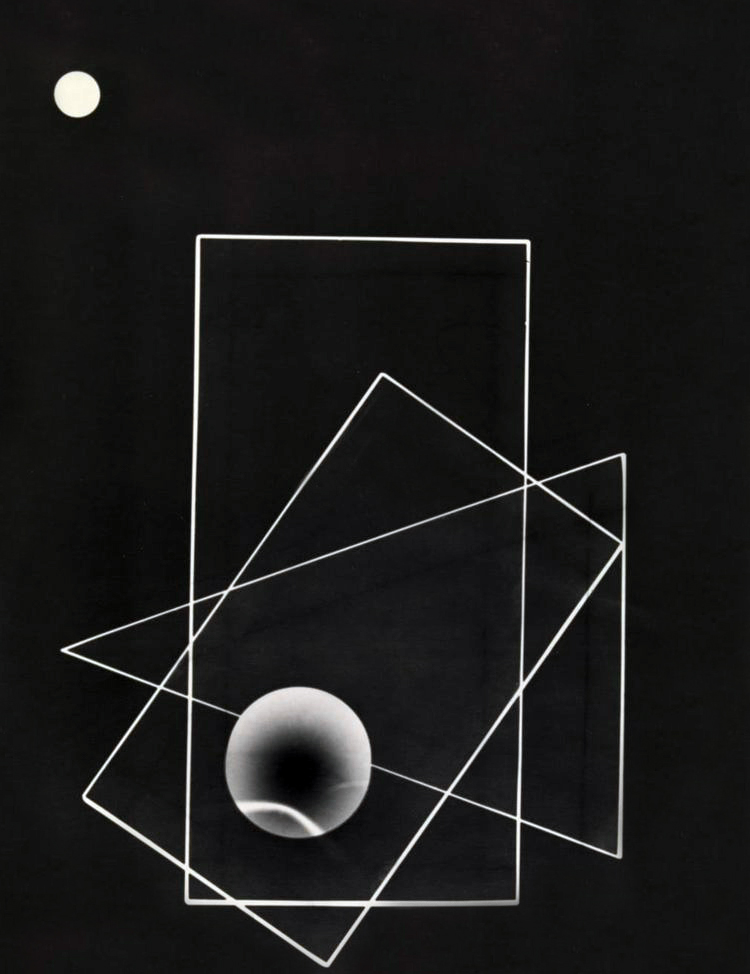
 

Otto Steinert (German, 1915-1978) 'Composition of Forms' 1949


Otto Steinert (German, 1915-1978)
Composition of Forms
1949
Gelatin silver print on paper
290 x 227mm
Jack Kirkland Collection, Nottingham


Guy Bourdin (French, 1928-1991) 'Untitled' 1952


Guy Bourdin (French, 1928-1991)
Untitled
1952
Gelatin silver print on paper
277 x 164mm
Purchased with funds provided by the Photography Acquisitions Committee 2015
© The Guy Bourdin Estate


Guy Bourdin (French, 1928-1991) 'Untitled' 1952


Guy Bourdin (French, 1928-1991)
Untitled
1952
Gelatin silver print on paper
232 x 169mm
Purchased with funds provided by the Photography Acquisitions Committee 2015
© The Guy Bourdin Estate


Guy Bourdin (French, 1928-1991) 'Untitled' c. 1950s


Guy Bourdin (French, 1928-1991)
Untitled
c. 1950s
Gelatin silver print on paper
239 x 179mm
Purchased with funds provided by the Photography Acquisitions Committee 2015
© The Guy Bourdin Estate


Untitled c.1950s is a black and white photograph by the French photographer Guy Bourdin. The entirety of the frame is taken up by a close-up of peeling paint. The paint sections fragment the image into uneven geometric shapes, which are interrupted by a strip of the dark surface beneath that winds from the top to the bottom of the frame. There is little sense of scale or contextual detail, resulting in a near-abstract composition.

Bourdin is best known for his experimental colour fashion photography produced while working for French Vogue between 1955 and 1977. This photograph belongs to an earlier period of experimentation, before he began to use colour and work in fashion. Taken outside the studio, it shows Bourdin’s sensitivity to the natural world and his attempt to transform the everyday into abstract compositions, bridging the gap between surrealism and subjective photography. Bourdin’s early work was heavily influenced by surrealism, as well as by pioneers of photography as a fine art such as Edward Weston, Paul Strand and Bill Brandt. His surrealist aesthetic can be attributed to his close relationship with Man Ray, who wrote the foreword to the catalogue for Bourdin’s first solo exhibition of black and white photographs at Galerie 29, Paris, in 1952.

This and other early works in Tate’s collection (such as Untitled (Sotteville, Normandy) c. 1950s, Tate P81205, and Solange 1957, Tate P81216) are typical of Subjektive Fotografie (‘subjective photography’), a tendency in the medium in the late 1940s and early 1950s. Led by the German photographer and teacher Otto Steinert, who organised three exhibitions under the title Subjektive Fotografie in 1951, 1954 and 1958, the movement advocated artistic self-expression – in the form of the artist’s creative approach to composition, processing and developing – above factual representation. Subjektive Fotografie’s emphasis on, and encouragement of, individual perspectives invited both the photographer and the viewer to interpret and reflect on the world through images. Bourdin’s interest in this can be seen in his early use of texture and abstraction, evident in close-up studies of cracked paint peeling off an external wall or a piece of torn fabric. These still lives were often dark in subject matter and tone, highlighting Bourdin’s interest in surrealist compositions and the intersection between death and sexuality. The works made use of the photographer’s urban environment, with deep black and high contrast printing techniques employed to create a sombre mood.

This approach was also important for Bourdin’s early portraiture, which anticipated his subsequent work in fashion. The subject of his portraits – often Solange Gèze, to whom the artist was married from 1961 until her death in 1971 – is usually framed subtly, rarely appearing in the centre or as the main focus of the image. In these works the figure is secondary, showing how Bourdin let the natural or urban environment frame the subject and integrate the body into its immediate surroundings. Bourdin was meticulous about the creative process from start to finish, sketching out images on paper and then recreating them in the landscape, using the natural environment as a stage set for his work.

Shoair Mavlian
August 2014
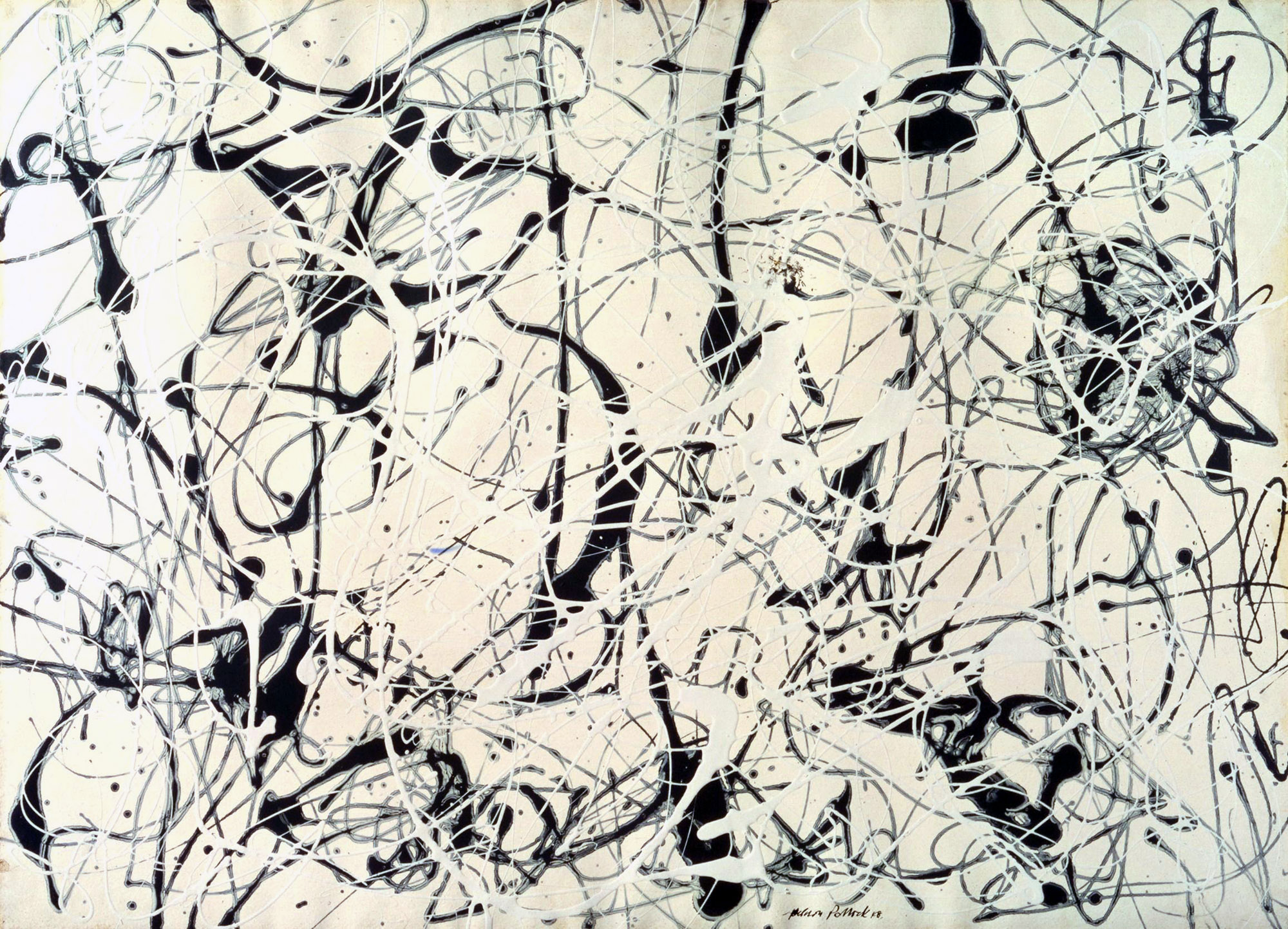
 

Jackson Pollock (American, 1912-1956) 'Number 23' 1948


Jackson Pollock (American, 1912-1956)
Number 23
1948
Enamel on gesso on paper
575 x 784mm
Tate: Presented by the Friends of the Tate Gallery (purchased out of funds provided by Mr and Mrs H.J. Heinz II and H.J. Heinz Co. Ltd) 1960
© ARS, NY and DACS, London 2018


Installation view of the exhibition 'Shape of Light: 100 Years of Photography and Abstract Art' at Tate Modern, London showing  at left Jackson Pollock's 'Number 23' (1948)


Installation view of the exhibition Shape of Light: 100 Years of Photography and Abstract Art at Tate Modern, London showing  at left Jackson Pollock’s Number 23 (1948, above)
Photo: © Tate / Sepharina Neville


Installation view of the exhibition 'Shape of Light: 100 Years of Photography and Abstract Art' at Tate Modern, London showing at top left, Nathan Lerner's 'Light Tapestry'; and at centre right, Otto Steinert's 'Luminogram II' (1952)


Installation view of the exhibition Shape of Light: 100 Years of Photography and Abstract Art at Tate Modern, London showing at top left, Nathan Lerner’s Light Tapestry; and at centre right, Otto Steinert’s Luminogram II (1952, below)
Photo: © Tate / Sepharina Neville
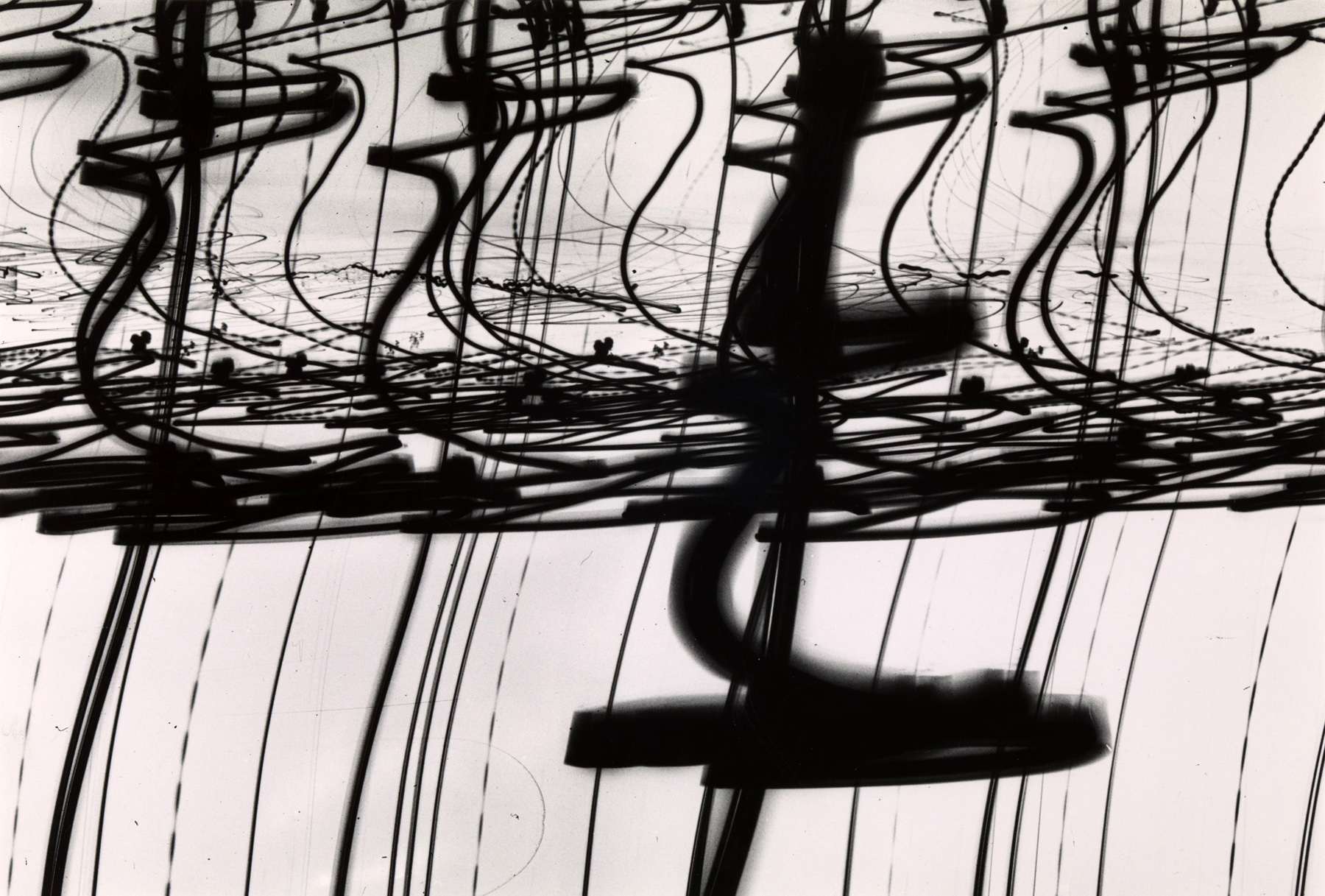
 

Otto Steinert (German, 1915-1978) 'Luminogram II' 1952


Otto Steinert (German, 1915-1978)
Luminogram II
1952
Gelatin silver print on paper
302 x 401mm
Jack Kirkland Collection Nottingham
© Estate Otto Steinert, Museum Folkwang, Essen
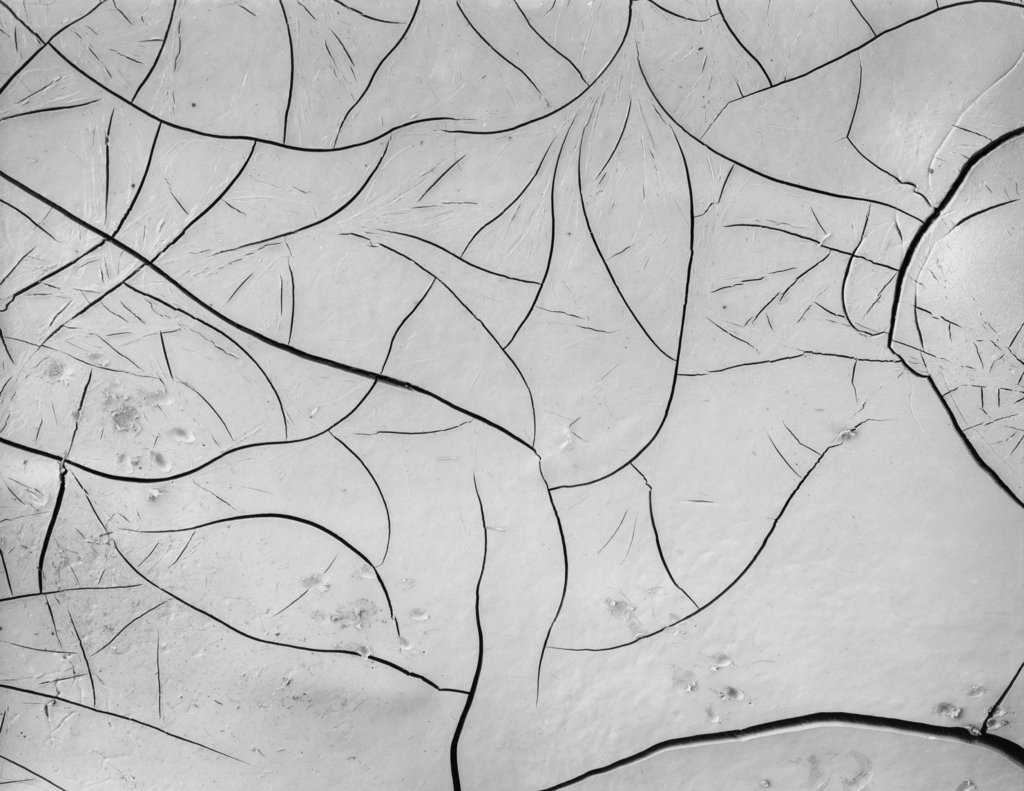
 

Brett Weston (American, 1911-1993) 'Mud Cracks' 1955


Brett Weston (American, 1911-1993)
Mud Cracks
1955
Silver gelatin print
203 x 254mm
Lent by the Tate Americas Foundation, courtesy of Christian Keesee Collection 2013
© The Brett Weston Archive/CORBIS


Peter Keetman (German, 1916-2005) 'Steel Pipes, Maximilian Smelter' 1958


Peter Keetman (German, 1916-2005)
Steel Pipes, Maximilian Smelter
1958
Gelatin silver print on paper
508 x 427mm
F.C. Gundlach Foundation


Man Ray (American, 1890-1976) 'Unconcerned Photograph' 1959


Man Ray (American, 1890-1976)
Unconcerned Photograph
1959
Museum of Modern Art, New York
© Man Ray Trust/ADAGP, Paris and DACS, London 2018
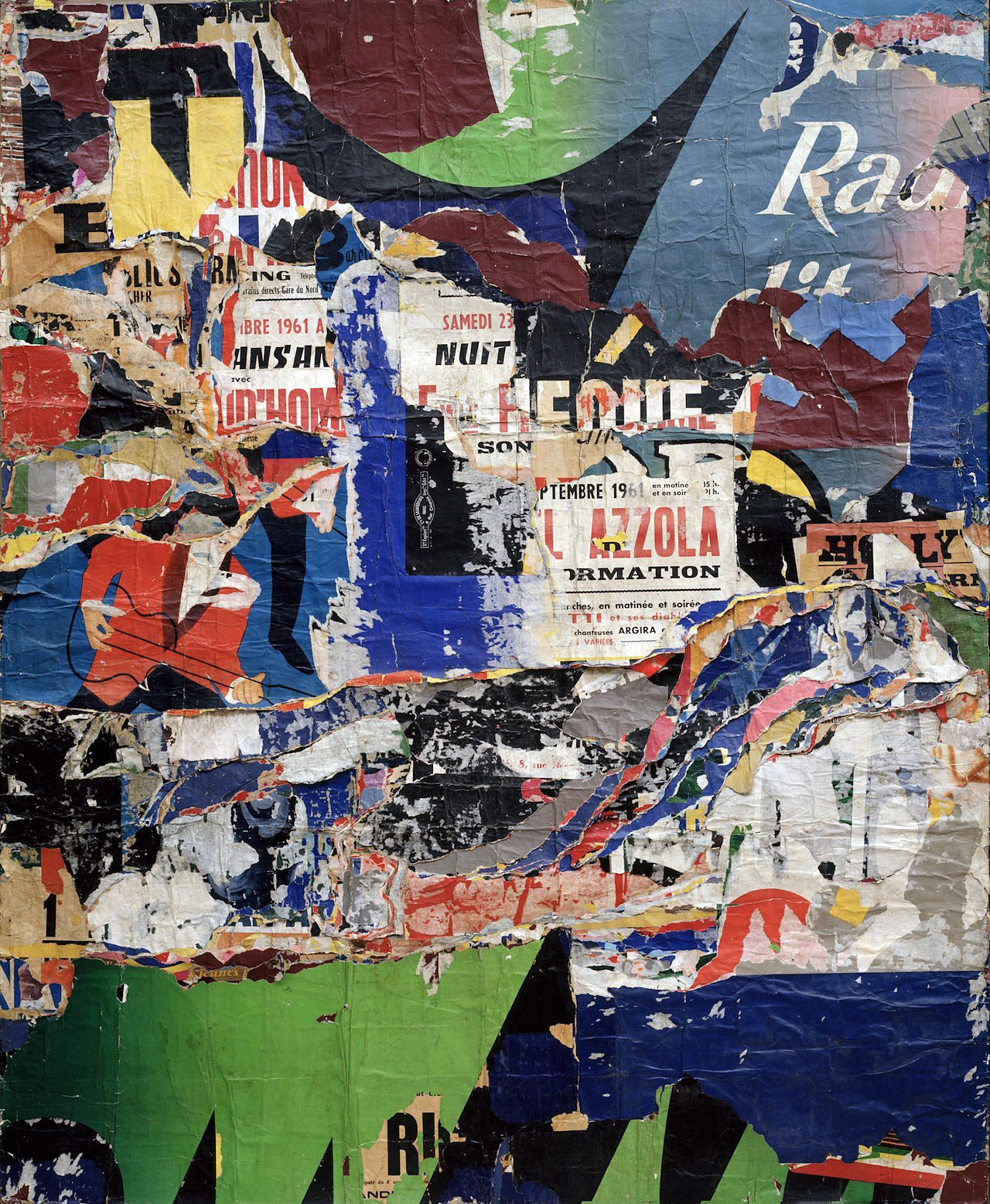
 

Jacques Mahé de la Villeglé (French, 1926-2022) 'Jazzmen' 1961


Jacques Mahé de la Villeglé (French, 1926-2022)
Jazzmen
1961
Printed papers on canvas
2170 x 1770mm
Presented by the Friends of the Tate Gallery 2000
© Jacques Mahé de la Villeglé


The Jazzmen is a section of what Jacques Villeglé termed affiches lacérées, posters torn down from the walls of Paris. These particular ones were taken on 10 December 1961. Following his established practice, Villeglé removed the section from a billboard and, having mounted it on canvas, presented it as a work of art. In ‘Des Réalités collectives’ of 1958 (‘Collective Realities’, reprinted in 1960: Les Nouveaux Réalistes, pp. 259-60) he acknowledged that he occasionally tore the surface of the posters himself, although he subsequently restricted interventions to repairs during the mounting process. The large blue and green advertisements for Radinola (at the top right and lower left) provide the main visible surface for The Jazzmen. These establish a compositional unity for the accumulated layers. Overlaid are fragmentary music posters and fly-posters, some dated to September 1961, including the images of the red guitarists that lend the work its title. The artist’s records give the source as rue de Tolbiac, a thoroughfare in the 13th arrondissement in south-east Paris. Villeglé usually uses the street as his title, but has suggested (interview with the author, February 2000) that the title The Jazzmen may have been invented for the work’s inclusion in the exhibition L’Art du jazz (Musée Galliera, Paris 1967).

Villeglé worked together with Raymond Hains (b. 1926) in presenting torn posters as works of art. They collaborated on such works as Ach Alma Manetro, 1949 (Musée nationale d’art moderne, Centre Georges Pompidou, Paris), in which typography dominates the composition. They first showed their affiches lacérées in May 1957 at the Galerie Colette Allendy, Paris, in a joint exhibition named Loi du 29 juillet 1881 ou le lyrisme à la sauvette (The Law of 29 July 1881 or Lyricism through Salvage) in reference to the law forbidding fly-posting. Villeglé sees a social complexity in the developments in the style, typography and subject of the source posters. He also considers the processes of the overlaying and the pealing of the posters by passers-by to be a manifestation of a liberated art of the street. Both aspects are implicitly political. As Villeglé points out, anonymity differentiates the torn posters from the collages of the Cubists or of the German artist Kurt Schwitters. In ‘Des Réalités collectives’ Villeglé wrote: ‘To collages, which originate in the interplay of many possible attitudes, the affiches lacérées, as a spontaneous manifestation, oppose their immediate vivacity’. He saw the results as extending the conceptual basis of Marcel Duchamp’s readymades, whereby an object selected by an artist is declared as art. However, this reduction of the artist’s traditional role brought an end to Villeglé’s collaboration with Hains, who held more orthodox views of creative invention.

In 1960 Villeglé, Hains and François Dufrêne (1930-1982), who also used torn posters, joined the Nouveaux Réalistes group gathered by the critic Pierre Restany (b.1930). Distinguished by the use of very disparate materials and techniques, the Nouveaux Réalistes – who also included Arman (b.1928), Yves Klein (1928-1962) and Jean Tinguely (1925-1991) – were united by what Villeglé has called their ‘distance from the act of painting’ as characterised by the dominant abstraction of the period (interview February 2000). In this way, Klein’s monochrome paintings (see Tate T01513) and Villeglé’s affiches lacérées (lacerated posters) conform to the group’s joint declaration of 27 October 1960: ‘The Nouveaux Réalistes have become aware of their collective singularity. Nouveau Réalisme = new perceptual approaches to reality.’ The Jazzmen, of the following year, embodies Villeglé’s understanding of his ‘singularity’ as a conduit for anonymous public expression.

Matthew Gale
June 2000


Edward Ruscha (American, b. 1937) 'Gilmore Drive-In Theater - 6201 W. Third St.' 1967, printed 2013


Edward Ruscha (American, b. 1937)
Gilmore Drive-In Theater – 6201 W. Third St.
1967, printed 2013
Gelatin silver prints on paper
356 x 279mm
Courtesy Ed Ruscha and Gagosian Gallery
© Ed Ruscha
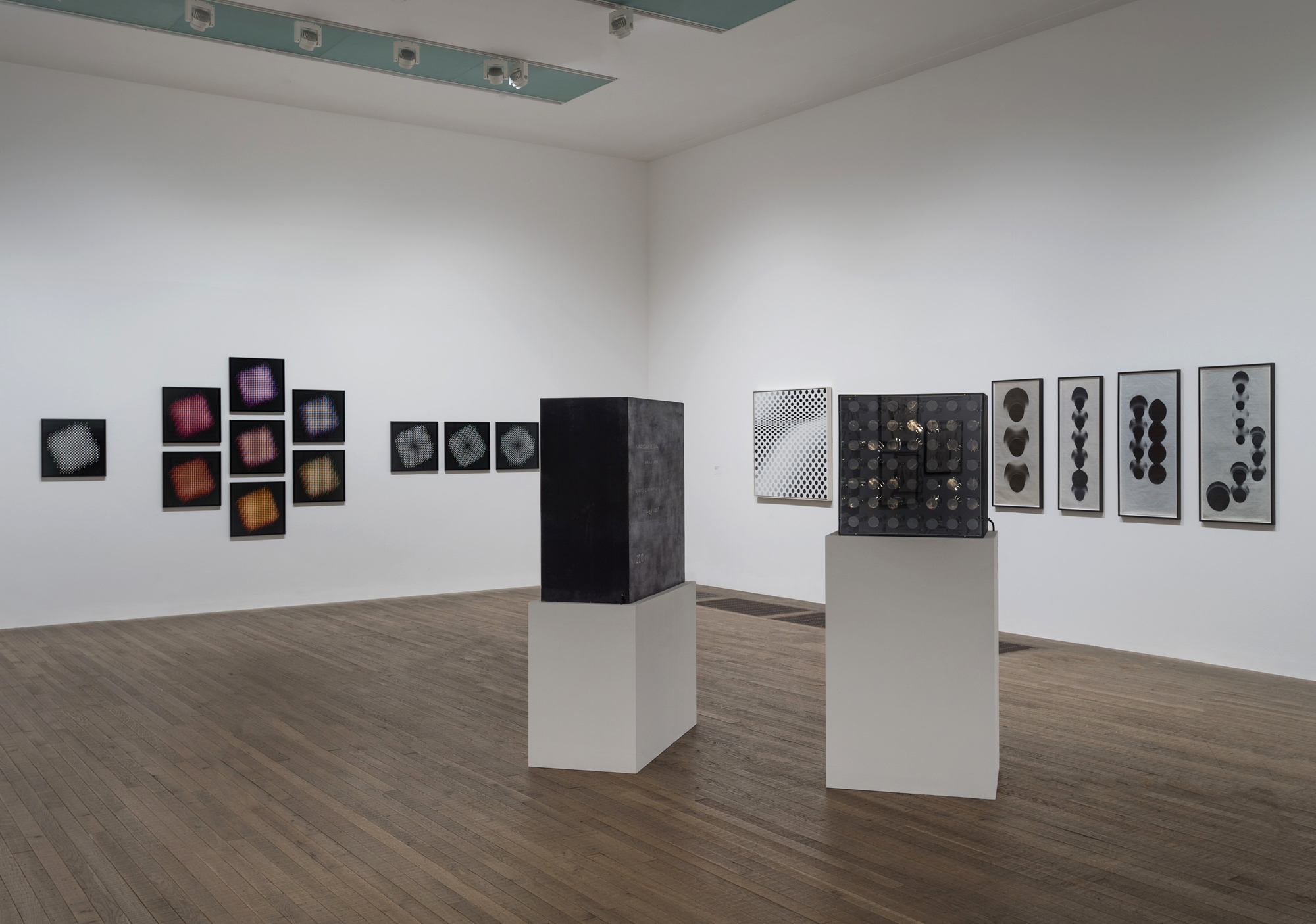
 

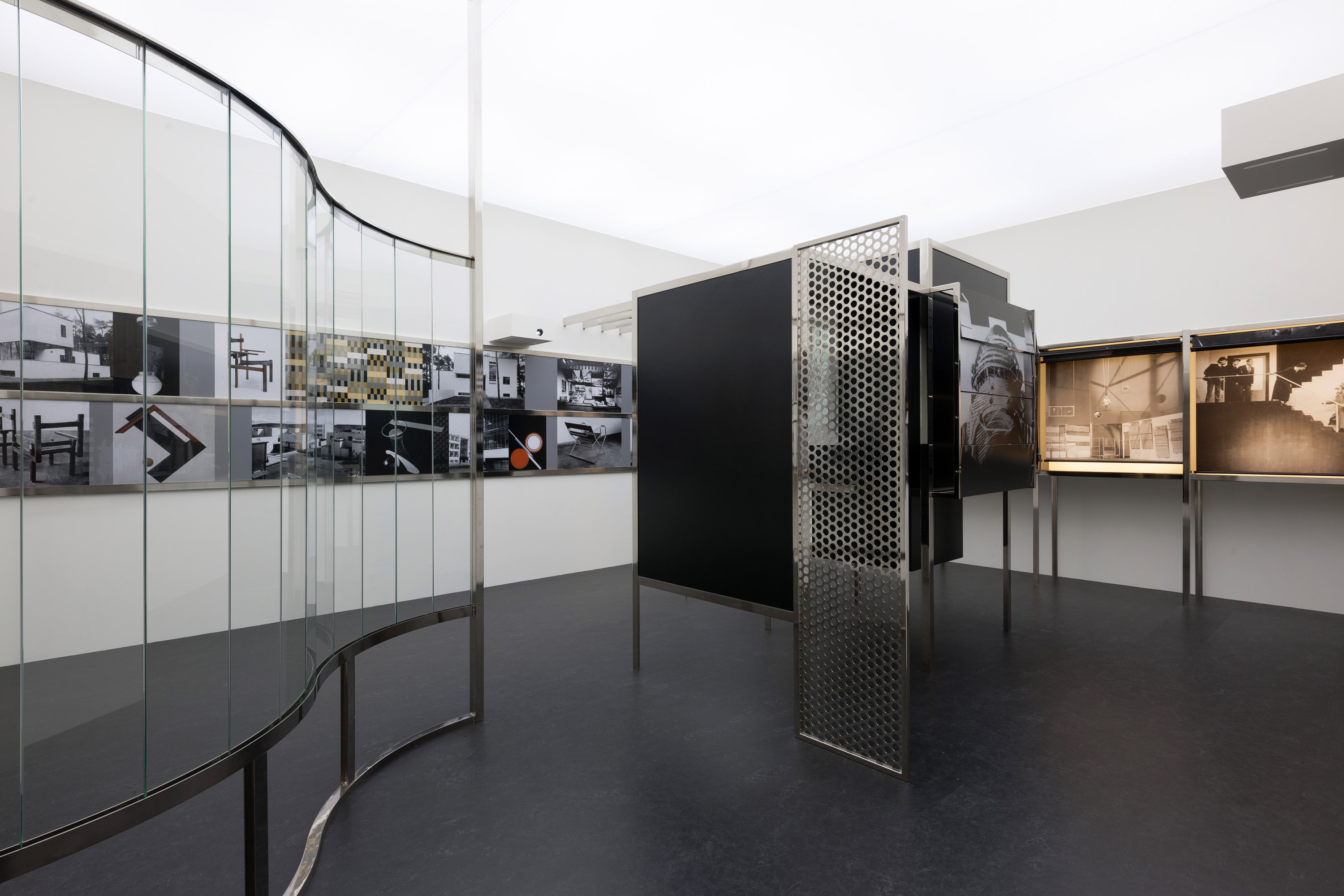
Installation view of the exhibition 'Shape of Light: 100 Years of Photography and Abstract Art' at Tate Modern, London


Installation view of the exhibition Shape of Light: 100 Years of Photography and Abstract Art at Tate Modern, London
Photo: © Tate / Andrew Dunkley
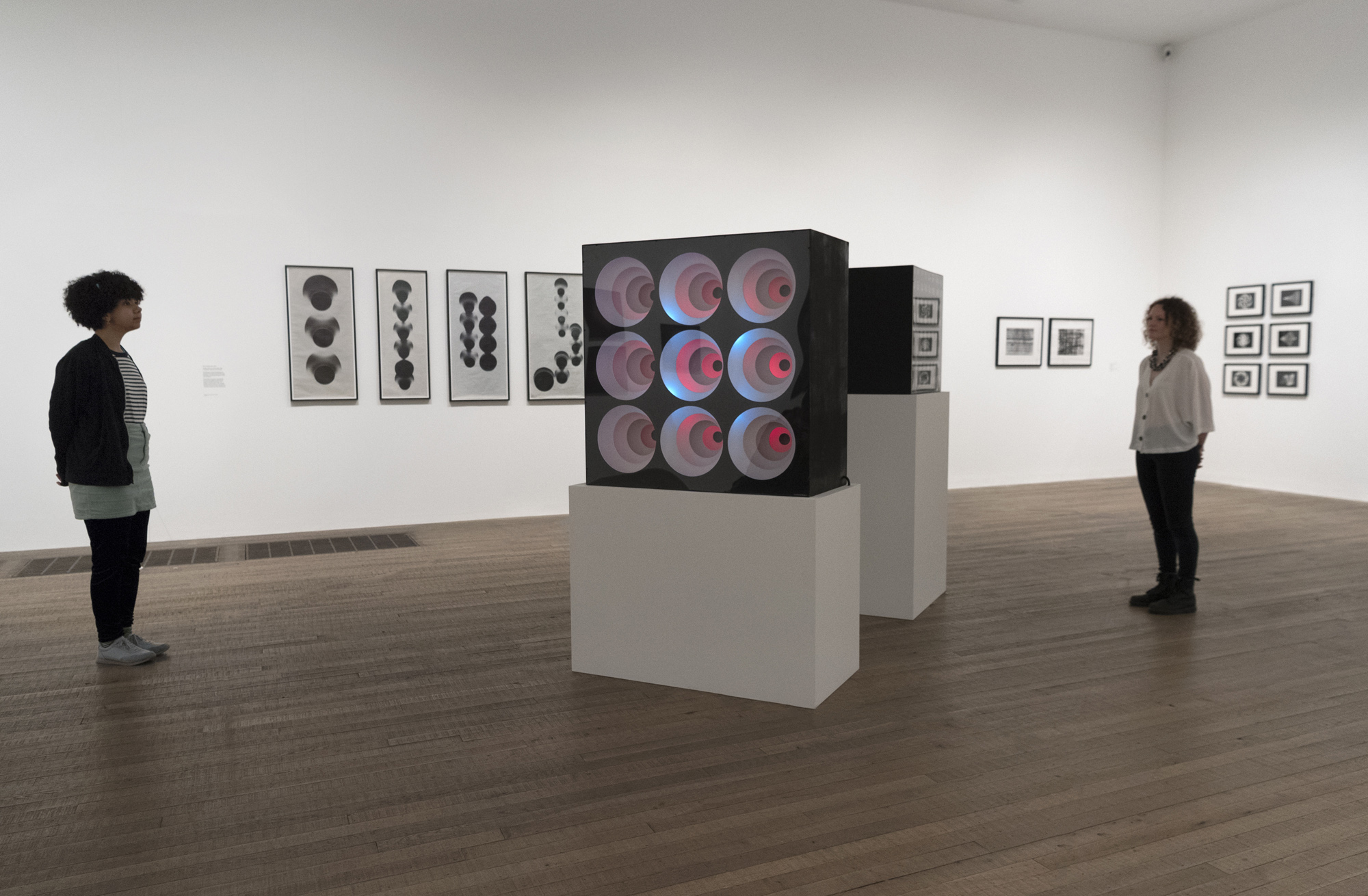
 

Installation view of the exhibition 'Shape of Light: 100 Years of Photography and Abstract Art' at Tate Modern, London showing Gregorio Vardanega's 'Circular Chromatic Spaces' 1967


Installation view of the exhibition Shape of Light: 100 Years of Photography and Abstract Art at Tate Modern, London showing Gregorio Vardanega’s Circular Chromatic Spaces 1967. Musée d’Art moderne de la Ville de Paris
Photo: © Tate / Andrew Dunkley


John Divola (American, b. 1949) '74V11' 1974


John Divola (American, b. 1949)
74V11
1974
Silver gelatin print
Jack Kirkland Collection, Nottingham
© John Divola
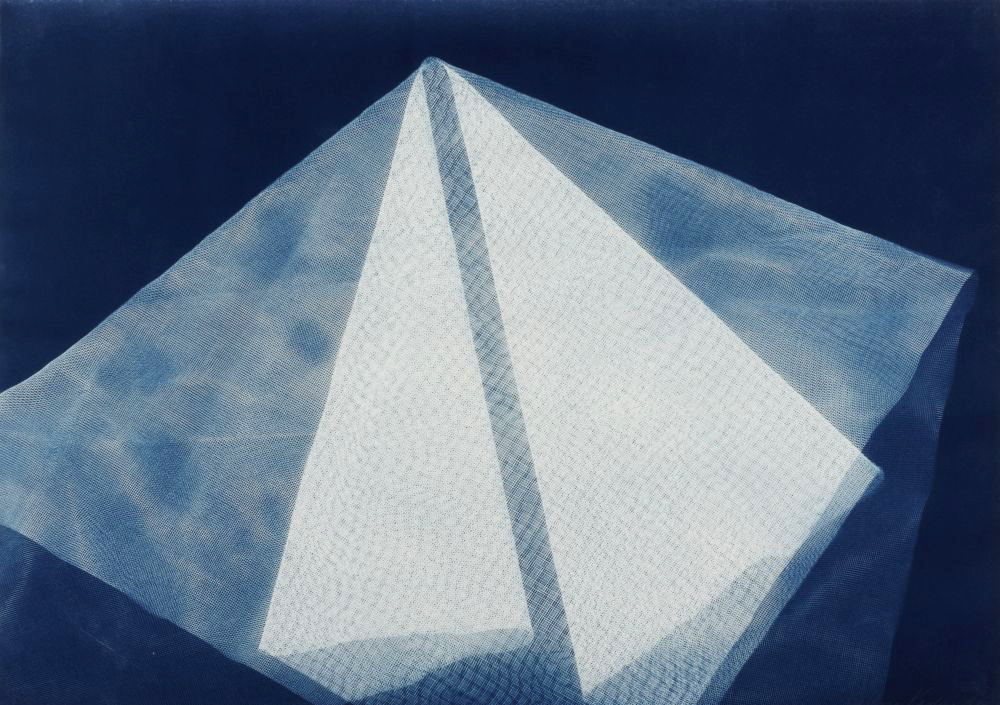
 

Barbara Kasten (American, b. 1936) 'Photogenic Painting, Untitled 74/13' (ID187) 1974


Barbara Kasten (American, b. 1936)
Photogenic Painting, Untitled 74/13 (ID187)
1974
Salted paper print
558 x 762mm
Courtesy the artist, Thomas Dane Gallery and Bortolami Gallery, New York
© Barbara Kasten
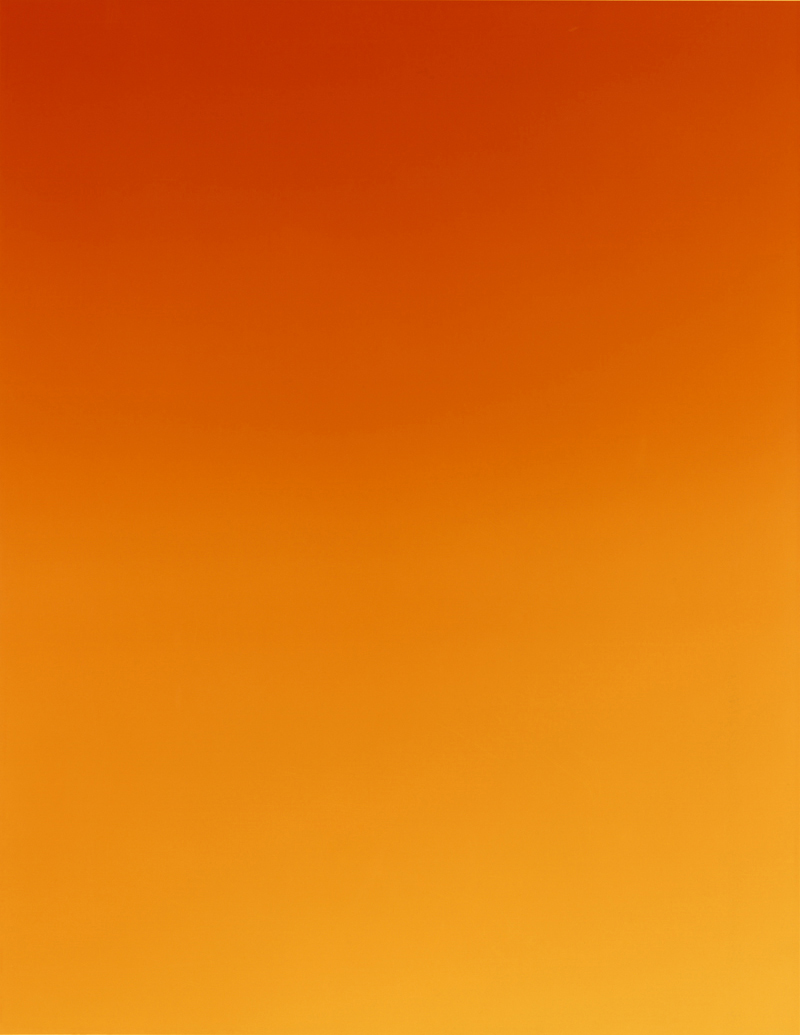
 

James Welling (American, b. 1951) 'Untitled' 1986


James Welling (American, b. 1951)
Untitled
1986
C-print on paper
254 x 203mm
Jack Kirkland Collection, Nottingham
© James Welling. Courtesy the artist and David Zwirner, New York/London/Hong Kong and Maureen Paley, London


Installation view of the exhibition 'Shape of Light: 100 Years of Photography and Abstract Art' at Tate Modern, London showing Sigmar Polke's 'Untitled (Uranium Green)' 1992


Installation view of the exhibition Shape of Light: 100 Years of Photography and Abstract Art at Tate Modern, London showing Sigmar Polke’s Untitled (Uranium Green) 1992. Hans Georg Näder © The Estate of Sigmar Polke / VG Bild-Kunst Bonn and DACS London, 2018
Photo: © Tate / Seraphina Neville
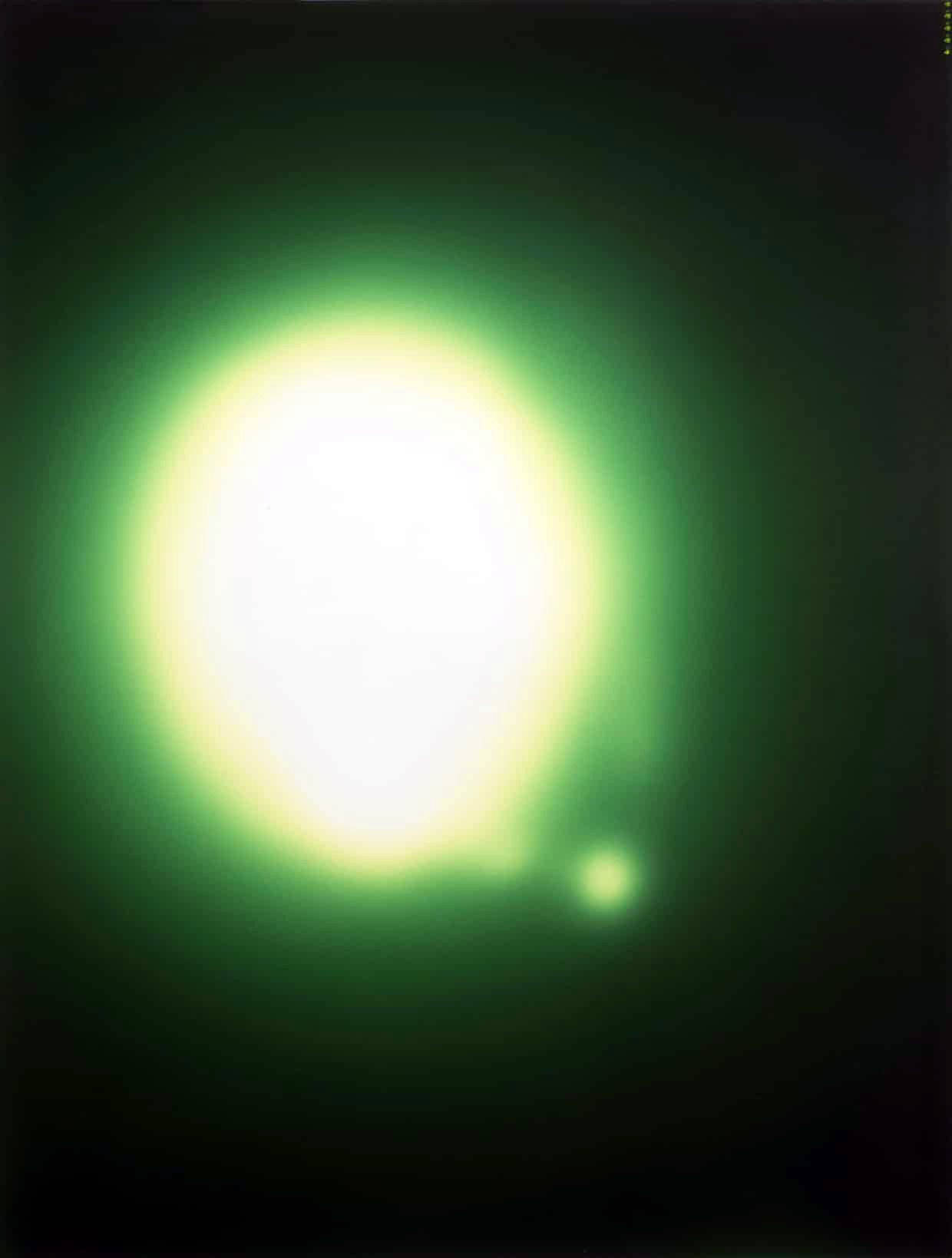
 

Sigmar Polke (German, 1941-1910) 'Untitled (Uranium Green)' 1992


Sigmar Polke (German, 1941-1910)
Untitled (Uranium Green) (detail)
1992
10 Photographs, C-print on paper
Image, each: 610 x 508mm
The Estate of Sigmar Polke / VG Bild-Kunst Bonn 2017
Photo: Adam Reich/The Estate of Sigmar Polke / VG Bild-Kunst Bonn and DACS London, 2018
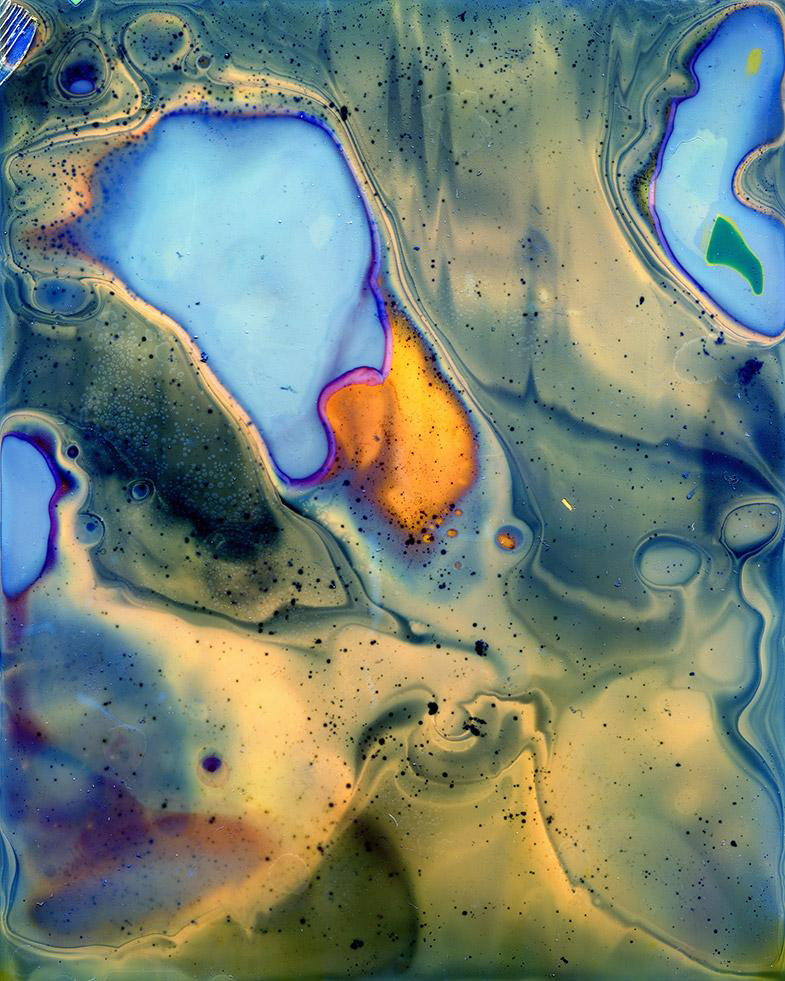
 

Daisuke Yokota (Japanese, b. 1983) 'Untitled' 2014


Daisuke Yokota (Japanese, b. 1983)
Untitled
2014
from Abstracts series
© Daisuke Yokota
Courtesy of the artist and Jean-Kenta Gauthier Gallery


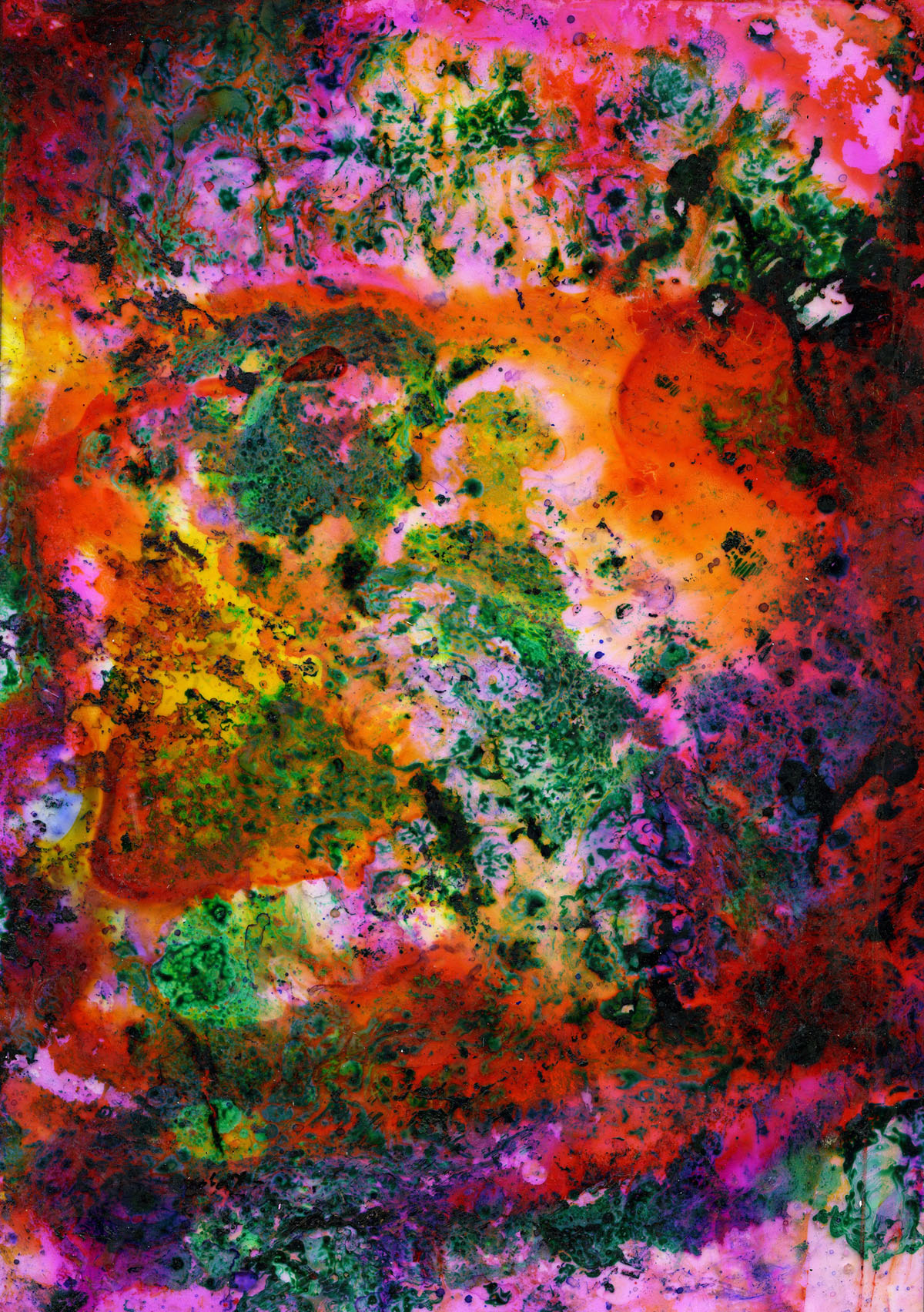
Process is at the core of Yokota’s photographs. For his black-and-white work, such as the series Linger or Site/Cloud, Yokota sifts through an archive of more than 10 years of photographs in his Tokyo apartment. When he finds something that speaks to him – a nude figure, a chair, a building, a grove of trees – he makes a digital image of it, develops it, and rephotographs the image up to 15 times, until it becomes increasingly degraded. He develops the film in ways that are intentionally “incorrect,” allowing light to leak in, or singeing the negatives, using boiling water, or acetic acid. The purported subject fades, and shadows, textures, spots and other sorts of visual noise emerge. For his recent colour work, trippy, sensual abstractions, the process is similar, except that it is cameraless; he doesn’t start with a preexisting image. “I wanted to focus on the emulsion, on the different textures, more than on a subject being photographed,” says Yokota.

IN THE STUDIO
Daisuke Yokota
By Jean Dykstra

November – December 2015. No longer available online


Antony Cairns (British, b. 1980) 'LDN5_051' 2017


Antony Cairns (British, b. 1980)
LDN5_051
2017
Courtesy of the artist
© Antony Cairns
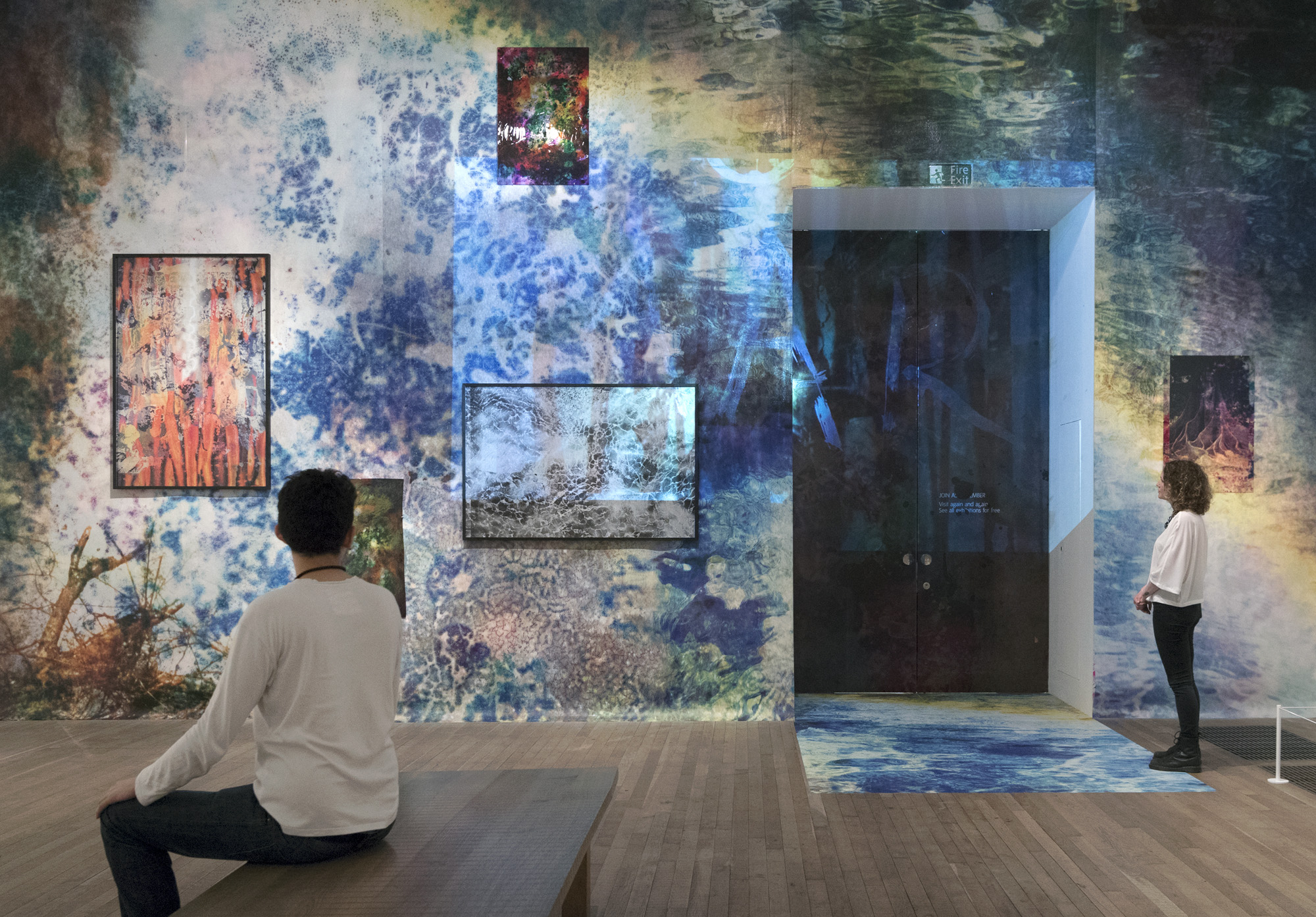
 

Installation view of the exhibition 'Shape of Light: 100 Years of Photography and Abstract Art' at Tate Modern, London showing the installation 'A Rock Is A River', 2018 by the artist Maya Rochat


Installation view of the exhibition Shape of Light: 100 Years of Photography and Abstract Art at Tate Modern, London showing the installation A Rock Is A River, 2018 by the artist Maya Rochat. Courtesy Lily Robert and VITRINE, London | Basel © Maya Rochat
Photo: © Tate / Sepharina Neville
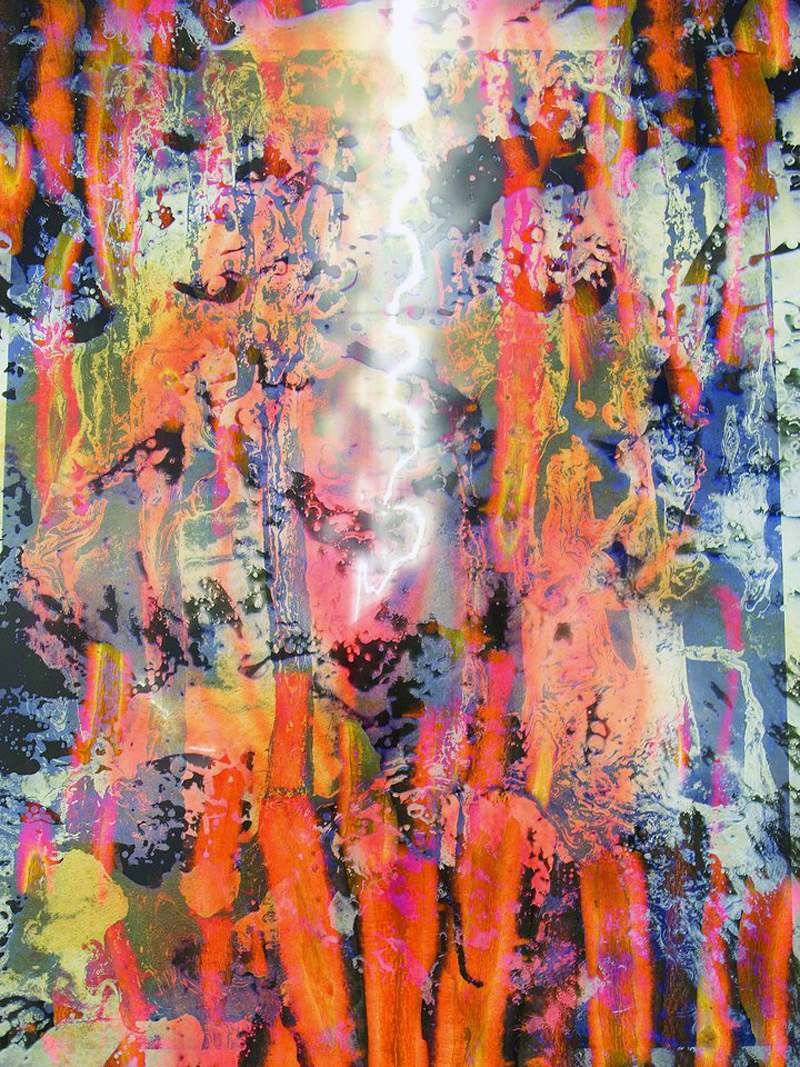
 

Maya Rochat (German, b. 1985) 'A Rock is a River (META CARROTS)' 2017


Maya Rochat (German, b. 1985)
A Rock is a River (META CARROTS)
2017
Courtesy Lily Robert
© Maya Rochat
 

Maya Rochat (German, b. 1985) 'A Rock is a River (META RIVER)' 2017


Maya Rochat (German, b. 1985)
A Rock is a River (META RIVER)
2017
Courtesy Lily Robert
© Maya Rochat


Tate Modern
Bankside
London SE1 9TG
United Kingdom

Opening hours:
Daily 10am – 5pm
Tate Modern website

LIKE ART BLART ON FACEBOOK

Back to top

Exhibition: ‘Moholy-Nagy: Future Present’ at the Los Angeles County Museum of Art (LACMA)

Exhibition dates: 12th February – 18th June, 2017


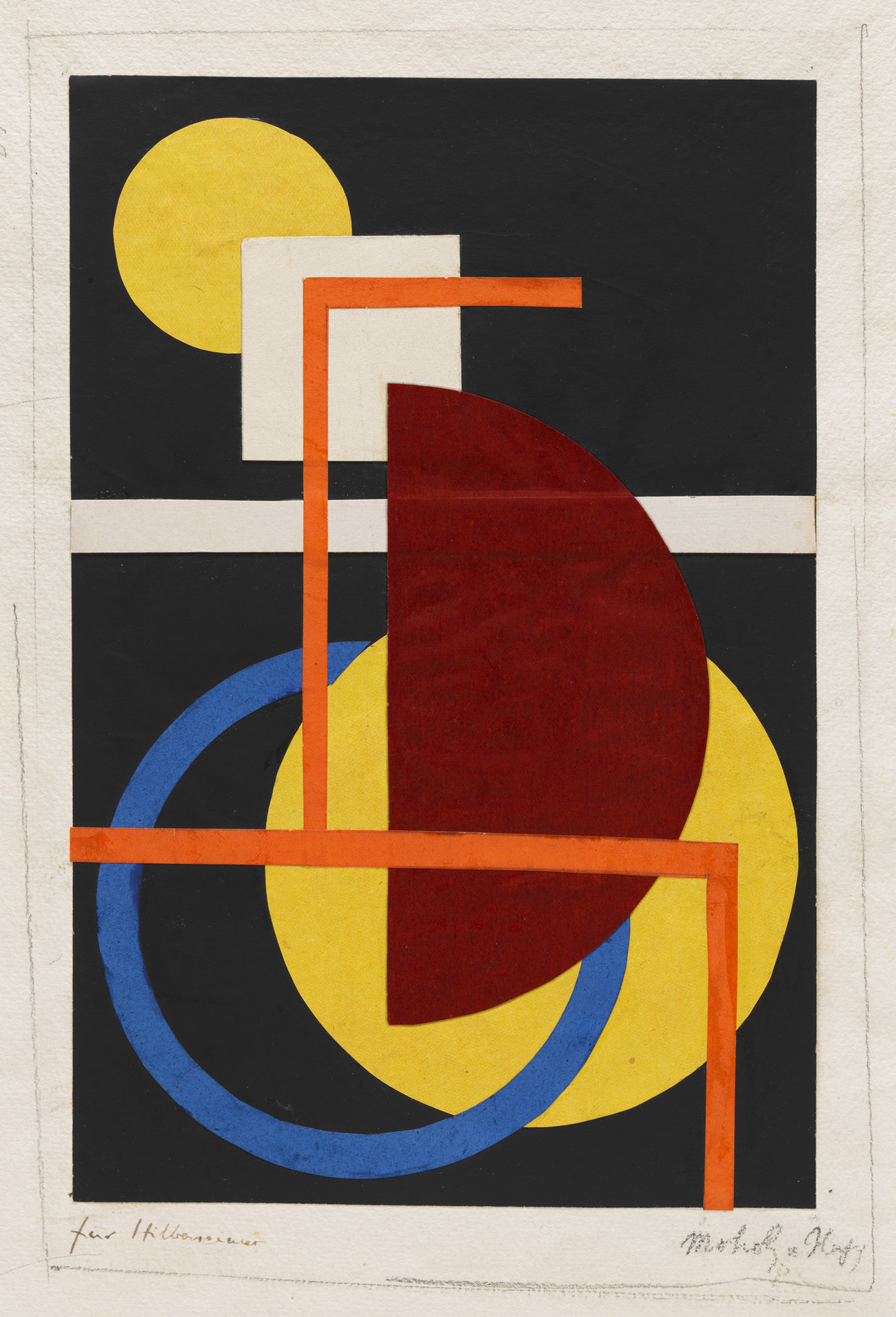
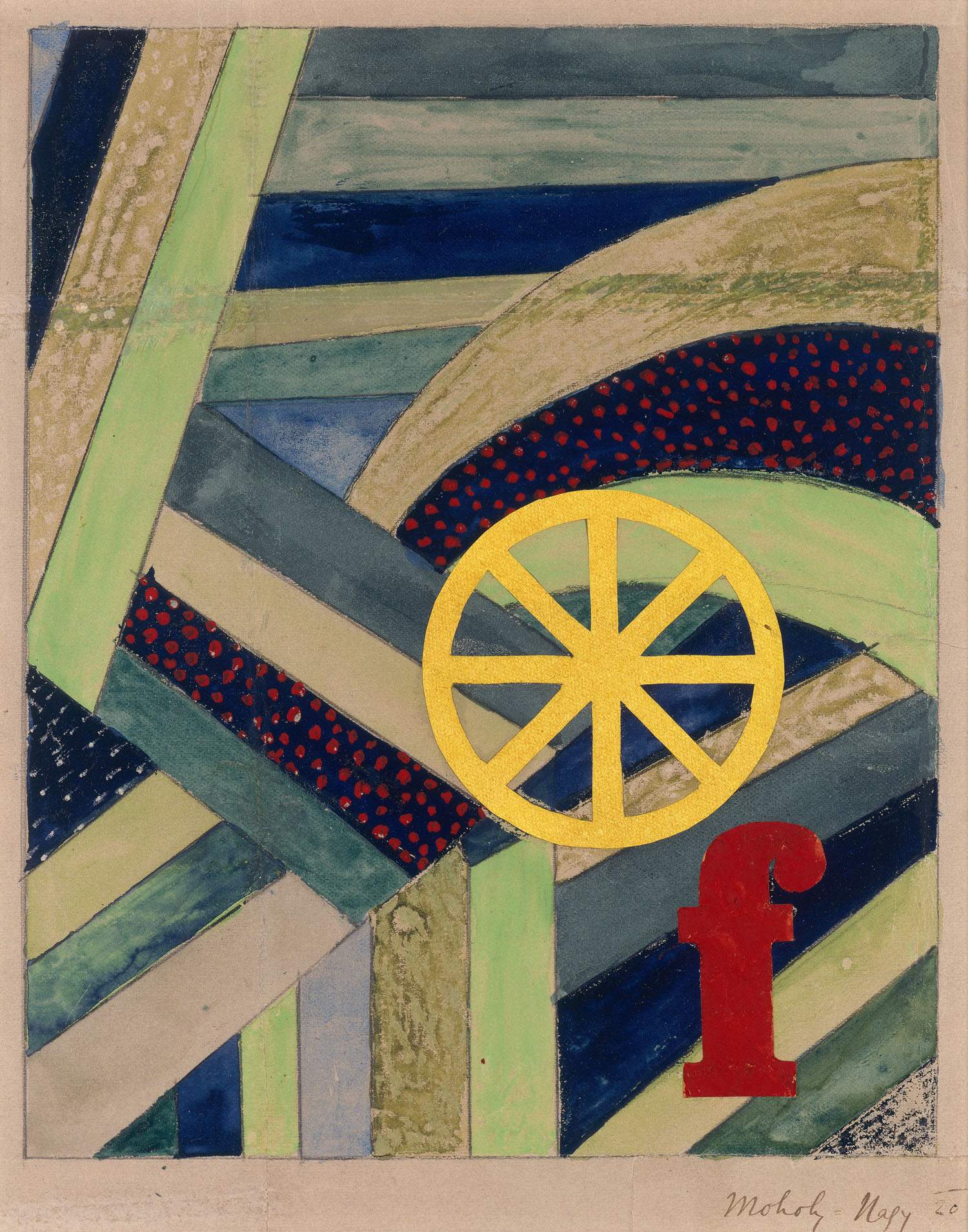
László Moholy-Nagy (Hungarian, 1895-1946) 'F in Field' 1920 from the exhibition 'Moholy-Nagy: Future Present' at the Los Angeles County Museum of Art (LACMA), Feb - June, 2017


László Moholy-Nagy (Hungarian, 1895-1946)
F in Field
1920
Gouache and collage on paper
8 11/16 × 6 15/16 in.
Private collection, courtesy of Kunsthandel Wolfgang Werner, Bremen/Berlin
© 2017 Hattula Moholy-Nagy/Artists Rights Society (ARS), New York/VG Bild-Kunst, Bonn


“To meet the manifold requirements of this age with a definite program of human values, there must come a new mentality and a new type of personality. The common denominator is the fundamental acknowledgment of human needs; the task is to recognise the moral obligation in satisfying these needs, and the aim is to produce for human needs, not for profit.”


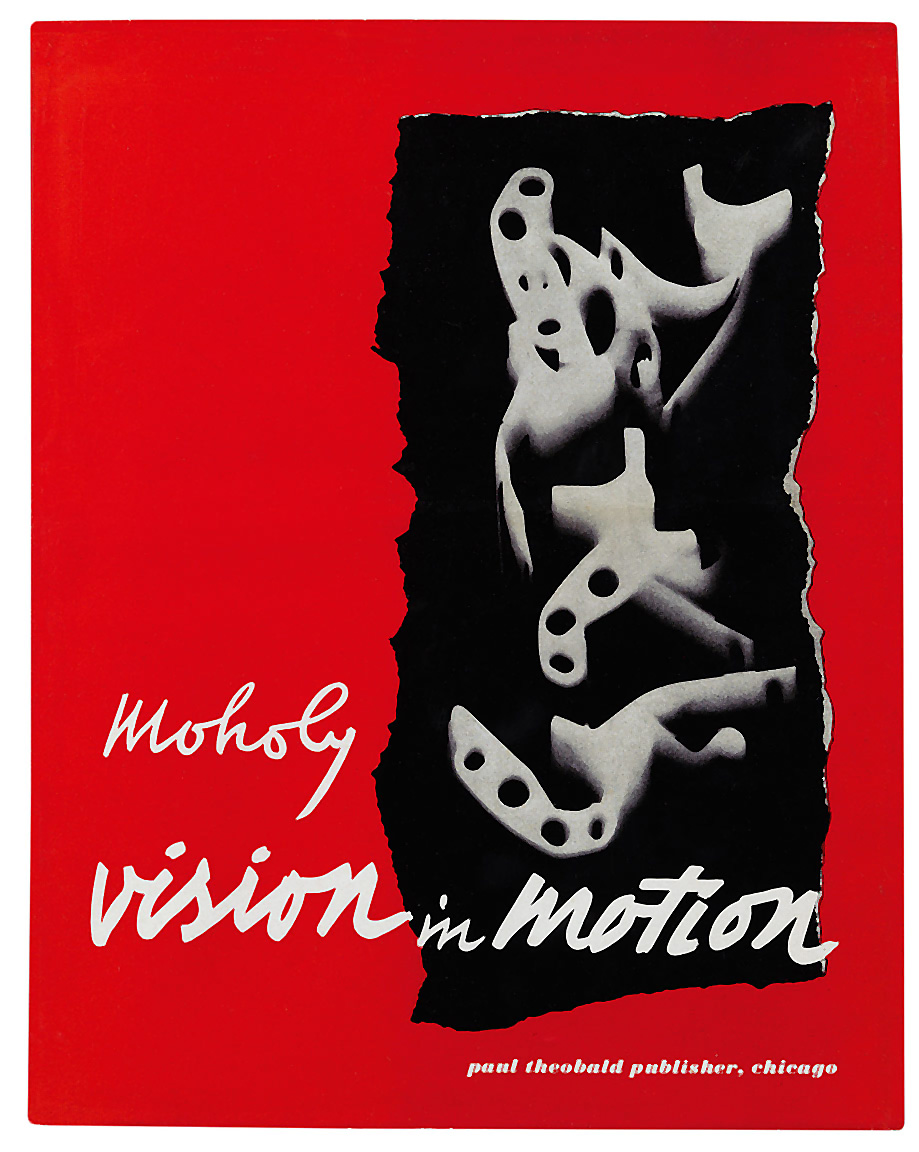
László Moholy-Nagy in Vision in Motion, published posthumously in 1947


New vision

One of the most creative human beings of the 20th century, and one of its most persuasive artists … “pioneering painter, photographer, sculptor, and filmmaker as well as graphic, exhibition, and stage designer, who was also an influential teacher at the Bauhaus, a prolific writer, and later the founder of Chicago’s Institute of Design.”

New visual creations, new combinations of technology and art: immersive installations featuring photographic reproductions, films, slides, posters, and examples of architecture, theatre, and industrial design that attempted to achieve a Gesamtwerk (total work) that would unify art and technology with life itself. Moholy’s “belief in the power of images and the various means by which to disseminate them” presages our current technological revolution.

It’s time another of his idioms – the moral obligation to satisfy human values by producing for human needs, not for profit – is acted upon.

The aim is to produce for human needs, not for profit.

Dr Marcus Bunyan


Many thankx to the Los Angeles County Museum of Art for allowing me to publish the photographs in the posting. Please click on the photographs for a larger version of the image.


The first comprehensive retrospective of the work of László Moholy-Nagy (1895-1946) in the United States in nearly 50 years, this long overdue presentation reveals a utopian artist who believed that art could work hand-in-hand with technology for the betterment of humanity. Moholy-Nagy: Future Present examines the career of this pioneering painter, photographer, sculptor, and filmmaker as well as graphic, exhibition, and stage designer, who was also an influential teacher at the Bauhaus, a prolific writer, and later the founder of Chicago’s Institute of Design. The exhibition includes more than 250 works in all media from public and private collections across Europe and the United States, some of which have never before been shown publicly in the U.S. Also on display is a large-scale installation, the Room of the Present, a contemporary construction of an exhibition space originally conceived by Moholy-Nagy in 1930. Though never realised during his lifetime, the Room of the Present illustrates Moholy’s belief in the power of images and the various means by which to disseminate them – a highly relevant paradigm in today’s constantly shifting and evolving technological world.


Moholy-Nagy: Future Present at LACMA

An exhibition walkthrough of Moholy-Nagy: Future Present at LACMA. Mark Lee, Principal of Johnston Marklee and Carol S. Eliel, Curator of Modern Art at LACMA discuss how Johnston Marklee’s design of the exhibition dialogues with the multiple mediums that constitute Moholy-Nagy’s vast body of work.


László Moholy-Nagy (Hungarian, 1895-1946) 'Title unknown' 1920/1921 from the exhibition 'Moholy-Nagy: Future Present' at the Los Angeles County Museum of Art (LACMA), Feb - June, 2017


László Moholy-Nagy (Hungarian, 1895-1946)
Title unknown
1920/1921
Gouache, collage, and graphite on paper
9 5/8 × 6 3/8 in.
Los Angeles County Museum of Art, Gift of Kate Steinitz
© 2017 Hattula Moholy-Nagy/Artists Rights Society (ARS), New York/VG Bild-Kunst, Bonn
Photo © Museum Associates/LACMA


László Moholy-Nagy (Hungarian, 1895-1946) 'Photogram' 1941


László Moholy-Nagy (Hungarian, 1895-1946)
Photogram
1941
Gelatin silver photogram
28 x 36cm
The Art Institute of Chicago, Gift of Sally Petrilli, 1985
© 2016 Hattula Moholy-Nagy/VG Bild-Kunst, Bonn/Artists Rights Society (ARS), New York


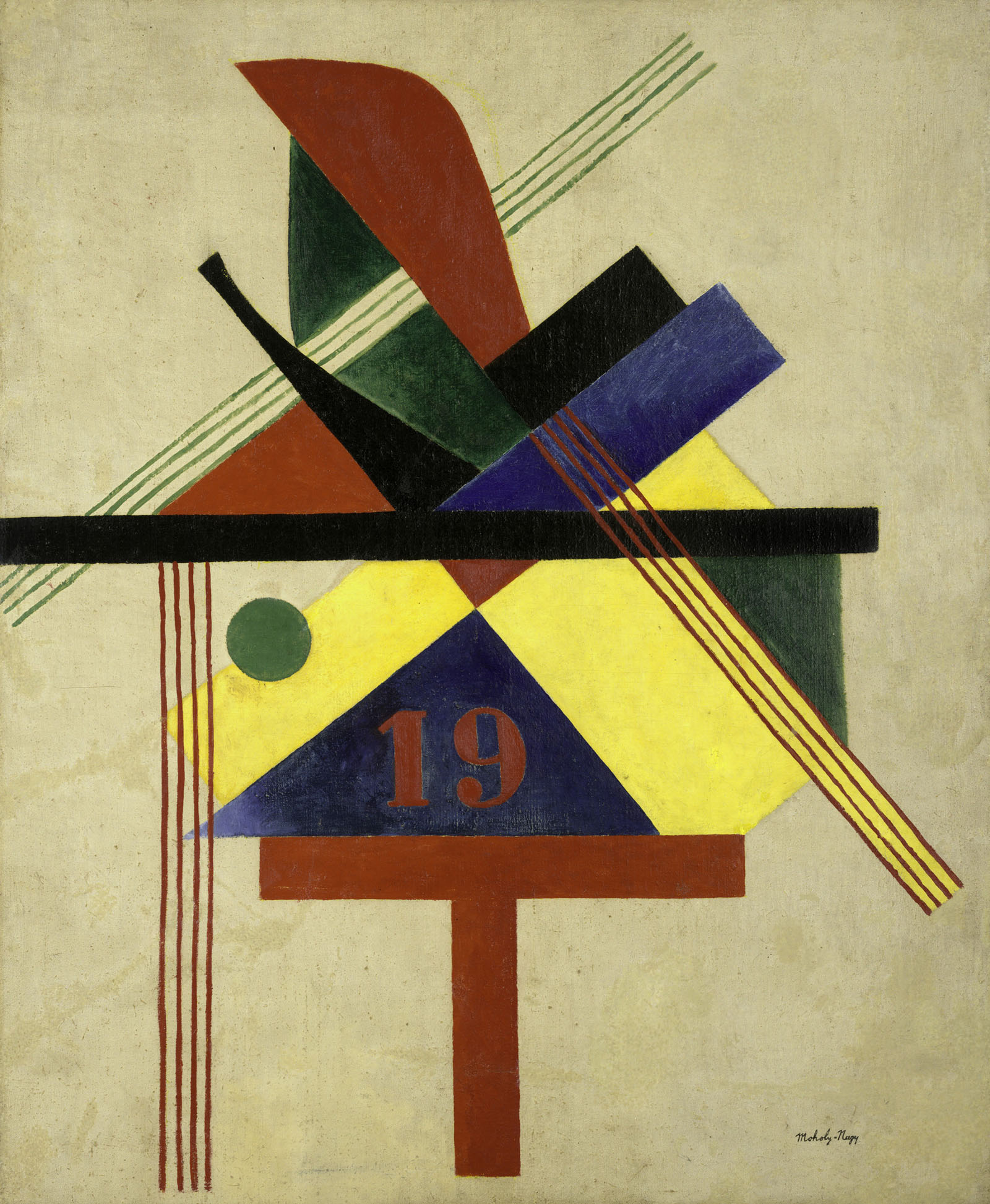
László Moholy-Nagy (Hungarian, 1895-1946) '19' 1921


László Moholy-Nagy (Hungarian, 1895-1946)
19
1921
Oil on canvas
44 × 36 1/2 in.
Harvard Art Museums/Busch-Reisinger Museum, Gift of Sibyl Moholy-Nagy
© 2017 Hattula Moholy-Nagy/Artists Rights Society (ARS), New York/VG Bild-Kunst, Bonn
Photo © President and Fellows of Harvard College


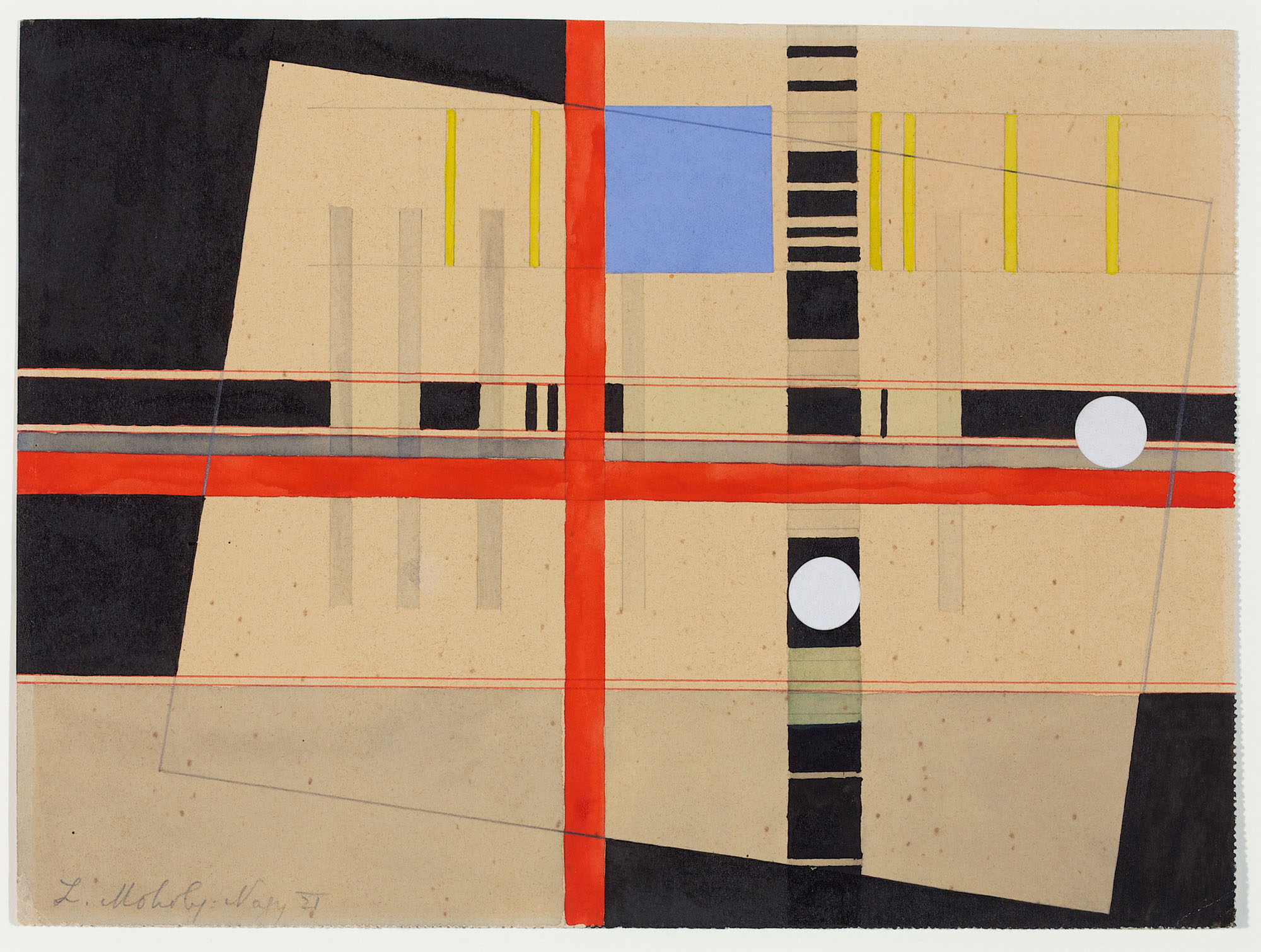
László Moholy-Nagy (Hungarian, 1895-1946) 'Red Cross and White Balls' 1921


László Moholy-Nagy (Hungarian, 1895-1946)
Red Cross and White Balls
1921
Collage, ink, graphite, and watercolour on paper
8 7/16 × 11 7⁄16 in.
Museum Kunstpalast Düsseldorf
© 2017 Hattula Moholy-Nagy/Artists Rights Society (ARS), New York/VG Bild-Kunst, Bonn, photo © Museum Kunstpalast – Horst Kolberg – ARTOTHEK


László Moholy-Nagy (Hungarian, 1895-1946) 'Construction' 1922


László Moholy-Nagy (Hungarian, 1895-1946)
Construction
1922
Oil and graphite on panel
21 3/8 × 17 15/16 in.
Harvard Art Museums/Busch-Reisinger Museum, Gift of Lydia Dorner in memory of Dr. Alexander Dorner
© 2017 Hattula Moholy-Nagy/Artists Rights Society (ARS), New York/VG Bild-Kunst, Bonn
Photo © President and Fellows of Harvard College


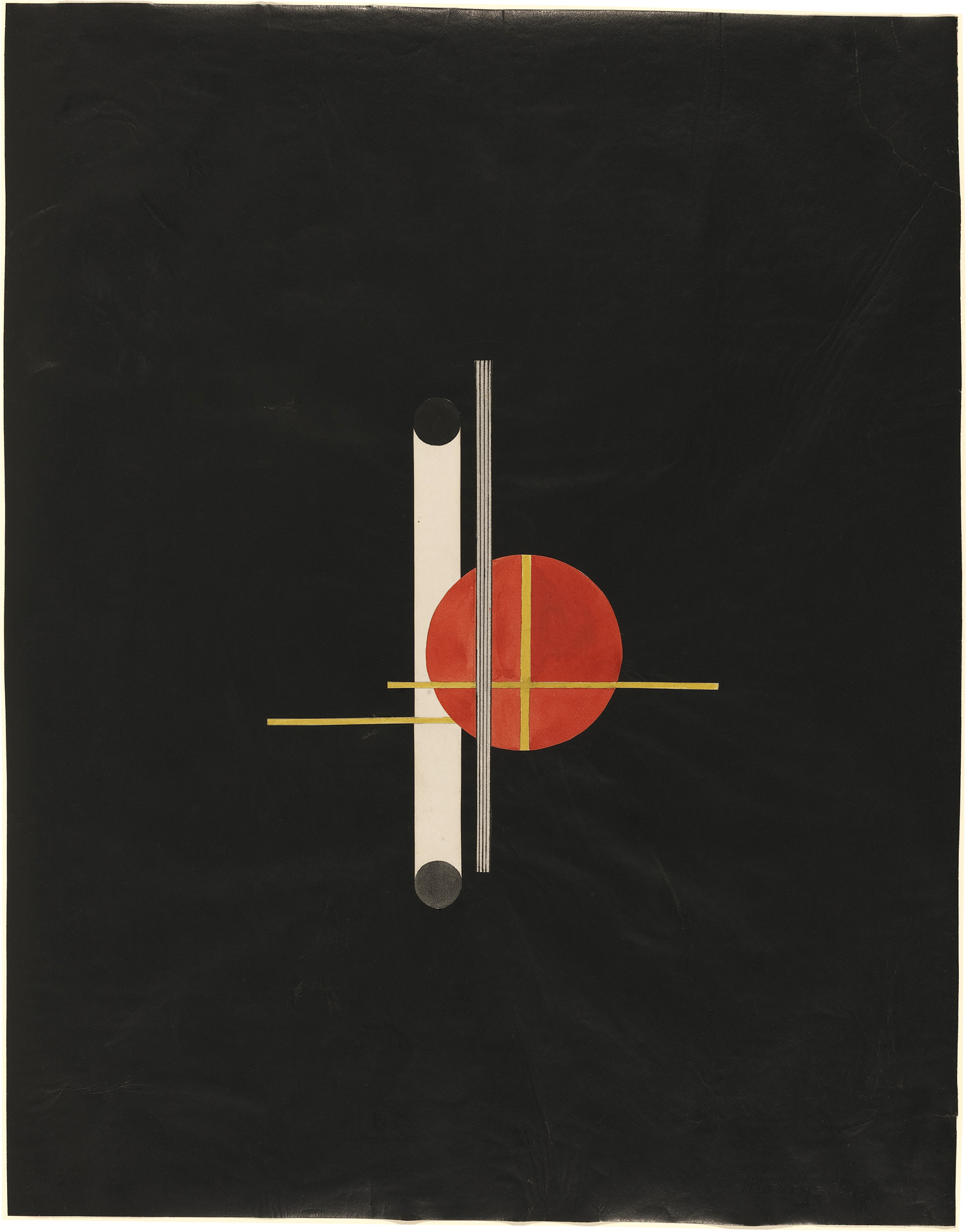
László Moholy-Nagy (Hungarian, 1895-1946) 'Q' 1922/23


László Moholy-Nagy (Hungarian, 1895-1946)
Q
1922/23
Collage, watercolour, ink, and graphite on paper attached to carbon paper
23 3⁄16 × 18 1⁄4 in.
National Gallery of Art, Washington, Ailsa Mellon Bruce Fund
© 2017 Hattula Moholy-Nagy/Artists Rights Society (ARS), New York/VG Bild-Kunst, Bonn


The Los Angeles County Museum of Art (LACMA) presents Moholy-Nagy: Future Present, the first comprehensive retrospective of the pioneering artist and educator László Moholy-Nagy (1895-1946) to be seen in the United States in nearly 50 years. Organised by LACMA, the Solomon R. Guggenheim Foundation, and the Art Institute of Chicago, this exhibition examines the rich and varied career of the Hungarian-born modernist. One of the most versatile figures of the twentieth century avant-garde, Moholy (as he is often called) believed in the potential of art as a vehicle for social transformation and in the value of new technologies in harnessing that potential. He was a pathbreaking painter, photographer, sculptor, designer, and filmmaker as well as a prolific writer and an influential teacher in both Germany and the United States. Among his innovations were experiments with cameraless photography; the use of industrial materials in painting and sculpture; research with light, transparency, and movement; work at the forefront of abstraction; fluidity in moving between the fine and applied arts; and the conception of creative production as a multimedia endeavour. Radical for the time, these are now all firmly part of contemporary art practice.

The exhibition includes approximately 300 works, including paintings, sculptures, drawings, collages, photographs, photograms, photomontages, films, and examples of graphic, exhibition, and theatre design. A highlight is the full-scale realisation of the Room of the Present, an immersive installation that is a hybrid of exhibition space and work of art, seen here for the first time in the United States. This work – which includes photographic reproductions, films, images of architectural and theatre design, and examples of industrial design – was conceived by Moholy around 1930 but realised only in 2009. The exhibition is installed chronologically with sections following Moholy’s career from his earliest days in Hungary through his time at the Bauhuas (1923-1928), his post-Bauhaus period in Europe, and ending with his final years in Chicago (1937-1946).

Moholy-Nagy: Future Present is co-organised by Carol S. Eliel, Curator of Modern Art, LACMA; Karole P. B. Vail, Curator, Solomon R. Guggenheim Museum; and Matthew S. Witkovsky, Richard and Ellen Sandor Chair and Curator, Department of Photography, Art Institute of Chicago. The exhibition’s tour began at the Solomon R. Guggenheim Museum in New York, continued at the Art Institute of Chicago, and concludes at LACMA.

“Moholy-Nagy is considered one of the earliest modern artists actively to engage with new materials and technologies. This spirit of experimentation connects to LACMA’s longstanding interest in and support of the relationship between art and technology, starting with its 1967-1971 Art and Technology Program and continuing with the museum’s current Art + Technology Lab,” according to Michael Govan, LACMA CEO and Wallis Annenberg Director. “This exhibition’s integrated view of Moholy’s work in numerous mediums reveals his relevance to contemporary art in our multi- and new media age.”

Moholy’s goal throughout his life was to integrate art, technology, and education for the betterment of humanity; he believed art should serve a public purpose. These goals defined the artist’s utopian vision, a vision that remained as constant as his fascination with light, throughout the many material changes in his oeuvre,” comments Carol S. Eliel, exhibition curator. “Light was Moholy’s ‘dream medium,’ and his experimentation employed both light itself and a range of industrial materials that take advantage of light.”


László Moholy-Nagy (Hungarian, 1895-1946) 'Photogram' 1925/28, printed 1929


László Moholy-Nagy (Hungarian, 1895-1946)
Photogram
1925/28, printed 1929
Gelatin silver print (enlargement from photogram) from the Giedion Portfolio
15 3/4 × 11 13/16 in.
The Museum of Fine Arts, Houston, museum purchase funded by the Mary Kathryn Lynch Kurtz Charitable Lead Trust, The Manfred Heiting Collection
© 2017 Hattula Moholy-Nagy/Artists Rights Society (ARS), New York/VG Bild-Kunst, Bonn


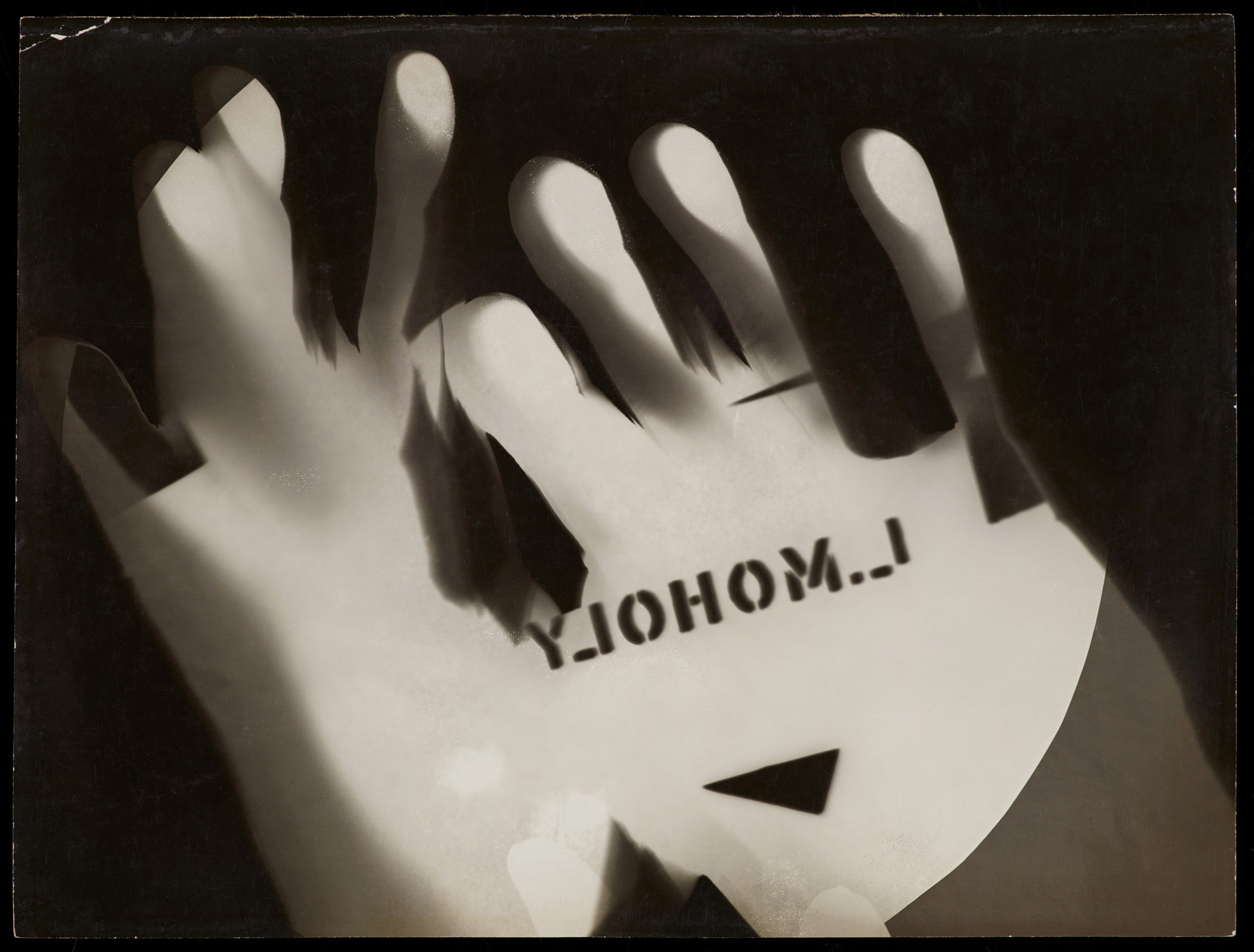
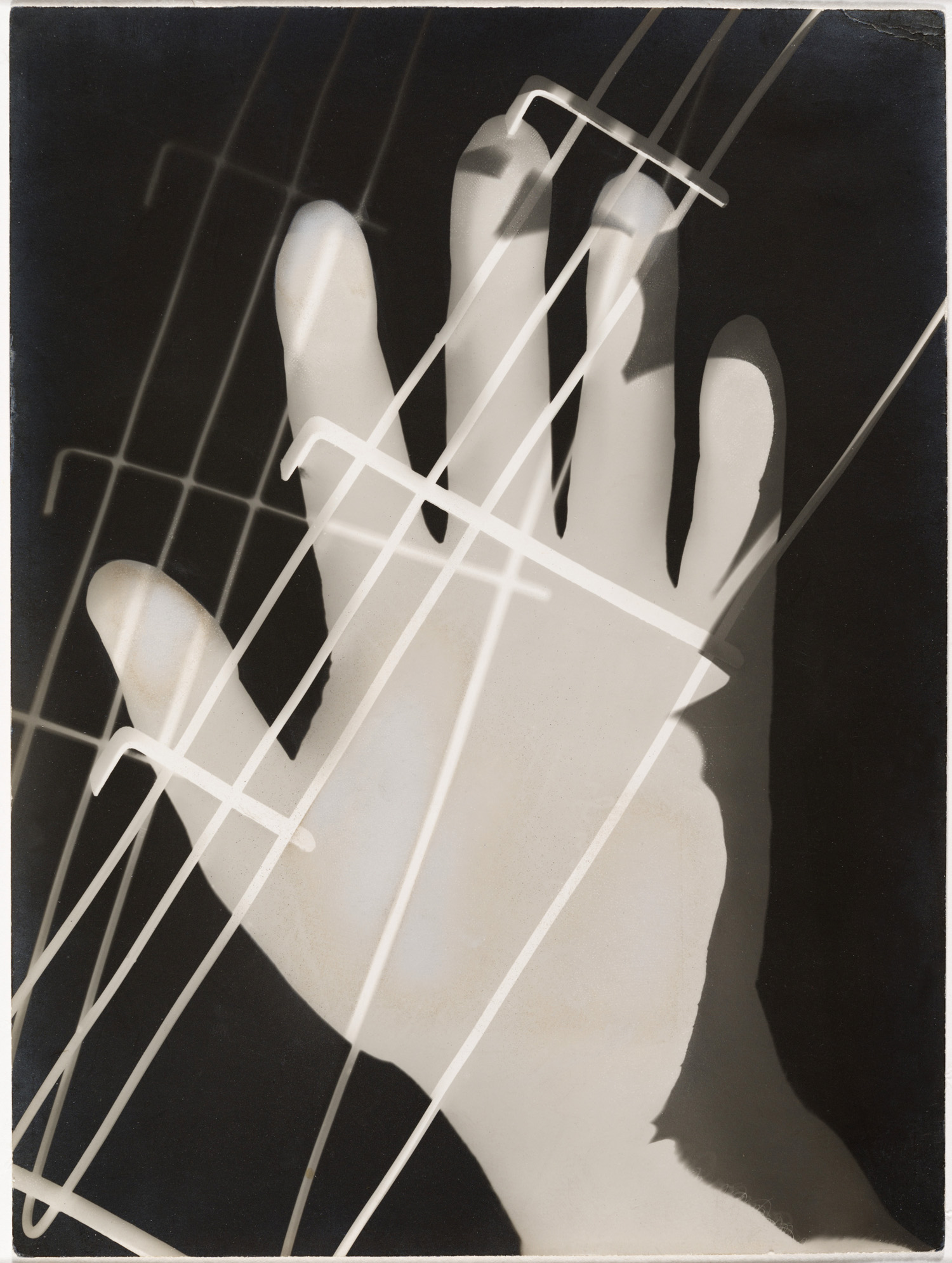
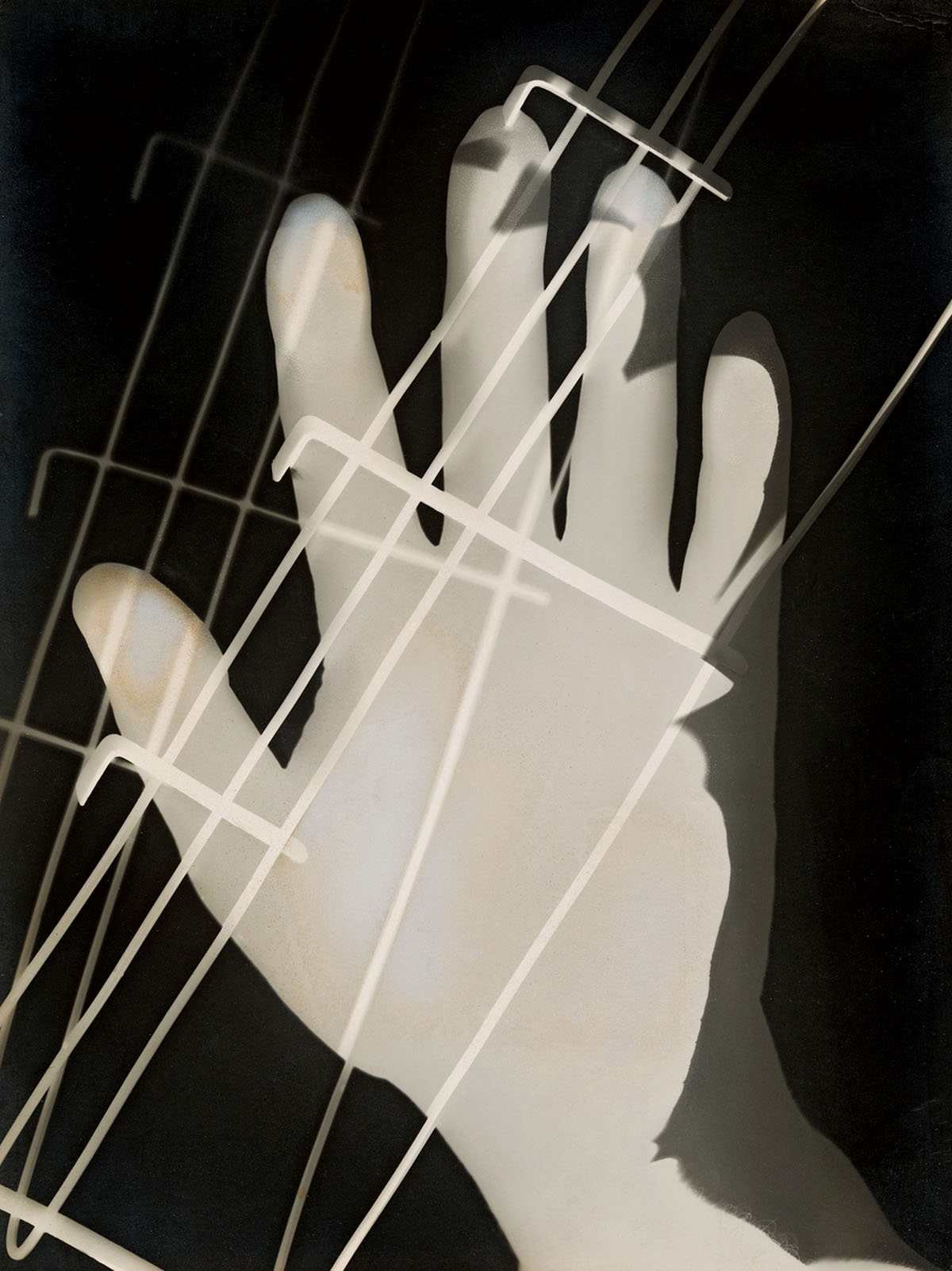
László Moholy-Nagy (Hungarian, 1895-1946) 'Photograph (Self-Portrait with Hand)' 1925/1929, printed 1940/1949


László Moholy-Nagy (Hungarian, 1895-1946)
Photograph (Self-Portrait with Hand)
1925/1929, printed 1940/1949
Gelatin silver print
9 5/16 × 7 in.
Galerie Berinson, Berlin
© 2017 Hattula Moholy-Nagy/Artists Rights Society (ARS), New York/VG Bild-Kunst, Bonn


László Moholy-Nagy (Hungarian, 1895-1946) 'Photogram' 1925/1926


László Moholy-Nagy (Hungarian, 1895-1946)
Photogram
1925/1926
Gelatin silver photogram
7 3/16 × 9 1/2 in.
Museum Folkwang, Essen
© 2017 Hattula Moholy-Nagy/Artists Rights Society (ARS), New York/VG Bild-Kunst, Bonn
Photo © Museum Folkwang Essen – ARTOTHEK


László Moholy-Nagy (Hungarian, 1895-1946) 'Photogram' 1926


László Moholy-Nagy (Hungarian, 1895-1946)
Photogram
1926
Gelatin silver print
9 3/8 x 7 in.
Los Angeles County Museum of Art, Ralph M. Parsons Fund
© 2017 Hattula Moholy-Nagy/Artists Rights Society (ARS), New York/VG Bild-Kunst, Bonn
Photo © Museum Associates/LACMA


Photogram (1926): In the 1920s Moholy was among the first artists to make photograms by placing objects – including coins, lightbulbs, flowers, even his own hand – directly onto the surface of light-sensitive paper. He described the resulting images, simultaneously identifiable and elusive, as “a bridge leading to a new visual creation for which canvas, paintbrush, and pigment cannot serve.”


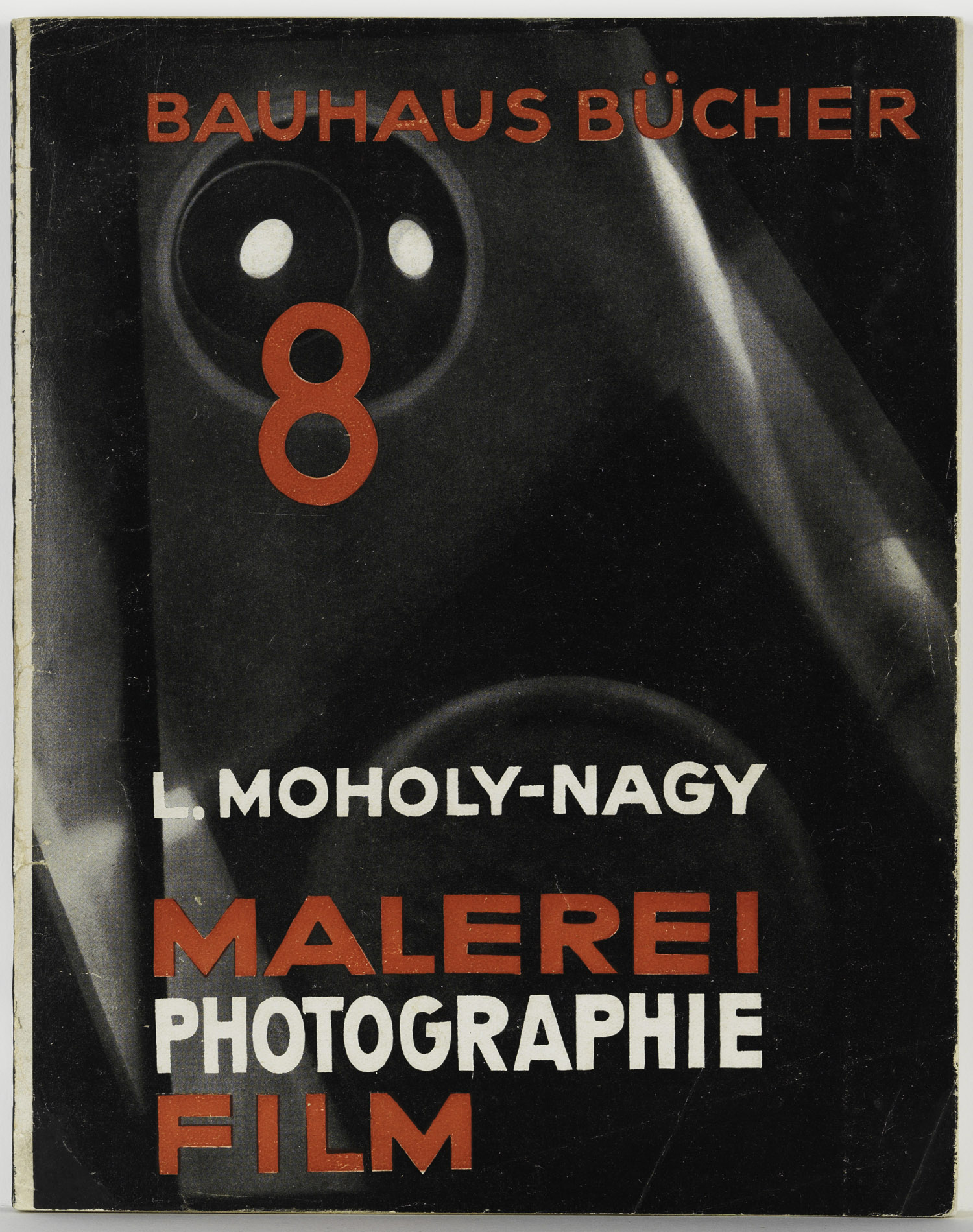
László Moholy-Nagy (Hungarian, 1895-1946) 'Cover and design for Malerei Photographie Film (Painting Photography Film)' 1925


László Moholy-Nagy (Hungarian, 1895-1946)
Cover and design for Malerei Photographie Film (Painting Photography Film)
1st ed., Bauhausbücher (Bauhaus Books) 8 (Albert Langen Verlag, 1925), bound volume
9 1/16 × 7 1/16 in.
Collection of Richard S. Frary
© 2017 Hattula Moholy-Nagy/Artists Rights Society (ARS), New York/VG Bild-Kunst, Bonn


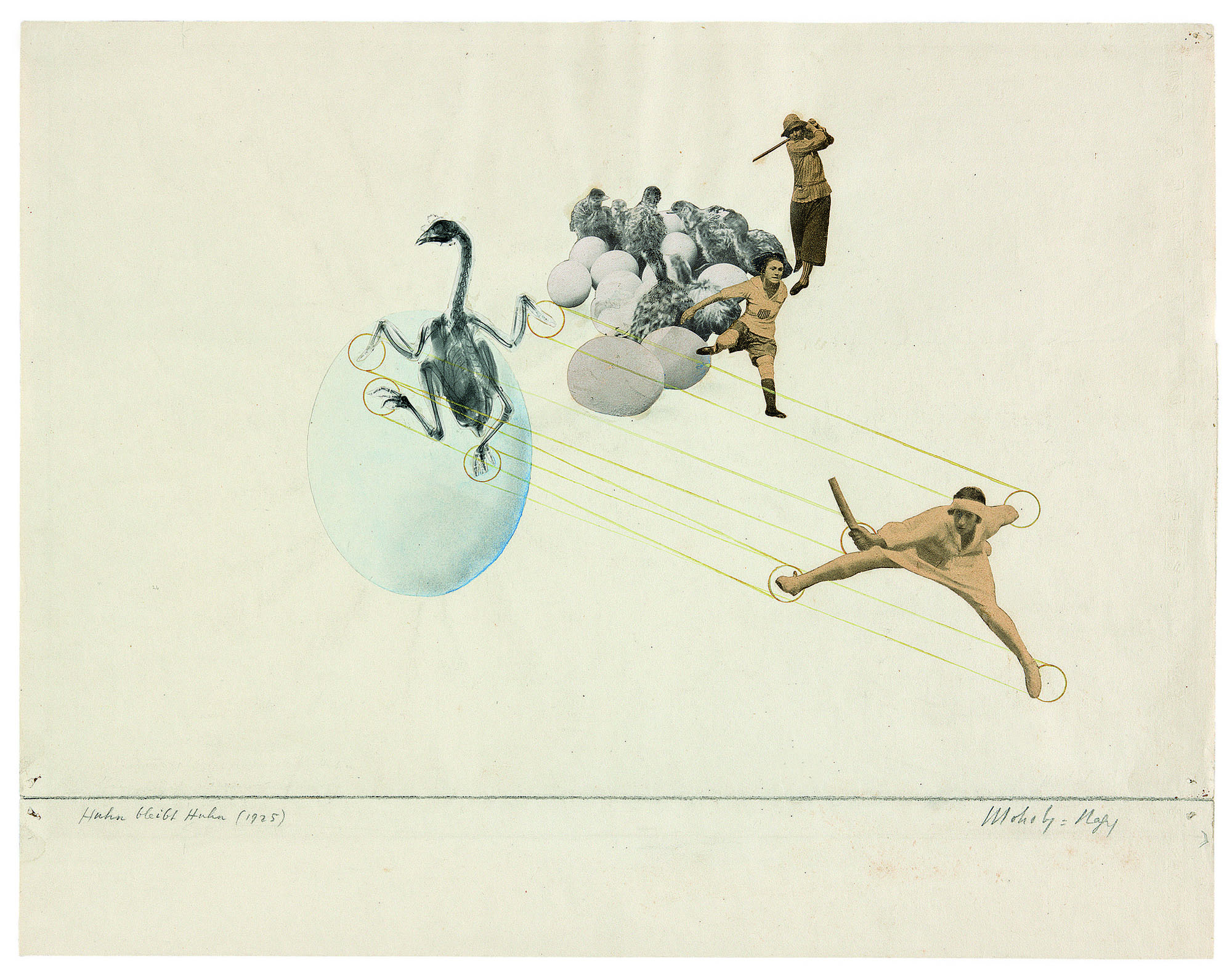
László Moholy-Nagy (Hungarian, 1895-1946) 'Once a Chicken, Always a Chicken' 1925


László Moholy-Nagy (Hungarian, 1895-1946)
Once a Chicken, Always a Chicken
1925
Photomontage (halftone reproductions, paper, watercolor, and grapite) on paper
15 × 19 in.
Alice Adam, Chicago
© 2017 Hattula Moholy-Nagy/Artists Rights Society (ARS), New York/VG Bild-Kunst, Bonn


About the artist

László Moholy-Nagy was born in Hungary in 1895. He enrolled as a law student at the University of Budapest in 1915, leaving two years later to serve as an artillery officer in the Austro-Hungarian army during World War I. He began drawing while on the war front; after his discharge in 1918 Moholy convalesced in Budapest, where he focused on painting. He was soon drawn to the cutting-edge art movements of the period, including Cubism and Futurism. Moholy moved to Vienna in 1919 before settling in Berlin in 1920, where he served as a correspondent for the progressive Hungarian magazine MA (Today).

The letters and glyphs of Dada informed Moholy’s visual art around 1920 while the hard edged geometries and utopian goals of Russian Constructivism influenced his initial forays into abstraction shortly thereafter, particularly works that explored the interaction among coloured planes, diagonals, circles, and other geometric forms. By the early 1920s Moholy had gained a reputation as an innovative artist and perceptive theorist through exhibitions at Berlin’s radical Galerie Der Sturm as well as his writings. His lifelong engagement with industrial materials and processes – including the use of metal plating, sandpaper, and various metals and plastics then newly-developed for commercial use – began at this time.

In 1923 Moholy began teaching at the Bauhaus, an avant-garde school that sought to integrate the fine and applied arts, where his colleagues included Wassily Kandinsky, Paul Klee, and other path breaking modernists. Architect Walter Gropius, founder of the Bauhaus, invited Moholy to expand its progressive curriculum, particularly by incorporating contemporary technology into more traditional methods and materials. He also had a part in Bauhaus graphic design achievements, collaborating with Herbert Bayer on stationery, announcements, and advertising materials.

Photography was of special significance for Moholy, who believed that “a knowledge of photography is just as important as that of the alphabet. The illiterates of the future will be ignorant of the use of the camera and pen alike.” In the 1920s he was among the earliest artists to make photograms by placing objects directly onto the surface of light-sensitive paper. He also made photographs using a traditional camera, often employing exaggerated angles and plunging perspectives to capture contemporary technological marvels as well as the post-Victorian freedom of the human body in the modern world. His photographs are documentary as well as observations of texture, captured in fine gradations of light and shadow. Moholy likewise made photomontages, combining assorted elements, typically newspaper and magazine clippings, resulting in what he called a “compressed interpenetration of visual and verbal wit; weird combinations of the most realistic, imitative means which pass into imaginary spheres.” Moholy-Nagy includes the largest grouping of the artist’s photomontages ever assembled.

After leaving the Bauhaus in 1928, Moholy turned to commercial, theatre, and exhibition design as his primary means of income. This work, which reached a broad audience, was frequently collaborative and interdisciplinary by its very nature and followed from the artist’s dictum “New creative experiments are an enduring necessity.”

Even as his commercial practice was expanding, Moholy’s artistic innovations and prominence in the avant-garde persisted unabated. He continued to bring new industrial materials into his painting practice, while his research into light, transparency, and movement led to his 35 mm films documenting life in the modern city, his early involvement with colour photography for advertising, and his remarkable kinetic Light Prop for an Electric Stage of 1930. An extension of his exhibition design work, Moholy’s Room of the Present was conceived to showcase art that embodied his “new vision” – endlessly reproducible photographs, films, posters, and examples of industrial design.

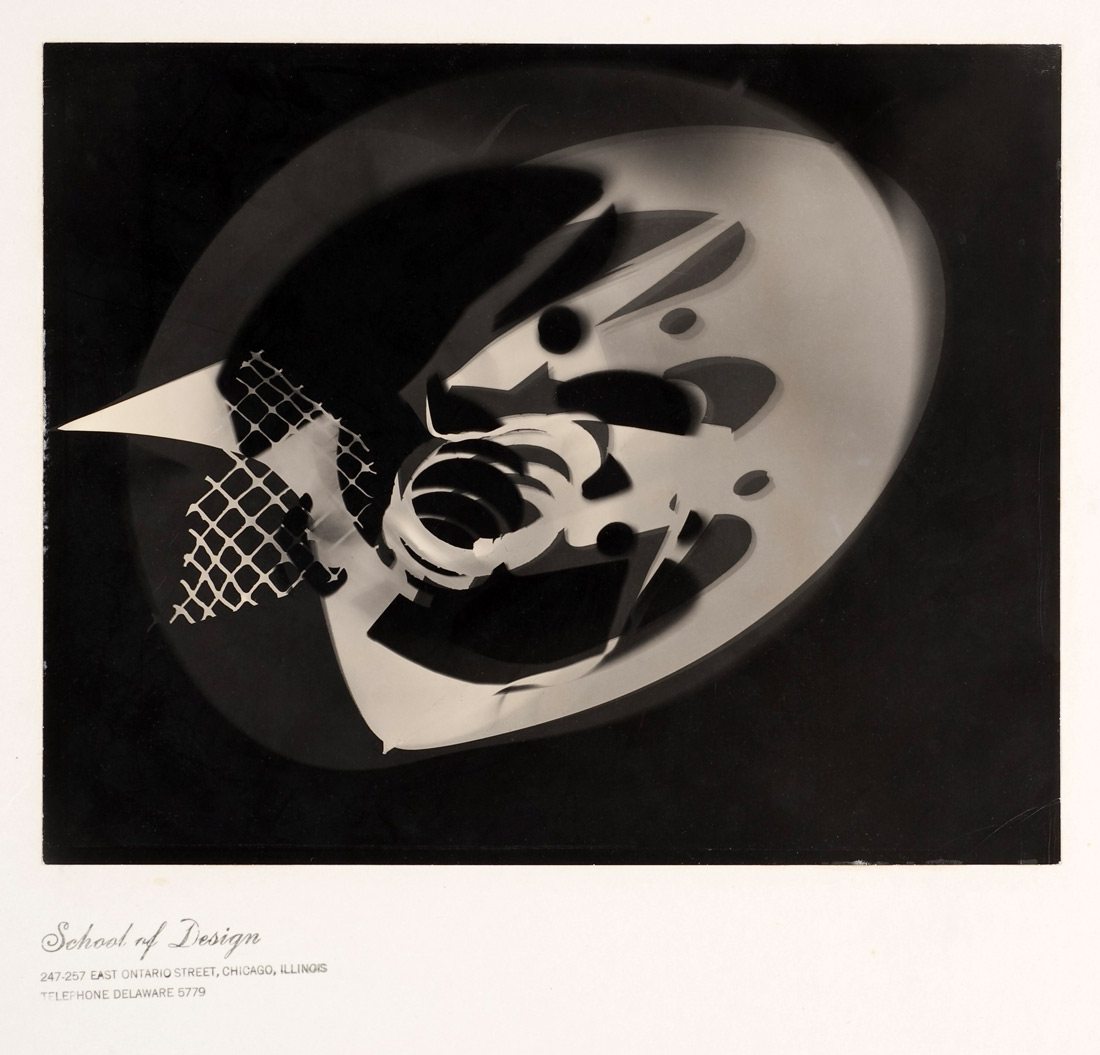
Forced by the rise of Nazism to leave Germany, in 1934 Moholy moved with his family to Amsterdam, where he continued to work on commercial design and to collaborate on art and architecture projects. Within a year of arriving the family was forced to move again, this time to London. Moholy’s employment there centred around graphic design, including prominent advertising campaigns for the London Underground, Imperial Airways, and Isokon furniture. He also received commissions for a number of short, documentary influenced films while in England. In 1937, the artist accepted the invitation (arranged through his former Bauhaus colleague Walter Gropius) of the Association of Arts and Industries to found a design school in Chicago, which he called the New Bauhaus – American School of Design. Financial difficulties led to its closure the following year, but Moholy reopened it in 1939 as the School of Design (subsequently the Institute of Design, today part of the Illinois Institute of Technology). Moholy transmitted his populist ethos to the students, asking that they “see themselves as designers and craftsmen who will make a living by furnishing the community with new ideas and useful products.”

Despite working full-time as an educator and administrator, Moholy continued his artistic practice in Chicago. His interest in light and shadow found a new outlet in Plexiglas hybrids of painting and sculpture, which he often called Space Modulators and intended as “vehicles for choreographed luminosity.” His paintings increasingly involved biomorphic forms and, while still abstract, were given explicitly autobiographical or narrative titles – the Nuclear paintings allude to the horror of the atomic bomb, while the Leuk paintings refer to the cancer that would take his life in 1946. Moholy’s goal throughout his life was to integrate art, technology, and education for the betterment of humanity. “To meet the manifold requirements of this age with a definite program of human values, there must come a new mentality,” he wrote in Vision in Motion, published posthumously in 1947. “The common denominator is the fundamental acknowledgment of human needs; the task is to recognise the moral obligation in satisfying these needs, and the aim is to produce for human needs, not for profit.”


László Moholy-Nagy (Hungarian, 1895-1946) 'AL 3' 1926


László Moholy-Nagy (Hungarian, 1895-1946)
AL 3
1926
Oil, industrial paint, and graphite on aluminium
15 3/4 × 15 3/4 in.
Norton Simon Museum, Pasadena, California, The Blue Four Galka Scheyer Collection
© 2017 Hattula Moholy-Nagy/Artists Rights Society (ARS), New York/VG Bild-Kunst, Bonn


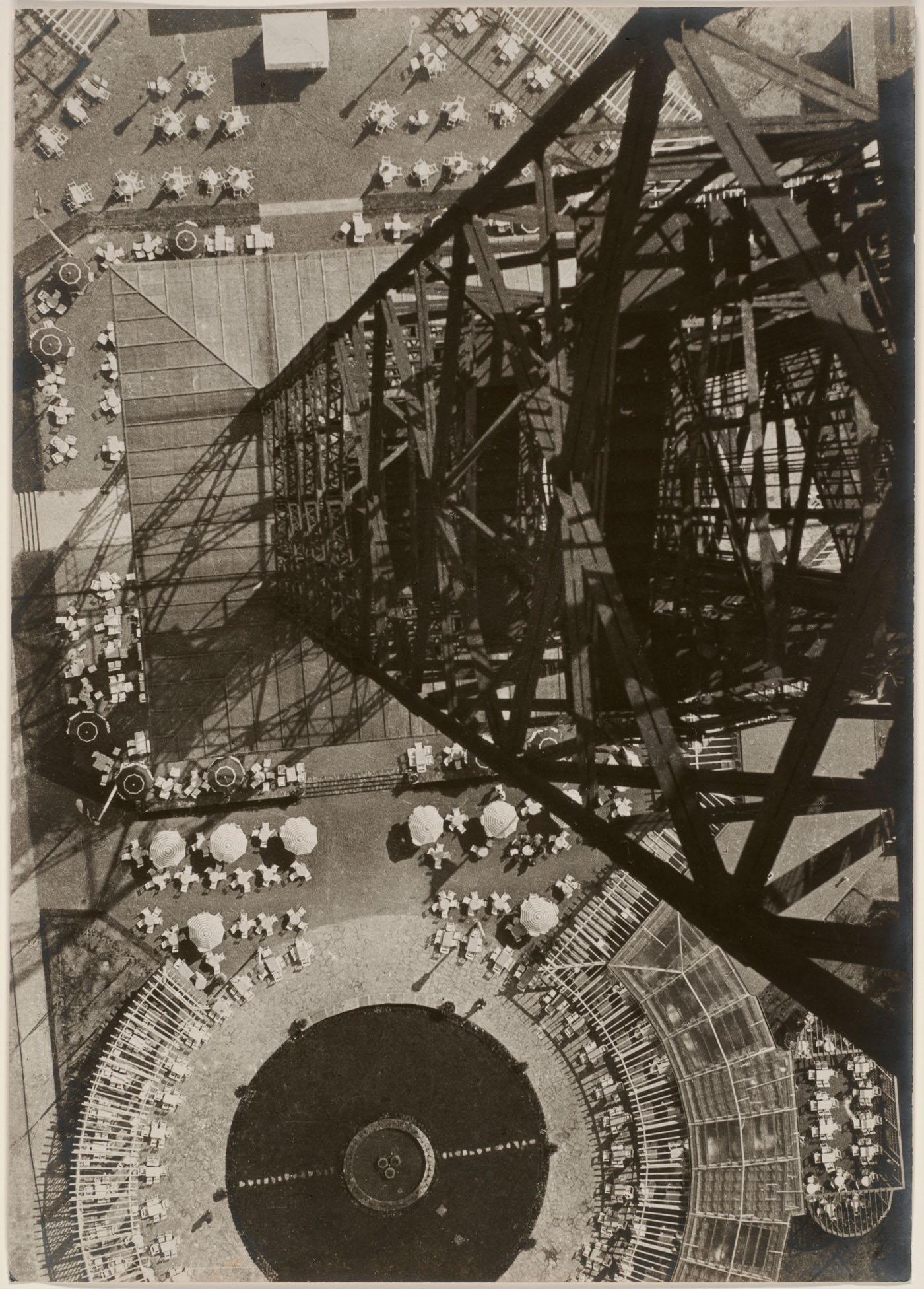
László Moholy-Nagy (Hungarian, 1895-1946) 'Photograph (Berlin Radio Tower)' 1928/1929


László Moholy-Nagy (Hungarian, 1895-1946)
Photograph (Berlin Radio Tower)
1928/1929
Gelatin silver print
14 3/16 × 10 in.
The Art Institute of Chicago, Julien Levy Collection, Special Photography Acquisition Fund
© 2017 Hattula Moholy-Nagy/Artists Rights Society (ARS), New York/VG Bild-Kunst, Bonn
Digital image © The Art Institute of Chicago


Photograph (Berlin Radio Tower) (1928/29): Moholy used a traditional camera to take photos that often employ exaggerated angles and plunging perspectives to capture contemporary technological marvels such as the Berlin Radio Tower, which was completed in 1926. This photograph epitomises Moholy’s concept of art working hand-in-hand with technology to create new ways of seeing the world – his “new vision.”


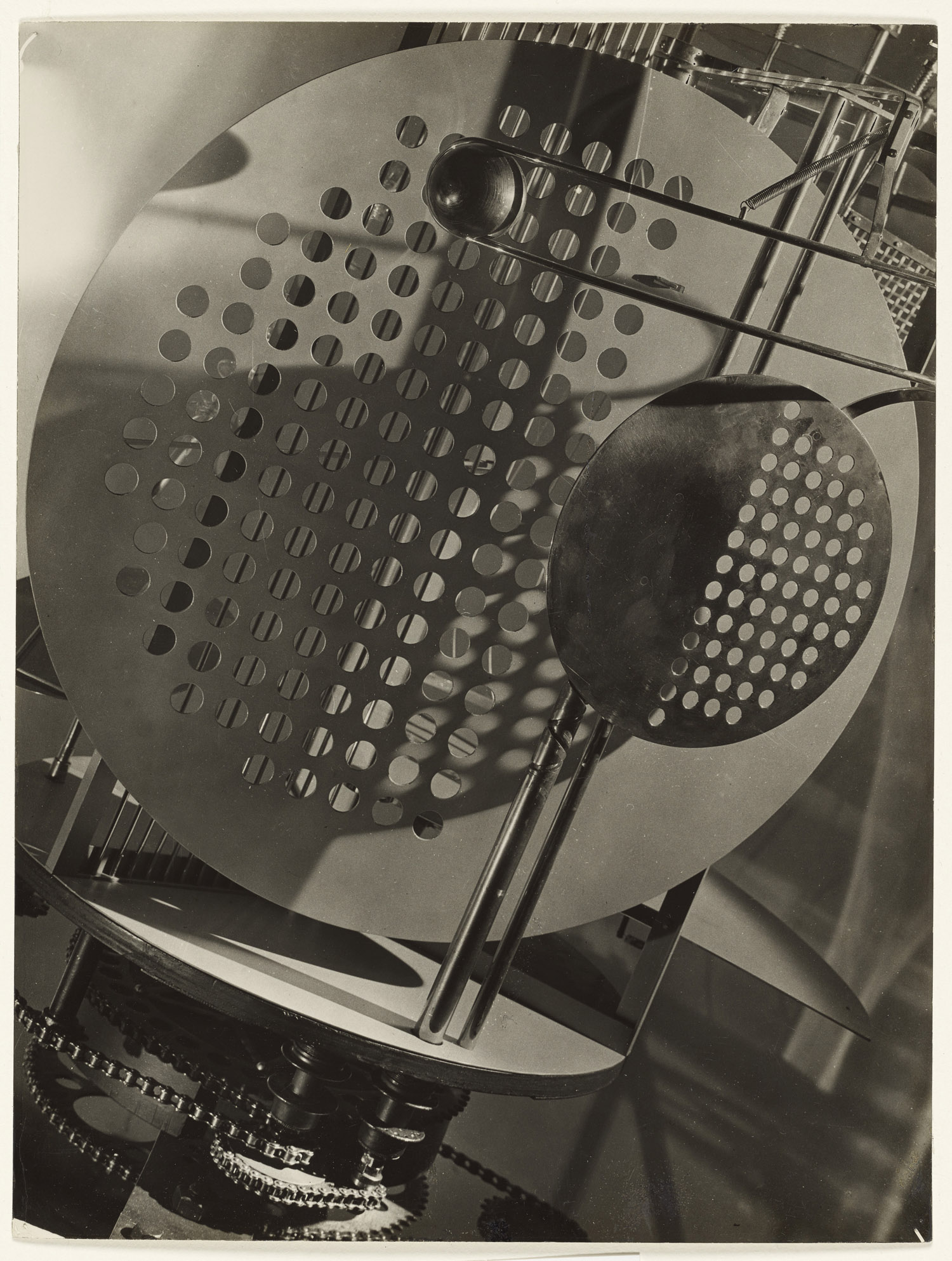
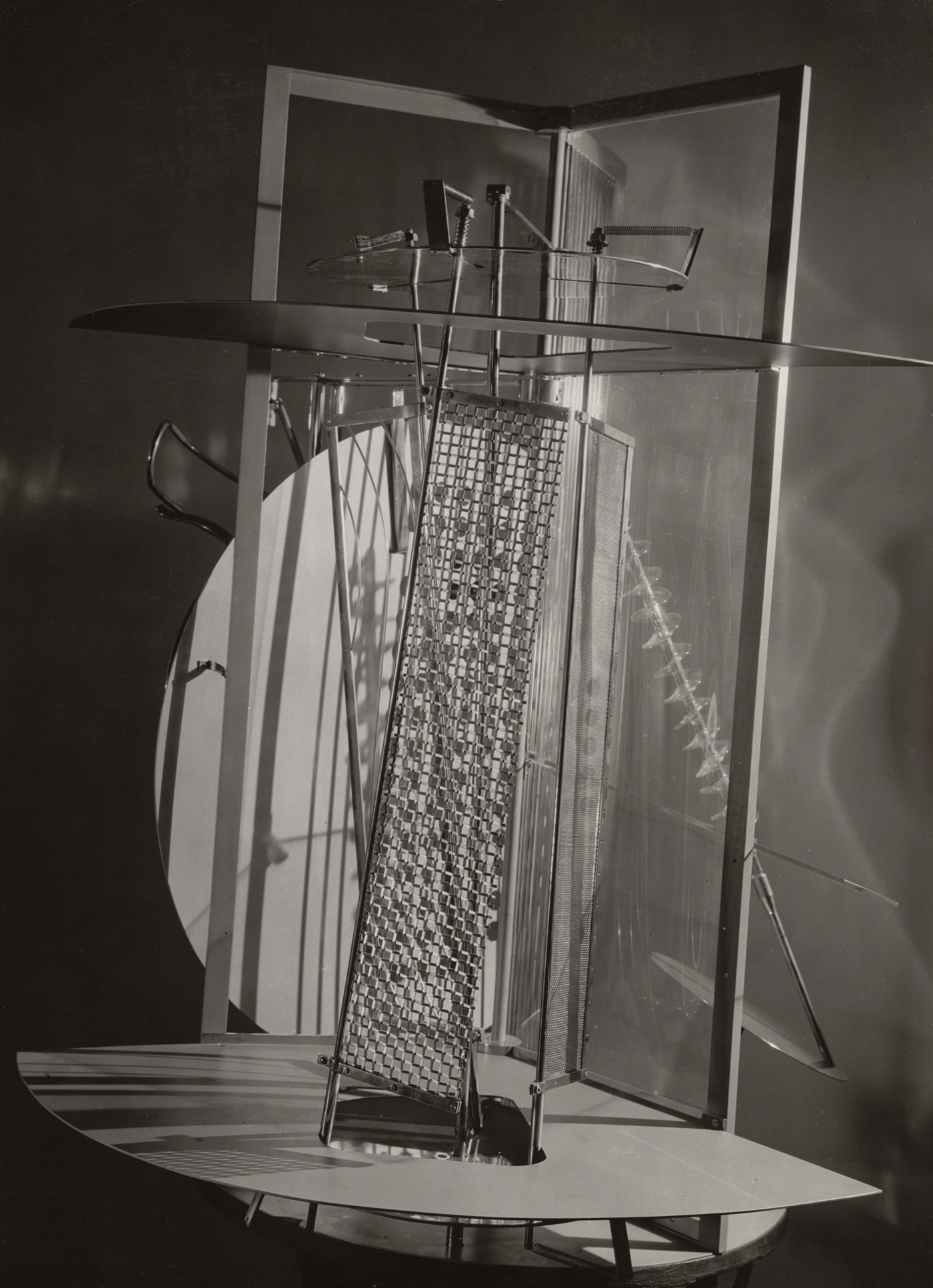
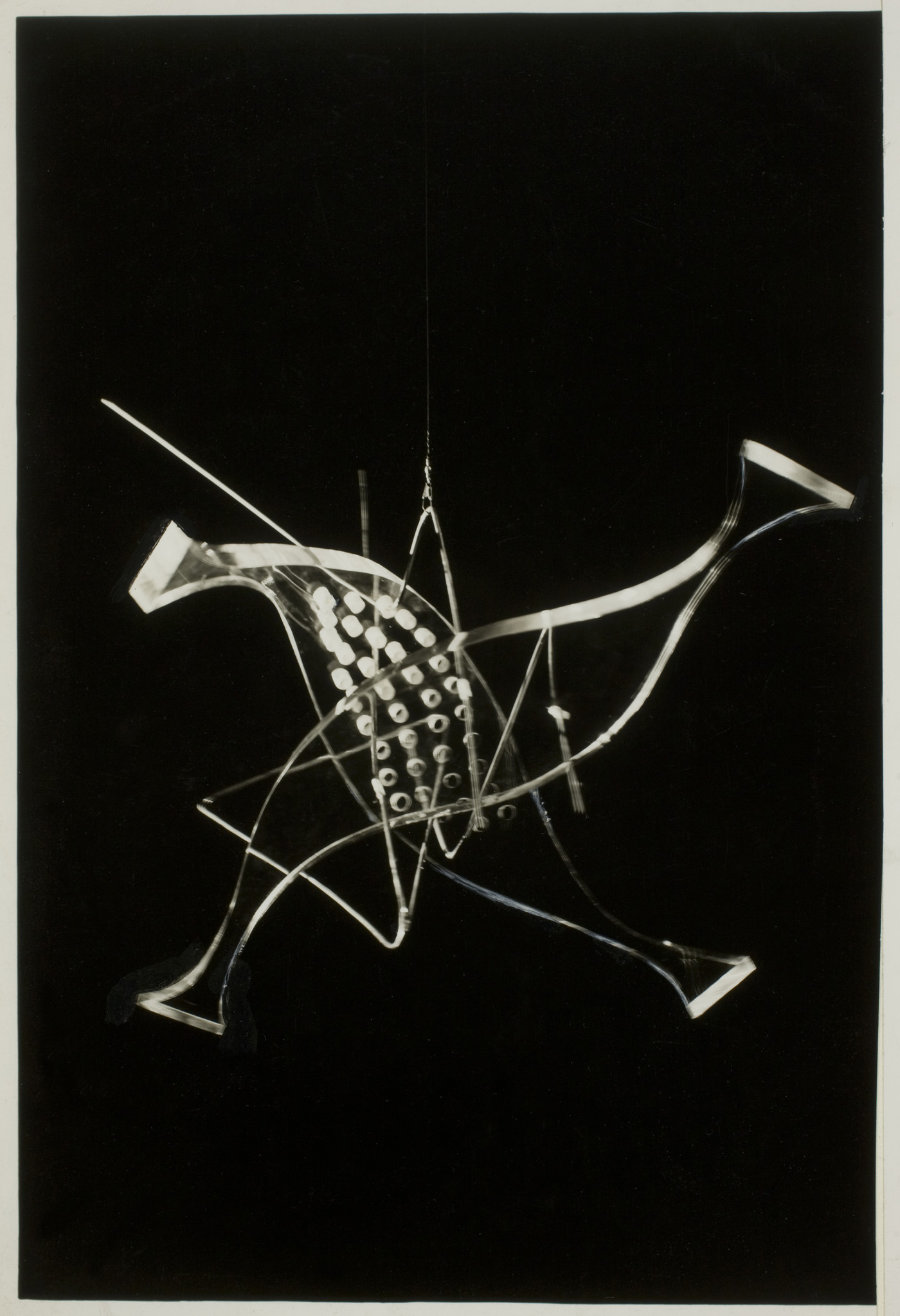
László Moholy-Nagy (Hungarian, 1895-1946) 'Photograph (Light Prop)' 1930


László Moholy-Nagy (Hungarian, 1895-1946)
Photograph (Light Prop for an Electric Stage)
1930
Gelatin silver print
9 7/16 × 7 1/8 in.
The J. Paul Getty Museum, Los Angeles
© 2017 Hattula Moholy-Nagy/Artists Rights Society (ARS), New York/VG Bild-Kunst, Bonn


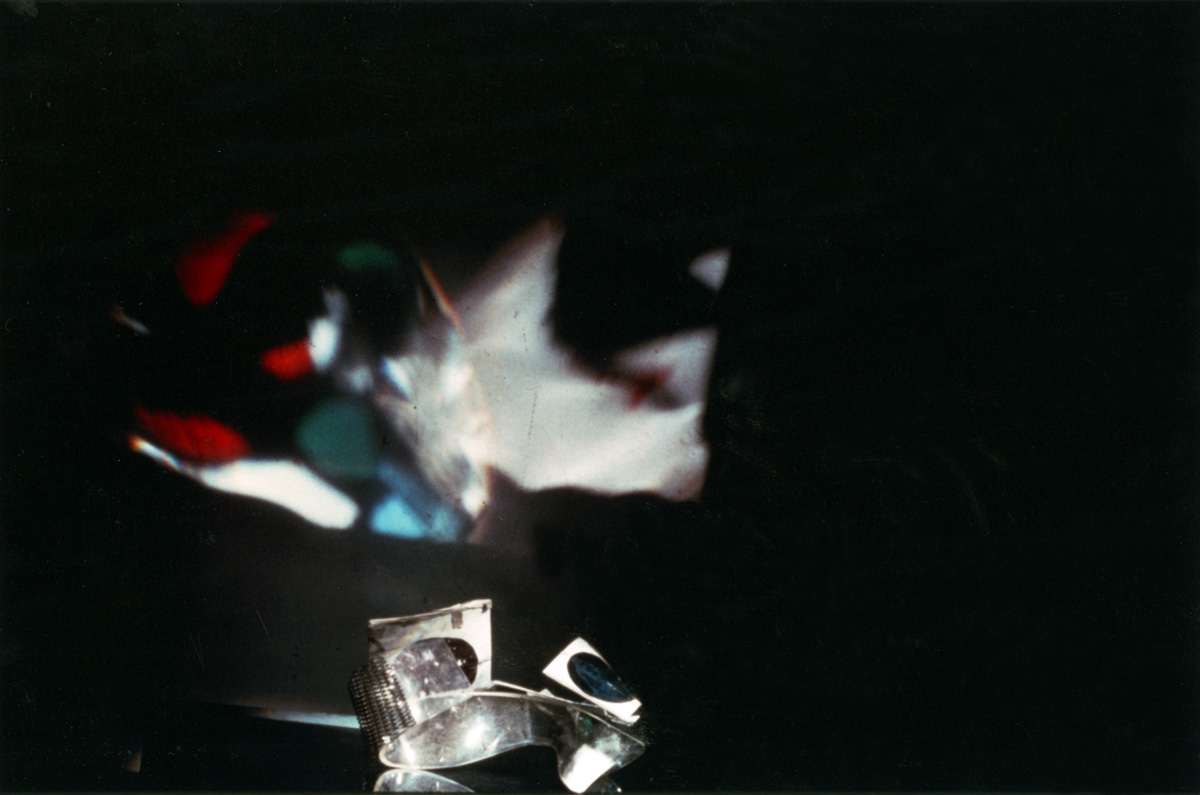
A short documentation from the replica of Moholy-Nagy’s Light Space Modulator in Van Abbe Museum in Eindhoven, Holland


Làslò Moholy Nagy film
1930


László Moholy-Nagy (Hungarian, 1895-1946) 'Photograph (Light Prop)' c. 1930


László Moholy-Nagy (Hungarian, 1895-1946)
Photograph (Light Prop for an Electric Stage)
c. 1930
Gelatin silver print
14 3/4 × 10 3/4 in.
The Museum of Modern Art, New York, Gift of the artist
© 2017 Hattula Moholy-Nagy/Artists Rights Society (ARS), New York/VG Bild-Kunst, Bonn
Digital image © The Museum of Modern Art / licensed by SCALA / Art Resource, NY


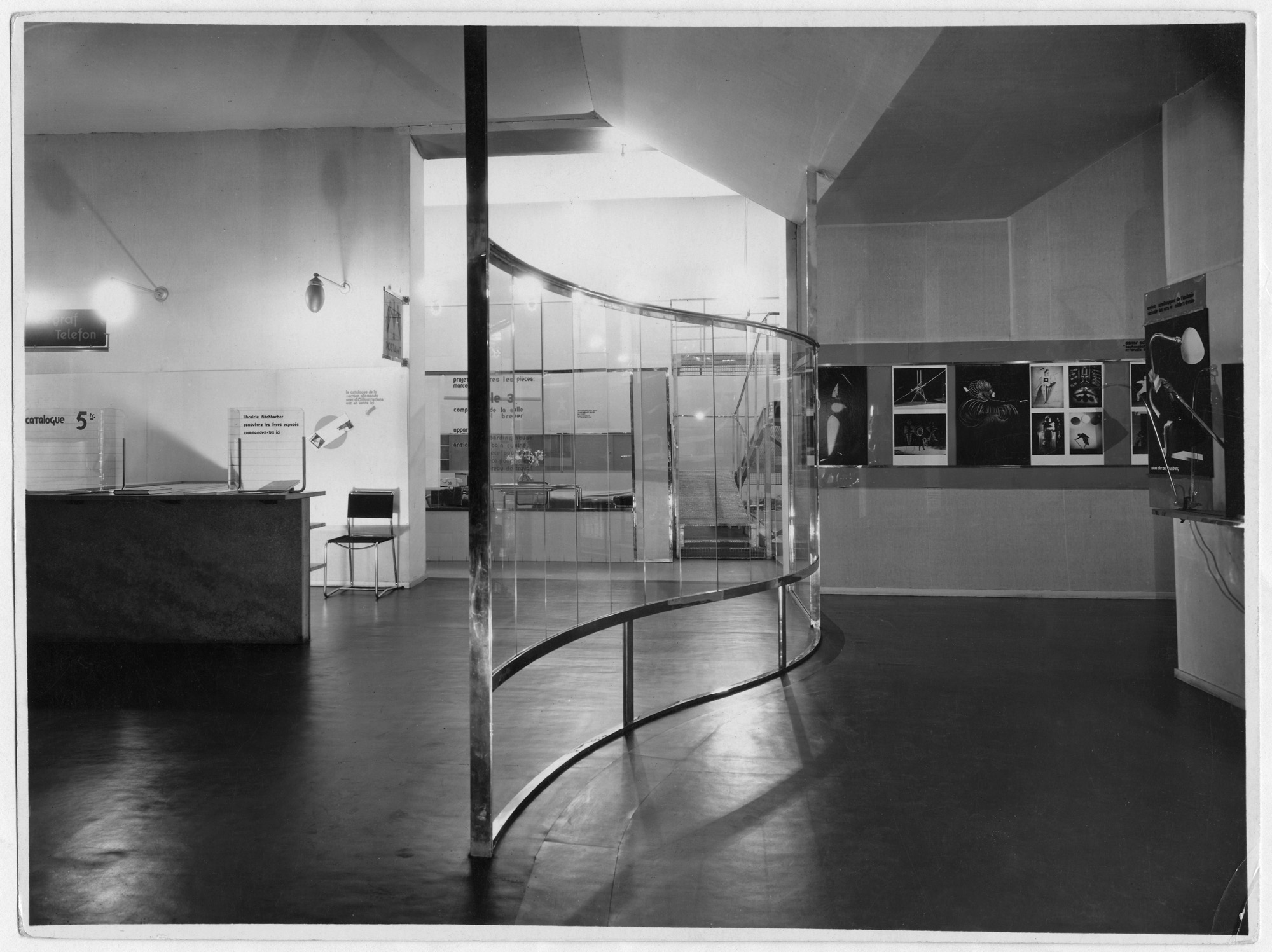
Installation view of Room 2, designed by László Moholy-Nagy, of the German section of the annual salon of the Society of Decorative Artists, Paris, May 14-July 13, 1930


Installation view of Room 2, designed by László Moholy-Nagy, of the German section of the annual salon of the Society of Decorative Artists, Paris, May 14-July 13, 1930
Bauhaus-Archiv Berlin
© 2017 Hattula Moholy-Nagy/Artists Rights Society (ARS), New York/VG Bild-Kunst, Bonn
Photo: Bauhaus-Archiv Berlin


László Moholy-Nagy (Hungarian, 1895-1946) 'Room of the Present' 1930, constructed 2009


László Moholy-Nagy (Hungarian, 1895-1946)
Room of the Present
Constructed 2009 from plans and other documentation, dated 1930
Mixed media
Inner dimensions: 137 3/4 x 218 7/8 x 318 3/4 in.
Van Abbemuseum, Eindhoven, 2953
© 2017 Hattula Moholy-Nagy/Artists Rights Society (ARS), New York/VG Bild-Kunst, Bonn
Photography by Peter Cox, Eindhoven, The Netherlands


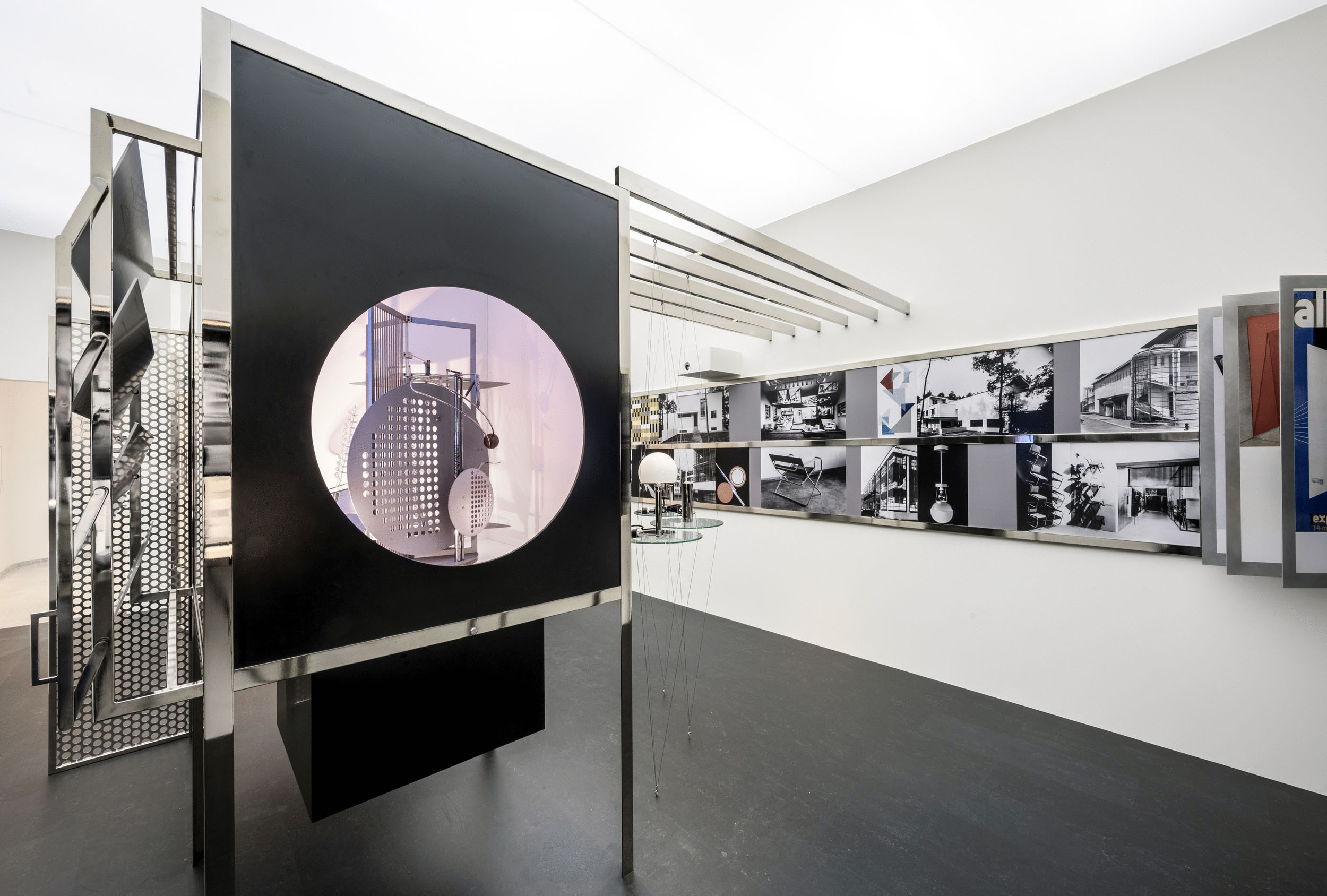
The Room of the Present is an immersive installation featuring photographic reproductions, films, slides, posters, and examples of architecture, theatre, and industrial design, including an exhibition copy of Moholy’s kinetic Light Prop for an Electric Stage (1930). The Room exemplifies Moholy’s desire to achieve a Gesamtwerk (total work) that would unify art and technology with life itself. A hybrid between exhibition space and work of art, it was originally conceived around 1930 but realised only in 2009, based on the few existing plans, drawings, and related correspondence Moholy left behind.


László Moholy-Nagy (Hungarian, 1895-1946) 'Construction AL6 (Konstruktion AL6)' 1933-1934


László Moholy-Nagy (Hungarian, 1895-1946)
Construction AL6 (Konstruktion AL6)
1933-1934
Oil and incised lines on aluminum
60 × 50cm
IVAM, Institut Valencià d’Art Modern, Generalitat
© 2016 Hattula Moholy-Nagy/VG Bild-Kunst, Bonn/Artists Rights Society (ARS), New York


László Moholy-Nagy (Hungarian, 1895-1946) 'CH BEATA I' 1939


László Moholy-Nagy (Hungarian, 1895-1946)
CH BEATA I
1939
Oil and graphite on canvas
46 7/8 × 47 1/8 in.
Solomon R. Guggenheim Museum, New York, Solomon R. Guggenheim Founding Collection
© 2017 Hattula Moholy-Nagy/Artists Rights Society (ARS), New York/VG Bild-Kunst, Bonn
Photo © Solomon R. Guggenheim Foundation, New York, photography by Kristopher McKay


László Moholy-Nagy (Hungarian, 1895-1946) 'Photograph (Light Modulator in Motion)' 1943


László Moholy-Nagy (Hungarian, 1895-1946)
Photograph (Light Modulator in Motion)
1943
Gelatin silver print
6 9/16 x 4 7/16 in.
George Eastman Museum, Rochester, New York, purchase with funds provided by Eastman Kodak Company
© 2017 Hattula Moholy-Nagy/Artists Rights Society (ARS), New York/VG Bild-Kunst, Bonn


László Moholy-Nagy (Hungarian, 1895-1946) 'Photograph (Light Modulator in Repose)' 1943


László Moholy-Nagy (Hungarian, 1895-1946)
Photograph (Light Modulator in Repose)
1943
Gelatin silver print
6 7/16 x 4 1/2 in.
George Eastman Museum, Purchased with funds provided by Eastman Kodak Company
© 2017 Hattula Moholy-Nagy/Artists Rights Society (ARS), New York/VG Bild-Kunst, Bonn


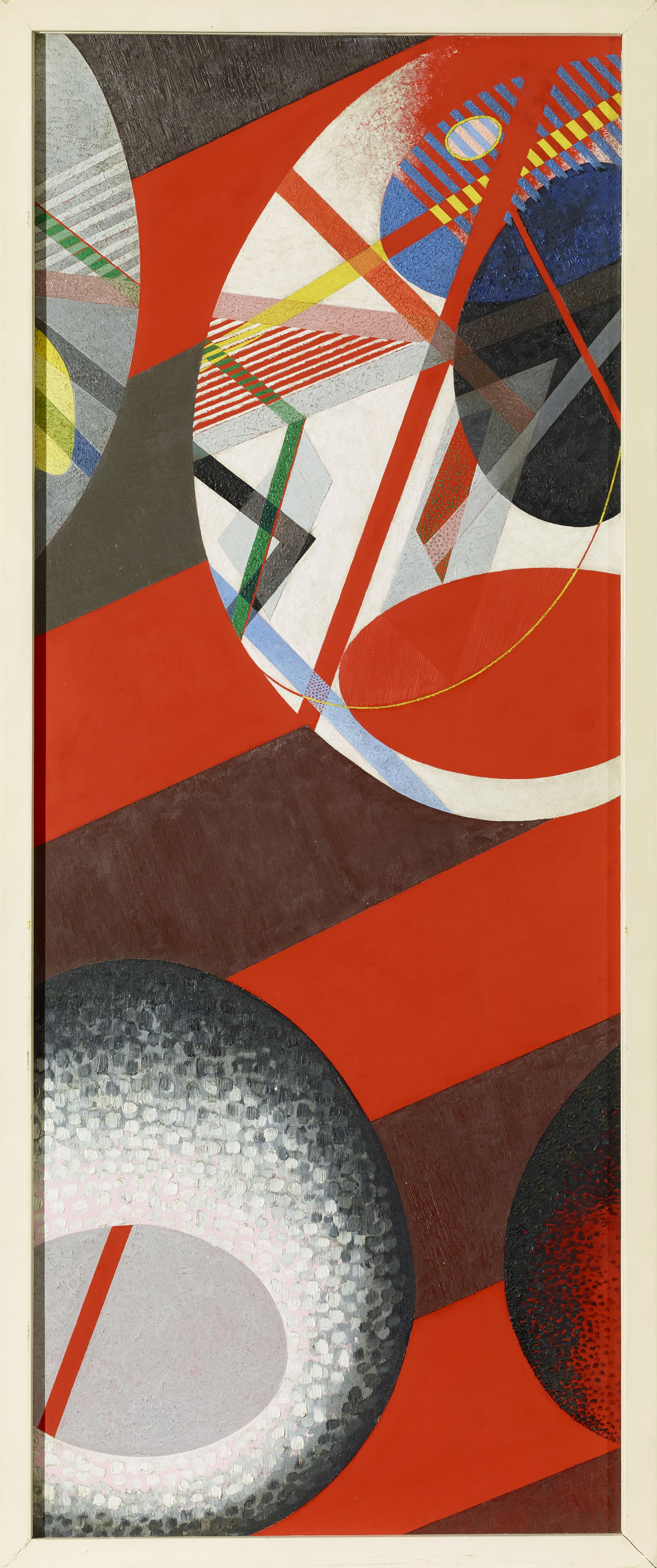
László Moholy-Nagy (Hungarian, 1895-1946) 'Vertical Black, Red, Blue' 1945


László Moholy-Nagy (Hungarian, 1895-1946)
Vertical Black, Red, Blue
1945
Los Angeles County Museum of Art, purchased with funds provided by Alice and Nahum Lainer, the Ducommun and Gross Acquisition Fund, the Fannie and Alan Leslie Bequest, and the Modern and Contemporary Art Council, as installed in Moholy-Nagy: Future Present at the Los Angeles County Museum of Art
© 2017 Hattula Moholy-Nagy/Artists Rights Society (ARS), New York/VG Bild-Kunst, Bonn, photo
© 2017 Museum Associates/LACMA


László Moholy-Nagy (Hungarian, 1895-1946) 'Space Modulator CH for R1' 1942


László Moholy-Nagy (Hungarian, 1895-1946)
Space Modulator CH for R1
1942
Oil and incised lines on Formica
62 3/16 × 25 9/16 in.
Hattula Moholy-Nagy, Ann Arbor, Michigan
© 2017 Hattula Moholy-Nagy/Artists Rights Society (ARS), New York/VG Bild-Kunst, Bonn
Photography by Peter Schälchli


Los Angeles County Museum of Art (LACMA)
5905 Wilshire Boulevard (at Fairfax Avenue)
Los Angeles, CA, 90036
Phone: 323 857 6000

Opening hours:
Monday, Tuesday, Thursday: 11am – 5 pm
Friday: 11am – 8pm
Saturday, Sunday: 10am – 7pm
Closed Wednesday

LACMA website

LIKE ART BLART ON FACEBOOK

Back to top

Exhibition: ‘Moholy-Nagy: Future Present’ at the Solomon R. Guggenheim Museum, New York

Exhibition dates: 27th May – 7th September, 2016

Curator: Karole P. B. Vail, Guggenheim’s exhibition curator, in collaboration with co-organisers Carol S. Eliel (LACMA) and Matthew S. Witkovsky (Art Institute of Chicago)


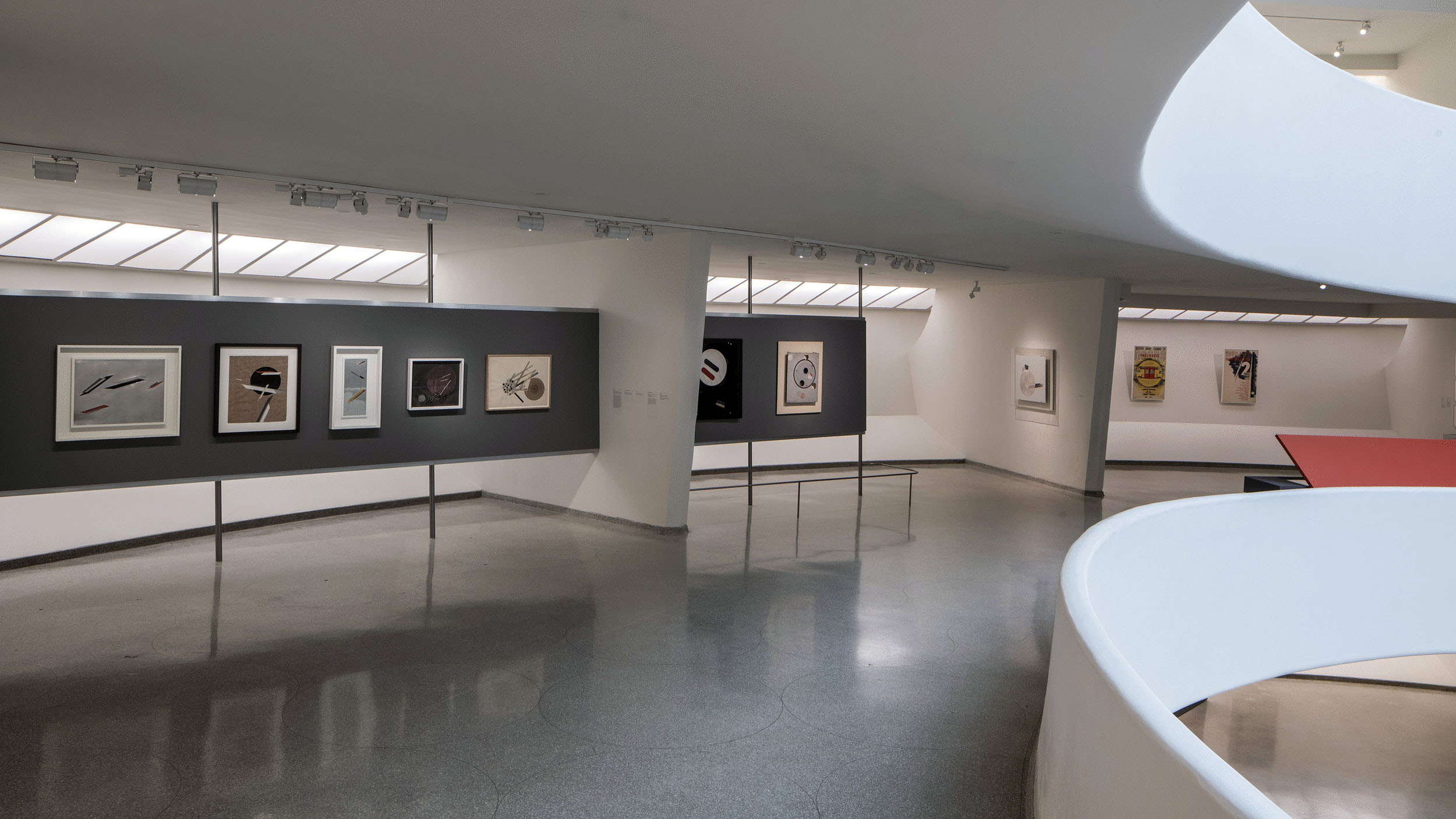
Installation view: 'Moholy-Nagy: Future Present', Solomon R. Guggenheim Museum, New York, May 27–September 7, 2016 showing at left, 'B-10 Space Modulator' (1942)


Installation view of Moholy-Nagy: Future Present at the Solomon R. Guggenheim Museum, New York, May 27 – September 7, 2016 showing at left, B-10 Space Modulator (1942, below)
Photo: David Heald © Solomon R. Guggenheim Foundation


“To understand the production of art at the end of tradition, which in our lifetime means art at the end of modernism, requires, as the postmodern debate has shown, a careful consideration of the idea of history and the notion of ending. Rather than just thinking ending as the arrival of the finality of a fixed chronological moment, it can also be thought as a slow and indecisive process of internal decomposition that leaves in place numerous deposits of us, in us and with us – all with a considerable and complex afterlife. In this context all figuration is prefigured. This is to say that the design element of the production of a work of art, the compositional, now exists prior to the management of form of, and on, the picture plane. Techniques of assemblage, like montage and collage – which not only juxtaposed different aesthetics but also different historical moments, were the precursors of what is now the general condition of production.”

Fry, Tony. “Art Byting the Dust,” in Hayward, Phillip. Culture, Technology and Creativity in the Late Twentieth Century. London: John Libbey and Company, 1990, pp. 169-170.


Many thankx to the Solomon R. Guggenheim Museum for allowing me to publish the photographs in the posting. Please click on the photographs for a larger version of the image.


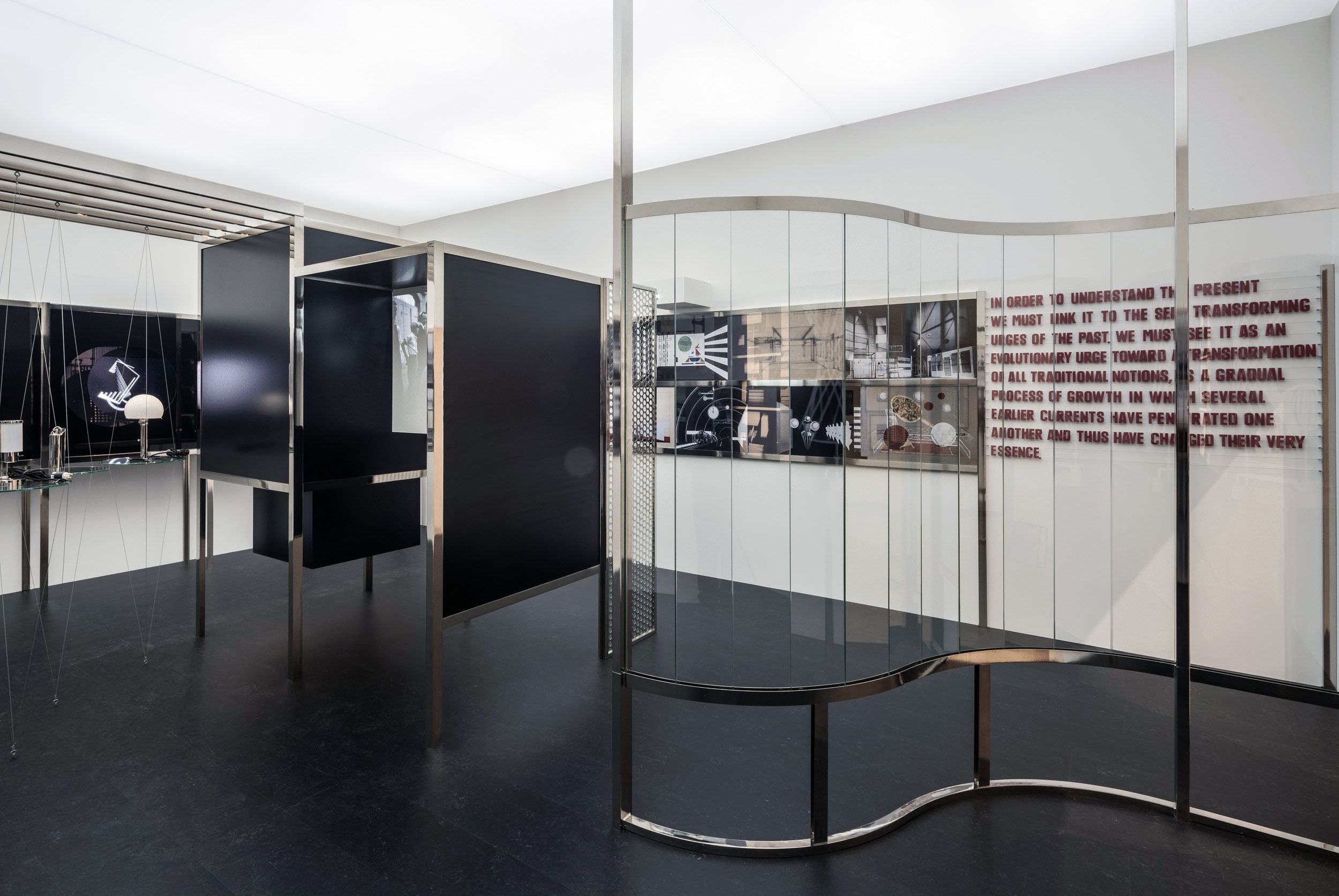
In order to understand the present we must link it to the self transforming urges of the past. We must see it as an evolutionary urge toward a transformation of all traditional notions, as a gradual process of growth in which several earlier currents have penetrated one another and thus have changed their very essence.


László Moholy-Nagy


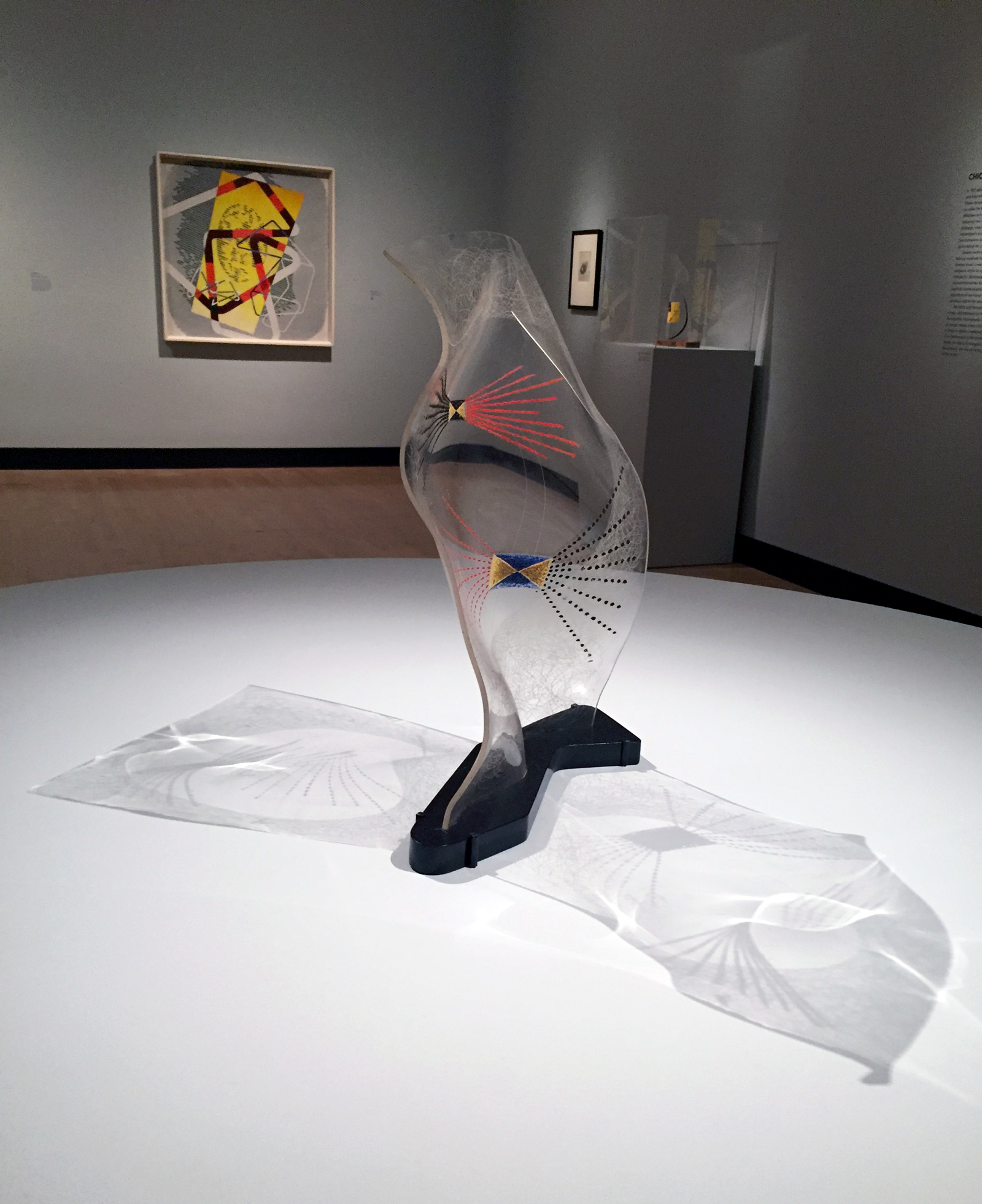
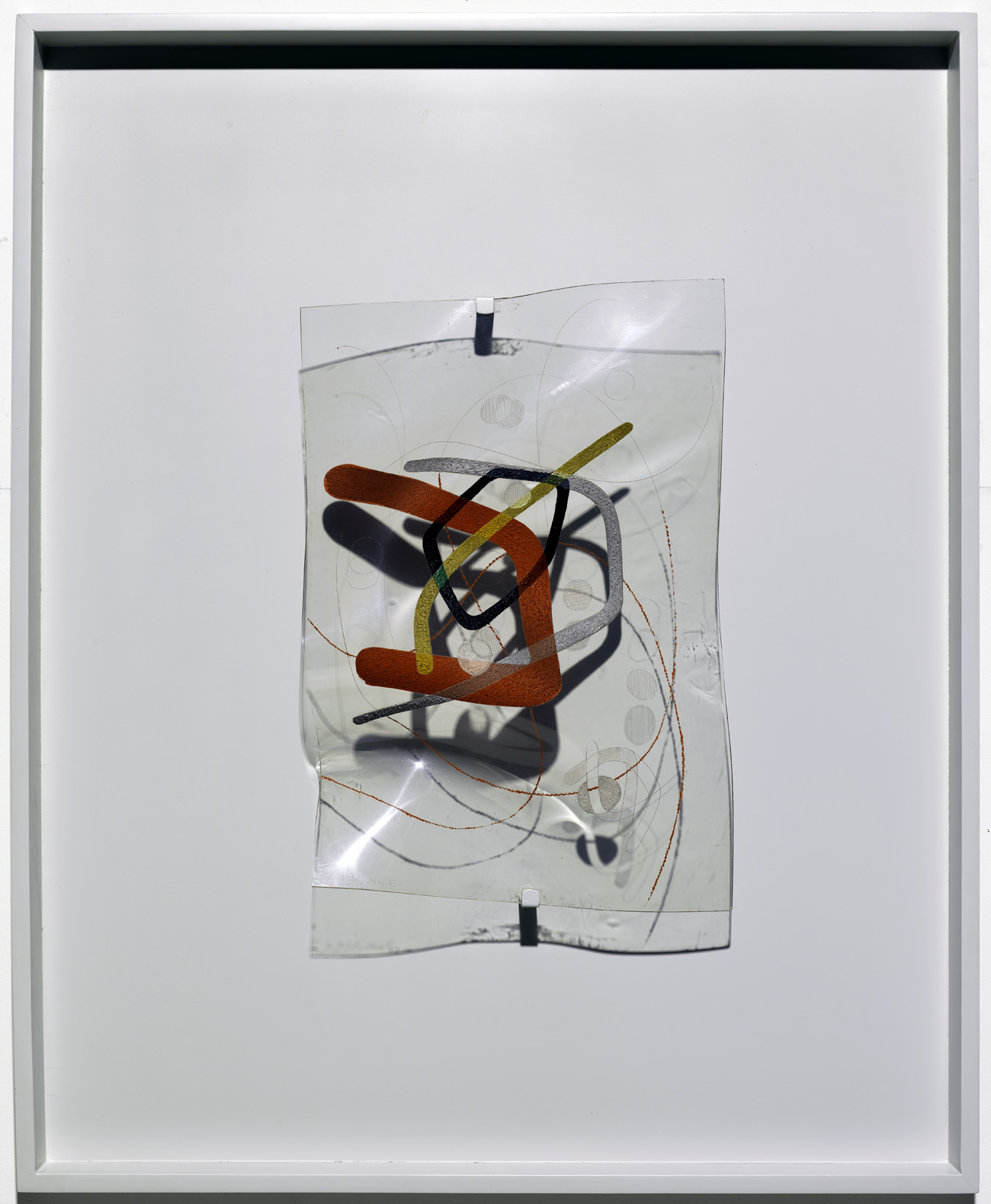
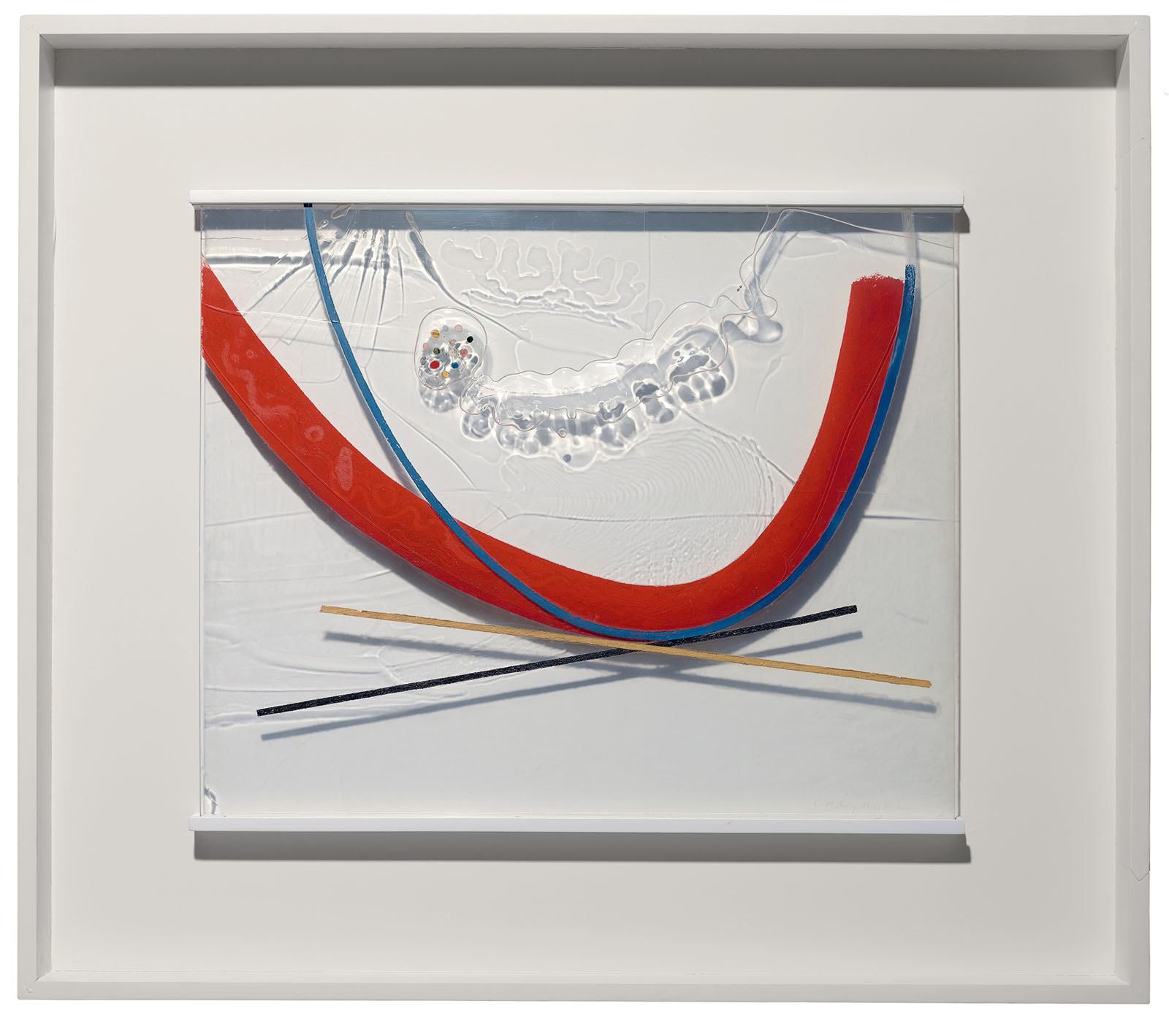
László Moholy-Nagy (Hungarian, 1895-1946) 'B-10 Space Modulator' 1942


László Moholy-Nagy (Hungarian, 1895-1946)
B-10 Space Modulator
1942
Oil and incised lines on Plexiglas, in original frame
Plexiglas: 42.9 × 29.2cm
Frame: 82.9 × 67.6cm
Solomon R. Guggenheim Museum, New York, Solomon R. Guggenheim Founding Collection
© 2016 Hattula Moholy-Nagy/VG Bild-Kunst, Bonn/Artists Rights Society (ARS), New York


László Moholy-Nagy. 'Room of the Present (Raum der Gegenwart)' constructed in 2009 from plans and other documentation dated 1930

László Moholy-Nagy. 'Room of the Present (Raum der Gegenwart)' constructed in 2009 from plans and other documentation dated 1930

László Moholy-Nagy. 'Room of the Present (Raum der Gegenwart)' constructed in 2009 from plans and other documentation dated 1930


László Moholy-Nagy (Hungarian, 1895-1946)
Room of the Present (Raum der Gegenwart)
Constructed in 2009 from plans and other documentation dated 1930
Van Abbemuseum, Eindhoven
© 2016 Hattula Moholy-Nagy/VG Bild-Kunst, Bonn/Artists Rights Society (ARS), New York
Photo: Peter Cox, courtesy Art Resource, New York


Installation view: 'Moholy-Nagy: Future Present', Solomon R. Guggenheim Museum, New York, May 27–September 7, 2016 showing at right, 'A II (Construction A II)' (1924)


Installation view of Moholy-Nagy: Future Present at the Solomon R. Guggenheim Museum, New York, May 27 – September 7, 2016 showing at right, A II (Construction A II) (1924, below)
Photo: David Heald © Solomon R. Guggenheim Foundation


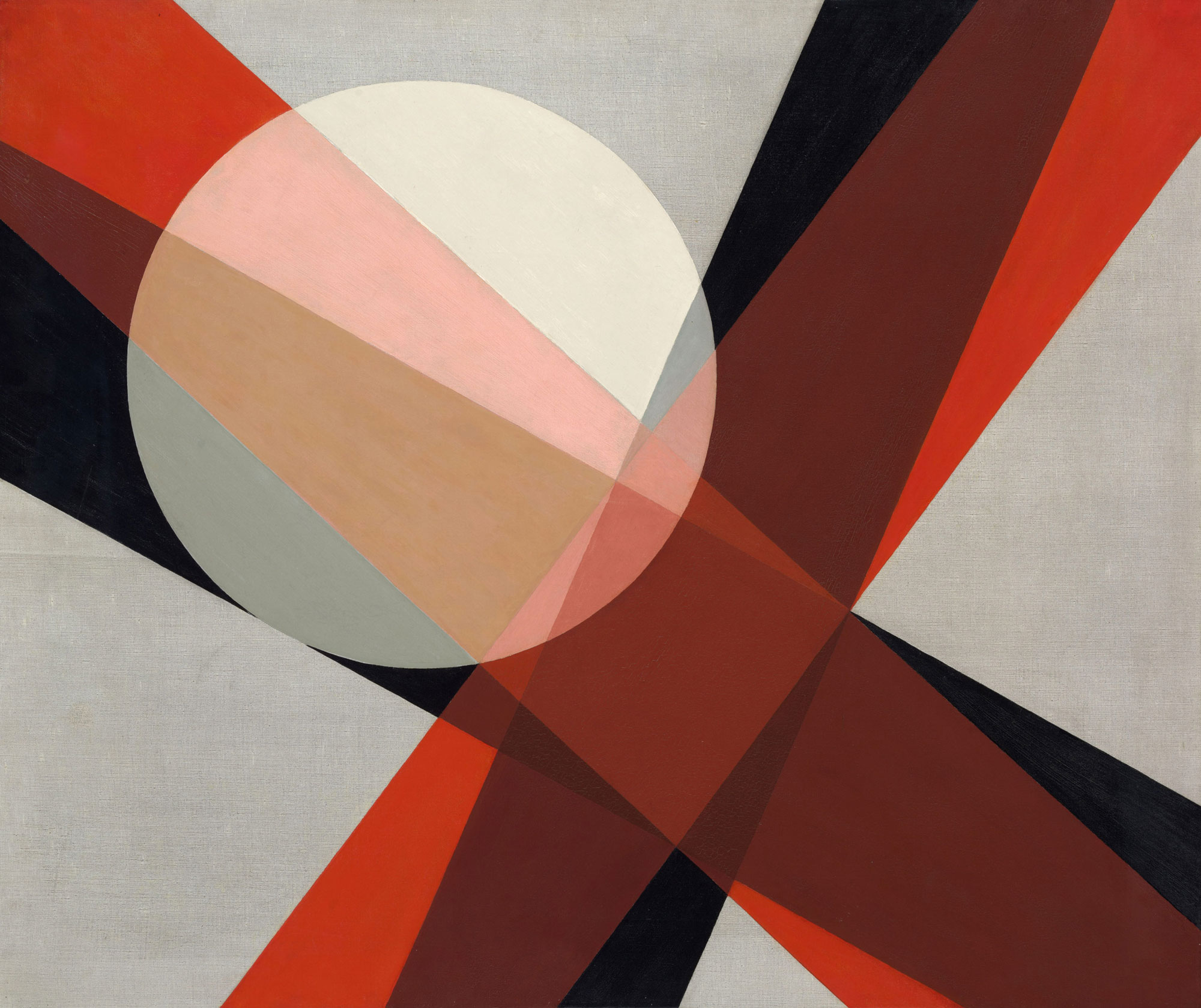
László Moholy-Nagy (Hungarian, 1895-1946) 'A II' 1924 from the exhibition 'Moholy-Nagy: Future Present' at the Solomon R. Guggenheim Museum, New York, May - Sept, 2025


László Moholy-Nagy (Hungarian, 1895-1946)
A II (Construction A II)
1924
Oil and graphite on canvas
115.8 × 136.5cm
Solomon R. Guggenheim Museum, New York, Solomon R. Guggenheim Founding Collection
© 2016 Hattula Moholy-Nagy/VG Bild-Kunst, Bonn/Artists Rights Society (ARS), New York


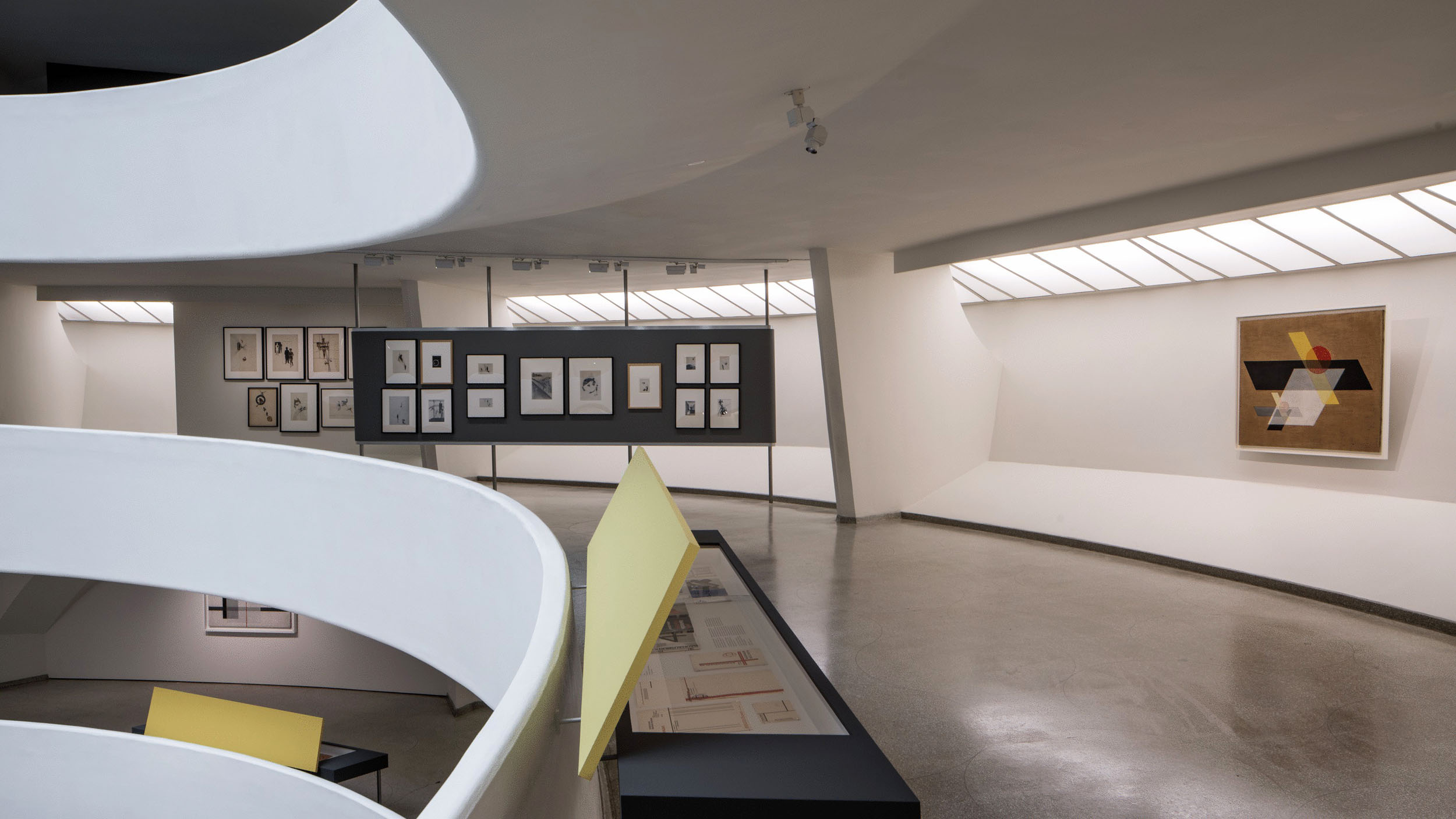
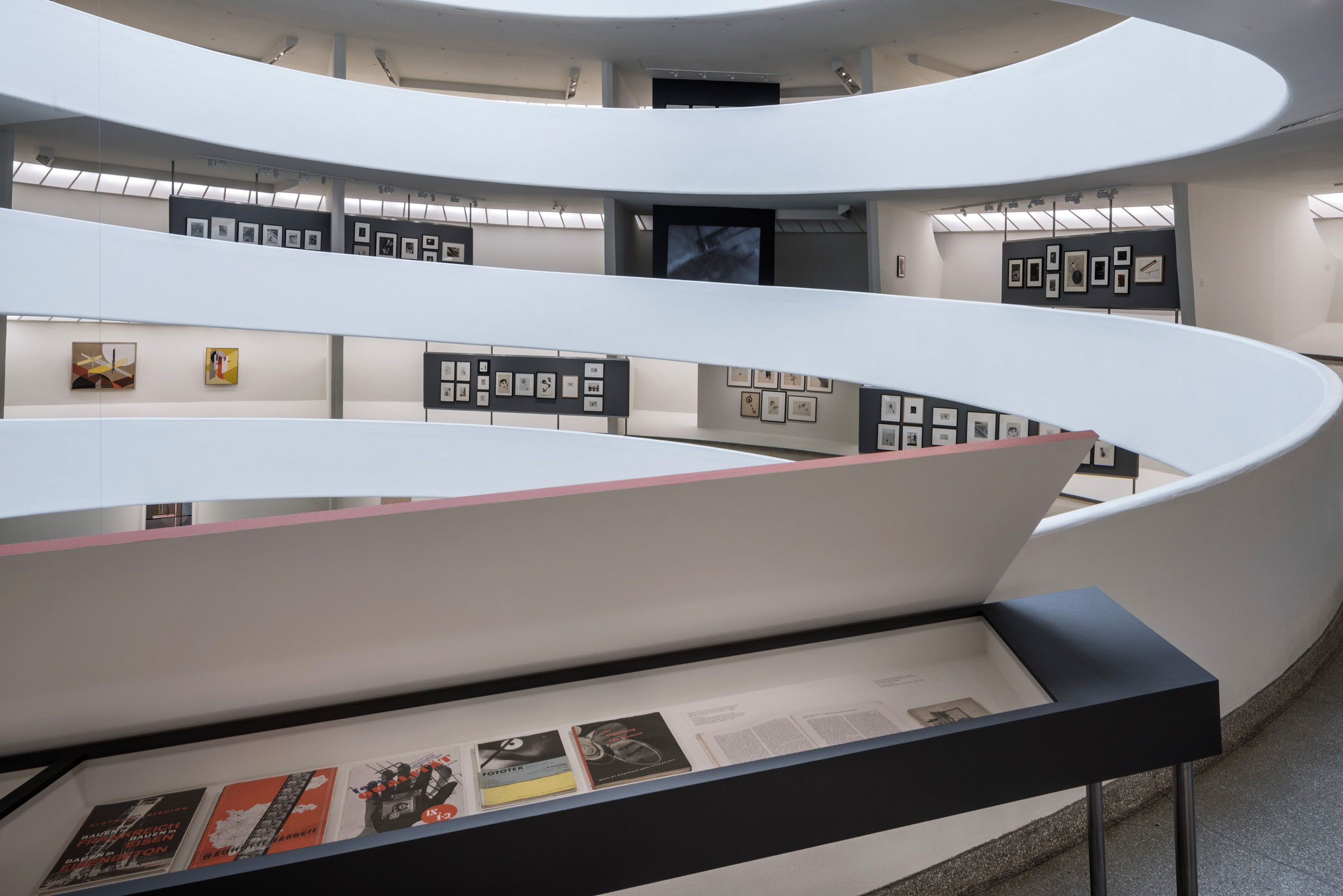
Installation view: 'Moholy-Nagy: Future Present', Solomon R. Guggenheim Museum, New York, May 27–September 7, 2016

Installation view: 'Moholy-Nagy: Future Present', Solomon R. Guggenheim Museum, New York, May 27–September 7, 2016

Installation view: 'Moholy-Nagy: Future Present', Solomon R. Guggenheim Museum, New York, May 27–September 7, 2016

Installation view: 'Moholy-Nagy: Future Present', Solomon R. Guggenheim Museum, New York, May 27–September 7, 2016


Installation views of Moholy-Nagy: Future Present at the Solomon R. Guggenheim Museum, New York, May 27 – September 7, 2016
Photo: David Heald © Solomon R. Guggenheim Foundation


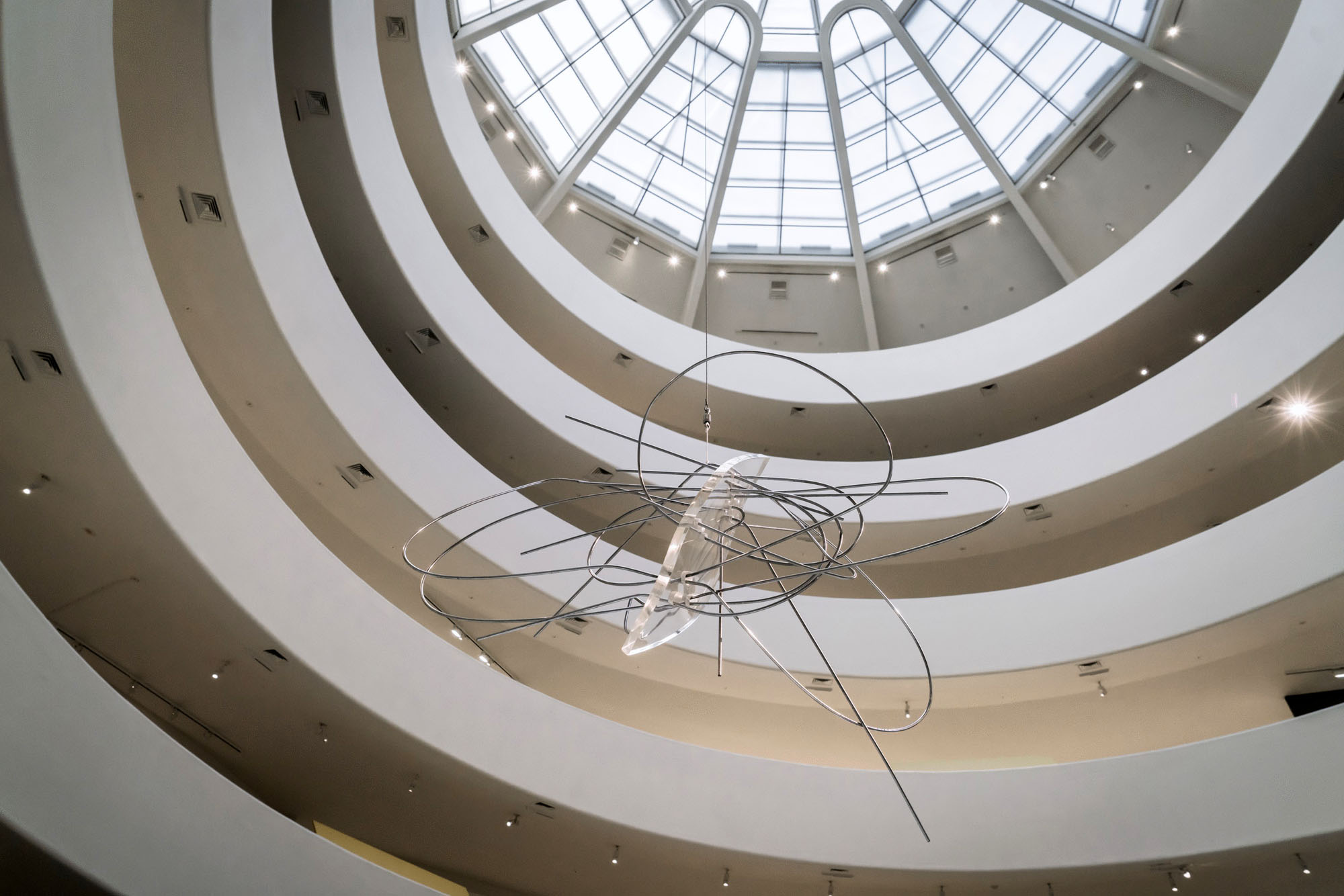
László Moholy-Nagy (Hungarian, 1895-1946) 'Dual Form with Chromium Rods' 1946 (installation view)


László Moholy-Nagy (Hungarian, 1895-1946)
Dual Form with Chromium Rods (installation view)
1946
Plexiglas and chrome-plated brass
92.7 × 121.6 × 55.9cm
Solomon R. Guggenheim Museum, New York, Solomon R. Guggenheim Founding Collection
© 2016 Hattula Moholy-Nagy/VG Bild-Kunst, Bonn/Artists Rights Society (ARS), New York


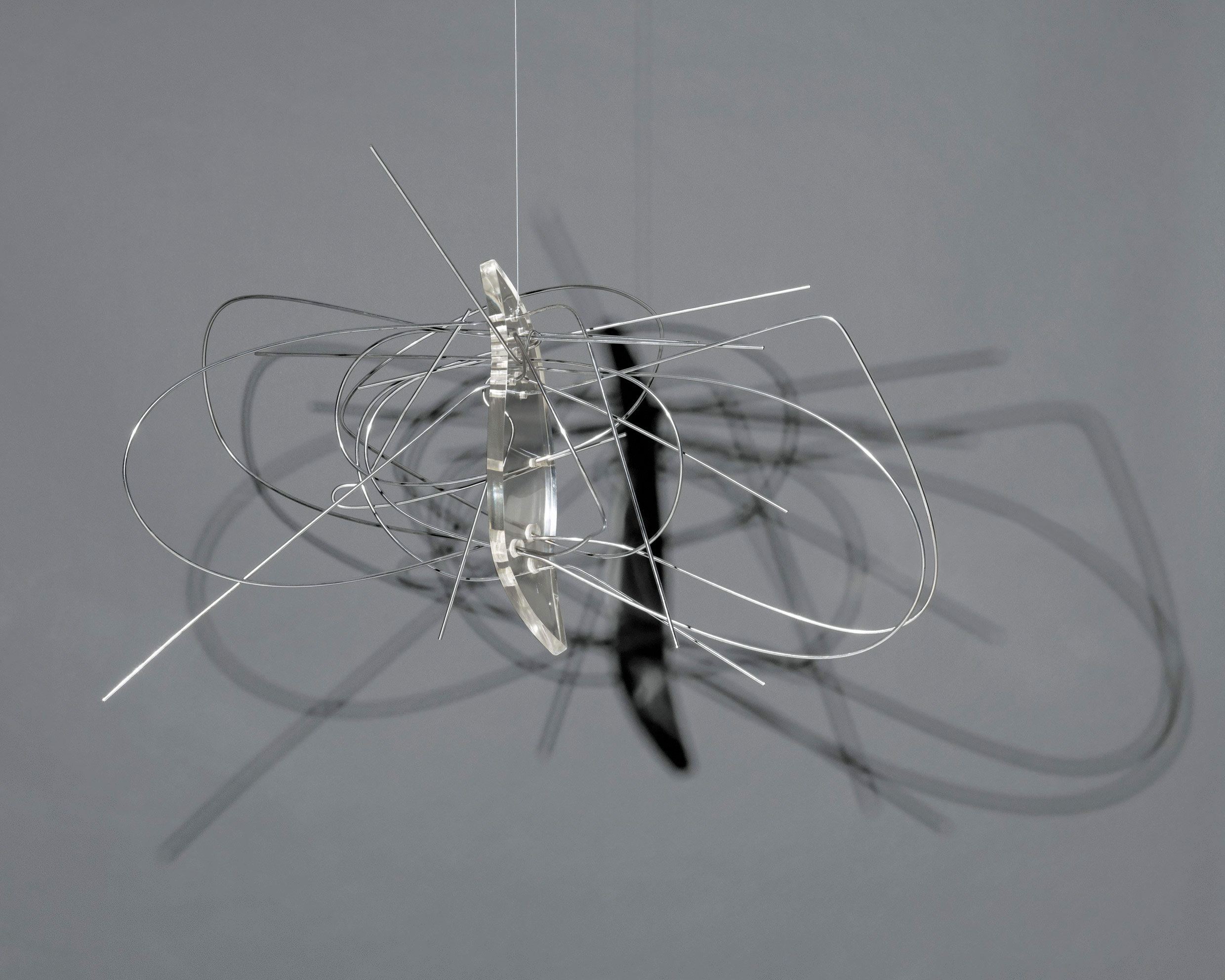
László Moholy-Nagy (Hungarian, 1895-1946) 'Dual Form with Chromium Rods' 1946 from the exhibition 'Moholy-Nagy: Future Present' at the Solomon R. Guggenheim Museum, New York, May - Sept, 2025


László Moholy-Nagy (Hungarian, 1895-1946)
Dual Form with Chromium Rods
1946
Plexiglas and chrome-plated brass
92.7 × 121.6 × 55.9cm
Solomon R. Guggenheim Museum, New York, Solomon R. Guggenheim Founding Collection
© 2016 Hattula Moholy-Nagy/VG Bild-Kunst, Bonn/Artists Rights Society (ARS), New York
Photo: Kristopher McKay © Solomon R. Guggenheim Foundation, New York


From May 27 to September 7, 2016, the Solomon R. Guggenheim Museum presents the first comprehensive retrospective in the United States in nearly fifty years of the work of pioneering artist and educator László Moholy-Nagy (1895-1946). Organised by the Solomon R. Guggenheim Foundation, the Art Institute of Chicago, and the Los Angeles County Museum of Art, Moholy-Nagy: Future Present examines the full career of the utopian modernist who believed in the potential of art as a vehicle for social transformation, working hand in hand with technology. Despite Moholy-Nagy’s prominence and the visibility of his work during his lifetime, few exhibitions have conveyed the experimental nature of his work, his enthusiasm for industrial materials, and his radical innovations with movement and light. This long overdue presentation, which encompasses his multidisciplinary methodology, brings together more than 300 works drawn from public and private collections across Europe and the United States, some of which have never before been shown publicly in this country. After its debut presentation in New York, the exhibition will travel to the Art Institute of Chicago (October 2, 2016 – January 3, 2017) and the Los Angeles County Museum of Art (February 12 – June 18, 2017).

Moholy-Nagy: Future Present provides an opportunity to examine the full career of this influential Bauhaus teacher, founder of Chicago’s Institute of Design, and versatile artist who paved the way for increasingly interdisciplinary and multimedia work and practice. Among his radical innovations were his experiments with cameraless photographs (which he dubbed “photograms”); use of industrial materials in painting and sculpture that was unconventional for his time; researching with light, transparency, and movement; his work at the forefront of abstraction; and his ability to move fluidly between the fine and applied arts. The exhibition is presented chronologically up the Guggenheim’s rotunda and features collages, drawings, ephemera, films, paintings, photograms, photographs, photomontages, and sculptures. The exception to the sequential order is Room of the Present (Raum der Gegenwart) in the High Gallery, a contemporary fabrication of a space originally conceived by Moholy-Nagy in 1930 but never realised in his lifetime. Constructed by designers Kai-Uwe Hemken and Jakob Gebert, the large-scale work contains photographic reproductions, films, slides, documents, and replicas of architecture, theater, and industrial design, including a 2006 replica of his kinetic Light Prop for an Electric Stage (Lichtrequisit einer elektrischen Bühne, 1930). Room of the Present illustrates the artist’s belief in the power of images and his approach to the various means with which to view them – a highly relevant paradigm in today’s constantly shifting and evolving technological world. Room of the Present will be on display at all three exhibition venues and for the first time in the United States. The Guggenheim installation is designed by Kelly Cullinan, Senior Exhibition Designer, and is inspired by Moholy-Nagy’s texts on space and his concept of a “spatial kaleidoscope” as applied to the experience of walking up the ramps.

Born in 1895 in Austria-Hungary (now southern Hungary), Moholy-Nagy moved to Vienna briefly and then to Berlin in 1920, where he encountered Dada artists, whose distinctive visual attributes of the urban industrial landscape had already entered his work. He was also influenced by the Constructivists, and exhibited work on several occasions at Berlin’s Der Sturm gallery. During this time, Moholy-Nagy experimented with metal constructions, photograms, and enamel paintings. At the same moment, in his ongoing quest to depict light and transparency, he painted abstract canvases composed of floating geometric shapes. While teaching at the Bauhaus in Weimar and then Dessau, he and Walter Gropius pioneered the Bauhaus Books series, which advanced Moholy-Nagy’s belief that arts education and administration went hand in hand with the practice of art making. Around this period, the artist became temporarily disenchanted with the limitations of traditional painting. Photography took on greater importance for him, and he described the photogram as “a bridge leading to new visual creation for which canvas, paint-brush and pigment cannot serve.” He fashioned photomontages by combining photographs (usually found) and newspaper images into absurd, satirical, or fantastical narratives. When he moved back to Berlin in 1928, he enjoyed success as a commercial artist, exhibition and stage designer, and typographer, examples of which will be on display in Moholy-Nagy: Future Present. Adolf Hitler’s rise to power made life increasingly difficult for the avant-garde in Germany; thus, in 1934 Moholy-Nagy moved with his family to the Netherlands and then to London. Once he moved to Chicago in 1937, he never returned to Europe.

Moholy-Nagy immigrated to Chicago to become founding director of the New Bauhaus, known today as the Institute of Design at the Illinois Institute of Technology. He also made some of his most original and experimental work during this time, pursuing his longtime fascination with light, shadow, transparency, and motion. He continued to make photograms, created his Space Modulators (hybrids of painting and sculpture made from Plexiglas), and pioneered 35 mm colour slide photography, shown as projections in the exhibition. He gave his full attention to American exhibition venues before his untimely death of leukaemia in 1946, showing nearly three dozen times across the United States – including in four solo shows.

Moholy-Nagy was a central figure in the history of the Guggenheim Museum. His work was included in the museum’s founding collection, and he held a special place at the Museum of Non-Objective Painting, the forerunner of the Guggenheim Museum. He was among the first artists director Hilla Rebay exhibited and collected in depth, and the museum presented a memorial exhibition shortly after his death. Moholy-Nagy: Future Present highlights the artist’s interdisciplinary and investigative approach, migrating from the school to the museum or gallery space, consistently pushing toward the Gesamtwerk, the total work, which he sought to achieve throughout his lifetime.

Press release from the Solomon R. Guggenheim Museum


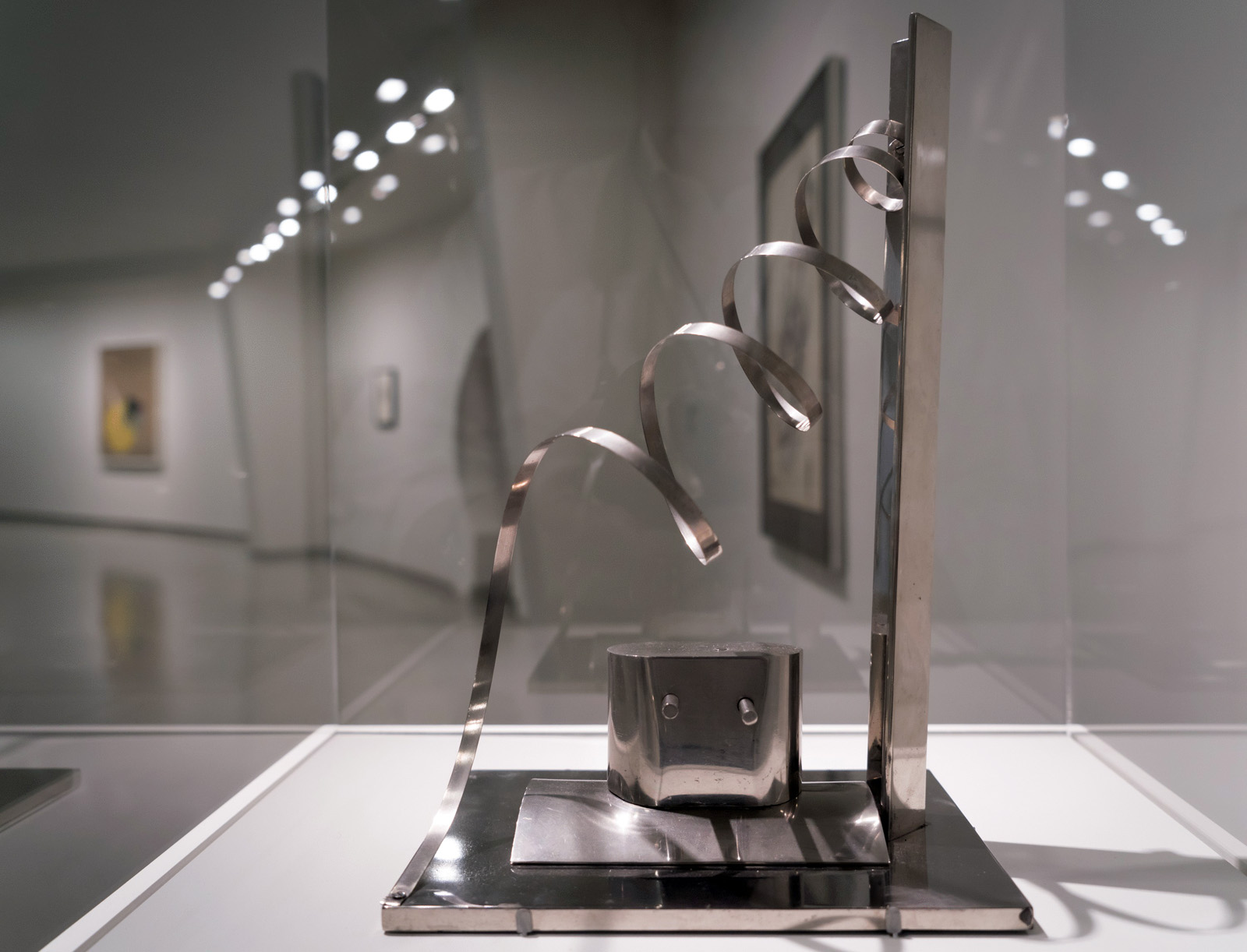
László Moholy-Nagy (Hungarian, 1895-1946) 'Nickel Sculpture with Spiral' 1921 (installation photograph)


László Moholy-Nagy (Hungarian, 1895-1946)
Nickel Sculpture with Spiral (installation view)
1921
Nickel-plated iron, welded
35.9 x 17.5 x 23.8cm
The Museum of Modern Art, New York, Gift of Mrs. Sibyl Moholy-Nagy 1956
© 2016 Hattula Moholy-Nagy/VG Bild-Kunst, Bonn/Artists Rights Society (ARS), New York


László Moholy-Nagy (Hungarian, 1895-1946) 'A 19' 1927 from the exhibition 'Moholy-Nagy: Future Present' at the Solomon R. Guggenheim Museum, New York, May - Sept, 2025


László Moholy-Nagy (Hungarian, 1895-1946)
A 19
1927
Oil and graphite on canvas
80 x 95.5cm
Hattula Moholy-Nagy, Ann Arbor, MI
© 2016 Hattula Moholy-Nagy/VG Bild-Kunst, Bonn/Artists Rights Society (ARS), New York


László Moholy-Nagy (Hungarian, 1895-1946) 'Photogram' 1941


László Moholy-Nagy (Hungarian, 1895-1946)
Photogram
1941
Gelatin silver photogram
28 x 36cm
The Art Institute of Chicago, gift of Sally Petrilli, 1985
© 2016 Hattula Moholy-Nagy/VG Bild-Kunst, Bonn/Artists Rights Society (ARS), New York


László Moholy-Nagy (Hungarian, 1895-1946) 'Space Modulator' 1939-1945


László Moholy-Nagy (Hungarian, 1895-1946)
Space Modulator
1939-1945
Oil and incised lines on Plexiglas, in original frame
Plexiglas: 63.2 × 66.7cm
Frame: 88.6 × 93cm
Solomon R. Guggenheim Museum, New York, Solomon R. Guggenheim Founding Collection
© 2016 Hattula Moholy-Nagy/VG Bild-Kunst, Bonn/Artists Rights Society (ARS), New York


László Moholy-Nagy (Hungarian, 1895-1946) 'Papmac' 1943


László Moholy-Nagy (Hungarian, 1895-1946)
Papmac
1943
Oil and incised lines on Plexiglas, in original frame
Plexiglas: 58.4 × 70.5cm
Frame: 91.1 × 101.9cm
Private collection
© 2016 Hattula Moholy-Nagy/VG Bild-Kunst, Bonn/Artists Rights Society (ARS), New York


László Moholy-Nagy (Hungarian, 1895-1946) 'CH BEATA I' 1939


László Moholy-Nagy (Hungarian, 1895-1946)
CH BEATA I
1939
Oil and graphite on canvas
118.9 × 119.8cm
Solomon R. Guggenheim Museum, New York, Solomon R. Guggenheim Founding Collection
© 2016 Hattula Moholy-Nagy/VG Bild-Kunst, Bonn/Artists Rights Society (ARS), New York


László Moholy-Nagy (Hungarian, 1895-1946) 'Construction AL6 (Konstruktion AL6)' 1933-1934


László Moholy-Nagy (Hungarian, 1895-1946)
Construction AL6 (Konstruktion AL6)
1933-1934
Oil and incised lines on aluminium
60 × 50cm
IVAM, Institut Valencià d’Art Modern, Generalitat
© 2016 Hattula Moholy-Nagy/VG Bild-Kunst, Bonn/Artists Rights Society (ARS), New York


László Moholy-Nagy (Hungarian, 1895-1946) 'Photogram' 1926


László Moholy-Nagy (Hungarian, 1895-1946)
Photogram
1926
Gelatin silver photogram
23.8 x 17.8cm
Los Angeles County Museum of Art, Ralph M. Parsons Fund
© 2016 Hattula Moholy-Nagy/VG Bild-Kunst, Bonn/Artists Rights Society (ARS), New York
Photo: © Museum Associates/LACMA


László Moholy-Nagy (Hungarian, 1895-1946) 'Cover and design for Vision in Motion' (Paul Theobald, 1947)


László Moholy-Nagy (Hungarian, 1895-1946)
Cover and design for Vision in Motion (Paul Theobald, 1947)
Bound volume
28.6 × 22.9cm
The Hilla von Rebay Foundation Archive
© 2016 Hattula Moholy-Nagy/VG Bild-Kunst, Bonn/Artists Rights Society (ARS), New York


Solomon R. Guggenheim Museum
1071 5th Avenue (at 89th Street)
New York

Opening hours:
Sunday – Friday 11am – 6pm
Saturday 11am – 8pm

Solomon R. Guggenheim Museum website

LIKE ART BLART ON FACEBOOK

Back to top

Exhibition: ‘László Moholy-Nagy – Art of Light’ at Martin Gropius-Bau, Berlin

Exhibition dates: 4th November 2010 – 16th January 2011


László Moholy-Nagy (Hungarian, 1895-1946) 'Am 7 (26)' 1926 from the exhibition 'László Moholy-Nagy – Art of Light' at Martin Gropius-Bau, Berlin


László Moholy-Nagy (Hungarian, 1895-1946)
Am 7 (26)
1926
Oil on canvas
75.8 x 96cm
Ernst und Kurt Schwitters Stiftung/ Sprengel Museum, Hannover
© VG Bild-Kunst, Bonn 2010


My apologies for the paucity of reviews of local exhibitions on the archive recently. It’s not that I haven’t been going to exhibitions far from it, just that nothing has really struck me as worthy of an in depth review!

Recently I went to the new Monash University Gallery of Art (MUMA) and the opening exhibition of the gallery, CHANGE (until 18th December). This is a hotchpotch of an exhibition that showcases the “breadth and depth of the Monash University Collection, reflecting on the changing forms, circumstances and developments in contemporary art practice from the 1960s to the present day – from late modernism to our contemporary situation … the exhibition signals the potential for institutional change that MUMA’s new situation represents.” Avowing an appeal to the senses the exhibition has some interesting works, notably a large canvas by Howard Arkley, Family home – suburban exterior 1993, Daniel von Sturmer’s installation The Field Equation (2006), Mike Parr’s bloody, mesmeric performance Close the Concentration Camps (2002) that you just can’t take your eyes off and part of Tracey Moffatt’s haunting series Up In The Sky (1998), the “part” declamation leaving one unable to decipher the narrative of the work without seeing the whole series on the Roslyn Oxley9 website. This is symptomatic of the whole exhibition – somehow it doesn’t come together, one of the problems of large, non-thematically organised group exhibitions.

The spaces of the new gallery are interesting to wander through but seem a little pokey and confined. A series of smallish intersecting rooms to the left hand side of the gallery leads one around to a big gallery to the right hand side (the best space), before another small front room. Down the spine runs a narrow enclosed area with exposed trusses and ducts that is unimaginative in design and redundant as an exhibiting space. Overall the gallery feels claustrophobic being an almost hermetically sealed environment enclosed by several sliding glass doors at entry points (and yes, I do know that a gallery has to have regulated temperature, light and humidity). This is at odds with the idea of exhibiting fresh, exciting art that breathes life.

I also ventured to Anna Pappas Gallery to see the exhibition of photographic work Endless Days by Vin Ryan (until 23rd December). Nice idea but a disappointment. Featuring grided, colour-coded photographs of the physical artefacts used to plate 20 meals eaten by the Ryan family the information within the prints is almost indecipherable, the selection of plates, cups and objects so small as to become mere colour decoration. I struggled to see what the objects actually were; even in the 5 individual prints of a meal the definition of the objects was weak, the printing not up to standard. The moral of the story is this: if you are going to use the photographic medium for artwork make sure that a/ you know how to construct an image visually using the medium and b/ that you get someone who knows what they are doing to print the photographs for you if you can’t print them well yourself.

On to better things. In this posting there are some outstanding photographs: the imaginative camera angles of Moholy-Nagy (heavily influenced by Constructivism and Suprematism) where truly ground-breaking at the time. The iconic From the radio tower, Berlin (1928) is simply breathtaking in the photographs ability to flatten the pictorial landscape into abstract shape and form.

Dr Marcus Bunyan


Many thankx to Martin Gropius-Bau, Berlin for allowing me to publish the photographs in the posting. Please click on the photographs for a larger version of the image.


László Moholy-Nagy (Hungarian, 1895-1946) 'Eton. Eleves watching cricket from the pavilion on Agar’s Plough' c. 1930 from the exhibition 'László Moholy-Nagy – Art of Light' at Martin Gropius-Bau, Berlin


László Moholy-Nagy (Hungarian, 1895-1946)
Eton. Eleves watching cricket from the pavilion on Agar’s Plough
c. 1930
Gelatin silver print
15.7 x 20.7cm / 16.3 x 21.3cm
Achat 1994. Centre Pompidou, Paris Musée national d’art moderne / Centre de création industrielle
© VG Bild-Kunst, Bonn 2010


László Moholy-Nagy (Hungarian, 1895-1946) 'Photogram' c. 1938 from the exhibition 'László Moholy-Nagy – Art of Light' at Martin Gropius-Bau, Berlin


László Moholy-Nagy (Hungarian, 1895-1946)
Photogram
c. 1938
Original photogram from Chicago
204 x 252cm
Swiss Foundation of Photography, Winterthur
Donation in memoriam S. and Giedion Welcker
© VG Bild-Kunst, Bonn 2010


László Moholy-Nagy (Hungarian, 1895-1946) 'Untitled' 1940’s from the exhibition 'László Moholy-Nagy – Art of Light' at Martin Gropius-Bau, Berlin


László Moholy-Nagy (Hungarian, 1895-1946)
Untitled
1940’s
Fujicolor crystal archive print
27.9 x 35.6cm / 52.1 x 63.5cm
Courtesy László Moholy-Nagy Estate and Andrea Rosen Gallery Inc., New York
© VG Bild-Kunst, Bonn 2010


For Moholy-Nagy was always a theoretician and practitioner in equal measure, always wanting to be a holistic artist. He approached his work – painting, photography, commercial and industrial design, film, sculpture, scenography – from a wide variety of aspects and practised it as a radical, extreme experiment, by refusing to place his hugely differing works in any sort of aesthetic hierarchy. He also attached enormous importance to education, which is why, at the request of Walter Gropius, he worked in this field for the Bauhaus in Weimar (1923-1925) and Dessau (1925-1928). In Chicago, where he settled in 1937, he again assumed teaching duties and founded the “New Bauhaus”, which sought to realise the programmes of the German Bauhaus in the United States. Shortly afterwards he founded the Institute of Design in Chicago, where he was to remain active until his death in 1946. The institute was later incorporated in the Illinois Institute of Technology, which offers study courses to this day.

From Weimar to Chicago Moholy-Nagy retained his faith in his pedagogical ideal, which for him meant not only teaching, but the moral education of human beings. He believed in education as a means of developing all the abilities lying dormant in the students and as a means of paving the way to a “new, total human being.”

All of Moholy-Nagy’s theoretical contributions arose out of his artistic and pedagogical work. In his numerous writings he gradually presented his ideas, thus developing a complete artistic and pedagogical aesthetic. In his 1925 landmark essay “Painting, Photography, Film” he developed an aesthetic theory of light – light as a matrix of art and art as light. He applied his aesthetic theory of light not only to painting, photography and film, but also to theatrical and commercial design.

From that point on light became the foundation of Moholy-Nagy’s practical and theoretical work. For him art of whatever kind only acquired meaning when it reflected light. Painting was also reinterpreted on the basis of this criterion. Moholy-Nagy described his development as a painter as a shift away from “painting from transparency” to a painting that was free of any representational constraints and created the possibility of painting “not with colours, but with light.” This theory reached its full potential in photography and film. Etymologically, the word “photography” means “writing with light.” The artistic essence of film consists in the portrayal of “inter-related movements as revealed by light projections.” Although he was not in charge of the photography classes in the Bauhaus, it was there that he wrote Painting, Photography, Film, drawing upon his photographic experience. He invented the “photogram,” a purely light-based form of graphic representation, thus demonstrating an ability to create photographic images without a camera at the same time as the “Rayogram” was invented by Man Ray in Paris. He saw photography as a completely autonomous medium whose potential was still to be discovered. He criticised “pictoriality,” propagating an innovative, creative and productive photography. He regarded seriality as one of the main features of the practice of photography and opposed the “aura” of the one-off work in contrast to the infinite multifariousness of the photographic cliché, thus anticipating one of Walter Benjamin’s theses.

The distinction between production and reproduction is a basic theme of his art. A prominent aspect of every work is its ability to integrate the unknown. Works that only repeat or reproduce familiar relationships, are described as “reproductive,” while those that create or produce new relationships are “productive.” For Moholy-Nagy the ability of a work of art to create something new (a basic feature of Modernism) is a key criterion. He postulated for painting, photography and film a moral and aesthetic imperative – the New. Art had to confront new times and an industrial civilisation. In the systematic implementation of this thesis 1926 turned out to be the year in which his pictorial output was greater than his works in other fields, but 1927 witnessed a positive flood of photographic, scenographic, kinetic and film productions. Painting was something he never abandoned. He decided to drop the representational painting inherited from the past and to devote himself to non-representational or “pure” painting instead. The emergence of photography gave painting the perfect opportunity to free itself from all figurative or representative imperatives. Artists did not have to decide in favour of one medium or another, but should use all media to capture and master an optical creation.

Text from the Martin Gropius-Bau website [Online] Cited 26/11/2010 no longer available online


László Moholy-Nagy (Hungarian, 1895-1946) 'Oscar Schlemmer in Ascona' 1926 from the exhibition 'László Moholy-Nagy – Art of Light' at Martin Gropius-Bau, Berlin


László Moholy-Nagy (Hungarian, 1895-1946)
Oskar Schlemmer in Ascona
1926
Tokyo Metropolitan Museum of Photography, Tokio
© VG Bild-Kunst, Bonn 2010


László Moholy-Nagy (Hungarian, 1895-1946) 'Pneumatik' 1924 from the exhibition 'László Moholy-Nagy – Art of Light' at Martin Gropius-Bau, Berlin


László Moholy-Nagy (Hungarian, 1895-1946)
Pneumatik
1924
Collection E. Zyablov, Moskau
© VG Bild-Kunst, Bonn 2010


László Moholy-Nagy (Hungarian, 1895-1946) 'Flower' c. 1925-1927 from the exhibition 'László Moholy-Nagy – Art of Light' at Martin Gropius-Bau, Berlin


László Moholy-Nagy (Hungarian, 1895-1946)
Flower
c. 1925-1927
Centre Pompidou, Paris, Musée national d’art moderne / Centre de création industrielle
© VG Bild-Kunst, Bonn 2010


László Moholy-Nagy (Hungarian, 1895-1946) 'From the radio tower, Berlin' 1928 from the exhibition 'László Moholy-Nagy – Art of Light' at Martin Gropius-Bau, Berlin


László Moholy-Nagy (Hungarian, 1895-1946)
From the radio tower, Berlin
1928
Gelatin silver print
28 x 21.3cm
Private collection
© VG Bild-Kunst, Bonn 2010


László Moholy-Nagy (Hungarian, 1895-1946) 'Lago Maggiore, Ascona, Switzerland' c. 1930 from the exhibition 'László Moholy-Nagy – Art of Light' at Martin Gropius-Bau, Berlin


László Moholy-Nagy (Hungarian, 1895-1946)
Lago Maggiore, Ascona, Switzerland
c. 1930
Gelatin silver print
20.8 x 28.4cm
Collection Spaarnestad Photo/Nationaal Archief
© VG Bild-Kunst, Bonn 2010


László Moholy-Nagy (Hungarian, 1895-1946) / Paul Hartland. 'Carnival: Composition with two masks'
 c. 1934
 from the exhibition 'László Moholy-Nagy – Art of Light' at Martin Gropius-Bau, Berlin


László Moholy-Nagy (Hungarian, 1895-1946) / Paul Hartland
Carnival: Composition with two masks
c. 1934
Gemeentemuseum Den Haag
© VG Bild-Kunst, Bonn 2010


Martin-Gropius-Bau Berlin
Niederkirchnerstraße 7
Corner Stresemannstr. 110
10963 Berlin
Phone: +49 (0)30 254 86-0

Opening hours:
Wednesday to Monday 10.00am – 19.00pm
Tuesday closed

Martin-Gropius-Bau website

LIKE ART BLART ON FACEBOOK

Back to top