Exhibition: ‘Robert Mapplethorpe’ at NRW-Forum Dusseldorf

Exhibition dates: 6th February – 15th August, 2010


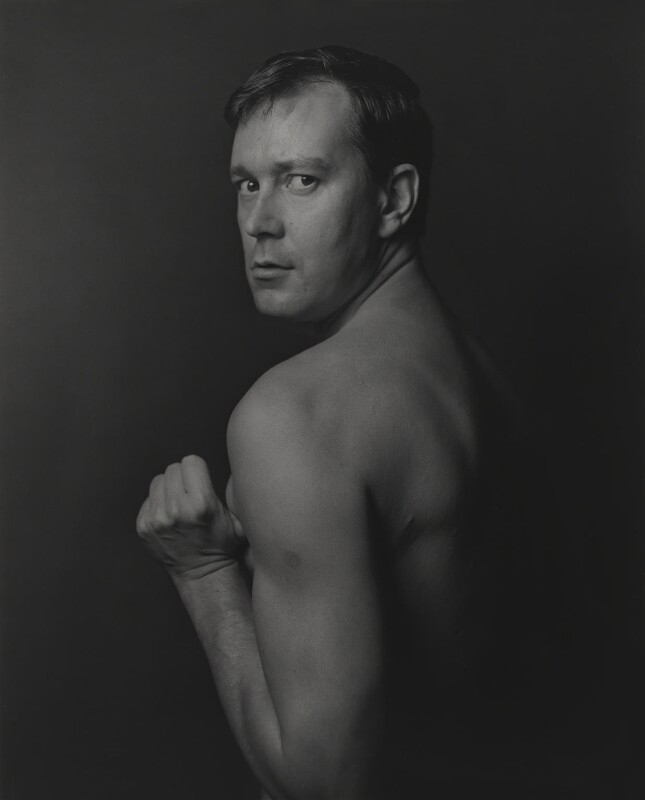
Robert Mapplethorpe (American, 1946-1989) 'Phillip Prioleau' 1980 from the exhibition 'Robert Mapplethorpe' at NRW-Forum Dusseldorf, Feb - August, 2010


Robert Mapplethorpe (American, 1946-1989)
Phillip Prioleau
1980
© Robert Mapplethorpe Foundation
Used by permission


Robert Mapplethorpe was a classical photographer with a great eye for form and beauty, an artist who explored the worlds he knew and lived (homosexuality, sadomasochistic practices, desire for black men) with keen observations into the manifestations of their existence, insights that are only shocking to those who have never been exposed to these worlds. If we observe that our history is written as a series of interpretive shifts then perhaps we can further articulate that the development of an artist’s career is a series of interpretations, an “investigation into the events that have led us to constitute ourselves and to recognise ourselves as subjects of what we are doing, thinking, saying.”1 Mapplethorpe was such an artist.

The early work is gritty and raw, exposing audiences to sexuality and the body as catalyst for social change, photographs the “general public” had never seen before. Early photographs such as the sequence of photographs Charles and Jim (1974) feature ‘natural’ bodies – hairy, scrawny, thin – in close physical proximity with each other, engaged in gay sex. There is a tenderness and affection to the sequence as the couple undress, suck, kiss and embrace.

At the same time that Mapplethorpe was photographing the first of his black nudes (Mapplethorpe’s photographs of black men come from a lineage that can be traced back to Fred Holland Day who also photographed black men), he was also portraying acts of sexual progressiveness in his photographs of the gay S/M scene. In these photographs the bodies are usually shielded from scrutiny by leather and rubber but are revealing of the intentions and personalities of the people depicted in them, perhaps because Mapplethorpe was taking part in these activities himself as well as depicting them. There is a sense of connection with the people and the situations that occur before his lens in the S/M photographs.

As time progresses the work becomes more about surfaces and form, about the polished perfection of the body, about that exquisite corpse, the form of the flower. Later work is usually staged against a contextless background (see photographs below) as though the artefacts have no grounding in reality, only desire. Bodies are dissected, cut-up into manageable pieces – the objectified body. Mapplethorpe liked to view the body cut up into different libidinal zones much as in the reclaimed artefacts of classical sculpture. The viewer is seduced by the sensuous nature of the bodies surfaces, the body objectified for the viewers pleasure. The photographs reveal very little of the inner self of the person being photographed. The named body is placed on a pedestal (see photograph of Phillip Prioleau (1980) below) much as a trophy or a vase of flowers. I believe this isolation, this objectivity is one of the major criticisms of most of Mapplethorpe’s later photographs of the body – they reveal very little of the sitter only the clarity of perfect formalised beauty and aesthetic design.

While this criticism is pertinent it still does not deny the power of these images. Anyone who saw the retrospective of his work at the Museum of Contemporary Art in Sydney in 1995 can attest to the overwhelming presence of his work when seen in the flesh (so to speak!). Mapplethorpe’s body of work hangs from a single thread: an inquisitive mind undertaking an investigation in the condition of the world’s becoming. His last works, when he knew he was dying, are as moving for any gay man who has lost friends over the years to HIV/AIDS as anything on record, are as moving for any human being that faces the evidence of their own mortality. Fearless to the last, never afraid to express who he was, how he felt and what he saw, Mapplethorpe will long be remembered in the annals of visual art.

Dr Marcus Bunyan


1/ Foucault, Michel. “What is Enlightenment?,” trans. C. Porter in Rabinow, Paul (ed.,). The Essential Works of Michel Foucualt, 1954-1984. Vol.1. New York: New Press, 1997, p. 315.


    Many thankx to NRW-Forum Dusseldorf for allowing me to publish the photographs in the posting. Please click on the photographs for a larger version of the image.
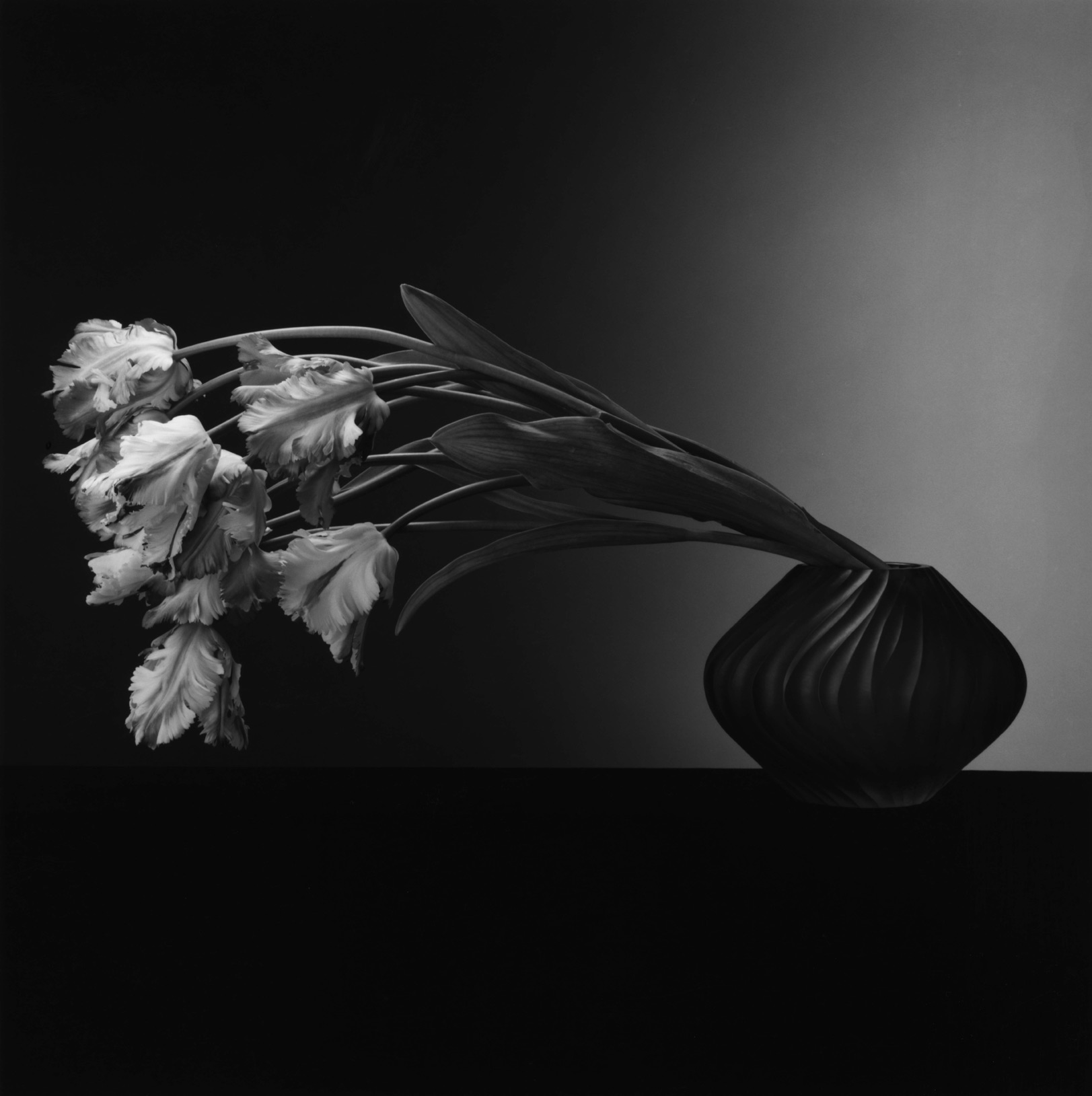


    Robert Mapplethorpe. 'Parrot Tulips' 1988 from the exhibition 'Robert Mapplethorpe' at NRW-Forum Dusseldorf, Feb - August, 2010


    Robert Mapplethorpe (American, 1946-1989)
    Parrot Tulips
    1988
    © Robert Mapplethorpe Foundation
    Used by permission


    Robert Mapplethorpe (American, 1946-1989) 'Ajitto' 1981 from the exhibition 'Robert Mapplethorpe' at NRW-Forum Dusseldorf, Feb - August, 2010


    Robert Mapplethorpe (American, 1946-1989)
    Ajitto
    1981
    © Robert Mapplethorpe Foundation
    Used by permission


    Robert Mapplethorpe (American, 1946-1989) 'David Hockney' 1976 © Robert Mapplethorpe Foundation. Used by permission


    Robert Mapplethorpe (American, 1946-1989)
    David Hockney
    1976
    © Robert Mapplethorpe Foundation
    Used by permission


    Robert Mapplethorpe, who was born in 1946 and passed away in 1989, is one of the few artists who truly deserve to be known far beyond the borders of the art world. Mapplethorpe dominated photography in the late twentieth century and paved the way for the recognition of photography as an art form in its own right; he firmly anchored the subject of homosexuality in mass culture and created a classic photographic image, mostly of male bodies, which found its way into commercial photography.

    In 2010, the NRW-Forum in Düsseldorf will organise a major retrospective of Robert Mapplethorpe’s photographs. His work was first shown in Germany in 1977 as part of documenta 6 in Kassel and then in a European solo exhibition in 1981 with German venues in Frankfurt, Hamburg and Munich. In addition to various museum and gallery exhibitions the largest museum exhibition in Germany of Mapplethorpe’s work took place in 1997 when the worldwide Mapplethorpe retrospective, which opened at the Louisiana Museum of Modern Art in Denmark, traveled to the Staatsgalerie in Stuttgart. The last time Robert Mapplethorpe’s works were shown in Düsseldorf was in the exhibition ‘Mapplethorpe versus Rodin’ at the Kunsthalle in 1992.

    Both during his life and since his death, Mapplethorpe’s work has been the subject of much controversial debate, particularly in the USA. Right up until the end of the twentieth century, exhibitions of his photographs were sometimes boycotted, censured, or in one case cancelled. His radical portrayals of nudity and sexual acts were always controversial; his photos of sadomasochistic practices in particular caused a stir and frequently resulted in protests outside exhibitions and in one instance, a lawsuits was brought against a museum director.

    In 2008, the Supreme Court in Japan ruled that Mapplethorpe’s erotic images did not contravene the country’s ban on pornography and released a volume of his photographs that had been seized and held for over eight years. As far as the American critic Arthur C. Danto was concerned, Mapplethorpe created ‘some of the most shocking and indeed some of the most dangerous images in modern photography, or even in the history of art.’

    In Germany, on the other hand, Mapplethorpe’s photographs were part of the ‘aesthetic socialisation’ of the generations that grew up in the 1980s and early 1990s. Lisa Ortgioes, the presenter of the German women’s television programme frau tv, notes that during this time, Mapplethorpe’s photos were sold as posters; his ‘black’ portraits in particular being a regular feature on the walls of student bedrooms at the time.

    The curator of the exhibition, Werner Lippert, is quick to point out that ‘this exhibition needs no justification. Mapplethorpe was quite simply and unquestionably one of the most important photographers of the twentieth century. It is an artistic necessity.’

    The exhibition in the NRW-Forum covers all areas of Mapplethorpe’s work, from portraits and self-portraits, homosexuality, nudes, flowers and the quintessence of his oeuvre the photographic images of sculptures, including early Polaroids. The photographs are arranged according to themes such as ‘self portraits’, which includes the infamous shot of him with a bullwhip inserted in his anus, as well as his almost poetic portraits of his muse, Patti Smith, the photographs of black men versus white women, the body builder Lisa Lyon, the juxtaposition of penises and flowers (which Mapplethorpe himself commented on in an interview: ‘… I’ve tried to juxtapose a flower, then a picture of a cock, then a portrait, so that you could see they were the same’), and finally those images of classical beauty based on renaissance sculptures, and impressive portraits of children and celebrities of the day.

    Despite the obvious references to the Renaissance idea of what constitutes ideal beauty and the history of photography from Wilhelm von Gloeden to Man Ray, this exhibition shows Robert Mapplethorpe as an artist who is firmly anchored is his era; his contemporaries are Andy Warhol and Brice Marden; Polaroids were the medium of choice in the 1970s, and the focus on the body and sexuality was, at the time, for many artists like Vito Acconci or Bruce Nauman a theme that was key to social change. Above all, Robert Mapplethorpe developed his own photographic style that paid homage to the ideals of perfection and form. ‘I look for the perfection of form. I do this in portraits, in photographs of penises, in photographs of flowers.’ The fact that the photographs are displayed on snow-white walls underpins this view of his work and consciously moves away from the coy Boudoir-style presentation of his photographs on lilac and purple walls a dominant feature of exhibitions of Mapplethorpe’s work for many years and opens up the work to a more concept-based, minimalist view of things.

    The selection of over 150 photographs covers early Polaroids from 1973 to his final self-portraits from the year 1988, which show how marked he was by illness and hint at his impending death, and also includes both many well-known, almost iconic images as well as some never-before seen or rarely shown works. The curators delved deep into the collection of the New York-based Robert Mapplethorpe Foundation to create this retrospective.

    Press release from the NRW-Forum Dusseldorf website [Online] Cited 02/08/2010 no longer available online


    Robert Mapplethorpe (American, 1946-1989) 'Greg Cauley-Cock' 1980 © Robert Mapplethorpe Foundation. Used by permission


    Robert Mapplethorpe (American, 1946-1989)
    Greg Cauley-Cock
    1980
    © Robert Mapplethorpe Foundation
    Used by permission
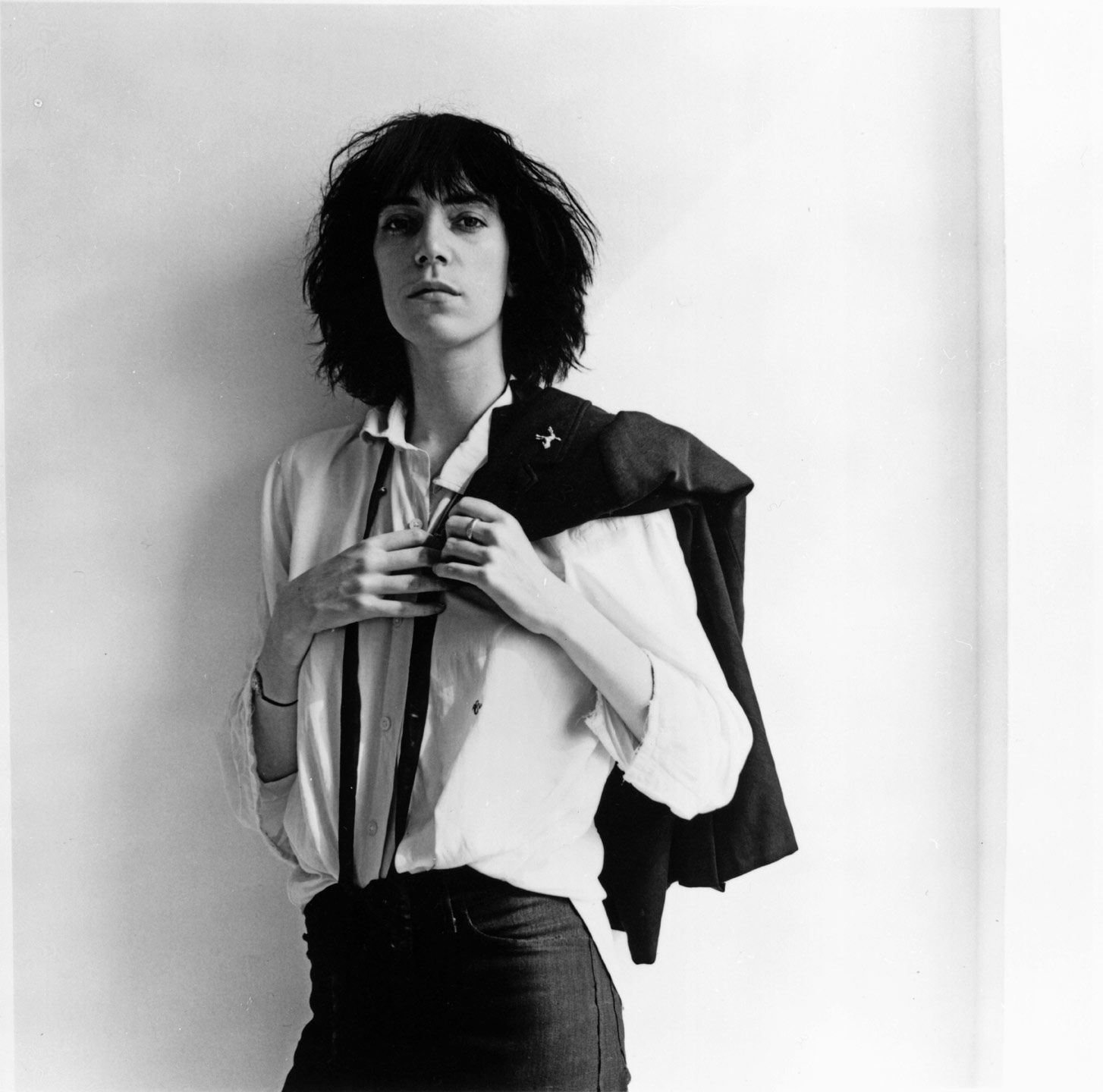
     

    Robert Mapplethorpe (American, 1946-1989) 'Patti Smith' 1975 © Robert Mapplethorpe Foundation. Used by permission


    Robert Mapplethorpe (American, 1946-1989)
    Patti Smith
    1975
    © Robert Mapplethorpe Foundation
    Used by permission


    Robert Mapplethorpe (American, 1946-1989) 'Self Portrait' 1988 © Robert Mapplethorpe Foundation. Used by permission


    Robert Mapplethorpe (American, 1946-1989)
    Self Portrait
    1988
    © Robert Mapplethorpe Foundation
    Used by permission
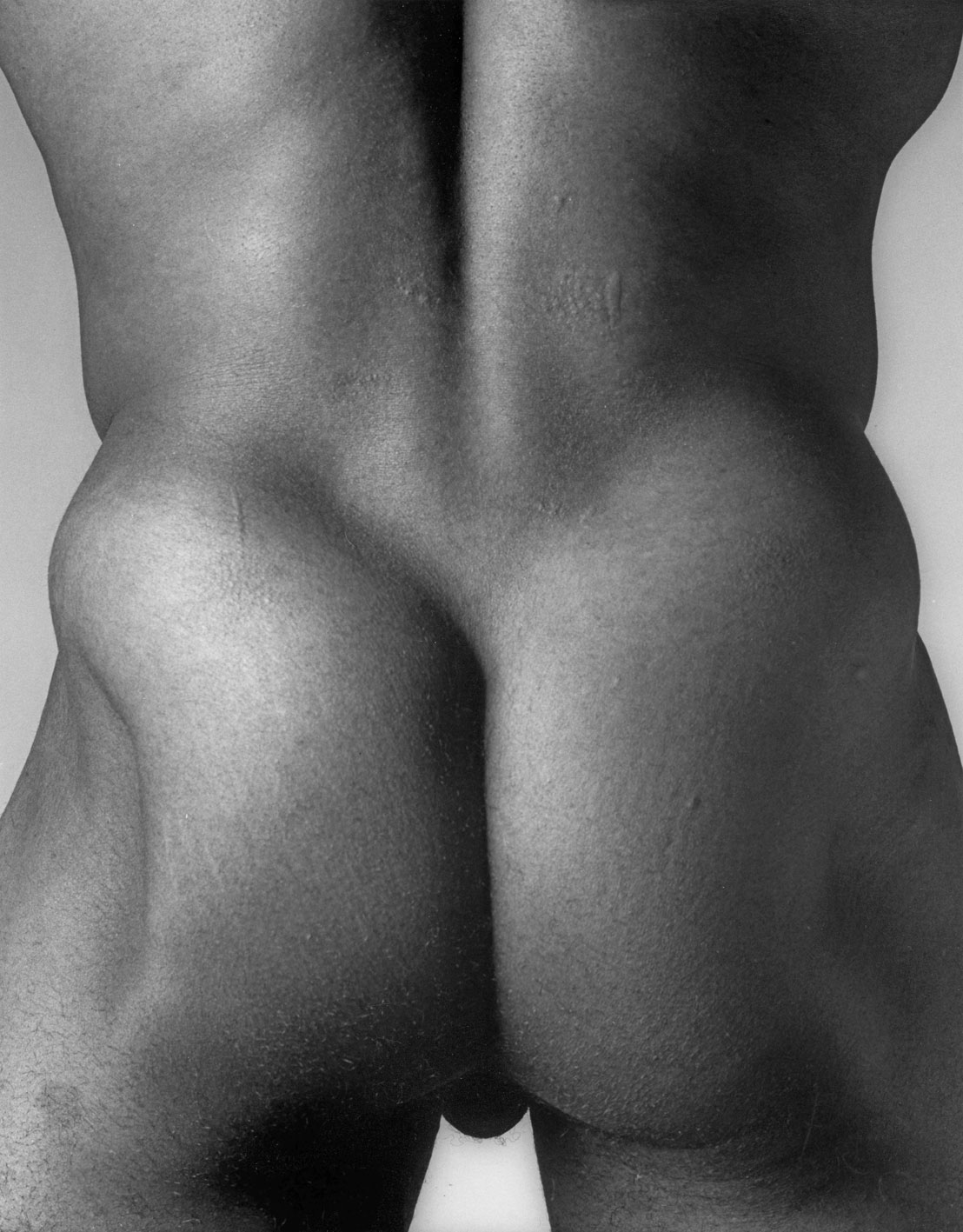
     

    Robert Mapplethorpe (American, 1946-1989) 'Lowell Smith' 1981 © Robert Mapplethorpe Foundation. Used by permission


    Robert Mapplethorpe (American, 1946-1989)
    Lowell Smith
    1981
    © Robert Mapplethorpe Foundation
    Used by permission
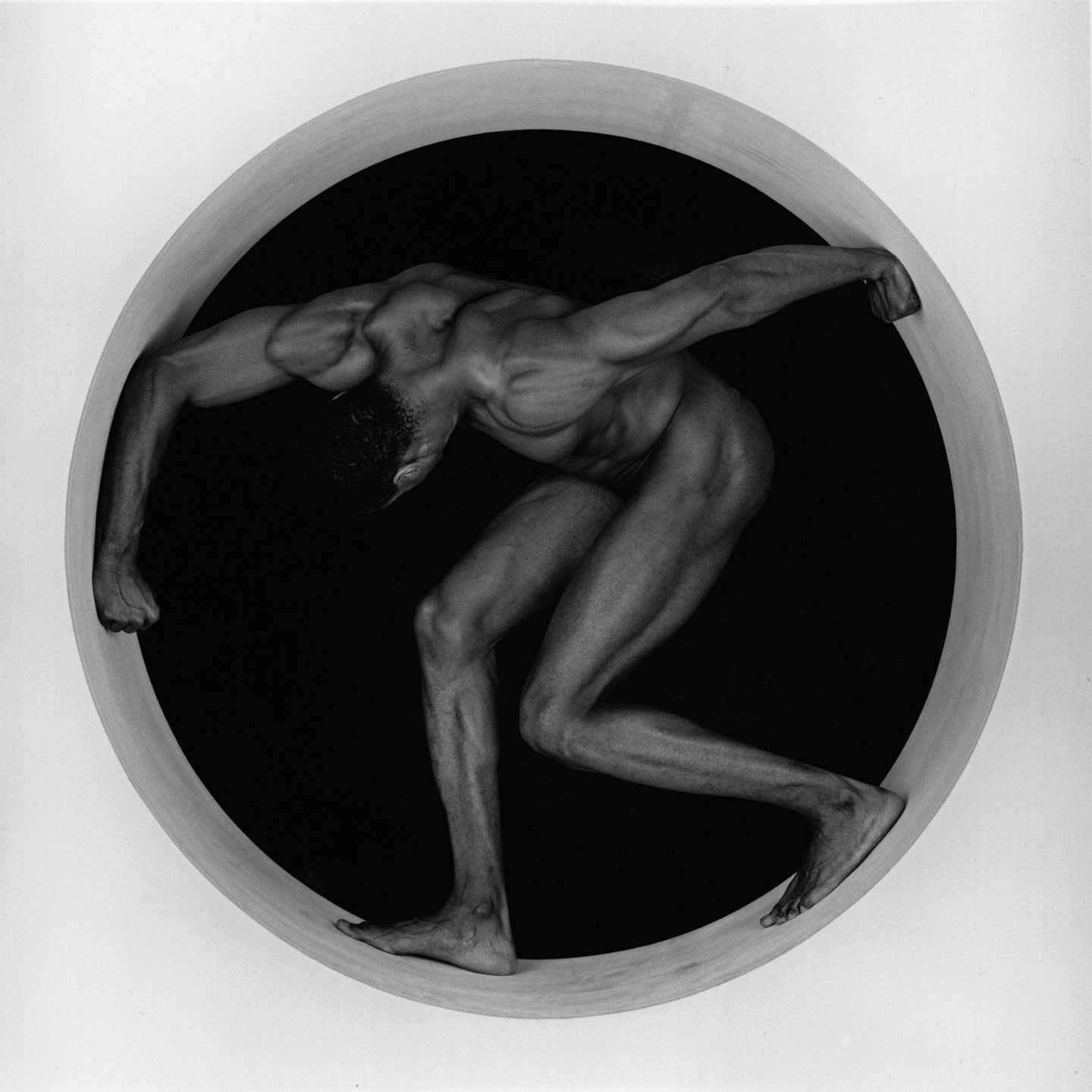
     

    Robert Mapplethorpe (American, 1946-1989) 'Thomas' 1987 © Robert Mapplethorpe Foundation. Used by permission


    Robert Mapplethorpe (American, 1946-1989)
    Thomas
    1987
    © Robert Mapplethorpe Foundation
    Used by permission


    NRW-Forum Kultur und Wirtschaft
    Ehrenhof 2, 40479 Düsseldorf
    Phone: +49 (0)211 – 89 266 90

    Opening hours:
    Tuesday – Sunday 11.00 am – 6.00 pm
    Closed Mondays

    NRW-Forum Dusseldorf website

    LIKE ART BLART ON FACEBOOK

    Back to top

    Exhibition: ‘Caravaggio – Bacon’ at Gallery Borghese, Rome

    2nd October, 2009 – 24th January, 2010


    Michelangelo Merisi da Caravaggio (Italian, 1571-1610) 'David with the Head of Goliath' c. 1610 from the exhibition 'Caravaggio – Bacon' at Gallery Borghese, Rome, Oct 2009 - January 2010


    Michelangelo Merisi da Caravaggio (Italian, 1571-1610)
    David with the Head of Goliath
    c. 1610
    Oil on canvas
    125 cm × 101cm (49 in × 40 in)


    Two of my favourite artists together for the first time!

    Individually they are dazzling but the curatorial nous to bring these two great painters together – fantastic.

    Imagine going back to the time of Caravaggio – his paintings in the churches of the powerful (not the rich, see, because the rich can never enter the kingdom of heaven) – lit by candlelight, all huge thrusting buttocks at eye level as you enter, the rich velvety colours, the drama, the dirty feet, the voluptuous forms stretched across the canvas.

    Now imagine taking Bacon back to the same period. His sinuous, tortured bodies lit by candlelight – no a single electric light bulb (remember!) – innards spreading effusively, effluently along the floor. Can you imagine the gloomy interiors with Bacon’s figures looming out of the darkness? His Head VI screaming in the darkness …

    Instinctively, intellectually we know how the paintings of a Baroque artist of the early 17th century affect how we look at the paintings of Bacon. This exhibition offers the reverse, in fact it rewrites how we look at Caravaggio – through the benediction of Bacon. Those rough house homosexuals sure knew a thing or two about painting, flesh, desire and the eroticism of the human body. God bless em!

    PS. I have arranged the paintings below to illustrate some of the confluences and divergences between the two great artists, hopefully much as the actual exhibition will have done.

    Dr Marcus Bunyan


    Many thankx to the Gallery Borghese for allowing me to publish the art work in the posting. Please click on the photographs for a larger version of the image.


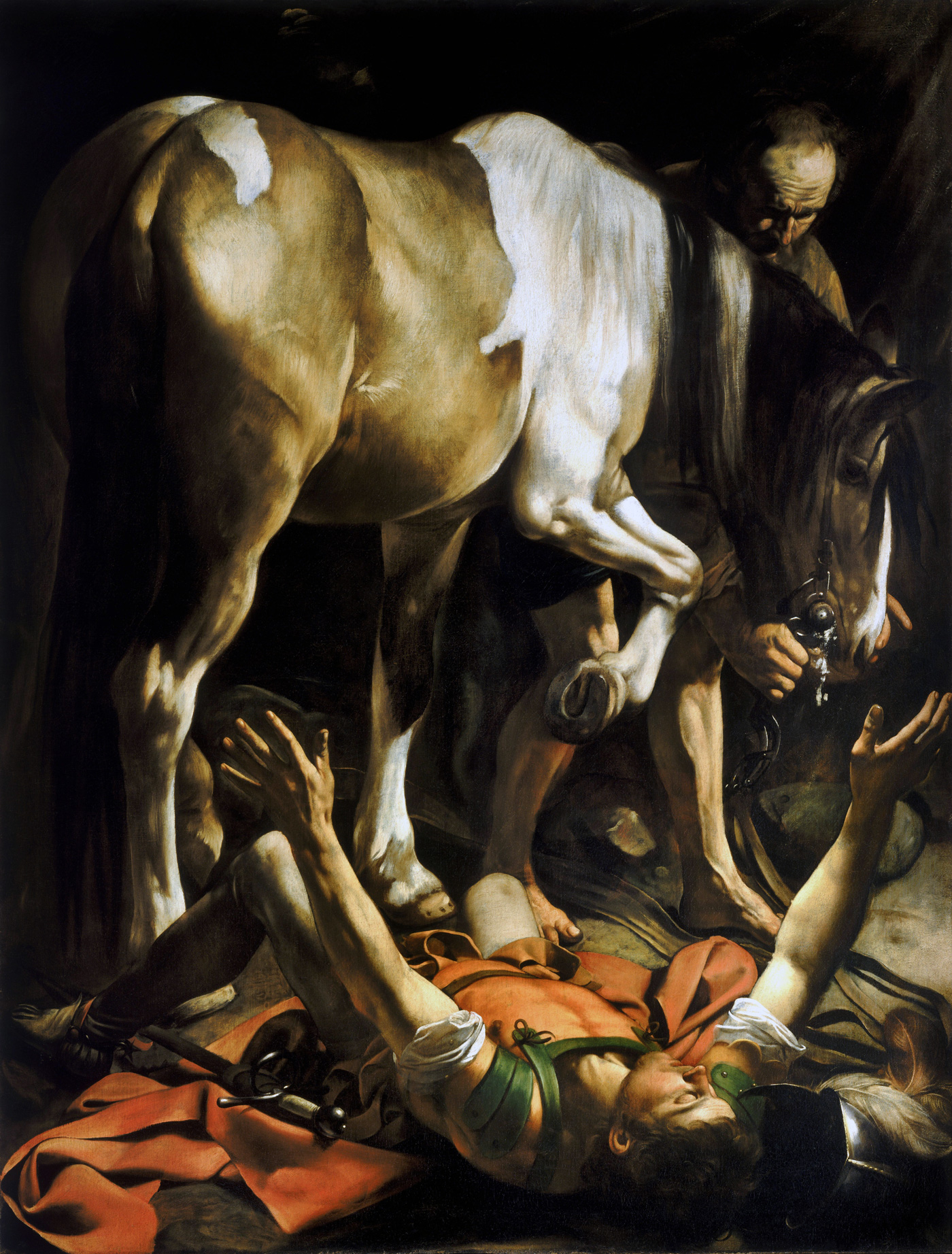
    Michelangelo Merisi da Caravaggio. 'The Conversion of Saint Paul' c. 1600/01 from the exhibition 'Caravaggio – Bacon' at Gallery Borghese, Rome, Oct 2009 - January 2010


    Michelangelo Merisi da Caravaggio (Italian, 1571-1610)
    The Conversion of Saint Paul
    c. 1600-1601
    Oil on canvas


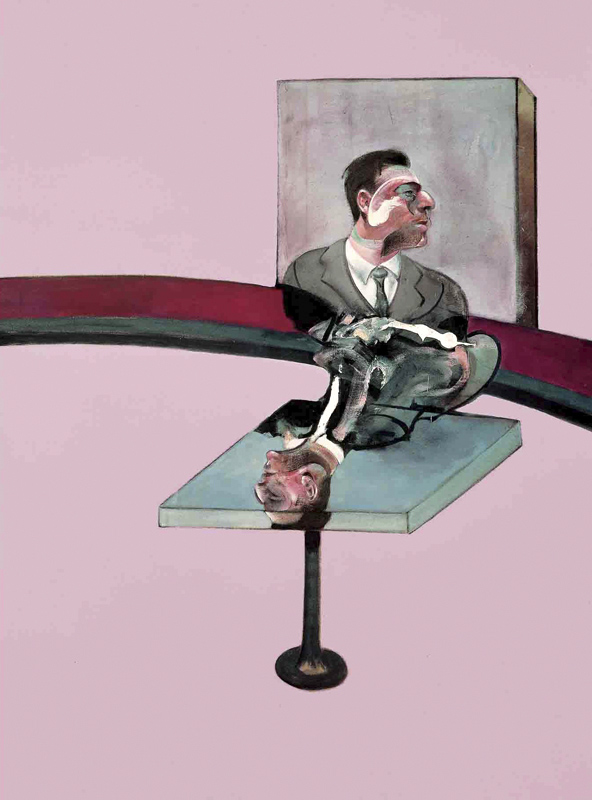
    Francis Bacon (British 1909-1992) 'Study of George Dyer' 1969 from the exhibition 'Caravaggio – Bacon' at Gallery Borghese, Rome, Oct 2009 - January 2010


    Francis Bacon (British, 1909-1992)
    Study of George Dyer
    1969
    Oil on canvas


    Michelangelo Merisi da Caravaggio (Italian, 1571-1610) 'Saint John the Baptist in the Wilderness' 1604


    Michelangelo Merisi da Caravaggio (Italian, 1571-1610)
    Saint John the Baptist in the Wilderness
    1604
    Oil on canvas


    “I have always aspired to express myself in the most direct and crudest way possible, and maybe, if something is transmitted directly, people find it horrifying. Because, if you say something in the most direct way to a person, the latter sometimes takes offence, even if what you said is a fact. Because people tend to take offence at facts, or at what was once called truth.”

    ~ Francis Baon


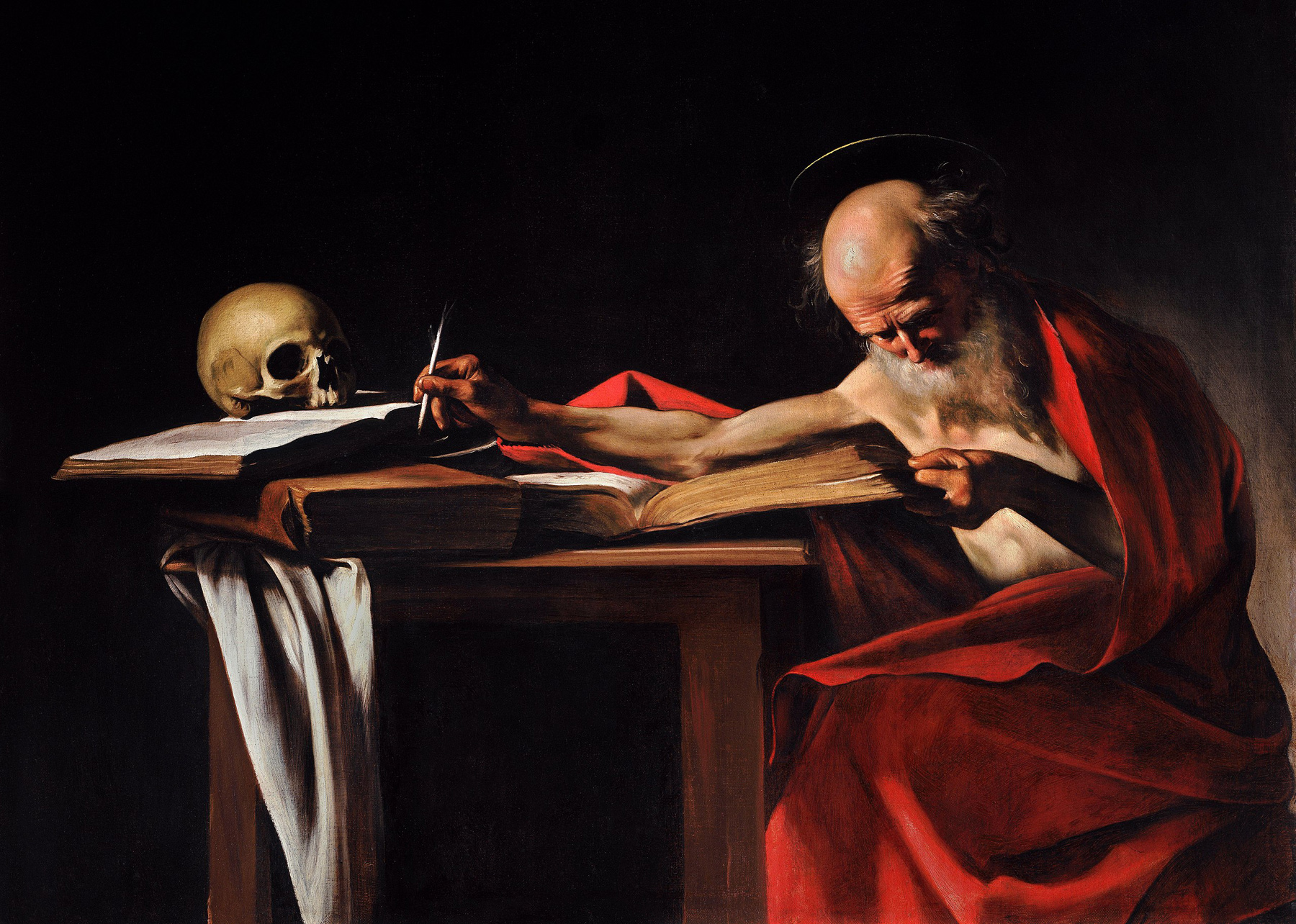
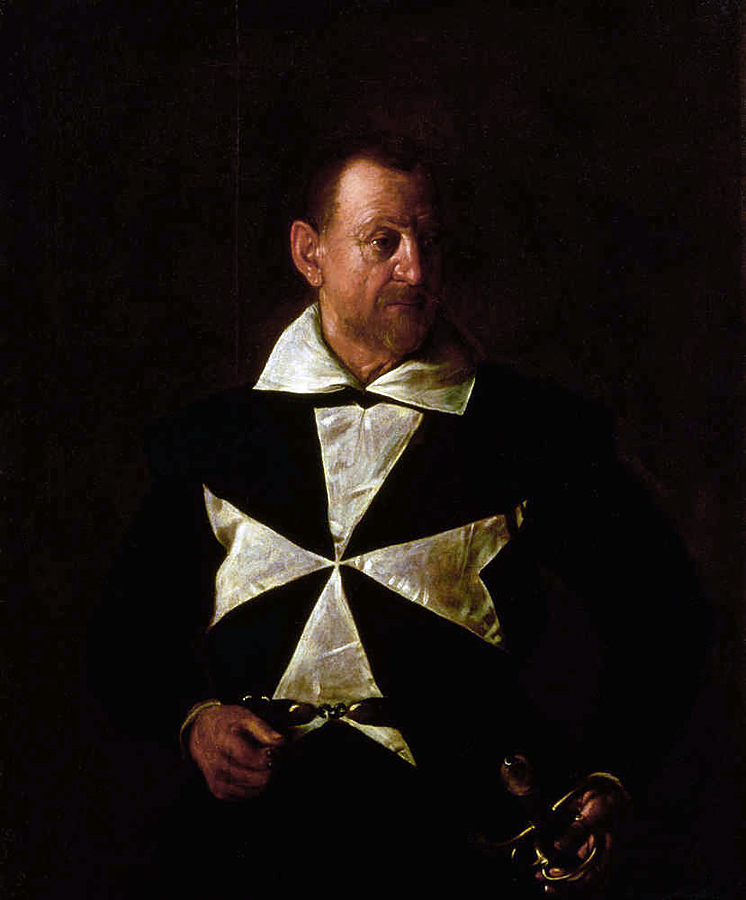
    This is how the Irish genius Francis Bacon justified his modus operandi, his propensity for a disquieting and sometimes grotesque distortion of the form. His works, placed next to those of another “damned” painter of the history of art, the great Caravaggio, will be exhibited from 1st October 2009 to 24th January 2010 at the Galleria Borghese in Rome. On the occasion of the fourth centenary of Caravaggio’s death, and of the centenary of Bacon’s birth, the figures of these eccentric artists, who are considered excessive – each one in their own way in their own period – are interweaved and narrated for the first time at the Galleria Borghese, which will also have prestigious loans from the most important museums in the world. By Caravaggio, already familiar with the Galleria Borghese thanks to his relation with cardinal Scipione Borghese, six masterpieces will be on view, synthesising his entire production: Boy with basket of fruit, Sick little Bacchus, Madonna and Child with St. Anne (dei Palafrenieri), David with the head of Goliath, Saint Jerome writing and Saint John the Baptist. Other key works of his artistic career will be added to these pieces of the permanent collection: Peter’s denial (Metropolitan in New York), Saul’s fall (Santa Maria del Popolo in Rome), The Martyrdom of St. Orsola (Palazzo Zevallos Stigliano in Naples) and the Portrait of Antonio Martelli, Knight of Malta (Palazzo Pitti). About twenty works by Bacon, loaned by the most prestigious museums, will be placed next to Caravaggio’s masterpieces.

    The exhibition has the objective, with an unusual style and combining for the first time the two authors, not so much to immerse visitors in a historical-critical reconstruction, as much as to suggest an alternative aesthetic experience generated by the confrontation between the two expressive idioms which are so far yet so close. To tell the truth, the comparison between the two artists betrays Bacon’s grammar, as he did not love to be measured against the great masters of the past, even with those he esteemed the most: he ingeniously looked at the great “pillars” of the history of art filtering them through photography, which convulsively stimulated his perception and guided his creativity, until he conceived works that were very far from their original source of inspiration. Yet Caravaggio and Francis Bacon have something in common: in their linguistic, formal and temporal diversity they are both undisputed paladins of the human figure, they were able to seize the arcane undertones of life and art, and translate them into representations of ruthless frankness. Through the truth of flesh, what emerges are existential anxieties and a careful analysis of the human soul. In Caravaggio it happens thanks to his realism taken to obsession, in which the rigorous plasticity of bodies and theatrical illumination do not reveal only pleasant and harmonious shapes, they do not spare the spectators’ eyes from the crudeness of the distressing and deformed aspect of a subject. For Bacon physical deformation is enslaved to the ferocious narration of the human condition. Therefore, the password of this “strange couple” of artists is “truth,” of purposes and/or of means.

    Therefore, the true stars of the exhibition are the spectators, it is up to them to contemplate the works and find links and discrepancies between the two artists, according to their own sensibility and regardless of the conditions originally foreseen by the painters for their creations. Those pieces live, in the museum context of Villa Borghese, an autonomous existence, free from their first generated status. The exhibition “Caravaggio – Bacon” is curated by Anna Coliva, Director of the Galleria Borghese, Claudio Strinati, Special Superintendent for the PSAE and for the Museum Pole of the city of Rome and by Michael Peppiatt, biographer and close friend who knew very well Francis Bacon, organised by MondoMostre and made possible thanks to the support of BG Italia, ENEL and Vodafone.

    Press release from the Gallery Borghese website [Online] Cited 12/12/2009. No longer available online


    Michelangelo Merisi da Caravaggio (Italian, 1571-1610) 'Saint Jerome Writing' c. 1605-1606


    Michelangelo Merisi da Caravaggio (Italian, 1571-1610)
    Saint Jerome Writing
    c. 1605-1606
    Oil on canvas
    112 × 157cm (44 in × 62 in)


    Michelangelo Merisi da Caravaggio (Italian, 1571-1610) 'Young Sick Bacchus' c. 1593


    Michelangelo Merisi da Caravaggio (Italian, 1571-1610)
    Young Sick Bacchus
    c. 1593
    Oil on canvas
    67 × 53cm (26 in × 21 in)


    Michelangelo Merisi da Caravaggio (Italian, 1571-1610) 'John the Baptist (John in the Wilderness)' c. 1610


    Michelangelo Merisi da Caravaggio (Italian, 1571-1610)
    John the Baptist (John in the Wilderness)
    c. 1610
    Oil on canvas
    159 × 124cm (63 in × 49 in)


    Francis Bacon (British 1909-1992) 'Triptych in Memory of George Dyer' 1971


    Francis Bacon (British, 1909-1992)
    Triptych in Memory of George Dyer
    1971
    Oil on canvas


    Francis Bacon (British 1909-1992) Central panel of the 'Triptych in Memory of George Dyer' 1971


    Francis Bacon (British, 1909-1992)
    Central panel of the Triptych in Memory of George Dyer
    1971
    Oil on canvas


    Francis Bacon (British 1909-1992) Right panel of the 'Triptych in Memory of George Dyer' 1971


    Francis Bacon (British, 1909-1992)
    Right panel of the Triptych in Memory of George Dyer
    1971
    Oil on canvas


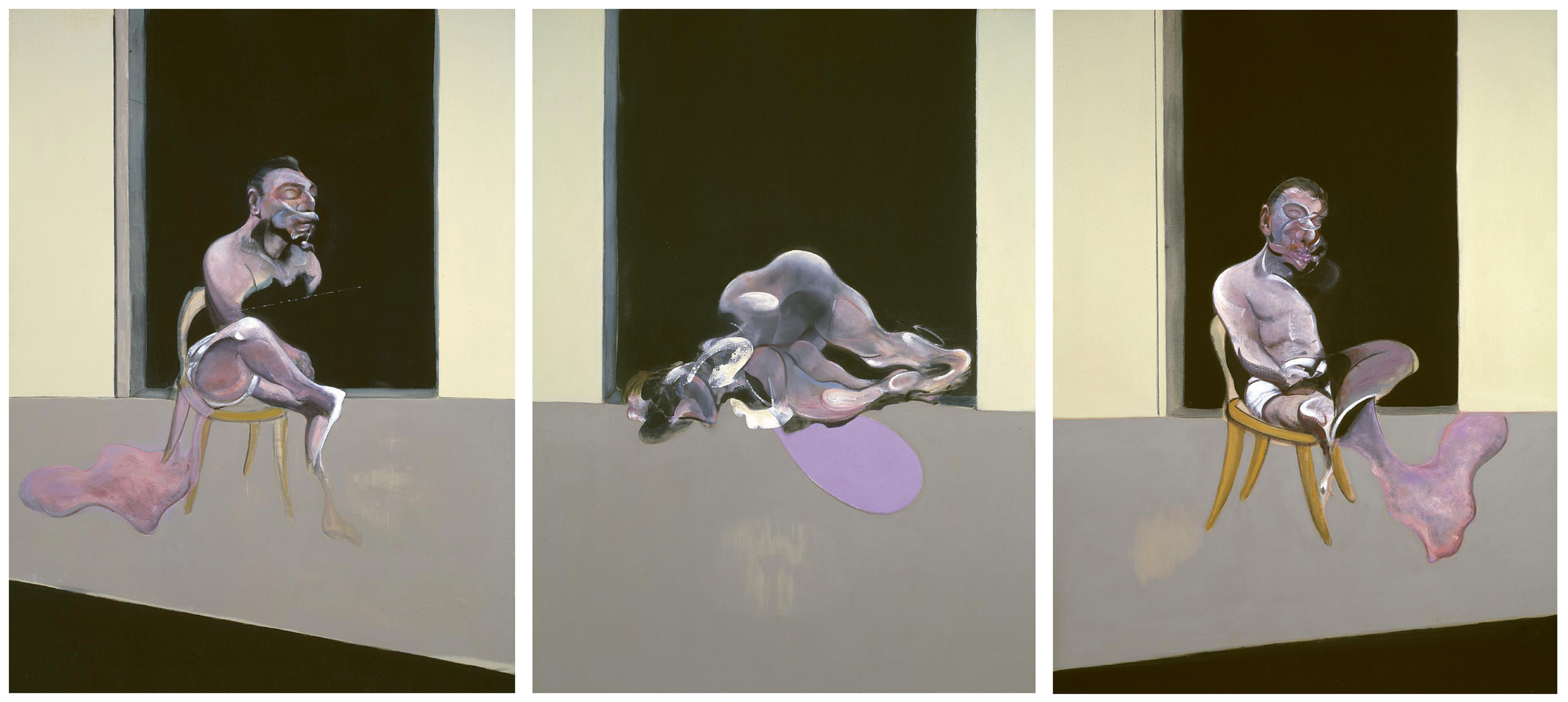
    Francis Bacon (British 1909-1992) 'Triptych' August 1972


    Francis Bacon (British, 1909-1992)
    Triptych
    August 1972
    Oil on canvas


    Michelangelo Merisi da Caravaggio (Italian, 1571-1610) 'The Denial of Saint Peter' 1610


    Michelangelo Merisi da Caravaggio (Italian, 1571-1610)
    The Denial of Saint Peter
    1610
    Oil on canvas
    94 × 125.4cm (37 in × 49.4 in)


    Francis Bacon (British 1909-1992) 'Triptych of George Dyer' 1973


    Francis Bacon (British, 1909-1992)
    Triptych of George Dyer
    1973
    Oil on canvas


    Francis Bacon (British 1909-1992) Central panel of the 'Triptych of George Dyer' 1973


    Francis Bacon (British, 1909-1992)
    Central panel of the Triptych of George Dyer
    1973
    Oil on canvas


    Francis Bacon (British 1909-1992) 'Head VI' 1949


    Francis Bacon (British, 1909-1992)
    Head VI
    1949
    Oil on canvas


    Michelangelo Merisi da Caravaggio (Italian, 1571-1610) 'Boy with a Basket of Fruit' c. 1593-1594


    Michelangelo Merisi da Caravaggio (Italian, 1571-1610)
    Boy with a Basket of Fruit
    c. 1593-1594
    Oil on canvas
    70 × 67cm (28 in × 26 in)


    Michelangelo Merisi da Caravaggio (Italian, 1571-1610) 'Madonna and Child with St. Anne (dei Palafrenieri)' 1606


    Michelangelo Merisi da Caravaggio (Italian, 1571-1610)
    Madonna and Child with St. Anne (dei Palafrenieri)
    1606
    Oil on canvas
    292 × 211cm (115 in × 83 in)


    Michelangelo Merisi da Caravaggio (Italian, 1571-1610) 'The portrait of Antonio Martelli, Knight of Malta' 1608-1609


    Michelangelo Merisi da Caravaggio (Italian, 1571-1610)
    The portrait of Antonio Martelli, Knight of Malta
    1608-1609
    Oil on canvas
    118.5 × 95.5cm (46.7 in × 37.6 in)


    Galleria Borghese
    Piazzale Scipione Borghese, 5

    Opening hours:
    Tuesday – Sunday 9.00am – 5.00pm

    Gallery Borghese website

    LIKE ART BLART ON FACEBOOK

    Back to top

    Exhibition: ‘Gay Icons’ at the National Portrait Gallery, London

    Exhibition dates: 2nd July – 18th October 2009


    Jill Furmanovsky (British, b. 1953) 'K.D. Lang, Le Meridien Hotel, London' 1992


    Jill Furmanovsky (British, b. 1953)
    K.D. Lang, Le Meridien Hotel, London
    1992
    Gelatin silver print
    © Jill Furmanovsky


    “How I wish this selection had been available to me when I was young and trying to make sense of my reactions to the world. How inspirational to have had portraits of the great and the good staring out at me telling me that I was not by any measure on my own.”

    “… it is her [K.D. Lang’s] androgynous good looks and tendency to strut on the stage which warms many lesbian hearts.”

    ~ Sandi Toksvig


    Many thankx to the National Portrait Gallery for allowing me to publish the photographs in the posting. Please click on the photographs for a larger version of the image.


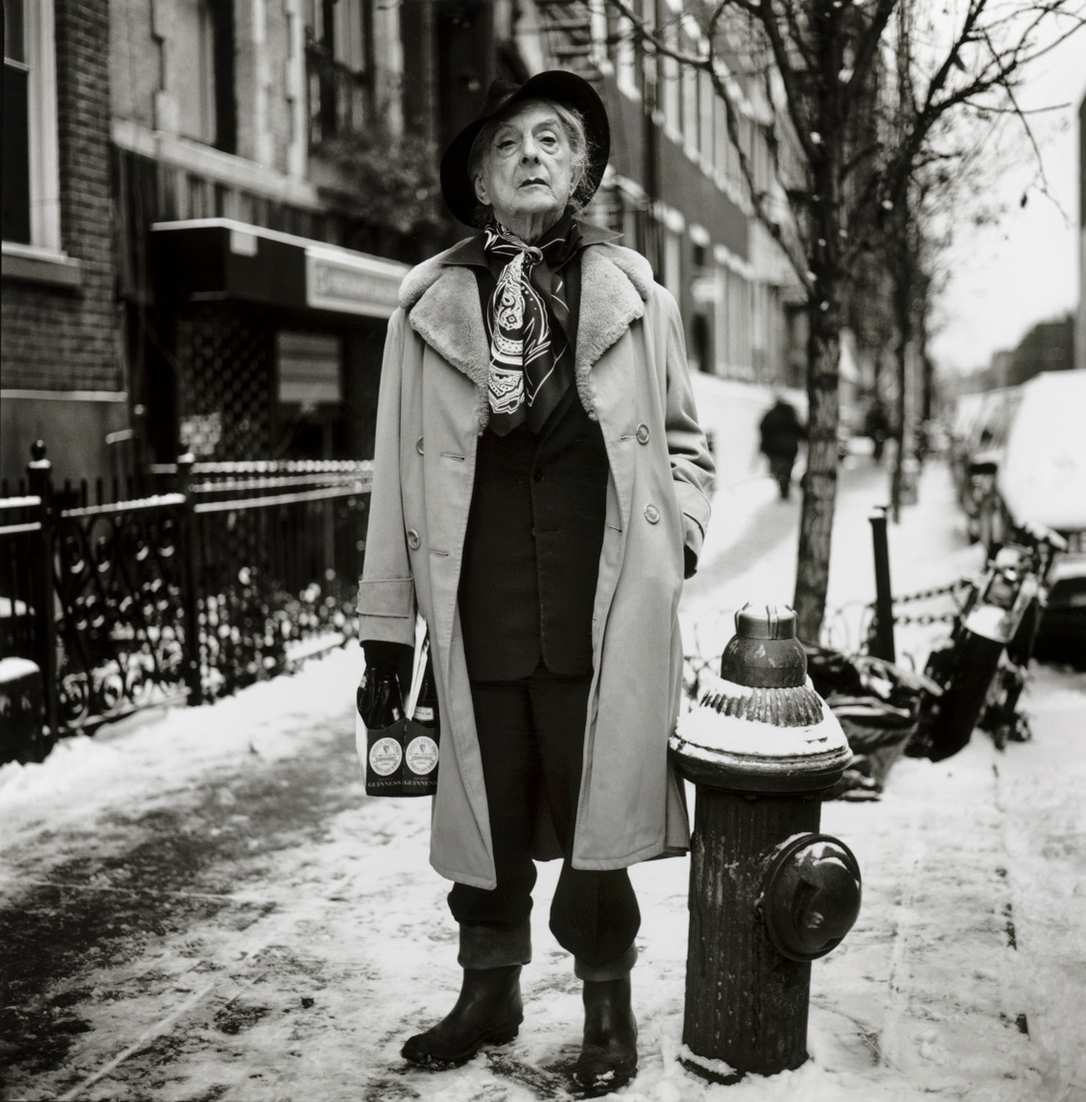
    Fergus Greer (English, b. 1961) 'Quentin Crisp' 1989


    Fergus Greer (English, b. 1961)
    Quentin Crisp
    1989
    Bromide fibre print
    10 1/2 in. x 10 3/8 in. (267 mm x 264 mm)
    Given by Fergus Greer, 2006
    © National Portrait Gallery, London
    © Fergus Greer


    The first portrait exhibition to celebrate the contribution of gay people and gay icons to history and culture. 60 photographs selected by Waheed Alli, Alan Hollinghurst, Elton John, Jackie Kay, Billie Jean King, Ian McKellen, Chris Smith, Ben Summerskill, Sandi Toksvig and Sarah Waters.

    An important photography exhibition, Gay Icons, at the National Portrait Gallery (2 July – 18 October 2009) will celebrate the contribution of gay people – and the significance of the gay icon – to history and culture. Ten selectors have worked with the Gallery to make their own personal choices of six individuals, their ‘icons’. Not only does this exhibition include many well-known icons, who may or may not be gay themselves, it also reveals some surprises and will encourage a wide audience to think about familiar faces in new ways.

    The Gay Icons shown in the exhibition will include those people, living or dead, whatever their sexual orientation or interests, who the ten individual selectors regard as inspirational, or as a personal icon. Gay Icons brings together portraits of those people who are regarded as especially significant to each of the selectors, alongside those of the selectors themselves, all prominent gay figures in contemporary culture and society.

    Coinciding with the fortieth anniversary of the Stonewall Riots in New York, this exhibition focuses on portraits of both historical and modern figures. The choices provide a fascinating range of inspiring figures – some very famous, some heroic, others relatively unknown. Each icon is presented with information about their personal, and sometimes public, significance, some of it relating to the sitter but much of it linked to the selectors who have been prepared to share their experiences and feelings in their own exhibition texts.

    Themes running through the exhibition include inspiration and how the ‘icons’ have inspired each selector in an extremely personal sense to realise their full potential, human rights, stemming from the specific consideration of sexuality, and how this might lead us to consider parallels between the struggles of different minority groups, re-discovery, or rescuing the reputations of figures who might otherwise have been forgotten or, worse, actively disregarded and surprise at some of the perhaps unexpected choices.

    The project was developed from an initial proposal made by Bernard Horrocks, Copyright Officer, at the Gallery. The concept quickly evolved to include invitations to ten gay people – each distinguished in different fields – to act as selectors. They were chosen in consultation with their Chair, Sandi Toksvig.

    Each selector could freely choose six ‘icons’, although the Gallery decided to limit the choices to photographic portraits, and therefore to subjects who had lived, more or less, within the last 150 years. This also seemed appropriate because within this same period homosexuality was gradually accepted and made legitimate in Britain.

    The selectors are Lord Waheed Alli, Alan Hollinghurst, Sir Elton John, Jackie Kay, Billie Jean King, Sir Ian McKellen, Lord Chris Smith, Ben Summerskill, Sandi Toksvig and Sarah Waters.

    Sitters include artists Francis Bacon and David Hockney, civil rights campaigner Harvey Milk, writers Quentin Crisp, Joe Orton, Dame Daphne Du Maurier, Patricia Highsmith and Walt Whitman, composer Pyotr Tchaikovsky, musicians k.d. lang, Will Young and Village People, entertainers Ellen DeGeneres, Kenneth Williams and Lily Savage, and Nelson Mandela and Diana, Princess of Wales. Their fascinating stories will be illustrated by sixty photographic portraits including works by Andy Warhol, Linda McCartney, Snowdon, Polly Borland, Fergus Greer, Terry O’Neill and Cecil Beaton.

    Sandy Nairne, Director of the National Portrait Gallery, London, says: “Gay Icons is an exhibition in which inspiring stories – both private and public – are shared. These are stories of brave lives and significant achievements, told through iconic photographic images chosen by selectors who are themselves icons.

    Text from the National Portrait Gallery website [Online] Cited 10/07/2009. No longer available online


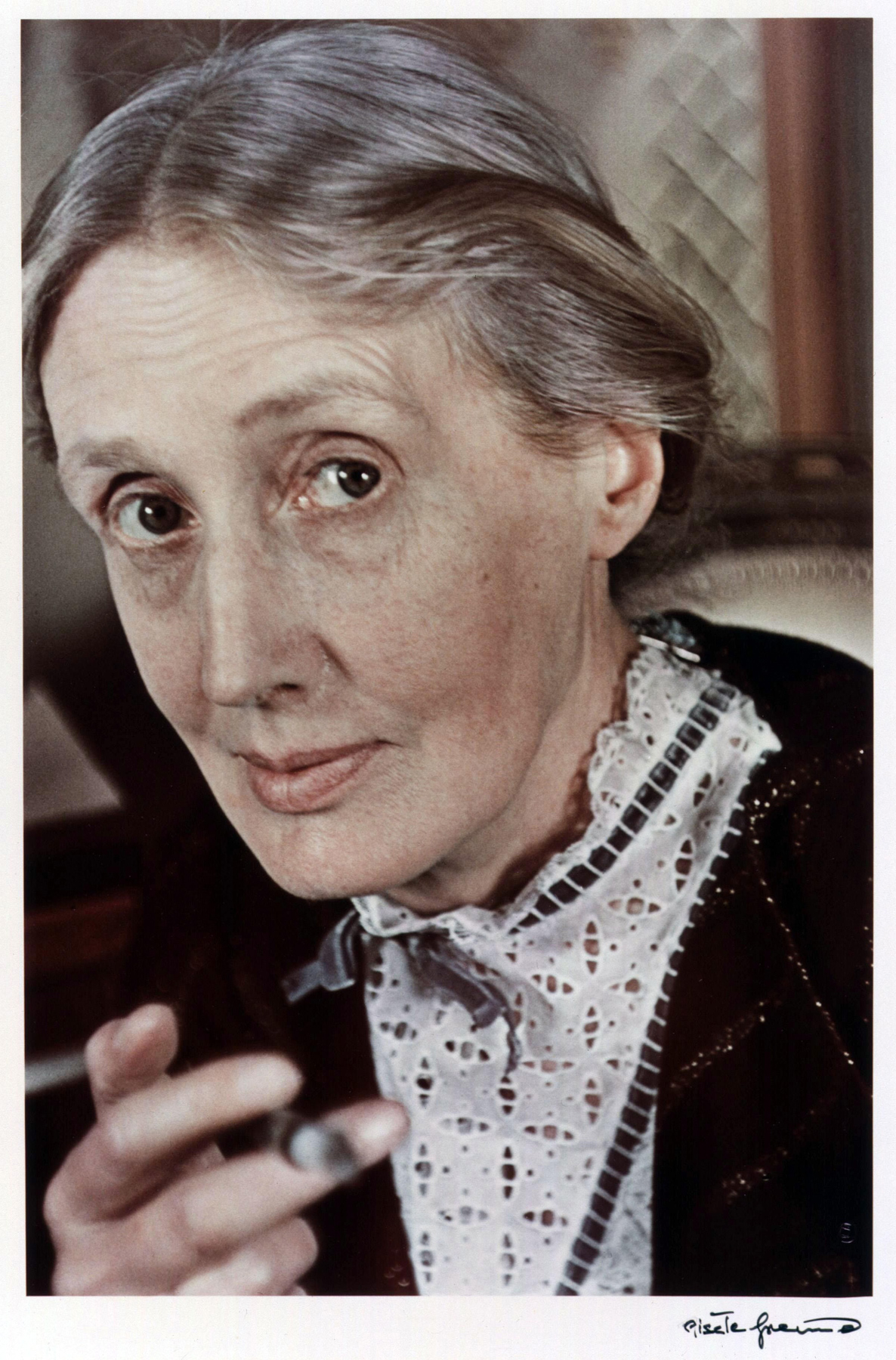
    Gisèle Freund (French born Germany, 1908-2000) 'Virginia Woolf' 1939


    Gisèle Freund (French born Germany, 1908-2000)
    Virginia Woolf
    1939
    © Gisèle Freund


    Gisèle Freund (born Gisela Freund; December 19, 1908 in Schöneberg District, Berlin – March 31, 2000 in Paris) was a German-born French photographer and photojournalist, famous for her documentary photography and portraits of writers and artists. Her best-known book, Photographie et société (1974), is about the uses and abuses of the photographic medium in the age of technological reproduction. In 1977, she became President of the French Association of Photographers, and in 1981, she took the official portrait of French President François Mitterrand.

    She was made Officier des Arts et Lettres in 1982 and Chevalier de la Légion d’honneur, the highest decoration in France, in 1983. In 1991, she became the first photographer to be honoured with a retrospective at the Musée National d’art Moderne in Paris (Centre Georges Pompidou).

    Freund’s major contributions to photography include using the Leica Camera (with its 36 frames) for documentary reportage and her early experimentation with Kodachrome and 35 mm Agfacolor, which allowed her to develop a “uniquely candid portraiture style” that distinguishes her in 20th century photography.

    She is buried at the Montparnasse Cemetery in Paris, France near her home and studio at 12 rue Lalande.

    See her full entry on the Wikipedia website


    Harper & Brothers. 'Patricia Highsmith' 1942 


    Harper & Brothers
    Patricia Highsmith
    1942
    Gelatin silver print
    © Patricia Highsmith Collection, Swiss National Library / Swiss Literary Archives, Bern


    “… is a significant writer by any standard, but she deserves honouring as a lesbian and gay icon on the strength of one novel alone, The Price of Salt, a wonderfully complex and upbeat representation of lesbian love.”

    ~ Sarah Waters


    Patricia Highsmith (January 19, 1921 – February 4, 1995) was an American novelist and short story writer best known for her psychological thrillers, including her series of five novels featuring the character Tom Ripley. She wrote 22 novels and numerous short stories throughout her career spanning nearly five decades, and her work has led to more than two dozen film adaptations. Her writing derived influence from existentialist literature, and questioned notions of identity and popular morality. She was dubbed “the poet of apprehension” by novelist Graham Greene.

    Her first novel, Strangers on a Train, has been adapted for stage and screen numerous times, notably by Alfred Hitchcock in 1951. Her 1955 novel The Talented Mr. Ripley has been adapted numerous times for film, theatre, and radio. Writing under the pseudonym “Claire Morgan,” Highsmith published the first lesbian novel with a happy ending, The Price of Salt, in 1952, republished 38 years later as Carol under her own name and later adapted into a 2015 film.

    Text from the Wikipedia website


    Paul Morrissey (American, 1938-2024) 'Joe Dallesandro' 1968


    Paul Morrissey (American, 1938-2024)
    Joe Dallesandro
    1968
    Gelatin silver print
    © Paul Morrissey, 1968


    Joseph Angelo D’Allesandro III (born December 31, 1948), better known as Joe Dallesandro, is an American actor and Warhol superstar. Having also crossed over into mainstream roles like mobster Lucky Luciano in The Cotton Club, Dallesandro is generally considered to be the most famous male sex symbol of American underground films of the 20th century, as well as a sex symbol of gay subculture.

    Dallesandro starred in the 1968 film produced by Andy Warhol, Flesh, as a teenage street hustler. Rolling Stone magazine in 1970 declared his second starring vehicle, Trash, the “Best Film of the Year”, making him a star of the youth culture, sexual revolution and subcultural New York City art collective of the 1970s. Dallesandro also starred in 1972’s Heat, another Warhol film that was conceived as a parody of Sunset Boulevard. …

    Underground film career

    Dallesandro met Andy Warhol and Paul Morrissey in 1967 while they were shooting Four Stars, and they cast him in the film on the spot. Warhol would later comment “In my movies, everyone’s in love with Joe Dallesandro.”

    Dallesandro played a hustler in his third Warhol film, Flesh (1968), where he had several nude scenes. Flesh became a crossover hit with mainstream audiences, and Dallesandro became the most popular of the Warhol stars. New York Times film critic Vincent Canby wrote of him: “His physique is so magnificently shaped that men as well as women become disconnected at the sight of him”

    As Dallesandro’s underground fame began to cross over into the popular culture, he appeared on the cover of Rolling Stone in April 1971. He was also photographed by some of the top celebrity photographers of the time: Francesco Scavullo, Annie Leibovitz, Richard Avedon.

    Dallesandro appeared in Lonesome Cowboys (1968), Trash (1970), Heat (1972), Andy Warhol’s Frankenstein, and Andy Warhol’s Dracula (both 1974), also directed by Morrissey. These last two films were shot in Europe. After filming was complete, he chose not to return to the U.S. He appeared in Serge Gainsbourg’s Je t’aime moi non plus (France, 1976), which starred Gainsbourg’s wife, British actress Jane Birkin.

    Text from the Wikipedia website


    Lewis Morley (Australian born Hong Kong, 1925-2013) 'Joe Orton' 1965


    Lewis Morley (Australian born Hong Kong, 1925-2013)
    Joe Orton
    1965
    Bromide print
    20 in. x 16 1/8 in. (508 mm x 410 mm)
    Given by the photographer, Lewis Morley, 1992
    © Lewis Morley Archive/National Portrait Gallery, London


    Gay Icons explores gay social and cultural history through the unique personal insights of ten high profile gay figures, who have selected their historical and modern icons.

    The chosen icons, who may or may not be gay themselves, have all been important to each selector, having influenced their gay sensibilities or contributed to making them who they are today. They include artists Francis Bacon and David Hockney; writers Daphne du Maurier and Quentin Crisp; composers Pyotr Tchaikovsky and Benjamin Britten; musicians k.d. lang, the Village People and Will Young; entertainers Ellen DeGeneres, Lily Savage and Kenneth Williams; sports stars Martina Navratilova and Ian Roberts and political activists Harvey Milk and Angela Mason.

    Their fascinating and inspirational stories will be illustrated by over sixty photographic portraits including works by Andy Warhol, Snowdon and Cecil Beaton together with specially commissioned portraits of the selectors by Mary McCartney. McCartney. All are set in a striking exhibition design conceived by renowned theatre designer, Robert Jones …

    This exhibition brings together ten selectors, chaired by Sandi Toksvig, each of whom is a prominent gay figure in contemporary culture and society. Each selector was asked to name six people, who may or may not be gay, whom they personally regard as inspirational, or an icon for them.

    Their choices provide a fascinating range of figures – some heroic, some very famous, others less well known. In the exhibition the selectors write about their choices and share their own convictions, experiences and feelings. The display also features specially commissioned portraits of the selectors by Mary McCartney.

    Anonymous text. “Gay Icons,” on the National Portrait Gallery website [Online] Cited 18/06/2022. No longer available online


    Ian Berry (English, b. 1934) 'Nelson Mandela' 1994


    Ian Berry (English, b. 1934)
    Nelson Mandela
    1994
    Gelatin silver print
    © Ian Berry/Magnum Photos


    “He has touched my heart, just as he has influenced the hearts and minds of people all over the world.”

    ~ Billie Jean King

    “The great single picture is emotionally satisfying, whereas getting a good journalistic story is more about being a professional”

    ~ Ian Berry


    Ian Berry was born in Lancashire, England. He made his reputation in South Africa, where he worked for the Daily Mail and later for Drum magazine. He was the only photographer to document the massacre at Sharpeville in 1960, and his photographs were used in the trial to prove the victims’ innocence.

    Henri Cartier-Bresson invited Ian Berry to join Magnum in 1962 when he was based in Paris. He moved to London in 1964 to become the first contract photographer for the Observer Magazine. Since then assignments have taken him around the world: he has documented Russia’s invasion of Czechoslovakia; conflicts in Israel, Ireland, Vietnam and the Congo; famine in Ethiopia; apartheid in South Africa. The major body of work produced in South Africa is represented in two of his books: Black and Whites: L’Afrique du Sud (with a foreword by the then French president François Mitterrand), and Living Apart (1996). During the last year, projects have included child slavery in Ghana and the Spanish fishing industry.

    Important editorial assignments have included work for National GeographicFortuneSternGeo, national Sunday magazines, EsquireParis-Match and LIFE. Ian Berry has also reported on the political and social transformations in China and the former USSR.

    Anonymous text. “Ian Berry,” on the Magnum website [Online] Cited 16/03/2019


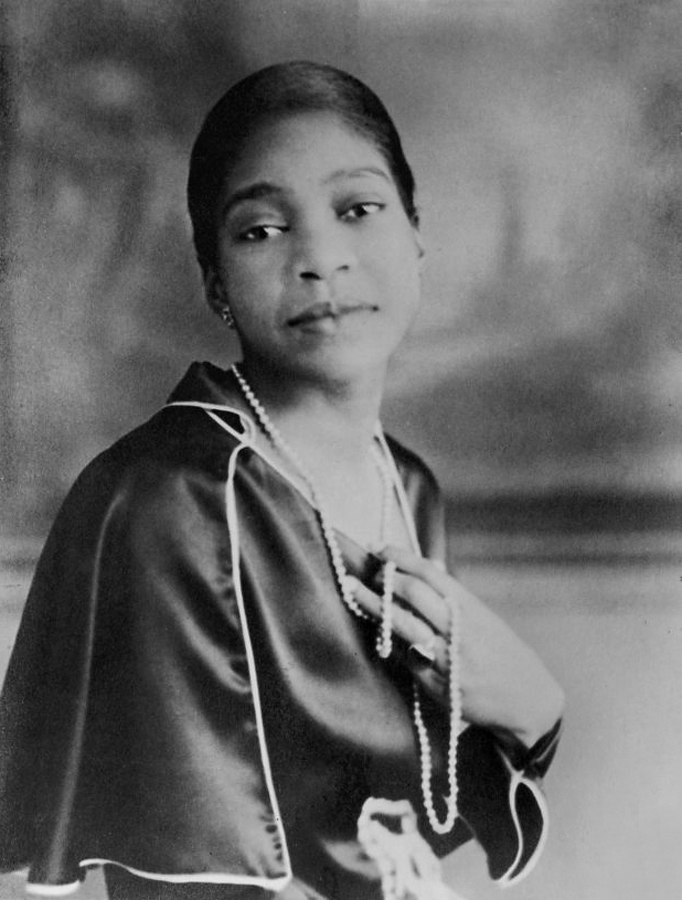
    Unknown photographer. 'Bessie Smith' c. 1920s


    Unknown photographer
    Bessie Smith
    c. 1920s
    Gelatin silver print
    Frank Driggs Collection/Getty Images
    © 1925 Getty Images


    “A feisty woman who always stood up for herself… She was bisexual and practically an alcoholic – the perfect icon.”

    ~ Jackie Kay


    Bessie Smith (April 15, 1894 – September 26, 1937) was an American blues singer. Nicknamed the Empress of the Blues, she was the most popular female blues singer of the 1920s and 1930s. She is often regarded as one of the greatest singers of her era and was a major influence on fellow blues singers, as well as jazz vocalists.

    Read her full entry on the Wikipedia website


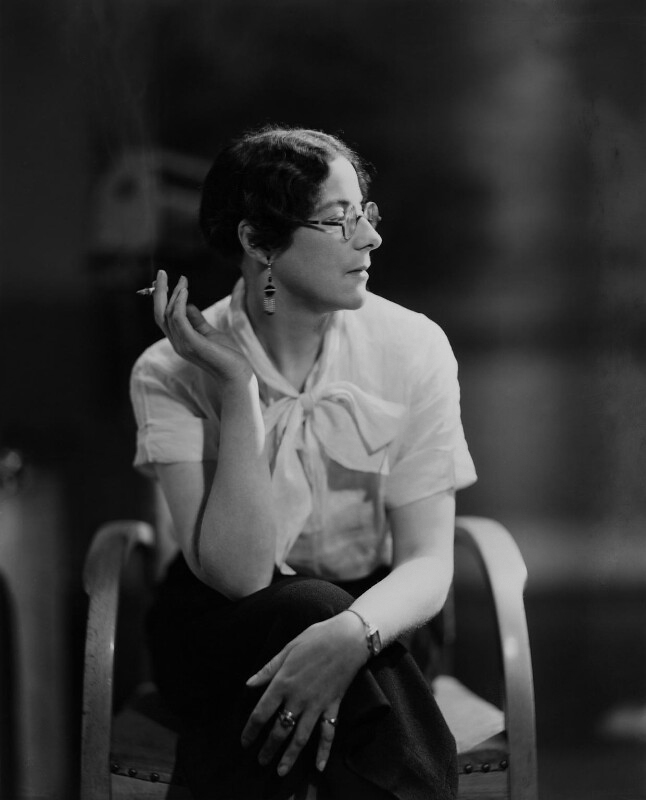
    Howard Coster (British, 1885-1959) 'Sylvia Townsend Warner' 1934


    Howard Coster (British, 1885-1959)
    Sylvia Townsend Warner
    1934
    Half-plate film negative
    Transferred from Central Office of Information, 1974
    © National Portrait Gallery, London


    Sylvia Townsend Warner (6 December 1893 – 1 May 1978) was an English novelist and poet. She also made a contribution to musicology as a young woman.


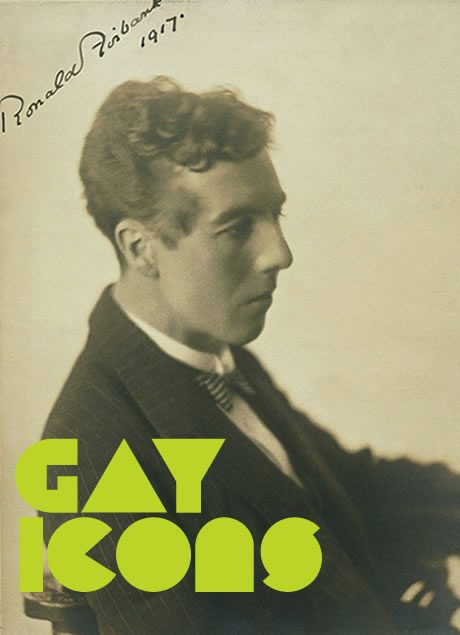
    Bertram Park (British, 1883-1972) 'Ronald Firbank' 1917 (detail)


    Bertram Park (British, 1883-1972)
    Ronald Firbank (detail)
    1917


    “He [Ronald Firbank] is celebrated as a master of high camp, but he was also a radical technician and radical homosexualiser of the novel.”

    ~ Alan Hollinghurst


    Bertram Park (British, 1883-1972) 'Ronald Firbank' 1917


    Bertram Park (British, 1883-1972)
    Ronald Firbank
    1917


    Bertram Charles Percival Park, OBE, (1883-1972) was a portrait photographer whose work included British and European royalty. Engravings of his photographs were widely used on British and British Commonwealth postage stamps, currency, and other official documents in the 1930s. His theatrical portraits were the source for two paintings by Walter Sickert. With his wife Yvonne Gregory, he also produced a number of photographic books of the female nude. He was an expert in the cultivation of the rose and the editor of The Rose Annual.

    Text from the Wikipedia website


    Arthur Annesley Ronald Firbank (17 January 1886 – 21 May 1926) was an innovative English novelist. His eight short novels, partly inspired by the London aesthetes of the 1890s, especially Oscar Wilde, consist largely of dialogue, with references to religion, social-climbing, and sexuality.


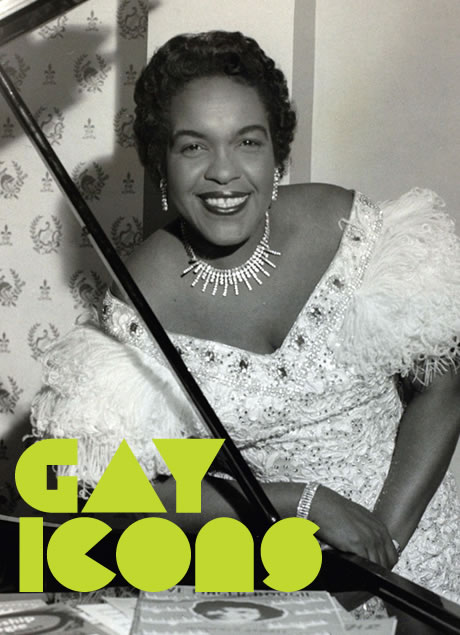
    Unknown Photographer. 'Winifred Atwell' c. 1950s (detail)


    Unknown photographer
    Winifred Atwell (detail)
    c. 1950s
    Courtesy of Getty Images


    “Winifred Atwell’s piano performances were simply captivating. She showed me what was possible and was a total inspiration.”

    ~ Elton John


    Una Winifred Atwell (27 February or 27 April 1910 or 1914 – 28 February 1983) was a Trinidadian pianist who enjoyed great popularity in Britain and Australia from the 1950s with a series of boogie-woogie and ragtime hits, selling over 20 million records. She was the first black person to have a number-one hit in the UK Singles Chart and is still the only female instrumentalist to do so.

    Read the full entry about this amazing women on the Wikipedia website


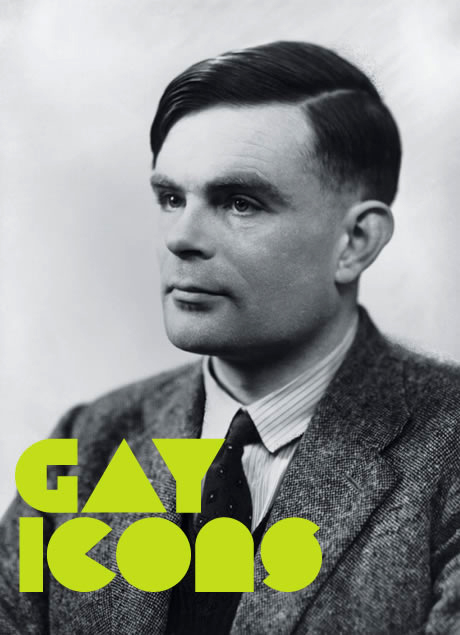
    Elliott and Fry. 'Alan Turing' 1951 (detail)


    Elliott and Fry
    Alan Turing (detail)
    29 March 1951
    © National Portrait Gallery, London


    Elliott & Fry was a Victorian photography studio founded in 1863 by Joseph John Elliott (14 October 1835 – 30 March 1903) and Clarence Edmund Fry (1840 – 12 April 1897). For a century the firm’s core business was taking and publishing photographs of the Victorian public and social, artistic, scientific and political luminaries. In the 1880s the company operated three studios and four large storage facilities for negatives, with a printing works at Barnet.

    The firm’s first address was 55 & 56 Baker Street in London, premises they occupied until 1919. The studio employed a number of photographers, including Francis Henry Hart and Alfred James Philpott in the Edwardian era, Herbert Lambert and Walter Benington in the 1920s and 1930s and subsequently William Flowers. During World War II the studio was bombed and most of the early negatives were lost, the National Portrait Gallery holding all the surviving negatives. With the firm’s centenary in 1963 it was taken over by Bassano & Vandyk.

    Text from the Wikipedia website


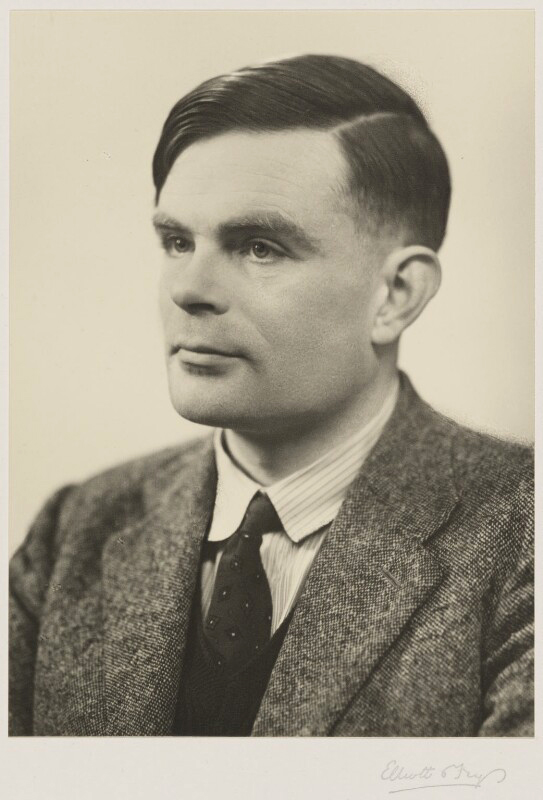
    Elliott and Fry. 'Alan Turing' 29 March 1951


    Elliott and Fry
    Alan Turing
    29 March 1951
    Vintage bromide print on photographer’s mount
    6 3/8 x 4 5/8 in. (162 mm x 117 mm)
    Given by the sitter’s mother, Ethel Sara Turing (née Stoney), 1956
    © National Portrait Gallery, London


    “Turing was one of the most brilliant men of the first half of the twentieth century, but the refusal of post-war society to accept his sexuality drove him to commit suicide… We can and should honour him now.”

    ~ Chris Smith


    National Portrait Gallery
    St Martin’s Place
    London WC2H 0HE

    Opening hours:
    Closed until 2023

    National Portrait Gallery website

    LIKE ART BLART ON FACEBOOK

    Back to top

    Exhibition: ‘Francis Bacon’ at the Museo Nacional del Prado, Madrid

    Exhibition dates: 3rd February – 19th April, 2009

    Curator: Manuela Mena, co-curator of the exhibition at the Prado


    Francis Bacon (British, 1909-1992) 'Triptych inspired by T.S. Eliot's 'Sweeney Agonistes'' 1967 from the exhibition 'Francis Bacon' at the Museo Nacional del Prado, Madrid, Feb - April, 2009


    Francis Bacon (British, 1909-1992)
    Triptych inspired by T.S. Eliot’s ‘Sweeney Agonistes’
    1967
    Oil on canvas
    198 x 147.5cm (each)
    Washington, D.C. Hirshhorn Museum and Sculpture Garden, Smithsonian Institution. Gift of the Joseph H. Hirshhorn Foundation, 1972


    Looks like an amazing exhibition of Francis Bacon’s work, one of my favourite artists – I wish I could see it!


    Many thankx to the Museo Nacional del Prado for allowing me to publish the art work in the posting. Please click on the photographs for a larger version of the image.


    The exhibition is constructed in different sections:

    ~ Animal
    ~ Zone
    ~ Apprehension
    ~ Crucifixion
    ~ Crisis
    ~ Archive
    ~ Portrait
    ~ Memorial
    ~ Epic
    ~ Late


    Bacon’s work demonstrates marked similarities to that of many of the Spanish artists he admired. (Manuela Mena, co-curator of the exhibition at the Prado, has written an excellent essay on this topic that can be found in the exhibition’s catalog.) The retrospective at the Prado provides a rare opportunity to compare Bacon to some of the Spanish masters that influenced him.

    Start by meandering through the vast Bacon exhibition. Spread between two floors of the new wing of the Prado, the exhibition has brought together Bacon’s most important works from nearly his entire artistic production. It begins with the work that put Bacon on the map, “Three Studies for Figures at the Foot of a Crucifixion” (1944), and follows his work through the interpretations of Velázquez, crucifixion triptychs, his unique portraits and the late works through the years shortly before his death.

    Text from the Prado website


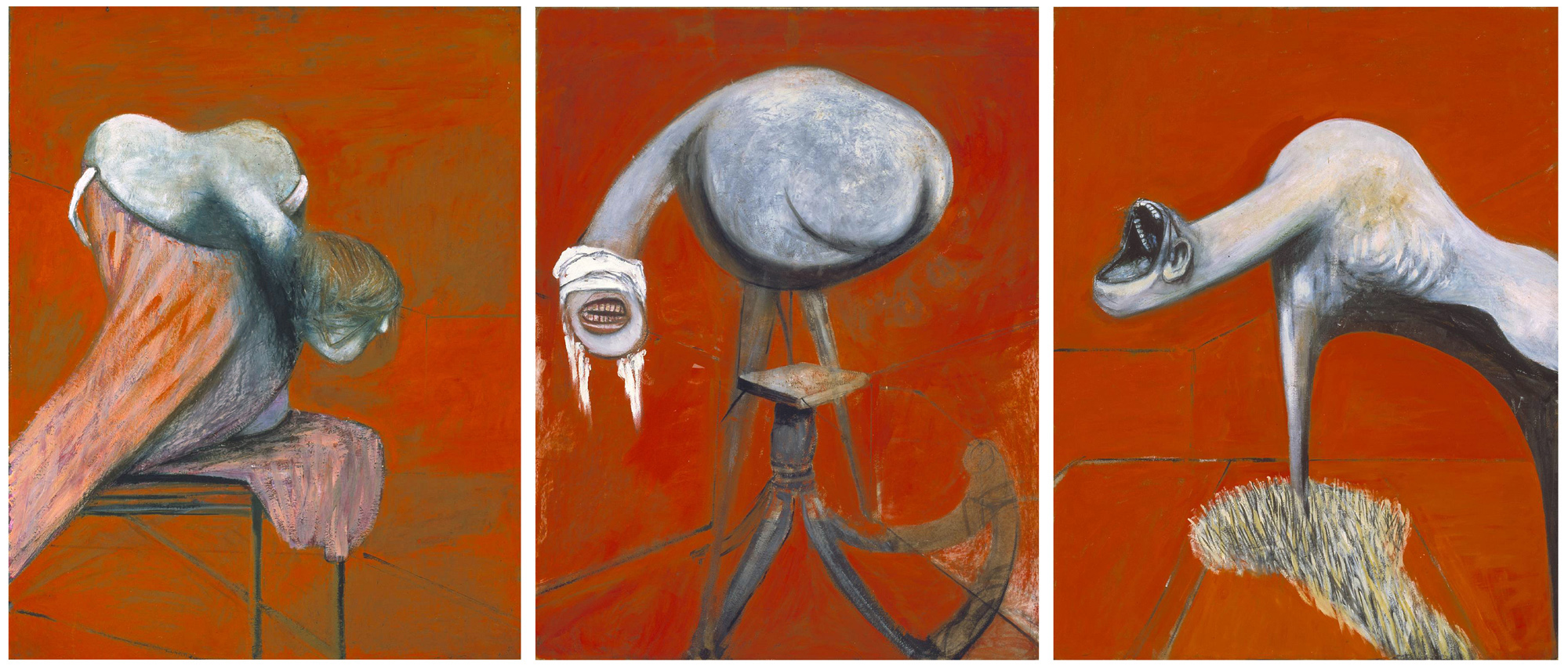
    Francis Bacon (British, 1909-1992) 'Three Studies for Figures at the Base of a Crucifixion' c. 1944 from the exhibition 'Francis Bacon' at the Museo Nacional del Prado, Madrid, Feb - April, 2009


    Francis Bacon (British, 1909-1992)
    Three Studies for Figures at the Base of a Crucifixion
    c. 1944
    Oil on board
    94 x 73.7cm
    London, Tate, presented by Eric Hall 1953


    Animal

    A philosophical attitude to human nature first emerges in Francis Bacon’s works of the 1940s. They reflect his belief that, without God, humans are subject to the same natural urges of violence, lust and fear as any other animal. He showed Figure in a Landscape and Three Studies for Figures at the Base of a Crucifixion in April 1945, and exhibited consistently thereafter. The bestial depiction of the human figure was combined with specific references to recent history and especially the devastating events of the Second World War. Bacon often drew his inspiration from reproductions, acquiring a large collection of books, catalogues and magazines. He repeatedly studied key images in order to probe beneath the surface appearance captured in photographs. Early concerns that would persist throughout his work include the male nude, which reveals the frailty of the human figure, and the scream or cry that expresses repressed and violent anxieties. These works are among the first in which he sought to balance psychological insights with the physical identity of flesh and paint.


    Francis Bacon (British, 1909-1992) 'Study after Velázquez’s Portrait of Pope Innocent X' 1953


    Francis Bacon (British, 1909-1992)
    Study after Velázquez’s Portrait of Pope Innocent X
    1953
    Oil on canvas
    153 x 118cm
    Des Moines, Nathan Emory Coffin Collection of the Des Moines Arts Center, purchased with funds from the Coffin Fine Arts Trust


    Zone

    In his paintings from the early 1950s, Bacon engaged in complex experiments with pictorial space. He started to depict specific details in the backgrounds of these works and created a nuanced interaction between subject and setting. Figures are boxed into cage-like structures, delineated ‘space-frames’ and hexagonal ground planes, confining them within a tense psychological zone. In 1952 he described this as “opening up areas of feeling rather than merely an illustration of an object”. Through his technique of ‘shuttering’ with vertical lines of paint that merge the foreground and background, Bacon held the figure and the setting together within the picture surface, with neither taking precedence in what he called “an attempt to lift the image outside of its natural environment”.

    A theme that emerged in the 1950s was the extended series of variants of Velázquez’s Portrait of Pope Innocent X, 1650 (Rome, Galleria Doria Pamphilj), a work Bacon knew only from illustrations. He used this source to expose the insecurities of the powerful – represented most often in the scream of the caged figure. Through the open mouth Bacon exposed the tension between the interior space of the body and the spaces of its location, which is explored more explicitly in the vulnerability of the ape-like nudes.


    Francis Bacon (British, 1909-1992) 'Chimpanzee' 1955


    Francis Bacon (British, 1909-1992)
    Chimpanzee
    1955
    Oil on canvas
    152.5 x 117cm
    Stuttgart, Staatsgalerie


    Apprehension

    Implicit throughout Bacon’s work of the mid 1950s is a sense of dread pervading the brutality of everyday life. Not only a result of Cold War anxiety, this seems to have reflected a sense of menace at a personal level emanating from Bacon’s chaotic affair with Peter Lacy (who was prone to drunken violence) and the wider pressures associated with the continuing illegality of homosexuality. The Man in Blue series captures this atmosphere, concentrating on a single anonymous male figure in a dark suit sitting at a table or bar counter on a deep blue-black ground. Within their simple painted frames, these awkwardly posed figures appear pathetically isolated.

    Bacon’s interest in situations that combine banality with acute apprehension was also evident in other contemporary works. From figures of anxious authority, his popes took on malevolent attributes and physical distortions that were directly echoed in the paintings of animals, whose actions are also both sinister and undignified. Some of these images derived from Bacon’s close scrutiny of the sequential photographs of animals and humans taken by Eadweard Muybridge (1830-1904), which he called “a dictionary” of the body in motion.


    Francis Bacon (British, 1909-1992) 'Three Studies for a Crucifixion' 1962


    Francis Bacon (British, 1909-1992)
    Three Studies for a Crucifixion
    1962
    Oil on canvas
    198.2 x 144.8cm
    New York, Solomon R. Guggenheim Museum


    Crucifixion

    Bacon made paintings related to the Crucifixion at pivotal moments in his career, which is why these key works are gathered here. The paradox of an atheist choosing a subject laden with Christian significance was not lost on Bacon, but he claimed, “as a non-believer, it was just an act of man’s behaviour”. Here the instincts of brutality and fear combine with a deep fascination with the ritual of sacrifice. Bacon had already made a very individual crucifixion image in 1933 before returning to the subject with his break-through triptych Three Studies for Figures at the Base of a Crucifixion in 1944. This is a key precursor to later themes and compositions, containing the bestial distortion of human figures within the triptych format. These monstrous creatures displace the traditional saints and Bacon later related them to the Eumenides – the vengeful furies in Greek mythology. In resuming the theme in the 1960s, especially in 1962 as the culmination of his first Tate exhibition, Bacon used references to Cimabue’s 1272-1274 Crucifixion to introduce a more explicitly violent vision. Speaking after completing the third triptych in 1965 he simply stated: “Well, of course, we are meat, we are potential carcasses”.


    Francis Bacon (British, 1909-1992) 'Paralytic Child Walking on All Fours (from Muybridge)' 1961


    Francis Bacon (British, 1909-1992)
    Paralytic Child Walking on All Fours (from Muybridge)
    1961
    Oil on canvas
    198 x 142cm
    The Hague, Collection Gemeentemuseum Den Haag


    Crisis

    Between 1956 and 1961, Bacon travelled widely. He spent time in places marginal to the art world, in Monaco, the South of France and Africa, and particularly with Peter Lacy in the ex-patriot community in Tangier. In this rather unsettled context, he explored new methods of production, shifting to thicker paint, violently applied and so strong in colour as to indicate an engagement with the light of North Africa. This was most extreme in his series based on a self-portrait of Van Gogh, The Painter on the Road to Tarascon (1888, destroyed), which became an emblem of the modern predicament. Despite initial acclaim, Bacon’s Van Gogh works were soon criticised for their “reckless energy” and came to be viewed as an aberration. They can now be recognised as pivotal to Bacon’s further development, however, and allow glimpses into his search for new ways of working. His innovations were perhaps in response to American Abstract Expressionism, of which he was publicly critical. Although he eventually returned to a more controlled approach to painting, the introduction of chance and the new vibrancy of colour at this moment would remain through out his career.


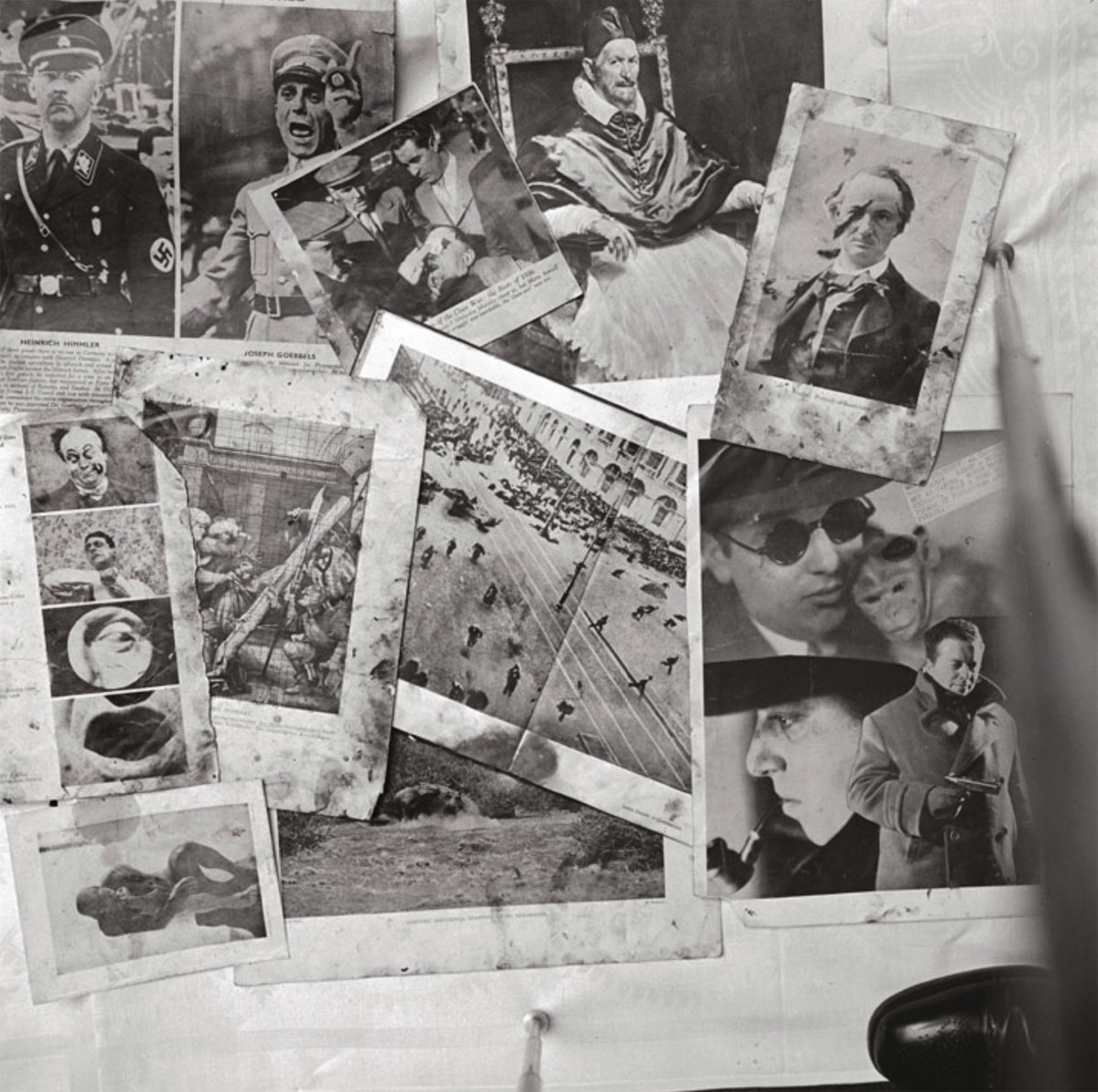
    Montage of material from Bacon's Studio (including pictures of Velázquez's Innocent X, The Thinker by Rodin etc.) 7 Cromwell Place, c. 1950


    Montage of material from Bacon’s Studio (including pictures of Velázquez’s Innocent X, The Thinker by Rodin etc.)
    7 Cromwell Place
    c. 1950
    © Sam Hunter


    Archive

    The posthumous investigation of Bacon’s studio confirmed the extent to which he used and manipulated photographic imagery. This practice was already known from montages recorded in 1950 by the critic Sam Hunter. Often united by a theme of violence, the material ranges between images of conflict, big game, athletes, film stills and works of art.

    An important revelation that followed the artist’s death was the discovery of lists of potential subjects and preparatory drawings, which Bacon had denied making. Throughout his life, he asserted the spontaneous nature of his work, but these materials reveal that chance was underpinned by planning.

    Photography offered Bacon a dictionary of poses. Though he most frequently referred to Eadweard Muybridge’s (1830-1904) survey of human and animal locomotion, images of which he combined with the figures of Michelangelo, he remained alert to photographs of the body in a variety of positions.

    A further extension of Bacon’s preparatory practices can be seen in his commissioning of photographs of his circle of friends from the photographer John Deakin (1912-1972). The results – together with self-portraits, photo booth strips, and his own photographs – became important prompts in his shift from generic representations of the human body to portrayals of specific individuals.

    A matrix of images

    Bacon’s use of photographic sources has been known since 1950 when the critic Sam Hunter took three photographs of material he had selected from a table in Bacon’s studio in Cromwell Place, South Kensington. Hunter observed that the diverse imagery was linked by violence, and this fascination continued throughout Bacon’s life. Images of Nazis and the North African wars of the 1950s were prominent in his large collection of sources. Films stills and reproductions of works of art, including Bacon’s own, were also common. The dismantling of Bacon’s later studio, nearby at Reece Mews, after his death confirmed that the amassing of photographic material had remained an obsession. While some images were used to generate paintings, he also seems to have collected such an archive for its own sake.

    The mediated image

    From the 1960s, Bacon’s accumulation of chance images began to include a more deliberate strategy of using photographs of his close circle. They became key images for the development of the portraits that dominated his paintings at this time. Snap shots and photo booth strips were augmented by the unflinching photographs taken by his friend John Deakin. Bacon specifically commissioned some of these from Deakin as records of those close to him – notably his partner from 1962, George Dyer – and they served as sources for likenesses and for poses for the rest of his career.

    The Physical Body

    Bacon drew more from Eadweard Muybridge’s sequential photographs of human and animal locomotion than from any other source. These isolated the naked figure in a way he clearly found stimulating. He also, however, spoke of projecting on to them Michelangelo’s figures which for him had more “ampleness” and “grandeur of form”.

    His fascination in photography’s freezing of the body in motion led him to collect sports photographs, particularly boxing, cricket and bullfighting. It was not just movement but the physicality of the body that Bacon scrutinised, using found images to provoke new ways of picturing its strength and vulnerability.


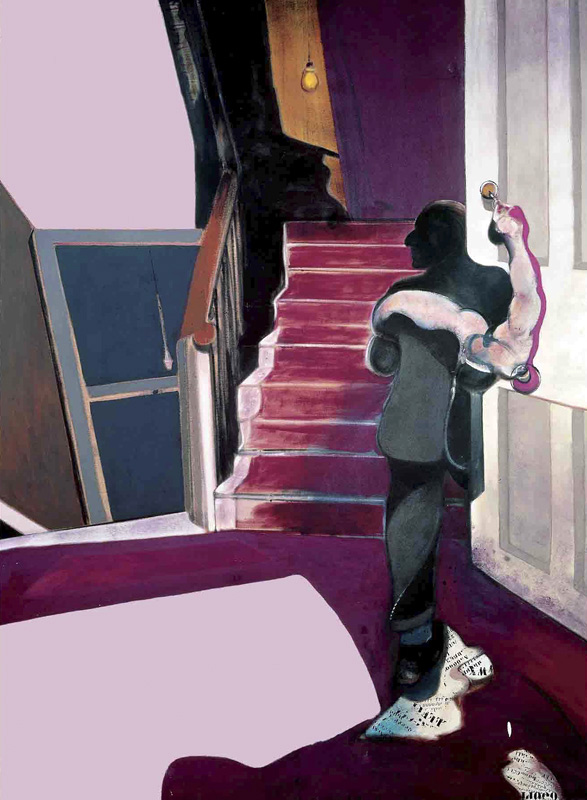
    Francis Bacon (British, 1909-1992) 'Portrait of Isabel Rawsthorne Standing in a Street in Soho' 1967


    Francis Bacon (British, 1909-1992)
    Portrait of Isabel Rawsthorne Standing in a Street in Soho
    1967
    Oil on canvas
    198 x 147.5cm
    Berlin, Staatliche Museen zu Berlin, Nationalgalerie


    Portrait

    During the 1960s, the larger part of Bacon’s work shifted focus to portraits and paintings of his close friends. These works centre on two broad concerns: the portrayal of the human condition and the struggle to reinvent portraiture. Bacon drew upon the lessons of Van Gogh and Velázquez, but attempted to rework their projects for a post-photographic world. His approach was to distort appearance in order to reach a deeper truth about his subjects. To this end, Bacon’s models can be seen performing different roles. In the Lying Figures series, Henrietta Moraes is naked and exposed. This unprecedented raw sexuality reinforces Bacon’s understanding of the human body simply as meat. By contrast Isabel Rawsthorne, a fellow painter, always appears in control of how she is presented. With a mixture of contempt and affection, Bacon depicted George Dyer, his lover and most frequent model, as fragile and pathetic. This is especially evident in Dyer’s first appearance in Bacon’s work, in Three Figures in a Room, in which he represents the absurdities, indignities and pathos of human existence. Everyday objects occasionally feature in these works, hollow props for lonely individuals which reinforce the sense of isolation that Bacon associated with the human condition.


    Francis Bacon (British 1909-1992) 'Triptych in Memory of George Dyer' 1971


    Francis Bacon (British 1909-1992)
    Triptych in Memory of George Dyer
    1971
    Oil on canvas


    Francis Bacon (British, 1909-1992) 'Triptych - August 1972' 1972


    Francis Bacon (British, 1909-1992)
    Triptych – August 1972
    1972
    Oil on canvas
    198 x 147.5cm
    London, Tate


    Memorial

    This room is dedicated to George Dyer who was Bacon’s most important and constant companion and model from the autumn of 1963. He committed suicide on 24 October 1971, two days before the opening of Bacon’s major exhibition at the Grand Palais in Paris. Influenced by loss and guilt, the painter made a number of pictures in memorial to Dyer. From this period onwards the large-scale triptych was his established means for major statements, having the advantage of simultaneously isolating and juxtaposing the participating figures, as well as guarding against narrative qualities that Bacon strove to avoid. But while evading narrative, Bacon drew more than ever from literary imagery; the first of the sequence, Triptych In Memory of George Dyer 1971, refers to a specific section of T.S. Eliot’s The Waste Land (1922). In addition to his own memory, for Triptych – August 1972 Bacon relied on photographs, taken by John Deakin, of Dyer in various poses on a chair. He confined his dense and energetic application of paint to the figures in these works. The dark openings consciously evoke the abyss of mortality that would become a recurring concern in Bacon’s later works.
     

    Francis Bacon (British, 1909-1992) 'Triptych' 1987


    Francis Bacon (British, 1909-1992)
    Triptych
    1987
    Oil on canvas
    198 x 147.5cm
    London, The Estate of Francis Bacon, courtesy Faggionato Fine Art


    Epic

    References to poetry and drama became a central element in Bacon’s work from the second half of the 1960s. Alongside images of friends and single figures (often self-portraits), he produced a series of grand works that identified with great literature. Imbued with the inevitability and constant presence of death, the poetry of T.S. Eliot was a particular source of inspiration. The sentiments of the poet’s character Sweeney could be said to echo the painter’s perspective on life:

    Birth, and copulation, and death.

    That’s all the facts when you come to

    brass tacks:

    Birth, and copulation, and death.

    The works in this room refer to and derive from literature. Some make direct references in their titles, others depict, sometimes abstractly, a certain scene or atmosphere within the narratives themselves. Bacon repeatedly stated that none of his paintings were intended as narratives, so rather than illustrations, these works should perhaps be understood as evoking the experience of reading of Eliot’s poetry or Aeschylus’s tragedies: their violence, threat or erotic charge. Thus, of the triptych created after reading Aeschylus, Bacon explained “I tried to create images of the sensations that some of the episodes created inside me”.


    Francis Bacon (British, 1909-1992) 'Portrait of John Edwards' 1988


    Francis Bacon (British, 1909-1992)
    Portrait of John Edwards
    1988
    Oil on canvas
    198 x 147.5cm
    The Estate of Francis Bacon, courtesy of Faggionato Fine Arts, London, and Tony Shafrazi Gallery, New York


    Late

    When Bacon turned seventy in 1979, more than a decade of work lay ahead of him. Neither his legendarily hedonistic lifestyle nor his work pattern seemed to age him, but he was continually facing up to mortality through the deaths of those around him. This unswerving confrontation, however mitigated by youthful companions such as John Edwards, became the great theme of his late style. Constantly stimulated by new source material – for example the photographs and the poetry of Federico García Lorca which triggered his bullfight paintings – he was able to adapt them to his abiding concerns with the vulnerability of flesh. Exploring new techniques he also extended his fascination with how appropriate oil paint is for rendering the human body’s sensuality and sensitivity. A certain despairing energy may also be felt in the forceful throwing of paint that dominates some of these final works: the controlled chance as a defiant gesture. Ultimately, and appropriately, Bacon’s last triptych of 1991 returns to the key image of sexual struggle that had frequently recurred in his work. He faced death with a defiant concentration on the exquisiteness of the lived moment.


    Francis Bacon (British, 1909-1992) 'Three Studies for Self-Portrait' 1979-1980


    Francis Bacon (British, 1909-1992)
    Three Studies for Self-Portrait
    1979-1980
    Oil on canvas
    37.5 x 31.8cm
    Nueva York, The Metropolitan Museum of Art, Jacques and Natasha Gelman collection, 1998


    Francis Bacon

    Francis Bacon is internationally acknowledged as among the most powerful painters of the twentieth century. His vision of the world was unflinching and entirely individual, encompassing images of sensuality and brutality, both immediate and timeless. When he first emerged to public recognition, in the aftermath of the Second World War, his paintings were greeted with horror. Shock has since been joined by a wide appreciation of Bacon’s ability to expose humanity’s frailties and drives.

    This major retrospective gathers many of his most remarkable paintings and is arranged broadly chronologically. Bacon’s vision of the world has had a profound impact. It is born of a direct engagement that his paintings demand of each of us, so that, as he famously claimed, the “paint comes across directly onto the nervous system”.

    As an atheist, Bacon sought to express what it was to live in a world without God or afterlife. By setting sensual abandon and physical compulsion against hopelessness and irrationality, he showed the human as simply another animal. As a response to the challenge that photography posed for painting, he developed a unique realism which could convey more about the state of existence than photography’s representation of the perceived world. In an era dominated by abstract art, he amassed and drew upon a vast array of visual imagery, including past art, photography and film. These artistic and philosophical concerns run like a spine through the present exhibition.


    Museo Nacional Del Prado
    Paseo del Prado, s/n,
    28014 Madrid, Spain

    Opening hours:
    Monday – Saturday 10am – 8pm
    Sunday 10am – 7pm

    Museo Nacional del Prado website

    LIKE ART BLART ON FACEBOOK

    Back to top