Exhibition: ‘Joyce Evans’ at the National Library of Australia, Canberra

Exhibition dates: 4th April – 5th November 2023

Curators: Dr Grace Blakeley-Carroll and Shelly McGuire
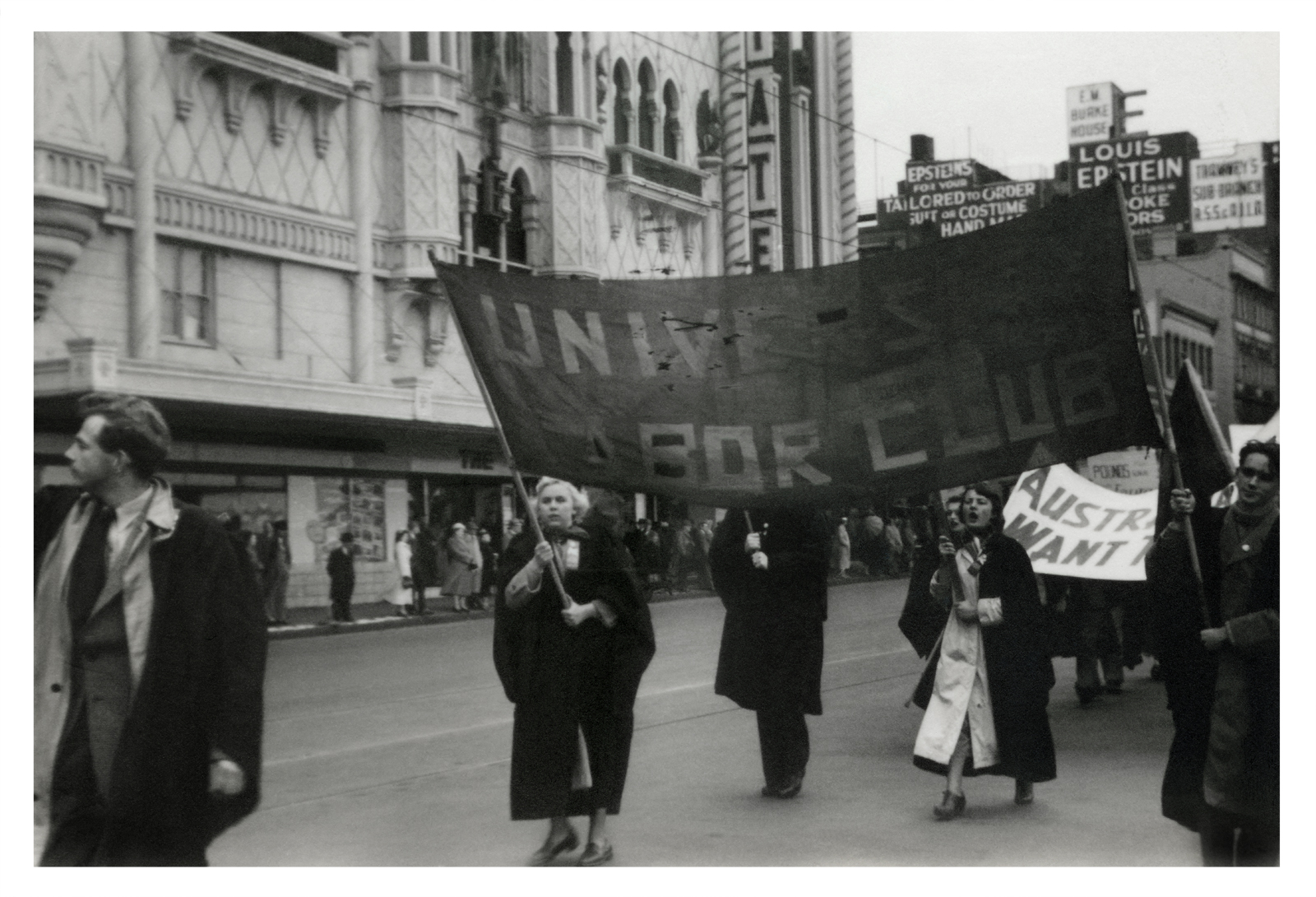
 

Joyce Evans (Australian, 1929-2019) 'May Day University Labour Club banner, May Day March, Flinders Street, Melbourne' 1951 from the exhibition 'Joyce Evans' at the National Library of Australia, April - Nov 2023


Joyce Evans (Australian, 1929-2019)
Students Protesting during a May Day March on Flinders Street, Melbourne
1951
Photograph
Joyce Evans Archive
National Library of Australia


At far-left, John Clendenin, philosopher and president of University of Melbourne SRC. Banner-bearer Jill Warwick, later a TV Producer, vice-president UniMelb SRC. The Forum Theatre on Flinders Street in the background.


That bohemian force of nature who was Australian artist, curator, teacher, writer, philanthropist, poet, gallery owner and collector Joyce Evans OAM (1929-2019) would have been the first to admit that she was not the most naturally gifted photographer the world has ever known. But Joyce worked assiduously at her craft for over 70 years and became a very fine image maker, picturing her beloved Australia through landscape, documentary and portrait photographs for many a decade.

Her early and historically important photographs of the late 1940s and early 1950s (of which three are in this posting) represent the post Second World War flowering of an Australian civil right movement. Further images from this period can be seen in the book We Had Such High Hopes: Student Activism and the Peace Movement 1949-1952, A Photographic Memoir by Joyce Evans published by Australian Scholarly Publishing in 2019; and you can read my foreword to the book and see more images from it in the Art Blart posting “Nothing emerges from nothing” (2019).

Joyce had an innate knack of putting people at their ease when having their photograph taken. Never without a camera close at hand, she would approach complete strangers anywhere and ask them whether she could take their portrait… and she was never refused. She had the most gracious way about her, as though she was speaking in communion with her subject: whether that be the contemplation of the Australian landscape, Indigenous Australians, or up close and personal portraits of the ordinary or famous. As author Professor Sasha Grishin observes in his book Joyce Evans (National Library of Australia, 2022) she “was an artist who possessed a definite photographic personality… [who] pursued an agenda that shone a light on racism, social inequality and environmental degradation.”

Joyce worked hard at her craft and it rewarded her soul in so many unconditional ways. Her energy for life and photography was full of unbridled enthusiasm. It is therefore a blessing that this passion has now found a permanent home: her complete photographic archive, the Joyce Evans Archive, is now housed at the National Library of Australia in Canberra, an institution for which she did much work over the years. And it is wonderful that they have staged this small exhibition of 27 of her photographs. My only quibble would be the lack of photographs of Indigenous Australians in the exhibition. Other than the portrait of Aboriginal activist Faith Bandler (1951, below) there are no other photographs of her immense engagement with Aboriginal communities and peoples in this exhibition – which is a great shame. Joyce was very proud of her photography of and relationship with remote Aboriginal communities and their people and it would have been nice to see that energy reflected in the photographs in this exhibition.

Dr Marcus Bunyan

Joyce Evans was a cherished friend of Marcus Bunyan.


Many thankx to the National Library of Australia for allowing me to publish the photographs in the posting. Please click on the photographs for a larger version of the image.


The career of Joyce Evans OAM (1929-2019) spans more than six decades of landscape, documentary, and portrait photography. Her work is preserved through the Library’s Joyce Evans Archive, one of our largest collections of images by a contemporary Australian photographer, and contains images which capture essential aspects of Australian life.


“We believed we had an obligation, neither social nor political, to make a difference. We were brought up as children to believe that we had an obligation to make that difference.

If we can find out what we are… that is the artist. This goes to the core element of your being, and the core element of your enquiry remains the same.

If the core part of your life is the search for the truth then that becomes a core part of your identity for the rest of your life. It becomes embedded in your soul.”


Joyce Evans
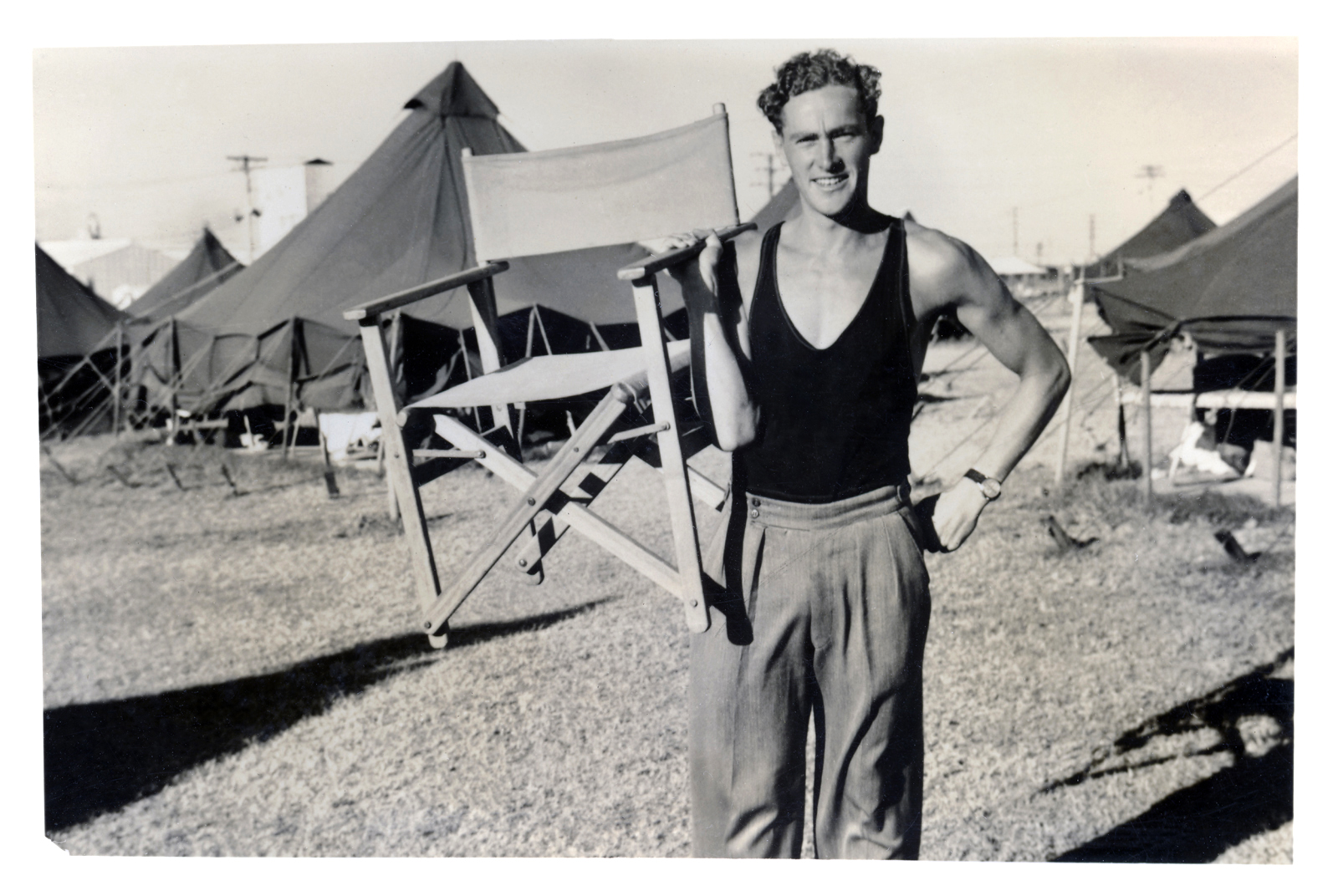


Joyce Evans (Australian, 1929-2019) 'Richard 'Dicky' Woolcott, delegate to conference, at NUAUS encampment' 1951 from the exhibition 'Joyce Evans' at the National Library of Australia, April - Nov 2023


Joyce Evans (Australian, 1929-2019)
Richard Woolcott AC at NUAUS Conference, Largs Bay, S.A.
1951, printed by David Chisolm and Joyce Evans, 2013
Photograph
Joyce Evans Archive
National Library of Australia


Richard Arthur Woolcott AC (11 June 1927 – 2 February 2023) was an Australian public servant, diplomat, author, and commentator.


The [photographic] form that Joyce found so early in her life was the music and poetry of humanist photographs, images that are subjective, lyrical, and reveal a state-of-mind. Here is passion and belief in the life of human beings, and the exquisiteness, beauty (and death) of the lived moment. You could label them “social documentary photography” if you were so inclined, but labels don’t capture the frisson of the creative process nor the joyous outcome of Joyce’s portraits. It’s as though Joyce, in a mixture of consciousness and unconsciousness, is making love to the world through her images: neither rational nor cerebral they evoke sensations and feelings, of being here and there, in that past space and time, now, all these years later. These were epic days of change and transformation – of nations, of continents, of cultures and of people. There was death and destruction but there was also such happiness, hope and joy.

Further, what her photographs also depict is the rise of an informed Australian social consciousness after the Second World War. Her important historical and personal photographs shine a light on forgotten people, times, places and actions, such as the broad based youth movements opposition to the atomic bomb, associations and friendships which eventually form the basis for the progressive social and political protest movements of the 1960s. The voices raised later in support of feminism, gay liberation, free love and Vietnam anti-war protests did not appear fully formed, for there was a history of activism… a slow build, a groundswell of public opinion that was the basis for such emerging actions. Nothing ever emerges from nothing.

Marcus Bunyan. “Nothing emerges from nothing,” foreword from the book We Had Such High Hopes: Student Activism and the Peace Movement 1949-1952, A Photographic Memoir by Joyce Evans. Melbourne: Australian Scholarly Publishing, 2019

Read the full text and see more early photographic images by Joyce Evans
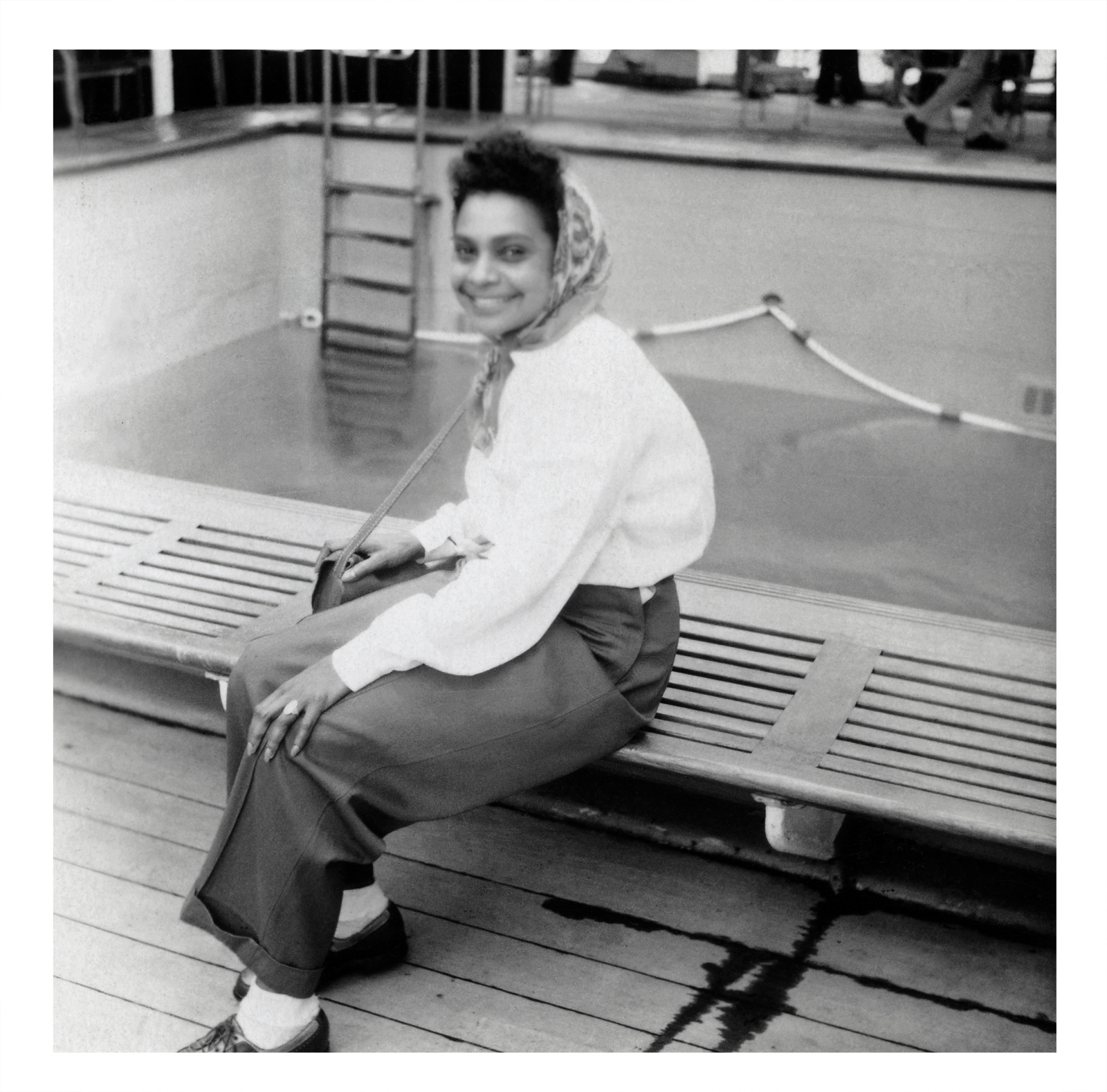
 

Joyce Evans (Australian, 1929-2019) 'Faith Bandler' 1951 from the exhibition 'Joyce Evans' at the National Library of Australia, April - Nov 2023


Joyce Evans (Australian, 1929-2019)
Faith Bandler
1951, printed 2012
Photograph
Joyce Evans Archive
National Library of Australia


Faith Bandler AC MBE (27 September 1918 – 13 February 2015; née Ida Lessing Faith Mussing) was an Australian civil rights activist of South Sea Islander and Scottish-Indian heritage. A campaigner for the rights of Indigenous Australians and South Sea Islanders, she was best known for her leadership in the campaign for the 1967 referendum on Aboriginal Australians.


‘I don’t know what sort of photographer I am, but I try to be an honest one.’ ~ Joyce Evans.

The career of Joyce Evans OAM (1929-2019) spans more than six decades of landscape, documentary, and portrait photography. Her work is preserved through the Library’s Joyce Evans Archive, one of our largest collections of images by a contemporary Australian photographer, and contains images which capture essential aspects of Australian life.

This collection-in-focus display contains highlights from the Library’s Joyce Evans Archive, and can be seen in our Treasures Gallery from Tuesday 4 April 2023. Entry to the Gallery is free and no bookings are required.

You can read more about Evans’ life in the NLA Publishing title, Joyce Evans by Sasha Grishin.

Text from the National Library of Australia website.
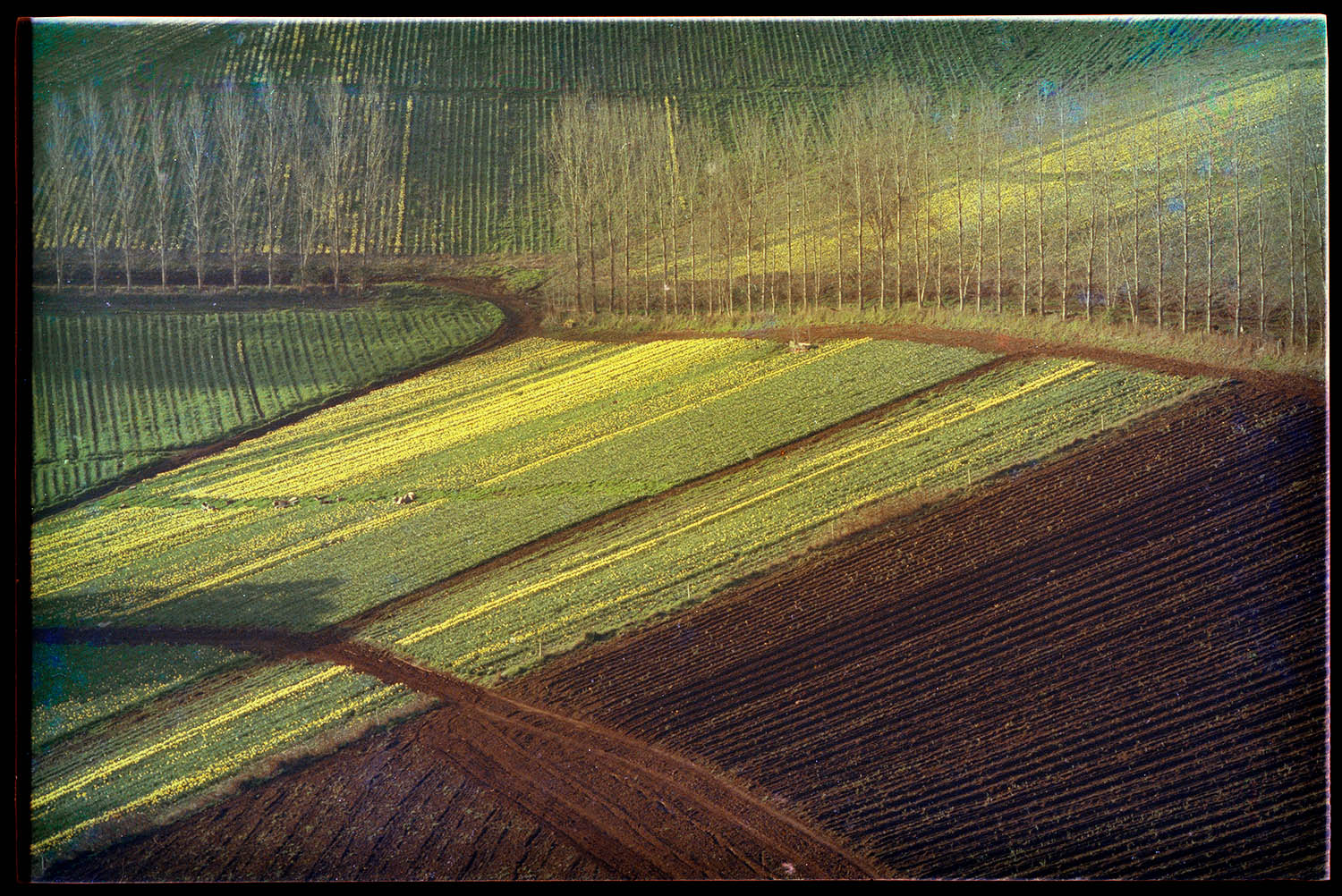
 

Joyce Evans (Australian, 1929-2019) 'Cotswold Farm, Menzies Creek, Victoria' 1982


Joyce Evans (Australian, 1929-2019)
Cotswold Farm, Menzies Creek, Victoria
1982
Colour photograph
Joyce Evans Archive
National Library of Australia
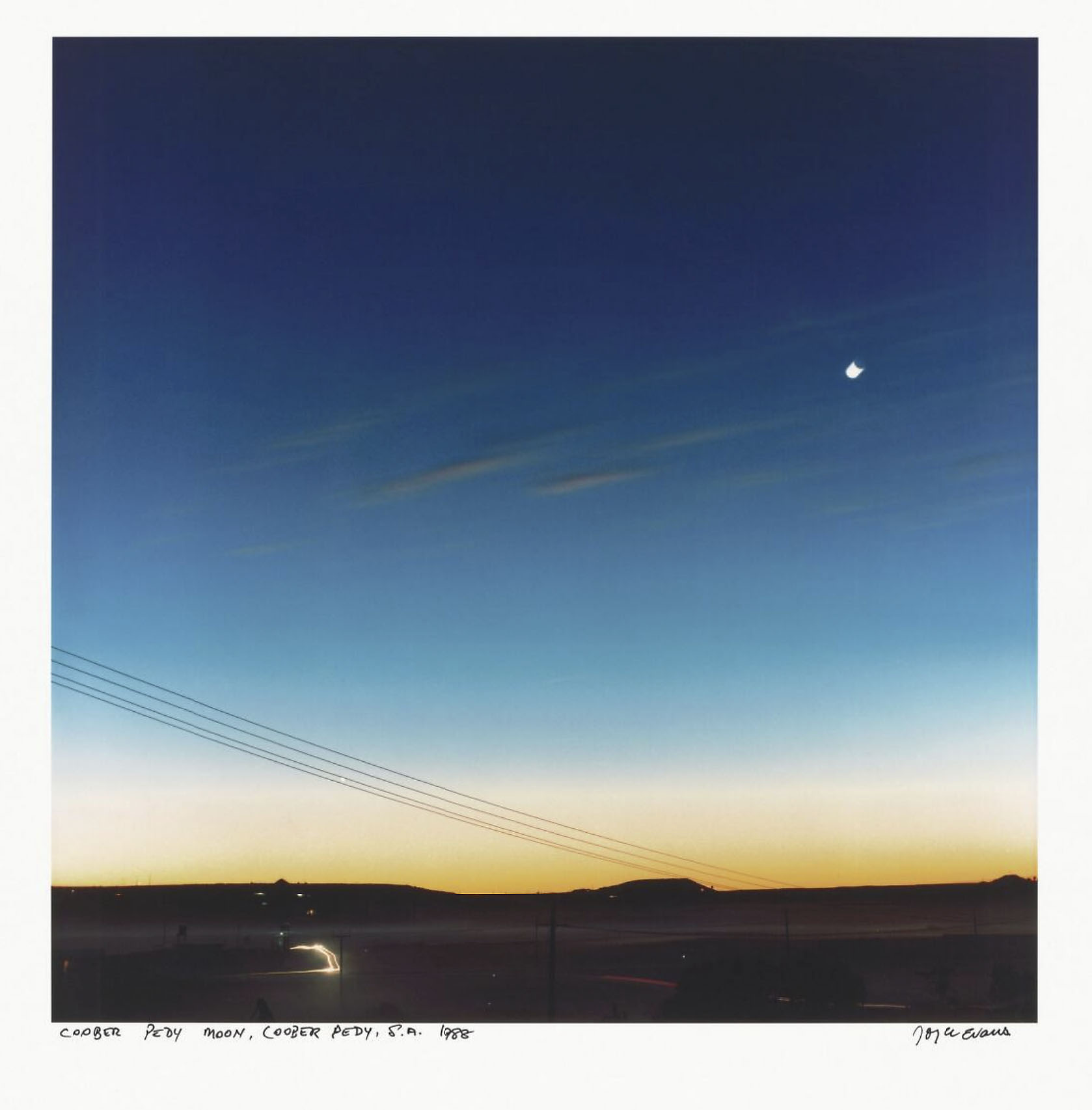
 

Joyce Evans (Australian, 1929-2019) 'Moon over Coober Pedy, South Australia' 1988


Joyce Evans (Australian, 1929-2019)
Moon over Coober Pedy, South Australia
1988, printed by David Chisolm and Joyce Evans, 2013
Colour photograph
35.2 x 35cm
Joyce Evans Archive
National Library of Australia
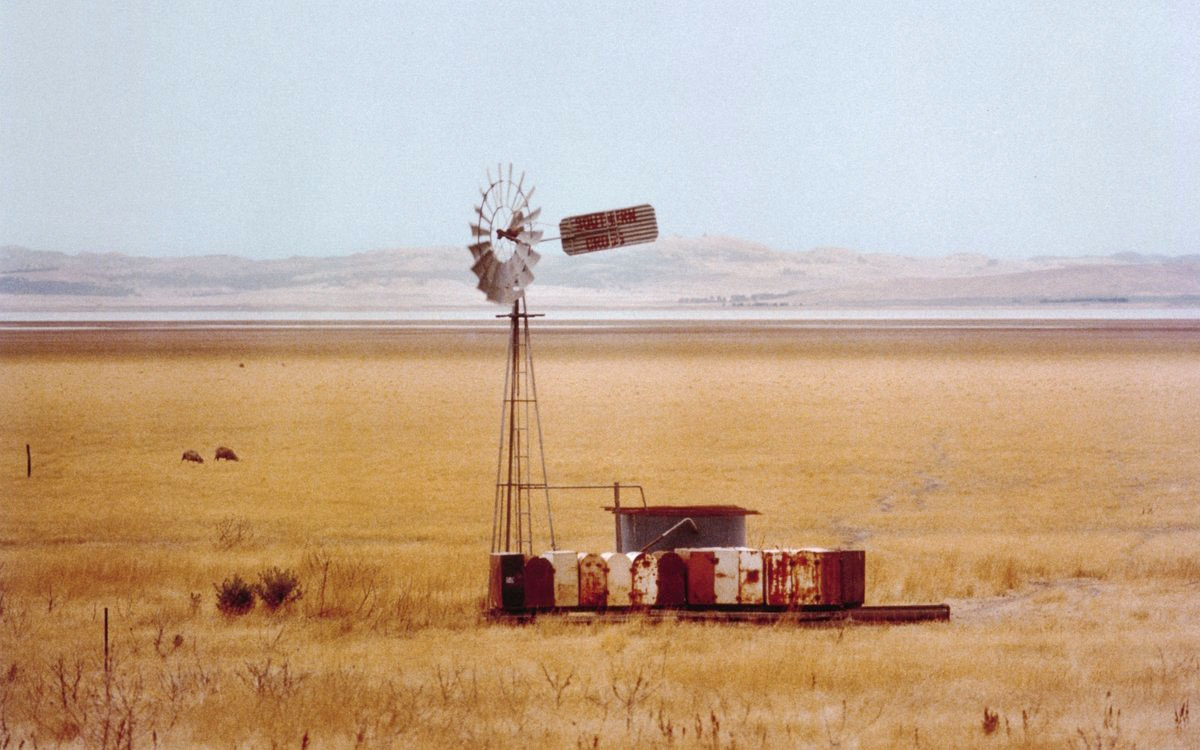
 

Joyce Evans (Australian, 1929-2019) 'Windmill on Weerewa/Lake George, New South Wales' c. 1983-2012


Joyce Evans (Australian, 1929-2019)
Windmill on Weerewa/Lake George, New South Wales
c. 1983-2012
Colour photograph
35.6 x 37.2cm
Joyce Evans Archive
National Library of Australia
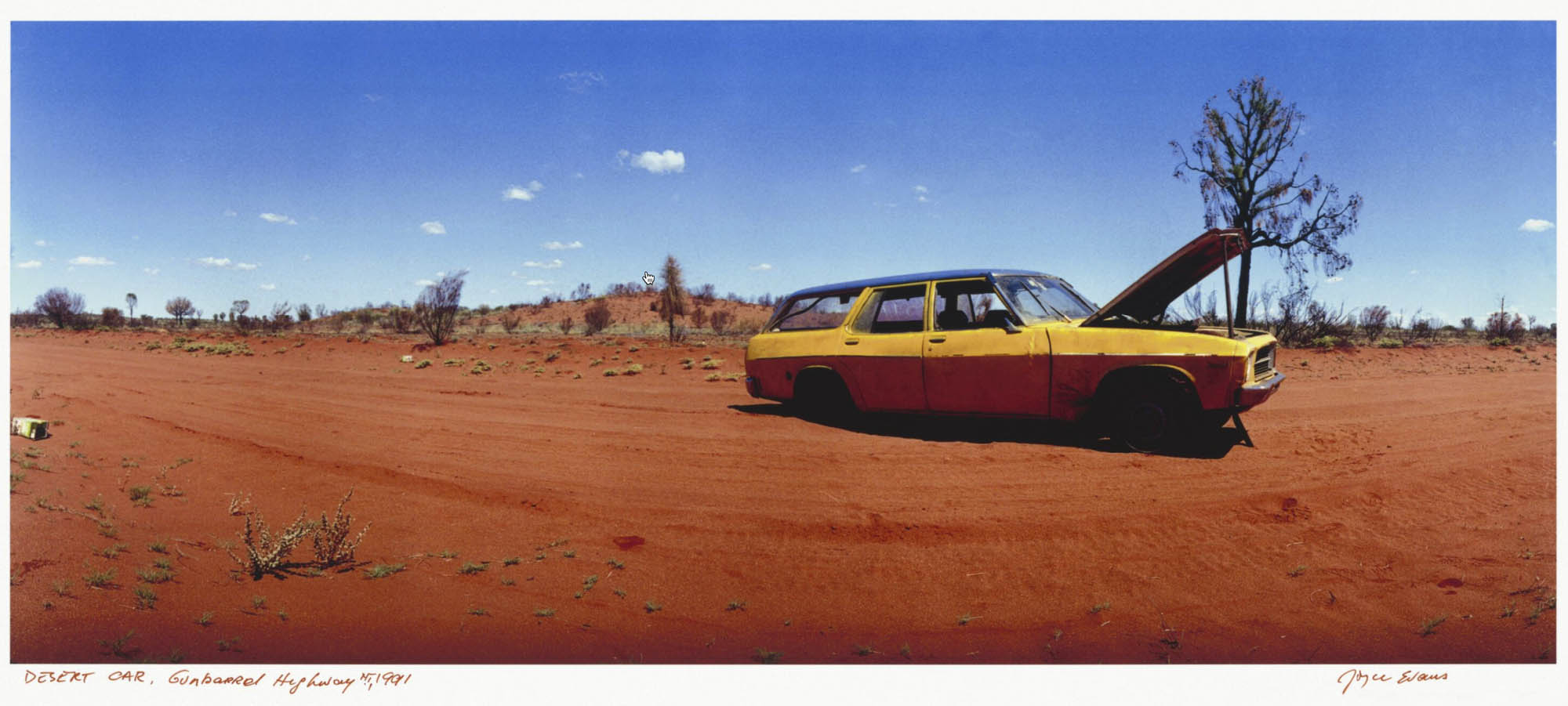
 

Joyce Evans (Australian, 1929-2019) 'Desert Car on Gunbarrel Highway, Northern Territory' 1991


Joyce Evans (Australian, 1929-2019)
Desert Car on Gunbarrel Highway, Northern Territory
1991
Colour photograph
21 x 50.6cm
Joyce Evans Archive
National Library of Australia
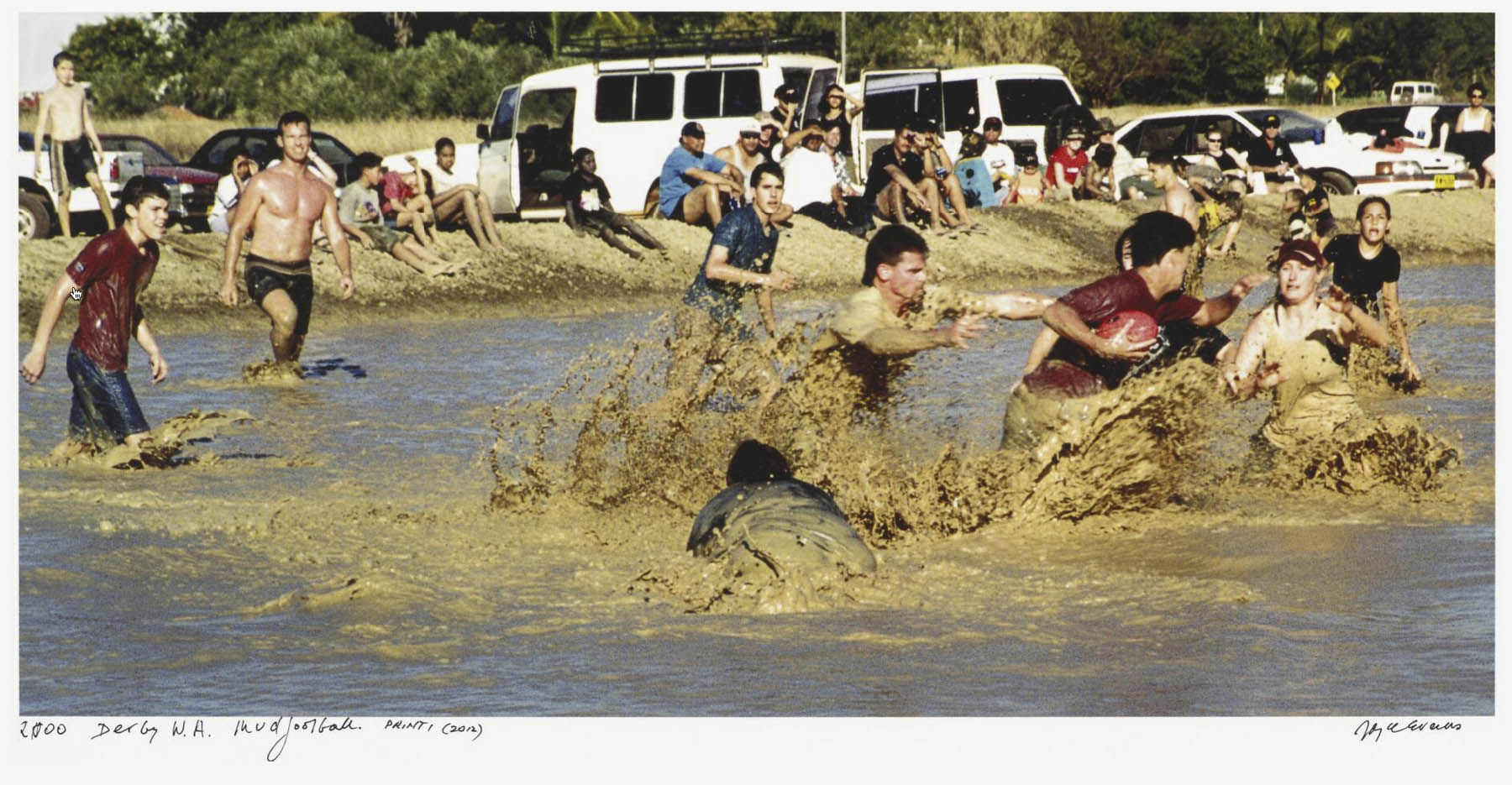
 

Joyce Evans (Australian, 1929-2019) 'Mud Football, Derby, Western Australia' 2000, printed 2012


Joyce Evans (Australian, 1929-2019)
Mud Football, Derby, Western Australia
2000, printed 2012
Inkjet on Hahnemuhle photo rag paper
34.3 x 41cm
Joyce Evans Archive
National Library of Australia
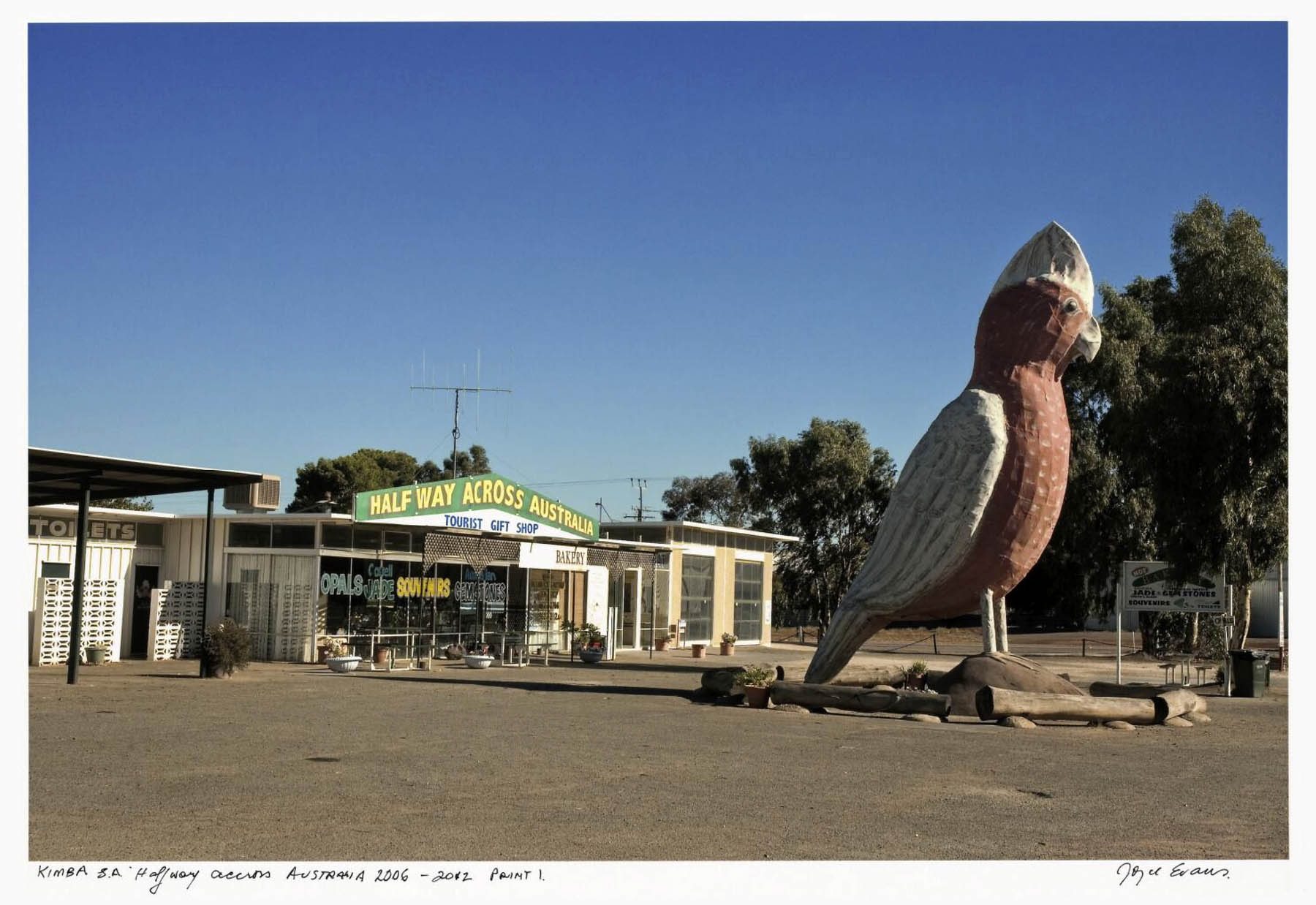
 

Joyce Evans (Australian, 1929-2019) 'The Big Galah and Tourist Gift Shop, Kimba, South Australia' c. 2006-2012


Joyce Evans (Australian, 1929-2019)
The Big Galah and Tourist Gift Shop, Kimba, South Australia
c. 2006-2012
Colour photograph
33.6 x 50.7cm
Joyce Evans Archive
National Library of Australia
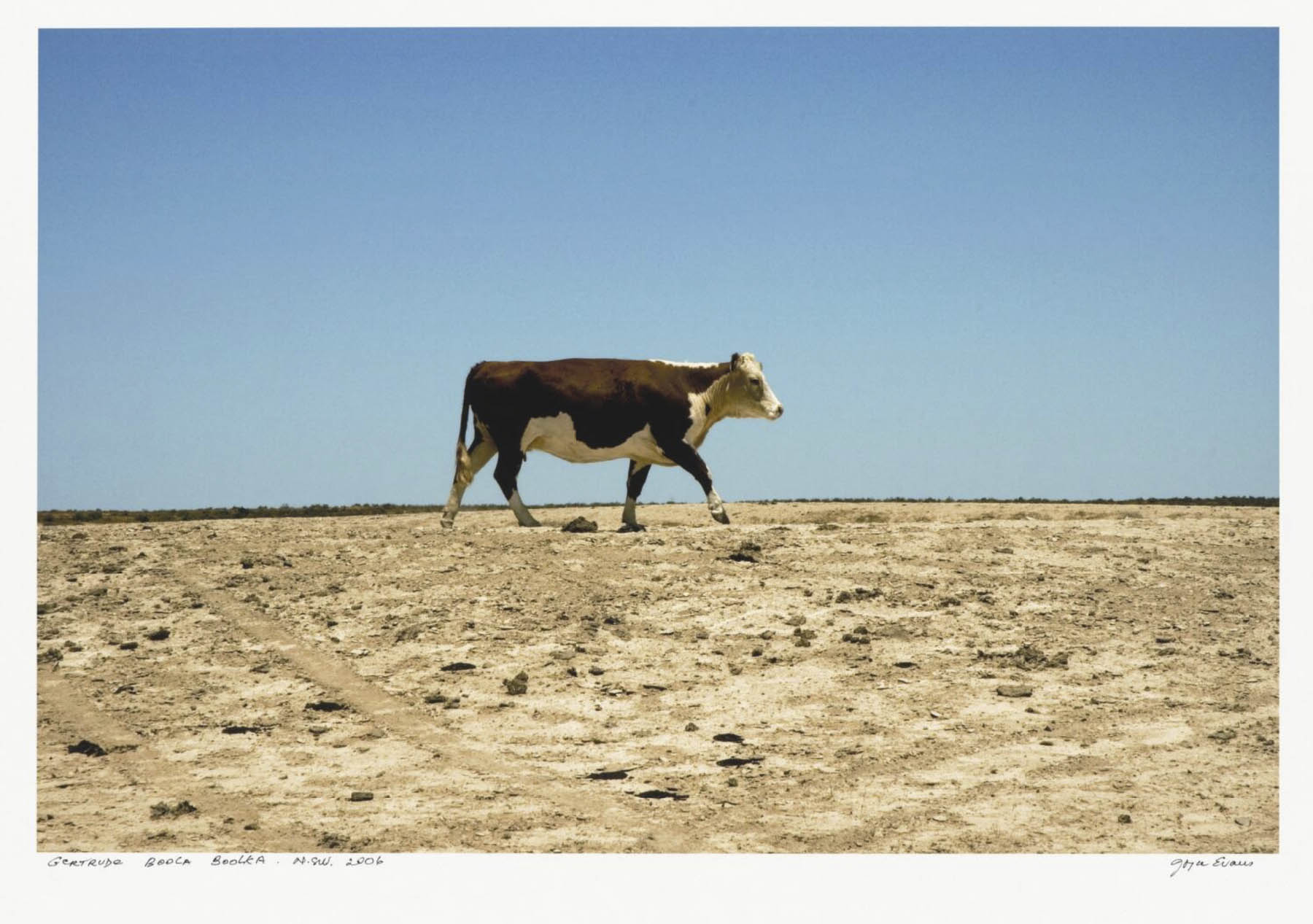
 

Joyce Evans (Australian, 1929-2019) 'Gertrude, Boola Boolka Station, New South Wales' 2006


Joyce Evans (Australian, 1929-2019)
Gertrude, Boola Boolka Station, New South Wales
2006
Colour photograph
33.9 x 50.7cm
Joyce Evans Archive
National Library of Australia
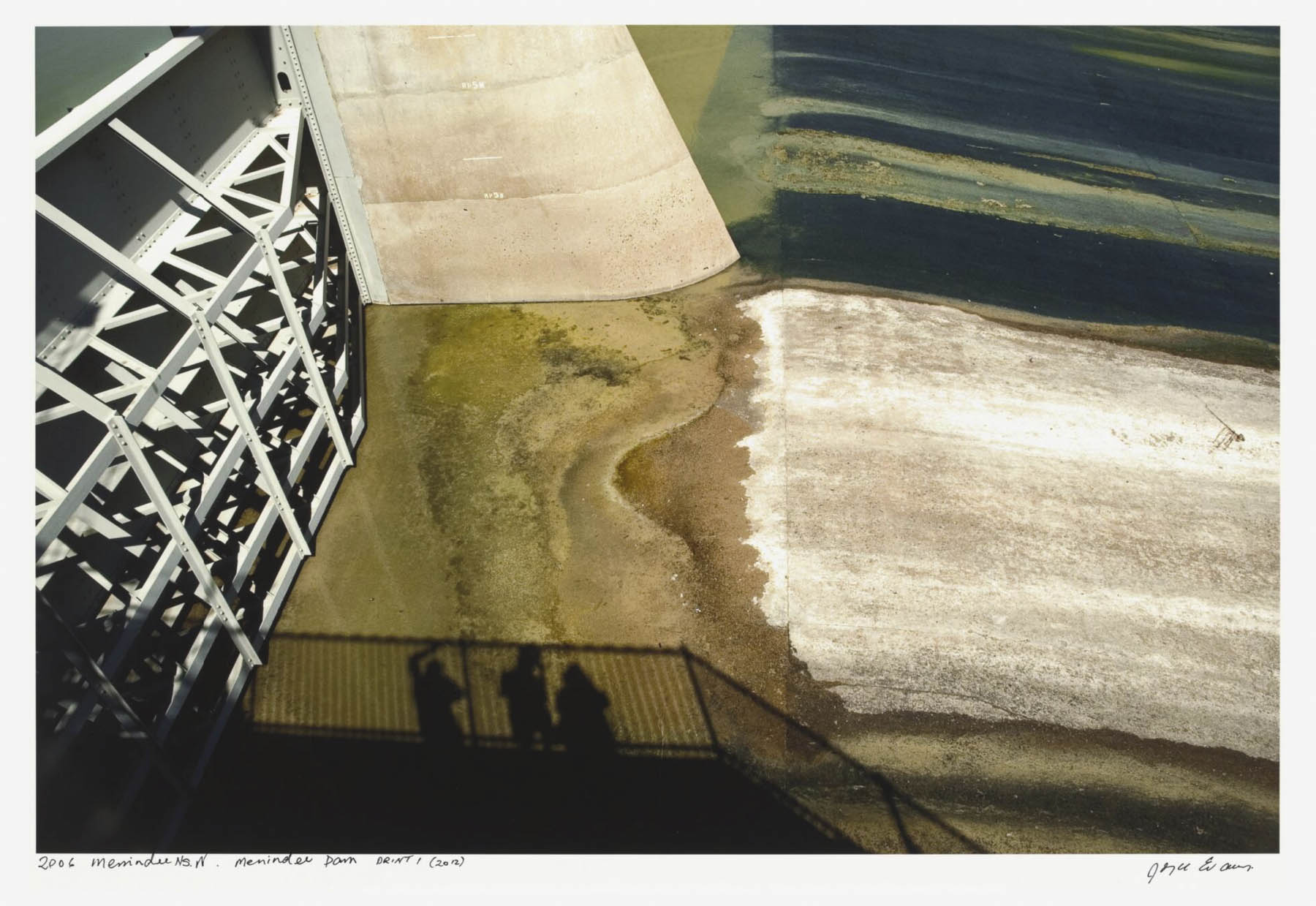
 

Joyce Evans (Australian, 1929-2019) 'Evidence of Severe Drought at Menindee Dam, Menindee, New South Wales' 2006


Joyce Evans (Australian, 1929-2019)
Evidence of Severe Drought at Menindee Dam, Menindee, New South Wales
2006
Colour photograph
Joyce Evans Archive
National Library of Australia
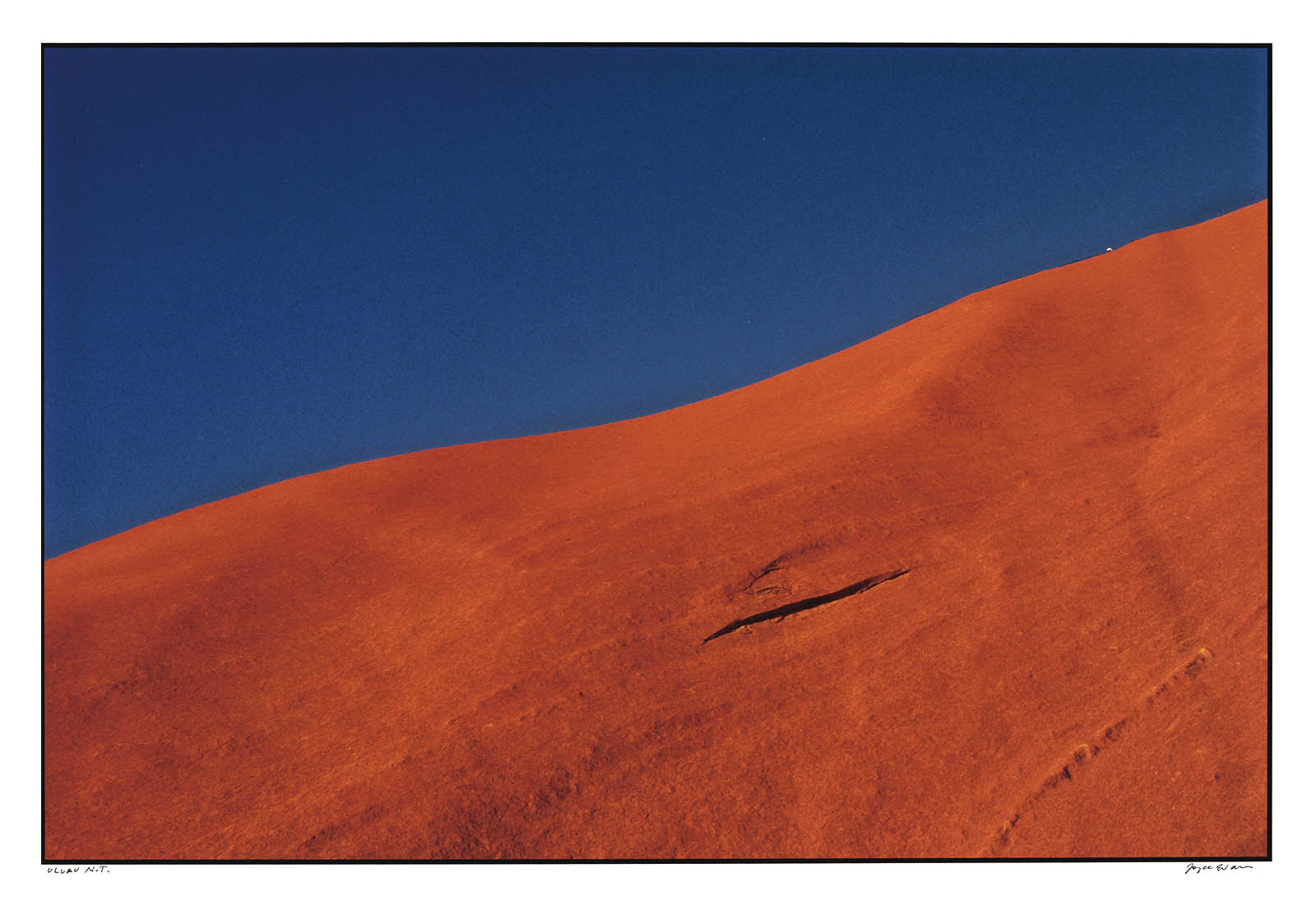
 

Joyce Evans (Australian, 1929-2019) 'Uluru, Northern Territory' 1987


Joyce Evans (Australian, 1929-2019)
Uluru, Northern Territory
1987
Colour photograph
Joyce Evans Archive
National Library of Australia


Joyce Evans was an unusual phenomenon in the Australian photography scene. Her conversion to photography did not occur until she was already in her 40s, while her engagement in professional photography had to wait until she was 50. She never developed a signature style, nor had she become a template photographer, but she possessed a definite photographic personality. …

As a documentary photographer, Evans considered herself a hunter and gatherer waiting to find the image. She remarked, “as an artist, you channel the energy of the place – the image comes to you as a gift.”

Her oeuvre is remarkable for its diversity and includes landscapes, roadkill, portraiture, social documentation, brothels and erotica – all brought together through a unifying sensibility, the Evans photographic moment. She was also an artist with a social conscience and pursued an agenda that shone a light on racism, social inequality and environmental degradation.

Many of Evans’s photographs demand slow viewing and open up gradually. Uluru, Northern Territory, 1987 (above), shows the rock as if carved by nature. In one sense, it is a very simple photograph in which two colours meet – the brilliant red ochre of the rock and the fathomless blue of the sky. It is also an immensely complex photograph with the mysterious slit – like the womb of the earth – in the centre of the composition and galvanising the viewer’s attention.

Gradually, as you focus into the image, there are signs of human presence at the top of the rock: two climbers on the chain pathway, contrasted with organic shapes created through centuries of erosion – a contrast between the temporal and the eternal. Despite the sense of stillness and silence, there is also considerable movement as the light plays over the textured surfaces.

The photograph is rare in that it defines a space but also distils the spiritual essence of the place and asserts an atmosphere of mystery and contemplative presence.

In 2016, when I was working on a monograph on Evans’s work, she noted: “As a photographer – I have a voice – it is an Australian voice, as I do not know intimately any other culture. It comes at a time when you say: ‘This is my country’. One of the sub-texts, when I pick up a camera, is that I always try to identify the stereotypical that is always defined by that which is on the edge.”

Sasha Grishin. “Joyce Evans, an unheralded icon of photography, the focus of the National Library of Australia,” on the Riotact website 8 October 2023 [Online] Cited 16/10/2023
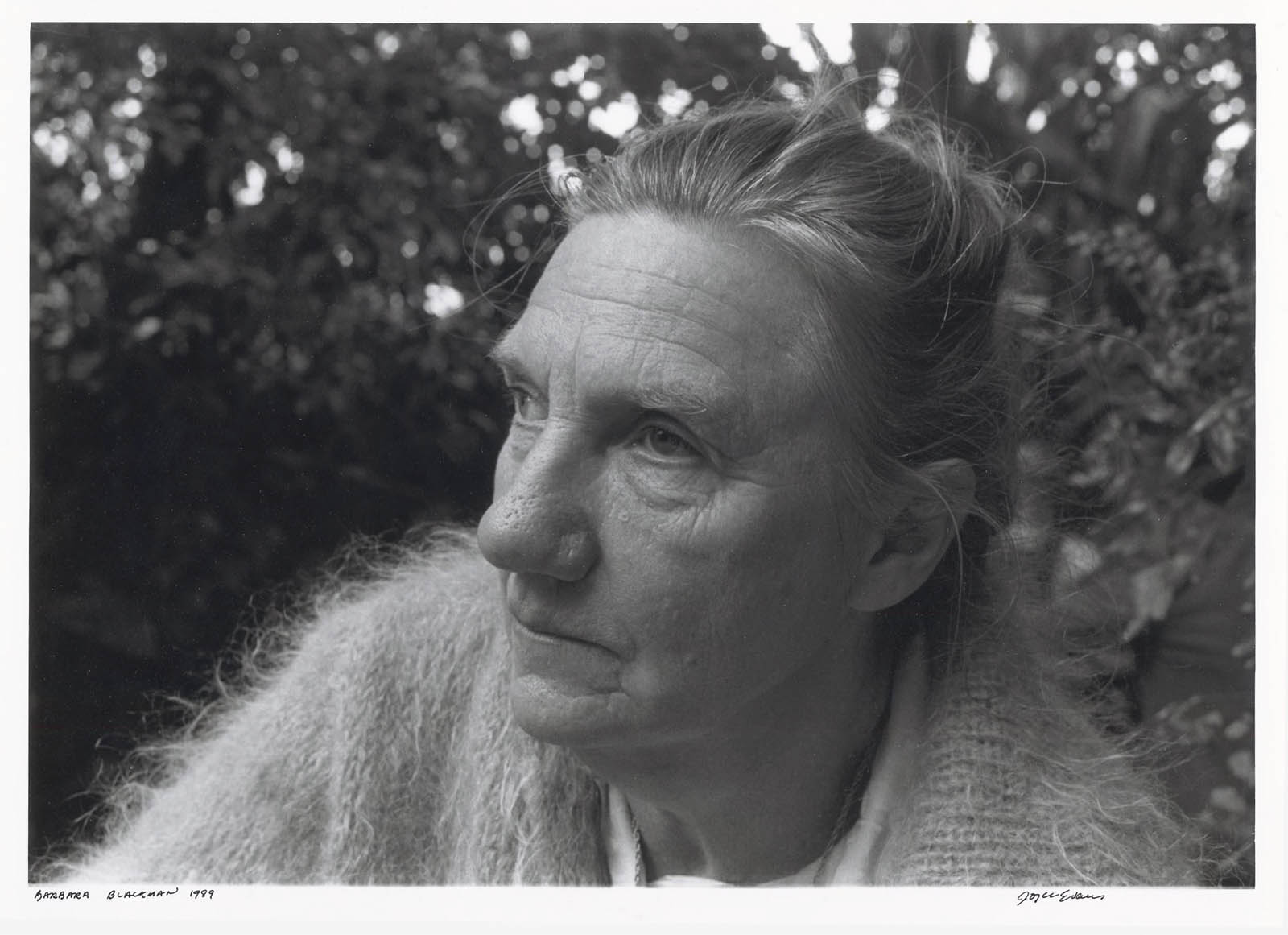
 

Joyce Evans (Australian, 1929-2019) 'Barbara Blackman' 1989


Joyce Evans (Australian, 1929-2019)
Barbara Blackman
1989
Photograph
30 x 40.7cm
Joyce Evans Archive
National Library of Australia


Barbara Blackman AO (née Patterson; born 22 December 1928) is an Australian writer, poet, librettist, broadcaster, model and patron of the arts. In 2004, she donated $1 million to a number of Australian music organisations, including Pro Musica, the Australian Chamber Orchestra, the Australian National University’s School of Music and the Stopera Chamber Opera Company. In 2006, she was awarded the Australian Contemporary Music Award for Patronage. Barbara Blackman was married for 27 years to renowned Australian artist Charles Blackman.
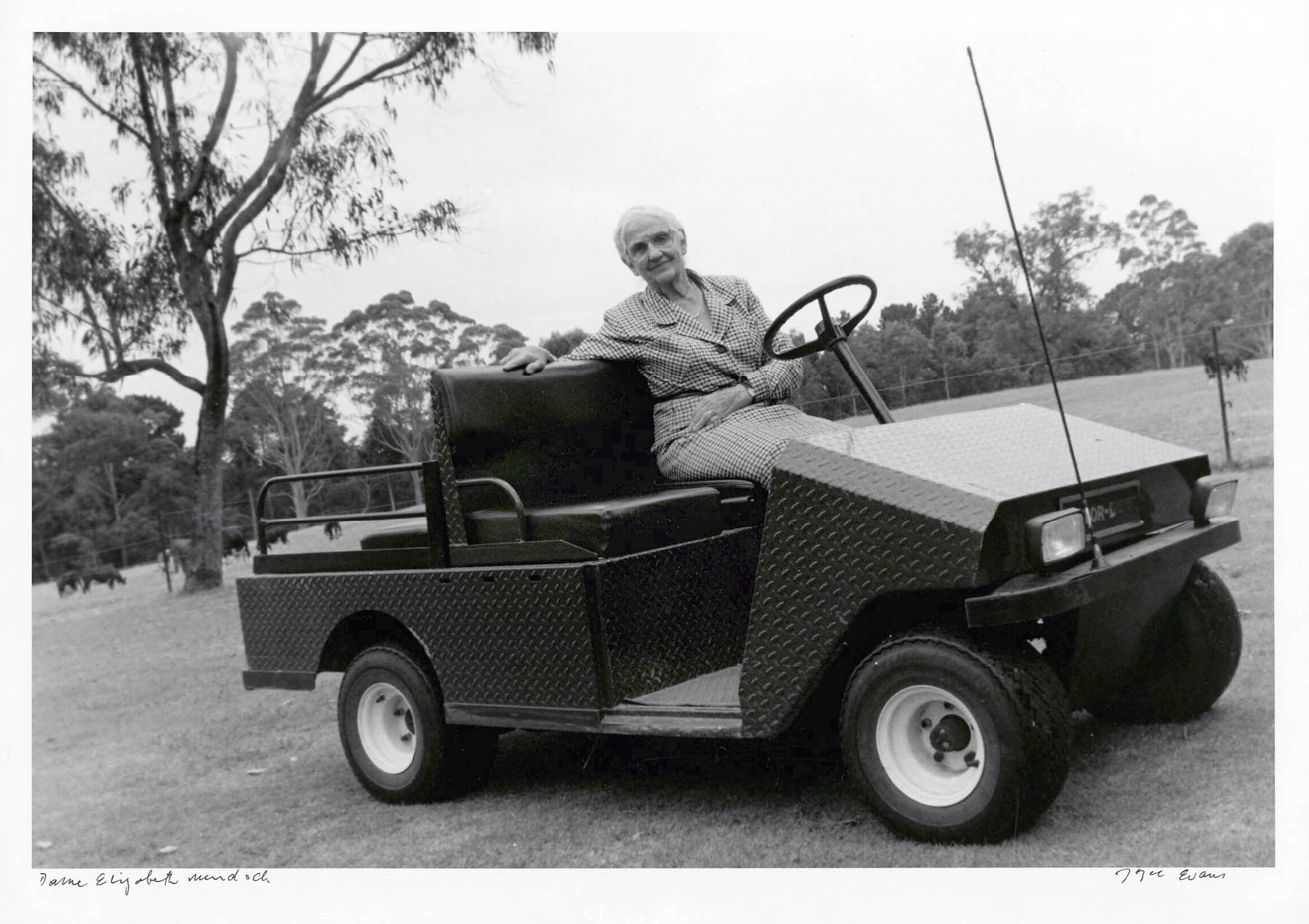
 

Joyce Evans (Australian, 1929-2019) 'Philanthropist Dame Elisabeth Murdoch, Langwarrin, Victoria' 1995


Joyce Evans (Australian, 1929-2019)
Philanthropist Dame Elisabeth Murdoch, Langwarrin, Victoria
1995
Photograph
24.9 x 37.0cm
Joyce Evans Archive
National Library of Australia


Dame Elisabeth Joy Murdoch, Lady Murdoch AC DBE (née Greene; 8 February 1909 – 5 December 2012), also known as Elisabeth, Lady Murdoch, was an Australian philanthropist and matriarch of the Murdoch family. She was the wife of Australian newspaper publisher Sir Keith Murdoch and the mother of international media proprietor Rupert Murdoch. She was appointed a Dame Commander of the Order of the British Empire (DBE) in 1963 for her charity work in Australia and overseas.
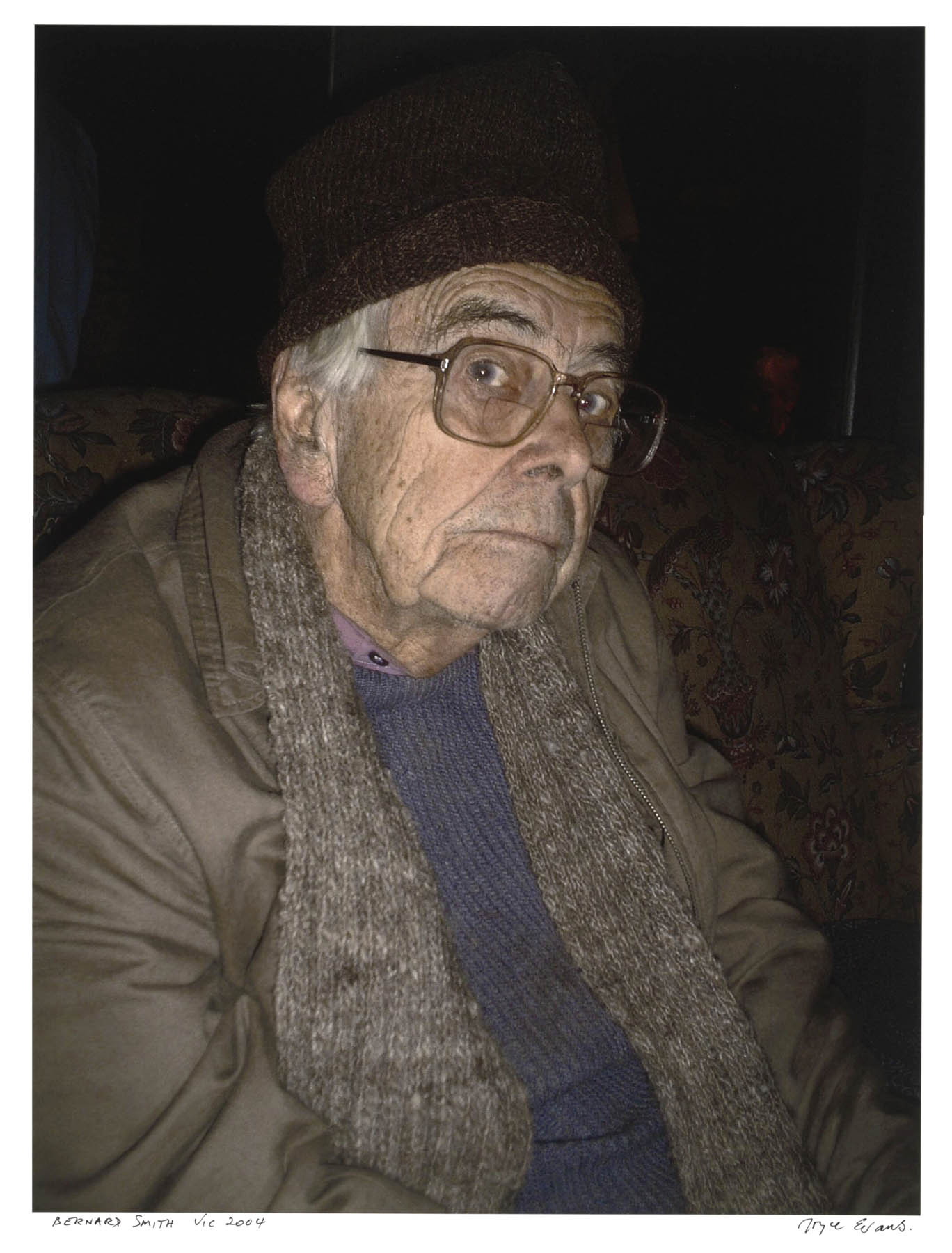
 

Joyce Evans (Australian, 1929-2019) 'Bernard Smith, Victoria' 2004, printed 2013


Joyce Evans (Australian, 1929-2019)
Bernard Smith, Victoria
2004, printed 2013
Colour photograph
47.5 x 37.5cm
Joyce Evans Archive
National Library of Australia


Bernard William Smith (3 October 1916 – 2 September 2011) was an Australian art historian, art critic and academic, considered the founding father of Australian art history, and one of the country’s most important thinkers. His book Place, Taste and Tradition: a Study of Australian Art Since 1788 (1945) is a key text in Australian art history, and influence on Robert Hughes. Smith was associated with the Communist Party of Australia, and after leaving the party remained a prominent left-wing intellectual and Marxist thinker.
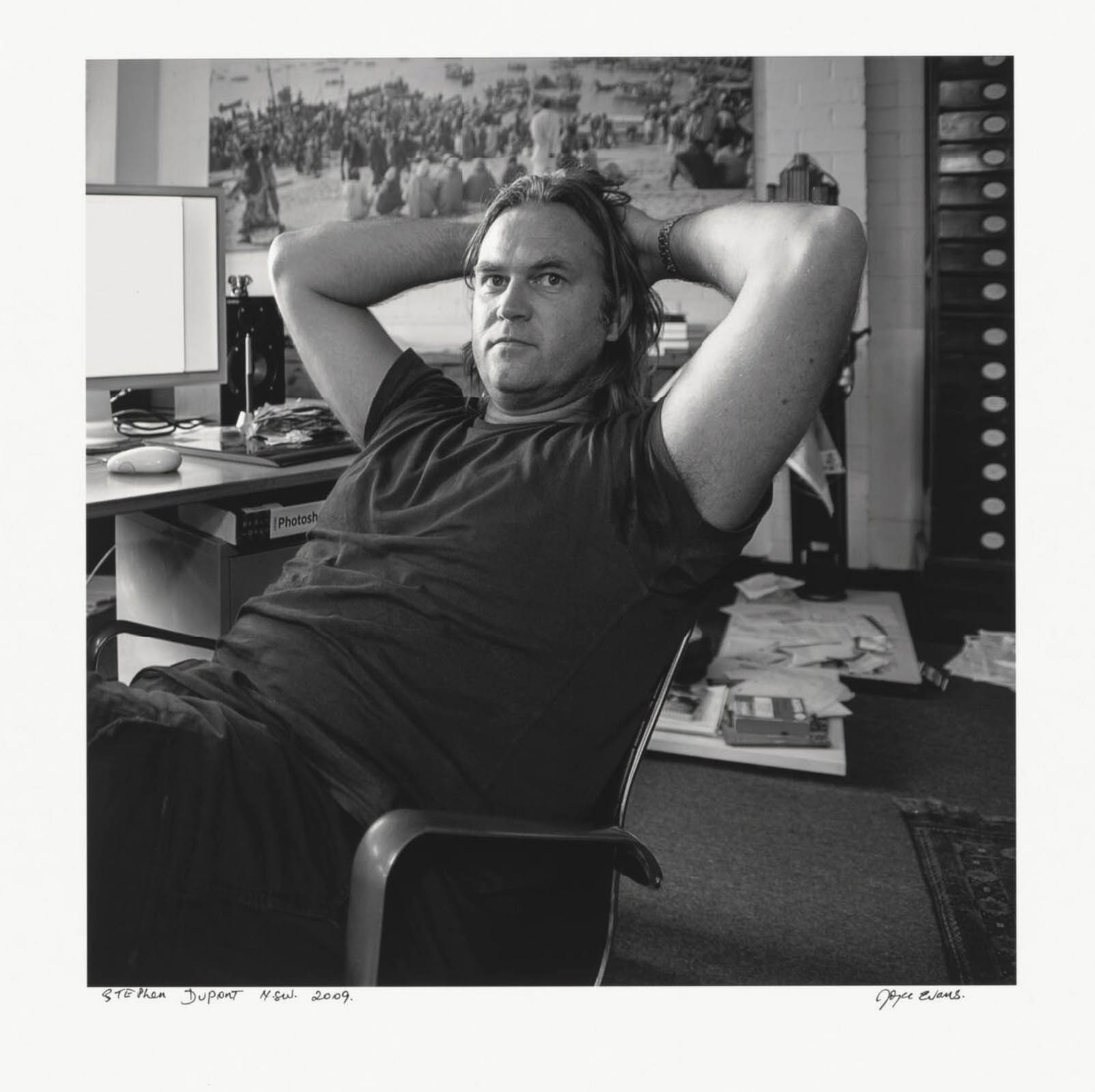
 

Joyce Evans (Australian, 1929-2019) 'Stephen Dupont' 2009


Joyce Evans (Australian, 1929-2019)
Stephen Dupont
2009, printed by David Chisolm and Joyce Evans, 2013
Photograph
35.6 x 35.6cm
Joyce Evans Archive
National Library of Australia


Stephen Dupont (b. 1967) is an Australian photographer and director working on films, commercials, magazine and newspaper assignments and long term personal projects.
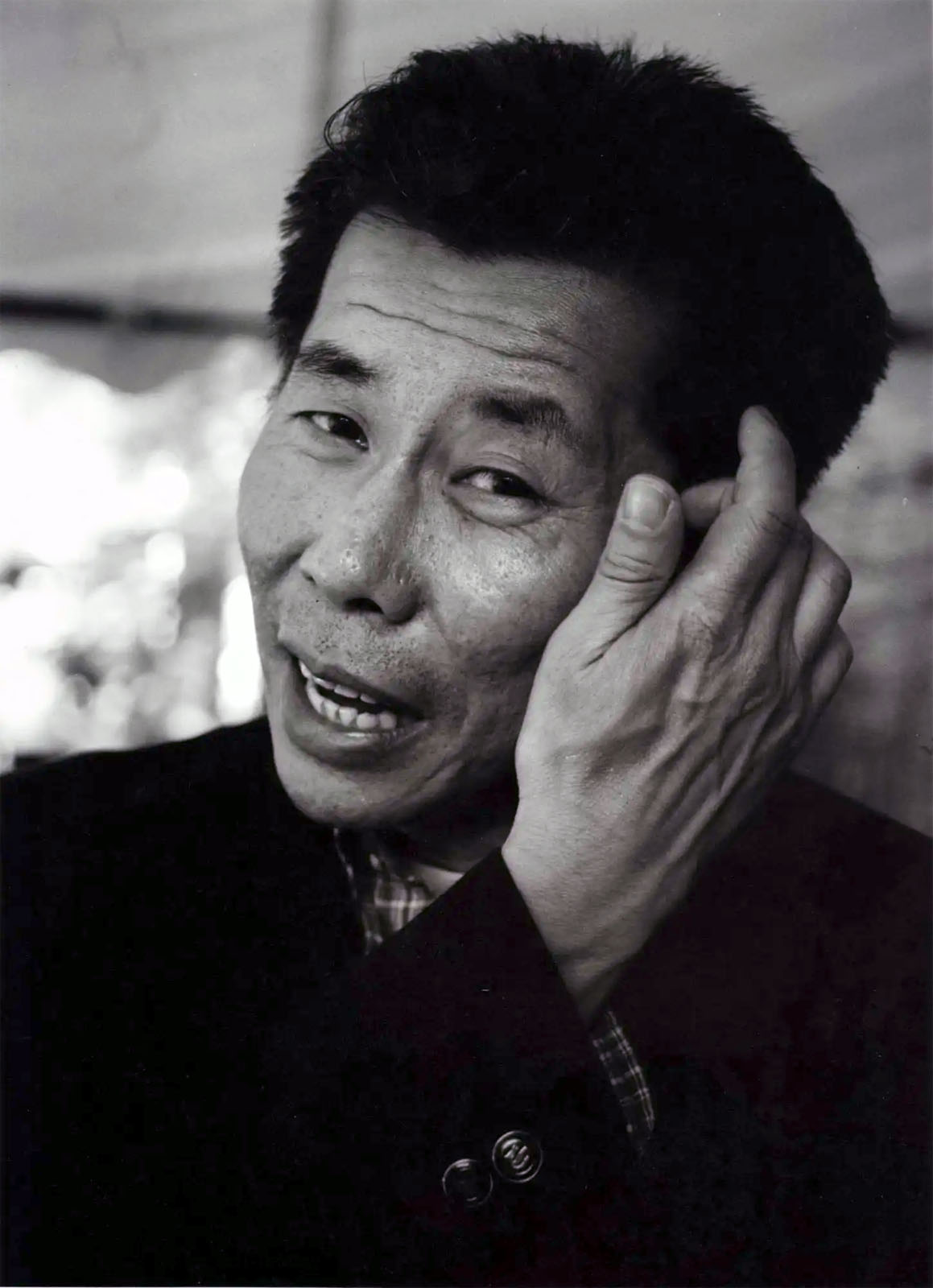
 

Joyce Evans (Australian, 1929-2019) 'William Yang' 1996


Joyce Evans (Australian, 1929-2019)
William Yang
1996
Photograph
Joyce Evans Archive
National Library of Australia


“William Yang [Aust., b.1943] belongs to a generation of artists who used photography to document alternative lifestyles and celebrate social diversity during the latter decades of the 20th century…Yang is the type of social documentary photographer who carries a camera around his neck, ready to capture things with a certain immediacy, as they happen around him.” ~ Museum of Contemporary Art


Joyce Evans was an unusual phenomenon in the Australian photography scene. Her conversion to photography did not occur until she was already in her forties, while her engagement in professional photography had to wait until she was fifty. She never developed a signature style, nor did she become a template photographer, but she possessed a sensibility that has become characteristic of her work, so that you can quickly recognise a Joyce Evans photograph. She was an artist who possessed a definite photographic personality.

Evans combined documentary photography, social photography, landscape photography and studio practice. She also had a social conscience. Although avoiding didactic images or illustrative propaganda, in her documentary work and in her choice of subjects, she had pursued an agenda that shone a light on racism, social inequality and environmental degradation.

This stylish and generously-illustrated monograph shows how Evans’ photography was about capturing not only the surface appearances, but ultimately the essences, of her subjects. It illustrates the Evans’ belief that in silence and stillness you come to feel the spirit of the subject, and that capturing this spirit was the photographer’s goal.

About the author

Professor Sasha Grishin AM, FAHA established the academic discipline of Art History at the ANU and was the Sir William Dobell Professor of Art History and Head of Art History and Curatorship at the ANU until December 2013. He works internationally as an art historian, art critic and curator. In 2005 he was awarded the Order of Australia (AM) for services to Australian art and art history. He has published over 25 books and over 2,000 articles and catalogue essays dealing with various aspects of art.

Text from the National Library of Australia website.
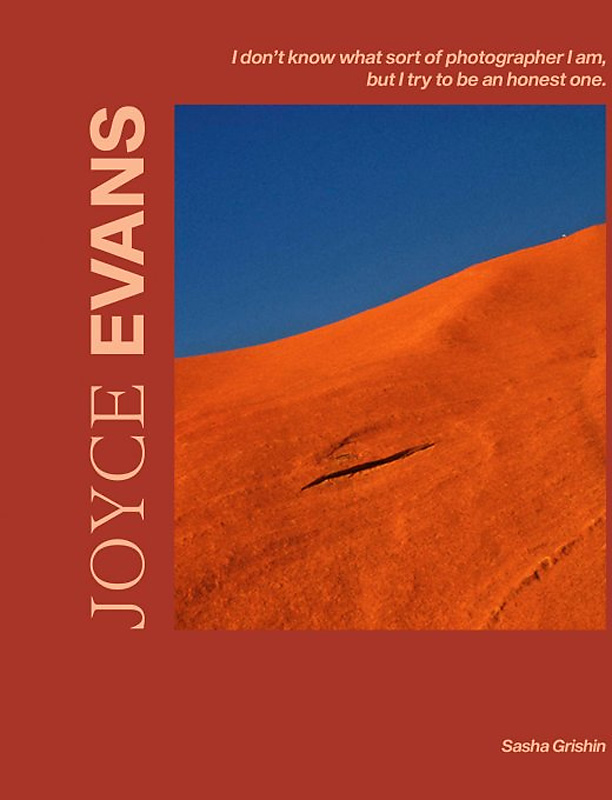
Purchase the book


Cover of the book 'Joyce Evans' by Sasha Grishin


Cover of the book Joyce Evans by Sasha Grishin


National Library of Australia
Parkes Place
Canberra ACT 2600
Australia

Opening hours:
Daily 9am – 5pm

National Library of Australia website

LIKE ART BLART ON FACEBOOK

Back to top

Photographs: ‘Australia 1946-1947’ Part 1 March 2020

March 2020


Unknown photographer (Australian) 'Untitled (girl on porch)' 1946-1947


Unknown photographer (Australian)
Untitled (girl on porch)
1946-1947
Medium format negative
Collection of Nicholas Henderson


One of the great joys about compiling this archive is the ability to rescue unloved and unknown images. To give them a voice in the contemporary world.

These 2 1/4″ square (6 x 6cm) medium format black and white negatives come from the collection of my friend Nick Henderson. There is no marking on any of the negatives, leading me to believe that the film numbers were on the backing paper of the 120 film roll. The negatives are housed in paper packets adorned with a logo and words ‘APS Developing and Printing Service’ – perhaps Australian Photographic Services? Each packet contains basic title information for some of the photographs. Looking at the photographs and their perspective on the world, it would seem that the camera is a waist view camera, in other words the photographer was looking down into the viewfinder, the camera not held at eye level. The camera could possibly have been a Voigtländer or similar camera (see below). The quality of the negatives is reasonable, with some fall off in terms of sharpness occurring at the edge of the image. The photographs can be dated to 1946-1947 due to the February 1947 expiry Victorian registration label on the Chevrolet (thank you Simon Barnfield for spotting this!), are taken by an unknown photographer (probably male)… photographs of life in Sydney, his family and their travels around Australia. This is the first tranche of photographs with roughly the same number to come in the second part of the posting.

What makes these photographs particularly interesting is:

1/ the breadth of subject matter taken just after the Second World War and the fact that they are medium format

2/ the relaxed nature and beauty of the photographs of the children, and the light!

3/ the unknown images of places such as Bondi Beach and historical monuments, such as that of the forlorn The Dog on the Tuckerbox

4/ the photographs of the motor sport activity of hillclimbing, unfortunately no place known but its has been suggested it could be the 90-years-old Maldon hill climb at Mt Tarrengower because of the box-ironbark (and the fact that there are photographs of Maldon in the collection).


Variously we have country towns, theatrical groups, sailing, boating, churches, Sydney ferries, a trip to Maldon in Victoria for the Maldon Show, family picnics, cars and caravans, houses and horse riding, churches and children, and the oh so cute dogs in their own car boxes. So Australian. The photographs really give an extensive insight into suburban life in Australia just after the privations of the Second World War… and the photographer had a good eye. That is what is most important – that they knew how to take a good photograph.

Talking to my friend James McArdle who writes the oh so excellent On this Date in Photography website (essential reading!), he was unaware of the time it takes to prepare images for these postings. It has literally taken me hours and hours of hard work to scan these negatives and then digitally clean and balance them. All to give them a new lease of life in the world, to preserve their captured memories and histories. I hope you can appreciate all the hard work and admire the images I have revealed.

See Part 2 of the posting

Dr Marcus Bunyan


Many thankx to Nick Henderson for allowing me to publish the photographs in the posting. All photographs collection of Nick Henderson. Please click on the photographs for a larger version of the image. See Part 2 of the posting.


APS (Australian Photographic Services?) Developing and Printing Service 'Film packets and negatives' 1946-1947

APS (Australian Photographic Services?) Developing and Printing Service 'Film packets and negatives' 1946-47


APS (Australian Photographic Services?) Developing and Printing Service
Film packets and negatives
1946-1947
Negatives: 2 1/4″ square (6 x 6 cm)
Packet (closed): 3 7/8 x 3 1/4″ (10cm x 8cm)
Collection of Nicholas Henderson


Voigtländer Brillant 1930s


Voigtländer Billiant
1930s
Photograph by Rama, Wikimedia Commons, Cc-by-sa-2.0-fr


The Voigtländer Brillant is a range of pseudo-TLR cameras, and later true TLR cameras, taking 6 Ã— 6 cm exposures on 120 film, made by Voigtländer from 1932. Famed Hungarian-Dutch photographer Eva Besnyö used a Brillant for her early work.


Unknown photographer (Australian) 'Untitled (Circular Quay, Sydney)' 1946-1947


Unknown photographer (Australian)
Untitled (Circular Quay, Sydney)
1946-1947
Medium format negative
Collection of Nicholas Henderson


Unknown photographer (Australian) 'Untitled (Karrabee ferry, Sydney, leaving High St Wharf, Kurraba in the background)' 1946-1947


Unknown photographer (Australian)
Untitled (Karrabee ferry, Sydney, leaving High St Wharf, Kurraba in the background)
1946-1947
Medium format negative
Collection of Nicholas Henderson


Karingal and Karrabee ferry

Karingal and Karrabee were built by Morrison & Sinclair, Balmain for Sydney Ferries Limited, being launched in 1913. They were the smallest of the round-ended K-class Sydney ferries, and could carry 608 and 653 passengers respectively.

They were near identical sister ferries operated by Sydney Ferries Limited and its NSW State Government operated successors on Sydney Harbour from 1913 until 1984. Wooden ferries built at the time of Sydney Ferries’ rapid early twentieth century, they were the smallest of the round-end “K-class ferries”.

The ferries were built as coal-fired steamer and were converted to diesel in the 1930s – the first Sydney Harbour ferries to be so converted. Unlike many early twentieth century Sydney Ferries, they survived the opening of the Sydney Harbour Bridge in the 1930s, and the State Government takeover in 1951.

Karrabee sank at Circular Quay after taking on water during the Great Ferry Race in 1984 – an incident that received extensive media coverage – and did not return to service. Karingal, and the other three remaining old wooden ferries, were taken out of service shortly after Karrabee’s sinking. In service for 71 years, they were among the longest-serving ferries on Sydney Harbour.

“Karingal” and “Karrabee” are Australian Aboriginal words meaning ‘happy home’ and ‘cockatoo’ respectively.

Text from the Wikipedia website [Online] Cited 12/12/2019


Unknown photographer (Australian) 'Untitled (Bondi Beach, Sydney)' 1946-1947


Unknown photographer (Australian)
Untitled (Bondi Beach, Sydney)
1946-1947
Medium format negative
Collection of Nicholas Henderson


Unknown photographer (Australian) 'Untitled (Bondi Beach, Sydney)' 1946-1947


Unknown photographer (Australian)
Untitled (Bondi Beach, Sydney)
1946-1947
Medium format negative
Collection of Nicholas Henderson


Unknown photographer (Australian) 'Untitled (Bondi Beach, Sydney)' 1946-1947


Unknown photographer (Australian)
Untitled (Bondi Beach, Sydney)
1946-1947
Medium format negative
Collection of Nicholas Henderson


Unknown photographer (Australian) 'Untitled (The Dog on the Tuckerbox)' 1946-1947


Unknown photographer (Australian)
Untitled (The Dog on the Tuckerbox)
Gundagai, 1946-1947
Medium format negative
Collection of Nicholas Henderson


Unknown photographer (Australian) 'Untitled (The Dog on the Tuckerbox)' 1946-1947


Unknown photographer (Australian)
Untitled (The Dog on the Tuckerbox)
Gundagai, 1946-1947
Medium format negative
Collection of Nicholas Henderson


The Dog on the Tuckerbox

The Dog on the Tuckerbox is an Australian historical monument and tourist attraction, located at Snake Gully, approximately five miles (eight kilometres) from Gundagai, New South Wales as described in the song of the same name.

The inspiration for the statue has been traced to a doggerel poem, “Bullocky Bill”, published anonymously by “Bowyang Yorke” in 1857 (other references have 1880 in the Gundagai Times, however confirmation of either is hard to find), which humorously describes a series of misfortunes faced by a bullock driver, culminating in his dog either sitting on or spoiling the food in his tucker-box (an Australian colloquialism for a box that holds food, similar to a lunchbox, but larger). …

A dog monument was first erected at a site nine miles from Gundagai in 1926. Gundagai stonemason Frank Rusconi suggested a memorial using the legend of the Dog on the Tuckerbox in 1928; and in 1932 the proposal was taken up by the community…

The Back to Gundagai Committee chose the Five Mile camping site rather than the Nine Mile Peg as a location for the monument on the basis that it was more convenient to the Hume Highway and closer to the town, thereby more beneficial to tourism.

A nationwide competition was held to obtain the most suitable inscription for the monument. The chosen inscription on the base of the monument was written by Brian Fitzpatrick of Sydney. The inscription says:

“Earth’s self upholds this monument
To conquerors who won her when
Wooing was dangerous, and now
Are gathered unto her again.”

The dog section of the monument was modelled by Rusconi and cast at ‘Oliver’s Foundry’ in Sydney. Rusconi also sculpted its base.

The Dog on the Tuckerbox monument was erected in 1932 as part of ‘Back to Gundagai’ week, and a large crowd “gathered to her again” to witness the unveiling by Prime Minister Joseph Lyons on 28 November 1932. It was planned to donate money placed in the wishing well at the base of the monument to the Gundagai District Hospital. A souvenir shop was also opened nearby. Copyright on the monument was vested in the Gundagai Hospital, who for many years received a useful income from receipt of royalties from firms using the iconic image.

Text from the Wikipedia website [Online] Cited 12/12/2019


Unknown photographer (Australian) 'Untitled (hillclimb, possibly at Maldon, Victoria)' 1946-1947


Unknown photographer (Australian)
Untitled (hillclimb, possibly at Maldon, Victoria)
1946-1947
Medium format negative
Collection of Nicholas Henderson


Unknown photographer (Australian) 'Untitled (hillclimb, possibly at Maldon, Victoria)' (detail) 1946-1947


Unknown photographer (Australian)
Untitled (hillclimb, possibly at Maldon, Victoria) (detail)
1946-1947
Medium format negative
Collection of Nicholas Henderson


Unknown photographer (Australian) 'Untitled (hillclimb, possibly at Maldon, Victoria)' 1946-1947


Unknown photographer (Australian)
Untitled (hillclimb, possibly at Maldon, Victoria)
1946-1947
Medium format negative
Collection of Nicholas Henderson


Unknown location, possibly the 90-years-old Maldon hill climb at Mt Tarrengower because of the box-ironbark (and the fact that there are photographs of Maldon in the collection).


Unknown photographer (Australian) 'Untitled (hillclimb, possibly at Maldon, Victoria)' (detail) 1946-1947


Unknown photographer (Australian)
Untitled (hillclimb, possibly at Maldon, Victoria) (detail)
1946-1947
Medium format negative
Collection of Nicholas Henderson


Unknown photographer (Australian) 'Untitled (hillclimb, possibly at Maldon, Victoria)' 1946-1947


Unknown photographer (Australian)
Untitled (hillclimb, possibly at Maldon, Victoria)
1946-1947
Medium format negative
Collection of Nicholas Henderson


Unknown photographer (Australian) 'Untitled (hillclimb, possibly at Maldon, Victoria)' (detail) 1946-1947


Unknown photographer (Australian)
Untitled (hillclimb, possibly at Maldon, Victoria) (detail)
1946-1947
Medium format negative
Collection of Nicholas Henderson


Unknown photographer (Australian) 'Untitled (boat)' 1946-1947


Unknown photographer (Australian)
Untitled (boat)
1946-1947
Medium format negative
Collection of Nicholas Henderson


Unknown photographer (Australian) 'Untitled (boat at sea)' 1946-1947


Unknown photographer (Australian)
Untitled (boat at sea)
1946-1947
Medium format negative
Collection of Nicholas Henderson


Unknown photographer (Australian) 'Untitled (child on porch)' 1946-1947


Unknown photographer (Australian)
Untitled (child on porch)
1946-1947
Medium format negative
Collection of Nicholas Henderson


Unknown photographer (Australian) 'Untitled (boy outside house)' 1946-1947


Unknown photographer (Australian)
Untitled (boy outside house)
1946-1947
Medium format negative
Collection of Nicholas Henderson


Unknown photographer (Australian) 'Untitled (boy smiling)' 1946-1947


Unknown photographer (Australian)
Untitled (boy smiling)
1946-1947
Medium format negative
Collection of Nicholas Henderson


Unknown photographer (Australian) 'Untitled (boy and girl smiling)' 1946-1947


Unknown photographer (Australian)
Untitled (boy and girl smiling)
1946-1947
Medium format negative
Collection of Nicholas Henderson


Unknown photographer (Australian) 'Untitled (child on lawn)' 1946-1947


Unknown photographer (Australian)
Untitled (child on lawn)
1946-1947
Medium format negative
Collection of Nicholas Henderson


Unknown photographer (Australian) 'Untitled (child and chairs)' 1946-1947


Unknown photographer (Australian)
Untitled (child and chairs)
1946-1947
Medium format negative
Collection of Nicholas Henderson


Unknown photographer (Australian) 'Untitled (man and woman)' 1946-1947


Unknown photographer (Australian)
Untitled (man and woman)
1946-1947
Medium format negative
Collection of Nicholas Henderson


Unknown photographer (Australian) 'Untitled (house)' 1946-47


Unknown photographer (Australian)
Untitled (house)
1946-1947
Medium format negative
Collection of Nicholas Henderson


Unknown photographer (Australian) 'Untitled (boy on horse)' 1946-47


Unknown photographer (Australian)
Untitled (boy on horse)
1946-1947
Medium format negative
Collection of Nicholas Henderson


Unknown photographer (Australian) 'Untitled (dog and saucepan)' 1946-47


Unknown photographer (Australian)
Untitled (dog and saucepan)
1946-1947
Medium format negative
Collection of Nicholas Henderson


Unknown photographer (Australian) 'Untitled (1932 Chevrolet)' 1946-47


Unknown photographer (Australian)
Untitled (1932 Chevrolet)
1946-1947
Medium format negative
Collection of Nicholas Henderson


Unknown photographer (Australian) 'Untitled (1932 Chevrolet and caravan)' 1946-47


Unknown photographer (Australian)
Untitled (Chevrolet and caravan)
1946-1947
Medium format negative
Collection of Nicholas Henderson


Unknown photographer (Australian) 'Untitled (1932 Chevrolet and dogs)' 1946-47


Unknown photographer (Australian)
Untitled (1932 Chevrolet and dogs)
1946-1947
Medium format negative
Collection of Nicholas Henderson


The photographs can be dated to 1946-1947 due to the February 1947 expiry Victorian registration label on the Chevrolet. Thank you to Simon Barnfield for spotting this.


Unknown photographer (Australian) 'Untitled (1932 Chevrolet and caravan)' 1946-47


Unknown photographer (Australian)
Untitled (Chevrolet and caravan)
1946-1947
Medium format negative
Collection of Nicholas Henderson


Unknown photographer (Australian) 'Untitled (Man and car)' 1946-47


Unknown photographer (Australian)
Untitled (man and car)
1946-1947
Medium format negative
Collection of Nicholas Henderson


Unknown photographer (Australian) 'Untitled (family picnic)' 1946-47


Unknown photographer (Australian)
Untitled (family picnic)
1946-1947
Medium format negative
Collection of Nicholas Henderson


Unknown photographer (Australian) 'Untitled (Man and car)' 1946-47


Unknown photographer (Australian)
Untitled (man and car)
1946-1947
Medium format negative
Collection of Nicholas Henderson


Unknown photographer (Australian) 'Untitled (house on hill)' 1946-47


Unknown photographer (Australian)
Untitled (house on hill)
1946-1947
Medium format negative
Collection of Nicholas Henderson


Unknown photographer (Australian) 'Untitled (room interior)' 1946-47


Unknown photographer (Australian)
Untitled (room interior)
1946-1947
Medium format negative
Collection of Nicholas Henderson


Unknown photographer (Australian) 'Untitled (Future Miss Maldons, Maldon Show, Maldon, Victoria, with Maldon Timber & Hardware at 28 Main Street in the background)' 1946-47


Unknown photographer (Australian)
Untitled (Future Miss Maldons, Maldon Show, Maldon, Victoria, with Maldon Timber & Hardware at 28 Main Street in the background)
1946-1947
Medium format negative
Collection of Nicholas Henderson


Where are they now, so many ghosts with flowers in their hair.


Unknown photographer (Australian) 'Untitled (Scottish band, Maldon Show, Maldon, Victoria)' 1946-47


Unknown photographer (Australian)
Untitled (Scottish band, Maldon Show, Maldon, Victoria)
1946-1947
Medium format negative
Collection of Nicholas Henderson


Unknown photographer (Australian) 'Untitled (church)' 1946-47


Unknown photographer (Australian)
Untitled (church)
1946-1947
Medium format negative
Collection of Nicholas Henderson


Unknown photographer (Australian) 'Untitled (church)' 1946-1947


Unknown photographer (Australian)
Untitled (church)
1946-1947
Medium format negative
Collection of Nicholas Henderson


Unknown photographer (Australian) 'Untitled (group of actors)' 1946-1947


Unknown photographer (Australian)
Untitled (group of actors)
1946-1947
Medium format negative
Collection of Nicholas Henderson


Unknown photographer (Australian) 'Untitled (actor and ballerina)' 1946-1947


Unknown photographer (Australian)
Untitled (actor and ballerina)
1946-1947
Medium format negative
Collection of Nicholas Henderson


Unknown photographer (Australian) 'Untitled (actor)' 1946-1947


Unknown photographer (Australian)
Untitled (actor)
1946-1947
Medium format negative
Collection of Nicholas Henderson


Unknown photographer (Australian) 'Untitled (band performances)' 1946-1947


Unknown photographer (Australian)
Untitled (band performances)
1946-1947
Medium format negative
Collection of Nicholas Henderson


Unknown photographer (Australian) 'Untitled (Bilsons, country town)' 1946-1947


Unknown photographer (Australian)
Untitled (Bilsons, country town)
1946-1947
Medium format negative
Collection of Nicholas Henderson


LIKE ART BLACK ON FACEBOOK

Back to top

Photographs: Historical Australia Part 1

December 2017

WARNING: Aboriginal and Torres Strait Islander readers are warned that the following posting may contain images of deceased persons.


Unknown photographer. 'George St. from King St., Sydney' Nd


Unknown photographer
George St. from King St., Sydney
Nd


The last posting of the year, because I am feeling rather exhausted!

Down the rabbit hole we go… into the world of Australian historical photography.

In photographs that were taken around the same time, the contrast could not be more evident: horse and trap travelling down fashionable George Street, Sydney while donkey and cart in Outback Australia fetch water; Nicholas Caire’s King Billy’s camp in McCree’s Paddock, Maloga, Victoria – King Billy ‘The Last of His Tribe’, the final remnant of a dying race and J. W. Lindt’s Untitled (Two men in rural Victoria), old men with beards and hats, swag and billy, possibly itinerant travelling workers.

And so I have sequenced these images as best I could.

The white men stand implacably outside the courthouses while the Indigenous feet touch the earth. They fight for their country, win the Military Medal and can’t even vote. The courthouses of the colonial white, those massive edifices of the law, jurisdiction and punishment tied with Australian Aborigines in chains and Aboriginal youth Dylan Voller, 17, shackled to a metal chair by his hands, feet and neck and wearing a spithood at Don Dale Youth Detention Centre in 2015.

And so it goes…

Although there can be many contexts and interpretations within the photographic labyrinthine abyss, and even though these photographs were taken by colonial masters, the materiality of photography (as act of creation and as final printed product) and its relationship to the real is what is important here. These are beautiful photographs of peoples from the First Nations, people that all have their own specific names, and in many instances, speak / spoke their own specific language.

You only have to look at the boy standing at the back of the photograph Aboriginal family group to recognise how his direct looking transcends the fixed gaze of the camera, the male gaze, the white gaze and the colonial gaze. His gaze, his return of serve if you like, speaks to us through time – of an individual, valuable and empowered human being assured in his own self. No colour, jurisdiction nor race is necessary for us recognise him as such.

Dr Marcus Bunyan


Many thankx to Dennis Joachim for allowing me to publish the photographs in the posting. Please click on the photographs for a larger version of the image.


“Think carefully: there can be no redundancy in photography, for a photograph, whatever it is, already speaks twice of time, once to seize it and another to say that it has passed; And there can be no trompe-l’oeil in it either; it is and will always be the mise en abyme par excellence; It is the mind that looks at the abyss, it is a piece of the abyss cut clear, with four right angles cut terribly sharp.”


Denis Roche


Trompe-l’oeil

Trompe-l’Å“il (French for “deceive the eye”) is an art technique that uses realistic imagery to create the optical illusion that the depicted objects exist in three dimensions. It refers to perspectival illusionism.

Mise en abyme

Mise en abyme is a French term derived from heraldry, and literally means “placed into abyss”. A common sense of the phrase is the visual experience of standing between two mirrors, then seeing as a result an infinite reproduction of one’s image. Another is the Droste effect, in which a picture appears within itself, in a place where a similar picture would realistically be expected to appear… In Western art history, “mise en abyme” is a formal technique in which an image contains a smaller copy of itself, in a sequence appearing to recur infinitely; “recursive” is another term for this.


Unknown photographer. 'Richmond Courthouse, Courthouses of New South Wales' c. 1870-1880s


Unknown photographer
Richmond Courthouse, Courthouses of New South Wales
c. 1870-1880s
Date built: 1877


Richmond is a town in New South Wales, in the local government area of the City of Hawkesbury. It is located on the alluvial Hawkesbury River flats, at the foot of the Blue Mountains. It is about 65 km by road from Sydney.

Richmond Court House and Police Station is located at 288 Windsor Street, Richmond NSW. The present building was designed by Colonial Architect, James Barnet in 1877 as a court house with associated police station. The front entrance is via an attractive arched colonnade with feature brickwork and the roof is supported by bracketed eaves. The raised roof of the court room may be seen in the centre of the structure. Note the similarity in style with the adjacent former post office, also the work of James Barnet. It replaced the watch-house built by William Cox in 1827. The watch-house was a four roomed structure with a detached kitchen. One of the rooms was barred and secure for the custody of prisoners. The other rooms were for the policeman on duty. The rear of the site was set aside for the first stock pound in the town. The court house is still in use but the Police Local Area Command is located in the nearby town of Windsor.

Text from the Hawkesbury.org website Nd [Online] Cited 19/12/2017


Alphonse Chargois (French, 1860-1936) 'Cumjam Murdered Ferguson at Mentana March 1894' 1894


Alphonse Chargois (French, 1860-1936)
Cumjam Murdered Ferguson at Mentana March 1894
1894
Albumen print
16 x 10 inches


Chargois, Alphonse. (father of Herbert Chargois. died Nov 1936)
Townsville, Qld 1879
Croydon, Qld 1892-1896
Normanton, Qld 1896-1897
Townsville, Qld 1897
McArthur St, Croydon Qld (base) 1898-1913
Georgetown, Qld (trav) 1900
Torres Strait Islands, Qld (trav) Oct 1913
“Touring the South” 1913-1915
(owned Bicycle Business, Warwick, Qld, 1915, advertised for sale Feb 1915)
“Royal Studio”
“late Lyne Brown, McTaggart and Dobson”
Lake St, Cairns, Qld July 1915-1936
(bought McTaggart & Dobson’s studio, July 1915)
Mareeba, Qld (trav) Oct 1915
(estate publicly Auctioned up Oct 1947)


Cumjam standing in front of a government issue tent. Cumjam was arrested for the murder of Mr Ferguson (aged 60) who worked for Donald Mclntyre at Mentana Station. Ferguson’s murder and the capture of Cumjam were reported widely in the Norman Chronicle, The North Queensland Register and The Brisbane Courier between 1894-1895. Records detailing the outcome of his arrest have not been located.


“An Aboriginal Desperado”

The “Norman Chronicle” says: “By the last mail we received from Mr. Chargois, who is at present at Delta, two photos of the blackboy “Cumjam.” who is supposed to have murdered Ferguson at Mentana in March, 1894. The details of the capture as given by Mr. Chargois are as follows: ‘Mr Jack Adford, who has been managing Loch-na-gar for Mr. McInytre, had received instructions to move cattle to Daigonally, and wishing to bring over with him some of the native curios, he told the blacks, ‘Me go away by-and-by take away altogether bullock, you fetch ’em up spear, shell, boomerang, me give you tumbac. Me come back one moon.’ One moon goes by and the blacks were there to the number of about 50, eager to exchange their native gear for tobacco. All were up at the station except one, who stayed at the camp, and Jack Alford, wishing to know why he do so, asked the others, ‘What name boy sit down longa camp?’ ‘That fellow name ‘Cumjam’; he sick long a cobra.’ Alford at once recognised the murdered of Ferguson, although he gave no sign of his discovery, but said to the other, ‘Poor fellow, you go fetch em up, me give him medicine make him alright.’ ‘Cumjam’ was accordingly conducted up. ‘What name belongs you?’ said Alford. ‘Cumjam,’ replied the black. Alford decided at once upon his plan of action, told the other blacks to step back and site down, then taking Cumjam aside he seized him and with the help of his own boys bound him up. The other blacks, not liking the look of things, began to get uneasy, and slipped away one by one down to the creek, leaving Cumjam captured. It was no easy task to bring him along. He ate through one strap, and when that was replaced by a chain and padlock he managed somehow to pick the latter to pieces.’ The photo which we have on view shows the prisoner to be securely bound.”

The North Queensland Register 16 October 1895

Text from the Thagaalbi: History of Australia’s Indigenous people Facebook page [Online] Cited 19/12/2017


The presence of Europeans along the gulf coast and south-western areas of the Peninsula was met with Aboriginal resistance. When J.T. Embley surveyed the Mitchell River in 1886-1887 he counted “skirmishes with the blacks” to have been the cause of delays in the completion of his work.136 The death of Ferguson, an elderly white stockman, in March 1894 followed his spearing on Mentana station by the Aboriginal, Cumjam.137 Only a few months before Ferguson’s death one party of survivors of the steamship, Kanahooka, after its capsize off the Mitchell River in January 1894, were able to make their way through the Kokobera country through to safety at Mentana station.138 This was despite popular fears that they would be exposed to the “hostility of the blacks”.139

Philip L. Freier. Living with the ‘Munpitch’: The history of Mitchell River Mission, 1905-1967. James Cook University, Doctor of Philosophy Thesis, 1999, pp. 86-87 [Online] Cited 19/12/2017


Unknown photographer. 'Windsor Courthouse, Courthouses of New South Wales' c. 1870-1880s


Unknown photographer
Windsor Courthouse, Courthouses of New South Wales
c. 1870-1880s
Date built: 1821


Windsor is a town lying North-West of Sydney, New South Wales, Australia. Windsor is located in the local government area of the City of Hawkesbury. It sits on the Hawkesbury River, on the north-western outskirts of the Sydney metropolitan area.

Windsor Courthouse is a rare surviving Colonial Georgian public building that originally dates from the early nineteenth century. The building has a fine and impressive form which uses an adapted Palladian plan to suit the Australian climate. It is of considerable historical, social and aesthetic significance as one of the earliest surviving courthouse buildings in Australia. The courthouse now [1967] ranks as Greenway’s best preserved building. The Building and Maintenance Branch of the NSW Department of Public Works carried out restoration work in 1961 to remove unsympathetic rendering of the external brickwork which was an attempt to reduce the problem of damp. The building now stands in its original and unspoiled form in Windsor, the most prosperous and successful of the towns then founded by Governor Macquarie. The courthouse was insisted upon by Governor Macquarie, designed by Greenway (himself originally a convict) and built for A₤1,800 by William Cox, using convict labour. It is a combination and the result of all the forces directly at play during the Australia’s early development. The oldest existing local court in New South Wales. Cox later served at Windsor as a magistrate.

Text from the Wikipedia website


Unknown photographer. 'Pitt St. looking S. from Bridge St., Sydney' 1895


Unknown photographer
Pitt St. looking S. from Bridge St., Sydney
1895
Albumen print


Unknown photographer. 'Getting Water' 1892

Unknown photographer. 'Getting Water' 1892


Unknown photographer
Getting Water
1892
Albumen prints


Unknown photographer. '"At the well" Station Hands' 1892


Unknown photographer
“At the well” Station Hands
1892
Albumen print


Unknown photographer. 'Untitled [Aboriginal ceremony]' c. 1892


Unknown photographer
Untitled [Aboriginal ceremony]
c. 1892
Albumen print


Unknown photographer. 'Court House Bathurst N S Wales, Courthouses of New South Wales' c. 1870-1880s


Unknown photographer
Court House Bathurst N S Wales, Courthouses of New South Wales
c. 1870-1880s
Date built: 1880


Bathurst is a regional city in the Central Tablelands of New South Wales, Australia. It is about 200 kilometres north-west of Sydney.

Bathurst Courthouse is one of the finest Victorian Court House buildings in New South Wales. Built as part of a precinct of Victorian public buildings, it is a landmark building prominently sited in the town centre of Bathurst. The building has a lengthy association with the provision of justice in the district. The wings, built as the postal and telegraph offices, were opened in 1877. The entire structure is 81 metres (266 ft) long and 45 metres (148 ft) wide. The west wing is now occupied by the Central Western Music Centre. The east wing is now the Historical Society Museum.

Text from the Wikipedia website


Unknown photographer. 'King Billy Maloga' Nd


Nicholas Caire (Australian, 1837-1918)
King Billy Maloga (King Billy’s camp in McCree’s Paddock, Maloga, Victoria)
1891


Photograph of four Aboriginal Australians, two men and two women, seated on ground in front of a shelter. Older man on left holds wooden sticks or spears, and a dog sits next to him. The three main local tribes were named after their “country” (or district), being “Burrumbeet” from Lakes Burrumbeet and Learmonth, “Keyeet” from Mt Buninyong and “Tooloora” from Mt Warrenheip and Lal Lal Creek. The last well recognised leader of the district, was “King Billy” from Burrumbeet, whose death surprisingly made the newspapers in mining areas and big cities right round the country.

Ballarat’s Mullawallah (also known as King Billy or Frank Wilson), was buried in 1896 to considerable civic interest as a result of being nominated as ‘The Last of His Tribe’.


J. W. Lindt. 'Untitled [Two men in rural Victoria]' c. 1880s


J. W. Lindt (John William, Australian 1845-1926, Melbourne, photographer)
Untitled [Two men in rural Victoria]
c. 1880s
Cabinet card
Albumen print


John William Lindt (1845-1926), photographer, was born at Frankfurt on Main, Germany, son of Peter Joseph Lindt, excise officer, and his wife Justine, née Rambach. At 17 he ran away to sea and joined a Dutch sailing ship. He deserted at Brisbane; by 1863 he was at Grafton as a piano-tuner and then worked in a photographic studio. He visited Germany in 1867 and on his return bought the business. Using the wet-plate process he photographed the Clarence River district and its Aboriginals, producing albums in 1875 and 1876. He then sold out and went to Melbourne where he opened a studio in Collins Street. He soon won repute for his society, theatre and landscape photographs. In 1880 he photographed the capture of the Kelly gang at Glenrowan. When the first commercial dry plates arrived in Melbourne he went to Europe to seek agencies for the latest photographic equipment. On his return he worked in the studio and the Victorian countryside; many of his photographs were used in the railways. He also designed and modified cameras as well as ‘advising in matters photographic’.

Read the full biography on the Australian Dictionary of Biography website


Unknown photographer. 'Darlinghurst Gaol & Court House, Sydney Oct. 1870' 1870


Unknown photographer
Darlinghurst Gaol & Court House, Sydney Oct. 1870
1870
Date built: 1844


The Darlinghurst Court House and residence is the finest, and only erudite Old Colonial Grecian public building complex surviving in Australia. Commenced in the 1830s, it has a long and continual association with the provision of law and order along with the neighbouring Darlinghurst Gaol complex. The imposing sandstone building is prominently sited at Taylor Square. The Court House, designed by Lewis and built between 1837 and 1844, is the first purpose designed court house to be built in NSW. The pavilions on either side were designed by Barnet around 1886. The extension facing Victoria Street was designed by the Government Architect’s Office and completed c. 1963. The central block was adapted from an 1823 design in Peter Nicholson’s ‘The New Practical Builder’.

Text from the Wikipedia website


Unknown photographer. 'Untitled [Australian Aborigines in chains]' Nd


Unknown photographer
Untitled [Australian Aborigines in chains]
Nd
Albumen print


Dylan Voller


Aboriginal youth Dylan Voller, 17, shackled to a metal chair by his hands, feet and neck and wearing a spithood at Don Dale Youth Detention Centre in 2015


Unknown artist. 'Unknown Courthouse, Courthouses of New South Wales' c. 1870s


Unknown photographer
Unknown Courthouse, Courthouses of New South Wales
c. 1870-1880s


Unknown photographer. 'Untitled [Aboriginal man smoking a pipe]' Nd


Unknown photographer
Untitled [Aboriginal man smoking a pipe]
Nd


Unknown photographer. 'Untitled [Aboriginal making fire]' Nd


Unknown photographer
Untitled [Aboriginal making fire]
Nd


Anonymous photographer. 'Untitled [Aboriginal with spear]' Nd


Anonymous photographer
Untitled [Aboriginal with spear]
Nd


Edwards & Errington (Adelaide, South Australia) 'Studio portrait of 2597 Private (Pte) Frederick Prentice, 12th Battalion, and later 1st Australian Pioneer Battalion' (detail) c. 1914-1918


Edwards & Errington (Adelaide, South Australia)
Studio portrait of 2597 Private (Pte) Frederick Prentice, 12th Battalion, and later 1st Australian Pioneer Battalion (detail)
c. 1914-1918
Gelatin silver print on postcard


Northern Territory born WWI veteran Frederick Prentice, an Indigenous serviceman who won the Military Medal. On the verso of the photograph is an original message “Just a little card to remember the good times at Paratoo.” This postcard was sent to a friend, Gertrude Fitzgerald, who he knew at Paratoo, SA. Born in Powells Creek, Northern, NT, on 18 January 1894, Frederick Prentice was educated at Kyre College (later part of Scotch College), Adelaide, from 1905 to 1908. Following schooling, Prentice worked as a station hand and was employed at Manunda Station, South Australia at the time of his enlistment on 7 May 1915 in Keswick. Pte Prentice won a Military Medal for his actions on 19 July 1916 at Pozieres, France, where he showed great courage, resource and ability in bringing machine guns and ammunition through the enemy barrage in the dark and across broken ground. Frederick Prentice returned to Australia as a Corporal on 12 May 1919.

Text from the Australian War Memorial website


Anonymous photographer. 'Untitled [Aboriginal with scars]' Nd


Anonymous photographer
Untitled [Aboriginal with scars]
Nd


Kerry & Co., (Sydney) 'Aboriginal chief' c. 1900-1917


Kerry & Co., (Sydney)
Aboriginal chief
c. 1900-1917
Collotype
13.7 × 8.5cm (image and sheet)


Portrait of Aboriginal chief, Barron River, Queensland, with body paint and head decorations, in ceremonial dress.


Unknown photographer. 'Court House Orange N.S.W., Courthouses of New South Wales' c. 1870-1880s


Unknown photographer
Court House Orange N.S.W., Courthouses of New South Wales
c. 1870-1880s
Date built: 1883


“On a site where local Wiradjuri people are said to have once held corroborees stands the Orange court House. A slab and bark watch-house was erected in 1849 and used as a court house from 1851. Early church services and the first council meetings were held. A larger sandstone Court House was erected in 1860-62 by Kennard and Snow. Bushranger Ben Hall was tried here in the early 1860s. This building made way for the present Neo-classical building designed by James Barnet in 1883. A new wing was constructed a the rear of the site in 2001.”

~ Orange Heritage Trail, a pamphlet produced by Ross Maroney in conjunction with the Orange City Council, the Orange Visitor Information Centre.

.
The current Orange Courthouse building was designed by the Colonial Government Architect James Barnet. Construction was completed in 1883. Previous buildings existed on the site, the first being erected in 1847, around the time of the town’s settlement, and operated as a Court of Petty Sessions, being the usual arrangements in those times. Orange was proclaimed a municipality in 1860, the first meeting being held in the Courthouse, located on the same site as today, but a different structure.

Text from the Willshub website 2 Jan 2015 [Online] Cited 20th November 2017


Anonymous photographer. 'Untitled [Aboriginal group]' Nd


Anonymous photographer
Untitled [Aboriginal group]
Nd


Anonymous photographer. 'Untitled [Aboriginal family group]' Nd


Anonymous photographer
Untitled [Aboriginal family group]
Nd


Alphonse Chargois (French, 1860-1936) 'Daisy Belle, Jack Kinmont Moir and Rose-Marie, Delta Downs' Nd


Alphonse Chargois (French, 1860-1936)
Daisy Belle, Jack Kinmont Moir and Rose-Marie, Delta Downs
Nd
14 x 10.5cm


LIKE ART BLART ON FACEBOOK

Back to top