Review: ‘Trent Parke: The camera is god’ at the Monash Gallery of Art, Melbourne

Exhibition dates: 26th November 2015 – 21st February 2016


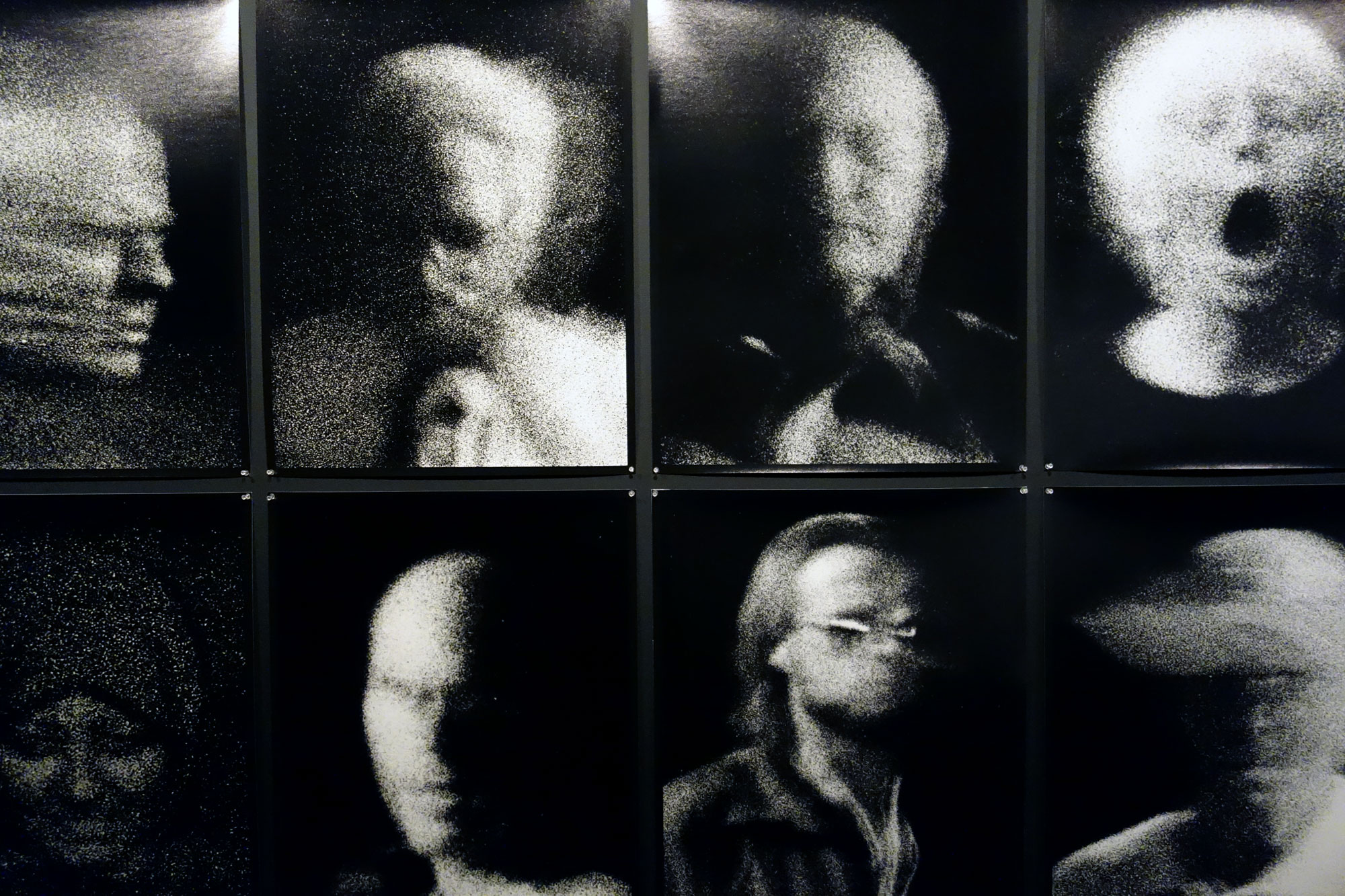
Trent Parke (Australian, b. 1971) 'The camera is god (street portrait series)' 2013 (installation view)


Trent Parke (Australian, b. 1971)
The camera is god (street portrait series) (installation view)
2013
Pigment prints
Collection of the artist
Photo: © Marcus Bunyan and the Monash Gallery of Art


Ghost in the machine

This is a disappointing first solo exhibition in Victoria by internationally renowned Australian photojournalist Trent Parke, the main body of the exhibition made up of his internationally celebrated series, consisting of anonymous portraits taken on the streets of Adelaide. Seriously, who writes this stuff? Sure, Parke is Australia’s only member of the Magnum photo agency but I have been commenting on photography for many years now, and have never heard of this series before, neither locally and definitely not internationally.

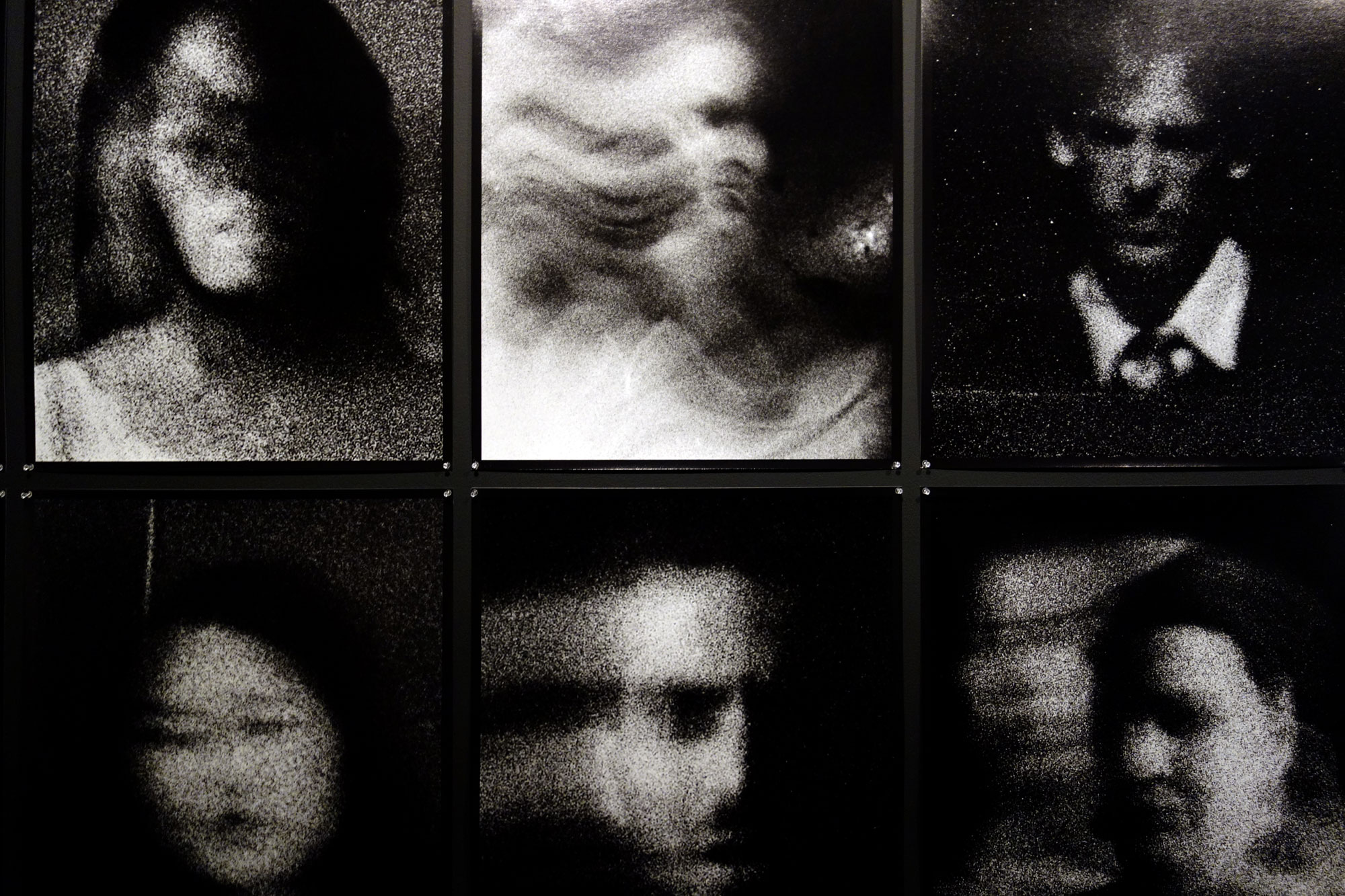
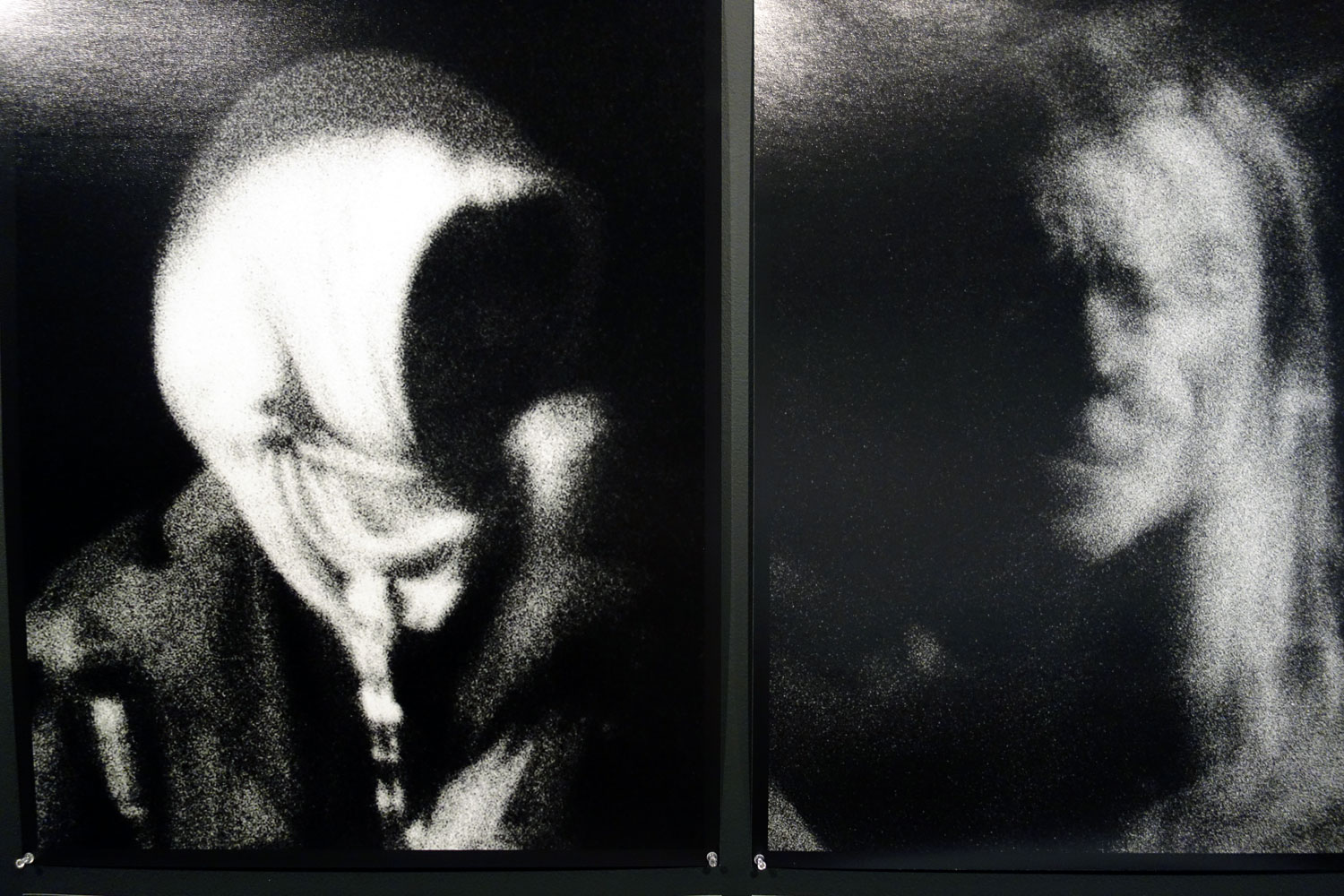
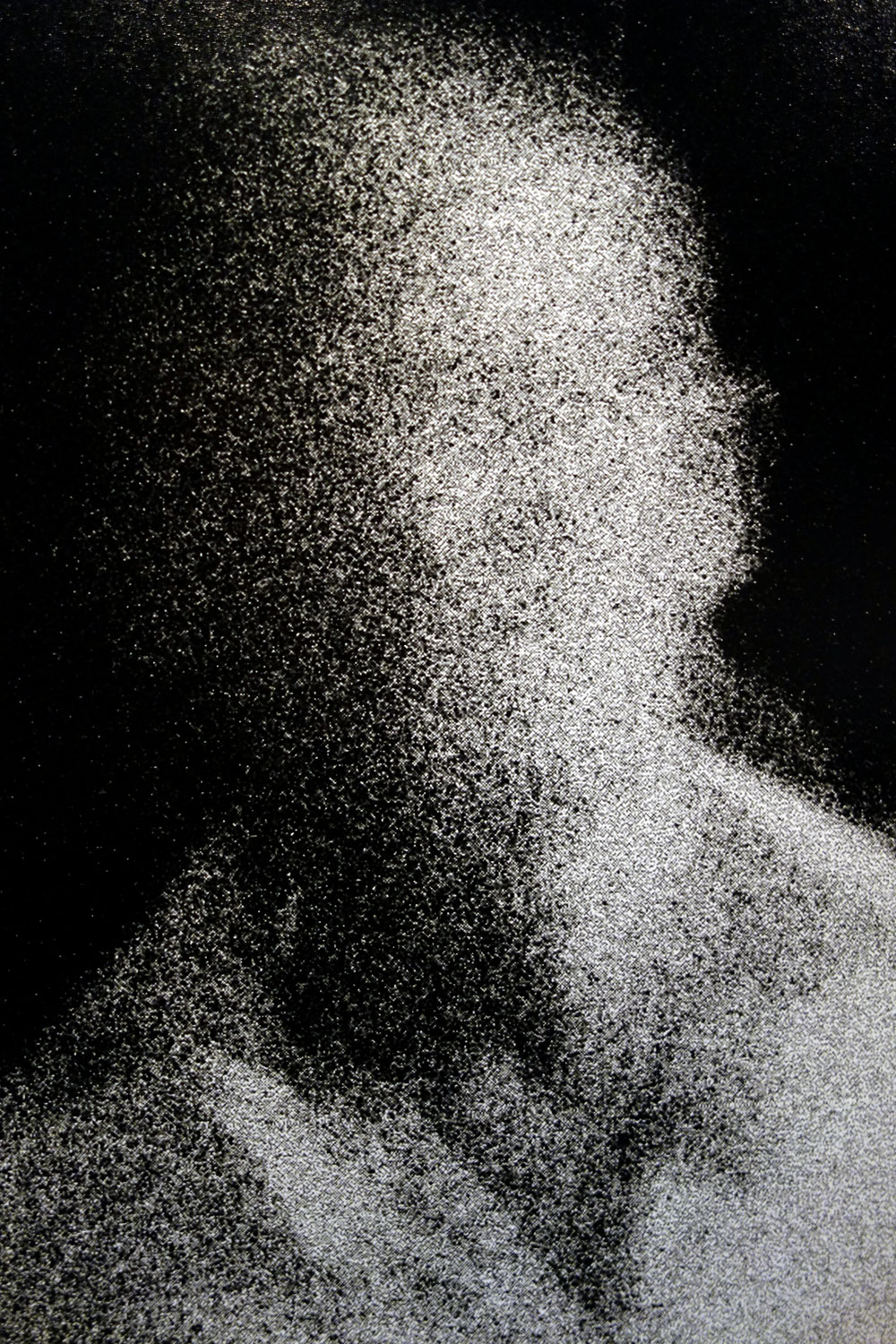
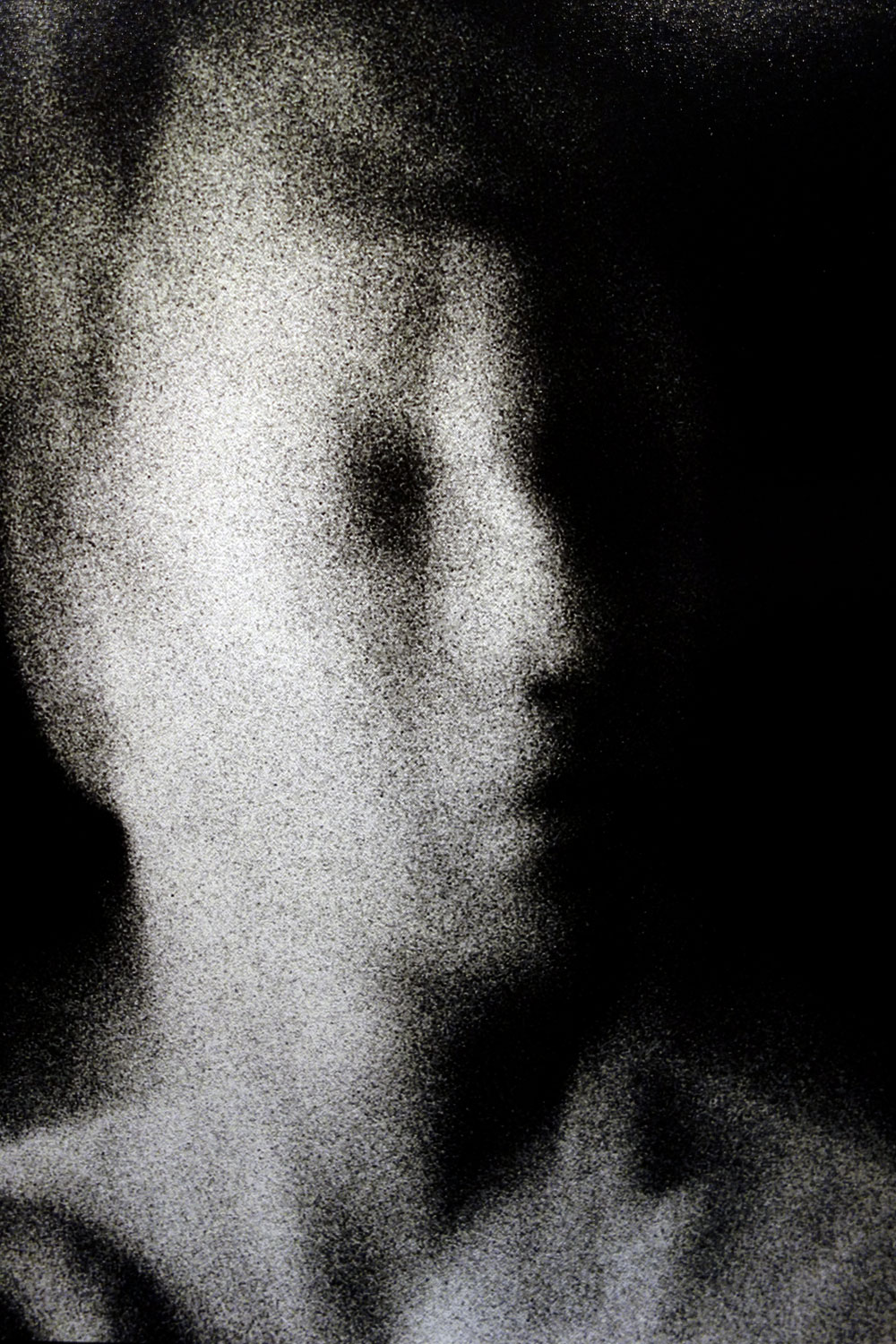
From the ironic title, The camera is god, critiquing the all seeing eye of the camera, to the work itself – a large grid of black and white digital prints from film negatives, the images taken when Parke, “fixed his camera on a tripod and set it to take multiple shots (up to 30 shots in eight-second bursts) when the pedestrian lights changed.” Parke then extracted, “individual portraits from these photographs of street traffic, Parke allowed motion-blur and film grain to obscure the identity of his subjects” – the series feels like a university photography course exercise into the study of motion. While the installation works better from a distance, the gridded layout forming a holistic whole of ambiguous individuals, the closer you get the more the integrity of the images naturally falls apart with golf ball sized grain. Unfortunately, not all the grain is from the film negative. Some of it is digital noise, and the combination of film grain and digital pixellation does not sit well with the images. If you are going to shoot analogue film, why then destroy its characteristics by printing digitally, and introducing an entirely different element into the equation?

Photographs of anonymous people in the city have a long presence in the history of photography. They disavow what is known as the ‘civil contract of photography’1 that is, a relation between formally equal parties (the photographer and the sitter), whose equality lies in their shared participation in the act of being photographed, in what Ariella Azoulay terms, the community of ‘the governed’.2 As Daniel Palmer and Jessica Whyte note, “Photography is one of the ways in which we are able to establish a distance from power and observe its actions from a position that is not already marked as one of subjection.”3 In other words, the photographer can photograph from a position of freedom and not of surveillance and control (by state power). Of course, this does not negate the power of the photographer to choose what to photograph, who to make subjective to their whim and control… with or without permission (to photograph).

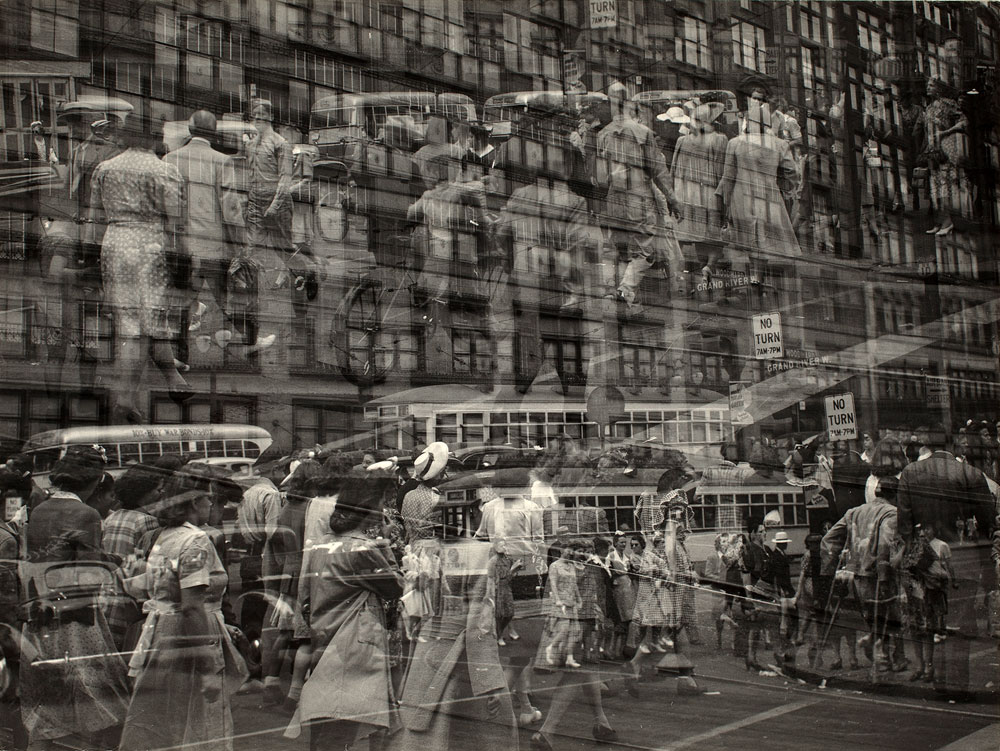
Early examples in this genre are works by Paul Strand taken between 1915-17, close-up portraits of anonymous urban subjects. Next we have portraits of anonymous New York subway commuters taken by Walker Evans with a hidden camera between 1938-41 (see below). Other photographers include Harry Callahan and his Chicago series of 1950 and, in Australia, Bill Henson’s Untitled 1980/82 series of crowds, taken with a telephoto lens to flatten the pictorial plane.

Commenting on the work of Walker Evans, the author Max Kozloff observes in his highly recommended book, The Theatre of the Face: Portrait Photography Since 1900,

“From around 1938 to 1941 this ‘penitent spy and apologetic voyeur’, as he later styled himself, photographed passengers with a hidden camera, a cable release trailing down his coat sleeve to his itchy hand. This had been a devious, unsavoury thing to do, and he knew it; but the result was spectacular in its disclosure of the miscellaneous, anonymous, quotidian texture of metropolitan life, solemn or comic by turns. It was made up of figures whose collective presence he retroactively implied by experimentally sequencing his pictures, cropped and in grids. Evans did not see what his camera saw, and his subjects were oblivious to his design.”4

Sound familiar? sequencing his pictures, cropped and in grids…

The key here is an annunciation, a spiritual exposition, of the quotidian texture of metropolitan life through the photography of anonymous human beings. Human beings who have not given their permission to be photographed but who are captured anyway in the passions of life, the angst of existence, in a slightly devious way. Let’s get this straight: this series is not about the camera being god, it is about the photographer actively choosing to press the shutter release of the camera, the photographer choosing what to crop out of the image, about the photographer choosing what to print and how to arrange and sequence the work. It is about the photographer as (an absent) god … for he neither looks through the lens of the camera, nor is there at the exhibition. But he is an omnipresent, omni-prescient force, forever surveilling the field of view, dominating the subject and presenting his choice. The photograph is framed by the photographer’s (absent, but controlling) eye. It is about his ego, not the cameras, as to what is represented. Commenting on his own work, Walker Evans observes,

“A distinct point, though, is made in the lifting of these objects from their original settings. The point is that this lifting, is, in the raw, exactly what the photographer is doing with his machine, the camera, anyway, always. The photographer, the artist, “takes” a picture: symbolically he lifts an object or a combination of objects, and in so doing he makes a claim for that object or that composition, and a claim for his act of seeing in the first place. The claim is that he has rendered his object in some way transcendent, and that in each instance his vision has penetrating validity”5


Further, as Annete Kuhn notes, the eye of the camera is neutral, it sees the world as it is:

“Photographs are coded, but usually so as to appear uncoded. The truth / authenticity potential of photography is tied in with the idea that seeing is believing. Photography draws on an ideology of the visible as evidence. The eye of the camera is neutral, it sees the world as it is: we look at a photograph and see a slice of the world. To complete the circuit of recording, visibility and truth set up by the photograph, there has to be someone looking at it …”6 (My italics)


Caroline Blinder suggests that,

“… transcendental ethos is aligned with the camera’s ability to capture the real and the spiritual, the native and the universal simultaneously. Hence, Evans’s images of vernacular America, of regional architecture, objects, signs, and people become representative of a “moment of seeing” in which a secular vision of America is given sacred implications.

“The idea of reinserting a sacred purpose into the photographic project became part of the era’s [1930-40s] attempts to codify photography as a medium with far-reaching metaphoric, aesthetic, and cultural ramifications. In this context, the combination of a self-effacing aspect with a moment of total vision – “I am nothing; I see all” – in itself suggests a constant oscillation between positions behind and in front of a metaphorical camera; positions which, incidentally, also mimic and reflect the role of the critic vis-à-vis the subject of photography.”7


There is no penetrating validity to be seen here, for the series seems to have been codified (in absentia) as a form of post-human conceptualisation, undermining the 1930s attempt to codify the medium with a spiritual dimension. Unlike the photographs of Walker Evans, or Bill Henson, where I am fascinated with the object of the photographers attention (what were they thinking, where were they going, what was their life about?), in this case the object of the artist’s attention – “the transience of street life and the photographer’s own experience of being adrift in the world of light and movement” – does not carry me along for the journey, has not become existential, transcendent. It is not the ghost in the machine of the camera (its ability to capture things that humans cannot see) that is present, but the ghost in the machine of the human that becomes apparent in these images… that of an unresolved idea, a floating bit of code.

Personally, I found the rendered object not worth a second glance. The images did not, and will not, reveal themselves to you over weeks and years. Of much more interest was the single, whole image from which the detail is taken. If I had been surrounded by the light and energy of works such as the only complete image shown (see below) – say 15 of them in a darkened room – then I would have been excited, surprised, challenged and enlightened. Go with he source!

These images remain a promise unfulfilled. They could have been so much more “than the closed-off beings of our own mediations, of our own mirrors, our machines.”8

Dr Marcus Bunyan


Footnotes

1/ Azoulay, Ariella (2008), The Civil Contract of Photography (trans. Rela Mazali and Ruvik Danieli), New York: Zone Books.

2/ Palmer, Daniel and Whyte, Jessica. “‘No Credible Photographic Interest’: Photography restrictions and surveillance in a time of terror,” in Philosophy of Photography Volume 1 Number 2, Intellect Limited 2010, p. 178.

3/ Ibid., p. 179.

4/ Kozloff, Max. The Theatre of the Face: Portrait Photography Since 1900. London: Phaidon Press, 2007, p. 149.

5/ Walker Evans quoted in Thompson, J. L. (ed.,). Walker Evans at Work. London: Thames and Hudson, 1984, p. 229 in Caroline Blinder. “”The Transparent Eyeball”: On Emerson and Walker Evans,” in Mosaic : a Journal for the Interdisciplinary Study of Literature. Winnipeg: Dec 2004. Vol. 37, Iss. 4; pg. 149, 15 pgs.

6/ Kuhn, Annette. The Power of the Image: Essays on Representation and Sexuality. London: Routledge and Kegan Paul, 1985, pp. 27-28.

7/ Blinder, Caroline. “”The Transparent Eyeball”: On Emerson and Walker Evans,” in Mosaic : a Journal for the Interdisciplinary Study of Literature. Winnipeg: Dec 2004. Vol. 37, Iss. 4; pg. 149, 15 pgs.

8/ Kozloff, op. cit. p. 89.


Many thankx to the Monash Gallery of Art for allowing me to publish the photographs in the posting. Please click on the photographs for a larger version of the image. All photographs © Marcus Bunyan and the Monash Gallery of Art


MGA provides Victorians with their first opportunity to see a significant exhibition of work by Trent Parke, the internationally renowned Australian photojournalist. Over the past two decades Parke has brought his highly poetic sensibility to traditional documentary photography. Alongside a range of Parke’s work recently purchased for the MGA collection this exhibition features his 2013 series, The camera is god (street portrait series), which puts a metaphysical spin on street photography.


“Walker Evans once wrote a friend: “Stare. It is the way to educate your eye, and more. Stare, pry, listen, eavesdrop. Die knowing something. You are not here long.” Evans’ insistence on staring as the main road to learning included making pictures of subway riders with a hidden camera, but he felt so guilty about being an unobserved observer that he withheld publication for years. This compunction still dogs many photographers but seldom stops them.”


Goldberg, Vicki. “Voyeurism, Exposed,” on the Artnet website [Online] Cited 06/02/2016


Trent Parke (Australian, b. 1971) 'The camera is god (street portrait series)' 2013 (installation view)

Trent Parke (Australian, b. 1971) 'The camera is god (street portrait series)' 2013 (installation view)

Trent Parke (Australian, b. 1971) 'The camera is god (street portrait series)' 2013 (installation view)


Trent Parke (Australian, b. 1971)
The camera is god (street portrait series) (installation views)
2013
Pigment prints
Collection of the artist
Photos: © Marcus Bunyan and the Monash Gallery of Art


Trent Parke (Australian, b. 1971) 'The camera is god (street portrait series)' 2013 (installation view)


Trent Parke (Australian, b. 1971)
The camera is god (street portrait series)
2013
Pigment prints
Collection of the artist
Photo: © Marcus Bunyan and the Monash Gallery of Art


During the late 1990s Trent Parke turned away from his career as a press photographer to concentrate on using the visual language of documentary photography to explore personal interests. Continuing to work in the manner of a photojournalist – venturing into the world with a 35mm film camera hanging from his neck – Parke’s artistic practice is a type of existential journey.

Trent Parke: the camera is god is the first solo exhibition of Parke’s work in Victoria, and provides an opportunity to appreciate the trajectory of his practice over the last 15 years.

At the heart of this exhibition is Parke’s The camera is god (street portrait series) of 2014. This internationally celebrated series consists of anonymous portraits, taken on the streets of Adelaide. To capture these images Parke fixed his camera on a tripod and set it to take multiple shots (up to 30 shots in eight-second bursts) when the pedestrian lights changed. Extracting individual portraits from these photographs of street traffic, Parke allowed motion-blur and film grain to obscure the identity of his subjects. As such, this series is not really about individuals, but about the transience of street life and the photographer’s own experience of being adrift in the world of light and movement.

Wall text from the exhibition


Walker Evans (American, 1903-1975) 'Subway Passengers, New York' 1938


Walker Evans (American, 1903-1975)
Subway Passenger, New York
1938
Silver gelatin photograph


Walker Evans (American, 1903-1975) 'Subway Passengers, New York' 1938


Walker Evans (American, 1903-1975)
Subway Passenger, New York
1938
Silver gelatin photograph
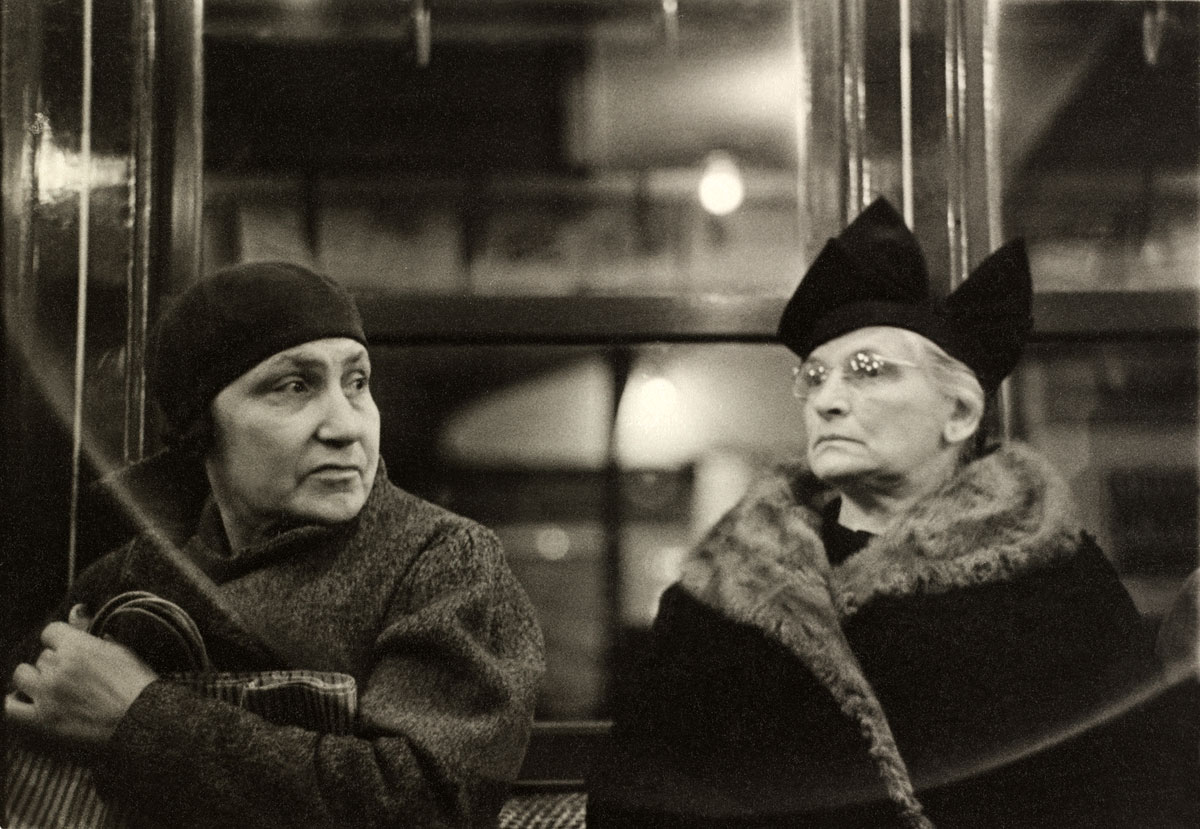
 

Walker Evans (American, 1903-1975) 'Subway Passengers, New York' 1938


Walker Evans (American, 1903-1975)
Subway Passenger, New York
1938
Silver gelatin photograph


Walker Evans (American, 1903-1975) 'Subway Passenger, New York' 1938


Walker Evans (American, 1903-1975)
Subway Passenger, New York
1938
Silver gelatin photograph
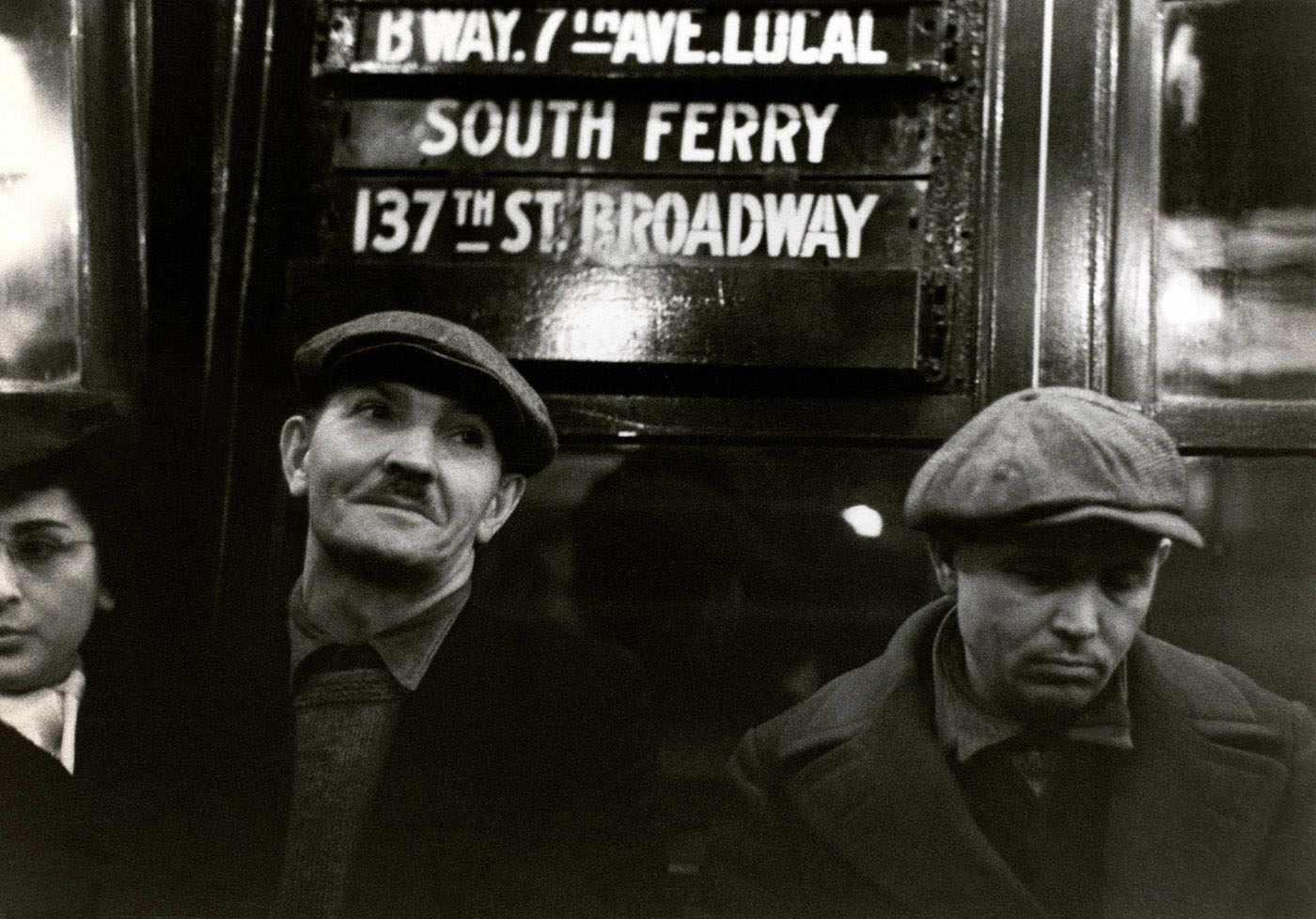
 

Walker Evans (American, 1903-1975) 'Subway Passengers, New York' 1938


Walker Evans (American, 1903-1975)
Subway Passenger, New York
1938
Silver gelatin photograph


Walker Evans (American, 1903-1975) 'Subway Passengers, New York' 1938


Walker Evans (American, 1903-1975)
Subway Passenger, New York
1938
Silver gelatin photograph


Harry Callahan (American, 1912-1999) 'Chicago' 1950


Harry Callahan (American, 1912-1999)
Chicago
1950
Gelatin silver print
8 1/16 x 12 15/16 in. (20.48 x 32.86cm)


Harry Callahan (American, 1912-1999) 'Chicago' 1950


Harry Callahan (American, 1912-1999)
Chicago
1950
Gelatin silver print
8 3/8 x 12 3/8 in. (21.27 x 31.43cm)
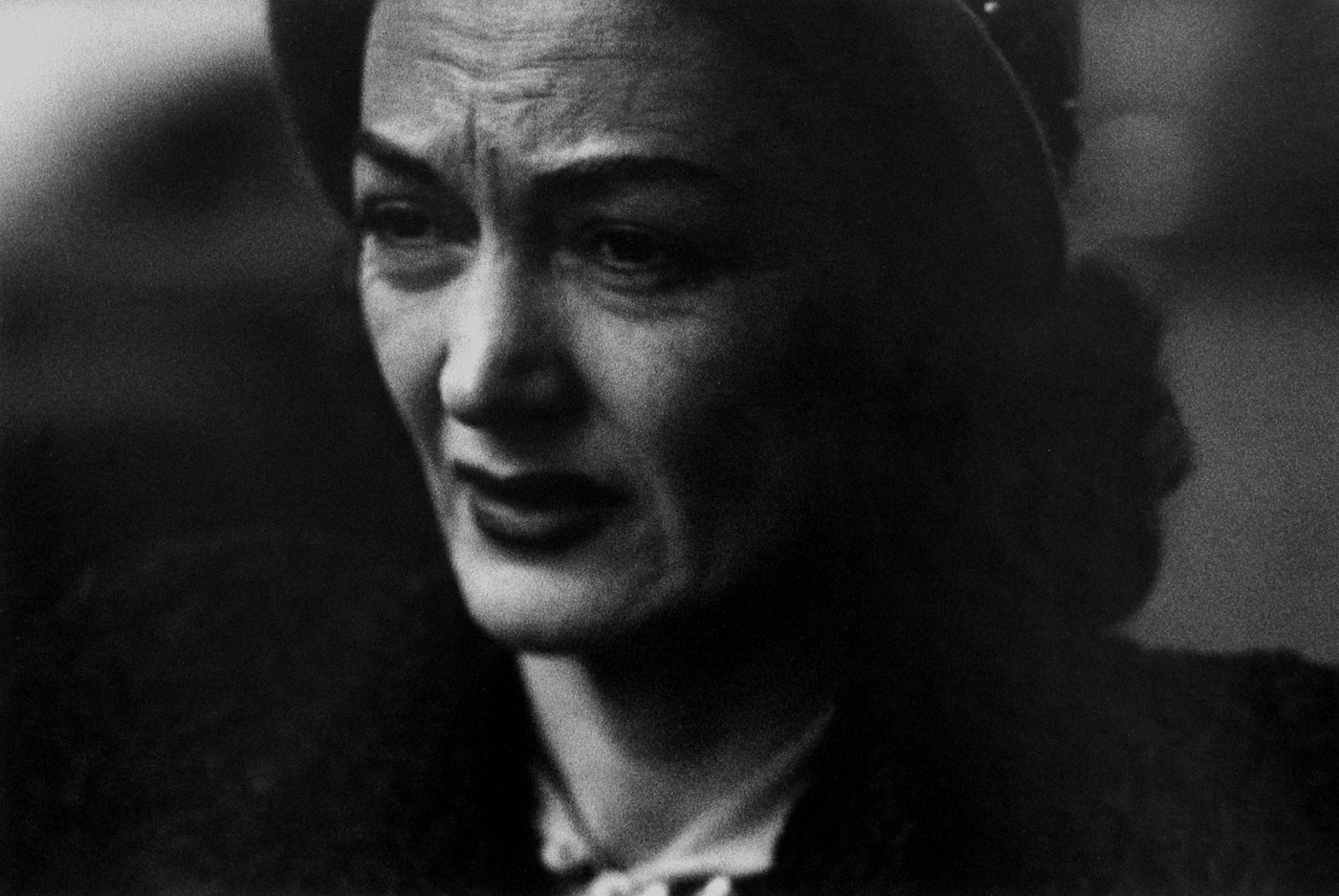
 

Harry Callahan (American, 1912-1999) 'Chicago' 1950


Harry Callahan (American, 1912-1999)
Chicago
1950
Gelatin silver print
8 3/8 x 12 1/2 in. (21.27 x 31.75cm)


Harry Callahan (American, 1912-1999) 'Chicago' 1950


Harry Callahan (American, 1912-1999)
Chicago
1950
Gelatin silver print
7 7/8 x 12 3/4 in. (20 x 32.39cm)


Bill Henson (Australian, b. 1955) 'Untitled' 1980/82


Bill Henson (Australian, b. 1955)
Untitled 1980/82
Gelatin silver chlorobromide print
From a series of 220
57.5 × 53.4cm
Courtesy the artist and Roslyn Oxley9 Gallery, Sydney


Bill Henson (Australian, b. 1955) 'Untitled' 1980/82


Bill Henson (Australian, b. 1955)
Untitled 1980/82
Gelatin silver chlorobromide print
From a series of 220
57.5 × 53.4cm
Courtesy the artist and Roslyn Oxley9 Gallery, Sydney


Trent Parke (Australian, b. 1971) 'The camera is god (street portrait series)' 2013 (installation view detail)

Trent Parke (Australian, b. 1971) 'The camera is god (street portrait series)' 2013 (installation view detail)

Trent Parke (Australian, b. 1971) 'The camera is god (street portrait series)' 2013 (installation view detail)

Trent Parke (Australian, b. 1971) 'The camera is god (street portrait series)' 2013 (installation view detail)

Trent Parke (Australian, b. 1971) 'The camera is god (street portrait series)' 2013 (installation view detail)

Trent Parke (Australian, b. 1971) 'The camera is god (street portrait series)' 2013 (installation view detail)

Trent Parke (Australian, b. 1971) 'The camera is god (street portrait series)' 2013 (installation view detail)

Trent Parke (Australian, b. 1971) 'The camera is god (street portrait series)' 2013 (installation view detail)

Trent Parke (Australian, b. 1971) 'The camera is god (street portrait series)' 2013 (installation view detail)

Trent Parke (Australian, b. 1971) 'The camera is god (street portrait series)' 2013 (installation view detail)

Trent Parke (Australian, b. 1971) 'The camera is god (street portrait series)' 2013 (installation view detail)

Trent Parke (Australian, b. 1971) 'The camera is god (street portrait series)' 2013 (installation view detail)

Trent Parke (Australian, b. 1971) 'The camera is god (street portrait series)' 2013 (installation view detail)

Trent Parke (Australian, b. 1971) 'The camera is god (street portrait series)' 2013 (installation view detail)

Trent Parke (Australian, b. 1971) 'The camera is god (street portrait series)' 2013 (installation view detail)

Trent Parke (Australian, b. 1971) 'The camera is god (street portrait series)' 2013 (installation view detail)

Trent Parke (Australian, b. 1971) 'The camera is god (street portrait series)' 2013 (installation view detail)


Trent Parke (Australian, b. 1971)
The camera is god (street portrait series) (installation view details)
2013
Pigment prints
Collection of the artist
Photos: © Marcus Bunyan and the Monash Gallery of Art


Monash Gallery of Art
860 Ferntree Gully Road, Wheelers Hill
Victoria 3150 Australia
Phone: + 61 3 8544 0500

Opening hours:
Tue – Fri: 10am – 5pm
Sat – Sun: 10am – 4pm
Mon/public holidays: closed
Monash Gallery of Art website

LIKE ART BLART ON FACEBOOK

Back to top

Exhibition: ‘Harry Callahan at 100’ at the National Gallery of Art, Washington

Exhibition dates:  2nd October 2011 – 4th March 2012


Harry Callahan (American, 1912-1999) 'Detroit' 1943


Harry Callahan (American, 1912-1999)
Detroit
1943
Gelatin silver print
Overall (sheet, trimmed to image): 8.3 x 11cm (3 1/4 x 4 5/16 in)
National Gallery of Art, Washington
Gift of the Callahan Family
© Estate of Harry Callahan, courtesy Pace/MacGill Gallery, New York


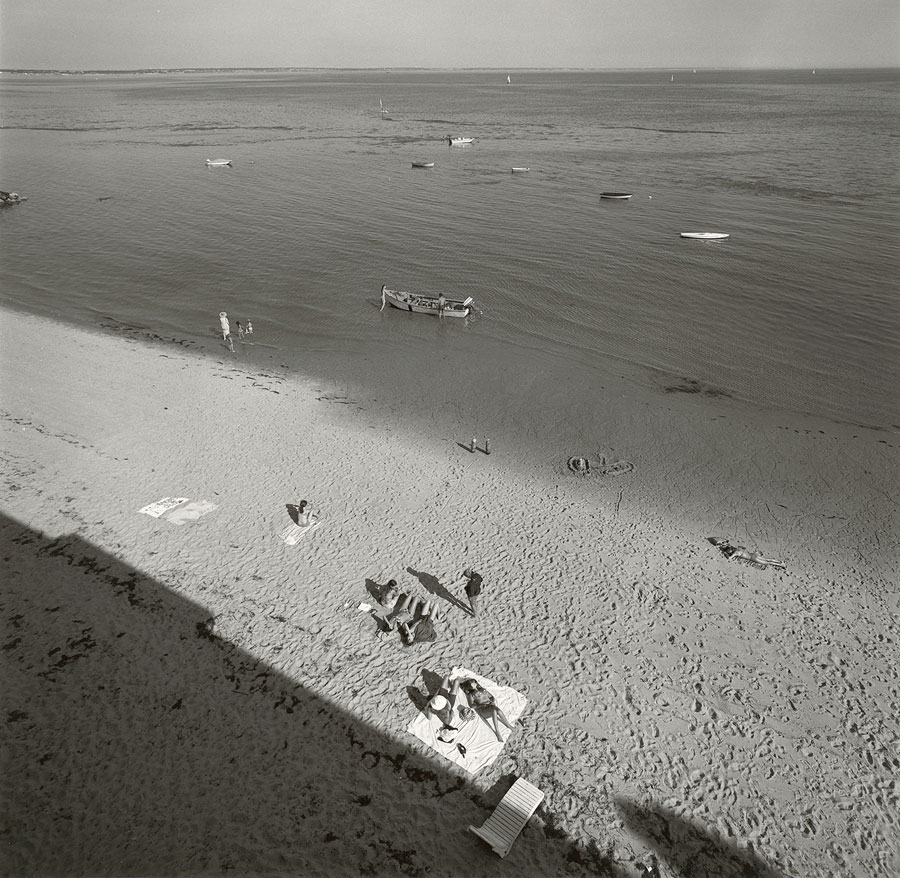
For me, the early photographs of his wife Eleanor and Eleanor with their child Barbara and the most poignant, intimate and beautiful of Callahan’s work while the later modernist Cape Cod photographs presage the spirit and aesthetics of the New Topographics: Photographs of a Man-Altered Landscape of 1975. Mario Cutajar observes

“These pictures of strangely vacant, light haunted intersections of sky, land, and ocean are confrontations with the limits of both the ego and photography itself as the ego’s instrument. They are oriented toward death rather than life, intimating in a cold, unsentimental way passage to another world or, perhaps, the engulfing oblivion at the horizon.”

Dr Marcus Bunyan


Many thankx to the National Gallery of Art for allowing me to publish the photographs in the posting. Please click on the photographs for a larger version of the image.


Harry Callahan (American, 1912-1999) 'Chicago' 1950


Harry Callahan (American, 1912-1999)
Chicago
1950
Gelatin silver print
Sheet (trimmed to image): 19 x 24.2 cm (7 1/2 x 9 1/2 in.)
National Gallery of Art, Washington
© Estate of Harry Callahan, Collection of Pace/MacGill Gallery, New York


Harry Callahan (American, 1912-1999) 'Eleanor, Chicago' 1952


Harry Callahan (American, 1912-1999)
Eleanor, Chicago
1952
Gelatin silver print
National Gallery of Art, Washington
© Estate of Harry Callahan, Collection of Pace/MacGill Gallery, New York


Harry Callahan (American, 1912-1999) 'Ivy Tentacles on Glass, Chicago' c. 1952


Harry Callahan (American, 1912-1999)
Ivy Tentacles on Glass, Chicago
c. 1952
Gelatin silver print
Image (can’t tell sheet size due to matting): 19.21 x 24.13cm (7 9/16 x 9 1/2 in.)
National Gallery of Art, Washington
Gift of Susan and Peter MacGill
© Estate of Harry Callahan, Collection of Pace/MacGill Gallery, New York


Harry Callahan (American, 1912-1999) 'Eleanor and Barbara, Chicago' 1953


Harry Callahan (American, 1912-1999)
Eleanor and Barbara, Chicago
1953
Gelatin silver print
Overall (image): 19.5 x 24.45cm (7 11/16 x 9 5/8 in)
National Gallery of Art, Washington
Promised Gift of Susan and Peter MacGill
© Estate of Harry Callahan, courtesy Pace/MacGill Gallery, New York


Harry Callahan (American, 1912-1999) 'Cape Cod' 1972


Harry Callahan (American, 1912-1999)
Cape Cod
1972
Gelatin silver print
Overall (image): 23.7 x 23.9cm (9 5/16 x 9 7/16 in)
National Gallery of Art, Washington
Gift of Joyce and Robert Menschel
© Estate of Harry Callahan, courtesy Pace/MacGill Gallery, New York


Harry Callahan (American, 1912-1999) 'Cape Cod' 1974


Harry Callahan (American, 1912-1999)
Cape Cod
1974
Gelatin silver print
Overall (image): 21.8 x 22.6cm (8 9/16 x 8 7/8 in.)
National Gallery of Art, Washington
Gift of Joyce and Robert Menschel
© Estate of Harry Callahan, courtesy Pace/MacGill Gallery, New York


Harry Callahan (American, 1912-1999) 'Ansley Park, Atlanta' 1992


Harry Callahan (American, 1912-1999)
Ansley Park, Atlanta
1992
Gelatin silver print
Overall (image): 15.72 x 15.72cm (6 3/16 x 6 3/16 in)
National Gallery of Art, Washington
Gift of Susan and Peter MacGill
© Estate of Harry Callahan, courtesy Pace/MacGill Gallery, New York


The year 2012 marks the centenary of the birth of Harry Callahan (1912-1999), whose highly experimental, visually daring, and elegant photographs made him one of the most innovative artists of the 20th century.

On view in the West Building of the National Gallery of Art from October 2, 2011, through March 4, 2012, Harry Callahan at 100 explores all facets of his work in some 100 photographs, from its genesis in the early 1940s Detroit to its flowering in Chicago in the late 1940s and 1950s, and finally to its maturation in Providence and Atlanta from the 1960s through the 1990s. In 1996, the Gallery organised the exhibition Harry Callahan, which traveled to Philadelphia, Atlanta, Detroit, and Chicago, and included numerous works on loan from the artist.

“Using the rich holdings of the Gallery’s own collection of Callahan’s work, as well as a large collection of photographs on long-term loan from the artist’s widow, the exhibition will reveal the remarkable consistency of his vision and will demonstrate how his strong, inventive formal language repeatedly enriched his art,” said Earl A. Powell III, director, National Gallery of Art.

The Exhibition

Organised thematically and chronologically, Harry Callahan at 100 examines Callahan’s work in relation to the places where he lived and to his family, unveiling his unparalleled devotion to both his subjects and the medium of photography.

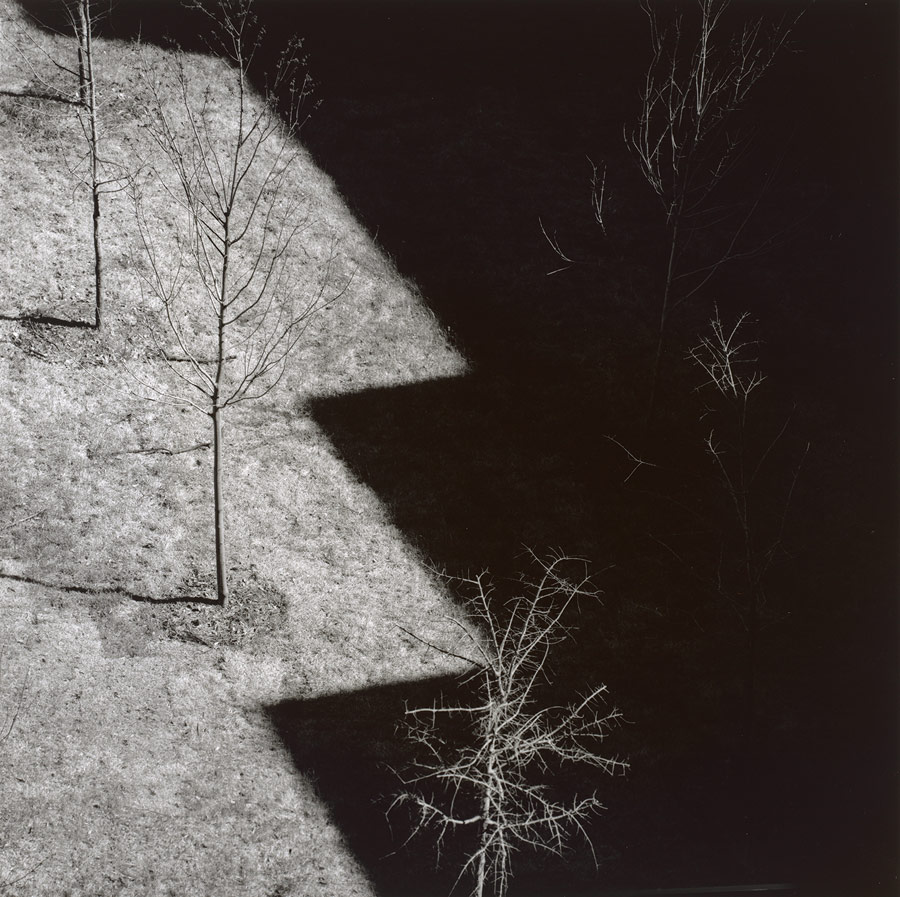
In his earliest photographs made in and around Detroit, Callahan explored the limits of the camera, constructing photographs of multiple exposures in both black-and-white and colour. In works such as Twig in Snow (c. 1942) and Store Front and Reflections (c. 1943), he sought to capture simultaneously the simplicity and complexity of nature and the theatre of urban life.

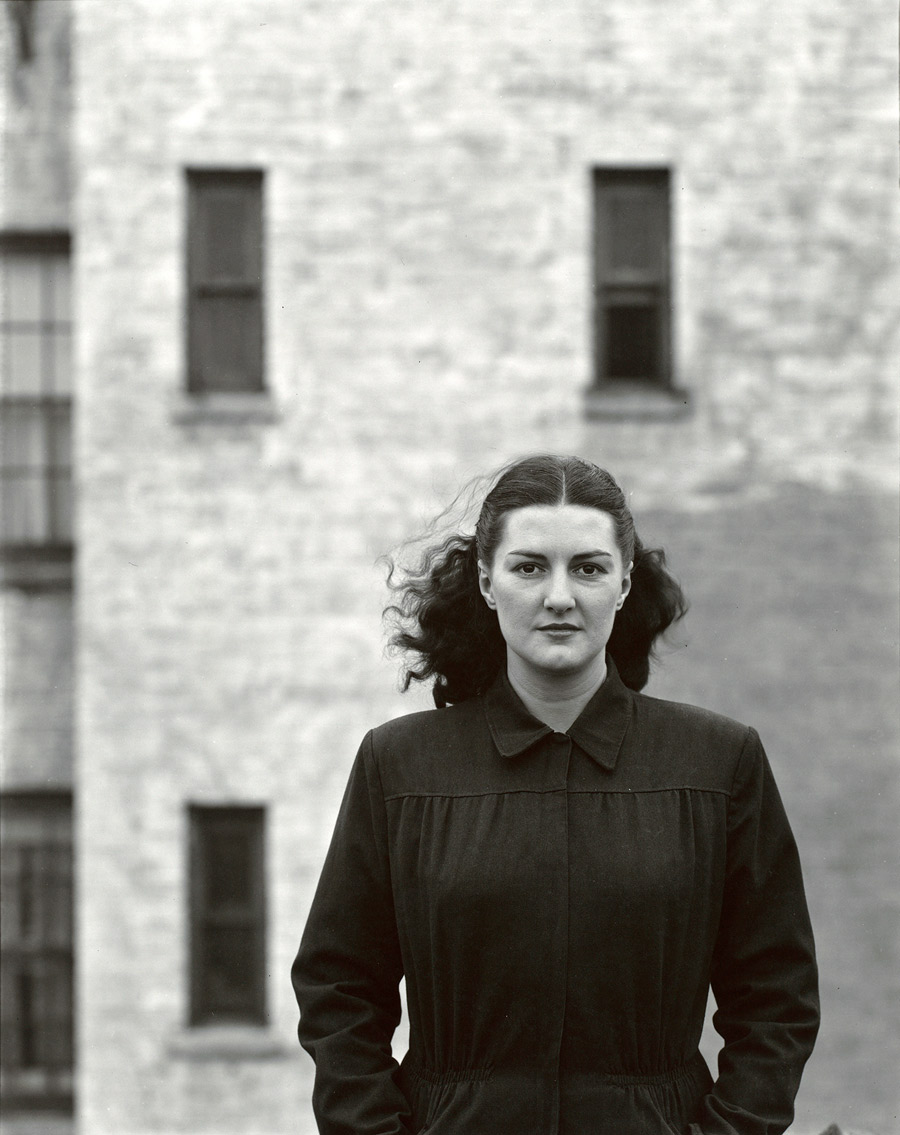
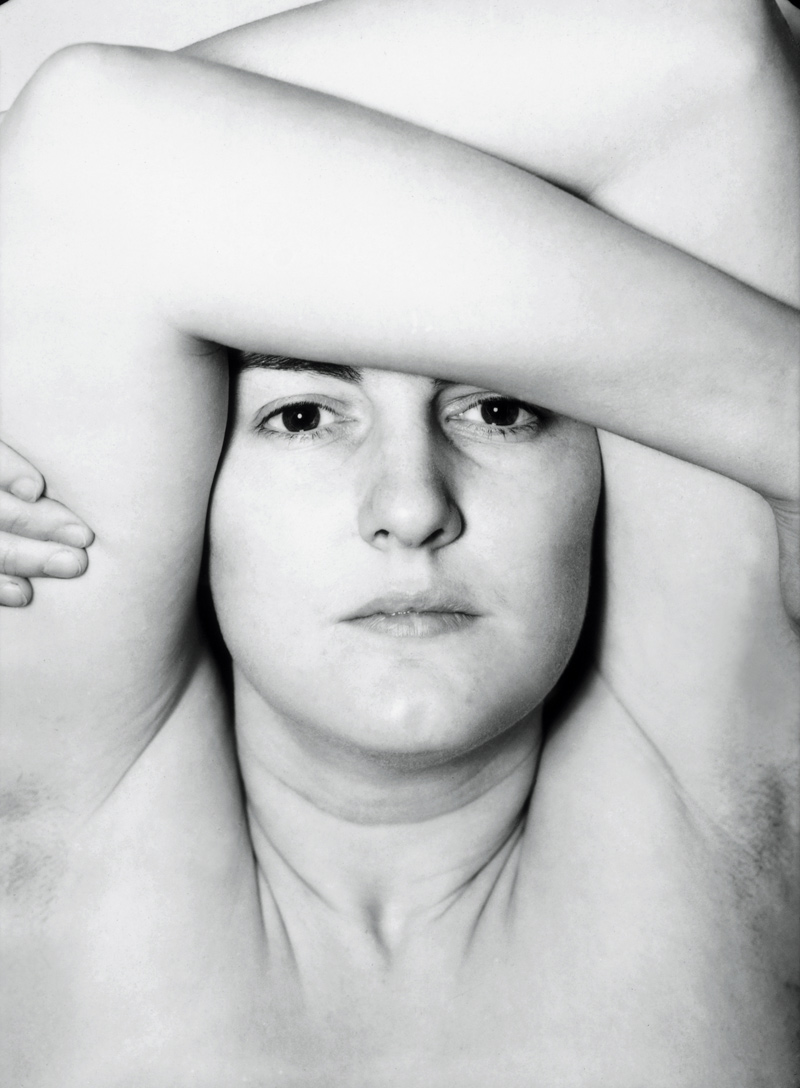
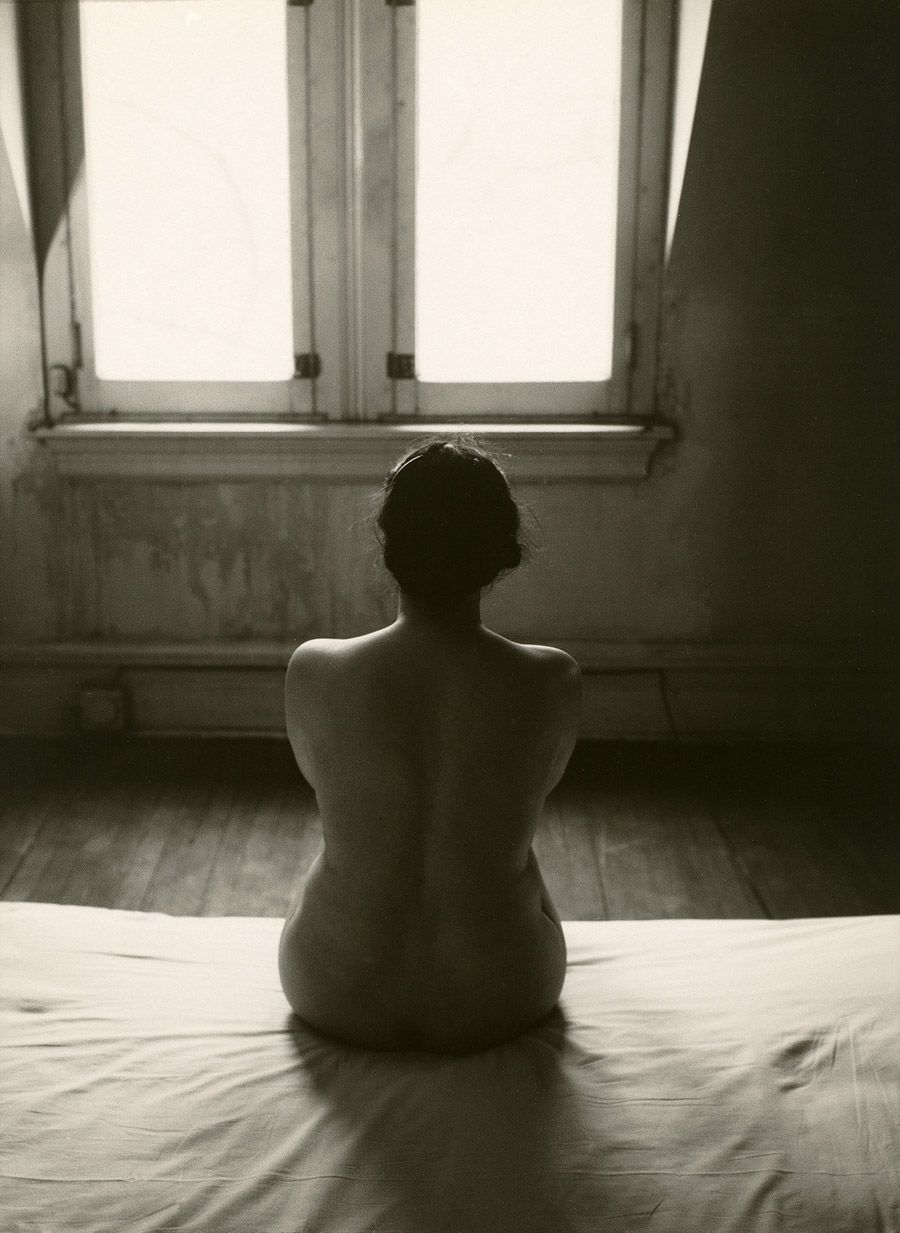
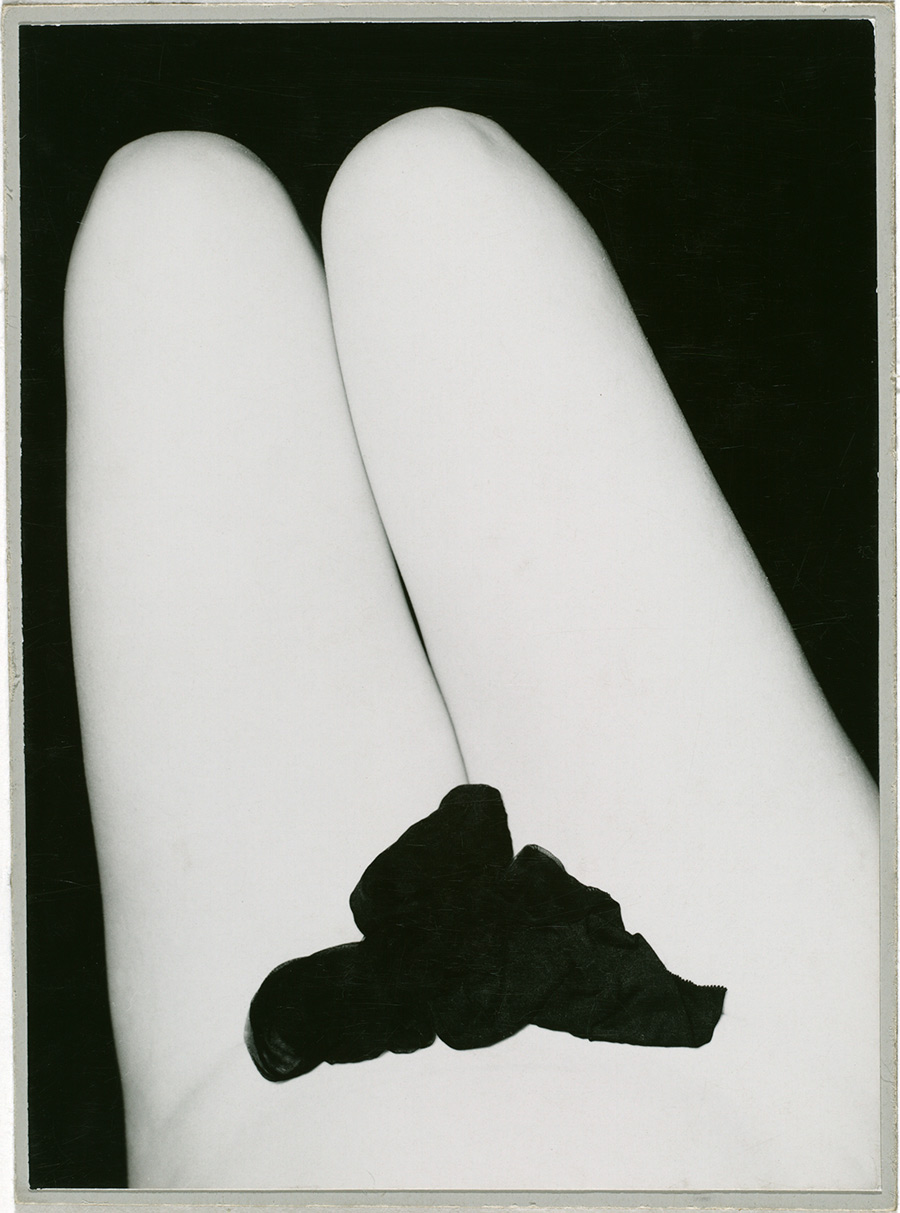
Callahan continued his aesthetic and technical experiments through photographs of his wife, Eleanor. His nudes play with dramatic contrasts of light and dark: his layered multiple exposures reveal Eleanor’s body against landscapes and frosted glass windows (Eleanor, Chicago, 1948). His photographs of his wife and their daughter, Barbara, in the lake, the city, and the woods (Eleanor and Barbara, Lake Michigan, c. 1953) exploit the spontaneity and intimacy of snapshots – yet, paradoxically, were made with a large, cumbersome 8- x 10-inch view camera.

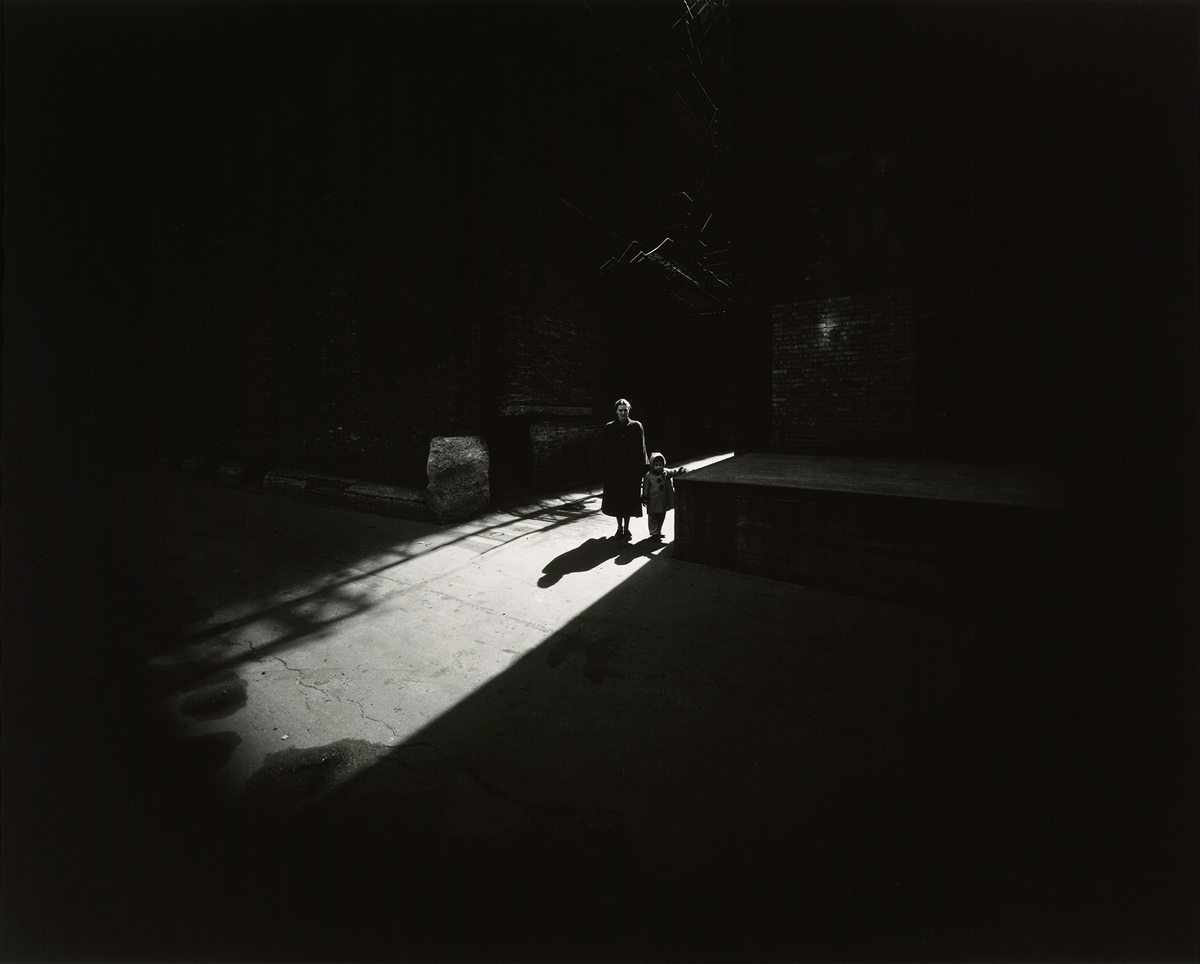
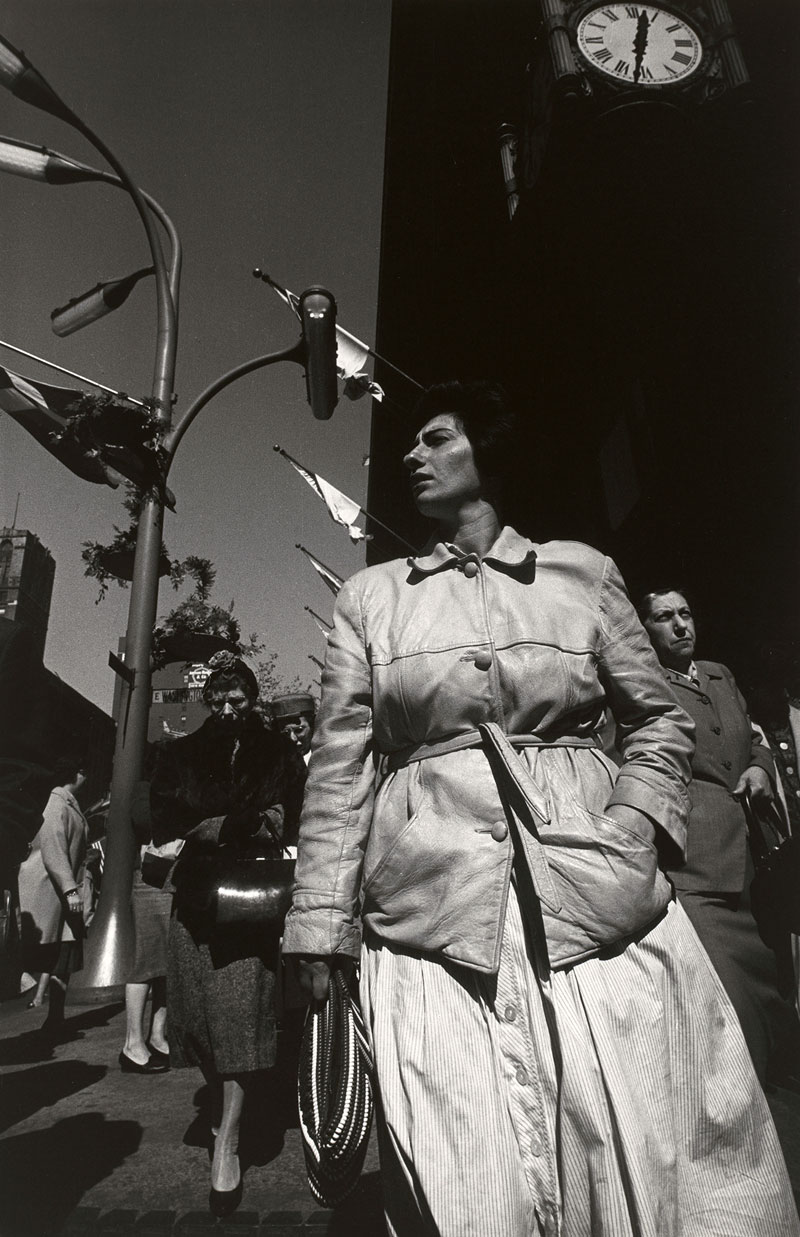
Callahan’s twin interests in the city and the land expanded during his years in Chicago and Providence, where he created both spare and evocative photographs of the natural landscape and complex compositions of urban architecture and pedestrians. He began to document anonymous women on the streets of Chicago, first in close shots of squinting eyes, open mouths, and downcast faces seen in Chicago (1950), then in full-figure shots from a low angle that feature the women against backgrounds of skyscrapers and flagpoles, as in Chicago (1961).

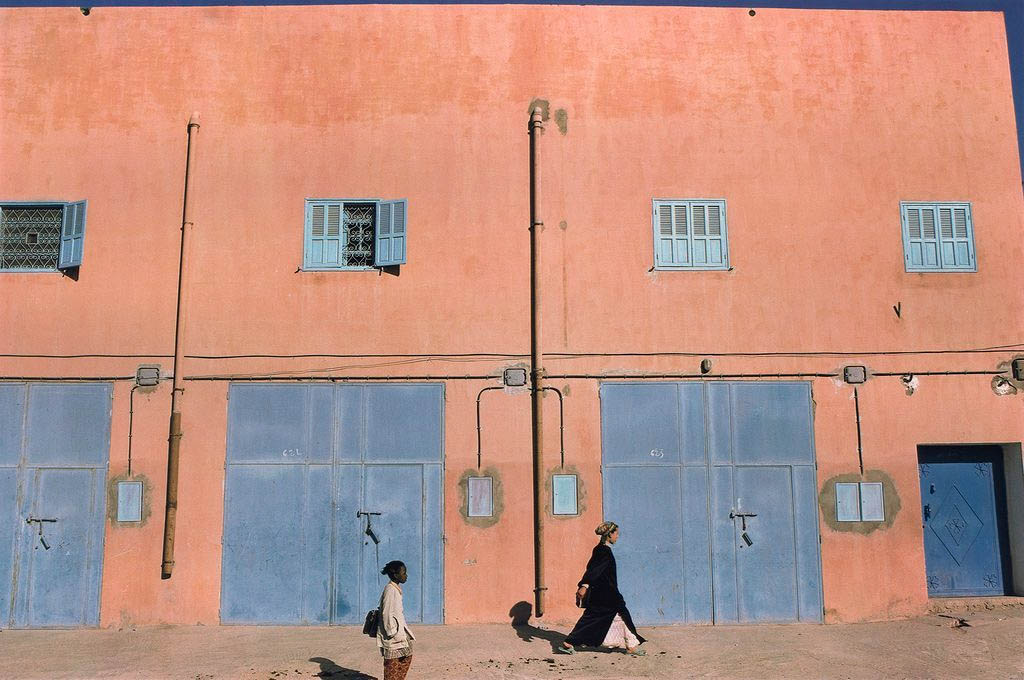
In the 1970s Callahan returned to colour photography, continuing to push the boundaries of the medium, seen in the well-known Providence (1977). Taken in Atlanta and during travels abroad, his late photographs emphasised vibrant colours, long shadows, and the complex humanity of urban life, seen in Morocco (1981) and Atlanta (1985).

Harry Callahan (1912-1999)

Born in Detroit in 1912, Callahan began to photograph in 1938. Although he received no formal training in the medium, his exceptional talent was immediately recognised. In 1946 László Moholy-Nagy hired him to teach at the Institute of Design in Chicago. There and at the Rhode Island School of Design (he moved to Providence in 1961) he taught generations of younger photographers, inspiring them both with the creativity of his vision and his steadfast commitment to the medium. In a career that spanned nearly six decades, he repeatedly explored a few select themes – his wife Eleanor and daughter Barbara, nature, and the urban environment. Yet each time he returned to a familiar subject, he reinvented it, endowing each photograph with both a personal and symbolic significance.

Press release from the National Gallery of Art website


Harry Callahan (American, 1912-1999) 'Eleanor, New York' 1945


Harry Callahan (American, 1912-1999)
Eleanor, New York
1945
Gelatin silver print
Overall (image): 21.2 x 16.83cm (8 3/8 x 6 5/8 in)
National Gallery of Art, Washington
Gift of the Callahan Family
© Estate of Harry Callahan, courtesy Pace/MacGill Gallery, New York


Harry Callahan (American, 1912-1999) 'Eleanor' about 1947


Harry Callahan (American, 1912-1999)
Eleanor
Chicago, 1947
Gelatin silver print
National Gallery of Art, Washington
The Herbert and Nannette Rothschild Memorial Fund in memory of Judith Rothschild
© Estate of Harry Callahan, courtesy Pace/MacGill Gallery, New York


Harry Callahan (American, 1912-1999) 'Eleanor, Chicago' 1948


Harry Callahan (American, 1912-1999)
Eleanor, Chicago
1948
Gelatin silver print
Overall (image): 11.59 x 8.5cm (4 9/16 x 3 3/8 in)
National Gallery of Art, Washington
The Joyce and Robert Menschel Fund
© Estate of Harry Callahan, courtesy Pace/MacGill Gallery, New York


During the 1940s and ’50s, Callahan’s work was deeply affected by the resolutely humanizing presence of his wife, Eleanor, and daughter, Barbara. Frequent subjects, though consistently inscrutable, Eleanor and Barbara are the shadow puppets of his career, a direct testament to his family life, but always seen as if behind some kind of veil or scrim. They are markers of an intimacy that Callahan never violates by direct exposure.

Eleanor, in particular, is photographed down to the very last details of anatomy. She remembers that during these years, she might be cooking or cleaning, and suddenly Harry would announce: “‘Take off your clothes.’ And that would be that.”

The results are sometimes staggering. A 1947 image of what appears to be the lines created by Eleanor’s legs and buttocks looks like a Cycladic statue, relentlessly rectilinear but soft around the edges, freakishly modern and ancient at the same time. An 1953 image of Eleanor and Barbara bathing in Lake Michigan dissolves the horizon, fusing lake and sky into a field of shimmering gray. The two figures seem suspended in space, dematerialized, like characters in a dream.

It’s a small miracle that no matter how much Callahan’s camera dissects the world, the photographs never seem clinical. He divorces things from context, pulls out small vignettes from the larger city, but without violence, and without the gamesmanship of a photographer inclined to the cheap surreal.

Philip Kennicott. “Review: Harry Callahan photography exhibit at the National Gallery of Art,” on The Washington Post website October 4, 2011 [Online] Cited 22/02/2012


Harry Callahan (American, 1912-1999) 'Eleanor, Chicago' c. 1947


Harry Callahan (American, 1912-1999)
Eleanor, Chicago
c. 1947
Gelatin silver print
Overall (sheet, trimmed to image): 11.91 x 8.6cm (4 11/16 x 3 3/8 in)
National Gallery of Art, Washington
Promised Gift of Susan and Peter MacGill
© Estate of Harry Callahan, courtesy Pace/MacGill Gallery, New York


Harry Callahan (American, 1912-1999) 'Chicago' 1961


Harry Callahan (American, 1912-1999)
Chicago
1961
Gelatin silver print
Overall (image):
40.6 x 27.1cm (16 x 10 11/16 in)
National Gallery of Art, Washington
Gift of the Callahan Family
© Estate of Harry Callahan, courtesy Pace/MacGill Gallery, New York


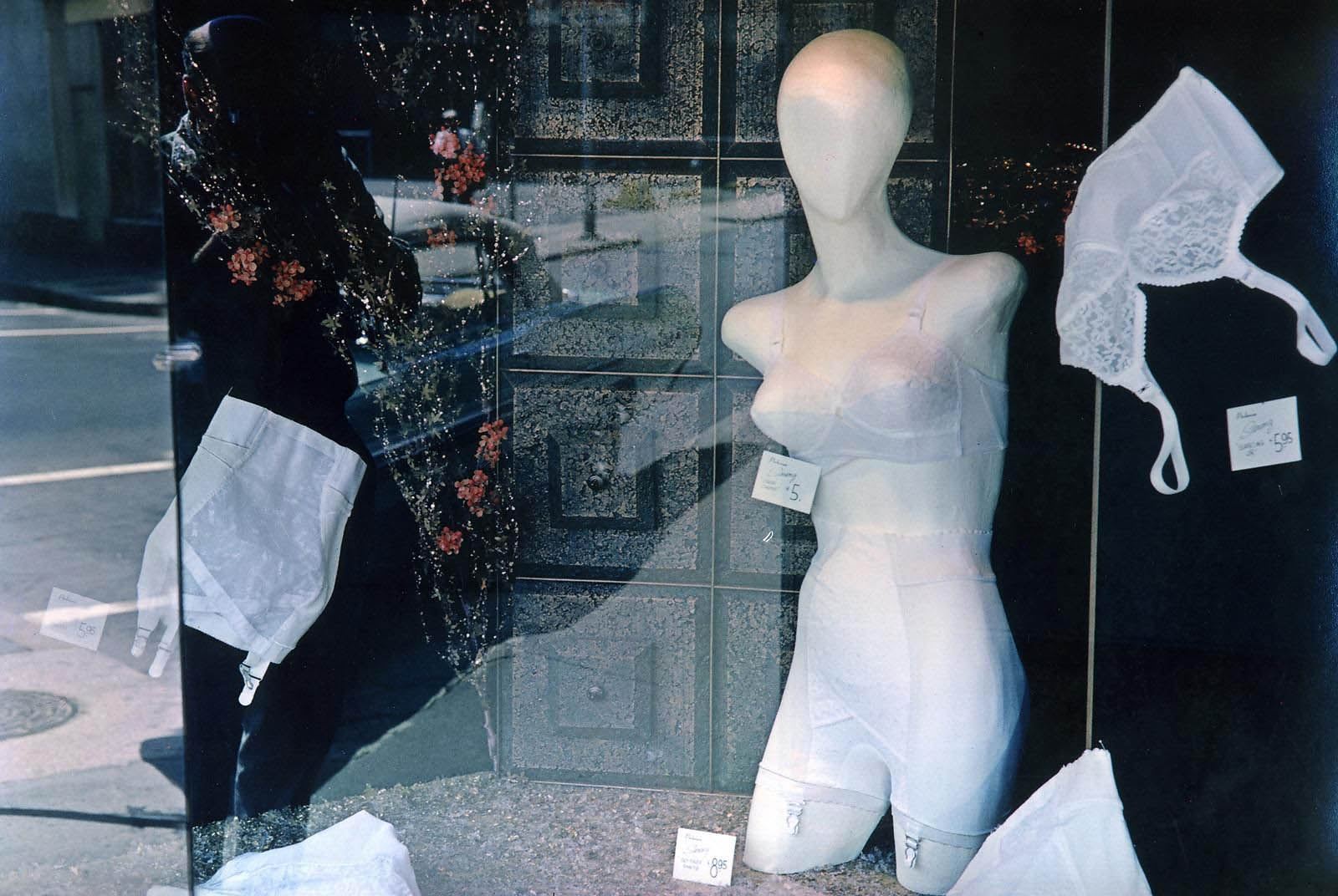
Harry Callahan (American, 1912-1999) 'Store Window with Mannequin with Lingerie, Providence' 1962


Harry Callahan (American, 1912-1999)
Store Window with Mannequin with Lingerie, Providence
1962
Dye imbibition print
22.4 x 34.1cm (8 13/16 x 13 7/16 in.)
National Gallery of Art, Washington
Gift of Mary and Dan Solomon and Patrons’ Permanent Fund
© Estate of Harry Callahan, courtesy Pace/MacGill Gallery, New York


Harry Callahan (American, 1912-1999) 'Kansas City' 1981


Harry Callahan (American, 1912-1999)
Kansas City
1981
Dye imbibition print
Overall (image): 24.3 x 36.7cm (9 9/16 x 14 7/16 in.)
National Gallery of Art, Washington
Gift of The Very Reverend and Mrs. Charles U. Harris
© Estate of Harry Callahan, courtesy Pace/MacGill Gallery, New York


Harry Callahan (American, 1912-1999) 'Morocco' 1981


Harry Callahan (American, 1912-1999)
Morocco
1981
Dye imbibition print
Overall (image): 24.2 x 36.7cm (9 1/2 x 14 7/16 in.)
National Gallery of Art, Washington
Gift of the Collectors Committee
© Estate of Harry Callahan, courtesy Pace/MacGill Gallery, New York


Harry Callahan (American, 1912-1999) 'Atlanta' 1985


Harry Callahan (American, 1912-1999)
Atlanta
1985
Dye imbibition print
Overall (image): 24.4 x 36.7cm (9 5/8 x 14 7/16 in.)
National Gallery of Art, Washington
Gift of the Callahan Family
© Estate of Harry Callahan, courtesy Pace/MacGill Gallery, New York


National Gallery of Art
National Mall between 3rd and 7th Streets
Constitution Avenue NW, Washington

Opening hours:
Daily 10.00am – 5.00pm

National Gallery of Art website

LIKE ART BLART ON FACEBOOK

Back to top