Exhibition: ‘Plant Studies by Karl Blossfeldt and Related Works’ at Die Photographische Sammlung/SK Stiftung Kultur, Cologne

Exhibition dates: March 13th – 17th June, 2009


Many thankx to the Die Photographische Sammlung/SK Stiftung Kultur for allowing me to publish the photographs in the posting. Please click on the photographs for a larger version of the image.


Karl Blossfeldt (German, 1865-1932) 'Acanthus - Bear's breech' before 1928 from the exhibition 'Plant Studies by Karl Blossfeldt and Related Works' at Die Photographische Sammlung/SK Stiftung Kultur, Cologne, March - June, 2009


Karl Blossfeldt (German, 1865-1932)
Acanthus – Bear’s breech
before 1928
Gelatin silver print
Karl Blossfeldt Collection at the University of the Arts Berlin


Die Photographische Sammlung presents Plant Studies by Karl Blossfeldt and Related Works, an exhibition presented by Die Photographische Sammlung/SK Stiftung Kultur, Cologne in co-operation with the Berlin University of the Arts, compiled by Gabriele Conrath-Scholl, Rajka Knipper and Claudia Schubert. The exhibition will present for the first time in this volume the famous and influential plant studies by Karl Blossfeldt (1865-1932) from the collection of the Berlin University of the Arts as original prints. Blossfeldt’s photographs will be accompanied by the artist’s herbaria and sculptures based on plants, the latter produced in cooperation with his teacher Moritz Meurer.

The amalgamation and presentation of the various groups of work from the Berlin Blossfeldt collection provides detailed insight into the working style of the artist, who taught the study of natural forms in Berlin for over thirty years. His plant photographs were used primarily as reference aids during lessons in his classes. It was only towards the end of his working life that his photographs became known to the larger public through an exhibition at the Galerie Nierendorf in Berlin in 1926.The publication of the book Art Forms in Nature in 1928 led to an ongoing appreciation of his photographs. Karl Blossfeldt developed in year-long concentration on one theme a highly aesthetic picture language which up until today still fascinates the viewer with its clarity and focus on the object.

The exhibition highlights the topic of plant studies against a background of research into form and structure using selected historical and contemporary works. They mirror the development and technical possibilities of the medium, as well as the artistic reflection into their characteristics and decorative aspects. Thus the scope of the 300 exhibits reaches from detailed analyses of the form of individual botanical structures to the documentation of complex natural and populated areas, up to a symbolic contemplation of plants.

The exhibition is the result of years of cooperation between the Universität der Künste Berlin and Die Photographische Sammlung / SK Stiftung Kultur, two institutions committed to the ongoing academic study and extensive public presentation of the Karl Blossfeldt collection in the possession of the Universität der Künste.

The presentation gives Die Photographische Sammlung once again an opportunity to draw attention to its own institutional orientation. In addition to the co-operation on the work by Karl Blossfeldt these include avant-garde objective and conceptual photographic works, which developed in particular in line with the sense of a new era in the 1920s and the 1960s / 1970s or are artistically related to them. Works which the Cologne institution purchased during the past years in connection with the botanical subject or were obtained as permanent loans, are now part of the current presentation. They include works by Pietro Guidi, August Kotzsch, Paul Dobe, works from the Folkwang-Auriga Verlag, by Fred Koch, Albert Renger-Patzsch, Else Thalemann, August Sander, Ruth Lauterbach-Baehnisch, Ruth Hallensleben, Dr. Herbert W. Franke and Lawrence Beck. Although works by the younger artists Natascha Borowsky and Simone Nieweg are already part of the collection, in light of their more recent work both artists have made photographs from their own collections available for the show.

The current show is a thematically oriented insight into Die Photographische Sammlung’s collection which ranges from the historical to the contemporary and in the last few years has been extended by a number of corresponding groups of photographic works. In order to provide a comprehensive, but lively background to Karl Blossfeld’s work and to display illuminative positions, which were frequently mentioned in connection with the reception of Blossfeldt’s work, but were rarely, if ever, presented together in exhibitions, and also to permit new assessments and links, important loans have been integrated into the exhibition. They have been borrowed from the Karl-Blossfeldt-Archiv / Ann and Jürgen Wilde, Zülpich, which contains the largest collection of original photographs by the artist.

Karl Blossfeldt received essential support from Moritz Meurer (1839-1916) who worked as a graphic artist and painter, and for whom Blossfeldt worked as an assistant in Rome from 1892 to 1895. On the basis of Meurer’s concept, reference aids in the form of sculptures and drawings, as well as photographs, were developed for later use in lessons. Meurer’s idea, to take the basic forms in nature, which could be seen in the composition of a plant, as models for architecture, artistic and craftwork objects or ornaments, was integrated by Blossfeldt into his photographs.

According to the records, attention was drawn to Karl Blossfeldt’s work in particular by the fact that the Berlin gallerist Karl Nierendorf heard about his work and presented the first exhibition of his photographs outside the school context in 1926. The plant photographs, still under the influence of the ornamental art nouveau although more as a reaction to it were highly appreciated in the early days of New Objectivity. These studies seemed to put into practice the newly formed principles contained in the art of the 1920s, in which there was a demand for things to be presented without artistic digression, in a clear, authentic pictorial language, at the same time providing insight into their nature. It is therefore even more surprising that Blossfeldt was able to achieve this so easily, considering that he accomplished it seemingly uninfluenced by questions of artistic or photographic history categories. His motivation stemmed from his didactic and pragmatic aims to depict plant forms with precise accuracy, in order to provide flawless reference aids which would encourage his students to transform them artistically. His straightforward, passionate concentration on one theme, which he almost endlessly varied within a limited field, opened it up for comparative viewing. In particular since the 1970s, in the light of a new-orientation of the medium, his work was highly regarded and gained indirect influence on contemporary art, to the extent that knowledge of his images influences today s viewing perspectives.

On the occasion of the exhibition Plant Studies by Karl Blossfeldt and Related Works Die Photographische Sammlung / SK Stiftung Kultur is presenting on its website a directory they have created of all 631 photographs, 39 herbaria and 57 sculptures from the Universität der Künste’s Karl Blossfeldt collection together with documents from the University archive. A distinctive feature of the research is the fact that every photograph is accompanied not only by a concordance of primary and secondary literature but also Blossfeldt negatives and transparencies from the Deutsche Fotothek in Dresden and, in the near future, from the Karl Blossfeldt Archive/Ann and Jürgen Wilde. The website provides a text forum on the topic, which uses selected documents to illustrate Blossfeldt’s teaching work in the context of the history of the University and includes various aspects of his reception in publications and exhibitions.

Press release from Die Photographische Sammlung


Karl Blossfeldt (German, 1865-1932) 'Cucurbita - Pumpkin tendrils' before 1928 from the exhibition 'Plant Studies by Karl Blossfeldt and Related Works' at Die Photographische Sammlung/SK Stiftung Kultur, Cologne, March - June, 2009


Karl Blossfeldt (German, 1865-1932)
Cucurbita – Pumpkin tendrils
before 1928
Gelatin silver print
Karl Blossfeldt Collection at the University of the Arts Berlin


Karl Blossfeldt (German, 1865-1932) 'Allium ostrowskianum - garlic plant' before 1928


Karl Blossfeldt (German, 1865-1932)
Allium ostrowskianum – garlic plant
before 1928
Gelatin silver print
Karl Blossfeldt Collection at the University of the Arts Berlin


“In 1928 Karl Blossfeldt (1865-1932) published the now legendary photographic book “Art Forms in Nature.” Brought together were a selection of images of plants that this craftsman had photographed only as illustrative material for his students at the college in Berlin. He photographed the plants isolated in front of a neutral background, their blossoms, buds, stems, umbels and seed capsules often greatly magnified to serve as a distinct model for the decorative art forms of the Art Nouveau movement, whose own bloom period was already fading …

It is quite clearly the particular combination of subject matter and photographic style that gives the works a classic timelessness, allowing them to be discovered “afresh” again and again. So the isolating, monumental and formalistic approach to nature not only tied in well with concepts of New Functionalism, but was also successively interpreted as illustrating the relationship between Art and Nature and as a precursor of Conceptual Art.”

Text from the Karl Blossfeldt Archive website
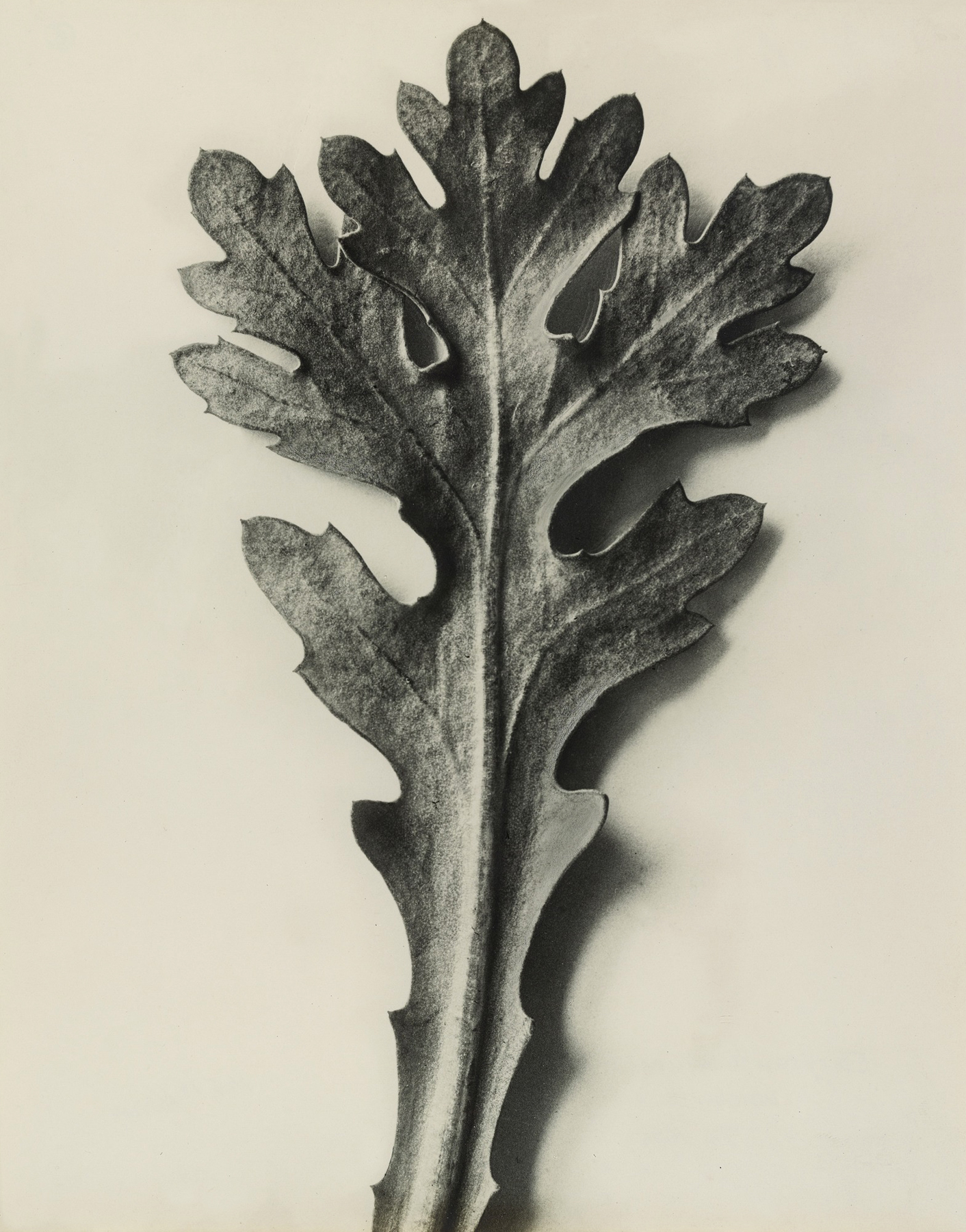
 

Karl Blossfeldt (German, 1865-1932) 'Chrysanthemum segetum - Feverfew' before 1928


Karl Blossfeldt (German, 1865-1932)
Chrysanthemum segetum – Feverfew
before 1928
Gelatin silver print
Karl Blossfeldt Collection at the University of the Arts Berlin


Karl Blossfeldt (German, 1865-1932) 'Dipsacus laciniatus - Cutleaf Teasel' before 1928


Karl Blossfeldt (German, 1865-1932)
Dipsacus laciniatus – Cutleaf Teasel
before 1928
Gelatin silver print
Karl Blossfeldt Collection at the University of the Arts Berlin


Karl Blossfeldt (German, 1865-1932) 'Thorned Bulbous Plant' before 1928


Karl Blossfeldt (German, 1865-1932)
Thorned Bulbous Plant
before 1928
Gelatin silver print
Karl Blossfeldt Collection at the University of the Arts Berlin


“He photographed plants by the thousands – photographs which feature flowers, buds, branched stems, clusters or seed capsules shot directly from the side, seldom from an overhead view, and rarely from a diagonal perspective. He usually placed the subjects of his photographs against white or grey cardboard, sometimes against a black background. Hardly ever can details of the rooms be detected. The light for his shots was obtained from northern windows, making it diffuse, but it fell from the side, creating volume. The technique and processing conditions were very simple; only the medium size of the negative format was somewhat out of the ordinary. Nothing detracted from the subject. This man produced such pictures for over thirty years.

The man’s name was Karl Blossfeldt, and his life’s achievement occupies a firm place in the history of 20th-century art, although the aims of his undertaking place him firmly within the 19th century. Blossfeldt shares this bridging of two centuries with other great collectors in the history of photography, such as the Parisian Eugene Atget, and it is to this bridging of two centuries that his influence may be attributed today …

The plant photographs were produced by simple means. Legend has it that a relatively straight-forward homemade camera was used, one common in its time and not very large, with a format of 9 x 12cm. The glass plates which served as negatives were coated with inexpensive but not completely neutral-coloured orthochromatic emulsion, and occasionally – after 1902, as they became more widely available – with panchromatic emulsions, making possible a neutral reproduction of the colour red in halftones. Since the first emulsion was thin and therefore enabled high contrast with extremely sharp edges, it served especially to stress the structural elements. It was thus used primarily for photographs with white or grey backgrounds. The rarer photos with panchromatic emulsions were used to illustrate entire clusters or beds of flowers with a wider variation of chromatic values or halftones.”

Text by Rolf Sachse from the book Karl Blossfeldt Benedikt Taschen Verlag (April 1997) available on Amazon.


Karl Blossfeldt (German, 1865-1932) 'Papaver orientale - Oriental Poppy' before 1928


Karl Blossfeldt (German, 1865-1932)
Papaver orientale – Oriental Poppy
before 1928
Gelatin silver print
Karl Blossfeldt Collection at the University of the Arts Berlin


Originally developed from a practice at the Unterrichtsanstalt des Königlichen Kunstgewerbemuseums Berlin [Institute of the Berlin Royal Arts and Crafts Museum] at the end of the 19th century and designed specifically for use as teaching materials, Karl Blossfeldt’s plant photographs rank today among the classic works of art and photography history.

Blossfeldt taught “Modelling from Live Plants” from 1899 to 1930, first at the Unterrichtsanstalt des Königlichen Kunstgewerbemuseums, later at the Vereinigte Staatsschulen für Freie und Angewandte Kunst [United State Schools for Fine and Applied Arts] that emerged from the Unterrichtsanstalt’s amalgamation with the Hochschule für Bildende Künste [University of the Visual Arts] – predecessors of the present-day Berlin University of the Arts. A major role in the introduction of that subject was played by Moritz Meurer, for whom Karl Blossfeldt worked as a scholarship-holder in Rome from 1892 to 1895. There, prepared plant specimens, sculptures, castings, drawings and photographs were made as models for classroom use. Blossfeldt took up and systematically developed Meurer’s idea of using the basic natural forms inherent in the structure of a plant for the design of architectural, art or craft objects and ornaments.

A letter written to the director of the Arts and Crafts Museum in 1906 shows that Blossfeldt was already in possession of thousands of photographs, from which he intended gradually to make prints. The plan to enlarge the images came about for a number of reasons:

~ The plants that Blossfeldt collected for his students underwent relatively rapid change, either because they grew or because they wilted and withered. Captured in a photograph, they became a lasting model

~ Photographic enlargements allowed even the tiniest natural forms to be made out

~ Photographic enlargements offered the opportunity to present “unadulterated nature” – in contrast to sketched enlargements, which Blossfeldt contended “always contain a subjective element”

~ Blossfeldt wanted his material seen as a specimen collection that would also be available for future generations of students


There is no detailed record showing the technical facilities at Karl Blossfeldt’s disposal. The Karl Blossfeldt Archive/Ann and Jürgen Wilde and the Deutsche Fotothek in Dresden have preserved glass plates and transparencies of various formats (6/6.5 x 9cm, 9 x 12cm, 9 x 18cm and 13 x 18cm). Blossfeldt’s camera – or cameras, because he may have had several – is known to have been an entirely or partly home-made affair. The work collages in the collection of the Karl Blossfeldt Archive / Ann and Jürgen Wilde give a good idea of his negatives because the images that appear in them are from contact prints made by Blossfeldt.

The fact that Karl Blossfeldt became a major celebrity was due to the fortunate circumstance that his photographs came to the attention of the Berlin gallerist Karl Nierendorf. He staged the first exhibition of Blossfeldt’s work in a non-school context in 1926, presenting it alongside sculptures from Africa and New Guinea and work by the artist Richard Janthur. In 1928, in another Nierendorf initiative, Urformen der Kunst [Art Forms in Nature] was published with 120 plates of plants by Blossfeldt. The book was given such a rapturous reception that the following years saw more editions published and foreign-language editions launched in English, French and Swedish. These studies were very much in tune with the new maxim of 1920s art that called for things to be represented authentically, with no artistic frills, in a clear visual idiom designed to explore and reveal their nature. The fact that Blossfeldt succeeded in this is all the more astonishing since he started out working with no thoughts of pushing forward any boundaries in art or photography. He was primarily motivated by a didactic and pragmatic intention to produce highly accurate plant images which, as models for study, would reveal natural forms to the human eye and inspire students to turn them into art.

With his passionate concentration on a single subject, addressed in close-up in almost infinite variations and thus revealed for comparative examination, Blossfeldt became a highly respected figure, especially after the re-think on photography in the 1970s. As a result, he has had an indirect influence on contemporary art and knowledge of his work helps shape the way we view art today. Karl Blossfeldt did not experience his success for long. He died in December 1932, the year in which his second book Wundergarten der Natur (Art Forms in Nature) was published. The largest collections of his photographs are in the Karl Blossfeldt Archive/Ann and Jürgen Wilde, the Archive of the Berlin University of the Arts and the Deutsche Fotothek Dresden.

Text from the Die Photographische Sammlung/SK Stiftung Kultur website [Online] Cited 25/03/2009. No longer available online


Karl Blossfeldt (German, 1865-1932) 'Papaver Orientalis - Oriental Poppy capsules' before 1928


Karl Blossfeldt (German, 1865-1932)
Papaver Orientalis – Oriental Poppy capsules
before 1928
Gelatin silver print
Karl Blossfeldt Collection at the University of the Arts Berlin


Karl Blossfeldt (German, 1865-1932) 'Dryopteris filix mas - Common male fern' before 1928


Karl Blossfeldt (German, 1865-1932)
Dryopteris filix mas – Common male fern
before 1928
Gelatin silver print
Karl Blossfeldt Collection at the University of the Arts Berlin


Die Photographische Sammlung/SK Stiftung Kultur
Im Mediapark 7
50670 Cologne
Phone: 0049-(0)221-88895 300

Opening hours:
Open daily 14 – 19hrs
Closed Wednesdays

Die Photographische Sammlung/SK Stiftung Kultur website

LIKE ART BLART ON FACEBOOK

Back to top

Exhibition: ‘Overpainted Photographs’ by Gerhard Richter at Centre de la Photographie, Geneva

Exhibition dates: 20th February – 12th April, 2009


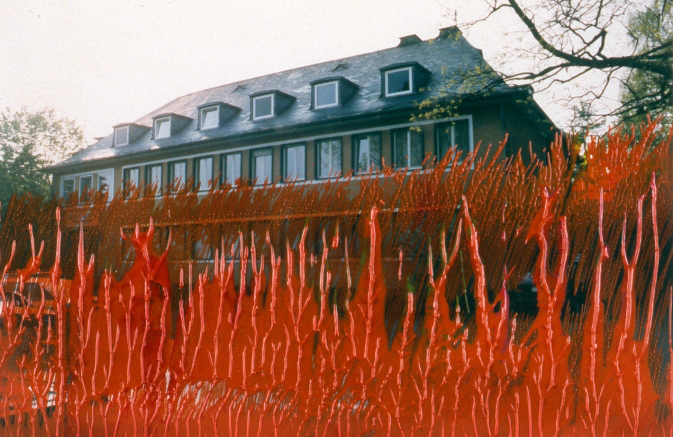
Gerhard Richter (German, b. 1932) '9.4.89' from the exhibition 'Overpainted Photographs' by Gerhard Richter at Centre de la Photographie, Geneva, Feb - April, 2009


Gerhard Richter (German, b. 1932)
9.4.89
10.1 x 14.8cm
Oil on colour photograph


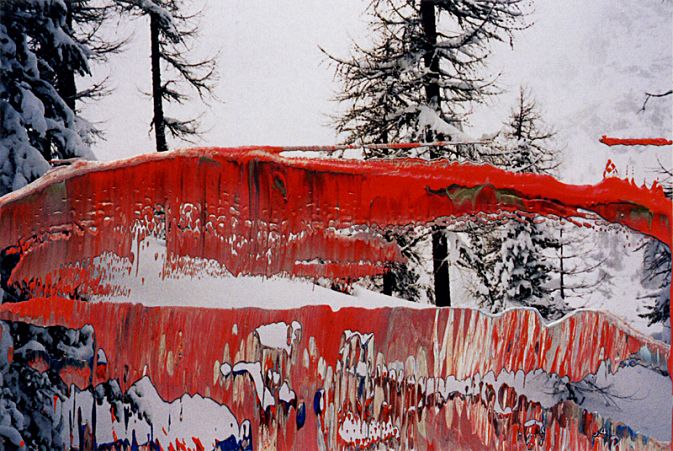
There is something unsettling in Richter’s serendipitious interventions. Using his own prosaic 10 x 15cm colour photographs that have been commercially printed as the basis of the works, Richter overlays the surface of the photograph with skeins of paint that disturb the reflexivity of each medium. Dragging the photograph through the paint or using a palette knife to apply layers of colour, the surfaces of paint and photograph no longer exist as separate entities. The process produces punctum like clefts rent in the fabric of time and space. If the intervention is judged unsuccessful the result if immediately destroyed.

In 5.Juli.1994 (below) blood red fingers of paint strain upwards as they invade the solidity of a dour suburban home, echoing the invading trees branches at top right of picture. In 11.2.98 (below) green paint slashes across the mouth and forehead of a woman in a floral dress, her eyes seemingly bloodshot and pleading stare into the distance to the left of our view, the silent scream strangled in her throat by the vibrations of paint. These are the instantaneous responses of the artist to the photograph, a single mood expounded in irreversible gestures, the actions of the painter’s hand disturbing the indexical link of the photograph and it’s ability to be ‘read’ as a referent of the object it depicts. Richter’s interventions challenge the concept of momentary awareness and offer the possibility of a space between, where the image stands for something else – access to Other, even a contemplation of the sublime.

“The colour of paint applied corresponds or contrasts the tonalities of the underlying photograph but link the two through formal relationships of the layers … Often a tense relationship, the results run the gamut of the surreal to the beautiful to the disturbed. It is all the more surprising that each in its perceived completeness was in essence accomplished by chance and trial and error.”1

“Richter’s painterly gestures bounce off the [photographs] content in peculiar ways, sometimes interacting with it, sometimes overlaying it and sometimes threatening to eclipse it altogether. The final effect is to cause both photography and painting to seem like incredibly bizarre activities, disparate in texture but often complicit in aspiration.”2

I love the violence, the sometimes subversive, sometimes transcendental ‘equivalence’ of these images: where a Steiglitz cloud can stand for music, where a Minor White infrared photograph posits a new reality, Richter offers us an immediacy that destroys the self-reflexive nature of everyday life. His spontaneous musings, his amorphous worlds, his bleeds and blends crack open the skin of our existential life on earth. Here, certainly, are ‘the clefts in words, the words as flesh’.

Dr Marcus Bunyan


1/ “Gerhard Richter: Overpainted Photographs,” on the 5B4 blog, February 9, 2009 [Online] Cited 13/06/2022

2/ Hatje Cantz. “Gerhard Richter: Overpainted Photographs,” on the Artbook website Nd [Online] Cited 13/06/2022


    Gerhard Richter (German, b. 1932) '11.4.89' from the exhibition 'Overpainted Photographs' by Gerhard Richter at Centre de la Photographie, Geneva, Feb - April, 2009


    Gerhard Richter (German, b. 1932)
    11.4.89
    10 x 15cm
    Oil on colour photograph


    Gerhard Richter (German, b. 1932) '11.3.89'


    Gerhard Richter (German, b. 1932)
    11.3.89
    10 x 14.9cm
    Oil on colour photograph


    Gerhard Richter (German, b. 1932) '5.Juli.1994'


    Gerhard Richter (German, b. 1932)
    5.Juli.1994
    10.2 x 15.2cm
    Oil on colour photograph


    Gerhard Richter (German, b. 1932) '11.2.98'


    Gerhard Richter (German, b. 1932)
    11.2.98
    10 x 14.7cm
    Oil on colour photograph


    Gerhard Richter (German, b. 1932) '22.2.96'


    Gerhard Richter (German, b. 1932)
    22.2.96
    9.6 x 14.7cm
    Oil on colour photograph


    Gerhard Richter (German, b. 1932) '11.Febr.05'


    Gerhard Richter (German, b. 1932)
    11.Febr.05
    10.1 x 14.9cm
    Oil on colour photograph


    The exhibition presents 330 of Richter’s largely unknown overpainted photographs, a technique he has been using since 1982.

    The exhibition UERBERNALTE FOTOGRAFIEN / PHOTOGRAPHIES PEINTES (OVERPAINTED PHOTOGRAPHS) at the Centre de la photographie Geneva (CPG) presented a side of the work of Gerhard Richter largely unknown up till now. Only a few collectors and gallerists close to the artist were aware of the practise that Gerhard Richter, one of the most important artists of our times, had developed systematically since 1982. It is only because of this exhibition that more than 1000 of his over-painted photographs will enter into his catalogue raisone. The CPG presents approximately 330 of them in this show.

    “By placing paint on photographs, with all their random and involuntary expressiveness, Gerhard Richter reinforces the unique aspect of each of these mediums and opens a field of tension rich in paradoxes, as old as the couple – painting / photography – which has largely defined modern art.”

    Text from Centre de la Photographie website


    Gerhard Richter is justly famed for the photorealism of his early canvases, but it is less well known that he has also painted directly onto photographic prints. These (mostly small-format) pieces were reproduced in books as early as the first Atlas, but practically all of the works themselves are housed in private collections and rarely exhibited in public. Overpainted Photographs gathers this body of work, which unites the labor of the hand with the work of mechanical reproduction to produce a kind of art as conceptually rich as Richter’s better-known paintings, neutralizing the expressive powers of each medium to reach an indifference to their potency. In an overture to Duchamp’s “degree zero” found objects, the original photographs are frequently bland in content – an empty office, a ball, a beach scene or tourist snapshot – and Richter’s painterly gestures bounce off that content in peculiar ways, sometimes interacting with it, sometimes overlaying it and sometimes threatening to eclipse it altogether. The final effect is to cause both photography and painting to seem like incredibly bizarre activities, disparate in texture but often complicit in aspiration. This monograph offers a unique opportunity to savour what had previously been a neglected but copious aspect of Richter’s work.

    Text from the Amazon website


    “The public scenes, whether on the beach or the ski slope or children’s theatre, are beset with sudden surges of colour that tend to resemble interventions of the sky or elemental forces, more than the moods of a decorative or ornamental painter annotation. Sometimes they seem like catastrophic visions. Blood-red snowflakes dance above the white fern. The photo shows skyscrapers in the urban morning sun – and the oil paint adds to the sulpherous fire that pours over the city from the sky”

    Botho Strauss in Gerhard Richter: Overpainted Photographs (Hardcover)


    Gerhard Richter (German, b. 1932) '22.1.2000 (Firenze)'


    Gerhard Richter (German, b. 1932)
    22.1.2000 (Firenze)
    12 x 12cm
    Oil on colour photograph


    Gerhard Richter (German, b. 1932) '21.1.2000 (Firenze)'


    Gerhard Richter (German, b. 1932)
    21.1.2000 (Firenze)
    12 x 12cm
    Oil on colour photograph


    Gerhard Richter (German, b. 1932) '22.4.07'


    Gerhard Richter (German, b. 1932)
    22.4.07
    12.6 cm x 16.7 cm
    Oil on colour photograph


    Centre de la Photographie
    28, rue des Bains,
    CH – 1205 Genève
    Phone: + 41 22 329 28 35

    Opening hours:
    Tuesday to Sunday 11.00 – 18.00

    Centre de la Photographie website

    Gerhard Richter website

    LIKE ART BLART ON FACEBOOK

    Back to top

    Exhibition: ‘The best is often the Memories: Photographic Portraits of Romy Schneider’ at Museum für Kunst Und Gewerbe, Hamburg

    Exhibition dates: 6th February – 13th April, 2009


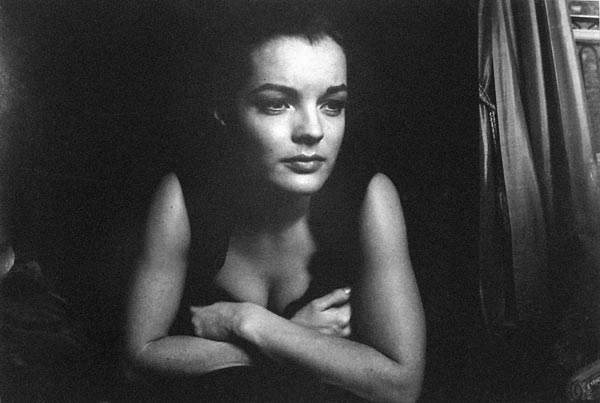
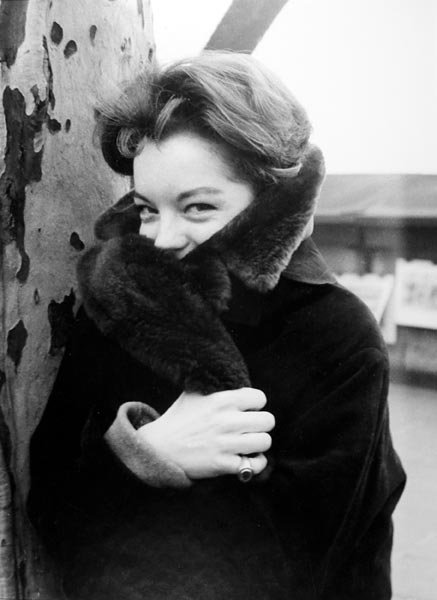
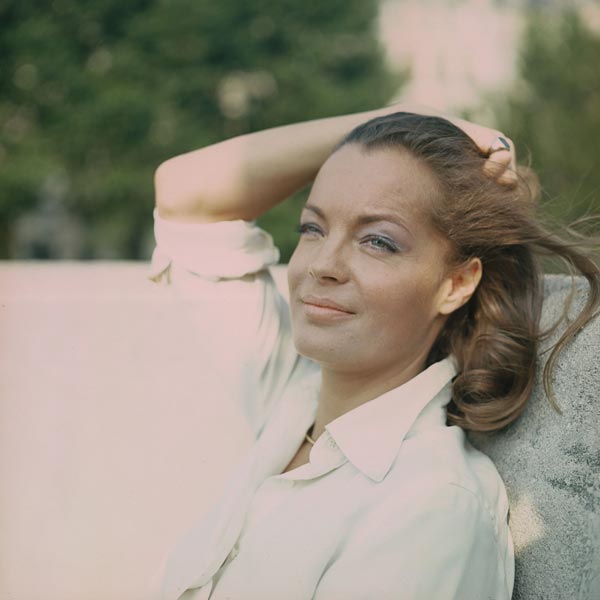
    Will McBride (American, 1931-2015) 'Romy Schneider, Paris, 1964' from the exhibition 'The best is often the Memories: Photographic Portraits of Romy Schneider' at Museum für Kunst Und Gewerbe, Hamburg, Feb - April, 2009


    Will McBride (American, 1931-2015)
    Romy Schneider, Paris, 1964
    1964
    Gelatin silver print


    The legend that was Romy!

    I have never known the filmography of Romy Schneider, never come across this actress before sad to say. But now I do. What great photographs. What a beautiful woman: sensitive, vivacious, stunning. A soul I would have liked to have known.

    Marcus


    Many thankx to the Museum für Kunst Und Gewerbe for allowing me to publish the photographs in the posting. Please click on the photographs for a larger version of the image.


    Romy Schneider (German: born Rosemarie Magdalena Albach; 23 September 1938 – 29 May 1982) was a German-French actress. She began her career in the German Heimatfilm genre in the early 1950s when she was 15. From 1955 to 1957, she played the central character of Empress Elisabeth of Austria in the Austrian Sissi trilogy, and later reprised the role in a more mature version in Luchino Visconti’s Ludwig (1973). Schneider moved to France, where she made successful and critically acclaimed films with some of the most notable film directors of that era.

    Read more about Romy Schneider on the Wikipedia website


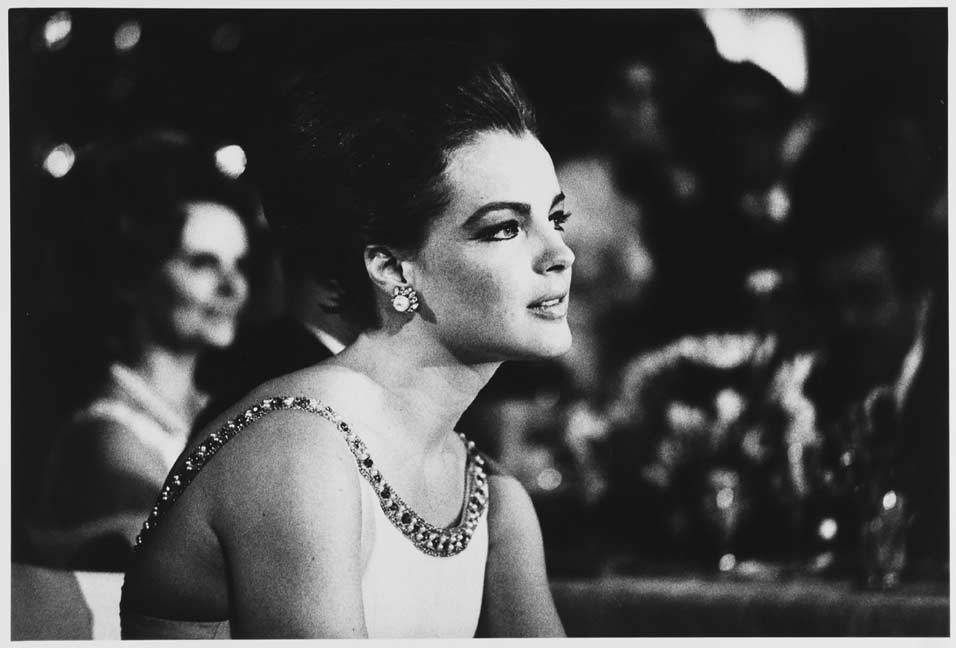
    Peter Brüchmann (German, 1932-2016) 'Romy Schneider, Munich, 1968' from the exhibition 'The best is often the Memories: Photographic Portraits of Romy Schneider' at Museum für Kunst Und Gewerbe, Hamburg, Feb - April, 2009


    Peter Brüchmann (German, 1932-2016)
    Romy Schneider, Munich, 1968
    1968
    Gelatin silver print


    Peter Brüchmann

    Born in Berlin, Peter Brüchmann trained to be a photographer with the fashion and portrait photographer Lotte Söhring and subsequently completed a traineeship at the German press agency dpa. In the 1950s and 1960s he worked for well-known magazines, such as Schöner Wohnen, Stern and Bild am Sonntag. Brüchmann is primarily known for his portraits of celebrities of the movie and music industry. In 2008 the photographer participated in the group exhibition Die Erinnerung ist oft das Schönste – Fotografische Porträts von Romy Schneider, an exhibition comprising portraits of the famous Franco-German actress Romy Schneider, held at the Stiftung Opelvillen Rüsselheim, Germany. Today Peter Brüchmann works as a freelance photographer for several national and international magazines. Numerous of his photographs are among the collections of the German Historical Museum in Berlin.


    Roger Fritz (German, 1936-2021) 'Romy Schneider, Paris, 1961'


    Roger Fritz (German, 1936-2021)
    Romy Schneider, Paris, 1961
    1961
    Gelatin silver print


    Herbert List, Max Scheler, Roger Fritz, F. C. Gundlach, Will McBride, Peter Brüchmann, Werner Bokelberg, Helga Kneidl and Robert Lebeck took photos of Romy Schneider in quite different ways, as a young girl, in her film roles, together with her children, apparently unobserved in everyday situations or in set poses and dressed up in various costumes, merry or pensive, beautiful and fragile. More than 140 pictures will be on show, of which about 40 are being exhibited for the first time.

    Hardly any other star has left us with so many different and conflicting images as Romy Schneider. She was photographed thousands of times – and yet she always remained enigmatic. Some of the photographers whose work is presented in this exhibition only met Romy once – Herbert List, for instance, captured her as a teenager around 1954 on pictures which remained unknown until recently – or accompanied her throughout her life, like Robert Lebeck, who succeeded in taking disturbingly personal pictures of her from the 1950s through to shortly before her death.

    These snapshots conjure up once again the legend that was Romy, while at the same time making a powerful statement which reveals the transitoriness of existence. Because that is the core of what a photo does: it creates an image in order to bear lasting witness to an event which happened – yet at the very moment of capturing the image on film, it is no more than the proof that the fleeting moment has passed.

    The photos by Herbert List, Werner Bokelberg, Peter Brüchmann, Roger Fritz and Max Scheler are being shown publicly for the first time. This also applies to the majority of the photos by F. C. Gundlach and Will McBride. The pictures by Helga Kneidl and Robert Lebeck have already appeared in books about Romy Schneider. These volumes are however now out of print.

    Text from the Museum für Kunst Und Gewerbe website


    Herbert List (German, 1903-1975) 'Romy Schneider, Munich, 1954'


    Herbert List (German, 1903-1975)
    Romy Schneider, Munich, 1954
    1954
    Gelatin silver print


    Herbert List

    Herbert List (7 October 1903 – 4 April 1975) was a German photographer, who worked for magazines, including VogueHarper’s Bazaar, and Life, and was associated with Magnum Photos. His austere, classically posed black-and-white compositions, particularly his homoerotic male nudes, taken in Italy and Greece being influential in modern photography and contemporary fashion photography.

    Photographer

    In 1929 he met Andreas Feininger who inspires his greater interest in photography and who gives him a Rolleiflex camera. From 1930 he began taking portraits of friends and shooting still life, is influenced by the Bauhaus and artists of the surrealist movements, Man Ray, Giorgio De Chirico and Max Ernst, and creates a surrealist photograph titled Metaphysique in a style he called fotografia metafisica in homage to De Chirico, his most important influence during this period. He used male models, draped fabric, masks and double-exposures to depict dream states and fantastic imagery. He has explained that his photos were “composed visions where [my] arrangements try to capture the magical essence inhabiting and animating the world of appearances.”

    In 1936, in response to the danger of Gestapo attention to his openly gay lifestyle and his Jewish heritage, List left Germany for Paris, where he met George Hoyningen-Huene with whom he travelled to Greece, deciding then to become a photographer. During 1937 he worked in a studio in London and held his first one-man show at Galerie du Chasseur d’Images in Paris. Hoyningen-Huene referred him to Harper’s Bazaar magazine, and 1936-1939 he worked for Arts et Metiers GraphiquesVerveVoguePhotographie, and Life. List was unsatisfied with fashion photography. He turned back to still life imagery, continuing in his fotografia metafisica style.

    From 1937 to 1939 List traveled in Greece and took photographs of ancient temples, ruins, sculptures, and the landscape for his book Licht über Hellas. In the meantime he supported himself with work for magazines Neue LinieDie Dame and for the press from 1940-1943, and with portraits which he continued to make until 1950. In List’s work the revolutionary tactics of surrealist art and a metaphysical staging of irony and reverie had been honed in an the fashion industry that relied on illusion and spectacle which after World War II returned to a classical fixation on ruins, broken male statuary and antiquity.

    Text from the Wikipedia website


    F. C. Gundlach (German, 1926-2021) 'Romy Schneider, Hamburg, 1961'


    F. C. Gundlach (German, 1926-2021)
    Romy Schneider, Hamburg, 1961
    1961
    Gelatin silver print


    F. C. Gundlach

    F. C. Gundlach (Franz Christian Gundlach; born 16 July 1926 in Heinebach, Hesse; died 23 July 2021, Hamburg, Germany) is a German photographer, gallery owner, collector, curator und founder. In 2000 he created the F.C. Gundlach Foundation, since 2003 he has been founding director of the House of Photography – Deichtorhallen Hamburg.

    His fashion photographs of the 1950s, 1960s and 1970s, which in many cases integrated social phenomena and current trends in the visual arts, have left their context of origin behind and found their way into museums and collections. Since 1975 he also curated many internationally renowned photographic exhibitions. On the occasion of the reopening of the House of Photography in April 2005, he curated the retrospective of the Hungarian photographer Martin Munkácsi. Here, the exhibitions A Clear VisionThe Heartbeat of Fashion and Maloney, Meyerowitz, Shore, Sternfeld. New Color Photography of the 1970s from his collection were presented since 2003. Most recently he curated the exhibitions More Than Fashion for the Moscow House of Photography and Vanity for the Kunsthalle Wien 2011.

    The fashion photographer

    F. C. Gundlach attended the Private Lehranstalt für Moderne Lichtbildkunst (Private School for Modern Photography) under Rolf W. Nehrdich in Kassel from 1946 to 1949. Subsequently, he began publishing theatre and film reports in magazines such as Deutsche Illustrierte, Stern, Quick and Revue as a freelance photographer.

    His specialisation in fashion photography began in 1953 with his work for the Hamburg-based magazine Film und Frau, for which he photographed German fashion, Parisian haute couture and fur fashion campaigns. Additionally he photographed portraits of artists such as Romy Schneider, Hildegard Knef, Dieter Borsche and Jean-Luc Godard. For Film und Frau, but also for Stern, Annabelle, Twen and other magazines, F. C. Gundlach has since made fashion and reportage trips to the Near, Middle and Far East as well as to Central and South America. Under an exclusive contract with the magazine Brigitte, he photographed many of the trendsetting fashion pages until 1983, a total of more than 160 covers and 5,000 pages of editorial fashion. In the 1970s and 1980s he worked in South America, Africa, but above all in New York and on the American west coast.

    His retrospective solo exhibitions, such as ModeWelten (1985), Die Pose als Körpersprache (1999), Bilder machen Mode (2004) or F. C. Gundlach. The photographic work (2008) were shown in many museums and galleries in Germany and abroad.

     
    “He is a photographer whose images show the knowledge of the dominant role of fashion as a cultural social factor. For this reason, he rarely presented the phenomena of fashion in isolation, but rather linked them to the phenomenology of everyday reality and placed them in the socio-cultural context from which they ultimately originated. F. C. Gundlach proves to be a photographic artist with a will to style, a mastery of staging and the ability to shape the photographic image at his leisure, who arranges his models in ever new formal constellations: as a photographer of extraordinary aesthetic quality.”

    ~ Klaus Honnef

     
    “As a fashion photographer who makes use of a recording medium, the photographer must live, think and feel entirely in his time. Fashion photographs are always interpretations and stagings. They reflect and visualise the zeitgeist of the present and anticipate the spirit of tomorrow. They offer projection screens for identification, but also for dreams, wishes and desires. And yet fashion photographs say more about a time than documentary photographs pretending to depict reality.”

    ~ F.C. Gundlach


    Text from the Wikipedia website


    Werner Bokelberg (German, 1937-2024) 'Romy Schneider, London, 1968'


    Werner Bokelberg (German, 1937-2024)
    Romy Schneider, London, 1968
    1968
    Gelatin silver print


    Helga Kneidl (German, b. 1939) 'Romy Schneider, Paris, 1972'


    Helga Kneidl (German, b. 1939)
    Romy Schneider, Paris, 1972
    1972


    Helga Kneidl (German, b. 1939) 'Romy Schneider, Paris, 1973'


    Helga Kneidl (German, b. 1939)
    Romy Schneider, Paris, 1973
    1973


    Museum für Kunst und Gewerbe Hamburg
    Steintorplatz, 20099 Hamburg

    Opening hours:
    Tuesday to Sunday 10am – 6pm
    Thursday 10am – 9pm
    Closed Mondays

    Museum für Kunst Und Gewerbe website

    LIKE ART BLART ON FACEBOOK

    Back to top

    Opening: ‘Andreas Gursky’ at the National Gallery of Victoria International, Melbourne

    Exhibition dates: 21st November, 2008 – 22nd February, 2009

    Opening: Thursday 21st November 2008


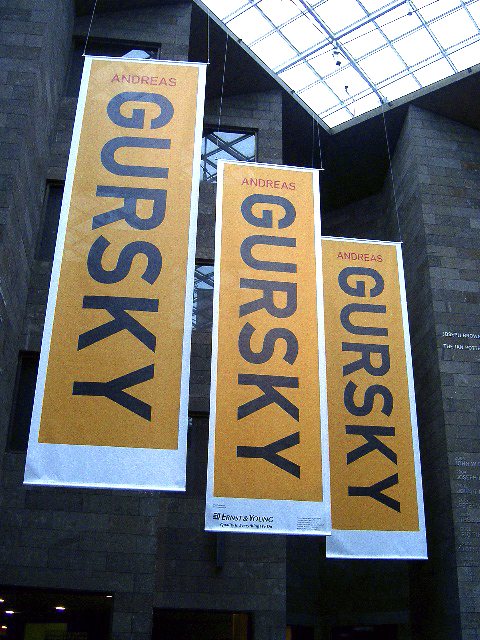
    Andreas Gursky banner at NGV International exhibition, Melbourne


    Andreas Gursky banner at NGV International exhibition, Melbourne


    A large but plain crowd assembled for the opening of the first exhibition by world renowned German photographer Andreas Gursky at the National Gallery of Victoria in St Kilda Road, Melbourne. After some lively conversation with friends and following the opening speeches we wandered into a large clean gallery space with minimal design elements. The use of space within the gallery allowed the work to speak for itself. It is a minimal hang and the exhibition works all the better for this.

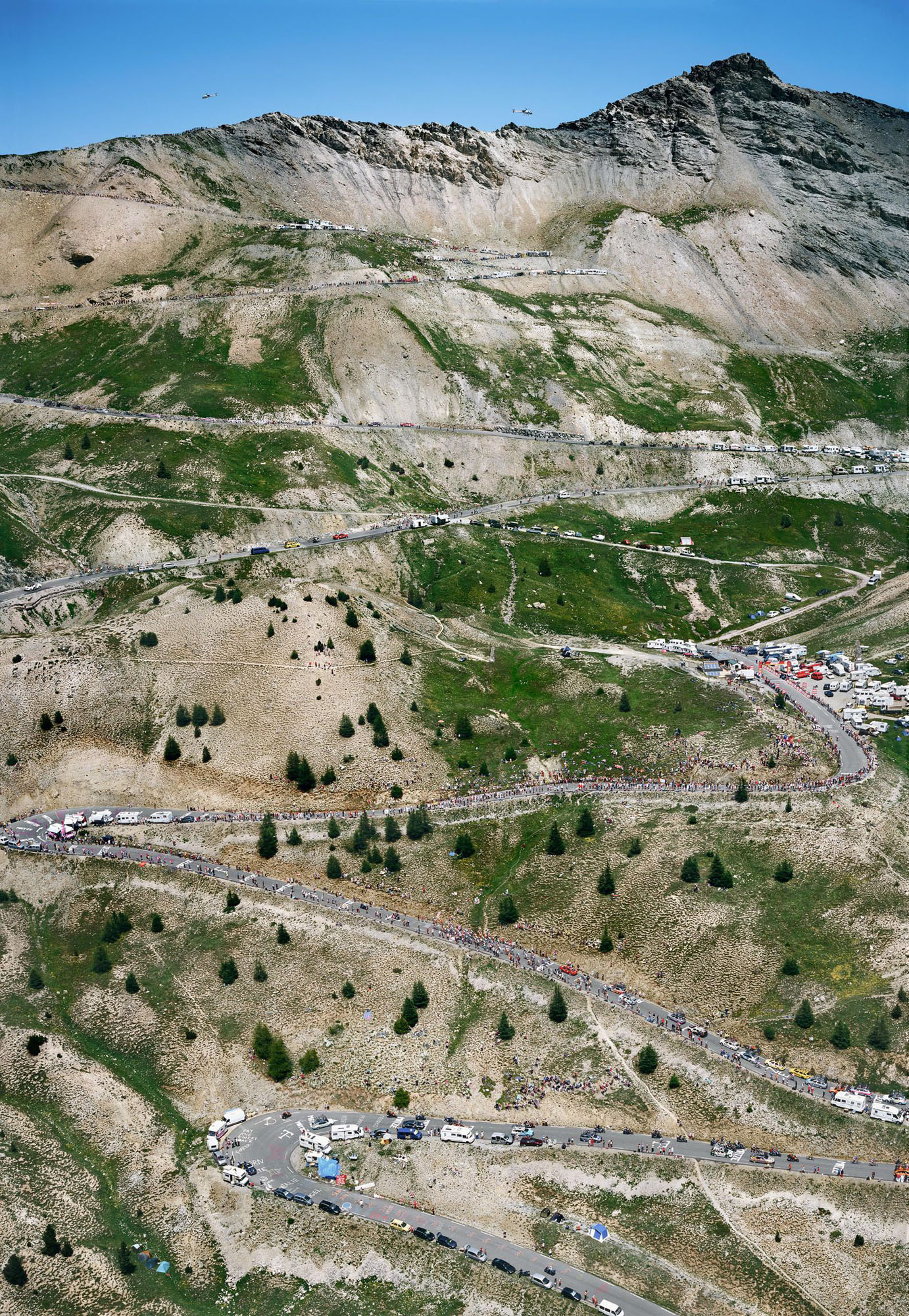
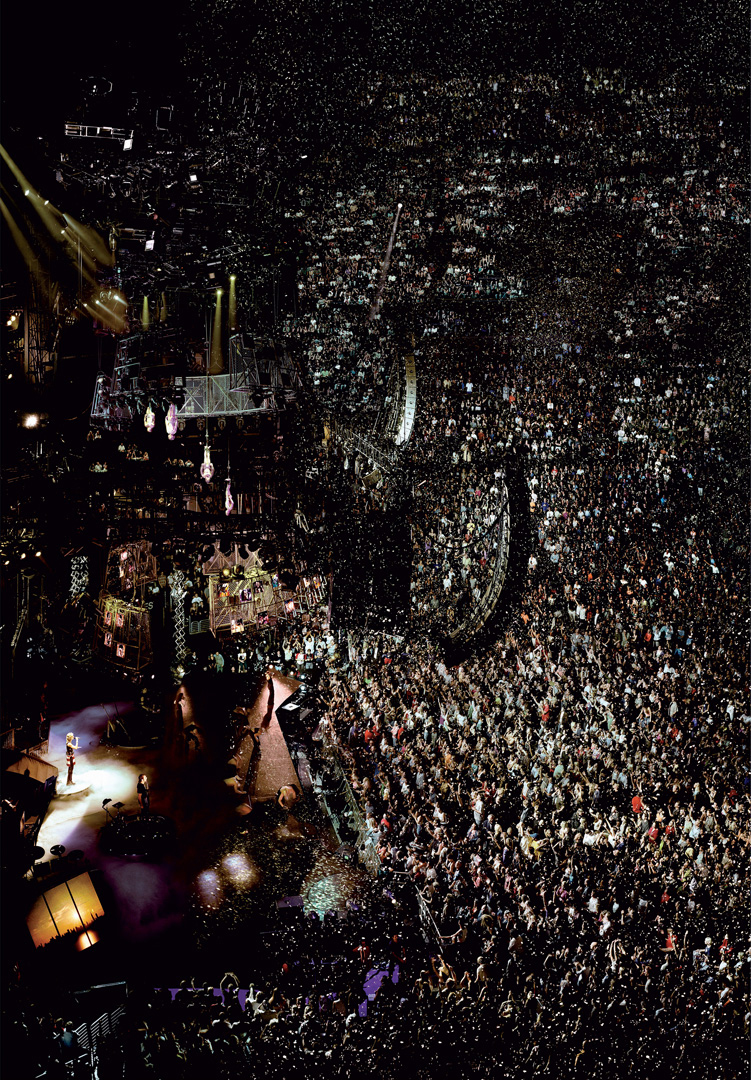
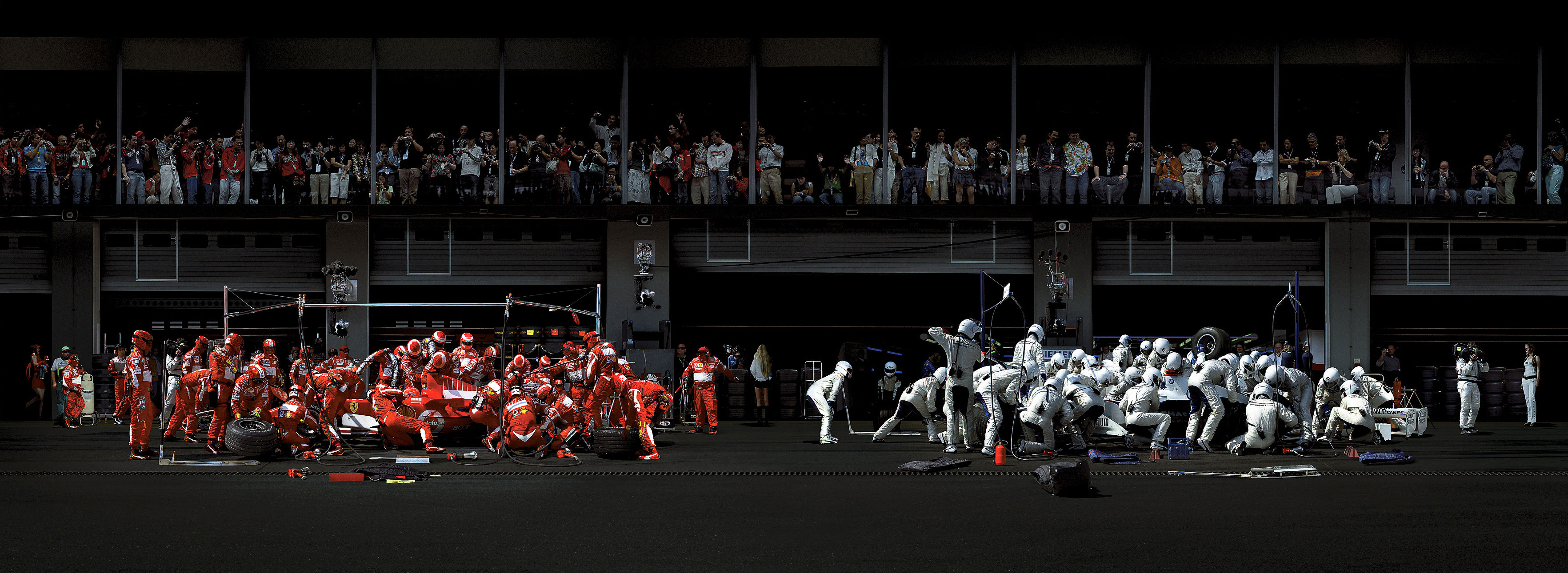
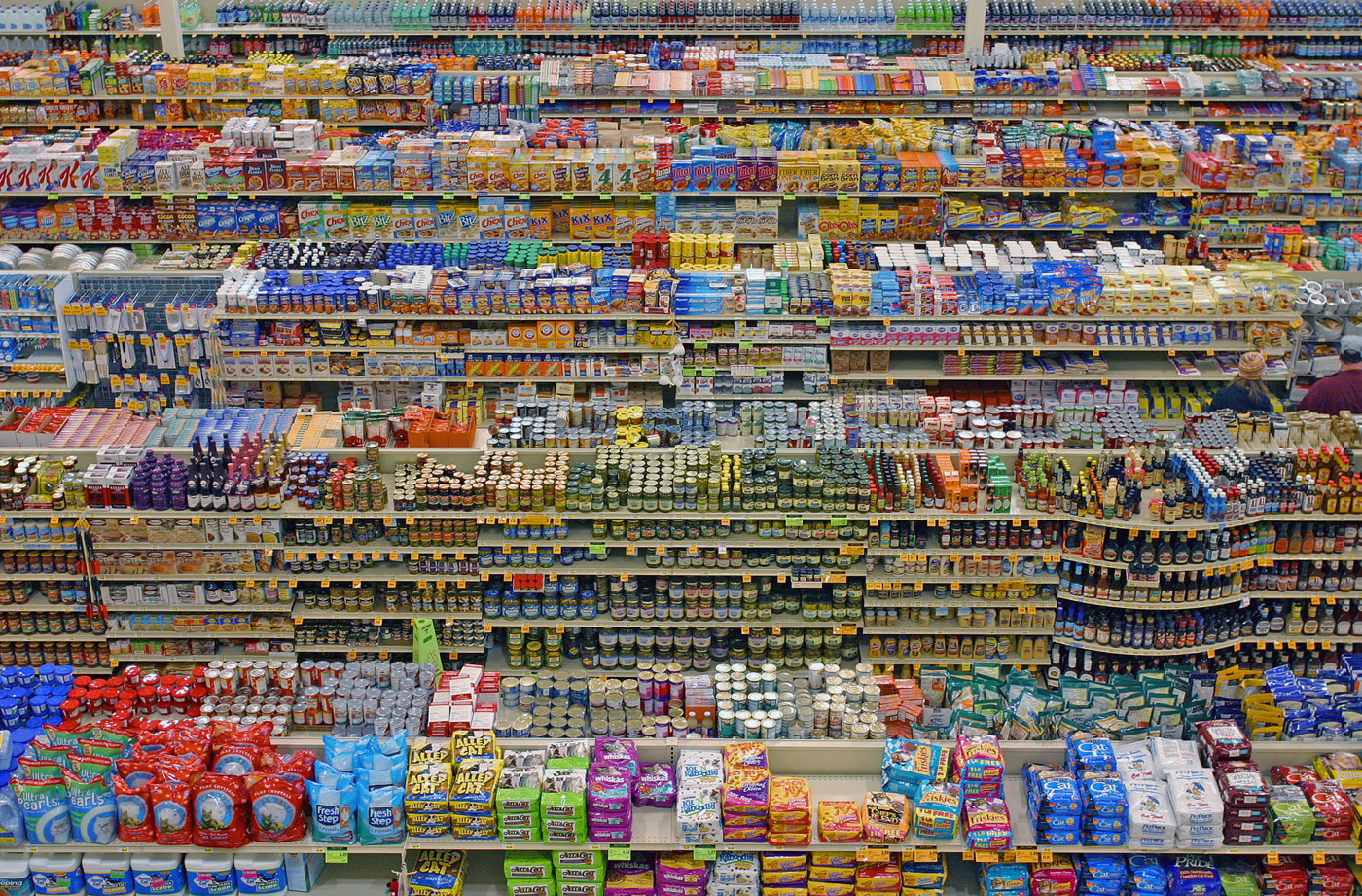
    As for the work itself 21 large photographs are presented ranging from landscapes to buildings, race tracks to formula 1 pits, Madonna concerts to the Tour de France. Most work successfully in building a hyperreal vision of the world. We are not sure what is ‘real’ or hyperreal, what is a straight photograph or what has been digitally manipulated and woven together. The colour and sharpness of the images is often intensified: in reproductions of the famous photograph of the 99c supermarket in America the colours seem flat but ‘in the flesh’ the colours are almost fluoro in their saturation and brightness.

    Having said that the photographs are nearly always unemotional – as though seen from above in the third person, they observe with detachment. The intrigue for the viewer is in the detail, in working out what is going on, but these are not passionate photographs on the surface. It is beneath the surface that the photographs have their psychological effect: the best of the images work on the subconscious of the viewer. Like a fantastical dance the three very wide images of the Formula 1 pits feature pit crews practicing tyre changes, frozen in a choreographed ballet. People in the galleries above stare down; pit lane girls seem to have been inserted digitally into the images, standing at side or behind the pit crews in a seemingly surreal comment on these worlds. These are theatrical tableaux vivant, splashed with teams colours. Fantastic photographs.

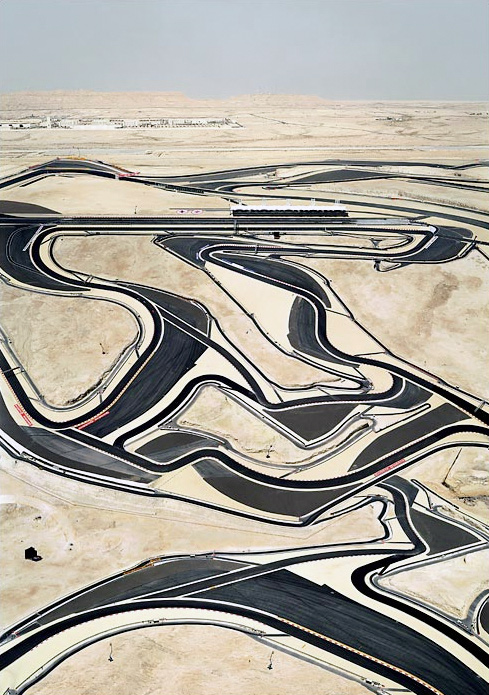
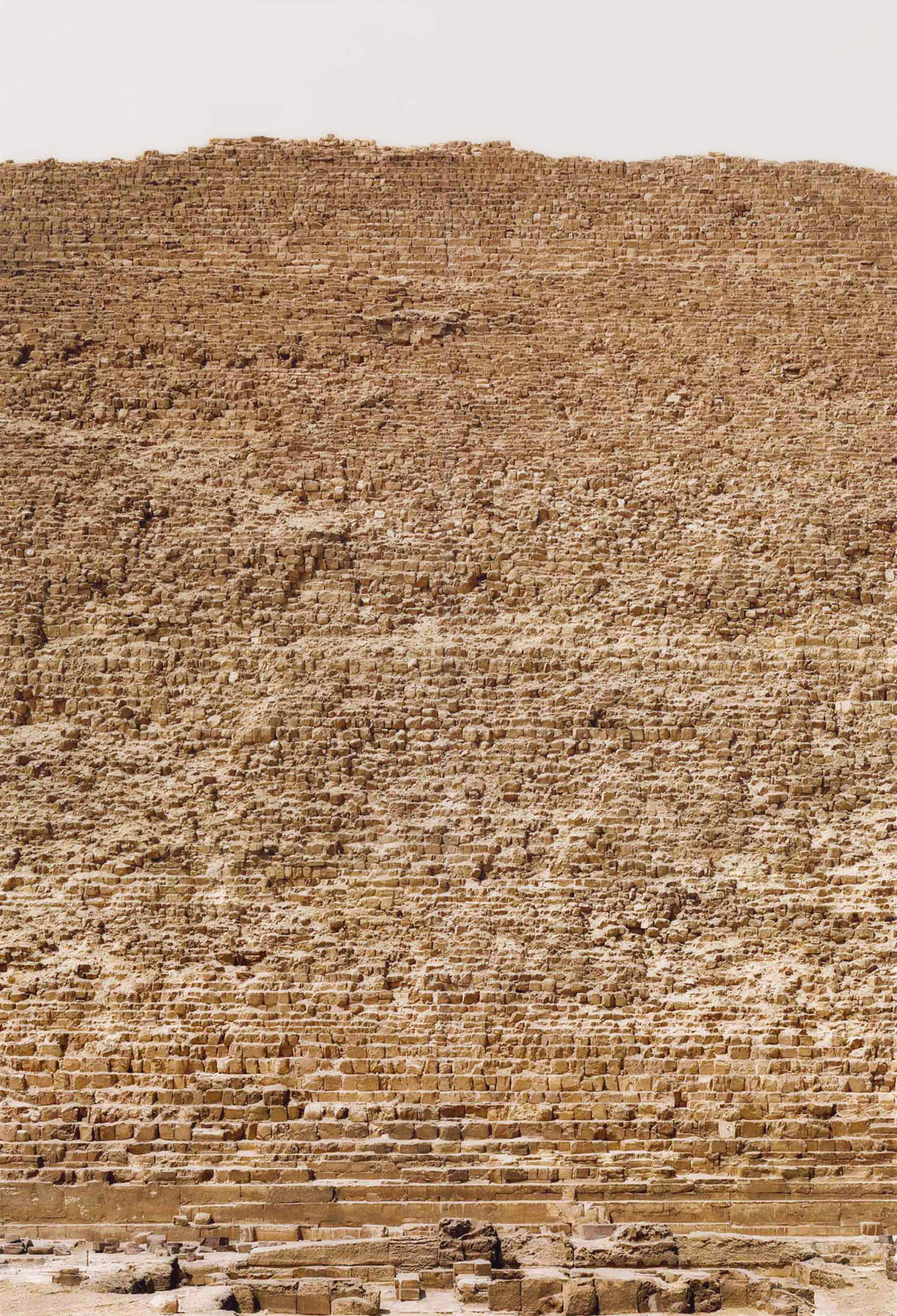
    In some of the images, such as the Madonna concert or the photograph of the Bahrain Formula 1 racetrack, space seems to have folded in on itself and the viewer is unsure of the structure of the image and of their vantage point in looking at them. Space also collapses in the photograph of the pyramid of Cheops (2006, below), where the depth of field from foreground to background of the image is negligible. Less successful are images of a Jackson Pollock painting and a green grass bank with running river (Rhein II 1996, below), intensified beyond belief so that the river seems almost to be made of liquid silver.

    A wonderful exhibition in many aspects, well worth a visit to see one the worlds best photographers at work. The photographs tell detached but psychologically emotional stories about what human beings are doing to the world in which they live. These images are a commentary on the state of this relationship – images of repetition, pattern, construction, use, abuse and fantasy woven into hyperreal visions of an unnatural world.

    Dr Marcus Bunyan


    Many thankx to the National Gallery of Victoria for inviting me to the opening and for allowing me to publish the photographs in the posting. Please click on the photographs for a larger version of the image.


    Andreas Gursky (German, b. 1955) 'Bahrain I' 2007 from the exhibition 'Andreas Gursky' at the National Gallery of Victoria International, Melbourne, November, 2008 - February, 2009


    Andreas Gursky (German, b. 1955)
    Bahrain I
    2007
    C Print
    120 1/2 x 87 1/4 inches
    © Andreas Gursky


    Andreas Gursky (German, b. 1955) 'Tour de France' 2007 from the exhibition 'Andreas Gursky' at the National Gallery of Victoria International, Melbourne, November, 2008 - February, 2009


    Andreas Gursky (German, b. 1955)
    Tour de France
    2007
    C Print
    © Andreas Gursky


    Andreas Gursky (German, b. 1955) 'Cheops' 2006 from the exhibition 'Andreas Gursky' at the National Gallery of Victoria International, Melbourne, November, 2008 - February, 2009


    Andreas Gursky (German, b. 1955)
    Cheops
    2006
    C Print
    307 x 217.1cm
    © Andreas Gursky


    Andreas Gursky (German, b. 1955) 'Madonna I' 2001


    Andreas Gursky (German, b. 1955)
    Madonna I
    2001
    C Print
    282.26 x 207.01 x 6.35cm
    © Andreas Gursky


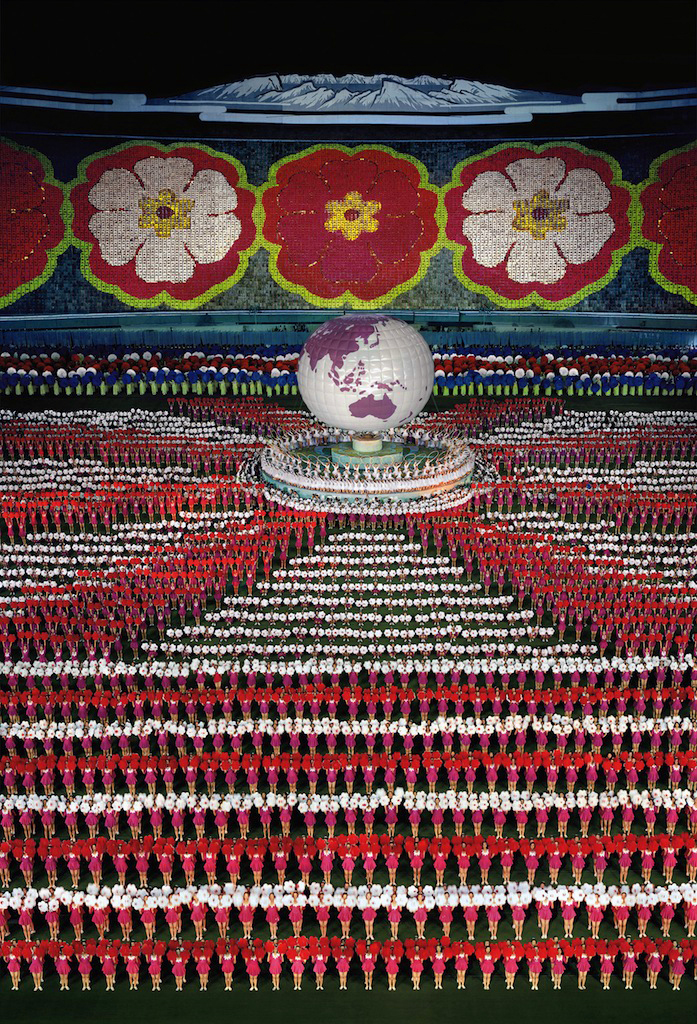
    Andreas Gursky (German, b. 1955) 'Pyongyang I' 2007


    Andreas Gursky (German, b. 1955)
    Pyongyang I
    2007
    C Print
    307.0 x 215.5 x 6.2cm
    © Andreas Gursky


    For the first time in Australia, an exhibition by German contemporary photographer Andreas Gursky opened at the National Gallery of Victoria. From the Haus der Kunst in Munich, Andreas Gursky presents 21 major works for which the artist is internationally acclaimed. The photographs range from 1989 to 2007 and include seminal works such as Tokyo Stock Exchange and the diptych 99 cent store. Andreas Gursky is recognised as one of the world’s leading contemporary artists. On view through 22 February, 2009.

    Well known for his large-scale (generally measuring an astounding four to five metres) and extraordinarily detailed photographs of contemporary life, Gursky continues the lineage of ‘new objectivity’ in German photography which was brought to contemporary attention by Bernd and Hilla Becher.

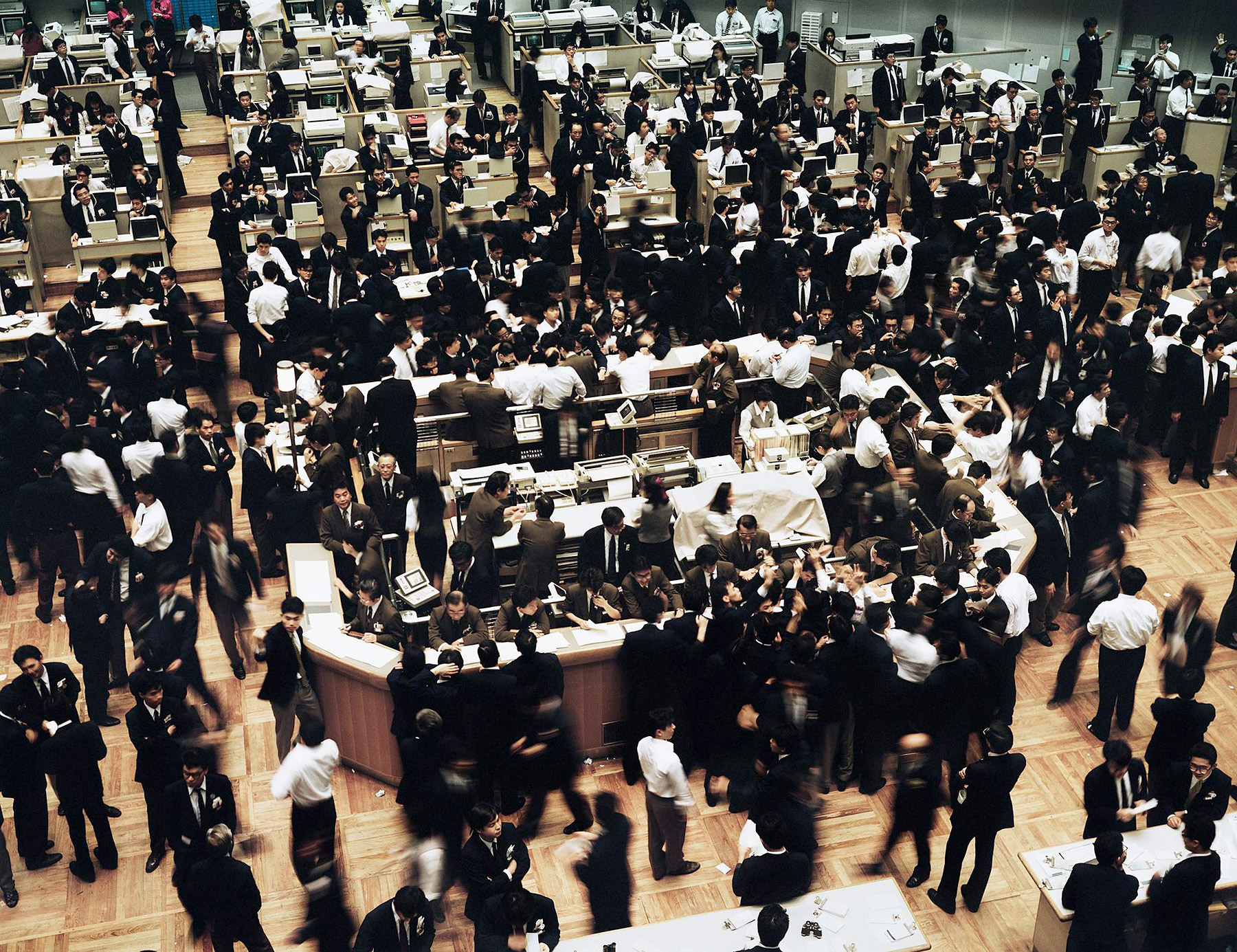
    In the 1990s, Gursky became inspired by the various manifestations of global capitalism. His interest was piqued looking at a newspaper photograph of the crowded floor of the Tokyo Stock Exchange and he began to photograph its flurry of suited traders, somehow moving according to some inbuilt order.

    Dr Gerard Vaughan, Director, NGV said the Andreas Gursky exhibition represented a significant coup for Melbourne: “The National Gallery of Victoria is the only Australian venue for this extraordinary show – the first major exhibition of Gursky’s work ever to be seen in this country. Generously organised by the Haus der Kunst Museum in Munich we are extremely fortunate to have had the works in this show selected for us by Andreas Gursky himself.”

    Andreas Gursky was born in 1955 and grew up in Düsseldorf, Germany. In the early 1980s, he studied at the Kunstakademie Düsseldorf, Germany’s State Art Academy. Whilst there he was heavily influenced by his teachers Bernd and Hilla Becher, who were well known for their methodical black and white photographs of industrial machinery.

    In 1984 Gursky began to move away from the Becher style, choosing instead to work in colour. Since then he has travelled across the world to cities such as Tokyo, Cairo, Hong Kong, Stockholm, Singapore and Los Angeles photographing factories, hotels and office buildings – places he considered to be symbols of contemporary culture. His world-view photographs during this period are considered amongst the most original achievements in contemporary photography.

    Gursky has been the subject of numerous international exhibitions including the Internationale Foto-Triennale in Esslingen, Germany in 1989 and 1995, the Venice Biennale in 1990, and the Biennale of Sydney in 1996 and 2000. In 2001, Gursky was the subject of an exhibition at the Museum of Modern Art in New York.

    Press release from the National Gallery of Victoria website


    Andreas Gursky (German, b. 1955) 'F1 Boxenstopp 1' 2007


    Andreas Gursky (German, b. 1955)
    F1 Boxenstopp 1
    2007
    C Print
    © Andreas Gursky


    Andreas Gursky (German, b. 1955) 'Tokyo Stock Exchange' 1990


    Andreas Gursky (German, b. 1955)
    Tokyo Stock Exchange
    1990
    C Print
    205.0 x 260.0 x 6.2cm
    © Andreas Gursky


    Andreas Gursky (German, b. 1955) 'diptych 99 cent store II' 2001


    Andreas Gursky (German, b. 1955)
    diptych 99 cent store II
    2001
    C Print
    © Andreas Gursky


    Andreas Gursky (German, b. 1955) 'Rhein II' 1996


    Andreas Gursky (German, b. 1955)
    Rhein II
    1996
    C print
    © Andreas Gursky


    NGV International
    180 St Kilda Road
    Melbourne
    Phone: 03 8620 2222

    Opening hours:
    Daily 10am – 5pm

    National Gallery of Victoria website

    LIKE ART BLART ON FACEBOOK

    Back to top

    Exhibition: ‘As far as no eye can see: panoramic photographs of Berlin, 1949-1952’ at the Berlinische Galerie Museum of Modern Art, Berlin

    Exhibition dates: 2nd November, 2008 – 16th February, 2009


    Fritz Tiedemann (German, 1915-2001) 'Pariser Platz, April 21, 1951' from the exhibition As far as no eye can see: panoramic photographs of Berlin, 1949-1952' at the Berlinische Galerie Museum of Modern Art, Berlin, Nov 2008 - Feb 2009


    Fritz Tiedemann (German, 1915-2001)
    Pariser Platz, April 21, 1951
    1951
    Reconstructed by Arwed Messmer 2008
    1.25 x 5.84 metres
    © Fritz Tiedemann / Arwed Messmer


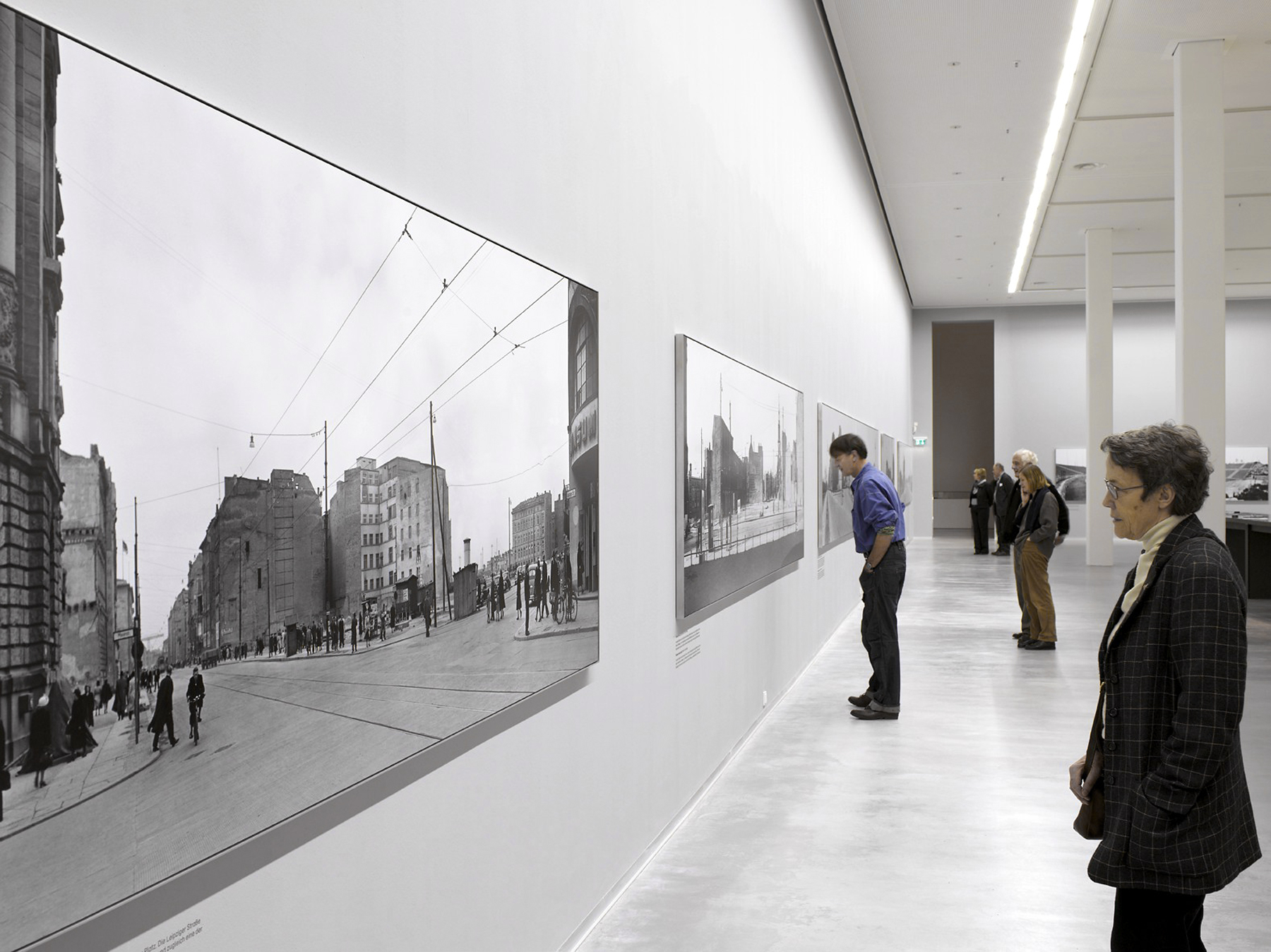
    As far as the eye can see shows 13 reconstructed and digitally reassembled panorama photos by Tiedemann from his 1,500-footage work. The city views from the years 1949-1952 were enlarged to almost gigantic dimensions (up to 25.5 m in length) and thus provide a fascinating view of the destruction of the war and the reconstruction of Berlin.

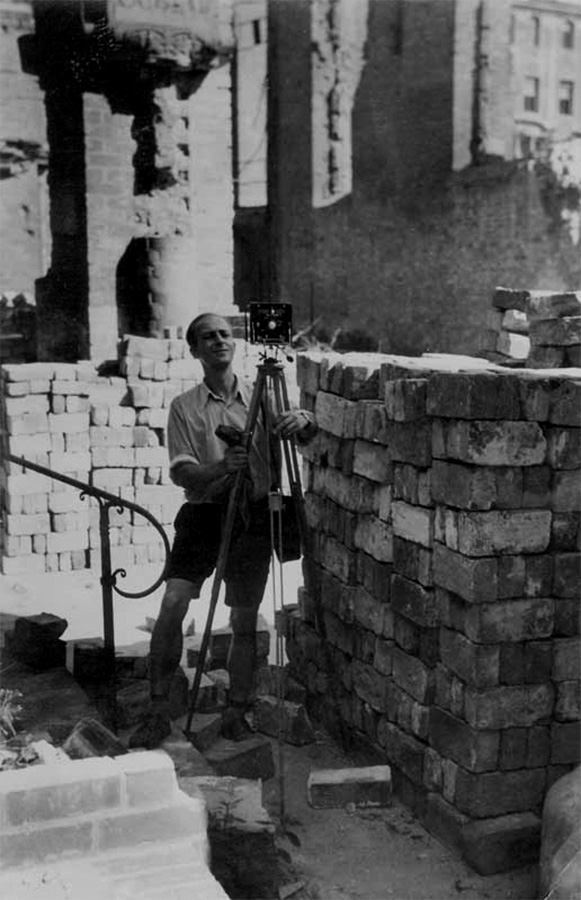
    Fritz Tiedemann (German, 1915-2001) was a trained surveying technician and was trained in the military as a photogrammeter (specialist for photographic measuring methods). He documented the city as a photographer at the Office of Preservation. The photographer Arwed Messmer came across Tiedemann’s photographs during research work for his book project “Anonyme Mitte – Berlin” in the Berlinische Galerie and then developed the idea for this exhibition.

    After WW 2, rubble clearance had made considerable progress and rebuild had begun, a remarkable photographic inventory was done in East Berlin. By order of the magistrate of the capital of the GDR an – up to now – unknown photographer documented central places and areas that were of importance concerning the urban planning in the early 50s. He captured the Pariser Platz and the Schloßplatz area as well as the works on the Walter Ulbricht Stadium or a sand storage area in the outskirts. In order to adequately picture the void and the vastness of the destroyed city as well as the remaining urban structures, the photographer made horizontal turns with the camera and thus produced sequences that – once brought together – turned into panoramic pictures.

    The concealed quality of these pictures was lately discovered by Berlin photographer Arwed Messmer. By means of digital mounting of the sequences he created synthetic large-size pictorial worlds that show the destroyed Berlin as an empty stage. Thus inspired, the Photo Archive of the East Berlin magistrate, preserved by the Berlinische Galerie and documented in the catalogue “Ost-Berlin und seine Bauten. Fotografien 1945-1990” / “East Berlin Architecture”, was searched through anew. Thus the exhibition operates at the interface between applied photography and new photographic technology as well as between collective memory and an unfamiliar optic experience.

    Press release from the Berlinische Galerie Museum of Modern Art


    Fritz Tiedemann (German, 1915-2001) 'Pariser Platz, April 21, 1951' (detail) from the exhibition As far as no eye can see: panoramic photographs of Berlin, 1949-1952' at the Berlinische Galerie Museum of Modern Art, Berlin, Nov 2008 - Feb 2009


    Fritz Tiedemann (German, 1915-2001)
    Pariser Platz, April 21, 1951 (detail)
    1951
    Reconstructed by Arwed Messmer 2008
    1.25 x 5.84 metres
    © Fritz Tiedemann / Arwed Messmer


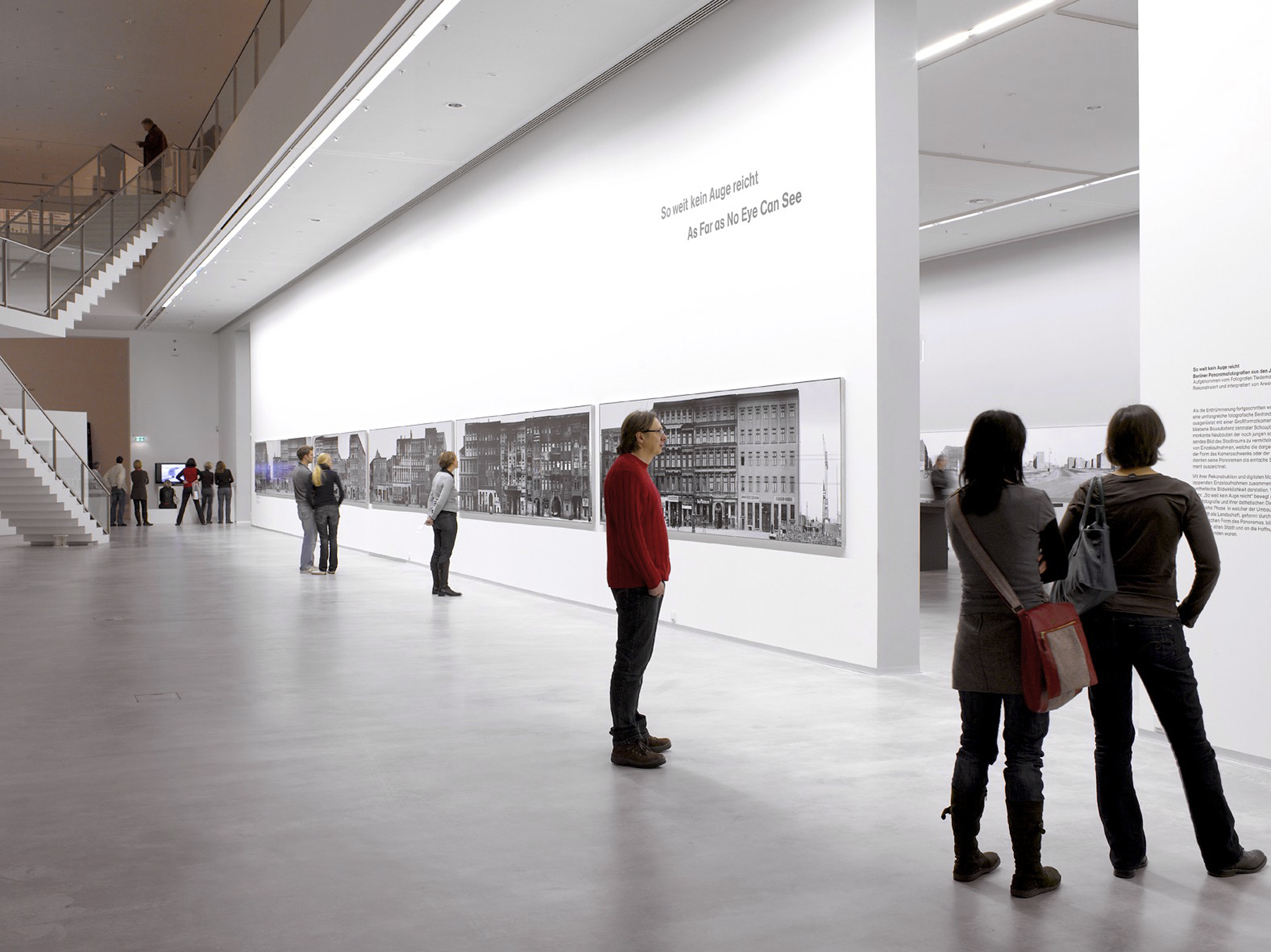
    Installation view of the exhibition 'As far as the eye can see' at the Berlinische Galerie, Berlin

    Installation view of the exhibition 'As far as the eye can see' at the Berlinische Galerie, Berlin


    Installation views of the exhibition As far as the eye can see at the Berlinische Galerie, Berlin


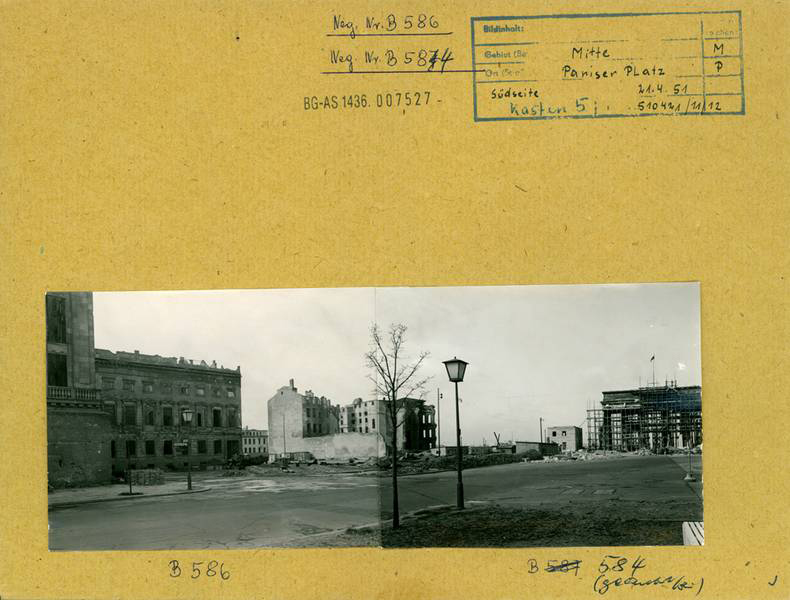
    Between 1948 and 1953, photographer and technical surveyor Fritz Tiedemann (German, 1915-2001) was commissioned by the urban administration of East Berlin to undertake extensive documentation of architecture and urban planning in the capital of the GDR. Many of his early visual documents are series of images conceived as panoramas, whereby the sweep of the camera gives a comprehensive impression of emptiness and the extent of war damage in the city. Processed as contact copies and stuck onto archive covers, his many photographs are one important, early basic collection of a photo archive that was extended consistently until 1990. It has been kept in the architectural collection of the Berlinische Galerie since 1992.

    An in-depth study of the collection was facilitated with support from the Getty Foundation, Los Angeles, and the results were made available to the public in the shape of the publication “Ost-Berlin und seine Bauten” in 2006. In 2008 a selection of Tiedemann’s photographs was shown to the public in the exhibition So weit kein Auge reicht. Berliner Panoramafotografien aus den Jahren 1949-1952. Aufgenommen von Fritz Tiedemann. Rekonstruiert und interpretiert von Arwed Messmer (As far as no eye can see. Berlin panorama photographs from the years 1949-1952. Taken by Fritz Tiedemann. Reconstructed and interpreted by Arwed Messmer). A catalogue of the same name was also published; it has since been produced in a second, revised edition.

    Text from the Berlinische Galerie Museum of Modern Art


    Fritz Tiedemann (German, 1915-2001) 'Pariser Platz (south side) April 21, 1951'


    Fritz Tiedemann (German, 1915-2001)
    Pariser Platz (south side), April 21, 1951
    1951
    Archive cover with contact copies of the original negatives
    Silver gelatine paper on paper, 18.5 x 24.6cm
    Taken over from the collections of the Urban Administration for Urban Development, Housing and Transport Berlin [East] via the Senate Administration for Building and Housing Berlin, 1991
    © Berlinische Galerie Museum of Modern Art


    Fritz Tiedemann short biography

    14 February 1915 Hamburg – 23 November 2001 Münster, Westfalen

    The identity behind the name “Tiedemann” could be clarified during the course of the exhibition. A former colleague of Fritz Tiedemann as well as descendents of the photographer learned about the exhibition due to the nationwide media coverage and contacted the museum.

    As a professional surveying technician Fritz Tiedemann received additional specialist qualification as a topographer during his military service. His photographic skills and expertise were of great importance for the documentation of wartime damage and a visual basis for future urban planning. Indeed, his photographs can be considered as new documents showing the vastness and emptiness of the destroyed city.

    In February 1948 he began working as a photographer for the Berlin Historic Buildings’ and Memorials’ Conservation Office. In October 1949 due to the political division of Greater Berlin he was to continue his work for the East Berlin government’s city planning office. Besides historical aspects the documentation then also focused on the architectural development of East Berlin as is also displayed by the exhibition’s panoramic photographs.

    On February 28, 1953 Fritz Tiedemann was arrested by the East German police forces for his attempts to have West Berlin authorities share in those historically valuable photographs. He was tried and imprisoned and after the events of June 17, 1953 granted amnesty. Together with his family he subsequently fled to West Germany where he was acknowledged as political refugee. In January 1954 he took up work as a topographer with a company called Plan und Karte, later Hansa Luftbild, in Münster, Westphalia, where he remained employed until his retirement in 1978.

    Photography had not only been part of Fritz Tiedmann’s professional activities, it was in fact his life-long passion, the results of which are considered by his family as a great heritage.

    Text from the Berlinische Galerie Museum of Modern Art


    Fritz Tiedemann (German, 1915-2001) 'Marx-Engels-Platz, April 20, 1951'


    Fritz Tiedemann (German, 1915-2001)
    Marx-Engels-Platz, April 20, 1951 [previously called Schloss-Platz]
    1951
    Reconstructed by Arwed Messmer 2008
    © Fritz Tiedemann / Arwed Messmer


    Fritz Tiedemann (German, 1915-2001) 'Am Friedrichshain, March 5, 1952'


    Fritz Tiedemann (German, 1915-2001)
    Am Friedrichshain, March 5, 1952
    1952
    Reconstructed by Arwed Messmer 2008
    © Fritz Tiedemann / Arwed Messmer


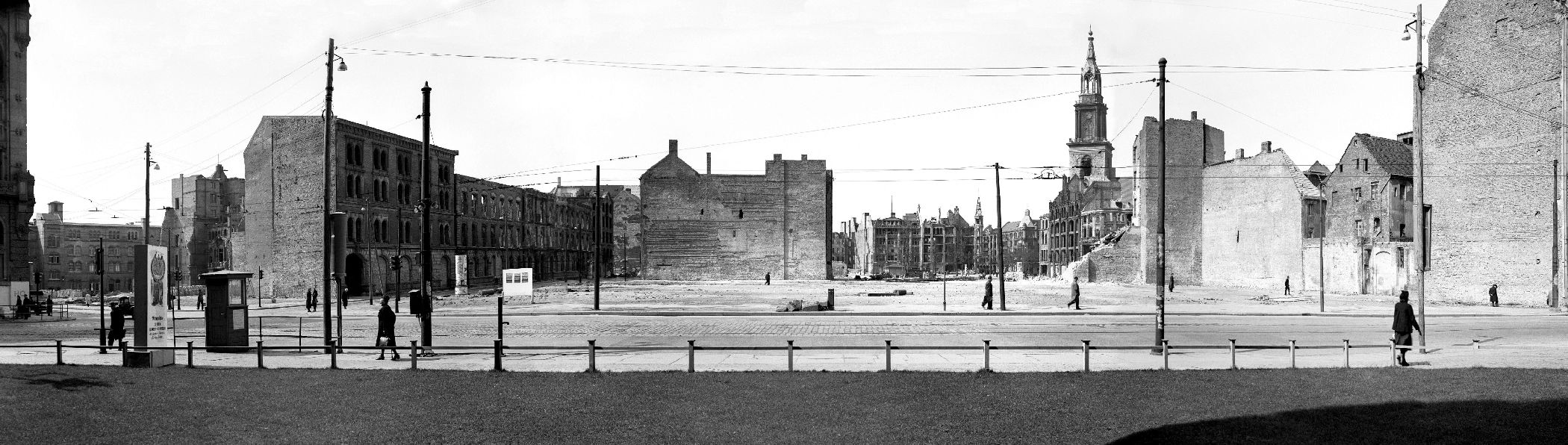
    Fritz Tiedemann (German, 1915-2001) 'Rathausstrasse, April 20, 1951'


    Fritz Tiedemann (German, 1915-2001)
    Rathausstrasse, April 20, 1951 [The Rathausstrasse overlooking the Marienkirche of Alexanderplatz]
    1951
    Reconstructed by Arwed Messmer 2008
    © Fritz Tiedemann / Arwed Messmer


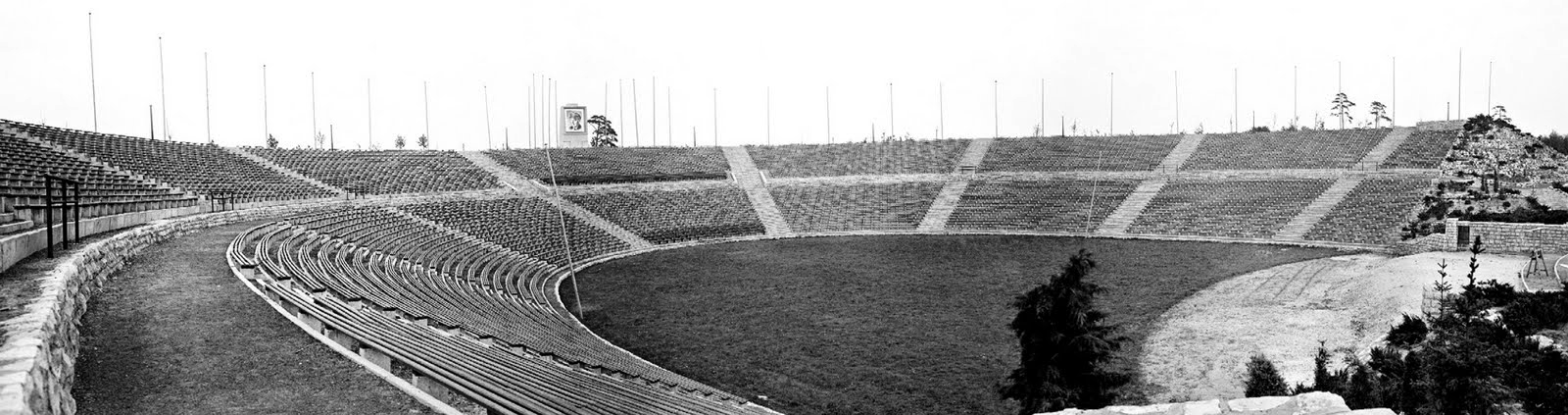
    Fritz Tiedemann (German, 1915-2001) 'Outdoor scene in Wuhlheide, May 4, 1952'


    Fritz Tiedemann (German, 1915-2001)
    Outdoor scene in Wuhlheide, May 4, 1952
    1952
    Reconstructed by Arwed Messmer 2008
    © Fritz Tiedemann / Arwed Messmer


    Unknown photographer. 'Fritz Tiedemann' c. 1951


    Unknown photographer
    Fritz Tiedemann
    c. 1951
    Private collection


    Berlinische Galerie Museum of Modern Art
    Alte Jakobstraße 124-128
    10969 Berlin Germany

    Opening hours:
    Wednesday – Monday 10am – 6pm
    Closed on Tuesdays

    Berlinische Galerie Museum of Modern Art website

    LIKE ART BLART ON FACEBOOK

    Back to top