Exhibition: ‘Barbara Klemm. ­Light and Dark. Photographs from Germany’ at the Galerie für Zeitgenössische Kunst, Leipzig from ifa – Institut für Auslandsbeziehungen

Exhibition dates: 30th November, 2024 – 23rd March, 2025


Barbara Klemm (German, b. 1939) 'Offenbach' 1968


Barbara Klemm (German, b. 1939)
Offenbach
1968
Black and white photograph on baryta paper
300 × 400 mm
© Barbara Klemm, Institut für Auslandsbeziehungen e. V.


Apparently, “the exhibition presents photography by one of Germany’s most important artists.”

Until recently I had never heard of this artist and I have been studying photography for over 35 years.

Allegedly, “many of Klemm’s photographs have become “icons of contemporary history” and have shaped the cultural memory of several generations.”

What does that even mean – “icons of contemporary history” – it’s just art speak that means absolutely nothing!

If we actually look at the work there are some really strong photographs here that form a cohesive body of work which interrogates the reality of a country that was divided for decades, which examine the postwar formation of German culture and identity.

“[The exhibition] includes pictures from every sphere of society: from politics, culture and the economy, photos that capture unique and often tense moments as well as plain everyday life, photos of demonstrations, protests, and of immigrants, of cultural events, mass gatherings, and urban spaces.” (Text from ifa website)

While Klemm’s photographs combine the documentary and the artistic in German press photography, her artistic voice is not a lone voice in the wilderness documenting Germany before and after reunification. Variously (but not exclusively) we have from the 1930s onwards and reaching its social reality apotheosis in the 1970s-1980s artists such as Friedrich Seidenstücker, Benjamin Katz, Chargesheimer, Michael Schmidt, Helga Paris, Günter Zint, Wendelin Bottländer, Andreas Horlitz, Christa Mayer, Sibylle Bergemann, Tata Ronkholz, Thomas Struth, Wilhelm Schürmann, Volker Döhne, Elfriede Mejchar, Hildegard Heise, and Timm Rautert.

At their best Klemm’s photographs are essential – (in the sense ‘in the highest degree’): from late Latin essentialis, from Latin essentia (see essence) – which is, the intrinsic nature or indispensable quality of something … which determines its character. That is what Klemm so vibrantly and insightfully captures, the true essence of an event which is then marked down in history. “Her sure sense of the true essence of an event allows her to capture moments that tell stories far beyond what the pictures seem to show at first glance.” In the highest degree, Klemm’s photographs “offer an insight into the most significant aspects of social life in both the Federal Republic of Germany and the GDR”

But she is not alone in this endeavour and to argue that her photographs are “icons of history” and that she is one of Germany’s most important artists is pure hokum. Why curators and/or media people continue to write this stuff is beyond me…

Just let the artist tell her stories and the photographs will speak for themselves.

Strength, insight, essence.

Dr Marcus Bunyan


Many thankx to the Galerie für Zeitgenössische Kunst for allowing me to publish the photographs in the posting. Please click on the photographs for a larger version of the image.
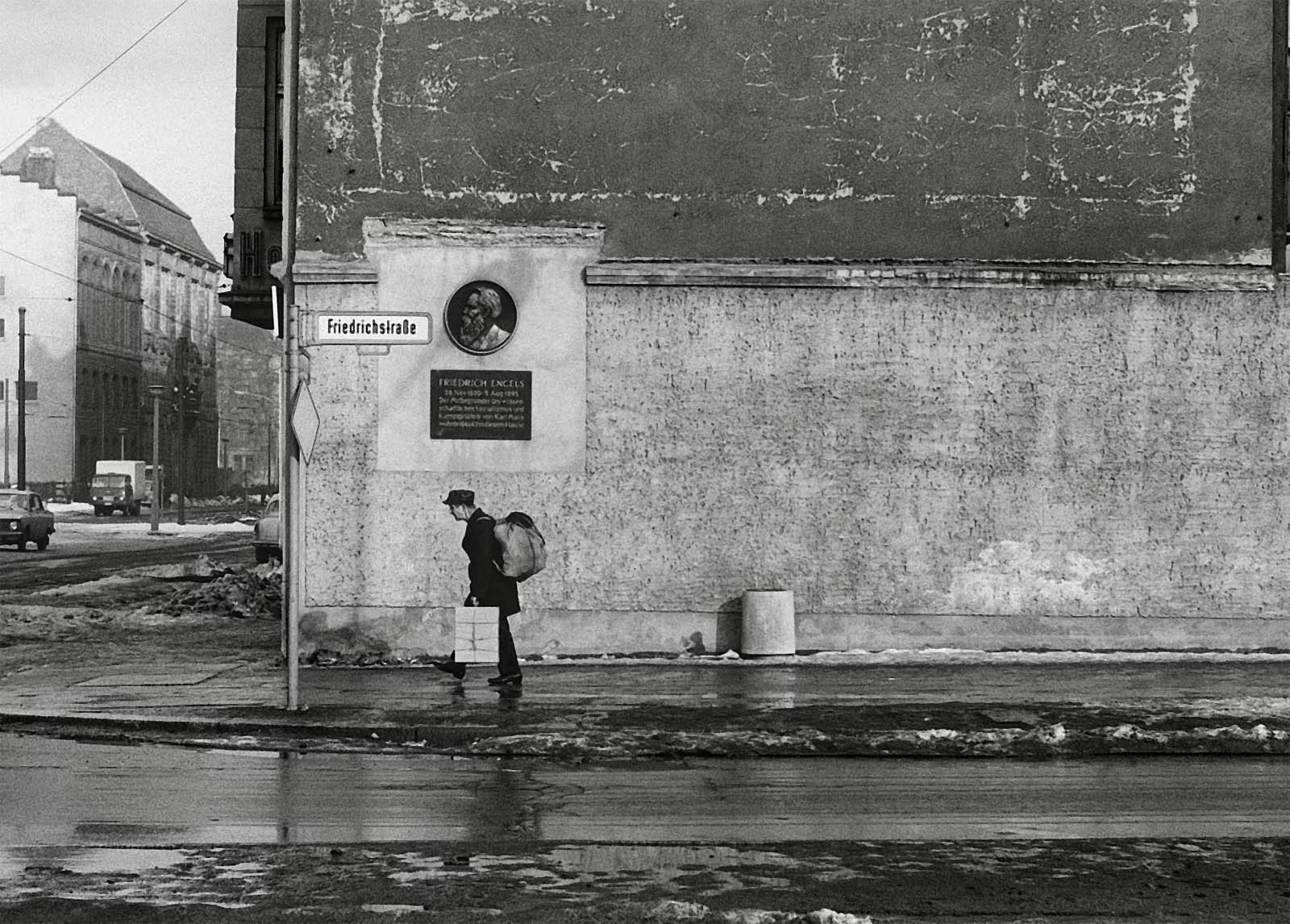


Barbara Klemm (German, b. 1939) 'Friedrichstrasse, East Berlin' 1970


Barbara Klemm (German, b. 1939)
Friedrichstrasse, East Berlin
1970
Black and white photograph on baryta paper
300 × 400 mm
© Barbara Klemm, Institut für Auslandsbeziehungen e. V.


The exhibition presents photography by one of Germany’s most important artists. Barbara Klemm’s work, spanning forty years, bears witness to the historical development and present-day reality of a country that was divided for decades. Many of her pictures have become icons of contemporary history, shaping the cultural memory of several generations.

An exhibition by ifa – Institut für Auslandsbeziehungen e. V. ifa is funded by the German Federal Foreign Office, the state of Baden-Württemberg, and the city of Stuttgart.


Barbara Klemm (German, b. 1939) 'Leipzig' 1970


Barbara Klemm (German, b. 1939)
Leipzig
1970
Black and white photograph on baryta paper
300 × 400 mm
© Barbara Klemm, Institut für Auslandsbeziehungen e. V.
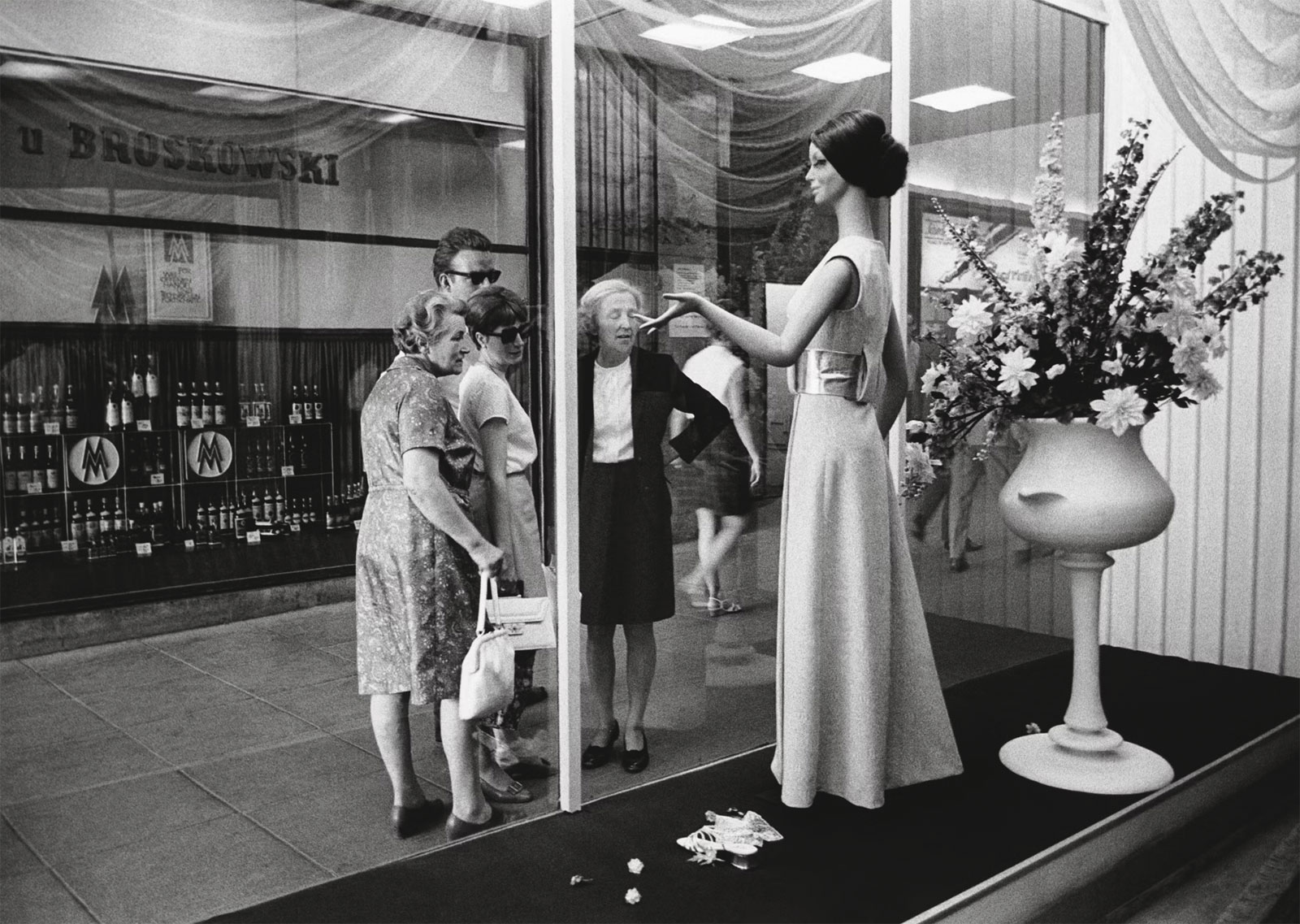
 

Barbara Klemm (German, b. 1939) 'Leipzig' 1970


Barbara Klemm (German, b. 1939)
Leipzig
1970
Black and white photograph on baryta paper
300 × 400 mm
© Barbara Klemm, Institut für Auslandsbeziehungen e. V.
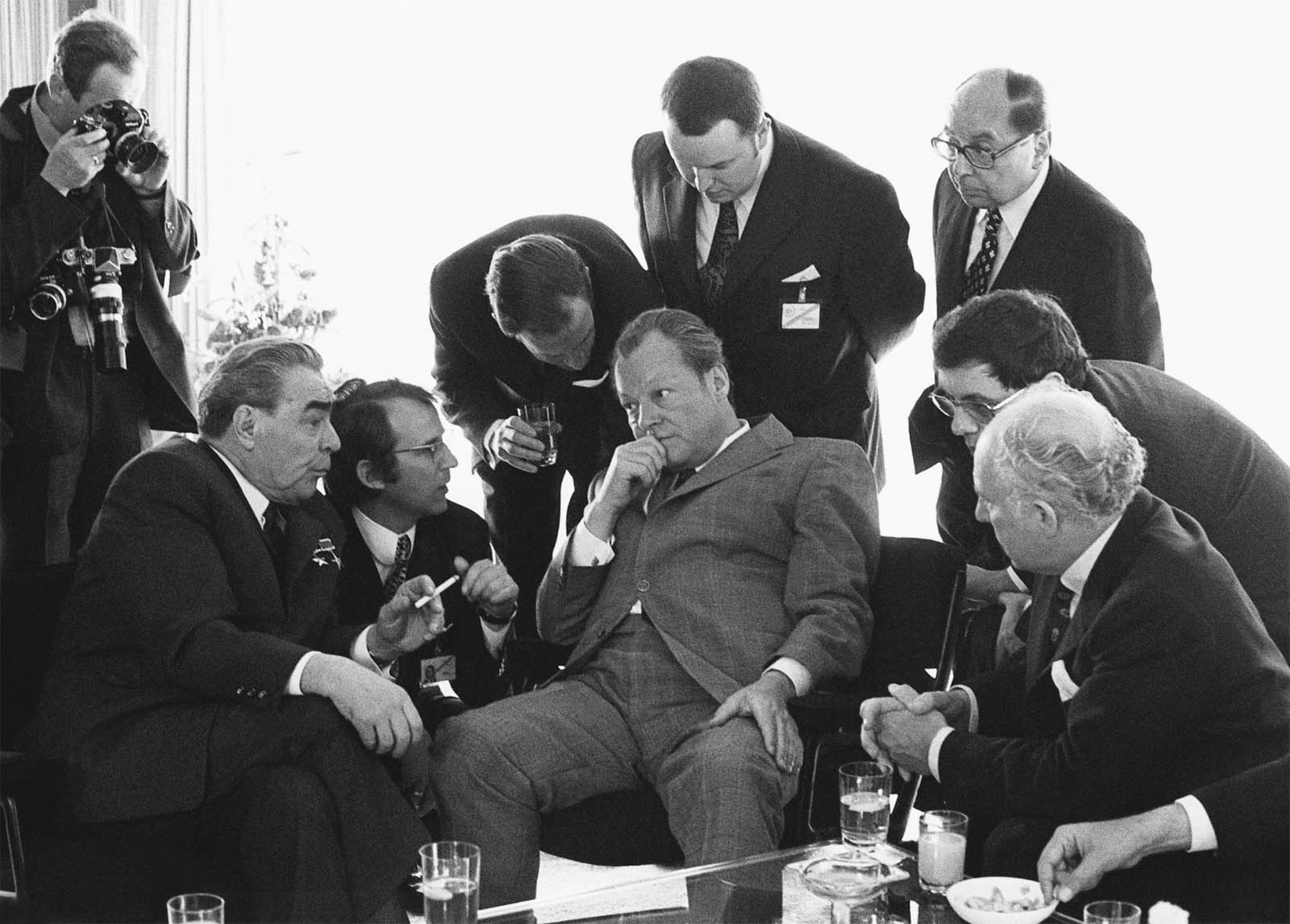
 

Barbara Klemm (German, b. 1939) 'Leonid Brezhnev, Willy Brandt, Bonn' 1973


Barbara Klemm (German, b. 1939)
Leonid Brezhnev, Willy Brandt, Bonn
1973
Gelatin Silver Print
© Barbara Klemm, Institut für Auslandsbeziehungen e. V.


Barbara Klemm (German, b. 1939) 'Psychiatric Clinic, Bethel' 1973


Barbara Klemm (German, b. 1939)
Psychiatric Clinic, Bethel
1973
Gelatin Silver Print
© Barbara Klemm, Institut für Auslandsbeziehungen e. V.


Barbara Klemm (German, b. 1939) 'Rostock' 1974


Barbara Klemm (German, b. 1939)
Rostock
1974
Gelatin Silver Print
© Barbara Klemm, Institut für Auslandsbeziehungen e. V.
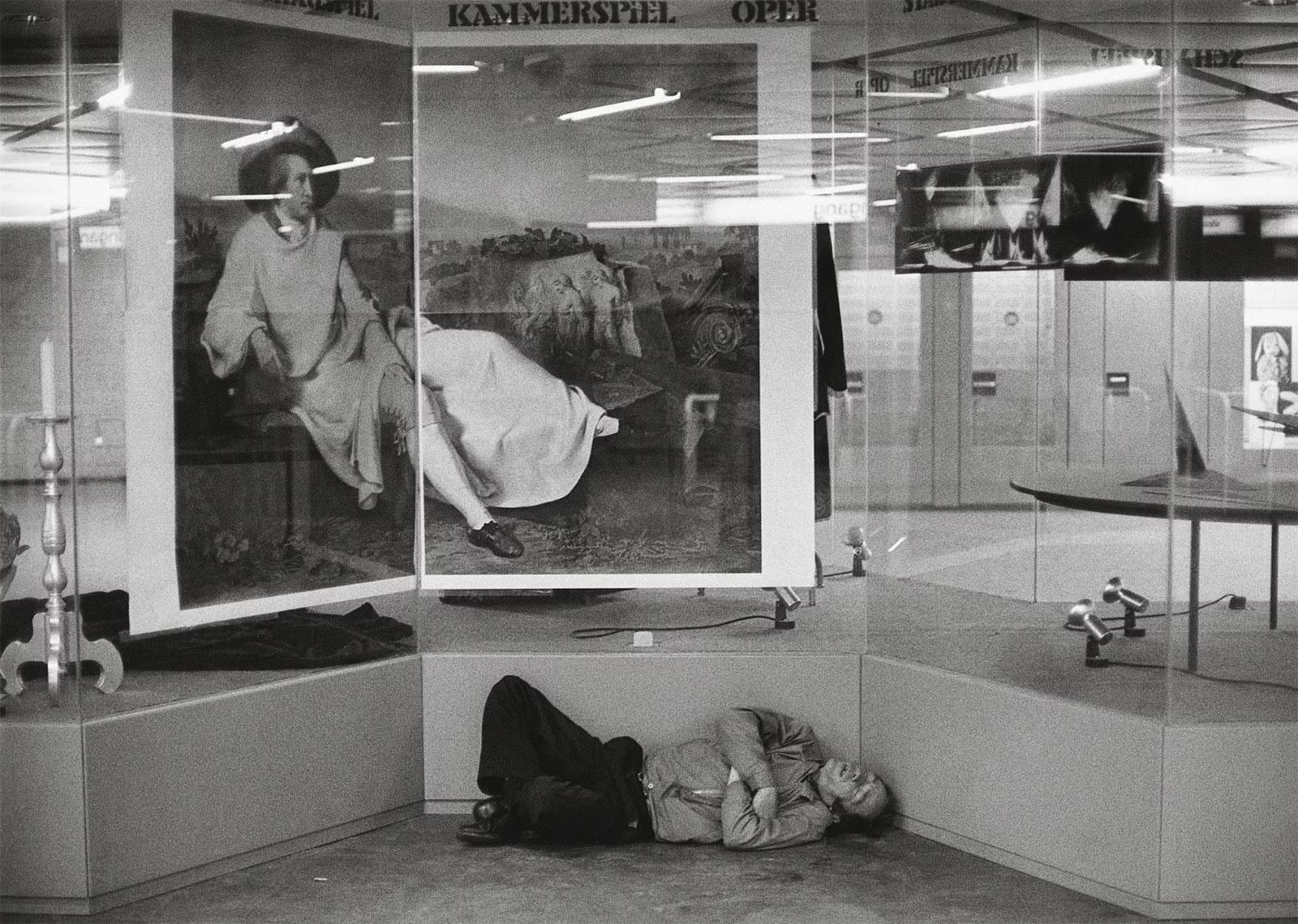
 

Barbara Klemm (German, b. 1939) 'Frankfurt am Main' 1974


Barbara Klemm (German, b. 1939)
Frankfurt am Main
1974
Black and white photograph on baryta paper
300 × 400 mm
© Barbara Klemm, Institut für Auslandsbeziehungen e. V.


Barbara Klemm (German, b. 1939) 'Frauendemonstration gegen § 218' / Women Demonstration against Abortion Laws, Frankfurt am Main 1974


Barbara Klemm (German, b. 1939)
Frauendemonstration gegen § 218 / Women Demonstration against Abortion Laws, Frankfurt am Main
1974
Black and white photograph on baryta paper
400 x 300 mm
© Barbara Klemm, Institut für Auslandsbeziehungen e. V.


Barbara Klemm’s works bear witness to the historical development and present-day reality of a country that was divided for decades. Many of her pictures have become icons of contemporary history, shaping the cultural memory of several generations. It is a body of photographic work that blends documentation and artistic inspiration in a way that is rarely encountered in the German press.

With the exhibition Barbara Klemm: Light and Dark. Photographs from Germany, the ifa – Institut für Auslandsbeziehungen presents photographs by one of Germany’s leading photographers. At GfZK, they will be shown in Germany for the first time in 15 years

Most of the photographs shown in the exhibition were taken for the Frankfurter Allgemeine Zeitung. Starting in 1959, Barbara Klemm began her career at this newspaper working as a laboratory assistant and in plate production. From 1970, she became an editorial photographer focusing primarily on political and feature photography. However, her photographs are far more than coverage photos taken for the moment. They offer an insight into the most significant aspects of social life in both the Federal Republic of Germany and the GDR. A central focus of the exhibition is on photographs taken in East and West Germany before and after reunification. These images portray diverse aspects of social life, including politics, culture, and business. They depict a wide range of social realities – precarious and everyday situations, demonstrations, protests, migrant life, as well as cultural events, mass gatherings and urban space.

With an unerring instinct for the essence of a situation, the photographer captures moments that reveal far more than what is portrayed on the surface. Her photographs, as Barbara Klemm herself describes, reveal the “distillation of an action” – and, in doing so, the distillation of history itself.

 Text from the GfZK website
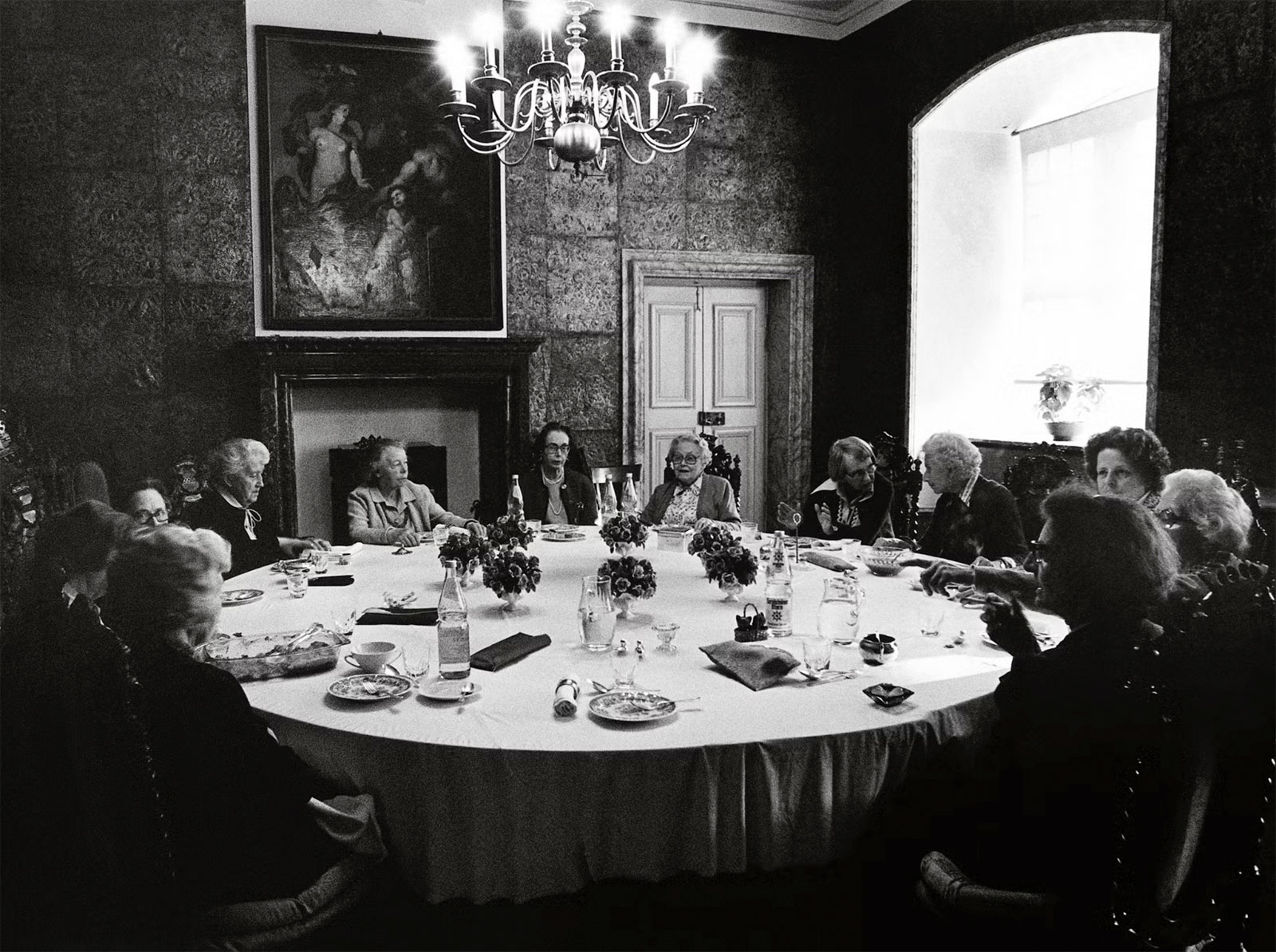
 

Barbara Klemm (German, b. 1939) 'Stift Ehreshoven, Loope' 1977


Barbara Klemm (German, b. 1939)
Stift Ehreshoven, Loope
1977
Black and white photograph on baryta paper
300 × 400 mm
© Barbara Klemm, Institut für Auslandsbeziehungen e. V.
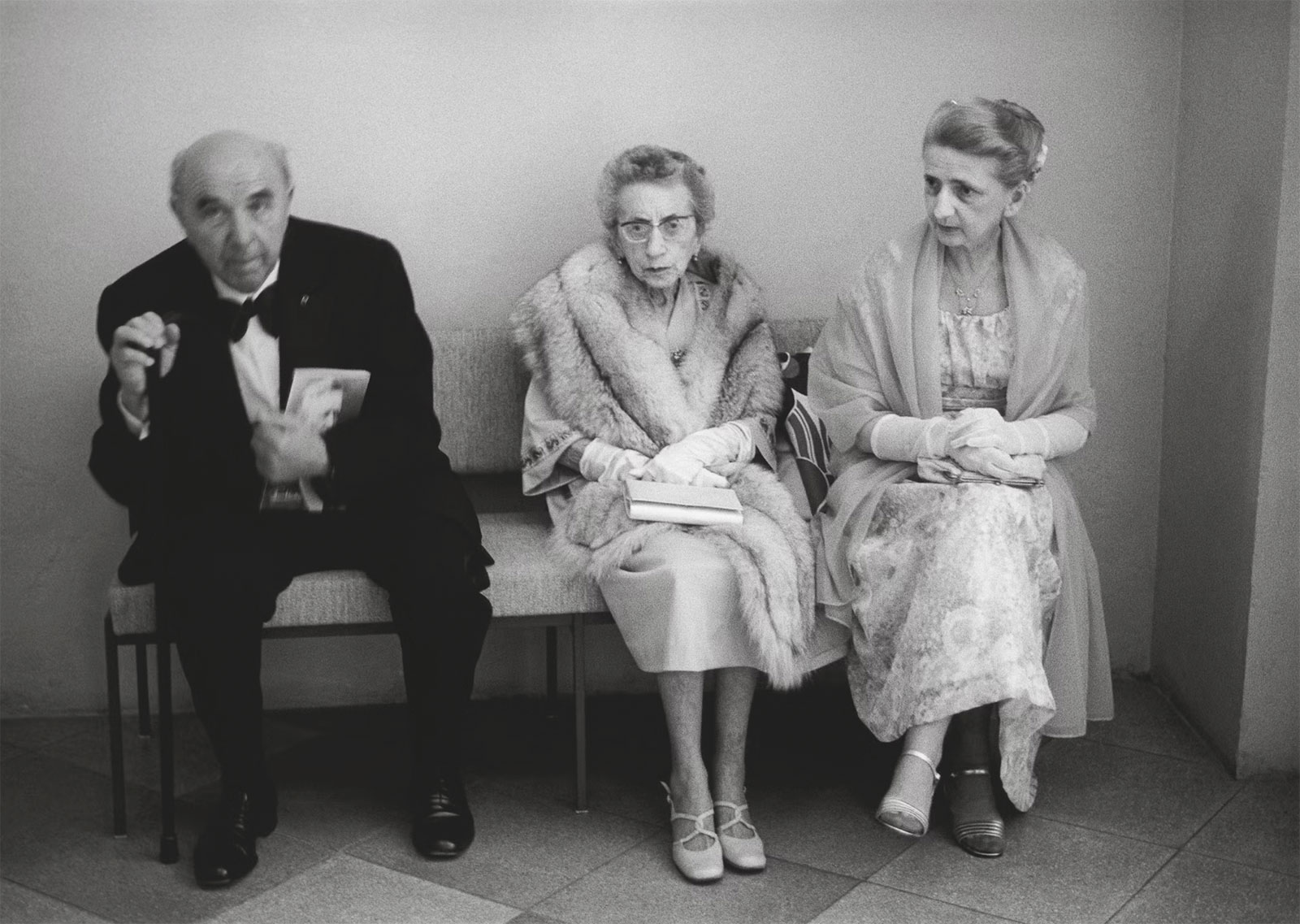
 

Barbara Klemm (German, b. 1939) 'Bayreuth' 1977


Barbara Klemm (German, b. 1939)
Bayreuth
1977
Black and white photograph on baryta paper
300 × 400 mm
© Barbara Klemm, Institut für Auslandsbeziehungen e. V.
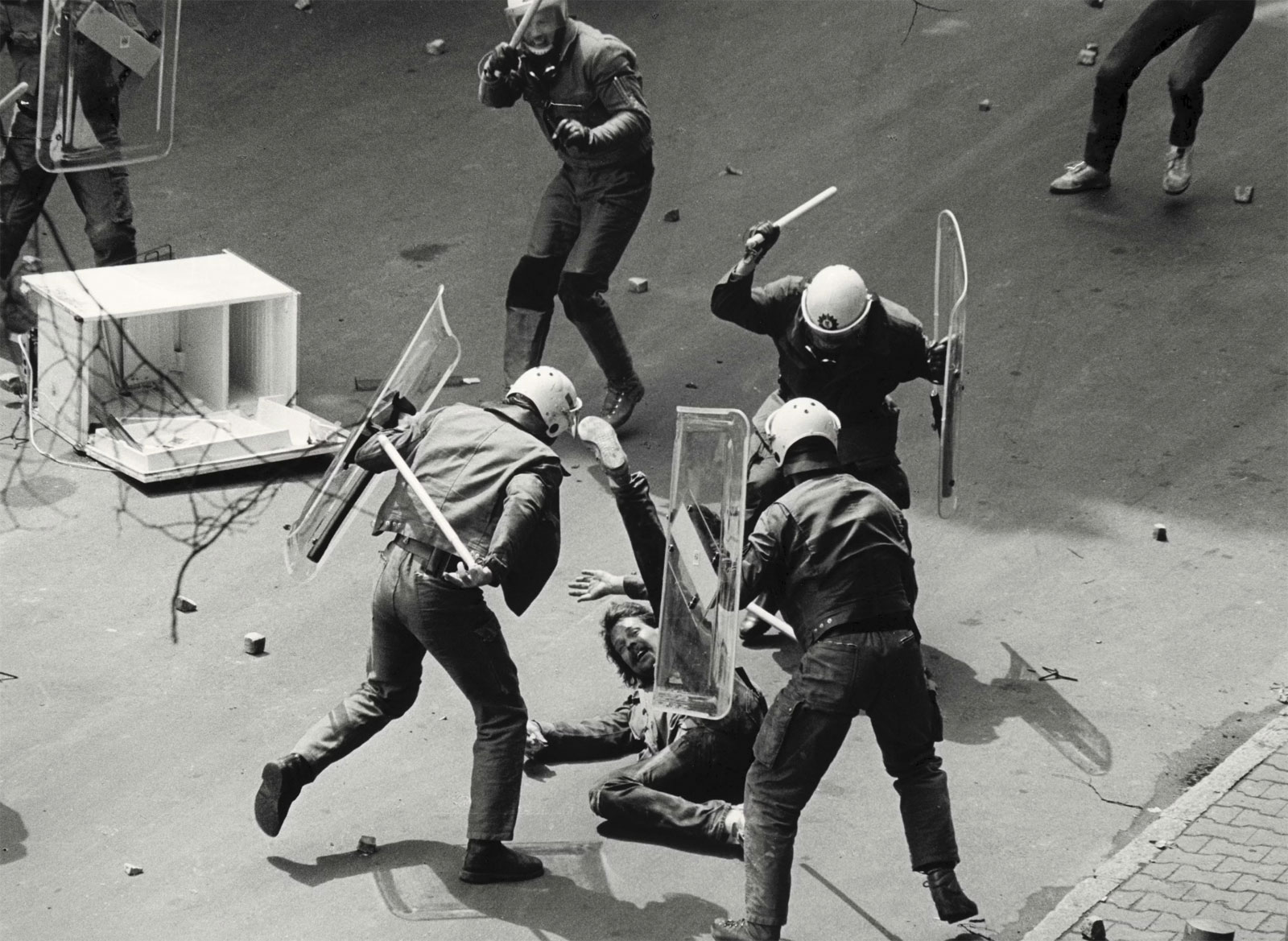
 

Barbara Klemm (German, b. 1939) 'Ronald Reagan Visits, West Berlin' 1982


Barbara Klemm (German, b. 1939)
Ronald Reagan Visits, West Berlin
1982
Black and white photograph on baryta paper
300 × 400 mm
© Barbara Klemm, Institut für Auslandsbeziehungen e. V.
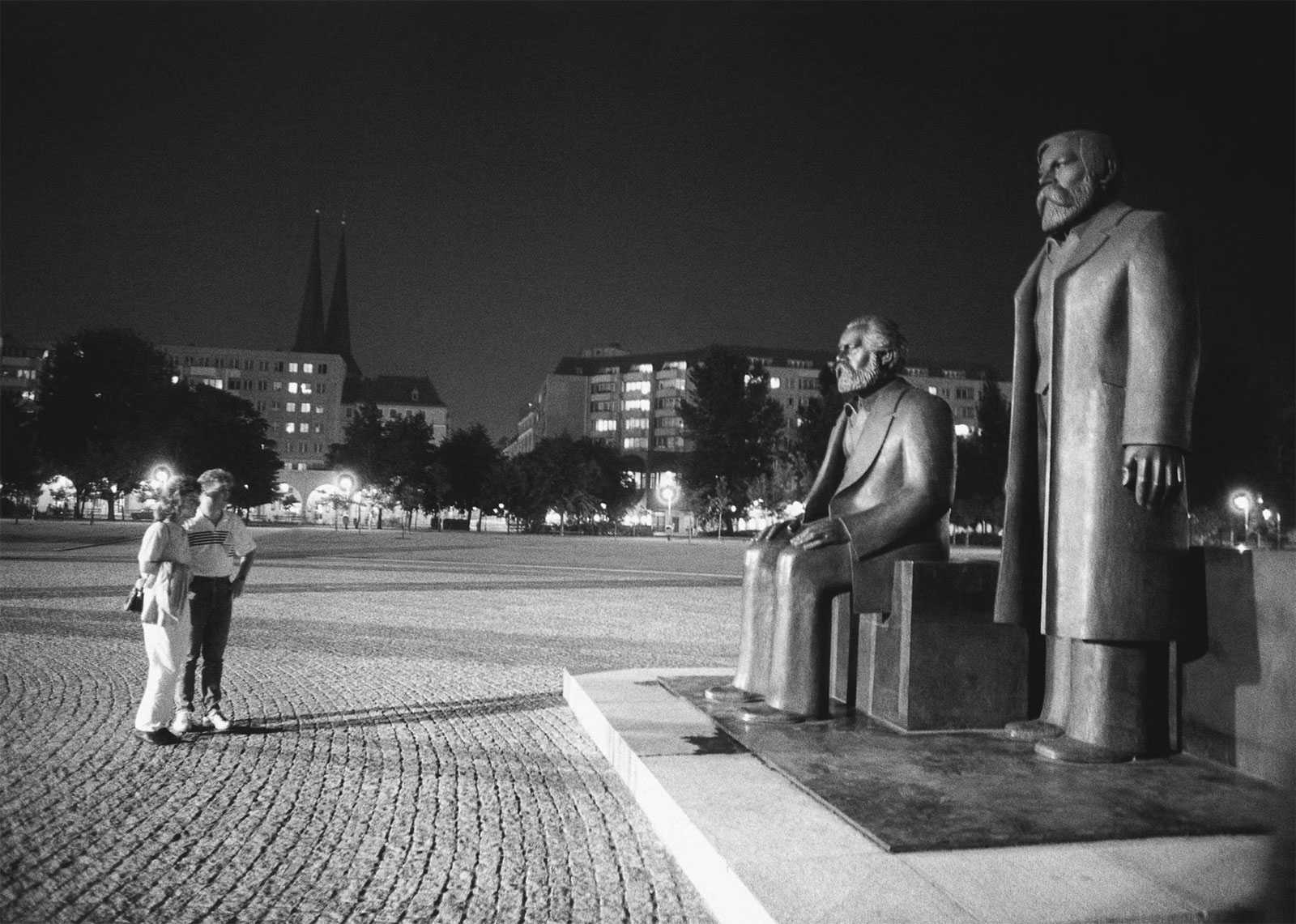
 

Barbara Klemm (German, b. 1939) 'Monument to Marx and Engels, East Berlin' 1987


Barbara Klemm (German, b. 1939)
Monument to Marx and Engels, East Berlin
1987
Black and white photograph on baryta paper
300 × 400 mm
© Barbara Klemm, Institut für Auslandsbeziehungen e. V.


Barbara Klemm (German, b. 1939) 'At the Reichstag, West Berlin' 1987


Barbara Klemm (German, b. 1939)
At the Reichstag, West Berlin
1987
Gelatin Silver Print
© Barbara Klemm, Institut für Auslandsbeziehungen e. V
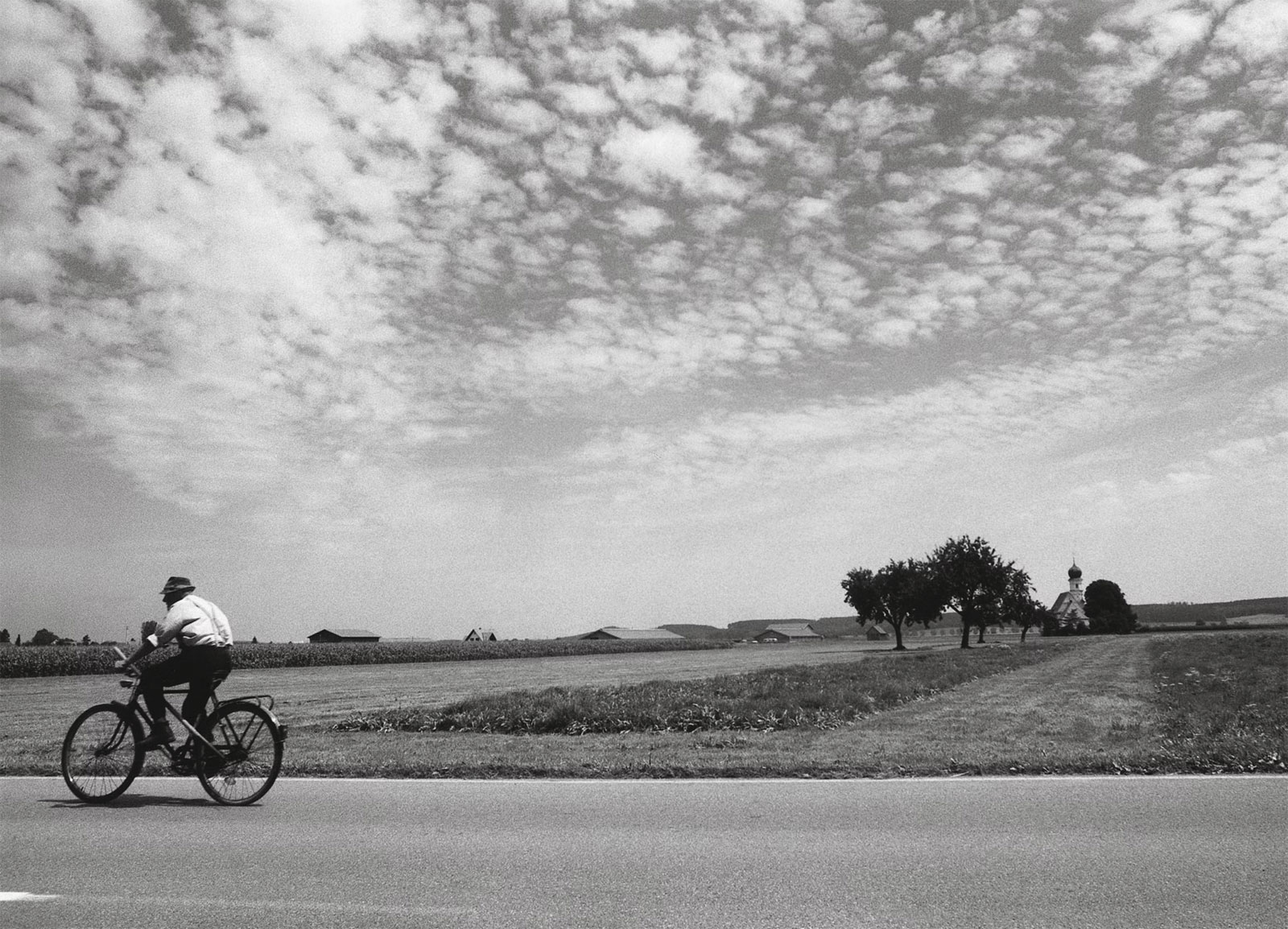
 

Barbara Klemm (German, b. 1939) 'Hawangen' 1988


Barbara Klemm (German, b. 1939)
Hawangen
1988
Black and white photograph on baryta paper
300 × 400 mm
© Barbara Klemm, Institut für Auslandsbeziehungen e. V.
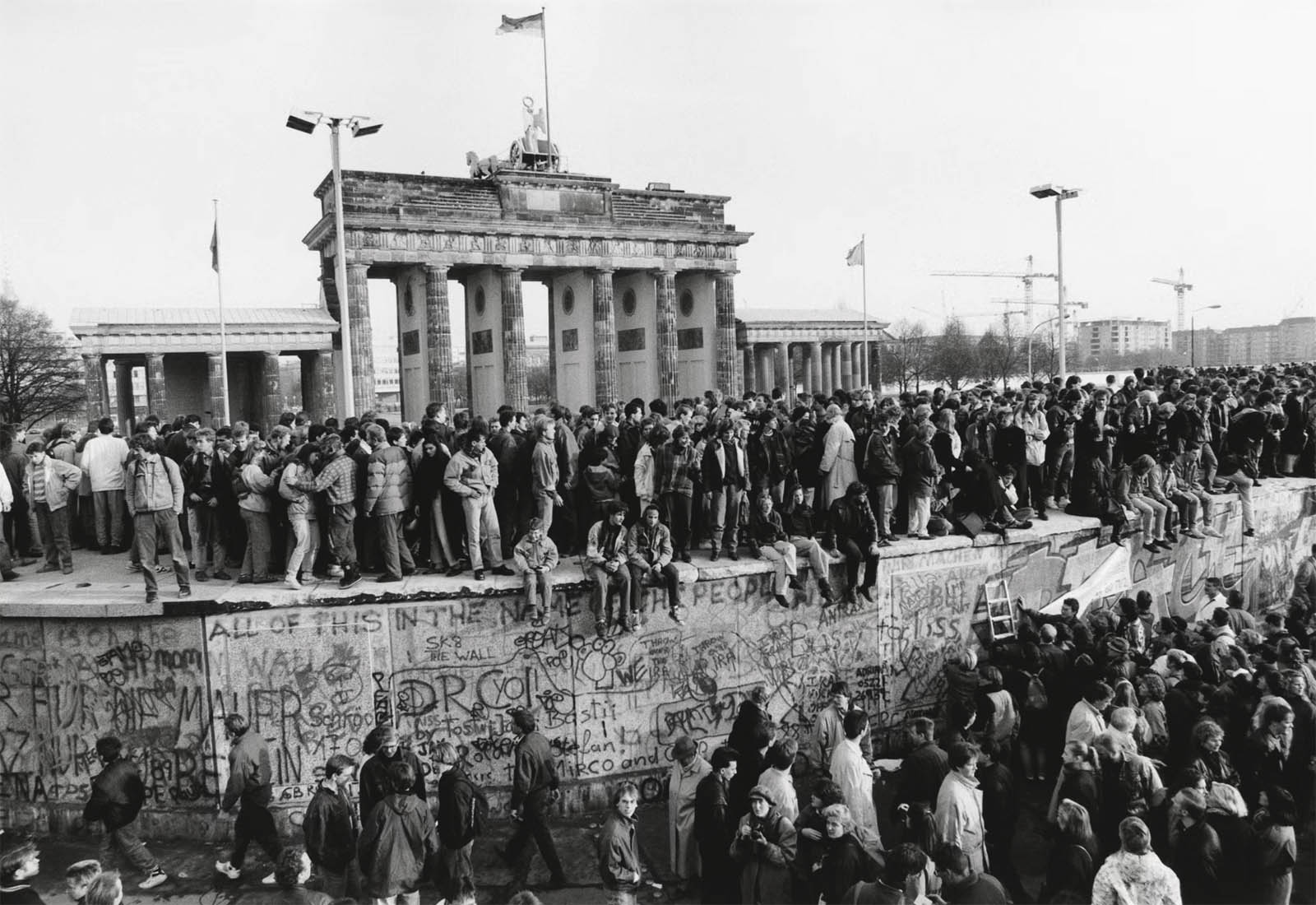
 

Barbara Klemm (German, b. 1939) 'The Fall of the Wall, Berlin, 10 November 1989' 1989


Barbara Klemm (German, b. 1939)
The Fall of the Wall, Berlin, 10 November 1989
1989
Gelatin Silver Print
© Barbara Klemm, Institut für Auslandsbeziehungen e. V


Photography as documentation and artistic inspiration

Many of Klemm’s photographs have become “icons of contemporary history” and have shaped the cultural memory of several generations. It is a photographic work that combines documentation and artistic inspiration in a way rarely found in the German press. Barbara Klemm adds her own perspective to the supposedly objective documentary and follows the design rules of art in her image compositions.

Although these photographs were mostly commissioned by the Frankfurter Allgemeine Zeitung – for which Barbara Klemm worked from 1959 as a laboratory assistant and in cliché production, and from 1970 as an editorial photographer specialising in politics and the arts section – they are far more than reportage images made for the day.

Social insights from East and West Germany before and after reunification

The images show the most important areas of social life in the Federal Republic of Germany and the GDR. A clear focus of the exhibition is on photographs taken in East and West Germany before and after reunification. There are pictures from all areas of social life – from politics, culture and the economy – of precarious and everyday situations of social reality, of demonstrations, protests and the lives of immigrants as well as of cultural events, mass events and urban spaces.

About the exhibition

Many of her pictures have become “icons of contemporary history”, shaping the cultural memory of several generations. She has created a body of photographs which combine the documentary and the artistic in a manner seldom encountered in German press photography. She adds her own perspective to the documentary genre, following artistic principles of composition. Although the majority of these photos were commissioned for the daily newspaper Frankfurter Allgemeine Zeitung they represent far more than coverage of the day’s events. Barbara Klemm first joined the newspaper in 1959, working in the photo lab and producing photographic plates, before becoming a photographer on the editorial board for art, culture and politics in 1970. Her commissioned work for the newspaper took her to many of the most important events and places in the Federal Republic of Germany, the German Democratic Republic and in numerous other countries. Photos of East and West Germany before and after unification are clearly the focus of this exhibition. It includes pictures from every sphere of society: from politics, culture and the economy, photos that capture unique and often tense moments as well as plain everyday life, photos of demonstrations, protests, and of immigrants, of cultural events, mass gatherings, and urban spaces. And again and again, Barbara Klemm portrays people in those rare moments of being that make life so special.

Barbara Klemm’s photographs stand for concrete social reality. Her sure sense of the true essence of an event allows her to capture moments that tell stories far beyond what the pictures seem to show at first glance. These photos are “action in condensed form”, as Klemm puts it, and thus also a condensed image of history. Her photos of the fall of the Berlin Wall are a dramatic climax to her own narrative of history, and in retrospect, her earlier photos from both sides of the Wall seem to be tracing the two Germanies on their path towards reunification, while her later photos closely observe the consequences of the new order.

Text from ifa – Institut für Auslandsbeziehungen website


Barbara Klemm (German, b. 1939) 'Braunkohleabbau bei Leipzig' / Lignite Mining near Leipzig 1990


Barbara Klemm (German, b. 1939)
Braunkohleabbau bei Leipzig / Lignite Mining near Leipzig
1990
Black and white photograph on baryta paper
300 × 400 mm
© Barbara Klemm, Institut für Auslandsbeziehungen e. V.
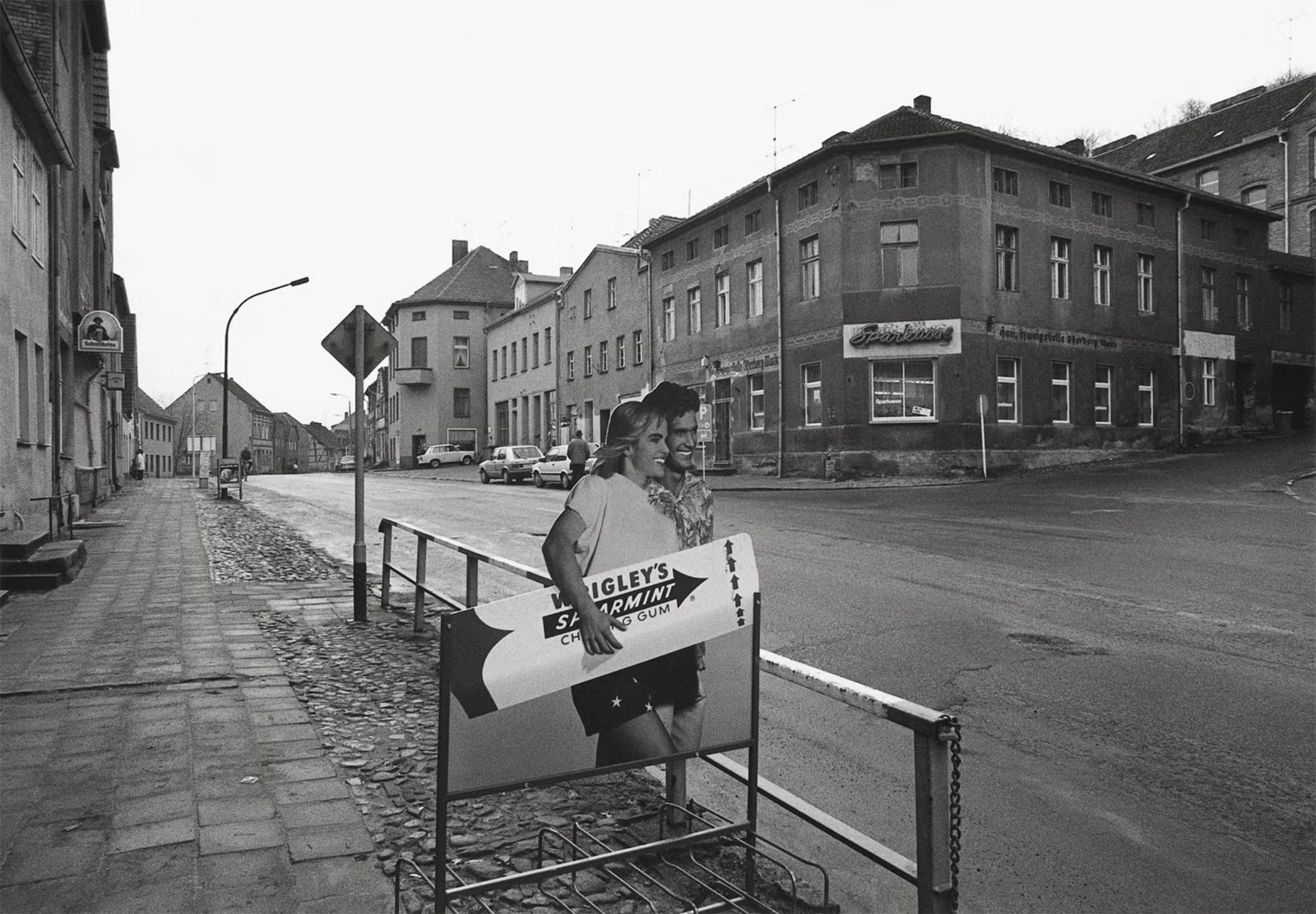
 

Barbara Klemm (German, b. 1939) 'Oderberg, Oderbruch' 1990


Barbara Klemm (German, b. 1939)
Oderberg, Oderbruch
1990
Black and white photograph on baryta paper
300 × 400 mm
© Barbara Klemm, Institut für Auslandsbeziehungen e. V.


Barbara Klemm (German, b. 1939) 'Remnants of the Wall near Lübars, Berlin' 1990


Barbara Klemm (German, b. 1939)
Remnants of the Wall near Lübars, Berlin
1990
Black and white photograph on baryta paper
300 × 400 mm
© Barbara Klemm, Institut für Auslandsbeziehungen e. V.
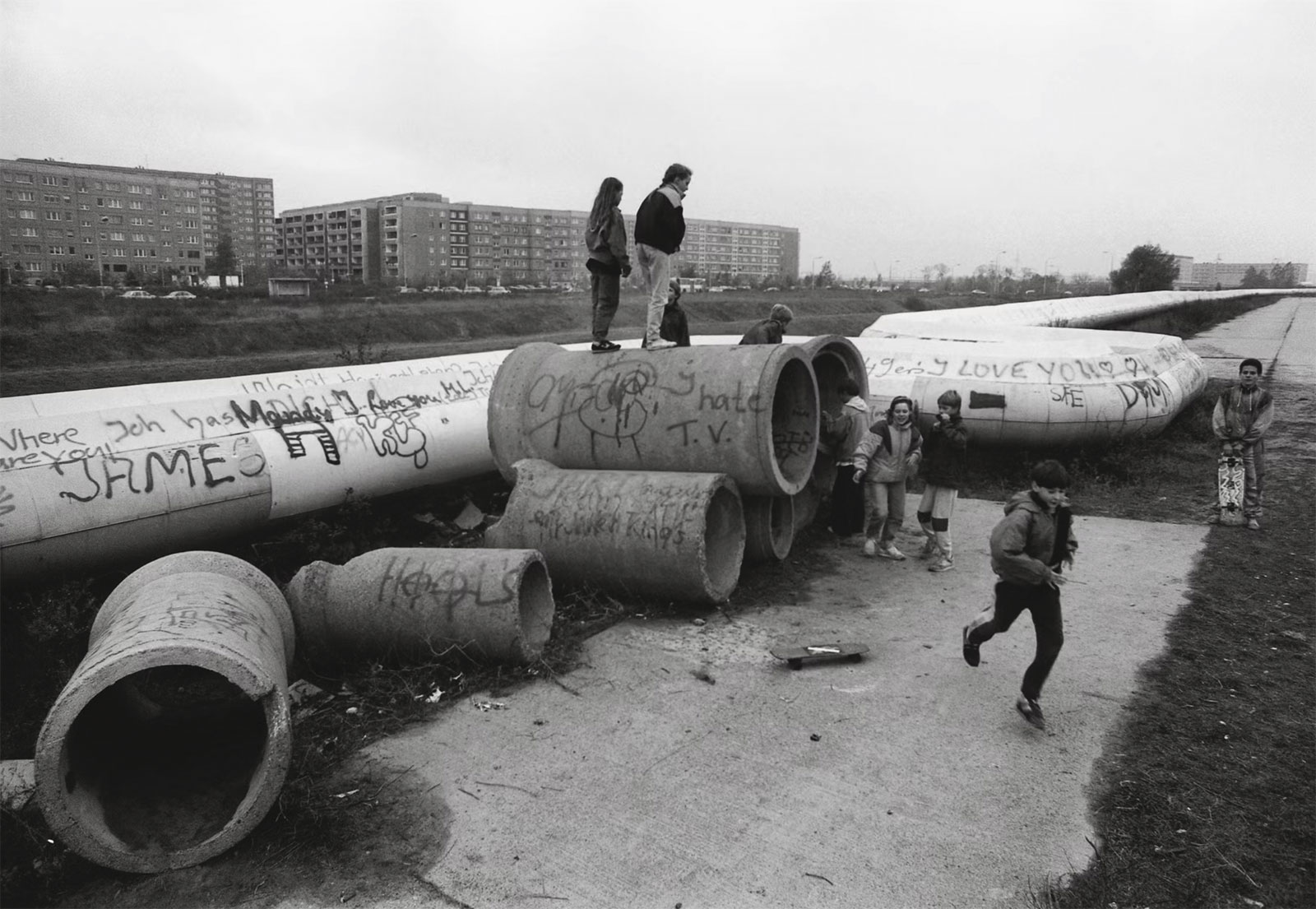
 

Barbara Klemm (German, b. 1939) 'Berlin-Marzahn' 1991


Barbara Klemm (German, b. 1939)
Berlin-Marzahn
1991
Black and white photograph on baryta paper
300 × 400 mm
© Barbara Klemm, Institut für Auslandsbeziehungen e. V.


Barbara Klemm (German, b. 1939) 'Frankfurt am Main' 1993


Barbara Klemm (German, b. 1939)
Frankfurt am Main
1993
Black and white photograph on baryta paper
300 × 400 mm
© Barbara Klemm, Institut für Auslandsbeziehungen e. V.
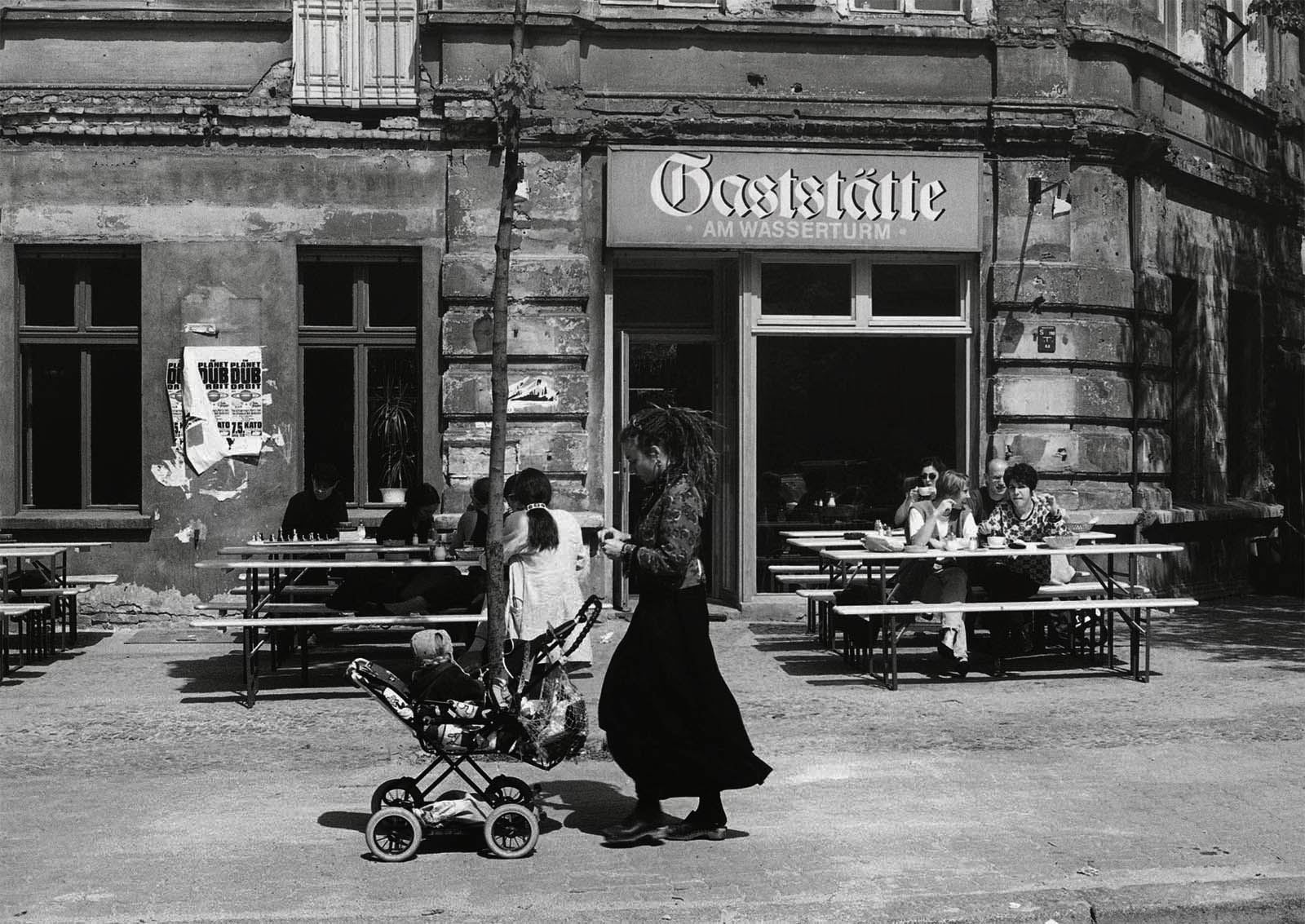
 

Barbara Klemm (German, b. 1939) 'Prenzlauer Berg, Berlin' 1994


Barbara Klemm (German, b. 1939)
Prenzlauer Berg, Berlin
1994
Black and white photograph on baryta paper
300 × 400 mm
© Barbara Klemm, Institut für Auslandsbeziehungen e. V.
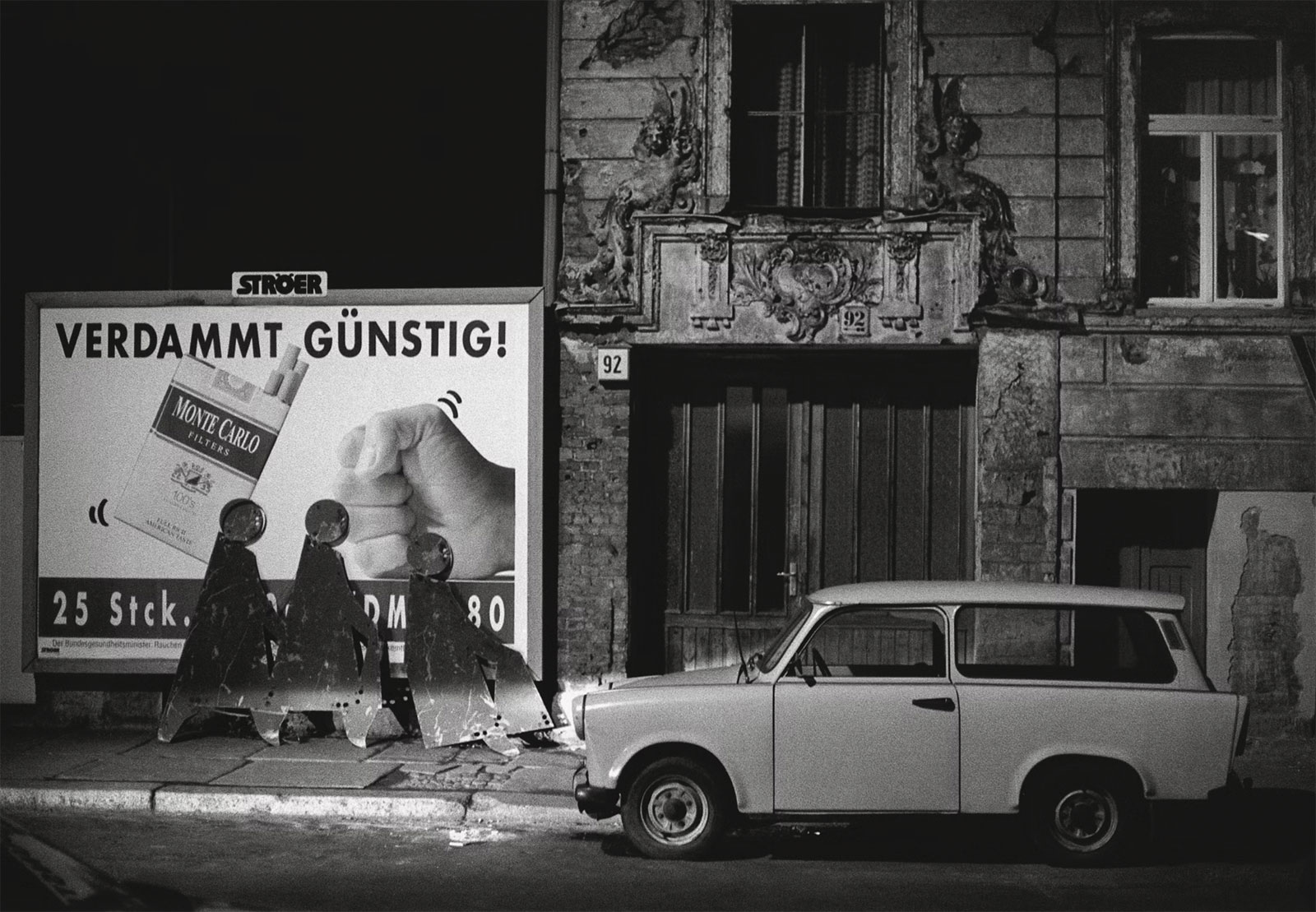
 

Barbara Klemm (German, b. 1939) 'Oranienburger Straße, Berlin' 1994


Barbara Klemm (German, b. 1939)
Oranienburger Straße, Berlin
1994
Black and white photograph on baryta paper
300 × 400 mm
© Barbara Klemm, Institut für Auslandsbeziehungen e. V.
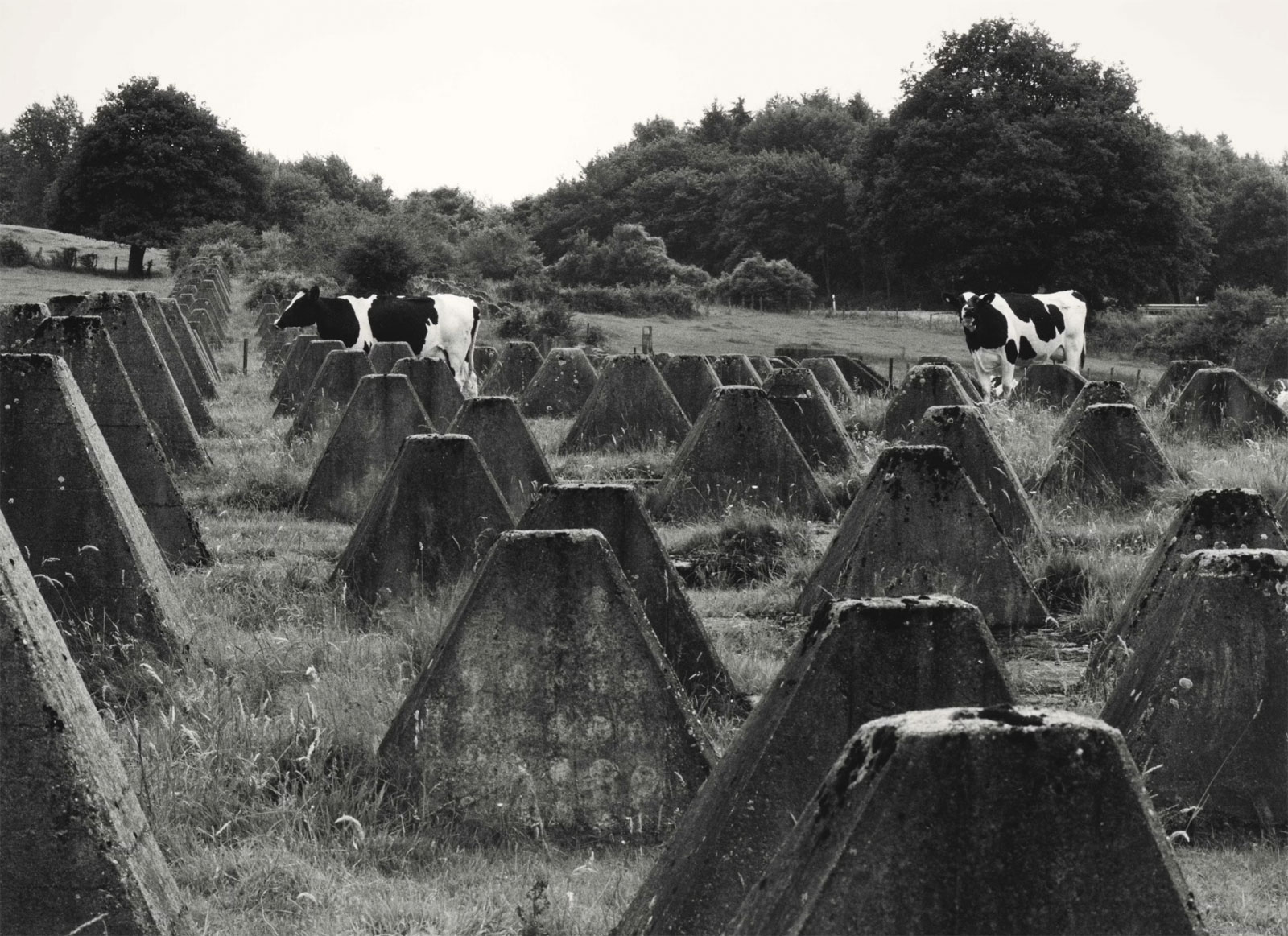
 

Barbara Klemm (German, b. 1939) 'West Wall, near Aachen' 1998


Barbara Klemm (German, b. 1939)
West Wall, near Aachen
1998
Black and white photograph on baryta paper
300 × 400 mm
© Barbara Klemm, Institut für Auslandsbeziehungen e. V.
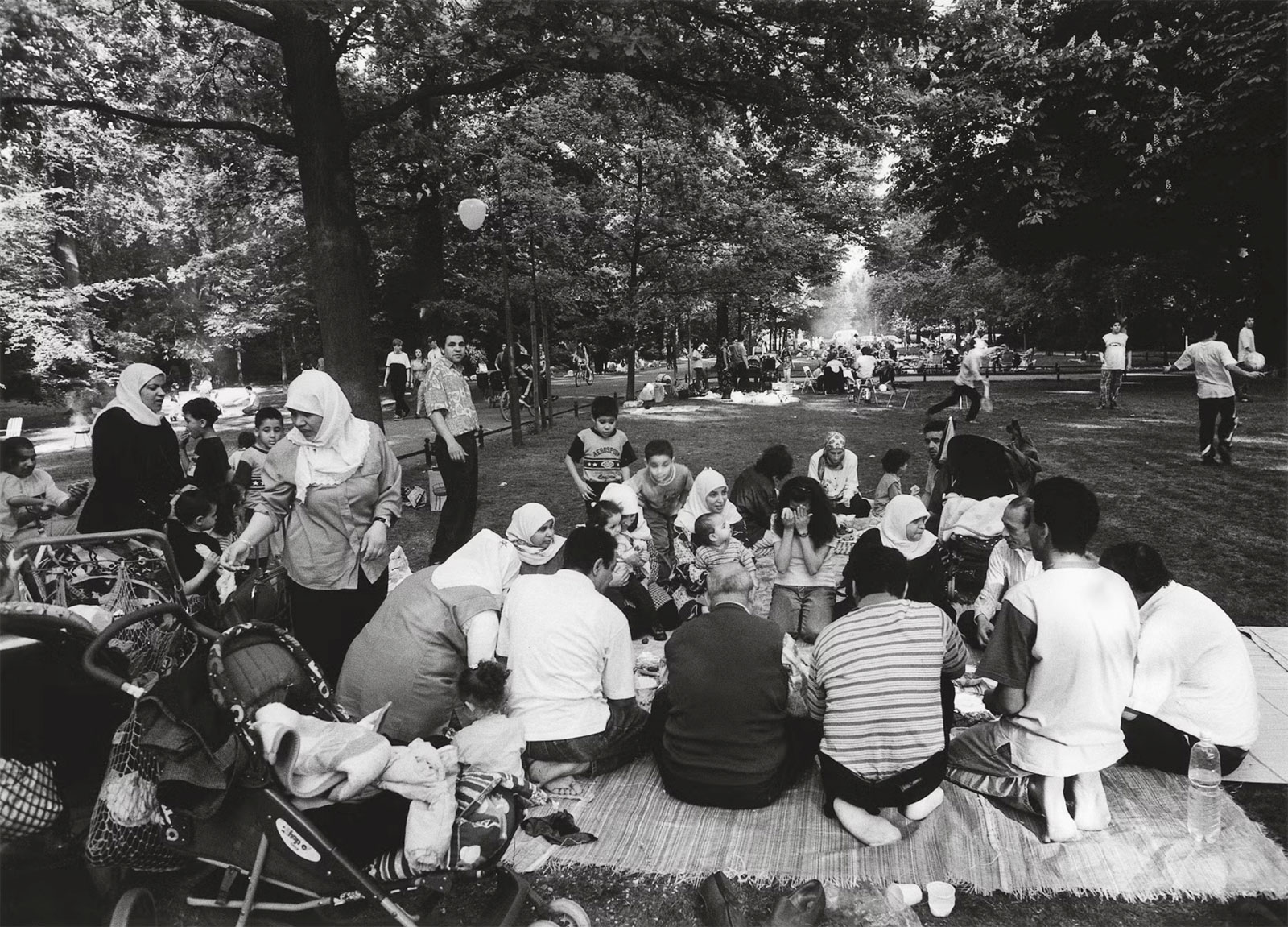
 

Barbara Klemm (German, b. 1939) 'Berlin' 1998


Barbara Klemm (German, b. 1939)939)
Berlin
1998
Black and white photograph on baryta paper
300 × 400 mm
© Barbara Klemm, Institut für Auslandsbeziehungen e. V.


GfZK-Villa
Karl-Tauchnitz-Str. 11
04107 Leipzig

Opening hours:
Tue - Fri: 2pm – 7pm
Sat - Sun: 12am – 6pm
GfZK-Villa website

Arc One Gallery website

LIKE ART BLART ON FACEBOOK

Exhibition: ‘Friedrich Seidenstücker – Life in the City: Photographs from the 1920s to 1940s’ at the Käthe Kollwitz Museum, Cologne

Exhibition dates: 21st May – 15th August, 2021


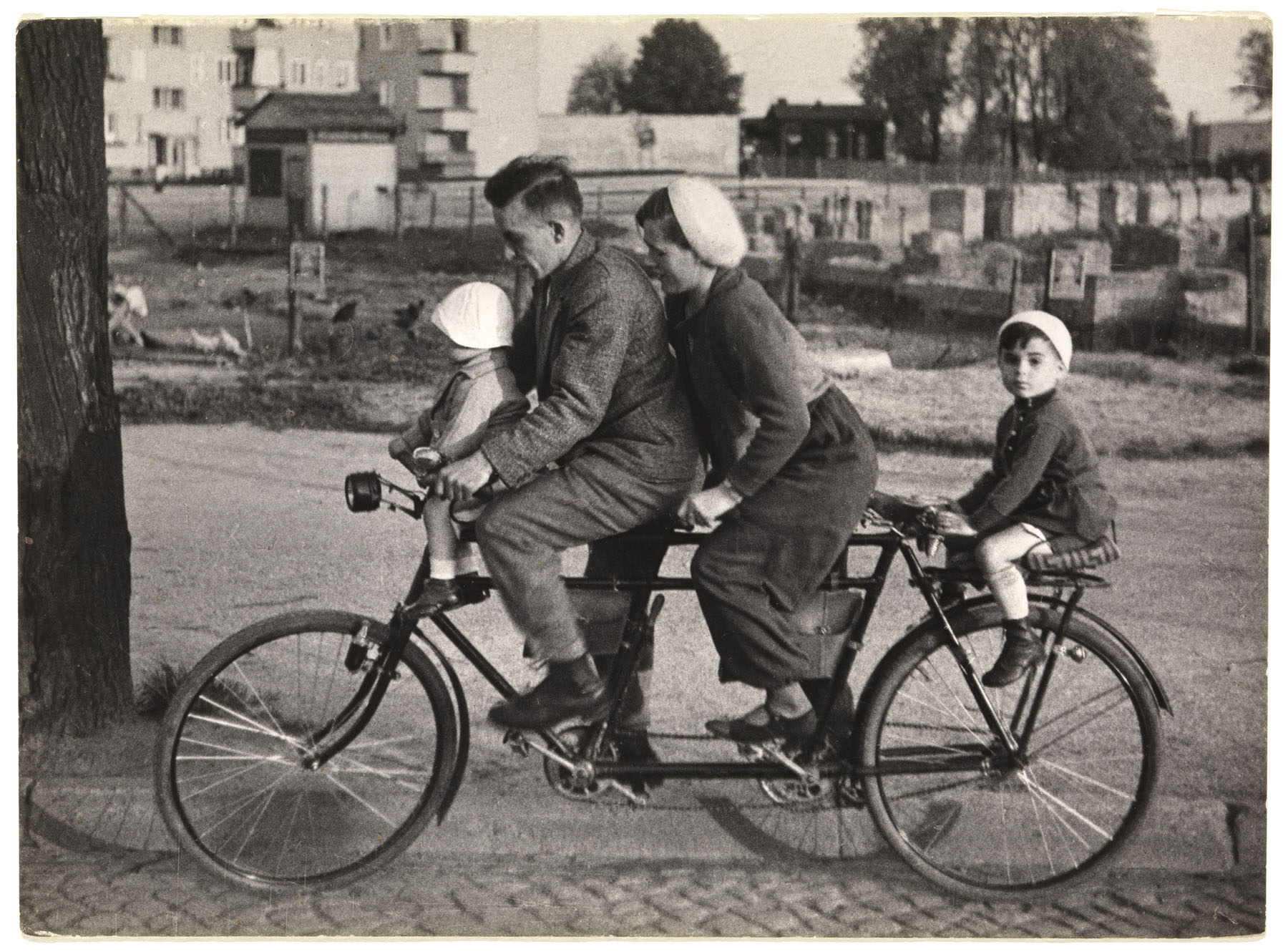
Friedrich Seidenstücker (German, 1882-1966) 'Family tandem' 1947 from the exhibition 'Friedrich Seidenstücker – Life in the City: Photographs from the 1920s to 1940s' at the Käthe Kollwitz Museum, Cologne, May - Aug, 2021


Friedrich Seidenstücker (German, 1882-1966)
Family tandem
1947
© Stiftung Ann und Jürgen Wilde, Bayerische Staatsgemäldesammlungen, München


Recognising small diversions

A photographer I knew nothing about. Now I do.

The museum supplied me with 15 media images – hardly enough to give an overview of a life’s work – so I have supplemented them with more images, the best I could find, to give a broader idea of this artist’s work. Unfortunately, there are hardly any large photographs of his nudes or his important photographs of the destruction of Berlin directly after the war online.

An anonymous text on the The Wall Street Journal website (see below) observes that Seidenstücker’s pre- and post war photographs of Berlin “can seem a bit like moral disengagement when one recalls that the era saw the Nazis’ rise, World War II and the dismembering of Berlin itself… Even his shots of postwar rubble work hard to avoid the abyss. Kids and picnickers make the best of the ruins, napping amid the broken bricks or heaping them into playful piles.”

This is hardly true from the photographs I have seen. With a twinkle in his eye and a delicious sense of humour, Seidenstücker documents the mass and form of “the hardships and travail, but also of the longings, the small diversions, and the pleasures of life in the city.” Here is hard work and exhaustion, happiness and poverty, beauty and the ungainly. Impoverished Jewish women gather while coal porters trudge… and in the small photographs of his postwar ‘ruins’ work that I have viewed, hardly a picnicker can be observed.

Seidenstücker was a ‘Momentknipser’ (capturer of the moment) who “documents people in the social fabric of the modern metropolis with an attentive eye and keen intuition”. Which poses the question… does every photograph have to be political? Does every photograph have to be reinterpreted many years later for hidden ‘manifestations of will’ in which the artist knowingly or unknowingly made decisions about what, and who, to photograph?

Or can a photograph exist not only in the moment it was taken, but in the extension of that moment into present and future time just as it is? Can we simply accept that the artist captured what he was interested in through a process of Purpose – Aim – Goal – Valuation – Motivation – Intention, in “empathy, that is, the capacity to enter, so to speak, into the skin of others, and by means of intuitive imagination, become aware of the effects our words and acts may produce.”

Photographs are declarative, they make information known. To take a photograph of the world is not to image in reduction, in simplification – everything is political – for this act in itself is a form of interpretive fascism. Thus, we cannot prescribe a way for them to be interpreted much as we cannot prescribe a way for them to be taken.

As he strolls through the city Seidenstücker’s considered urges to action (the taking of photographs) arrive in the form of superconscious “illuminations” of everyday life. Through his intuitions and inspirations he records ostensibly incidental events and occurrences. These incidental events and occurrences, these puddle jumpers, can only be seen if the mind and will of the excursionist (those that run) are attuned and receptive, are empathetic to the wor(l)ds of others.

Dr Marcus Bunyan


Many thankx to the Käthe Kollwitz Museum for allowing me to publish the photographs in the posting. Please click on the photographs for a larger version of the image.


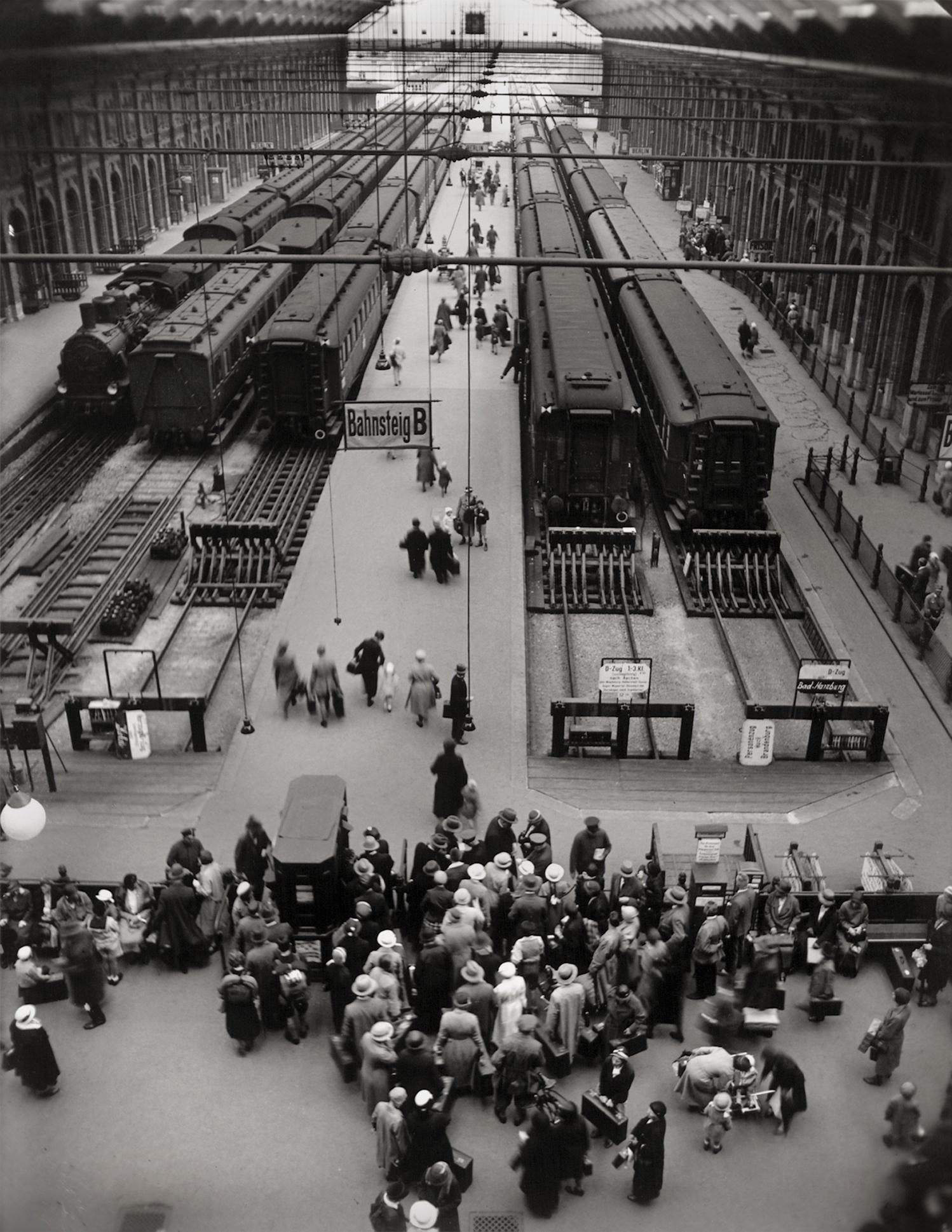
Friedrich Seidenstücker (German, 1882-1966) 'Stettiner Bahnhof railway station' 1930 from the exhibition 'Friedrich Seidenstücker – Life in the City: Photographs from the 1920s to 1940s' at the Käthe Kollwitz Museum, Cologne, May - Aug, 2021


Friedrich Seidenstücker (German, 1882-1966)
Stettiner Bahnhof railway station
1930
© Stiftung Ann und Jürgen Wilde, Bayerische Staatsgemäldesammlungen, München


“Friedrich Seidenstücker (1882-1966) is the flaneur among Berlin photographers. As a 22 year-old trained mechanical engineer, he came to the German capital where he worked as an airplane constructor with Zeppelin AG in Potsdam during the First World War. He cultivated his eye for detail in another regard as well, as a precise chronicler with the camera. At 32, he began another course of studies in sculpture, but always kept turning back to his other passion, photography, which he finally made a profession in 1930 upon signing a contract with Ullstein publishing. From then on, he worked for magazines such as Der Querschnitt (The Profile), Illustrierte Zeitung (Illustrated Newspaper), UHU, Die Neue Linie (The New Line), Die Dame (The Lady) and Die Woche (The Weekly). Above all, Seidenstücker became famous for his awareness of every day life, pictures from the Berliner zoo and nude photographs. Similar to Herbert List in Munich, Richard Peter in Dresden or Hermann Claasen in Cologne, he strikingly documented the post-war ruins of Berlin. What interested him overridingly was the unspectacular, the charm of the second glance.”

Dr Boris von Brauchitsch. “Friedrich Seidenstücker,” on the Lumas website [Online] Cited 20/06/2021


“Friedrich Seidenstücker (1882-1966) didn’t sell his first photograph until he was 46. Trained as a sculptor, he never lost his eye for mass and form. His photographs of Berlin daily life during the 1920s, ’30s and ’40s freeze passersby in poses either accidentally graceful or, more frequently, droll and ungainly. In Shine (1925), four women clamber out of a swimming pool; the title refers to the wet gleam of the fabric on their behinds… Seidenstücker relished confounding man and beast, as in the image of a curious rhino peering at a seemingly captive zookeeper. On a trip to Copenhagen, he snapped a man whose splay-footed waddle evokes nothing so much as a penguin – indeed, he is dragging a box of fish down the sidewalk. But the irony on display … can seem a bit like moral disengagement when one recalls that the era saw the Nazis’ rise, World War II and the dismembering of Berlin itself. ‘This entire period did not agree with me’ was Seidenstücker’s understated explanation – though during the war he sustained a Jewish friend with gifts of food. Even his shots of postwar rubble work hard to avoid the abyss. Kids and picnickers make the best of the ruins, napping amid the broken bricks or heaping them into playful piles.”

Anonymous. “Photo-Op: Zoo View,” on The Wall Street Journal website [Online] Cited 20/06/2021


Friedrich Seidenstücker (1882-1966) is one of the most important chroniclers of everyday life in Berlin during the Weimar Republic. His atmospheric photographs, mostly taken on his strolls through the city, tell of ostensibly incidental events and occurrences: of Sunday fun and everyday work, of children playing in the street and the goings-on at railway stations and in the zoo. Seidenstücker shows – often from a humorous perspective – the people and life in the metropolis. At the same time, his photographs make the hardships of big-city existence visible and, in the background, repeatedly allow the contrasts of social reality in the interwar years to shine through.

The exhibition featuring 100 works from the Ann and Jürgen Wilde Foundation, Bavarian State Painting Collections, Munich, invites you to follow Friedrich Seidenstücker on his walks through Berlin 100 years ago.

The art of the moment

With few exceptions, the ‘Momentknipser’ (capturer of the moment), as he called himself, found his motifs outside on the street. As visual metaphors, his famous photographs of ‘Pfützenspringerinnen’ (puddle-leapers) represent metropolitan modernity and urban life. With a portable camera and a light-sensitive lens, he instinctively documented many other scenes and figures – including small tradesmen such as porters, coachmen, and travelling salesmen, as well as nannies, rubbish collection workers, and newspaper vendors – in their daily activities, but also while waiting or resting.

“I am an excursionist / I’m a day tripper

Seidenstücker characterised himself thusly and set out to accompany his models to the Wannsee beach or to see the cherry blossoms in Werder. His favourite place, however, was the Berlin Zoological Garden. In his photographs taken here, it is not only the enthusiasm of the zoo visitors that becomes visible – occasionally, the observer and the observed seem to reverse their roles: Are the animals also interested in the people?

Seidenstücker’s photographs from the 1920s to the ’40s are images of everyday life, early street photography that documents people in the social fabric of the modern metropolis with an attentive eye and keen intuition. With a twinkle in his eye, he created images that give us today an idea of the hardships and travail, but also of the longings, the small diversions, and the pleasures of life in the city.

The exhibition was organised in special cooperation and with the scientific support of the Ann and Jürgen Wilde Foundation, Bavarian State Painting Collections, Munich.

Press release from Käthe Kollwitz Museum translated from the German by Google Translate


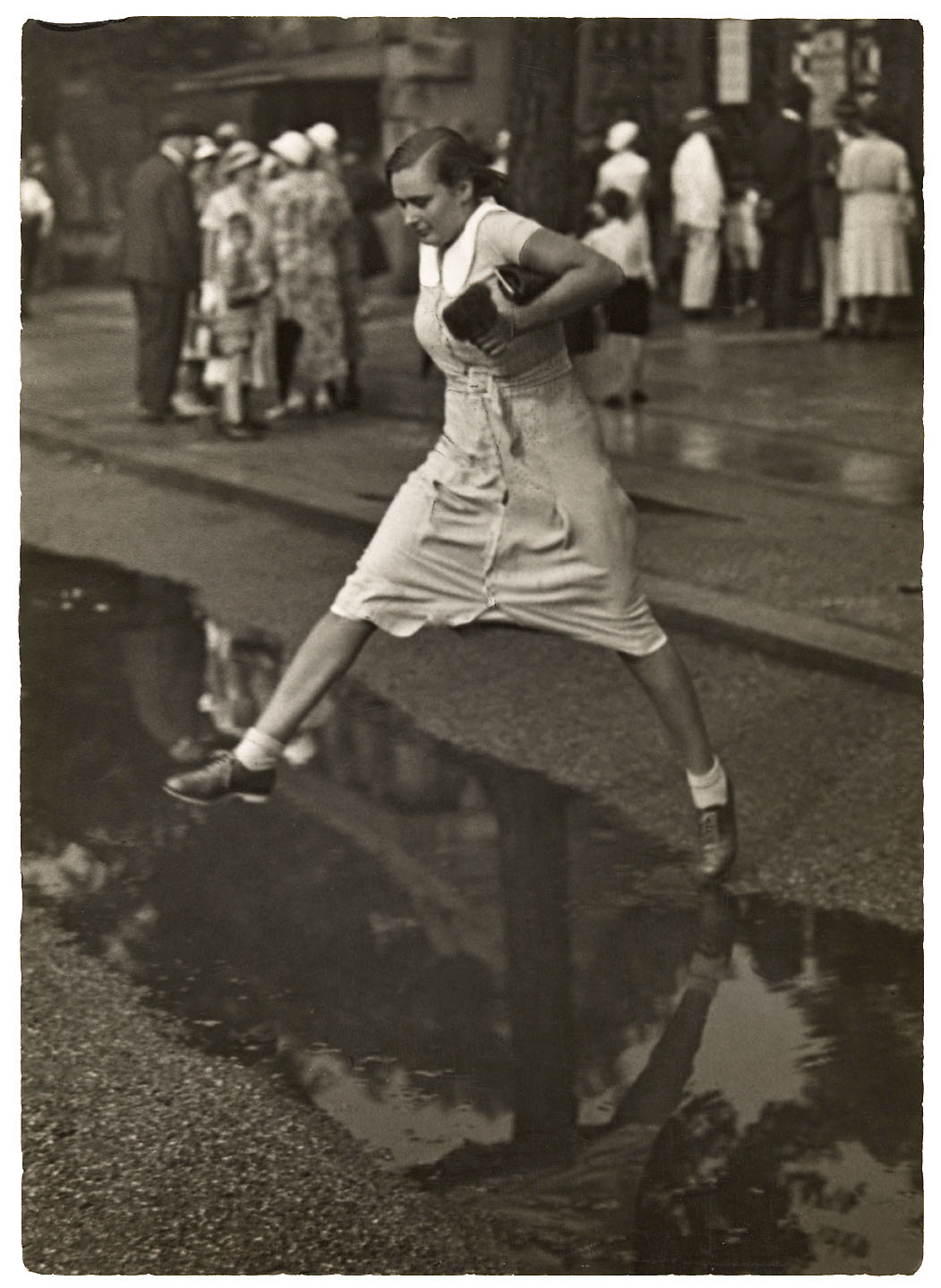
Friedrich Seidenstücker (German, 1882-1966) 'Puddle jumpers' 1925


Friedrich Seidenstücker (German, 1882-1966)
Puddle jumpers
1925
© Stiftung Ann und Jürgen Wilde, Bayerische Staatsgemälde, München


Friedrich Seidenstücker (German, 1882-1966) 'Children in the city' 1928


Friedrich Seidenstücker (German, 1882-1966)
Children in the city
1928
© Stiftung Ann und Jürgen Wilde, Bayerische Staatsgemäldesammlungen, München


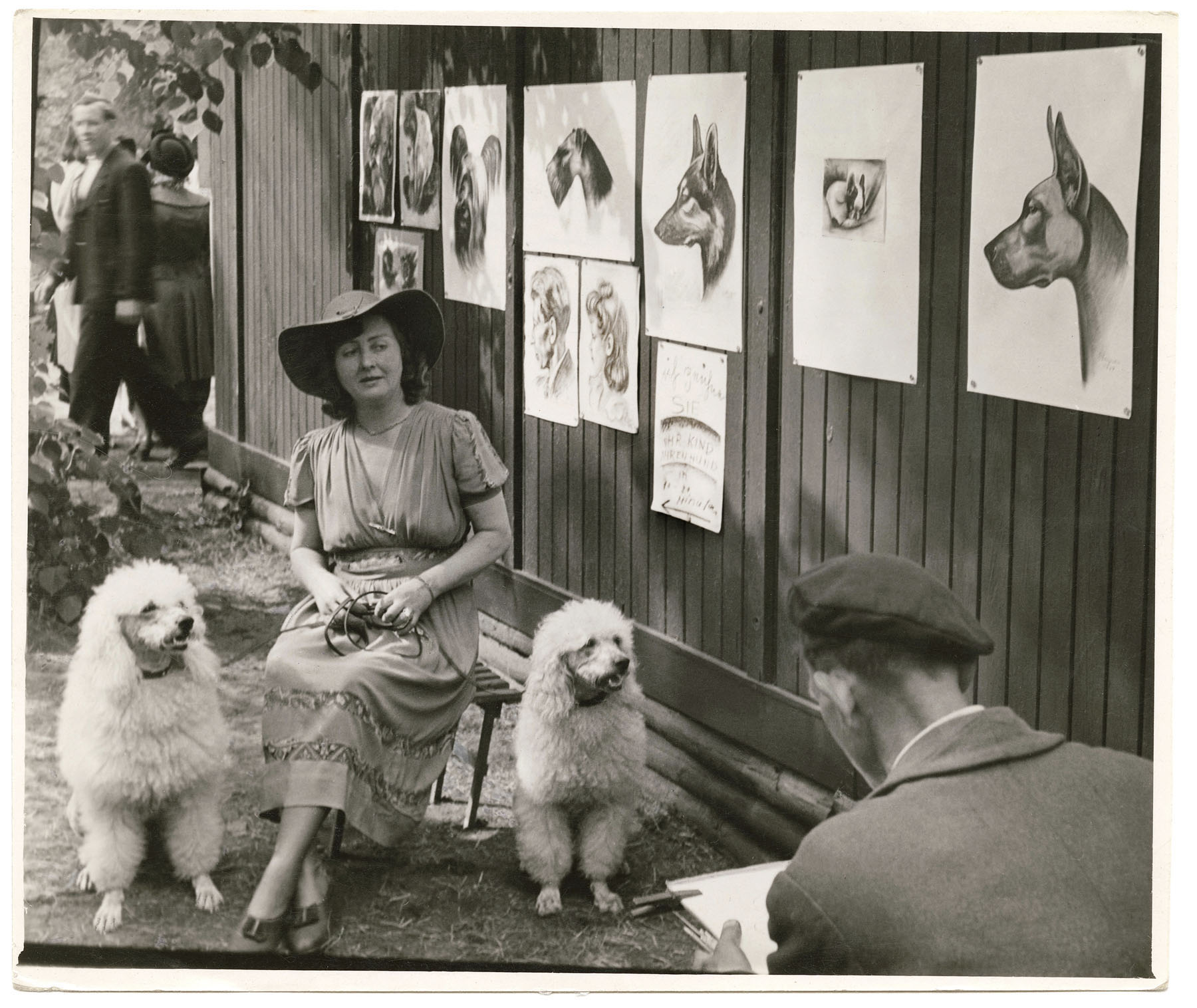
Friedrich Seidenstücker (German, 1882-1966) 'Dog painter' 1928


Friedrich Seidenstücker (German, 1882-1966)
Dog painter
1928
© Stiftung Ann und Jürgen Wilde, Bayerische Staatsgemäldesammlungen, München


Friedrich Seidenstücker (German, 1882-1966) 'Encounters in the zoo' 1926


Friedrich Seidenstücker (German, 1882-1966)
Encounters in the zoo
1926
© Stiftung Ann und Jürgen Wilde, Bayerische Staatsgemäldesammlungen, München


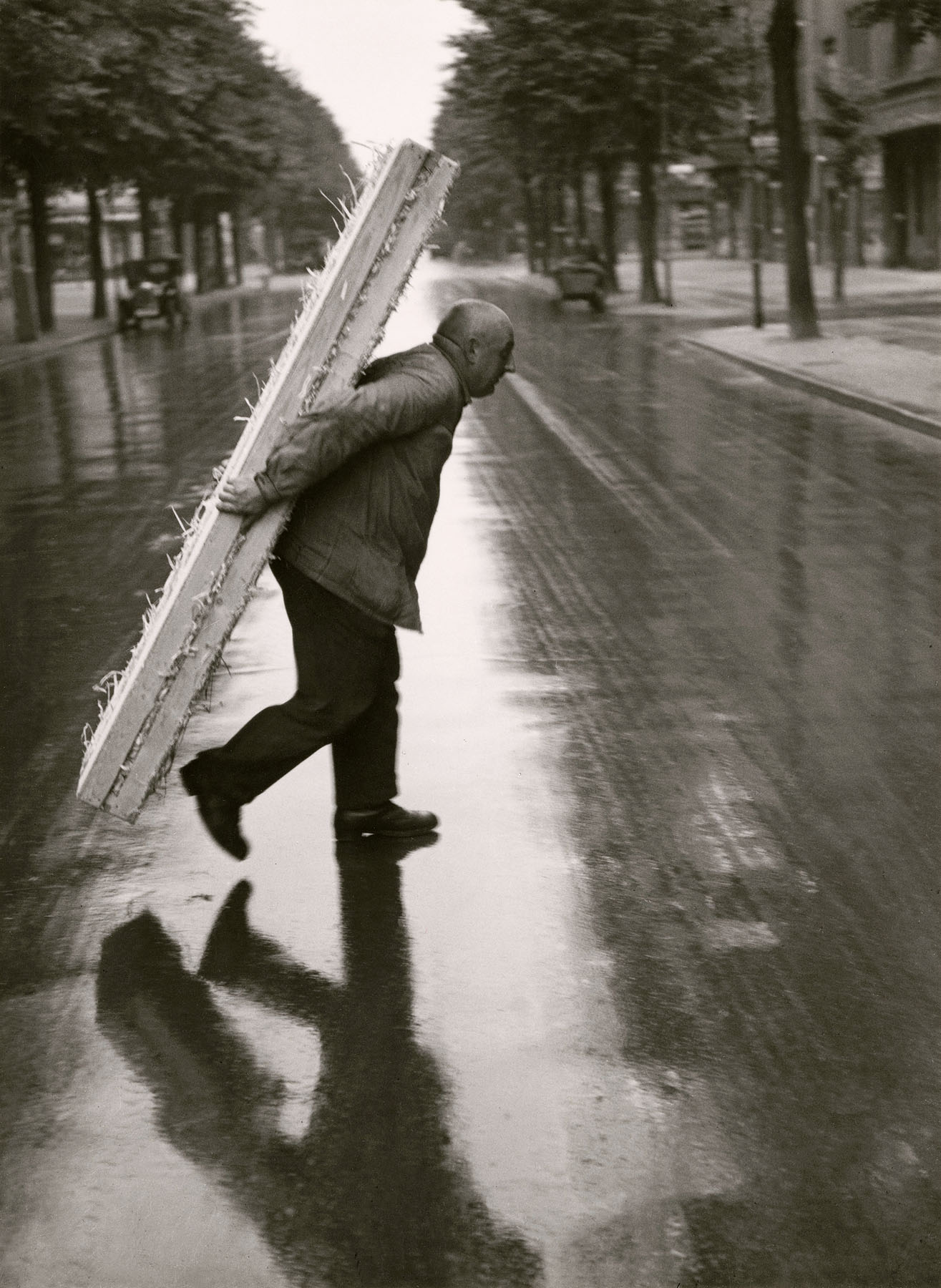
Friedrich Seidenstücker (German, 1882-1966) 'Lastenträger' (Load carrier) 1928


Friedrich Seidenstücker (German, 1882-1966)
Lastenträger (Load carrier)
1928
© Stiftung Ann und Jürgen Wilde, Bayerische Staatsgemäldesammlungen, München


Friedrich Seidenstücker (German, 1882-1966) 'Hotel servant' 1930


Friedrich Seidenstücker (German, 1882-1966)
Hotel servant
1930
© Stiftung Ann und Jürgen Wilde, Bayerische Staatsgemäldesammlungen, München


Friedrich Seidenstücker (German, 1882-1966) 'Potsdamer Platz' After 1931


Friedrich Seidenstücker (German, 1882-1966)
Potsdamer Platz
After 1931
© Stiftung Ann und Jürgen Wilde,
Bayerische Staatsgemäldesammlungen, München


Friedrich Seidenstücker (German, 1882-1966) 'Celebrities snapped, Berlin Zoological Garden' 1930


Friedrich Seidenstücker (German, 1882-1966)
Celebrities snapped, Berlin Zoological Garden
1930
© Stiftung Ann und Jürgen Wilde, Bayerische Staatsgemäldesammlungen, München


Friedrich Seidenstücker (German, 1882-1966) 'Photo school' 1920-1930s


Friedrich Seidenstücker (German, 1882-1966)
Photo school, amateur photographers, Berlin
1920-1930s
© Stiftung Ann und Jürgen Wilde, Bayerische Staatsgemäldesammlungen, München


Friedrich Seidenstücker (German, 1882-1966) 'Berlin Nord im Wedding' 1923


Friedrich Seidenstücker (German, 1882-1966)
Berlin Nord im Wedding
1923
© Stiftung Ann und Jürgen Wilde, Bayerische Staatsgemäldesammlungen, München


Friedrich Seidenstücker (German, 1882-1966) 'Zebras' 1920-1930s


Friedrich Seidenstücker (German, 1882-1966)
Zebras
1920-1930s
© Stiftung Ann und Jürgen Wilde, Bayerische Staatsgemäldesammlungen, München


Friedrich Seidenstücker (German, 1882-1966) 'In his father's trousers' c. 1950


Friedrich Seidenstücker (German, 1882-1966)
In his father’s trousers
c. 1950
© Stiftung Ann und Jürgen Wilde, Bayerische Staatsgemäldesammlungen, München


Friedrich Seidenstücker (German, 1882-1966) 'Self-portrait with camera' c. 1925


Friedrich Seidenstücker (German, 1882-1966)
Self-portrait with camera
c. 1925
© Archiv Ann und


Seidenstücker poster for the special exhibition


Poster for the special exhibition
Design: Michael Krupp
Motif: Friedrich Seidenstücker, family tandem, 1947
© Ann and Jürgen Wilde Foundation, Bayerische Staatsgemäldesammlungen, Munich


More photographs


Friedrich Seidenstücker (German, 1882-1966) 'Untitled (Sch)' 1930


Friedrich Seidenstücker (German, 1882-1966)
Untitled (Sch)
1930


Friedrich Seidenstücker. 'Untitled' c. 1930


Friedrich Seidenstücker (1882-1966)
Untitled
c. 1930
Vintage print
6 15/16 x 5 1/16 in. (17.6 x 12.9cm)
Galerie Berinson, Berlin
Photo: Galerie Berinson, Berlin


Friedrich Seidenstücker (1882-1966) is noted for his atmospheric photographs of everyday life in Berlin during the Weimar Republic. Thanks to his compassionate studies of animals, he has an almost legendary reputation among animal and zoo lovers, and his haunting pictures of Berlin in ruins are a precious source of material for historians. His images seem to be spontaneous, sympathetic examples of the kind of photography that excels at capturing the moment. They are free of any exaggeration or extravagance, and display a sense of humour rarely found in photography. His work is buoyed by a fundamental optimism, yet it does not ignore the harshness, poverty, and suffering that prevailed at that time.


Friedrich Seidenstücker (German, 1882-1966) 'Potsdamer Bahnhof, Berlin' 1932


Friedrich Seidenstücker (German, 1882-1966)
Potsdamer Bahnhof, Berlin
1932


Friedrich Seidenstücker (German, 1882-1966) 'Alexanderplatz, Berlin' 1928


Friedrich Seidenstücker (German, 1882-1966)
Alexanderplatz, Berlin
1928


Friedrich Seidenstücker (1882-1966) 'Two walruses emerging from water' 1925-1935


Friedrich Seidenstücker (German, 1882-1966)
Two walruses emerging from water
1925-1935


Friedrich Seidenstücker (1882-1966) 'Polar bear, Berlin Zoo' 1929


Friedrich Seidenstücker (German, 1882-1966)
Polar bear, Berlin Zoo
1929


Polar bear perspective: who is actually behind bars here? Photographer Seidenstücker often seemed to have been closer to animals than to humans – this is the impression made by many of his photographs, such as those from 1929 at the Berlin Zoo.


Friedrich Seidenstücker (1882-1966) 'Pelican, Berlin Zoo' 1928


Friedrich Seidenstücker (German, 1882-1966)
Pelican, Berlin Zoo
1928


Friedrich Seidenstücker (1882-1966) 'Berlin Zoo' 1933


Friedrich Seidenstücker (German, 1882-1966)
Berlin Zoo
1933


Friedrich Seidenstücker (1882-1966) 'Berlin Zoo' 1936


Friedrich Seidenstücker (German, 1882-1966)
Berlin Zoo
1936


Friedrich Seidenstücker (1882-1966) 'Curious goat' 1920s-1930s


Friedrich Seidenstücker (German, 1882-1966)
Curious goat
1920s-1930s


Friedrich Seidenstücker (1882-1966) 'Monday morning, Oberbaumbrücke, Berlin' 1930


Friedrich Seidenstücker (German, 1882-1966)
Monday morning, Oberbaumbrücke, Berlin
1930


Friedrich Seidenstücker (1882-1966) 'Posing javelin thrower' 1932-1938


Friedrich Seidenstücker (German, 1882-1966)
Posing javelin thrower
1932-1938


Friedrich Seidenstücker (1882-1966) 'Berlin' 1925


Friedrich Seidenstücker (German, 1882-1966)
Berlin
1925


Friedrich Seidenstücker (1882-1966) 'Kleines Mädchen malt mit Kreide auf den Straßenasphalt' (Little girl paints with chalk on the asphalt road) 1925-1930


Friedrich Seidenstücker (German, 1882-1966)
Kleines Mädchen malt mit Kreide auf den Straßenasphalt (Little girl paints with chalk on the asphalt road)
1925-1930


Friedrich Seidenstücker (1882-1966) 'Elderly couple in Berlin' 1929


Friedrich Seidenstücker (German, 1882-1966)
Elderly couple in Berlin
1929


Friedrich Seidenstücker (1882-1966) 'At the Waterpump' 1927


Friedrich Seidenstücker (German, 1882-1966)
At the Waterpump
1927


Friedrich Seidenstücker (1882-1966) 'Woman Jumping Puddle, Berlin' 1925


Friedrich Seidenstücker (German, 1882-1966)
Woman Jumping Puddle, Berlin
1925


Friedrich Seidenstücker (1882-1966) 'Puddle Jumper' 1925


Friedrich Seidenstücker (German, 1882-1966)
Puddle Jumper
1925


Friedrich Seidenstücker (1882-1966) 'Puddle Jumpers' 1930


Friedrich Seidenstücker (German, 1882-1966)
Puddle Jumpers
1930


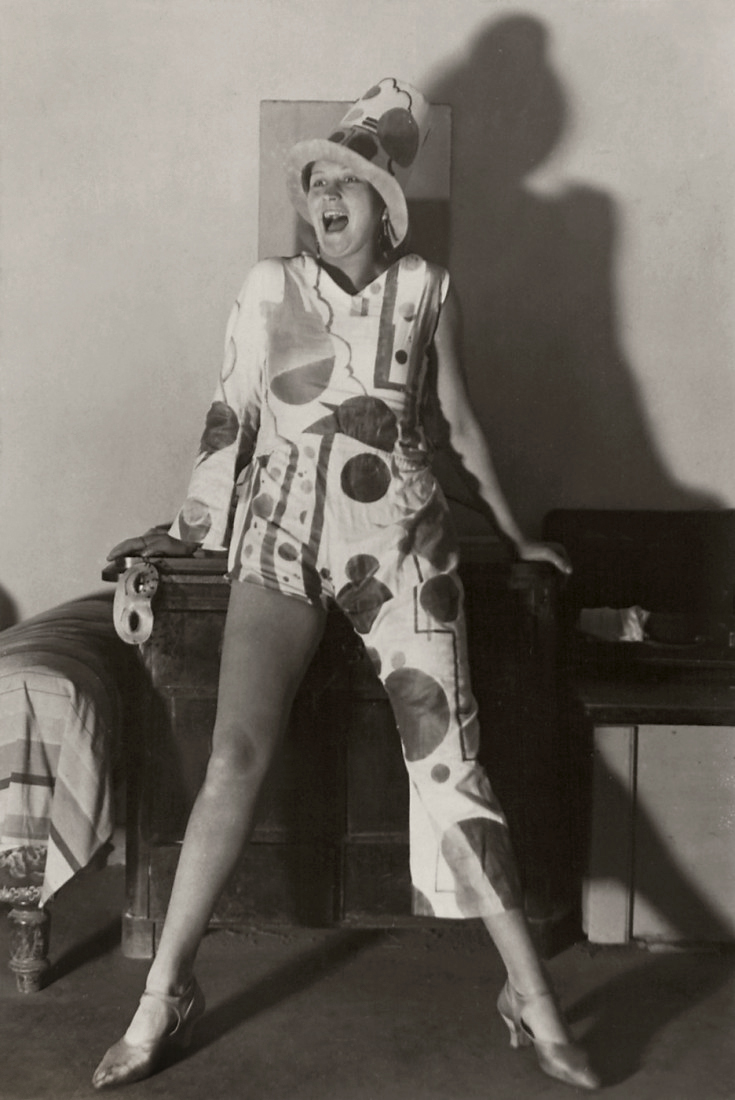
Friedrich Seidenstücker (1882-1966) 'Faschingsfigur' (Carnival figure) 1925


Friedrich Seidenstücker (German, 1882-1966)
Faschingsfigur (Carnival figure)
1925


Friedrich Seidenstücker (1882-1966) 'The front stairs are scrubbed' 1928


Friedrich Seidenstücker (German, 1882-1966)
The front stairs are scrubbed
1928


Friedrich Seidenstücker (1882-1966) 'Vor dem Bäckerladen' 1929


Friedrich Seidenstücker (German, 1882-1966)
Vor dem Bäckerladen
1929


Friedrich Seidenstücker (1882-1966) 'Ice cream after school' 1931


Friedrich Seidenstücker (German, 1882-1966)
Ice cream after school
1931


Friedrich Seidenstücker (1882-1966) 'Verarmte Jüdinnnen in de Grenadierstraße' (Impoverished Jewish women in de Grenadierstrasse) c. 1930


Friedrich Seidenstücker (German, 1882-1966)
Verarmte Jüdinnnen in de Grenadierstraße (Impoverished Jewish women in de Grenadierstrasse)
c. 1930


Friedrich Seidenstücker (1882-1966) 'Konzentration vor dem Abschuß des Pfeils' (Concentration before the arrow is fired) 1932


Friedrich Seidenstücker (German, 1882-1966)
Konzentration vor dem Abschuß des Pfeils (Concentration before the arrow is fired)
1932


Friedrich Seidenstücker (1882-1966) 'Stove-fitter' 1930-1935


Friedrich Seidenstücker (German, 1882-1966)
Stove-fitter
1930-1935


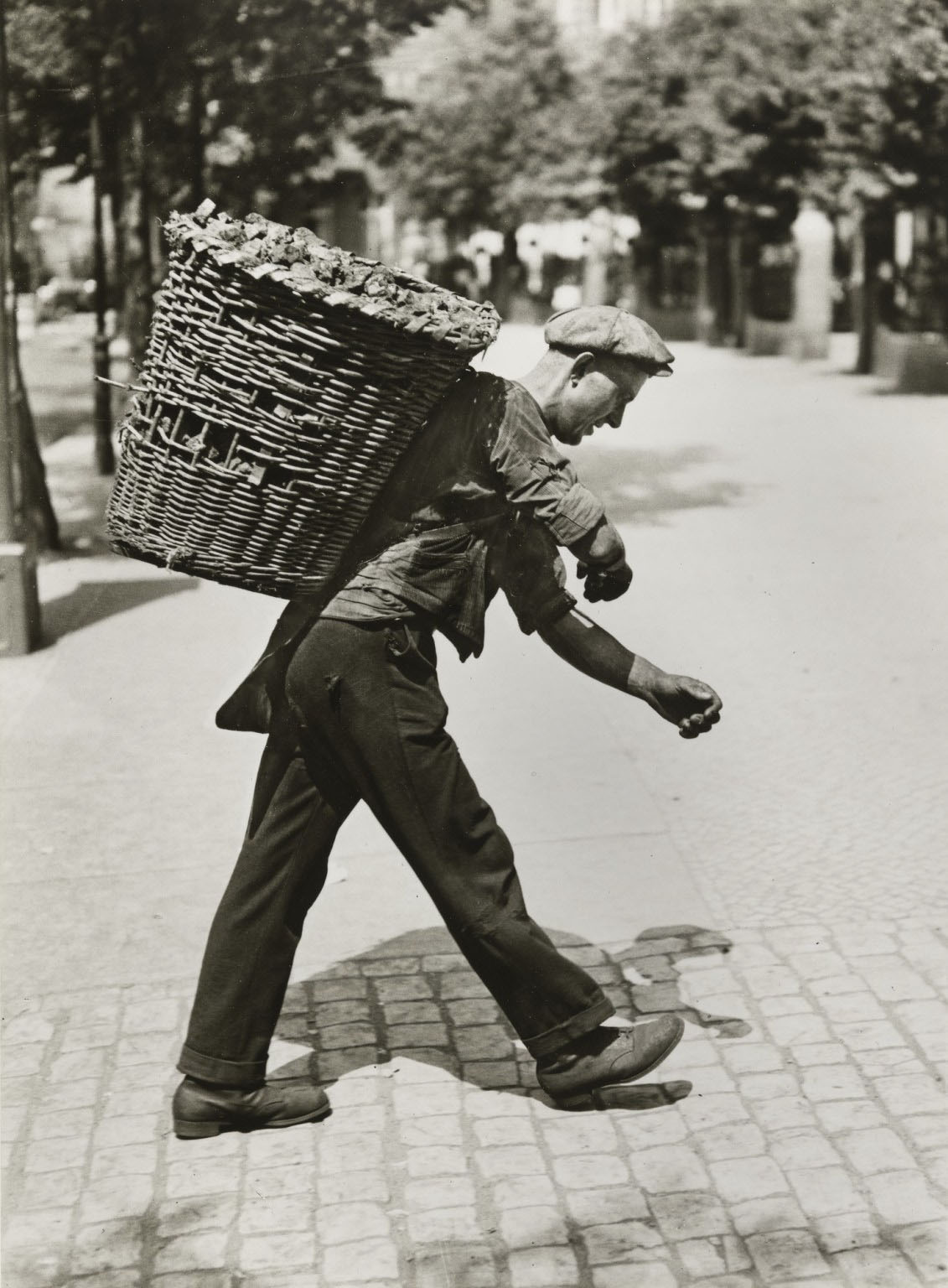
Friedrich Seidenstücker (1882-1966) 'Coal porter' 1930


Friedrich Seidenstücker (German, 1882-1966)
Coal porter
1930


Friedrich Seidenstücker (1882-1966) 'Next to Wertheim' c. 1935


Friedrich Seidenstücker (German, 1882-1966)
Next to Wertheim
c. 1935


Friedrich Seidenstücker (1882-1966) 'Jungfernbrücke an der Friedrichsgracht' (Maiden Bridge on the Friedrichsgracht) 1946


Friedrich Seidenstücker (German, 1882-1966)
Jungfernbrücke an der Friedrichsgracht (Maiden Bridge on the Friedrichsgracht)
1946


Friedrich Seidenstücker (1882-1966) 'Ein rollstuhlfahrer passiert die ruine des stadtschlosses' (A wheelchair user passes the ruins of the city palace) 1947


Friedrich Seidenstücker (1882-1966)
Ein rollstuhlfahrer passiert die ruine des stadtschlosses (A wheelchair user passes the ruins of the city palace)
1947


The Hohenzollern residence, located in the eastern sector, bore the legend, “remove war criminals from all positions!!!”


Friedrich Seidenstücker (1882-1966) 'Untitled (Bismarck)' 1946


Friedrich Seidenstücker (German, 1882-1966)
Untitled (Bismark)
1946


Friedrich Seidenstücker (1882-1966) 'The Twins, Hilde und Helga Fischer' 1948


Friedrich Seidenstücker (1882-1966)
The Twins, Hilde und Helga Fischer
1948


Friedrich Seidenstücker (1882-1966) 'Aufstieg der Begabten, Berlin' (Rise of the gifted, Berlin) 1950


Friedrich Seidenstücker (German, 1882-1966)
Aufstieg der Begabten, Berlin (Rise of the gifted, Berlin)
1950


Friedrich Seidenstücker (German, 1882-1966) 'Pachyderms: Zoo visitors at the elephant enclosure in Berlin' 1950


Friedrich Seidenstücker (German, 1882-1966)
Pachyderms: Zoo visitors at the elephant enclosure in Berlin
1950


Friedrich Seidenstücker (German, 1882-1966) 'Autumn in the Zoo, African Rhinoceros' c. 1955


Friedrich Seidenstücker (German, 1882-1966)
Autumn in the Zoo, African Rhinoceros
c. 1955


Friedrich Seidenstücker (1882-1966) 'Nude' Nd


Friedrich Seidenstücker (German, 1882-1966)
Nude
Nd


Friedrich Seidenstücker (German, 1882-1966) 'Untitled (Self-portrait with dove)' 1952


Friedrich Seidenstücker (German, 1882-1966)
Untitled (Self-portrait with dove)
1952


Käthe Kollwitz Museum Köln
Neumarkt 18-24 / Neumarkt Passage
50667 Köln
Phone: +49 (0)221 227 2899
Phone: +49 (0)221 227 2602

Opening hours:
Tuesday – Sunday 11am – 6pm

Käthe Kollwitz Museum Cologne website

LIKE ART BLART ON FACEBOOK

Back to top

European photographic research tour: Vintage August Sander photographs at Galerie Julian Sander, Cologne

Visited September 2019 posted July 2020


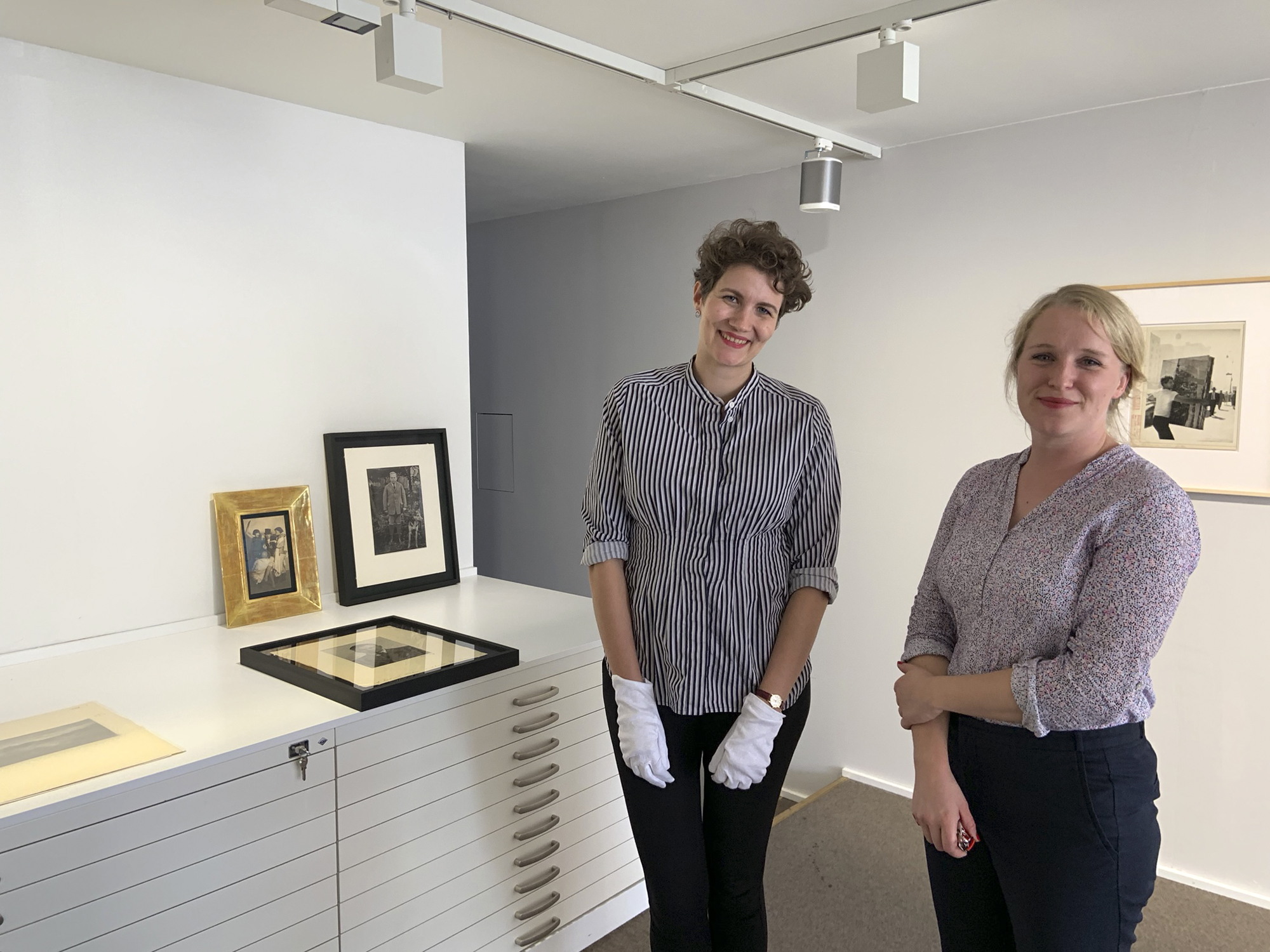
Tamara Könen of the gallery (left) and Kristina Engels from August Sander Stiftung – at Galerie Julian Sander, standing in front of August Sander's photographs


Tamara Könen of the gallery (left) and Kristina Engels from August Sander Stiftung – at Galerie Julian Sander, standing in front of August Sander’s photographs.


On my European photographic research tour in late 2019, I had a memorable visit to Galerie Julian Sander to see some vintage and later prints from the August Sander Archive / August Sander Stiftung with Tamara Könen from the gallery (left) and Kristina Engels from August Sander Stiftung.

It was a privilege to be able to see about 10 prints… the highlights being a stunning 1929-1930 vintage landscape, a vintage carnivalesque image of the Cologne avant-garde and a later print by his son of Painter’s Wife [Helene Abelen] 1926. The vintage landscape, like the vintage prints of Sudek, possessed no true black or white, the tonal range prescribed between zones 2-8.

The use of low depth of field in the portraits was outstanding. For example the shoes of Helene are completely out of focus whereas her hands are as crisp and clear as a summer breeze. Most astonishing was the panache of the bohemians, with the outstretched arm top left… printed on matt brown toned paper with a thin gold edge.

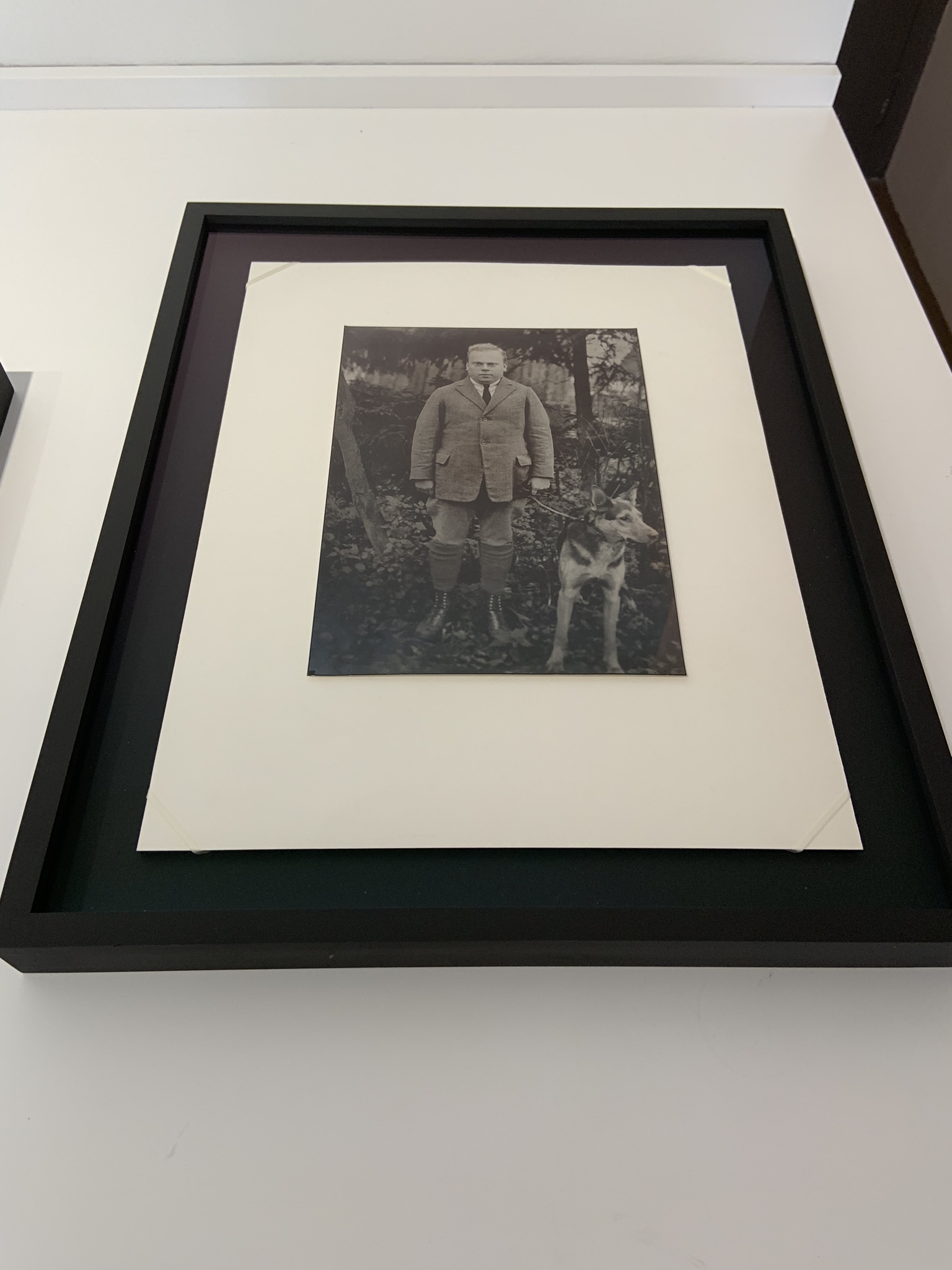
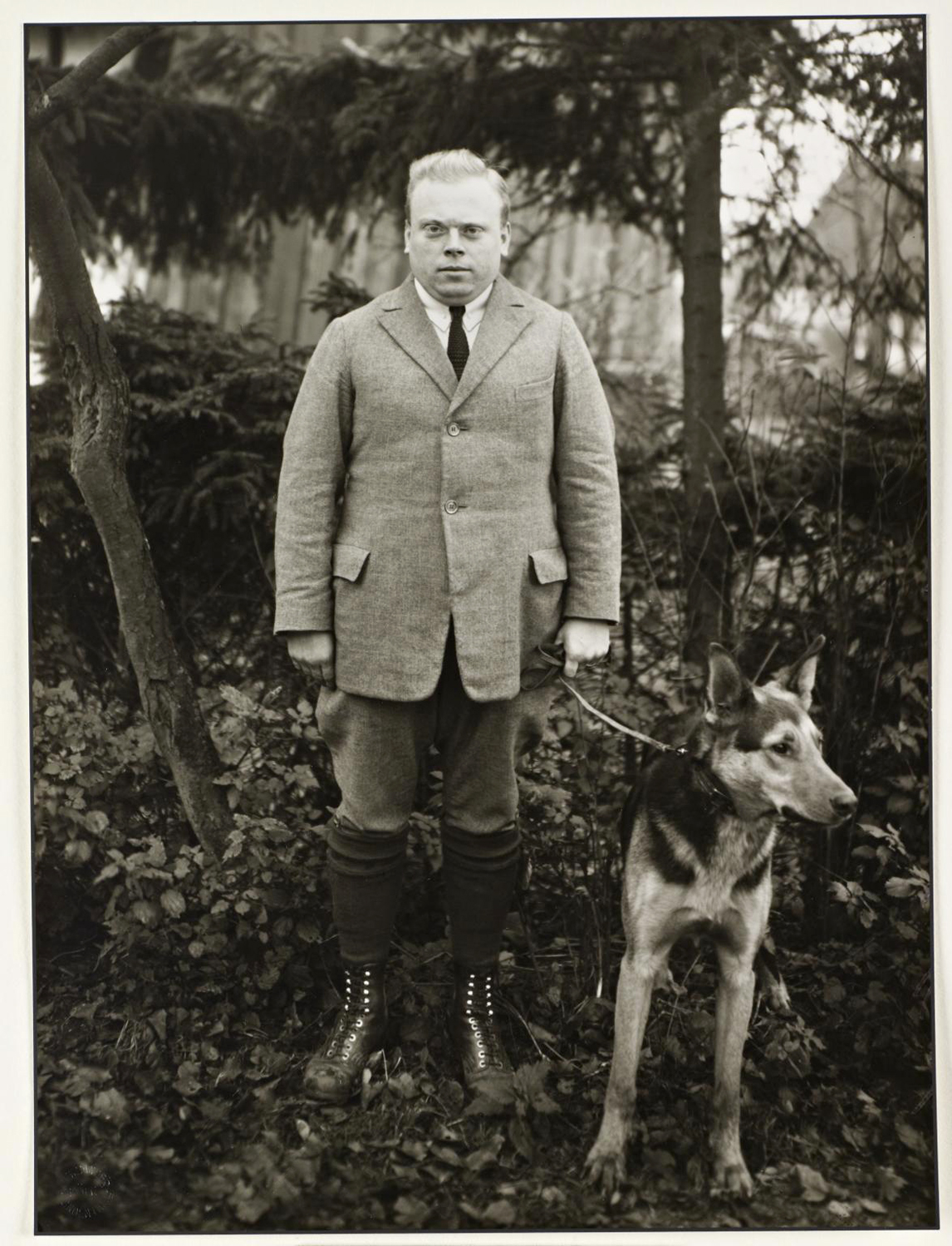
Another vintage print that showed selective depth of field was the photograph of a man with his dog, Junglehrer (Young Teacher) 1928. The dog’s lower legs were completely out of focus (Sander tilting his large format camera) making this oh so German photograph seem so surreal!

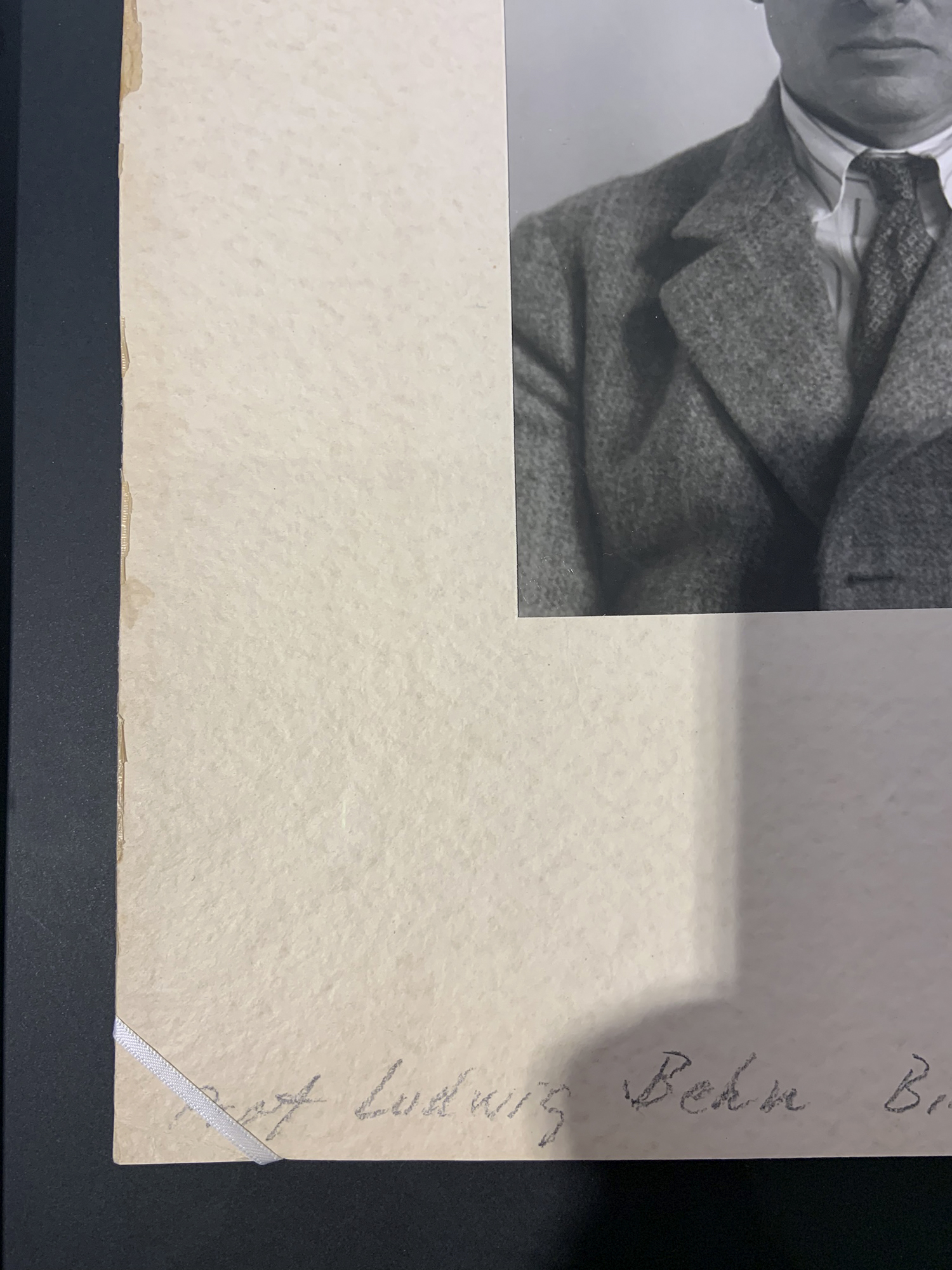
Other prints had a thin black edge and the vintage press print landscape (c. 1920s) was printed on thin single weight paper, while the vintage photograph of the sculptor Professor Ludwig Benh shows an original Sander mount – the print mounted behind an artist cut window. All prints were enlargements from 4×5” glass negatives or German equivalent size.

Such a wonderful learning experience! Thank you to the gallery for their time and knowledge.

Dr Marcus Bunyan


Please click on the photographs for a larger version of the image. Most photographs © Marcus Bunyan and Galerie Julian Sander


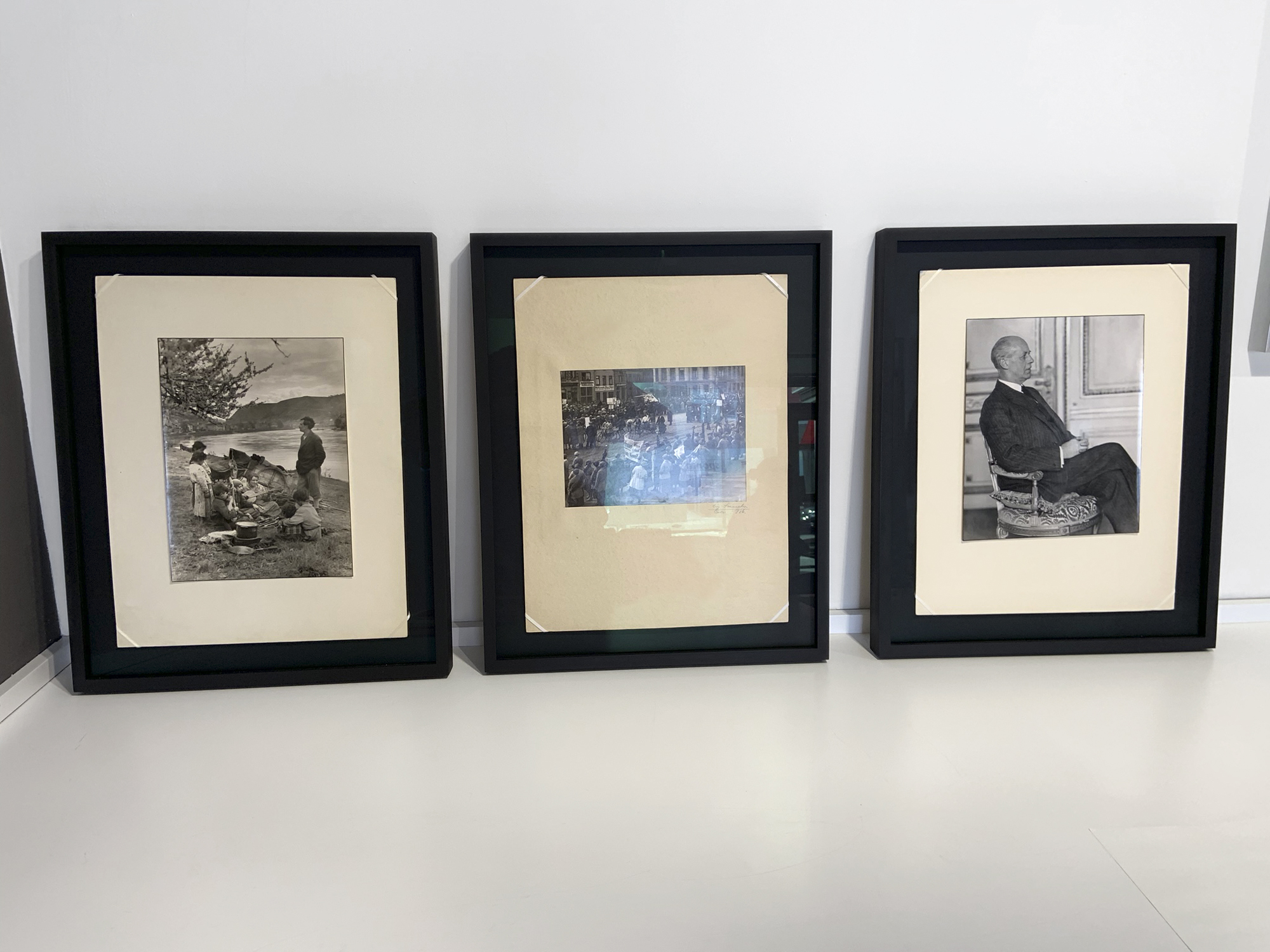
3 vintage prints, the left one with black edge floating free of the backboard; the second c .1920s of a Communist rally; and the third of an industrialist (Großindustrieller / The Industrialist, 1927)


3 vintage silver gelatin prints, the left one with black edge floating free of the backboard; the second c. 1920s of a Communist rally; and the third of an industrialist (Großindustrieller / The Industrialist, 1927)
Galerie Julian Sander, Cologne
Photo: Marcus Bunyan


August Sander (German, 1876-1964). 'Das Siebengebirge: Blick vom Rolandsbogen' [The Siebengebirge: view from the Rolandsbogen] 1929-30 (center) and 'Untitled [Remagen Bridge on the Rhine]' c. 1930 (right)


August Sander (German, 1876-1964)
Das Siebengebirge: Blick vom Rolandsbogen [The Siebengebirge: view from the Rolandsbogen] 1929-1930 (center) and Untitled [Remagen Bridge on the Rhine] c. 1930 (right)
Galerie Julian Sander, Cologne
Photo: Marcus Bunyan


August Sander (German, 1876-1964) 'Das Siebengebirge: Blick vom Rolandsbogen' [The Siebengebirge: view from the Rolandsbogen] 1929-1930


August Sander (German, 1876-1964)
Das Siebengebirge: Blick vom Rolandsbogen [The Siebengebirge: view from the Rolandsbogen]
1929-1930
Vintage gelatin silver print
Also titled:
Siebengebirge von der linken Rheinseite gesehen [Siebengebirge seen from the left side of the Rhine]
Blick vom Rolandsbogen auf das Siebengebirge mit Drachenfels [View from Roland Arch on the Siebengebirge with Drachenfels]
Galerie Julian Sander, Cologne
Photo: Marcus Bunyan


August Sander (German, 1876-1964) 'Das Siebengebirge: Blick vom Rolandsbogen' [The Siebengebirge: view from the Rolandsbogen] 1929-1930


August Sander (German, 1876-1964)
Das Siebengebirge: Blick vom Rolandsbogen [The Siebengebirge: view from the Rolandsbogen]
1929-1930
Vintage gelatin silver print
Also titled:
Siebengebirge von der linken Rheinseite gesehen [Siebengebirge seen from the left side of the Rhine]
Blick vom Rolandsbogen auf das Siebengebirge mit Drachenfels [View from Roland Arch on the Siebengebirge with Drachenfels]
Galerie Julian Sander, Cologne
Photo:
Marcus Bunyan


August Sander (German, 1876-1964) 'Das Siebengebirge: Blick vom Rolandsbogen' [The Siebengebirge: view from the Rolandsbogen] 1929-1930


August Sander (German, 1876-1964)
Das Siebengebirge: Blick vom Rolandsbogen [The Siebengebirge: view from the Rolandsbogen]
1929-1930
Vintage gelatin silver print


August Sander (German, 1876-1964) 'Untitled [Remagen Bridge on the Rhine]' c. 1930


August Sander (German, 1876-1964)
Untitled [Remagen Bridge on the Rhine]
c. 1930
Vintage gelatin silver press print
Galerie Julian Sander, Cologne
Photo: Marcus Bunyan


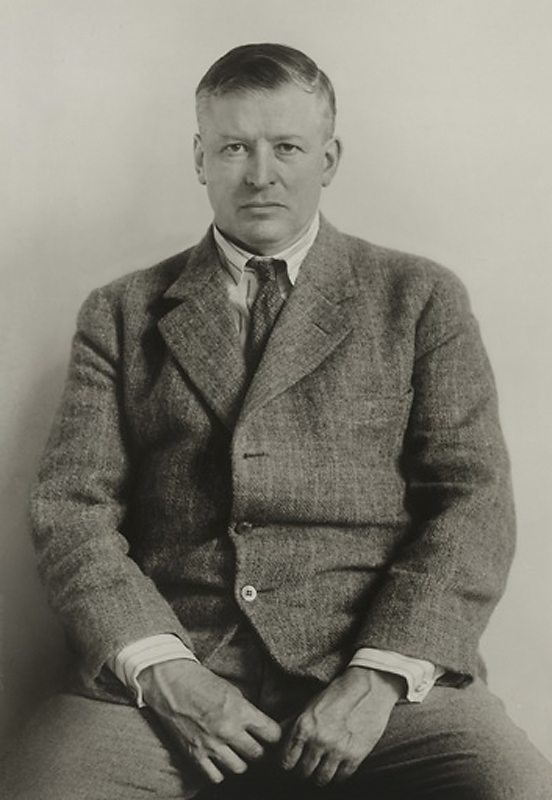
August Sander (German, 1876-1964) 'Untitled [Bohemians: avant-garde of Cologne]' 1920s (left) and 'Professor Ludwig Behn' 1920s (right)


August Sander (German, 1876-1964)
Untitled [Bohemians: avant-garde of Cologne] 1920s (left) and Professor Ludwig Behn 1920s (right)
Vintage gelatin silver print with gold edge printed on matt warm toned paper
Galerie Julian Sander, Cologne
Photo: Marcus Bunyan


August Sander (German, 1876-1964) 'Untitled [Bohemians: avant-garde of Cologne]' 1920s


August Sander (German, 1876-1964)
Untitled [Bohemians: avant-garde of Cologne]
1920s
Vintage gelatin silver print with gold edge printed on matt warm toned paper
Galerie Julian Sander, Cologne
Photo: Marcus Bunyan


August Sander (German, 1876-1964) 'Untitled [Bohemians: avant-garde of Cologne]' 1920s


August Sander (German, 1876-1964)
Untitled [Bohemians: avant-garde of Cologne]
1920s
Vintage gelatin silver print with gold edge printed on matt warm toned paper
Galerie Julian Sander, Cologne
Photo: Marcus Bunyan


August Sander (German, 1876-1964) 'Professor Ludwig Behn, Bildhaver, Munich' 1920s


August Sander (German, 1876-1964)
Professor Ludwig Behn, Bildhaver, Münich
1920s
Gelatin silver print


August Sander (German, 1876-1964) 'Professor Ludwig Behn, Bildhaver, Munich' 1920s (detail)


August Sander (German, 1876-1964)
Professor Ludwig Behn, Bildhaver, Münich
1920s
Vintage gelatin silver print with original Sander mount
Galerie Julian Sander, Cologne
Photo: Marcus Bunyan


August Sander (German, 1876-1964) 'Painter's Wife [Helene Abelen]' 1926


August Sander (German, 1876-1964)
Painter’s Wife [Helene Abelen]
1926
Later gelatin silver print by Sander’s son
Galerie Julian Sander, Cologne
Photo: Marcus Bunyan


This photograph shows Helene Abelen, wife of the Cologne painter, Peter Abelen. During the 1920s August Sander befriended many Cologne artists because of his involvement with the Cologne Progressive Artists Group (Gruppe Progressiver Künstler Köln). In 1926 Sander was asked by Peter Abelen to create a portrait of his young wife. With her short, slicked-back hair, collared shirt, thin necktie and trousers, Frau Abelen is presented as a distinctly androgynous figure. Her masculine garb and haircut, as well as the cigarette held between her teeth, signal a defiance of traditional gender roles. Staring determinedly out at the viewer Helene Abelen’s animated expression is unusual for a Sander portrait and falls somewhere between bravado and agitation.

This portrait reflects the so-called ‘new woman’ of the Weimar Republic. The concept of the ‘new woman’ dates from before the First World War but became firmly rooted during it when women were mobilised in the workforce. Within Germany this created considerable anxiety about women’s roles, particularly in relation to the family. In 1928, on the tenth anniversary of the end of the war, the Münchner Illustrierte Presse showed on its cover a photograph of a young woman, with short hair and skirt, astride a motorcycle with a lit cigarette in hand, with the heading, ‘Only ten years – a different world’. Like this magazine image, Sander’s portrait of Helene Abelen reflected a consciousness about the blurring of gender roles in the wake of the ‘new woman’.

Painter’s Wife represents an anomaly in Sander’s work. For the most part, his depictions of women show them as wives and mothers, as the soul of the home and the family. Contrary to appearances, this portrait should not be taken to represent an unqualified vision of female independence. The costume Helene Abelen is wearing was created for her by Peter Abelen and the haircut she sports was also his choice. Her daughter later commented of this work: ‘This was the creation of my father. He wanted her to look like this. He always did our dresses’ (quoted in Greenberg 2000, p. 121).

Matthew Macaulay
November 2011

Text from the Tate website [Online] Cited 24/06/2020


August Sander (German, 1876-1964) 'Junglehrer' (Young Teacher) 1928


August Sander (German, 1876-1964)
Junglehrer (Young Teacher)
1928
Vintage gelatin silver print with black edge
Galerie Julian Sander, Cologne
Photo: Marcus Bunyan


August Sander (German, 1876-1964) 'Junglehrer' (Young Teacher) 1928


August Sander (German, 1876-1964)
Junglehrer (Young Teacher)
1928
Vintage gelatin silver print with black edge
Galerie Julian Sander, Cologne
Photo: Marcus Bunyan


Galerie Julian Sander
Cäcilienstr. 48
50667 Cologne
Germany
Phone: +49 (0) 221 170 50 70

Opening hours:
Tuesday – Friday 12.00 – 18.00

Galerie Julian Sander website

LIKE ART BLART ON FACEBOOK

Back to top

Exhibition: ‘Candida Höfer: A Return to Italy’ at Ben Brown Fine Arts, London

Exhibition dates: 12th February – 12th April 2013


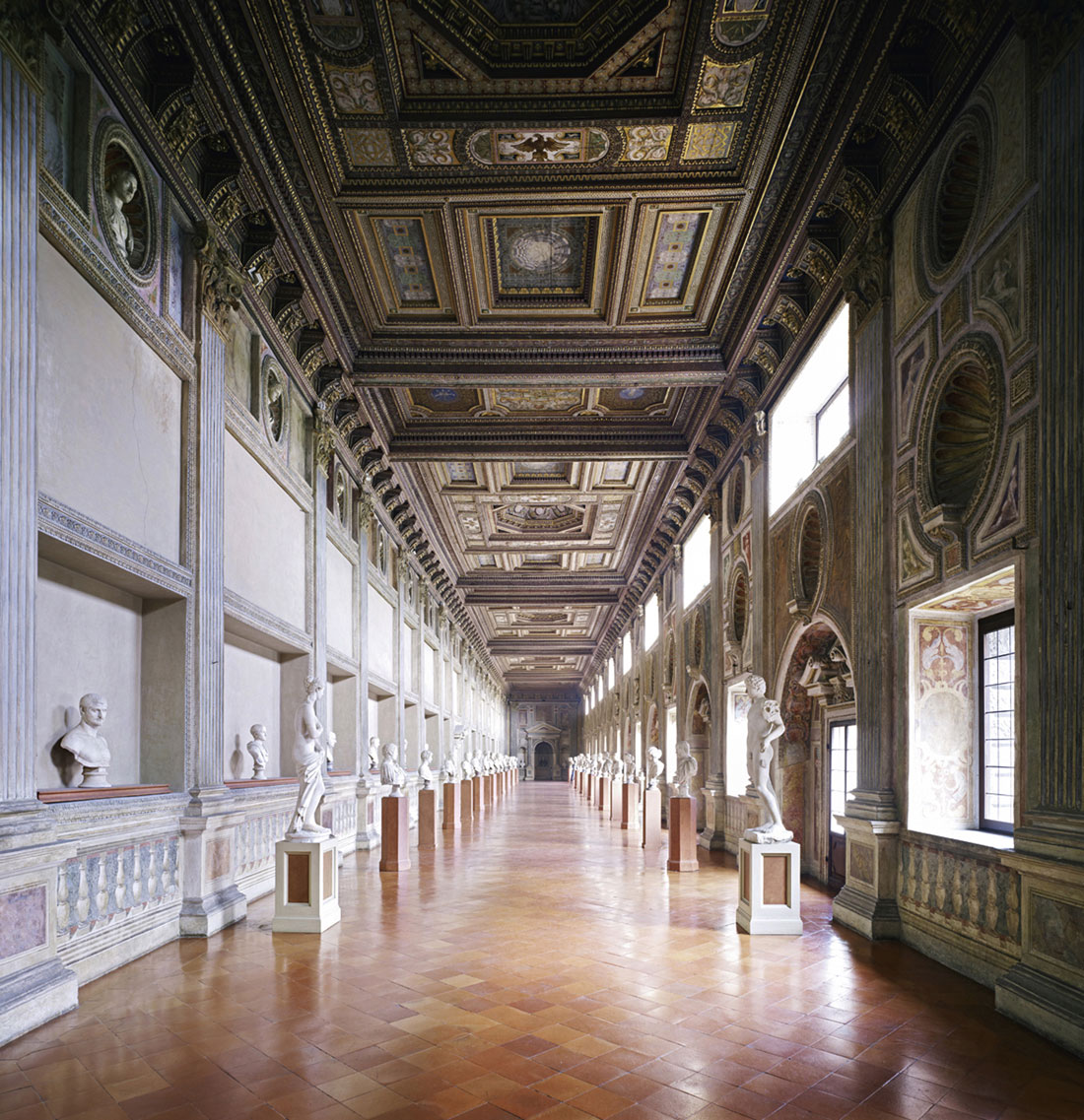
Candida Höfer (German, b. 1944) 'Galleria Degli Antichi Sabbioneta I 2010' 2010


Candida Höfer (German, b. 1944)
Galleria Degli Antichi Sabbioneta I 2010
2010
Light Jet print
Edition of 6
180 x 220.7cm (70 7/8 x 86 7/8 in.)
© 2013 Candida Höfer, VG Bild-Kunst, Bonn
Courtesy of Ben Brown Fine Arts


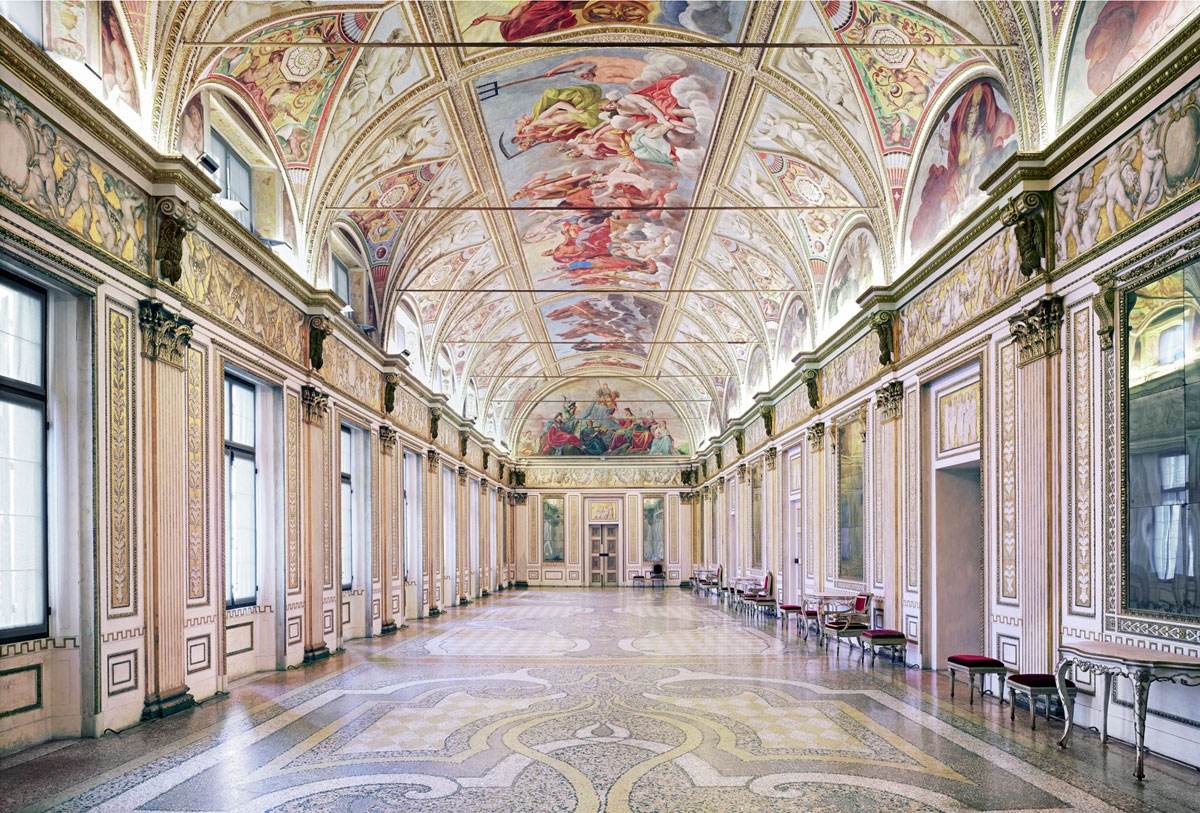
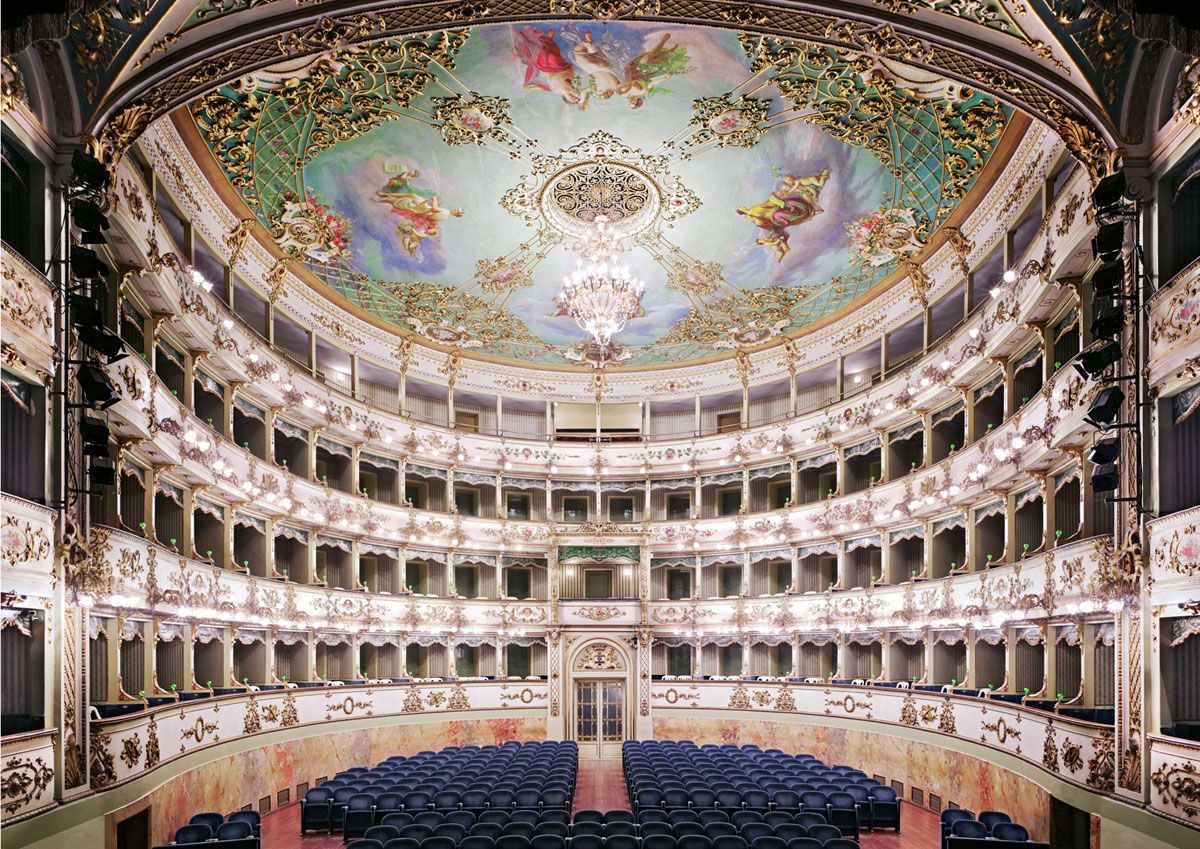
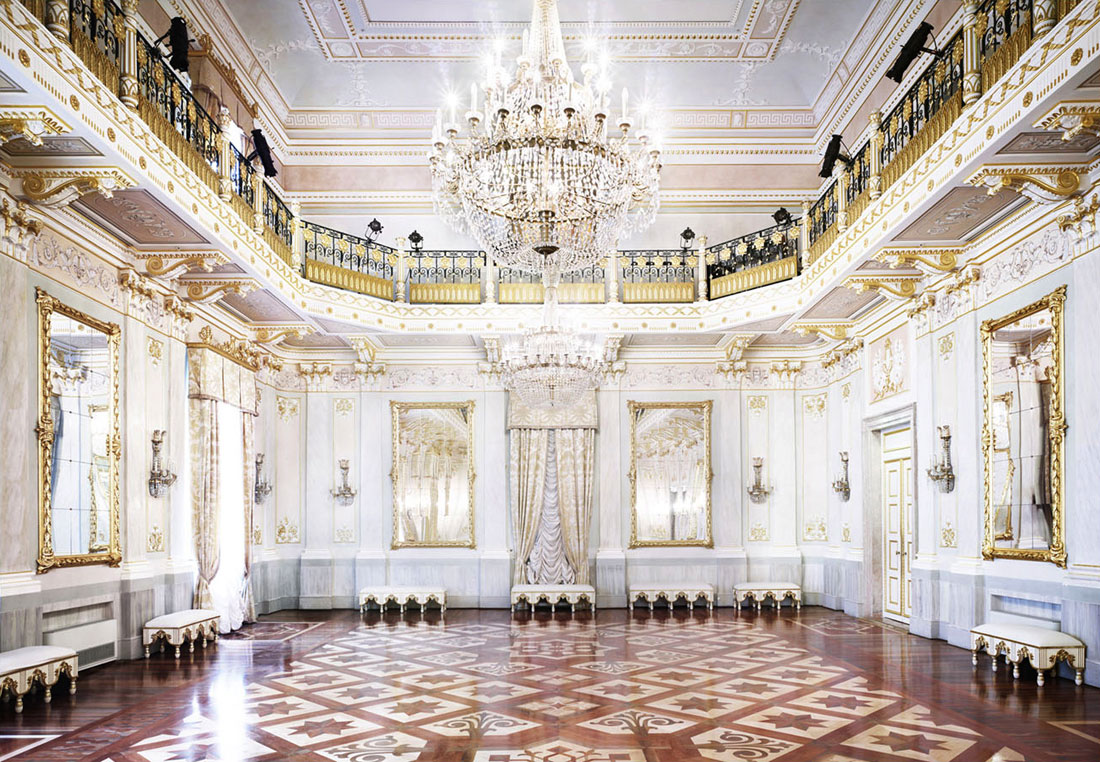
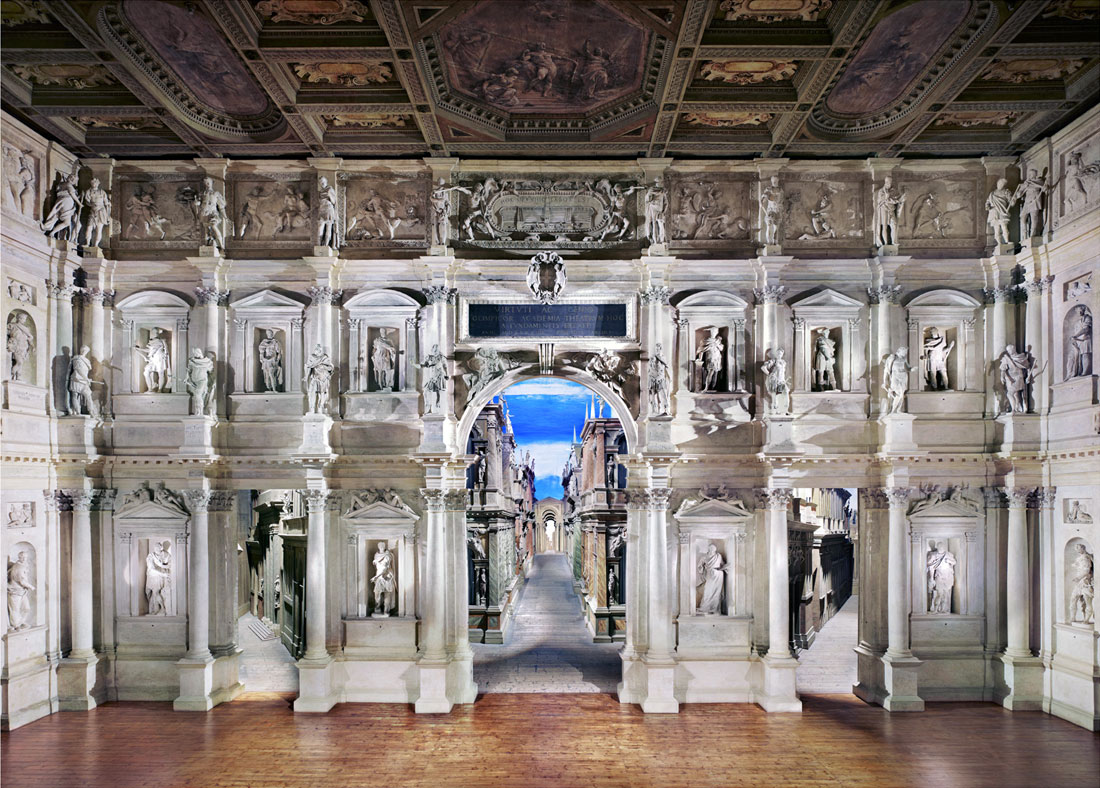
Ah symmetry, that vague sense of harmonious and beautiful proportion and balance, that patterned self-similarity that, through Hofer’s large format photographs, reflects the vainglorious human edifices of Northern Italy, superbly beautiful in their empty pride. Customarily devoid of human presence, Hofer’s photographs are technically and aesthetically superb. One has to examine the photographs with respect to their relationship to the passage of time, utilising spatial awareness to try to understand why things exist in specific locations within human culture.

“Both in ancient and modern times, the ability of a large structure to impress or even intimidate its viewers has often been a major part of its purpose, and the use of symmetry is an inescapable aspect of how to accomplish such goals.” (Wikipedia) Symmetries are informative of the world around us, and peer relationships are based on symmetry sending the message “we are all the same.” So Hofer’s symmetrical photographs possess opposing messages: we are all the same but some of us are more important (read powerful) than others.

Hofer’s highly symmetrical rooms are unavoidably also rooms in which anything out of place or potentially threatening can be identified easily and quickly, which has implications for safety, security, and familiarity. In this case it is the absence of human presence. To me this is the critical reading of Hofer’s photographs: they comment on the foibles of the human race, a race nearing the destruction of its only place of habitation, reaching the tipping point on the path to annihilation, yet indulging itself in a continuing race of construction and consumption. There will come a point when these edifices are crumbling and in ruins, as an Ebola-like virus races airborne around the world, destroying 90 percent of the population of the earth within months. The Earth will self balance and all we will be left with will be the memory of an empty symmetry.

Symmetry can be a source of comfort not only as an indicator of biological health, but also of a safe and well-understood living environment. The paradox of Hofer’s environments is that in these colourful, exuberant, profuse environments nothing is alive, the interiors becoming meaningless “noise” in an empty, vacuous world. The human race will have left the building.

Dr Marcus Bunyan


Many thankx to Ben Brown Fine Arts for allowing me to publish the photographs in the posting. Please click on the photographs for a larger version of the image.


Candida Höfer (German, b. 1944) 'Palazzo Ducale Mantova I' 2011


Candida Höfer (German, b. 1944)
Palazzo Ducale Mantova I 2011
2011
Light Jet print
Edition of 6
180 x 246cm (70 7/8 x 96 7/8 in.)
© 2013 Candida Höfer, VG Bild-Kunst, Bonn
Courtesy of Ben Brown Fine Arts


Candida Höfer (German, b. 1944) 'Teatro Comunale di Carpi I' 2011


Candida Höfer (German, b. 1944)
Teatro Comunale di Carpi I 2011
2011
Light Jet print
Edition of 6
180 x 237cm; (70 7/8 x 93 1/4 in.)
© 2013 Candida Höfer, VG Bild-Kunst, Bonn
Courtesy of Ben Brown Fine Arts


Candida Höfer (German, b. 1944) 'Teatro La Fenice di Venezia III' 2011


Candida Höfer (German, b. 1944)
Teatro La Fenice di Venezia III 2011
2011
Light Jet print
Edition of 6
180 x 242cm (70 7/8 x 95 1/4 in.)
© 2013 Candida Höfer, VG Bild-Kunst, Bonn
Courtesy of Ben Brown Fine Arts


Candida Höfer (German, b. 1944) 'Teatro La Fenice di Venezia V 2011' 2011


Candida Höfer (German, b. 1944)
Teatro La Fenice di Venezia V 2011
2011
Light Jet print
Edition of 6
180 x 235cm (70 7/8 x 92 1/2 in.)
© 2013 Candida Höfer, VG Bild-Kunst, Bonn
Courtesy of Ben Brown Fine Arts


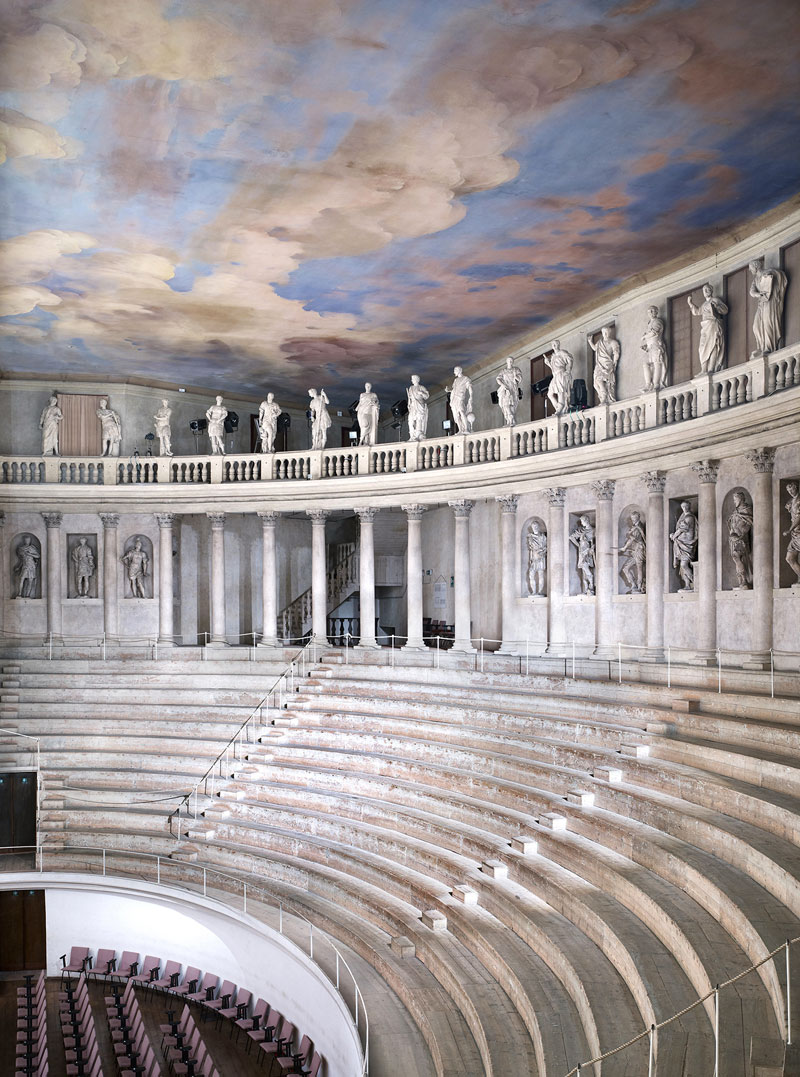
Candida Höfer (German, b. 1944) 'Teatro Olimpico Vicenza II' 2010


Candida Höfer (German, b. 1944)
Teatro Olimpico Vicenza II 2010
2010
Light Jet print
Edition of 6
180 x 235cm (70 7/8 x 92 1/2 in.)
© 2013 Candida Höfer, VG Bild-Kunst, Bonn
Courtesy of Ben Brown Fine Arts


Candida Höfer (German, b. 1944) 'Teatro Scientifico Bibiena Mantova I' 2010


Candida Höfer (German, b. 1944)
Teatro Scientifico Bibiena Mantova I 2010
2010
Light Jet print
Edition of 6
180 x 226cm (70 7/8 x 89 in.)
© 2013 Candida Höfer, VG Bild-Kunst, Bonn
Courtesy of Ben Brown Fine Arts


German photographer Candida Höfer makes a significant return to Ben Brown Fine Arts in London on 12 February with a major solo show, unveiling thirteen new and previously unseen photographs which catalogue the architectural treasures of Northern Italy.

Mantova, Vicenza, Sabbioneta, Venice and Carpi provide the glorious setting for this new series shot over the past two years, a continuation of Höfer’s previous work in Central and Southern Italy. The interiors of palaces, opera houses, libraries and theatres, which Höfer captures with incredible skill, are part of her meticulous documentation of public spaces – places of culture, knowledge, communication and exchange with a rich history and clear functionality. Having rarely visited the Northern region, Höfer was particularly touched by the naturalness and ease with which the local people there accepted this extraordinary architecture as a part of their daily lives.

Höfer’s portraits of interiors, customarily devoid of human presence, emphasise the solemn magnificence of the Palazzo Ducale, Teatro La Fenice and Biblioteca Teresiana, amongst others. By featuring spaces that celebrate mankind’s greatness, yet where people are nowhere to be found, Höfer’s images possess an unexpected poignancy which has become the hallmark of her work. Höfer produces these large-format photographs without digital enhancement or alteration, using long exposure and working solely with the existing light source. The effect is a rare combination of intimacy and scale, in which intricate architectural detail is captured without sacrificing the sense of space and civilised order.

Höfer, a member of the Düsseldorf School (Kunstakademie Düsseldorf), was a noted pupil of the Bechers, who were heavily influenced by the 1920s German art tradition of Neue Sachlichkeit and pioneered a type of detached objectivity. The Bechers’ black and white photographs of industrial landscapes and architecture embodied a clinical, documentary style, which Höfer has retained in her work through the same neutral and methodical process. Yet Höfer’s large-scale colour prints differ in their more sympathetic approach to the building’s culture and history.”

Press release from Ben Brown Fine Arts


Candida Höfer (German, b. 1944) 'Museo Civico Di Palazzo Te Mantova IV' 2010


Candida Höfer (German, b. 1944)
Museo Civico Di Palazzo Te Mantova IV 2010
2010
Light Jet print
Edition of 6
180 x 187cm; (70 7/8 x 73 5/8 in.)
© 2013 Candida Höfer, VG Bild-Kunst, Bonn
Courtesy of Ben Brown Fine Arts


Candida Höfer (German, b. 1944) 'Teatro Olimpico Vicenza III' 2010


Candida Höfer (German, b. 1944)
Teatro Olimpico Vicenza III 2010
2010
Light Jet print
Edition of 6
180 x 144cm (70 7/8 x 56 3/4 in.)
© 2013 Candida Höfer, VG Bild-Kunst, Bonn
Courtesy of Ben Brown Fine Arts


Candida Höfer (German, b. 1944) 'Biblioteca Teresiana Mantova I' 2010


Candida Höfer (German, b. 1944)
Biblioteca Teresiana Mantova I 2010
2010
Light Jet print
Edition of 6
180 x 163cm (70 7/8 x 64 1/8 in.)
© 2013 Candida Höfer, VG Bild-Kunst, Bonn
Courtesy of Ben Brown Fine Arts


Candida Höfer (German, b. 1944) 'Palazzo Ducale Mantova III' 2011


Candida Höfer (German, b. 1944)
Palazzo Ducale Mantova III 2011
2011
Light Jet print
Edition of 6
180 x 169cm; (70 7/8 x 66 1/2 in.)
© 2013 Candida Höfer, VG Bild-Kunst, Bonn
Courtesy of Ben Brown Fine Arts


Candida Höfer (German, b. 1944) 'Palazzo Ducale Mantova V' 2011


Candida Höfer (German, b. 1944)
Palazzo Ducale Mantova V 2011
2011
Light Jet print
Edition of 6
180 x 176cm (70 7/8 x 69 1/4 in.)
© 2013 Candida Höfer, VG Bild-Kunst, Bonn
Courtesy of Ben Brown Fine Arts


Candida Höfer (German, b. 1944) 'Palazzo Ducale Mantova IV' 2011


Candida Höfer (German, b. 1944)
Palazzo Ducale Mantova IV 2011
2011
LightJet print
Edition of 6
180 x 176cm (70 7/8 x 67 3/4 in.)
© 2013 Candida Höfer, VG Bild-Kunst, Bonn
Courtesy of Ben Brown Fine Arts


Ben Brown Fine Arts
12 Brook’s Mews, London W1K 4DG
Phone: +44 (0)20 7734 8888

Opening hours:
Monday to Friday 11am – 6pm
Saturdays 10.30am – 2.30pm

Ben Brown Fine Arts website

LIKE ART BLART ON FACEBOOK

Back to top