Exhibition: ‘Timm Rautert and the Lives of Photography’ at Museum Folkwang, Essen

Exhibition dates: 19th February – 16th May, 2021


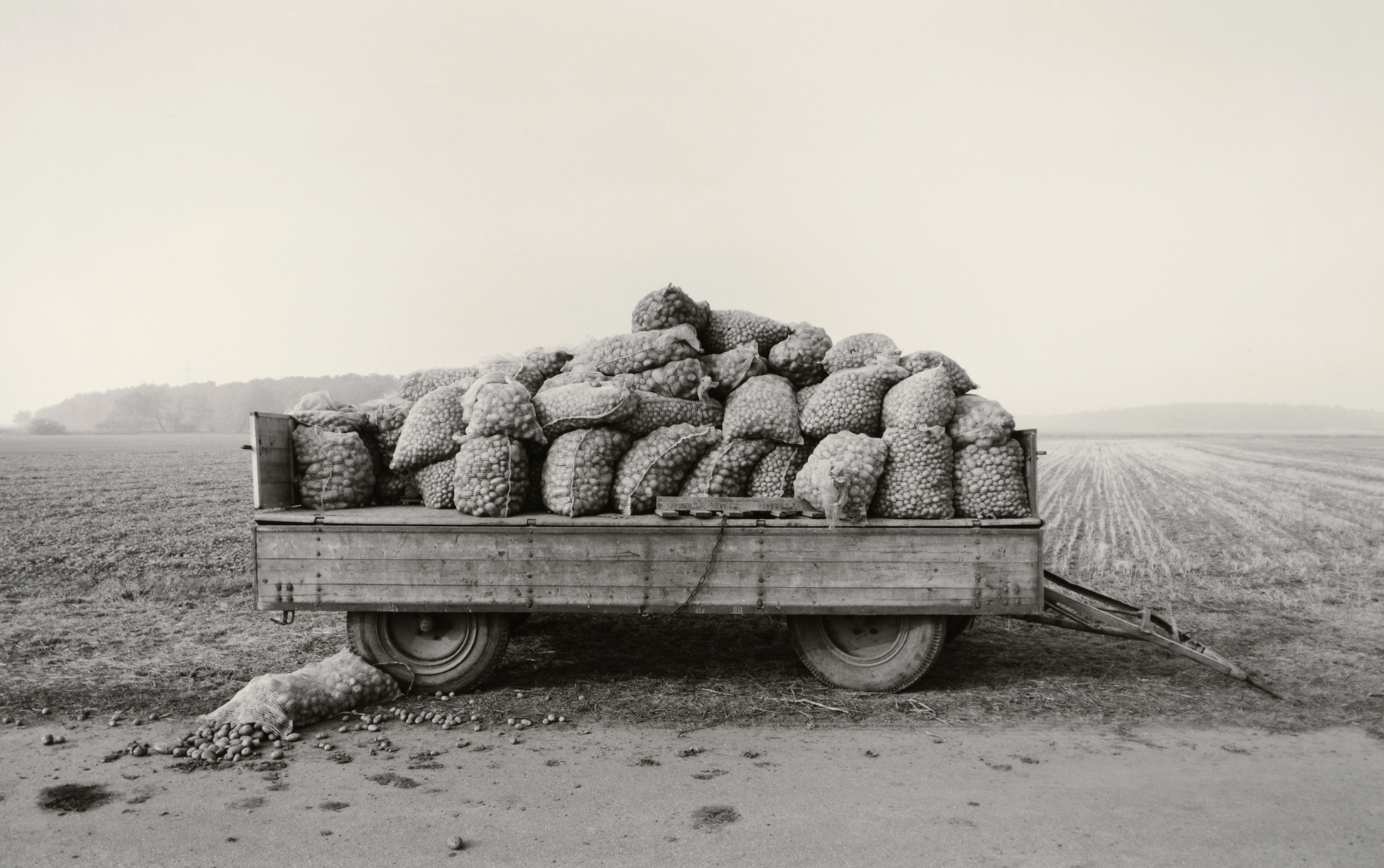
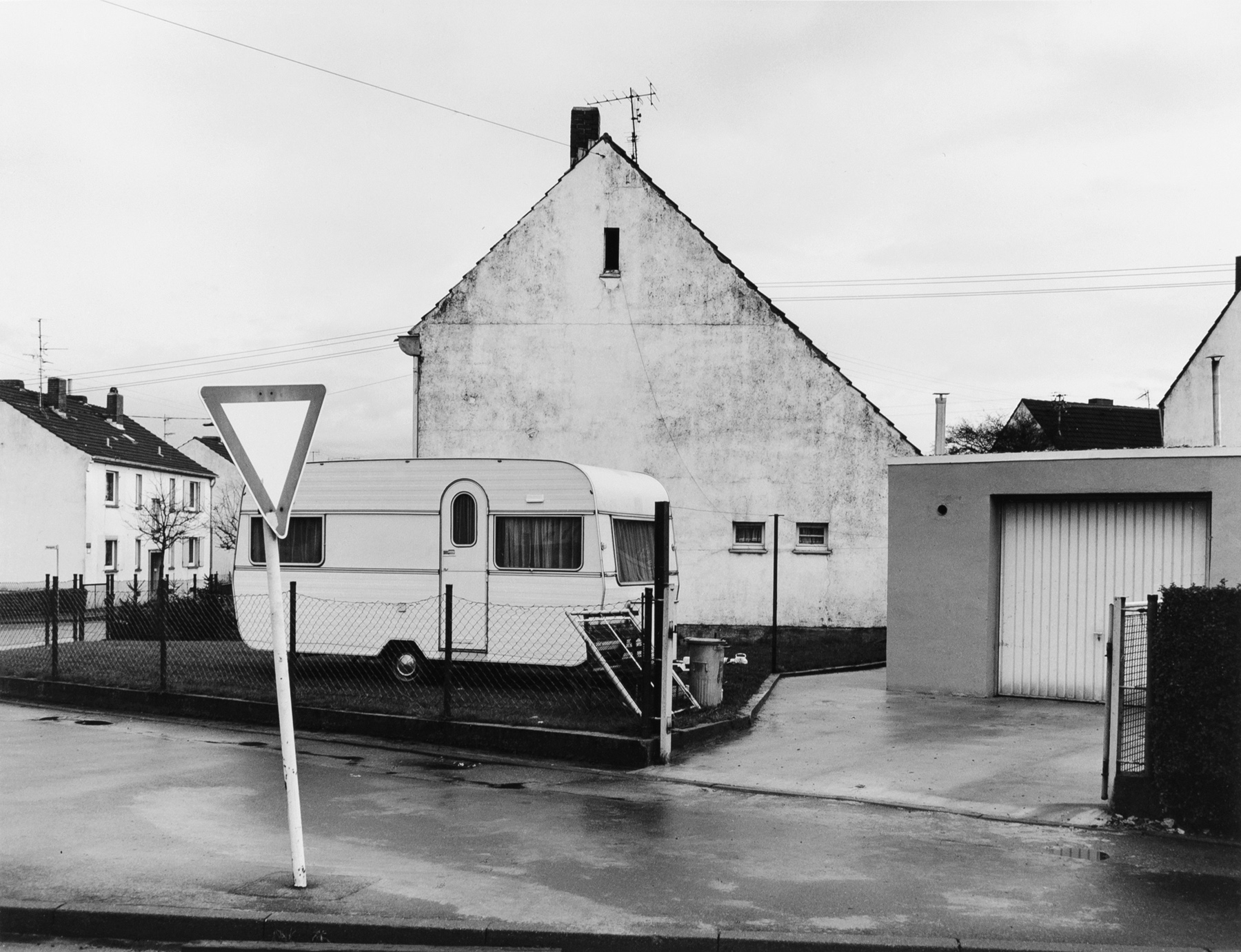
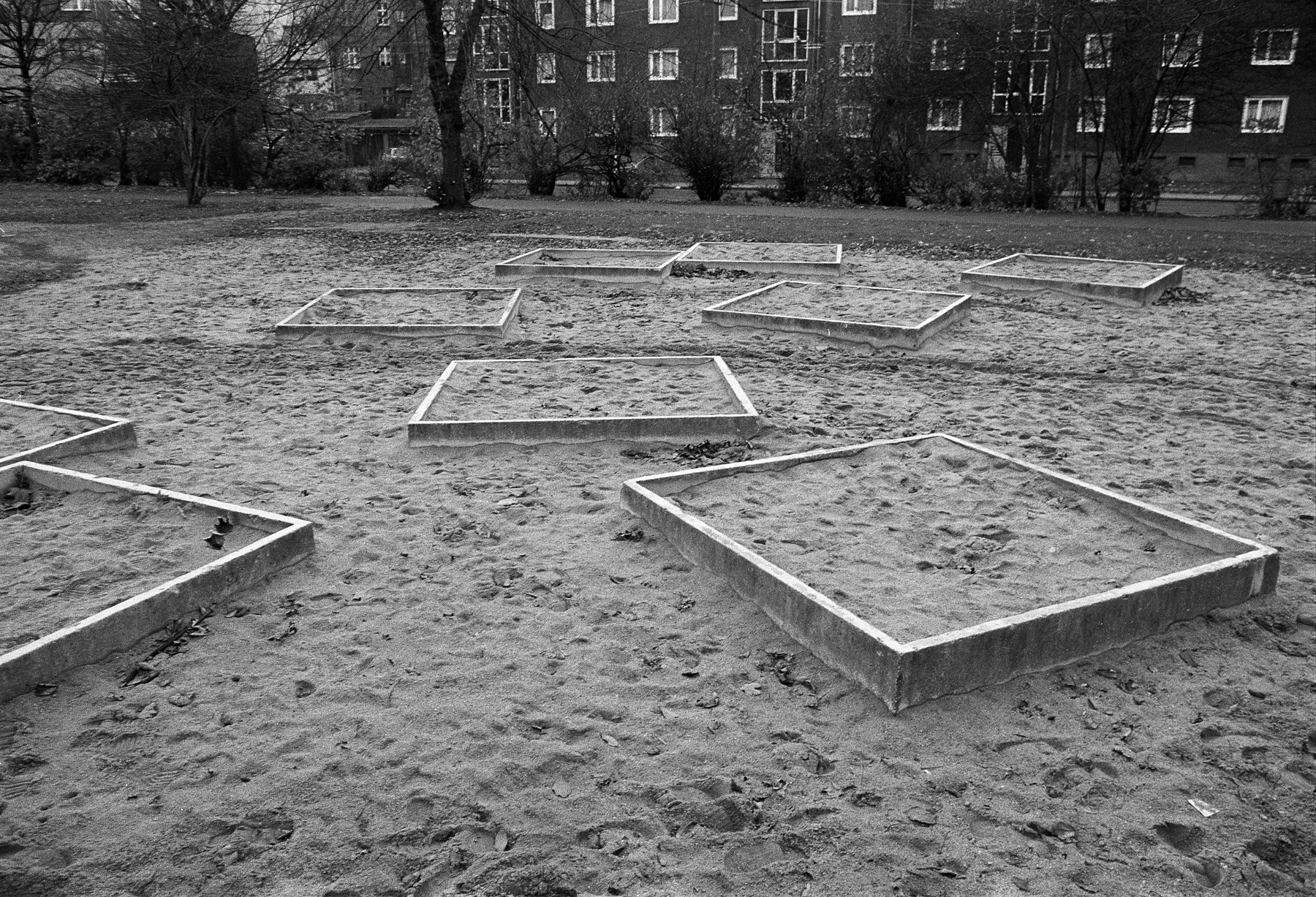
Timm Rautert (German, b. 1941) 'Tokaido Express, Tokyo' 1970 from the exhibition 'Timm Rautert and the Lives of Photography' at Museum Folkwang, Essen, Feb - May, 2021


Timm Rautert (German, b. 1941)
Tokaido Express, Tokyo
1970
Gelatine silver print
45.5 x 59cm
Museum Folkwang
© Timm Rautert


What an admirable artist.

Unfortunately with a limited number of media images available one cannot cover in any depth the many bodies of work of this fine artist. I would have liked to have seen more photographs from Rautert’s series The Amish and The Hutterites, and some photographs from his series on Thalidomide victims (none are available anywhere online). Very few of his portraits (only two are included here) or homeless series are available as well.

Particularly intriguing is work from the series Image-Analytical Photography in which Rautert explores “the fundamental conditions of photographic work – from the photographic act and the development of photographic images under an enlarger in the lab to the various possibilities of presentation”, using “black-and-white photographs, passport photos, lab experiments, combinations of selected photo prints with their negatives … but also non-photographic material such as a grey card (used for measuring light mainly in photo studios), postcards and graphic manuals” in order to understand “what photography means as a medium, what is expected from it, and how it has shaped the perception of the world.” Very few of these investigative images can be found online and only two are included in this posting. The second is a cracker.

Through the simple expedient of turning the camera upside down and photographing himself doing it coupled with the photographic outcome of the resulting picture we – the viewer, the looker, the seeker (of “truth”) – are so eloquently made aware that the camera is a machine, that it has a monocular perspective, and that every photo the camera takes is a construct. As Rautert asks in the quote below, “what is photography? what is light? what is time? what is space? how does one tell great stories? what means what?”

An excellent example of this enquiry is the series Gehäuse des Unsichtbaren (Houses of the Invisible) which depicts “working environments in the automobile and computer industries, creating a long-term chronicle of the transformation of the workplace in the wake of industrial automation.” In these conceptual but documentary, applied but artistic photographs, the human is masked, occluded and / or dwarfed by the humungous complexity and size of the machine – becoming an invisible attendant (a small cog in the wheel) of the mighty mechanism (think Metropolis, 1927). A solid story with a social and conceptual form.

There seems to be a strong eye and a whip sharp mind at work here: inquiring and questioning, ethical and creative, telling great stories through the lives of photography. An admirable artist indeed.

Dr Marcus Bunyan


Many thankx to Museum Folkwang Essen for allowing me to publish the photographs in the posting. Please click on the photographs for a larger version of the image.


“I thought to myself: what is photography actually? What is it really?
I decided to develop a kind of grammar for photography:
What is light? What is time? What is space?
How does one tell great stories?
What means what?”


Timm Rautert


“Timm Rautert’s work forges links between applied and artistic photography. It reflects man in his time as much as the worlds created by man: the factories and machines, cultural highlights and the social fringe, heaven and hell of modern society. For many years Rautert has worked as a socially critical photographer and engaged himself in different long term projects.”


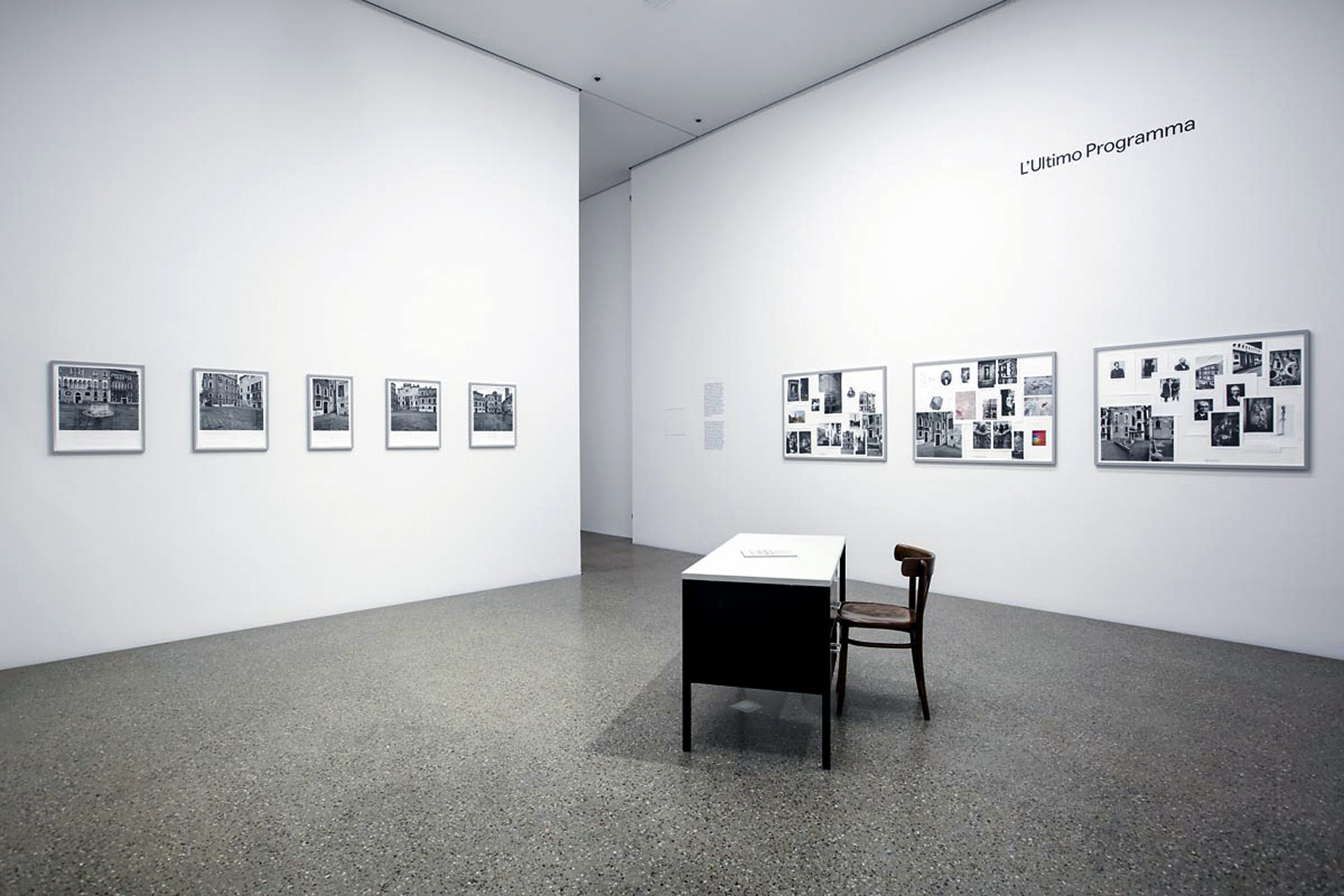
Till May 16, 2021, Museum Folkwang presents a comprehensive retrospective of photographer Timm Rautert’s oeuvre. The exhibition Timm Rautert and the Lives of Photography spans five decades of his artistic production: beginning with Rautert’s experimental early work as a student of Otto Steinert, it shows his famous portrait series such as “Deutsche in Uniform (Germans in Uniform)” or “Eigenes Leben (Own Life),” as well as his artwork collages and his 2015 photographic installation work L’Ultimo Programma. The nearly 400 works illustrate not only the thematic and methodological versatility of Rautert’s oeuvre, but can also be read as documents of photography’s long journey into the museum and the art canon.


Installation view of the exhibition 'Timm Rautert and the Lives of Photography' at Museum Folkwang, Essen

Installation view of the exhibition 'Timm Rautert and the Lives of Photography' at Museum Folkwang, Essen

Installation view of the exhibition 'Timm Rautert and the Lives of Photography' at Museum Folkwang, Essen showing at left, photographs from The Final Program, Campo S. Angelo, Venezia (2014)


Installation views of the exhibition Timm Rautert and the Lives of Photography at Museum Folkwang, Essen showing at bottom left, photographs from The Final Program, Campo S. Angelo, Venezia (2014)
Fotos: Jens Nober
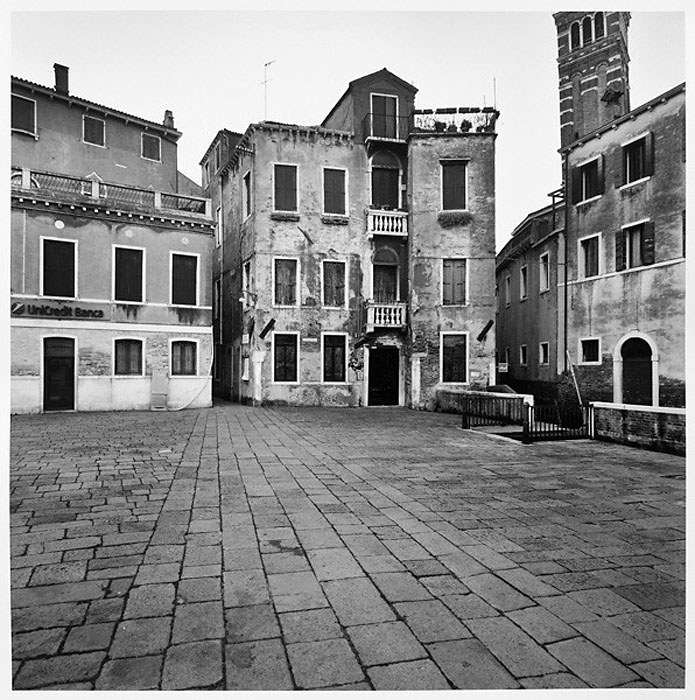
 

Timm Rautert (German, b. 1941) 'The Final Program, Campo S. Angelo, Venezia' 2014 from the exhibition 'Timm Rautert and the Lives of Photography' at Museum Folkwang, Essen, Feb - May, 2021


Timm Rautert (German, b. 1941)
The Final Program, Campo S. Angelo, Venezia
2014
Black and white photograph, bromide silver gelatine
Sheet size 50.8 x 40.5cm
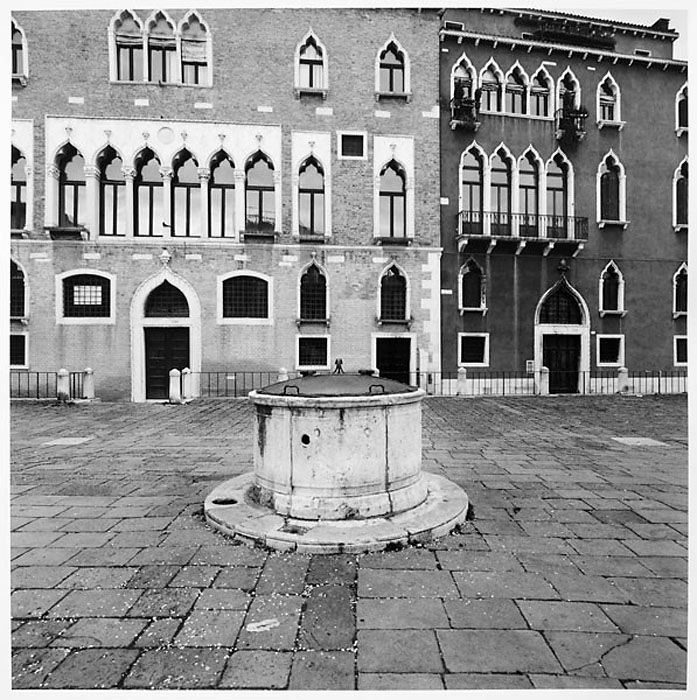
 

Timm Rautert (German, b. 1941) 'The Final Program, Campo S. Angelo, Venezia' 2014


Timm Rautert (German, b. 1941)
The Final Program, Campo S. Angelo, Venezia
2014
Black and white photograph, bromide silver gelatine
Sheet size 50.8 x 40.5cm


To mark the 80th birthday of the photographer Timm Rautert, Museum Folkwang is organising a comprehensive retrospective covering half a century of his artistic work.

Timm Rautert (born in 1941 in Tuchola, then West Prussia) is considered one of Germany’s preeminent contemporary photographers. Over the decades he has succeeded not only in anticipating the most important trends in photography, but has also played a major role in shaping them: as a studio photographer for galleries, as a photojournalist, as a chronicler of changing work environments and, finally, as a university lecturer, he has influenced ensuing generations.

As a student under Otto Steinert at what was then the Folkwangschule in Essen-Werden, Rautert quickly developed solid foundations for a committed, social-documentary photography. Alongside this, he explored the fundamentals of photography and developed his “image-analysis photography”, which has methodically permeated his artistic work to this day. For Rautert, alternating between applied and artistic elements is not a contradiction, but an expression of resolute photographic authorship.

In 1970, Rautert travelled to the USA and photographed figures such as Franz Erhard Walther, Andy Warhol and Walter de Maria. In Osaka, he documented the World’s Fair and the deeply traditional Japanese society of the time. From the mid-1970s, Rautert worked together with the journalist Michael Holzach on joint reportages for ZEITMagazin. For over a decade he produced social documentary reportages on migrant workers, the homeless, or previously inaccessible communities like The Hutterites (1978) and The Amish (1974).

In the 1980s, Rautert turned to documenting working environments in the automobile and computer industries, creating a long-term chronicle of the transformation of the workplace in the wake of industrial automation. Around 70 photographs from the series Gehäuse des Unsichtbaren (Houses of the Invisible) with photographs of research and manufacturing sites such as the Max Planck Institute (1988) or Siemens AG (1989) are being presented for the first time in a digital double projection, which Rautert developed specially for the exhibition at Museum Folkwang.

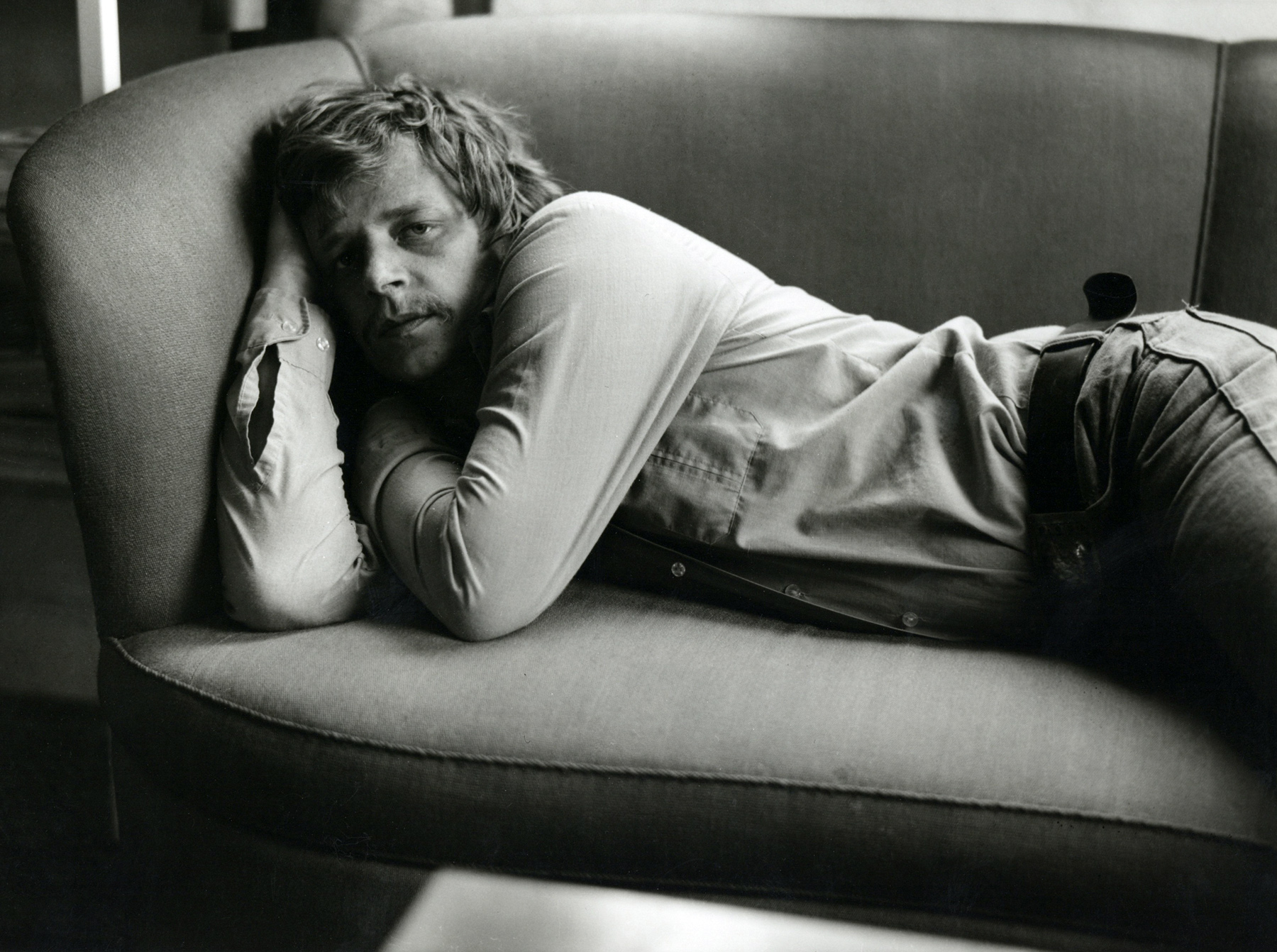
Artist portraits have been a recurring theme in Rautert’s work; his first was that of the Czech photographer Josef Sudek made for an exhibition of work by Otto Steinert and his students. It was followed by portraits of Otl Aicher, Pina Bausch, André Heller, Jasper Morrison and Éric Rohmer. Rautert focused not only on the subject, but also on their surroundings and actions; capturing their sphere of influence as part of their identity.

After being appointed professor of photography at the Hochschule für Grafik und Buchkunst Leipzig (1993-2008), Rautert dedicated himself to his own work. His focus is on re-examining, restructuring and reshooting past projects. His students include Viktoria Binschtok, Falk Haberkorn, Harry (Grit) Hachmeister, Margret Hoppe, Sven Johne, Ricarda Roggan, Adrian Sauer, Sebastian Stumpf and Tobias Zielony.

In 2008, Timm Rautert was the first photographer to receive the Lovis Corinth Prize for his life’s work.

Text from the Museum Folkwang website [Online] Cited 18/04/2021
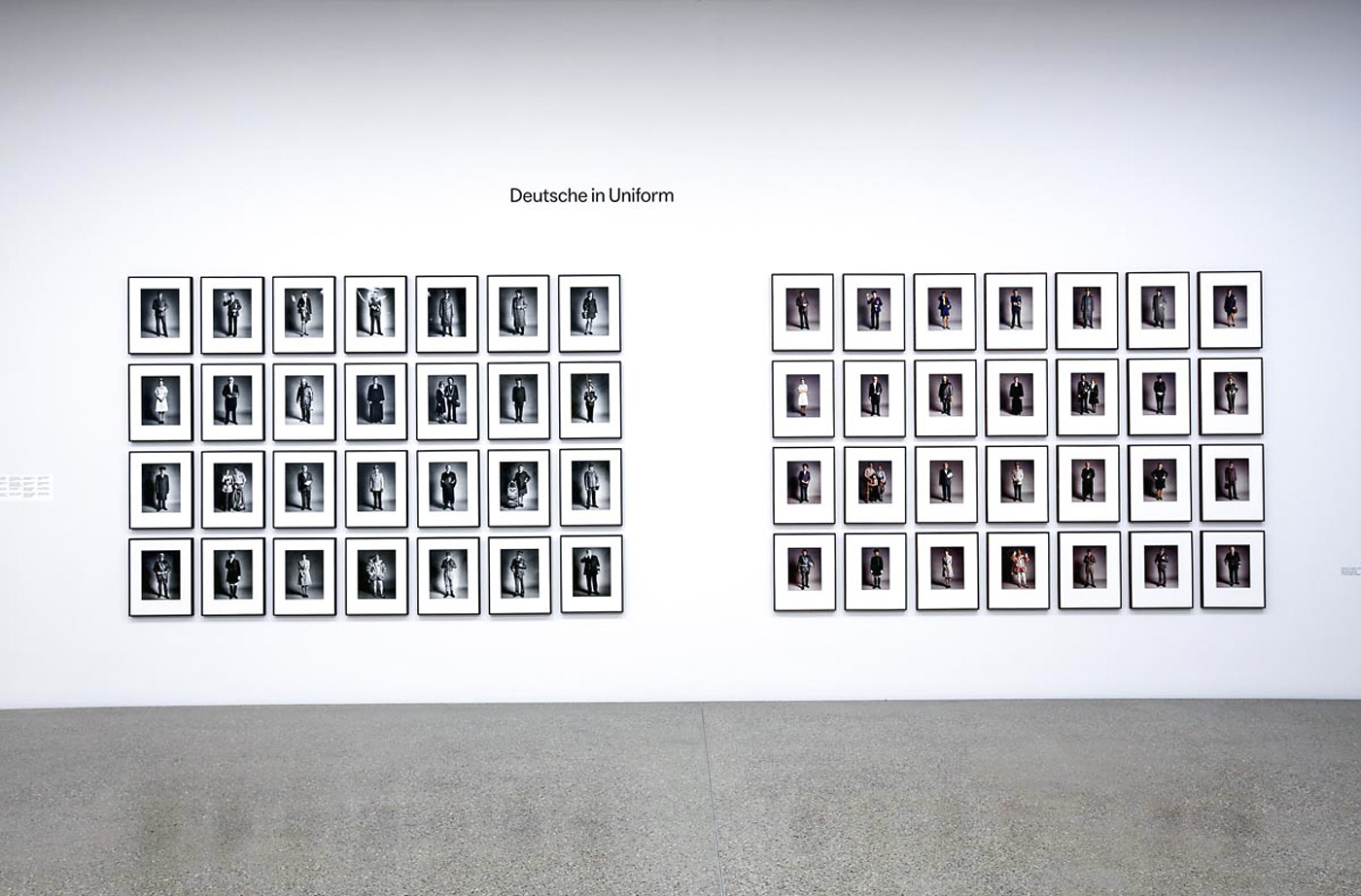
 

Installation view of the exhibition 'Timm Rautert and the Lives of Photography' at Museum Folkwang, Essen showing photographs from 'Deutsche in Uniform' (1974)


Installation view of the exhibition Timm Rautert and the Lives of Photography at Museum Folkwang, Essen showing photographs from Deutsche in Uniform (1974)
Fotos: Jens Nober


Timm Rautert (German, b. 1941) 'Liane Schneider, 33, Ground Hostess, Deutsche Lufthansa' 1974


Timm Rautert (German, b. 1941)
Liane Schneider, 33, Ground Hostess, Deutsche Lufthansa
1974
From Germans in Uniform
C-Print
28.7 x 22cm
Courtesy of the Artist
© Timm Rautert


Timm Rautert (German, b. 1941) 'Otto Koniezny, 39 Jahre, Bundesbahnschaffner' (Federal Railroad conductor) From the series 'Deutsche in Uniform' 1974


Timm Rautert (German, b. 1941)
Otto Koniezny, 39 Jahre, Bundesbahnschaffner (Federal Railroad conductor)
From the series Deutsche in Uniform
1974
© Timm Rautert
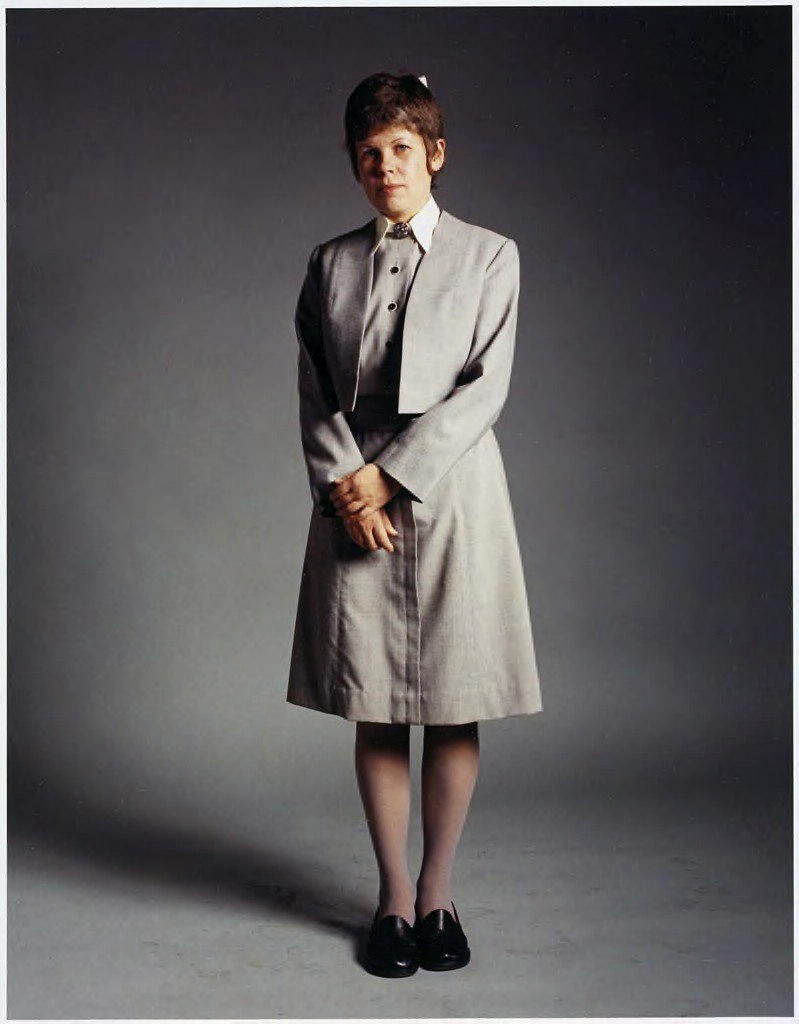
 

Timm Rautert (German, b. 1941) 'Fräulein Monika Powileit, 33 Jahre, Diakonieschwester' (deaconry sister) From the series 'Deutsche in Uniform' 1974


Timm Rautert (German, b. 1941)
Fräulein Monika Powileit, 33 Jahre, Diakonieschwester (deaconry sister)
From the series Deutsche in Uniform
1974
© Timm Rautert


Timm Rautert (German, b. 1941) 'Herr Konrad Benden, 61 Jahre, Tambourmajor im Stadttambourchor, St. Maximilian 04, Düsseldorf' (drum major in the city drum choir, St. Maximilian 04, Düsseldorf) From the series 'Deutsche in Uniform' 1974


Timm Rautert (German, b. 1941)
Herr Konrad Benden, 61 Jahre, Tambourmajor im Stadttambourchor, St. Maximilian 04, Düsseldorf (drum major in the city drum choir, St. Maximilian 04, Düsseldorf)
From the series Deutsche in Uniform
1974
© Timm Rautert
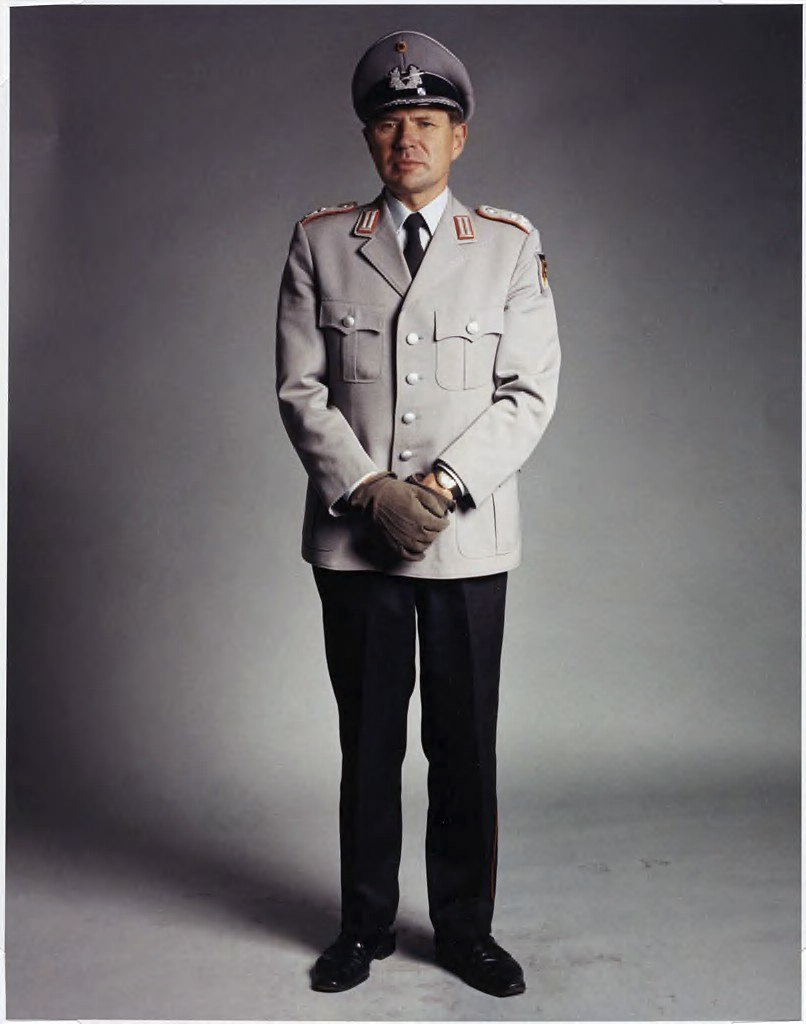
 

Timm Rautert (German, b. 1941) 'Herr Werner Kudszus, 47 Jahre, Oberstleutnant, Kommandeur eines Feldjägerbataillons' (Lieutenant Colonel, commander of a military police battalion) From the series 'Deutsche in Uniform' 1974


Timm Rautert (German, b. 1941)
Herr Werner Kudszus, 47 Jahre, Oberstleutnant, Kommandeur eines Feldjägerbataillons (Lieutenant Colonel, commander of a military police battalion)
From the series Deutsche in Uniform
1974
© Timm Rautert


Timm Rautert (German, b. 1941) 'Herr Peter Müller, 22 Jahre, Oberwachtsmeister im Bundesgrenzschutz Bonn' (chief sergeant in the Federal Border Police in Bonn) From the series 'Deutsche in Uniform' 1974


Timm Rautert (German, b. 1941)
Herr Peter Müller, 22 Jahre, Oberwachtsmeister im Bundesgrenzschutz Bonn (chief sergeant in the Federal Border Police in Bonn)
From the series Deutsche in Uniform
1974
© Timm Rautert
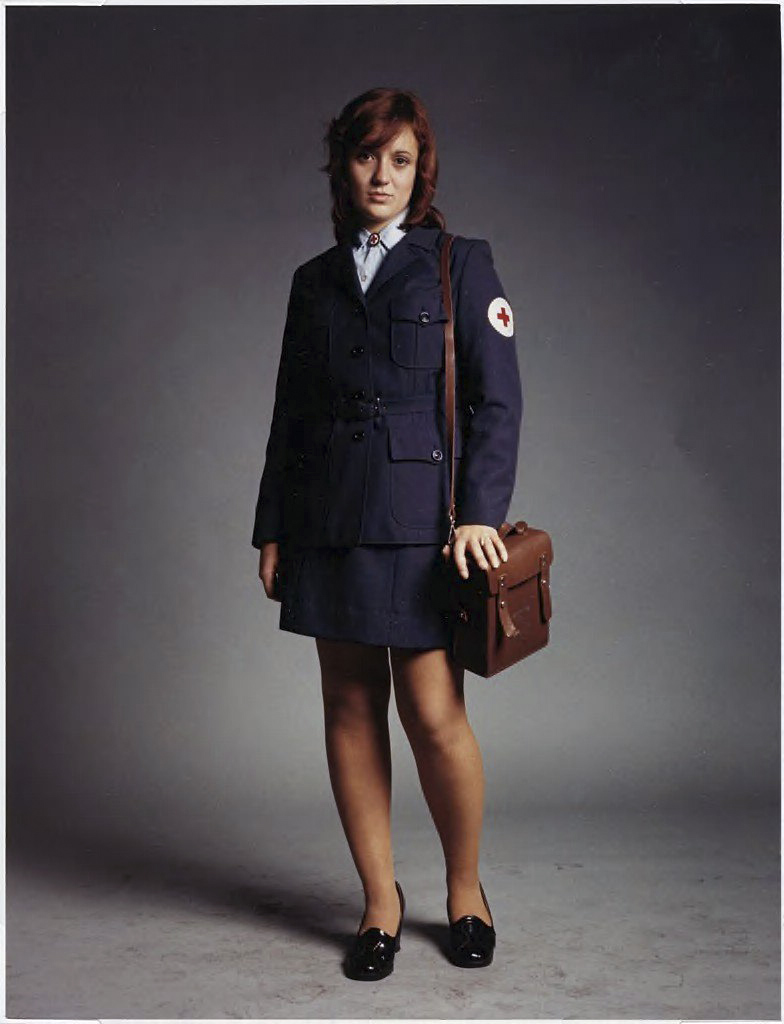
 

Timm Rautert (German, b. 1941) 'Claudia Krüll, 17, German Red Cross Helper' 1974


Timm Rautert (German, b. 1941)
Claudia Krüll, 17, German Red Cross Helper
From the series Deutsche in Uniform
1974
© Timm Rautert


Timm Rautert (German, b. 1941) 'Herr Wolfgang Markgraf, 28 Jahre, Pfarrer, Evangelische Friedens-Kirchengemeinde' (pastor, Evangelical Peace Church Congregation) From the series 'Deutsche in Uniform' 1974


Timm Rautert (German, b. 1941)
Herr Wolfgang Markgraf, 28 Jahre, Pfarrer, Evangelische Friedens-Kirchengemeinde (pastor, Evangelical Peace Church Congregation)
From the series Deutsche in Uniform
1974
© Timm Rautert


Timm Rautert (German, b. 1941) 'Herr Jürgen Lobert, Frau Marlene Lobert, 30 und 31 Jahre, Schützen regiments könig und Königin' (rifle regiment king and queen) From the series 'Deutsche in Uniform' 1974


Timm Rautert (German, b. 1941)
Herr Jürgen Lobert, Frau Marlene Lobert, 30 und 31 Jahre, Schützen regiments könig und Königin (rifle regiment king and queen)
From the series Deutsche in Uniform
1974
© Timm Rautert


Timm Rautert’s 1974 series “Germans in Uniform”, presenting a range of Germans in their professional attire in both a sociological and ironic manner, was first published in German by Steidl in 2006, and is now available in English in this expanded version.

For his project Rautert invited a range of public servants and officials to his Düsseldorf studio, where he photographed them in their work clothes – from a pastor, monk, Red Cross helper and hotel valet, to a more flamboyant drum major, forest warden and even a Santa Claus. Rautert depicts his subjects before the same neutral backdrop with similar framing and perspective, thus emphasising how they reveal their characters beyond their uniforms. Below each photo are the subject’s name, age and profession; at times personal quotes from conversations with Rautert during the shoot are also included. The result today is at once a complex portrait of post-war Germany, a nostalgic historical document, and an expression of the interplay between uniformity and personality that continues to shape society. In contrast to today’s professional clothing … the uniforms photographed by Rautert reflect a time of social upheaval. This documentary project was followed by the 1976 series entitled Die Letzten ihrer Zunft (The Last of this Profession) about the extinction of certain trades and professions.

Anonymous text from the Steidl website [Online] Cited 18/04/2021


In shooting these landmark 1974 portraits of Deutsche in Uniform, Timm Rautert met his subjects in their own territories, but then set them against a neutral background, separating them from their work aesthetics. This portable studio setting gives special significance to the moment of representation, when the subject is captured as a symbol of the state or an occupational group. By using not only names and job titles but also quotes from interviews, Rautert also prompts observers to focus on the subject or the connection between the individual’s gestures and his official work clothes. In contrast to today’s professional clothing, which is transformed into outfits by logos, the uniforms he photographed reflect a time of social upheaval.

Anonymous text from the Amazon website [Online] Cited 18/04/2021


Timm Rautert (German, b. 1941) 'Swiss Pavilion' 1970


Timm Rautert (German, b. 1941)
Swiss Pavilion
1970
From: Expo ’70 – Osaka
Gelatine silver print
50 x 56cm
Museum Folkwang
© Timm Rautert
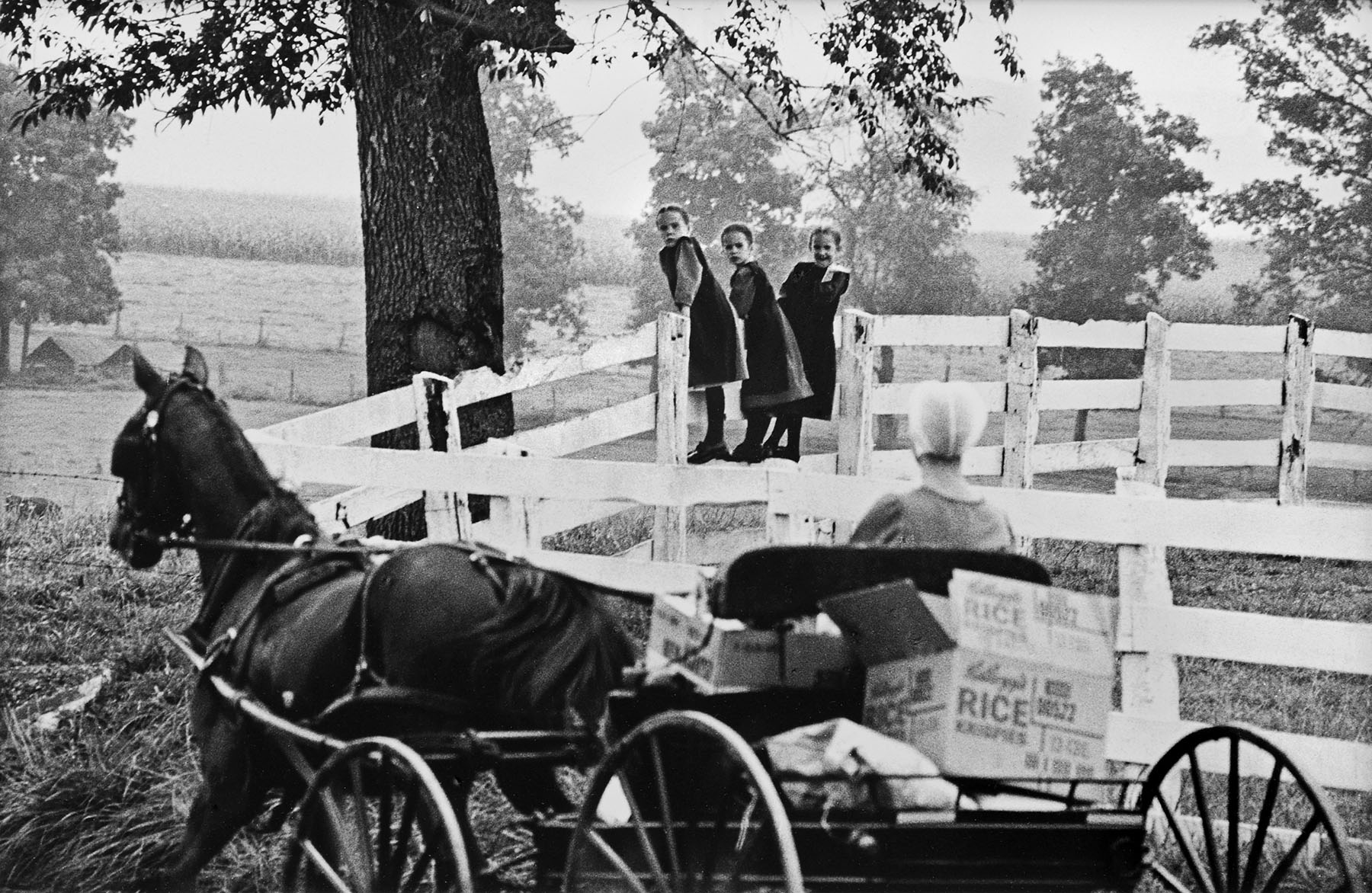
 

Timm Rautert (German, b. 1941) From the series 'The Amish' 1974


Timm Rautert (German, b. 1941)
From the series The Amish
1974
Gelatine silver print
17.4 x 26.8cm
Courtesy of the Artist
© Timm Rautert


In 1974 the young Timm Rautert travelled to Pennsylvania to photograph those who normally don’t allow themselves to be photographed: the Amish, a group of Anabaptist Protestant communities. Four years later Rautert returned to America, this time to the Hutterites who live so stringently by the Ten Commandments and the bible’s restrictions on images that they have their identity cards issued without photographs. Both these two series were influential on Rautert’s later work…


Timm Rautert (German, b. 1941) photographs from the book 'No Photographing' (Steidl, Hardcover, 2011)

Timm Rautert (German, b. 1941) photographs from the book 'No Photographing' (Steidl, Hardcover, 2011)

Timm Rautert (German, b. 1941) photographs from the book 'No Photographing' (Steidl, Hardcover, 2011)

Timm Rautert (German, b. 1941) photographs from the book 'No Photographing' (Steidl, Hardcover, 2011)

Timm Rautert (German, b. 1941) photographs from the book 'No Photographing' (Steidl, Hardcover, 2011)

Timm Rautert (German, b. 1941) photographs from the book 'No Photographing' (Steidl, Hardcover, 2011)

Timm Rautert (German, b. 1941) photographs from the book 'No Photographing' (Steidl, Hardcover, 2011)


Timm Rautert (German, b. 1941) photographs from the book No Photographing (Steidl, Hardcover, 2011)


Timm Rautert (German, b. 1941) 'Homeless II' 1973


Timm Rautert (German, b. 1941)
Homeless II
from the series In Germany’s Homeless Shelters
1973
Gelatine silver print
47.8 x 32cm
Courtesy of the Artist
© Timm Rautert
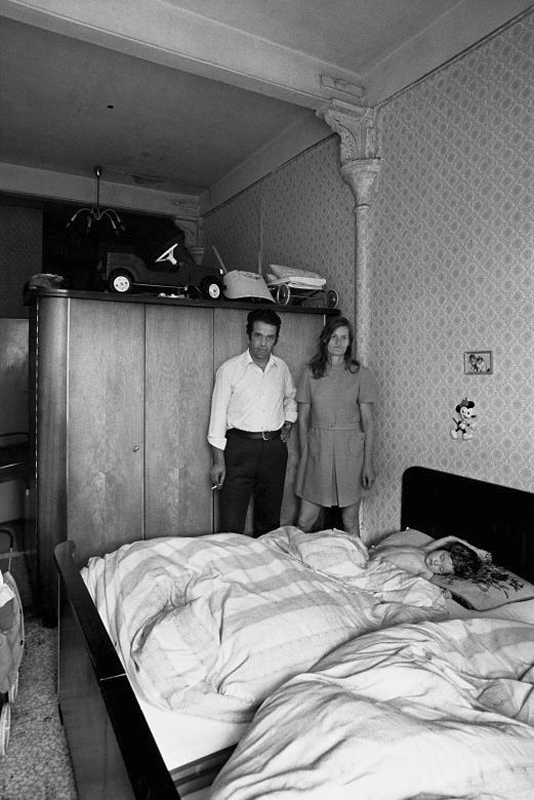
 

Timm Rautert. 'Homeless due to housing shortage' 1973


Timm Rautert (German, b. 1941)
Homeless due to housing shortage
from the series In Germany’s Homeless Shelters
1973
Gelatine silver print
Courtesy of the Artist
© Timm Rautert


Timm Rautert. 'Socio-educational scheme, Cologne' 1974


Timm Rautert (German, b. 1941)
Socio-educational scheme, Cologne
1974
Gelatine silver print
Courtesy of the Artist
© Timm Rautert
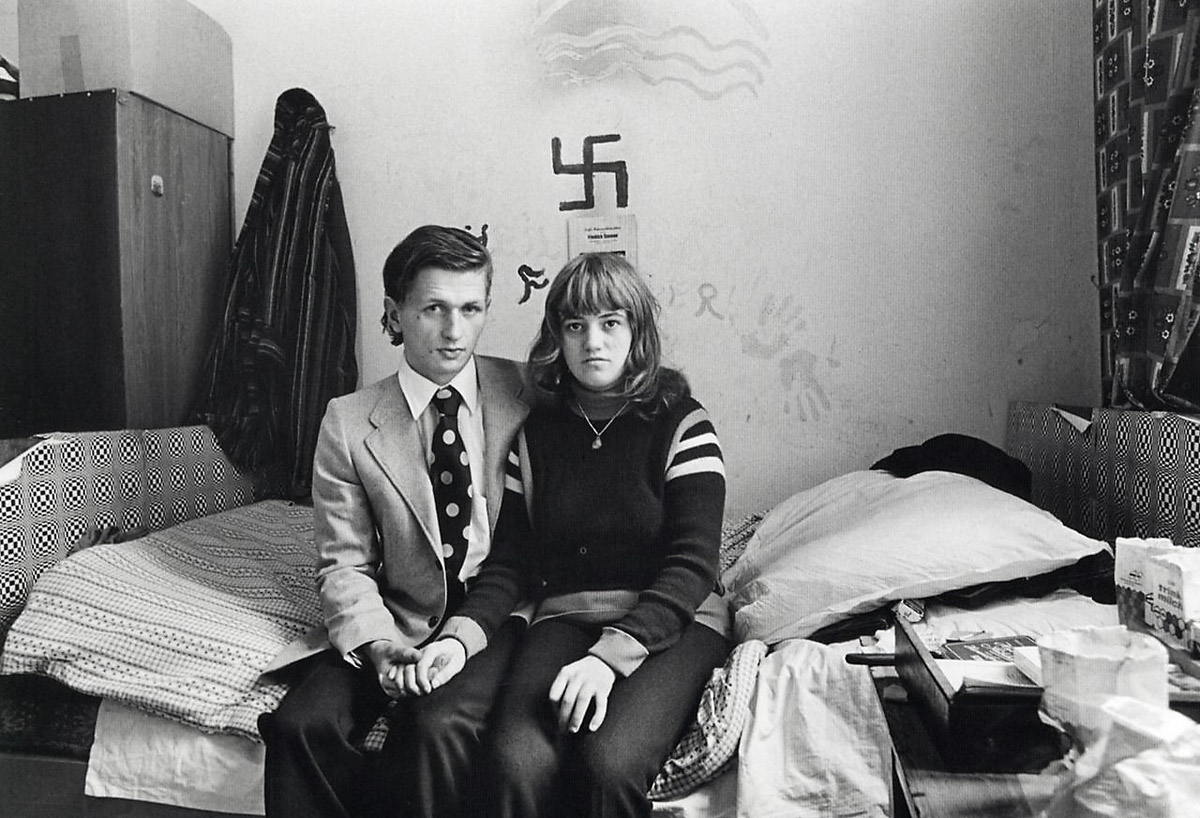
 

Timm Rautert. 'Social work in Cologne' 1977


Timm Rautert (German, b. 1941)
Social work in Cologne
1977
Gelatine silver print
Courtesy of the Artist
© Timm Rautert


Timm Rautert (German, b. 1941) 'Otto Steinert, Essen' 1968


Timm Rautert (German, b. 1941)
Otto Steinert, Essen
1968
Gelatine silver print
39.8 x 27.1cm
Courtesy of the Artist
© Timm Rautert


The Powerlessness of Photographs

When television moved into people’s living rooms in the 1950s, many predicted the moving picture would spell the end of still photography. Yet it is not films but photographs with their capacity to eternalise individual moments, freeze them in time and, by bringing things to a halt, compel viewers to look at them and think, that continue to define our collective memory today. Buzz Aldrin on the moon, children fleeing a napalm attack in Vietnam, the student in front of the army tanks in Tiananmen Square, victims of torture at Abu Ghraib – these are the images that are said to have changed the world.

Timm Rautert began his career as a photojournalist. Inspired by the belief that photography could change the world, he addressed social issues on behalf of major magazines and newspapers. His work took him to Japan, Russia and the USA, and led him to the homeless, the jobless and to Thalidomide victims. He wanted to use his camera to get to the heart of things, and draw the viewer’s attention to injustice in the long term through his haunting series of images. But it turned out that the power of these images and their influence on society was limited: “My images haven’t change a thing,” was Timm Rautert’s sobering realisation some years later.

His interest in social and moral issues continued unabated. But his photographic style changed, becoming more conscious and more reflective. Increasingly, Timm Rautert straddled the boundary between applied and artistic photography. But he still put the message of his images above their aesthetic quality: “Photography is an important medium to understanding the world; it is such a waste to use it only as art.” Nevertheless, he combined form and content in the knowledge that his work could only ever show his personal perspective on things.

His teacher, Otto Steinert, had a profound influence on this approach. The founder of subjective photography claimed it was impossible to depict reality objectively. The mere presence of the camera distorted the situation for everyone involved and therefore the image – including the photographer himself. Timm Rautert, too, sees the camera as standing between himself and reality – biasing his view of life.

Text from the Deutsche Börse Photography Foundation website [Online] Cited 18/04/2021


Timm Rautert (German, b. 1941) 'Mensch in einem Photoautomaten' (Human in a photo booth) New York, 1969


Timm Rautert (German, b. 1941)
Mensch in einem Photoautomaten (Human in a photo booth)
New York, 1969
From the series New York
© Timm Rautert


Timm Rautert (German, b. 1941) 'Gotham City NY' New York, 1969


Timm Rautert (German, b. 1941)
Gotham City NY
New York, 1969
From the series New York
© Timm Rautert


Timm Rautert (German, b. 1941) 'New York (Wellington Hotel)' 1969


Timm Rautert (German, b. 1941)
New York (Wellington Hotel)
1969
From the series New York
© Timm Rautert


Timm Rautert. 'New York' 1969


Timm Rautert (German, b. 1941)
New York
1969
From the series New York
© Timm Rautert
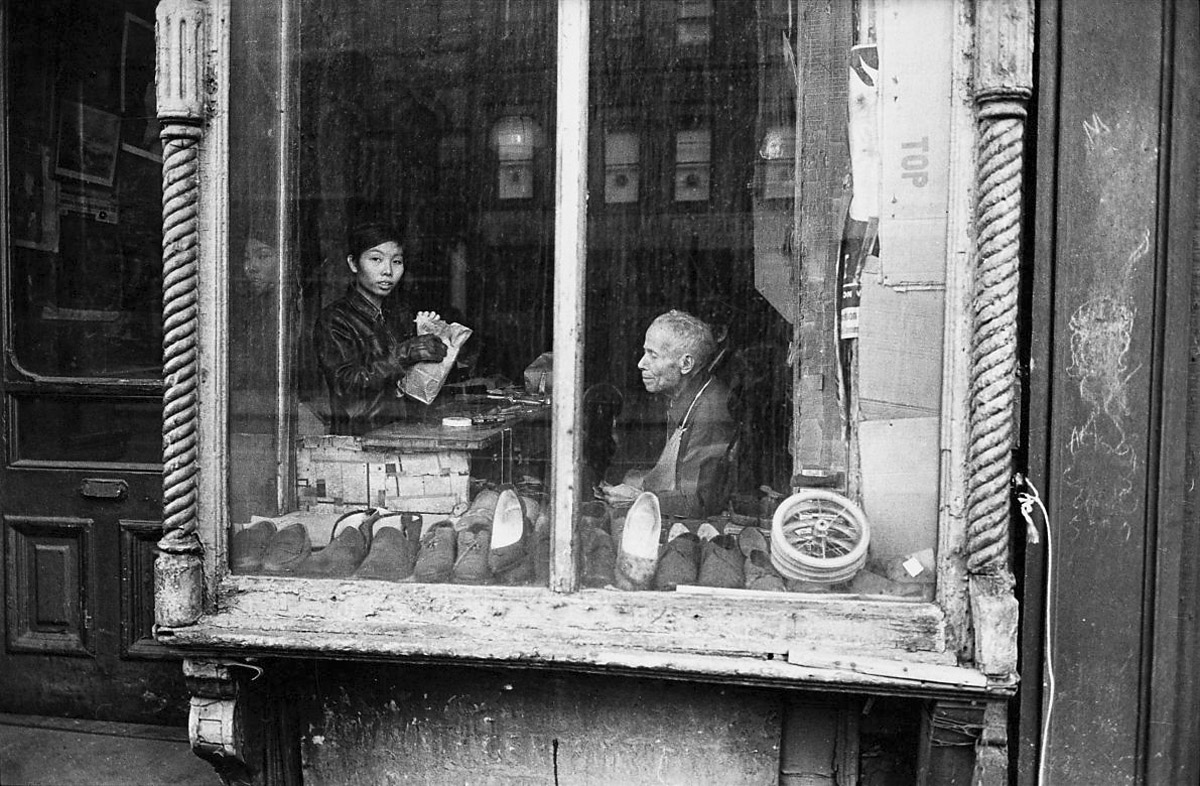
 

Timm Rautert. 'New York' 1969


Timm Rautert (German, b. 1941)
New York
1969
From the series New York
© Timm Rautert


Timm Rautert (German, b. 1941) 'Self with Camera Turned (by. 0° 180°)' 1972


Timm Rautert (German, b. 1941)
Self with Camera Turned (by. 0° 180°)
1972
From Image-Analytical Photography
Gelatine silver print
20.4 x 26.9cm
Staatliche Kunstsammlung, Dresden
© Timm Rautert


Timm Rautert (German, b. 1941) 'Self with Camera Turned (by. 0° 180°)' 1972


Timm Rautert (German, b. 1941)
Self with Camera Turned (by. 0° 180°)
1972
From Image-Analytical Photography
Negative mounting, on cardboard
Staatliche Kunstsammlung, Dresden
© Timm Rautert/SKD
Foto: Herbert Boswank


‘I Started as a Scientist and Finished as an Artist’ | Interview with Timm Rautert

“I thought to myself: what is photography actually? What is it really?
I decided to develop a kind of grammar for photography: What is light? What is time? What is space? How does one tell great stories? What means what?”


Timm Rautert’s Bildanalytische Photographie (Image-Analytical Photography), from 1968 to 1974, highlights the fundamental conditions of photographic work – from the photographic act and the development of photographic images under an enlarger in the lab to the various possibilities of presentation. A systematically elaborated ensemble of analogue black-and-white and colour photographs, of image-text compilations, and of manuals and photographic material provokes elementary questions about what photography means as a medium, what is expected from it, and how it has shaped the perception of the world. Scenic black-and-white photographs, passport photos, lab experiments, combinations of selected photo prints with their negatives are found here among Rautert’s 56 works, but also non-photographic material such as a grey card (used for measuring light mainly in photo studios), postcards and graphic manuals. Each work becomes an element of “analysis” showing the numerous potential scenarios of photography.


Timm Rautert (German, b. 1941) from 'Variation' 1967


Timm Rautert (German, b. 1941)
from Variation
1967
C-Print
39.3 x 29.7cm
Courtesy of the Artist
© Timm Rautert


Installation view of the exhibition 'Timm Rautert and the Lives of Photography' at Museum Folkwang, Essen


Installation view of the exhibition Timm Rautert and the Lives of Photography at Museum Folkwang, Essen showing work from the series Houses of the Invisible
Foto: Jens Nober


Timm Rautert (German, b. 1941) 'Siemens AG, Munich' 1989


Timm Rautert (German, b. 1941)
Siemens AG, Munich
1989
From Houses of the Invisible
Digital projection, variable size
Courtesy of the Artist
© Timm Rautert


Timm Rautert (German, b. 1941) 'Messerschmitt-Bölkow-Blohm GmbH, Ottobrunn' 1989


Timm Rautert (German, b. 1941)
Messerschmitt-Bölkow-Blohm GmbH, Ottobrunn
1989
From Houses of the Invisible
Digital projection, variable size
Courtesy of the Artist
© Timm Rautert


Timm Rautert (German, b. 1941) 'Fraunhofer Institut für Mikroelektronik, Duisburg' 1986


Timm Rautert (German, b. 1941)
Fraunhofer Institut für Mikroelektronik, Duisburg
1986
From Gehäuse des Unsichtbaren (Houses of the Invisible)
Digital projection, variable size
Courtesy of the Artist
© Timm Rautert


Timm Rautert (German, b. 1941) 'Rolf Deininghaus & Maxmillian Oesterling, Dortmund' 1994


Timm Rautert (German, b. 1941)
Rolf Deininghaus & Maxmillian Oesterling, Dortmund
1994
From A life of one’s own
Gelatine silver print
57 x 44.2cm
Courtesy the Artist
© Timm Rautert


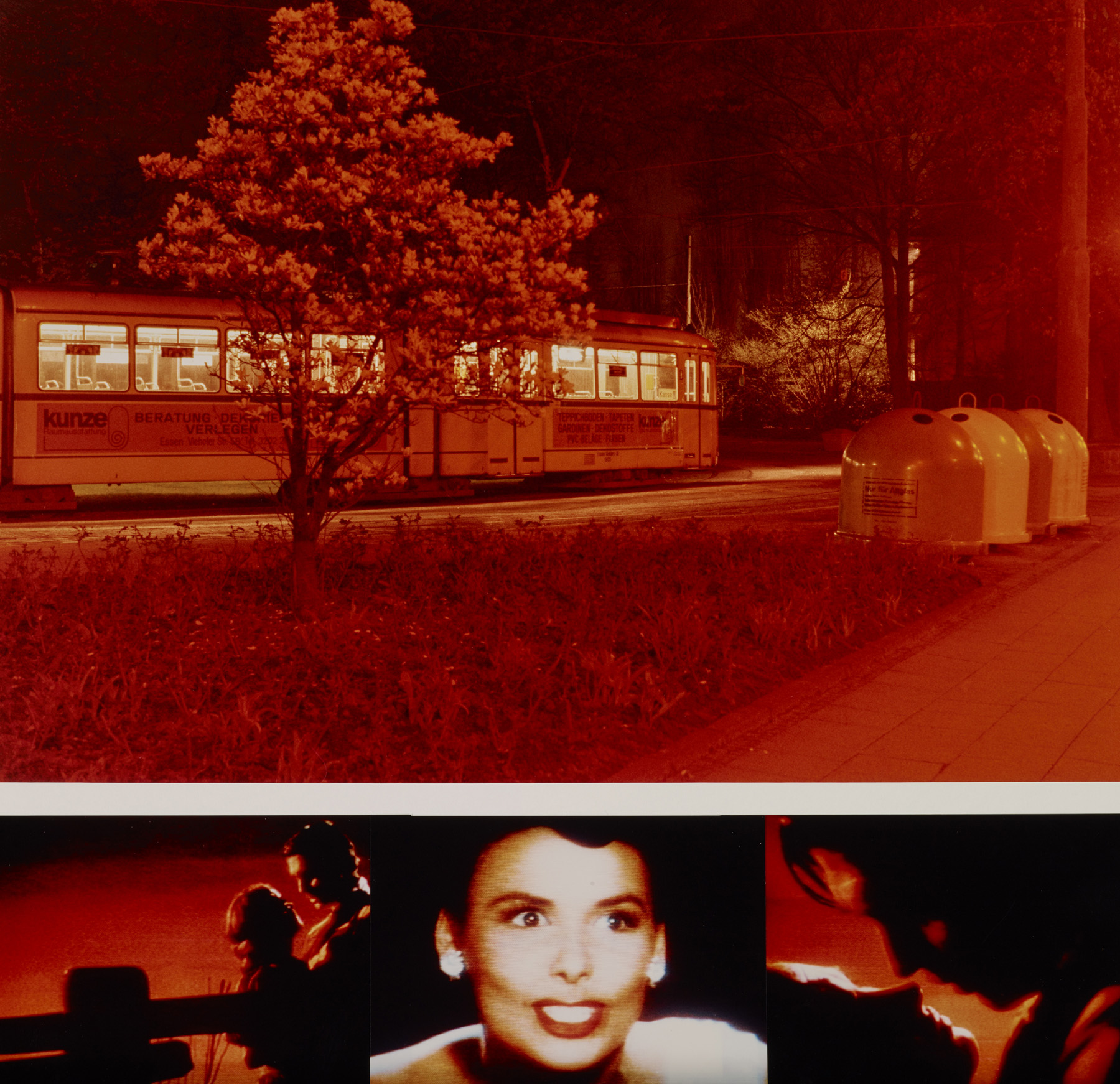
Timm Rautert (German, b. 1941) 'Mona Lisa' 2010


Timm Rautert (German, b. 1941)
Mona Lisa
2010
Mixed Media Farbcollage, Offsetdruck, Tonpapier
80.5 x 63cm
Courtesy of the Artist
© Timm Rautert


Museum Folkwang
Museumsplatz 1, 45128 Essen

Opening hours:
Tuesday – Sunday 10am – 6pm
Thursday – Friday 10am – 8pm
Museum Folkwang website

LIKE ART BLART ON FACEBOOK

Back to top

European photographic research tour: Vintage August Sander photographs at Galerie Julian Sander, Cologne

Visited September 2019 posted July 2020


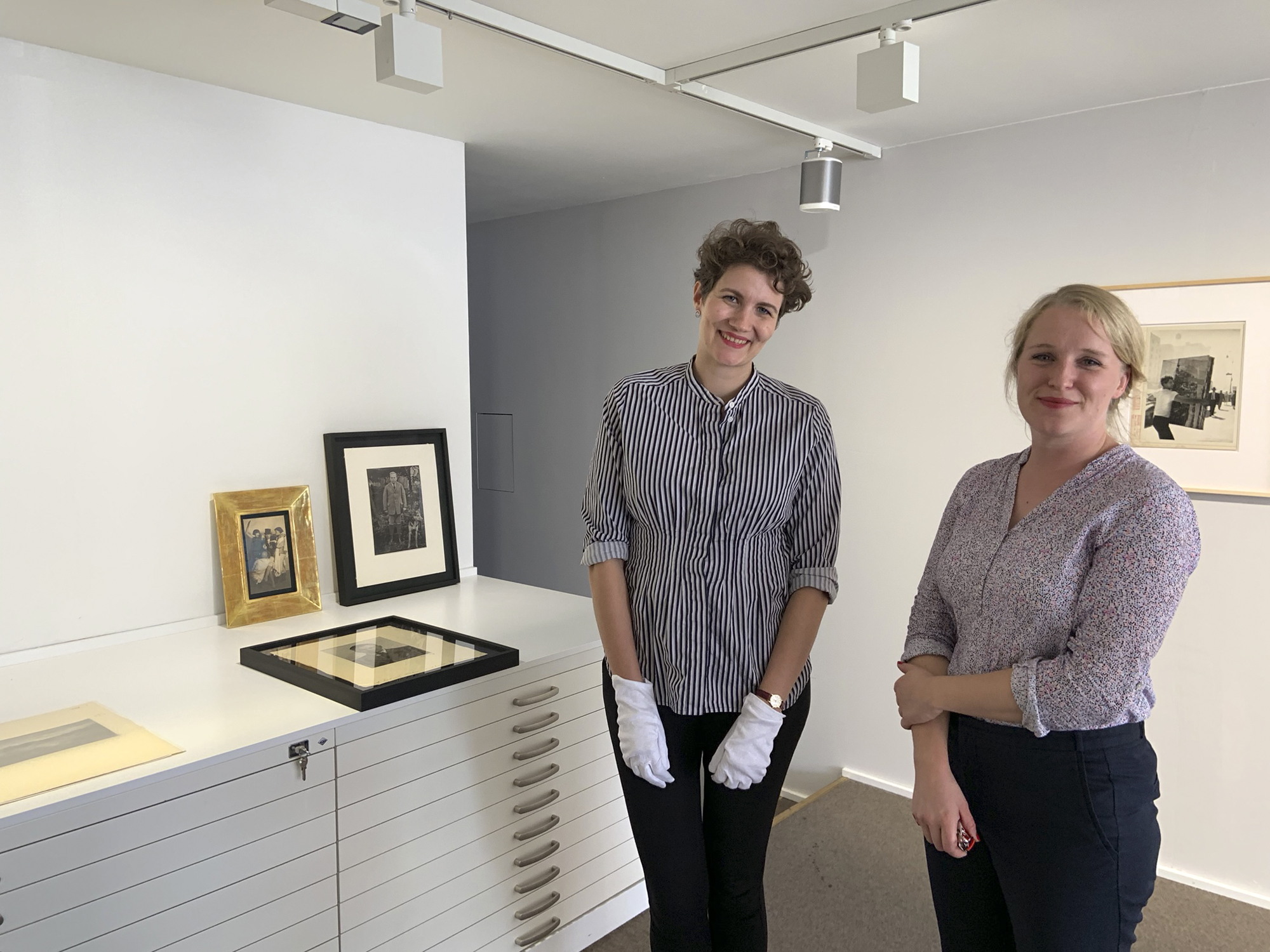
Tamara Könen of the gallery (left) and Kristina Engels from August Sander Stiftung – at Galerie Julian Sander, standing in front of August Sander's photographs


Tamara Könen of the gallery (left) and Kristina Engels from August Sander Stiftung – at Galerie Julian Sander, standing in front of August Sander’s photographs.


On my European photographic research tour in late 2019, I had a memorable visit to Galerie Julian Sander to see some vintage and later prints from the August Sander Archive / August Sander Stiftung with Tamara Könen from the gallery (left) and Kristina Engels from August Sander Stiftung.

It was a privilege to be able to see about 10 prints… the highlights being a stunning 1929-1930 vintage landscape, a vintage carnivalesque image of the Cologne avant-garde and a later print by his son of Painter’s Wife [Helene Abelen] 1926. The vintage landscape, like the vintage prints of Sudek, possessed no true black or white, the tonal range prescribed between zones 2-8.

The use of low depth of field in the portraits was outstanding. For example the shoes of Helene are completely out of focus whereas her hands are as crisp and clear as a summer breeze. Most astonishing was the panache of the bohemians, with the outstretched arm top left… printed on matt brown toned paper with a thin gold edge.

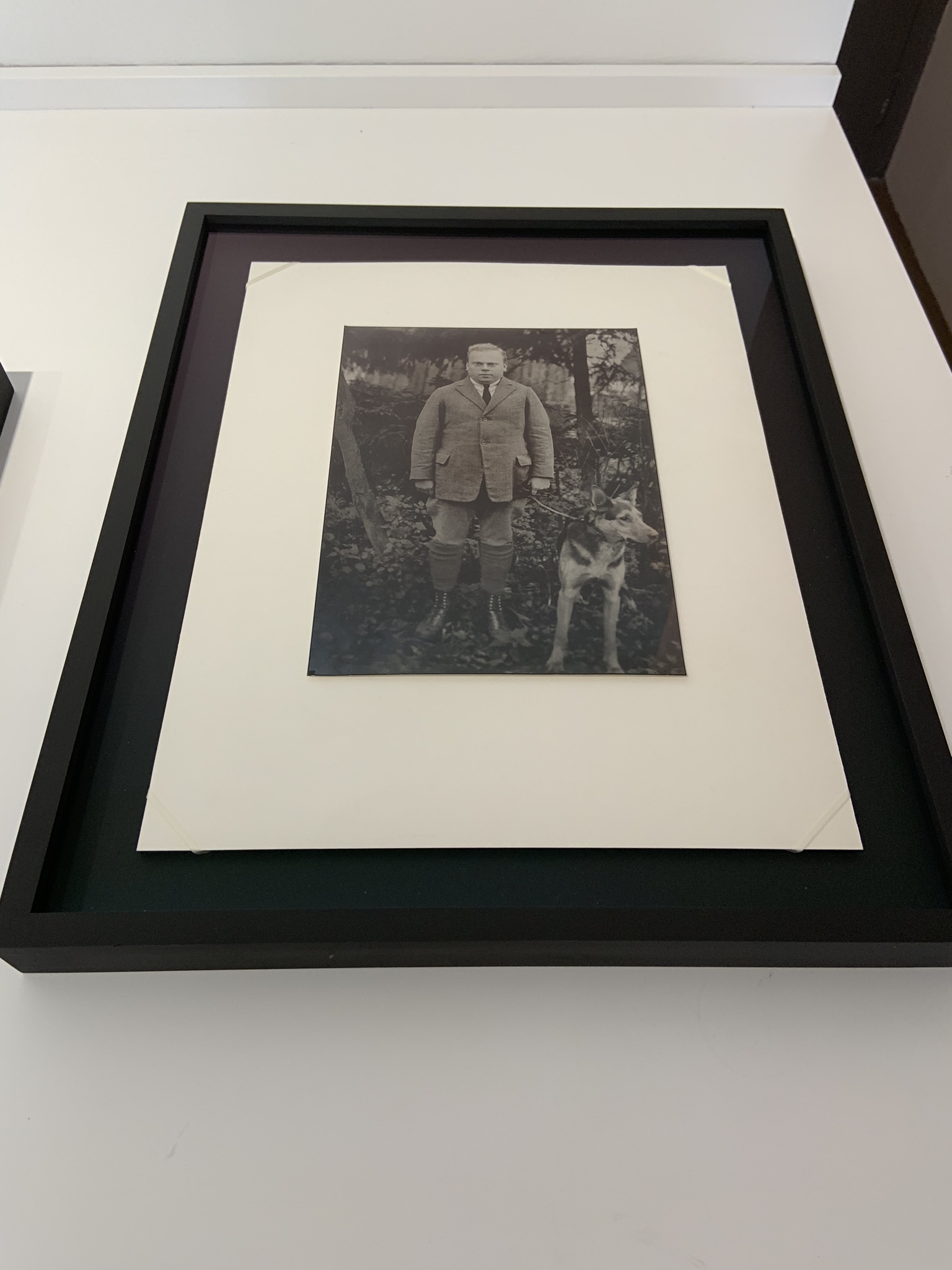
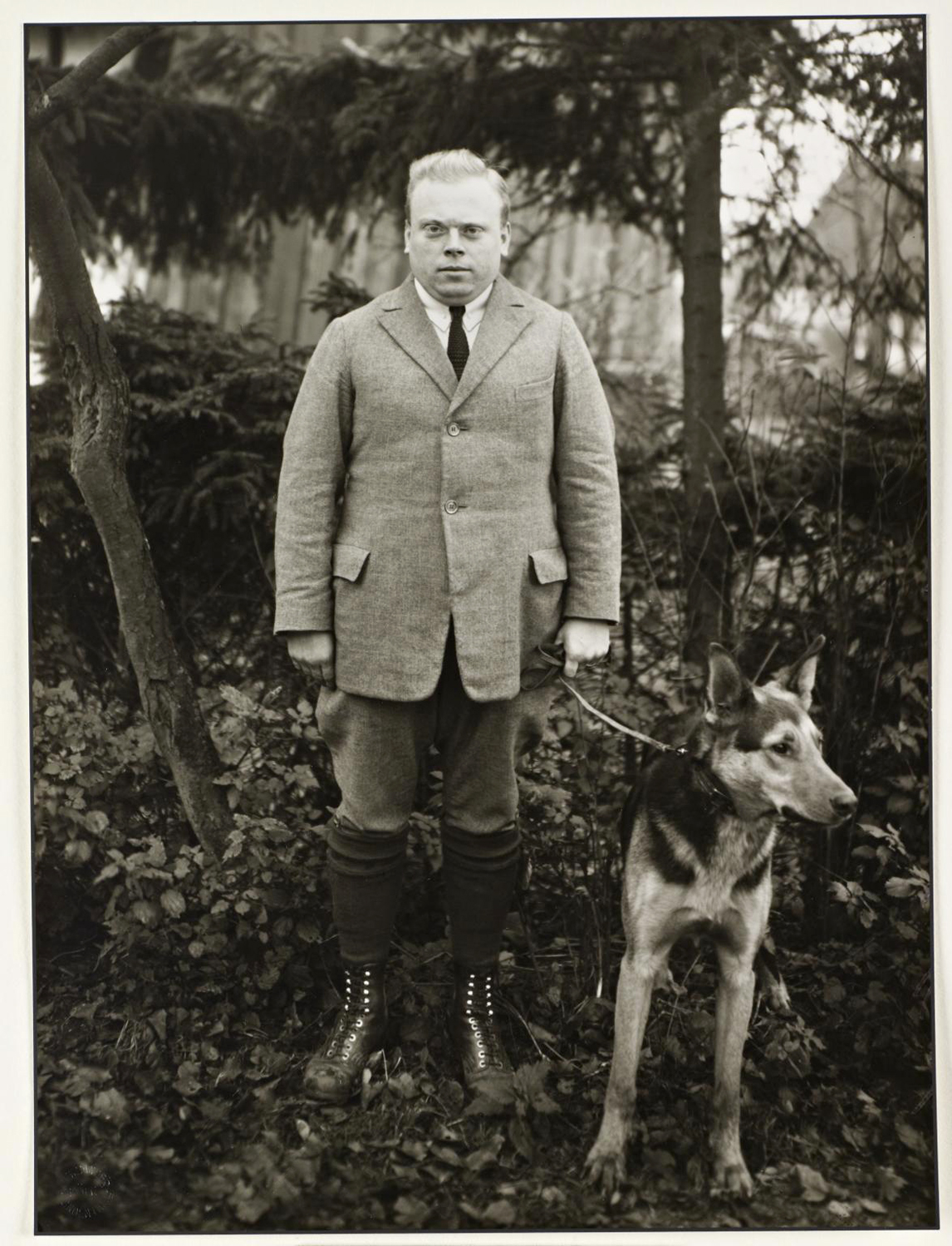
Another vintage print that showed selective depth of field was the photograph of a man with his dog, Junglehrer (Young Teacher) 1928. The dog’s lower legs were completely out of focus (Sander tilting his large format camera) making this oh so German photograph seem so surreal!

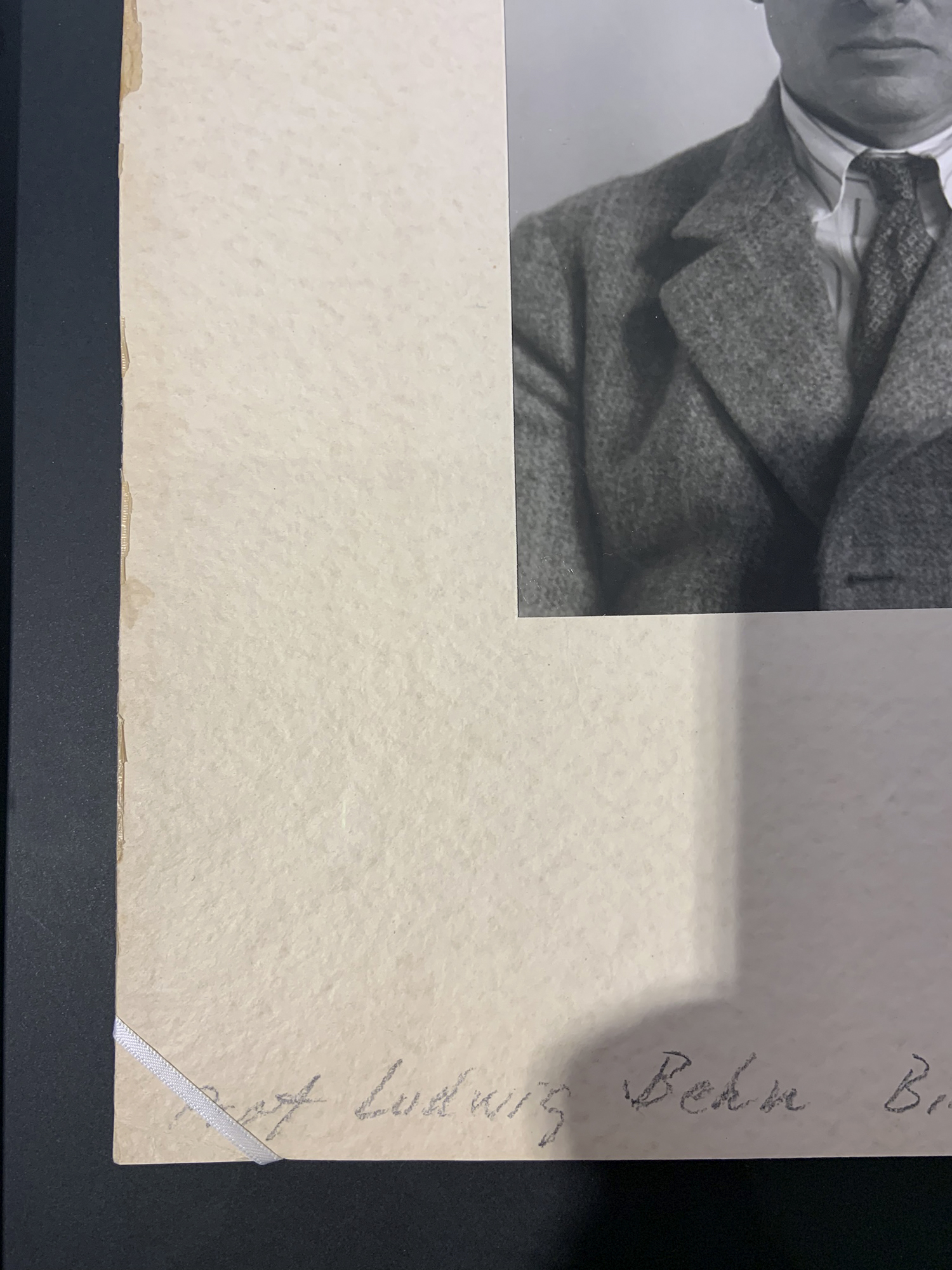
Other prints had a thin black edge and the vintage press print landscape (c. 1920s) was printed on thin single weight paper, while the vintage photograph of the sculptor Professor Ludwig Benh shows an original Sander mount – the print mounted behind an artist cut window. All prints were enlargements from 4×5” glass negatives or German equivalent size.

Such a wonderful learning experience! Thank you to the gallery for their time and knowledge.

Dr Marcus Bunyan


Please click on the photographs for a larger version of the image. Most photographs © Marcus Bunyan and Galerie Julian Sander


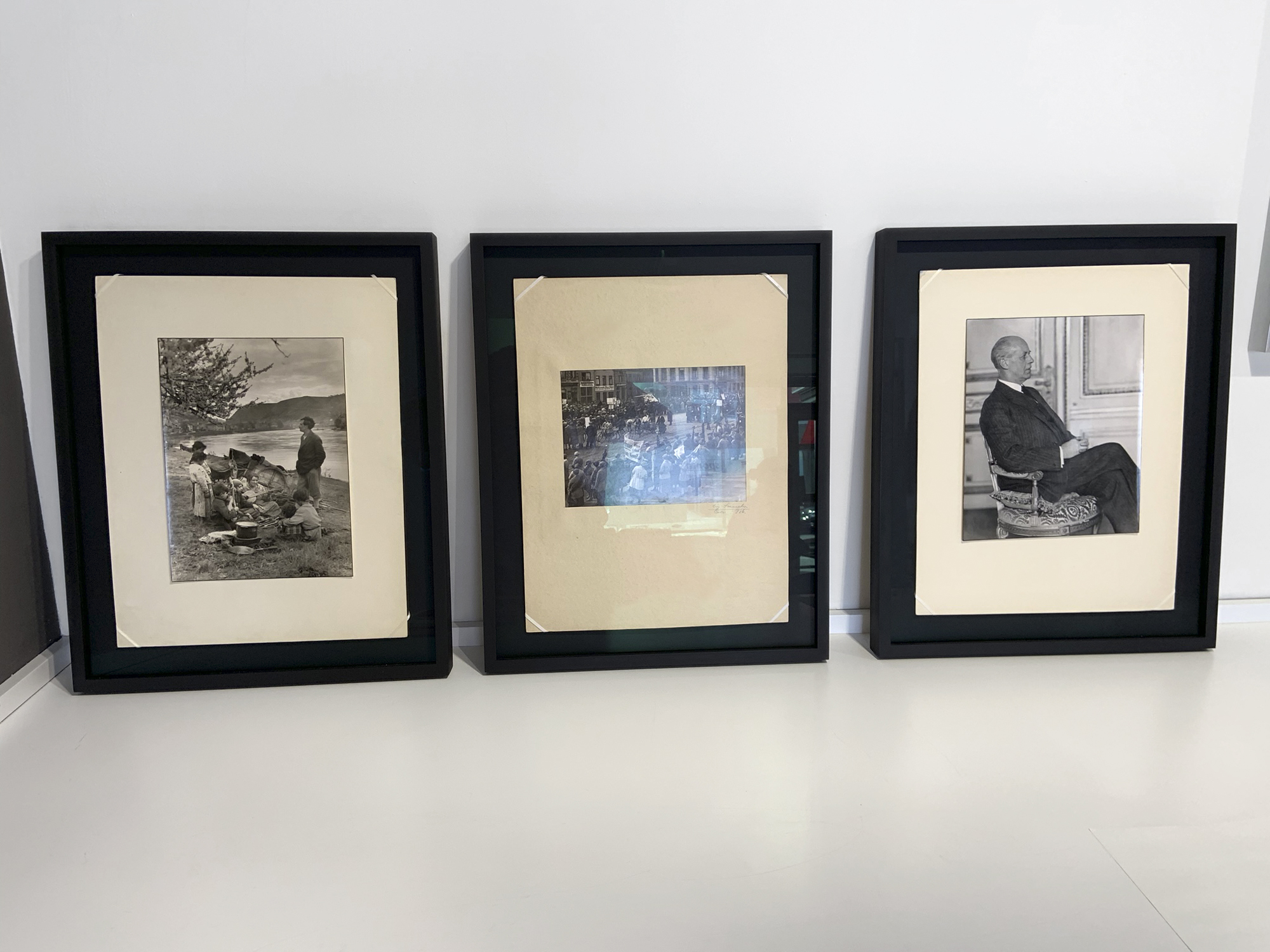
3 vintage prints, the left one with black edge floating free of the backboard; the second c .1920s of a Communist rally; and the third of an industrialist (Großindustrieller / The Industrialist, 1927)


3 vintage silver gelatin prints, the left one with black edge floating free of the backboard; the second c. 1920s of a Communist rally; and the third of an industrialist (Großindustrieller / The Industrialist, 1927)
Galerie Julian Sander, Cologne
Photo: Marcus Bunyan


August Sander (German, 1876-1964). 'Das Siebengebirge: Blick vom Rolandsbogen' [The Siebengebirge: view from the Rolandsbogen] 1929-30 (center) and 'Untitled [Remagen Bridge on the Rhine]' c. 1930 (right)


August Sander (German, 1876-1964)
Das Siebengebirge: Blick vom Rolandsbogen [The Siebengebirge: view from the Rolandsbogen] 1929-1930 (center) and Untitled [Remagen Bridge on the Rhine] c. 1930 (right)
Galerie Julian Sander, Cologne
Photo: Marcus Bunyan


August Sander (German, 1876-1964) 'Das Siebengebirge: Blick vom Rolandsbogen' [The Siebengebirge: view from the Rolandsbogen] 1929-1930


August Sander (German, 1876-1964)
Das Siebengebirge: Blick vom Rolandsbogen [The Siebengebirge: view from the Rolandsbogen]
1929-1930
Vintage gelatin silver print
Also titled:
Siebengebirge von der linken Rheinseite gesehen [Siebengebirge seen from the left side of the Rhine]
Blick vom Rolandsbogen auf das Siebengebirge mit Drachenfels [View from Roland Arch on the Siebengebirge with Drachenfels]
Galerie Julian Sander, Cologne
Photo: Marcus Bunyan


August Sander (German, 1876-1964) 'Das Siebengebirge: Blick vom Rolandsbogen' [The Siebengebirge: view from the Rolandsbogen] 1929-1930


August Sander (German, 1876-1964)
Das Siebengebirge: Blick vom Rolandsbogen [The Siebengebirge: view from the Rolandsbogen]
1929-1930
Vintage gelatin silver print
Also titled:
Siebengebirge von der linken Rheinseite gesehen [Siebengebirge seen from the left side of the Rhine]
Blick vom Rolandsbogen auf das Siebengebirge mit Drachenfels [View from Roland Arch on the Siebengebirge with Drachenfels]
Galerie Julian Sander, Cologne
Photo:
Marcus Bunyan


August Sander (German, 1876-1964) 'Das Siebengebirge: Blick vom Rolandsbogen' [The Siebengebirge: view from the Rolandsbogen] 1929-1930


August Sander (German, 1876-1964)
Das Siebengebirge: Blick vom Rolandsbogen [The Siebengebirge: view from the Rolandsbogen]
1929-1930
Vintage gelatin silver print


August Sander (German, 1876-1964) 'Untitled [Remagen Bridge on the Rhine]' c. 1930


August Sander (German, 1876-1964)
Untitled [Remagen Bridge on the Rhine]
c. 1930
Vintage gelatin silver press print
Galerie Julian Sander, Cologne
Photo: Marcus Bunyan


August Sander (German, 1876-1964) 'Untitled [Bohemians: avant-garde of Cologne]' 1920s (left) and 'Professor Ludwig Behn' 1920s (right)


August Sander (German, 1876-1964)
Untitled [Bohemians: avant-garde of Cologne] 1920s (left) and Professor Ludwig Behn 1920s (right)
Vintage gelatin silver print with gold edge printed on matt warm toned paper
Galerie Julian Sander, Cologne
Photo: Marcus Bunyan


August Sander (German, 1876-1964) 'Untitled [Bohemians: avant-garde of Cologne]' 1920s


August Sander (German, 1876-1964)
Untitled [Bohemians: avant-garde of Cologne]
1920s
Vintage gelatin silver print with gold edge printed on matt warm toned paper
Galerie Julian Sander, Cologne
Photo: Marcus Bunyan


August Sander (German, 1876-1964) 'Untitled [Bohemians: avant-garde of Cologne]' 1920s


August Sander (German, 1876-1964)
Untitled [Bohemians: avant-garde of Cologne]
1920s
Vintage gelatin silver print with gold edge printed on matt warm toned paper
Galerie Julian Sander, Cologne
Photo: Marcus Bunyan


August Sander (German, 1876-1964) 'Professor Ludwig Behn, Bildhaver, Munich' 1920s


August Sander (German, 1876-1964)
Professor Ludwig Behn, Bildhaver, Münich
1920s
Gelatin silver print


August Sander (German, 1876-1964) 'Professor Ludwig Behn, Bildhaver, Munich' 1920s (detail)


August Sander (German, 1876-1964)
Professor Ludwig Behn, Bildhaver, Münich
1920s
Vintage gelatin silver print with original Sander mount
Galerie Julian Sander, Cologne
Photo: Marcus Bunyan


August Sander (German, 1876-1964) 'Painter's Wife [Helene Abelen]' 1926


August Sander (German, 1876-1964)
Painter’s Wife [Helene Abelen]
1926
Later gelatin silver print by Sander’s son
Galerie Julian Sander, Cologne
Photo: Marcus Bunyan


This photograph shows Helene Abelen, wife of the Cologne painter, Peter Abelen. During the 1920s August Sander befriended many Cologne artists because of his involvement with the Cologne Progressive Artists Group (Gruppe Progressiver Künstler Köln). In 1926 Sander was asked by Peter Abelen to create a portrait of his young wife. With her short, slicked-back hair, collared shirt, thin necktie and trousers, Frau Abelen is presented as a distinctly androgynous figure. Her masculine garb and haircut, as well as the cigarette held between her teeth, signal a defiance of traditional gender roles. Staring determinedly out at the viewer Helene Abelen’s animated expression is unusual for a Sander portrait and falls somewhere between bravado and agitation.

This portrait reflects the so-called ‘new woman’ of the Weimar Republic. The concept of the ‘new woman’ dates from before the First World War but became firmly rooted during it when women were mobilised in the workforce. Within Germany this created considerable anxiety about women’s roles, particularly in relation to the family. In 1928, on the tenth anniversary of the end of the war, the Münchner Illustrierte Presse showed on its cover a photograph of a young woman, with short hair and skirt, astride a motorcycle with a lit cigarette in hand, with the heading, ‘Only ten years – a different world’. Like this magazine image, Sander’s portrait of Helene Abelen reflected a consciousness about the blurring of gender roles in the wake of the ‘new woman’.

Painter’s Wife represents an anomaly in Sander’s work. For the most part, his depictions of women show them as wives and mothers, as the soul of the home and the family. Contrary to appearances, this portrait should not be taken to represent an unqualified vision of female independence. The costume Helene Abelen is wearing was created for her by Peter Abelen and the haircut she sports was also his choice. Her daughter later commented of this work: ‘This was the creation of my father. He wanted her to look like this. He always did our dresses’ (quoted in Greenberg 2000, p. 121).

Matthew Macaulay
November 2011

Text from the Tate website [Online] Cited 24/06/2020


August Sander (German, 1876-1964) 'Junglehrer' (Young Teacher) 1928


August Sander (German, 1876-1964)
Junglehrer (Young Teacher)
1928
Vintage gelatin silver print with black edge
Galerie Julian Sander, Cologne
Photo: Marcus Bunyan


August Sander (German, 1876-1964) 'Junglehrer' (Young Teacher) 1928


August Sander (German, 1876-1964)
Junglehrer (Young Teacher)
1928
Vintage gelatin silver print with black edge
Galerie Julian Sander, Cologne
Photo: Marcus Bunyan


Galerie Julian Sander
Cäcilienstr. 48
50667 Cologne
Germany
Phone: +49 (0) 221 170 50 70

Opening hours:
Tuesday – Friday 12.00 – 18.00

Galerie Julian Sander website

LIKE ART BLART ON FACEBOOK

Back to top

Exhibition: ‘Wolfgang Schulz and the Photography Scene around 1980’ at the Museum für Kunst und Gewerbe Hamburg

Exhibition dates: 14th June – 24th November, 2019

Featured photographers: Wolfgang Schulz, Hans Christian Adam, Dörte Eißfeldt, Verena von Gagern, André Gelpke, Dagmar Hartig, Andreas Horlitz, Reinhard Matz, Angela Neuke, Heinrich Riebesehl, Wilhelm Schürmann, Holger Stumpf, Petra Wittmar, and Miron Zownir


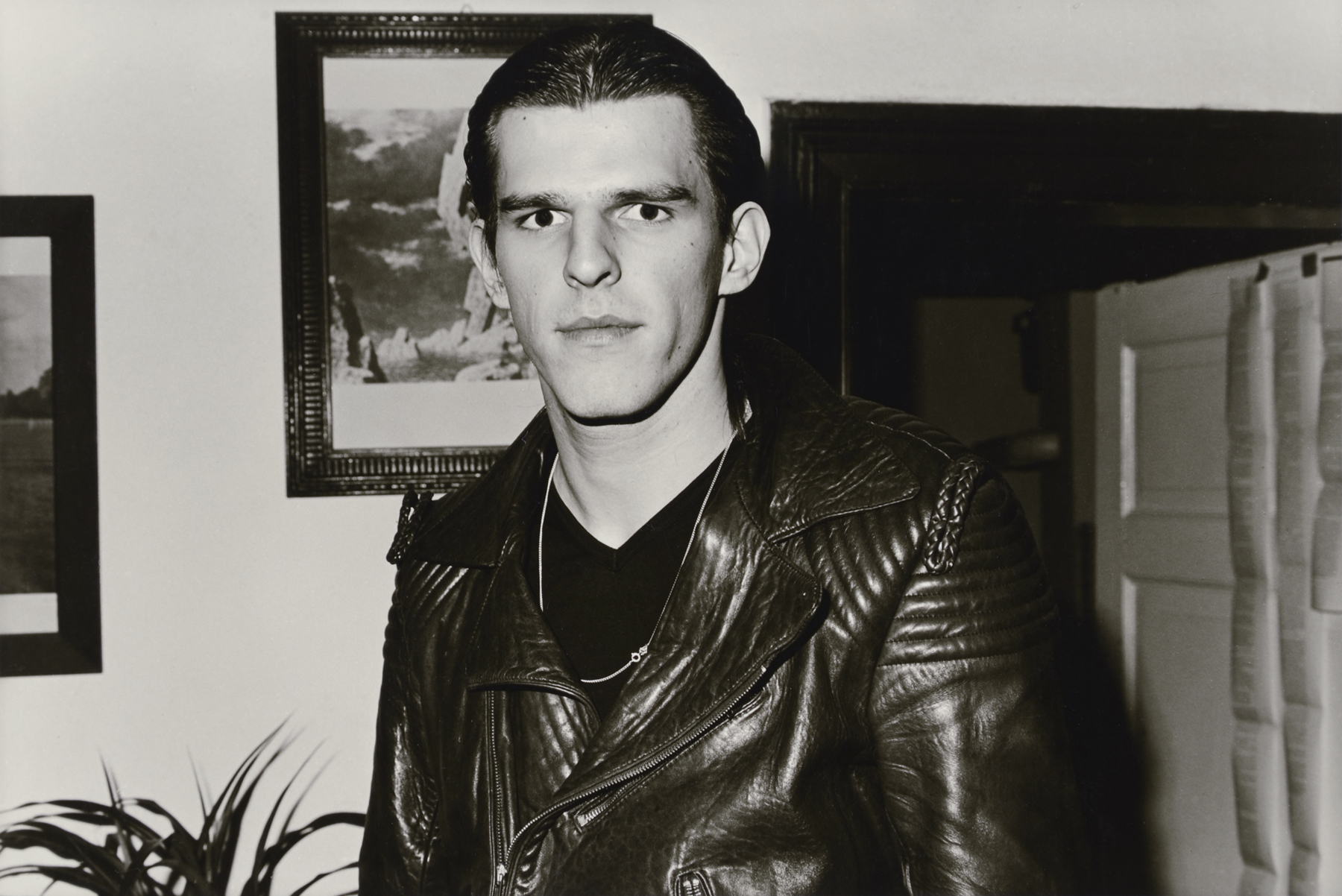
Wolfgang Schulz (German, 1944-2020) 'Michael' 1980


Wolfgang Schulz (German, 1944-2020)
Michael
1980
Silbergelatine | Gelatin silver paper
24 x 30cm
Privatsammlung | private collection
© Wolfgang Schulz


I love this gritty, inventive, subversive German photography from the late 1970s – early 1980s. Challenge me. Take me bleak places. Tell it like it is, baby…

Marcus


Many thankx to the Museum für Kunst und Gewerbe Hamburg for allowing me to publish the photographs in the posting. Please click on the photographs for a larger version of the image.


Wolfgang Schulz (German, 1944-2020) 'Selbstportrait' | 'Self-Portrait, Riesweiler' 1978


Wolfgang Schulz (German, 1944-2020)
Selbstportrait | Self-Portrait, Riesweiler
1978
Silbergelatine | Gelatin silver paper
24 x 30cm
Privatsammlung | private collection
© Wolfgang Schulz


Wolfgang Schulz (German, 1944-2020) 'Ohne Titel' | 'Untitled' um | c. 1980


Wolfgang Schulz (German, 1944-2020)
Ohne Titel | Untitled
um | c. 1980
Silbergelatine | Gelatin silver paper
24 x 30cm
Privatsammlung | private collection
© Wolfgang Schulz


As part of its exhibition series Reconsidering Photography, the Museum für Kunst und Gewerbe Hamburg is undertaking a survey of the German photography scene around the year 1980. The springboard for the examination is the journal Fotografie. Zeitschrift internationaler Fotokunst, published by Wolfgang Schulz (b. 1944) between 1977 and 1985. On the occasion of the exhibition, MKG is inviting photography experts Reinhard Matz (Cologne), Steffen Siegel (Folkwang University Essen), and Bernd Stiegler (University of Konstanz) to relate their research project on the 1980s to the historical photographs in the MKG collection. The aim of the collaboration is to create a historical archaeology of German photography around 1980 based on the example of the journal Fotografie and its protagonists. The exhibition will show some 150 photos by Wolfgang Schulz, Hans Christian Adam, Dörte Eißfeldt, Verena von Gagern, André Gelpke, Dagmar Hartig, Andreas Horlitz, Reinhard Matz, Angela Neuke, Heinrich Riebesehl, Wilhelm Schürmann, Holger Stumpf, Petra Wittmar, and Miron Zownir, together with the journal itself, accompanied by a series of interviews conducted with contemporary witnesses expressly for the exhibition.

Something remarkable happened in the field of photography between 1975 and 1985: important galleries were established and photography increasingly became a coveted item on the art market. Suddenly, collecting and exhibiting photographs in museums was no longer the exception. Photography really stepped into the limelight in style at the so-called Mediendocumenta in 1977. Basic academic reference books were published and a large number of journals were founded. These include both periodicals that since that time have dominated the scholarly discourse, such as History of Photography and Fotogeschichte, as well as magazines designed for the broader public with an interest in photography, including Camera Austria, European Photography, Volksfoto, and Fotokritik.

Among this second group was a journal that was published between 1977 and 1985 with a total of 40 issues, for which its editor, Wolfgang Schulz, who had studied physics and then taught himself photography, chose a name that was as concise as it was ambitious: Fotografie. Zeitschrift internationaler Fotokunst (later Fotografie: Kultur jetzt). Today, this journal seems to have been almost completely forgotten. And yet the achievements of the editor and the contributing authors and photographers surely deserve a closer look. The mix of images and texts they came up with is an important resource for exploring a photography scene that, around 1980, was working hard to establish the medium as an independent art form. At the same time, the 40 issues of Fotografie exude the charm of the open-ended and were shaped by the personal predilections of their editor. An in-depth study of the journal lets us return to the origins of recent photographic history in Germany, which today – surprisingly enough – seem largely to have been buried in the dust of the past.

The exhibition is divided into four sections. It pays tribute to the photographic work of Wolfgang Schulz from the period around 1980, presents works by photographers that for the most part found their way into the MKG collection during that era, displays all 40 issues of the journal Fotografie (unfurling an impressive creative panorama), and lets contemporary witnesses have their say in video interviews as a kind of “oral history.”

Wolfgang Schulz was not merely one of the first journal editors to set himself the task of presenting “a complete overview of contemporary photography with a focus on German photography” but also a notable photographer in his own right. In his photography, as in his editorial work, Schulz tried to evade established norms, while also trying his hand at different styles and subjects. In his Ireland pictures, for example, he followed the narrative tradition of pictorial reportage but simultaneously created a strictly documentary-seeming typology of barns and their various manifestations. With a series of shots of undergrowth, he turned his attention to the unspectacular, and he also portrayed the protagonists on the photography scene who crossed his threshold. For the first time ever, the exhibition is showing his photographic works from the period around 1980.

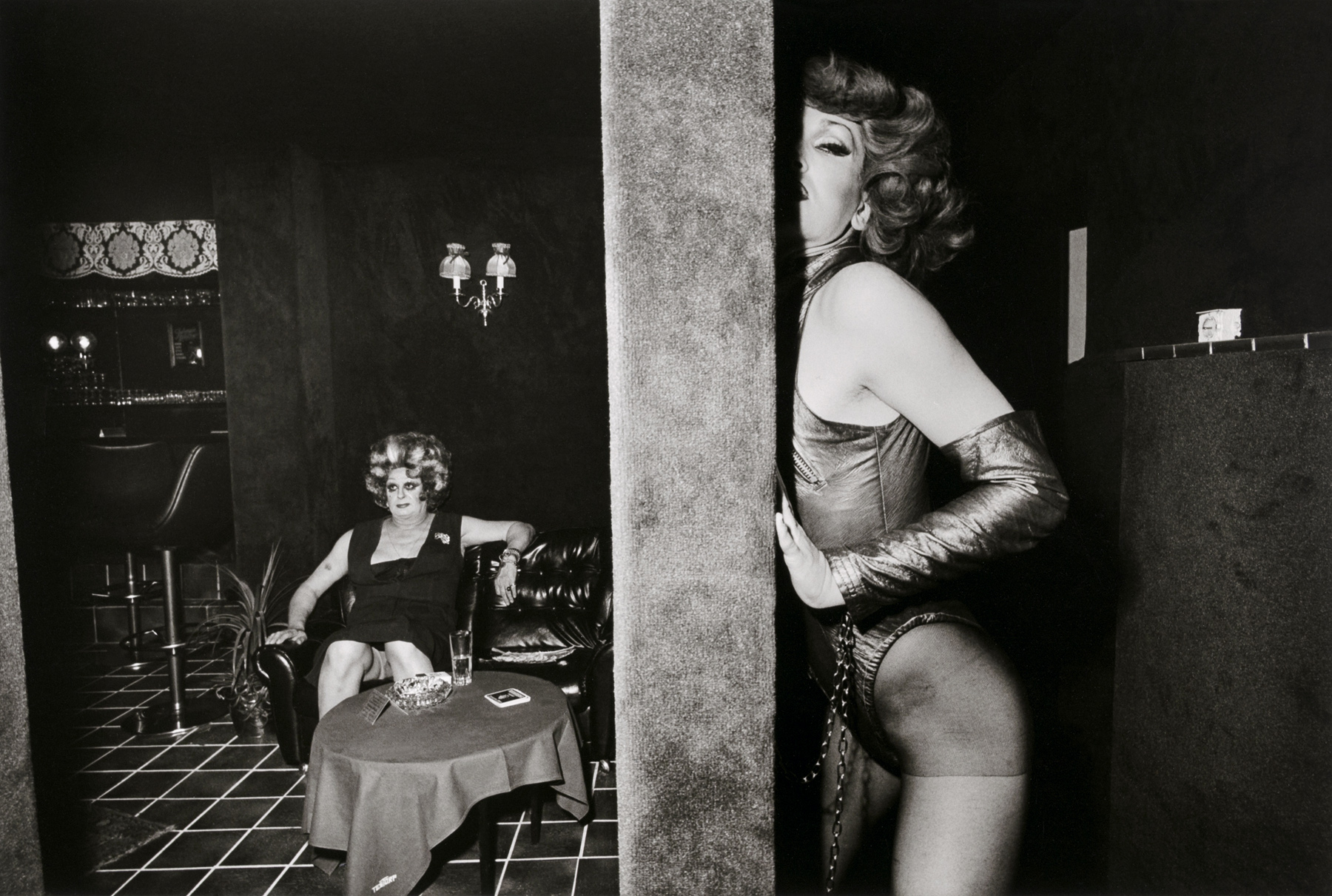
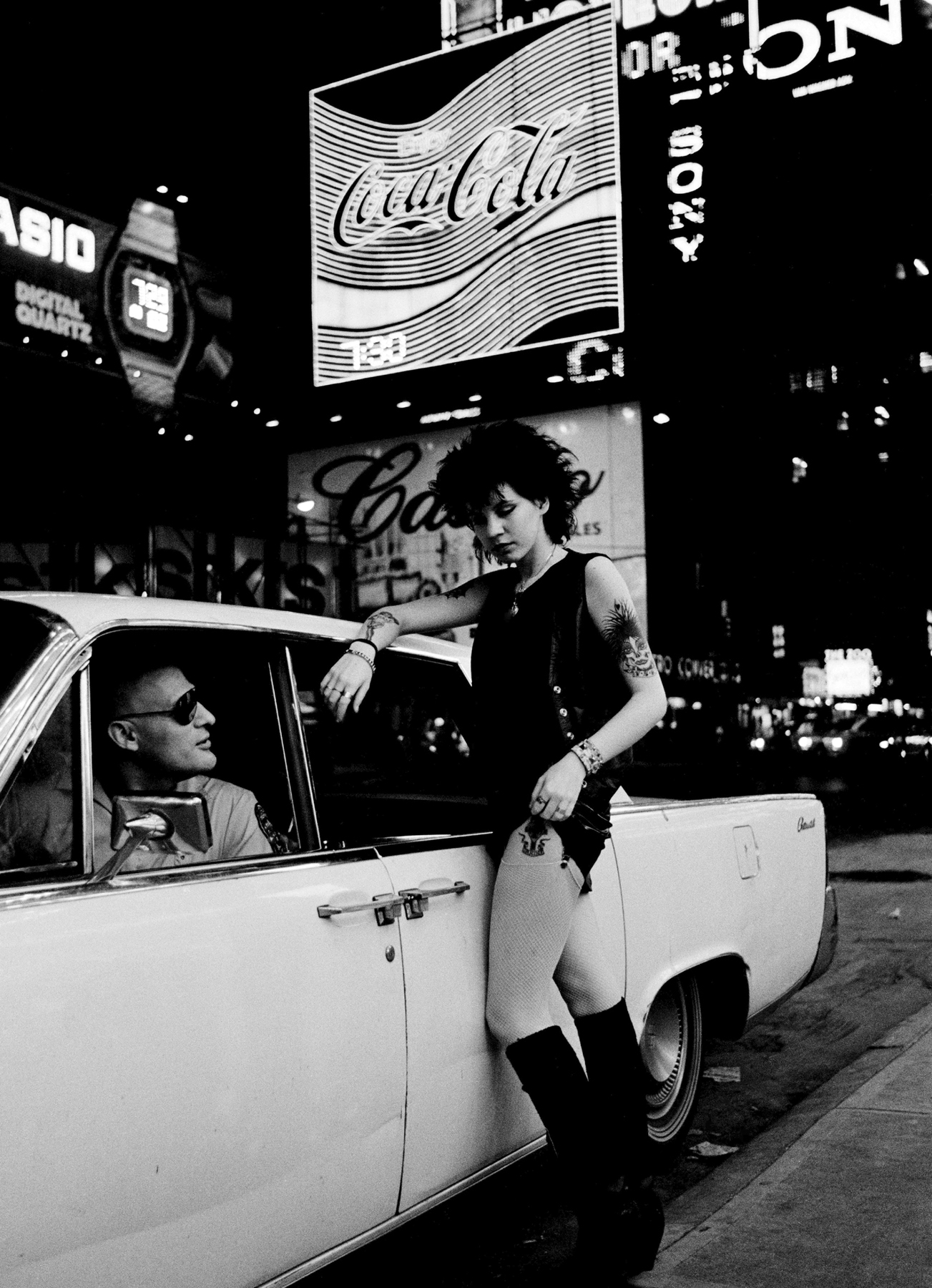
The images in the MKG collection give an idea of the broad scope covered by art photography in the 1980s. The selection is based on the photo spreads published in Fotografie and thus undoubtedly reveals the preferences of its editor, who seems to have been interested neither in the circle around Bernd and Hilla Becher nor in Michael Schmidt, and who deliberately set out to provoke his readers. Heinrich Riebesehl (1938-2010) explored the North German landscape in his documentary series Agrarlandschaften (Agricultural Landscapes). In a similarly factual style, Wilhelm Schürmann (b. 1946) devoted himself to a highly subjective theme: his childhood surroundings on Steinhammerstrasse in Dortmund. These images are supplemented by his photographs of urban landscapes and residential architecture. Riebesehl and Schürmann both sought their motifs in the realities of life in West Germany that confronted them everywhere they looked. André Gelpke (b. 1947) for his part explored Hamburg’s St. Pauli entertainment district for an independent series he called Sex Theater. He conveys here his view of erotic theatre as a mirror of society that tellingly reveals the audience’s double standards. Wolfgang Schulz also printed Miron Zownir’s pictures of New York’s underground SM, queer, and transsexual scene. These photo spreads reflect the editor’s interest in non-establishment subcultures and in people living on the margins of society.

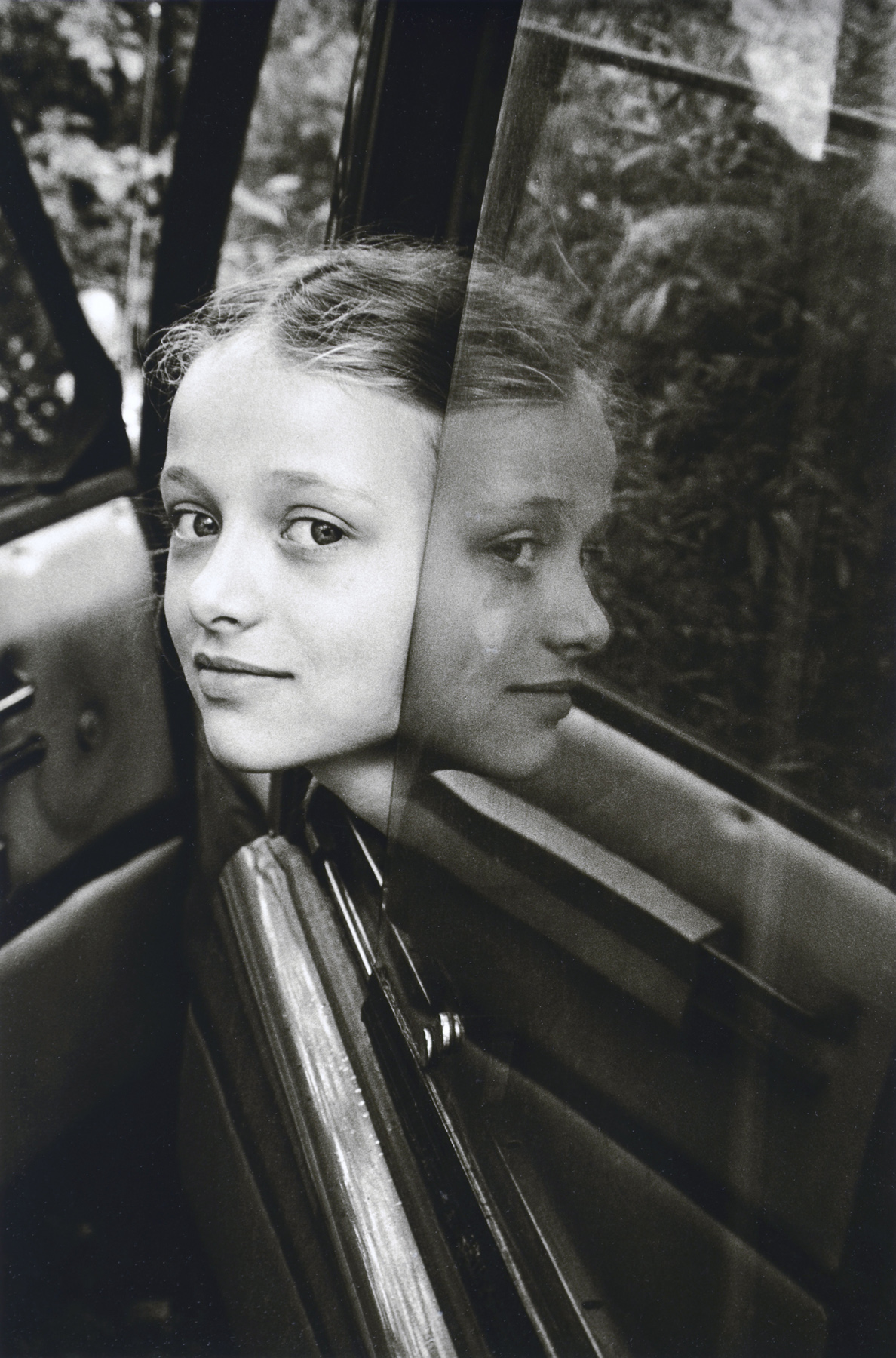
The photography scene around 1980 was predominantly male: of 147 portfolios published in Fotografie, only 24 presented female photographers. One of the privileged few, Dörte Eißfeldt (b. 1950), combined in her work Große Liebe (True Love, 1980) photographic montage techniques with the serial principle, creating in the darkroom photograms with motifs from her own daily life. Her approach might be dubbed “poetic photography,” the term used by photographer Verena von Gagern (b. 1946) to describe the “representation of private realities.” Von Gagern made pictures in the late 1970s within the “emotional realm” of her own family, among them the image Barbara (1978). Petra Wittmar (b. 1955) pursued by contrast a stricter documentary concept. In her series Spielplätze (Playgrounds, 1979), she takes a critical look at the dreary world of the modern metropolis.

Press release from the Museum für Kunst und Gewerbe Hamburg


André Gelpke (German, b. 1947) 'Pulverfaß' | 'Powder Keg III' 1978


André Gelpke (German, b. 1947)
Pulverfaß | Powder Keg III
1978
Silbergelatinepapier | Gelatin silver paper
22 x 32.8cm
Museum für Kunst und Gewerbe Hamburg
© André Gelpke


Miron Zownir (German-Ukrainian, b. 1953) 'New York' 1983


Miron Zownir (German-Ukrainian, b. 1953)
New York
1983
Silbergelatinepapier | Gelatin silver paper
23.2 x 15.4cm
© Miron Zownir


Verena von Gagern (German, b. 1946) 'Barbara' 1978


Verena von Gagern (German, b. 1946)
Barbara
1978
Silbergelatinepapier | Gelatin silver paper
29 x 19.8cm
Museum für Kunst und Gewerbe Hamburg
© Verena von Gagern


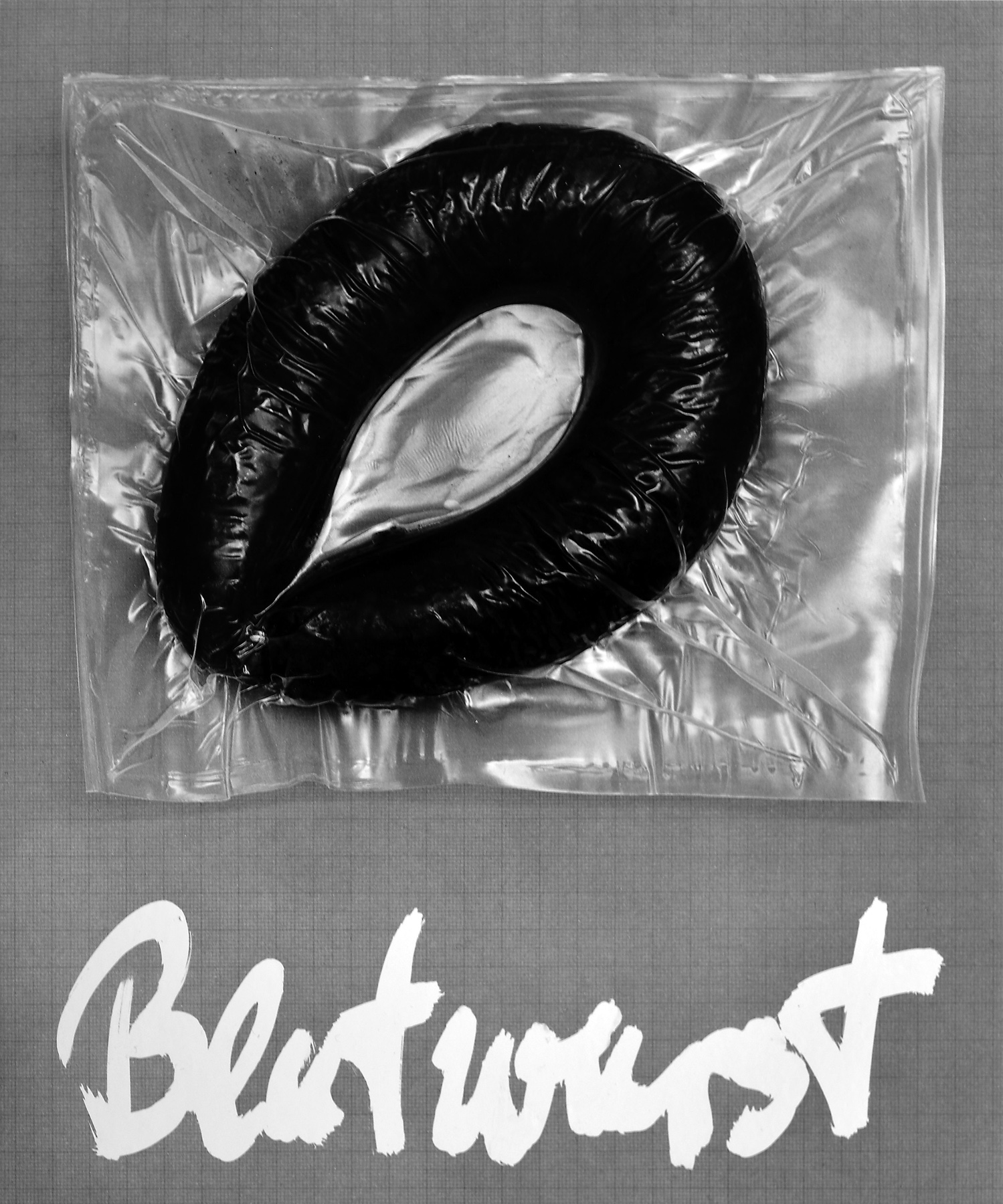
Reinhard Matz (German, b. 1952) 'Blutwurst' | 'Blood Sausage' 1981


Reinhard Matz (German, b. 1952)
Blutwurst | Blood Sausage
1981
Aus der neunteiligen Serie Wurst | from the nine-part series Wurst
Silbergelatinepapier | Gelatin silver paper
22.5 x 27cm
© Reinhard Matz, Köln


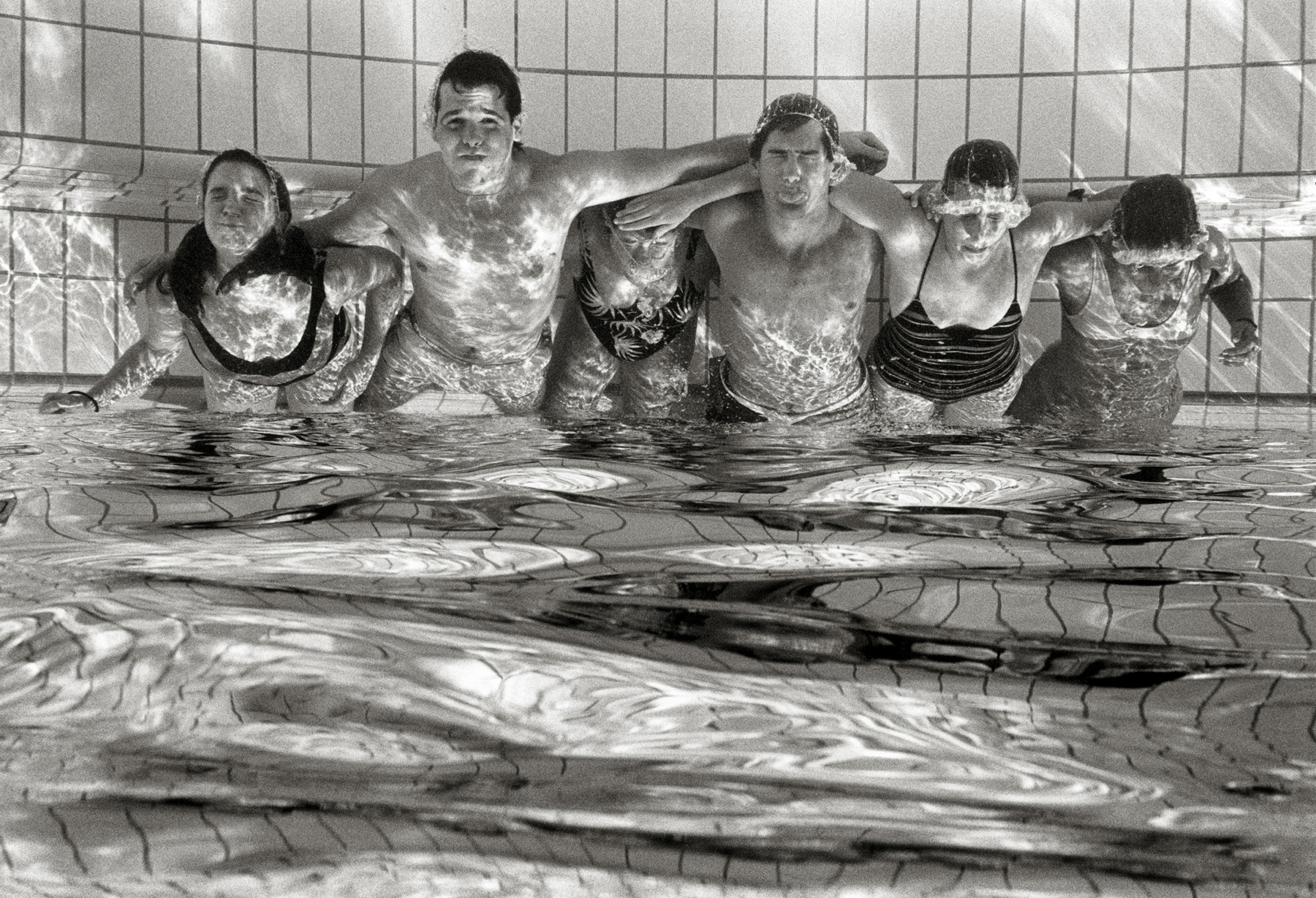
Hans-Christian Adam (German, b. 1948) 'Unterwasser-Gruppenportrait' | 'Underwater Group Portrait' 1985


Hans-Christian Adam (German, b. 1948)
Unterwasser-Gruppenportrait | Underwater Group Portrait (Salzburg College Photo Students)
Vigaun bei | near Hallein, Salzburg, 1985
Silbergelatinepapier | Gelatin silver paper
19.2 x 26.5cm
© Hans Christian Adam


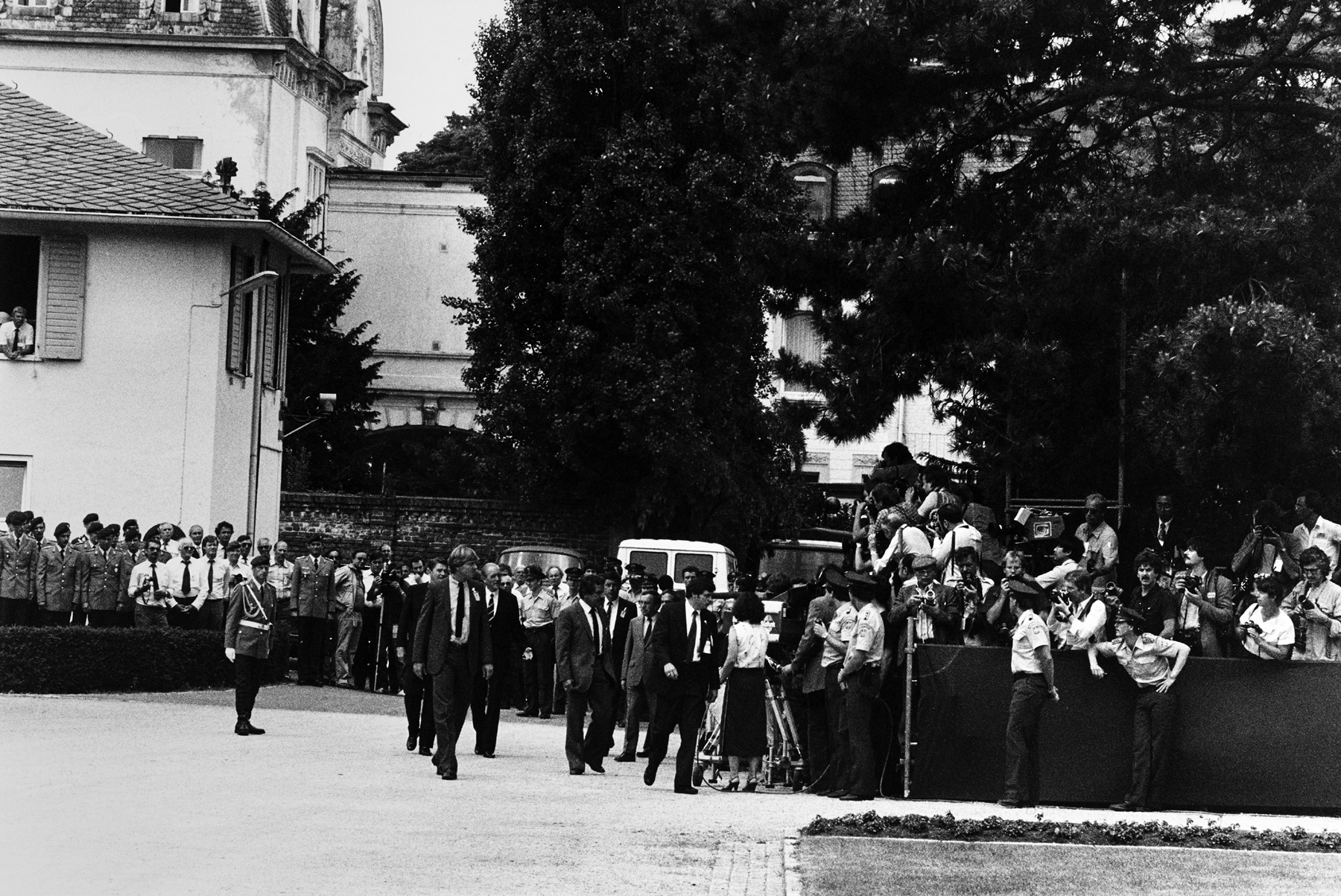
Angela Neuke (German, 1943-1997) 'US President Ronald Reagan visiting Germany for the NATO Ministerial Conference in Bonn on June 9 and 10, 1982'


Angela Neuke (German, 1943-1997)
Deutschlandbesuch von US-Präsident Ronald Reagan in Zusammenhang mit der NATO-Ministerkonferenz am 9. und 10. Juni 1982 in Bonn, 1982 | US President Ronald Reagan visiting Germany for the NATO Ministerial Conference in Bonn on June 9 and 10, 1982
Silbergelatinepapier | Gelatin silver paper
18,6 x 28cm
LVR Landesmuseum Bonn
© L. Lutz, 2019


Andreas Horlitz (German, 1955-2016) aus der Serie | from the series "Essen, Frühling 1981" 1981


Andreas Horlitz (German, 1955-2016)
Aus der Serie | from the series Essen, Frühling 1981
1981
C-Prints
40.3 x 59.4cm + 13.9 x 59.4cm
Museum Folkwang, Essen
© VG Bild-Kunst, Bonn 2019


Dagmar Hartig (German, b. 1952) 'Ohne Titel' | 'Untitled' 1981


Dagmar Hartig (German, b. 1952)
Ohne Titel | Untitled
1981
Aus der Serie | from the series Plastic World
C-Print
20.3 x 30.2cm
© VG Bild-Kunst, Bonn 2019


Dörte Eißfeldt (German, b. 1950) Aus | from "Dunkelrücken" 1986


Dörte Eißfeldt (German, b. 1950)
Aus | from Dunkelrücken
1986
Dia-Installation mit 170 Kleinbilddias und Tonspur | Slide installation with 170 35mm slides and soundtrack
© Dörte Eißfeldt


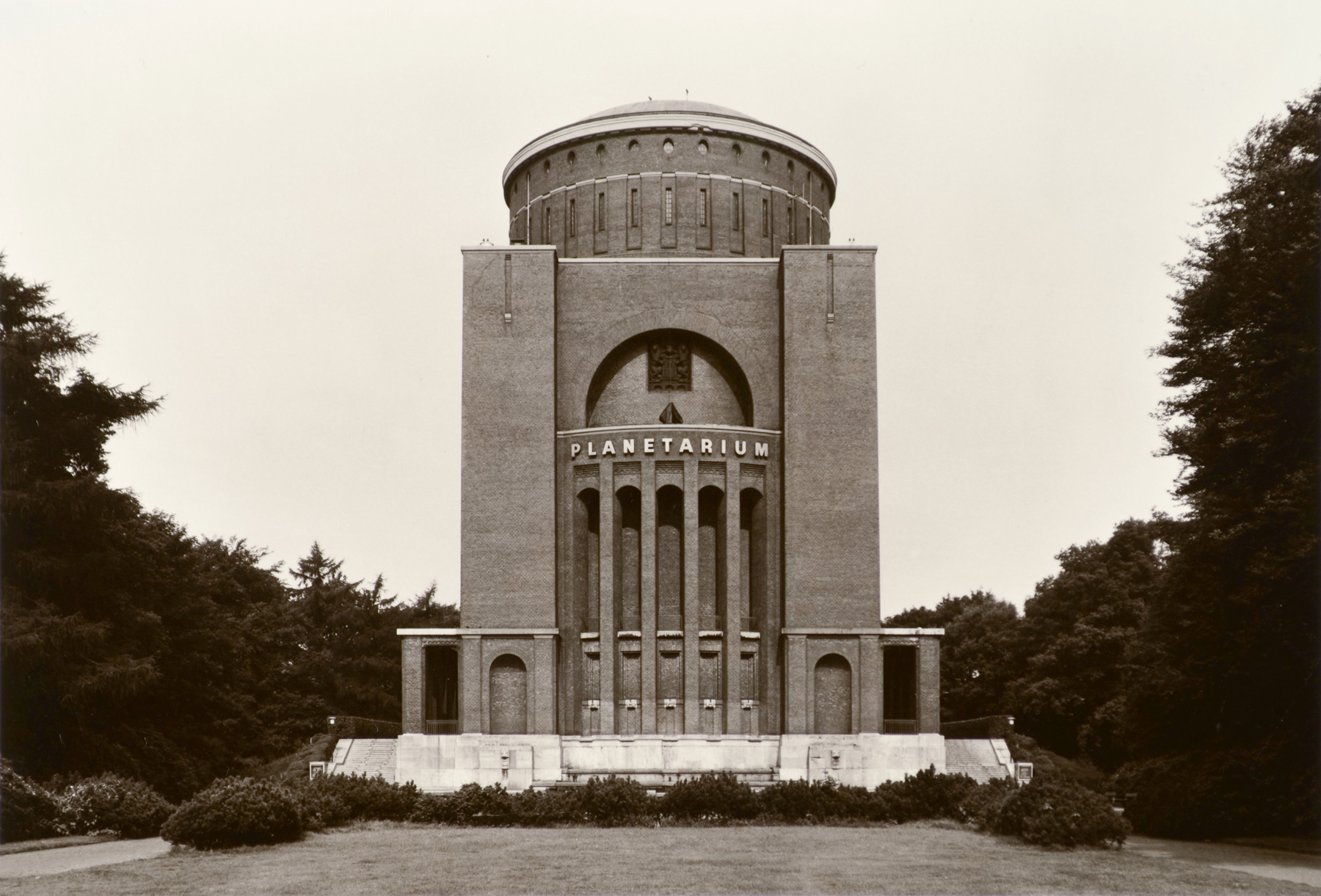
Holger Stumpf (German, b. 1953) 'Planetarium, Stadtpark' | 'city park Hamburg' 1979


Holger Stumpf (German, b. 1953)
Planetarium, Stadtpark | city park Hamburg
1979
Silbergelatinepapier | Gelatin silver paper
16 x 23.5cm
Museum für Kunst und Gewerbe Hamburg
© Holger Stumpf


Heinrich Riebesehl (German, 1938-2010) 'Schillerslage (Hannover), Okt. 78' 1978


Heinrich Riebesehl (German, 1938-2010)
Schillerslage (Hannover), Okt. 78
1978
Aus der Serie Agrarlandschaften | from the series Agricultural landscapes
Silbergelatinepapier | Gelatin silver paper
22.6 x 35.9cm
Museum für Kunst und Gewerbe Hamburg
© VG Bild-Kunst, Bonn 2019


Wilhelm Schürmann (German, b. 1946) 'Kohlscheid' 1978


Wilhelm Schürmann (German, b. 1946)
Kohlscheid
1978
Silbergelatinepapier | Gelatin silver paper
21.4 x 28cm
Museum für Kunst und Gewerbe Hamburg
© Wilhelm Schürmann, Herzogenrath


Petra Wittmar (German, b. 1955) Aus der Serie | from the series "Spielplätze" 1979


Petra Wittmar (German, b. 1955)
Aus der Serie Spielplätze | from the series Playgrounds
1979
Silbergelatinepapier | Gelatin silver paper
17 x 26cm
© Petra Wittmar


Museum für Kunst und Gewerbe Hamburg
Steintorplatz, 20099 Hamburg

Opening hours:
Tuesday to Sunday 10am – 6pm
Thursday 10am – 9pm
Closed Mondays

Museum fur Kunst und Gewerbe Hamburg website

LIKE ART BLART ON FACEBOOK

Back to top

Exhibition: ‘Aenne Biermann. Intimacy with Things’ at the Pinakothek der Moderne, Munich

Exhibition dates:

Exhibition curators: Dr Simone Förster together with Anna Volz


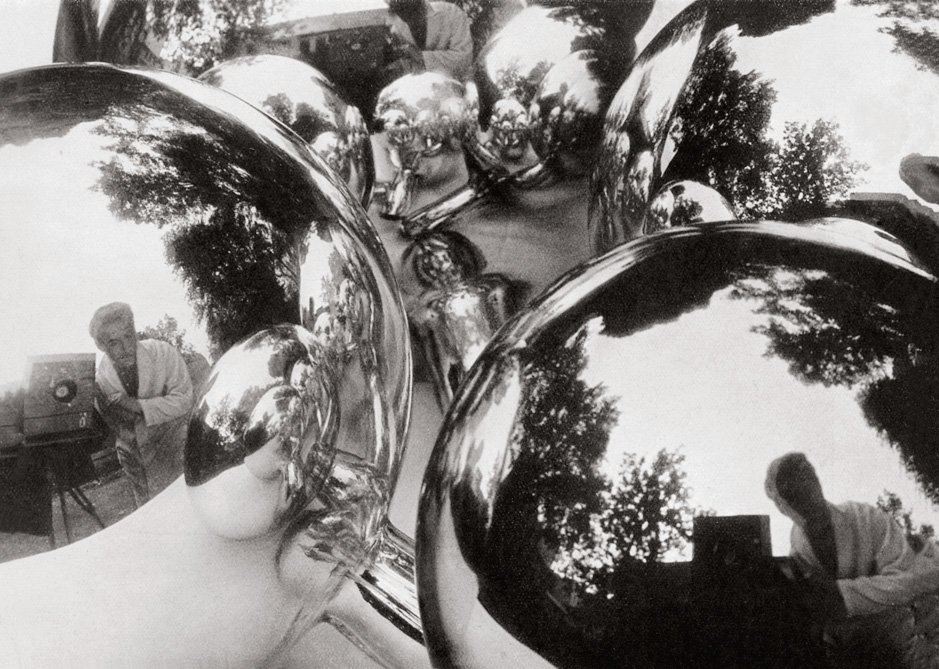
Aenne Biermann (German, 1898-1933) 'Self-Portrait with Silver Ball' 1931 from the exhibition 'Aenne Biermann. Intimacy with Things' at the Pinakothek der Moderne, Munich, July 2019 - October 2019


Aenne Biermann (German, 1898-1933)
Self-Portrait with Silver Ball
1931
Gelatin silver print
Museum für Kunst und Gewerbe, Hamburg


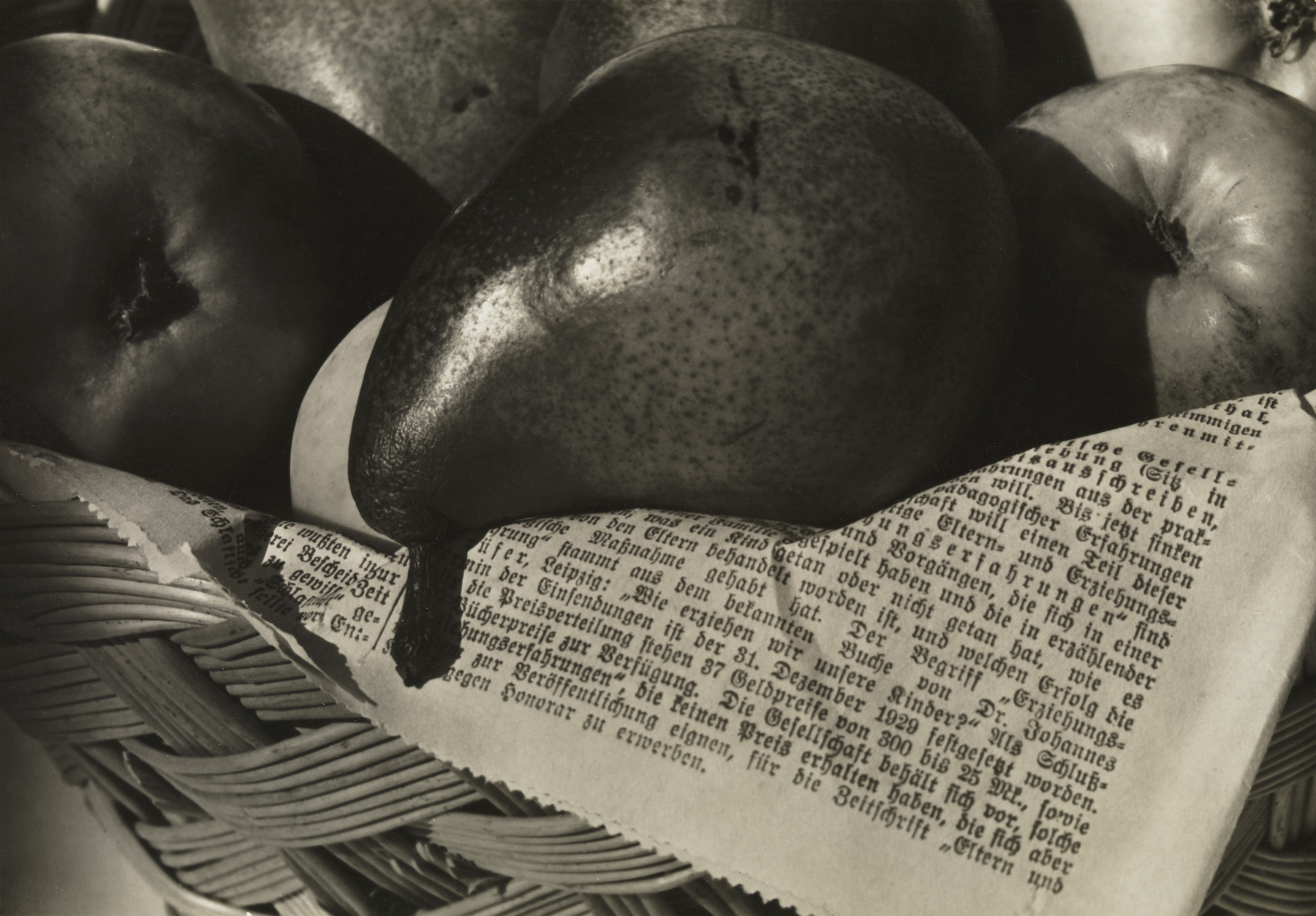
Another strong woman, another inspirational female avant-garde 1930s photographer. Just look at the darkness of the pear in her photograph Fruit Basket (1931, below). The photographer proclaims the beauty and decay of nature. Magnificent.

Marcus


Many thankx to the Pinakothek der Moderne for allowing me to publish the photographs in the posting. Please click on thep hotographs for a larger version of the image.


For the autodidact Aenne Biermann (1898-1933) the camera was a means of closing in on things and situations in her immediate environment. From the mid 1920s onwards she found great pleasure in capturing unfamiliar and unexpected views of everyday experiences and events in her photographs. Although Aenne Biermann worked in relative isolation with regard to the avant-garde developments in larger cities, comprehensive displays of her work were shown at all major modern photographic exhibitions from 1929 onwards. Her oeuvre, created within just a few years – Aenne Biermann died in 1933 following an illness – is now regarded as one of the most important within the Neues Sehen (New Vision) movement in photography and New Objectivity.

The exhibition comprises some 100 original photographs from the holdings of the Ann and Jürgen Wilde Foundation that boasts one of the most extensive collections of Aenne Biermann’s work. Selected works from public and private collections, together with records and archival documents, illuminate the artist’s work and career.

#PinaBiermann


Aenne Biermann (German, 1898-1933) 'Gartenkugeln' Nd from the exhibition 'Aenne Biermann. Intimacy with Things' at the Pinakothek der Moderne, Munich, July 2019 - October 2019


Aenne Biermann (German, 1898-1933)
Gartenkugeln [Garden Balls]
Nd
Silver gelatine print


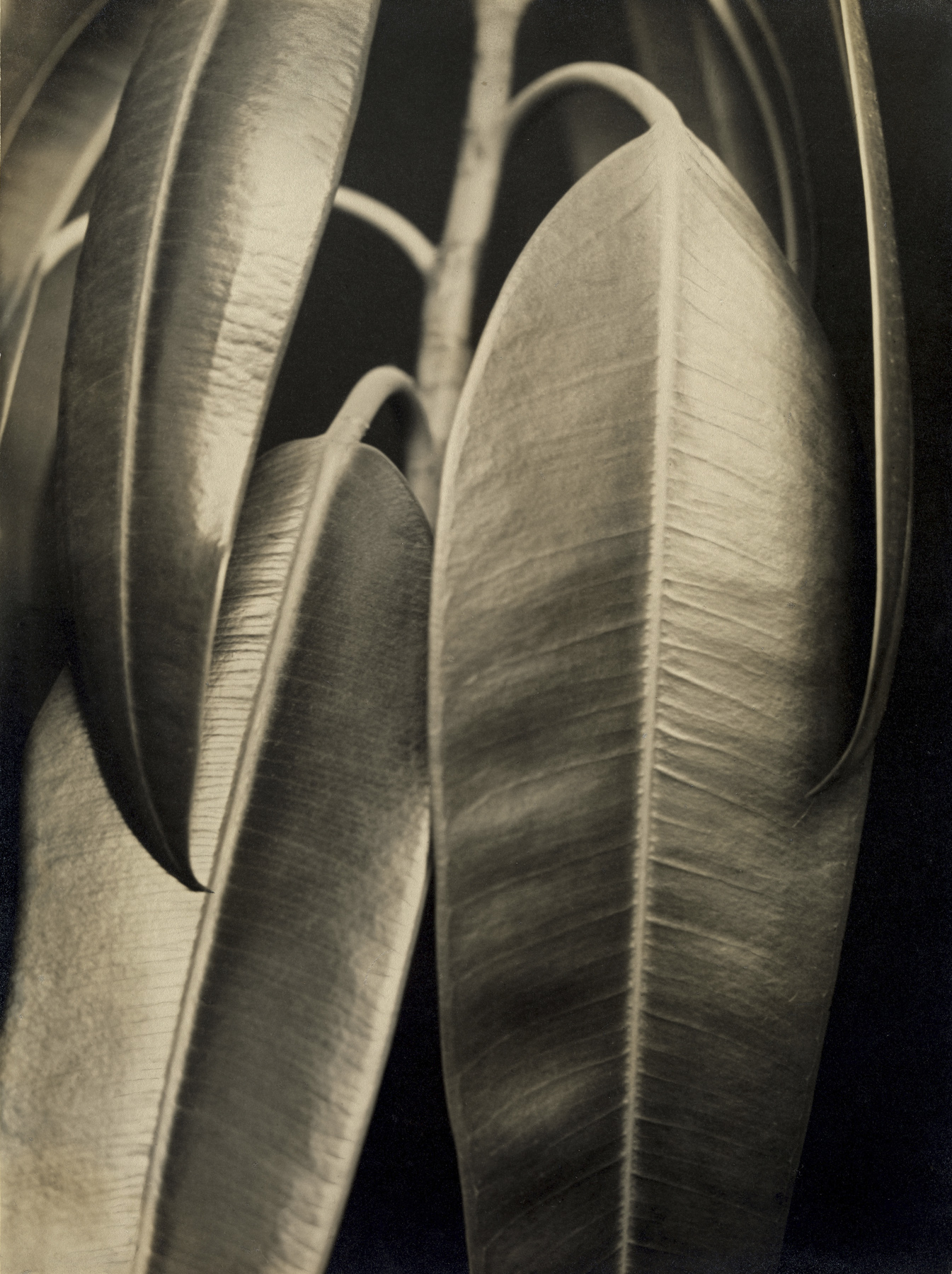
Aenne Biermann (German, 1898-1933) 'Ficus elastica' 1926-1928


Aenne Biermann (German, 1898-1933)
Ficus elastica
1926-1928
Silver gelatine print
46.7 x 35cm
Ann and Jürgen Wilde Foundation, Pinakothek der Moderne, Munich
Photo: Sibylle Forster


An avid amateur mineralogist, it was through her collection of rocks that in 1926 she met the geologist Rudolf Hundt, who commissioned her to photograph his specimens the following year for his scientific work. Her photographs of minerals transformed her practice from the early personal views of her children to the close-up, direct studies of form that would define her photographs of plants and people that followed and make her a central figure in New Objectivity photography. Thus 1926 began a period of intense productivity for Biermann that lasted until her untimely death, from liver disease, at the age of thirty-five, in 1933.

Mitra Abbaspour on the Museum of Modern Art website Nd [Online] Cited 03/08/2019


Aenne Biermann (German, 1898-1933) 'Finale' before October 1928


Aenne Biermann (German, 1898-1933)
Finale
before October 1928
Silver gelatine print
47.4 x 34.8cm
Ann and Jürgen Wilde Foundation, Pinakothek der Moderne, Munich
Photo: Sibylle Forster


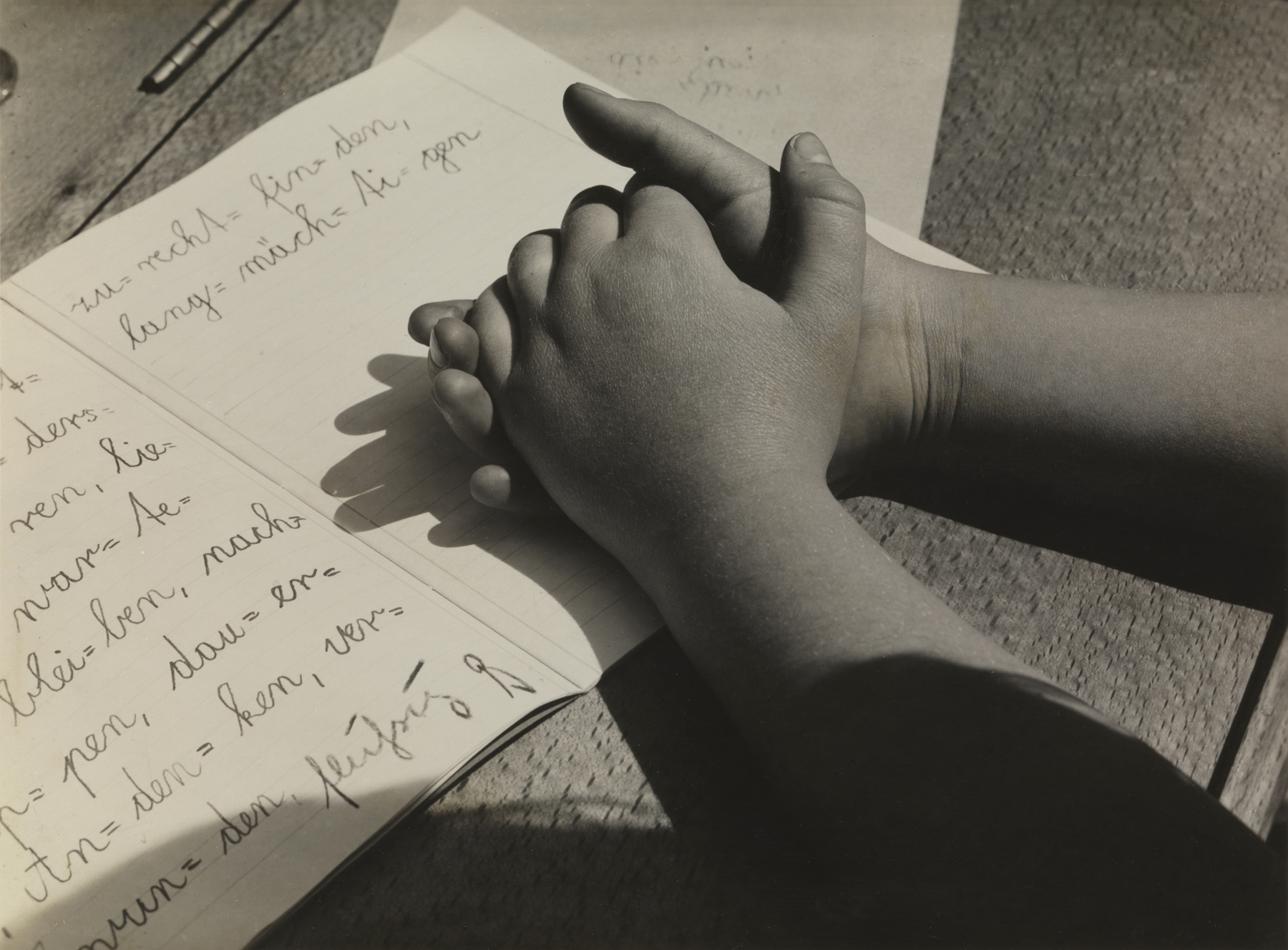
Aenne Biermann (German, 1898-1933) 'A Child's Hands' 1928


Aenne Biermann (German, 1898-1933)
A Child’s Hands
1928
Silver gelatine print
12.3 x 16.6cm
Ann and Jürgen Wilde Foundation, Pinakothek der Moderne, Munich
Photo: Sibylle Forster


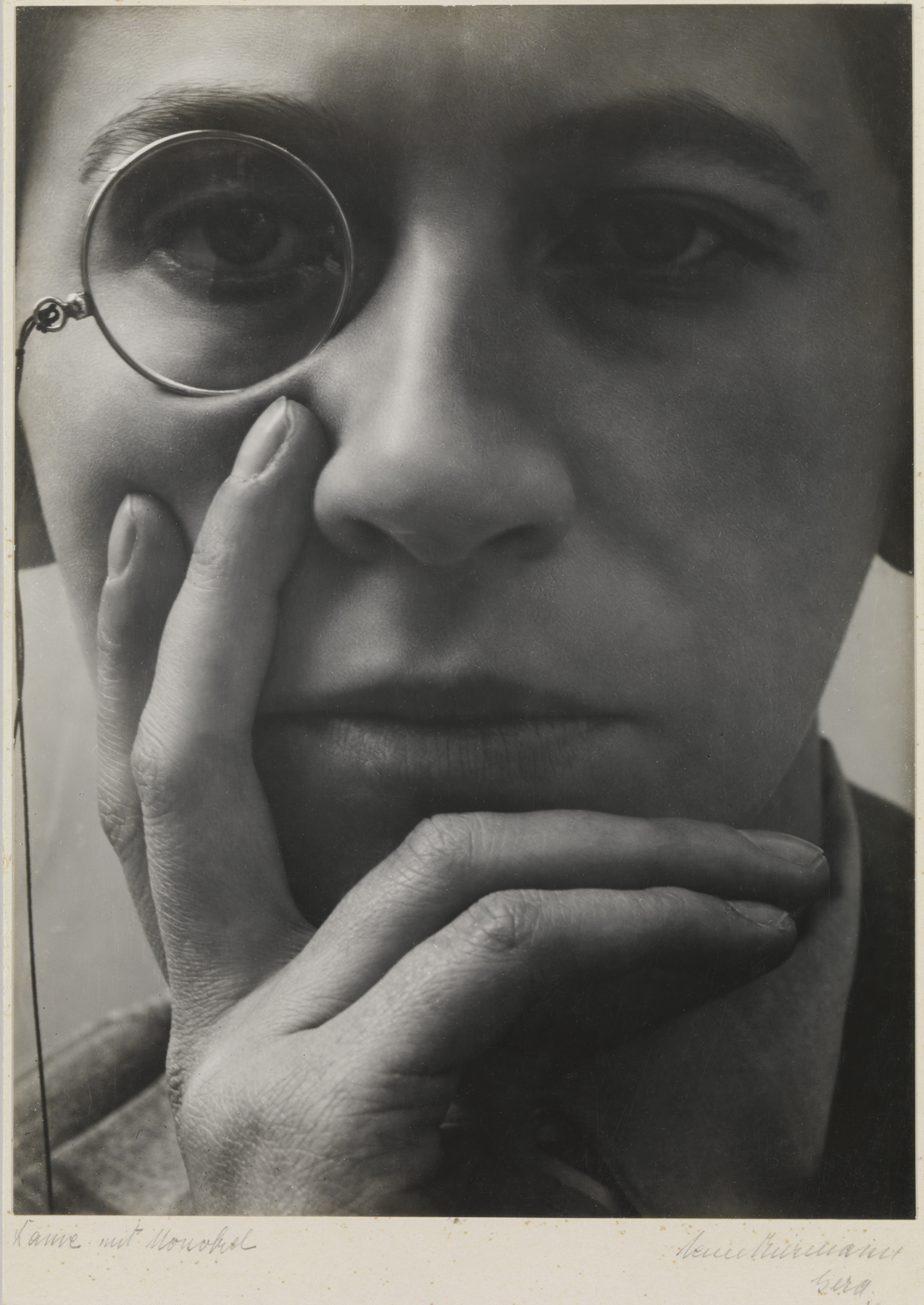
Aenne Biermann (German, 1898-1933) 'Lady with Monocle' 1928/29


Aenne Biermann (German, 1898-1933)
Lady with Monocle
1928/1929
Silver gelatine print
17 x 12.6 cm
Ann and Jürgen Wilde Foundation, Pinakothek der Moderne, Munich
Photo: Sibylle Forster


Aenne Biermann (German, 1898-1933) 'View from my Studio Window' 1929


Aenne Biermann (German, 1898-1933)
View from my Studio Window
1929
Silver gelatine print
23.6 x 17.3cm
Ann and Jürgen Wilde Foundation, Pinakothek der Moderne, Munich
Photo: Sibylle Forster


Today, Aenne Biermann (1898-1933) is considered one of the major proponents of ‘New Photography’. Although she was only active as a photographer for a few years and, unlike her female colleagues Florence Henri, Germaine Krull and Lucia Moholy, for example, had neither an artistic training nor moved within the avant-garde circles of major urban centres, Aenne Biermann developed her own markedly modern pictorial style that established her position as a representative of contemporary avant-garde photography within a very short time. Clear structures, precise compositions with light and shadow, as well as cropped images focussing on specific details are characteristic of Aenne Biermann’s photography. They elicit a unique poetry from the people and objects in her everyday surroundings and establish an ‘intimacy with things’, as Aenne Biermann wrote in 1930.

Growing up in a Jewish factory owner’s family on the Lower Rhine, Aenne Biermann did not move on to higher education; instead, her musical skills were furthered and she was given piano lessons. Following her marriage to the merchant Herbert Biermann in 1920, she moved to Gera / Thuringia and became part of an upper-middle class, intellectual society that was extremely open to modern movements in art and culture and cultivated these within its own local radius. For Aenne Biermann, the starting point for her close involvement with photography was the birth of her children Helga (1920) and Gerd (1923). Initially used merely as a medium to document her children’s progress, from the mid 1920s Aenne Biermann developed her own, creative sphere in her photographic work. She focussed her camera on plants, objects, people and everyday situations and used the medium as an artistic means to access her own personal surroundings.

In 1928 the art critic Franz Roh arranged for the photographer’s first solo exhibition to be held at the Graphisches Kabinett Günther Franke in Munich and presented her work in Das Kunstblatt, a trend-setting monthly magazine for contemporary art in Germany. This led to her participation in numerous major exhibitions of modern photography, such as Film und Foto (1929), and solo exhibitions in Oldenburg, Jena and Gera. Aenne Biermann’s pictures received awards in photographic competitions and were published in books, art magazines and illustrated journals. In 1930 her photographs appeared in Franz Roh’s Fototek series of books: Aenne Biermann. 60 Fotos is one of the rare monographs of a photographer’s work of the time.

As a result of the artist’s early death and the family’s forced emigration in the 1930s, a large part of the photographer’s archive was lost. Its whereabouts remains unknown to this day. In more than forty years of extensive and intense research Ann and Jürgen succeeded in assembling a large number of images that give a representative picture of Aenne Biermann’s œuvre and now form one of the largest collections of the photographer’s work.

The presentation comprises more than 100 original photographs, 73 of which are, in part, large-format exhibition prints from the holdings of the Ann and Jürgen Wilde Foundation. Loans from the Museum Folkwang, Essen, the Museum für Angewandte Kunst Gera, the Museum Ludwig, Cologne, the Staatliche Museen zu Berlin / Kunstbibliothek, the Münchner Stadtmuseum, the Galerie Berinson, Berlin, the Franz Roh Estate and the Dietmar Siegert Collection, Munich, as well as the Ann and Jürgen Wilde Archive, Zülpich, complement the exhibition.

Press release from the Pinakothek der Moderne [Online] Cited 28/07/2019


Aenne Biermann (German, 1898-1933) 'Contemplation' 1930


Aenne Biermann (German, 1898-1933)
Contemplation
1930
Silver gelatine print
58 × 42cm
Ann and Jürgen Wilde Foundation, Pinakothek der Moderne, Munich
Photo: Sibylle Forster


Aenne Biermann (German, 1898-1933) 'Repair' 1930/31


Aenne Biermann (German, 1898-1933)
Repair
1930/31
Silver gelatine print
24.8 x 18cm
Ann and Jürgen Wilde Foundation, Pinakothek der Moderne, Munich
Photo: Sibylle Forster


Aenne Biermann (German, 1898-1933) 'Rail Tracks' 1932


Aenne Biermann (German, 1898-1933)
Rail Tracks
1932
Silver gelatine print
24.1 x 17.5cm
Ann and Jürgen Wilde Foundation, Pinakothek der Moderne, Munich
Photo: Sibylle Forster


Aenne Biermann (German, 1898-1933) 'Fruit Basket' 1931


Aenne Biermann (German, 1898-1933)
Fruit Basket
1931
Silver gelatin print
16.6 x 23.6 cm
Ann and Jürgen Wilde Foundation, Pinakothek der Moderne, Munich
Photo: Sibylle Forster


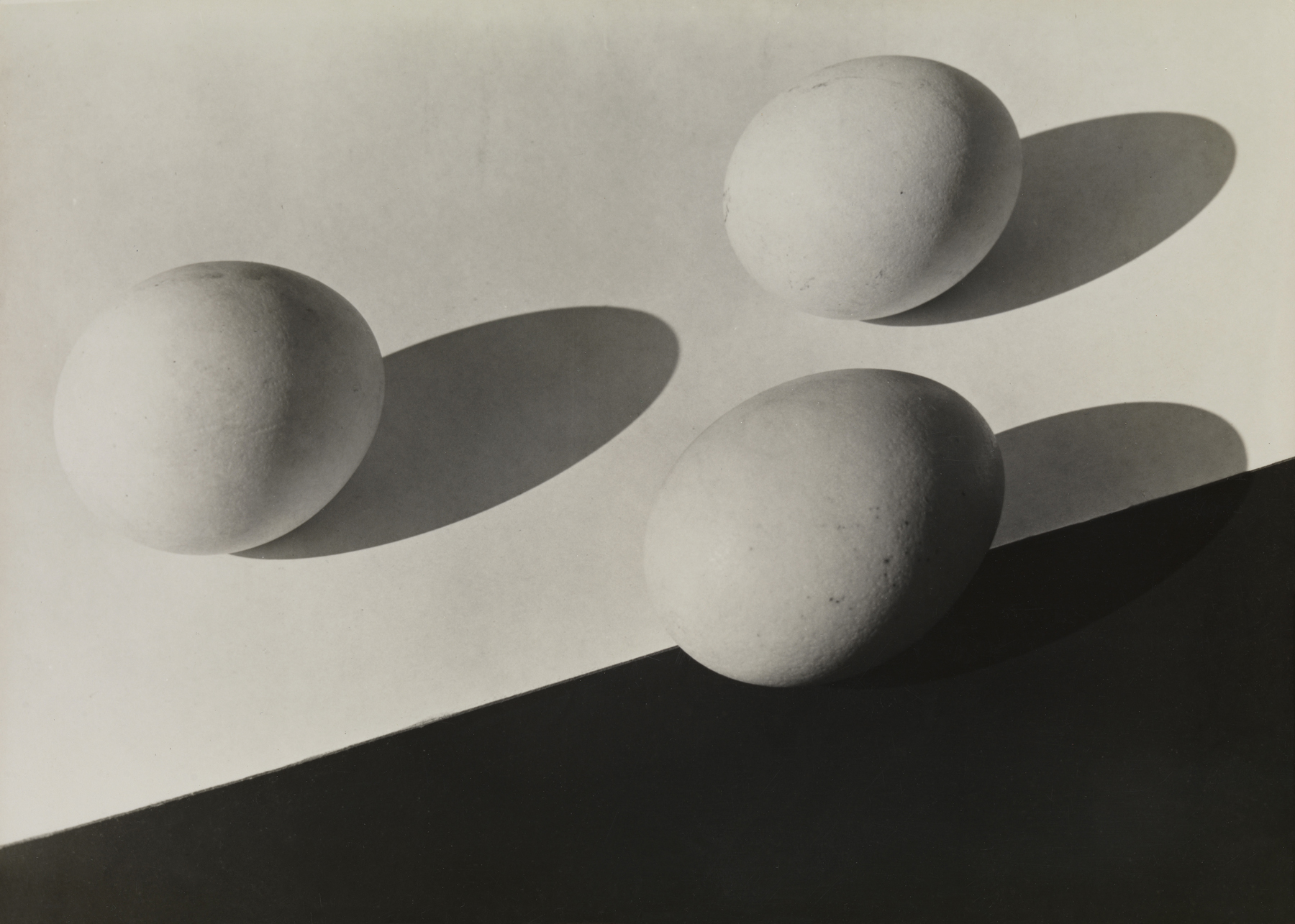
Aenne Biermann (German, 1898-1933) 'Eggs' 1931


Aenne Biermann (German, 1898-1933)
Eggs
1931
Silver gelatin print
17 x 23.9cm
Ann and Jürgen Wilde Foundation, Pinakothek der Moderne, Munich
Photo: Sibylle Forster


Pinakothek der Moderne
Barer Strasse 40
Munich

Opening hours:
Daily except Monday 10am – 6pm
Thursday 10am – 8pm

Pinakothek der Moderne website

LIKE ART BLART ON FACEBOOK

Back to top