
Exhibition: ‘Gillian Wearing and Claude Cahun: Behind the mask, another mask’ at the National Portrait Gallery, London

Exhibition dates: 9th March – 29th May, 2017

Curator: Sarah Howgate, Senior Curator of Contemporary Portraits at the National Portrait Gallery, London


Claude Cahun (French, 1894-1954) 'Autoportrait' 1929 from the exhibition 'Gillian Wearing and Claude Cahun: Behind the mask, another mask' at the National Portrait Gallery, London, March - May, 2017


Claude Cahun (French, 1894-1954)
Self-portrait (reflected image in mirror with chequered jacket)
1927
Silver gelatin print


“… the life of spirit is not the life that shrinks from death and keeps itself untouched by devastation, but rather the life that endures it and maintains itself in it. It wins its truth only when, in utter dismemberment, it finds itself. It is this power, not as something positive, which closes its eyes to the negative as when we say of something that it is nothing or is false, and then having done with it, turn away and pass on to something else; on the contrary, spirit is this power only by looking the negative in the face, and tarrying with it. This tarrying with the negative is the magical power that converts it into being.”


George Wilhelm Frederich Hegel, 1807. Phenomenology of Spirit, Preface (trans. A. V. Miller 1977), Oxford: Oxford University Press, p. 10


This is an interesting pairing for an exhibition but the connection between the artists is unconvincing. This is because Wearing and Cahun are talking to different aspects of the self.

Wearing’s self-portraits, her mask-querades, her shielded multiple personalities, talk to a “postmodern meditation on the slipperiness of the self” in which there is little evidence of the existence of any “real” person. Wearing wears her identities in a series of dress-ups, performances where only the eyes of the original protagonist are visible. These identities evidence Jung’s shadow aspect, “an unconscious aspect of the personality which the conscious ego does not identify in itself.” Rather than an assimilation of the shadow aspect into the self followed by an ascent (enantiodromia), Wearing’s images seem to be mired in a state of melancholia, a “confrontation with the shadow which produces at first a dead balance, a stand-still that hampers moral decisions and makes convictions ineffective… tenebrositas, chaos, melancholia.” This is not a confrontation that leads anywhere interesting, by looking the negative in the face and tarrying with it. These split personalities rise little above caricature, an imitation of a person in which certain striking characteristics are over emphasised, such as in Wearing’s portraits of her as Andy Warhol or Robert Mapplethorpe. To me, the photograph of Wearing as Mapplethorpe is a travesty of the pain that artist was feeling as he neared the end of his life, dying from HIV/AIDS.

Cahun’s self-portraits contain all the depth of feeling and emotion that Wearing’s can never contain. Here, identity and gender is played out through performance and masquerade in a constructive way, a deep, probing interrogation of the self in front of the camera. While Cahun engages with Surrealist ideas – wearing masks and costumes and changing her appearance, often challenging traditional notions of gender representation – she does so in a direct and powerful way. As Laura Cumming observes, “She is not trying to become someone else, not trying to escape [as Wearing is]. Cahun is always and emphatically herself. Dressed as a man, she never appears masculine, nor like a woman in drag. Dressed as a woman, she never looks feminine. She is what we refer to as non-binary* these days, though Cahun called it something else: “Neuter is the only gender that always suits me.””

*Those with nonbinary genders can feel that they: Have an androgynous (both masculine and feminine) gender identity, such as androgyne. Have an identity between male and female, such as intergender. Have a neutral or unrecognised gender identity, such as agender, neutrois, or most xenogenders.*

Cahun had a gift for the indelible image but more than that, she possesses the propensity for humility and openness in these portraits, as though she is opening her soul for interrogation, even as she explores what it is to be Cahun, what it is to be human. This is a human being in full control of the balance between the ego and the self, of dream-state and reality. The photographs, little shown in Cahun’s lifetime, are her process of coming to terms with the external world, on the one hand, and with one’s own unique psychological characteristics on the other. They are her adaption** to the world.

**“The constant flow of life again and again demands fresh adaptation. Adaptation is never achieved once and for all.” (Carl Jung. “The Transcendent Function,” CW 8, par. 143.)**


Claude Cahun is person I would have really liked to have met. Affiliated with the French Surrealist movement, living with her partner the artist and stage designer Marcel Moore, the two women left Paris for the Isles of Scilly and were then imprisoned in Nazi-occupied Jersey during the Second World War as a result of their roles in the French Resistance.

“Fervently against war, the two worked extensively in producing anti-German fliers. Many were snippets from English-to-German translations of BBC reports on the Nazis’ crimes and insolence, which were pasted together to create rhythmic poems and harsh criticism. The couple then dressed up and attended many German military events in Jersey, strategically placing them in soldier’s pockets, on their chairs, etc. Also, they inconspicuously crumpled up and threw their fliers into cars and windows. In many ways, Cahun and Malherbe’s [Marcel Moore] resistance efforts were not only political but artistic actions, using their creative talents to manipulate and undermine the authority which they despised. In many ways, Cahun’s life’s work was focused on undermining a certain authority, however her specific resistance fighting targeted a physically dangerous threat. In 1944 she was arrested and sentenced to death, but the sentence was never carried out. However, Cahun’s health never recovered from her treatment in jail, and she died in 1954.” (Wikipedia)

Undermining a certain authority … while ennobling her own identity and being. Love and respect.

Dr Marcus Bunyan


Many thankx to the National Portrait Gallery, London for allowing me to publish the photographs in the posting. Please click on the photographs for a larger version of the image. For more information please see the blog entry by  Louise Downie. “Claude Cahun: Freedom Fighter” on the National Portrait Gallery Blog 09 May 2017.


“Under this mask, another mask. I will never finish removing all these faces.”


Claude Cahun, 1930


This exhibition brings together for the first time the work of French artist Claude Cahun and British contemporary artist Gillian Wearing. Although they were born almost seventy years apart and came from different backgrounds, remarkable parallels can be drawn between the two artists. Both of them share a fascination with the self-portrait and use the self-image, through the medium of photography, to explore themes around identity and gender, which is often played out through masquerade and performance.


Claude Cahun (French, 1894-1954) 'Autoportrait' 1928 from the exhibition 'Gillian Wearing and Claude Cahun: Behind the mask, another mask' at the National Portrait Gallery, London, March - May, 2017


Claude Cahun (French, 1894-1954)
Autoportrait
1928
Gelatin silver print
13.9 x 9cm
Jersey Heritage Collection
© Jersey Heritage


“Once seen, never forgotten: Cahun had a gift for the indelible image. Even when the signals are jammed, and the meaning deliberately baffled, her vision always holds strong. This is partly convenienced by the artist’s exceptional looks. Her long, thin face, with its shaved eyebrows, large eyes and linear nose, takes paint like a canvas. She converts herself into a harpy, a lunatic or a doll with equal ease. In one self-portrait, she even holds her own bare face like a mask…

Peering into these monochrome images, so delicate and small, the viewer might inevitably wonder which is the real Cahun: the woman in the aviator goggles, the pensive Buddhist, the young man in a white silk scarf? But this is not the right question. She is not trying to become someone else, not trying to escape. Cahun is always and emphatically herself.

Dressed as a man, she never appears masculine, nor like a woman in drag. Dressed as a woman, she never looks feminine. She is what we refer to as non-binary these days, though Cahun called it something else: “Neuter is the only gender that always suits me.” …

There is little evidence that she ever displayed these photographs, which were forgotten for decades after her death. It seems that her partner was generally behind the lens, but we know almost nothing about how they were made. Of her lifelong project, Cahun wrote: “Under this mask, another mask. I will never finish removing all these faces.”

Commentators have taken this to mean that she thought of herself as a series of multiple personalities, and the double exposures, shadows and reflections in her work all seem to undermine the idea of a singular self. Yet Cahun is formidably and unmistakably Cahun, her force of personality registering every time in that utterly penetrating look. Far from some postmodern meditation on the slipperiness of the self, her images are completely direct. They acknowledge the sufferings of a double life and are deepened by them every time; and yet they rejoice in that life too.”

Laura Cumming. “Gillian Wearing and Claude Cahun: Behind the Mask, Another Mask – review,” on The Observer website Sunday 12 March 2017 [Online] Cited 17/12/2021


Gillian Wearing and Claude Cahun: Behind the mask, another mask

This exhibition brings together for the first time the work of French artist Claude Cahun and British contemporary artist Gillian Wearing. Although they were born almost seventy years apart and came from different backgrounds, remarkable parallels can be drawn between the two artists. Both of them share a fascination with the self-portrait and use the self-image, through the medium of photography, to explore themes around identity and gender, which is often played out through masquerade and performance.
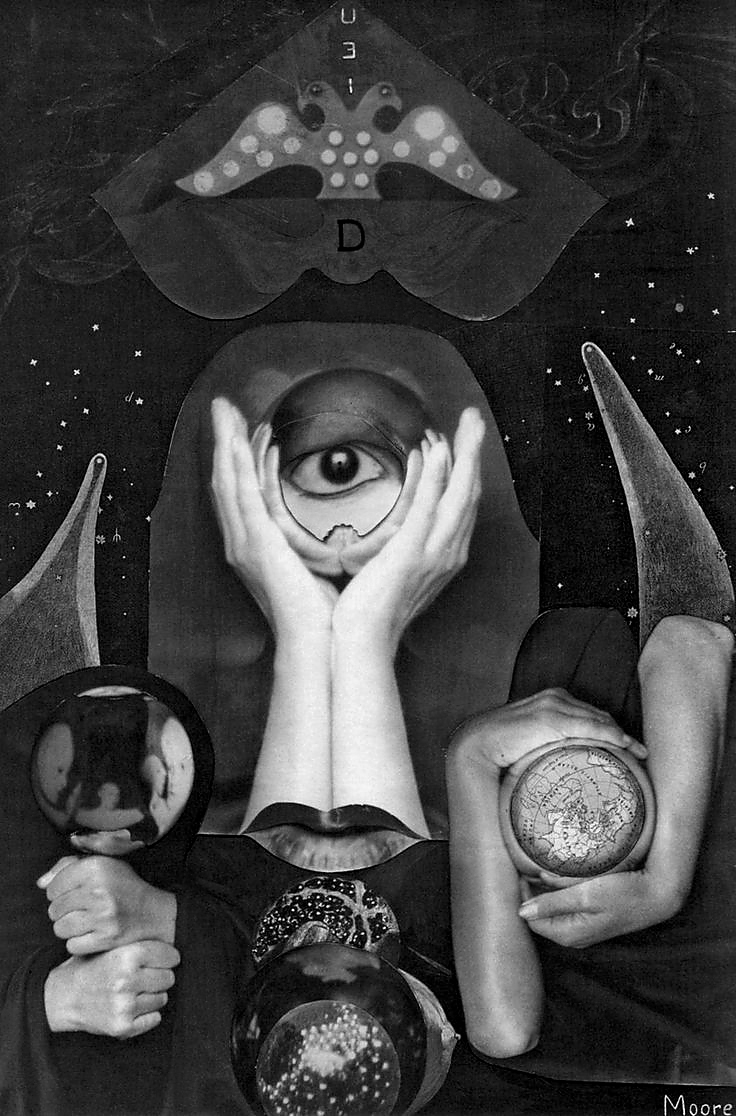
 

Claude Cahun (French, 1894-1954) in collaboration with Marcel Moore (French, 1892-1972) 'Aveux non avenus frontispiece' 1929-1930


Claude Cahun (French, 1894-1954) in collaboration with Marcel Moore (French, 1892-1972)
Aveux non avenus frontispiece
1929-1930
Photomontage
Silver gelatin print
Jersey Heritage Collections
© Jersey Heritage


“Cahun appears in enigmatic guises, playing out different personas using masks and mirrors, and featuring androgynous shaven or close-cropped hair – as can be seen in the multiple views of her in the lower left-hand side of this collage. The image also includes symbols made up by the women to represent themselves – the eye for Moore, the artist, and the mouth for Cahun, the writer and actor. Whereas the majority of Surrealists were men, in whose images women appear as eroticised objects, Cahun’s androgynous self-portraits explore female identity as constructed, multifaceted, and ultimately as having a nihilistic absence at the core.”

Ron Radford (ed), Collection highlights: National Gallery of Australia, National Gallery of Australia, Canberra, 2008


Claude Cahun (French, 1894-1954) 'Self-portrait (as a dandy, head and shoulders)' 1921-1922


Claude Cahun (French, 1894-1954)
Self-portrait (as a dandy, head and shoulders)
1921-1922
Silver gelatin print
The Museum of Modern Art, New York
Thomas Walther Collection
Digital image, The Museum of Modern Art, New York / Scala, Florence


Claude Cahun (French, 1894-1954) 'Studies for a keepsake' c. 1925


Claude Cahun (French, 1894-1954)
Studies for a keepsake
c. 1925
Silver gelatin prints
Musée d’Art moderne de la Ville de Paris
© Musée d’Art moderne / Roger-Viollet
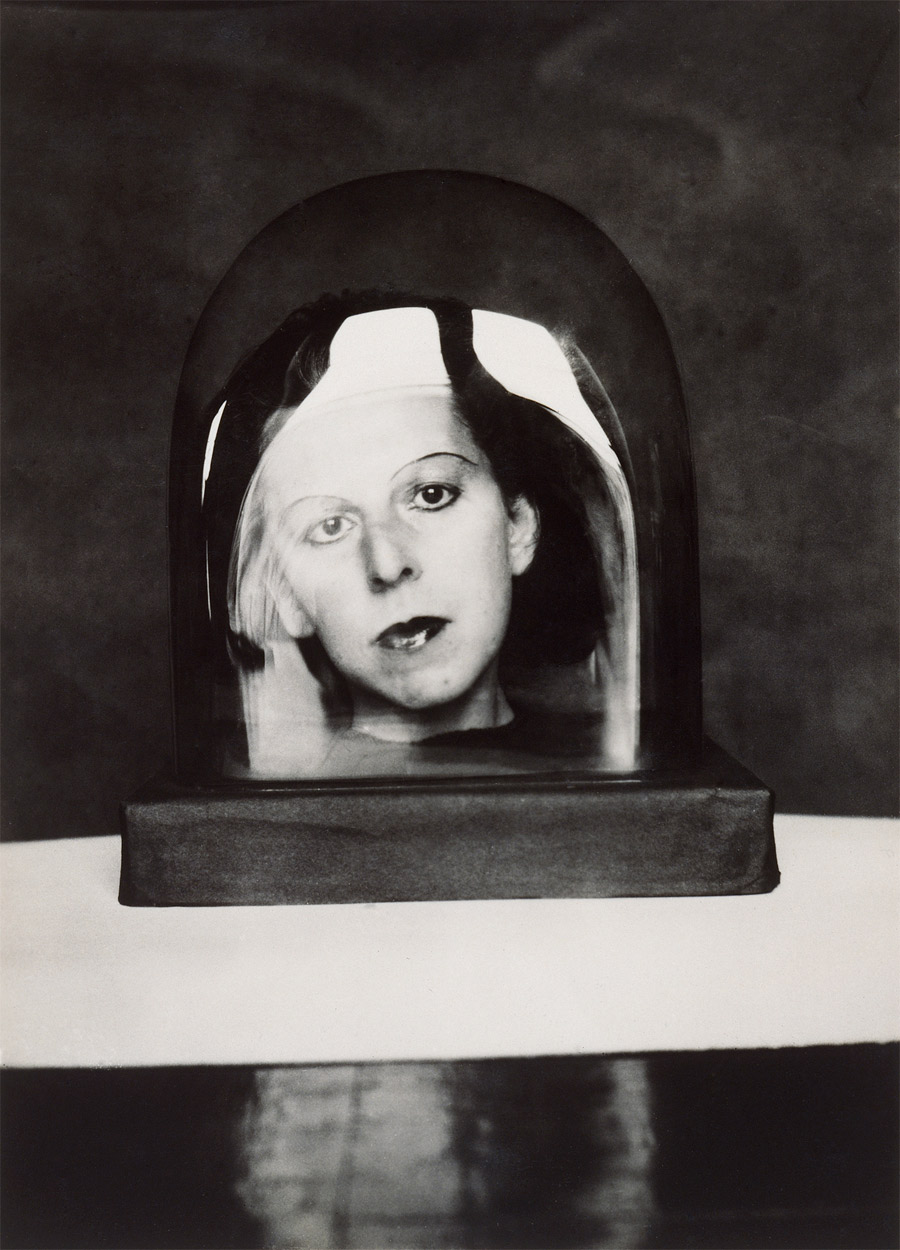
 

Claude Cahun (French, 1894-1954) 'Study for a keepsake' c. 1925


Claude Cahun (French, 1894-1954)
Study for a keepsake
c. 1925
Silver gelatin print
Musée d’Art moderne de la Ville de Paris
© Musée d’Art moderne / Roger-Viollet


Claude Cahun (French, 1894-1954) 'I am in training don't kiss me' c. 1927


Claude Cahun (French, 1894-1954)
I am in training don’t kiss me
c. 1927
Silver gelatin print
117mm x 89mm (whole)
Jersey Heritage Collections
© Jersey Heritage


Totor (progenitor of Tintin) and Popol are two comic characters by the Belgian cartoonist Hergé. Castor and Pollux are the twin stars; Pollux and Helen were the children of Zeus and Leda, while Castor and Clytemnestra were the children of Leda and Tyndareus.


Claude Cahun (French, 1894-1954) 'Self-portrait (kneeling, naked, with mask)' c. 1928


Claude Cahun (French, 1894-1954)
Self-portrait (kneeling, naked, with mask)
c. 1928
Silver gelatin print
116mm x  83mm
Jersey Heritage Collections
© Jersey Heritage
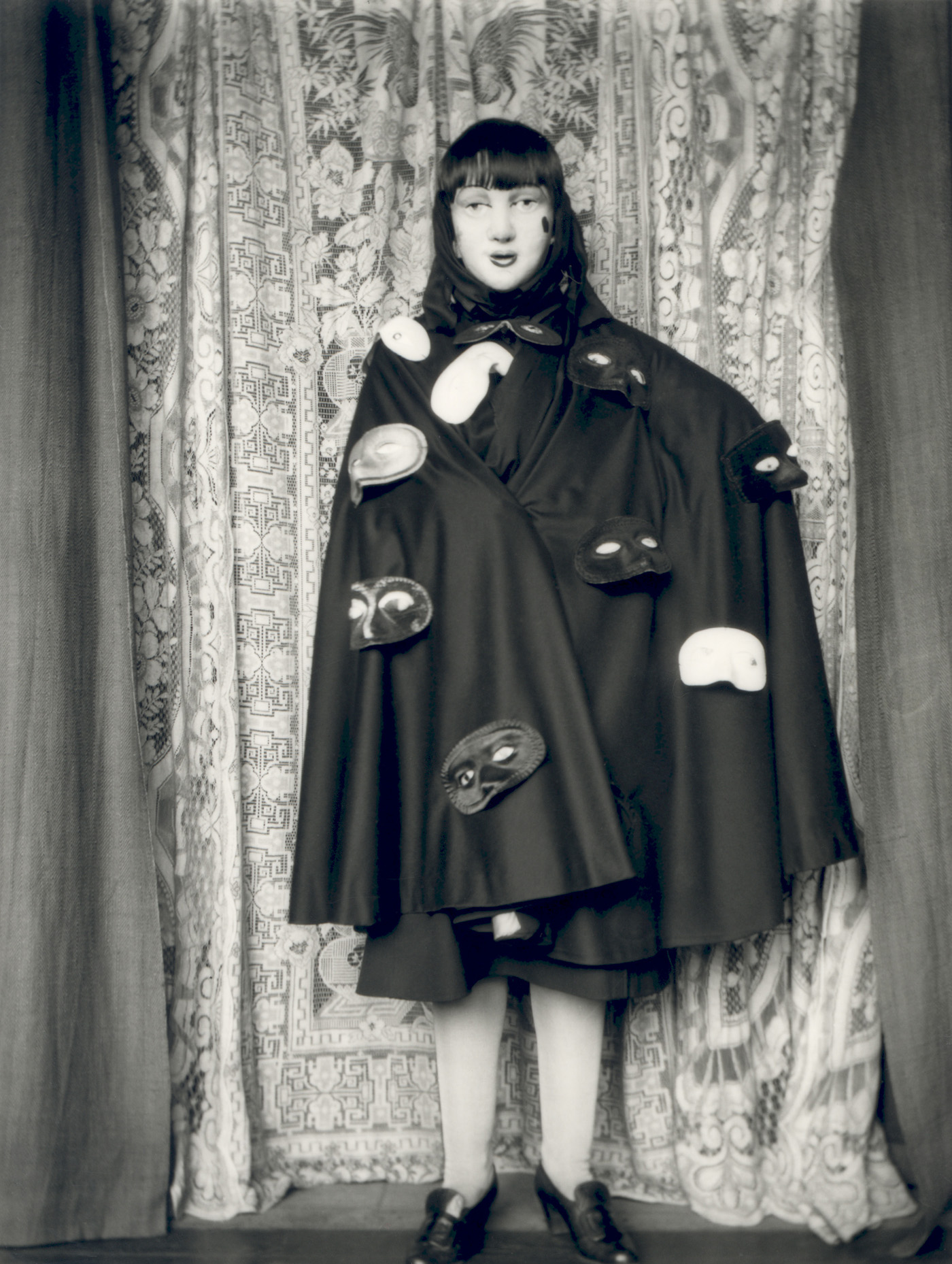
 

Claude Cahun (French, 1894-1954) 'Self-portrait (full length masked figure in cloak with masks)' 1928


Claude Cahun (French, 1894-1954)
Self-portrait (full length masked figure in cloak with masks)
1928
Silver gelatin print
109 x 82mm
Jersey Heritage Collections
© Jersey Heritage


Claude Cahun (French, 1894-1954) 'Self-portrait' 1929


Claude Cahun (French, 1894-1954)
Self-portrait
1929
Silver gelatin print
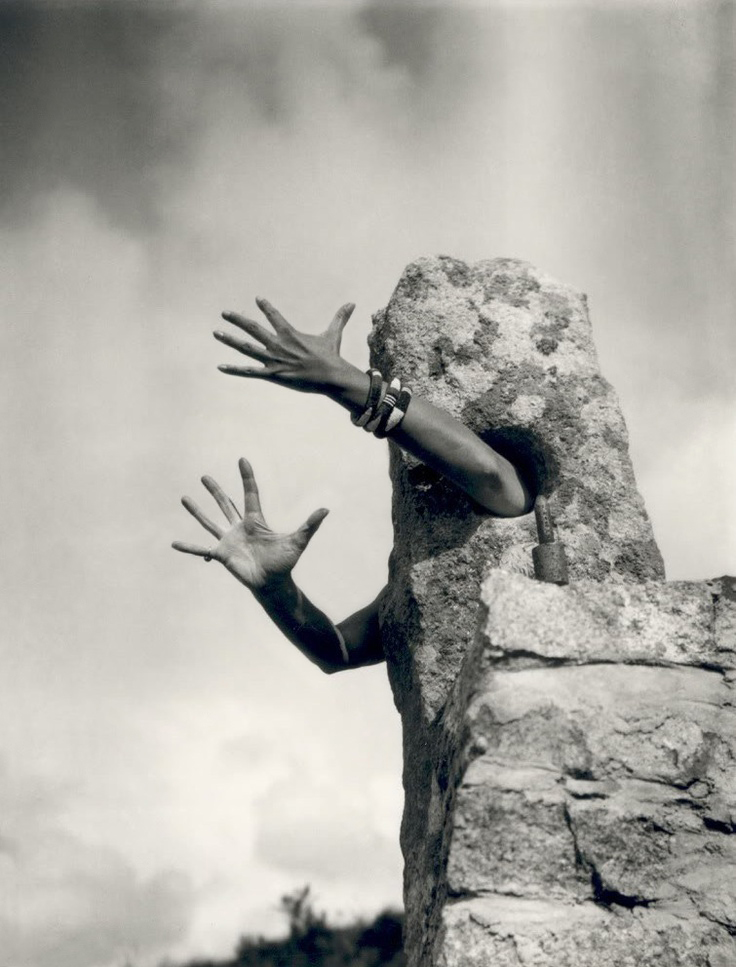
 

Claude Cahun (French, 1894-1954) 'Je tends les bras (I extend my arms)' c. 1932


Claude Cahun (French, 1894-1954)
Je tends les bras (I extend my arms)
c. 1932
Silver gelatin print
Jersey Heritage Collections
© Jersey Heritage


Claude Cahun (French, 1894-1954) 'Self-portrait (in cupboard)' c. 1932


Claude Cahun (French, 1894-1954)
Self-portrait (in cupboard)
c. 1932
Silver gelatin print
Jersey Heritage Collections
© Jersey Heritage


Gillian Wearing and Claude Cahun: Behind the mask, another mask (9 March – 29 May 2017) draws together over 100 works by French artist Claude Cahun (1894-1954) and British contemporary artist Gillian Wearing (b.1963). While they were born 70 years apart, they share similar themes of gender, identity, masquerade and performance.

Cahun, along with her contemporaries André Breton and Man Ray, was affiliated with the French Surrealist movement although her work was rarely exhibited during her lifetime. Together with her partner, the artist and stage designer Marcel Moore, the two women left Paris and were then imprisoned in Nazi-occupied Jersey during the Second World War as a result of their roles in the French Resistance. In her photographs she is depicted wearing masks and costumes and engaging with Surrealist ideas. She also changes her appearance by shaving her hair and wearing wigs, often challenging traditional notions of gender representation.

Gillian Wearing studied at Goldsmiths University, winning the Turner Prize in 1997. She has exhibited extensively in the United Kingdom and internationally, including solo exhibitions at the Whitechapel Gallery and Serpentine Gallery, whilst overseas, recent retrospectives include IVAM Valencia and K20 Dusseldorf. Wearing’s photographic self-portraits incorporate painstaking recreations of her as others in an intriguing and sometimes unsettling range of guises such as where she becomes her immediate family members using prosthetic masks.

Despite their different backgrounds, obvious and remarkable parallels can be drawn between the artists whose fascination with identity and gender is played out through performance and masquerade. Wearing has referenced Cahun overtly in the past: Me as Cahun holding a mask of my face is a reconstruction of Cahun’s self-portrait Don’t kiss me I’m in training of 1927, and forms the starting point of this exhibition, the title of which (Behind the mask, another mask) adapts a quotation from Claude Cahun’s Surrealist writings.

Dr Nicholas Cullinan, Director, National Portrait Gallery, London, says: ‘This inspired, timely and poignant exhibition pairs the works of Gillian Wearing and Claude Cahun. These pioneering artists, although separated by several decades, address similarly compelling themes around gender, identity, masquerade, performance and the idea of the self, issues that are ever more relevant to the present day.’

Sarah Howgate, Curator, Gillian Wearing and Claude Cahun: Behind the mask, another mask, says: ‘It seems particularly fitting that at the National Portrait Gallery on International Women’s Day we are bringing together for the first time Claude Cahun’s intriguing and complex explorations of identity with the equally challenging and provocative self-images of Gillian Wearing.’

Gillian Wearing and Claude Cahun: Behind the mask, another mask is curated by Sarah Howgate, Senior Curator of Contemporary Portraits at the National Portrait Gallery, London.
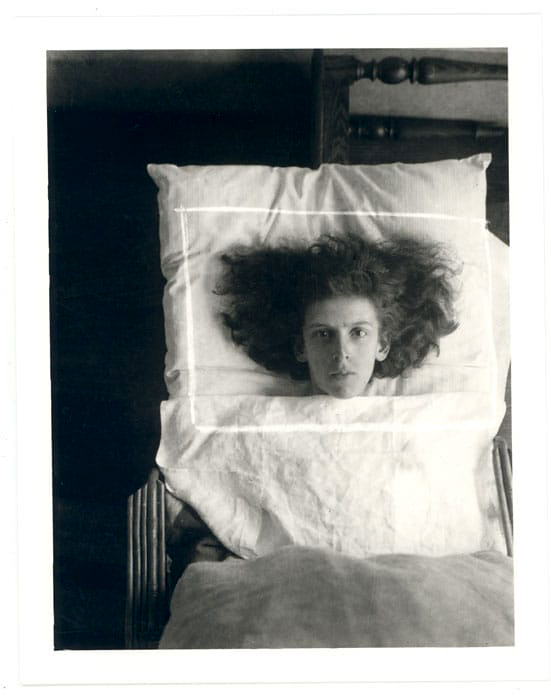
 

Claude Cahun (French, 1894-1954) 'Self-portrait as a young girl' 1914


Claude Cahun (French, 1894-1954)
Self-portrait as a young girl
1914
Silver gelatin print
Jersey Heritage Collections
© Jersey Heritage


Claude Cahun (French, 1894-1954) 'Self-portrait as a young girl' 1914


Claude Cahun (French, 1894-1954)
Self-portrait as a young girl
1914
Silver gelatin print
Jersey Heritage Collections
© Jersey Heritage


Claude Cahun (French, 1894-1954) 'Self-portrait (shaved head, material draped across body)' 1920


Claude Cahun (French, 1894-1954)
Self-portrait (shaved head, material draped across body)
1920
Silver gelatin print
115 x 89mm


Claude Cahun (French, 1894-1954) 'Autoportrait' 1927


Claude Cahun (French, 1894-1954)
Autoportrait
1927
Silver gelatin print
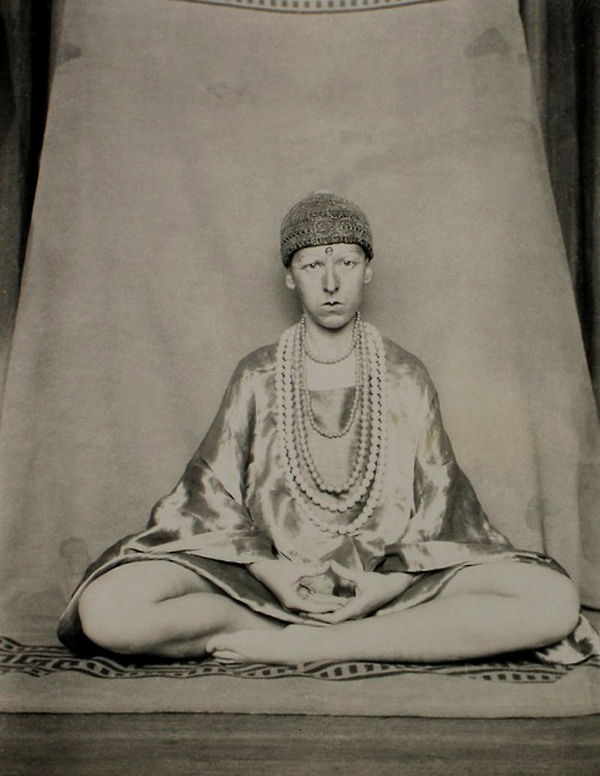
 

Claude Cahun (French, 1894-1954) 'Self-Portrait' 1927


Claude Cahun (French, 1894-1954)
Self-Portrait
1927
Silver gelatin print
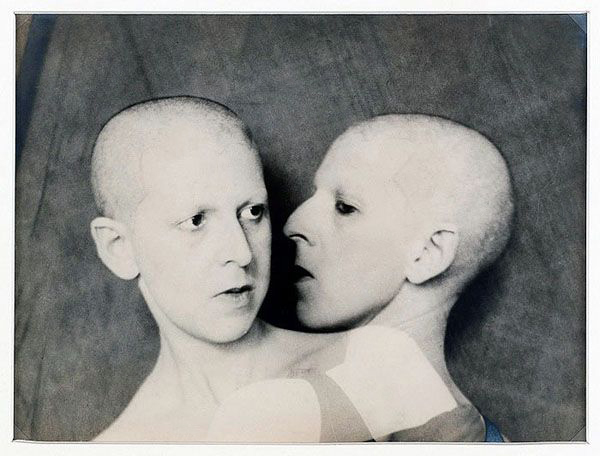
 

Claude Cahun (French, 1894-1954) 'Que me veux tu?' 1929


Claude Cahun (French, 1894-1954)
Que me veux tu? (What do you want from me?)
1929
Gelatin silver print
18 x 23cm (7 1/16 x 9 1/16 ins)
Musée d’Art Moderne de la Ville de Paris


Claude Cahun (French, 1894-1954) 'Self-portrait' 1929


Claude Cahun (French, 1894-1954)
Self-portrait
1929
Gelatin silver print


Claude Cahun (French, 1894-1954) 'Autoportrait' 1939


Claude Cahun (French, 1894-1954)
Autoportrait
1939
Gelatin silver print
10 x 8cm
Jersey Heritage Collection
© Jersey Heritage


Claude Cahun (French, 1894-1954) 'Self-portrait (with Nazi badge between her teeth)' 1945


Claude Cahun (French, 1894-1954)
Self-portrait (with Nazi badge between her teeth)
1945
Photograph – Courtesy of the artist


Ten things you need to know about this extraordinary artist

1. Her real name was Lucy Schwob.
She was born 25 October 1894 in Nantes, daughter of newspaper owner Maurice Schwob and Victorine Marie Courbebaisse; her uncle was the Symbolist writer Marcel Schwob. Subjected to anti-Semitic acts following the Dreyfus Affair, she was removed to a boarding school in Surrey, where she studied for two years.

2. Cahun’s lover was also her stepsister.
In 1909, she met her lifelong partner and collaborator Suzanne Malherbe while studying in Nantes, in what she described as a ‘thunderbolt encounter’. Eight years later, Cahun’s father married Suzanne’s widowed mother.

3. The couple adopted gender-neutral names.
Schwob first used the name Claude Cahun in the semi-biographical text ‘Les Jeux uraniens’, Cahun being a surname from her father’s side. Malherbe changed her name to Marcel Moore and the pair moved to Paris in 1914, where they began their artistic collaborations and Cahun studied literature and philosophy at the Sorbonne.

4. Cahun was one of the few female Surrealists.
In 1932 she was introduced to André Breton, who called her ‘one of the most curious spirits of our time’. Four years later, Cahun participated in the Surrealist exhibition at the Galerie Charles Ratton, Paris, and visited the International Surrealist Exhibition at the New Burlington Galleries, London. Whereas in the works of male Surrealists women often appear as eroticised objects, Cahun’s self-portraits explore female identity as constructed and multifaceted.

5. She was first and foremost a writer.
Now best known for her striking self-portraits, Cahun saw herself primarily as a writer. In 1930 she published Aveux non avenus (translated into English as Disavowals or Cancelled Confessions), an ‘anti-memoir’ including ten photomontages created in collaboration with Moore.

6. In 1937 the couple swapped Paris for Jersey.
Cahun and Moore moved to La Rocquaise, a house in St Brelade’s Bay, Jersey, where they led a secluded life. The couple reverted to their given names, Lucy Schwob and Suzanne Malherbe, and were known by the islanders as ‘les mesdames’.

7. They were actively involved in the resistance against Nazi Occupation.
When the Germans invaded Jersey in 1940 they decided to stay and produced counter-propaganda tracts. In July 1944 they were found out, arrested, stood trial, and were, briefly, sentenced to death (though these sentences were commuted). The couple were imprisoned in separate cells for almost a year before Liberation in May 1945.

8. In 1951 Cahun received the Medal of French Gratitude for her acts of resistance during the Second World War. Suffering increasingly from ill health, she died in 1954 at the age of sixty. Moore died eighteen years later, in 1972.

9. She remained forgotten for half a century
Following her move to Jersey, Cahun slipped from critical attention. After the death of Marcel Moore, much of Cahun’s work was put up for auction and acquired by collector John Wakeham, who then sold it to the Jersey Heritage Trust in 1995. The publication in 1992 of the definitive biography by Francois Leperlier, Claude Cahun: l’ecart et la metamorphose, and subsequent exhibition, Claude Cahun: Photographe, at the Musee d’Art Moderne de la Ville de Paris in 1995 encouraged a growing interest in the artist’s work. It was during this time that Gillian Wearing discovered Claude Cahun.

10. She was an artist ahead of her time
Wearing speaks of a ‘camaraderie’ between her and Cahun but she is not the only contemporary artist to have been influenced by her work. Cahun has a dedicated following among artists and art historians working from postmodern, feminist and queer theoretical perspectives; the American art critic Hal Foster described Cahun as ‘a Cindy Sherman avant la lettre’.


Gillian Wearing (English, b. 1963) 'Self-portrait as my brother Richard Wearing' 2003 from the exhibition 'Gillian Wearing and Claude Cahun: Behind the mask, another mask' at the National Portrait Gallery, London, March - May, 2017


Gillian Wearing (English, b. 1963)
Self-portrait as my brother Richard Wearing
2003
Heather Podesta Collection
Courtesy Maureen Paley, London; Regen Projects, Los Angeles; Tanya Bonakdar Gallery, New York
© Gillian Wearing


Gillian Wearing (English, b. 1963) 'Me as Mapplethorpe' 2009


Gillian Wearing (English, b. 1963)
Me as Mapplethorpe
2009
Courtesy Maureen Paley, London, Regen Projects, Los Angeles and Tanya Bonakdar Gallery, New York
© Gillian Wearing


Gillian Wearing (English, b. 1963) 'Me as Warhol in Drag with Scar' 2010


Gillian Wearing (English, b. 1963)
Me as Warhol in Drag with Scar
2010
Courtesy Maureen Paley, London, Regen Projects, Los Angeles and Tanya Bonakdar Gallery, New York
© Gillian Wearing


Gillian Wearing (English, b. 1963) 'Me as Diane Arbus' 2008-2010


Gillian Wearing (English, b. 1963)
Me as Diane Arbus
2008-2010
Courtesy Maureen Paley, London, Regen Projects, Los Angeles and Tanya Bonakdar Gallery, New York
© Gillian Wearing


Gillian Wearing (English, b. 1963) 'Me as Cahun holding a mask of my face' 2012


Gillian Wearing (English, b. 1963)
Me as Cahun holding a mask of my face
2012
Courtesy Maureen Paley, London; Regen Projects, Los Angeles; Tanya Bonakdar Gallery, New York
© Gillian Wearing


Gillian Wearing (English, b. 1963) 'Self-portrait of me now in a mask' 2011


Gillian Wearing (English, b. 1963)
Self-portrait of me now in a mask
2011
Collection of Mario Testino
Courtesy Maureen Paley, London; Regen Projects, Los Angeles; Tanya Bonakdar Gallery, New York
© Gillian Wearing


Gillian Wearing (English, b. 1963) 'Me as mask' 2013


Gillian Wearing (English, b. 1963)
Me as mask
2013
Private collection, courtesy Cecilia Dan Fine Art
Courtesy Maureen Paley, London; Regen Projects, Los Angeles; Tanya Bonakdar Gallery, New York
© Gillian Wearing


Gillian Wearing (English, b. 1963) 'At Claude Cahun's grave' 2015


Gillian Wearing (English, b. 1963)
At Claude Cahun’s grave
2015
Courtesy Maureen Paley, London
© Gillian Wearing


National Portrait Gallery
St Martin’s Place
London, WC2H 0HE

Opening hours:
Open daily: 10.30 – 18.00​
Friday and Saturday: 10.30 – 21.00

National Portrait Gallery website

LIKE ART BLART ON FACEBOOK

Back to top

Exhibition: ‘Francesca Woodman. On Being an Angel’ at Moderna Museet, Stockholm

Exhibition dates: 5th September 2015 – 6th December 2015

Curator: Anna Tellgren


Francesca Woodman (American, 1958-1981) 'On Being an Angel', Providence, Rhode Island, 1976


Francesca Woodman (American, 1958-1981)
On Being an Angel
Providence, Rhode Island, 1976
Gelatin silver print
© George and Betty Woodman


The artist as chimerical creature

Francesca Woodman (1958-1981) achieved more in eight years of artistic creativity than many artists achieve in a lifetime.

As a viewer you can read whatever you want into her photographs: feminism, surrealism, psychoanalytical theory, avant-garde, sexuality, gender, identity, sadness, happiness, joy. One of Francesca Woodman’s teachers was Aaron Siskind but you can also feel echoes of Diane Arbus, the conceptual, narrative mystery of Duane Michals, the postmodern generation of Cindy Sherman (1977 onwards) and, someone who nobody mentions as an influence, the darkness of Ralph Eugene Meatyard (family members enacting symbolic dramas in masks, often set in abandoned places). Woodman also places masks on or off of her face. Further, “There are similarities in style to surrealistic photography, such as Woodman’s frequent use of mirrors, doubles, shadows, gloves, hands, swans, fish, eels, masks, and sexual symbols. Photographers such as Hans Bellmer, Claude Cahun, and Man Ray spring to mind.”1

Here, I see the influence of Carl Jung in her work, specifically in Jungian psychology, the shadow or “shadow aspect” of the self (traces and silhouettes) which may refer to an unconscious aspect of the personality which the conscious ego does not identify in itself. This shadow aspect may be positive or negative. “Everyone carries a shadow,” Jung wrote, “and the less it is embodied in the individual’s conscious life, the blacker and denser it is.”2 This shadow aspect can be see in the photograph Untitled, Providence, Rhode Island, 1976 (below).

Another element embedded in the work is that of the Mirror stage, which is a concept in the psychoanalytic theory of Jacques Lacan. “The mirror stage is based on the belief that infants recognise themselves in a mirror (literal) or other symbolic contraption which induces apperception (the turning of oneself into an object that can be viewed by the child from outside themselves) from the age of about 15 to 18 months… Lacan believed that the mirror stage represented a permanent structure of subjectivity, or as the paradigm of “Imaginary order”.”3 The basis of the Imaginary order is the formation of the ego in the “mirror stage”. “Since the ego is formed by identifying with the counterpart or specular image, “identification” is an important aspect of the imaginary. The relationship whereby the ego is constituted by identification is a locus of “alienation”, which is another feature of the imaginary, and is fundamentally narcissistic.”4 This imaginary order can be seen in photographs such as Self-deceit #1, Rome, Italy, 1978 (below), where the image and even the title alludes to a form of self-alienation.

Riffing on the “highly influential writings of French philosophers and cultural critics such as Michel Foucault, Roland Barthes, and Julia Kristeva that were just beginning to be made available in translation. Among these thinkers’ central ideas was that identity was not organic and innate, but manufactured and learned through highly refined social constructions of gender, race, sexuality, and citizenship”5, Woodman’s work can also be seen to embody and ennoble these subjective and surrealist constructions (of self).

The artist is a CHIMERICAL CREATURE. Imaginary, visionary. Woodman’s transformations, her interior elements, become part of the wall or the house. She vanishes “from the room, out of the picture, at any given second.” A preoccupation with the body / her own body, and the dichotomy of subject-object, also adds multiple meanings and complexity to Woodman’s work. Her many angel images (and also images of umbrellas – Mary Poppins was released in 1964 when Woodman was growing up) suggest movement and the ability to fly, a fascination that found its ultimate expression when she jumped off a building in lower Manhattan at the age of 22.

We can read of all these things into the image/inary of Francesca Woodman if we want to. But they are not necessary to admire or appreciate her work. All we have to do is look at the photographs themselves; just return to the work. Here was a young artist, a young human being, expressing themselves through photography. She was just going for it and, as Corey Keller (a curator of photography at the San Francisco Museum of Modern Art) has noted, her youth was the source of her potency.

“Art students are drawn to the conviction she brought to her work and, in contrast to the cool slickness of the digital, it embraces tactility and decay in a very sensual and seductive way.” Keller sees Woodman’s youth not as a liability, but as the source of her potency, though she admits the issue of her self-portraits continues to be fraught. “They are certainly an expression of selfhood. She’s not interested in images of women in general, for example, and even when the subject of the photograph is not herself physically, one always has the sense it is about her psychically.””6

While she may not have fully understood the layered nuances of French philosophy and Jungian psychology she INTUITIVELY knew what she was doing and what she wanted to achieve and capture in her work. There are lots of other photographers around the world that work in this same idiom, at art school and as mature artists, but none have that special something that Woodman has, something that one cannot quite put your finger on.

It is … a gap we can see across but cannot map.

Woodman is one of the greats. In her few short years as an artist, she achieved immortality through her images. Her narrative – one of youth and vitality, of self exploration and transformation – is no myth. For she is legend.

Dr Marcus Bunyan


Footnotes

1/ Tellgren, Anna. Francesca Woodman: On Being an Angel (50kb pdf). 2015, pp. 13-14

2/ Shadow (psychology) on the Wikipedia website [Online] Cited 04/12/2015

3/ Mirror stage on the Wikipedia website [Online] Cited 04/12/2015

4/ The Imaginary (psychoanalysis) on the Wikipedia website [Online] Cited 04/12/2015

5/ Eklund, Douglas. “The Pictures Generation,” Heilbrunn Timeline of Art History on The Metropolitan Museum of Art website [Online] Cited 04/12/2015

6/ Corey Keller quoted in Cooke, Rachel. “Searching for the real Francesca Woodman,” on The Guardian website, Sunday 31 August 2014 [Online] Cited 04/12/2015


Many thankx to the Moderna Museet, Stockholm for allowing me to publish the photographs in the posting. Please click on the photographs for a larger version of the image.


The American photographer Francesca Woodman (1958-1981) created a body of fascinating photographic works in a few intense years before her premature death. Her oeuvre has been the object of numerous in-depth studies and major exhibitions in recent years, and her photographs have inspired artists all over the world. Francesca Woodman began photographing in her teens and studied at the Rhode Island School of Design from 1975 to 1978. Her output is usually divided into periods, from her early works, her years as a student in Providence, Italy (1977-1978), the Mac Dowell Colony, and, lastly, New York from 1979 until she died. The collection she left behind consists of a few hundred gelatin silver prints, but she also tried other techniques, such as large-format diazotypes, colour photography and video.

Woodman’s photographs explore gender, representation, sexuality and body. Her production includes several self-portraits, using herself and her friends as models. The figures are often placed behind furniture and other interior elements; occasionally, the images are blurred in such a way that their identity is hidden from the viewer. The intimate nature of the subject matter is enhanced by the small formats. Woodman worked in unusual settings such as derelict buildings, using mirrors and glass to evoke surrealist and occasionally claustrophobic moods.

Moderna Museet will present some hundred photographs by Francesca Woodman, with a selection from the series and themes she explored. The exhibition is produced by Moderna Museet in association with Betty and George Woodman and the Estate of Francesca Woodman. Alongside this exhibition, Moderna Museet will present a compilation of photography from the same period from its collection, to show Francesca Woodman in context and expand the perspective on her oeuvre to the public.


Francesca Woodman (American, 1958-1981) 'On Being an Angel #1', Providence, Rhode Island, 1977


Francesca Woodman (American, 1958-1981)
On Being an Angel #1
Providence, Rhode Island, 1977
Gelatin silver print
© George and Betty Woodman


Francesca Woodman (American, 1958-1981) From 'Angel' series, Rome, Italy, 1977


Francesca Woodman (American, 1958-1981)
From Angel series
Rome, Italy, 1977
Gelatin silver print
© George and Betty Woodman


Francesca Woodman (American, 1958-1981) From 'Angel' series, Rome, Italy, 1977-1978


Francesca Woodman (American, 1958-1981)
From Angel series
Rome, Italy, 1977-1978
Gelatin silver print
© George and Betty Woodman


Francesca Woodman (American, 1958-1981) 'Charlie the Model # 5', Providence, Rhode Island, 1976-1977


Francesca Woodman (American, 1958-1981)
Charlie the Model #5
Providence, Rhode Island, 1976-1977
Gelatin silver print
© George and Betty Woodman


Francesca Woodman (American, 1958-1981) From 'Eel' series, Venice, Italy, 1978


Francesca Woodman (American, 1958-1981)
From Eel series
Venice, Italy, 1978
Gelatin silver print
© George and Betty Woodman


Francesca Woodman (American, 1958-1981) 'House #4', Providence, Rhode Island, 1976


Francesca Woodman (American, 1958-1981)
House #4
Providence, Rhode Island, 1976
Gelatin silver print
© George and Betty Woodman


Francesca Woodman (American, 1958-1981) From the 'three kinds of melon in four kinds of light' series, Providence, Rhode Island, 1976


Francesca Woodman (American, 1958-1981)
From the three kinds of melon in four kinds of light series
Providence, Rhode Island, 1976
Gelatin silver print
© George and Betty Woodman


The American photographer Francesca Woodman (1958-1981) created a body of fascinating photographic works in a few intense years before her premature death. Her oeuvre has been shown in number of major exhibitions in recent years, and her photographs have inspired artists all over the world.

Woodman’s photographs explore gender, representation, sexuality and body. The intimate nature of the subject matter is enhanced by the small formats. Her production includes several portraits, using herself and her friends as models. The figures are often placed behind furniture and other interior elements; occasionally, the images are blurred and the models hidden from the viewer. Woodman worked in settings such as derelict buildings, using mirrors and glass, evoking surrealist and at times even claustrophobic moods.

Francesca Woodman began photographing in her teens and studied at the Rhode Island School of Design from 1975 to 1978. Her output is usually divided into periods: the early works, her years as a student in Providence, Italy (1977-1978), the Mac Dowell Colony, and, lastly, New York from 1979 until she died. The collection she left behind consists of several hundred gelatin silver prints, but she also tried other techniques, such as large-format diazotypes and video.

Francesca Woodman. On being an angel presents 102 photographs and one video, representing most of the artist’s series and themes. The exhibition is produced by Moderna Museet in association with the Estate of Francesca Woodman. Alongside this exhibition, Moderna Museet presents a compilation of photography from the same period from its collection, to show Francesca Woodman in context and expand the perspective on her oeuvre to the public.

Biography

Francesca Woodman was born into a family of artists in Denver, Colorado, on April 3, 1958. Her mother, Betty, was a sculptor, her father, George, a painter and photographer, and her brother, Charlie, was a video artist.

Italy

The family often traveled to Italy and lived in Florence for a year between 1965 and 1966. Then they returned home to Boulder, Colorado, and Francesca continued her schooling. In 1968 her parents bought a farmhouse outside of Florence in Antella, and there they would spend their summers. Italy and its language, culture, and art history were frequent sources of inspiration for Francesca Woodman.

Providence

Woodman started taking pictures as a teenager and had attended a few art courses before she moved to Providence to study at the Rhode Island School of Design (RISD) in 1975. The college is among the oldest art schools in the United States, and the well-known photographer Aaron Siskind was one of her teachers. While at college, she lived in her studio in an industrial area where many of her pictures from that time were created. Between 1977 and 1978 Francesca Woodman spent a year in Rome as part of the school’s honours program. In the fall of 1978, she earned her BFA and exhibited the series Swan Song (1978) at the graduate show in RISD’s Woods-Gerry Gallery.

New York

Months later, in January 1979, Woodman moved to New York, where she lived at various addresses while looking for work. She spent the summer together with her boyfriend, Benjamin Moore, in Stanwood, Washington. Over the course of the next year, she exhibited her work at a number of smaller galleries and experimented with new techniques such as large format diazotypes, and colour images. She was a fellow at the MacDowell Colony in Peterborough, New Hampshire, in the summer of 1980. There, she worked on a series of images exploring the relationship between nature and her body, among other projects. In early 1981, her artist’s book Some Disordered Interior Geometries was published by Synapse Press in Philadelphia. This was one of seven notebooks (including photographs that were glued in) that she worked with from 1976 onwards. Francesca Woodman took her own life on January 19, 1981.

Previous exhibitions

The first major retrospective of Francesca Woodman’s work was produced in 1986 by Ann Gabhart in collaboration with Rosalind Krauss for the Wellesley College Museum. It then toured a number of museums at American universities. Her first European exhibition was held in 1992 by Shedhalle in Zurich and the Westfälischer Kunstverein in Münster and was shown in the spring of 1993 at The Finnish Museum of Photography, in the Cable Factory in Helsinki. On its way there, it stopped for two months at Kulturhuset in Stockholm. The critic Lars O Ericsson wrote in Dagens Nyheter that the exhibition may have been the most important one to see in the capital at the time. To date, at least fifty separate exhibitions of Woodman’s photography have been held in Europe and the United States.

Photography from the Moderna Museet Collection

In connection to the exhibition with Francesca Woodman, Moderna Museet presents a selection of photographs from the same period from its collection, to show her in context. In Francesca Woodman’s active years in the late 1970s and early 1980s, photography was in a period of transition. Many photographers who had worked with classic black and white photography were experimenting with other forms and were pushing the documentary tradition towards more subjective and surrealist projects.

The United States paved the way in this development, and when many started working more professionally with photography, it was institutionalised. This shift in the field eventually spread to Europe. Major photographic exhibitions were held at The Museum of Modern Art in New York, featuring artists such as Diane Arbus, Robert Frank, and Lee Friedlander, all of whom were influential to many younger photographers.

One of Francesca Woodman’s teachers was Aaron Siskind. His photography is often compared to that of Harry Callahan, since both were active for many years as teachers at the Institute of Design at the Illinois Institute of Technology in Chicago, and later at the Rhode Island School of Design in Providence. Another figure in American post-war photography is Minor White, who also had influence as a teacher. White wrote about and taught methods for understanding and interpreting photographs. New Topographics. Photographs of a Man-Altered Landscape (1975) was a significant exhibition. It was held at the International Museum of Photography at George Eastman House in Rochester and one of the featured artists was Lewis Baltz. Other notable photographers in the new American wave were personalities as diverse as Robert Mapplethorpe, Melissa Shook, and Jerry Uelsmann.

But it was also then, from 1977 forward, that Cindy Sherman started working on her break-out series Untitled Film Stills. Sherman is an artist of the postmodern generation, and it is not known if Woodman had been aware of the so-called Pictures Generation. Duane Michals stood for a more conceptual approach. He was one of the photographers who we know interested Woodman.

Diazotype

In the spring of 1980 Francesca Woodman started working on Blueprint for a Temple, where she was recreating the facade of a Greek temple using models draped in tunics similar to caryatids. The series began with a collection of details from bathrooms in New York, reminiscent of classical motifs. From having worked on a smaller scale, she had now moved on to truly large formats, some several meters in size.

These pictures are often categorised as blueprints, referring to a method of reproduction most frequently used for architectural plans. This is a contact print process on photosensitive paper; white lines on a blue background distinguish the finished product. (Other types of paper produced different background colours.)

The technique Woodman used was diazotype: a dry photographic process on paper coated with diazonium compounds, which are sensitive to blue and UV light and developed by ammonia vapour. Woodman experimented with this technique. She created the largest of these images by hanging a long sheet of photosensitive diazo paper on the wall of a darkroom. A photographic slide was projected onto the paper from a slide projector, often for hours. The paper was then developed in a diazo processor at a company that made commercial reproductions of architectural plans. The result was a set of magnificent works in blue, purple, and sepia tones.

Text from the Moderna Museet, Stockholm website


Francesca Woodman (American, 1958-1981) 'About Being My Model', Providence, Rhode Island, 1976


Francesca Woodman (American, 1958-1981)
About Being My Model
Providence, Rhode Island, 1976
Gelatin silver print
© George and Betty Woodman


Francesca Woodman (American, 1958-1981) 'Spring in Providence # 2', Providence, Rhode Island, 1976


Francesca Woodman (American, 1958-1981)
Spring in Providence #2
Providence, Rhode Island, 1976
Gelatin silver print
© George and Betty Woodman


Francesca Woodman (American, 1958-1981) 'Self-deceit #1', Rome, Italy, 1978


Francesca Woodman (American, 1958-1981)
Self-deceit #1
Rome, Italy, 1978
Gelatin silver print
© George and Betty Woodman


Francesca Woodman (American, 1958-1981) 'Untitled', Providence, Rhode Island, 1975-1978


Francesca Woodman (American, 1958-1981)
Untitled
Providence, Rhode Island, 1975-78
Gelatin silver print
© George and Betty Woodman


Francesca Woodman (American, 1958-1981) 'Untitled', Rome, Italy, 1977-1978


Francesca Woodman (American, 1958-1981)
Untitled
Rome, Italy, 1977-1978
Gelatin silver print
© George and Betty Woodman


Francesca Woodman (American, 1958-1981) 'Untitled', New York, 1979-1980


Francesca Woodman (American, 1958-1981)
Untitled
New York, 1979-1980
Gelatin silver print
© George and Betty Woodman


Francesca Woodman (American, 1958-1981) 'Untitled', Providence, Rhode Island, 1976


Francesca Woodman (American, 1958-1981)
Untitled
Providence, Rhode Island, 1976
Gelatin silver print
© George and Betty Woodman


Francesca Woodman (American, 1958-1981) 'Untitled', New York, 1979-1980


Francesca Woodman (American, 1958-1981)
Untitled
New York, 1979-1980
Gelatin silver print
© George and Betty Woodman


Moderna Museet’s first exhibition this autumn features the American photographer Francesca Woodman, whose oeuvre has been the subject of numerous in-depth studies and major exhibitions in recent years. Her photography has inspired generations of artists and photographers around the world. Woodman has been called a prodigy, and those who met her testify to her as a young woman who was always working and looking for themes and material for her photographs. Examining Francesca Woodman’s aesthetic oeuvre is a challenge and an adventure.

Francesca Woodman’s (1958-1981) photographs explore gender, representation and body. Her aesthetic world reveals surrealist influences, with frequent use of mirrors, doubles, shadows, masks, and sexual symbols, bringing to mind the works of photographers such as Hans Bellmer, Claude Cahun and Man Ray. Woodman’s output includes several portraits using herself and her friends as models. The intimate nature of the subject matter is enhanced by the small formats. Transformation emerges as a theme in many of Woodman’s images, for example in one of her strongest and eeriest series, House from 1976, in which she gradually merges with the walls, the torn wallpaper and the open fireplace.

“Francesca Woodman created a body of fascinating photographic works in a few intense years before her premature death. Her images reference history and the history of photography, but they also reflect their time, while unlocking new interpretations. She is deeply personal, and so her themes become universal. All of this is what On Being an Angel is about,” says curator Anna Tellgren.

Francesca Woodman began photographing in her teens and studied at the Rhode Island School of Design from 1975 to 1978. Her output is usually divided into periods, from her early works, her years as a student in Providence, in Italy (1977-1978), at the MacDowell Colony, and, lastly, in New York from 1979 until she died. Analyses of her work are often linked to her biography and chronology. During her active years, Woodman produced thousands of images and she also tried other techniques such as large-format diazotypes, colour photography and video. Some eight hundred photographs have been preserved. The words, short sentences, or quotations she scrawled on many of her prints have since given those pieces their titles.

The exhibition Francesca Woodman. On Being an Angel is comprised of 102 photographs and one video by Francesca Woodman, and selections from most of her thematic groups and series are represented, including Polka Dots (1976), the From Angel series (1977), Swan Song (1978), Charlie the Model (1976-1977) and her large Caryatid (Study for a Temple Project) (1980). In Woodman’s active years in the late 1970s and early 1980s, photography was in a period of transition. Many photographers who had worked with classic black and white photography were experimenting with other forms, pushing the documentary tradition towards more subjective and surrealist projects. Alongside the exhibition, Moderna Museet will present a selection of photography from the same period from its collection, to show Francesca Woodman in context.


Francesca Woodman (American, 1958-1981) 'Untitled', Providence, Rhode Island, 1976


Francesca Woodman (American, 1958-1981)
Untitled
Providence, Rhode Island, 1976
Gelatin silver print
© George and Betty Woodman


Francesca Woodman (American, 1958-1981) 'Space2', Providence, Rhode Island, 1975-1976


Francesca Woodman (American, 1958-1981)
Space2
Providence, Rhode Island, 1975-1976
Gelatin silver print
© George and Betty Woodman


Francesca Woodman (American, 1958-1981) 'From Space2', Providence, Rhode Island, 1976


Francesca Woodman (American, 1958-1981)
From Space2
Providence, Rhode Island, 1976
Gelatin silver print
© George and Betty Woodman


Francesca Woodman (American, 1958-1981) 'Untitled', Providence, Rhode Island, 1975-1978


Francesca Woodman (American, 1958-1981)
Untitled
Providence, Rhode Island, 1975-1976
Gelatin silver print
© George and Betty Woodman


Francesca Woodman (American, 1958-1981) 'Untitled', New York, 1979-1980


Francesca Woodman (American, 1958-1981)
Untitled
New York, 1979-1980
Gelatin silver print
© George and Betty Woodman


Francesca Woodman (American, 1958-1981) 'Untitled', New York, 1979


Francesca Woodman (American, 1958-1981)
Untitled
New York, 1979
© George and Betty Woodman


Francesca Woodman (American, 1958-1981) 'Untitled', New York, 1979


Francesca Woodman (American, 1958-1981)
Untitled
New York, 1979
© George and Betty Woodman


Francesca Woodman (American, 1958-1981) '(Study for Temple Project)', New York, 1980


Francesca Woodman (American, 1958-1981)
(Study for Temple Project)
New York, 1980
© George and Betty Woodman


Moderna Museet, Stockholm

Moderna Museet is ten minutes away from Kungsträdgården, and twenty minutes from T-Centralen or Gamla Stan. Walk past Grand Hotel and Nationalmuseum on Blasieholmen, opposite the Royal Palace. After crossing the bridge to Skeppsholmen, continue up the hill. The entrance to Moderna Museet and Arkitekturmuseet is on the left-hand side.

Opening hours:
Tuesday – Sunday 10-18
Monday closed

Moderna Museet website

LIKE ART BLART ON FACEBOOK

Back to top