Album Horace Vernet front cover
30 cartes des visite
16cm high x 11cm wide x 3.5cm deep
I purchased this small photo album from an op shop (charity shop) in Melbourne, Australia.
It features 29 carte de visite by the French firm Goupil & Cie of the paintings of the French history painter Horace Vernet (1789-1863) – painter of battles, portraits, and Orientalist and modern national subjects.
“The Universal Exposition of 1855, at which he was represented by twenty-four paintings, crowned his popular and official success. His reputation among artists and critics, on the other hand, was not uncontested. Baudelaire scathingly referred to him as “un militaire qui fait de la peinture,” and while his painstaking factuality and the sheer magnitude of his production commanded respect, the prosy shallowness of his realism, his stylistic banality, and the stridency of his chauvinism were early noted and contributed to the eventual neglect of his work. At the time of his death in 1863, Vernet, a member of thirty academies, was nevertheless France’s most famous artist, admired and imitated throughout Europe and deeply imbedded in popular culture.”1
The only photograph not by Goupil & Cie in the whole album is the second photograph in the album, a portrait of the painter by Bingham (Robert Jefferson Bingham, English 1825-1870). The photograph can be dated to between 1861 when Bingham’s photographic studio in Paris was at Rue de la Rochefoucauld and 1863 when Vernet died. This also helps date the compilation of the whole album.
Dr Marcus Bunyan
1/ Anonymous. “Horace Vernet,” on the National Gallery of Art website Nd [Online] Cited 13/10/2024
Please click on the photographs for a larger version of the image.
PLEASE NOTE: the photographs appear in the posting in the order they appear in the album.
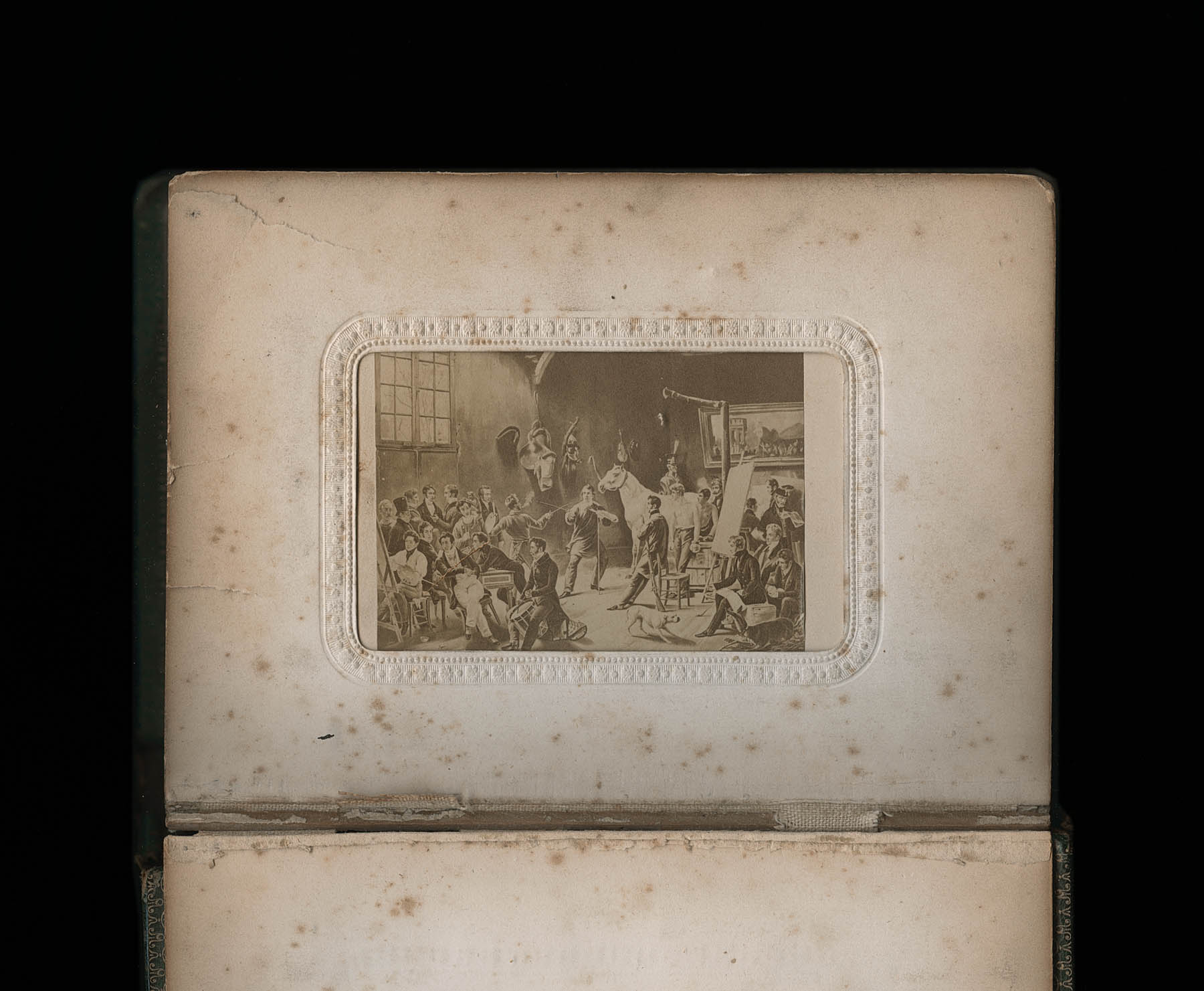
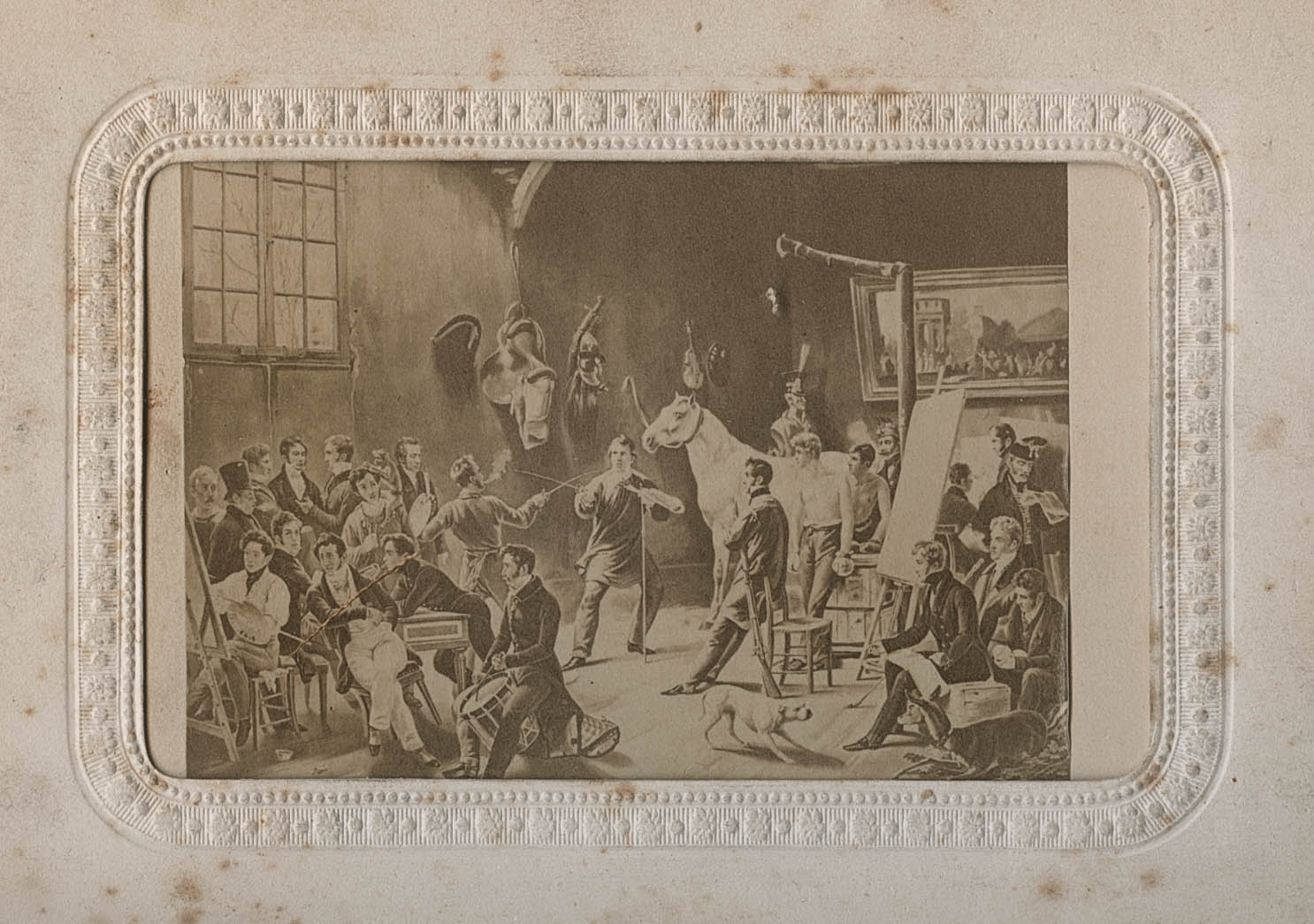
Goupil & Cie (photographer), Paris 19, Boulevard Montmartre
London, La Haye, Berlin, New York
After a painting by Horace Vernet (French, 1789-1863) The Studio of Horace Vernet (Interieur d un Atelier) 1824
c. 1860-1863
Carte de visite
Goupil & Cie was at Boulevard Montmartre between the 1850s-1880s
Bingham (photographer) Robert Jefferson Bingham (English, 1825-1870)
Photographie De S.M. La Reine D’Angleterre
Medaille de 1ere Classe 1855
58 Rue de Larochefoucualt, Paris Portrait of Horace Vernet (French, 1789-1863)
1861-1863
Carte de visite
Operated at Rue de la Rochefoucauld, 58 from 1861 until 1870.
Born in 1825 near Leicester in England, Bingham had a background in chemistry. He was particularly interested in photographic processes, and published a treatise on this subject in 1848. He later became the first writer to outline the possible use of collodion in photographs and the self-proclaimed ‘Inventeur du procédé collodion’. Bingham first exhibited his photographs of landscapes and of copies of paintings in London at The Great Exhibition in 1851. In 1859 he established a photographic portrait studio in Paris, which thrived throughout the 1860s and continued under his name even after his death in Brussels in 1870.
Text from the National Portrait Gallery website
Bingham also made photographs of the Exposition Universelle of 1855 in Paris. His ability to take some 2500 photographs at relatively high speeds on this occasion encouraged other photographers to use the collodion process for their work as well, helping it become the most popular method from 1855 until about 1880. Henry Cole sent him at the same time to the Louvre to photograph the masterpieces of the museum collection. At some point in 1851 1855, or 1859, Bingham moved to Paris to work there as a photographer, at first together with the American Warren T. Thompson until Thompson returned to England in 1856. Bingham not only worked at the 1855 Exposition, but also displayed his own life-size portraits, for which he won a Medal First Class. Due to a lack of commercial success, however, he soon stopped producing these huge photographs and stuck to more standard formats.
His work at the Louvre inspired him to make photographic portraiture a commercial enterprise, and in 1857 he opened his new atelier in the Nouvelle Athènes quarter of Paris, one of the hotspots of artistic activity at the time. He became friends with many artists, photographing them and their works, and started on a new project, a photographic collection of the works of the recently deceased painter Paul Delaroche. Published in 1858, it was the first photographic catalogue raisonné. It was followed over the next few years by similar works about other artists, including one in 1860 on Ary Scheffer and another one with photographs of the major works of the 1860 Salon. Smaller works with only a handful of photographs were produced for particular collections and for the Napoleon Museum in Amiens.
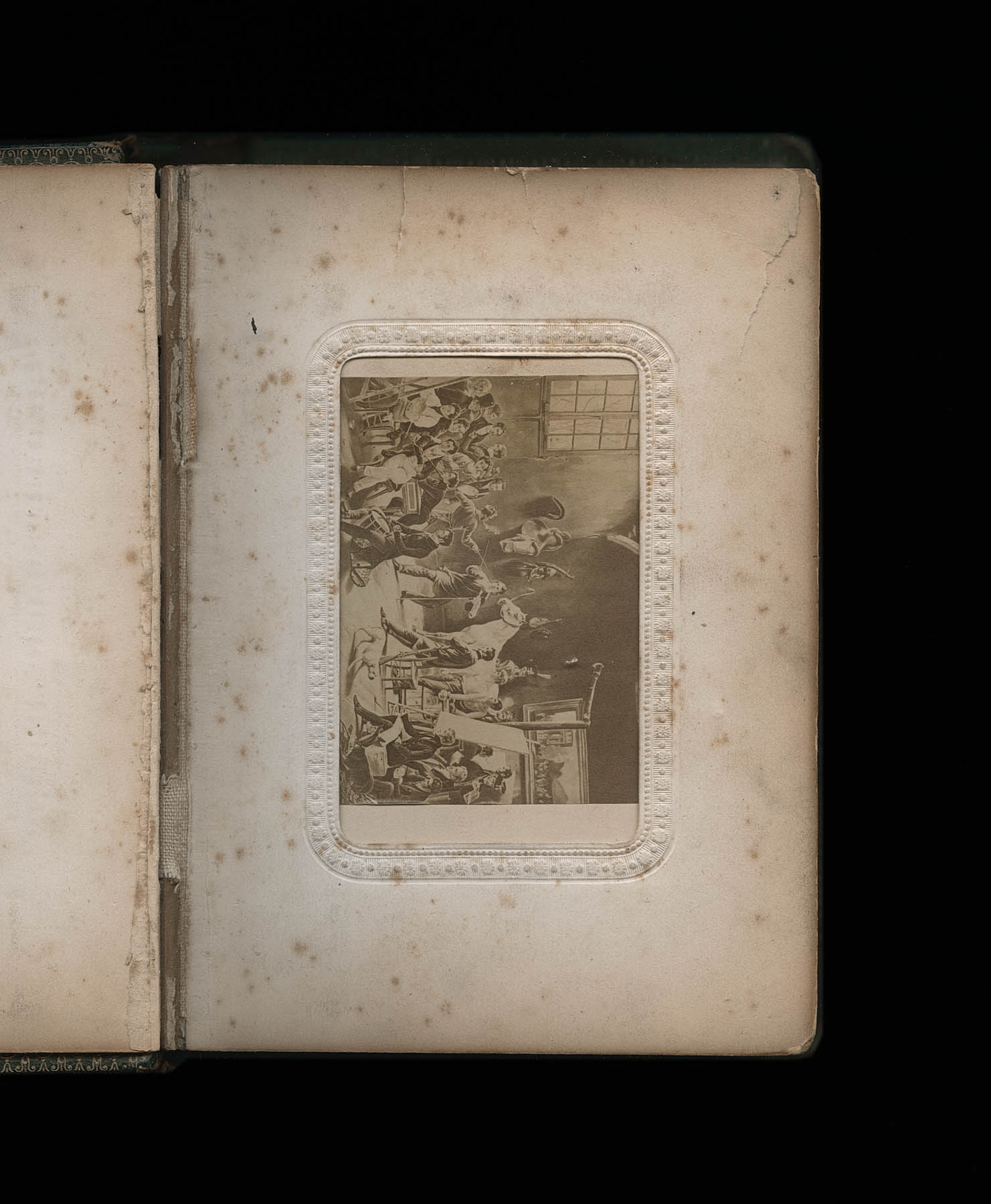
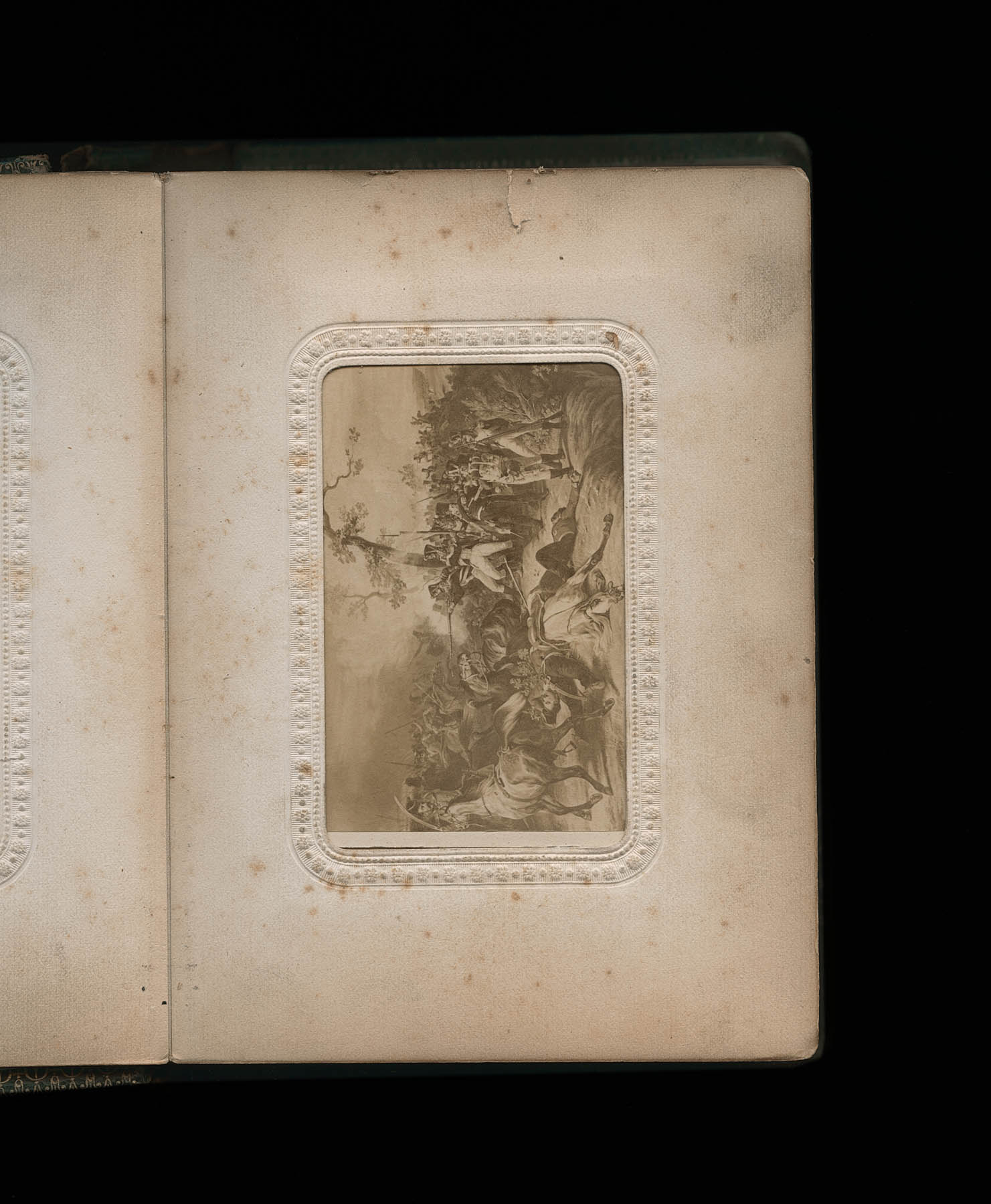
Goupil & Cie (photographer), Paris 19, Boulevard Montmartre
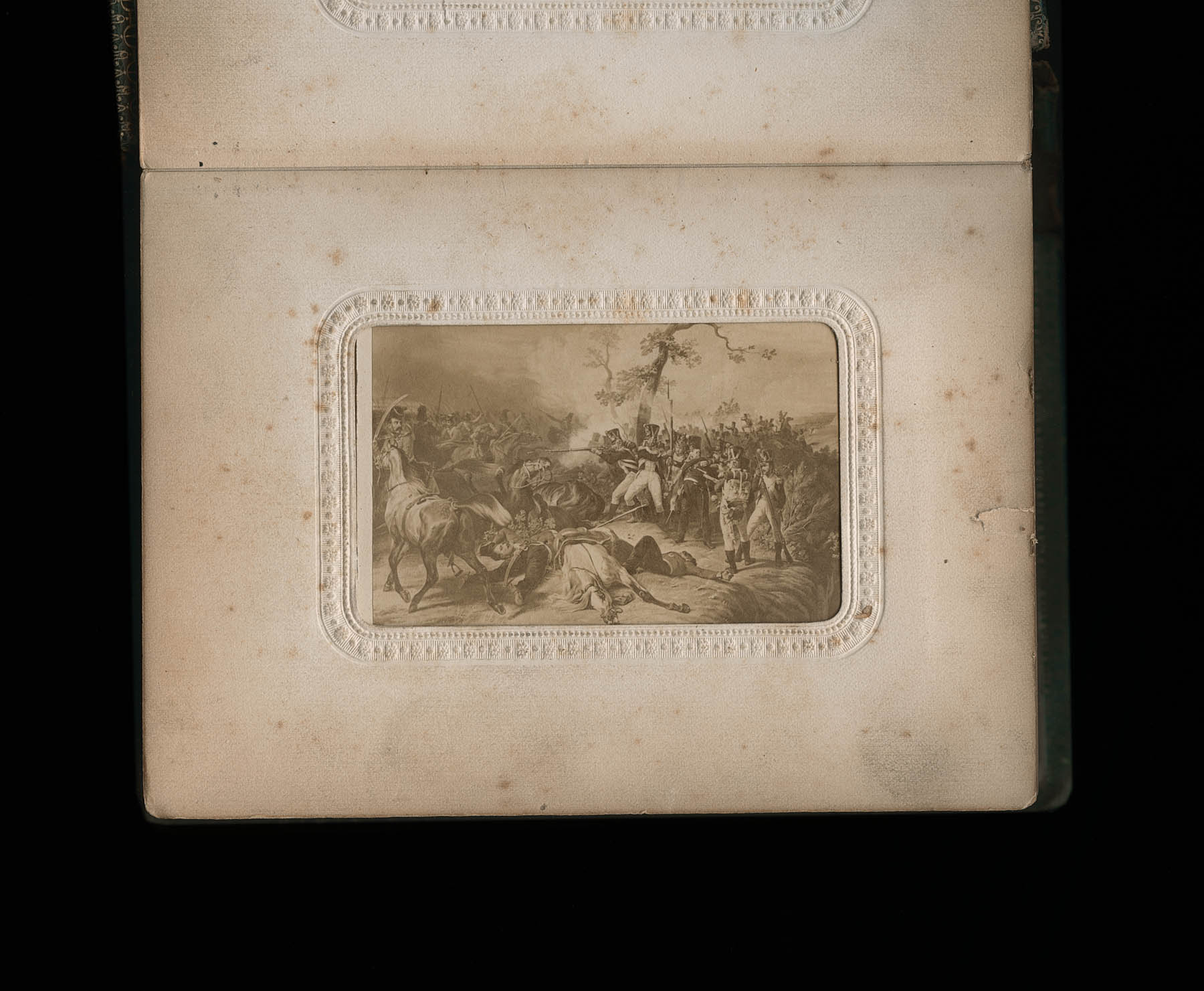
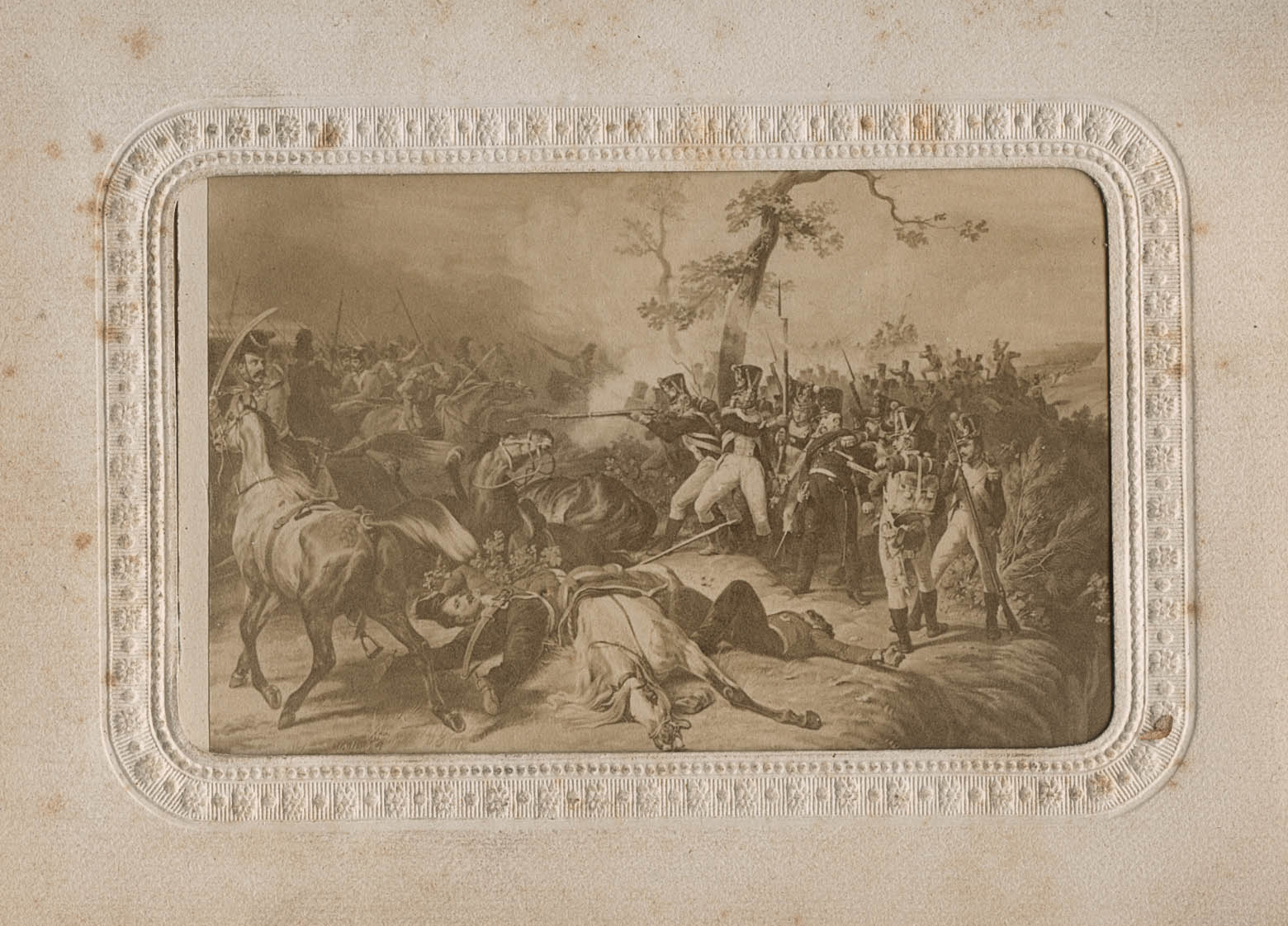
London, La Haye, Berlin, New York After a painting by Horace Vernet (French, 1789-1863) Battle near Vitebsk 1812
c. 1860-1863
Carte de visite
Goupil & Cie (photographer), Paris 19, Boulevard Montmartre
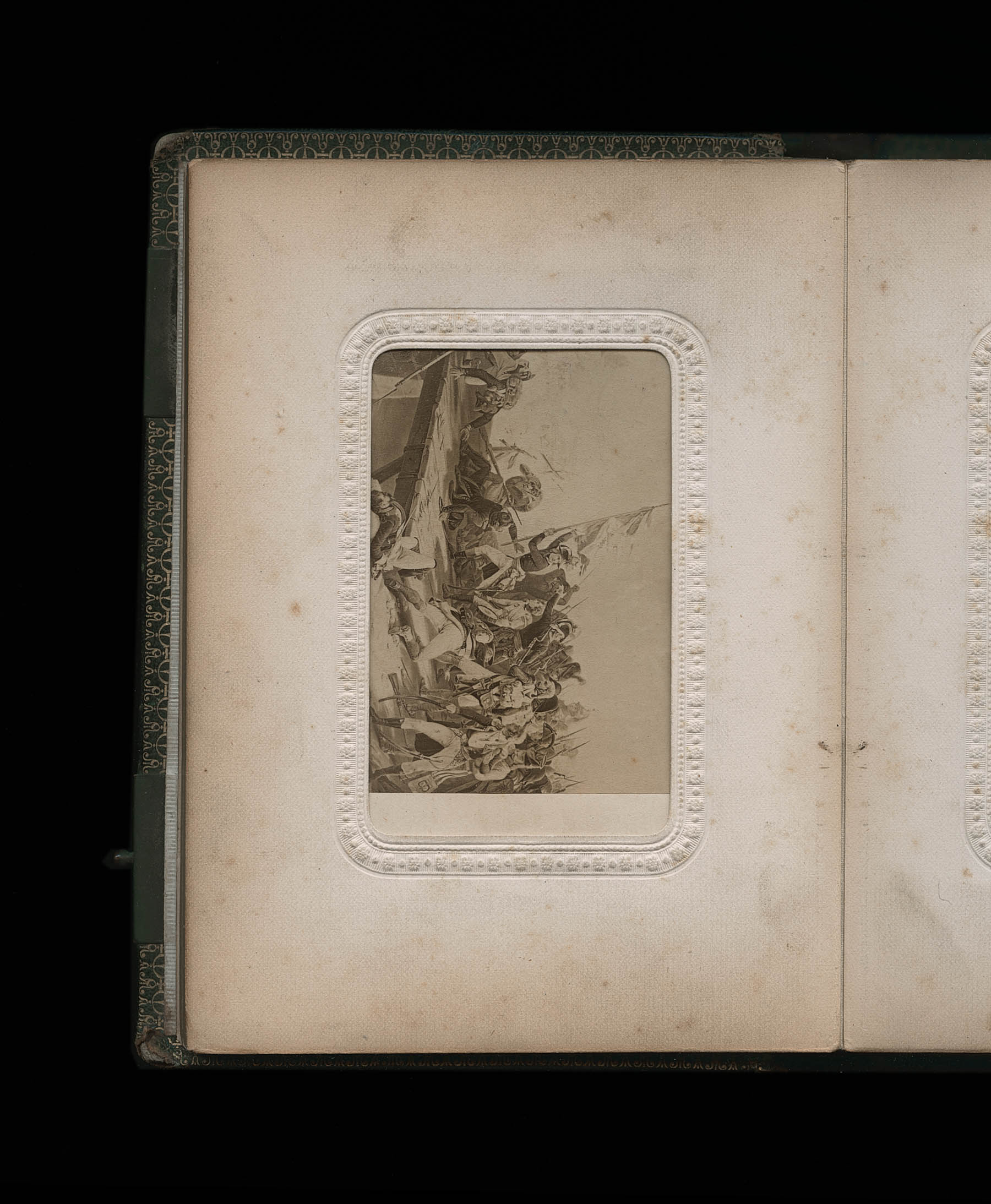
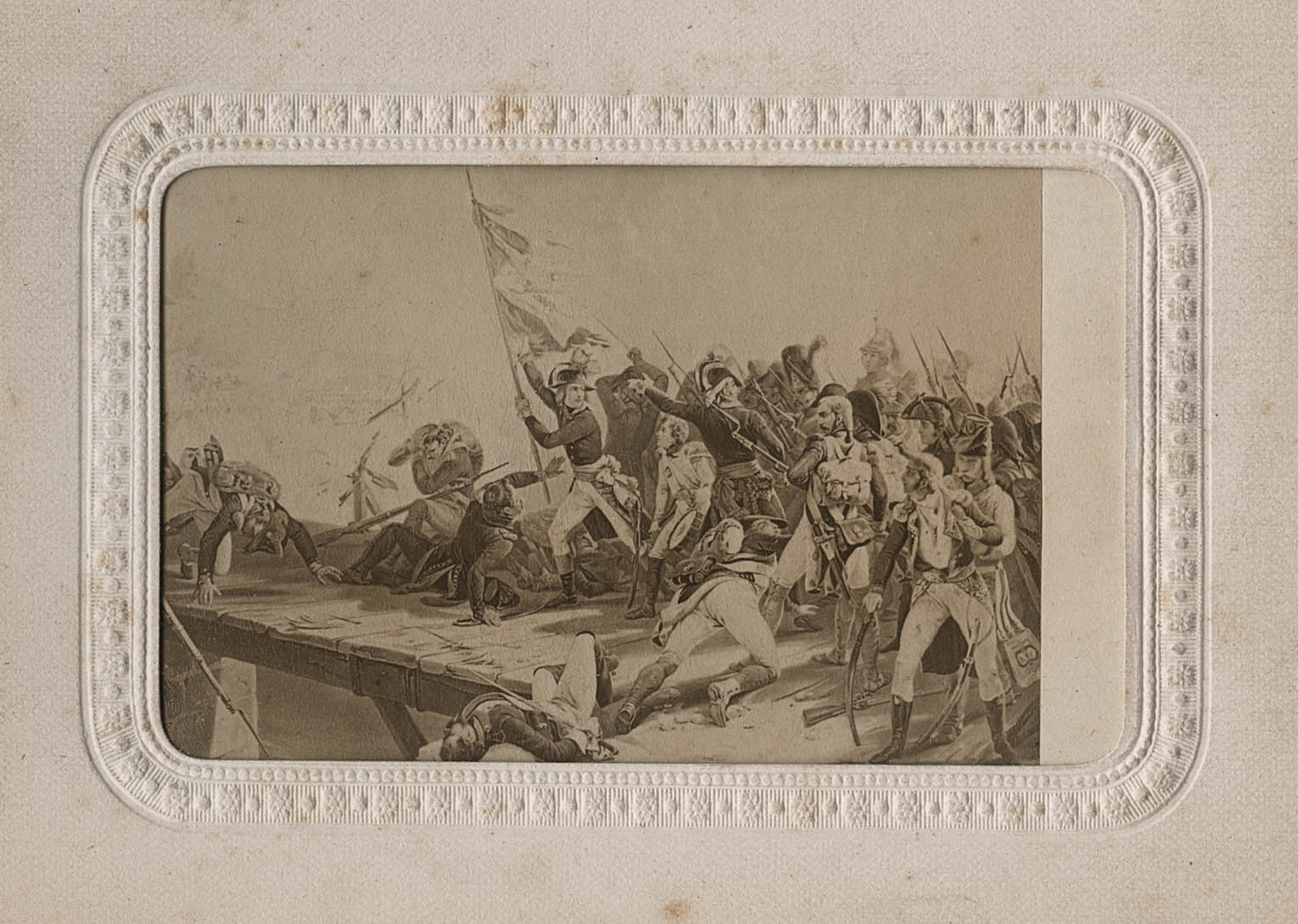
London, La Haye, Berlin, New York After a painting by Horace Vernet (French, 1789-1863) Napoleon Bonaparte leading his troops over the bridge of Arcole 1826
c. 1860-1863
Carte de visite
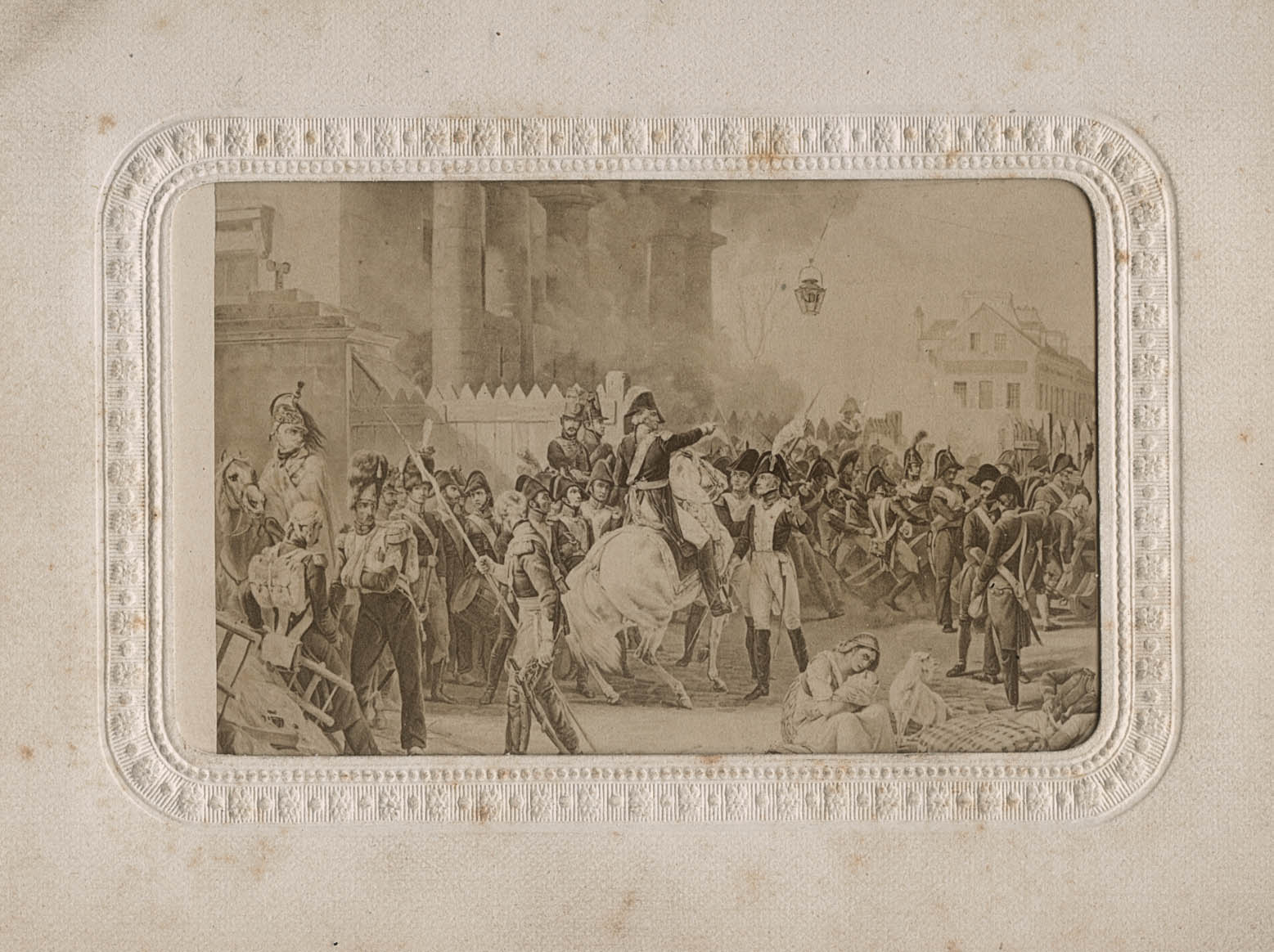
Goupil & Cie (photographer), Paris 19, Boulevard Montmartre
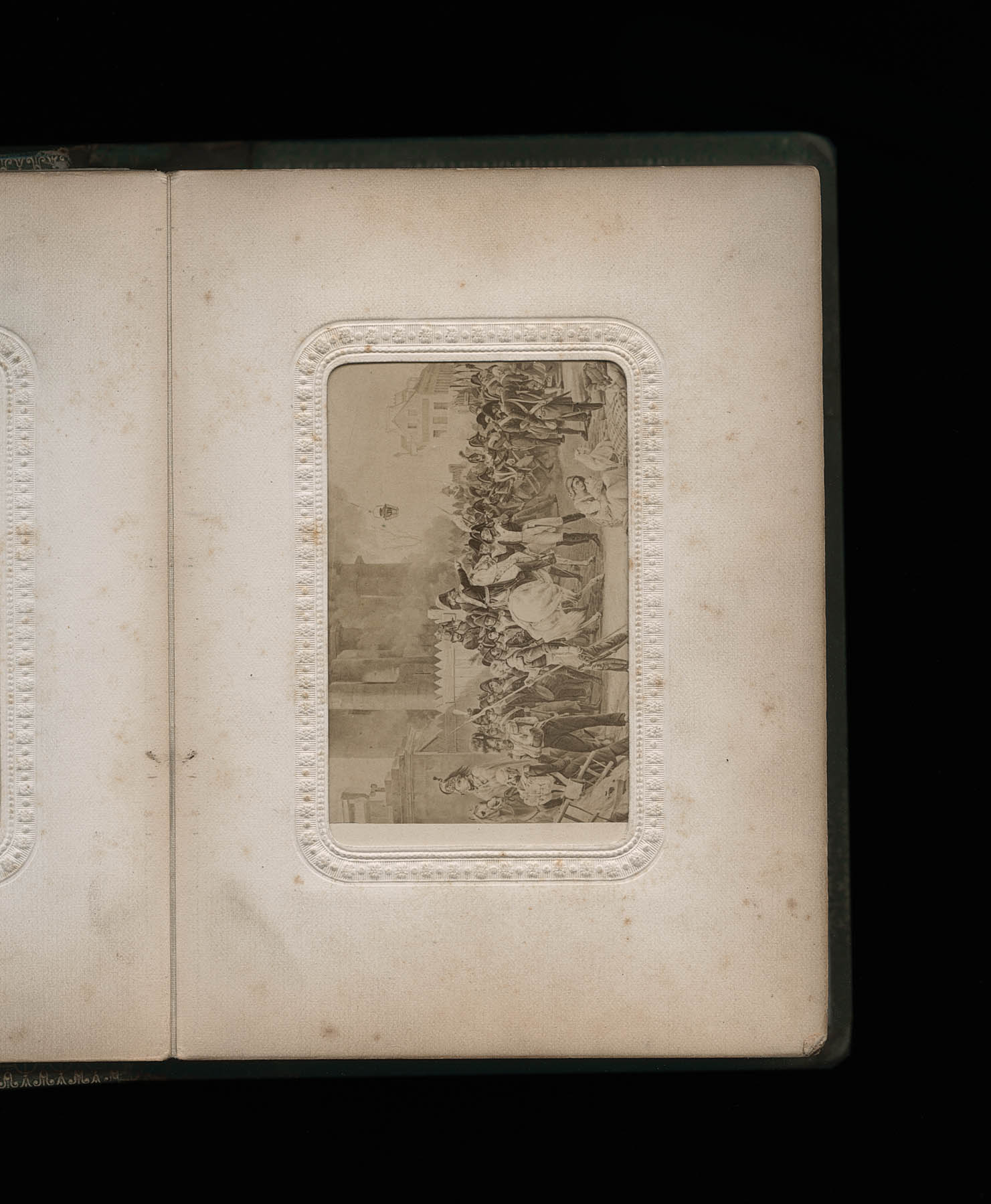
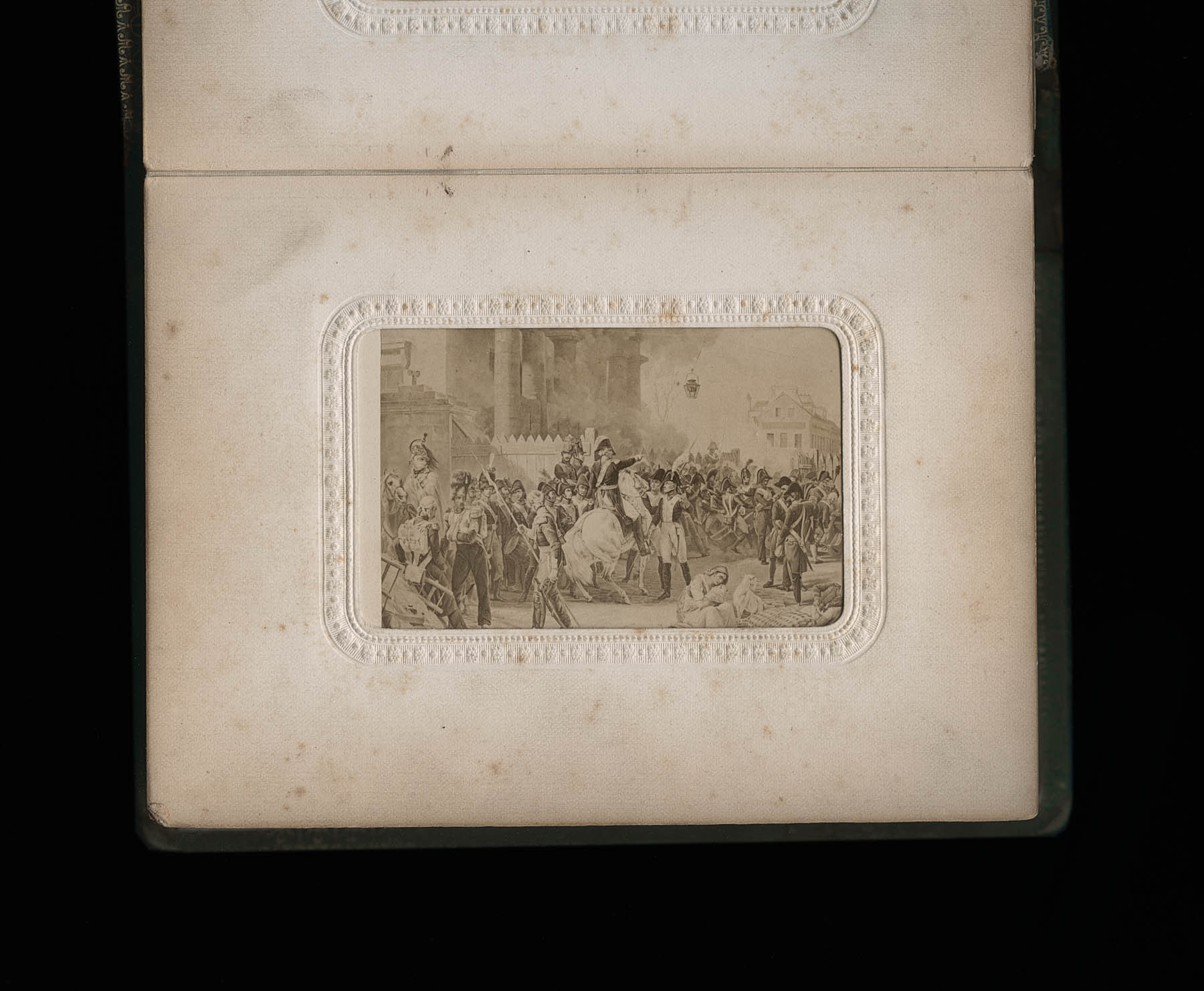
London, La Haye, Berlin, New York After a painting by Horace Vernet (French, 1789-1863) La Barrière de Clichy. Défense de Paris, March 30, 1814
c. 1860-1863
Carte de visite
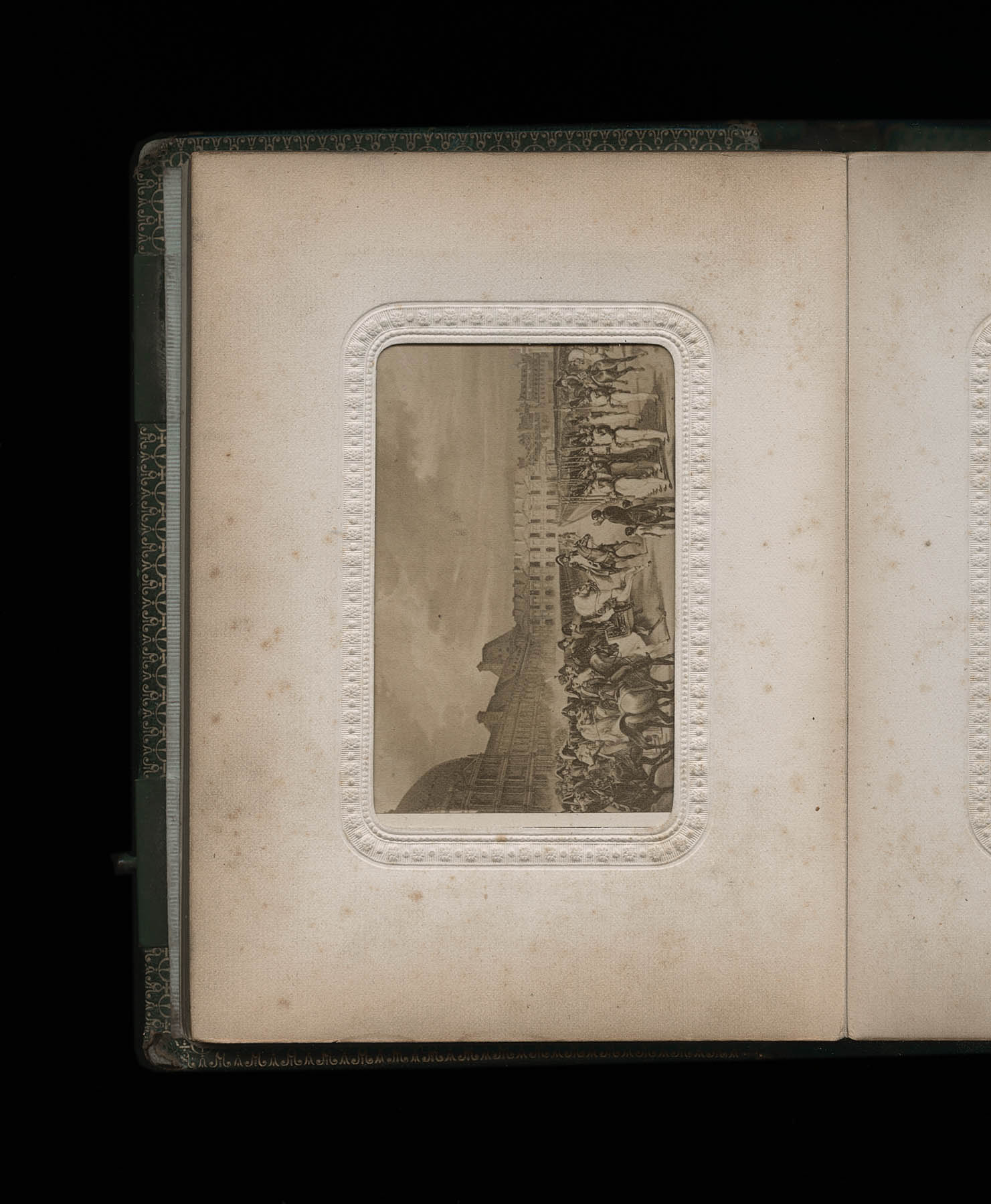
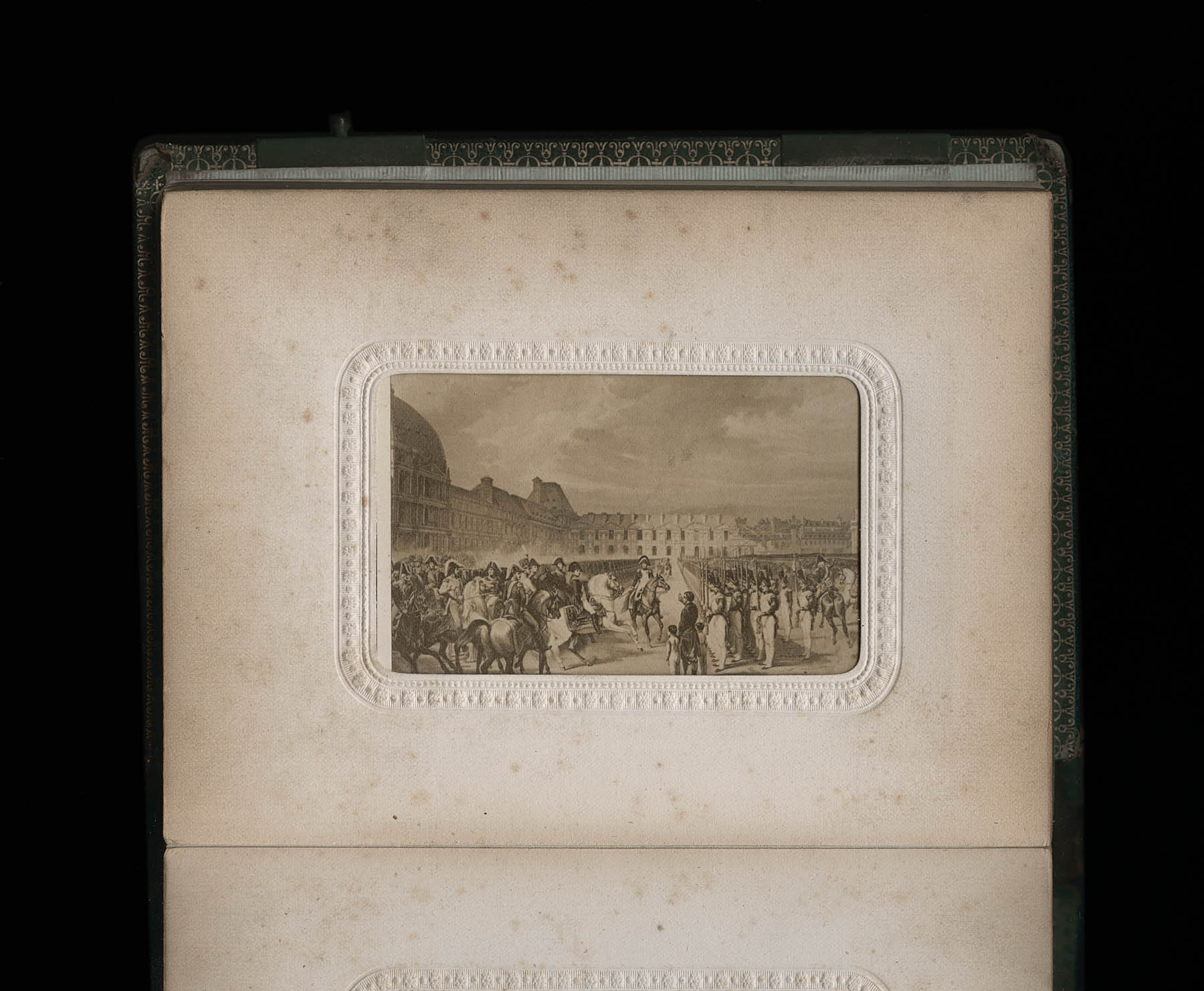
Goupil & Cie (photographer), Paris 19, Boulevard Montmartre
London, La Haye, Berlin, New York After a painting by Horace Vernet (French, 1789-1863) Napoleon reviewing the Guard in the place du Carrousel, c. 1841-1842
c. 1860-1863
Carte de visite
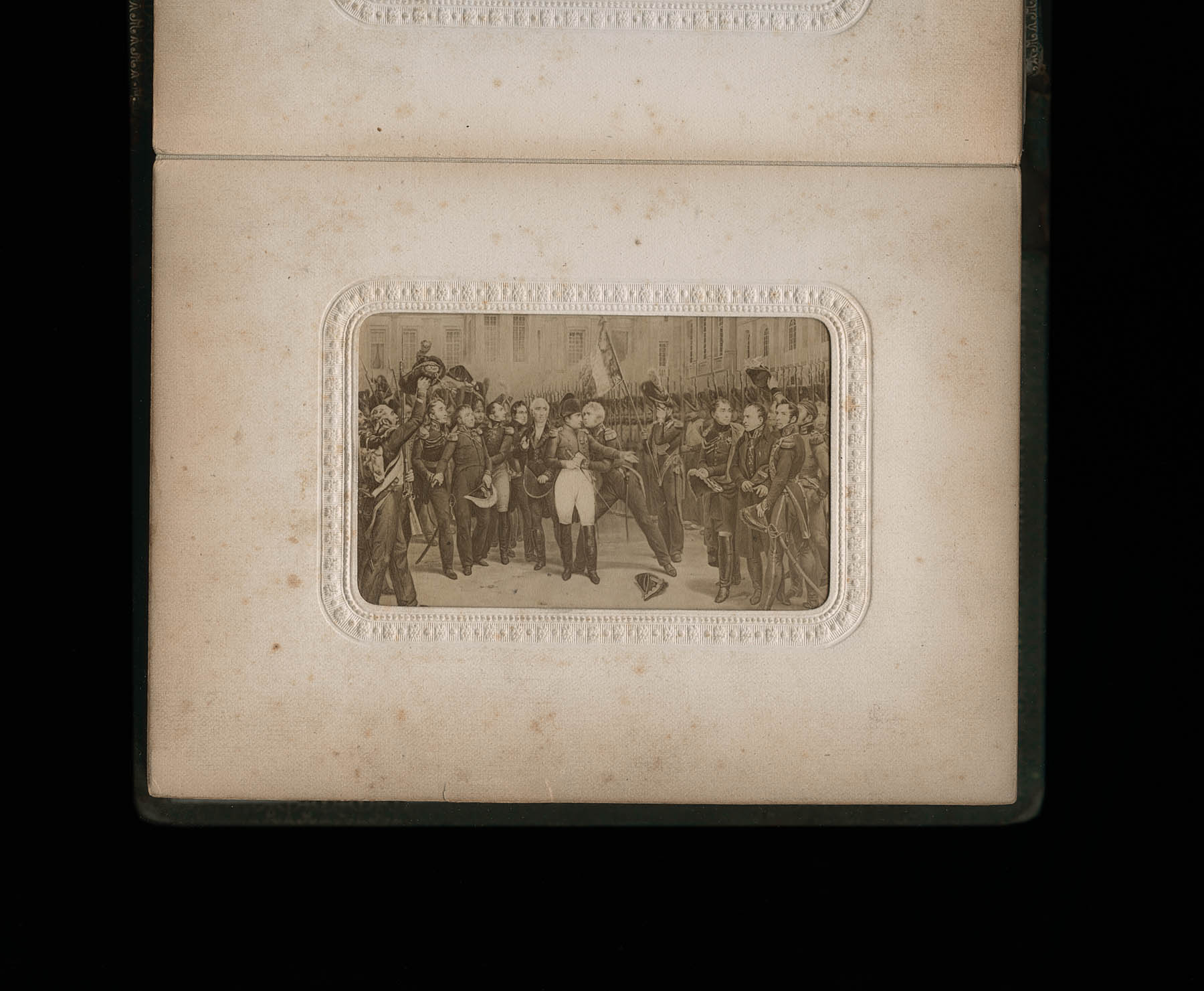
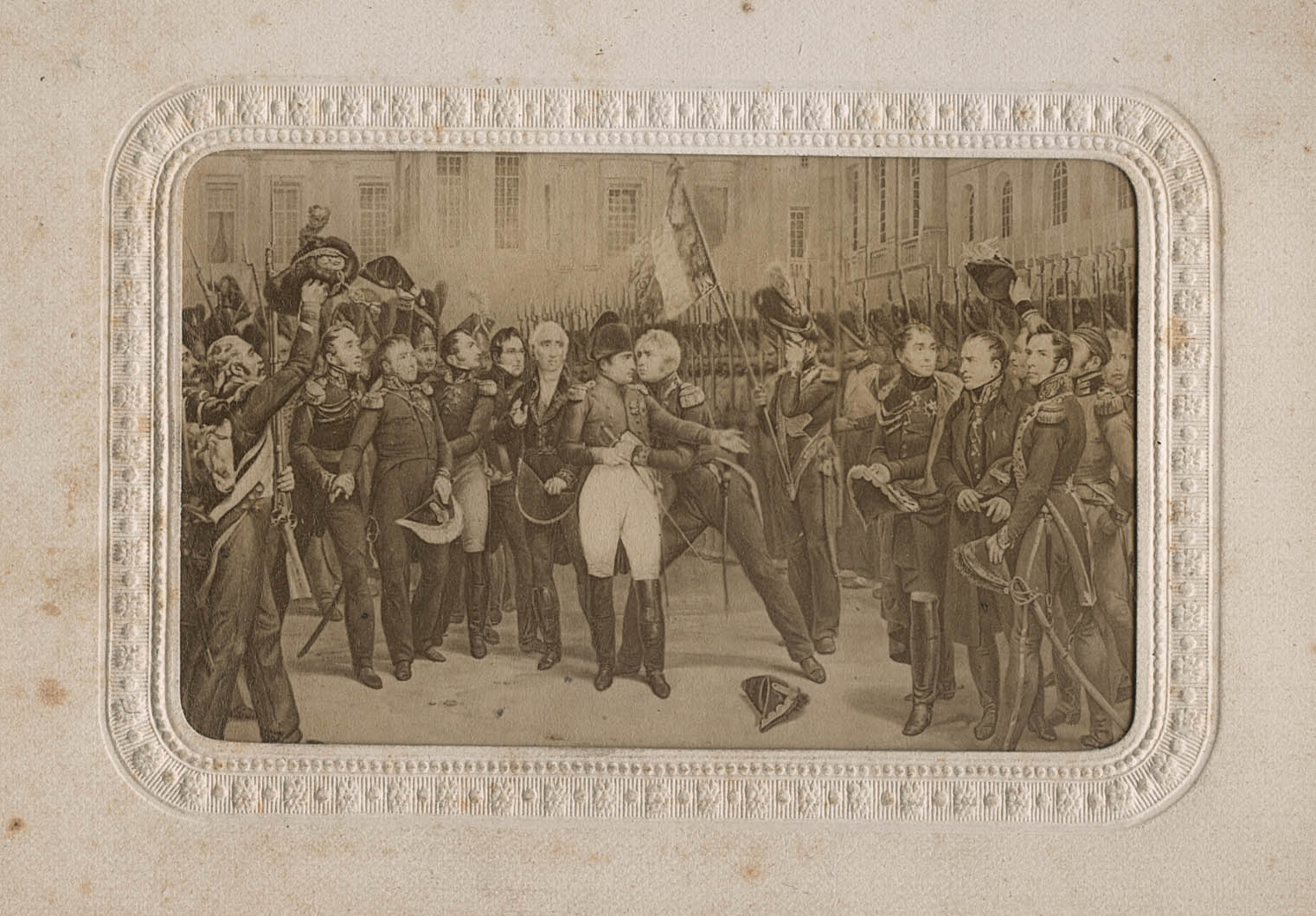
Goupil & Cie (photographer), Paris 19, Boulevard Montmartre
London, La Haye, Berlin, New York After a painting by Horace Vernet (French, 1789-1863) Napoleon bids farewell to his Guard at Fontainebleau on 20 April 1814 (1824)
c. 1860-1863
Carte de visite
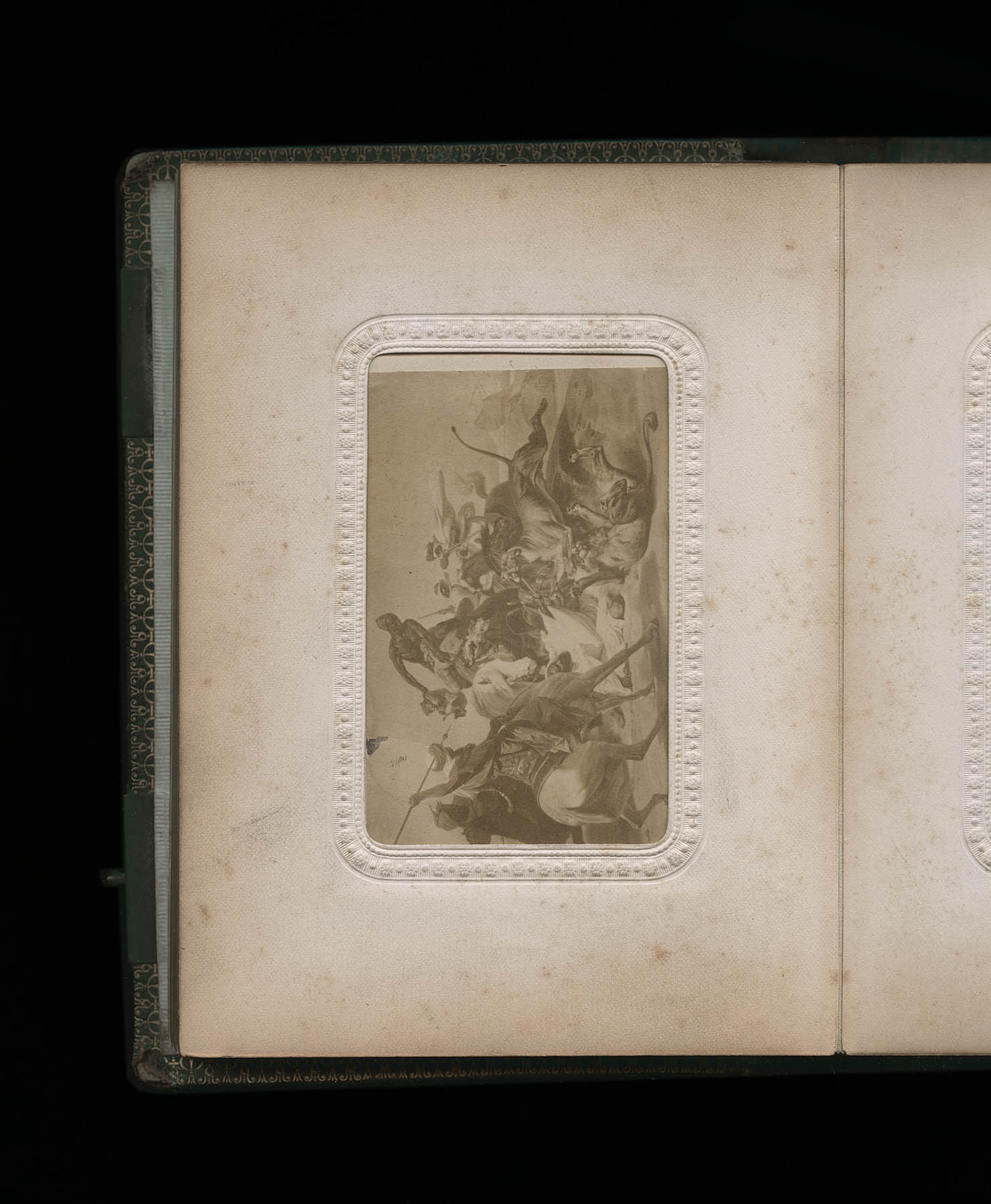
Goupil & Cie (photographer), Paris 19, Boulevard Montmartre
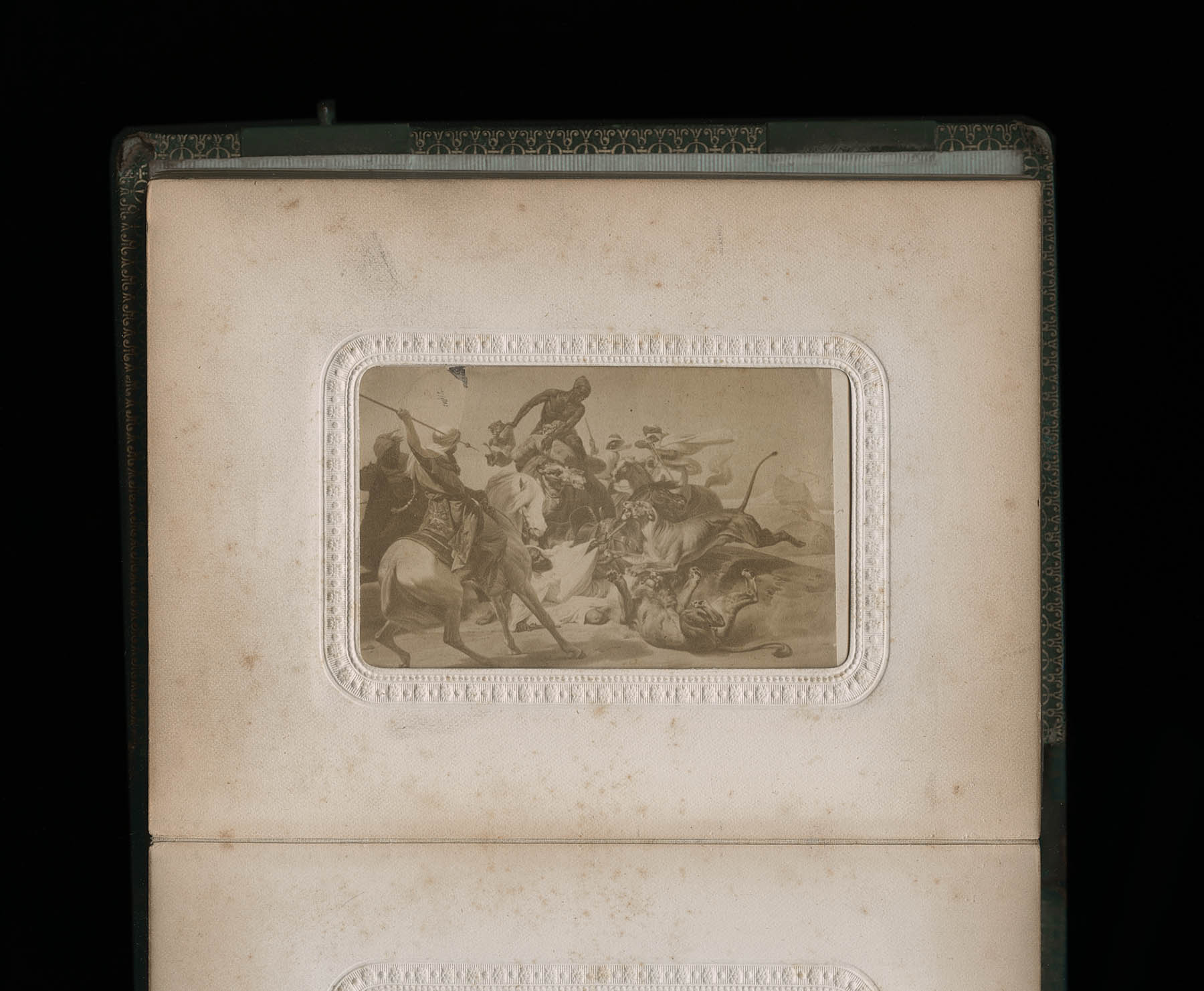
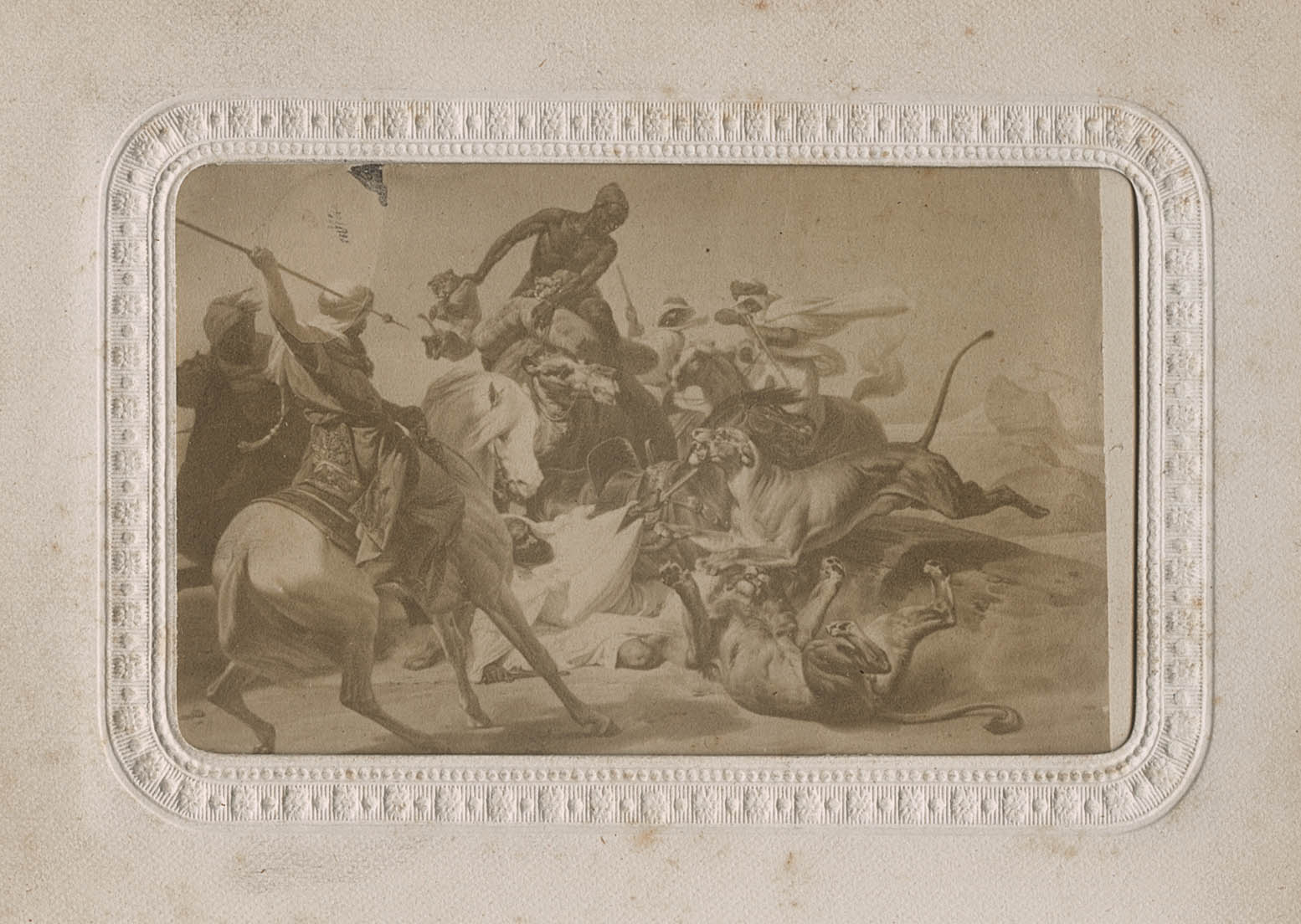
London, La Haye, Berlin, New York After a painting by Horace Vernet (French, 1789-1863) The Lion Hunt 1836
c. 1860-1863
Carte de visite
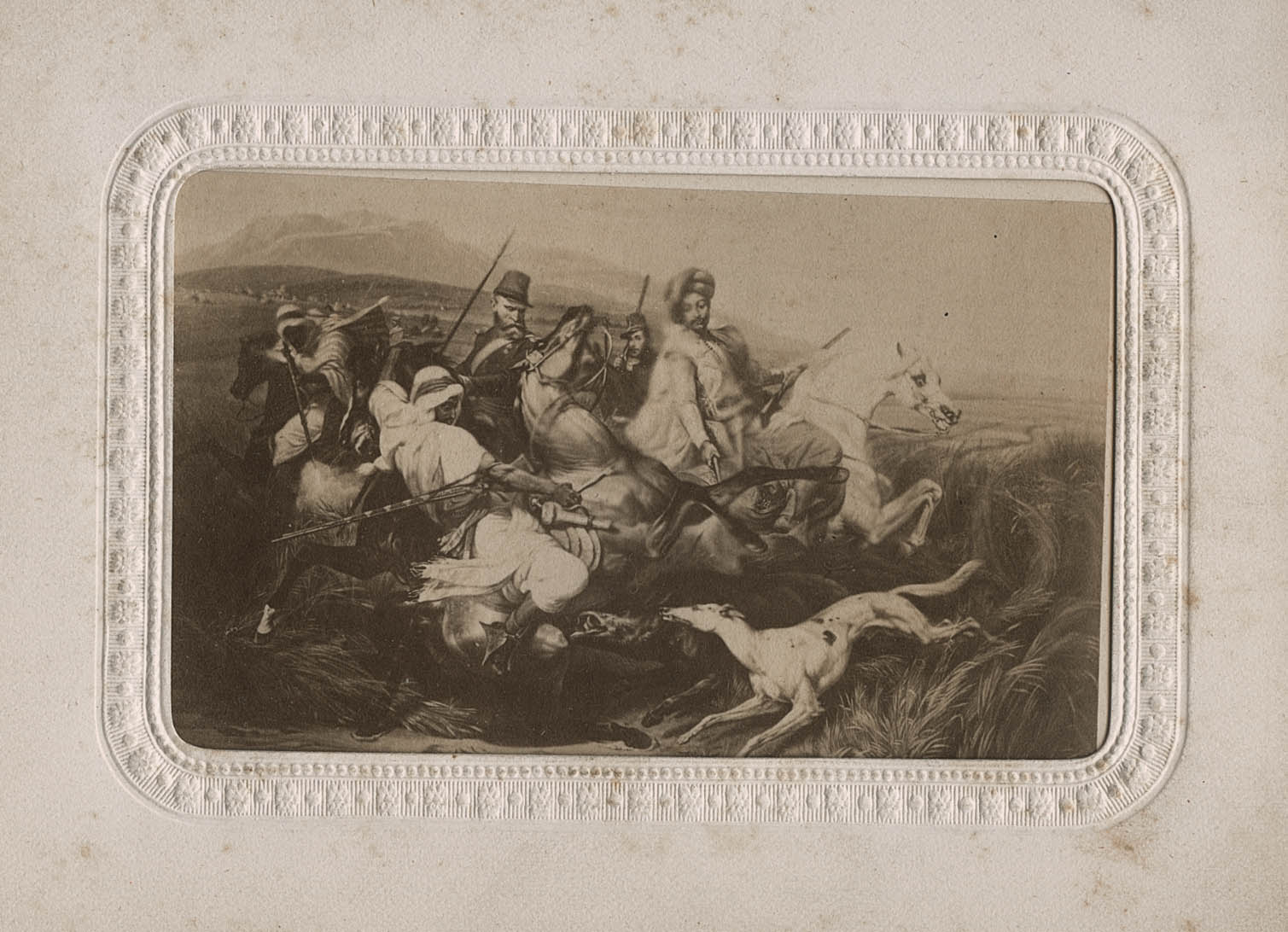
Goupil & Cie (photographer), Paris 19, Boulevard Montmartre
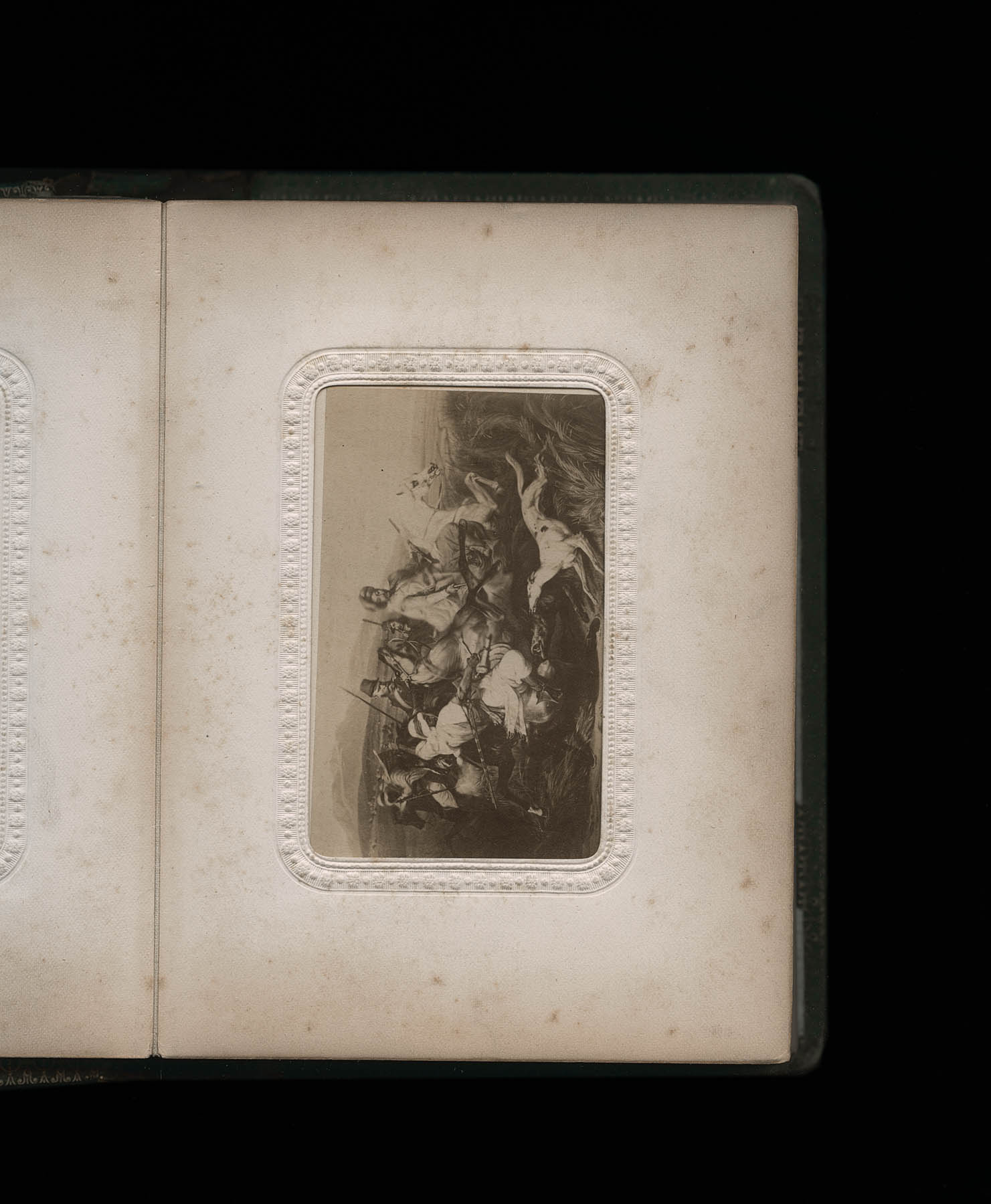
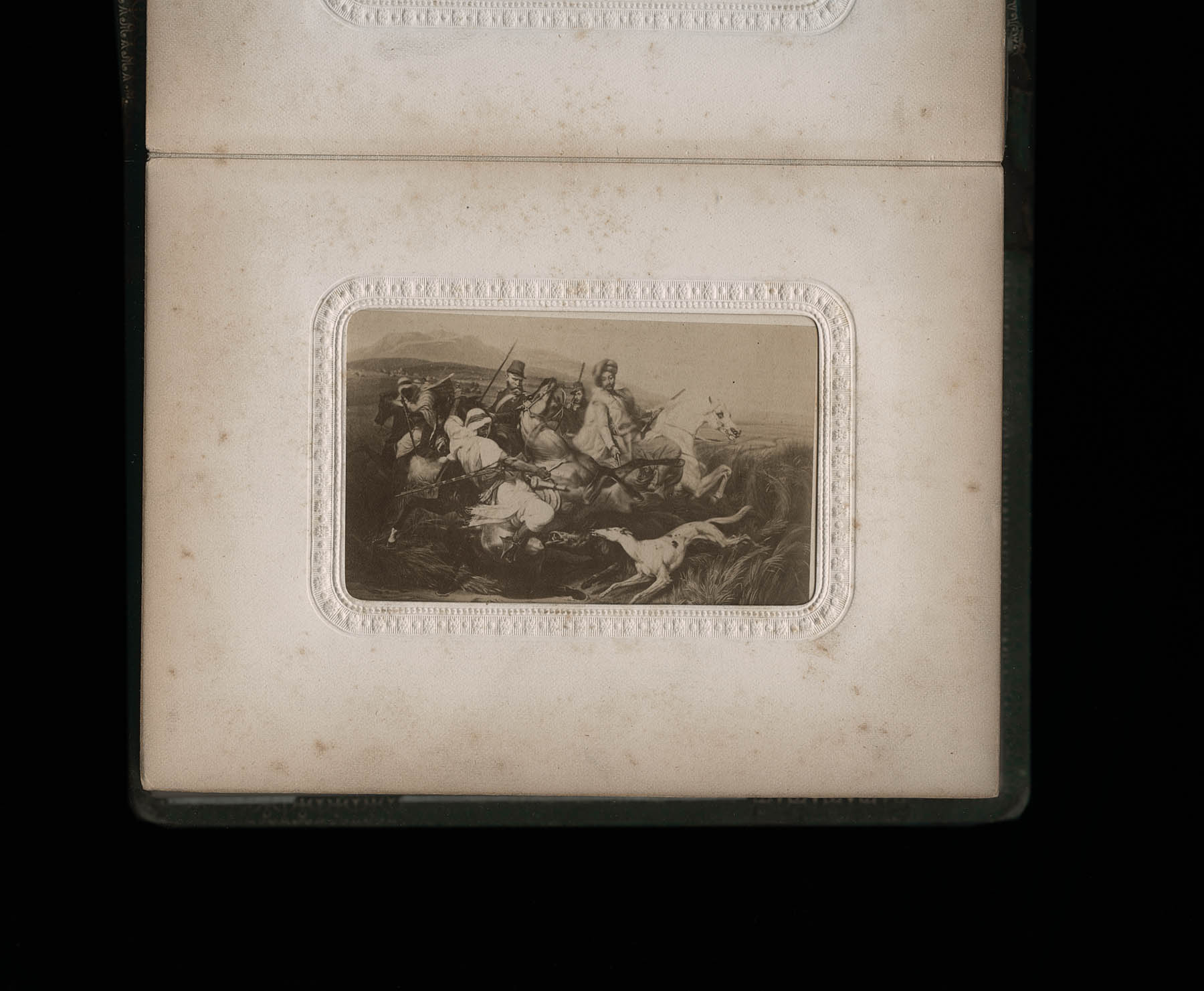
London, La Haye, Berlin, New York After a painting by Horace Vernet (French, 1789–1863) Chasse Aux Sangliers dans la Plaine de Sahara (Wild Boar Hunting in the Sahara Plain) 1838
c. 1860-1863
Goupil & Cie (photographer), Paris 19, Boulevard Montmartre
London, La Haye, Berlin, New York After a painting by Horace Vernet (French, 1789-1863) Unknown title Nd
c. 1860-1863
Carte de visite
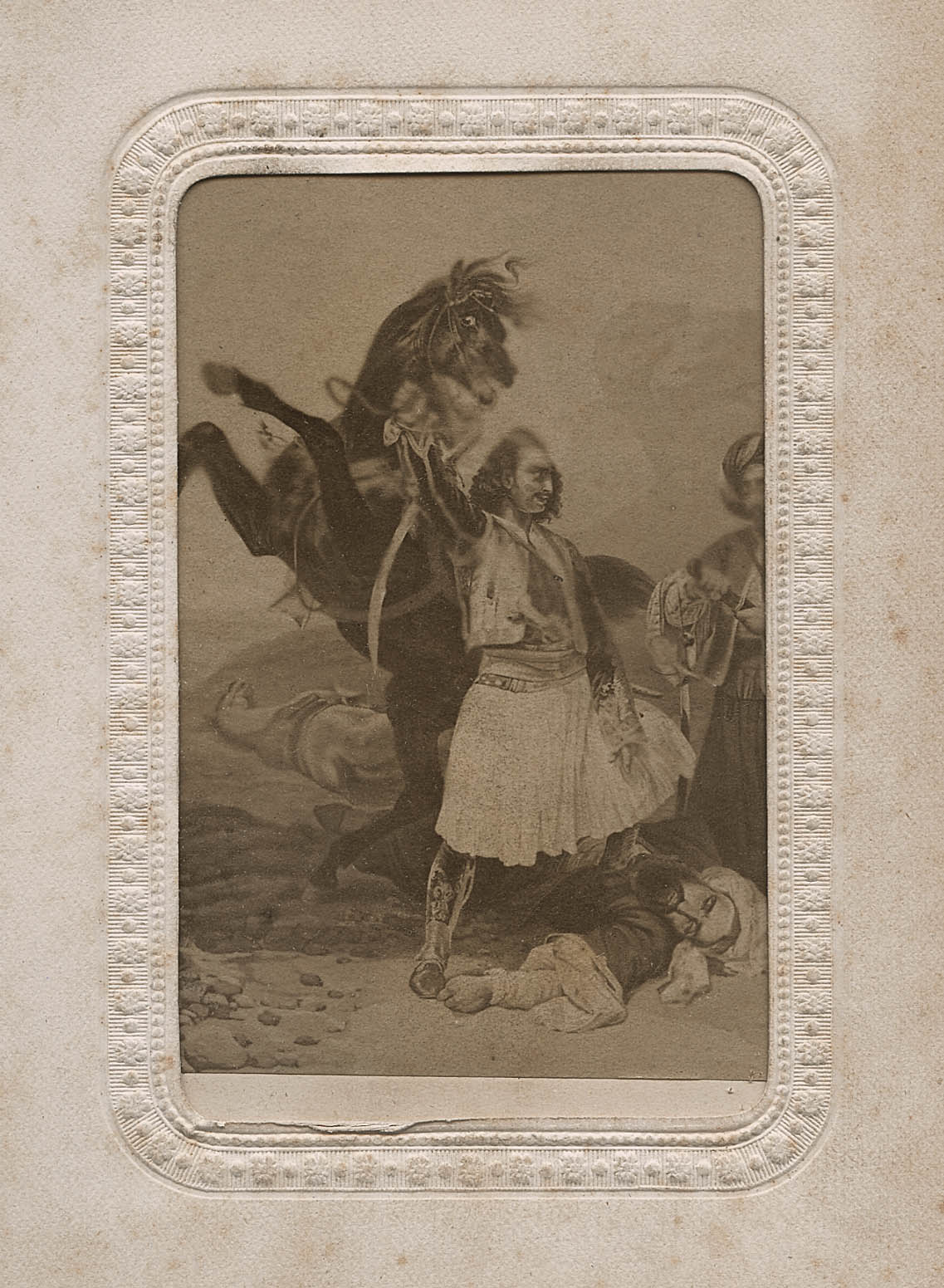
Goupil & Cie (photographer), Paris 19, Boulevard Montmartre
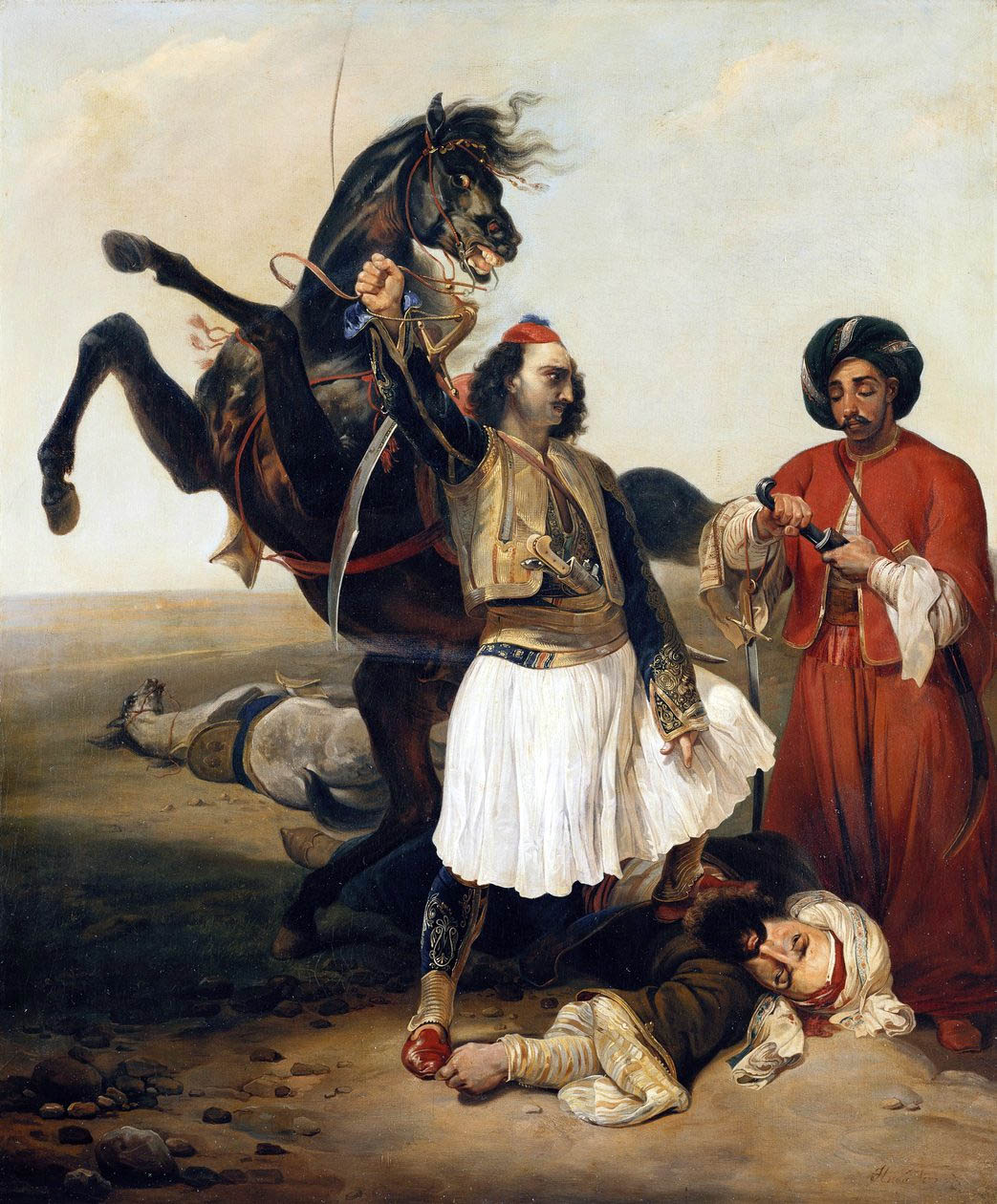
London, La Haye, Berlin, New York After a painting by Horace Vernet (French, 1789–1863) Le Giaour, vainqueur d’Hassan (The Giaour conquers Hassan) c. 1827
c. 1860-1863
Carte de visite
Horace Vernet (French, 1789-1863) Le Giaour, vainqueur d’Hassan
c. 1827
Oil on canvas
25 5/8 x 21 in. (65 x 54cm)
Public domain
Goupil & Cie (photographer), Paris 19, Boulevard Montmartre
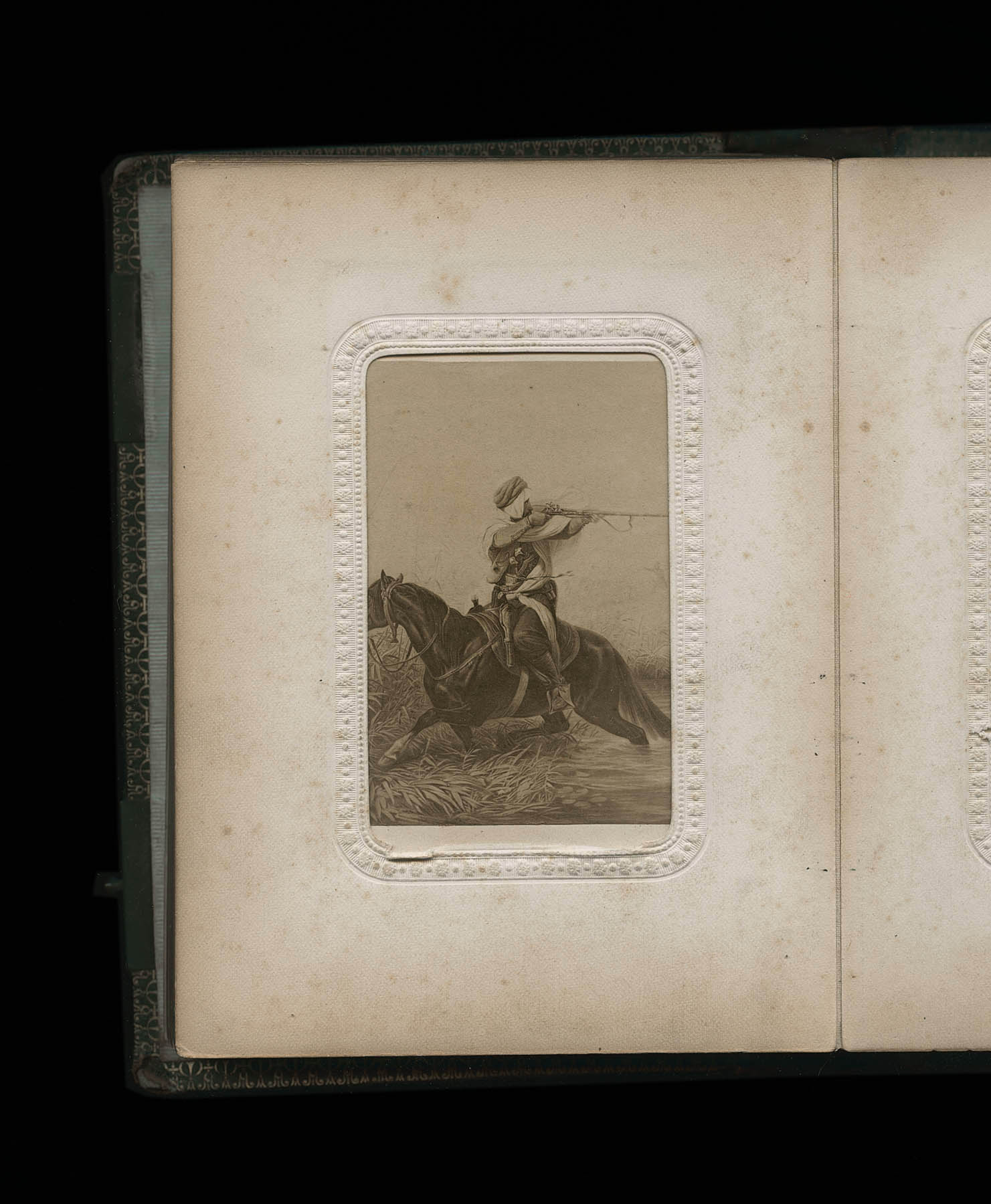
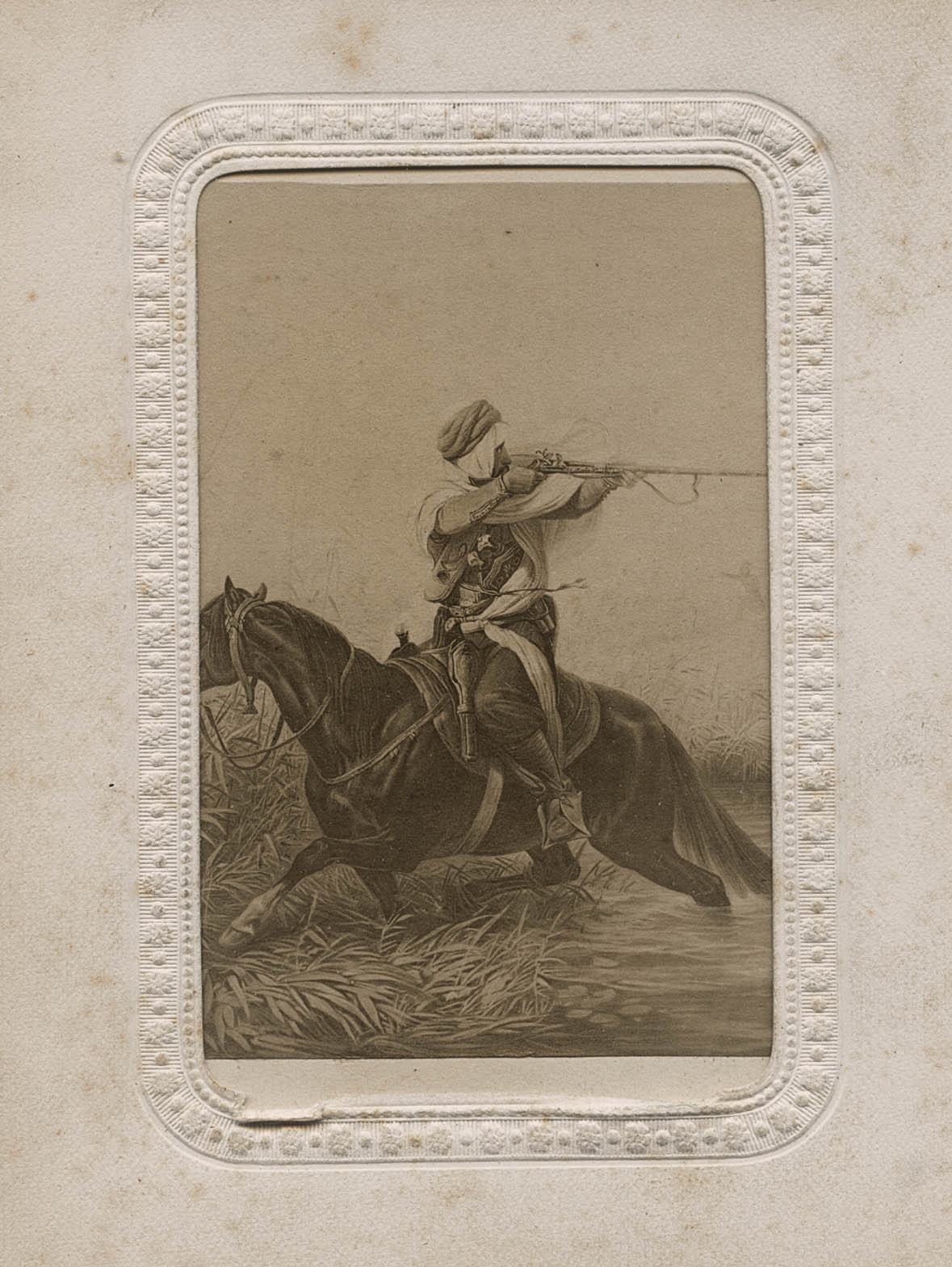
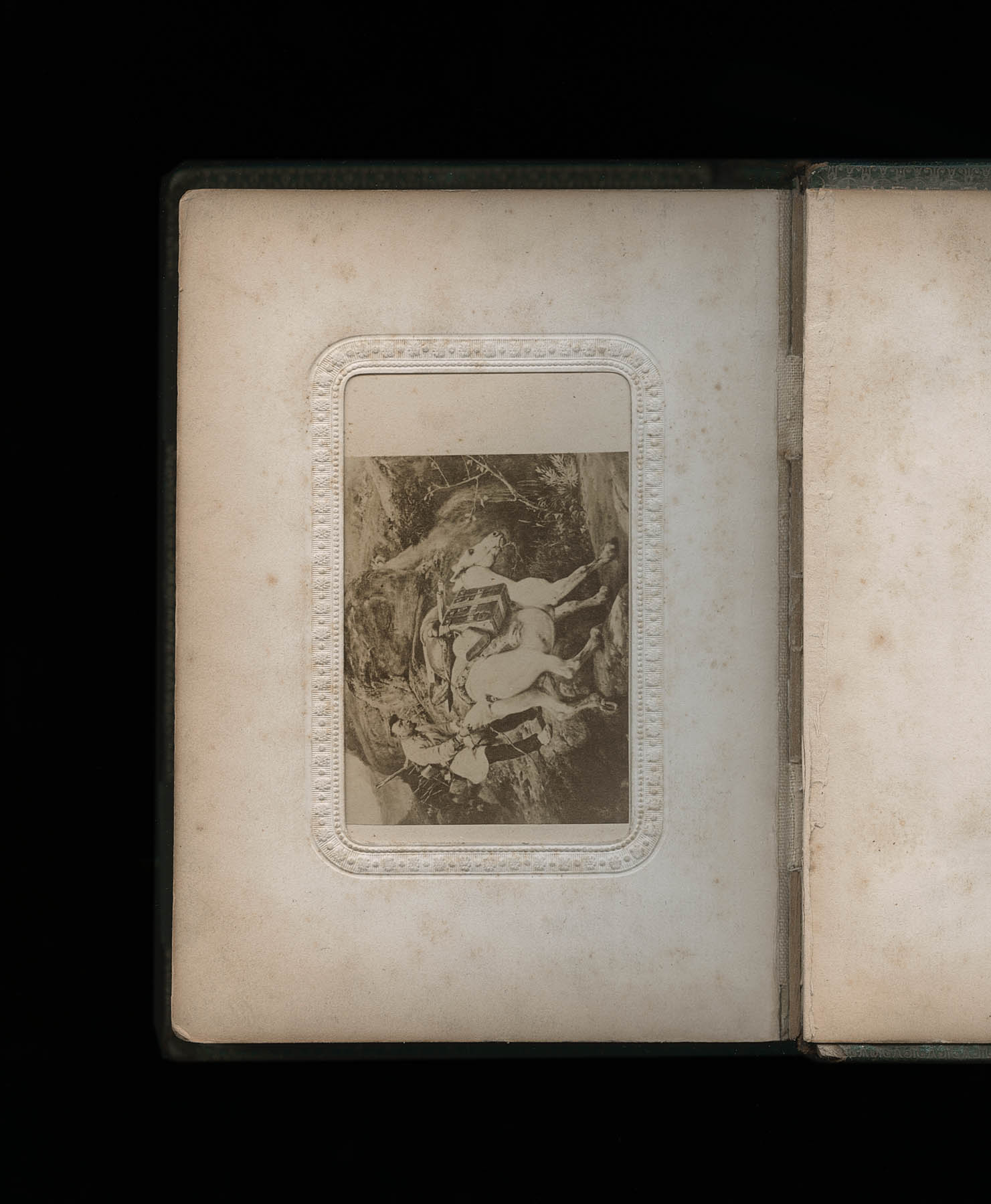
London, La Haye, Berlin, New York After a painting by Horace Vernet (French, 1789-1863) Cavalier arabe, dit aussi ‘La Retraite’ (Arabian horseman, also called ‘The Retreat’) 1839
c. 1860-1863
Carte de visite
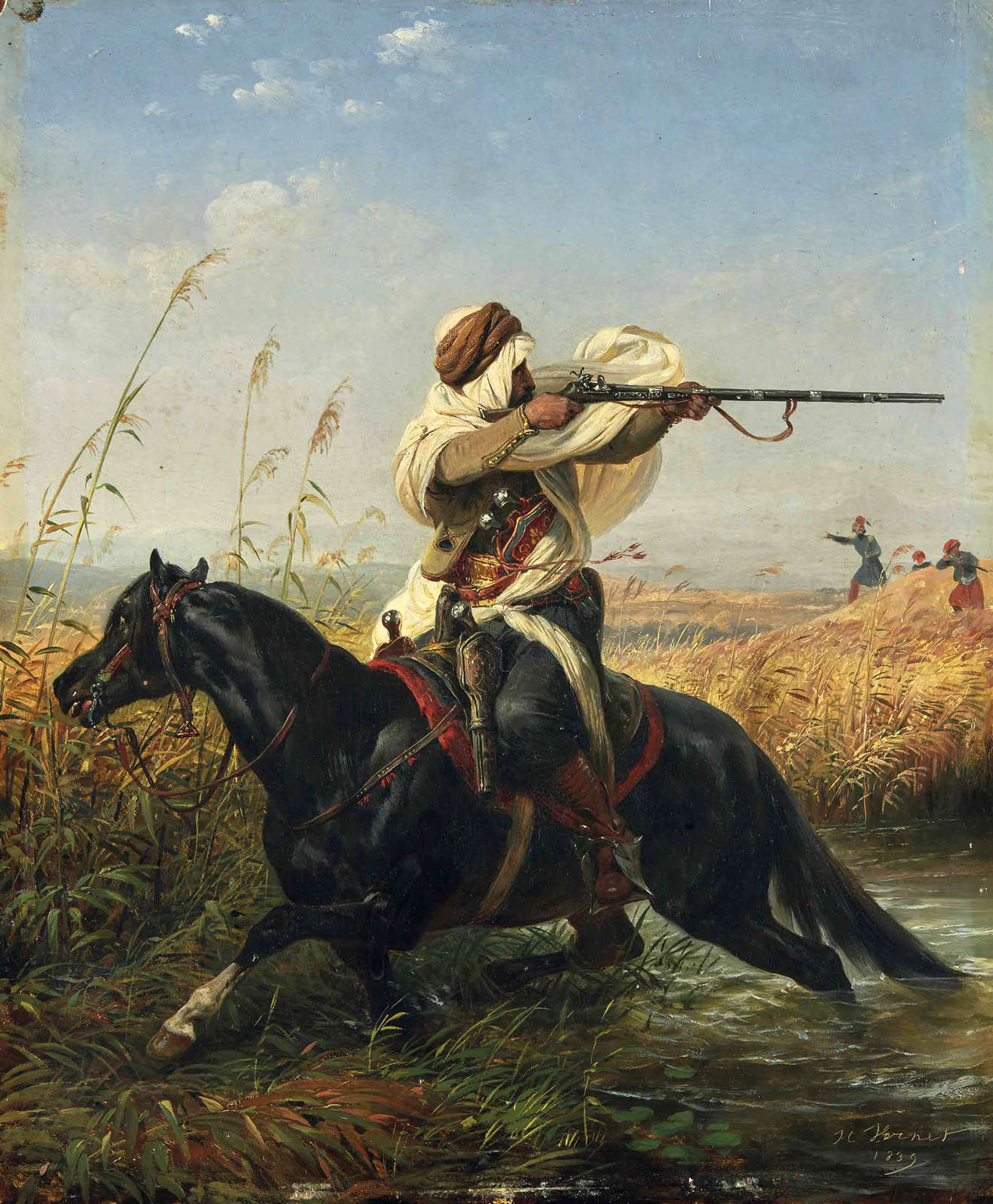
Horace Vernet (French, 1789-1863) Cavalier arabe, dit aussi ‘La Retraite’
1839
Oil on panel
40.8 x 33.5cm (16 x 13 1/4 in.)
Purchased or commissioned by Baron Jean-Conrad Hottinguer (1803-1866) and paid by him to Vernet in 1840; then collection of Baroness Hottinguer, in 1874
Public domain
Goupil & Cie (photographer), Paris 19, Boulevard Montmartre
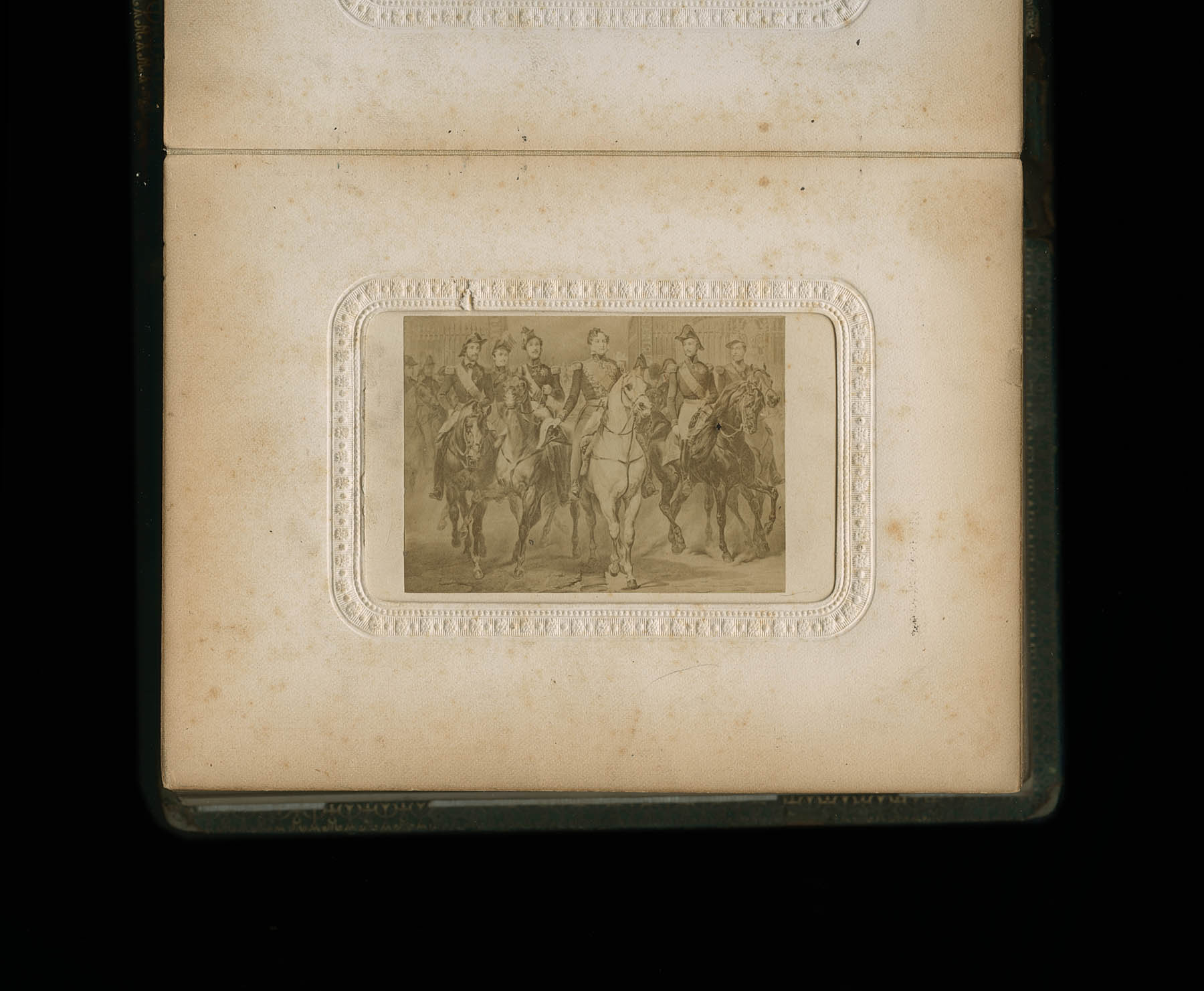
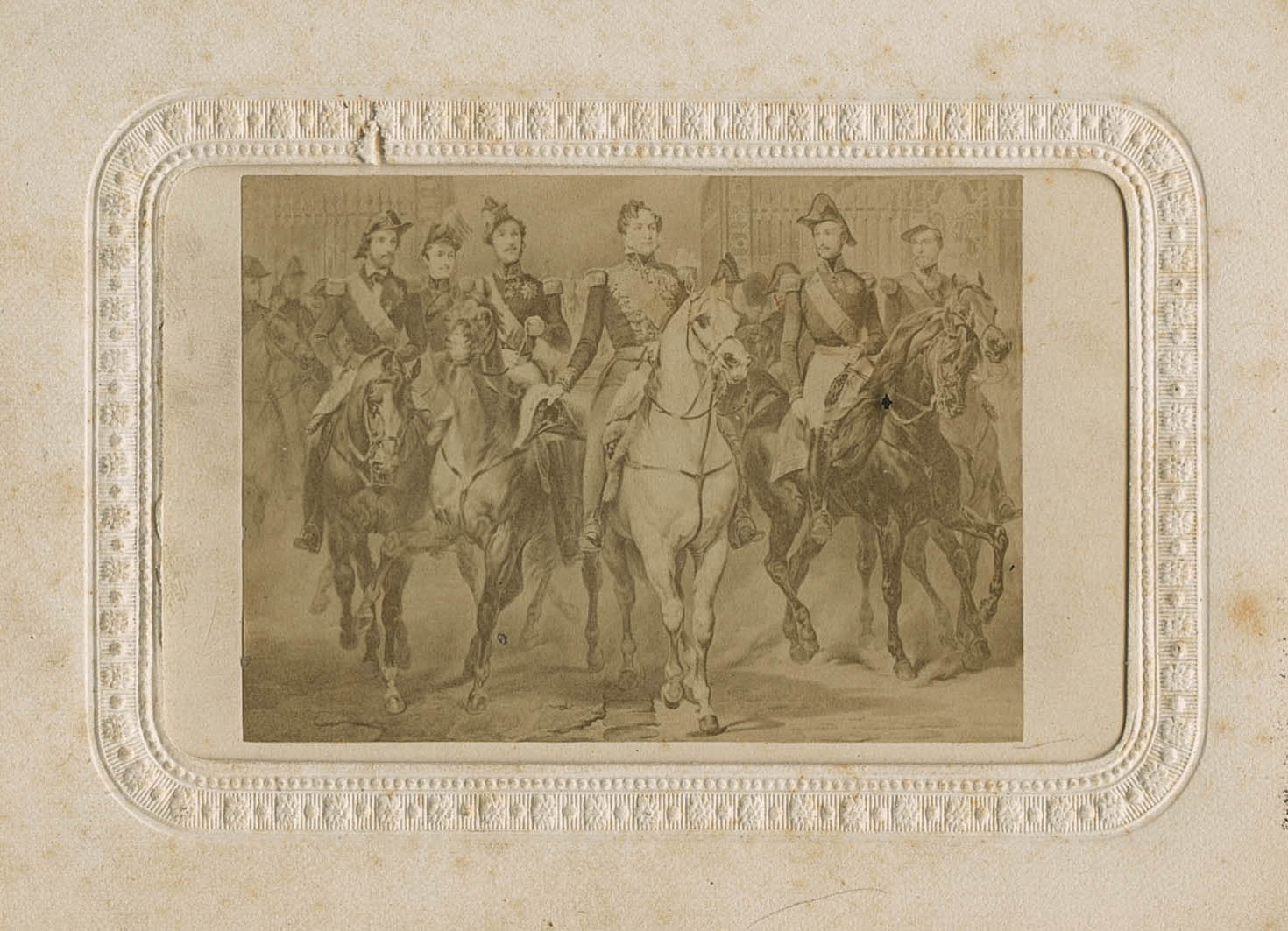
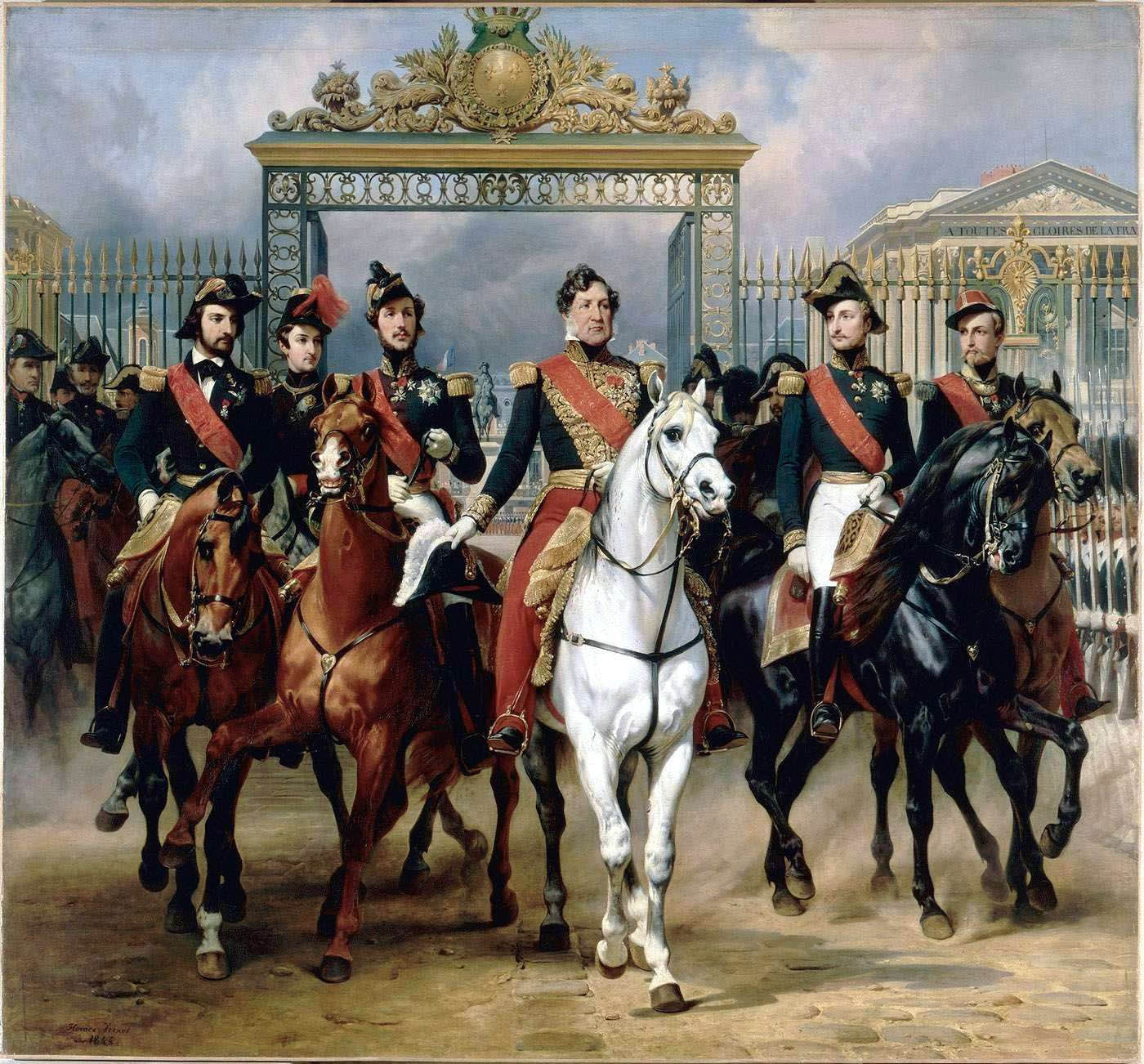
London, La Haye, Berlin, New York After a painting by Horace Vernet (French, 1789-1863) Louis-Philippe, accompagné de ses fils, sortant à cheval du château de Versailles (King Louis-Philippe escorted by his sons leaving Versailles on June 10, 1837) 1846
c. 1860-1863
Carte de visit
Horace Vernet (French, 1789–1863) Louis-Philippe, accompagné de ses fils, sortant à cheval du château de Versailles (King Louis-Philippe escorted by his sons leaving Versailles on June 10, 1837)
1846
Oil on canvas Height: 368cm Width: 397.5cm
Musée national du Château de Versailles
Public domain
Goupil & Cie (photographer), Paris 19, Boulevard Montmartre
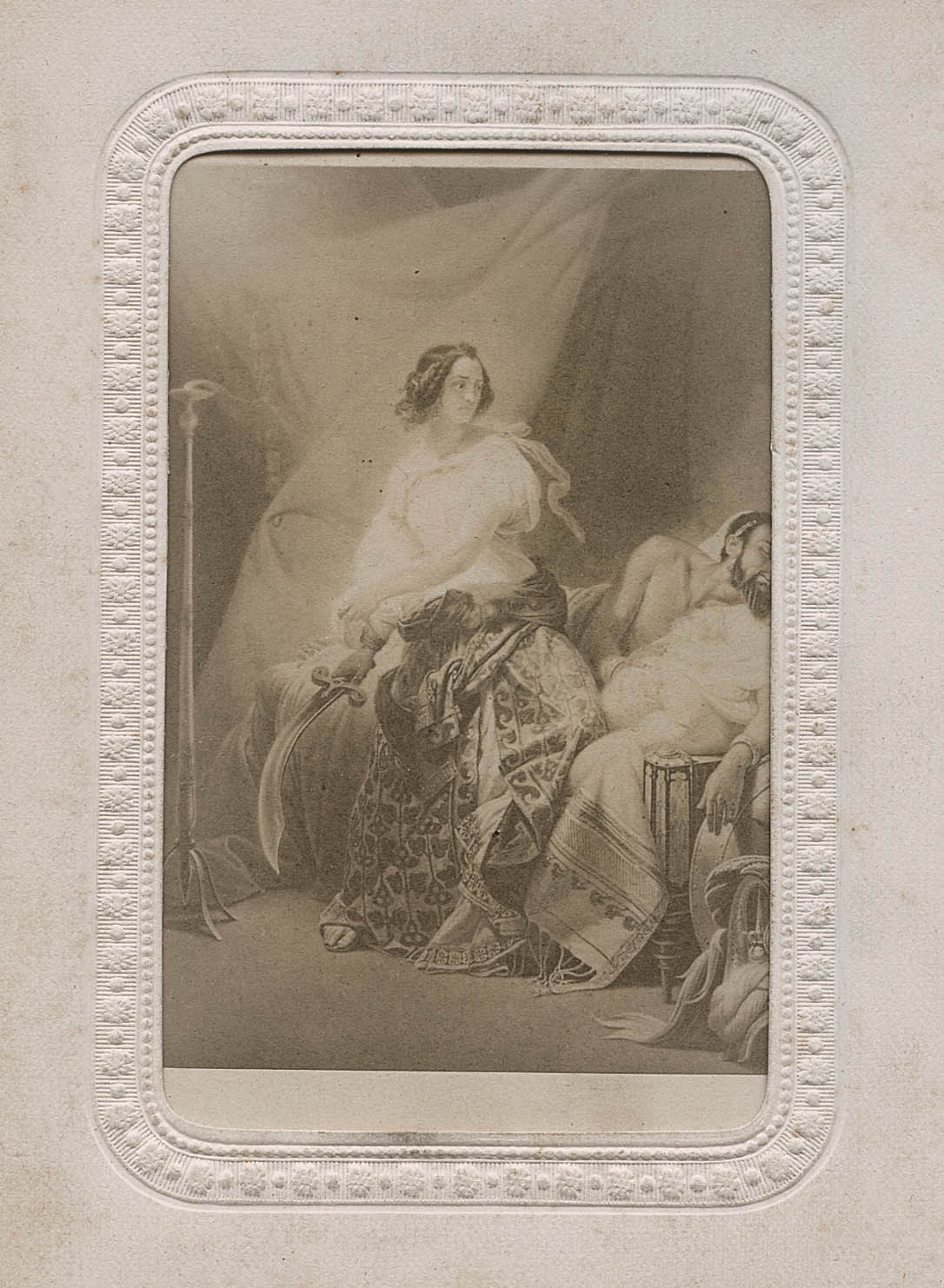
London, La Haye, Berlin, New York After a painting by Horace Vernet (French, 1789-1863) Judith and Holofernes 1829
c. 1860-1863
Carte de visite
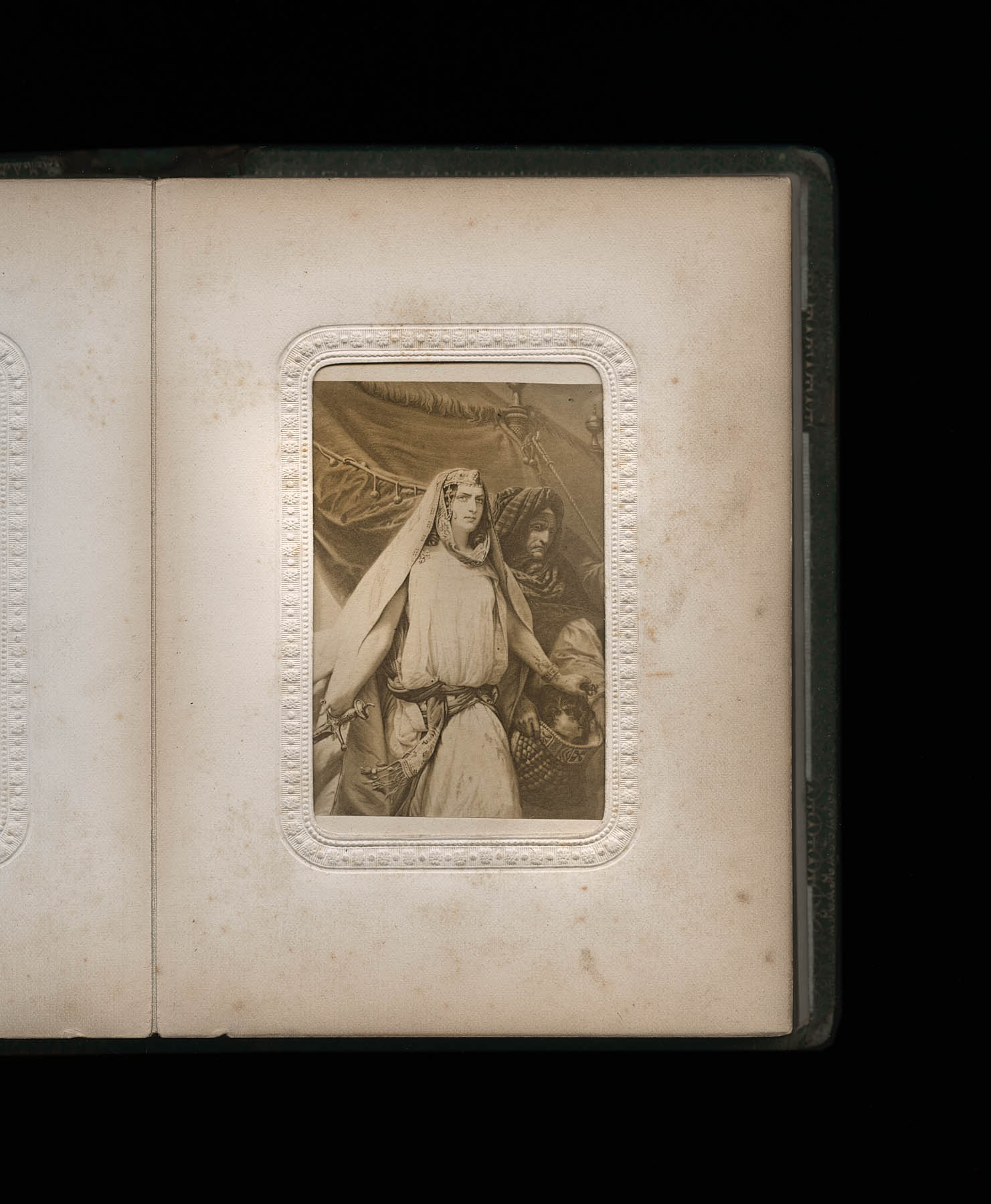
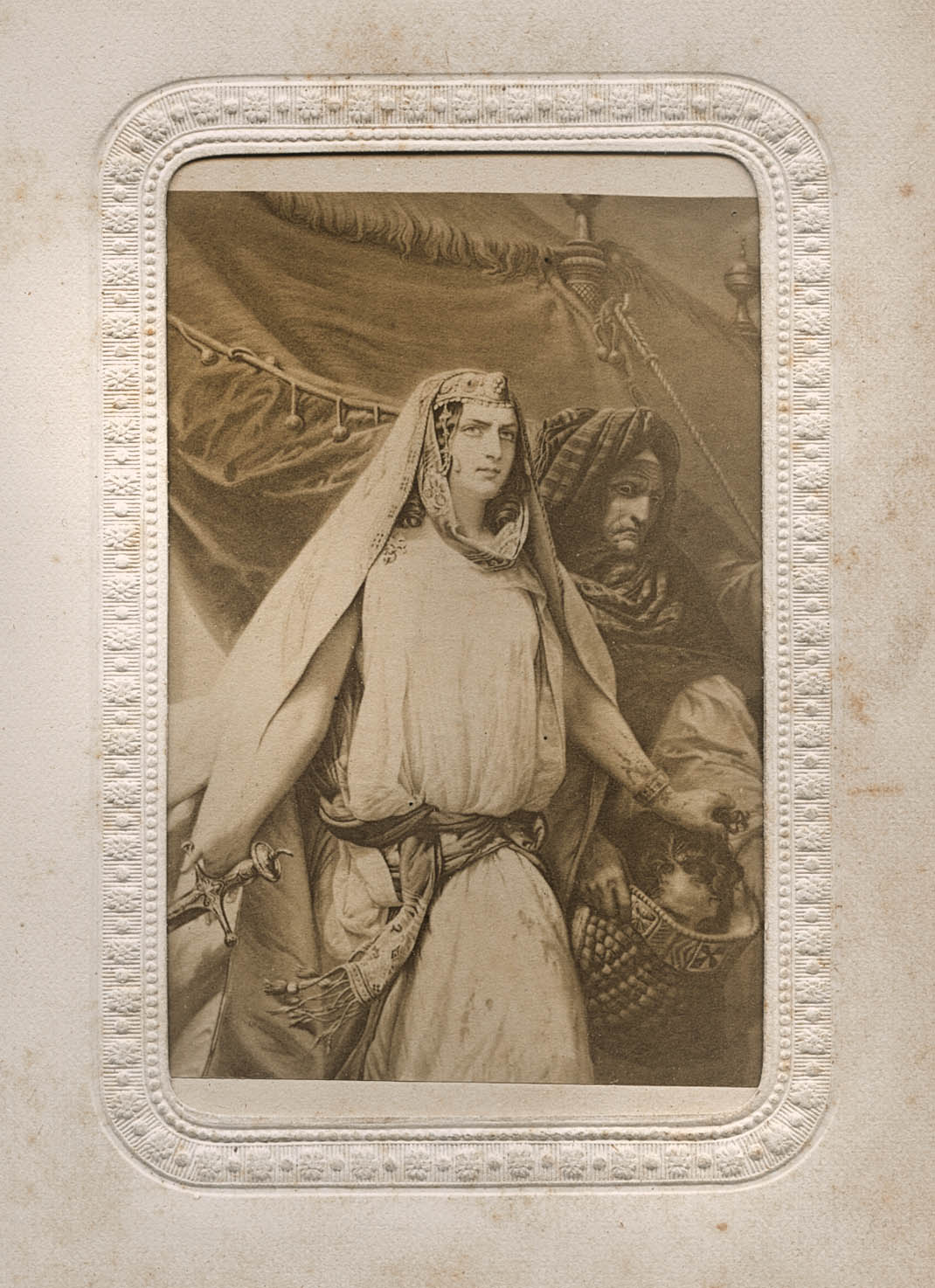
Goupil & Cie (photographer), Paris 19, Boulevard Montmartre
London, La Haye, Berlin, New York After a painting by Horace Vernet (French, 1789-1863) Judith with the head of Holofernes Nd
c. 1860-1863
Carte de visite
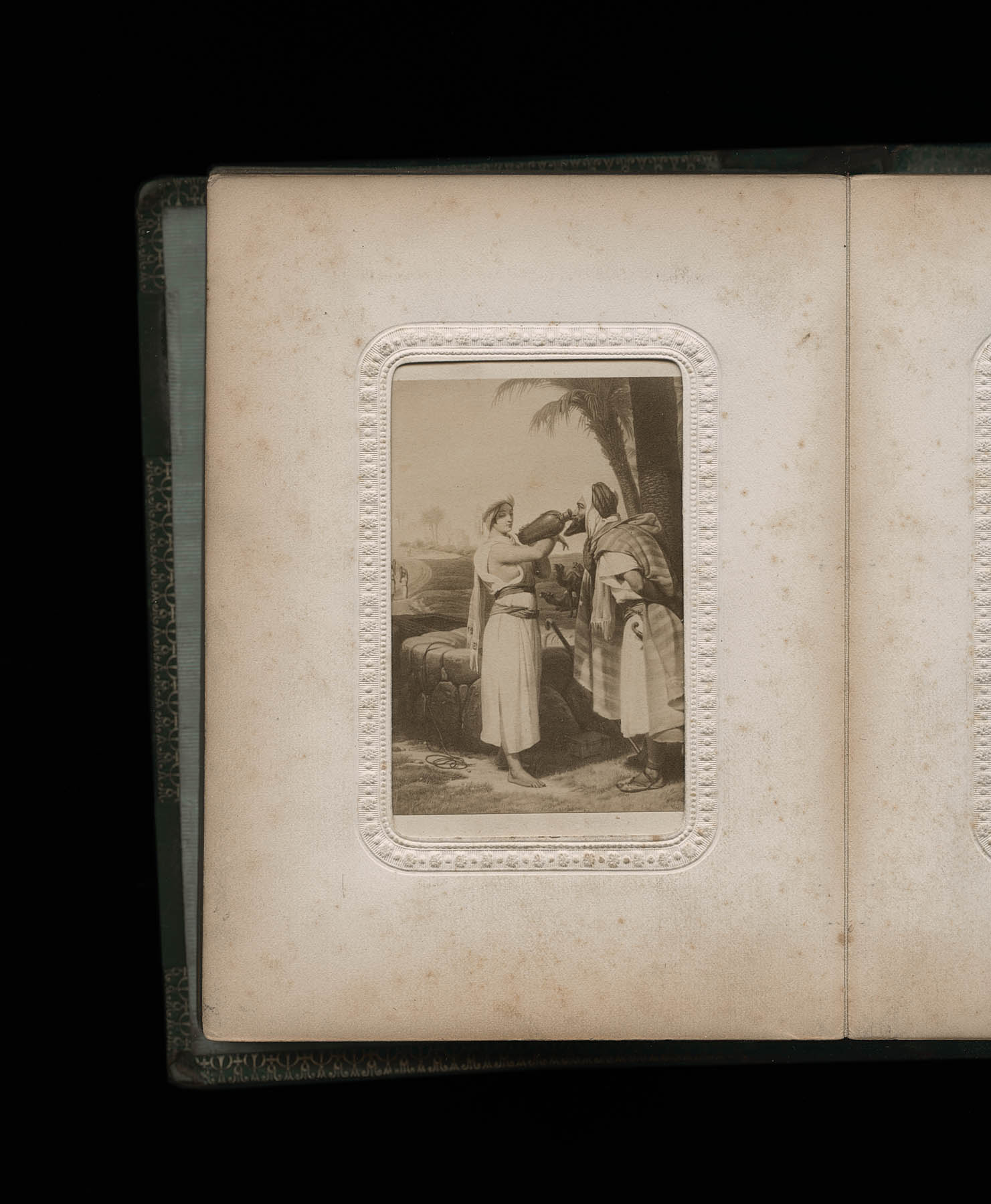
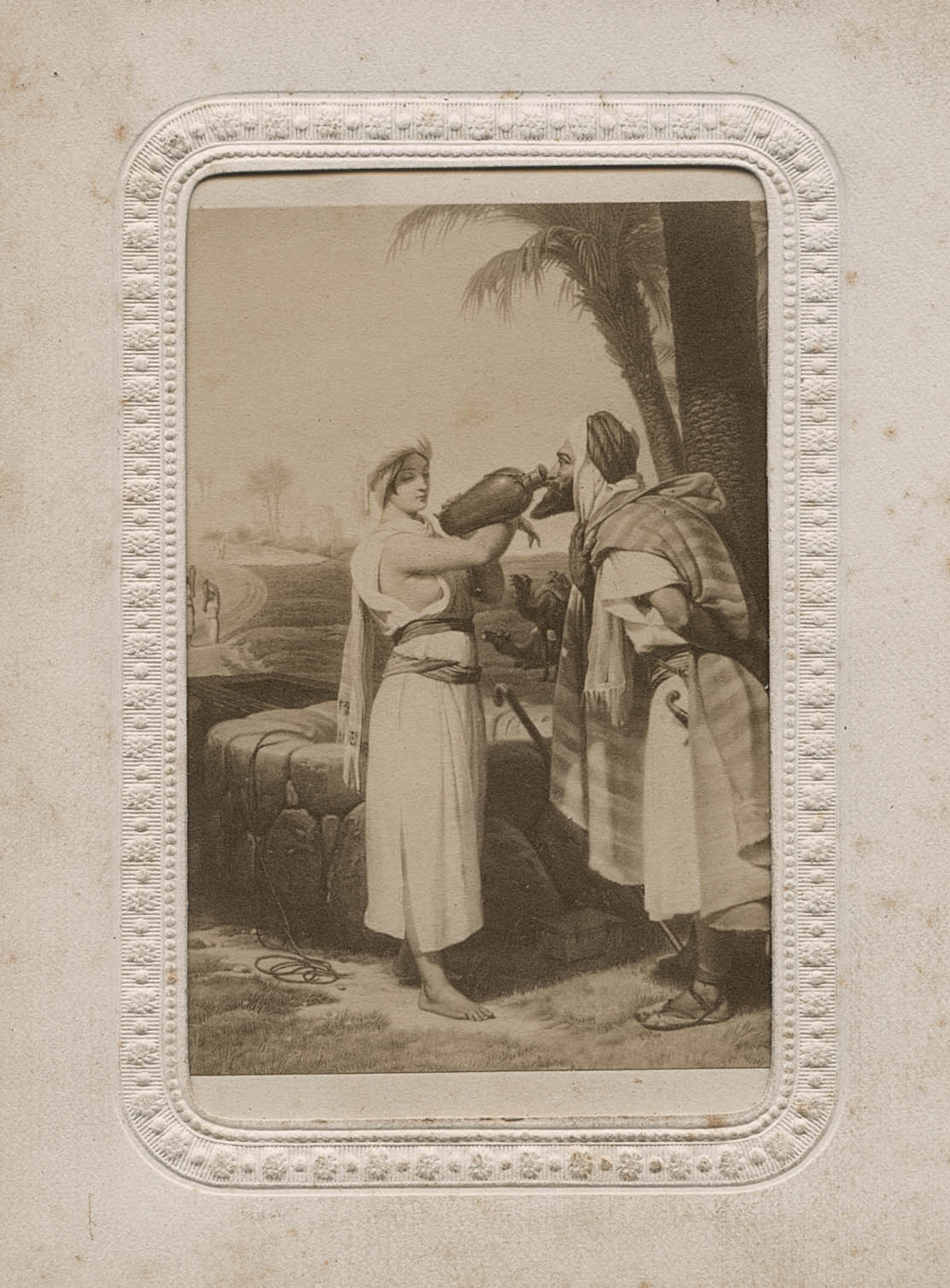
Goupil & Cie (photographer), Paris 19, Boulevard Montmartre
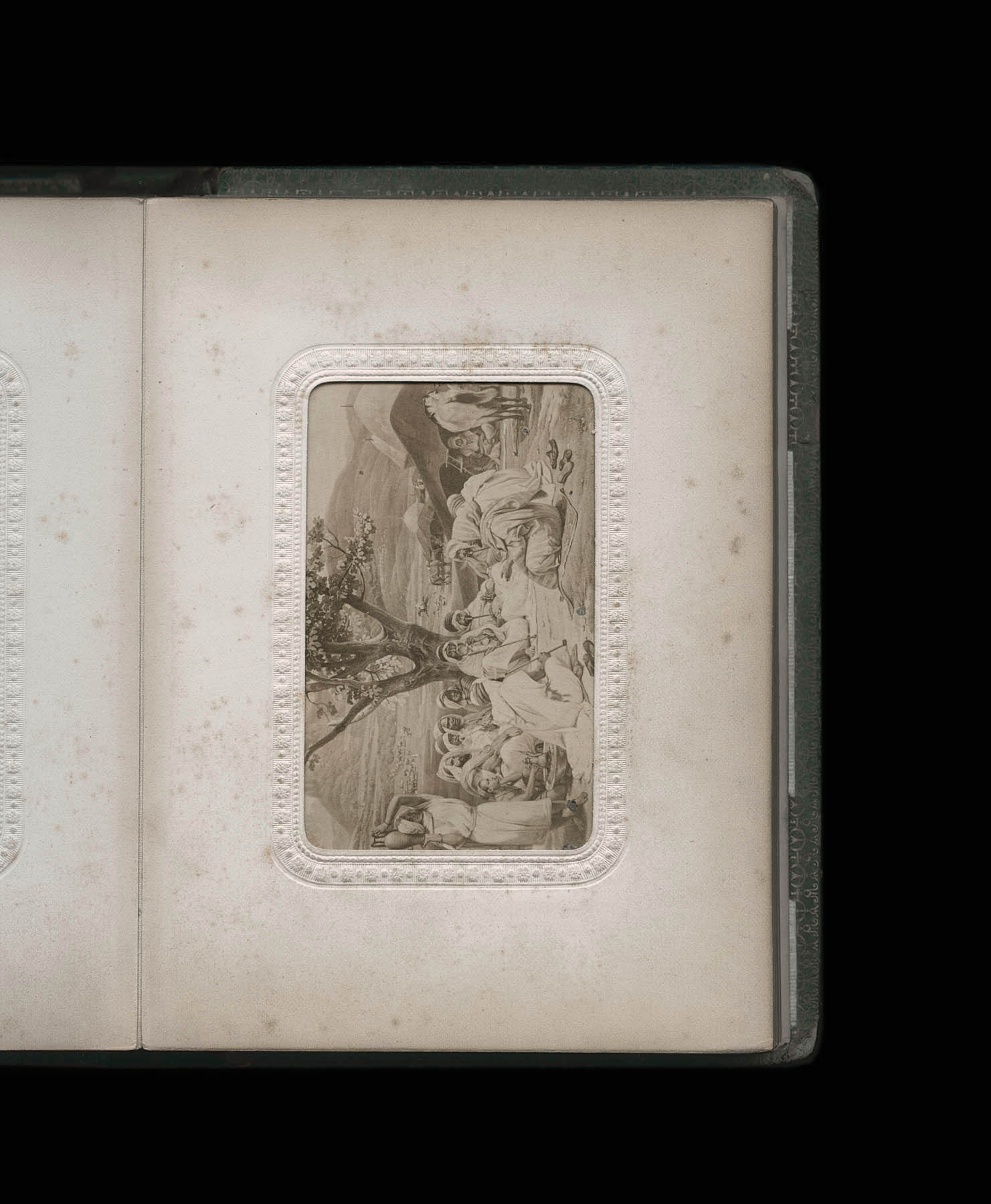
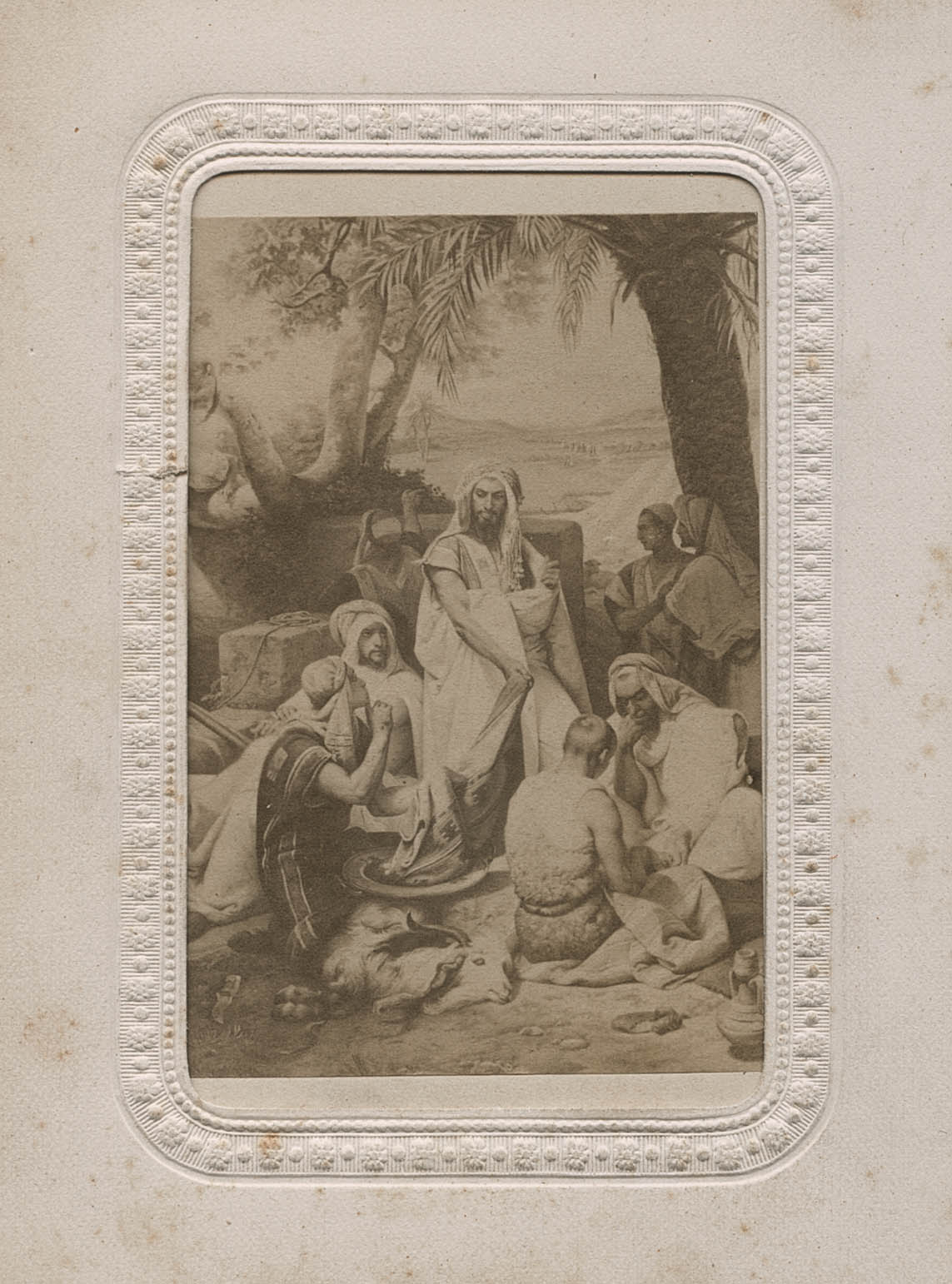
London, La Haye, Berlin, New York After a painting by Horace Vernet (French, 1789-1863) Rebecca and Eleazar at the well (1835, now lost)
c. 1860-1863
Carte de visite
Goupil & Cie (photographer), Paris 19, Boulevard Montmartre
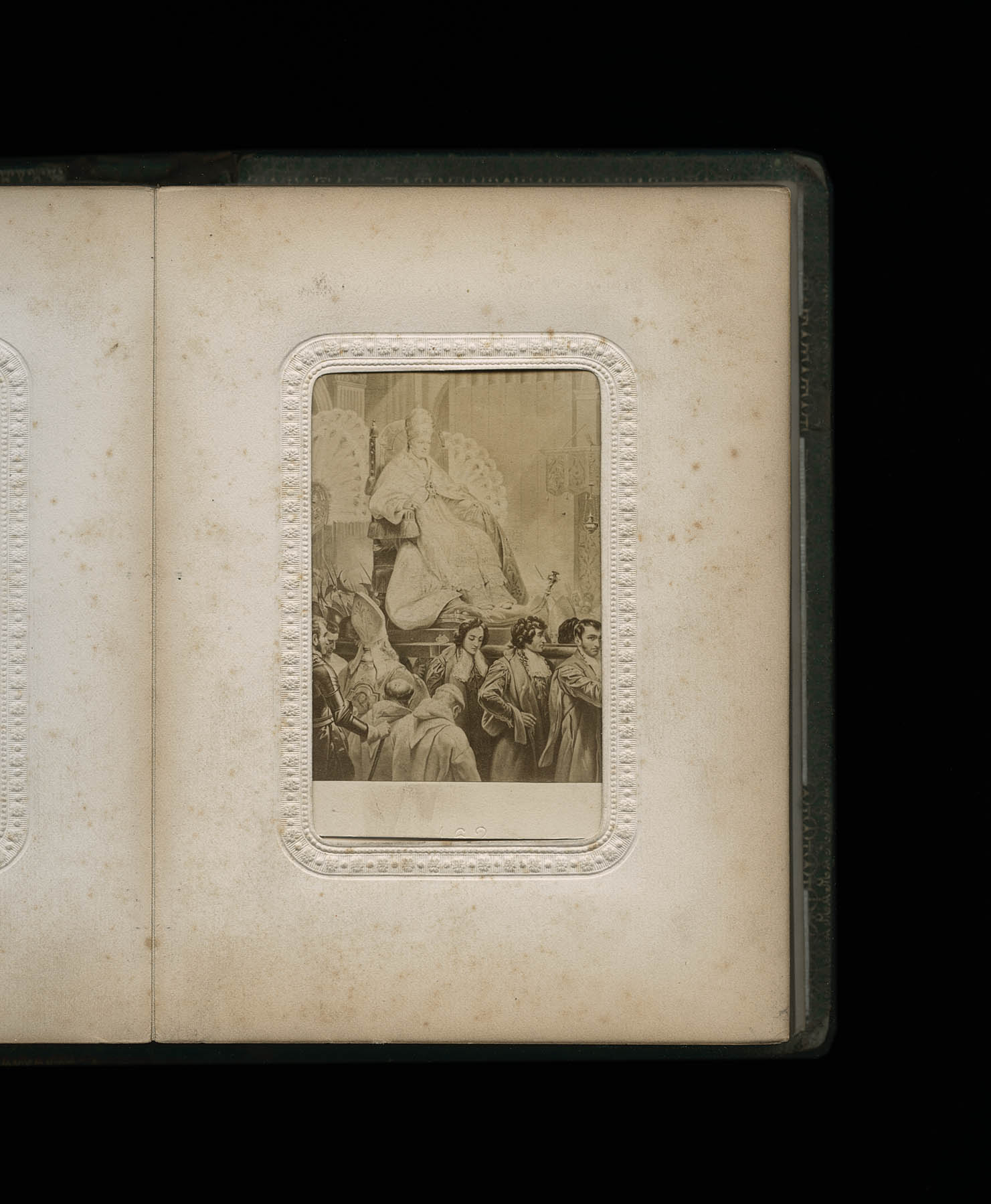
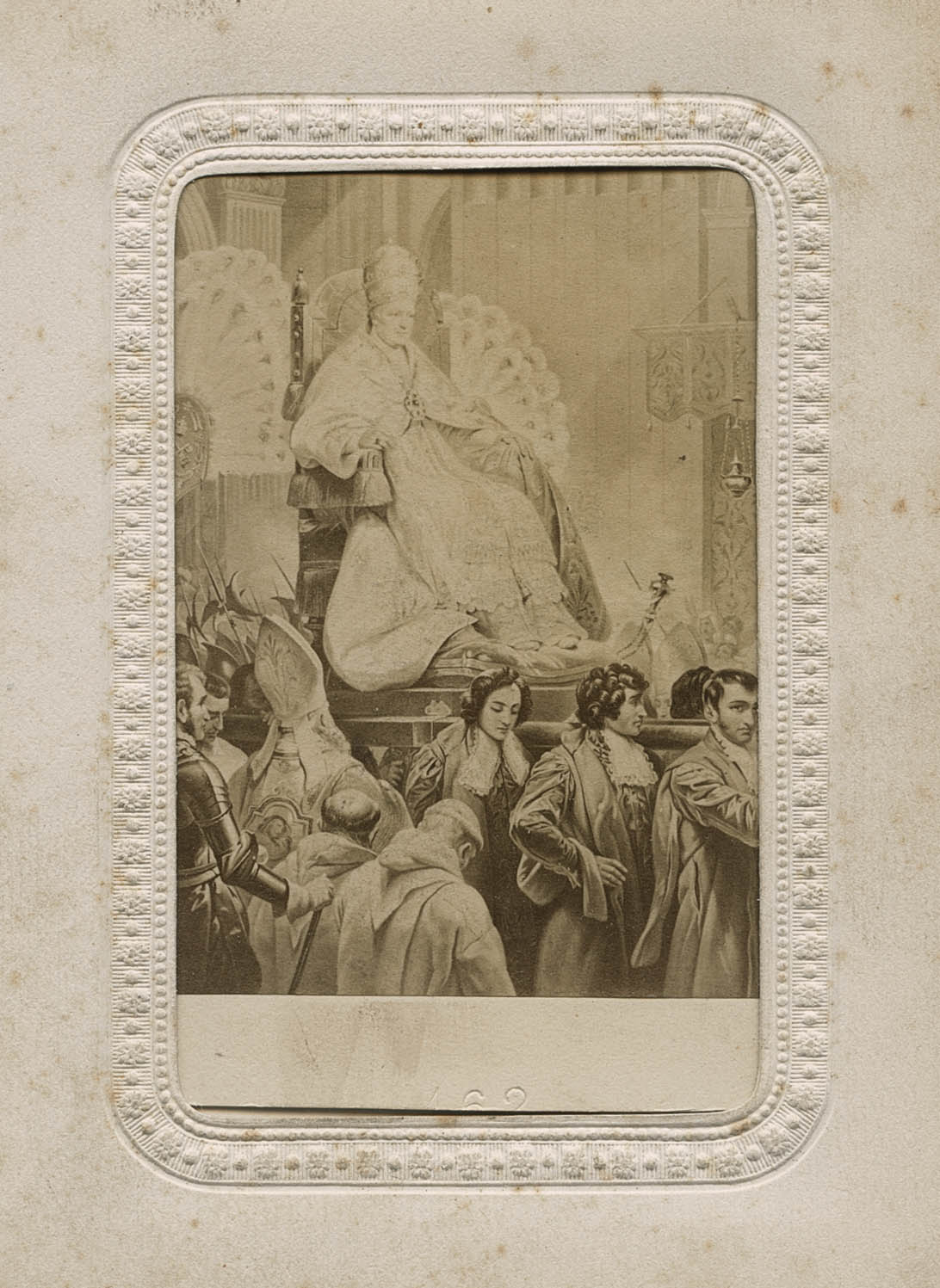
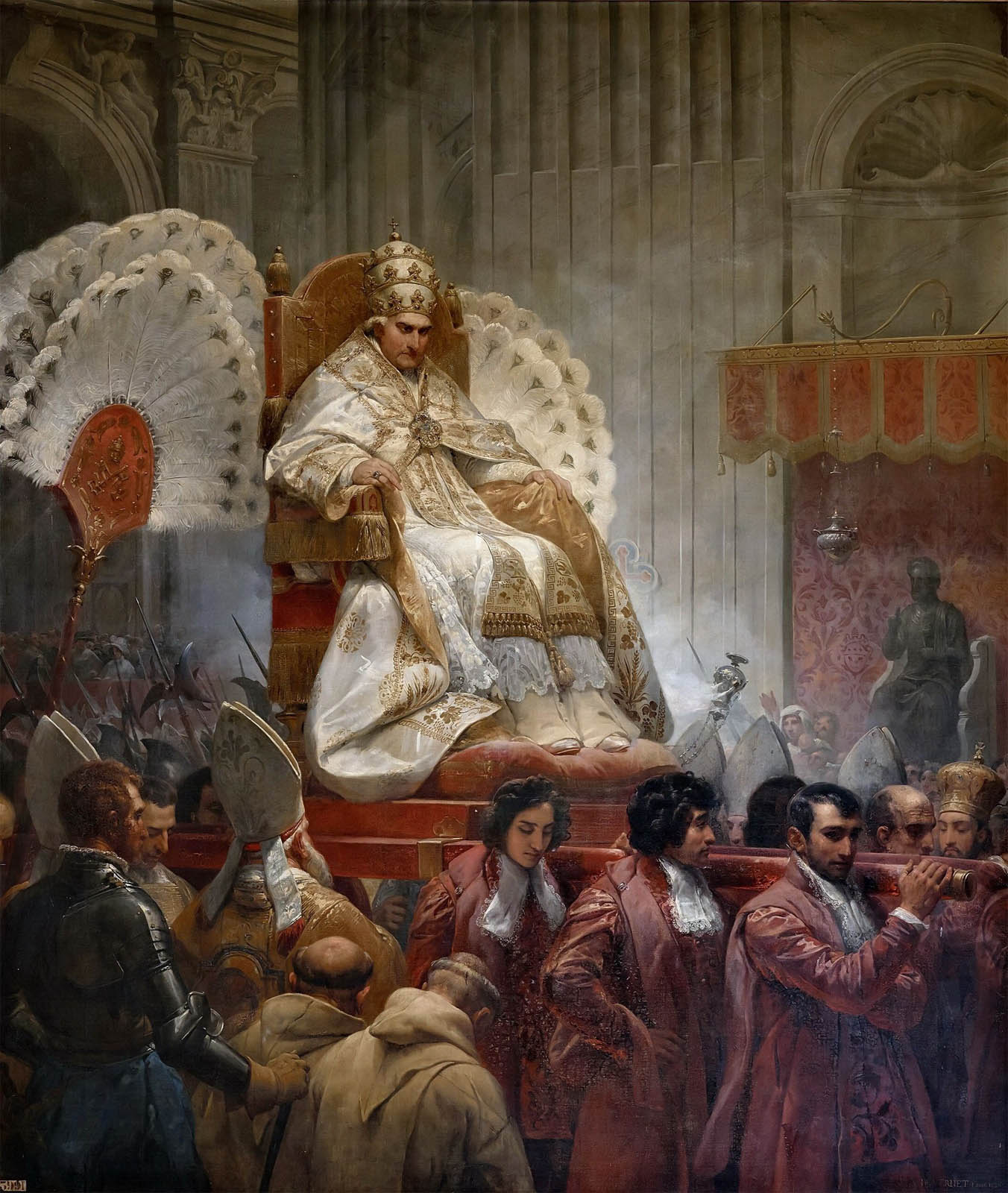
London, La Haye, Berlin, New York After a painting by Horace Vernet (French, 1789-1863) Pie VIII porté dans la basilique de Saint-Pierre à Rome (Pius VIII brought to the Basilica of Saint Peter in Rome) 1829
c. 1860-1863
Carte de visite
Horace Vernet (French, 1789-1863) Pie VIII porté dans la basilique de Saint-Pierre à Rome (Pius VIII brought to the Basilica of Saint Peter in Rome)
1829
Oil on canvas Height: 385cm (12.6 ft) Width: 329cm (10.7 ft)
Museum of the History of France
Public domain
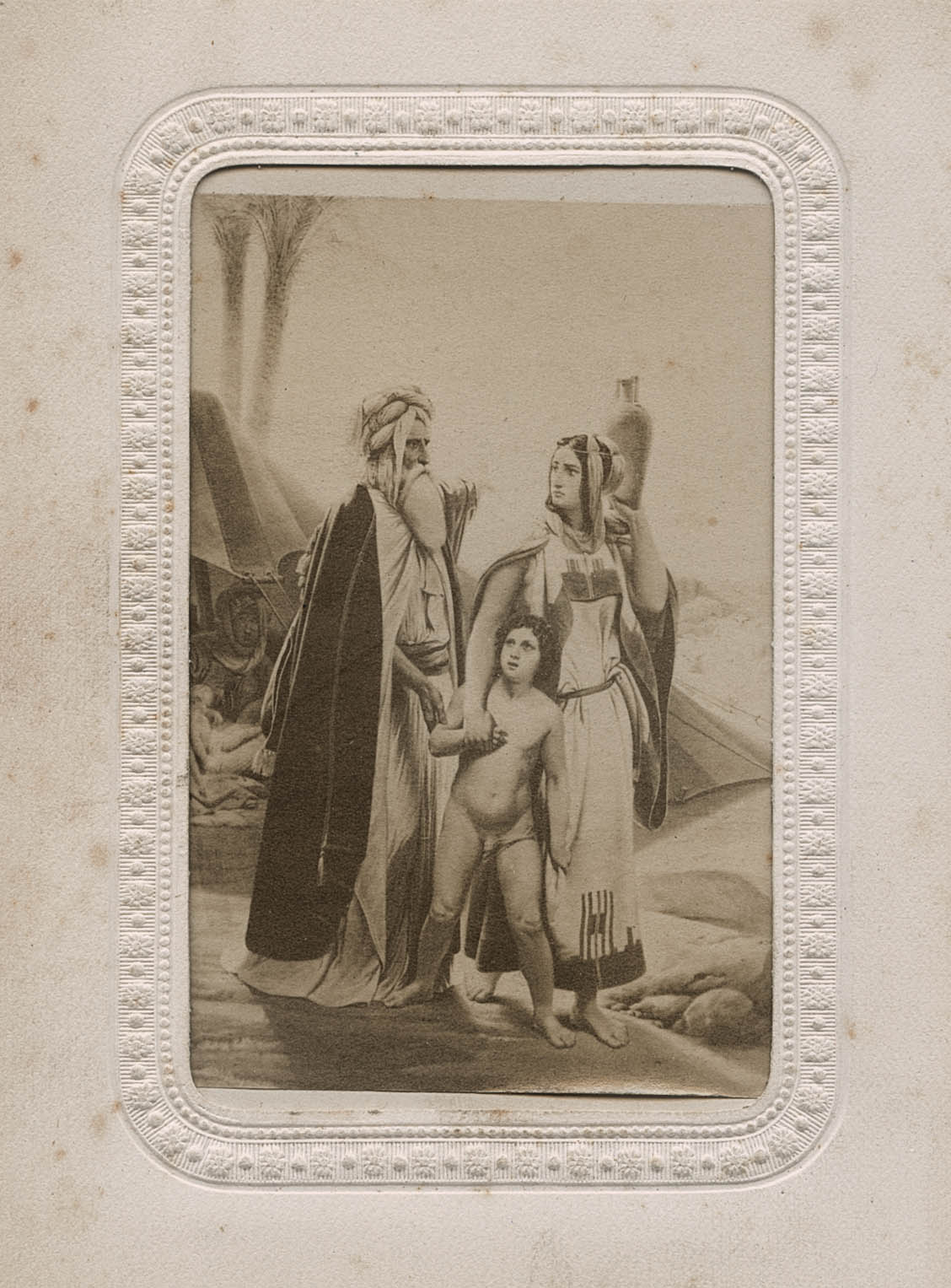
Goupil & Cie (photographer), Paris 19, Boulevard Montmartre
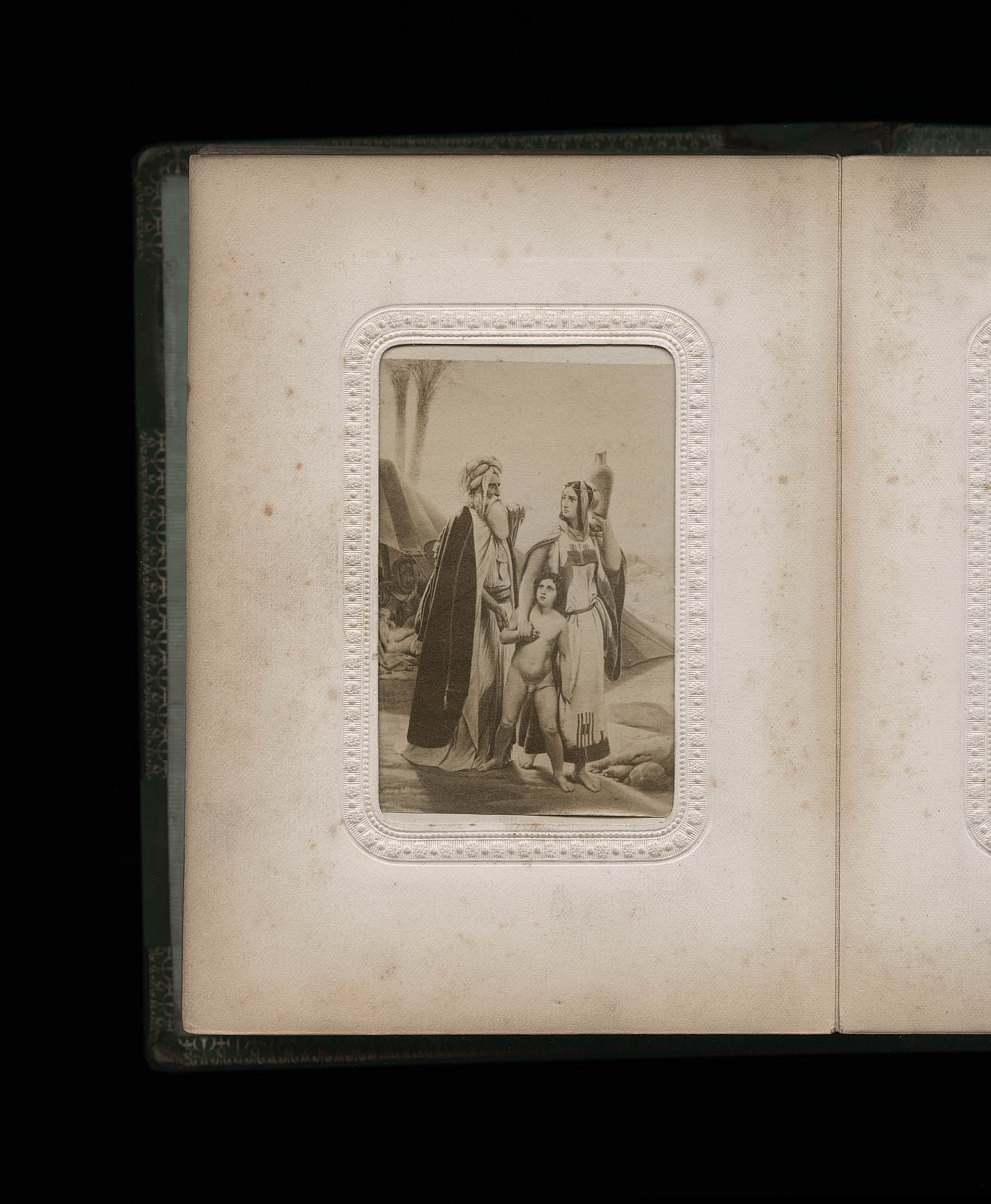
London, La Haye, Berlin, New York After a painting by Horace Vernet (French, 1789-1863) Repudiation Of Hagar 1837
c. 1860-1863
Carte de visite
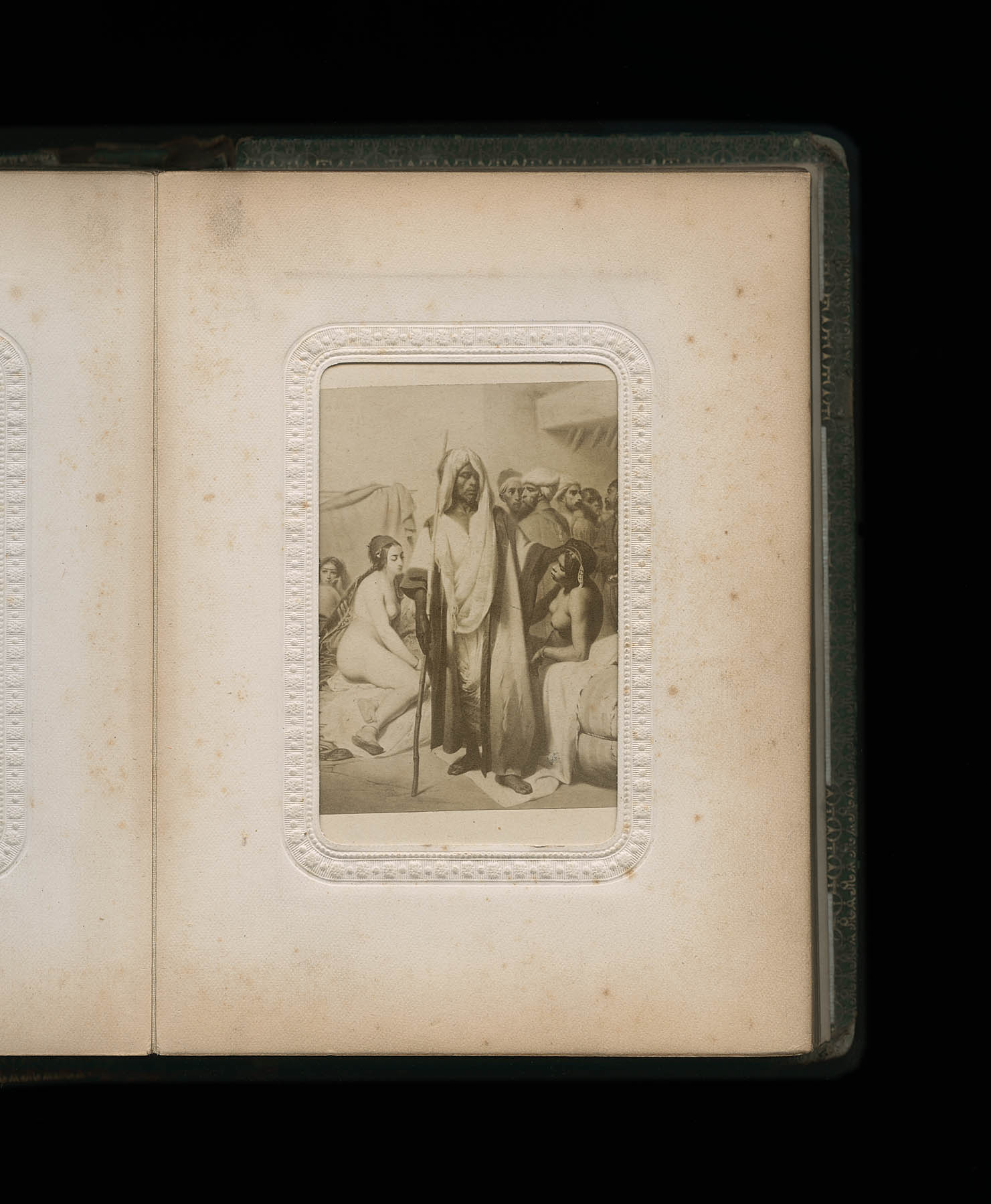
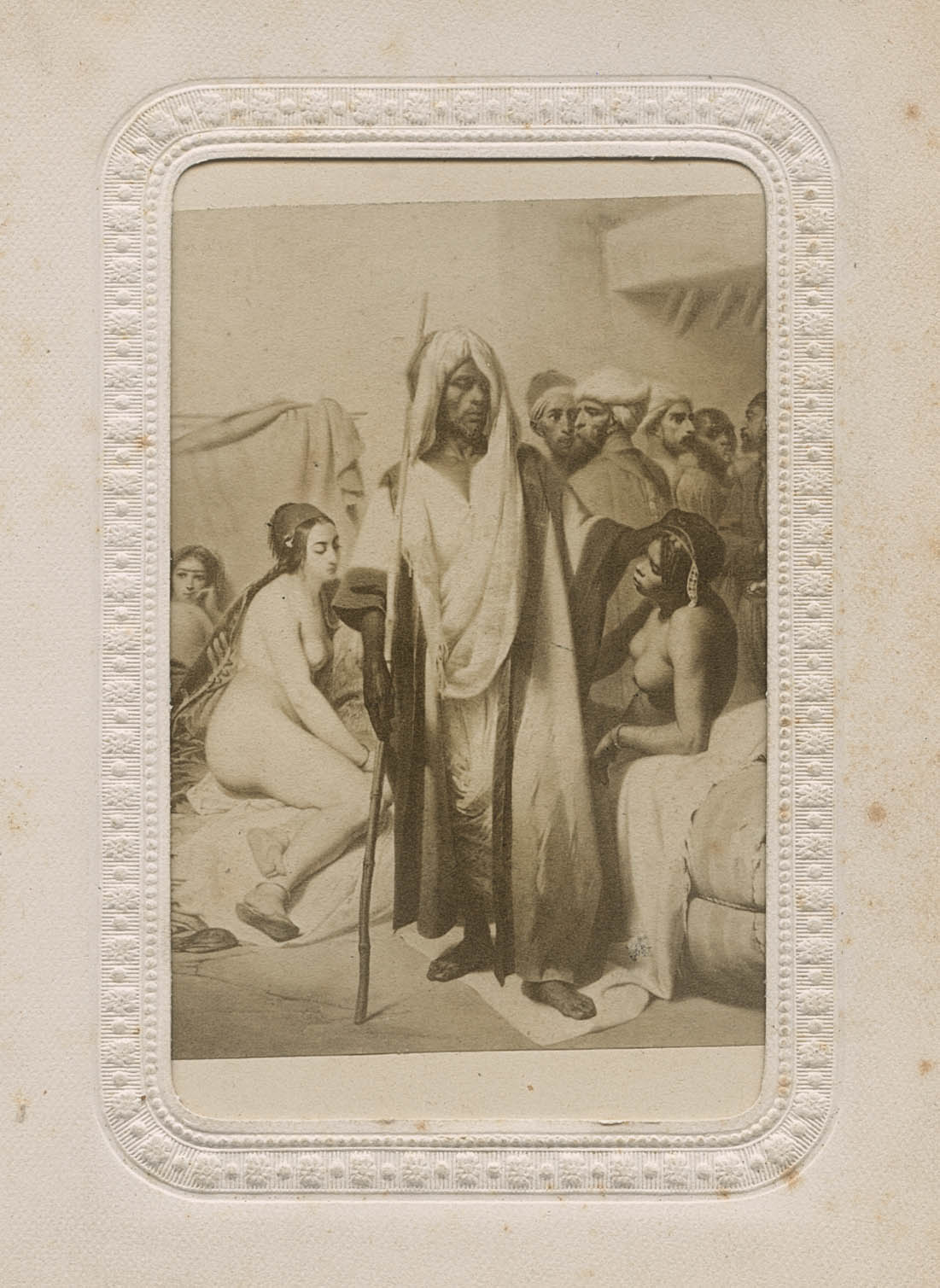
Goupil & Cie (photographer), Paris 19, Boulevard Montmartre
London, La Haye, Berlin, New York After a painting by Horace Vernet (French, 1789-1863) Le Marché d’esclaves (Slave market) 1836
c. 1860-1863
Carte de visite
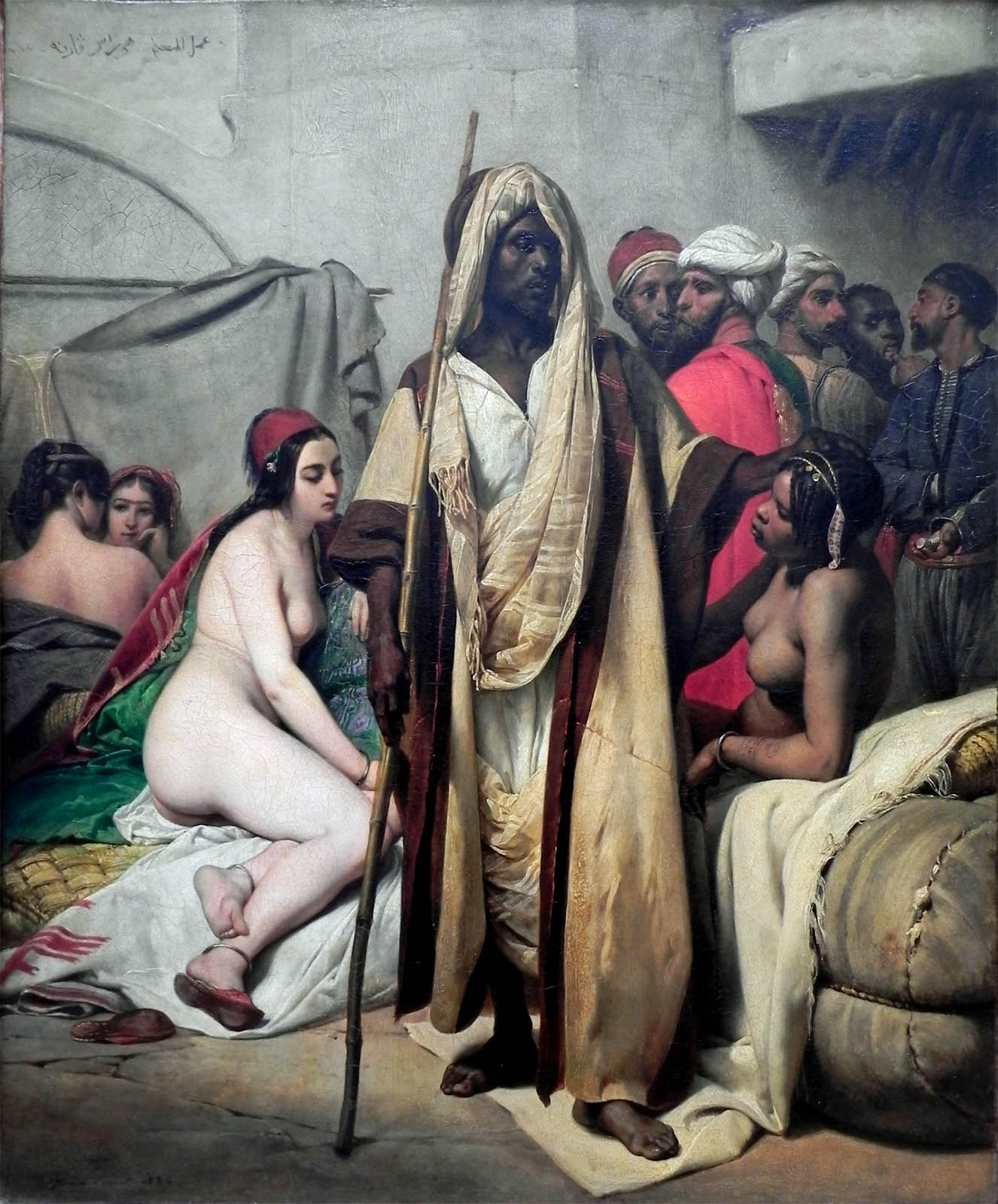
Horace Vernet (French, 1789-1863) Le Marché d’esclaves (Slave market)
1836
Oil on canvas Height: 65cm (25.5 in) Width: 54cm (21.2 in)
Alte Nationalgalerie
Public domain
Goupil & Cie (photographer), Paris 19, Boulevard Montmartre
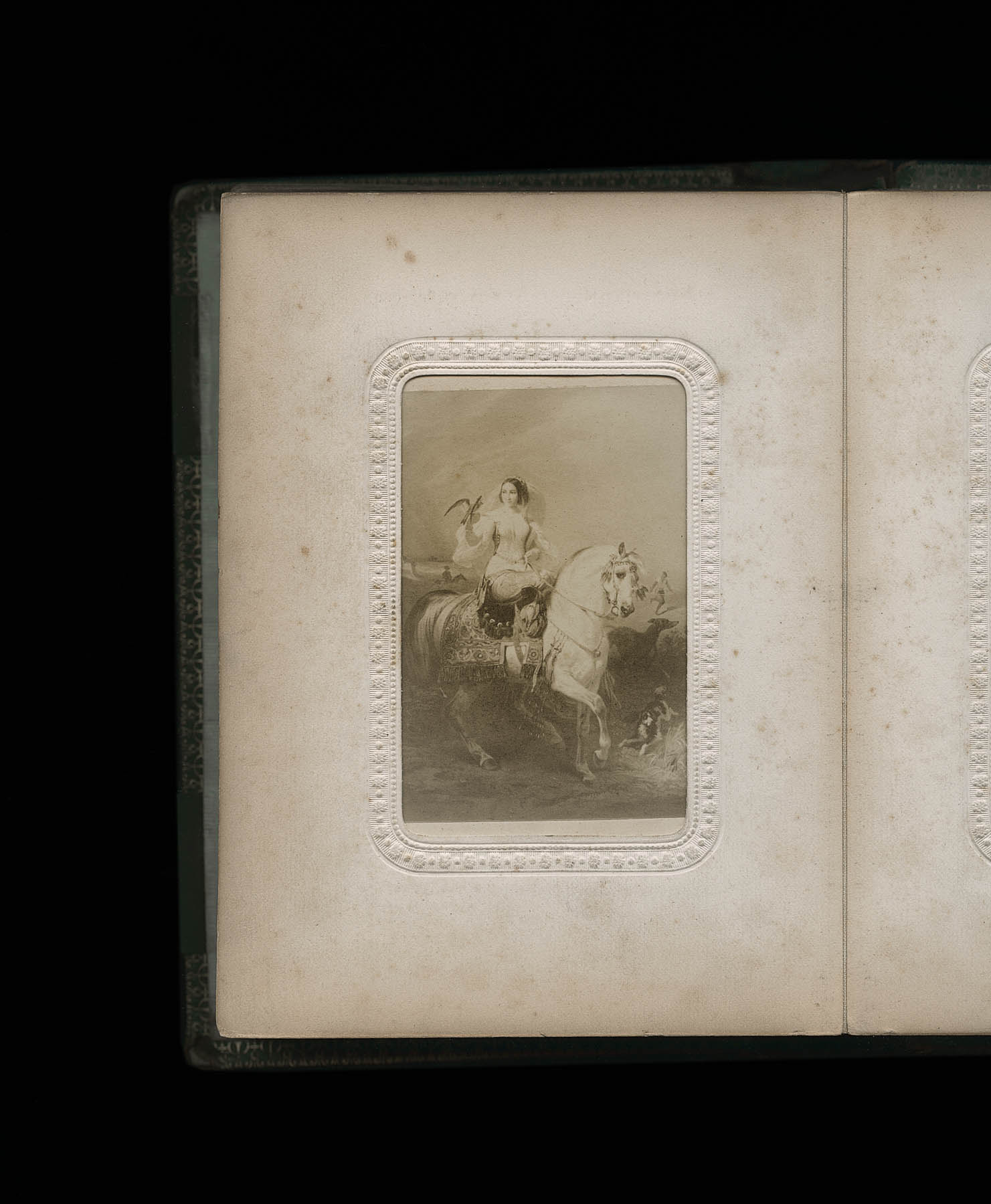
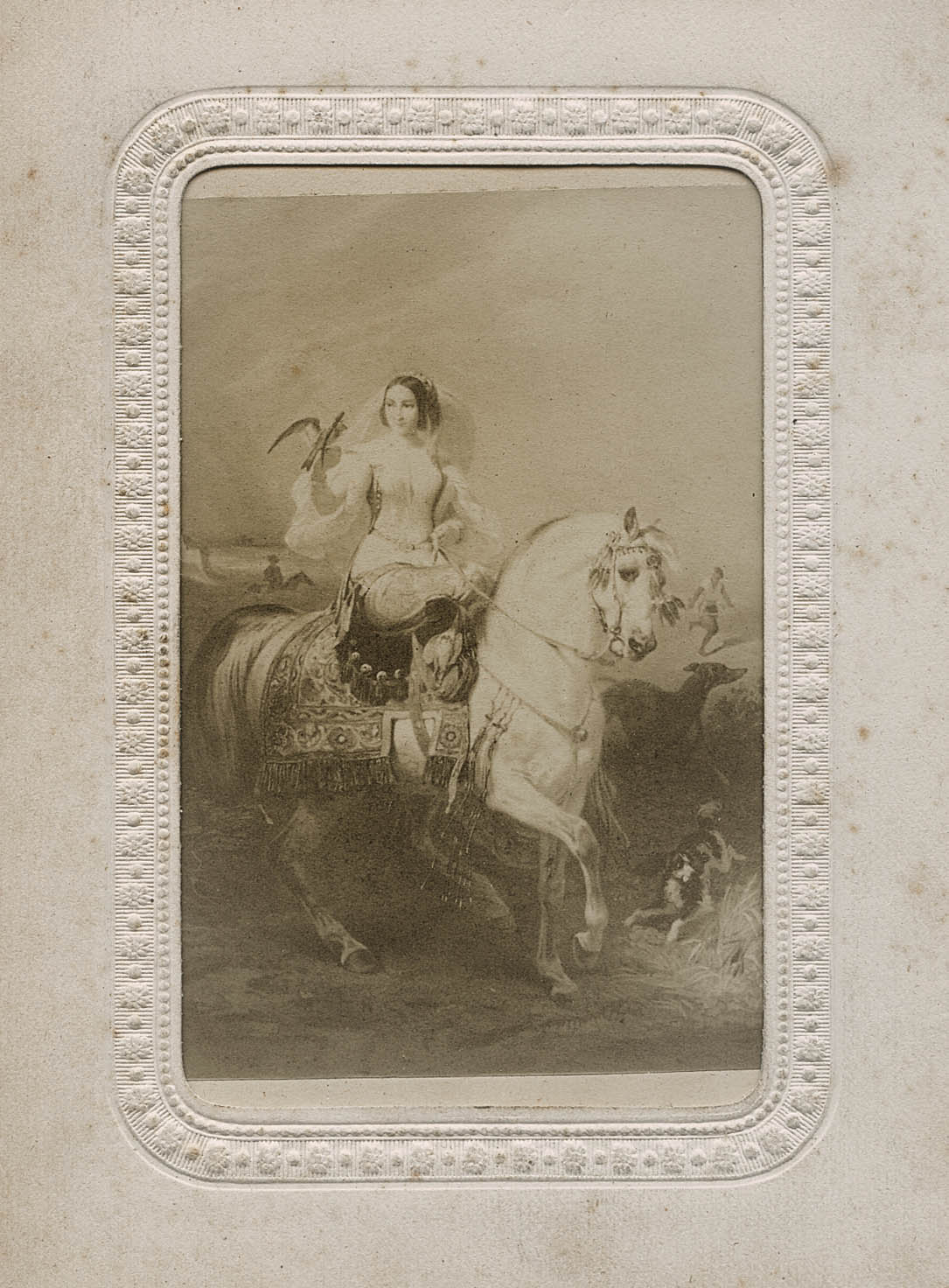
London, La Haye, Berlin, New York After a painting by Horace Vernet (French, 1789-1863) An Algerian Lady Hawking 1839
c. 1860-1863
Carte de visite
Goupil & Cie (photographer), Paris 19, Boulevard Montmartre
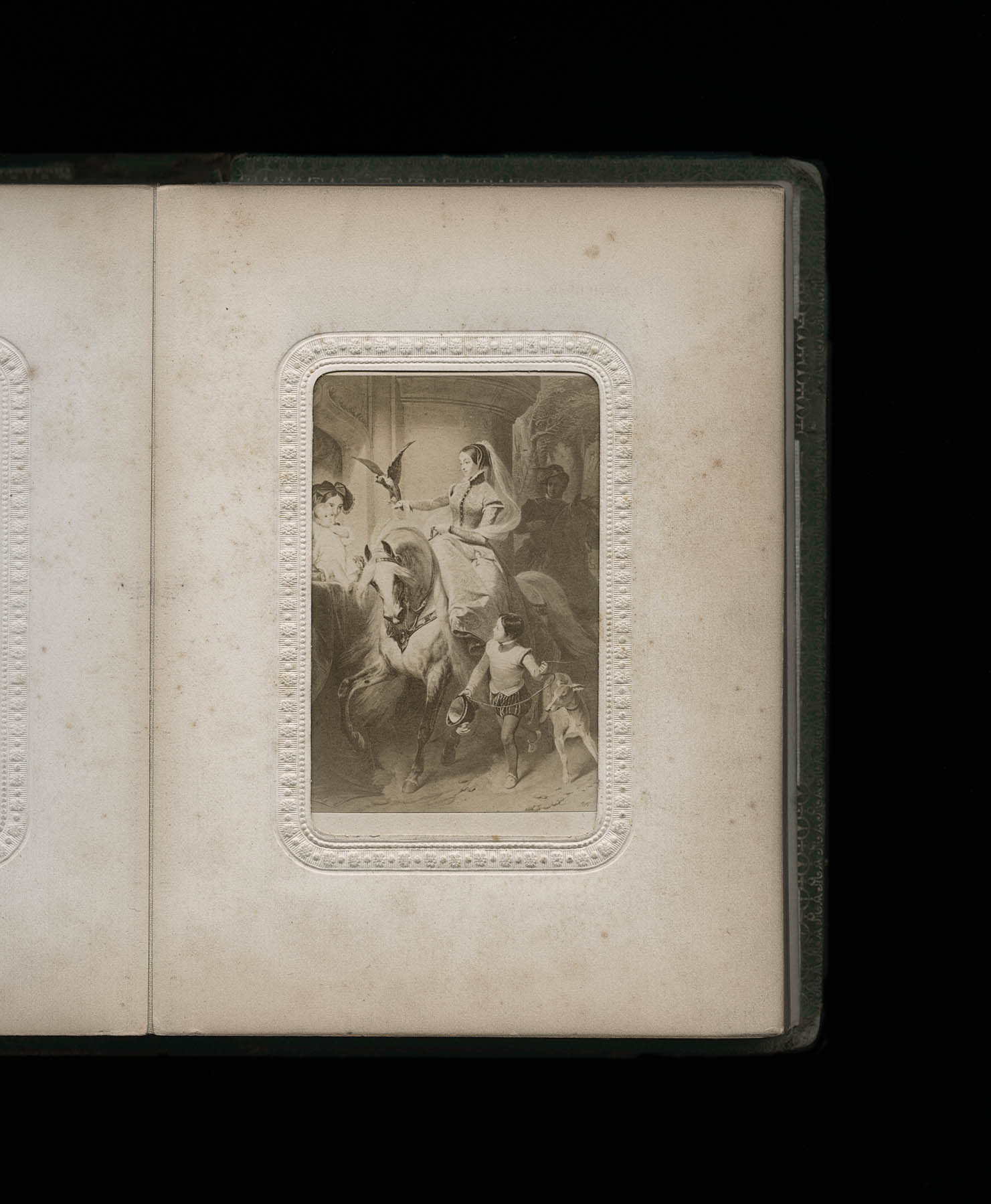
London, La Haye, Berlin, New York After a painting by Horace Vernet (French, 1789-1863) Châtelaine partant pour la chasse (Chatelaine leaving for the hunt) 1840
c. 1860-1863
Carte de visite
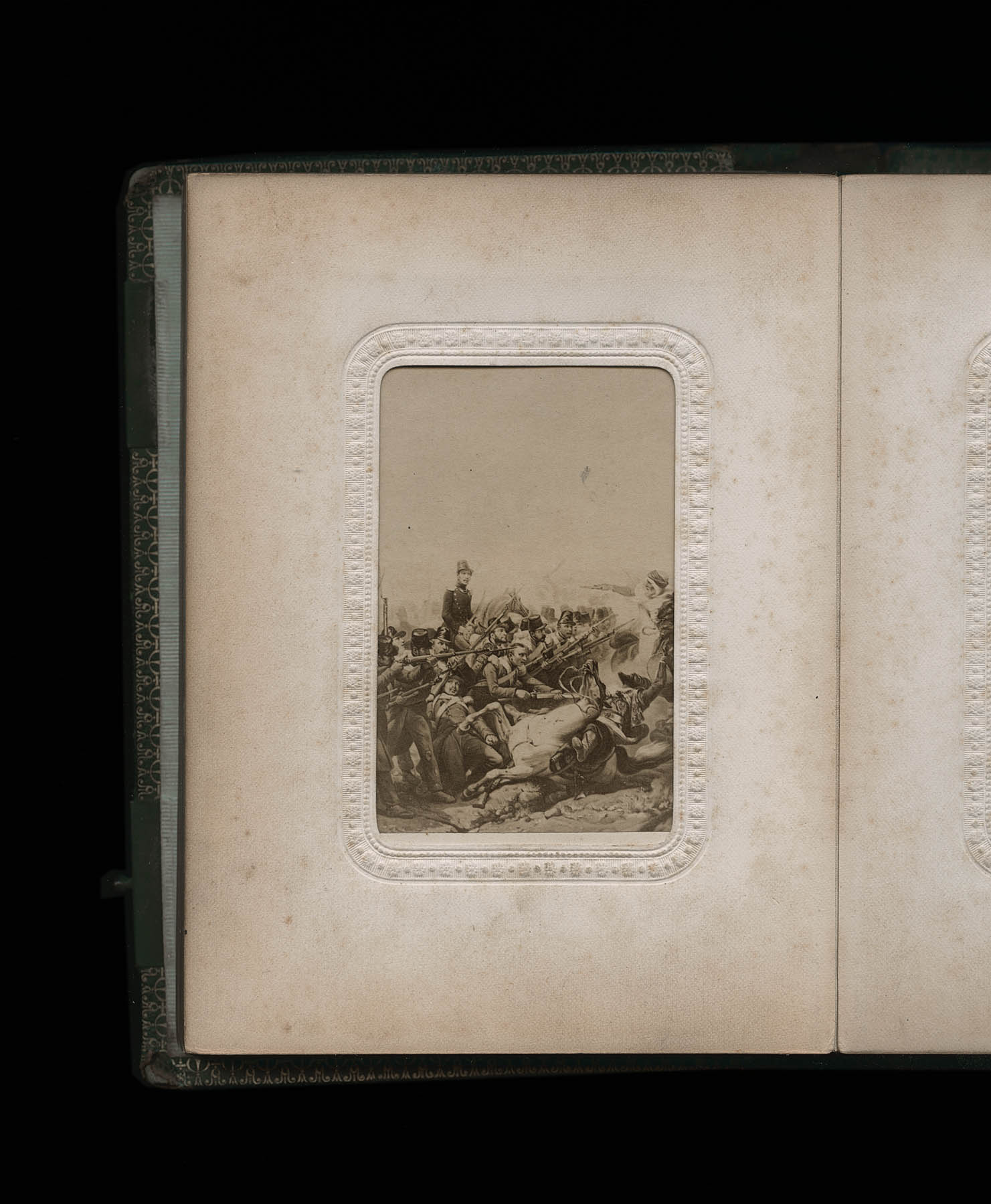
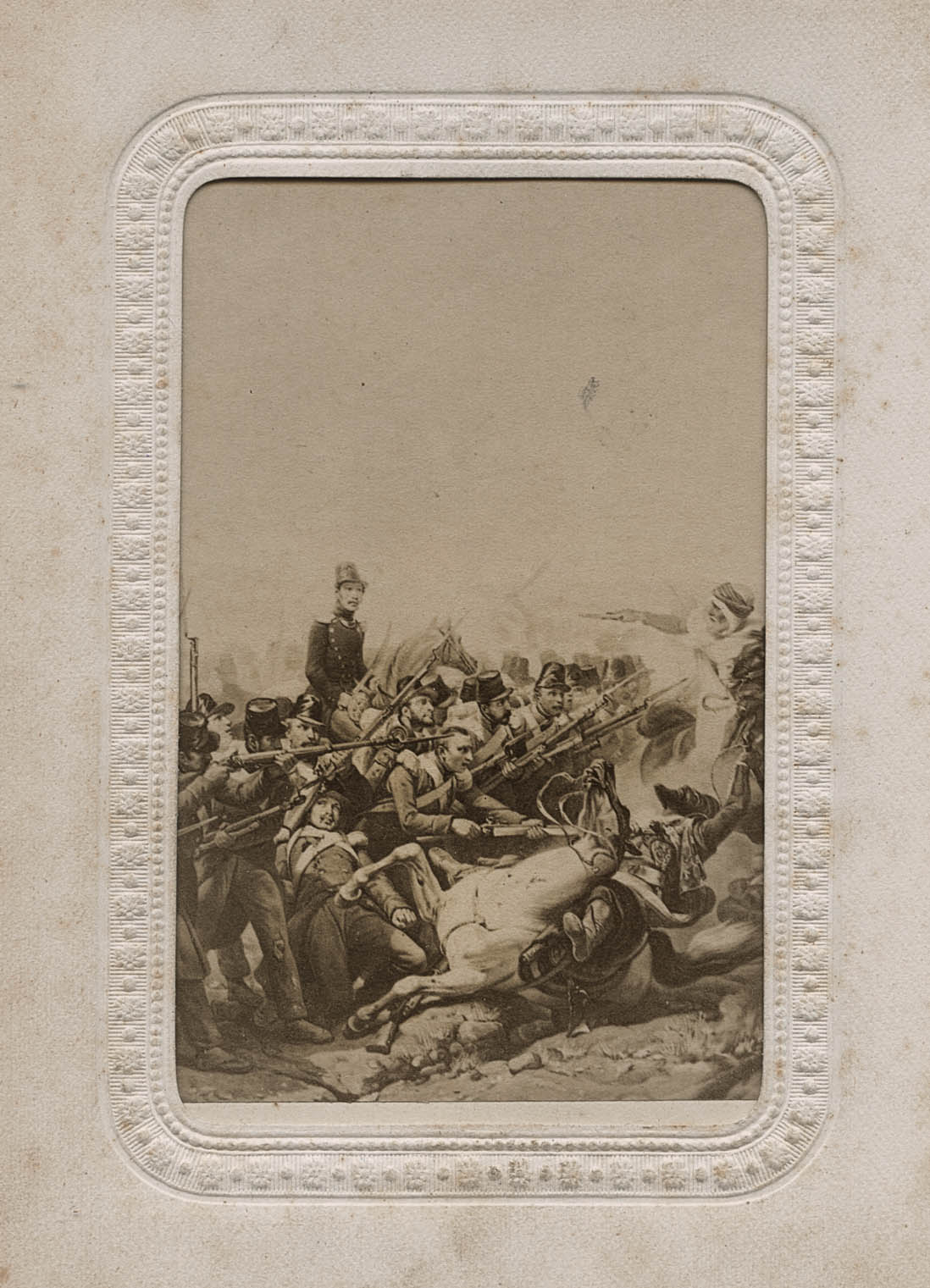
Goupil & Cie (photographer), Paris 19, Boulevard Montmartre
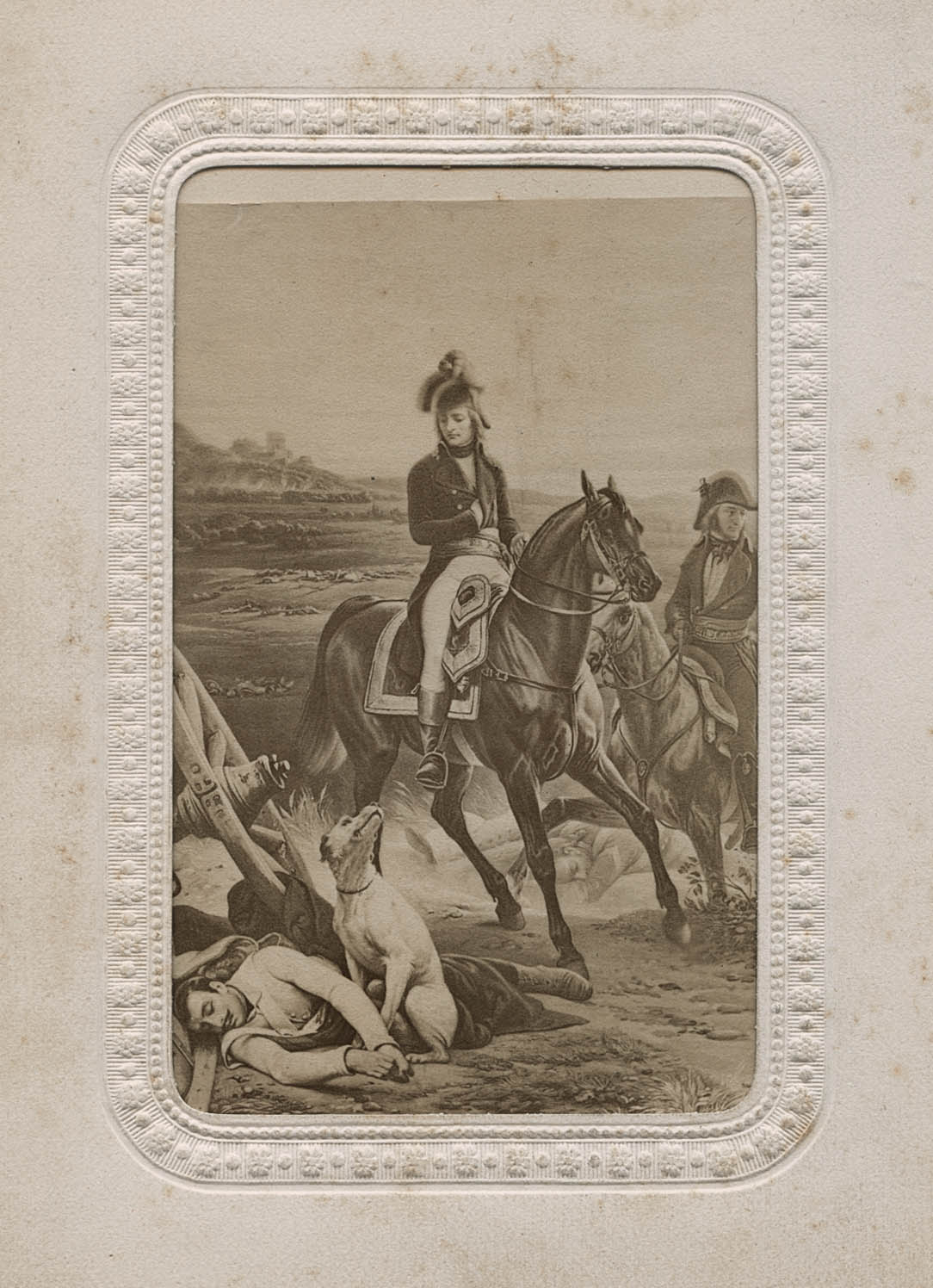
London, La Haye, Berlin, New York After a painting by Horace Vernet (French, 1789-1863) Bonaparte after the Battle of Bassano 1848
c. 1860-1863
Carte de visite
Goupil & Cie (photographer), Paris 19, Boulevard Montmartre
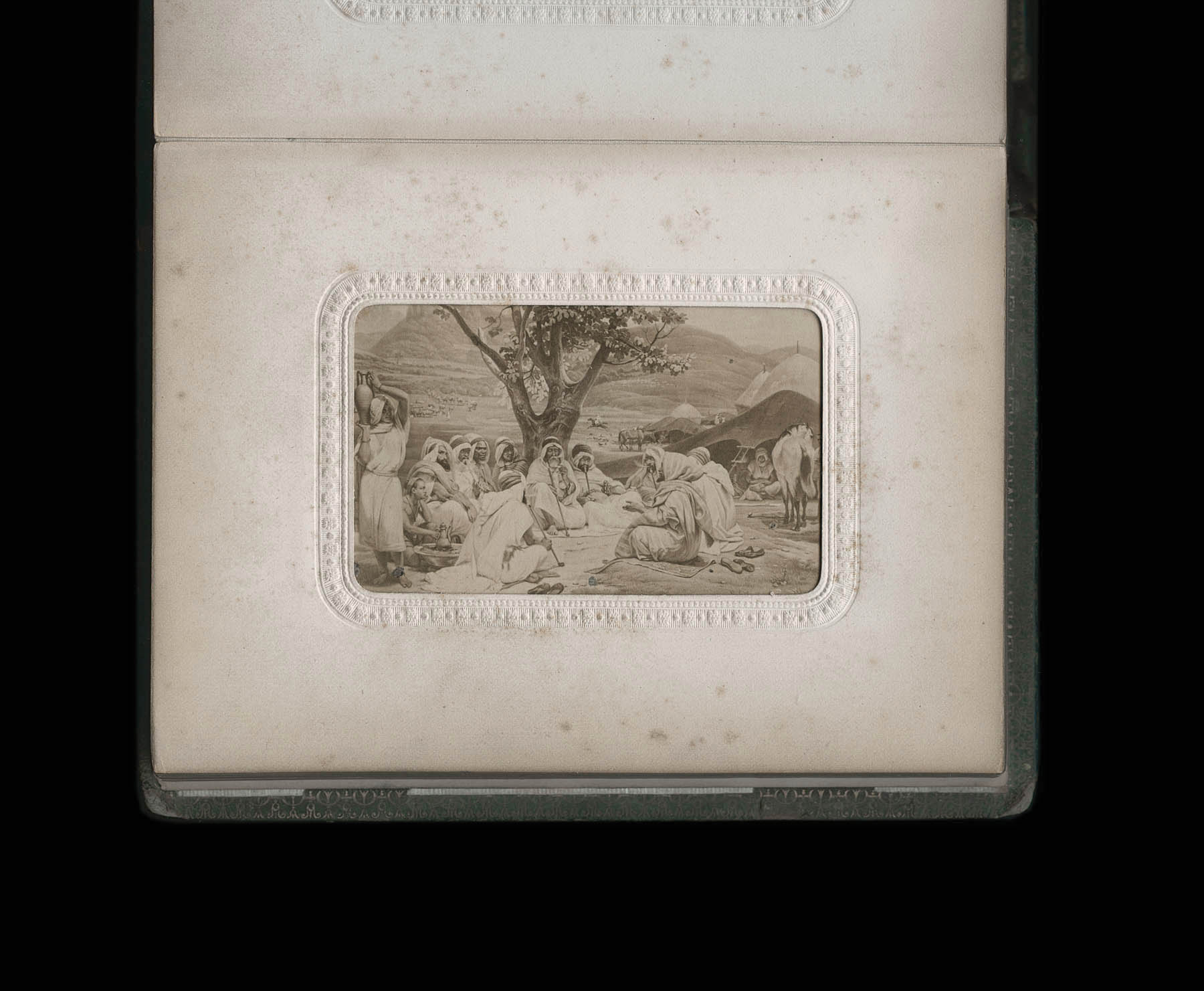
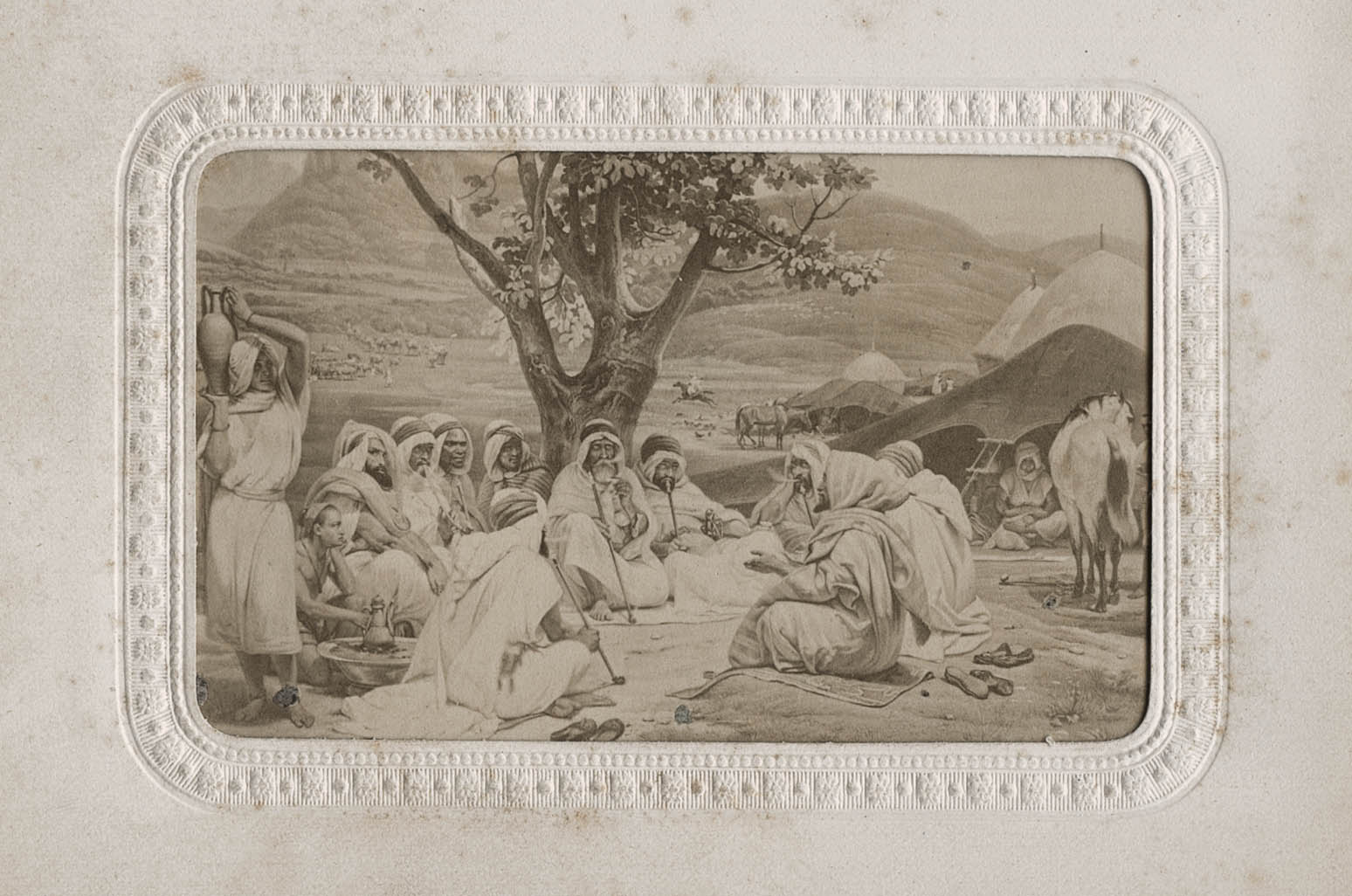
London, La Haye, Berlin, New York After a painting by Horace Vernet (French, 1789-1863) The Arab Tale-teller 1833
c. 1860-1863
Carte de visite
Goupil & Cie (photographer), Paris 19, Boulevard Montmartre
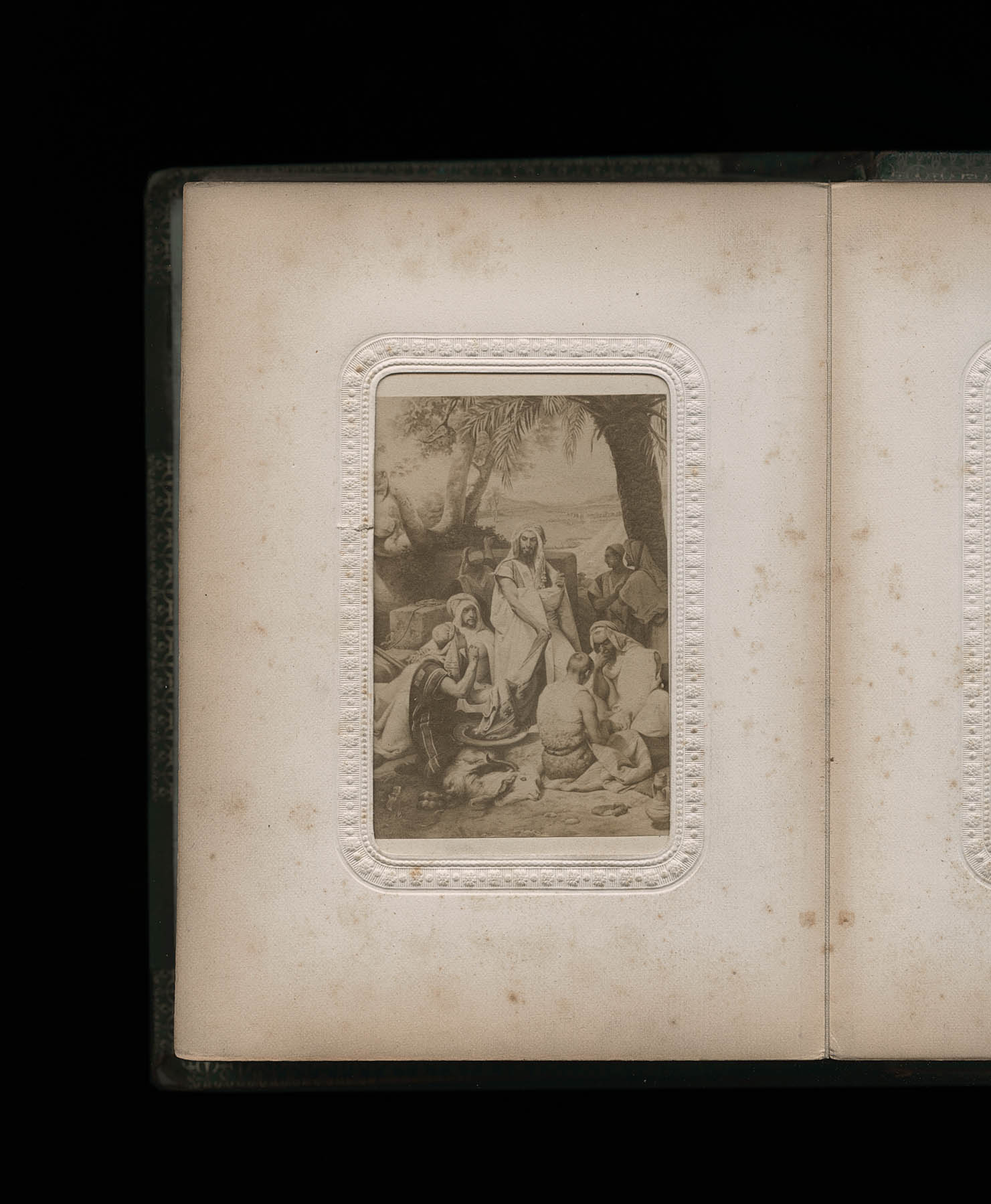
London, La Haye, Berlin, New York After a painting by Horace Vernet (French, 1789-1863) Joseph’s Coat 1853
c. 1860-1863
Carte de visite
Goupil & Cie (photographer), Paris 19, Boulevard Montmartre
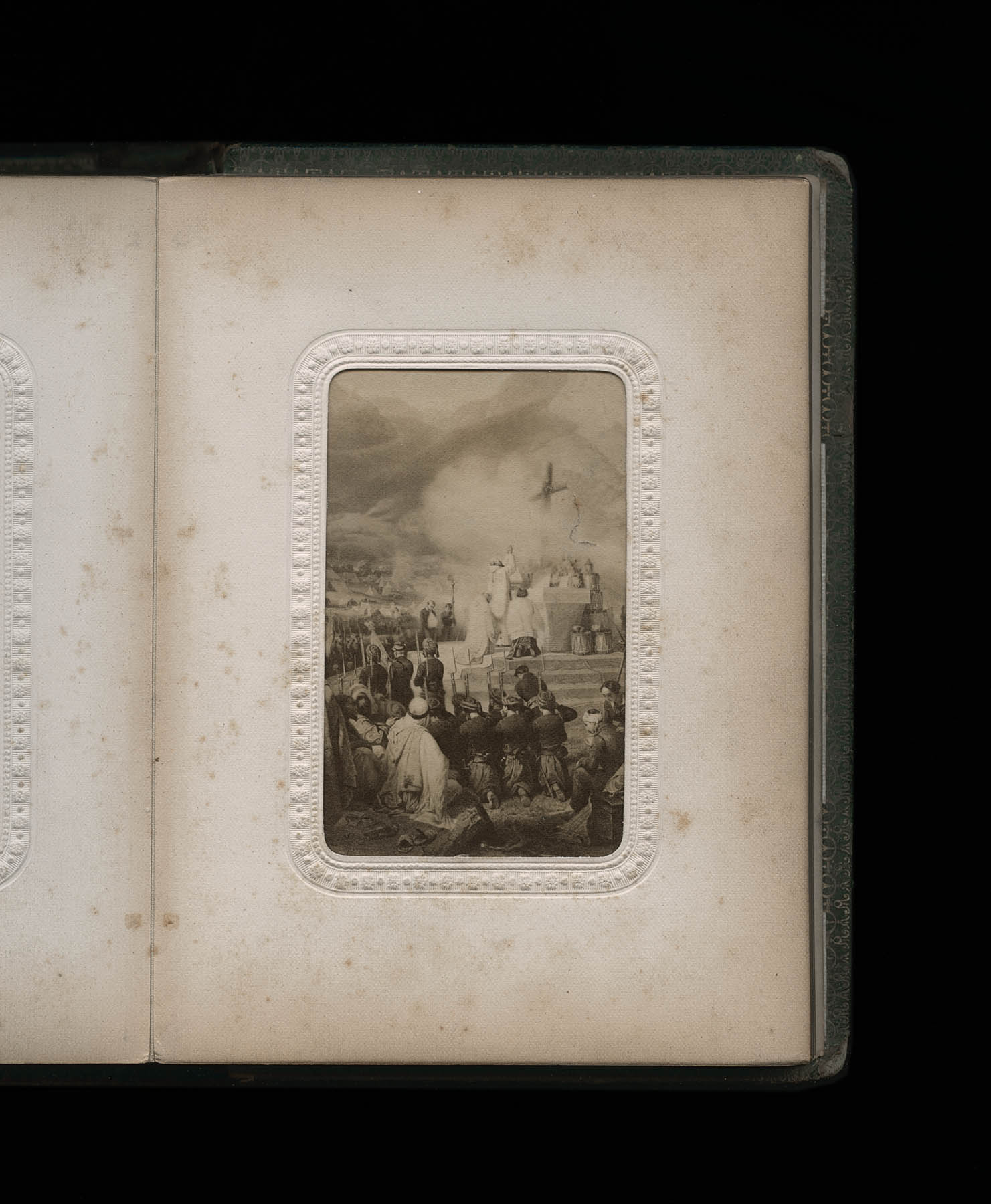
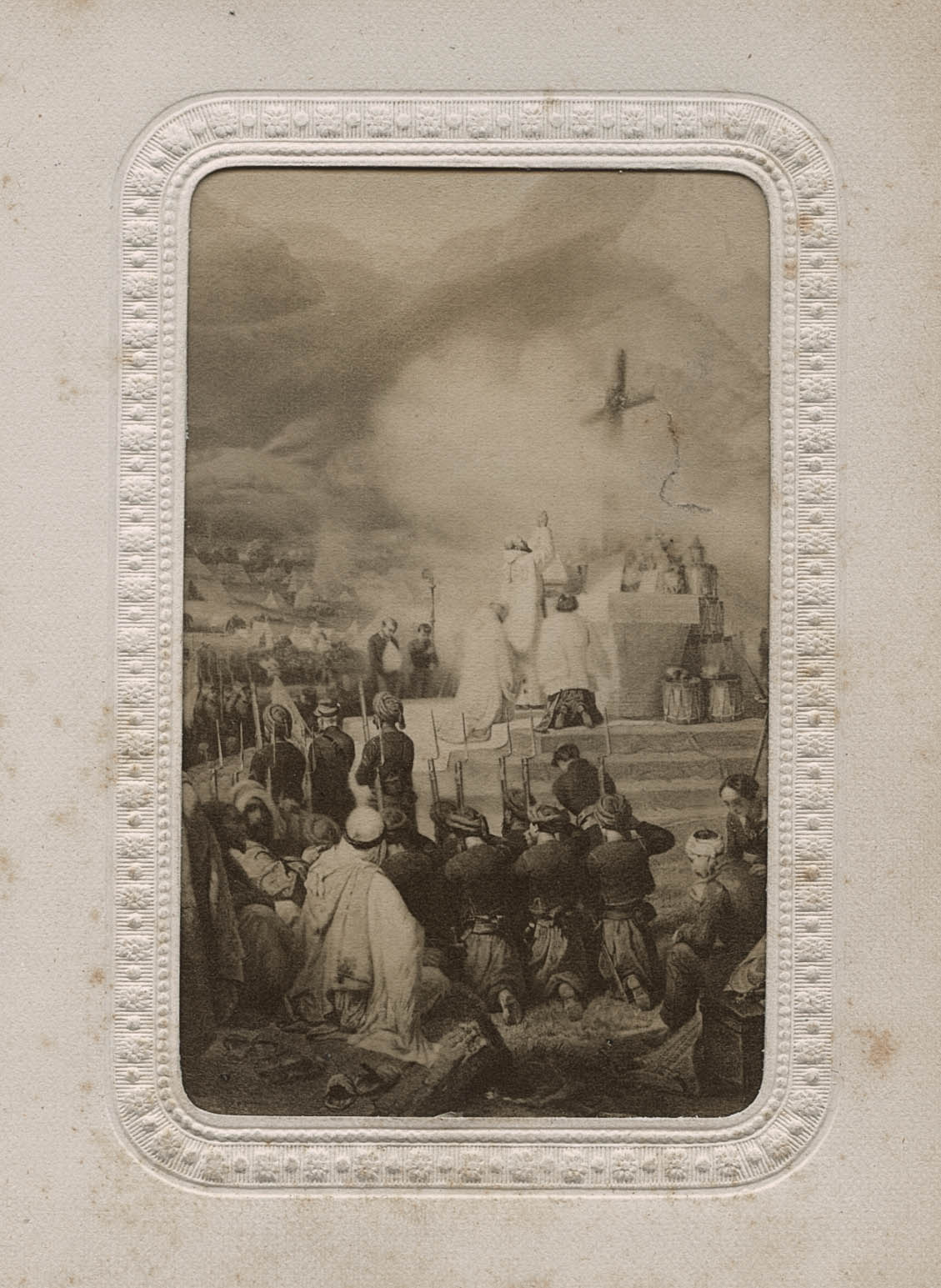
London, La Haye, Berlin, New York After a painting by Horace Vernet (French, 1789-1863) Première messe en Kabylie (First mass in Kabylie) 1854
c. 1860-1863
Carte de visite
Horace Vernet (French, 1789-1863) Première messe en Kabylie (First mass in Kabylie)
1854
Oil on canvas
Cantonal Museum of Fine Arts
Public domain
Goupil & Cie (photographer), Paris 19, Boulevard Montmartre
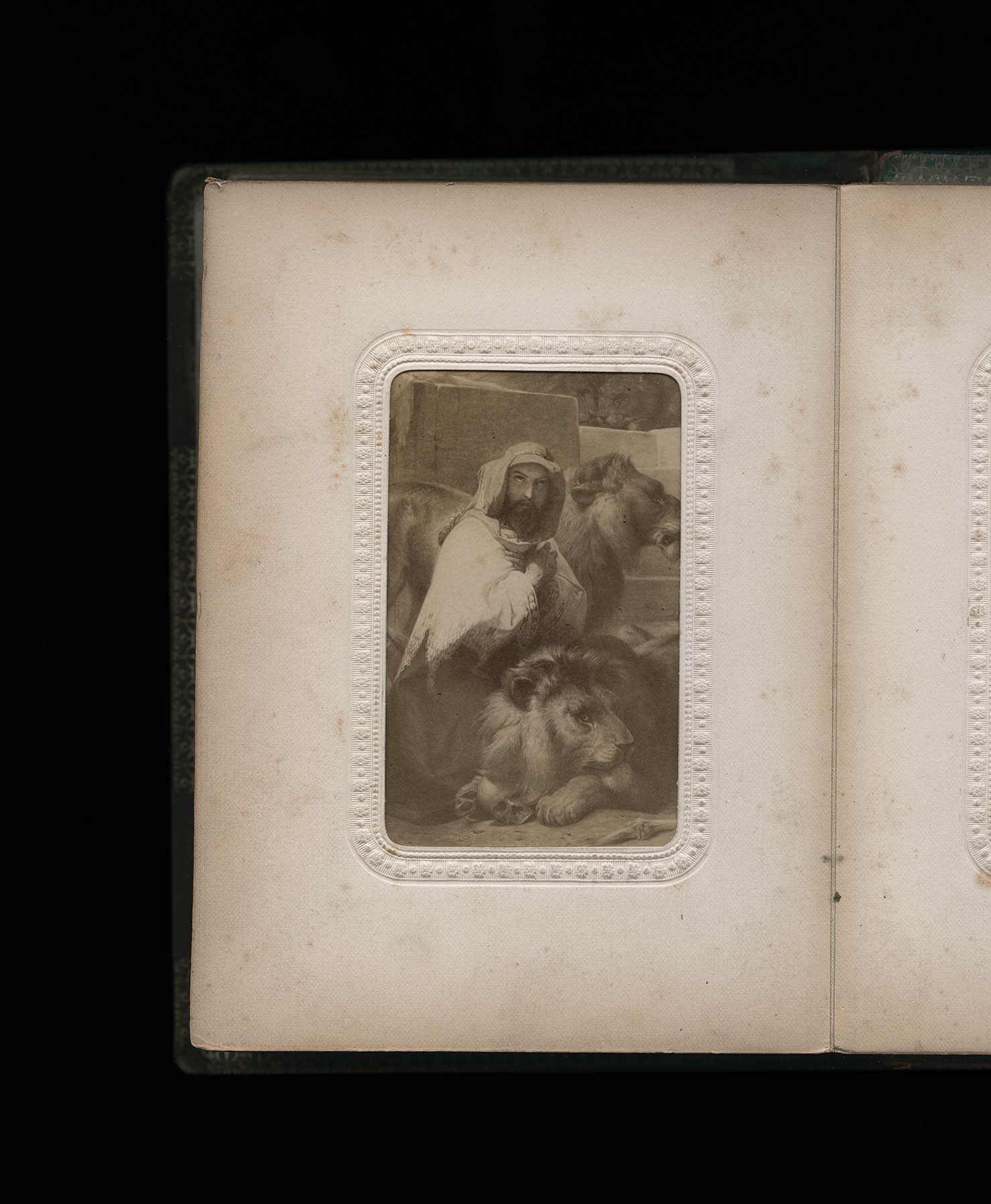
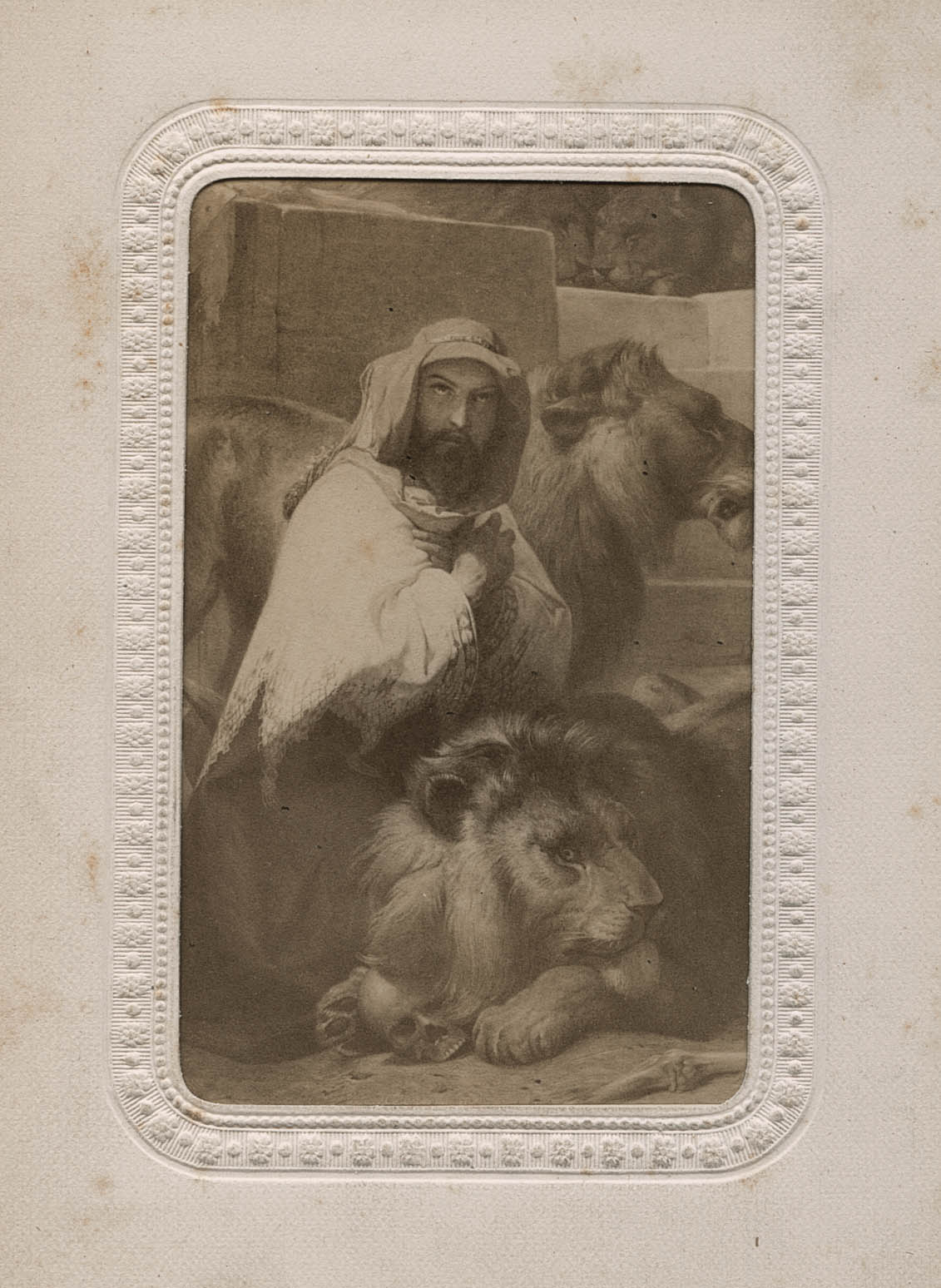
London, La Haye, Berlin, New York After a painting by Horace Vernet (French, 1789-1863) Daniel dans la fosse aux lions (Daniel in the Lions’ Den) 1857
c. 1860-1863
Carte de visite
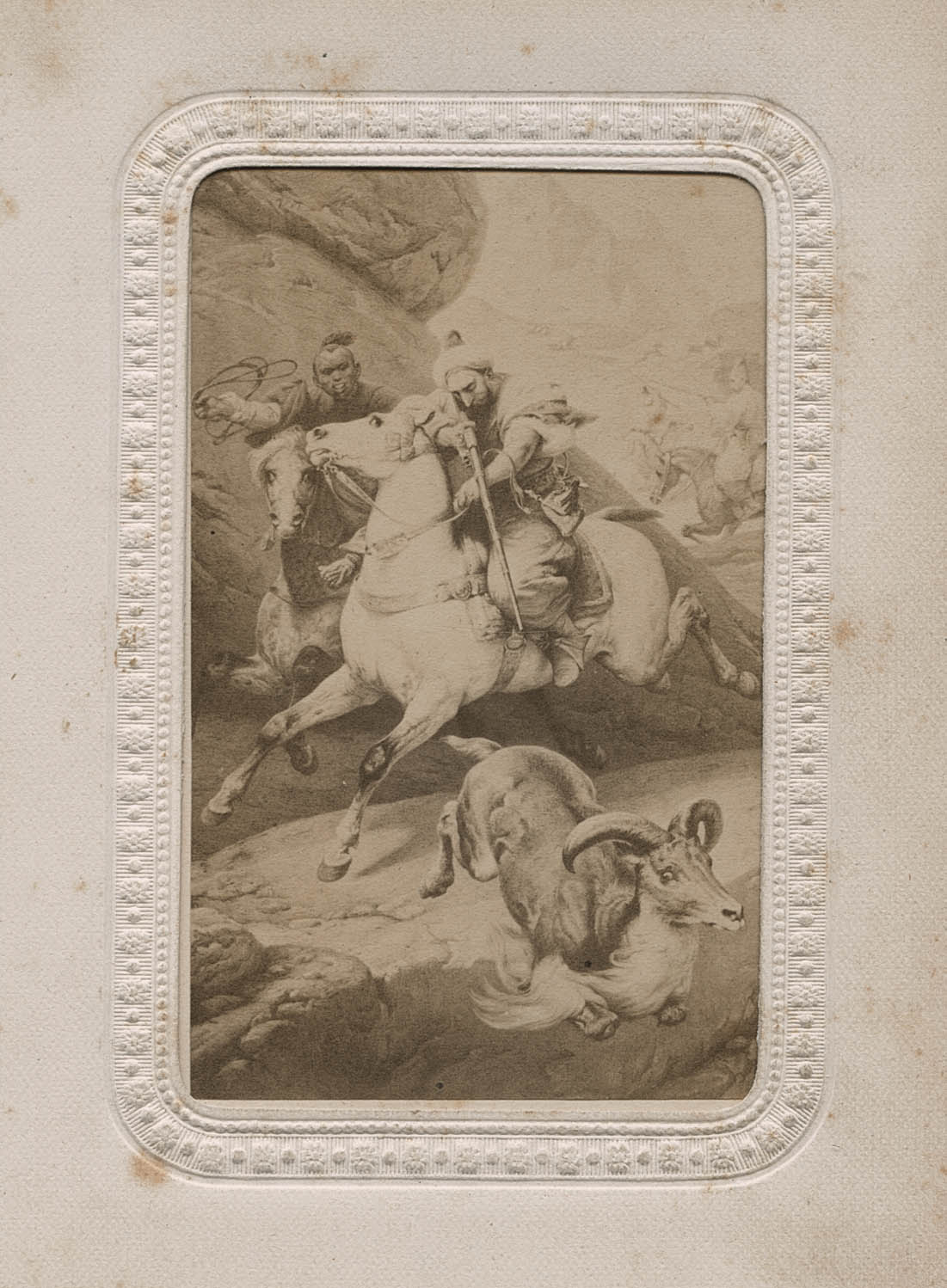
Goupil & Cie (photographer), Paris 19, Boulevard Montmartre
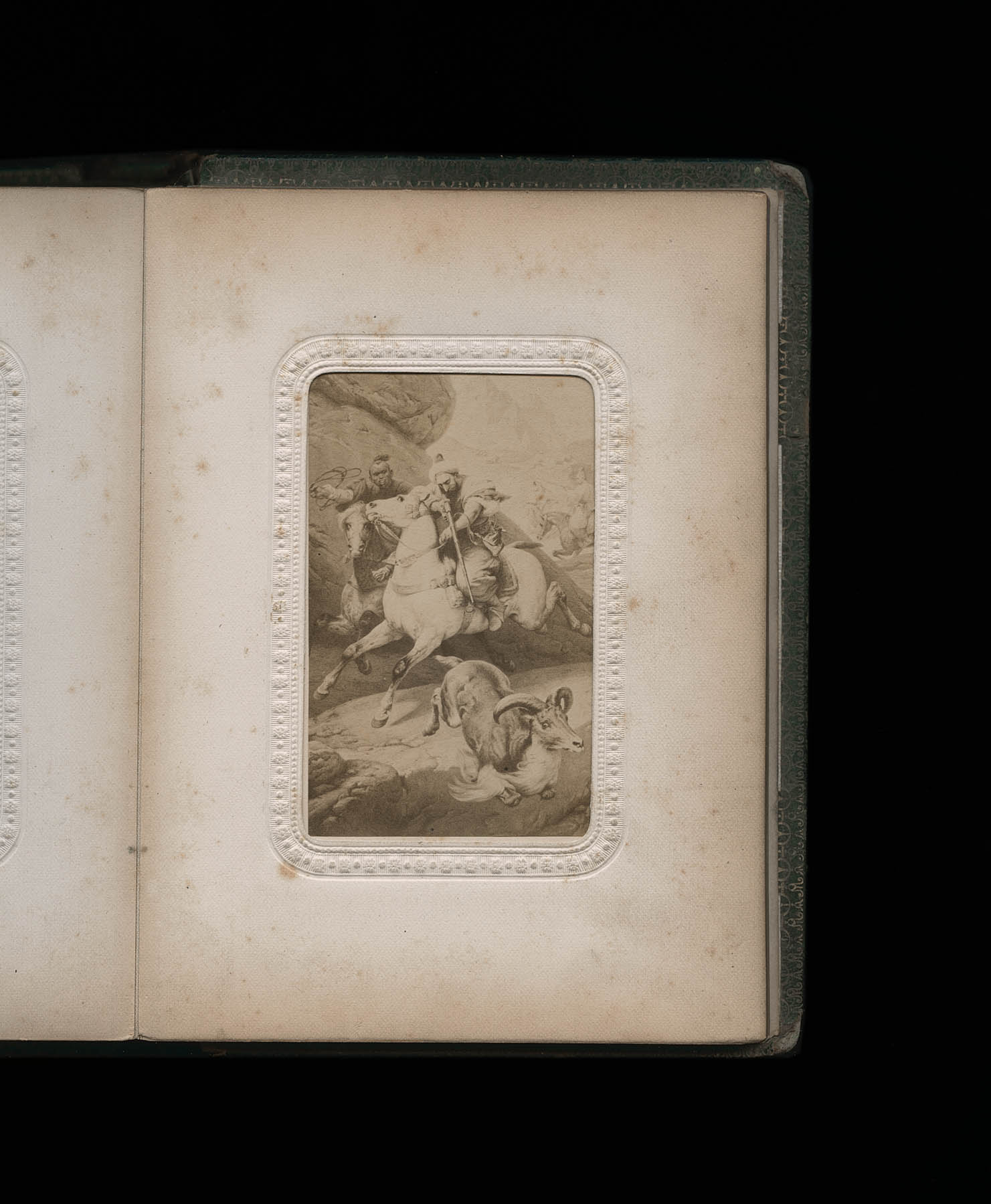
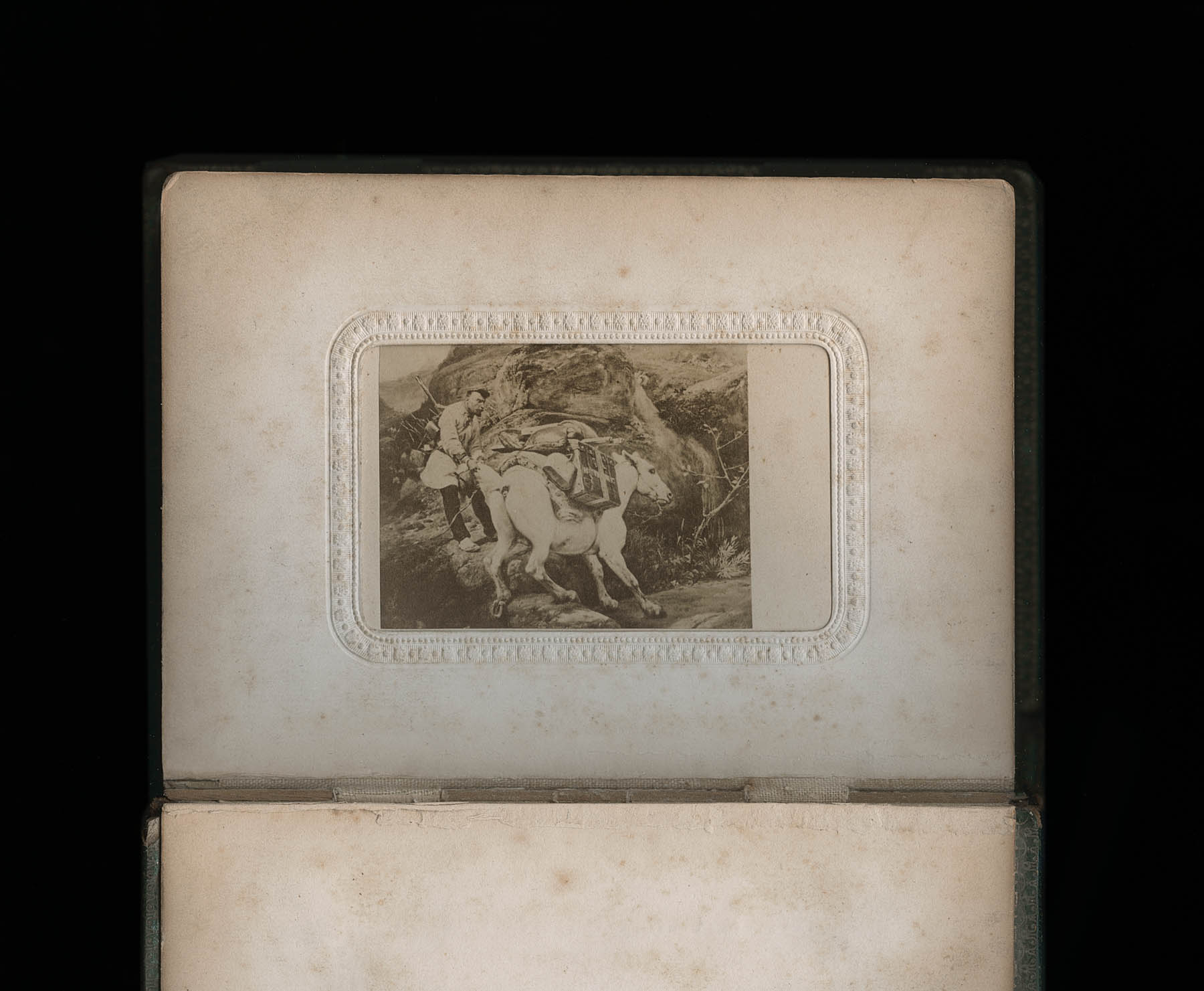
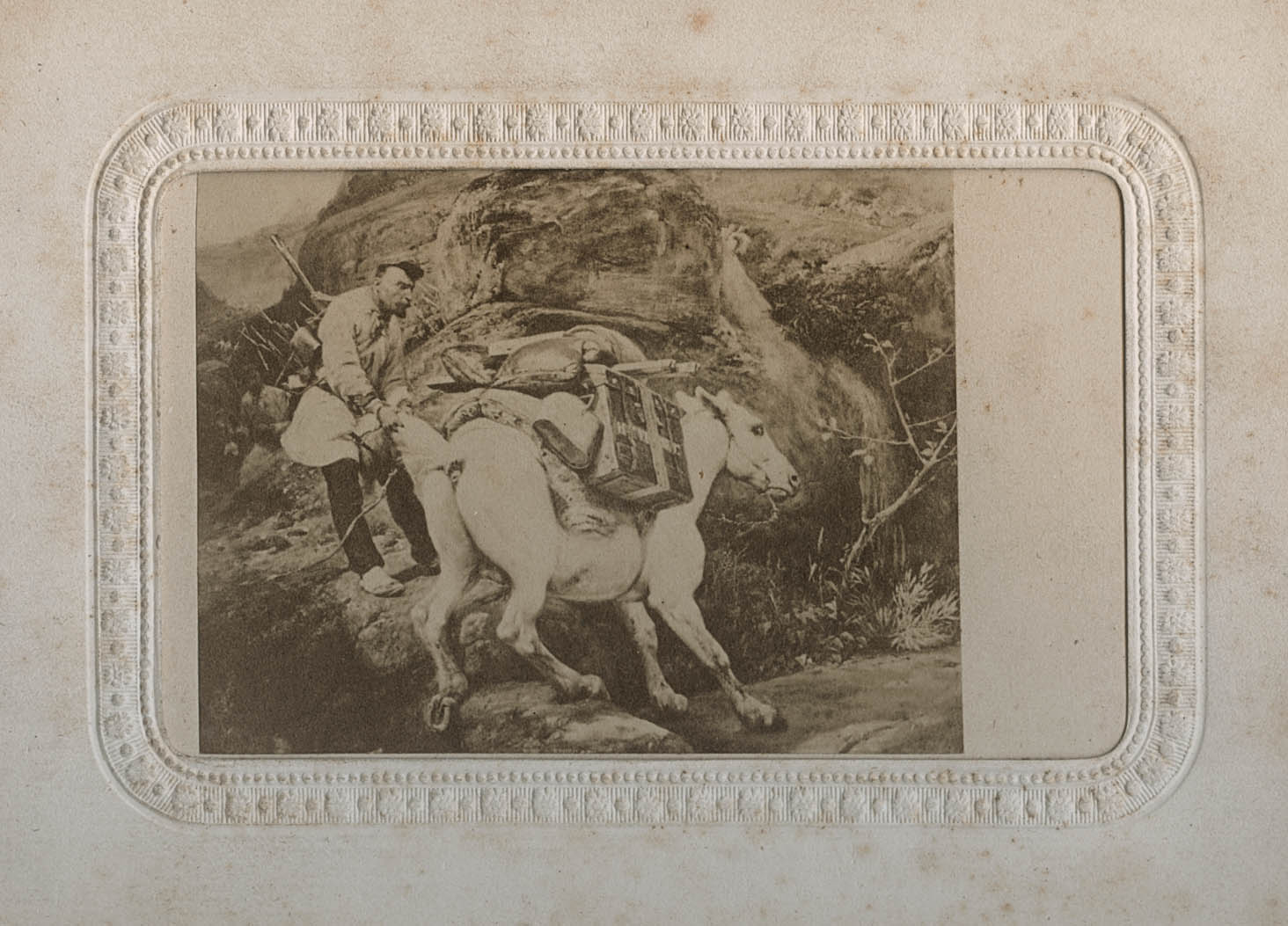
London, La Haye, Berlin, New York After a painting by Horace Vernet (French, 1789-1863) Mountain Hunters Nd
c. 1860-1863
Carte de visite
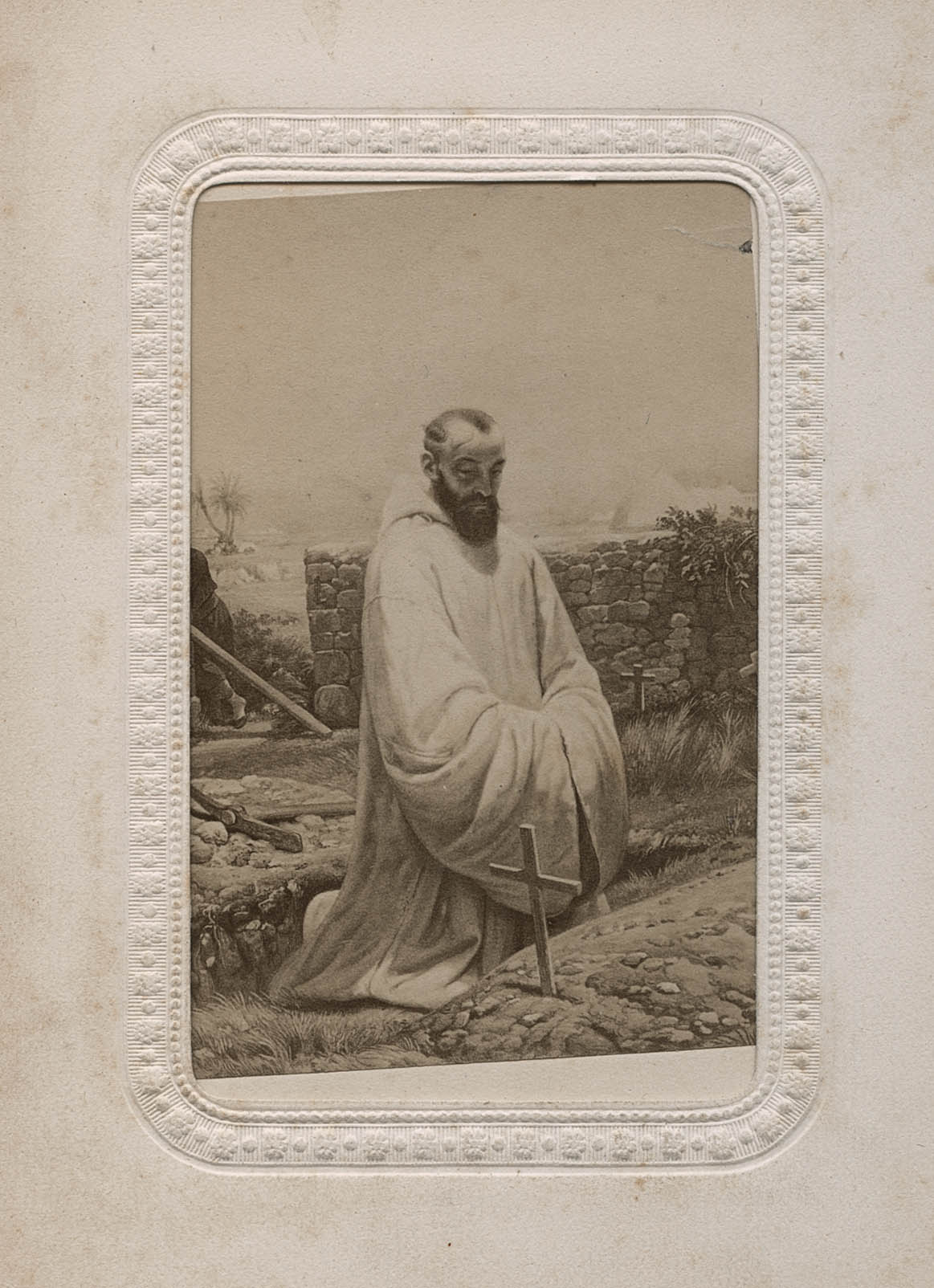
Goupil & Cie (photographer), Paris 19, Boulevard Montmartre
London, La Haye, Berlin, New York After a painting by Horace Vernet (French, 1789-1863) Le Zouave trappiste (The Trappist Zouave) 1856
c. 1860-1863
Carte de visite
Goupil & Cie (photographer), Paris 19, Boulevard Montmartre
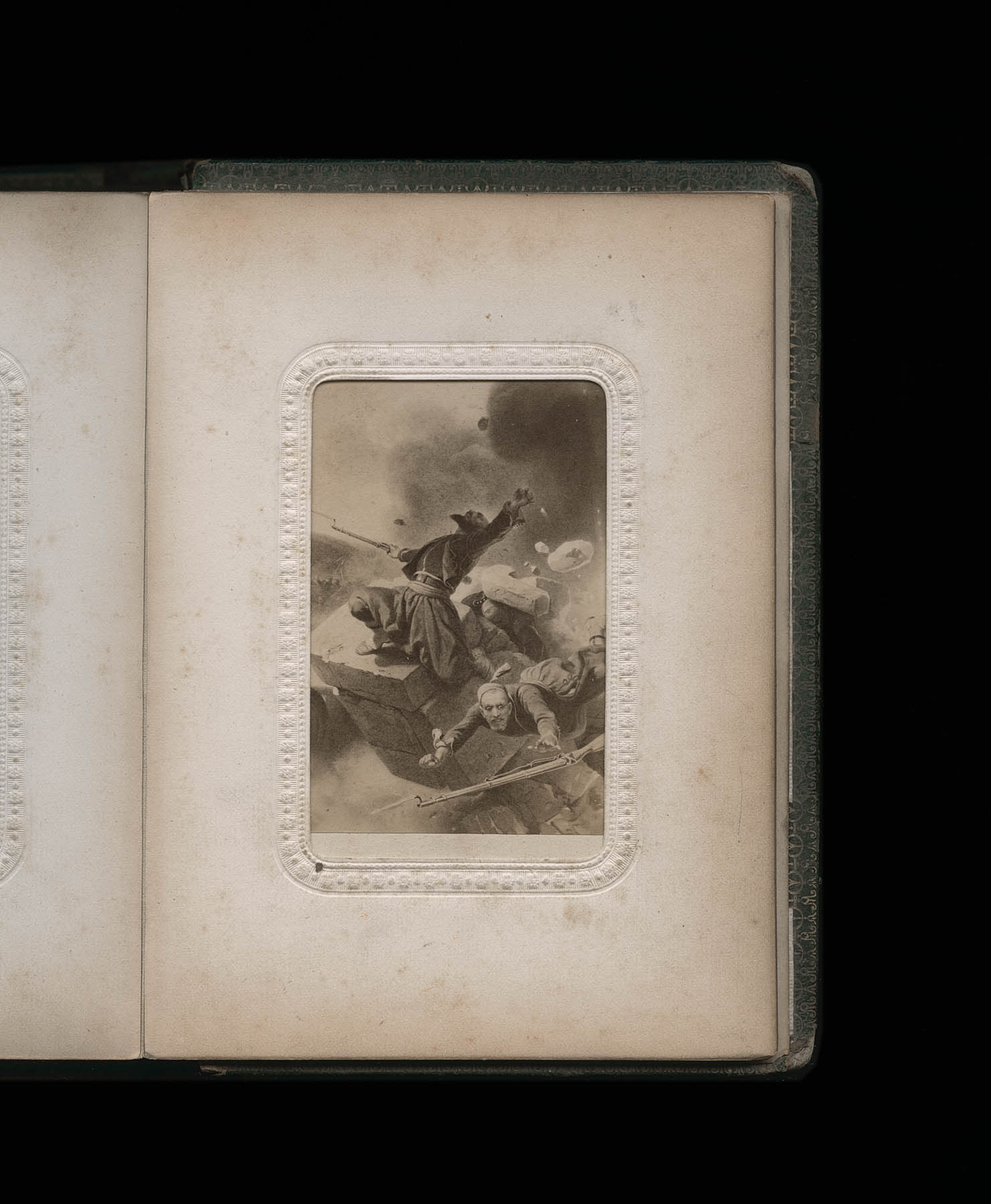
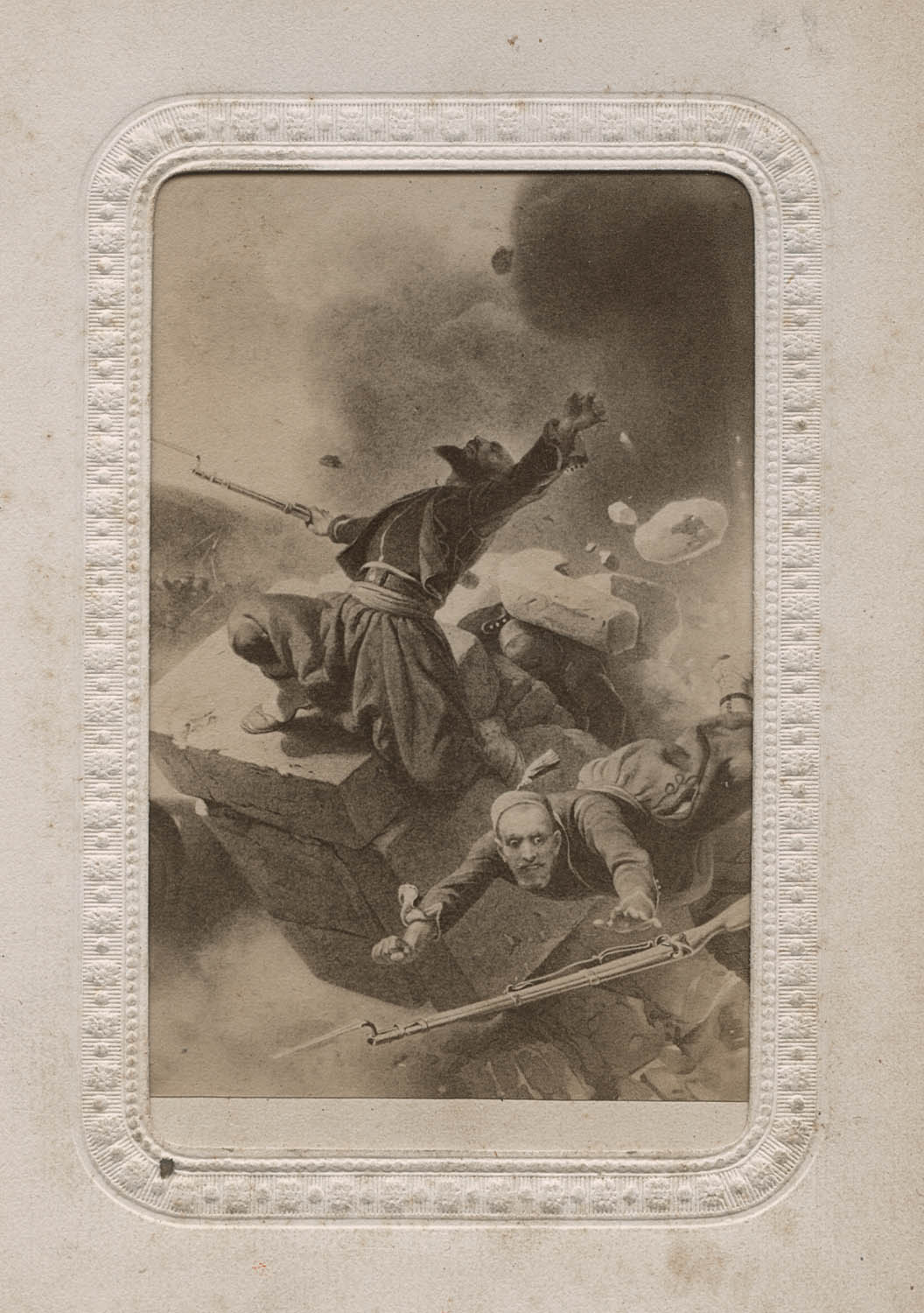
London, La Haye, Berlin, New York After a painting by Horace Vernet (French, 1789-1863) Zouaves at the Malakoff 1856
c. 1860-1863
Carte de visite
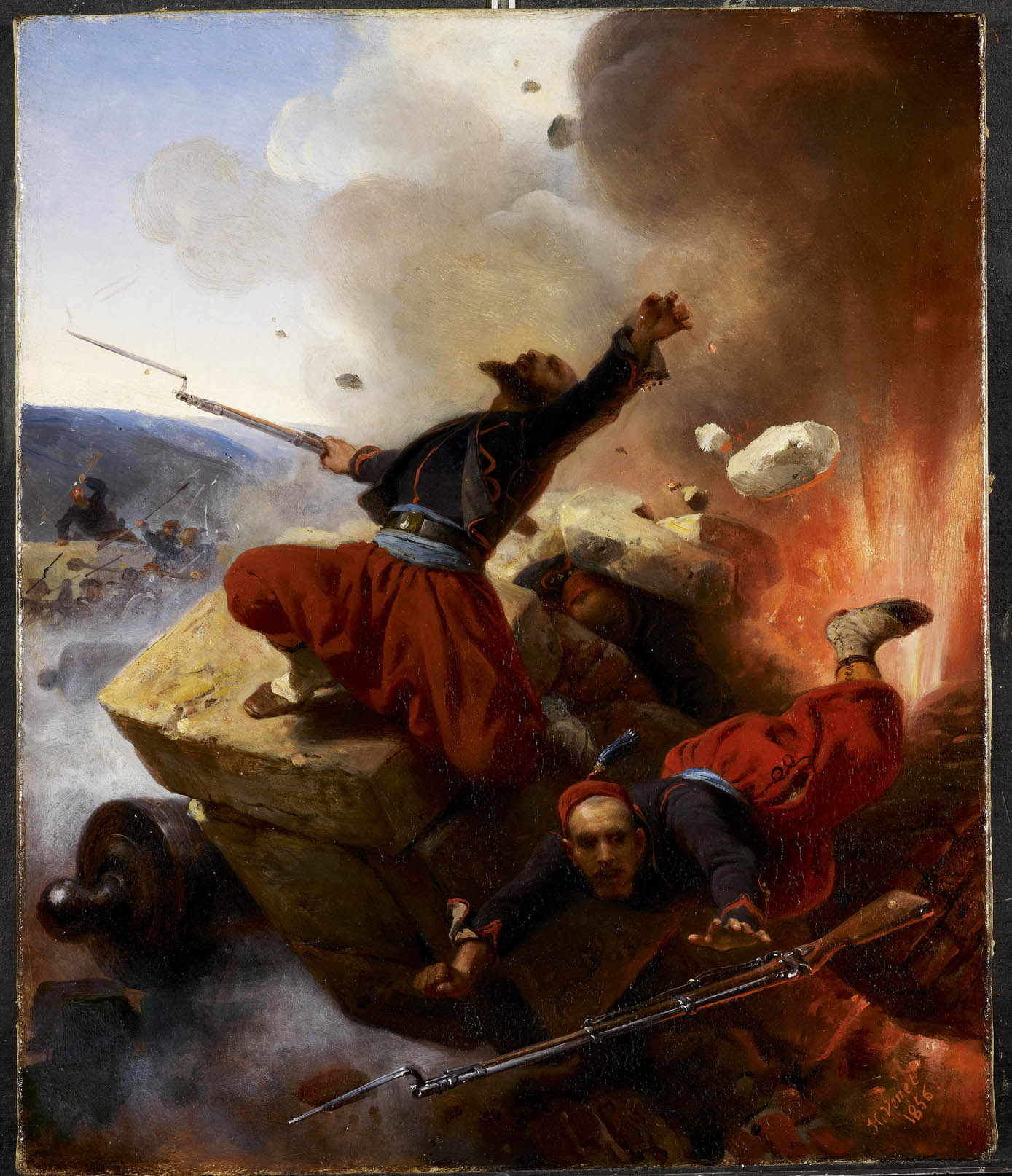
Horace Vernet (French, 1789-1863) Zouaves at the Malakoff
1856
Oil on canvas Height: 39.7cm (15.6 in) Width: 33.9cm (13.3 in)
Royal Collection
Public domain
Goupil & Cie (photographer), Paris 19, Boulevard Montmartre
London, La Haye, Berlin, New York After a painting by Horace Vernet (French, 1789-1863) The scene of war 1861
c. 1860-1863
Carte de visite
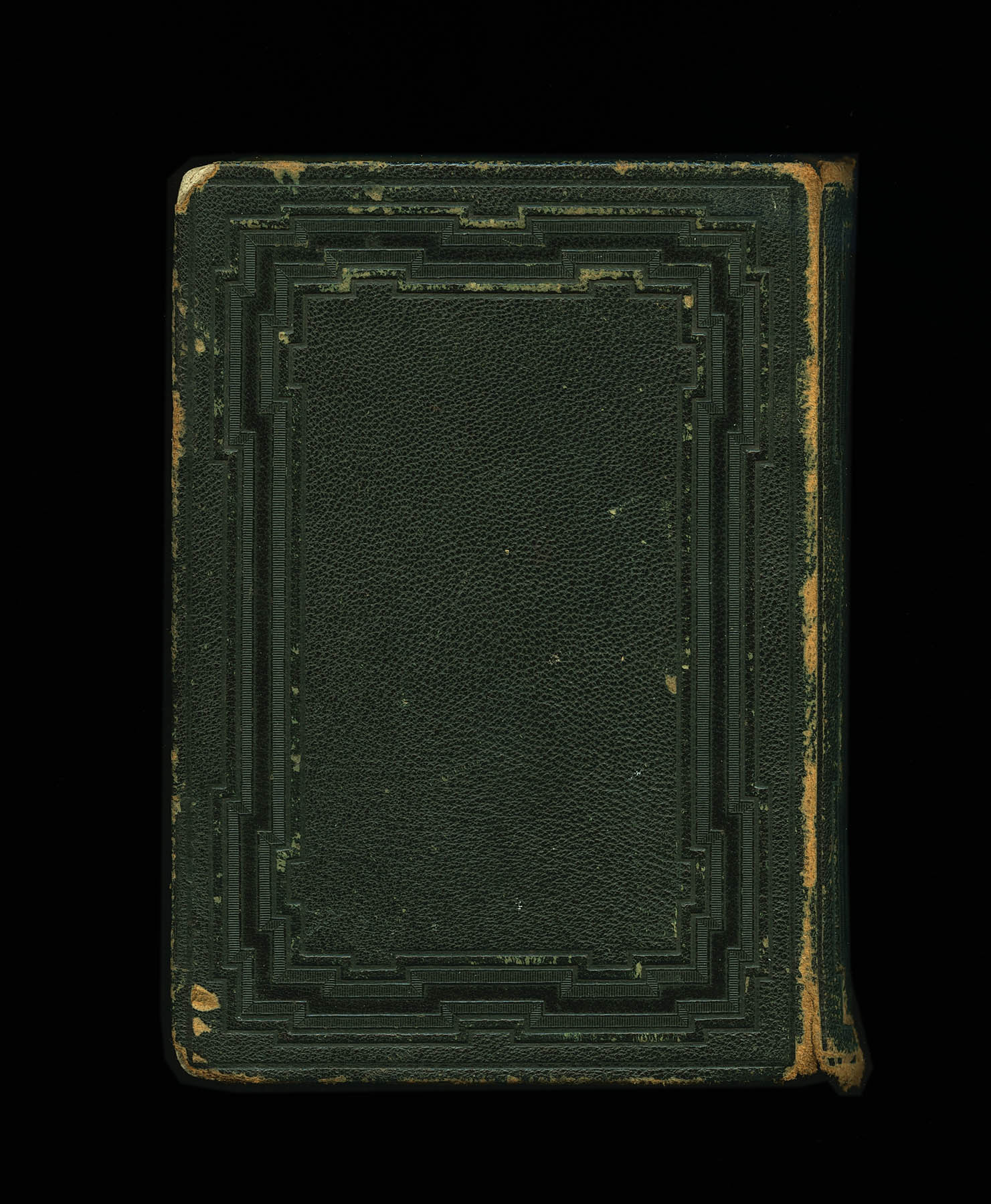
Album Horace Vernet back cover
30 cartes des visite
16cm high x 11cm wide x 3.5cm deep
Exhibition dates: 20th November 2019 – 15th March 2020
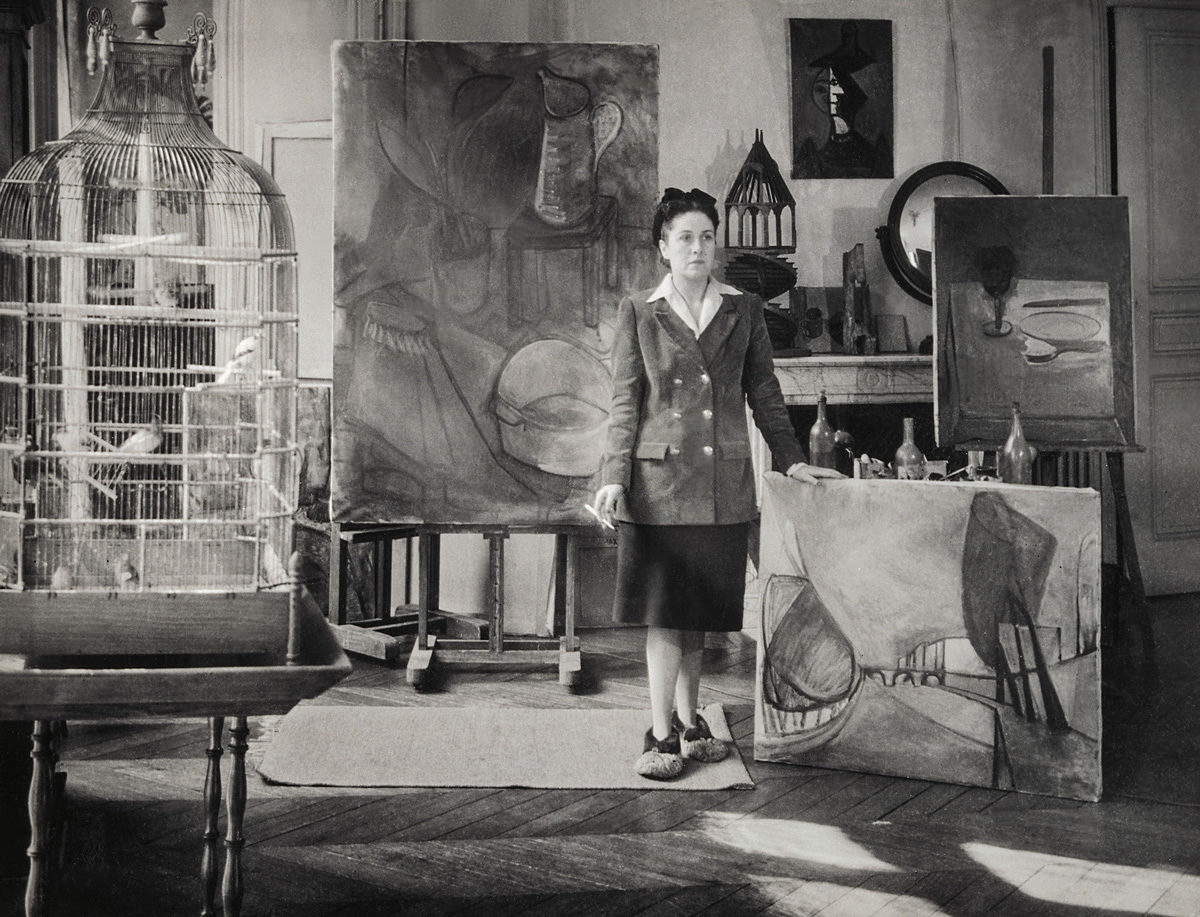
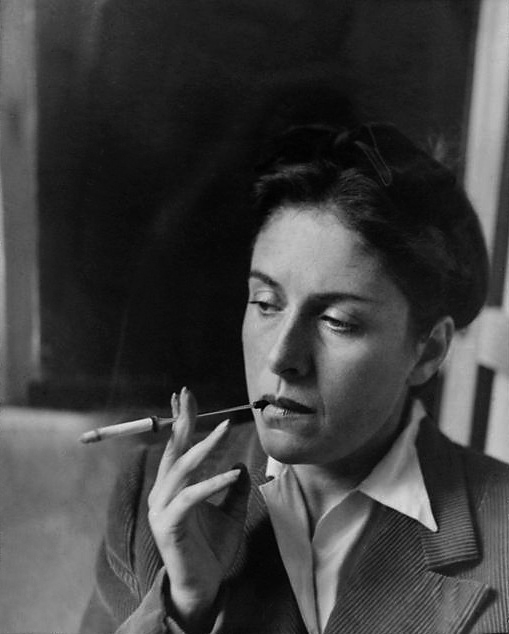
Curators: Dora Maar is curated by Karolina Ziebinska-Lewandowska, Curator, Centre Pompidou, Paris, Damarice Amao, Assistant Curator, Centre Pompidou, Paris and Amanda Maddox, Associate Curator, the J. Paul Getty Museum, Los Angeles with Emma Lewis, Assistant Curator, Tate Modern. The Tate Modern presentation is curated by Emma Lewis, Assistant Curator with Emma Jones, Curatorial Assistant, Tate Modern.
What a creative woman. But yet another abused by the ego of a male, that of her lover, Picasso.
Beth Gersh-Nesic observes, “Was Dora Maar’s brilliant career cut short by the typical conflicts facing professional women in the 1930s, and even today? Or was she a victim of Picasso’s psychological abuse, which chipped away at her original confidence? Was she compromised to the point that she only wanted to please the man she loved? According to art historian John Richardson, Dora Maar sacrificed her gifts on the altar of her art god, her idol, Picasso. Based on the early Surrealist photographs we see in her retrospective, one can only wish she hadn’t taken up with Picasso, for it seems she might have achieved far more in her lifetime without him.”
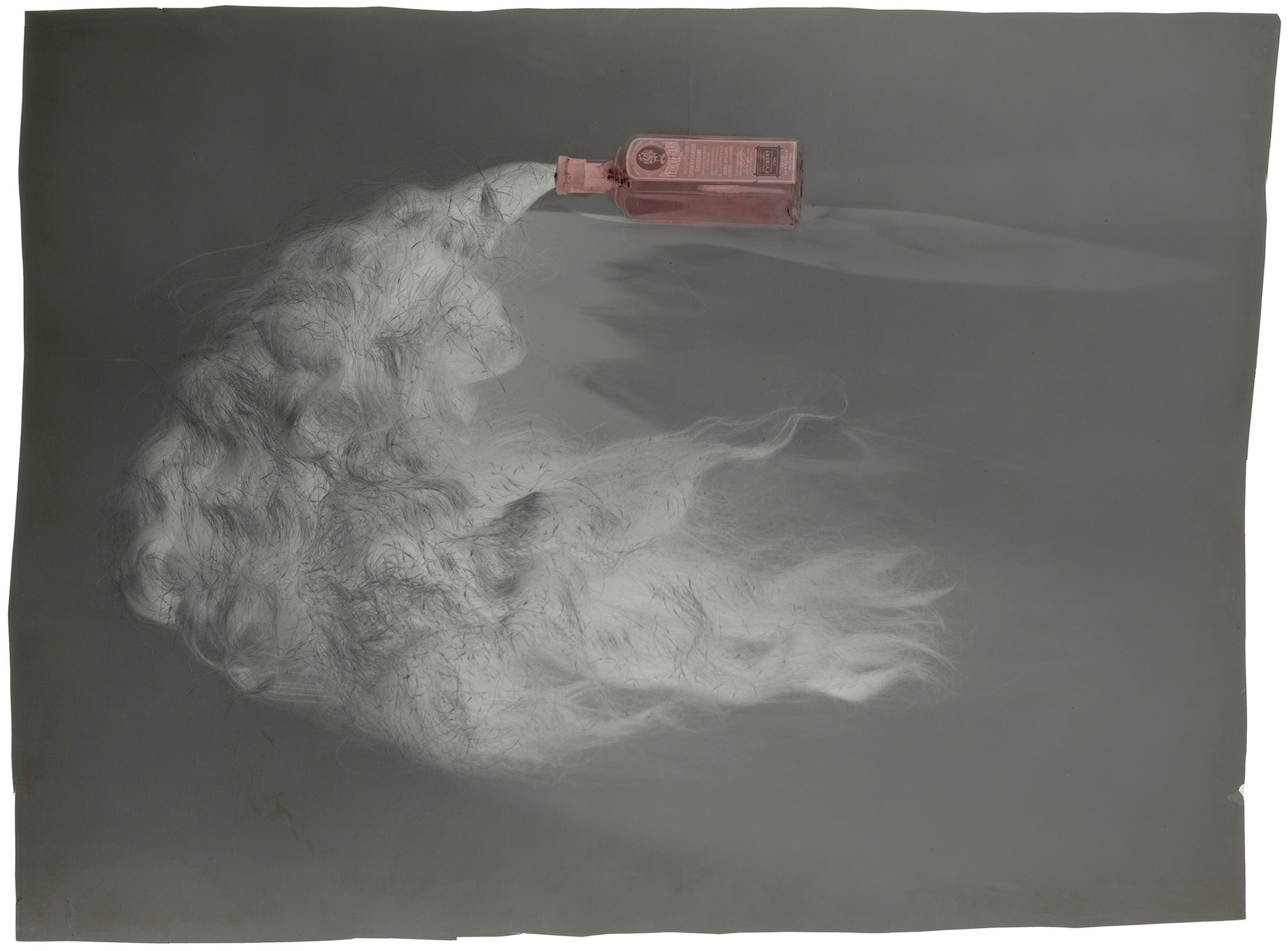
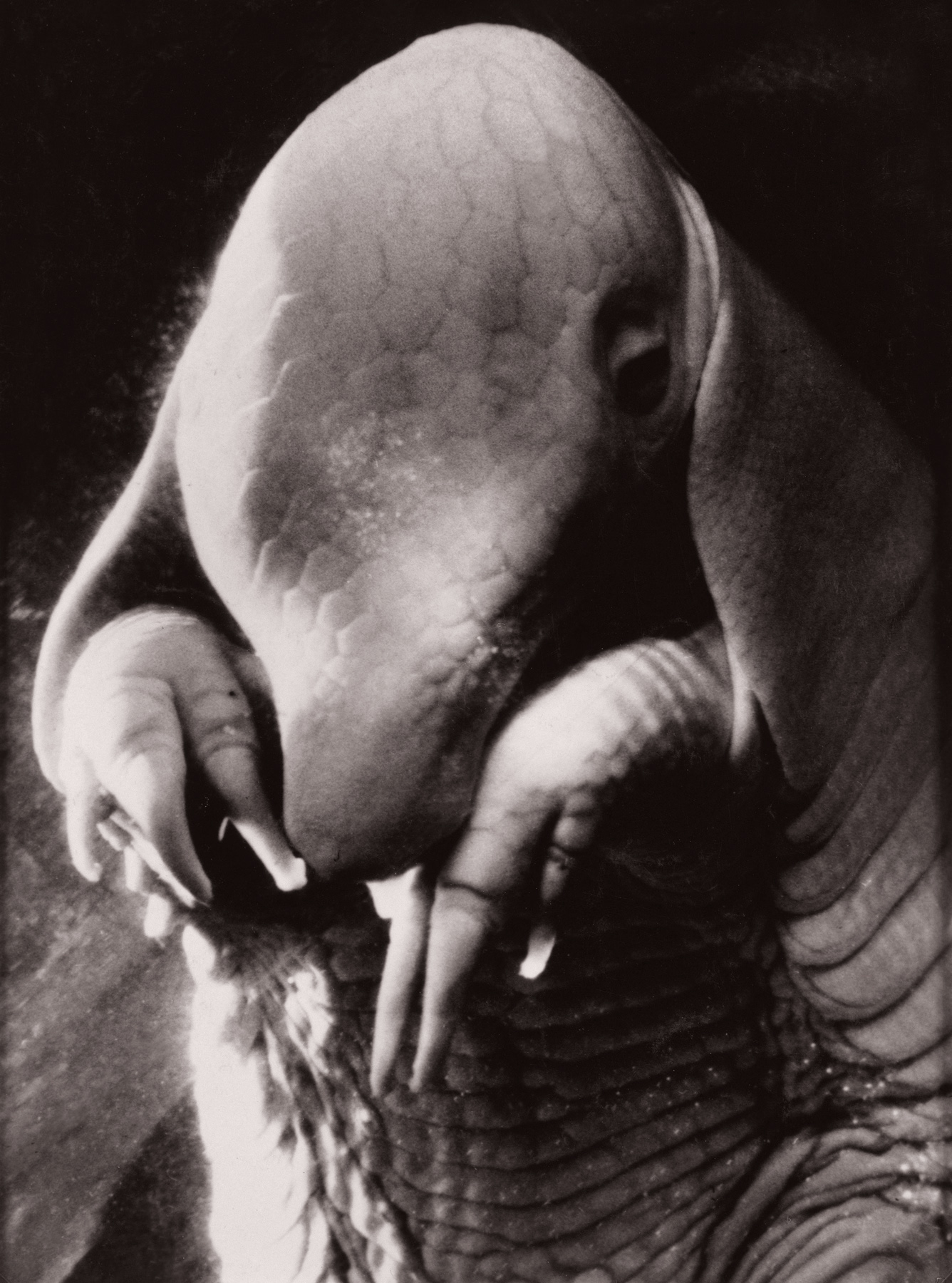
What we can say is that Maar left behind a strong body of photographic work – from fashion and commercial, to restrained, classical formalism with surrealist inflections; from street photography to “the stuff of delirium and nightmare, [which] taps into the unconscious, internalised sublime”, her Portrait of Ubu (1936, below) reminding me strongly of William Blake’s painting The Ghost of a Flea (c. 1819). Ubu is “a ghastly being of indeterminate origin and melancholy aspect… [an idea] something like l’informe, the concept Maar’s lover Georges Bataille coined to describe his fellow-Surrealists’ admiration for all things larval and grotesquely about-to-be.” Ubu is a her dark notion of a street “urchin”.
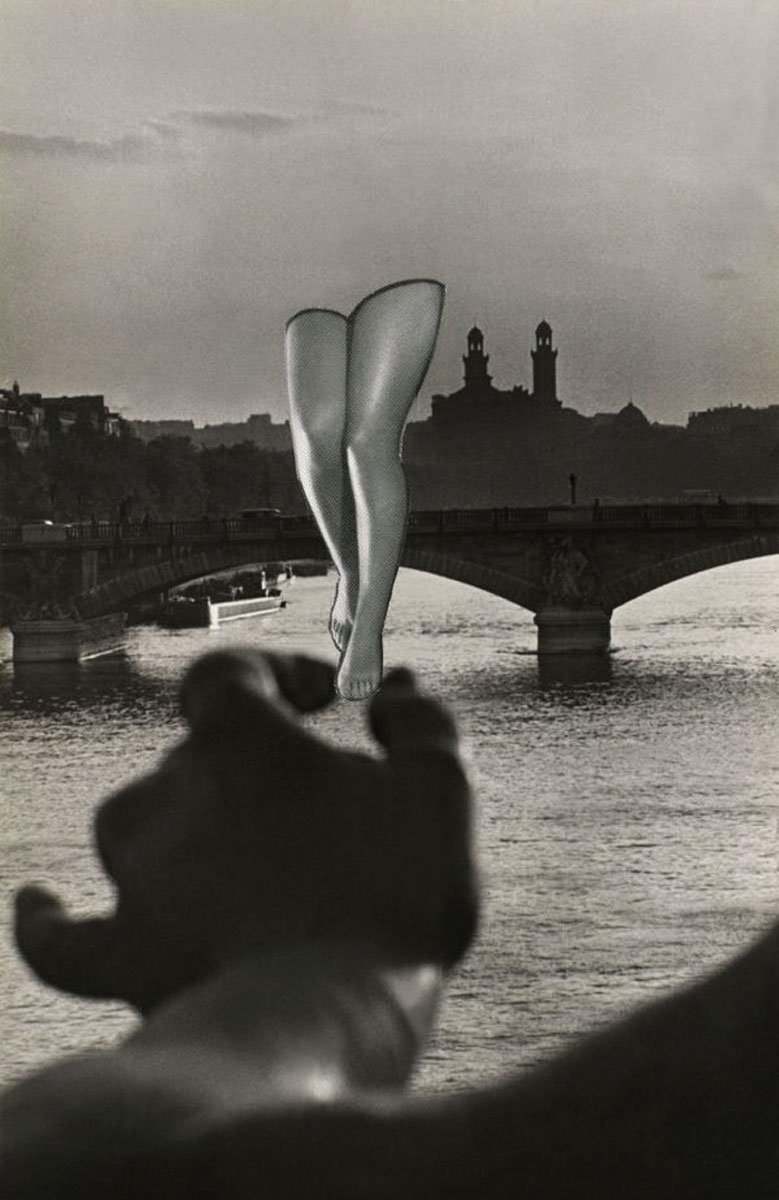
Her warped photomontages are technical marvels. “”She captures the mysterious,” Caws wrote, “in a combination of the unresolved and the sharply angled. This frequently creates a sense of ambiguity, even menace.” Caws notes that Dora Maar responded to Louis Aragon’s invocation “for each person there is one image to find that will disturb the whole universe.” Maar’s images managed to “disturb and reveal” with a bit of the macabre mixed in.”
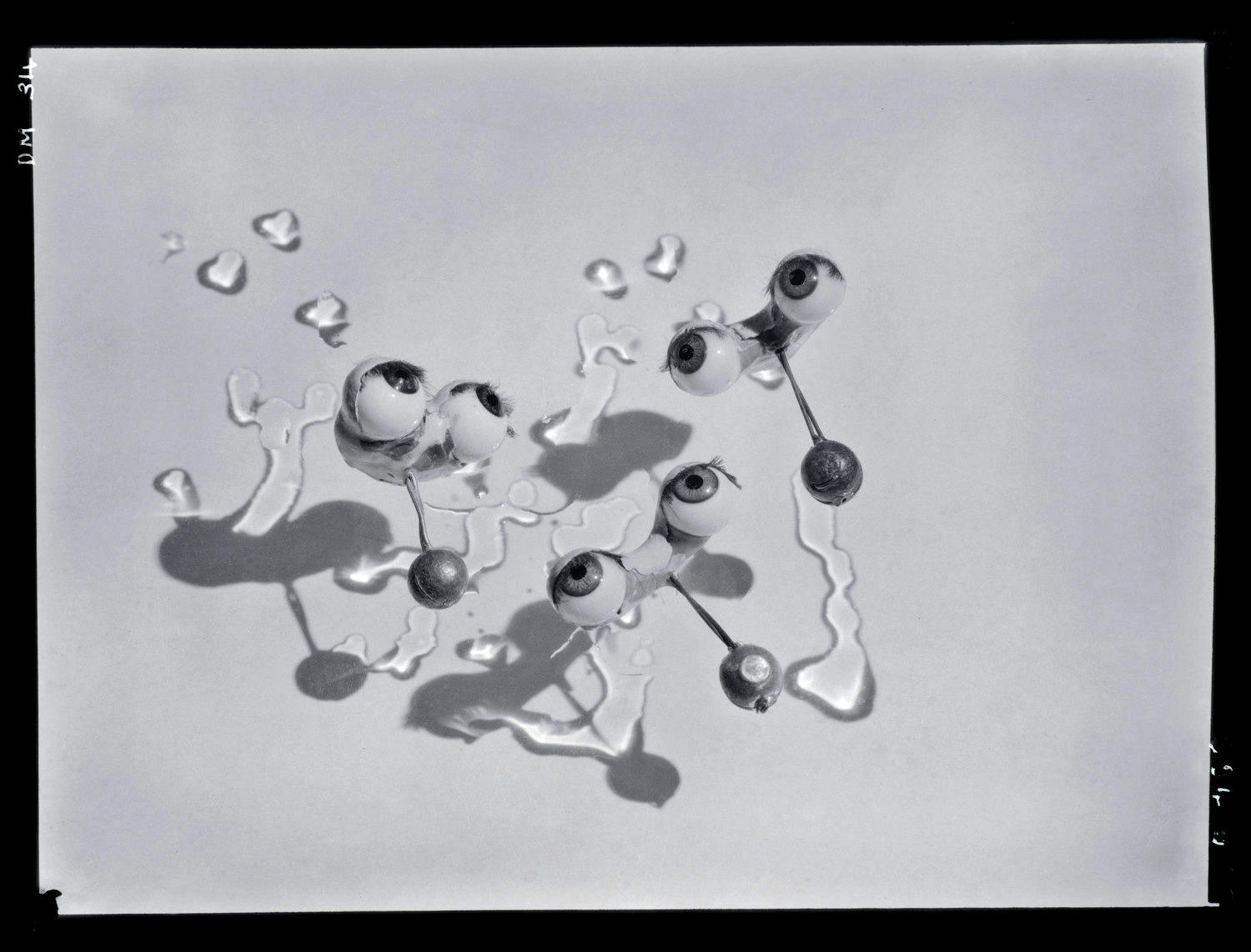
But her images are more than a bit of this and a bit of that. They possess a utilitarian feeling in the enunciation of their menace, which makes them all the more effective when impinging on our waking dreams. Susan Sontag notes, “Photographs are perhaps the most mysterious of all the objects that make up, and thicken, the environment we recognise as modern” (Sontag, On Photography, p. 2). Thicken is the critical word. Maar’s photographs thicken our atmospheric (and mental) miasma, prescient of our modern world full of dark passages: pitch black sewers, fatbergs, drone strikes, bush fire skies, virus, murder and mayhem. In the back of my head. My eyes. Roll, roll, roll. Skewered. Roasted.
Dr Marcus Bunyan
Many thankx to the Tate Britain for allowing me to publish the photographs in the posting. Please click on the photographs for a larger version of the image.
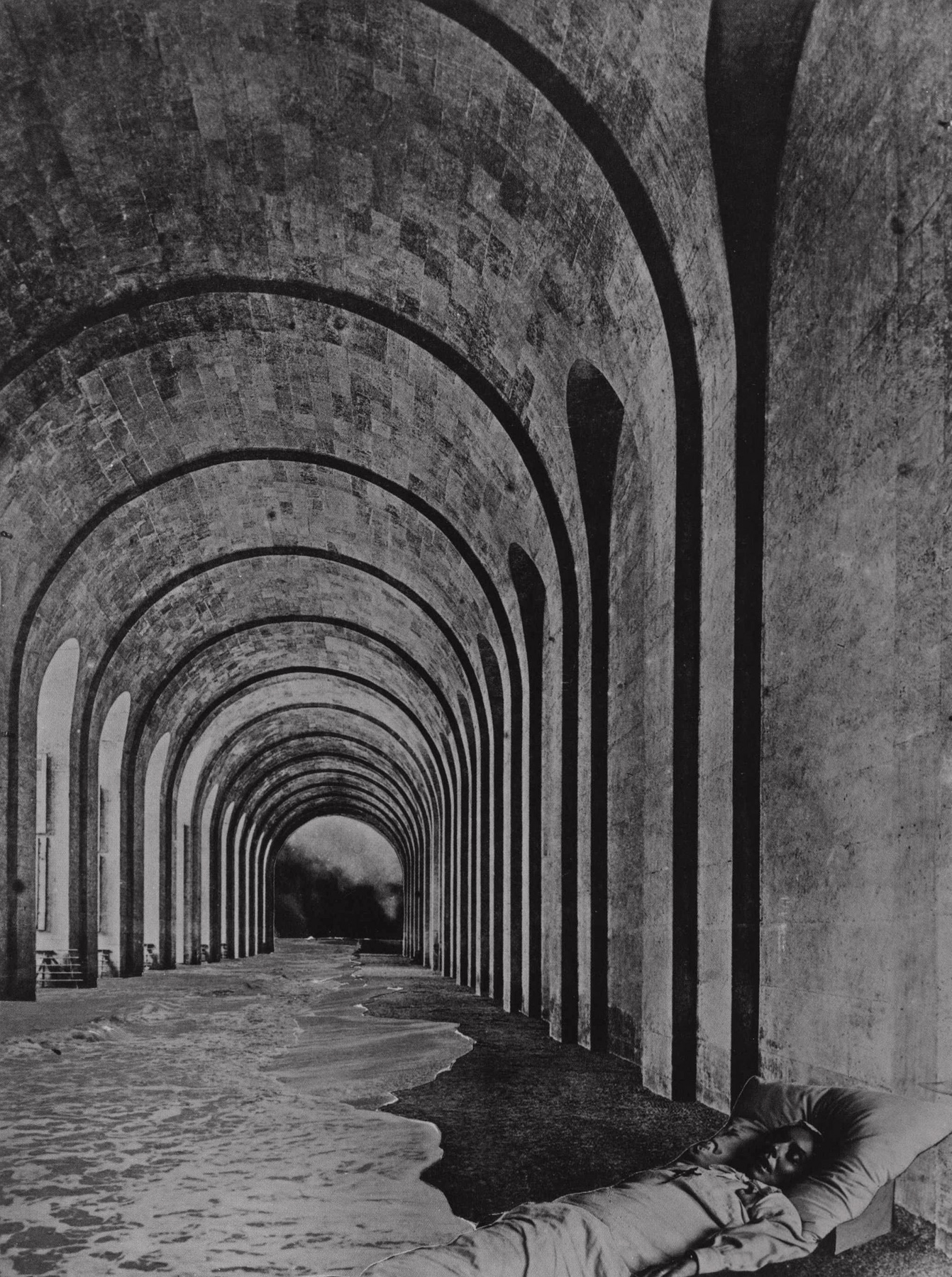
The most accomplished examples of Maar’s art are the photomontages of 1935 and 1936. There were already many vaults and arches in her Mont-Saint-Michel pictures; now she took the cloistral galleries of the Orangerie at Versailles, upended them so that they looked like sewers, and populated them with cryptic beings engaged in arcane rituals or dramas. In “The Simulator,” [below] a boy from one of her street photographs is bent backward at an obscene angle; Maar has retouched his eyes so that they roll back in his head toward us, like one of those thrashing hysterics photographed in the nineteenth century. In “29 Rue d’Astorg” (below) – of which Maar made several versions, black-and-white and hand-coloured – a human figure with a curtailed, avian head is seated beneath arches that have been subtly warped in the darkroom.
During the 1930s, Dora Maar’s provocative photomontages became celebrated icons of surrealism.
Her eye for the unusual also translated to her commercial photography, including fashion and advertising, as well as to her social documentary projects. In Europe’s increasingly fraught political climate, Maar signed her name to numerous left-wing manifestos – a radical gesture for a woman at that time.
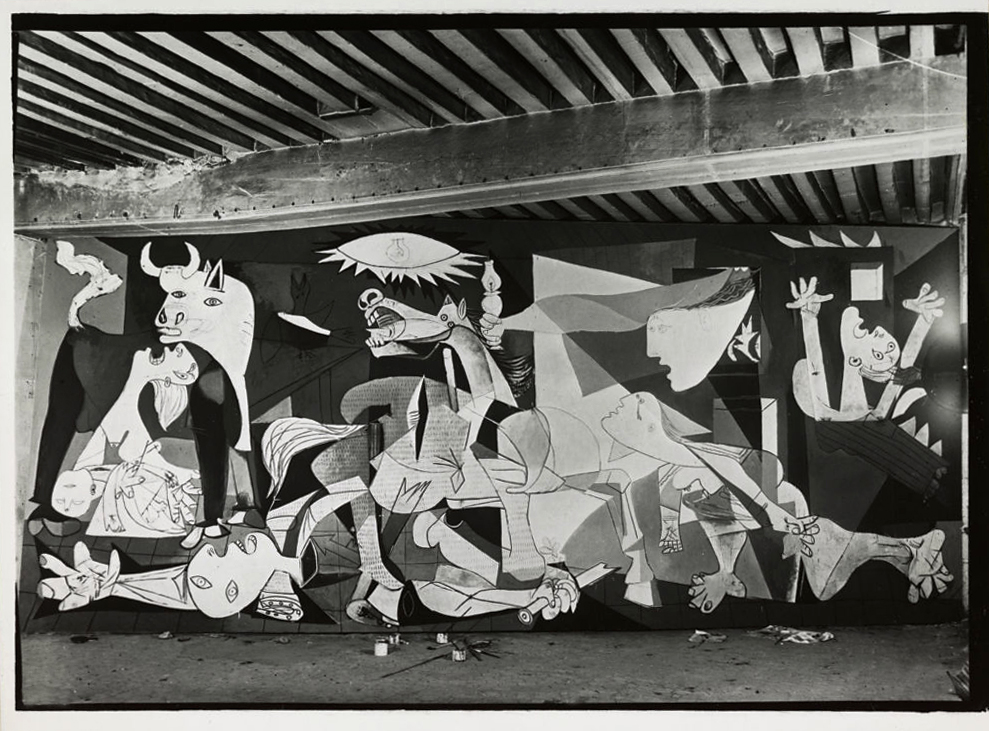
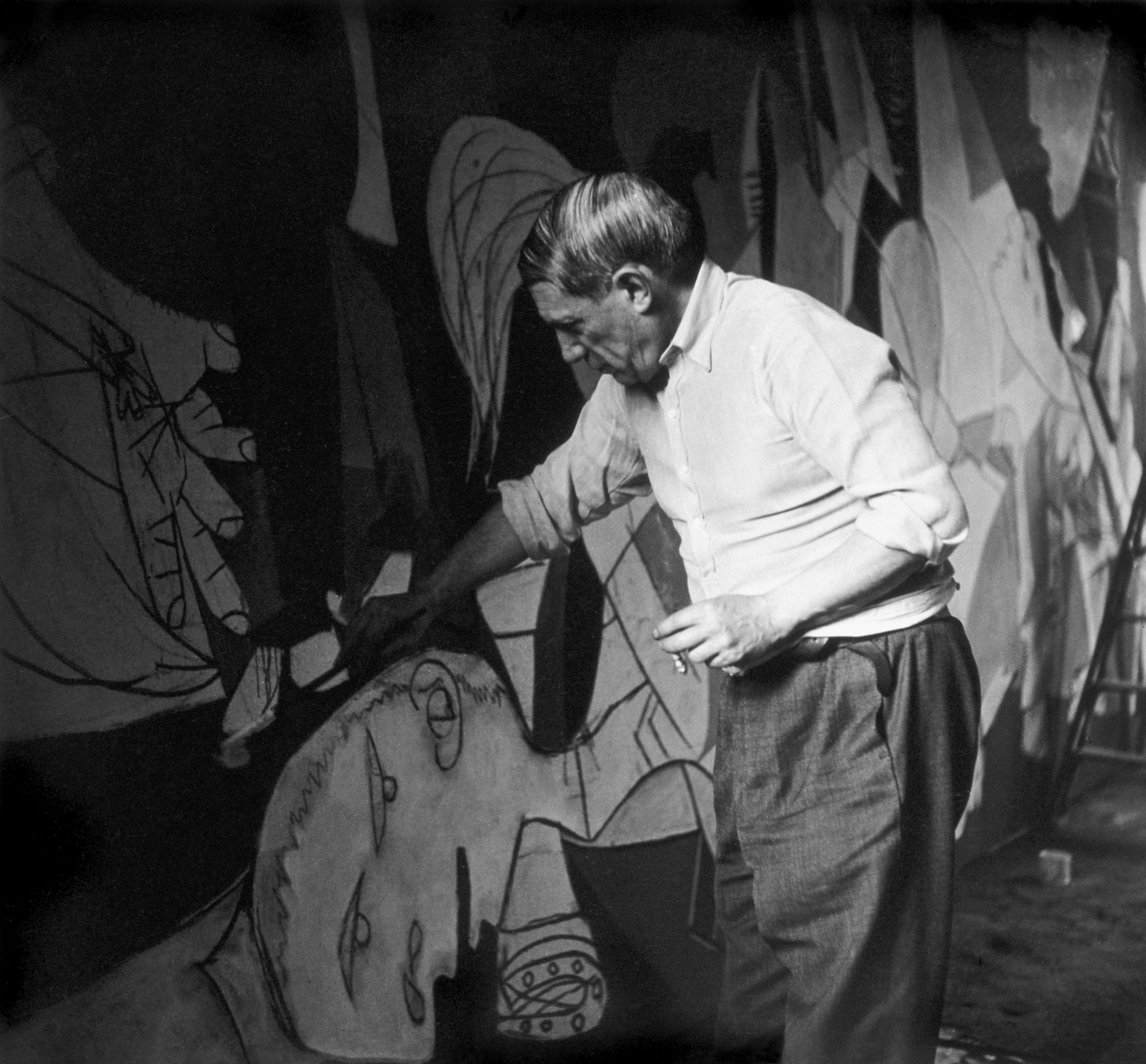
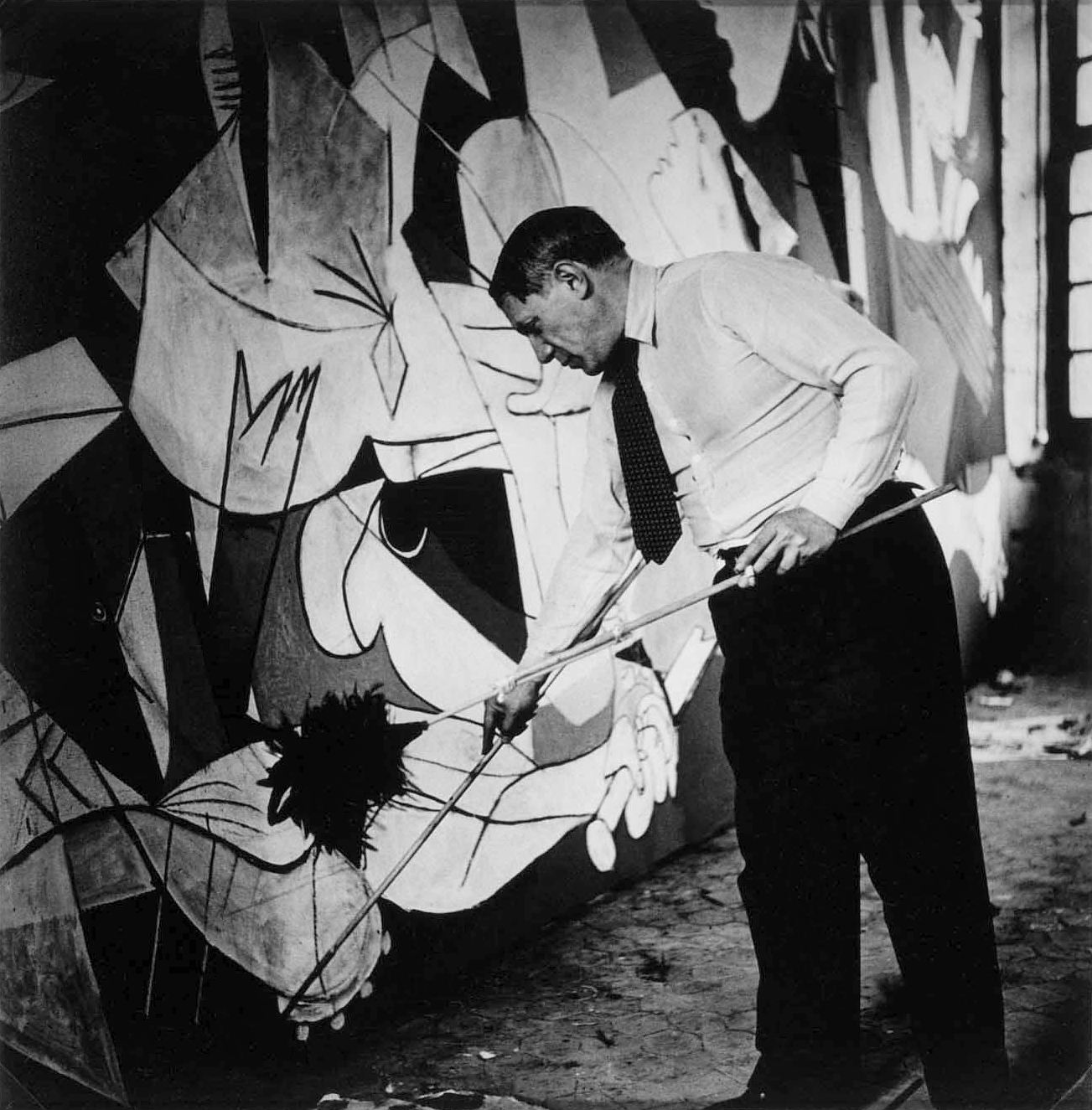
Her relationship with Pablo Picasso had a profound effect on both their careers. She documented the creation of his most political work, Guernica 1937. He painted her many times, including Weeping Woman 1937. Together they made a series of portraits combining experimental photographic and printmaking techniques.
In middle and later life Maar withdrew from photography. She concentrated on painting and found stimulation and solace in poetry, religion, and philosophy, returning to her darkroom only in her seventies.
This exhibition will explore the breadth of Maar’s long career in the context of work by her contemporaries.
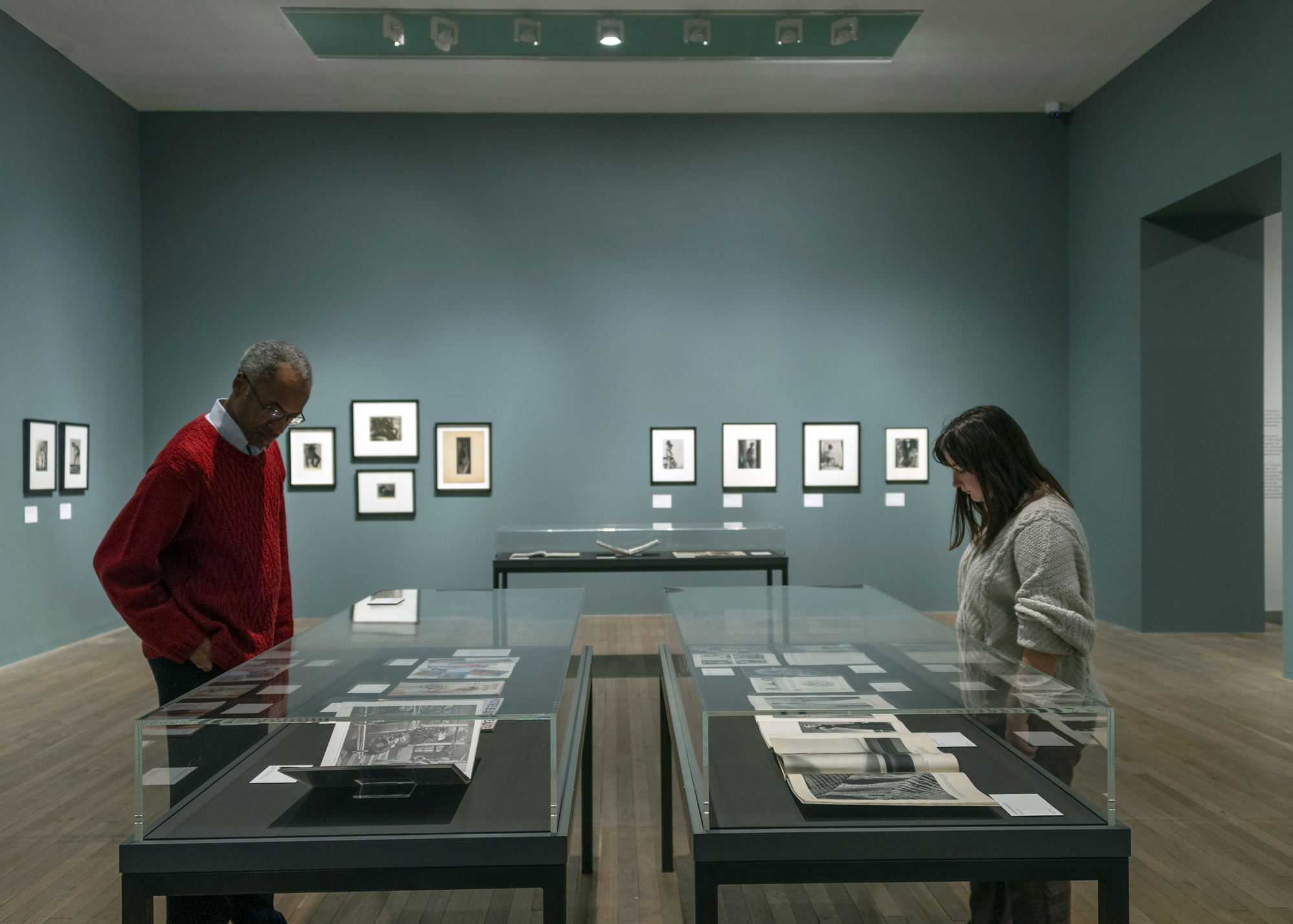
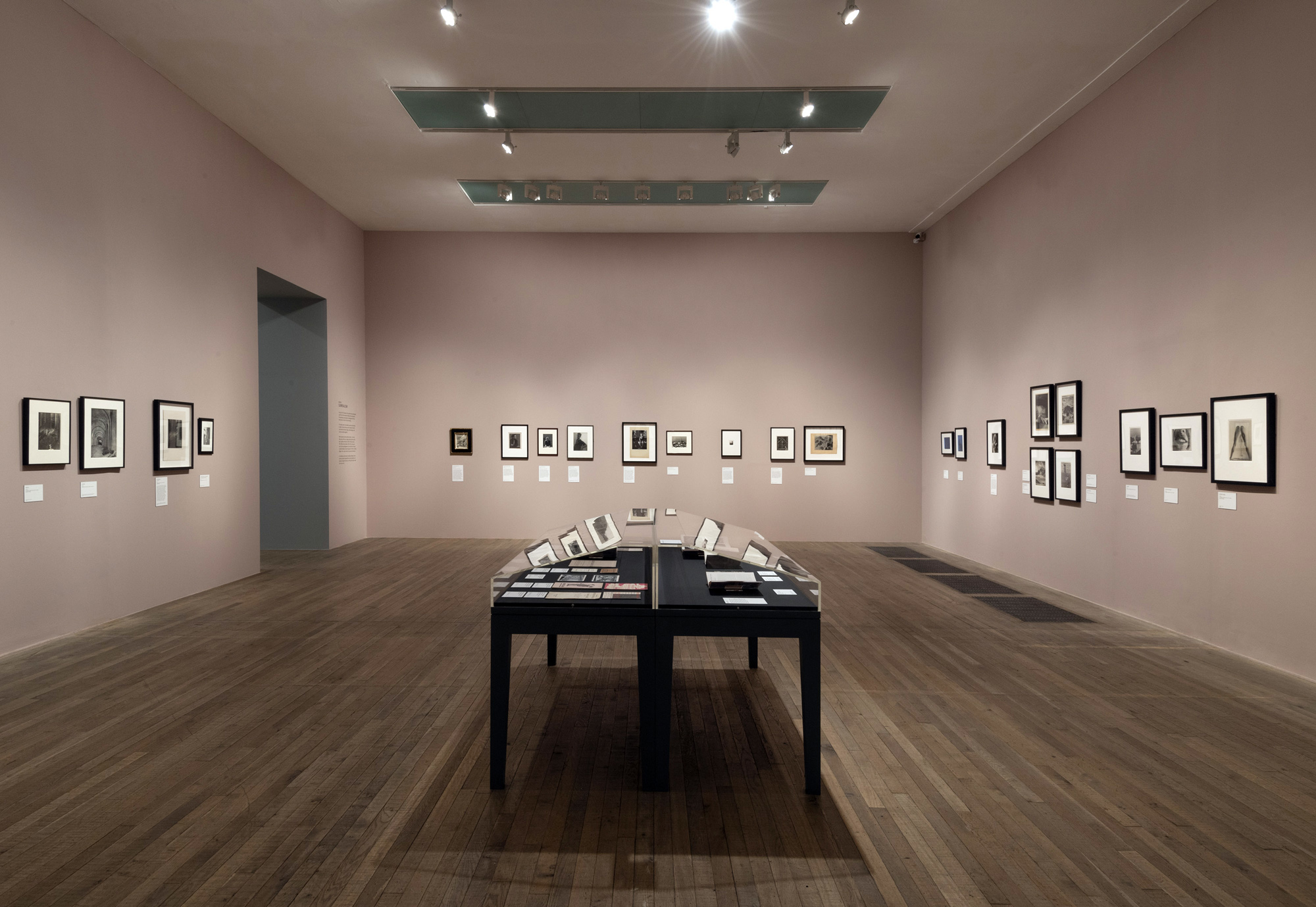
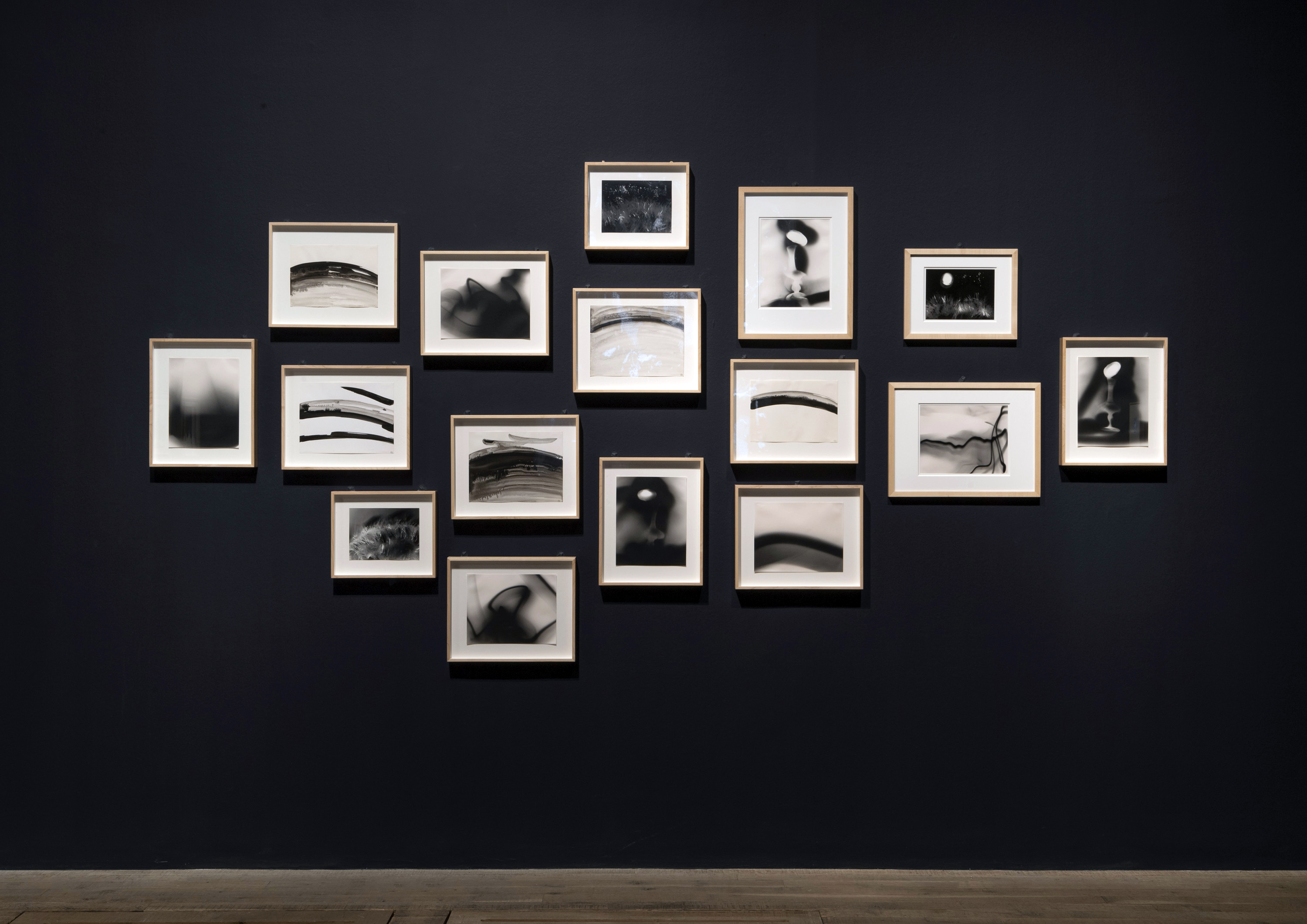
Installation views of the exhibition Dora Maar at Tate Modern, 2019 showing, in the bottom image, the photographs Untitled (Nude) 1930s (left) and Untitled (Nude) c. 1938 (right)
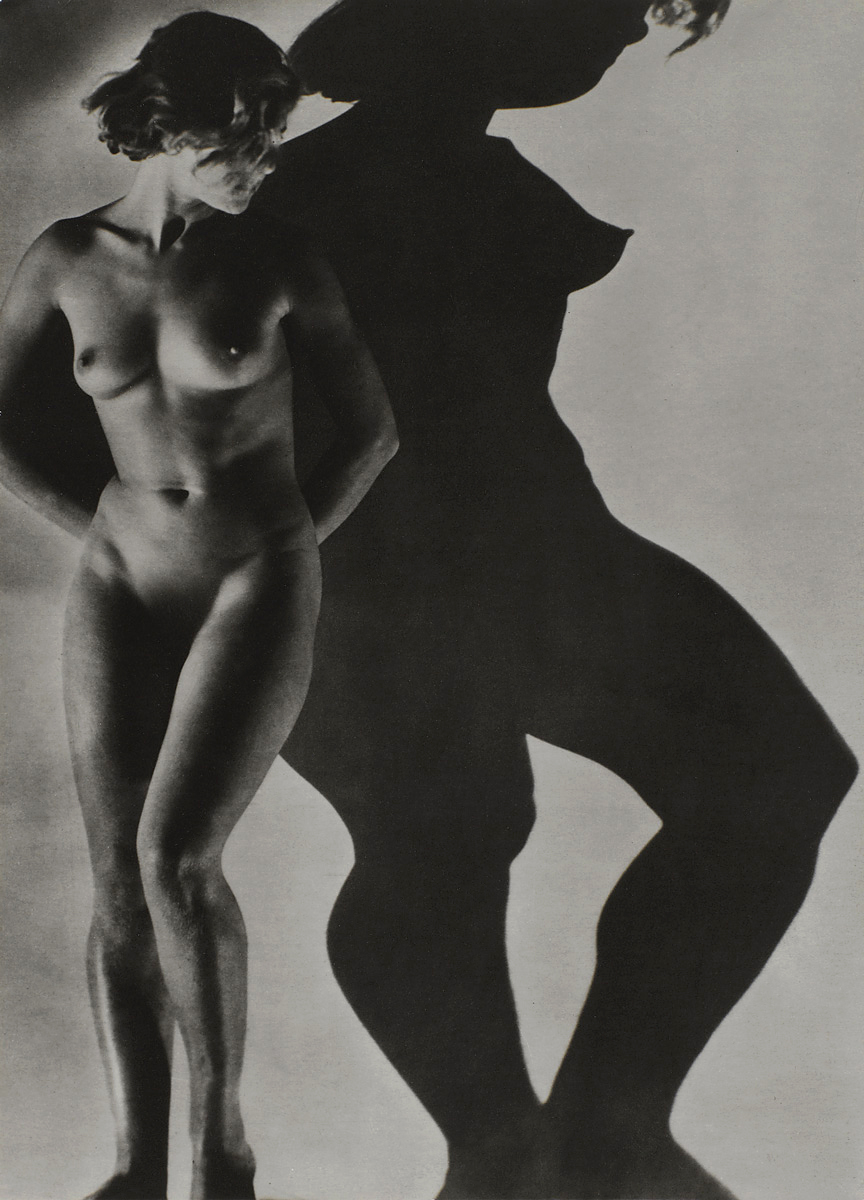
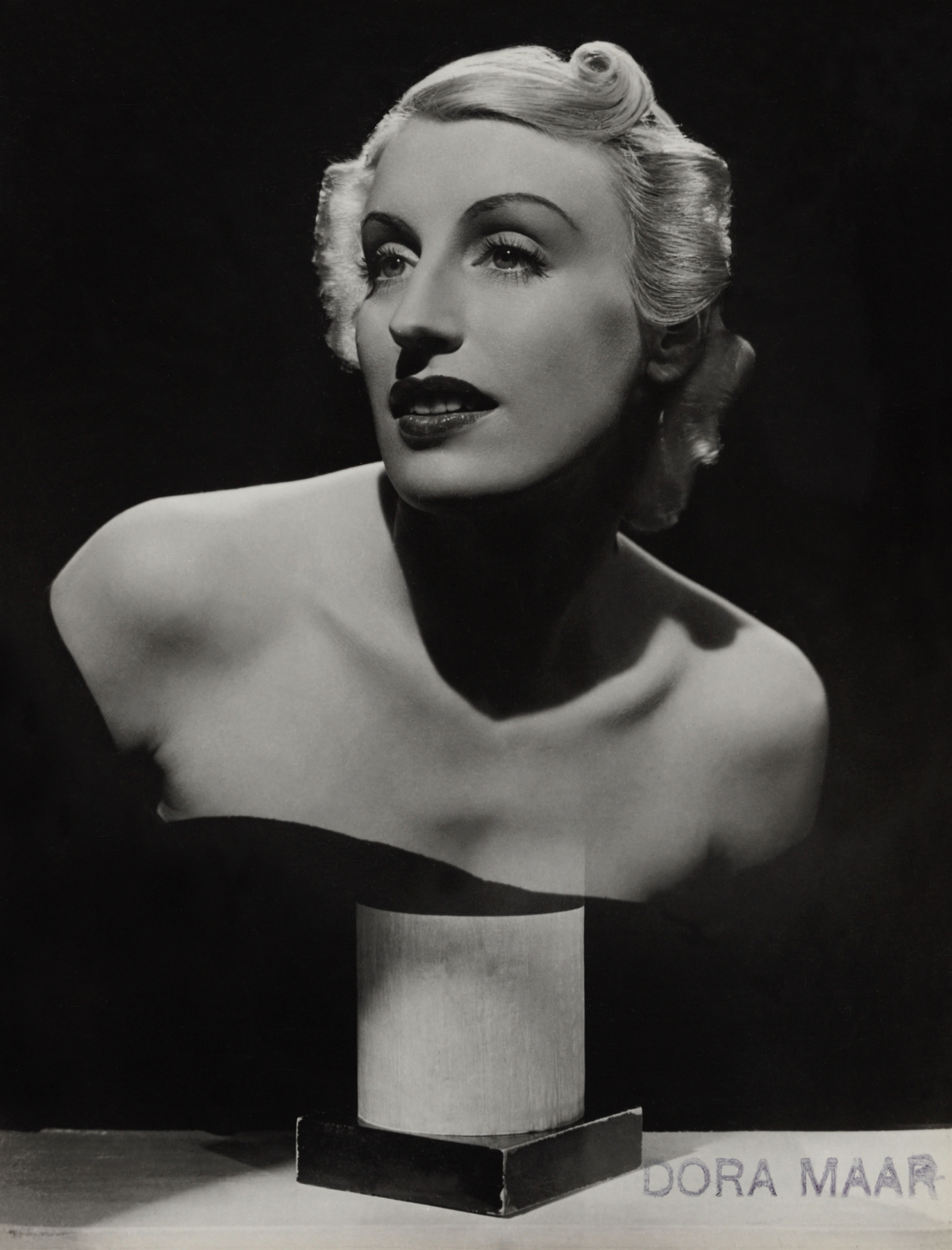
Dora Maar (French, 1907-1997) Assia 1934 Gelatin silver print 26.4 x 19.5cm
This autumn, Tate Modern presents the first UK retrospective of the work of Dora Maar (1907-1997) whose provocative photographs and photomontages became celebrated icons of surrealism. Featuring over 200 works from a career spanning more than six decades, this exhibition shows how Maar’s eye for the unusual also translated to her commercial commissions, social documentary photographs, and paintings – key aspects of her practice which have, until now, remained little known.
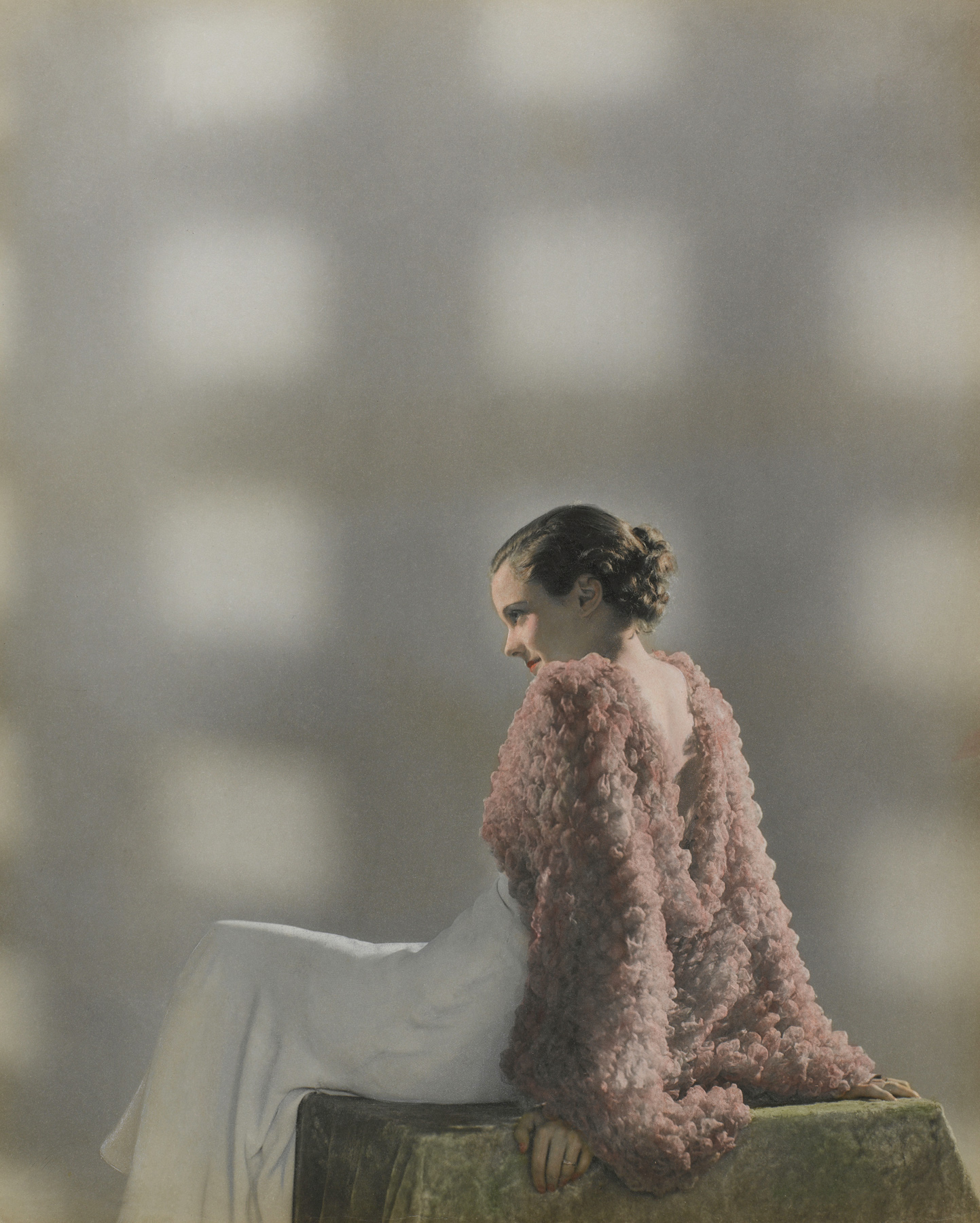
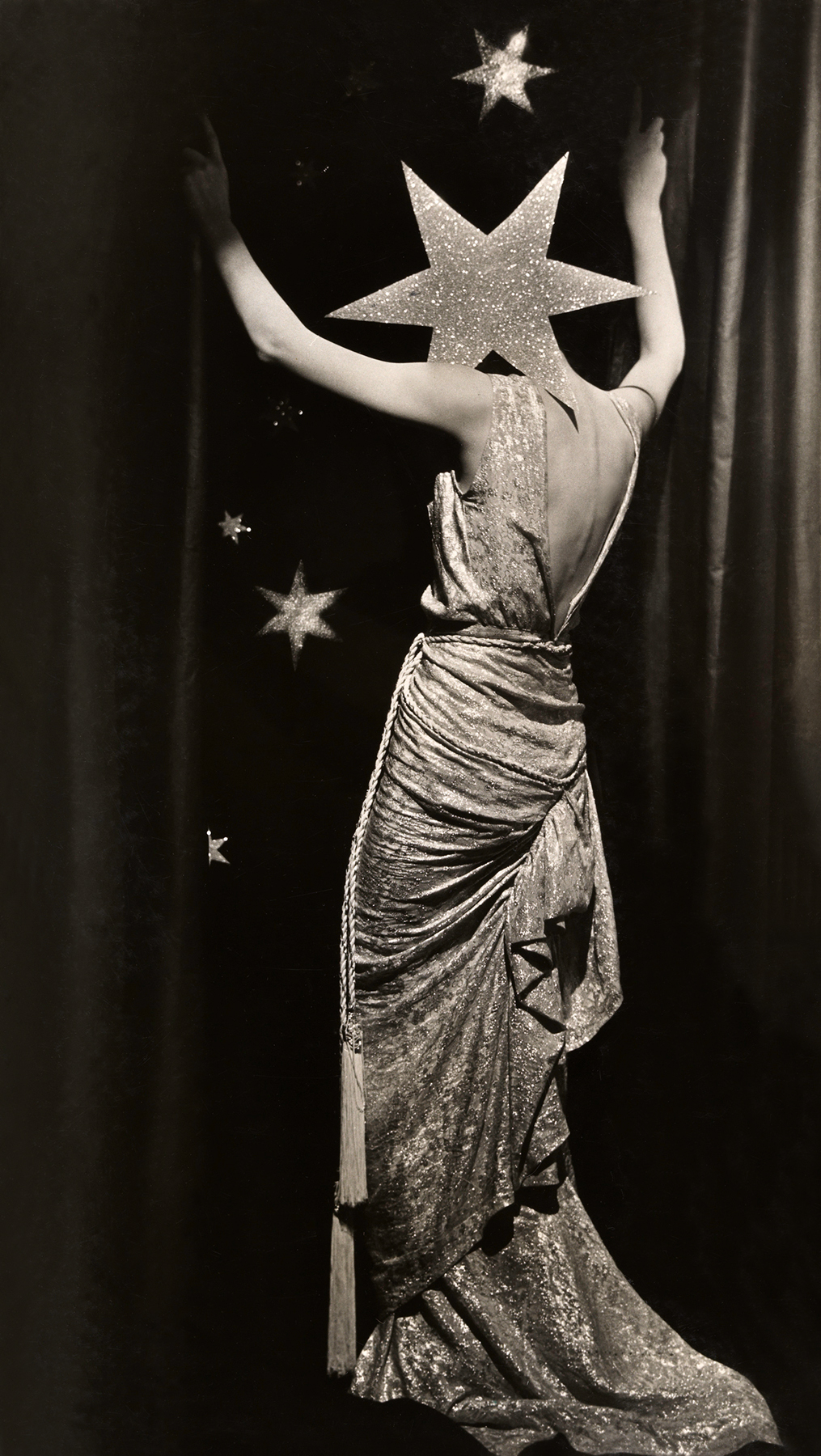
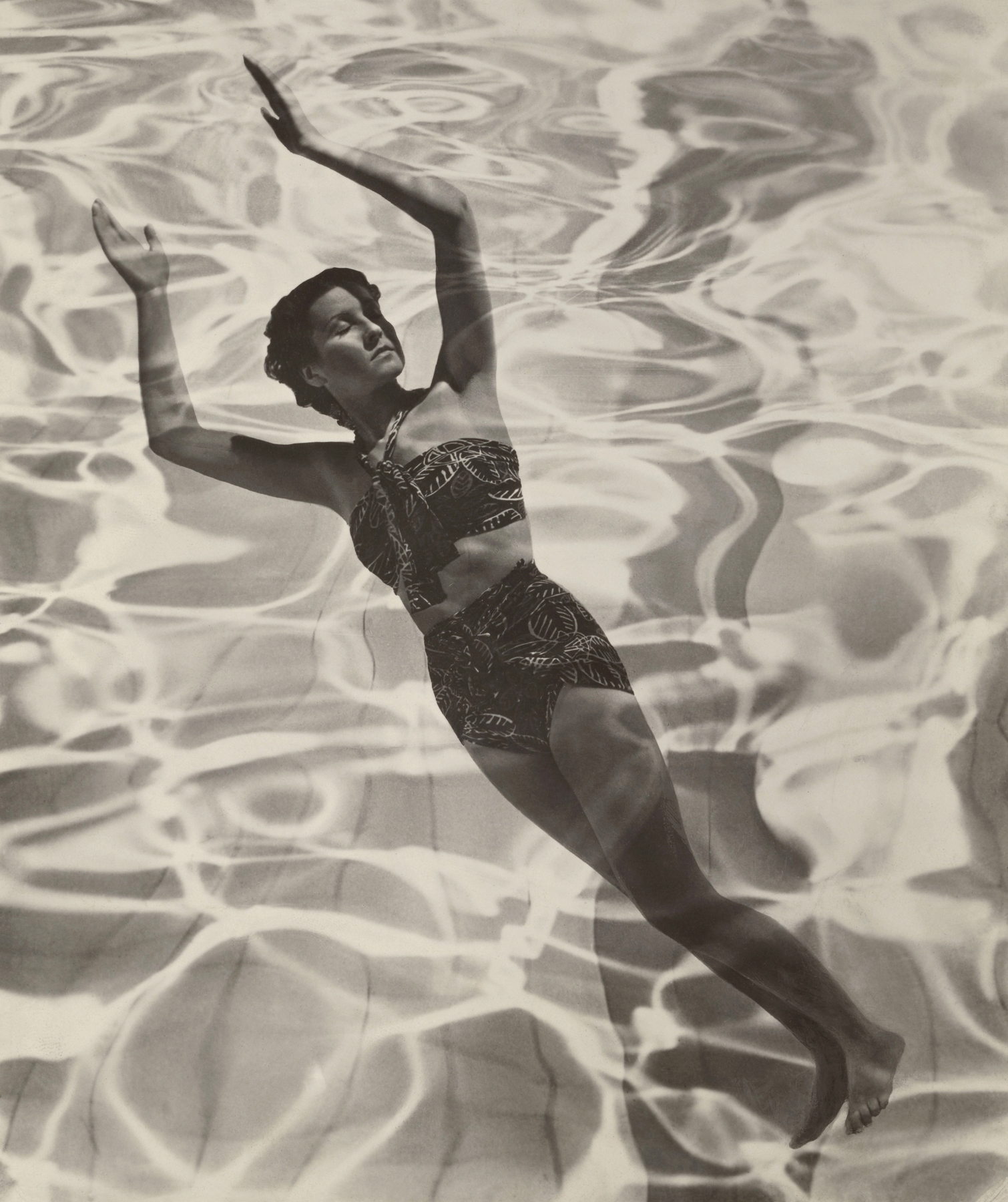
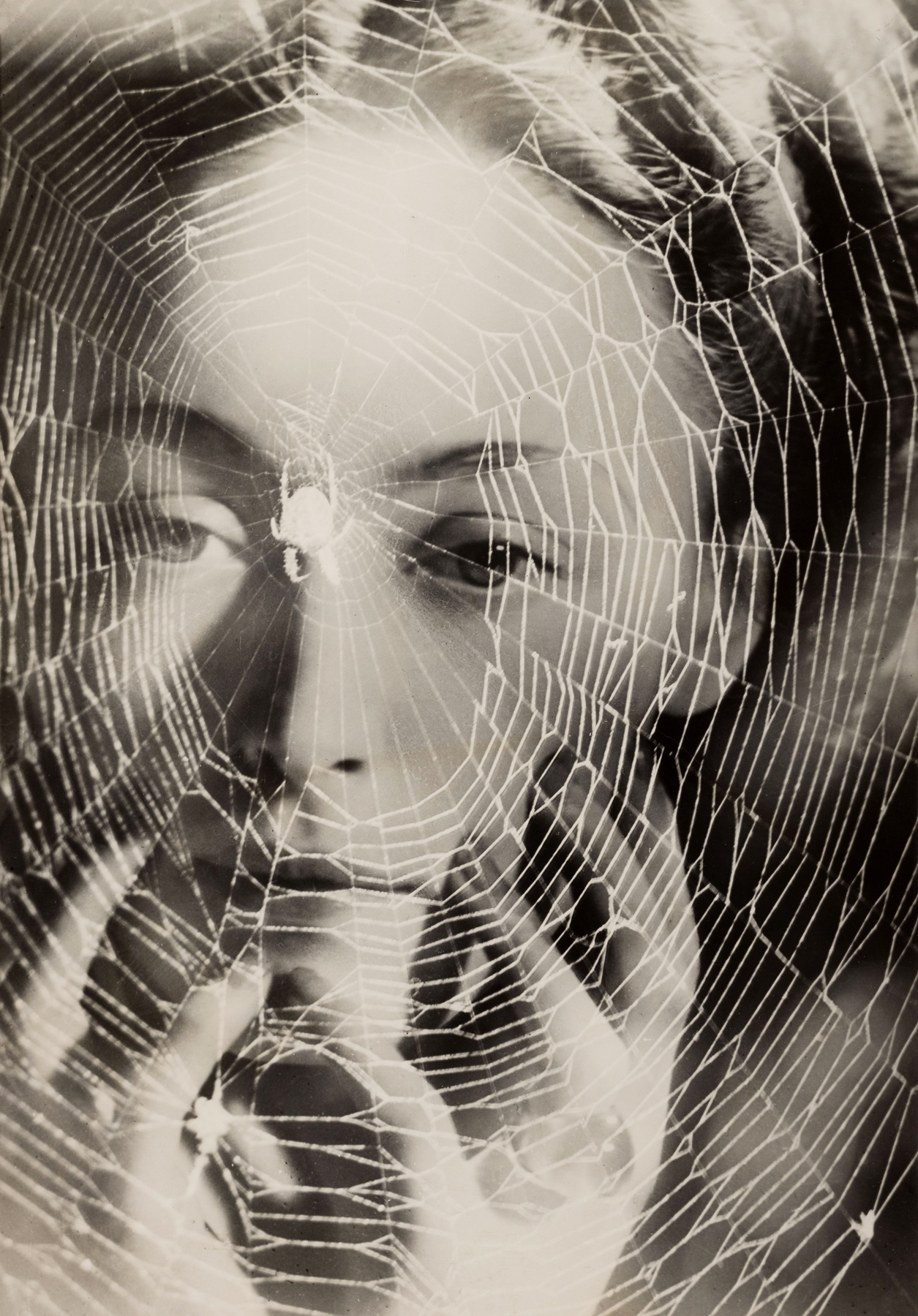
Born Henriette Théodora Markovitch, Dora Maar grew up between Argentina and Paris and studied decorative arts and painting before switching her focus to photography. In doing so, Maar became part of a generation of women who seized the new professional opportunities offered by advertising and the illustrated press. Tate Modern’s exhibition will open with the most important examples of these commissioned works. Around 1931, Maar set up a studio with film set designer Pierre Kéfer specialising in portraiture, fashion photography and advertising. Works such as Untitled (Les années vous guettent) c. 1935 – believed to be an advertising project for face cream that Maar made by overlaying two negatives – will reveal Maar’s innovative approach to constructing images through staging, photomontage and collage. Striking nude studies such as that of famed model Assia Granatouroff will also reveal how women photographers like Maar were beginning to infiltrate relatively taboo genres such as erotica and nude photography.
During the 1930s, Maar was active in left-wing revolutionary groups led by artists and intellectuals. Reflecting this, her street photography from this time shot in Barcelona, Paris and London captured the reality of life during Europe’s economic depression. Maar shared these politics with the surrealists, becoming one of the few photographers to be included in the movement’s exhibitions and publications. A major highlight of the show will be outstanding examples of this area of Maar’s practice, including Portrait d’Ubu 1936, an enigmatic image thought to be an armadillo foetus, and the renowned photomontages 29, rue d’Astorg c. 1936 and Le Simulateur 1935. Collages and publications by André Breton, Georges Hugnet, Paul and Nusch Eluard, and Jacqueline Lamba will place Maar’s work in context with that of her inner circle.
In the winter of 1935-1936 Maar met Pablo Picasso and their relationship of around eight years had a profound effect on both their careers. She documented the creation of his most political work Guernica 1937, offering unprecedented insight into his working process. He in turn immortalised her in the motif of the ‘weeping woman’. Together they made a series of portraits that combined experimental photographic and printmaking techniques, anticipating her energetic return to painting in 1936. Featuring rarely seen, privately-owned canvases such as La Conversation 1937 and La Cage 1943, and never-before exhibited negatives from the Dora Maar collection at the Musée National d’art Moderne, the exhibition will shed new light on the dynamic between these two artists during the turbulent wartime years.
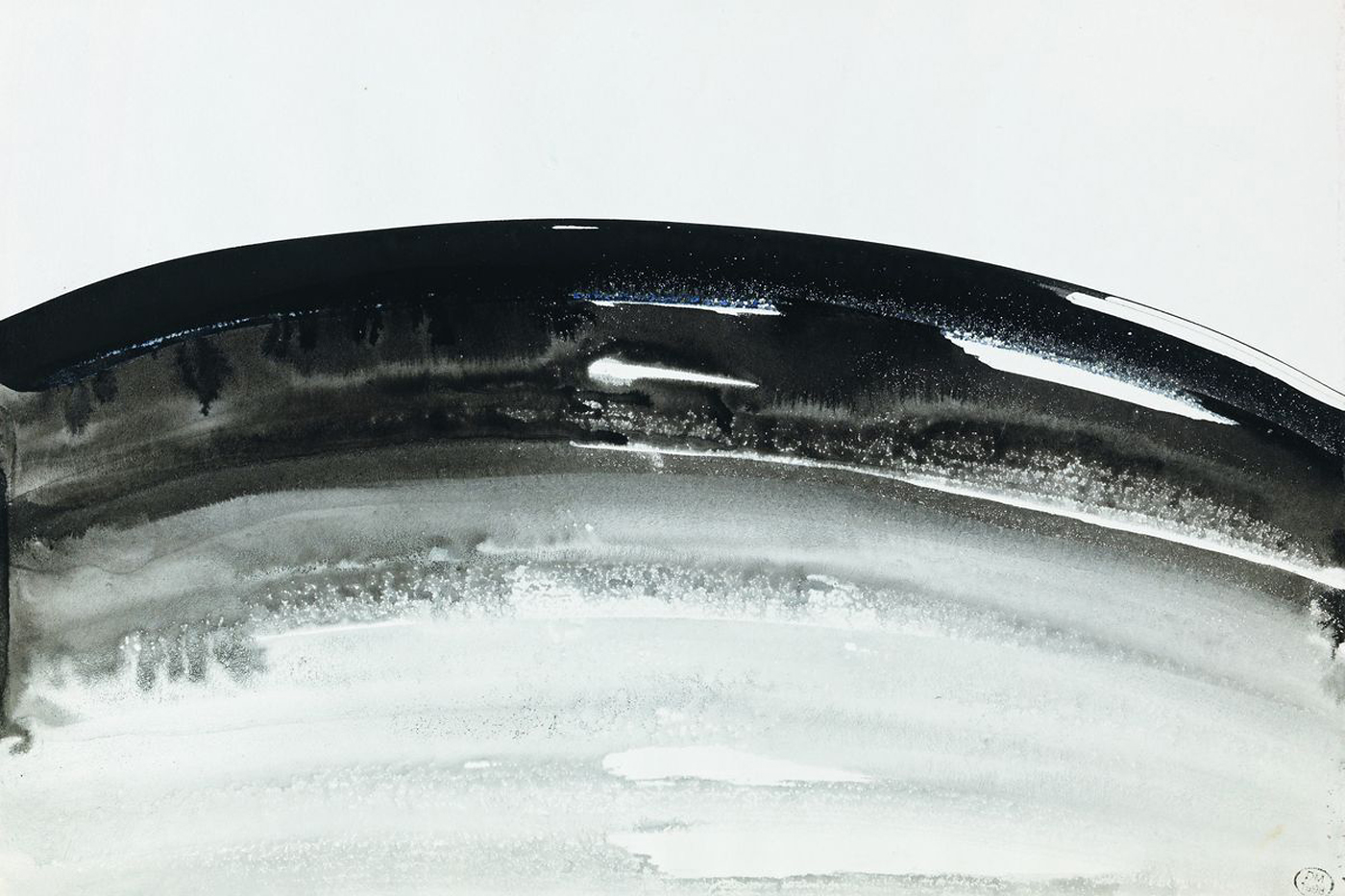
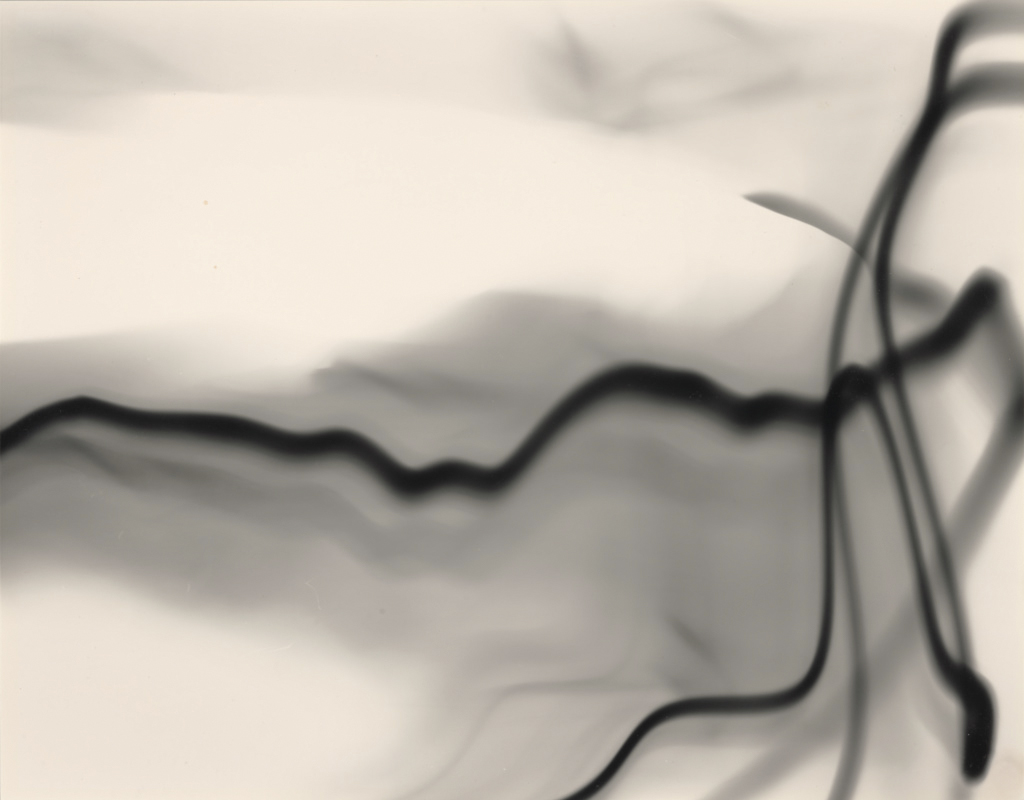
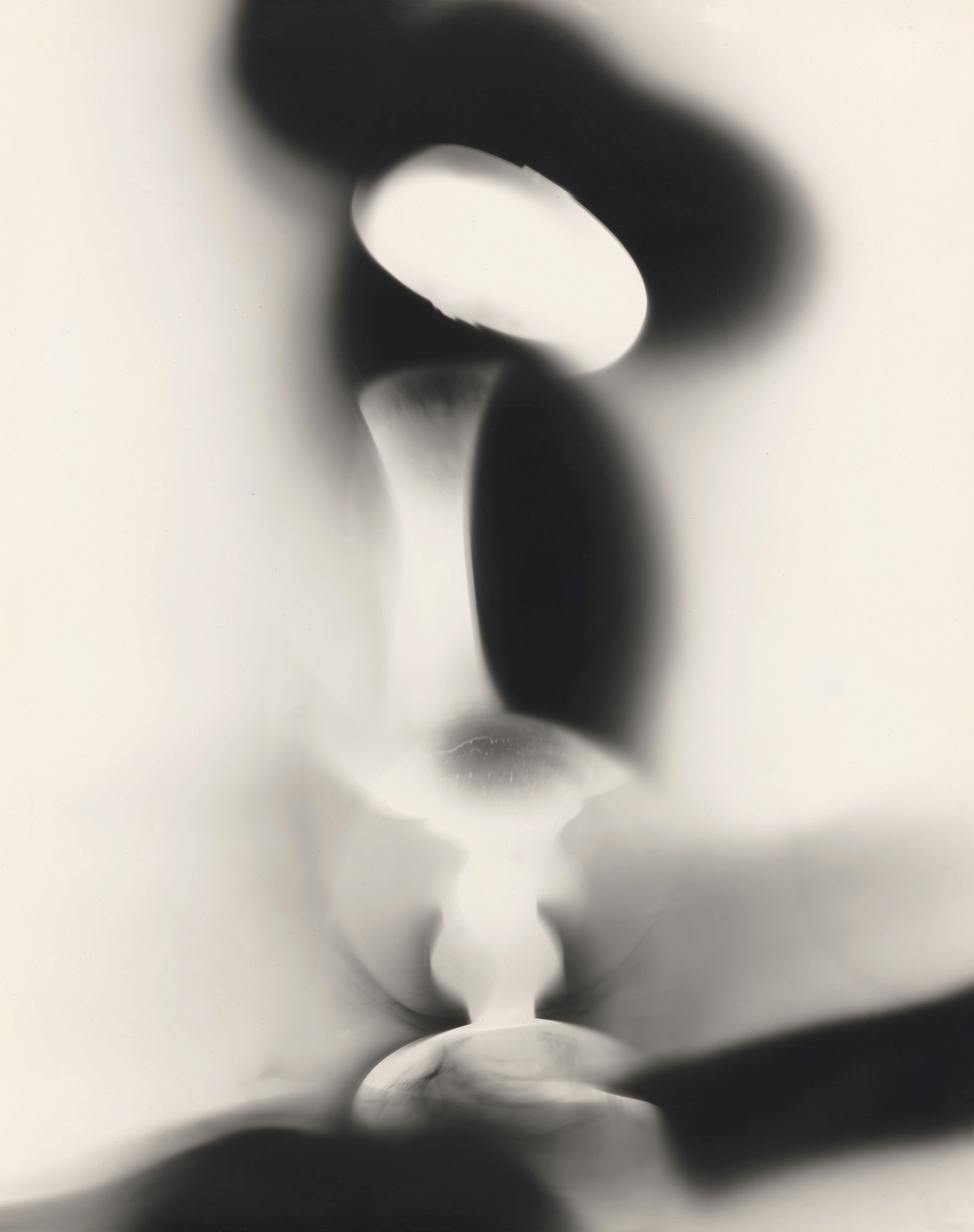
After the Second World War, Maar began dividing her time between Paris and the South of France. During this period, she explored diverse subject matter and styles before focusing on gestural, abstract paintings of the landscape surrounding her home. Though these works were exhibited to acclaim in London and Paris into the 1950s, Maar gradually withdrew from artistic circles. As a result, the second half of her life became shrouded in mystery and speculation. The exhibition will reunite over 20 works from this little-known – yet remarkably prolific – period. Dora Maar concludes with a substantial group of camera-less photographs that she made in the 1980s when, four decades after all but abandoning the medium, Maar returned to her darkroom.
Dora Maar is curated by Karolina Ziebinska-Lewandowska, Curator, Centre Pompidou, Paris, Damarice Amao, Assistant Curator, Centre Pompidou, Paris and Amanda Maddox, Associate Curator, the J. Paul Getty Museum, Los Angeles with Emma Lewis, Assistant Curator, Tate Modern. The Tate Modern presentation is curated by Emma Lewis, Assistant Curator with Emma Jones, Curatorial Assistant, Tate Modern.
The exhibition will be accompanied by a fully-illustrated catalogue jointly published by Tate and the J. Paul Getty Museum and a programme of talks and events in the gallery.
Press release from Tate Britain [Online] Cited 16/11/2019
Installation views of the exhibition Dora Maar at Tate Modern, 2019 showing at second left, Untitled (Study of Beauty) (c. 1931, below)
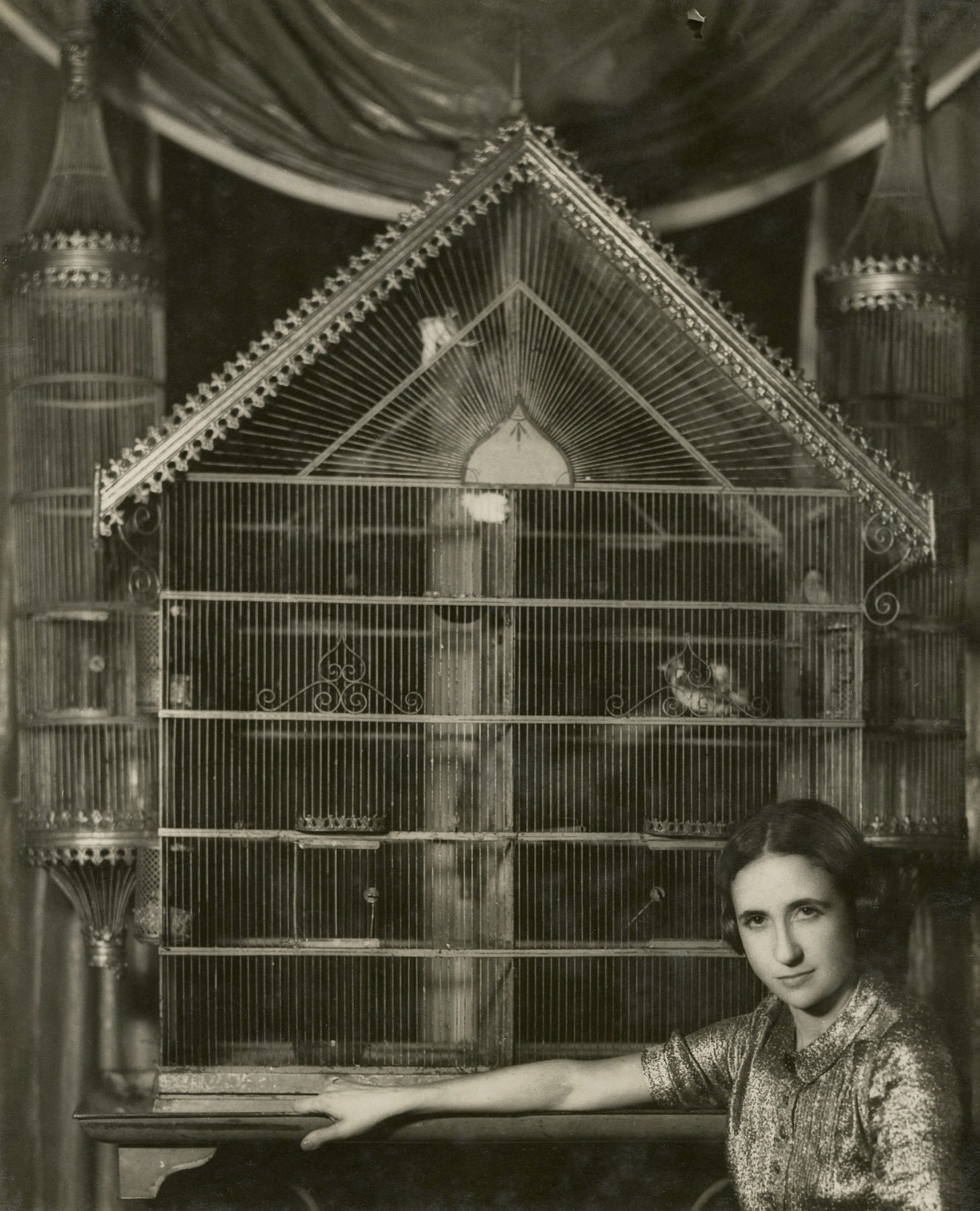
Dora Maar (French, 1907-1997) Portrait of Lise Deharme, chez elle devant sa cage a oiseaux Portrait of Lise Deharme, at home in front of her birdcage 1936 Gelatin silver print
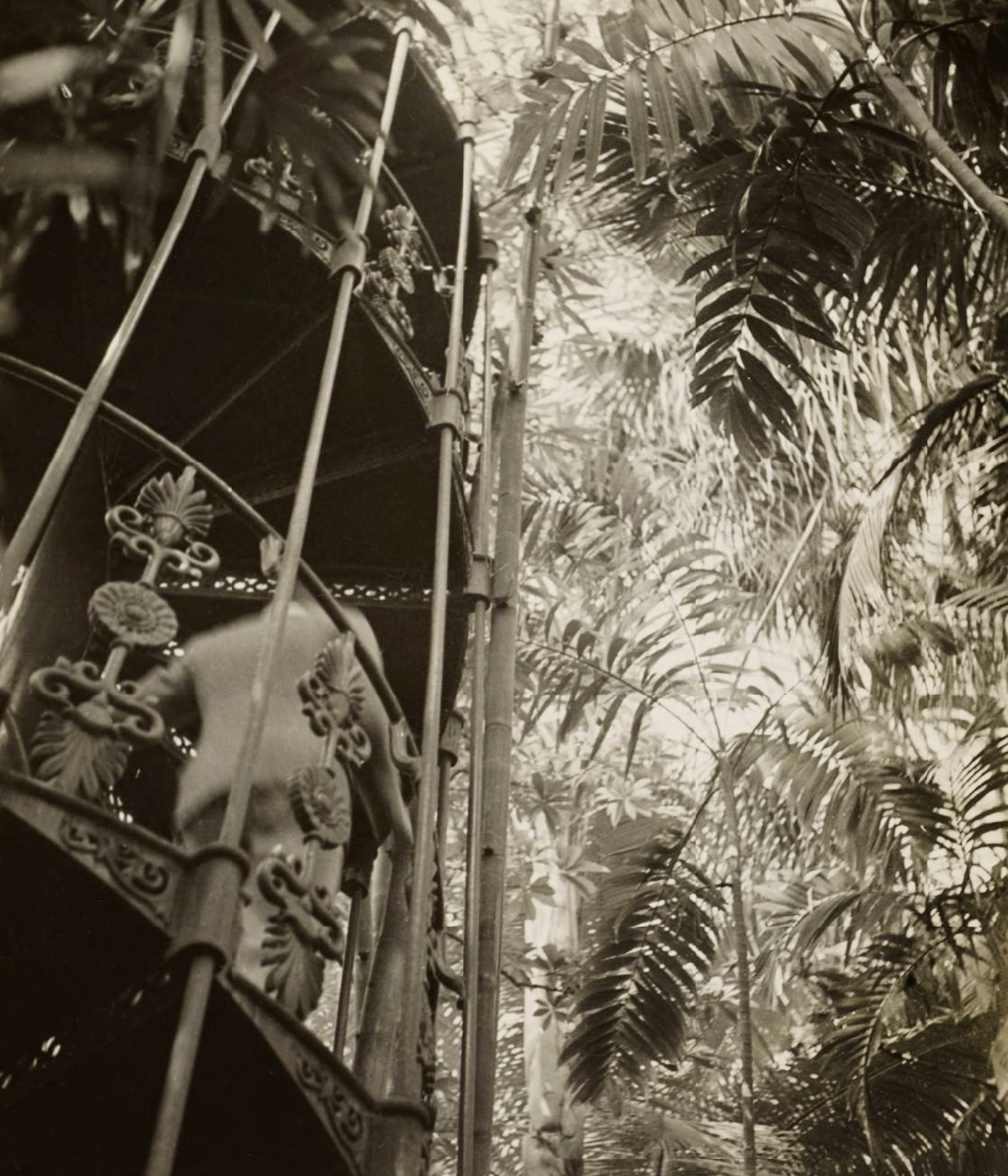
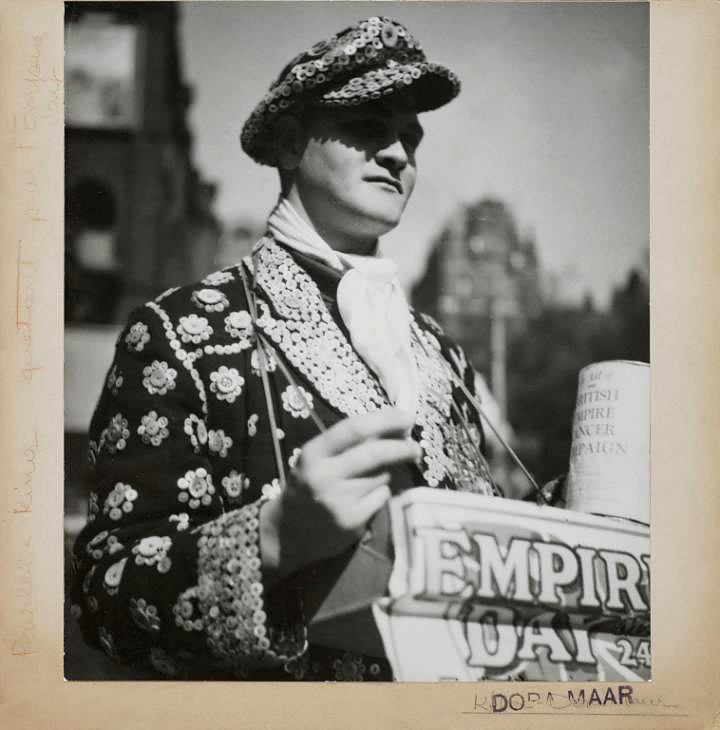
Associated with Pierre Kéfer from 1930 to 1934, she collaborated in 1931 on the photographic illustration of the art historian Germain Bazin’s book Le Mont Saint-Michel (1935). She then shared a studio with Brassaï, after which Emmanuel Sougez, the spokesman for the New Photography movement, became her mentor. Her work met the aesthetic criteria of the time: close-ups of flowers and objects, and photograms in the style of Man Ray. She also took portraits, original publicity shots, and fashion and erotic photographs. In 1934, while traveling alone in Spain, Paris and London, she shot a vast number of urban views (posters, shop windows, ordinary people). Both a passionate lover and committed intellectual, she became the mistress of the filmmaker Louis Chavance and of the writer Georges Bataille, whom she met in a left-wing activist group. She signed the Contre-Attaque manifesto and rubbed shoulders with the agitprop artistic group Octobre. A close friend of Jacqueline Lamba, who became Breton’s wife, she was fully involved in the surrealist group, of whose members she made many portraits. At the height of her creativity in 1935-1936, she composed strange and bold photomontages, the most famous being 29, rue d’Astorg and The Simulator (both below). Some of her compositions verge on eroticism, like the photomontage showing fingers crawling out of a shell and sensually digging into the sand (Untitled, 1933-1934, top). She also used her city photographs as backdrops for unsettling scenes: her Portrait of Ubu (1936, below) – in fact the picture of an armadillo foetus – conforms to the surrealists’ fascination for macabre and deformity.
Anne Reverseau. “Dora Maar,” from the Dictionnaire universel des créatrices on the Archives of Women Artists Research & Exhibitions website [Online] Cited 16/11/2019
When Maar began her career, the illustrated press was expanding quickly. This created a growing market for experimental photography. Maar embraced this opportunity, exploring the creative potential of staged images, darkroom experiments, collage and photomontage.
Most of Maar’s work had one thing in common: an uncanny atmosphere. Her connection to the surrealists led her to create fantastical images. This included using photomontage to bring together contrasting images and reflect the workings of the unconscious mind.
Unlike many other photomontage creators of this time, Maar did not use photographs taken from illustrated newspapers or magazines. Instead the images often came from her own work, including both street and landscape photography. This experimentation and obvious construction became a defining feature of Maar’s work.
Anonymous text from “Seven Things to Know: Dora Maar,” on the Tate website [Online] Cited 16/11/2019
Installation view of the exhibition Dora Maar at Tate Modern, 2019 showing at second left, Arcade (1934, see below)
Dora Maar (French, 1907-1997) Arcade 1934 Photomontage
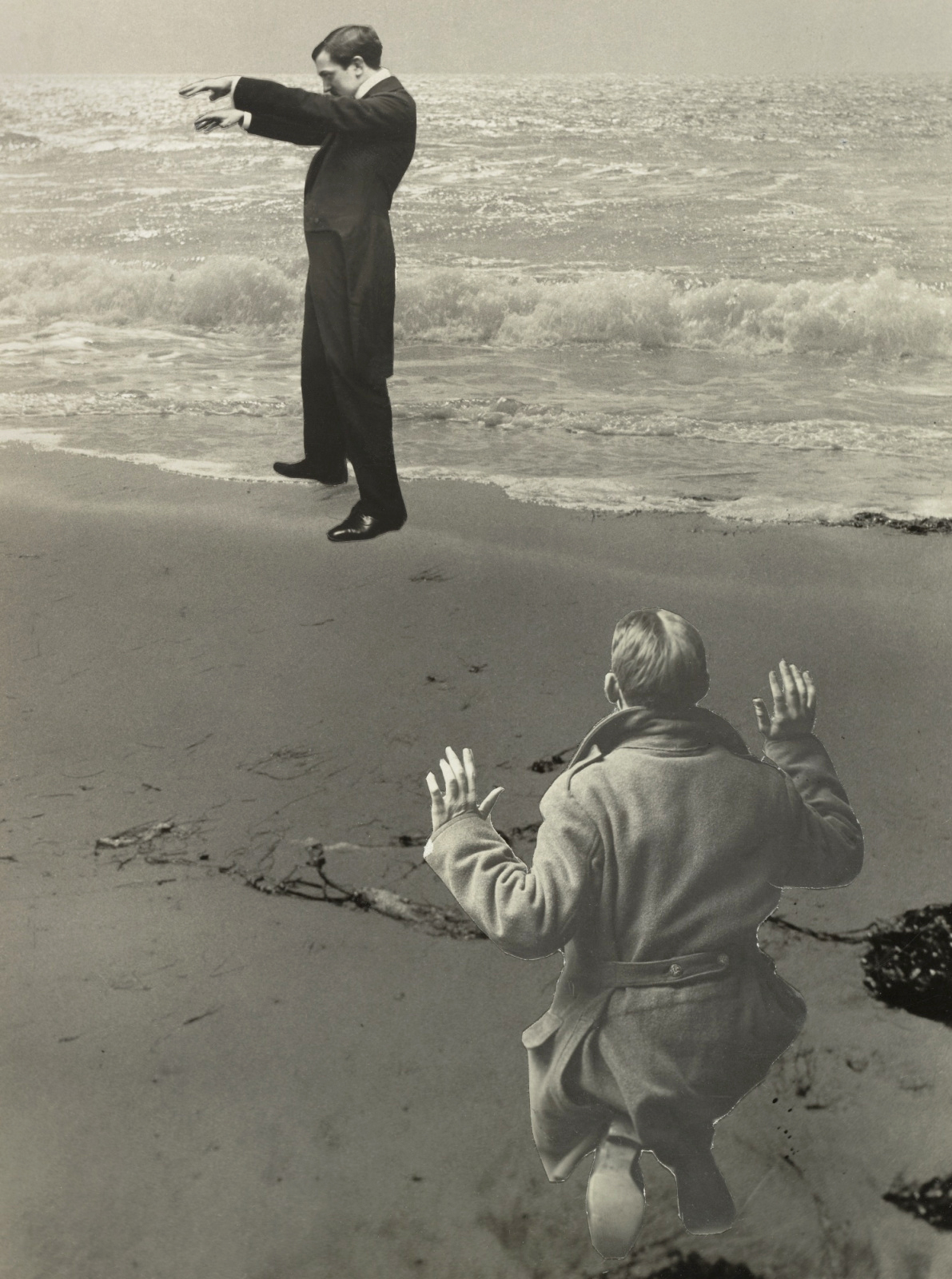
Dora Maar (French, 1907-1997) Danger 1936 Gelatin silver print
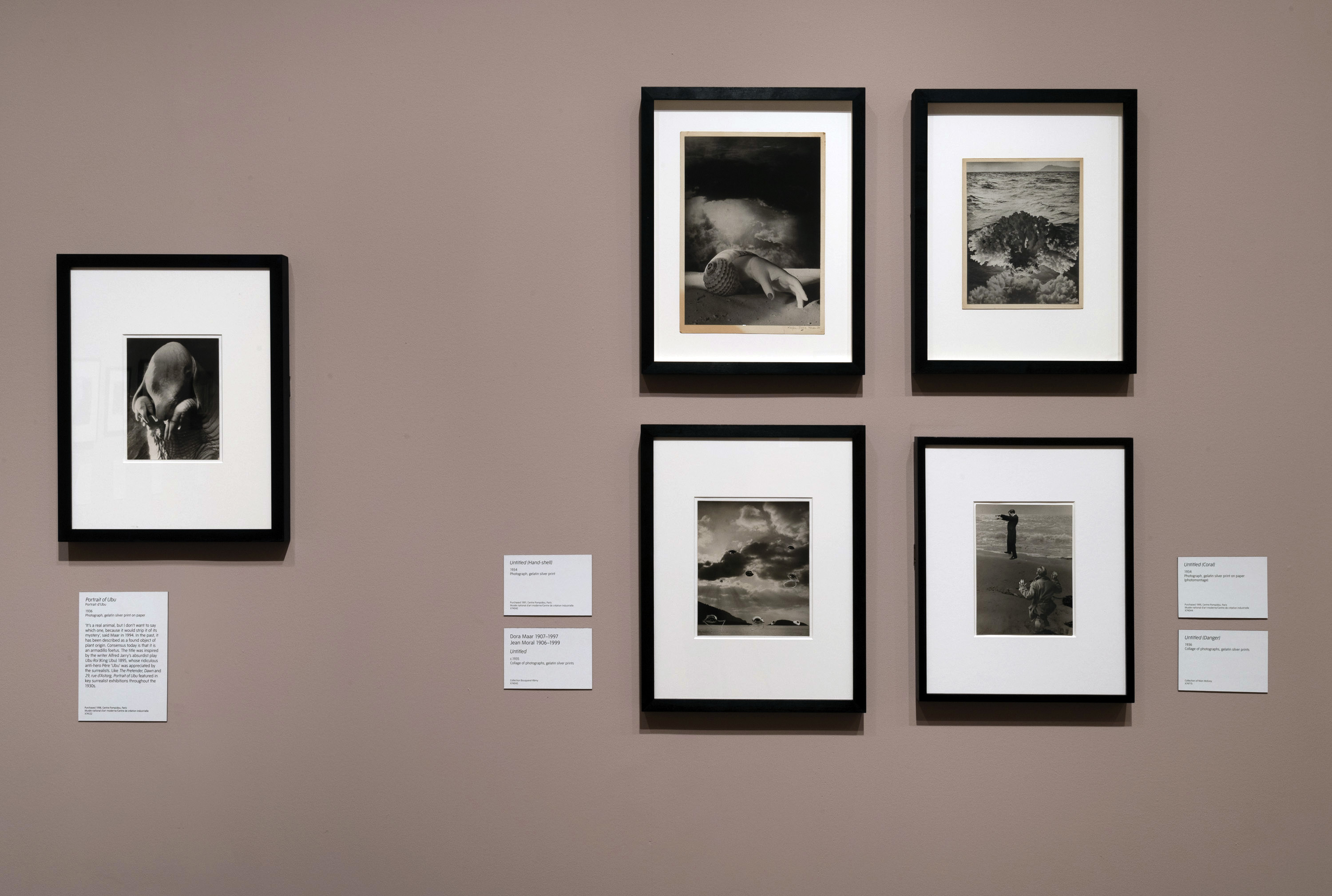
Maar’s early photomontages look almost as modish and styled as her fashion work. From a shell resting on sand, a dummy hand protrudes, with delicate fingers and painted nails, just like Maar’s own (see top image). In a way, the image could be by one of many photographers of the period – Cecil Beaton, say, or Angus McBean – who politely surrealised their pictures, as if the artistic movement were merely a visual style. Except: there is something ominously self-involved about this hybrid thing. The shell and hand recall Bataille’s obsessions with crustaceans, mollusks, and orphaned or butchered body parts. The hand rhymes with similar ones in the photographs of Claude Cahun, where they sometimes have masturbatory implications. And what are we to make of the storm-lit, gothic sky that looms over this auto-curious object?
The most accomplished examples of Maar’s art are the photomontages of 1935 and 1936. There were already many vaults and arches in her Mont-Saint-Michel pictures; now she took the cloistral galleries of the Orangerie at Versailles, upended them so that they looked like sewers, and populated them with cryptic beings engaged in arcane rituals or dramas. In “The Simulator,” (above) a boy from one of her street photographs is bent backward at an obscene angle; Maar has retouched his eyes so that they roll back in his head toward us, like one of those thrashing hysterics photographed in the nineteenth century. In “29 Rue d’Astorg” (above) – of which Maar made several versions, black-and-white and hand-coloured – a human figure with a curtailed, avian head is seated beneath arches that have been subtly warped in the darkroom.
Dora Maar also participated in the Surrealists’ group exhibitions, such as the one at Charles Ratton’s Gallery in 1936, wherein her Portrait of Ubu became the “icon of Surrealism,” according to her biographer Mary Ann Caws in her exceptional book Picasso’s Weeping Woman: The Life and Art of Dora Maar (2000). “She captures the mysterious,” Caws wrote, “in a combination of the unresolved and the sharply angled. This frequently creates a sense of ambiguity, even menace.” (p. 20) Caws notes that Dora Maar responded to Louis Aragon’s invocation “for each person there is one image to find that will disturb the whole universe.” Maar’s images managed to “disturb and reveal” with a bit of the macabre mixed in. (p. 71)
Installation view of the exhibition Dora Maar at Tate Modern, 2019 showing Maar’s photographs Portrait of Ubu (1936, left), Untitled (Hand-Shell) (1934, top middle) and Danger (1936, bottom right) Photo: Tate (Andrew Dunkley)
In 1936, at the summit of her celebrity as a photographic artist, Dora Maar showed her picture “Portrait of Ubu” in the International Surrealist Exhibition, at the New Burlington Galleries, London. Named after a scatological, ur-Surrealist play by Alfred Jarry, from 1896, the black-and-white photograph shows a ghastly being of indeterminate origin and melancholy aspect. Maar would never say what the clawed, scaly creature was, nor where she had come across it. Her Ubu has elements of Jarry’s porcine, louse-like original, and, with its doleful eye and drooping ears, it also resembles an ass or an elephant. Scholars generally agree that the monster is in fact an armadillo foetus, preserved in a specimen jar. It is also an idea: something like l’informe, the concept Maar’s lover Georges Bataille coined to describe his fellow-Surrealists’ admiration for all things larval and grotesquely about-to-be.
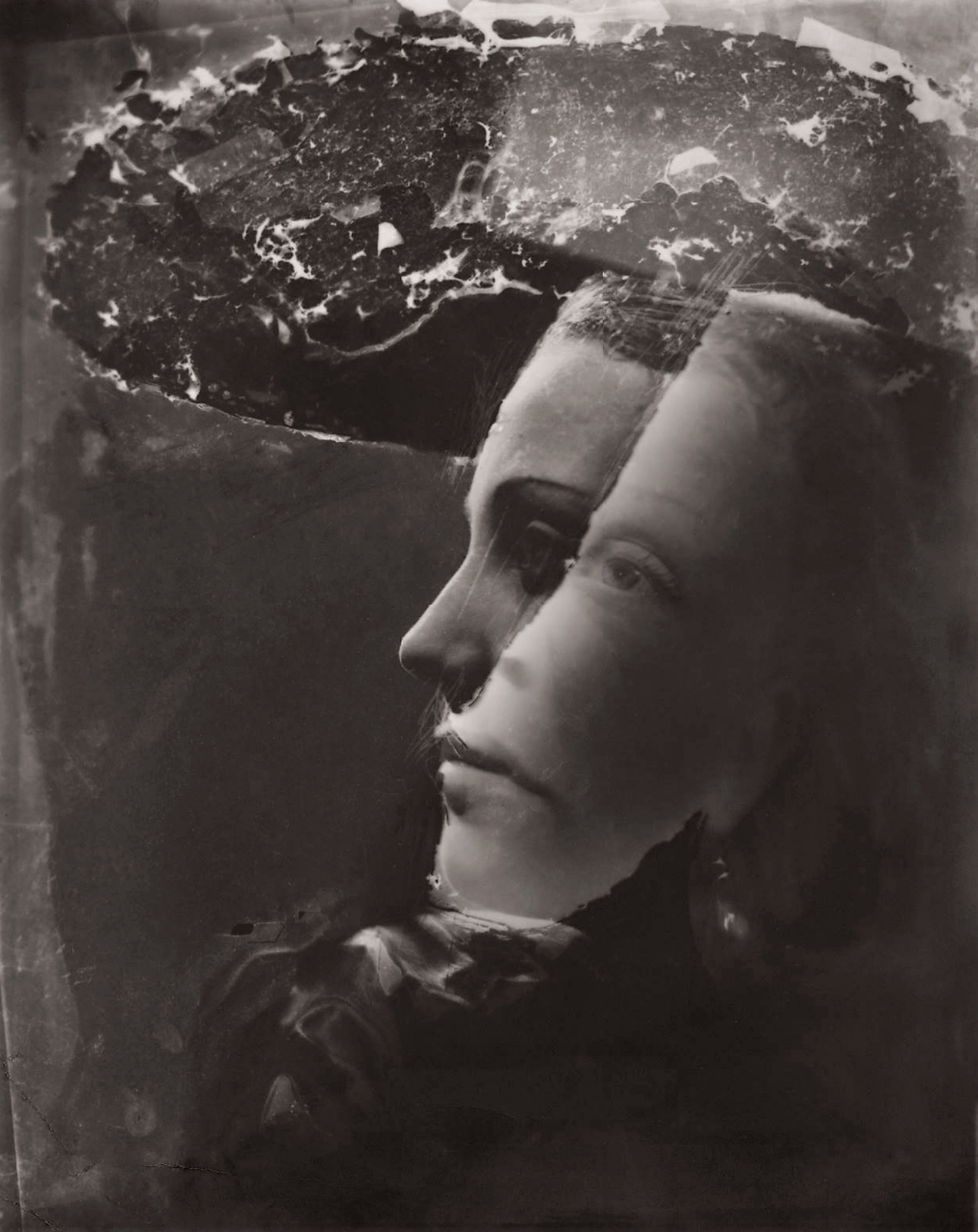
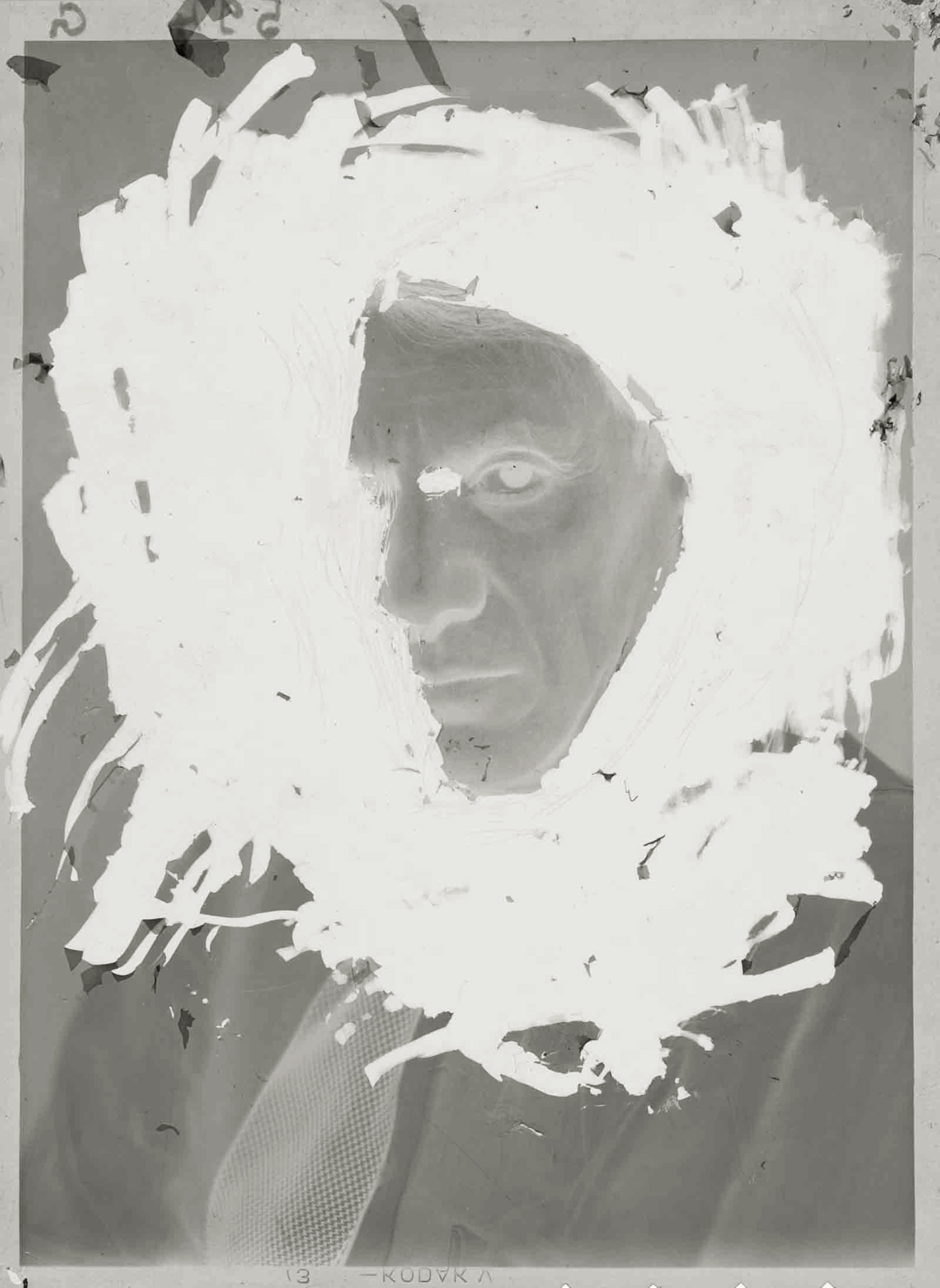
To produce this complex image, Maar sandwiched together two negatives of the same model, one frontal and one profile, scavenged from a magazine assignment on springtime hats, and painted the background and hat (or decomposing halo?) onto the negative. Softening the emulsion, she scraped and lifted it off, techniques that involve destruction and suggest disintegration. The face evokes Picasso’s depictions of female faces, especially his 1938 paintings of weeping women for which Maar was the model. Although the divided face is not Maar’s, it is tempting to interpret it as a reflection of her emotional state at the time, torn between her career and independence and Picasso’s demands and potent personality. frontal and one profile, scavenged from a magazine assignment on springtime hats, and painted the background and hat (or decomposing halo?) onto the negative. Softening the emulsion, she scraped and lifted it off, techniques that involve destruction and suggest disintegration. The face evokes Picasso’s depictions of female faces, especially his 1938 paintings of weeping women for which Maar was the model. Although the divided face is not Maar’s, it is tempting to interpret it as a reflection of her emotional state at the time, torn between her career and independence and Picasso’s demands and potent personality.
Text from The Cleveland Museum of Art website [Online] Cited 16/11/2019
Maar became involved with the surrealists from 1933 and was one of the few artists – and even fewer women – to be included in the surrealists’ exhibitions. She became close to the group because of their shared left-wing politics at a time of social and civil unrest in France.
Maar’s photography and photomontages explore surrealist themes such as eroticism, sleep, the unconscious and the relationship between art and reality. Cropped frames, dramatic angles, unexpected juxtapositions and extreme close-ups are used to create surreal images. Contrasting with the idea of a photograph as a factual record, Maar’s scenes disorientate the viewer and create new worlds altogether.
Anonymous text from “Seven Things to Know: Dora Maar,” on the Tate website [Online] Cited 16/11/2019
Installation view of the exhibition Dora Maar at Tate Modern, 2019 showing Maar’s photographs Portrait of Nusch Éluard (1935, left) and Les années vous guettent (The Years are Waiting for You) (1932, right)
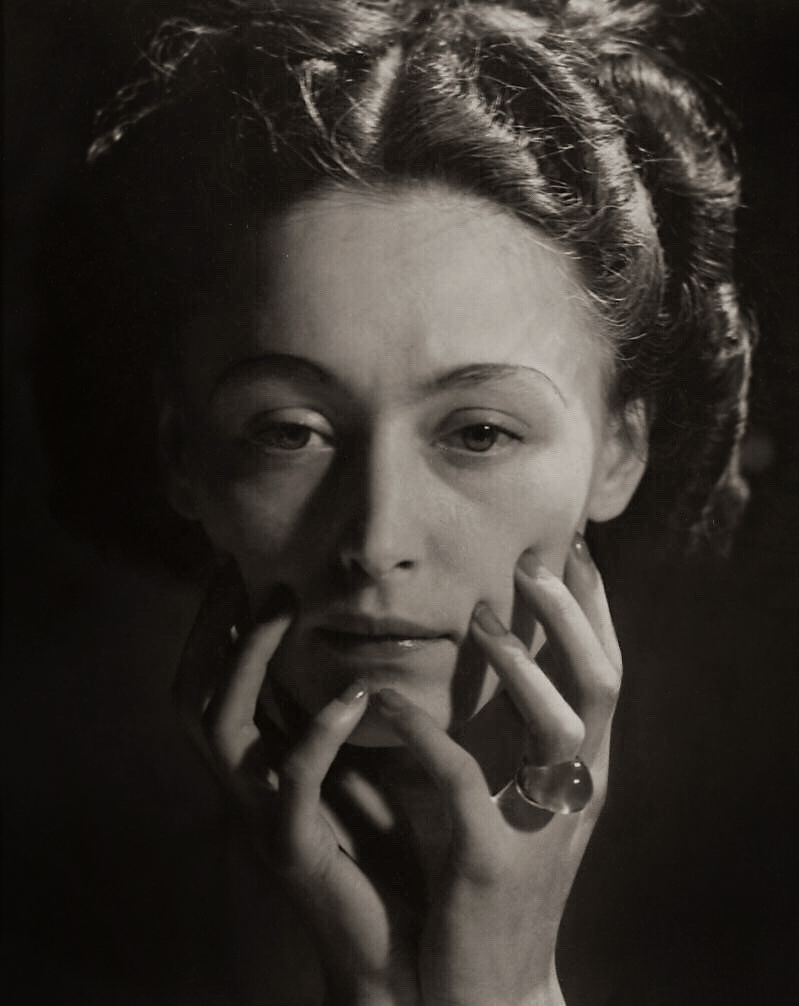
Dora Maar (French, 1907-1997) Portrait of Nusch Éluard 1935 Gelatin silver print
Dora Maar (French, 1907-1997) Untitled c. 1940 Gelatin silver print
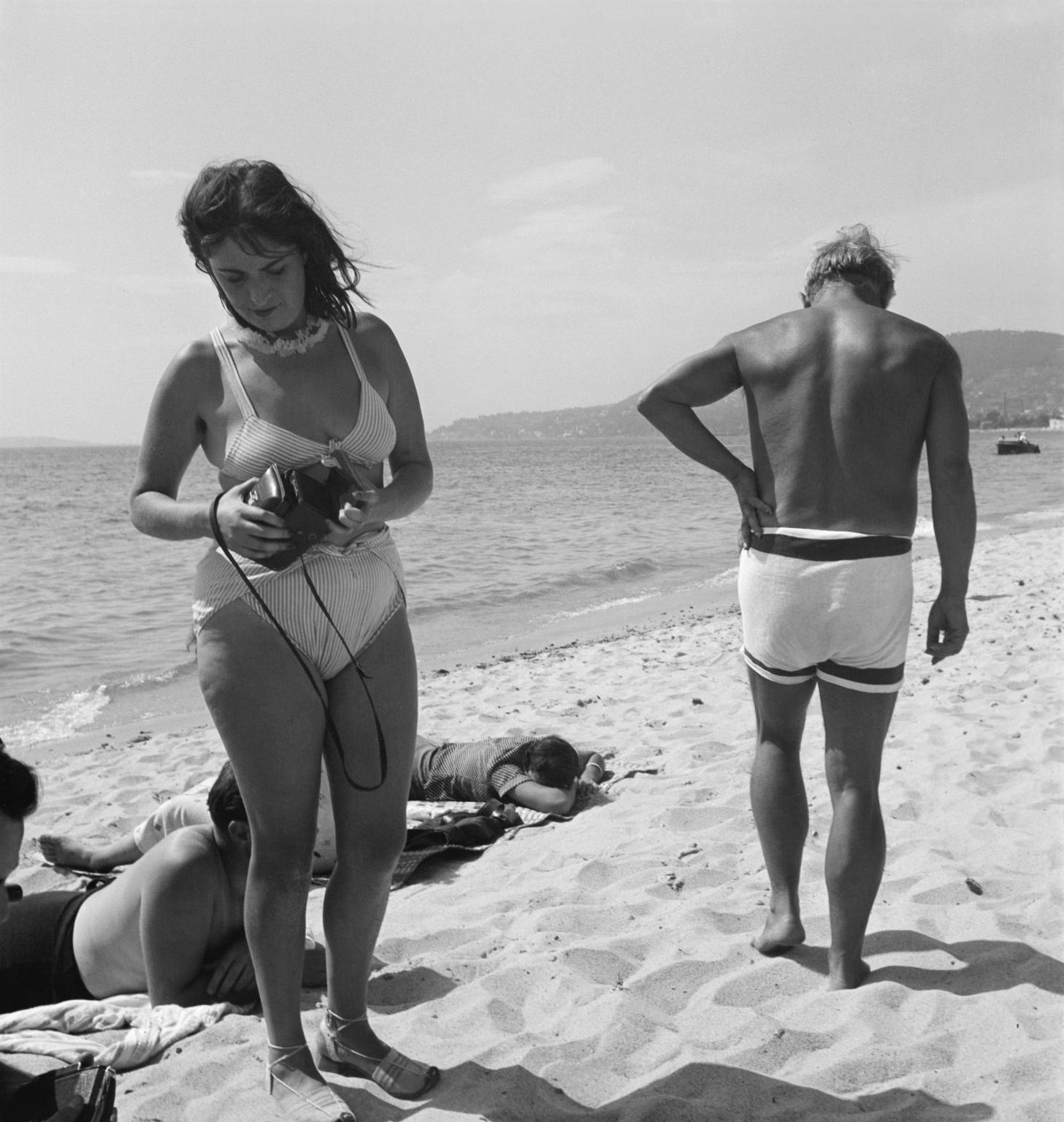
Eileen Agar (British-Argentinian, 1899-1991) Photograph of Dora Maar and Pablo Picasso on the beach September 1937 Gelatin silver print 68 x 60 mm Taken in Juan-les-pins, France Tate Archive Presented to Tate Archive by Eileen Agar in 1989 and transferred from the photograph collection in 2012
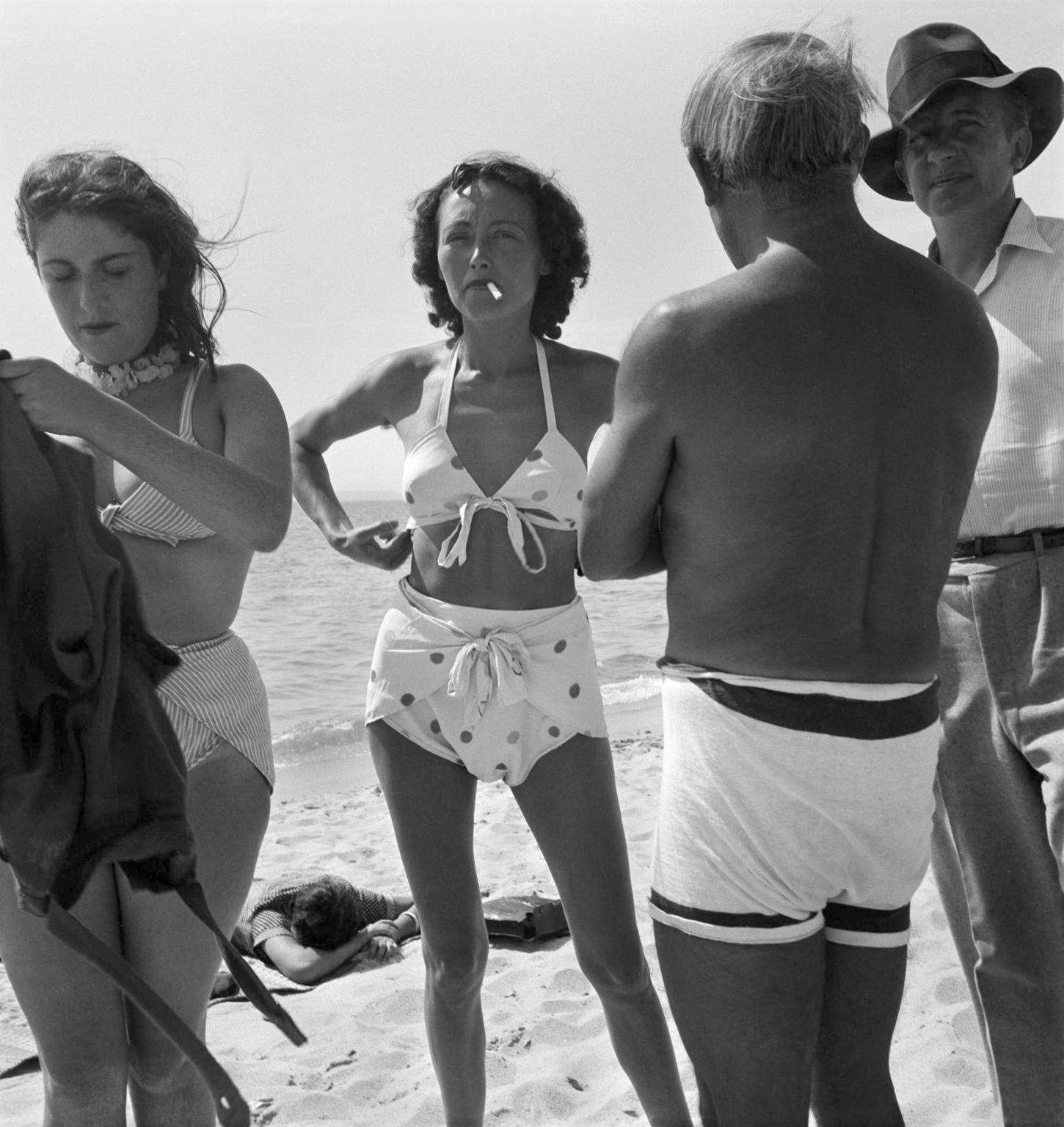
Eileen Agar (British-Argentinian, 1899-1991) Photograph of Dora Maar, Nusch Éluard, Pablo Picasso and Paul Éluard on the beach September 1937 Gelatin silver print 66 x 66 mm Taken in Juan-les-pins, France Tate Archive Presented to Tate Archive by Eileen Agar in 1989 and transferred from the photograph collection in 2012
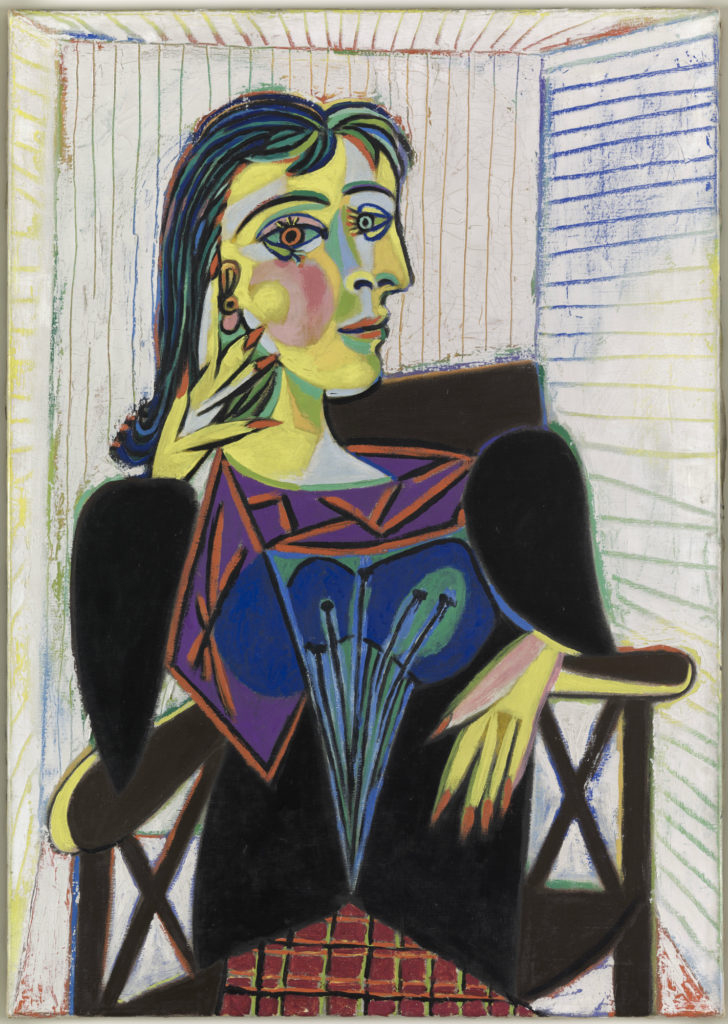
Pablo Picasso (Spanish, 1881-1973) Portrait of Dora Maar 1937 Musée National Picasso-Paris Copyright RMN-Grand Palais, Mathieu Rabeau and Succession Picasso, 2018
Dora Maar (French, 1907-1997) Guernica May-June, 1937 Gelatin silver print Musée National Picasso-Paris Copyright RMN-Grand Palais, Mathieu Rabeau and Succession Picasso, 2018
Dora Maar (French, 1907-1997) Picasso working on “Guernica” 1937 Gelatin silver print Courtesy VEGAP / Museo Nacional Centro de Arte Reina Sofia
Dora Maar (French, 1907-1997) Picasso working on “Guernica” 1937 Gelatin silver print Courtesy VEGAP / Museo Nacional Centro de Arte Reina Sofia
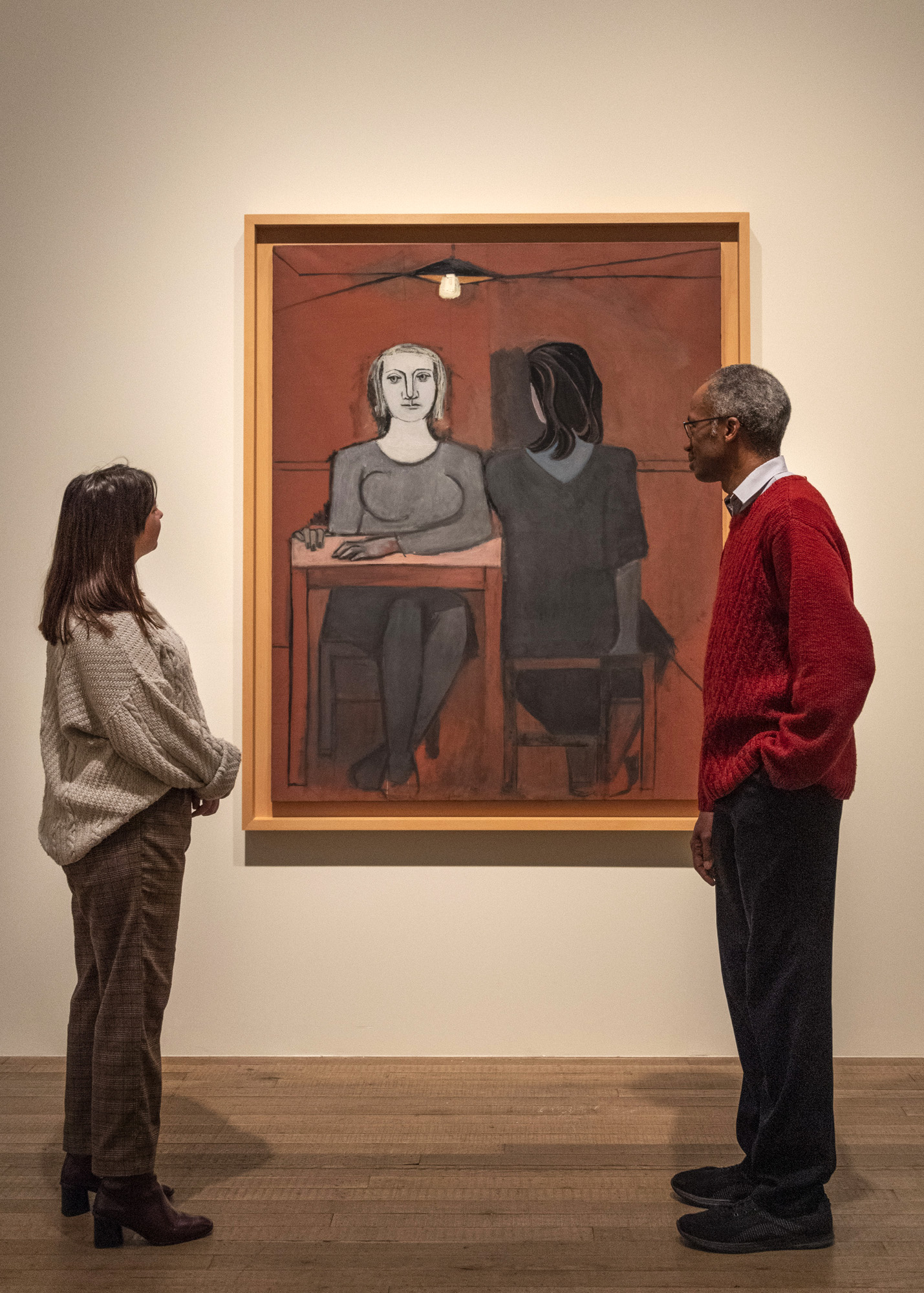
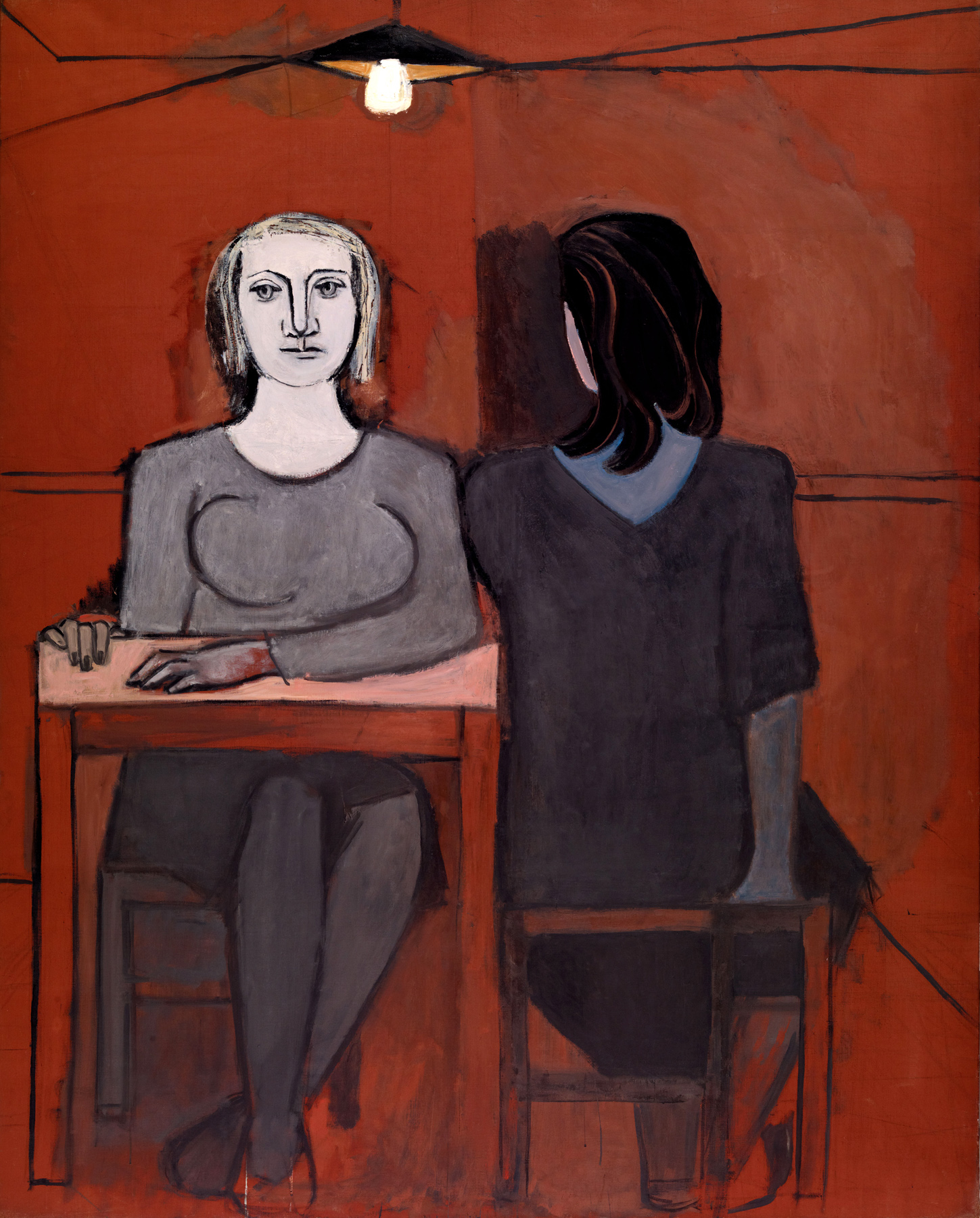
Installation view of the exhibition Dora Maar at Tate Modern, 2019 showing Maar’s painting The Conversation 1937 Photo: Tate (Andrew Dunkley)
“I must dwell apart in the desert,” the artist and surrealist photographer Dora Maar once said. “I want to create an aura of mystery about my work. People must long to see it.
“I’m still too famous as Picasso’s mistress to be accepted as a painter.”
These words form part of a conversation recorded by Maar’s friend, the art writer James Lord, in his memoir “Picasso and Dora.” During the exchange, the French artist also explains how she rationalised the work of her later years, given that she rarely exhibited and was not in demand. …
With its deliberate focus on their art, the exhibition doesn’t address certain troubling questions about the pair’s unequal personal relationship. In her memoirs, Picasso’s later lover, Françoise Gilot, recounted the brutal bullying to which the artist subjected Maar. Picasso once described the time that Maar and a previous lover, Marie-Thérèse Walter, came to blows in his studio as one of his “choicest memories.”
It’s a subject Maar didn’t shy away from in her art, painting herself alongside Walter in “The Conversation,” one of the works on show at the Tate Modern. Maar is depicted facing away while Walter looks directly at the viewer.
During the aforementioned exchange with James Lord, Maar told the writer that Picasso’s portraits of her were “lies.” But the struggle for recognition she went on to describe is more insightful – that she had to survive in the “desert” to be celebrated on her own terms.
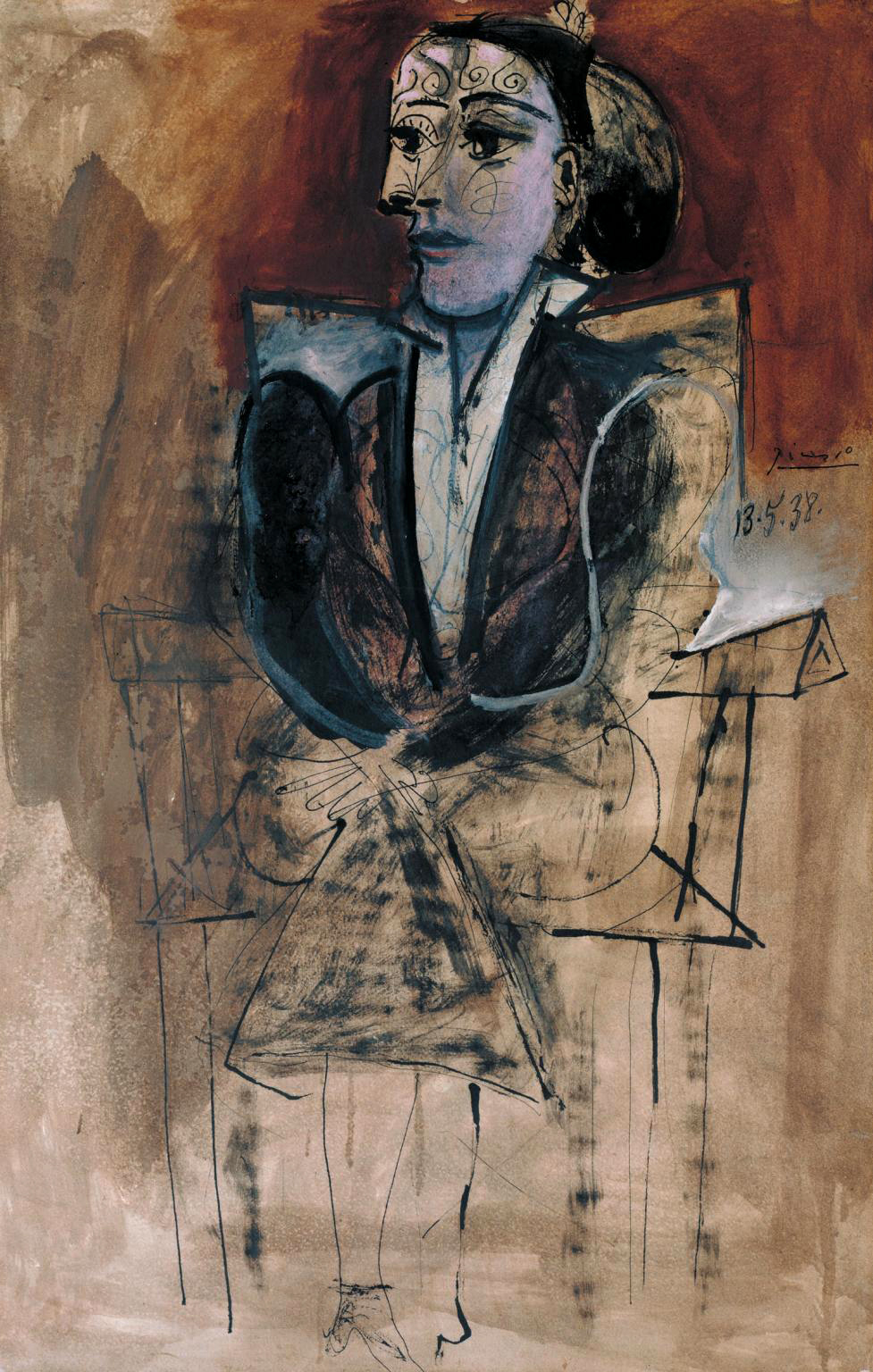
Pablo Picasso (Spanish, 1881-1973) Dora Maar seated 1938 Ink, gouache and oil paint on paper on canvas Support: 689 x 625 mm Frame: 925 x 685 x 120 mm Tate Purchased 1960
In late 1935 or early 1936, Maar met Pablo Picasso. They became lovers soon afterwards. She was at the height of her career, while he was emerging from what he described as ‘the worst time of my life’. He had not sculpted or painted for months.
Their relationship had a huge affect on both their careers. Maar documented the creation of Picasso’s most political work, Guernica 1937, encouraged his political awareness and educated him in photography. Specifically, Maar taught Picasso the cliché verre technique – a complex method combining photography and printmaking.
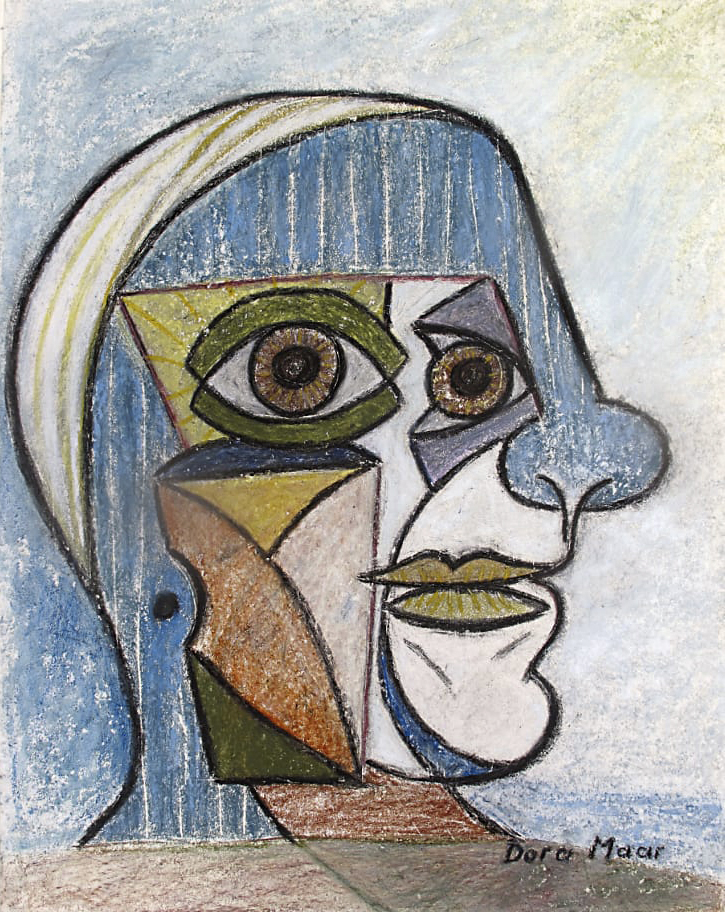
Picasso painted Maar in numerous portraits, including Weeping Woman 1937. However, Maar explained that she felt this wasn’t a portrait of her. Instead it was a metaphor for the tragedy of the Spanish people. Picasso also encouraged Maar to return to painting. The flattened features and bold outlines of the cubist-style portraits Maar made at this time suggest Picasso’s influence. By 1940 her passport listed her profession as ‘photographer-painter’.
Anonymous text from “Seven Things to Know: Dora Maar,” on the Tate website [Online] Cited 16/11/2019
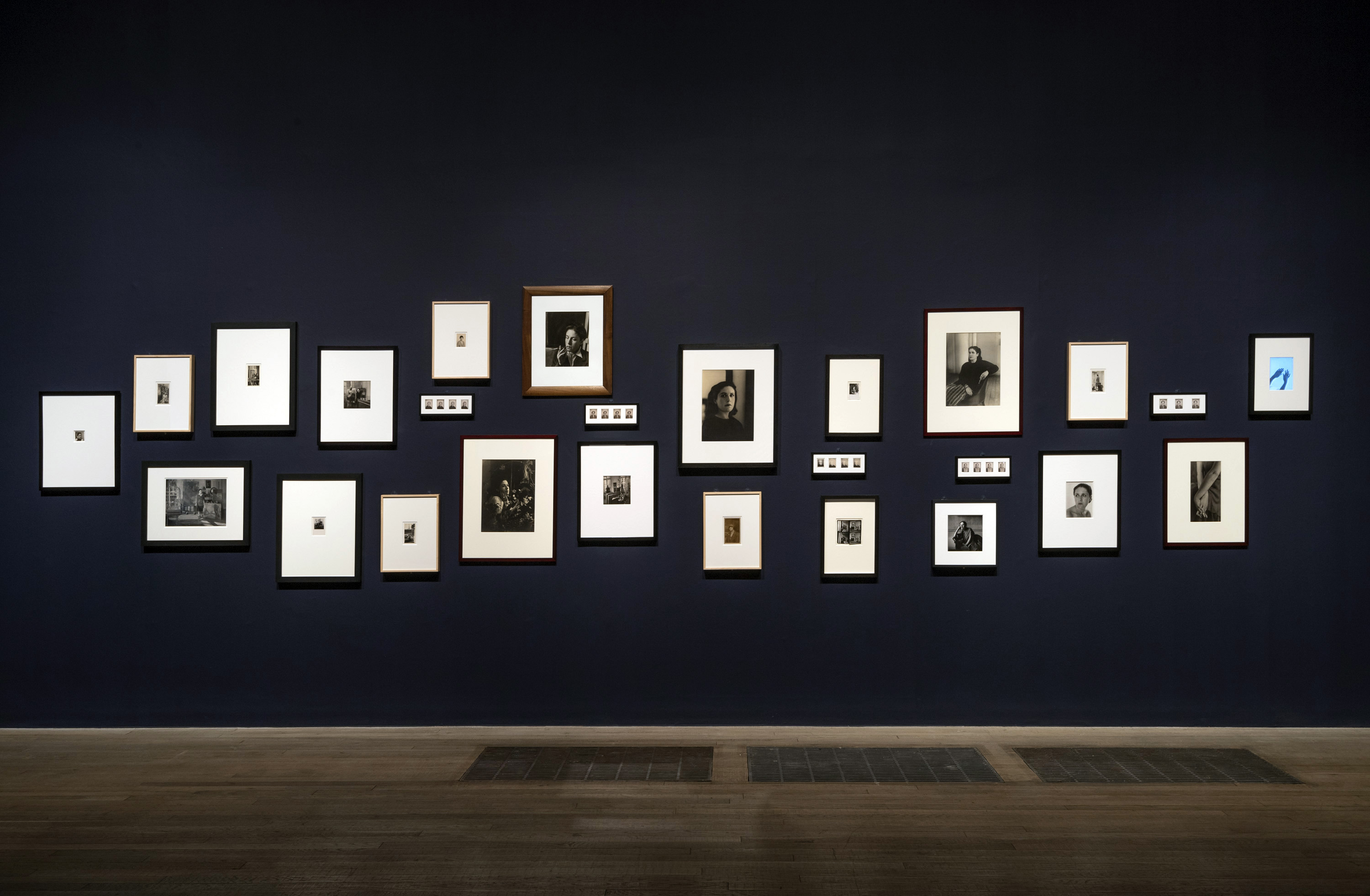
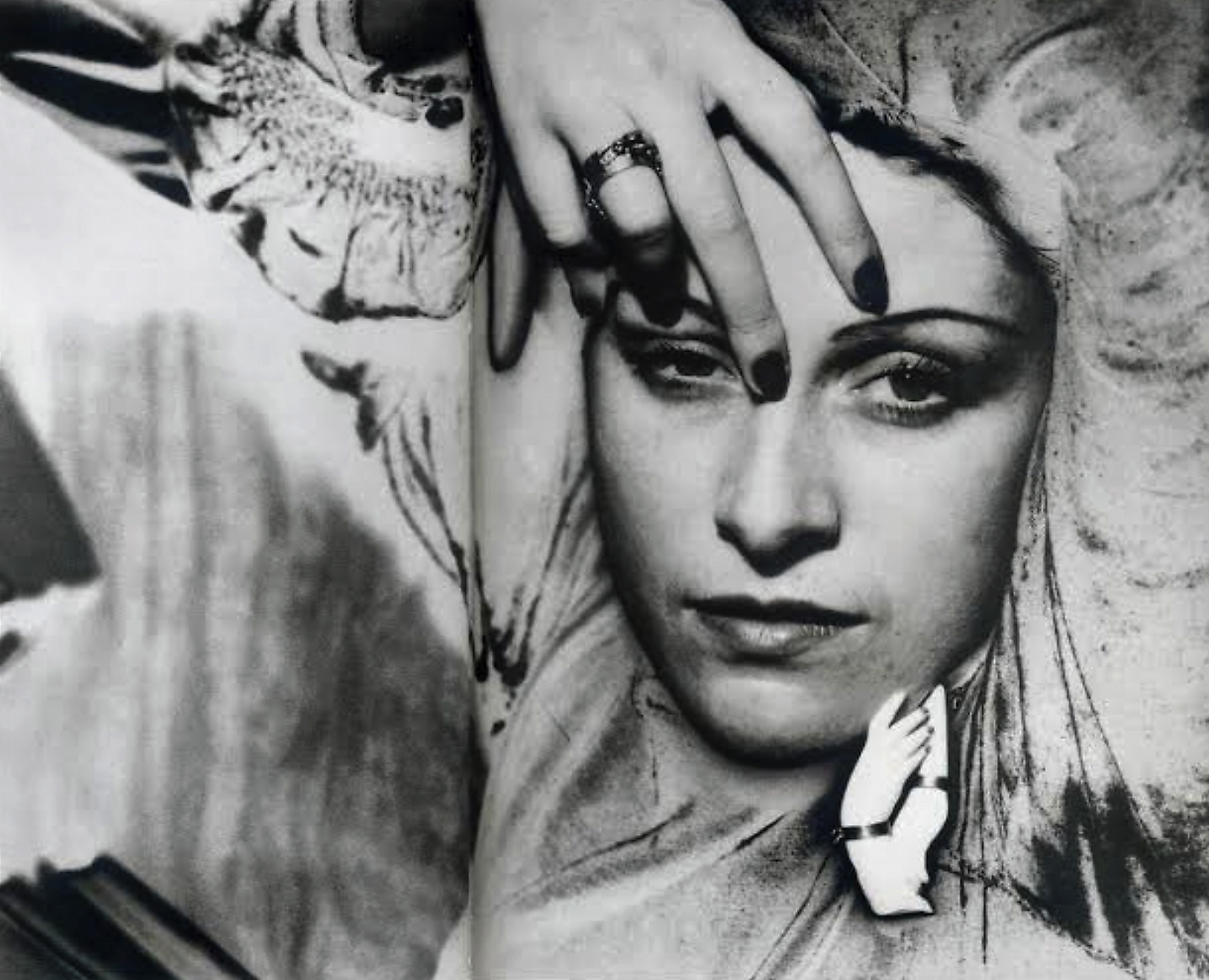
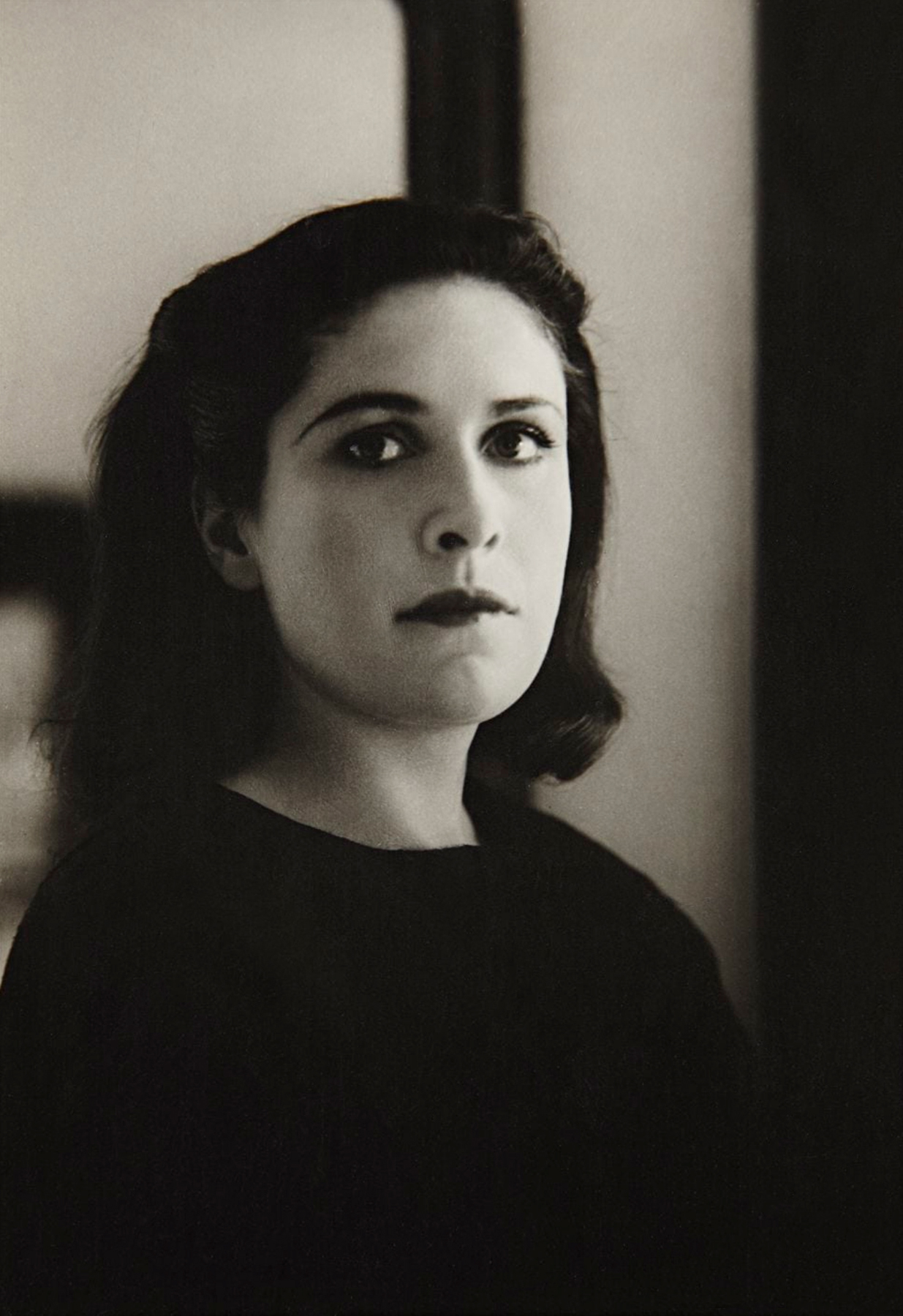
Installation view of the exhibition Dora Maar at Tate Modern, 2019 showing portraits of the artist by numerous artists, some of which you can see below
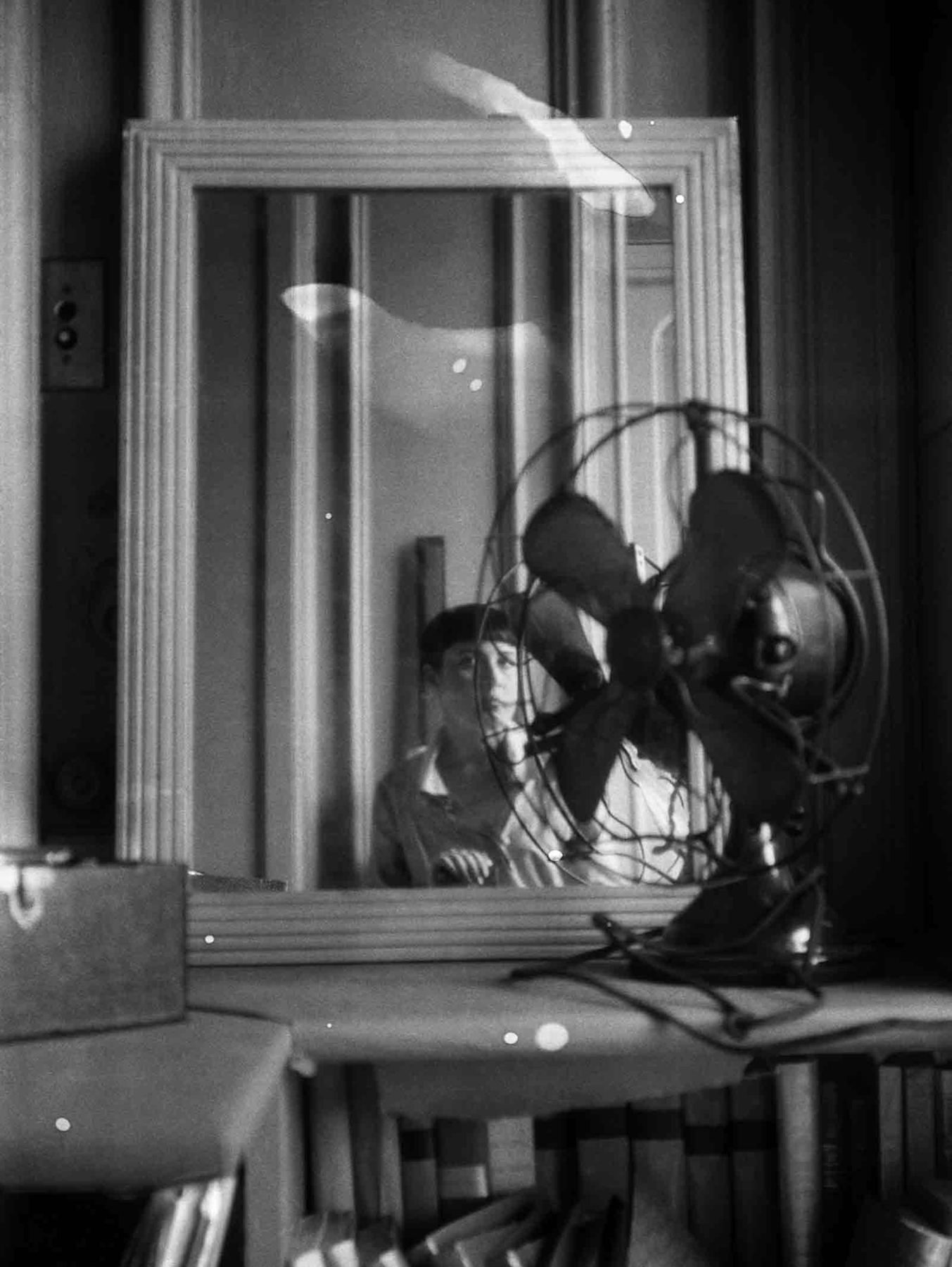
Dora Maar (French, 1907-1997) Self-portrait with Fan 1930 Gelatin silver print
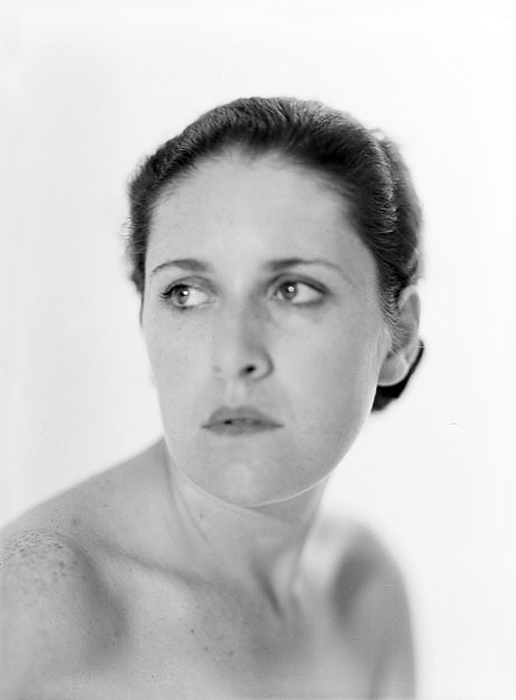
Emmanuel Sougez (French, 1889-1972) Dora Maar Paris, 1934 Gelatin silver print
Dora Maar considered the French commercial photographer Emmanuel Sougez (1889-1972) her mentor. Her first commission was a book on Mont-Saint-Michel written by art critic Germain Bazin. She collaborated with the stage-set designer Pierre Kéfer in 1931. From that experience they formed a business partnership, set up at first in his parents’ garden in Neuilly and then moving to their own studio at 9 rue Campagne-Première, lent by the Polish photographer Harry Ossip Meerson (1910-1991), younger brother of the cinema art director Lazare Meerson (1900-1938), who had worked with Kéber at Film Albatros studio in the mid-1920s. Harry Meerson also lent out his darkroom to the Hungarian photographer Brassai (Gyula Halász, 1899-1984), who became Dora Maar’s close friend. Her contact with Brassai brought her into the Surrealist circle.
The Kéfer-Dora Maar studio produced glamorous, innovative images for advertising and portraits, becoming part of the booming industry of commercial photography in glossy magazines. It was a fertile context for Dora Maar’s imagination. Her perspective on the modern women of the 1930s produced models oozing with elegant sensuality. Cool, natural, sometimes athletic, sometimes aristocratic, the Kéfer-Dora Maar female gave off a whiff of eroticise insouciance that emanated from Dora’s own disposition. This conceptualisation of contemporary beauty fed the appetite for luxury and leisure time activities, despite the Great Depression. It was a fantasy for some, a reality for others. During this period of working intensely with Pierre Kéfer, Dora had affairs with the filmmaker Louis Chavance (c. 1932-1933) and the erotically transgressive writer Georges Bataille (late 1933-1934). The Kéfer-Dora Maar studio closed in 1934.
Israëlis Bidermanas (17 January 1911 in Marijampolė – 16 May 1980 in Paris), who worked under the name of Izis, was a Lithuanian-Jewish photographer who worked in France and is best known for his photographs of French circuses and of Paris.
Upon the liberation of France at the end of World War II, Izis had a series of portraits of maquisards (rural resistance fighters who operated mainly in southern France) published to considerable acclaim. He returned to Paris where he became friends with French poet Jacques Prévert and other artists. Izis became a major figure in the mid-century French movement of humanist photography – also exemplified by Brassaï, Cartier-Bresson, Doisneau, Sabine Weiss and Ronis – with “work that often displayed a wistfully poetic image of the city and its people.”
For his first book, Paris des rêves (Paris of Dreams), Izis asked writers and poets to contribute short texts to accompany his photographs, many of which showed Parisians and others apparently asleep or daydreaming. The book, which Izis designed, was a success. Izis joined Paris Match in 1950 and remained with it for twenty years, during which time he could choose his assignments.
Although the late works are not as significant contributions to the history of art as her Surrealist photomontages, they inform our knowledge of this Parisian artist’s accomplishments in general and beg the question: Was Dora Maar’s brilliant career cut short by the typical conflicts facing professional women in the 1930s, and even today? Or was she a victim of Picasso’s psychological abuse, which chipped away at her original confidence? Was she compromised to the point that she only wanted to please the man she loved? According to art historian John Richardson, Dora Maar sacrificed her gifts on the altar of her art god, her idol, Picasso. Based on the early Surrealist photographs we see in her retrospective, one can only wish she hadn’t taken up with Picasso, for it seems she might have achieved far more in her lifetime without him.
The 1940s brought a series of traumas. Maar’s father left Paris for Argentina, her mother and best friend Nusch Eluard both died suddenly, her relationship with Picasso ended, and friends went into exile. The difficulty of this time is reflected in some of her work from this period.
Maar was included in many group and solo exhibitions in the 1940s and 1950s. In the mid-1940s she began to spend more time in rural surroundings of Ménerbes in the south of France. Here she regained her confidence as a painter and developed her own style of abstract landscapes. Exhibited across Europe, this work received very positive reviews.
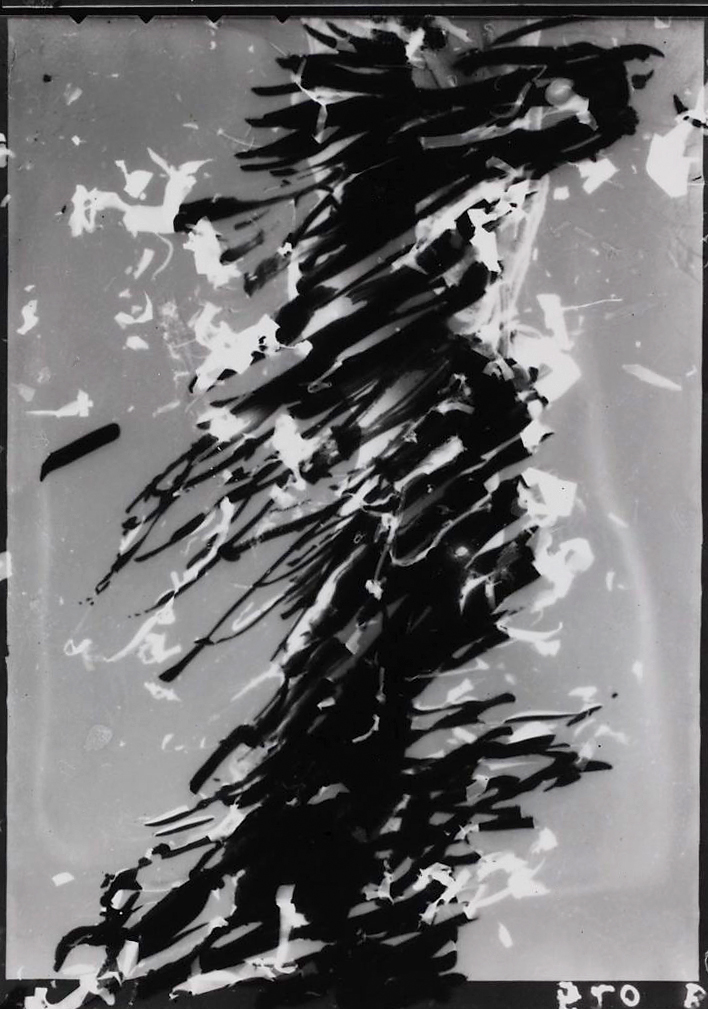
In the 1980s, Maar returned to photography. However, she was no longer interested in photographing life on the street. Instead, Maar was interested in what she could create in the darkroom and experimented with hundreds of photograms (camera-less photographs).
Dora Maar died on July 16, 1997, at 89 years old. Throughout her life she created a vast and varied range of work, much of which was only discovered after her death.
Anonymous text from “Seven Things to Know: Dora Maar,” on the Tate website [Online] Cited 16/11/2019
A magnificent exhibition of the work of Edgar Degas at NGV International. So nice to see a blockbuster without papered walls or patterned floors, an exhibition that just allows the work to speak for itself.
“Il y a quelque chose plus terrible encore que le bourgeois – c’est l’homme qui nous singe [There’s something even more awful than the bourgeois – it’s the man who apes us]”
Edgar Degas as noted down by Oscar Wilde when he met him in 1883.
At the start of the 1860s Degas’s family still acted as his primary models for portraiture. In early 1863 he painted this engagement portrait of his sister Thérèse. He shows her as a young woman all dressed up to go out; in fact, to go abroad. Timidly she show off her engagement ring before a view of Naples, her face serene, the sky blue with future happiness. She was to move to Naples after her marriage in Paris on 11 April 1863 to her first cousin Edmondo Morbilli, the son of Rose Morbilli, the sister of Degas’s father.
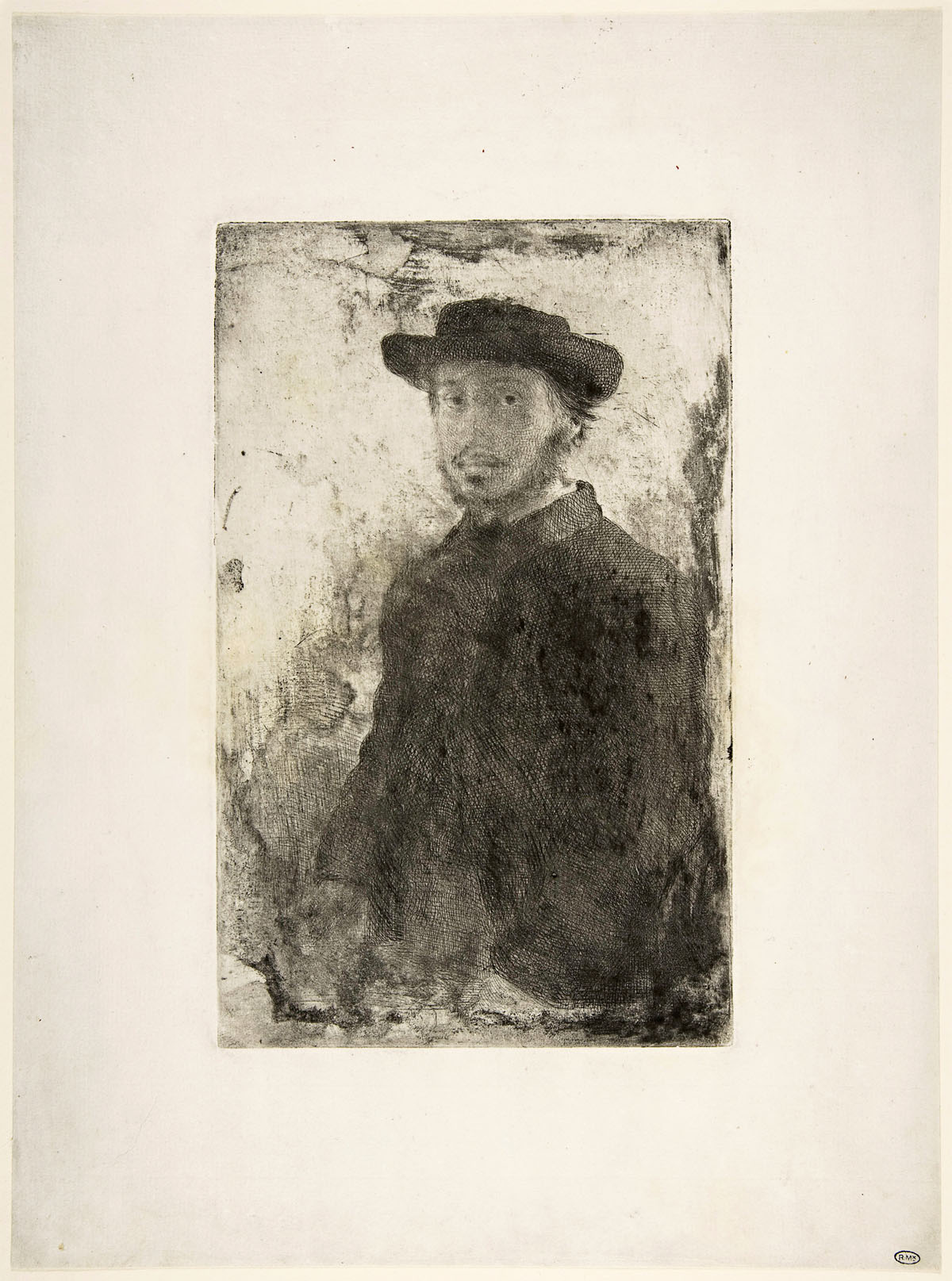
While studying in Rome as a young man degas became increasingly interested in printmaking and also in the portraits of Rembrandt, which he first saw in publication by the French art writer Charles Blanc. The effects of light and shadow in Rembrandt’s portraits inspired Degas to undertake a series of self-portraits including this, his only self-portrait etching, which he produced in four separate states. He experimented with altering the appearance of these etchings through leaving varying amounts of ink on the plate before printing. Degas was very pleased with this exercise, and gave away examples of these trials to his friends.
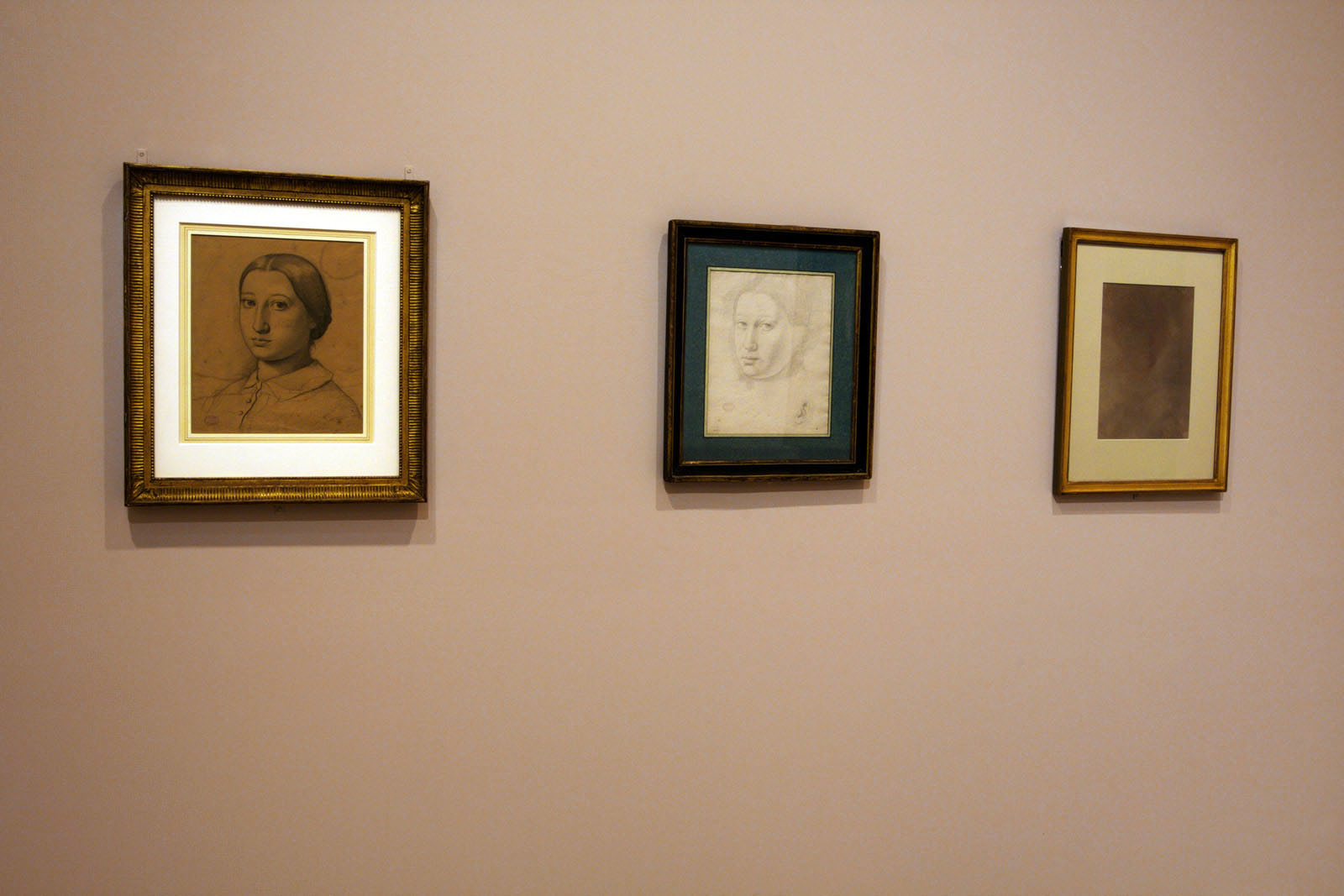
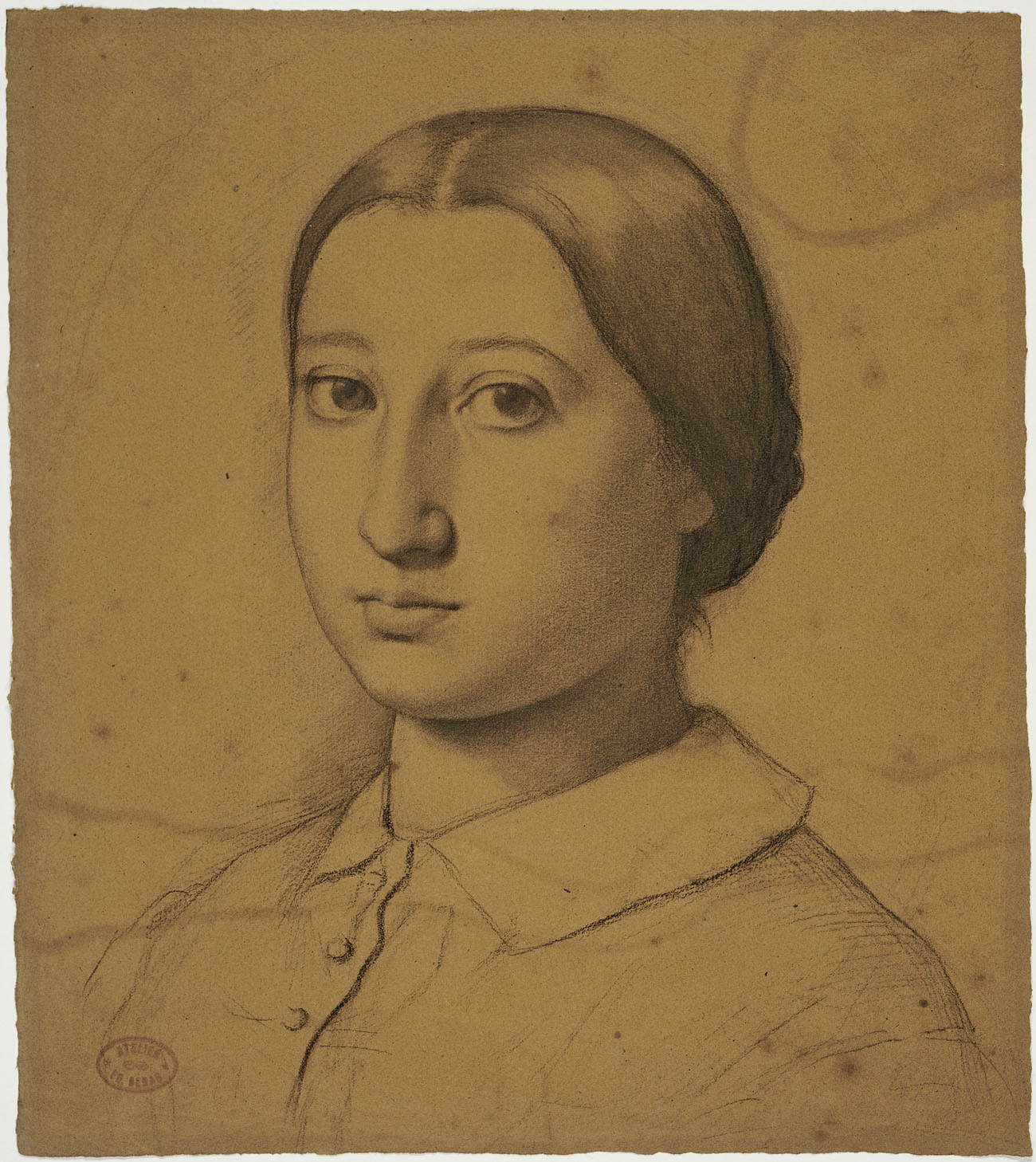
Traces of Ingres’s influence on the young Degas are clearly visible here in the clean, firm contours delineating the face of his hen fifteen-year-old sister Thérèse De Gas. Offsetting the crisp edge drawn along her cheek is a subtle modelling of the chin and cheeks produced with smudged pencil, recalling the sfumato (soft or blurred) effects of Leonardo da Vinci.
Degas’s family members were his principal models in the early years of his career. His first art lessons were undertaken with Louis Lamothe, a loyal follower of the Neoclassical master Jean-Auguste-Dominique Ingres. This portrait of his younger brother René, the family darling, betrays Degas’s resolve to follow in the footsteps of his mentor Ingres, whose work was exhibited at the Exposition Universelle in September 1854. Degas visited the elderly master of Neoclassical portraiture in 1855, the year the he undertook this portrait. Preparatory drawings show that degas radically simplified his composition, eliminating a complex interior setting in favour of a dramatic dark background reminiscent of the Mannerist Old Master, Angolo Bronzino.
This work is both a portrait and a genre scene, but it leans towards the former in that there is little trace of narrative, local colour or exotic reference. Degas details the marks of old age, fatigue and poverty – wrinkled skin, gnarled hands, the motley garments of a pauper – along with the faded colours that he recorded in a contemporary notebook: ‘figure of an old woman / very tanned skin, white veil / cloak thrown over / shoulder faded brown / faded free dress / a little like the back wall / of my room / yellow apron’
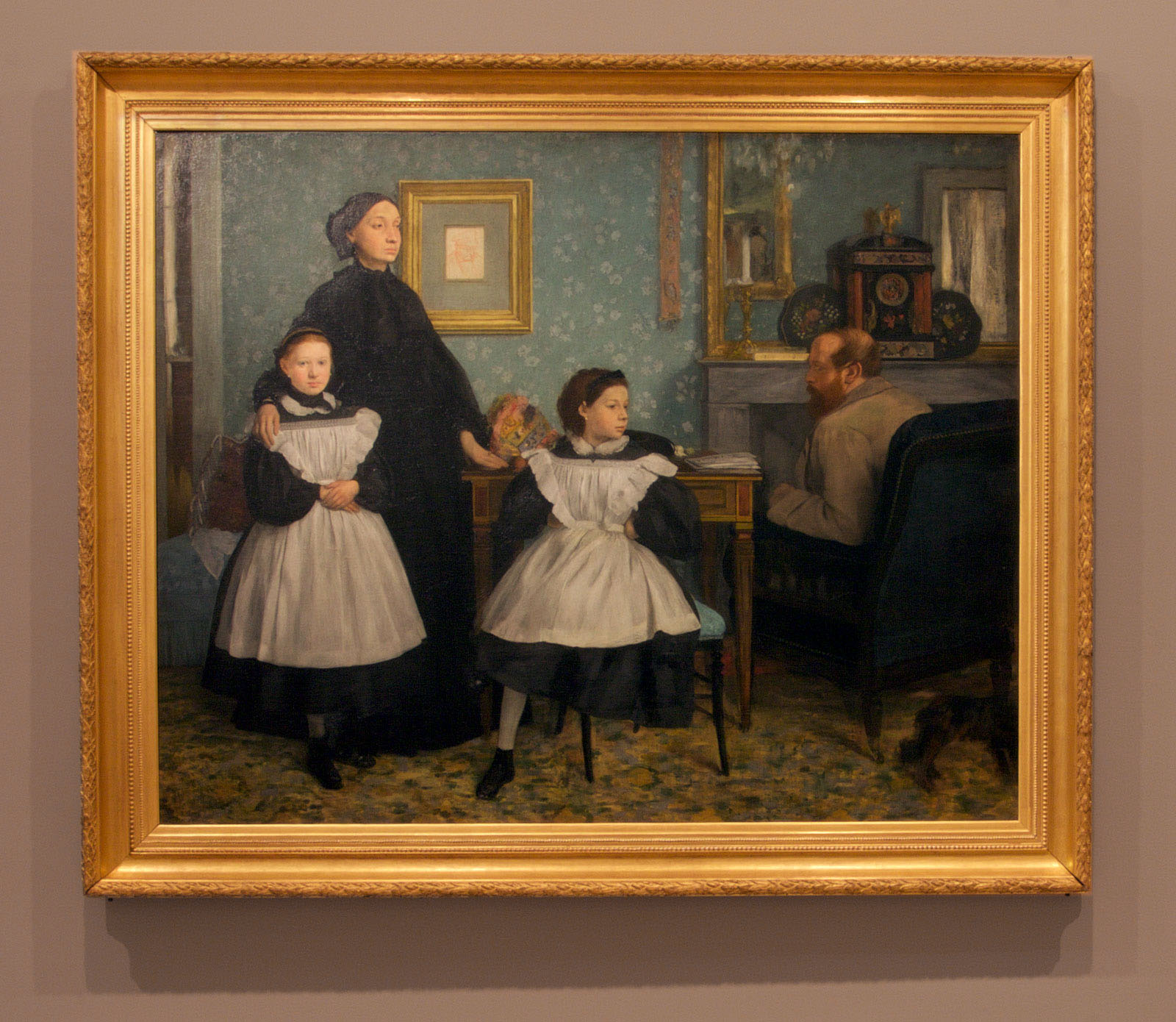
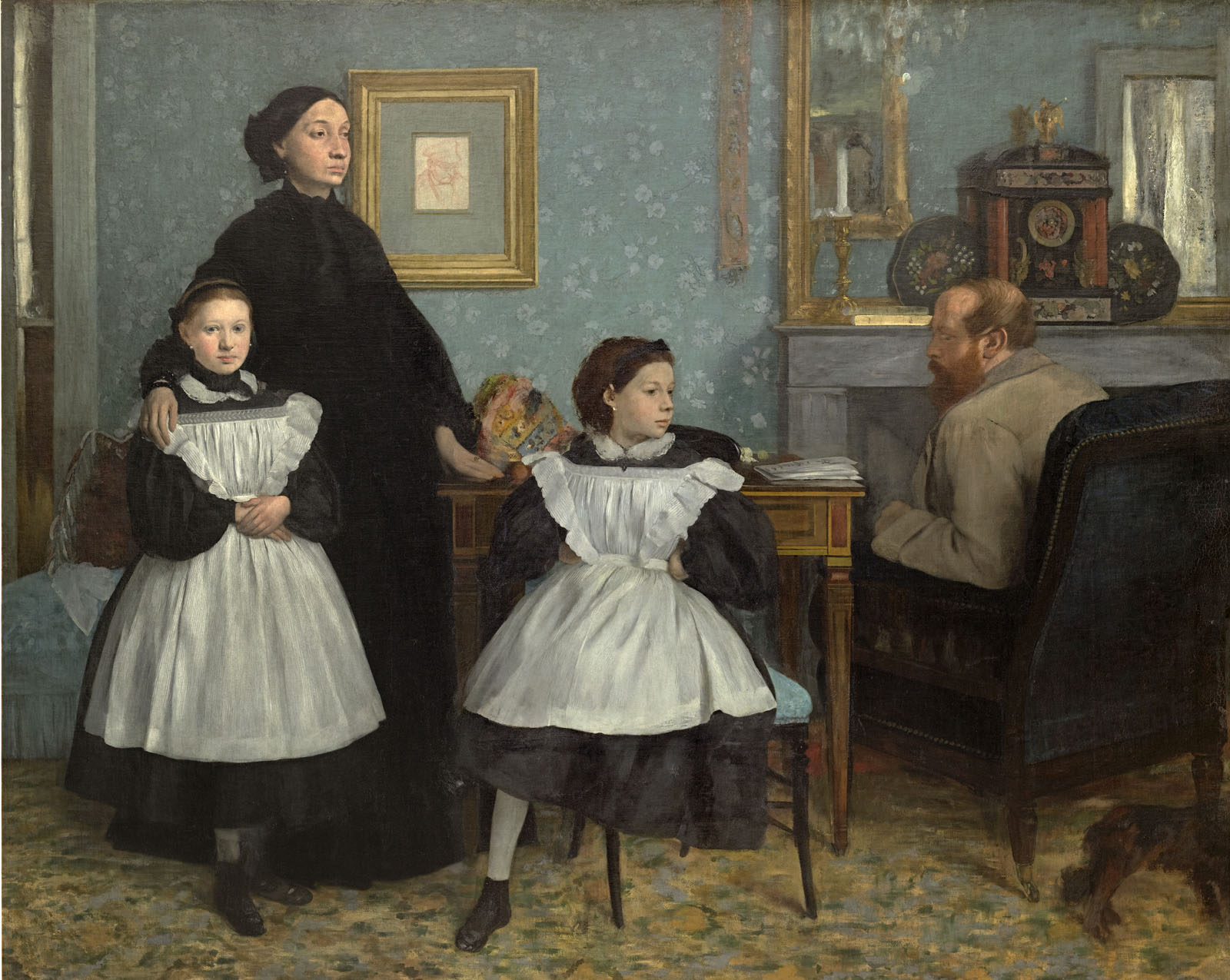
In 1858-1859, during an Italian sojourn, Degas stayed in Florence for nine months with his aunt Laure and her husband, Baron Gennaro Bellelli. There he embarked on the largest painting he would ever create – a monumental portrait of Laure, Gennaro and their daughters, Giovanna and Giulia. A study of marital discontent presented on the scale of a history painting, Family portrait, also called The Bellelli family, reflected Degas’ recent study of the dignified sitters in the Flemish master Anthony van Dyck’s early seventeenth-century portraits, which he had seen in Genoa. He worked on this painting continuously after his return to Paris, completing a final version of it for the Paris Salon of 1867. Alive to the unhappy marital dynamics between Laure and her husband, a political exile from Naples, Degas showed his morose relatives in their rented apartment, physically separated from one another by items of furniture and Giovanna (on the left) and Giulia. Although expecting her third child, Laure Bellelli (la Baronne) stands proud and aloof, in full mourning for her recently deceased father (Degas’ grandfather) Hilaire Degas, whose portrait hangs on the wall behind her. Meanwhile, her husband, conspicuously not in mourning, sits in comfort by the fire. Adults and children are compressed into a shallow plane, an airless, static vacuum. The uneasy ambience is accentuated by Giulia’s absent leg and the family dog, shown without its head, in the right foreground.
In this portrait of Monsieur Ruelle, Degas shows his father’s former bank cashier as a man of seriousness and restrained sophistication, dressed in a dinner suit and black bow tie as if preparing to go the opera. In its combination of informality and masculine severity the portrait conforms to a convention among nineteenth-century Realist artists of portraying each other and their friends as modern men of leisure and the metropolis.
On returning to Paris from Italy in 1860 Degas began work on scenes from the Bible and ancient history, including this preparatory oil sketch for a vignette from an ancient greek subject. In the foreground two groups of adolescents are seen confronting each other on the plains of Sparta, watched over by the white-haired law-giver Lycurgus and the teenagers’ mothers. The subject has conventionally been read as the exercises traditionally undertaken by Spartans in preparation for war, but it has also been suggested that it represents Spartan courtship rites. In the Life of Lycurgus it was noted that display of physical prowess by girls assisted young men in choosing strong mothers, who would produce strong children.
An exhibition of one of the world’s most beloved artists, Edgar Degas, opens to the public from tomorrow at NGV International showcasing significant works never-before-seen in Australia.
In its world premiere, Degas: A New Vision presents the largest display of Degas’ works to ever come to Australia, and forms the most comprehensive retrospective of the artist’s oeuvre in decades. Featuring more than 200 works, Degas: A New Vision reveals Degas’ talent in a new light; not only as a great master of painting, but also as a master of drawing, printmaking, sculpture and photography. The works travel to Melbourne from 65 lenders in more than 40 cities across the globe.
The Premier of Victoria, the Hon. Daniel Andrews MP, said, “Degas: A New Vision is a coup for the NGV and for Victoria. Local audiences will be the first in the world to experience this incredible exhibition – another example of how we are leading the way as the creative state. Part of the Melbourne Winter Masterpieces series, this exhibition continues the tradition of creating drawcard cultural events for locals and visitors and bringing must-see art to our city each year.”
Some of Degas’ most famous masterworks are presented including the bronze sculpture The little fourteen-year-old dancer, 1879-1881, and In a café (The Absinthe drinker), c. 1875-1876. World-renowned paintings, never-before-seen in Australia, are also exhibited such as the celebrated ballet paintings The rehearsal, c. 1874, and Finishing the arabesque, 1877, and Degas’ monumental portrait The Bellelli family, 1867.
Tony Ellwood, Director, NGV, said, “Presenting Edgar Degas’ magnificent oeuvre in a fresh and reinvigorated light showcases him as one of the defining artists of the nineteenth and twentieth centuries. Considered one of the world’s most celebrated and significant artists, his influence upon modern and contemporary art is undeniable. Degas: A New Vision provides audiences with a rare experience to truly be immersed in the creativity and originality of his art, giving visitors a deeper and richer understanding of his brilliance.”
Degas: A New Vision is presented thematically, grouping together the subjects which Degas continually returned to throughout his career, including not only his famous ballet scenes but also arresting portraits, the nude, horse-racing, the social world of Parisian nightlife, and women at work and leisure. The exhibition also explores the great technical, conceptual and expressive freedoms that Degas achieved in his later years, and reveals his experiments with a range of mediums including sculpture and photography. This approach emphasises Degas’ obsessive and highly creative working methods, and allows visitors to enjoy the development of Degas’ art from its beginnings.
Degas was fascinated by aspects of modern life – voraciously painting Paris’ dance halls and cabarets, cafés, racetracks, opera and ballet stages. He also studied the simple, everyday gestures of working women: milliners, dressmakers and laundresses. He was drawn to explore movement that was precise and disciplined, such as that of racehorses and ballet dancers, and absorbed a diverse range of influences from Japanese prints to Italian Mannerism.
The National Gallery of Victoria is pleased to be working with the world’s pre-eminent expert on Edgar Degas, Henri Loyrette, former Director of the Musée du Louvre (2001-2013) and Musée d’Orsay (1994-2001), who is principal curator of the exhibition. The National Gallery of Victoria and the Museum of Fine Arts, Houston, are both staging this major retrospective, which has been developed by both institutions in association with Art Exhibitions Australia. Degas: A New Vision travels to the Museum of Fine Arts, Houston, in October 2016.
Press release from the National Gallery of Victoria
Edgar Degas (French, 1834-1917) Portrait of Mademoiselle Eugénie Fiocre in the ballet The Spring 1867-1868 Oil on canvas 130.8 x 145.1cm Brooklyn Museum, New York Gift of James H. Post, A. Augustus Healy, and John T. Underwood, 1921
Among Degas’s circle of Realist painters were some outstanding practitioners of still life, a genre that enjoyed a resurgence of popularity following the revival of interest in the French eighteenth-century painter Jean-Baptiste Siméon Chardin. The identity of the man in this portrait is unknown, although he seems to be a still-life artist. He is depicted by Degas in his studio, informal seated with hands clasped, surrounded by the standard props of his trade: hunks of meat, white cloths, glassware and sketches of past still lives displayed on a wall as aides-mémoire – a masculine counterpart to the portrait of Victoria Dubourg that is also displayed here.
Wall text from the exhibition
Edgar Degas (French, 1834-1917) Victoria Dubourg c. 1868-1869 Oil on canvas 81.3 x 64.8cm Toledo Museum of Art, Toledo, Ohio Gift of Mr. and Mrs. William E. Levis
Berthe Marie Jeantaud was the wife of Charles Jeantaud, with whom Degas served in the artillery company under the command of Henri Rouart in 1870-1871, during the chaos of the Franco-Prussian War and Paris Commune. Following Berthe Marie’s marriage to Jeantaud in 1872, Degas produced this as well as a second portrait of her. Her cousin was Vicomte Ludovic Lepic, a landscape painter and etcher who taught degas methods of manipulating plate tones in his monotypes. In this remarkable candid and economical oil sketch, Degas depicts Madame Jeantaud at home with her two small dogs at 24 rue de Téhéran.
So cordial were Degas’s relations with Henri Rouart and his brother Alexis, who was also an art collector, that he dined with Alexis on Tuesdays and Henri on Fridays. In 1906 Degas wrote to his sister Thérèse that the Rouarts were his only remaining family in France. This portrait of Henri with his daughter Hélène was the first of many portraits. Henri is seen here as a paterfamilias, head of his household (a role that Degas esteemed) and in front of one of his landscapes, which degas also admired enough to invite Henri to exhibit with the ‘impressionists’.
While his colleagues exhibition plein-air landscapes as ‘Impressionists’, degas adhered to his position as a ‘Realist’ during the 1860s and 70s, with at times awkward results. Dead fox in the undergrowth displays the powerful sense of physical presence that can be achieved by studying a dead fox in the studio under artificial light, and by using a brush to render the fox’s luscious pelt. Less convincing is the forest setting, which is invited and only roughly blocked out. Here Degas applied thin slashes of green and brown paint to suggest trees and forest floor, emulating, some have suggested, the Realist technique of Gustave Courbet.
Edgar Degas (French, 1834-1917) The little fourteen-year-old dancer 1879-1881, cast 1922-1937 Bronze with cotton skirt and satin ribbon 99.0 x 35.2 x 24.5cm Czestochowski/Pingeot 73 (cast unlettered) Museu de Arte de São Paulo, Assis Chateaubriand Donated by Alberto José Alves, Alberto Alves Filho and Alcino Ribeiro de Lima
At the 1881 ‘impressionist’ group exhibition Degas unveiled a large wax sculpture of an immature ballerina (of which this is a bronze version), which he provocatively clad in real clothing. Critics were scandalised, accusing him of having dredged ‘the lower depths of dance’, choosing his dancer from among the ‘most hatefully ugly’. Degas’ model, ballet student Marie Van Goethem, the daughter of a tailor and a laundress and part-time prostitute, was later to abandon her dance studies and disappear into Paris’ underworld.
Degas produced sculptures in his studio from the 1860s until the 1910s. He modelled them in wax, over steel wire and cork armatures. Never satisfied, he made, destroyed and remade them repeatedly, his primary subjects being thoroughbred racehorses, female dancers and women at their toilette. As Degas’ eyesight deteriorated in his later years, making three-dimensional figures fulfilled a physical and emotional need that transcended any desire to perfect a finished object; he allegedly said that sculpture was ‘a blind man’s trade’.
After Degas’ death in 1917, some 150 wax sculptures were found in his studio, some broken but many intact. His heirs subsequently authorised the casting in bronze, by the Adrien-A. Hébrard Foundry, Paris, and their Milanese master craftsman Albino Palazzolo, of seventy four of the most intact of Degas’ sculptures. While many of Degas’ original wax sculptures still survive, they are too fragile to travel. These bronzes allow wider audiences today to engage with some of the most beautiful sculptures of the nineteenth century.
Wall text from the exhibition
Edgar Degas (French, 1834-1917) The song rehearsal c. 1872-1873 Oil on canvas 81.0 x 64.9cm House Collection, Dumbarton Oaks, Washington D.C.
In October 1872 Degas travelled to New Orleans in the United States, where he stayed for five months with his late mother’s brother Michel Musson and the extended Musson family. The artist’s younger brothers René and Achille had already relocated there, and had opened a wine import business financed by the Parisian Degas family bank. During his stay in Louisiana, Degas painted A cotton office in New Orleans, 1873, which reflected his observations of the industry that was central to that city. This now celebrated painting, which became the first work by Degas to enter a public collection when acquired by Pau’s Musée des Beaux-Arts in 1878, depicts Michel Musson in the foreground sampling cotton fibre in the office of his cotton export business.
René and Achille De Gas appear as relaxed visitors – René reading a newspaper and Achille casually observing the other men at work – in this complex group portrait of fourteen men, which has echoes of the artist’s love of seventeenth-century Dutch guild portraits. A cotton office in New Orleans was the prototype for many of Degas’ works of the 1870s and 1880s: framing that cuts to the heart of the subject and slices through men and objects alike; a de-centred composition viewed from slightly overhead, with a steep, diagonal perspective; a depth of field that creates close-ups while miniaturising anything farther off; and contrasts provided by light sources and, more particularly, by the frequently reproduced backlighting effect.
The partially finished state of Courtyard of a house (New Orleans, sketch) reflects Degas’s experiences in the city, as he struggled to fulfil social obligations with his American relatives. The view here looking out from a shaded interior also indicates that Degas was already experiencing problems with his eyesight, which was affected by the harsh Louisiana sunlight.
The young girl being attended to by a chiropodist in this painting is believed to be Joe Balfour, daughter of Degas’s widowed cousin Estelle Musson, whose husband had been killed in 1862 during the American Civil War. Degas here uses a technique he invented, peinture à l’essence (which entailed using oil pigments with most of the oil blotted away, thinned out with turpentine). Applied like watercolour, it dried with a soft matt finish that Degas preferred to the glossy sheen of traditional oil paintings.
Degas ironically referred to this painting as ‘my genre picture’, by which he understated the gravitas of this domestic scene. This drama of seeming violation perpetrated on a young working-class woman b a man displaying the clothing and posture of a young bourgeois acquired in Degas’s hands the breadth and intensity of history painting. The muted colours and dim light accentuate the unspoken violence, anguish and simmering tension between the two people. The open box on the round table at the centre of the painting is a telling symbol of lost virginity. The rosy interior of the gaping jewel-case is brutally expired by the lamp standing next to it.
Curator: Dr Nicholas Cullinan, Curator of International Modern Art at Tate Modern.
Many thankx to the Dulwich Picture Gallery for allowing me to publish the images in the posting. Please click on them for a larger version of the image.
“I would’ve liked to have been Poussin, if I’d had a choice, in another time.”
Cy Twombly
Dulwich Picture Gallery is proud to announce a revelatory exhibition of the work of Cy Twombly and Nicolas Poussin. Organised to celebrate the Bicentenary of the Gallery, this major show will explore, for the first time, the unexpected yet numerous parallels and affinities between the two artists. The exhibition will draw upon the world-class permanent collection of works at Dulwich Picture Gallery by Nicolas Poussin, alongside other works from major collections around the world by both Poussin and Twombly.
In 1624 and 1957, the two artists, aged around thirty, moved to Rome. Nicolas Poussin and Cy Twombly subsequently spent the majority of their lives in the Eternal City, and went on to become the pre-eminent painters of their day. Rather than recent exhibitions that have sought to compare and contrast old masters with contemporary artists through superficial visual appearances, this groundbreaking show will instead juxtapose works which may seem radically disparate in terms of style, yet ones that share deep and timeless interests. Both Poussin and Twombly were artists of prodigious talent who found in the classical heritage of Rome a life-long subject. Both spent their lives studying, revivifying and making newly relevant for their own eras antiquity, ancient history, classical mythology, Renaissance painting, poetry and the imaginary, idealised realm of Arcadia.
Curated by Dr. Nicholas Cullinan, Curator of International Modern Art at Tate Modern, the exhibition examines how Twombly and Poussin, although separated by three centuries, nonetheless engaged with the same sources and will explore the overlapping subjects that the two artists have shared. It will consist of around thirty carefully-chosen paintings, drawings and sculptures, structured thematically around six sections devoted to key shared themes, from both artists’ early fascinations with Arcadia and the pastoral when they first moved to Rome, Venus and Eros, Anxiety and Theatricality, Apollo, Parnassus and Poetry, Pan and the Bacchanalia, through to the theme of The Four Seasons.
The exhibition will be accompanied by the British premiere of Tacita Dean’s new 16mm film portrait of Cy Twombly, Edwin Parker (2011). The film documents Twombly in his studio in Lexington, Virginia, and follows on from Dean’s series of filmed depictions of subjects such as the choreographer Merce Cunningham, the poet Michael Hamburger and the artist Mario Merz, where the inner life of the sitter is implied through their physical demeanour and surroundings. A series of talks will also accompany the exhibition, including Sir Nicholas Serota, Director of Tate, in conversation with Dr. Nicholas Cullinan on the topic of curating Twombly, and Malcolm Bull (Ruskin School of Drawing, University of Oxford) and T. J. Clark (Professor Emeritus of Modern Art at the University of California, Berkeley; and Visiting Professor, University of York) who will discuss the work of Poussin and Twombly and the themes raised by the exhibition.
Ian Dejardin, Director of Dulwich Picture Gallery explains that the exhibition “fits in with a philosophy I have pursued here – that exhibitions can conduct a dialogue with the permanent collection. In the past Howard Hodgkin, Lucian Freud and Paula Rego have all hung their paintings within the collection, so Poussin and Twombly seemed like a natural extension of those experiments.”
The exhibition has received enthusiastic support and loans from major private and public collections around the world, including The National Gallery and Tate in London; The Royal Collection; The Duke of Devonshire; The Fitzwilliam Museum, Cambridge; Museo del Prado, Madrid; The Brandhorst Museum, Munich and The Art Institute of Chicago. The exhibition has been developed in close collaboration with Cy Twombly himself, and will include works that have never been exhibited before.
Many thankx to the Musée national Eugène Delacroix for allowing me to publish the artwork in the posting. Please click on the photographs for a larger version of the image.
Jean Louis Marie Eugène Durieu (1800-1874) was an early French amateur nude photographer, primarily known for his early nude photographs of men and women. A number of his male and female models were also painted by Eugène Delacroix, with whom he was friends.
Durieu was born in Nîmes, and became known for making studies of nudes for Delacroix. During his career Durieu was a lawyer. His last job was inspector for education and culture. In 1849 he went into early retirement and devoted himself to the newly developing technology of photography. In 1853, Durieu worked with Delacroix on a series of photographs of different male and female nude models.
In the early 1850s, Durieu, like many of his photographic peers, gravitated from the daguerreotype to the calotype. None of the works from his daguerreotypical oeuvre can be attributed to him with any certainty. Apart from the Delacroix album held at the Bibliothèque Nationale de Paris, another work on paper does exist, however, a more personal album preserved at the George Eastman House in Rochester, which was once part of the Gabriel Cromer collection. Its repertoire is more varied and includes female nudes in fairly elaborate settings, as well as portraits and reproductions of paintings and engravings. …
In 1851, along with Delacroix, Durieu became one of the founder members of the Société Heliographique, the first French institution to be created specifically for photographers. Above all, its brief was to encourage the development of photography on paper and in particular the calotype as opposed to the daguerreotype.
It was at precisely this time in the early 1850s that Delacroix’s interest in photography was at its height, coinciding with that of Durieu. In February 1850, he wrote in his journal: “ask Boissard for some daguerreotypes on paper,” and later, in September 1850: “Laurens tells me that Ziegler is producing a sizeable number of daguerreotypes, including portrayals of nude men. I intend to go and see him to ask if he can lend me a few.” In May 1853, he showed Pierret and his cousin Léon Riesener the prints given to him by Durieu. In November 1853, he discussed the topic of photography with Riesener, who in the 1840s had not only been a painter but an ‘author’ of daguerreotypes. Delacroix maintained that the term author was a misnomer for what he regarded as a mechanical recording process, a machine-led art: “He referred to the solemn account the good Durieu and his friend, who assists him in these operations, give of their time and trouble, whilst taking much of the credit for the success of the aforementioned operations, or more precisely their results.” He made fun of Riesener, who had asked them with great trepidation if he could use their pictures as models for his paintings without being accused of plagiarism. Finally, on two successive Sundays, 18 and 25 June 1854, he visited Durieu on the seventh floor of his home at 40 rue de Bourgogne to ask him to make a series of photographs of models under his guidance…
Extract from Sylvie Aubenas. “Eugène Durieu, senior civil servant, photographer and forger,” in No 32 Printemps 2015 (translation Caroline Bouché) on the Etudes photographiques website [Online] Cited 04/10/2018
“I look with passion and without fatigue at these photographs of naked men, this admirable poem, this human body on which I learn to read and whose sight tells me more than the inventions of scribblers.”
Delacroix, ‘Journal’, October 5, 1855
Delacroix was confronted, like his entire generation, with the emergence of photography. An intriguing tool fascinating for the painter, this medium occupies a place apart in all of his work. He is at the source of a deep reflection on artistic truth in the face of photographic realism.
Far from seeing photography as a potential rival to painting, Delacroix took a keen interest in the development of this new medium, following its technical progress with sufficient curiosity to become a founding member of the Heliographic Society in 1851. He amassed a considerable photographic collection-of frescoes by Raphael, paintings by Rubens, and cathedral sculptures. Moreover, although he did not use a camera himself, a series of male and female nude models were photographed at his request by Eugène Durieu, in 1854. We know from his diary and letters that he sometimes used these photographs to practice drawing when no live models were available. These shots, which he sometimes carries with him, are a valuable tool for practicing drawing during his stays in the province. They meet very personal criteria; Delacroix wanted to use images voluntarily a little blurry and mostly stripped of all the quaint accessories conveyed by commercial photographs to the attention of artists.
However, despite a deep fascination for photography, Delacroix keeps a critical eye on this new medium. He adopts an attitude sometimes skeptical about his proper use and mastery of the technique, refusing to award benefits beyond its instrumental value. His reluctance is particularly keen with regard to one’s own photographed image: he even goes so far as to demand the destruction of some negatives, fortunately in vain.
Almost all the photographs and the drawings done from them (together with a number of paintings) have been assembled for the first time at the Musée Delacroix, with the generous support of the Bibliothèque Nationale de France and other collections. The exhibition also features a surprising series of photographic portraits of Delacroix himself, ranging from the precious intimate daguerreotypes of the 1840s to the more posed and strikingly dignified pictures taken by Carjat or Nadar toward the end of his life-many of which images the great man himself would rather have had destroyed.
Press release from the Musée National Eugène Delacroix
The Durieu Album
The album of thirty-two photographs preserved in the department Prints and Photography of the National Library de France and commonly known as “Durieu Album”, by the name of the author of the photographs contains mainly photographs of two nude models, a man and a woman, taken by Eugene Durieu in the presence and on the indications of Delacroix during two sessions of successive poses, on Sunday 18 and 25 June 1854. The album was probably in lot 1532 of the sale after the painter’s death, bought by the critic Philippe Burty, who said on the front page: “All this sequence of photographs was bought by me at the posthumous sale of Eugène Delacroix’s workshop. He used it often and his cartons contained a considerable number of pencil studies from these photographs some of which were made expressly for him by one of his friends, and the models posed by him.” This album went on to the bibliographer and historian of the art Maurice Tourneux, who offered it in 1899 to the Cabinet des Prints.
The examination of the album, whose pages are all presented here in the order of the pages, shows that divides into four distinct sequences. Plate I represents a seated male nude model. His black beard and its abundant hair absolutely distinguishes him from the model with the better drawn musculature having posed in the following photographs. This test is undoubtedly part of a different set provided by Durieu to Delacroix.
The twenty-six photographs that follow in the album are, like the first, calotypes, that is to say prints from negative on paper. The calotype is characterised by a slight blur that Delacroix’s eyes found useful and tolerable photography, the grain of the negative paper producing, in the prints, less precise contours than in the daguerreotype or prints based on collodion glass. These twenty-six photographs of June 1854 form a very homogeneous series, with two models. The man that Delacroix calls “the Bohemian” appears by the development of his musculature and his ease to pose, as a professional model. He is present alone on seventeen views, and on the other nine in the company of a female model, probably an Italian, also a professional model, who posed again in 1855 for two other photographers.
After this series, the album contains two studies (plates XXVIII and XXIX) of the same young woman, of which one served as the model for Odalisque of 1857 (private collection). The model is Miss Hamély, a small actress who appeared in tableaux vivants and pantomimes at the Porte-Saint-Martin theater (1853) but who also posed for photographers. The freedom that Delacroix takes in the painting in relation to the photography confirms that, he only uses it as a support for the imagination, unlike a painter like Gérôme for whom the cliche really replaces the model. So photography is amalgamated, among other ingredients, in a personal universe, not to mention the colours of the painting.
The album ends with three prints, based on a glass negative, of the same model draped to the waist, sitting in front of a plain canvas background. The sharpness, due to the negative on glass, the rigorous composition and images, their “professional” aspect make them totally different from the previous ones, to such that we can hesitate to attribute them to Durieu. While the calotypes posed by Delacroix are very rare, these last three images are seen in more than one collection; they have been broadcast to a wider audience.
Text from the Delacroix et la photographie exhibition pdf (translated from the French by Google translate)
Louis Antoine Léon Riesener (21 January 1808 in Paris – 25 May 1878 in Paris) was a French Romantic painter.
Enchanted by the play of light and reflections which transformed the appearance of matter, Riesener began a new aesthetic that made him one of the precursors of impressionism. A passionate colourist, he researched all the nuances of colour and studied the techniques of ancient Greece and the Renaissance, including Titian, Veronese and Corregio. Impressed by his research into colour, he turned towards Rubens, which for him was the Shakespeare of painting. Very early in his career Riesener studied tonal divisions, well before the physician Chevreul discovered their scientific basis. His tactile taste led him to look for the most perfect expression of matter and particularly of skin. He put poetry into his painting by the play of shadow and he passionately admired nature, life and all the beauties they produced.
He researched the subject of life in the countryside and, liking to paint reality, said he wanted to express “the heat of the day, the melancholy of the evening, meadows, flowers as they are in nature”. His study of the elements caused him to paint a series of skies which varied according to the light and time of day – the subjects were ahead of their time and Riesener had to fight hard against the Salon juries and the Institut. Using pure colours, he excluded the blacks and whites which had been used for shadows and light before him. His material science of colour was the opposition which gave birth to contrasts from juxtaposed pigments. He did not portray faces by contours, but by shadows and modelling.
Relations with Delacroix
After his father’s return from Russia in 1823 Léon got to know Eugène Delacroix better. Ten years older than Riesener, Delacroix was his first-cousin – they shared a grandmother, Marguerite-Françoise Vandercruse, whose daughter by her first marriage was Delacroix’s mother and whose second husband Jean-Henri Riesener was Riesener’s grandfather. Delacroix quickly recognised Riesener’s talent and originality and he supported his early career by recommending him to civil servants he knew. On trips to the countryside they met at Valmont, near Fécamp, the home of their cousin Bataille, owner of the abbaye from 1822 onwards. Riesener devotedly attended Pierret’s salon (Pierret was a school friend of Delacroix), where he met Mérimée, Viel-Castel, Sauvageot, Feuillet de Conches, Viollet-le-Duc, Lasus and Guillemardet. Later, Riesener became friends with Fantin-Latour, Ernest Chausson and the Morisots (the Morisot family was very friendly with the Riesener family, with Rosalie Riesener’s friend Berthe Morisot researching Léon’s opinions, listening to his advice and copying out about 135 pages of his writings) – his friends were artists and he preferred a quiet life rather than the high life favoured by Delacroix.
From childhood, Riesener and Delacroix were friends and confidants. So different in life and character and so independent, they were preoccupied by the same artistic problems and enjoyed exchanging ideas, both having been formed by the 18th century and its neo-classical culture. They discussed their study of the classical world and they were both colourist painters searching for new techniques in tonal division. The difference in their temperaments expressed itself in their ways of looking at nature – Delacroix thought of drama, Riesener thought of sensuality. Delacroix bought Riesener’s painting Angélique as an exemplar for all painters and put it in his studio. On his death in 1863, Delacroix left Riesener his country house at Champrosay.





























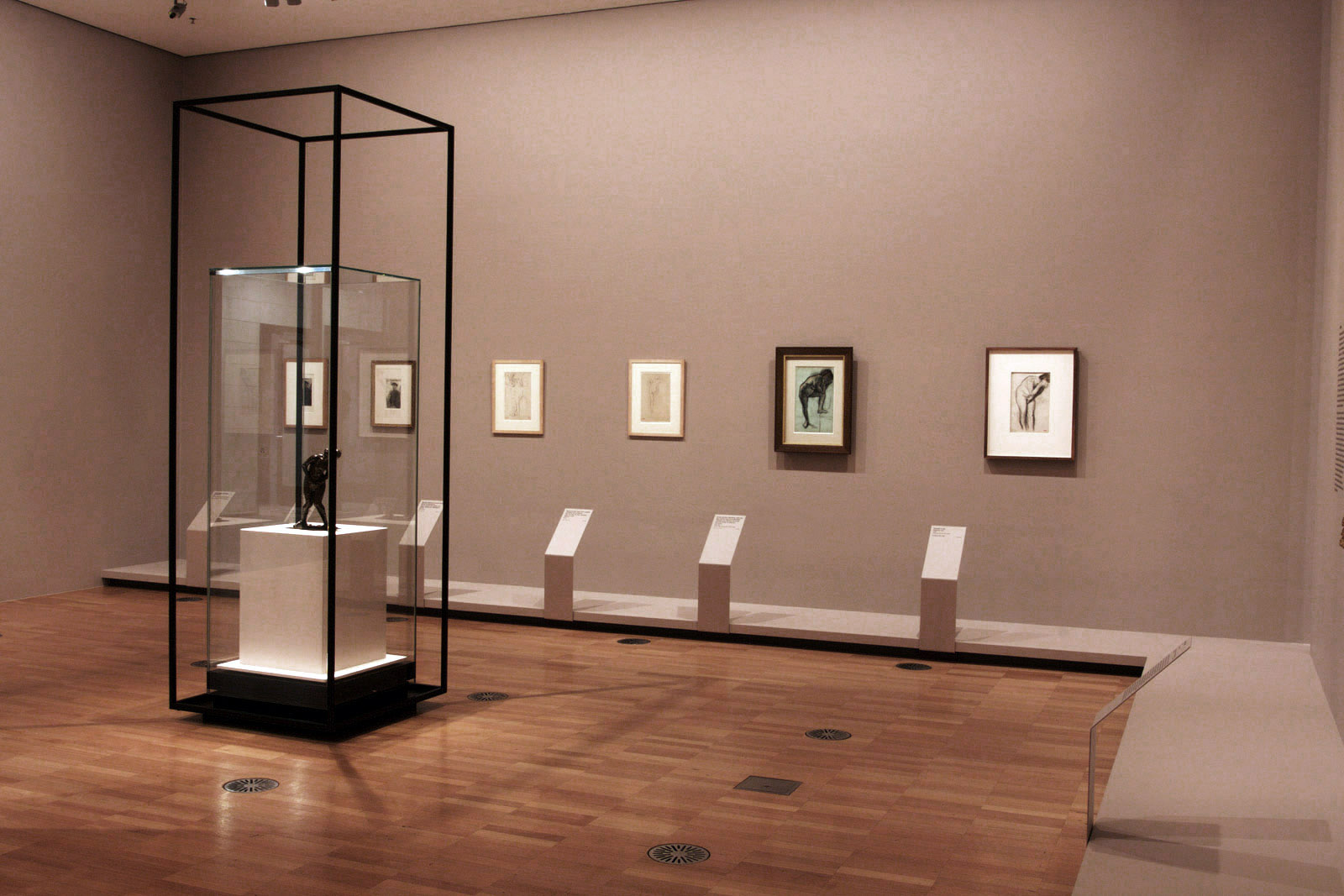


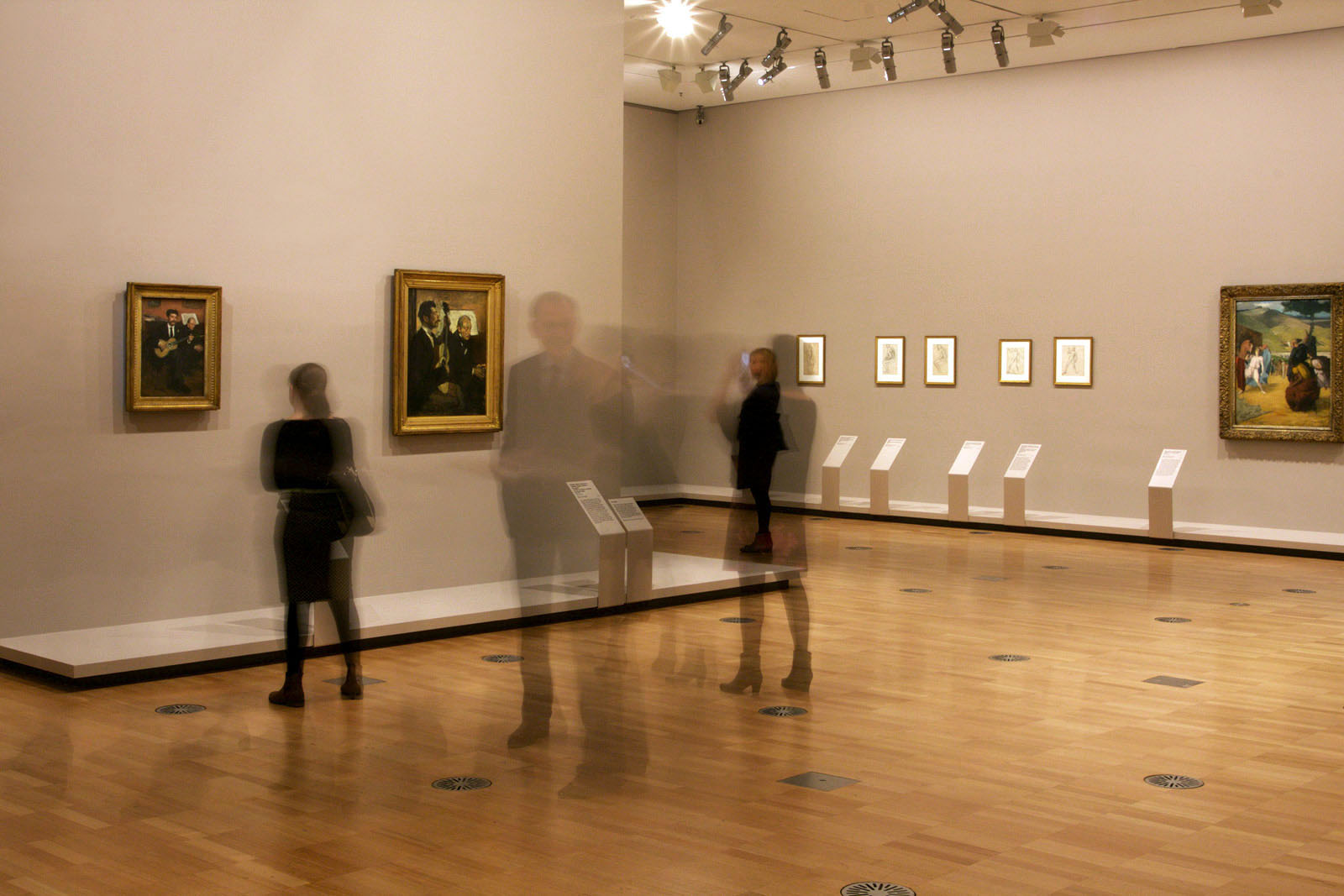





![Installation view of the exhibition 'Degas: A New Vision' at the National Gallery of Victoria International, Melbourne showing at left, 'Mendiante romaine' [Roman beggar women] (1857)](https://artblart.com/wp-content/uploads/2016/08/installation-l.jpg "Installation view of the exhibition 'Degas: A New Vision' at the National Gallery of Victoria International, Melbourne showing at left, 'Mendiante romaine' [Roman beggar women] (1857)")
![Edgar Degas (French, 1834-1917) 'Mendiante romaine' [Roman beggar women] 1857 (installation view)](https://artblart.com/wp-content/uploads/2016/08/installation-m.jpg "Edgar Degas (French, 1834-1917) 'Mendiante romaine' [Roman beggar women] 1857 (installation view)")

![Installation view of the exhibition 'Degas: A New Vision' at the National Gallery of Victoria International, Melbourne showing at left, 'Monsieur Reulle' (1861); and at right, 'Portrait de jeune femme' [Portrait of a young woman] (1867)](https://artblart.com/wp-content/uploads/2016/08/installation-q.jpg "Installation view of the exhibition 'Degas: A New Vision' at the National Gallery of Victoria International, Melbourne showing at left, 'Monsieur Reulle' (1861); and at right, 'Portrait de jeune femme' [Portrait of a young woman] (1867)")
![Edgar Degas (French, 1834-1917) 'Étude pour Jeunes Spartiates s'exerçant à la lutte' [Study for The young Spartans exercising] c. 1860-1861 (installation view)](https://artblart.com/wp-content/uploads/2016/08/installation-o.jpg "Edgar Degas (French, 1834-1917) 'Étude pour Jeunes Spartiates s'exerçant à la lutte' [Study for The young Spartans exercising] c. 1860-1861 (installation view)")
![Edgar Degas (French, 1834-1917) 'Petites filles spartiates provoquant des garçons' [Young Spartan girls challenging boys] c. 1860 (installation view)](https://artblart.com/wp-content/uploads/2016/08/installation-n.jpg "Edgar Degas (French, 1834-1917) 'Petites filles spartiates provoquant des garçons' [Young Spartan girls challenging boys] c. 1860 (installation view)")
![Edgar Degas (French, 1834-1917) 'Petites filles spartiates provoquant des garçons' [Young Spartan girls challenging boys] c. 1860 (installation view)](https://artblart.com/wp-content/uploads/2016/08/installation-p.jpg "Edgar Degas (French, 1834-1917) 'Petites filles spartiates provoquant des garçons' [Young Spartan girls challenging boys] c. 1860 (installation view)")
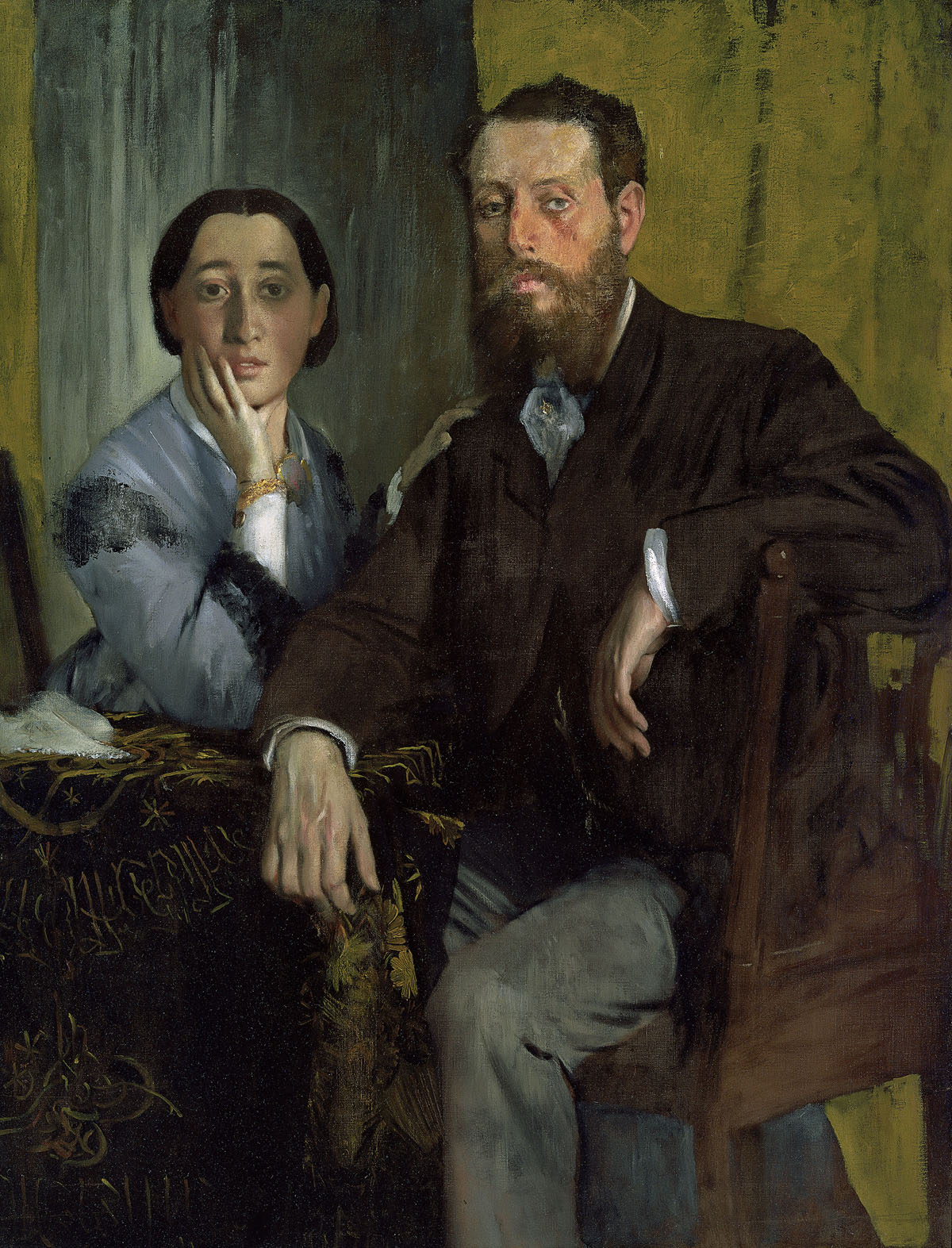


![Edgar Degas (French, 1834-1917) 'Etude de nus: Mlle Fiocre dans le ballet La Source' [Nude study: Mademoiselle Fiocre in the ballet 'The Spring'] 1867-1868 (installation view)](https://artblart.com/wp-content/uploads/2016/08/installation-aa.jpg "Edgar Degas (French, 1834-1917) 'Etude de nus: Mlle Fiocre dans le ballet La Source' [Nude study: Mademoiselle Fiocre in the ballet 'The Spring'] 1867-1868 (installation view)")
![Installation view of the exhibition 'Degas: A New Vision' at the National Gallery of Victoria International, Melbourne showing at left, 'Portrait d'homme' [Portrait of a man] (c. 1866) and at right, 'Victoria Dubourg' (1868-1869)](https://artblart.com/wp-content/uploads/2016/08/installation-z.jpg "Installation view of the exhibition 'Degas: A New Vision' at the National Gallery of Victoria International, Melbourne showing at left, 'Portrait d'homme' [Portrait of a man] (c. 1866) and at right, 'Victoria Dubourg' (1868-1869)")
![Installation view of the exhibition 'Degas: A New Vision' at the National Gallery of Victoria International, Melbourne Installation view of the exhibition 'Degas: A New Vision' at the National Gallery of Victoria International, Melbourne showing at left, 'Portrait d'homme' [Portrait of a man] (c. 1866) and at right, 'Victoria Dubourg' (1868-1869)](https://artblart.com/wp-content/uploads/2016/08/installation-v.jpg "Installation view of the exhibition 'Degas: A New Vision' at the National Gallery of Victoria International, Melbourne Installation view of the exhibition 'Degas: A New Vision' at the National Gallery of Victoria International, Melbourne showing at left, 'Portrait d'homme' [Portrait of a man] (c. 1866) and at right, 'Victoria Dubourg' (1868-1869)")

![Edgar Degas (French, 1834-1917) 'Mme Jeantaud sur sa chaise longue, avec deux chiens' [Madame Jeantaud on her chaise longue, with two dogs] 1877 (installation view)](https://artblart.com/wp-content/uploads/2016/08/installation-x.jpg "Edgar Degas (French, 1834-1917) 'Mme Jeantaud sur sa chaise longue, avec deux chiens' [Madame Jeantaud on her chaise longue, with two dogs] 1877 (installation view)")
![Edgar Degas (French, 1834-1917) 'Mme Jeantaud sur sa chaise longue, avec deux chiens' [Madame Jeantaud on her chaise longue, with two dogs] 1877 (installation view detail)](https://artblart.com/wp-content/uploads/2016/08/installation-x-detail.jpg "Edgar Degas (French, 1834-1917) 'Mme Jeantaud sur sa chaise longue, avec deux chiens' [Madame Jeantaud on her chaise longue, with two dogs] 1877 (installation view detail)")


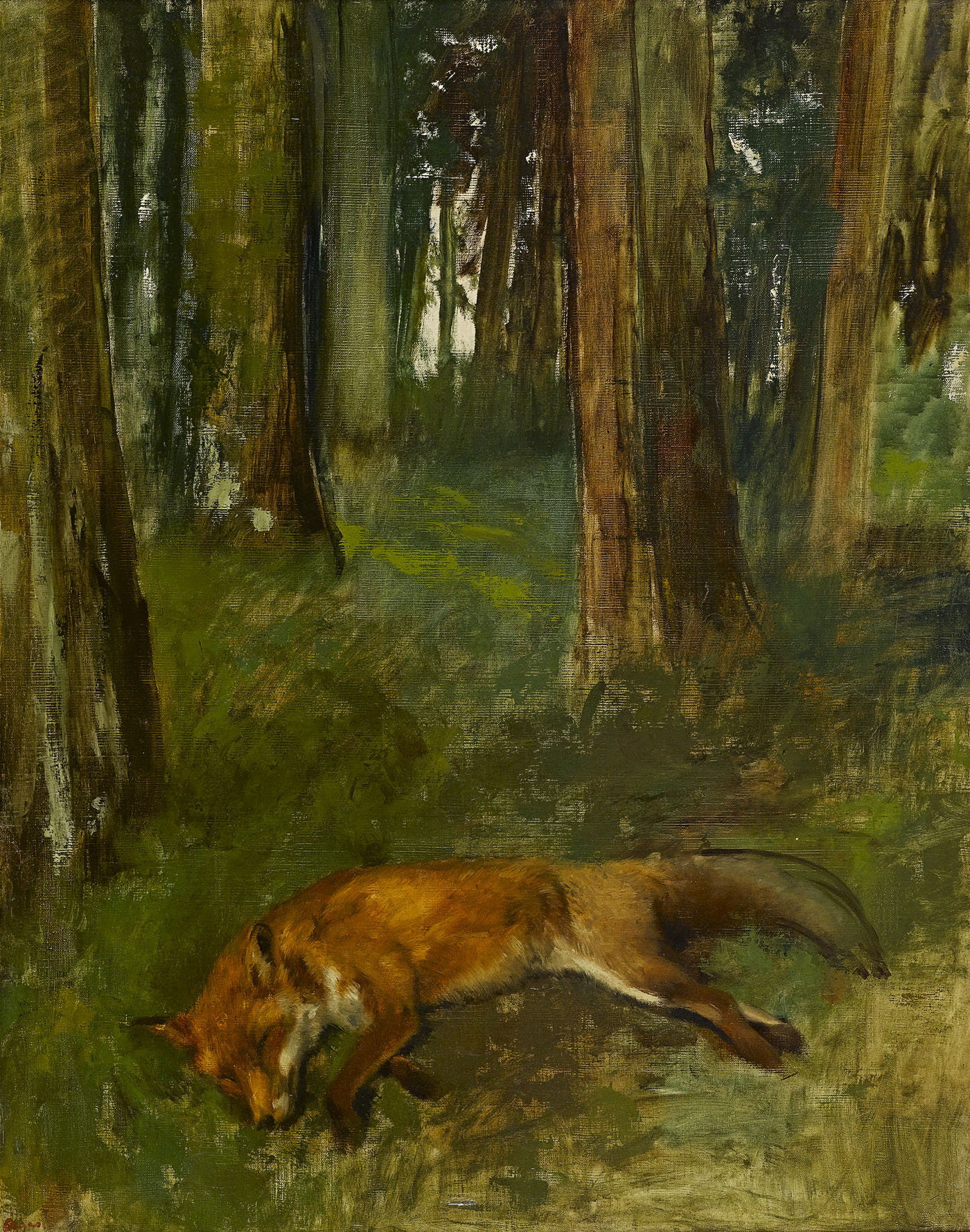
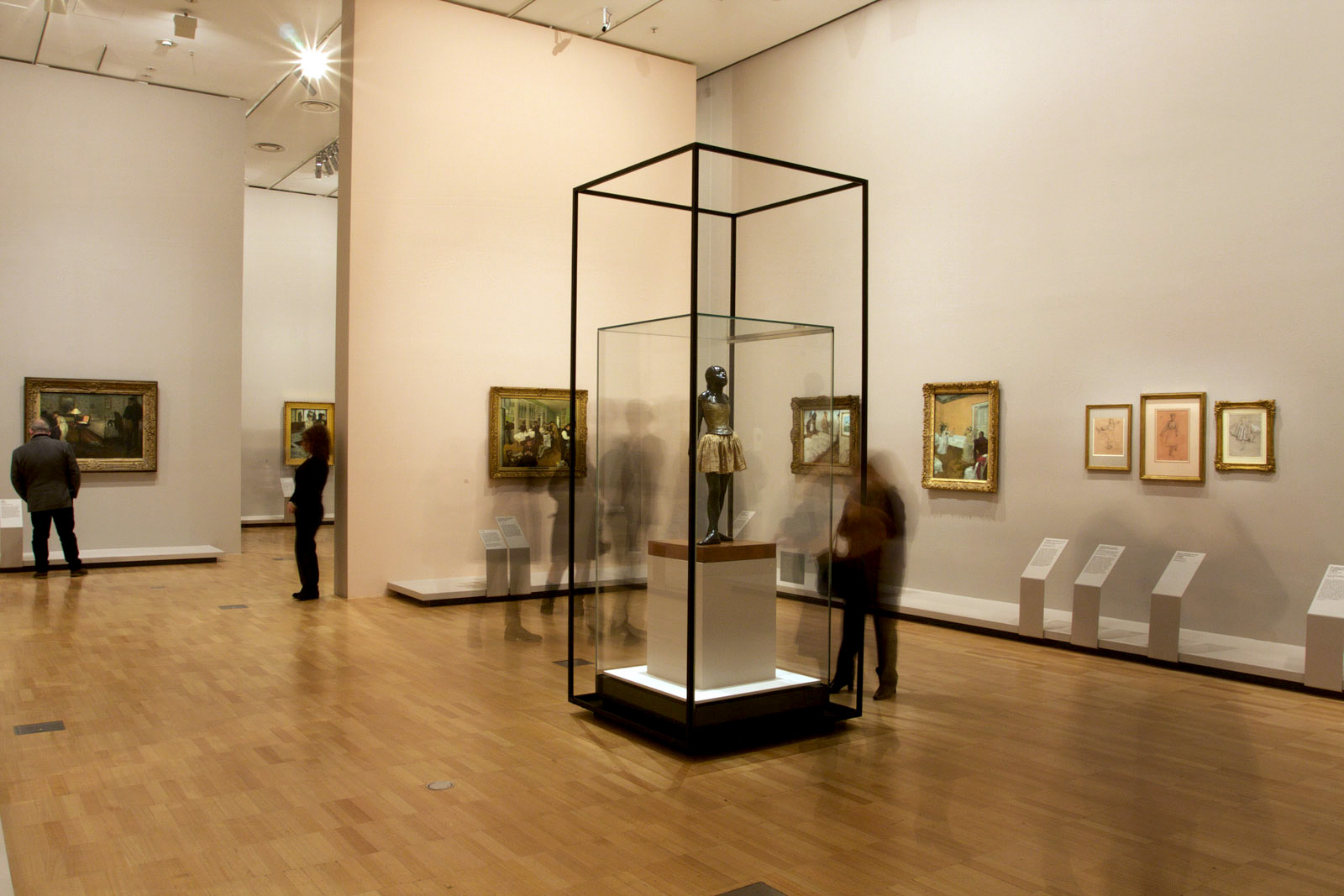


![Edgar Degas (French, 1834-1917) 'Un bureau de coton à la Nouvelle-Orléans' [A cotton office in New Orleans] 1873 (installation view)](https://artblart.com/wp-content/uploads/2016/08/installation-af.jpg "Edgar Degas (French, 1834-1917) 'Un bureau de coton à la Nouvelle-Orléans' [A cotton office in New Orleans] 1873 (installation view)")
![Edgar Degas (French, 1834-1917) 'Un bureau de coton à la Nouvelle-Orléans' [A cotton office in New Orleans] 1873 (installation view)](https://artblart.com/wp-content/uploads/2016/08/exhi040021_web.jpg "Edgar Degas (French, 1834-1917) 'Un bureau de coton à la Nouvelle-Orléans' [A cotton office in New Orleans] 1873 (installation view)")


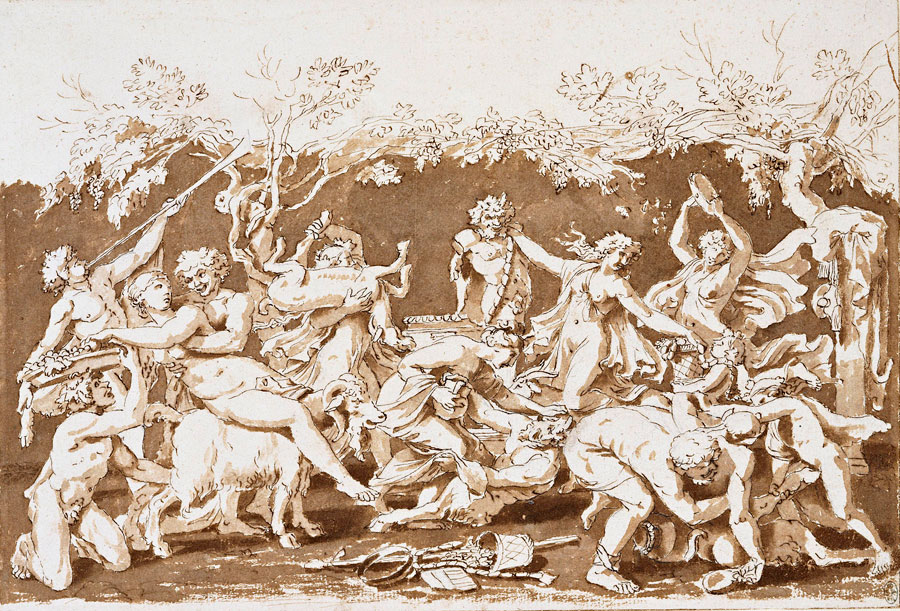

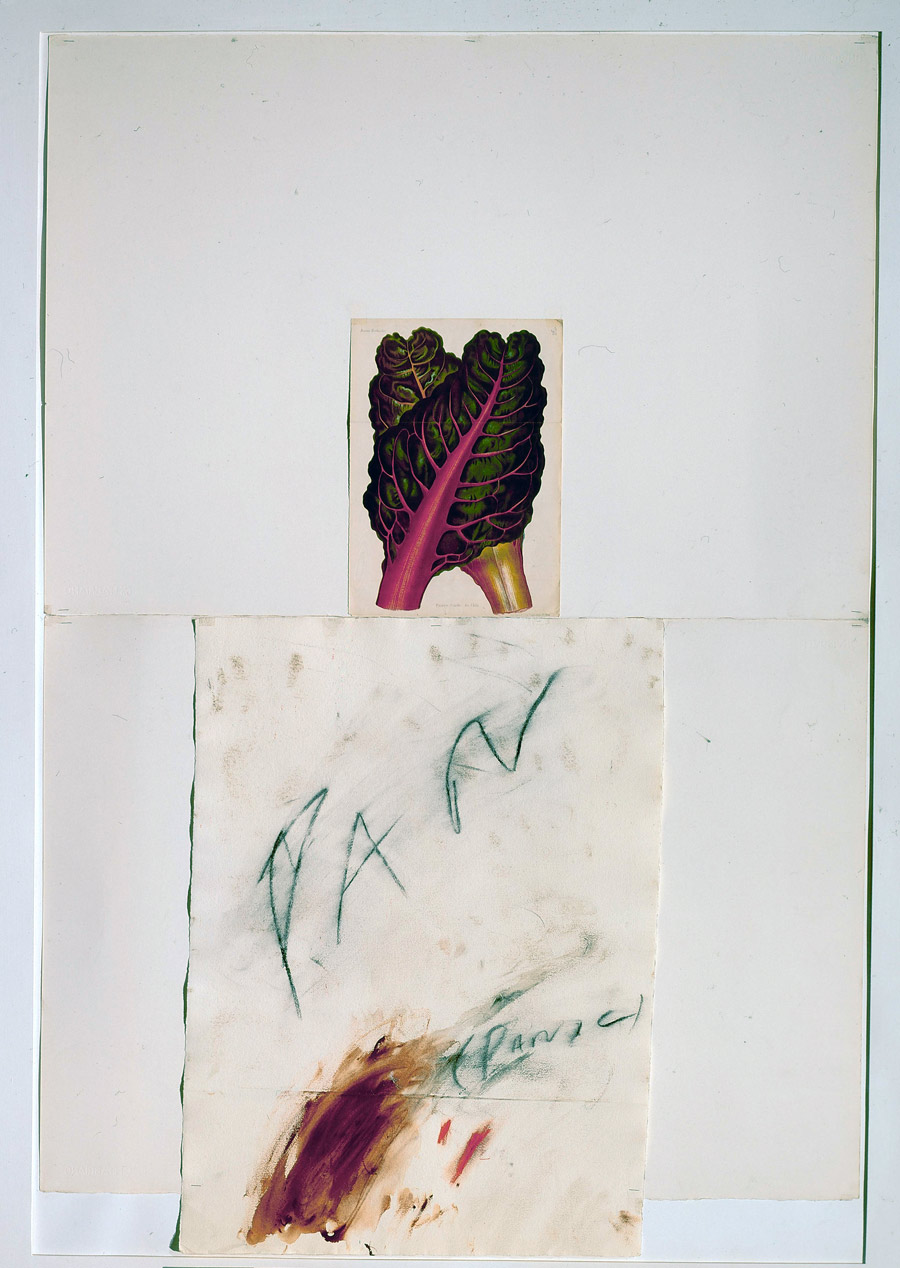
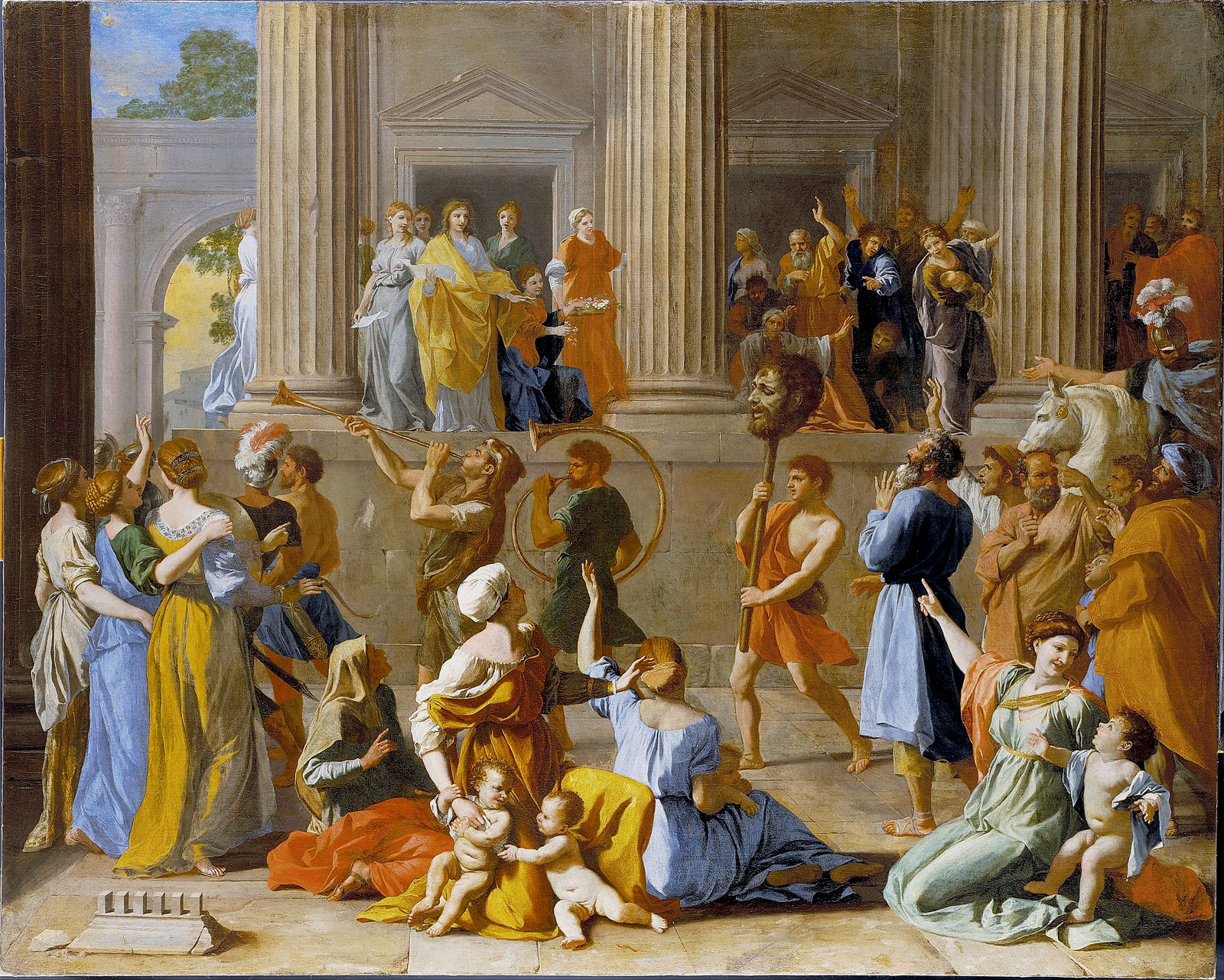
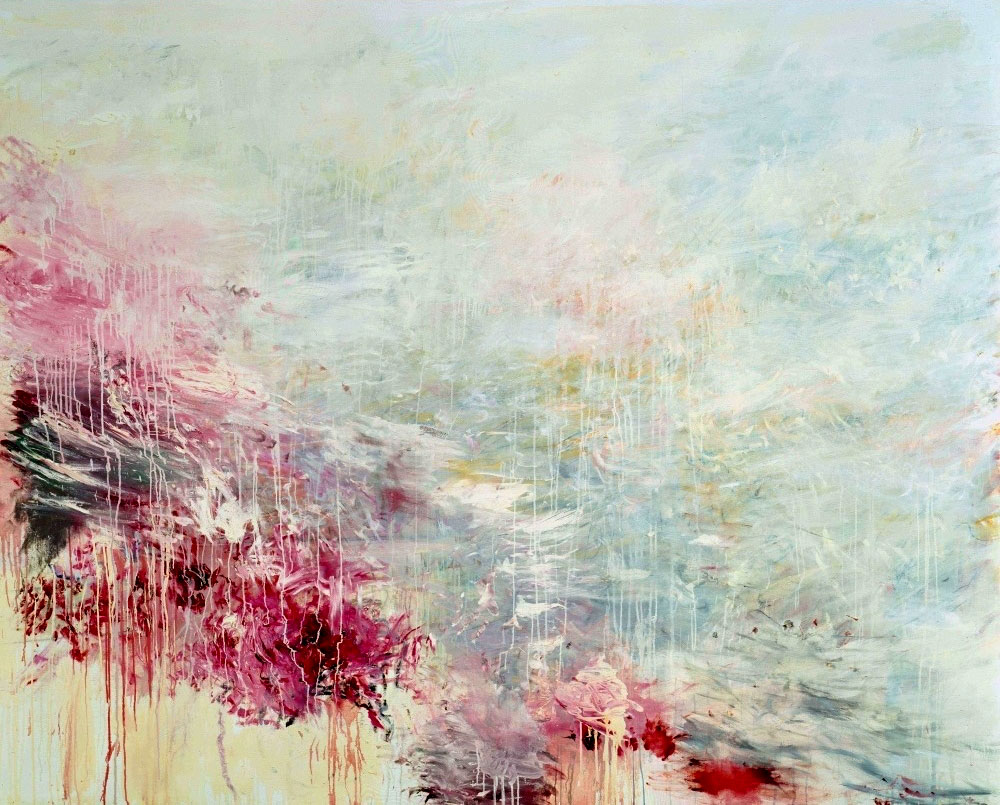
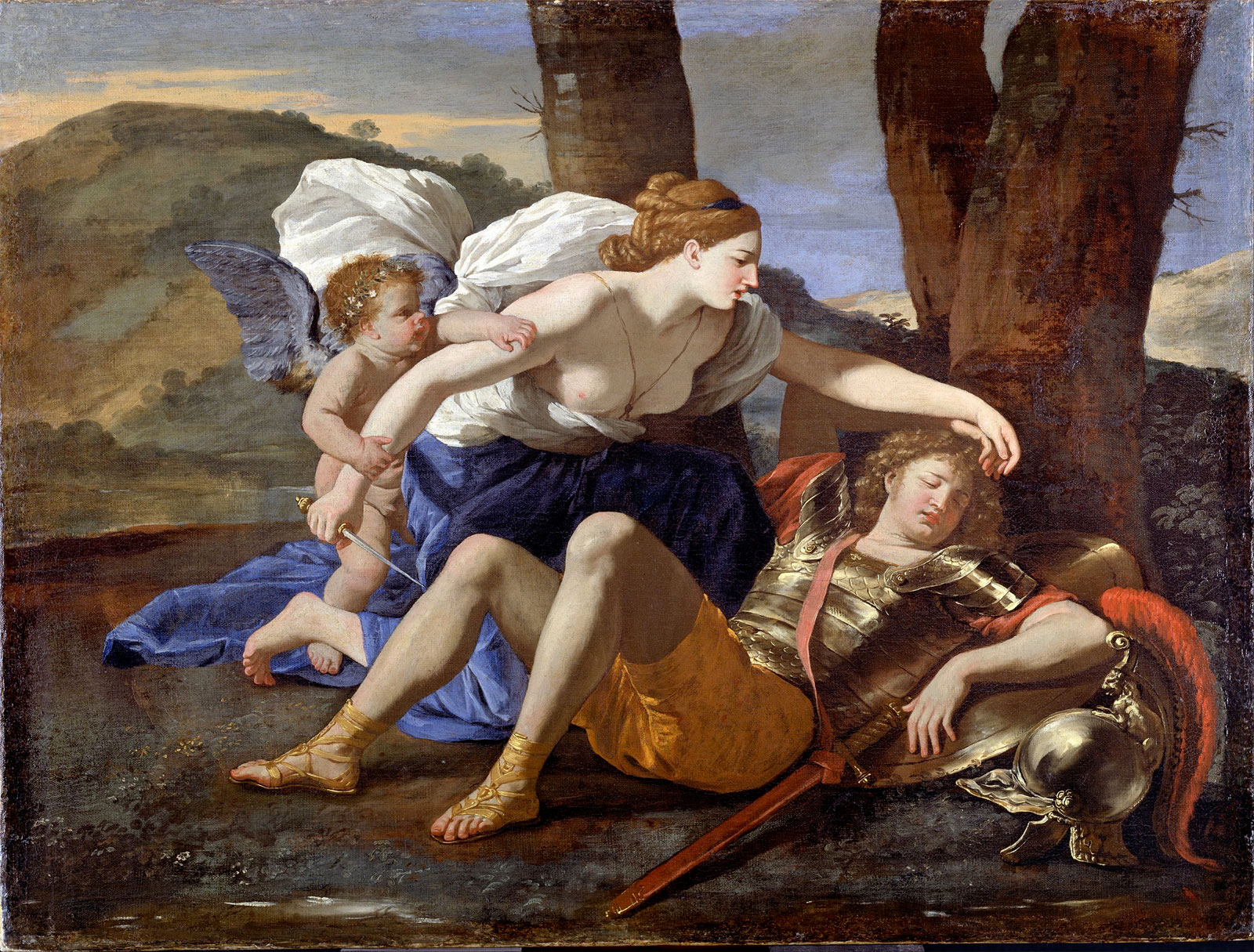


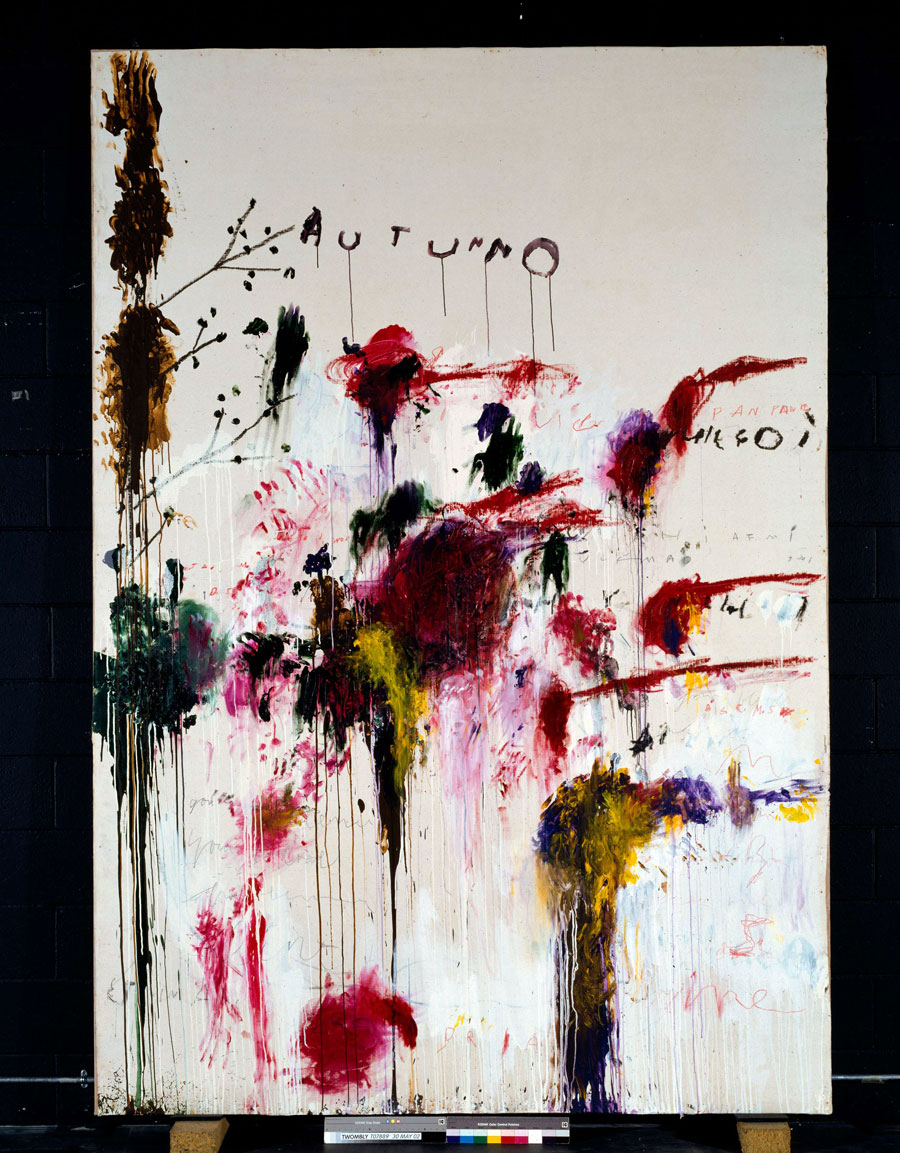
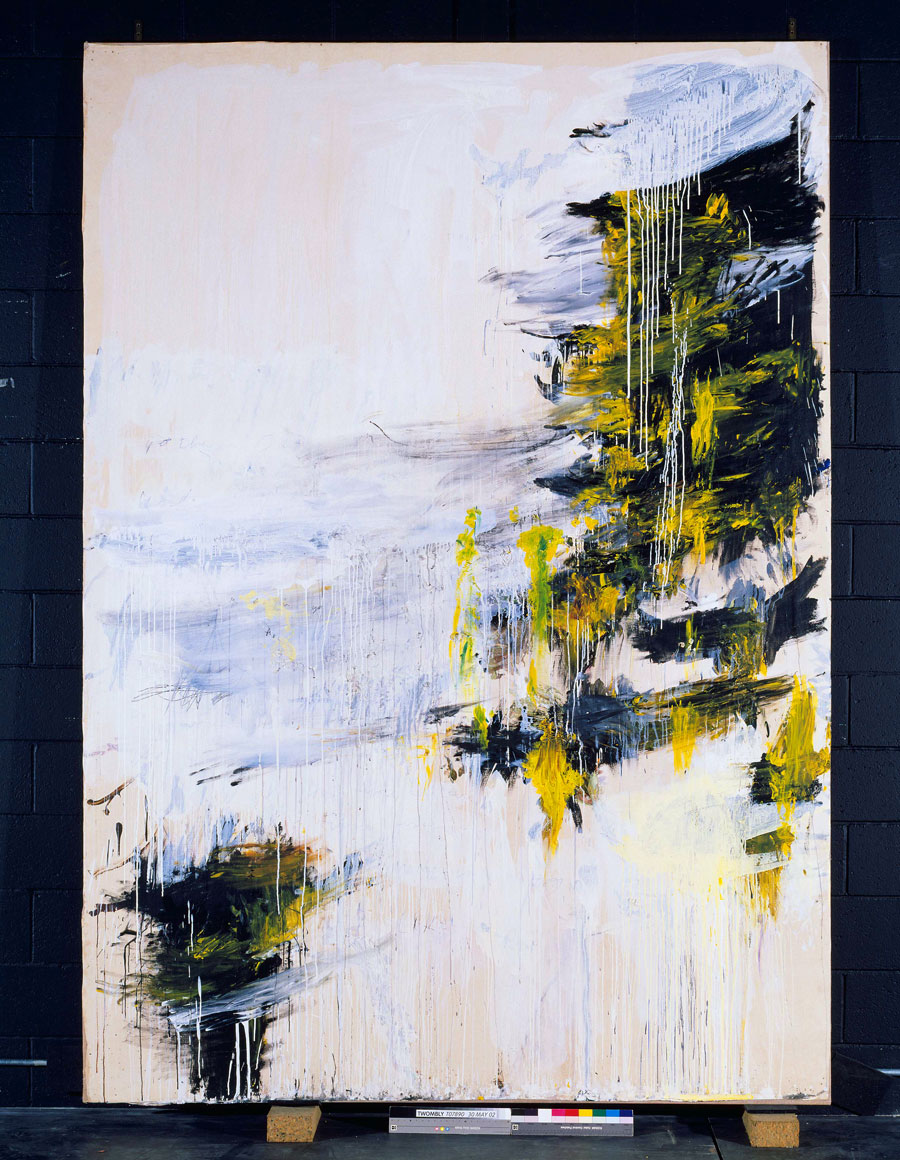

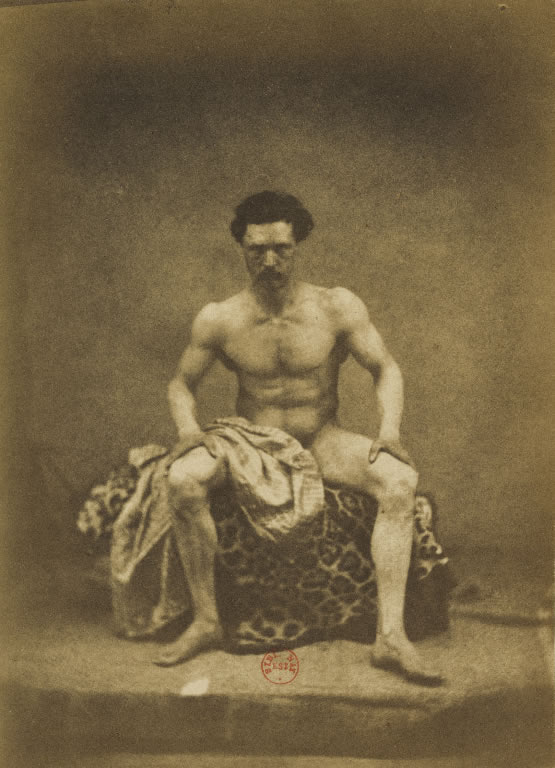


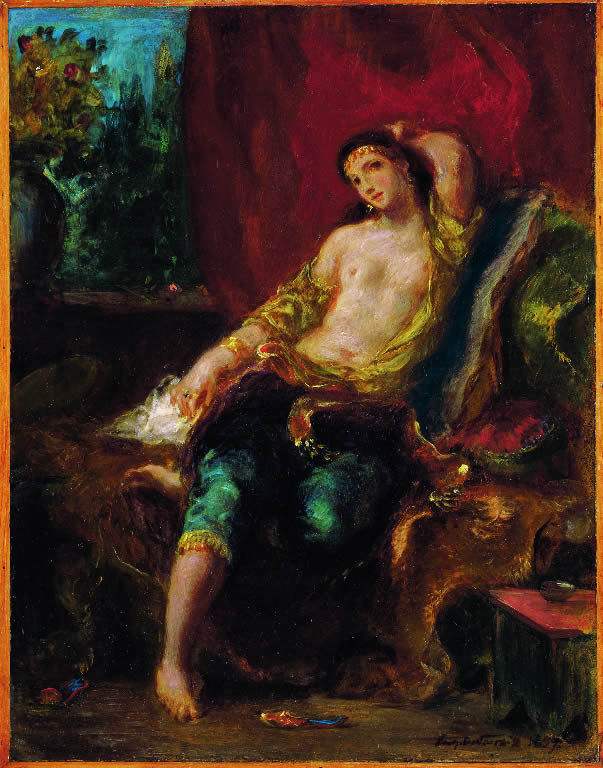


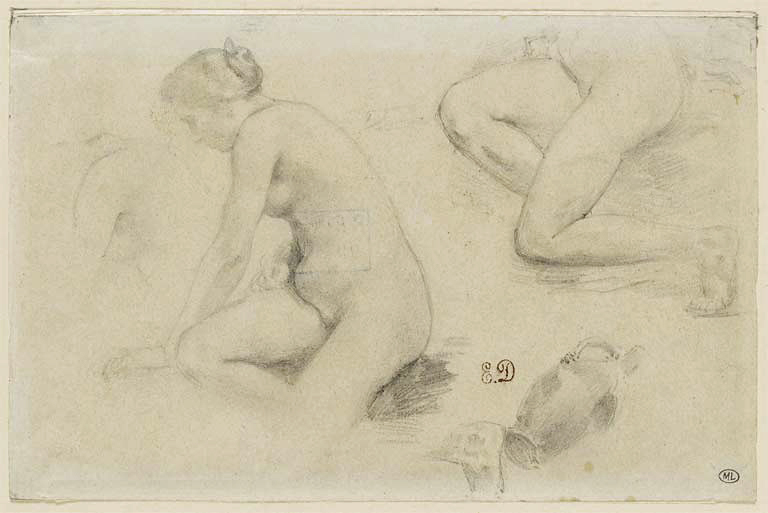


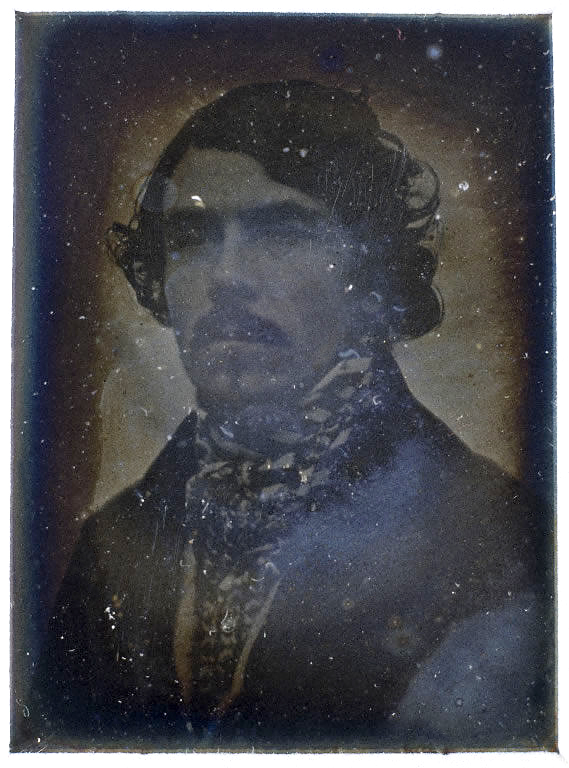

 Art Blart _ art and cultural memory archive
You must be logged in to post a comment.